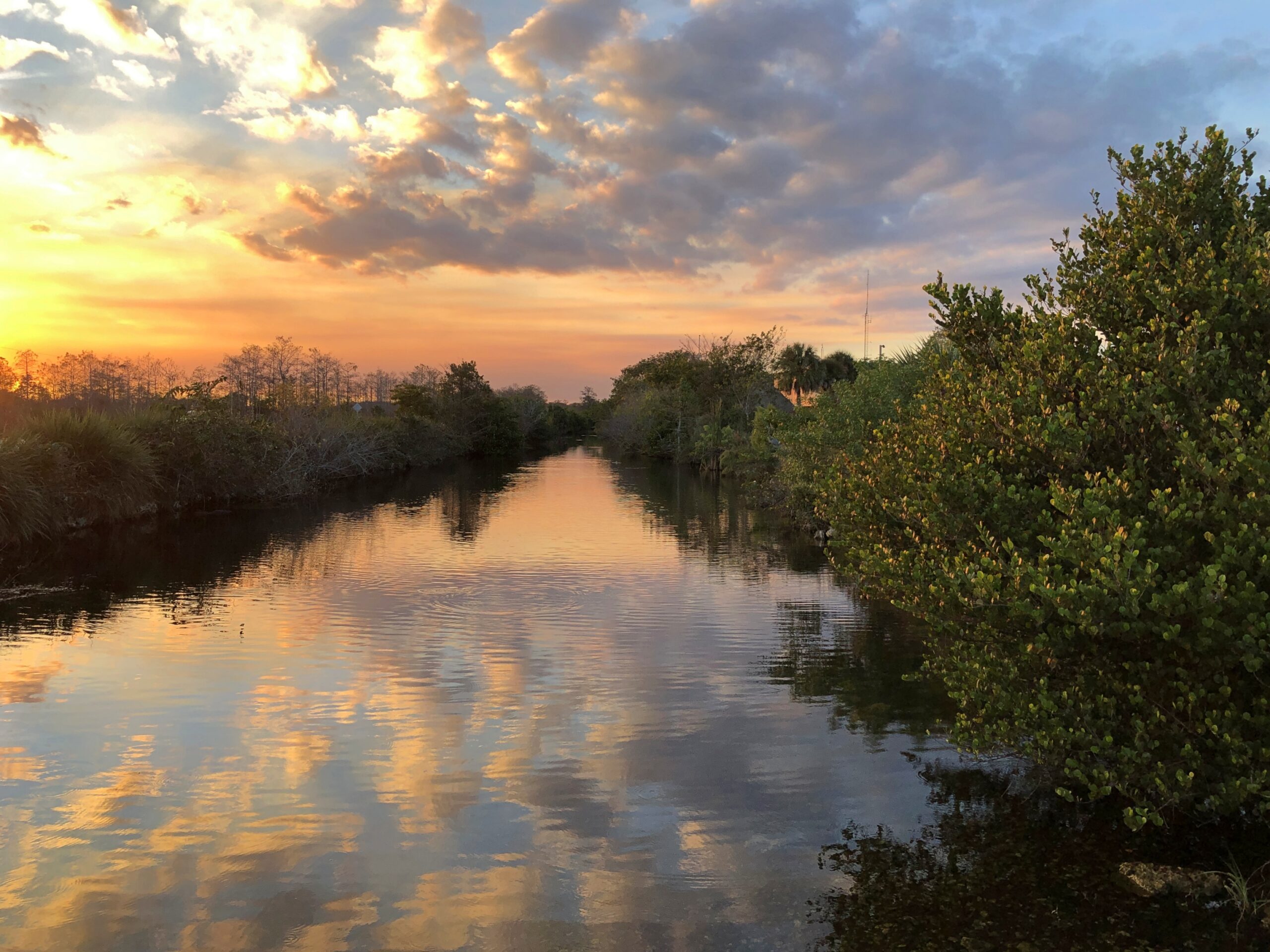
The Harry S. Truman Little White House

Nightmarish human faces weren’t invented by demented AI, but have long been with us. Case in point.
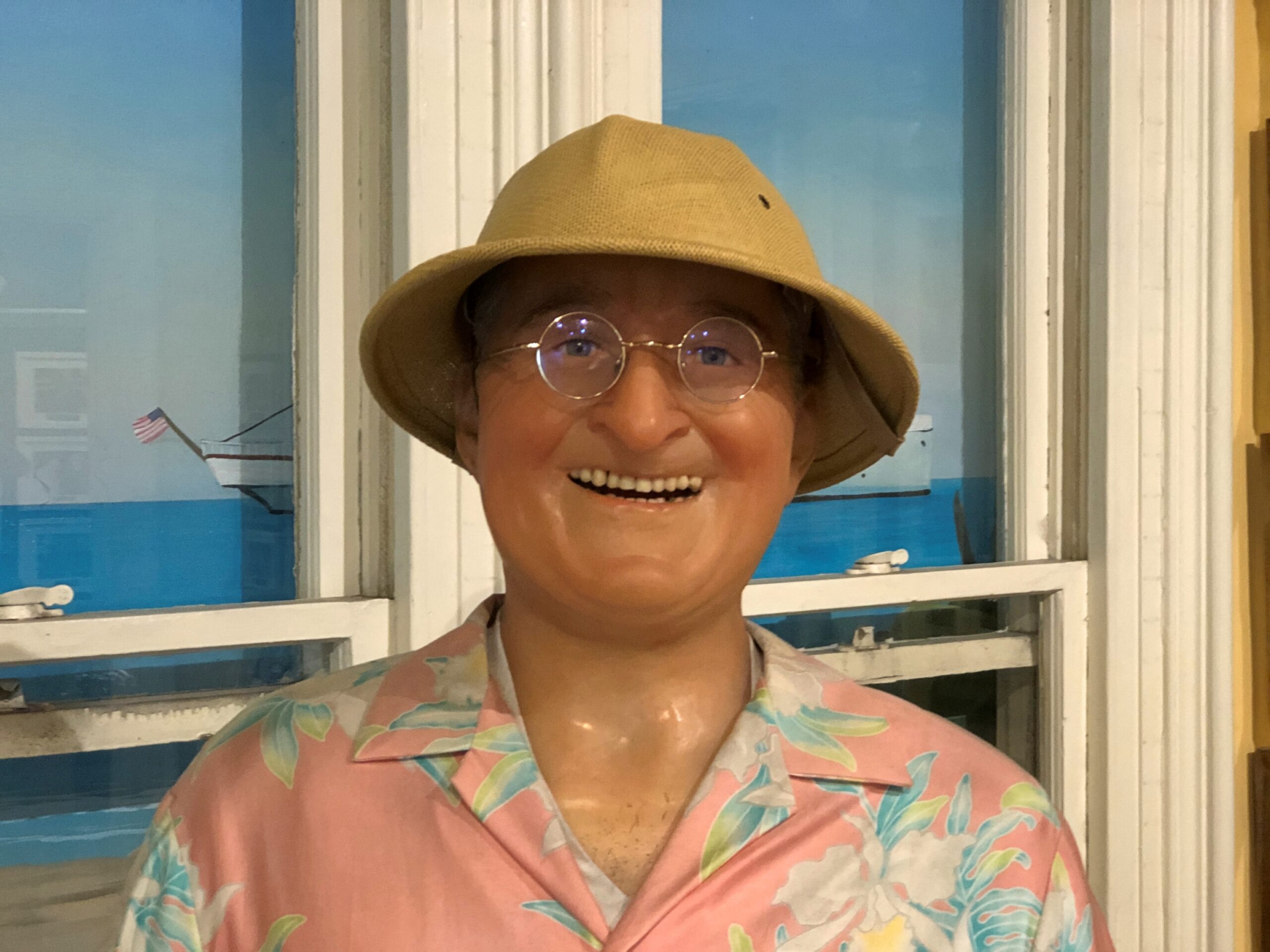
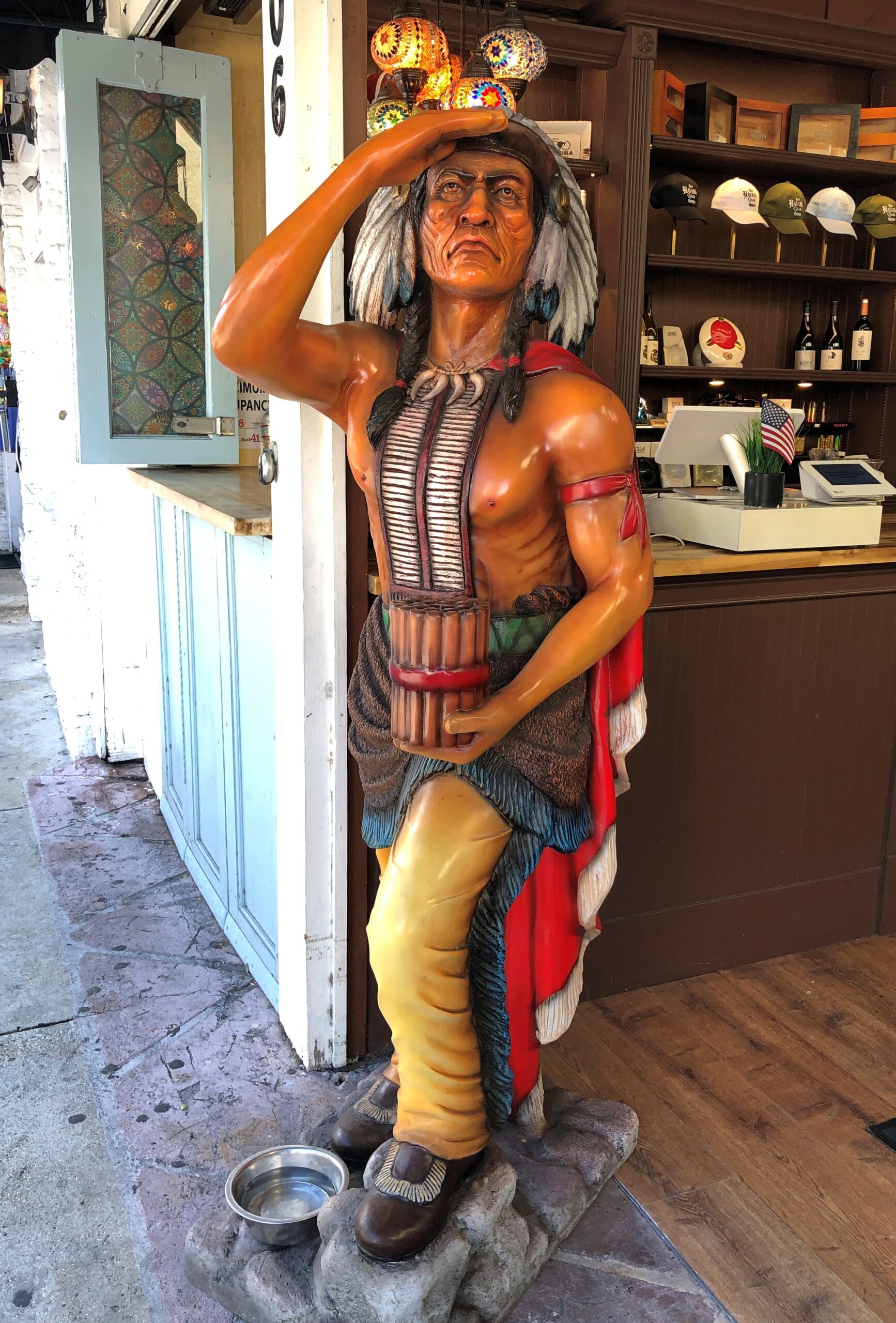
There’s Harry Truman in there somewhere. This particular wax dummy watches patrons in the small gift shop at the Harry S. Truman Little White House, which we toured on our second day in Key West.
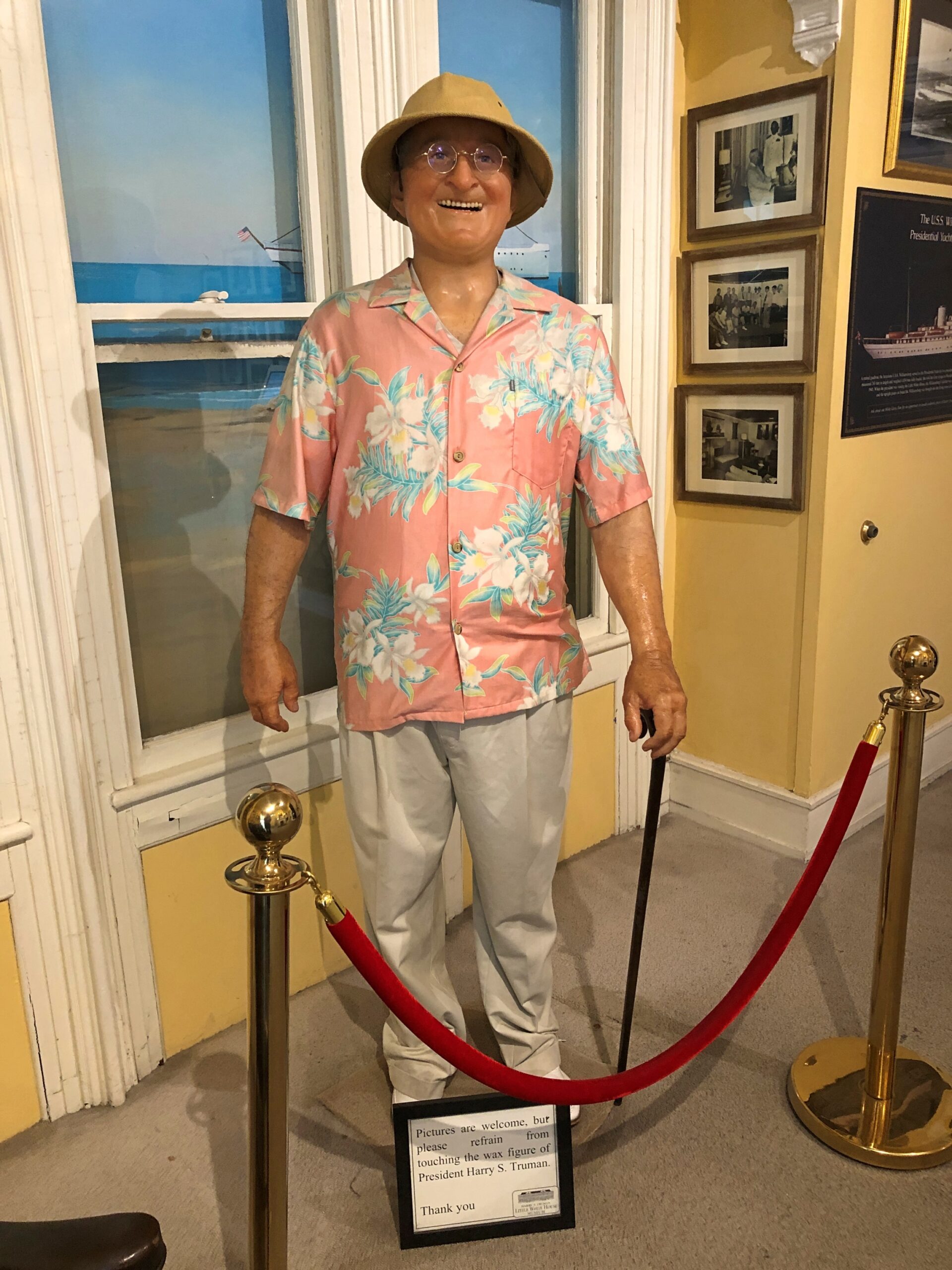
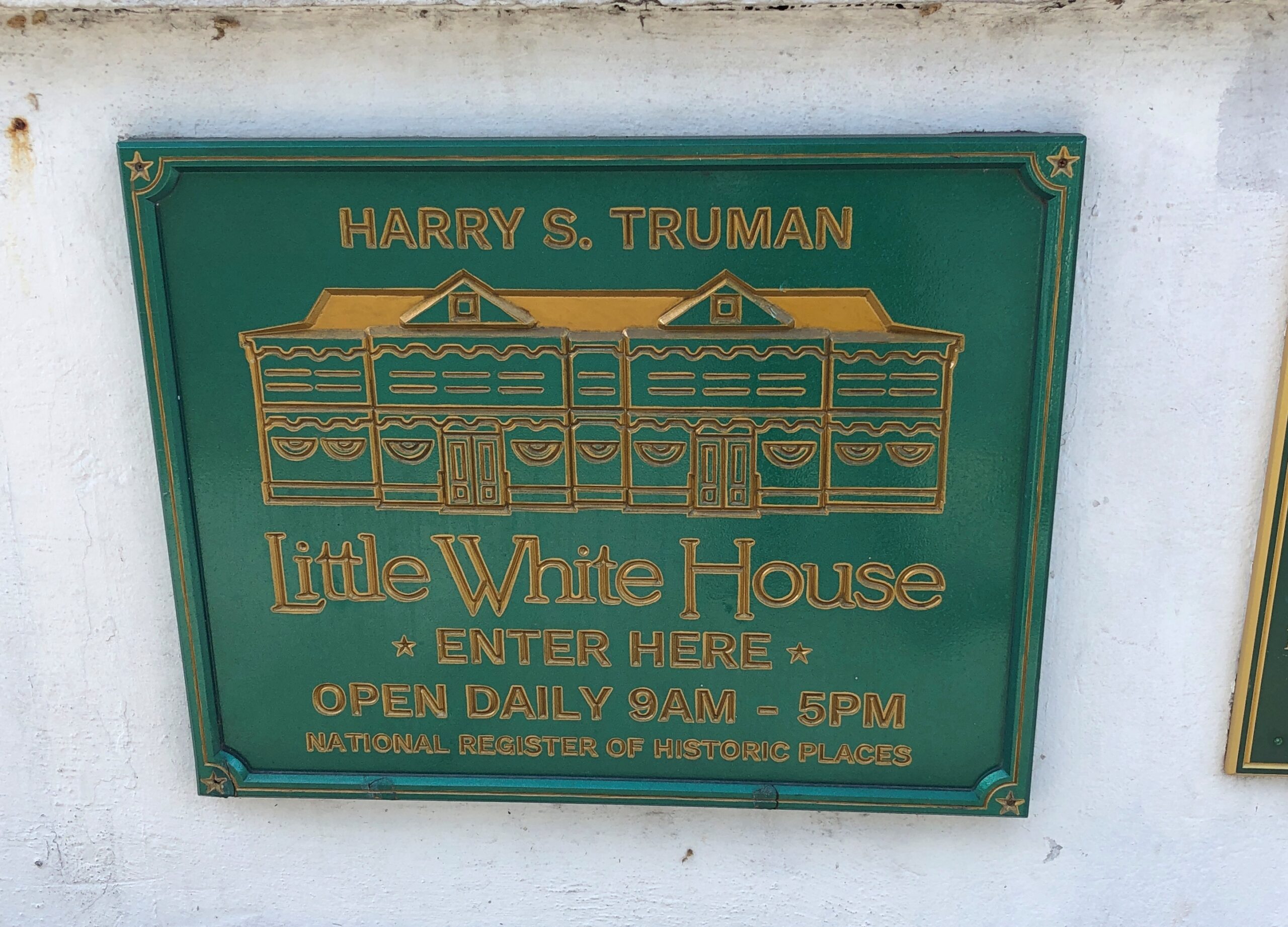
The property belongs to the state of Florida these days, but of course was once a federal facility. Specifically, used by the Navy as officers’ quarters for the base at Key West. Truman took a cotton to the island early in his presidency, and visited often, and this is where the Navy put him up. He came to relax and play cards and fish and drink, naturally, but also to be president somewhere besides Washington in winter, since by the 1940s communication tech could facilitate such a thing.
The museum has been restored to its appearance in the late 1940s, and damned if it isn’t like walking into my grandparents’ time, entering an ordinary sort of American house of the period. The president might have stayed there, but Harry and Bess weren’t the sorts who went in for the latest expensive styles, but rather the sort of things available at a department store or via mail order: couches with some color but not too much, wooden coffee and end tables, mid-century lamps, etc.

Except, that is, for the handsome custom-make card table. That wasn’t available from Montgomery Ward.

“The poker table was a gift to Truman in 1949 by three civilian contractors working in the U.S. Naval Station cabinet shop,” says Wood Shop News. “The table is a marvel of craftsmanship and one of the most popular pieces at the Key West facility. Measuring 58” in diameter and 28” high, according to Little White House executive director Bob Wolz, it is based on a poker table that was used on the U.S.S. Williamsburg presidential yacht. The piece is made of mahogany with built-in chip holders and ashtrays crafted from recycled brass shell casings. A solid tabletop can be used to cover the poker table to turn into a dining space.”

The limo parked on the grounds of the Little White House wasn’t standard mid-America either.
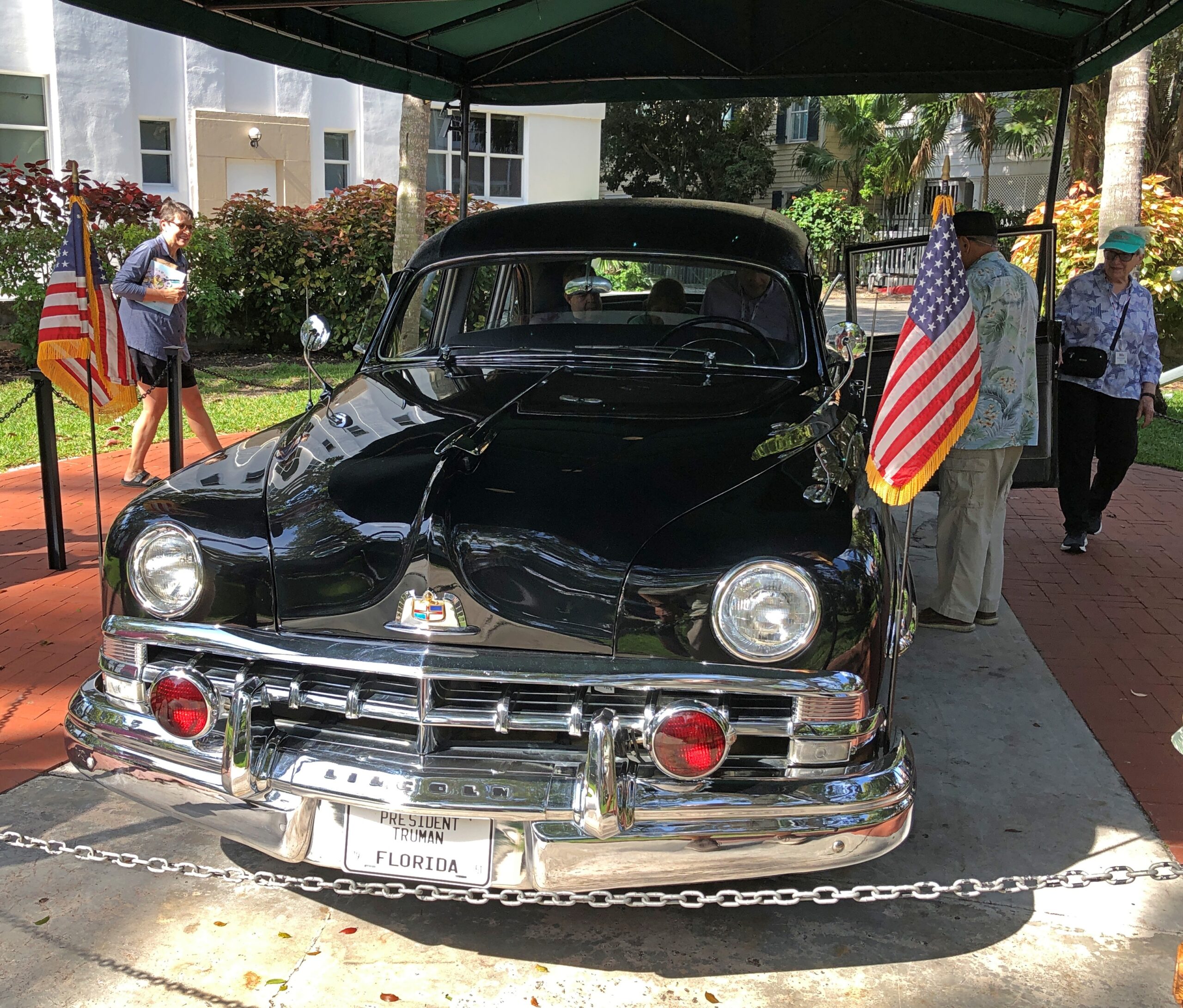
A nearby sign says that it is a 1950 Lincoln Cosmopolitan Presidential Limousine. One of nine that the Truman administration used, since in those days presidential vehicles weren’t transported by air, as they are now, so the government had them stationed in various parts of the country, ready to use.

The car is a museum piece, but no mere museum piece, since I understand that the current owner, the Key West Harry S. Truman Foundation, rents it under specific conditions. Namely, you pay some large fee, and are driven around Key West for a while. I learned this when we saw an elderly couple get in the back seat, followed by a uniformed driver, and off they went.

One more thing about the Little White House: the grounds are a small arboretum.
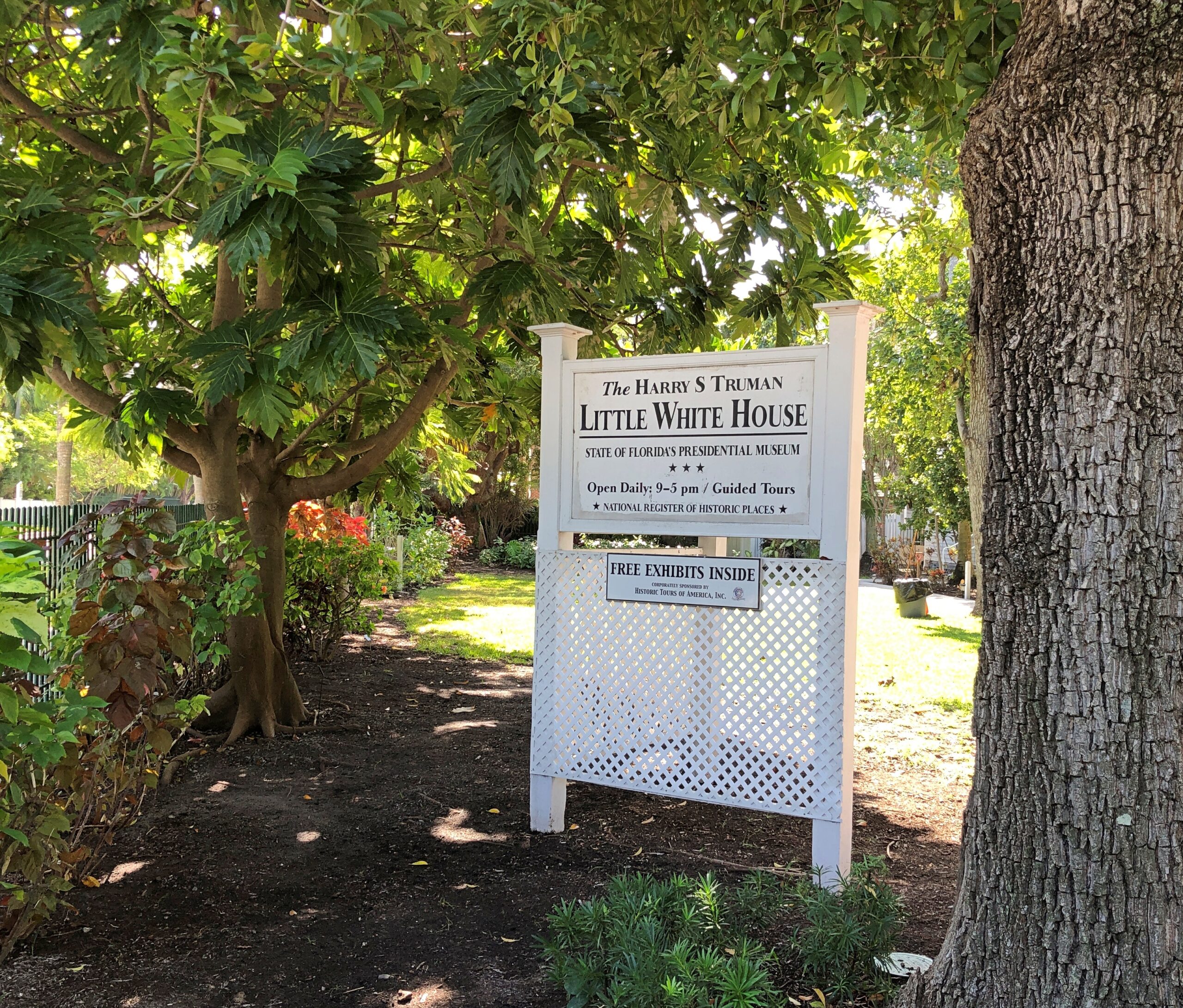
Flora includes well-known varieties, such as avocado, coconut, date palm, mahogany and mango, plus less-than-household names, such as Fiji fan palm, soapberry tree, and my own favorite name, gumbo limbo, whose “wood, though soft, was used in the past to carve carousel horses,” the museum tells us.
Earnest Hemingway House, Key West

“How many of you came because you’ve read some of his books?” our guide at the Earnest Hemingway House in Key West asked our small group. We’d paid our entrance fee, waited outside the house for a few minutes, then started on the tour. I was in that group. Most of his books, in my case.

“OK, some of you. How about because someone else dragged you here?”

A few more hands went up. I don’t think he was taking a survey, exactly, just kicking off the tour in an interesting way.

“What about to see the cats?” Hands went up. Some laughter.

Yuriko came for the cats, mostly, though she told me Hemingway is a writer than isn’t hard to read in the original English. We’d come to Hemingway House after our Duval Street stroll. It was about as pleasant a day as possible for such a walk. Everything is a short distance in Key West, so we arrived after a short walk.

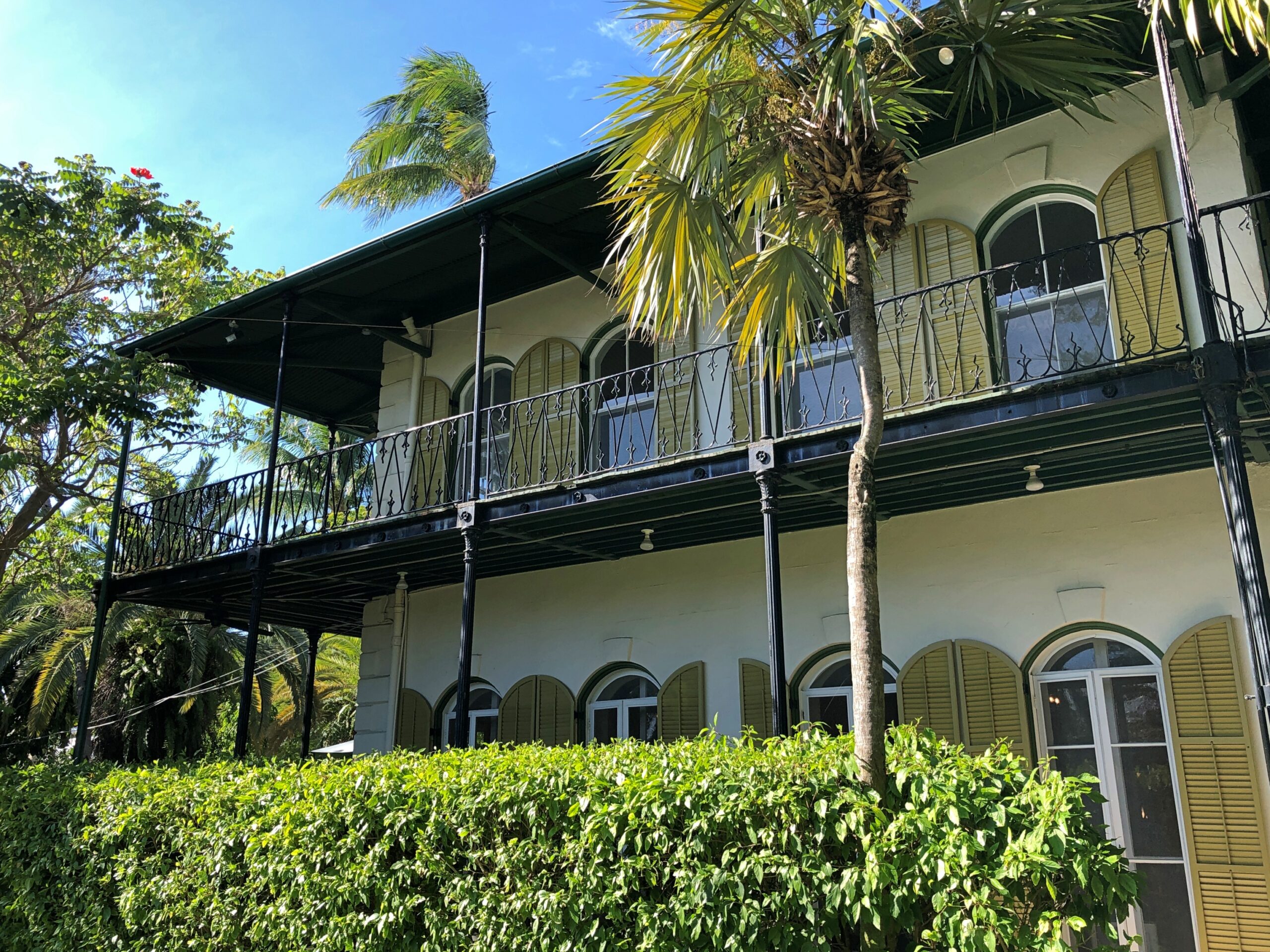
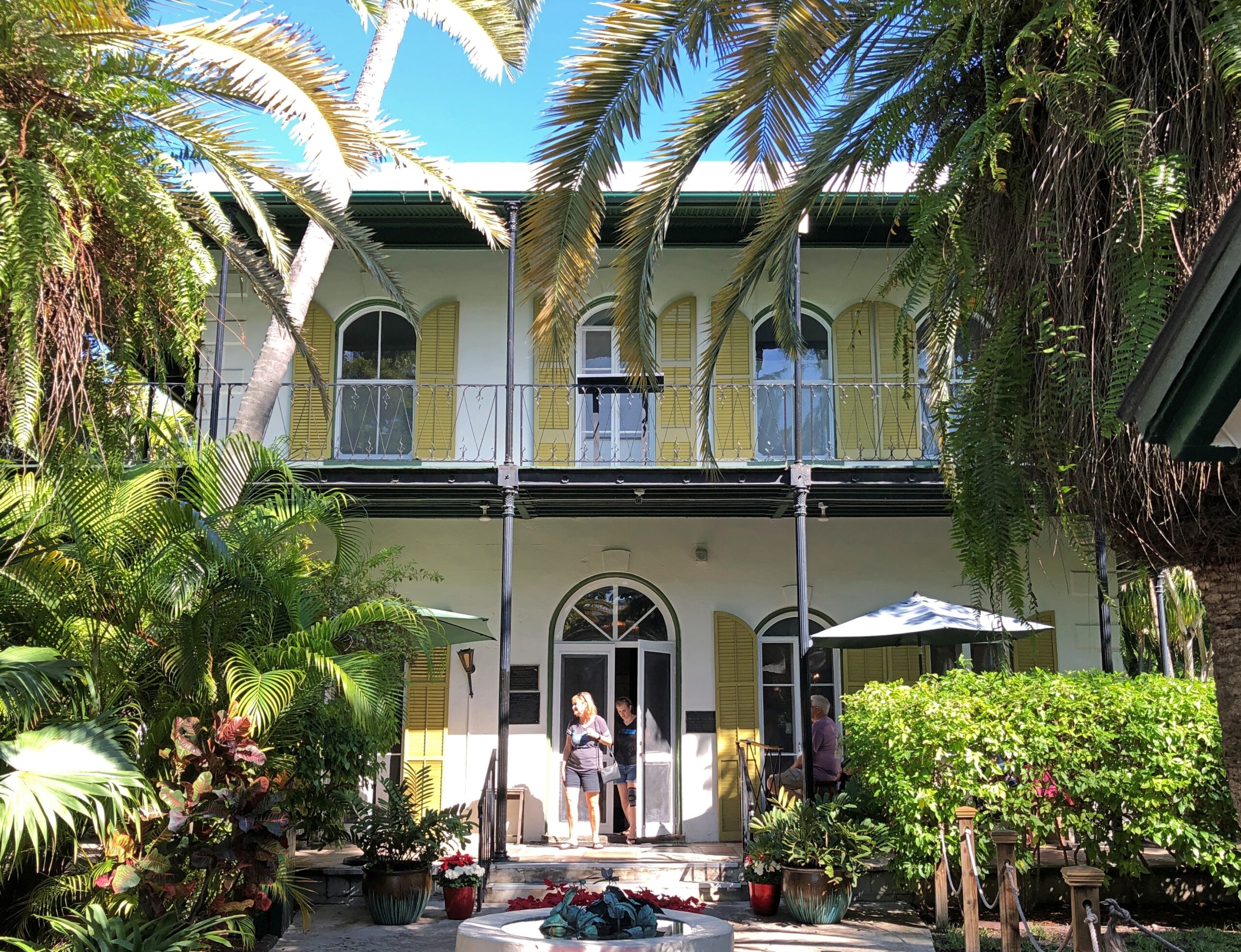
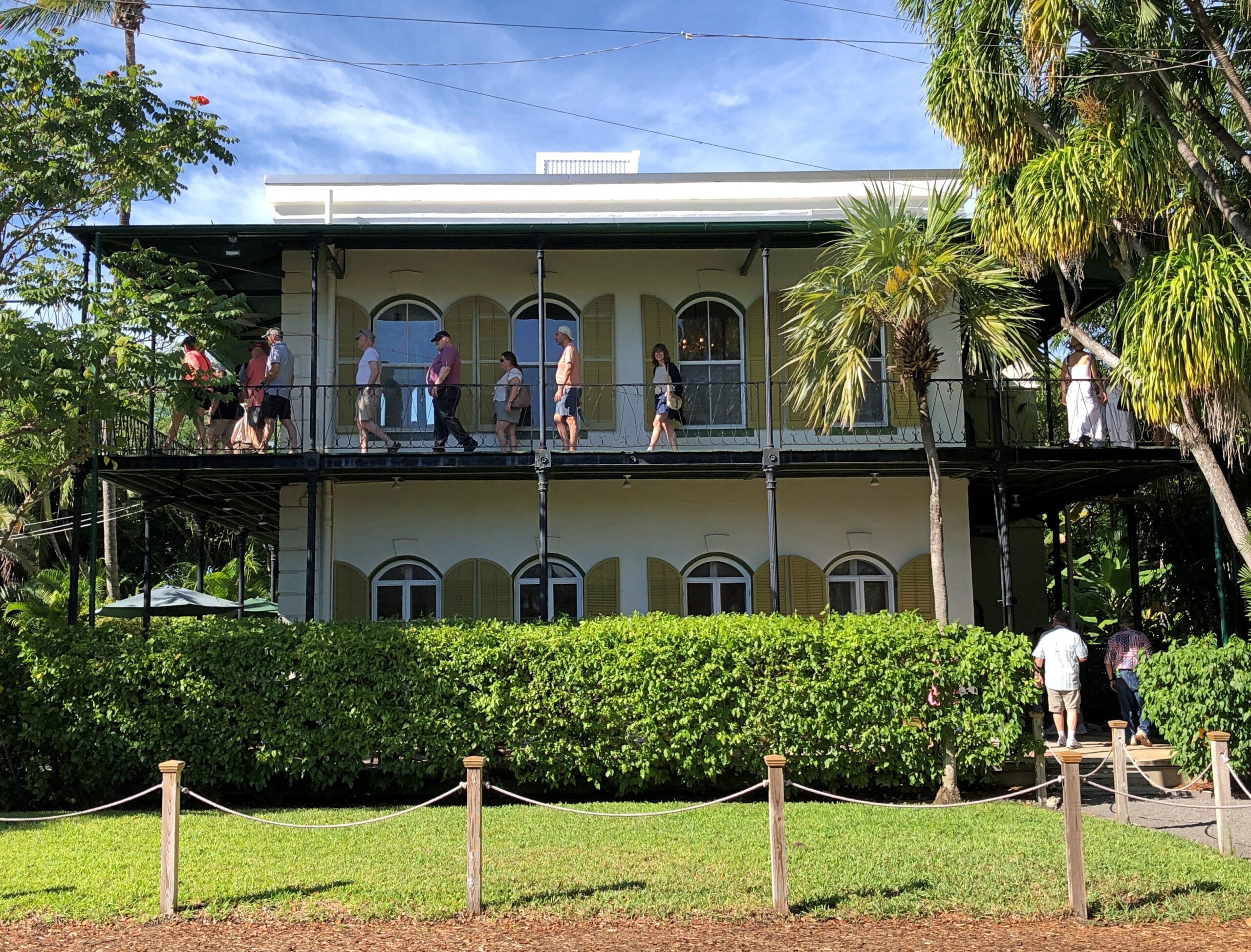
The house is a block off Duval, on as high a spot as Key West provides, and in the shadow of a lighthouse about a block away. The grounds are lush, the house itself a handsome two-story legacy of one of the 19th-century Key West booms. One Asa Tift, a Key West wrecker, completed the house in 1851.

Tift was one of the more successful wreckers, looks like: a man who led small boats out from Key West to the nearby hazardous reefs when ships foundered there. Wreckers were eager for valuable salvage from these vessels, and if the Hemingway House is any indication, the rough-and-tumble of salvage — and you know the process was dangerous, full of natural hazards, but especially other violence-prone wreckers out for the same prize — nevertheless produced at least few men of means in isolated, pestilential Key West.

Emphasis on pestilential. Just ask Asa Tift, whose sizable family, for whom the house was built, were carried away in that all too common 19th-century way, by communicable disease.

The Hemingways showed up some decades after old man Tift died, acquiring and renovating the property using her family’s money. They did what they did, and these days the house is a museum to their presence.

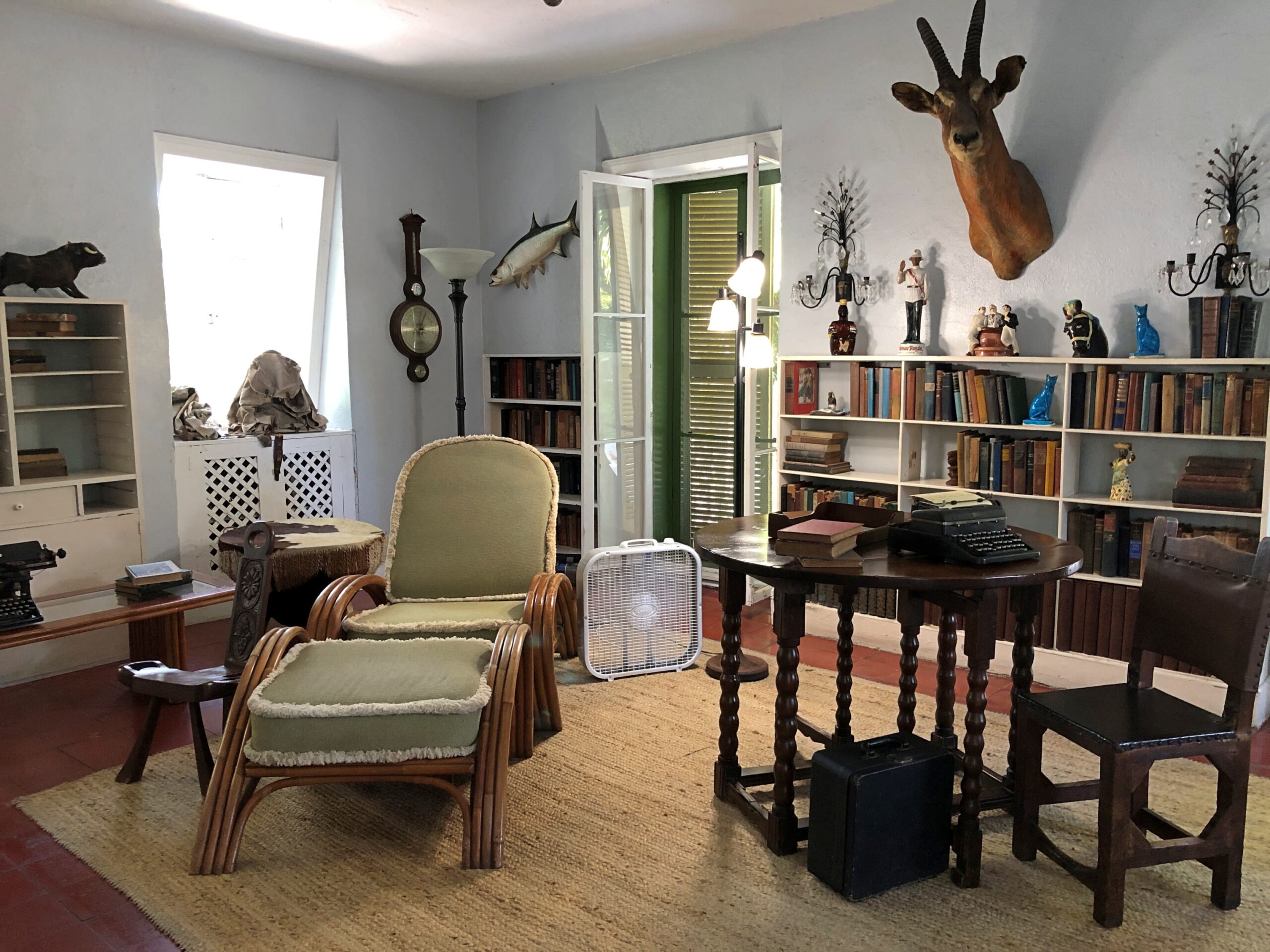
No one lives there anymore. No hefty, dark-mustachioed man staggers home from Sloppy Joe’s bar good and drunk and flops to bed there, or goes to the upstairs office-studio and bangs out famed literature during sober periods, or argues with his wealthy wife under the sub-tropical shade trees – quarrels whose root seemed to be Hemingway’s roving eye, with a dash of alcoholic irresponsibility added to the mix.

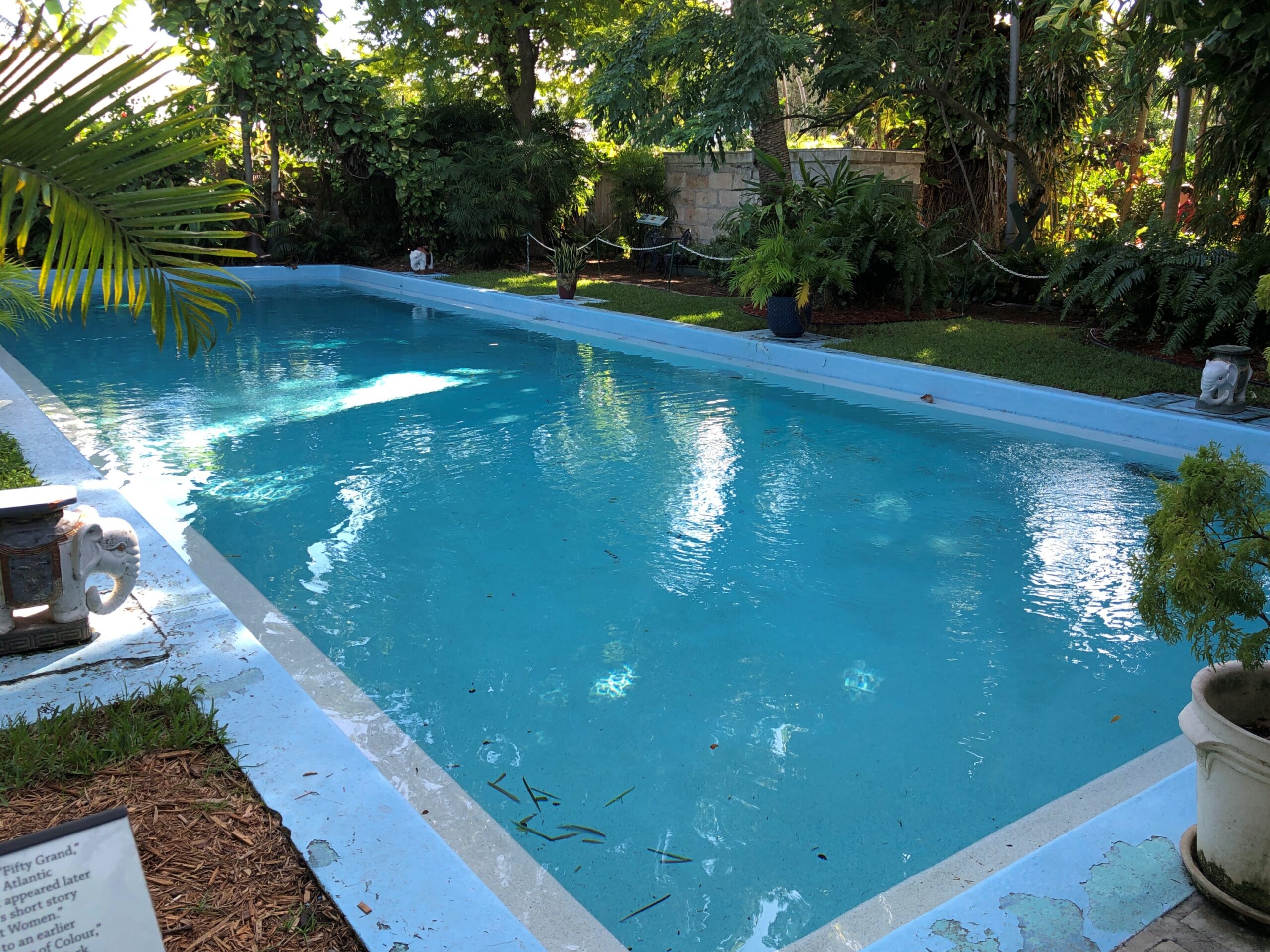
The pool was an addition by his wife, Pauline Pfeiffer, which caused consternation for Earnest. Something about taking the place of his informal boxing ring on the same site, done while the author was out gallivanting somewhere. Terrific writer he might have been, and I certainly admire his talent for gallivanting, but he also seems to have been a touchy bastard.

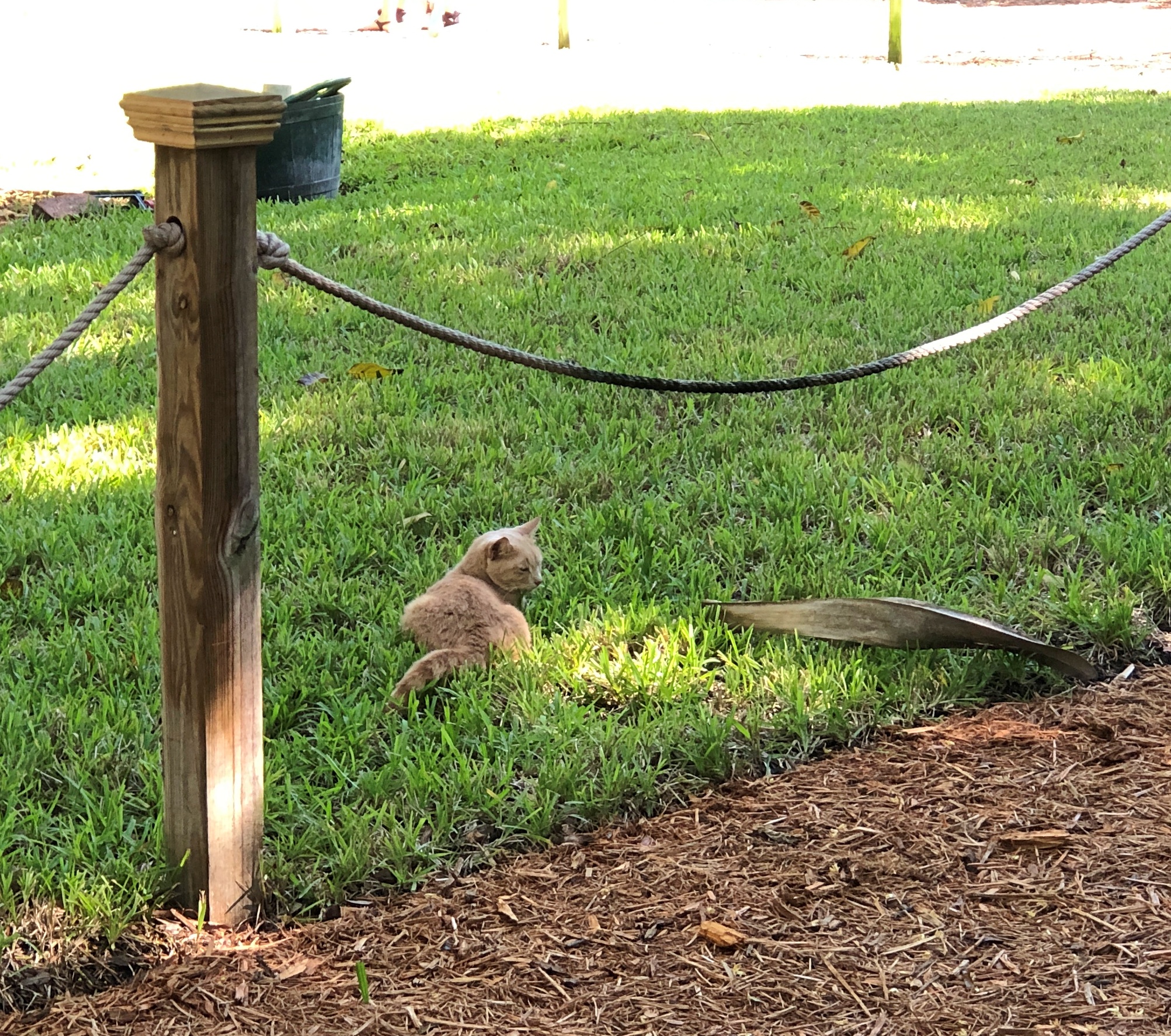
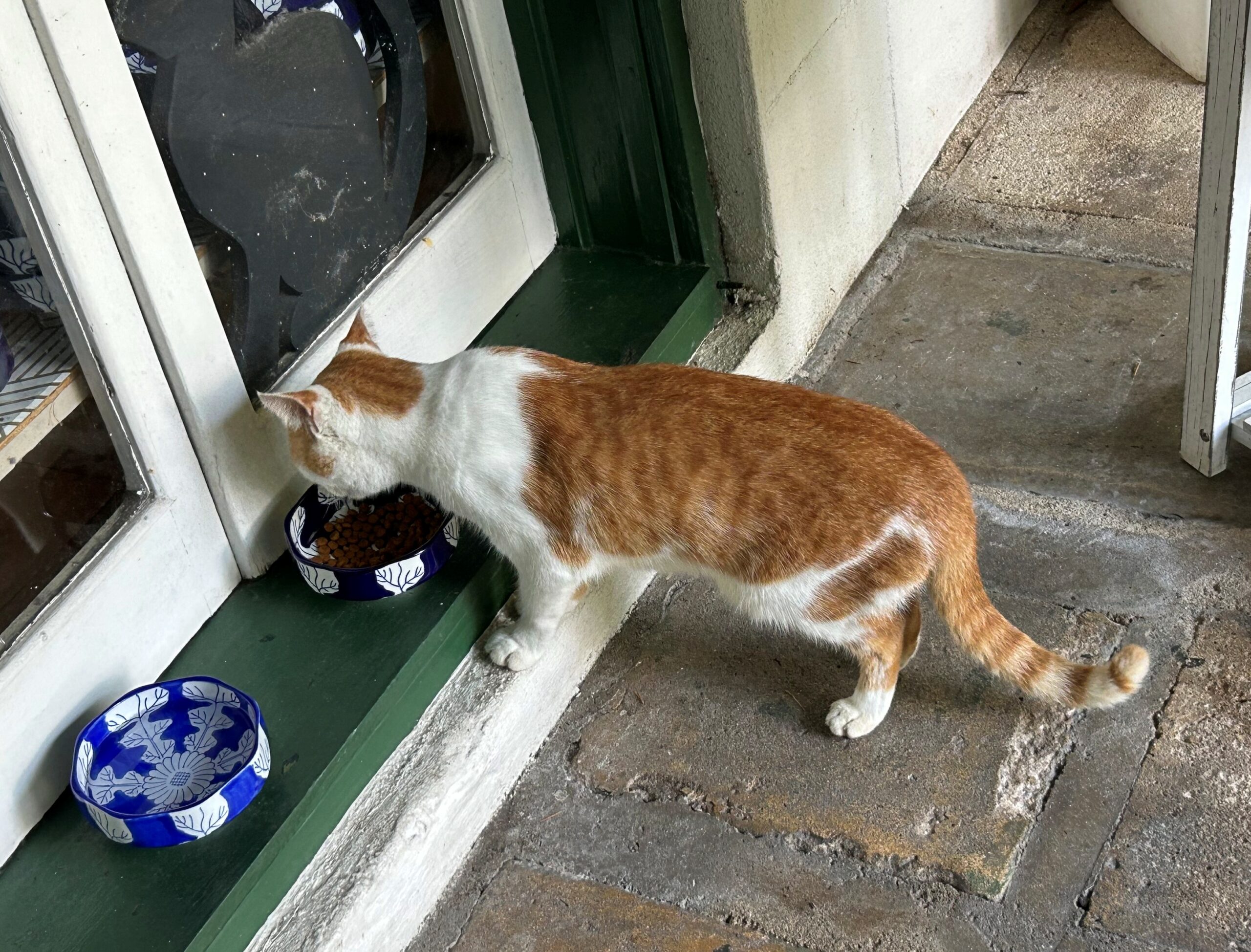
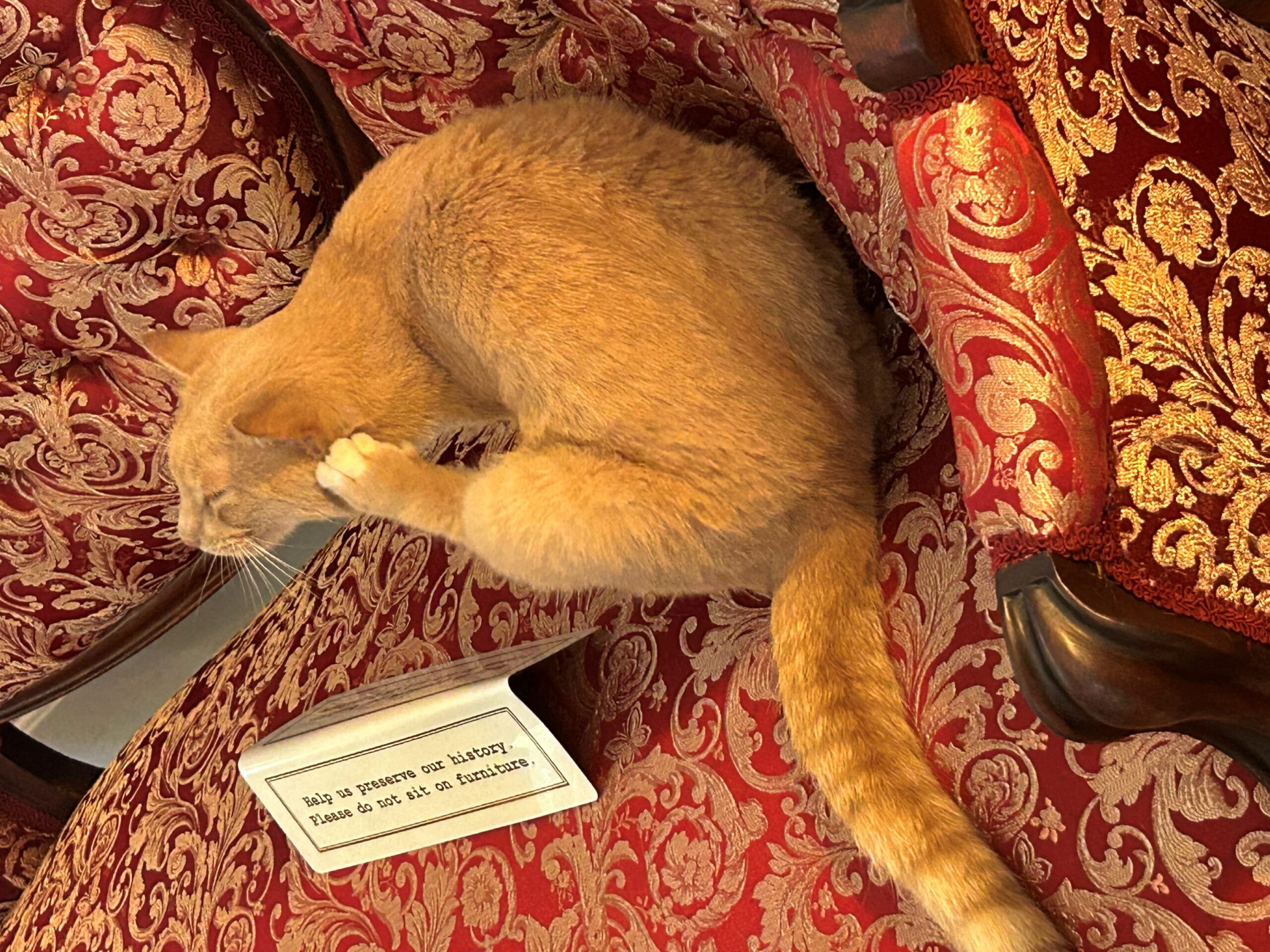
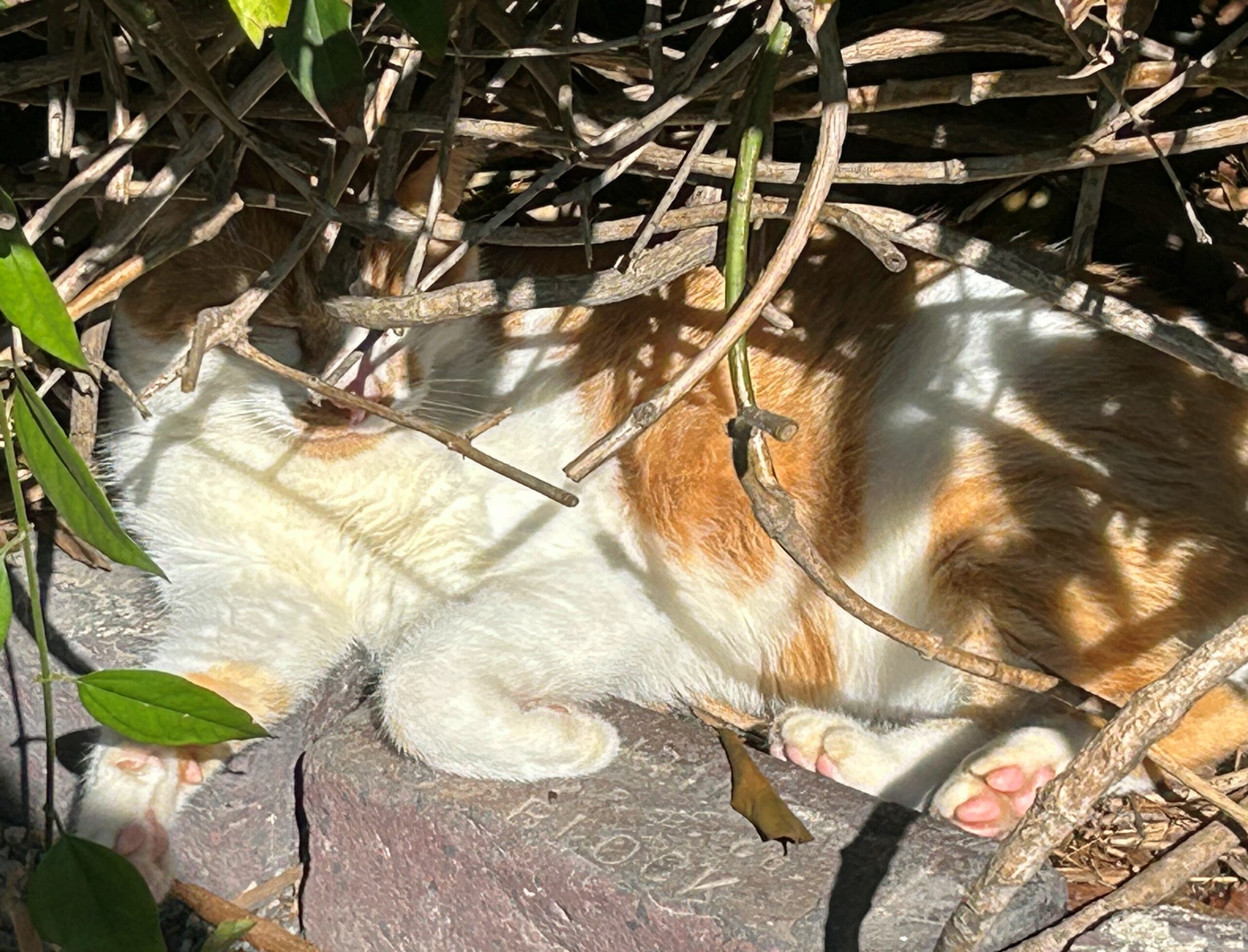
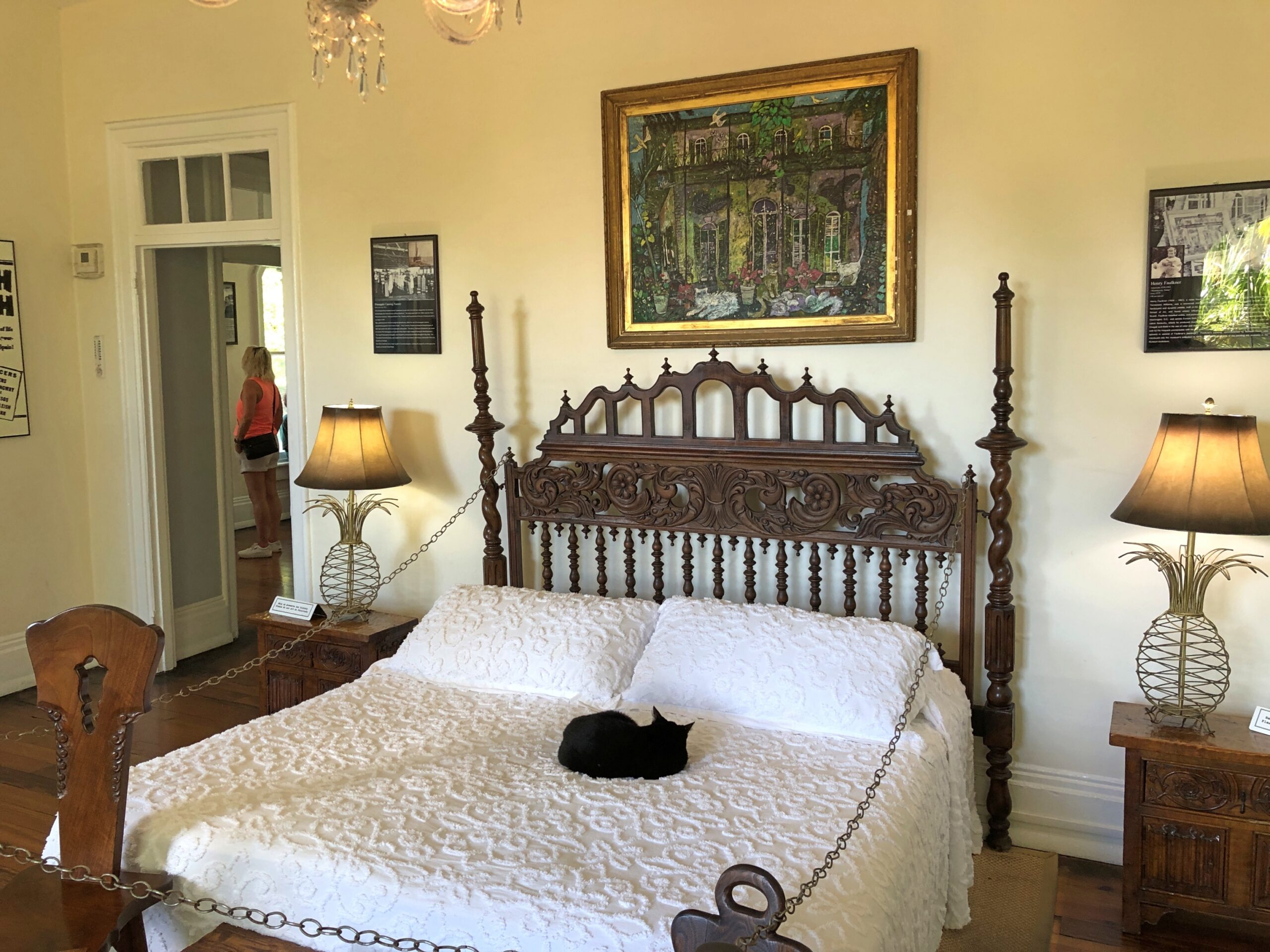
Tourists and staff come and go, but in our time, only cats live at 1301 Whitehead St., a property enclosed by sturdy brick walls. Said the be the descendants of Hemingway’s son’s six-toe cat, the herd is large. Our guide told us how many, though I can’t remember the exact number now. In the range of dozens, beyond the dreams of even the most thoroughgoing cat ladies.

They are everywhere.

I mean everywhere, except maybe the pool.

My favorite story about the house doesn’t involve cats. The guide didn’t tell it this time, but I heard it before. By the mid-1930s, Hemingway was already a Famous Author, and without even telling him, the local chamber-of-commerce or the like put the house on a pamphlet given to tourists, as one of the local sights. Inevitably, people started showing up at odd and inconvenient hours, or entered expecting a tour. The brick wall all the way around the house is a legacy of that situation.

Only 90 Miles to Cuba

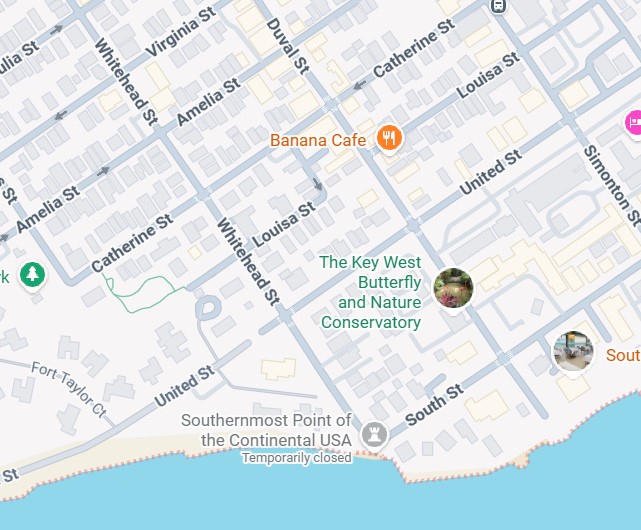
A curious thing on Google Maps.

Note that “Southernmost Point of the Continental USA” is marked “temporarily closed.” That wasn’t going to deter me from a look if possible, so we headed down Whitehead St. from the Hemingway House. About a block from the site – a painted concrete buoy-shaped structure; I’d seen pictures – the area was closed and torn up for construction, and sure enough, the Southernmost Point was inaccessible.

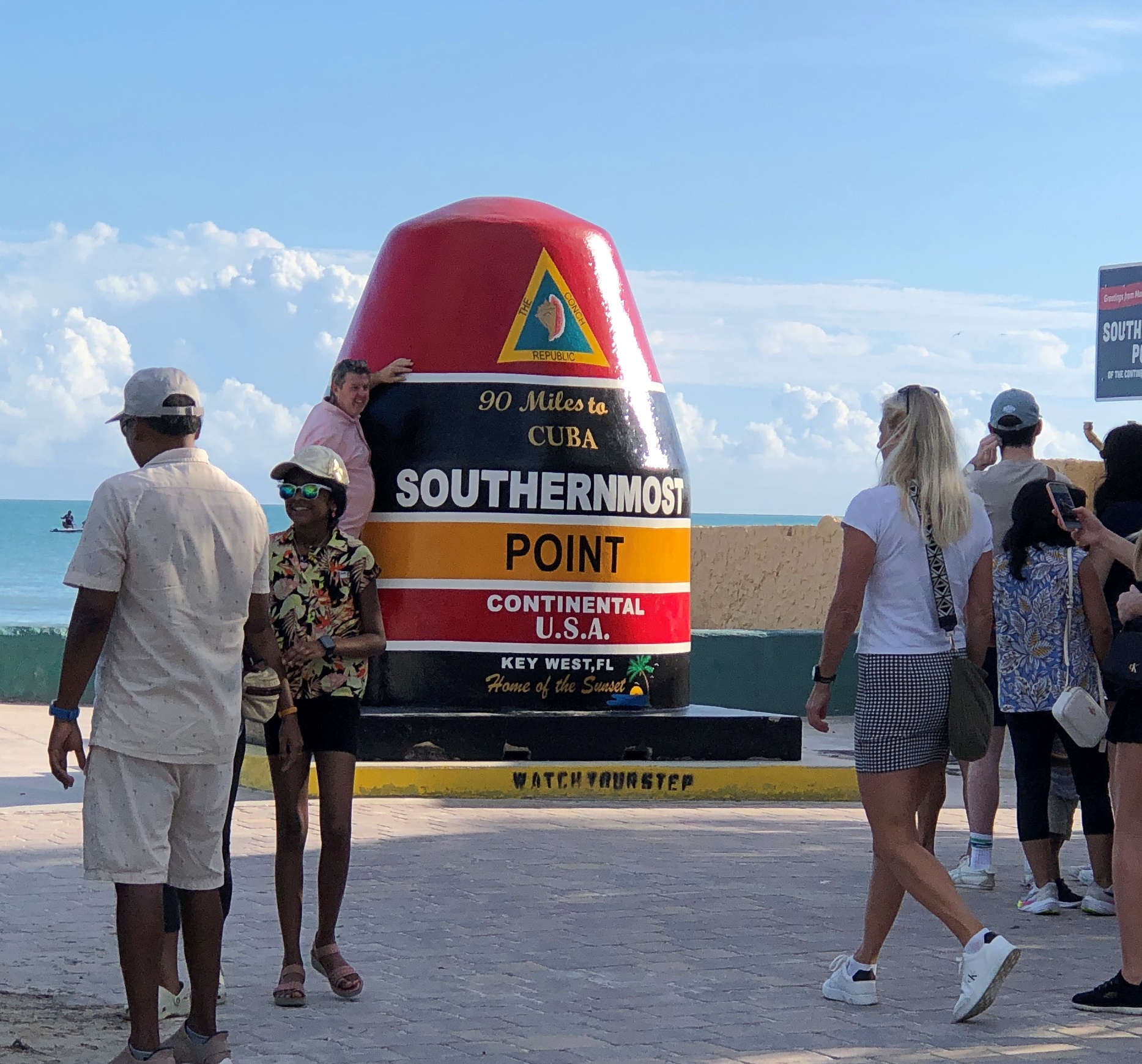
A little construction wasn’t going to prevent Key West from allowing the Southernmost Point to serve its only purpose, however. That is, attract tourists. So with a little lateral thinking, and in this case literally so, the city installed a duplicate buoy a block away on the coast, at the Gulf of Mexico end of Duval.

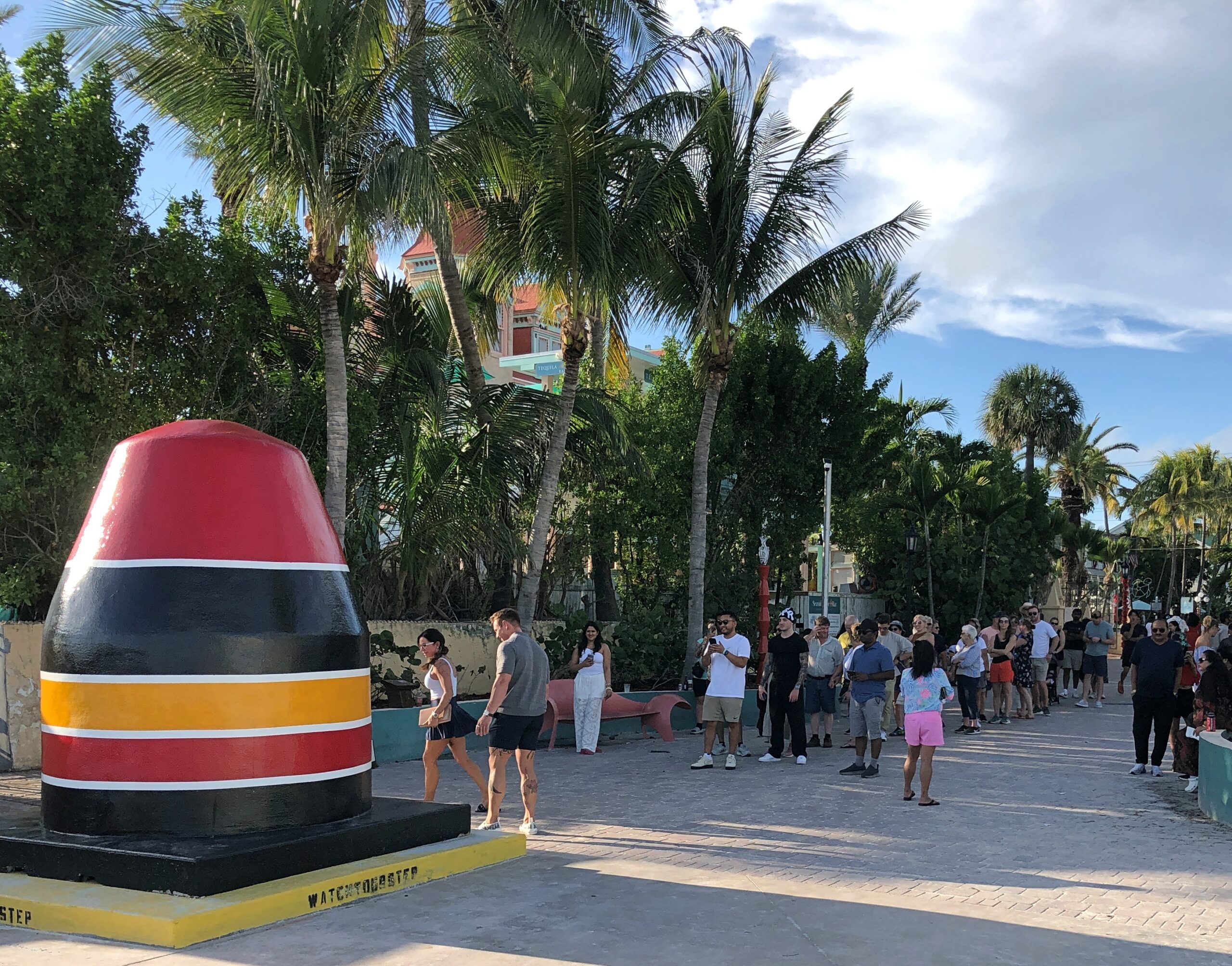
It draws a crowd.

Give the people what they want: an inaccurate but fun geographical marker. In fact, there was a line to take one’s picture with the buoy, as the many visitors to Key West have been doing since 1983.

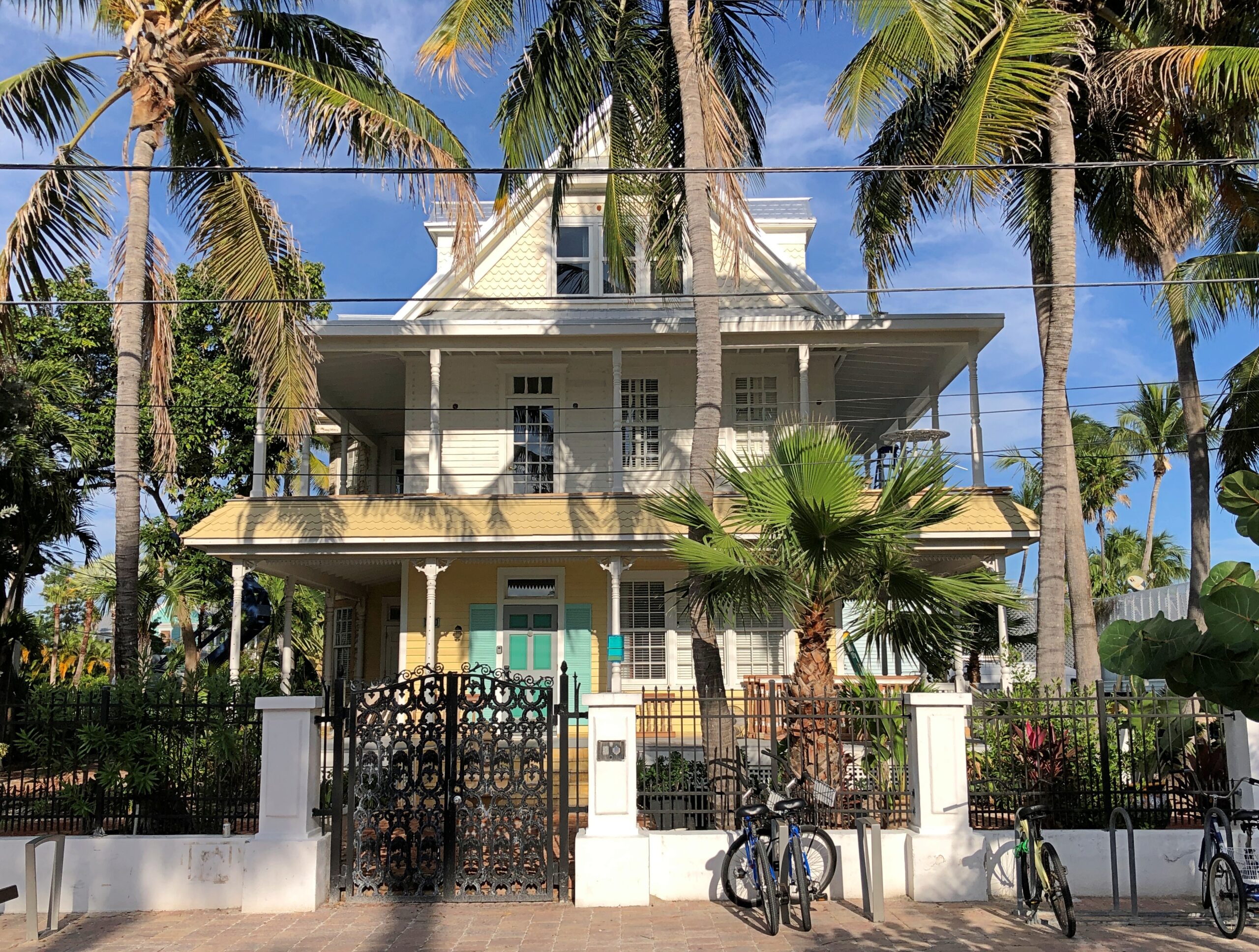
This iteration of the buoy finds itself in a high-toned neighborhood.

Key West

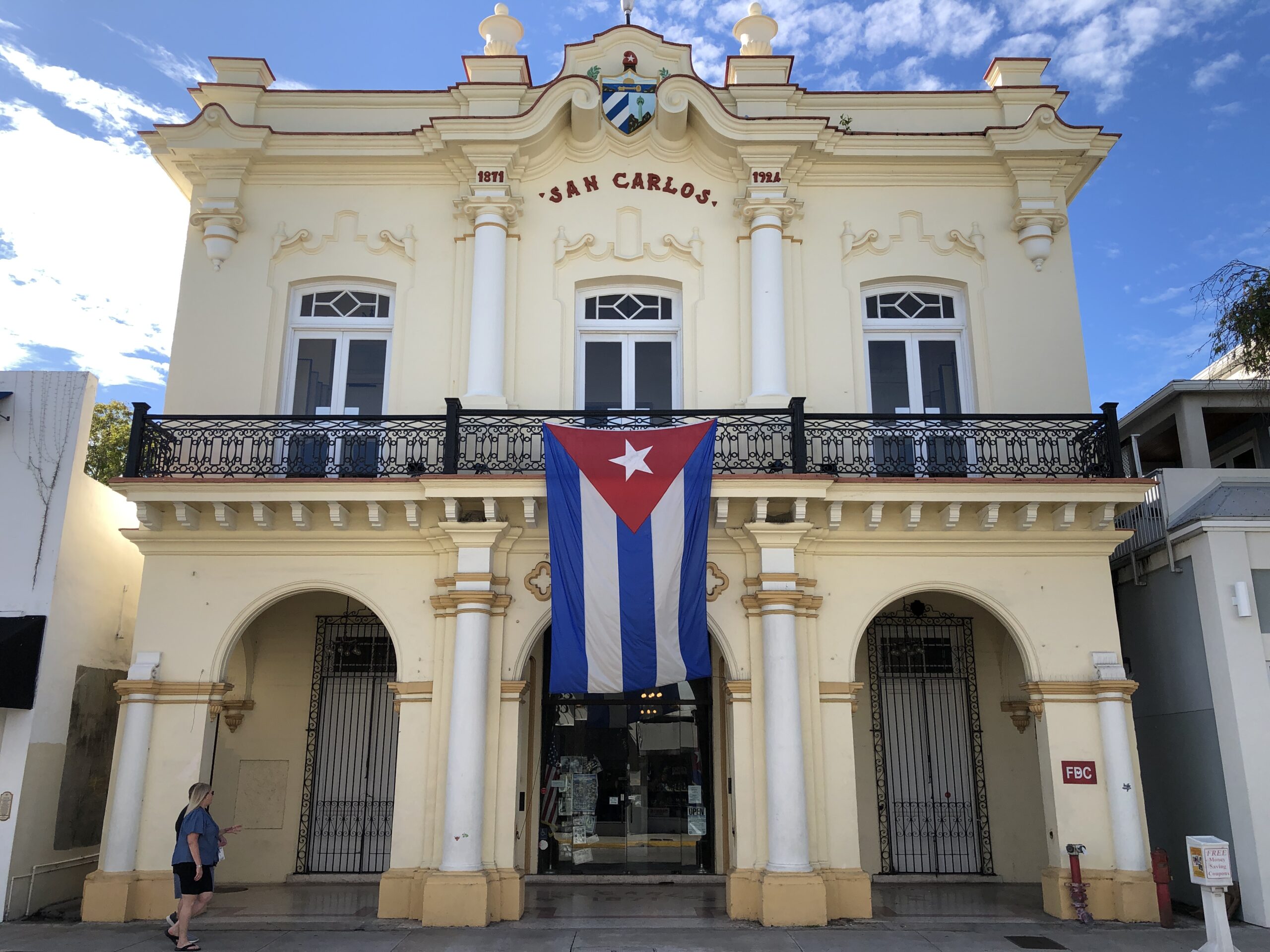
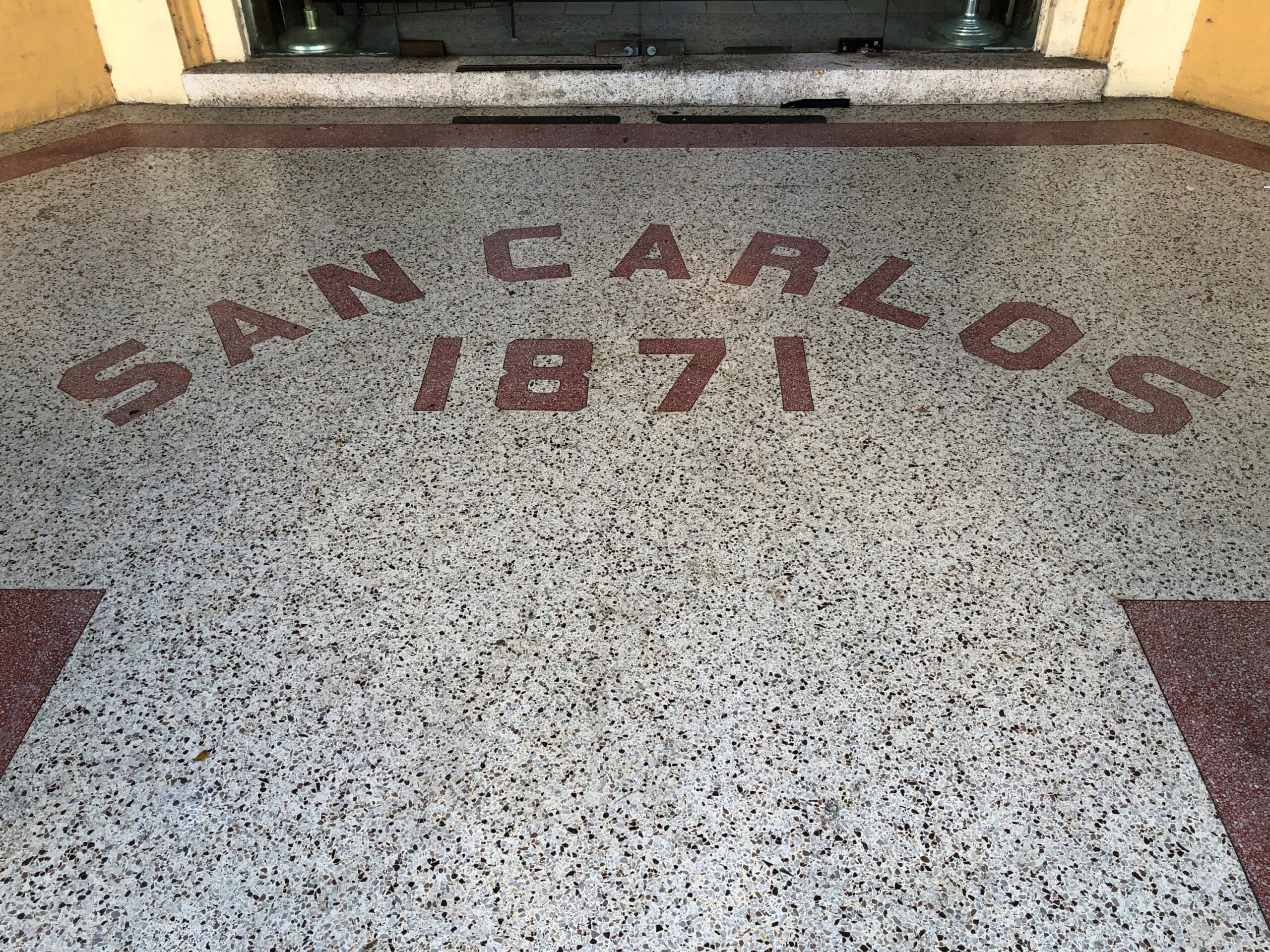
I understand that a later paint job added “90 miles to Cuba” on the buoy. As the crow flies or the Mariel boatlift lifts. A nod to the island with long-standing ties to Key West, especially in the days of Cuban cigars, cigar factories in the town, and Cuban organizations, such as San Carlos, which happens to stand even now on Duval, a few blocks — short island blocks — from the Southernmost Point.

Former school for the Cuban population, along with a stint as a Cuban consulate, and longstanding meeting place for those keen on kicking Spain out of Cuba during the heady 1890s. These days, the island-handsome building is a museum, free to wander around, with (in our case) a spontaneous five-minute introduction on the spot by the volunteer, a woman roughly my vintage, who sat behind a temporary table near the entrance.

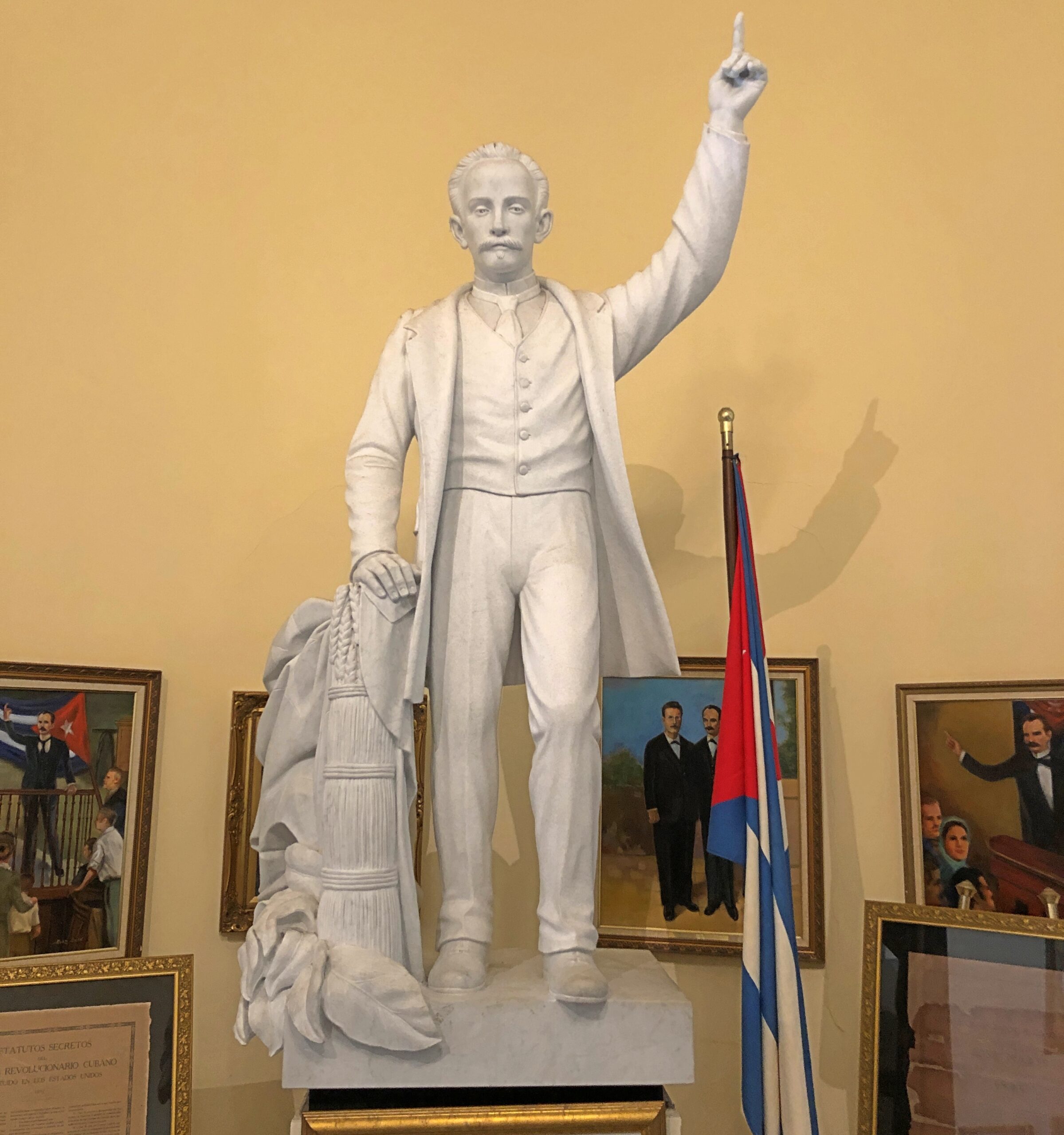
Jose Marti is remembered in various spots in the museum.

As well he should be. He spent some time in Key West, gave speeches, and brought the cigar workers around to the cause. San Carlos was the place to do so in town, which happened to be a hotbed of anti-Spanish feeling – San Carlos and the town itself. Nice museum, but almost no one from busy Duval was there. Maybe the nonprofit that owns the building can set up a bar and serve overpriced Cuba libres to cruise ship visitors.

Duval Street Stroll

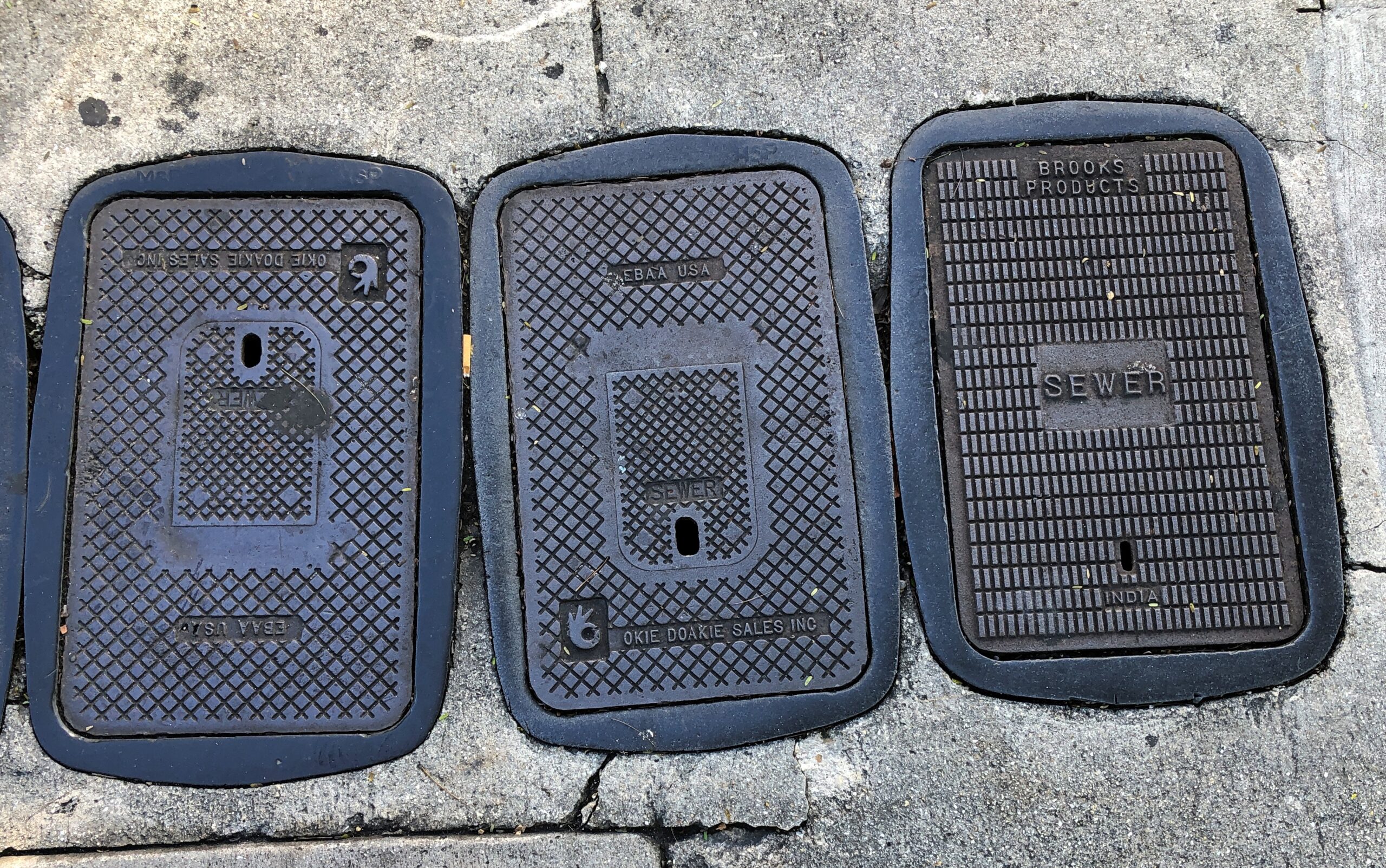
If you asked me, and no one has or will, Key West is missing something in having plain manhole and utility covers (though this isn’t bad).

I suspect custom covers cost more, and money is money, but distinctive places should have distinctive manhole covers. Aren’t details important in fostering – or in this case enhancing – a sense of place?

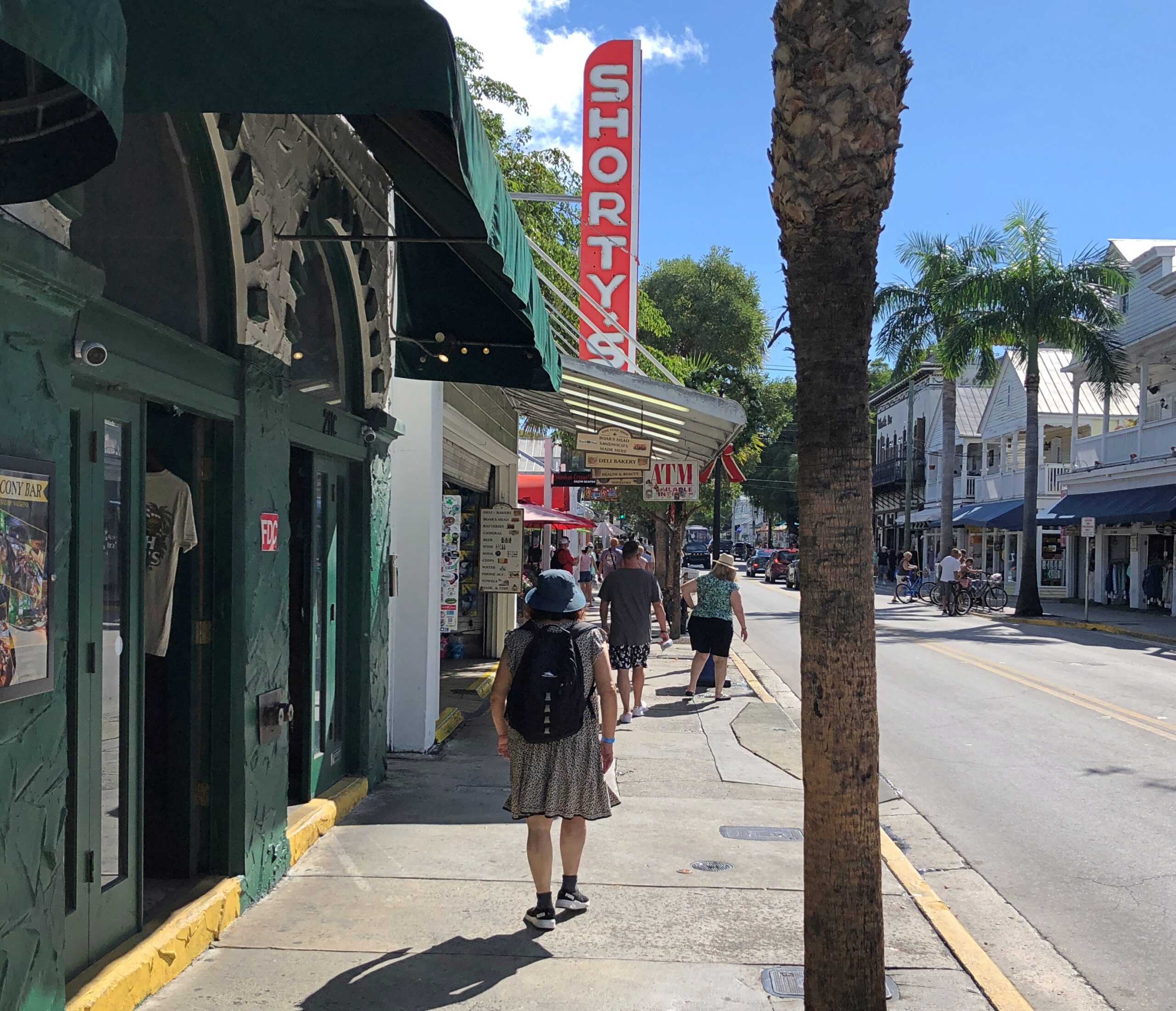
On the other hand, Key West has a sense of place without too many equals. That’s as good a reason as any to stroll down Duval Street, tourist hub of Key West, and take it all in. Or as much as you can. On a mild mid-December day, that wasn’t hard.

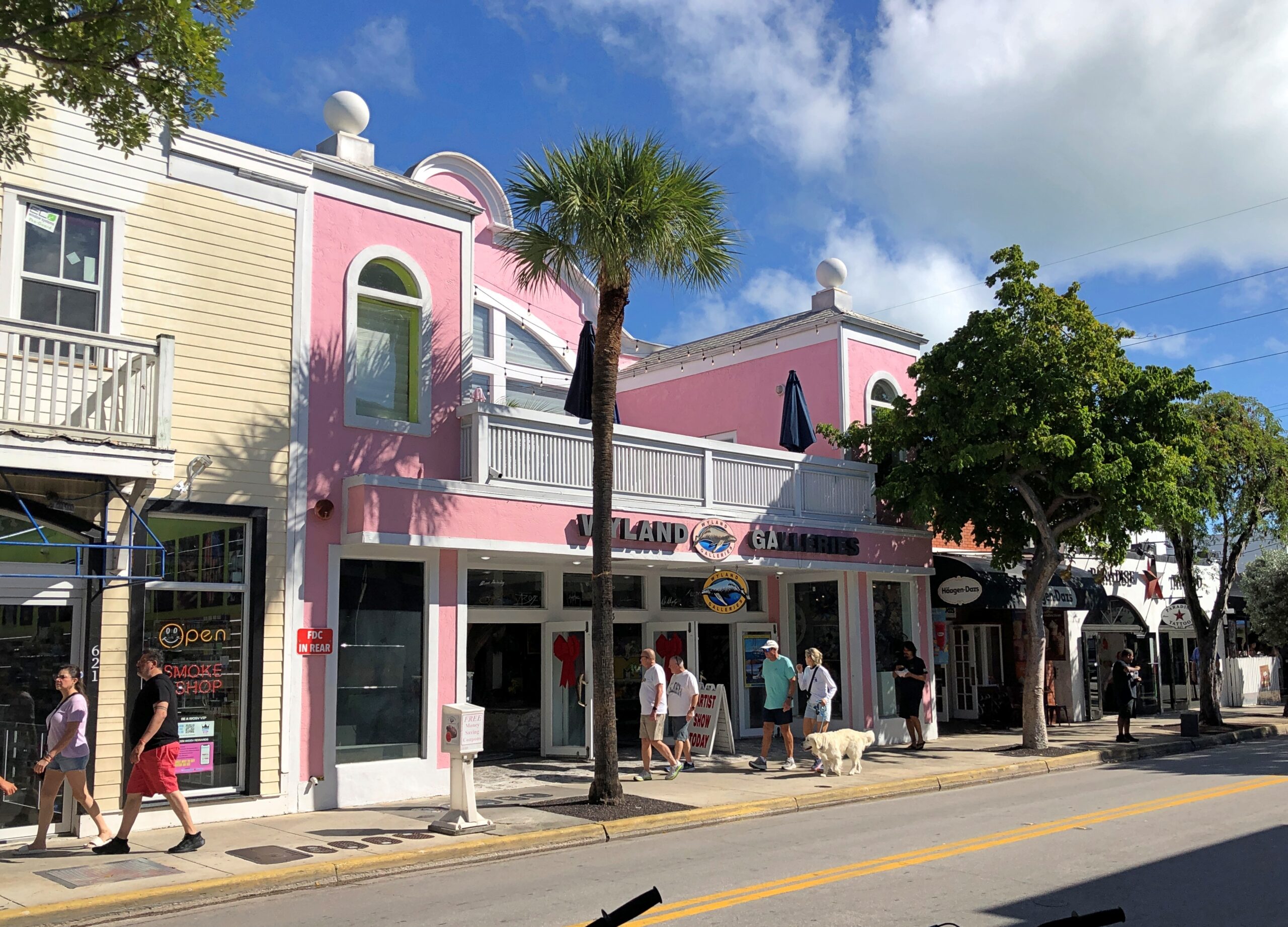
As a tourist street, a lot of retail detail.

Buildings that have somehow survived these last 100 years or so, despite the ocean’s habit of kicking up a hurricane-force fuss now and then.

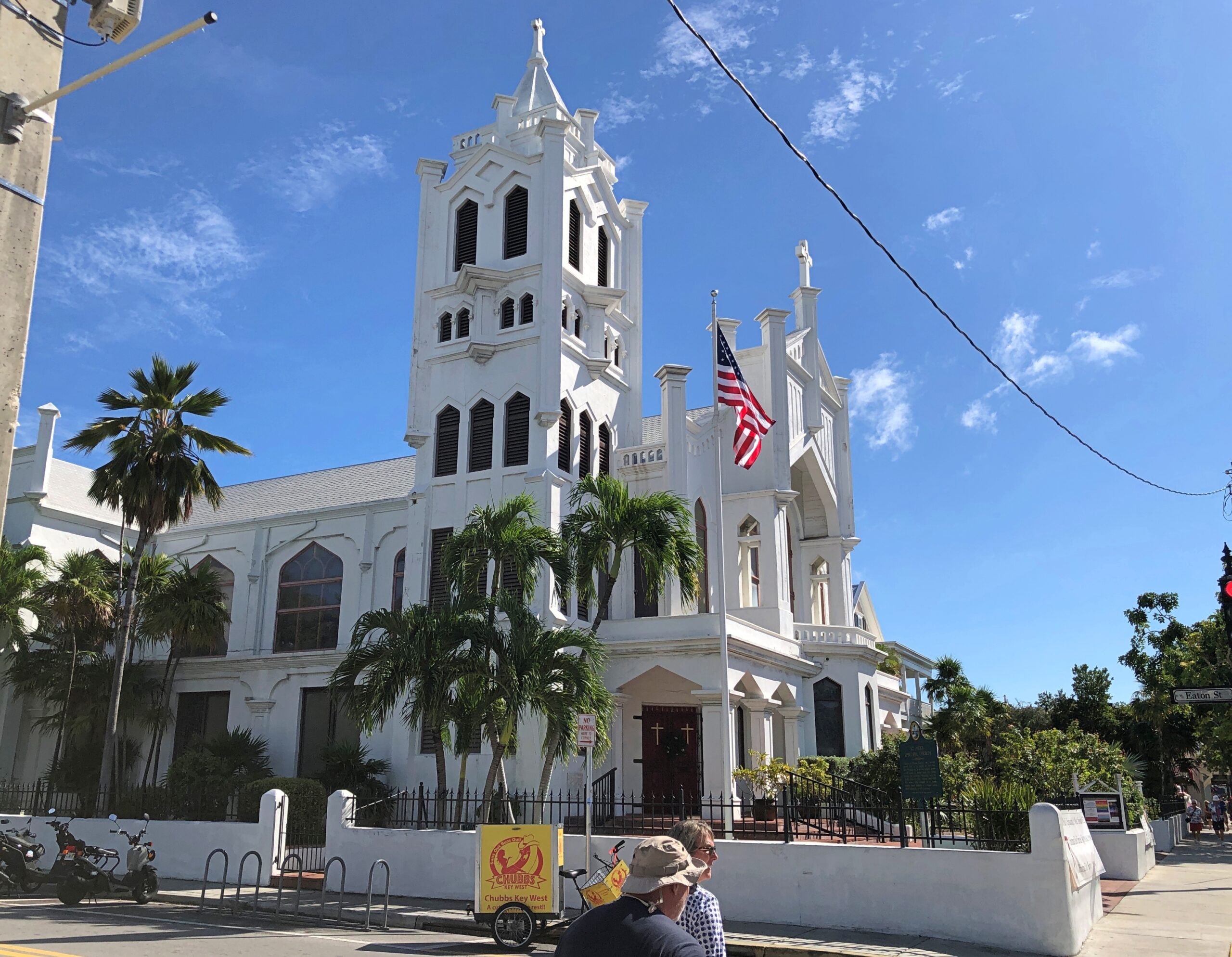
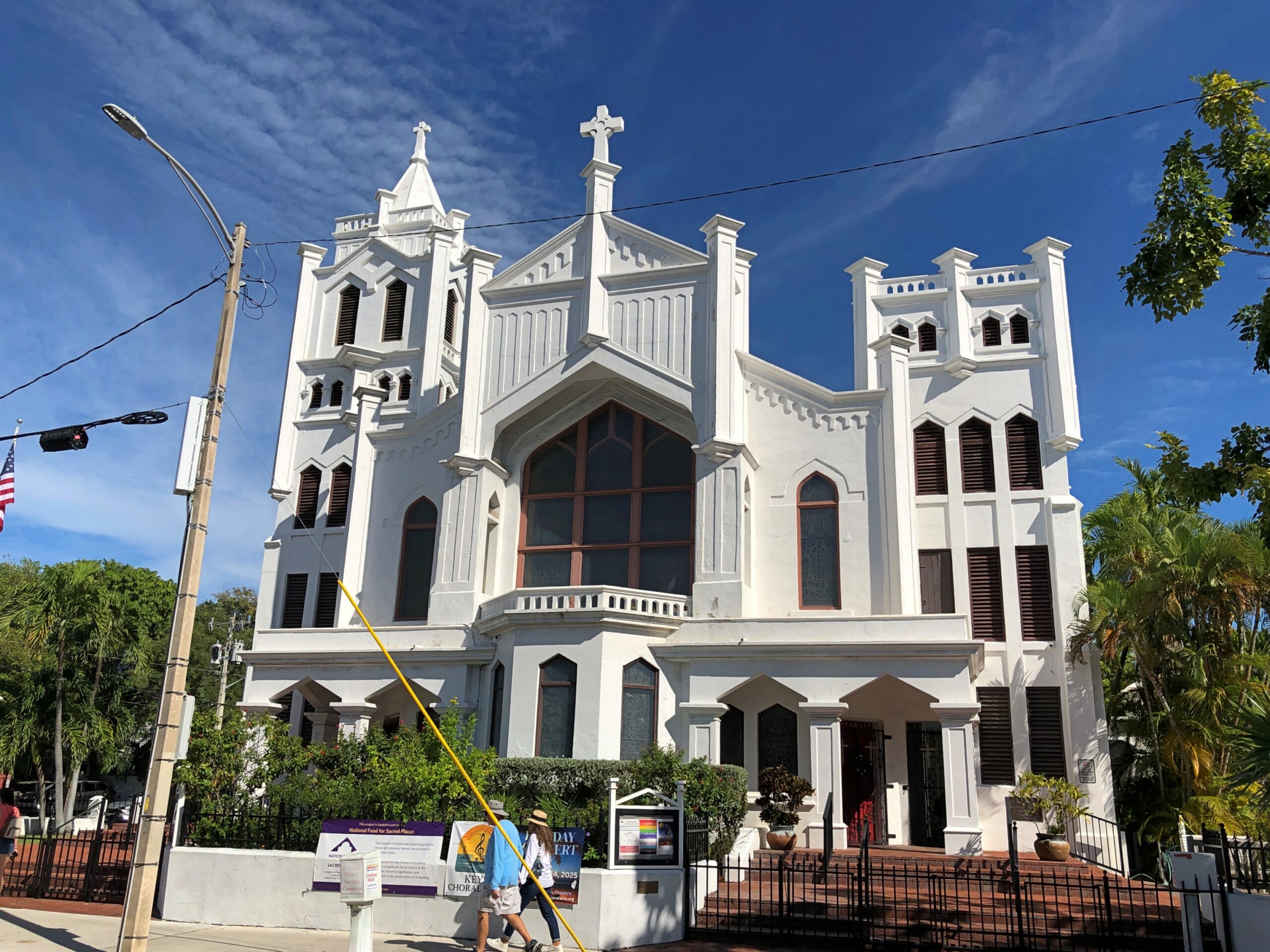
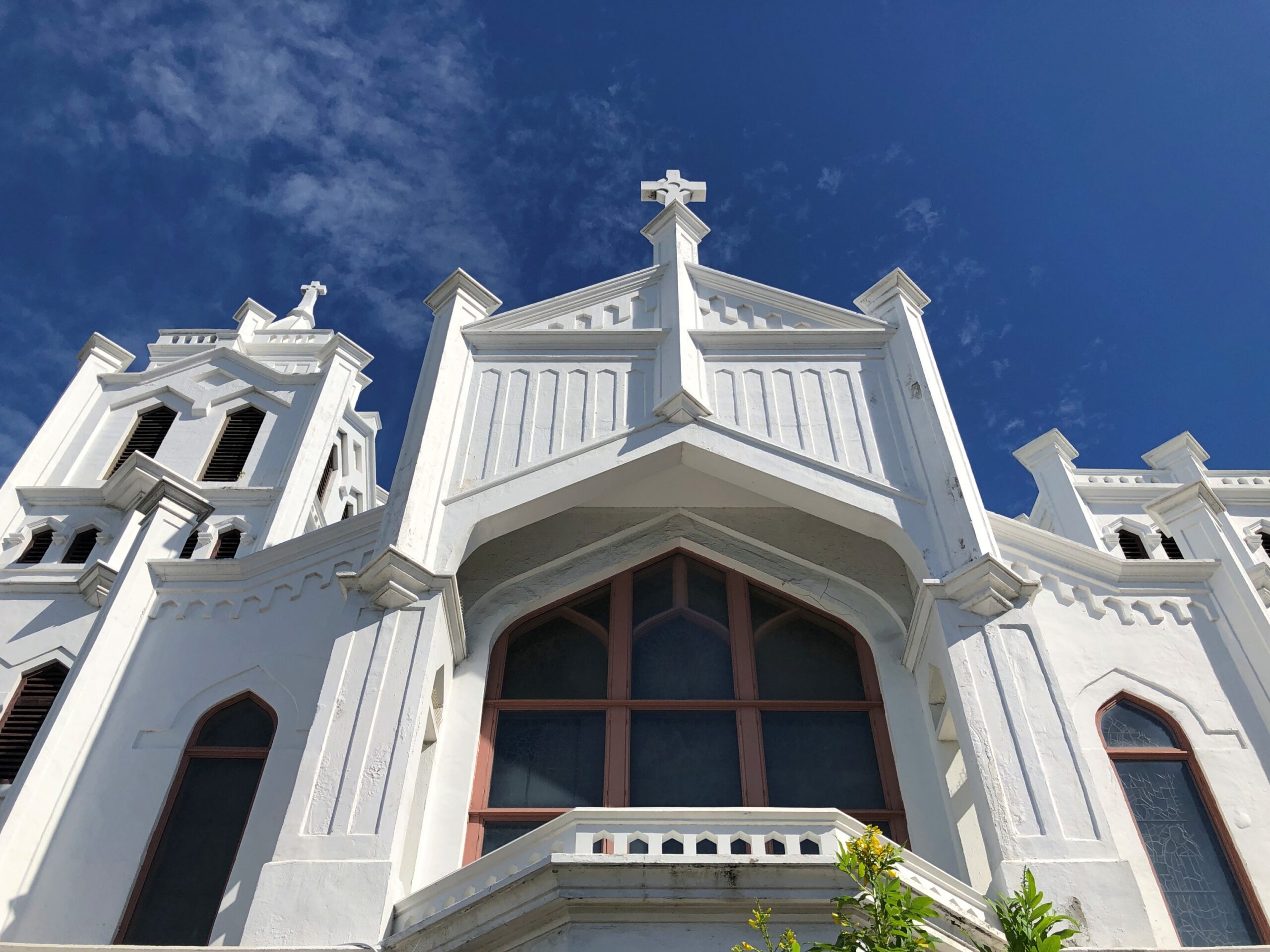
St. Paul’s Episcopal, 401 Duval.

In 2014, I ducked away from crowded Duval into the church, which seemed to be open because the organist was practicing. I sat, impressed by his vigorous noodling, and by the fact that no one else was in the church.

This time, closed.

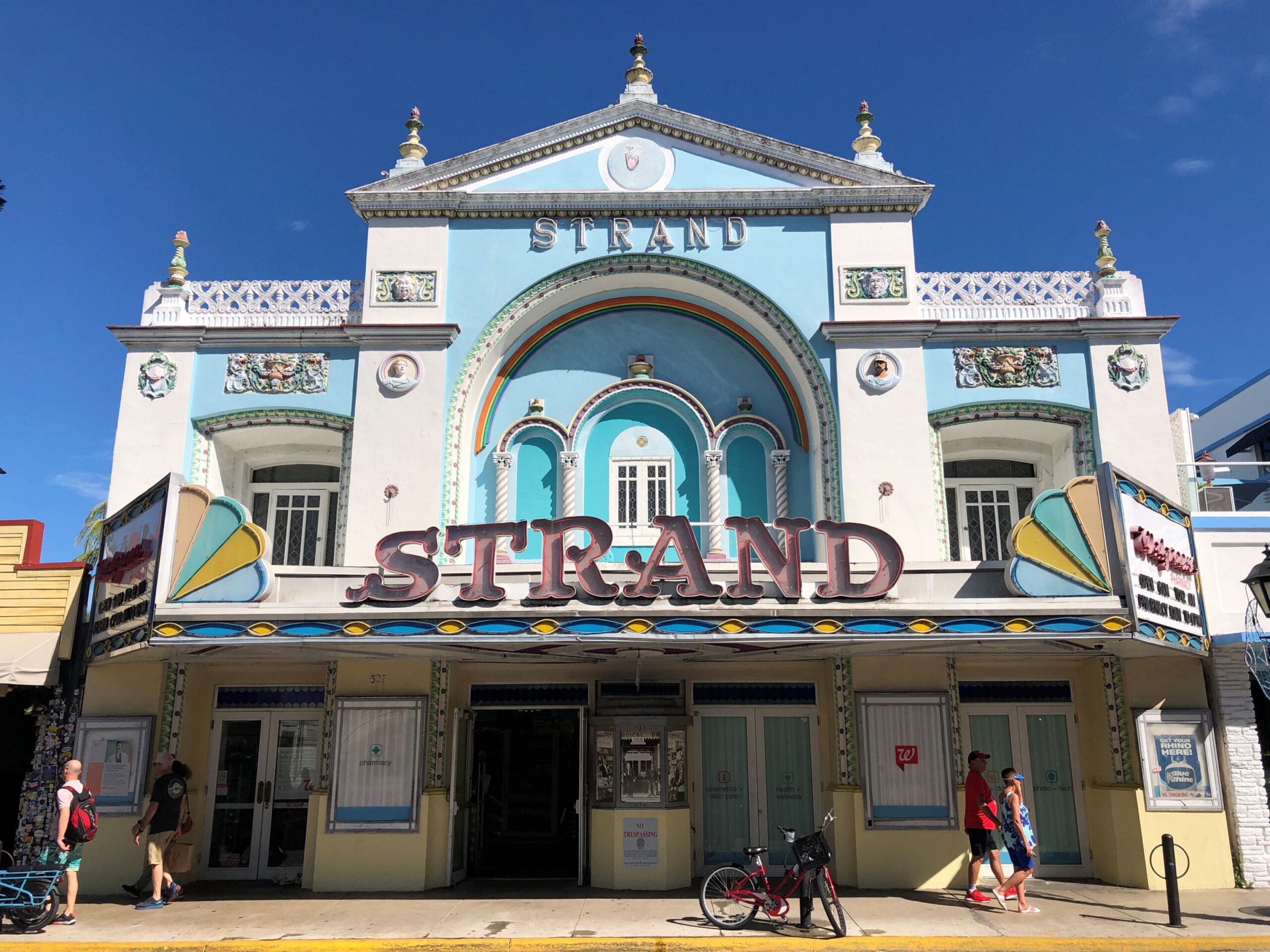
Looks like a movie theater. It was. Now a Walgreen’s.

More detail.

“Duval Street, the undisputed ‘Main Street’ of Key West, is the only place in the U.S. where one street allows you to walk from the Atlantic Ocean to the Gulf of Mexico,” says the American Planning Association, in picking Duval Street a Great Place in America.

“ A citywide commitment to preserving the National Register of Historic Places single-largest collection of wooden structures has allowed Duval Street and the rest of Key West to transition from an economy based on maritime industries and Cuban travel during its earlier years to one now supported by entertainment, art, and tourism.”

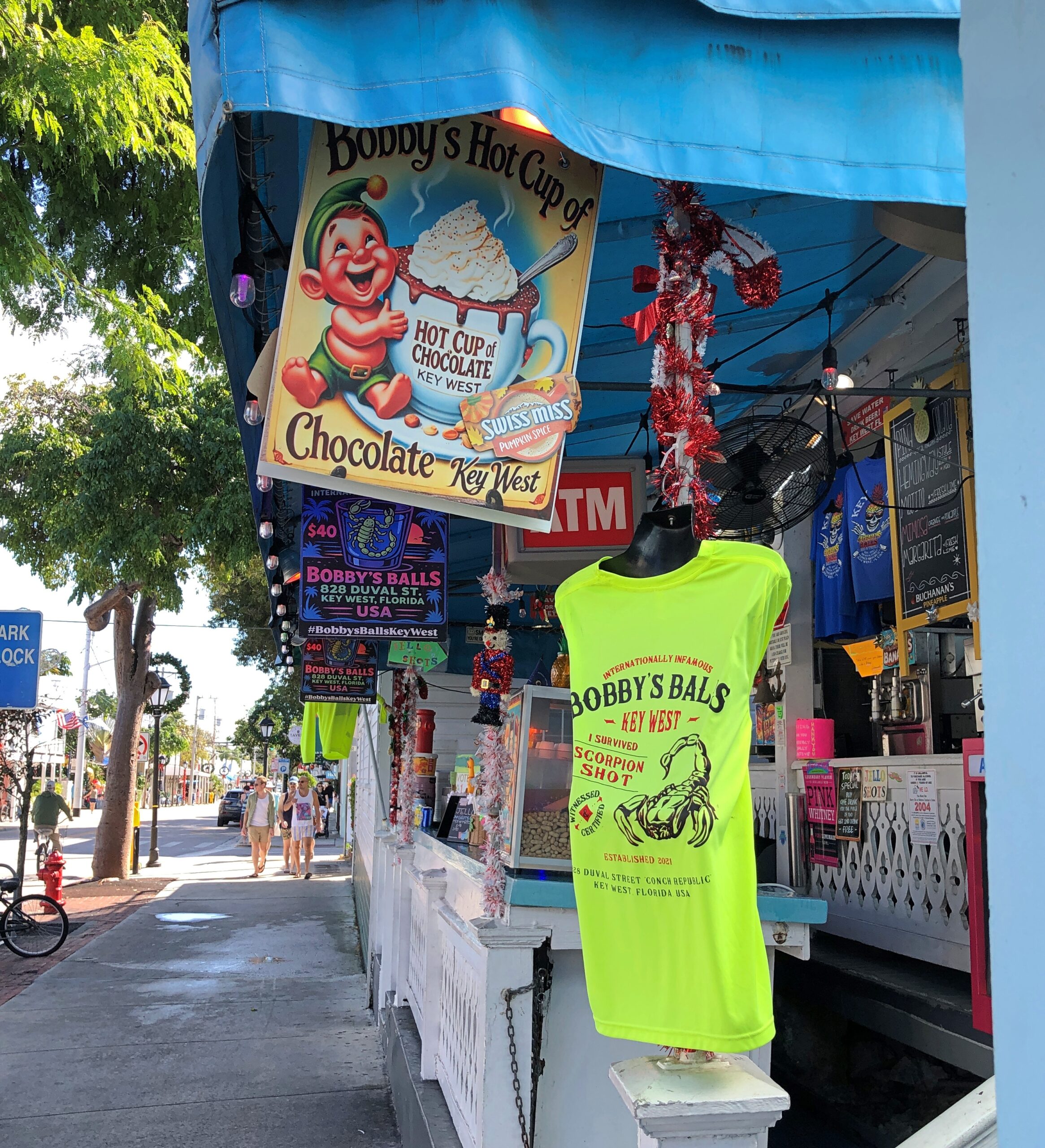
Don’t forget the oddities.

Also in the formula for placemaking.

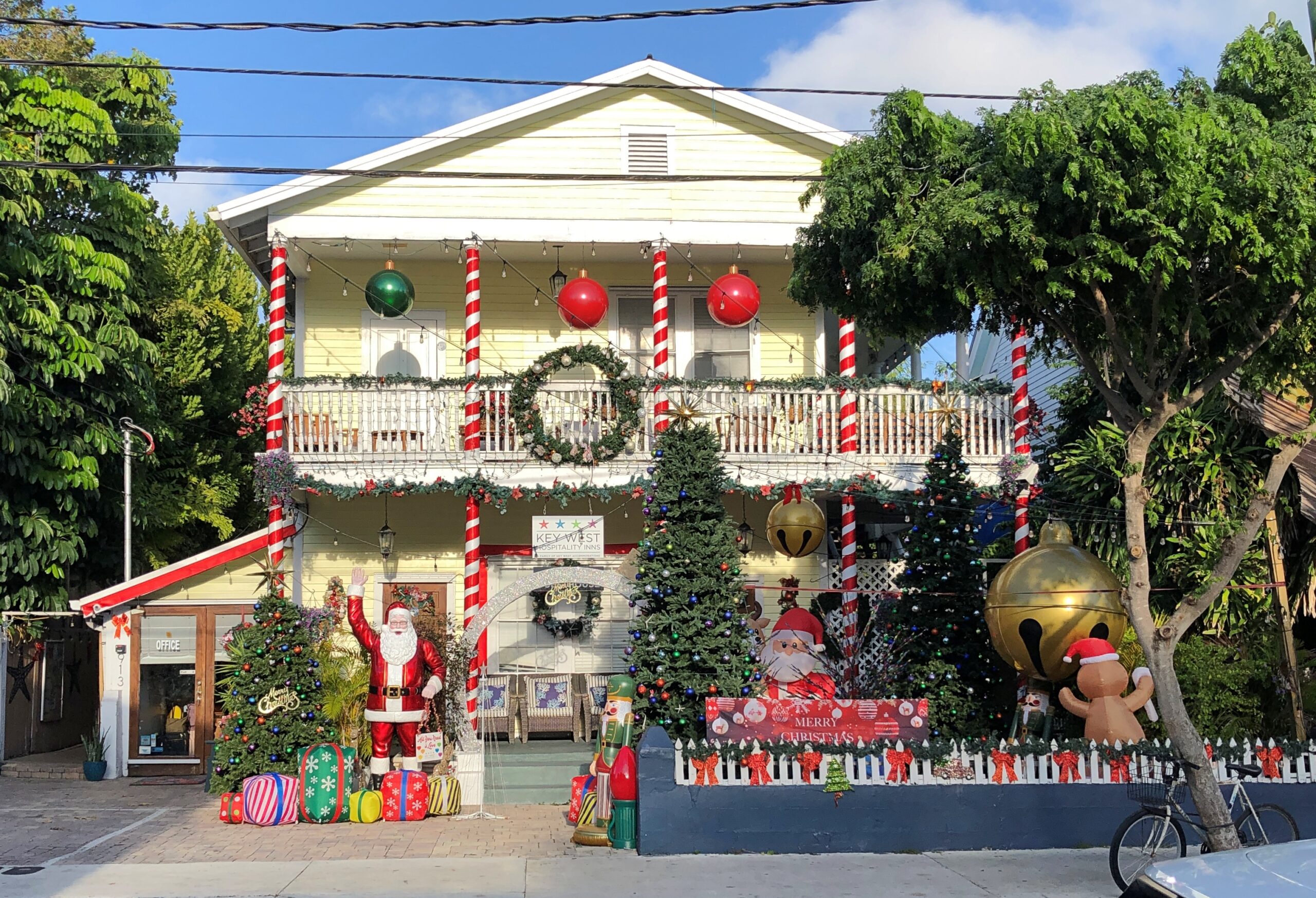
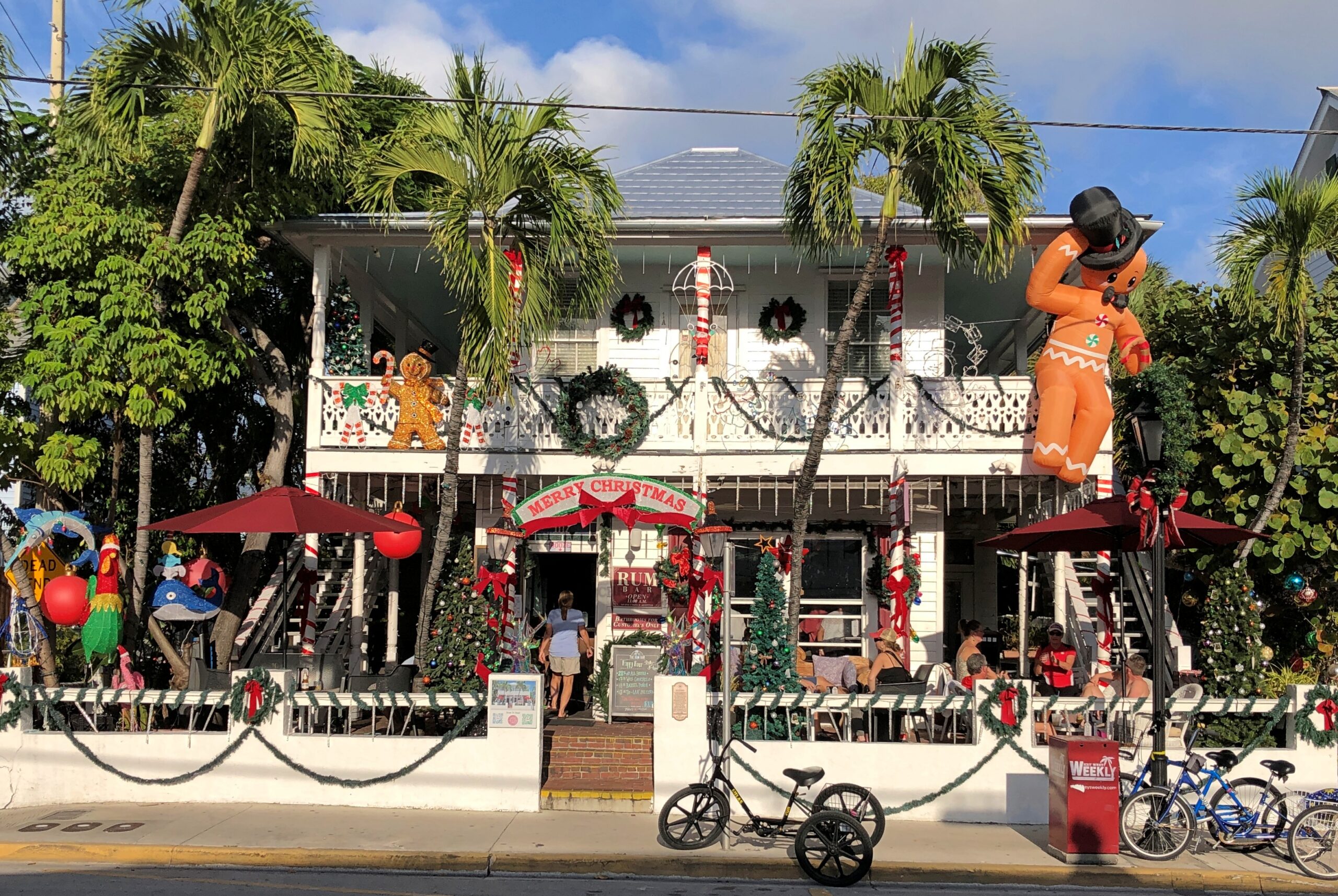
Key West Decked Out for Christmas

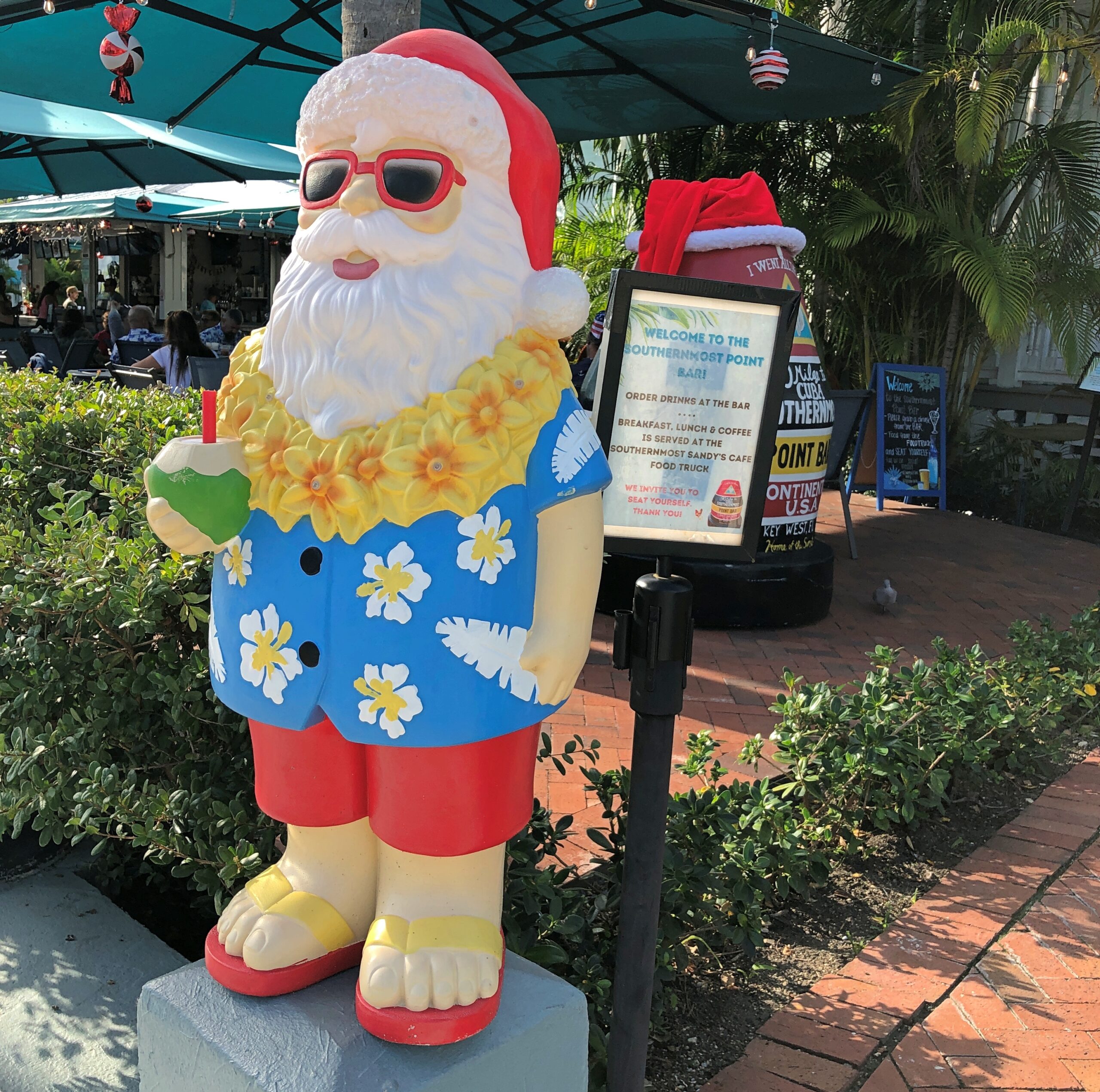
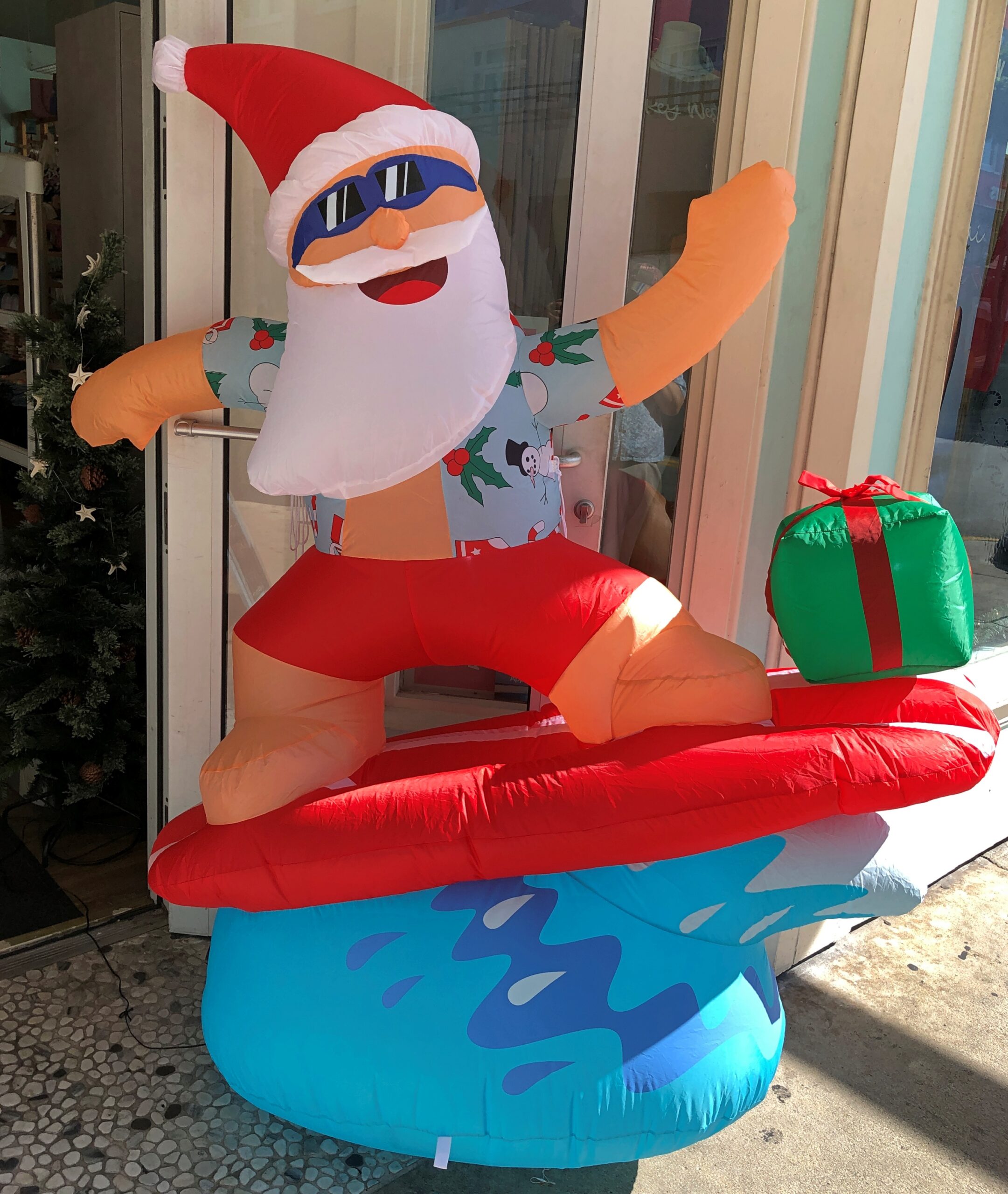
Island-vibe Santa Claus can be found in Key West in mid-December. In fact, I was expecting more such Santas. Even he needs to vacation, preferably somewhere warm (see #13).

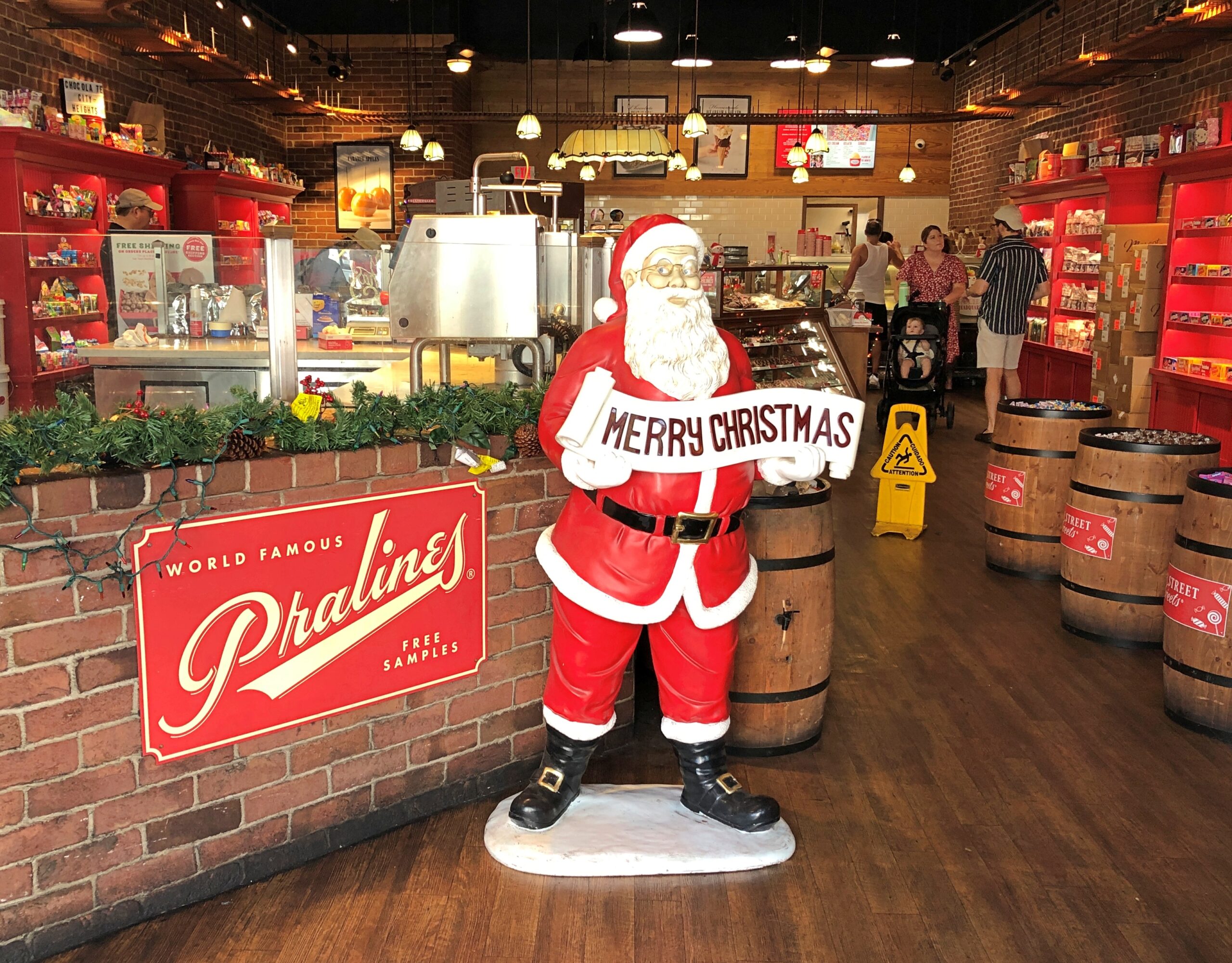
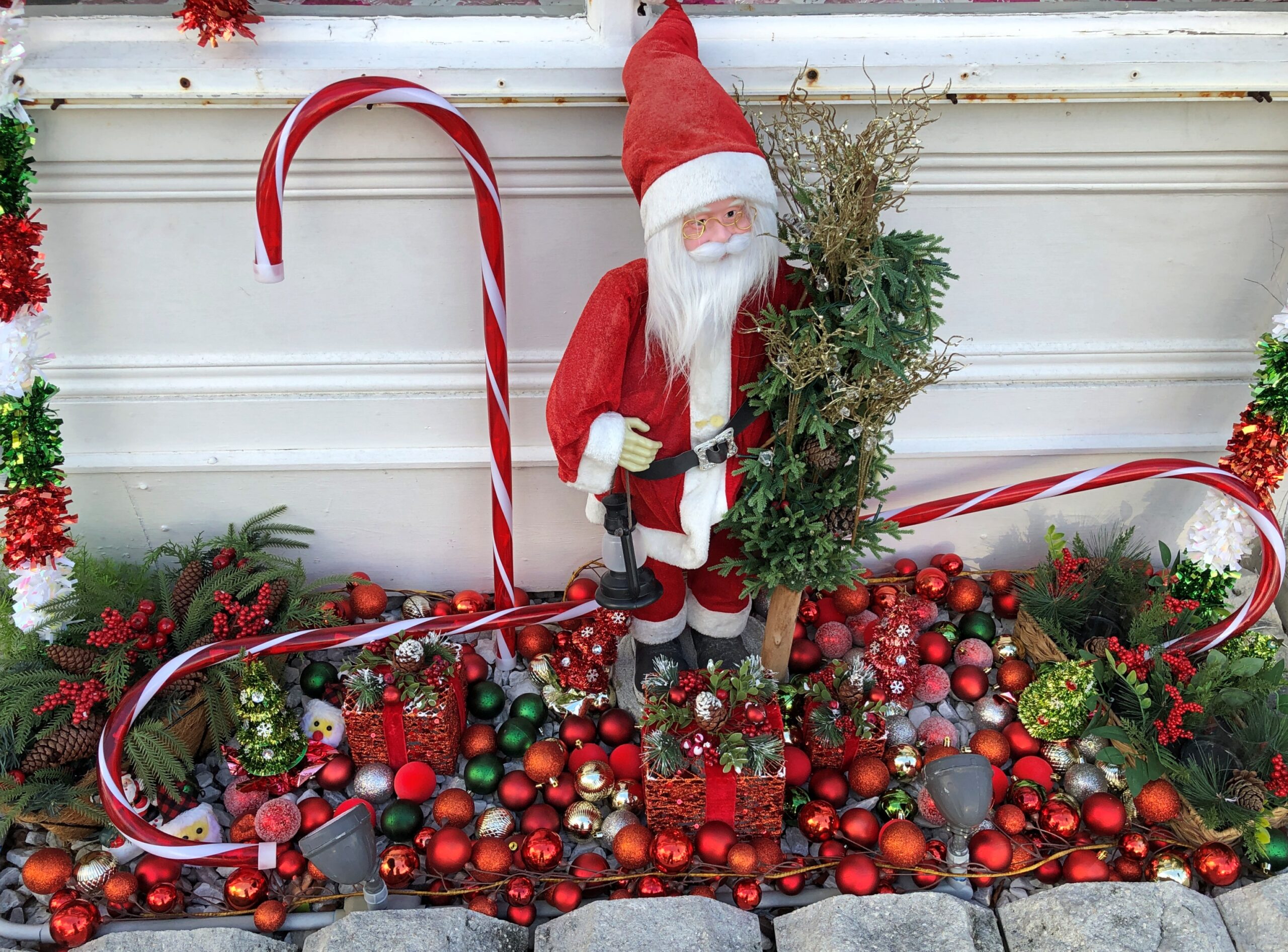
We spent two days walking around Old Town in Key West, which is time enough to cover a fair amount of ground, considering the small size of the place. More conventional St. Nicks were also to be seen, some of them finding their place in a place of business.

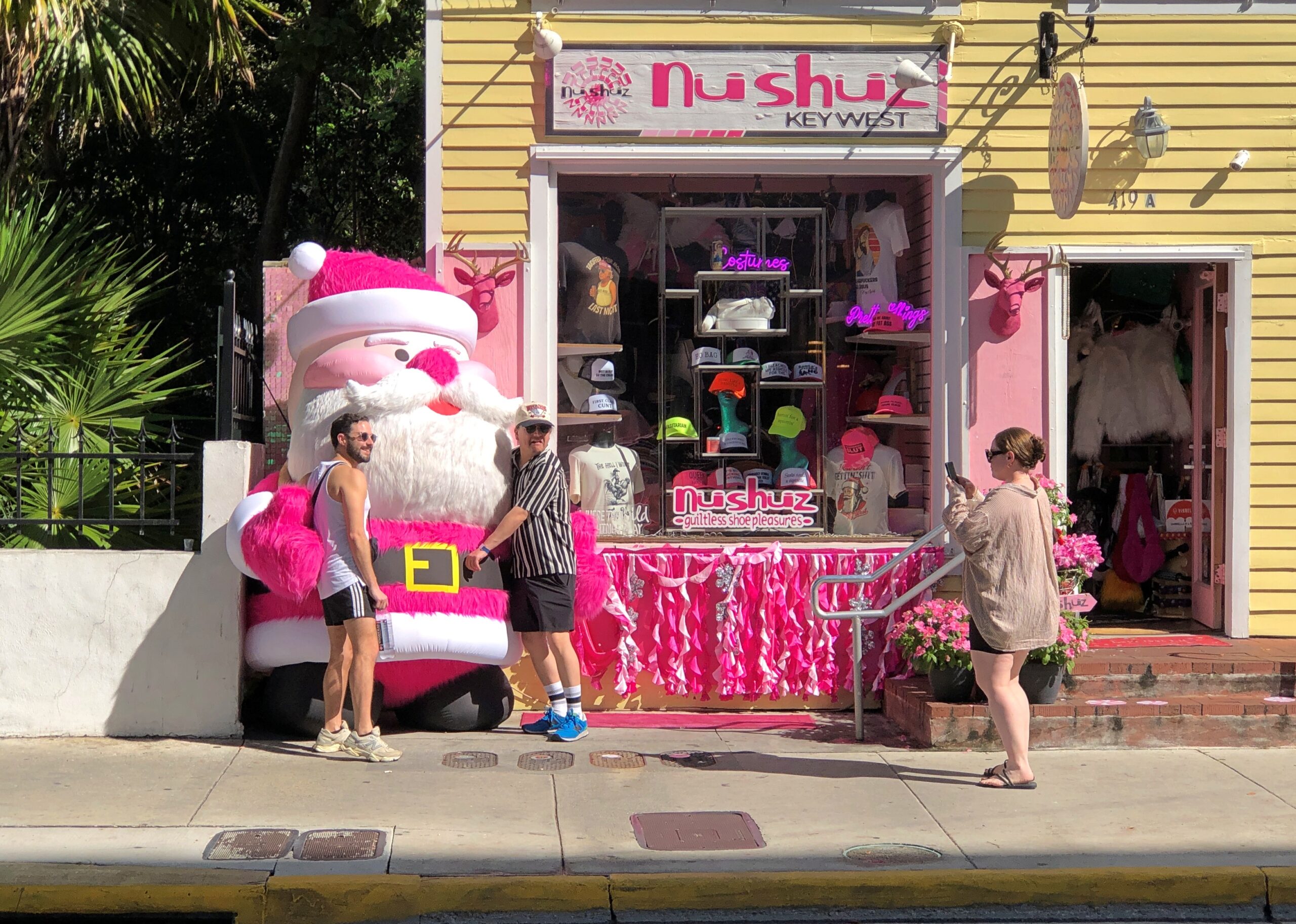
Not sure if pink counts as conventional Santa Claus. Usually he’s red, of course, a depiction of jolly old elf owes to Coca-Cola, but pink is pretty close. Anyway, pink Santa had a few fans.

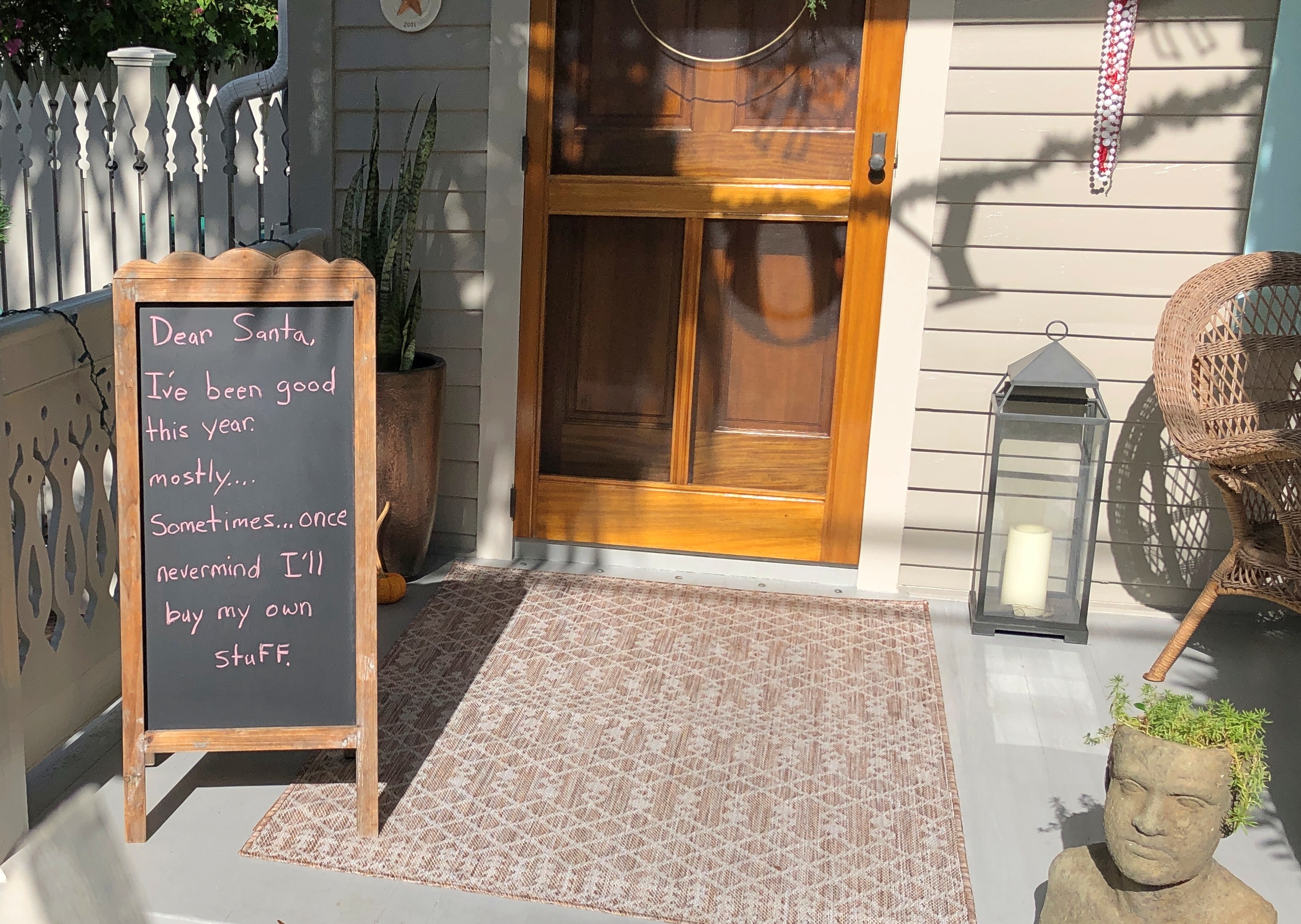
A message for Santa, going for ha ha ha, rather than ho ho ho.

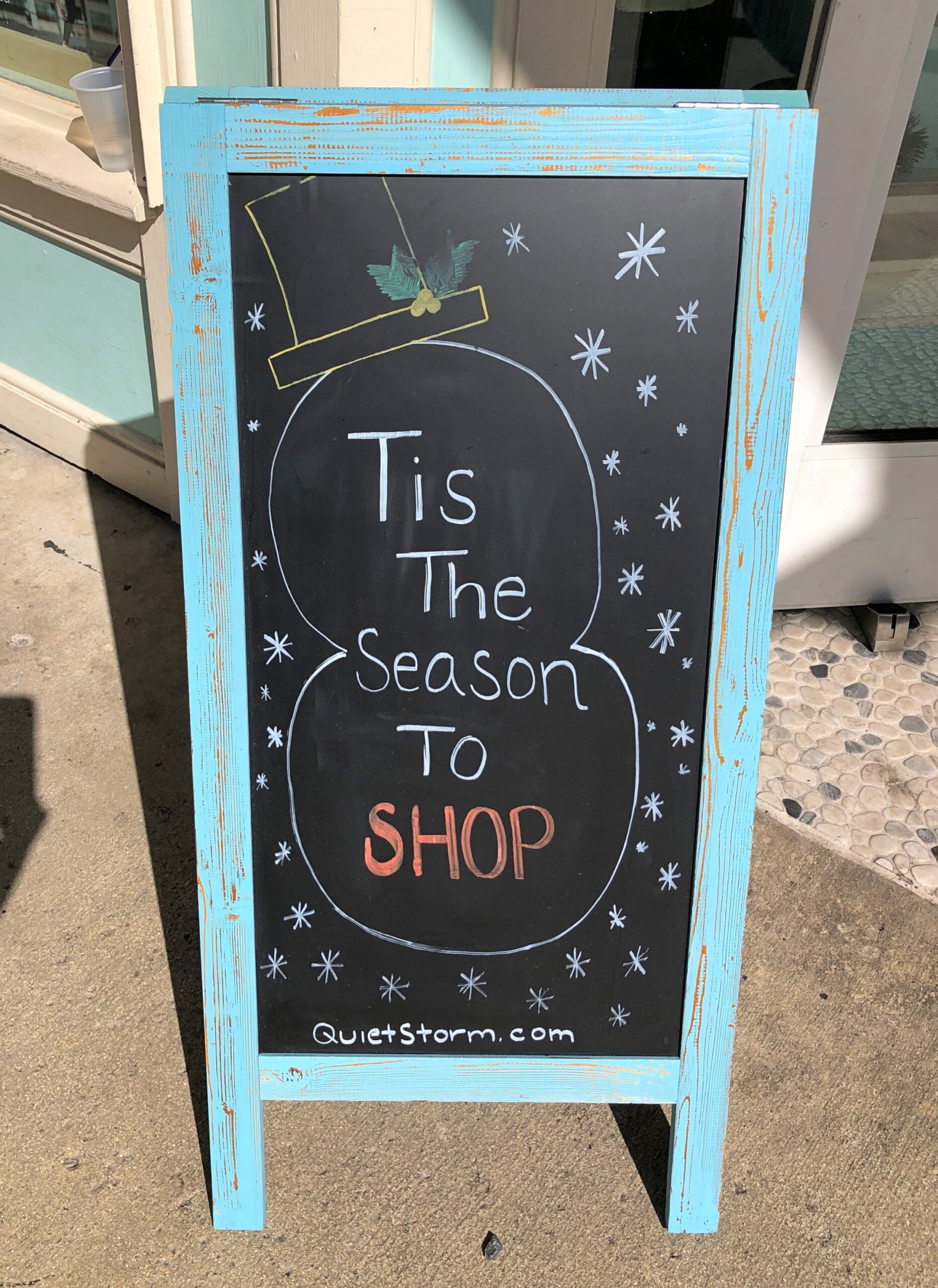
This retailer gets right to the point.

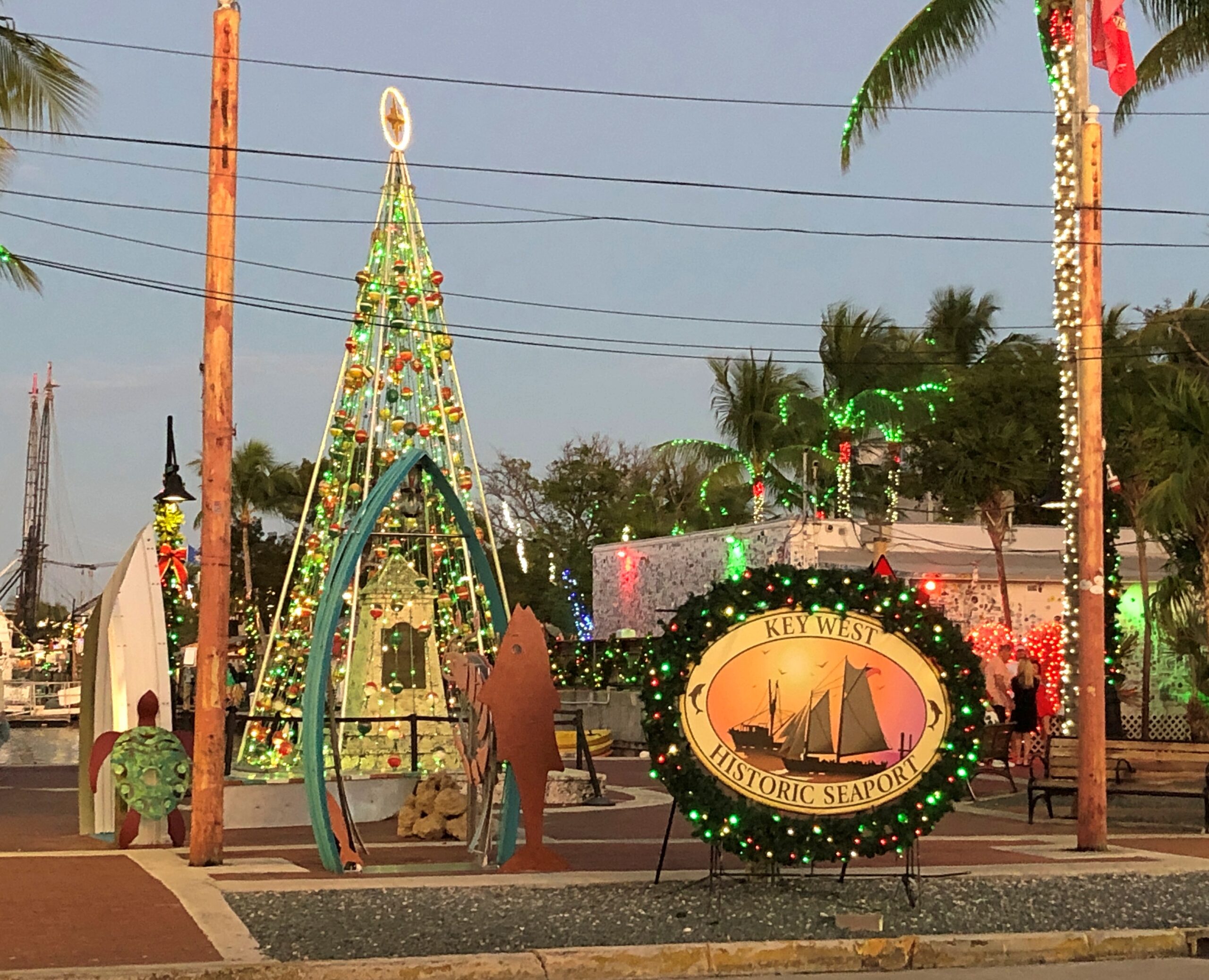
Maybe not the full Griswold, but decked out in quantity.

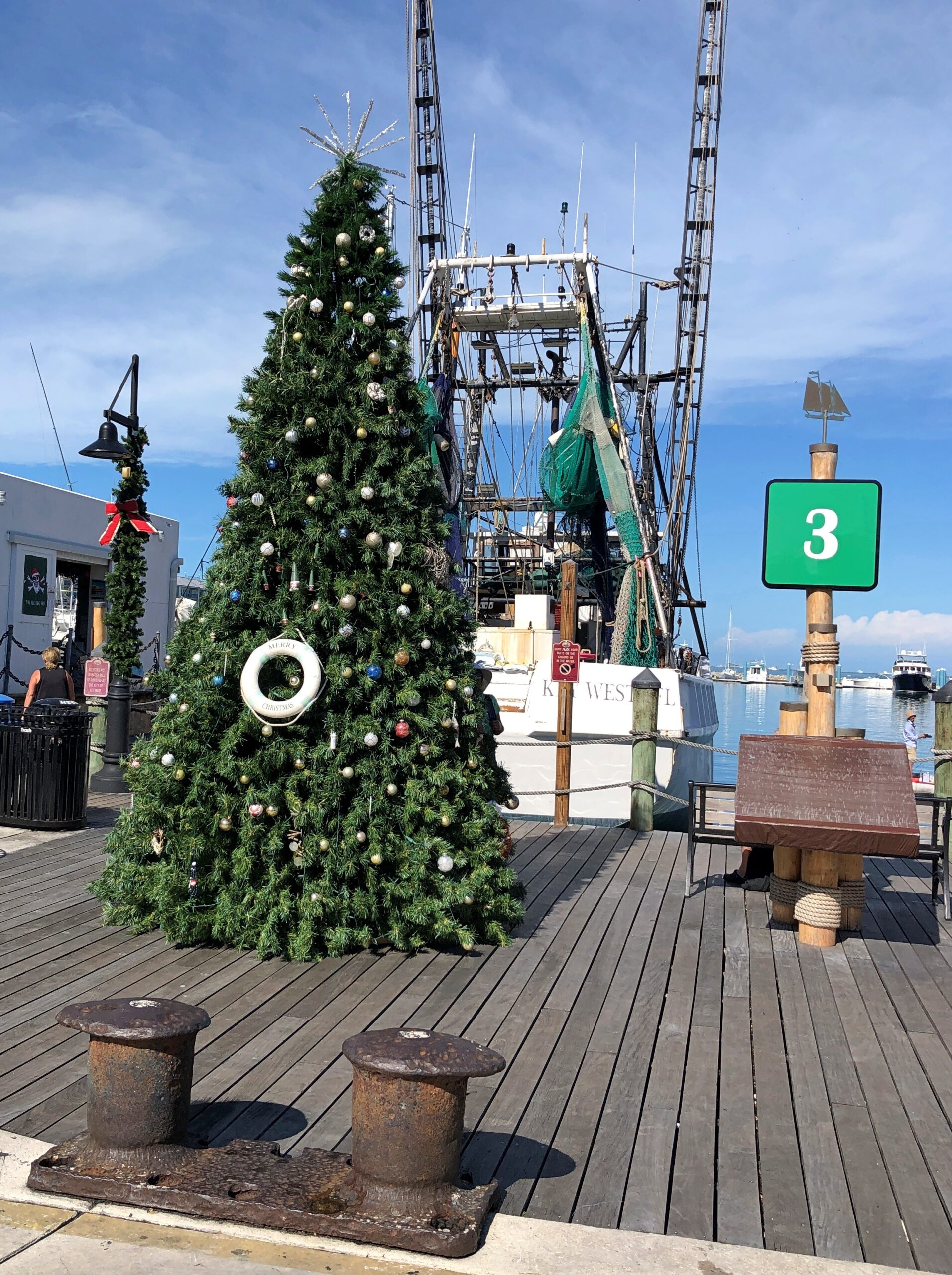
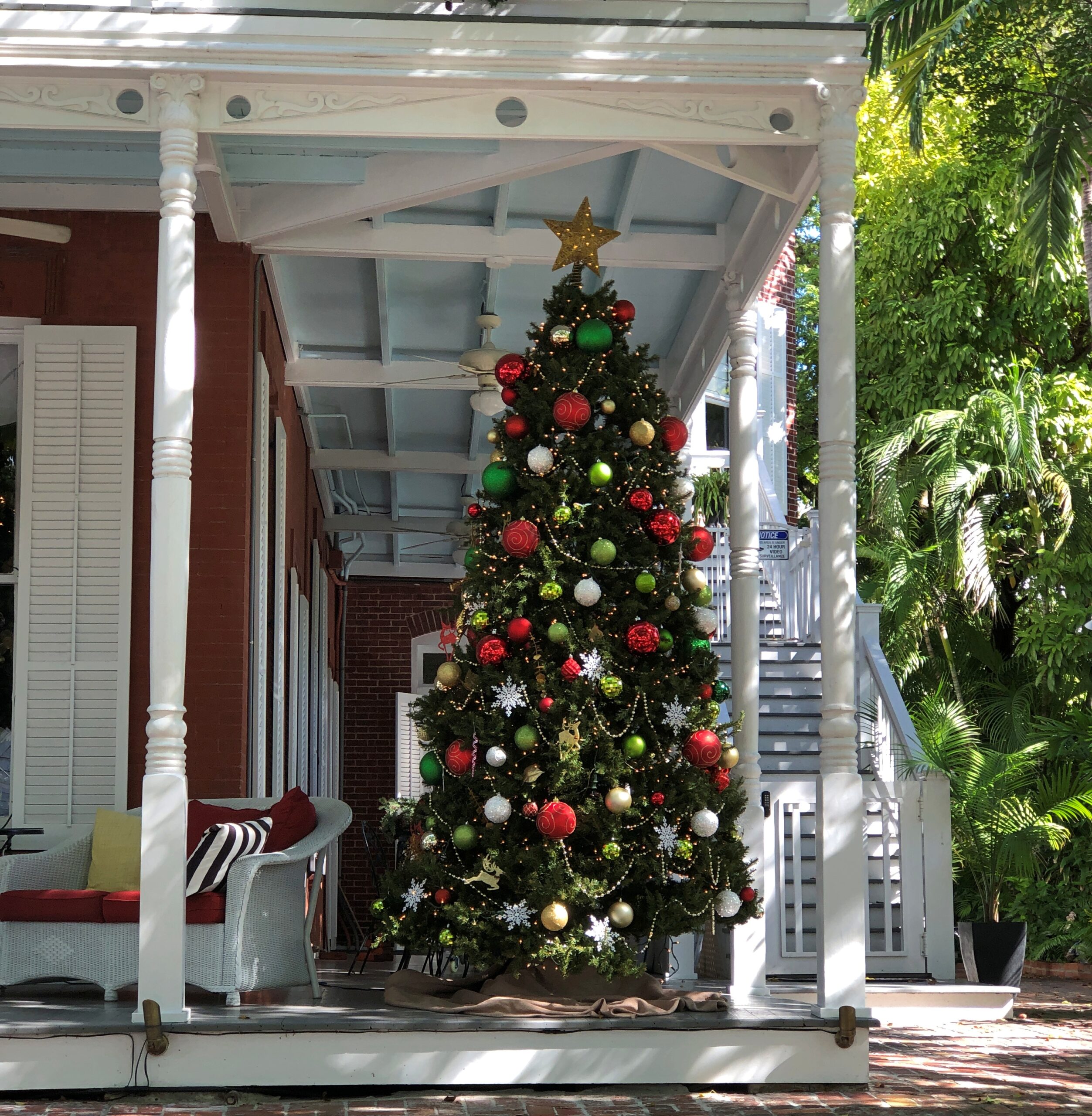
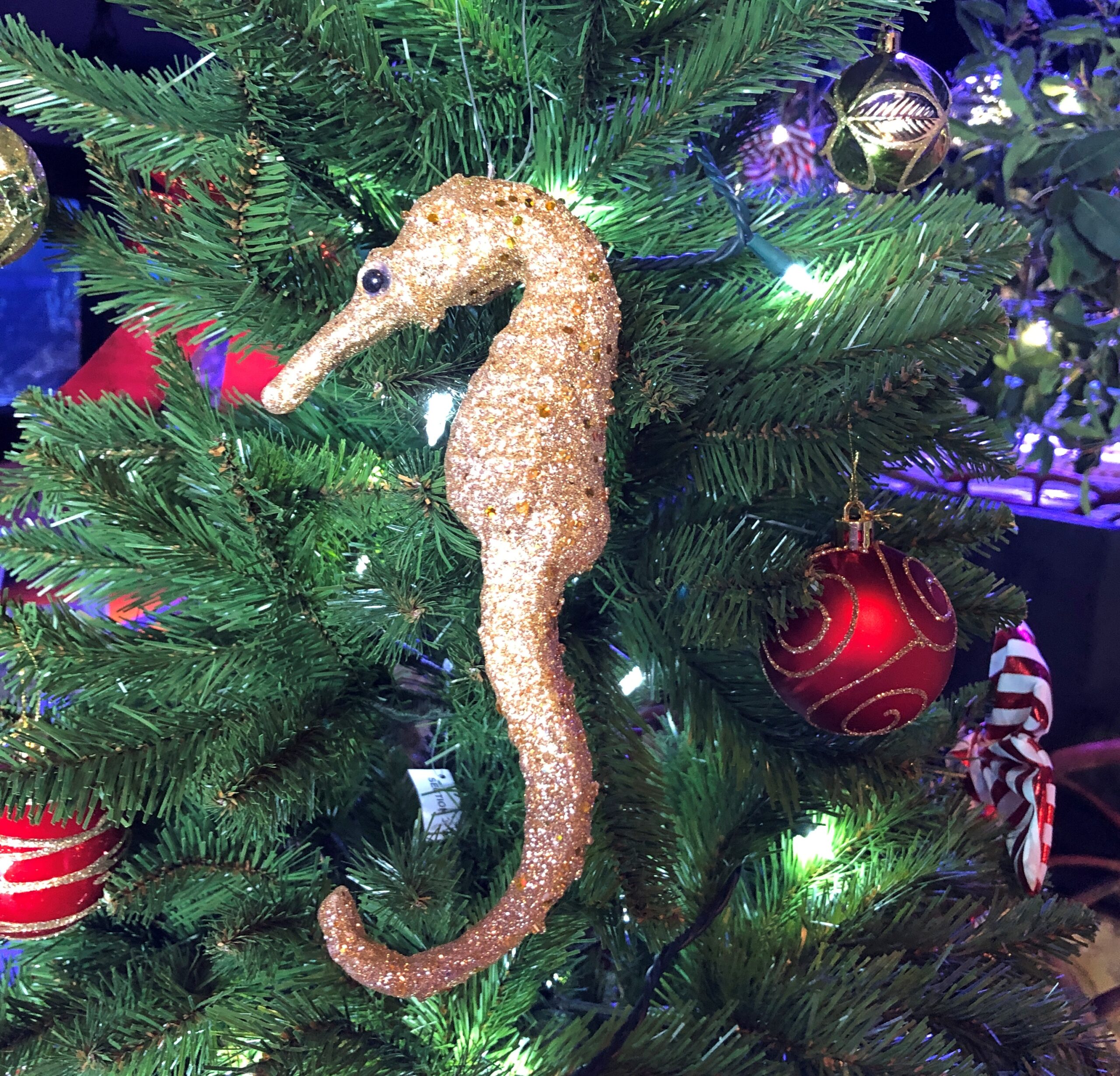
Trees: evergreen simulations, which seem a little out of place. But why not?

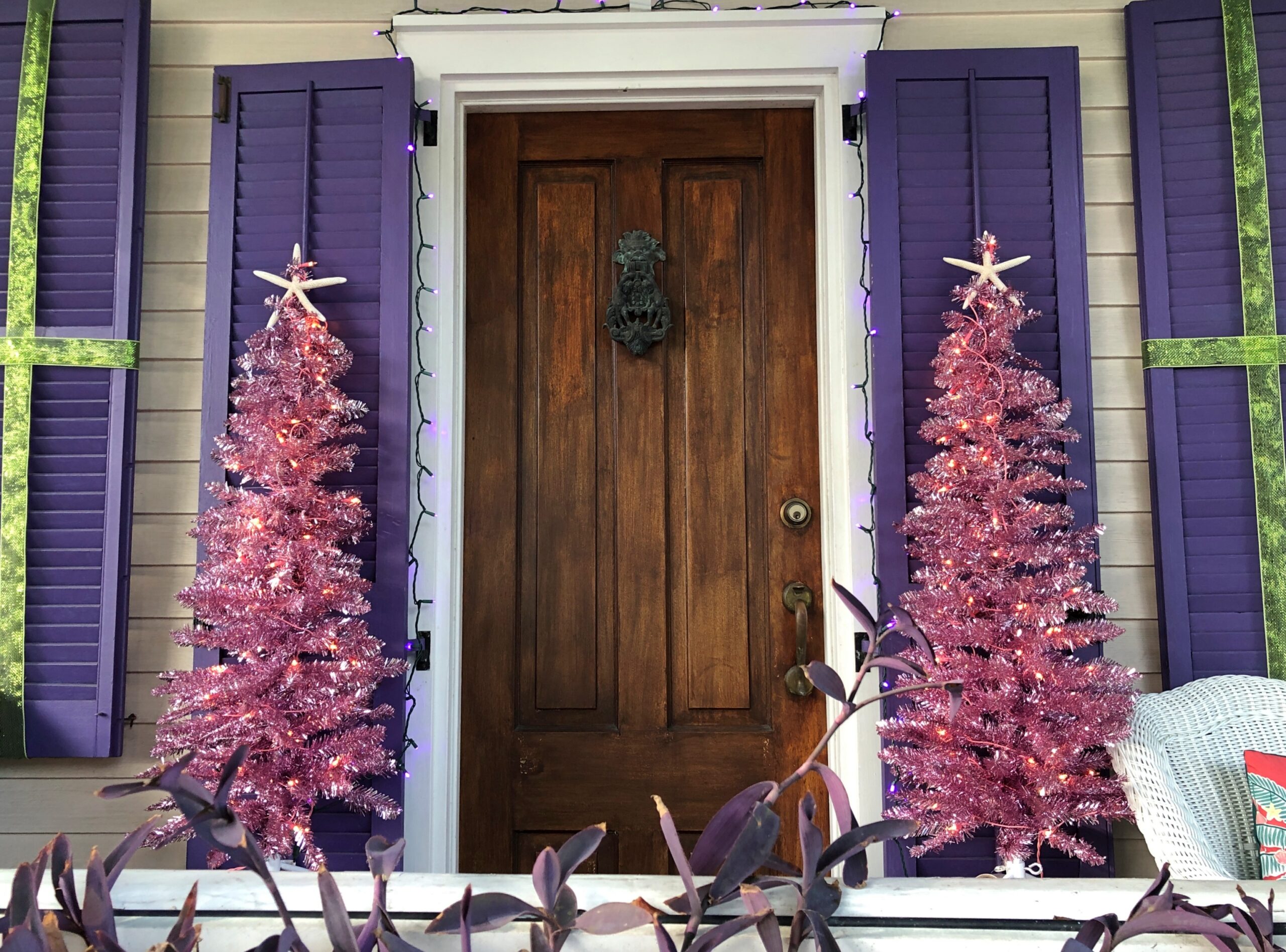
A pair of pink aluminum trees.

We need a revival of the aluminum tree. Not everywhere during the season, but up a notch in the Xmas décor world. Unless that’s already happened. It might have and I wouldn’t have noticed.

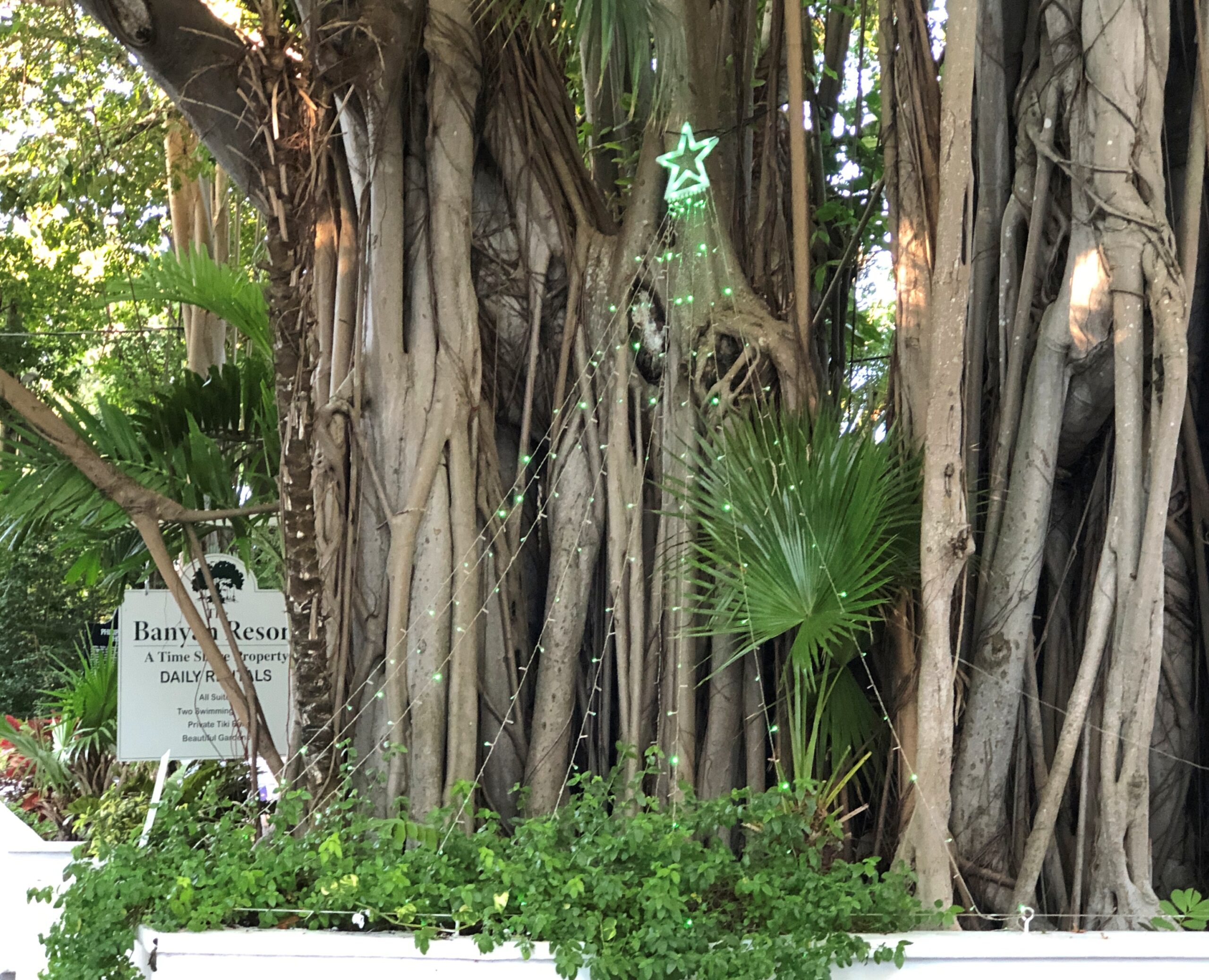
Tree in the abstract. Fronting a banyan. That, I think, counts as Key West local.

So does this.

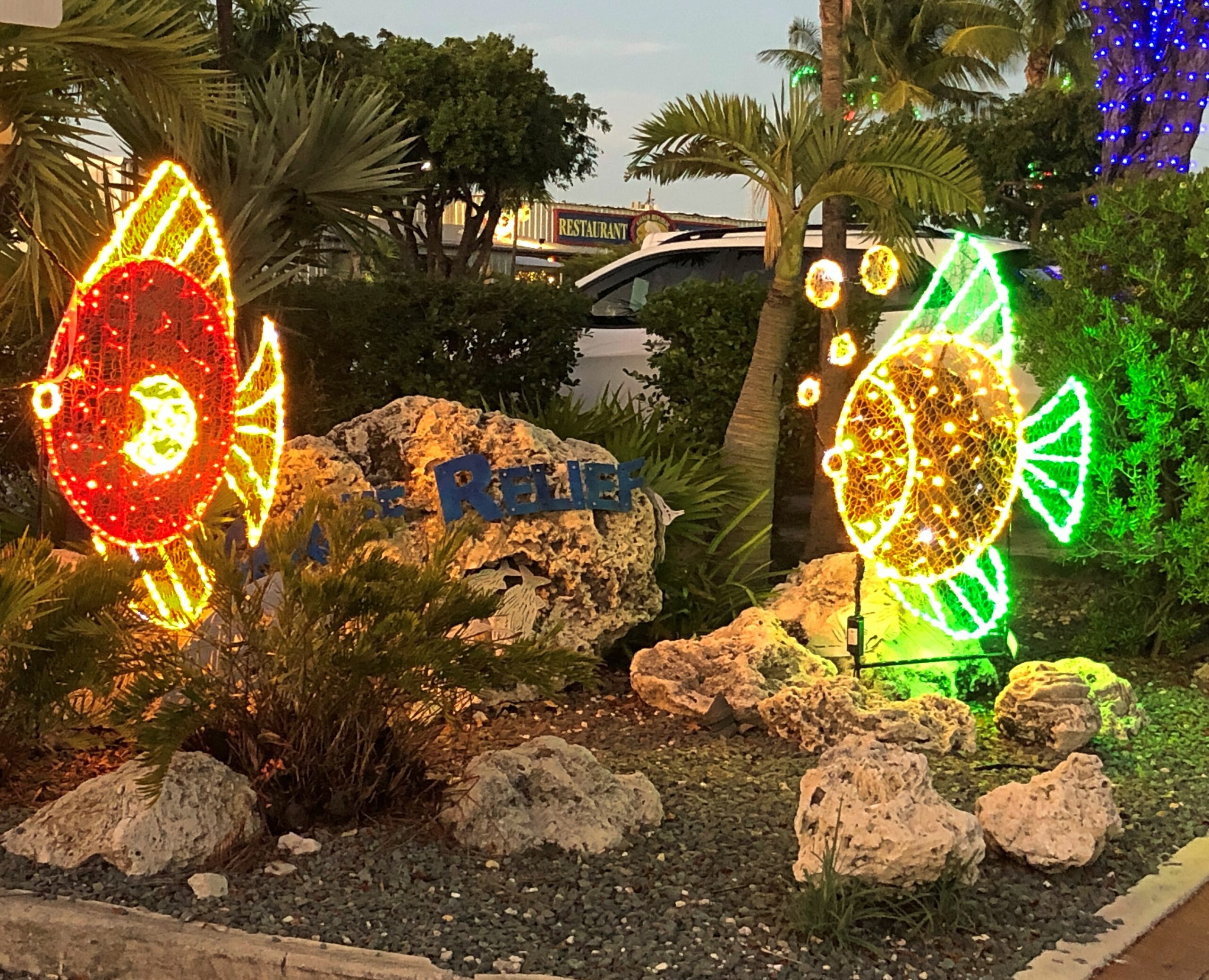
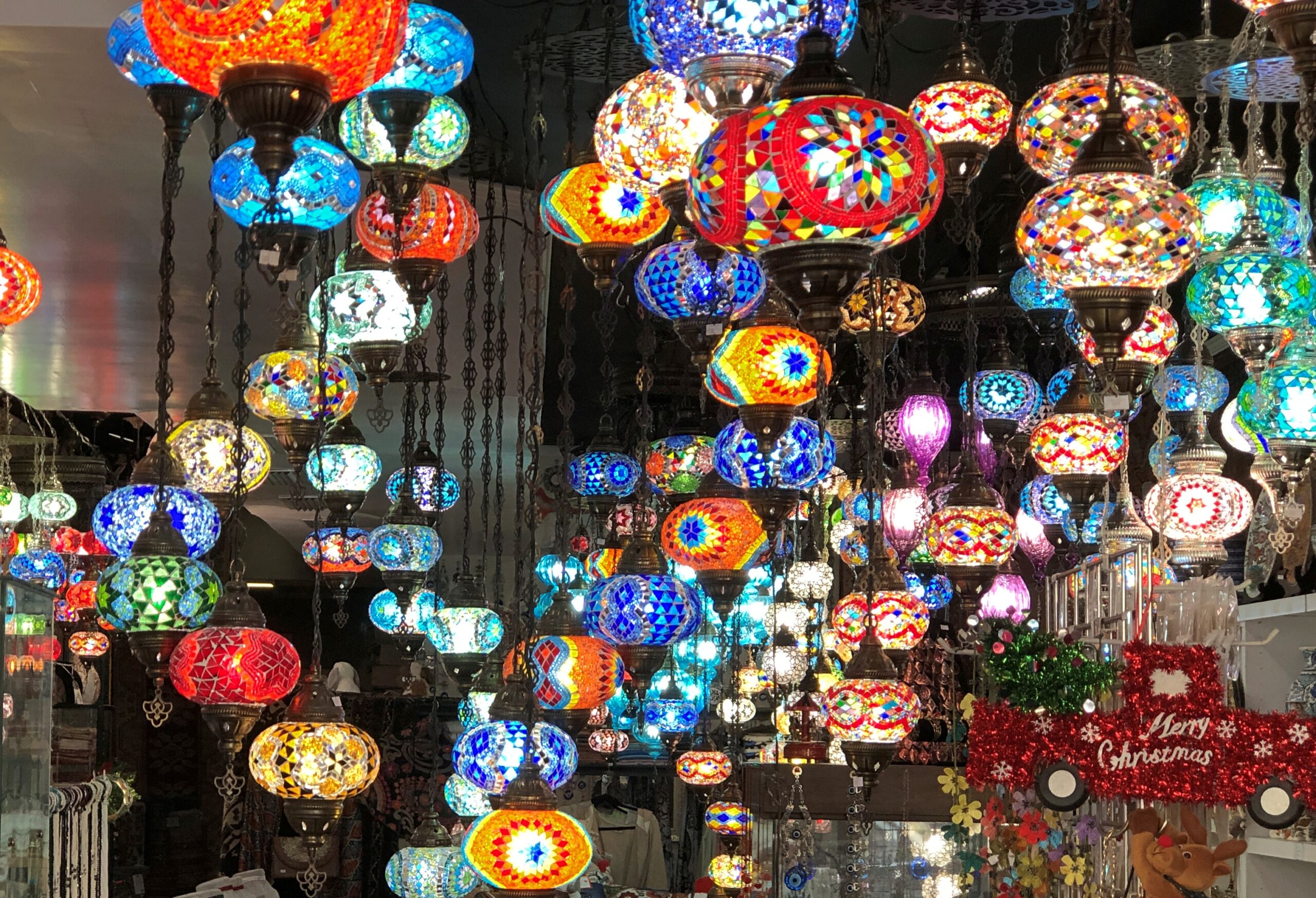
Near dusk the first day was a good time to see lights.

Not Christmas lights, but colorful all the same, and available to take home. We didn’t.

Not specifically Christmas either, but also colorful.

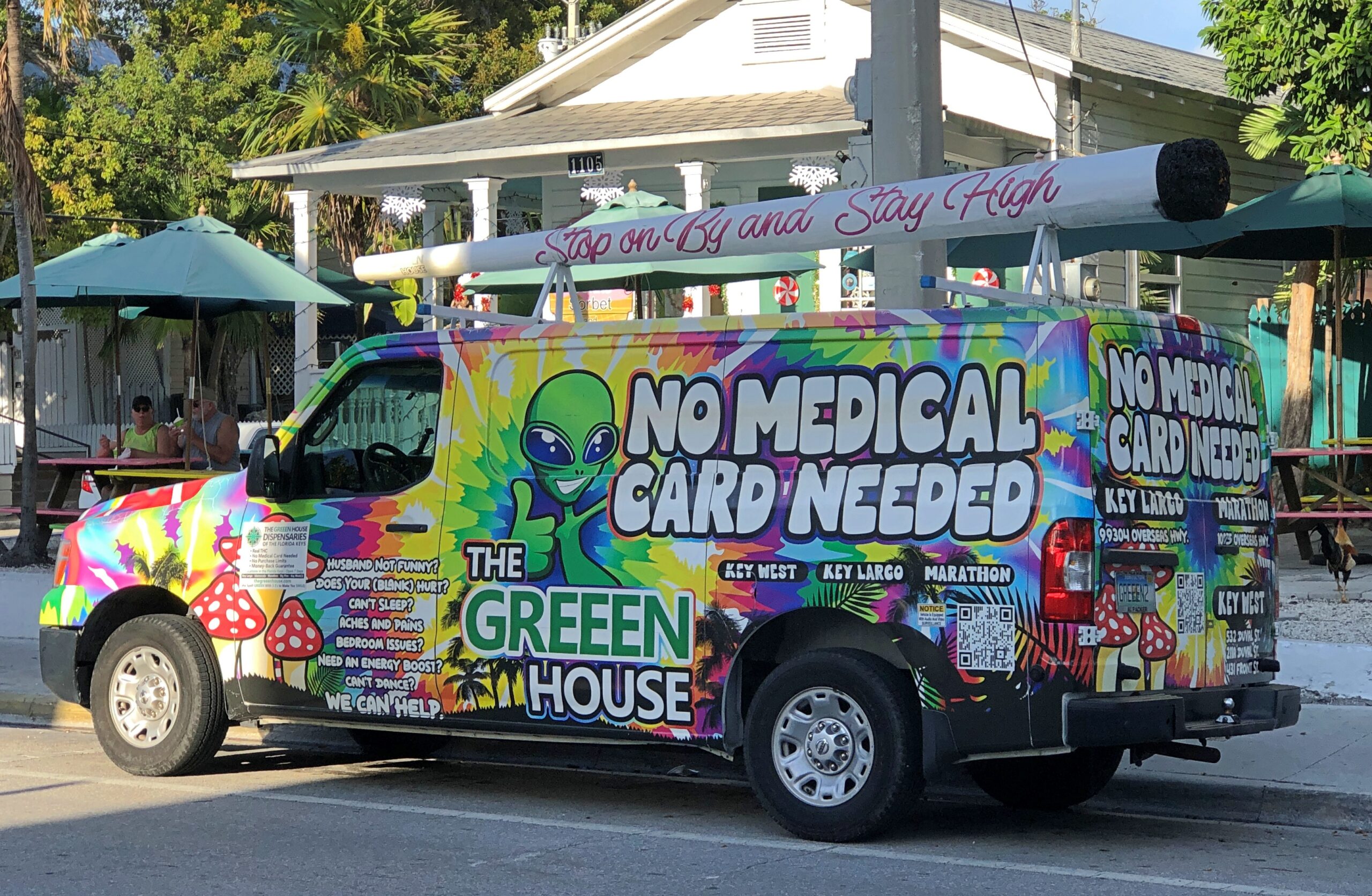
Countering the spirit of Florida cannabis law, if not the letter? Not sure. This truck wasn’t the only one we saw. Didn’t patronize them either. Ho ho ho.

Ed Leedskalnin, Noted Latvian Eccentric

Where does eccentricity come to flourish? America, you could argue. Even more specifically, Florida. That might be too much of a generalization, and these might not be the best of times (or the worst) for American eccentricity, but the example I have in mind actually reaches back a century or so: Ed Leedskalnin, immigrant from Latvia who single-handedly built the Coral Castle in Homestead, Florida.

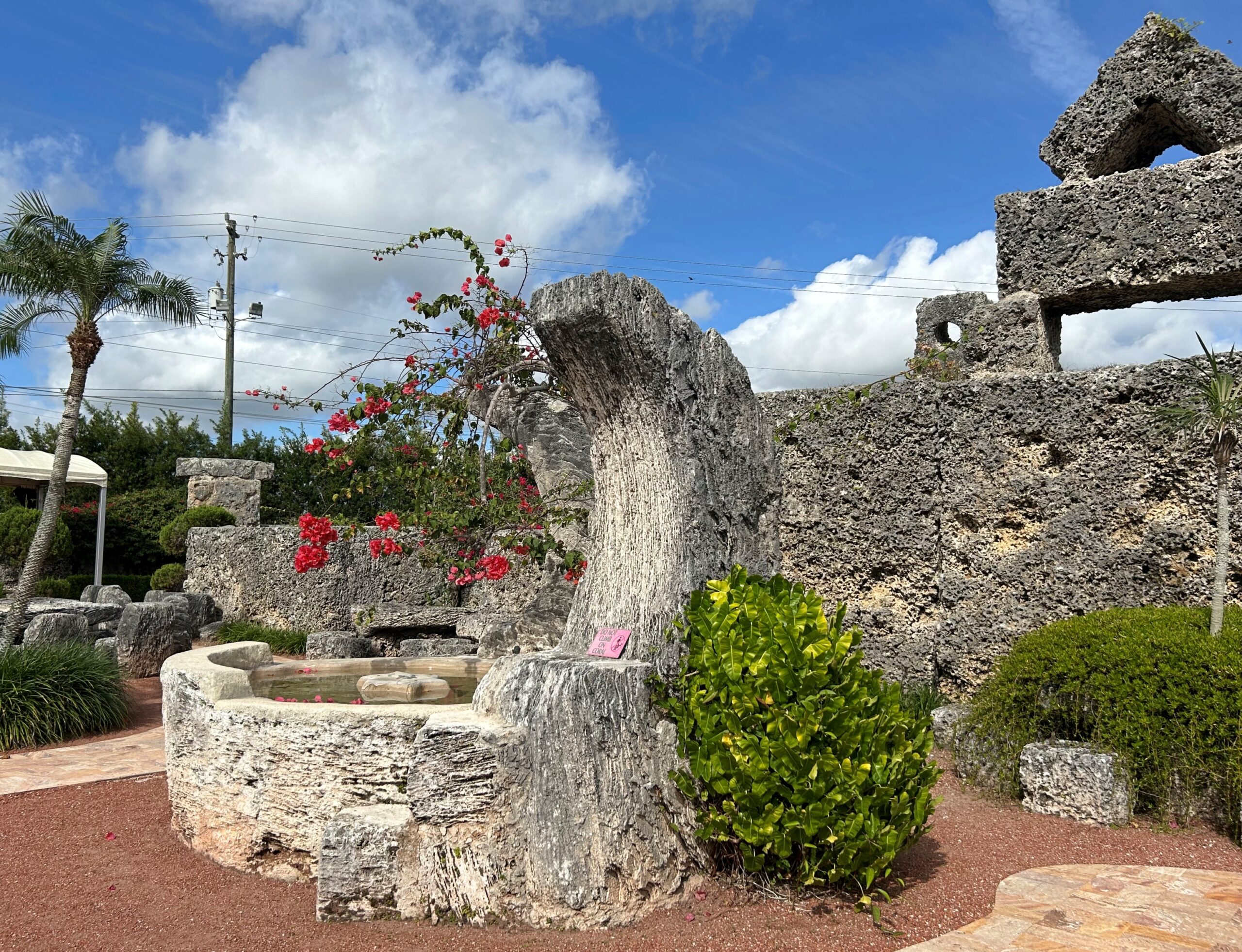
The story goes that his fiancée left him at the altar back in Latvia and that Leedskalnin, born into a family of stonemasons, built the place to remind himself of his lost love once he’d settled in Florida. Since he lived and worked alone, an undergrowth of lore grew around his creation, some stories more ridiculous than others.

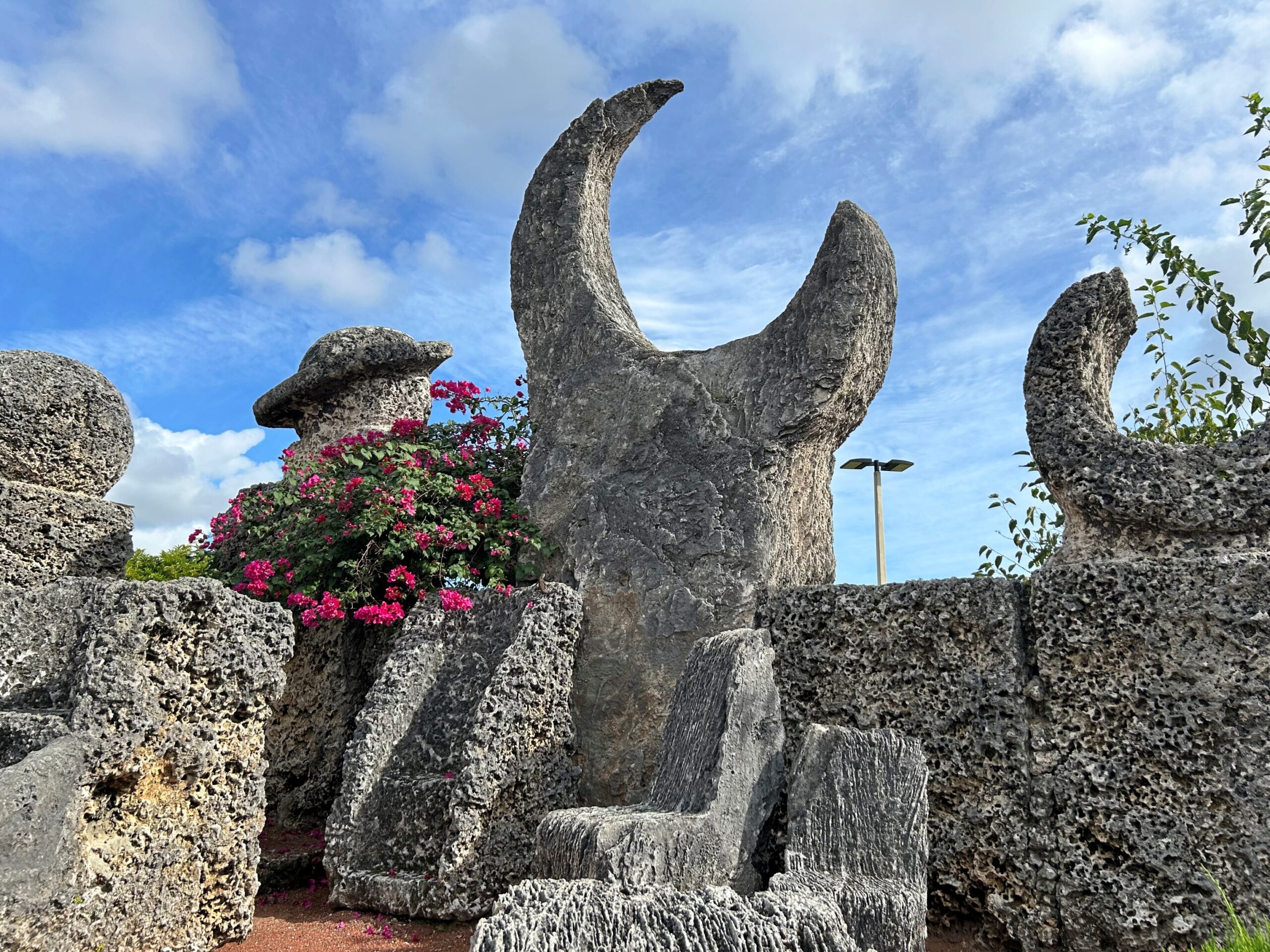
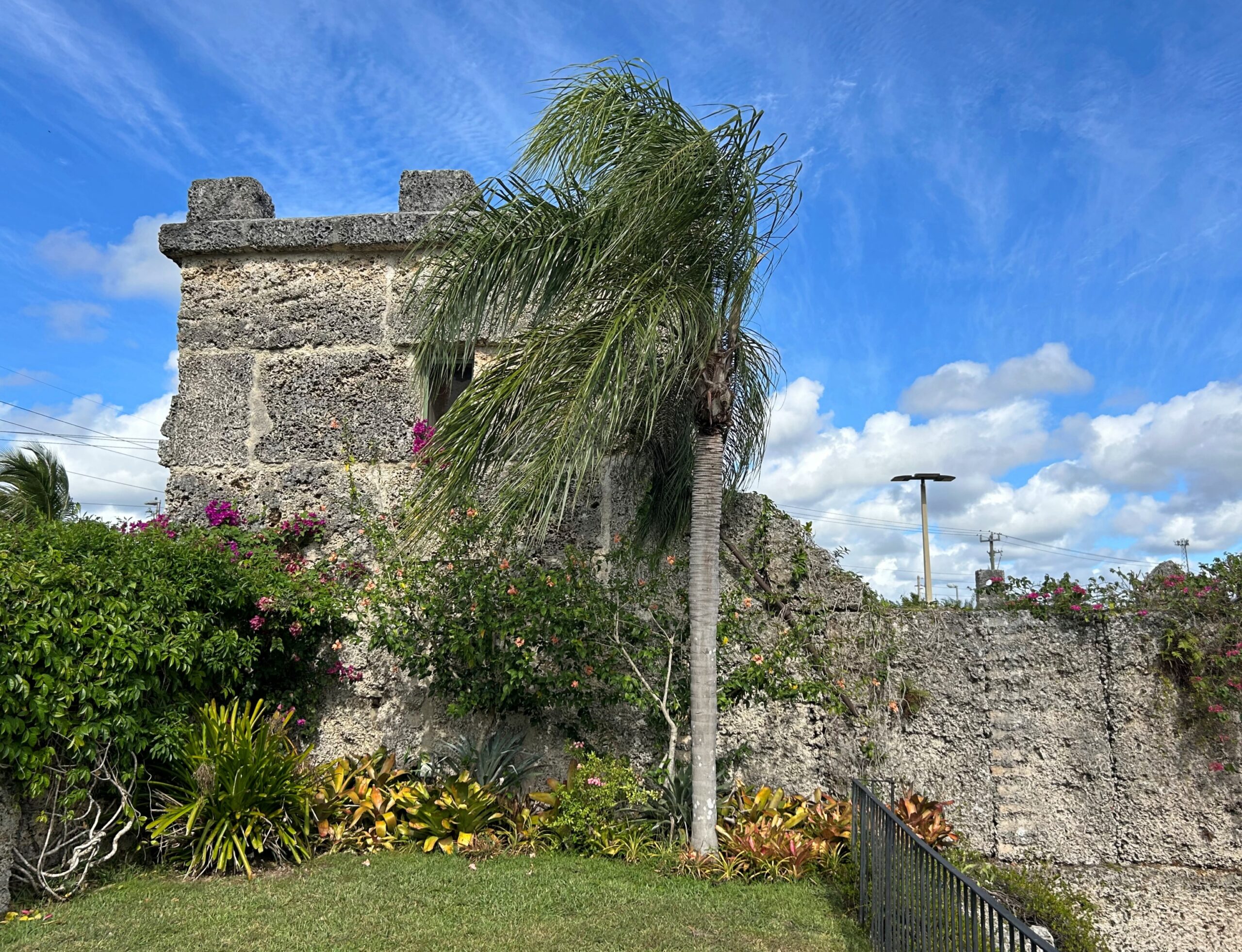
Actually, he called it the Rock Gate, and started building it in the 1920s in Florida City, not far away. Considering that some of the oolite limestone structures weigh some tons, one of the amazing parts of the story – just one among many – is that Leedskalnin decided to move them in the late 1930s to their current location on US 1. After that, he added more structures, and the whole thing stands today as a somewhat overpriced tourist attraction, but also a monument to eccentric, determined monomania, the kind that leaves behind a place to gawk at.

I was willing to pay. We took the tour, which is the only way to legally visit inside Coral Castle’s stone walls, just before we left Homestead for the Keys.

“The castle contains many wonders including a sundial, a stone rocking chair, a 500-pound heart-shaped stone table (a ‘Valentine’ for his lost love), and a 9-ton gate made to spin with just a light touch,” Atlas Obsura notes. “Ed was secretive, working on the castle mostly at night, and keeping to a policy of letting no one see his working methods. This led to much speculation that Ledeskalnin used some magical or ancient power to move the giant stones.”

Magical power, eh?

As a more detailed article published by the Skeptics Society points out, Ledeskalnin clearly knew the “principles of levers and fulcra.” I’ll go along with that. If anything, that’s more of an achievement than using magical powers. For all I know about levers and fulcra, it might as well be magic.

And what of Latvia? Our tour group was about 10 people, including a young couple who said they were from Latvia when the guide asked where everyone was from. This answer didn’t surprise him. Apparently they weren’t the first.

Toward the end of the tour, I asked the Latvian man if Ledeskalnin was known in his home country after all these years, and for something so odd (not quite how I phrased it). Oh yes, he said. Maybe not famous, exactly, but people had heard of him (not quite how he phrased it), enough that a steady trickle of Letts come to see his creation while in distant Florida.

Everglades National Park: Skeeters

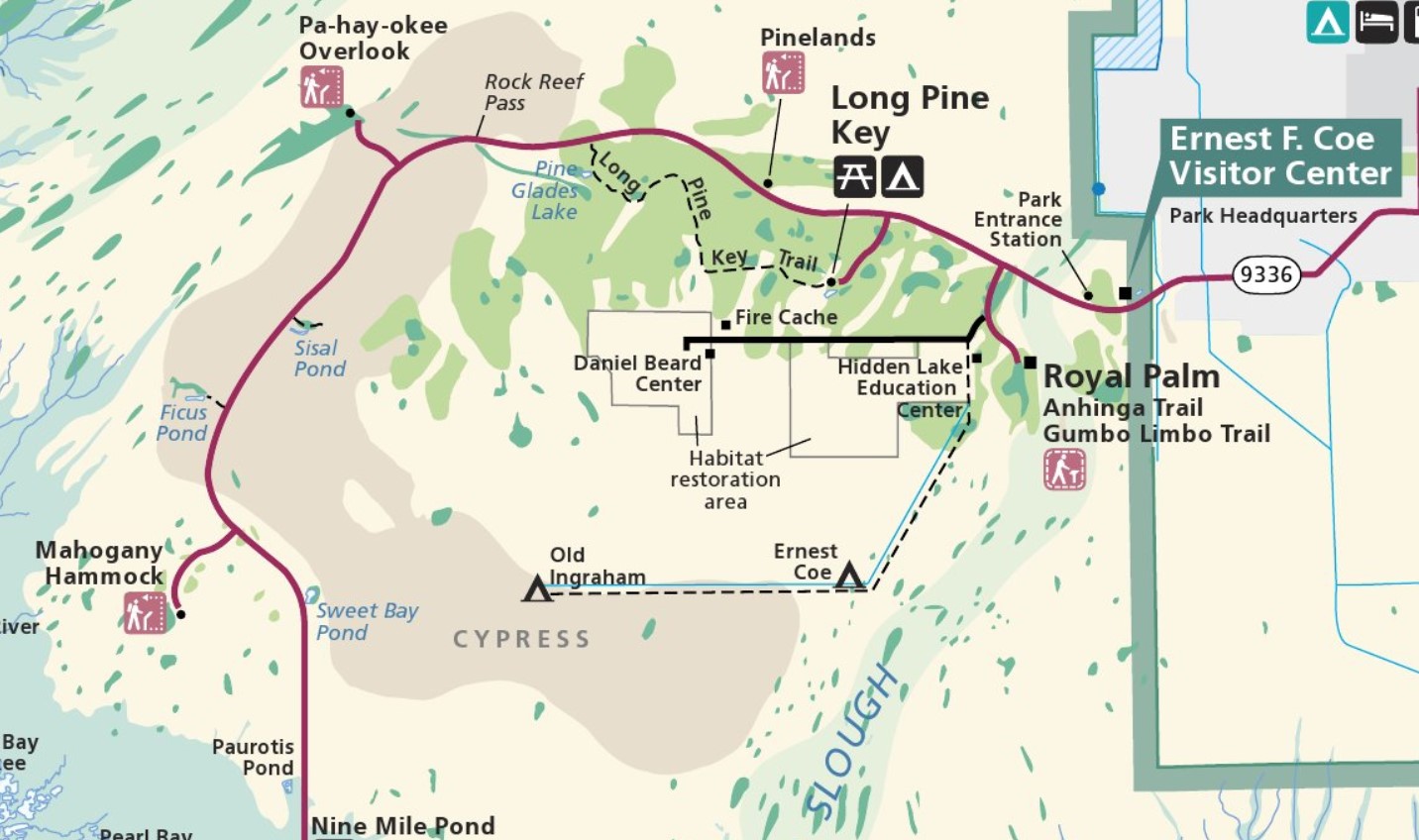
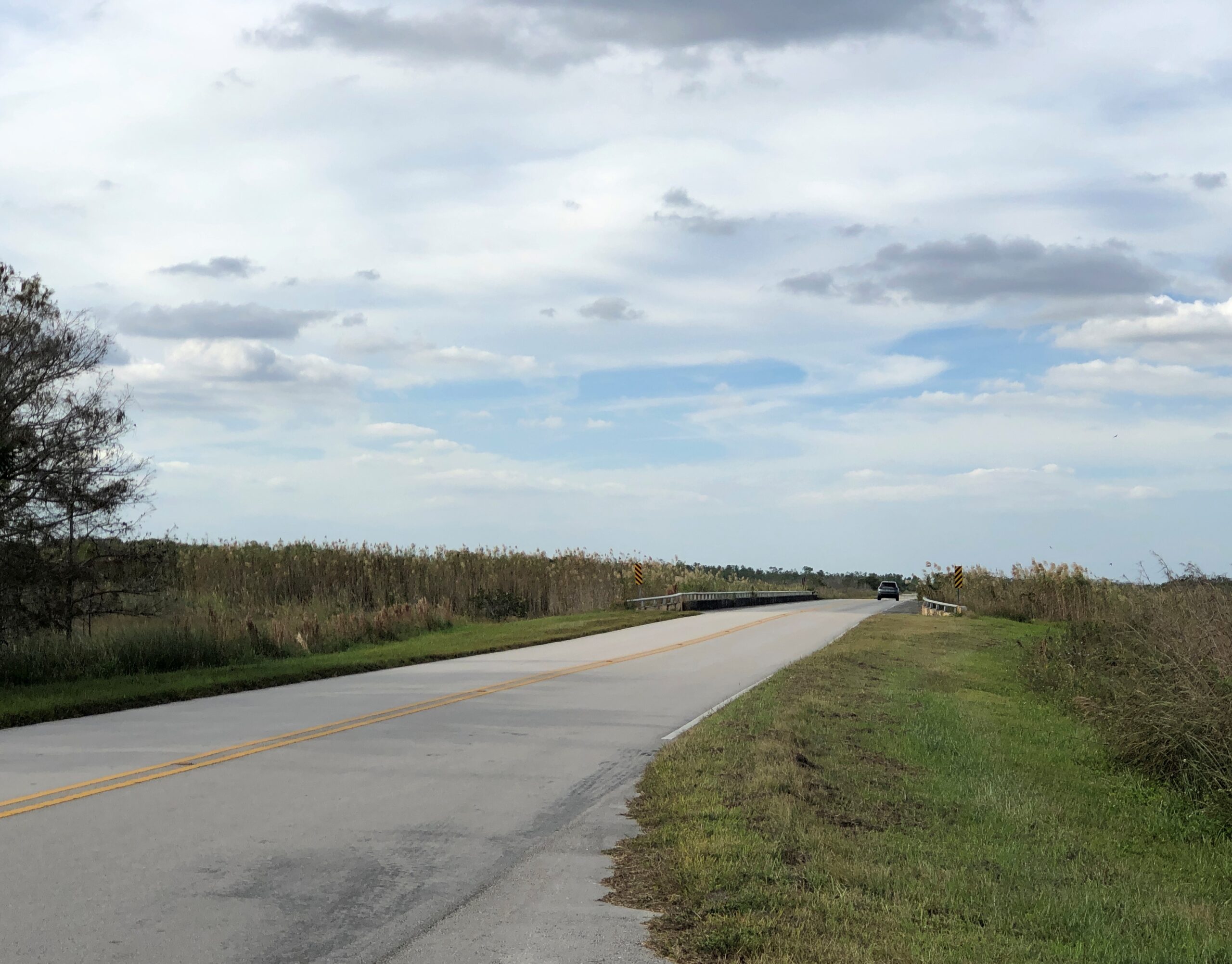
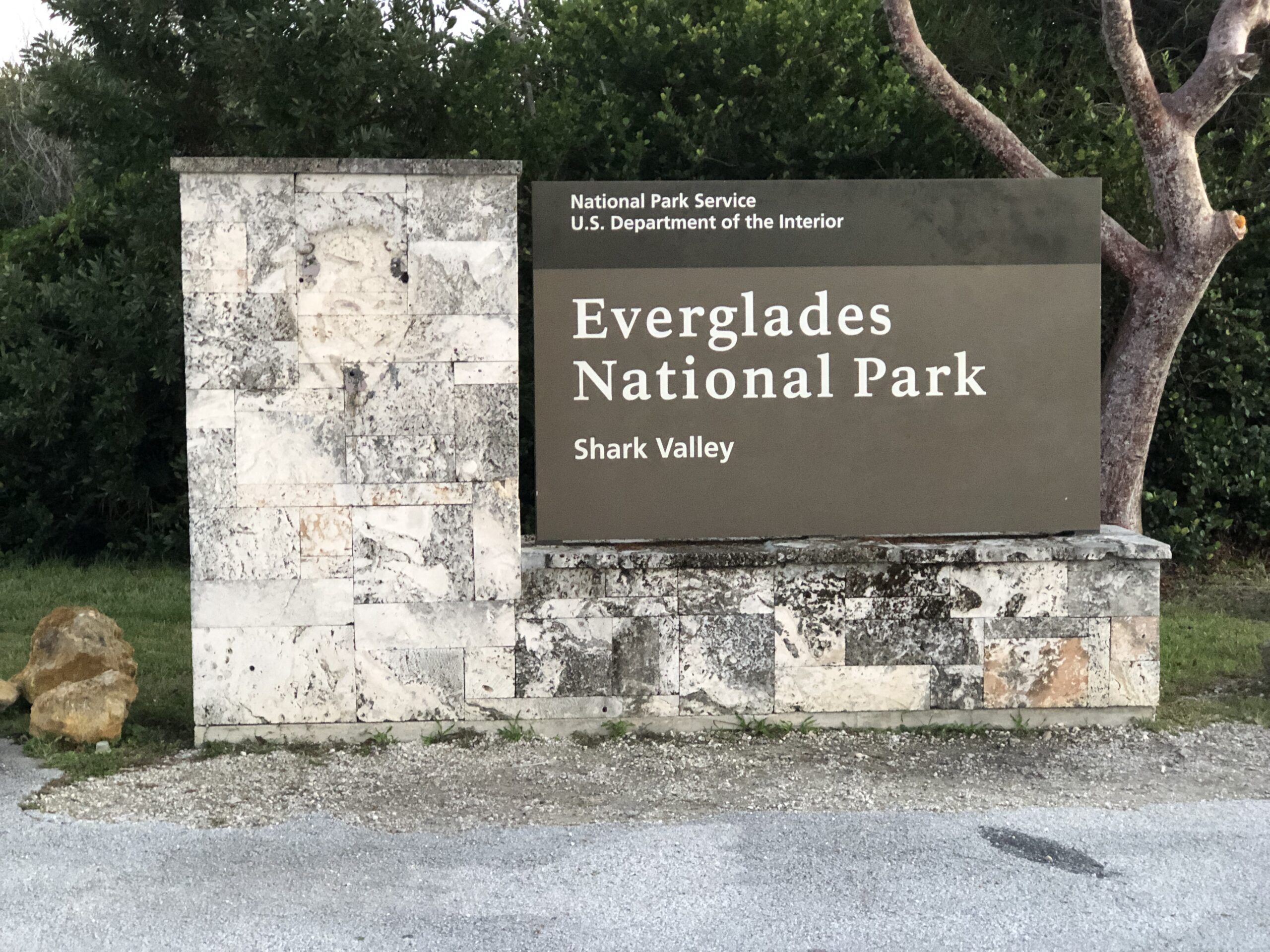
I’ve seen maps of Everglades National Park for years, and noted with great interest the main road snaking through the park, from the southern part of greater Miami to a point on the peninsula’s south coast. It was a road I’d long wanted to drive (in red, below), and on the afternoon of December 12, that’s what we did. Only about 40 miles each way in the park, so not too long a drive.

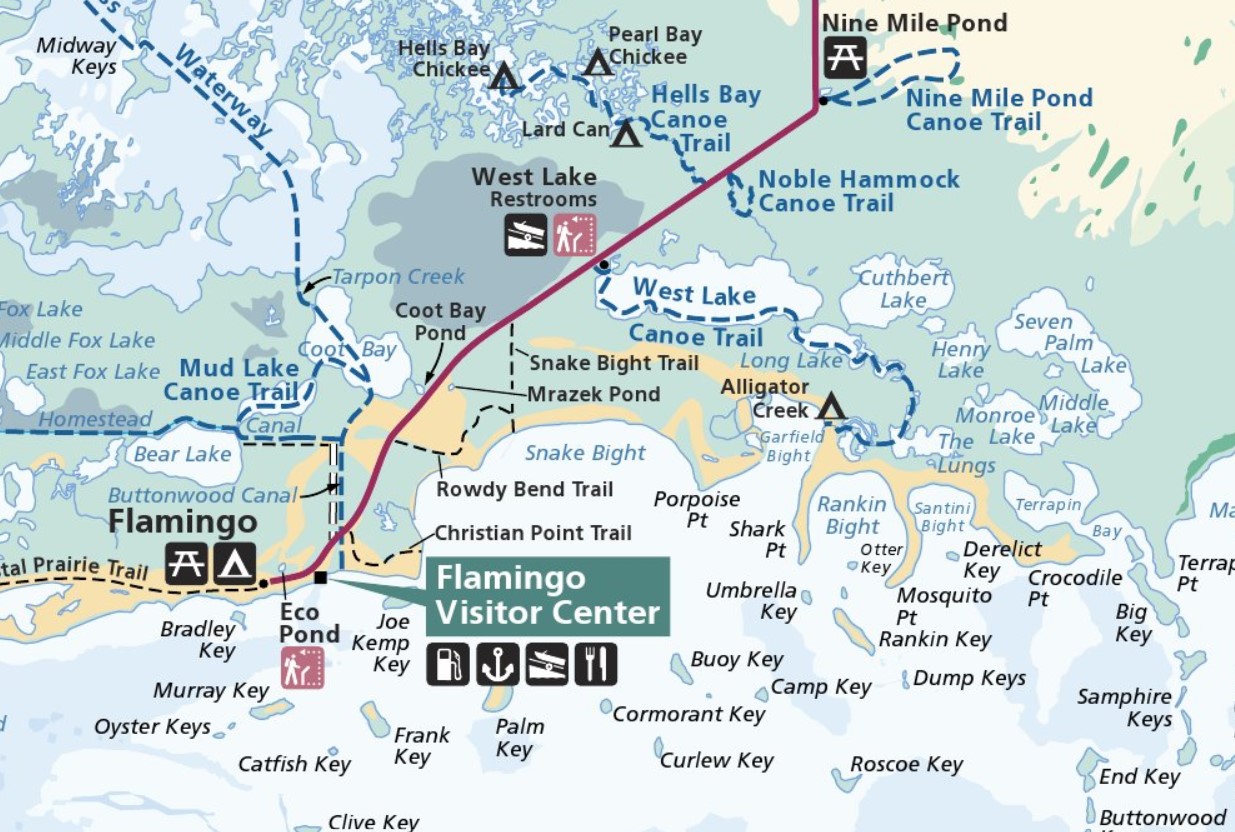
We stayed in Homestead, as far south as metro Miami goes, for the purpose of visiting the Everglades. Outside the park, the road is Florida 9336. Inside the park, it’s the less interestingly named Main Park Road. Odd, considering that some examples of nearby features are named Gumbo Limbo Trail, Hells Bay Canoe Trail, Alligator Creek, Snake Bight Trail and Coot Bay and Coot Bay Pond.

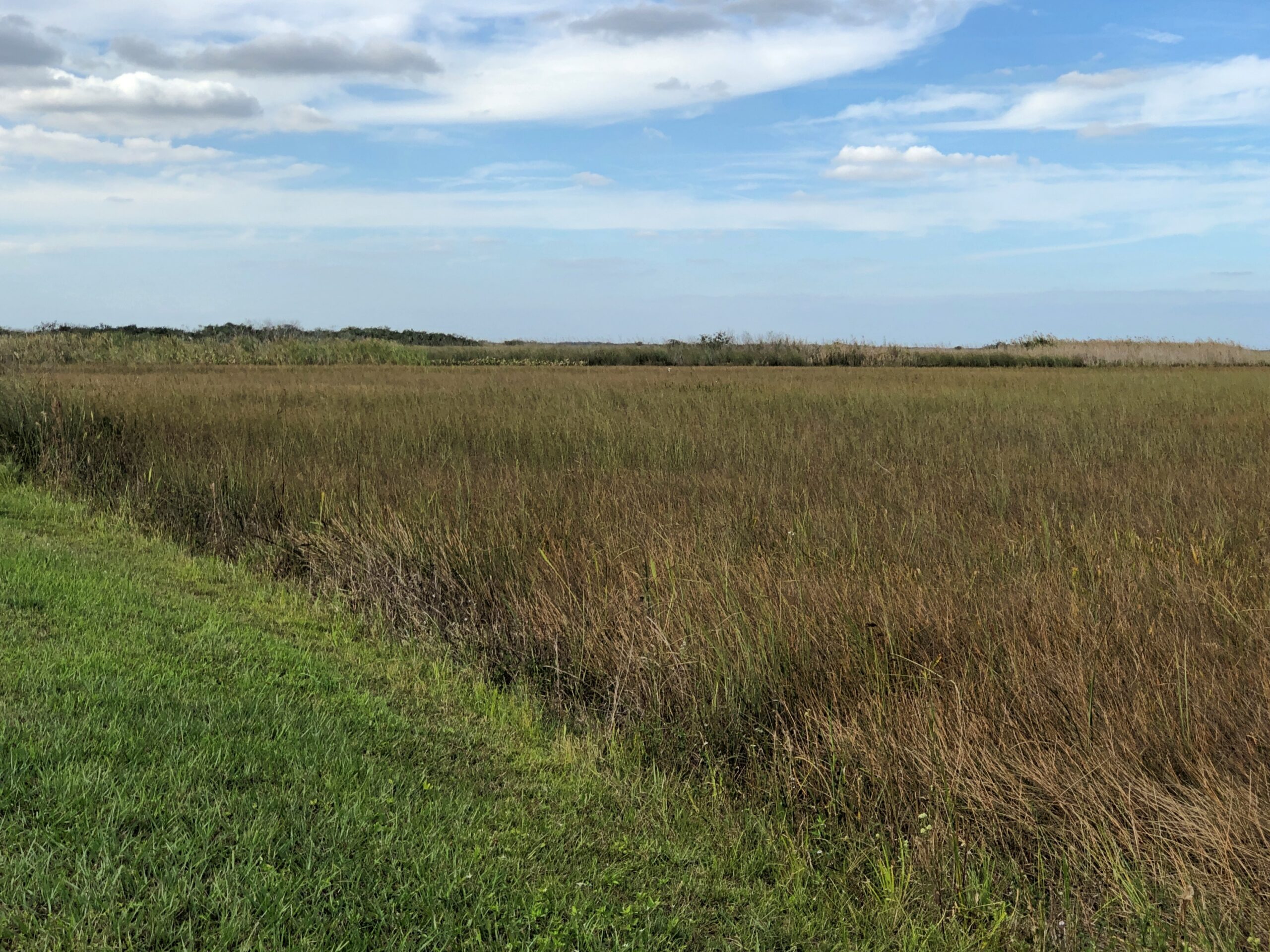
Almost no one else was around, which is the secret sauce for most enjoyable drives. My only minor complaint is that Pa-hay-okee Overlook, at the edge of a cypress zone, was closed. Considering how flat the terrain is, that view would have been expansive.

The park road takes you to Flamingo, Florida, which has no current human population unless you count park staff, who must stay nearby somewhere at least sometimes. Flamingo has no flamingos, according to a park ranger we met, whom I’ll call Bobbie. There seem to have been some of the birds in the late 19th century, she said, but they moved on when hunters showed up, looking for a source of colorful feathers for women’s hats fashionable at the time.

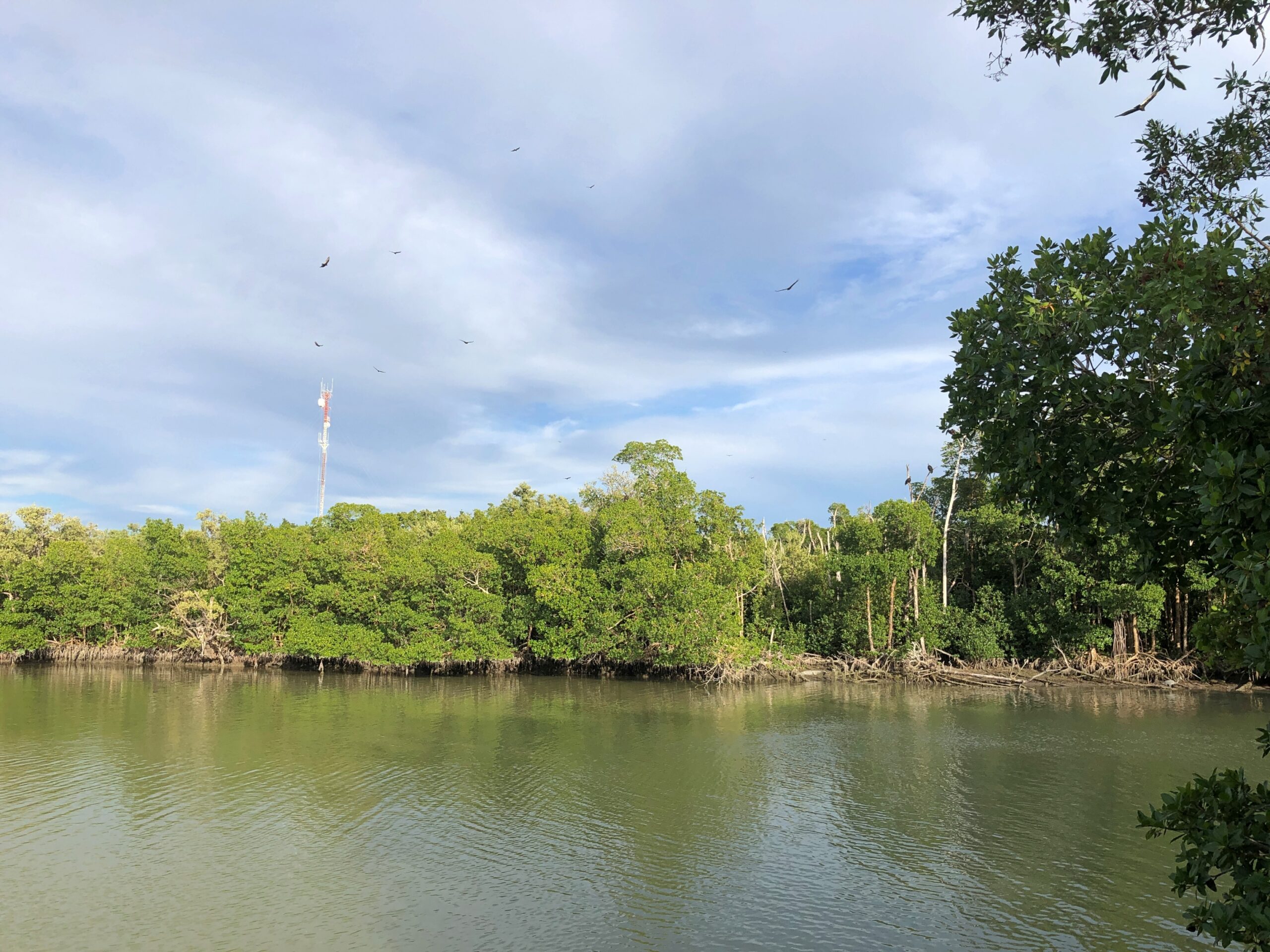
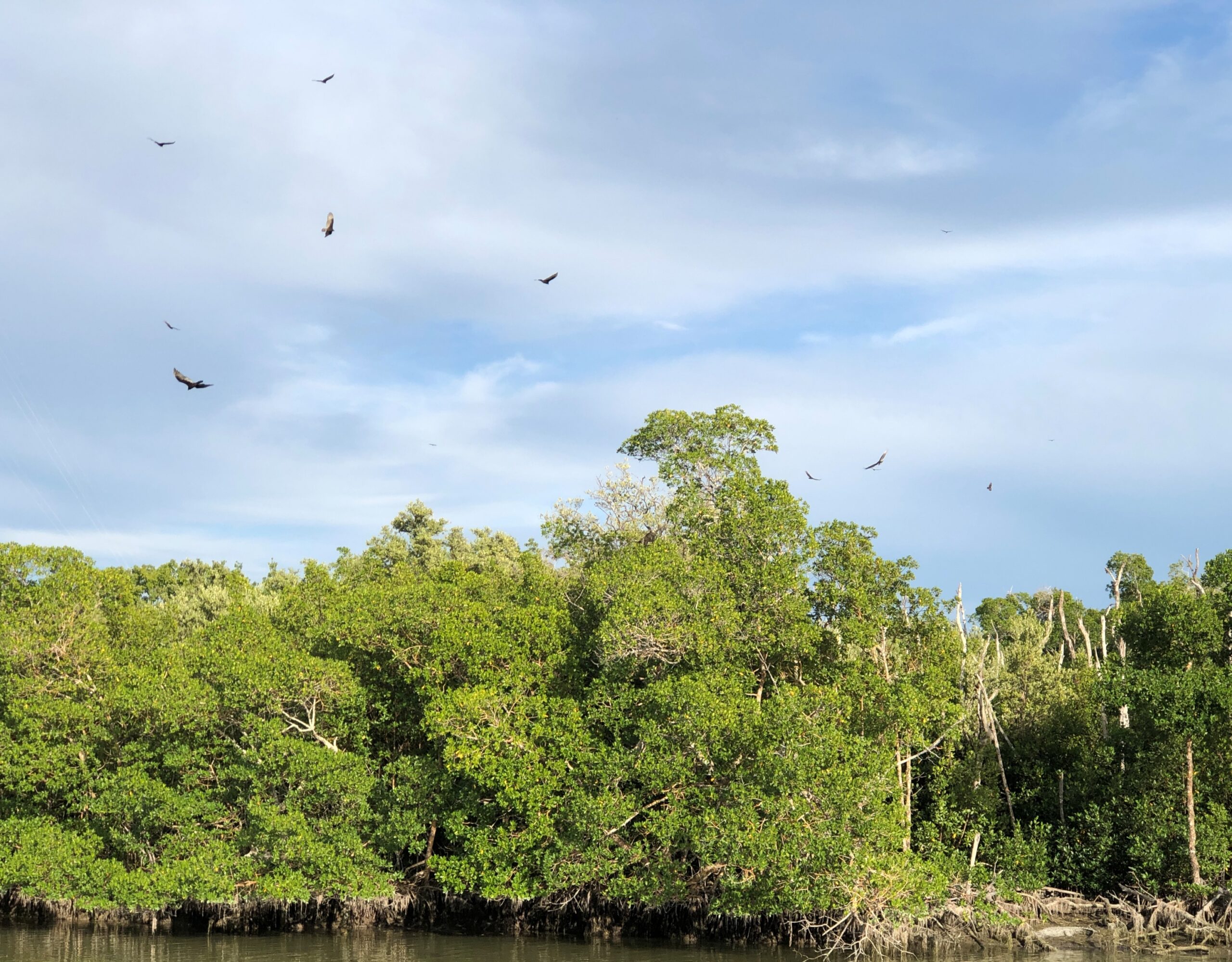
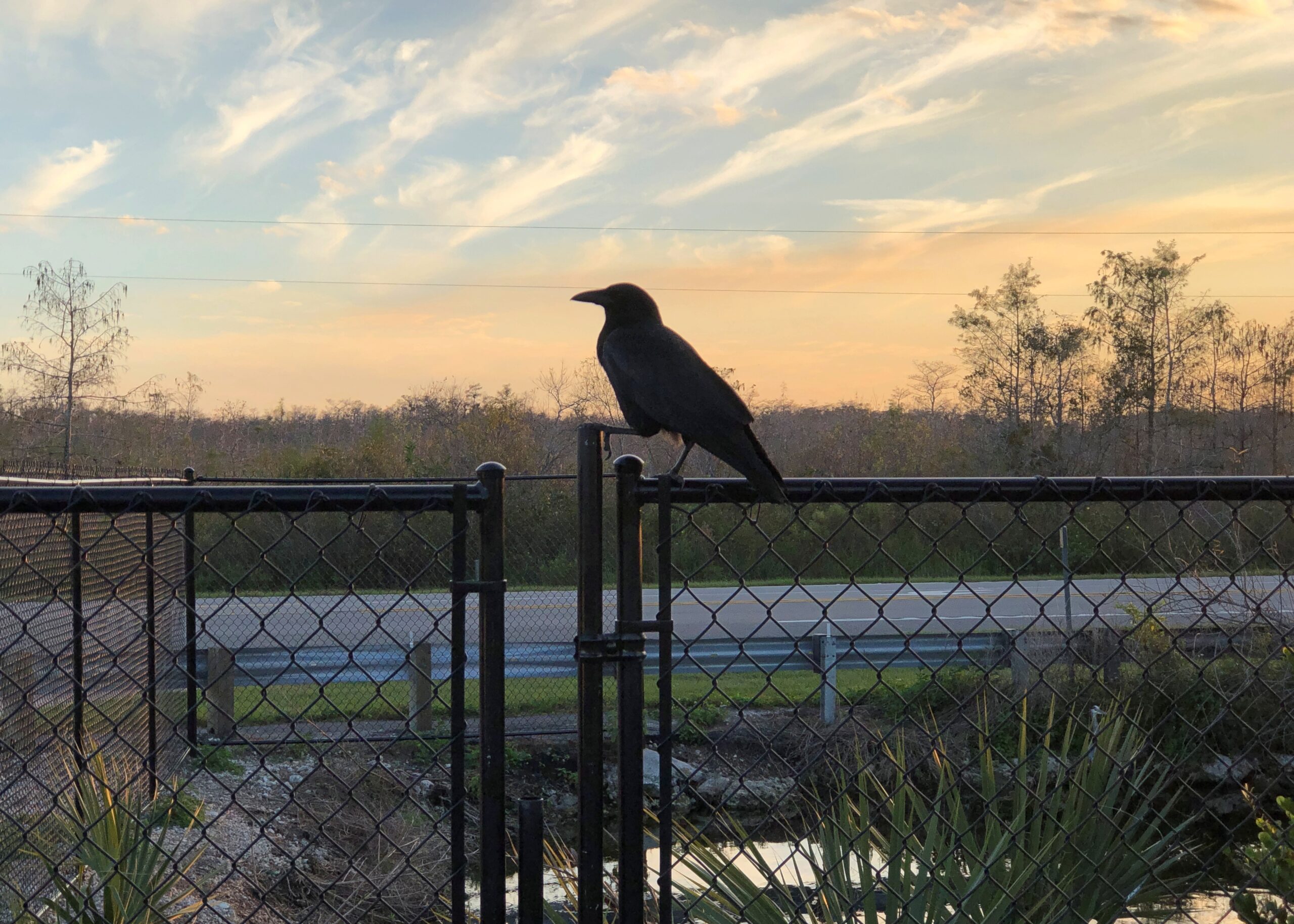
Plenty of other birds are still around, looking for a meal. Hadn’t seen that many circling birds since we were in north-central India.

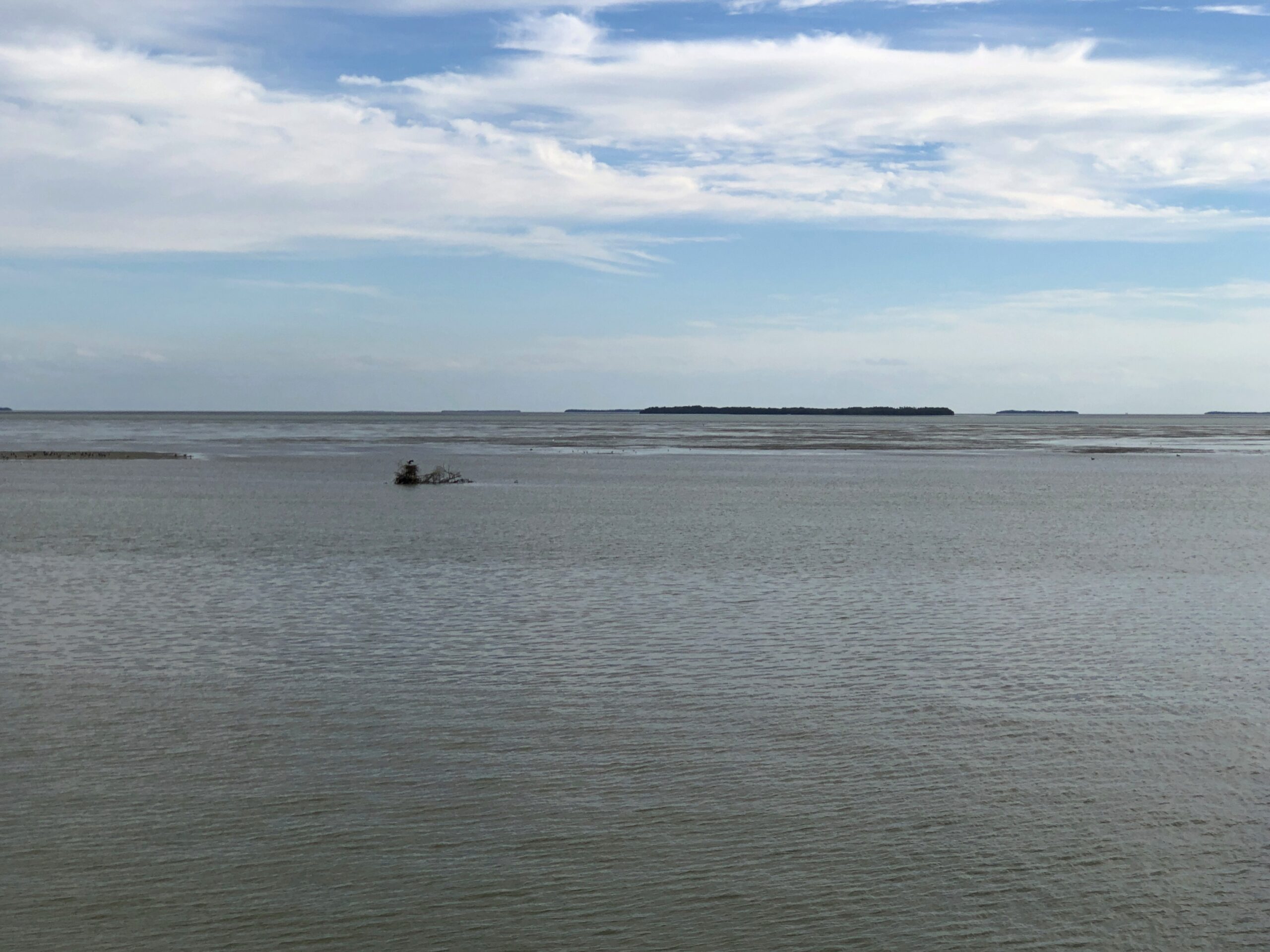
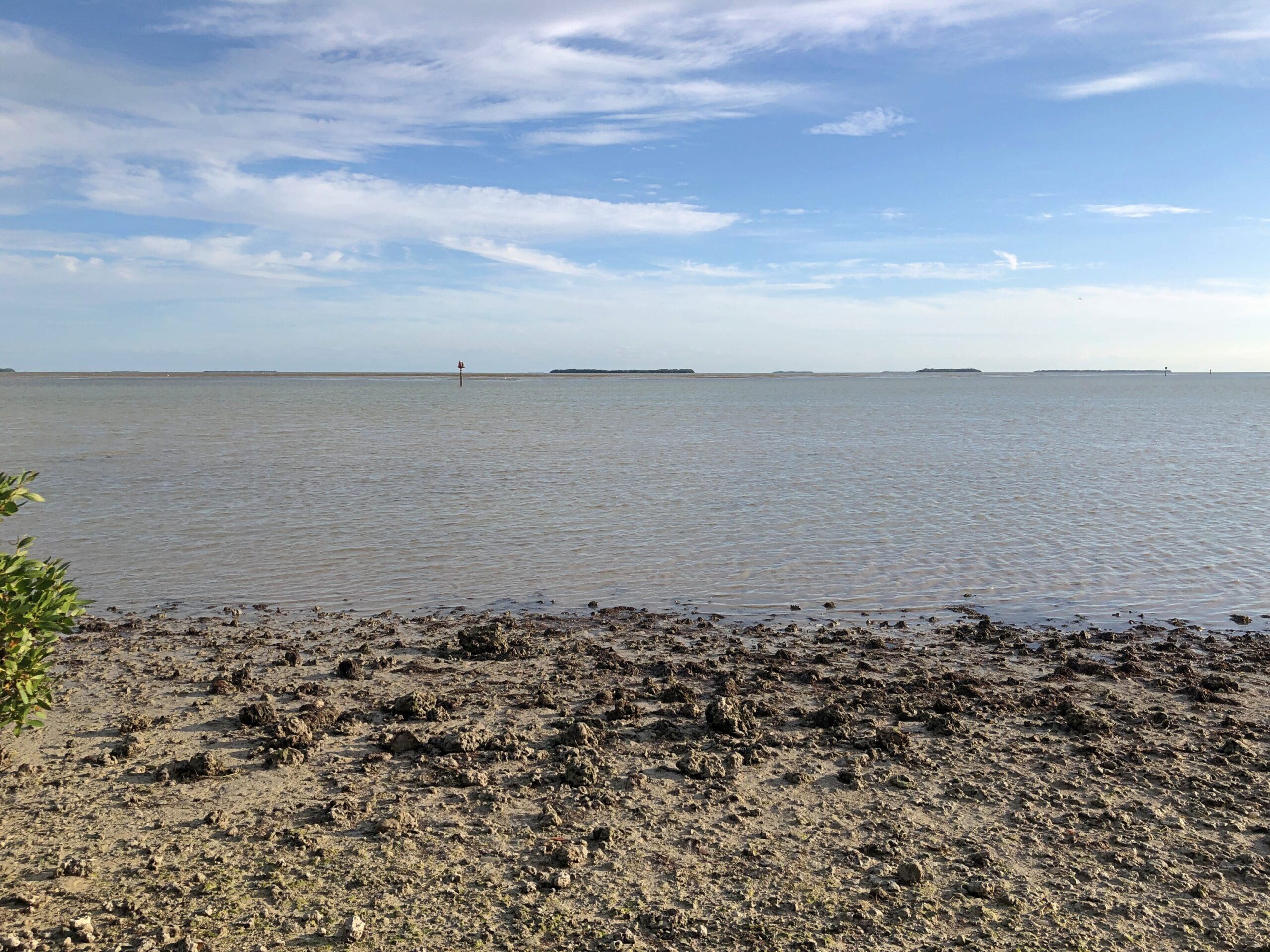
Flamingo, which is mostly the visitors center, lodging and campgrounds, offered views of Florida Bay and a few of its many keys, a term not limited to the chain of islands connected by the Overseas Highway.

We saw a manatee. Or at least a manatee nose poking out of the water near one of the docks at the park, then ducking underwater with an occasional small splash. The barest outline of its bulk was visible below.

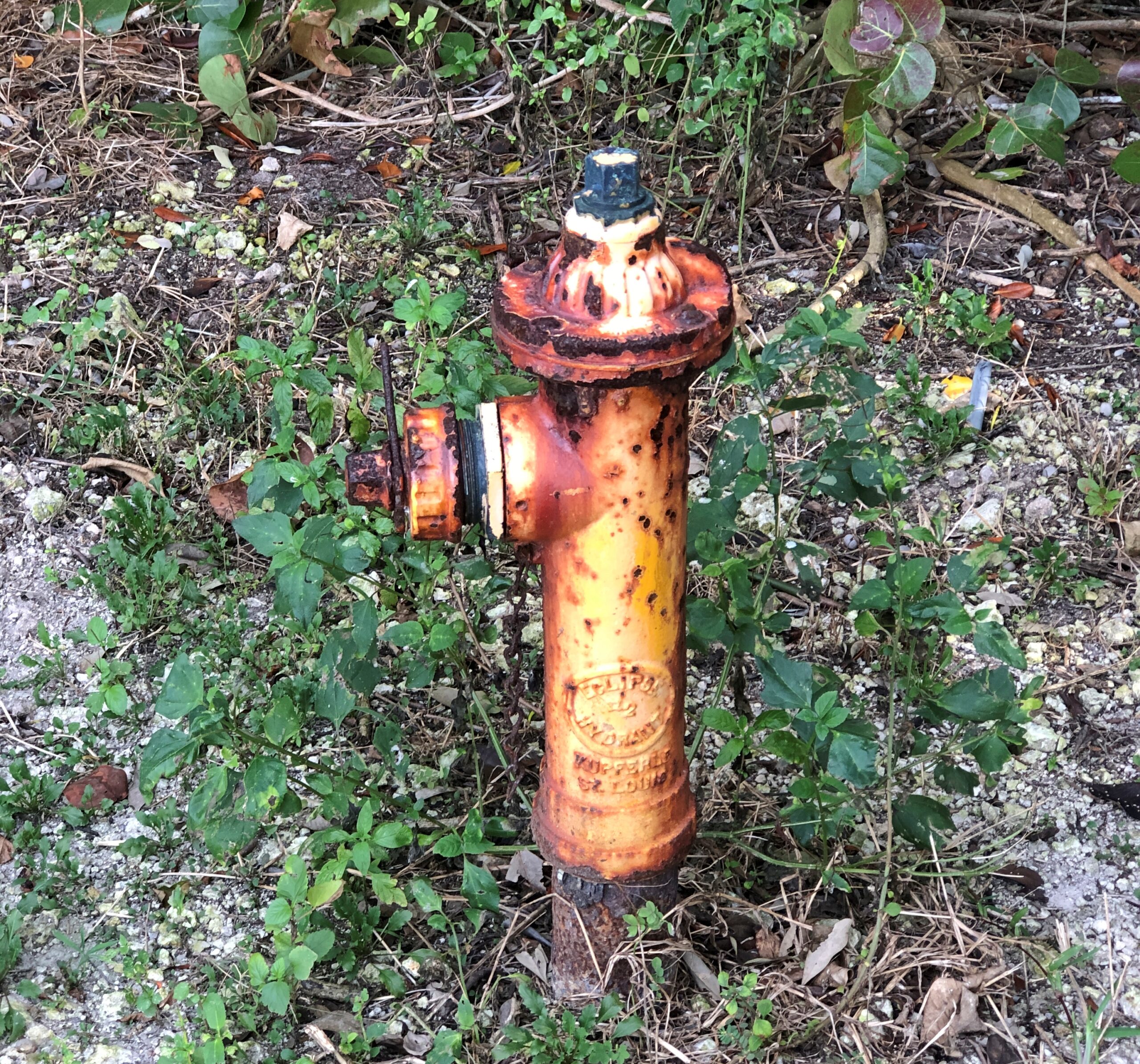
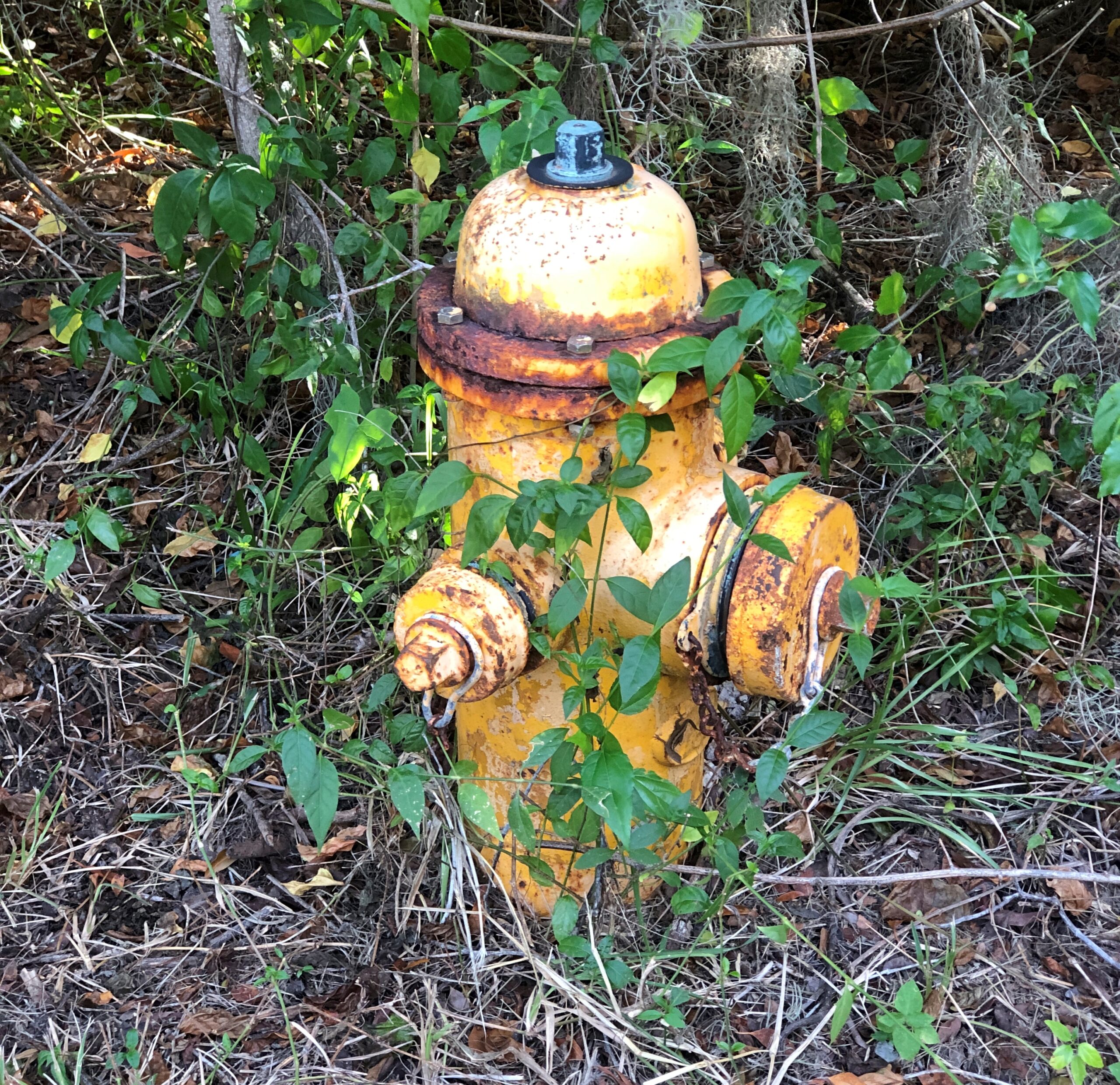
For some reason, the rusty fire hydrants on the park service property caught my attention.

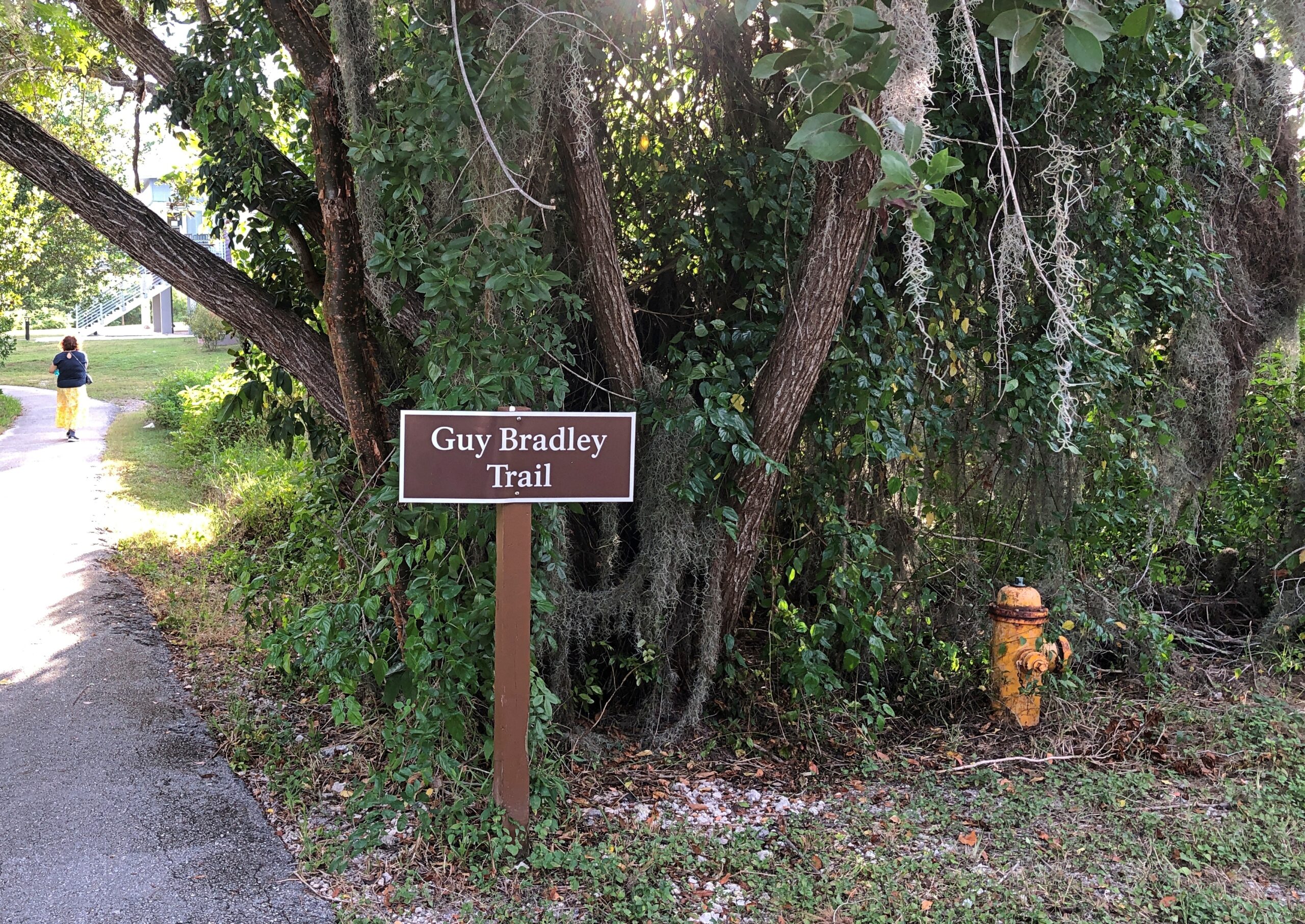
We walked the Guy Bradley Trail. The Flamingo visitors center is also named for Bradley, an early game warden in the area who died in 1905 at the hands of poachers.

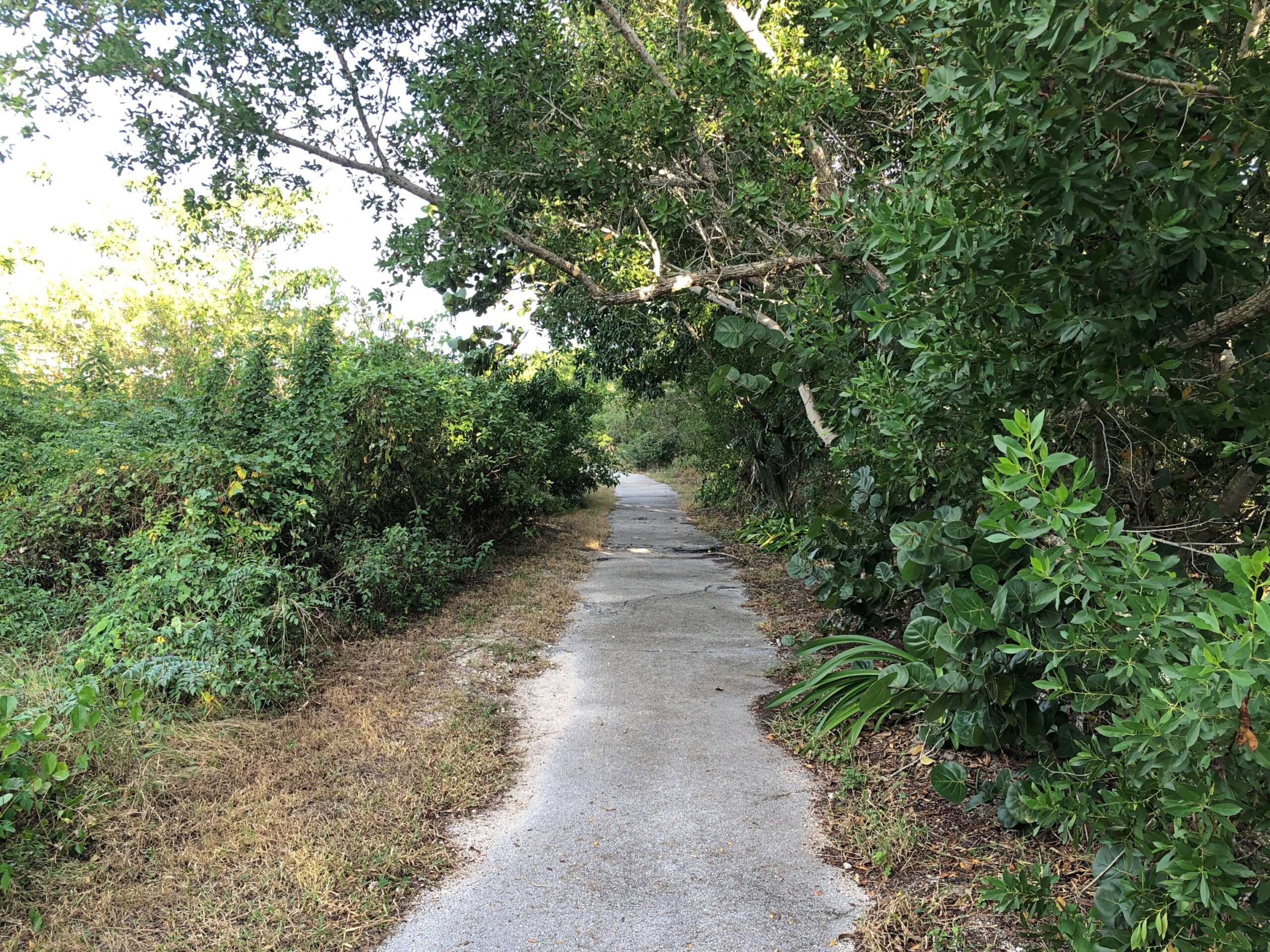
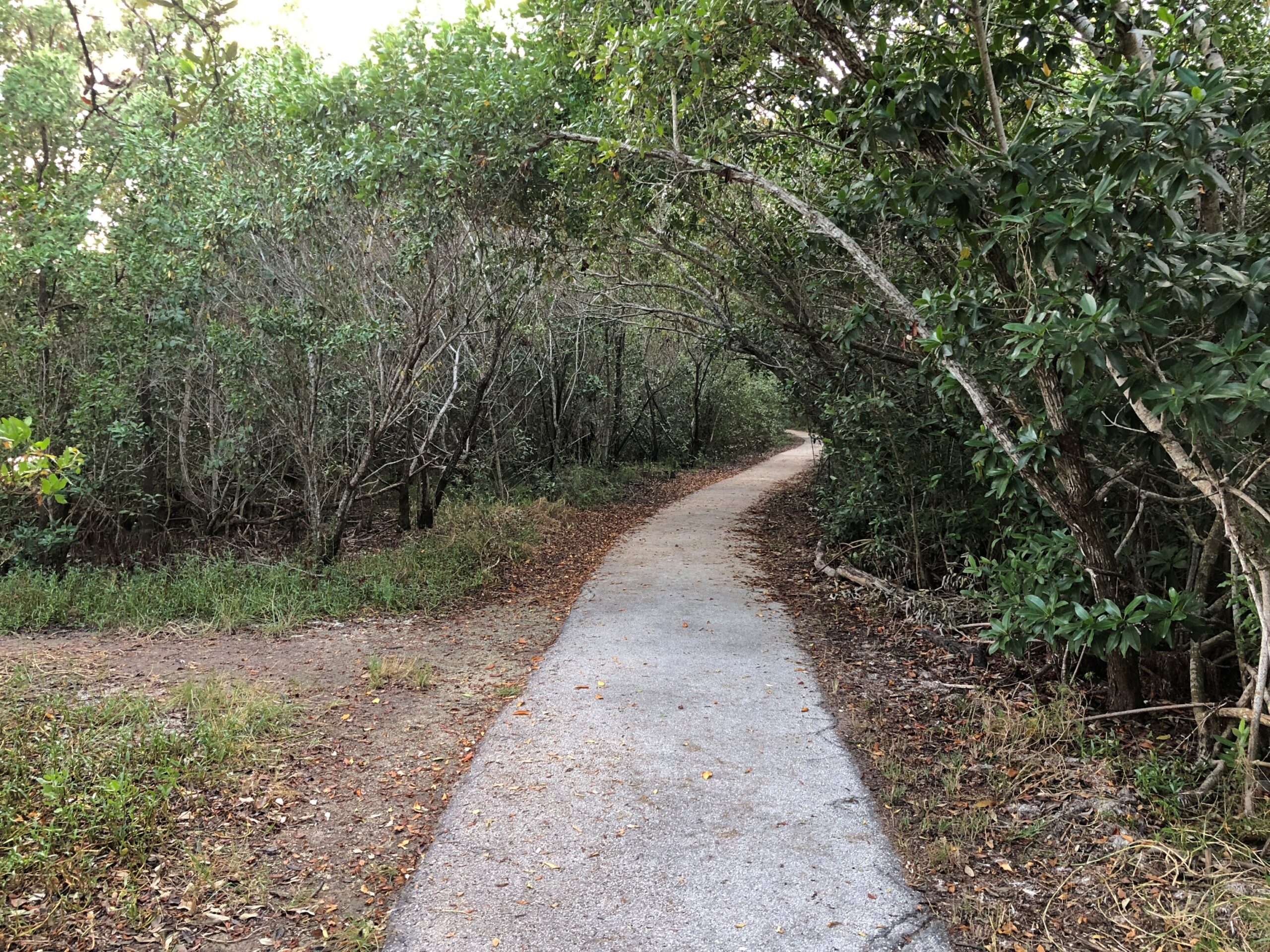
The trail, paved and mostly in good shape, was an easy one.

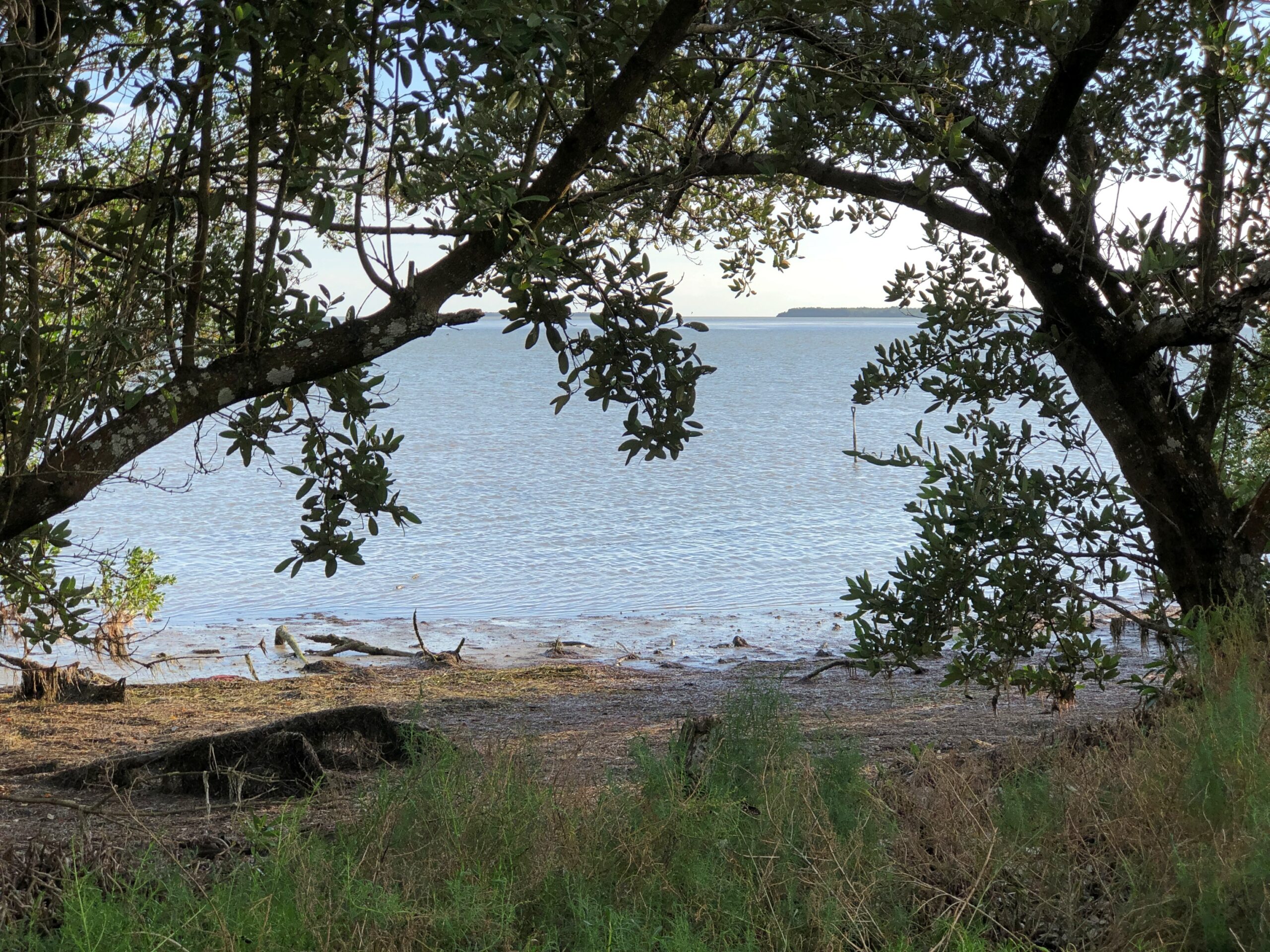
With some views of its own, including the ocean and not including the ocean.

One reason to visit the Everglades during the winter months, maybe the number-two reason right after the absence of searing heat, is the absence of mosquitoes. Make that the relative absence of mosquitoes. During our walk through the greenery around Guy Bradley Trail, a small number of winter mosquitoes were there to greet us.
Even in an age of DEET and whatever has mostly replaced DDT, you will find mosquitoes and more importantly, they will find you. That’s my experience over the years.
South Korea, 1990.
I close my eyes and I can recall those Pusan nights in ’90 in my non-climate controlled room, drinking the tea available in pots just outside everyone’s door, swatting mosquitoes that had clearly feasted on me moments before they died, and listening to the irregular beep-BEEP-beep-beeps of auto horns wafting in through the damaged window screens, along with more mosquitoes.
Saskatchewan, 2006

The only creature I run into regularly while camping is one or another kind of mosquito. The weather had been dryish in Jasper NP, so there weren’t that many there. Things had been even drier at Theodore Roosevelt NP, and we encountered only a very few hardy mosquitoes who managed to survive wrigglerhood in the risk-of-wildfire badlands this summer.
The plains near Regina, Saskatchewan, were another story. On the evening of July 3, we found a private campground a few miles east of Regina for a reasonable C$14. The place was sparse with people, probably since the Canada Day long weekend was winding down, but well populated with blood-drinking vermin. Their main diet likely came from the livestock on the surrounding ranches, but they weren’t above snacking on human beings. Once a cloud of them followed me, so I had to zig-zag back to our camp to lose them. Others buzzed intensely around the tent door until I sprayed it with Off.

Florida Panhandle, 2009

I got out of my car to look around. The forest seemed even more oppressively dense with rain clouds gathering overhead. The air was warm and a little steamy. All I heard was the crunching of my footsteps, the mild rush of the wind, the twitter of birds and, suddenly, the buzz of mosquitoes. Mammals as large as human beings must be a tasty treat for the mosquitoes of the Apalachicola River Basin, because they attacked with terrific speed and in increasing numbers. For all I know, there are a dozen kinds, part of the wonderful biodiversity of the area. I had no chemical protection. I’d forgotten to pack anything with DEET in it, and the TSA might have taken it away anyway.

I took a short look at an interpretive kiosk that had some artifacts behind glass, and another look at the Milly Francis marker, but within a few minutes I retreated to the car. A couple of the mozzies followed me in, but I managed to dispatch the bastards in a pop of my blood.

South Carolina, 2025

Other national parks have majestic mountains or picturesque glaciers or striking deserts or epic coastlines or an important history of human activity. They have high-profile wildlife and ecosystems unique in the world. Congaree does count as a special place, preserving a tiny fraction of the floodplain forests that used to cover much of the Southeast, but that’s a little hard to appreciate on the ground, especially as the target of its high-profile wildlife, mosquitoes.

Everglades National Park: Gators

On December 11, I took this picture.

Text to a friend, along with the image: Now, what’s the bump in the water? Ah, it’s an alli AHHHGH

Reply from friend: Ha. Ha.

I thought it was funny, even though the joke depends on an alligator canard. As Bob the alligator wrangler told us the next day after our boat tour of the northern reaches of Everglades National Park, the creatures are actually “pretty chill.”

It’s those lowlife crocs that will attack you for no good reason and, I have to report, south Florida is one of the few places where alligators and crocodiles share a habitat. Of course it is. Bob worked for Coopertown Airboats, which is on US 41 and whose tours ply the nearby sawgrass waters, and have since 1945.

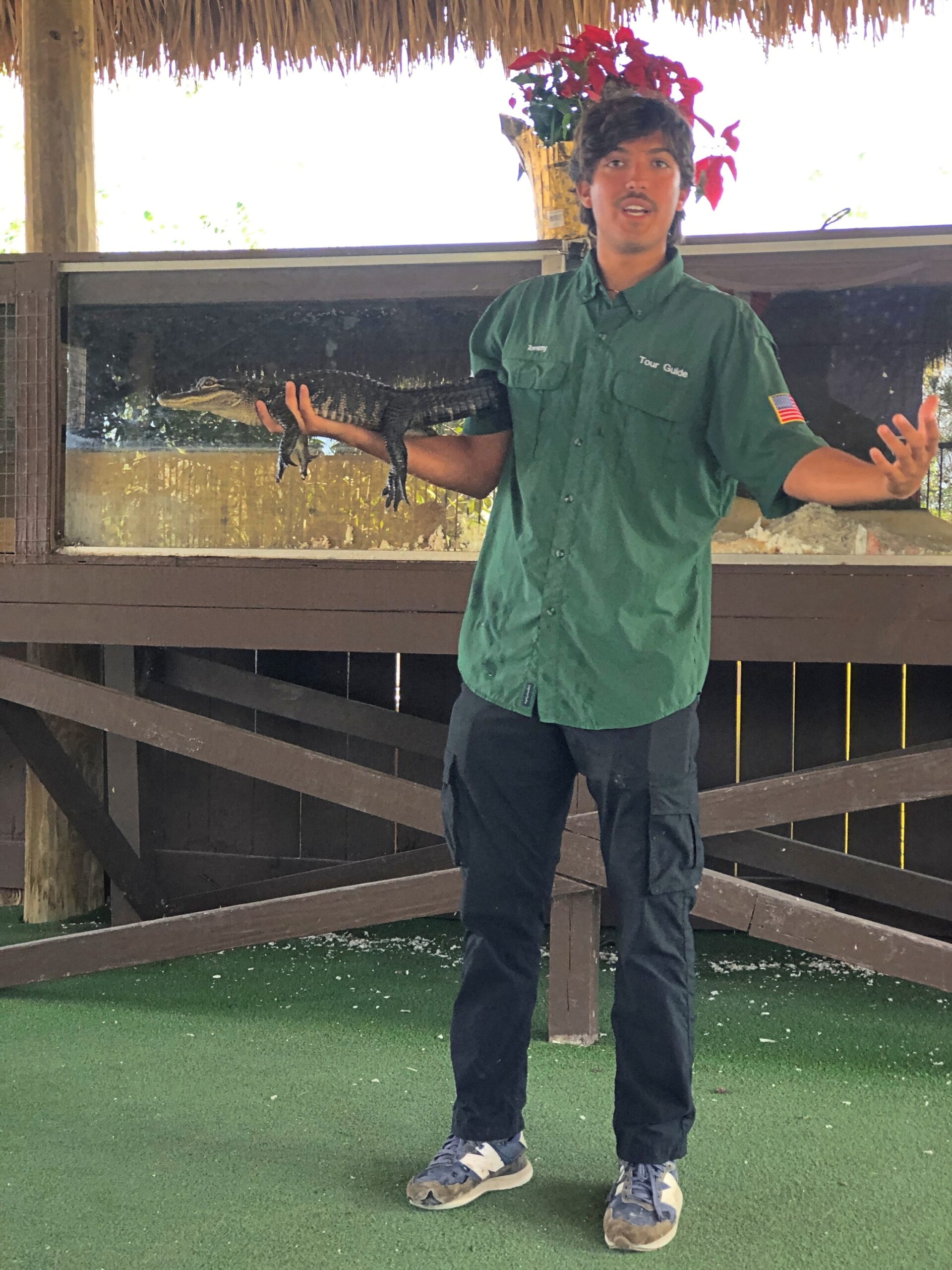
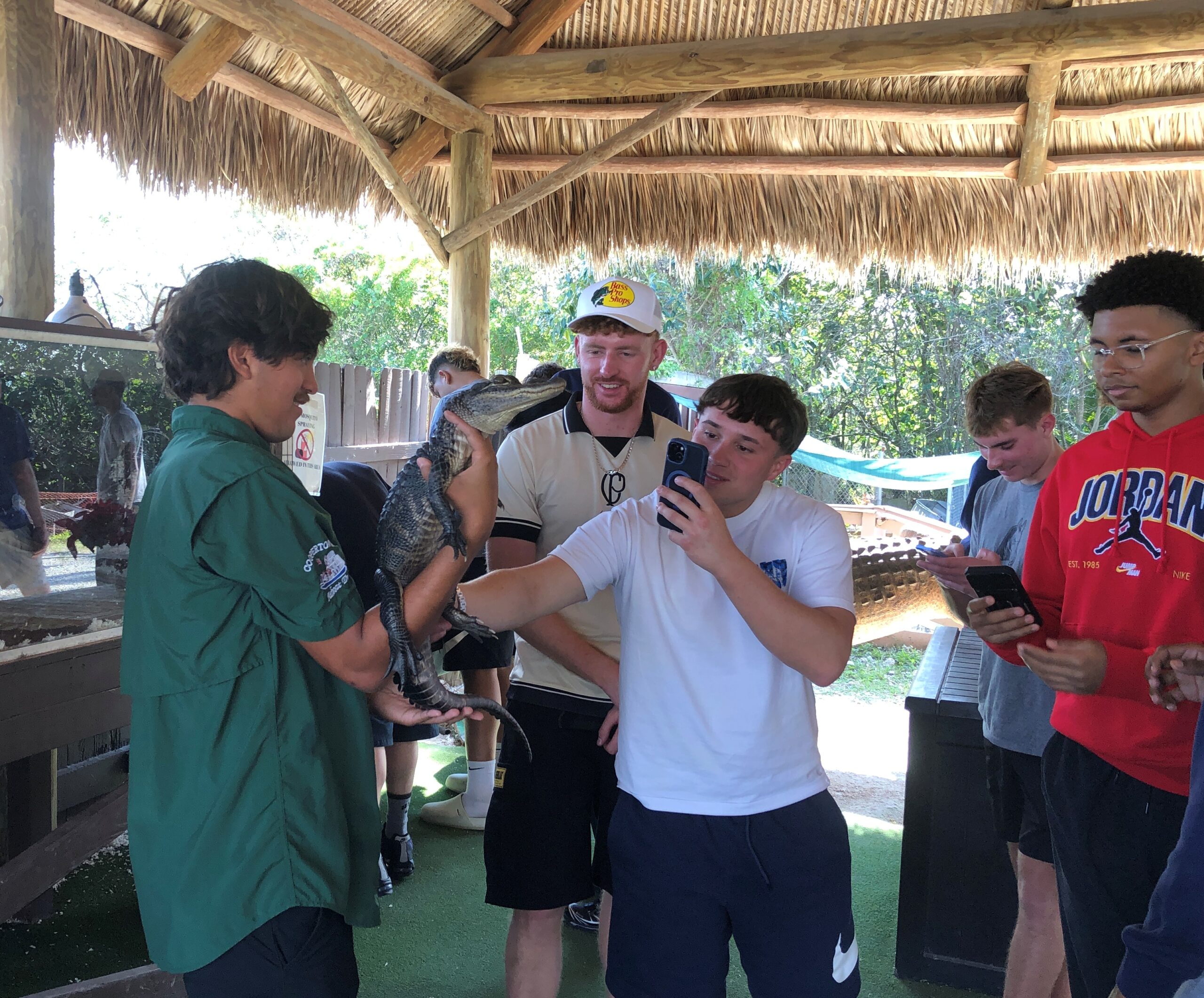
The company also has a few alligators lounging around the grounds in cement ponds, and some baby gators, one of which Bob handled with no problem. “Just keep you fingers away from his mouth,” he said, inviting us to touch the alligator. I don’t know why I was surprised to find that a living alligator’s skin feels pretty much like an alligator skin purse or wallet.

Behind glass at Coopertown was the Everglades’ real menace, anyway, a fat, pale ugly-as-can-be python, an inert reptilian Sydney Greenstreet whose countless cousins have claimed much of the biomass of the Everglades as their own, one nightmarish swallow at a time. The python is king of invasive species in Florida, which is saying quite a lot.

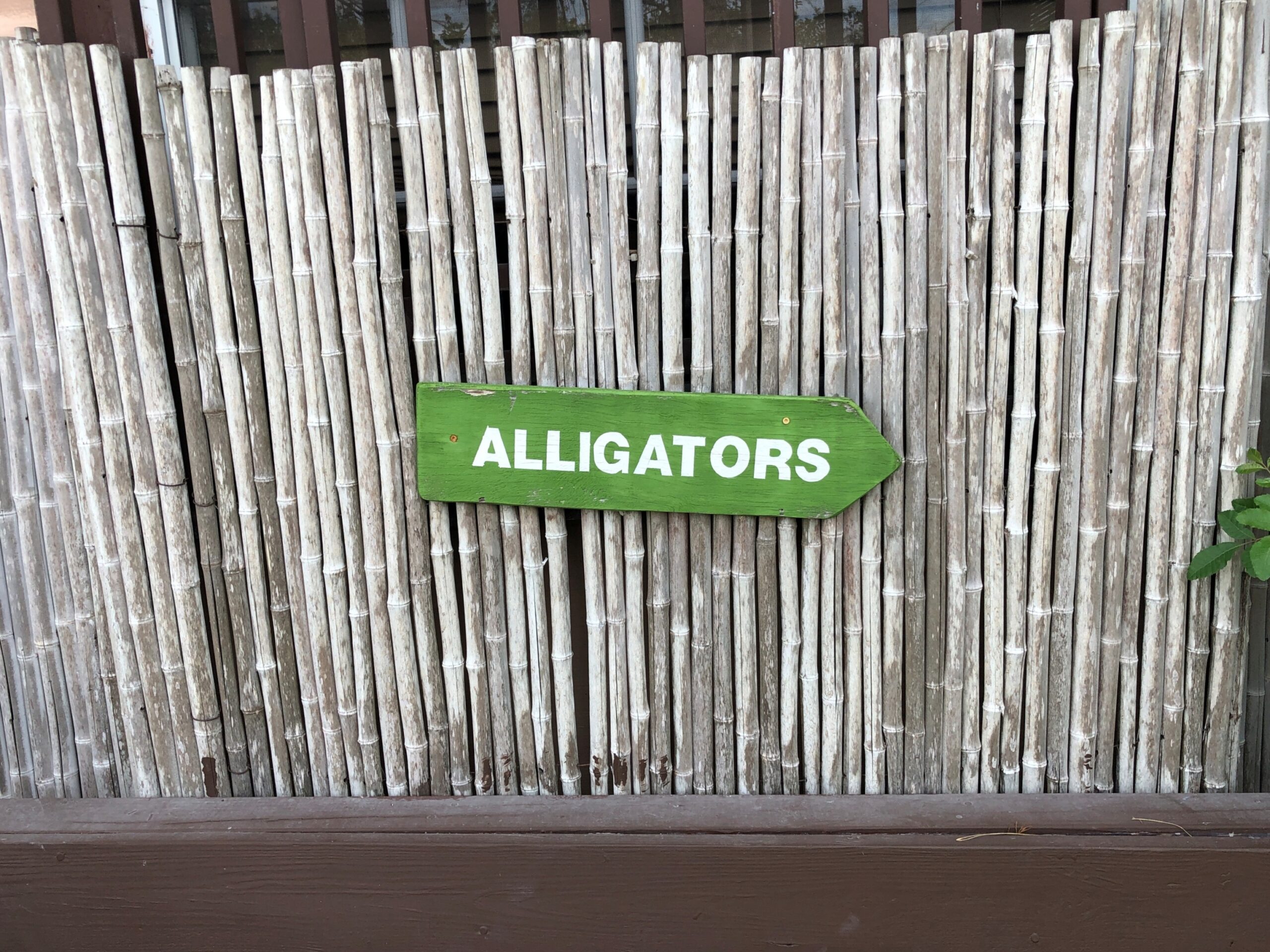
The Coopertown gators weren’t hard to find.

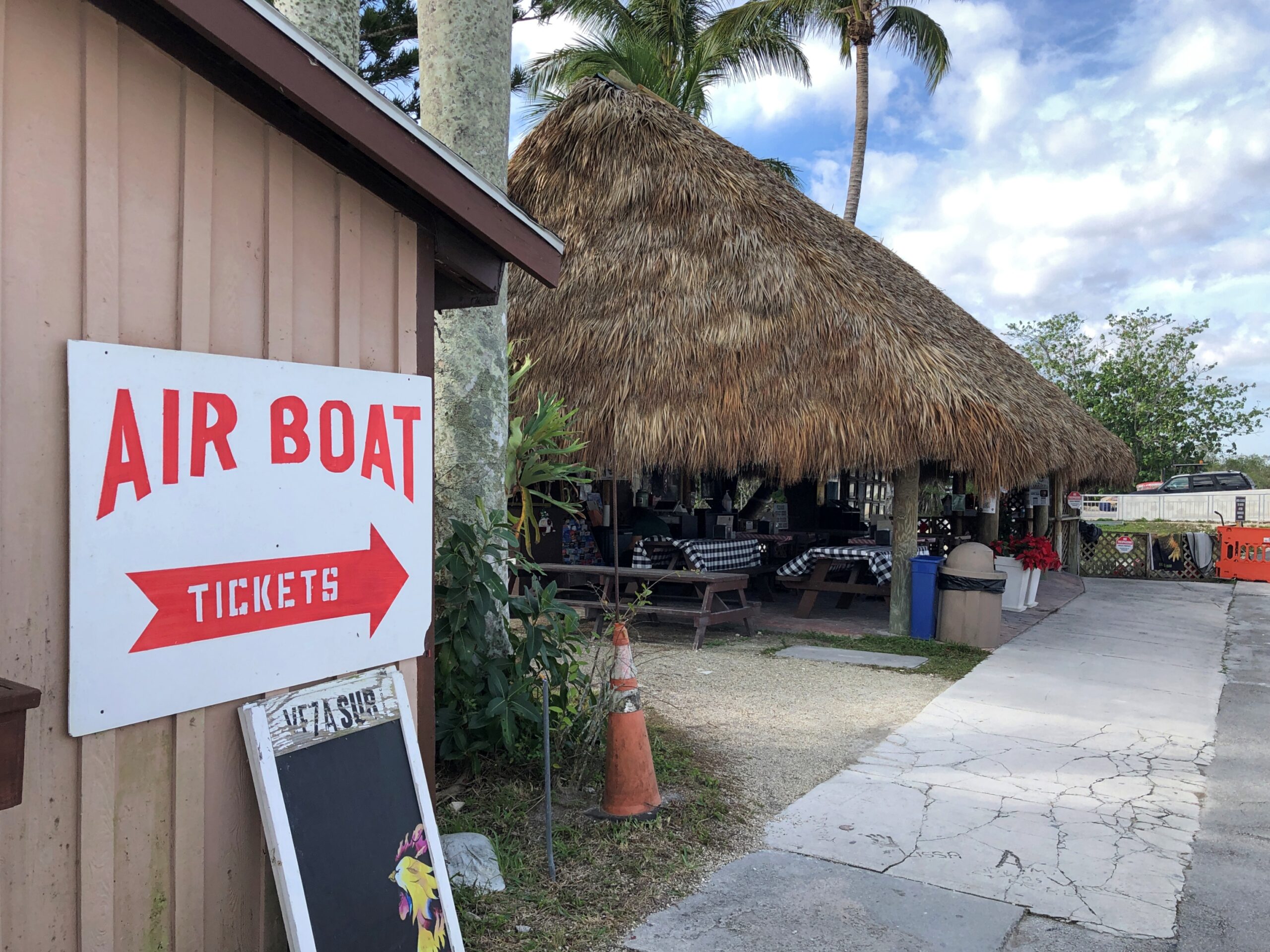
Neither were the boats. Nice, simple wayfinding.

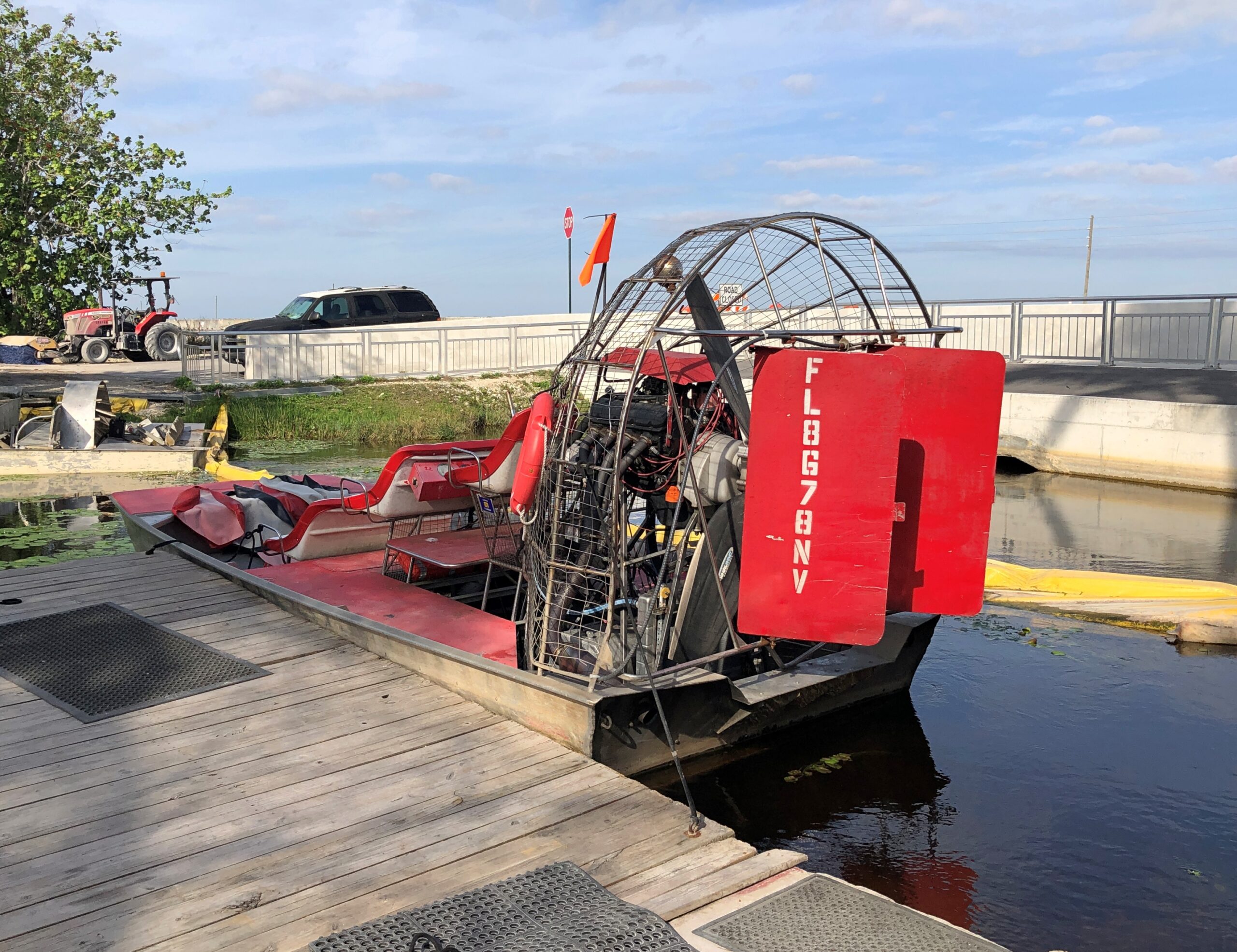
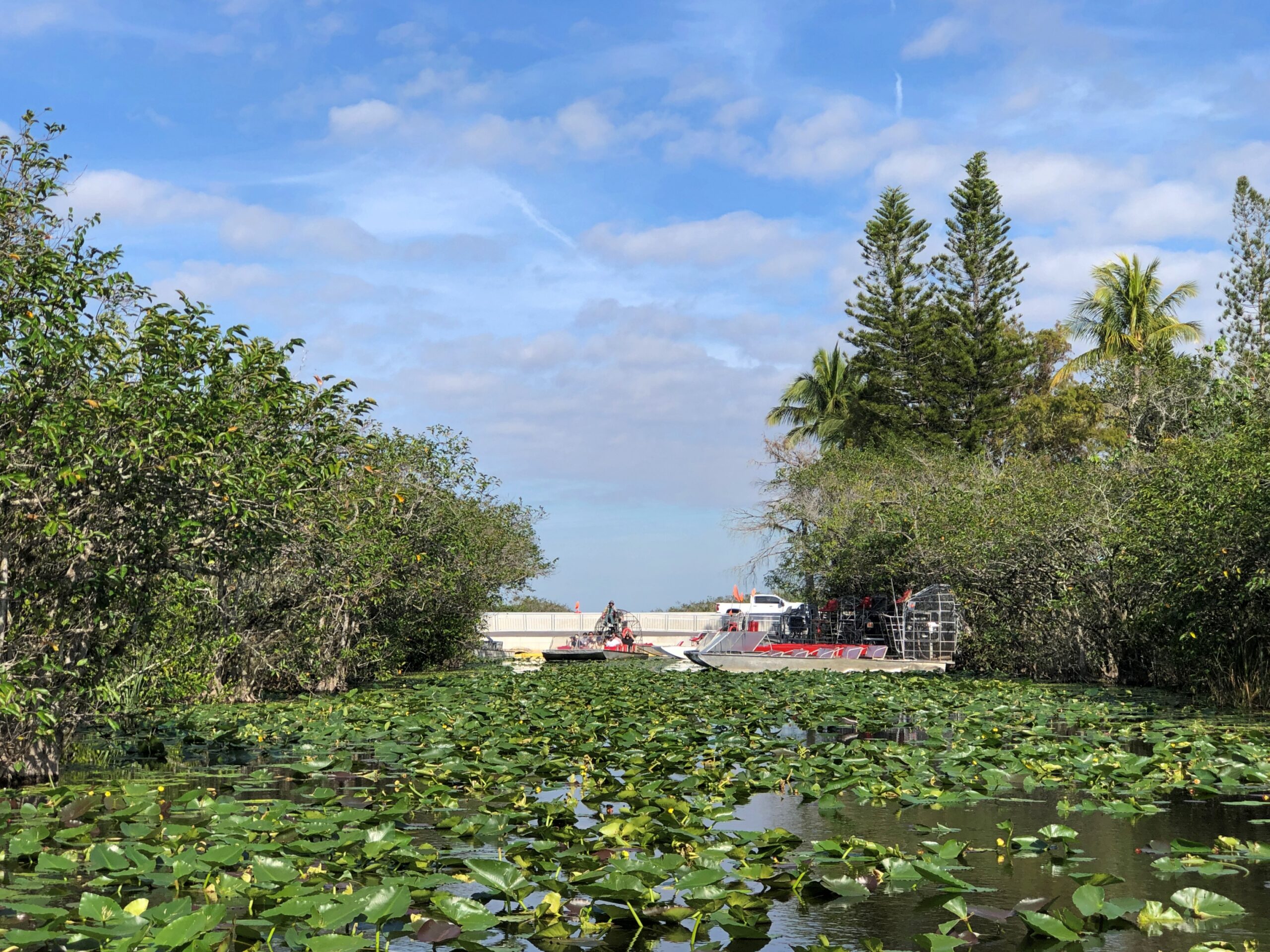
I expected the tour boat to look something like this, which was tied up at one of the docks.

The kind you see, or used to see, on TV. The sawgrass and alligator encounters made me think (a few days later) of Flipper for the first time in many long decades. It wasn’t a show we watched much in our house in the mid-60s, but I have a very vague memory of it, maybe from repeats but also reinforced by the saccharine theme song as included on one of the TV Toons records I owned in the ’80s. Reading about the show, I found that it was set in the Keys and not the Everglades, and the characters tooled around in a more standard motorboat. Still, it might have been the first time I ever heard about the Keys.

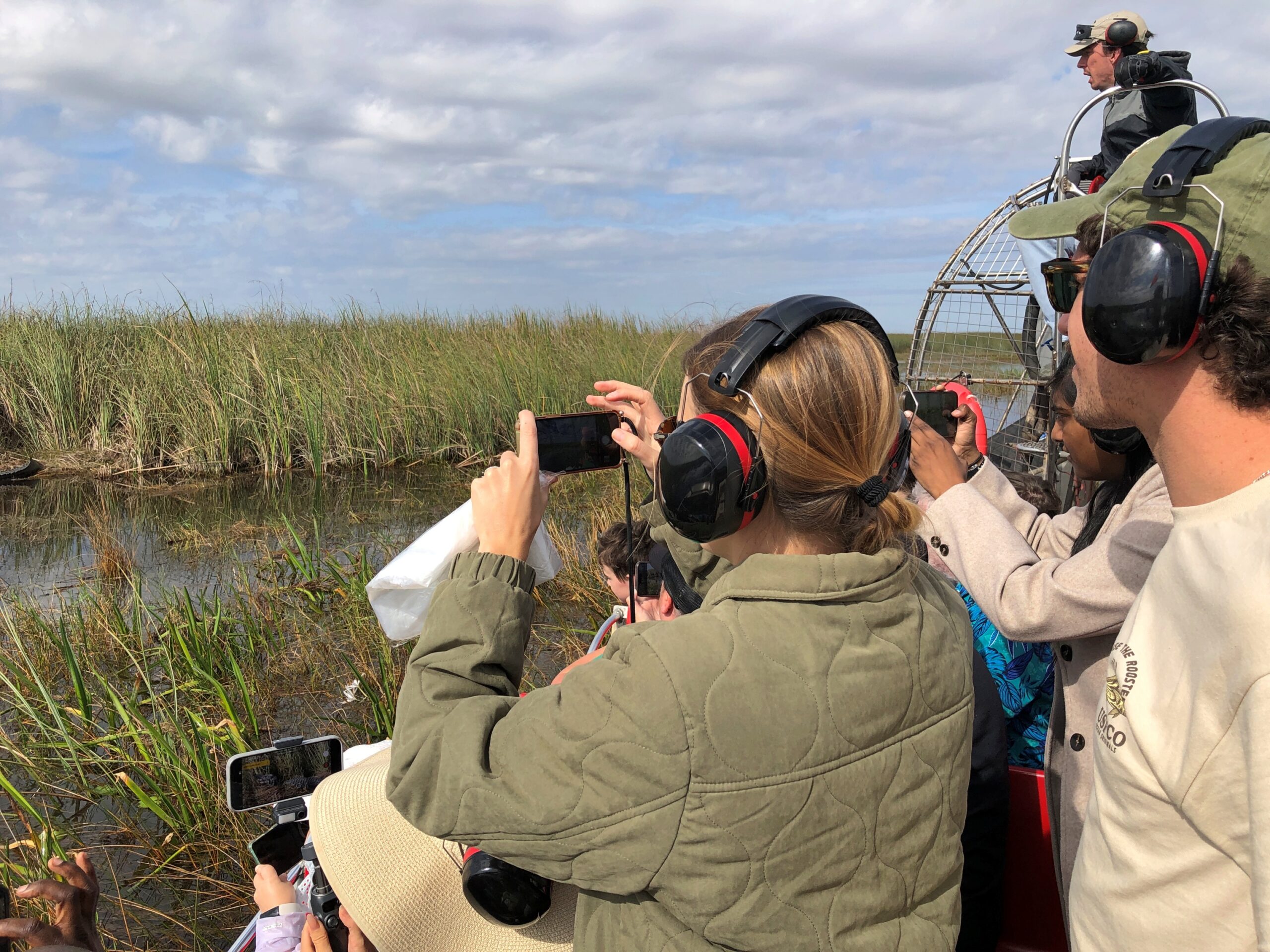
Those spiffy airboats are for the more expensive tours, I think. Ours was a larger flatbottom with a few rows of metal benches for regular tourists.

But it was pretty good seating for the half hour or so, especially since we got the front row.

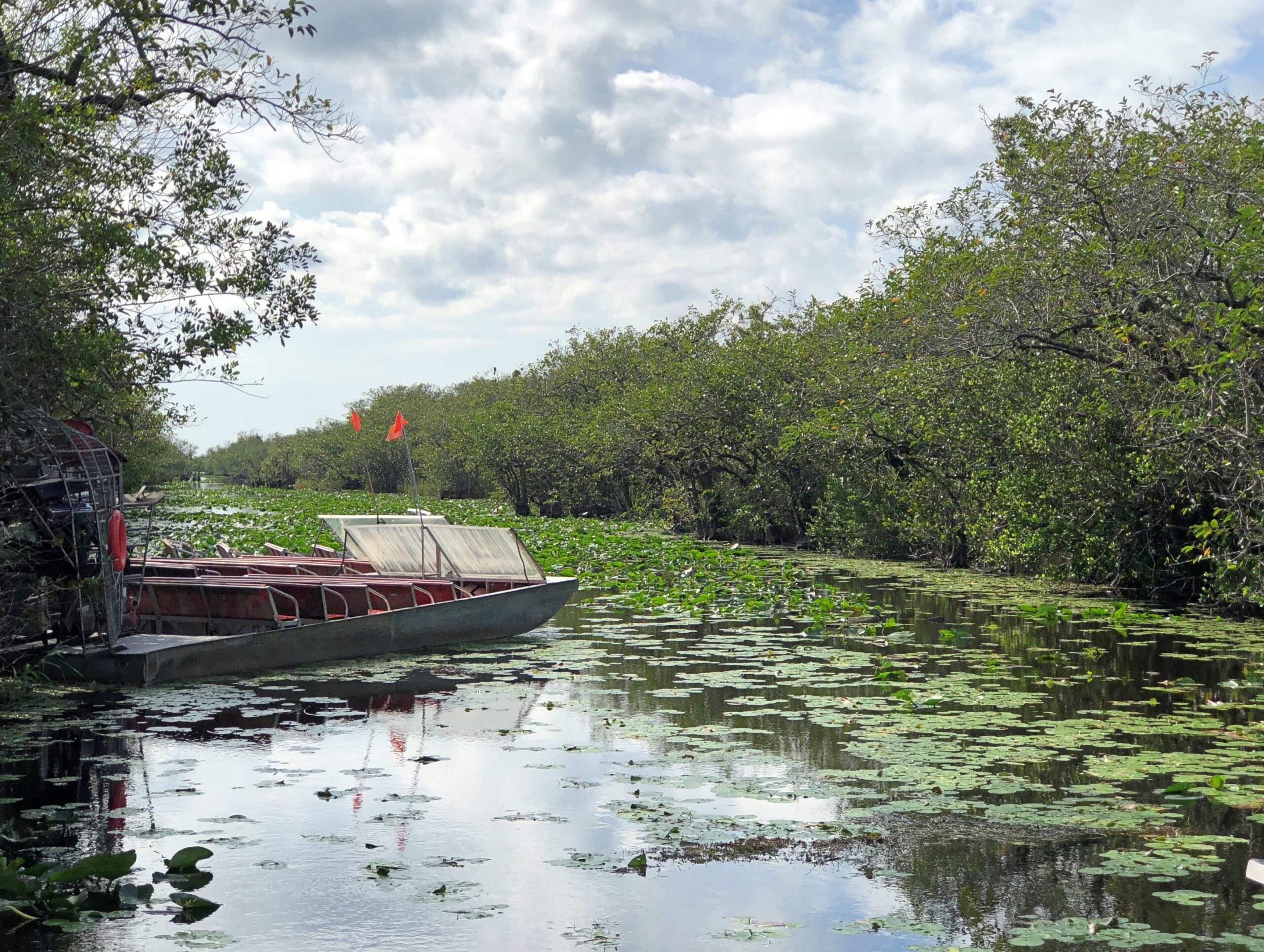
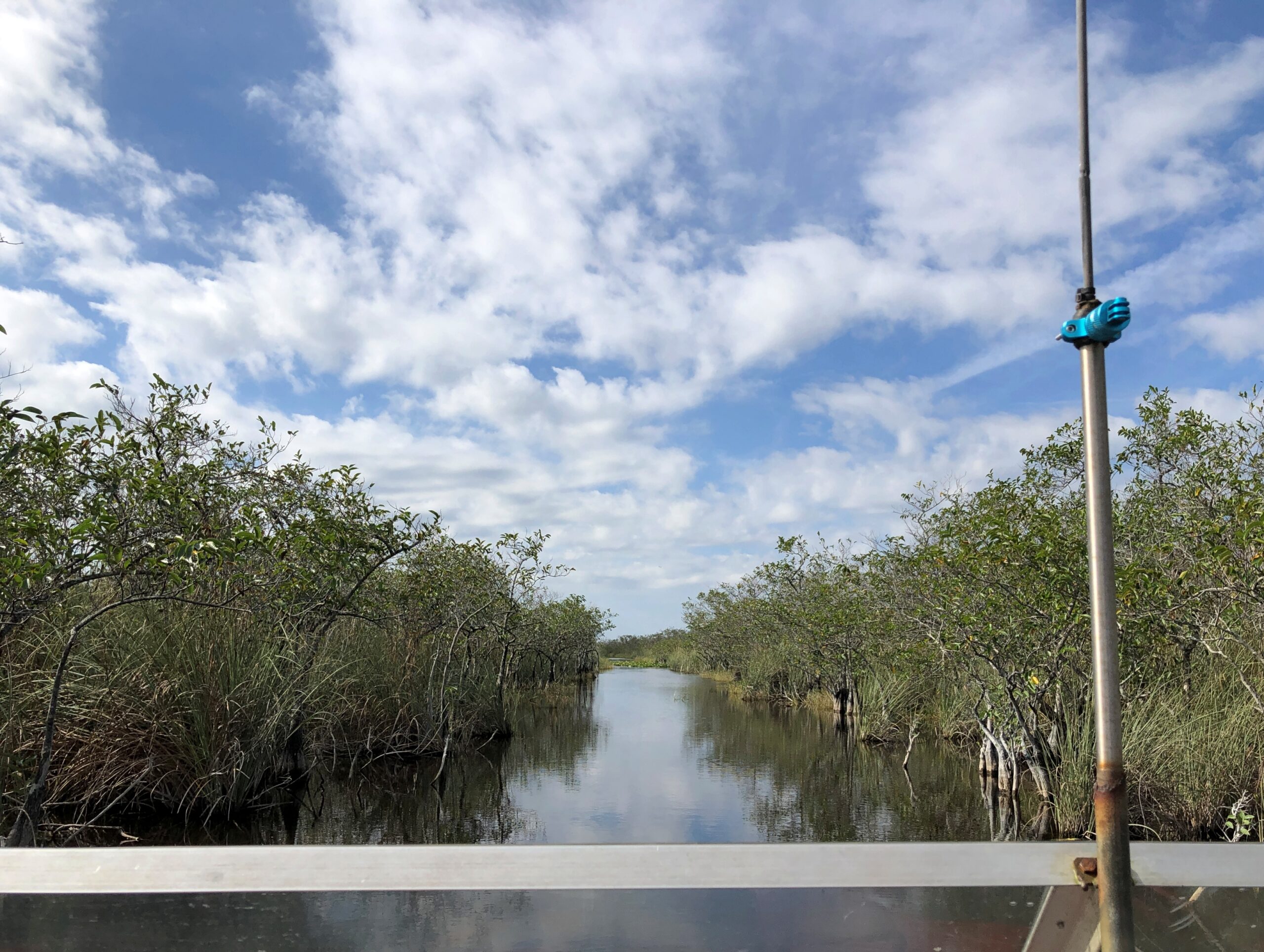
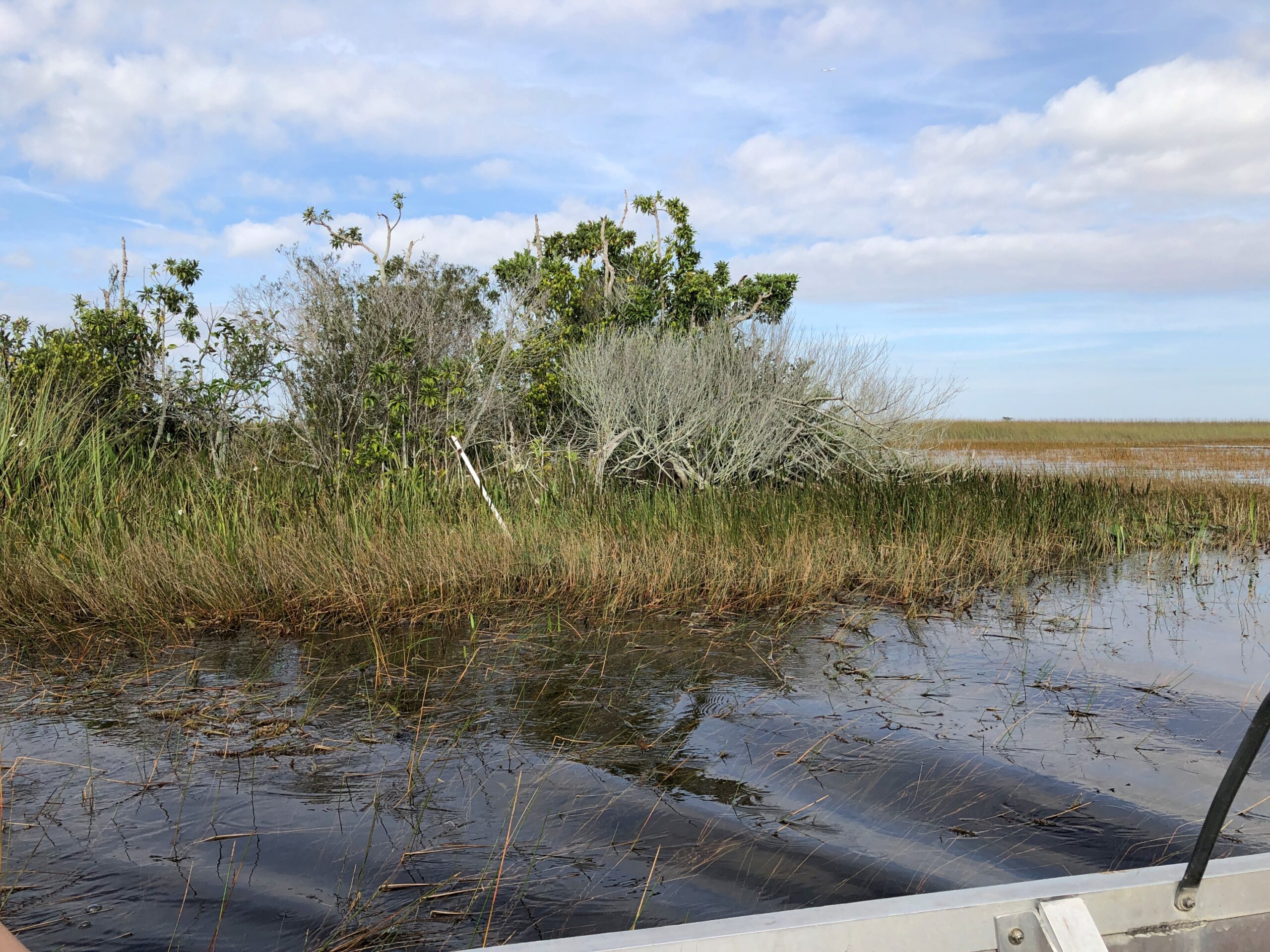
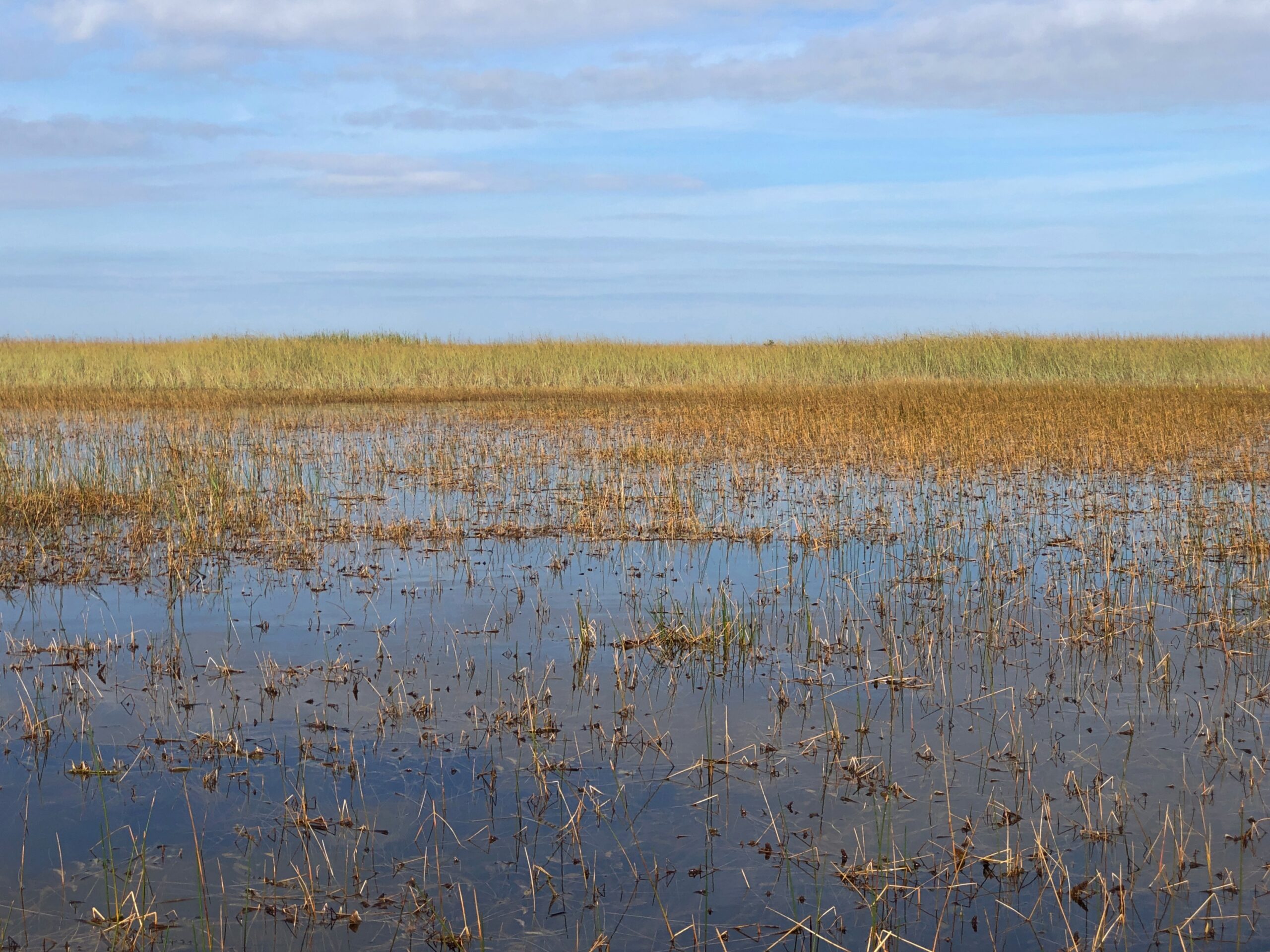
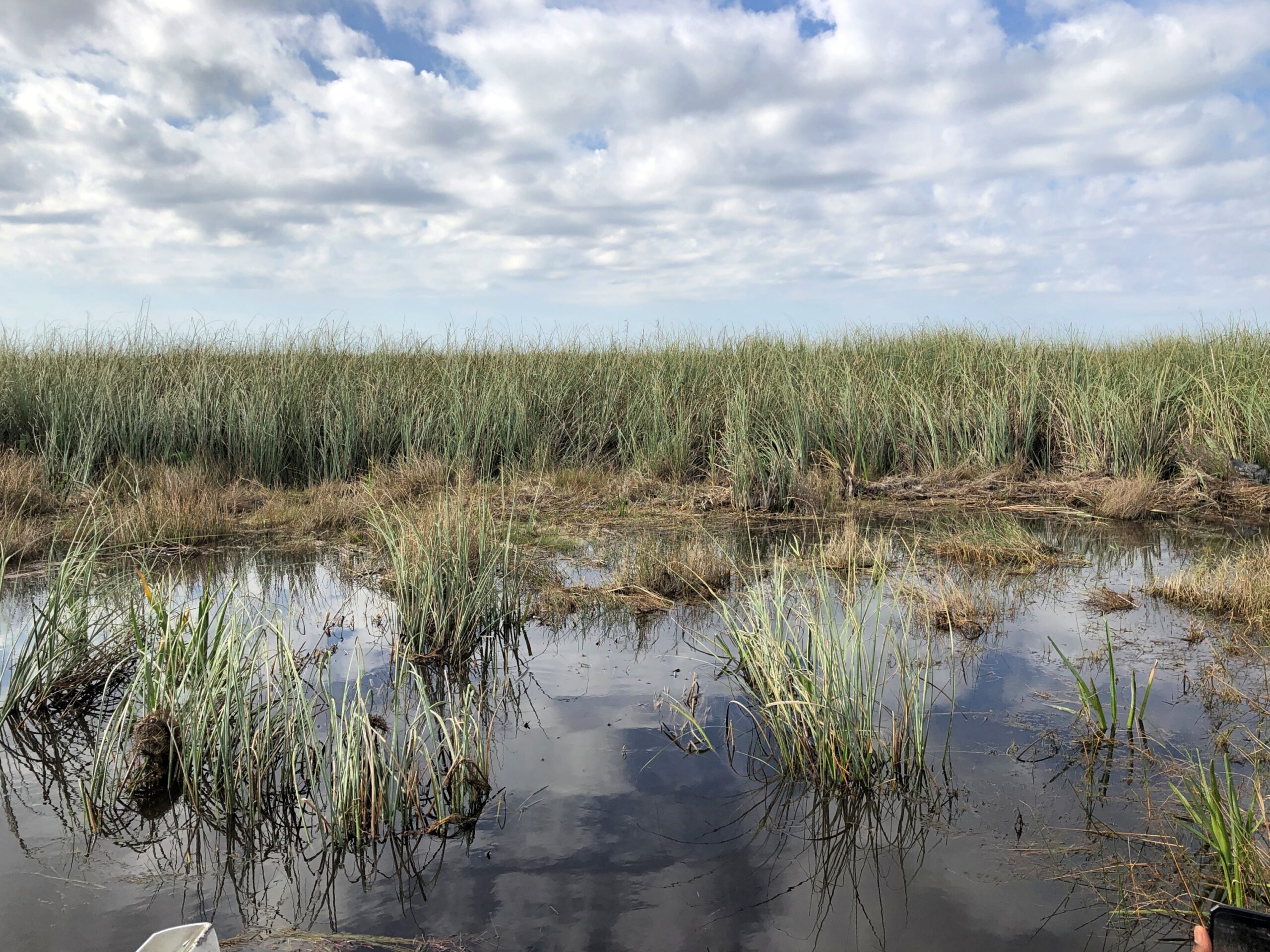
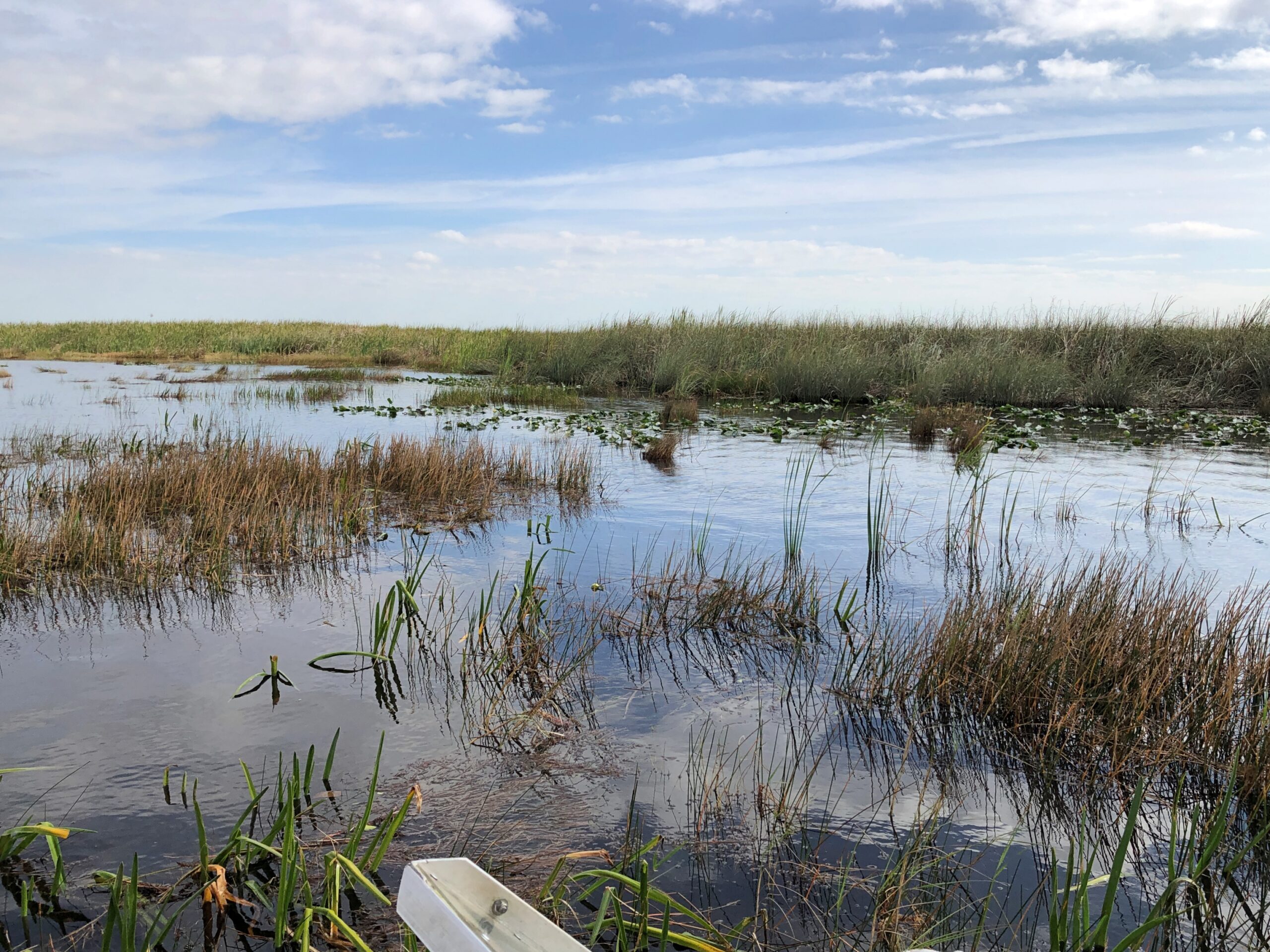
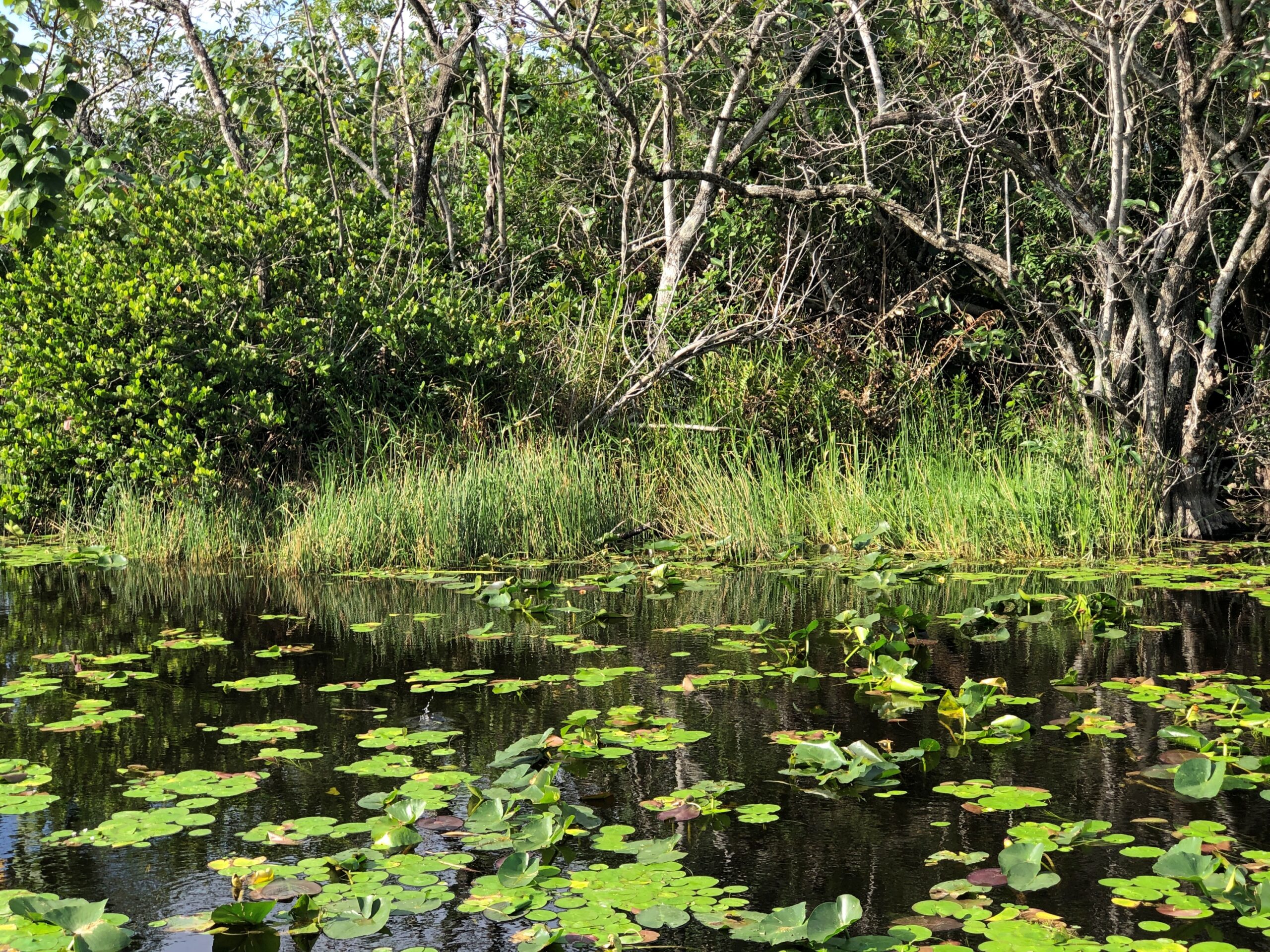
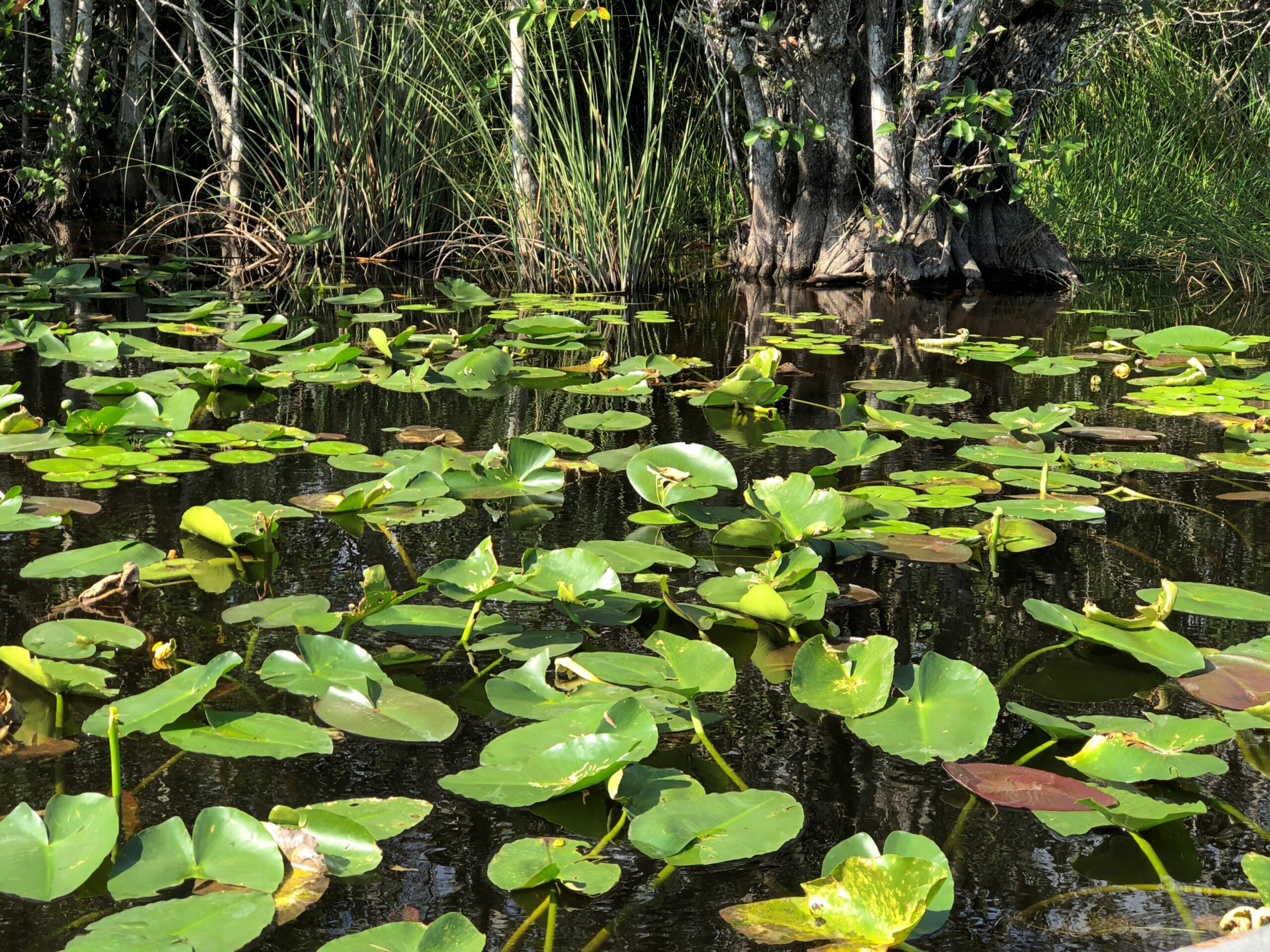
Off we went into the grassy water, dotted by quasi-islands sprouting trees. Soon the scenery looked like this.

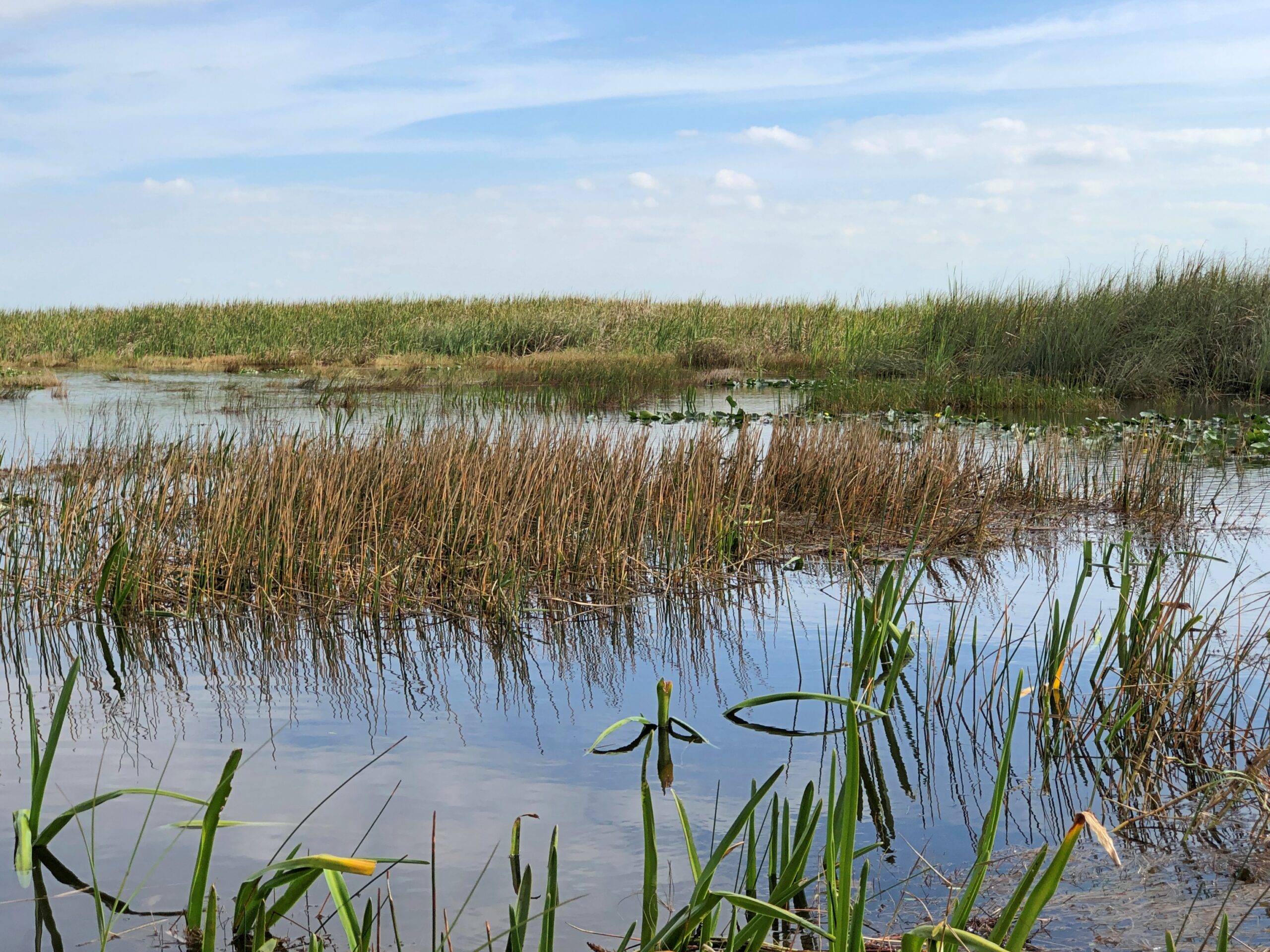
And this.

Leaving me to wonder, I’m glad the guide knows his way around, because I’d be lost instantly. The boat guide wasn’t Gator Bob, incidentally, but an older fellow perched in the pilot’s cage.

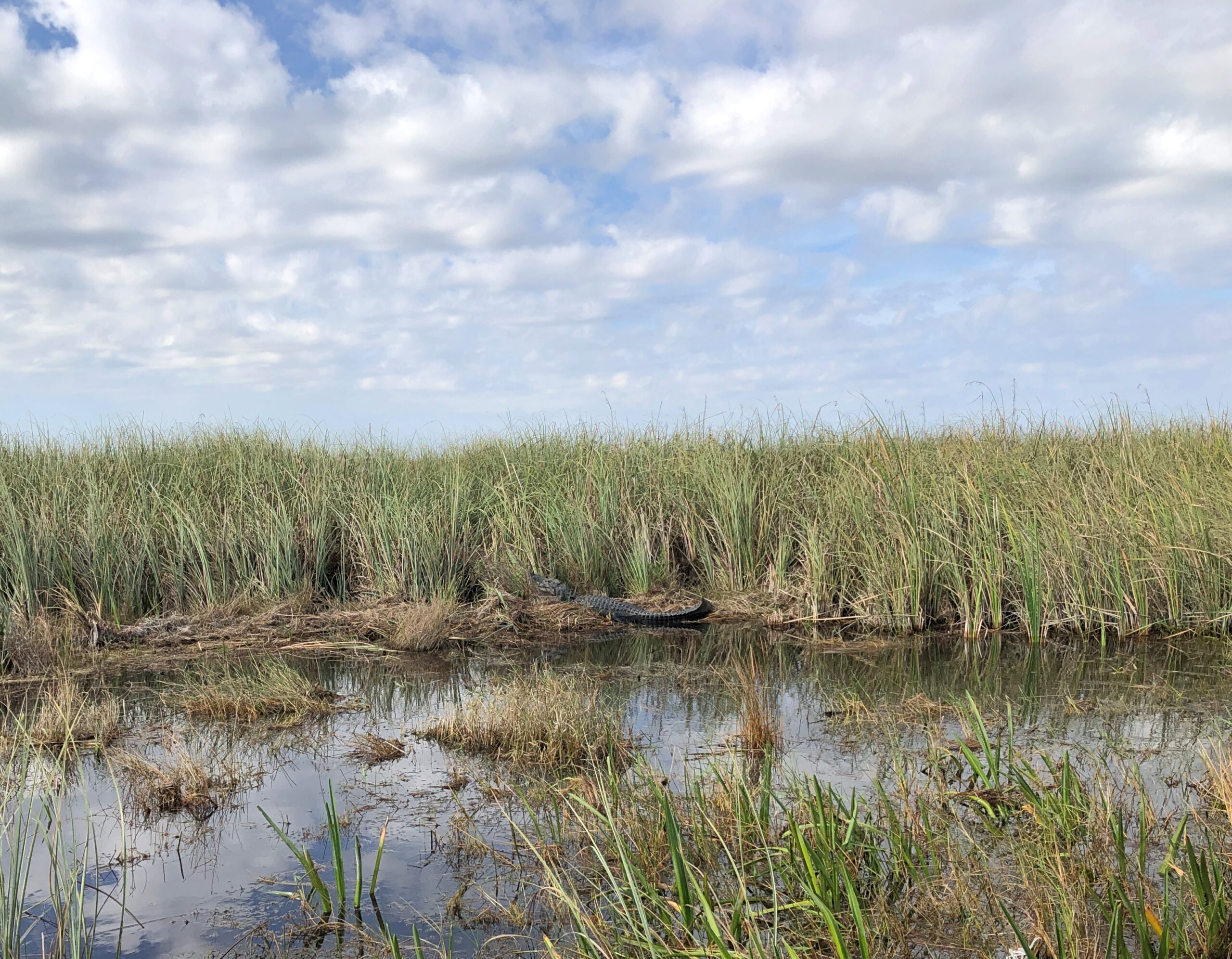
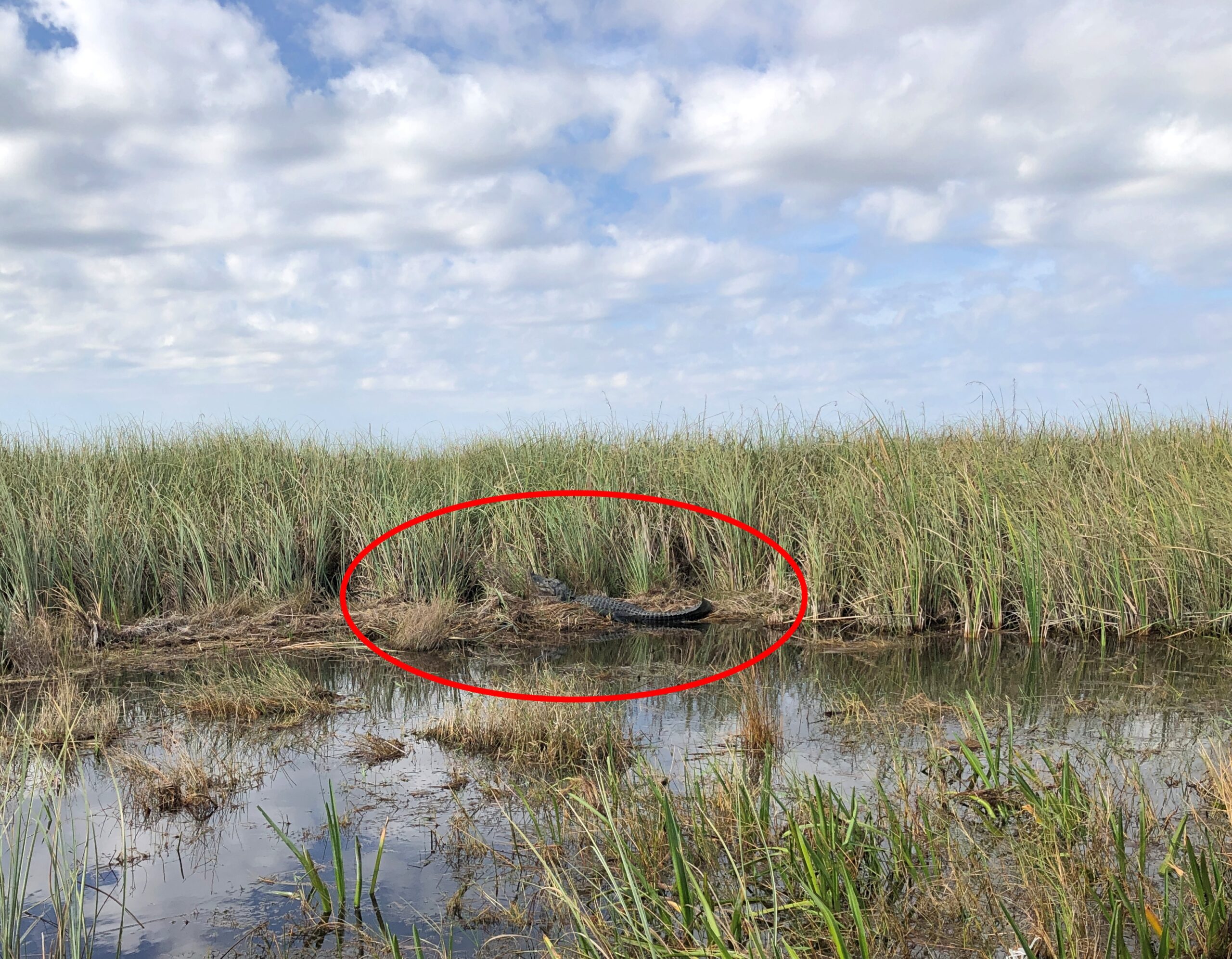
Before long, we found a lounging alligator in the wild.

December is part of the sluggish season for local reptiles, the guide explained. Not too cold for alligators, naturally, but cool enough that lying around in the sun is a good option for them. Regardless, the gator – let’s call him Bob – had his own paparazzi for a few moments.

Our return took us through thick patches of lily pads. They moved aside without tangling or anything complicating that would happen if I were piloting the boat.

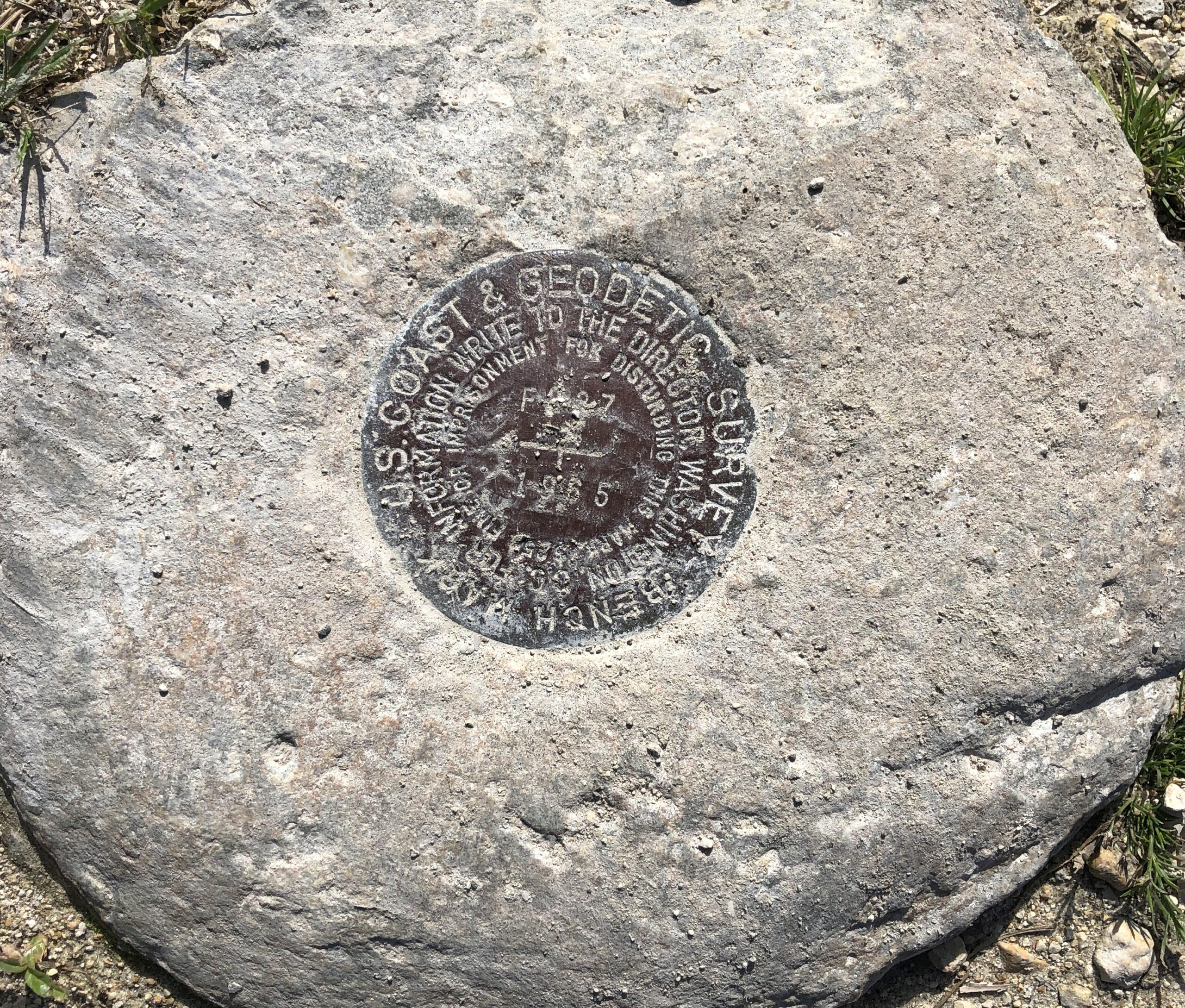
Bonus at Cooperville, out near the parking lot. A US Coast & Geodetic Survey Bench Mark, dating from 1965 if I read that right.

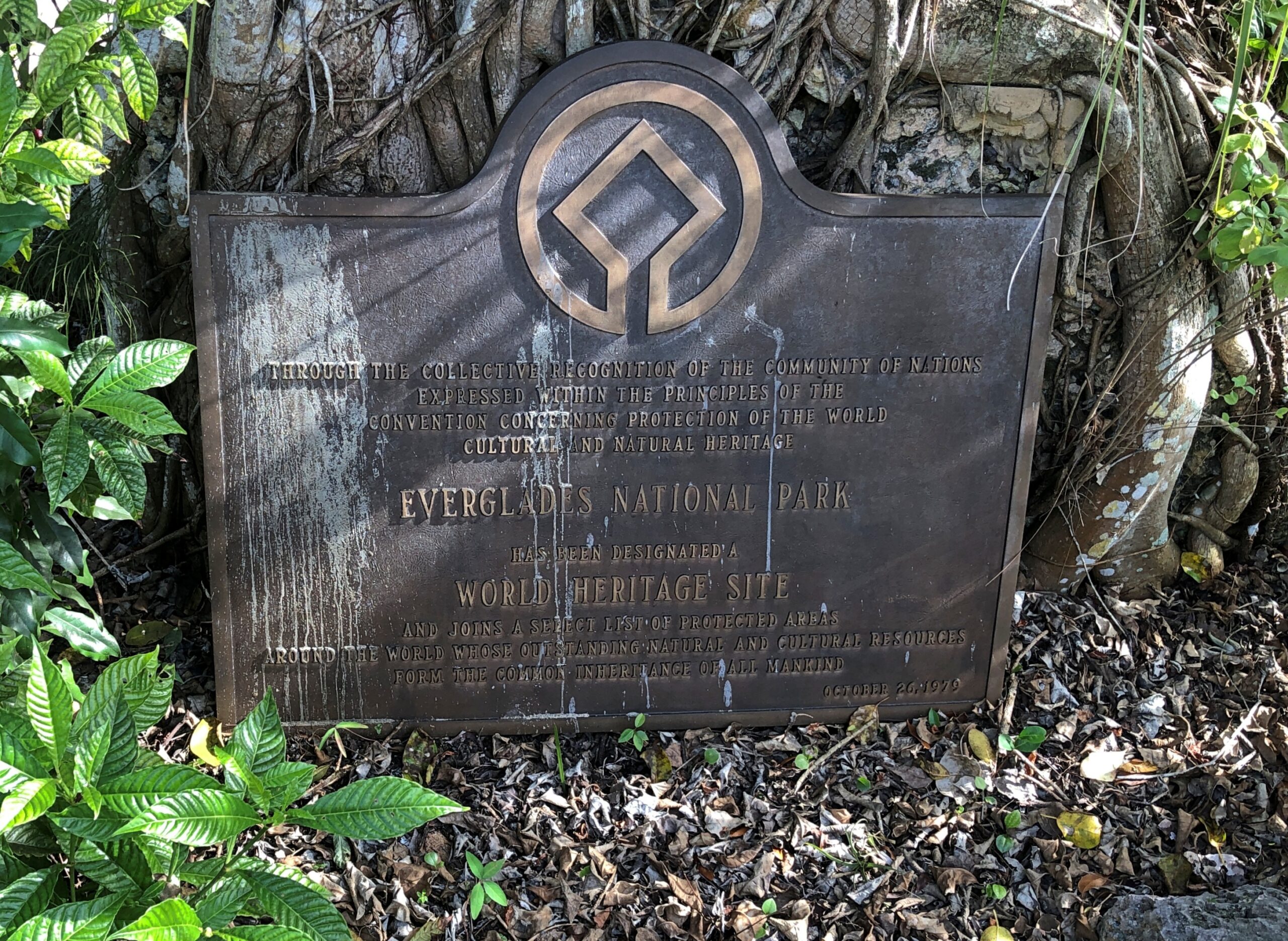
Another bonus: A World Heritage Site plaque, complete with comments by birds.

“Everglades National Park is the largest designated sub-tropical wilderness reserve on the North American continent,” UNESCO says. “Its juncture at the interface of temperate and sub-tropical America, fresh and brackish water, shallow bays and deeper coastal waters creates a complex of habitats supporting a high diversity of flora and fauna. It contains the largest mangrove ecosystem in the Western Hemisphere, the largest continuous stand of sawgrass prairie and the most significant breeding ground for wading birds in North America.”

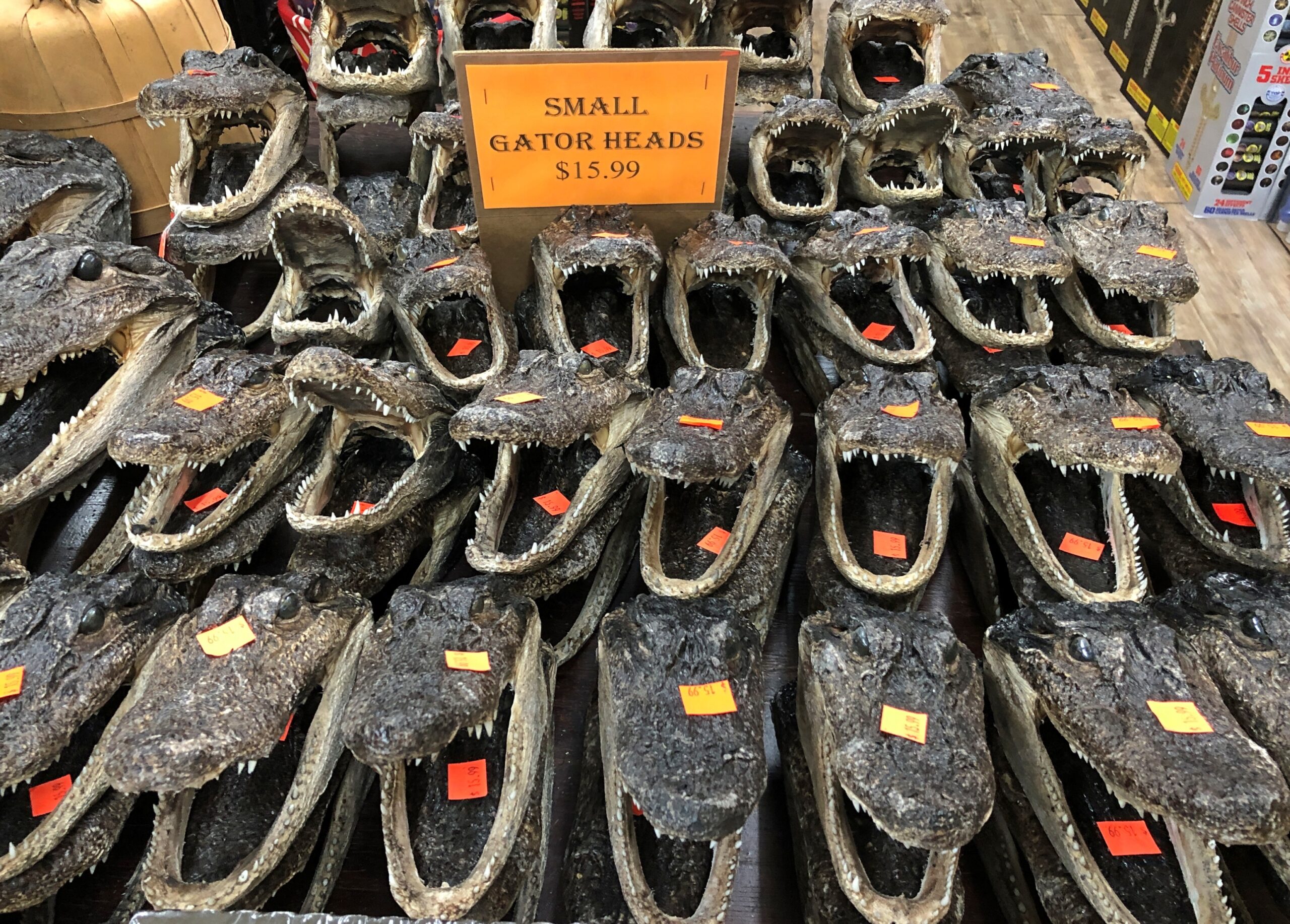
Good old wading birds. Still, that isn’t what people come to see. That would be gators. How do I know this? Consider a scene from a souvenir shop I visited later in our trip.

It was much further north, but still Florida.

Big Cypress National Preserve

Americans know their national parks – the famous ones, anyway – but how about their national preserves? A similar, yet different sort of designation by Congress. I don’t know all the details myself, but one thing is that resource extraction seems to be possible in limited ways at least some of the 21 preserves, but not at all (?) in the 63 parks. Regardless, preserves are different places on the maps, though they are often adjacent to parks.

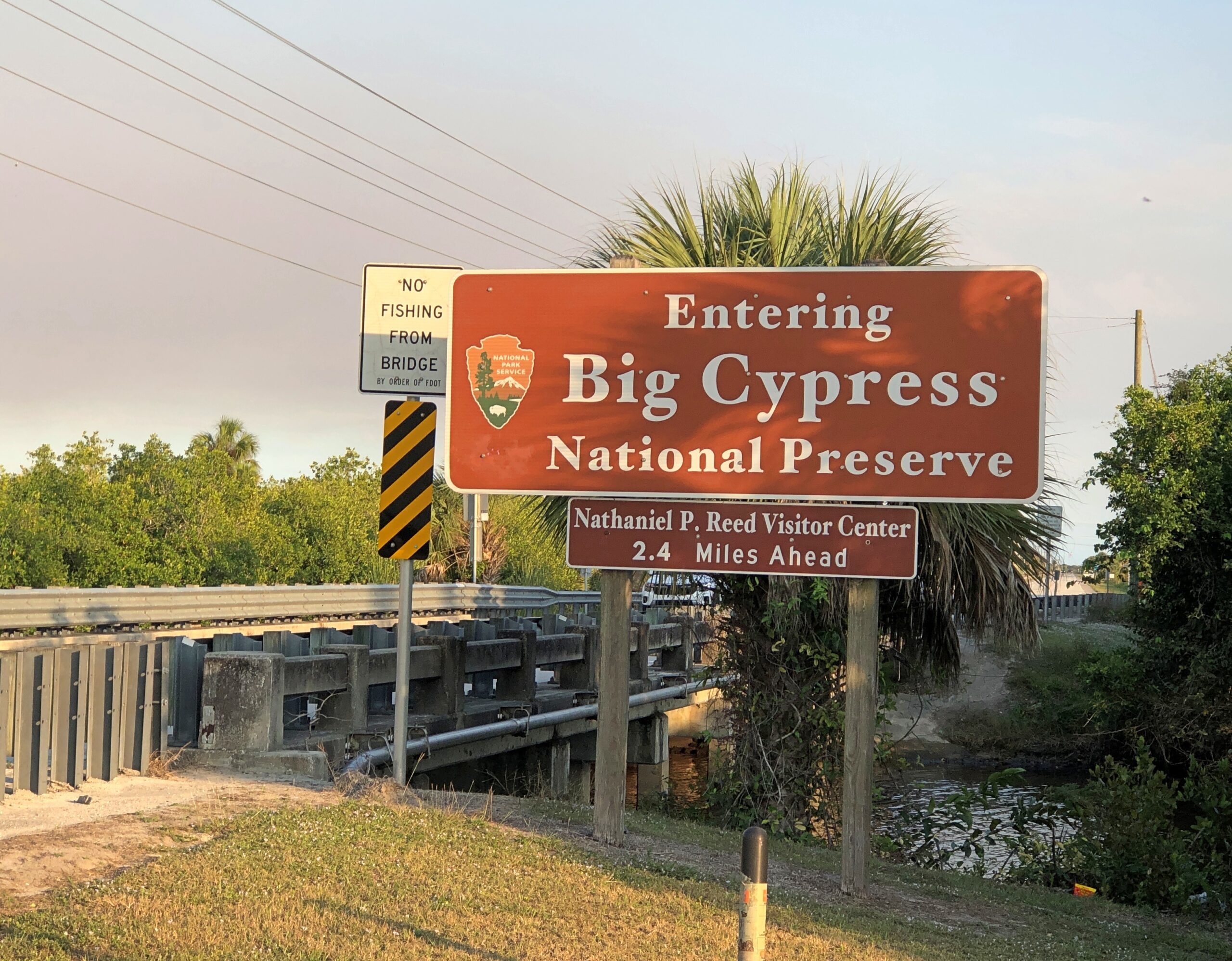
Such as Big Cypress National Preserve, which is a large chunk of Florida next to Everglades NP.

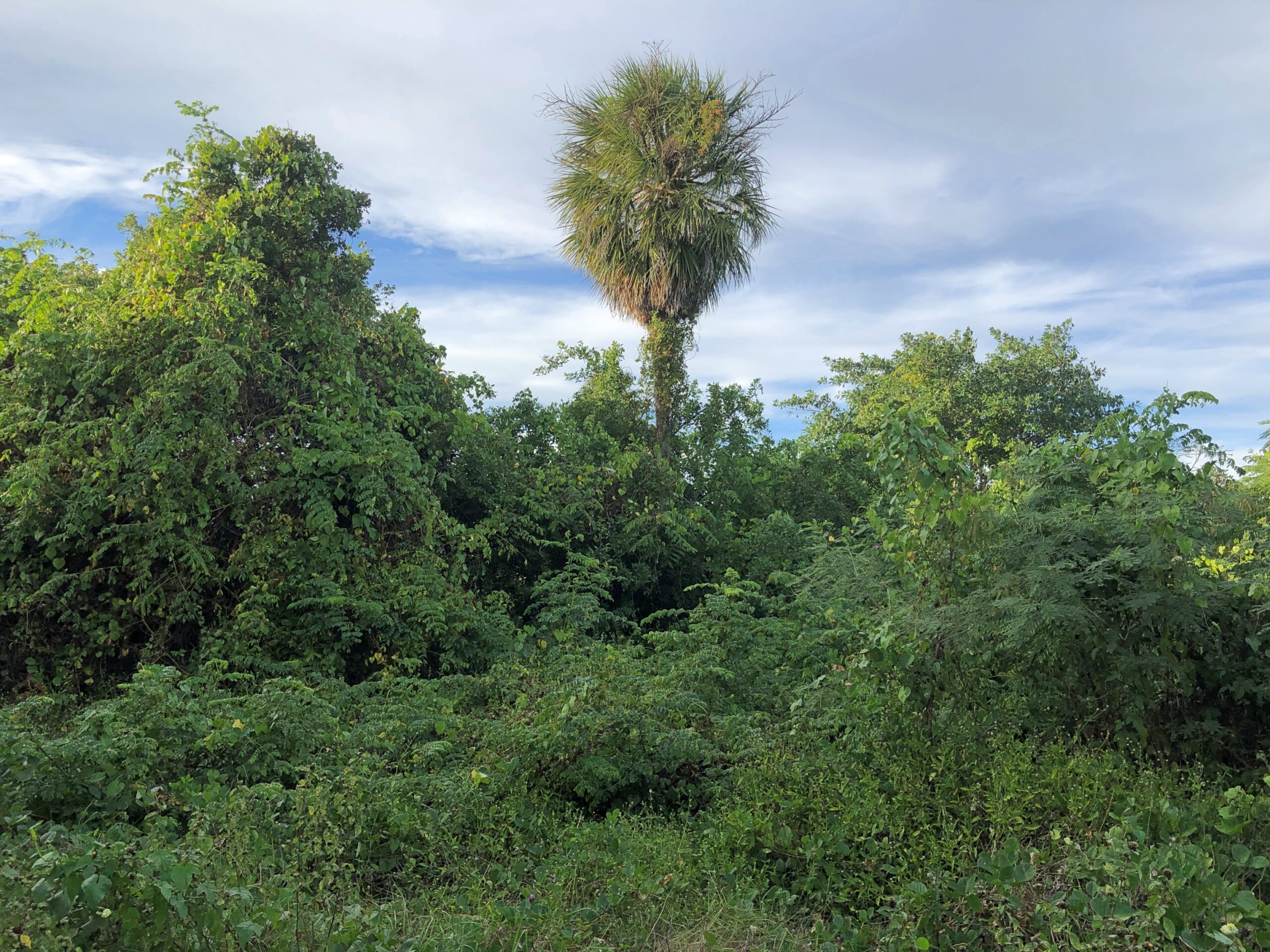
Head south from metro Orlando on US 27 and eventually – and it takes a while – the suburban aspects peter out and give way to agriculture, especially citrus and sugarcane. At a hamlet called Palmdale, the highway Florida 29 continues the trek south, meeting both I-75 (Everglades Parkway, Alligator Alley) and US 41. By that time, agriculture has given away to (mostly) undeveloped wetlands. Swamp, in the old days, but in fact the preserve and the park don’t qualify as such. We picked US 41 and headed east, into the thick in the Big Cypress.

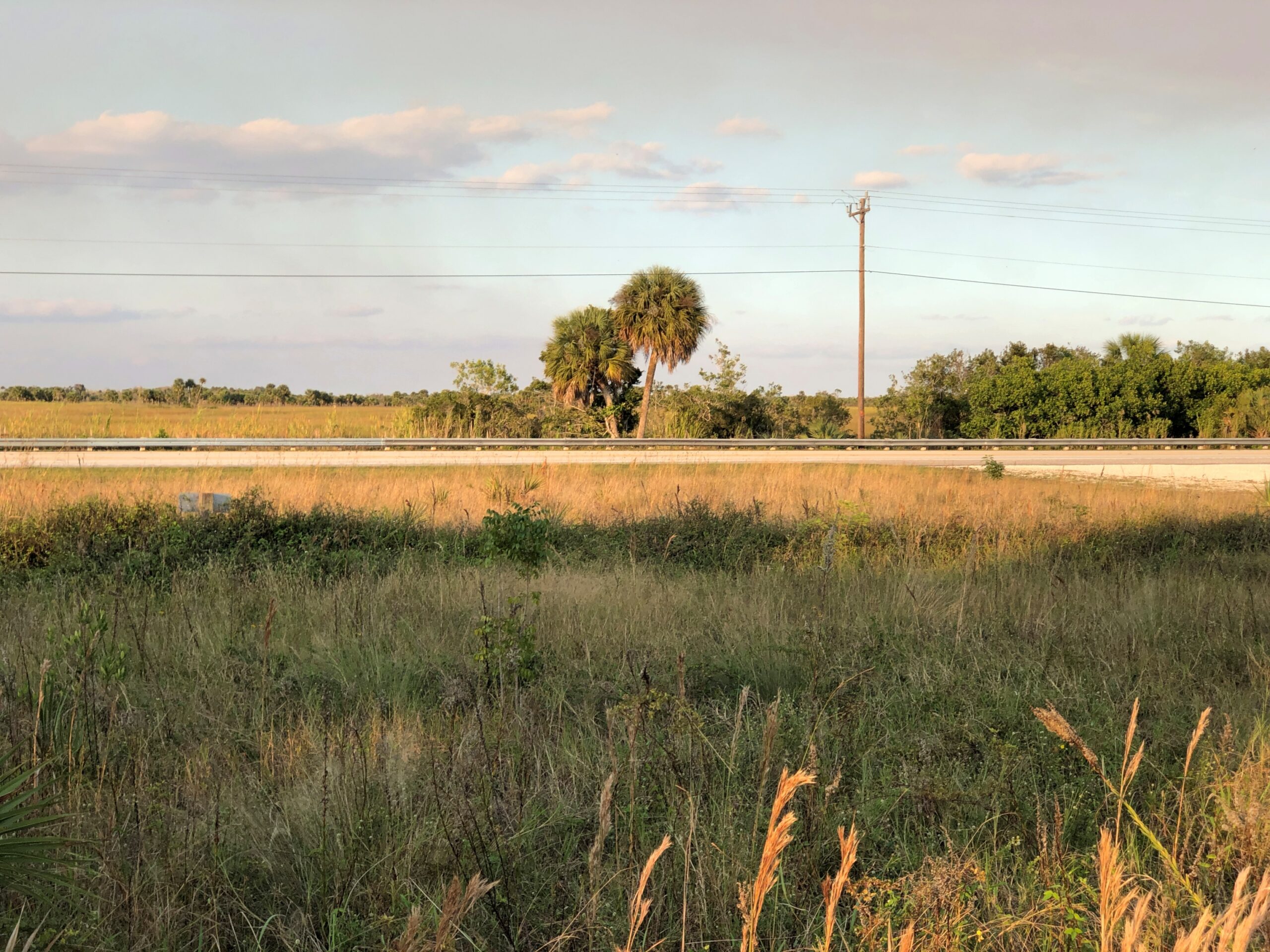
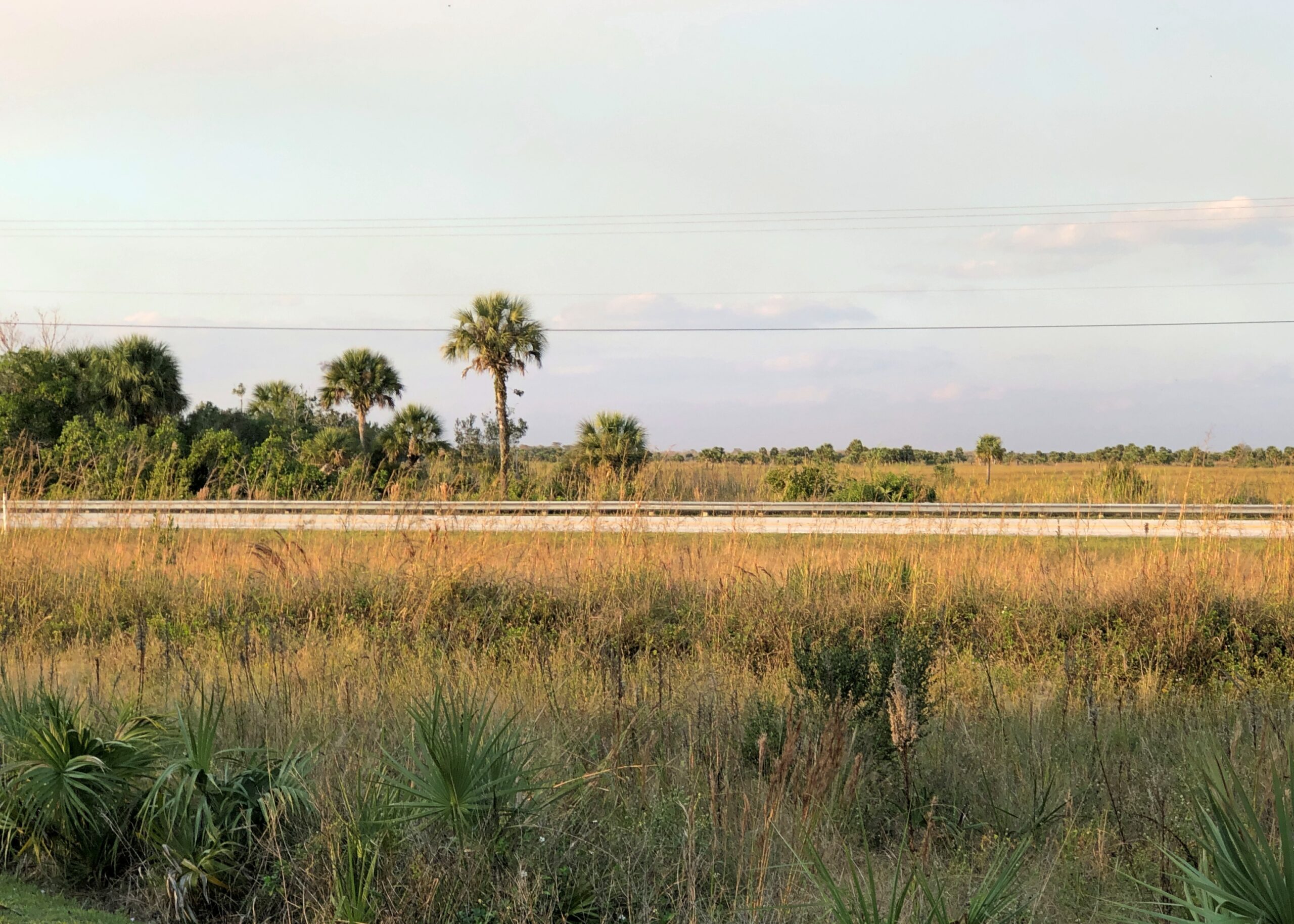
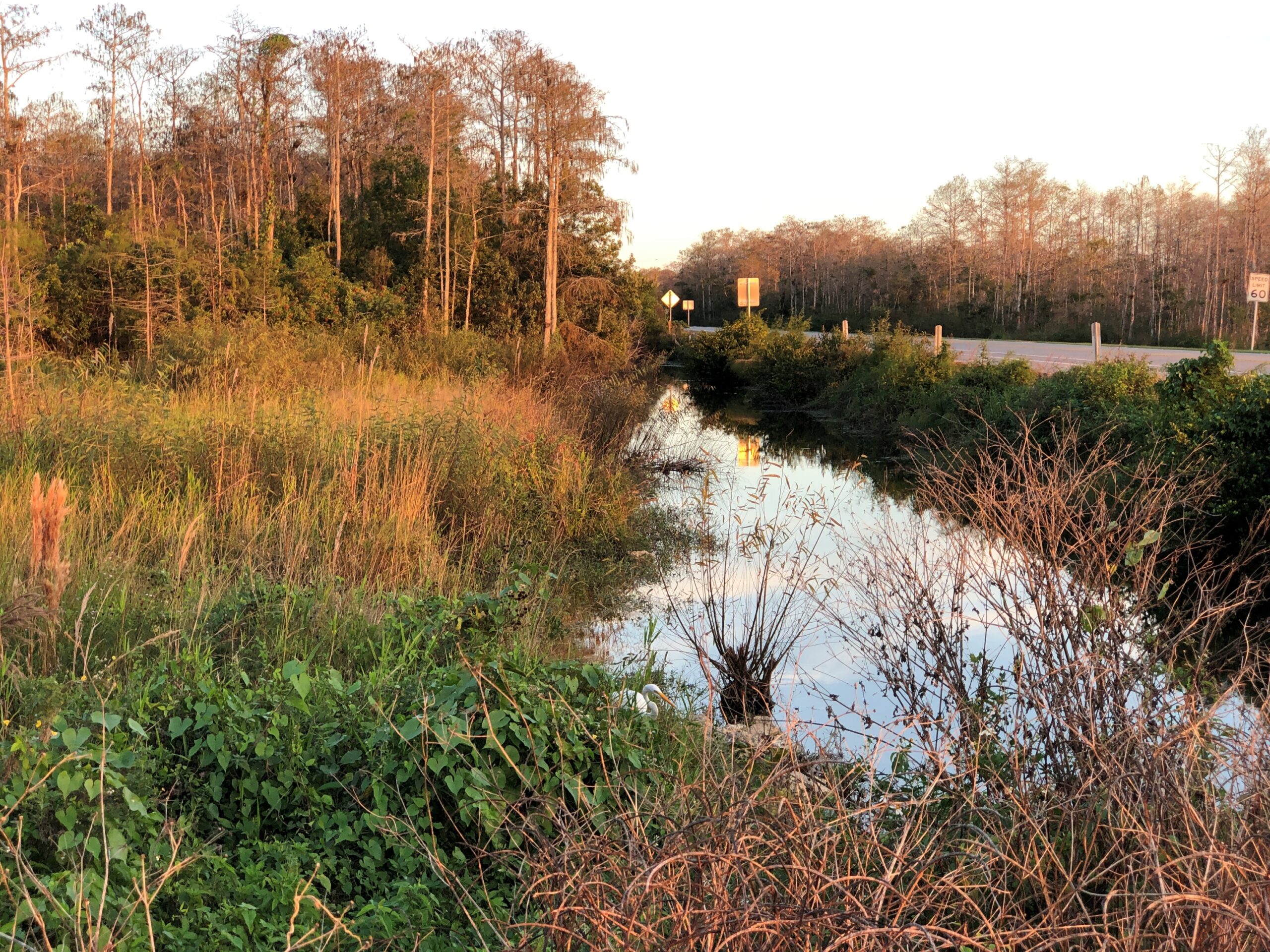
Daylight is short in December, even in southern Florida, so we barely had time to traverse US 41 before losing the light. But we managed a few stops.

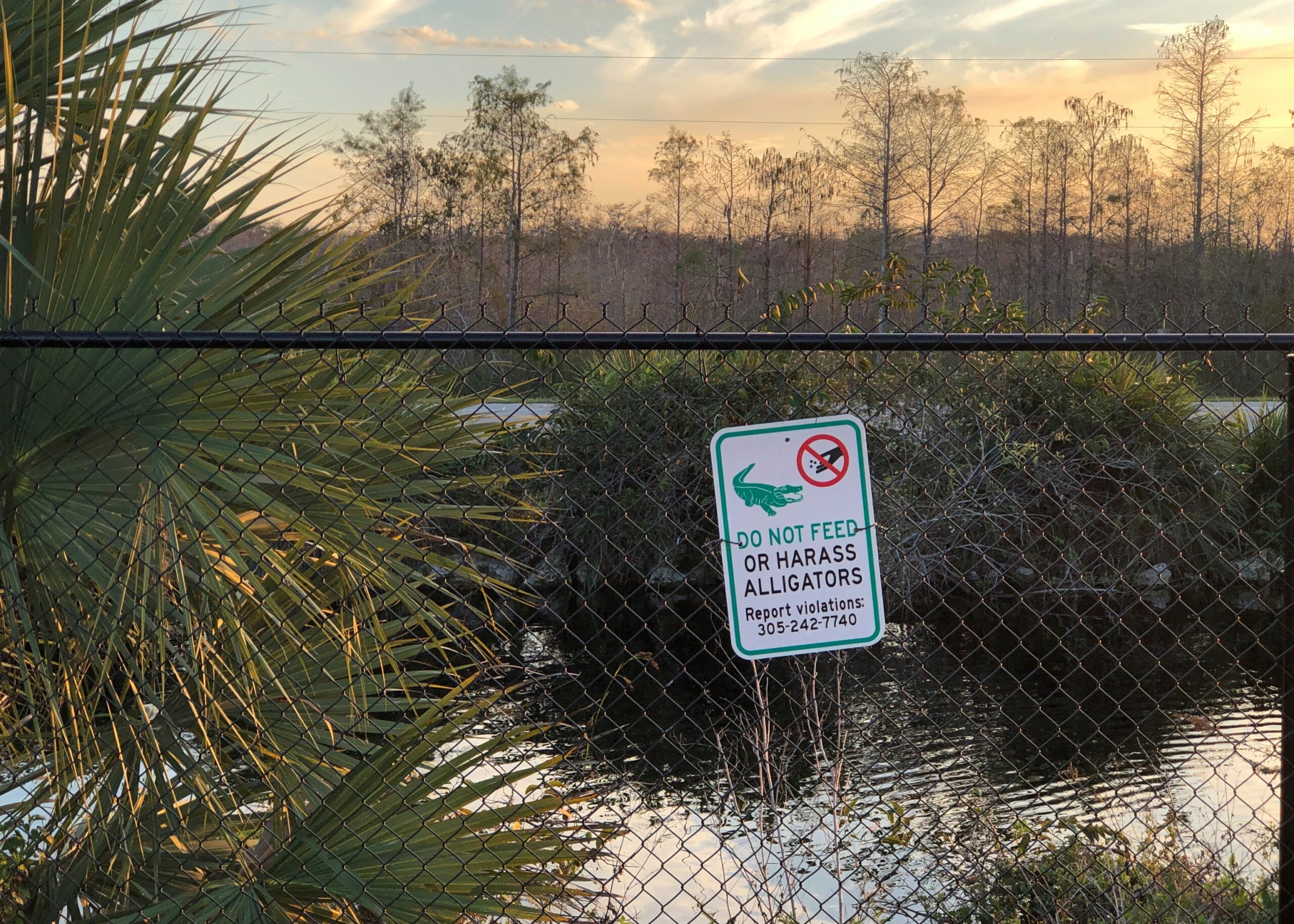
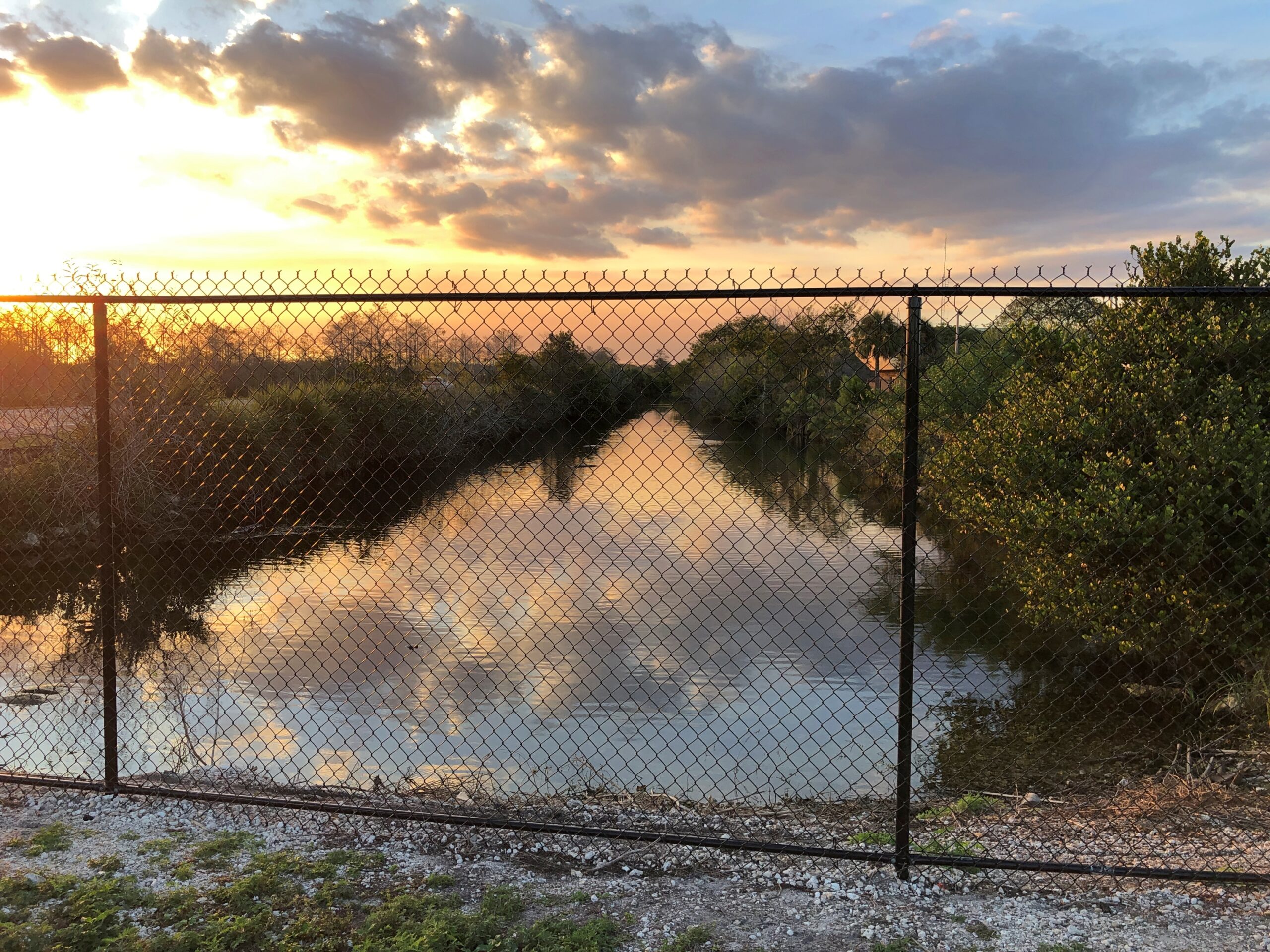
The territory was behind fences in some spots.

Mostly not.

By dark, we’d passed out of the preserve and on to the edge of the national park. Much of US 41 – known as the Tamiami Trail in part of Florida according to various sources, but not on any signs that I saw – is under construction toward its eastern end, meaning a tight drive through concrete barricades, everyone’s least favorite kind of driving. Under reconstruction, that is, and for good reason.

“The Tamiami Trail (U.S. Highway 41) has long been recognized as one of the primary barriers to flow of water through the ecosystem,” the NPS notes. “The need to eliminate barriers to overland flow of water in the Everglades is considered one of the indisputable tenets of restoration. Much scientific information amassed in recent decades reinforces the importance of removing these barriers to water flow in order to restore natural marsh connectivity.

“In 2009, Congress authorized implementation of the plan selected in the 2008 Modified Water Deliveries to Everglades National Park, Tamiami Trail Modifications, Limited Reevaluation Report (LRR) … The LRR plan would improve potential marsh connectivity, reduce sharp changes in water velocity, and improve rainy season depths and durations. In addition, these modifications will improve the ridge and slough landscape and fish productivity, which could result in increased foraging success for wading birds.”

It makes for a temporarily unpleasant drive, but I think we can all get behind increased foraging success for wading birds and other worthwhile eco-goals for the much abused Everglades. Now only if the plan could do something about Everglades pythons.