Bonito Flakes

A staple of Japanese cooking, bonito flakes look a little like pencil shavings, but are more delicate. We always have them around the kitchen, in packages large and small. The empty package I scanned is Futaba brand bonito flakes.
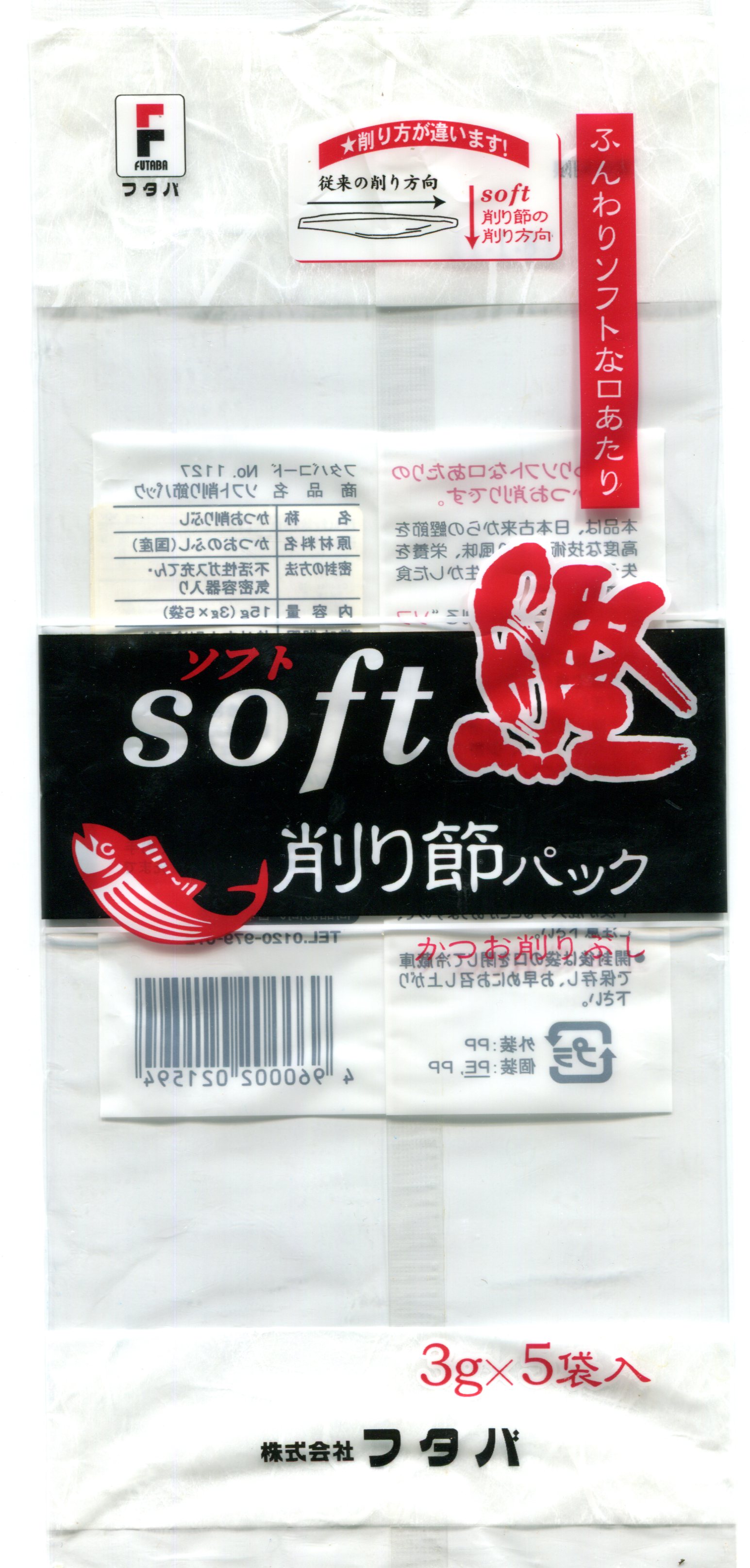
“Bonito is a kind of tuna, and Katsuobushi is dried, smoked bonito,” Japanese Cooking 101 says. “Katsuobushi is often used as flakes shaved from a piece of dried fish…
“Katsuobushi has a smokey savory taste that is a great accent for many Japanese dishes. Because dried bonito is packed with lot of umami (savory taste), it is perfect for making dashi (fish broth) with which is a crucial component for Japanese cooking. Katsuobushi also can be used as is, sprinkling on simple vegetables to give a deeper flavor instantly.”

I knew it first from okonomiyaki, an Osaka and Hiroshima specialty sometimes called a Japanese pancake, a term that describes the shape of the food, but misleads about everything else important: taste and texture. Okonomiyaki includes flour, eggs, shredded cabbage, and a choice of protein, and topped with a variety of condiments — especially a brown sauce we call okonomi sauce, and bonito flakes.

Bonito is also good eating as a regular fish dish. Especially in Shikoku, and even more especially in Kochi prefecture in the southern reaches of the island. I encountered it at Cape Ashizuri in ’93.

“The minshuku [was] our accommodation for the night, and completely fogged in. The evening meal made up for it by being excellent, especially the bonito sashimi,” I wrote about the visit.

Kashiwa Mochi

We don’t always acknowledge Japanese holidays, but sometimes we do. This year for Children’s Day, formerly known as Boys’ Day, we ate kashiwa mochi, which is a thing to do on Children’s Day. The holiday is better known in this country for its carp streamers, but we don’t happen to have any of those. (Oddly enough, my mother had three that used to hang in the garage. I don’t know what became of them.)

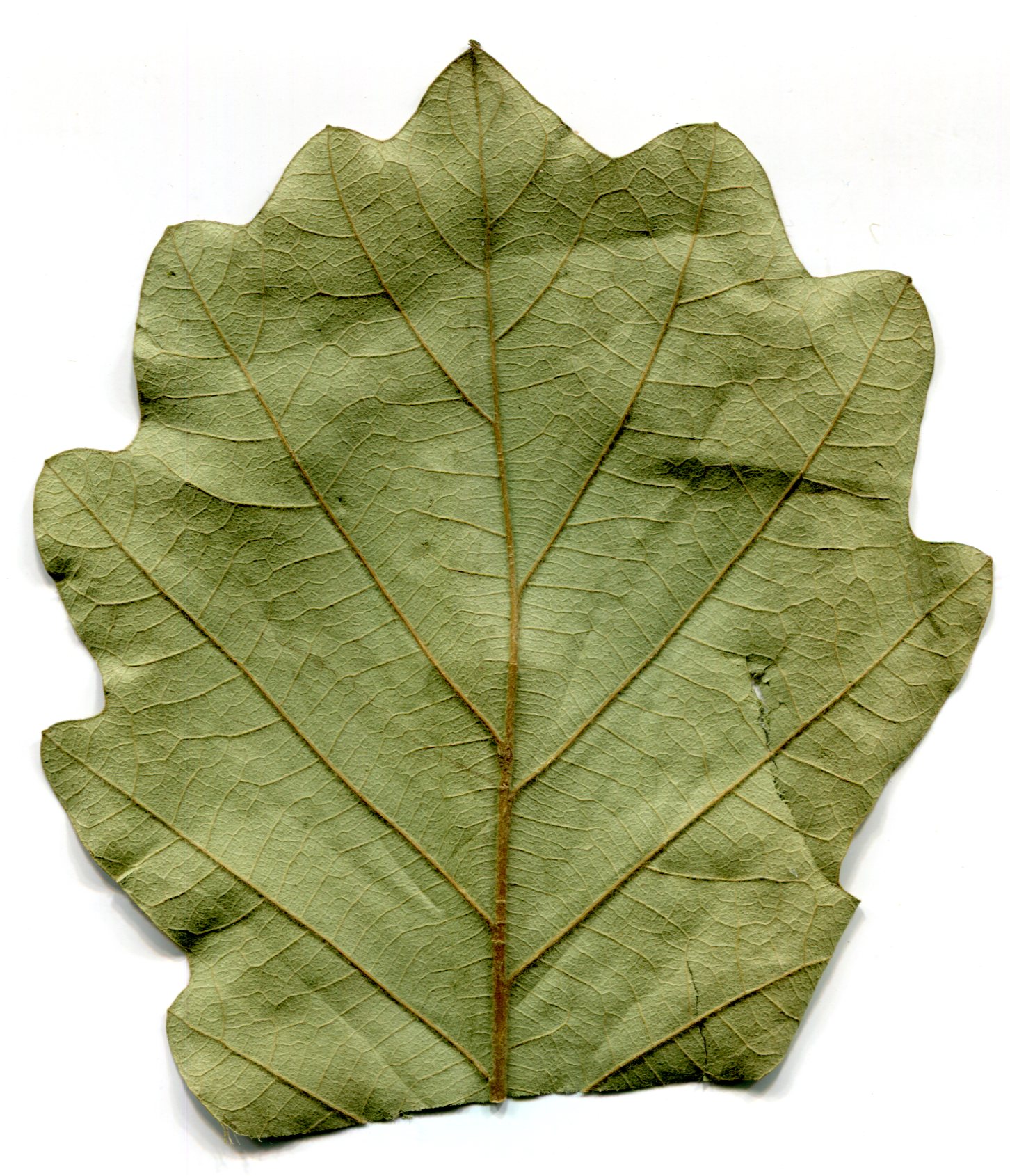
Kashiwa mochi are rice cakes filled with red bean jam and wrapped in oak leaves. The ones we ate came in the package to the right. The small kanji characters say Sakuraya, the brand name, while the larger hiragana characters say kashiwa mochi.

You’d think it’s a product of Japan, but no. It’s domestic, possibly made by a bakery called Sakuraya in Gardena, Calif., and distributed by the Japanese Confection Inc. of College Point, NY. The package, and the Internet, isn’t clear on those points.

The red bean jam is mildly sweet, as red bean jam usually is, but the mochi rice cakes weren’t as sticky as I’m used to eating around the New Year.

Though not that sweet, curiously enough the first ingredient listed for the confection is sugar, followed by rice flour, red bean, sweet rice flour and potato starch.

As befitting its sugar content, it’s almost all carbohydrate, with no fat of any kind and only a touch of protein. No sodium, either.

Toward the end of ingredient list is “salted kashiwa leaf,” that is, the oak leaf. Not edible, but nice to look at. It also wraps the mochi, giving you something to hold it with.

Jidori Chicken

Jidori chicken apparently isn’t new, but I miss things. In 2004, the Wall Street Journal said: “Jidori is exactly the same thing as free-range chicken — but it sounds more impressive in Japanese. ‘Free range is a word that if you put on the menu, it’s out of style,’ Johan Svensson, chef of Riingo in New York.

Today I spotted “jidori” on a package that Yuriko acquired at the northwest suburbs’ main Japanese grocery store. Helpfully, it also said “free range,” as well as offering the kanji for the term: 地鶏. Literally, “ground or earth chicken.”

Nice to learn. Even better, the package contained chicken hearts. That conjured up an image of carefree, happy chicken hearts lolling around the lone prairie.

Been a long time since I’d had any chicken hearts. Usually, or at least in my limited experience, a few are packed along with gizzards, which we don’t eat all that often because they tend to be overly chewy. Hearts, on the other hand, are only a little chewy, and with a good sauce, good to eat.

Raceway Woods Forest Preserve

We’ve just had three warm days in a row, sunny and springlike. That can’t last, of course. Beginning tomorrow, days too cool to eat outside are ahead. We had our dinner on the deck this evening.

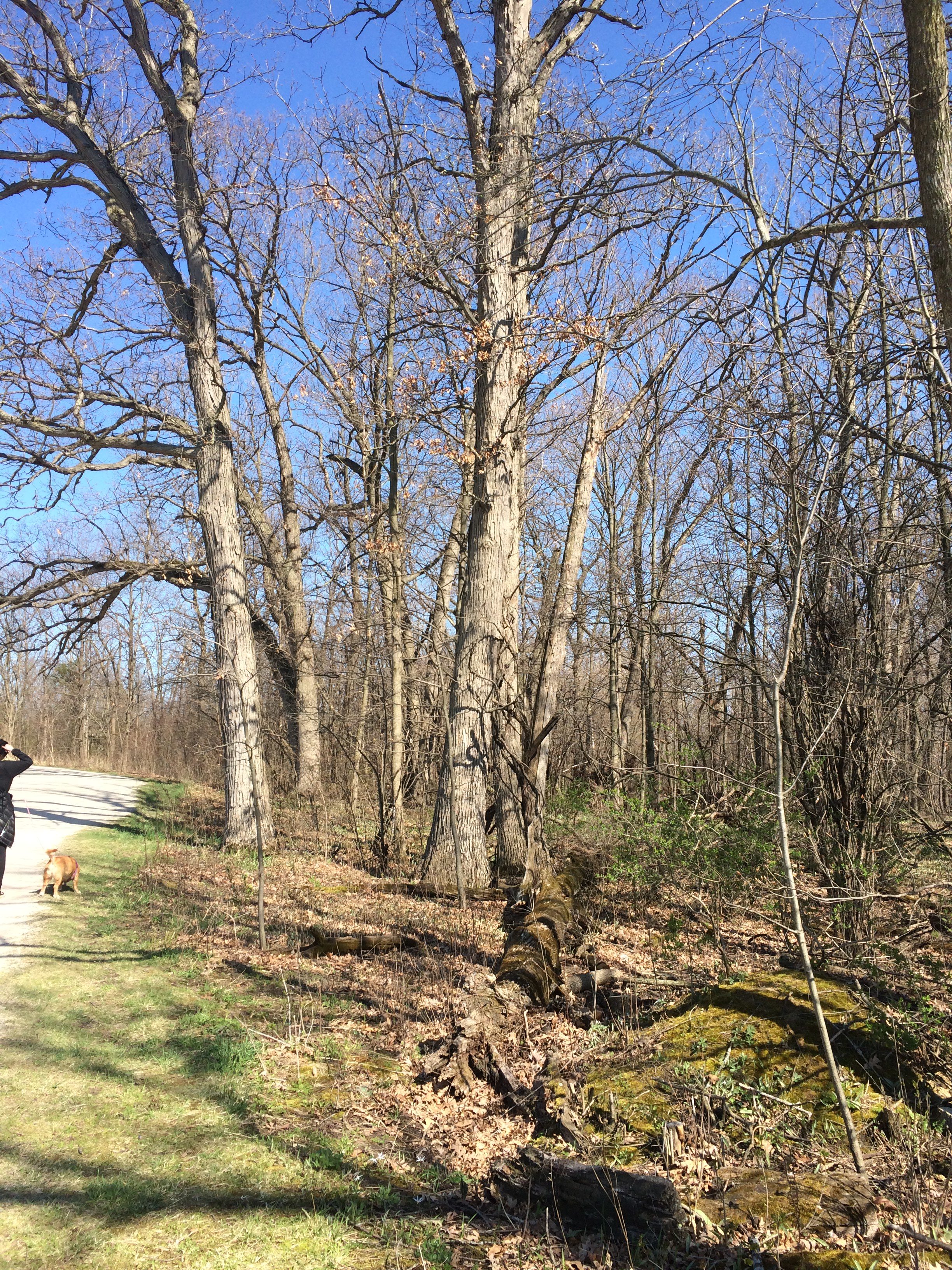
Earlier in the afternoon we went to the Raceway Woods Forest Preserve, which is in Carpentersville, Illinois. It sports a structure unique in all metro Chicago forest preserves, I’m certain.
Raceway Woods Forest Preserve siloIt’s the Meadowdale Silo, and a nearby sign told me that it’s been in place since the 1930s or earlier. After the Meadowdale International Raceway was developed in 1958, the silo acquired a paint job advertising the race course.

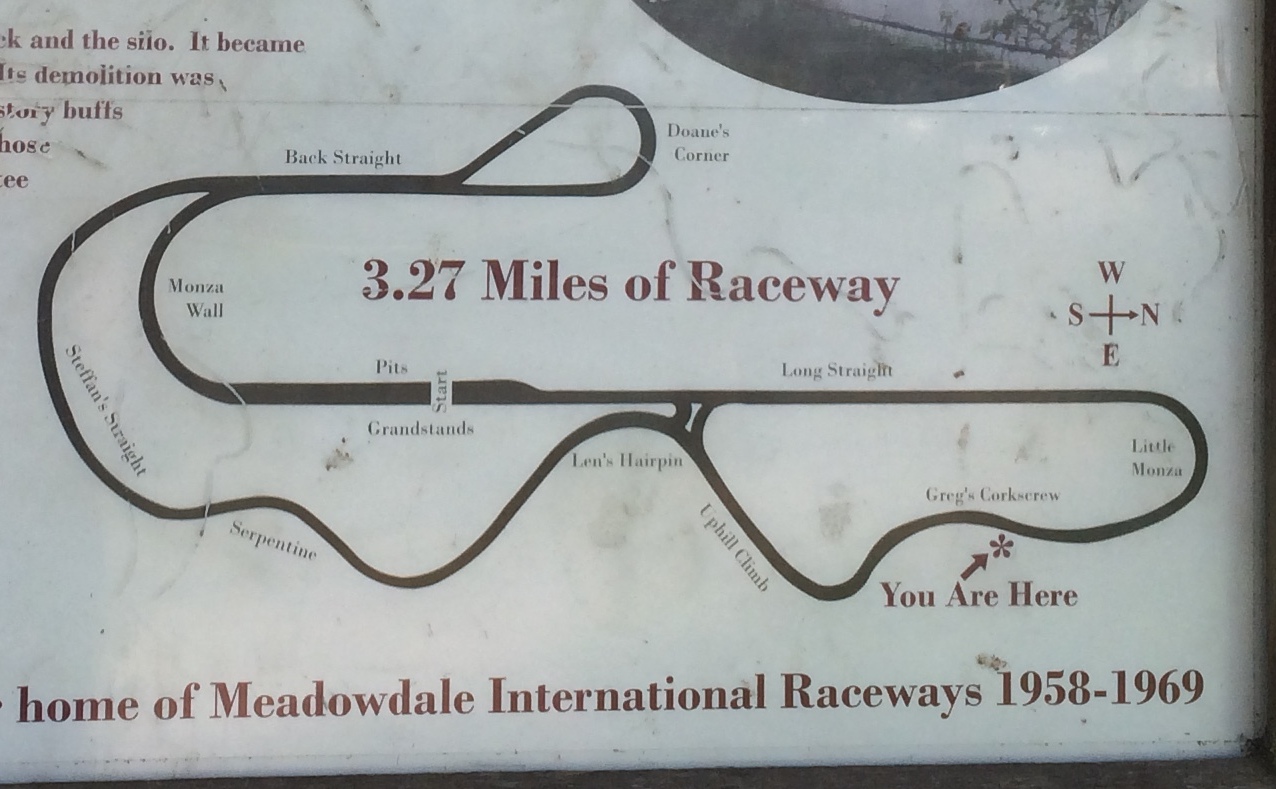
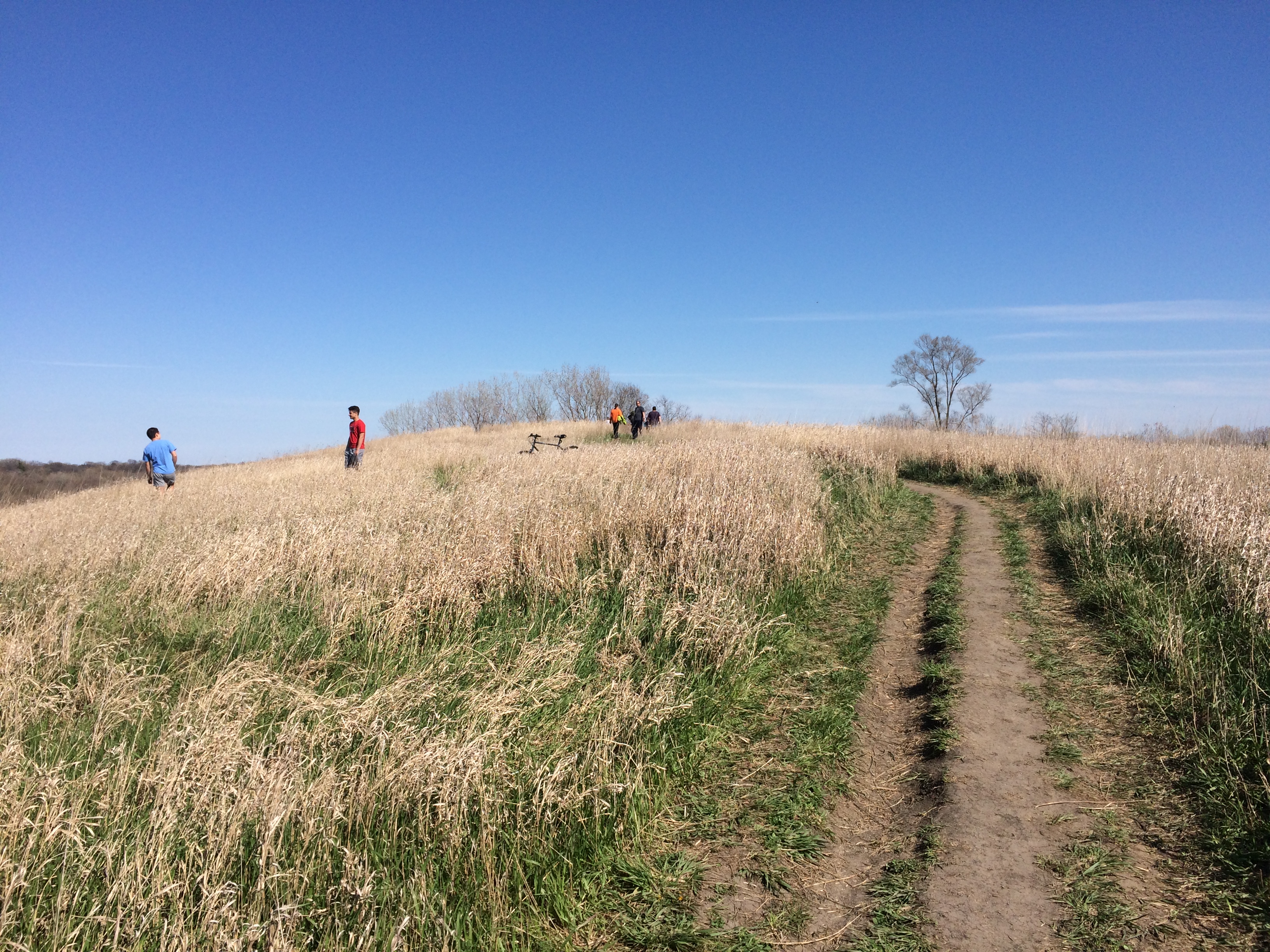
If Wiki is right, the race track never established itself as a moneymaking venture, finally petering out in 1969. For whatever reason, nothing else was ever developed there, and second-growth trees returned to the site. These days Raceway Woods is part of the Forest Preserve District of Kane County.Raceway Woods Forest PreserveThe walking trails follow the original path of the raceway. We started at You Are Here (near the silo) and walked around the northernmost loop: up the Uphill Climb, and it was up a fair-sized hill, down Long Straight, around Little Monza and along Greg’s Corkscrew. About a mile.

The Uphill Climb.
Raceway Woods Forest PreserveI wondered how wide the original raceway was. The current path is fine for walkers and bicyclists and the single skateboarder we saw, but it doesn’t look wide enough to be a raceway. I’d think that anyway, but I don’t know much about raceways, European style or otherwise.

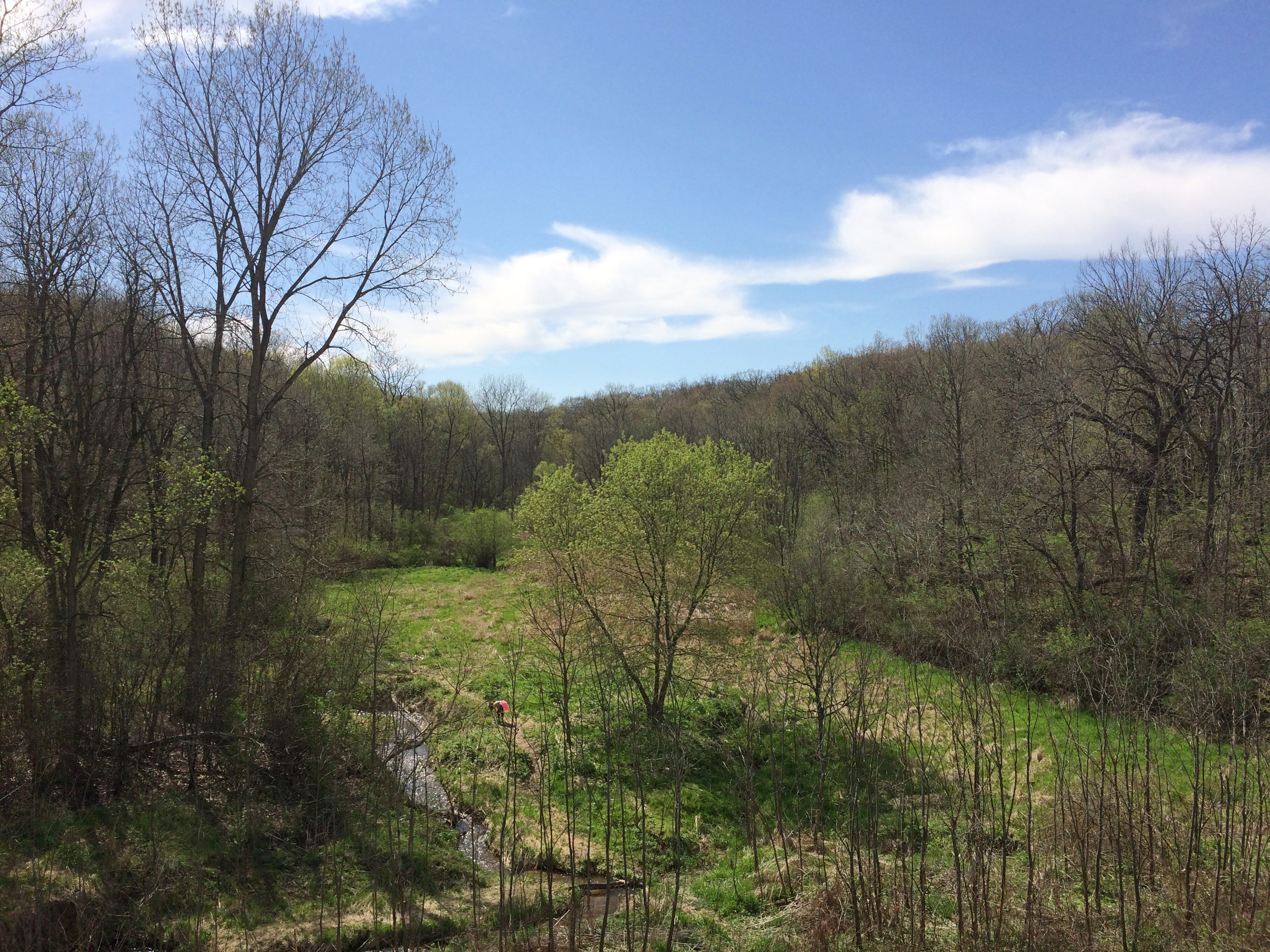
The Long Straight, which passes over a creek bound for the Fox River, not too far to the east.
Raceway Woods Forest PreserveNice views from the bridge.
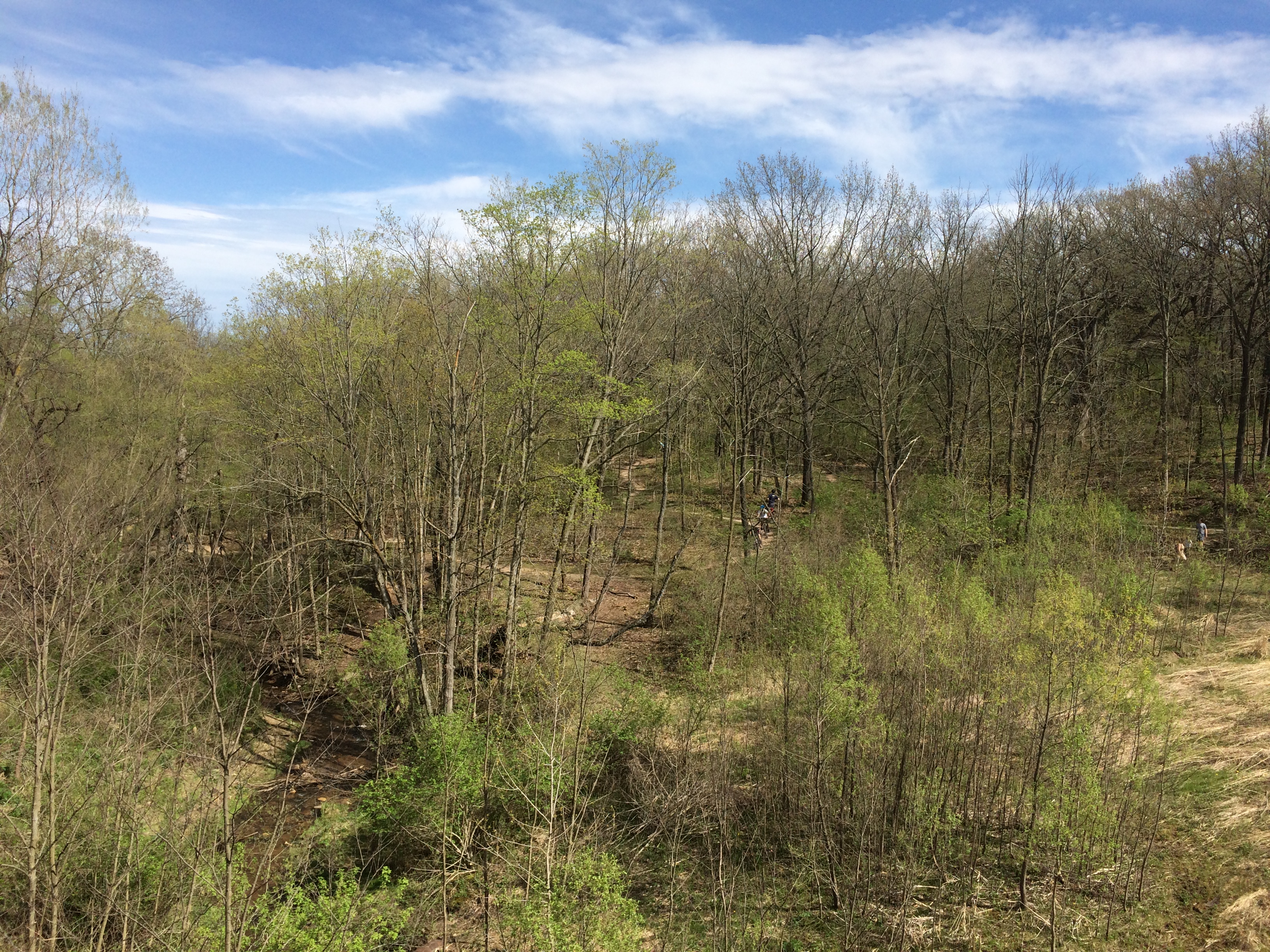
The Long Straight bridgeThe Long Straight bridgeFrom the bridge I noticed concatenate unpaved trails winding their way through the woods. Auto racing hasn’t been a thing at Meadowdale for more than 50 years, but mountain biking at the forest preserve is alive and well.

Landscaping Notes

Warmish today, tomorrow and the next day even better. A pandemic might be on, but at least it’s spring. Except for those few crummy May days — and by that I don’t mean rain. Rain is usually good. What’s better than falling asleep to light rain? I mean any day cold enough to wear a jacket.

Saw a truck driving down the street the other day with “Lares Landscaping” painted on it. Landscaping is still ongoing. I don’t mention that to make a comment on business conditions or restrictions, just to say that the first thing I thought of was, what about Lares & Penates Landscaping? You know, trim your lawn to be on the good side of your household deities.

I have Mrs. Quarles to thank for that train of thought. Henna-haired, eccentric, garrulous — my high school Latin teacher. Or maybe my Latin professor at Vanderbilt, the bald, eccentric, garrulous Dr. Nabers.

We have a fine crop this year.

I refuse to put poison on my lawn just to prevent the annual sprouting of ephemeral dandelions. That’s a tenet of my landscaping. That and no more leaf raking. All through winter, leaves lay on my lawn. By May, they’re gone. So the point of raking leaves is… what?

The dog doesn’t mind the dandelions either (or brown leaves in season).
In a few days, when the lawn is dry enough, I will cut the dandelions down. They’ll be back before long.
Happy to report that once gasoline was put in the tank, the machine woke from its long nap — though not as long as some years, since I remember mowing last just before Halloween.

Gas

The grass is high and persistent rain over the last 24 hours will make it higher, except for the dandelions, which are temporarily beaten down. Once the lawn dries out, and I manage to buy some gas for the mower, I’ll cut it. Assuming the mower wakes from its hibernation.

I bought gas for my car on April 17 at a warehouse retailer. Almost no one was in line, which is rare. Around $1.75/gallon, I think, so just over $22 was enough to fill the tank completely. I couldn’t remember the last time I’d done that. I also couldn’t remember the time I bought any gas before April 17, so I checked.

My handy bank records tell me it was March 16. That purchase took it up to 3/4 of a tank, roughly — which is more in line with my gas-buying habits — so in a month, I used only 1/2 a tank, and a fair portion of that was to drive some distance to attend to some business in Des Plaines shortly after the March 16 purchase.

As predicted, not much driving these days, mostly just forays to nearby parks. Guess the air’s a little cleaner for it and the roads a little safer. Still, if this goes on too long, I’ll start missing long drives. Not something I would have predicted before the crisis.

Meacham Grove ’20

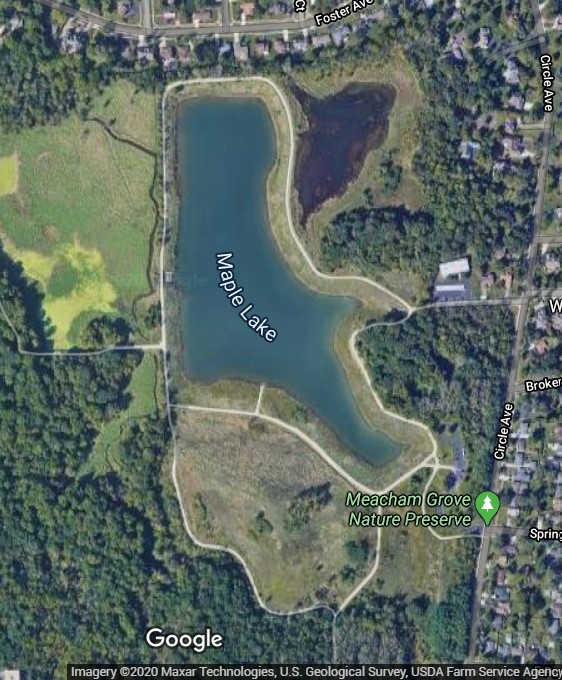
On Sunday we took advantage of the warm conditions and went to Meacham Grove, which is part of the Forest Preserve District of Du Page County.Meacham Grove 2020

Been a while since we’d been there. Maybe this long ago. Ann said she didn’t remember the place. We walked around the Maple Lake, mostly following the gravel path.

The grass along side the lake is green. The trees just beginning to bud.
On the south end of Maple Lake is a small hill. You can walk on the path along the south side of that hill or the one on the north side of it. Or you can climb the hill. That’s what we did. A sizable hill for Illinois, but not really that steep.Meacham Grove HillA scattering of people were on the hilltop, and on the trail around the lake for that matter. Easy to keep one’s distance anyway.

O’Hare is a few miles due east of Meacham Grove. In normal times, planes would fly over every minute or two. These days, it seemed to be every three or four or five minutes, though I didn’t keep an exact record.
Still, there’s no doubt that traffic in and out of O’Hare is way down.

The Weekend of the Anthropomorphic Carrot

Saturday: cold rain almost all day. Sunday: pleasantly sunny and warm. Had the whole variety of spring weather this weekend. We probably would have stayed home Saturday even in normal times, for reading, watching TV, cleaning up, etc.

No movies over the weekend, just TV shows: Rake, a new bilingual Japanese-English cop show called Giri/Haji (Duty/Shame), the first episode of Downton Abbey, which I’d never gotten around to seeing before, the Star Trek episode “Balance of Terror” and because I told Ann she should see one episode of Lost in Space, “The Great Vegetable Rebellion.” Really, how could you do any better — and I mean worse — than that?

I think I last saw part of that episode on TV in a motel room more than 20 years ago, but its fame (notoriety) proceeds it anyway. I’d forgotten that Stanley Adams played the man-like carrot. He of course played Cyrano Jones in “The Trouble With Tribbles.” And how many actors appeared on both Lost in Space and Star Trek? The answer is, a few. I’m hardly the first person to wonder.

Ann was much amused by the whole thing. She also pointed out how amazingly colorful the show was, including not just the vegetables, but the Robinsons’ clothes, something I’d never really noticed before. I told her that color TV was brand new at the time, and that a number of shows took advantage of it to go full psychedelia on the audience.

Though I’m not one of them, “The Great Vegetable Rebellion” has its defenders, such as this amusing essay published by MeTV.

“Packer [the scriptwriter of the episode] had ideas,” the article notes. “A planet populated by sentient plants is an idea. A birthday party for a robot is an idea. Vines crying out in pain like electronic piccolos is an idea. A hippie with purple hair and lettuce heart is an idea. A giant fern attacking Will and Judy is an idea. Dr. Smith transmutating into a massive celery stalk is an idea. An eight-foot, anthropomorphic carrot clutching at his breast and crying ‘Moisture! Moisture!’ before splashing water over his torso from a gas pump — that’s an idea!”

Battle of the Bands, 1979

I see that Fiesta San Antonio is now scheduled for November this year. The first time in its century-plus-decades history it hasn’t been in April, but such is our time. Social distancing isn’t the norm for Fiesta.

Yuriko and I went to a few Fiesta events in 2000, parking toddler Lilly with her grandmother for a few hours, but I remember my high school Fiestas better. Each year from 1976 to ’79, I was with the Alamo Heights HS marching band in the Battle of the Bands at Alamo Stadium and then — with one exception — the Battle of the Flowers parade downtown a few days later.

It’s officially called the Battle of Flowers Association Band Festival, but no one I knew called it that. It was the Battle of the Bands. High school bands from all over the metro area came to compete.

The best a band could do was score a 1 in music and 1 in marching. For decades, Alamo Heights had always scored two 1s — until sometime in the early ’70s, before I was in high school.

Since then, including my freshman, sophomore and junior years, the band had gotten a 1 and a 2. Very good, but not top.

So we were keen to score two 1s in the 1979 Battle of the Bands. I don’t remember what music we played or what steps we marched. All I remember was the announcement afterward: two 1s! The band exploded with joy.

I can remember only one other exuberant moment like that for the band: early junior year when, after two years of losses, the AHHS football team actually won a game, narrowly. The Battle of the Bands moment was better, though — we’d won that for ourselves.

That was a day or two before the ’79 Battle of Flowers parade — April 26, 1979 — that didn’t happen because of a wanker with a gun. Fortunately for us, at our staging area the band wasn’t close to the shooting. I didn’t even hear any shots, though at one moment heard the roar of a suddenly panicked crowd at a distance.

Even that day had its lighter moments. The parade cancelled, we in the band got back on our buses to leave. Just before we left, a non-band senior got on as well, someone most of us knew. Our band director asked him to leave, and the boy, who was chemically enhanced, got the opposite of belligerent.

“All right, all right,” he said in an almost sing-song voice, smiling and giggling. “I’m getting off now. Don’t worry, I getting off now!” (I’m re-constructing those words; but that was the gist.) It was a little puzzling then, but looking back on it, I think he’d done more to prepare for the parade than drink a little beer or smoke a joint. At that dour moment, he was having a good trip.

Thursday Things

I don’t drive around that much these days, but every time I do the signs of the times are out for me to see. Literal signs.
During a walk this week, a common area closed.
At least the walk around the small lake was open.

The latest movies in the stay-at-home-on-demand-movie-watching-extravaganza: Ferris Bueller’s Day Off (Ann’s suggestion) and Goldfinger (mine).

I’d never seen the former all the way through. I remember first seeing part of it in the common room of some cheap accommodations in Pusan. Watching it now, I’m willing to argue that there’s a touch — just a touch — of magical realism to the thing. I may be the only one to think that.

As for Goldfinger, I told Ann that if she watched only one Bond movie, that should be it.

Our latest Star Trek episode was “Amok Time,” the one in which Spock goes all funny in the groin because hyperrational Vulcans have to mate like salmon every seven years or something. Ann was much amused by the Vulcan costumes. Yes, I said, the costume designers must have had a grand old time working for Star Trek.

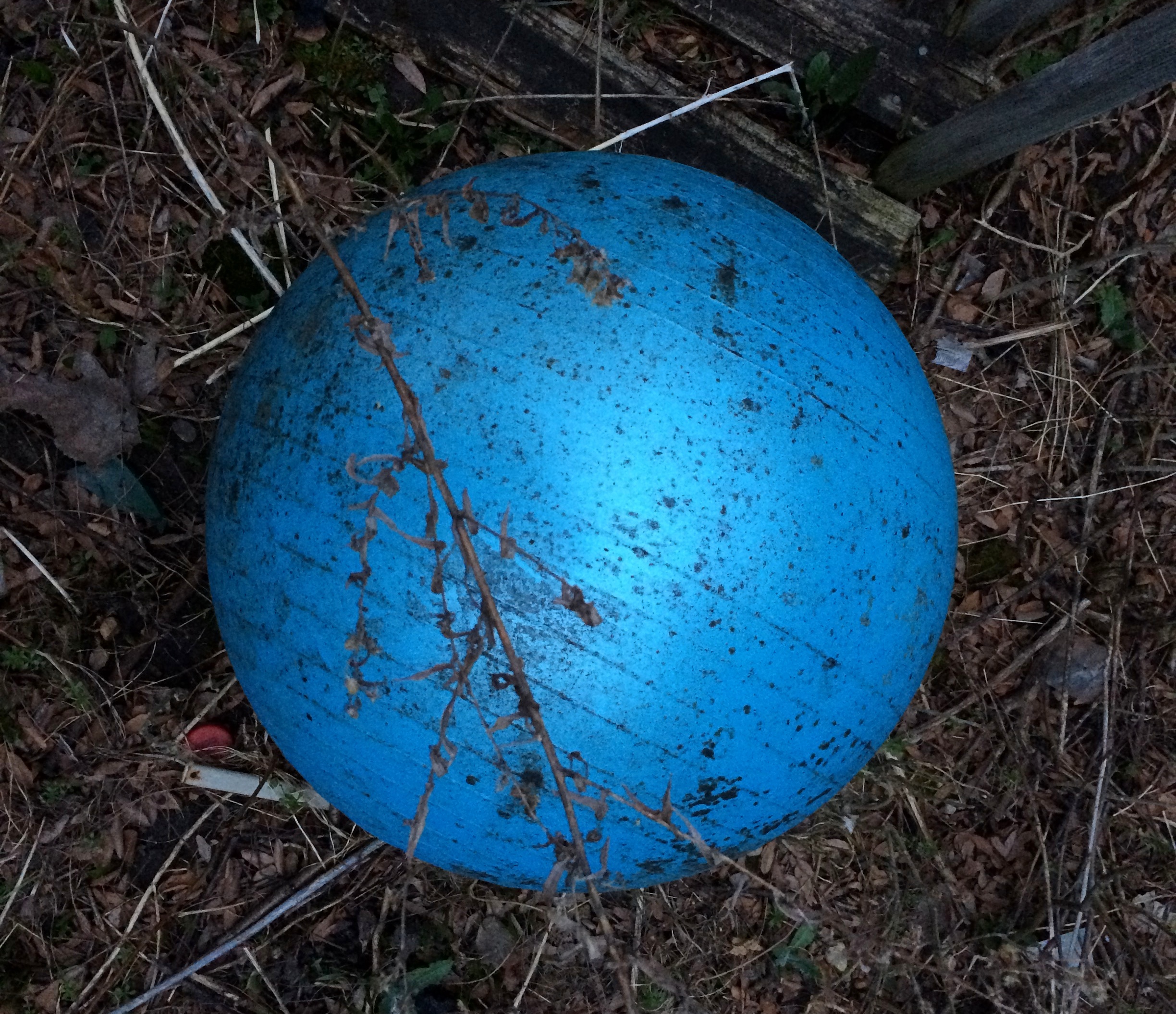
This can be found in our back yard. A retired inflatable yoga ball, you might call it, but I think of it as our model Neptune.model Neptune

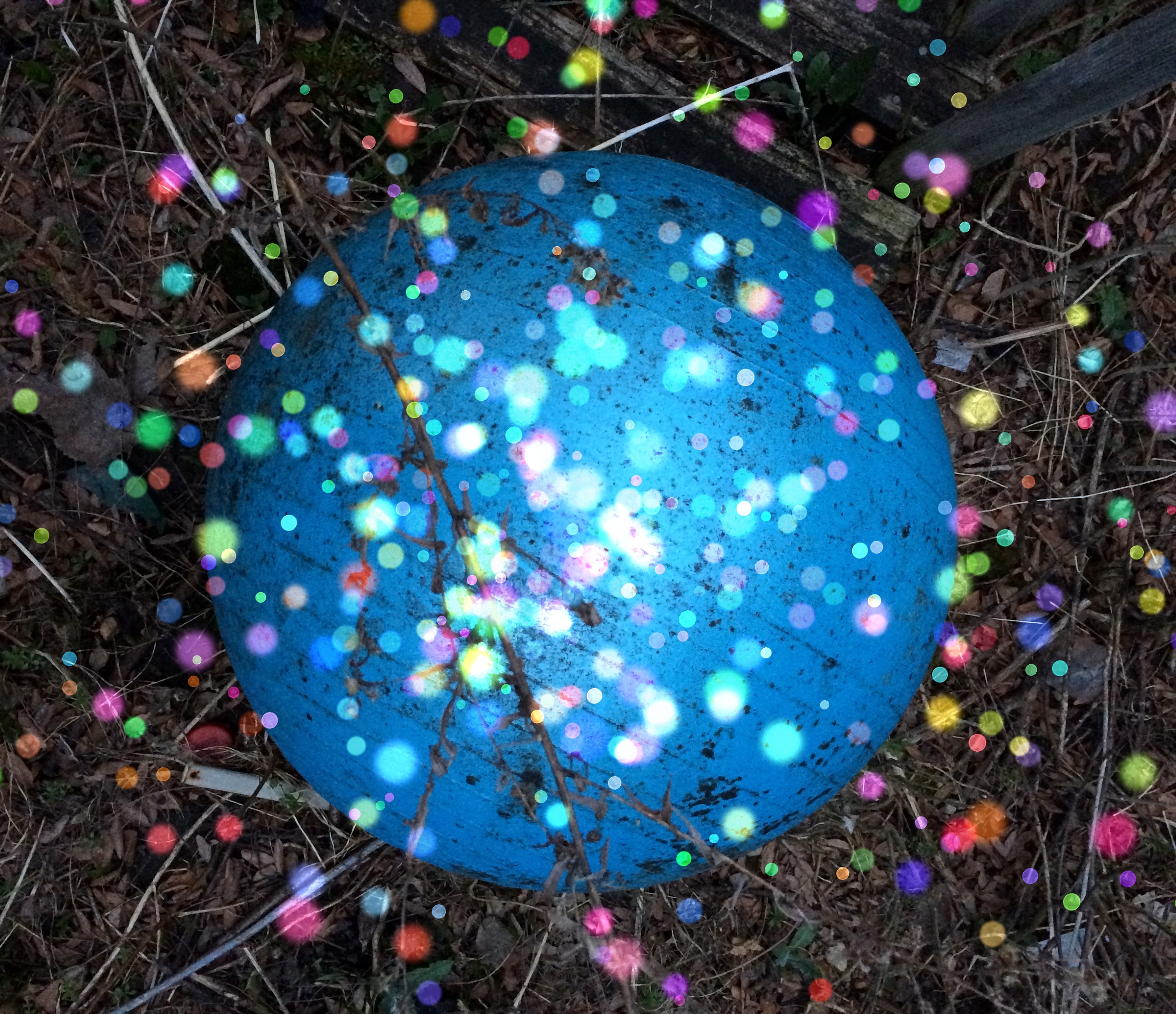
Also, an image to play around with, applying the PhotoScape Bokeh function that I didn’t know I had until now.

The dog in a favorite position.
I believe she’s officially an old dog now, though I don’t know which office determines that. Anyway, no new tricks for her. She never was one for them even as a younger dog, though we didn’t try to train her all that hard.