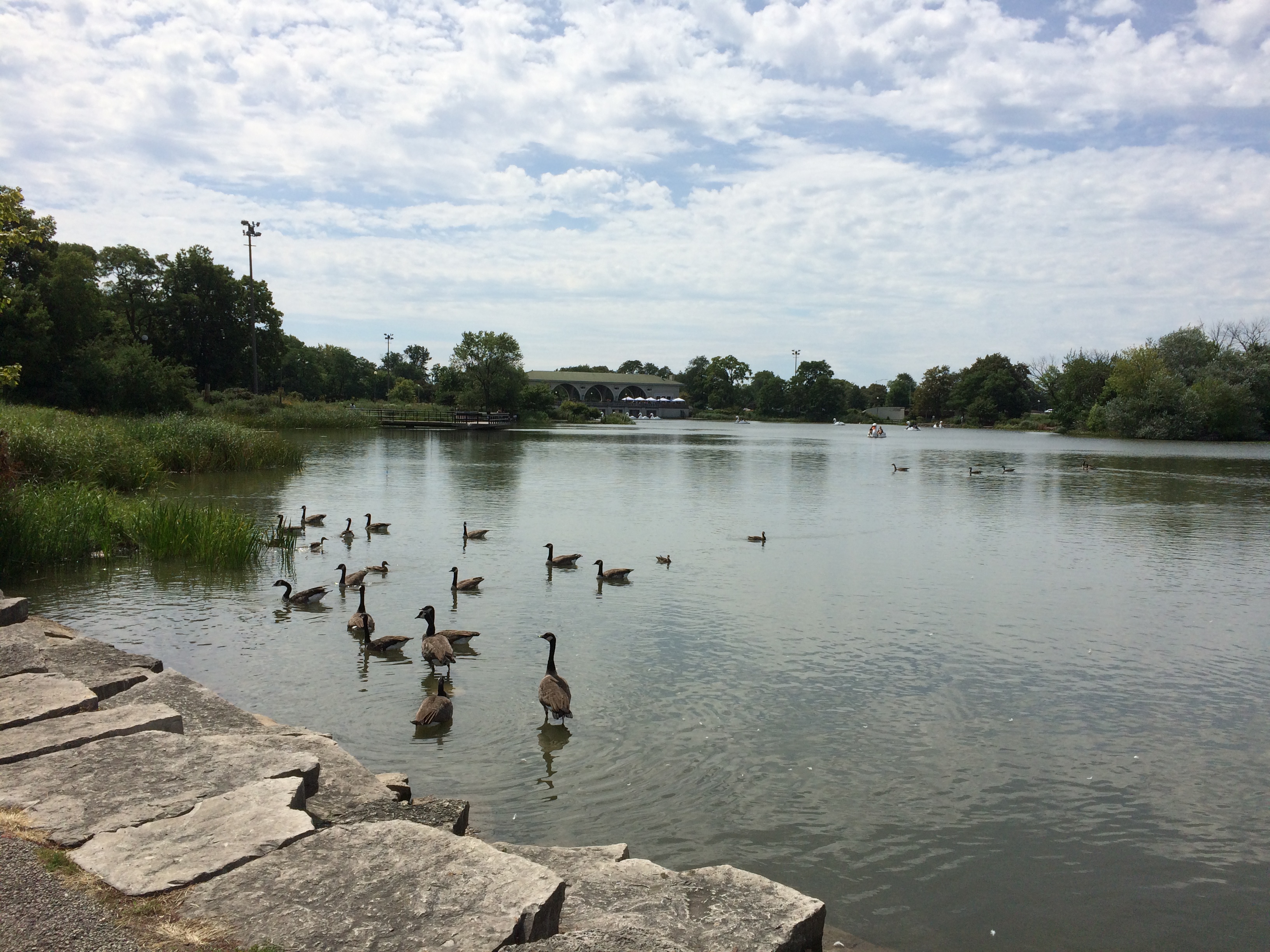
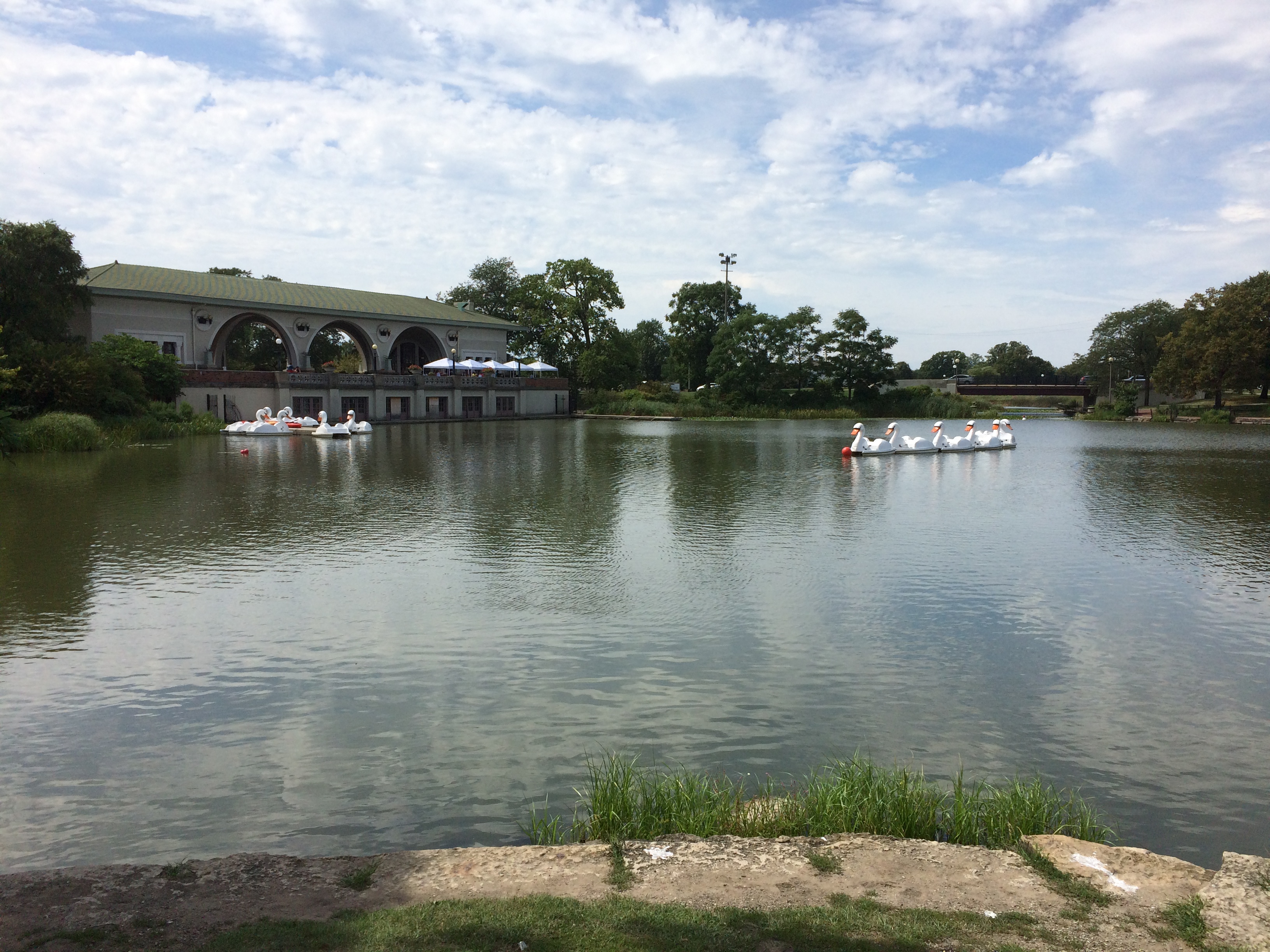
South Pond, Lincoln Park

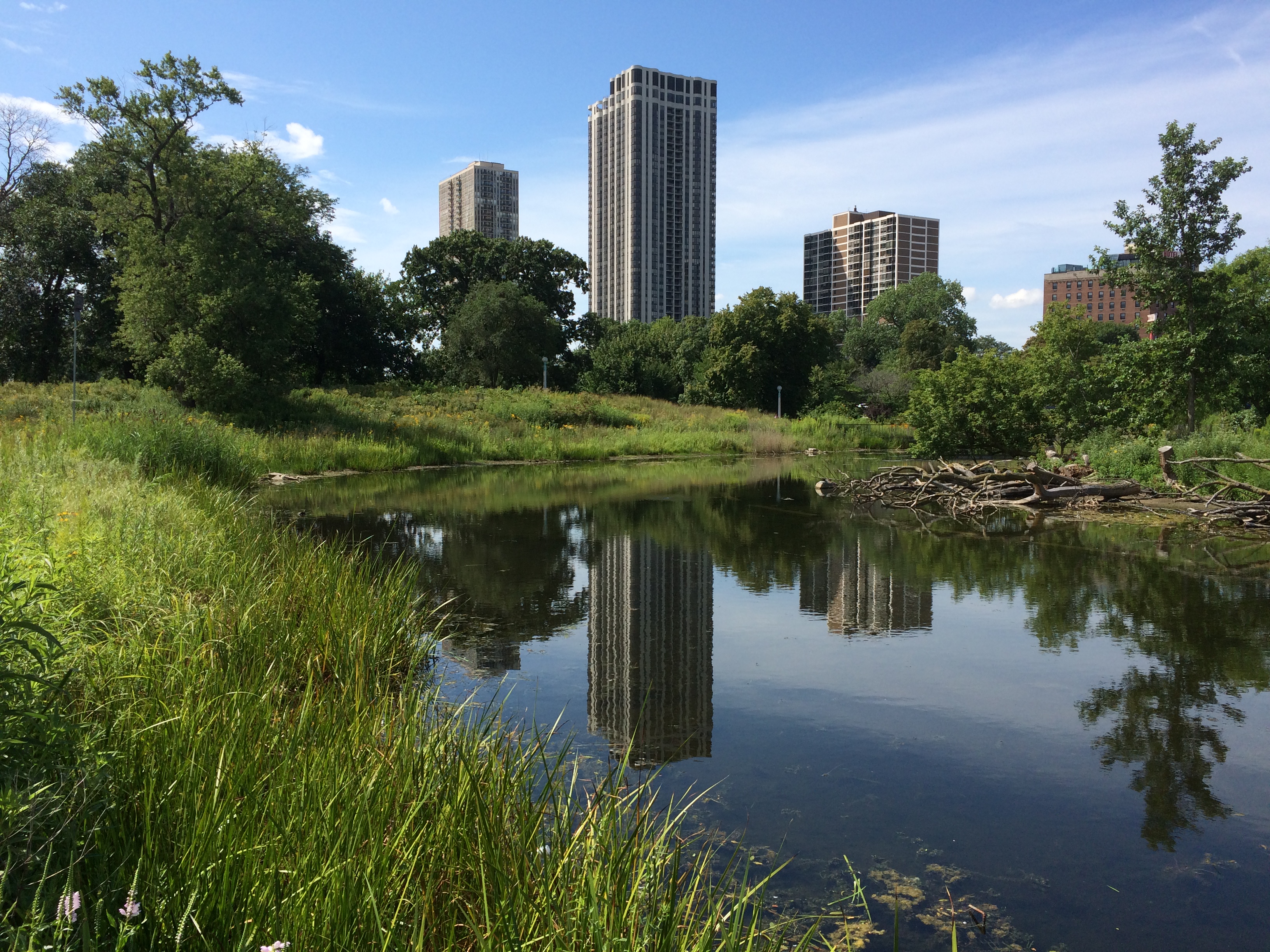
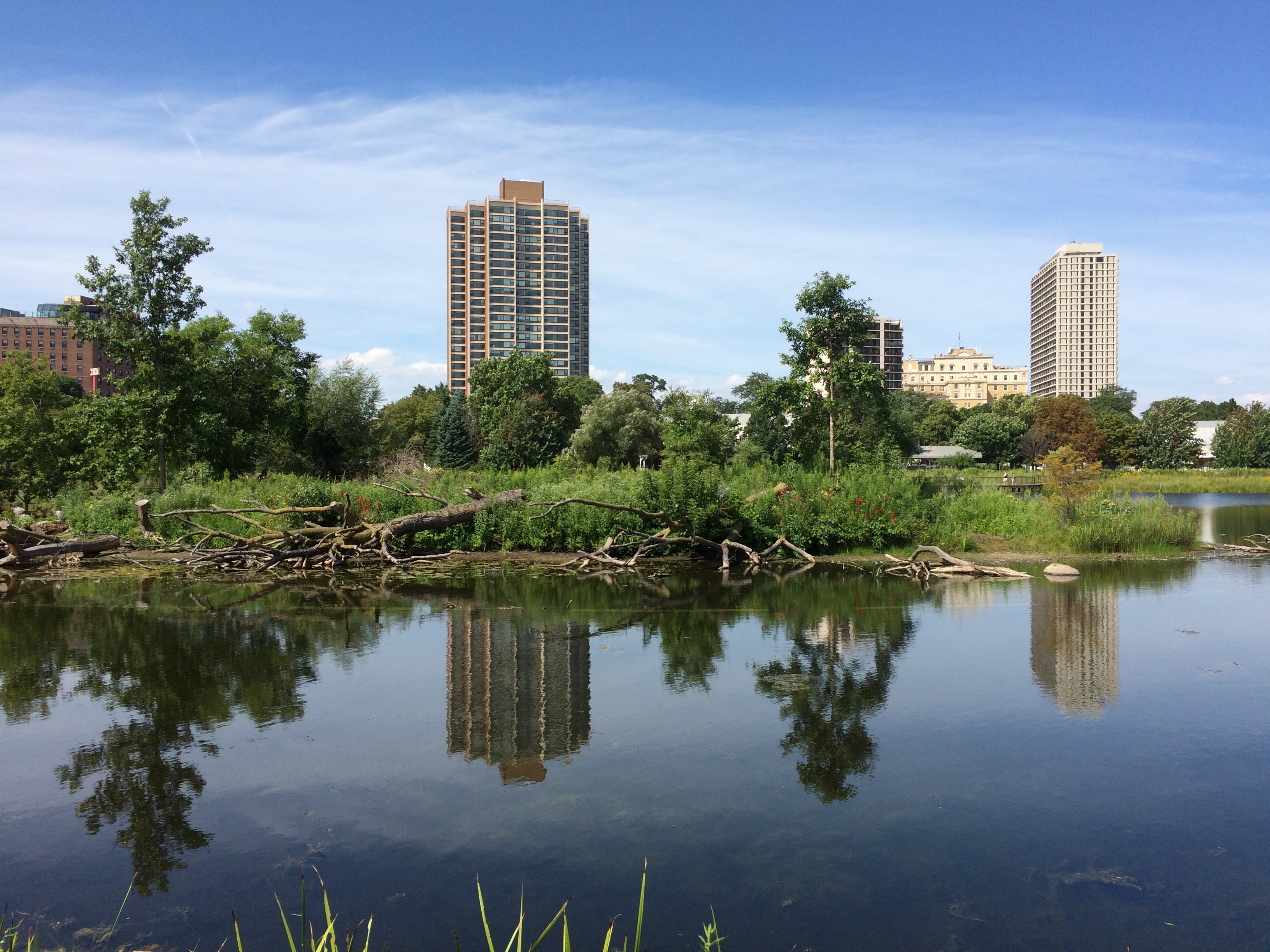
Frame your photos just so and you can achieve the appearance of wilderness.

Lincoln Park South Pond

Lincoln Park South Pond

Not only did I not visit the wilderness yesterday, I was smack in a densely populated city. Chicago, of course. Late in the morning I took a walk through the southern reaches of Lincoln Park — south of the better-trod zoo and conservatory and other parts of the park. Go far enough along this path and you reach the park’s South Pond.
Lincoln Park South PondIn August, it’s lush with vegetation, but also clearly urban.

Lincoln Park South Pond

Lincoln Park South Pond

Lincoln Park South Pond

I don’t remember walking this particular path before. No matter how many times you go somewhere, there’s always more.

Chance the Snapper Has Gone Home

I left for college for the first time 40 years ago today. So long ago that I flew on Braniff to get to Nashville, as I like to say. At least to anyone who might remember that airline.

Nothing so milestone-like happened today. At least I don’t think so. Sometimes you quietly pass by milestones and only realize it in retrospect, if then.

Sometimes that’s literally true. On the Trans-Siberian, I knew that some kind of post is visible from the train marking the “border” between Asia and Europe, as you cross the Urals. I missed it. I think I was concerning myself with lunch at that moment.

One place we went today was the former home of Chance the Snapper. That is, Humboldt Park in Chicago. Chance has been returned from the park’s lagoon to Florida. Presumably Florida Man brought him to Chicago at some point.

Humboldt ParkTemps today were warm but not too hot, so we took a walk around. Plenty of ducks and geese to see. Lilypads, too.
Humboldt Park without Chance the SnapperBut presumably no gators to bother the people who rent paddleboats.

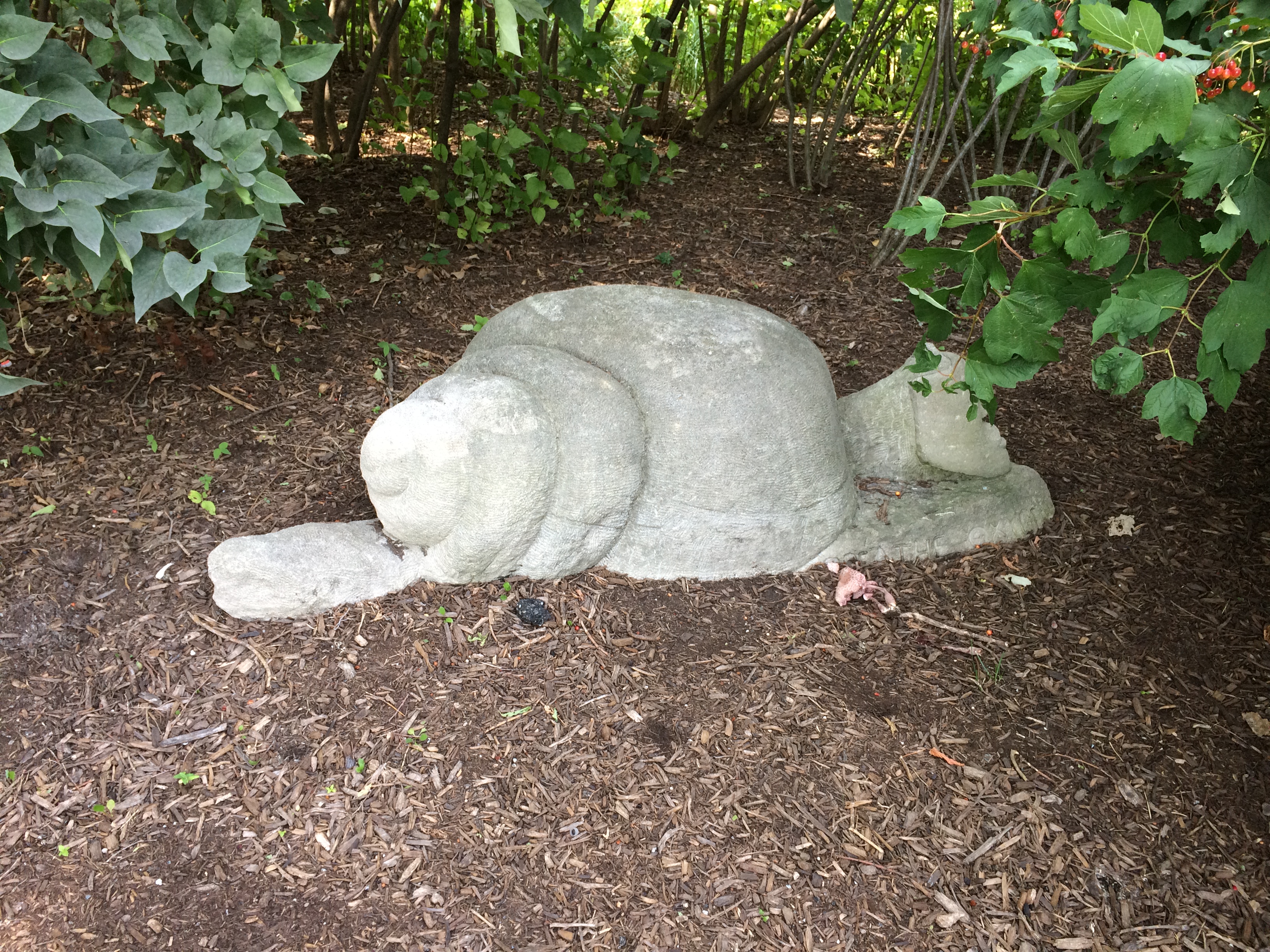
Humboldt Park without Chance the SnapperWe’ve visited the park a number of times, including for a look at its various artworks, but today we discovered a curious snail sculpture near one of the footpaths, but also partly covered by bushes.

Roman Villarreal snail Humboldt ParkAccording to the Chicago Park District: “In 1999, teenagers involved in a Chicago Park District program known as the Junior Earth Team spent several months learning about nature in Humboldt Park. The JETs developed an interpretive trail and provided sculptor Roman Villarreal with notes and sketches for a series of artworks.

“For this project, Villarreal and the students produced three carved artworks that are scattered and remain relatively hidden throughout the park. The three pieces relate to the theme of air, water, and earth. Among the trio is a two-foot tall snail sculpture located northeast of the Humboldt Park Boat House that bears the inscription ‘breathe oxygen.’ ”

Bugs Burger Night

Thirty-six years ago I worked for a few months at an upscale restaurant in Nashville. If I remember right, it wasn’t open on Mondays, and one Sunday when I hadn’t been there long, word came down that we had to get the place ready for Bugs Burger Night, which would happen after the restaurant closed that evening.

Before long I understood that meant exterminators were coming to give the restaurant a top-to-bottom treatment, and we had to put away the food and dishes and so on. It was a pretty big deal, this Bugs Burger Night, and the phrase was curious enough to pique my interest. The treatment of course was a regular thing, every few months, so I assumed that “bugs burger” was just restaurant-specific slang passing along from more experienced employees to the likes of me. Fun in the way slang can be. Maybe the exterminators were feeding the bugs a burger of death.

It even inspired me to dream up a title that was never attached to any story: The Long Bugs Burger Night of the Soul. Or The Dark Bugs Burger Night of the Soul.

That oddity was duly tucked away in the part-organized, part-chaotic filing cabinets of my memory. Files that have a way of popping into conscious thought without warning, which I suppose is a function of the chaotic side. That’s all a long way of saying that “Bugs Burger Night” popped into my head the other day. Then I did what we do in modern times: Googled it.

Bugs Burger was part of a brand name. That shouldn’t have surprised me, but it did. Pest Management Professional told me about Alvin “Bugs” Burger (d. 2015), founder of Bugs Burger Bug Killers, a Miami-based national exterminator. So professionals from BBBK were coming to the restaurant that night. Though Alvin “Bugs” is gone, the name lives on.

Small pleasures aren’t just the likes of enjoying a favorite old food or a spying a colorful cloud formation or a reading a postcard from an old friend. They can also be intangible, like a small thought from your remote past reappearing for a reinvention in the present.

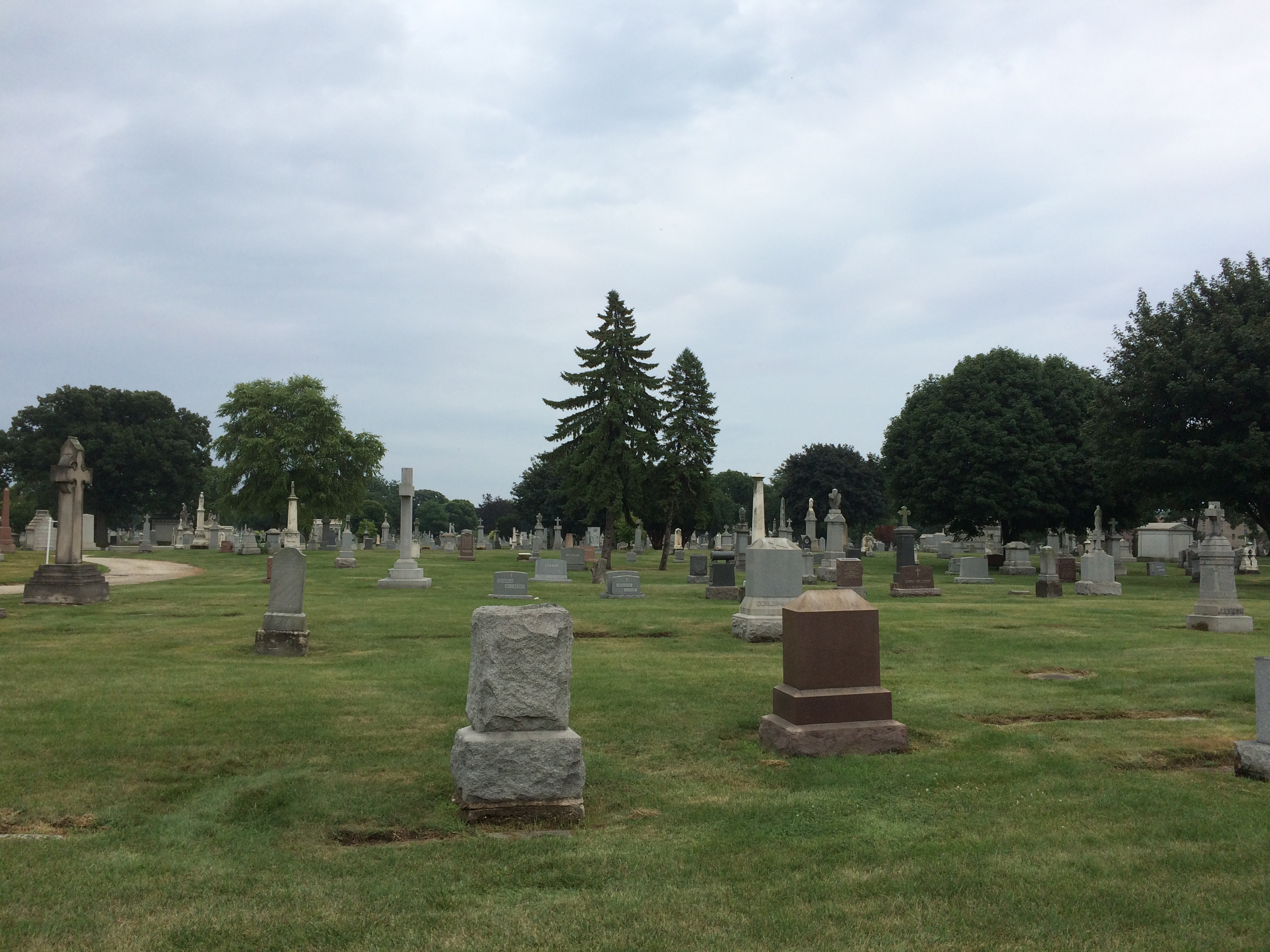
Calvary Cemetery, Evanston

I’ve taken elevated trains between Chicago and Evanston on and off for years. The CTA Red Line has its north terminus at the Howard Station in Chicago, and from there you ride the Purple Line into Evanston.

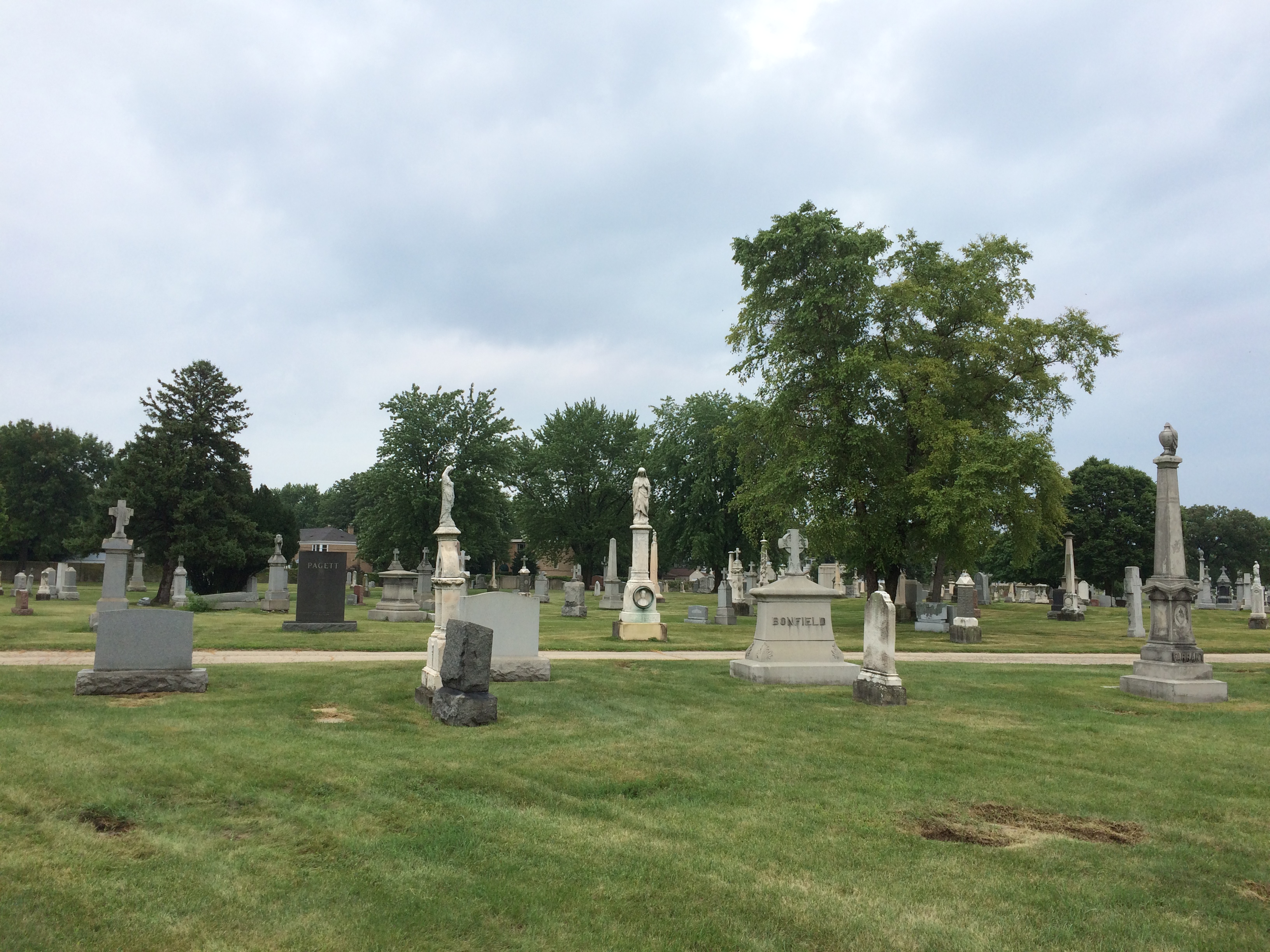
For a short stretch just north of Howard, the Purple Line passes Calvary Cemetery, which is also called Calvary Catholic Cemetery on maps. It’s a sizable burial ground, with nearly 40,000 permanent residents, stretching from Chicago Ave. along the elevated tracks nearly to Lake Michigan.

So I’ve seen the cemetery from on high for decades, but never wandered the grounds. I decided to do that on Saturday after visiting the American Toby Jug Museum, since the cemetery is only a few blocks to the south.

The monuments and stones are seemingly spaced more widely than usual for a cemetery of mid-19th century vintage. But among the standing stones are a lot of markers flush with the ground, so it’s hard to appreciate the cemetery’s denseness at first.

Calvary Cemetery Evanston

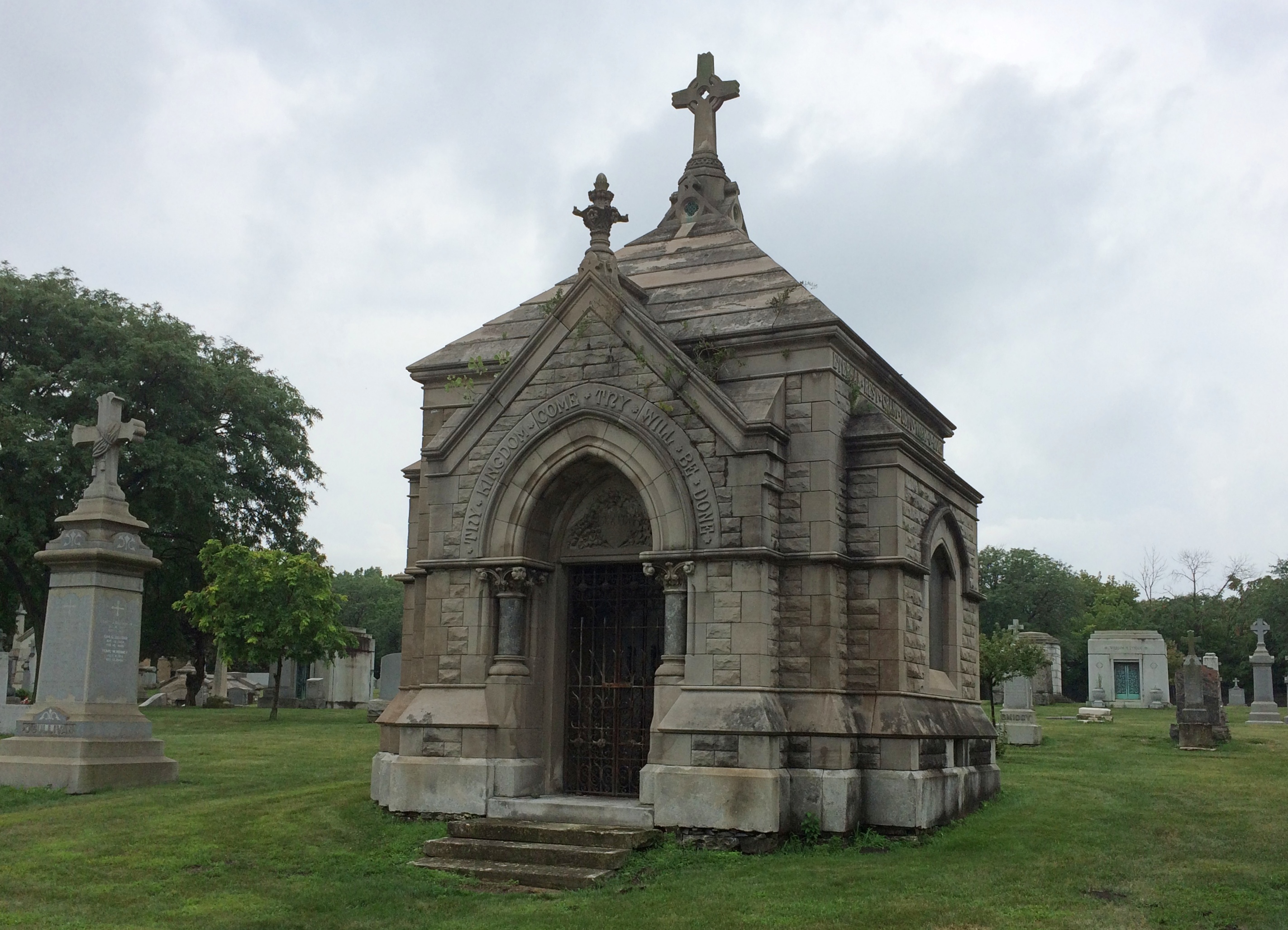
Calvary Cemetery EvanstonThere are some mausoleums. This one, strangely, had no name on the exterior that I could find.
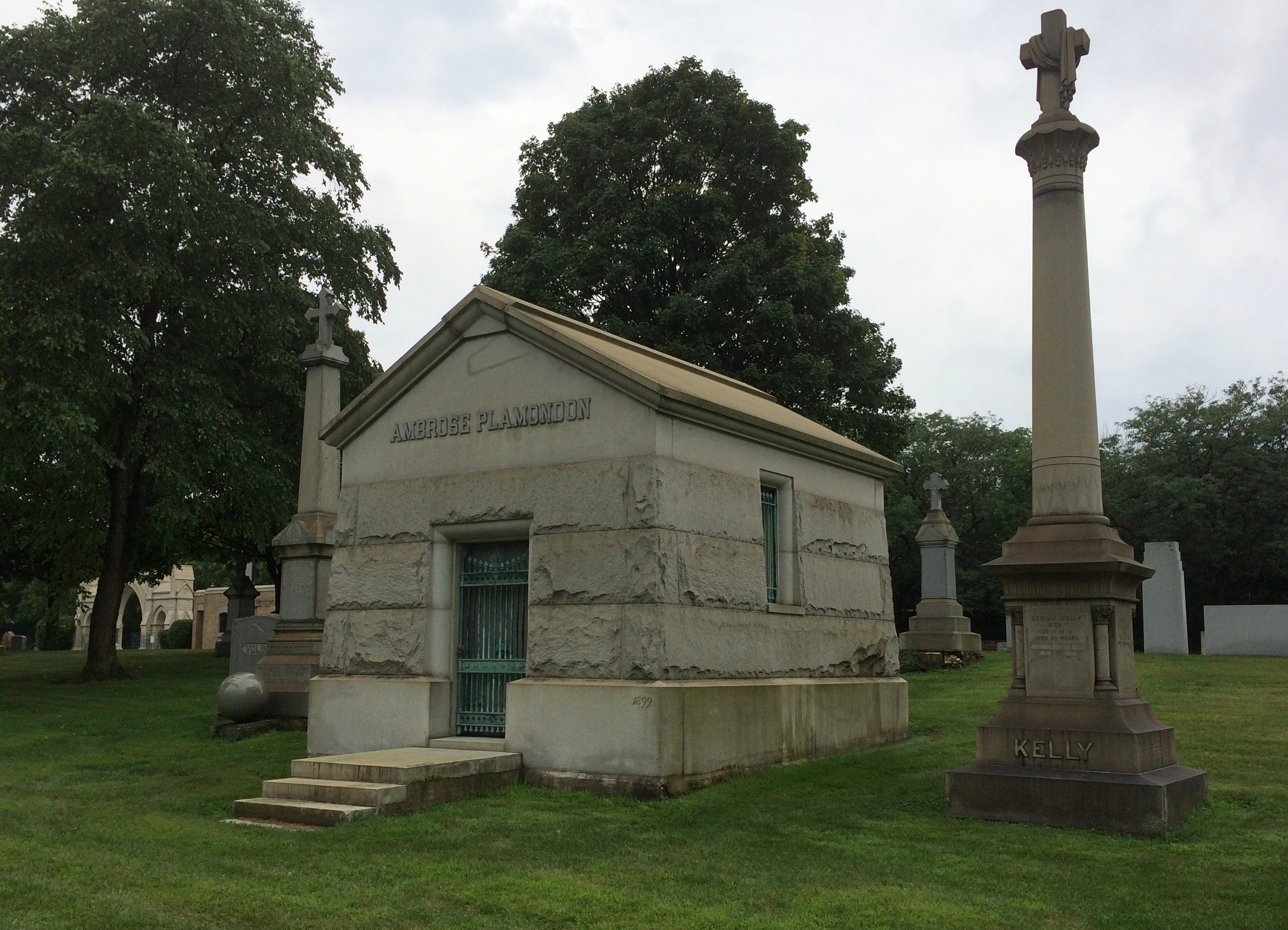
Calvary Cemetery EvanstonAmbrose Plamondon, founder and head of the Plamondon Manufacturing Co. in Chicago, a maker of machinery who died in 1896 of an “obstinate pulmonary trouble of long standing.”

Calvary Cemetery Evanston

His son Charles is interred there as well. He too was a prominent Chicago businessman, but he and his wife Mary had the misfortune to book passage to the UK on the Lusitania in May 1915.

“The couple celebrated their 36th wedding anniversary, 6 May 1915, while on board Lusitania,” says the Lusitania Resource. “Both Charles and his wife Mary were lost in the sinking. Their remains were washed up on the Irish coast, blackened with coal dust, suggesting that they had been sucked into one of the funnels. Both bodies were recovered and identified.”

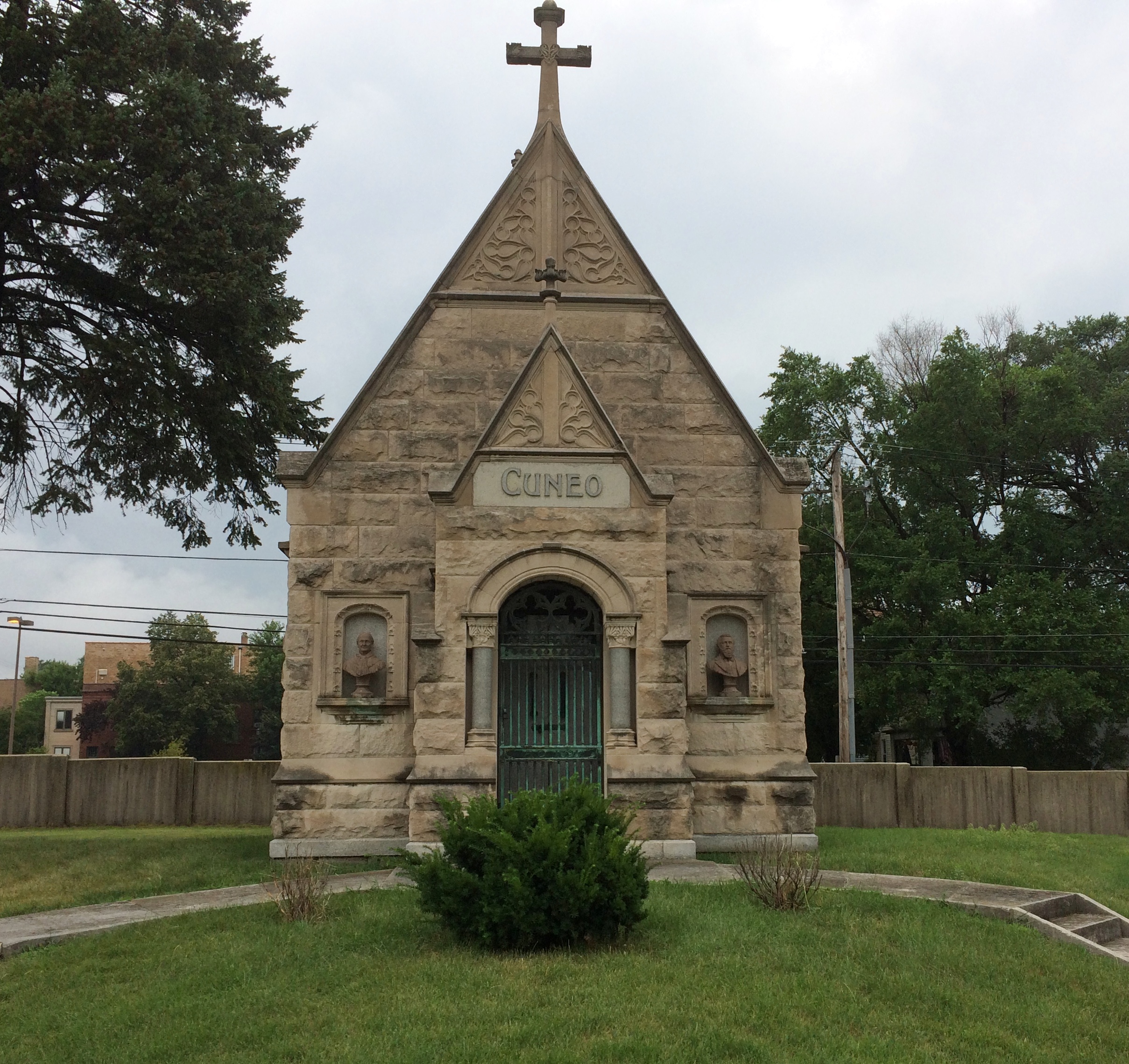
Here’s the Cuneo family mausoleum, perched on a modest hill.
Calvary Cemetery EvanstonI’ve happened across the Cuneos before. They acquired an Italianate mansion, now a museum, from ruined businessman Samuel Insull during the Depression. We visited it nearly 10 years ago.

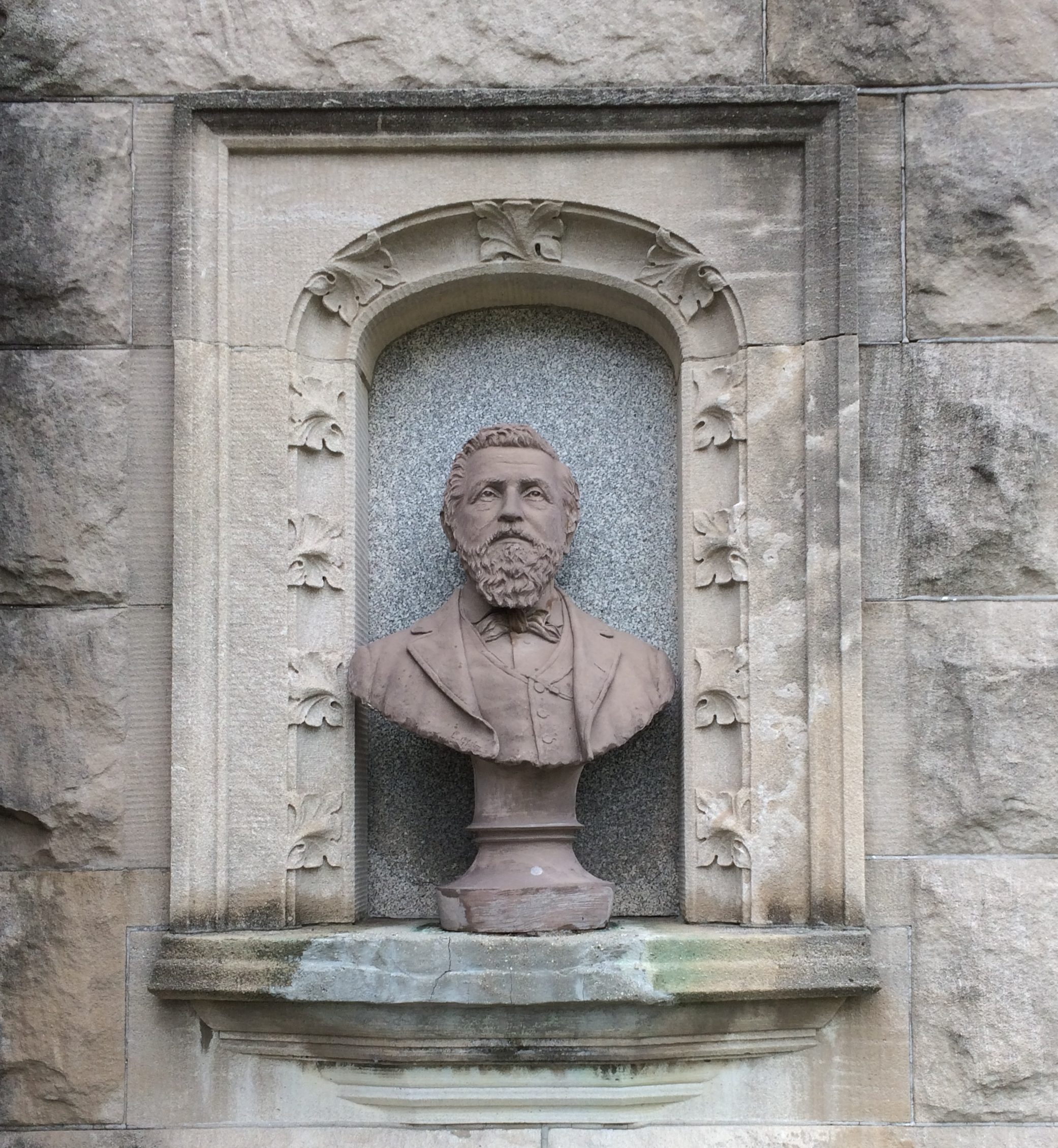
I presume this is patriarch and printing baron Frank Cuneo (1861-1942) in a niche in the front of the structure.
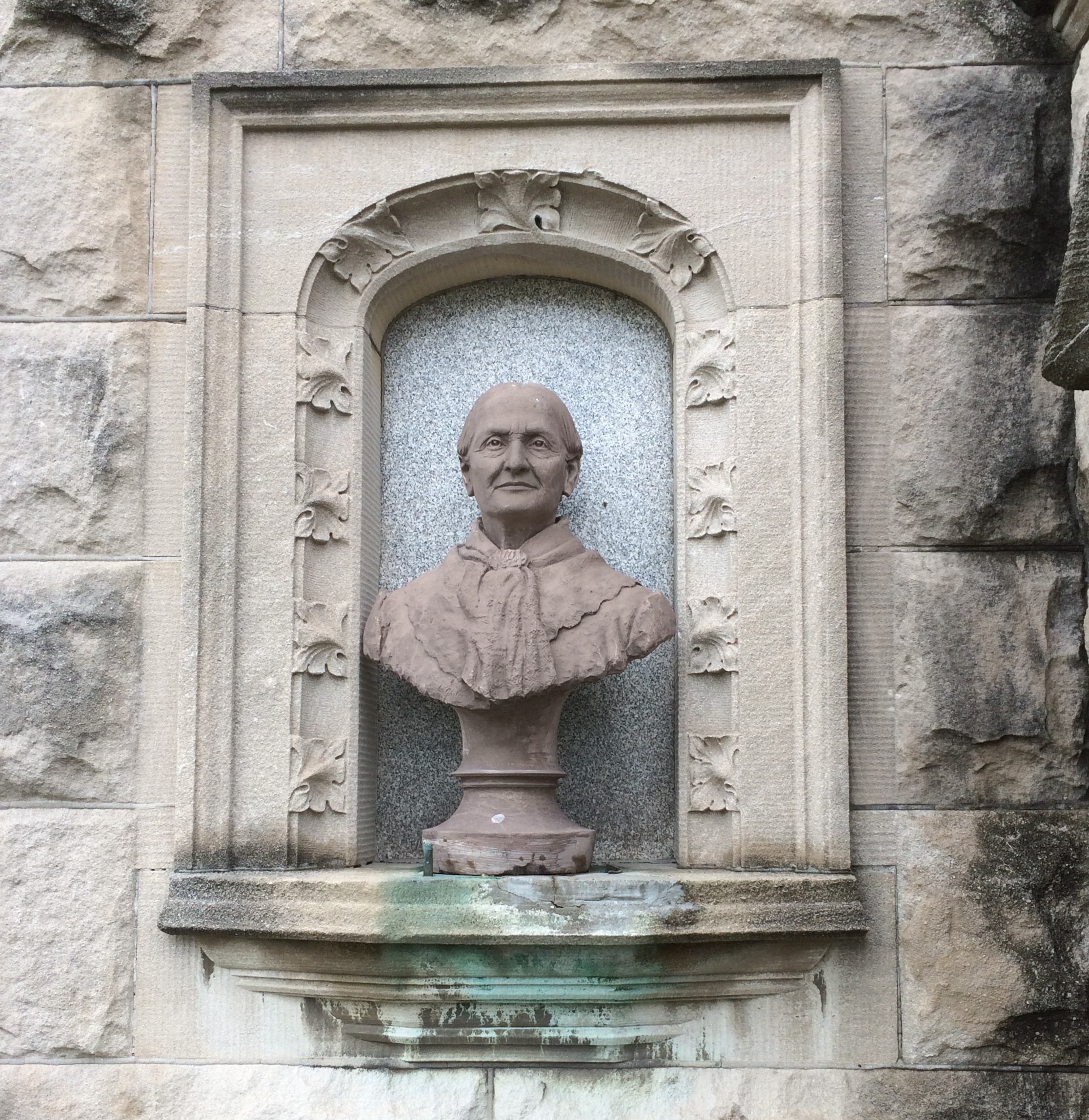
IMCalvary Cemetery Evanston CuneoYou’d think his wife Amelia (1864-1891) would be the other bust adorning the structure, but this face looks a little old for a woman who seems to have died in her 20s giving birth to her fourth child, or at least soon after.

IMCalvary Cemetery Evanston Cuneo

So this is probably Frank Cuneo’s mother, Caterina Lagomercino Cuneo (1828-1900). Maybe she counted as the tough old matriarch and wouldn’t be denied her place of honor.

Most of the Cuneos are interred in the above mausoleum, but not all of them. Frank and Amelia’s eldest son John, who died in 1977, has his own mausoleum not far from his parents and siblings.

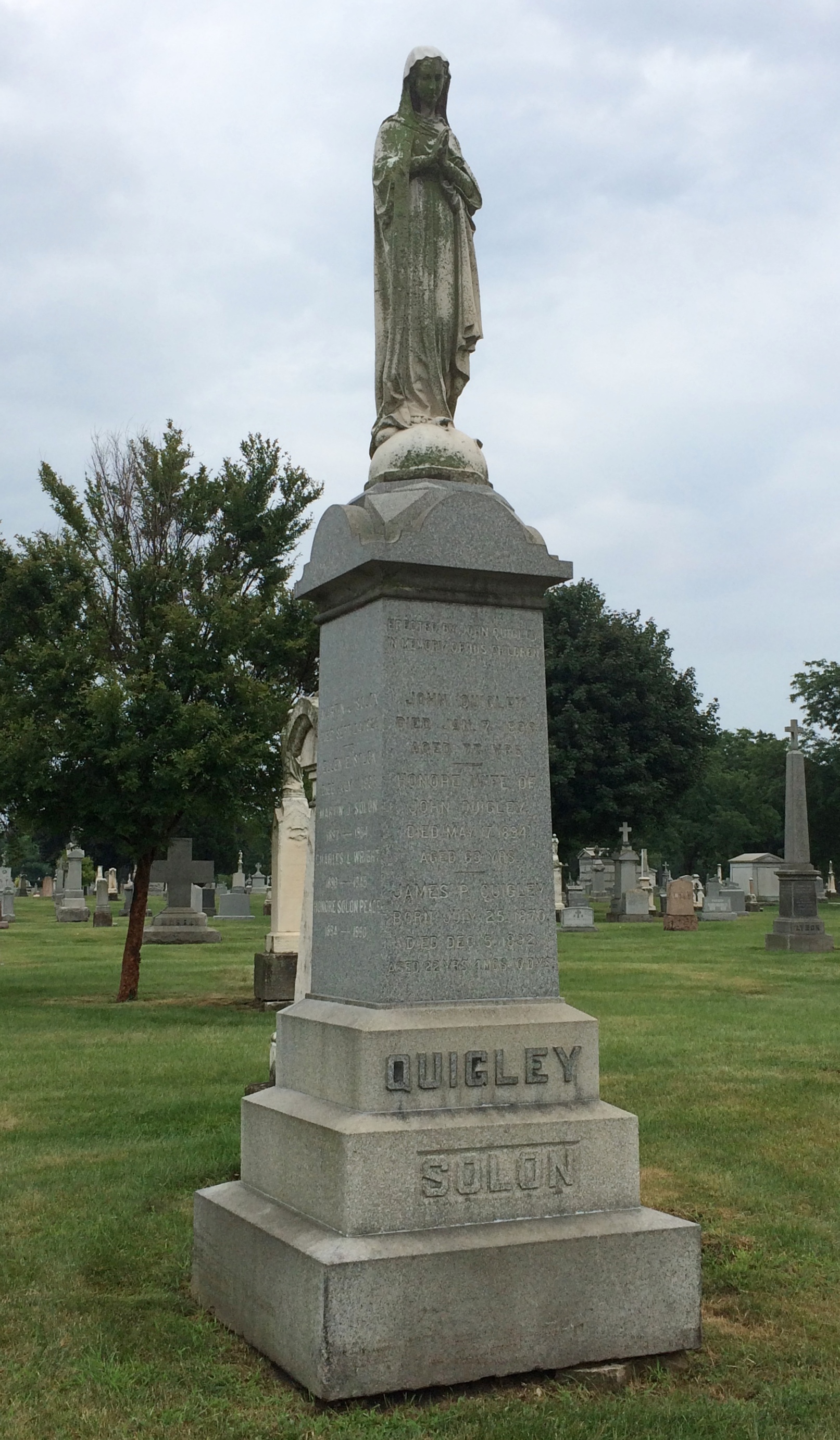
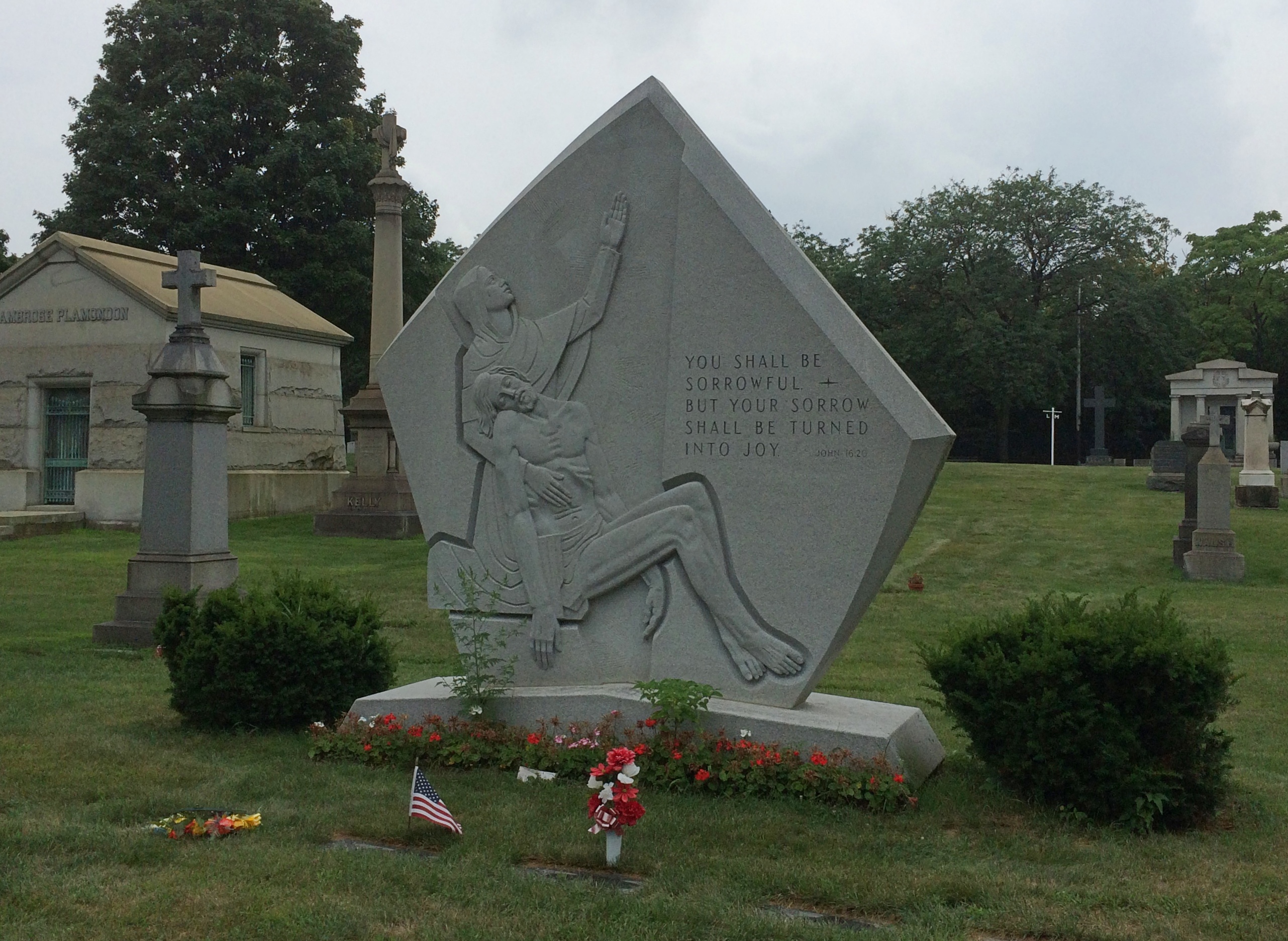
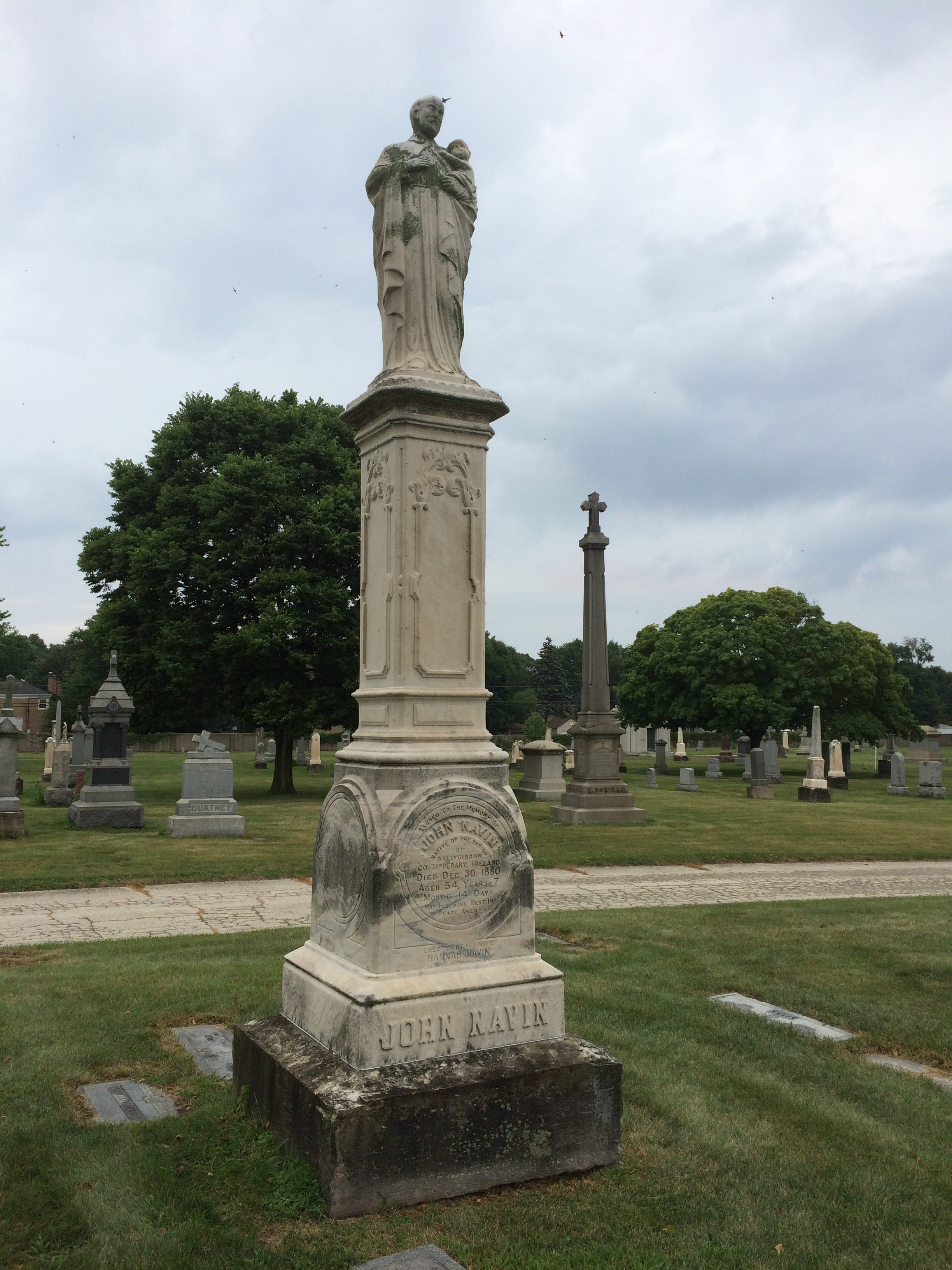
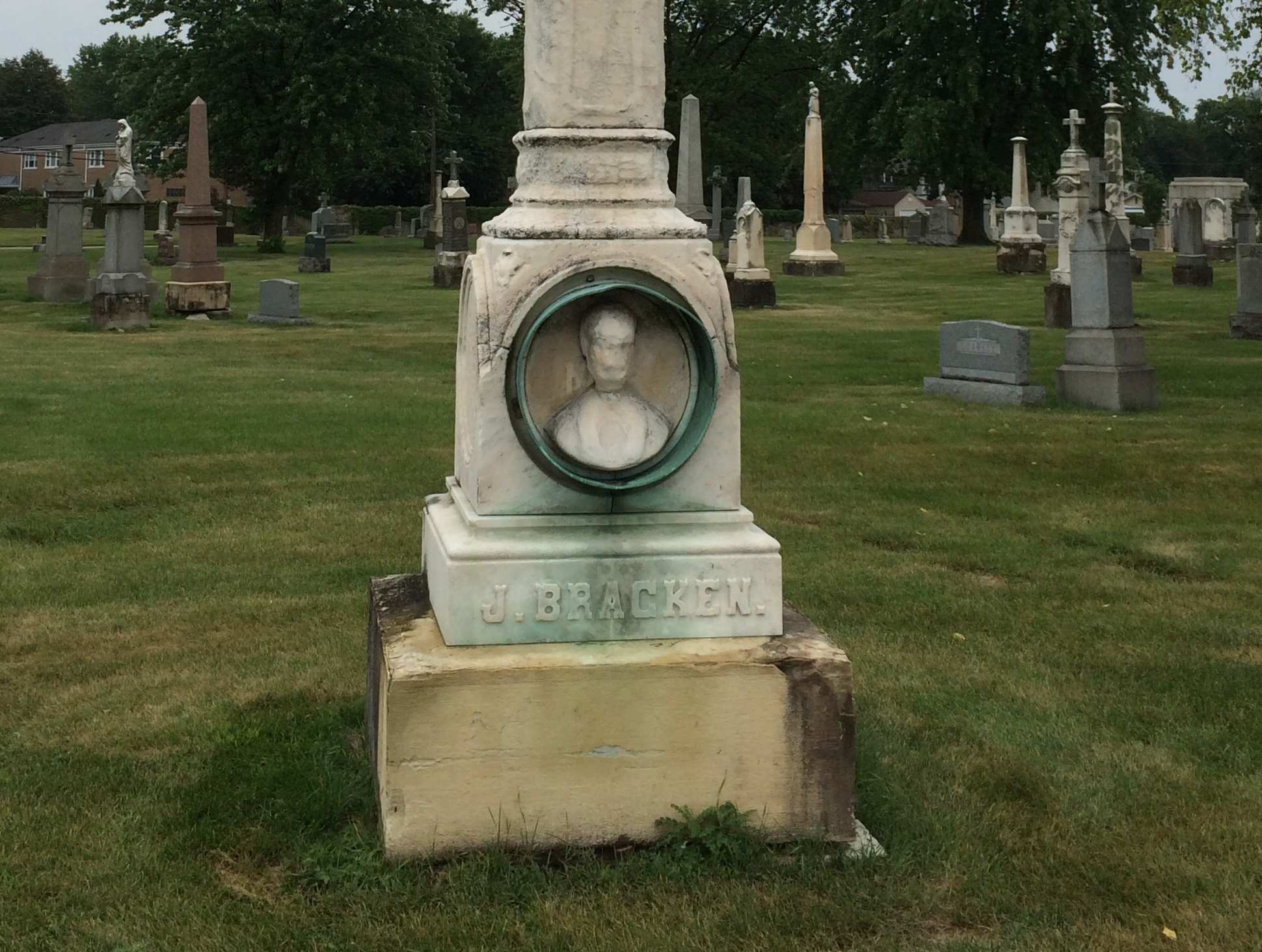
There is some funerary art at Calvary.

Calvary Cemetery Evanston CuneoCalvary Cemetery EvanstonCalvary Cemetery EvanstonIncluding stones whose wear speaks of their impermanence.
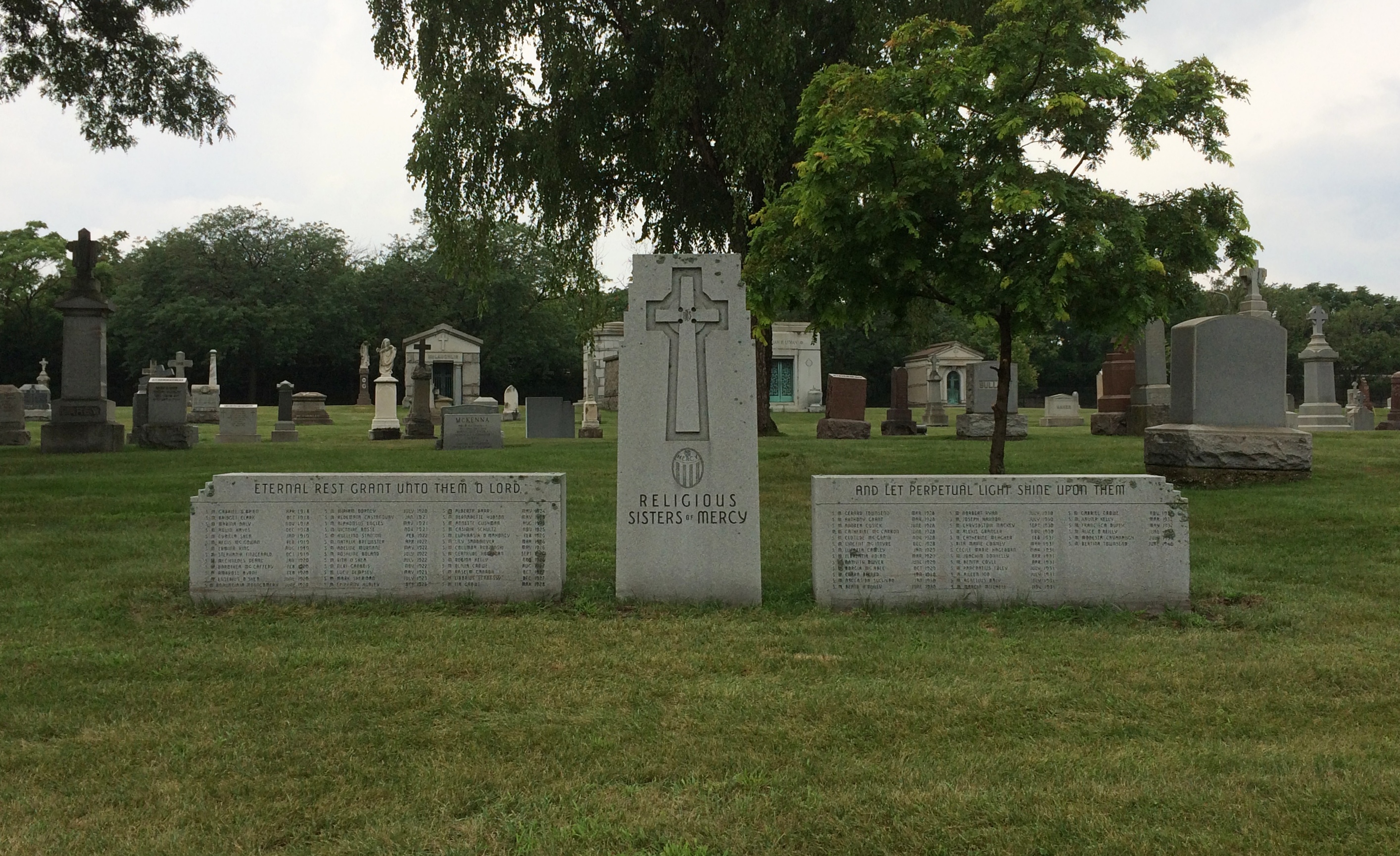
Calvary Cemetery EvanstonA group memorial to the Religious Sisters of Mercy, who have a long history in Chicago.

Calvary Cemetery Evanston

A number of Chicago mayors are buried here as well, most notably Jane Byrne, who died in 2014. Charlie Comiskey, the baseball boss, is here. Didn’t see either of them, but I wasn’t looking. I was just looking around.

The American Toby Jug Museum

Yesterday I spent some time looking into the origin of the word flabbergasted. It’s a fun word, and sometime it fits just so. I would have guessed that it’s an Americanism, and a fairly new one at that, but no. Origin obscure. First attested usage: 1773.

According to World Wide Words, “… flabbergasted could have been an existing dialect word, as one early nineteenth-century writer claimed to have found it in Suffolk dialect and another — in the form flabrigast — in Perthshire. Further than this, nobody can go with any certainty.”

That word came to mind after I visited the American Toby Jug Museum in Evanston on Saturday. The museum, which happily doesn’t charge admission, is in the basement  of an office building near the corner of Chicago Ave. and Main St.
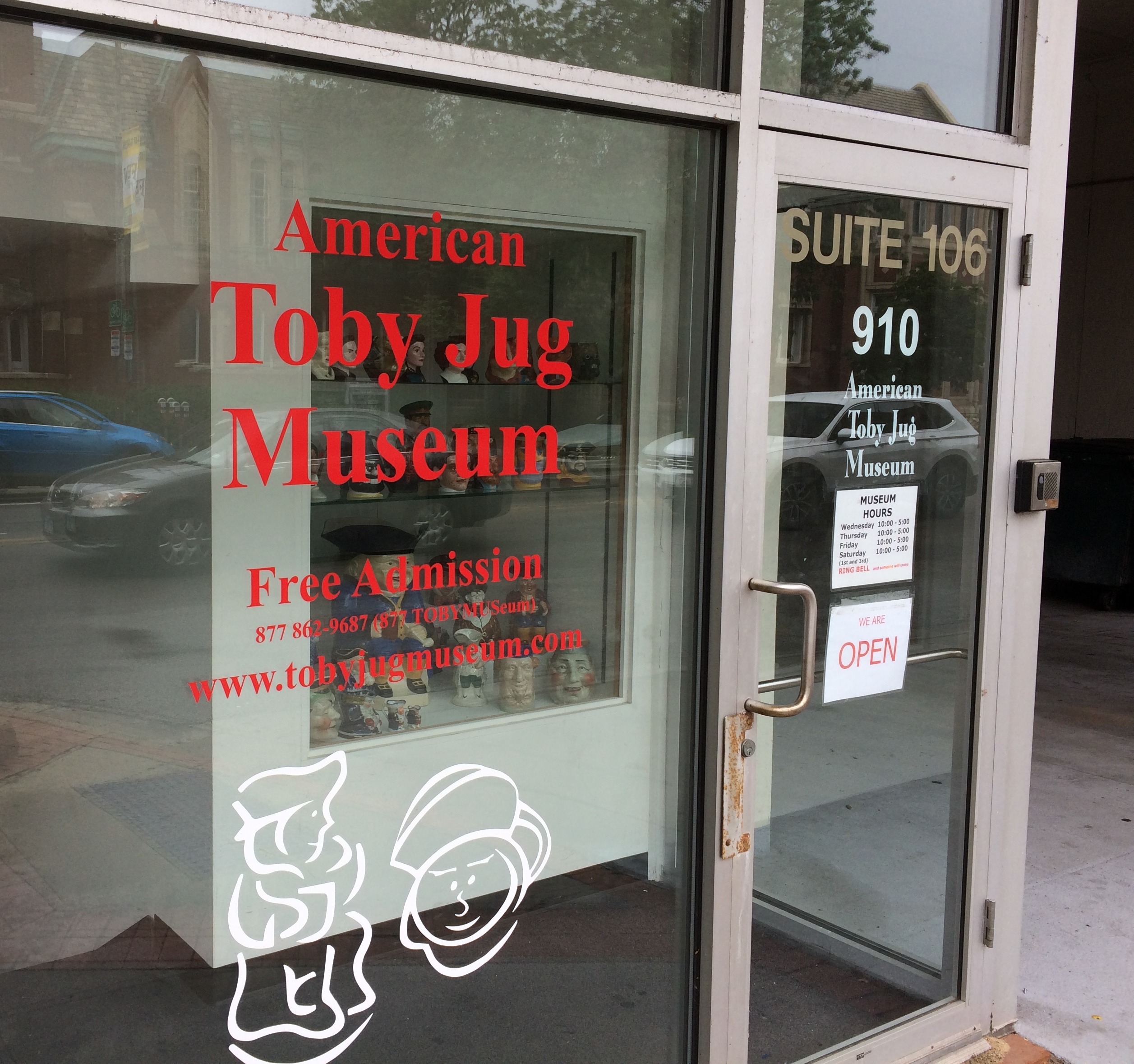
American Toby Jug MuseumI’d known about the place for years, but not much about it. I didn’t do any reading before I went. Sometimes it’s better that way, because the element of surprise can still be in play. I vaguely expected a few cabinets, sporting mugs with faces.

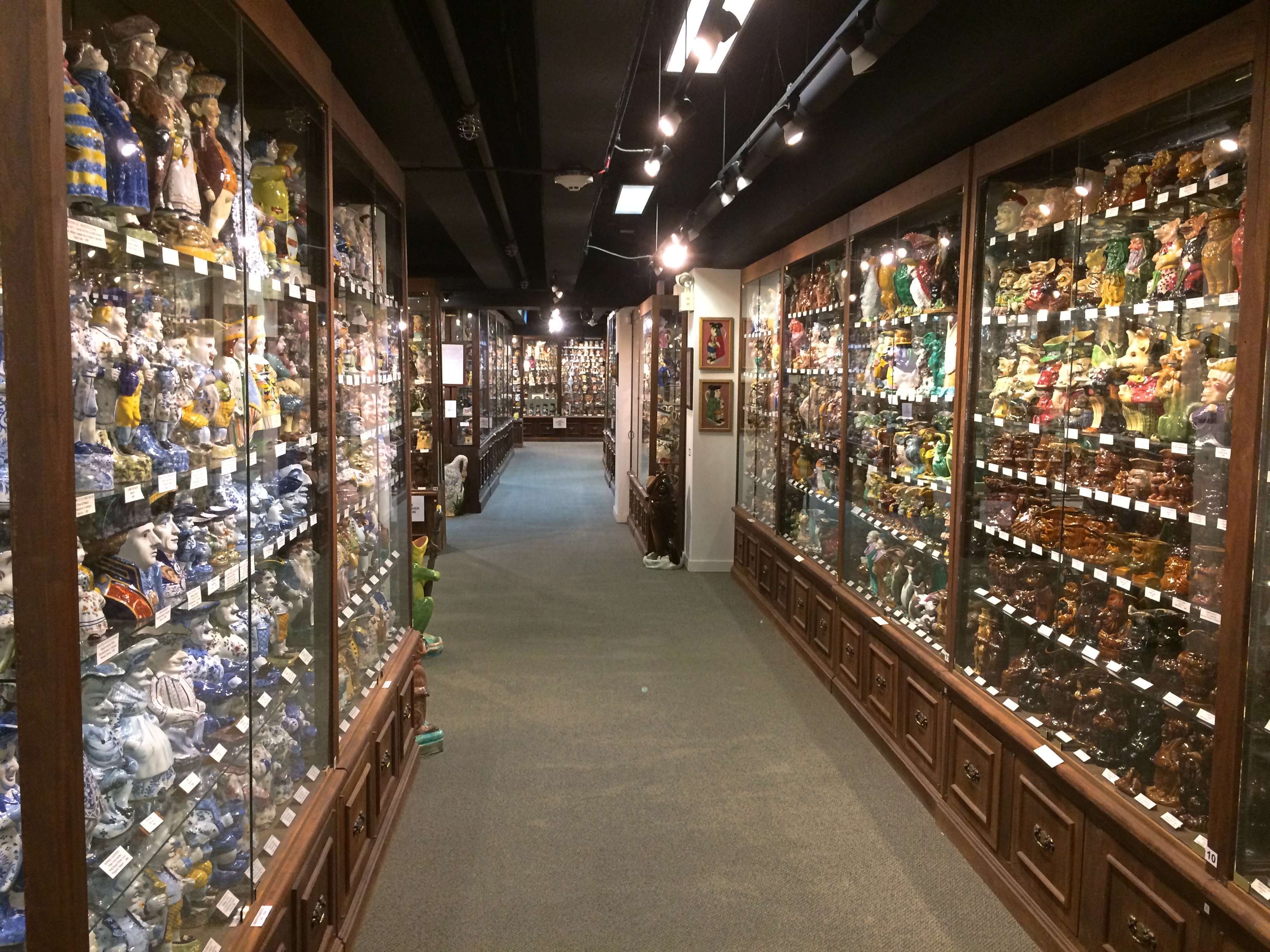
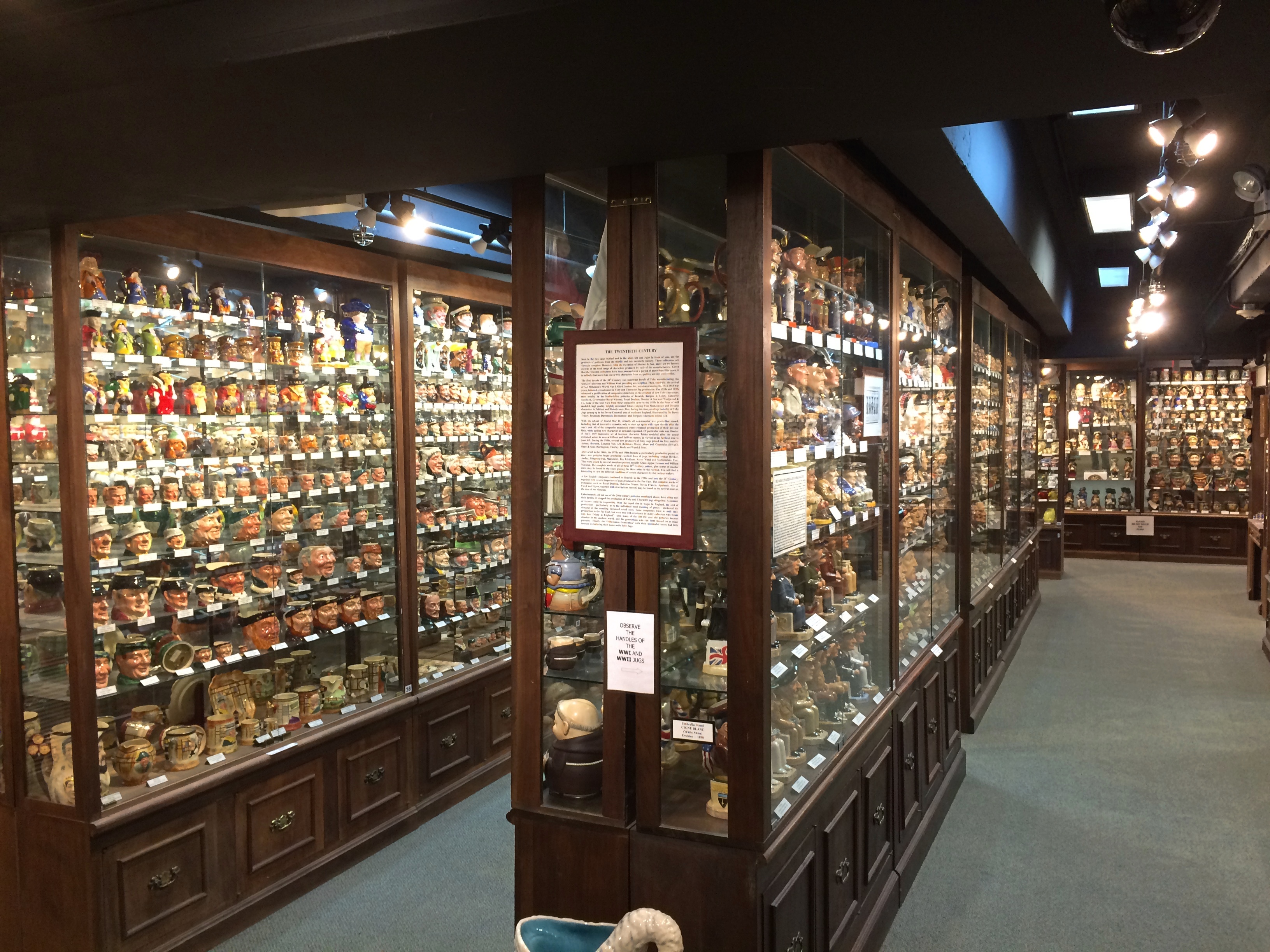
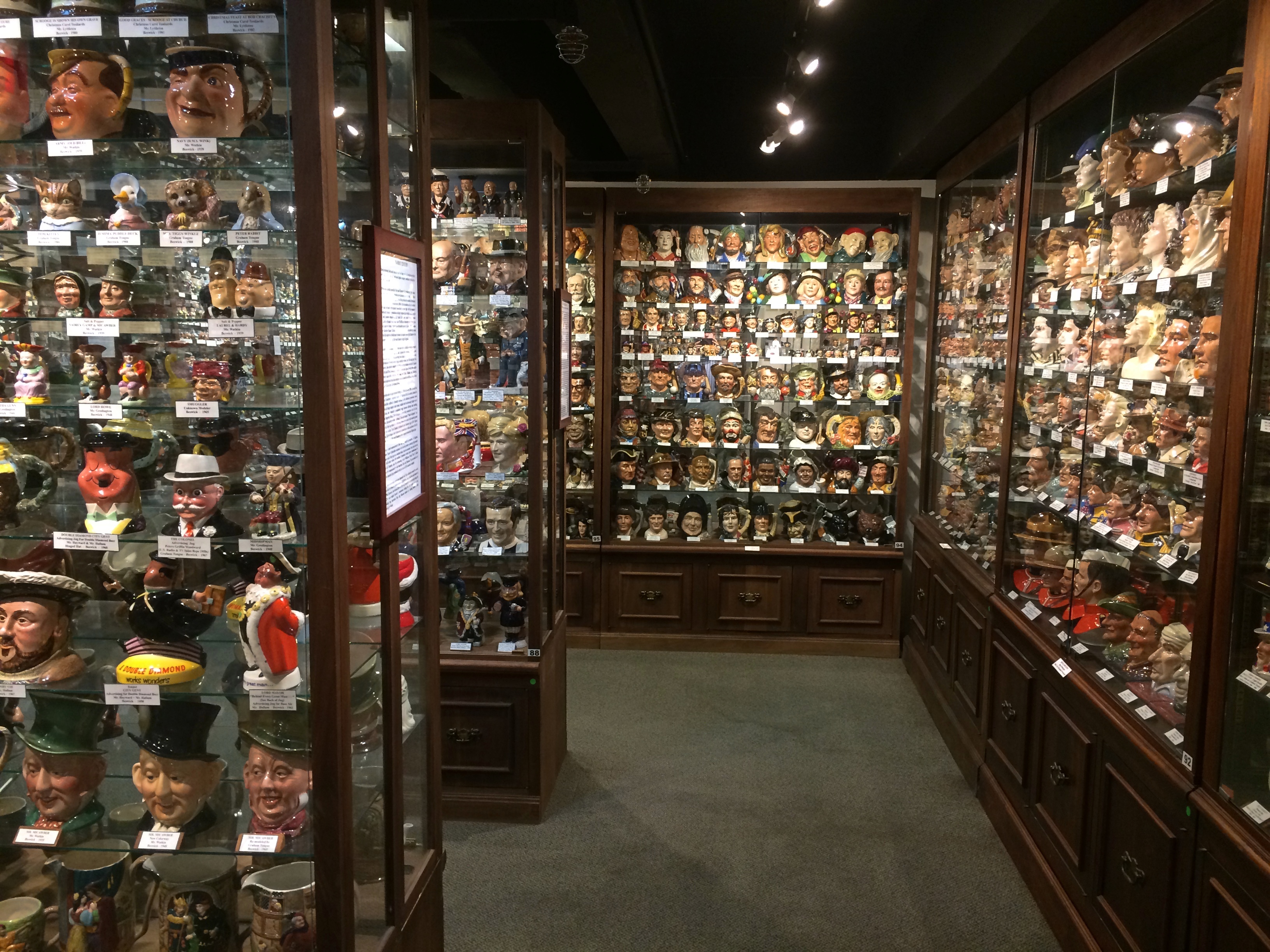
There were cabinets all right.
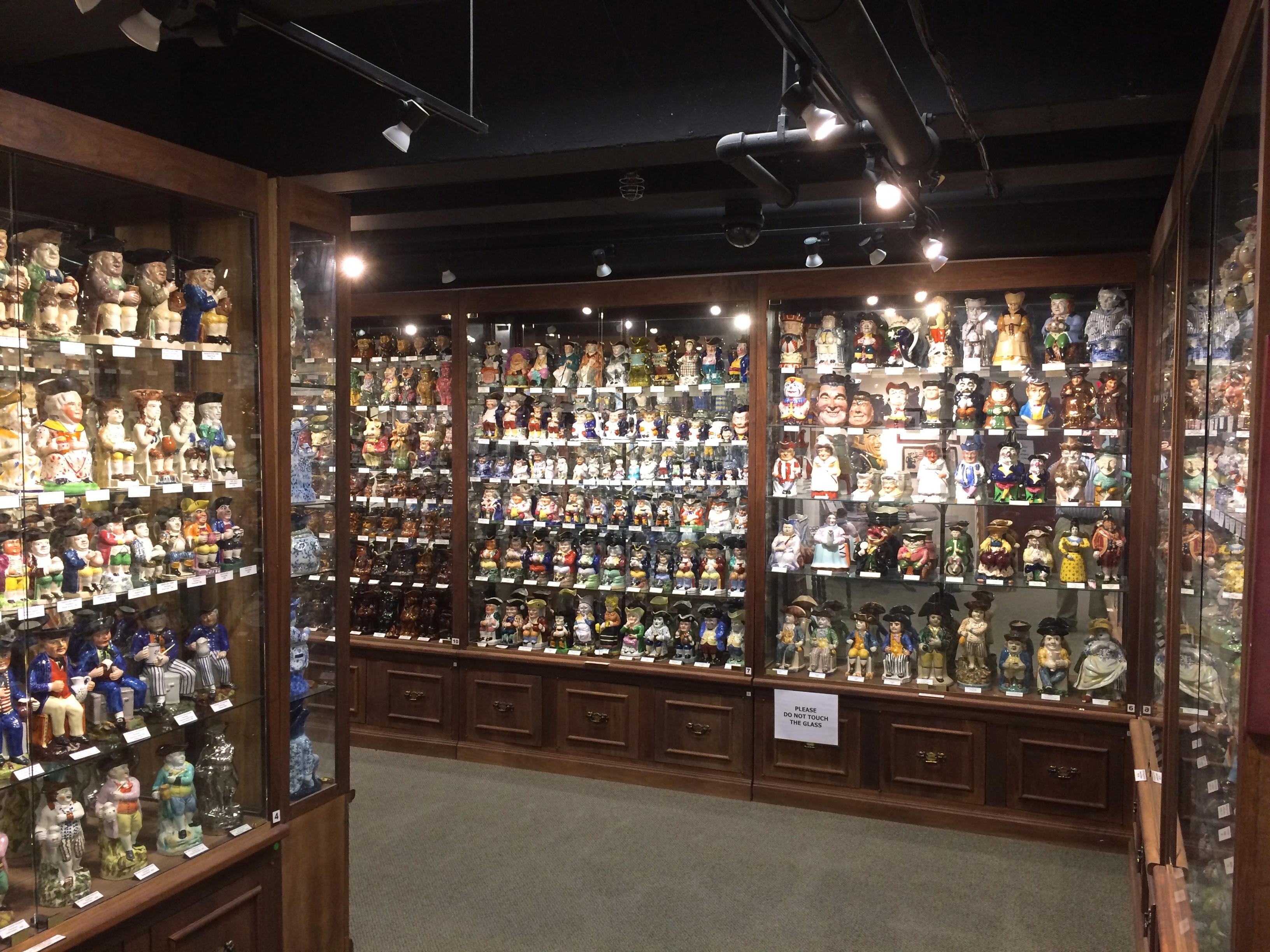
American Toby Jug MuseumAnd more.
American Toby Jug MuseumAnd even more.
American Toby Jug MuseumI was flabbergasted. I was also the only person in the museum during my visit, except for the woman managing the place. When the extent of the displays sank in, I asked her how many items the museum had. About 8,400, she said.

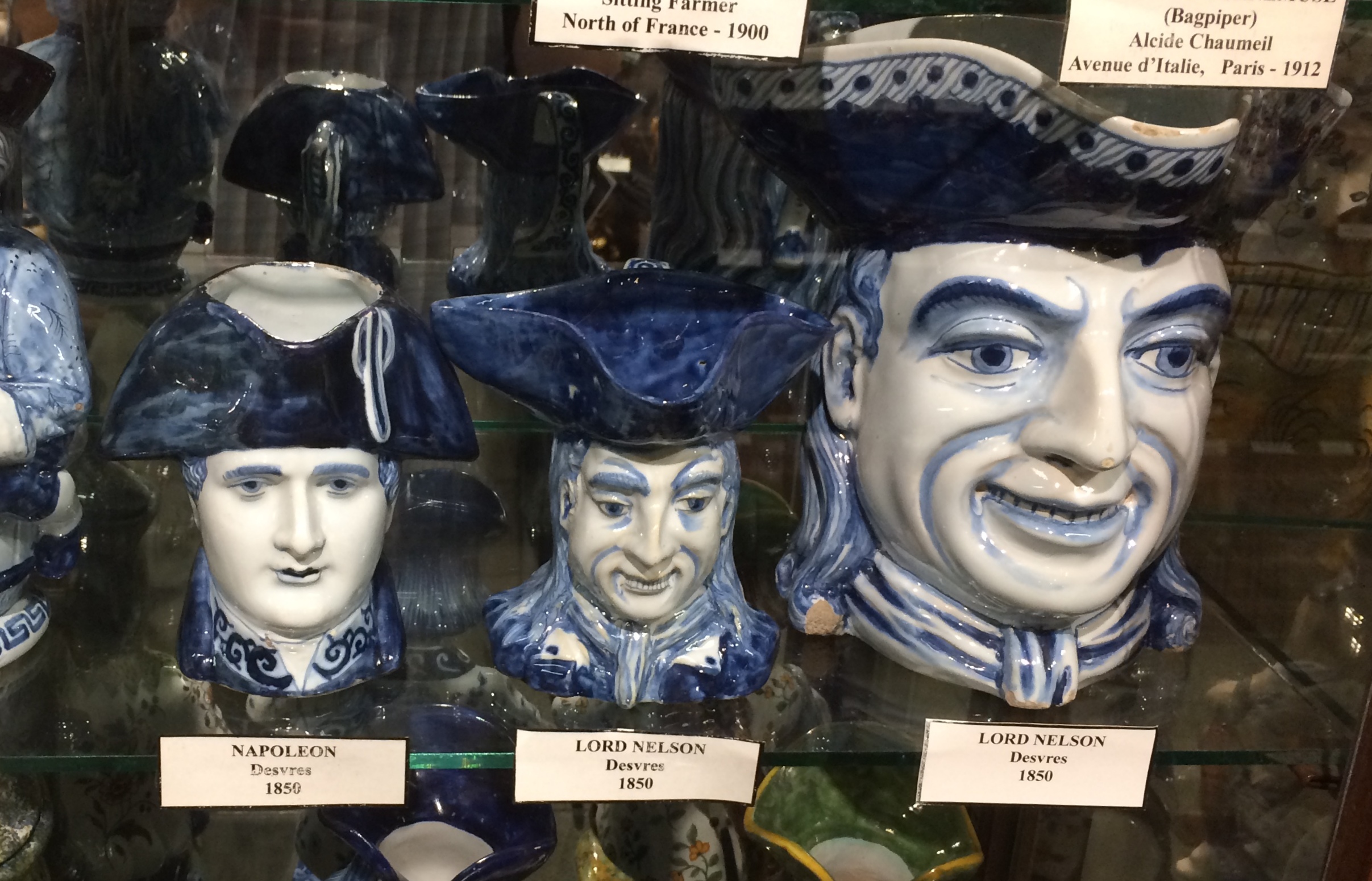
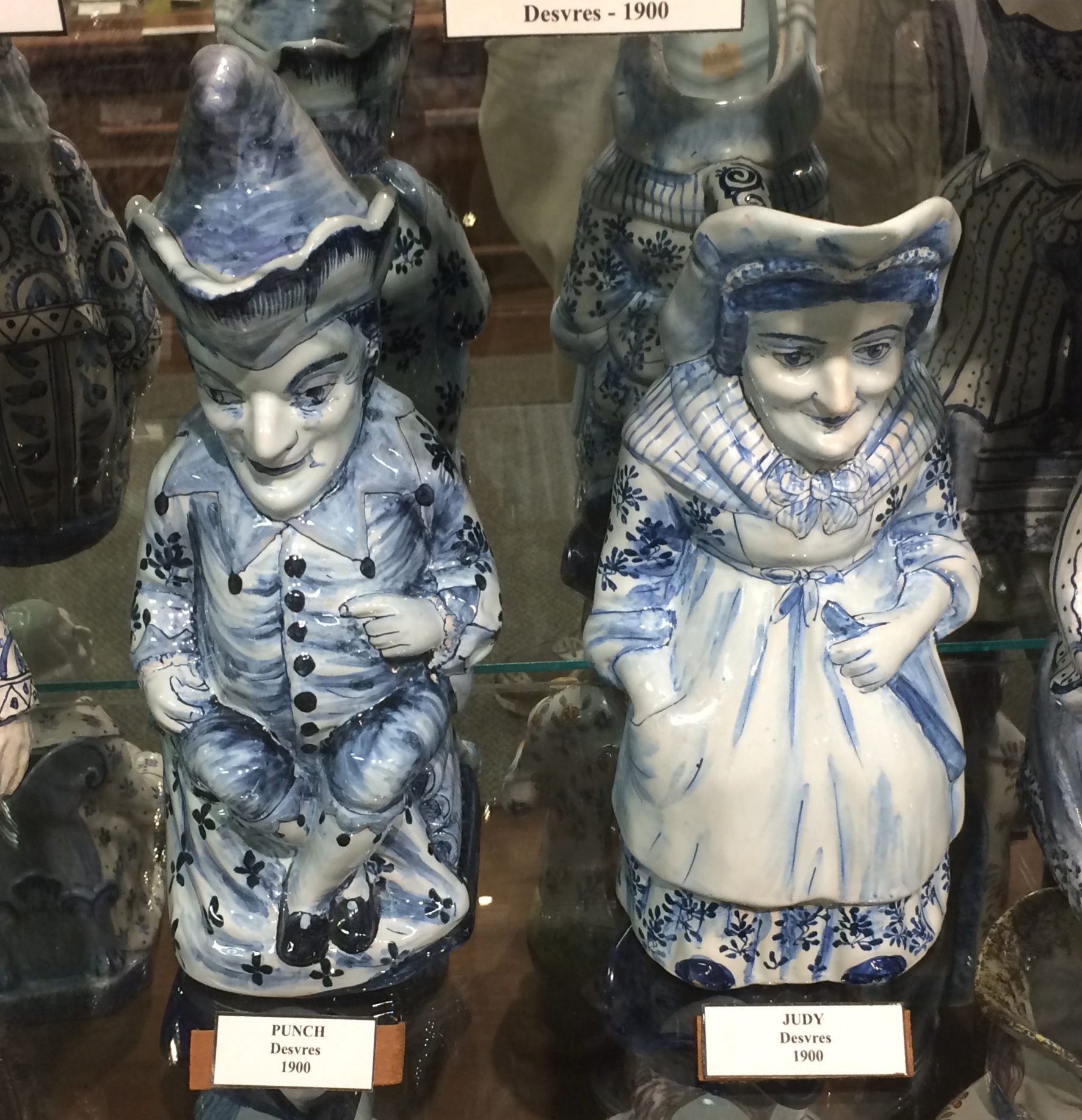
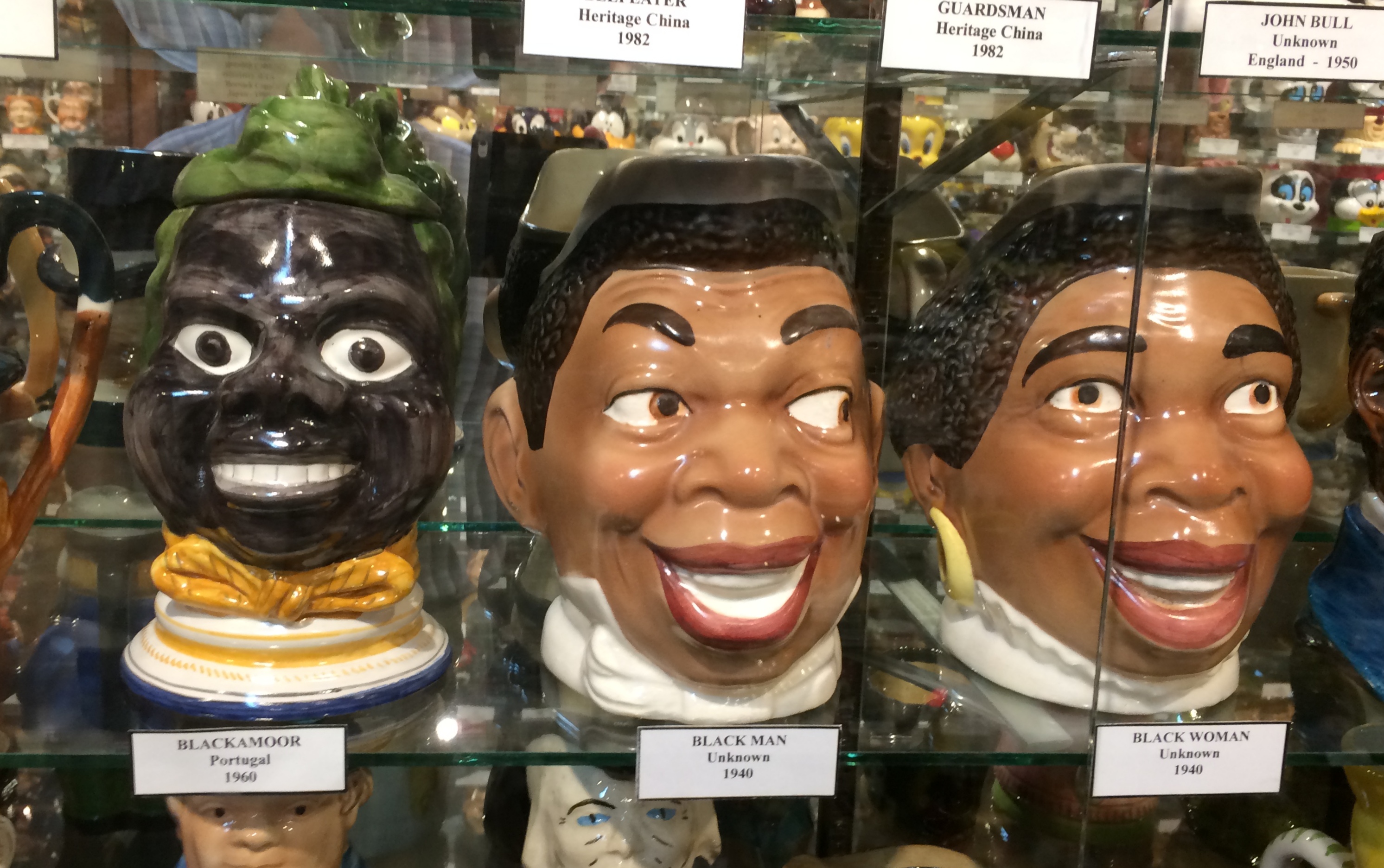
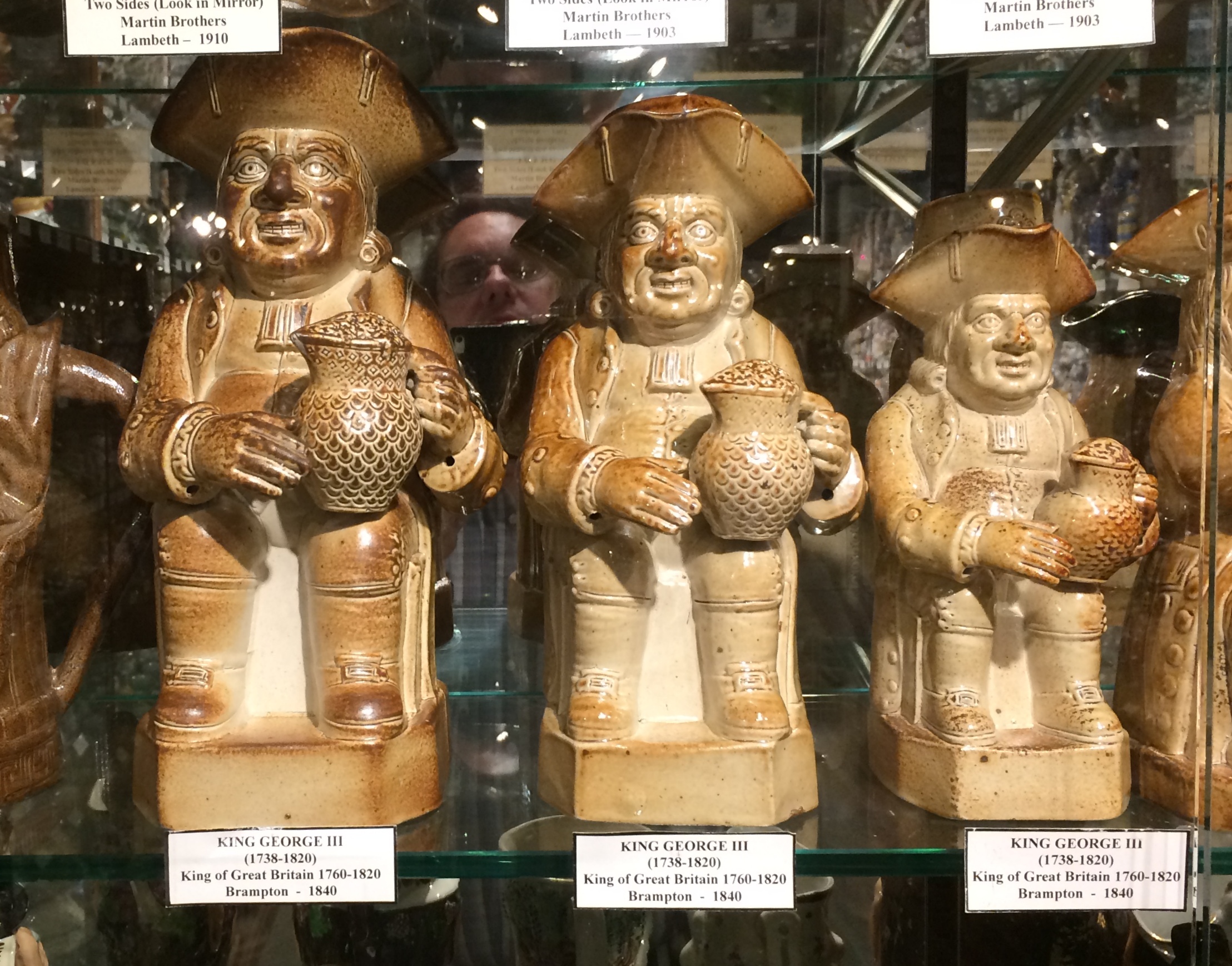
Toby jugs, it turns out — according to people who collect them — depict a full human figure. Head-and-shoulder or head depictions are “character jugs” or “face jugs.” Though decorative, the original toby jugs were also used as jugs, with their tricorner hats convenient for pouring.

The museum is organized chronologically, so near the entrance are the oldest toby jugs, those of the 18th and early 19th centuries.
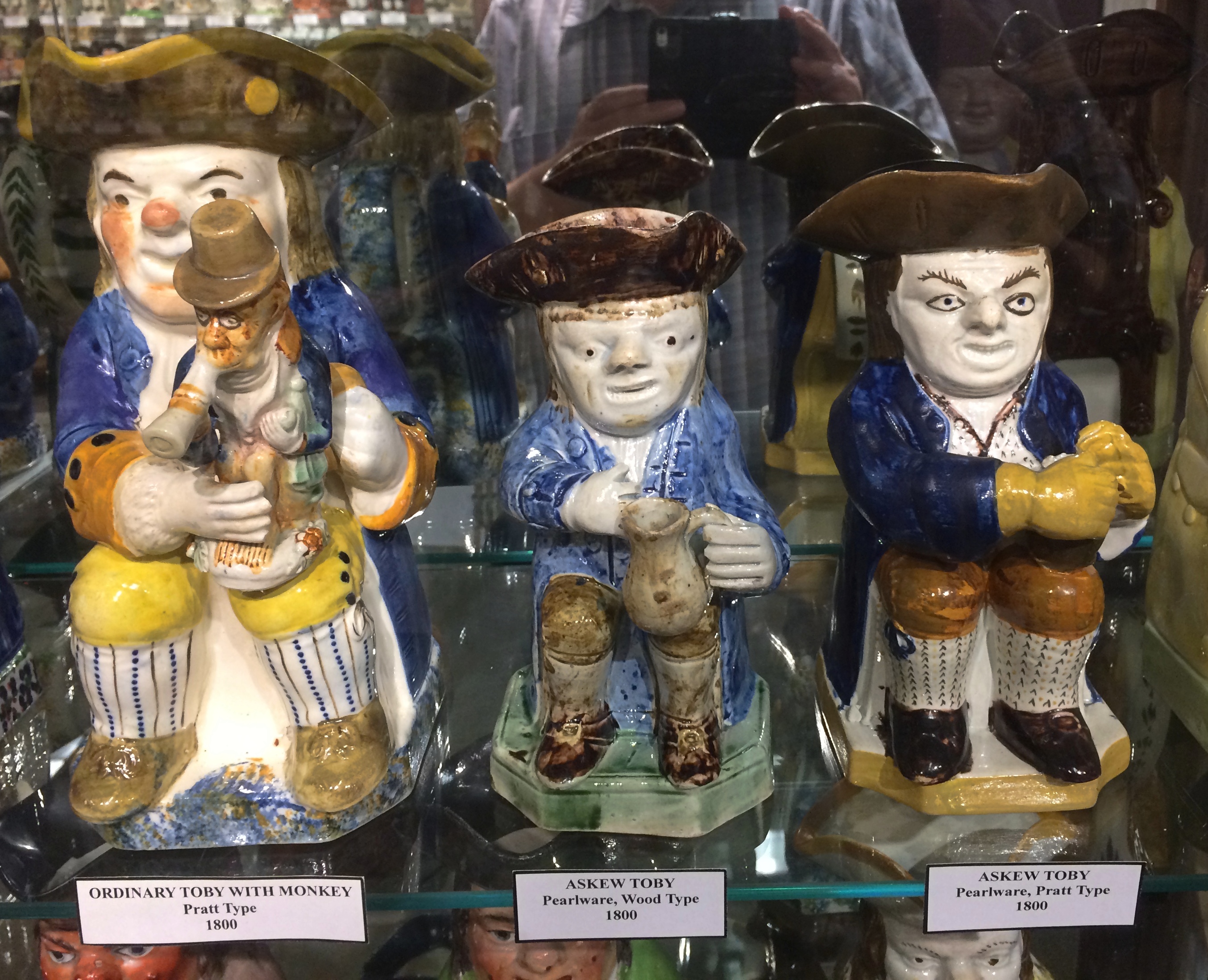
American Toby Jug MuseumStaffordshire Potters, who had easy access to clay, coal and other raw materials, apparently developed the toby jug in the 1760s, as part of the area’s overall ceramic industry.

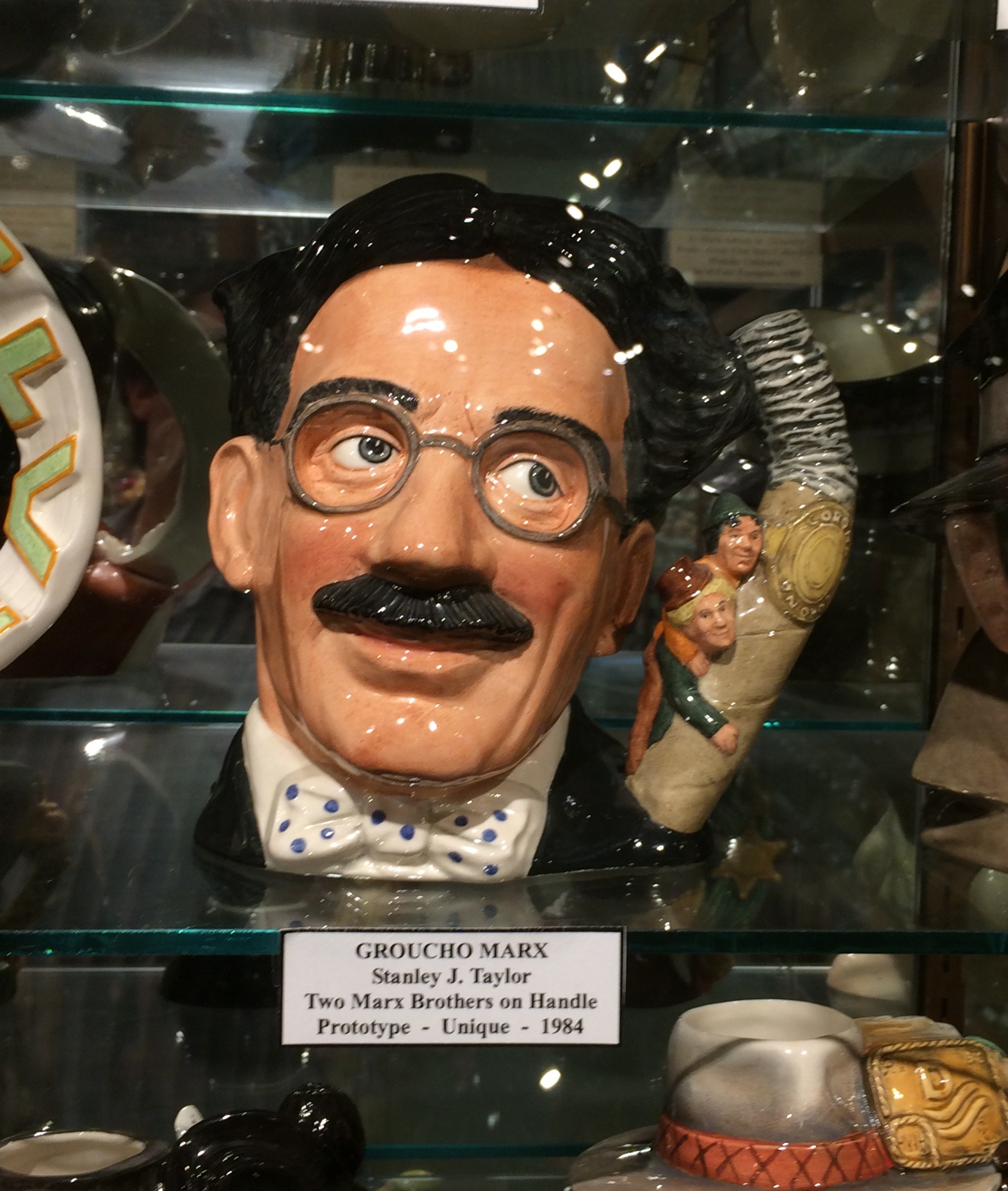
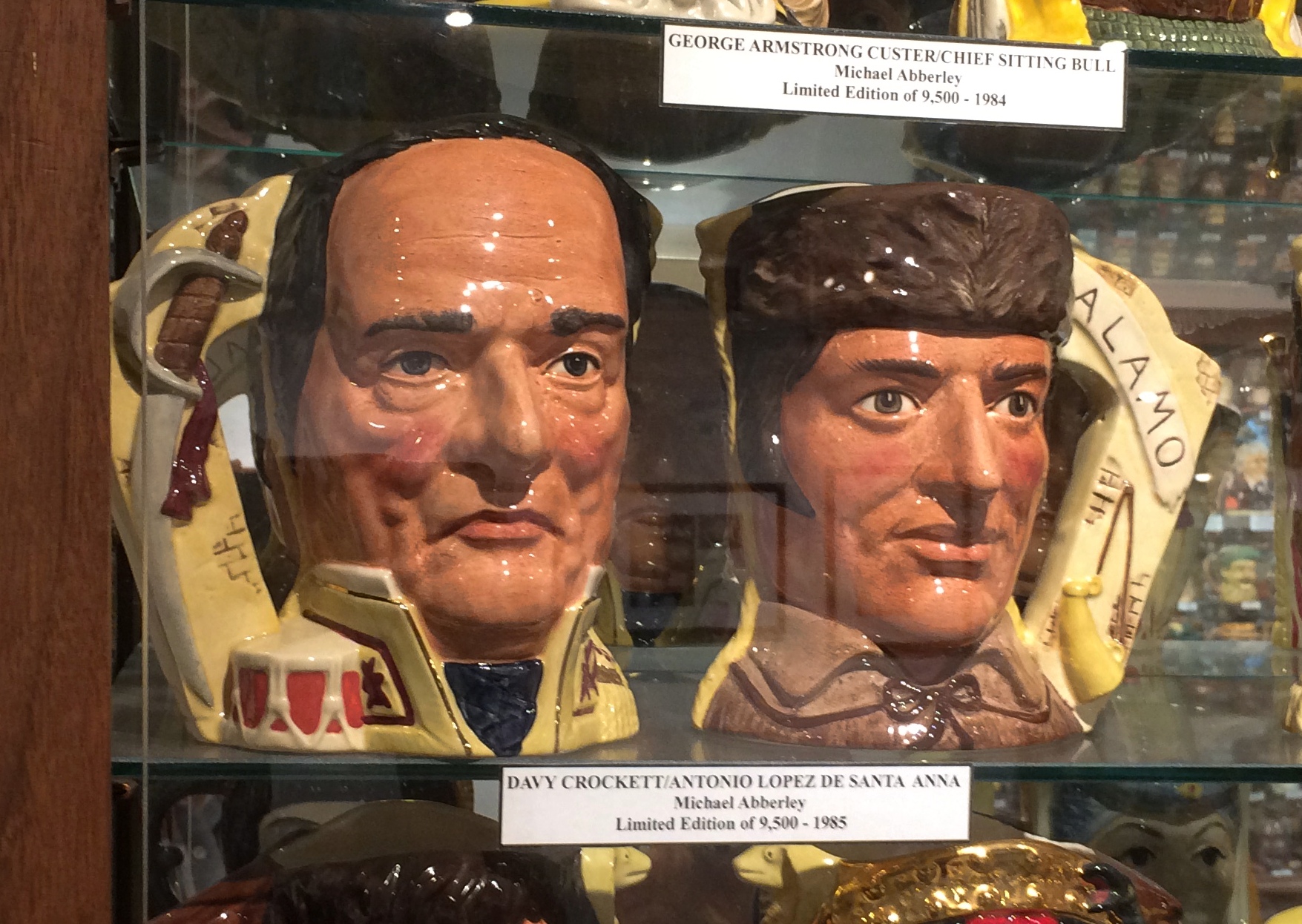
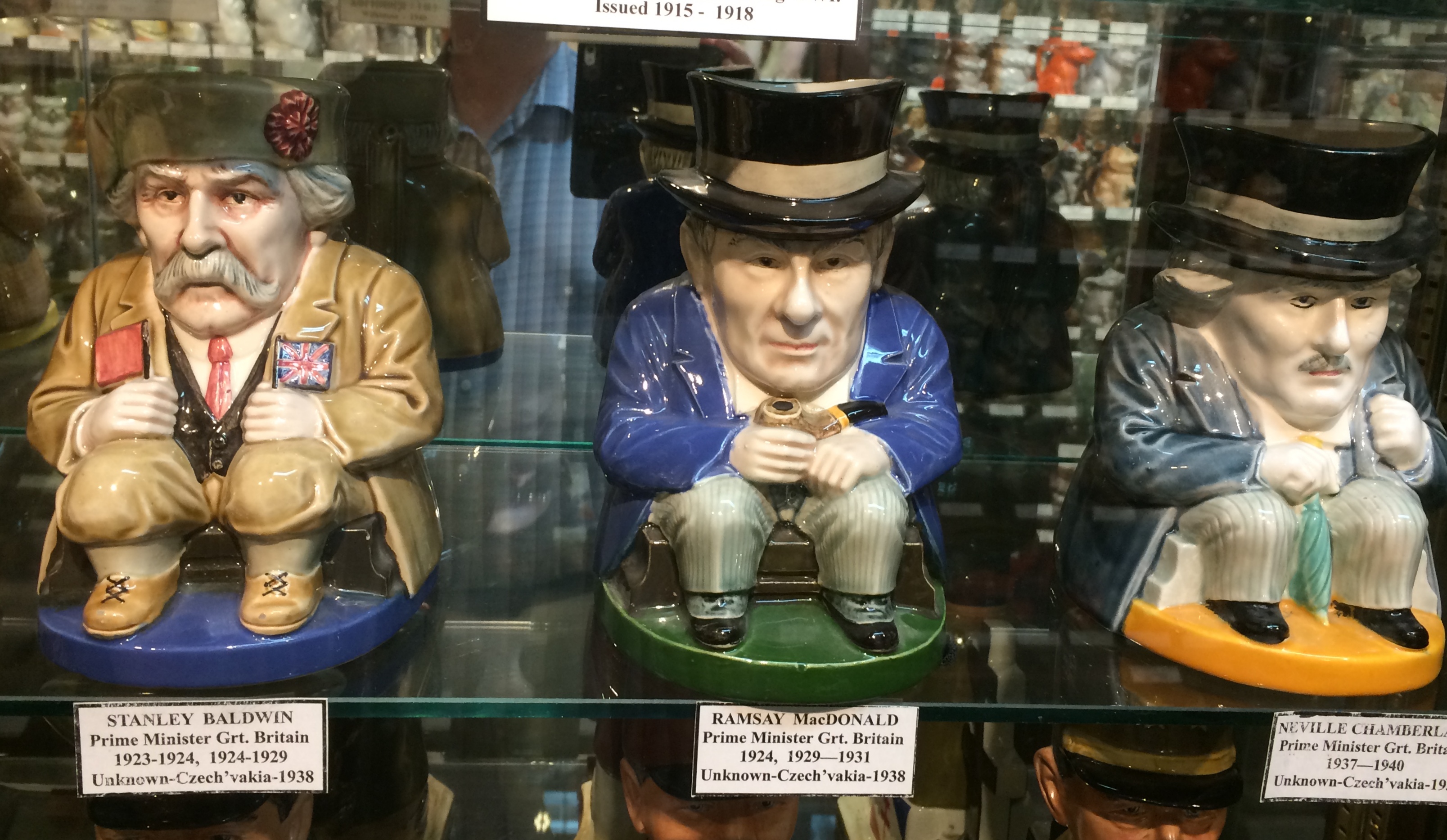
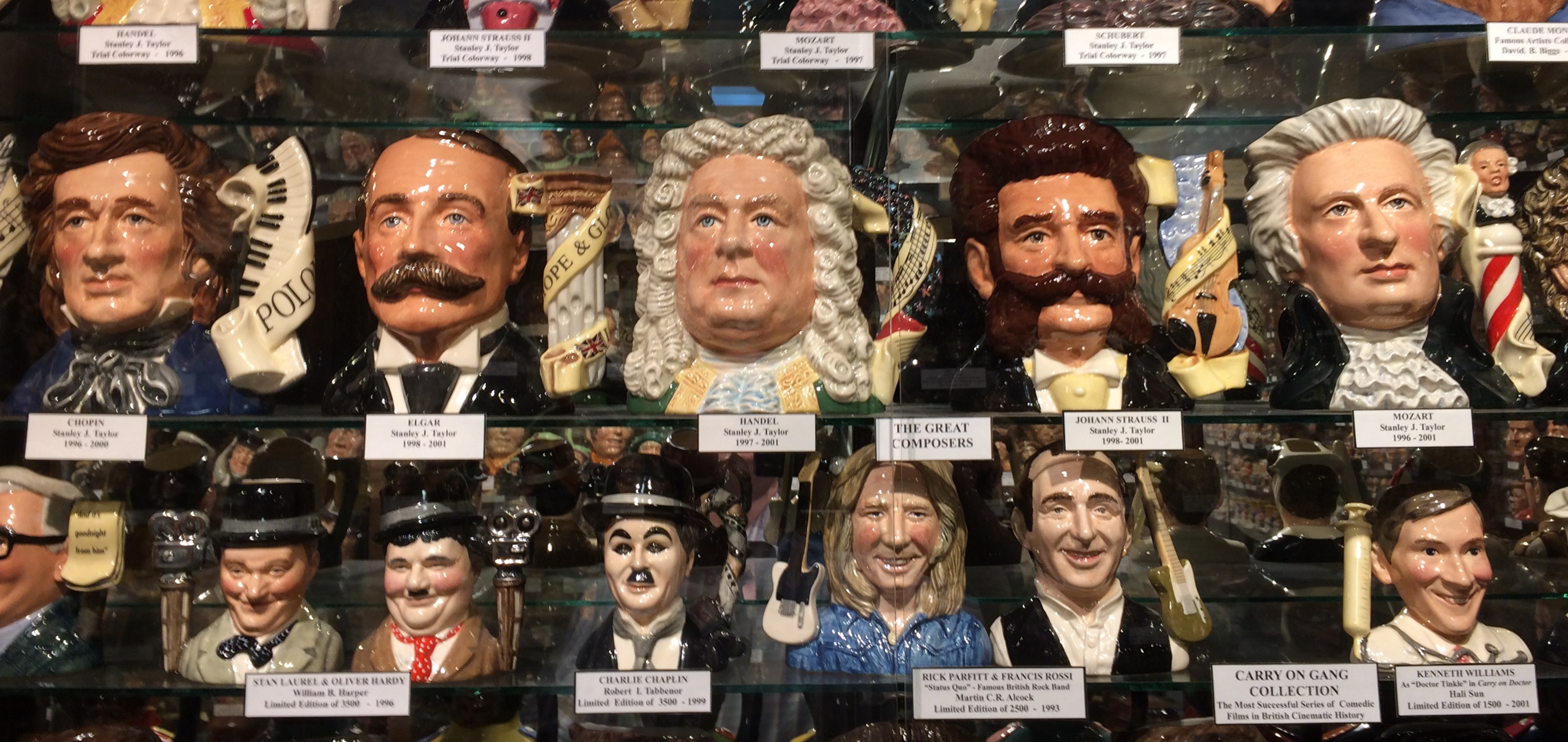
The form caught on in England and then other parts of the world. Soon character mugs were being produced along with the traditional tobies. They took on an astonishing (flabbergasting) variety of forms, including standard drinking characters, perhaps inspired by Falstaff or local barflies, but also occupational figures (soldier, sailors, bandits), faces from history, literature, myths, the Bible, and folk stories, along with  animal figures, fanciful or stereotypical notions of peoples of the world, and — especially in the 20th century — lots of Santa Clauses, musicians, entertainers, sports stars, and more.
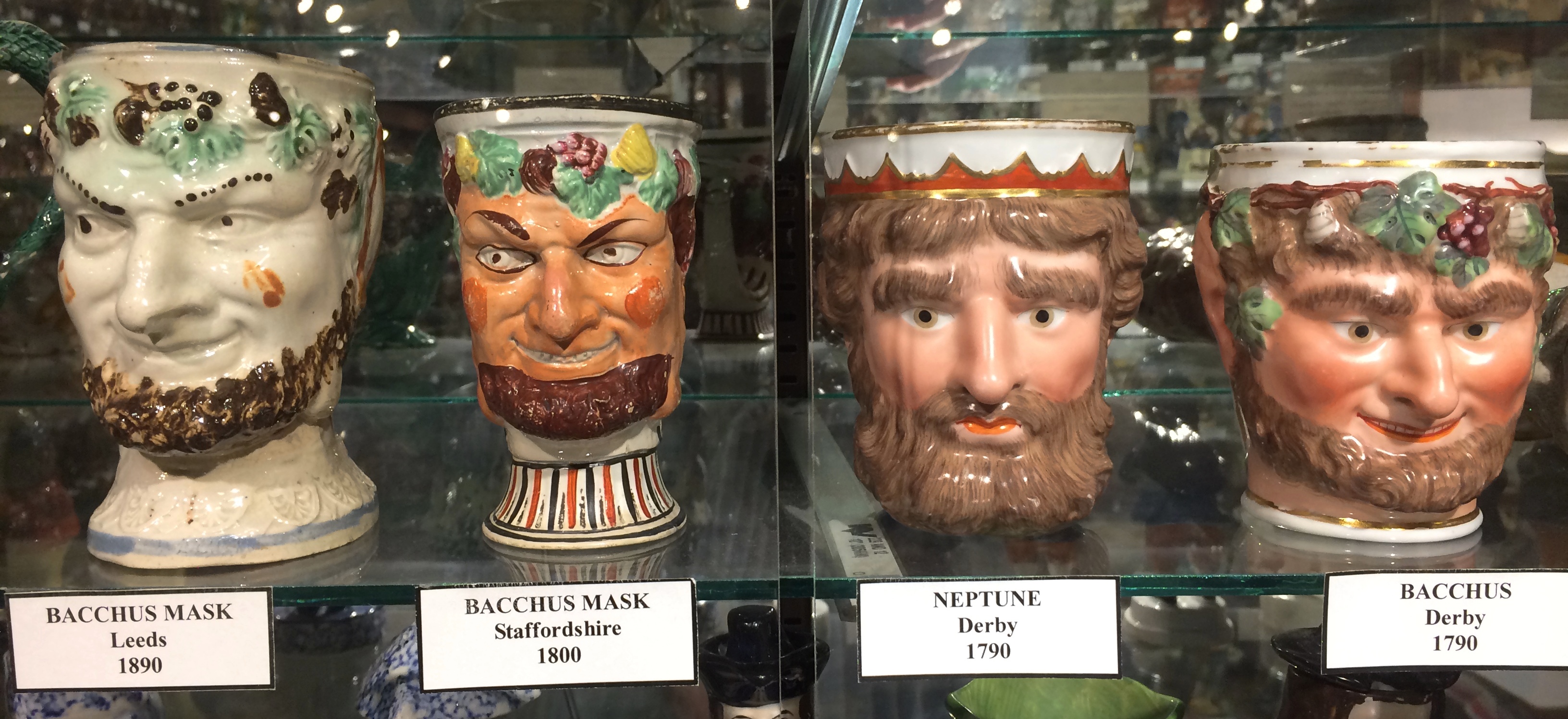
fanciful notions of peoples of the world,

fanciful notions of peoples of the world,

American Toby Jug Museum, EvanstonAmerican Toby Jug Museum, EvanstonEarly 20th-century UK prime ministers, made in Czechoslovakia, no less.
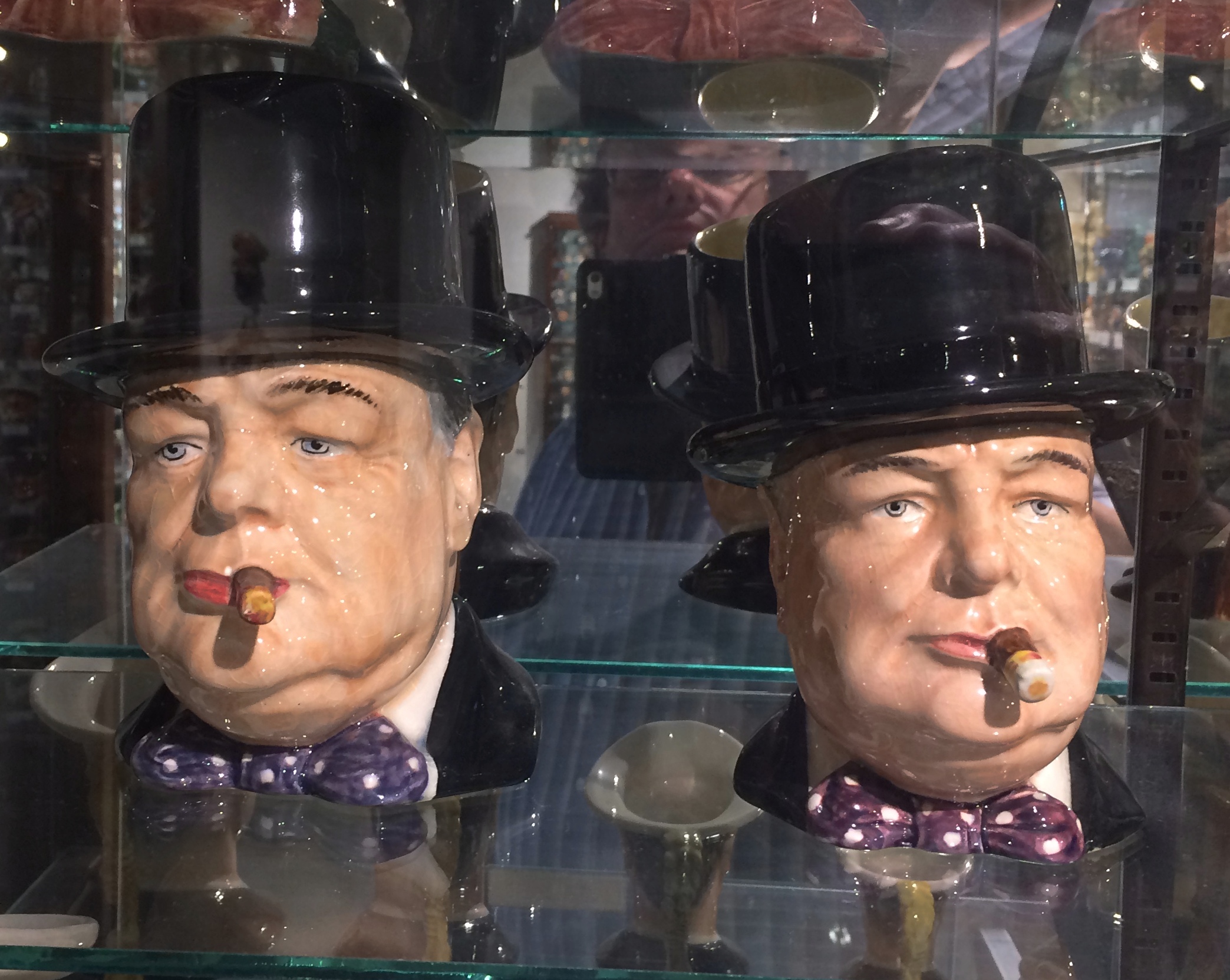
American Toby Jug Museum, EvanstonThere were a lot of Winston Churchills besides these two.
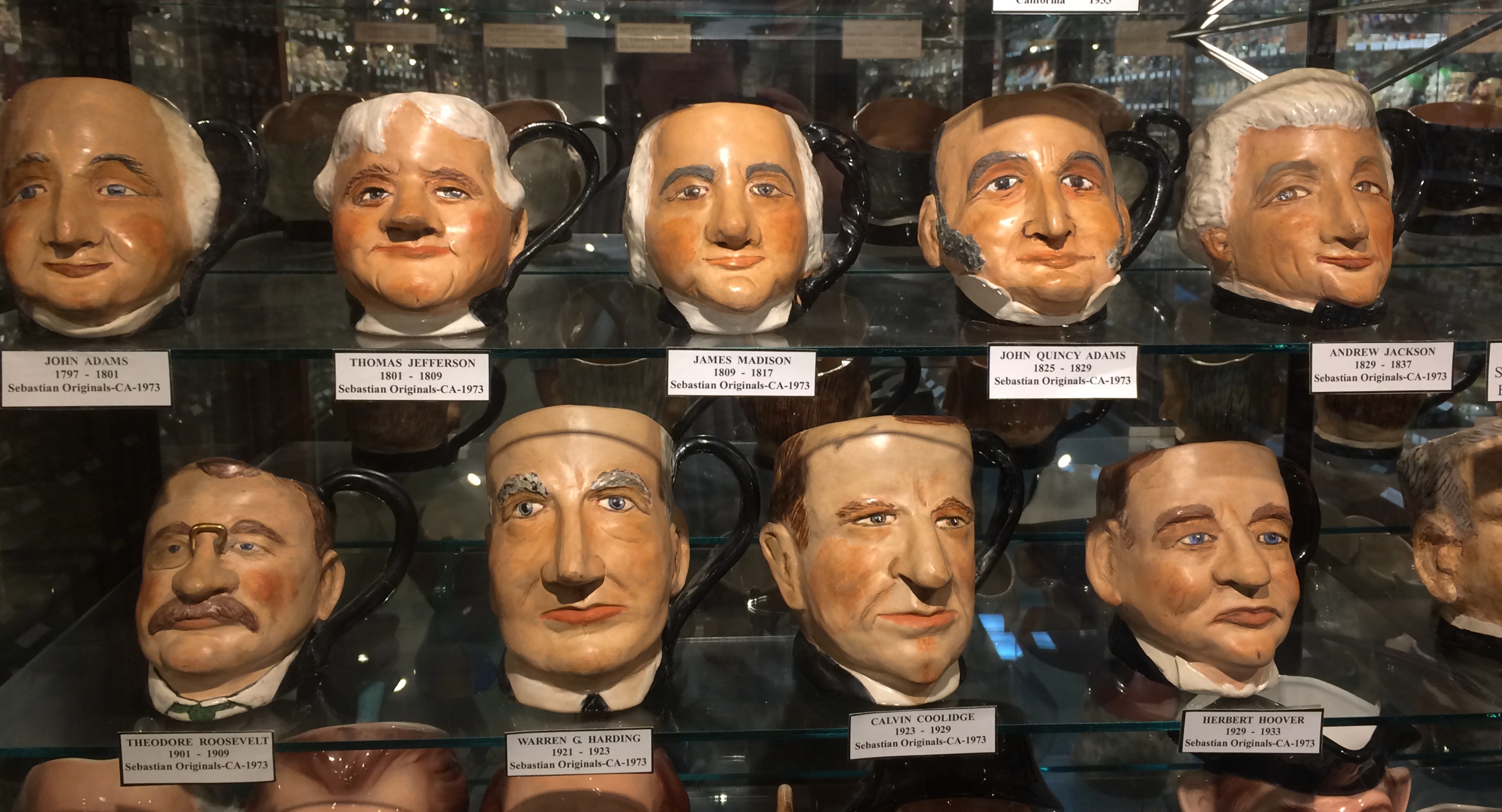
American Toby Jug Museum, EvanstonU.S. presidents, too.
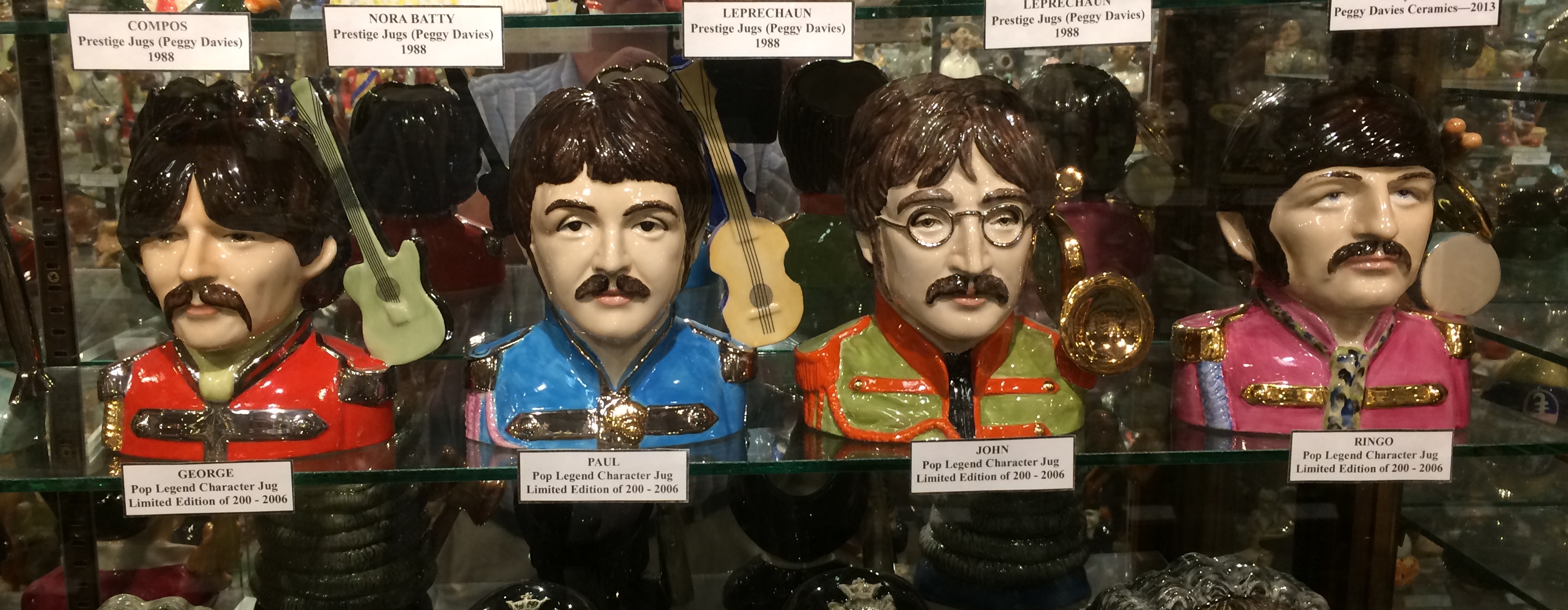
American Toby Jug Museum, EvanstonMusicians and entertainers of various periods.
American Toby Jug Museum, EvanstonAmerican Toby Jug Museum, EvanstonAnd so much more.
American Toby Jug Museum, EvanstonAmerican Toby Jug Museum, EvanstonAmerican Toby Jug Museum, EvanstonThough I didn’t take its picture, I got the biggest kick out of the Col. Sanders mug, which didn’t seem to be any kind of advertisement. Someone simply considered him, as a chicken mogul, worthy of tobyfication.

Why is this collection in Evanston? Like many good small museums, it was the work of one obsessive man. Namely, Stephen Mullins of Evanston, who died only in June at 86, after a lifetime of collecting toby and character mugs. “He built his collection through dealers, private aficionados and eBay,” the Chicago Sun-Times said.

Mullins also had some tobies commissioned, including what the museum says is the world’s largest one, “Toby Philpot,” created in 1998.
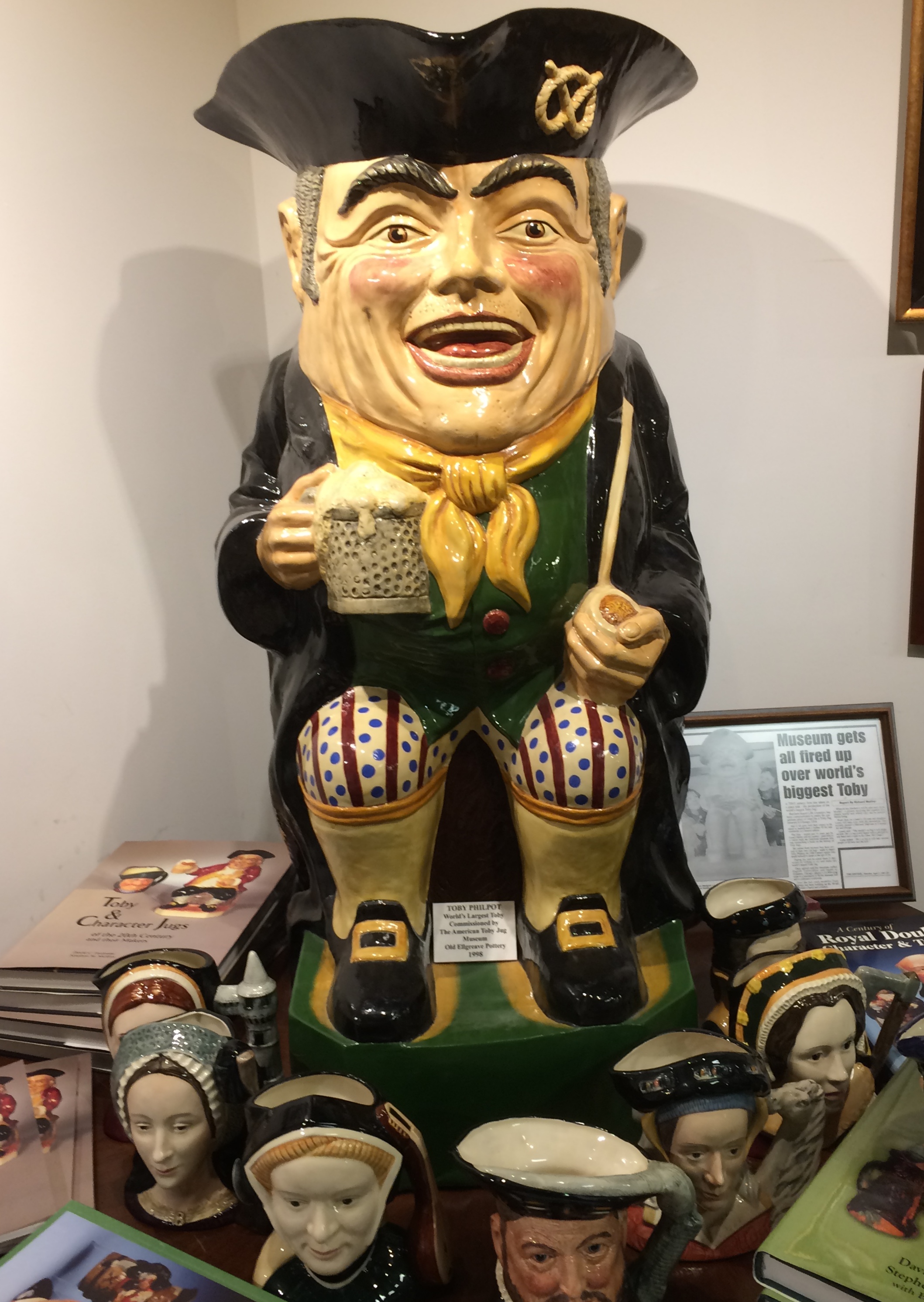
American Toby Jug Museum, Evanston

Time for Pixar to get to work on a new franchise, Toby Story.

The Chicago Main Newsstand

Early on Saturday afternoon, I saw that the Chicago Main Newsstand is open for business at the intersection of Chicago Ave. and Main St. in north suburban Evanston. (Various sources style it Chicago-Main, but not the wall outside the store.) I hadn’t been that way in a long time, or thought about the place. So if I’d had to guess beforehand, I would have said wrongly that the Internet killed it off.

The business originally dated from the 1930s. In the early ’90s, the CTA, which owned the property at the time, jacked up the rent so much that the newsstand closed. Later I read, or maybe heard, that the agency believed it could find a tenant to pay more. That was a public-be-damned sort of move, since the newsstand was popular in pre-Internet days as a source of national and international newspapers and a vast number of magazines.

Also, not only that, the move was a blunder, since for eight years, no one else wanted to be at that location at the rent the agency wanted to charge. The City of Evanston eventually bought the site and the owner of a different newsstand in Chicago had the place renovated and re-opened as a newsstand. A 2001 article in the Tribune tells the story.

I remember patronizing the former iteration occasionally in the late 1980s, when I visited Evanston often. In those days, the newsstand featured a mix of out-of-town newspapers and many, many magazines. These days I can report fewer newspapers — an effect of the Internet, certainly — but the same inexhaustible variety of magazines. The market for paper magazines is still alive.

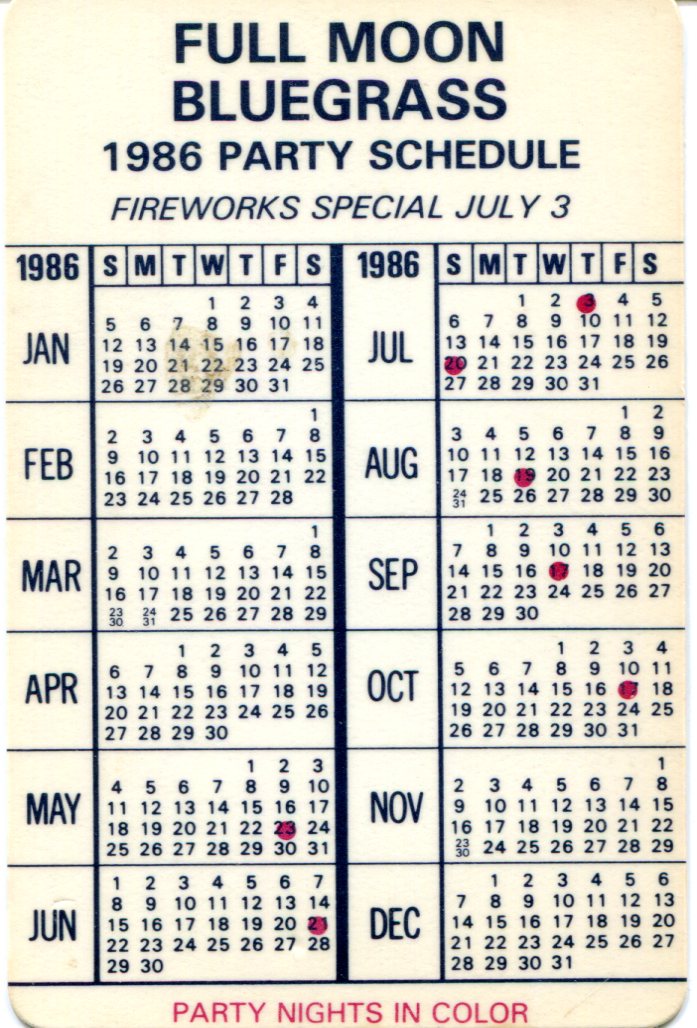
Full Moon Bluegrass, 1986

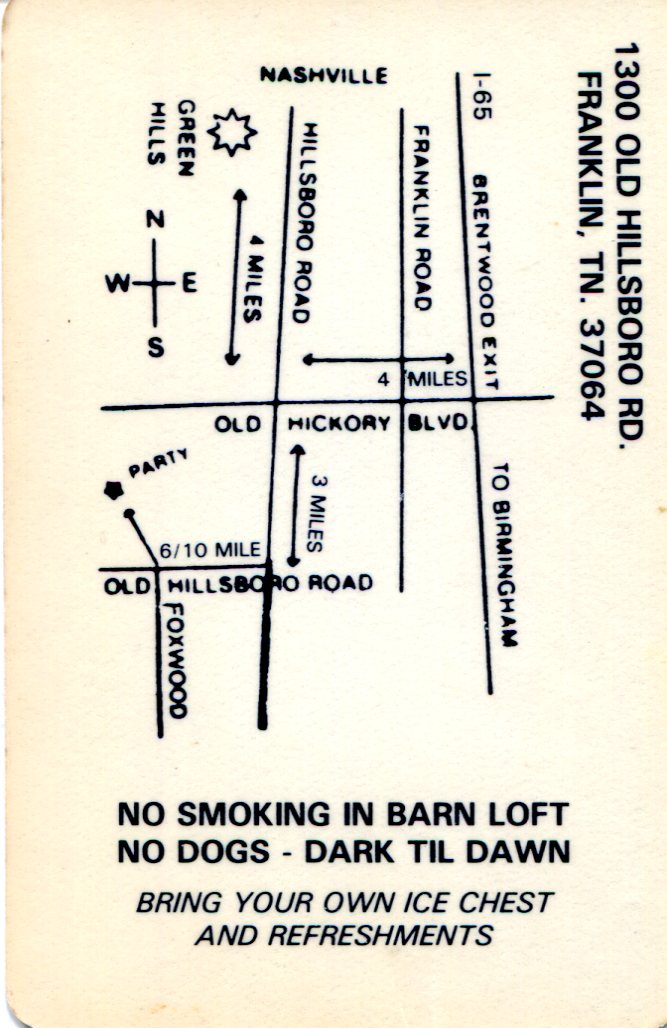
Found this tucked away in an envelope the other day, a relic of my Nashville days — post-college days, that is.

I went to one. I think it was the August 19 party, but I’m not sure. They were held on land not far from town that included a barn. I don’t know who organized them or how I knew about it, though I did go with some of my Nashville friends.

People showed up and sang and played their fiddles and mandolins and banjos and whatnot. Being Nashville, the music was good. No admission, but I think hats were passed around; someone had to pay for the schedule cards and the July 4 fireworks. It was a hoedown. Or a shindig. Or my own favorite of these words, a hootenanny.

That’s more a folk music term, but never mind. I like the word so much I’m going to use it: As a young man in Nashville, I went to a hootenanny. Recommended.

Thursday Scraps

Declining summer is a touch melancholy, but it has its charms. Such as soft cricketsong by night.

Late July and early August were drier than the wet weeks of late spring and early summer, but we did get some rain this week, mostly the non-thundering, gentle sort. Earlier this week, I stood outside under the eave over my back door, and heard water flowing vigorously.

Not something you necessarily want to hear near your roof. Soon I figured it out, to my relief. The dry spell had completely dried the gutters out, so that the new water flowed much more freely. That was the sound: rainwater as it coursed through the gutters on its way to the downspout.

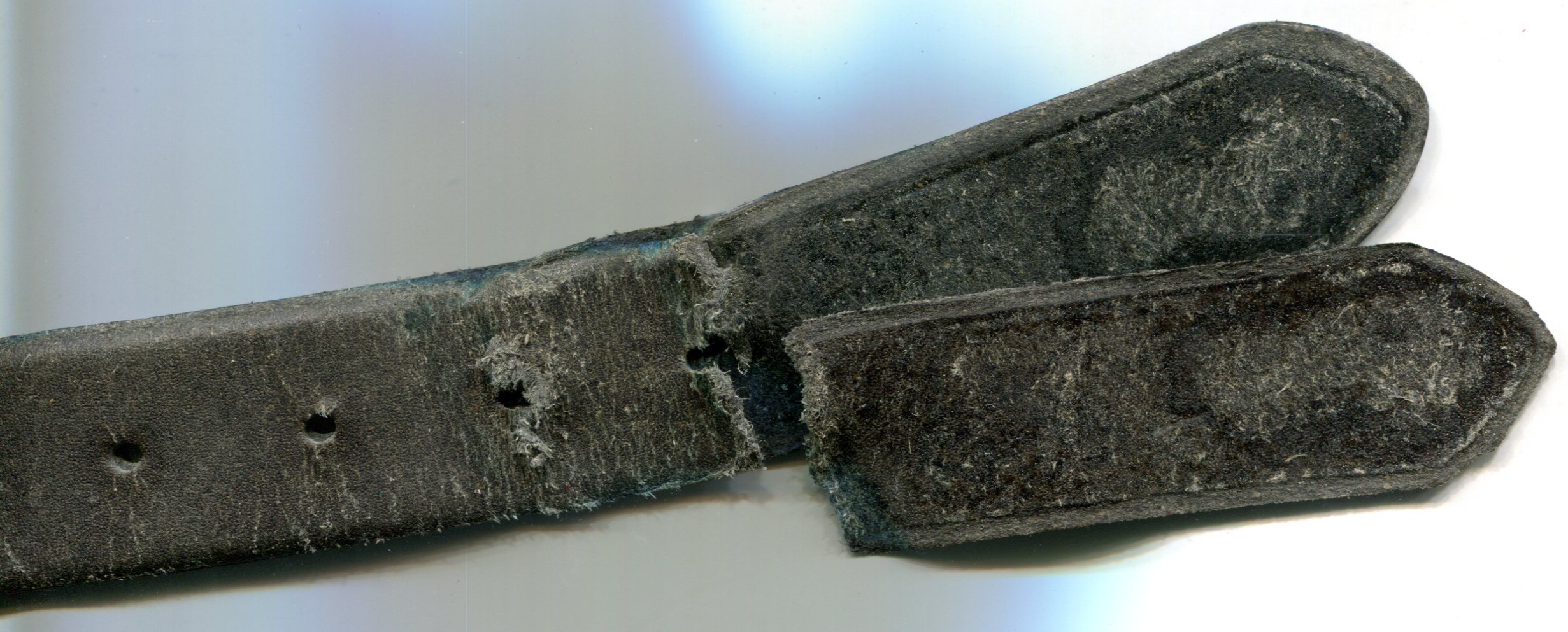
Something I’ve noticed in recent years: when you buy an inexpensive men’s belt, you don’t get a decent belt that lasts a few years, though a little worn at the end. You get cheap crap.

That’s the latest belt of mine to fall apart. There’s an industry for you to disrupt, Mr. Millennial looking for the main chance. Make decent belts. Probably someone’s doing that. Decent, maybe, but also priced five times an ordinary belt.

Recently I finished Everybody Behaves Badly,  subtitled “The True Story Behind Hemingway’s Masterpiece The Sun Also Rises,” by Leslie M.M. Blume (2016). Well written and full of interesting anecdotes. I knew Sun was a roman à clef but I didn’t know much detail or just how lightly Hemingway fictionalized some of the events, much to the embarrassment of the people who went to Spain with him in the summer of ’25.

Some tidbits: in an early draft of the novel, one of Brett’s brief affairs was said to be with an American named Tom who kept polo ponies. Possibly an allusion to the character Tom Buchanan in The Great Gatsby. Didn’t make the final cut.

Robert Cohn was based on Harold Loeb, an unflattering portrait that shadowed Loeb the rest of his life. Loeb and Hemingway didn’t quite come to blows in Pamplona, however, unlike their characters. They were angry enough at each other to fight, but apparently thought better of it.

Not long after the book came out, Hemingway left his first wife for the woman who would become his second. As part of the divorce, he agreed to give wife #1 Hadley Richardson the royalties from Sun, which would have been considerable. Then again, in marrying wife #2 Pauline Pfeiffer, he was marrying into money.

Now I want to read something different than that milieu. So I picked up a book of Eudora Welty short stories.

Summer Sky ’19

No chance of seeing the Perseids this year from northern Illinois: overcast skies for the last few days. Not that seeing the light streaks is that impressive here in the light-washed suburbs, anyway.

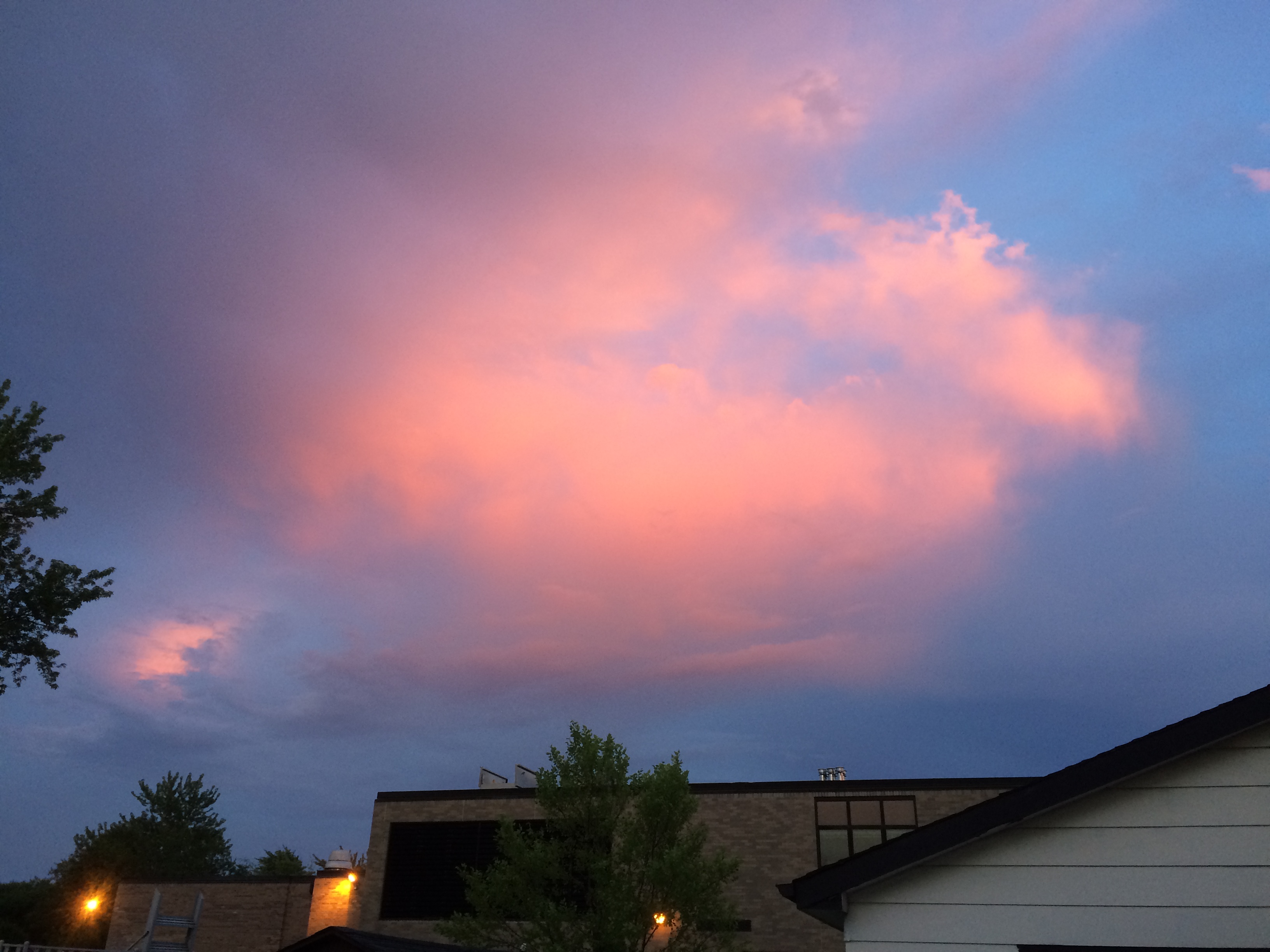
But some days, the summer sky at dusk makes up for all that. Such as a few weeks ago.

Not all the glory of seeing with your eyes, but some of it. The glow was exceptionally ephemeral. I walked outside and noticed the color. I happened to have a camera in my pocket. About five minutes later, after I finished my outside business — taking out the trash —  the glow was almost gone.

Gentlemen Who Invented Pharmacy

Not long ago I was finally inspired to find out something that has eluded me for many years. Maybe eluded isn’t the word. I haven’t tried to nail down the information very hard. Or at all, because it isn’t that important.

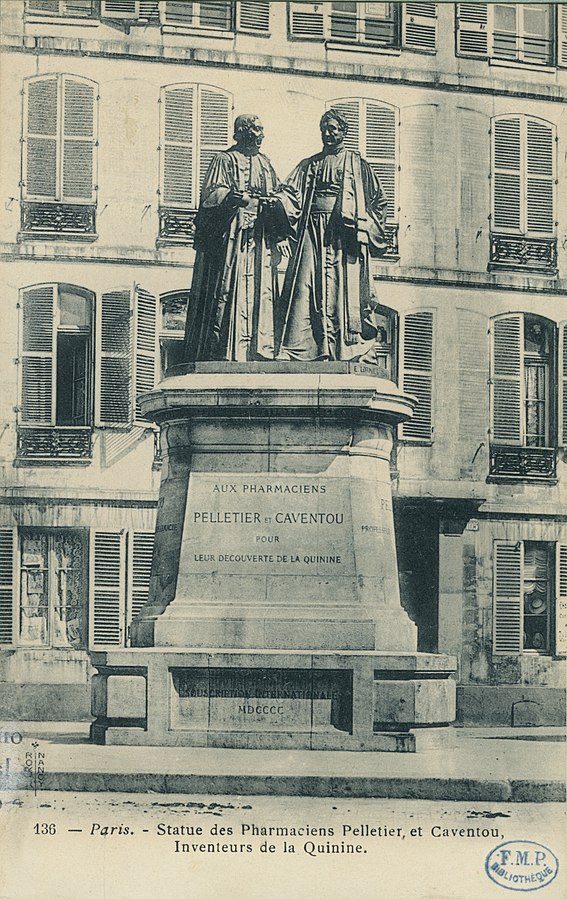
Non-importance shouldn’t be an obstacle to curiosity, however. So I did some looking around and found out that the statue mentioned in passing by the wisecracking and ever-so-tight Bill Gorton in The Sun Also Rises — literally in passing, since the characters are walking by it — is that of Pelletier and Caventou, which in the mid-1920s was on the Boulevard St. Michel.

Wiki: “In 1820, French researchers Pierre Joseph Pelletier and Joseph Bienaimé Caventou first isolated quinine from the bark of a tree in the genus Cinchona – probably Cinchona officinalis – and subsequently named the substance.”

Sun (Chapter 8): “We walked down the Boulevard [St. Michel]. At the juncture of the Rue Denfert-Rochereau with the Boulevard is a statue of two men in flowing robes.

” ‘I know who they are.’ Bill eyed the monument. ‘Gentlemen who invented pharmacy. Don’t try and fool me on Paris.’ ”

This is what that statue looked like in the time of Sun, courtesy of a card from the collection of Bibliothèque interuniversitaire de santé. Erected in 1900.
As far as I can tell, Rue Denfert-Rochereau — actually Avenue — doesn’t meet Boulevard St. Michel in our time. Close, but not quite. Either the streets have been reconfigured in 90 years or Hemingway was wrong.

In any case, the statue of two men in flowing robes is gone. One of many Paris bronzes melted down by the Germans during the occupation, various sources tell me. Now Pelletier and Caventou have a less literal memorial, or at least they did as of last summer, according to Google Street View.

A reclining figure on a plinth at Boulevard St. Michel and Rue de l’Abbé de l’Epée, evidently part of a fountain, since the memorial is called La fontaine des pharmaciens. Maybe the figure’s stricken with malaria. If I ever make it back to Paris, I’ll make a point of walking by. But I probably won’t be tight.