Le Corbusier & Ando

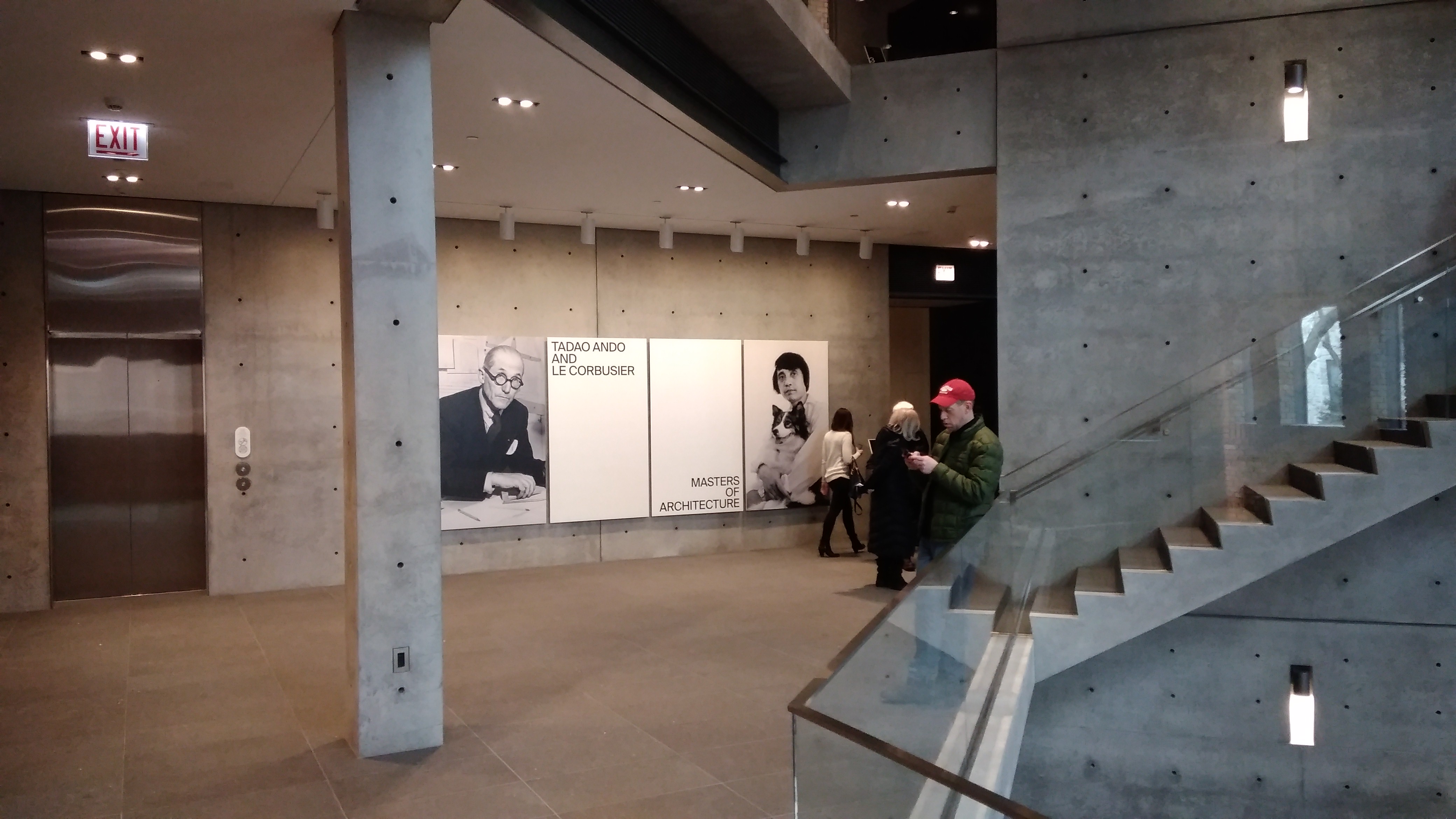
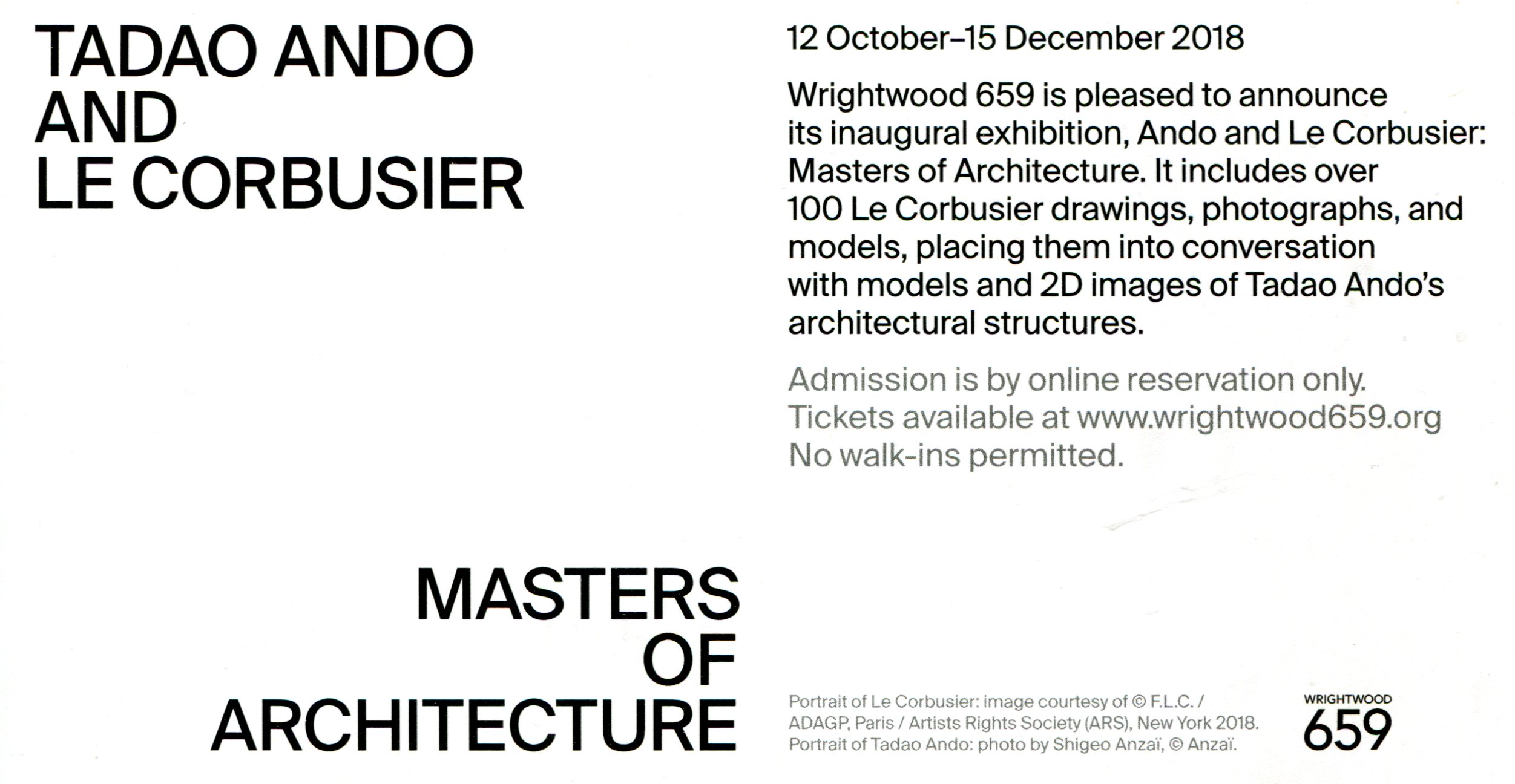
The first-ever exhibit at Wrightwood 659 is called Tadao Ando and Le Corbusier: Masters of Architecture. You’d think the more alliterative Masters of Modernism would be the thing, but probably the organizers thought that would be too narrow. And Masters of Human Creativity would be too broad.
The Le Corbusier exhibit was on the second floor. Pictures and paintings and models and a lot to read.
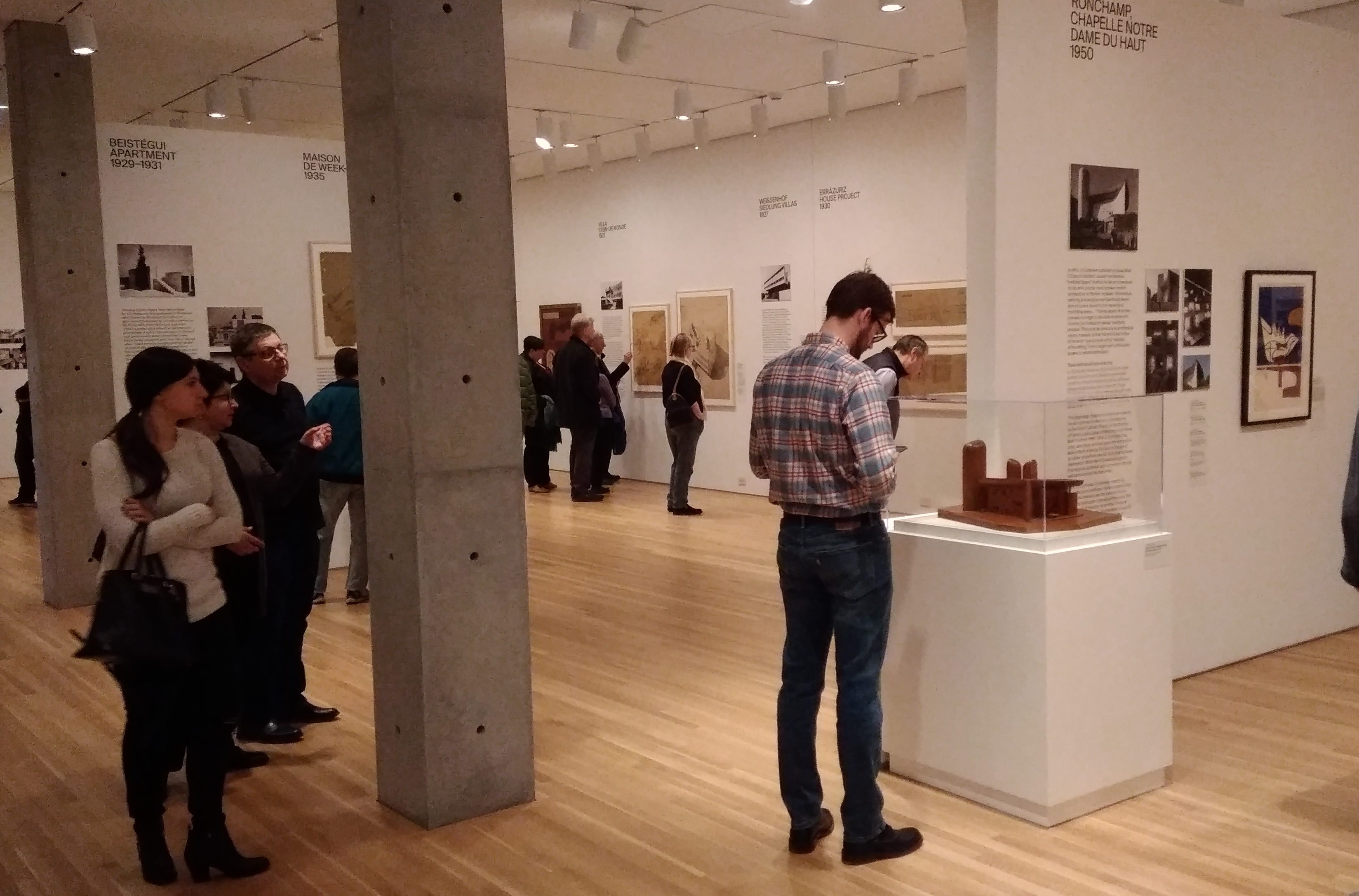
Before I’d only had a casual acquaintance with his output. I didn’t know about his paintings, for instance. Such as Taureau VIII (Bull VIII), 1954.
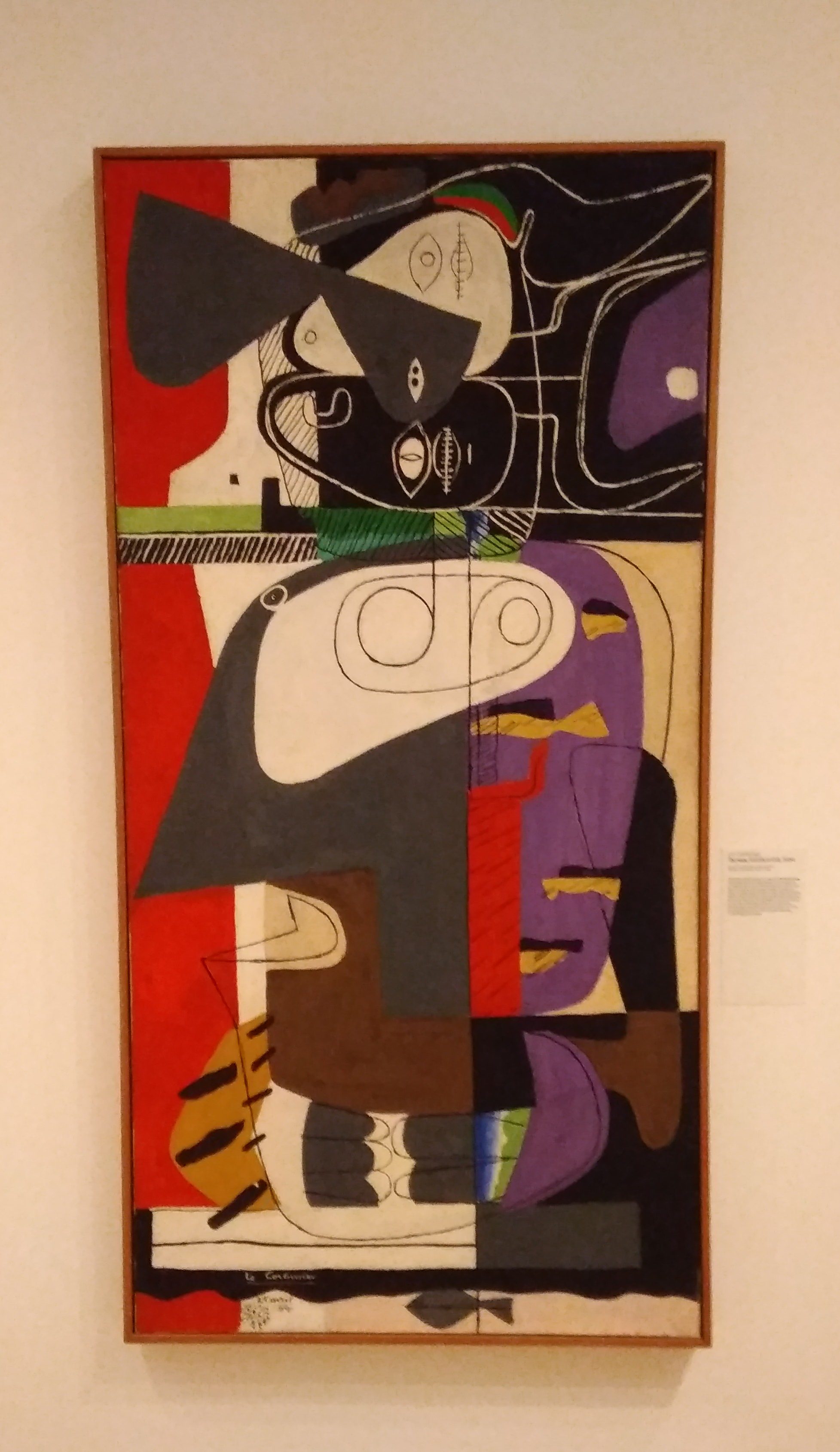
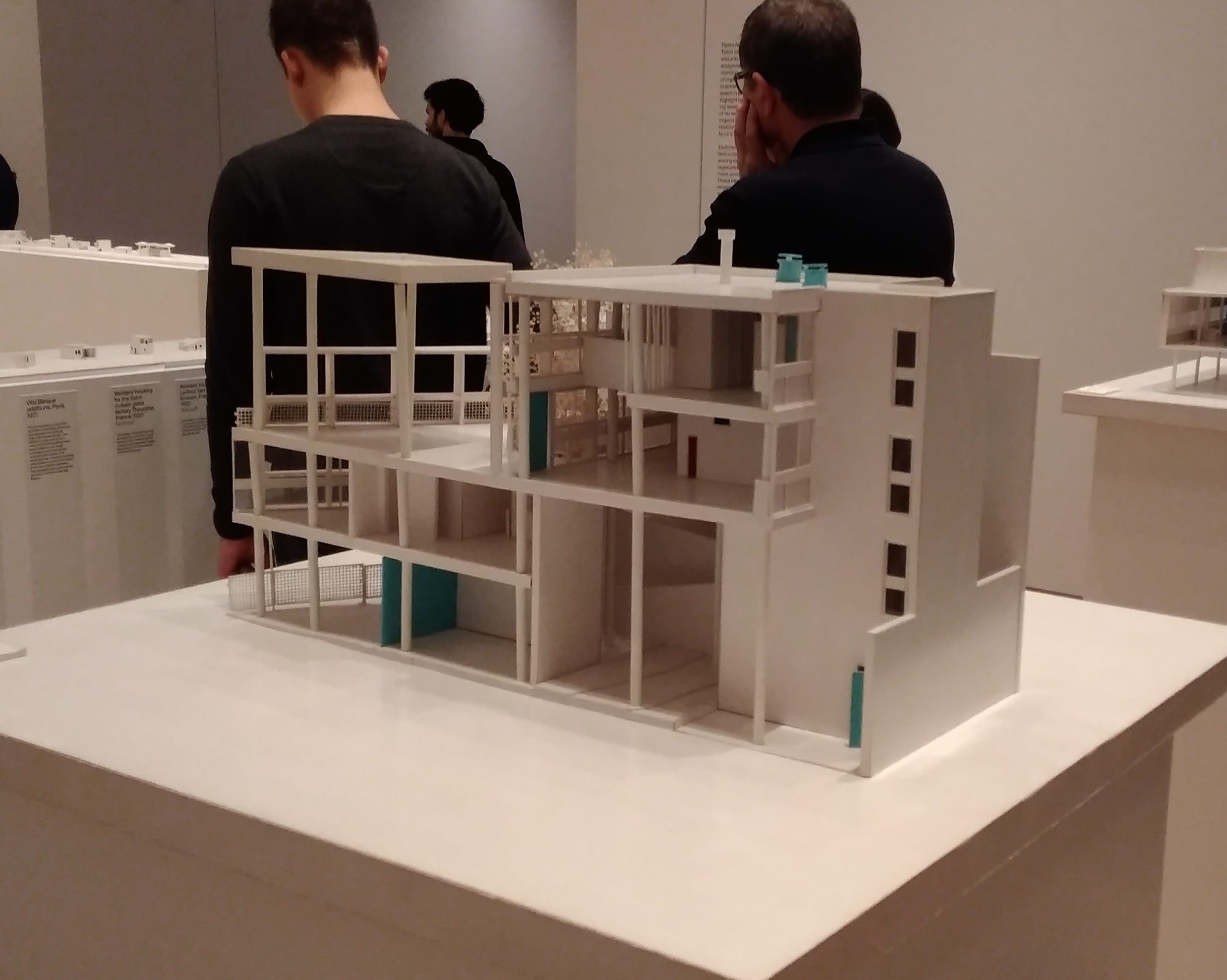
Looks suspiciously Picassoesque to my unlearned eye, but I don’t doubt Le Corbusier’s creativity. The models for some of his buildings, built and unbuilt, show that well enough.

A house he designed in Argentina, 1949.
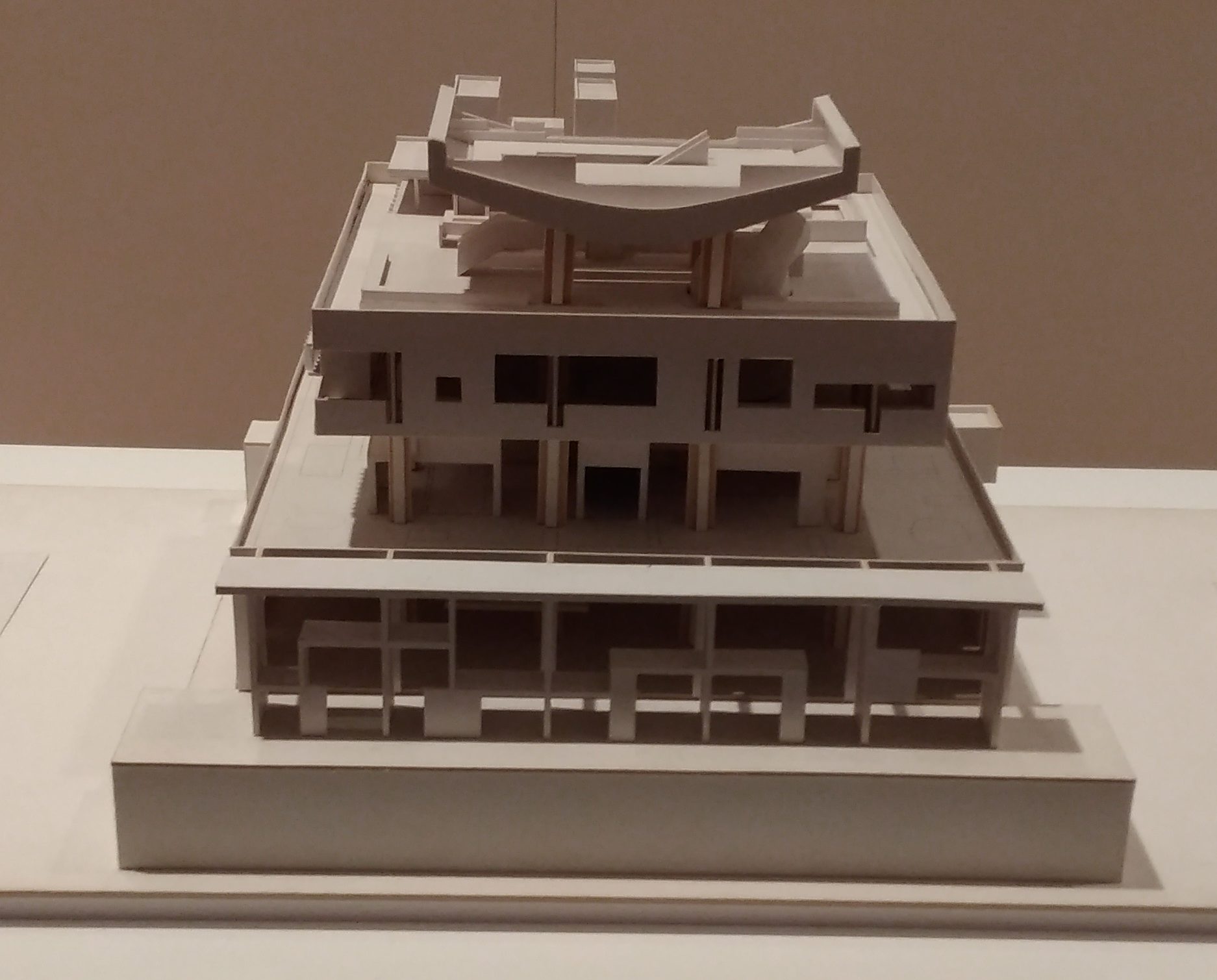
An unbuilt governor’s palace for Punjab State in India, 1950-65.
Still, when I looked at some of the models, I couldn’t help being reminded of every ugly modernist box I’ve ever seen, even if his own work — in this case Le Corbusier’s Cité Radieuse in Marseille — had a bit more style.
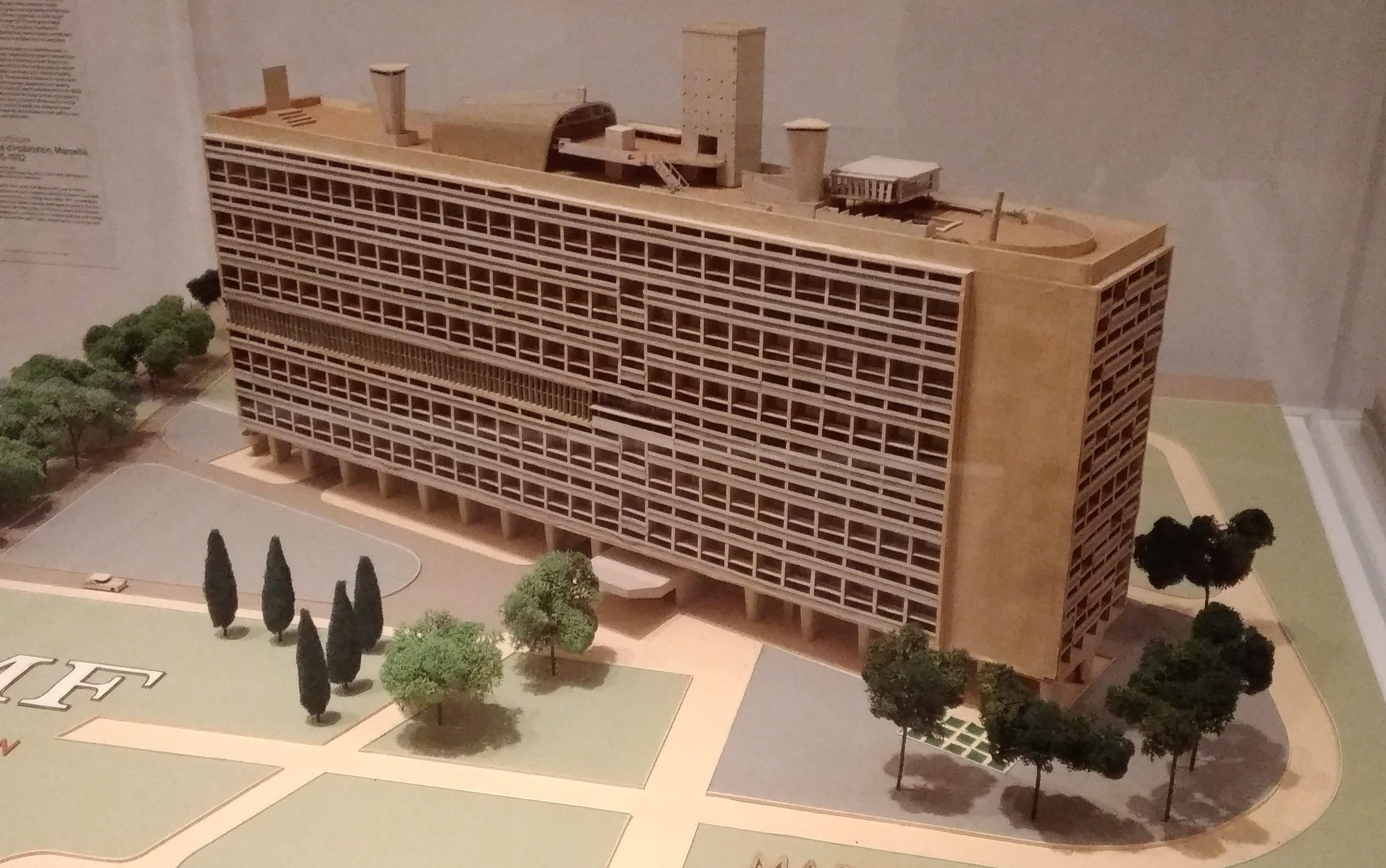
Remarkably, the building now includes the Hôtel Le Corbusier on two floors, and some color seems to have been added to the exterior. Even more remarkably, according to the Telegraph: “Double rooms from €79 (£67) year-round, an incredibly reasonable rate for the opportunity to sleep within an architectural icon.”

Reasonable all right. If the hotel were in this country, its owner would brag about curating Le Corbusier’s legacy, tout its upscale amenities, and charge three or four times as much.

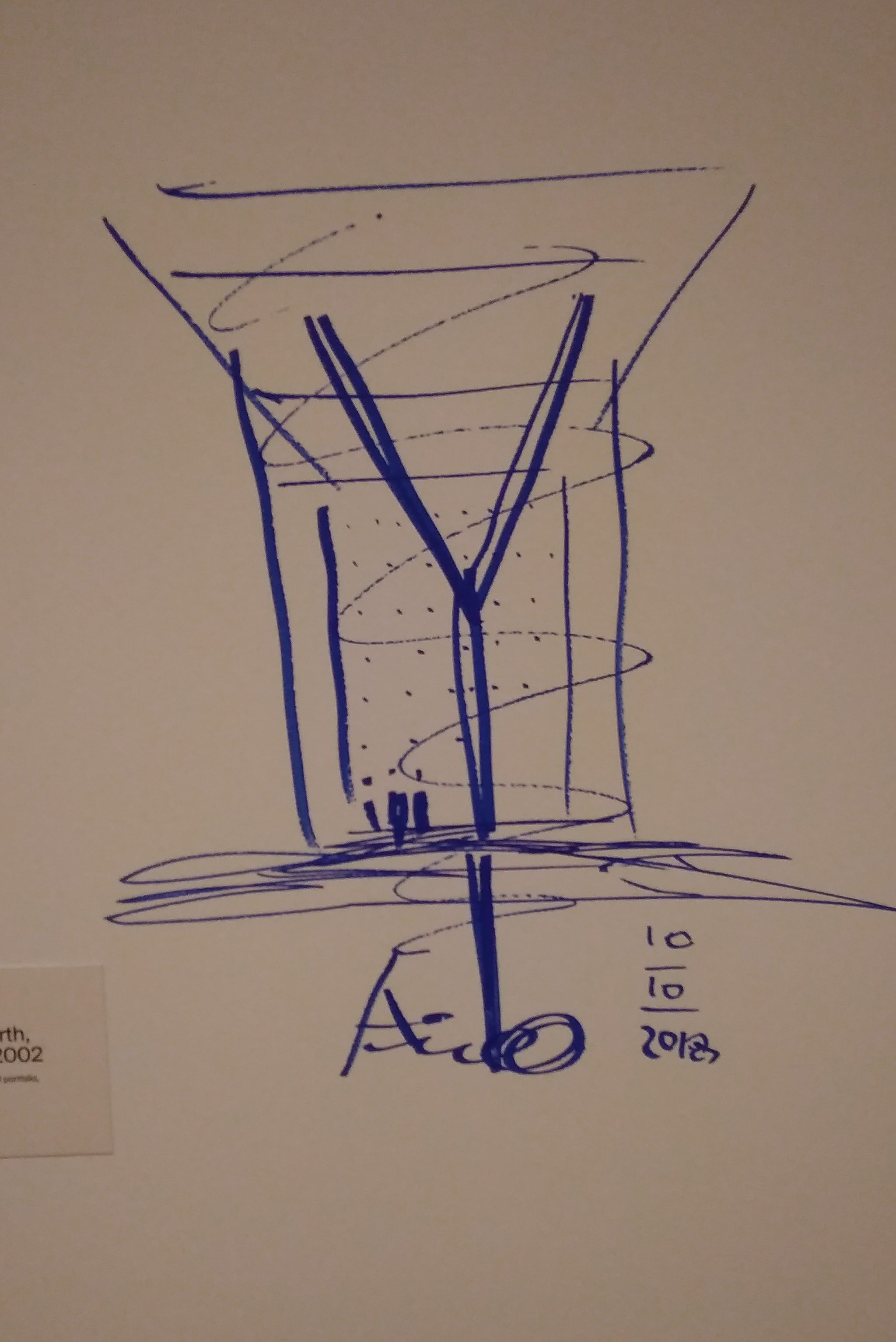
On floors three and four of Wrightwood 659 were the Ando exhibits. I believe Ando has some advantages over Le Corbusier. He’s alive, for example, and could visit the exhibit when it opened and draw on the walls. This doodle evokes the Modern Art Museum of Fort Worth, which he designed.
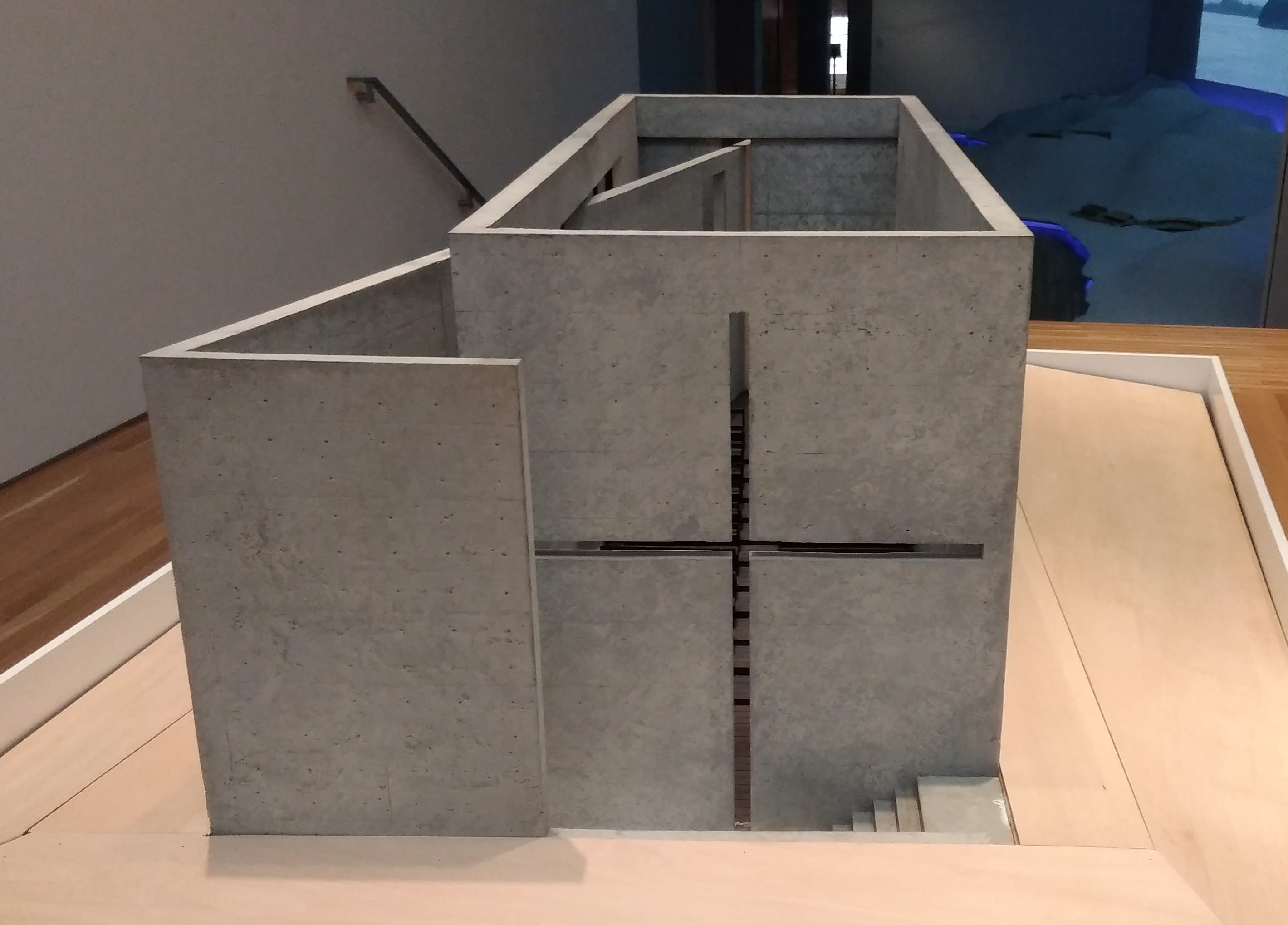
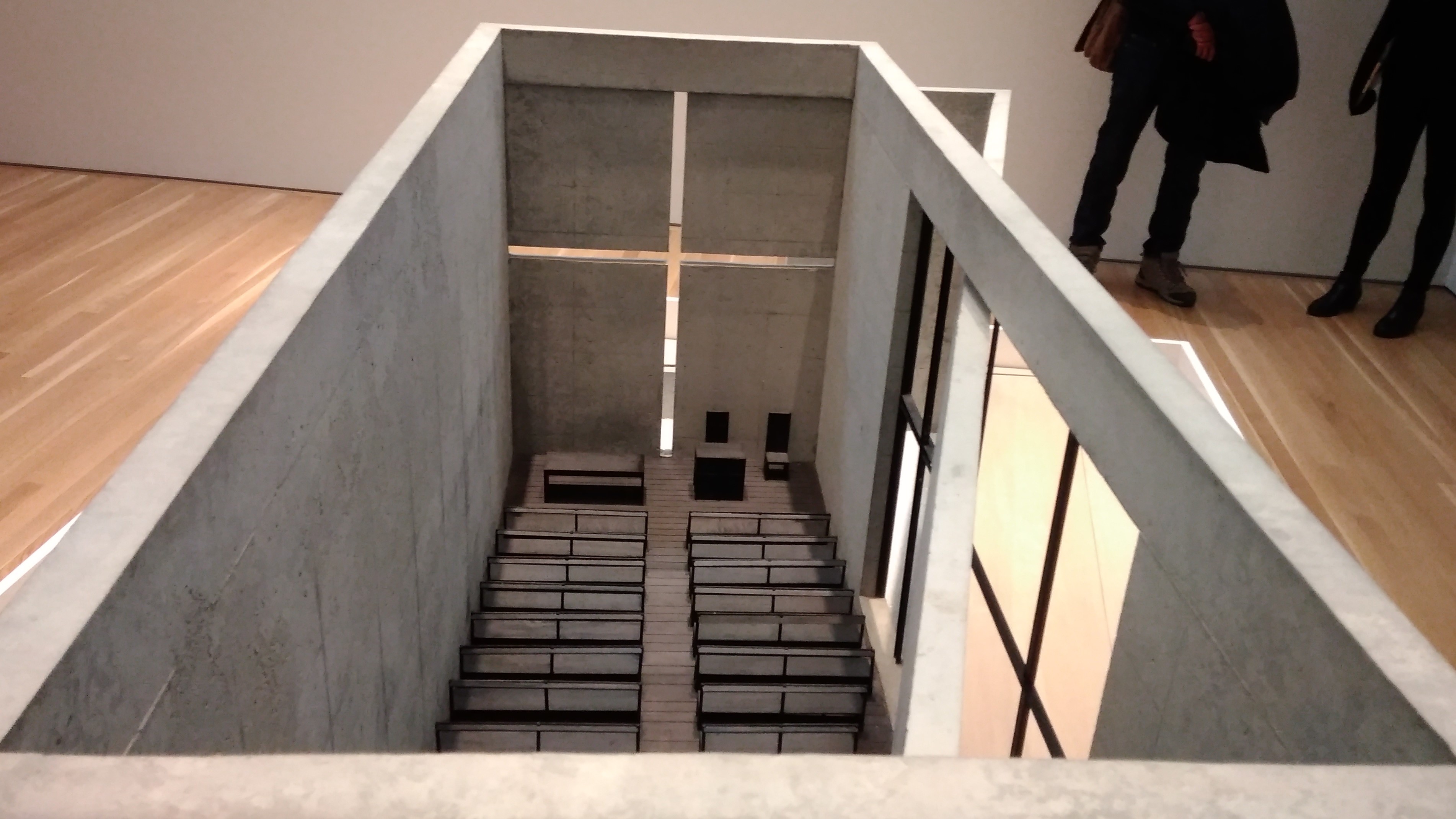
Also, Ando is a niche practitioner who does marvels in concrete, not someone inspiring a rash of urban renewal destruction and ugliness. Here’s a model of Ando’s Church of the Light near Osaka. I need to visit someday.
A lot of the third floor was taken up with a model of Naoshima, a small island in the Inland Sea that’s large enough to be home to a number of Ando-designed museums, developed over the last few decades.

Know where else I need to visit? Naoshima. There are just too many interesting places in the world.
Wrightwood 659

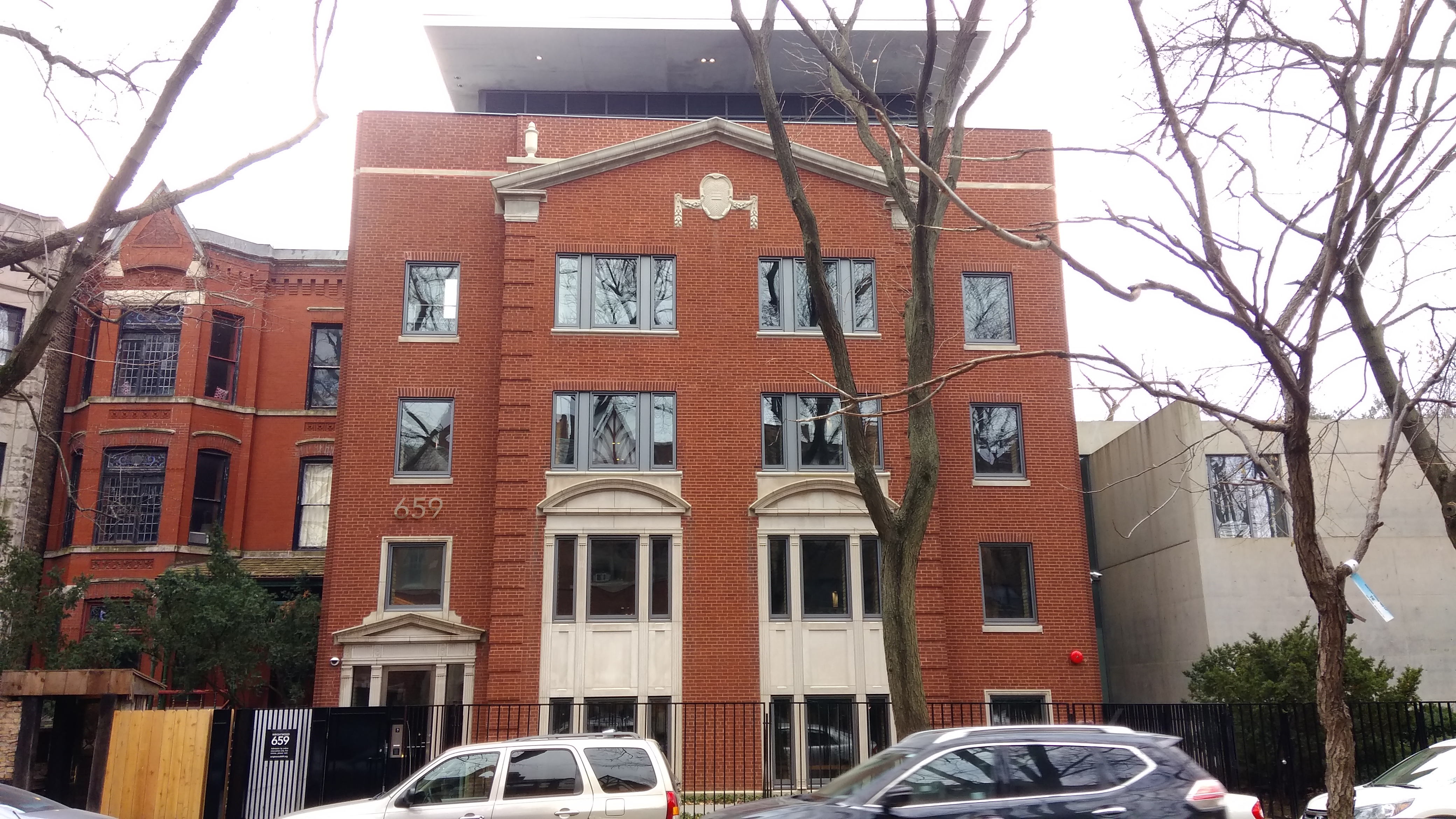
Saint Clement and a stroll in Chicago’s Lincoln Park neighborhood were nice, but we’d come to the city last Saturday morning to see Wrightwood 659, a new exhibition space designed by architect Tadao Ando. Yuriko has a fondness for him, and not just because he’s Japanese, or even that he’s from Osaka, though those help. A few years ago, she was impressed by the Church of the Light in Ibaraki in Osaka Prefecture, one of his works.

I have a sneaking admiration for him too. The man has a way with concrete.

You wouldn’t know that looking at the front elevation of Wrightwood 659, which happens to be at 659 W. Wrightwood Ave.
The space, opened only in October, is the redevelopment of an ordinary Lincoln Park apartment building dating from the late 1920s.

“The building greets the visitor with a refurbished facade adorned with arches, festoons and other Beaux-Arts details,” Blair Kamin wrote in the Tribune. “But the decorous facade turns out to be a mask. Like a ship in a bottle, the project inserts a new steel and concrete frame inside the brick walls; the frame braces the old walls and turns the original four floors into three. A concrete slab that floats building’s new identity.

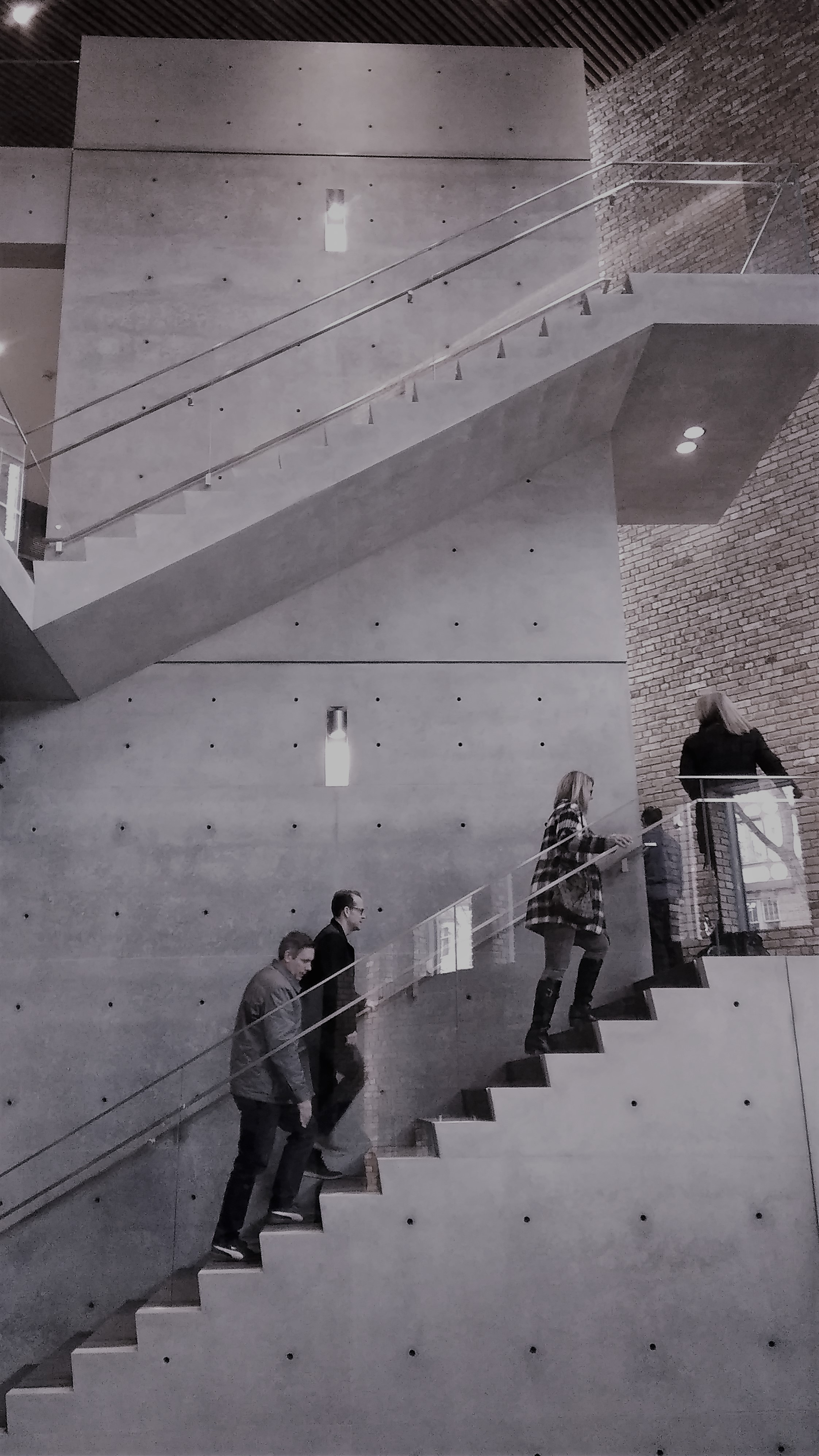
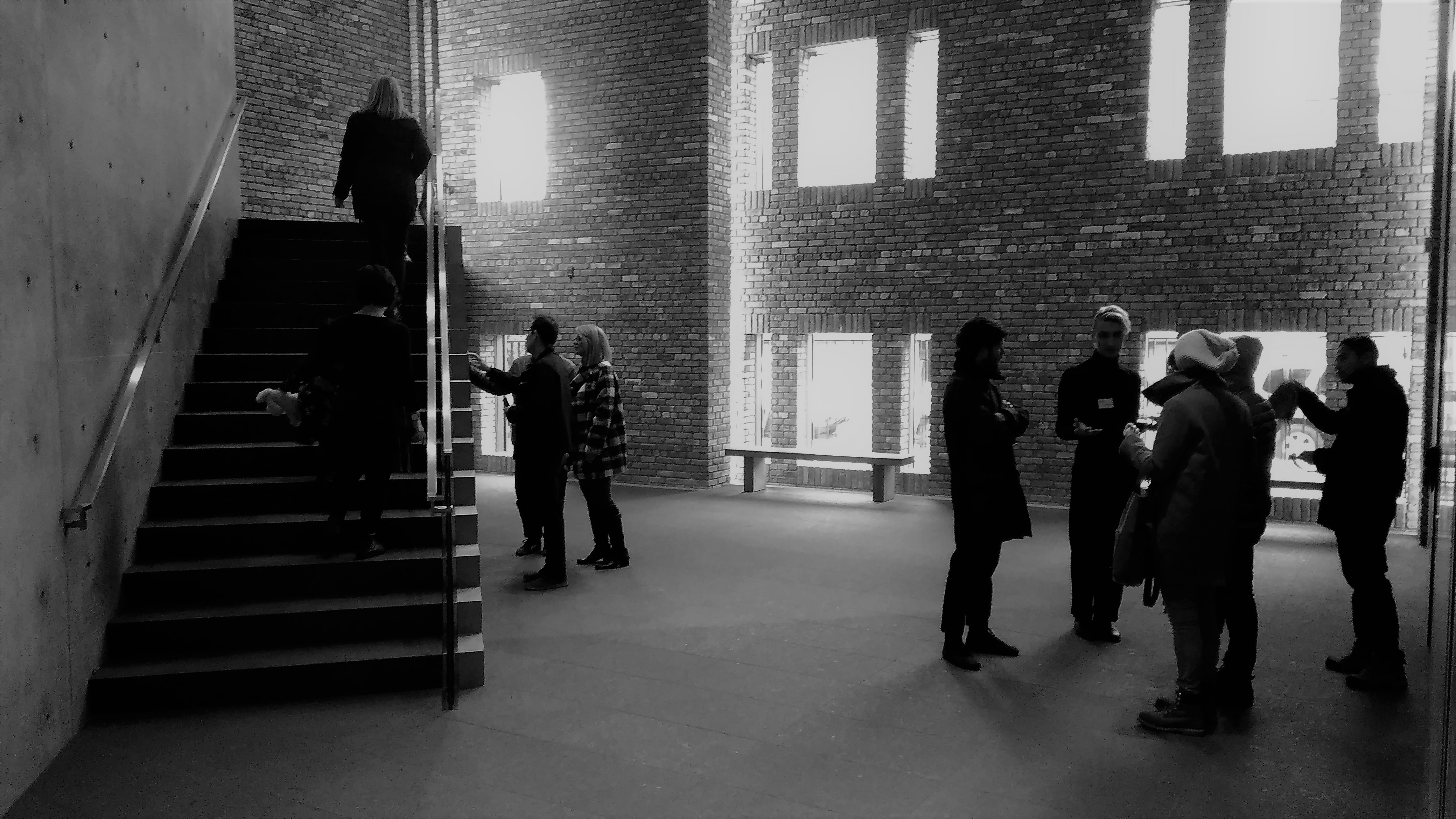
“Ando gives us that kind of space in Wrightwood 659’s lobby, an unexpected, four-story burst of space that’s energized by the rhythmic treads and risers of an exposed concrete stair that corkscrews upward. Common brick recycled from the original building’s corridor lines the walls, its mottled texture in counterpoint with finely honed stairs.”

The staircase is signature Ando.
This image is untinted, reflecting the true color of the walls.
I understand that the dog’s name was “Corbusier.”
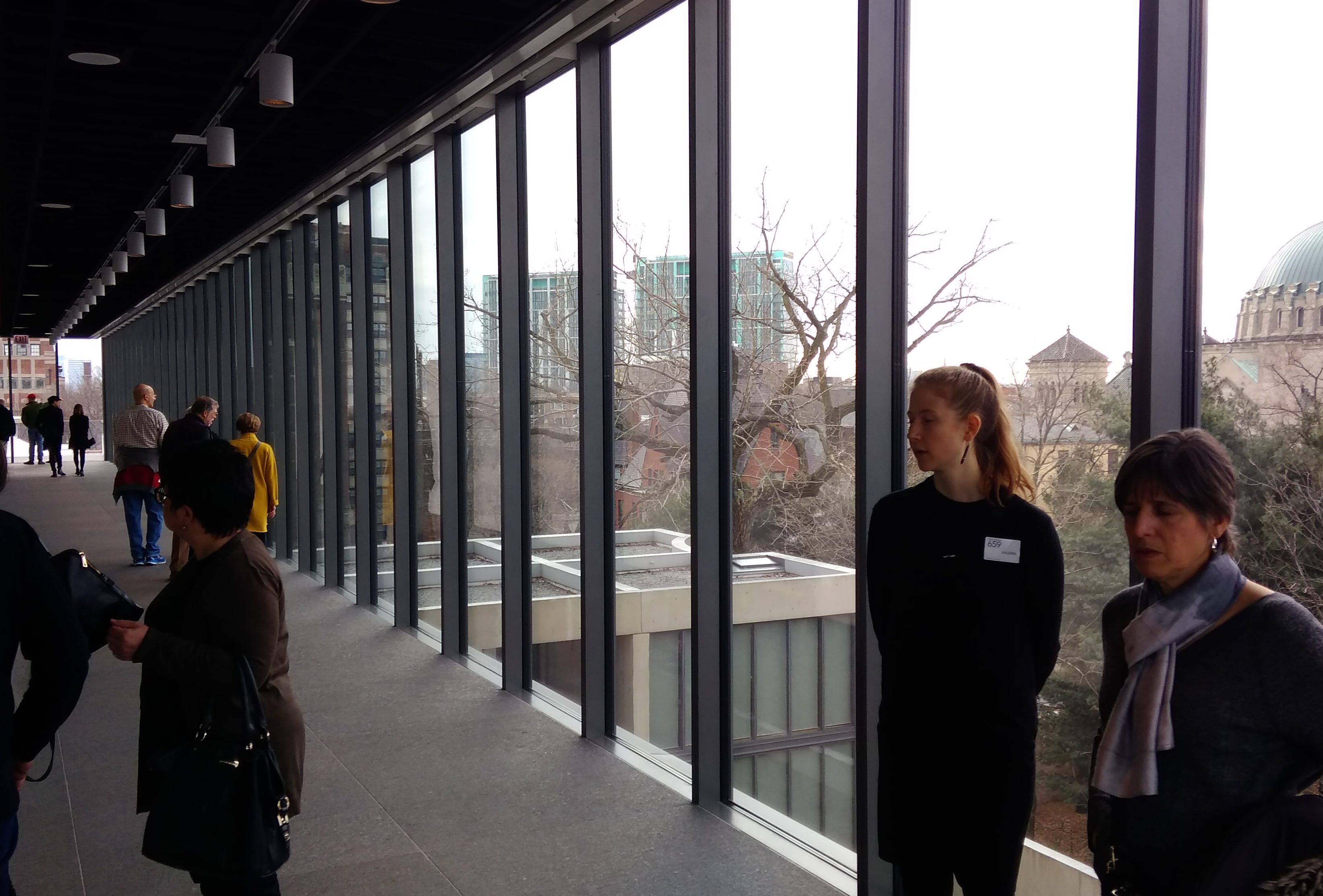
Gallery space on the second floor, at least until this Saturday, features an exhibit about Le Corbusier, and the third- and fourth-floor galleries are devoted to Ando. The fourth floor west-facing wall, which is floor-to-ceiling glass and steel, has a terrific view of the neighborhood.
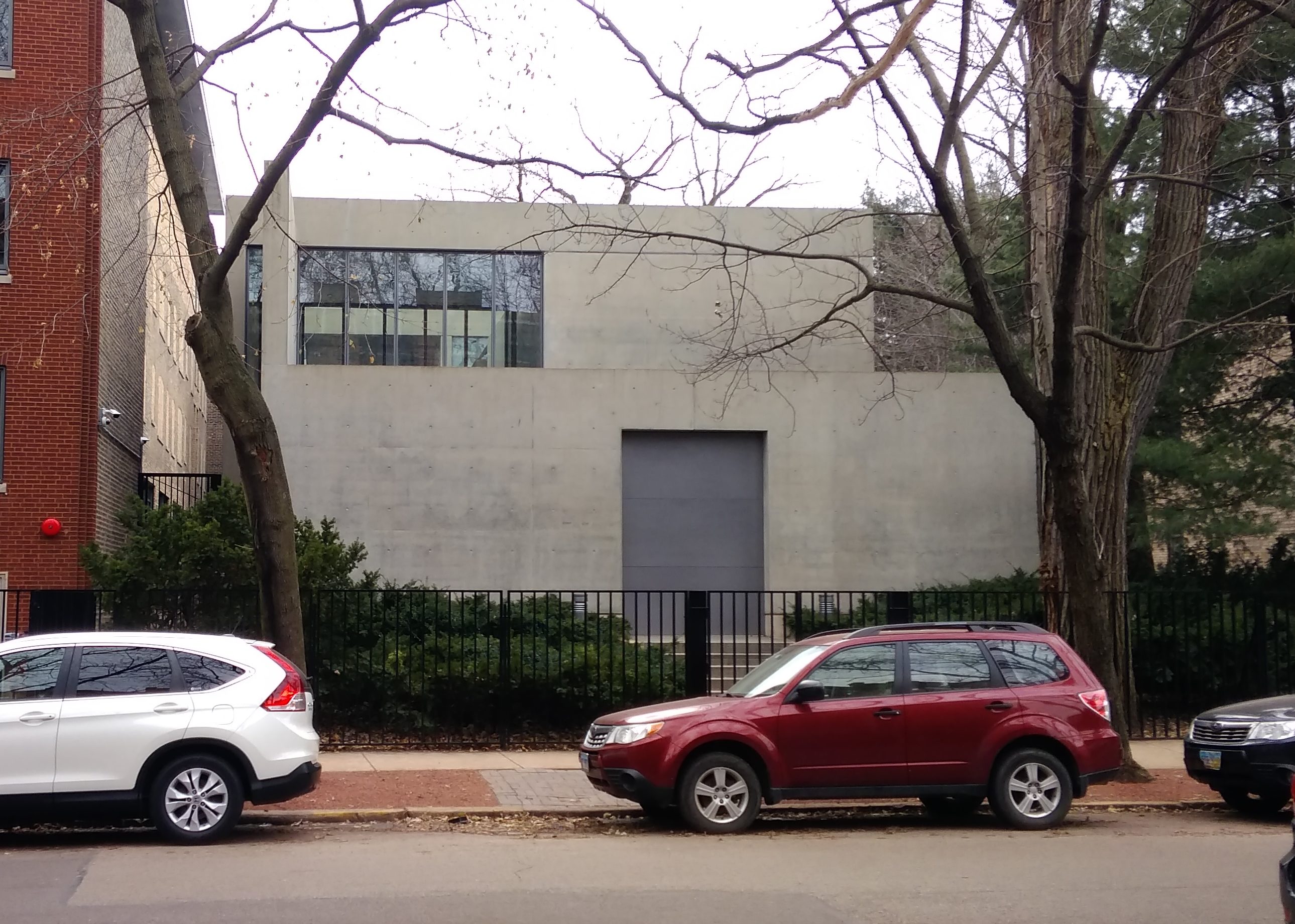
The view also looks down on the Ando-designed, 665 W. Wrightwood Ave., a 1998-vintage private house owned by Fred Eychaner, a Chicago media mogul. Eychaner must like Ando’s work, since he was the moving force — and probably most of the money — behind the establishment of Wrightwood 659.

Eychaner is inevitably described as “reclusive.” As we were leaving, I took a look at the front of 665 W. Wrightwood, nestled as it is among ’20s-vintage apartments.
Yep, that wall pretty much says, Go away, leave me alone.

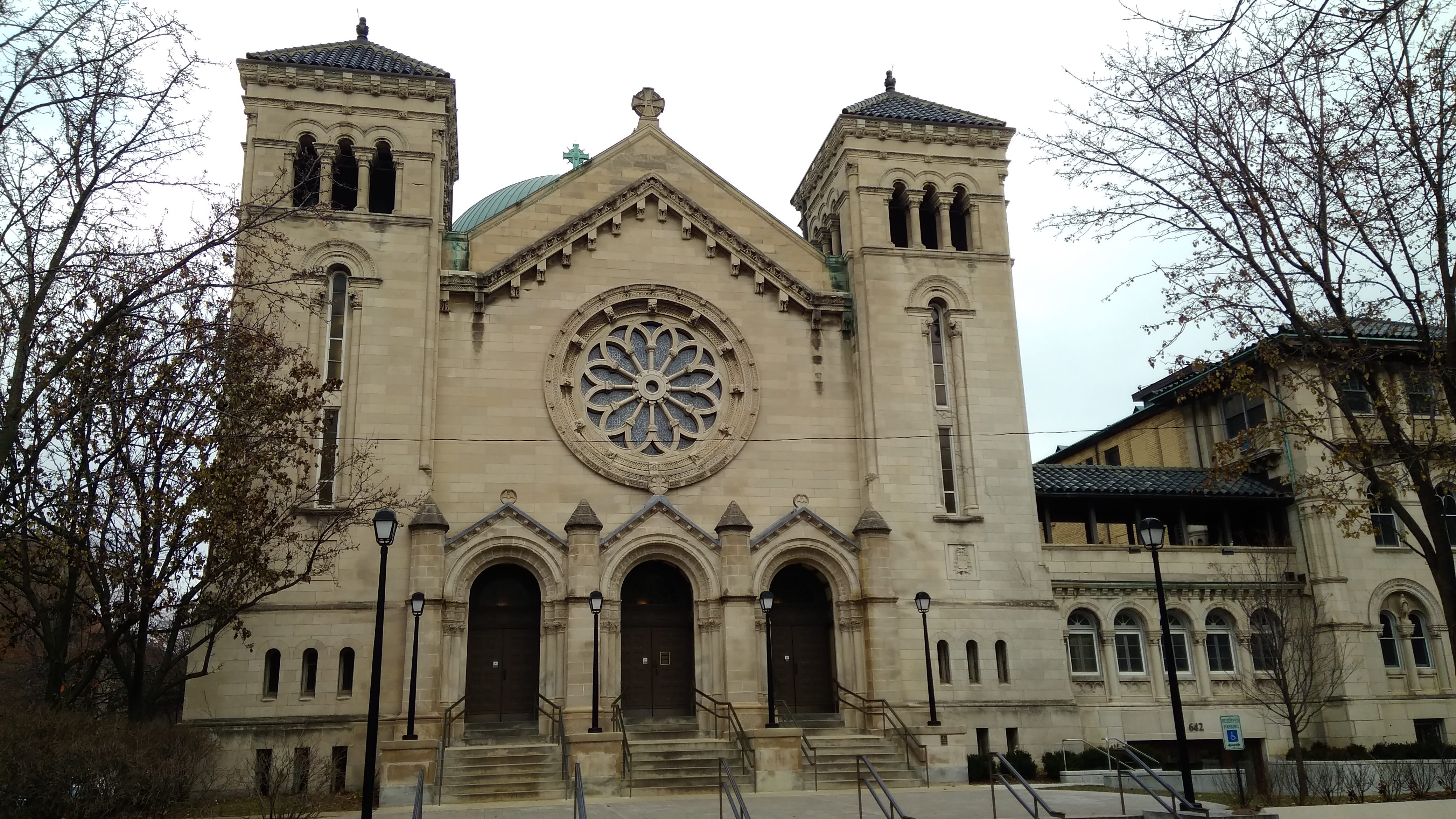
Saint Clement Church, Chicago

At noon on Saturday, we’d just emerged onto the street in the Lincoln Park neighborhood of Chicago when we heard church bells nearby. A robust peeling that commanded our attention.

We soon figured out that they were the bells of Saint Clement. What do the bells of Saint Clement say? Oranges and lemons. A different church, but never mind. I might not know that if I’d never read 1984, but what kind of person would I be if I’d never read 1984?

Naturally, I wanted to see if the church was open. The bells gave us extra incentive to take a look. Saint Clement is at N. Orchard St. and W. Deming Pl.
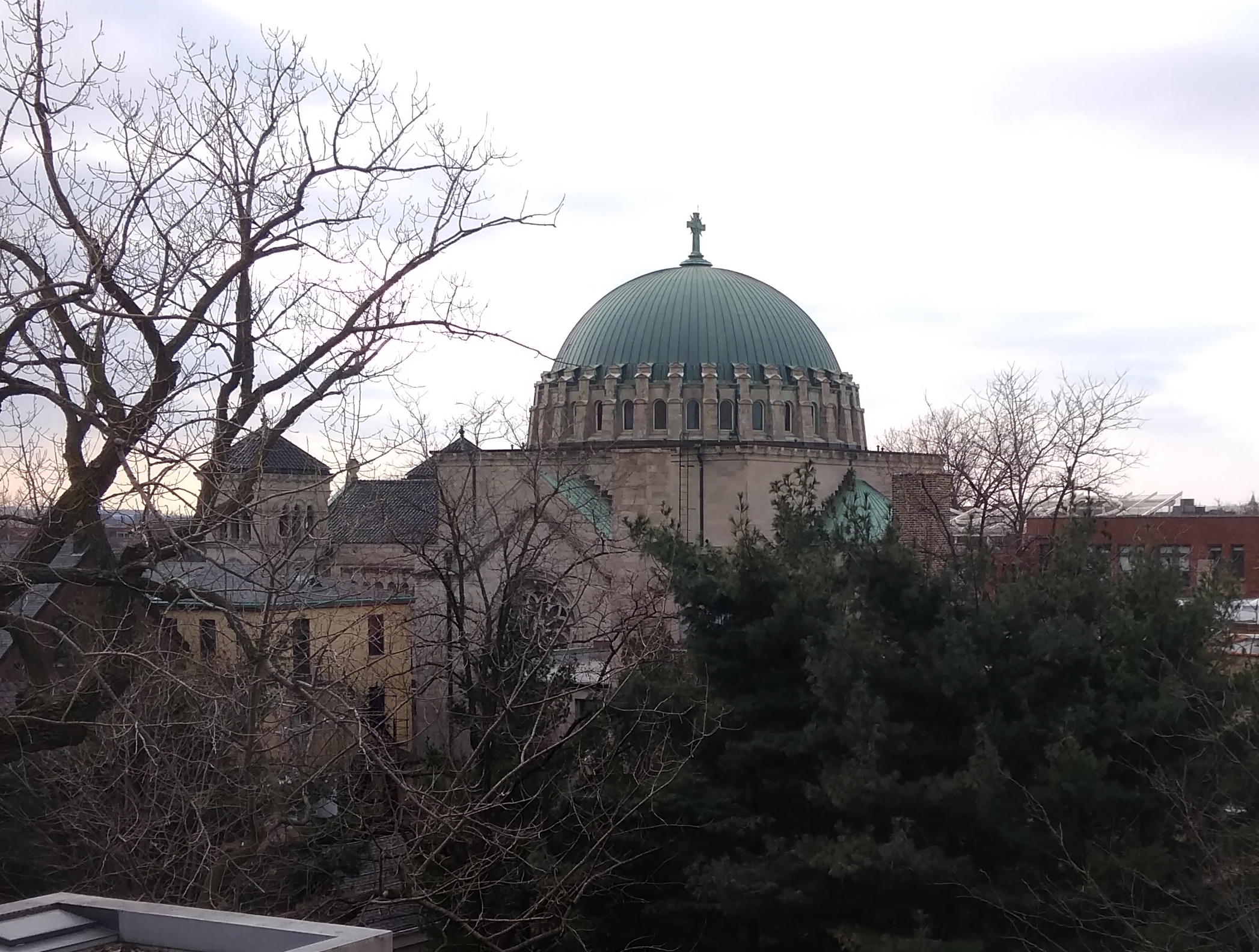
Not long before, we’d seen the striking dome of the church from a fourth-floor view, more about which later.
Saint Clement in Chicago is 100 years old, originally built by German Catholics. St. Louis architect Thomas Barnett designed the church. He also did the Byzantine-style Cathedral Basilica of St. Louis, and Saint Clement reminded me of that place of worship, though without the mosaics.

The interior was dark when we visited. It must be expensive to light such a large place. Besides, I imagine that most large churches in most places during all the pre-electric centuries were dark most of the time. Here are some pics with all the electric light blazing and it must be quite a sight. But even dark, the place was impressive (and it would be fine to see it lighted by candle).

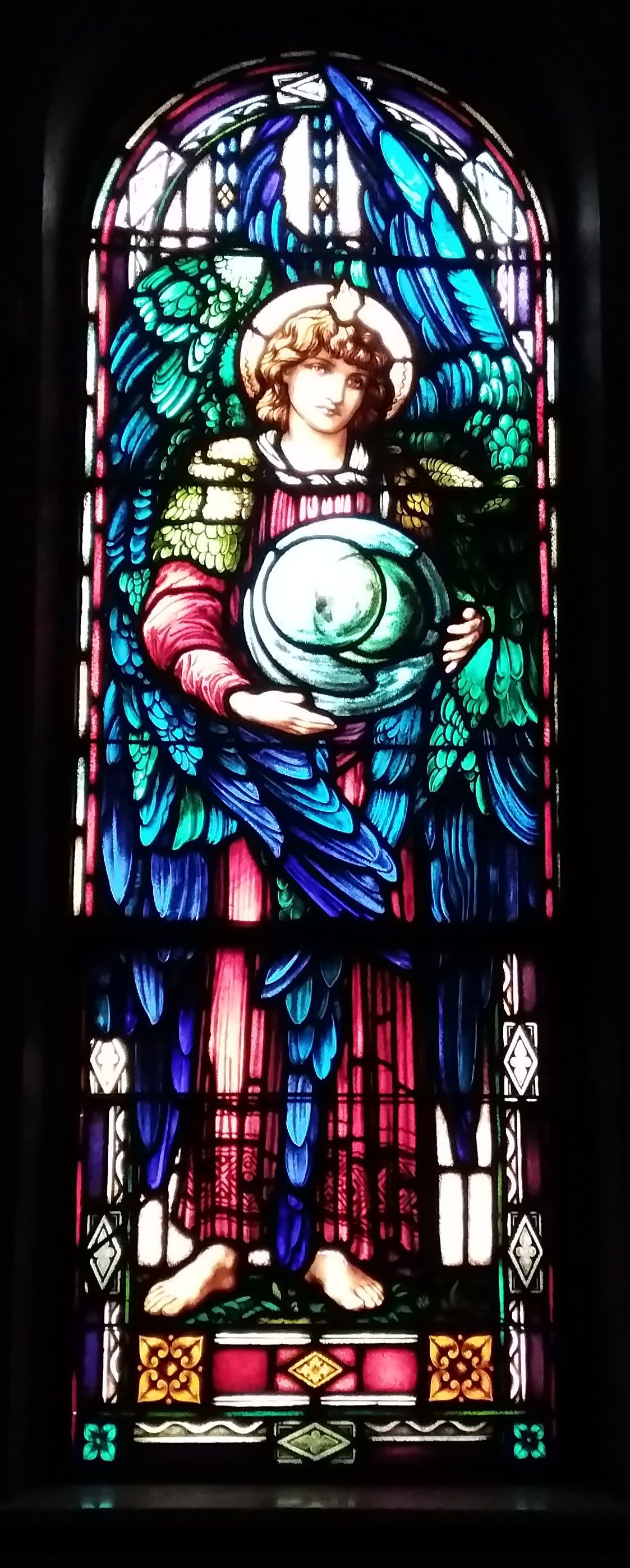
On an overcast day, the stained glass was well illuminated.

Of course I had to look up St. Clement. I might have learned about him in passing in New Testament class, but that was a good many years ago. Anyway, he was the fourth bishop of Rome and, according to legend, found martyrdom ca. AD 101 in a distinctive way: tossed into the Black Sea tied to an anchor.

That would account for the anchor motif I saw on the exterior of Saint Clement School, which is across the street from the church. If I’d had a bit more light, I might have found that in the church as well.

W. Deming Place, Chicago

Among Chicago streets, W. Deming Pl. seems to be a two-block runt. Or five very short blocks, if you count every minor cross street. Deming’s west end is at N. Orchard St. and its east end is at Lakeview Ave., which is the edge of Lincoln Park at that point — the actual park, not the neighborhood of that name.

Fairly early on Saturday, we took a short stroll down Deming, from N. Orchard to N. Clark St., a major commercial artery. Temps were below freezing, but not by much, so a brisk walk wasn’t bad.

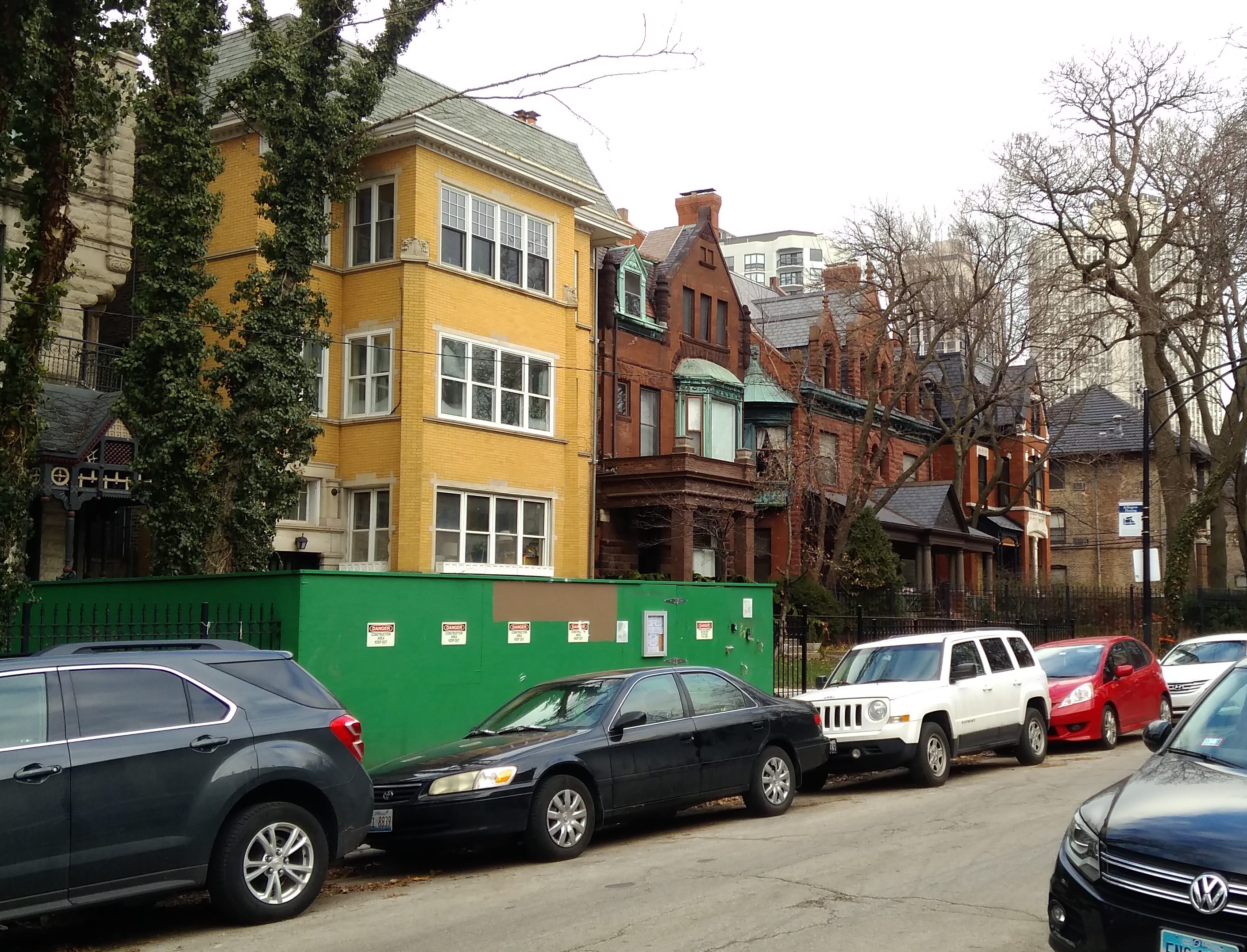
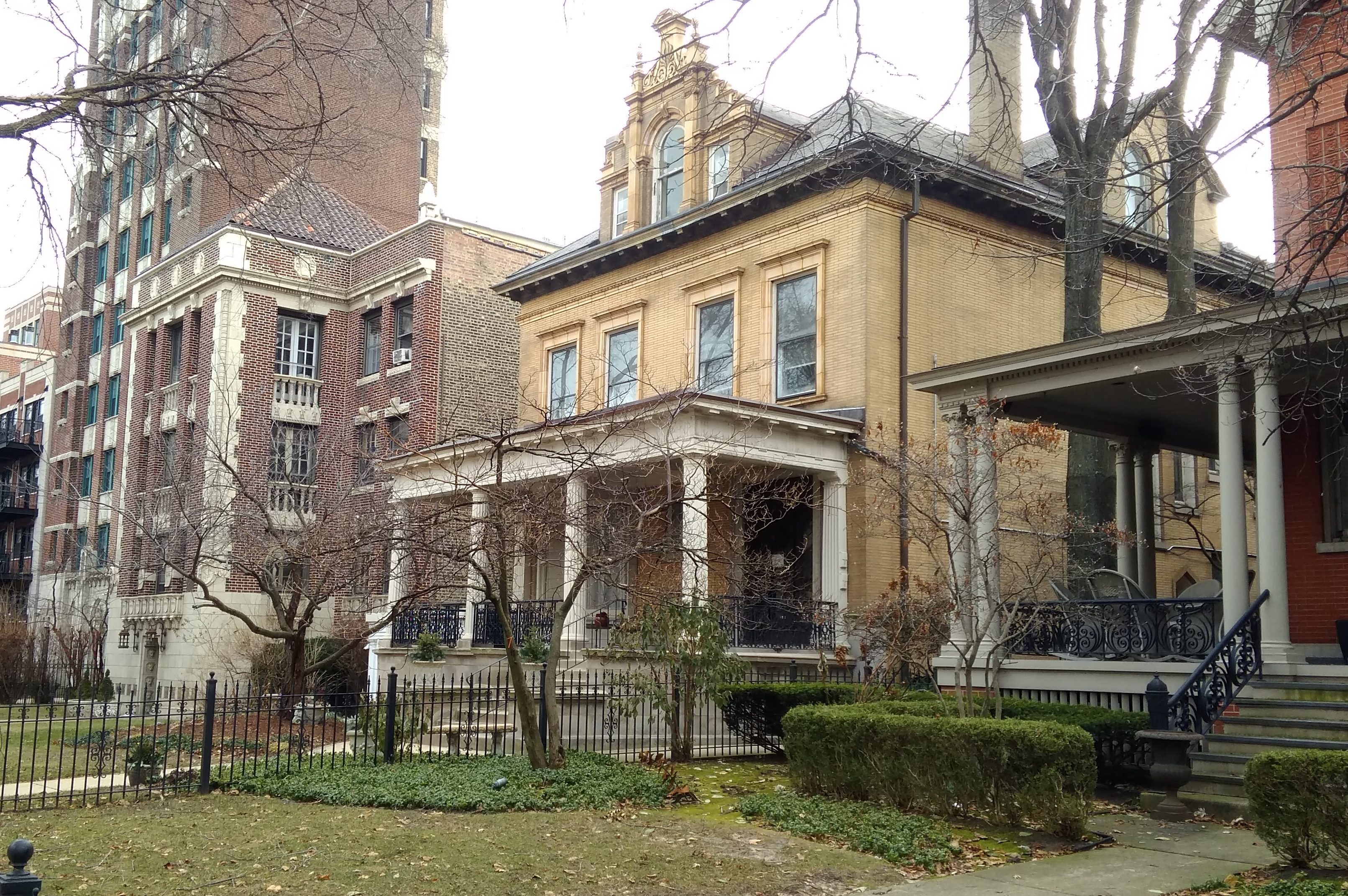
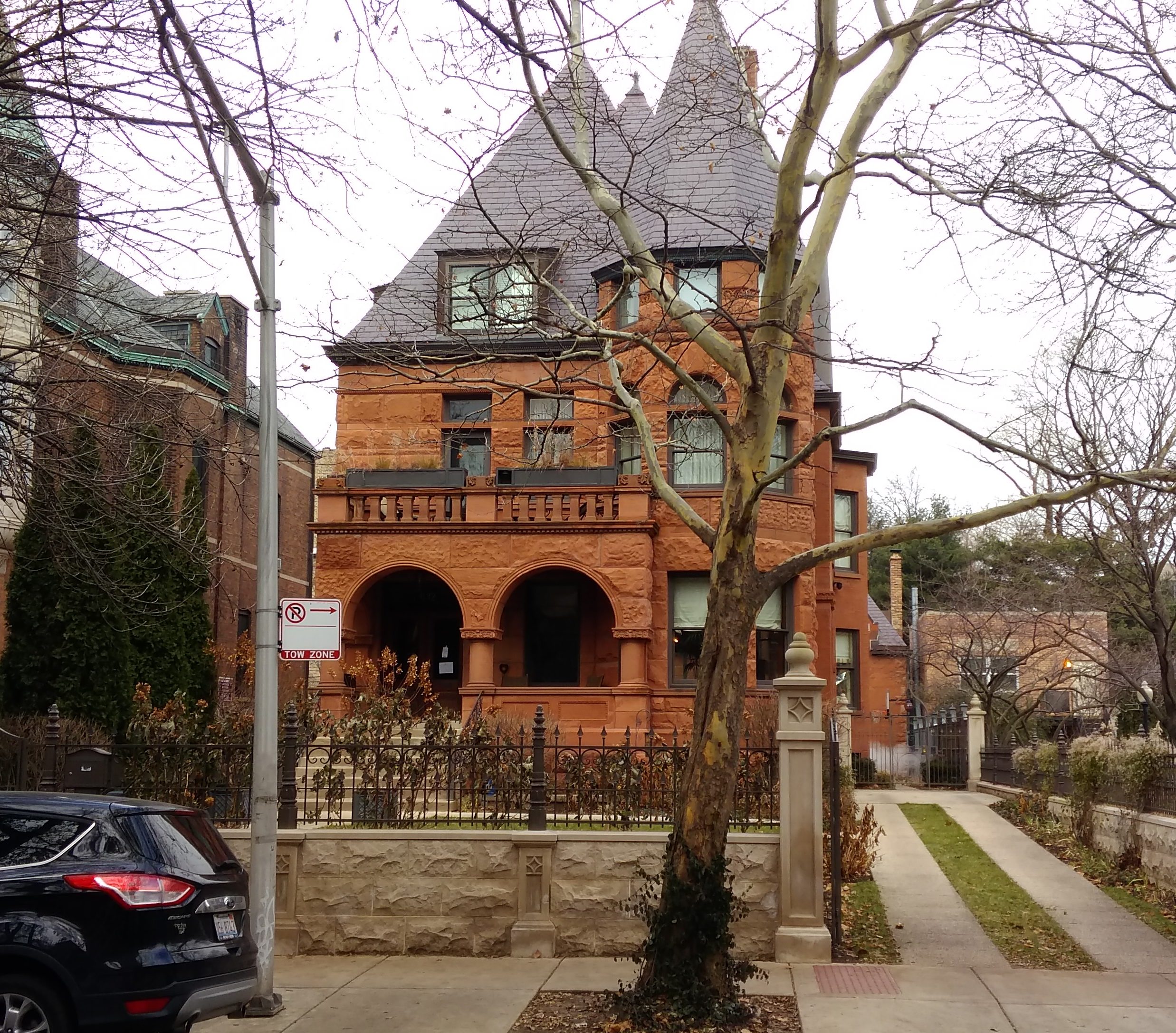
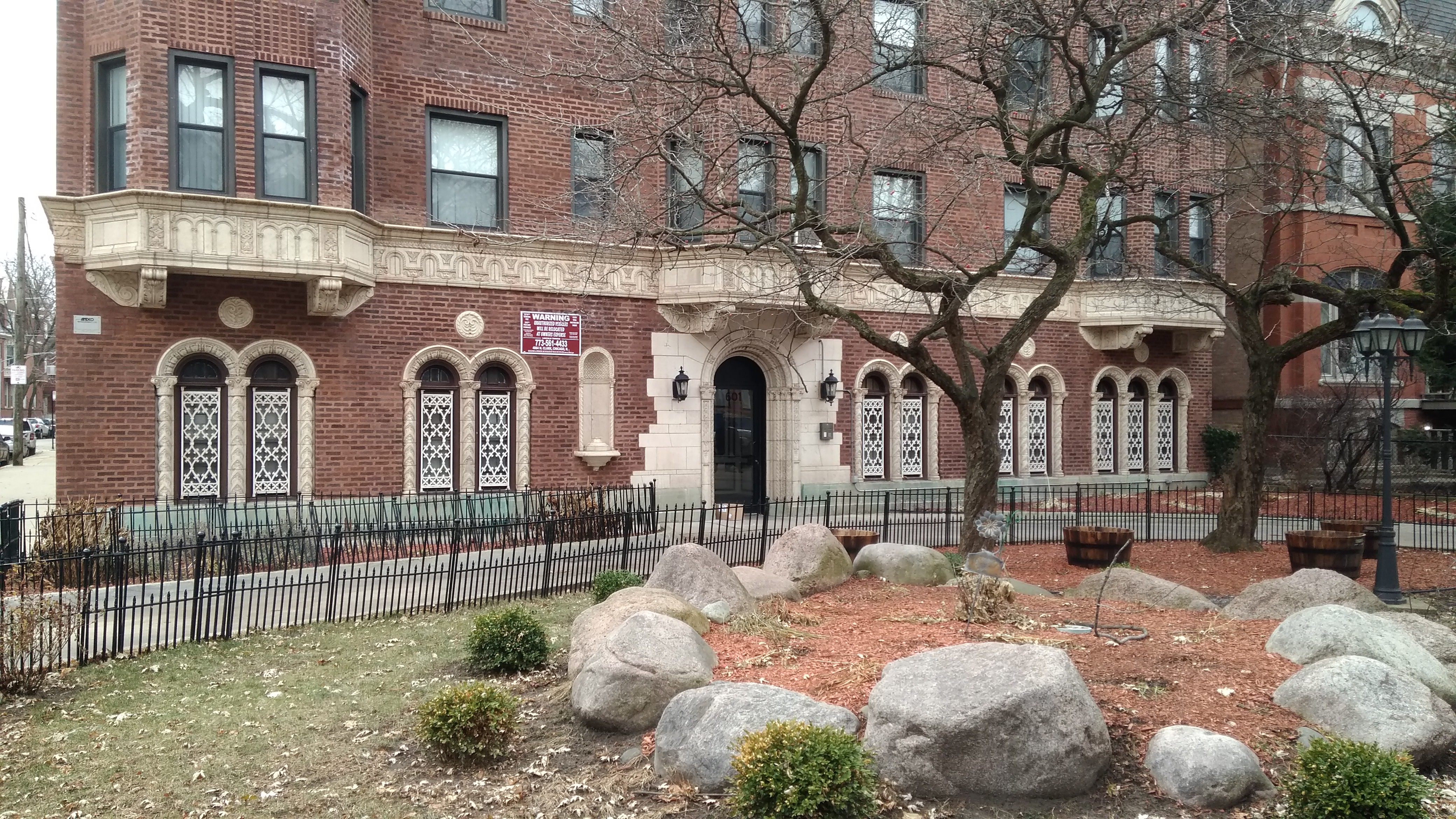
No doubt about it, Deming’s a nice street in the mostly posh Lincoln Park neighborhood.

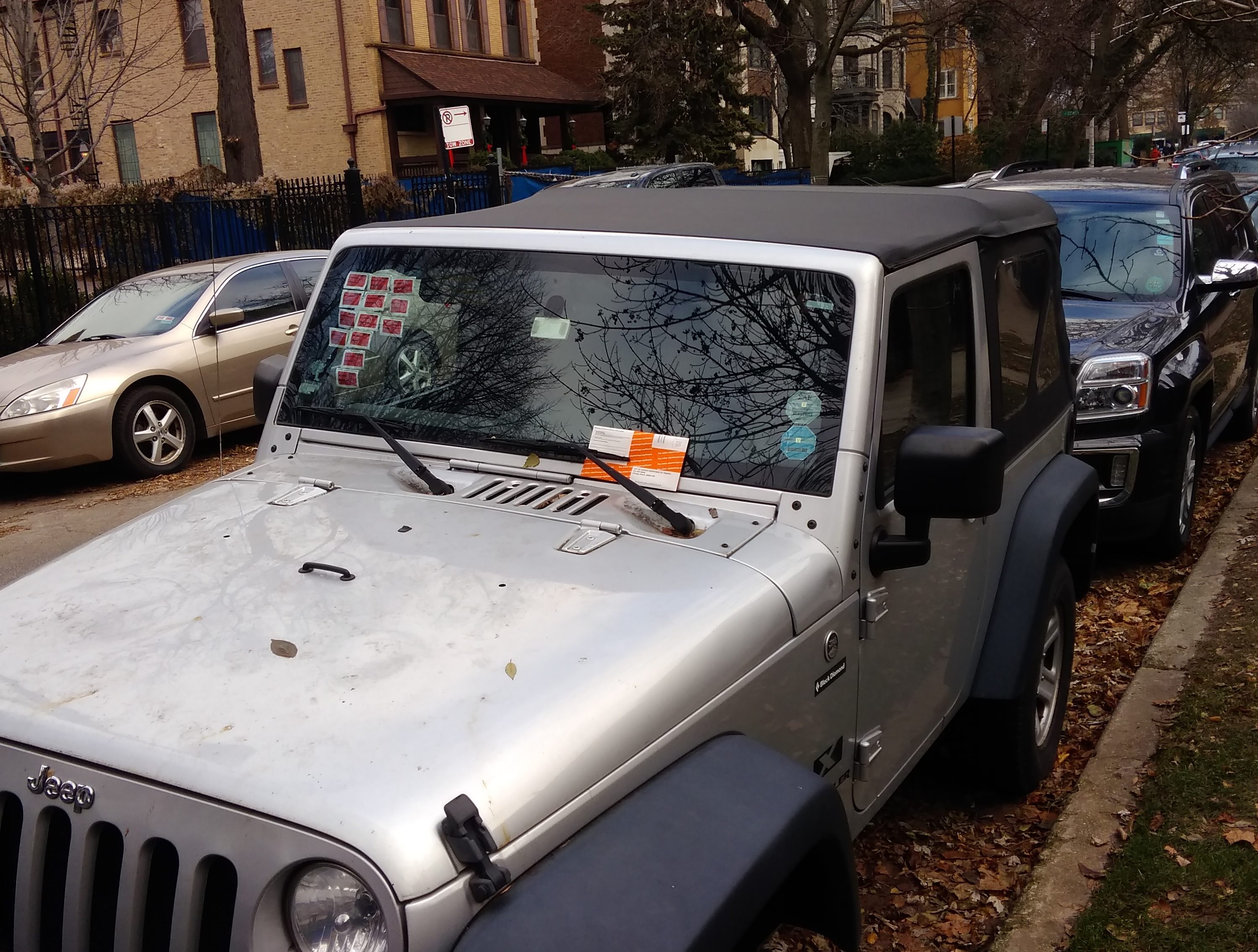
One thing about being a posh neighborhood in a dense urban setting: legal parking is hard to find.
We’d avoided that particular problem by driving most of the way to Lincoln Park, parking the car in a less posh but still pleasant enough Chicago neighborhood — one with much more street parking — and taking the El on a short ride to where we wanted to be.

Do urban planners take car-mass transit combinations seriously? From our vantage in the suburbs, it’s often the best choice for arriving at a particular point in the city. I’m no authority on urban planning, but somehow I get the impression that it’s either/or: massive transit vs. private cars.

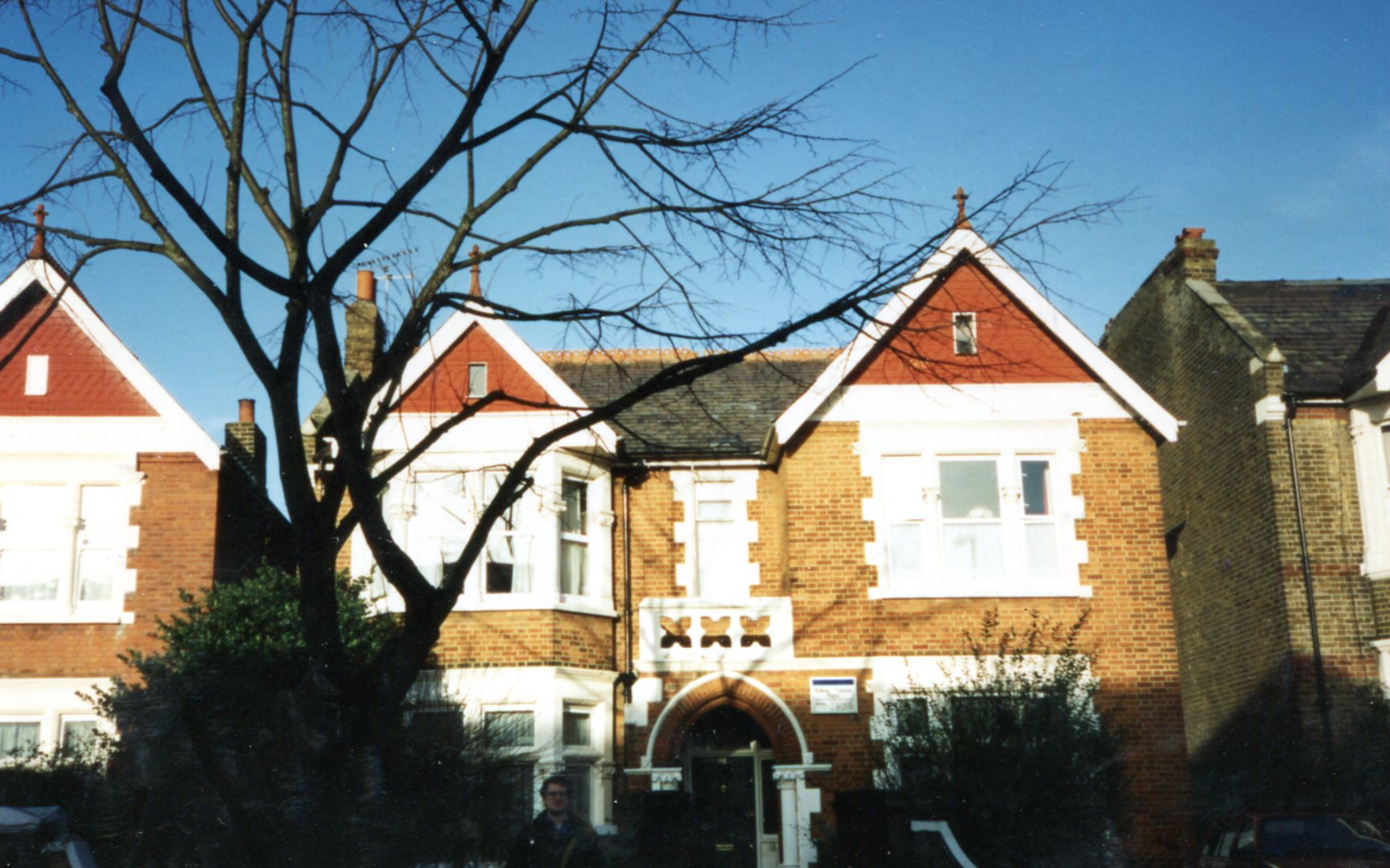
94 Gordon Road, Ealing, London

December 1994 was a good month. We were lucky to have it. After being on the move since April, it was time to take a rest but not quite time to go home. Or rather, go make a new home in the United States. So we spent most of the month in London.

I can’t remember how we found Ealing Tourist Flats. There was no Internet to consult, but there was a short-term rental industry, and we rented one of its units for four weeks. The property was a half-mile or so beyond the North Ealing Underground Station, which was on the Piccadilly Line, but it was much closer to a commuter rail station, Ealing Broadway, which is where we usually went if we wanted to go into the city center.

The neighborhood is part of the sprawl of greater London, with suburbization happening in the early 20th century. It still had a pleasant suburban character in the ’90s. Ealing Tourist Flats was at 94 Gordon Road.

I didn’t notice till I looked closely, but I’m in the picture, barely visible. I’m pretty sure the sign to the right of the main entrance, with the blue stripe, said Ealing Tourist Flats. Our flat was on the second floor, behind the windows on the left. It was a large studio with a foldout bed, table, television, and small food preparation area. Simple but all we needed for a few weeks.

In our time, I can look it up in detail. The tree’s gone and so is the sign on the front, but otherwise it looks about the same. I suspect it’s an ordinary apartment building these days.

Google Maps would have been a good thing to have, but of course in those days google would have just been a misspelling of 10100. If we’d had it, we might have noticed that Ealing Studios was actually nearby. We walked at least once to Walpole Park, which is next to the studios, though December wasn’t the best time for strolling in English parks, and I don’t think we realized it was close.

Hong Kong One-Cent Note

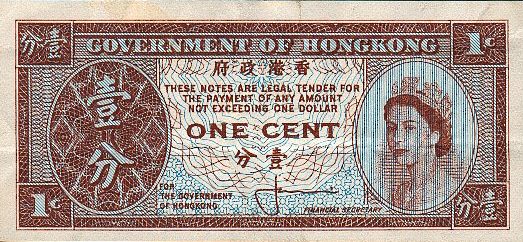
One more bit of interesting but worthless paper: a Hong Kong one-cent note. A small script of a note, pictured here at pretty much actual size. I’d post the reserve of the note, but it’s blank.

I’m not sure when or where I picked up this curiosity. Might have been at a coin shop in the ’70s. But it wasn’t in Hong Kong. Small change there in the early 1990s was always coins, at least in my experience.

I assume the text specifying that the notes are legal tender for payments of a dollar or less means that a merchant could decline payment from some joker wanting to pay with thousands of one-cent notes. I’ve never seen any text like it on any other note, at least not ones that I could read.

Even though I never ran across one in circulation, this site says that “the One Cent note has always been very popular even though it has very little value. A recent assessment showed there was over $1 million worth of these notes in circulation. The Coinage Bill of the 17th June 1994 brought about the demise of the One Cent note in preparation for the 1997 hand over to China.”

The Hong Kong dollar has long been pegged to the U.S. dollar, between HK$7.75 and HK$7.85 to the dollar, so a HK cent is worth about 0.13 U.S. cents. Or just for fun, 1.3 U.S. mills. Very little indeed.

A digression: mills, though essentially notional for most of the history of the U.S., were recognized by the Coinage Act of 1792: “… the money of account of the United States shall be expressed in dollars or units, dismes or tenths, cents or hundredths, and milles or thousandths, a disme being the tenth part of a dollar, a cent the hundredth part of a dollar, a mille the thousandth part of a dollar, and that all accounts in the public offices and all proceedings in the courts of the United States shall be kept and had in conformity to this regulation.”

I like disme. It’s a spelling we should have kept. Pronounced “dime,” as I understand it. People gripe about them, but language would be less fun without a few silent letters.

The one-cent HK note I have was issued between 1961 and 1971, since it bears the signature of Hong Kong Financial Secretary J.J. Cowperthwaite. I’ll take my source’s word for that, since the actual signature looks like a doctor’s scrawl that used to be seen on paper prescriptions.

He was a free-marketeer: “Sir John Cowperthwaite, who was deputy and actual finance minister for Hong Kong between 1951 and 1971, was enormously influenced by his study of [Adam] Smith,” says the Royal Economic Society.

“Cowperthwaite more than anyone laid the economic policy foundations that drove Hong Kong’s remarkable post-war economic growth. In the 1950s Hong Kong’s (PPP adjusted) GDP per capita was around 30 per cent of that of its mother country, Britain. Now it has a GDP per capita that is 40 per cent higher.”

RIP, George Bush

Somewhere, I have a souvenir photo I obtained at a breakfast event held by a prominent real estate brokerage in March 2001. If I knew where that item was, I’d scan it for posting, but no such luck (the event is mentioned in passing here).

That brokerage was later absorbed by another company and is now only a memory. The featured speaker at the event that morning is likewise only a memory now: George H.W. Bush. RIP, Mr. President.

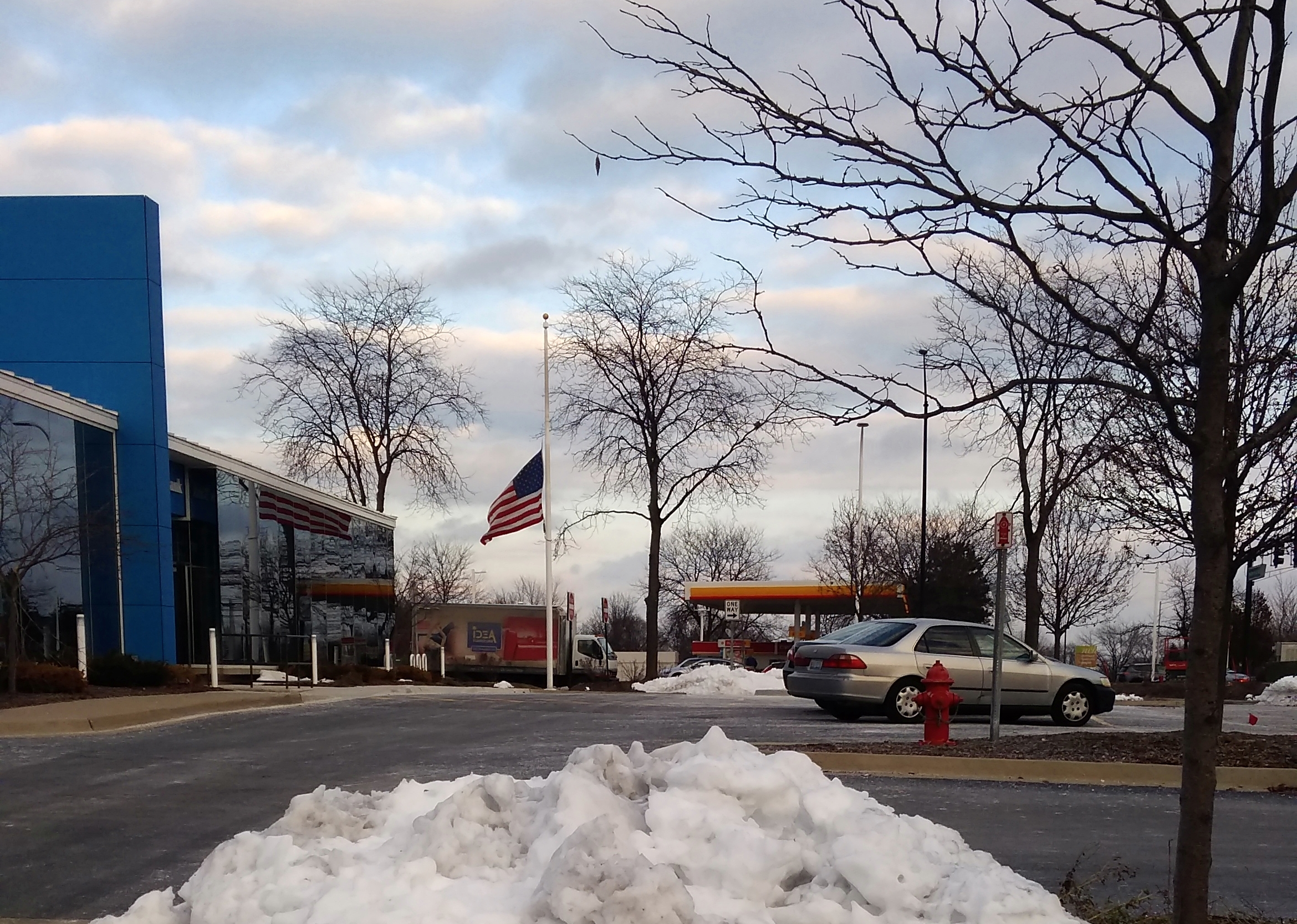
Saw a fair number of flags at half staff in his honor today.

I checked to be sure, and it’s so: the late President Bush was, and remains, the only U.S. president to have four names. Until the mid-19th century, most of them didn’t even have three. Naming fashions change.

Been a while since there was a presidential death. Now there are only four living former presidents. With the elder Bush’s death, the fourth period of five living former presidents ended (Jan. 20, 2017-Nov. 30, 2018). That has only happened three other times: March 4, 1861-Jan 18, 1862; Jan. 20, 1993-April 22, 1994; and Jan. 20, 2001-June 5, 2004.

That three of the four periods are in living memory illustrates the longer lifespans of our time. Speaking of longevity, Jimmy Carter now has to make it to early March 2019 to become the oldest person to have served as U.S. president, taking that distinction from the elder Bush.

Burundian 100 Franc Note

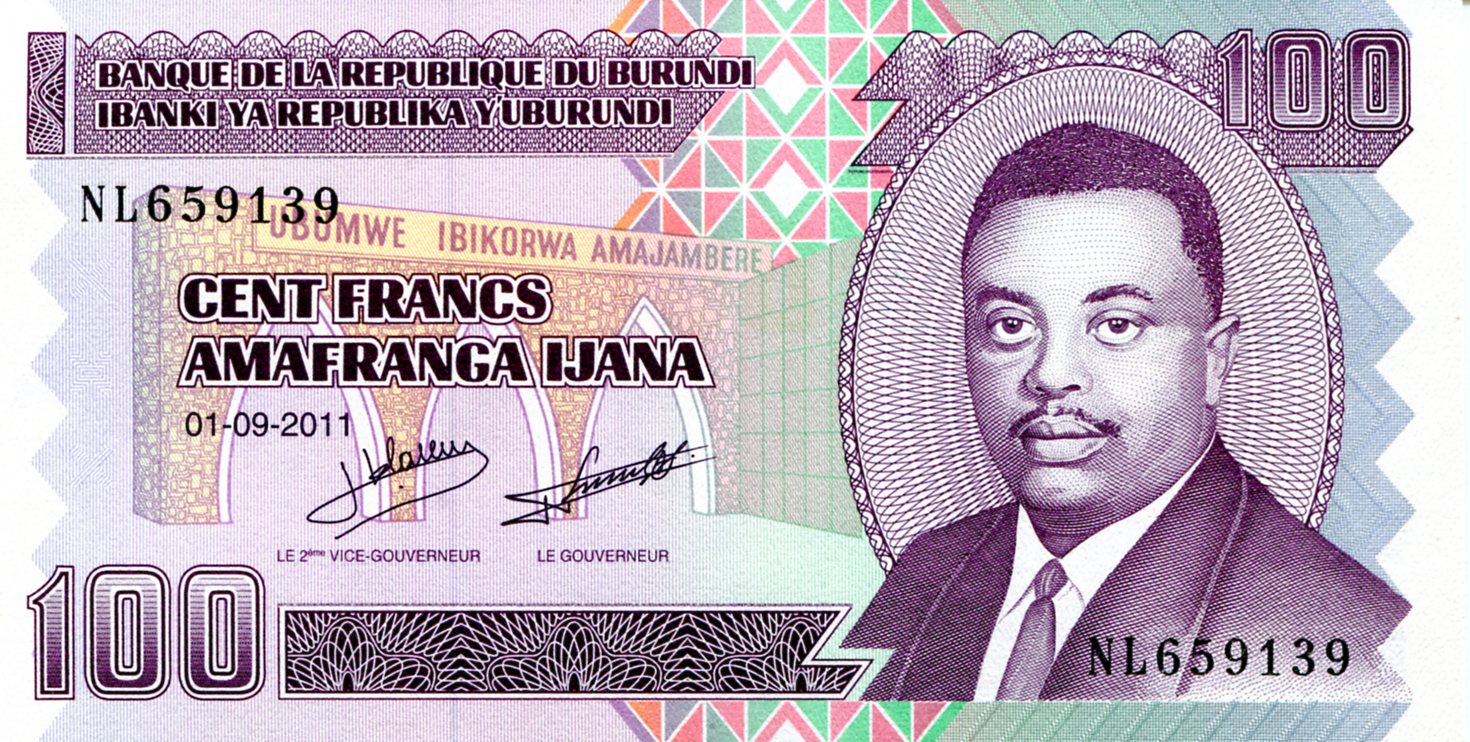
I should have known that Burundi uses francs, but I didn’t until I acquired a 100 franc note from that African nation as part of a collection of cheap but colorful currency. Just more ignorance on my part. Interesting that a lot of Francophone African countries use the franc, but neither France nor Belgium does.
The gentleman on the obverse is Louis Rwagasore, or Crown Prince Louis Rwagasore, Burundi nationalist and son of Mwambutsa IV, king of Burundi from 1915 to 1966. Louis Rwagasore was briefly prime minister in 1961, ahead of independence the next year, but was assassinated in a hotel dining room. Suspects were rounded up and executed. Belgian authorities were suspected of having a hand in the murder, but that was never proved.

In the background of the note is Louis Rwagasore’s tomb.

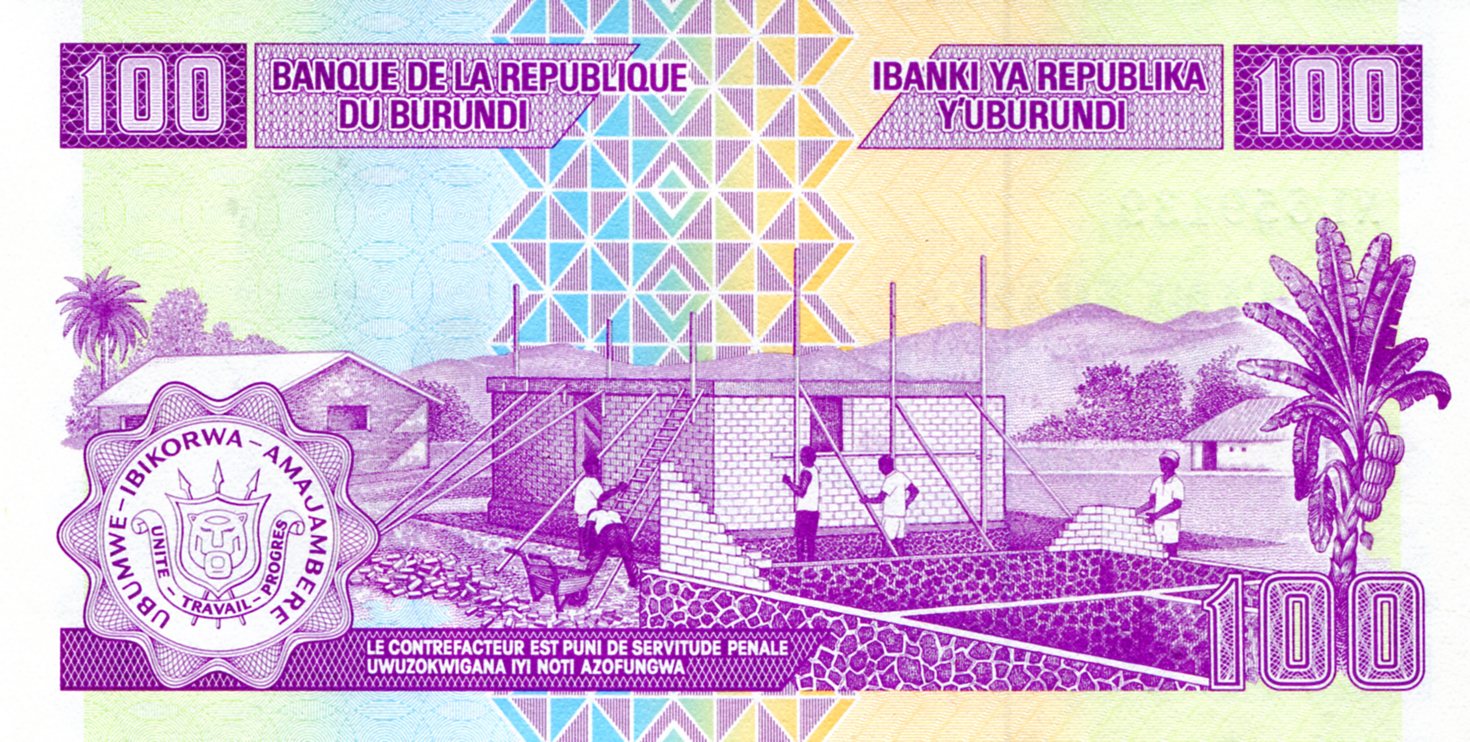
On the reverse, house building. And a warning not to counterfeit the notes.

In theory, 100 Burundian francs is worth a bit more than five U.S. cents. No wonder there have never been any Burundian centimes.

Moldovan 1 Leu Note

Rain throughout the weekend and so a lot of snow meltage. Spent a while on Friday ahead of the rain carving little canals through the packed snow to a drain near my deck and one out on the street, so that when the snow became liquid, it would go down those drains.

After the rain, mud for a little while but soon hardened ground. I prefer that to a slushy ground and especially icy patches.

Balkan Insight tells us today that “Moldovan President Igor Dodon has declared 2019 the ‘year of the Stephen the Great,’ recalling a famous ruler of Moldova in the 15th and 16th century [sic] – in what many see as a campaign to boost support for Moldovan independence and counter pro-Romanian forces ahead of next year’s elections….

“Stephen the Great was Prince of Moldova from 1457 to 1504. He is famous for having kept the land free from Ottoman influence, but also free from Polish and Hungarian domination.”

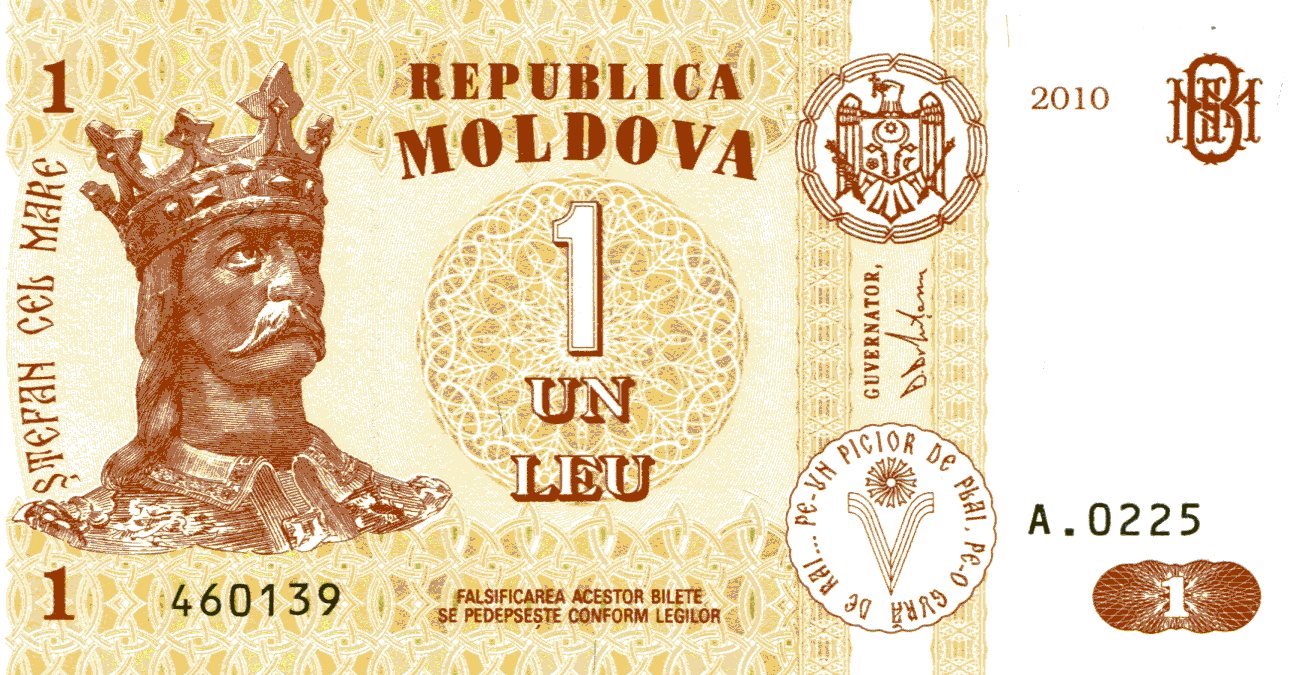
I have no particular connection to Moldova, but I do have a Moldovan 1 leu note, whose official exchange rate these days will get you about 6 U.S. cents.Of course that’s Stephen the Great on the obverse. He’s on all of the Moldovan banknotes, which seems a little excessive, like putting Washington on all U.S. currency would be. Apparently just this year, 1 leu coins were introduced, but the banknotes aren’t being retired yet.

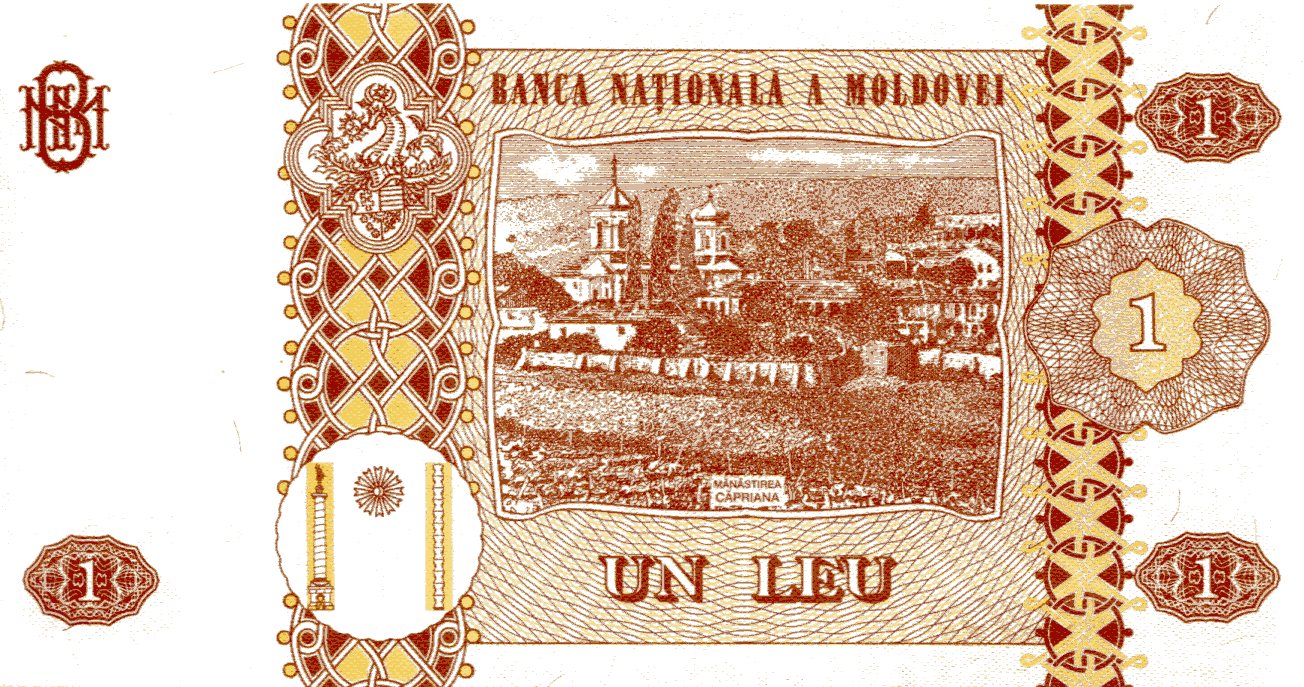
On the reverse is a grainy image of the Căpriana Monastery.
Wiki has a slender entry on the place, and this is about half of it: “Căpriana Monastery (Romanian: Mănăstirea Căpriana) is one of the oldest monasteries of Moldova, located in Căpriana, 40 km north-west of Chișinău.

“The first significant reference dates from a document issued in 1429 that gave Căpriana the status of royal monastery on behalf of Alexander the Good. In this deed the holy abode was referred to as ‘mănăstirea de la Vâșnovăț unde este egumen Chiprian’ (the monastery of Vâșnovăț where the hegumen is Chiprian) and was given in the possession of Alexander’s wife — princess Marena.”

Which makes me wonder, why doesn’t Alexander get his picture on a Moldovan note? Sure, he was only good, not great, but isn’t that enough?

The Weekend Jam at Chicago Christkindlmarket

While she was still in town, on the Monday or Tuesday before Thanksgiving, Lilly went to the Chicago Christkindlmarket with some of her friends. I warned her that the weekend would be a bad time to visit, though I don’t think she was planning that anyway.

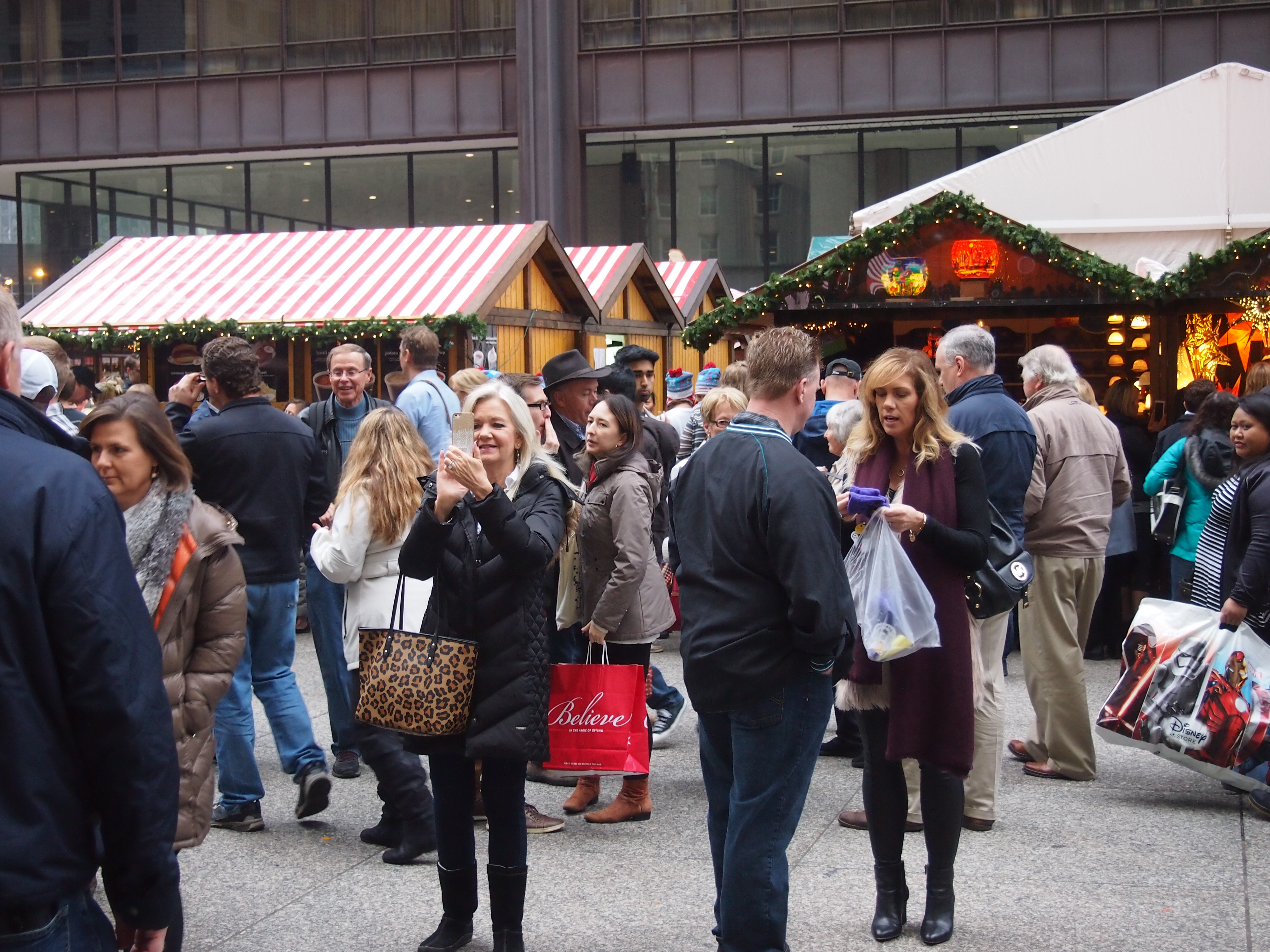
The last time we went to the Chicago Christkindlmarket was on a Saturday about three years ago. That was a mistake. Even the weekdays can attract a mob. On that weekend in 2015, the place was packed:
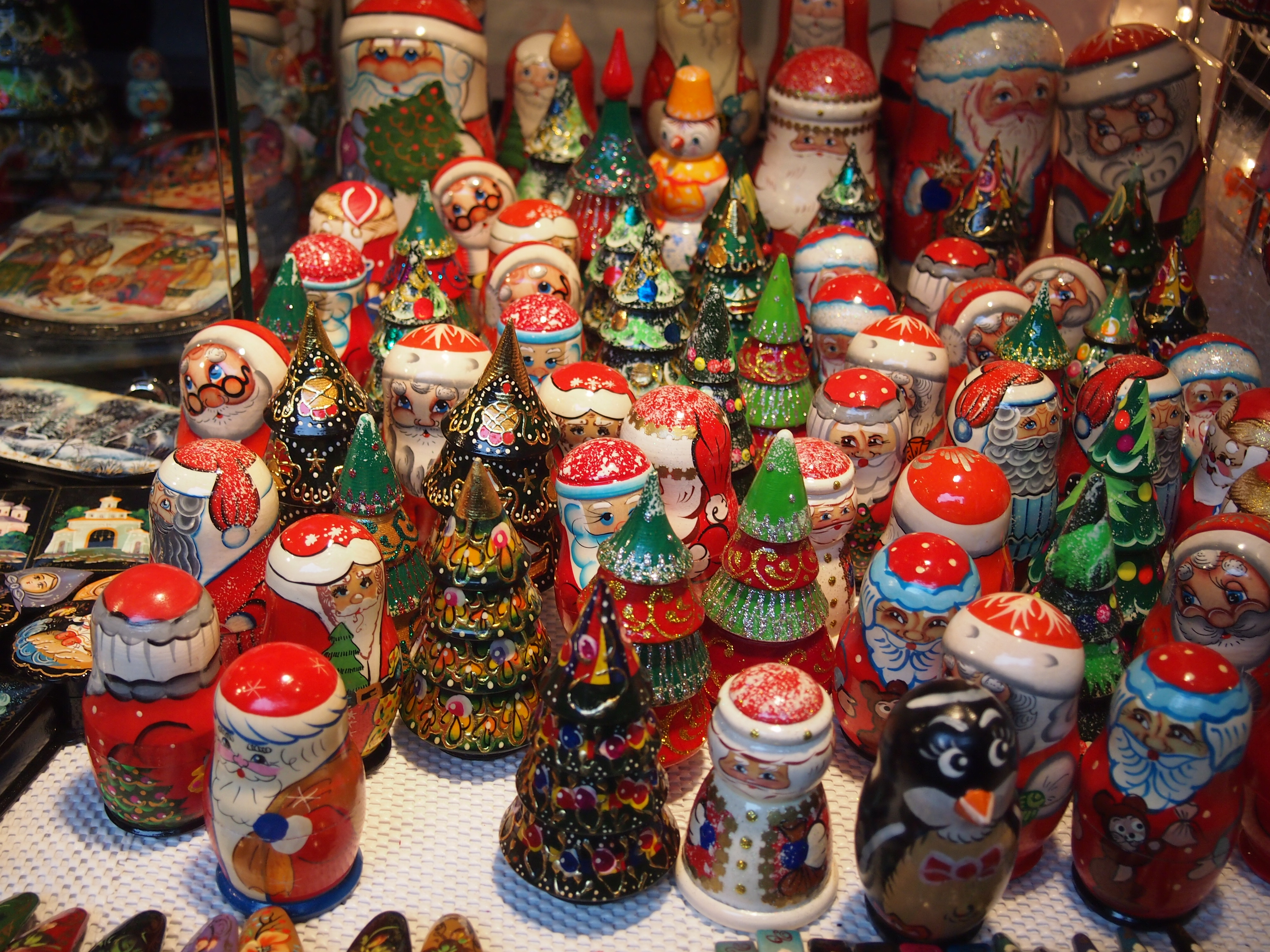
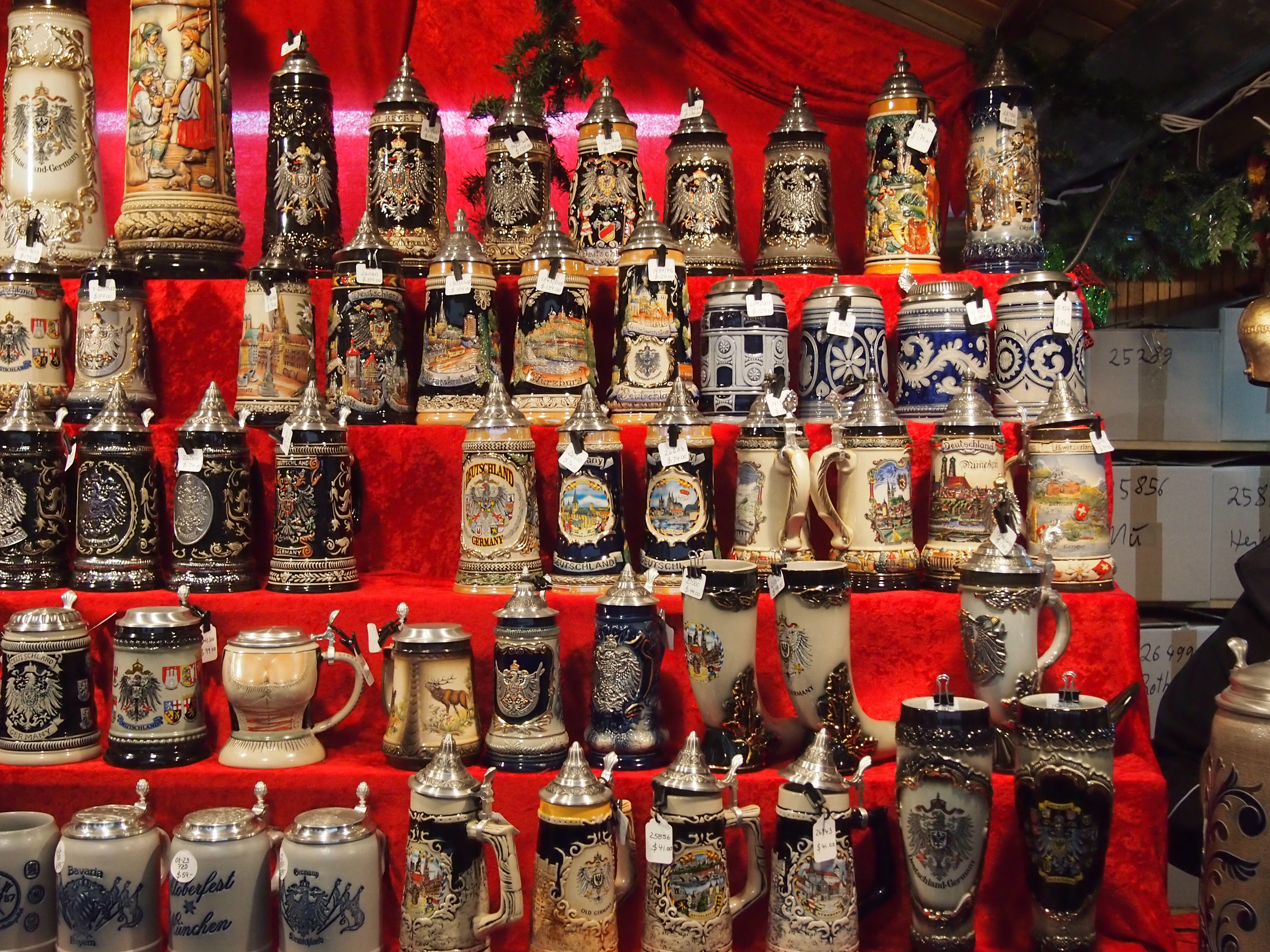
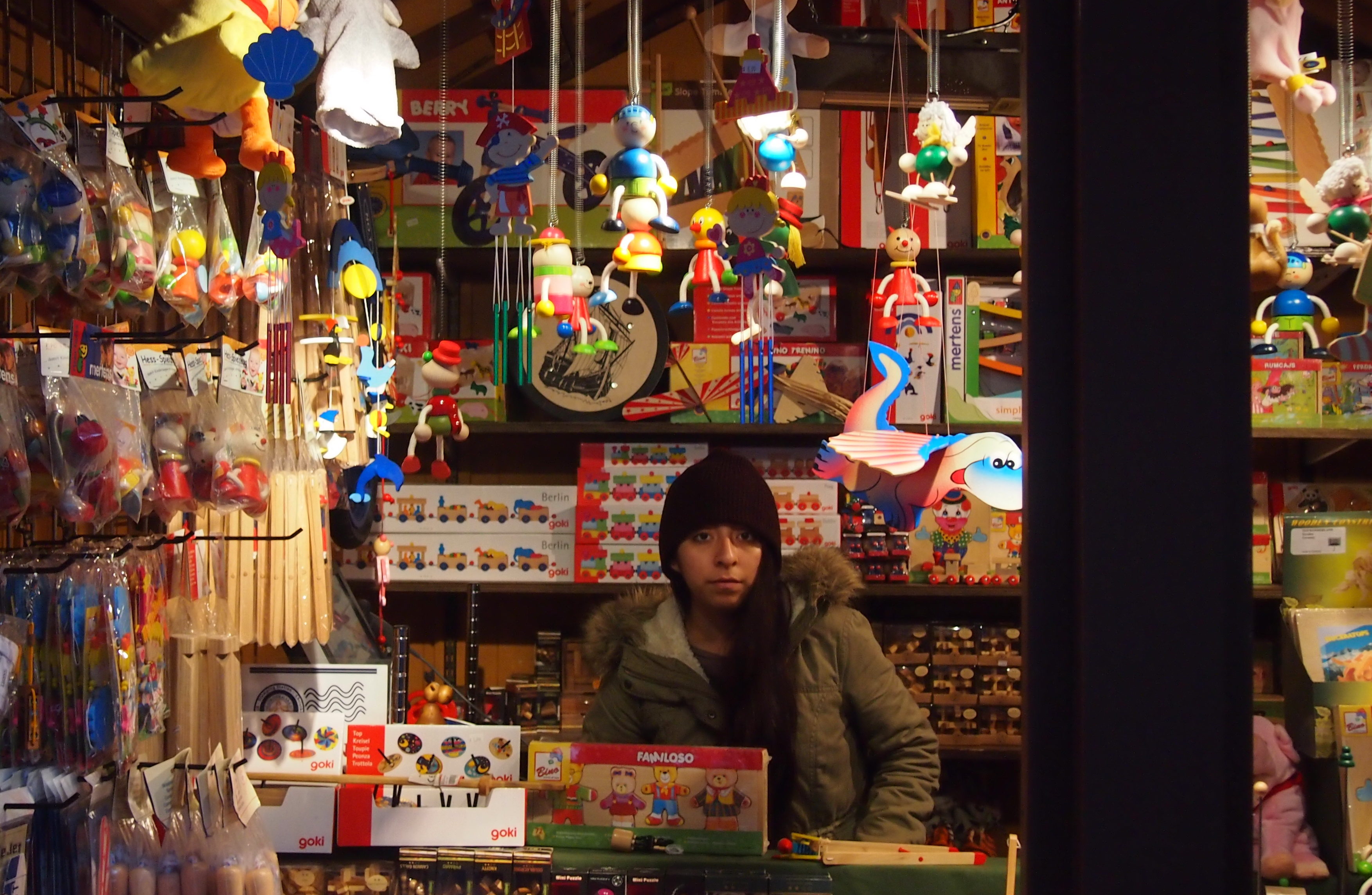
That isn’t to say that you can’t admire the things for sale.

Of course, odds are foot traffic is flowing around you while you look at things.

Lilly acquired a souvenir mug. Things trend to be a bit expensive at the Christkindlmarket, since the goods seem to be priced in euros at a lousy exchange rate, with an extra 50 percent tacked on for good measure, but never mind. At least at most vendors, you’re getting something authentically German, right?

The mug’s seasonal and I suppose northern European in inspiration. I don’t have it in front of me. It’s nice enough, though. Still, I happened to check and there it was on the bottom: MADE IN CHINA.

Really, Herr Händler? That’s the kind of authenticity you get at Walmart. For a lot less.