The Old Illinois State Capitol, Springfield

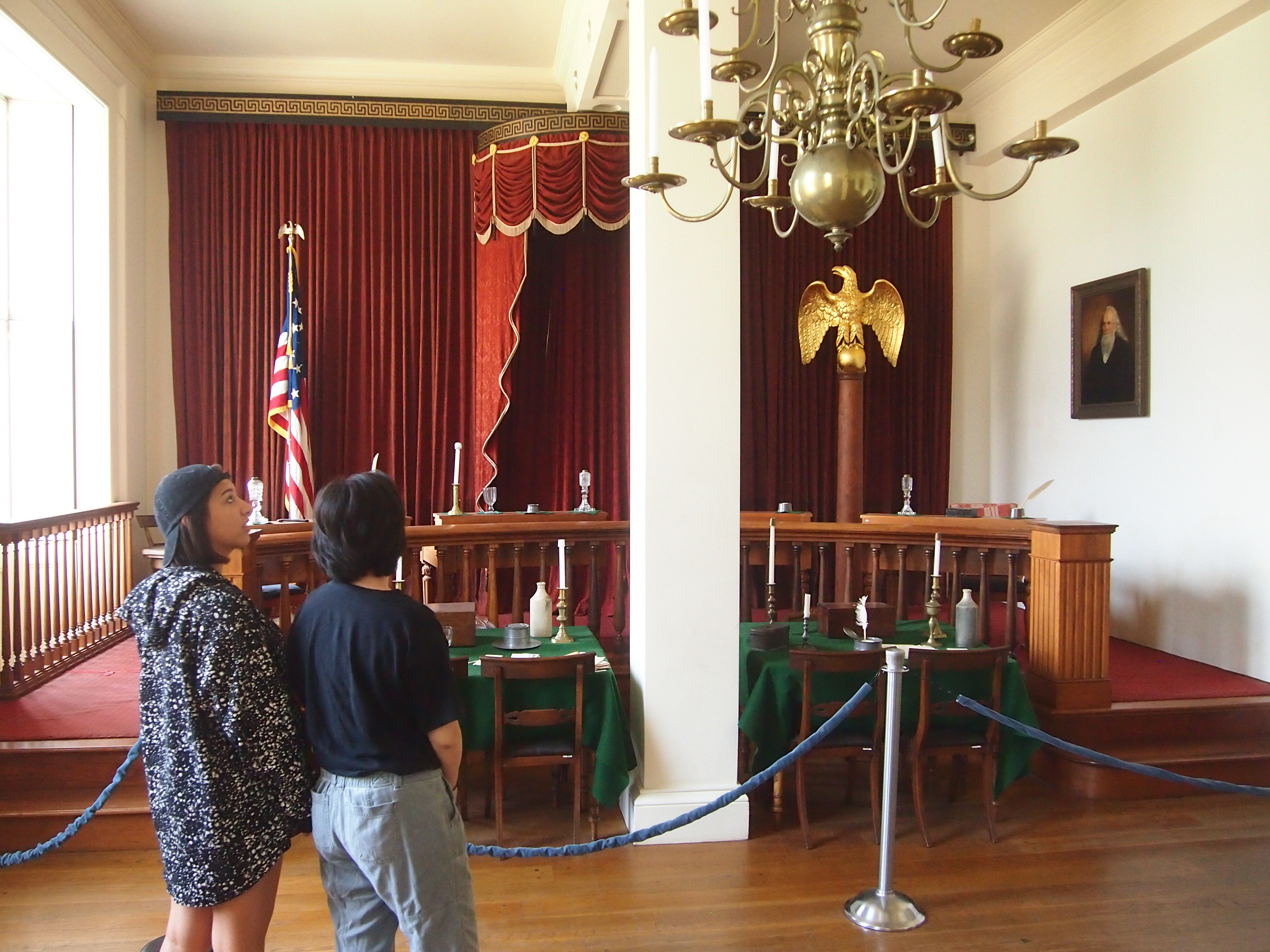
Before we revisited the Lincoln Museum in Springfield, we revisited the Old State Capitol. At least I revisited it. I’m not sure whether I’d ever taken Ann, or whether her friend had ever been there at any point. Never mind, it was worth a look.
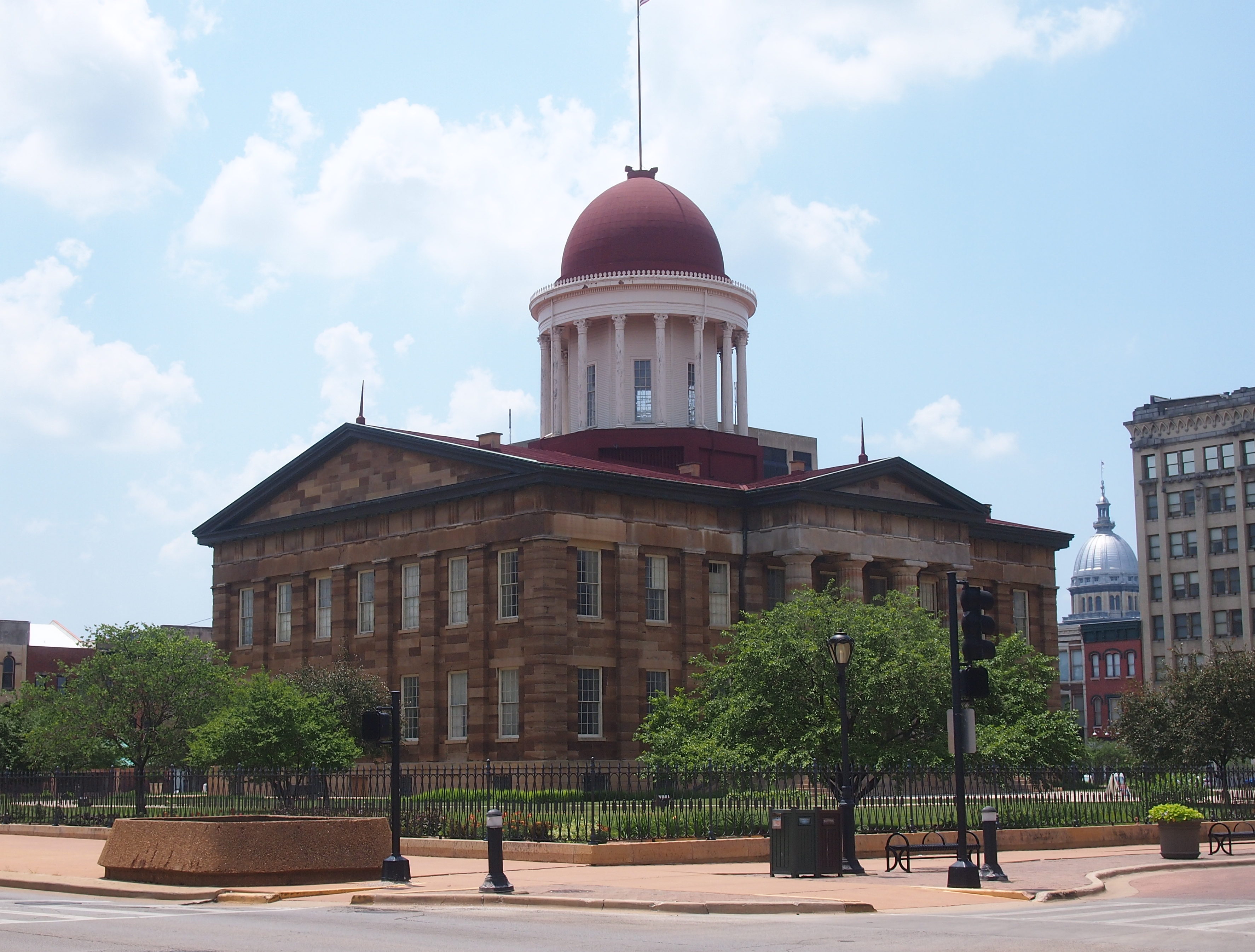
In the background from that vantage is the larger dome of the modern capitol, on which construction started in 1868. Didn’t visit there this time around.

More formally, the old capitol is the Old State Capitol State Historic Site, a Greek Revival structure that served as the state house from 1839 to 1876, so it was the one Lincoln would have hung around. In fact, as a state legislator, Lincoln was among the legislators who facilitated the movement of the capital from Vandalia, which is further south.

“In the Legislature at Vandalia in the session of 1836-7, Sangamon county was represented by two senators and seven members of the lower house,” says ‘The Story of the Sangamon County Court House,’ a 1901 monograph by H.D. Giger. “They were a singular body of men, all tall and angular and their combined height was exactly 54 feet, they are famous in Illinois history as the ‘Long Nine.’

“The capitol of the State at this time was at Vandalia, having been removed there from Kaskaskia, and as the tide of emigration was moving northward it was conceded that the capitol must be nearer the center of population; although Vandalia and Southern Illinois fought hard against it.

“From the beginning of the session the Long Nine set to work log rolling. They asked for no public improvements; they wanted no railroads, canals, no plank roads, but would help out any member that did want them for his district, if he would vote to remove the capital to Springfield.

“There were many applicants, and on the first ballot Springfield had but 35 out of 121 votes… Poor old Peoria, as usual, brought up the rear and Springfield captured the prize on the fourth ballot.”

Abraham Lincoln Online picks up the story: “The capitol building, designed by architect John Rague, was the third to appear on the square, replacing two previous courthouses.” (Rague also did the old Iowa capitol.)

“The [state] outgrew the building during Lincoln’s presidency, and work on a new statehouse began soon after his death. The present building was dismantled in 1966 and rebuilt, which allowed the inclusion of an underground public parking lot and space for offices. The original stone exterior was stored and rebuilt, but the interior was completely reconstructed.”

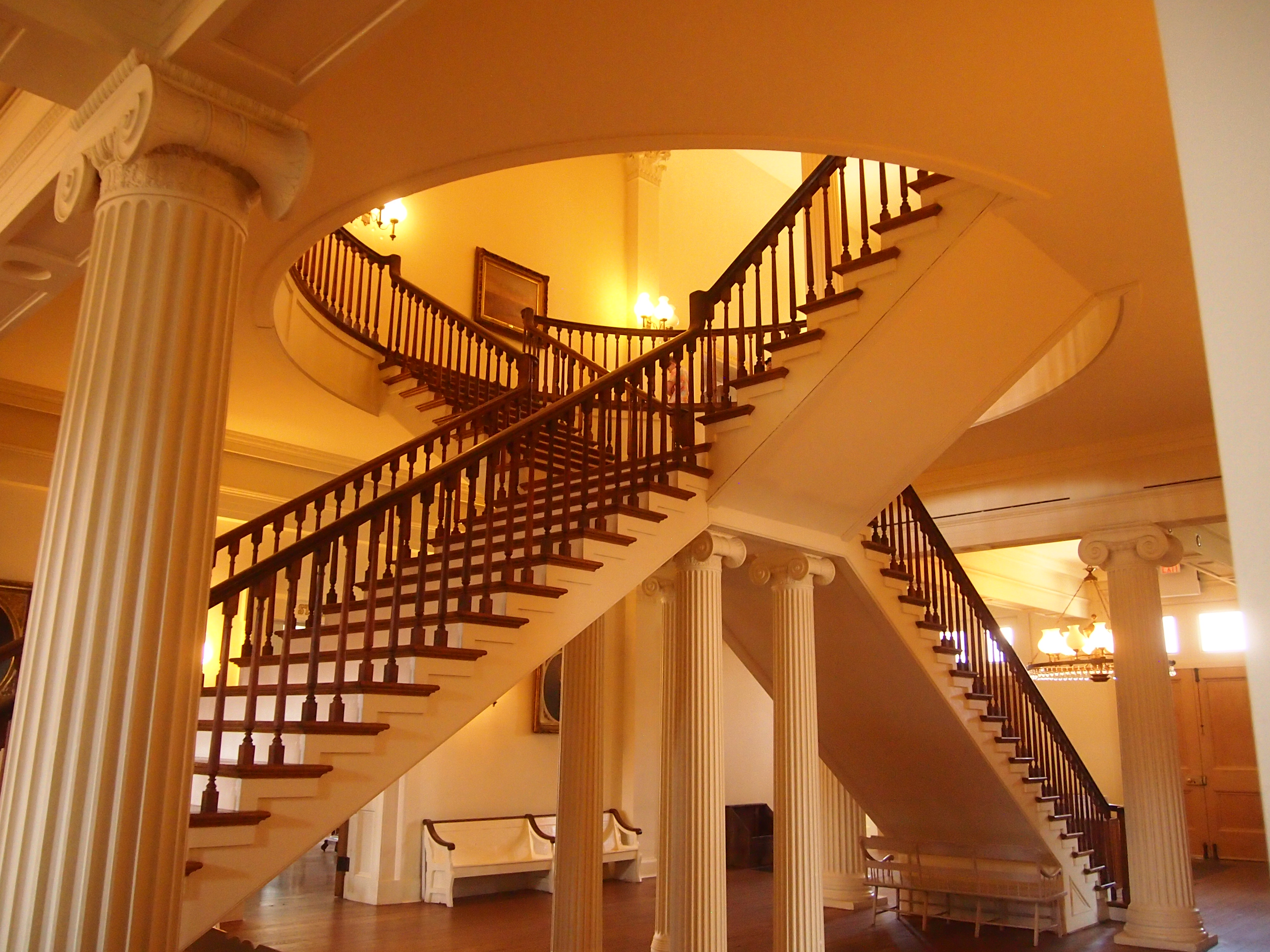
It’s a well-done reconstruction.
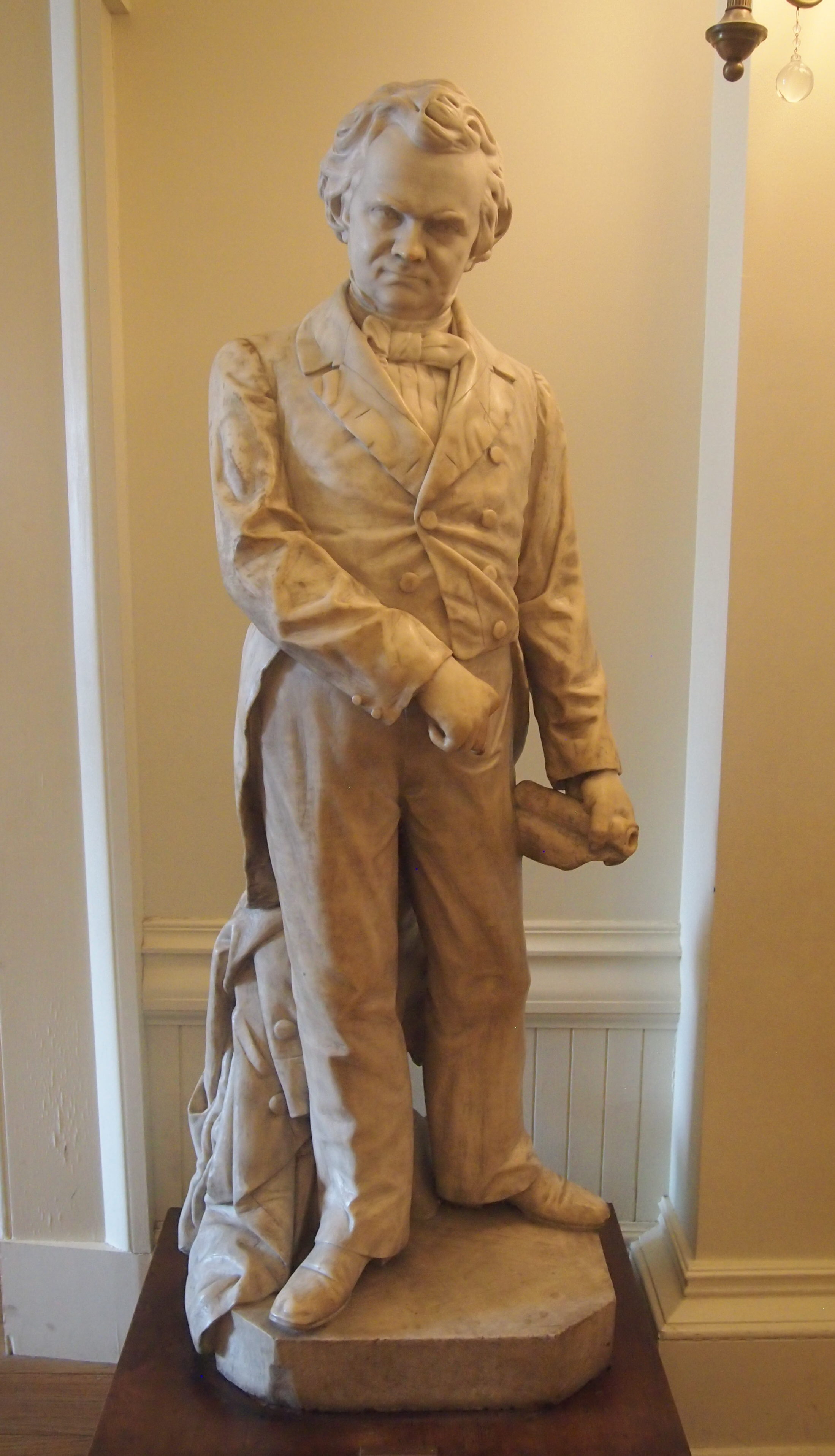
The exhibits include a statue of the Little Giant.
While we were there, a group of historic re-enactors in 19th-century costumes happened to be in the recreated House chamber.
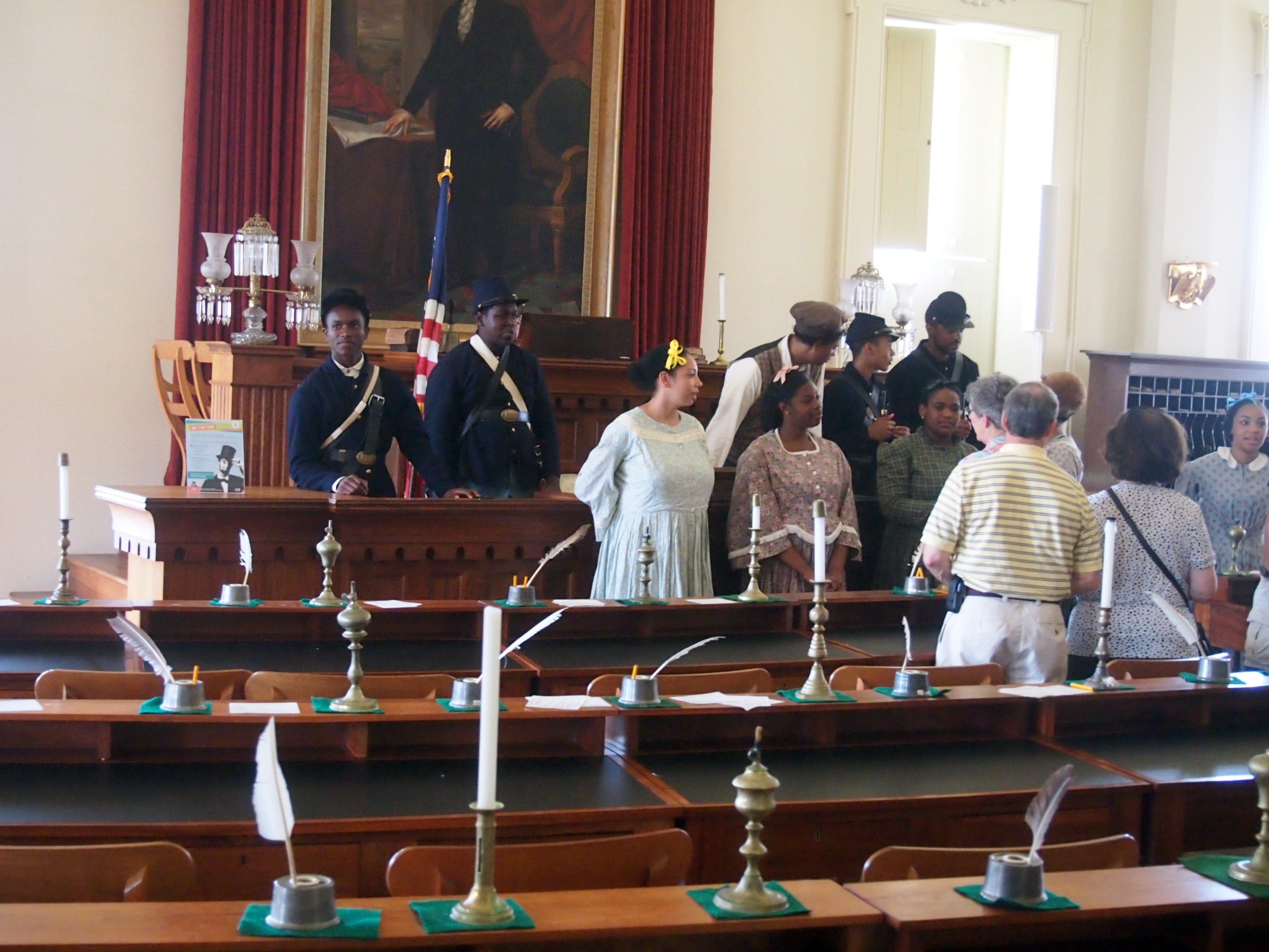
They gave a lively 20-minute or so performance, recalling the lives of black Illinois citizens of the Civil War era.
Another Look at the Rubber Lincolns

The weekend before last, we popped down to Springfield for a short visit. As in the capital of Illinois, not any of the many others, or the cartoon town. Ann had expressed an interest, mostly in passing, that she’d like to see the Abraham Lincoln Presidential Museum again. So, like a parent does sometimes, I took that passing whim and ran with it.

The last time we were there was 2010, so I could see Ann’s point. She was only seven years old then and wanted an updated perspective. I also wanted to visit again, just to see if it was any different.

The short answer: not much. Is that part of the museum’s current problems?

Maintaining attendance as the years go by means offering new things from time to time, and I got the distinct impression that most everything was the same as eight years ago — including the short films shown in the museum’s two main auditoriums. I know it costs money to make new films, but that can’t be done in eight years?

Then again, maybe the museum isn’t interested in repeat visitors. School groups come, tourists come. For most people, once is probably it. Or maybe again many years later as a child who visited returns with a child of his or her own. The museum isn’t quite old enough for that yet, but I suppose it will happen.

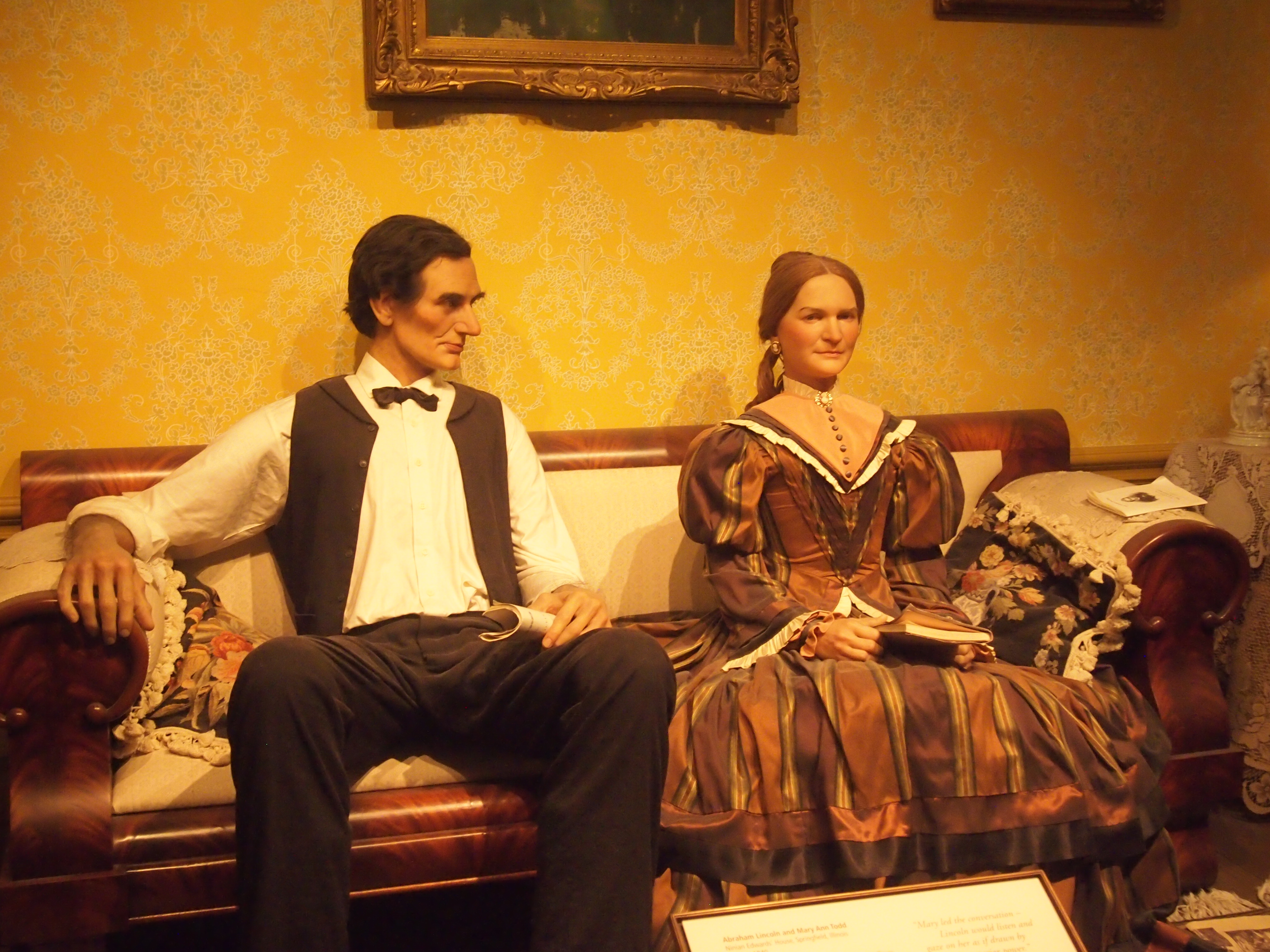
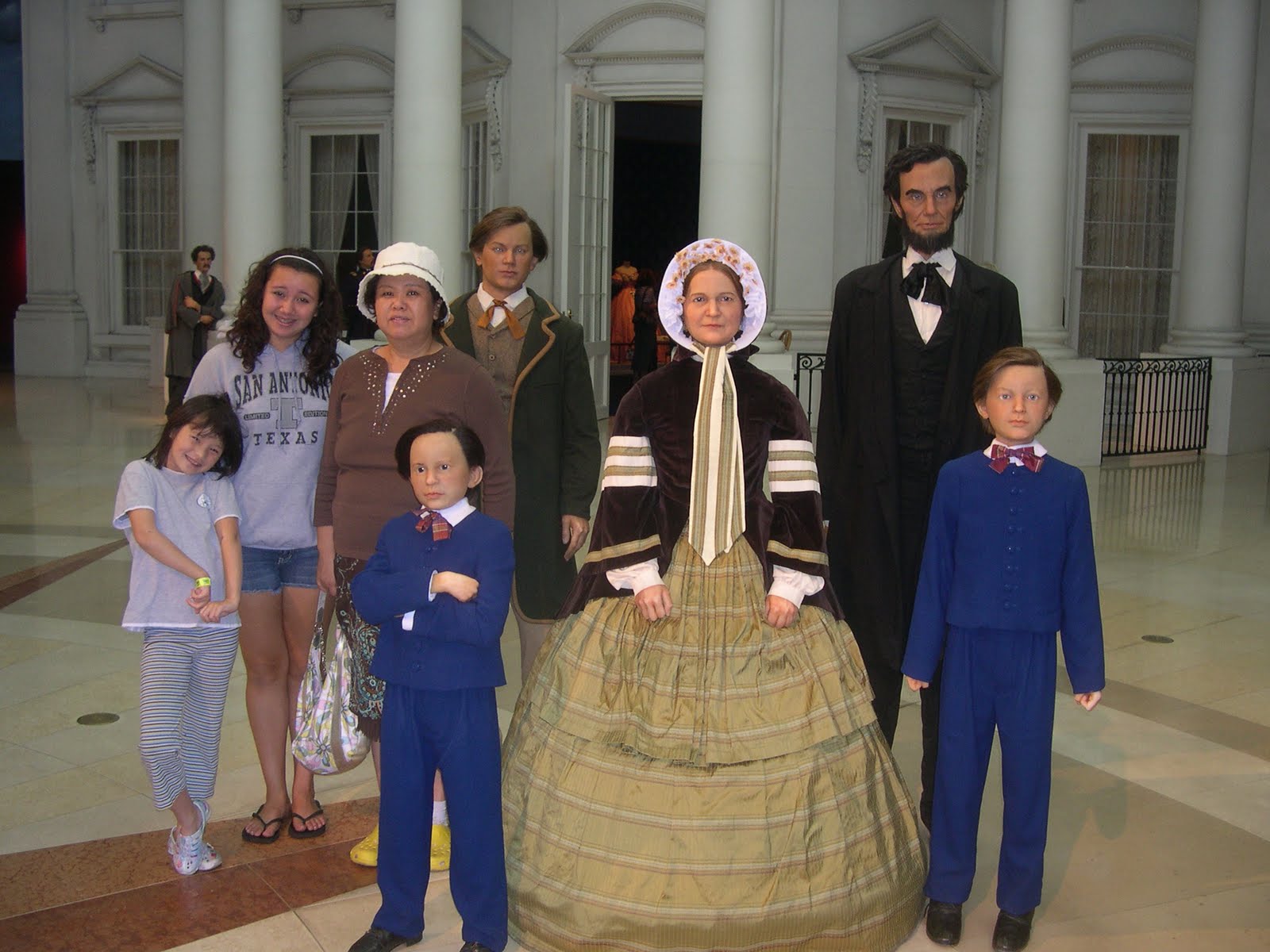
Actually, I noticed a few small changes. Take a look at the picture of the “rubber” Lincoln family near the museum’s entrance that I took in 2010, with my own family posing.

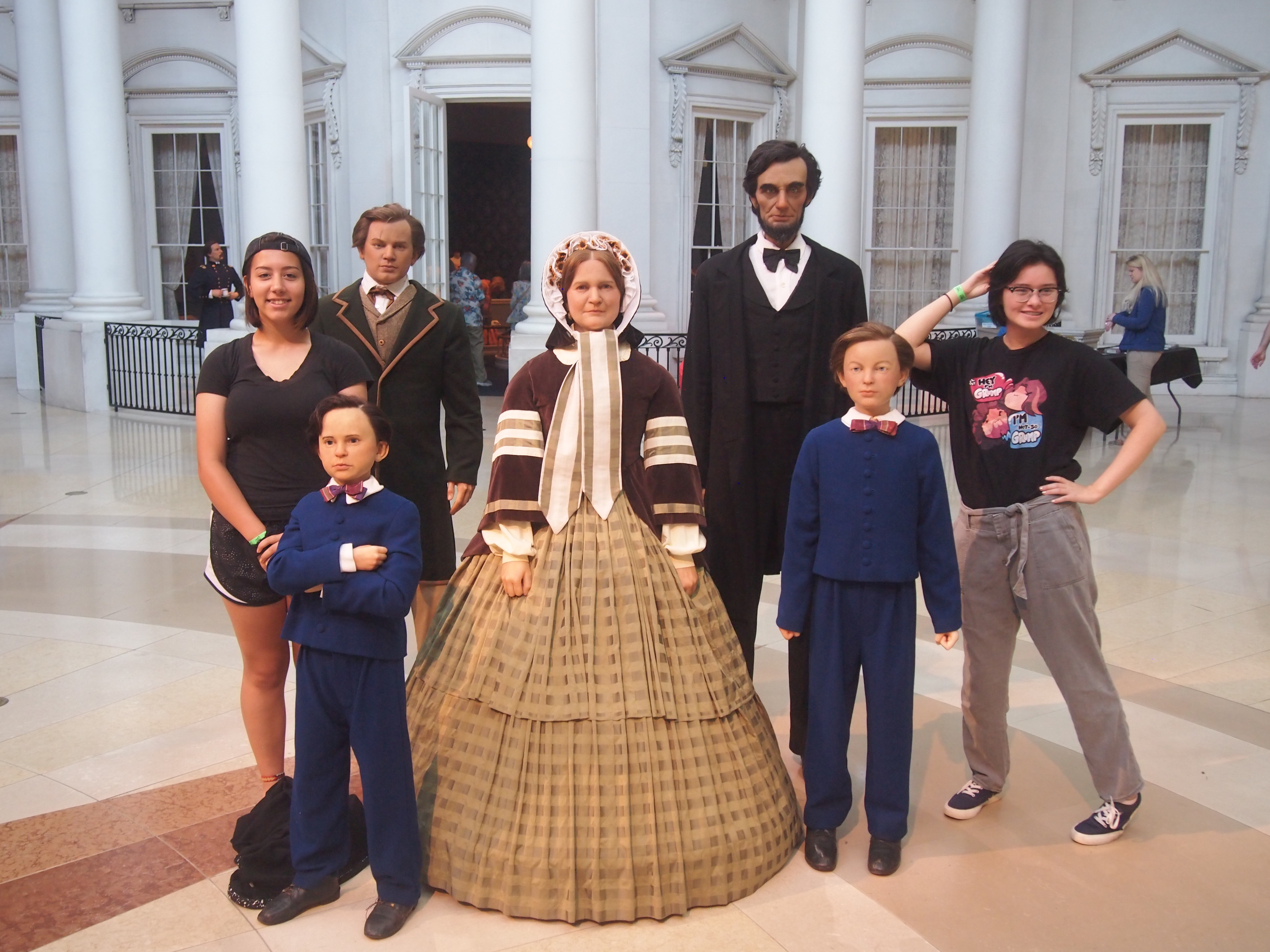
Now look at this one from 2018, with Ann on the right and a friend of hers on the left.

There are some small differences in the Lincoln family — a different but similar dress for Mary, for instance, and for all I know the life-sized figures might be different ones from the ones standing there eight years ago. But the main difference is behind the Lincolns.

Eight years ago, a life-sized John Wilkes Booth lurked in the background. Now he’s gone. The figure you can see in the back to the left is George McClellan, standing inside the fence with U.S. Grant, who isn’t visible in my picture. (Also obscured, and off the right, are Harriett Tubman and Frederick Douglass.)

Is Booth out for a touchup? Or did the museum get tired of people complaining about his presence? He did murder Lincoln, after all. His figure in such a prominent place is a little like putting a print of the famed photo of Lee Harvey Oswald and his rifle on the wall at the Kennedy Museum.

Never mind all that, I enjoyed the museum the second time around enough to make it worth the trip, though I think it will be my last. I’m sure Ann got her revised impression of the place.

I paid close attention to the rubber figures, which aren’t rubber, of course. As I wrote in 2010, “Though derided as ‘rubber’ Lincolns, they’re actually sculpted foam coated with fiberglass, and then painted, clothed and fitted with a mix of real and synthetic hair.”

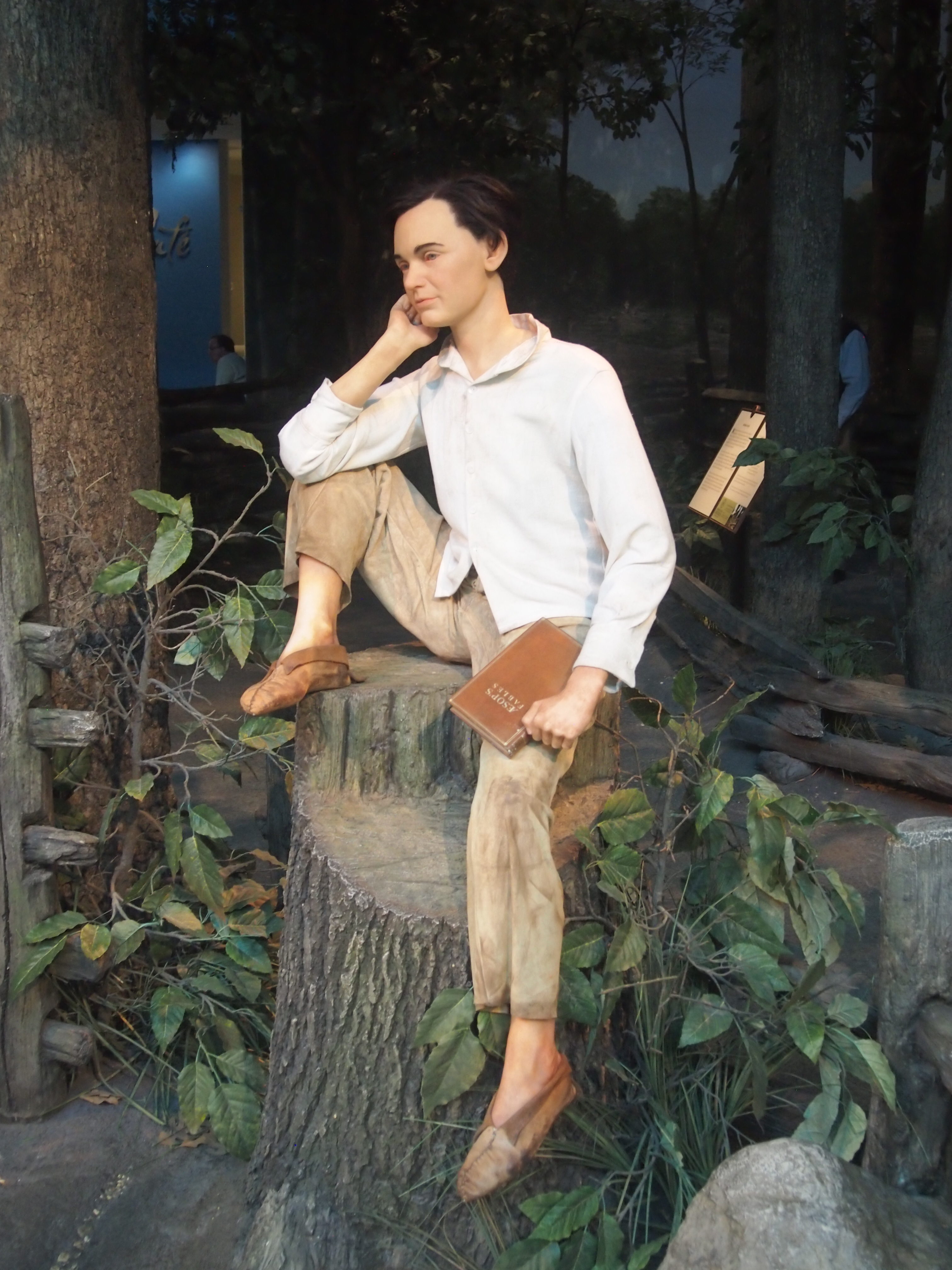
The figures are a distinguishing feature of the museum, and on the whole, add to the experience. Here’s the thinkin’, book readin’ young Abe.

The store-keeping Lincoln as a young man in Salem, Illinois. It didn’t work out for him.

Abraham courting Mary. That worked out for him.

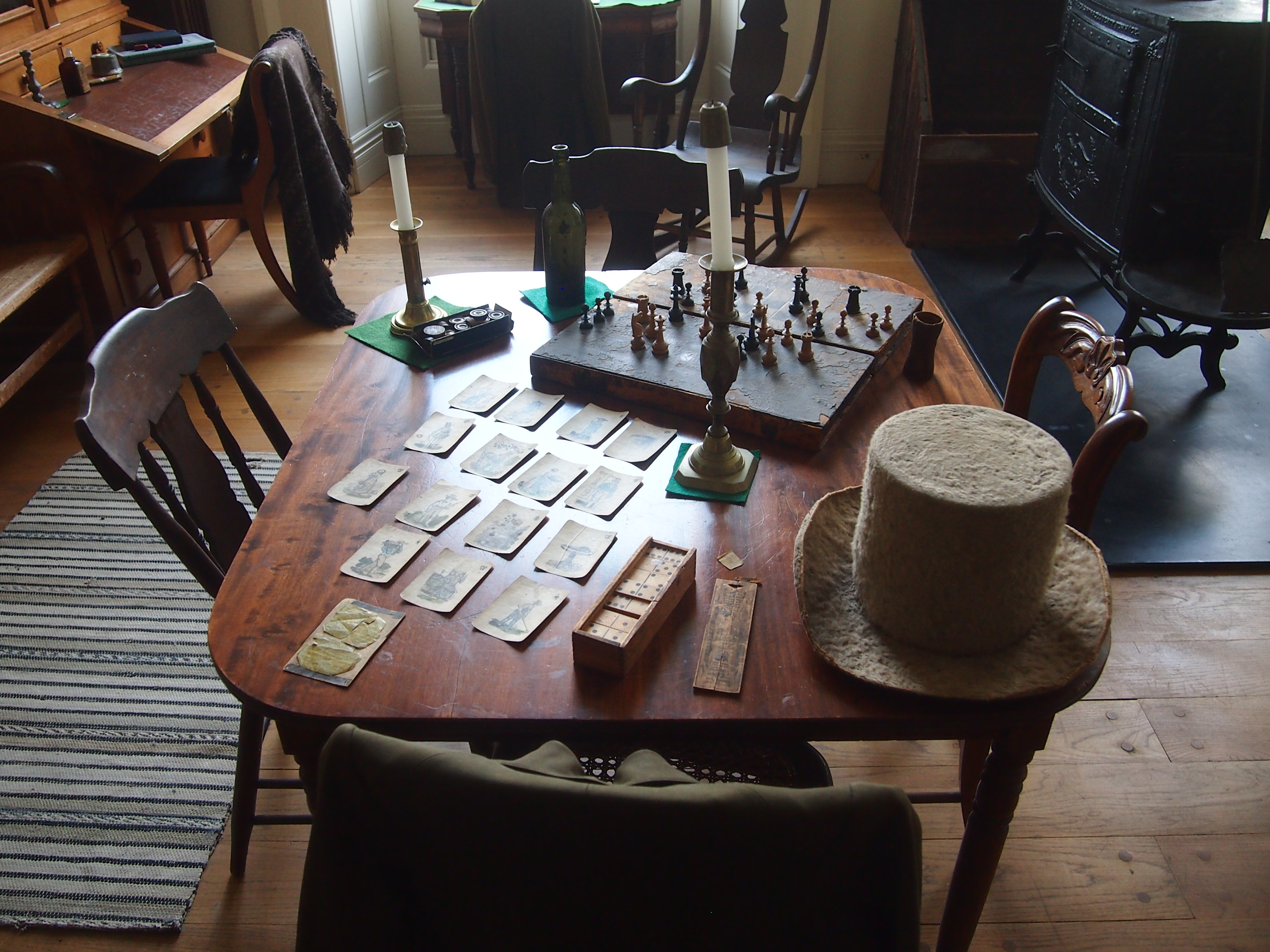
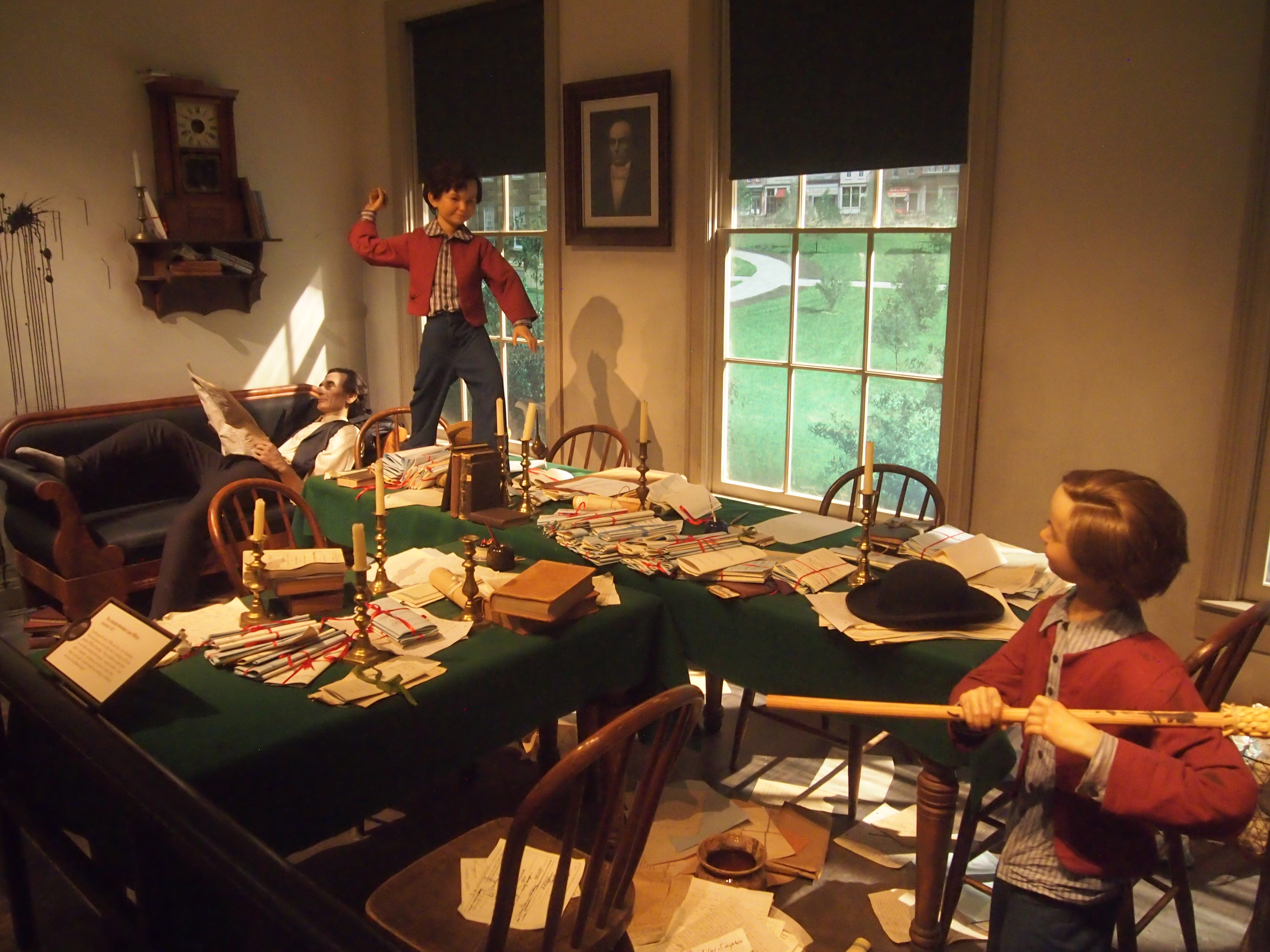
The Lincoln-Herndon law office. Perhaps the best tableau in the museum. Clutter is an essential aspect of people’s lives that historical museums often miss. Lincoln had better things to do than tidy his office or discipline his sons. Namely, read.

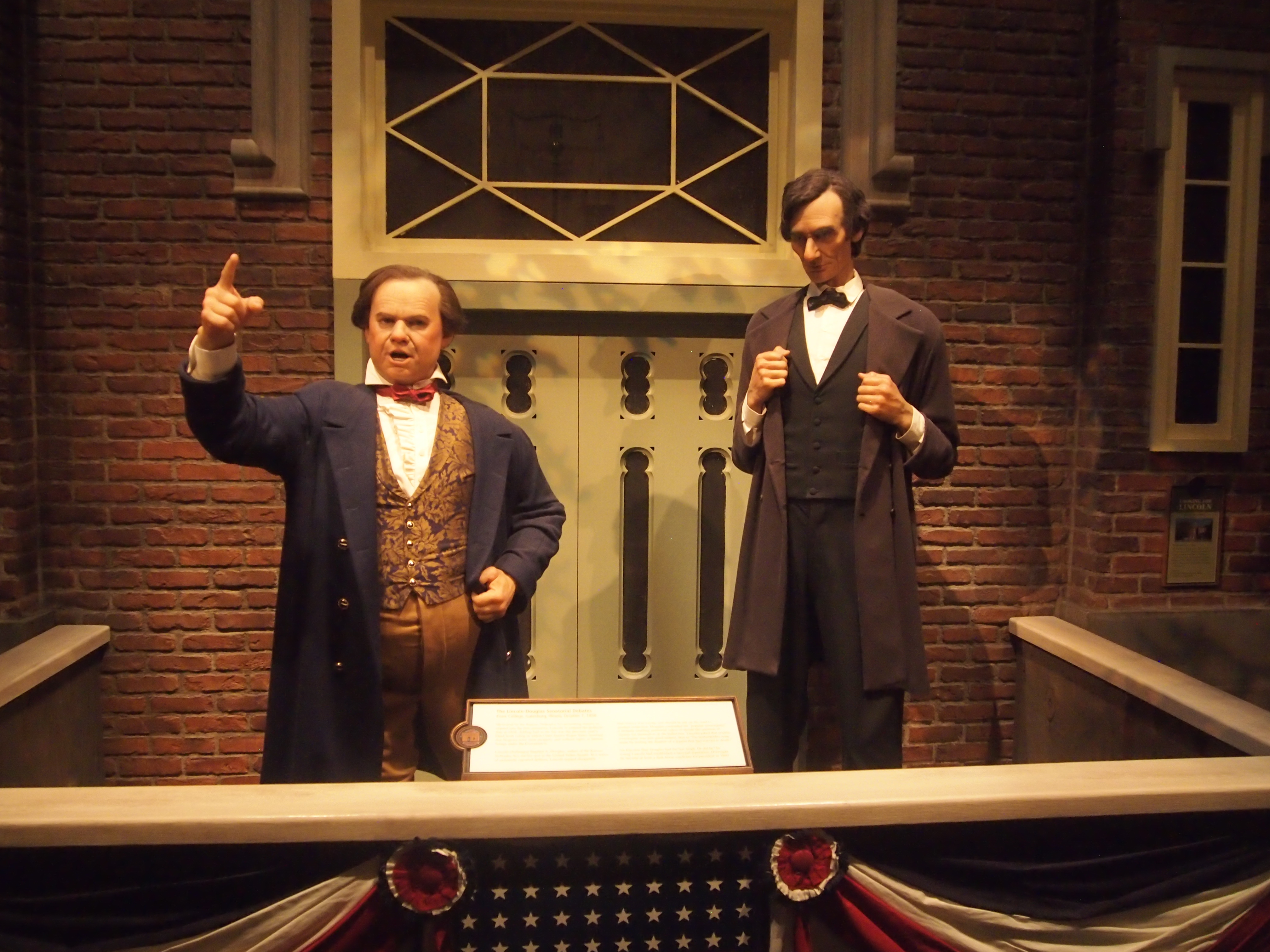
Can’t very well have a Lincoln museum without Mr. Douglas debating Mr. Lincoln.

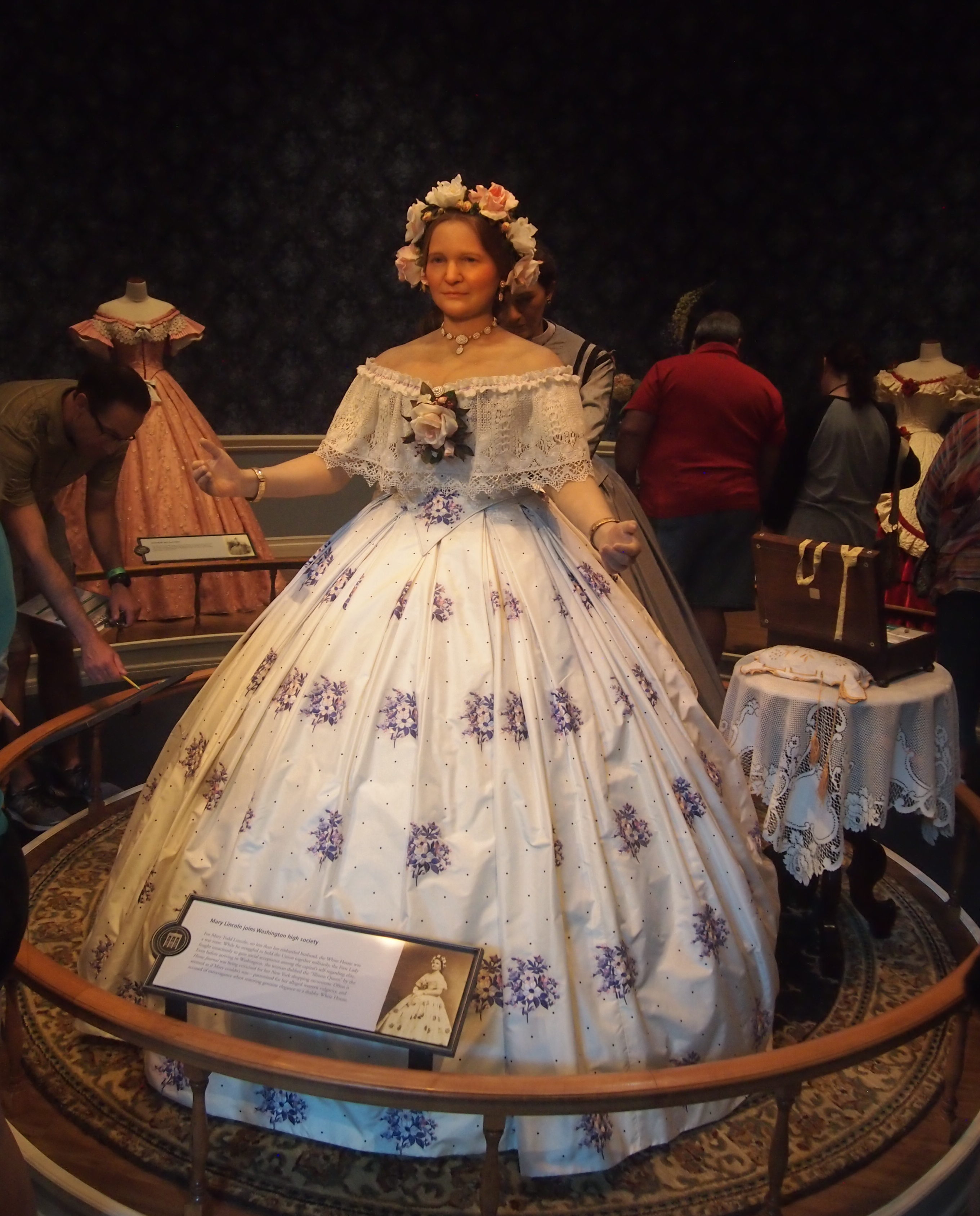
Mary Lincoln dressed for her husband’s inauguration.

There is another Mary Lincoln figure, dressed in black, sitting alone in a dim room with the sound of rain in the background. She is depicted grieving for their son Tad, who died in 1862. It’s the saddest tableau in the museum, even more than the Ford’s Theatre depiction.

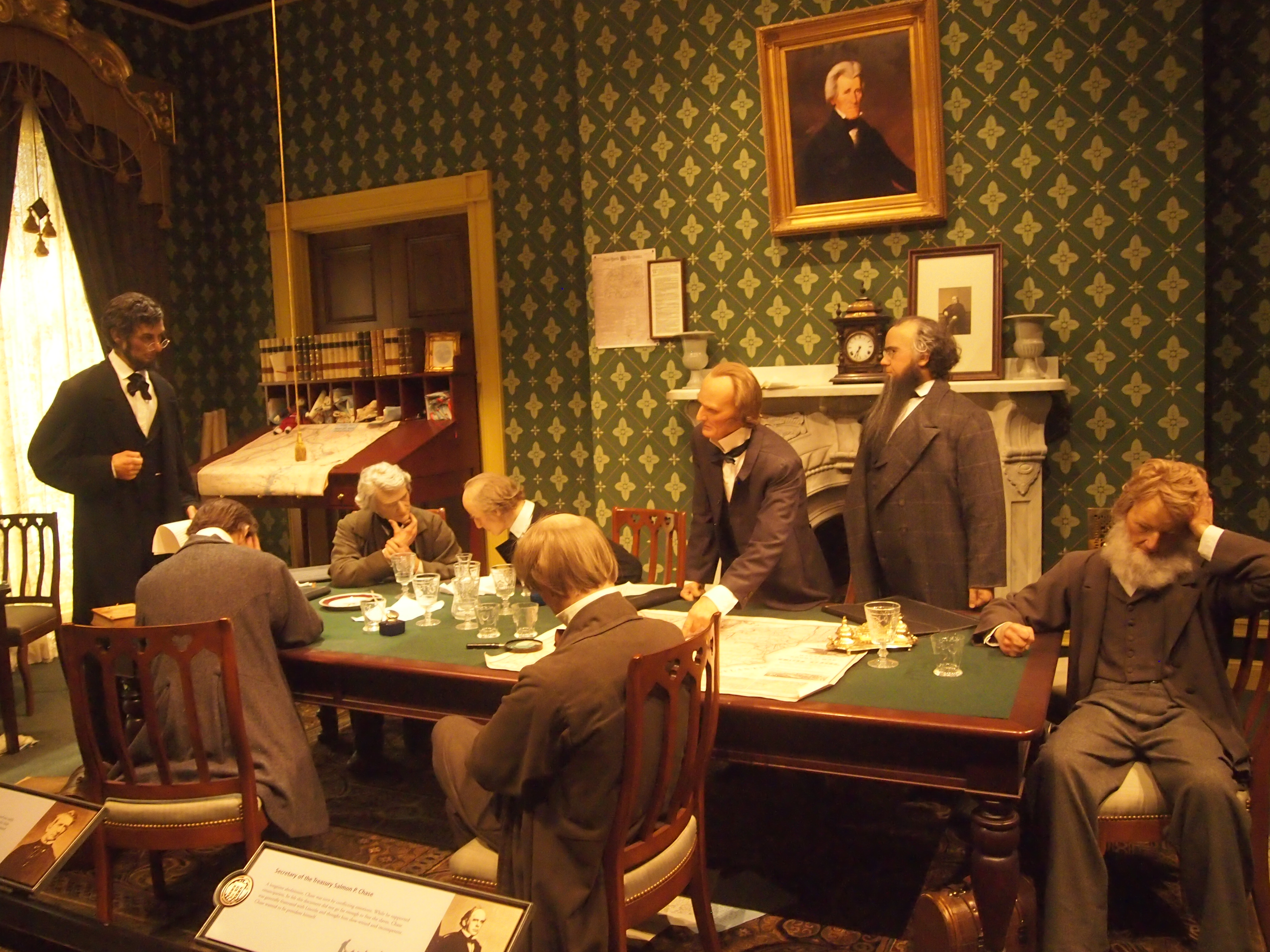
The first reading of the Emancipation Proclamation to the cabinet. (“By the way, gentlemen, one more thing…”) Clearly inspired by the famed Carpenter painting, if not so formally posed.

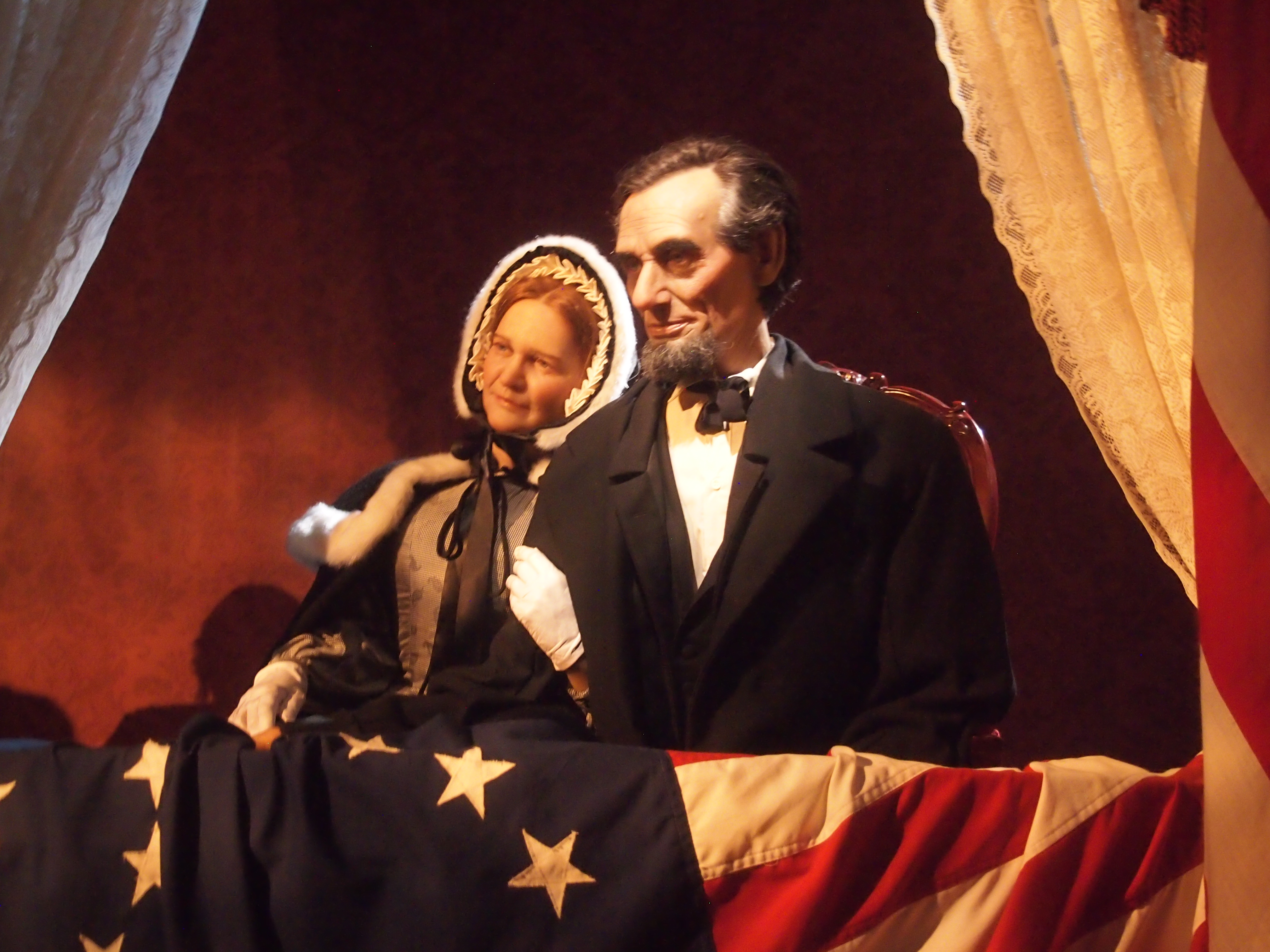
And, of course, the Lincolns at Ford’s Theatre.

Booth is depicted entering the door behind them, so maybe that’s the only place to find the rubber assassin in the museum these days.

Streetscapes in the Driftless Area

Four years ago in June, we visited the Driftless Area, where the modern borders of Illinois, Wisconsin and Iowa meet. I called the trip the Tri-State Summer Solstice Weekend ’14.

Driftless because for whatever reason, glaciers didn’t cover the area during the most recent ice ages. Besides its interesting geography — hills in Illinois, what a concept — the Driftless Area has some charming towns.

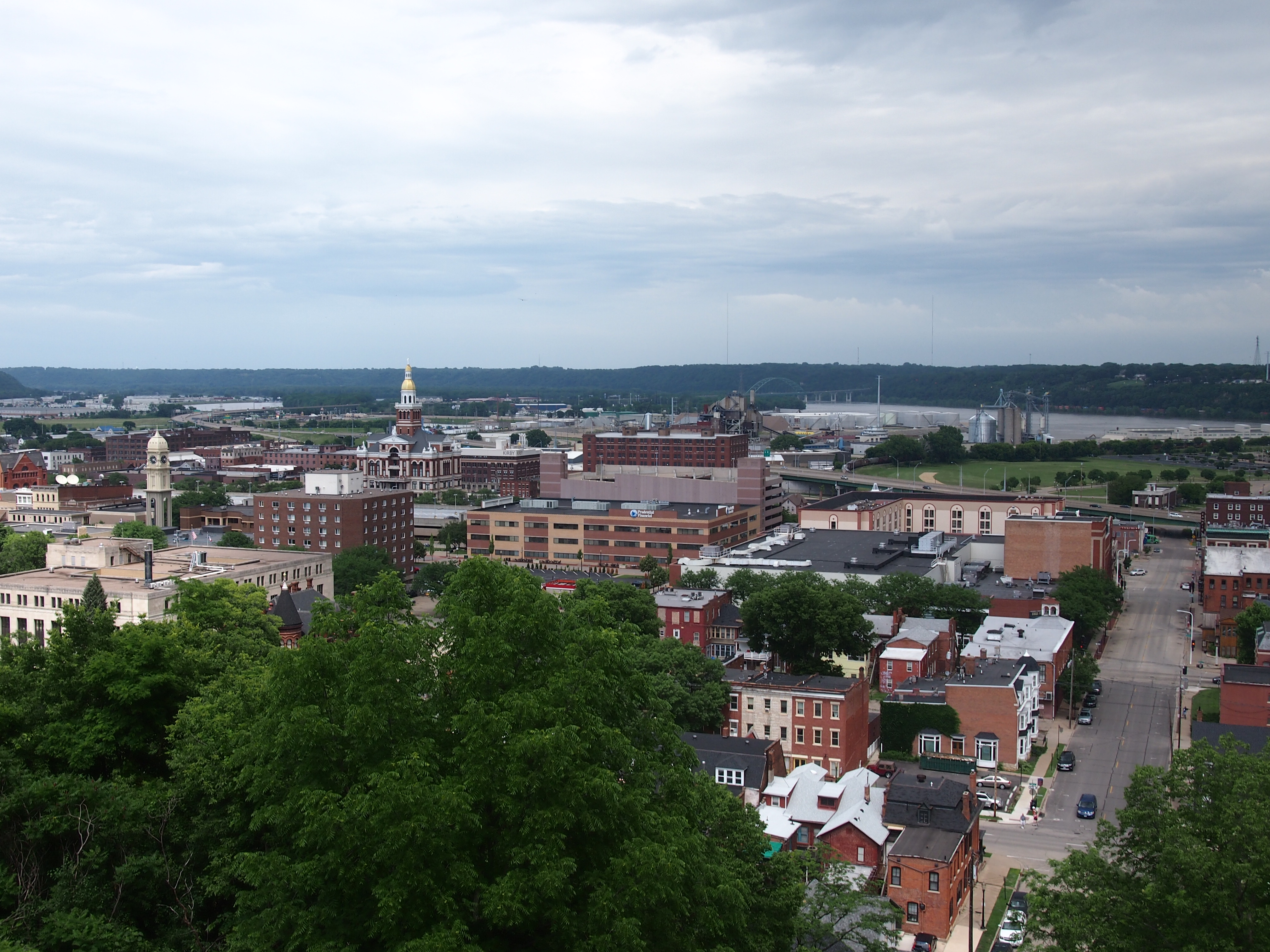
Such as Dubuque, as seen from the hill rising over the town, looking down toward the Mississippi.

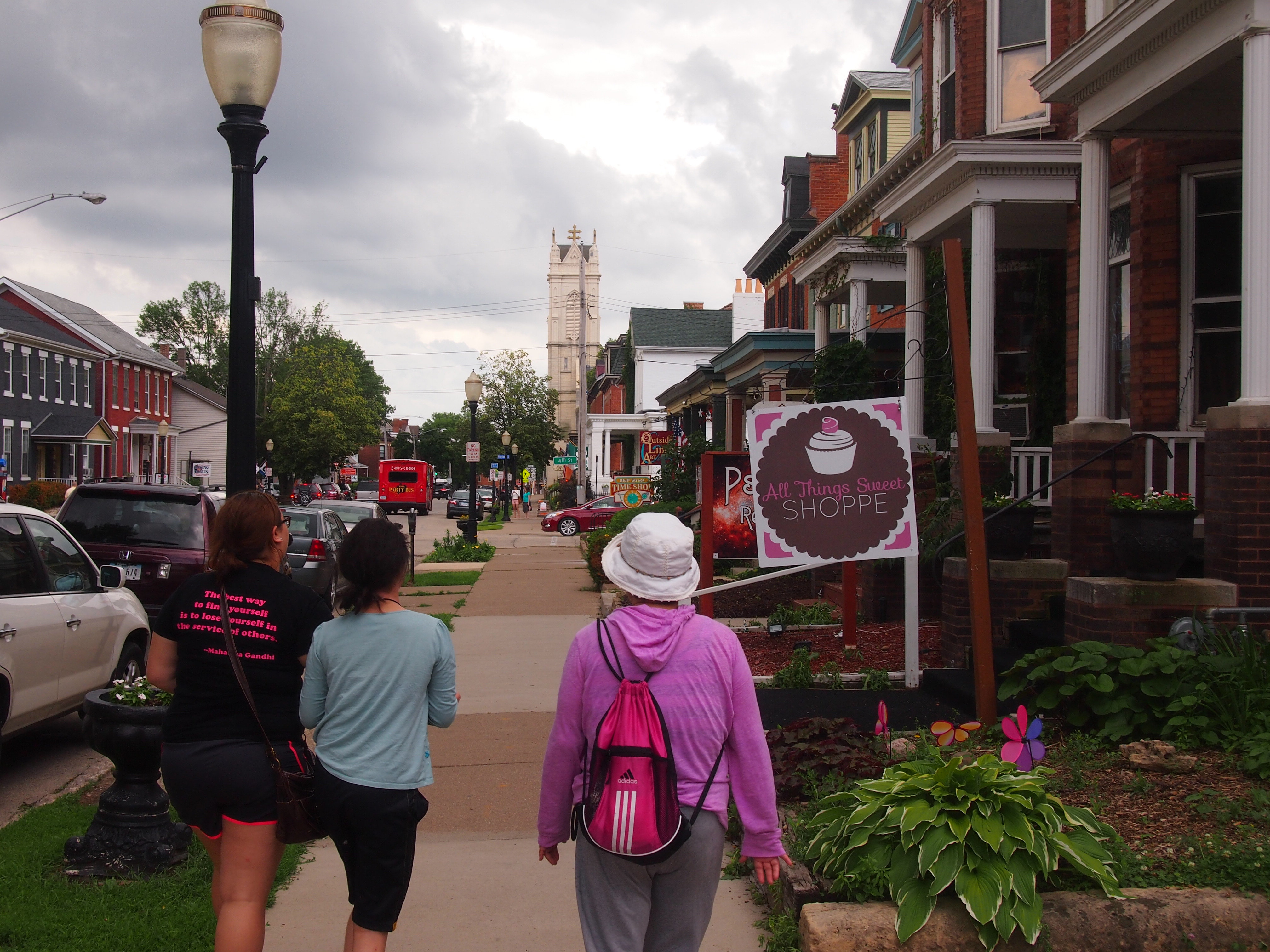
Down in the streets.

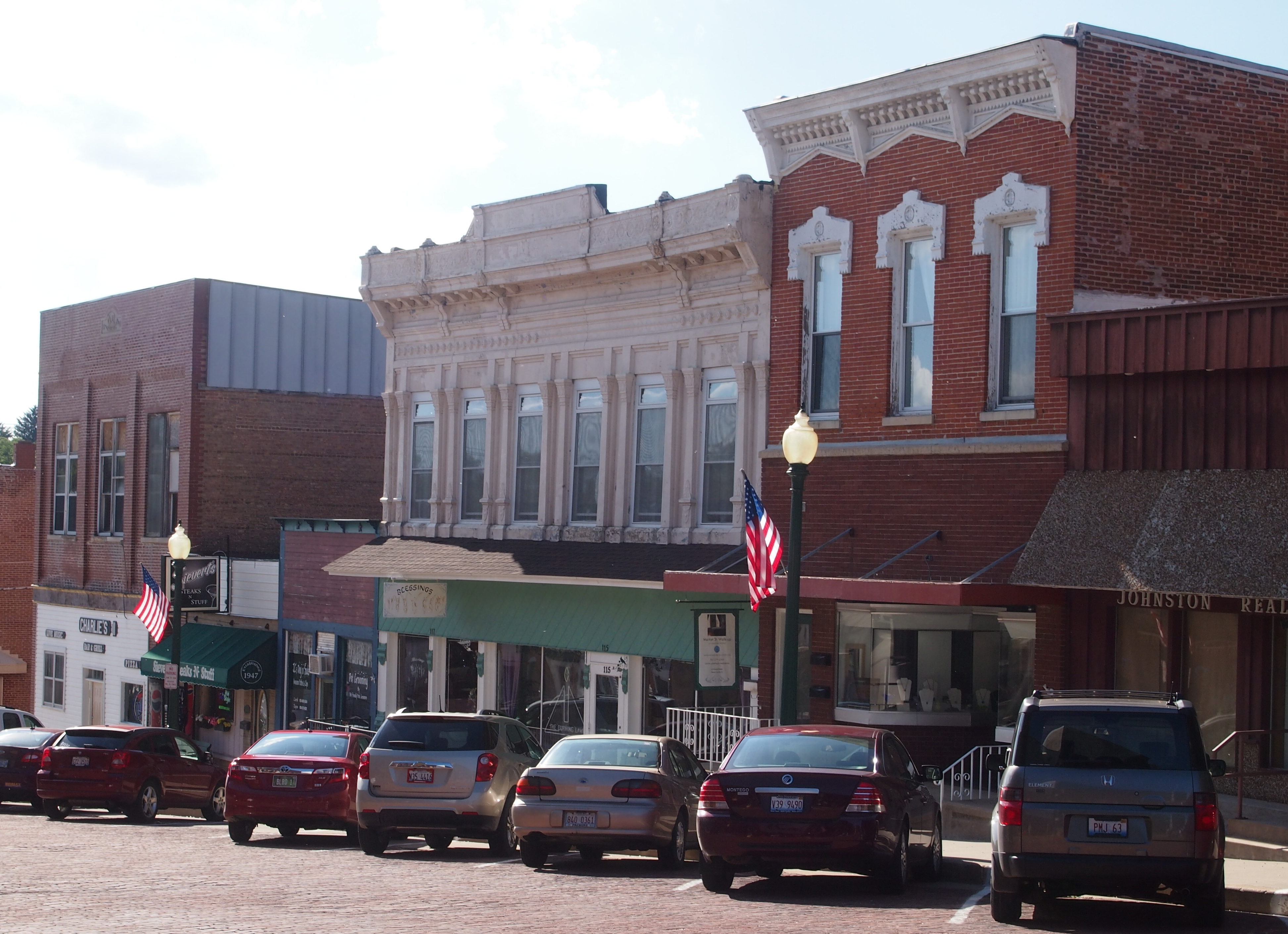
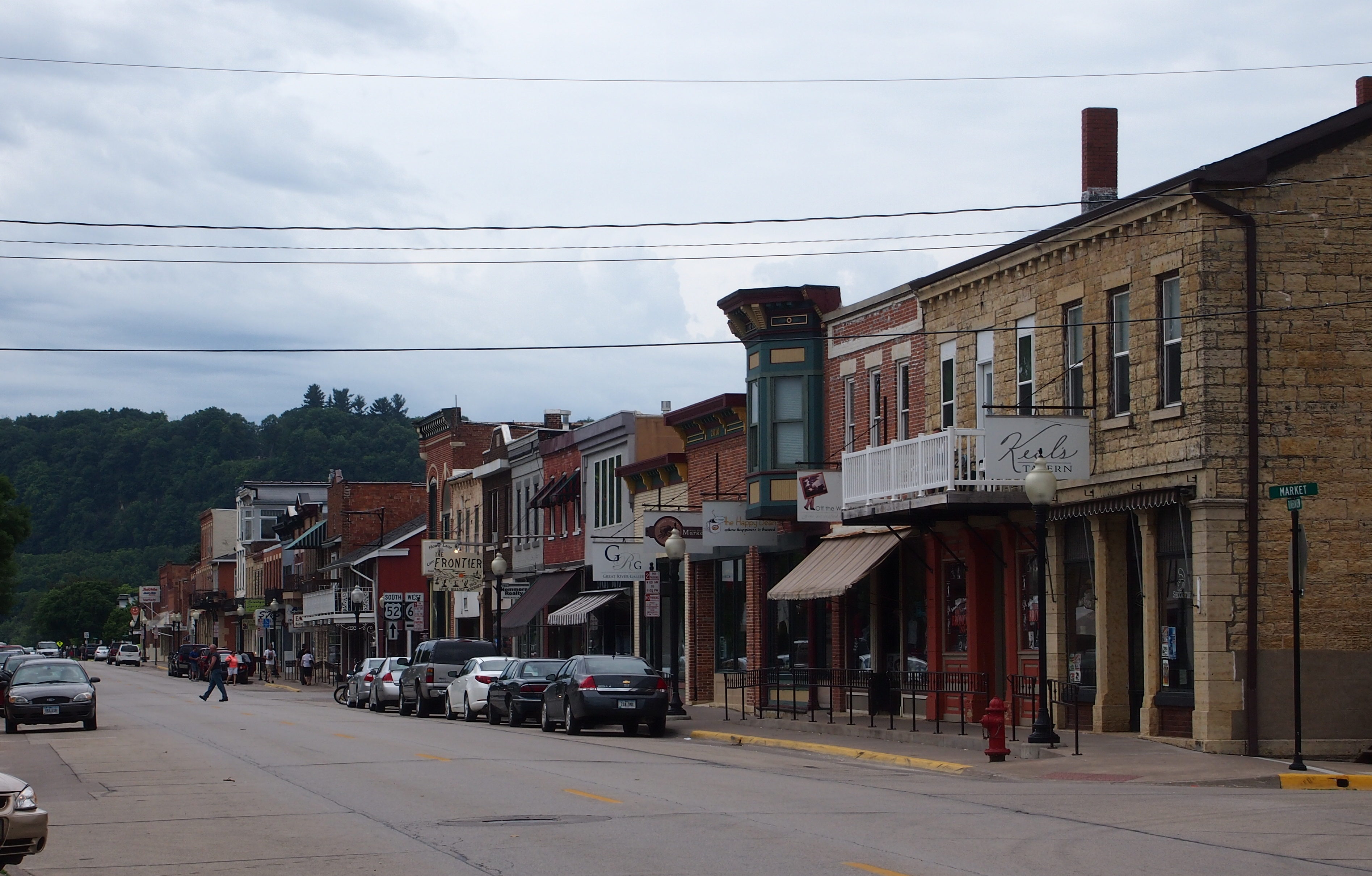
It’s always good to find a handsome small-town streetscape. On this trip, there was Galena, Illinois.

Mount Carroll, Illinois.

The even more obscure Bellevue, Iowa.

In Bellevue I stopped to look at Lock and Dam No. 12 on the Mississippi River, and took a short look at the town, too.

Thursday Plattero-filleto-mulleto-turboto-cranio-morselo-pickleo-acido-silphio-honeyo-pouredonthetopo-theouzelo-throstleo-cushato-culvero-cutleto-roastingo-marowo-dippero-leveret-syrupu-gibleto-wings.

Just having fun with the head. As I did a few years ago. It’s one of the English translations of the Greek, which is transliterated lopado­temacho­selacho­galeo­kranio­leipsano­drim­hypo­trimmato­silphio­parao­melito­katakechy­meno­kichl­epi­kossypho­phatto­perister­alektryon­opte­kephallio­kigklo­peleio­lagoio­siraio­baphe­tragano­pterygon.

I didn’t even have to find my copy of the Book of Lists to find it. All I did was Google “long Greek word leftovers,” and I found it right away.

Considering that it’s the “first day of summer,” it’s pretty cool and rainy around here. That’s nonsense anyway. It’s the Summer Solstice. That’s all.

Saw a few fireflies early in the week, but not since. They’re just the early ones. Around here most of them show up in July.

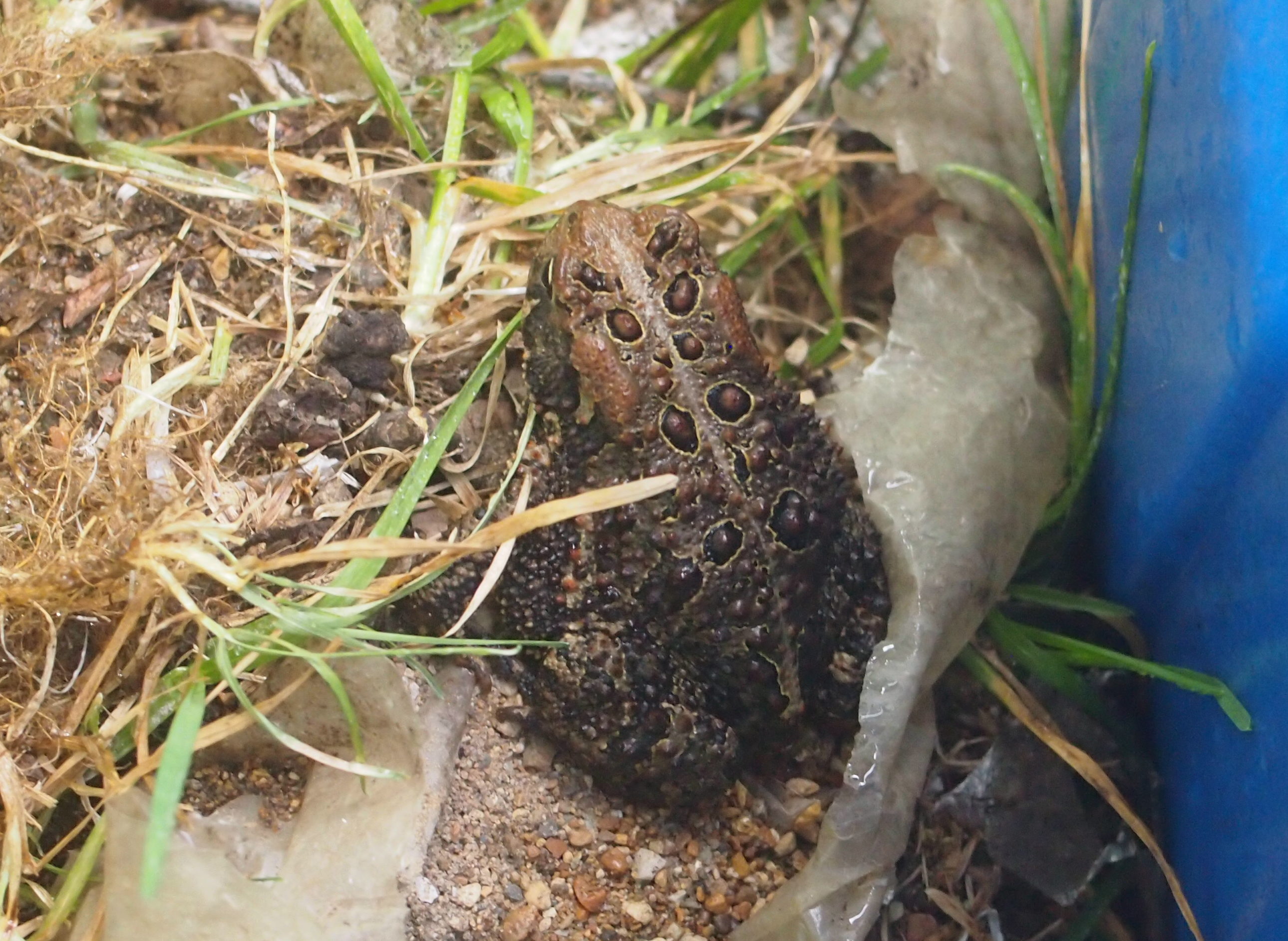
Not sure whether the rain pleases the toads or not, but I’ve seen some lately.

Something I didn’t know until recently that I found out in my work: the Seminole Tribe of Florida owns Hard Rock Cafe Inc. Since 2007. I probably should have known that, but I didn’t.

Not long ago I sat down with Ann and watched the 2011 Captain America movie on DVD. I’m rarely in the mood for comic book movies, but I thought I’d give it a go.

Not bad. I thought the best idea — which might be true to the comic, I have no clue — was that Captain America, after his conversion by Science from a 98-lb. weakling into a super-soldier, spent much of WWII on bond tours.

Then, of course, through an insane convergence of circumstances, Captain America got to defeat the badies in pitched CGI battles, be sad about his buddy’s death, and fall in love with a tough-but-tenderhearted British bombshell. Right, whatever. That’s what the 15-year-old boys (and some girls) paid to see.

I would have preferred a movie about a fellow who spends the war doing over-the-top patriotic shows, in a ridiculous costume, to sell bonds. He wouldn’t even have to be sad about his situation. Just before V-E Day, he could accidentally take a few hundred Germans prisoner, something like Don Knotts might have. It could be a comedy. That kind of thinking is what I get for not being a 15-year-old boy for a good many decades now.

Chagall’s Four Seasons

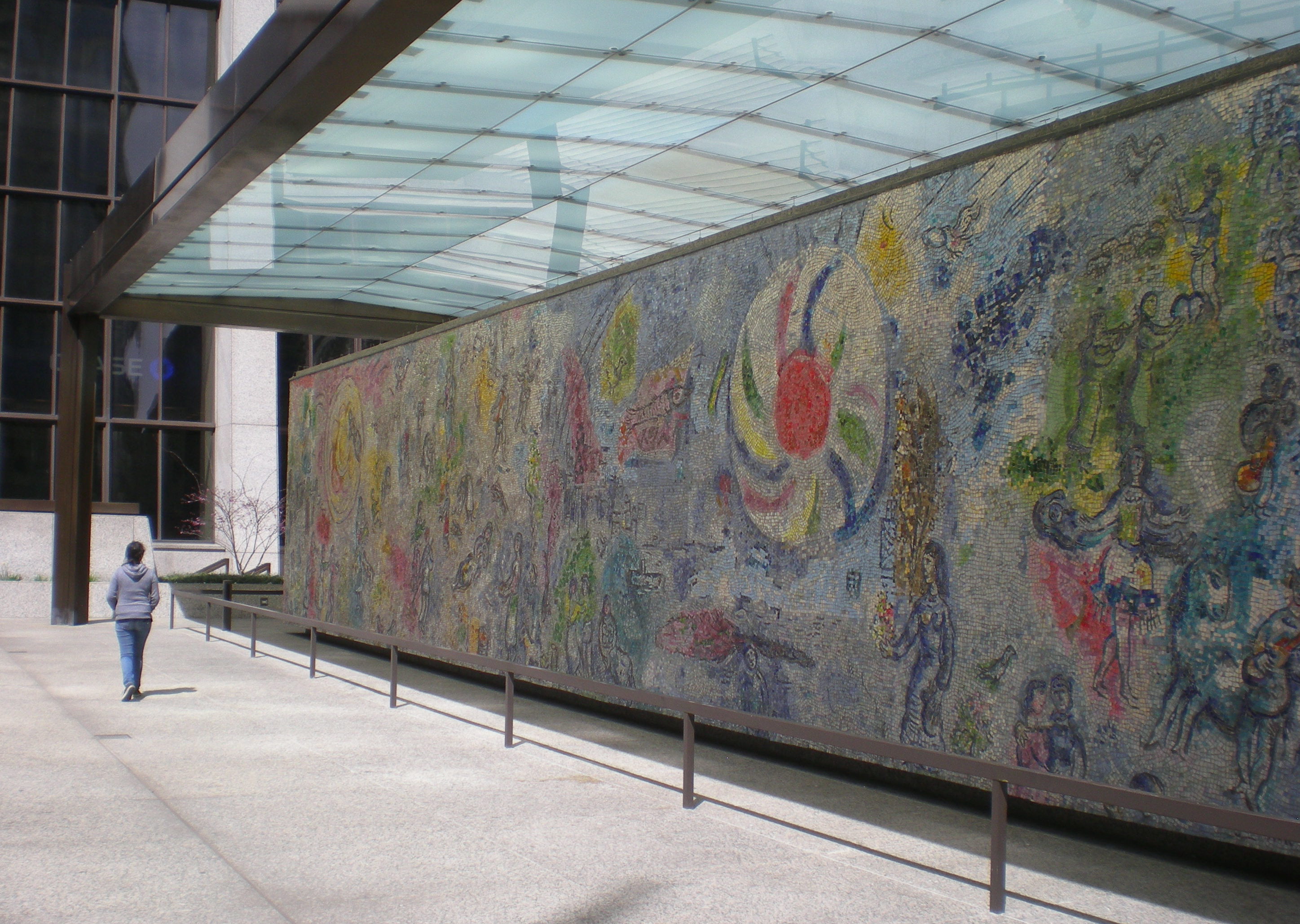
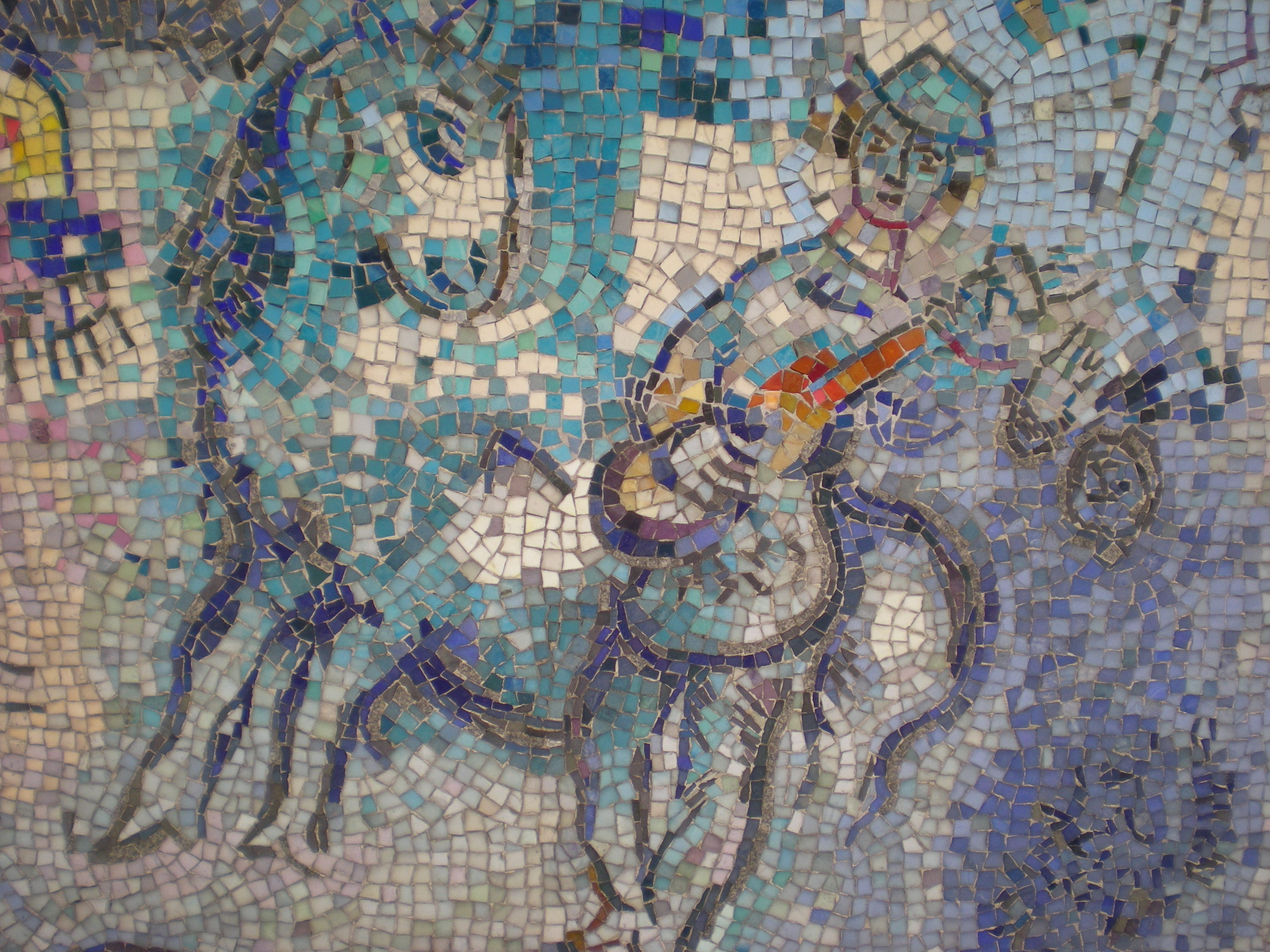
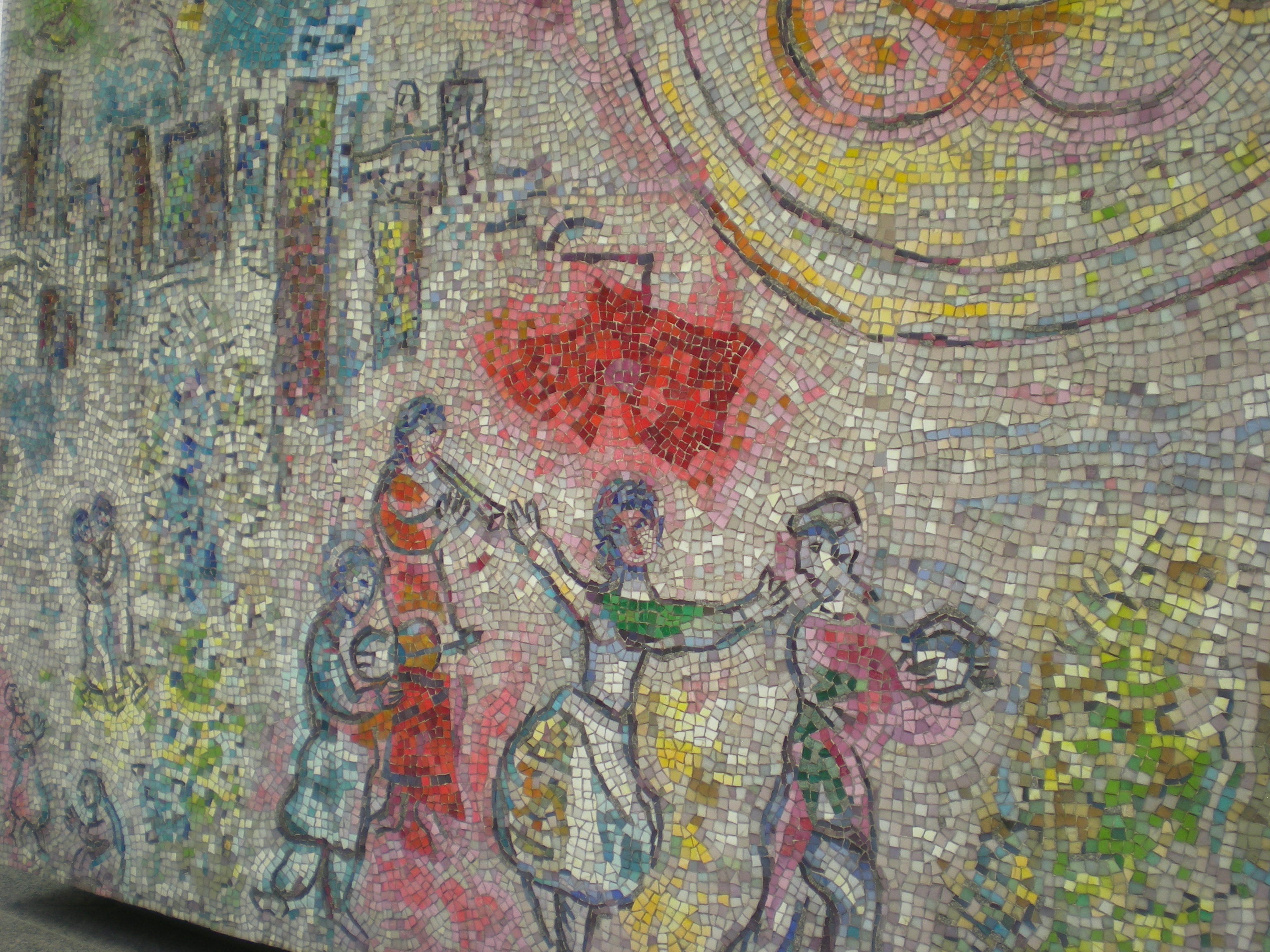
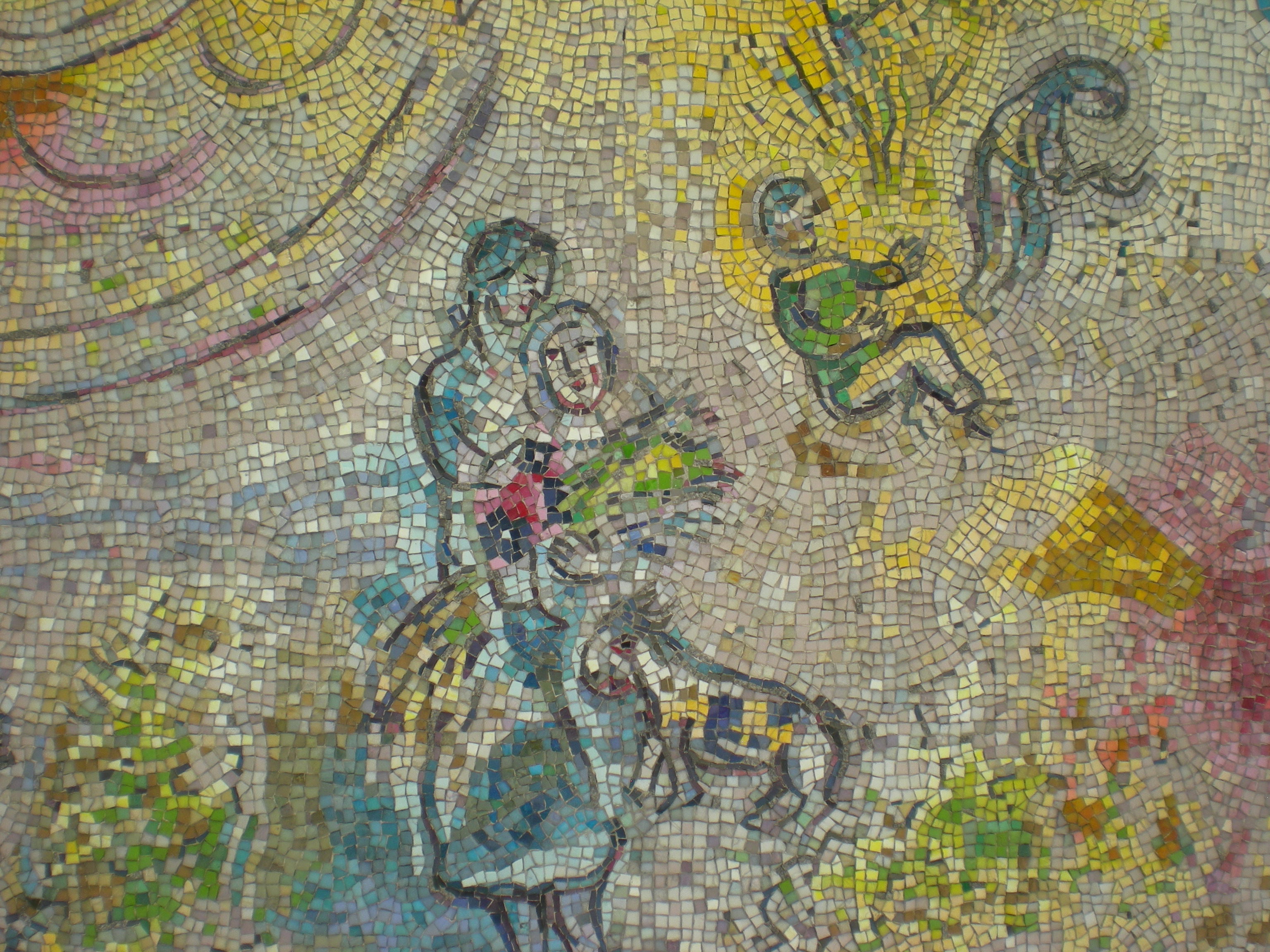
Lunch break was long enough on Friday for me to wander over to what’s now known as Chase Tower Plaza, only a few blocks from Daley Plaza in downtown Chicago, and take another look at Marc Chagall’s Four Seasons.

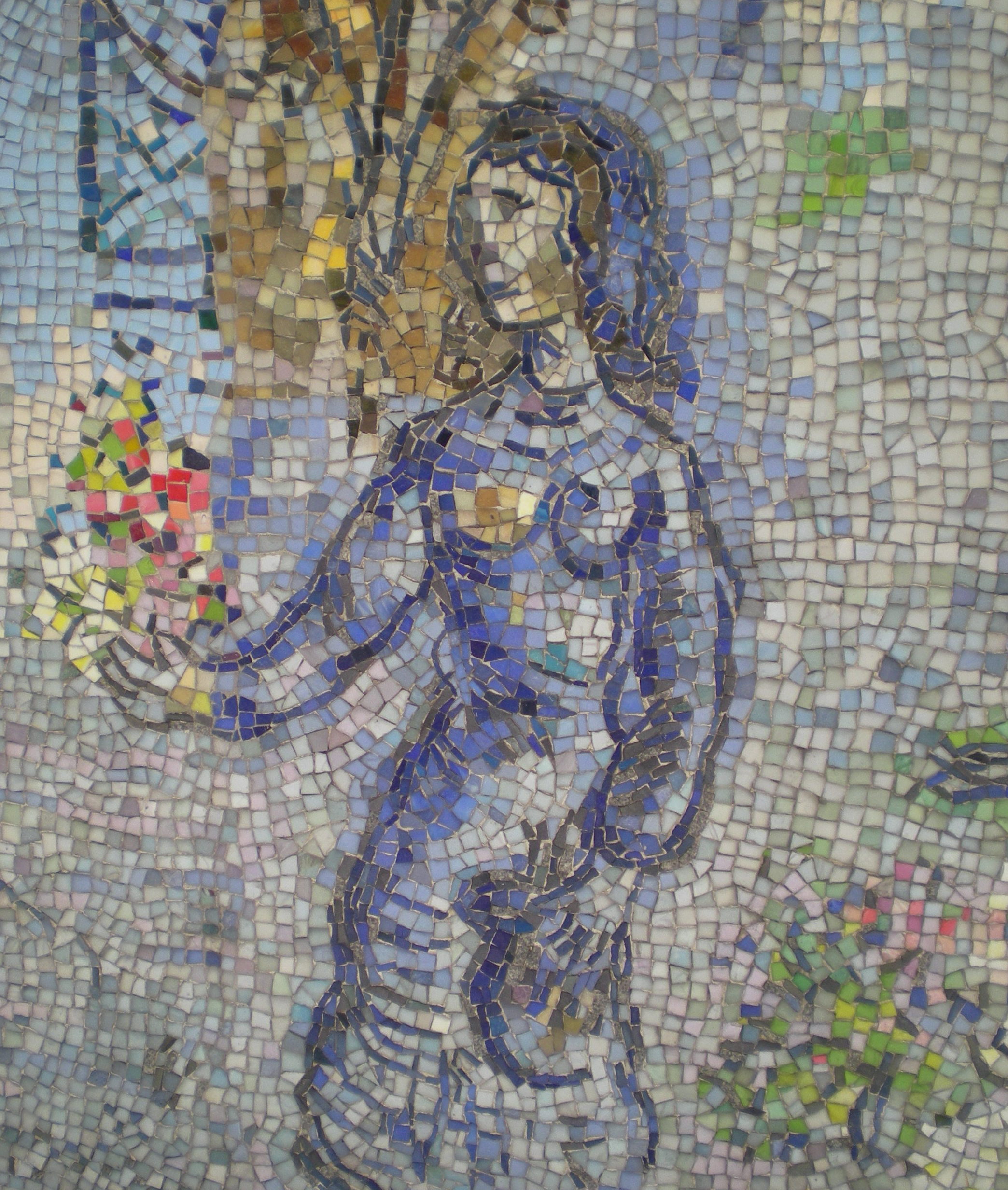
That’s actually a picture I took a few years ago. But the light was about the same, and the mosaic isn’t any different. Some details.
It’s a fine work, though not one of his more famous ones. It’s also late Chagall, since he completed it in 1974. A canopy was added 20 years later, and renovations were done, because by the early 1990s, the Chicago elements had taken a toll.

The Daley Plaza Food Truck Array

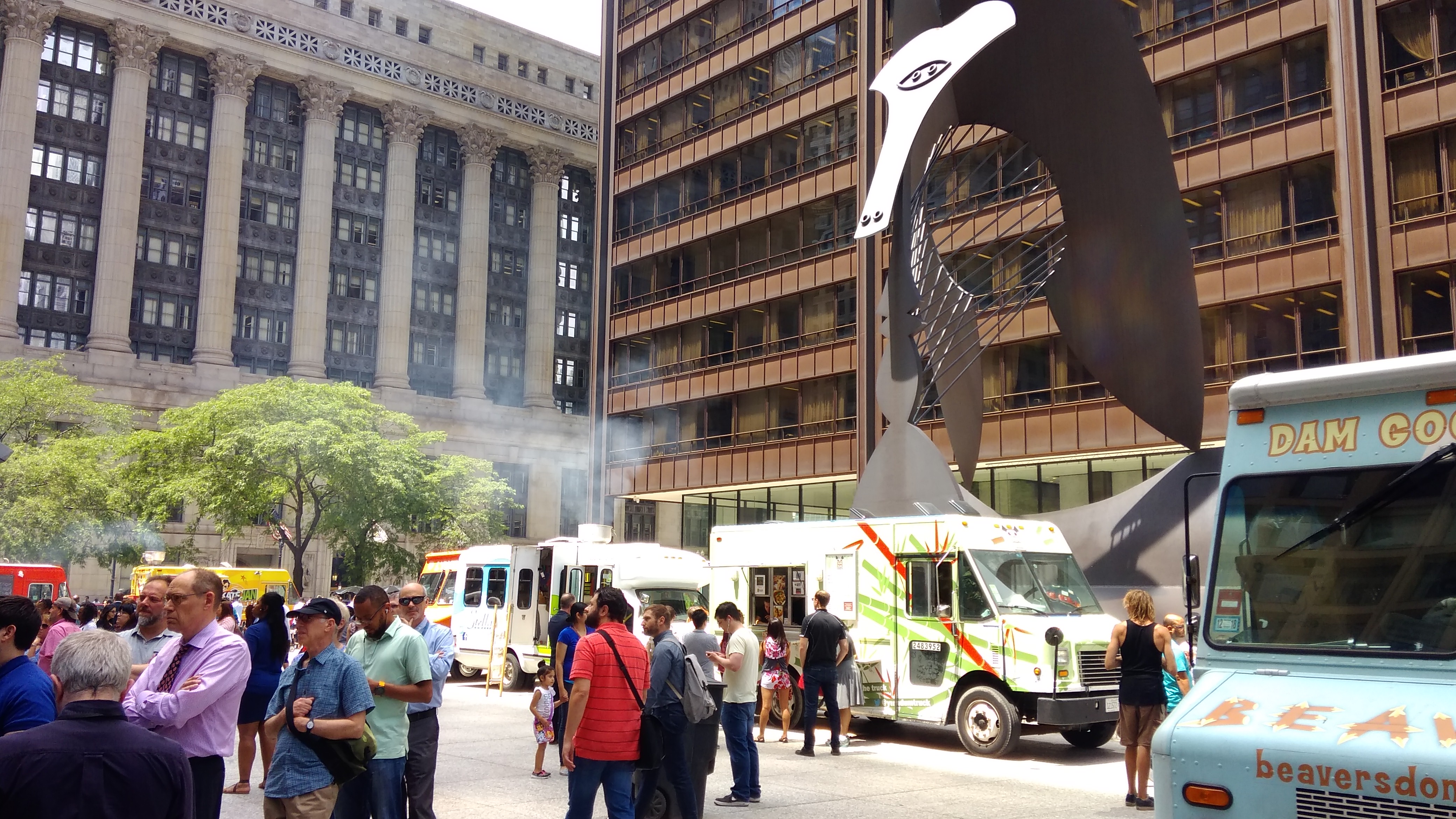
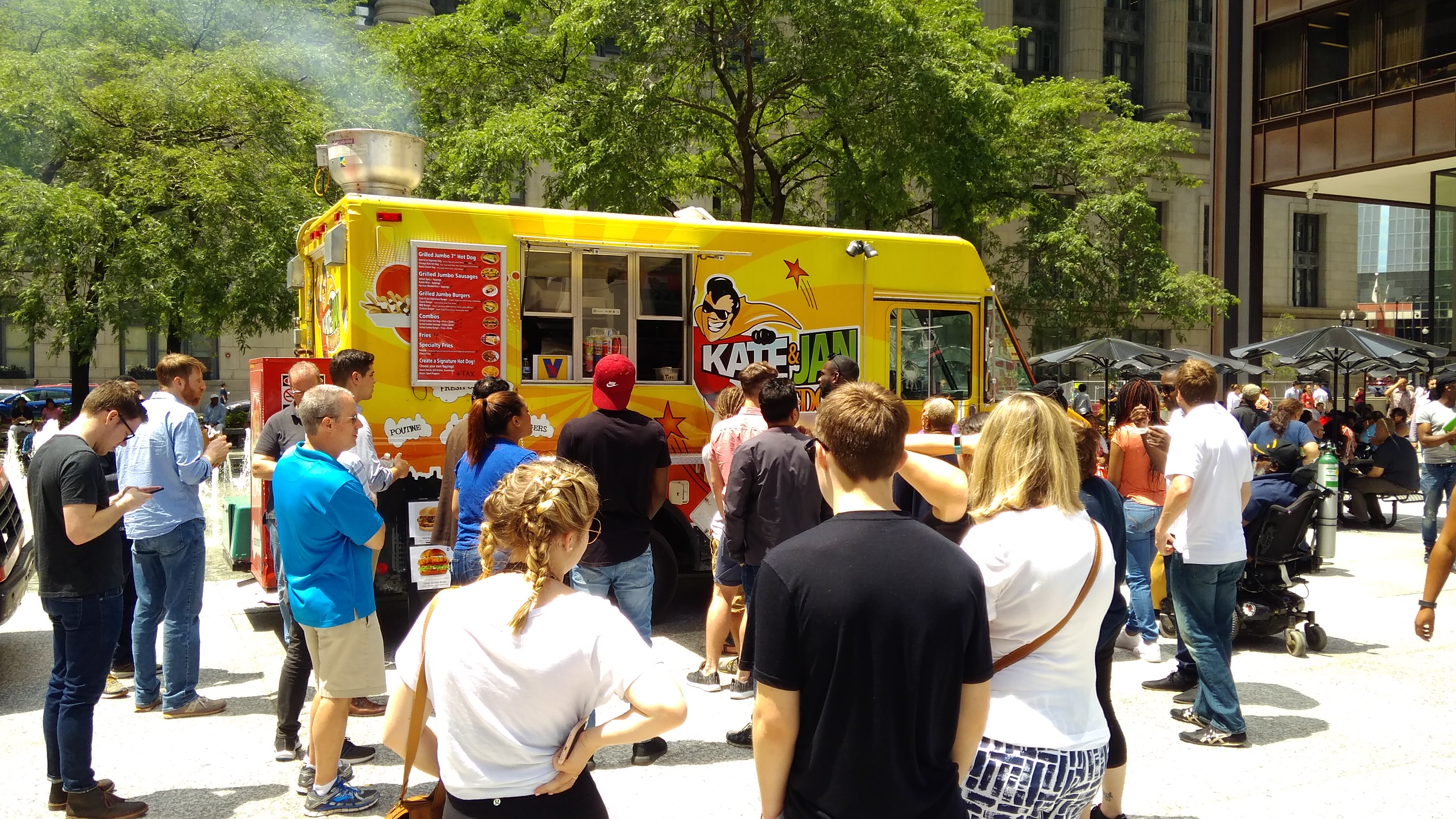
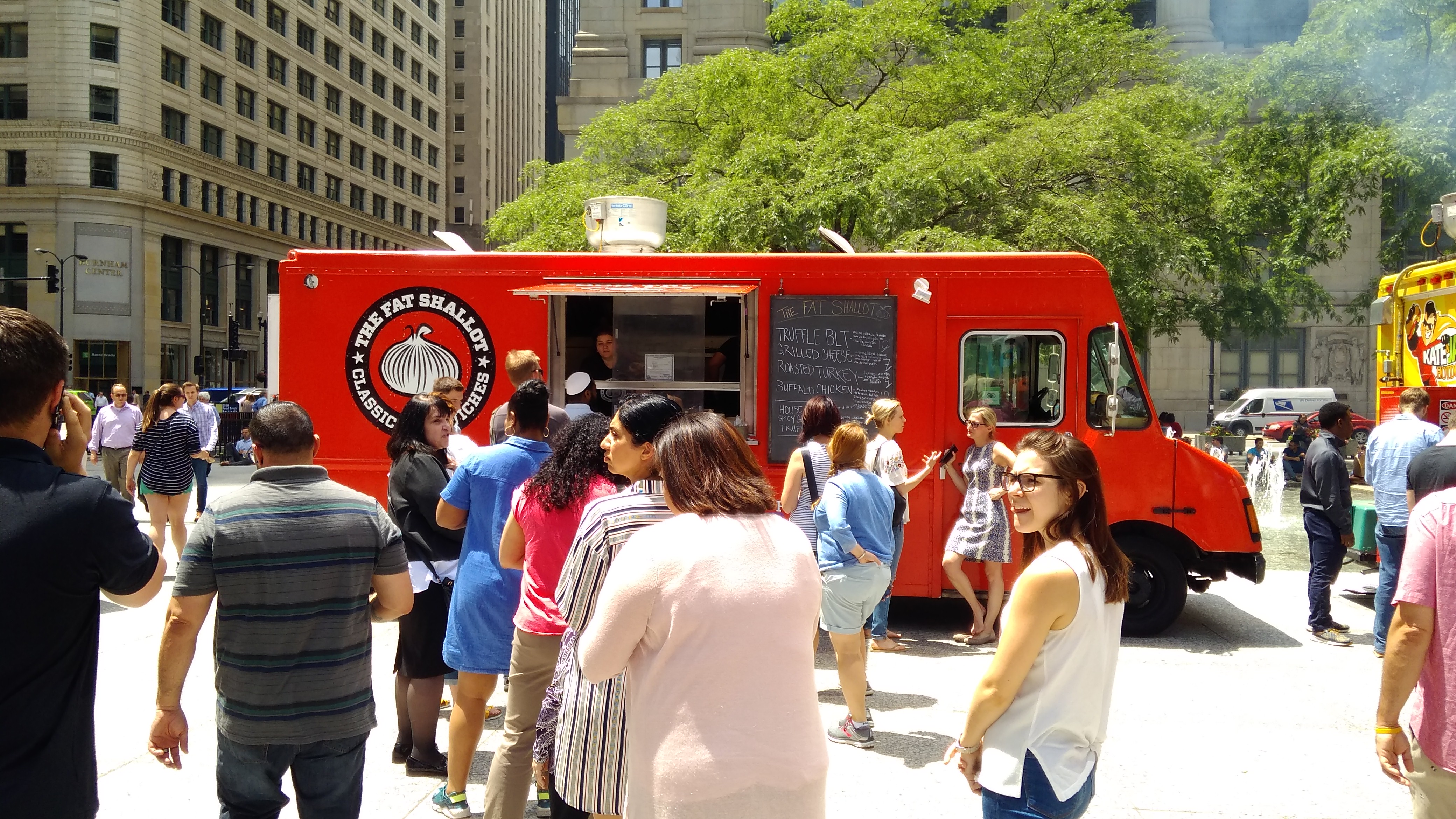
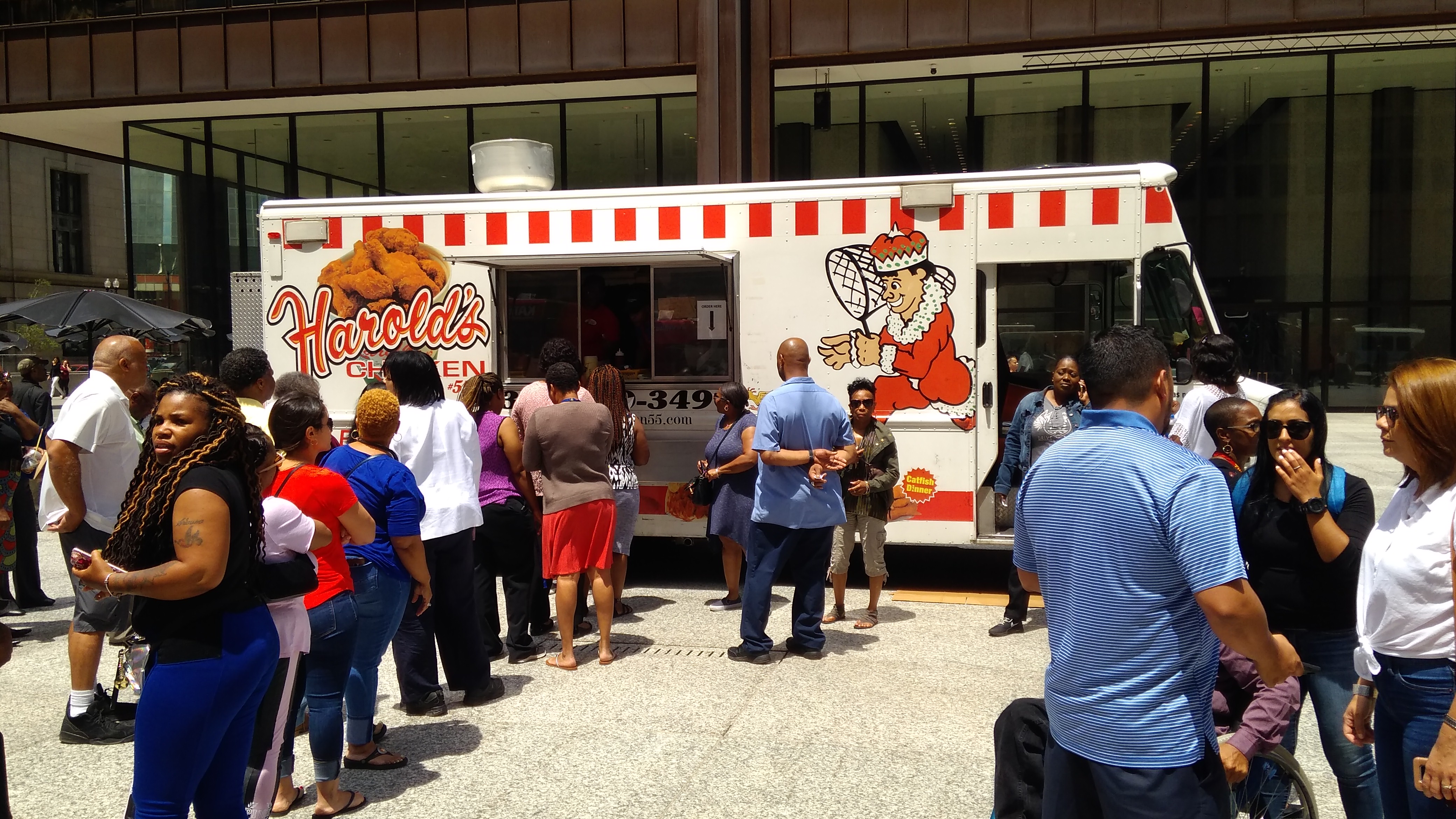
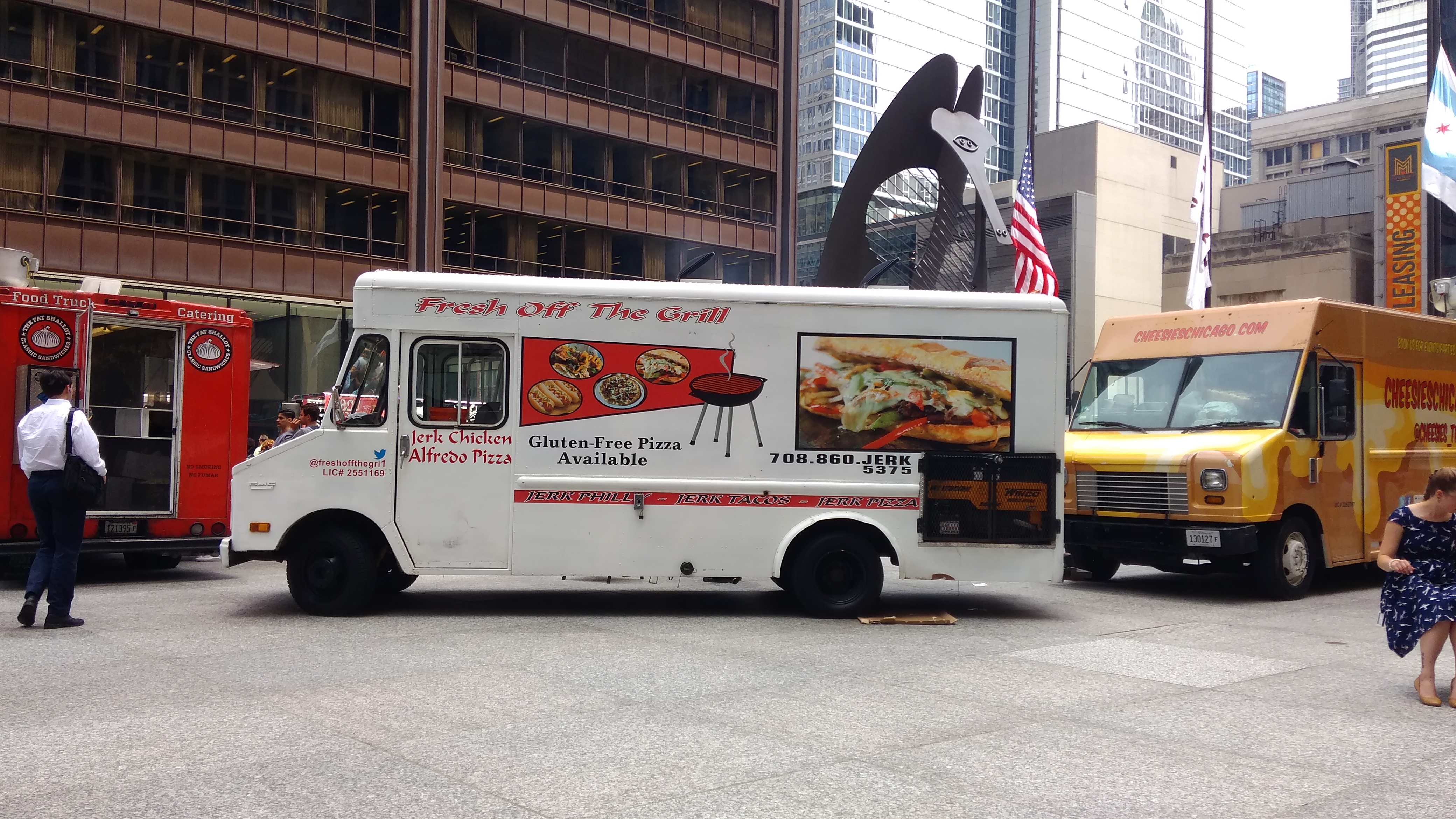
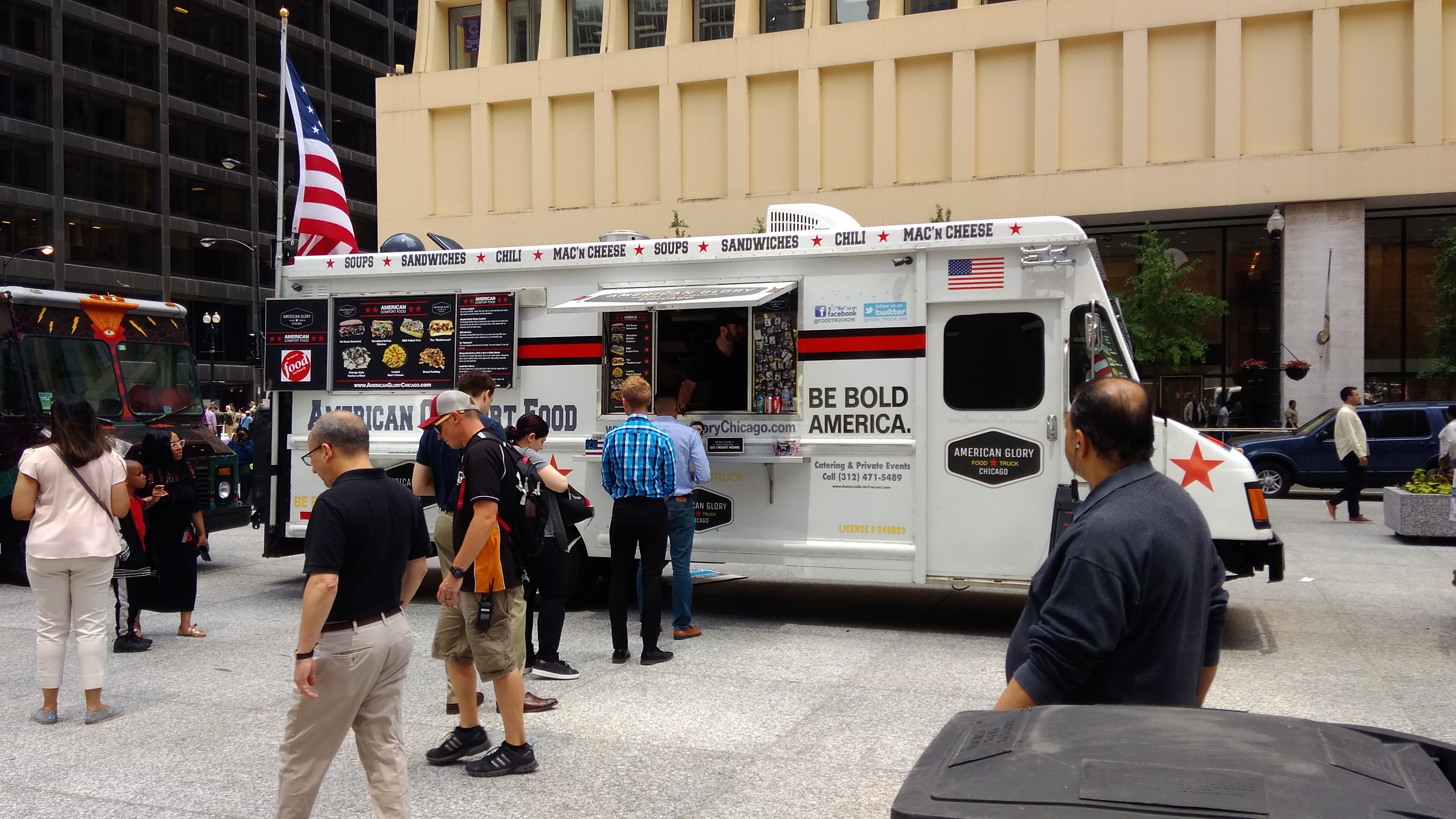
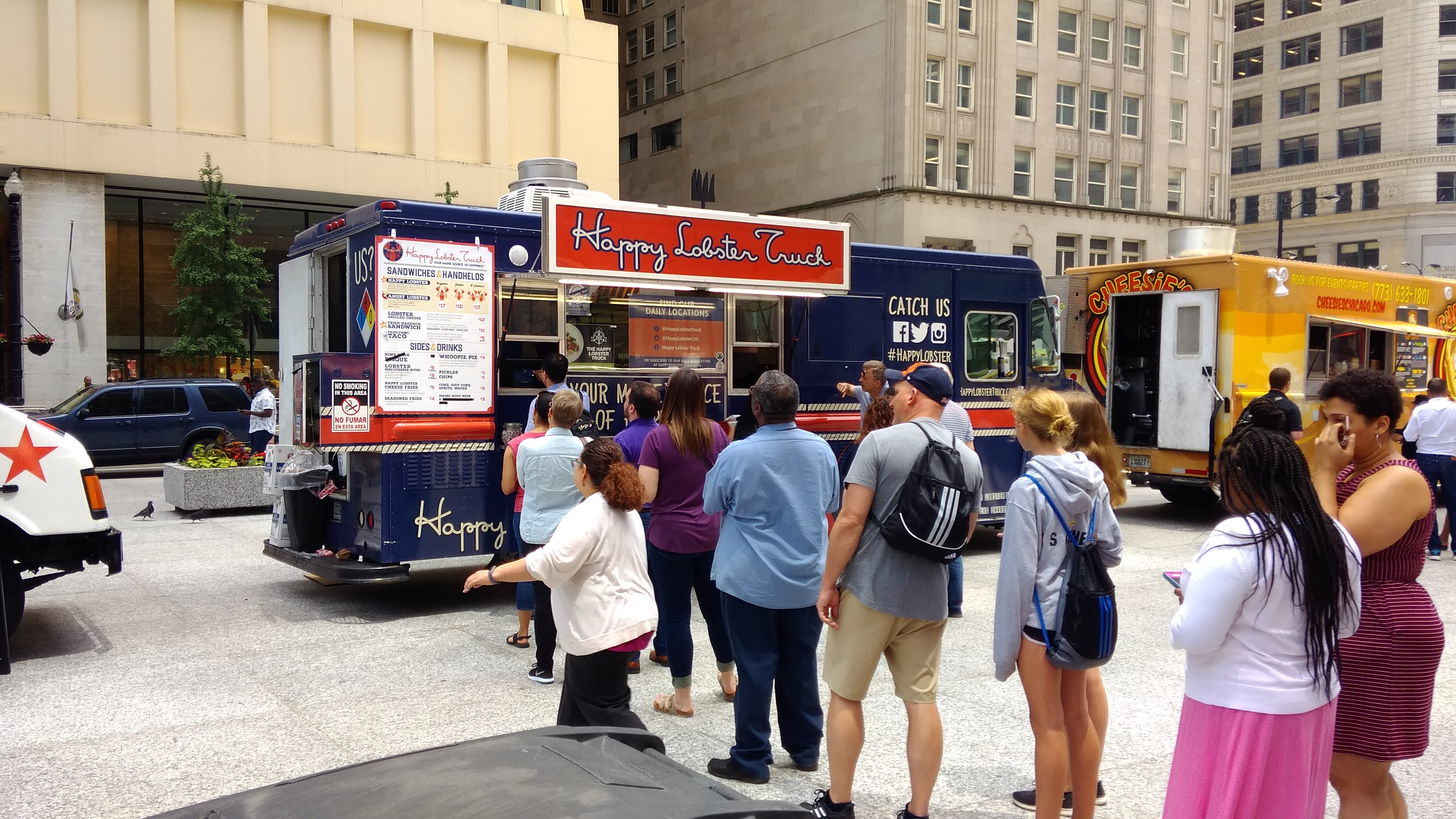
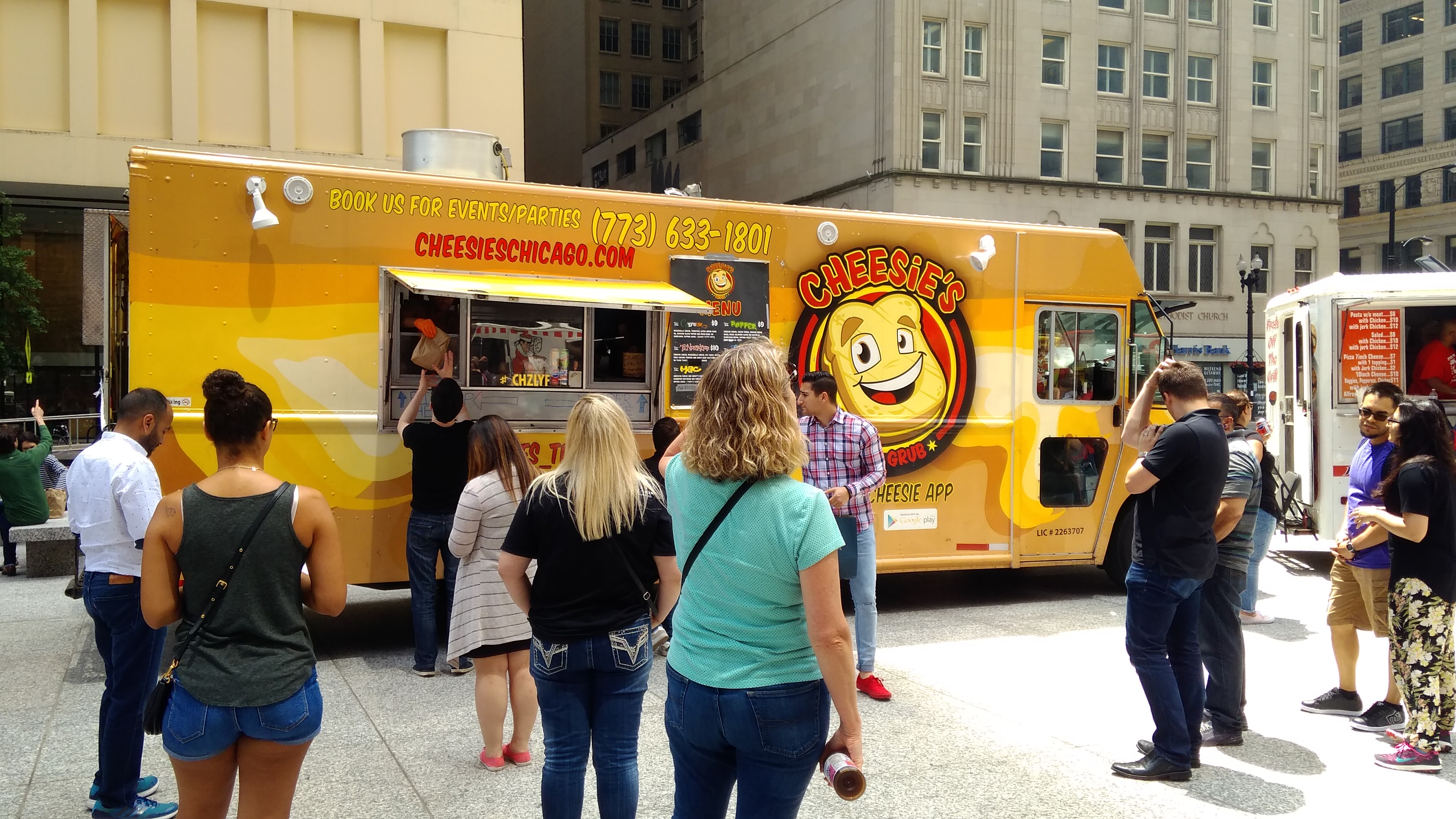
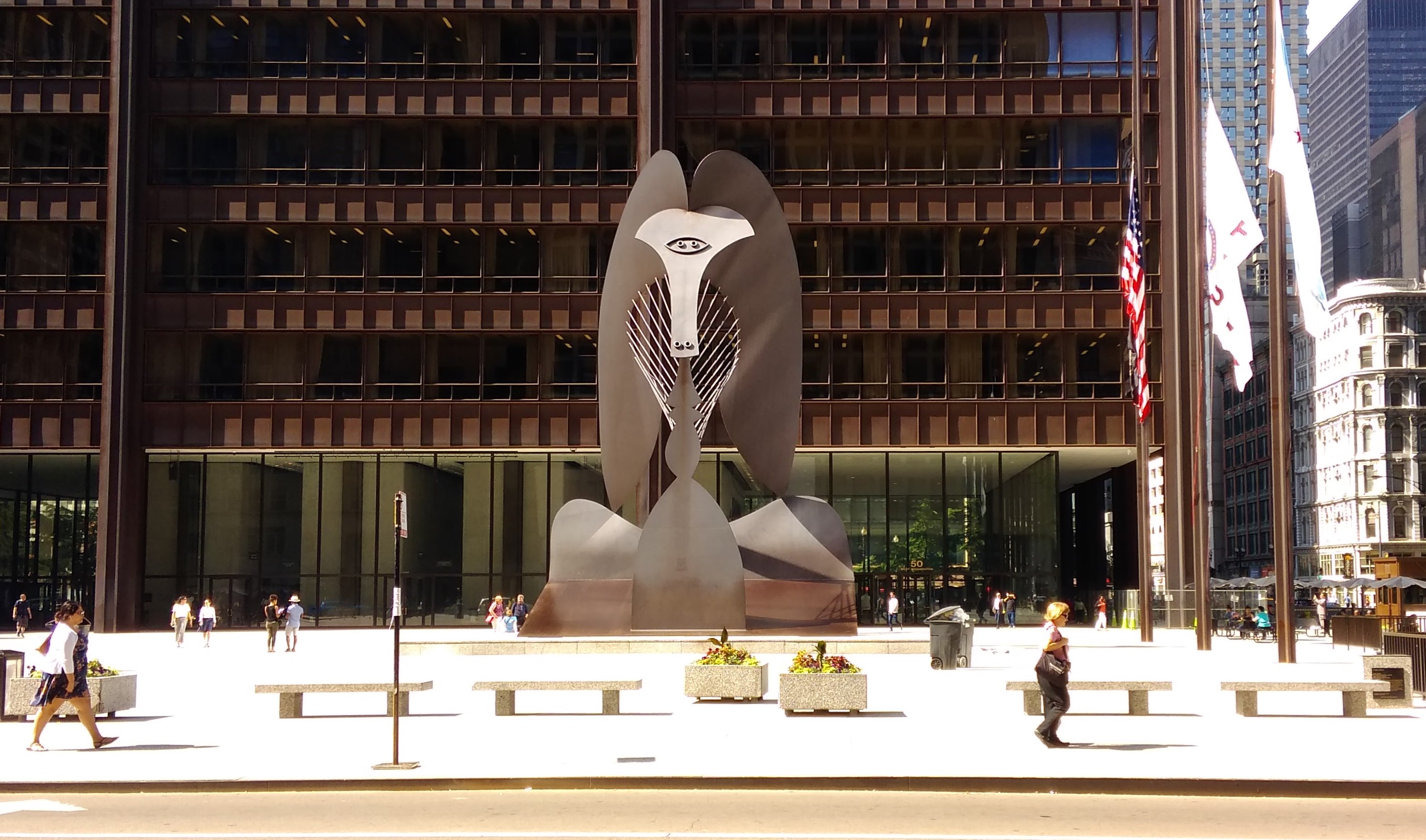
On Friday, the court gave us a generous hour and a half for lunch, so I had time to look around the collection of food trucks in downtown Chicago’s Daley Plaza, some of them ‘neath the Chicago Picasso.

The array of trucks was broad. Maybe 15 in all, though I didn’t count.

The one I eventually picked. Had a grilled cheese sandwich a cut above most diners, say, but still a little expensive, I thought.

Jury duty was over late in the afternoon.

It was as if the trucks had never been there.

Jury Duty ’18

Some weeks ago, I got a postcard from the county informing me that I had jury duty. Time: Friday, June 15. Place: the 17th floor of Daley Center in downtown Chicago. So I got up early on Friday, caught a train and arrived ahead of the appointed time, 9:30 a.m.

Jury duty this time around was the same waiting slog it was some years ago. The large waiting room looked exactly the same, with its chairs and tables and a counter behind which the woman in charge of calling the panels spent the day as well. You might call the room design late 20th/early 21st-century nondescript public waiting space.

One small difference from last time: the wireless network name and password were posted on about a half-dozen small signs along the wall. Also, very visible green signs marked the location of electric outlets. There aren’t nearly enough of them.

Five or six panels of maybe 20 people each were called as the day went on, but not mine. I was able to do certain kinds of work: answering emails, deleting debris from my email account and my laptop, downloading picture and audio files, preparing documents to use later — all the sort of things that don’t involve writing. If I’d started a writing project that needed to be finished that day, sure as shooting my panel would have been called.

I also read some Patrick Leigh Fermor’s The Broken Road, the third book about his travels on foot across the now-vanished Europe of the 1930s. That’s a volume I pick up and put down with some regularity. The writing is so erudite and painterly that I read much slower than usual, as if savoring a particularly wonderful piece of chocolate.

Fairly late in the afternoon, the woman behind the counter said, “You’ve done your jury duty. Come collect your checks.” So we did. For our troubles, $17.20, exactly the same as nearly six years ago.

It Was Entirely Possible To Eat, Drink and Be Merry in Logan, Utah in 1980

The beginning of one of the more amusing press release retractions I’ve received recently went as follows:

So very sorry… everyone was rushing to get this one out late yesterday. We all missed it. It should be “20-screen _____ Theatre” and not “20-seat _____ Theatre” … It appears in the fourth paragraph below. I fixed it below. Please let me know if you have any questions. Thank you, thank you!! –

I got a chuckle at the thought that that particular brand would open a 20-seat theater. Then again, there’s probably a market for an ultra-luxe movie theater with only 20 seats. The kind of place that where four or five attendants, each dressed in posh re-creations of usher and usherette costumes, bring patrons high-end food and beverage at a comfy seat and table facing a high-end digital movie screen.

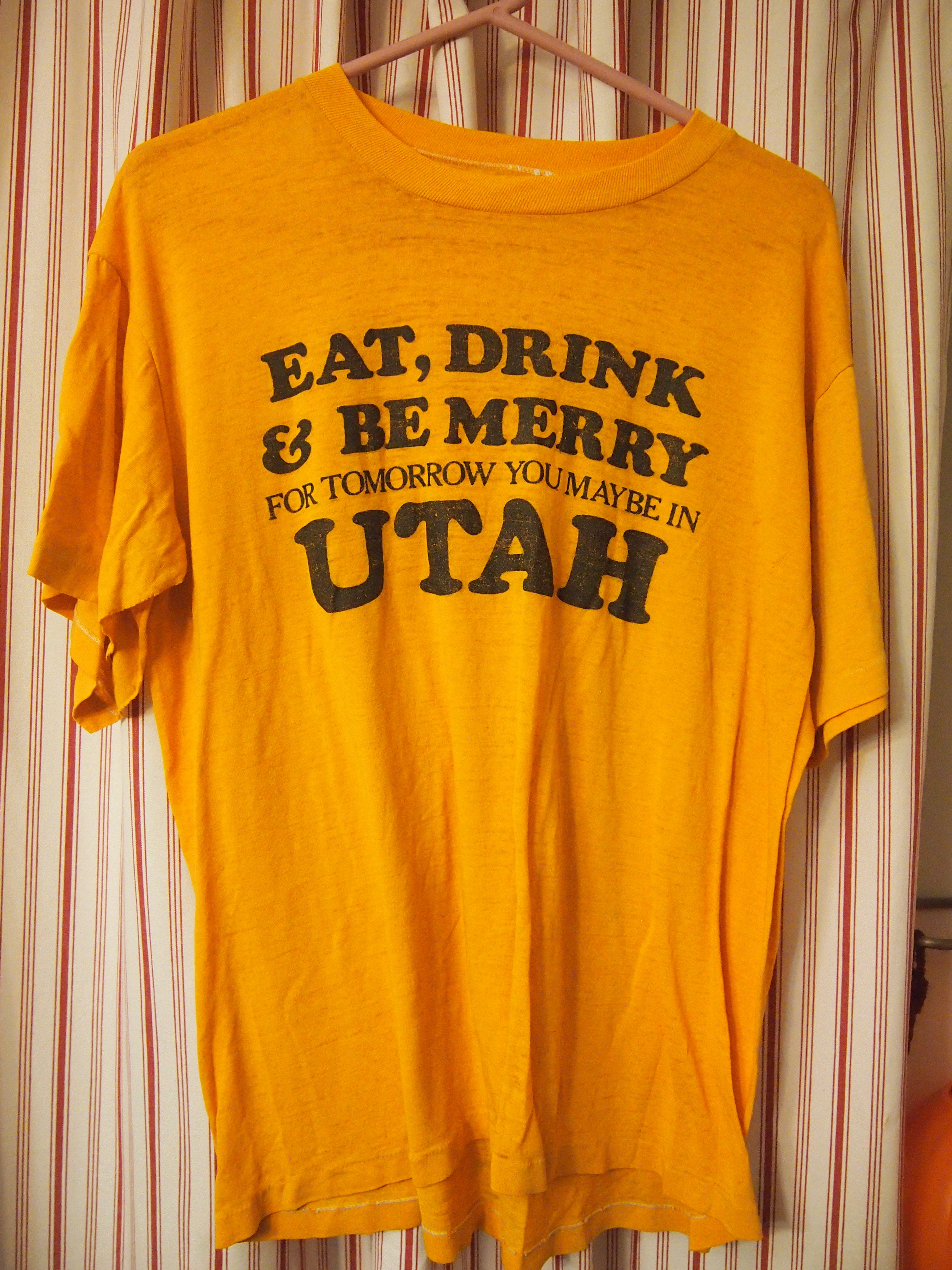
I have a collection of aged t-shirts that I don’t want to part with. They are mostly too worn for ordinary use, but each reminds of a certain period or trip. Such as this one.

I picked it up in Logan, Utah, during my first visit there in June 1980. I took a bus from San Antonio to Logan that month, and stayed with my high school friend Tom for a while. He was attending Utah State University at that point, and I hadn’t seen him in about a year. A fine visit.

I liked Logan too, with its warm days and cool nights, inexpensive eateries and college town vibe. I visited again in 1982, but not since. Probably best to leave it that way, as a pleasant spot I visited in my youth.

Thursday Crumbs

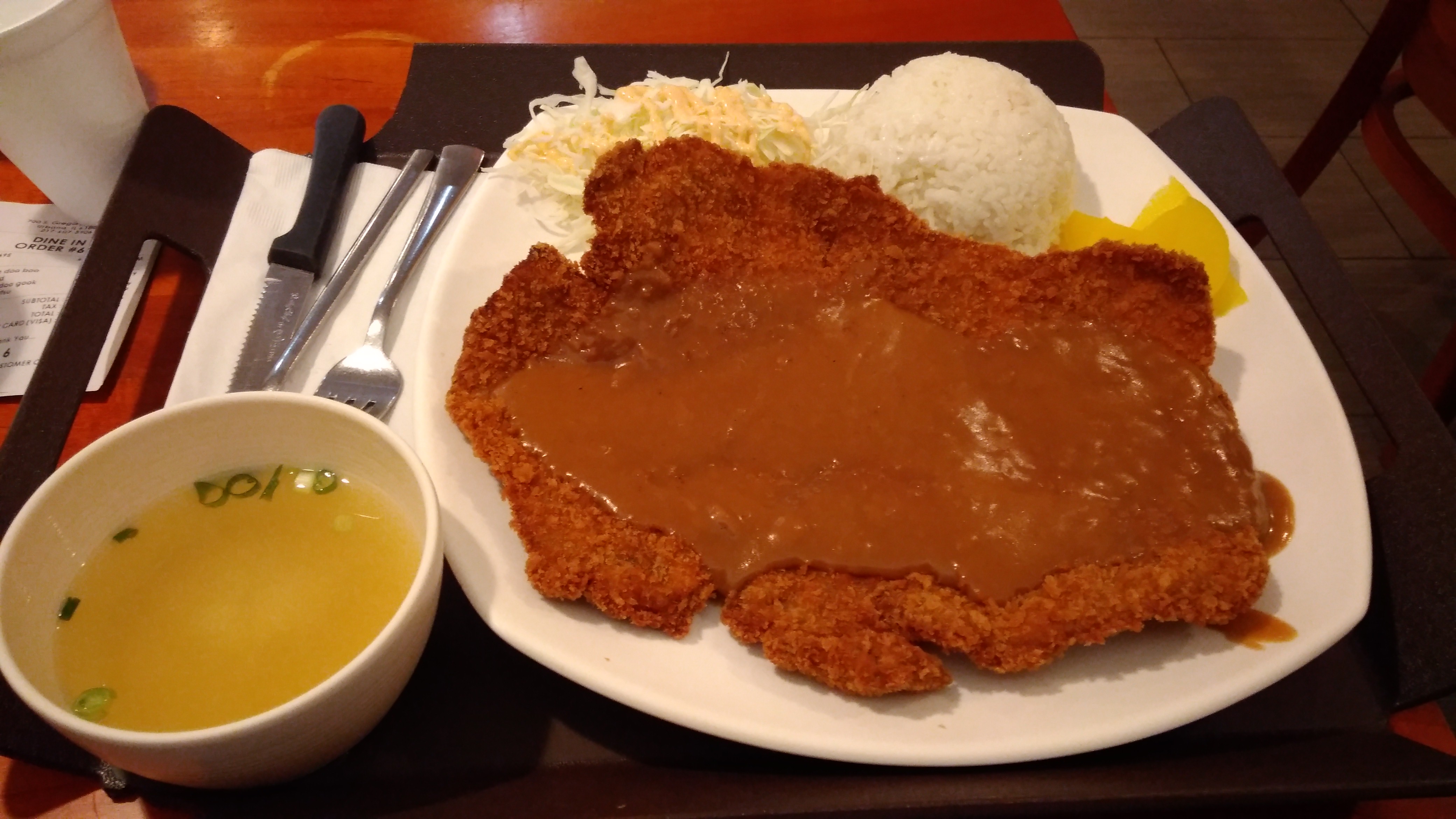
Not long ago I had a pork cutlet at a Korean restaurant, done in the katsudon style I’ve encountered in Japanese restaurants and at home. This particular cutlet was remarkably large. So much so that I was inspired to take a picture.

Large, but thin, so it wasn’t overfilling. Overall, quite good.

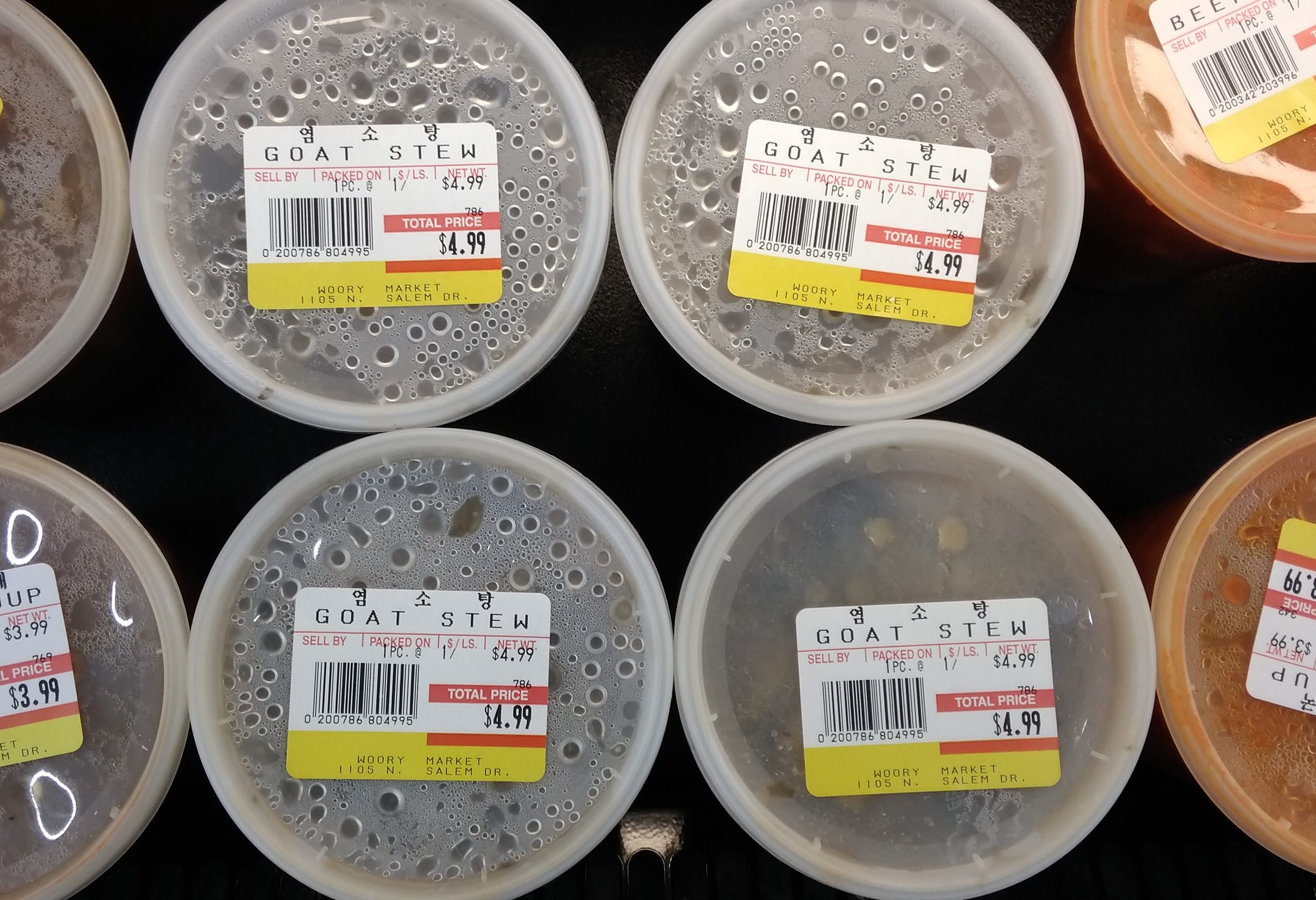
At an Asian grocery store the other day — Asian grocery stores are endlessly interesting — I saw this on offer.

I have to say I’m intrigued. People believe outdoor markets ought to be part of any visit to non-OECD cities, for that all-important authenticity and to see the locals, but if you really want authenticity, grocery stores are the place to go in any country. Ye shall know them by their grocery stores.

More debris from the Saturday grilling and gabfest.

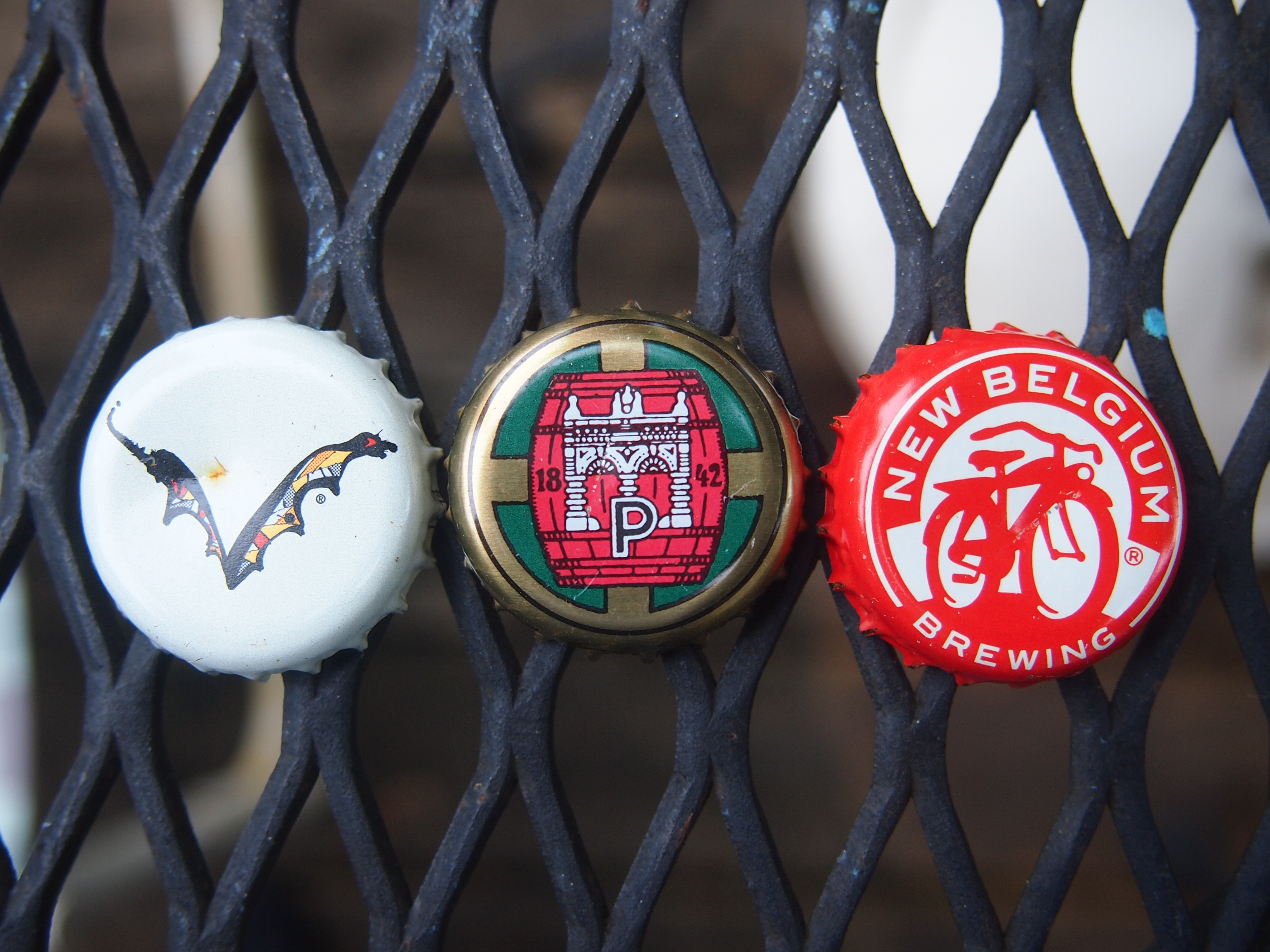
The caps to the bottles I posted the other day, arranged in the same order.

I had a shandy over the weekend and later, during a moment when I had much else to do, naturally decided to look up the word, the story of which I didn’t know. I know more now, after reading this.

Shandy, a shortening of shandygaff, origin obscure. Now that’s a fine word. If I were a brewer, I’d use it for my shandies. Radler is a good word to know too.

Had a curry doughnut today. I don’t eat that many of them, but when I do I enjoy them.

“In Japanese bakeries of virtually every stripe, you can buy a thing called a curry doughnut,” I wrote once upon a time. “What a discovery that was. No part of it is sweet. Browned by frying on the outside, it’s soft on the inside, and a spicy brown curry resides at its core. An enormous amount of fat, I’m sure, and heartburn later on, but boy they’re good going down.

“My favorite spot for curry doughnuts used to be the Cascade Bakery, near the main promenade of Hanshin Station, Umeda, in the heart of Osaka. Even now, I can get one in Arlington Heights, Illinois, if I’m so inclined. I know at least two Japanese bakeries in that town that sell them. But it’s been a while.”

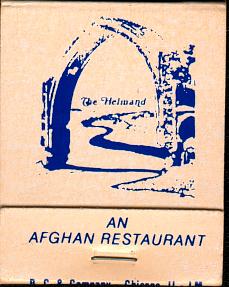
I’ve been to only two Afghan restaurants that I remember. One was in New York City in 2005. The other was ca. 1987 in Chicago: The Helmand.

Writing in 2005, I said: “I can remember visiting an Afghan restaurant only once before, about 20 years ago, a place on the North Side of Chicago near Belmont Blvd., long gone now. Much later I learned that it was owned by relatives of Mohammed [sic] Karzai. I vaguely remember it being exotically good.”

I have a matchbook from the place even now. Can you get matchbooks at restaurants any more? My experience is you can’t. In New York in March I experienced a brief and very minor moment of excitement when I picked up what I though was a small matchbox advertising a restaurant. Matches! Turned out to contain toothpicks.

Whatever happened to Hamid Karzai? Having managed to survive the Afghan presidency, no small thing, he seems to be living in comfortable semi-retirement after his career in peculation.

Space Odyssey

I’m much of my way through reading Space Odyssey by Michael Benson, which was released this year in time for the 50th anniversary of 2001. The book is subtitled “Stanley Kubrick, Arthur C. Clarke, and the Making of a Masterpiece.”

The book doesn’t pretend to be a biography of either Kubrick or Clarke, but a tale of creating the movie, beginning with the extended deliberations by Kubrick about what to do after Dr. Strangelove and the critical ideas Clarke contributed to the genesis and eventual shape of the movie, and taking the story through production, post-production and release, all of which were behind schedule and over budget.

Both Kubrick and Clarke come across as towering intellects, which no doubt they were, but with certain flaws. If he thought it was good for the end product, Kubrick was perfectly willing to take advantage of Clarke or put his actors in danger on the set. For his part, Clarke couldn’t stand up to Kubrick, or say no to a money-sucking leech of a lover, though eventually his association with the project made him wealthy indeed (indirectly, because he had no points in the movie itself).

Since movie-making is such a collaborative effort, a lot of other contributors to the ultimate outcome make appearances in the book. Each is fascinating in his own way, such as the very young man who shot highly kinetic scenes from a helicopter over Scotland, for part of the Star Gate sequence; the mime who choreographed the movements for — and played — the lead ape-man in the Dawn of Man sequence; the designer who built the astonishing centrifuge set; or the stuntman who did the incredibly risky shots of astronaut Poole floating in space.

Perhaps the most astonishing thing about the movie that the book makes clear is how much of 2001 — a multimillion-dollar project with a large staff — was essentially made up on the fly by Kubrick. A fair number of bad ideas were winnowed out along the way, and good ideas came from various and unexpected sources, all of which the director wasn’t shy about using.

I’ve gotten to the chapter that describes the filming of the Dawn of Man. Reading about that process in detail reminds me of the reaction to the movie by someone I recommended it to years ago (in college in fact). He wasn’t impressed by 2001 or its mystique. Afterward, one of the things he asked me was, “What were those damned monkeys doing?”