Here, Here, Some Beer

Friends were over on Saturday for meat, beer and conversation on the deck, despite rain that morning. By mid-afternoon, the deck was dry enough to sit around.

We had more meat and conversation than beer, though there were a few empty bottles left over afterward, as there have been before. And before that.

I acquired a “flight” of beers before the event at an area grocery store with a beer cave, and these are three of them. As usual, my beer-buying technique was to look for a variety of states and countries of origin, and interesting labels.

Raging Bitch was the hit among the beer names. Its acid-trip Ralph Steadman artwork was remarked upon as well.

A product of the Flying Dog Brewery in Maryland. Later, I read the marketing blarney on the bottle, attributed to Steadman. It’s pretty good:

“Two inflammatory words, one wild drink. Nectar imprisoned in a bottle. Let it out. It is cruel to keep a wild animal locked up. Uncap it. Release it… stand back!! Wallow in its goldenn glow in a glass beneath a white foaming head. Remember, enjoying a RAGING BITCH, unleashed, untamed, unbridled and in heat is pure GONZO!!”

Gonzo, eh? Maybe if you added peyote, which we did not. Otherwise, it was reportedly  a pleasant brew.

Voodoo Ranger, by New Belgium Brewing of Colorado and North Carolina, had another amusing label.
It didn’t assert its gonzo-ness. The label did say, “Brilliantly balanced for easy drinking, this pale ale is packed with citrus and tropical fruit flavors from eight different hop varieties.”
The center beer, PilsnerUrquell from Plzeň (Pilsen), Czech Republic, had the most conventional label, appealing to a drinker’s sense of tradition. The label said:

“In 1842, the Citizen’s Brewery of Plzeň brewed the world’s first golden pilsner and never stopped. We make it in the same way in the same place, with 100% of our ingridients from the same farming regions in Czech, as always.”

Not pictured is the grapefruit shandy that I tried, which a guest brought. It went down well, but in combo with meat and another bottle of beer, I later had a rare but fortunately fleeting bout of indigestion. I’d say it was worth it, though.

They Might Be Serious About This Burger Thing

Today I encountered the strangest press release I’ve seen in a long time, and I’ve seen a few odd ones over the years. Normally, press releases purposely avoid eccentricity of any kind. Sometimes there are as dull as can be. But not always. Especially in this case. It starts off:

BURGER, Calif., June 11, 2018 /PRNewswire/ — Today, IHOP® Restaurants announces that it is going by a new name – IHOb. For burgers…

Turns out it’s a temporary “name change.” IHOP wants to add a little oomph to its effort to compete in the crowded field of hamburgers in America.

The change, in fact, celebrates the debut of the brand’s new Ultimate Steakburgers, a line-up of seven mouth-watering, all-natural burgers…. According to a company spokesburger, “These burgers are so burgerin’ good, we re-burgered our name to the International House of Burgers!”

That isn’t even the strange part. The third, fourth and fifth paragraphs of the release are, and I quote exactly as they appear:

Also, burgers burgers burgers. Burgerin’ burgers burgers. Reburgered burgers burgers burgers burgers burgers burgers. Burger burgerings burgers burgers burgers. Burgerin’ burgers burgers. Moreover, burgers burgered burgers burgers. Burgers burgers burgerin’ burgers burgers burgers burgers burgers burgers burgers burgers burgers burgerin’ burgers.

Furthermore, burgers burgers burgers. Burgerin’ burgers burgers burgers burgers burgers burgers burgers burgerin’ burgers burgers! Burgers burgers burgers reburgered burgers burgers burgers burgering burgers. Not to mention, burgers burgered burgers burgered. Burgers, burgers, burgerin’ burgers and burger burgers.

Lastly, burgers burgers #burgers. Reburgered burgers burgers burgered burgers burgered burger burgers. Burgers burgers burgers?

Hats at Greenfield Village, 2010

It’s been eight years since we took a short trip to the Henry Ford Museum and Greenfield Village in suburban Detroit. I was looking at the images I made during that visit recently and was reminded that hats played a part.

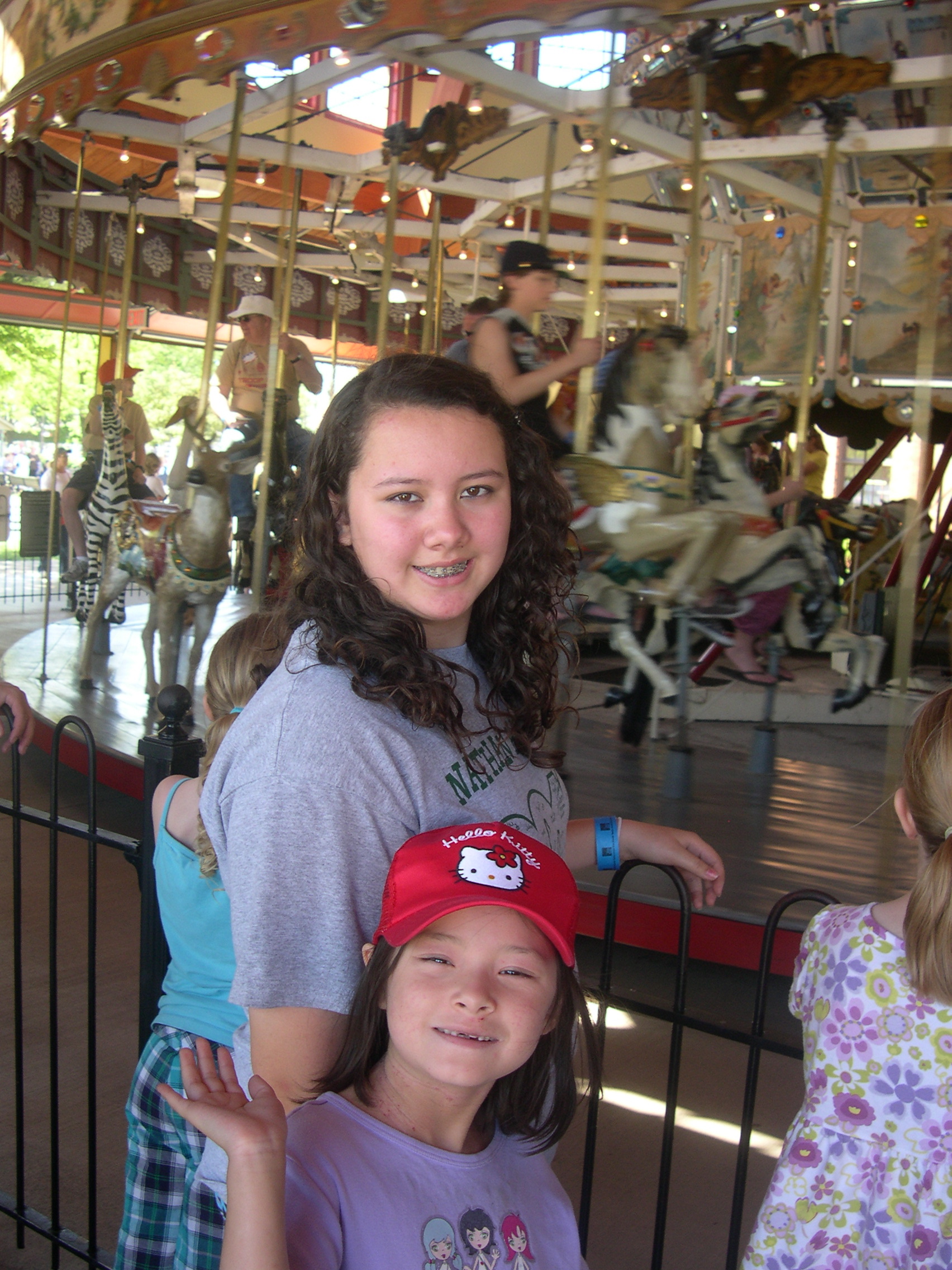
Such as the Hello Kitty cap, probably bought in Japan, and probably around the house even now. In the background is Greenfield Village’s Herschell-Spillman Carousel, which the girls were waiting to ride.

The museum says, ” Built in 1913, this ‘menagerie’ carousel’s hand-carved animals include storks, goats, zebras, dogs, and even a frog. Although its original location is uncertain, this carousel operated in Spokane, Washington, from 1923 to 1961.”
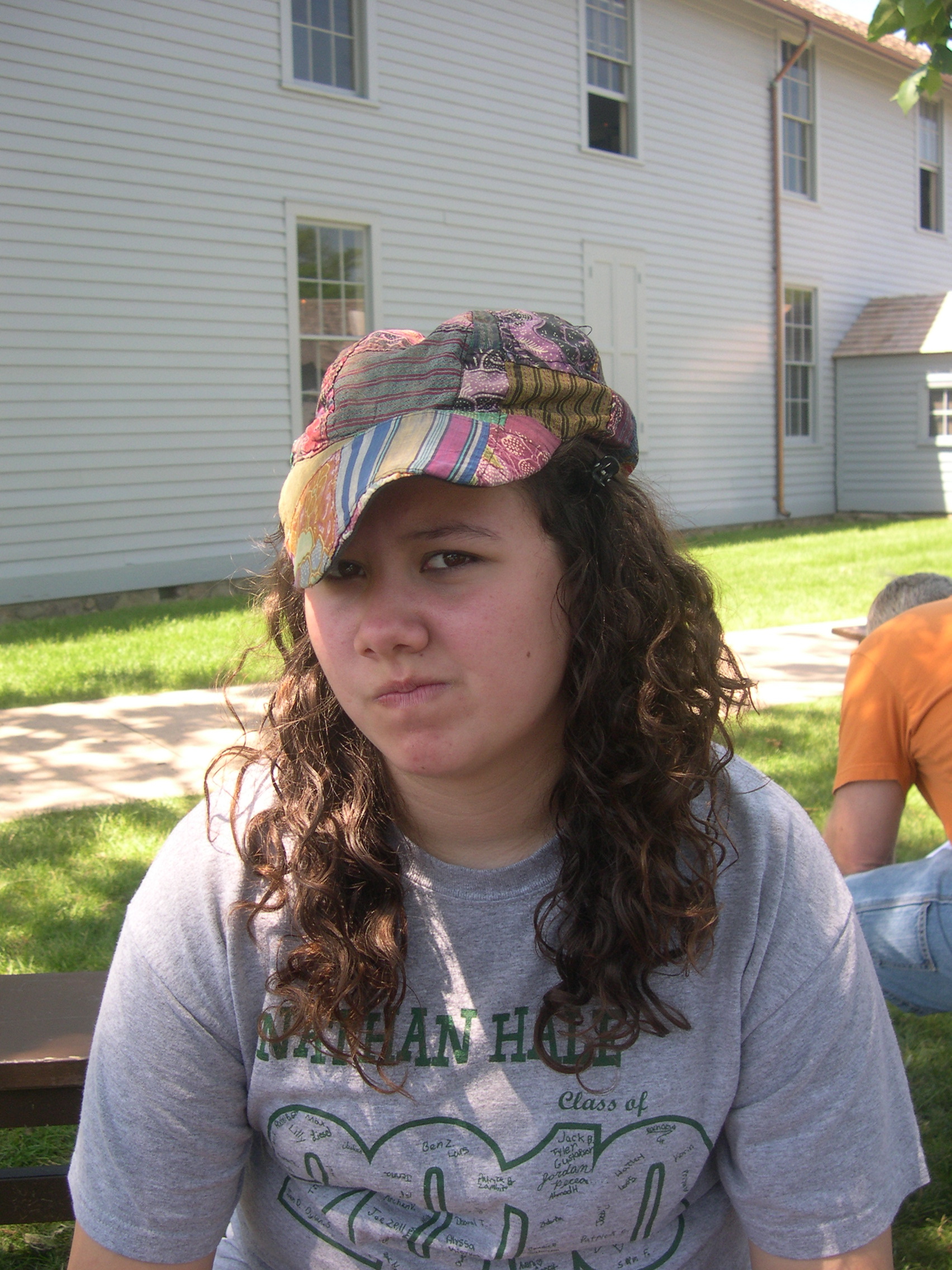

This colorful cap is definitely still around the house.

I bought it from a street vendor in Bangkok for a few baht and wore it frequently in the tropics, less frequently in the hot sun of temperate summers. The day we visited the Henry Ford, if I remember right, was fairly hot and Lilly must have borrowed the cap from me.

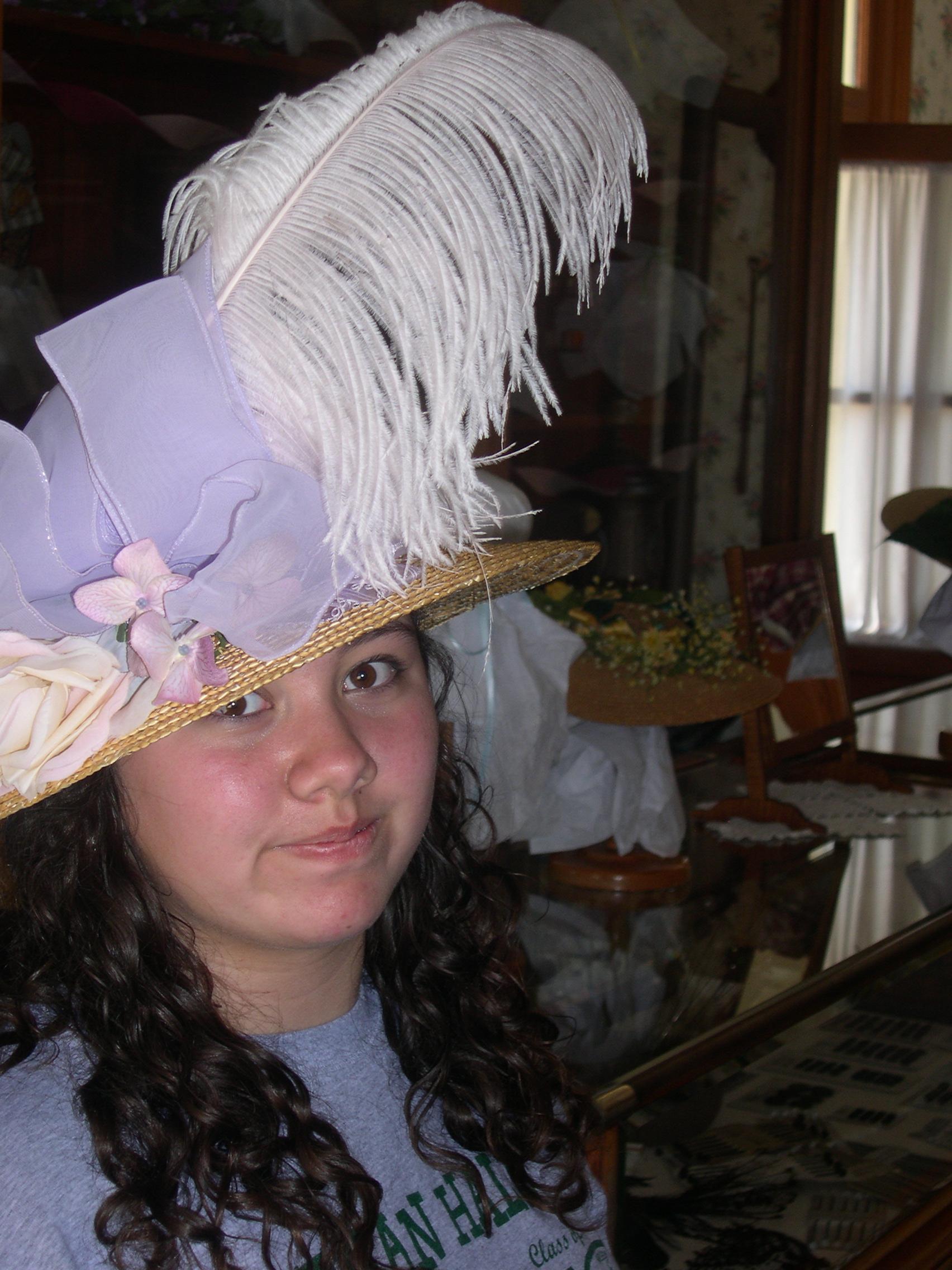
One of the many 19th-century retailers moved to the site of Greenfield Village was a hat shop, where you could try on hats.

Just women’s hats, I think. If there had been a men’s bowler available, say, I would have tried it on.

Allerton Park Statues

Below is an example, which I chanced across recently, of something you stop reading after only a moment. Full stop, no need to go on, or ever to think about the subject again.

Ever wonder what Daphne and Velma were up to before they met Scooby-Doo and the rest of the Mystery, Inc. gang? A new live-action…

Besides gardens, the Robert Allerton Park & Retreat Center features a number of sculptures. About 100 these days, I’ve read. Robert Allerton collected them, and when he owned the property, there were many more.

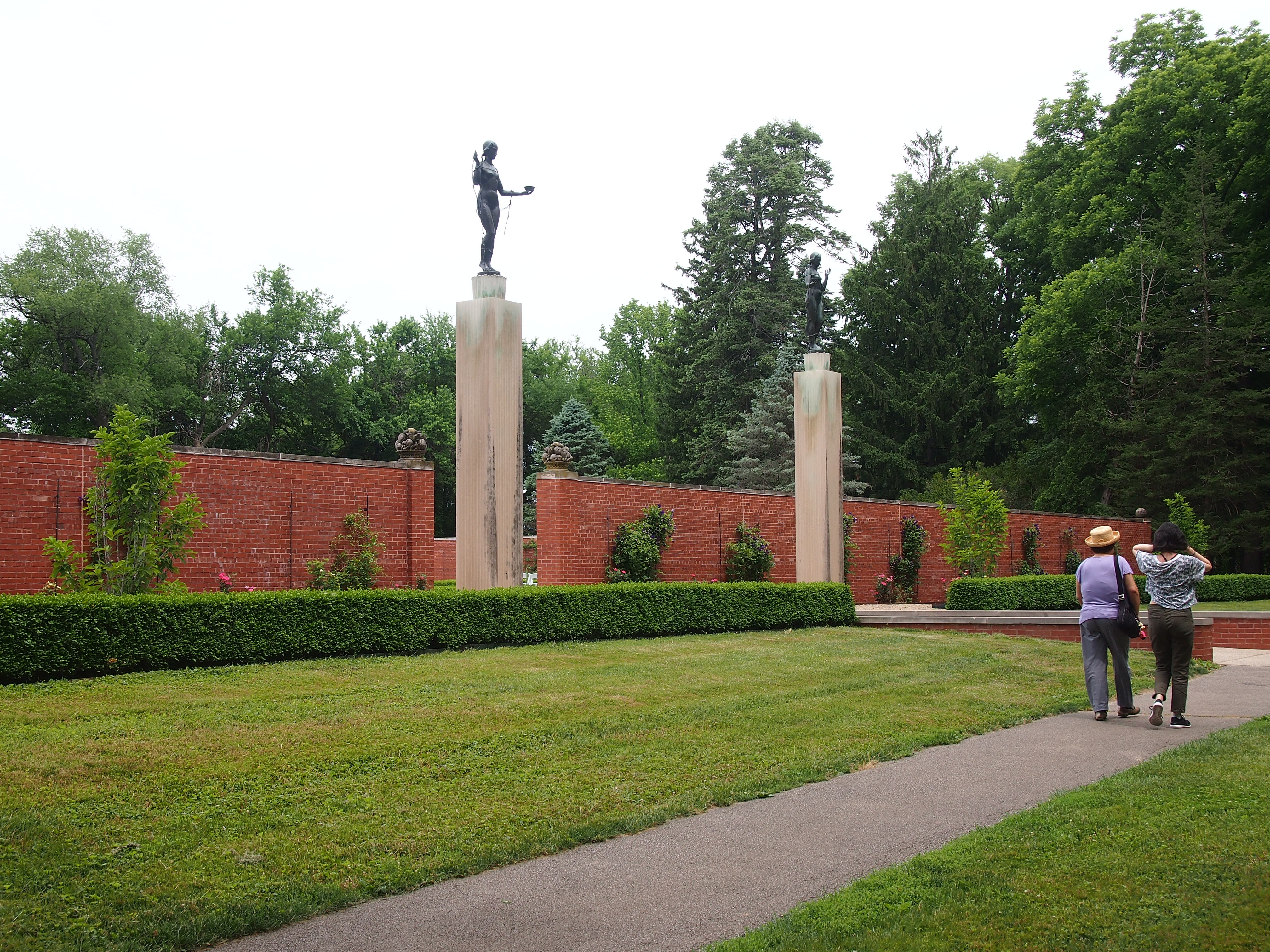
Still on display in the Walled Garden is “Girl With a Scarf,” by Lili Auer.

Near the Allerton manse are a number of works, such as this sphinx-like limestone piece, one of two near each other, created by John Joseph Borie III, the architect who designed the house.

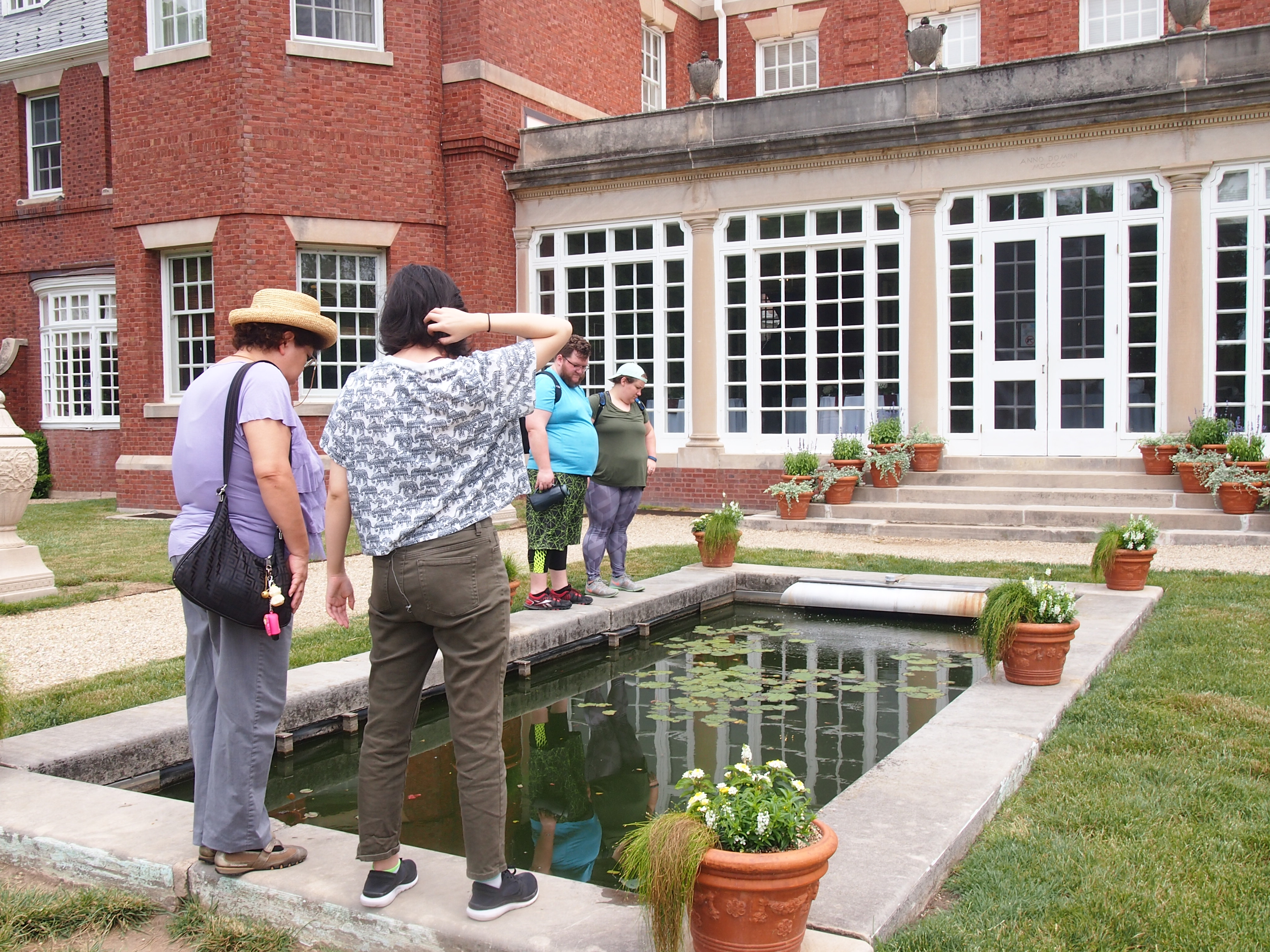
It doesn’t count as sculpture, but nearby is a koi pond.

A little further from the house is this figure, about which I have no information.
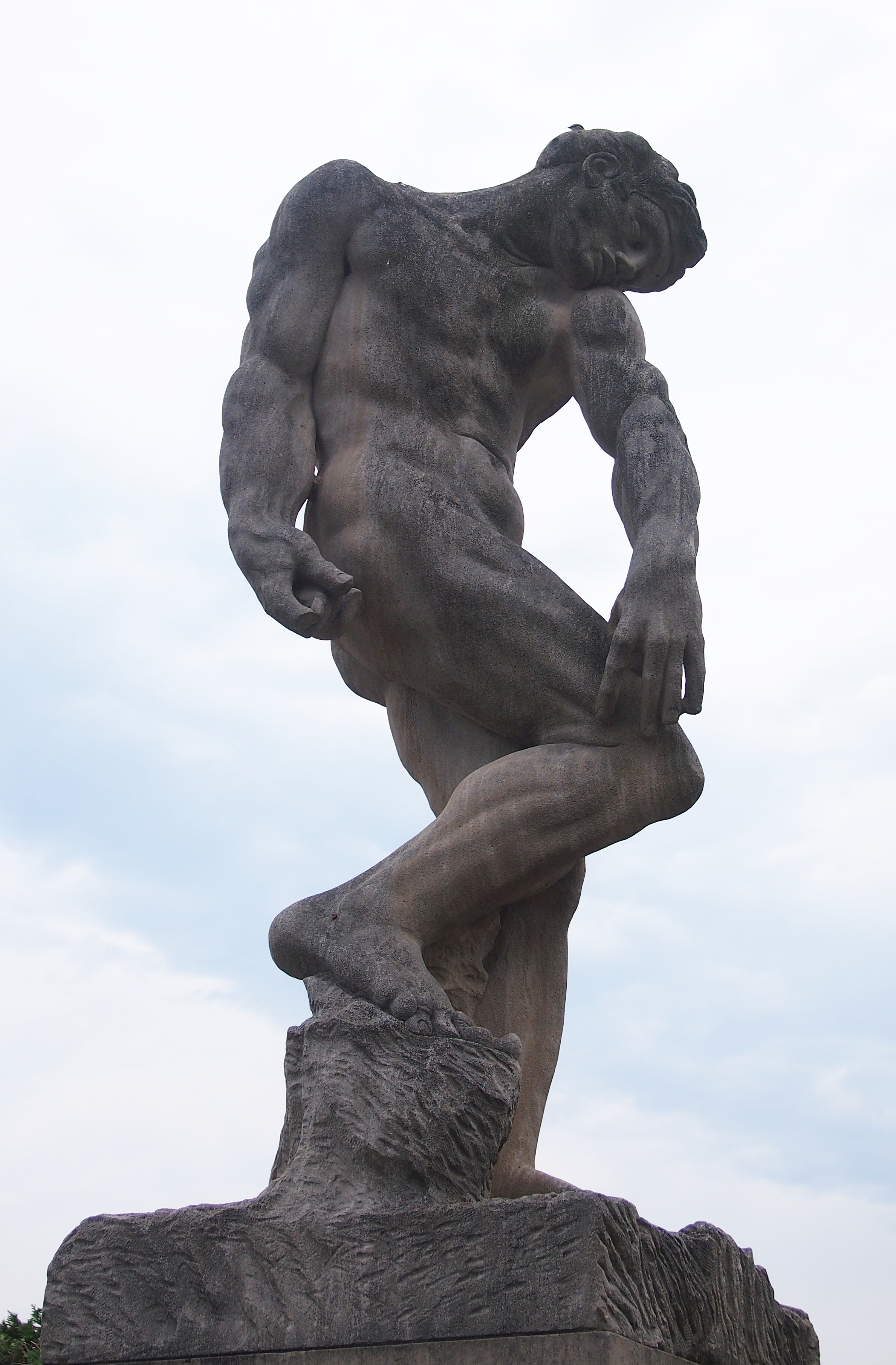
Out on a tall pedestal between the Bulb Garden and the Peony Garden is a copy of Auguste Rodin’s “Adam.”
Further along is a place called the Avenue of the Chinese Musicians. It is an odd place.

Allerton bought the statues in England long ago.
Given the size of Allerton Park, there are plenty of other places and artworks scattered around that we didn’t get to, some with evocative names, such as Fu Dog Garden, House of the Golden Buddhas, the Sun Singer and the Death of the Last Centaur. Maybe next time.

Allerton Park Gardens

The Robert Allerton Park & Retreat Center (and why “center”?) is an expansive place, much of it wooded. Because of high humidity last Saturday, we didn’t walk along many of the wooded paths, though I made a mental note that fall, maybe October, would be a fine time to do so.

We did take a look at some of the formal gardens. Such as the Brick Walled Garden.

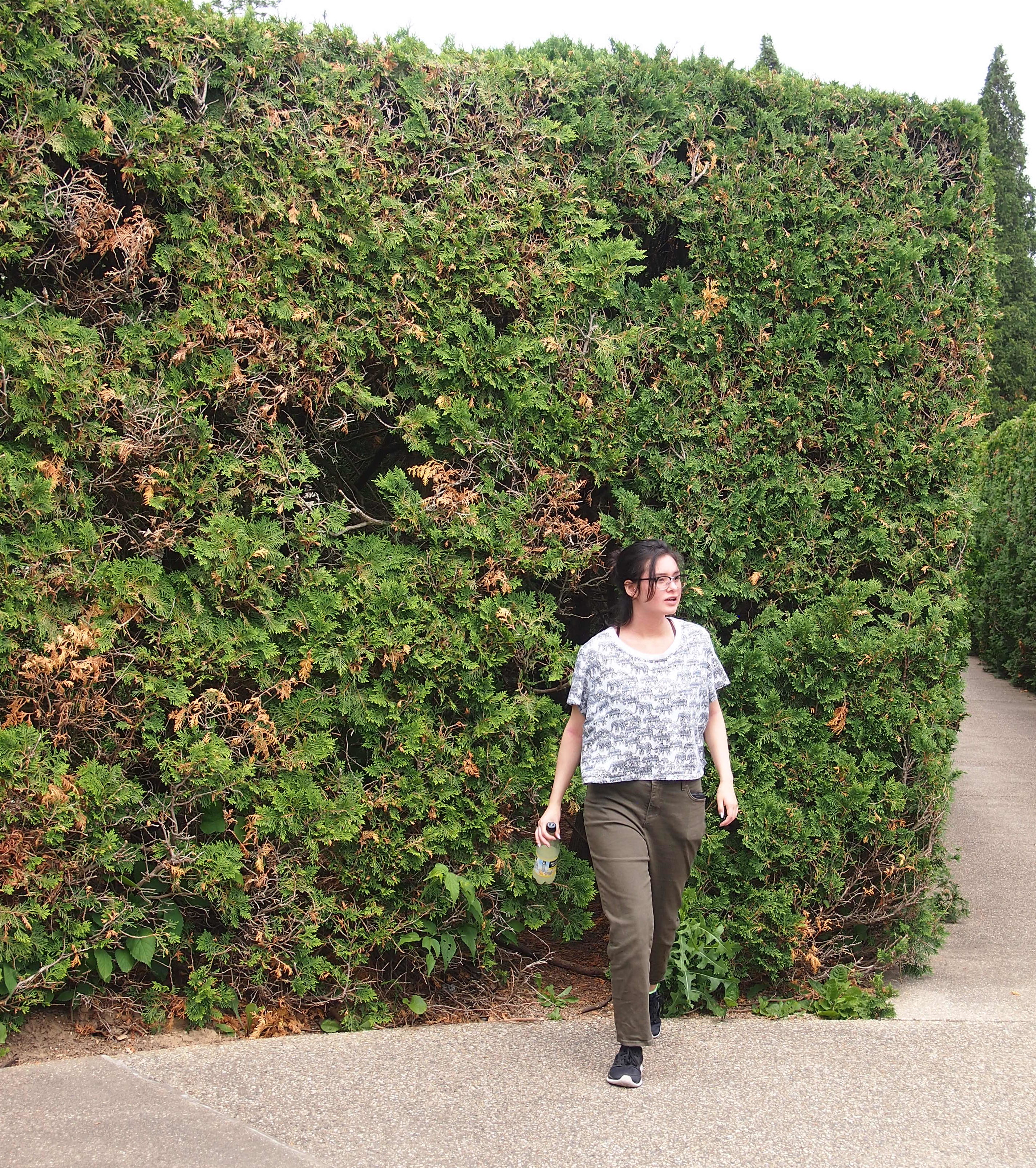
We walked between the long, tall bushes leading away from the visitors center to find other gardens.

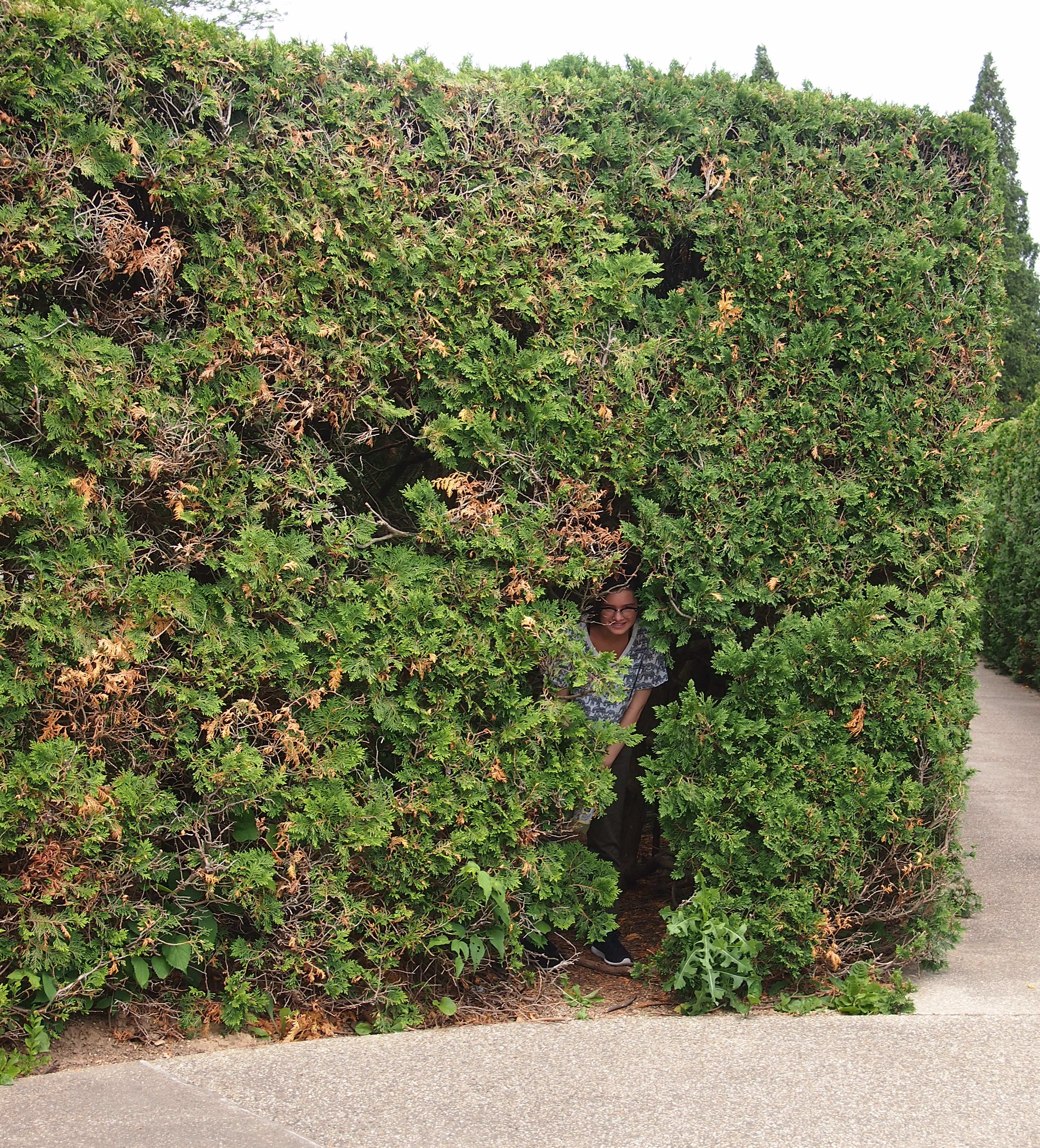
The shrubery forming the row looked like it could be part of a complex maze, but it wasn’t, since it ran in straight lines. Also, it was fairly porous.
This was called the Chinese Maze Garden, and I suppose it would be a challenge for people a foot tall.



The Bulb Garden.
The blooms were off at the Peony Garden, unfortunately. But I liked the wall next to it.
The Annual Garden was fenced in to keep deer out.
A water sprinkler was also running. I spent a refreshing few seconds under it.

The Robert Allerton Park & Retreat Center

One of the main rewards of looking at maps is finding places you didn’t know about, interesting places that sometimes become destinations. Not too long ago, I was scanning a map of the area near Champaign, and came across the Robert Allerton Park & Retreat Center. Curious, I looked it up.

Soon, I decided that besides Arthur and Arcola, our other main east-central Illinois destination on Saturday should be Allerton, which covers more than 1,500 acres in rural Piatt County, not far from Monticello, Illinois.

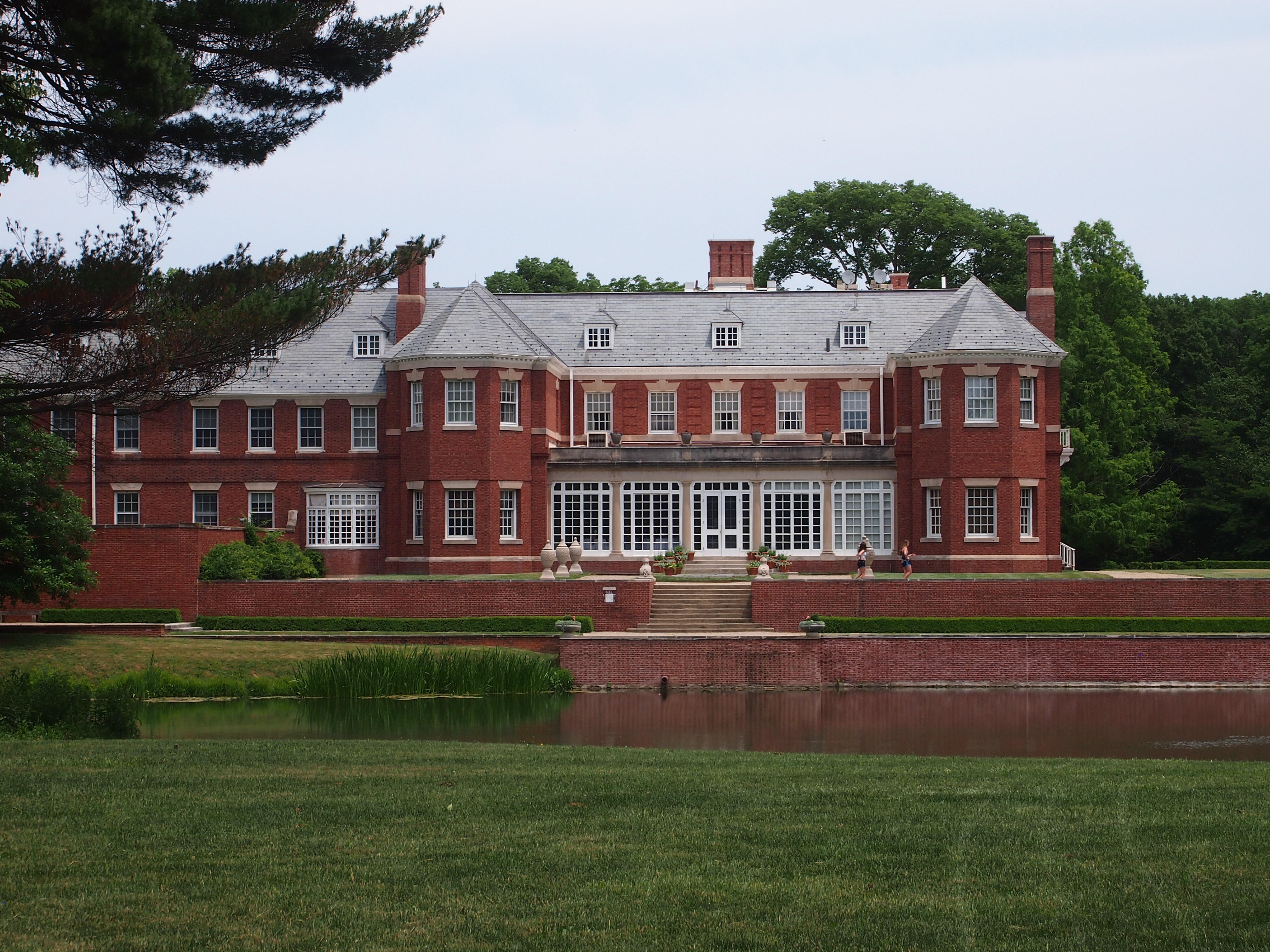
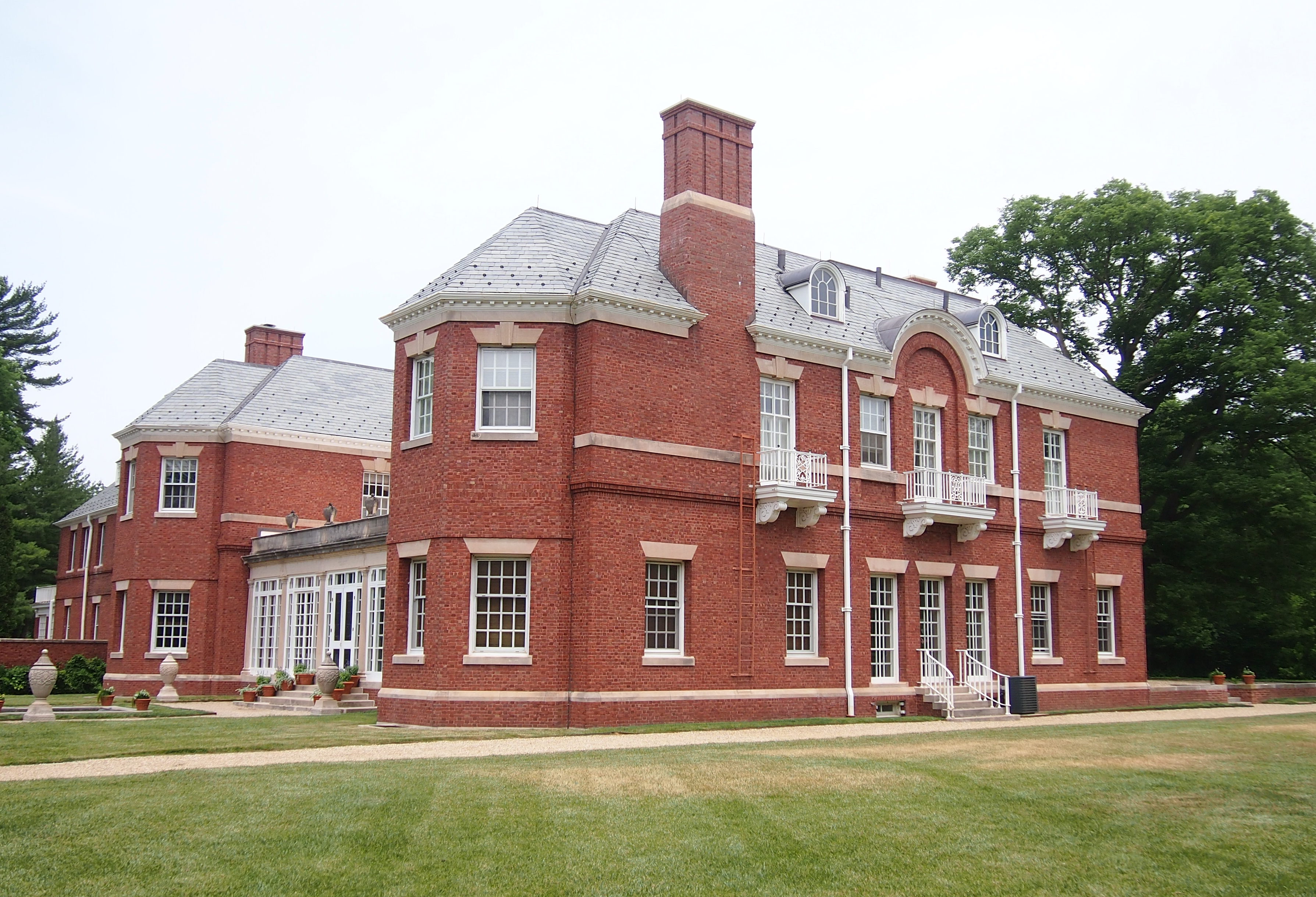
Robert Allerton (1873–1964), whose father was one of the founders of the Chicago Stock Yards, and who thus inherited a fortune, set about building an English-style manor house around 1900 on land along the upper Sangamon River. A handsome house it is.

These days, the property belongs to the University of Illinois. Allerton, presumably tired of paying the taxes on it, donated it to the school in 1946. The manor house, besides being rented for events, is a conference center and not open for tours.

Too bad. But the grounds and gardens are extensive, and punctuated by sculpture from the time of Allerton. They are open, and at no charge. More about that tomorrow.

Arthur and Arcola 2018

On Saturday, we were at a small bookstore and antique shop in Arthur, Ill., down in what’s known as the Illinois Amish country of the east-central part of the state, and as we were leaving, Ann mentioned that she’d seen some Amish romance novels in the store.

Just another thing I’d never thought of. The world keeps tossing things like that at me. According to Time, at least, the Amish romance novel is quite a thing:

“In Amish romance novels, there is no sex, but lots of babies; no nakedness, but layer upon layer of clothing is removed; and no physical contact between unmarried couples— unless perhaps God wills it through a tornado, or a house fire, or a buggy accident — and, well, it turns out that happens between attractive Amish singles quite a lot.”

It also turns out that most of the readers and most of the writers of such yarns aren’t Plain People at all, though the magazine does mention one example:

“The authors of Amish fiction freely admit that most of them are not Amish, either. ‘I can think of only one Amish writer I know of,’ says [author Beverly] Lewis, who made a point of living with Amish families to learn more about them. ‘She’s Old Order Amish, Linda Byler, and she has a bishop who’s given her permission to write Amish novels. She had an electric typewriter reconfigured to have batteries in it, which are allowed in Amish culture, so she can write.’ ”

Wonder what actual Old Order Amish think of all the weird attention the rest of the world pays to them. Maybe not much. They’re probably pretty busy doing other things most of the time.

We drove down to that part of Illinois over the weekend just to look around, and it is a little odd as a destination. I’ve never seen any Amish, or Mennonites either, wandering around looking at the Chicago suburbs just because they’re different from home.

This was our second visit; the first time was in 2007. This time we spent time in Arthur, at the book store, and at a small street festival, a few antique stores, and an ice cream shop. Tasty soft serve, served by women in bright-colored Mennonite dresses: purple for one, nearly lime green for another. We also poked around Arcola for a while, including a visit to the Visitors Information Center, located in a renovated Illinois Central depot, ca. 1885, and an antique store.

As far as I could remember, not much had changed in either town, or the farmland between (fairly dense with farmhouses), except that one of the restaurants we went to in Arcola had closed, and so had the distinctly non-Amish Raggedy Ann Museum in Arcola.

Not to worry, the woman at the desk at Visitors Information Center told us. A new one was opening up. Or maybe had just opened, though a lot of the old one’s collection went to the National Toy Museum in Rochester, New York. We decided not to follow up on that tip. Visiting a Raggedy Ann museum is a thing you need to do only once.

Whatever the status of the museum, Arcola hasn’t forgotten Ragged Ann and Andy. In 2016, the town unveiled these painted bronzes near the Visitors Information Center.
The artist is named Jerry McKenna, a Texas Hill Country sculptor.

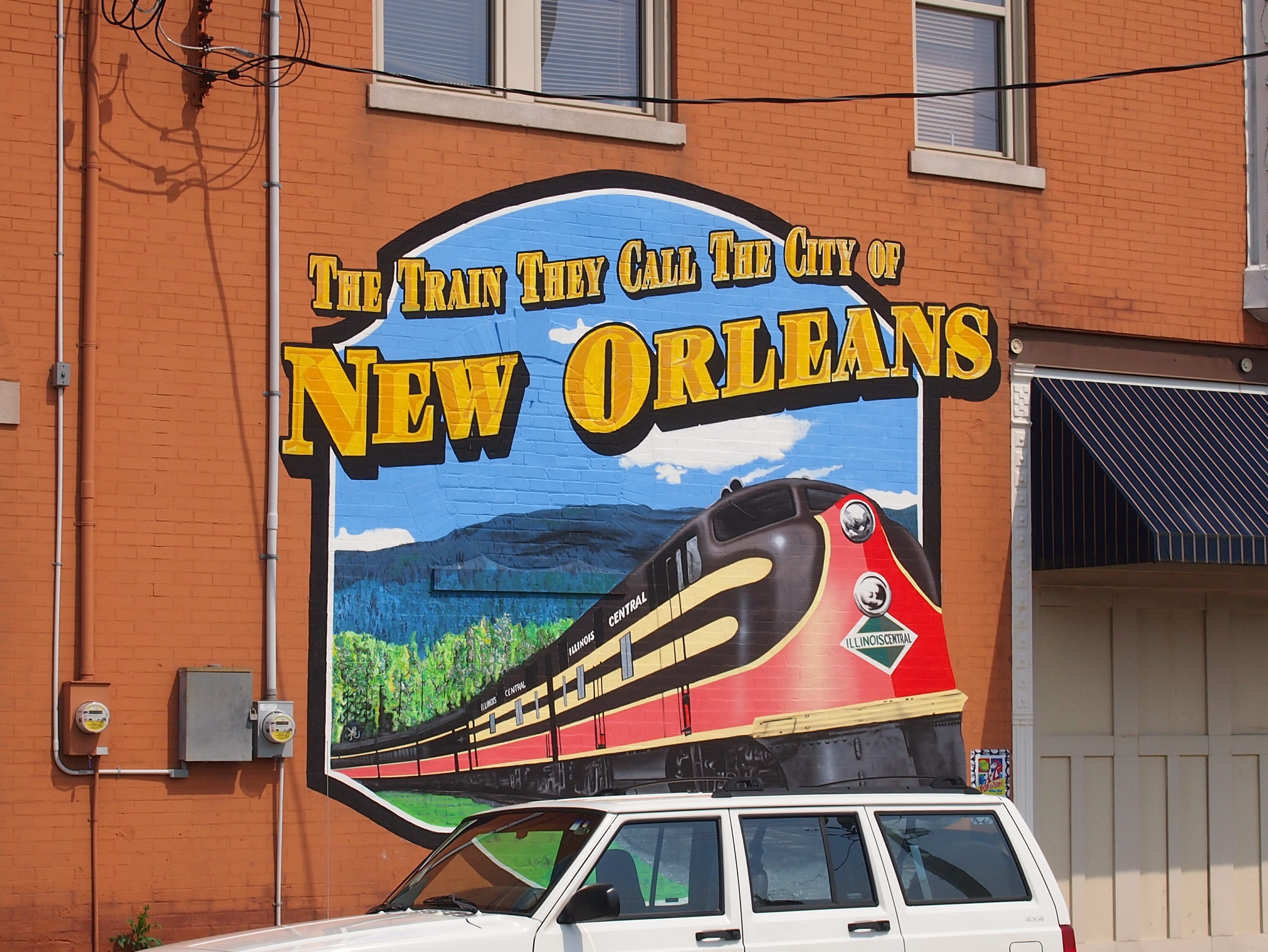
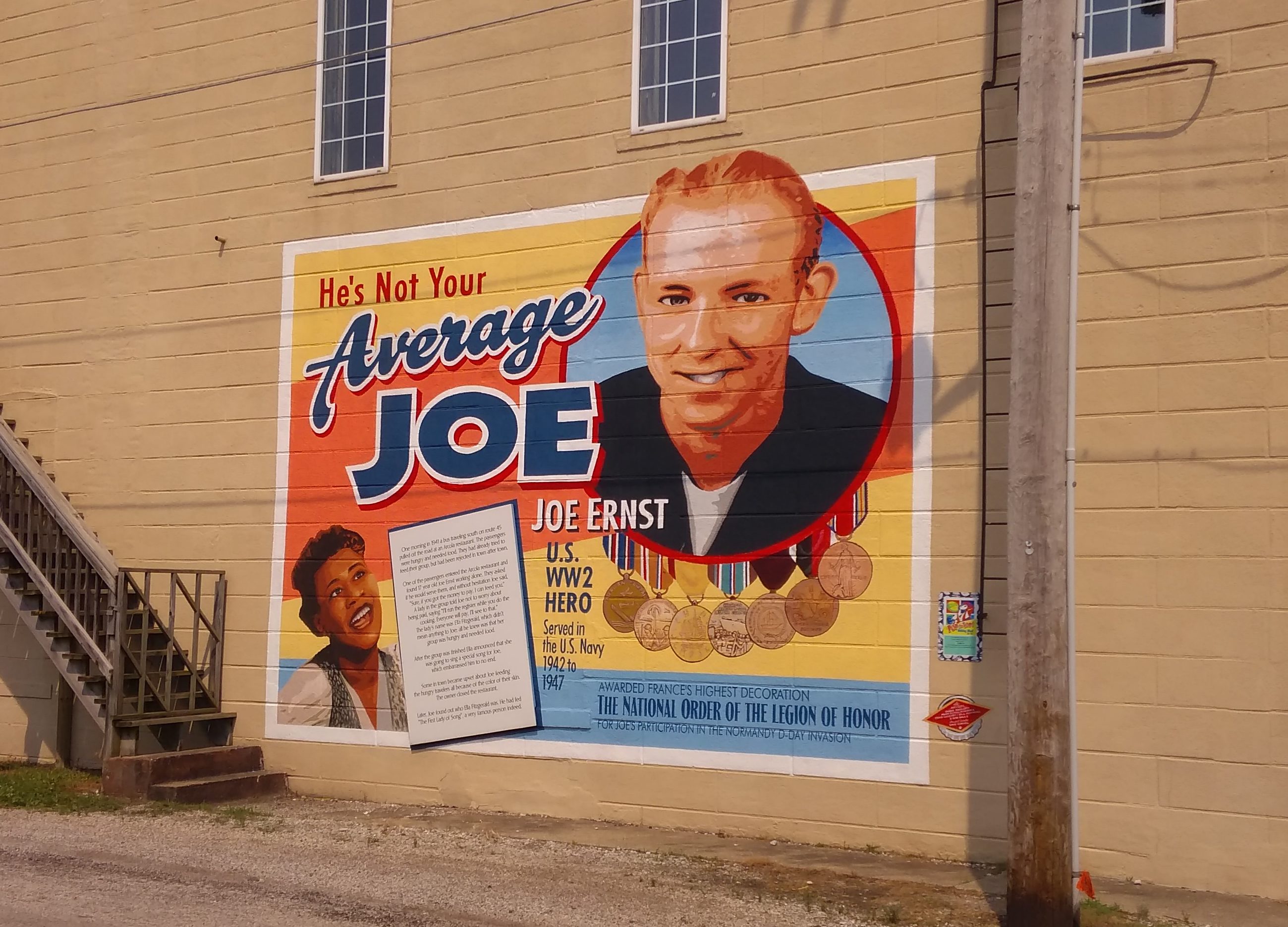
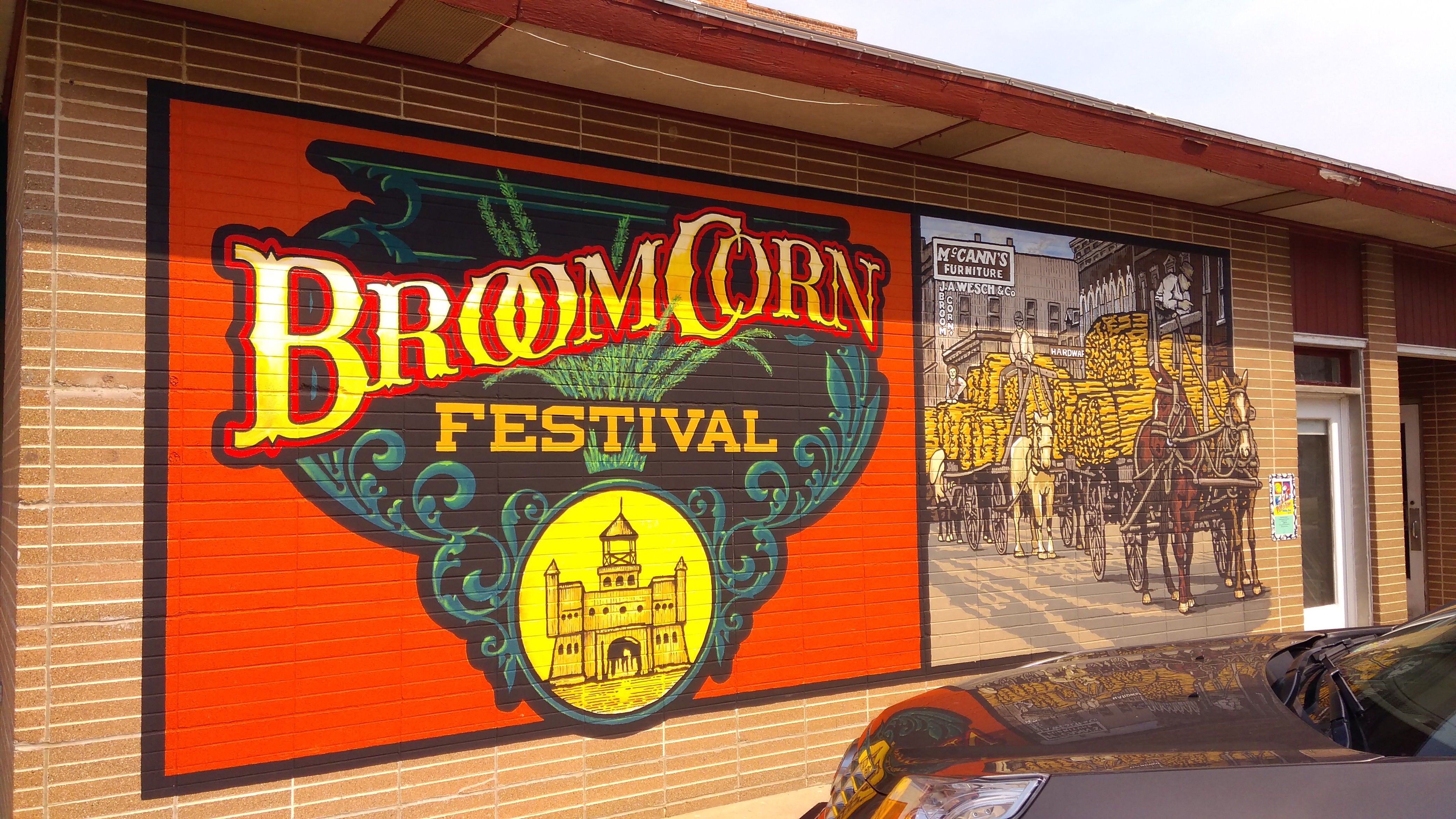
We also looked at a few of Arcola’s wall murals. They weren’t there in 2007.
“During the week of June 20-24, 2012, over 130 artists from across the United States as well as Canada, New Zealand, Scotland and Australia descended upon Arcola leaving behind 15 historic murals,” the town’s web site says. “Known as the Walldogs, the loose affiliation of sign painters, graphic artists and other talented individuals reunite annually to entertain and transform a community with their special brand of artistic interpretation, entertainment, and friendship.”

The Producers

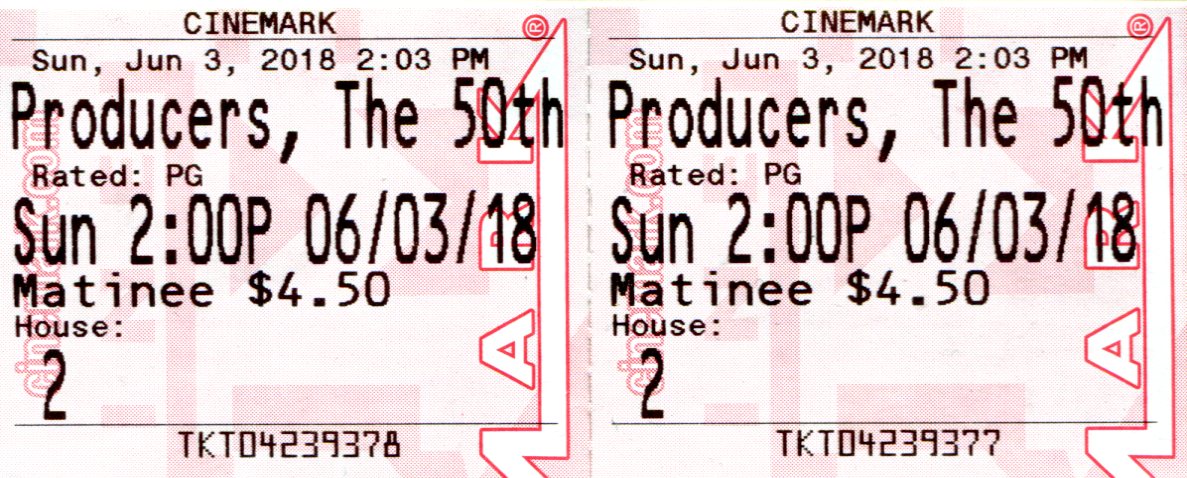
Remarkably, Ann wanted to see The Producers, so we went this afternoon. Another movie released in 1968, but about as different as can be from 2001. She seemed amused by it.

I had given her the gist of the story — the producers schemed to pick a play that would certainly fail, so they could keep the over-subscribed investment, and then it doesn’t fail. I think she had wanted some context for “Springtime for Hitler,” which she must have seen on YouTube (probably the 2005 version, though).

I don’t think I spoiled anything by telling her that. The joy of The Producers is in the execution. In the good many years since I saw it last, I’d forgotten how much fun the movie is. And how much is slapstick. It in the hands of lesser actors and a lesser director, it would have just been low comedy. With Mel Brooks and Zero Mostel and Gene Wilder and Kenneth Mars, what you have is inspired low comedy. For his part, Mars’ loopy German might be the best ever put on film.

As funny as the leads were, I have to say I laughed the hardest at Lorenzo St. DuBois (L.S.D.)’s audition song, as performed by Dick Shawn. Known, according to Wiki, for “small but iconic roles in madcap comedies, usually portraying caricatures of counter culture personalities.” He certainly nailed the dimwitted hippie in The Producers.

Somehow I’d forgotten that he was wearing a can of Campbell’s Soup around his neck during the audition. Nice detail. Ann didn’t ask me about it, and maybe she just considered it a passing oddity. But it was pretty clear to me that Mel Brooks, already entering middle age in 1968, didn’t think much of hippies, Pop Art, Timothy Leary, etc. The rest of the audience — mostly my age or older — got the joke, and laughed a lot at L.S.D’s antics, too.

Something I didn’t know until I did a little reading: Estelle Winwood, who played one of the old women Zero Mostel dallies with to get money for his plays — the one with the most lines — had a long career, acting well into her 90s, and living to be 101. She also was associated with the Algonquin Round Table.

Speaking of longevity, since it was a TCM showing, the movie was proceeded by a recent short interview with Mel Brooks. He’s a hale fellow for 91.

New Robins in the Front Yard

May is ending, and June is beginning, as they should: warm. With periodic rain — which we had a lot of yesterday — to keep things growing for a while.

The robin eggs in the front yard nest hatched not long ago, and the hatchlings are eager for food. There seem to be three.

The female and the male robins oblige them. This I can see with my own eyes, though I read a bit about robin behavior to confirm that both parents feed the young.

As “The Story of Robin Eggs” puts it, “Now it becomes a full time job for both parents to protect the nest, find food, and feed the clamoring babies during the 9-16 days they spend in the nest.”

2001 at the Music Box

Just before the screening of 2001: A Space Odyssey at the Music Box Theatre in Chicago at noon on Saturday, one of the theater’s managers spent a few minutes telling us what to expect. Not in terms of content — it was a safe assumption that most (but not all) of the audience had seen the movie sometime in the last 50 years — but that there would be a few minutes of introductory music to a dark screen, and an intermission.

She also mentioned that the Music Box was one of a relatively small number of movie theaters nationwide equipped to screen the new 70 mm print of 2001. Interesting that a neighborhood jewel box of a theater from the 1920s has the latest movie screening tech.

I’d read about the new print. It was made recently from the original negatives, the goal of which wasn’t to clean up the images or digitally goose the movie, but to re-create as closely as possible what an audience would have seen in 1968. When I read about that, I knew I wanted to see it, even though I’ve seen the movie n times over the years.

For one thing, it had been a long time since I’d seen 2001 in a movie theater. I know I did at some point in the early ’70s, when I was old enough to be dropped off at a movie theater, the Broadway Theater in Alamo Heights, but not old enough to drive there myself. I saw it again at some mall theater during high school, after which I read Arthur C. Clarke’s book. In college, I saw it a few more times, at the Vanderbilt student cinema, and I think at an early multiplex in San Antonio during an early ’80s summertime revival.

Since then, I’ve seen it on VHS, DVD and on demand, but not in a theater. I was miffed that TCM didn’t pick it for its big screen series this year for the 50th anniversary, while choosing to show entertaining but lesser moves like Big and Grease. But maybe that’s because the 70 mm version was in the offing elsewhere (including Cannes, where it was first shown not long ago).

More than wanting to see 2001 in a theater, I was intrigued by the idea that it would look like it did 50 years ago. I wasn’t old enough to see it then. I’ll never have the experience of seeing it when it was just a strange new movie — no one ever will again — before it worked its way into the common culture, inspiring volumes of interpretation and giving us an unshakable image of a killer sentient computer with an unctuous voice. Still, this would be as close as I’d get to an original showing.

Ann went with me. Yuriko did not want to go and Lilly had a conflict. The Music Box wasn’t full for the showing, but there was a fair crowd, and not everyone was my age or older. The 70 mm “unrestored” print didn’t disappoint. It also showed, if there was ever any doubt, that 2001‘s special effects were special indeed, from the closest foreground to the furthest background.

Odd how those model spaceships, on actual celluloid, look more real than any GCI spaceships I’ve seen in a digital medium. That observation might be conditioning left over from my youth, or valid for most people, or meaningless all together. I don’t care. That’s what I see.

I noticed a few imperfections in the print: a scratch or two, minor pops of light, that kind of thing. That took me back. Do I remember right that probably as late as the 1980s, movies displayed those kinds of visual ticks?

Speaking of visuals, one new thing that occurred to me during this viewing, and there’s always something new each time, was the visual debt that some of the backgrounds owed to Chesley Bonestell and Luděk Pešek. For instance, a long shot showing the vertical landing of the ship that took Dr. Floyd to the Moon, with unrelated astronauts in spacesuits in the foreground, instantly brought Bonestell to mind — this time. You’d think I’d have noticed that before.

The soundtrack was loud. Except when it wasn’t. At first I thought that was a function of the more advanced sound systems of our time compared with 1968, and so not quite like an original audience would have experienced it. Now I’m not so sure.

“The team also went back to the original six-track soundtrack and faithfully transferred it to the new prints,” the Variety article notes. “ ‘The film is mixed in a very extreme way,’ [director Christopher] Nolan says with awe. ‘There are incredible sonic peaks that are beyond anything anyone would do today.’ ”

Sonic peaks from the get-go, I’d say, as the heavens align to the “Also sprach Zarathustra” fanfare. But for me the most startling sonic peak comes when HAL decides to murder the hibernating astronauts. The cut is from the quiet of the spaceship while Bowman is out retrieving Poole’s body to a sudden, full-screen, flashing COMPUTER MALFUNCTION accompanied by a loud beeping. Louder, I believe, than in other versions of the film. I heard at least one audience member gasp when the scene started.

As well she should have. In my earliest viewings of the movie, that scene disturbed me the most. Sure, you can say HAL went just a little funny in the head because of contradictory programming. Or maybe he was just an evil bastard willing to murder people in their sleep. You know, like some people are. I’m hardly alone in noting that HAL was pretty much the most human member of the crew, for better and definitely worse.

Then again, the sound wasn’t always loud, or even quite intelligible. The more-or-less idle chitchat on the space station at the very beginning of the spoken dialog was a little hard to hear. Everything is intentional in a Kubrick movie, so I suppose that fits with the movie’s well-known lack of exposition.

That was one of the few things I told Ann before the movie. I didn’t want to over-prepare her, but I did say that obtrusive exposition wasn’t one of the movie’s characteristics. Had there been voice-over narration — the original script apparently called for that — I believe that would count as obtrusive, and the movie wouldn’t be regarded as highly. I never did quite like the brief narration at the beginning of Dr. Strangelove, though I can see why it’s there.

Here’s something I never noticed in the soundtrack. Again, during the idle chitchat at the beginning, there’s a background PA voice announcing the following. Twice.

A blue lady’s cashmere sweater has been found in the restaurant. It can be claimed at the manager’s desk.

How did I never hear that before? It popped out at me this time. Maybe that’s a function of the new print. Or maybe it’s just one of those things tucked inside a densely layered work of art that isn’t noticeable early on.

Later, the PA says: Will Mr. Travers please contact the met office.

Whatever that is. Interesting detail, those PA announcements. As if to show that by the end of the 20th century, space travel will have some of the ordinariness of air travel in 1968. Many of the space station details — the customs screening, the restaurant, the phone call — point to that.

Guess that counts as 1968 optimism about the future of space travel. It’s easy to deride that in hindsight, but it wouldn’t have been completely unreasonable at the time. We were well on the way to the Moon, for one thing.

After that would come large space stations, Moon bases, voyages to Mars and rocket engines and spaceships large enough to mount an expedition to Jupiter in 18 months. The idea that extensive space travel would be part of the near future had jumped out of speculative fiction into the realm of serious expectation. Turned out no one wanted to pay for those things, but that was still in the future.

The movie is not, on the other hand, optimistic about future of politics, as you’d expect from Kubrick. That’s another thing that occurred to me for the first time. It’s only hinted at, but the hints are pretty clear. Mainly, the movie assumes that political bureaucracies will be the same prevaricating, susicious entities they’ve long been.

Dr. Floyd is either an important official of the U.S. government, or in a quasi-governmental body, but in any case the lid is slammed down on the discovery of the monolith on the Moon. He offers the official, and secret, reason.

Floyd: I accept the need for absolute secrecy in this and I hope you will too. Now, I’m sure you’re all aware of the extremely grave potential for cultural shock and social disorientation contained in this present situation if the facts were prematurely and suddenly made public without adequate preparation and conditioning. Anyway, this is the view of the council.

Eighteen months later, the monolith is still a secret, even from the astronauts going to investigate where the radio beam pointed. Talk about paranoid secrecy. It’s almost Soviet in its reach.

Floyd expresses the idea, which isn’t unusual in science fiction, that the discovery of extraterrestrials would somehow cause “cultural shock and social disorientation.” Not just science fiction. I seem to remember discussion along those lines — a “fundamental change” in our thinking or some such, if not shock or disorientation — as far back as when the Vikings were digging unsuccessfully for microbes on Mars.

I’m skeptical that any such thing would happen. Say we discovered an alien artifact tomorrow. Something indisputable, except that there would be a group of fools that disputes it anyway. But let’s say most people accepted it for good reasons.

Then what? Assuming the artifact isn’t attacking us or producing pathogens, nothing too dramatic. The reaction would be, how about that. Someone is out there. How interesting. Maybe over the course of decades or centuries, the discovery would change the way we think, but for most people in the here and now, it would be a curiosity. Our lives would go on. Besides, we’ve already been conditioning ourselves, in books and movies and TV and more, to the possibility of aliens for years.

Overall, I’d say 2001 is optimistic, assuming a certain common interpretation of the movie. After much travail — it is an odyssey, after all — mankind does reach for the next level of development, just as the ape-men did.

One more thing I thought about for the first time this time around: Why no redundancy for HAL? The astronauts talk about shutting down HAL and resuming the mission using Earth-based computers, which would certainly be a clunky way to go about it at that distance. And mission control mentions “twin” 9000 series computers at its disposal. So why weren’t at least two HAL-class computers built into the Discovery? In case, you know, one fails in some way, such as trying to go all HAL on the crew.

A nit to pick. After it was over, Ann seemed impressed, and had some questions and observations. She did sleep through some of the movie, though. Especially those long scenes outside the spacecraft.

She may or may not grow to like 2001 as much as I do. It’s an acquired taste, and not for everyone. But I’m glad she went.