Revoliutsiia! Demonstratsiia! Soviet Art Put to the Test

After lunch at Shake Shack on Michigan Ave. on Saturday — crowded, but not impossible — we wandered over to the Art Institute. Been a while since we’d been there. I was particularly keen to see Revoliutsiia! Demonstratsiia! Soviet Art Put to the Test.
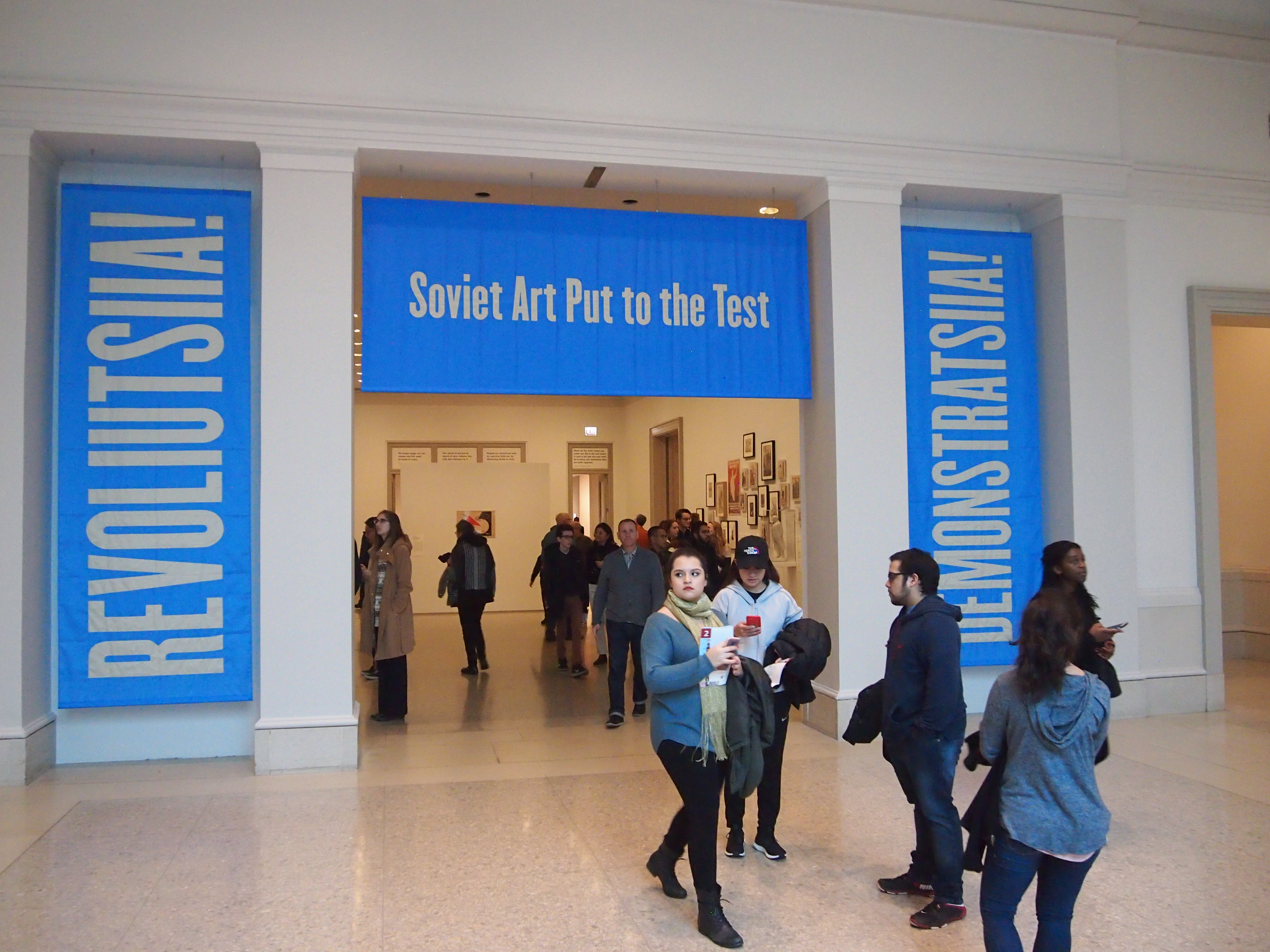
Mounted, I’m sure, to coincide with the 100th anniversary of the revolution. Just inside the entrance to the exhibit was the “Lenin Wall.” Lots of Lenin, including a small statue.
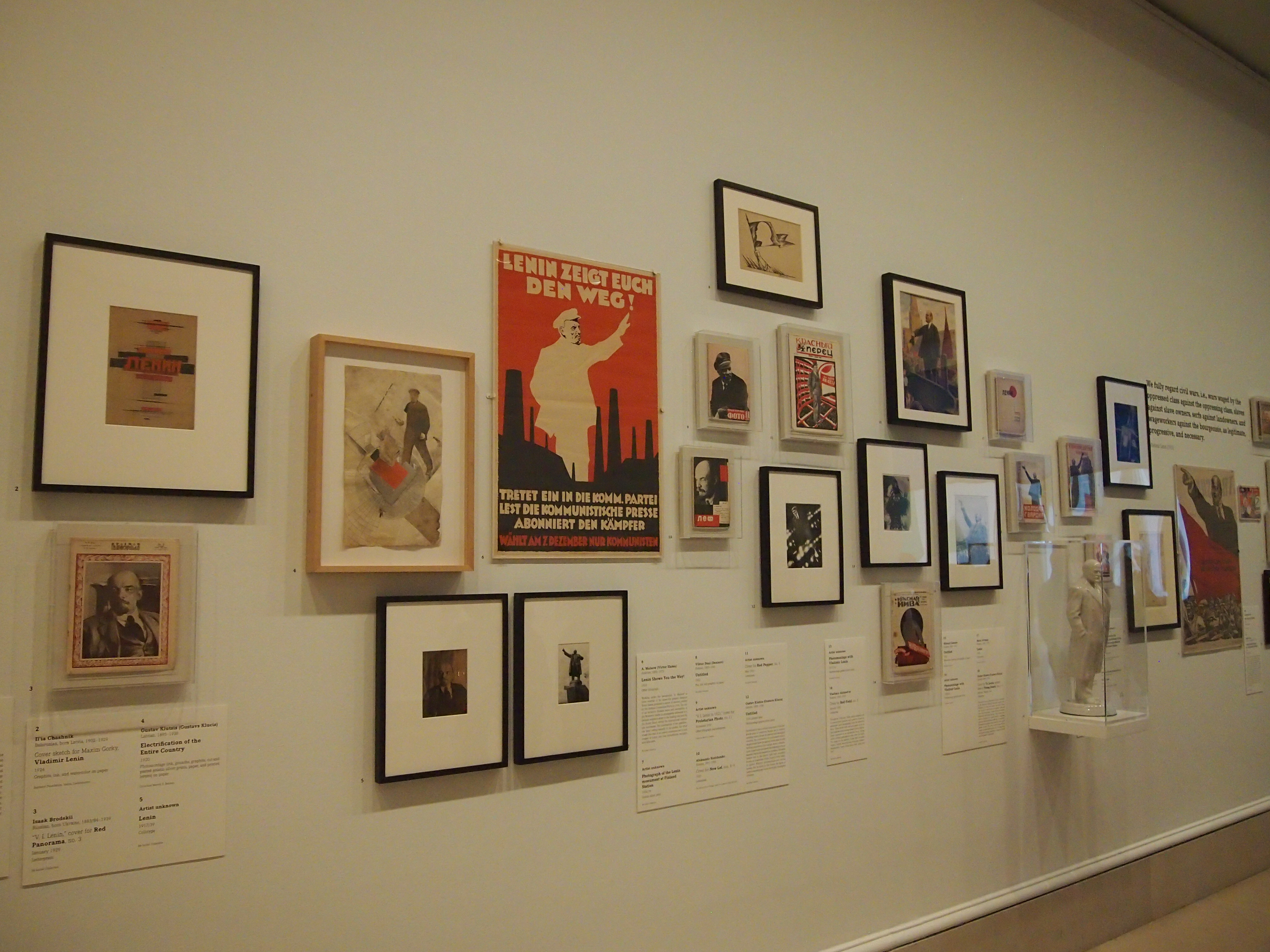
Besides that, the exhibit featured paintings, posters, prints, drawings, photos, magazines, film, agitprop ephemera, porcelain, figurines, life-size reconstructions of early Soviet display objects or spaces commissioned especially for the exhibition, and more.

I was glad to see the Suprematist porcelain collection (I. I. Rozhdestvenskaia).

That’s because I used to have a Suprematist-style cup and saucer. Actually, I still have the saucer, but the cup broke long ago.

Remarkably, there was such a thing as Soviet advertising. Or an equivalent. At least early on (1923).
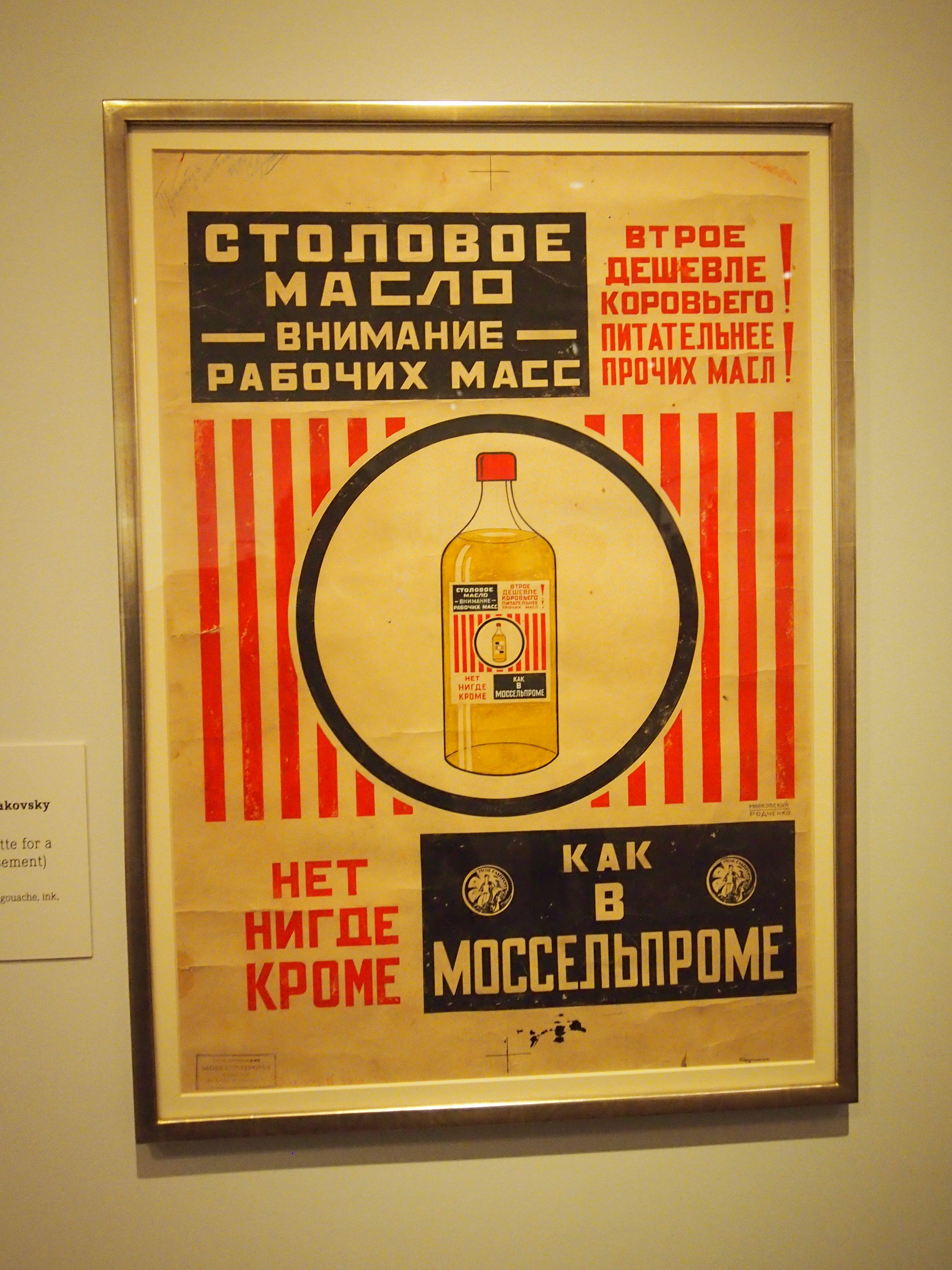
That’s a preliminary design for a Mosselprom building advertisement for cooking oil by Aleksandr Rodchenko, the Constructivist.

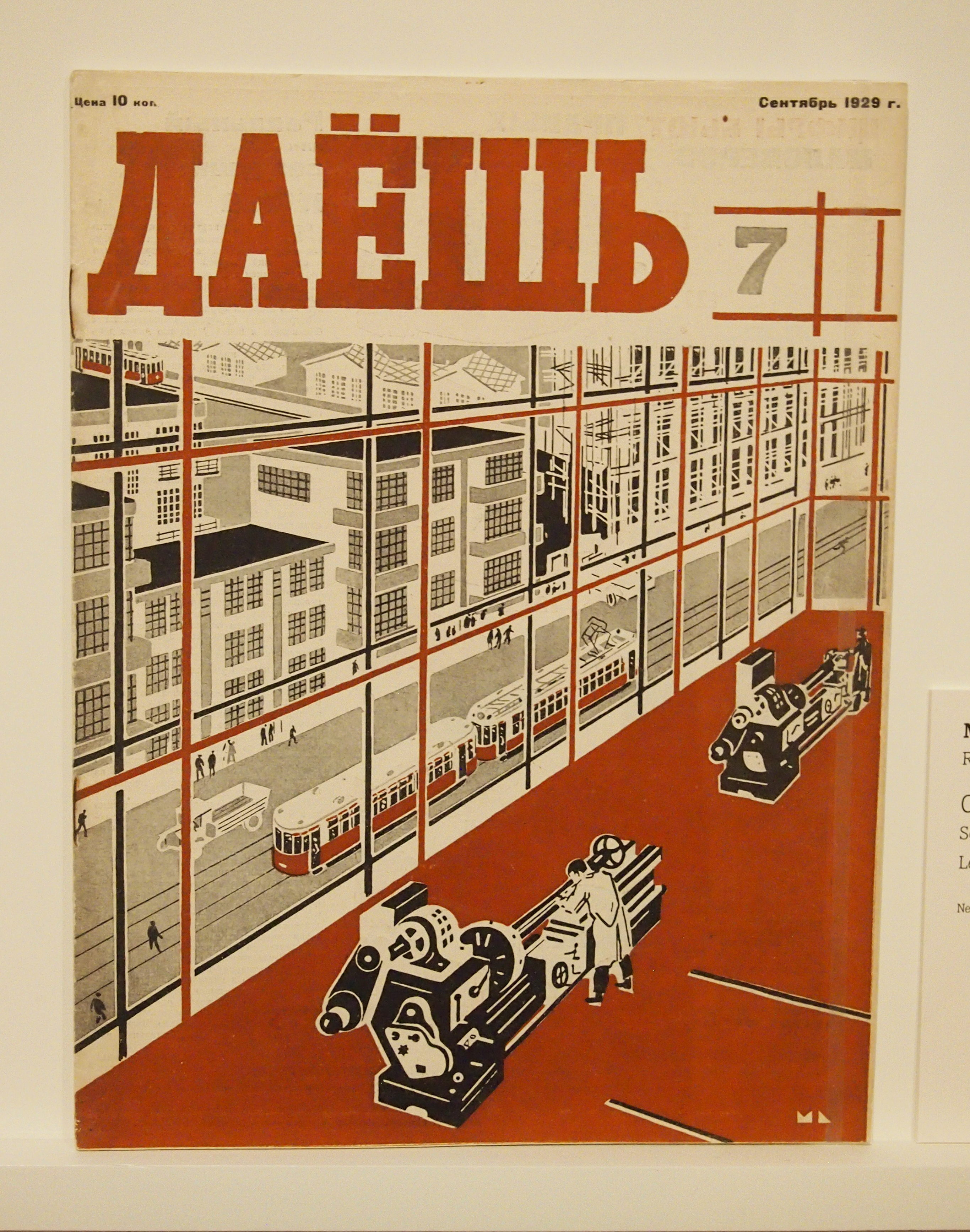
The cover of Produce! magazine (Mechislav Dobrokovskii, Sept. 1929).
And the cover of a magazine called Atheist at the Workbench, Jan. 1923 (Dmitrii Moor).
The theme of that cover is “We got rid of the tsars on Earth, let’s deal with the ones in Heaven.”

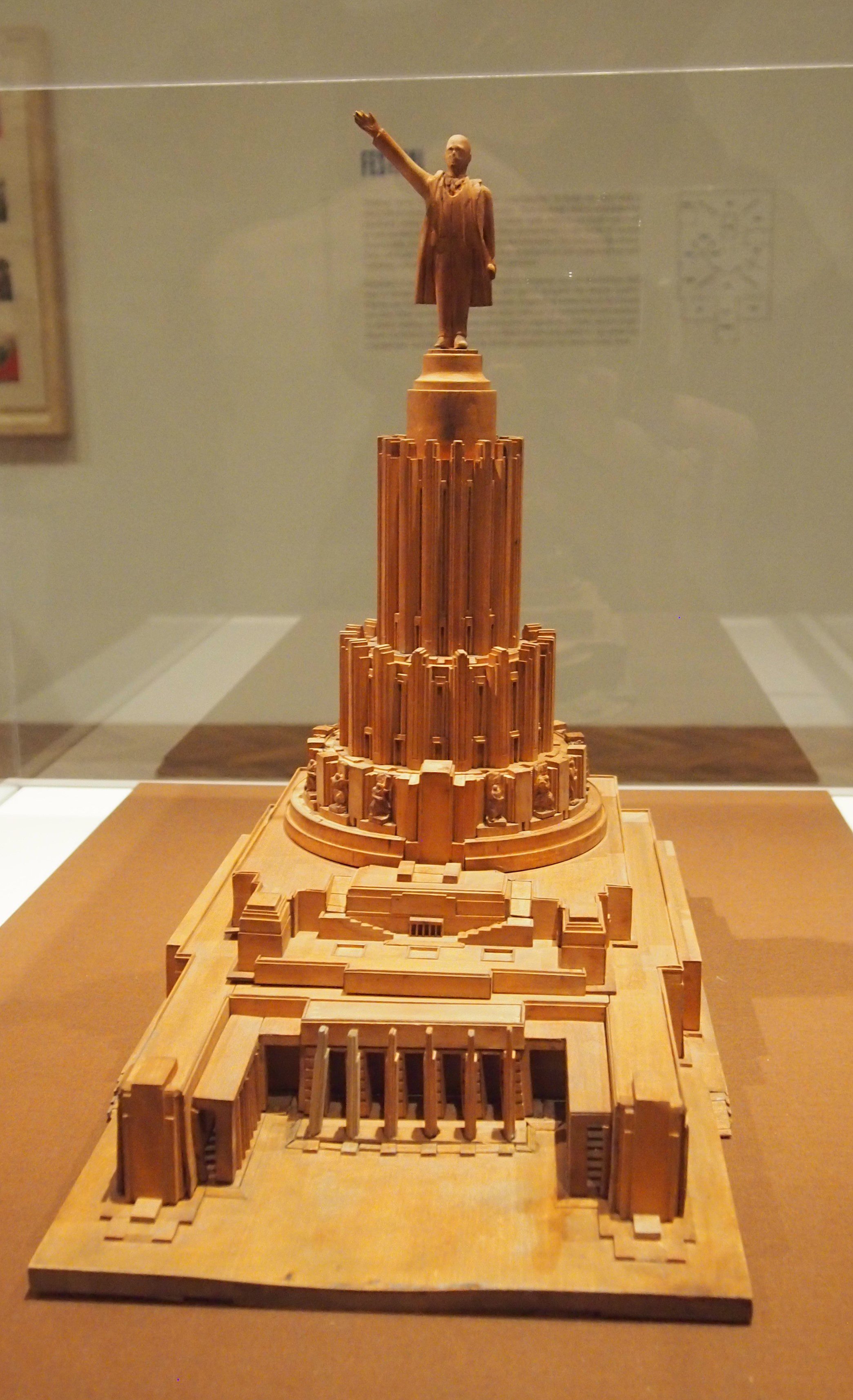
This is a model of the never-finished Palace of the Soviets in Moscow, whose partly completed structure was cannibalized for raw materials to fight the Nazis. That’s Lenin on top.
Here’s one of a series of 36 small posters extolling gender equality and increased industrial production (1931). All of them pictured women doing one kind of socialist labor or another, and graphs whose trends were always upward.
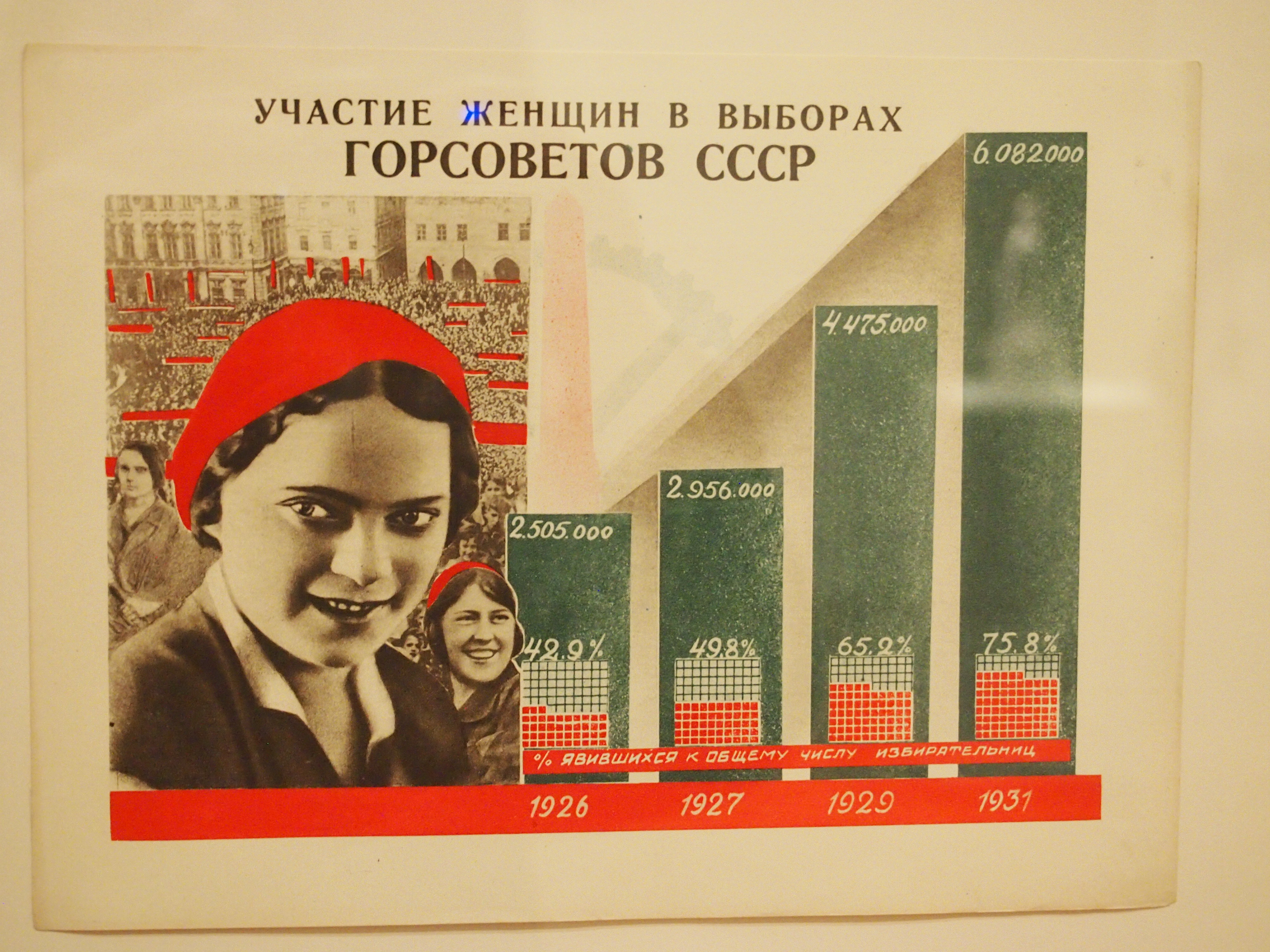
If there had been a collection of postcards in the gift shop based on these posters, at a reasonable price, I would have bought it. Or a Suprematist tea cup. But no.
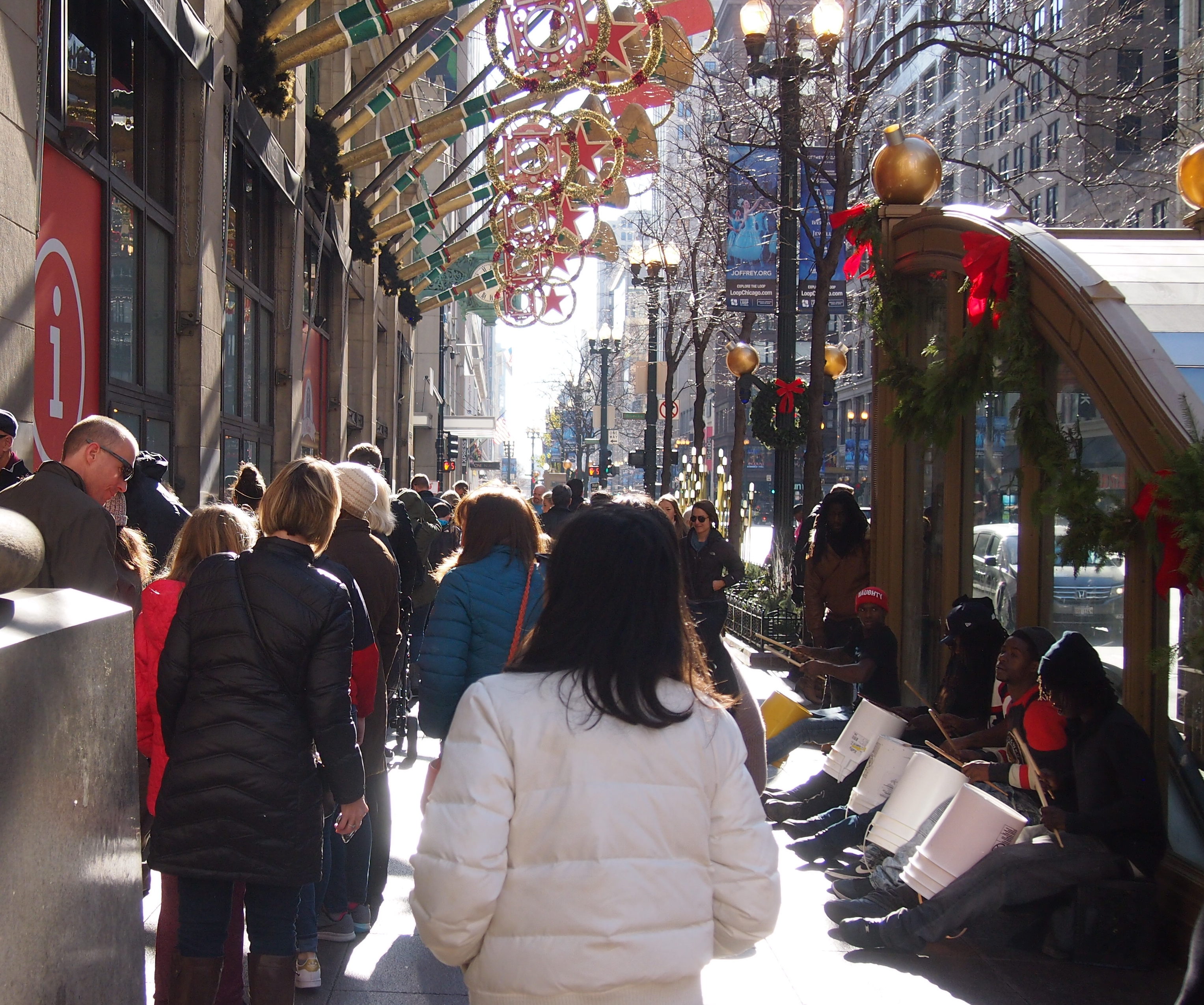
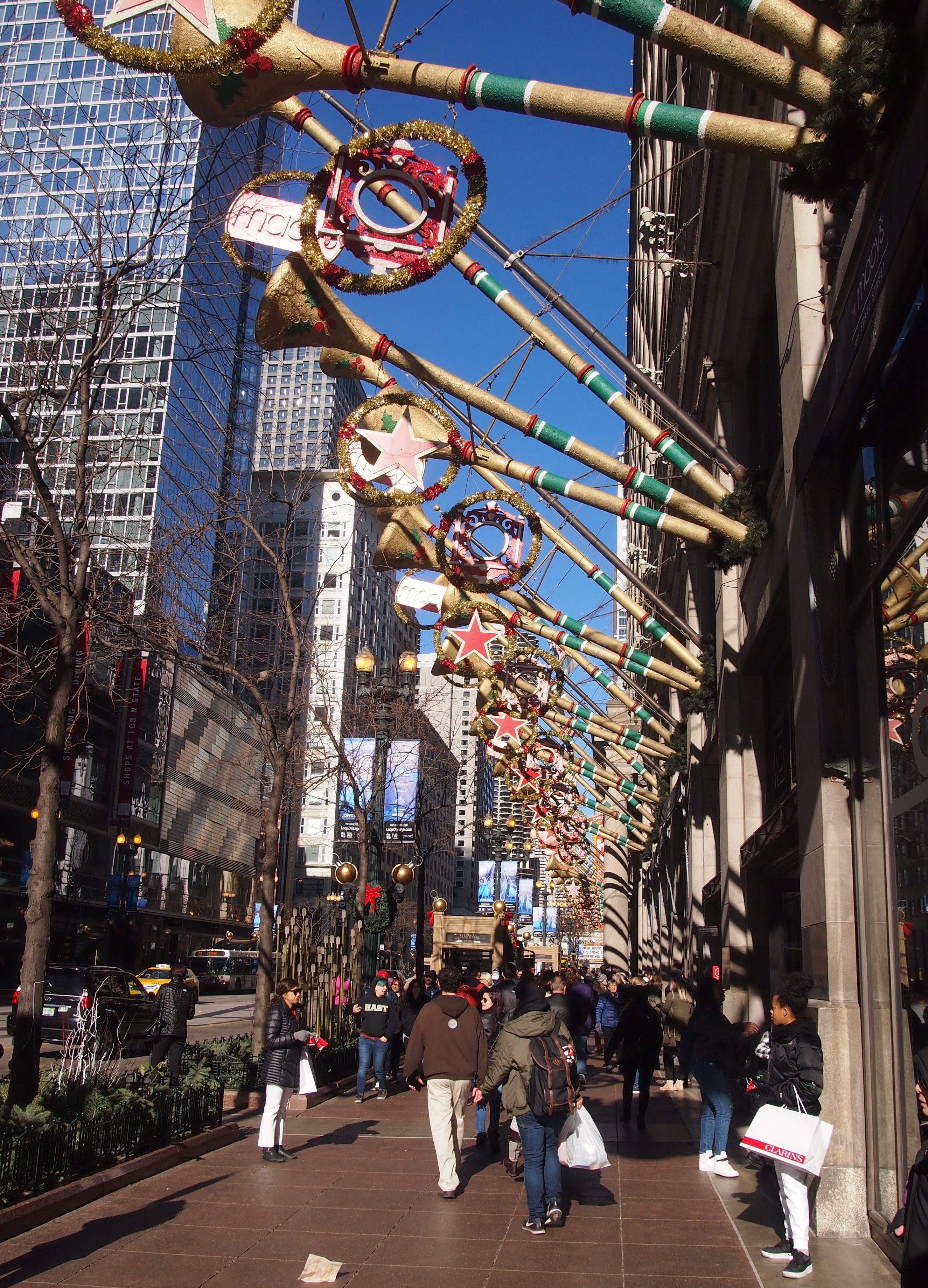
State Street ’17

On the Saturday after Thanksgiving this year, I noticed a short item on the web site of the Telegraph, the British newspaper: “Best Tesco Black Friday weekend deals 2017.”
What? Black Friday is a thing in the UK? That big shopping day that’s the Friday after — the fourth Thursday in November? Which, I think, the British call “Thursday.”

Know what the United States needs? Bank holidays. Some of them overlap with U.S. holidays, but we could use a few more, such as the first Monday in June and the first Monday in August.

On Saturday morning we went downtown, taking advantage of above-freezing temps and a clear day. State Street near the store formerly known as Marshall Field’s was well populated with shoppers and the boomba-boomba-boomba of plastic container drumming.

This time of the year you go to that stretch of State Street to see the holiday windows that Macy’s carried on from Marshall Field’s. Two years ago, the windows were creative and pleasant to look at. This year, they were not.

“Generic” is how Ann put it, as in generic holiday scenes, and I agree — not a drop of the creativity of a window that had creatures on the outer planets throwing snowballs at each other.

At least the holiday trumpets were still in place.
The Marshall Field’s restorationists were out with their signs.
Or would they be revanchists? Not sure that applies, since we’re not talking about taking back the Alsace-Lorraine or wherever. Still, the “take back” could be said to be metaphoric, so you could argue that it’s retail revanchism. As far as I know there’s no specific term for agitating for the restoration of a name.

Or a name change. Maybe there should be such a term, considering that former slaveholders not named Washington or Jefferson are out of favor.

Tuesday Before Thanksgiving Leftovers

Back on Sunday, November 26. A good Thanksgiving to all.

At about 9 p.m. on November 21, I went outside and there he was. Orion, just rising in the southeast. Winter’s here. Fitting, since it will be well below freezing until tomorrow morning.

Visited the library again recently. Did another impulse borrowing: a box set with five Marx Brothers movies on five disks. Their first five — The Cocoanuts, Animal Crackers, Monkey Business, Horse Feathers and Duck Soup. I’m going to work my way through them over Thanksgiving because it occurs to me that, except for Animal Crackers and Duck Soup, I haven’t seen any of them in more than 20 years. Maybe 30 in some cases.

A booklet comes with the box, including reproductions of the movie posters. The Cocoanuts is praised on its poster as an All Talking-Singing Musical Comedy Hit! Talkies came along just in time for the Marx Brothers.

I’m glad the Bluebird Cafe in Nashville is a long-standing success. I remember visits there as far back as 1984, for meals or music, such as a show by Kathy Mattea sometime in the mid-80s, and always chocolate chunk cheesecake. But I wasn’t glad to read the following in the Washington Post this week:

Nashville, first on ABC and now CMT, has made the 90-seat venue so incredibly popular over the last five years that it’s impossible to get in unless you have a reservation (snapped up seconds after they’re available online) or wait in line outside for hours.”

Hell’s bells. Not that I visit Nashville often enough for this to affect me, but still. The thought that the Bluebird has lines like a Disneyland ride bothers me.

Still, I have many fond memories of the 1980s Blue Bird, along with a number of other small Nashville venues I used to visit, such as the Station Inn, Exit/In, Springwater, 12th & Porter, the Sutler, and Cantrell’s.

The Station Inn offered bluegrass. One fine evening ca. 1985 I saw Bill Monroe himself play there. Some years earlier, I went now and then with friends Neal and Stuart. After ingesting some beer, Stuart in particular was adamant that the band, whoever it was, play “Rocky Top” and “Salty Dog.” Usually the band obliged.

Something to know: the Osborn Brothers released the first recording of “Rocky Top” nearly 50 years ago, on Christmas 1967.

While putting the “detach & return” part of my water bill in the envelope the other day, I noticed in all caps block letters (some kind of sans-serif): PLEASE DO NOT BEND, FOLD, STAPLE OR MUTILATE.

Two of the classic three. Poor old “spindle.” As neglected as the @ sign before the advent of email. As for “bend,” that’s an odd choice. I bend paper a lot, but unless you fold it, paper pops right back.

Correction: Not long ago, I recalled a kid that came to collect candy at our house one Halloween in the late ’90s, dressed as a Teletubbie. I had the time right: it was 1998. But oddly enough, I actually saw two little kids as Teletubbies, at least according to what I wrote in 2004:

“That year, all the kids came during the day, and I have a vivid memory of two kids aged about three to five, dressed as Teletubbies in bright costumes that looked like they could have done duty on the show itself.”

Odd. Memory’s a dodgy thing. How much remembering is misremembering? Or are the details that important anyway?

Twenty Times Around the Sun

Lilly is home for Thanksgiving and, though a quirk of the calendar, her birthday.
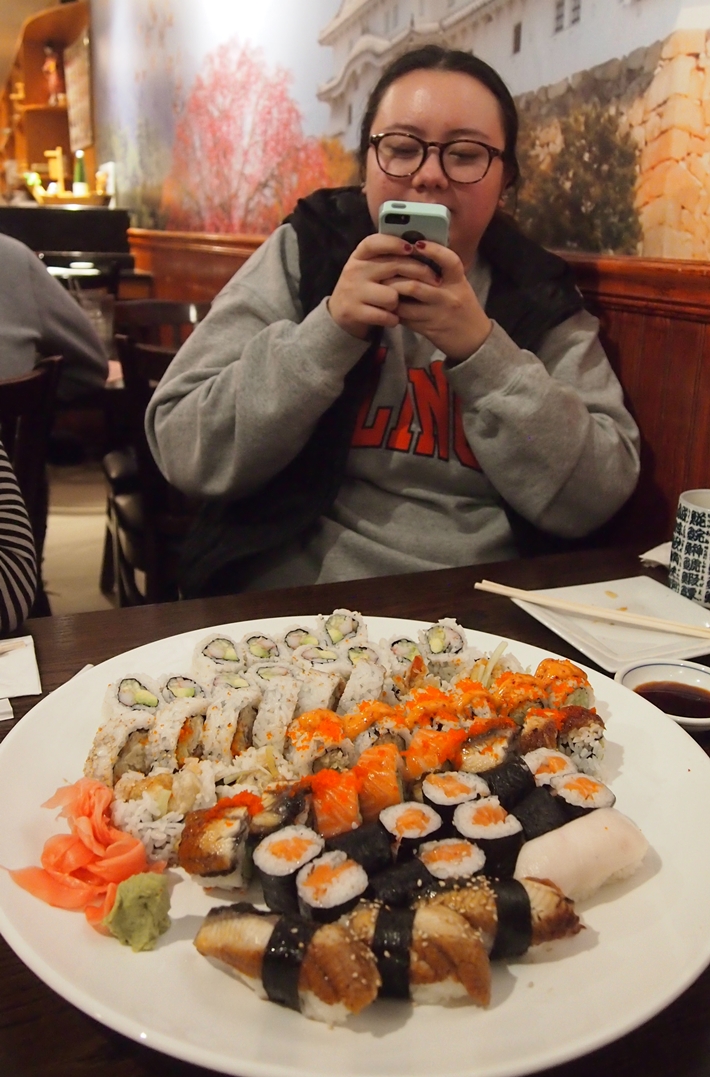
You could think of it as a special birthday, but only because we use base 10. The evening’s feast was sushi. Here’s Lilly taking a picture of it.
Maybe you can’t be 20 on Sugar Mountain, but there are a lot more interesting places to go in later decades, metaphorically and literally.

’50s Euro Bottles

Out in our garage, there’s an accumulation of bottles. Collection’s too dignified a word. Some of them have already been photographed for posting, generally for the oddity of their labels.

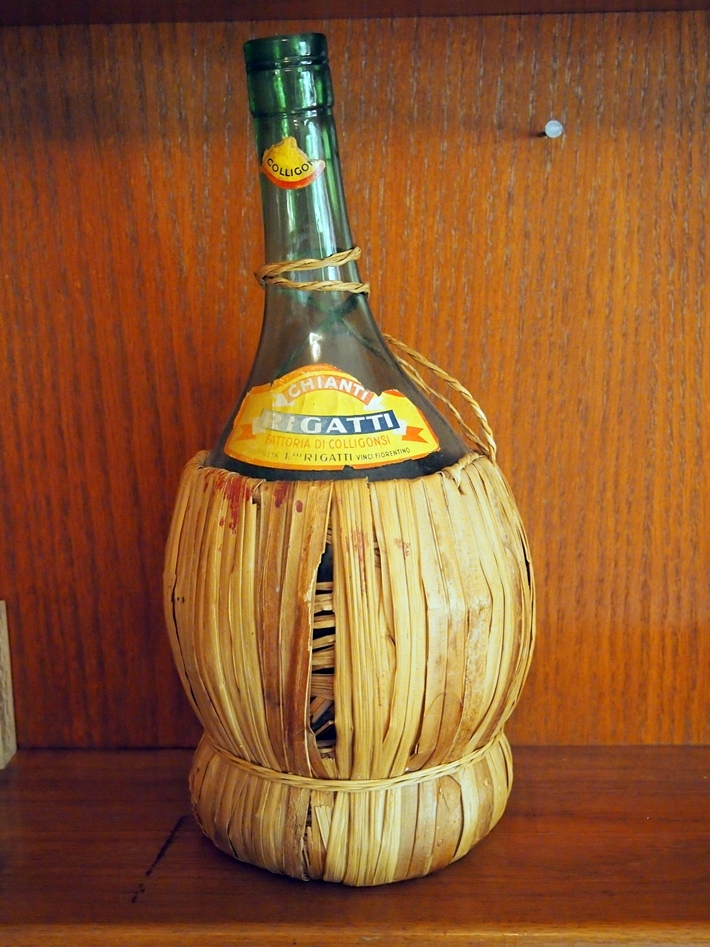
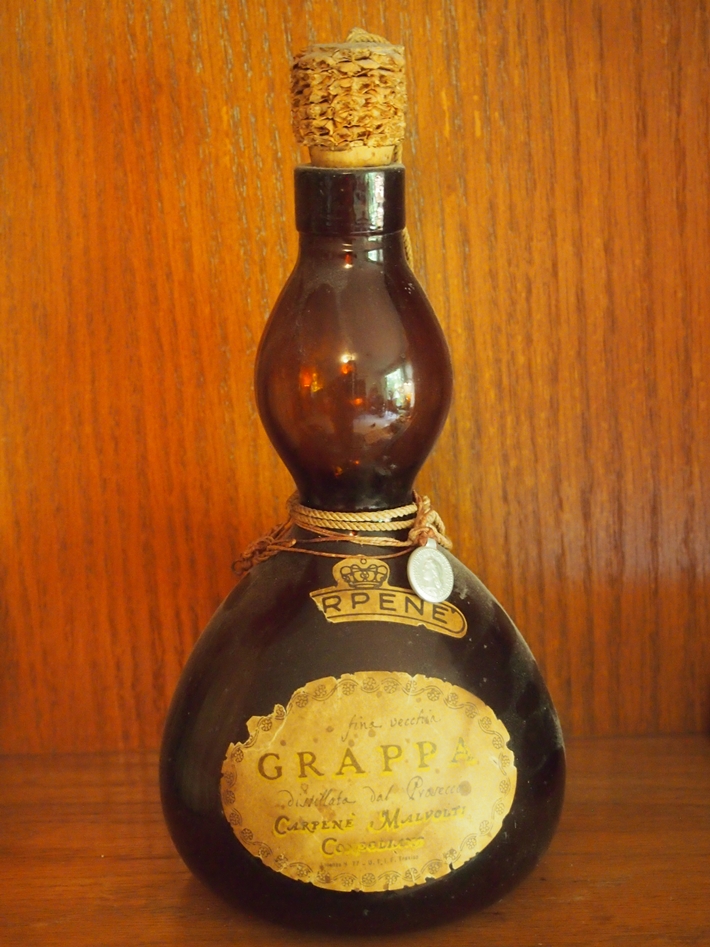
My parents brought home some bottles from their time in Europe in the mid-1950s. Some time ago, I decided to take pictures of them at my mother’s house.

A Chianti. I assume Rigatti is the brand. For a Chianti to be a Chianti, it must be produced in the Chianti region and be made from at least 80% Sangiovese grapes, Vinepair says. Also: “Almost none of the Chianti sold today comes in the classic straw basket.”

Clearly not true 60-odd years ago.A grappa. The brand label is partly missing, looks like. According to Rome File, the main ingredient of grappa is pomace, which consists of the grape skins, seeds and stalks that are left over from winemaking.
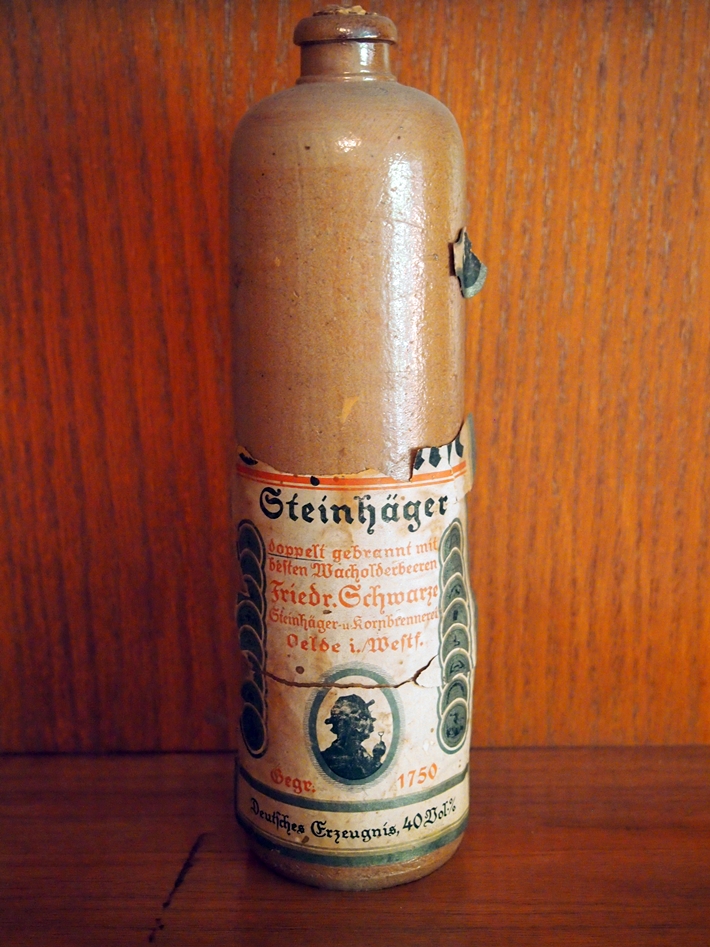
And something German.

I didn’t know this until I looked it upSteinhäger is a type of German gin, flavored with juniper berries. It’s local to Steinhagen, North Rhine-Westphalia.

It makes me glad to think that my parents, or at least my father, sought out a few local liquors while in Europe. Not only that, they kept these aesthetic bottles as no-extra-charge souvenirs.

Thursday Havering

A lot of the ads popping up lately on YouTube have been to promote Canadian tourism. Mostly the ads depict, in music video style, young people doing the kind of vigorous activities that (some) young people must imagine is the essence of traveling to exotic places like Saskatchewan. Actually, one today featured the Yukon.

I’m all for visiting Canada, and encouraging people to do so, but the ads don’t really speak to me. Besides, Canada’s not really top of my mind in November. Then again, it’s good to plan ahead, so you can visit Canada, and even the Yukon, during that short window of opportunity when the place is pleasantly warm.

I never knew until recently that The Proclaimers did a charming version of “King of the Road” back in 1990. No one does it like Roger Miller, but I smile when I hear lyrics like, “destination Bangor, Maine” in that burr of theirs.

“King of the Road,” in the way things go on the Internet, soon leads to a song stuck in mid-60s amber, “Queen of the House.” Even better, the song is done in a Scopitone.

I was in the city not long ago with a camera in the front seat, so I took a few pictures while stopped at traffic lights. Such as this place. So very Chicago.
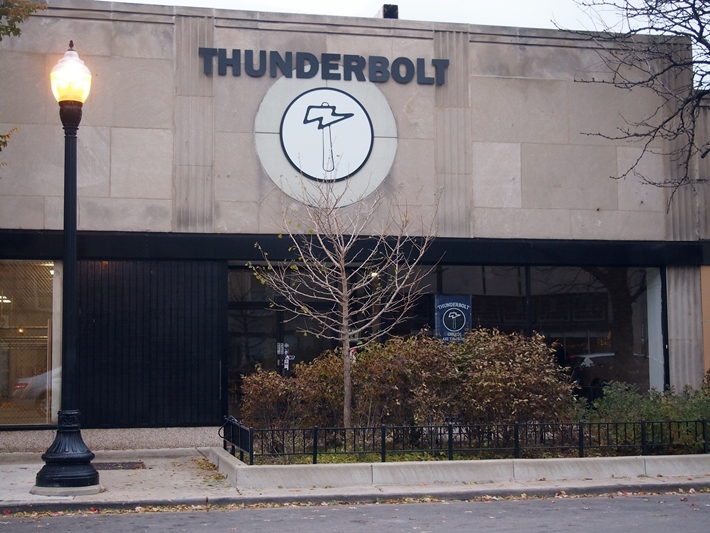
Then there was Thunderbolt.
It’s an ax throwing venue, only the second one in Chicago, according to the Tribune, opening this spring.

“Ax throwing — indoor or outdoor — is a skill-based sport; [owner Scott] Hollander likens it to pool or darts, where participants can take the competition as seriously or lackadaisically as they please,” the paper says.

“Easygoing ax throwers can book an hour at a lane for $15 per person Wednesdays and Thursdays, and for $20 per person Fridays, Saturdays and Sundays. Food and nonalcoholic drink is allowed and can be consumed at the plywood stands behind each pair of lanes or at the picnic tables in the building. Thunderbolt also is available for bachelor or bachelorette parties, birthday parties and corporate events.”

What do I think of when I hear about ax throwing? Ed Ames, naturally. Tomahawk, but close enough.

Autonomous Pods, The Black Mirror Version

Something I read today: “[He] spoke at length about the future he imagines for the automobile industry: autonomous pods that consumers hail on demand rather than owning, networked together in ways that render such familiar 21st-century headaches as traffic jams and car accidents largely (perhaps entirely) a thing of the past.”

Oh, really? Call me a skeptic. Or maybe it’s just that I can imagine some of the new inconveniences, or worse, of such “autonomous pods.”

Hail a pod? Maybe that would work well in a dense city. Here in the suburbs? I don’t have to wait for my car at all. It’s here. It’s now. How can pods possibly match that?

Every trip you take will be monitored. Some system somewhere will know everywhere you go. That kind of thing is bad enough already, this will make it worse.

There will be advertisements in the pods, based on where it thinks you might go. Or just advertising. Maybe it will be loud. It isn’t your car, so you can’t turn it off. Or maybe you can, for a price.

Will pods refuse you service if you want to pay in cash (assuming there is such a thing)?

What happens if you’re mistakenly put on a terrorist watch list, and the pods refuse to pick you up?

Impulse destinations will be, sadly, a thing of the past.

Demand pricing for the pods, just like Uber. That’ll be terrific.

Of course the systems will be privately owned. This is the USA. What happens when cities start granting local monopolies for pods and price increases far outstrip the rate of inflation every year?

Taking items with you will be no extra charge. For a while. Then items will become revenue streams for the autonomous pod companies.

No eating or drinking allowed in the pods. Except for food and drink purchased from the glove compartment minibar.

Your pod will pick you up in 10 minutes. Except, there’s a system failure on a road nearby, so it doesn’t come for two hours. Your alternative? Not that car in your garage.

If you’re late for work, I imagine “the pod was late” will be no excuse.

What happens when two autonomous pods run into each other? Impossible, say the engineers. Ha, ha, say I. Of course it’s going to happen.

One reason for traffic jams is that too many people want to go the same place at the same time. So will a pod ever say, sorry, you can’t go there because there’s too much traffic already?

His Final Battle

One thing I forgot to link to yesterday: Famous Balloon Movies, Chapter 2, a scene from CasaBalloona.

Watching Casablanca must have put me in a mood to read about the ’40s, because at the library today I saw a copy of His Final Battle, subtitled “The Last Months of Franklin Roosevelt,” by Joseph Lelyveld (2016). I picked it up at once and checked it out. About time I read some more presidential books anyway.

The cover features the well-known photo of FDR hoisting his hat over a clutch of radio microphones. That’s from a 1944 campaign appearance in Chicago, at Soldier Field. The image is fuzzy, but the president looks worn out indeed.

He was born much too early to benefit from the polio vaccine, but only a little too early to benefit from blood pressure medication. Turning at random to a page (p. 91), I found the following:

“The conclusion [about FDR’s death] that comes closest to known facts was propounded in lectures and articles by Marvin Moser, a retired Columbia University medical professor: ‘Roosevelt represents a textbook case of untreated hypertension progressing to [likely] organ failure and death from stroke.’ In the medical literature, such hypertension is sometimes called ‘malignant hypertension.’

“…Safe and effective drugs to lower high blood pressure and prevent clots didn’t begin to become available for more than ten years after Roosevelt’s death. In the 1940s, only commonplace aspirin was widely recommended for purpose.”

Casablanca at 75

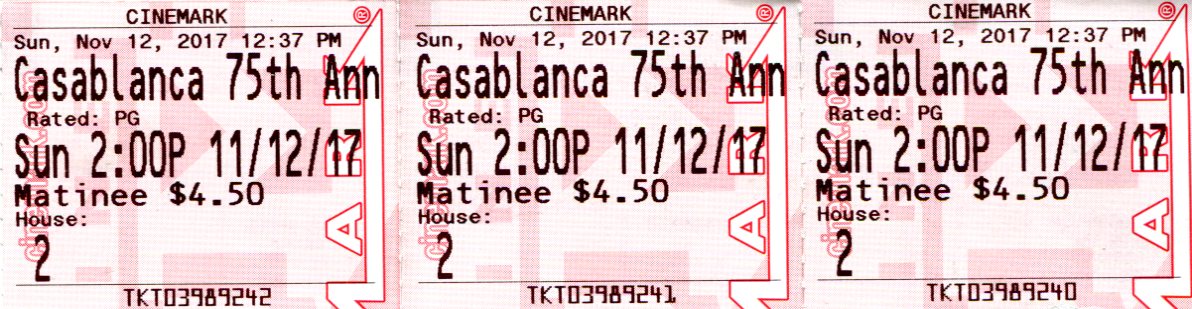
Yesterday we all went to see Casablanca on the big screen. It was in a few theaters nationwide on the occasion of the 75th anniversary of its late 1942 release.

At $4.50 a pop, how could I pass that up? I checked, and the other movies showing at the same multiplex are Thor: Ragnarok, Daddy’s Home 2, Murder on the Orient Express (starring Kenneth Branagh’s facial hair, I’ve read), A Bad Mom’s Christmas, Jigsaw, Boo! A Madea Halloween, Happy Death Day, Geostorm, It, My Little Pony: The Movie, Seven Sundays, and, interestingly, two Bollywood features: C/o Surya and PSV Garuda Vega.

I’ll never live long enough to confirm this, but I suspect that not a single one of those other titles will be revived for a 75th anniversary showing, or for any other year.

Ann had never seen Casablanca before. I didn’t expect her to know, for instance, much about the geopolitical background of the movie, such as why “Vichy” might be important, so I spent a few minutes beforehand explaining a few things to her. I went as far as whistling a few bars of “La Marseillaise.”

She said that sounded familiar — of course it does, it’s an aural shorthand for “France” in English-speaking media — but she didn’t know what it was. I said it was the national anthem of France, and that the movie puts good use of it.

Rick Blaine has been characterized as a stand-in for the United States and its isolationist ways before Pearl Harbor, and I suppose there’s something to that. After all, Victor says to Rick (and I think it’s too-good-by-half Victor Laszlo’s best line): “Welcome back to the fight. This time, I know our side will win.” An optimistic line, that. It’s sobering to think that the movie was not only set when the fate of mankind was in the balance, it was made then.

I’ve seen Casablanca a number of times (not sure how many) since the first time in film class in 1983, so I could focus on details, such as the evocative sets, especially Rick’s. Carl Jules Weyl, who did the splendid sets on The Adventures of Robin Hood not long before and on The Big Sleep a few years later, was the art director.

It also occurred to me how well Victor and Ilsa were dressed. Awfully stylish for a couple barely staying ahead of Nazis pursuing them across the Mediterranean and then North Africa. We never see the luggage that Rick sends Victor off to deal with at the airport, so he can have a moment to tell Ilsa what’s what, but it must have been a steamer trunk or two.

But that’s overthinking the matter. This is the Golden Age of Hollywood. Of course the luminous Ingrid Bergman is going to be dressed to the nines, even in a war-torn world.

Something else I noticed this time was a line with distinct foreshadowing, spoken by Major Strasser to Ilsa: “My dear, perhaps you have already observed that in Casablanca human life is cheap.” Indeed. As it turns out, cheap for Major Strasser, the only major character who dies on screen. And I never get tired of hearing Capt. Renault say, “Round up the usual suspects.” When my film class heard that, we cheered.

Ann wasn’t entirely sure what nationality Renault was supposed to be, so she asked me after the movie. I suppose that’s a function of not watching enough old movies with French policemen or soldiers in them. The kepi is all earlier generations needed to spot a Frenchman, but that must not be so any more.

I also suggested to Ann that she pay attention to the supporting and minor characters, who are widely regarded as one of the chief delights of the movie. Especially these two.

I’m glad to report that Ann liked the movie. It’s entirely possible that she’ll see it again when she’s older, and get more out of it, as one does with good movies re-watched or books re-read. Maybe she will see it around the 100th anniversary. I’m sure Casablanca will still be watched then.

Normandy 1994

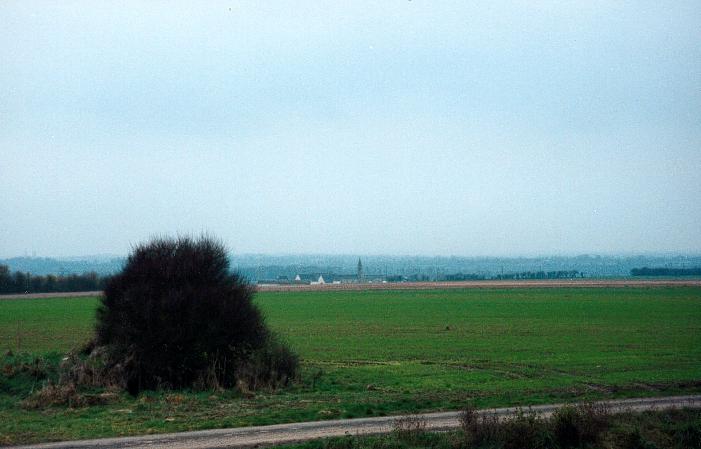
Normandy was surprisingly green in November 1994.

Normandy94Then again, that winter was, at least until December, reportedly mild. I believe the shot above was taken from the train near Bayeux, where we stayed a few days.

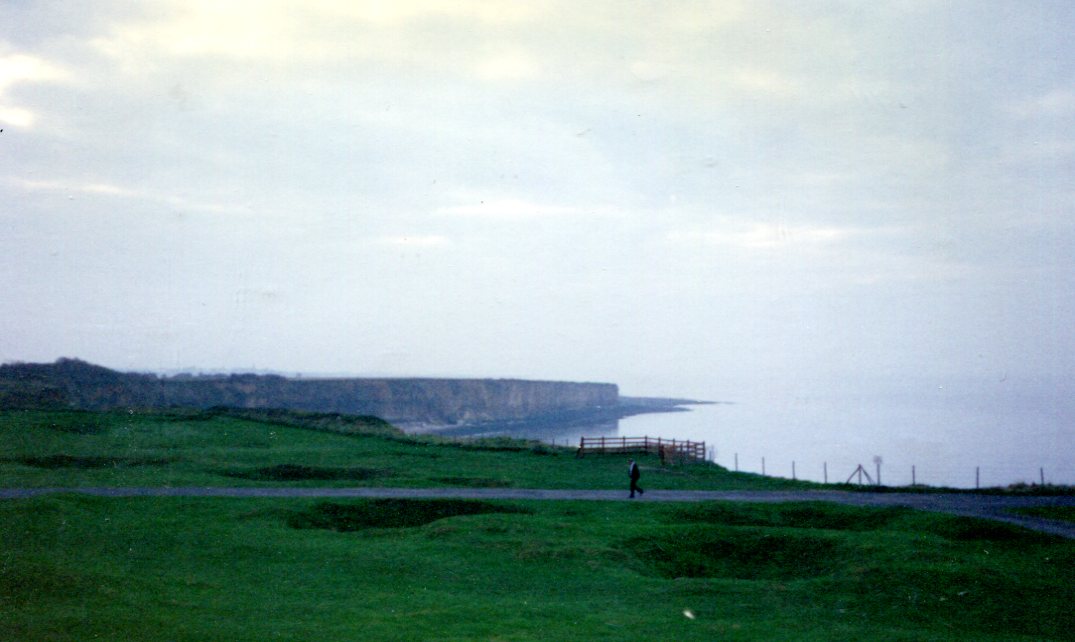
The coast near Omaha Beach, so busy 50 years earlier in a way that doesn’t attract tourists, was comparatively empty by late fall.

Omaha Beach 1994I’ll bet there were a lot of visitors, of the tourist kind, along with old soldiers, during the summer of ’94, especially in June. Pennants hanging in the town — which unfortunately I didn’t document on film — still welcomed such visitors in English for the 50th anniversary, especially the old soldiers.

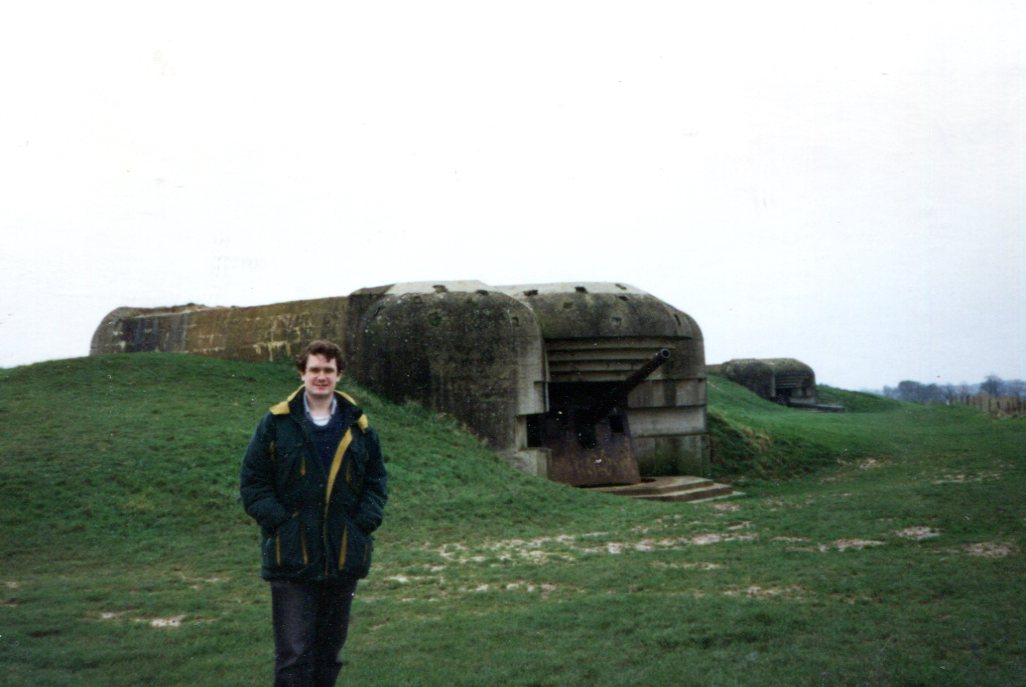
Former German pillboxs, left to the elements.

img507All well and good, to visit Normandy. But I need to get back to France someday, to see former trenches.