8/8/88 &c.

August 8, 1988

On this particular confluence of numbers for a date, I went to work. After all, it was also a Monday. VW started today as editorial assistant. At last we get one. After introductions and a basic editorial meeting, I spent a fair amount of the morning showing her how to use the VDT.

At 11 or so, I met a writer named SB. Seems like he could do good work for us. Works part-time now for another local mag that I’ve never heard of.

Lunch: KD, JD, VW, MS and me at Dick’s Last Resort, which opened not long ago at North Pier. I think there are others in Dallas and Houston. The place has its staff pretend to be rude. Restaurant motto: “Can’t Kill a Man Born to Hang.” Had a bucket o’ beef ribs & fries & slaw & bread. Was good.

[I checked just now, and the Dick’s Chicago location at some point moved to Marina Towers. It’s still a relatively small chain, with 13 locations, according to its web site. I went a few other times during the late ’80s, and maybe once again when I moved back to Chicago.

Dick’s used to serve — maybe still does — Mamba, pride of the Ivory Coast brewing industry. Actually a malt liquor, not a beer. Came in pint bottles with a croc and a map of Africa on the label. I bought one once just to drink something made in République de Côte d’Ivoire.

Not bad. Had the empty bottle for some years, but it disappeared at some point.]

In the afternoon, got a surprising amount done. Queried participants in the Mortgage Roundtable, interviewed an industry cockalorum, and more.  After work, had a hard time getting home. The El was jammed with Cubs fans going to the big-deal, first-ever night game at Wrigley.

Got home, a postcard was in the mail from Bill K. He says he’s in love and that “Elvis lives.” At 7:30 or so, I headed north on the El, away from all the hubbub, to go swimming. As I was walking to the pool from Davis station, it started raining hard. Got to the pool, swam. Less crowded than usual. Still raining some as I walked back to the station. Down to a drizzle by the time I got home, but I understand the big night game was called because of it.

[Sure enough, it was called. I seem to remember that Royko was there, and the next day in his column said he was tired of people telling him that God didn’t want night games at Wrigley. One was played to a conclusion the very next evening in better weather.]

Eden Palais

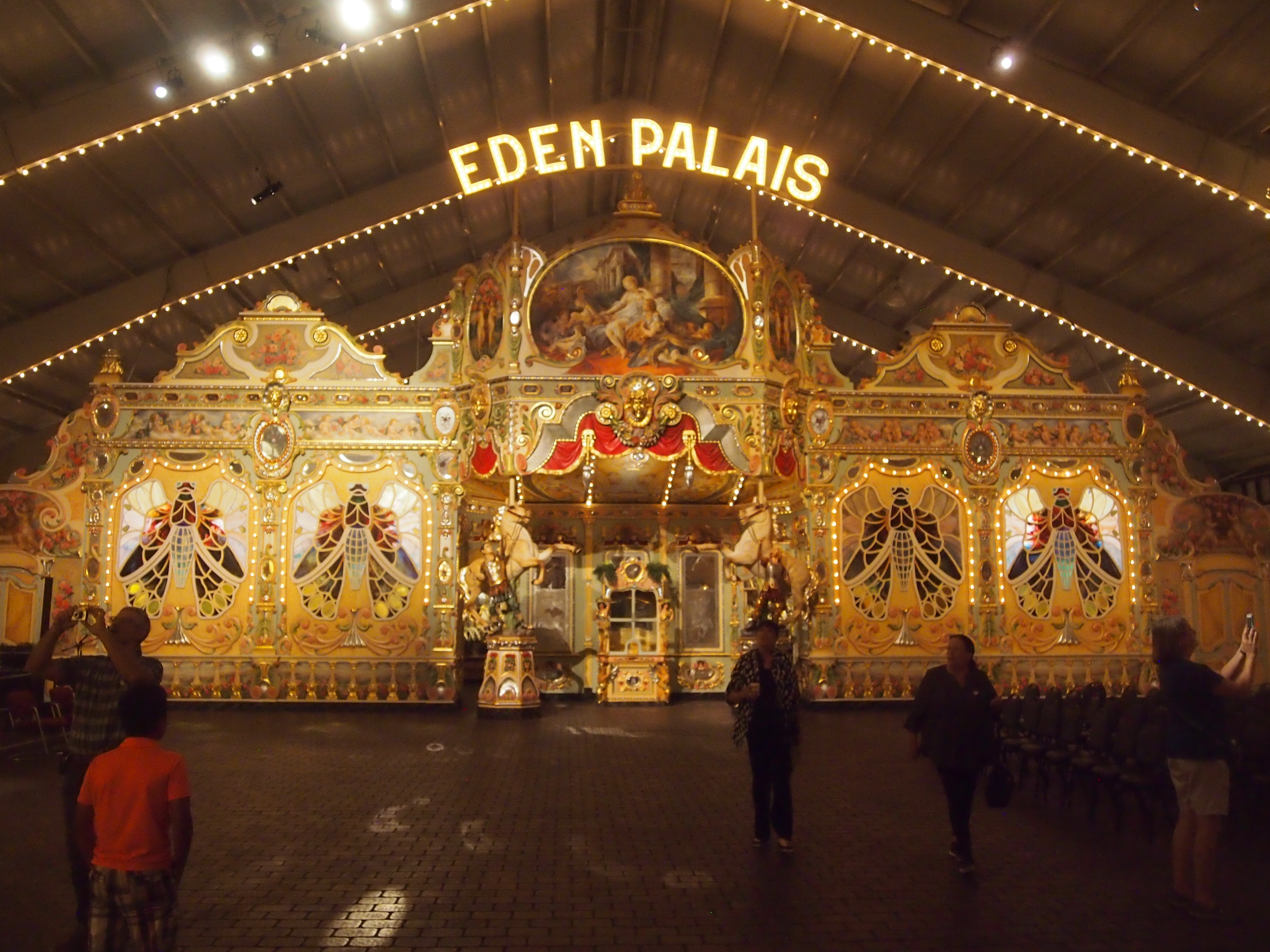
In an outbuilding of the mansion we toured last month — a large outbuilding — is the Eden Palais.

Eden PalaisI quote at some length as I go along, from the mansion’s web site: “The carousel building, completed in 1997, is the home of the most complete example of a European salon carousel in existence — the Eden Palais, built in 1890.

“The salon carousel was more than just an amusement ride, it was a self-contained entertainment palace that included stages for live performers, several bars, booths for perimeter seating, and music. The whole affair was lighted by hundreds of light bulbs, and was undoubtedly one of the first places that patrons experienced electric lighting when it was new.

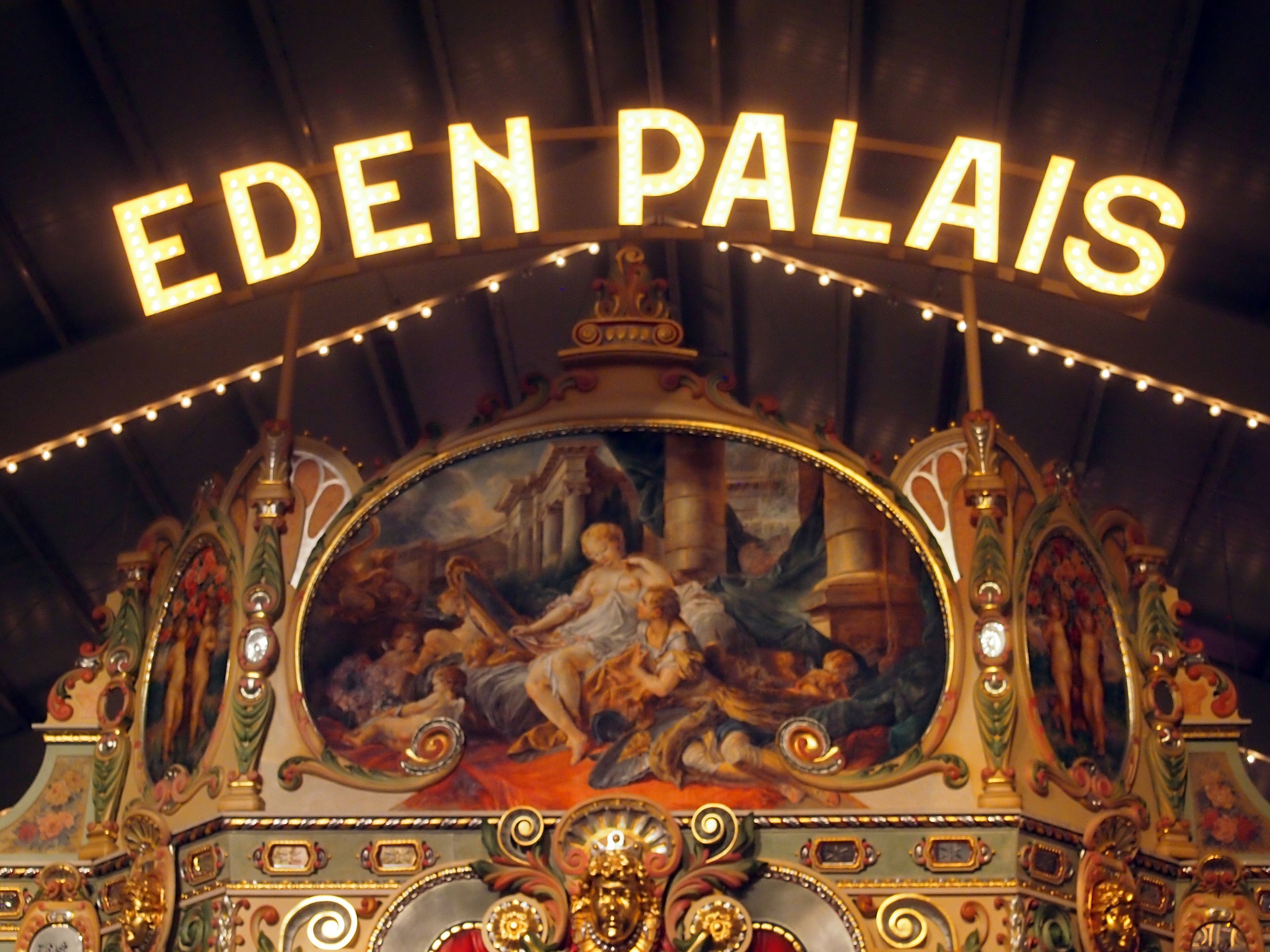
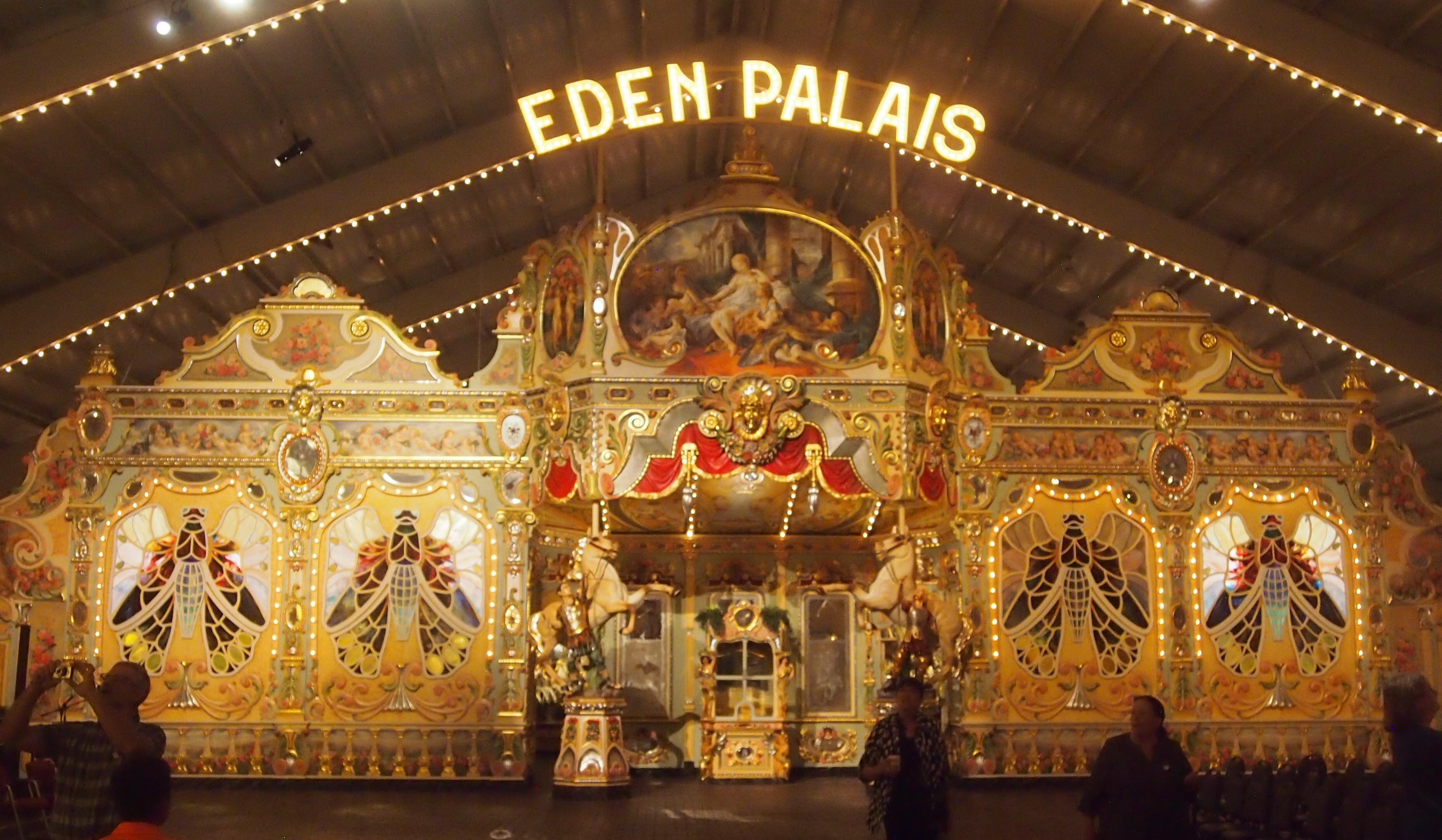
“The Eden Palais includes an 89′ wide by 42′ tall carved facade with life-size carved horses, giant art glass butterflies, a painting recreating an original that hangs in the Louvre, and a beautiful etched-glass entryway.”

It’s impressive for sure. This is the front entrance.

Apparently three more walls of similar heft originally surrounded the carousel, defining the entertainment palace. They’re in storage now. All of them were moved with the carousel from place to place around France, just like a circus might.

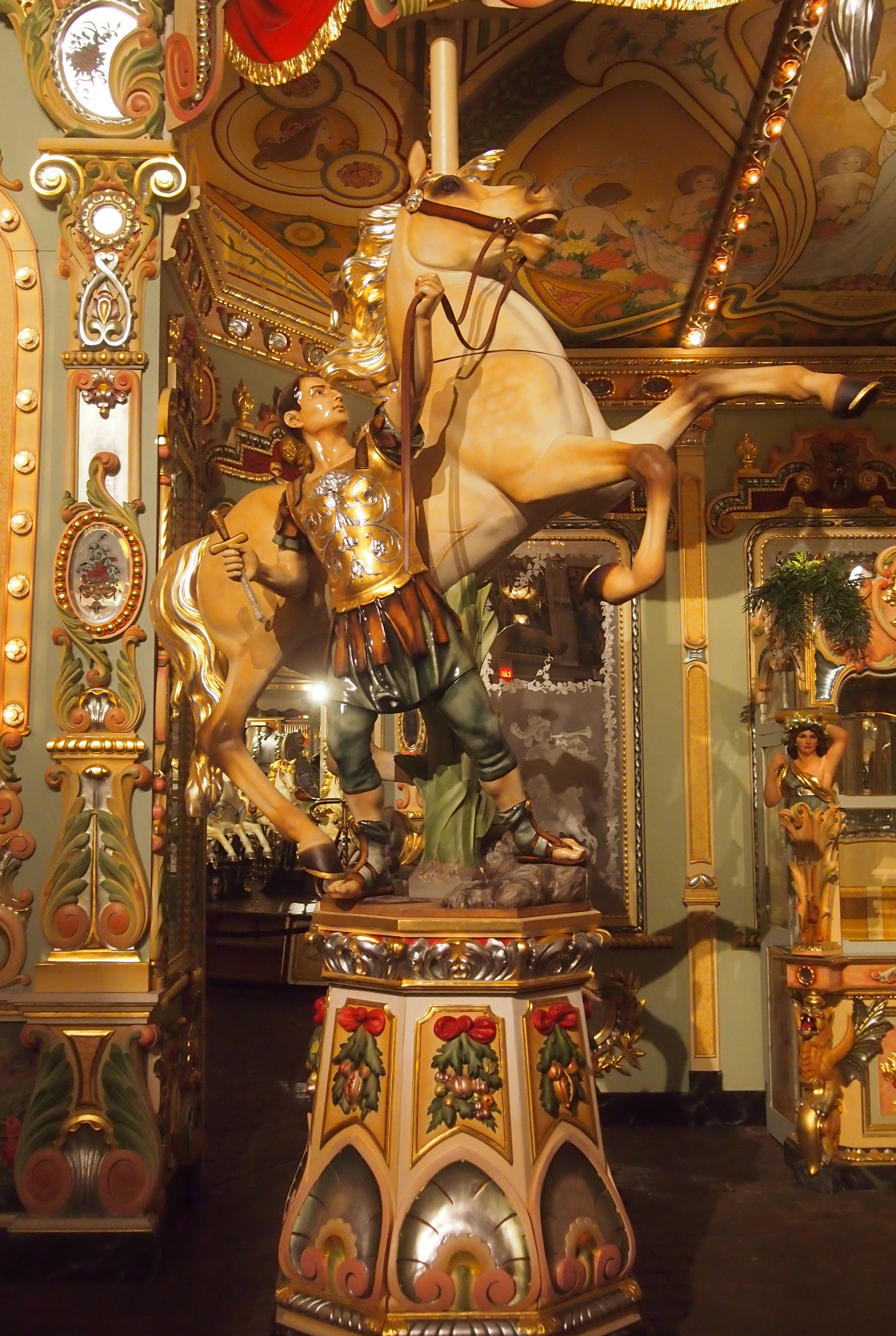
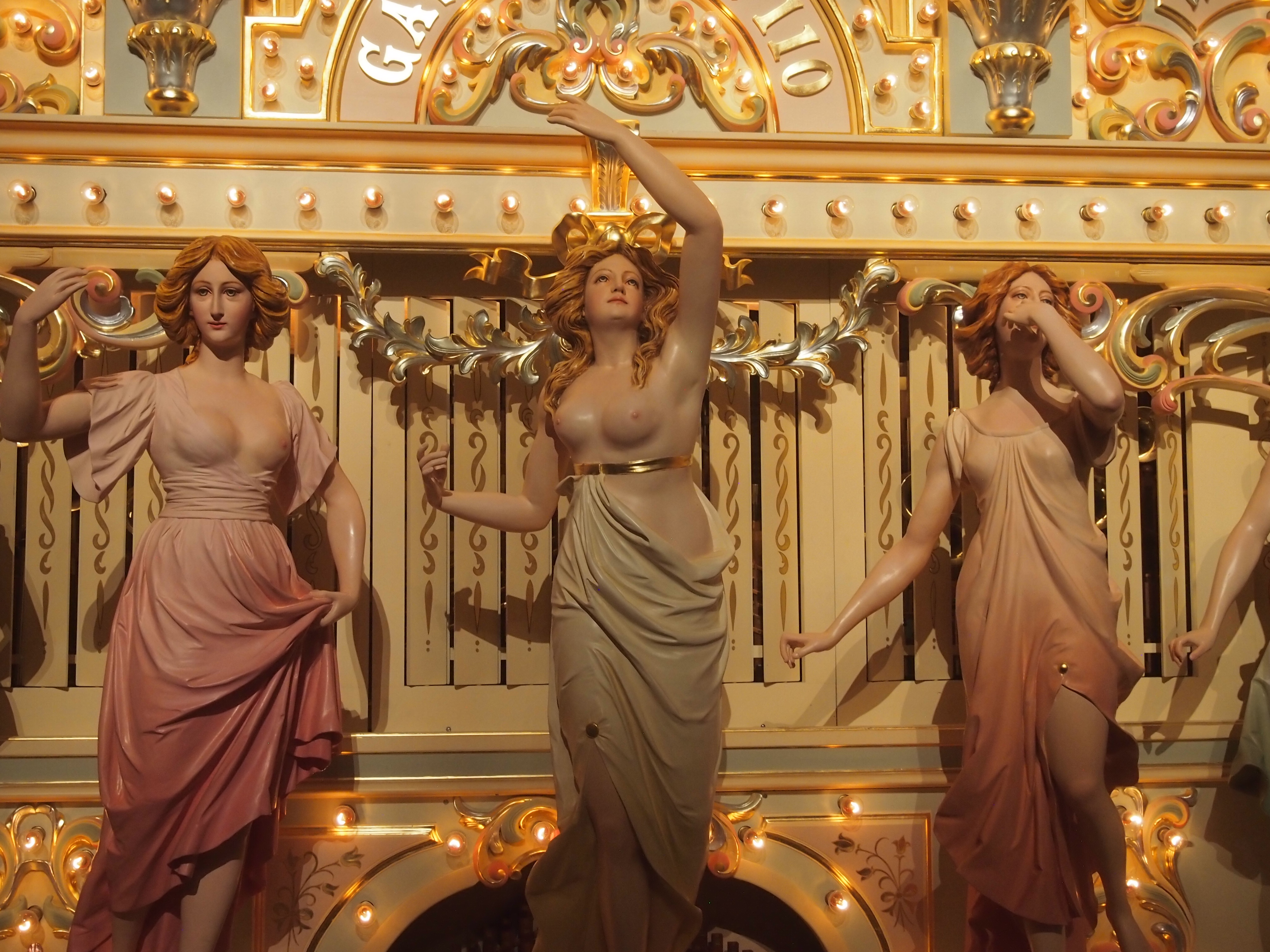
One of the figures next to the entrance.
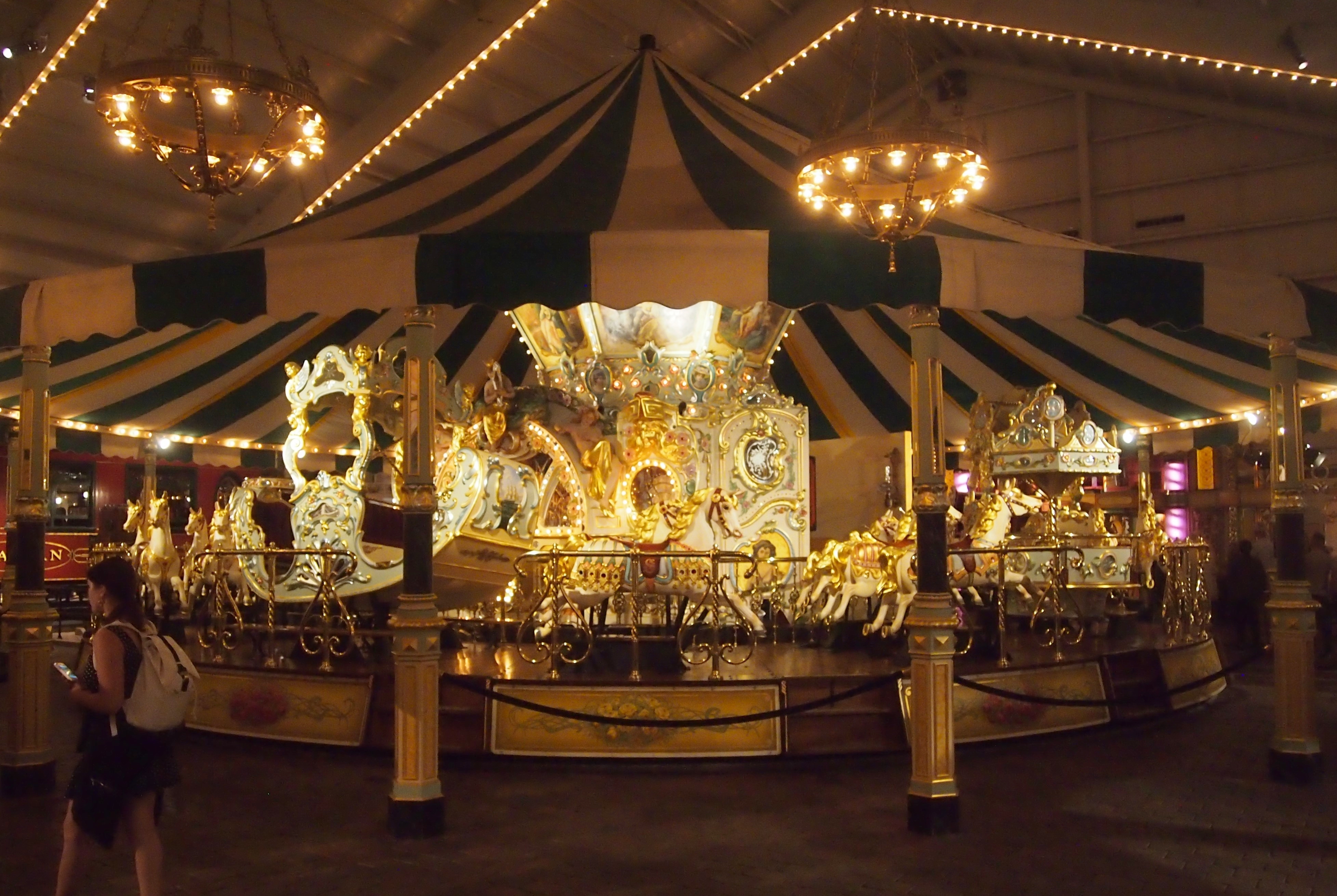
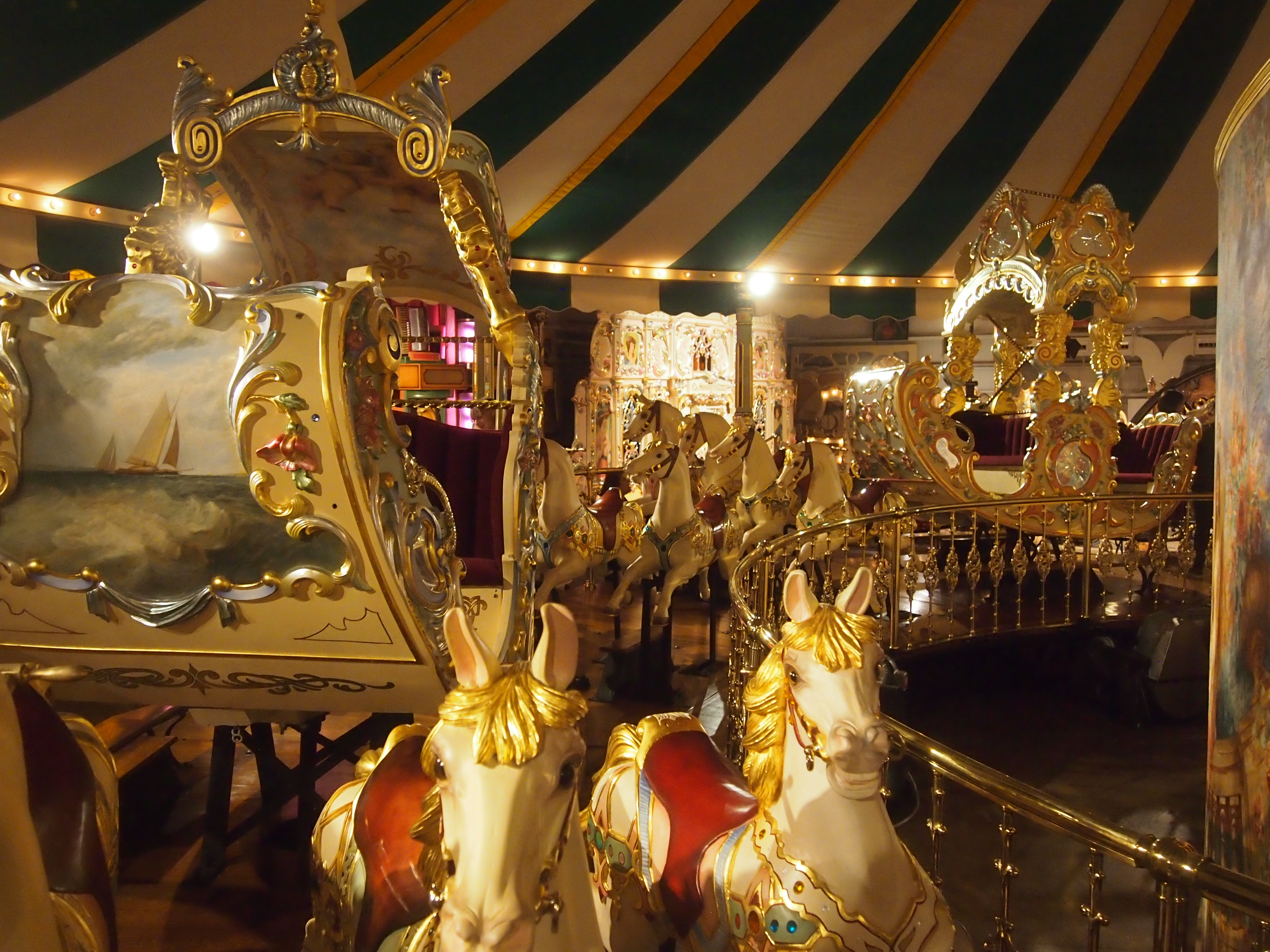
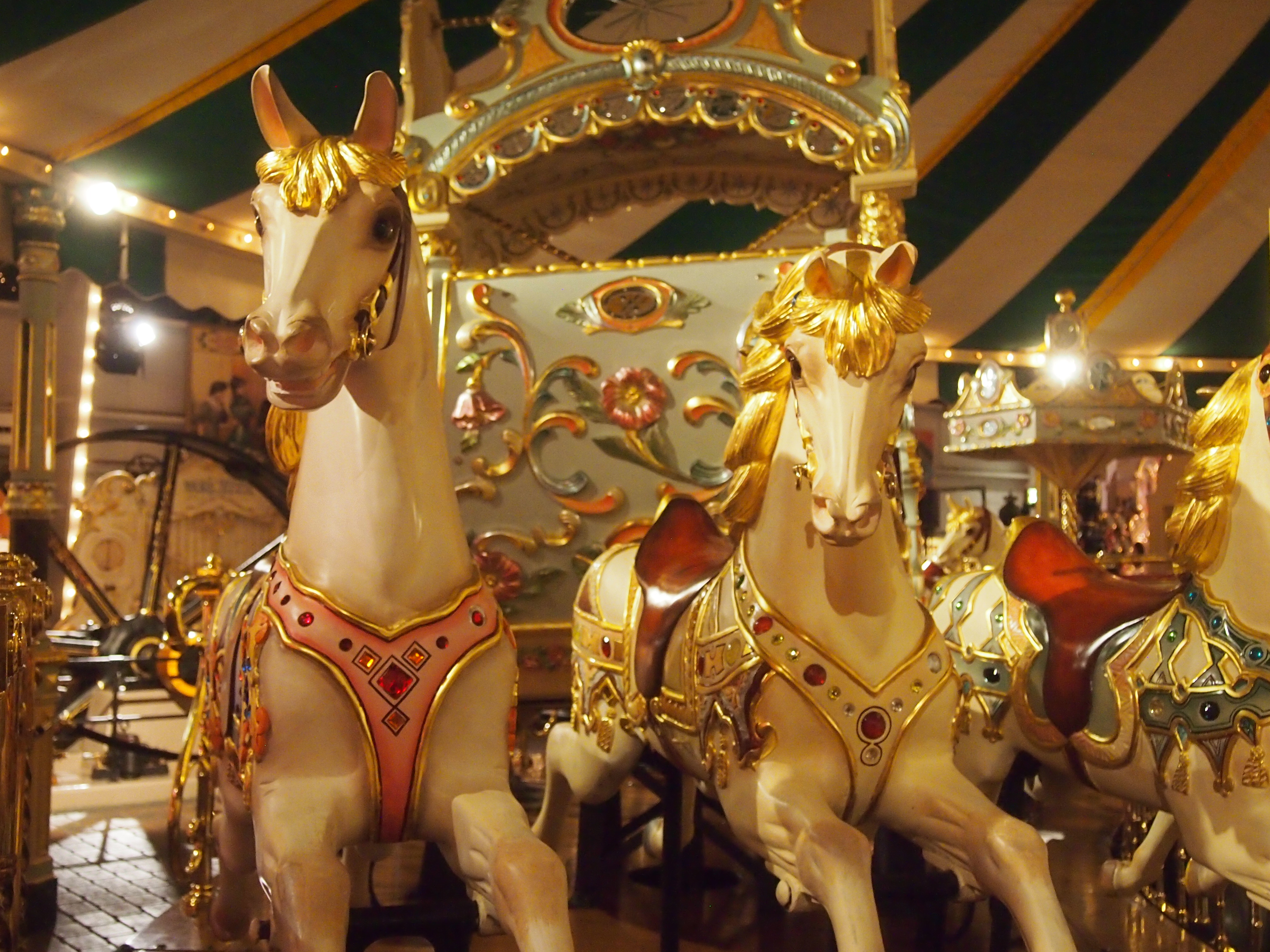
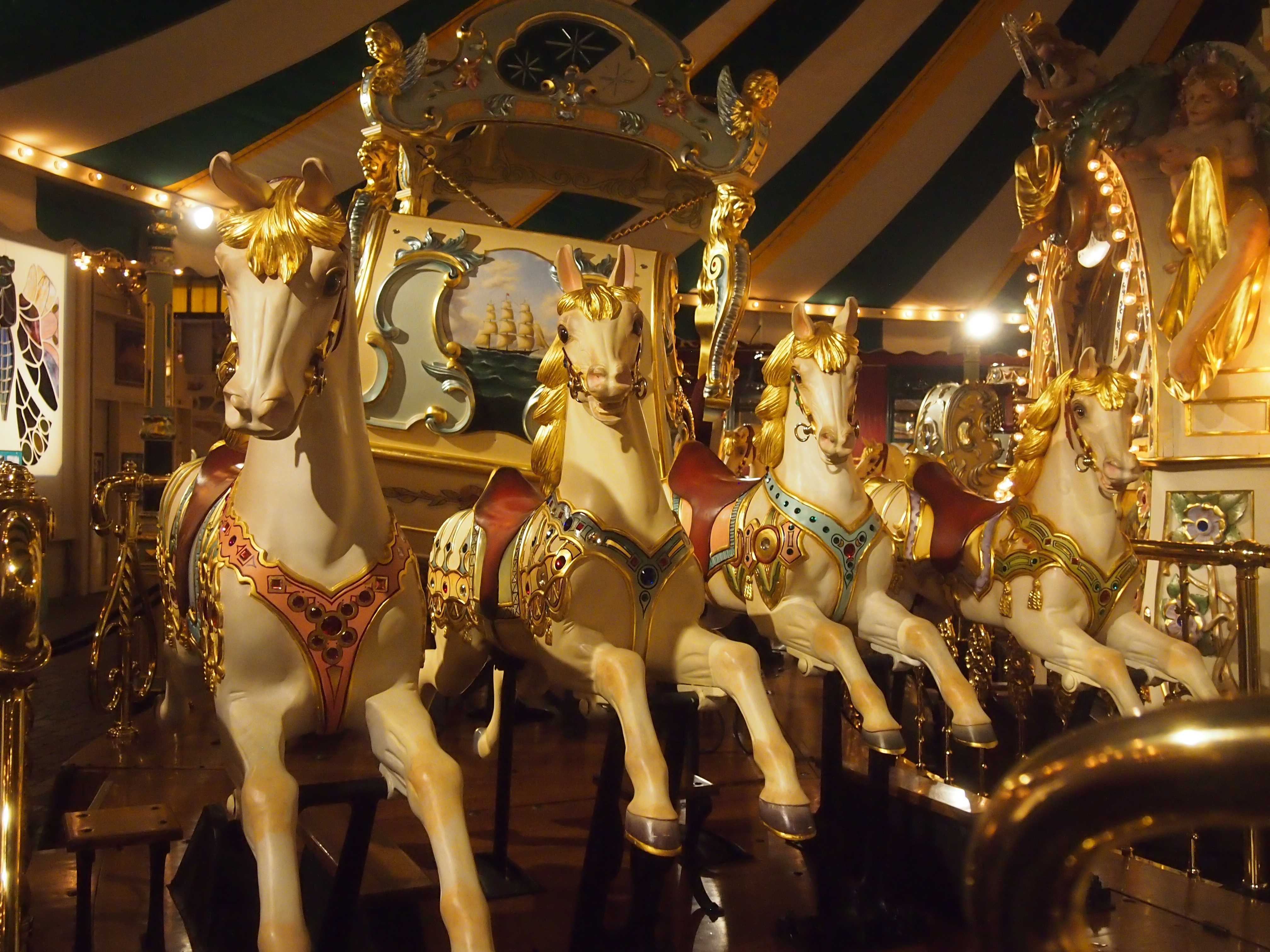
This is the carousel, behind the main entrance wall. It’s one of the larger ones I’ve seen, and unlike the one at the House on the Rock, a true carousel that you can ride. Which we did. It was clearly built during less safety-paranoid times. But no one was injured. The ride was a gas.
“The carousel itself is 46 feet in diameter, with 36 hand-carved Hubner horses, four ornate rocking gondolas and a spinning lovers’ tub. The center is adorned with seven large Coppier paintings. The platform runs on tracks; three steam engines originally drove the platform, the center hub of paintings and the band organ. The steam engines are restored, but power is now supplied by electric motors.”

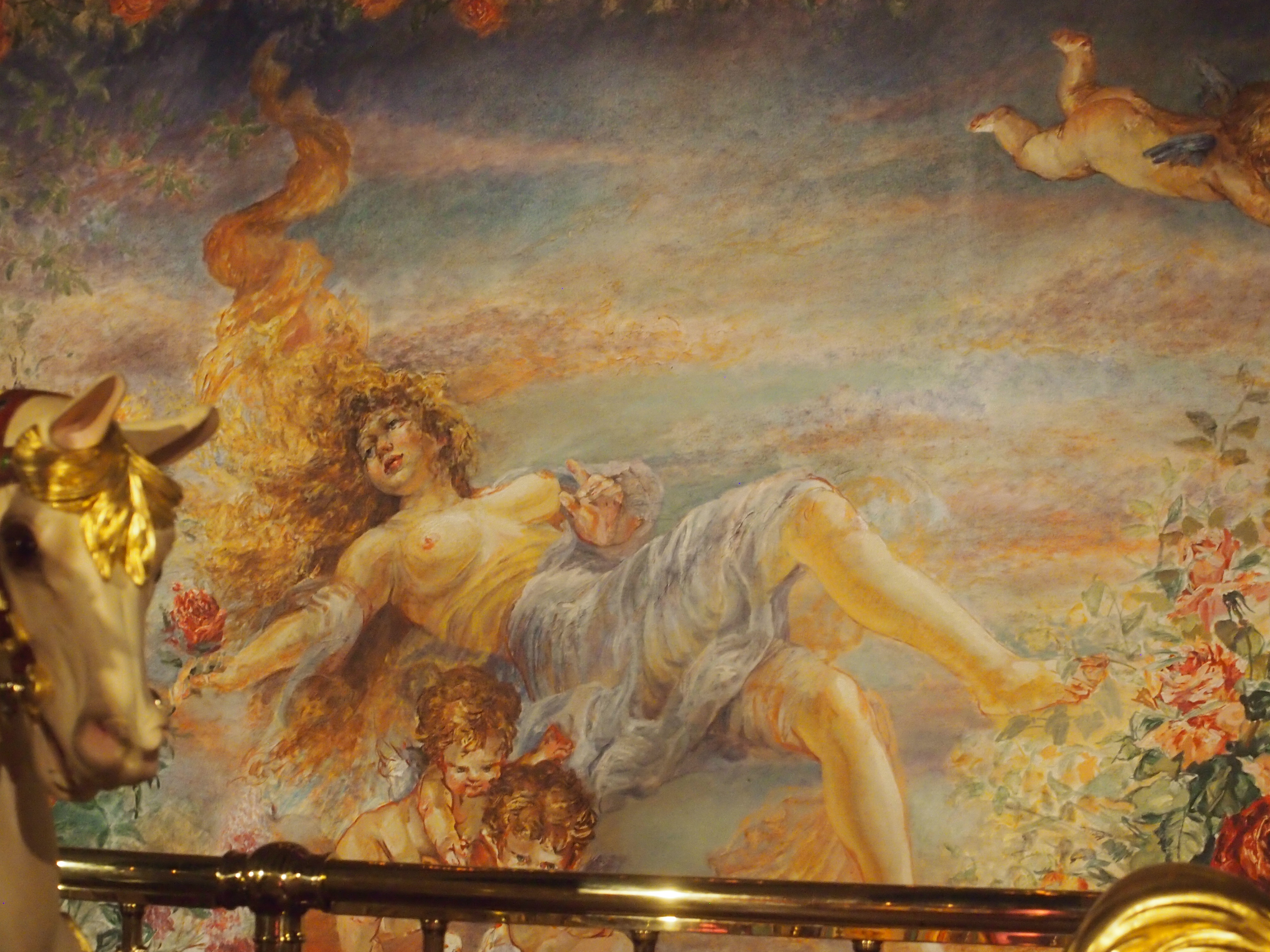
A detail of one of the center paintings. As was pointed out by our guide, something likely to appear in 1890s Europe, but not the United States.

Details of the carousel.

A nearby figure.
“Several different owners toured France with the Eden Palais from 1890 through 1959. An amusement park in Golden, Colorado, imported it from the Caron family in 1959 and then went bankrupt, leaving it outside in the snow for one winter. Charles and Sue Bovey then purchased it and stored it in Great Falls, Montana, until the [current owner] acquired it in 1987.”

Restoration took years and boatloads of money, the guide said, though not quite in those words.

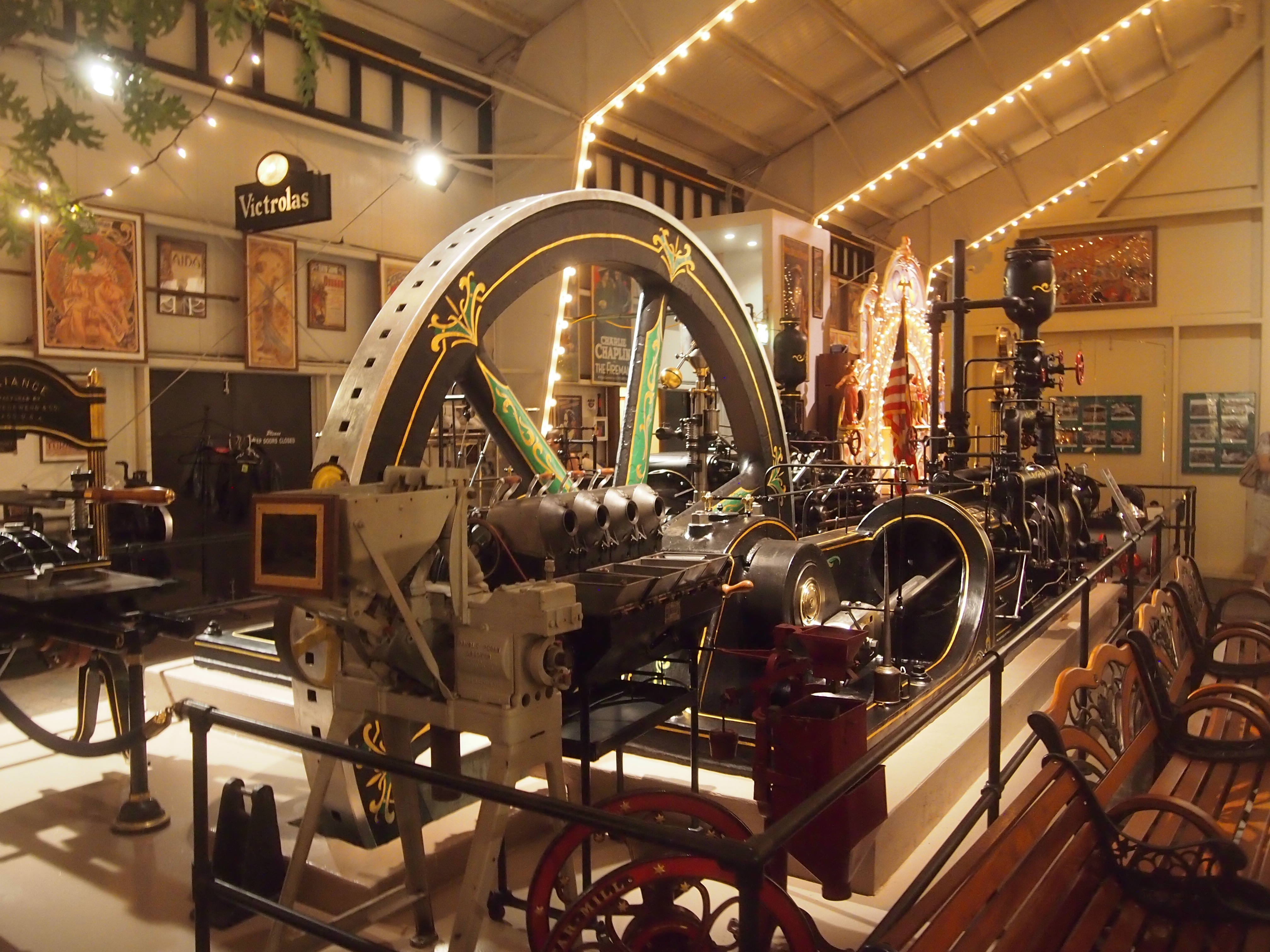
“Large steam engines surround the carousel, including an 1826 table engine, an 1836 walking beam engine, and an 1880 double compound 80 horsepower marine engine. The 1881 Grant railroad locomotive and tender were used by Henry Ford for forty years in his Dearborn, Michigan, auto plant and later displayed in the Ford Museum at Greenfield Village.”
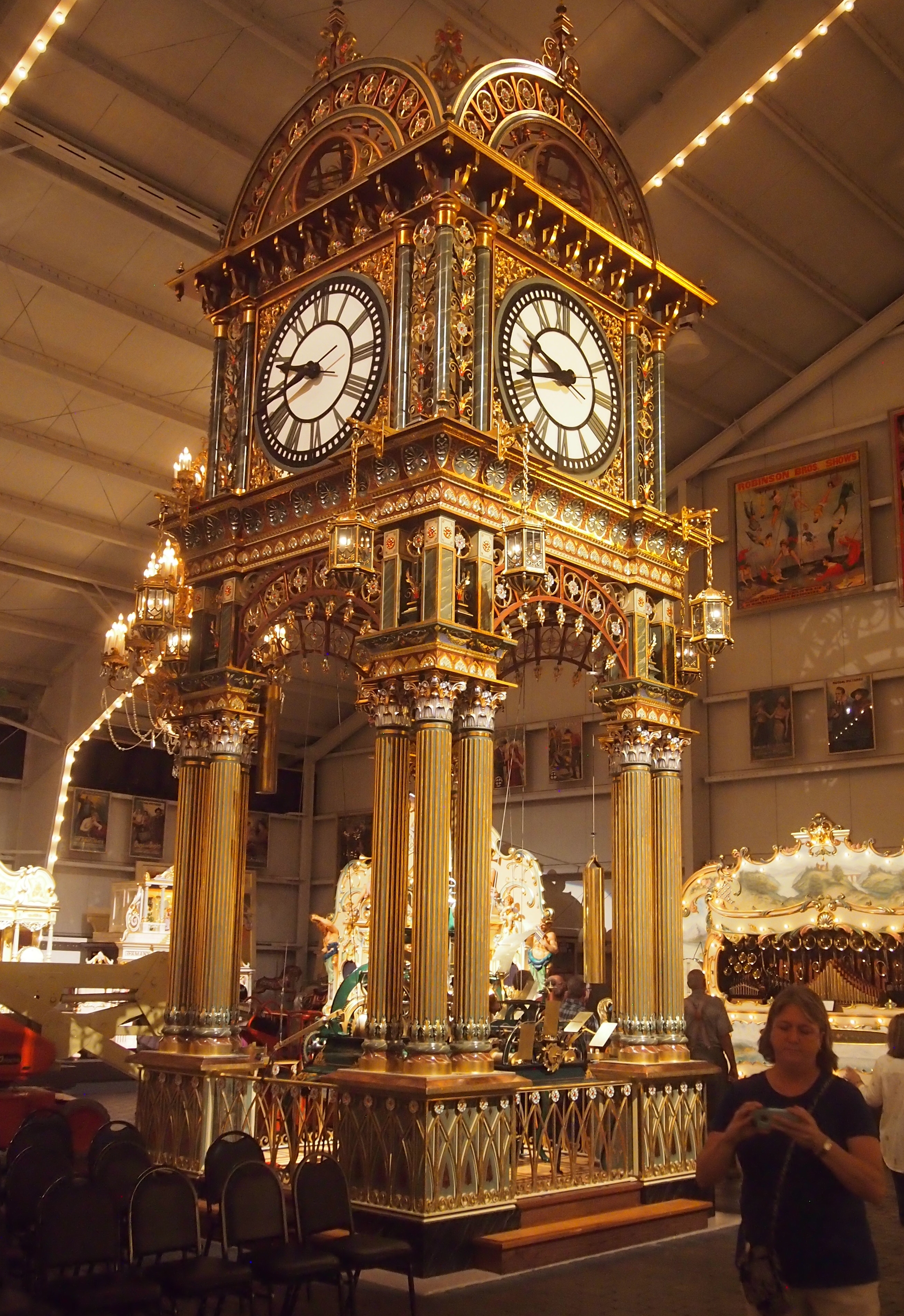
But that’s not all. Near the carousel wall was a tower.
“The spectacular Joseph Mayer cast iron street clock stands over 20 feet tall, weighs over 8,000 pounds and originally was owned by the American Jewelry Co. of Bakersfield, California. It includes a Dennison gravity escapement, a self-winder, and a mercury-compensated pendulum, features rarely found in street clocks.”

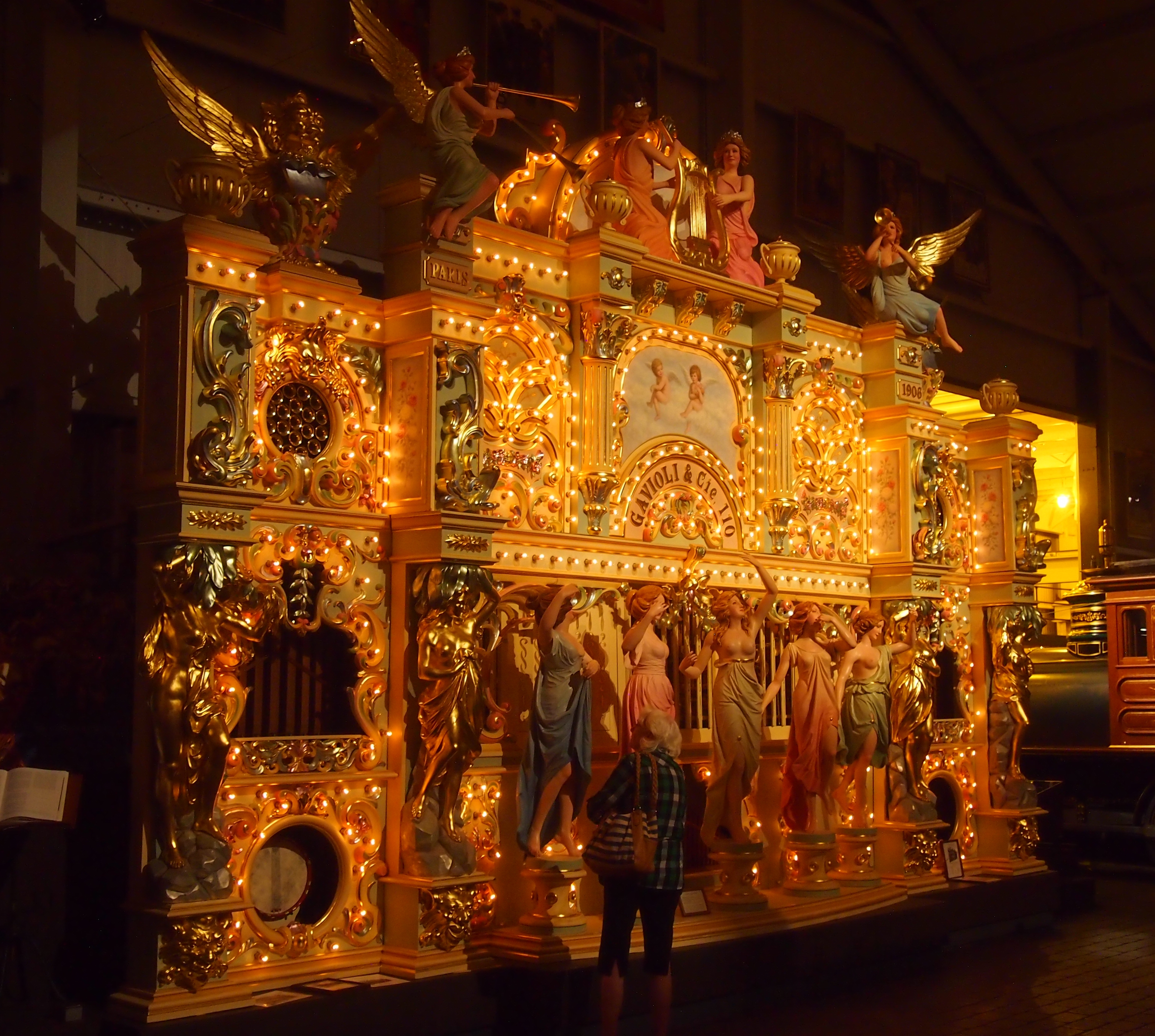
Also: “American and European fairground and dance hall organs displayed in the carousel building include examples by Bruder, DeCap, Gavioli, Hooghuys, Limonaire, North Tonawanda and Ruth. Wurlitzers include a 157, 165 and 180, among others.”

This Gavioli was not likely to originally be found in North America either.
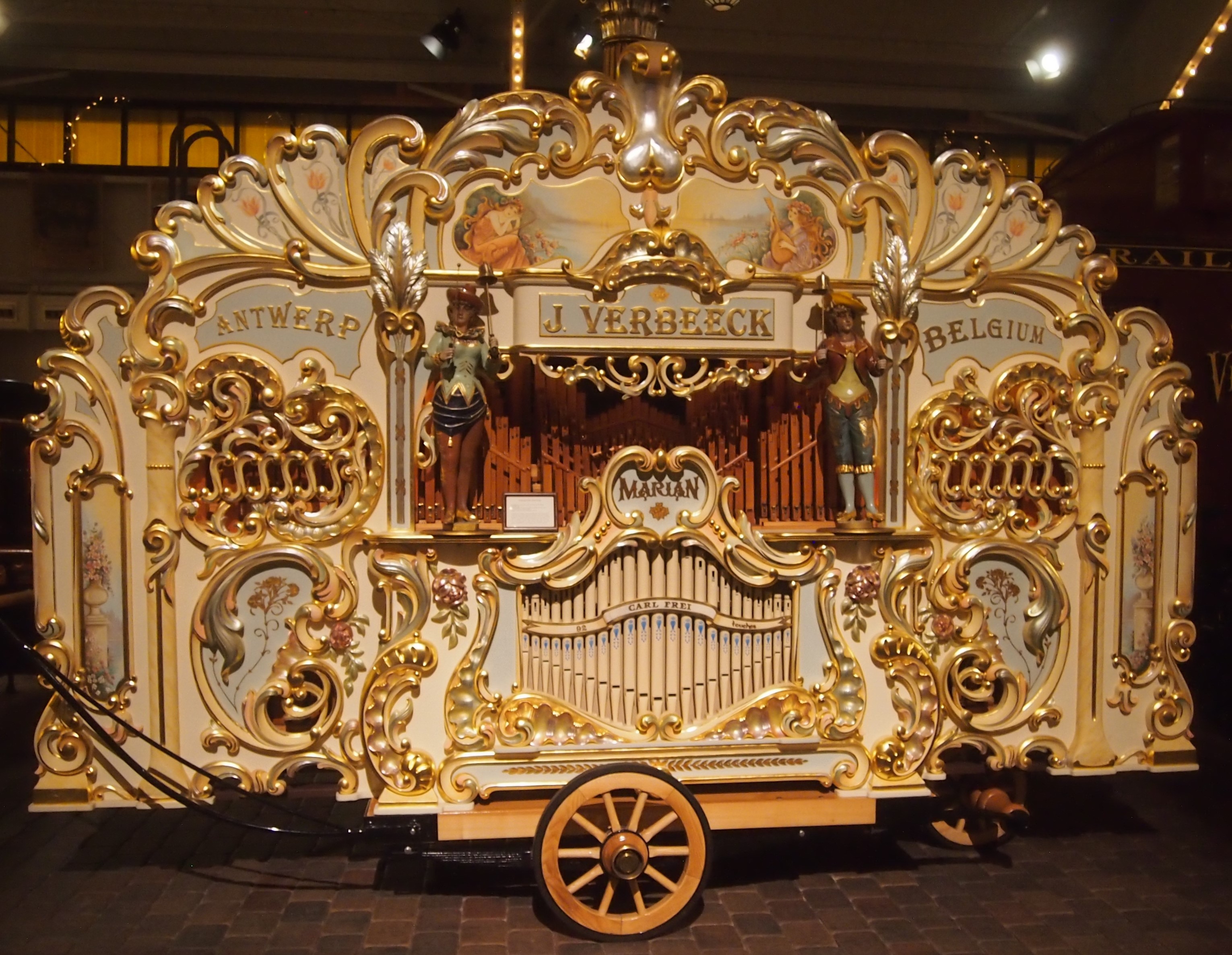
Here’s a Belgian street organ.
Not an old one. Apparently the Belgians have decided that older such machines are part of their national patrimony, so they cannot leave the country legally. No worries, though, since if you’ve got the dosh, you can have a new one built.

An Exaltation of Victrolas

Supposedly the collective for larks is an exaltation, though I don’t know that anyone familiar with larks actually uses it. Seems like one of those made up, like so many others, for the Book of Saint Albans in 1486, and surviving on lists to this day.
That comes to mind because I was wondering what the collective for Victrolas might be. Exaltation fits. An Exaltation of Victrolas.

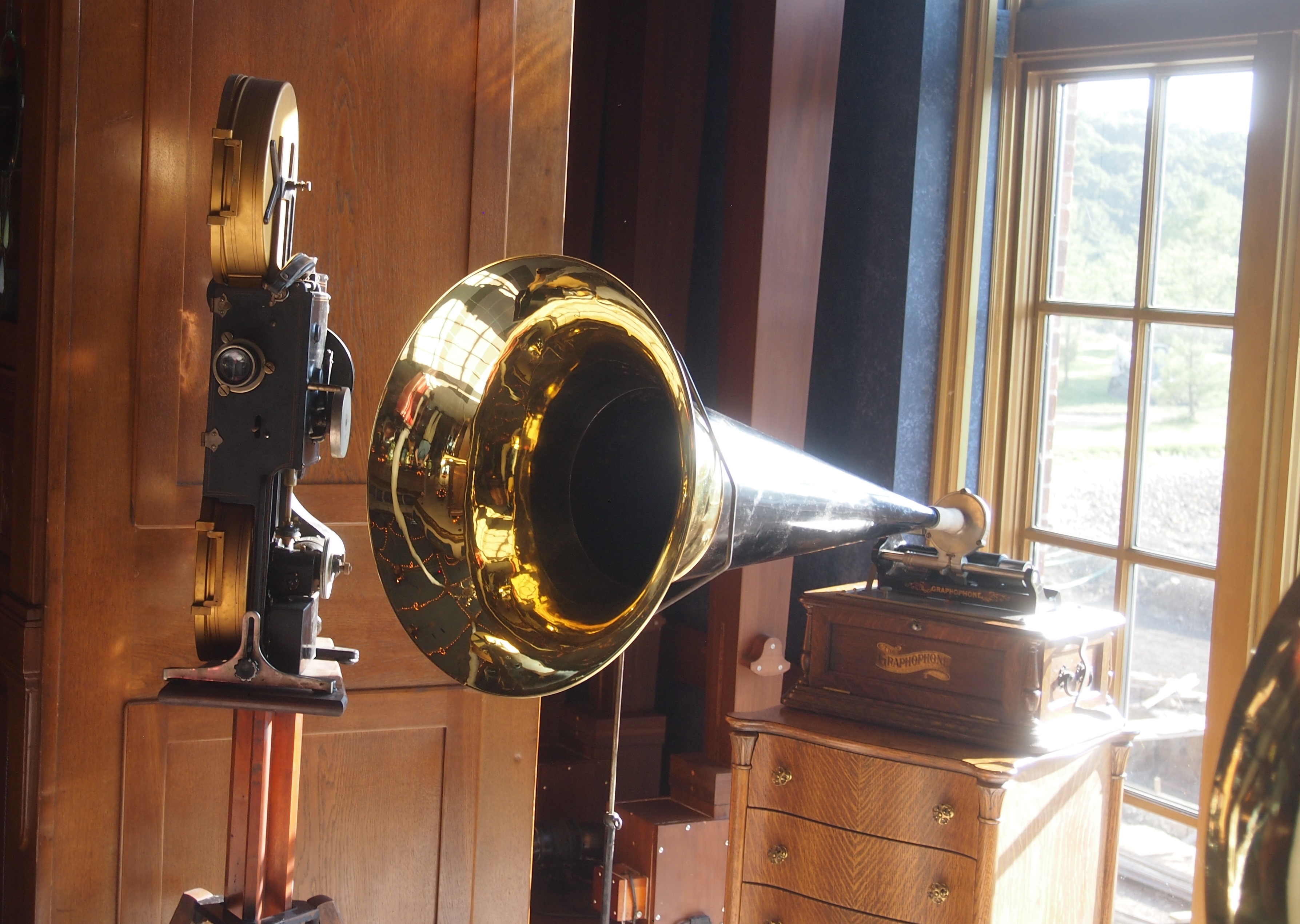
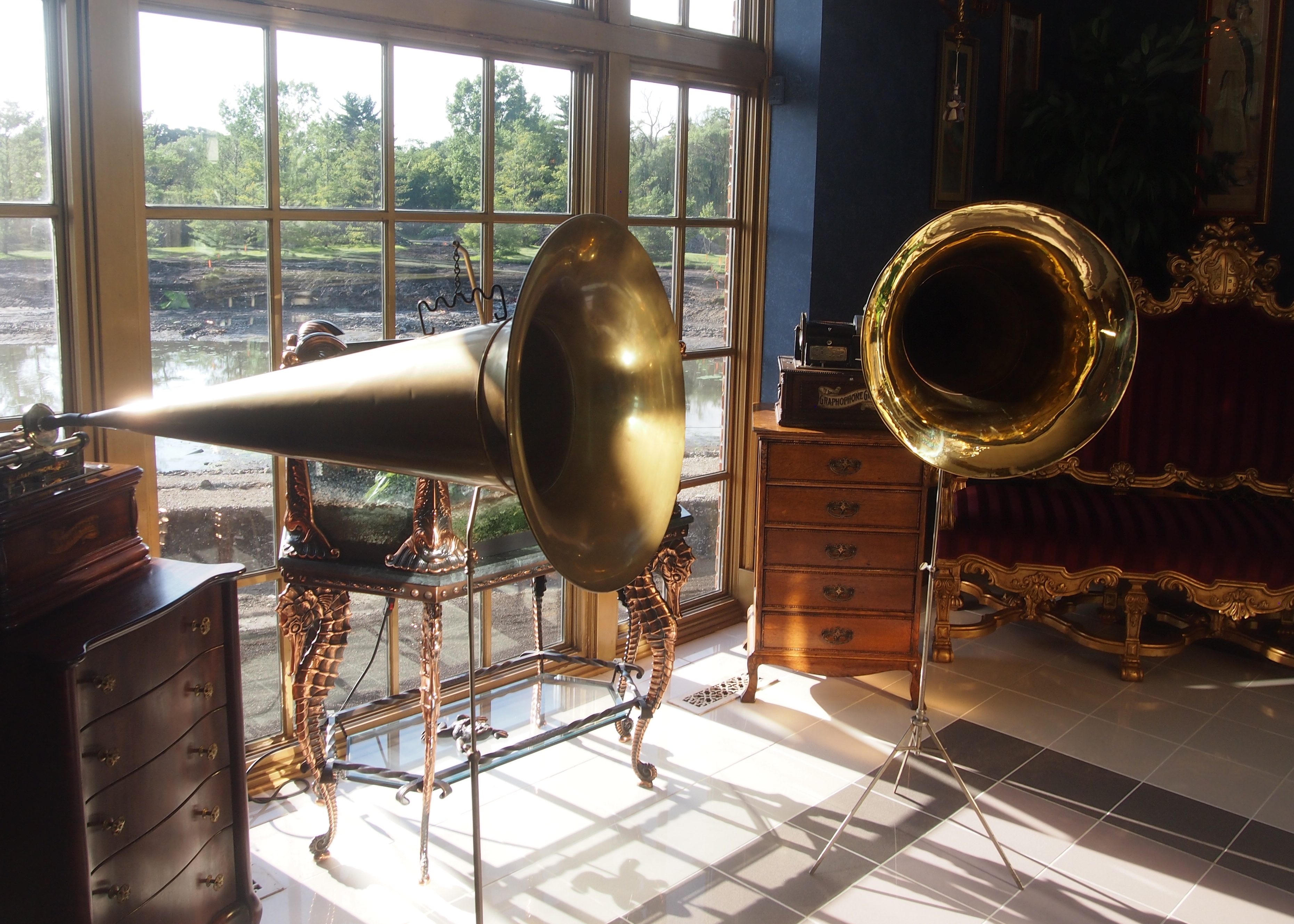
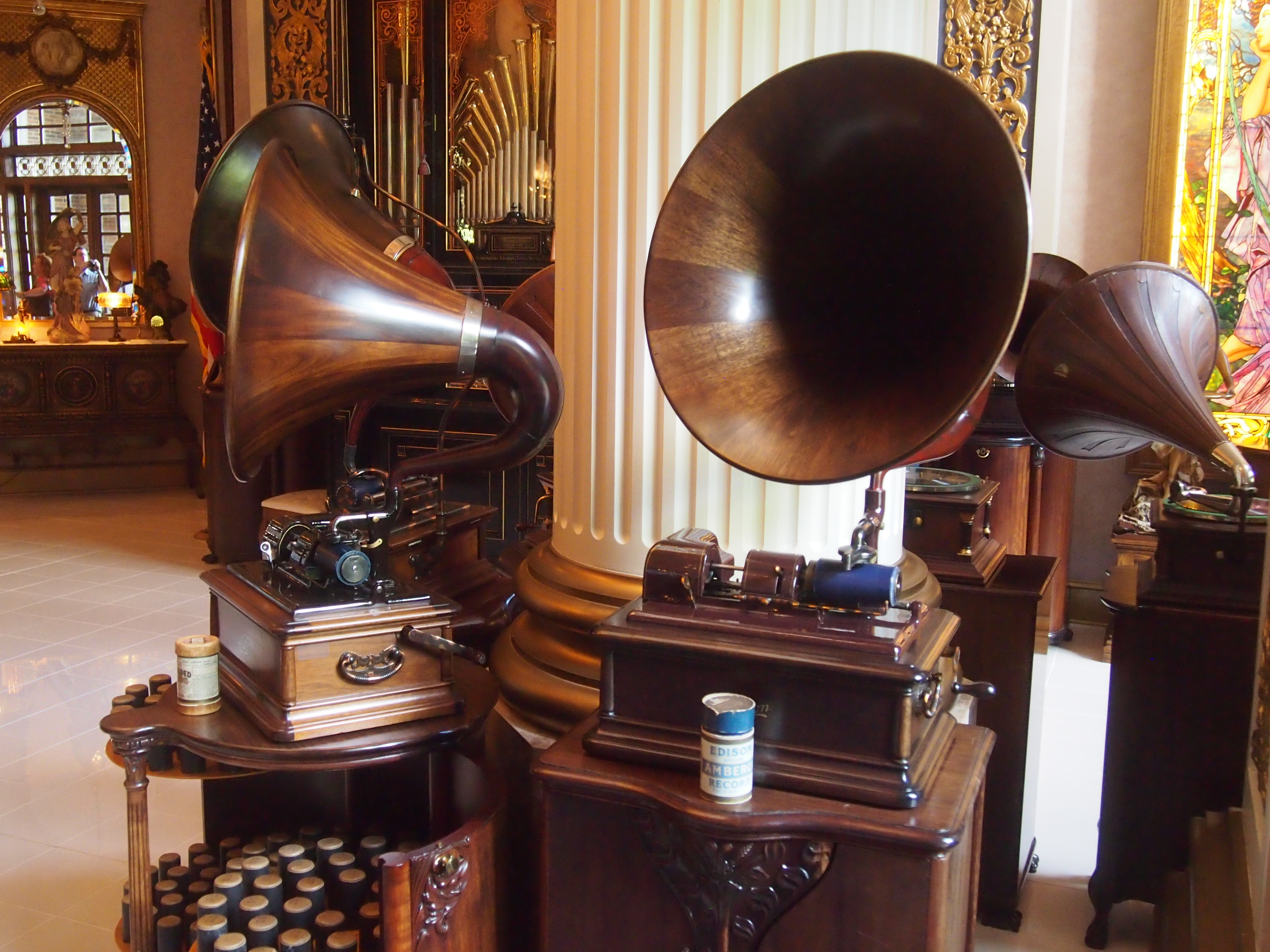
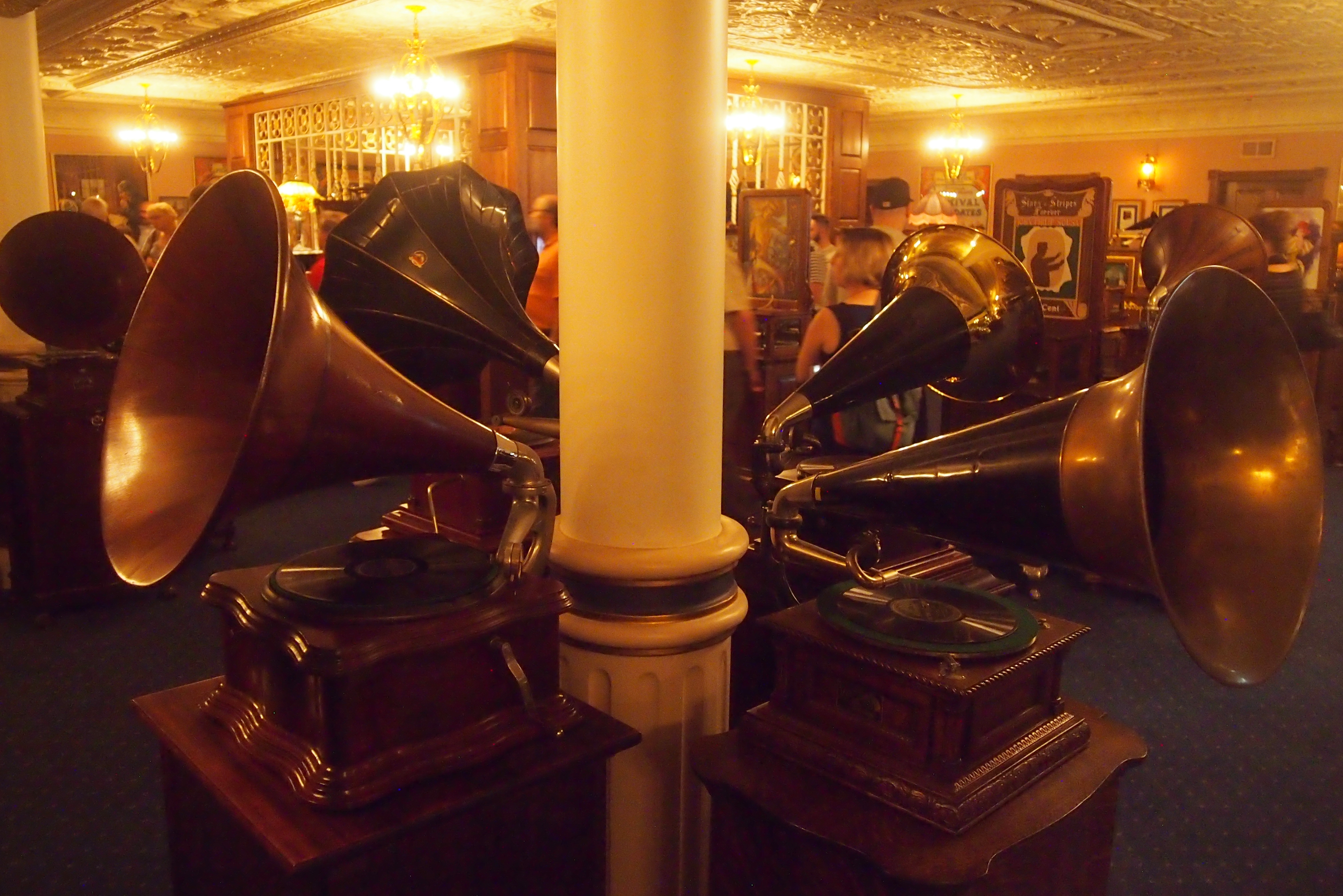
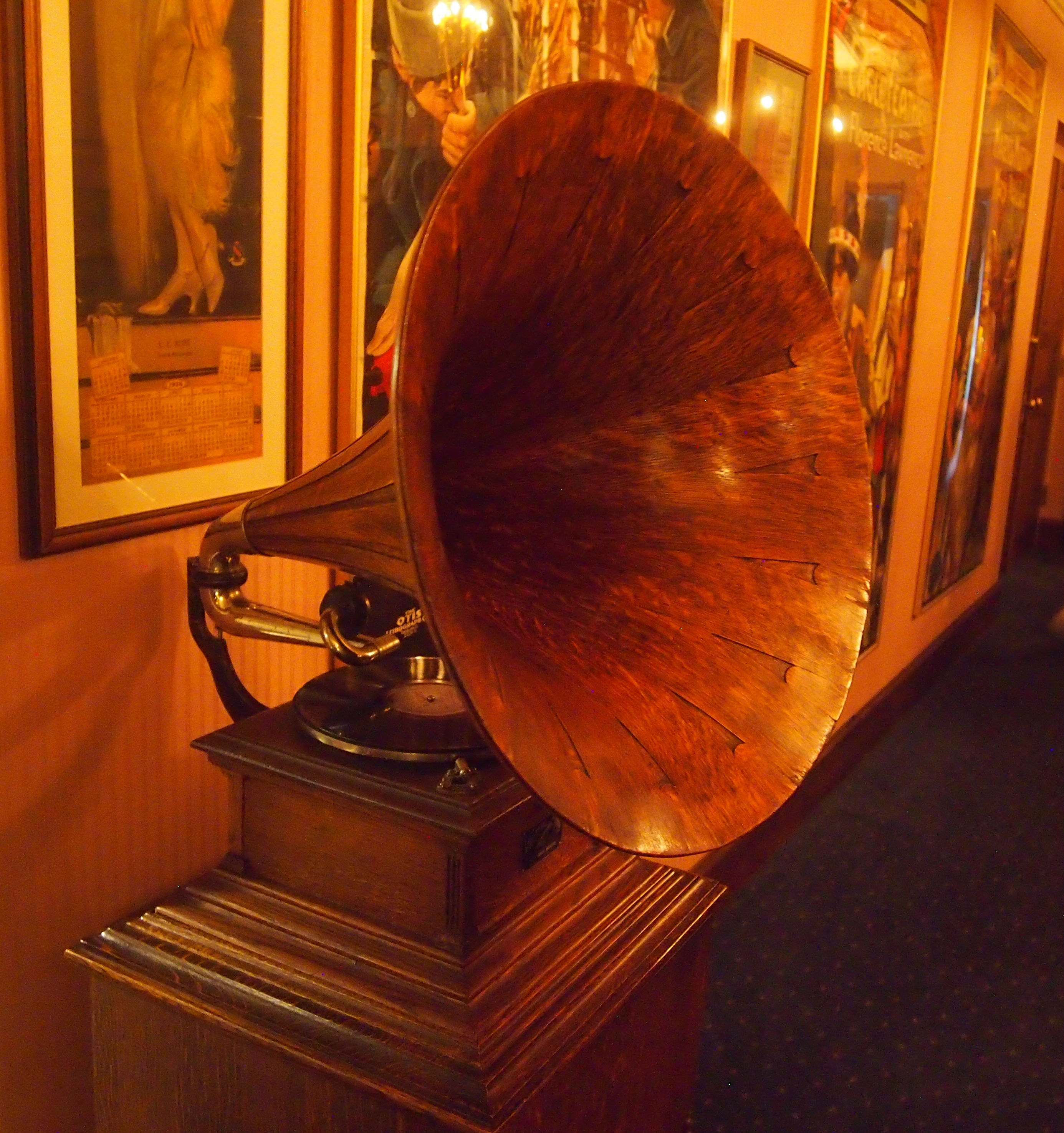
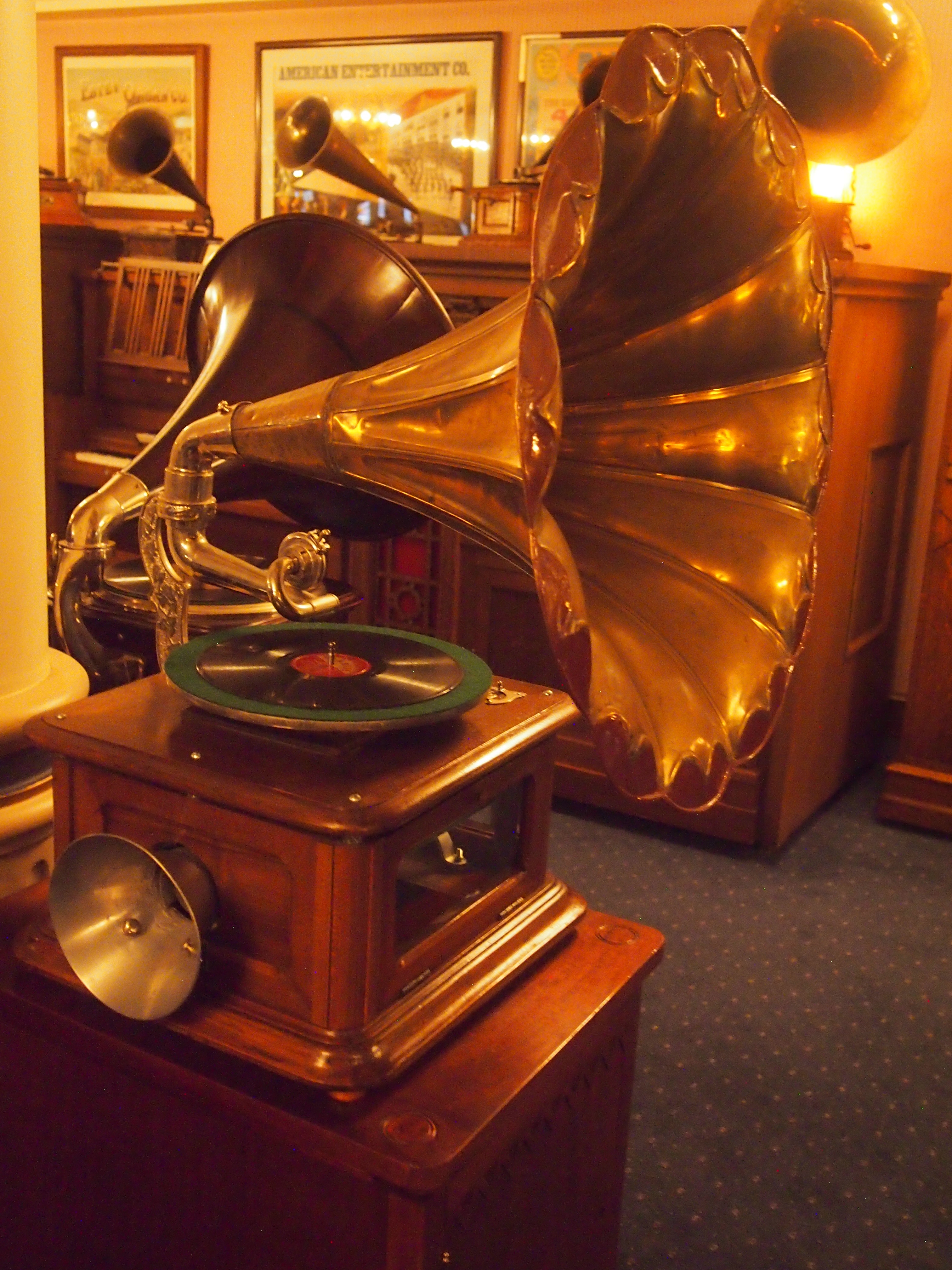
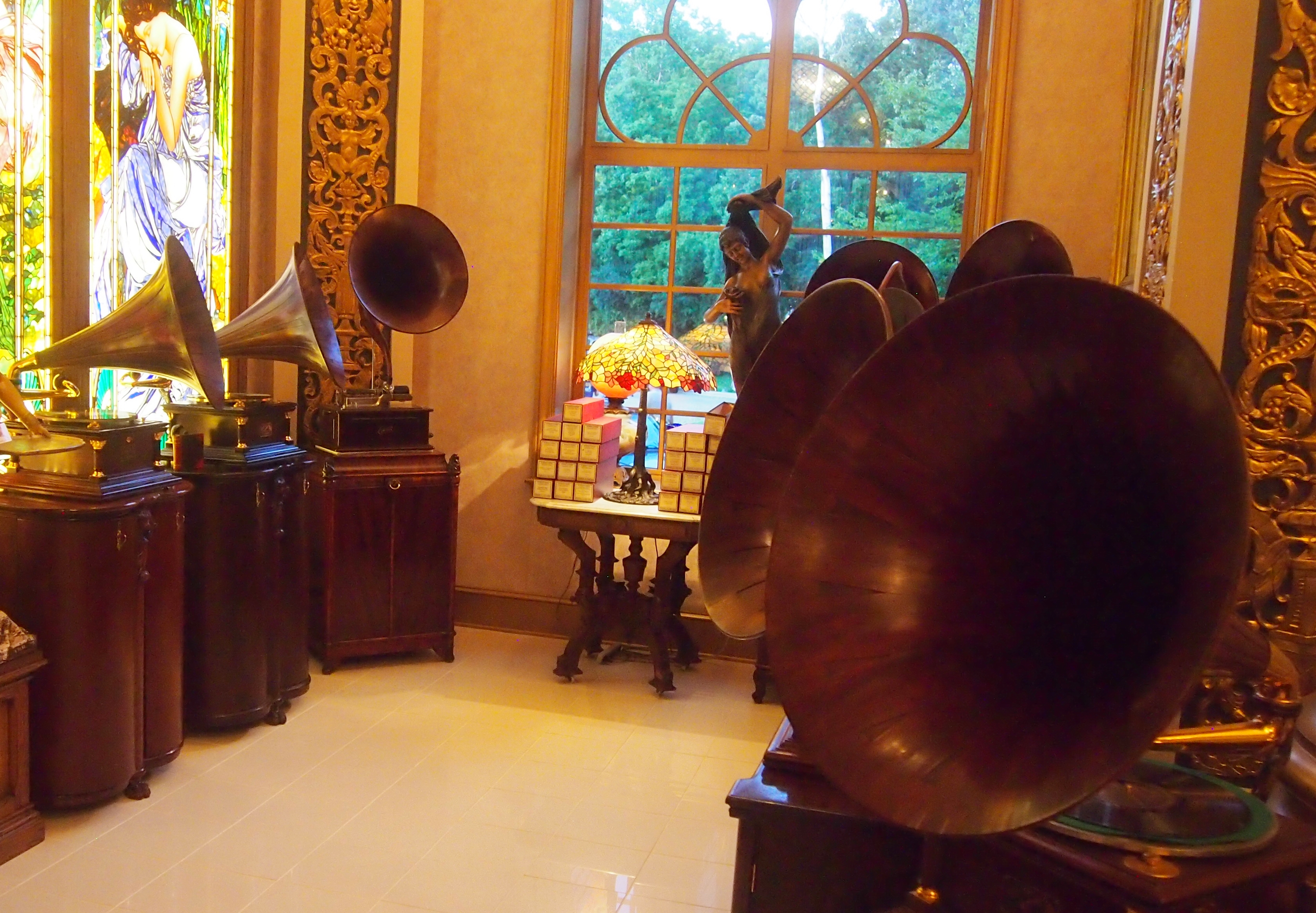
The suburban mansion we toured in July not only had massive orchestrions that played orchestral music without any human musicians, and many arcade machines of yore, but also Victrolas and other phonographic systems with pronounced horns. A lot of them. An exaltation of them.

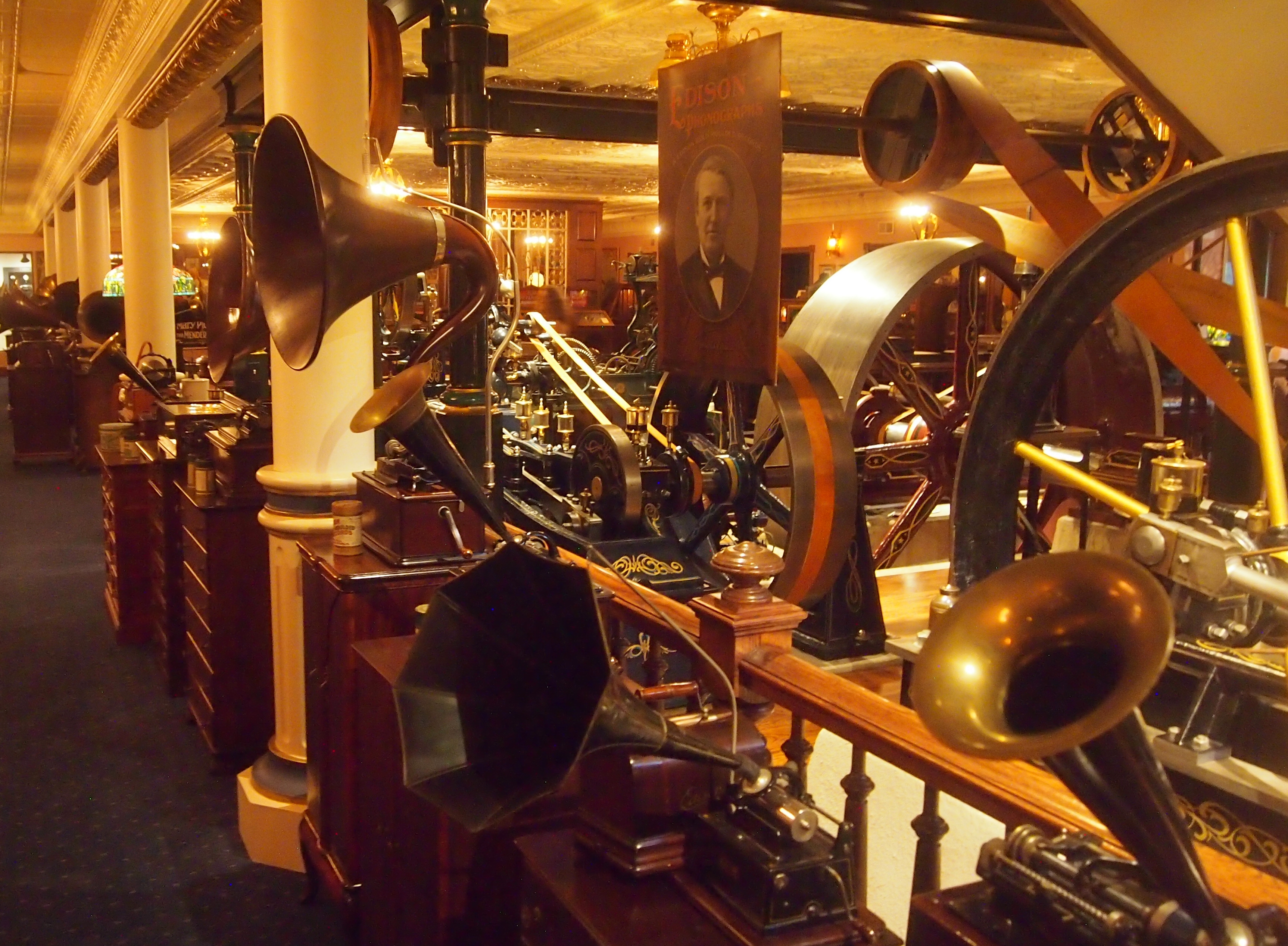
I went all snap-happy and spent time taking pictures of them. The horns, not so much the mechanisms. I’d never seen such an array. The only thing close was the selection of 78 players for sale at Harp Gallery in Wisconsin.

Note the collection of Edison Records cylinders that the machines above use.

In this room there was one machine — not pictured — that was powered by the heat of a candle. Light the candle, put it inside the cabinet, let it play. “I wanted to show you this machine,” the guide said as he held up the candle. “But we almost never play it. It can catch fire.”

All of the mansion’s Victrolas are in working order, I understand. All you need is a vinyl record (or cylinder) of some early kind, which are still around. In a century’s time, will there be a collection of iPods and other gizmos like this? They will probably be hopelessly unplayable.

Not Your Father’s Arcade Machines. Your Grandfather’s.

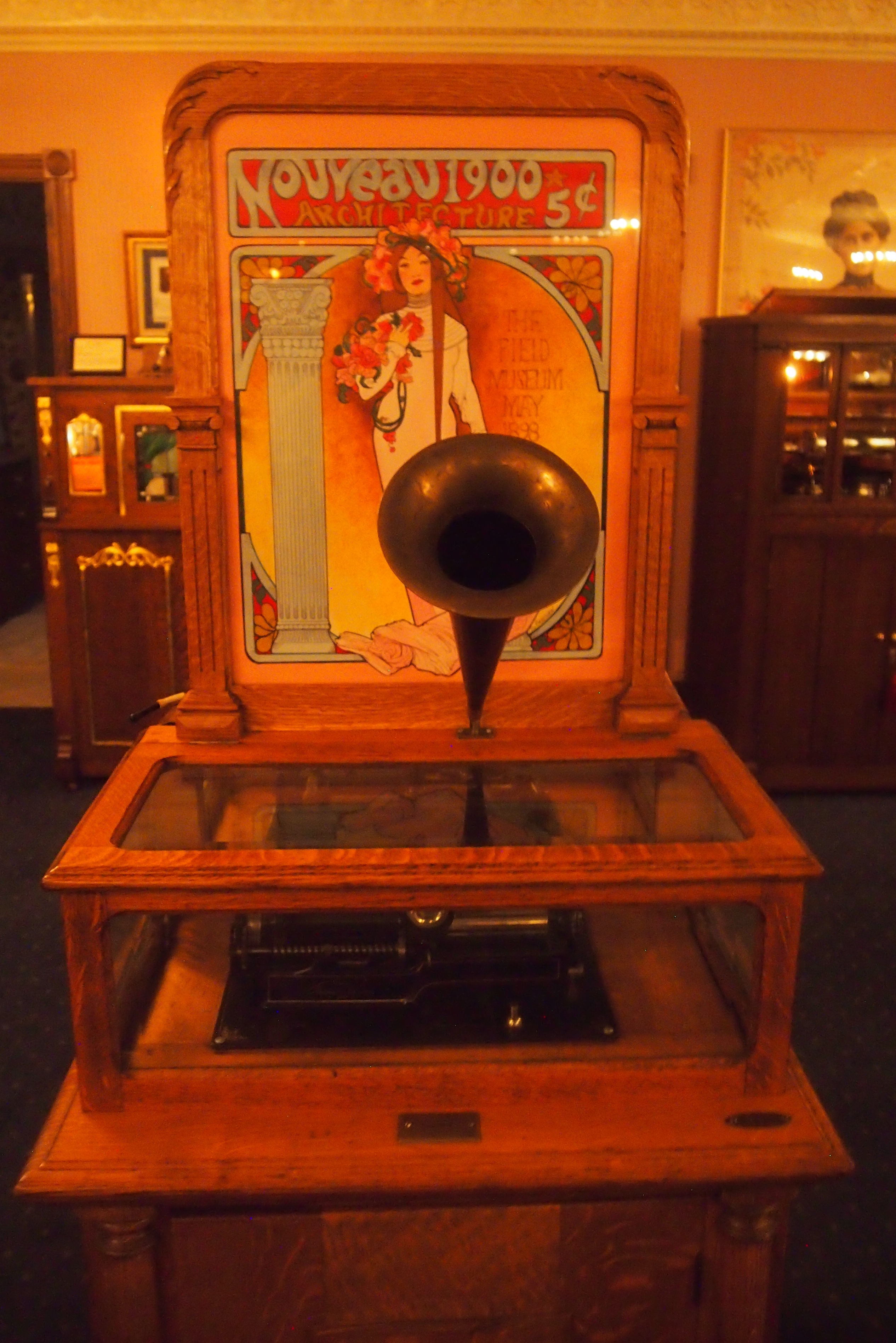
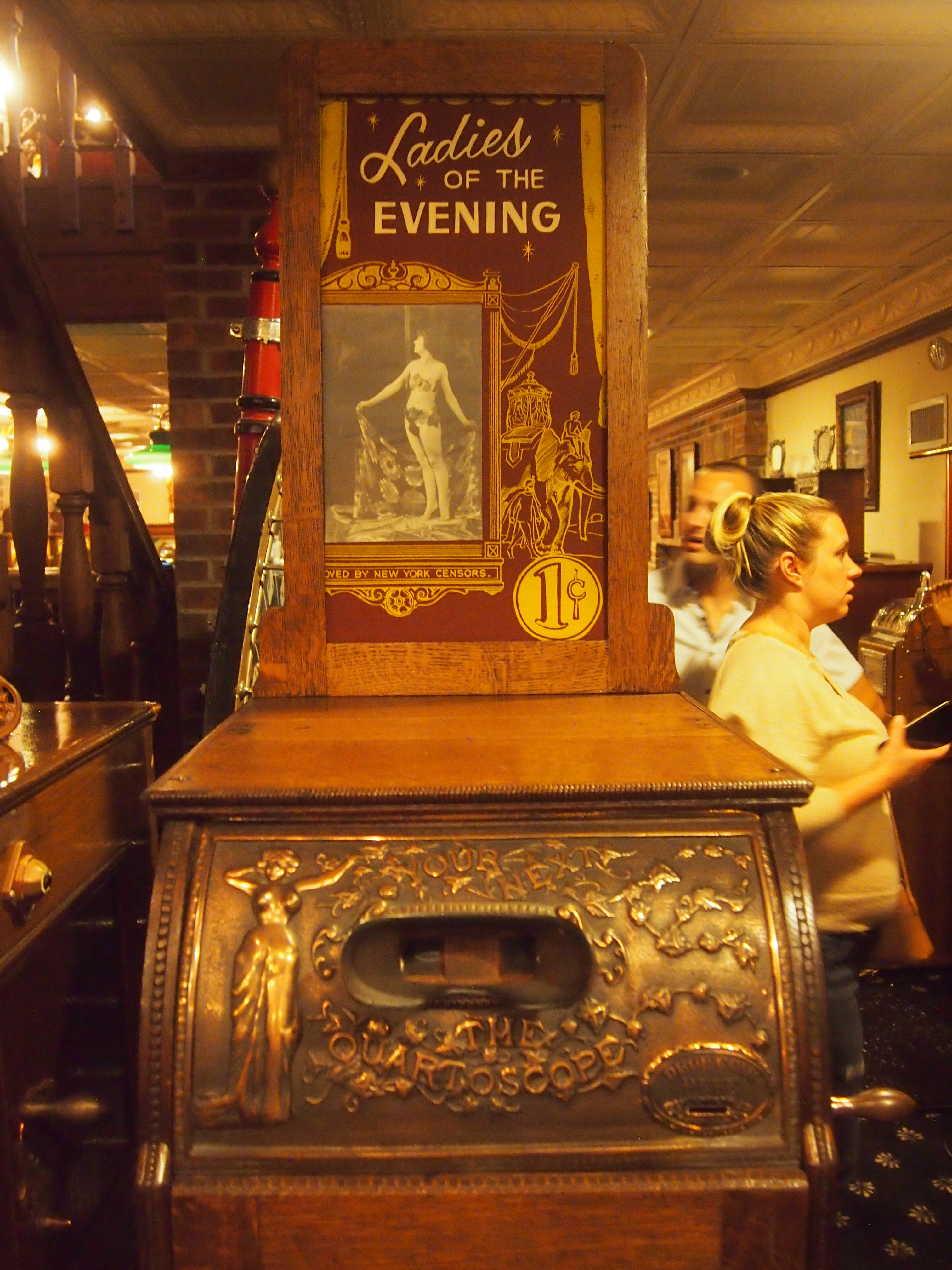
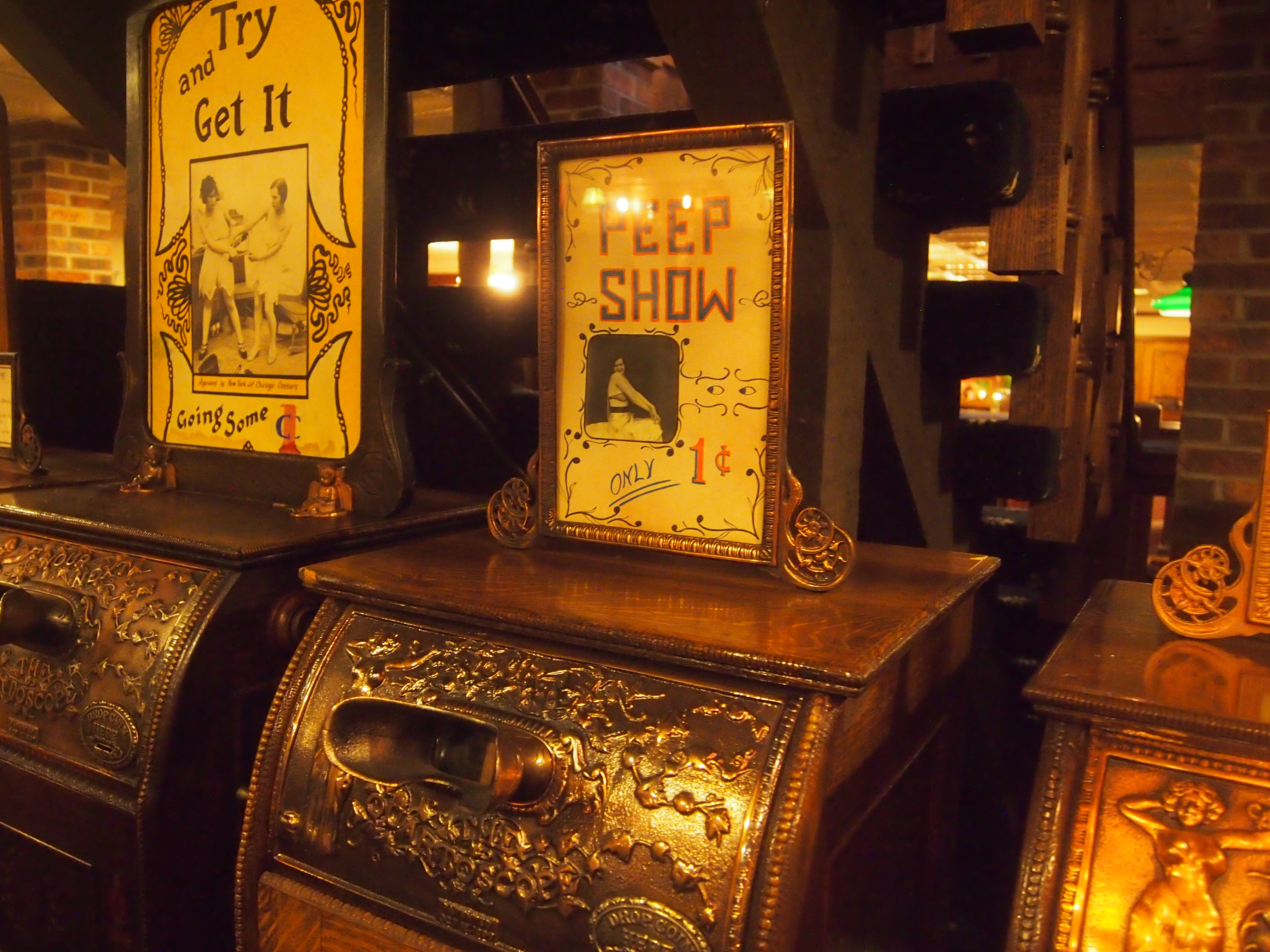
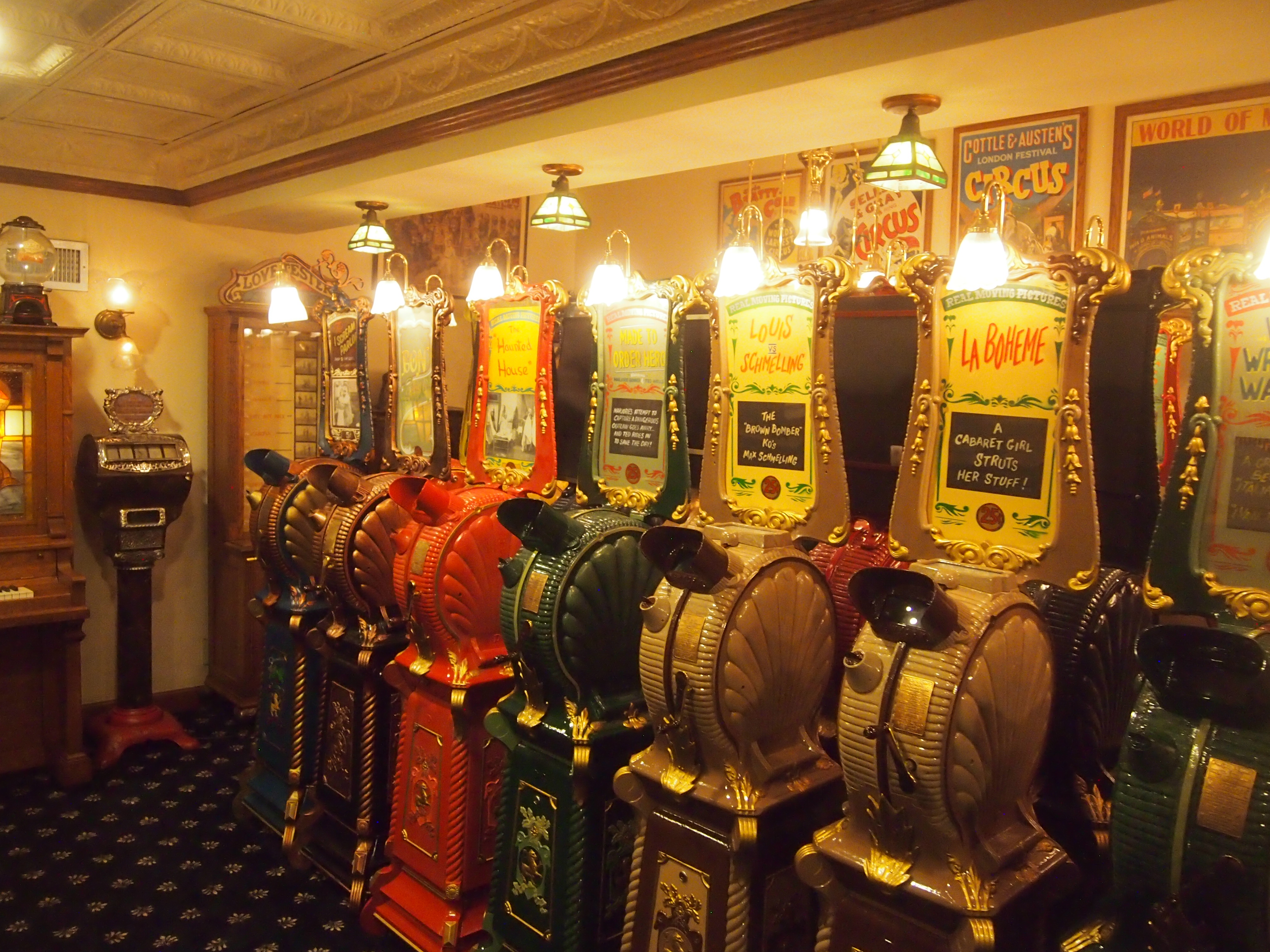
The lower level of the mansion we toured recently is chockablock with antique arcade machines, and I don’t mean Pac-Man. Some are actual penny arcade machines.
Quartoscope. Another brand name lost to time.

According to arcade-museum.com, “Mills Novelty Co. released 583 different machines in our database under this trade name [Quartoscope], starting in 1896. Other machines made by Mills… during the time period Quartoscope was produced [1896-1930] include Kalamazoo, Klondyke, Owl, Jumbo, Little Duke, Pau-Pau, and Little Pau-Pau.”
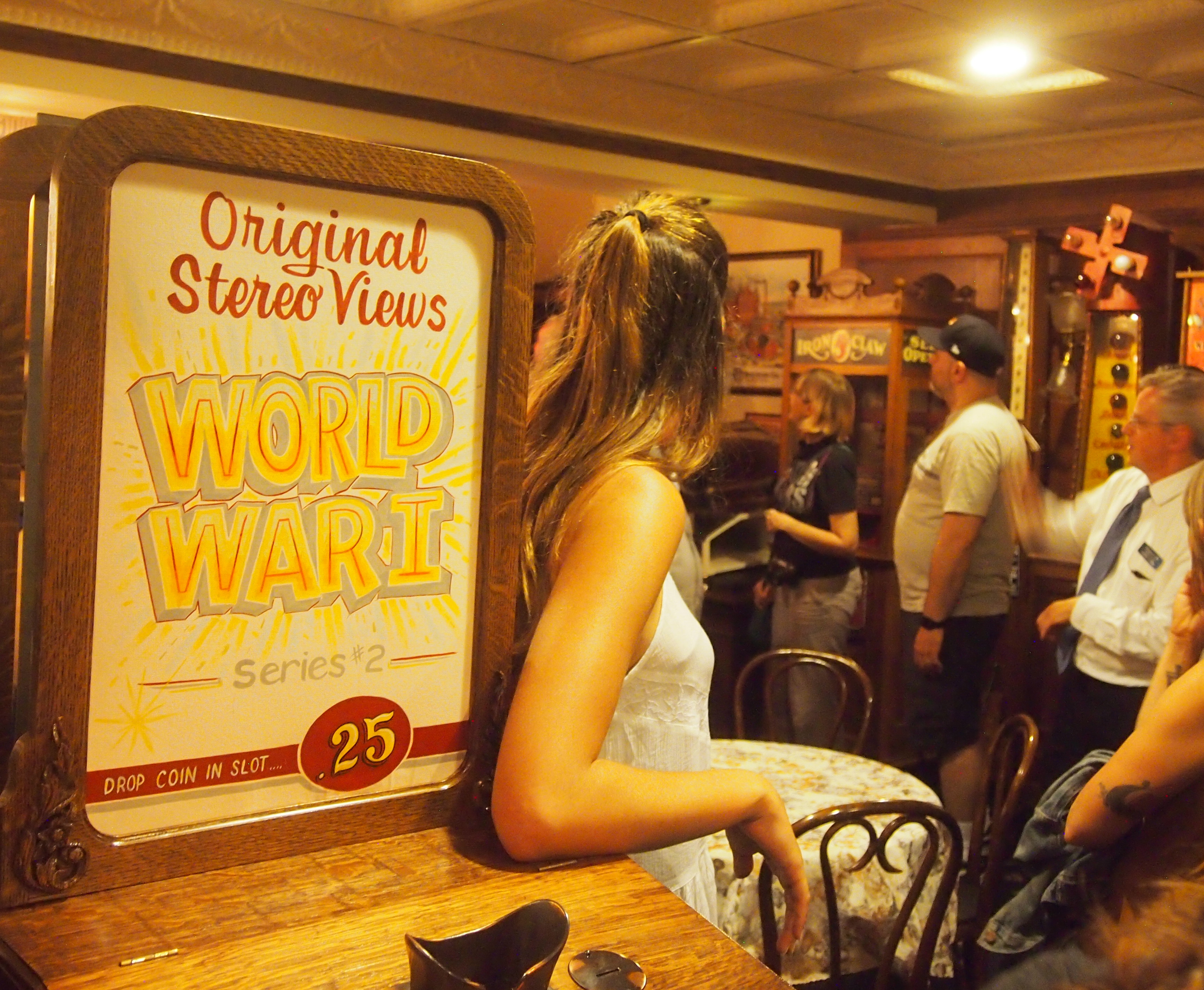
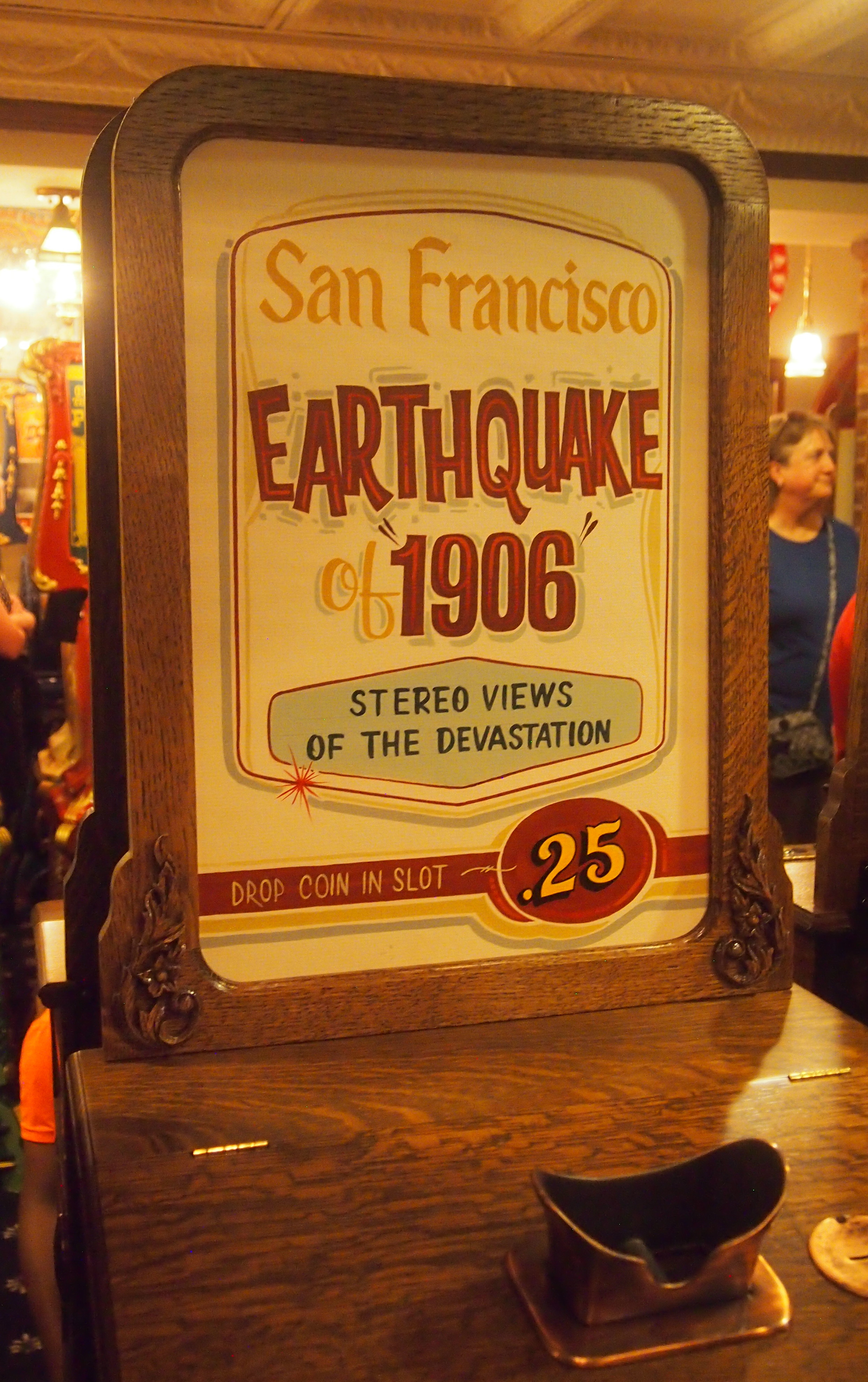
Other machines charged a quarter once upon a time, probably later than the penny machines. One in the row below promises you’ll see the Brown Bomber KO Max Schmelling (sic), which was in ’38. Both kinds of machines were trying to demonstrate that you can buy a thrill.
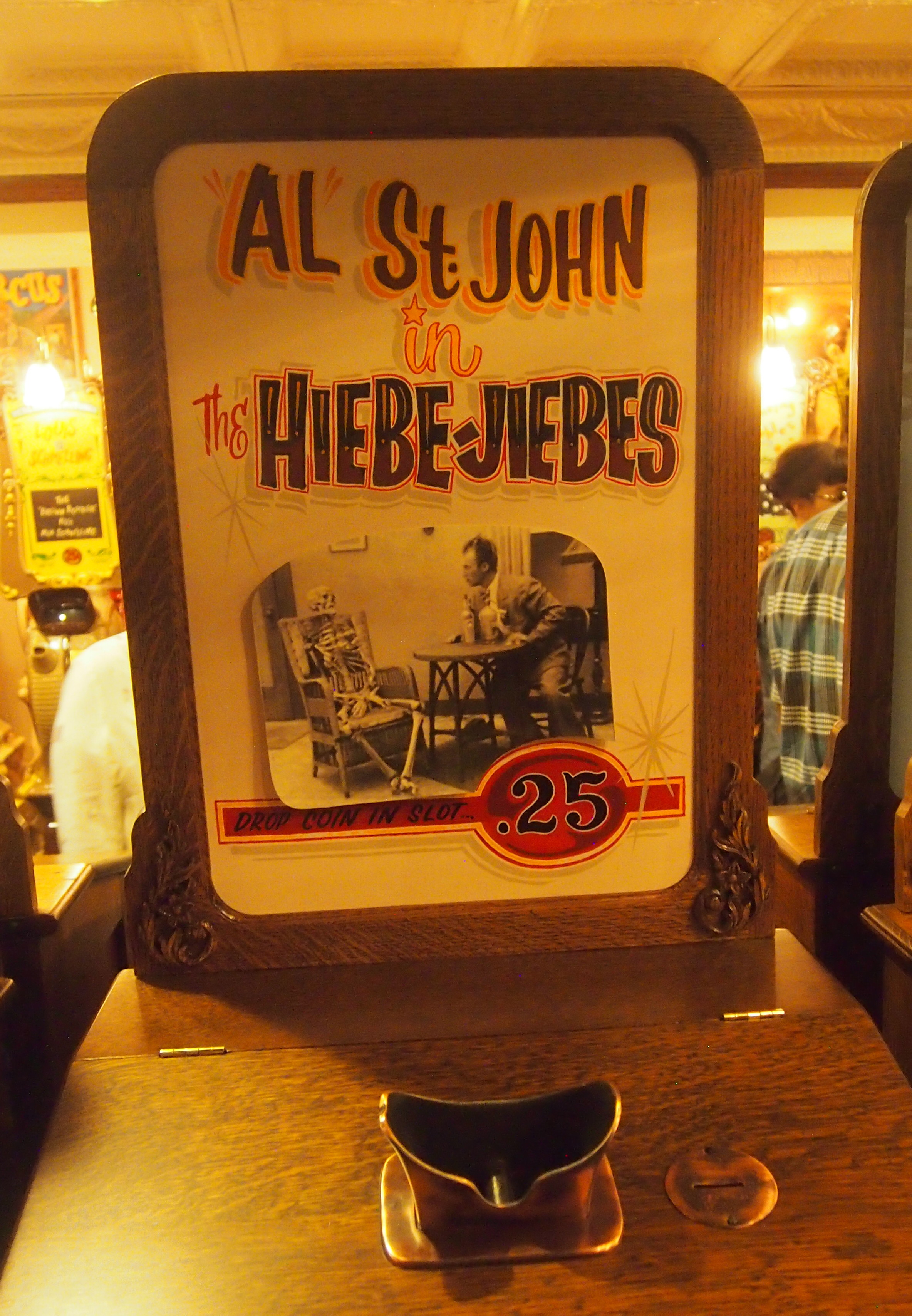
Here’s Al St. John in The Hiebe-Jiebes. Good old Al St. John, Fatty Arbuckle’s nephew and the cowboy sidekick to end all sidekicks.
Looks like a different sort of part here, but then again he did a lot of movies. Or maybe most of them should be called flickers. That hasn’t kept him from being utterly forgotten.

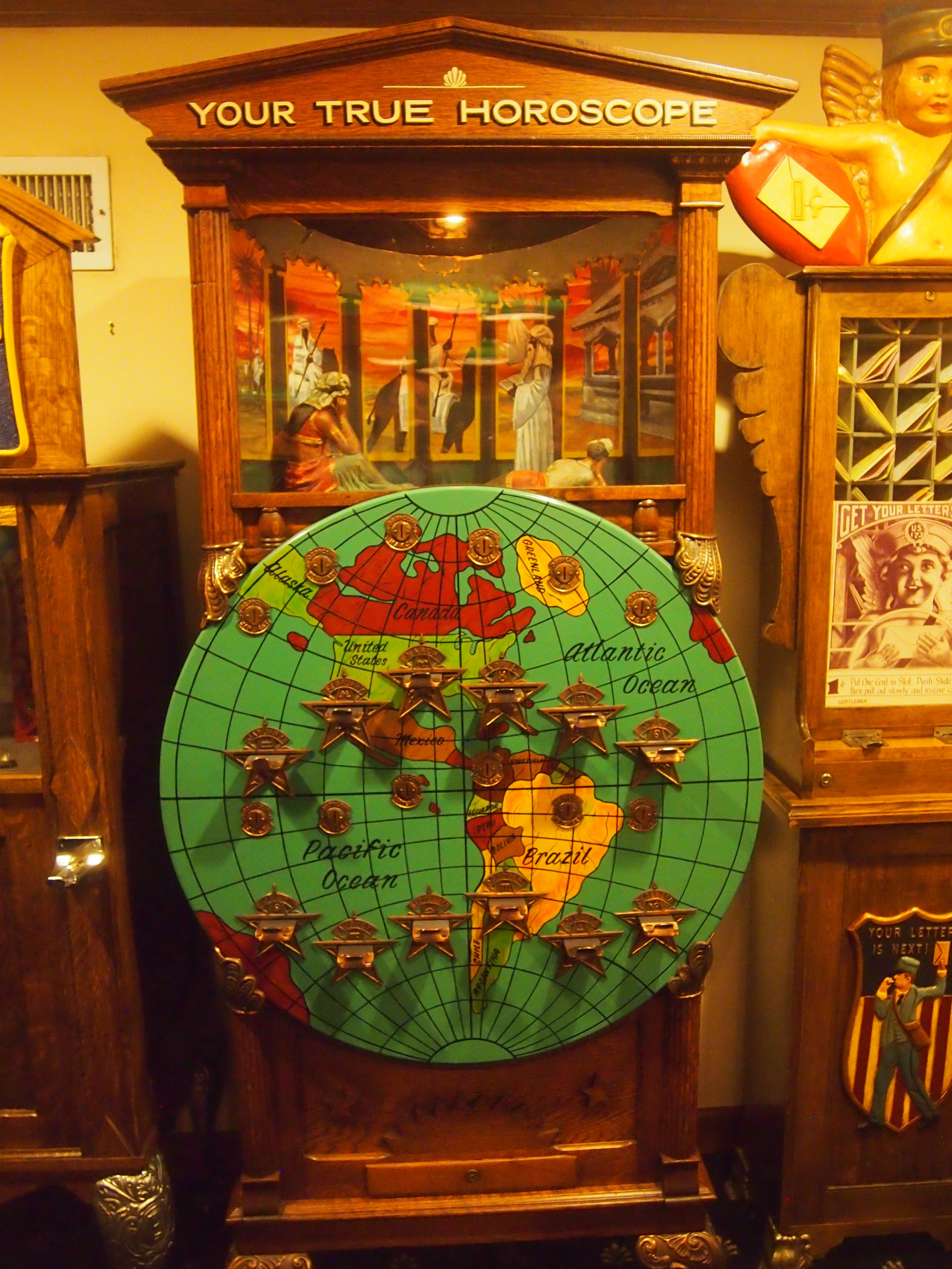
Other machines promise other kinds of entertainment, such as your true horoscope (and it is annoying when you get stuck with a false one).
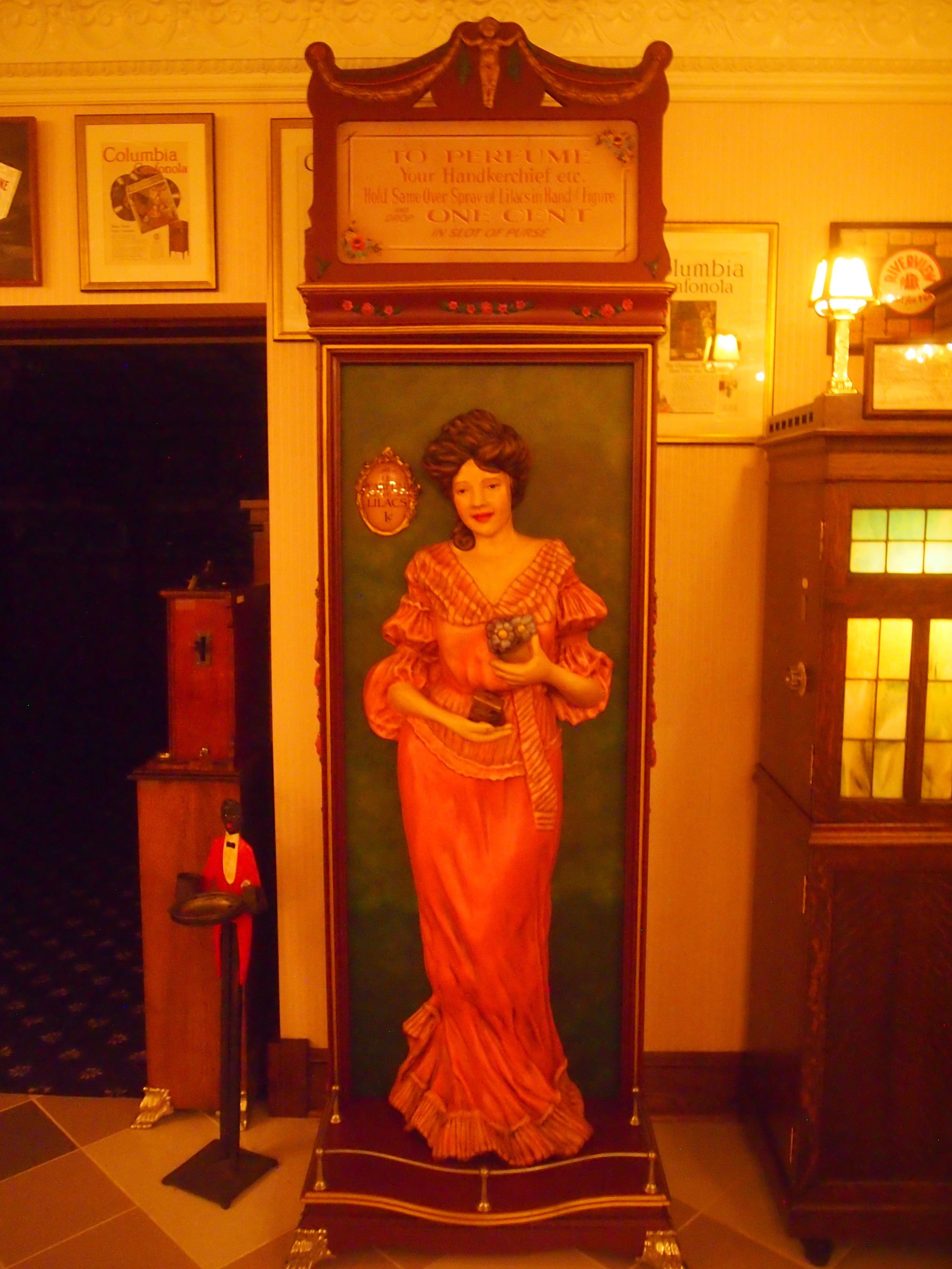
A kind of machine I’d never heard of before: one that dispenses a penny’s worth of perfume, presumably for refined ladies who want to freshen up their handkerchiefs.
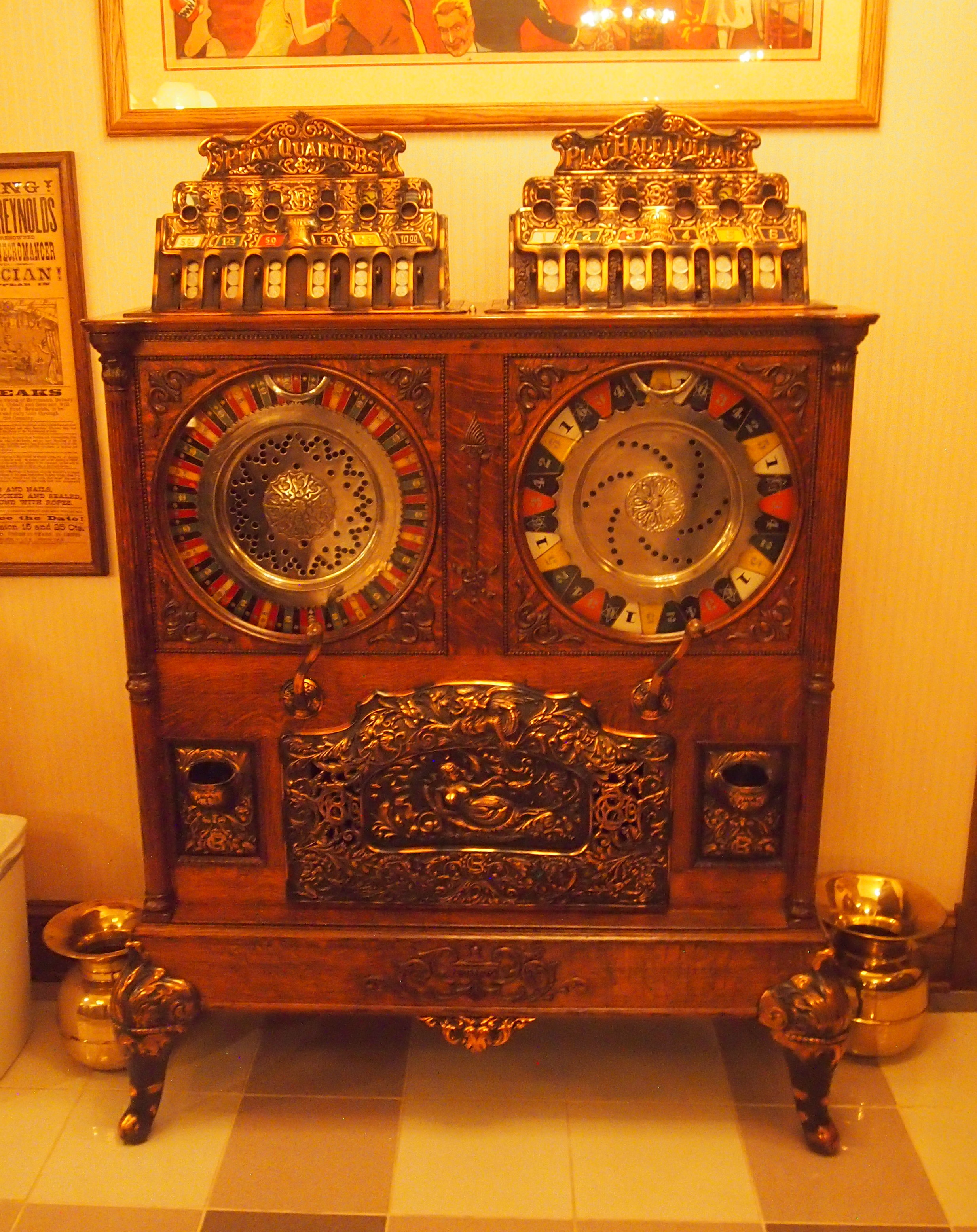
Never seen one of these, either: vertical roulette, looks like. A easy way to lose a lot of quarters and half dollars, which were certainly worth something when this machine was new.
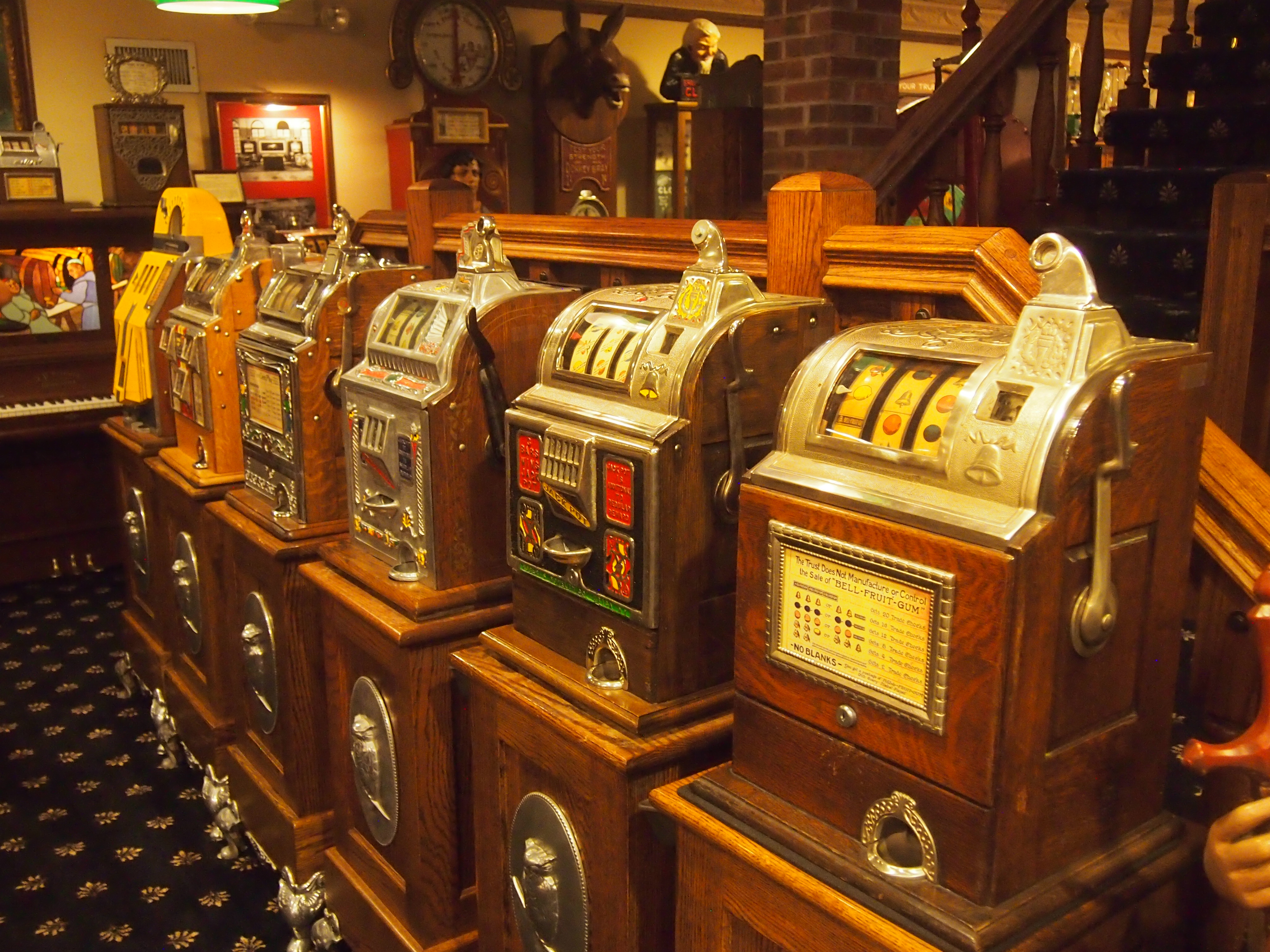
There were also more conventional one-armed bandits. A whole row of ’em.

The orchestrions and similarly complex machines on display in the rest of the mansion are certainly impressive. Awe-inspiring, even. But there’s something intriguing about these arcade machines, too.

While the orchestrions were for wealthy families and posh hotels and prosperous saloons, the arcade machines were entertainment for ordinary people, at a time when entertainment was in shorter supply. Unlike now, when we’re drowning in it. Maybe those pennies and quarters could have been better spent, but sometimes Al St. John in The Hiebe-Jiebes must have been just the thing.

Music Machine Extravaganza

Earlier this month, Yuriko and I toured a suburban Chicago mansion stocked to the gills with antique mechanical devices, all asserted to be in working order (and I believe it). The collection emphasizes machines that play music, such as orchestrions, Victrolas and other phonographs, music boxes, and a theater pipe organ of massive proportions, but the place also sports an equally impressive carousel, a large number of penny- and quarter-arcade machines, a steam engine collection, slot machines, coin pianos, and a 24-foot bar.

I learned that the heyday of music machines was the late 19th and early 20th centuries, when the art of precision machining was well developed, but before radio and standardized phonograph records dampened demand for such machines.

Our affable and knowledgeable tour guide requested those on the tour, about 40 of us, not post any pictures to social media. I took that to mean Facebook and Instagram and the like, not a standalone obscurity like BTST.

Even so, in the spirit of the request, I won’t post of the name of where we went or tag the photos, making it harder for search engines to find them. Of course, it would take only a modest amount of Googling to find out where we were, considering the description I’m going to offer. But I won’t post the information here.

The property dates from the 1970s, with later additions, on a piece of land that’s large enough that you can forget there’s a city or even suburbs not too far away. The family that owns it made their fortune selling a common foodstuff, and its packaging, in a big way. The place is not a museum, but still occupied by members of the family. Even so, they offer tours and other events periodically.
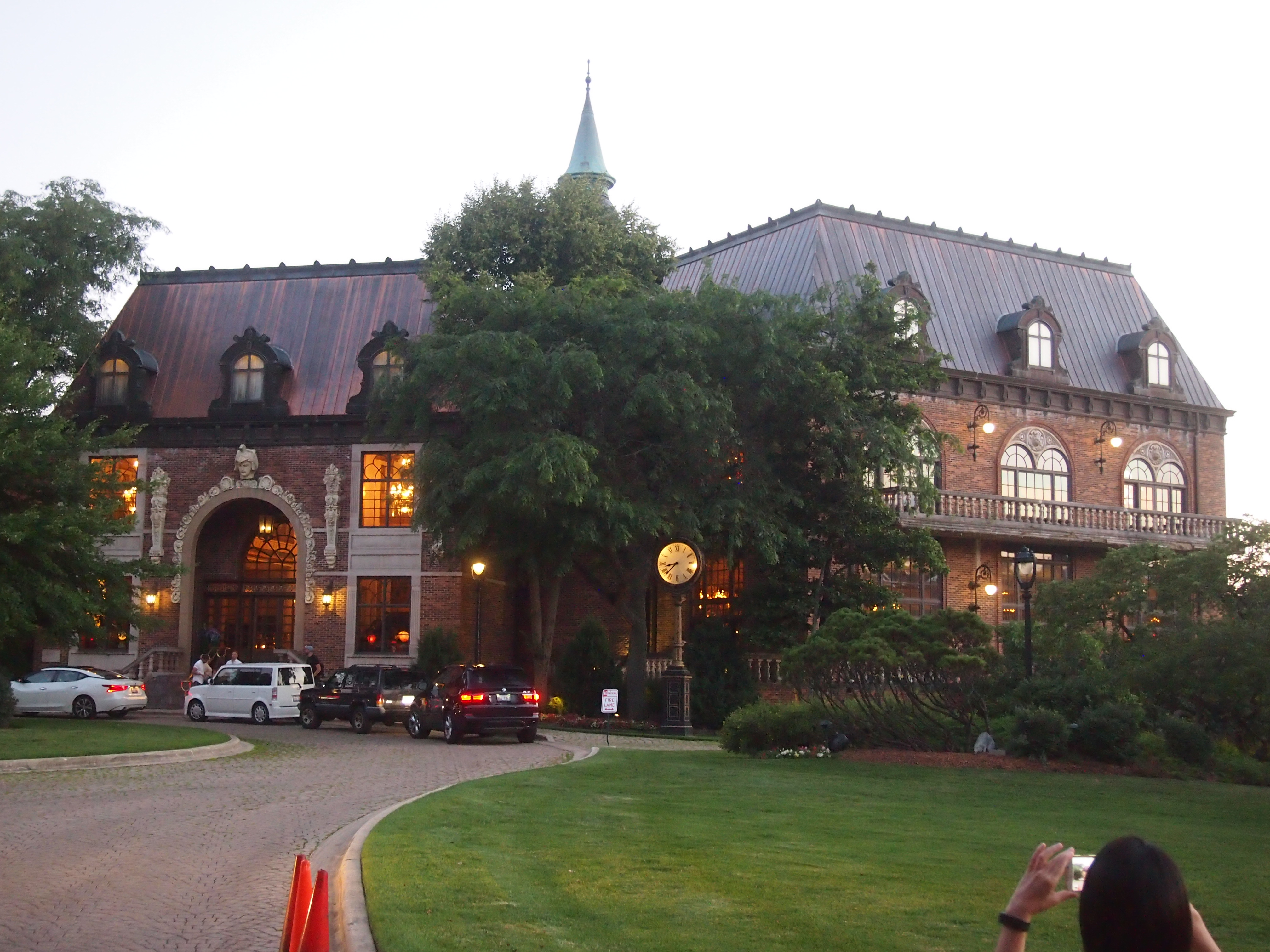
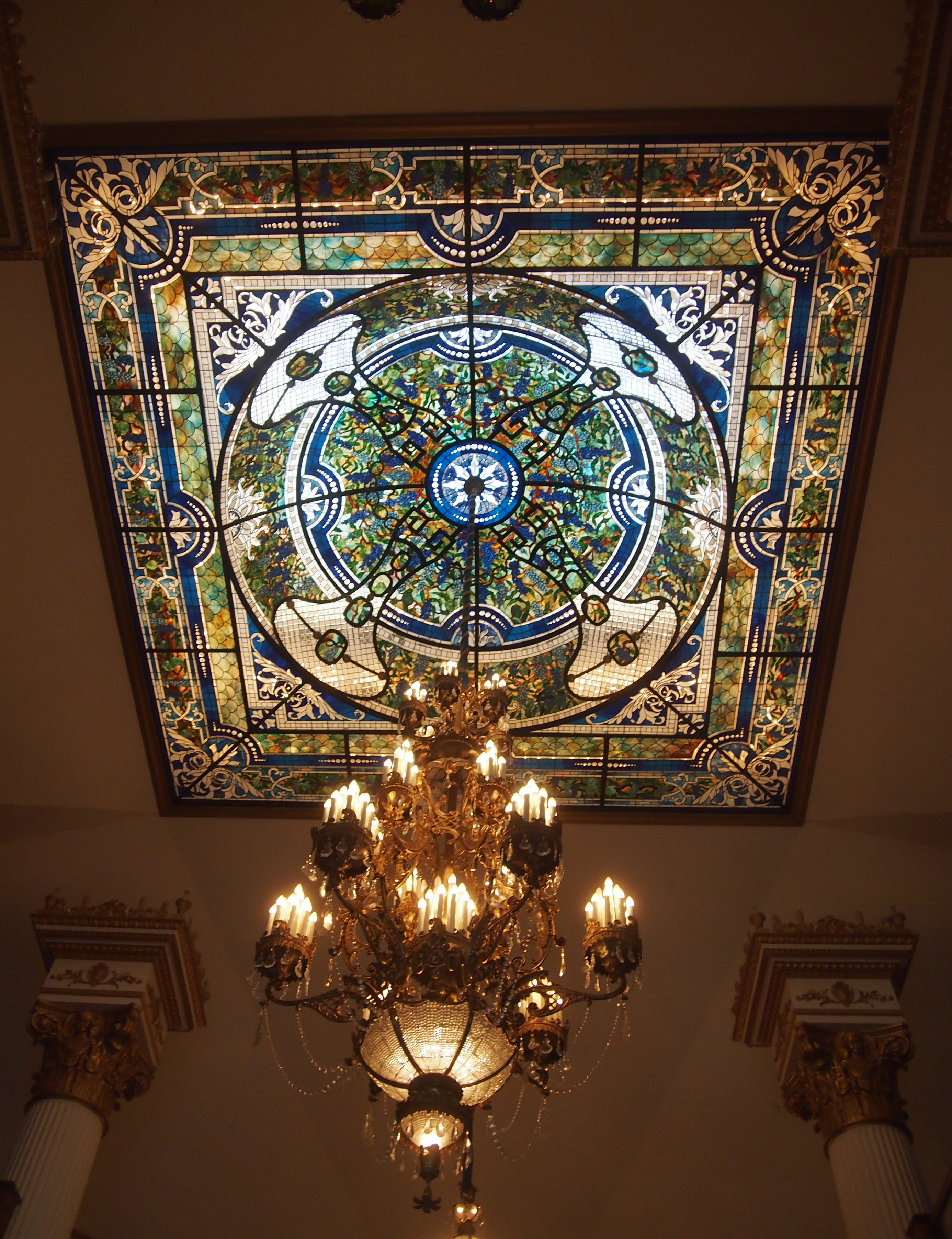
Though the tour wasn’t about the house, the building does have some nice features, such as the main entrance skylight and chandelier.
Mainly, you go to see the collection of antique machines, which are a fascination of the family patriarch and his children. It’s an extraordinary array of devices, housed in a succession of rooms.

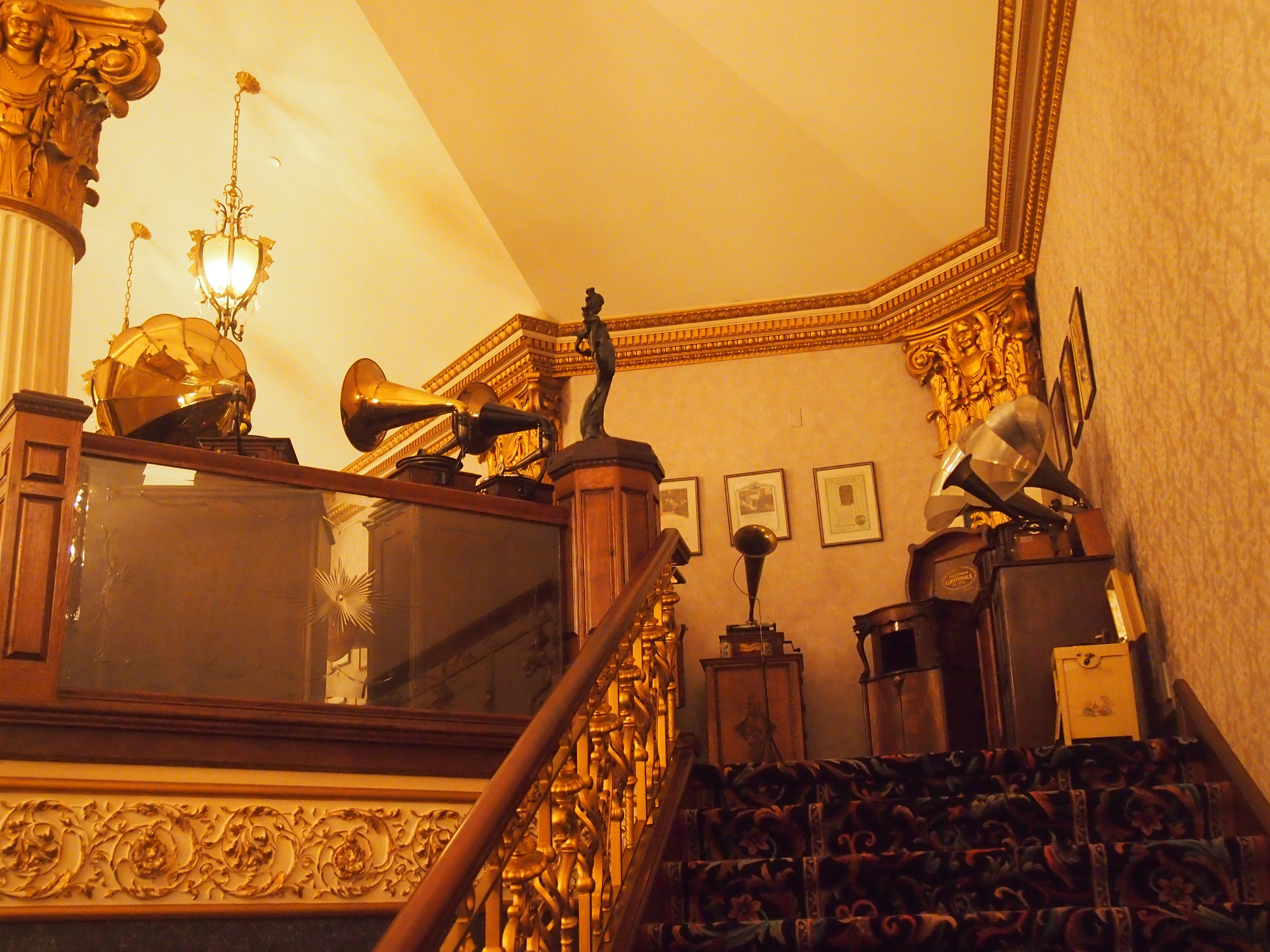
The displays start at the main entrance where, among a number of other machines, is a JM Hof & Mukle roll organ at the top of the grand staircase.
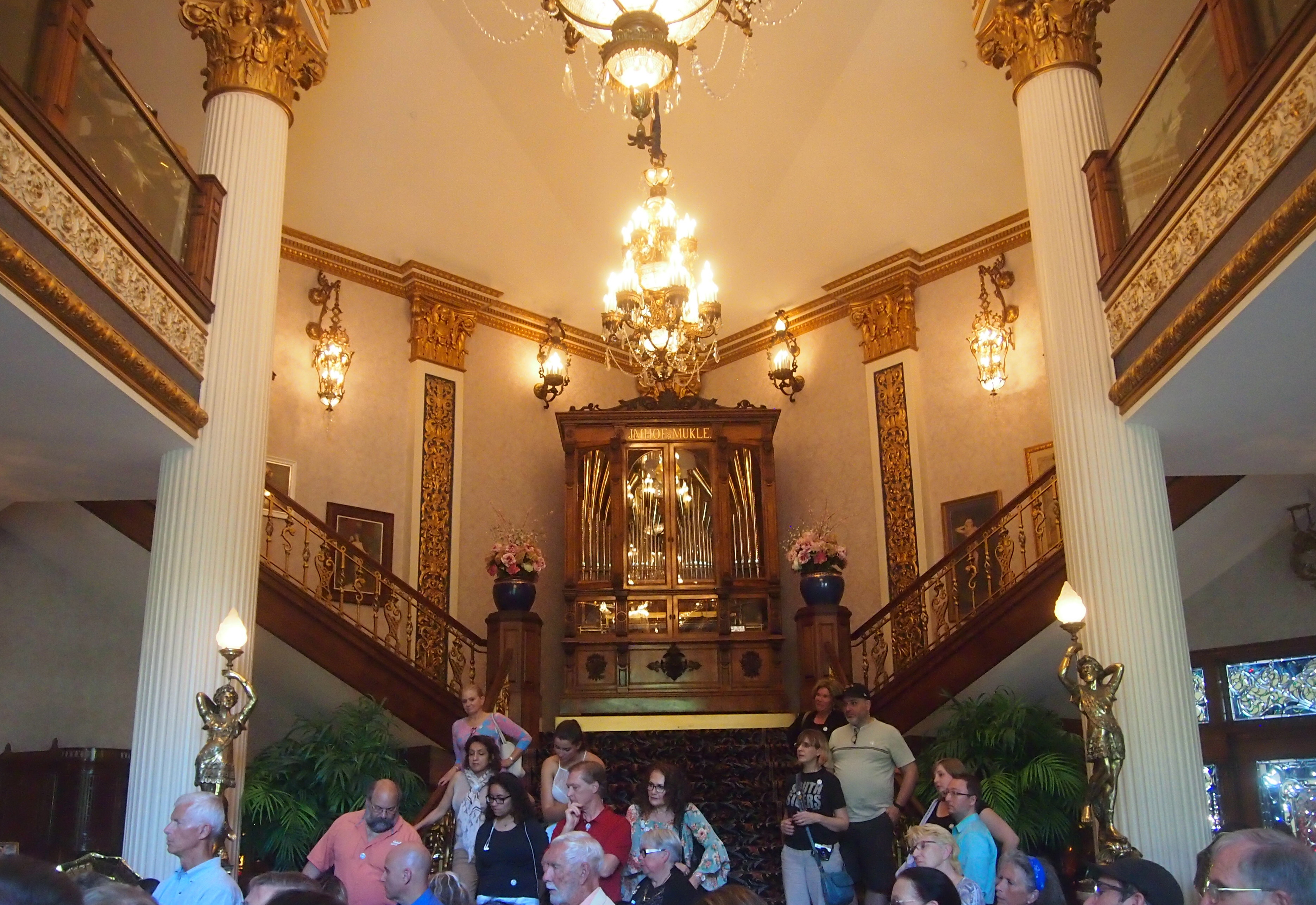
The three-story Music Room includes a large number of machines.
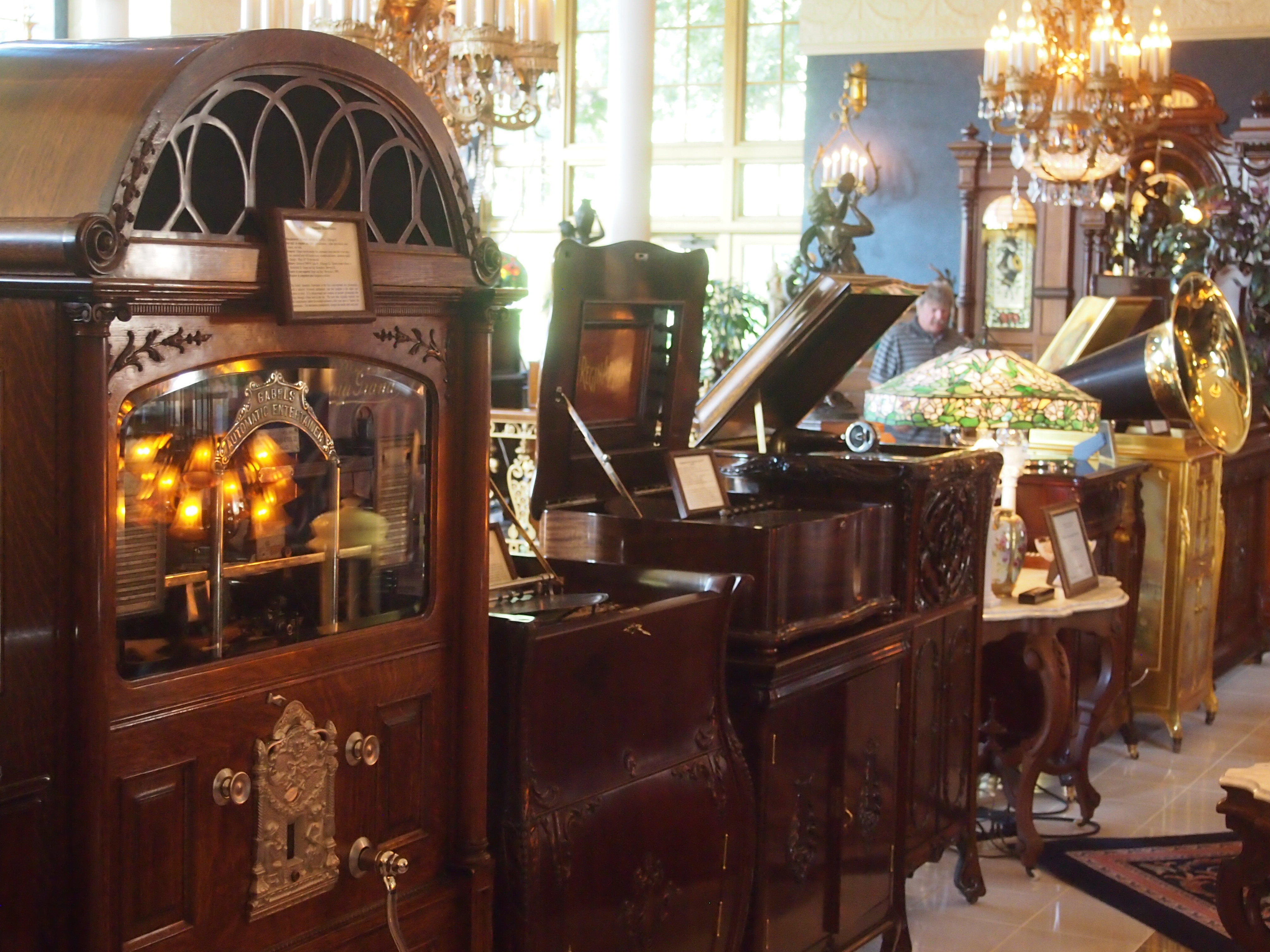
I liked this charming Frati Barrel Organ, made in Germany ca. 1905.
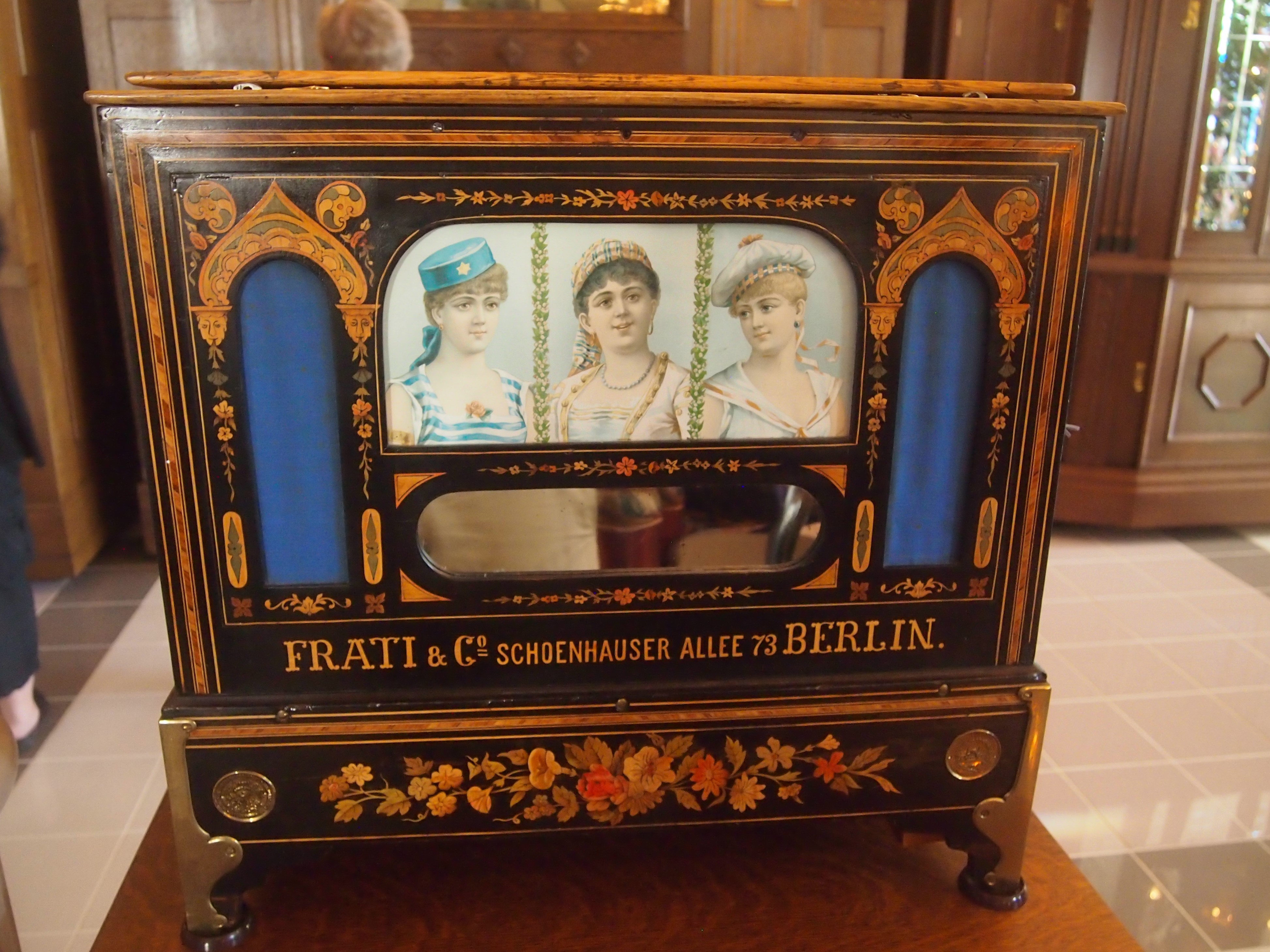
A much larger Weber Otereo Orchestrion, also made in Germany, ca. 1910.
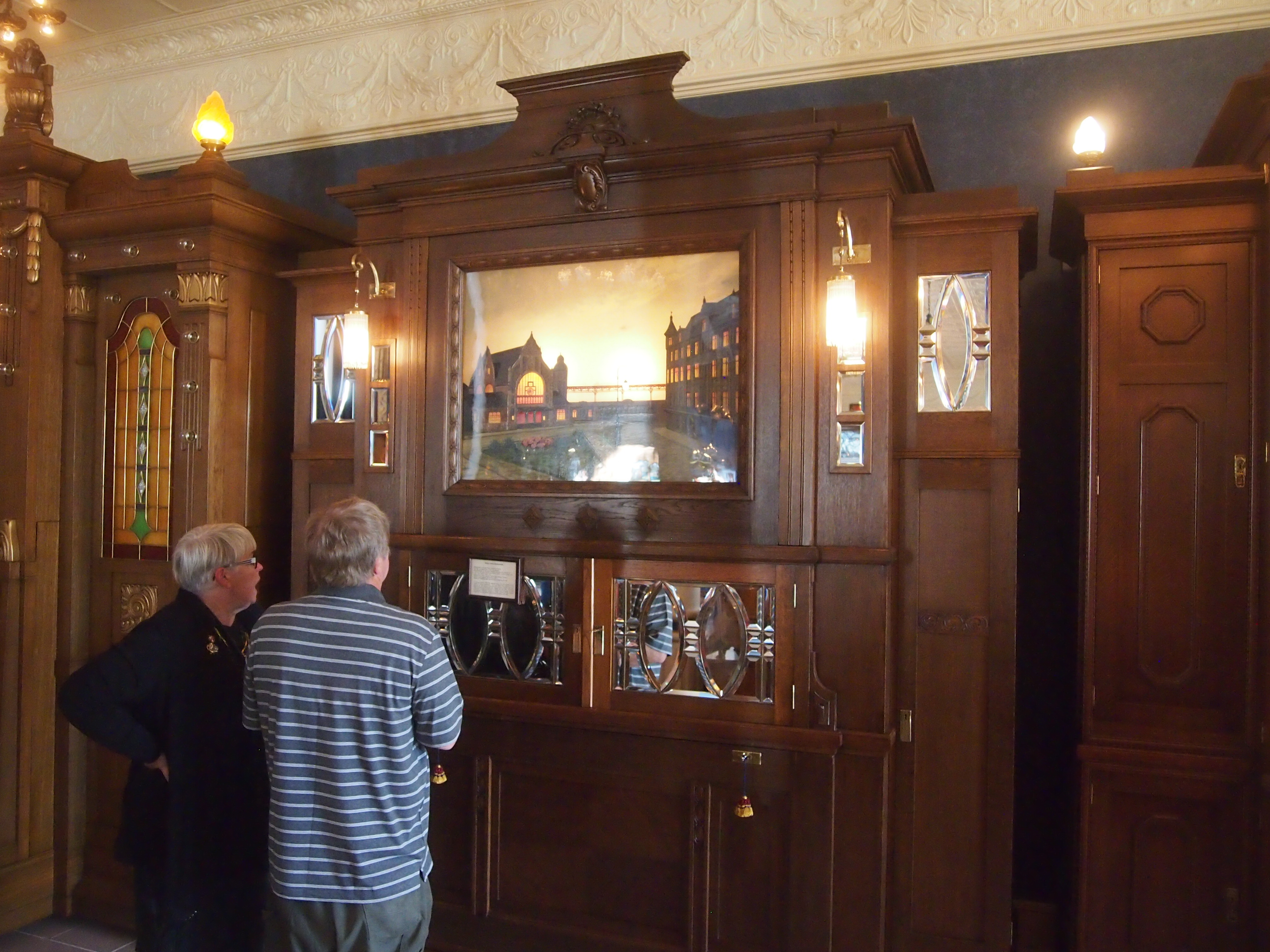
According to its sign, “… between 1905-1910, animated scenes were very popular in some models of German orchestrions. This early Weber Otereo features a scene depicting the train station in Gelsenkirchen, Germany, complete with back-lighted silhouettes of an animated train, zeppelin, and other items. Everything in the Otereo operates on air pressure…”

The guide demonstrated this machine, and we listened to it play but also watched the animated scene.

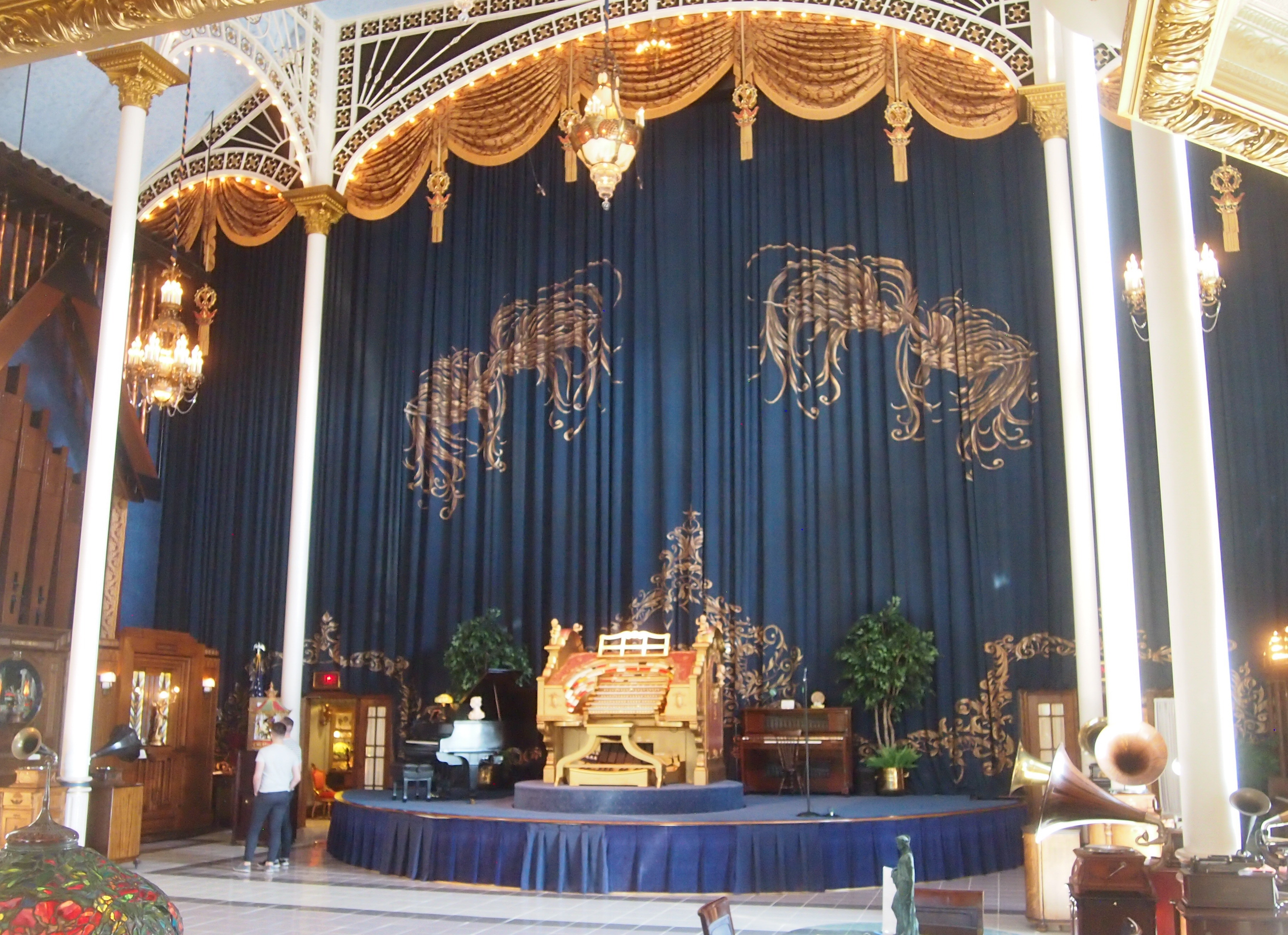
The centerpiece of the Music Room was the organ console.
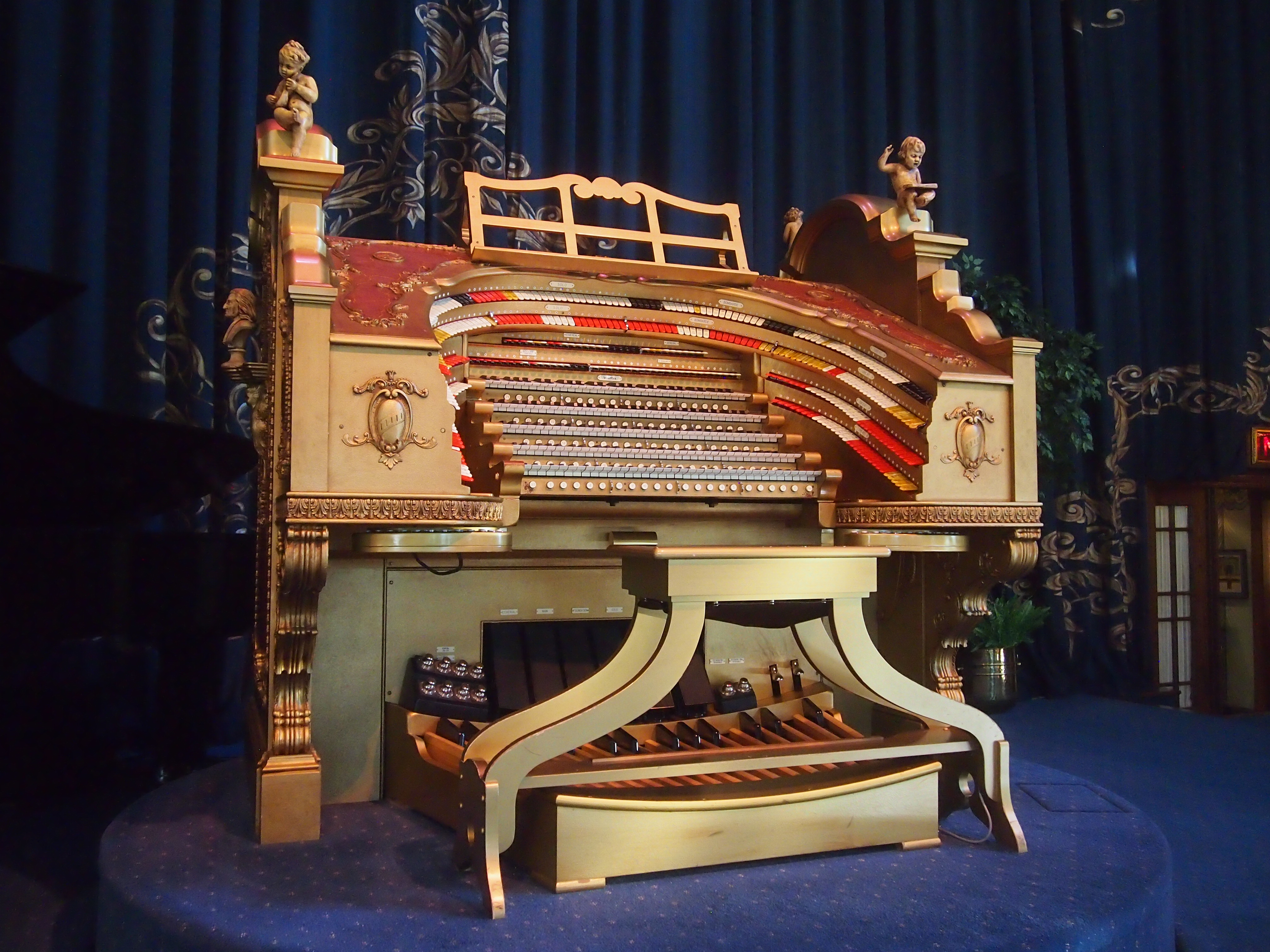
Stepping back a bit.
And then turning around. This is view from the console, to give a little context.
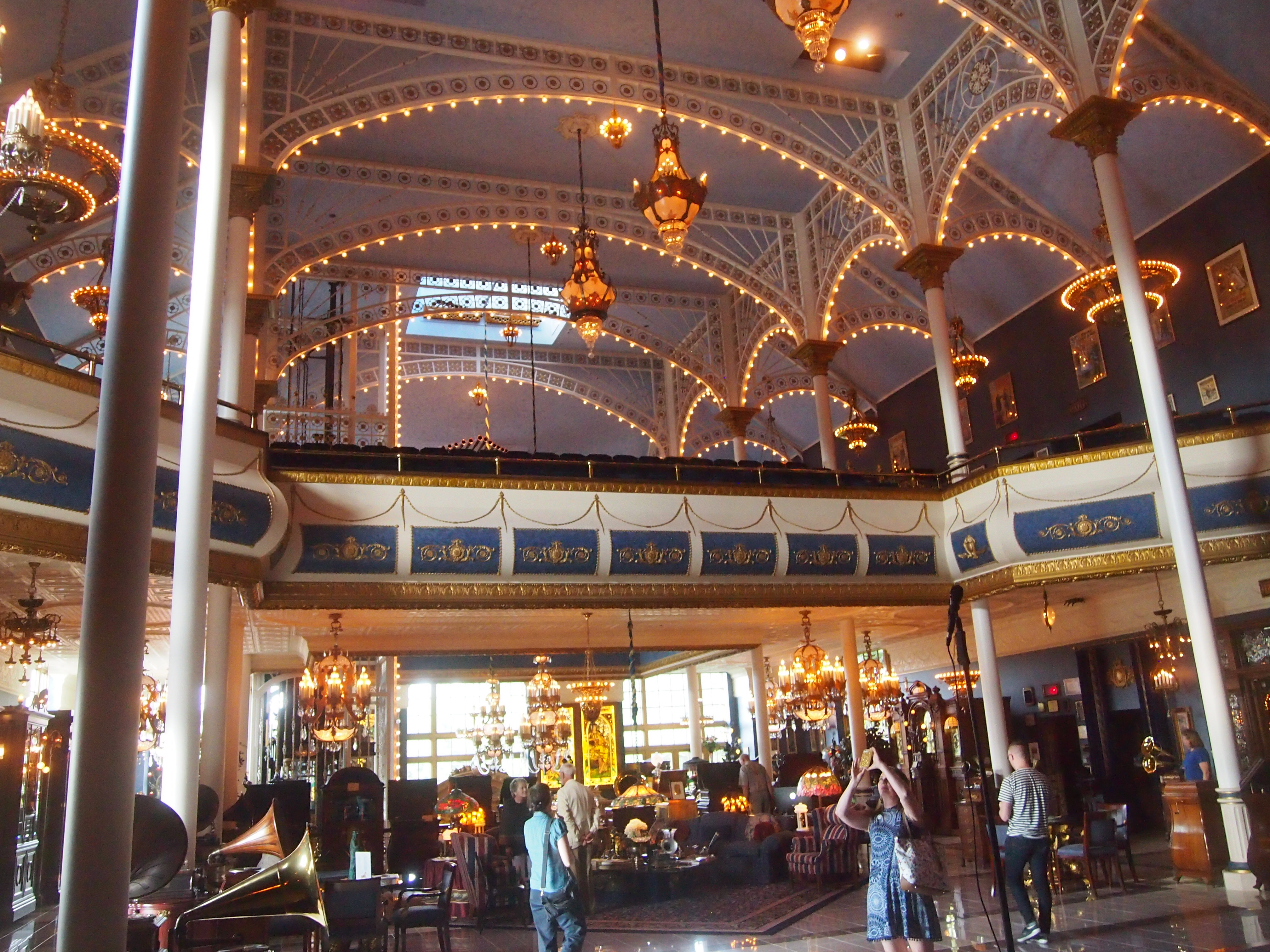
The room counts as a small auditorium, and we listened to the theater organ from the balcony. Quite a wall of sound. It’s worth quoting the mansion’s web site at some length on this machine.

“The nucleus of the theatre organ, which was previously installed in the old music room (Wurlitzer opus #1571, built in 1927 for the Riviera Theatre in Omaha) has been expanded to 80 ranks of pipes. The overall result is the most versatile orchestral theatre pipe organ ever built.

“Behind the scrim are five chambers containing pipes, percussions, wind regulators and controls in a four-story-tall area. The console is patterned after the original from Chicago’s Paradise Theatre; it is mounted on the original Peter Clark lift from the Granada Theatre, which raises it from the lower level cage enclosure up to concert playing position.

“Mounted on the wall to the left are the 32′ Diaphone pipes, and to the right are the 32′ Bombarde pipes. A 32-note set of Deagan Tower Bells, the largest of which weighs 426 lb., hang on each side of the room… To the rear of the room, the ‘Ethereal’ pipe chamber in the attic echoes softly from the skylight area, while the brass ‘Trumpet Imperial’ and copper ‘Bugle Battaglia’ speak with great authority from the back wall.”

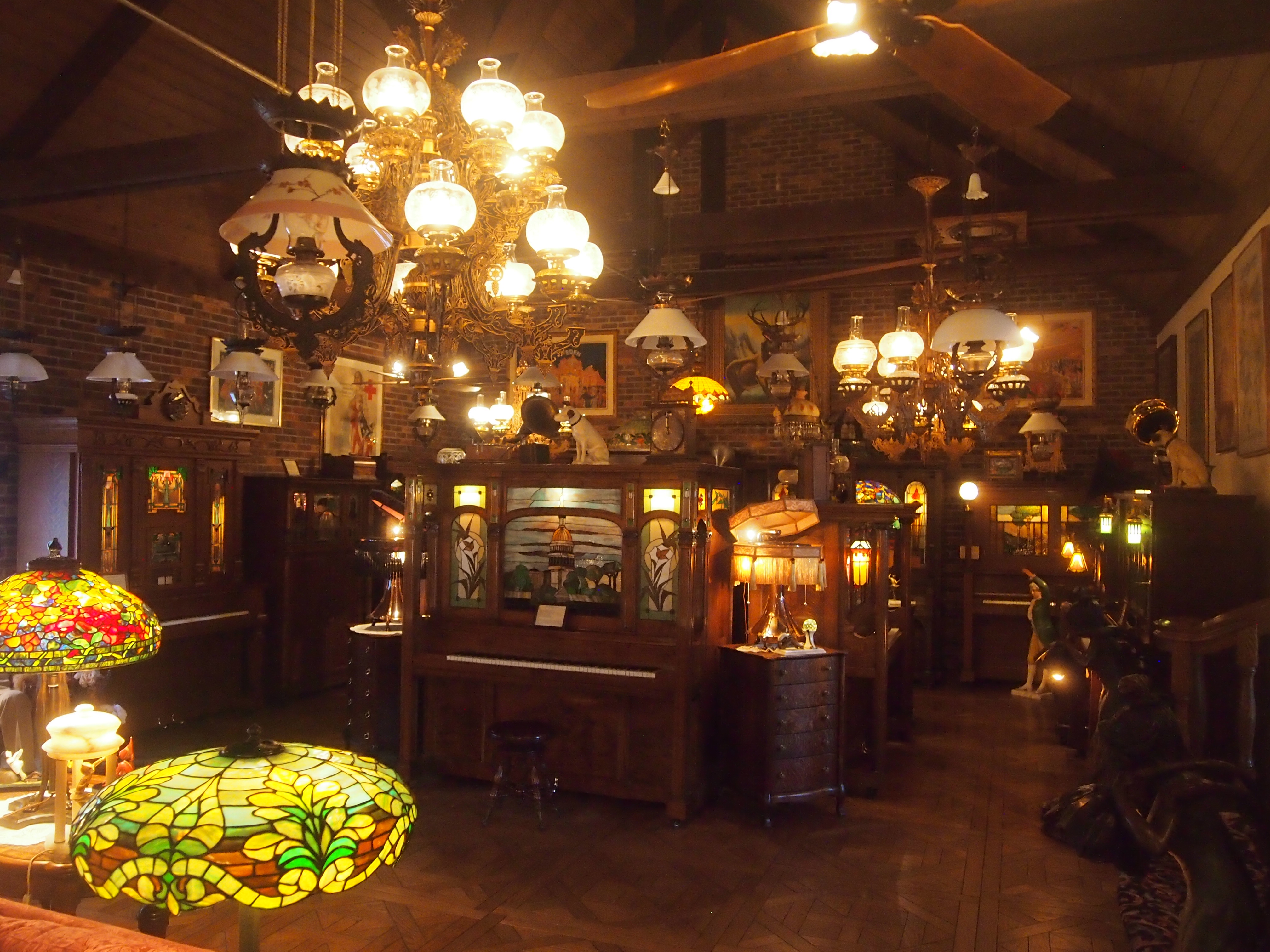
The American Orchestrion Room, elsewhere in the mansion, features art glass-front orchestrions, along with Tiffany and other art glass lamps and a large collection of Victorian chandeliers. This is only one end of the room, which is fairly long.
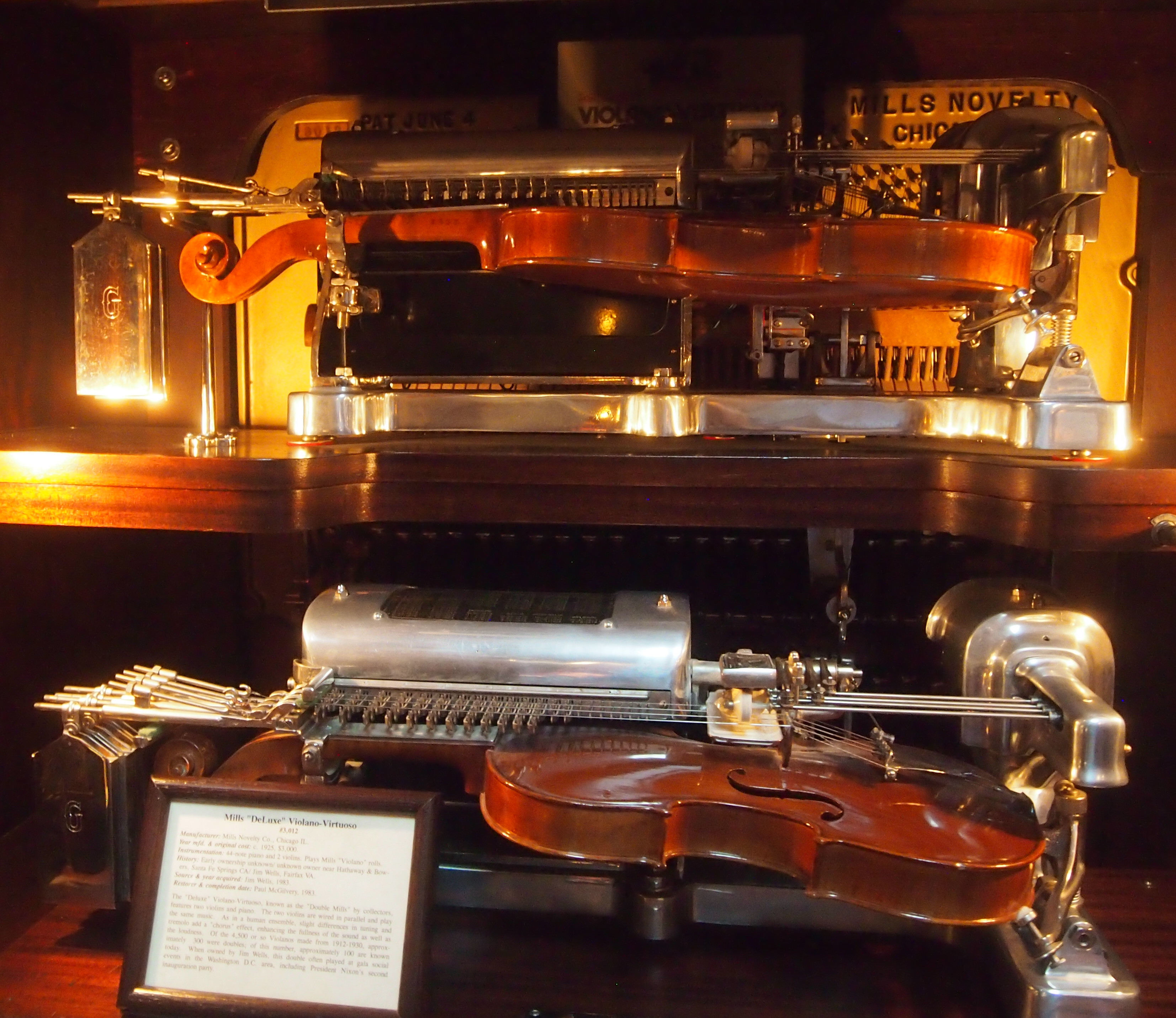
The room includes a violin-playing machine, the likes of which I’d never seen.
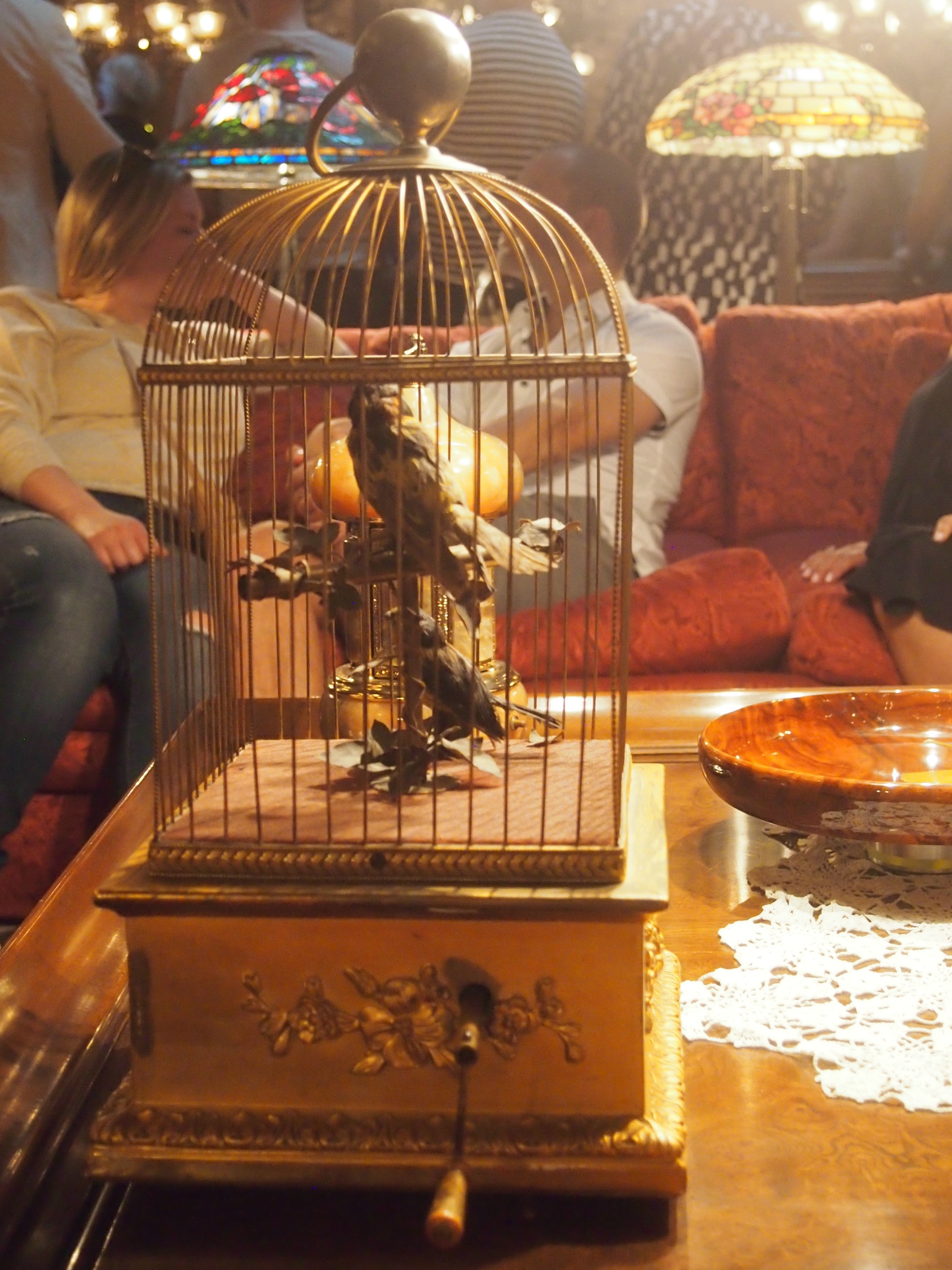
And a hand-cranked mechanical bird in a cage, with a mechanism inside covered with actual bird feathers. As might have amused the raja of one of the princely states about 100 years ago.
From there, stairs led to the lower level of the mansion, and a display of machines similar to music-making devices in some ways, but all together different in others. More about that tomorrow.
Zoo View 2011

I can’t remember the last time we went to the Brookfield Zoo. It might have been as long ago as July 2011. I have a file labeled 2011-07-18 and many of the pics are of that zoo, the larger of the Chicago area’s two main zoos.

I don’t care what PETA thinks, it’s a fine zoo. I posted some of the Brookfield pics at the time. But not the bright birds.
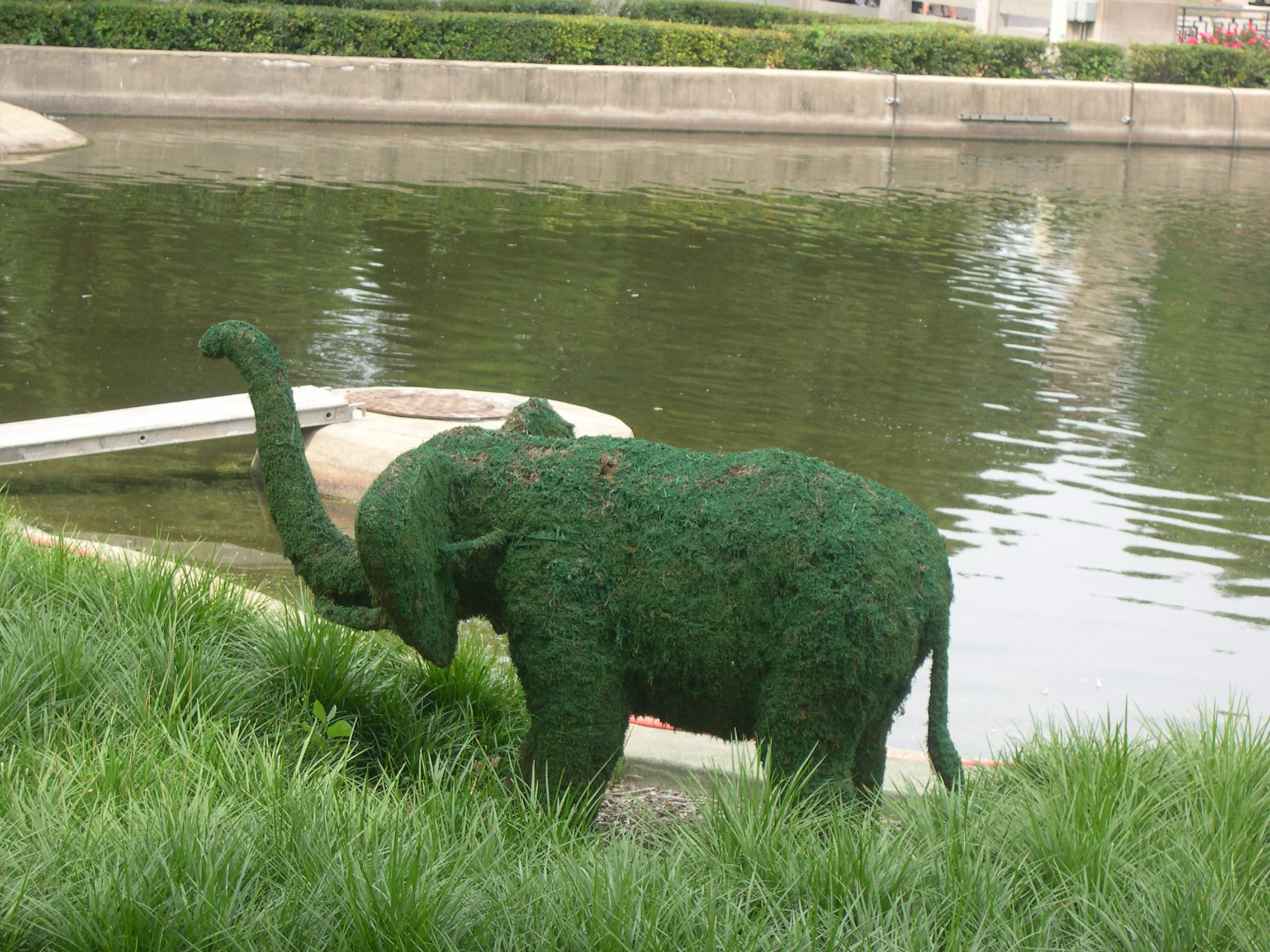
Brookfield Zoo 2011Or any of the non-animal aspects of the place, such as the topiary elephant.
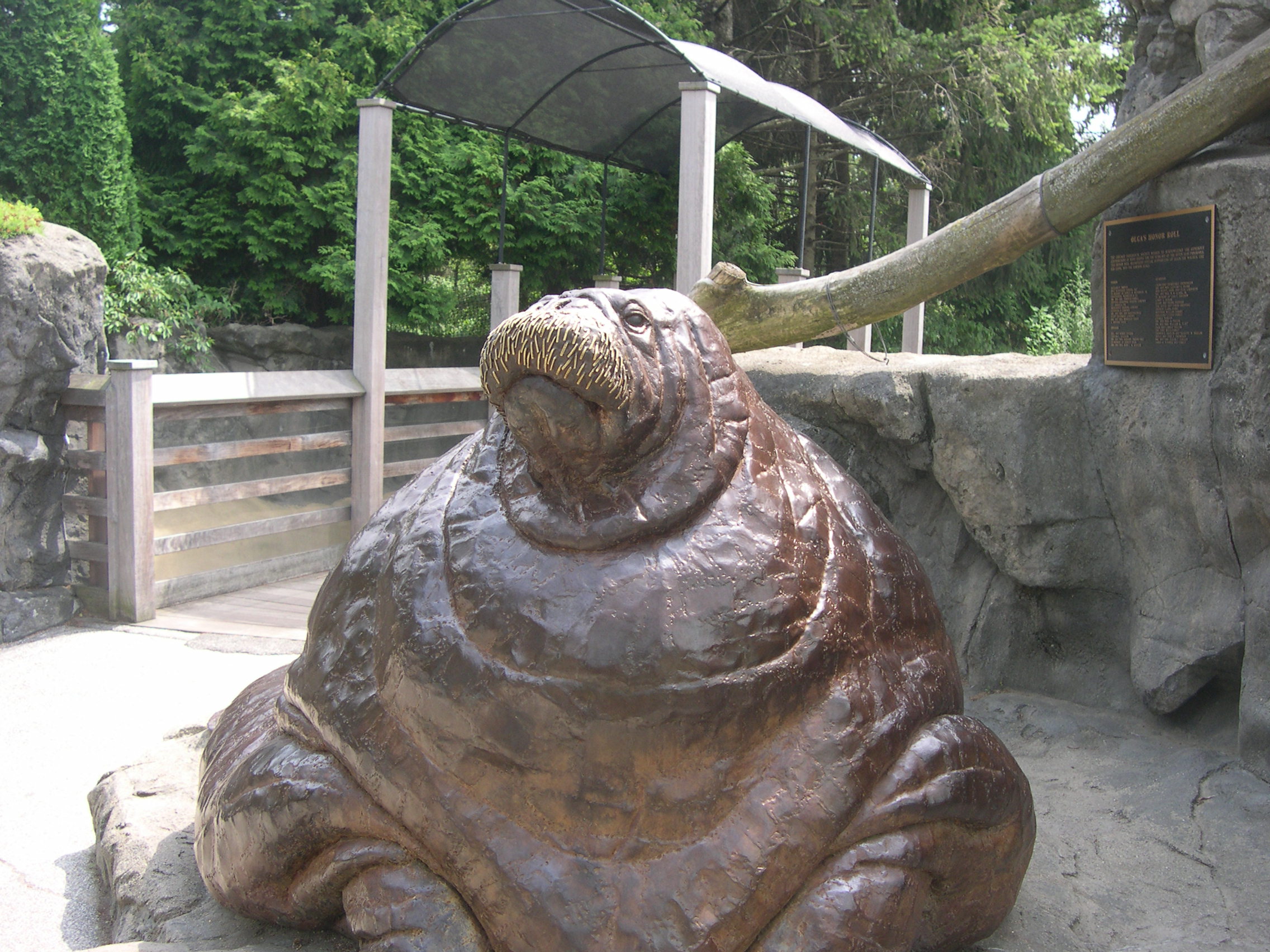
Brookfield Zoo 2011Or the bronze walrus.
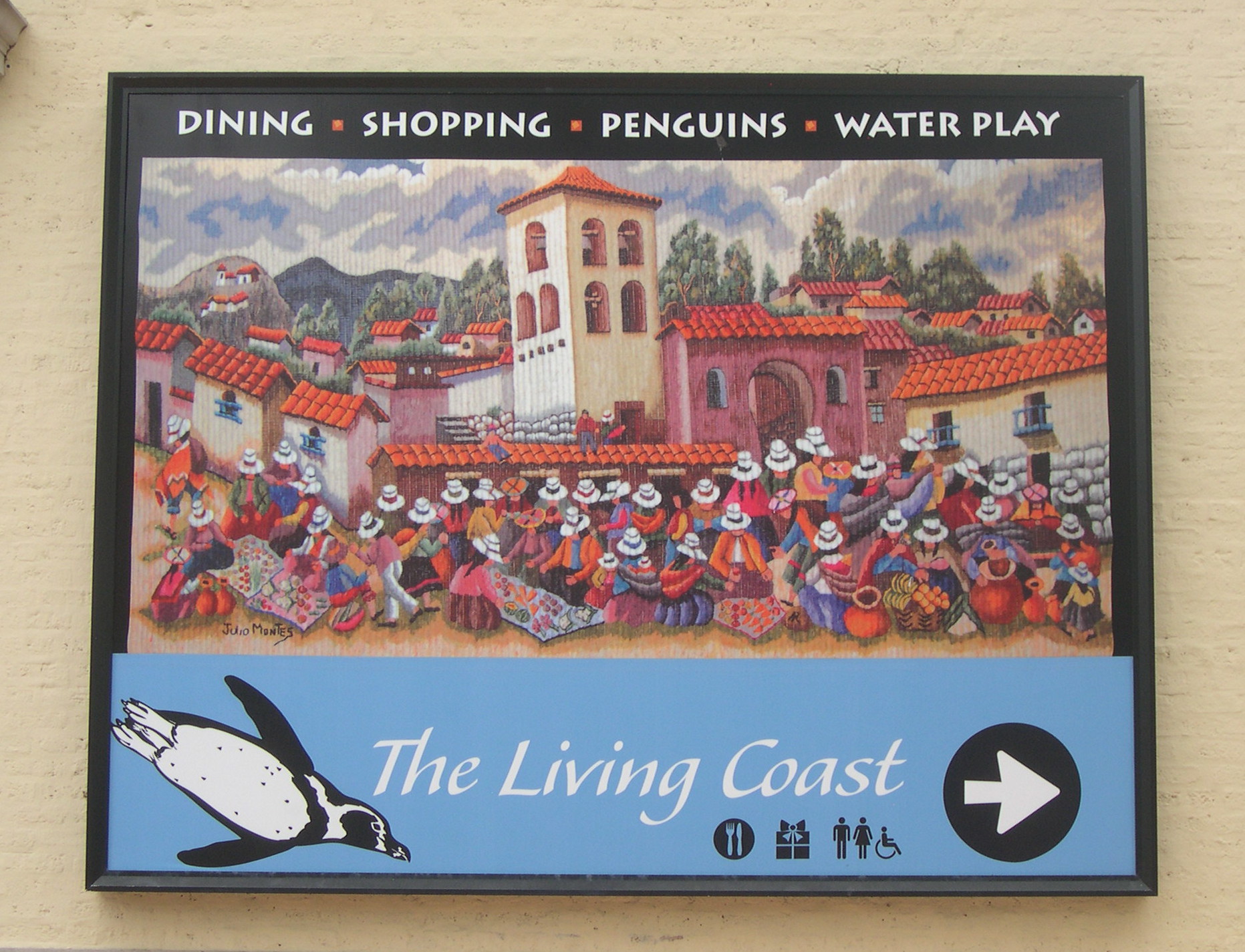
Brookfield Zoo 2011Or the Living Coast mural.
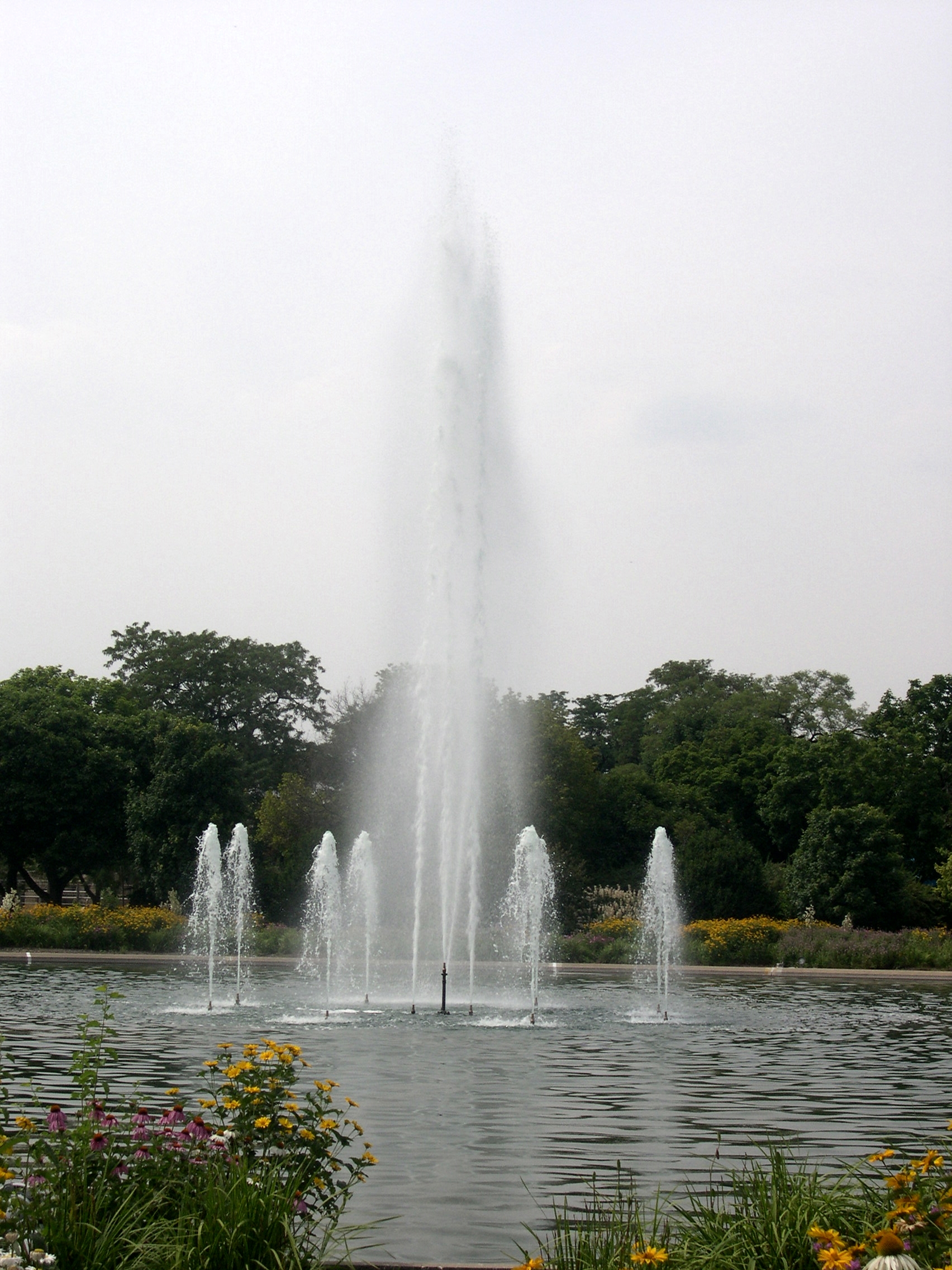
Brookfield Zoo 2011Or even the Theodore Roosevelt Fountain, there since 1954, though I did post the cornflowers nearby.

Brookfield Zoo 2011

July is cornflower time, and we’re all better for it.

Thursday Odd Lots

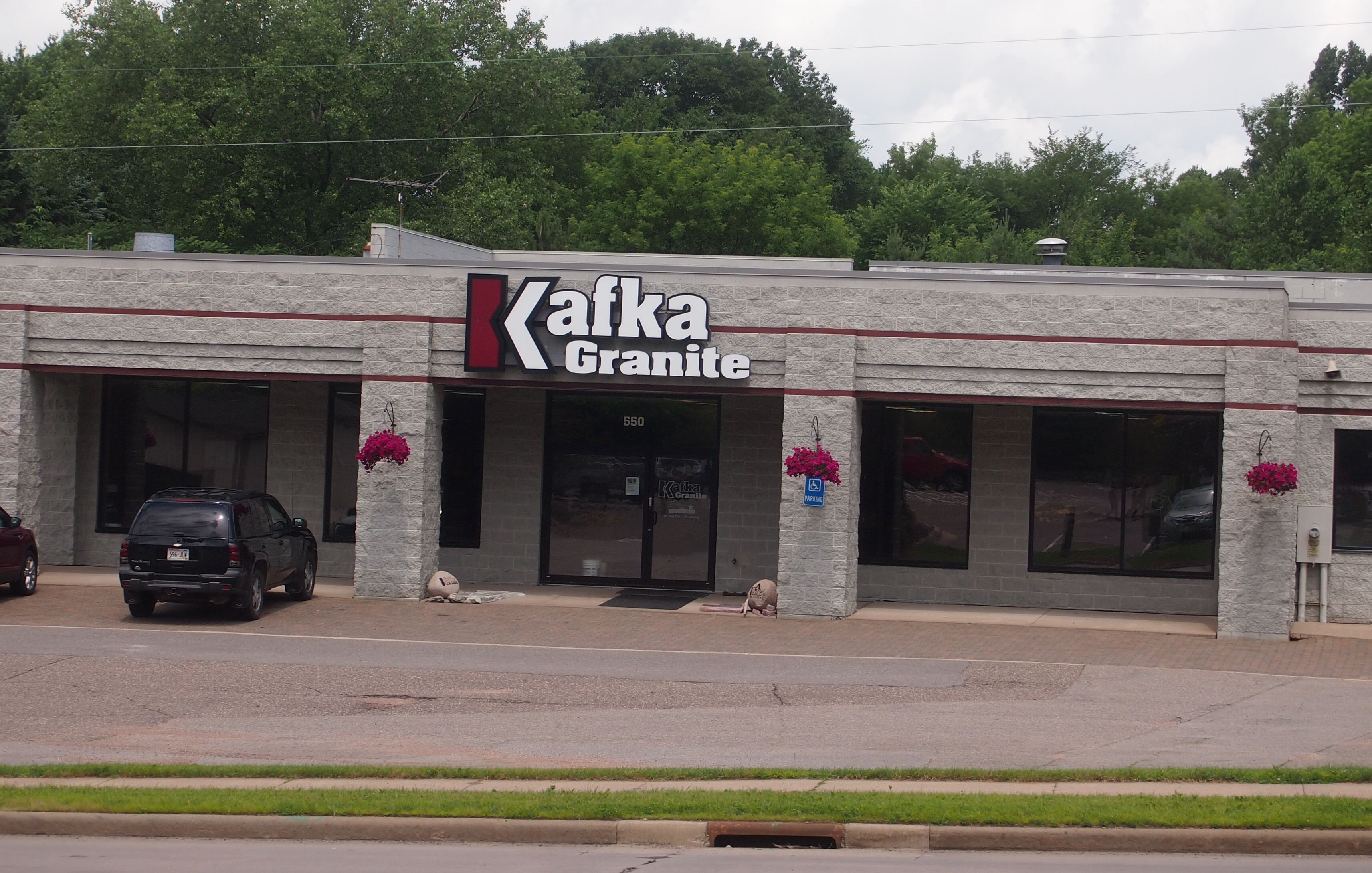
“What’s so funny, Dad?”

“That sign across the street.”

We were in Wisconsin during our recent trip, and had stopped at a place where I could access wifi. The sign was visible from there.

“That’s not funny.”

“Maybe it will be for you someday.”

What would happen if you used this granite for landscaping? Would your back yard suddenly cause you dread? Kafkaesque landscaping, now there’s a concept.

Looks like Kafka does some good work, though.

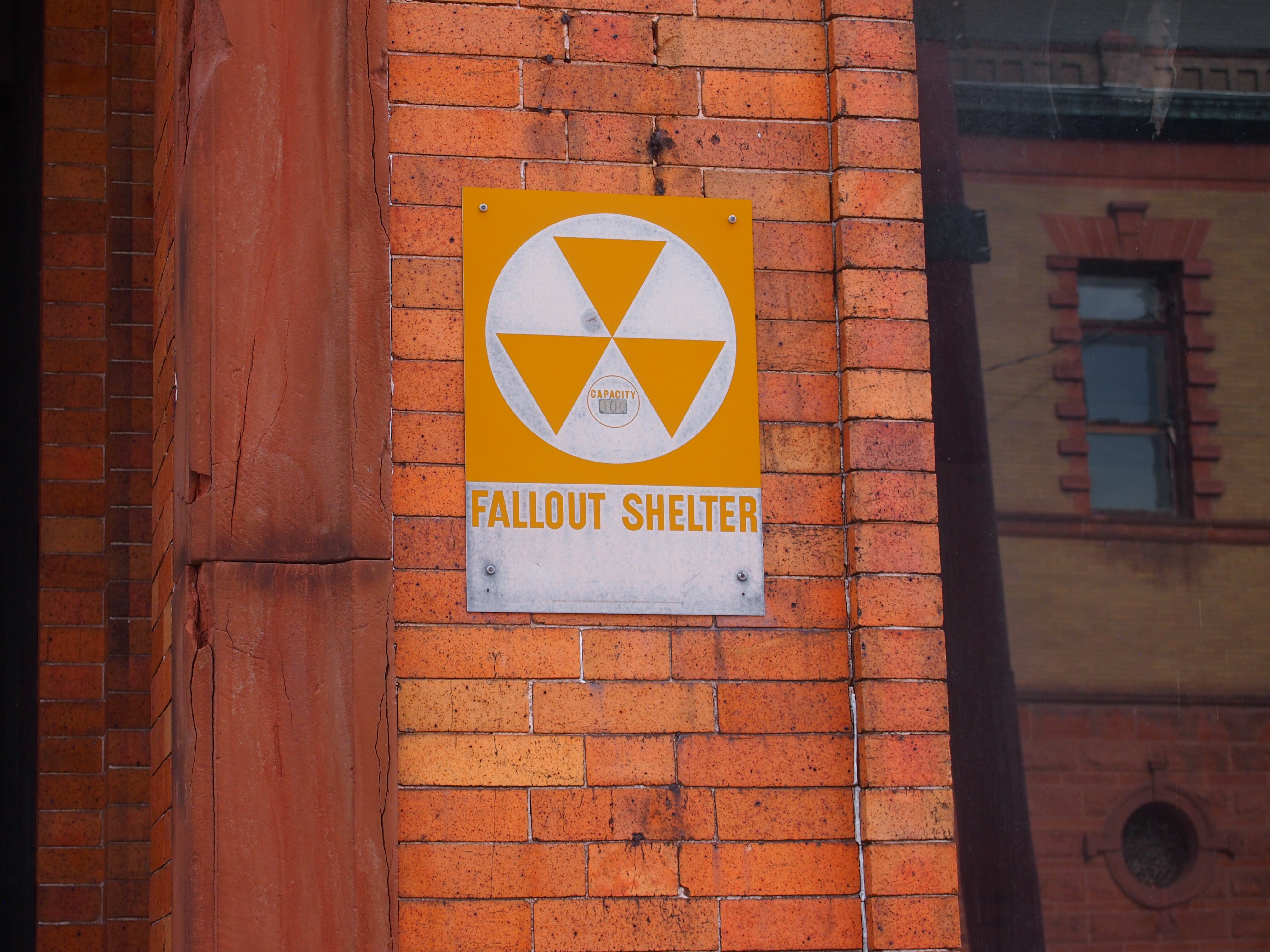
Here’s a sign you don’t see much any more, though I’m pretty sure that they were common once upon a time. I think even my high school cafeteria, which was in a basement, had one in the late ’70s. They’re so rare now that when you do see one in situ, you take note. Something like a working public pay phone.

Fallout Shelter Sign, Calumet, Michigan

This one is on Sixth St. in Calumet, Michigan. It even has a capacity number. What was once an unnerving reminder of the nuclear Sword of Damocles can now “add a cool tone to a man cave or retro game room,” according to Amazon, where you can pick a reproduction up from the Vintage Sign Co. for (currently) $18.99. The note also calls the item a “vintage style WWII metal sign.” What is it about basic chronology that flummoxes so many people?

Something else I saw, a little more recently, in Bucktown.

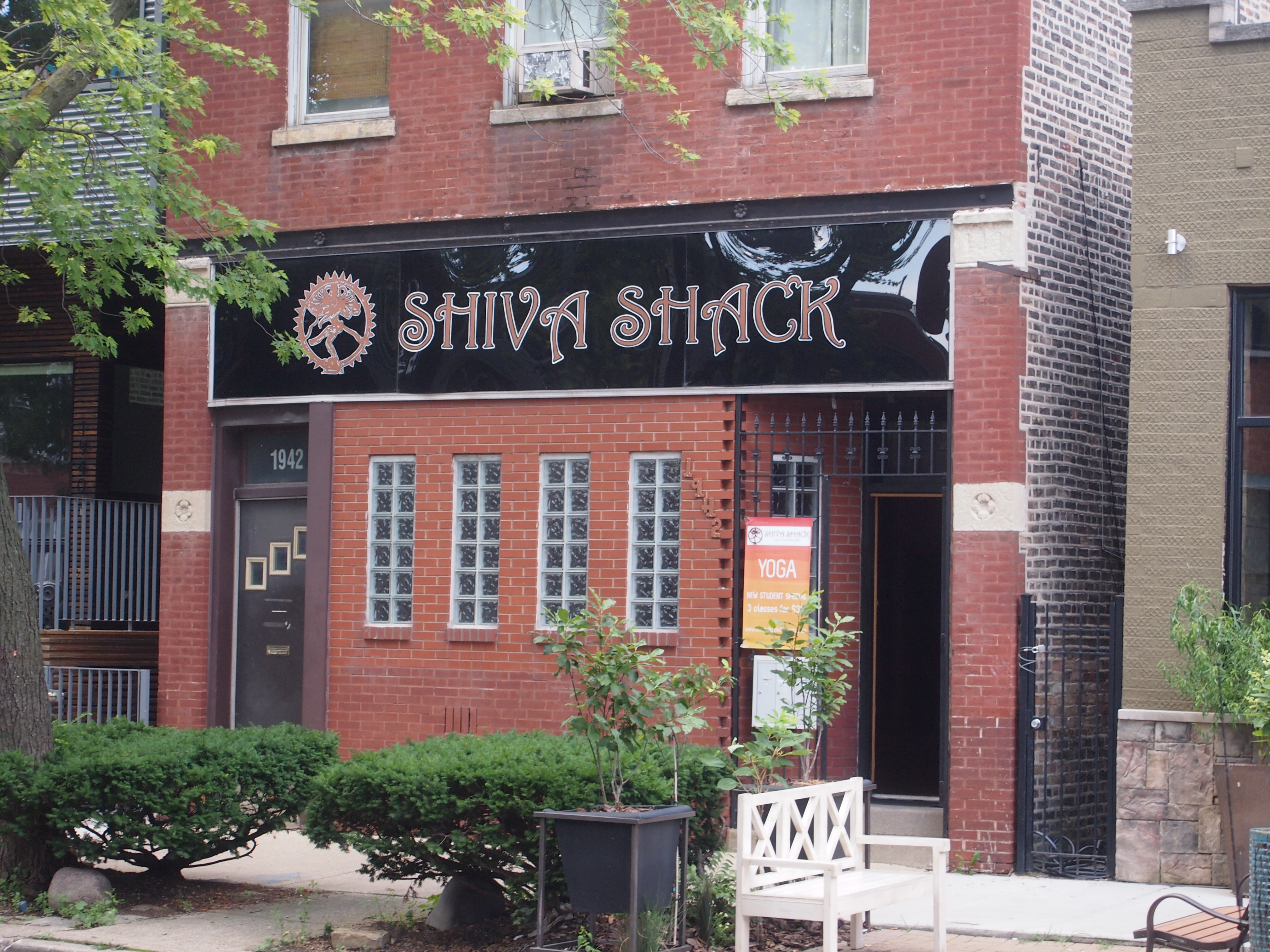
Bucktown, Chicago Shiva Shack

Shiva Shack? C’mon in for a bit of destruction and then transformation.

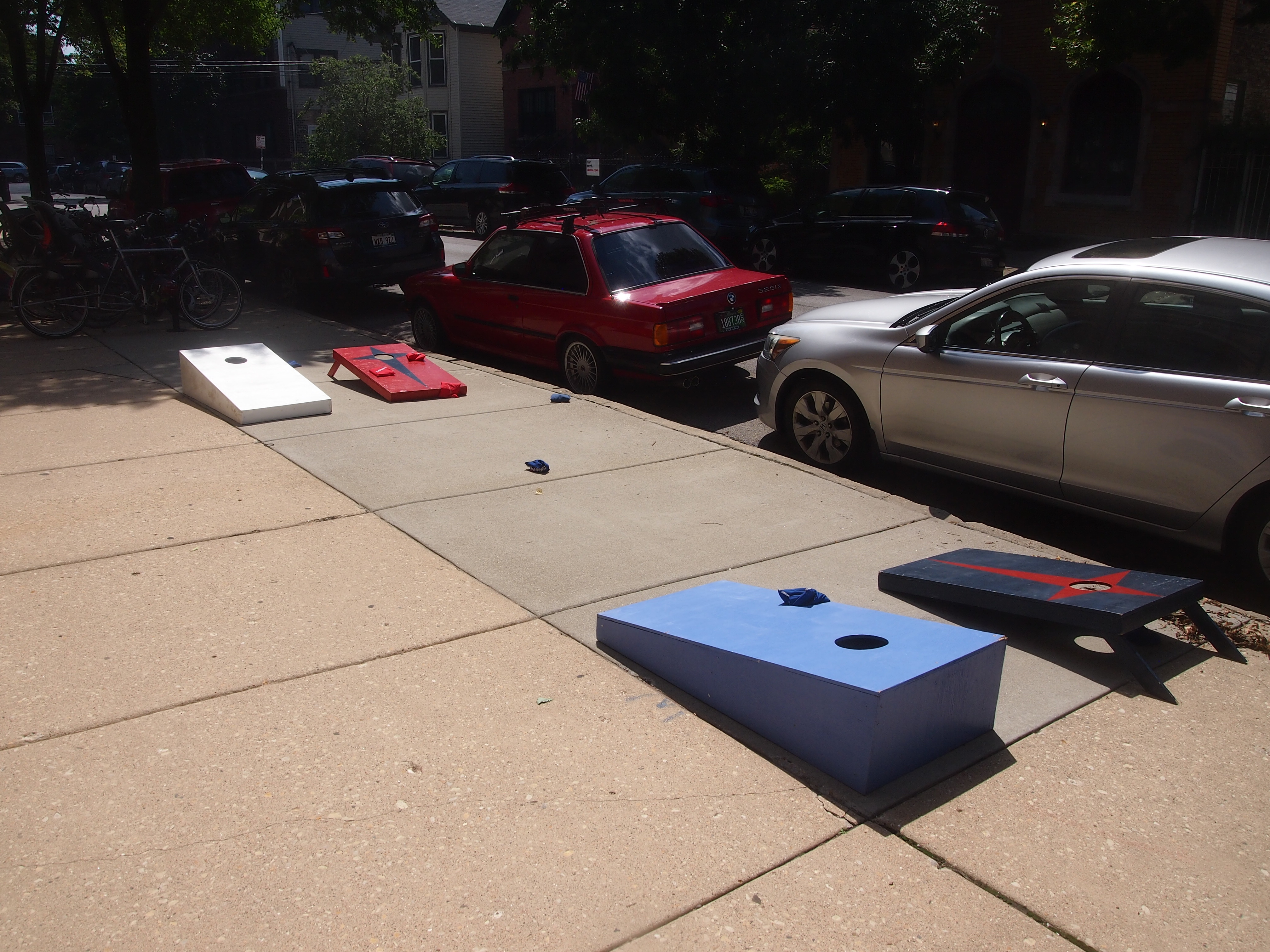
Also in Bucktown: a game of beanbag on the sidewalk.

Bucktown 2017

Maybe there to remind us what politics ain’t.

Recently I picked up The Happy Isles of Oceania (1992) by Paul Theroux. It’s been sitting on my shelf for a number of years. So far it’s a good read. I understand that he has a reputation as a snob, and some of that comes through in his writing, but I don’t know the man personally, so I wouldn’t have to put up with him anyway.

He writes well, at least about the places he’s been, and that’s all that counts. His description, early in the book, of hiking on the South Island of New Zealand, is a fine bit of work, and had the unfortunate side effect of making me want to drop everything and go do that. The mood passed.

Theroux’s work did influence me to go one place. In the early ’90s, I read his Sunrise With Seamonsters, a collection of essays and travel bits, and one piece included a mention of the Cameron Highlands on the Malay Peninsula. It’s a former British hill station, more recently a getaway place for Malaysians and the trickle of tourists who’ve heard of it. His mention of it was probably where I first heard of the place.

When I went to Malaysia for the first time, I made a point of going there, and did not regret it. Besides cool temps, you can enjoy jungle walks (unless you’re Jim Thompson), a butterfly garden, a nighttime view that can include the Southern Cross, and eating Chettinad cuisine on a banana leaf, with your hands.

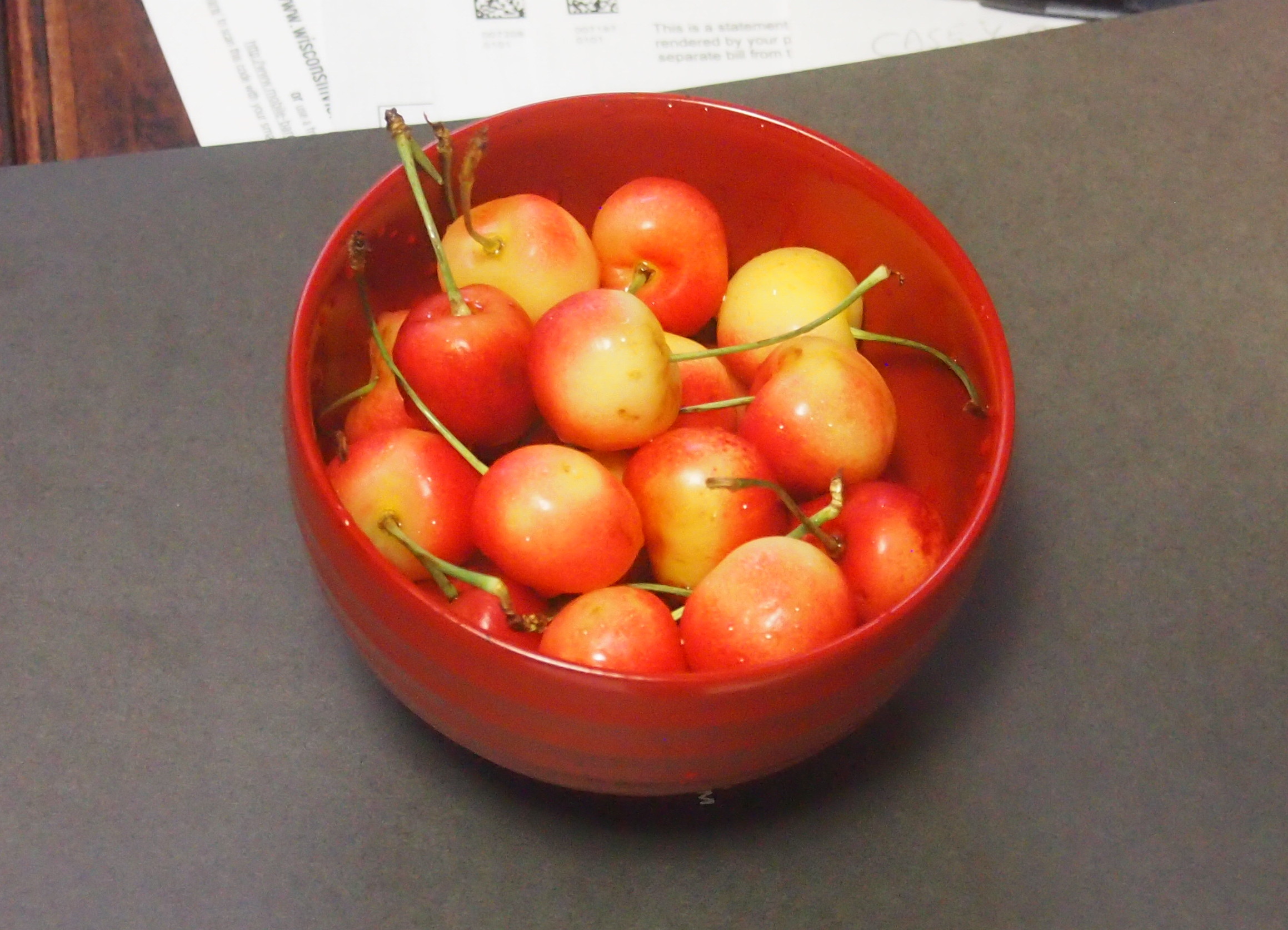
This is what life is, according to the song.

Life's a Bowl of Cherries

Rainier cherries, which are in season now. Very popular around the house, and we buy them in large quantities while we can. I’m glad that there are still some foods, some fruits, that have a season.
I’m not all that keen on Rudy Vallee, but his version of the song is good. And the lip sync from Pennies From Heaven (1981) is amusing. I saw that movie when it was new, probably because Steve Martin was in it, but I don’t remember very much about it. Maybe I should watch it again. I know I was too young then to appreciate its songs.

St. Hedwig, Bucktown

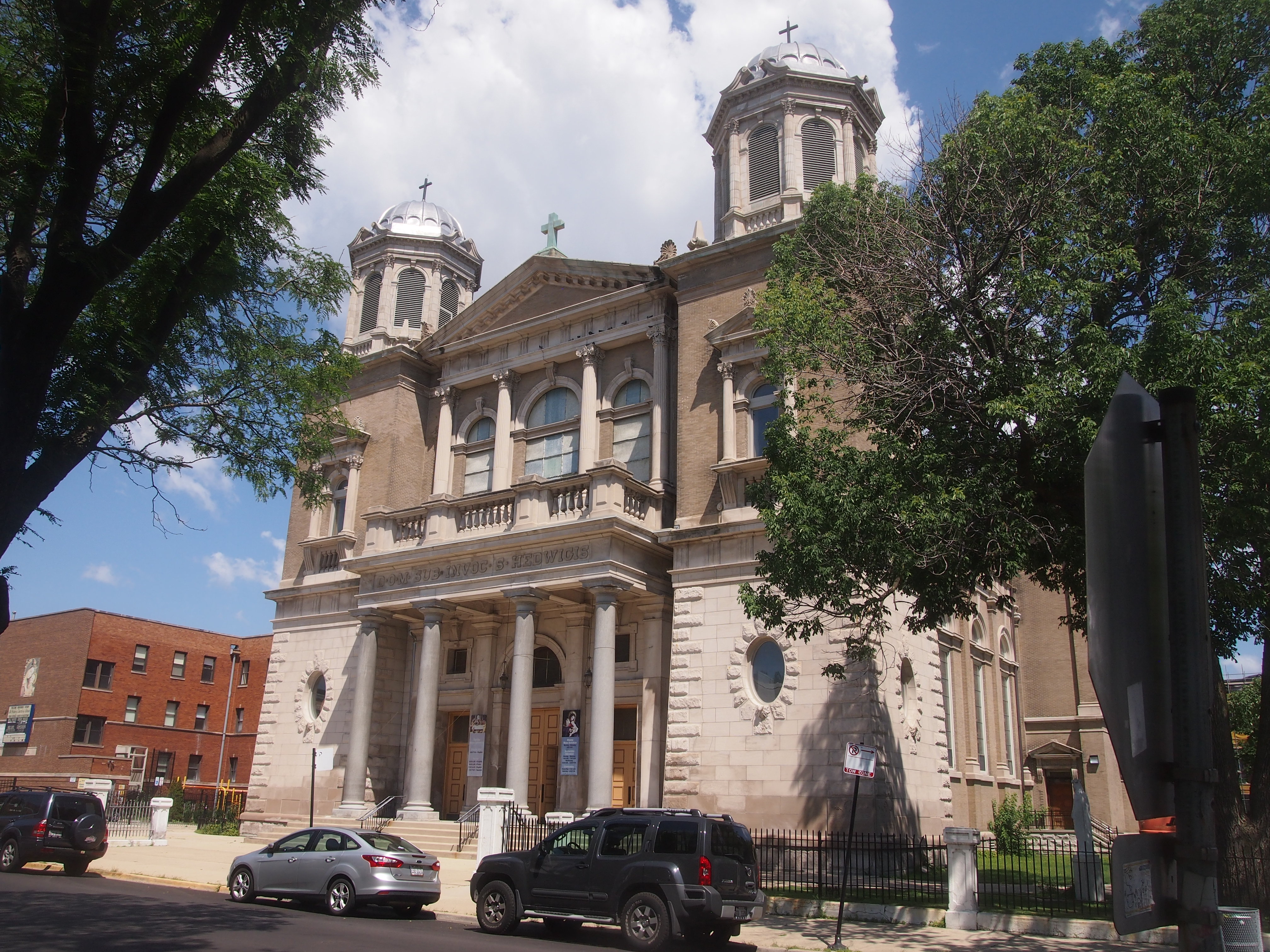
Not far away from Covenant Presbyterian Church is St. Hedwig, at 2100 W. Webster Ave., the church whose Polish congregation split in the 1890s. As a mainstream Catholic church, St. Hedwig has endured into the 21st century. It too is a handsome edifice.

St. Hedwig's, BucktownAdolphus Druiding did the design. The AIA Guide to Chicago says, “In this high-octane Renaissance Revival design for a Polish congregation, the geometric facade is anchored by square corner piers topped by robust cupolas. The aedicula above the entry is echoed by a pedimented reredos behind the altar.”

Aedicula, now there’s good $10 word. I remember that’s where the Lares and Penates go, though I suppose it’s a little different in an architectural context, especially for a Christian church.

Lares and Penates. A band name waiting to be taken. Or the name of a fictional detective agency.

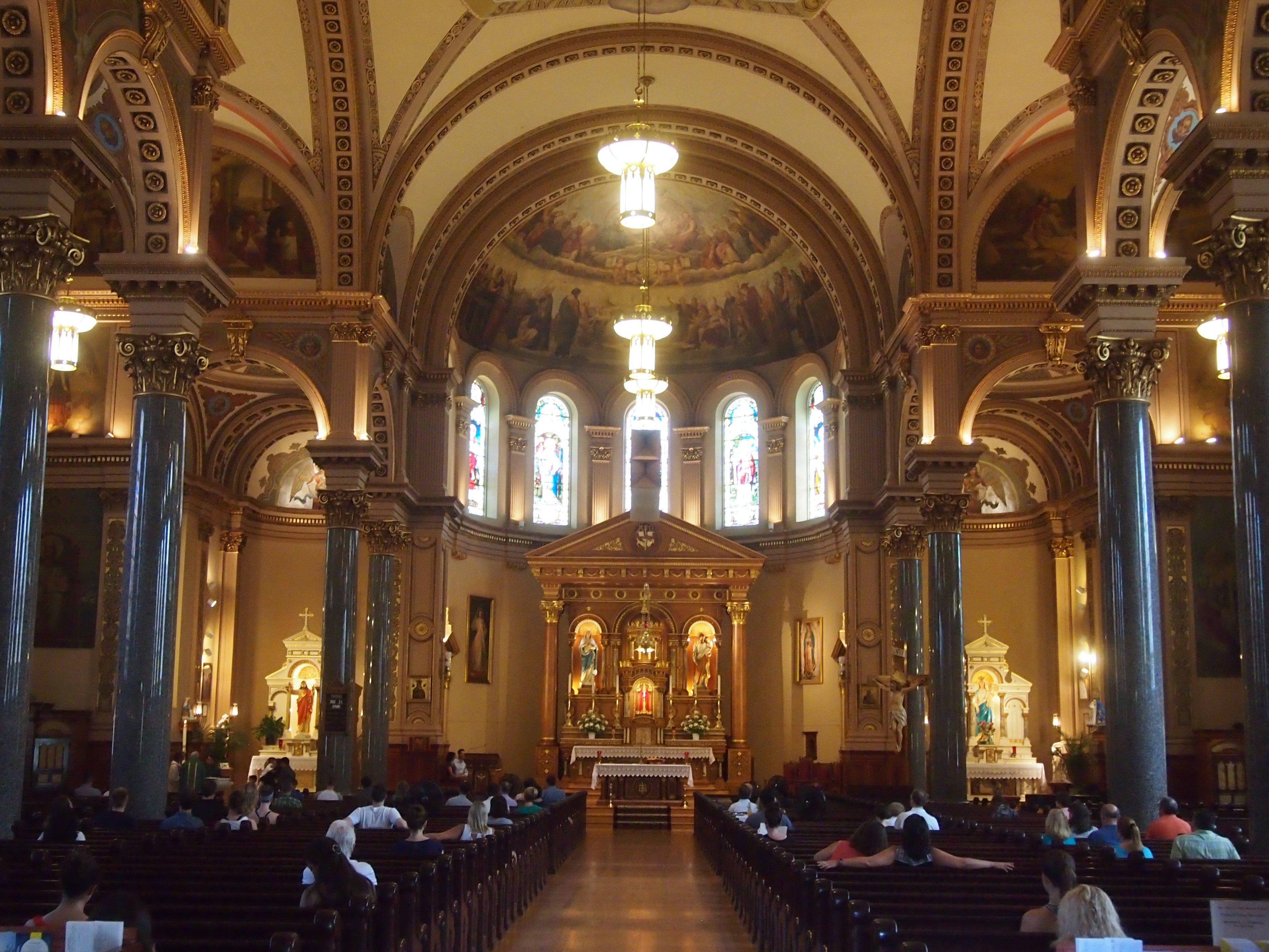
Here’s the interior. I spent a few minutes there as well.

St. Hedwig's, Bucktown

As soon as I sat down, another baptism got under way, not 20 minutes after the two I witnessed at Covenant Presbyterian a few blocks away, this one a little boy. I was able to compare and contrast the Catholic and the Protestant versions, for what that was worth. I live a charmed life.

Covenant Presbyterian Church, Bucktown

In Bucktown on Sunday I visited two churches during my late-morning walk. The first was Covenant Presbyterian Church.

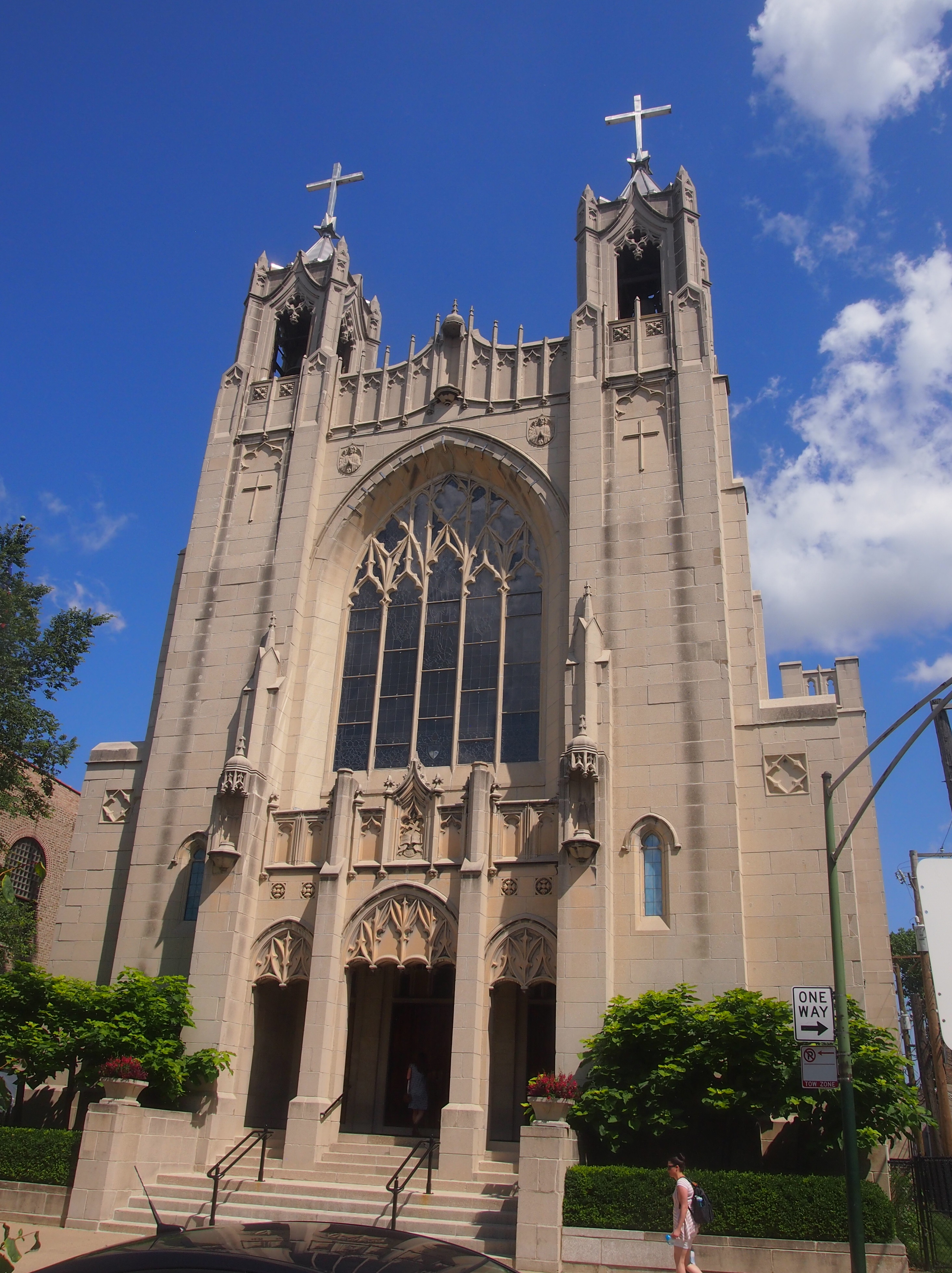
Covenant Presbyterian Church, ChicagoThis is no ordinary large church. It has quite a back story, because the church building used to be the Cathedral of All Saints of the Polish National Catholic Church in Chicago. I’ve visited that organization’s cemetery, out near O’Hare.

So not precisely Catholic, but pretty close. I am informed that the Polish National Catholic Church is not in full communion with Rome, and hasn’t been since it was formed in the late 19th century. Neither is the separate but similar-sounding Polish Catholic Church, but that church is a member of the Old Catholic Union of Utrecht. The Polish National Catholic Church used to be communion with Utrecht, but isn’t any more — that happened only in the last 10 years or so. Rather, it’s with the Union of Scranton, which also counts the Nordic Catholic Church as a member. Need a scorecard to keep up with the schisms.

Now that that’s cleared up, the following is about what’s now Covenant Presbyterian Church, located at 2012 W. Dickens Ave. The text  is from an interesting blog, which I’ll take as solid enough information. The story starts in 1890s Polish Chicago.

“Overwhelmed by the numbers of new immigrants pouring into Bucktown, the Polish-American pastor of St. Hedwig’s brought in Fr. Anthony Kozlowski, a fiery, European-educated young Polish priest to help minister to the parishioners, few of whom spoke English. St. Hedwig’s was under the administration of the Resurrectionists, an order of priests of mostly Polish extraction. …

“Many of the younger immigrants were suspicious of the order, thinking that it was being pressured by the Irish hierarchy that otherwise ran the American church, and the Chicago church in particular.

“Details are thin, but in early 1895, Kozlowski led a revolt against the Resurrectionist pastor, Thaddeus Barzynski, and his brother Joseph Barzynski, that eventually resulted in two-thirds of the St. Hedwig’s congregation quitting the church and following Kozlowski away from governance by the Pope. [They objected to much of Vatican I, it seems.]

“The revolt went critical on February 7, 1895. Kozlowski’s hotheads broke into the St. Hedwig’s rectory, where the Barzynskis had barricaded themselves, and assaulted the priests. The police were called, and found a crowd of 3,000 immigrants milling around the church. When the officers attempted to disperse the crowd, several protesters threw powdered red pepper in their faces. Dozens were injured in the ensuing brawl, and Chicago’s (Irish) Roman Catholic archbishop shut down St. Hedwig’s for several months.

“By that time, the 1,000 or so immigrants who objected to Papal rule had bought land a few blocks away and began built their own church, All Saints Cathedral.”

It took quite a while. Eventually, the congregation tapped John G. Steinbach to design the church. Its cornerstone was laid in 1931, and the church served the breakaway parish for the next 62 years, until the building became too expensive to maintain and was sold to Covenant Presbyterian Church.

“Covenant Presbyterian’s white imitation cement stone and neo-Gothic features distinguish it from other Polish Cathedral-style churches designed by Steinbach and his partner, Henry Worthmann,” writes Amy Korte in Chicago Architecture.

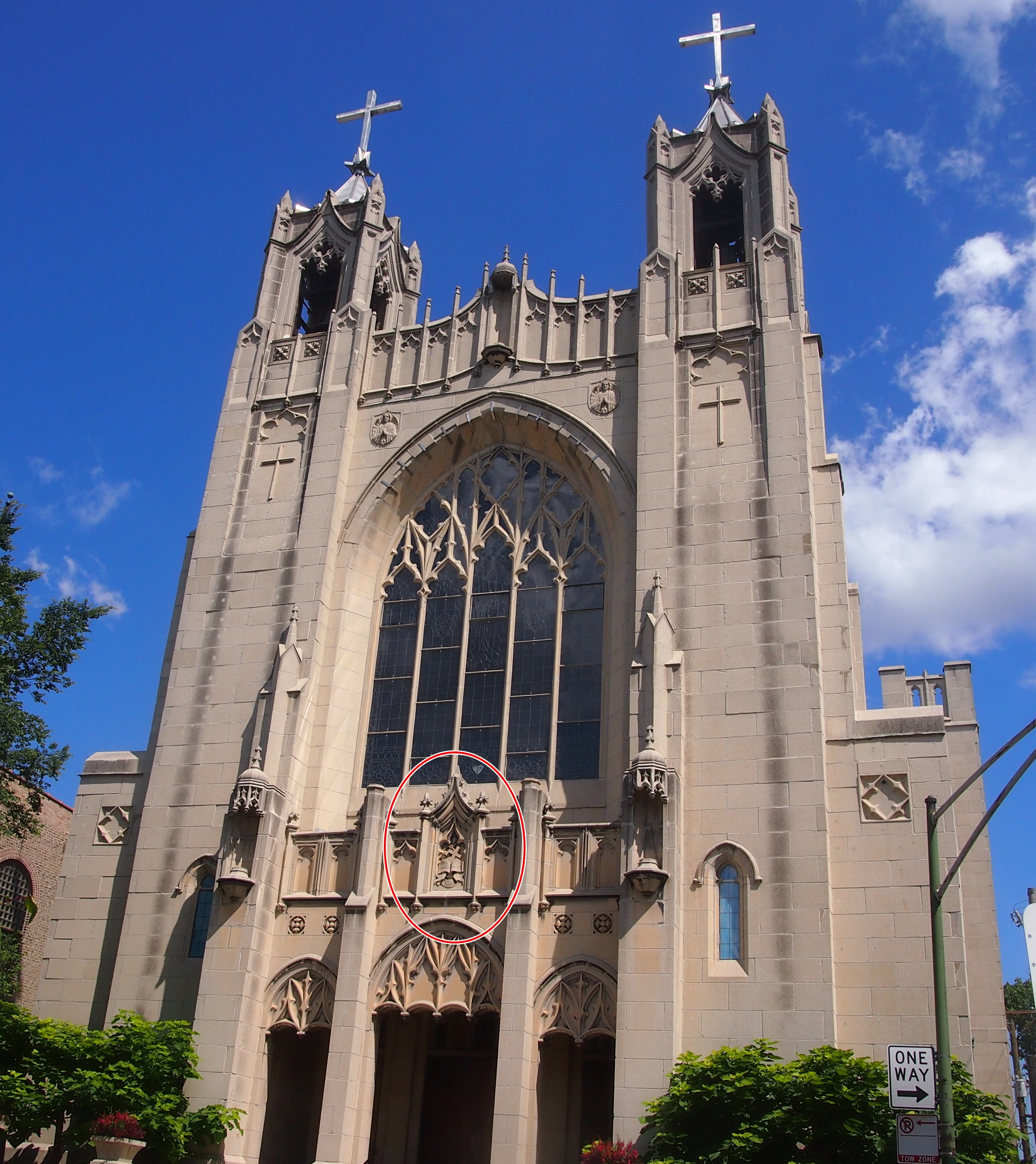
“A carving above the main entrance depicts a book, the sun, a cross, and a palm. Together, these images comprise the emblem of the Polish National Catholic Church, the denomination with which All Saints had affiliated itself. Below these symbols lies the Polish inscription ‘Prawda, Praca, Walka,’ an abbreviation of the denomination’s motto, ‘With truth, work and struggle, we will succeed.’ ”

I noticed that feature, but eager to get out of the sun, I didn’t take any pictures. The inscriptions are here.

Covenant Presbyterian Church, Bucktown

I sat at the back of the church for a short spell, taking my seat just as a pair of baptisms were taking place — two baby girls. A delightful thing to chance across, even if you don’t know the families.

Bucktown Sunday Morning

At about 5 pm on Friday afternoon, wind and rain and lightning struck Chicago’s northwest suburbs with special fury, knocking down trees and large branches. Itasca was particularly hard hit.

Lilly, whose train from the city was due later that evening, found herself delayed by a hour because of debris on the tracks near Itasca. On Sunday morning, we drove through that town on Irving Park Blvd. and saw several large trees laid low, including one on top of a building.

Our neighborhood didn’t get hit quite so bad. But we did get hail for a few minutes. Smallish ice pebbles that made some noise, but did no damage to the roof or the car that I could see.

Bucktown Chicago 2017By Sunday, the weather was very warm and steamy and not especially violent. Just the kind of day for a walk in the city, which is where we were going as we drove through Itasca. For a stroll I picked Bucktown, which is directly north of Wicker Park.

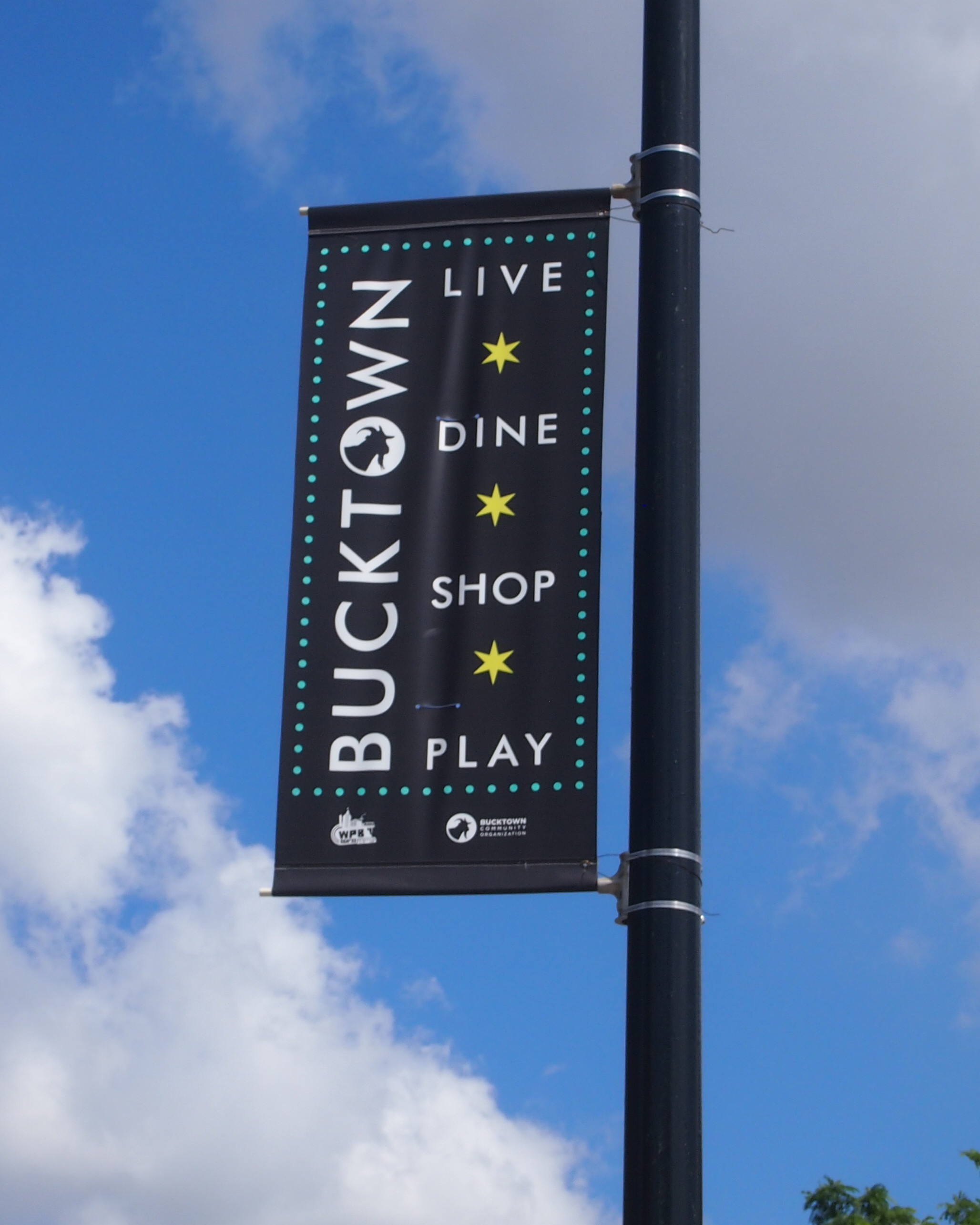
I didn’t live, dine, shop or play at all during my late morning amble, except that I was a living being as I passed through, and maybe I “played,” in the sense that walking around and looking at things isn’t work, unless that’s what you’re paid to do.

I don’t remember hearing much about the neighborhood during the late ’80s, but by the late ’90s, Bucktown was known as a gentrifying area. The gentrifying process is now mature, in that the area’s not a cheap place to live, though I suppose Lincoln Park and the Gold Coast and their ilk still outprice it.

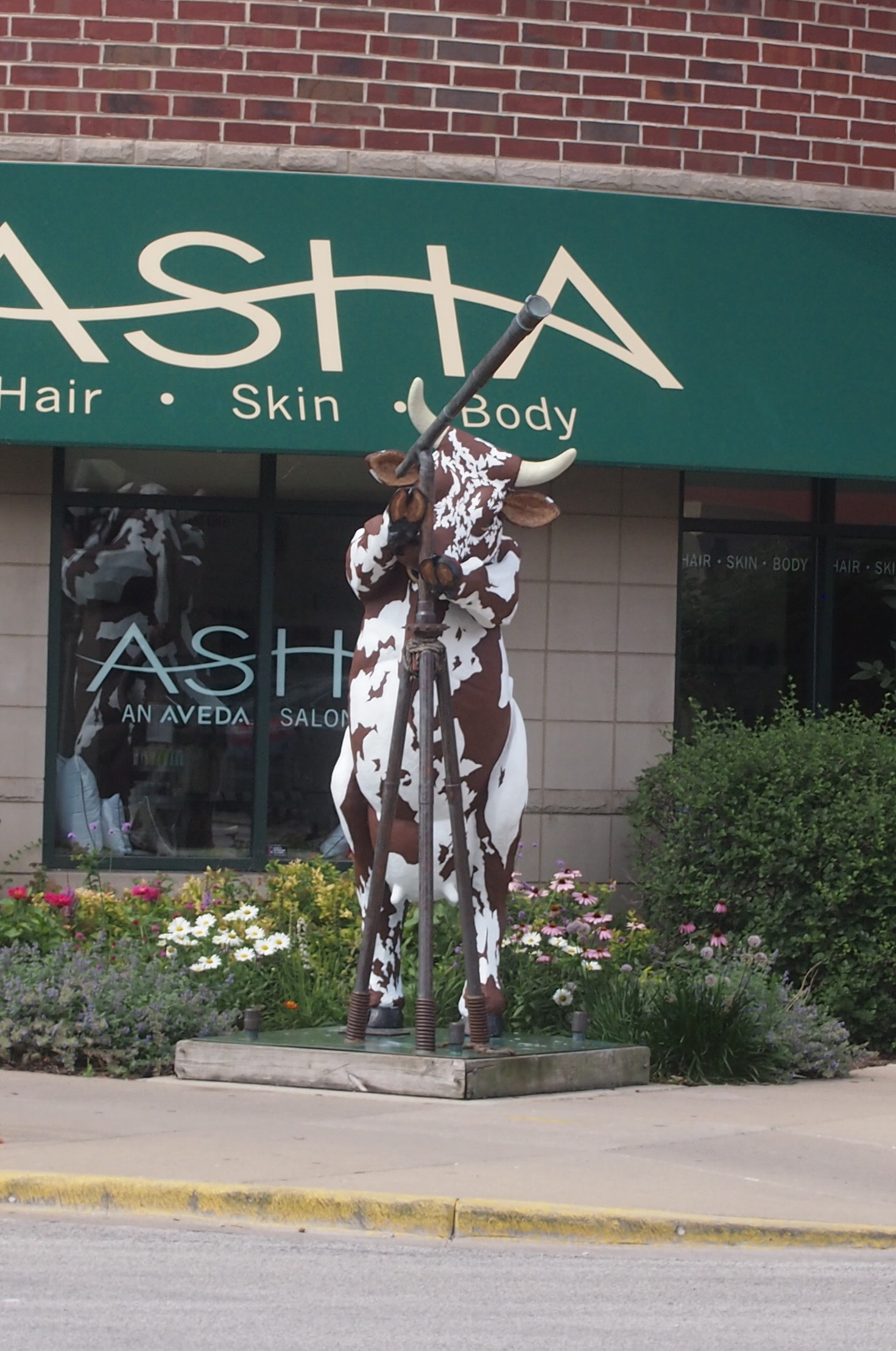
With the cost, you get amenities. Such as a statue of a bovine looking through a telescope, or maybe a fanciful theodolite.
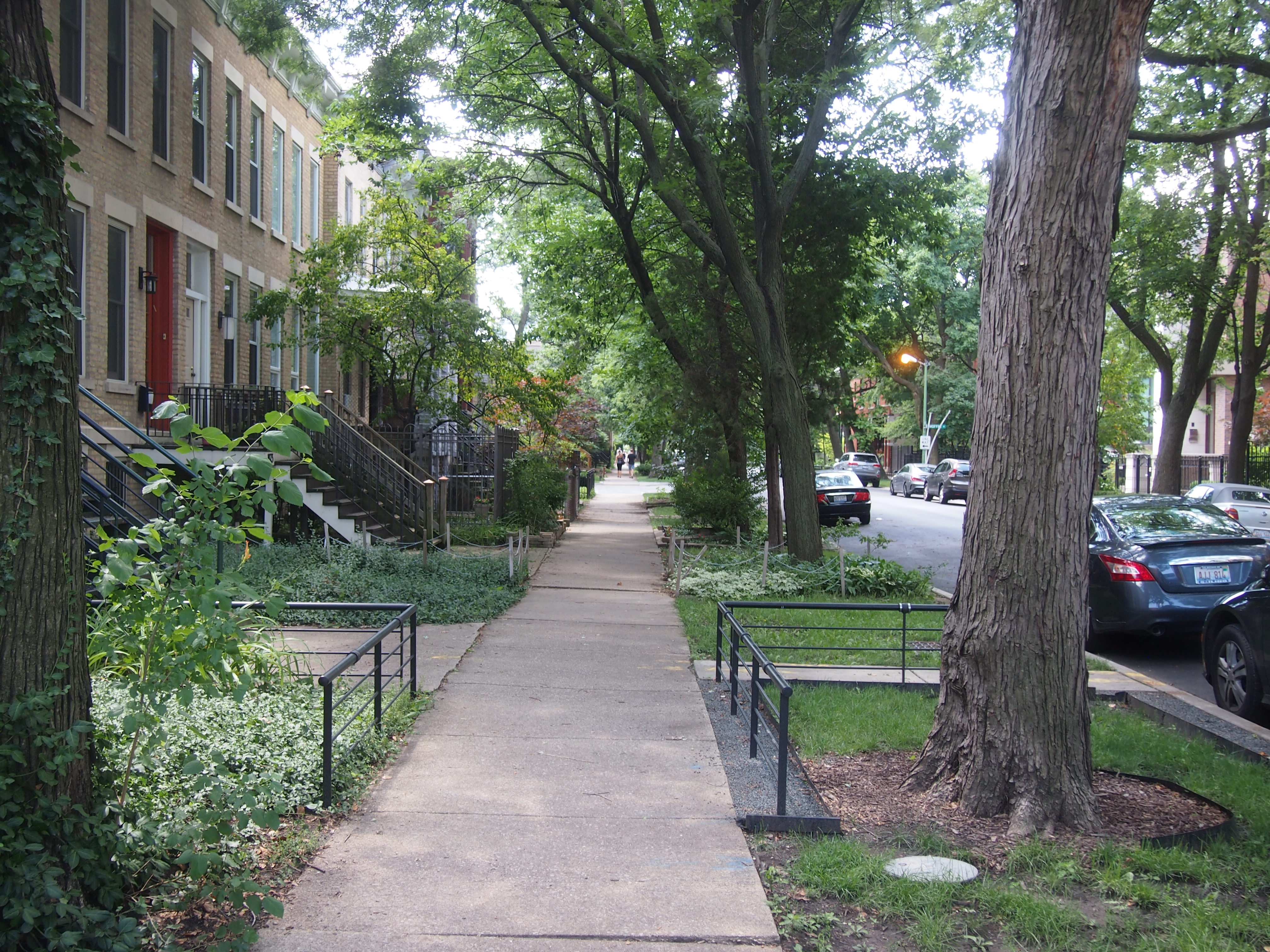
Bucktown Chicago cowAnd shady residential streets to walk down. That turned out to be an important feature on Sunday, as temps climbed toward 90 F.
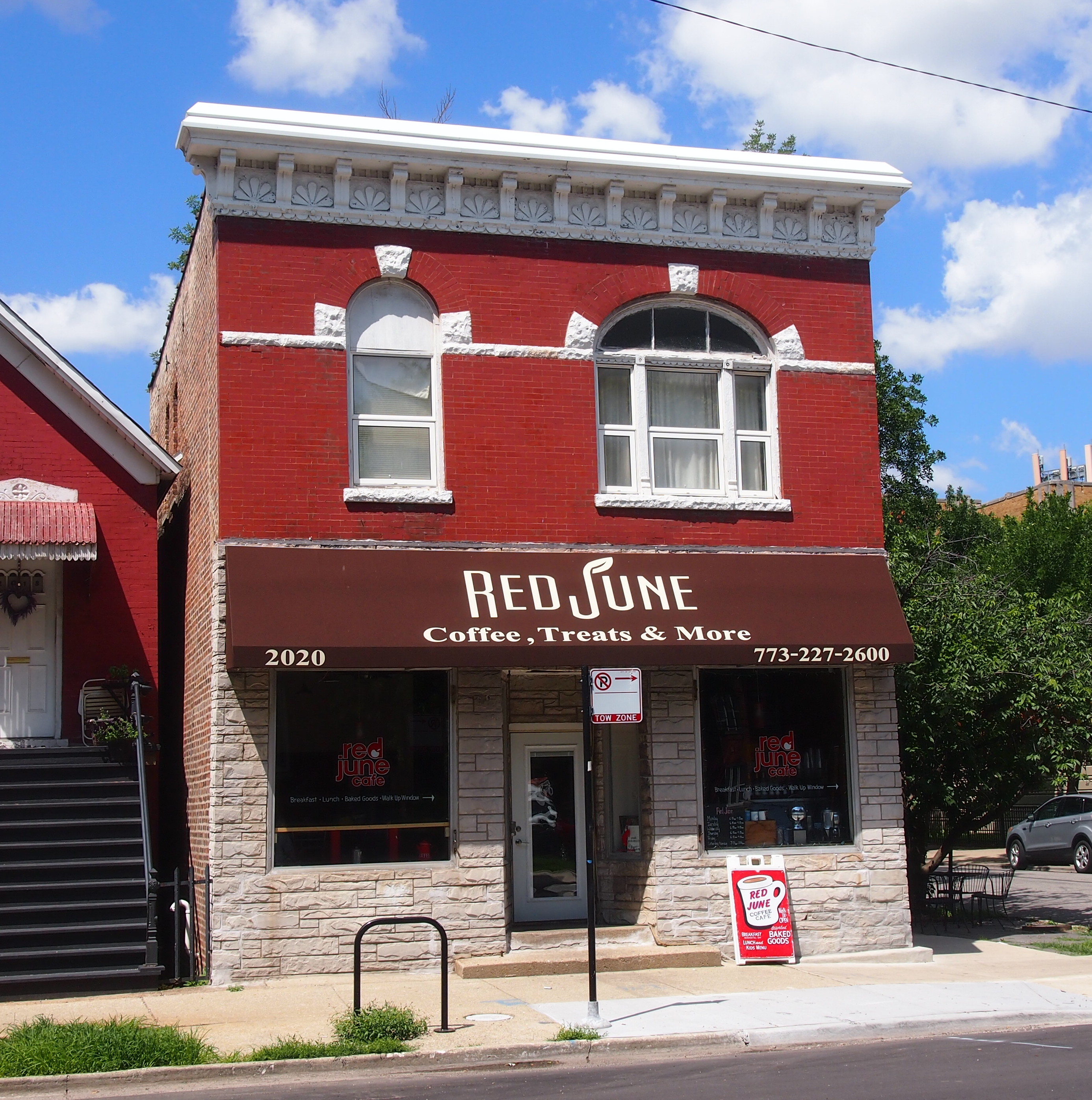
Bucktown, ChicagoBucktown features a fair number of interesting older buildings put to new use.

Bucktown Chicago 2017Bucktown, ChicagoAs well as new construction.
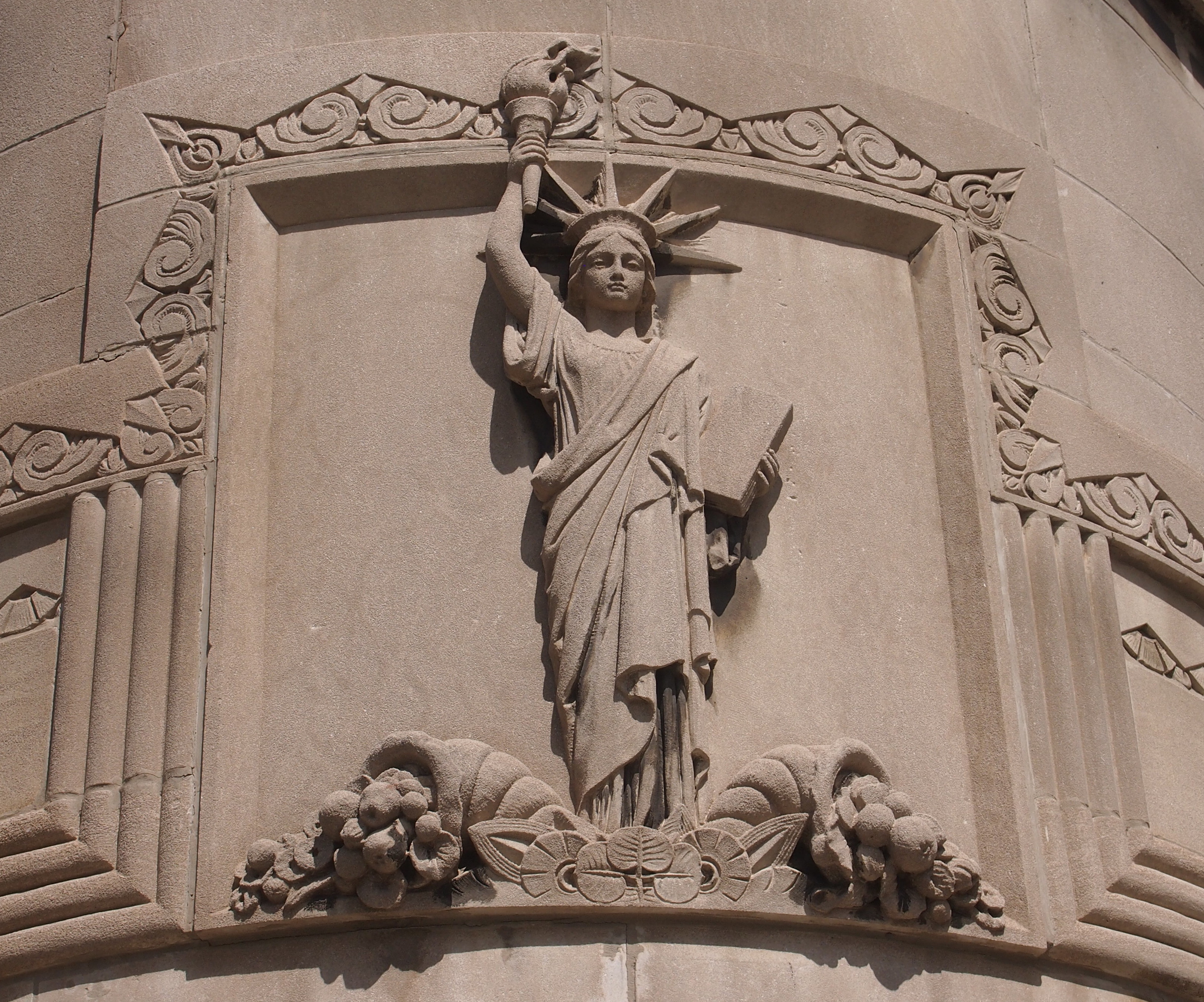
Bucktown, ChicagoAlong with some interesting detail sometimes. This figure looked out from just above the entrance to an older brick building on Damen Ave.
Bucktown Statue of LibertyYou never know where you’ll find Statue of Liberty-like images. The statue deserves to be called the i-word, but that word has been beaten to death in our time. My own favorite use of Liberty Enlightening the World — or La Liberté éclairant le monde to be more than pedantic — was a sizable one I saw years ago over the entrance of a pachinko parlor in Osaka.