Pappy Lee O’Daniel

The day after I visited LBJ’s boyhood home, I discovered this tucked away at my mother’s house.

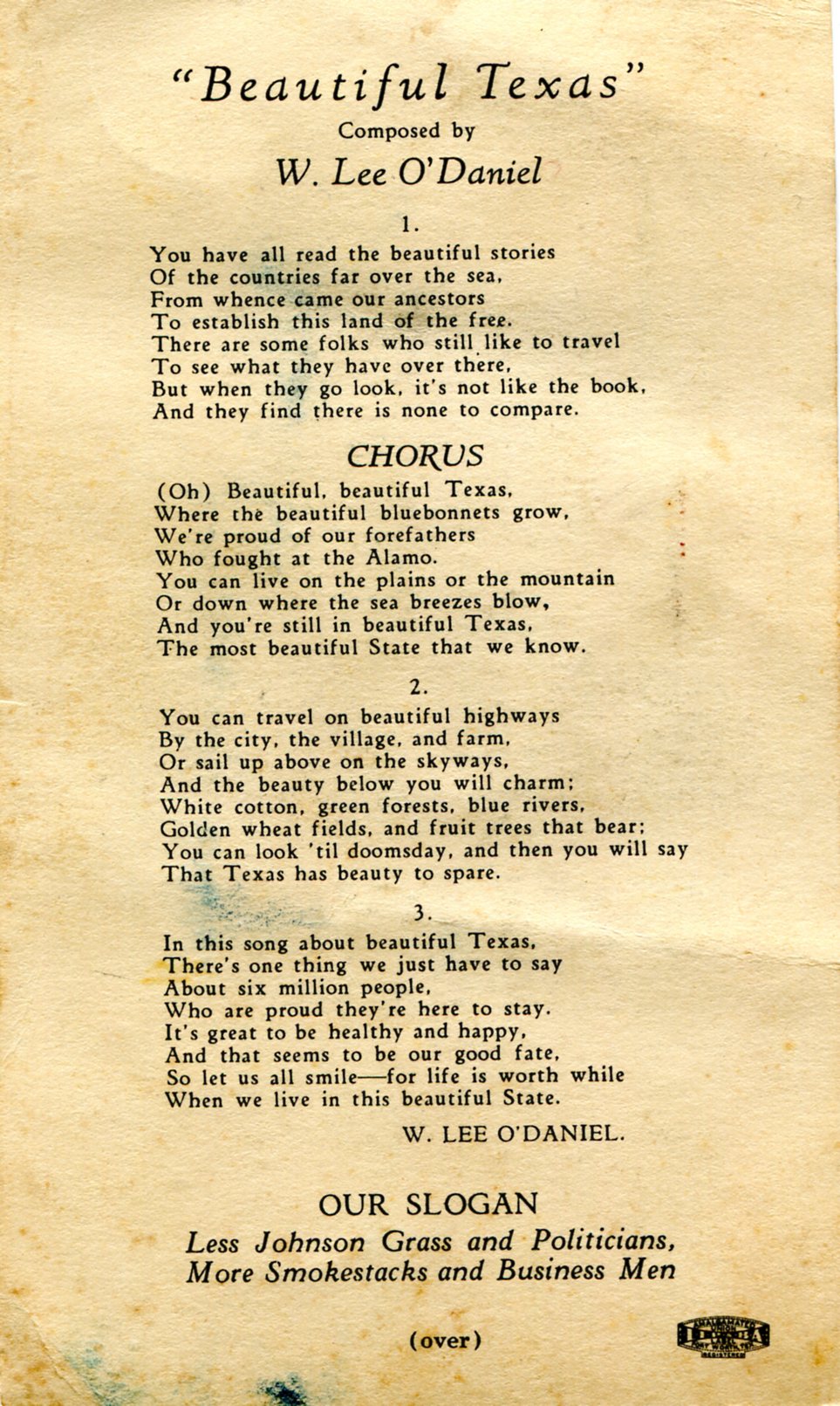
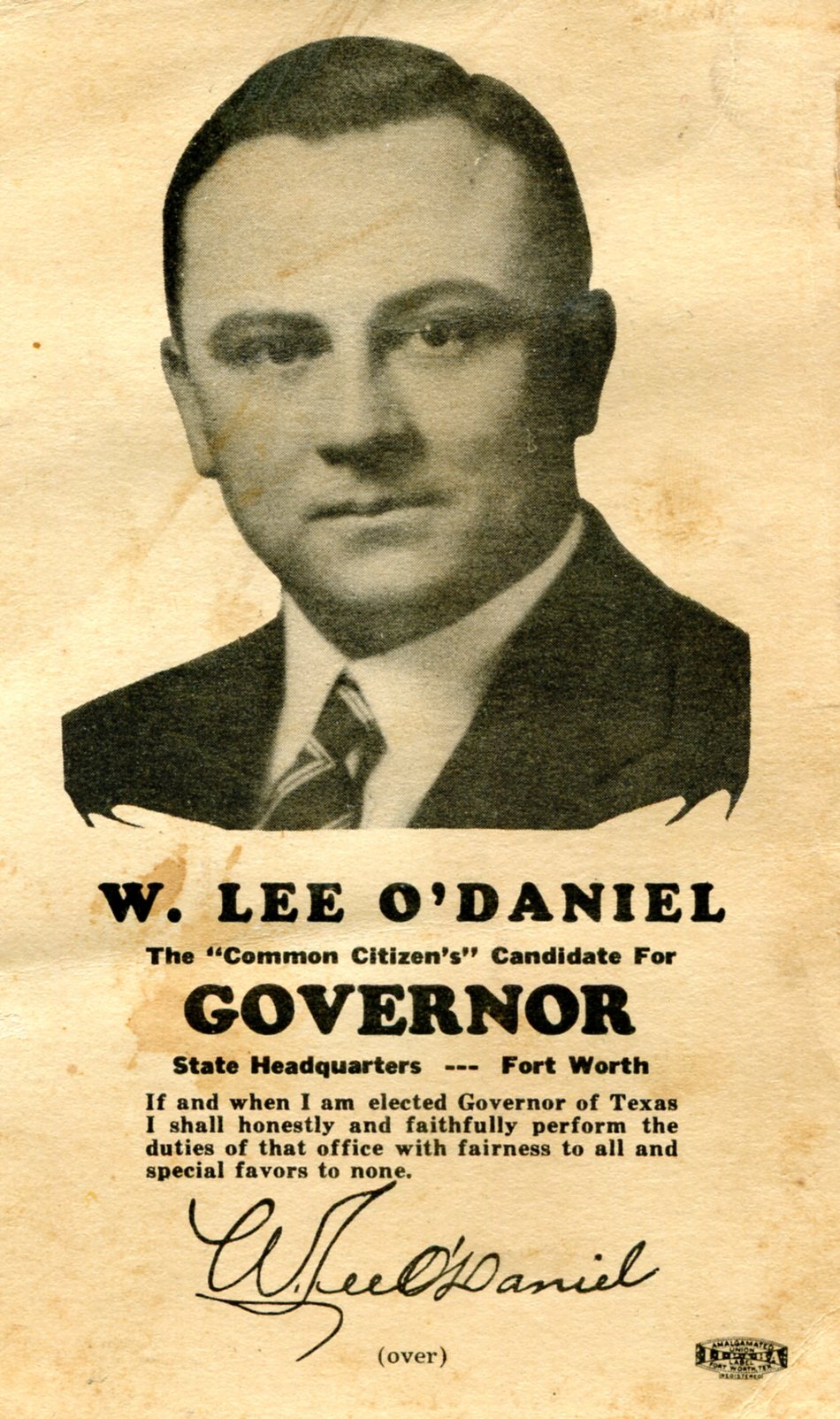
Pappy Lee O'DanielIt’s a campaign card for W. Lee O’Daniel. It’s clear that it dates from his first run for governor of Texas, which was in 1938. Why my mother kept this, I couldn’t say. I don’t remember her ever saying anything about “Pappy” Lee O’Daniel, and in any case she herself never voted for him, since she wasn’t old enough.

On the back are the lyrics to three stanzas of “Beautiful Texas,” a song pretty much lost to time, but written by W. Lee O’Daniel, the singing, flour-making governor of Texas from 1938 (he won the election and re-election two years later) to 1941, when he became a U.S. Senator by being the only person to best LBJ in an election (not counting 1960 primaries). All in all, one of Texas’ more interesting governors.

Beautiful Texas by Pappy Lee O'DanielIf he sounds familiar, it’s because the Coen brothers borrowed the name, an association with flour, and hillbilly music for the governor of Mississippi character played memorably by Charles Durning in O Brother Where Art Thou?

Why? Because they’re the Coen brothers. Presumably they were amused by the idea of a flour-merchant governor with hillbilly music on his side. For a couple of gentlemen from Minnesota, that shows a remarkably granular interest in Texas history, even if they put the fictional Pappy in an alt-universe, Coen brothers-flavored Mississippi.

“Moral fiber? I invented moral fiber! Pappy O’Daniel was displaying rectitude and high-mindedness when that egghead you work for was still messing his drawers!” — the fictional Pappy O’Daniel.

LBJ’s Boyhood Home

Some years ago, I visited the “Texas White House,” that part of the Lyndon B. Johnson National Historical Park where President Johnson used to entertain politicos of various kinds, talk on the phone constantly, and perhaps watch all of the network news programs at the same time, though the picture I’ve seen of him doing that was at the regular White House. The Texas White House is on the LBJ Ranch near Stonewall, Texas, along with a number of other structures.

Not far away, in Johnson City, Texas, is another unit of the National Historic Park, which includes the Johnson’s boyhood home. En route from Austin to San Antonio on March 6 — I didn’t take the most direct way — I stopped at the boyhood home and caught the last tour of the day.
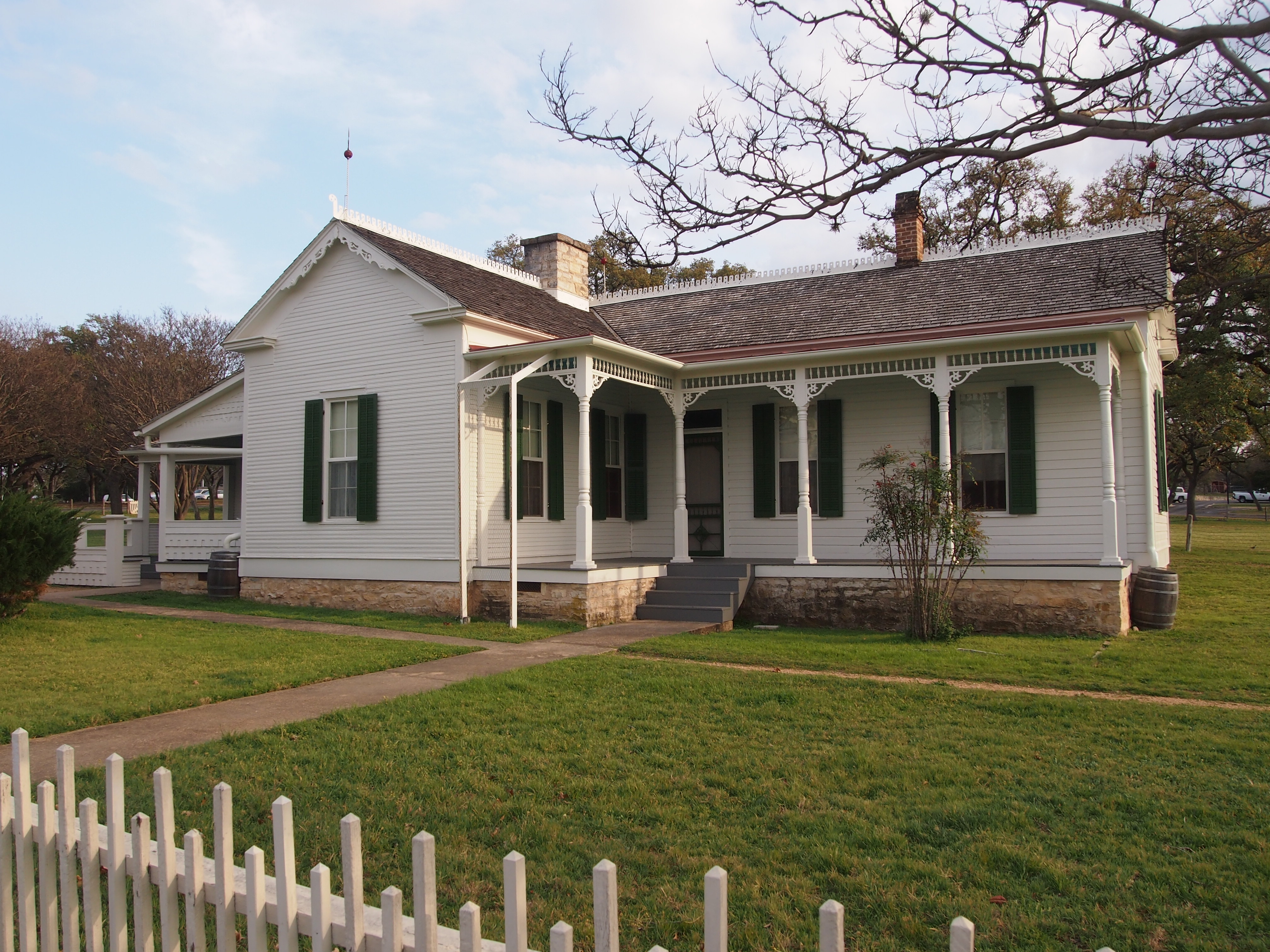
LBJ Boyhood Home“Lyndon Johnson’s family moved from a farm near Stonewall, Texas, to Johnson City (a distance of about fourteen miles) two weeks after his fifth birthday, in September 1913,” the NPS says. “For most of the next twenty-four years, this was their home…

“In February 1937, Lyndon Johnson returned home from Austin to seek the advice of his father — should he run for Congress? It was the first week of March, 1937, when Lyndon Johnson stood on the porch of his boyhood home to announce his candidacy for the U.S. House of Representatives for the Tenth District of the State of Texas.”

We too stood on the porch — me and the two other people on the tour. Our docent was knowledgeable, which is always good to find in out-of-the-way presidential sites. He was able to convey some sense of the Johnson family, and their Hill Country environs, during LBJ’s younger years.

Lyndon might have asked his father for advice, but Samuel Ealy Johnson Jr wasn’t entirely successful as a politician, or as a businessman. This might have been the source of some tension in the household, and perhaps spurred the younger Johnson to think bigger in terms of a political career, though plumbing the motives of historic figures involves speculation. In any case, it was probably important to the future cast of LBJ’s mind that his father entertained other local politicos on that same porch, within earshot of the boy.

The house itself is handsome and fairly spacious, which indicates that the elder Johnson had some financial success. A few of the items currently inside belonged to the Johnson family, but most of them are period pieces. During Johnson’s boyhood, none of the houses in Johnson City were electrified, including their house. That part of Texas was ultimately electrified through the efforts of Congressman Johnson via a Rural Electrification Administration loan.

According to the LBJ Library, he wrote in a 1959 letter, “I think of all the things I have ever done, nothing has ever given me as much satisfaction as bringing power to the Hill Country of Texas.”

The National Museum of the Pacific War

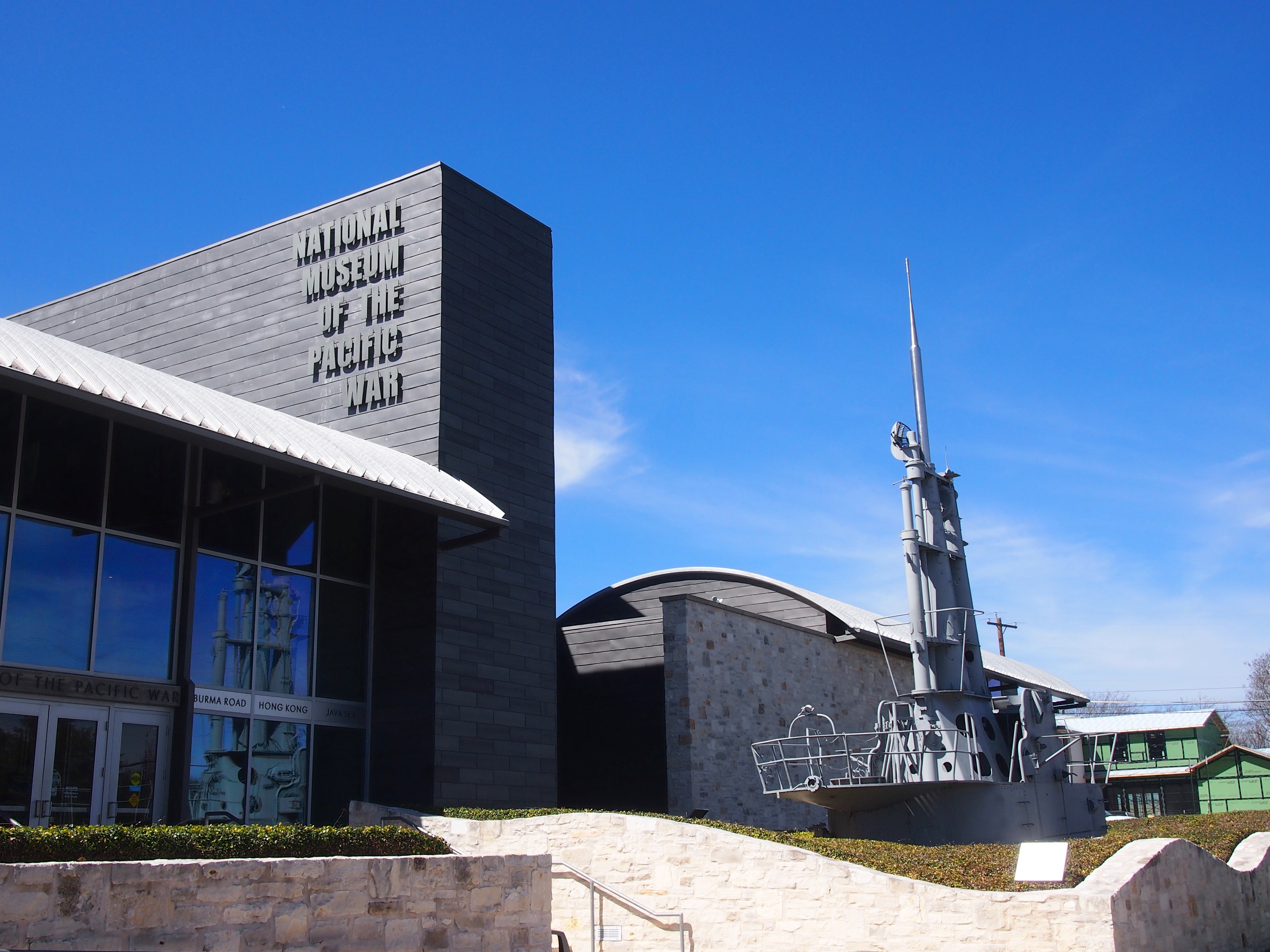
The National Museum of the Pacific War is a complex of structures at a short distance from each other in Fredericksburg, including the restored Nimitz Hotel, which now houses a museum about Adm. Nimitz; the George H.W. Bush Gallery, which focuses on the war in the Pacific; and more: the Veterans’ Memorial Walk, the Plaza of Presidents, the Japanese Garden of Peace, the Pacific War Combat Zone, and the Center for Pacific War Studies.

The Nimitz Hotel building used to include the war exhibits, but now they’re in the much larger (32,500 square feet) Bush Gallery, open since the 1990s, and expanded in 2009. Outside its entrance is the conning tower of the USS Pintado, a submarine that conducted a number of a patrols against the Japanese.
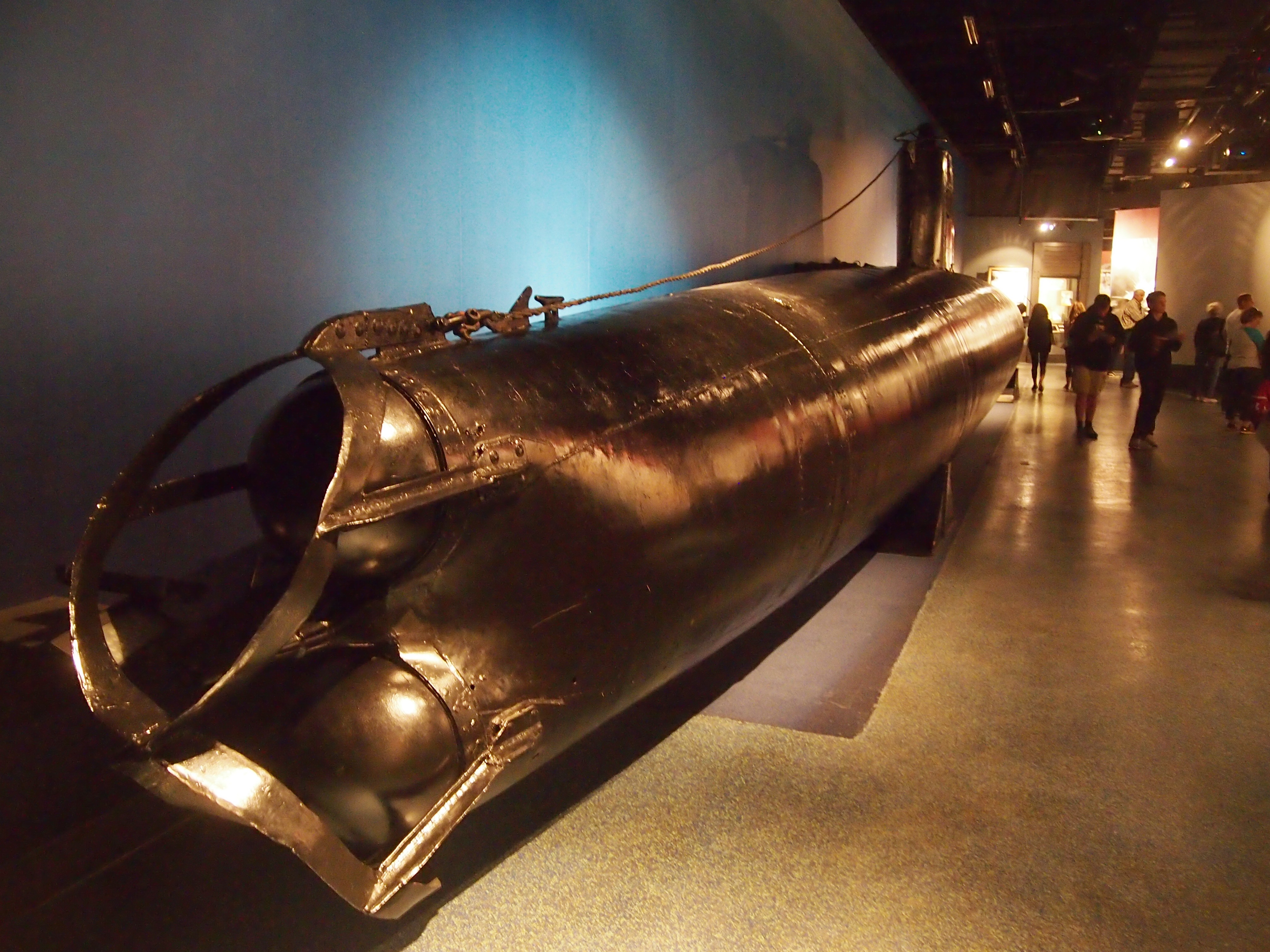
National Museum of the Pacific WarThe museum, organized chronologically beginning before the war and ending at the USS Missouri, is incredibly detailed, and home to a large array of impressive artifacts. That includes some impressively large artifacts, such as a Ko-hyoteki-class midget submarine that participated on the attack on Pearl Harbor, which actually seems pretty large when you stand next to it.
National Museum of the Pacific WarThe pilot of this particular vessel, Ensign Kazuo Sakamaki, survived its beaching and became the war’s first Japanese POW, having failed at suicide. According to the Honolulu Star-Bulletin in 2002, “When the war ended, he returned to Japan deeply committed to pacifism. There, Sakamaki was not warmly received. He wrote an account of his experience, titled The First Prisoner in Japan and I Attacked Pearl Harbor in the United States, and thereafter refused to speak about the war.” (He died in 1999.)

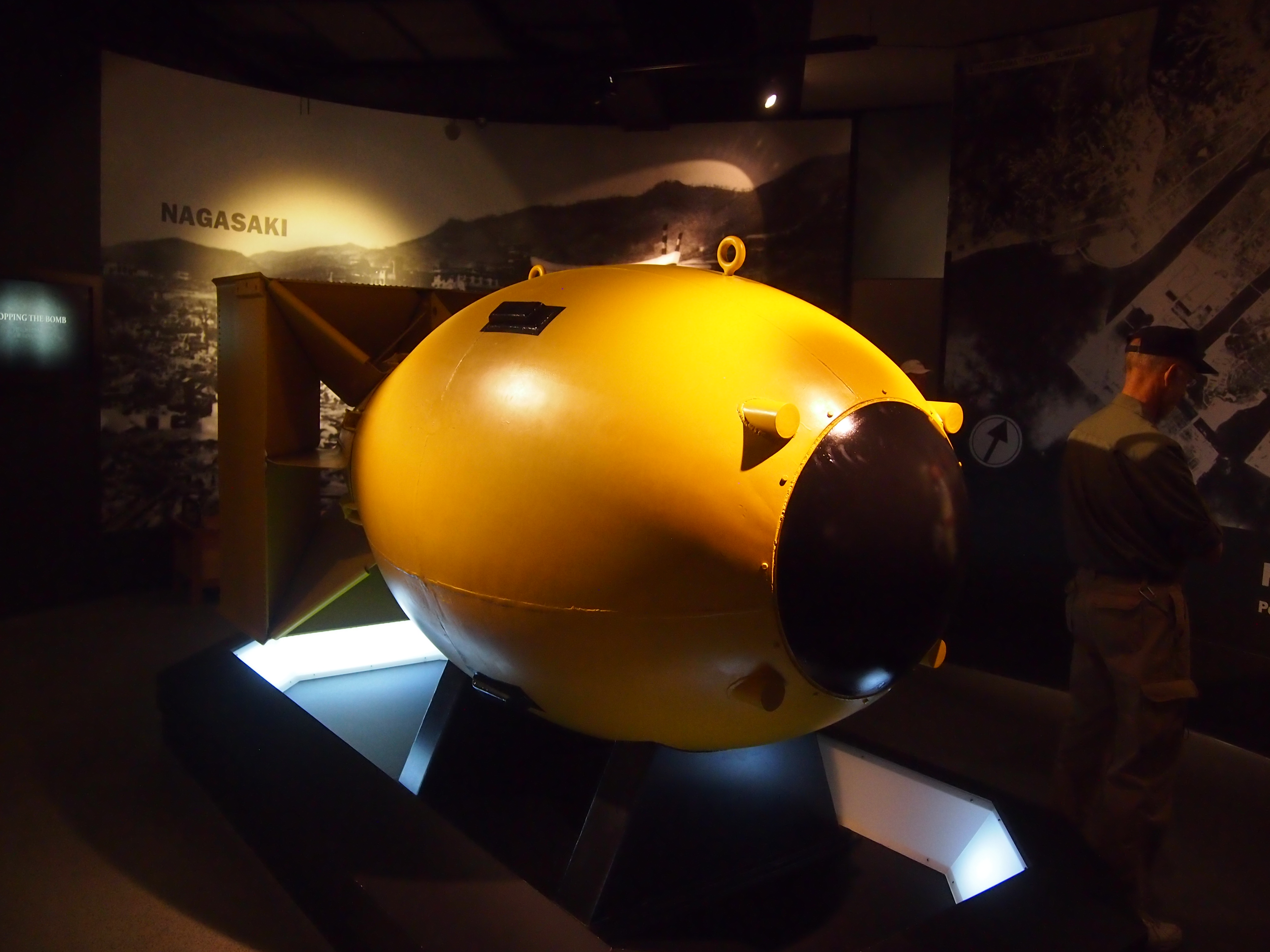
Also on display were a B-25 — as part of a exhibit about the Doolittle Raid — a Japanese N1K “Rex” floatplane, an F4F Wildcat fighter, and a replica of Fat Man, just to name some of the larger items.
Fat ManThe exhibits also included a lot of smaller weapons, tools, posters, uniforms, model ships and airplanes, military equipment, and sundry gear and items associated with the fighting and the people who were behind the front. Plus a lot to read. Campaigns and incidents both well known and obscure were detailed, such as the effort to salvage the ships in Pearl Harbor in the months after the attack, which was often dangerous work. Other Allied efforts weren’t ignored, such as the Australian advance on Buna-Gona, a campaign that incurred a higher rate of casualties than for the Americans at Guadalcanal.

All in all, a splendid museum. But exhausting. If I’d had time on Sunday as I went from Austin to San Antonio, I would have gone back (the tickets are good for 48 hours). It’ll be worth a return someday.

Fredericksburg Stroll & Der Stadt Friedhof

March 4 was sunny and pleasant in Fredericksburg, a settlement dating back to the efforts of German immigrants to Central Texas before the Civil War. A good day for a small town walkabout. As I walked, looking into the Main Street boutiques and wine shops and jewelers (James Avery has a shop there) and bistros and art galleries, it occurred to me that there needs to be a term for a town that partly or mostly lives off of upper middle-class day-tripers, retirees many of them, from near but not-too-near major metros.

Not tourist traps exactly, though there’s an element of that. I’ve been to a few of these towns, such as Galveston and Galena, Ill., and Sturgeon Bay, Wis., and Portsmouth, NH, and now Fredericksburg. Its locational advantage is proximity to Austin and San Antonio, and the town has a pleasant Main Street, a.k.a. Hauptstrasse, sporting a lot of repurposed 19th-century structures, many of historic or architectural interest.
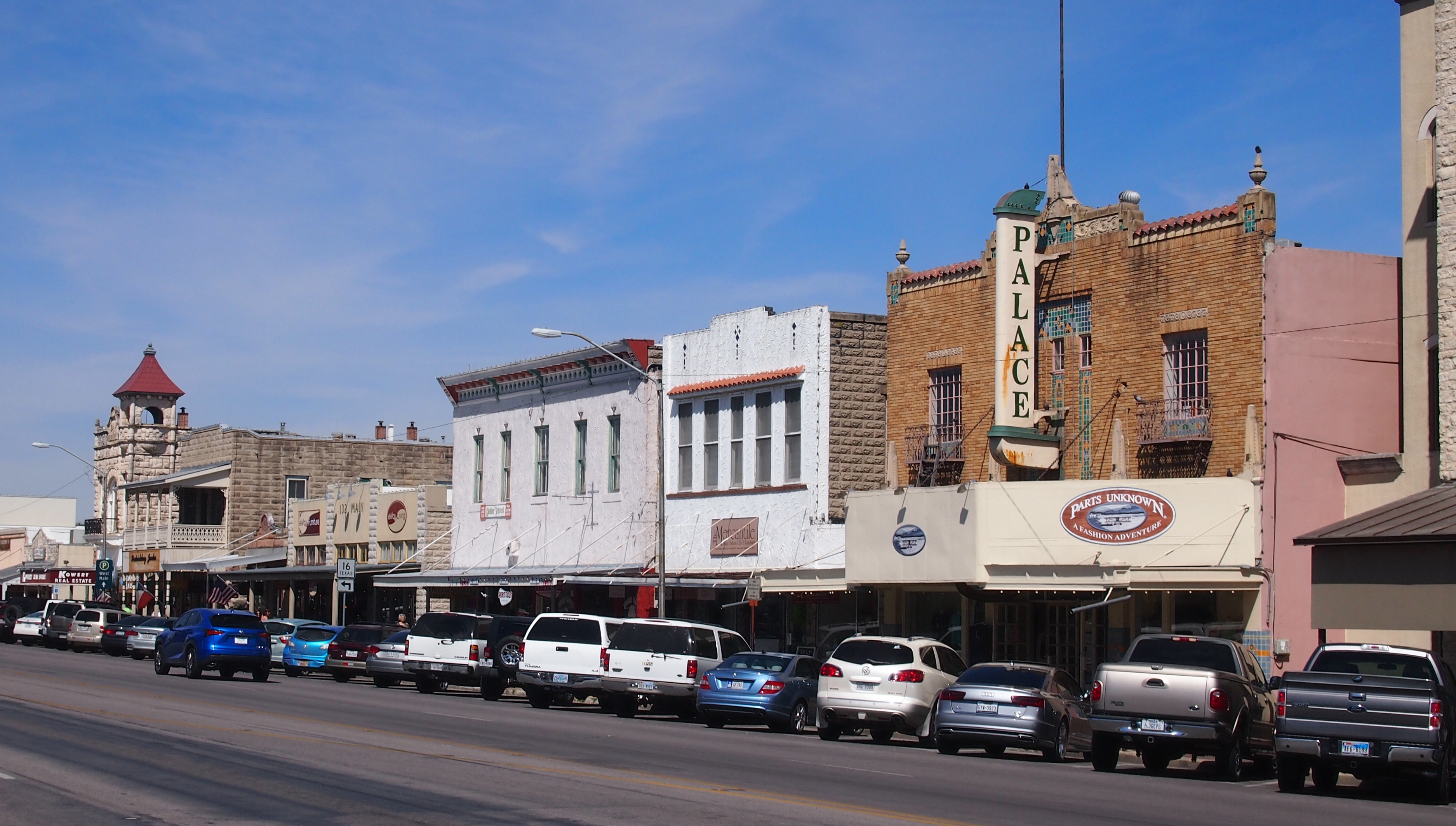
Fredericksburg 2016The building on the left below was once the White Elephant Saloon, dating from 1888, featuring a whitish elephant above the entrance for reasons probably lost to time.
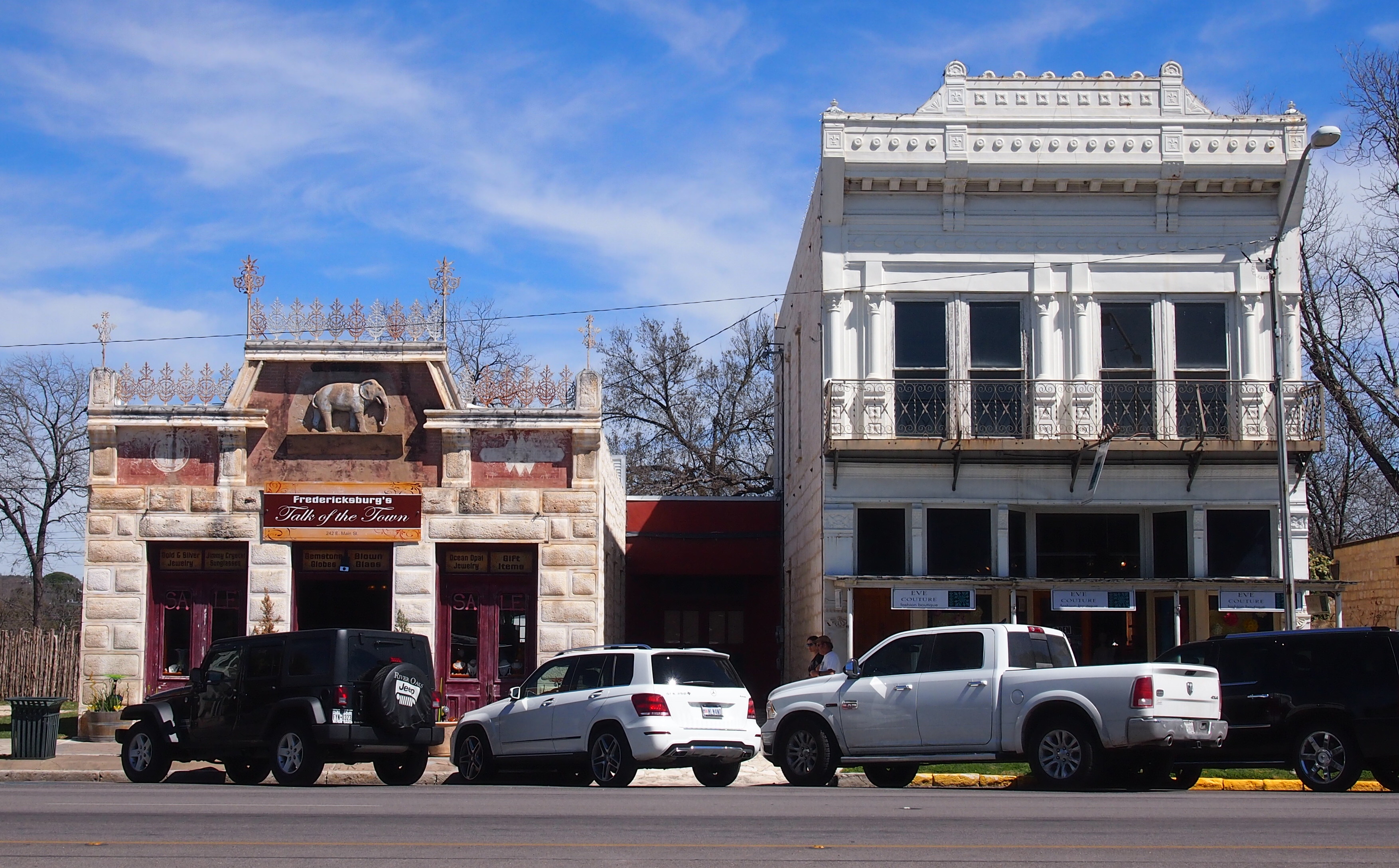
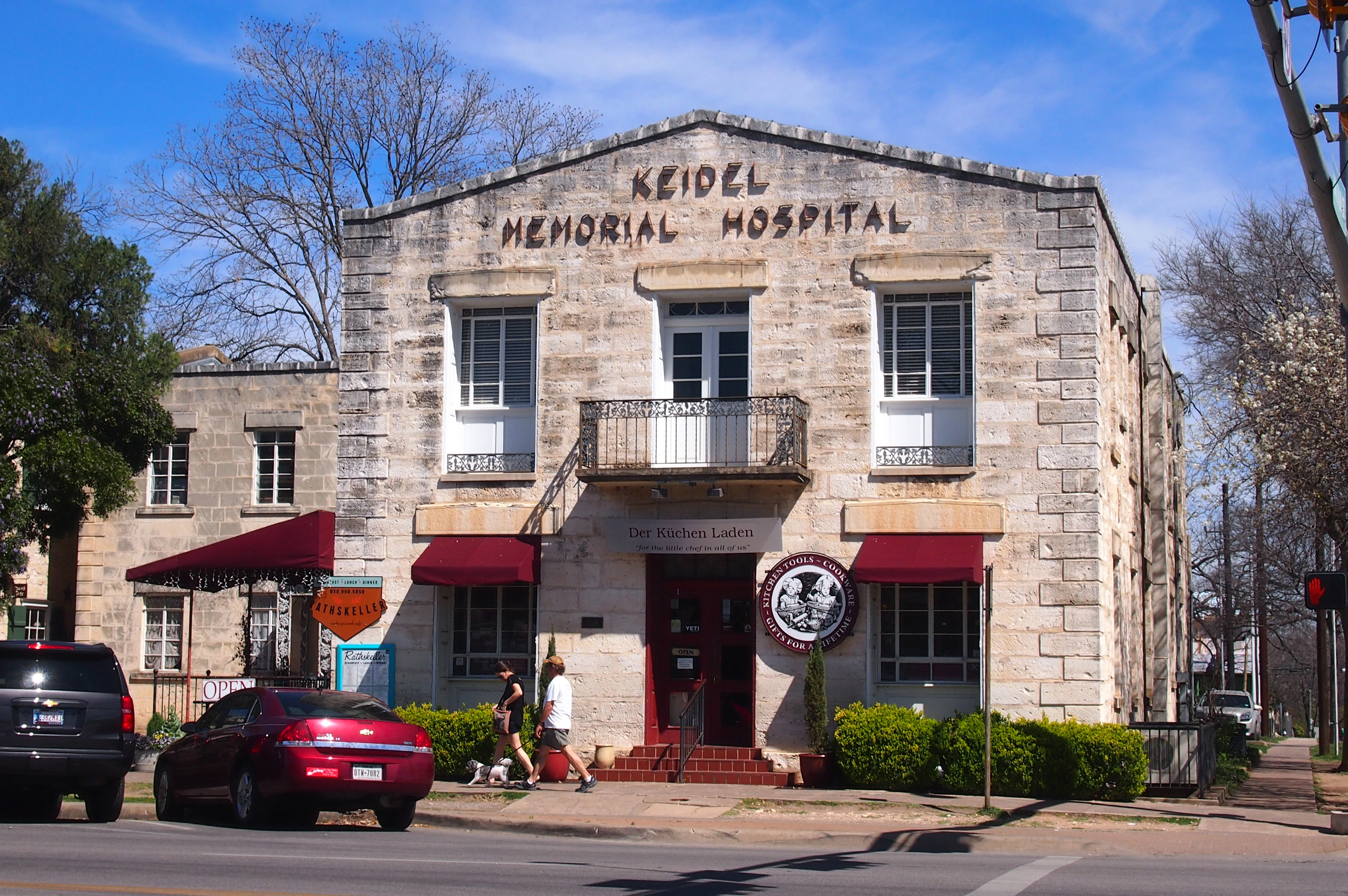
Fredericksburg 2016This was once a hospital.
Fredericksburg 2016I didn’t try for an exhaustive photo record of the many fine buildings in Fredericksburg. These visitors did a much better job of it, including many things I missed.

According to one source at least, St. Mary’s Catholic Church — which is off Fredericksburg’s Main Street by a block — counts as one of Texas’ Painted Churches, most of which are east of San Antonio. Some kind of adoration was ongoing at St. Mary’s, so I was able to drop in to see the lovely interior. Painted, yes, but also featuring stained glass and other objects of beauty.

“Still known as ‘new’ St. Mary’s, the church provides a classic example of Gothic architecture and was consecrated on November 24, 1908,” KLRU tells us. “Its principal architect was Leo Dielmann of San Antonio, with the contractor and builder, Jacob Wagner of Fredericksburg. Built of native stone quarried near the city, the total cost of building and furnishing the church was around $40,000.

“Still fully functional is the original pipe organ built by George Kilgen & Son of St. Louis, Missouri. It was installed in 1906 as a pump organ and has been completely electrified. The beautiful stained glass windows were added around 1914 and 1915.”

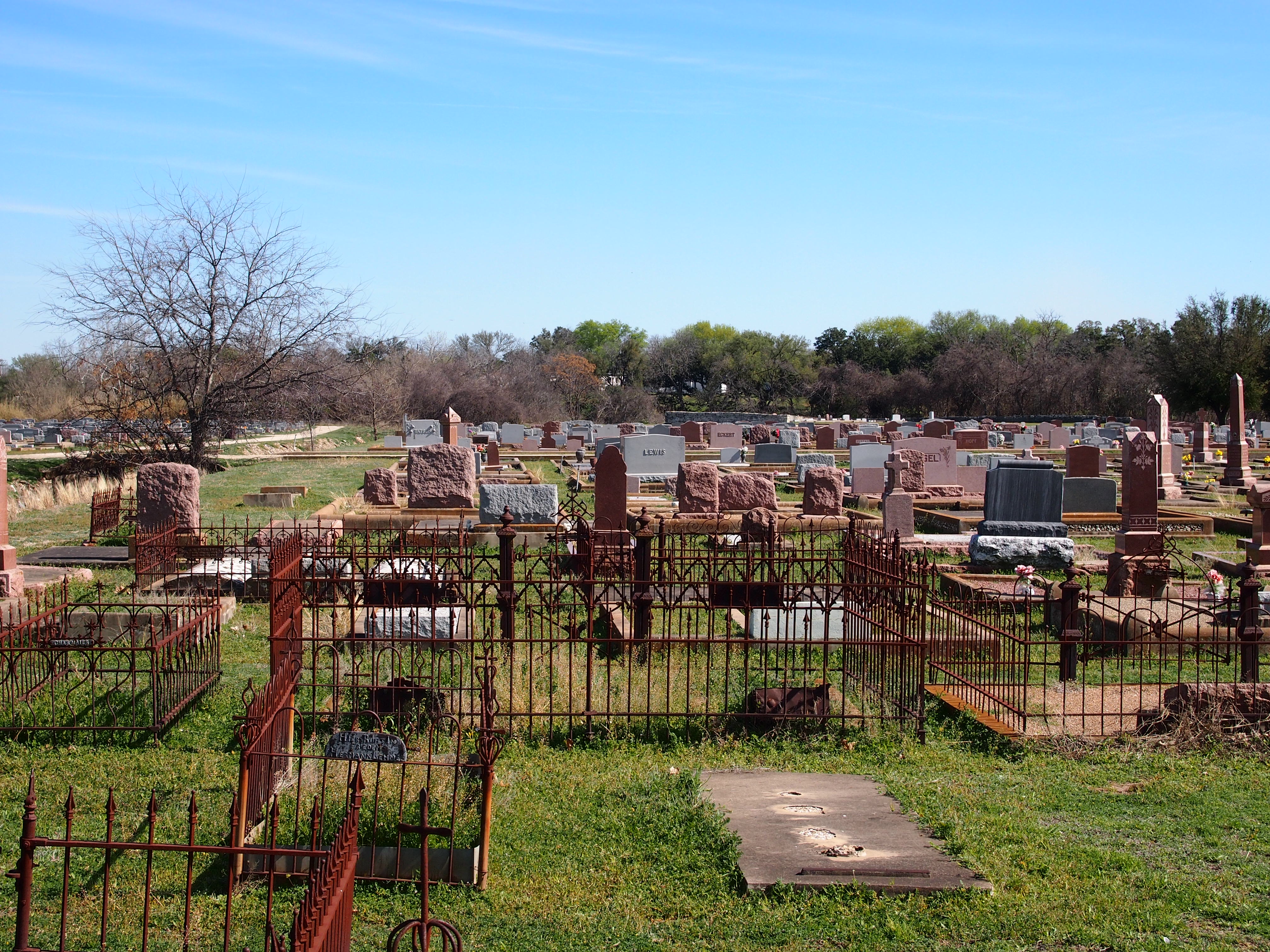
Further away from Main Street — and with absolutely no day-trippers or anyone else (alive) around — was the Der Stadt Friedhof, a cemetery established in 1846.
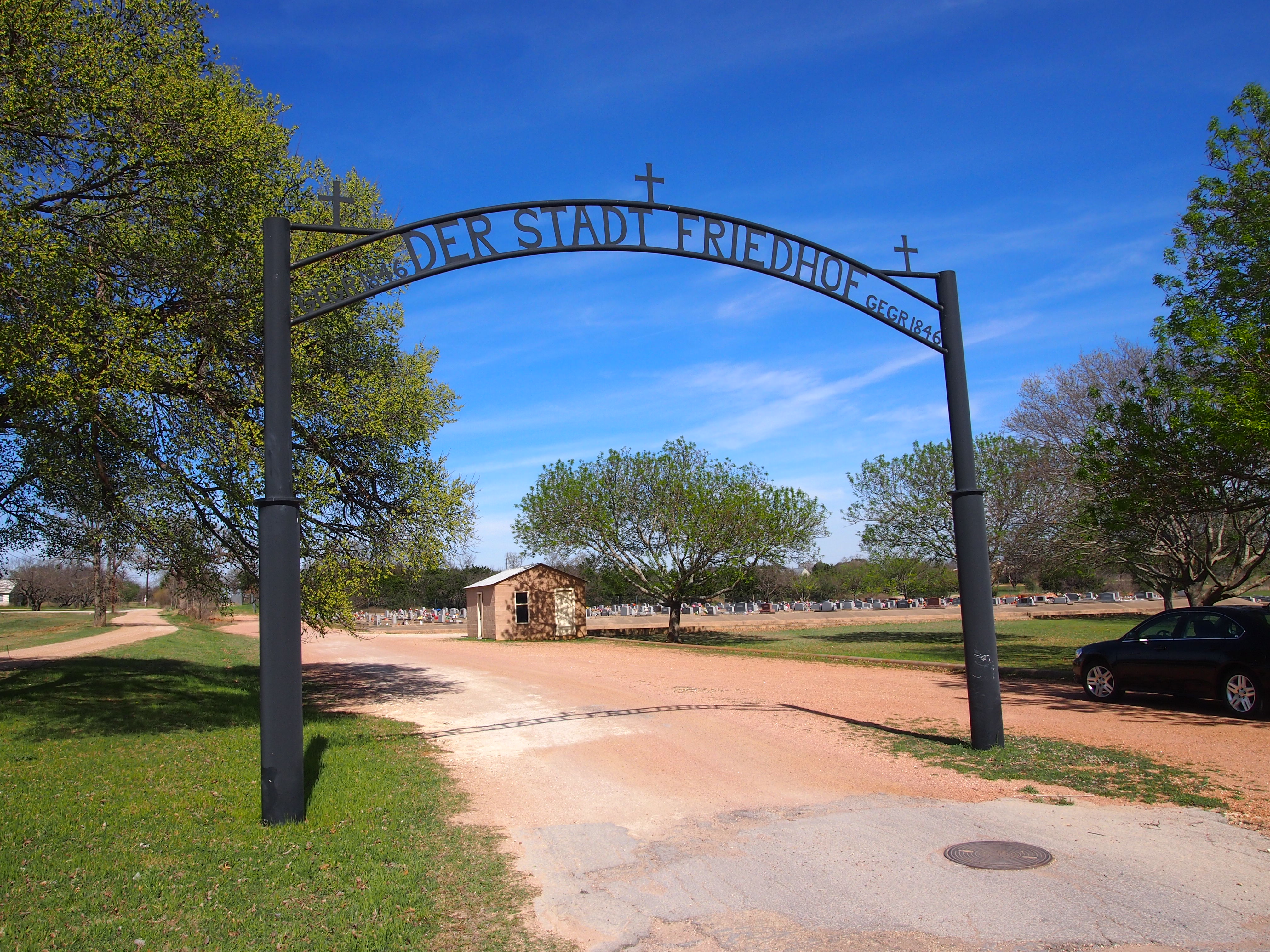
Der Stadt Fredhof Gate, FredericksburgIt’s more interesting than picturesque. For one thing, there are no trees or other large plants to speak of on the grounds, except out at the periphery. There’s a little funerary art, but its presence is fairly muted.

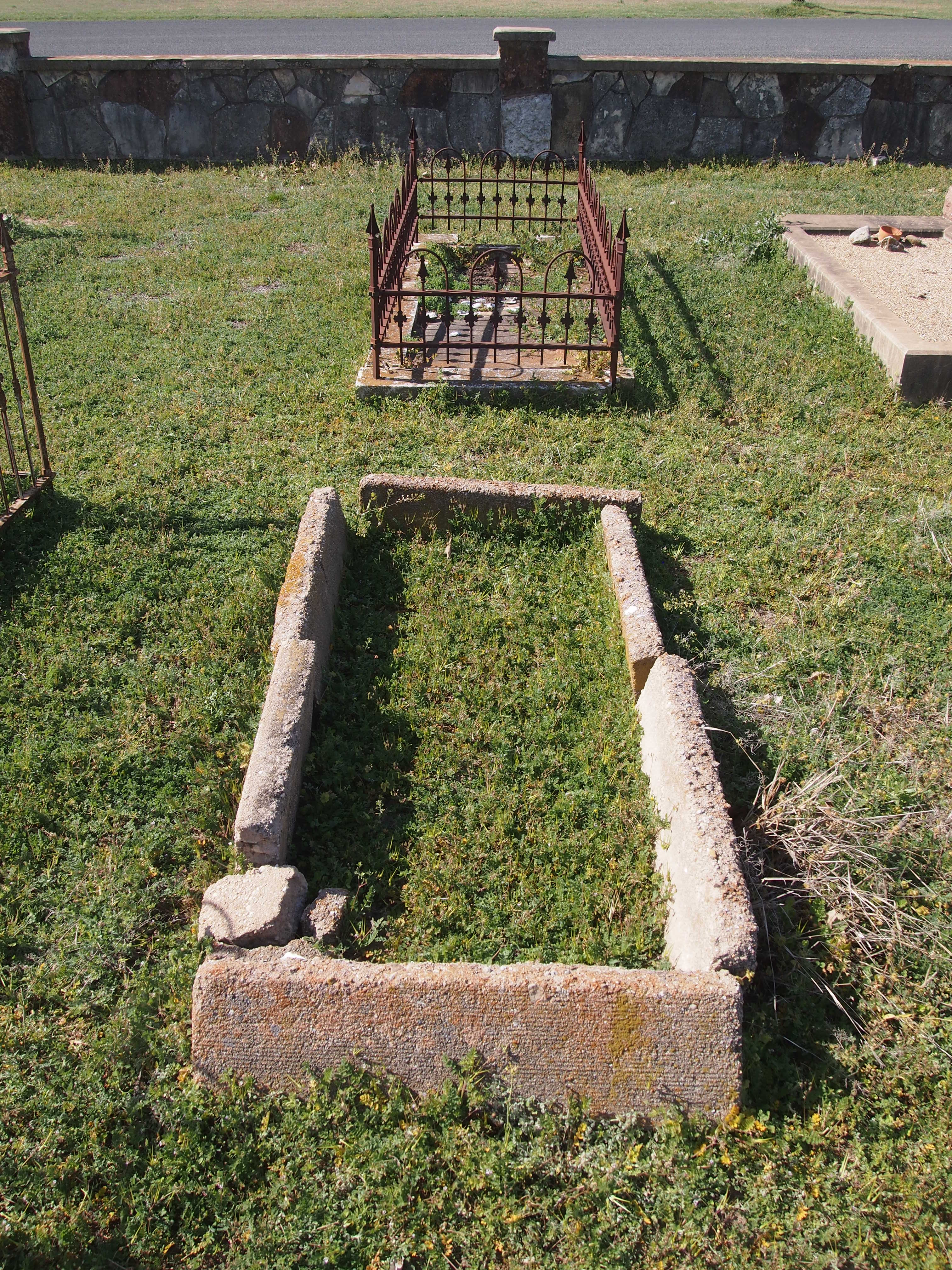
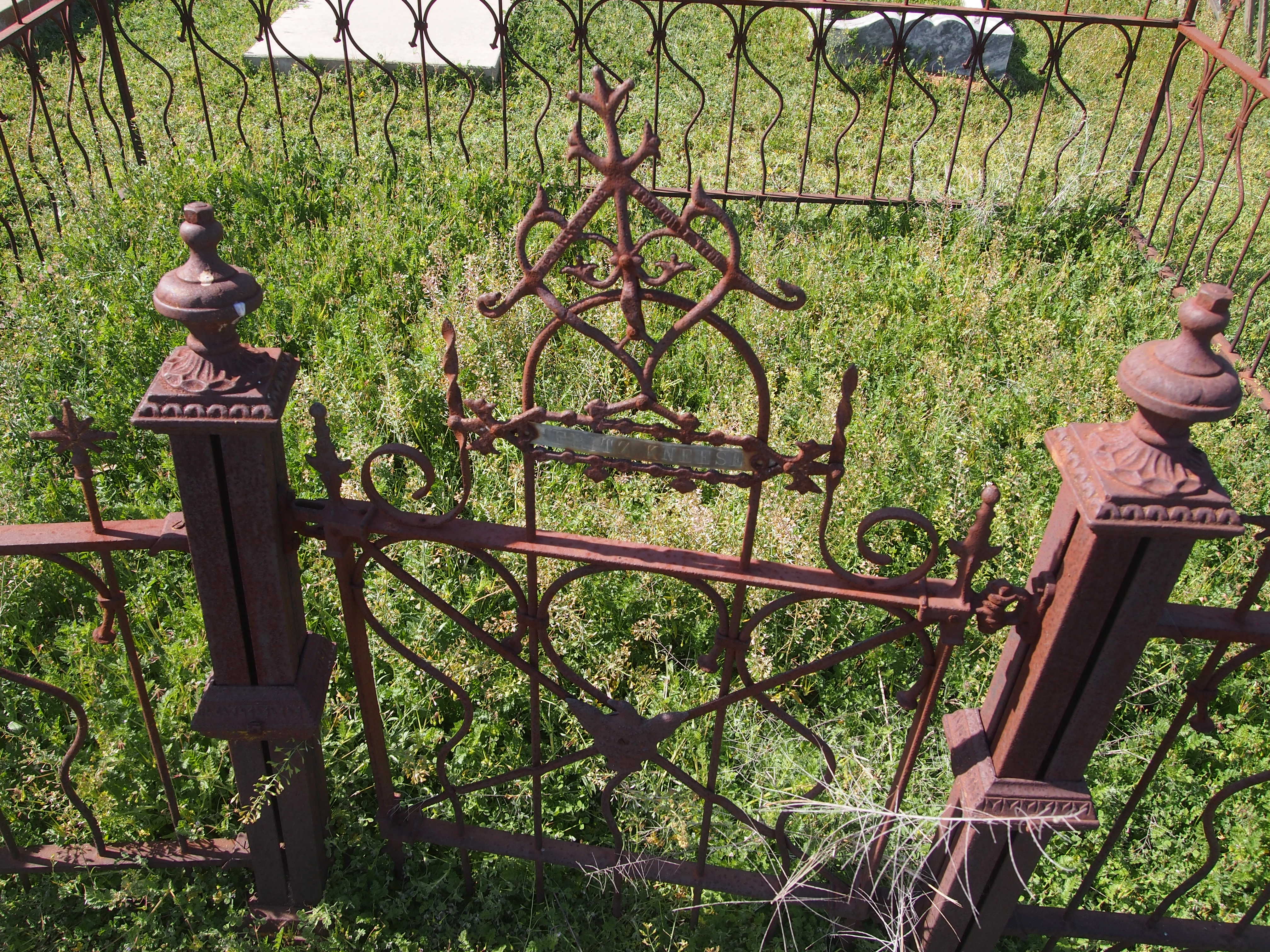
Still, I enjoyed looking around. The further you get from the boundary roads, the newer the stones become. Among the older stones at the edge of the cemetery are a number of graves surrounded by iron fences.
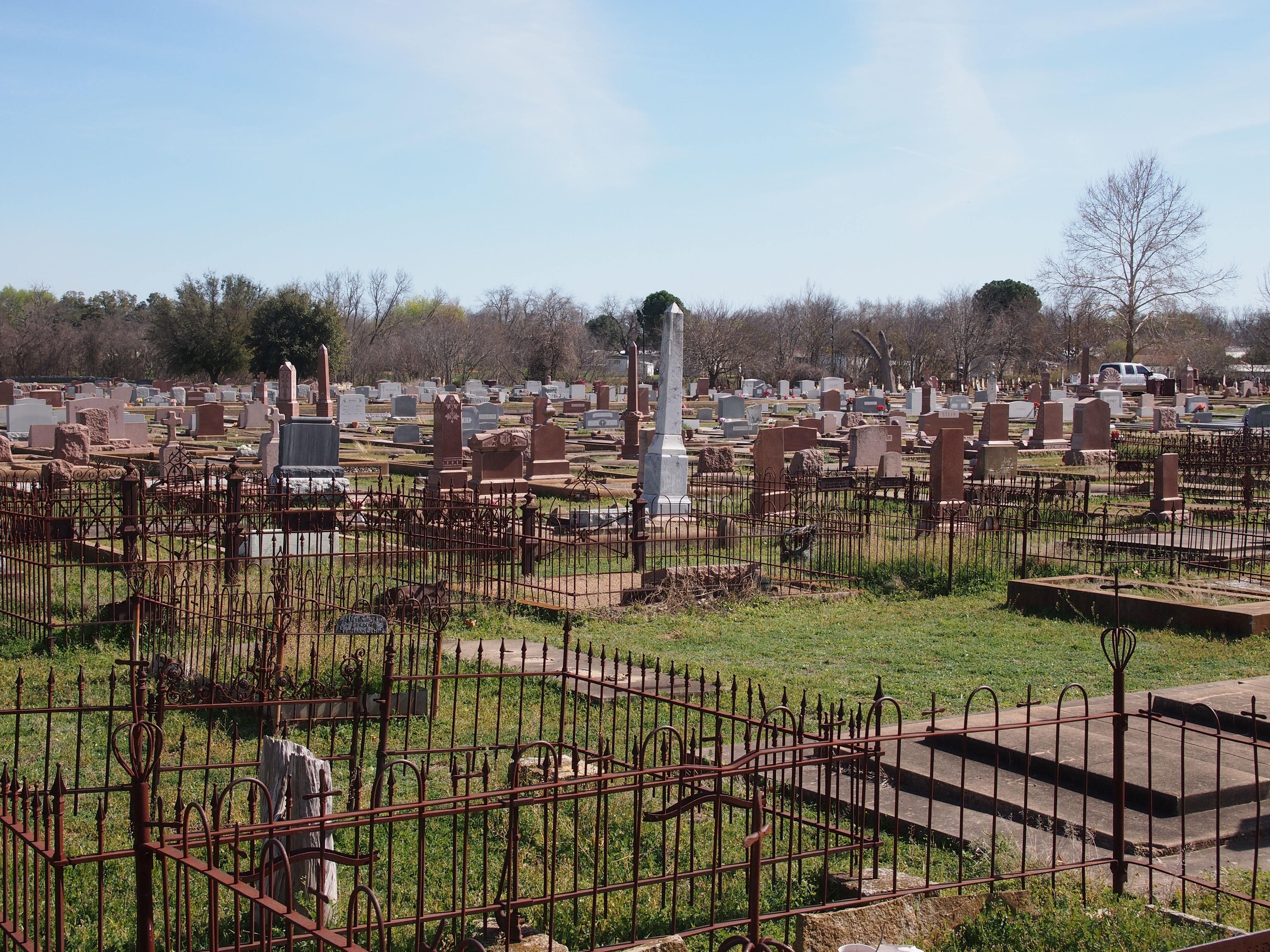
Der Stadt FriedhofDer Stadt FriedhofMany of which are neglected.
Der Stadt FriedhofDer Stadt FriedhofAlmost all of the oldest stones are German, with ethnically appropriate names, such as Durst, Kallenberg, Keidel, Kramer, Lochte, Schmidt, Schuchard, Stein, Weiss, Zincke, usw. Adm. Nimitz’s parents are somewhere in the cemetery, though I didn’t look for them, and the admiral himself is buried at Golden Gate National Cemetery in San Fransisco.
South Texas Flora, Early March

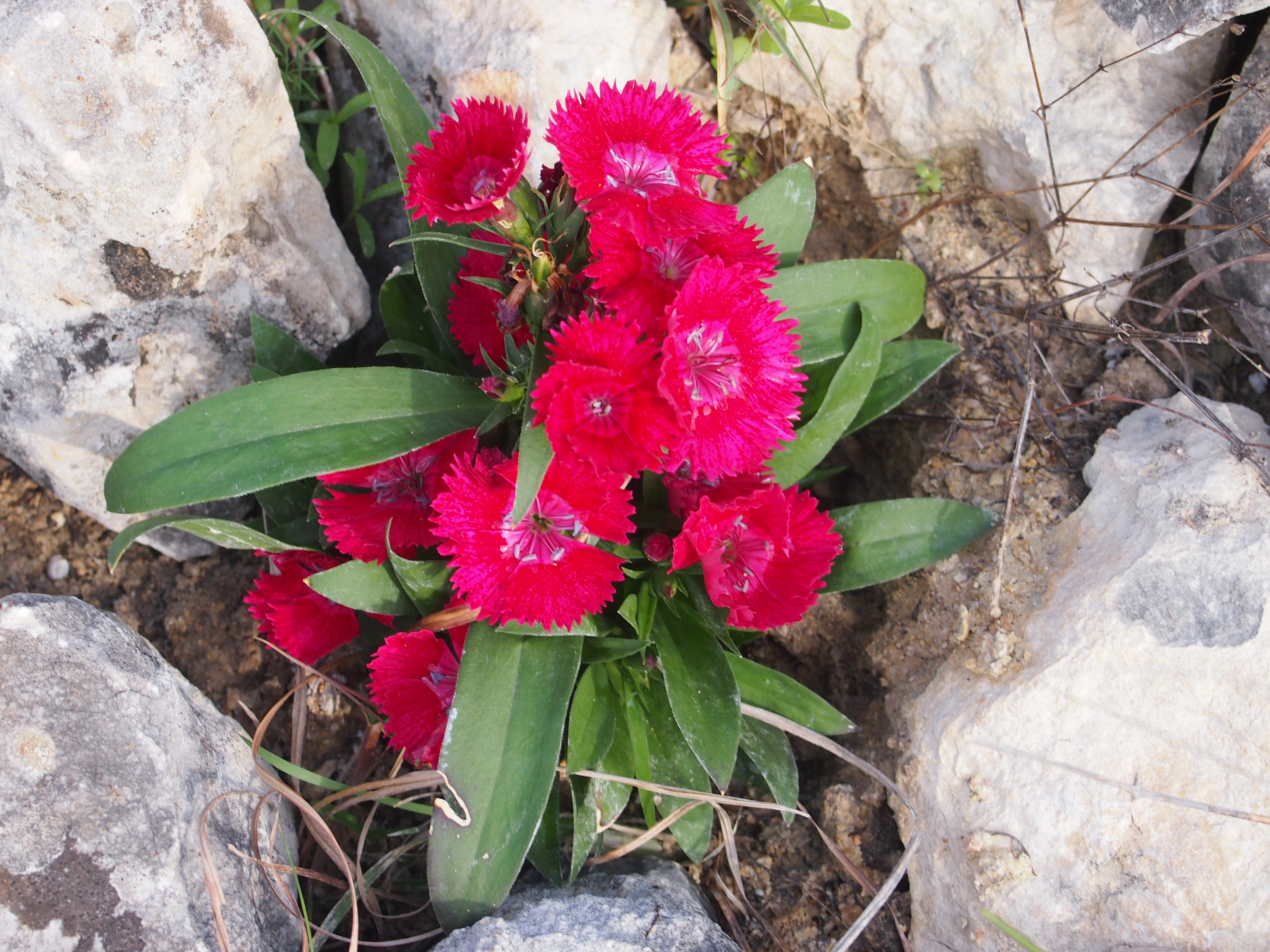
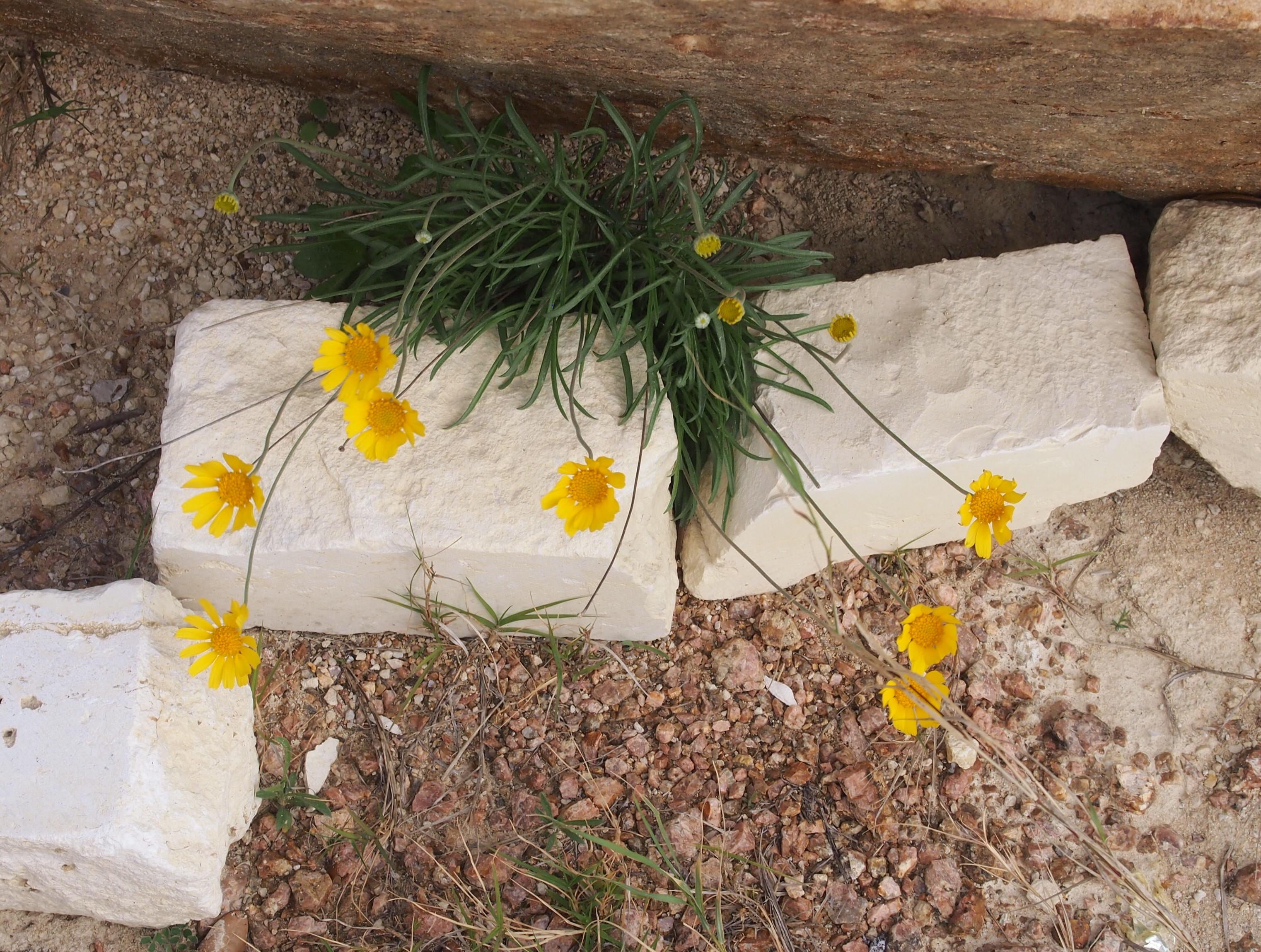
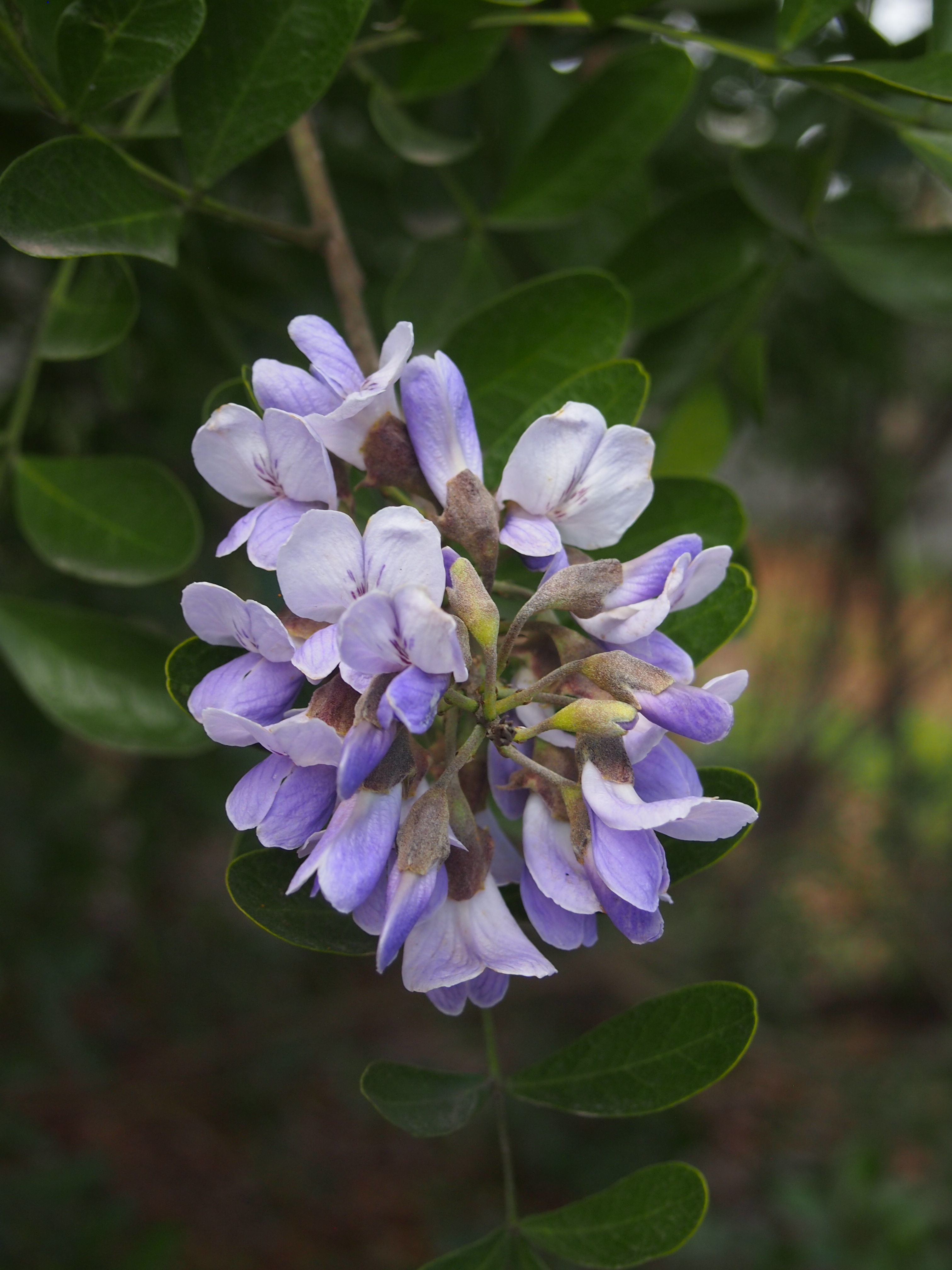
While walking along in Fredricksburg, Texas, on March 4, 2016, I noticed bluebonnets beginning to bloom. Not a sweeping field of bluebonnets, as you see in Hill Country paintings, or occasionally in person, but those emerging from a small green patch ‘tween concrete and asphalt. It was a pleasure to see them all the same.

Up in Illinois, I did see a handful of croci beginning to push out of the earth before I left. But nothing like the early spring flowers of Texas. Such as those emerging from rocky ground.

Or on bushes.

And trees.

Plus the glories of irises, always a favorite, wherever they grow.

What’s the matter,
That this distemper’d messenger of wet,
The many-colour’d Iris, rounds thine eye?

Texas Spring ’16

I left for my first 2016 visit to Texas on March 3. It was a big wheel, little wheel trip: a few days in Austin and the Hill Country, a week in San Antonio. When I left Illinois, there were patches of snow on the ground; in South Texas in early March, the grass is green and a few trees and leafing, and there are a handful of flowers and other buds. Heavy rain is always a distinct likelihood in early spring down there, and sure enough we had a couple of thunderstorms.

I visited my mother, both brothers and a nephew and his girlfriend. I spent time with a few old friends — in one case, someone I’ve known since 1973, Tom, a longtime resident of Austin. Our friendship might make the 50-year mark with both of us still alive. I think the actuaries would be with us on that, but who knows?

Out in the Hill Country, which is hardly remote and the opposite of sparsely populated in our time, I wandered around a main street designed to please day trippers, took in one of the most detailed war museums I’ve ever seen, visited the boyhood home of a certain president from Texas, pondered a cemetery full of Germans, saw an elegant Gothic church, happened upon a hilltop vista, and ate beans and jalapeño-cheese cornbread at a storefront restaurant.

In Austin, I saw a city that isn’t what it used to be. The thing about Austin, though, is that it’s always been a city that isn’t what it used to be. That doesn’t bother me particularly. I mainly go to visit old friends, such as the aforementioned Tom, who aren’t who they used to be — and yet who are in some ways. Such is the paradox of knowing people for decades. I also saw Blue Healer at Stubb’s Bar-B-Q. My nephew’s in the band. They’re really talented.

Each time I visit San Antonio, I try to spend a few hours outside of the familiar grooves laid down decades ago. I was able to this time. When I started to do so consciously, back around 2009, I thought it would be hard to find interesting things outside those grooves. I was wrong. In a city this size, with a history this deep, it isn’t hard at all. Such places includes tumbledown cemeteries and new green spaces and milestones of another era and the Blue Hole and China Grove, Texas, and a big basilica.

20,000 Days

Texas Independence Day. As good a reason as any to knock off for a while, till about March 13. Don’t forget to Remember the Alamo on the 6th.

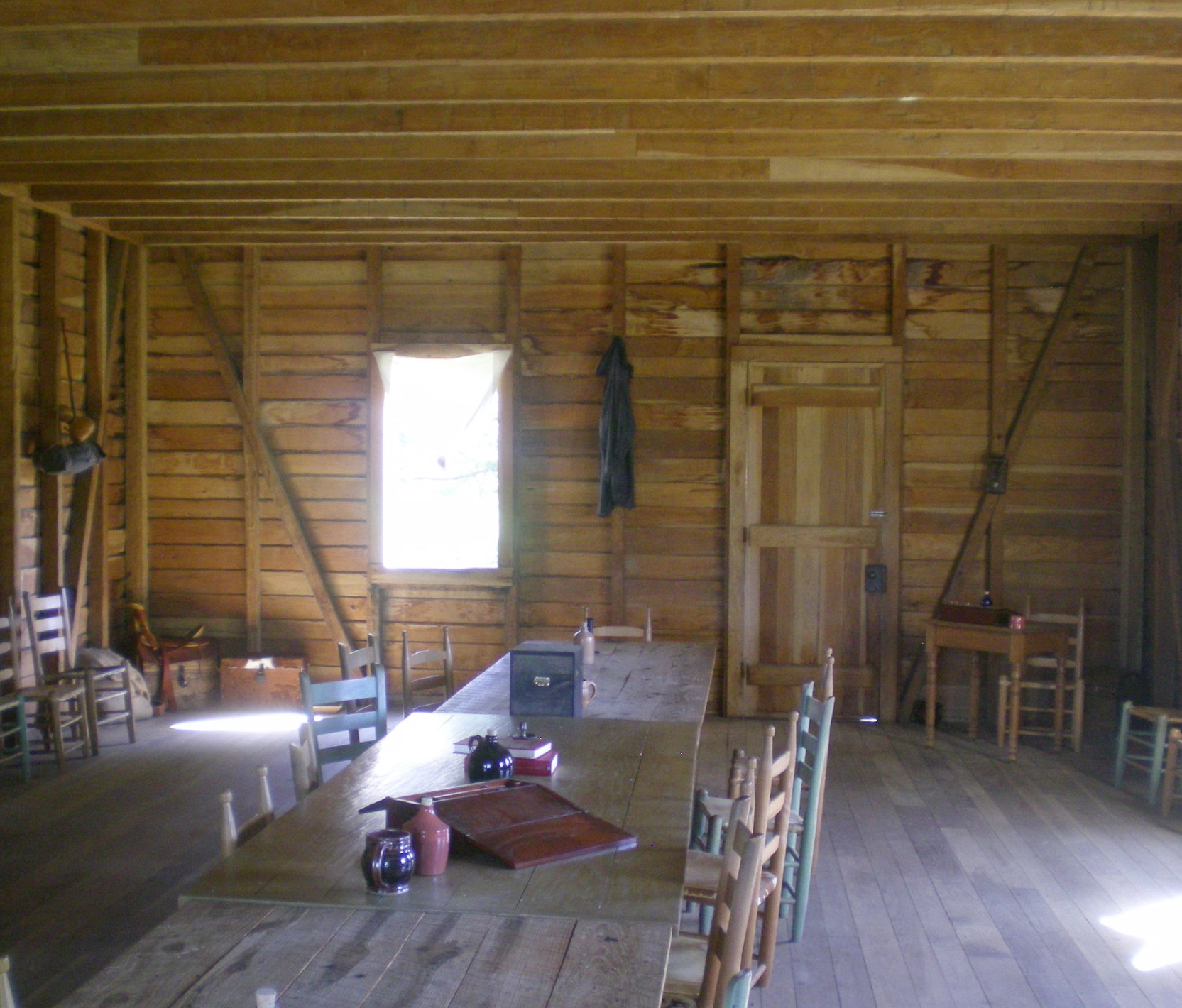
Here’s the interior of the Texas Hall of Independence in Washington-on-the-Brazos, as seen a couple of years ago. Everything’s a replica, including the building, but never mind.

Texas Hall of IndependenceThe handy timeanddate.com tells me I’m about to be 20,000 days old. Not bad.

The motivational poster notion of “living every day fully” is malarkey, and not just because that’s awfully vague. People can’t live like that. Most of my 20,000 days have been nondescript, though sprinkled with good and bad moments, either forgotten or remembered, while some days have been very good indeed, and none (so far) have been really horrible. Not everyone gets to be that lucky.

Herbert Hoover, Lizard Overlord

Recently I realized I have a minor collection of presidential post cards. Some I’ve acquired myself, some my brother Jay has sent me. I didn’t plan on it.

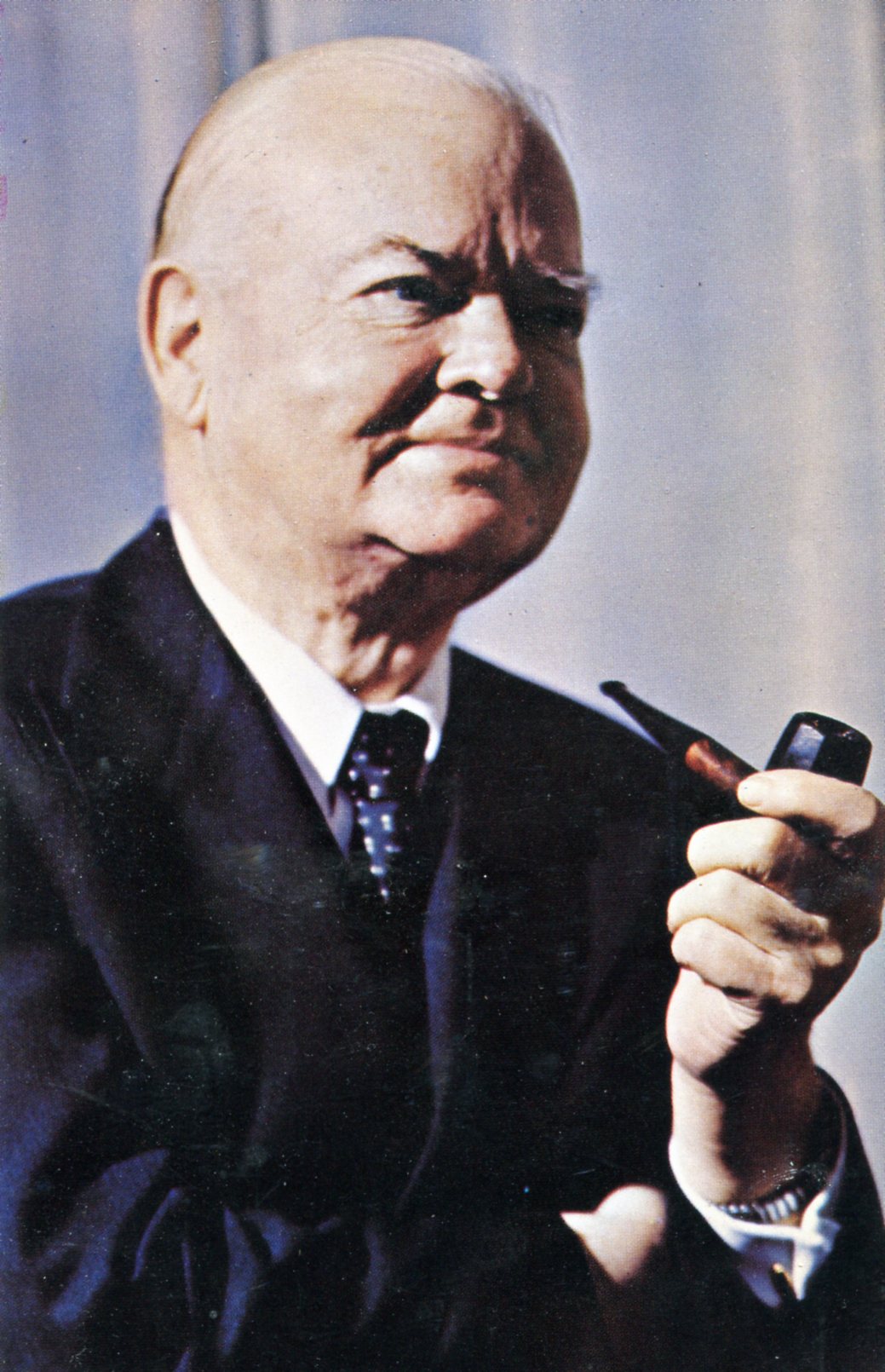
That comes to mind because last week Jay sent me one depicting Herbert Hoover. Here it is.

Wax HooverJay says it looks like the president is emerging from the Time Tunnel, a cultural reference for those of us of a certain age. Unless, he noted, Hoover’s an extraterrestrial impersonator in this image. I’ll go along with that one. He looks like one of our Lizard Overlords back in the early 20th century, before they perfected their rubber masks.

The card, incidentally, was produced by the Hall of Presidents Wax Museum, located once upon a time in Colorado Springs. It seems to have closed around 2000 or earlier (sources differ). Closed for lack of visitors, or because the aliens packed all the wax figures into their saucers and took them home.

Pipe HooverI already had a Hoover card, one produced by the Hoover Museum in Iowa, with him looking grandfatherly sometime after he left office — not nearly as much fun as the wax-lizard Hoover.

I did a quick and not completely thorough count of my presidential card collection, including only those with faces of presidents on them. (I have others that depict their homes, and two vice presidents: George M. Dallas and Al Gore.) So far I have Washington, Jefferson, Jackson, William Henry Harrison, Lincoln, A. Johnson, Grant, Benjamin Harrison, TR, Hoover, Eisenhower, LBJ, Ford, Carter, Reagan and Clinton. Got a ways to go.

Man’s Fierce Hand

Leap Day once again. It’s a Monday, so it should be a holiday, but Congress doesn’t have that kind of imagination.

Does anyone really shoot fish in a barrel? Did anyone ever do that? Was that sport somewhere, say in the 19th century, when firearms and barrels were readily available, and many strange things were done in the name of entertainment?

The saying represents something exceptionally easy, of course, but even so I’m not sure it would be. Let’s assume the barrel is full of water as well as fish. Unless we’re talking about really large carp or some such, you might disturb the water and scare the fish, but I’m not sure how many small fish would actually be hit. Also, you’d think that shooting would soon destroy a wooden barrel and cause a dangerous amount of flying debris. Or if it were a metal barrel, such as a steel oil drum, the danger of ricochets might be high.

This is something for the Mythbusters fellows to investigate, but I suspect that shooting fish in a barrel never was anything but a metaphor, and by now a hackneyed one at that. So I’m reluctant to say that making fun of a press release I received recently — especially the first line — is like shooting fish in a barrel. But it cries out to be mocked. Here’s the first line:

“When people picture the Appalachian cultural region of the Eastern United States, they envisage a beacon of wonder and natural beauty left untouched by man’s fierce hand.”

There’s certainly still natural beauty in the Appalachians, but as for the “cultural region,” that’s not the first thing that comes to mind. Then there’s the matter of mountaintop removal mining. Among other feats of mineral extraction. I’m fairly sure that counts as man’s fierce hand.

The Mallard Lake Trail, Near the West Branch of the Du Page River

I noticed a sign today at Mallard Lake Forest Preserve, which we haven’t visited in nearly a year.

Mallard Lake FP, Du Page CountyUh-oh. I don’t think that sign was there last year. But now there’s evidence that the dread zebra mussel has invaded these waters, as it’s hopscotched across the lakes of the world. Wiki tells me that the mussel has come from its native lakes of southern Russia to be a pest in North America, Great Britain, Ireland, Italy, Spain and Sweden.

It’s no trifling matter. The Virginia Department of Game and Inland Fisheries tells us that, “Many water treatment and power facilities must now treat their systems to keep them free of zebra mussels, beaches must be periodically cleaned of decaying masses of dead zebra mussels, and bottom-dwelling organisms and fisheries have been negatively impacted. In the United States, Congressional researchers estimated that zebra mussels cost the power industry alone $3.1 billion in the 1993-1999 period, with their impact on industries, businesses, and communities over $5 billion.”

Fortunately, zebra mussels don’t invade the land to attack casual walkers on forest preserve paths. That’s all we wanted to do today, because once again the weekend was unusually warm for February, nearly 60 degrees F.

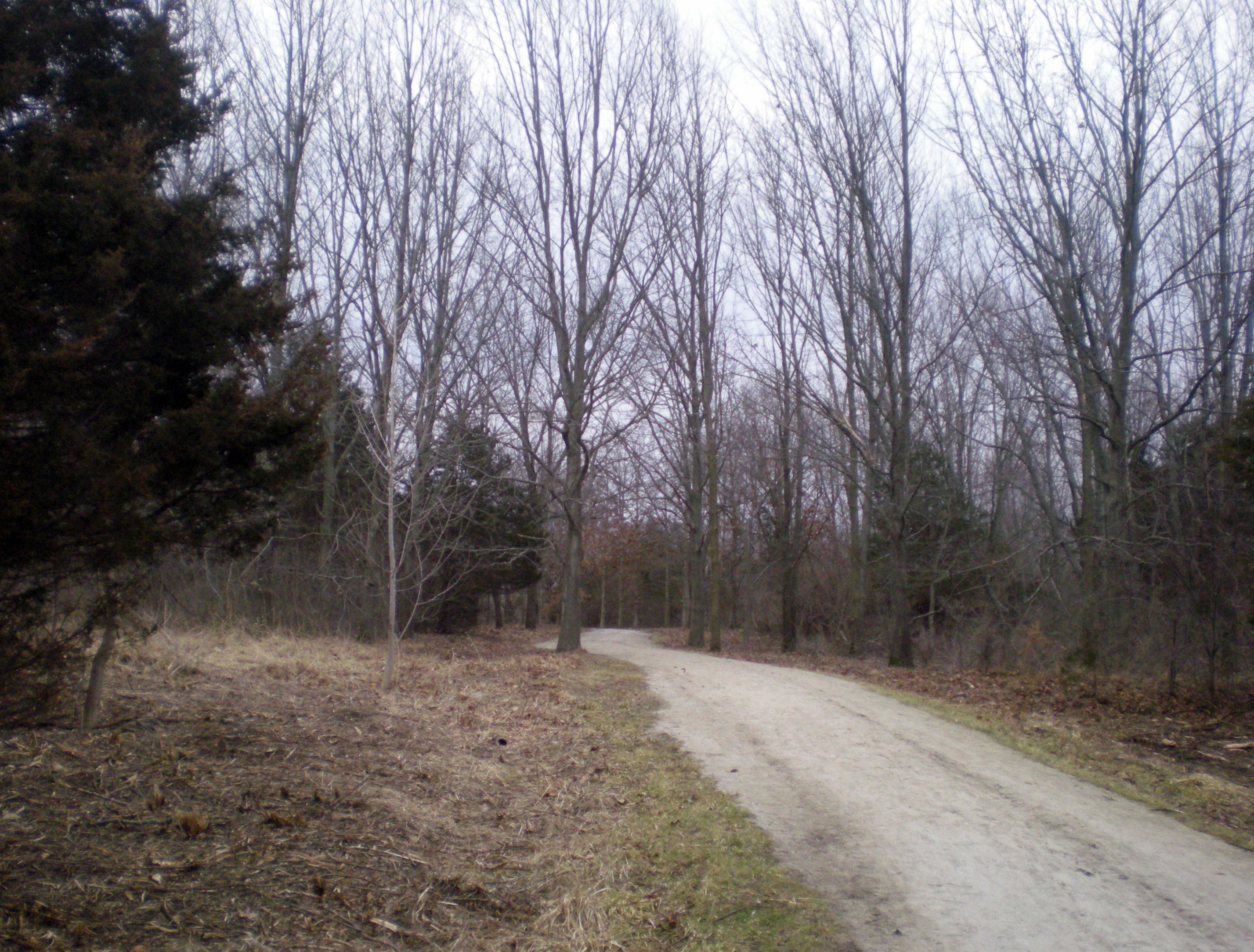
Instead of simply circumambulating Mallard Lake, we also walked along a spur called the Mallard Lake Trail, which leads to a municipal park called Heritage Park, which is part of subdivision I know nothing about. For a quarter of a mile or so, Mallard Lake Trail seemed remote, though it was an illusion, helped by the day’s strong winds, which muffled the sound of traffic off in the distance.
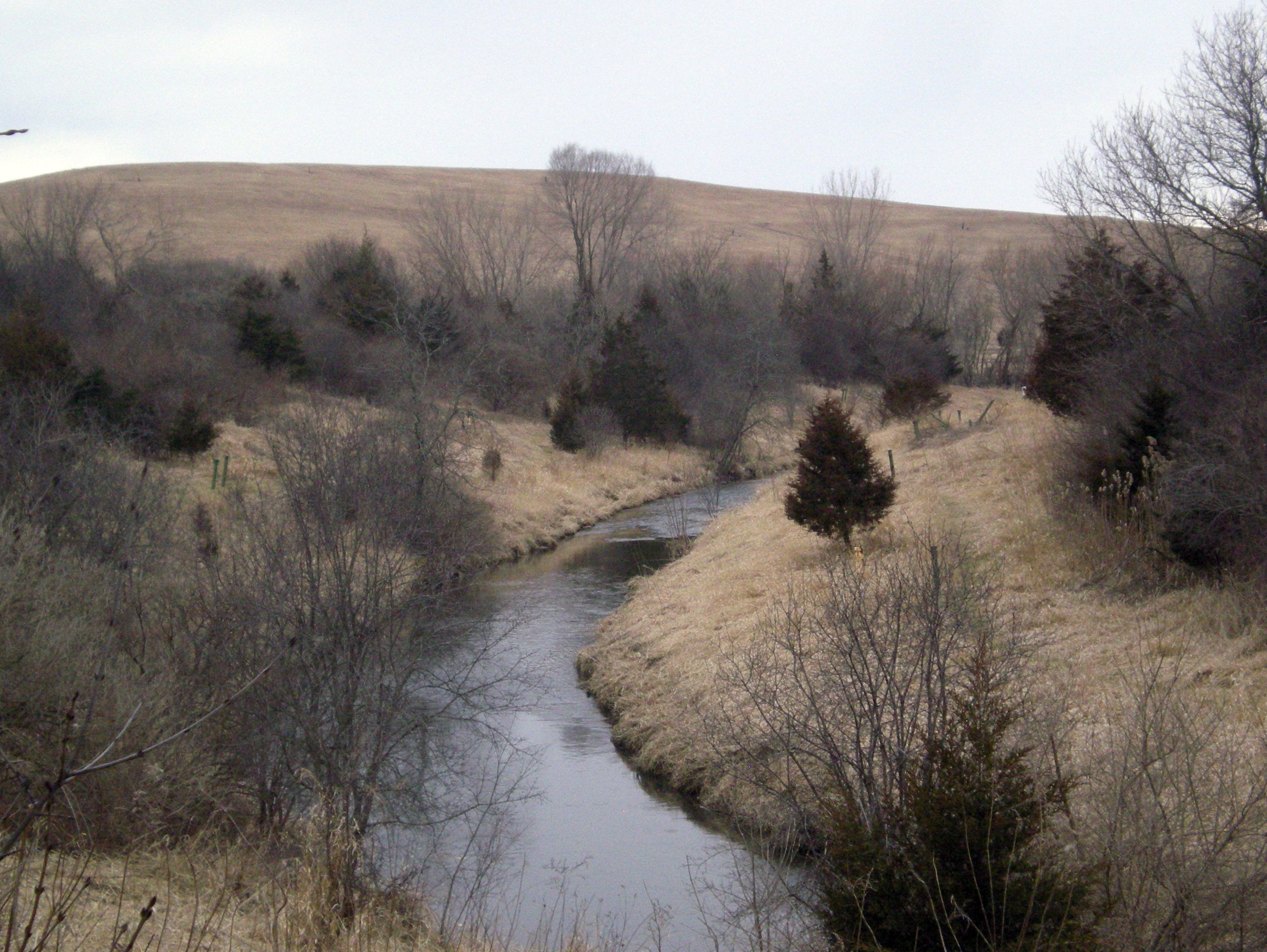
Mallard Lake TrailWithin view of part of the trail is the West Branch of the Du Page River.
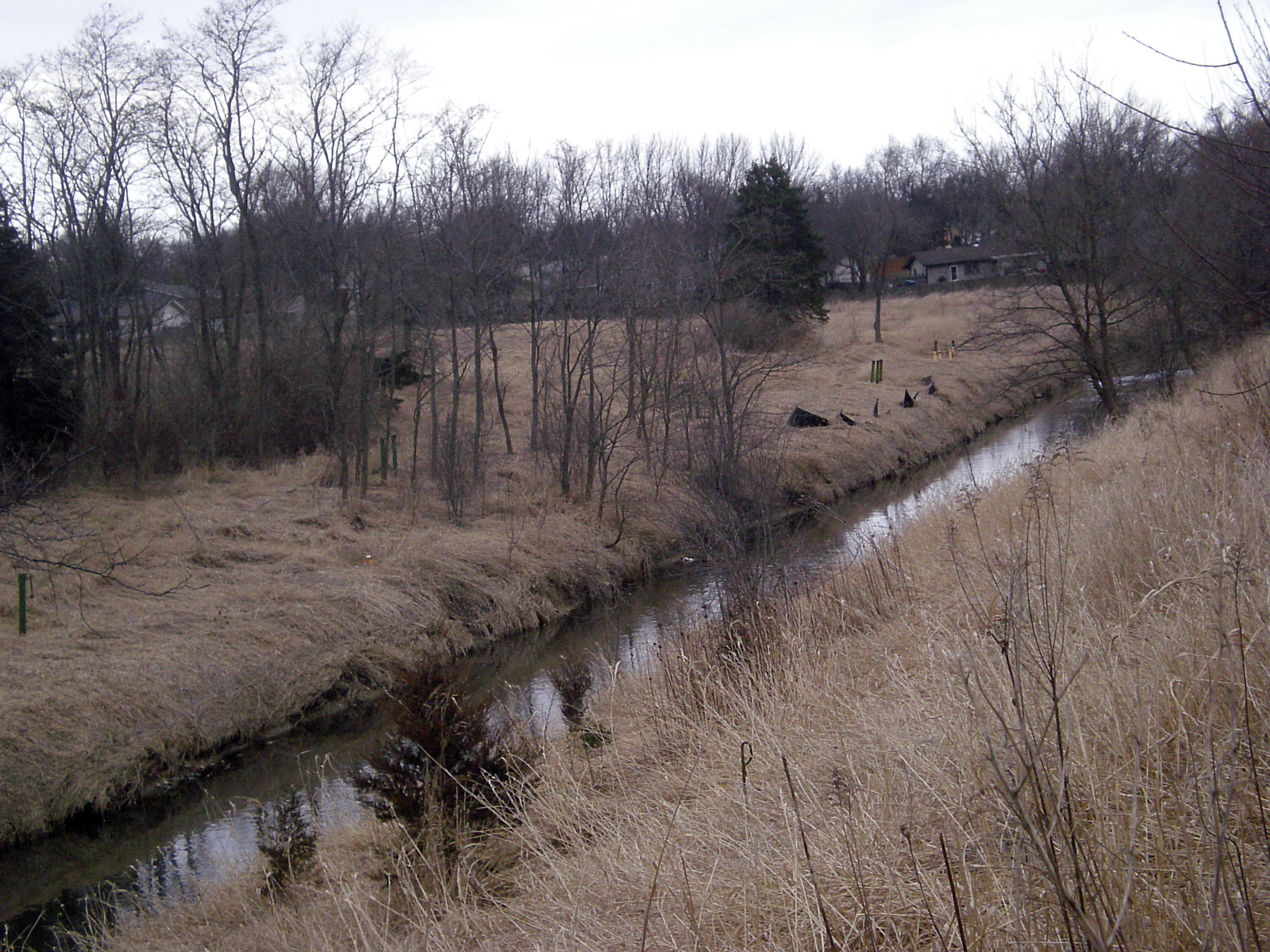
West Branch Du Page RiverIt might have been a natural-flowing stream at one time, but it has the look of a man-made channelization at this point. By the time we got here, the middle-of-the-woods illusion was punctured by houses in the background, and a school off in the other direction.
West Branch Du Page RiverThe West Branch of the Du Page River flows quite a ways south — including through downtown Naperville — to meet the Du Page River in Bollingbrook, Ill. The Du Page joins the Des Plaines at a place called Moose Island in Channahon, Ill., but very near there the Kankakee River joins the Des Plaines and they all form the mighty Illinois River, a direct tributary of the Mississippi just north of St. Louis.

So you might say we took a stroll in a very small part of the Illinois River watershed, which includes all of the little cricks and rivulets around here.