First-Season M*A*S*H

A few months ago, I noticed that Netflix on demand has all of the episodes of M*A*S*H (why isn’t there an asterisk after the H?). At first I didn’t feel the need to watch any of them.

Then it occurred to me that I’d missed the first season, and maybe part of the second, when the show was on the air. I was too young to be interested, and picked it up sometime in junior high, maybe when it was part of the extraordinary Saturday night prime-time lineup on CBS during the ’73-74 season: All in the Family, M*A*S*H, The Mary Tyler Moore Show, The Bob Newhart Show, The Carol Burnett Show.

By the time the scriptwriters dropped Henry Blake into the Sea of Japan (March 18, 1975), I was surprised along with the rest of the country, since I’d been watching a while by then. After 1979, I didn’t watch it much anymore. Not only had the quality declined, I didn’t watch much TV at all, though I made a point — like the rest of the country — of watching the finale on February 28, 1983.

So I decided recently to take a look at the first season at least, one every week or two. On the whole, it holds up well enough. I liked it then and I still do, though it’s not the best television, or even the best show in a sitcom-like format (arguably, it’s not a sitcom anyway). As for the first season, it’s good to see the original cast, complete with Trapper John and Henry Blake, both of whom were better than their replacements.

Also of note is first-season Radar O’Reilly, who is a bit more nuanced than he would be later. Besides his longstanding anticipation of events, and that he knew more about what was going on that Col. Blake did — an old joke, that — Radar drank alcohol, helped Hawkeye cheat at cards, traded weekend passes for favors, and was perfectly willing to ogle nurses as they walked by or spy on them in the shower, things he’d be too timid to do later. His evolution in the series into a naive Iowa farm boy did no favors to the character. There’s an essay waiting to be written about the infantilization of Radar O’Reilly.

And what happened to Spearchucker Jones, the talented African-American surgeon? He makes appearances in the first season but not later that I remember. Admittedly, that nickname wouldn’t have gone down well even in the 1970s, but it could have easily been dropped, while the character could have been developed, even as a supporting one. Apparently the producers decided otherwise.

M*A*S*H also suffered from the strictures of network television. One good example: Hawkeye and Trapper emerge from surgery, bitching about spending 12 or 14 hours or whatever operating, and there’s not a drop of blood on them. One of the salient visuals of the movie M*A*S*H is in complete contrast to that: there’s blood all over the place in the meatball operating room, and on the doctors too. Of course, had the TV show depicted that much blood, the audience of the time wouldn’t have noticed anything else. That was before splatter movies and cable TV shows inured people to that kind of thing, after all.

Speaking of cable, I couldn’t help thinking that M*A*S*H would be better — in competent hands, whoever that might be — on cable. More visible blood, dirt, and skin, for one thing, though it would be easy to overdo those aspects. More importantly, the characters could be fleshed out a good deal more. Once, just once, I’d like to see Hawkeye, after a long stretch of stressful surgery, and at the provocation of (say) a Korean character, explode in a tirade of ethnic slurs. Later he’d regret it, and drink himself blind to forget. That’s something a cable version of M*A*S*H could handle with aplomb.
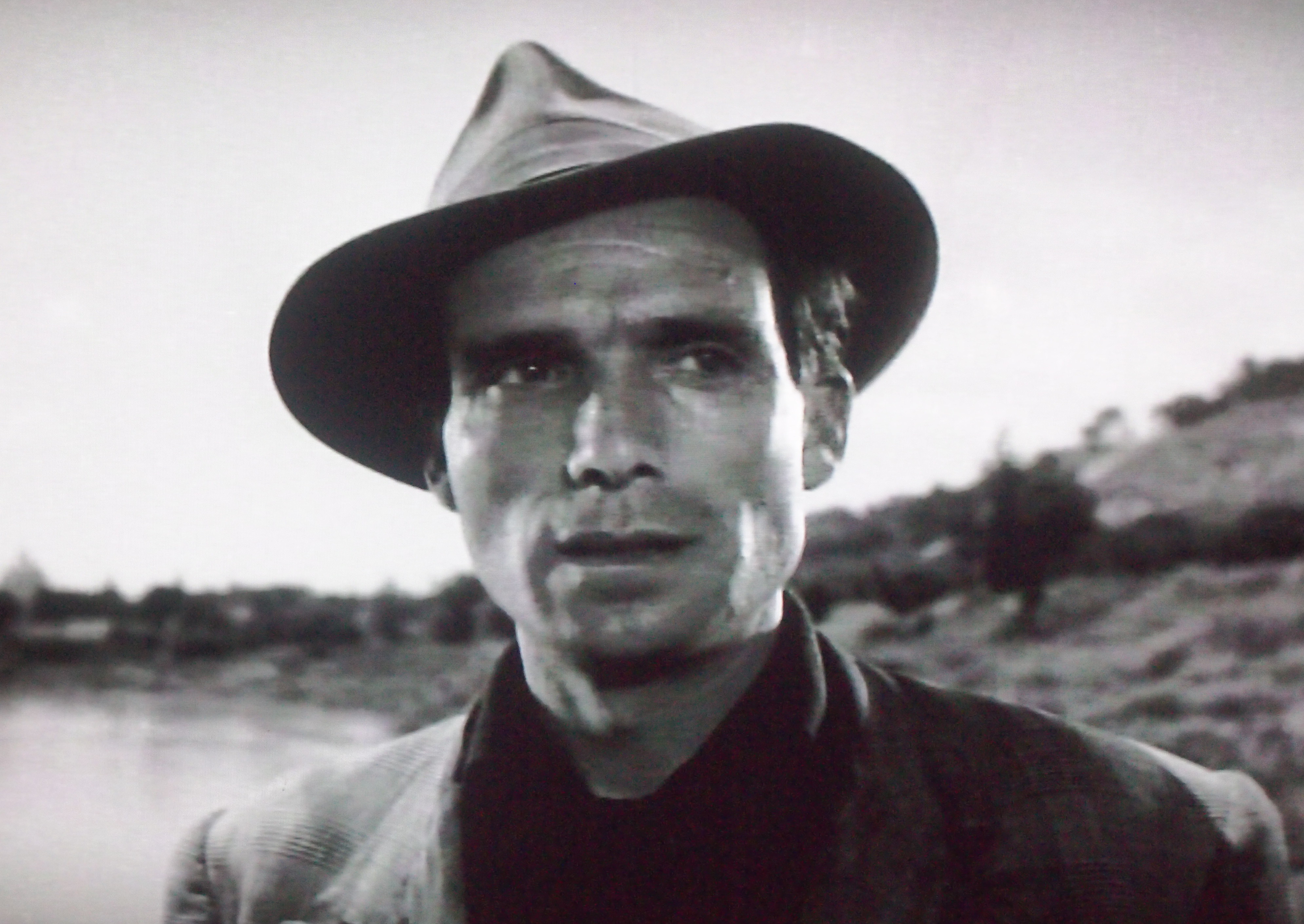
Bicycle Thieves

Some days you get up and think, I haven’t seen enough Italian neorealist movies. Well, maybe it doesn’t happen exactly that way, but anyway you have a sudden urge to see Bicycle Thieves, also known as The Bicycle Thief, though it’s clear enough that Ladri di biciclette, the Italian title, is plural, and for good reason, as things turn out in the story.

At least, I had a urge to see Bicycle Thieves recently. It’s been a long time in coming. Back in high school, I had a copy of The Book of Lists, one of the more fun (if not very scholarly) reference works of the pre-Internet age.

In its section on movies, the book included the results of three Sight & Sound magazine polls of the ten best movies of “all time,” polls done in 1952, ’62, and ’72. Topping the 1952 list was The Bicycle Thief, as it was known then in English, though it came in at no. 6 ten years later and wasn’t on the ’72 list.

It was a movie I’d never heard of on a list compiled by a magazine I’d never heard of in a time and place (ca. 1978, Texas) when accessing either the movie or the magazine would have been difficult, so I had every reason to forget it. Which I did. Almost. Somewhere, for years afterward, tucked in the labyrinthine warehouse of filing cabinets that form my memory, was a little folder called The Bicycle Thief, whose entire contents were, “Wonder what that’s about. Why did some critics like it?”

Sight & Sound, incidentally, is still published by the British Film Institute, and it still does a greatest-movie poll every 10 years. In 2012’s poll, Bicycle Thieves was no. 33 out of 50, for what it’s worth. But it’s hard to take a great-movie list that omits Dr. Strangelove too seriously.

In 1983, I noticed The Bicycle Thief discussed in one of the better textbooks I’ve ever had, Understanding Movies, Third Edition (1982) by Louis Giannetti, which I used in my VU film class, though we didn’t see the movie in that class. I still have the book, which says, “[The] Bicycle Thief deals with a laborer’s attempts to recover his stolen bike, which he needs to keep his job. The man’s search grows increasingly more frantic as he criss-crosses the city with his idolizing, urchinlike son…”

Put like that, it doesn’t sound like much of a story. Yet it is. Mainly it’s about how awful poverty is, and how someone stuck in it just can’t catch a break — without making it an overt polemic about class injustice. The man and his son are fully human, with the serious misfortune of being poor. By the time the movie’s nearly over, you’re really pulling for Antonio (the father, pictured above) and Bruno (the son). You want them to find the bicycle, but you know it isn’t going to happen, and you know what Antonio’s going to do about it, and think, I might do the same, even though it turns out to be a bad idea.

“After a discouraging series of false leads, the two finally track down one of the thieves, but the protagonist is outwitted by him and humiliated in front of his boy,” Giannetti continues. “Realizing that he will lose his livelihood without a bike, the desperate man sneaks off and attempts to steal one himself… he is caught and again humiliated in front of a crowd — which includes his incredulous son.”

Director Vittorio De Sica used nonprofessional actors in the lead parts of father (Lamberto Maggiorani, above) and son (Enzo Staiola). It probably helped that Maggiorani was an actual factory worker, but how De Sica teased such a remarkable performance out of seven-year-old Staiola is astonishing.

Also of interest: Rome, 1948. Much of the movie was shot out in the streets of Rome. It might be the Eternal City, but a lot must have changed in nearly 70 years: the streetscapes, the non-monumental buildings, the way the crowds look and get around town. I tried to notice as much of the background as I could. Even when I visited Rome in 1983, there seemed to be a lot more cars than depicted in De Sica’s city, though at one hair-raising point Bruno’s nearly run over by two careless drivers, something that seemed entirely believable to me.

In all, an exceptionally good movie. So I’m glad that, for whatever reason a few weeks ago, I thought, I never did see Bicycle Thieves. Time to do it. In our time, when you have such a notion, you can put the movie in your queue — or get it at once on your gizmo. I saw it on DVD. People who are put off by old movies, or black-and-white movies, or movies that have subtitles, seriously don’t know what they’re missing sometimes.

“Happy Birthday” Has 13 Letters

For her 13th birthday, Ann wanted a simple cake without “thick icing.” So we got a round yellow cake — yellow icing topping a yellow cake, with a modicum of decoration — at a grocery store we know that has a good bakery.

Ann and Cake, Feb 6, 2106I found the candles by chance at the same store. As it happens, there are 13 letters in Happy Birthday, a fitting number.

Birthday CakeI might use them for my own birthday. Each candle would stand for about four years and three months of my lifetime. Also, I’m glad to report that however the cake looked, it tasted good too.

Map Hero’s Laminated Gitche Gumee

You never know what’s lurking in the fine print. Usually that’s taken to be a bad thing, but yesterday I took a look at a map I’ve owned for years and discovered a fine thing in the fine print.

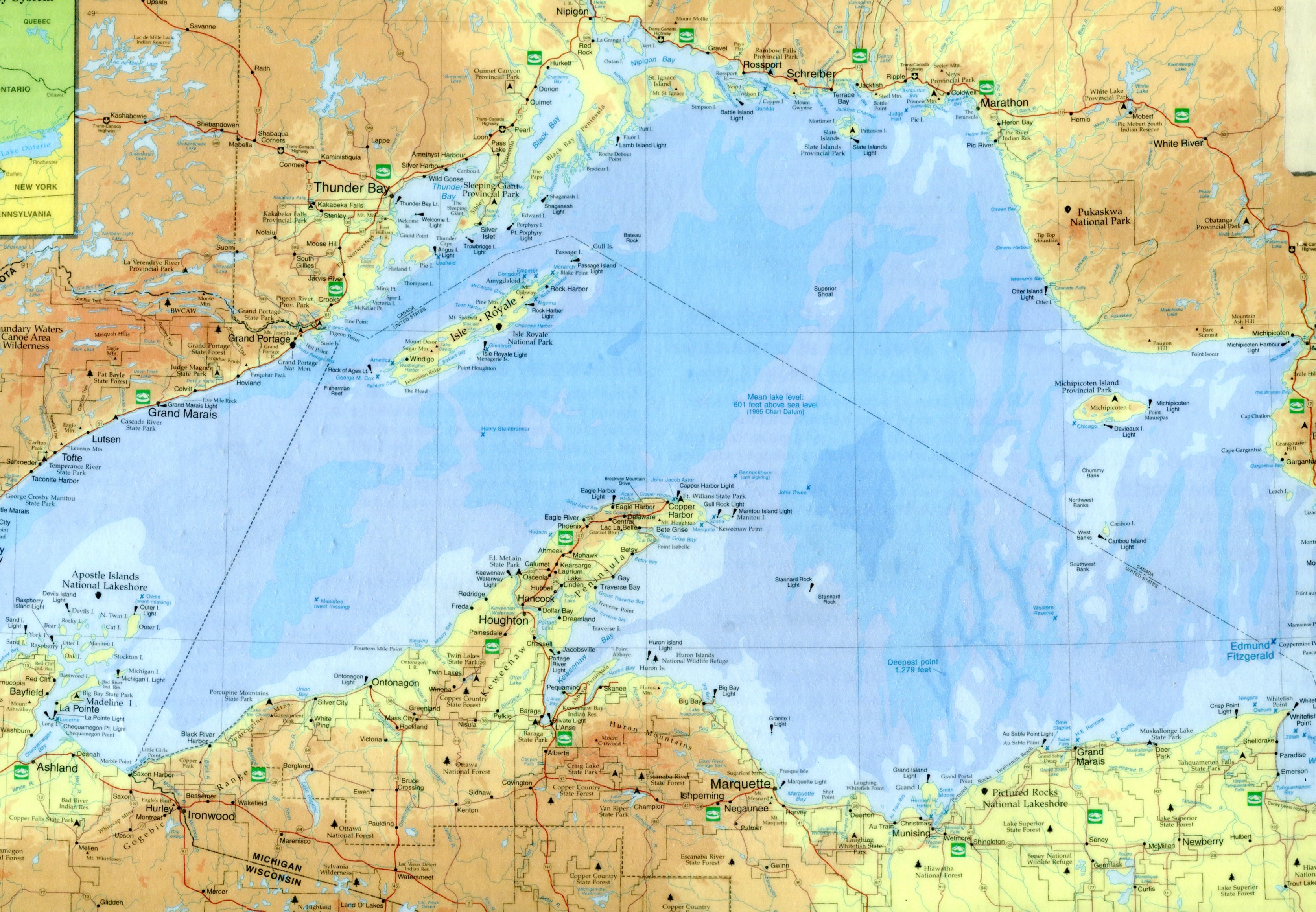
First, the map. It’s laminated, and so in excellent shape. I got it when we went up to northern Wisconsin in 2003. At 16¾ inches x 10⅝ inches, it’s beyond the capacity of my simple scanner, so here’s a large detail from the midsection of the map: instantly recognizable as the ice-water mansion Lake Superior.
LakeSuperiorLake Superior Port Cities Inc., publisher of Lake Superior Magazine, published the map in 2001. It’s a quietly gorgeous map whose shadings not only indicate elevation above and below the surface of the lake, but are pleasing to the eye. Besides towns and roads, it notes all of the various state forests and parks along the shores of Lake Superior, plus the national lakeshores and the single national monument, Grand Portage in Minnesota.

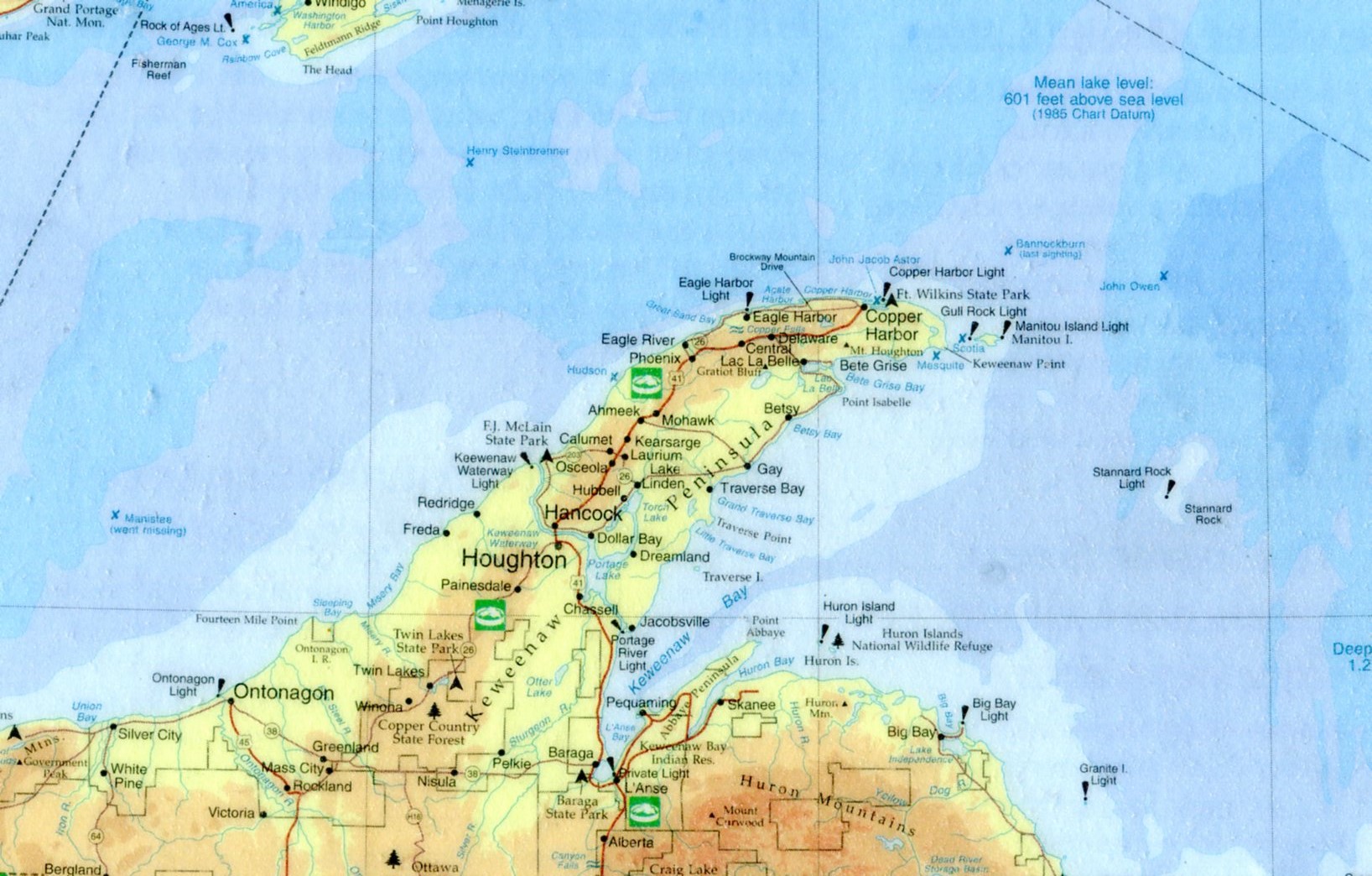
Here’s a closeup of Keweenaw Peninsula, the UP’s UP, and a place I surely must see.
KeweenawVery small versions of the Lake Superior Circle Tour sign mark a network of roads that circumscribe the lake. If I had the time, that’s a drive I wouldn’t hesitate to do. I remember the first time I visited Lake Superior — Labor Day weekend 1989 — I was driving between Munising and Marquette and I saw one of the signs. I hadn’t realized there was a Lake Superior version of the drive; the Lake Michigan Circle Tour signs can be seen even in the Chicago area and, in fact, I’ve done my own version of circum-driving that lake twice (once was that ’89 weekend).

Instantly I was taken with the notion of driving around Lake Superior. I was by myself and could have done it. I didn’t have my passport, but you didn’t need a passport to visit Canada in those days. I hadn’t planned to take any time off after Labor Day, but I could have called in sick for a few days, something I very rarely did. But no. I was entirely too responsible.

On the lake itself, the map also features lighthouses and the sites of notable shipwrecks. Some of the lighthouses are probably easy enough to see, but others are impossibly remote, such as the Stannard Rock Light, more than 20 nautical miles southeast of Keweenaw Point, slap in the middle of the lake.

As the for the wrecks, few will ever see them in the chilly Superior waters (average temp, 40 degrees F.). The most famed of them, naturally, is the Edmund Fitzgerald, but it has a lot of company, such as the Onoko, Henry Steinbrenner, John Owen, Western Reserve, Gale Staples, Niagara, Superior City and others.

A handful wrecks are marked but also noted “went missing,” such as the Owen and Manistee. To quote Wiki on that ship: “The Manistee was a packet steamship that went missing on Lake Superior on November 10, 1883. It was presumed to have sunk, with no surviving crew or passengers. The cause remains a mystery, and the wreckage was never discovered.” Sometimes Gitche Gumee just eats ships, it seems.

As for the fine print, way at the bottom right corner of the map, in about 3-point print, it says, “Design/Cartography by Matt Kania.” He’s easy enough to find: Map Hero, maker of custom maps. Looks like he’s done a lot of wonderful maps besides Superior. If I had any talent for it, I’d do the same.

Michelin’s Central Texas

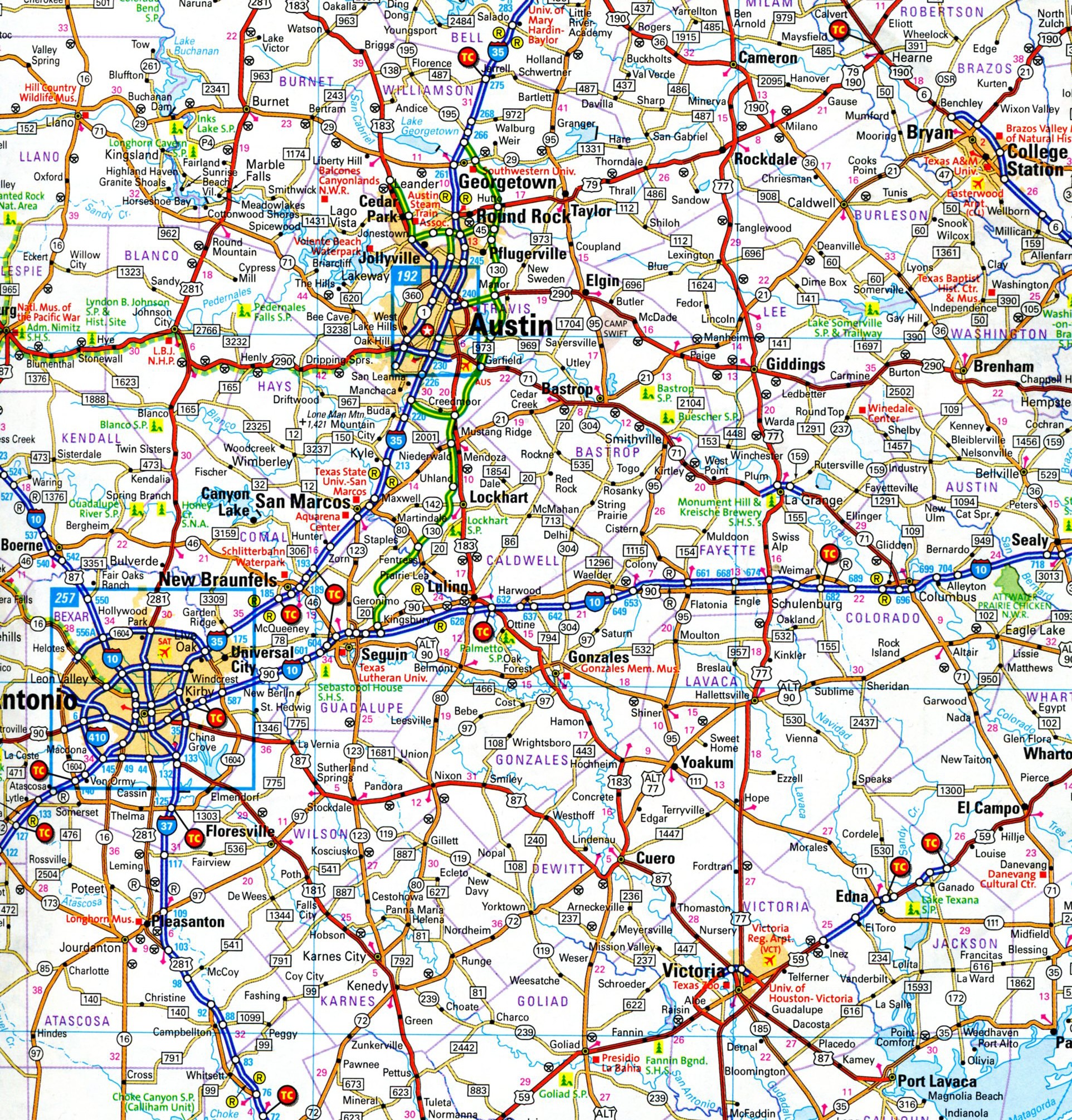
Here’s another map of considerable usefulness and aesthetic value. This is a detail from the Michelin 2015 North America Road Atlas.

CentralTexasI bought the 2003 edition back when it was new, but by last year it was worn out, so I replaced it. Instead of providing a map or two for each state, as the larger Rand McNally does, Michelin divides North America into a grid of squares. Central Texas above happens to be on square 61. The system takes some getting used to, but on the whole it works.

I also still buy Rand McNally most years. Some things on those maps won’t be on Michelin and vice-versa, though since Rand McNally is 15¼ inches x 10¾ inches, and Michelin is 8 x 11, the former has more room for detail. Yet Michelin packs an amazing amount of detail, as good maps should.

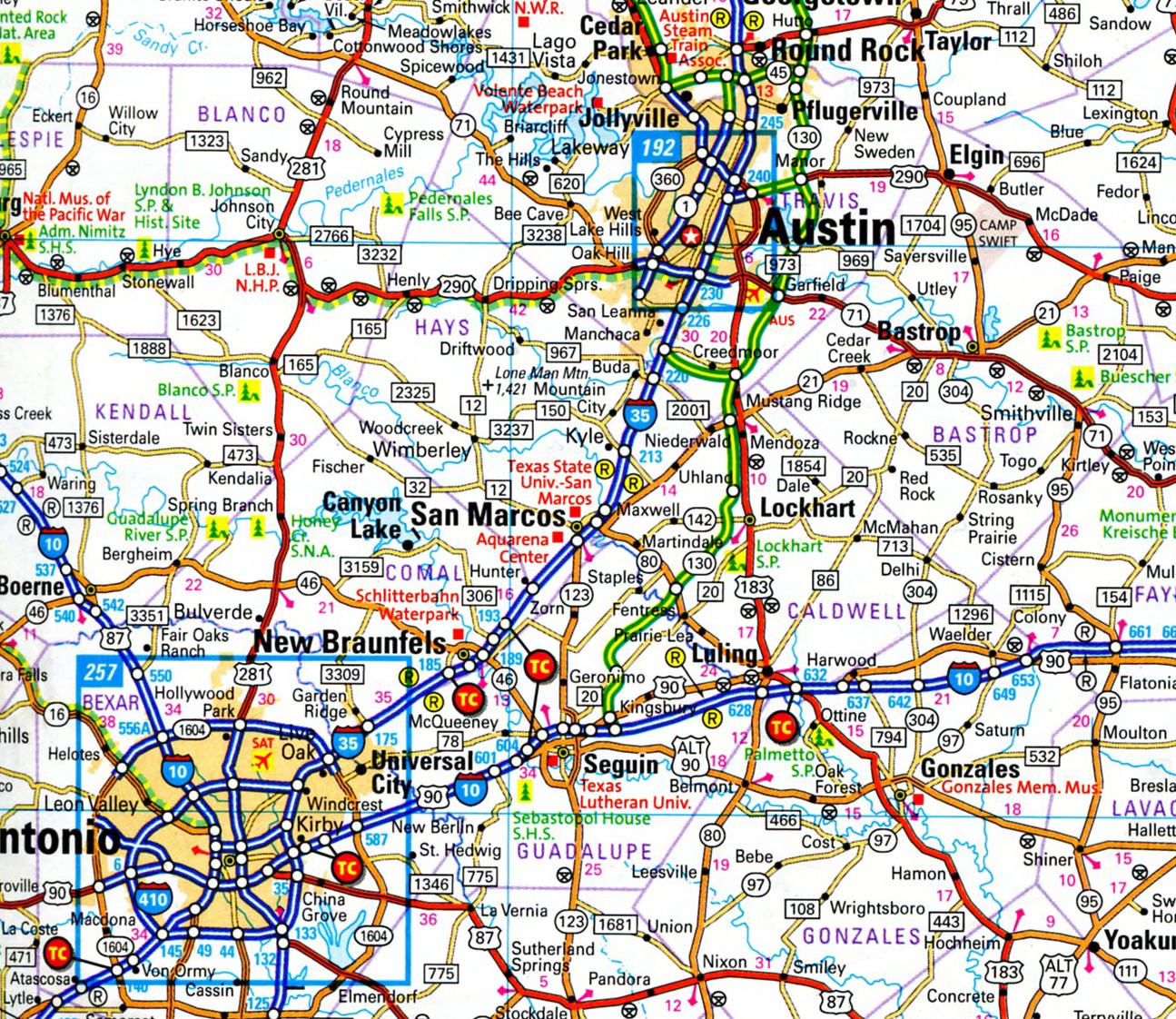
CentralTexasThen there are state highway maps. In whatever state I pass through, I try to pick up one. They were always easy to find in Texas — every rest stop with bathrooms used to have them, and maybe still do. The lesson is, you can’t have too many maps.

Without maps around the house, how could you browse? Looking at the Texas 61 map just now, I notice towns I’ve never heard of — at some distance from San Antonio, where I know most of the surrounding burgs — including the likes of Bleiblerville, Blue, Concrete, Ding Dong, Gay Hill, North Zulch, Oxford, Snook, and Sublime. All real Texas town names, according to Michelin.

Nelles Maps Hong Kong

When you Google huuuge (three u’s), you get this.

Four u’s, this.

That came to mind as I looked out my back door earlier today to see the results of the day’s near-unremitting rain. Huuuge puddles. Maybe even huuuuge.

Nelles Maps are, or at least were in the 1990s, beautiful to behold. While in Asia during that decade, I discovered that the company, which is based in Munich, offers excellent maps of certain Asian places, such as city maps of Hong Kong and Bangkok, and larger maps of Thailand and Malaysia and Bali.

I see from looking around that Nelles still makes those maps, plus a fair number of other places in Asia, Africa and the Americas. None of Europe unless you count Madeira, and none of the United States, except for no fewer than four Hawaiian maps: the Big Island, Honolulu & Oahu, Kauai, and a state of Hawaii map. (What, no Maui?) Guess the company’s specialties are places Germans are likely to consider exotic for machen Urlaub.

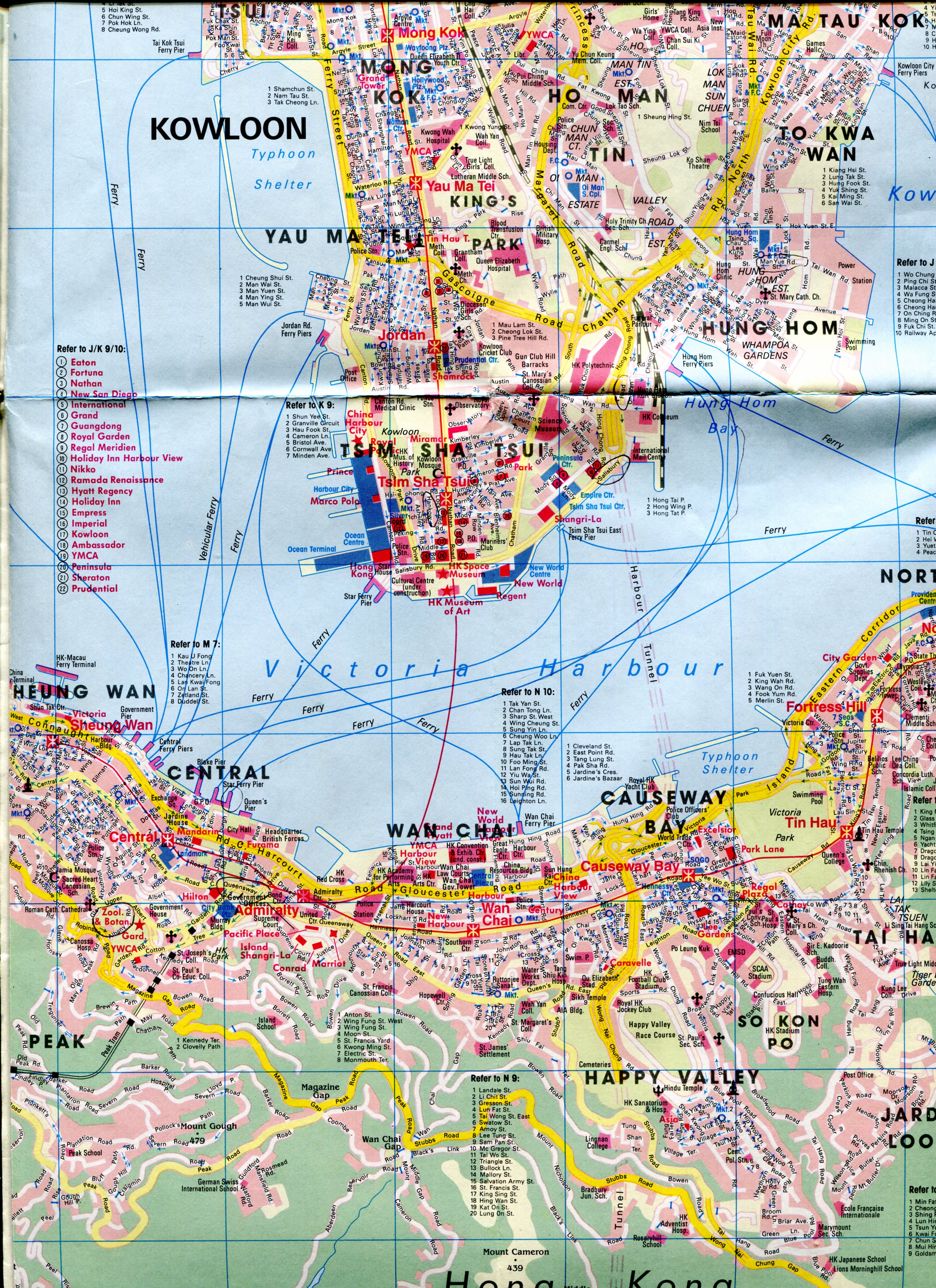
Here’s a detail of the Hong Kong map I probably picked up in 1990: Victoria Harbour, flanked by Hong Kong Island to the south and Tsim Sha Tsui, often known as TST, to the north.
HongKongI suspect 1990 because the Cultural Centre in TST is marked as under construction. That would put the publication of the map in the late 1980s, since the center was completed in 1989, complete with a plaque unveiled by Charles and Diana.

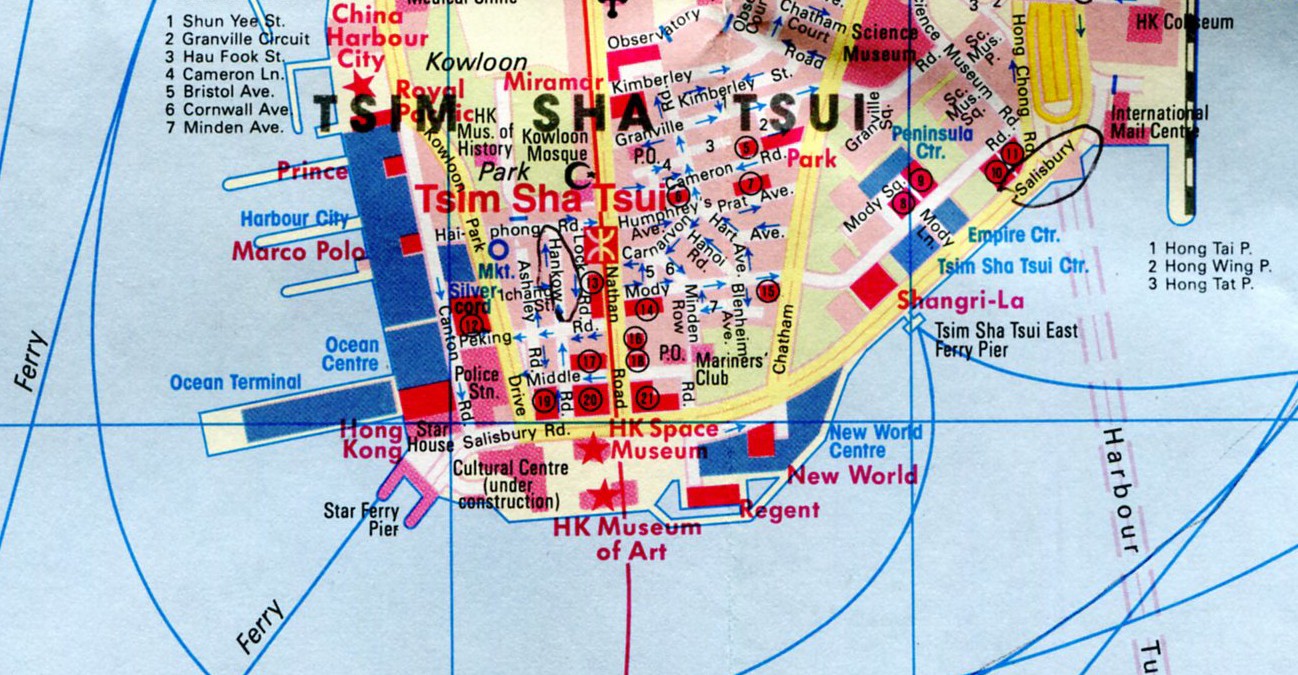
A closeup of TST.

HongKongTSTEven if I’d never been there before — and after over 20 years, it’s like that — I’d look at this map and think, how interesting. The Star Ferry Terminal. HK Space Museum. HK Museum of Art. The Mariners Club. Kowloon Mosque. Streets called Hankow, Haiphong, Hanoi, Humphrey, Cameron and of course Nathan Road.

One thing I missed in TST was the Avenue of the Stars, which is on the waterfront and celebrates the HK film industry. If you want to see a statue of Bruce Lee, apparently that’s your place. The reason I missed it was that it didn’t open until 2004. Shucks.

bản đồ thế giới

Word is there will be cold rain tomorrow. At least it won’t be snow, and at least it’s the beginning of the end of winter. Today was sunny and above freezing. So cloudless, in fact, that I was inspired to take a picture of the clear blue sky.

Feb 1, 2016 Sky Over IllinoisI don’t know if I’ve ever taken that kind of picture before. Clouds, yes. Trees in front of a clear sky, yes. But straight up azure? It was surprisingly hard to get the camera to take the shot, I suppose since the sensors don’t sense anything nearby to focus on.

One thing I did over the weekend was thumb through some of my maps. I can’t quite call it a collection, since there’s no system to it, and I haven’t been going out of my way to acquire them over the years. Mainly they’ve been useful purchases, such as in London or Berlin, and they’ve accumulated.

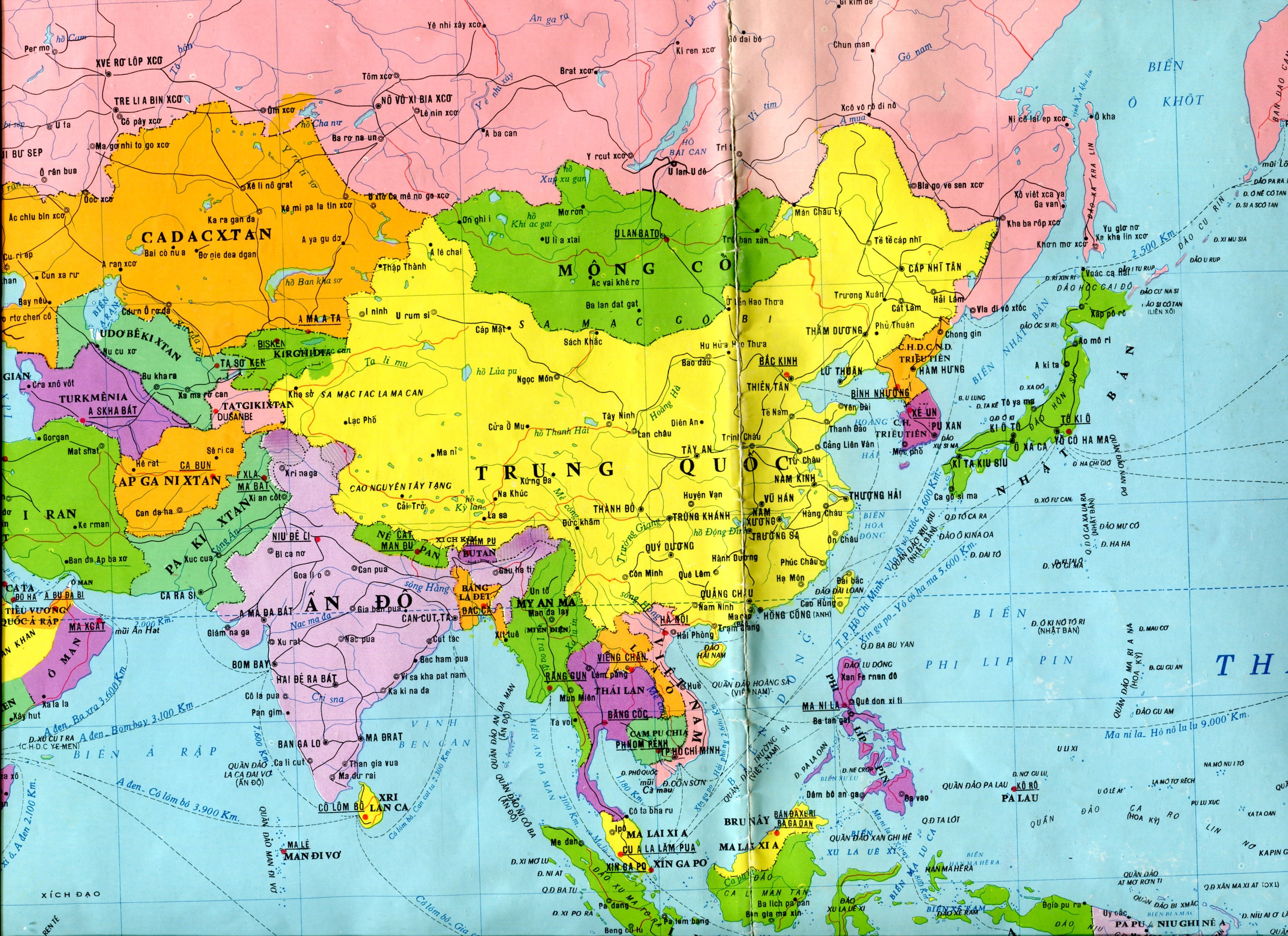
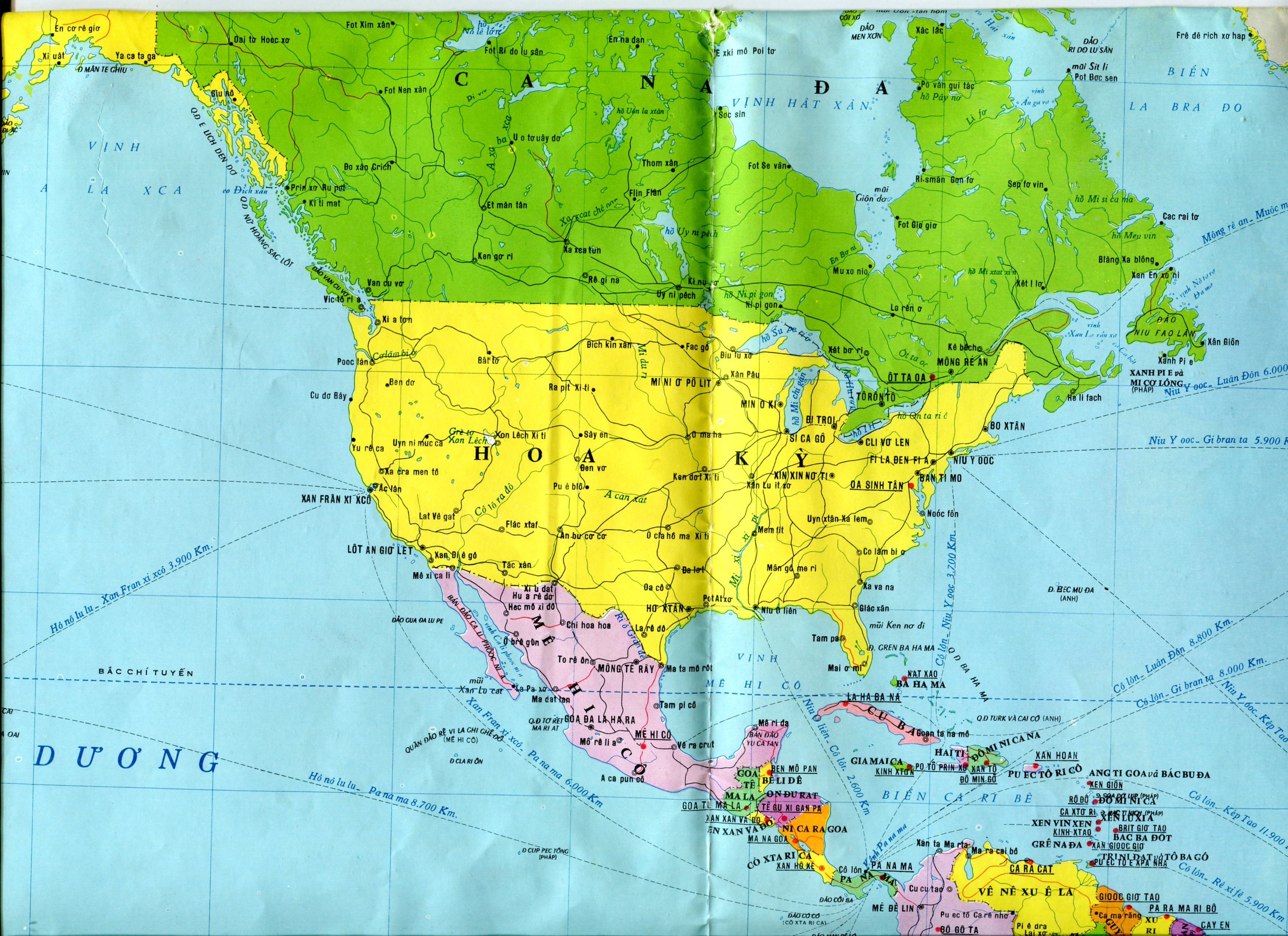
My Vietnamese-language world map, on the other hand, was a souvenir. I’m pretty sure I got it in Saigon. At the top it says it’s a bản đồ thế giới, except it’s all capitals. But it does feature some of the intricate diacritical marks that characterize Vietnamese.

Here’s Vietnam’s neighborhood.

VietMap2And North America.

VietMapIn case you need to know it, the United States is Hoa Kỳ in Vietnamese. I’m just guessing, but that seems to be a translation of “united states.” Look at the map enough, though, and you’ll see many of the place names seem to be phonetic.

Mikimoto Pearl Island 1992

Does anything interesting happen at the junction of January and February? I’m not persuaded anything does. At least it was warmish around here for the last weekend in January — in the 40s F. both Saturday and Sunday, with rain today to melt away much of the remaining snow, which isn’t too bad for the pit of winter. But the relative warmth didn’t persuade us to do much. At least I found the likes of Hugh Laurie in New Orleans on YouTube over the weekend.

Early February 1992

Recently I visited Toba, a town on the ocean in Ise Prefecture, Japan. That’s the place where cultured pearls were popularized, if not invented, in the early 20th century, and the popularization continues to this day in the form of Mikimoto Pearl Island.

The island, which is connected to the mainland by a very short bridge, includes a museum at which you can learn all sorts of pearl factoids; this I did. I had no idea pearls came in so many colors. You can also buy terrifically expensive jewelry there; this I did not.

On display are some items of gaudy fascination, such as a silver replica Liberty Bell (one-third scale) mostly covered in cultured pearls, complete with a crack represented by a zigzag of darker pearls. Supposedly it was exhibited at the 1939 New York World’s Fair. Other structures include a be-pearled model of Himeji Castle, a globe that includes rubies and diamonds as well as a pearls, and a lotta pearls in the shape of large model pagoda.

At Mikimoto Pearl Island I thought of what the mother of a friend of mine told me upon hearing that I planned to move to Japan. That’s where the pearls come from, she said. Guess Mikimoto’s been successful in getting the word out.

Over the Transom Thursday

Got another political robocall yesterday, but it was a first: a fellow running for a seat on the local water reclamation board, bemoaning the condition of the local water system. The subtext of his call: You don’t want to end up like Flint, do you? DO YOU? Vote for me, the clean water candidate.

Next thing I know, someone running for the Northwest Mosquito Abatement District board will call, stressing his mosquito-fighting chops because ZIKA VIRUS is going to ATTACK YOUR BABIES. (Never mind that the species of mosquitoes best able to transmit the virus aren’t found in Illinois.)

No, that won’t happen. The mosquito board is appointed, not elected. Shoot.

I don’t remember where I got this Bernie flier. Maybe when I was downtown last month, someone handed it to me, and I found it in one of my pockets later.
FeeltheBernThe shape isn’t quite rectangular. It has the shape of paper cut quickly, en masse, on a cutting board.

I also found this bookmark recently. There’s a 2011 copyright on the other side, so it’s probably been kicking around the house a while. Published by the Elks, it looks like something that gets handed out in elementary schools.

heroesSure, heroes don’t use drugs and alcohol (but just what’s in Super Chicken’s super sauce?). I don’t know about that Elk on the left, either. Looks a little pixilated to me.

Captain Sir Richard Francis Burton

I’m about halfway through Captain Sir Richard Francis Burton (1990) by Edward Rice, subtitled in its Amazon entry, “The Secret Agent Who Made the Pilgrimage to Mecca, Discovered the Kama Sutra, and Brought the Arabian Nights to the West” (but that phrase isn’t on the cover of the book). At the halfway point, Burton’s already been an agent for Gen. Napier in Sind and other places, daringly visited Mecca, and done a lot more, and now — around the time he met Speke — he’s preparing to venture into Africa for a date with a spear through his cheeks.

Wiki (to borrow only one sentence) describes Burton as a “British explorer, geographer, translator, writer, soldier, orientalist, cartographer, ethnologist, spy, linguist, poet, fencer, and diplomat.” Rice’s biography, I’m happy to say, does him justice.

“Burton was unique in any gathering except when he was deliberately working in disguise as an agent among peoples of the lands being absorbed by his country,” Rice writes. “An impressive six feet tall, broad chested and wiry, ‘gypsy-eyed,’ darkly handsome, he was fiercely imposing, his face scarred by a savage spear wound received in a battle with Somali marauders. He spoke twenty-nine languages and many dialects and when necessary, he could pass as a native of several eastern lands — as an Afghan when he made his famous pilgrimage to Mecca, as a Gypsy laborer among the work gangs on the canals of the Indus River, as a nondescript peddler of trinkets and as a dervish, a wandering holy man, when exploring the wilder parts of Sind, Baluchistan, and the Punjab for his general. He was the first European to enter Harar, a sacred city in East Africa, though some thirty whites had earlier been driven off or killed. He was also the first European to lead an expedition into Central Africa to search for the sources of the Nile…

“His opinions on various subjects — English ‘misrule’ of the new colonies, the low quality and stodginess of university education, the need for the sexual emancipation of the English woman, the failure on the part of the Government to see that the conquered peoples of the empire were perpetually on the edge of revolt — were not likely to make him popular at home. Nor did his condemnation of infanticide and the slave trade endear him to Orientals and Africans. His scholarly interests often infuriated the Victorians, for he wrote openly about sexual matters they thought better left unmentioned — aphrodisiacs, circumcision, infibulation, eunuchism, and homosexuality…

“Burton’s adult life was passed in a ceaseless quest for the kind of secret knowledge he labeled broadly ‘Gnosis’… This search led him to investigate the Kabbalah, alchemy, Roman Catholicism, a Hindu snake caste of the most archaic type, and the erotic Way called Tantra, after which he looked into Sikhism and passed through several forms of Islam before settling on Sufism, a mystical discipline that defies simple labels. He remained a more or less faithful practitioner of Sufi teachings for the rest of his life…

Wow. Previously I only knew about his career in the broadest terms, colored by reading Mountains of the Moon by William Harrison in Japan in the early ’90s (published as Burton and Speke in 1982), an exceptionally fine work of historical fiction, and seeing the movie Mountains of the Moon, which is a good adaptation.

Never mind the fellow who hawks Mexican beer. Even though he’s been dead for over 125 years, I’d say Richard Burton would still be a strong contender for status as The Most Interesting Man in the World.