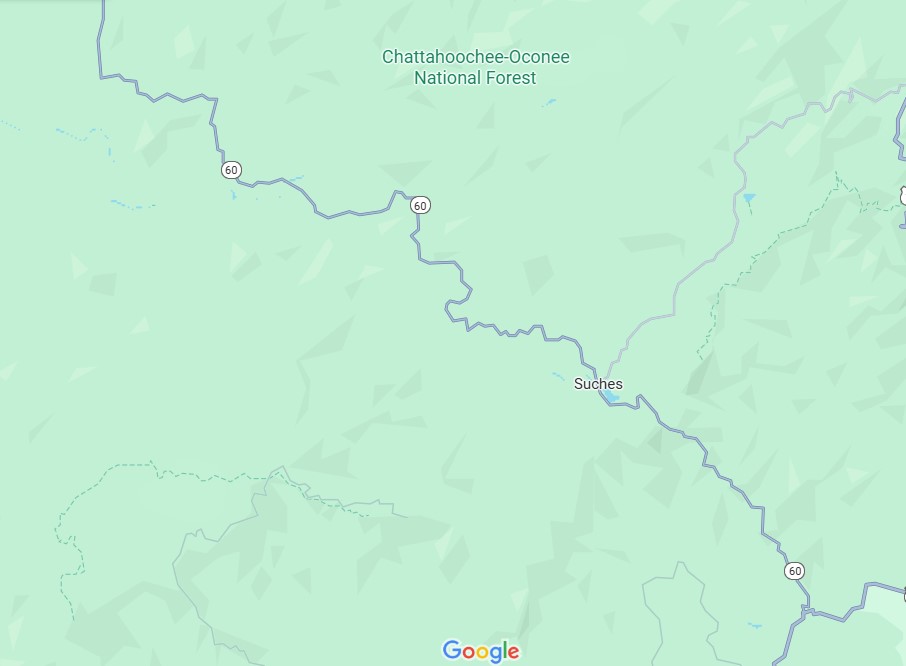
Clear skies, little traffic, good curves. I recommend driving on the two-lane Georgia 60 highway through the Chattahoochee National Forest under those conditions as certified car commercial driving. Considering all the hours of your life spent stewing in a traffic jam, it’s the kind of driving that makes you forget all of them.
Wish there had been a song on the radio to add to the driving experience — there was little but static — but that would just be icing on the cake anyway. Actually, not even that: it would be a little whip cream on a cake that already has some fine icing. To torture that analogy a little further, the cake would be the sedimentary rock lifted and cracked and shaped by whatever else rocks do over millions of years, topped by the biomass – that is, an Appalachian forest.
The history of humans in the Chattahoochee is incredibly dark and eventful. A textbook case of raping the land, only somewhat recovered in our time, partly through the efforts of the can-do CCC.
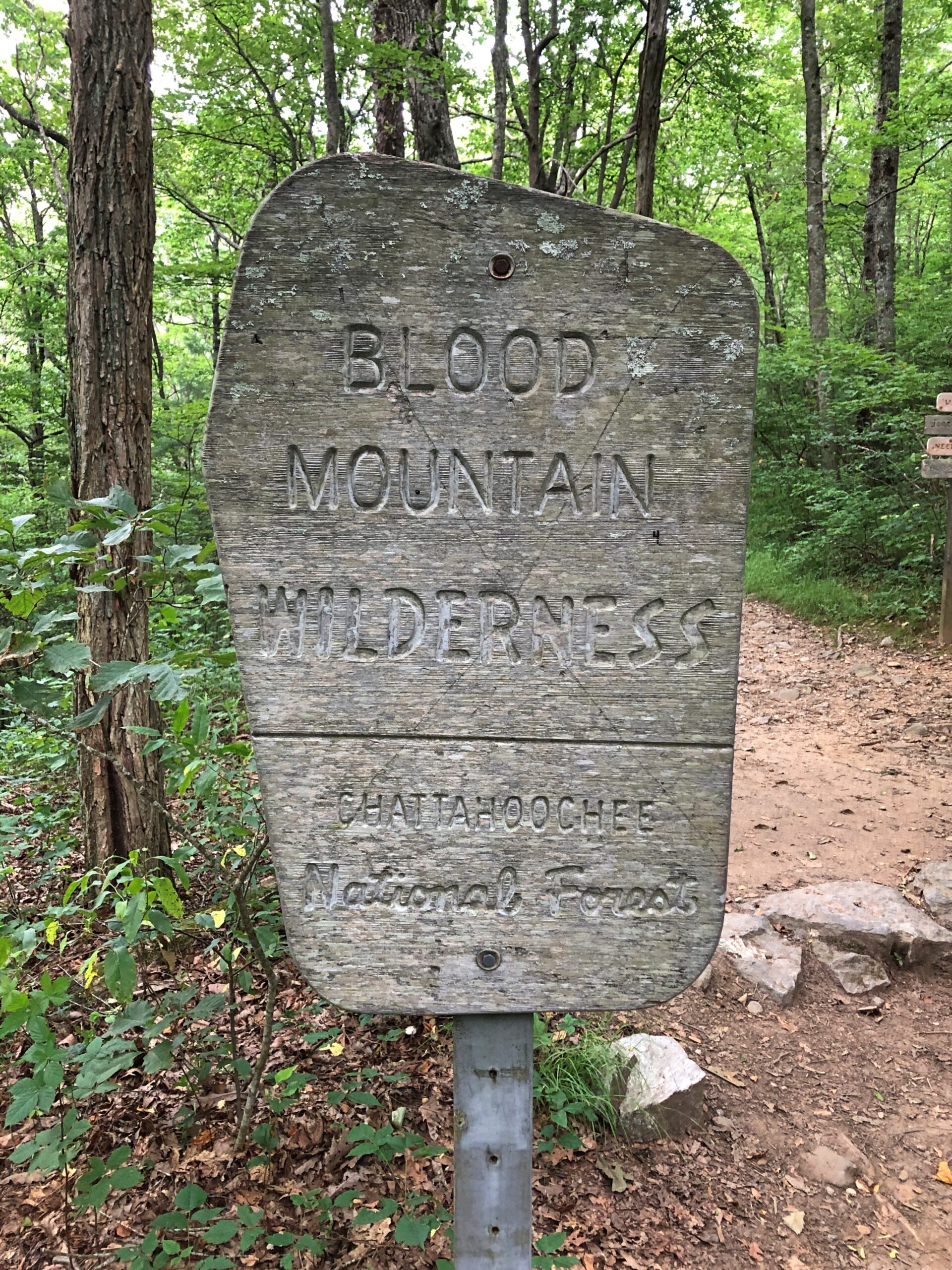
Besides the road itself, the works of man are fairly thin on the ground, literally. There is a hamlet called Suches (pop. 548), but not much else. The region has recovered enough to offer a trail through the Blood Mountain Wilderness, which crosses the highway at one point, where there is a small parking lot.
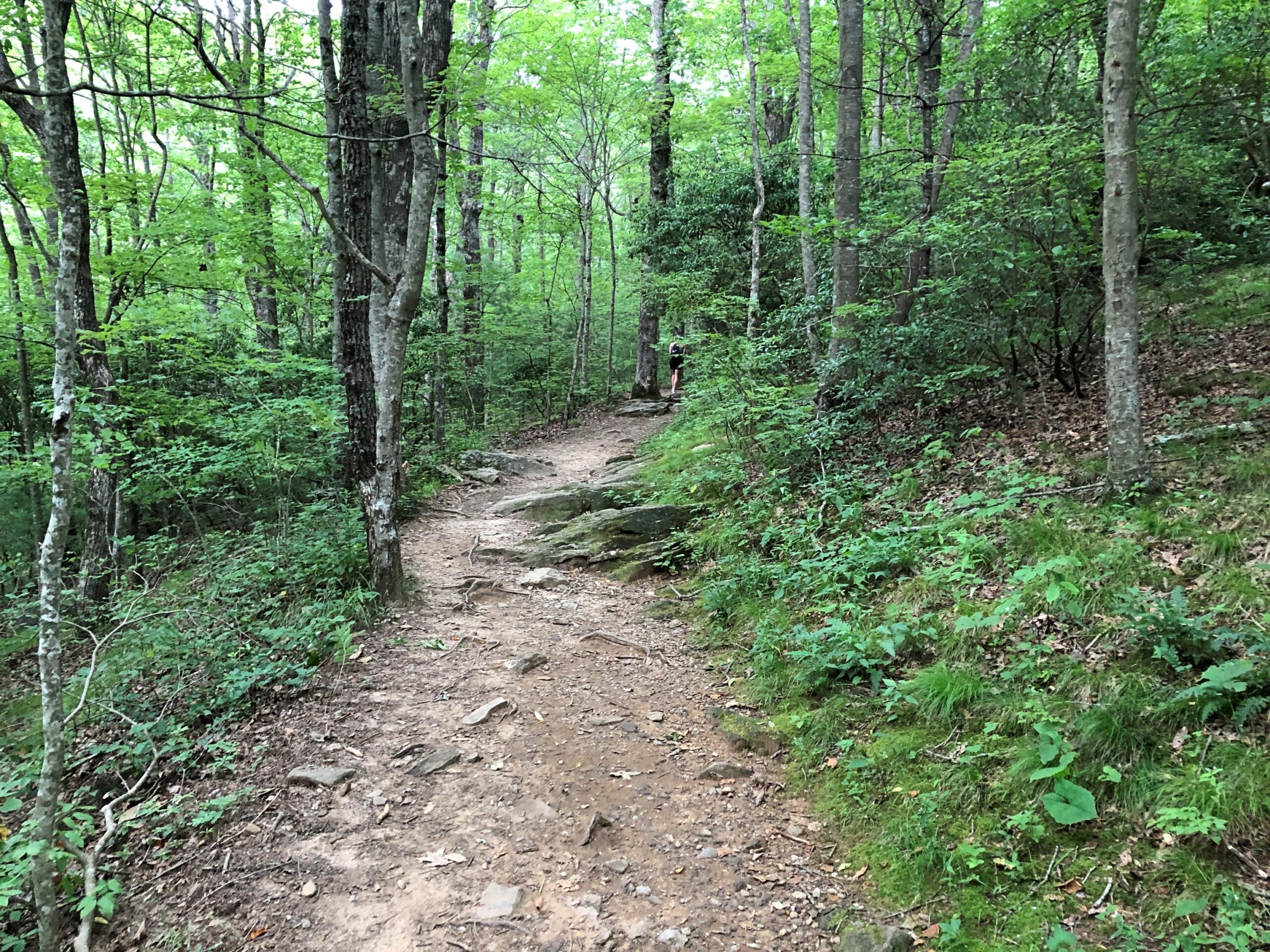
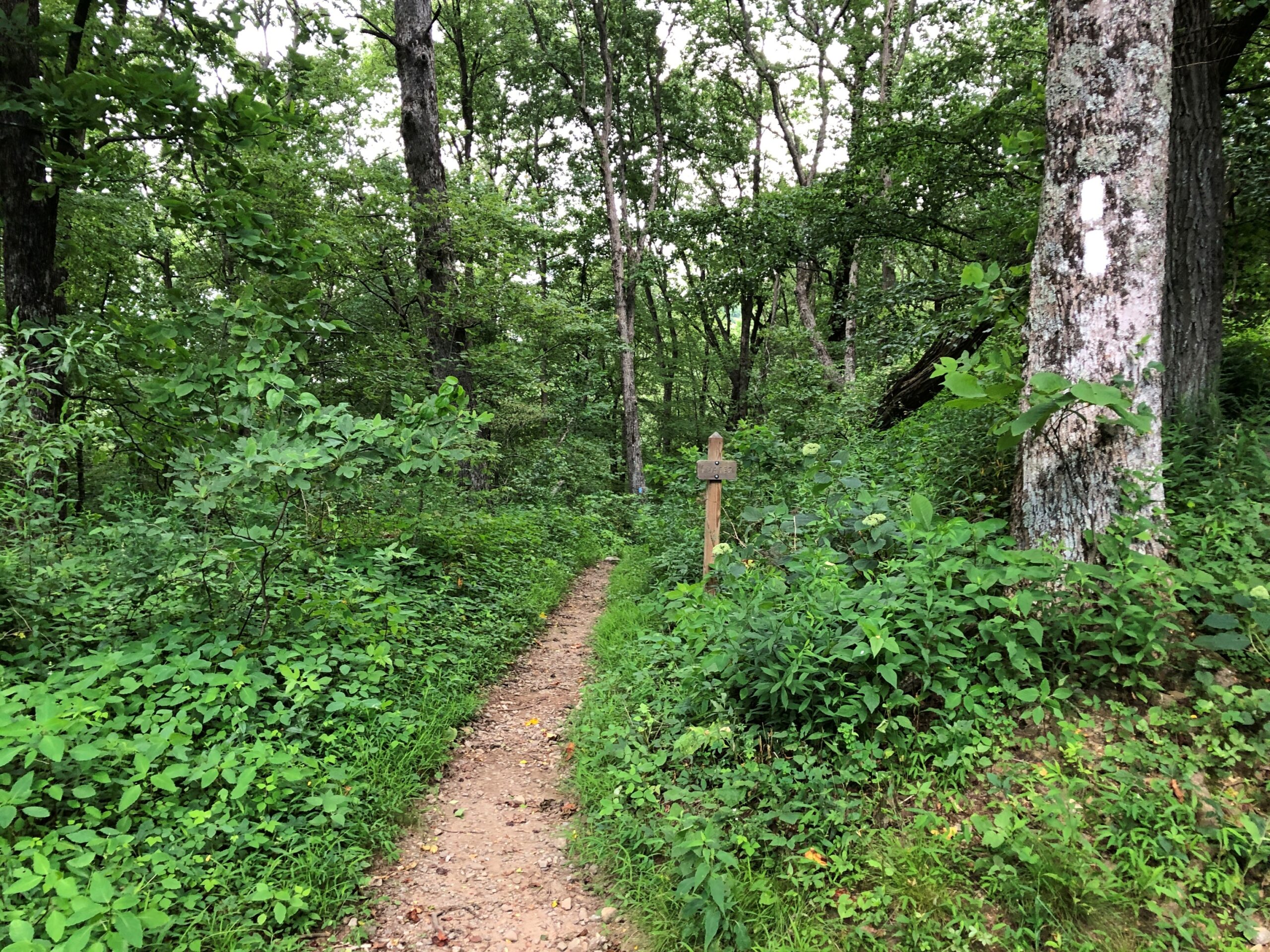
I wasn’t equipped for a hike, so I walked only a half-mile or so in, and then back. I don’t remember having to swat a single mosquito, which ups the quality of a walk right there.
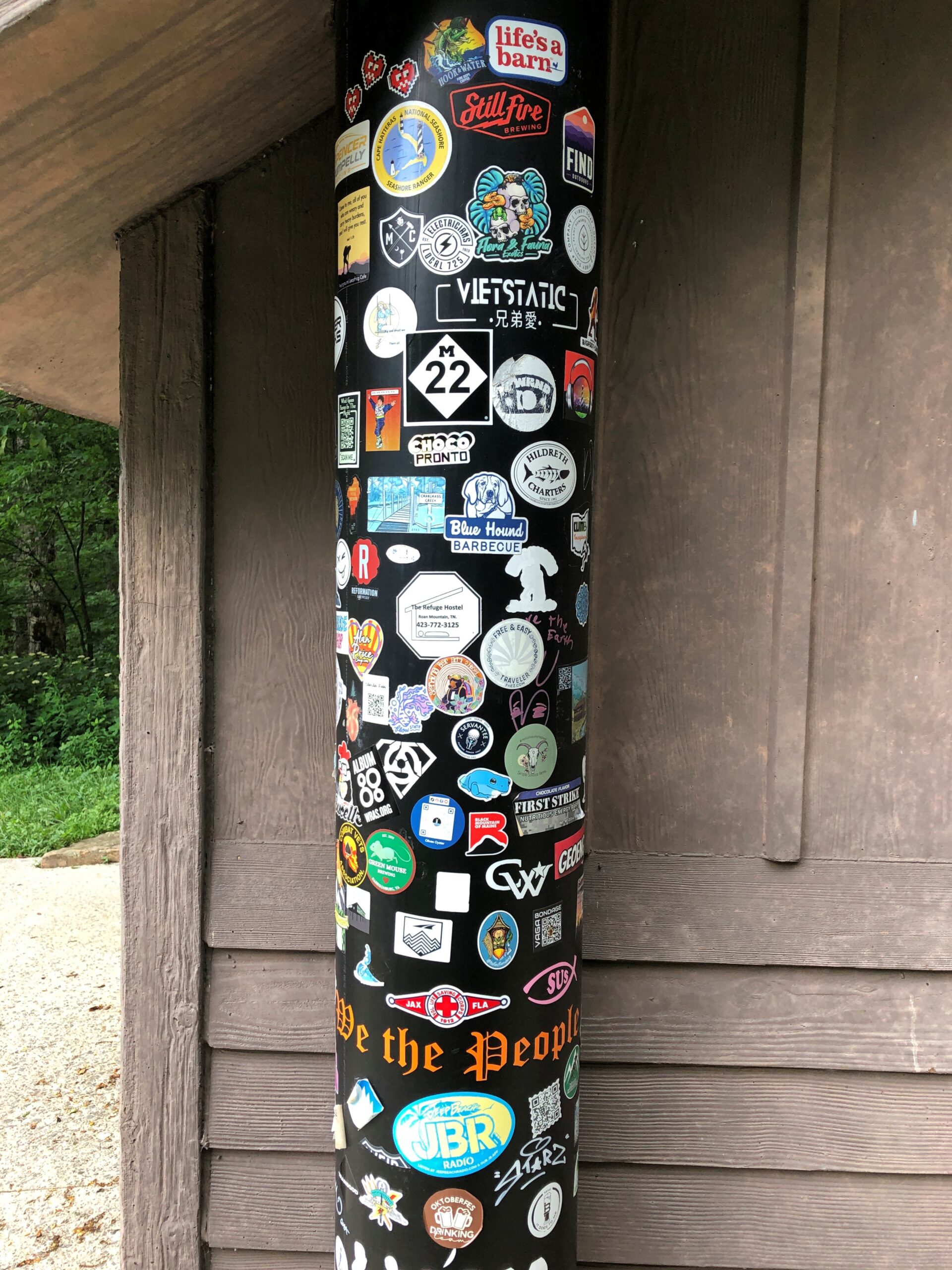
Next to the parking lot are pit toilets. Attached to the structure is a pipe, many times stickered by passersby. I didn’t see a Buc-ee’s sticker, but there could be one appearing anytime now. Good to see M-22 up in Michigan represented: that’s another fine stretch of car commercial driving.
Blood Mountain. There’s a Southern Gothic horror name for you. Or less seriously, the setting of a Scooby-Doo episode, one in which Shaggy, when he learns the name of the place, says “Zoinks! B-B-Blood Mountain?!?”
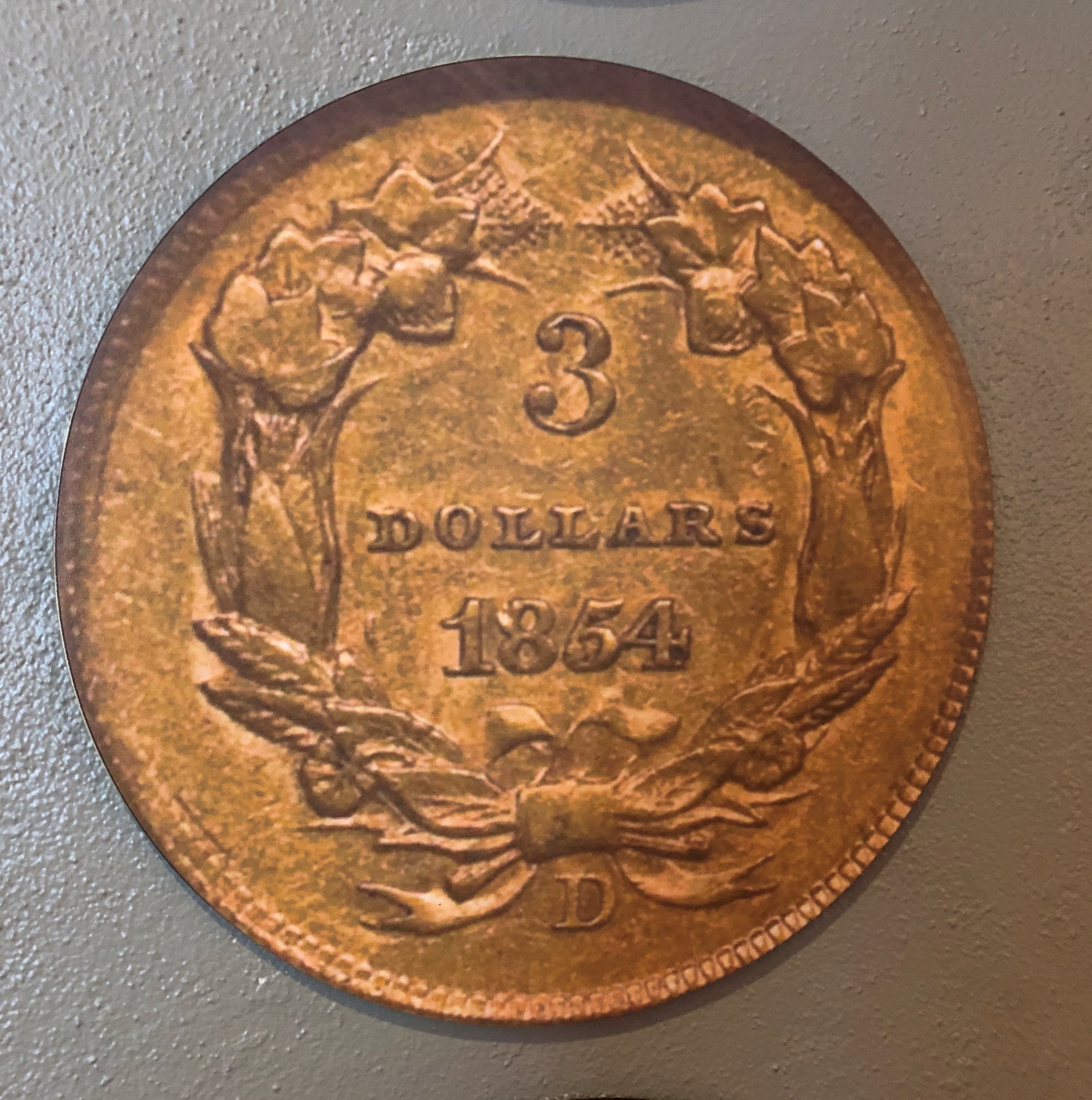
When pondering the immortal deeds of President Millard Fillmore, as one should occasionally, his signature on the Coinage Act of 1853 is worth a thought. The law, signed weeks before he left office, adjusted the silver content of most U.S. coinage, but also created the $3 gold piece. When that hoary old cliché about the queerness of a $3 bill is trotted out, I’d guess that most people don’t know that there was actually such a denomination. It was a gold coin rather than paper, made from 1854 to 1889, though few were minted most of those years.
I already knew about $3 gold pieces before I arrived at the Dahlonega Gold Museum in late June on my way to Tennessee, but if I hadn’t, I could have learned about them there. Dahlonega, Georgia, used to be home to a branch mint where they were made. Only gold coins were made at Dahlonega, including that odd duck of a denomination for exactly one year (1854), but also gold dollars, quarter eagles and half eagles until 1861. No eagles or double eagles, however.
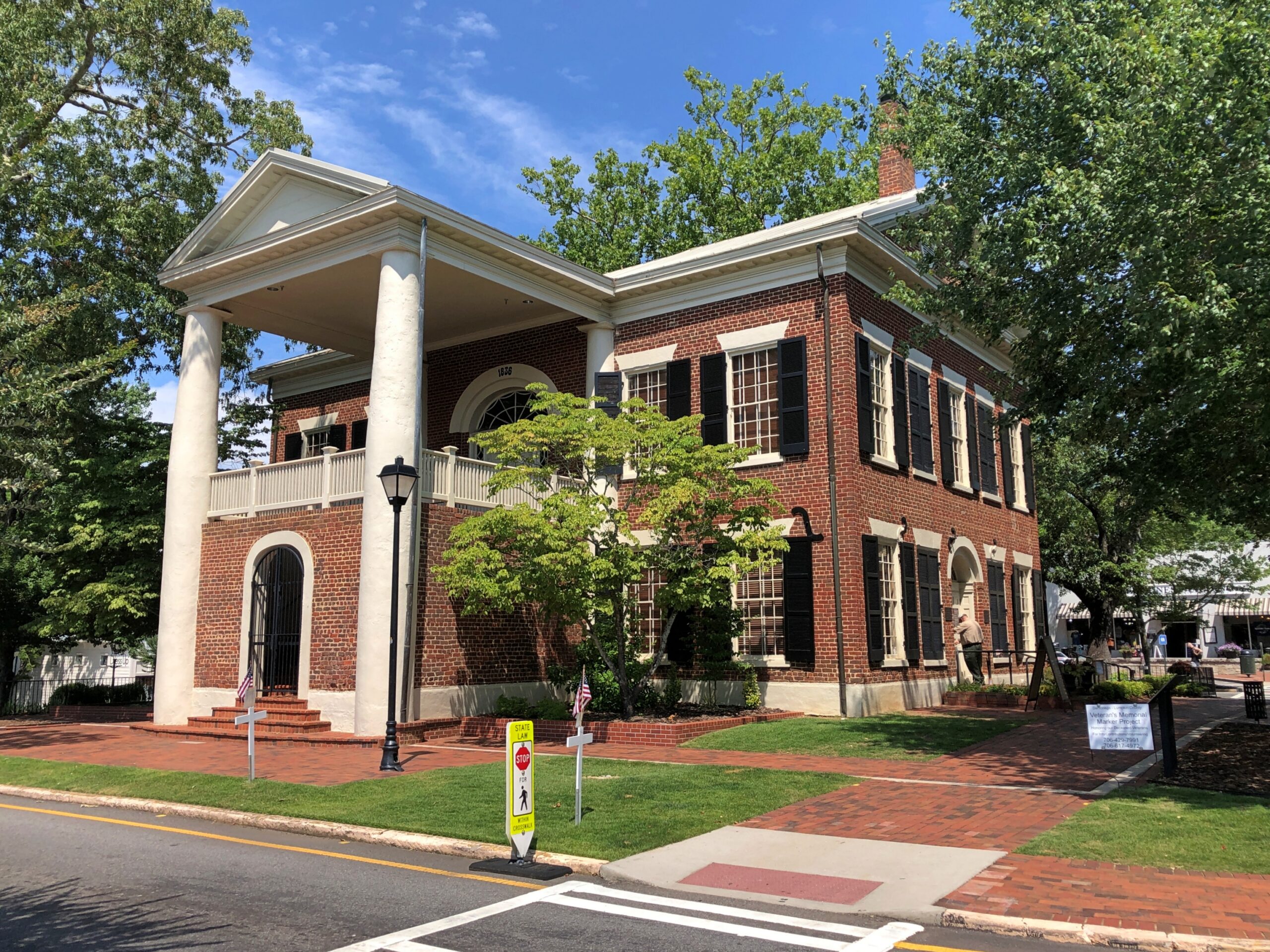
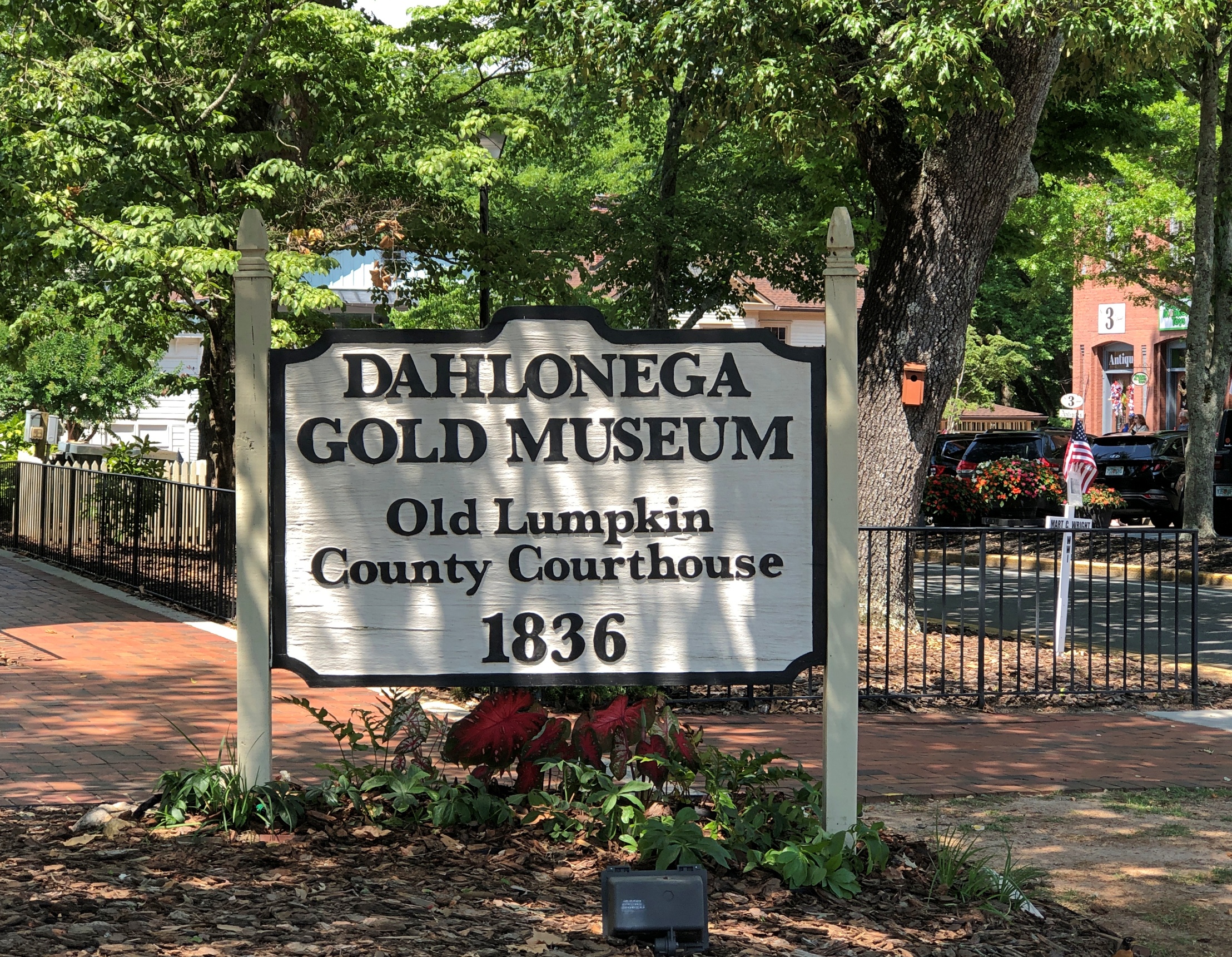
The history of gold coinage at the Dahlonega Mint wasn’t that long. Congress authorized a branch mint there (and in Charlotte, NC, and New Orleans) in 1835, and coin production started at Dahlonega in 1838. The north Georgia gold rush beginning in the late 1820s justified such a move. The Civil War resulted in the closure of the mint, which never reopened afterward, and not too much later, the mint building in Dahlonega burned down. The modern museum is in the former Lumpkin County Courthouse and tells the story of gold in the area.
The museum has exhibits about the mint, but also the gold rush, including information about the discovery and mining of the metal, some antique equipment, and a nod to the Cherokee on whose land the gold was discovered — the rush helped precipitate the Indian Removal Act — as well as the slaves and free labor that worked the streams and hills looking for gold. There was also, behind thick glass, a complete collection of Dahlonega gold coins, mint mark “D,” long before Denver got that letter for its coins.
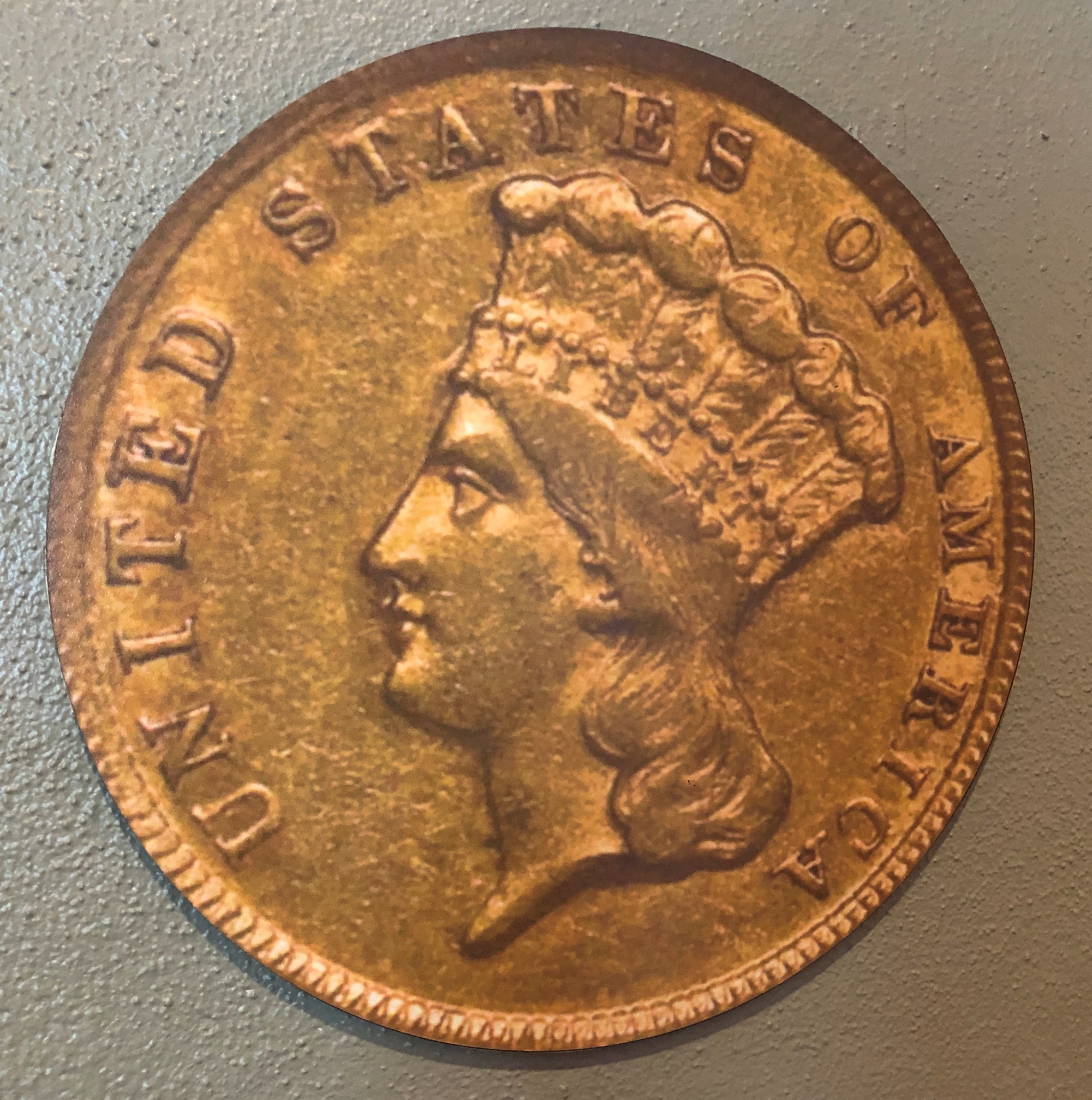
The protective glass made photographing the actual coins problematic, but the museum thoughtfully provided enlarged images of a few of the coins in its display, including the $3 piece.
Like the 20 cent piece or the Susan B. Anthony dollar, the $3 gold piece wasn’t popular when new. Too easily confused with the quarter eagle would be my guess, though their designs are very different. But they are popular among collectors now, and quite valuable. As a result, alas, I’m unlikely ever to own one. In the most extreme case, an 1870-S $3 piece, the only example known to exist, sold at auction in 2023 for more than $5.5 million.
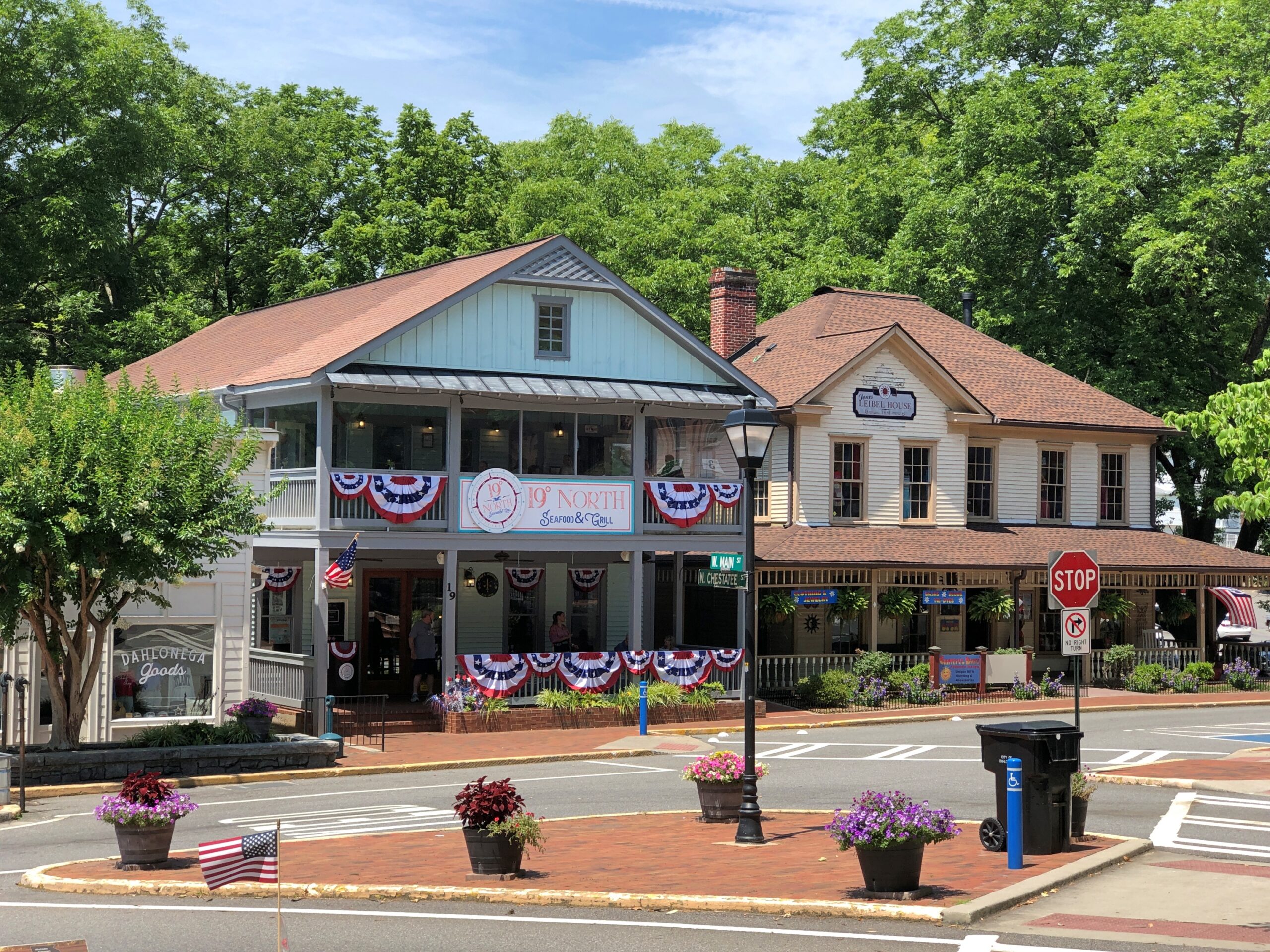
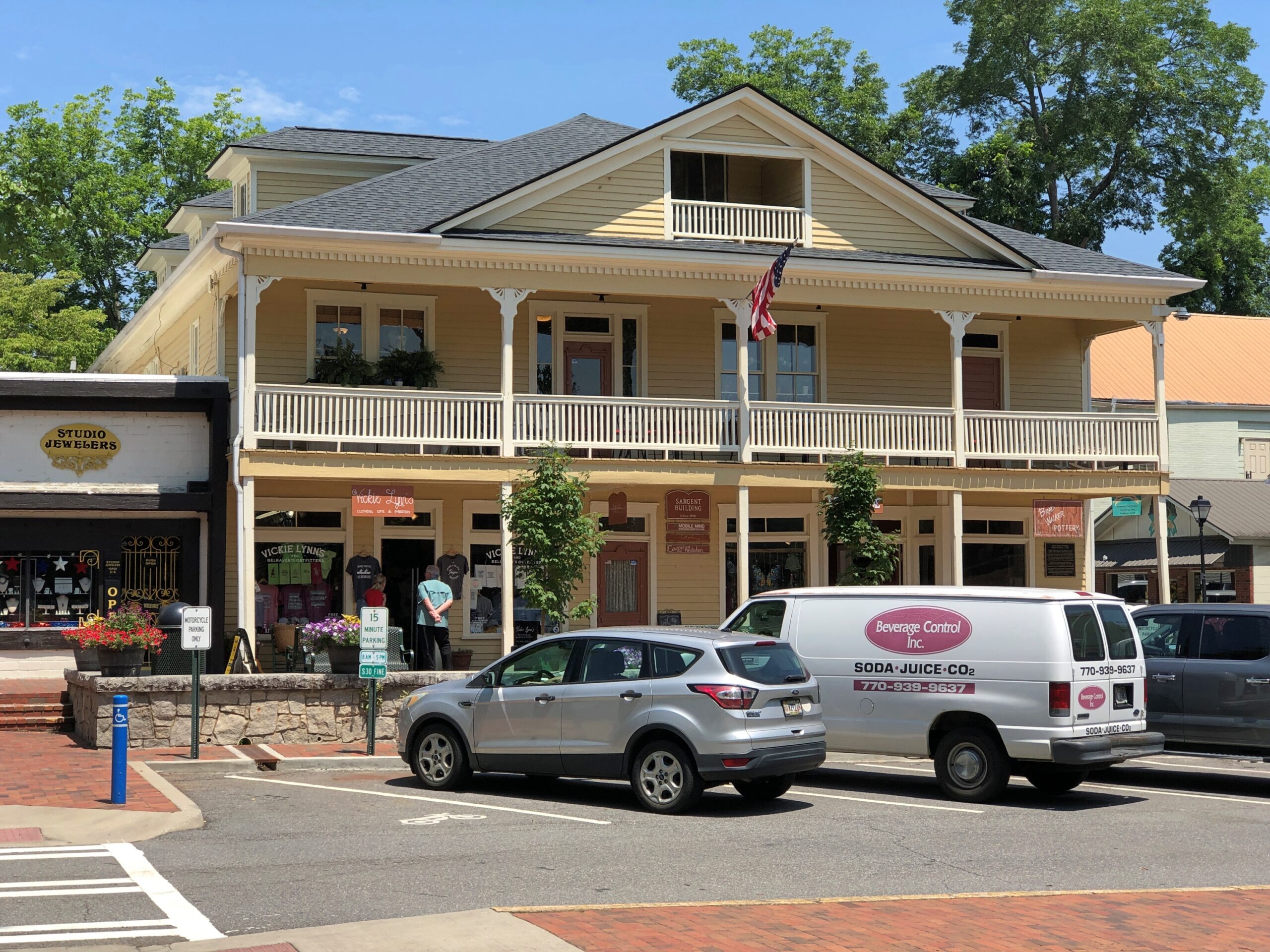
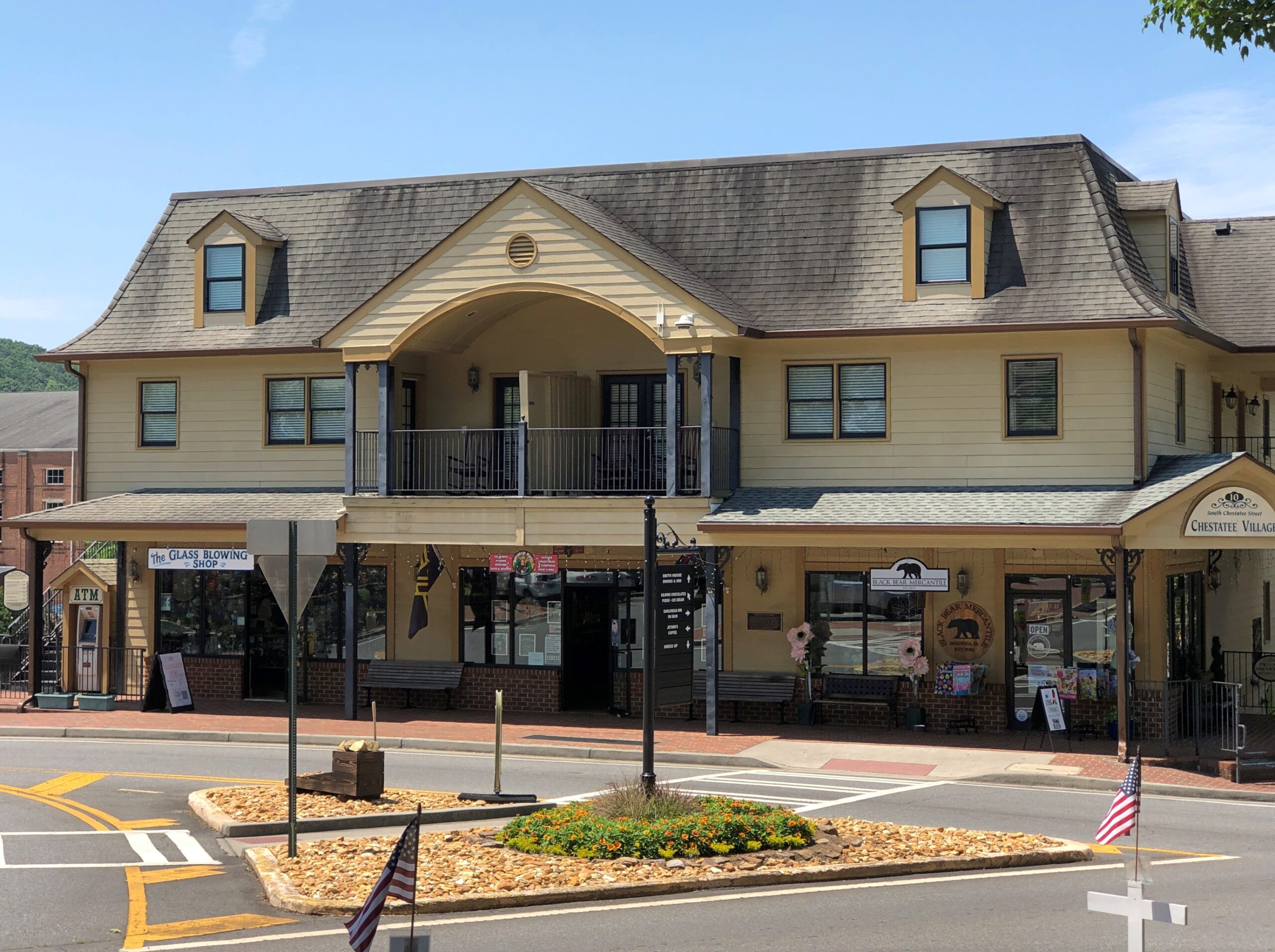
As for Dahlonega, its downtown has the handsome look of a day-trip destination from Atlanta and a lot of suitable businesses. On the former county courthouse square, you can find the likes of Gustavo’s Scratch Kitchen, Vintage Musical Instruments, Dahlonega Tasting Room, The Glass Blowing Shop, Studio Jewelers, Lynn’s Gifts, Country Cottage (also gifts), Local Pup pet store, 19° Seafood & Grill, Paul Thomas Chocolates, Dahlonega Goods and Dress Up Dahlonega.
A blazing hot day might not have been the best time for a visit, so the square wasn’t especially crowded. I only spent enough time on foot to get from a parking lot a block away to the museum, and then took a walk around the building under the shade of the trees on the grounds. For a hot summer day, not a bad walkabout. Certainly worth the effort to see some Dahlonega gold.
Now I can say I’ve been to Athens. The one in Georgia, that is, spending two nights. But most of that day in late June, I was elsewhere in Georgia – the part that Sherman burned – visiting two different old friends, one in the morning, the other the afternoon, so my time in Athens was fairly limited. The neighborhood near the university looked interesting, as college towns often are, so with any luck I’ll be back sometime for a closer look.
But I did spend enough time in town to happen across the aforementioned two-story concrete chicken and egg. It was another example of serendipity on the road. The reason involved traffic patterns in the western part of Athens. My motel was off a fairly busy major road, the Atlanta Highway, meaning that entering the property headed west – away from Athens – meant turning across two intense lanes of traffic without a clearly marked turning lane or a light.
So more than once, I headed west to the next major intersection, made a right, and then turned around to head back east on the Atlanta Highway so I could make a right turn into the motel. One time late in the afternoon, I decided to drive just a little further down that turning road – Cleveland Road – to see what I could see, and was soon rewarded with the concrete chicken.
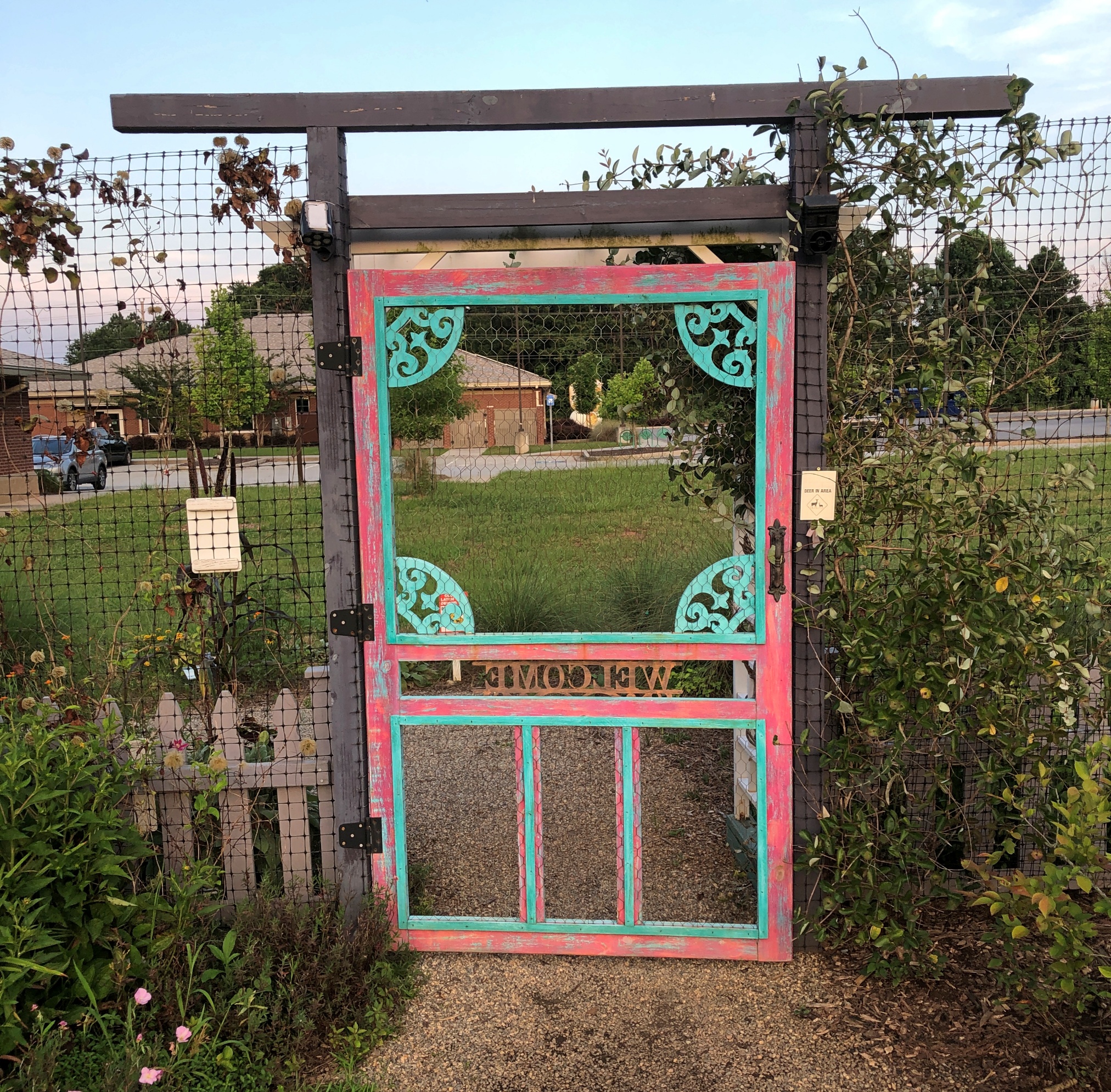
But that wasn’t all. Behind the building that houses the University of Georgia Extension Athens-Clarke County is a sizable garden. The sun was nearly down, so heat was less of an issue. I spent some time looking around. No one else was there.
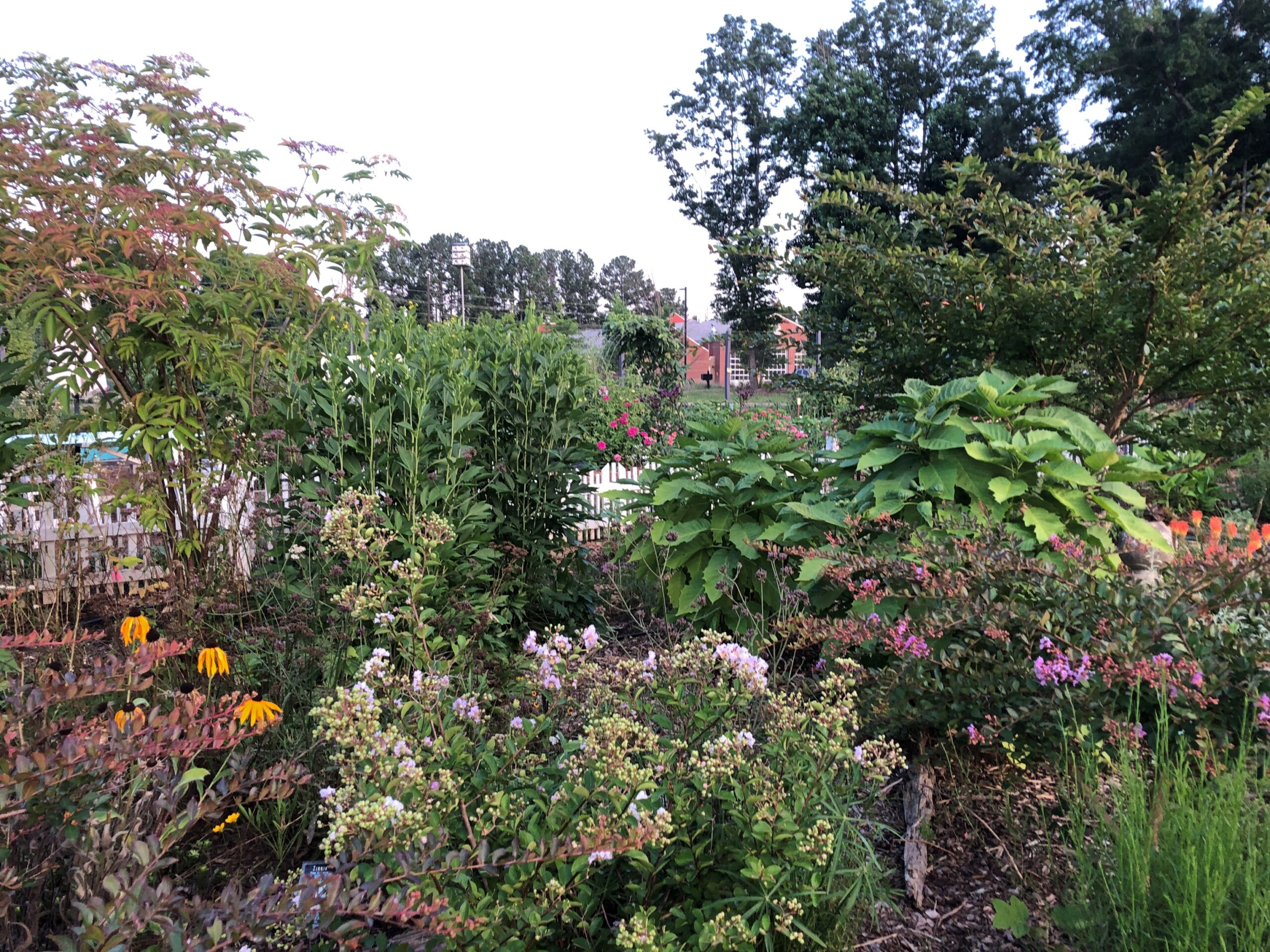
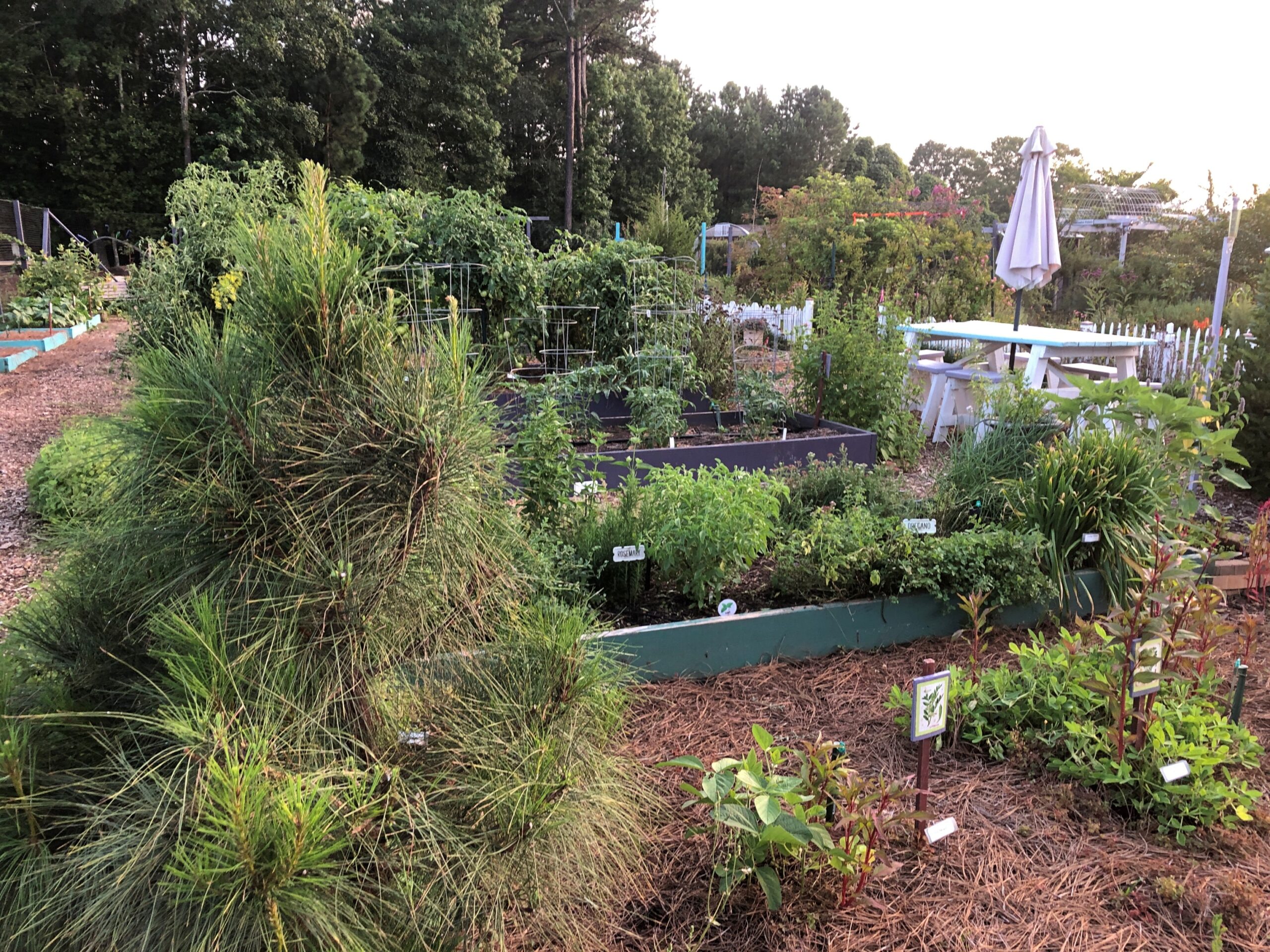
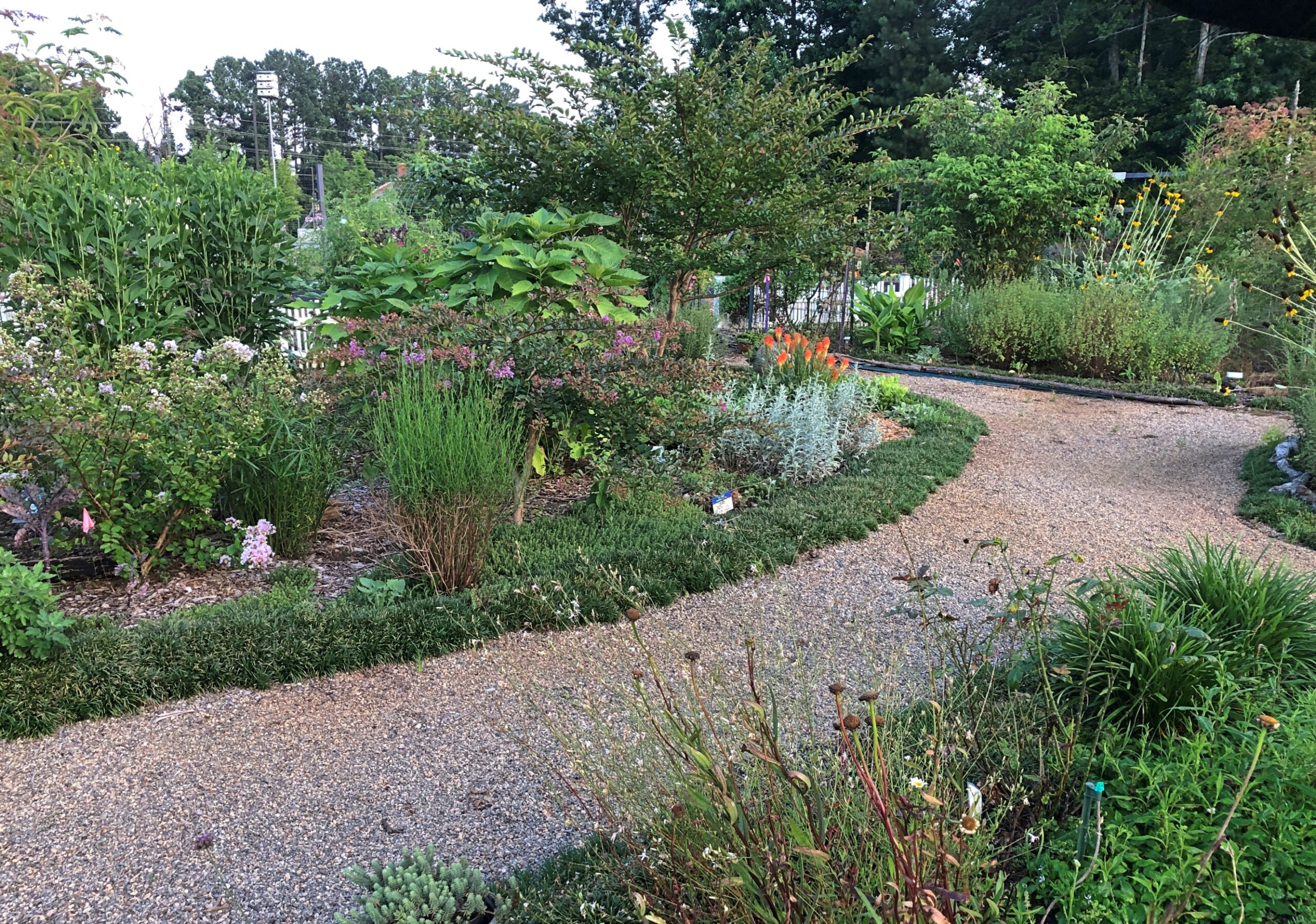
It’s a 17-acre lush garden, including a wide variety of edible plants.
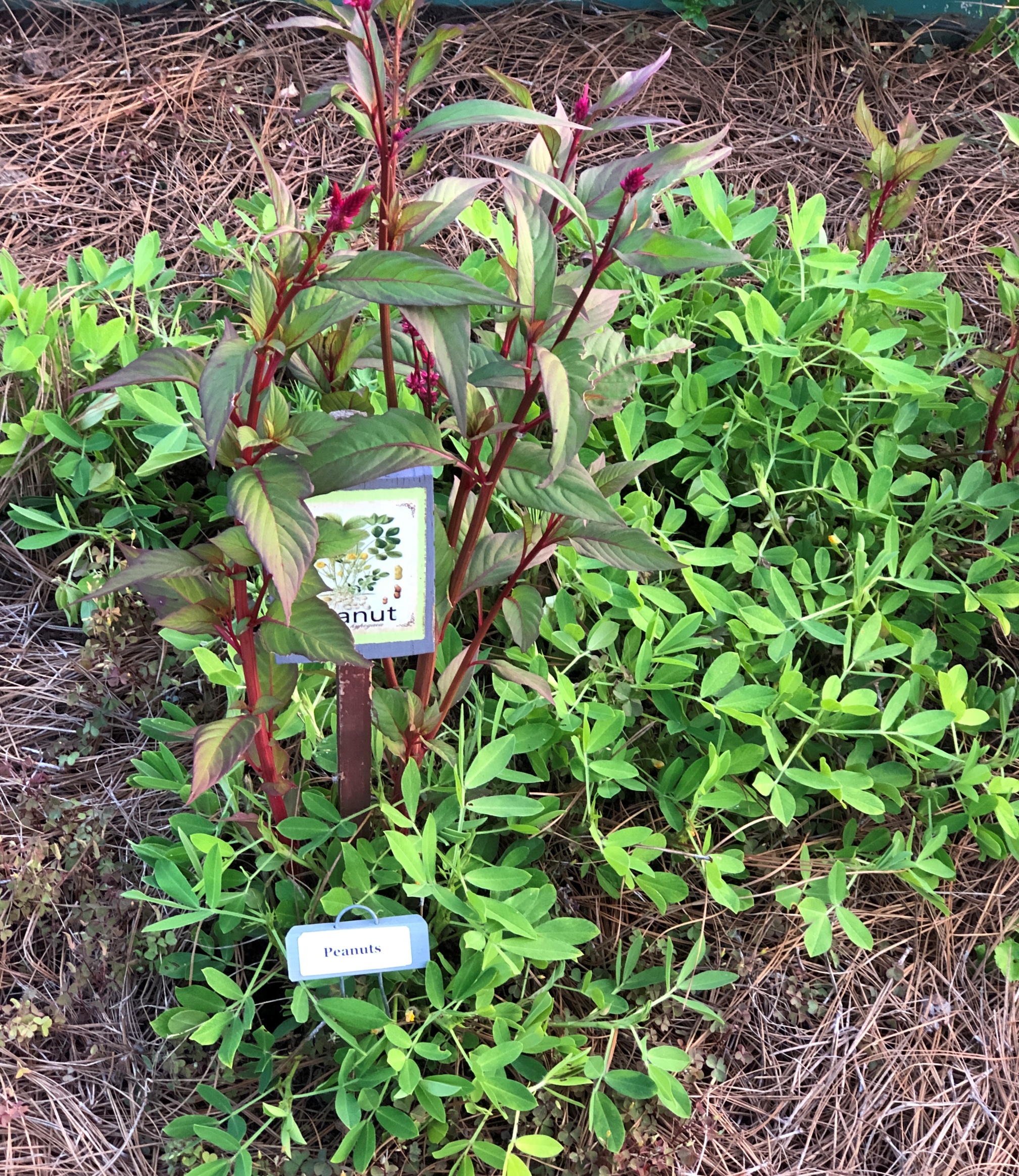
What would a Georgia garden be without peanuts?
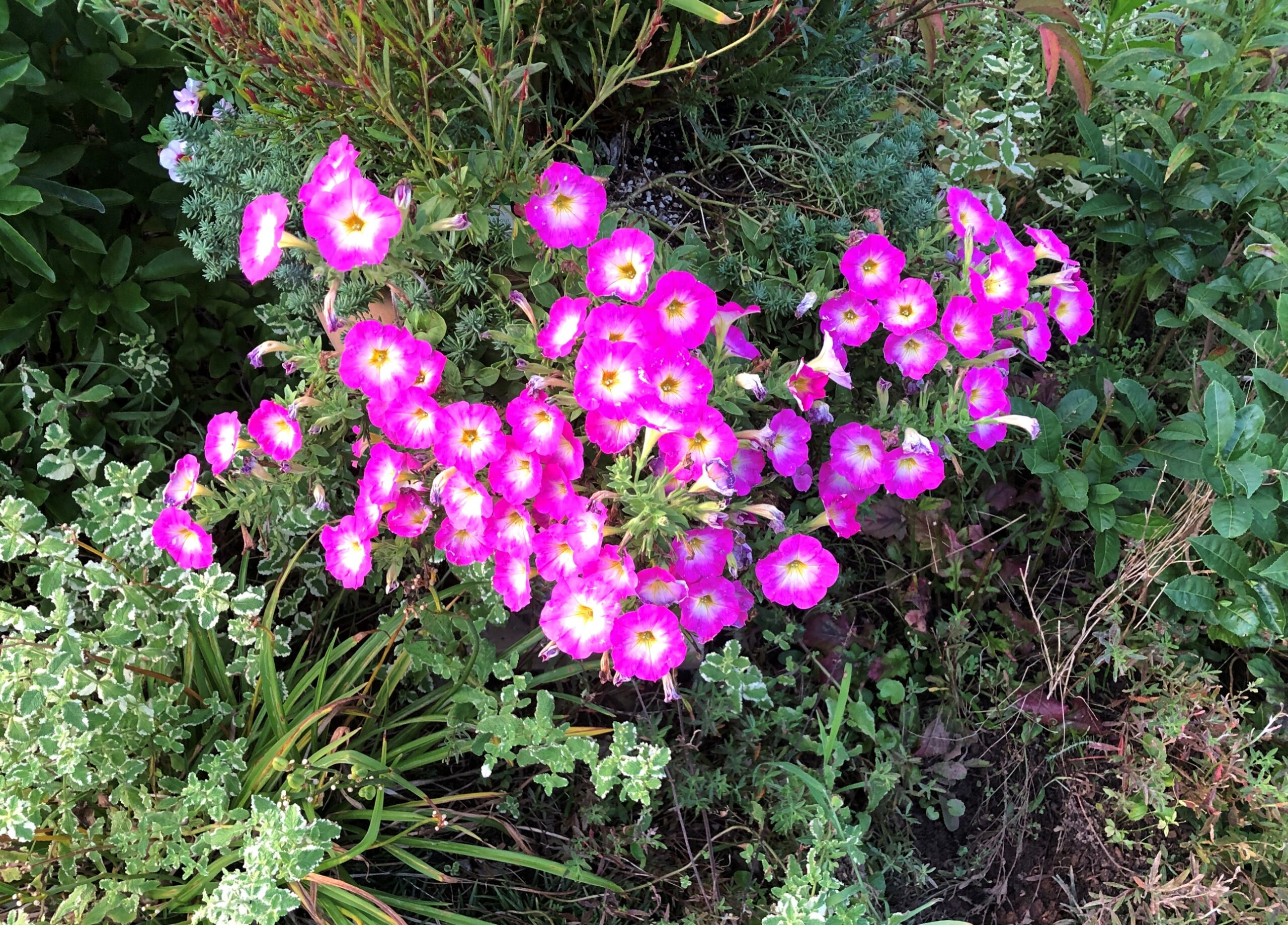
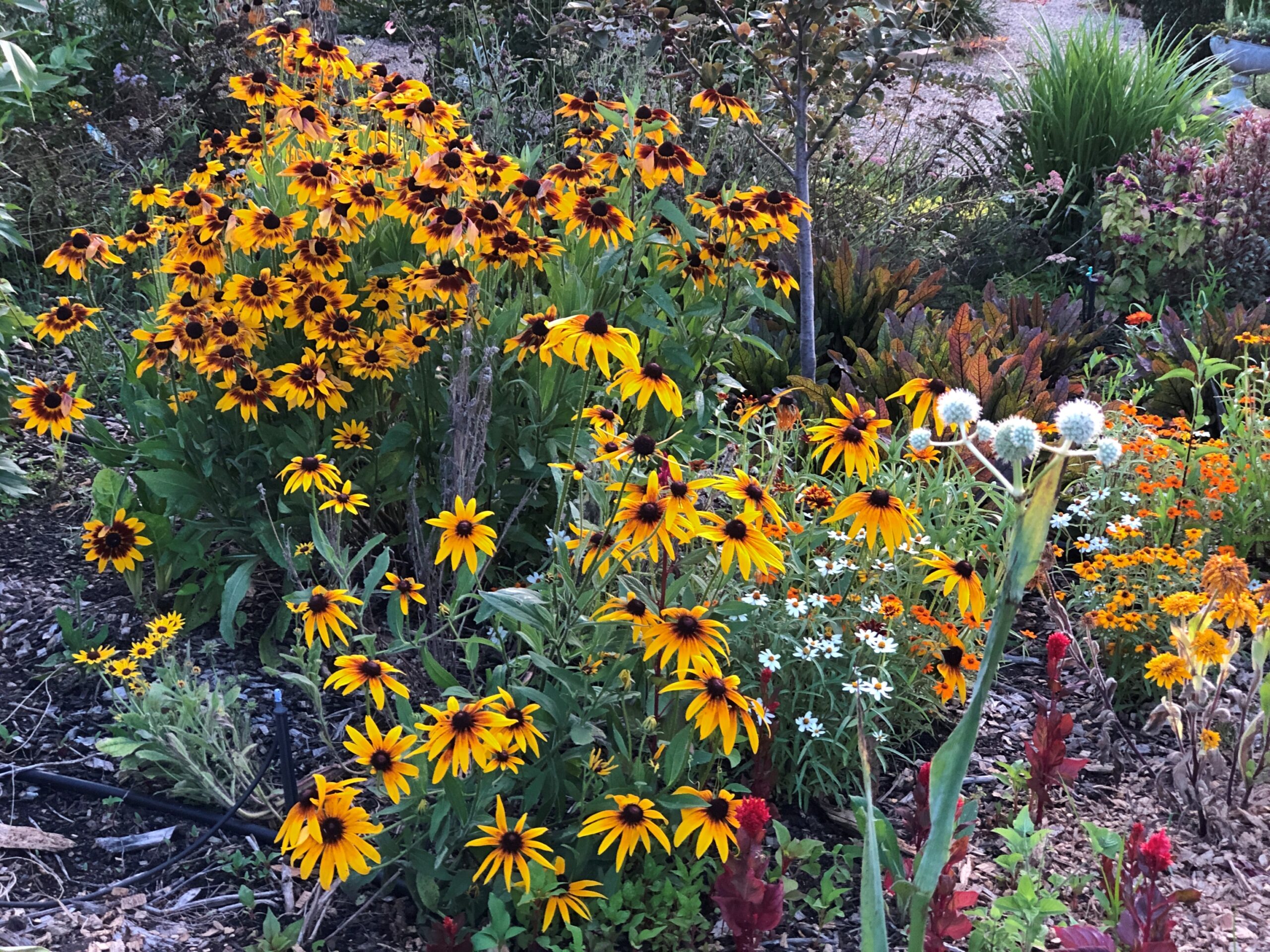
Plus a lot of flowers.
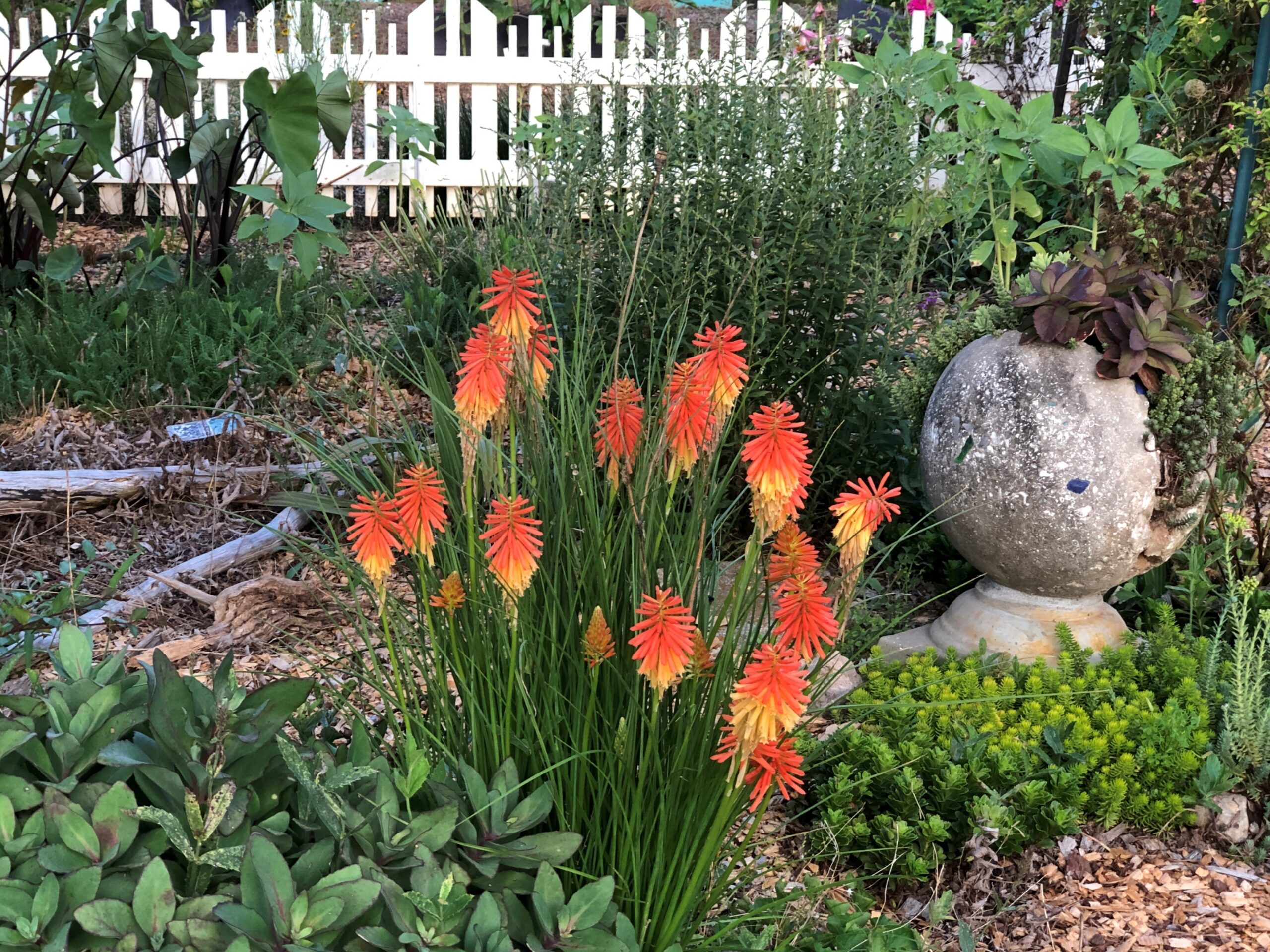
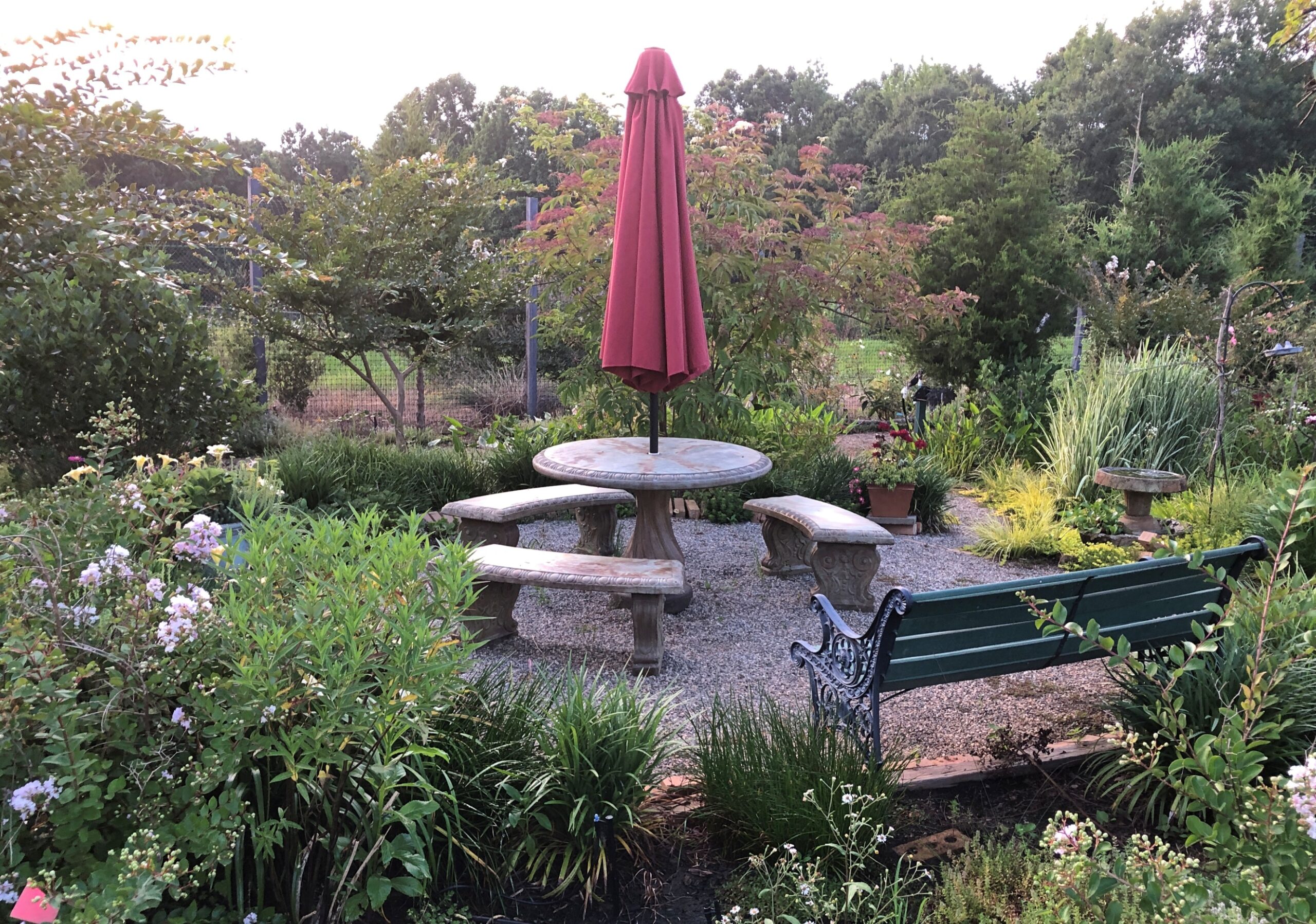
Even a few places to relax.
Wonderful spot. The lesson here: if you see a giant chicken statue by the road, investigate further.
In the heat of midday back in late June, en route to Athens, Ga., I arrived at the Georgia Welcome Center on I-20, a sizable structure just inside the state, and did what I needed to do. Returning to my car, I wondered whether I should drive into Augusta, only a few miles off the Interstate at that point. Specifically to downtown, to see what I could see, even at 90+° F. or so.
Would it be worth the short detour? At that moment, the lyrics of a song of my youth came to mind, as the only mention of Augusta I know in popular music.
I beg your pardon, mama, what did you say?
My mind was drifted off on Martinique Bay
It’s not that I’m not interested, you see
Augusta, Georgia is just no place to be.
The song was “An American Dream” by the Nitty Gritty Dirt Band (a.k.a. the Dirt Band) – with backing vocals by Linda Ronstadt, no less – which reached No. 13 on the Billboard Hot 100 after its release in late 1979, and probably annoyed Augusta’s city fathers and other local boosters. But all that was nearly a half century ago, so I expect any annoyance is long gone as the tune has slipped into obscurity.
The song merely came to mind then, as songs often do, and didn’t affect my decision – which was to go. Do a flyby, in my idiosyncratic nomenclature for such a visit. That is, pass through a place, but a little more than merely driving through. If I see anything interesting during a flyby, I’ll stop for a short look. (So not only is my nomenclature eccentric, it isn’t really accurate. Who cares.)
Sure enough, I spotted something worth stopping for.
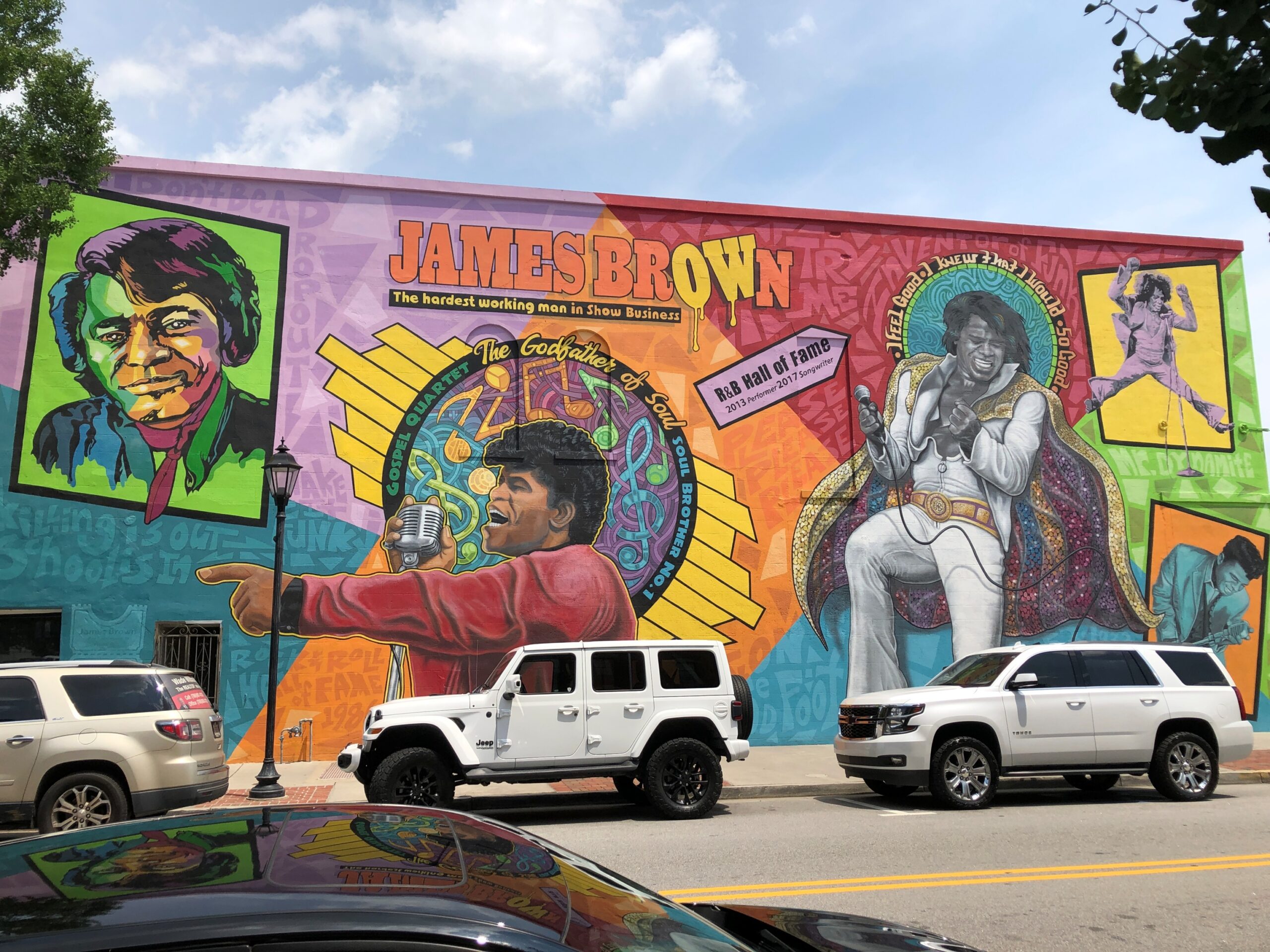
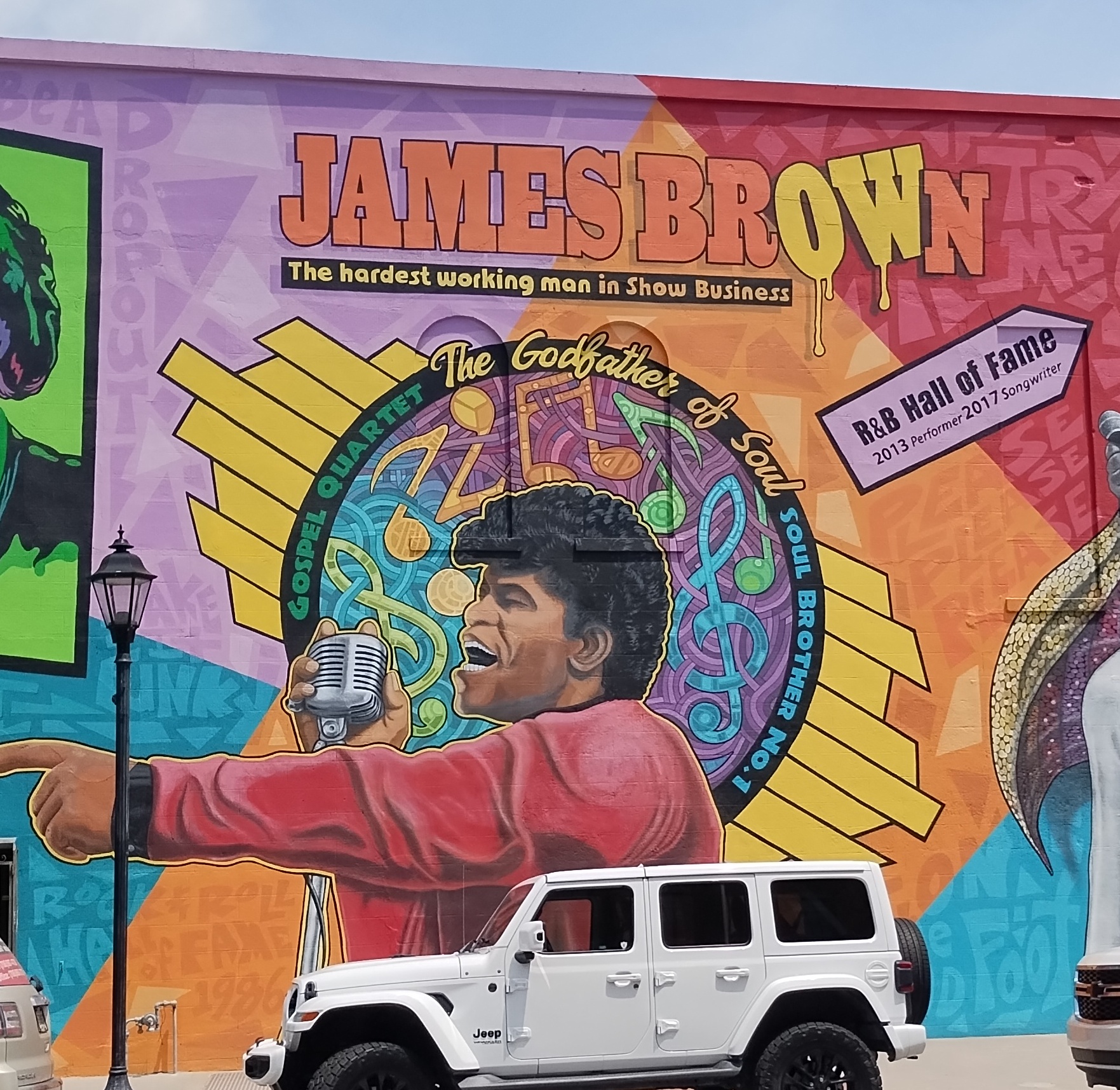
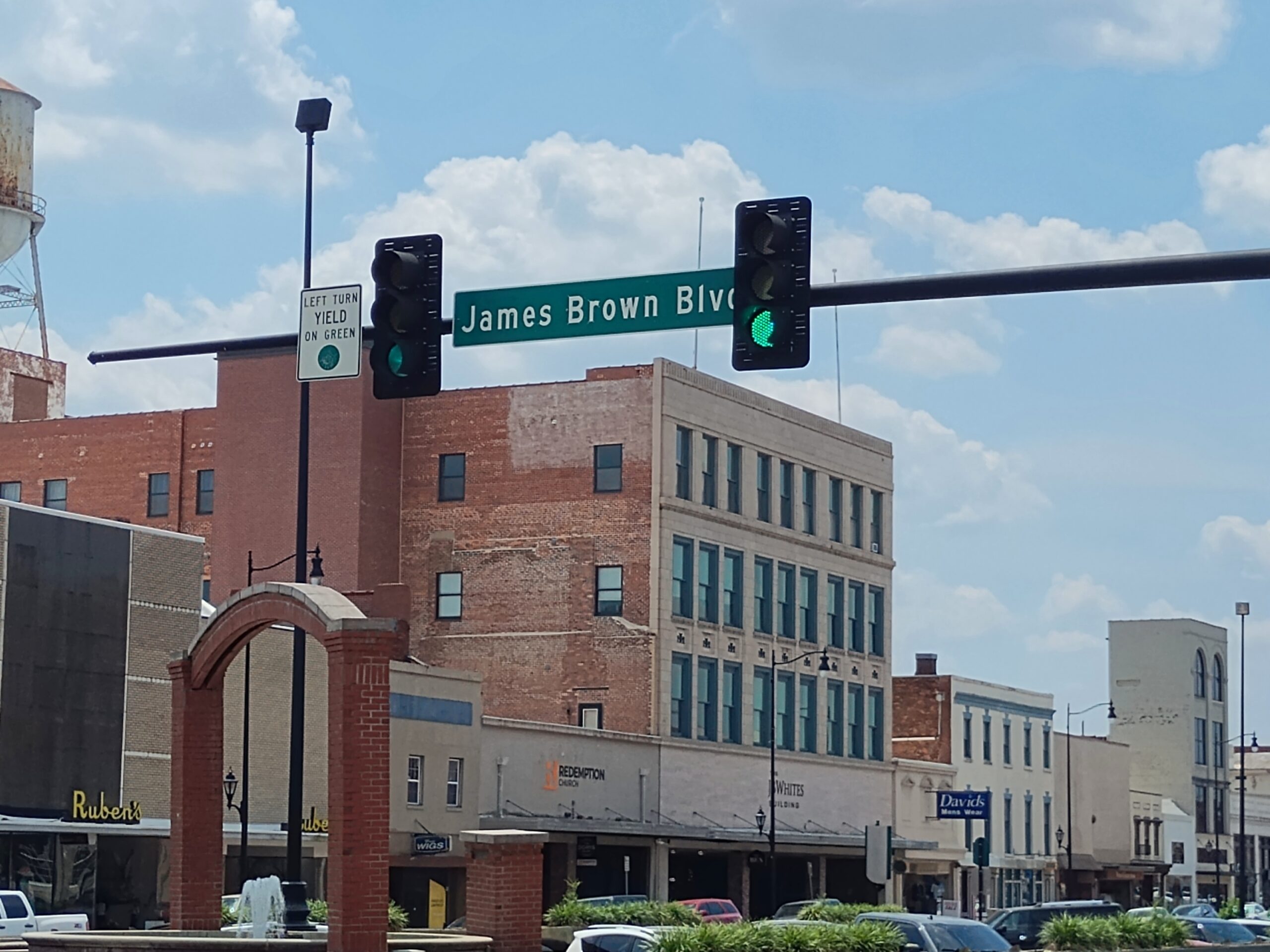
A mural at the intersection of James Brown Blvd. and Broad St., completed in 2020 by an artist named Cole Phail. Though born in South Carolina, Brown grew up in Augusta, a fact I previously didn’t know.
Later I learned that there’s a bronze of the Godfather of Soul not far away on Broad, but I didn’t look around enough to spot it, considering the heat dome, which seemed to be bearing down on me personally at that moment. So I looked at the mural, got back in my car, and blasted the AC. A few blocks away, as I was driving along, I saw an open church. I had to stop for that, too.
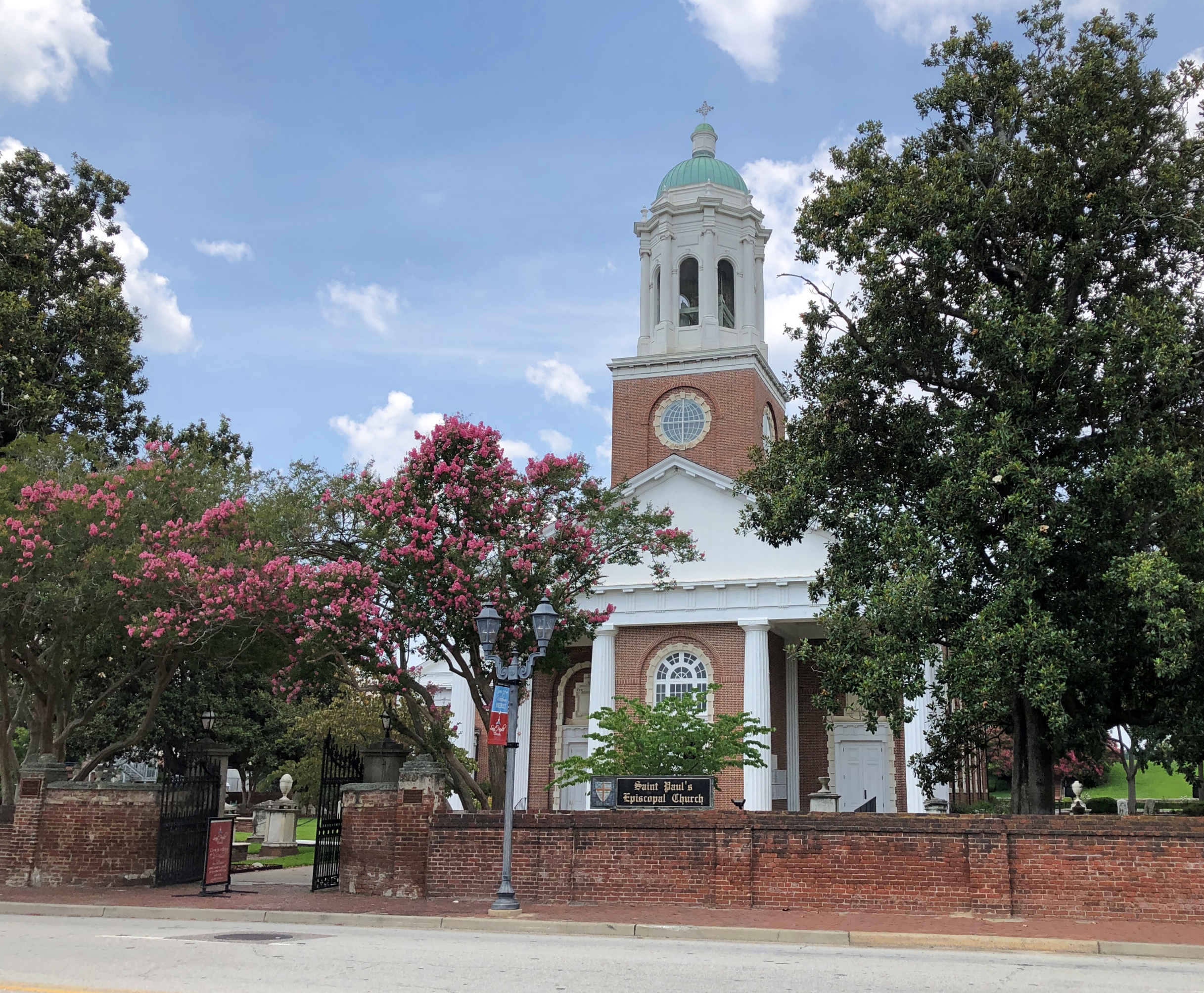
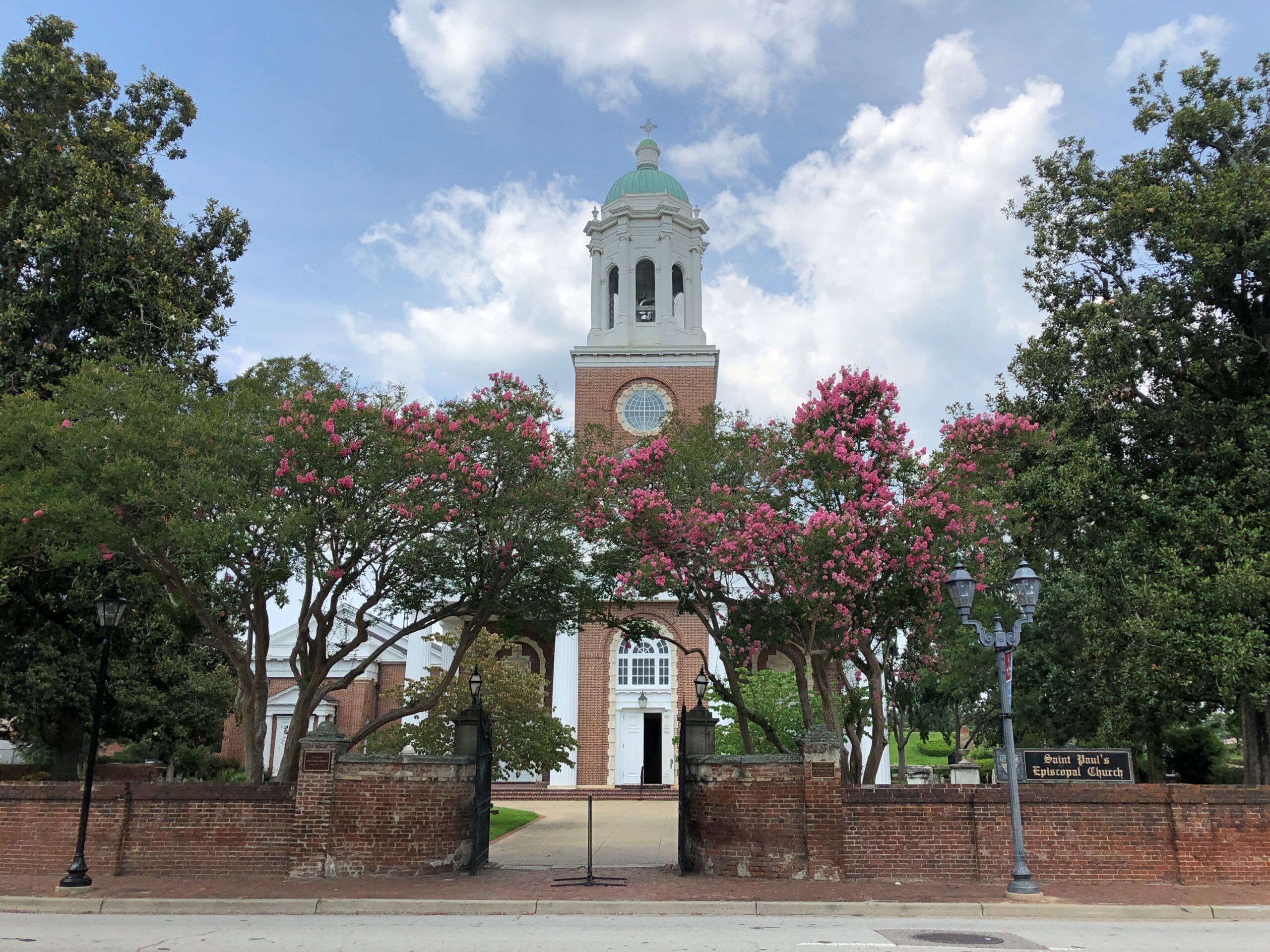
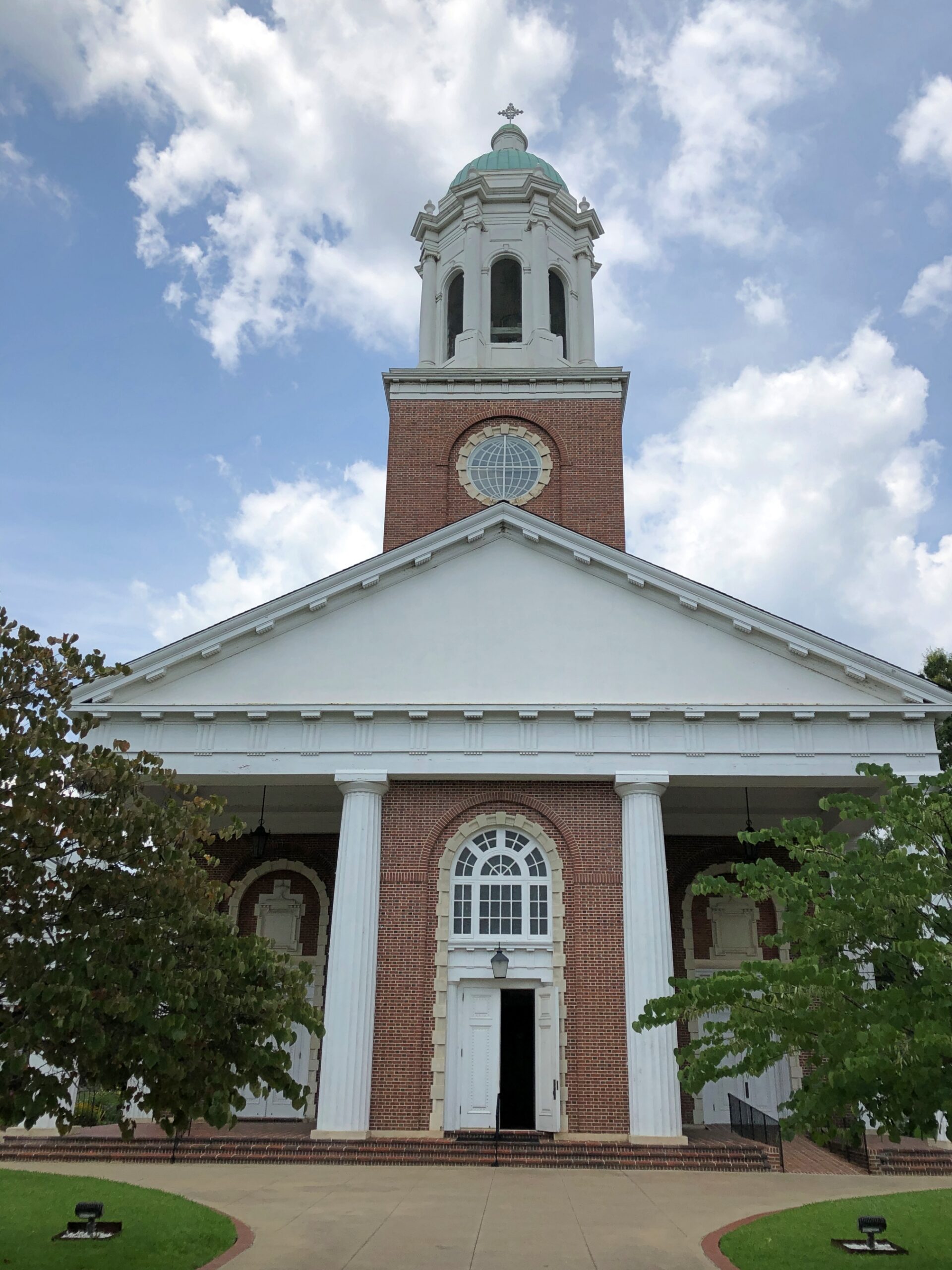
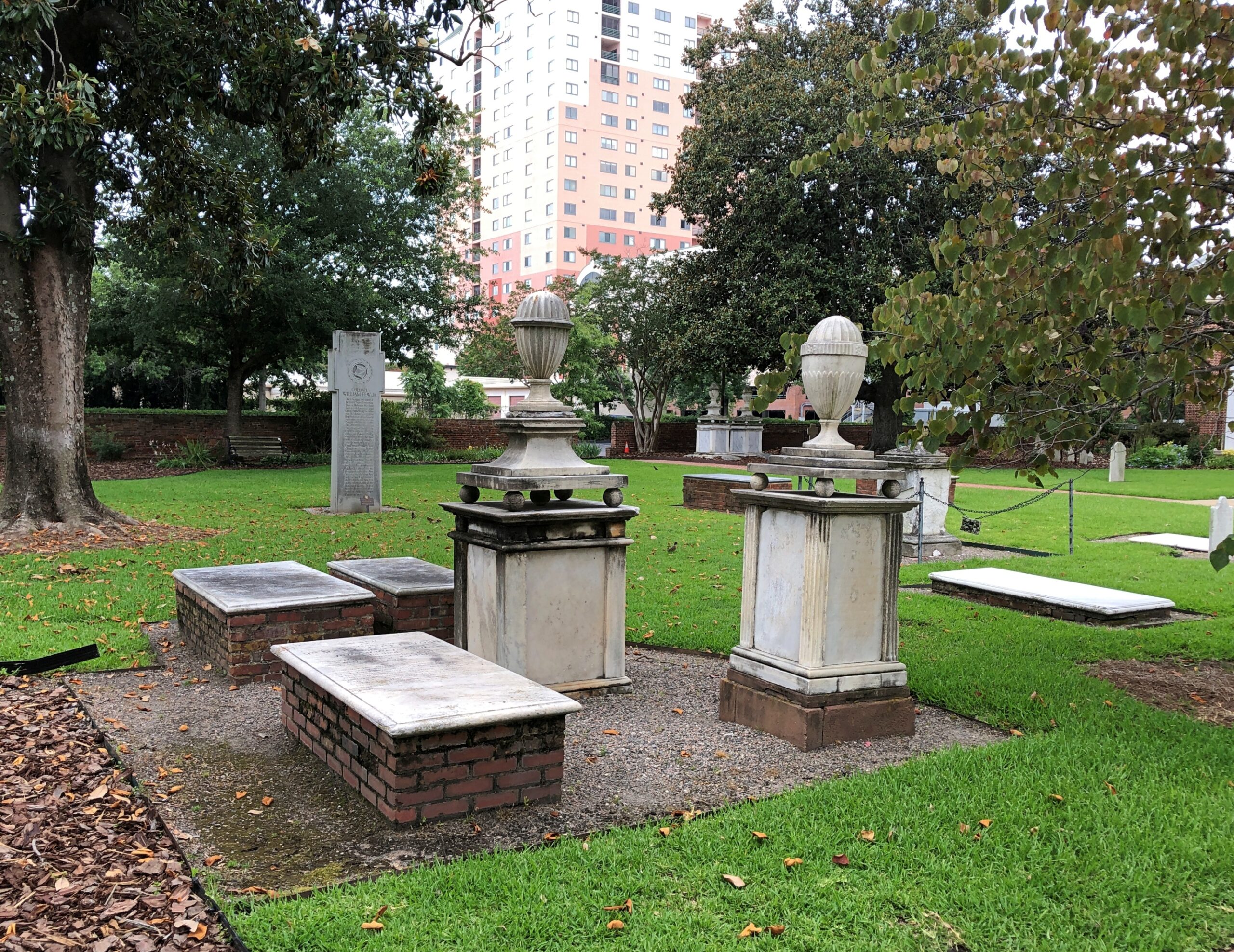
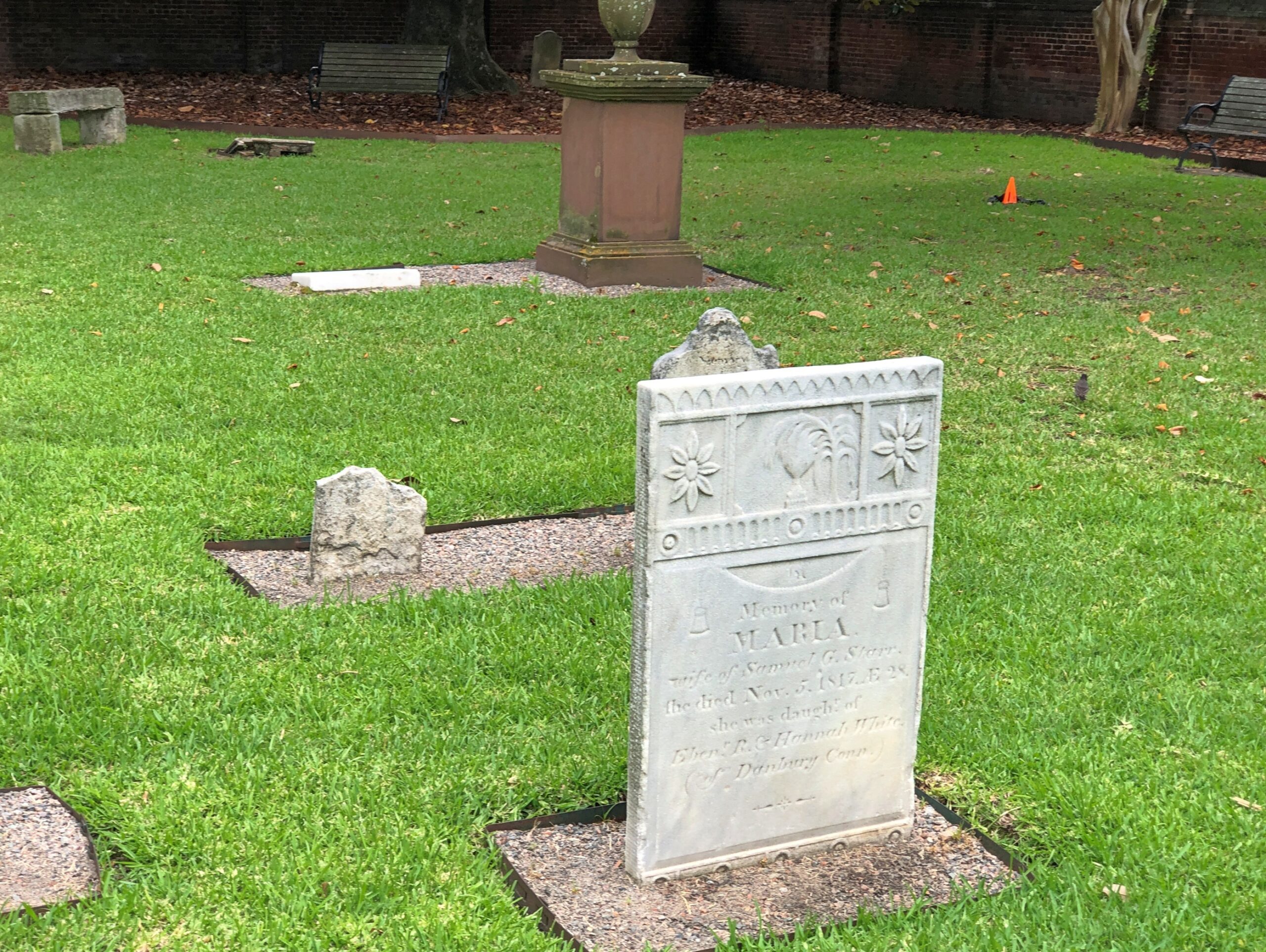
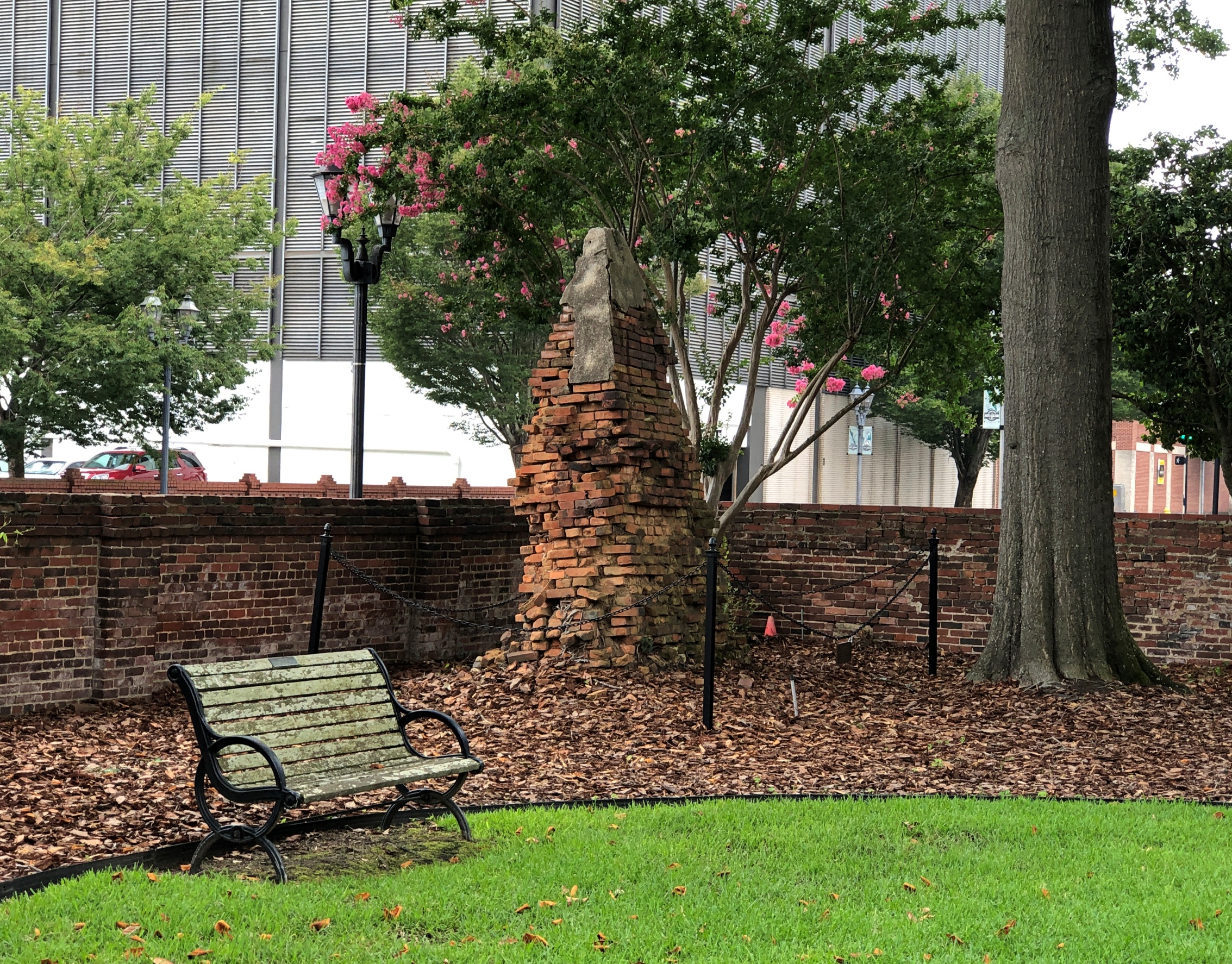
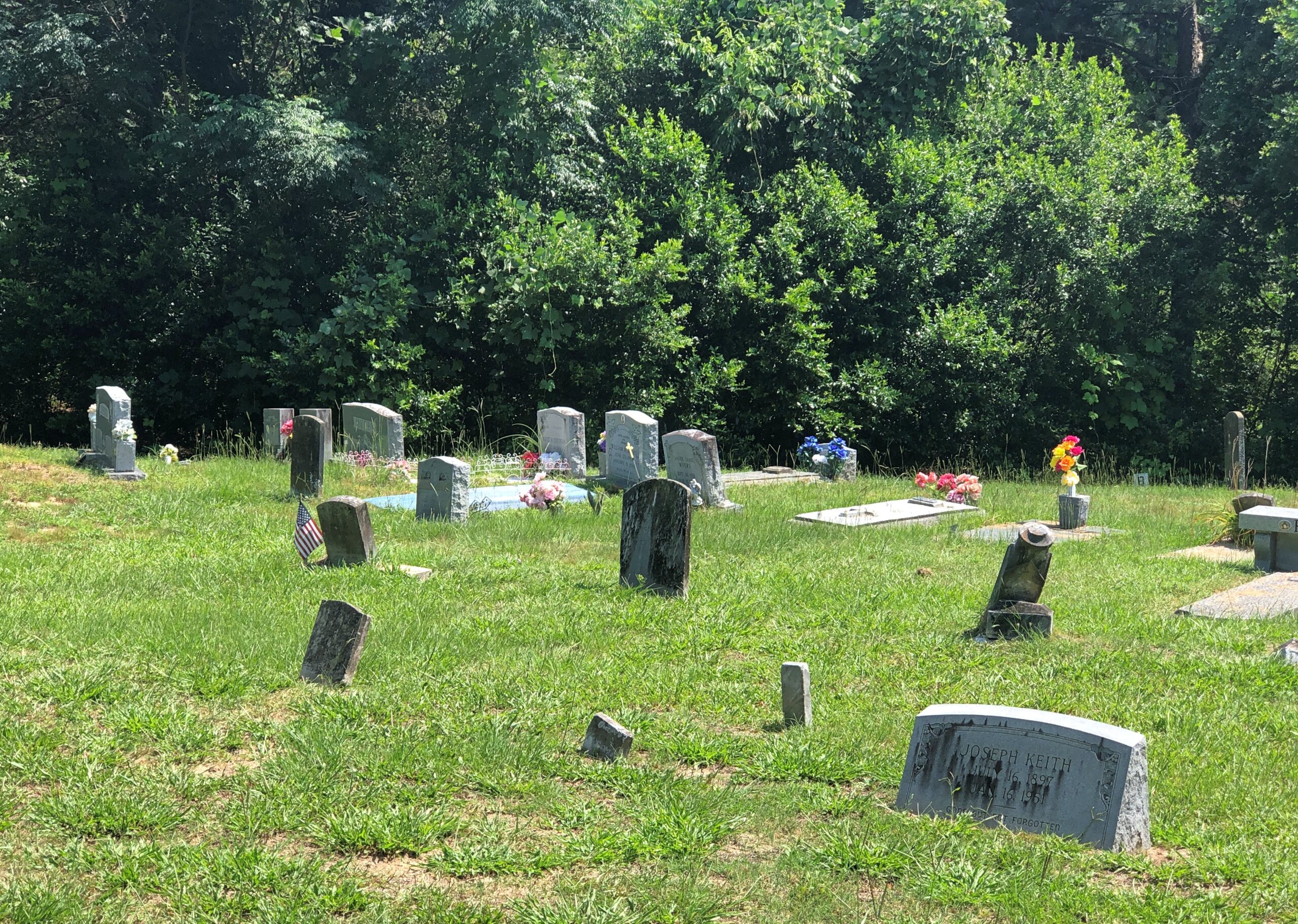
St. Paul’s Episcopal. Not only a church building, but a church graveyard as well.
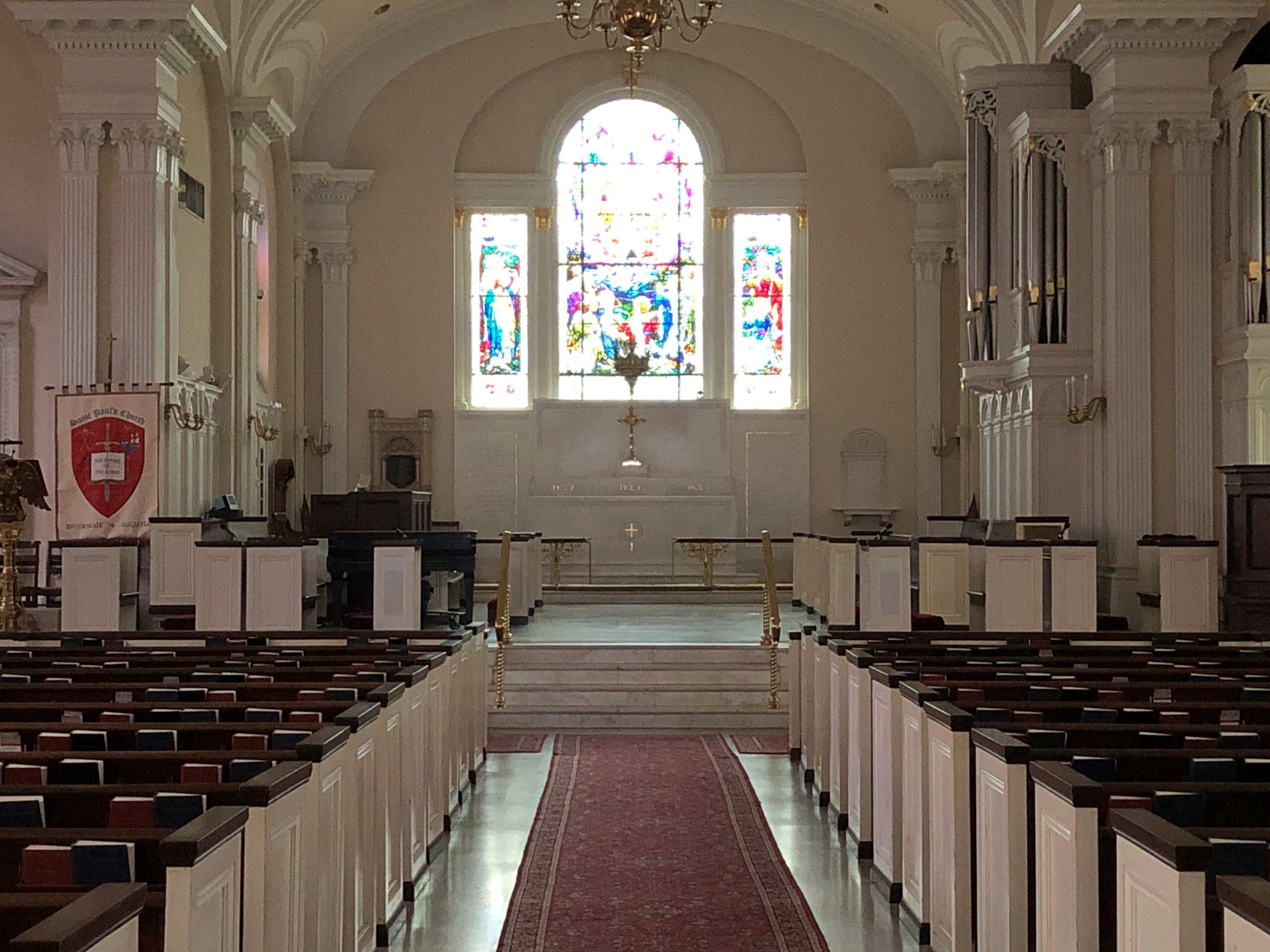
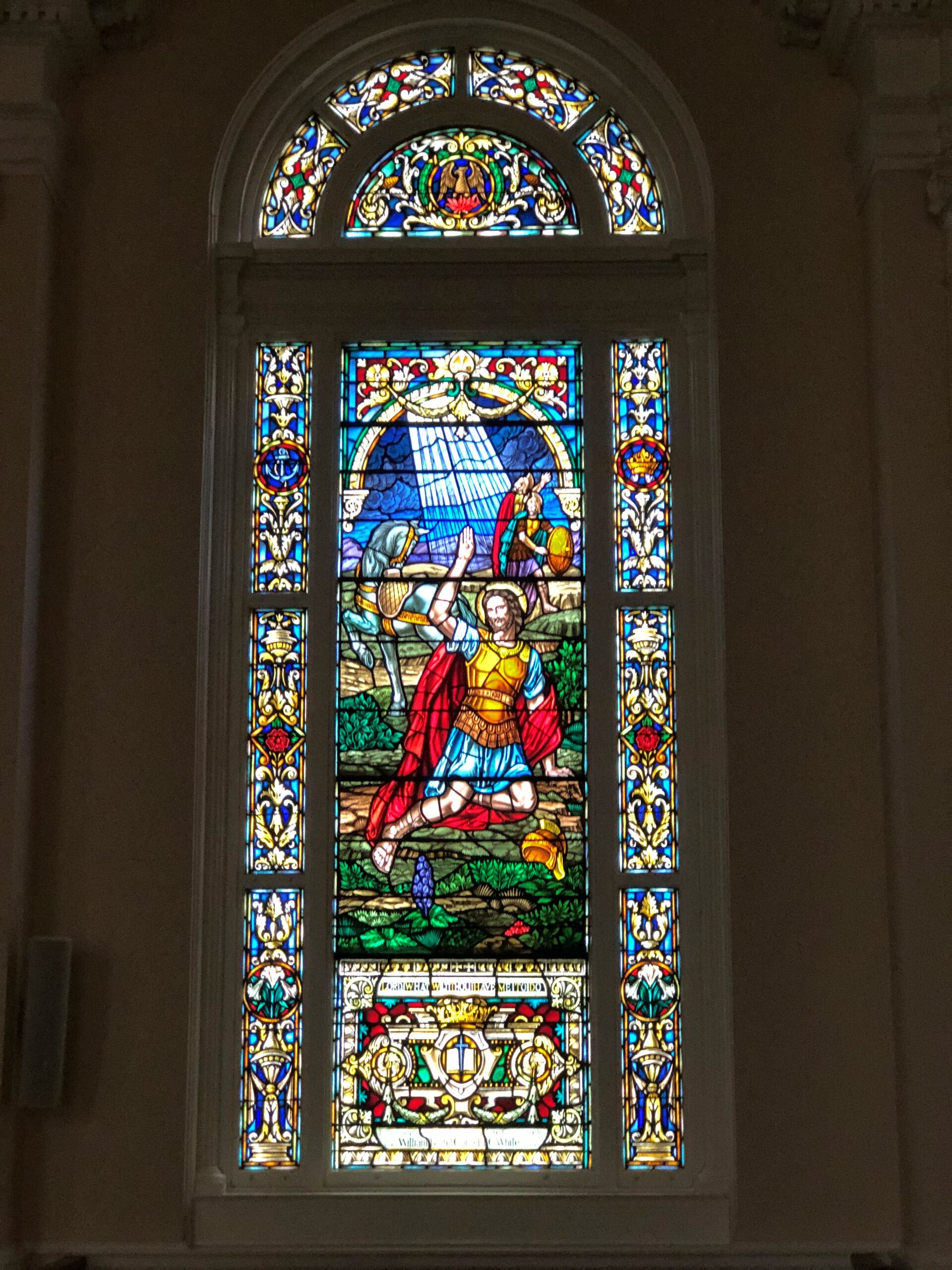
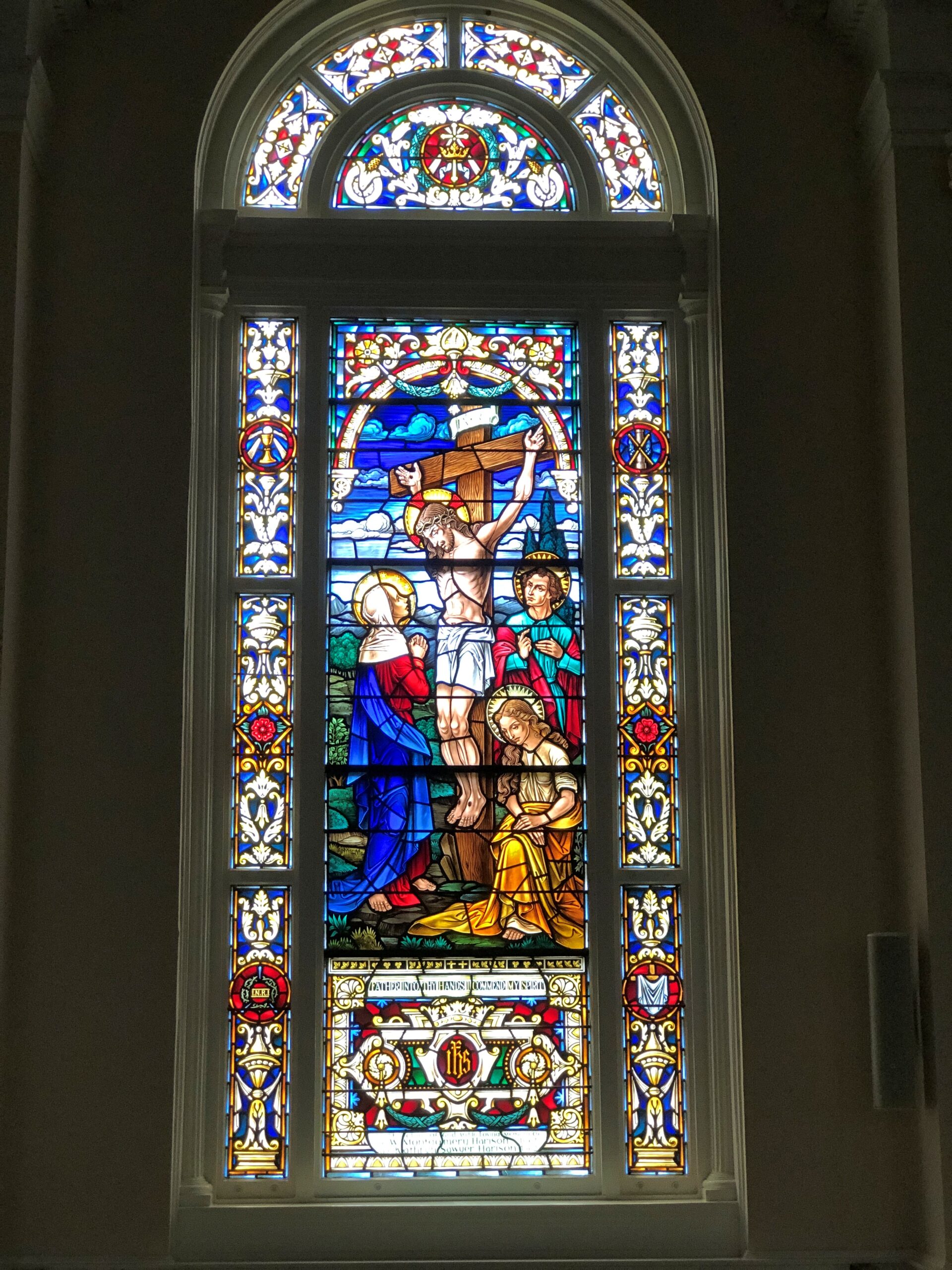
Inside, some fine stained glass.
“Four buildings on this site have been destroyed,” the church web site says. (Sank into the swamp? Burned down, fell over, then sank into the swamp? Speaking of 50-year-old references.)
“Our present church, built in 1919, was designed as a larger copy of the 1820 church lost in Augusta’s Great Fire of 1916. Among the furnishings saved from the fire is the original baptismal font brought from England in 1751, now located in the narthex.
“History buffs will find the church yard fascinating. Many undocumented graves lie beneath the ground, but others are marked, including that of Col. William Few, a signer of the United States Constitution, whose portrait hangs in the narthex…”
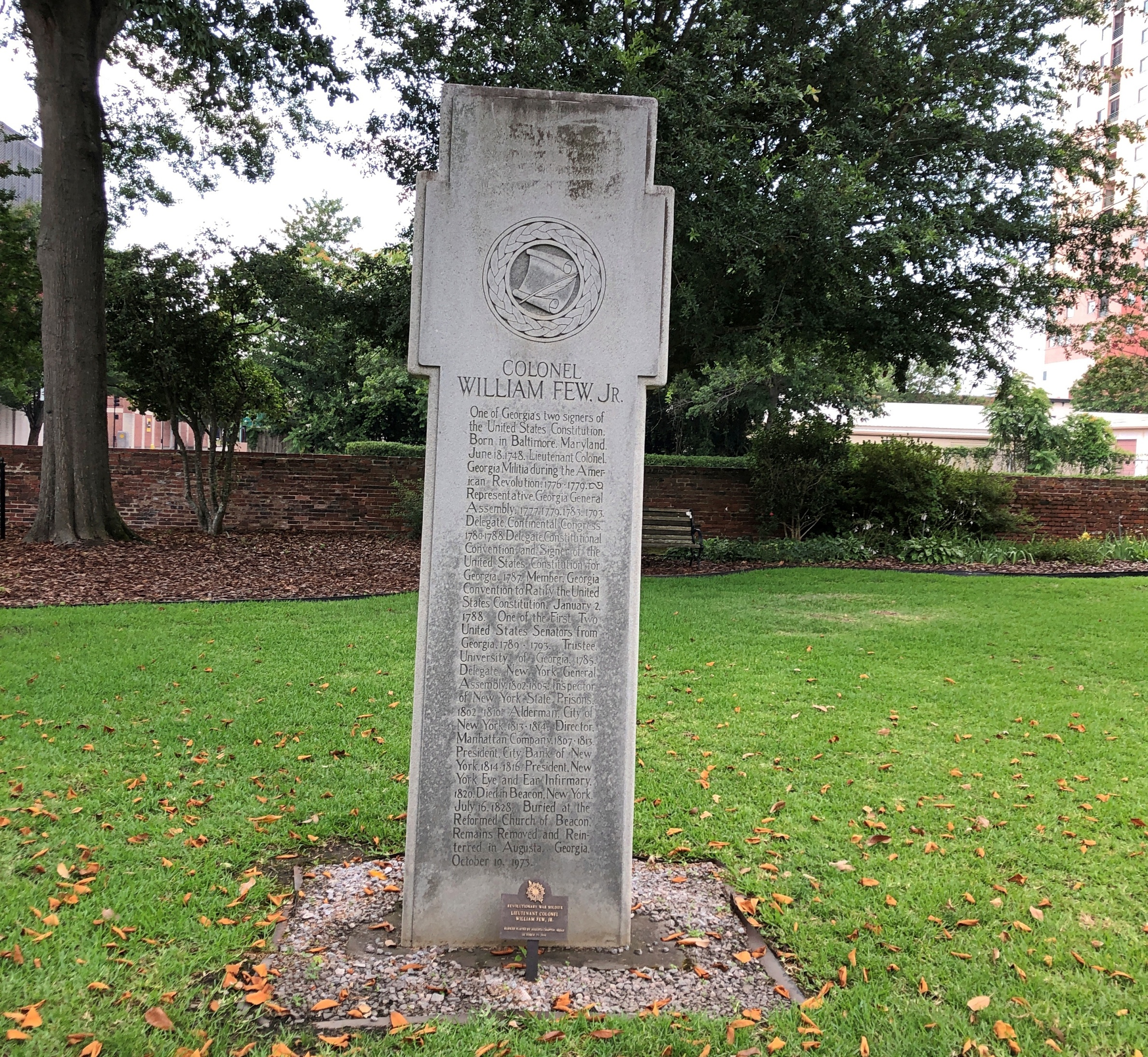
Missed the painting. But I did see Col. Few’s stone.
A busy fellow, both before and after the Revolution, including attendance at the Constitutional Convention in 1787, and a stint as one of Georgia’s first Senators under the Constitution. His capsule bio at the Biographical Dictionary of the U.S. Congress mentions all that, except leaving out the fact – detailed by the stone I saw – that he was reinterred at his current location in 1973.
Also, no word on whether he knew Button Gwinnett, everyone’s favorite early Georgia politico. He must have. Gwinnett might have had a similar career had he not ended up on the wrong end of a dueling pistol in ’77.
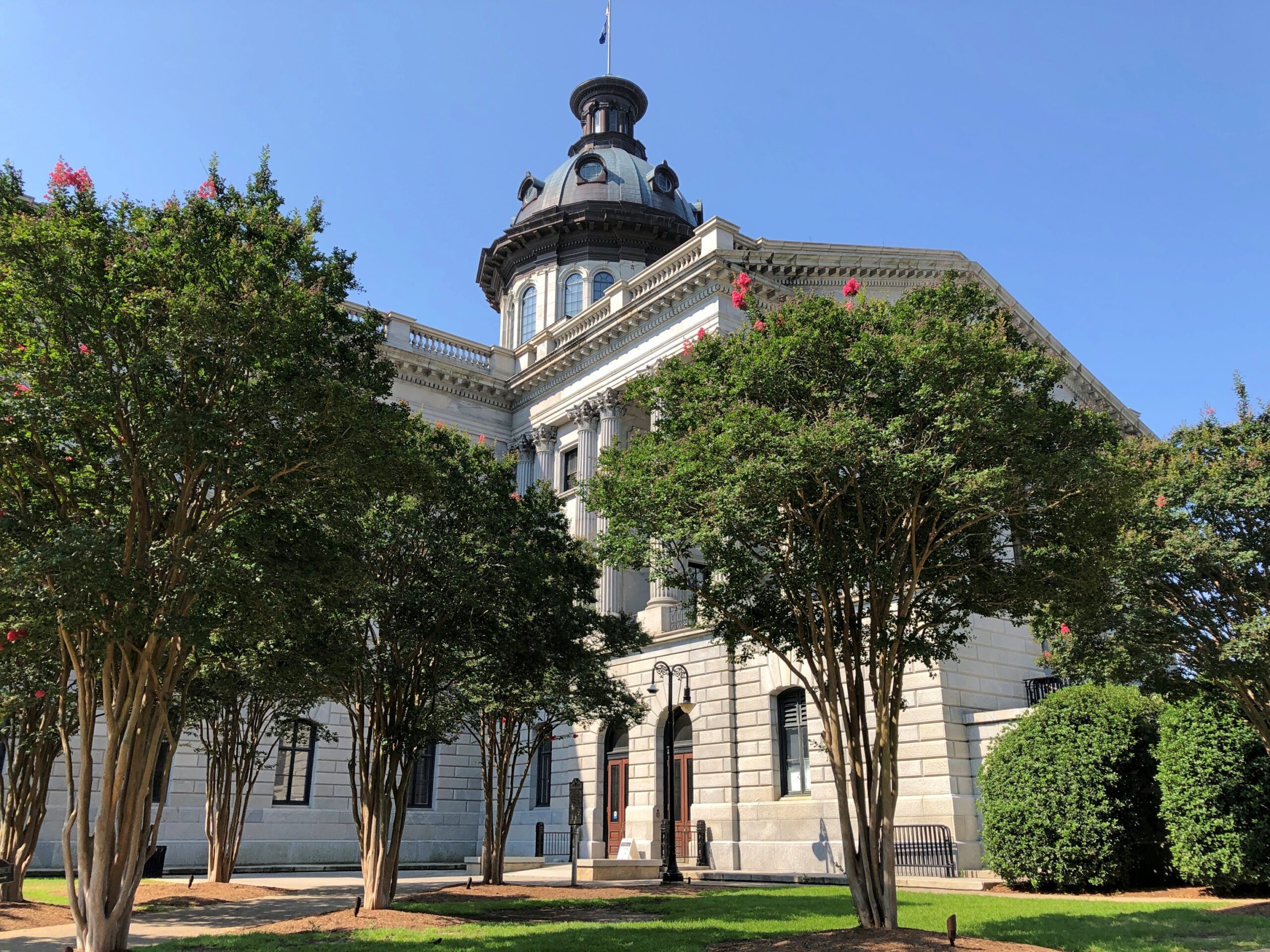
Columbia, SC, is centrally located in its state, the result of a post-Revolutionary (1786) decision by the new state legislature to move from Charleston to somewhere more central, namely the area around the confluence of the Saluda and Broad Rivers, which merge at Columbia to form the Congaree River. The South Carolina State House is now centrally located in that centrally located city, and on the way back west from Myrtle Beach, I decided it was high time I saw it.
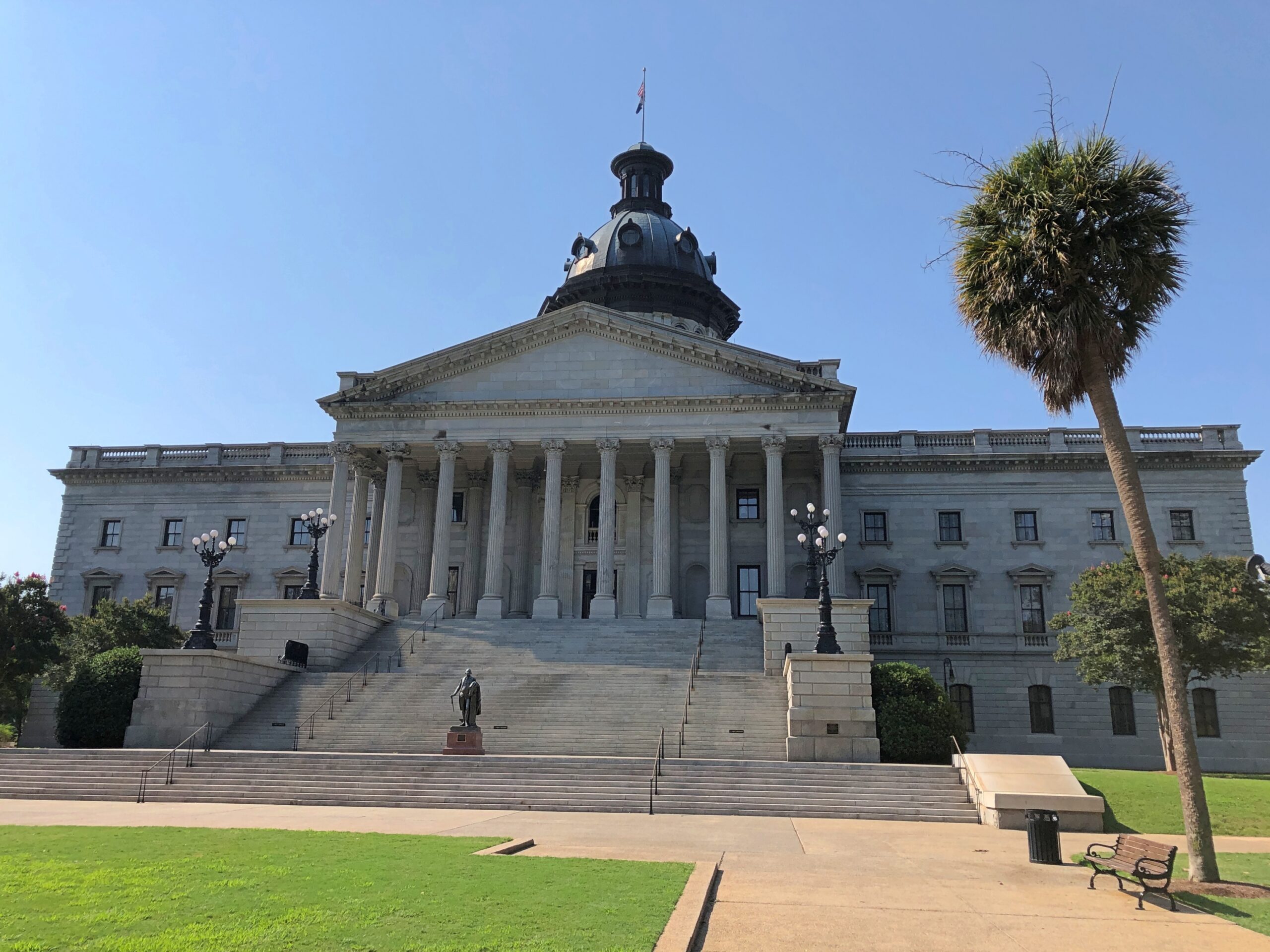
Washington stands in front. Work on the building started in the 1850s from a design by John Rudolph Niernsee (d. 1885), but what with one thing and another – the burning of Columbia in 1865, for instance – finishing the capitol took more than 50 years, and indeed its final design work was overseen by Niernsee’s son, Frank, and other architects.
Other downtown structures tower nearby, but the capitol is set back fairly far, as capitols tend to be.
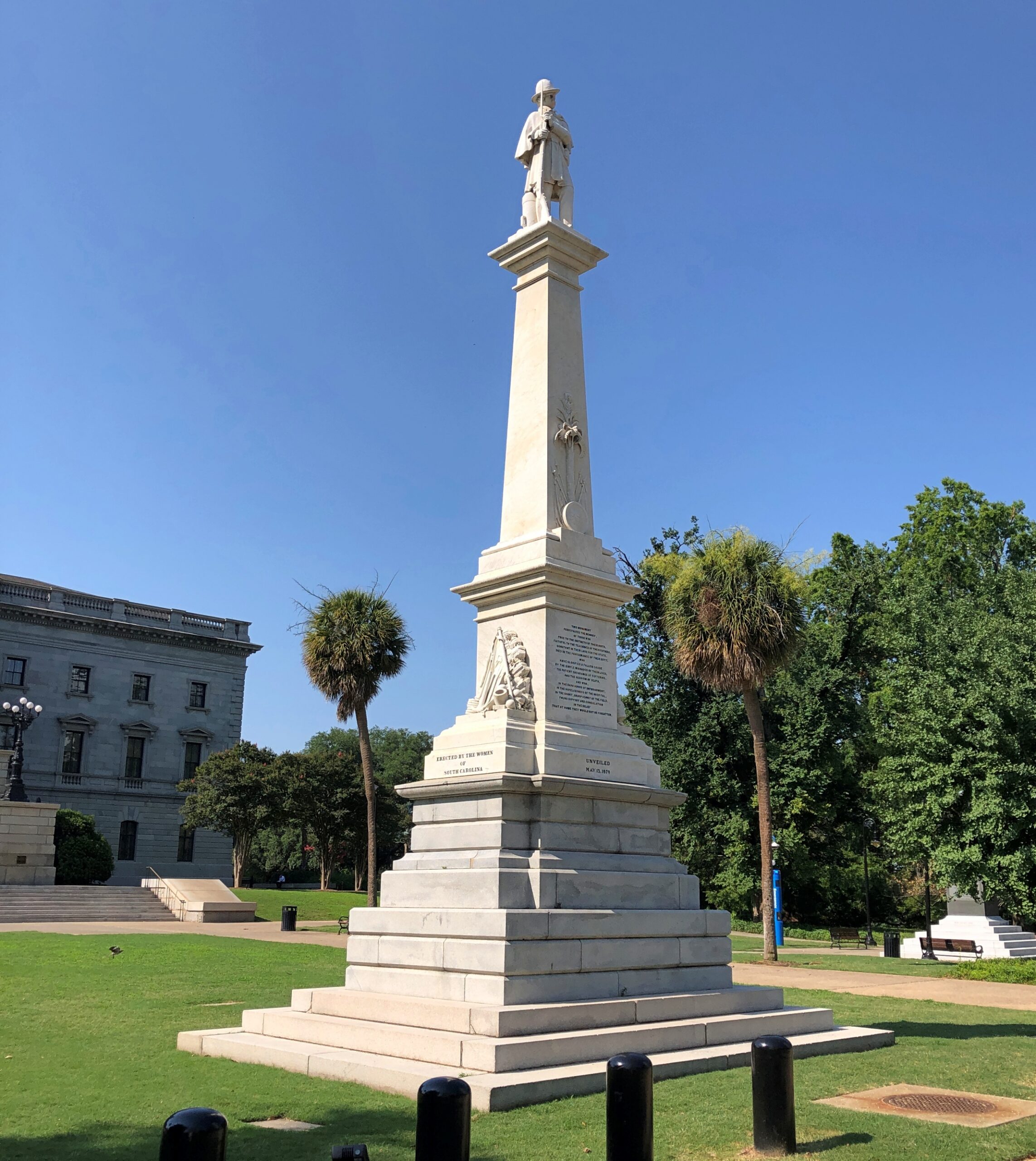
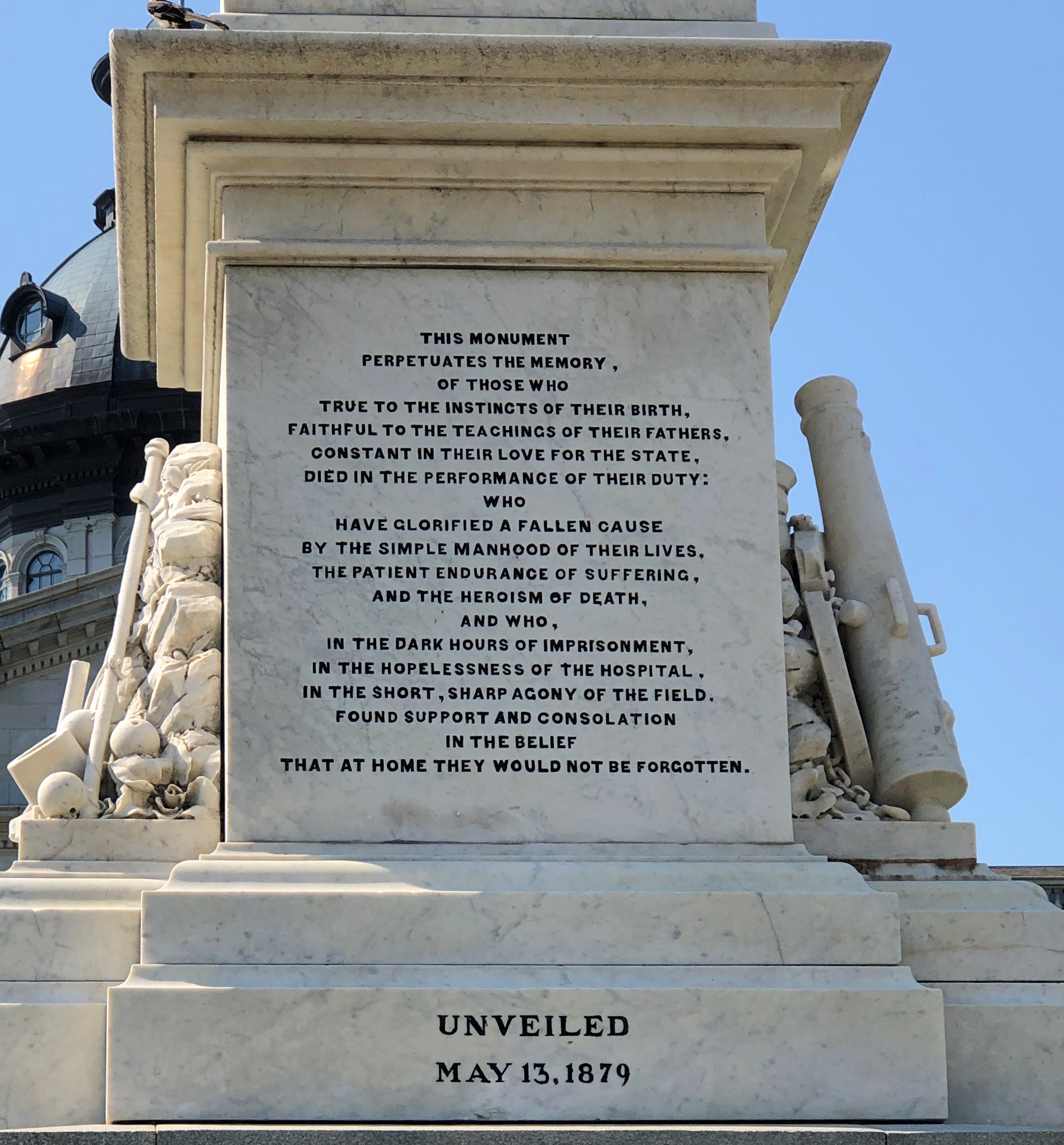
The memorial to the Confederate dead is prominently placed in front of the capitol.
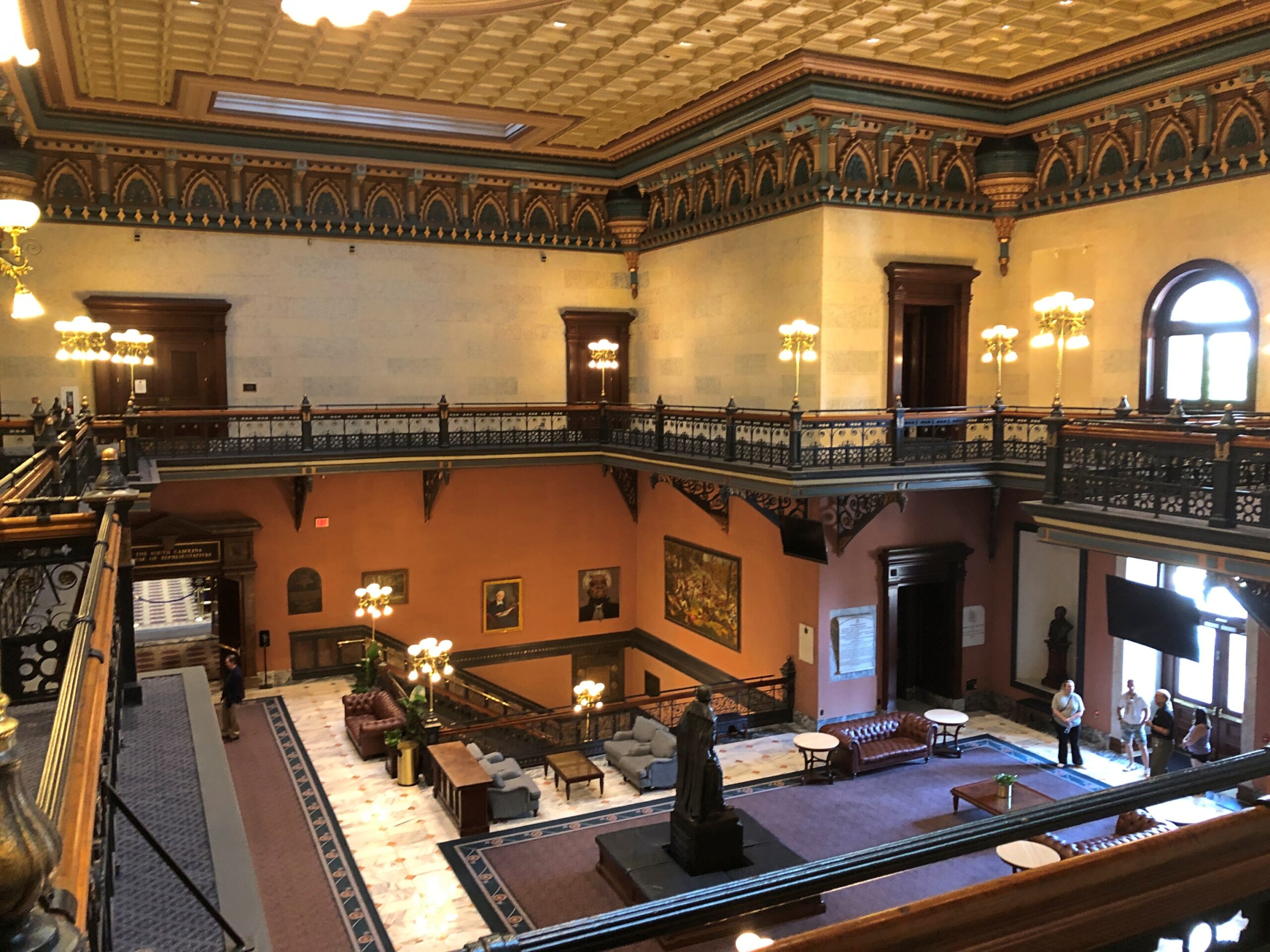
Plenty of other memorials stand on the grounds, such as a unique one honoring the Palmetto Regiment of Volunteers of South Carolina, memorializing SC participants in the war with Mexico, but I saw few, since the heat of the day encouraged me to head inside. There I found a resplendent interior indeed.
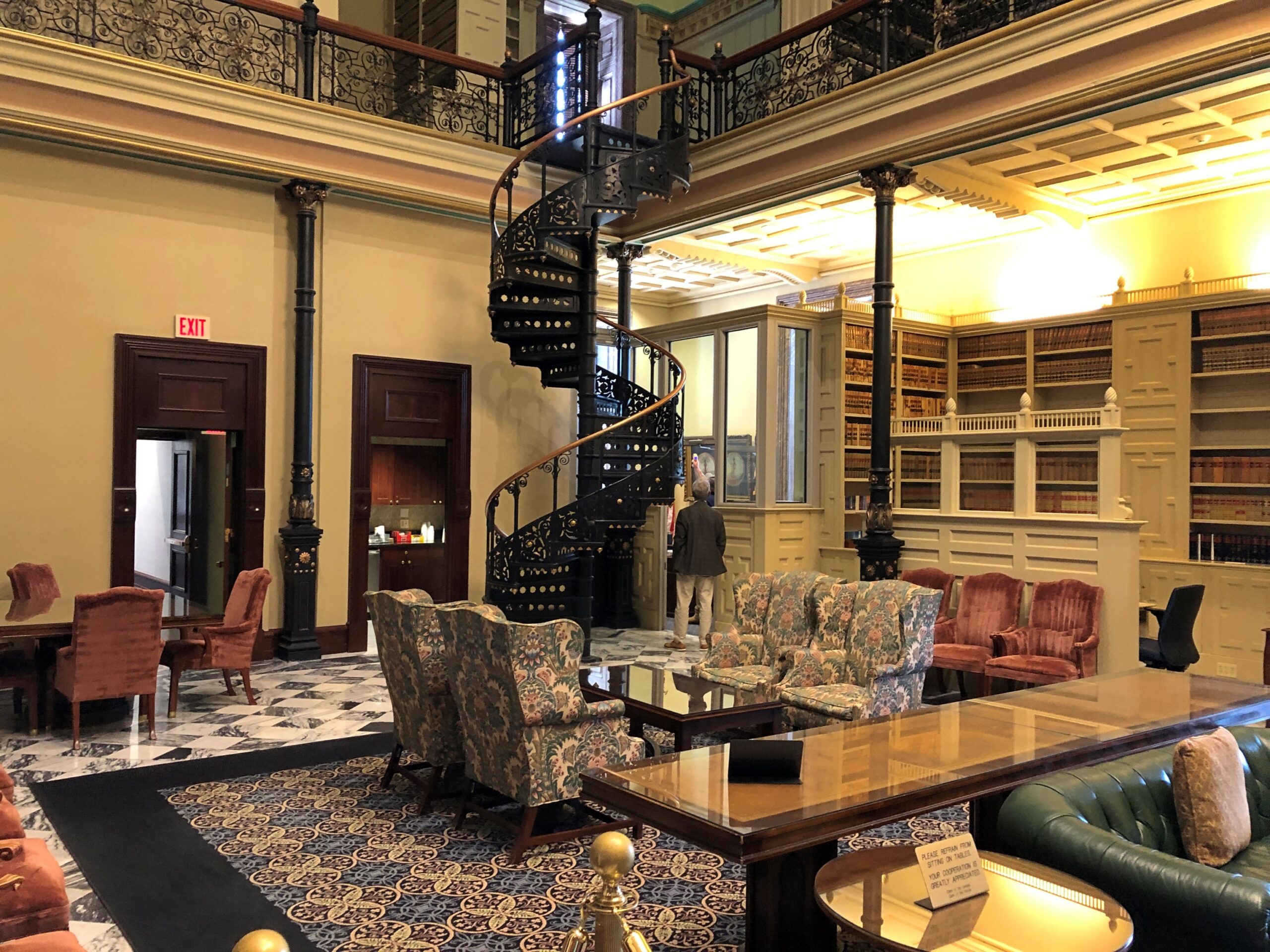
Including the capitol library.
The interior of the dome.
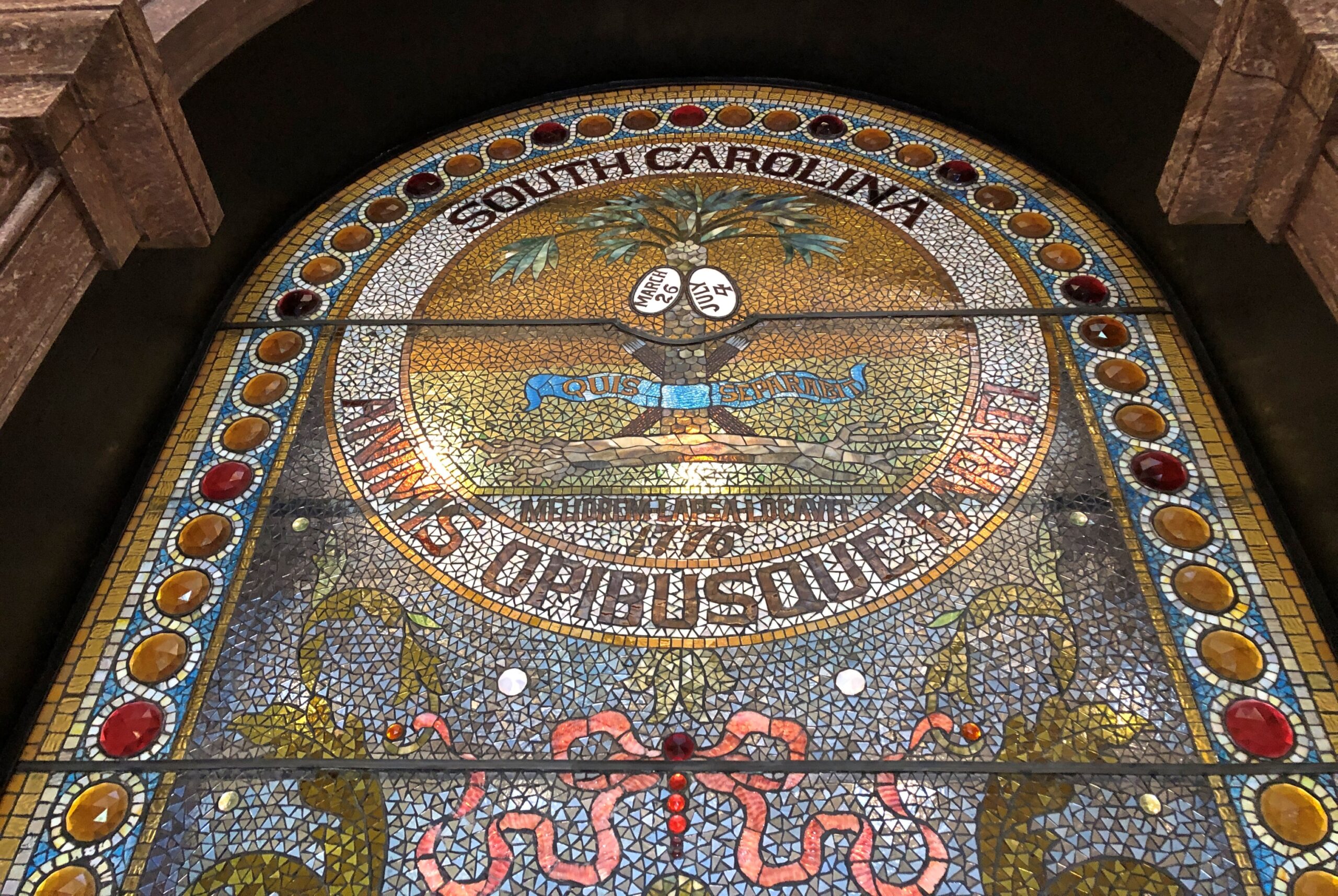
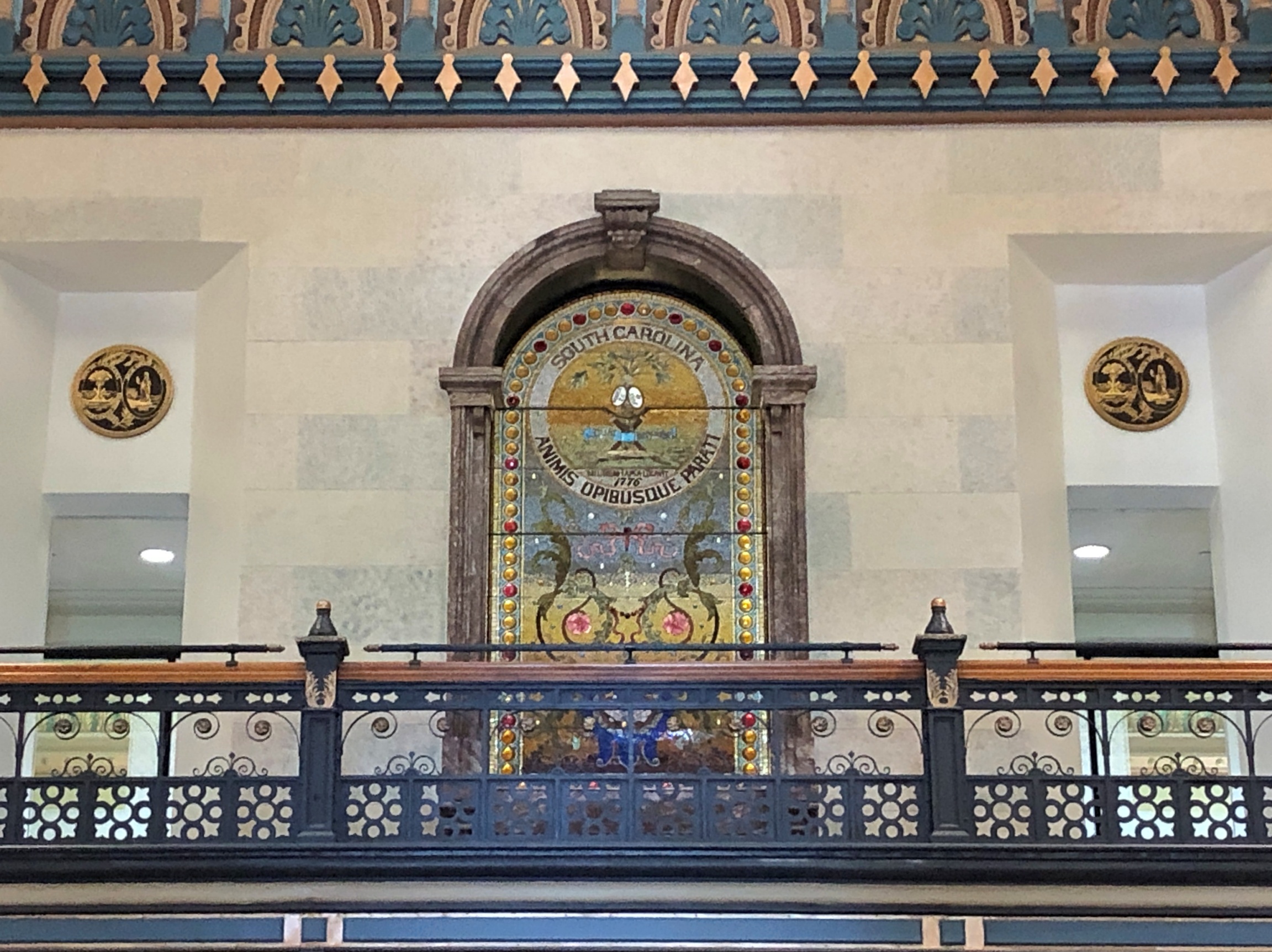
Other unique-to-South Carolina detail.
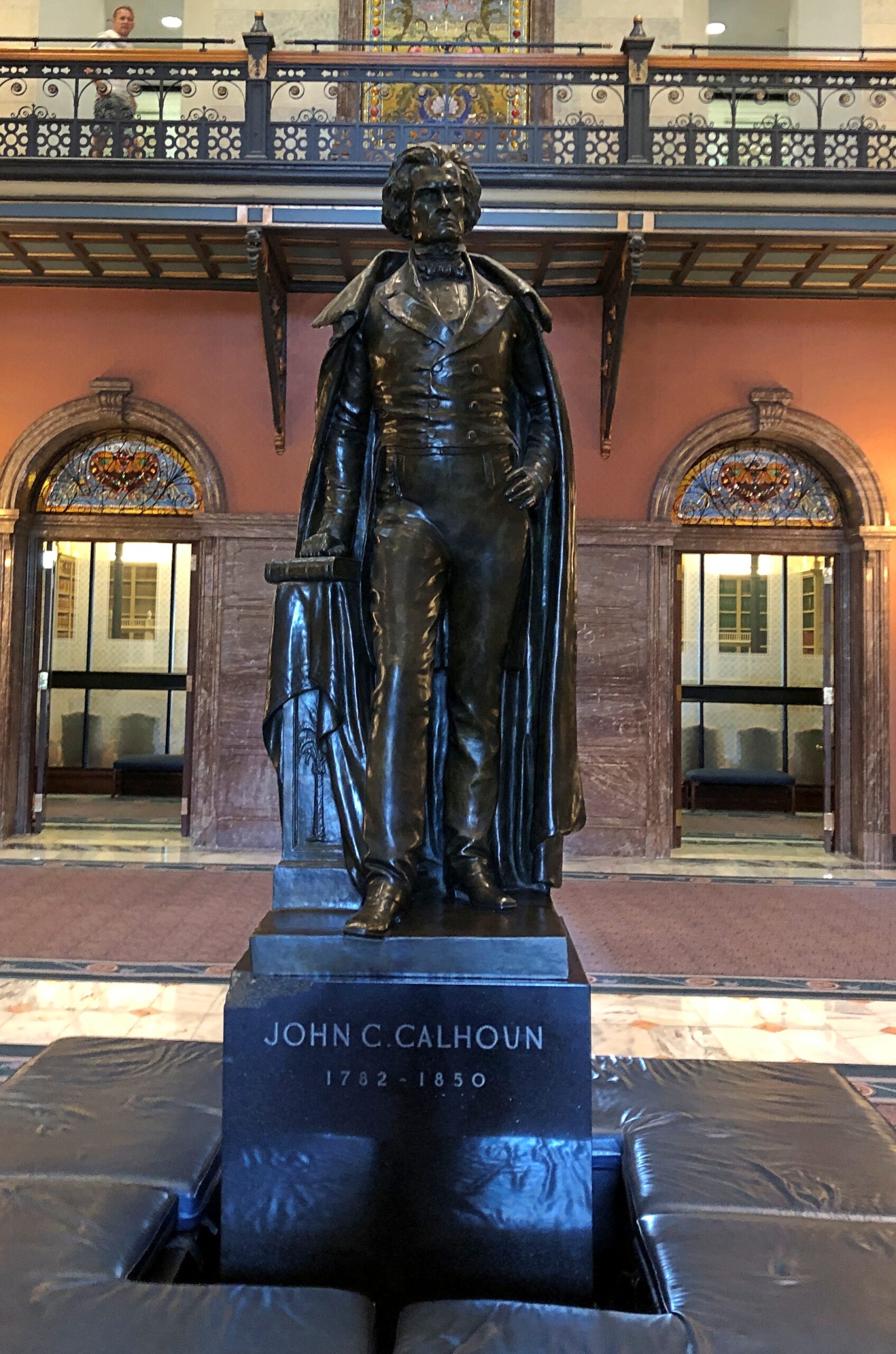
John C. Calhoun rates a prominent bronze in the rotunda and a painted portrait in the Senate chamber. His likeness went down in Charleston, I understand, but not at the capitol just yet.
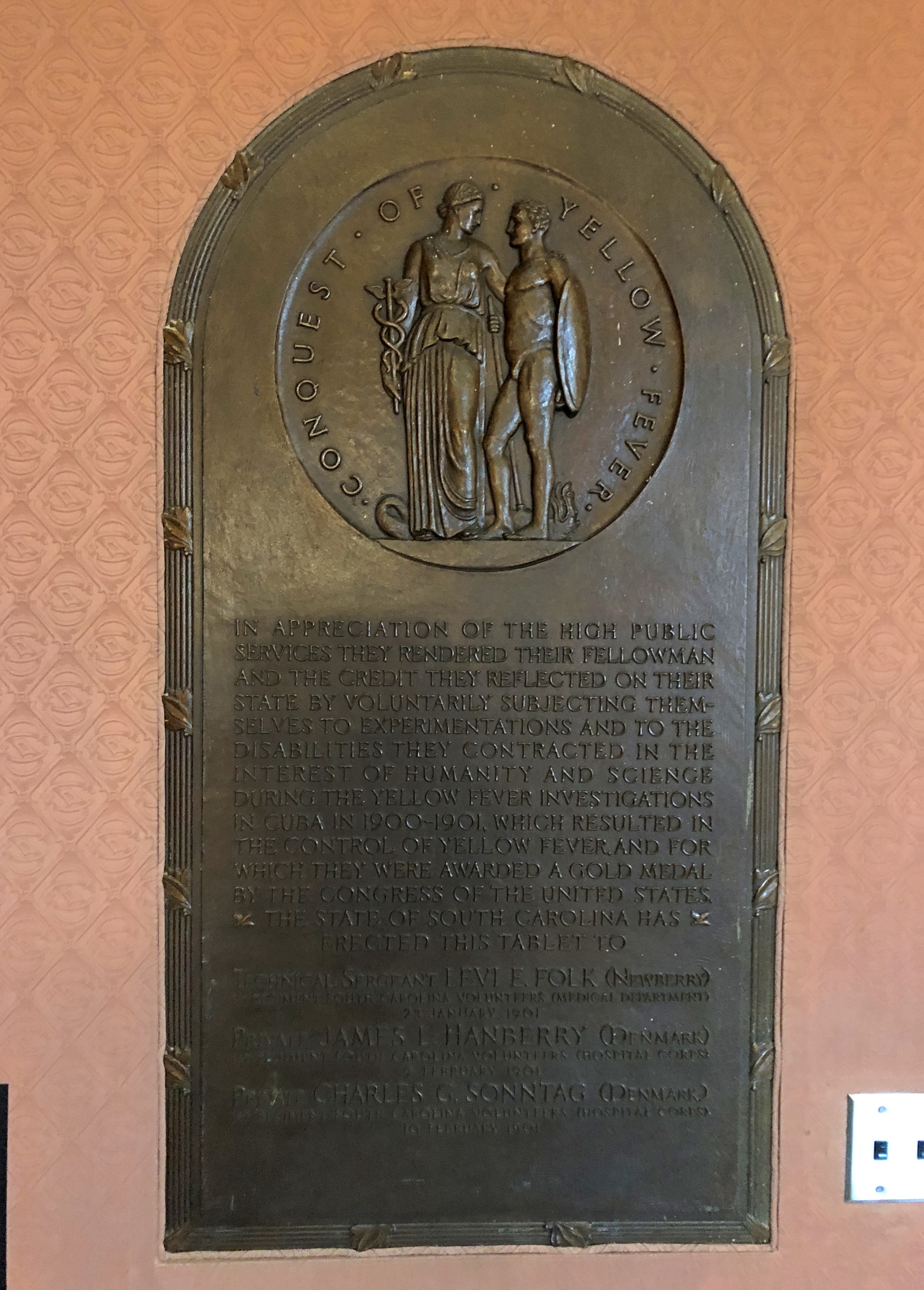
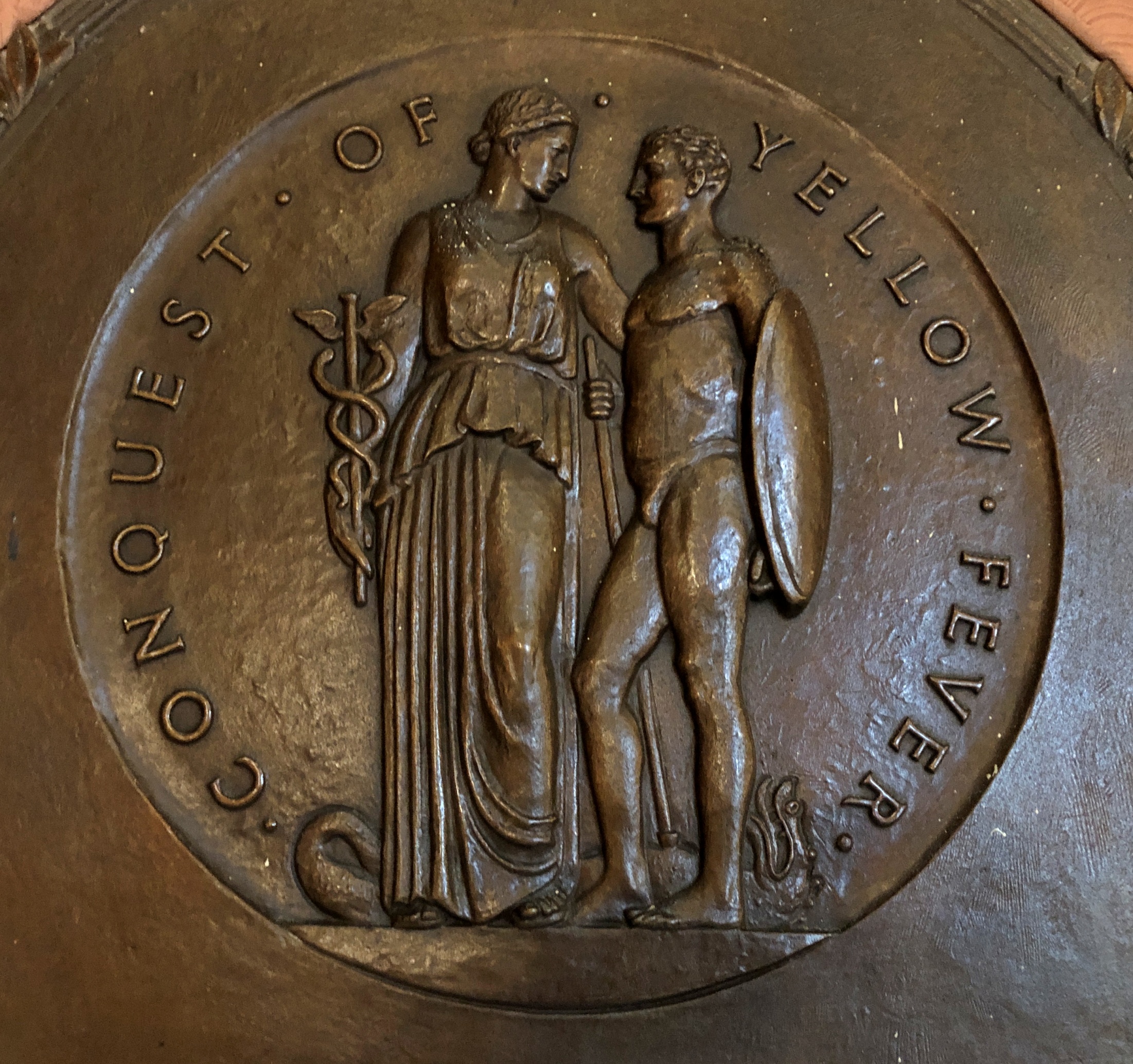
An unusual memorial hints at the state’s awful experience with yellow fever in pre-modern times.
It’s hard to read, but the plaque memorializes three U.S. soldiers from South Carolina, TS Levi E. Folk and Privates James L. Hanberry and Charles G. Sonntag. They were among the 30 or so soldiers who volunteered to be bitten by yellow fever-infected mosquitoes in the famed (used to be famed, anyway) experiments conducted by Maj. Walter Reed in 1900-01 in Cuba that once and for all proved mosquitoes to be the vectors.
Before the 20th century, yellow fever plagued South Carolina relentlessly. The Encyclopedia of South Carolina on the disease: “Yellow fever, like falciparum malaria, was introduced into South Carolina as a result of the African slave trade. The first major epidemic struck Charleston in 1699, killing about fifteen percent of the population, including many officials. At least five and perhaps as many as eight major epidemics occurred between 1706 and 1748. The disease was probably present in several other years as well. For several decades after 1748 no large epidemics occurred, although it appeared sporadically in some years. Between the 1790s and 1850s Charleston hosted numerous epidemics.”
Before I take a long drive, I spend time with one or more of my highway atlases sketching a route – Rand McNally, National Geographic or Michelin. Sometimes I refer to highway department folding maps as well. Google Maps has its place, an important one, but it’s no substitute for the big-picture sweep of a paper map.
For the trip to the Carolinas earlier this summer, an atlas map made it easy to see the best way to cut across the state from Myrtle Beach to Columbia, where I planned to spend a night: US 378. As Wiki puts it, “the highway has a lengthy concurrency with US 76 between Columbia and Sumter and serves as a major route between the Midlands and the Myrtle Beach area.”
That is, from the flat damp lands along the coast through pines and the sites of long-ago rice plantations, on to modern crop lands, small sandy wooded rises, and into suburban Columbia. Small towns dot the route: Conway, Gresham, Hannah, Lake City, Turbeville, and Sumter, which is actually a small city (pop. about 43,800).
Not far west of Sumter on US 378, I noticed a point-of-interest sign suggesting a right turn. I don’t remember the exact wording, but the gist that I picked up instantly was historic church. My kind of sight, in other words. After only a few minutes on the side road (South Carolina 261, a.k.a. N. Kings Hwy.), a church and churchyard cemetery appeared.
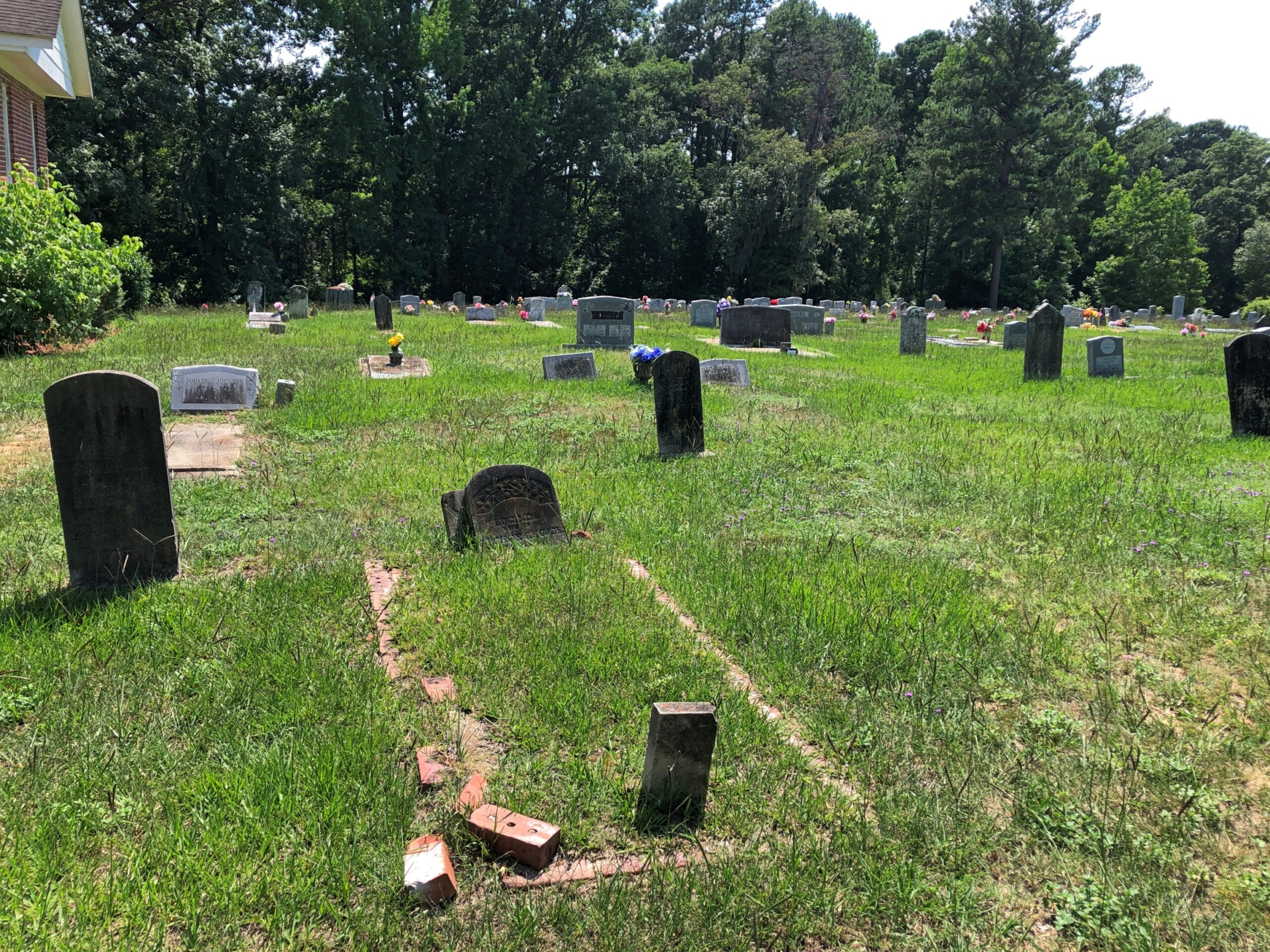
This turned out to be the Wayman Chapel of the AME Church, which has its own graveyard.
A good many AME churches are named Wayman, after Bishop Alexander W. Wayman. Surely the place is historic in its own right, including as part of the wider history of the AME, but it wasn’t what I was looking for. I continued on, and without realizing it, had entered the High Hills of Santee, which sounds like an all around interesting place.
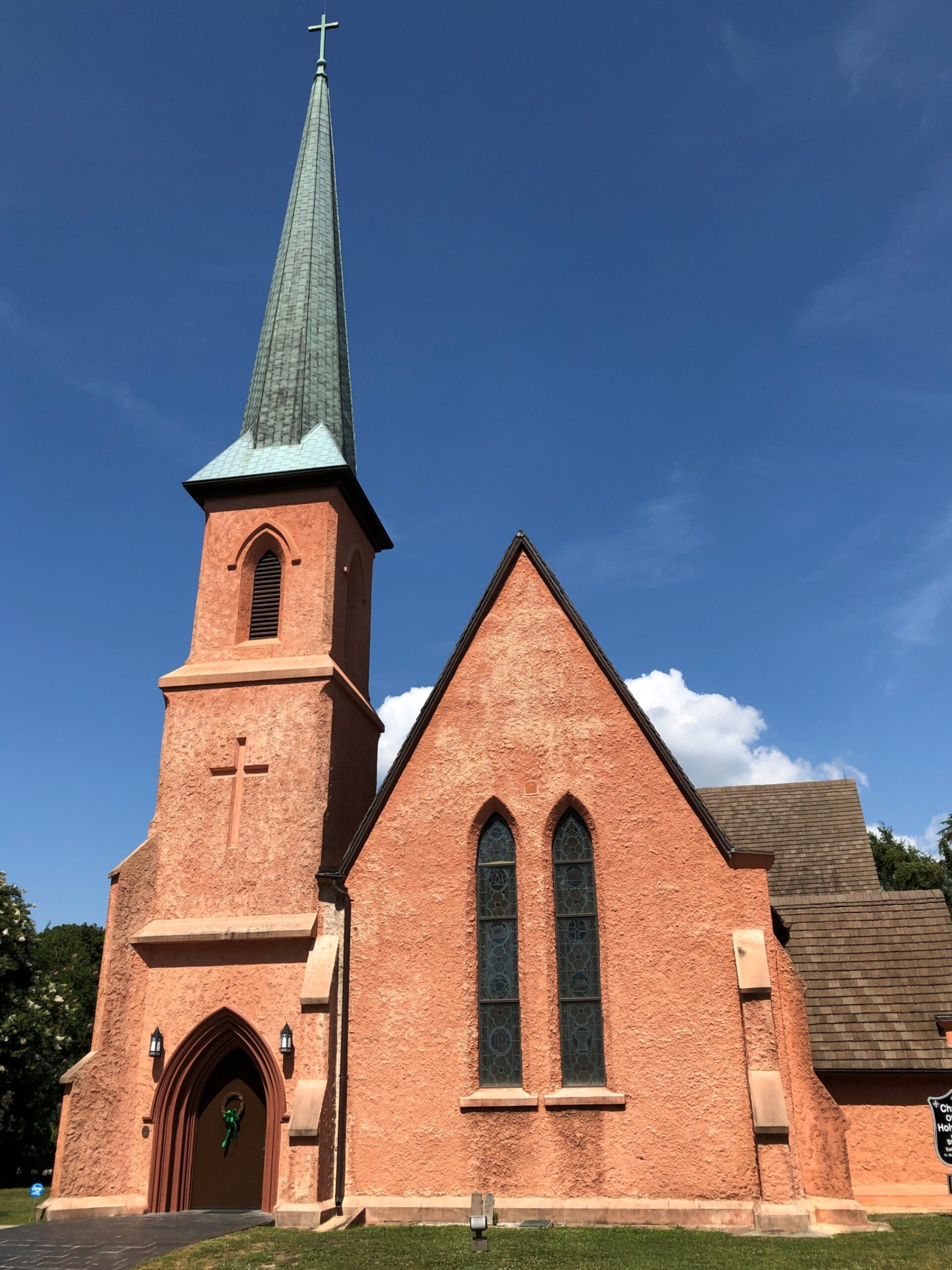
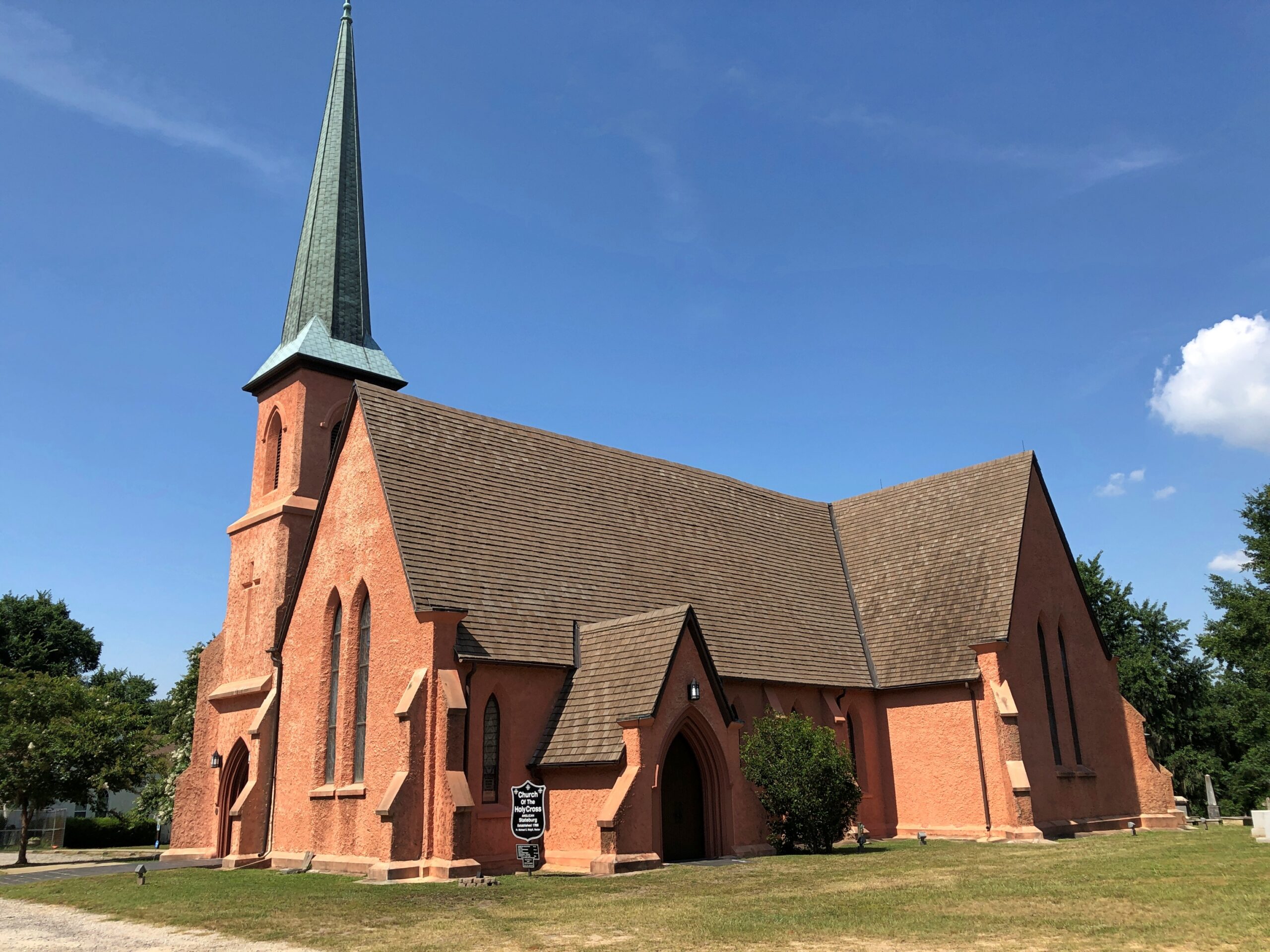
Had I realized that, I might have gone a little further down N. Kings Hwy., but serendipity on the road will only take you so far. In this case, not much further down the road, to the Church of the Holy Cross.
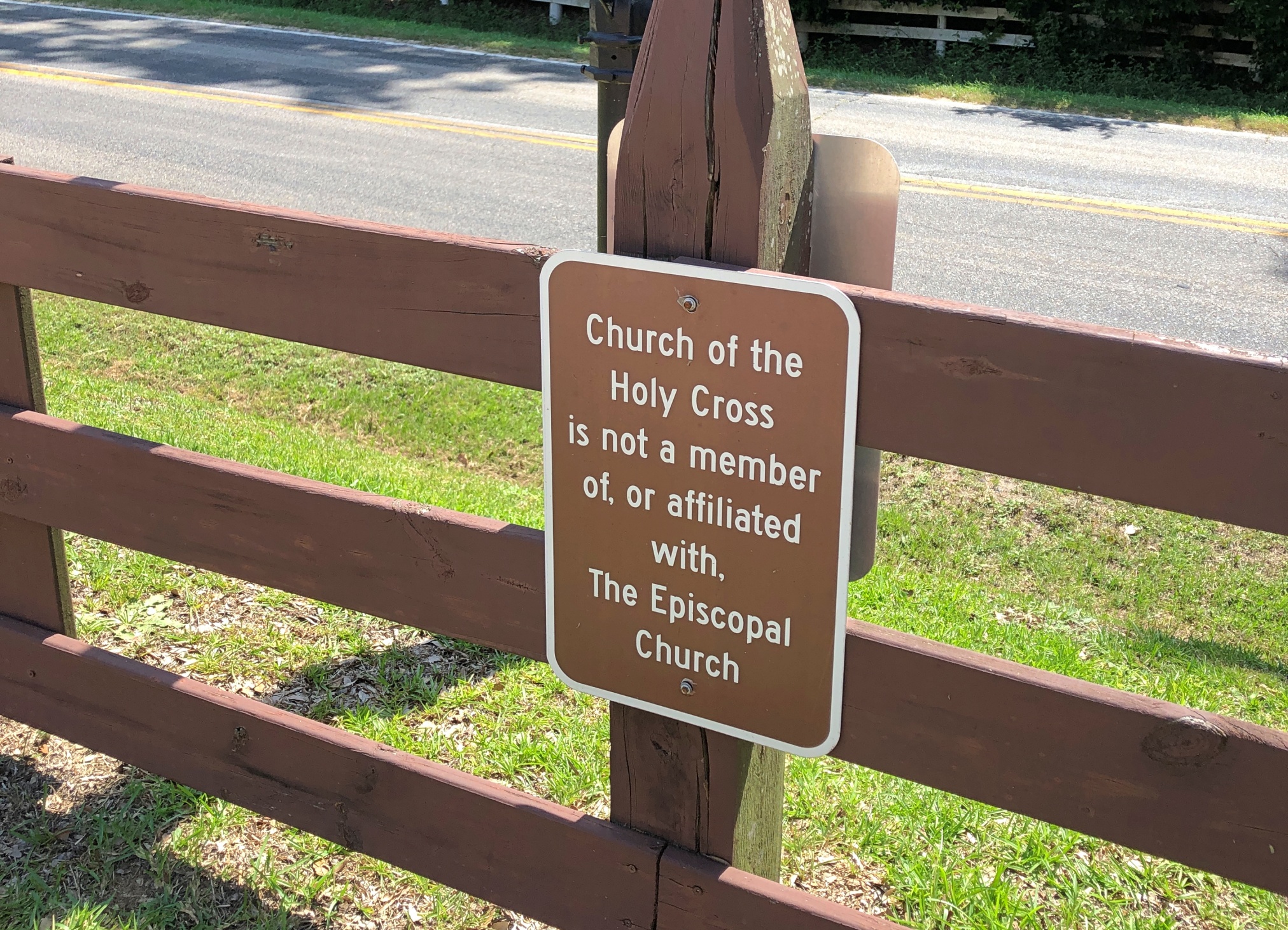
The church has a Stateburg address, but isn’t in town. For well over a century, it was an Episcopal church, but the current congregation wants one and all to know that it isn’t any more. A simple sign, but enough to carry a whiff of schism.
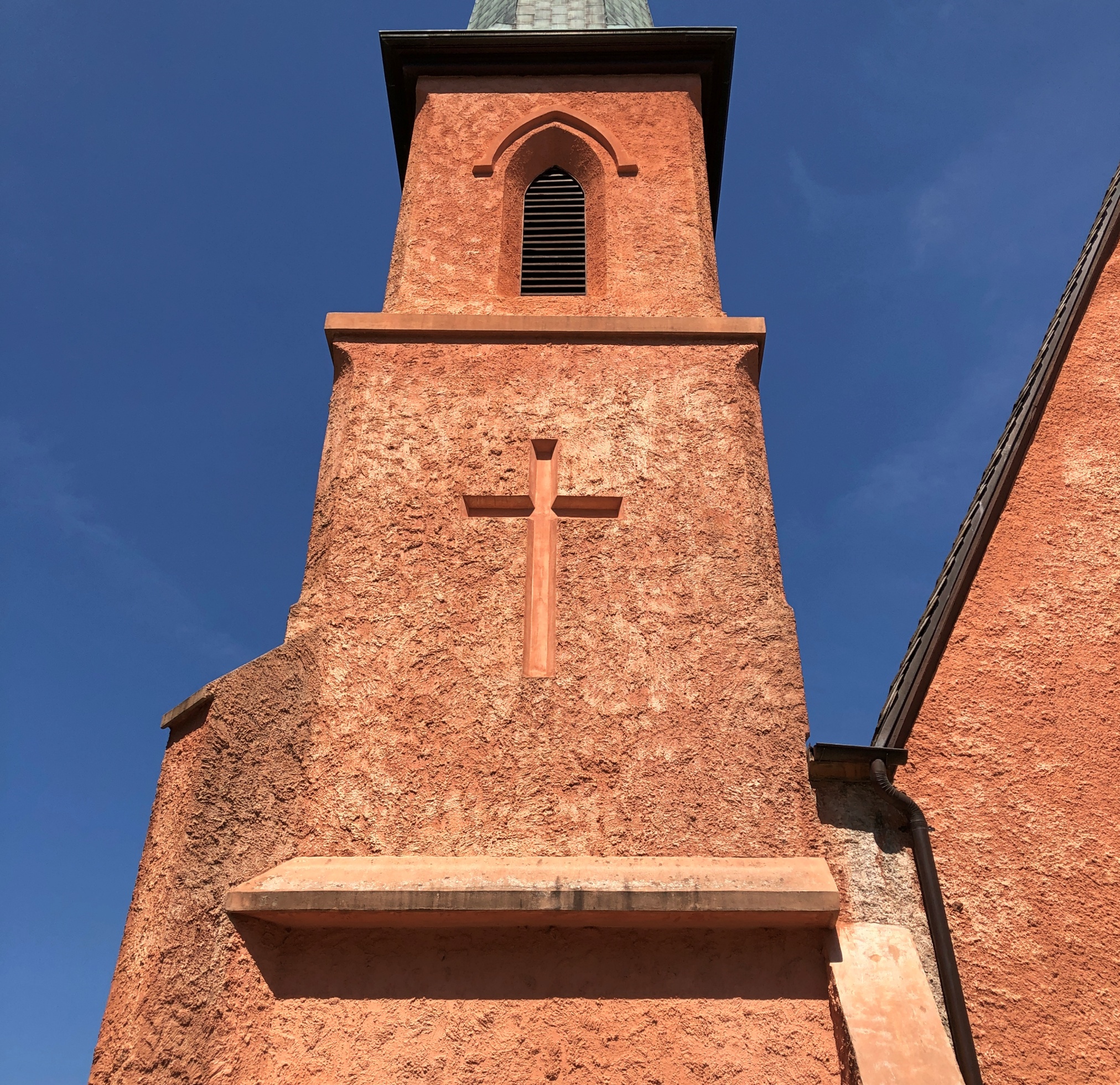
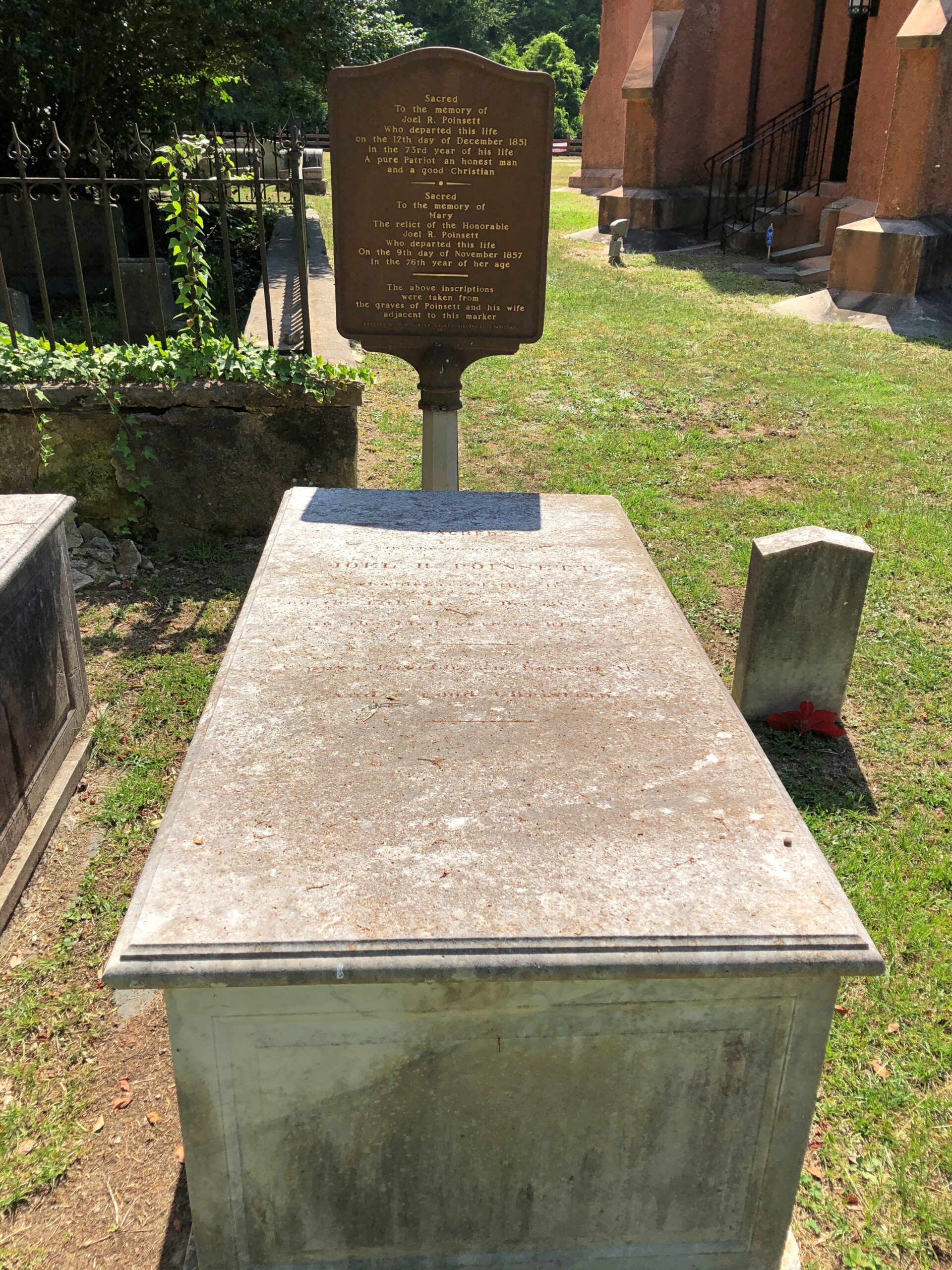
The design work was by Edward C. Jones, a busy architect, including designs at Magnolia Cemetery in Charleston. Not brick or the like, but rammed earth. I can’t say that I’d seen a rammed earth church before. It was completed in 1852.
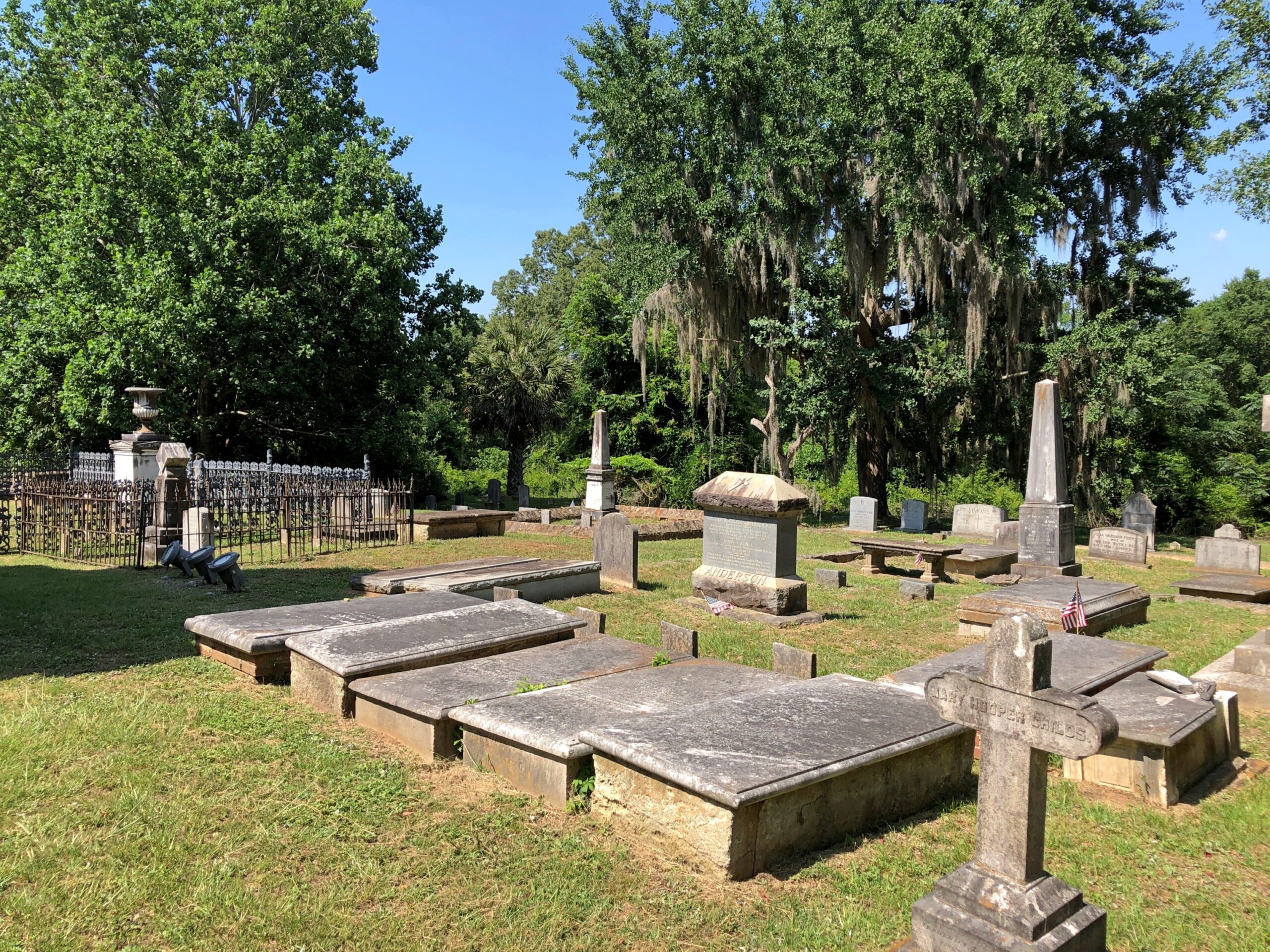
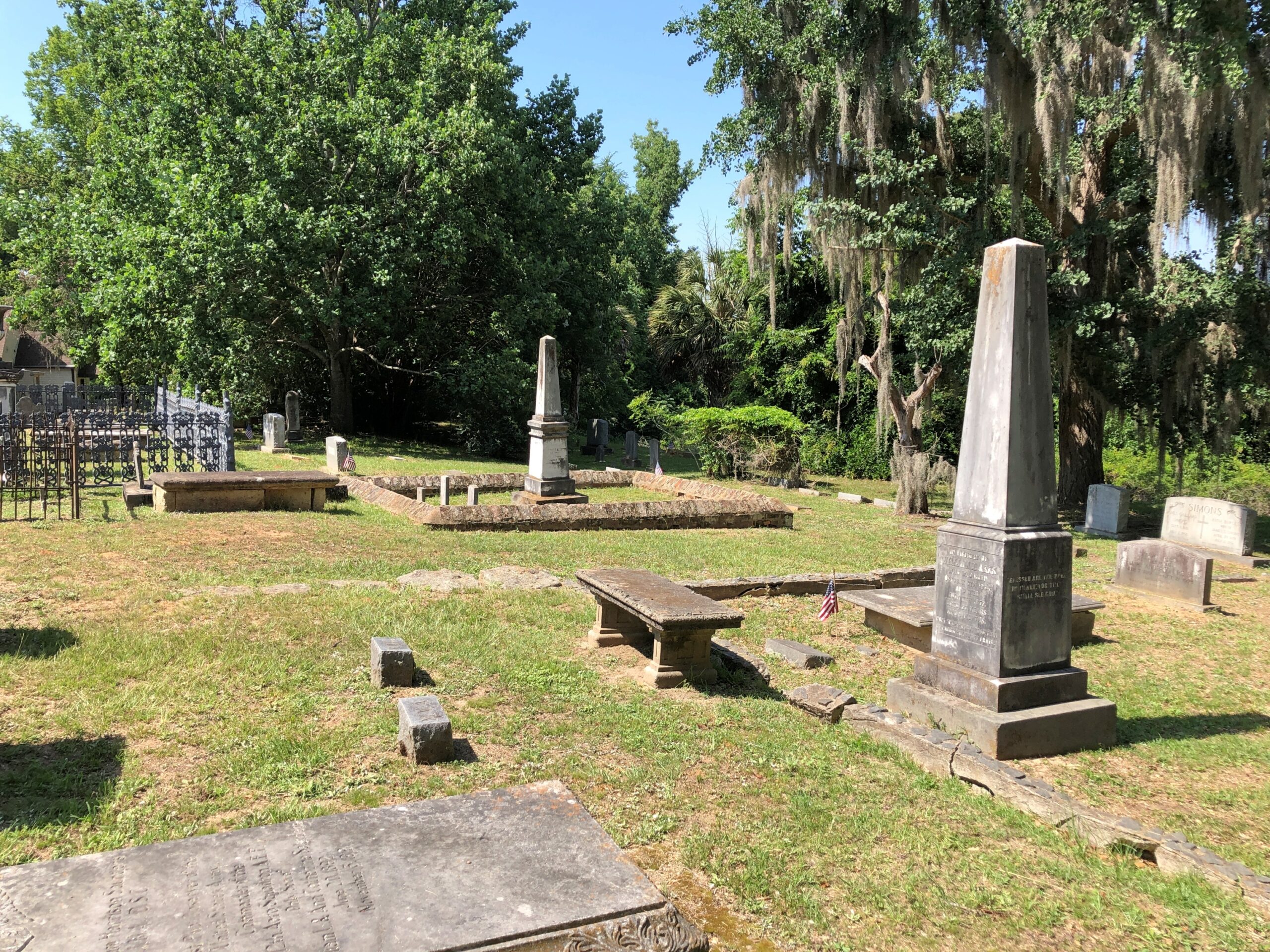
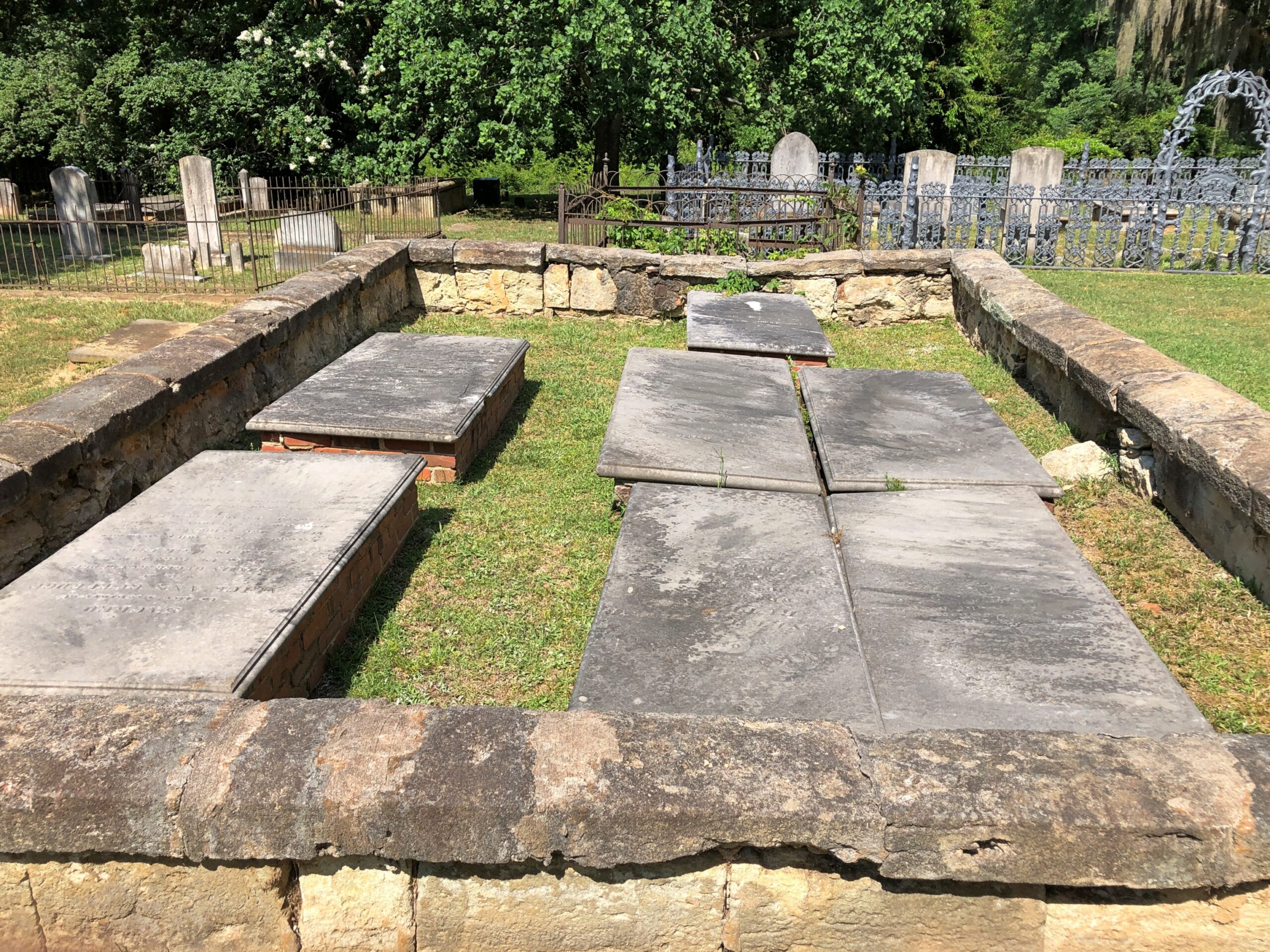
Extending some distance behind the church, which was closed, is a handsome cemetery.
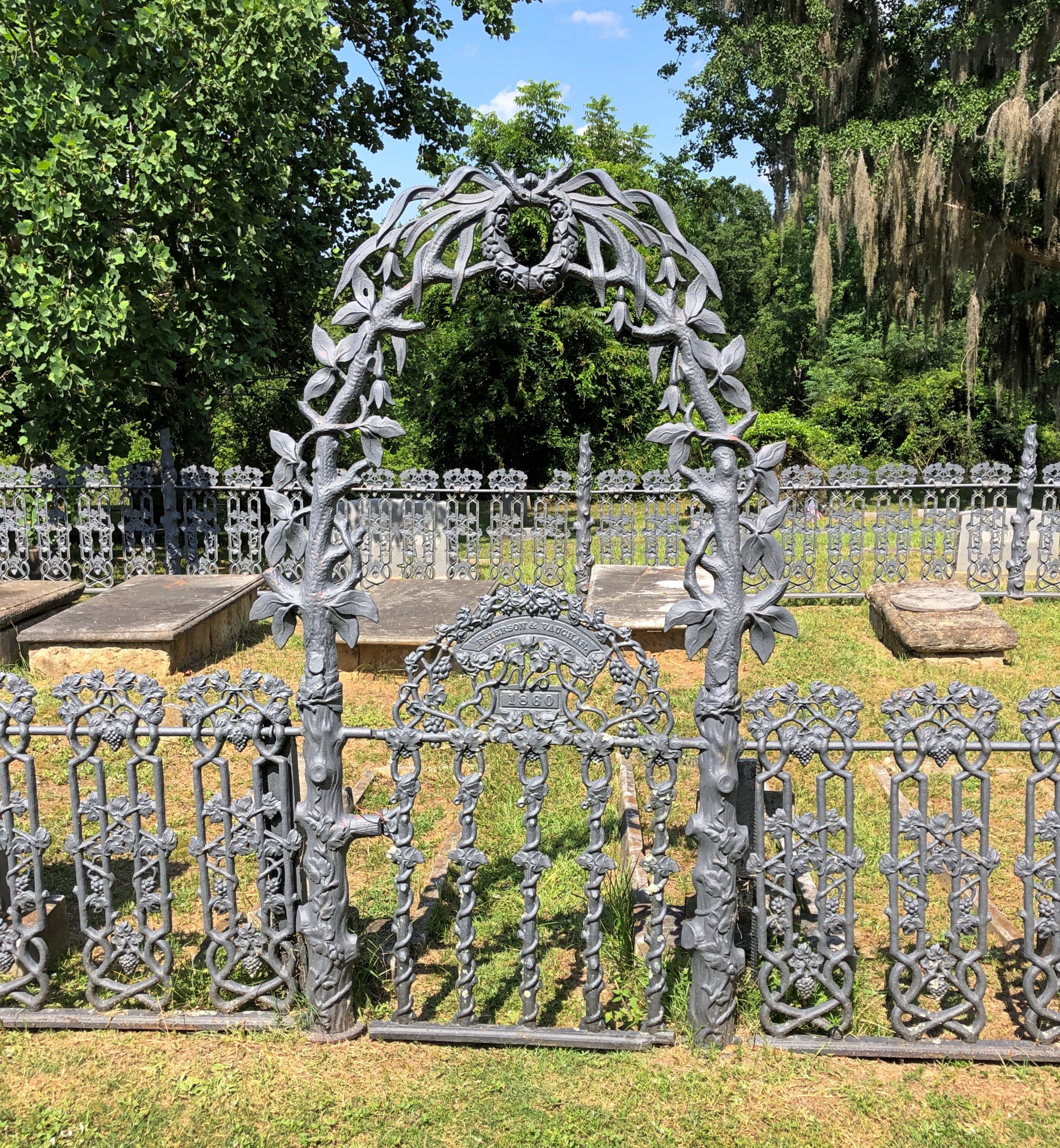
Impressive ironwork and crumbling masonry. What’s not to like?
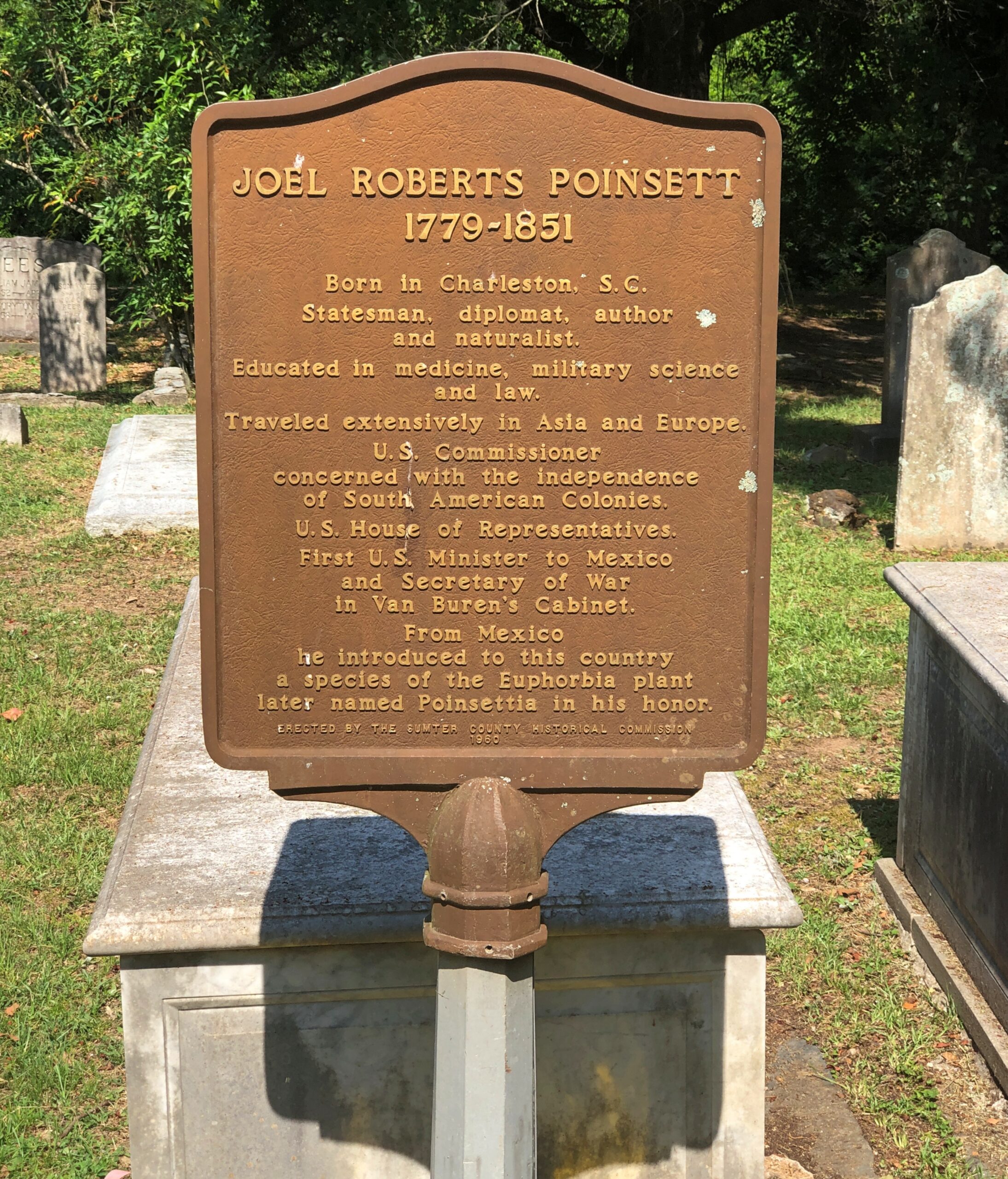
Another layer of serendipity: not only had I chanced across the church and the graveyard, but someone I’d heard of: Joel R. Poinsett, whose career was astonishingly varied, for good and ill, even for the freewheeling 19th century.
Almost everyone else has heard of him too, except they don’t know it, since of course the poinsettia is named for him. A casual search shows that were was a quixotic bubble of interest in the idea of re-naming the flower around the holidays in 2023, but not since, with such headlines as: “Poinsettia by any other name? Try ‘cuetlaxochitl’ or ‘Nochebuena’ “ (Jacksonville Journal-Courier).
Cuetlaxochitl? Names do shift over time, for unpredictable reasons, but I’m not betting on that one entering common usage anytime soon.
Ten years ago, I wrote: Has it been ten years since we visited Yellowstone NP? So it has. Tempus fugit, dude.
I see that decade and raise it by another decade. The children who went with us are now grown. The green Sienna we drove across North America that year and the next, to the Canadian Rockies, is long gone, to a junkyard or just maybe still held together with wire and gum and puttering around some distant road in Mexico.
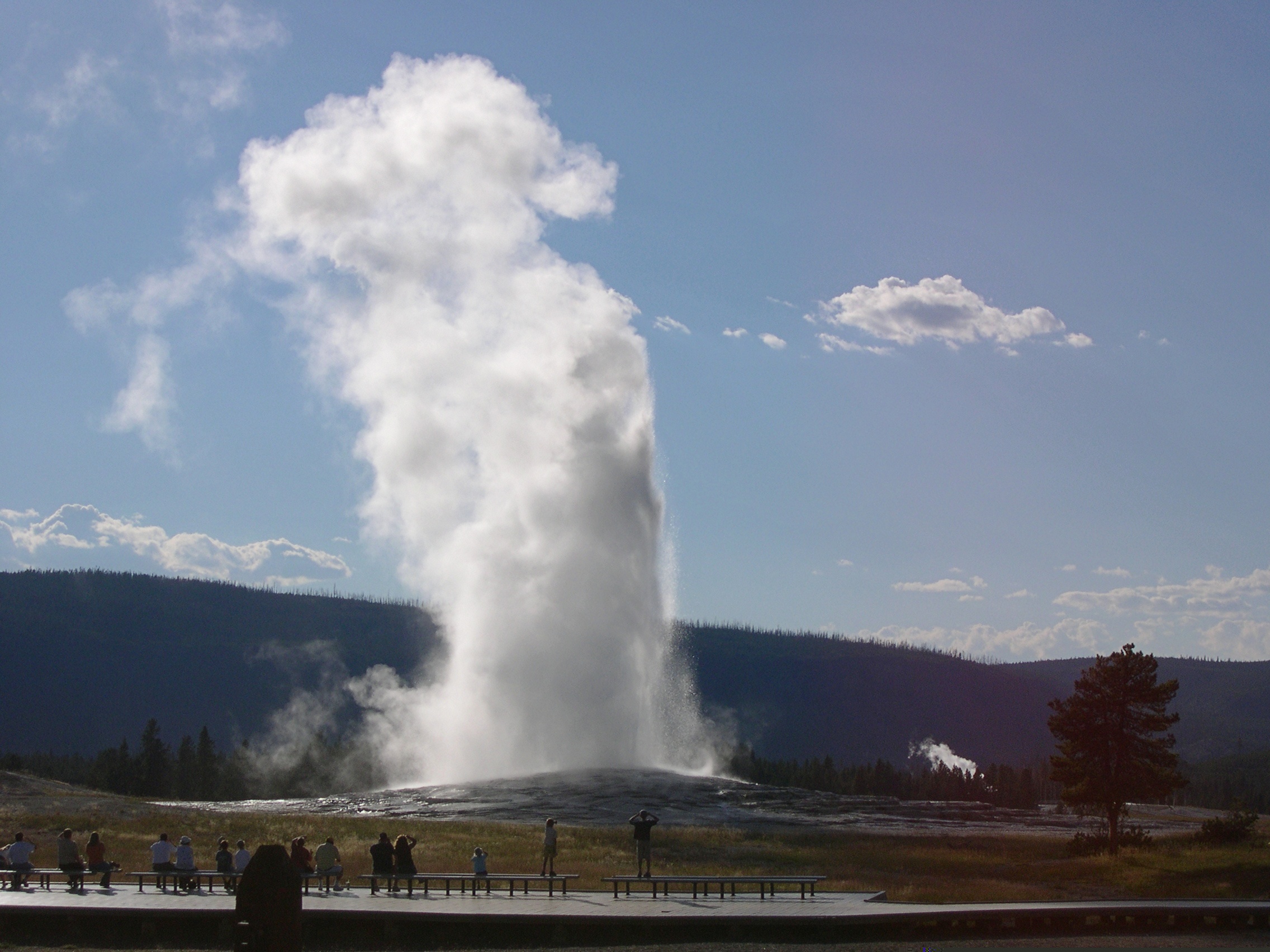
Less than a week after our visit, I wrote:Naturally we visited Old Faithful. Gotta go see Old Faithful, and wait for it to fulfill its impressive duty, which it did for us at about 6:45 pm on August 5, 2005, pretty much as the rangers predicted — at the information booth, they wrote an estimated time of eruption on a little whiteboard.
That exact eruption 20 years ago.
The geyser is still blowing regularly, according to the NPS, though a little more slowly:
“Old Faithful is one of nearly 500 geysers in Yellowstone and one of six that park rangers currently predict. It is uncommon to be able to predict geyser eruptions with regularity and Old Faithful has lived up to its name, only lengthening the time between eruptions by about 30 minutes in the last 30 years. Thermal features change constantly and it is possible Old Faithful may stop erupting someday.”
Yesterday rain came again to this rainy summer, and had the happy effect of turning the temps down outside today to wrap up July – pleasant 70s F. even at the noonday peak. Northern summers have much to recommend them.
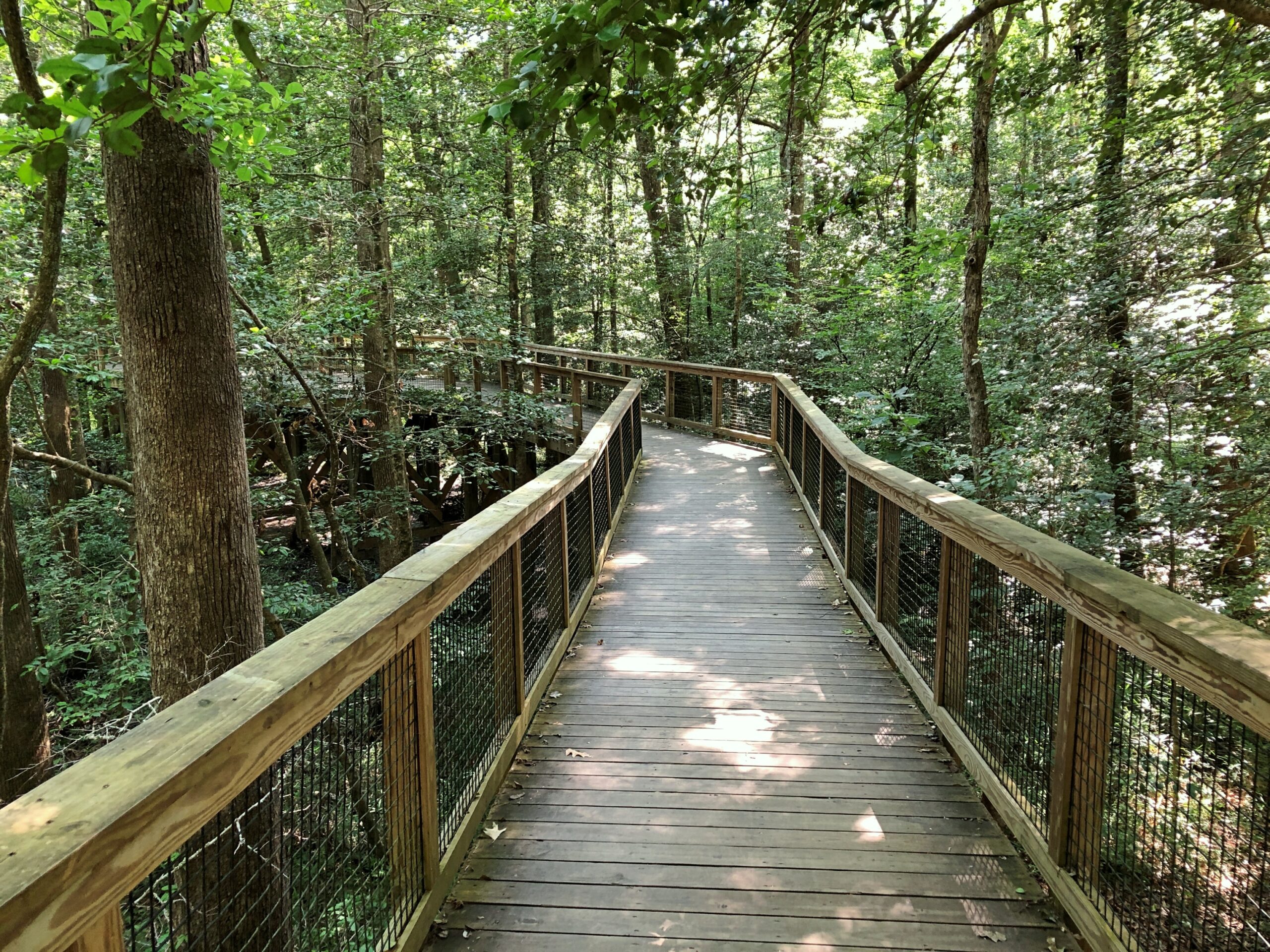
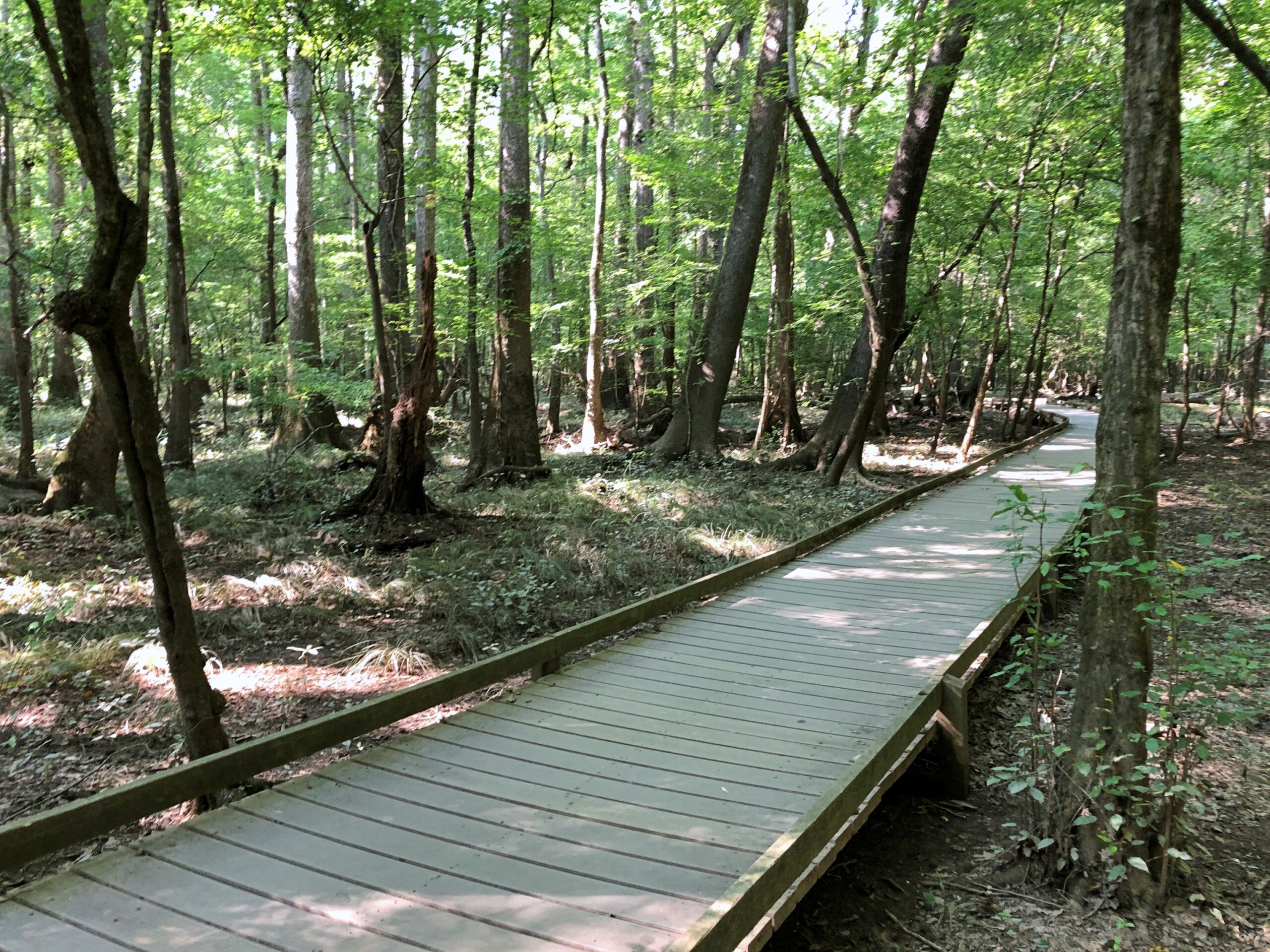
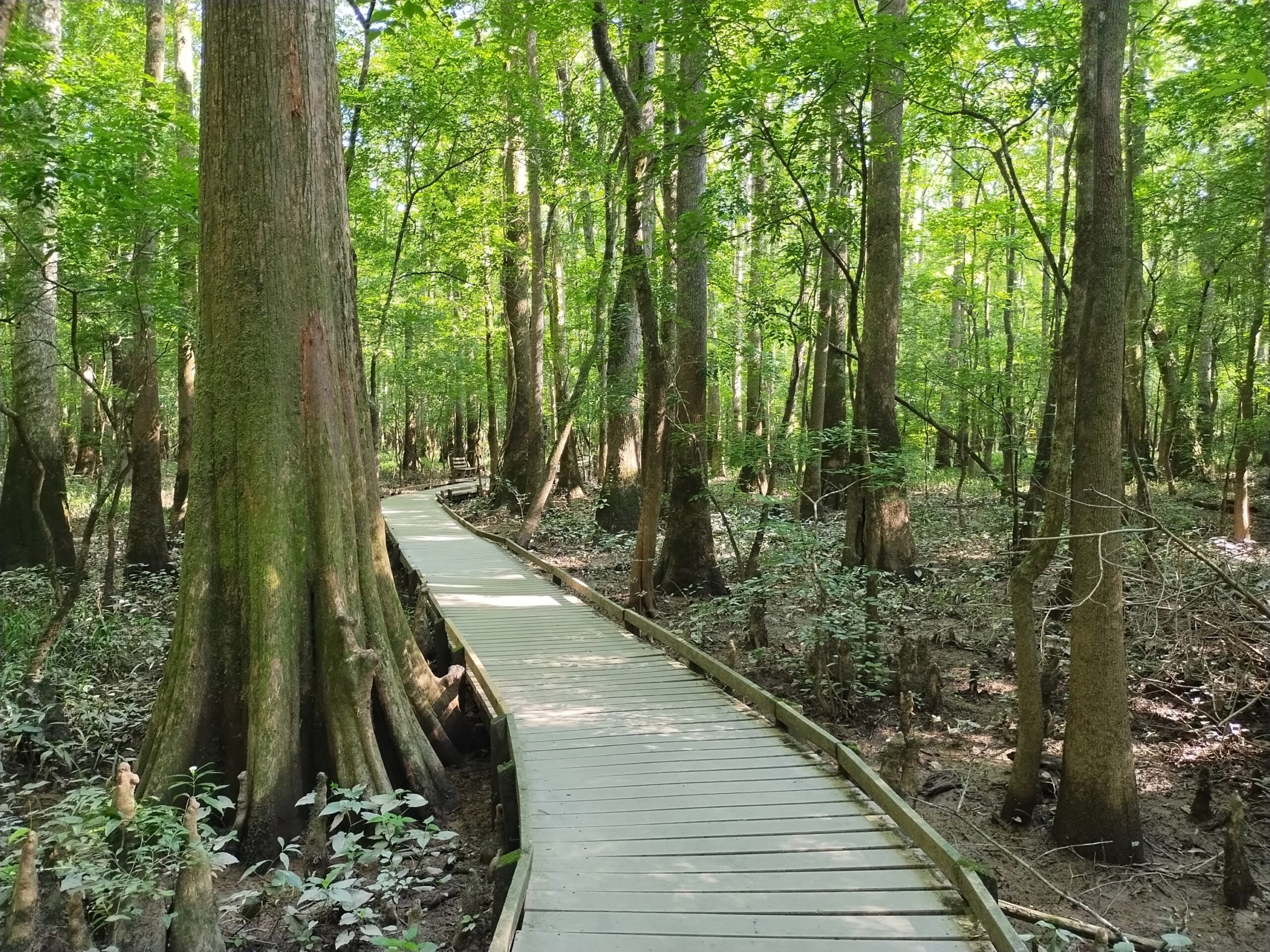
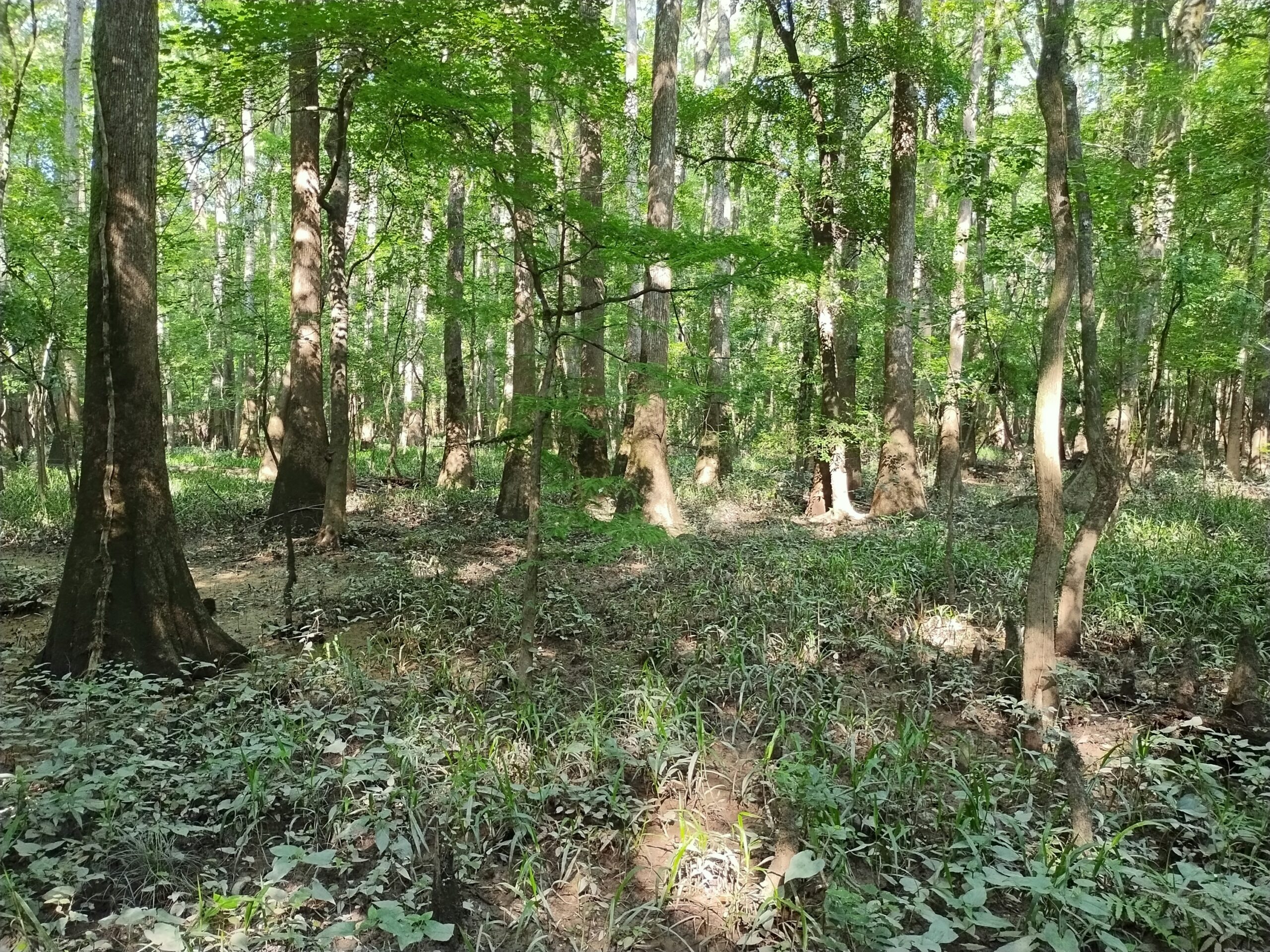
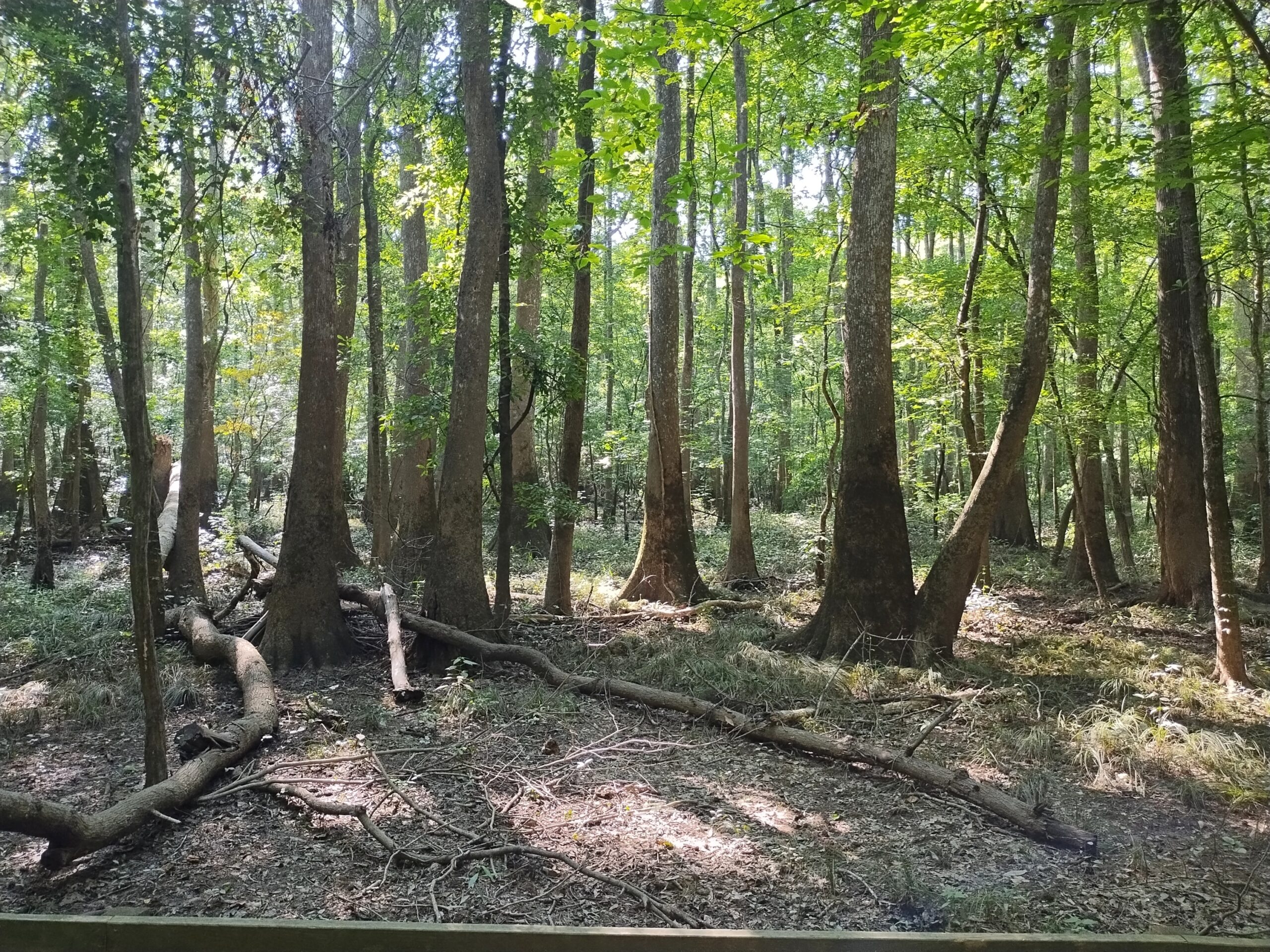
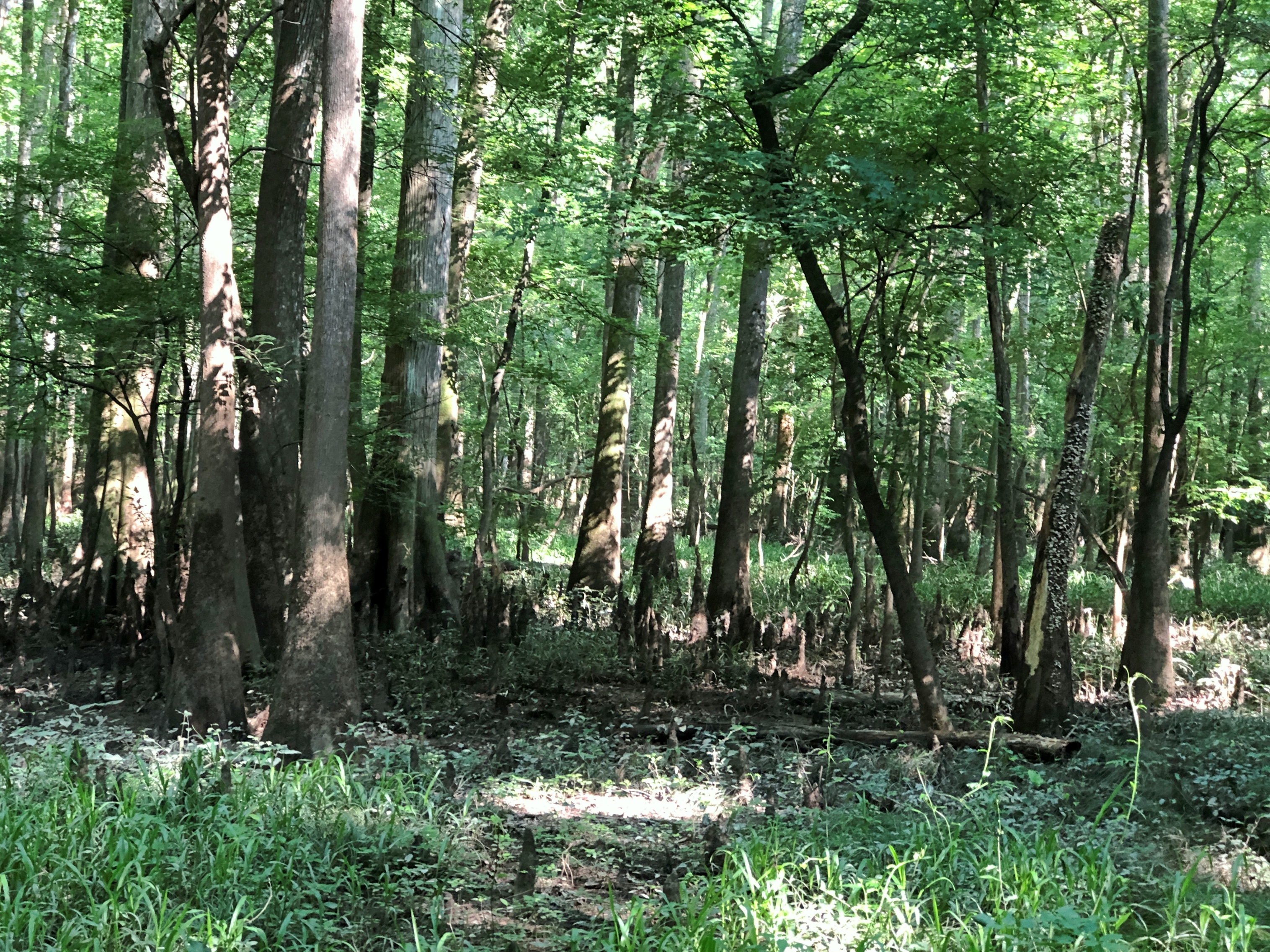
At a hotter time and place, I walked along a boardwalk through a patch of old-growth floodplain forest in the middle of South Carolina. Turns out, that’s a rare kind of landscape, but I didn’t know that at the time.
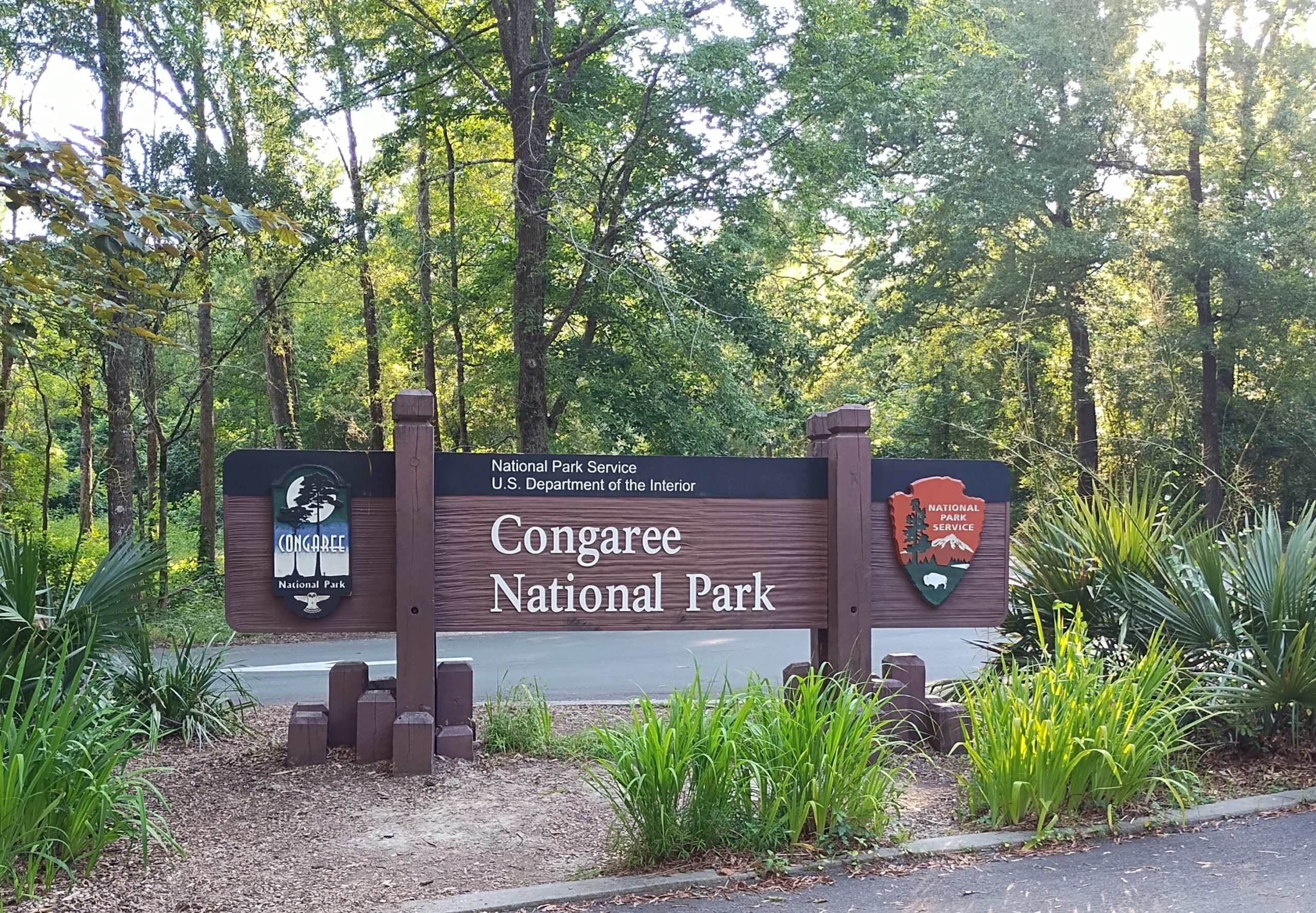
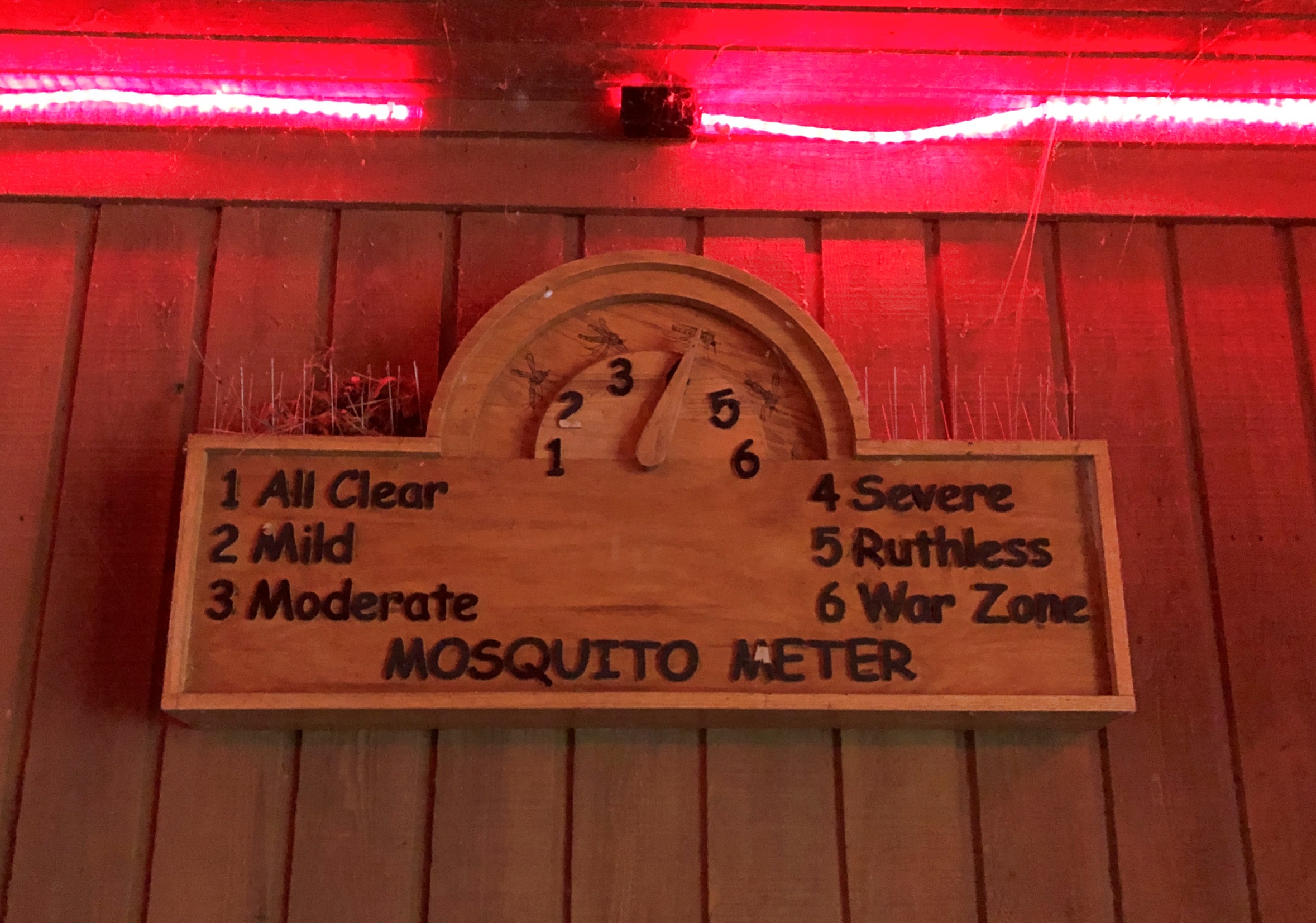
Somewhere on the way, I renamed Congaree National Park, my location at that moment, in my head. I imagined an act of Congress special to do so. The new name: Congaree National Park and Mosquito Preserve.
I can’t say I wasn’t warned. This information was on display at the park visitors center.
I wouldn’t call Congaree a great unknown, but it is true that among the 63 U.S. national parks, it stood as the 51st-most visited in 2024, attracting 242,049 visitors. Considering that no admission is charged, I wonder how the NPS came up with such an exact number. In any case, that’s a remarkably skinny total compared with the millions who go annually to better-known parks, especially considering that the main park entrance is roughly 30 miles from a sizable city, namely Columbia, SC.
Anecdotal evidence points to the same conclusion: no one I’ve told about the park seems to have heard of it. Then again, I don’t know that I ever gave it much thought myself, except to note it a few times over the years on maps of South Carolina, a state I’d scarcely seen before June – among the Lower 48, the last one I visited.
Other national parks have majestic mountains or picturesque glaciers or striking deserts or epic coastlines or an important history of human activity. They have high-profile wildlife and ecosystems unique in the world. Congaree does count as a special place, preserving a tiny fraction of the floodplain forests that used to cover much of the Southeast, but that’s a little hard to appreciate on the ground, especially as the target of its high-profile wildlife, mosquitoes.
Of the former vast stands of Southeastern floodplain forests, the park, at 11,000 acres, represents much of the roughly 0.5 percent that survives, according to the NPS. Most such land lost its trees to build buildings, plank ships and create railroad ties. The land itself was drained for pastures, farms and settlements.
So Congaree NP is essentially a high-quality museum piece of a landscape, surviving the 19th and early 20th centuries due to inaccessibility. After much agitation on the part preservationists, the area became a national monument by act of Congress in 1976, with President Ford’s signature on the bill (and became a national park in 2003). Apparently that kind of story doesn’t fire the tourist imagination.
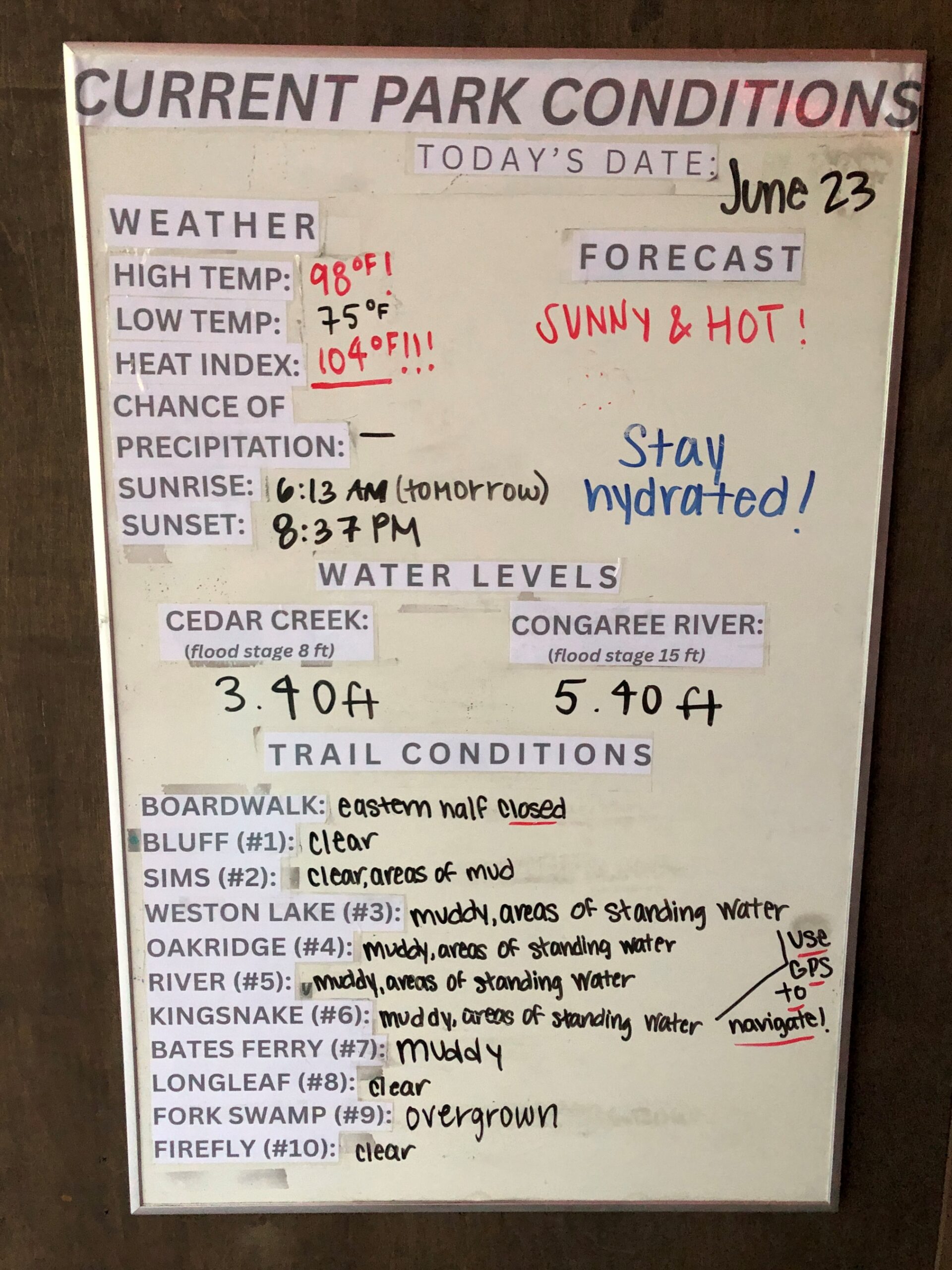
Also, while the boardwalk was an easy walk, most of the rest of the park sounds logistically hard on foot. “The Congaree is a wetland forest, and indeed it seems like water is everywhere,” notes American Forests. “There are very few places in the park where you can travel more than a half-mile in one direction without having to cross a pond, lake, creek, seasonal channel (locally called a gut), slough, wet flat, or muck swamp. It is an aquatic and terrestrial maze that constantly changes. About 10 times a year there really is water everywhere as the Congaree River rises to flood the entire area.”
Still, the article lists a large number of tree species that call the park home, including some very tall examples – taller than anywhere else, in some cases.
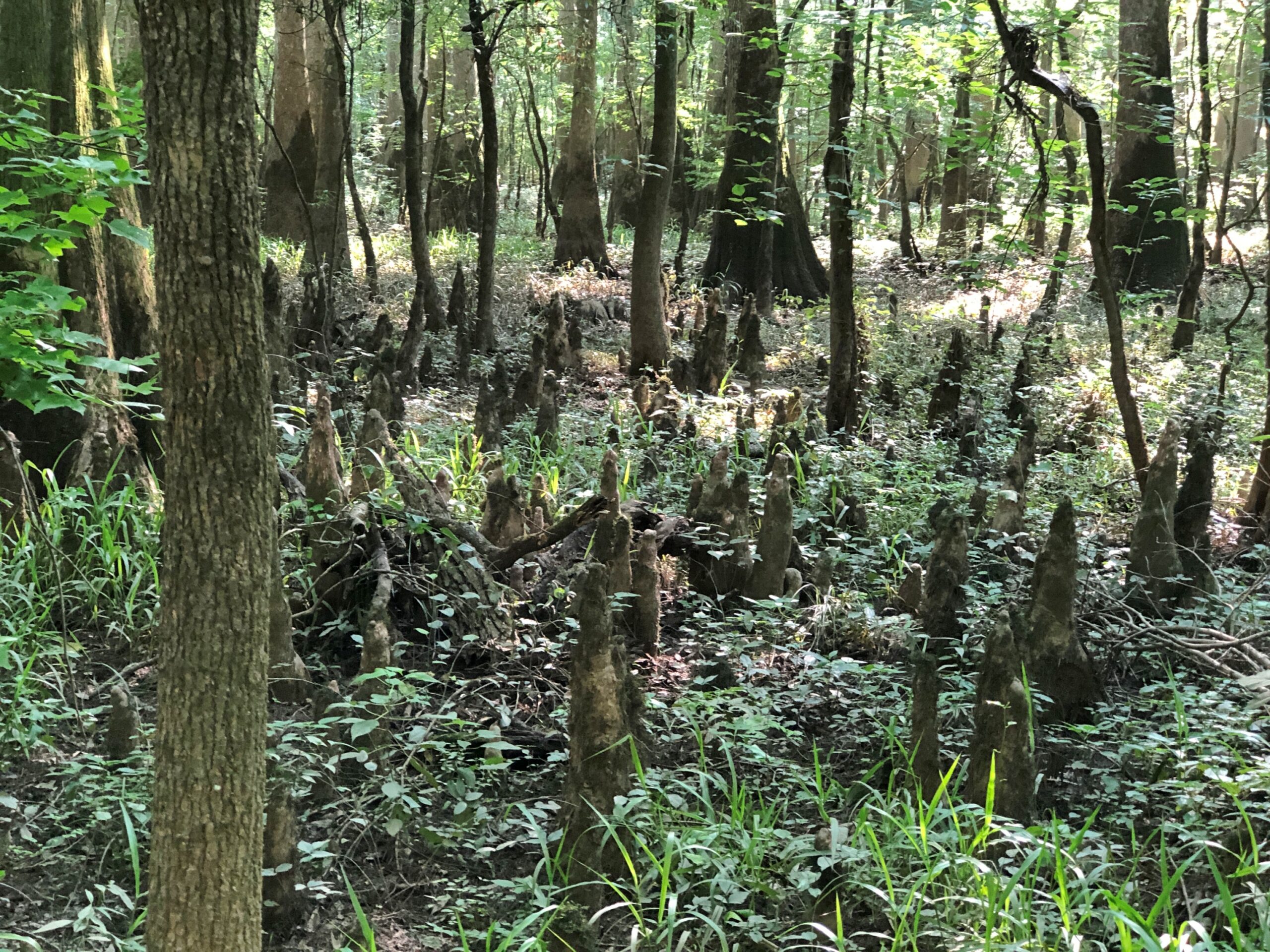
I’m no expert on trees, but I do know cypress when I see them, with their exaltation of “knees,” those knob-like growths.
***
Not long ago, I found out that Dr. Jamison died late last year. That would be Theodore Roosevelt (Ted) Jamison Jr., born 1933, so he made it past 90. I added this message on an obituary site:
I’m sorry to learn about the passing of Dr. Jamison, but glad that he clearly lived a long, interesting life, loved by family and friends. In 1978, he taught a summer school class for a few weeks at Alamo Heights High School in San Antonio. I was 17 that summer and in that class. It might have been a history or political science class – I don’t remember – but in fact, the class was the Wisdom of Ted Jamison. That wisdom was considerable, as he offered his thoughts and observations about the nation and the world, including prescient warnings about attacks on our freedoms. He also shared snippets about his life up to that point. I didn’t know the half of it, but even then I realized he was a remarkable teacher, an assessment I haven’t revised in the near half-century since then. Reading his obituary, I also see what a remarkable human being he was. RIP, Dr. Jamison.
The day was on, the heat was on, and I was on the road again. I’d driven out to Myrtle Beach from Illinois. Now I planned to drive back.
First stop, not far: Conway, South Carolina, much smaller than Myrtle Beach, yet the seat of Horry County. I’d assume that arrangement goes back to the time when the county’s focus was on Conway, a center of turpentine production, not Myrtle Beach, which was a wasteland dotted with wax myrtles.
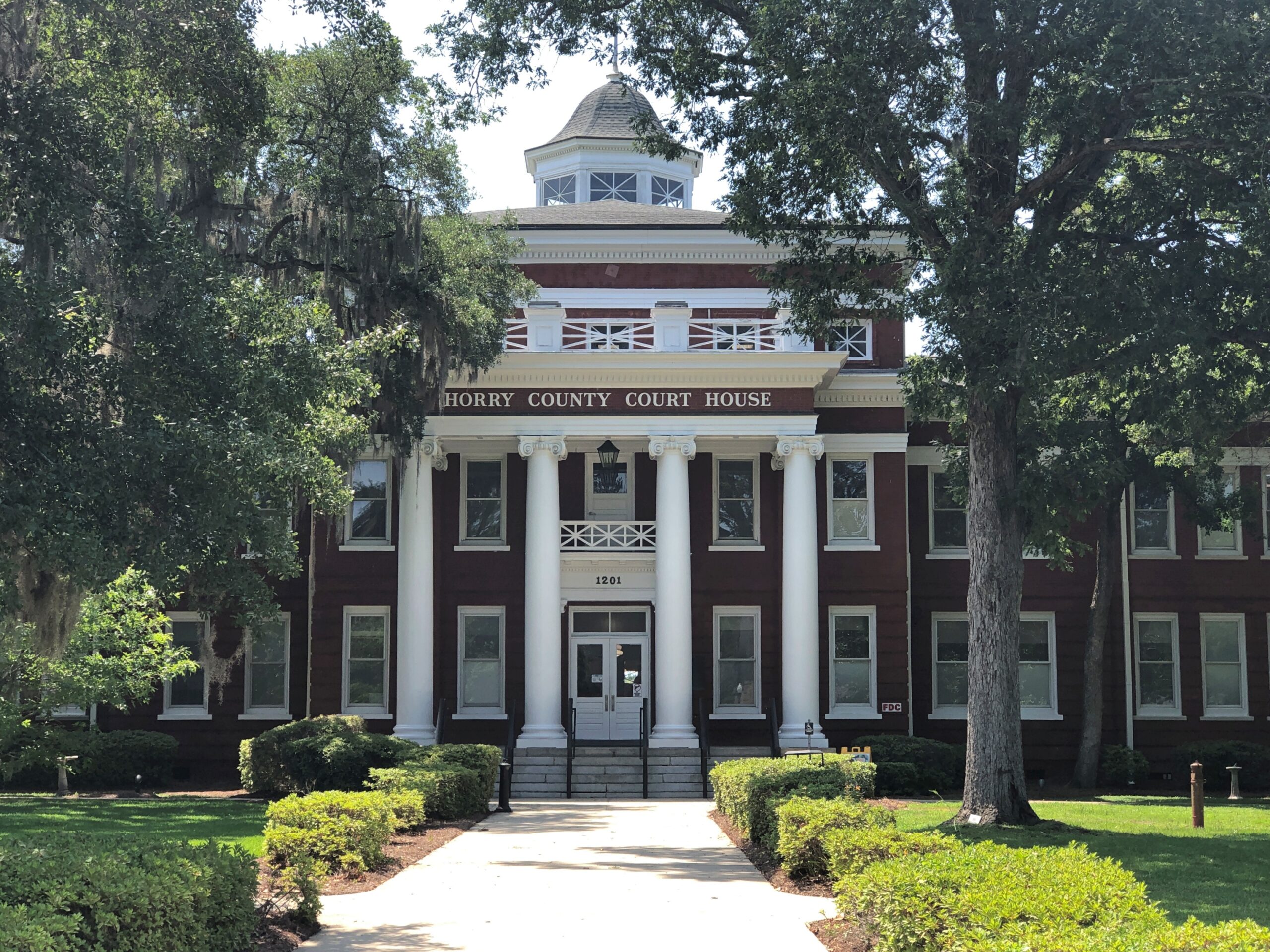
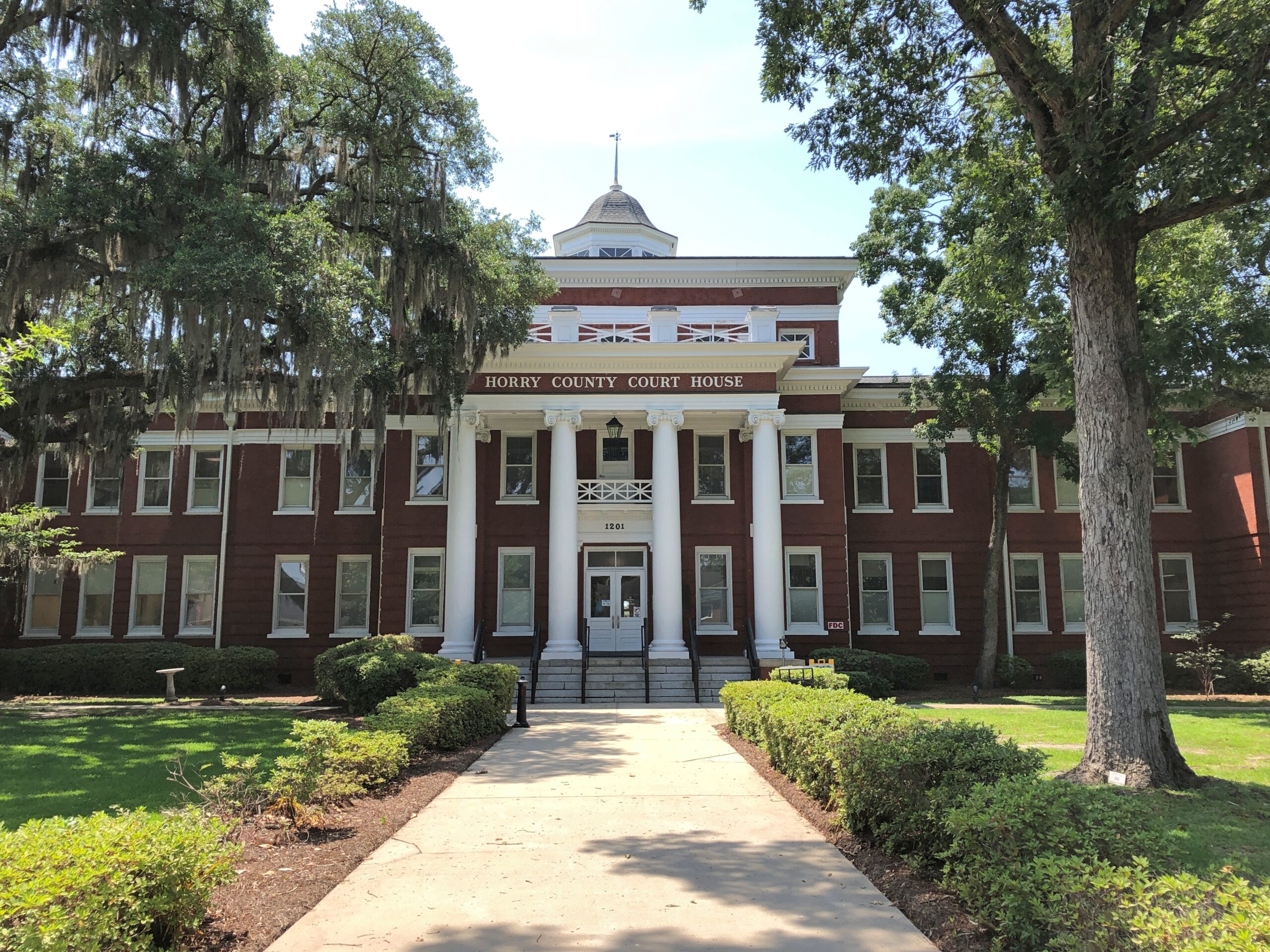
Nothing like a handsome county courthouse.
In the ragged diamond shape that is South Carolina, Horry is the easternmost tip. At the time of the Civil War and immediately afterwards, Horry was the poorest county in the state, an almost literal backwater isolated by the Pee Dee Swamp on the west and south. Now the county is one of South Carolina’s most prosperous.
The transformation is a story of railroads and a turpentine boom, followed by a tobacco boom, followed by a tourism boom. Along the way, new prosperity meant a new courthouse, finished in 1908.
Not long after, in the 1920s, the courthouse was the scene of another of those trials of the century mostly forgotten after a century, namely the Bigham trial, “in which Edmund Bigham — a member of a prominent, controversial Florence County family — was tried for the murder of five family members, including his brother Smiley Bigham, who was a state senator,” South Carolina History Trail says.
“Crowds packed the courtroom daily and the trial attracted newspaper reporters from as far away as New York City. One potential witness was murdered, another died of a heart attack while testifying, and some locals believed that the defendant somehow made the nearby Waccamaw River overflow its banks. The courtroom drama ended when the defendant suddenly accepted a guilty plea.”
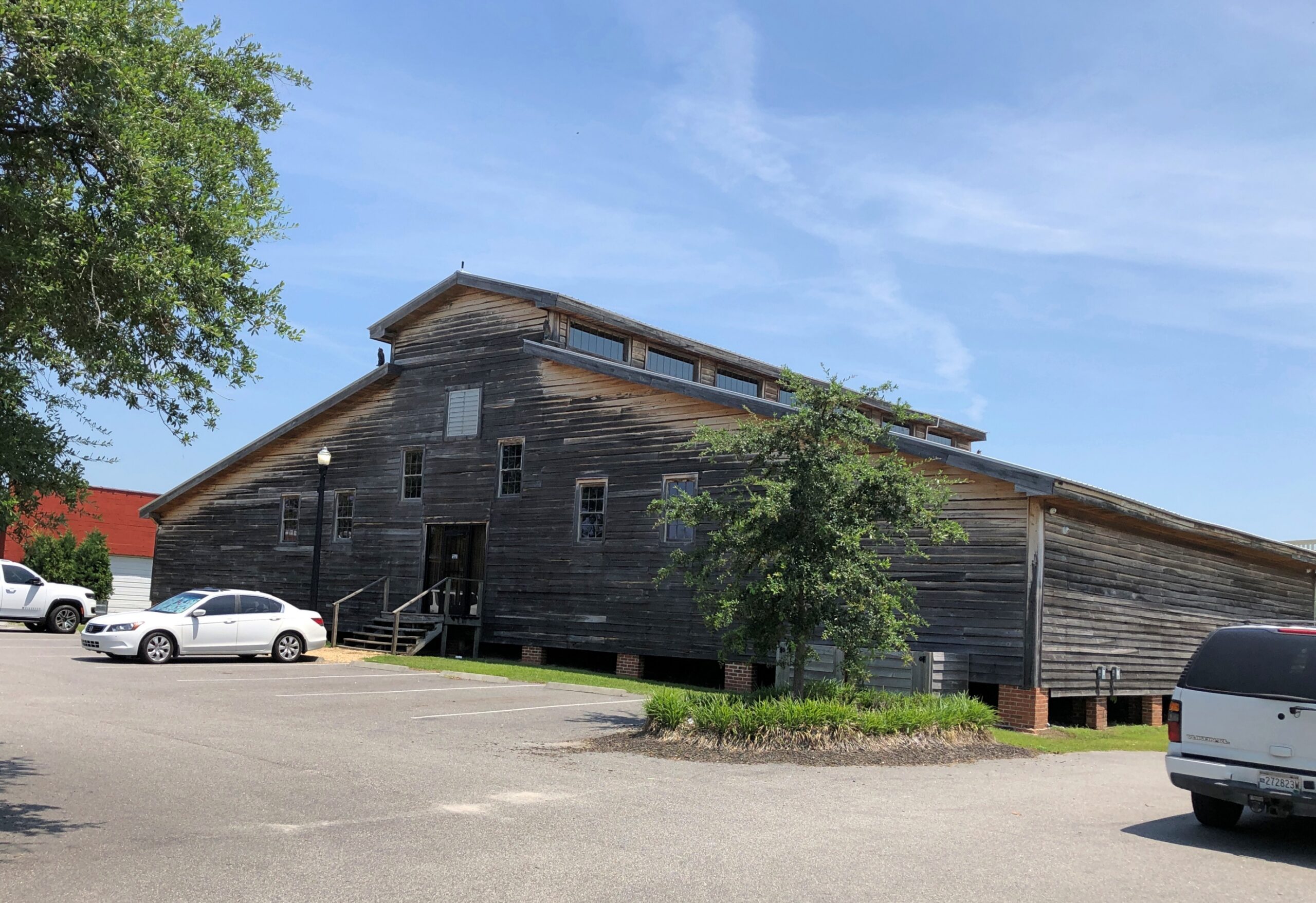
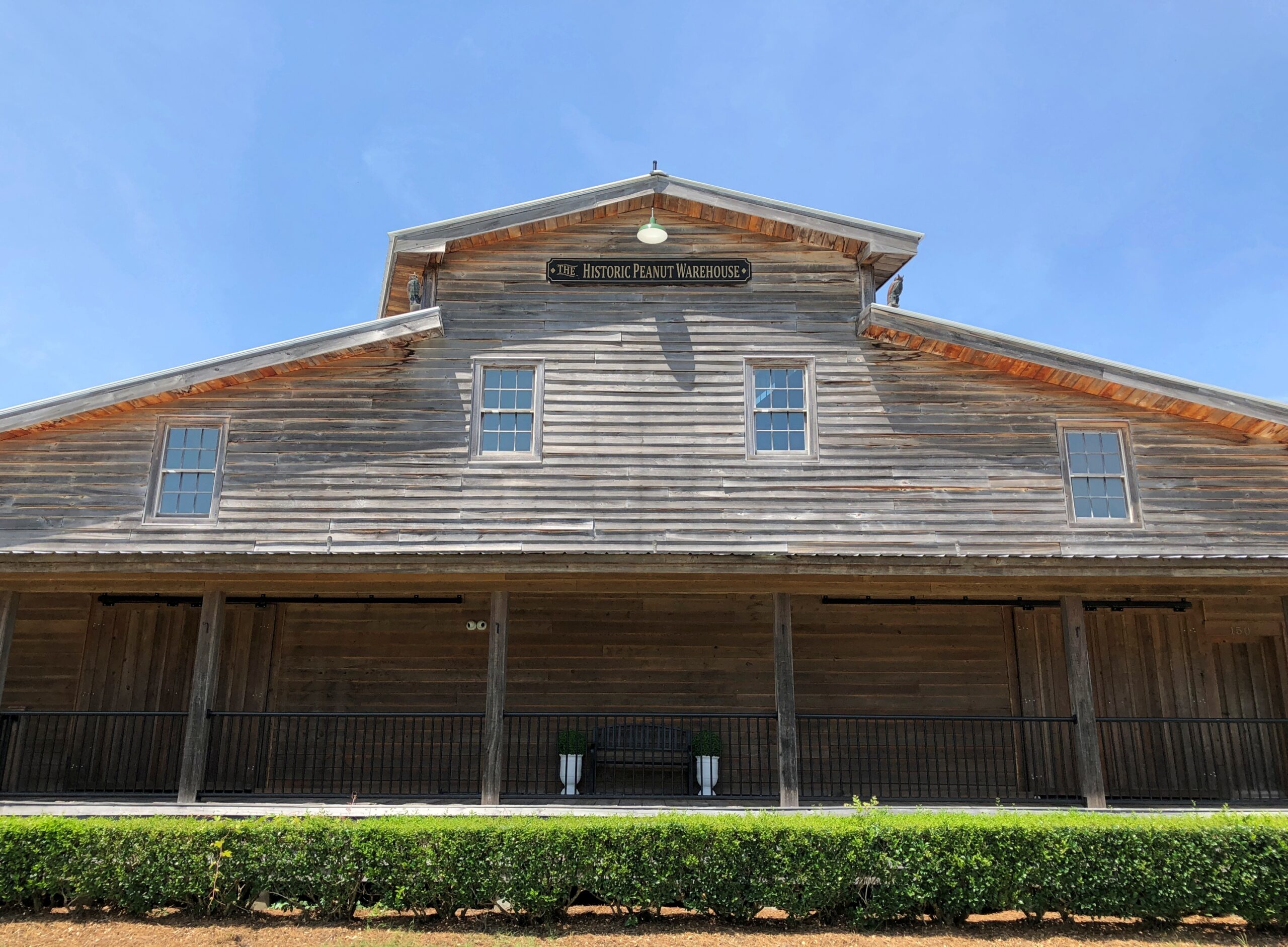
Not far from the courthouse, because nothing is very far from anything else, is an enormous wooden warehouse. This is the back.
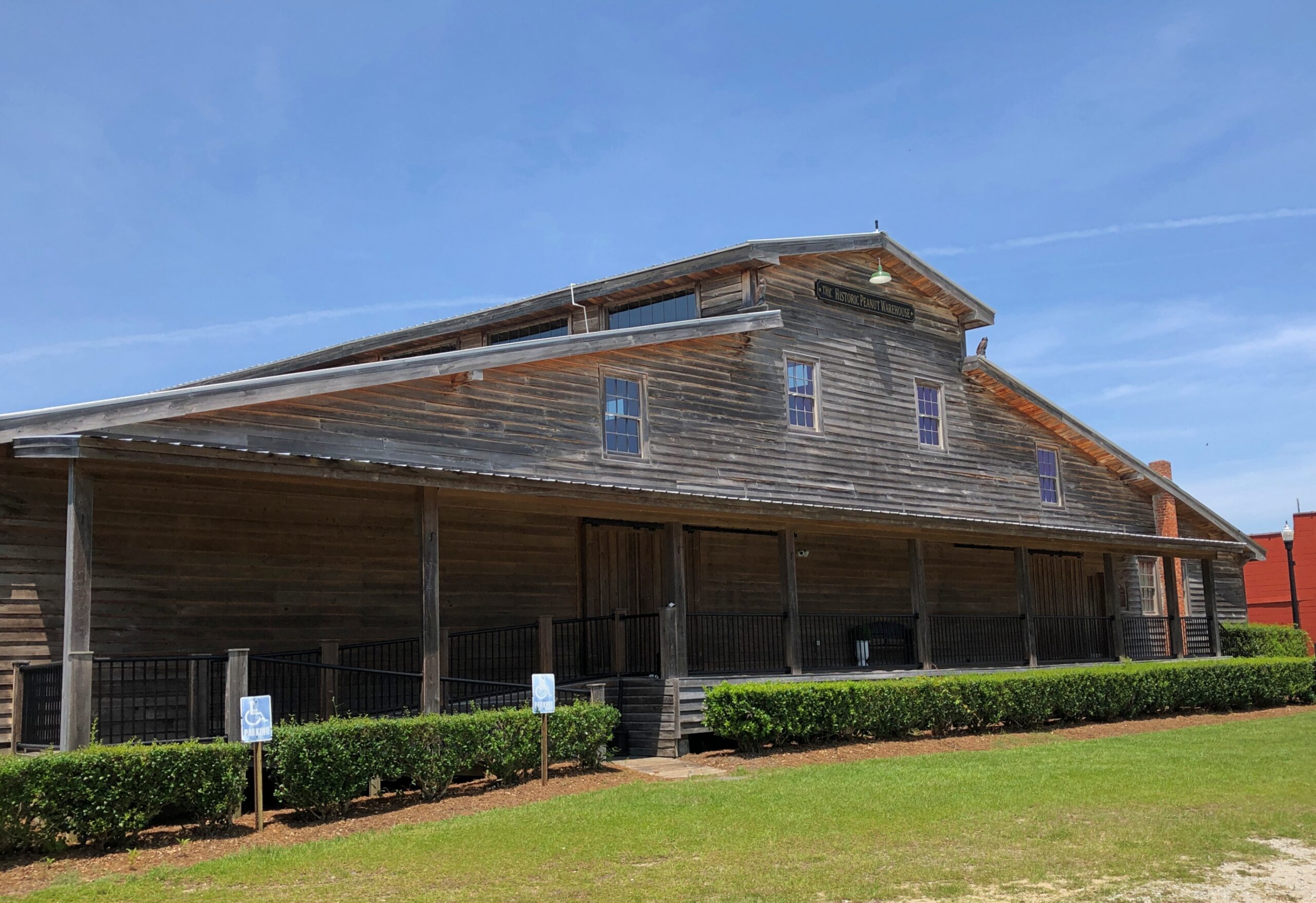
Round to the front.
Historic Peanut Warehouse. Historic tips us off that no goober peas have been stored there in some time, and the like-new wood means restoration in the not-so-distant past.
Anyway, I should have known peanuts had something to do with the wooden giant.
When new in 1900, the warehouse held peanuts, but after some years that gave way to decades of tobacco storage. In our time, you can hold an event there, and I’d bet its lifeblood is weddings.
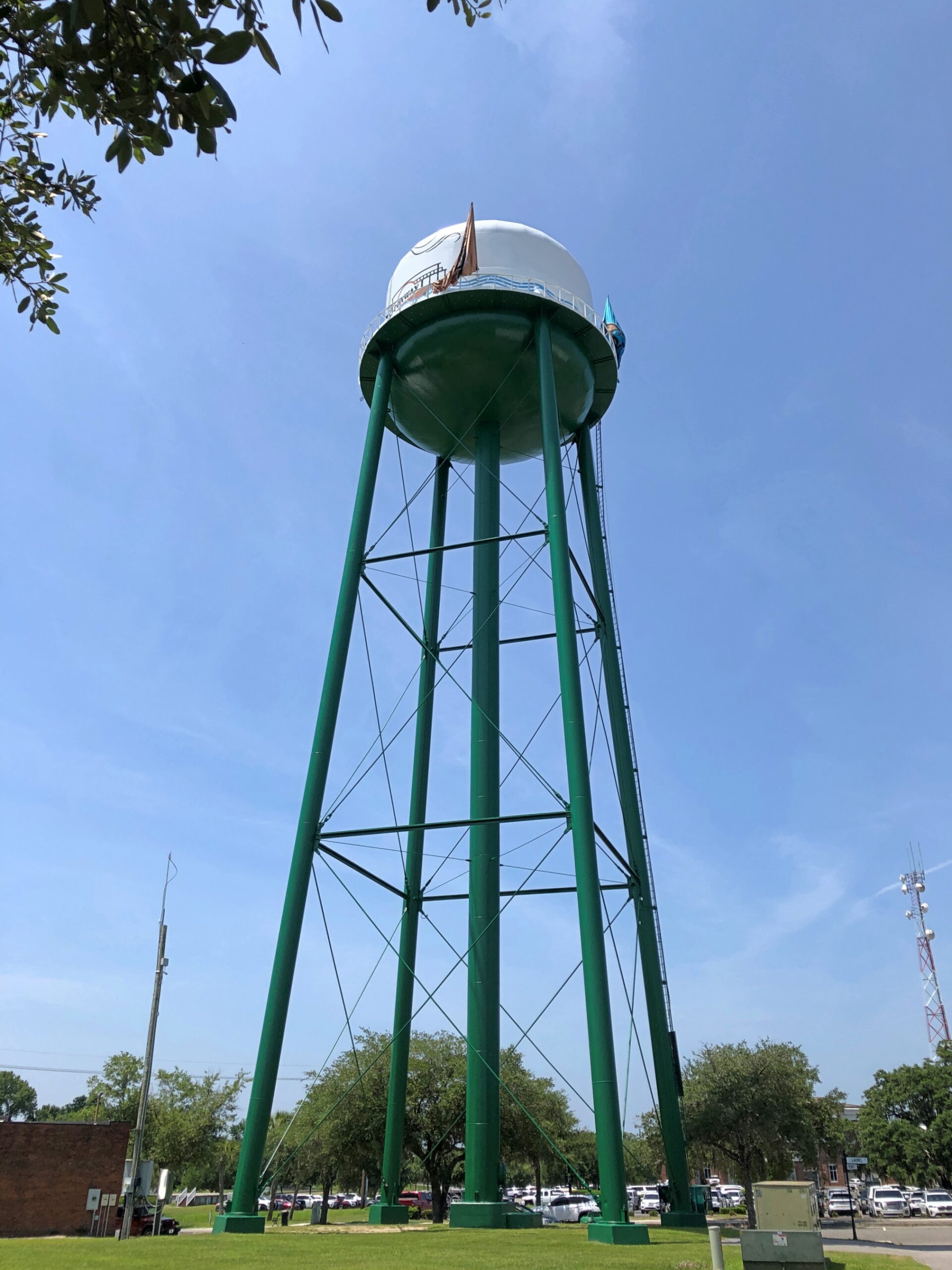
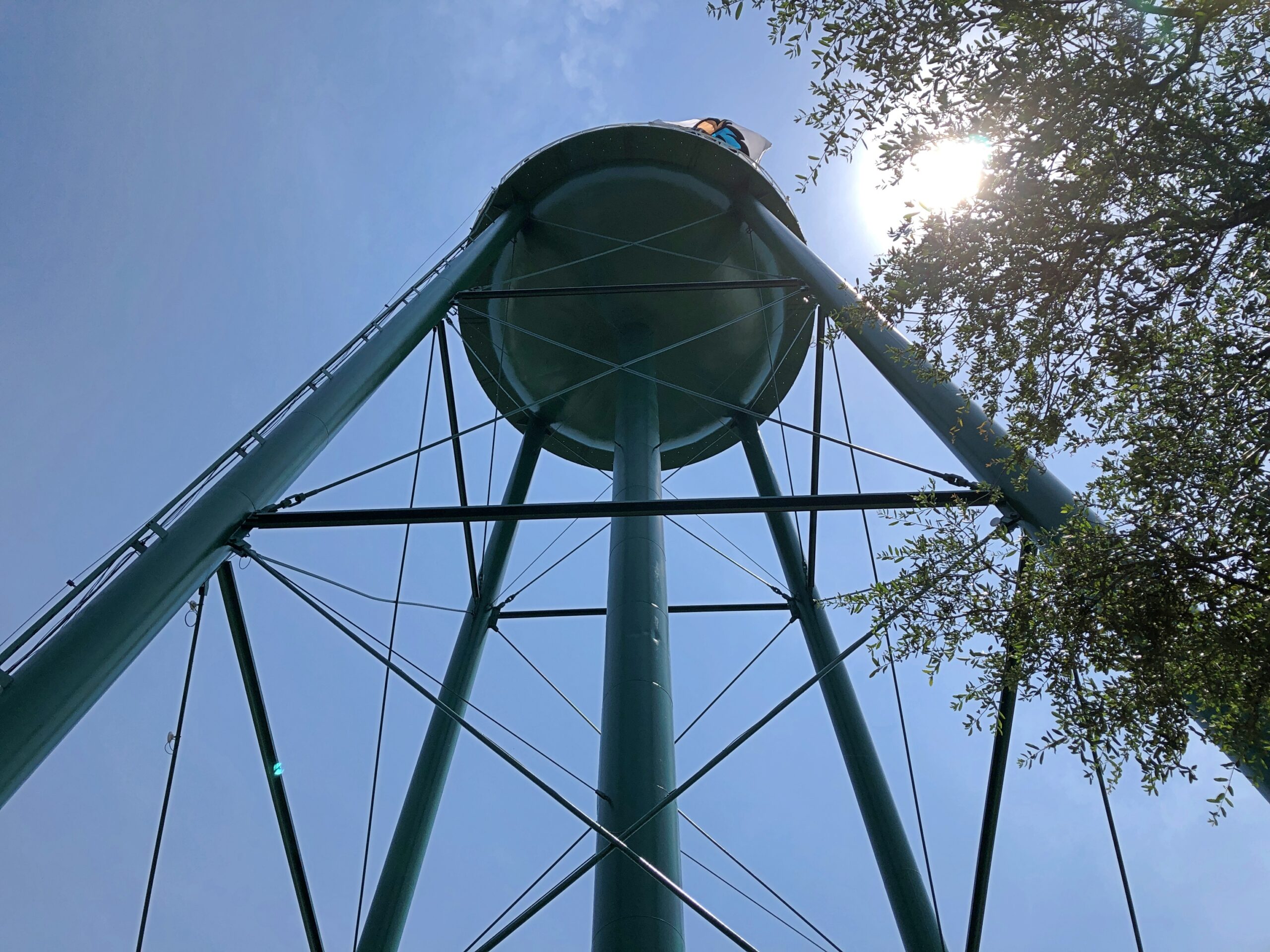
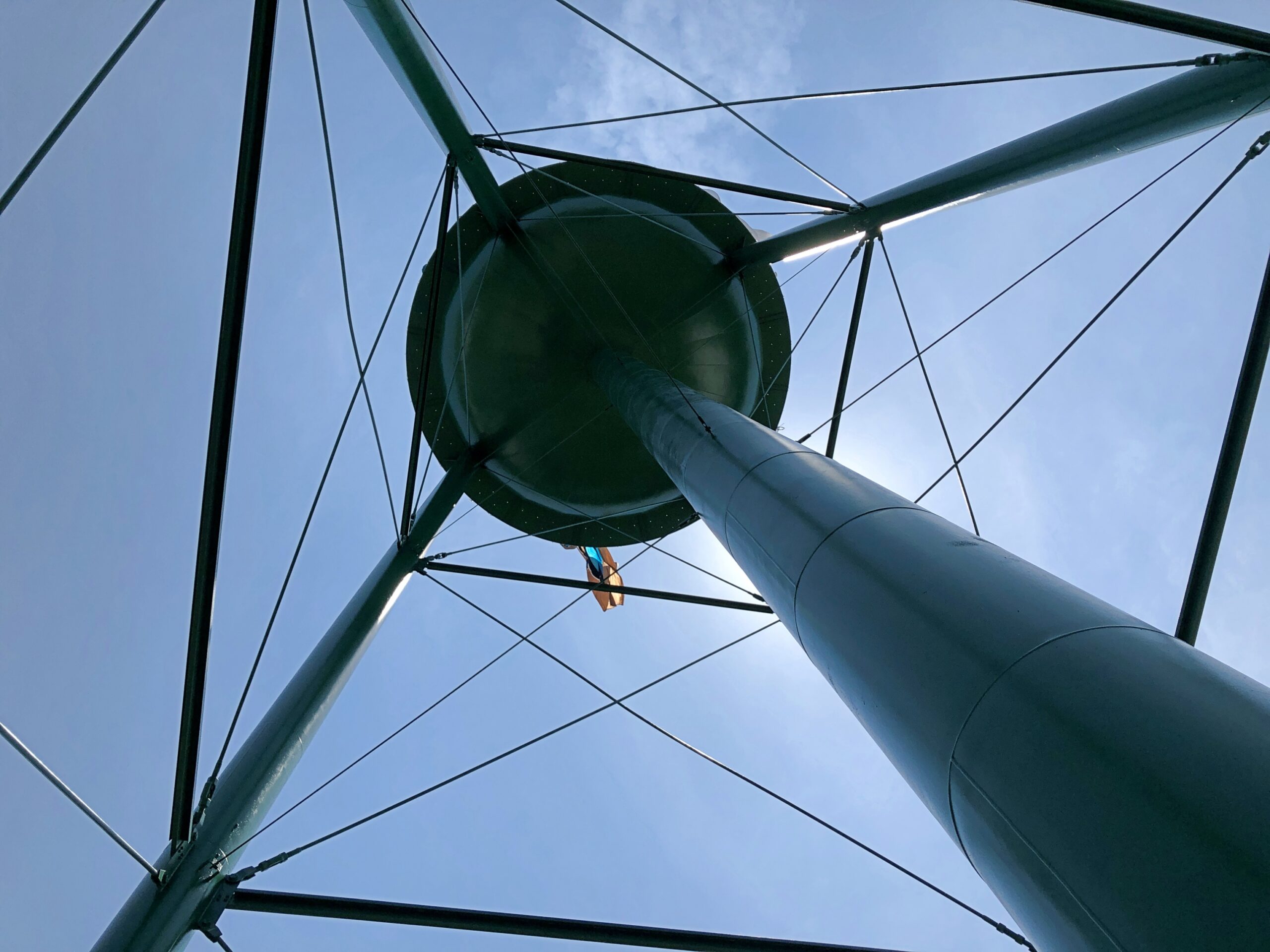
Other parts of Conway beckoned, such as a walkway along the Waccamaw River. The prospect of heat exhaustion or at least a headache put me off such an idea. But the heat didn’t mean I couldn’t admire the artful green-and-white local water tower.
As a small child visiting my grandma in Alamo Heights, Texas, I admired the local water tower, silver-gray with a distinct cap atop it, and easily visible from her house. I’ve been looking at water towers ever since. (This article says the tower’s nickname was Tin Man, but I never heard anyone call it that, and my own personal name for it, which became family argot, was “Squeaky.”)
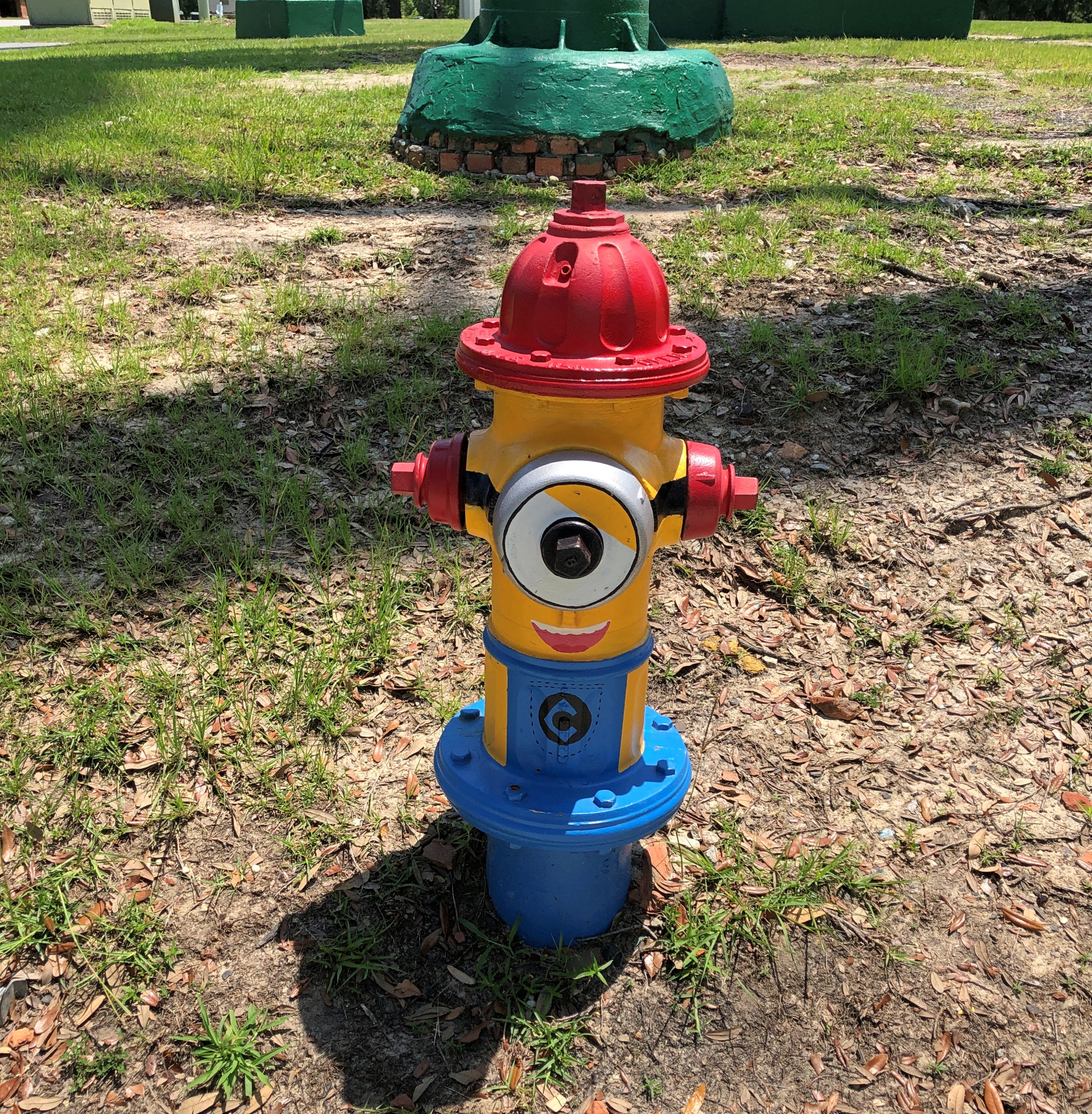
Near the water tower.
A bit of municipal whimsy. We could all use a little more of that. But not too much.
The June heat dome was a deal breaker in Myrtle Beach when it came to daytime outdoor activities, except for our short stroll to Pier 14 and the beach below. A visit to a place like Brookgreen Gardens, which is actually south of town not far from the coast at Murrells Inlet, wasn’t going to happen during the onslaught of the daytime sun.
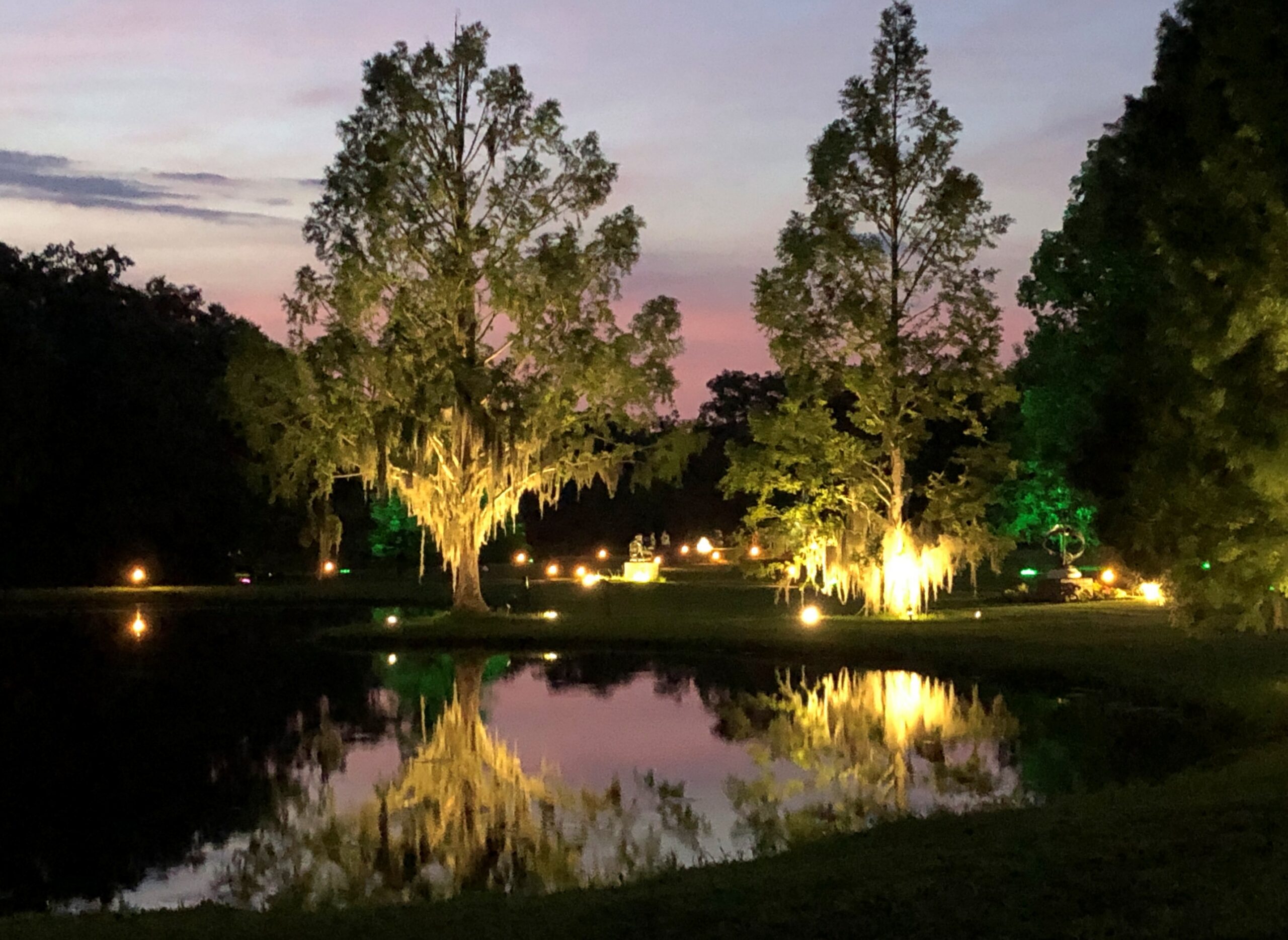
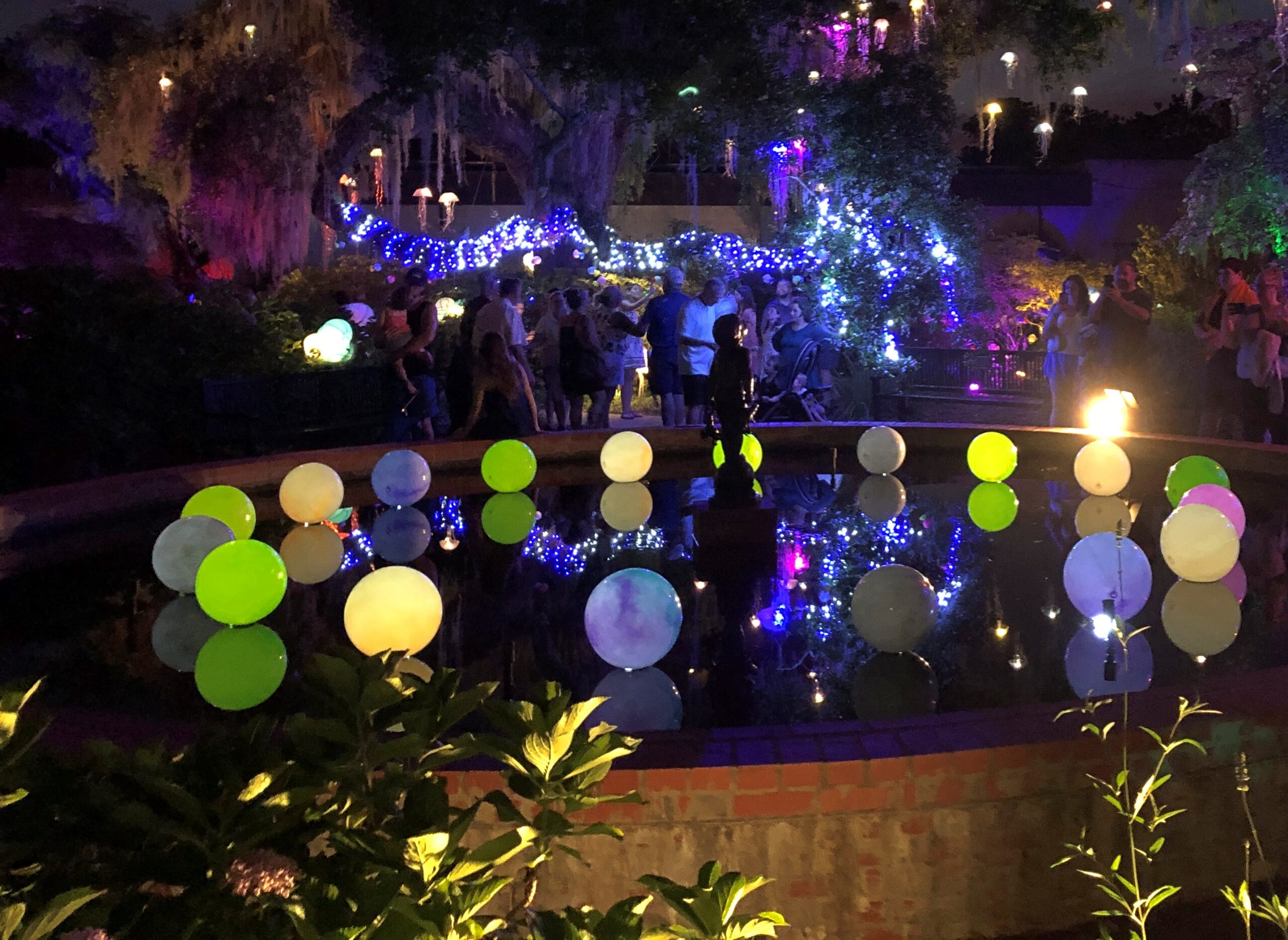
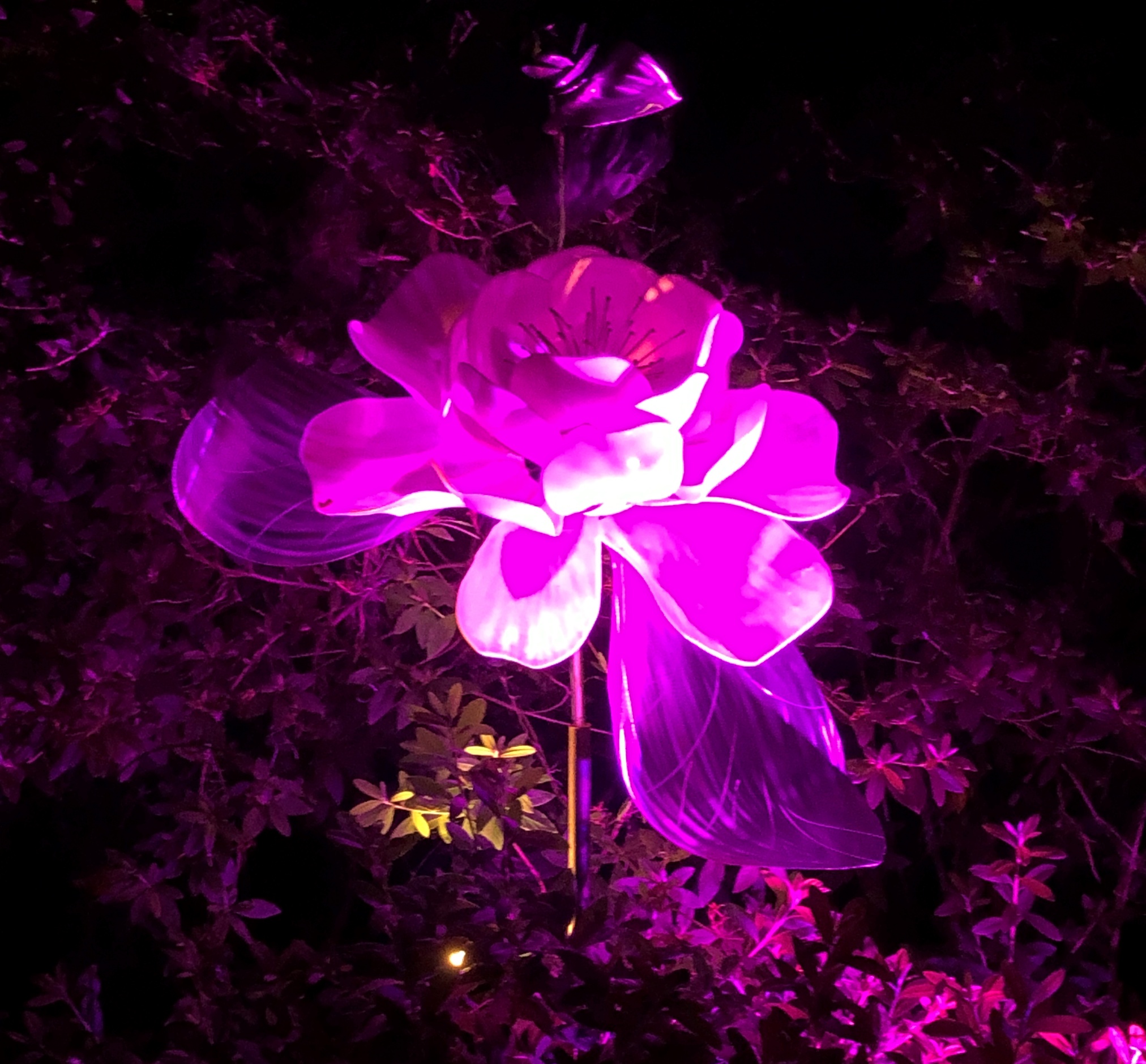
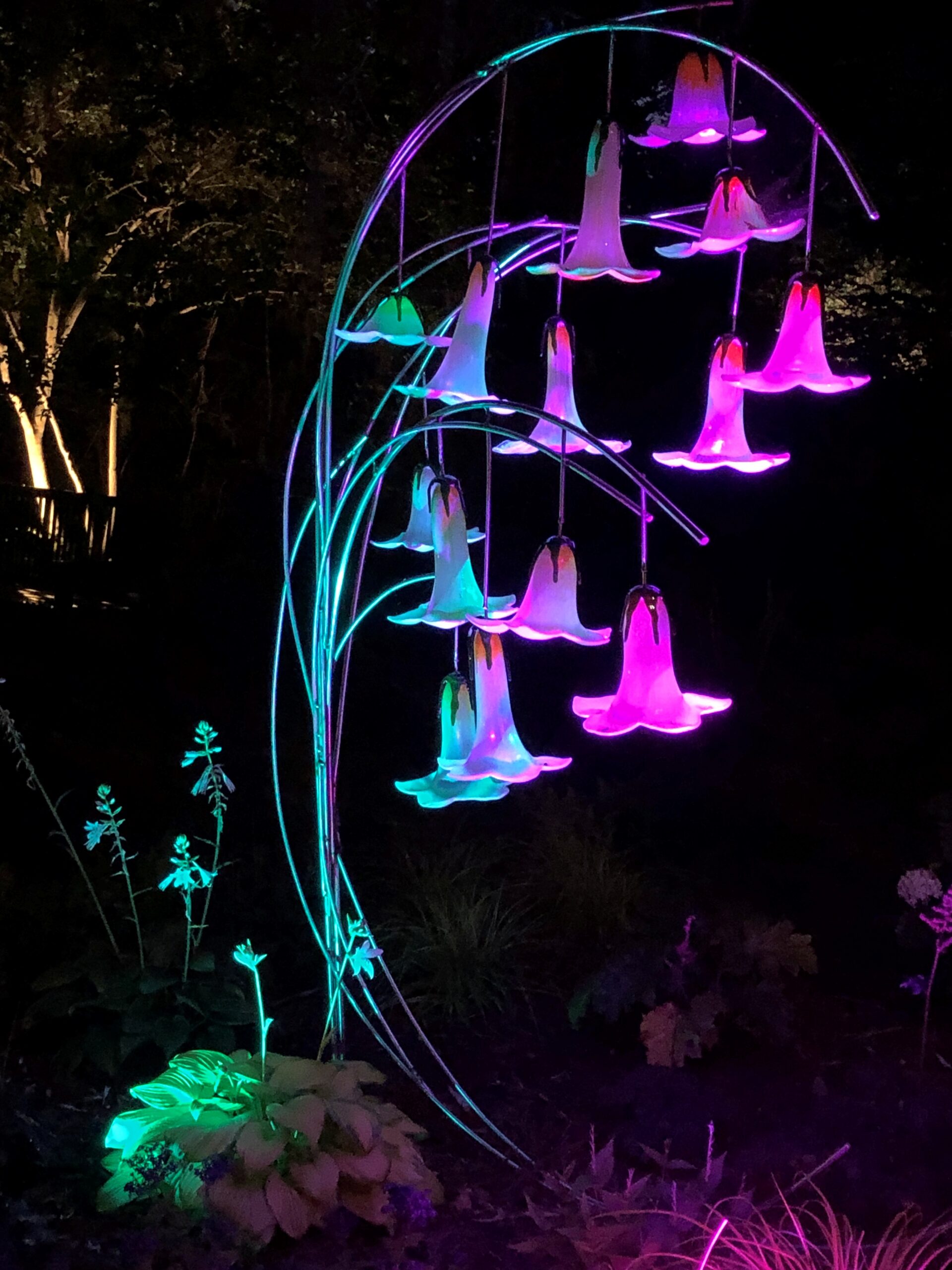
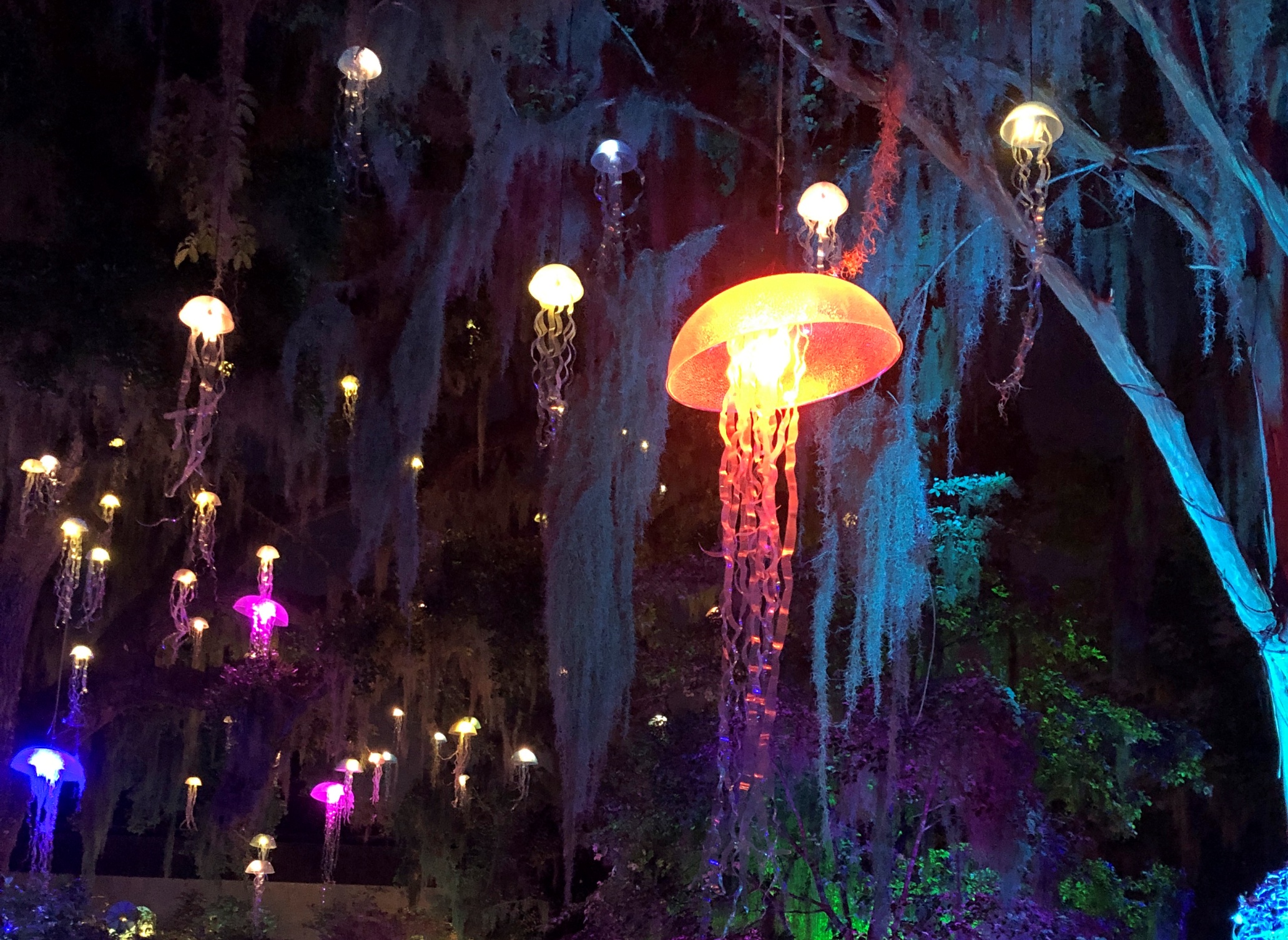
But I found out that on some days in the summer, part of Brookgreen is open well into the evening, offering cooler temps – and still sauna-like humidity – with light displays. That was doable, and so we went on the Saturday evening we were in town.
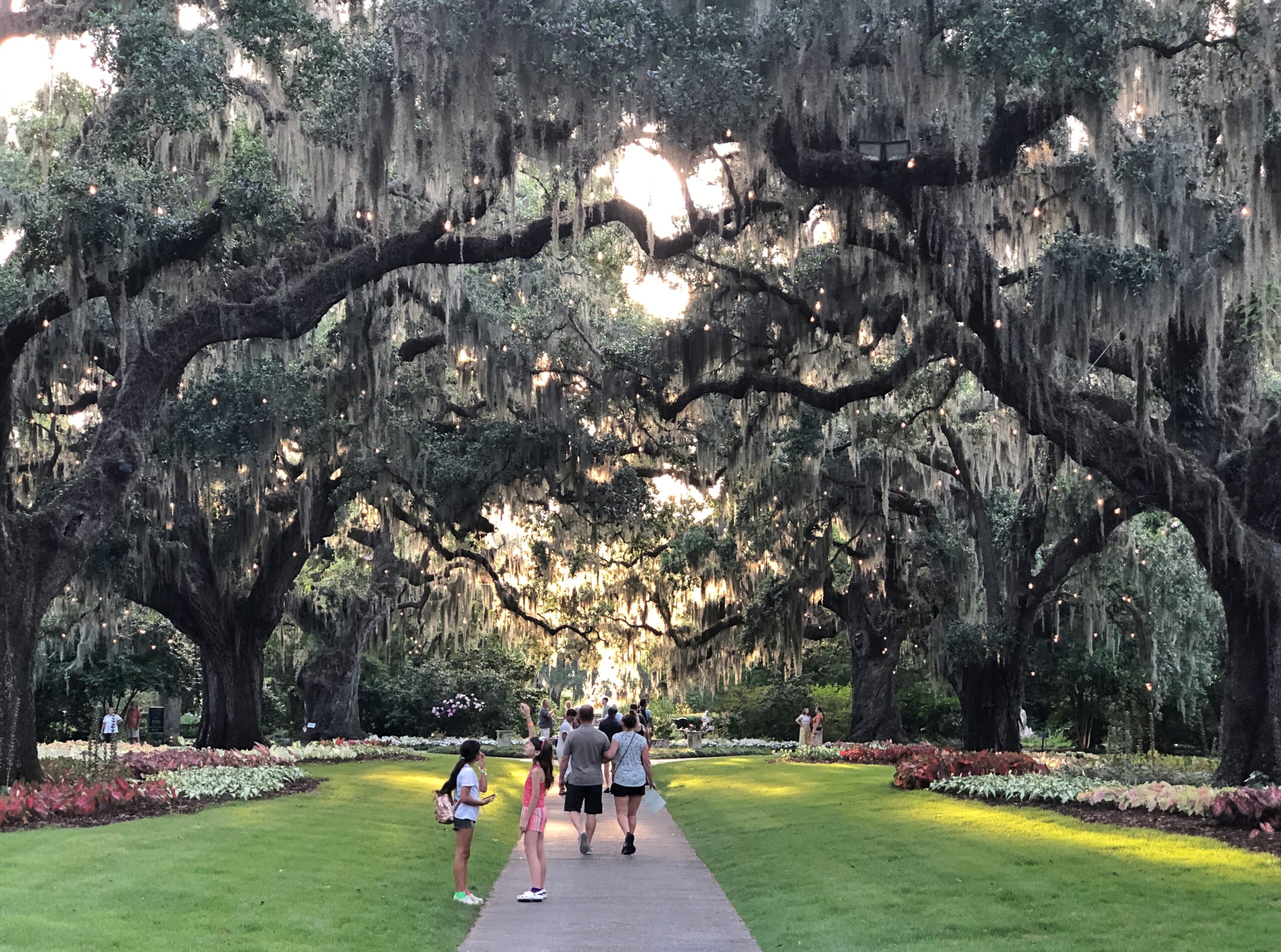
The grand Spanish moss promenade by day.
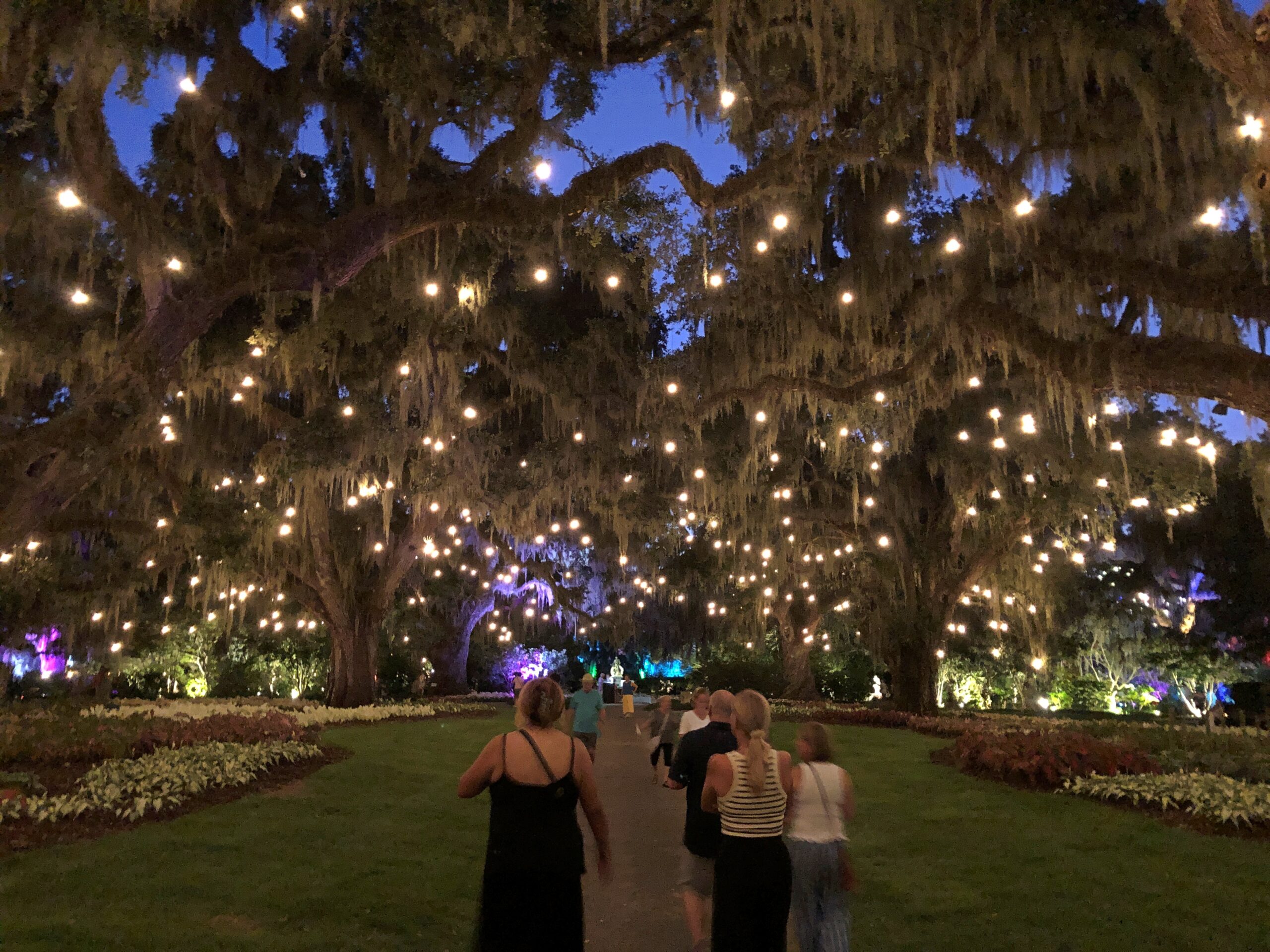
Lights up after dark.
The garden calls it Summer Light: Art by Night.
Other botanic gardens have similar light shows, such as one every year by the Chicago Botanic Garden that we’ve been to a few times. But that’s in winter. Summer’s just as good a time, better in some ways, with no worries about blizzards or subzero temps, even if the nighttime is shorter.
These glowing jellies were in the Children’s Garden.
Too good just for kiddie-winkies, if you asked me.