Team of Rivals

Rain early in the morning, again in the afternoon, and more promised for Friday morning. You could call it a rainy spell. Just when the grass and other flora were looking a little thirsty from the intermittent August heat.

The other day I picked up Team of Rivals at a resale shop. Hardcover version, in decent condition. Cost: $1.75 plus tax. Considering my known interest in presidential history, it’s about time I got around to reading some Doris Kearns Goodwin. I haven’t gotten far yet, but so far so good. I’m looking forward to a detailed account of the Republican Convention of 1860. Remarkable how history turns on such seemingly small events.

And I’m going to wonder, where did I see Goodwin speak? I know I did, at some real estate convention or other in the early or mid-2000s, back when I used to go to such things more regularly. Can’t remember exactly when or where, though. Speakers I saw at one time or other included her, but also the elder George Bush (post-presidency), James Cavill, Newt Gingrich, James Lovell, and Colin Powell.

Summer Interlude

Summertime and the living is — not so different from the rest of the year, considering that we have climate control in the house, have to meet the same deadlines as the rest of the year, and so on.

Time for summer break anyway. Back to posting around July 27. Till then, a handful of summer tunes. Been fond of “Summer Wind,” sung by Sinatra, only since the late ’80s, when I acquired a tape of Strangers in the Night. Music by Heinz Meier and lyrics by Johnny Mercer.

I’ve known “Summer Breeze,” by Seals & Crofts, probably since it was released, or at least fairly new. It evokes a moment in summer, in particular a summer evening, without mentioning beaches or puppy love or such.

Not quite sure what’s going on in “Suddenly Last Summer,” by the Motels, but it’s to do with a particular summer. Some summers, after all, are more memorable than others, especially when you’re young.

Also, some recommended reading. I just started Arabian Sands by Wilfred Thesiger. I’m already hooked, and I haven’t even gotten to his crossings of the Empty Quarter. He’s only been dead about 10 years. The Telegraph’s obit is here, and the Guardian’s is here.

A Passing Coconut Boat

I’m done with Orwell for now, though I need to find more of his essays and other writings and dip into them. So I’m taking up some of the travel books I have around the house but haven’t gotten around to. Such as The Great Railway Bazaar by Paul Theroux (1975), which I’m reading now. Somehow or other I’d never read it, though I’ve had a copy for a long time.

Other unread titles I have around the house include Journey to Portugal (Jose Saramango), three books by Evelyn Waugh (Remote People, Ninety-Two Days, and Labels), and The Happy Isles of Oceania (also Theroux). Or the subject at hand might be Far Away, rather than travel, since some of the books are about spending extended periods in far away places, such as Under the Mountain Wall: A Chronicle of Two Seasons in Stone Age New Guinea, Seven Years in Tibet, and Out of Africa.

The Great Railway Bazaar is justly famous as a tale of months of rail travel in Asia in the early ’70s. Lately I’ve finished the chapters about traveling through Sri Lanka, and was struck by how impoverished the country was 40 years ago. In some sense I must have known that, but mostly I’ve been used to reading or hearing about the decades-long civil war there, and then its more recent economic growth. Time flies, places change.

Which brings me to this picture. Vietboat 1994In June 1994, we were traveling down the Mekong in Vietnam, and we came very near to this coconut boat, and I happened to be ready to take a picture. Vietnam is and was a major producer of coconuts – 1.25 million metric tons in 2013, compared with 1.07 million metric tons in 1994 (a handy Food and Agriculture Organization of the United Nations interactive web site tells me this).

But never mind the production numbers. What became of the people in the boat? Are the parents still running a coconut boat, or did they ever really specialize in that? The child would be an adult now, assuming he survived the perils of third-world childhood, and very likely he did. What’s he up to? Or was it a girl? Just another set of minor unknowables here in the hyperconnected Information Age.

Thursday Debris

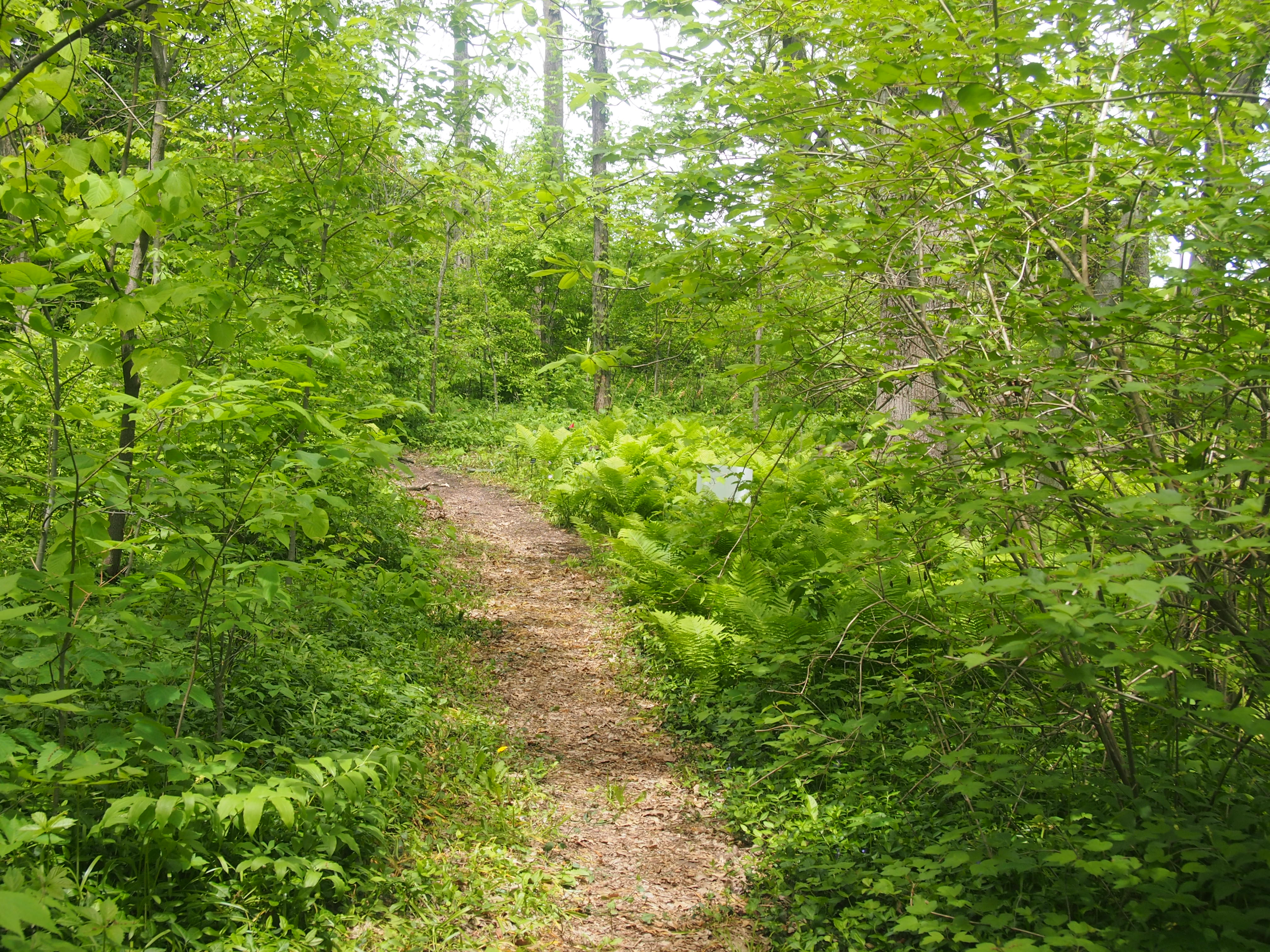
It’s been a brilliant run of late spring, early summer days here. Rain, but not too much. Heat, but not too much. A few mosquitoes, but not many. Last week at the Klehm we did run into some large clouds of gnats, however, especially on the narrow trails.

Klehm Arbortetum May 2014

See the gnats? Maybe not. The camera’s not that good. But they’re there.

I just finished reading Neither Here Nor There, an entertaining Bill Bryson book. Mostly he dispenses with background detail about the places he visits, and focuses on his own experiences in getting from A to B and seeing what he sees in A and B. Even better, his enthusiasm for going out to see things shines through. Not many writers can pull that off without being a bore, but he does. A small example, describing Rome:

“You turn any street corner in Rome and it looks as if you’ve just missed a parking competition for blind people. Cars are pointed in every direction, half on the pavements and half off, facing in, facing sideways, blocking garages and side streets and phone boxes, fitted into spaces so tight that the only possible way out would be through the sun roof. Romans park their cars the way I would park if I had just spilled a beaker of hydrochloric acid on my lap.”

Since the travels he describes were in Europe in 1990, as well as flashbacks to the 1970s, he’s also detailing an increasingly obsolete style of travel, but one that I well remember myself, at least that of the last two decades of the 20th century. That is, pre-Internet, pre-smartphone, pre-debit card, pre-Ryanair travels. It won’t be long before — if it hasn’t already happened — smartphones or glasses tell tourists absolutely everything about getting to and being at a place. That’ll drain the life right out of the experience.

I wondered today whether the half-season finale Mad Men, broadcast Sunday, used all the lyrics of “The Best Things in Life Are Free.” I wasn’t very familiar with the earliest recorded version, so I looked it up.

As many songs were in the 1920s, much of it is instrumental. So yes indeed, the show used all of the lyrics. The 2010s recalling the 1960s recalling the 1920s. A remarkable scene.

Storm of the Century

I found Burmese Days at a bookstore not long ago. Once I finish rereading Homage to Catalona, which I’m close to doing, I’ll read that for the first time. It’s a wonder that George Orwell escaped Spain with his life in 1937. How close the world came to never having Nineteen Eighty-Four, Animal Farm and the rest.

What have we missed because antibiotics weren’t quite good enough yet to save Orwell in 1950? The man might have written for another 30 or more years. To modify a line of Tom Lehrer’s, it’s a sobering thought to realize that when Orwell was my age, he’d been dead six years.

Actually, I’m taking a detour from Orwell to read a book I chanced on at the library the other day and couldn’t resist, Storm of the Century: The Labor Day Hurricane of 1935, by Willie Drye (2002). I’m pretty sure I first heard about that storm watching Key Largo. Lionel Barrymore’s character mentioned it, at a time when the hurricane would have been still fairly fresh in memory, as Katrina is for us.

“On Labor Day in 1935, a hurricane that produced the record low barometric pressure reading of 26.35 inches hit Florida’s upper Keys, destroying virtually everything in its path,” the Publishers Weekly blurb cited by Amazon says. “In his meticulously researched work, Drye gives a vivid, detailed account of the storm’s approach and impact when it made landfall. Drye was drawn to the story of the unnamed hurricane not only because of its intensity, but also because it killed nearly 260 World War I veterans who were building a highway as part of a federal construction program.”

So far it’s pretty good. The book even has occasional funny asides, something you wouldn’t expect. For instance, Key West as a modern tourist destination was largely invented during the 1930s, to help it recover from the Depression but also the contraction of the area’s ship salvaging and natural sponge businesses earlier in the century. The Florida Emergency Relief Administration led the effort to clean up the town and its attractions, hiring a PR man named E.M. Gilfond to handle publicity.

“Gilford and his staff, which included talented graphic artists, launched a nationwide advertising campaign to lure tourists to Key West,” writes Drye. “When the visitors arrived they were given a booklet published by the Florida ERA that included a map of the city’s attractions.

“The effort was a rousing success. About 40,000 tourists visited Key West during the 1934-35 season, and the city’s income from tourism increased by about 43 percent…

“No one had bothered to confer with Ernest Hemingway before putting his house on the maps handed out to visitors. The author’s home was listed as attraction number 18, and a fair number of those 40,000 tourists tramped onto his property and peered into the windows of his home or gawked at him from the sidewalk as he tried to relax on his porch with a drink and a cigar. One especially bold visitor opened the front door of Hemingway’s home and marched into his living room as though he were walking into a museum.”

Party Like It’s 1984

Been a while – can’t remember how long – since I was on a good literary bender, so I decided recently that Orwell would be just the thing. I was inspired by George Orwell: A Life in Pictures, which is superb firm. It isn’t a documentary in the purist form – and “docudrama” doesn’t really fit either – but it’s well worth the trouble of watching all the parts as they’ve been posted on YouTube, starting with this one. (No embedding, or I’d do that.)

George Orwell: A Life in Pictures, a BBC production, originally aired more than 10 years ago. Which goes to show how easy it is to miss things. As the film points out, no moving pictures of Orwell himself are known to exist, so an actor stands in for Orwell, looking like him, and saying things Orwell wrote (e.g., “all writers are vain, selfish, and lazy.” Hear, hear.) The actor, Chris Langham, nailed the part. I wasn’t familiar with him; apparently not too long after playing George Orwell, he completely disgraced himself.

I took a look the other day, and among Orwell’s fiction the Schaumburg Township Library only has Nineteen Eighty-Four and Animal Farm. That’s an awful lapse for such a good library. I was looking for the two novels I haven’t read, Burmese Days and A Clergyman’s Daughter. Later, I checked the shelves at B&N, and found all of his non-essay collection works except those two. Of course they’re available on Amazon, but that’s a last resort.

Right now I’m most of the way through Down and Out in Paris and London, a copy of which I own, and which I’ve read at least twice, but not in good many years. Later, I’ll re-read some or all of the others that I have, also unread for years: Coming Up for Air, Homage to Catalonia, The Road to Wigan Pier, Keep the Aspidistra Flying. Strangely enough, I bought my copy Keep the Aspidistra Flying at the Aspidistra Bookshop on Clark St. in Chicago about 25 years ago (a fine store, closed since the late ’90s).

How Many Watts Was Byron?

Not so cold today. By that, I mean just above zero F. The garage door opener started working again — luckily it had been stuck open — and the dog spent a little more time outside. By the weekend, I understand, temps will be above freezing. Which means meltage and then ice hazards when the refreeze comes. Winter’s a gas, that’s for sure.

Before the snow started to fall on New Year’s Eve — the snow that’s the bottom layer of our two feet or so now — I was out buying a few things and acquired a pack of 60W incandescent bulbs. Just to have some around for those few fixtures left in which we use them.

I read about the phase-out of 40W and 60W bulbs in PCMag, and the article assured readers that, “For now, though, just understand that no one will be taking away your light bulbs, only that you’ll see fewer incandescent ones in stores through the next year.”

That’s no fun. Time to start Internet rumors about squads of government hit men going around smashing incandescent bulbs. People believe less plausible things about the government, after all. (I Googled “Byron the Bulb” and the bit I wrote nearly seven years ago is on the first page.)

Tuesday Recommendations

Butter toffee from Guth’s End of the Trail Candy Shoppe in Waupun, Wis., a burg southwest of Fond du Lac. Every year a PR company I’ve long dealt with sends me a box for the holidays. It’s the only time I eat toffee. It’s insanely good. Only a few pieces will make you feel a little queasy, so rich is the confection. But you eat them anyway.

The Man of Bronze. It’s the first Doc Savage novel, and probably the only one I’ll ever read. With genre pulp, that’s usually enough. I have memory fragments of the mid-70s Doc Savage movie I didn’t see – not many people did – so I’m probably remembering the commercials. My friend Kevin recommended Doc Savage as an entertaining read of no consequence, and I’ll go along with that so far. You have to like a yarn that begins with the sentence, “There was death afoot in the darkness.”

Gravity. It’s a really engaging Man Against Nature story, or to be more exact, Woman Against Vacuum. With a one-damn-thing-after-another plot that keeps your attention. Also, worth the extra money to see in 3D, and not too many movies are. In fact, the depiction of space alone is worth the price of admission. A few of the space-science stretchers bothered me a little – I don’t think hopping from spacecraft to spacecraft is quite that straightforward – but not that much. I don’t want exact space science from a movie, just high verisimilitude, and this movie delivers.

Lizard Point Consulting’s geography quizzes. Every now and then, I make Lilly and Ann take some of the easy ones, such as U.S. states or capitals. It’s my opinion that every adult American citizen without cognitive impairment ought to know all of the states.

But I can’t brag about a lot of the other quizzes. It’s clear that my knowledge of, say, French regions is fairly meager, and sad to say I don’t do that well on Japanese prefectures, either – I tend to remember only the ones I’ve been to, plus a scattering of others (like Aomori, where Aomori apples come from, because it’s due south of Hokkaido).

Even quizzes that ought to be easy-ish, such as African nations, have their confusions. Without looking, which one is Swaziland, which one Lesotho? Which is Benin, which one Togo? Which one is Guinea, which one Guinea-Bissau? (That should be easy, Guinea’s bigger.) Similarly, it’s hard to keep track of which –stan is which in Asia, except for Pakistan, Afghanistan, and Kazakstan.

Dictionaries!

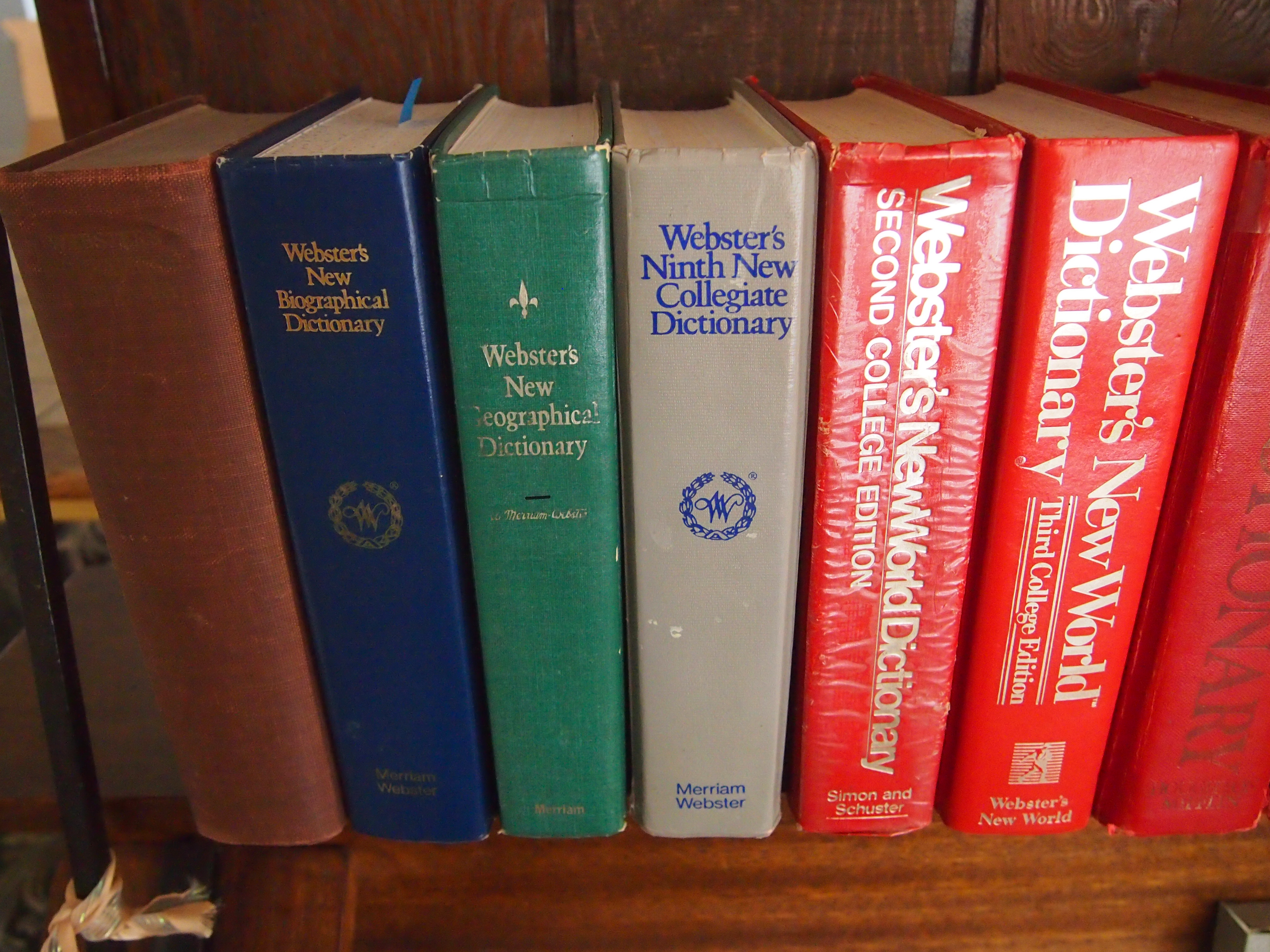
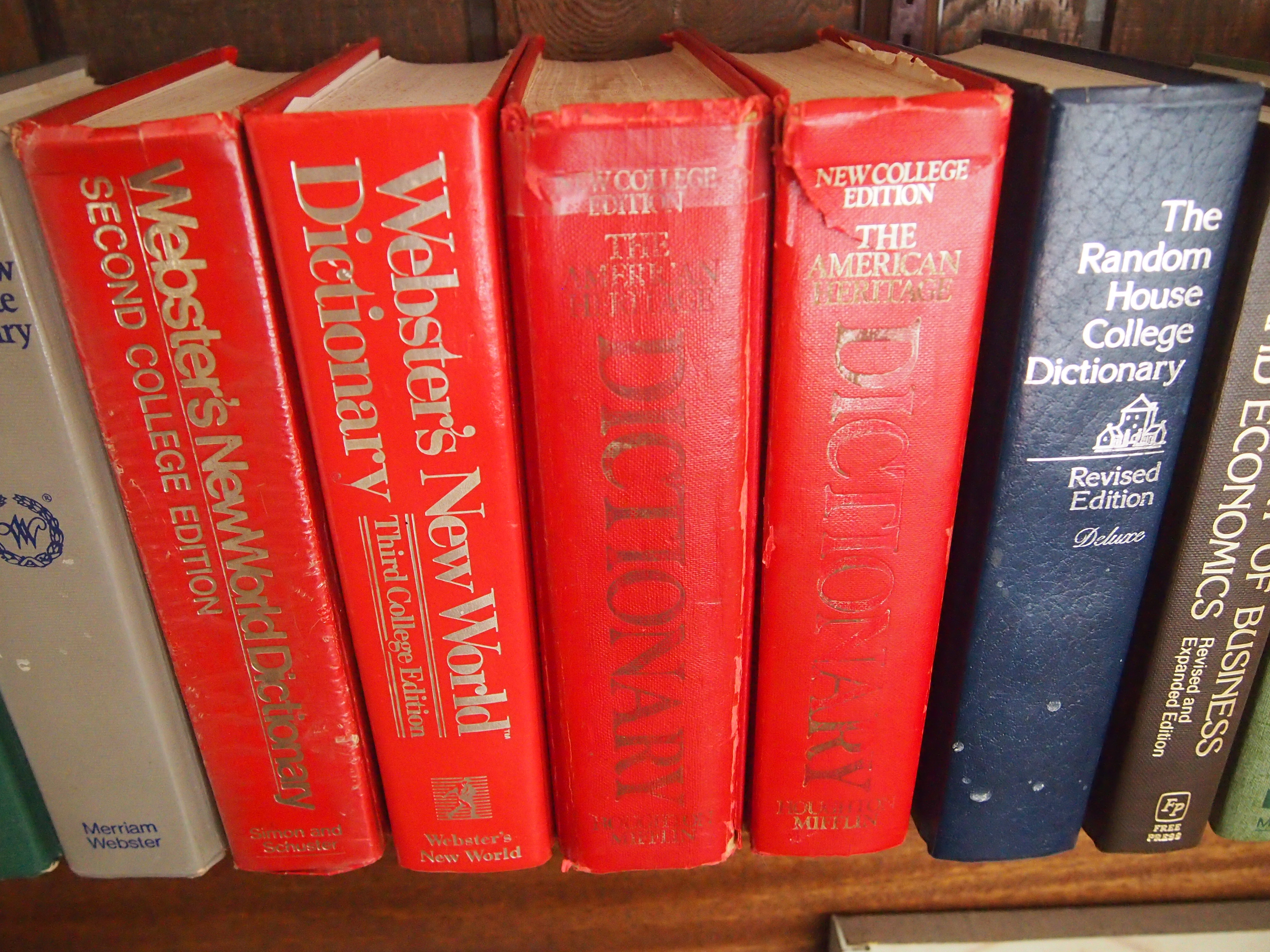
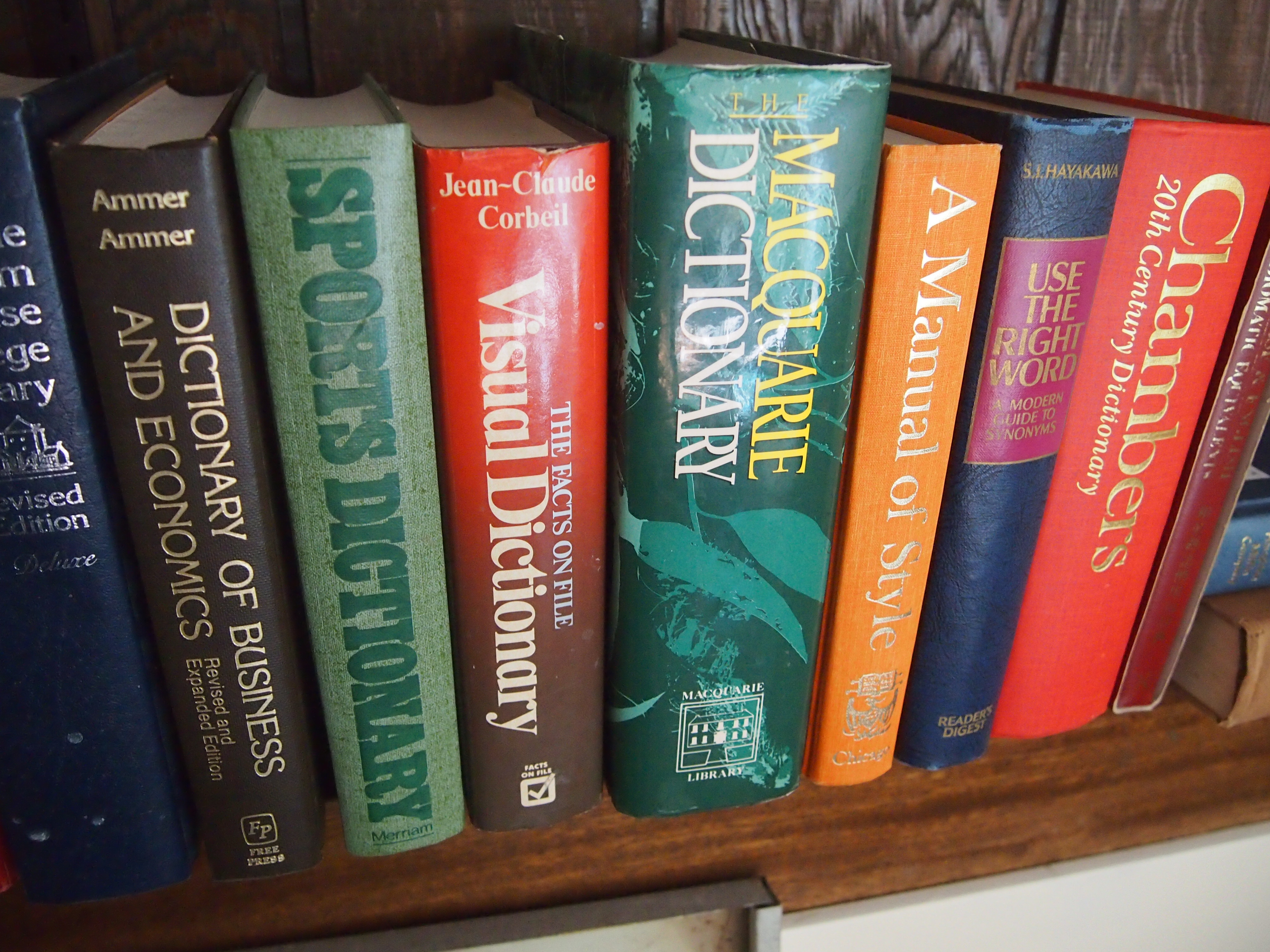
Not long ago, I put many of my dictionaries together on one shelf. Then I got a little snap happy with the camera. Most of them date from the 1980s. It’s a modest collection, but I’m fond of all of them.

I’ve always kept the biographical and geographical dictionaries together. Just seems right somehow. They’re really good for thumbing through to  find odd bits of information.

The beaten up American Heritage Dictionary New College Edition is beaten up for a reason: I bought it on August 23, 1979 — I wrote the date inside — to take to college two days later. It also got a lot of use in my early editing jobs.

The Dictionary of Business and Economics was so impressive I wrote the authors, complimenting it. The Macquarie Dictionary is Australian. I bought it in Sydney and it became one of the larger souvenirs I’ve ever lugged home. Chambers is British, but bought it in the U.S. I can’t find my Canadian dictionary, which is really a modified American Heritage volume, including the addition of the maple leaf on the cover. I bought it in Duncan, BC, which is on Vancouver Island.

Between Hitchen and Hittite Law

A major re-arrangement of books and other items continues on the lower level of our house. Today I moved my copy of the 14th Edition of Encyclopædia Britannica. Why do I have a copy of such a weighty set of volumes – and I mean that literally, since I had to move them all – in this age of vast libraries accessible via broadband? Sentiment. Inertia. My fixed notion that I’ll never get rid of a book unless it’s completely fallen apart.

That isn’t quite true. I’ve donated books. But only ones I have no interest in, and I’ve never had many books like that.

Besides, I acquired the 14th Edition nearly two decades ago, before the rise of easy Internet information, misinformation, and pseudoinformation. I chanced across a church rummage sale one day in 1995. The entire set was being offered there for exactly $2. So at 24 volumes, that was 8.3 cents a volume. Not the famed 11th Edition, but at that price worth the investment.

I can’t say I’ve spent a lot of time with Britannica over the years, but I’ve dipped into the well now and then. One day I spotted the entry for Hitler, Adolph. The entry isn’t as prominent as you’d think, because the 14th Edition was published in late 1929, which turned out to be awful timing for selling expensive books. Hitler merits only 16 lines on Volume 11, page 598, there between entries for Hitchen, a town in Hertfordshire, England, and Hittite Law: see Babylonian Law. Would that he had stayed there in his obscure corner of an old reference work.

He’s called a “Bavarian politician.” It’s clear from the text that his main claim to fame at that moment, at least in the English-speaking world, was his part in the Beer Hall Putsch. (Ninety years ago this month, which I’d forgotten; but the Chicago Tribune, of all things, recently reminded me of the 75th anniversary of Kristallnacht this month. The paper was able to find a few survivors and interview them.) The text also points out that, whatever his status in the NSDAP, Hitler didn’t even have a seat in the Reichstag representing the party – Dr. Frick and Ludendorff did.

Ludendorff, whose entry in the encyclopedia is a lot longer than Hitler’s, later broke with the Nazis and had the good fortune to die of natural causes in the mid-30s. By contrast, Wilhelm Frick, not one of the better-known Nazis any more, was shown the business end of a rope in Nuremberg in 1946.