Chicago Mass Vax ’21

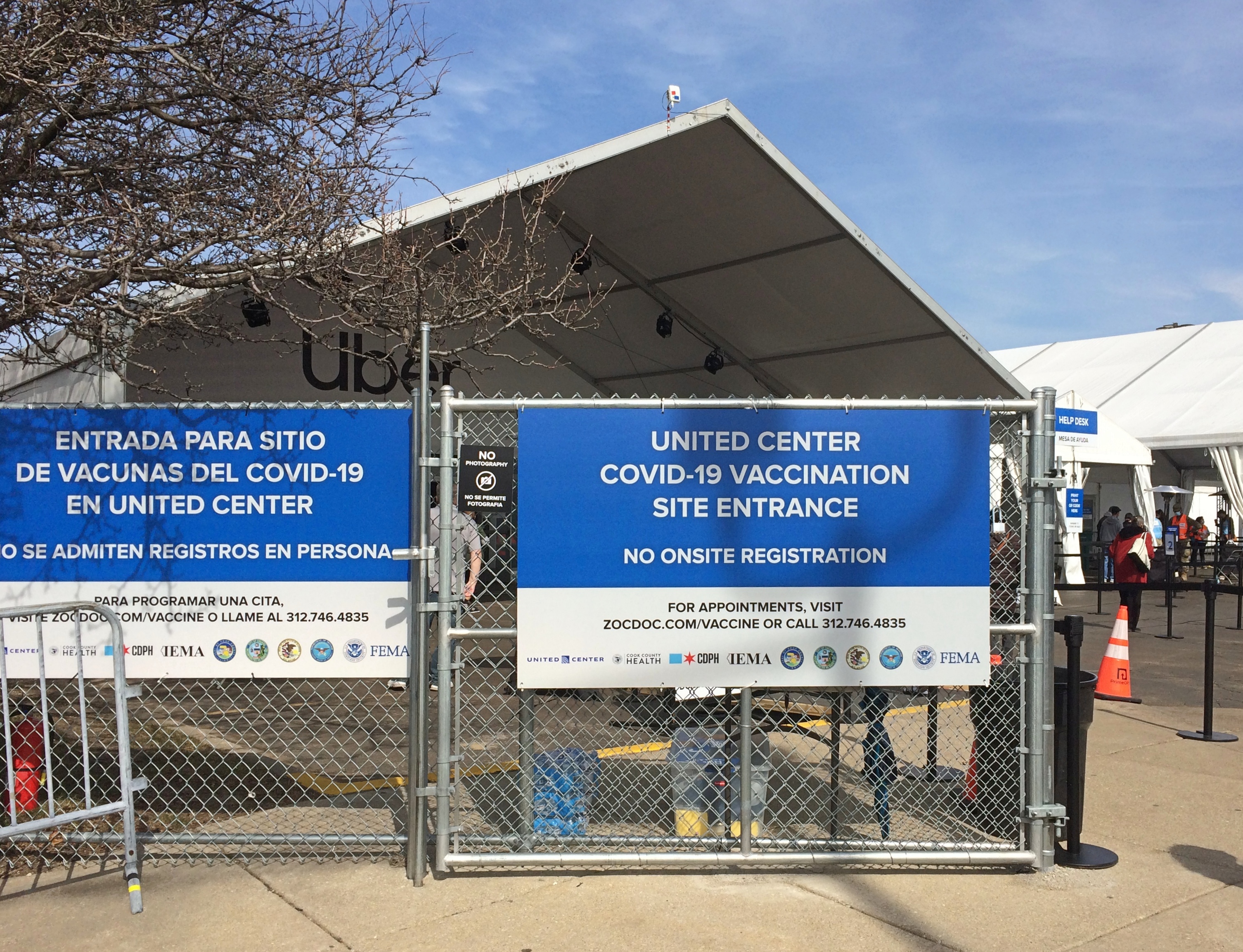
The United Center mass vaccination site isn’t actually in the arena itself, but under a set of interconnected tents set up in one of the arena’s parking lots, there on the Near West Side of Chicago. We weren’t there on Friday afternoon to get vaccinated ourselves, since that continues to be elusive, though I expect that to change before too long.

Rather, we’d come to escort a family friend, a little old Japanese lady Yuriko knows well, who is somewhat infirm and has limited English. I’d managed via the appropriate web site to make a first shot appointment for her for early Friday afternoon, so off we went to the city.

With some trepidation that the on-site organization might be slapdash. Parking might be an issue. Lines might be long. Maybe no one would know what’s going on. Maybe her appointment would have been mysteriously cancelled, or there would be no record of it.

Maybe there would be indications that the federal effort to vaccinate the nation was a hopeless fiasco.

Reports of shifting eligibility for the shots at the United Center didn’t bode well for things. A couple of post-registration emails didn’t foster a sense of confidence in the effort, either. A day or so after the initial registration, which was for 1:30 on Friday, I got an email saying the the appointment had been changed to 3 on Friday. OK, fine.

A few hours later, I got another email telling me to ignore the first email, and that the appointment was still at 1:30. Hm. I wouldn’t have been surprised if I’d received another email saying that the people who’d sent the first erroneous email had been sacked — and then another message saying that the people who’d sacked the first set of people had been sacked. And maybe a report that a møøse was løøse, biting people.

Anyway, we drove in from the northwest suburbs, arriving just after 1. Parking, at least, wasn’t an issue, with plenty of people guiding cars into another of the United Center lots. We walked from that lot, across a street, toward the vaccination tents.United Center Vaccination Site, Chicago
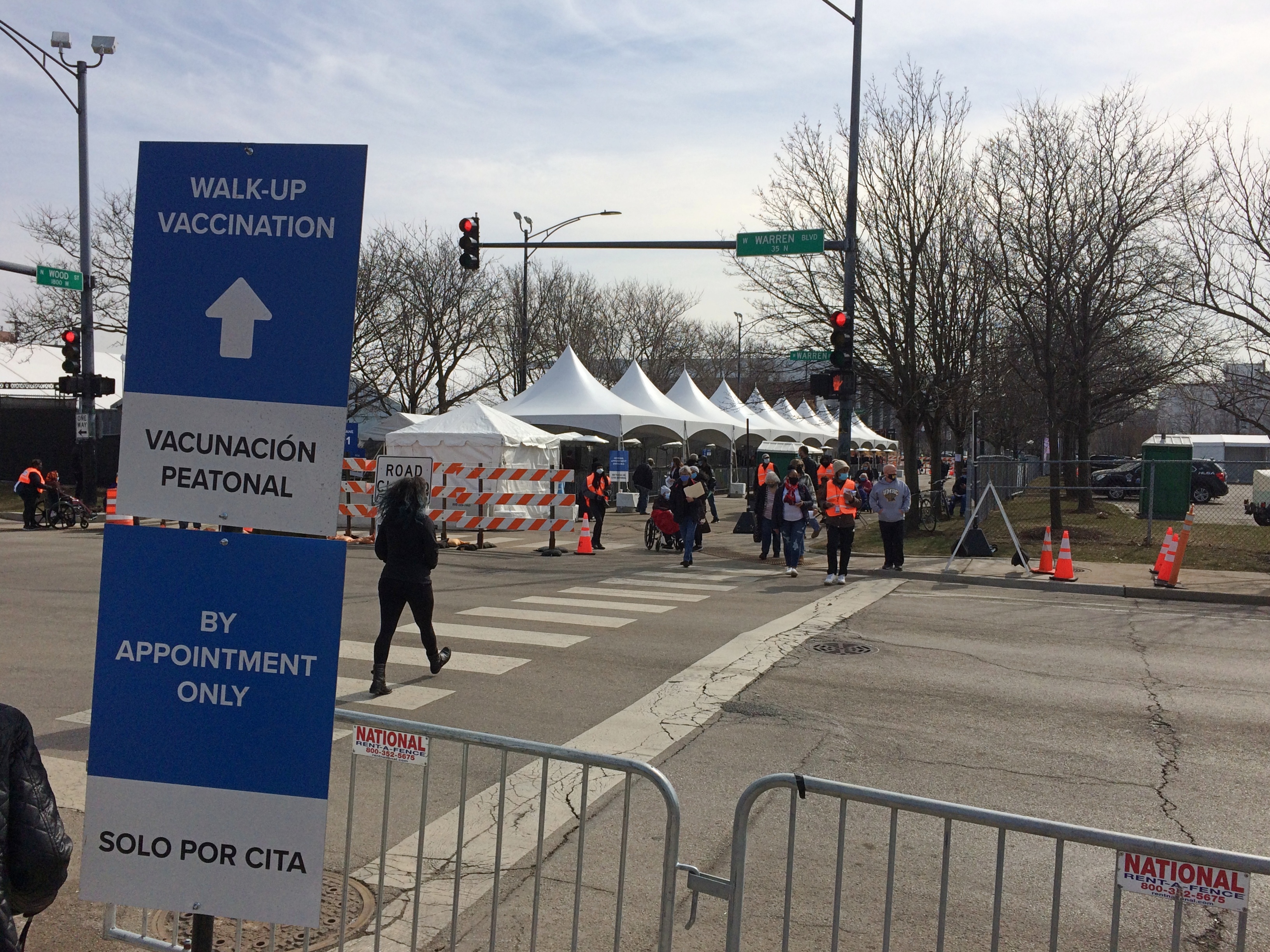
No long lines, either, though the site was set up for them.United Center Vaccination Site, Chicago United Center Vaccination Site, Chicago
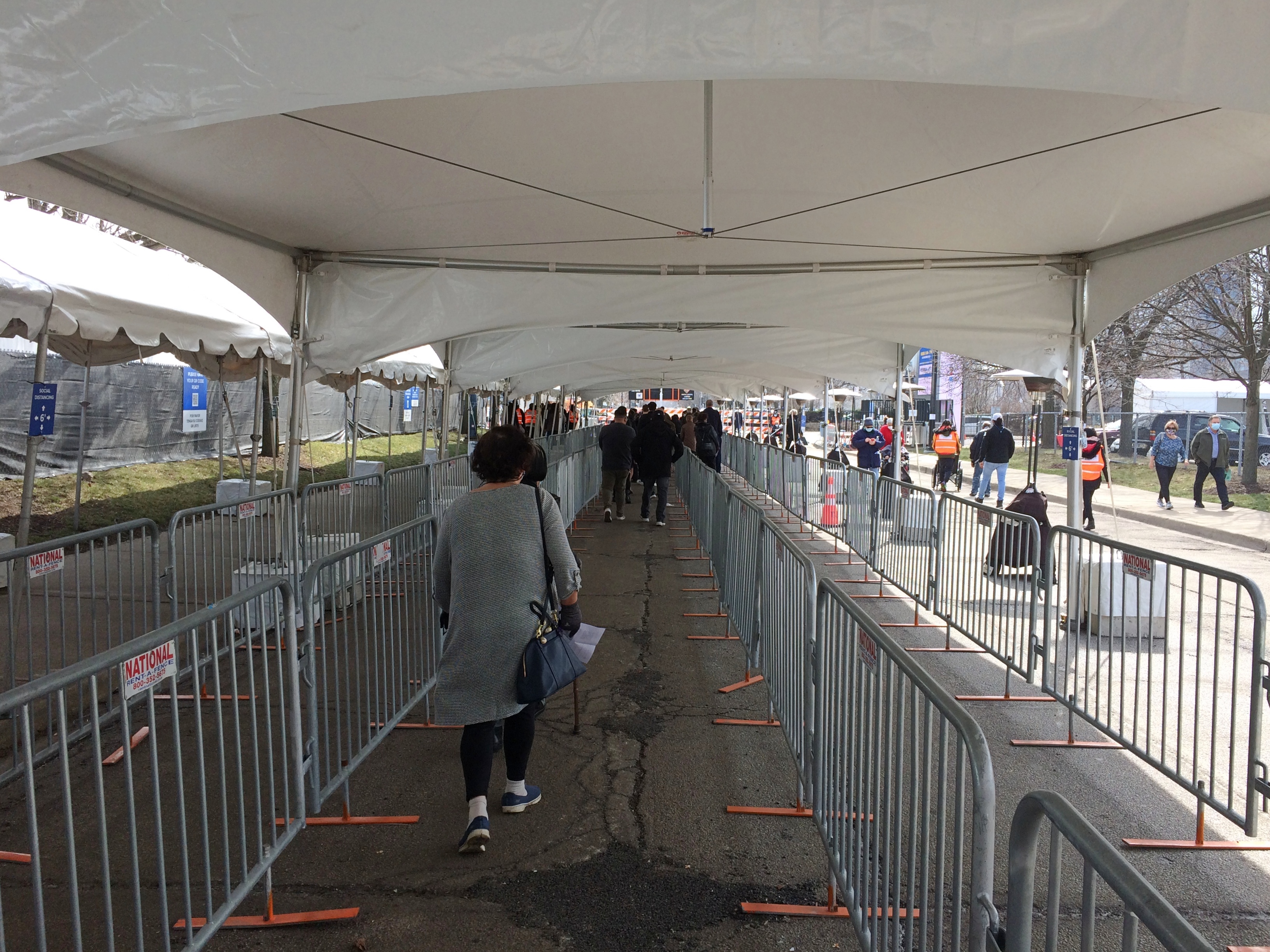
The entrance to the vax tents was in was practically in the shadow of the 960,000-square-foot United Center and other buildings.United Center Vaccination Site, Chicago
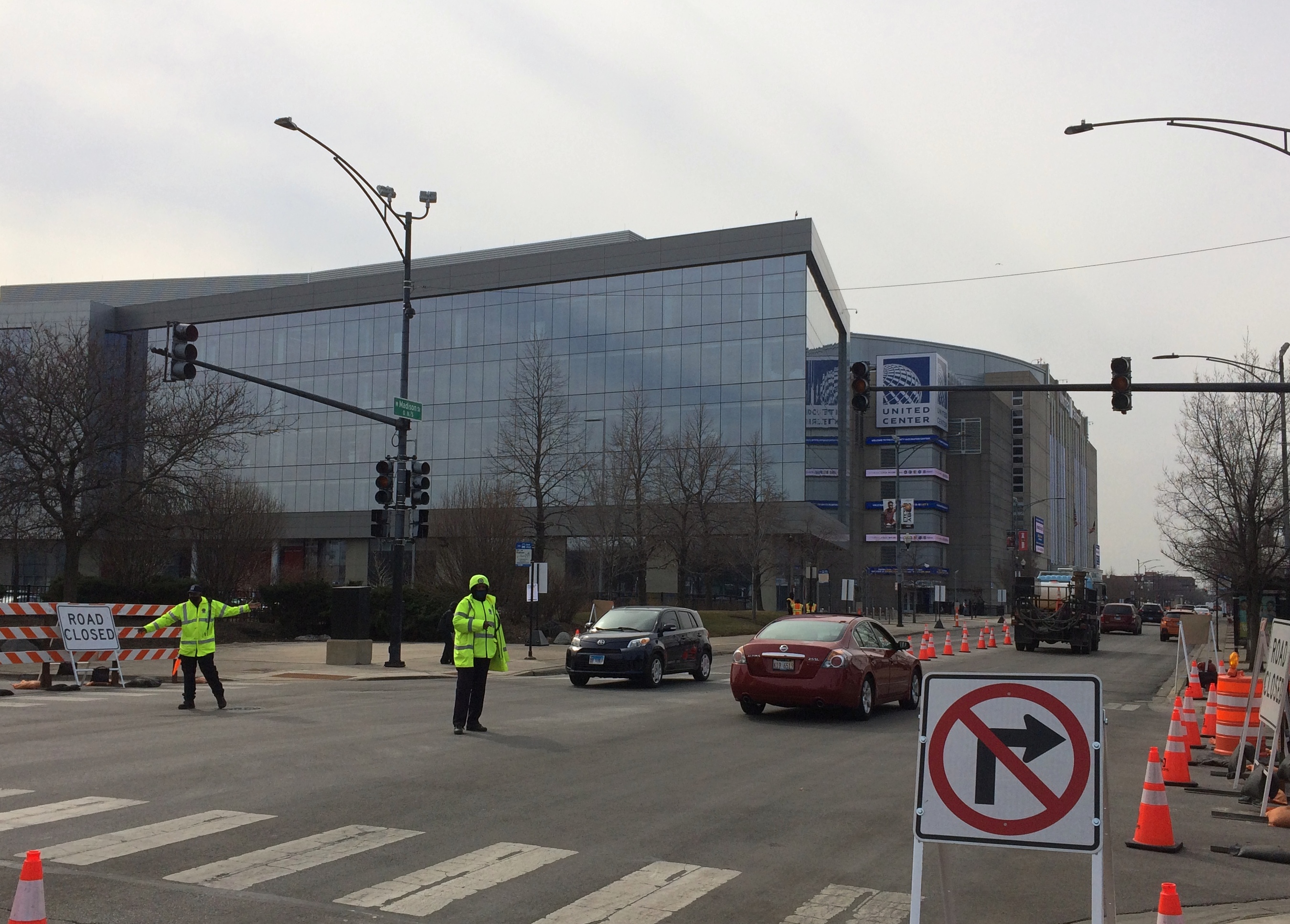
United Center Vaccination Site, Chicago

I’m glad to report that the process was simple and without delay. This particular site, at least, had no whiff of fiasco about it. Everything was well organized. Plenty of people — mostly members of the 101st Airborne Division — were on hand to point you to each step: checking in, health questions, and then the vaccination.

It took less than five minutes from the entrance to the waiting area after the shots, where you’re supposed to wait for 30 minutes to make sure you don’t have a funny reaction. So we waited. That was the longest part of the process by far.
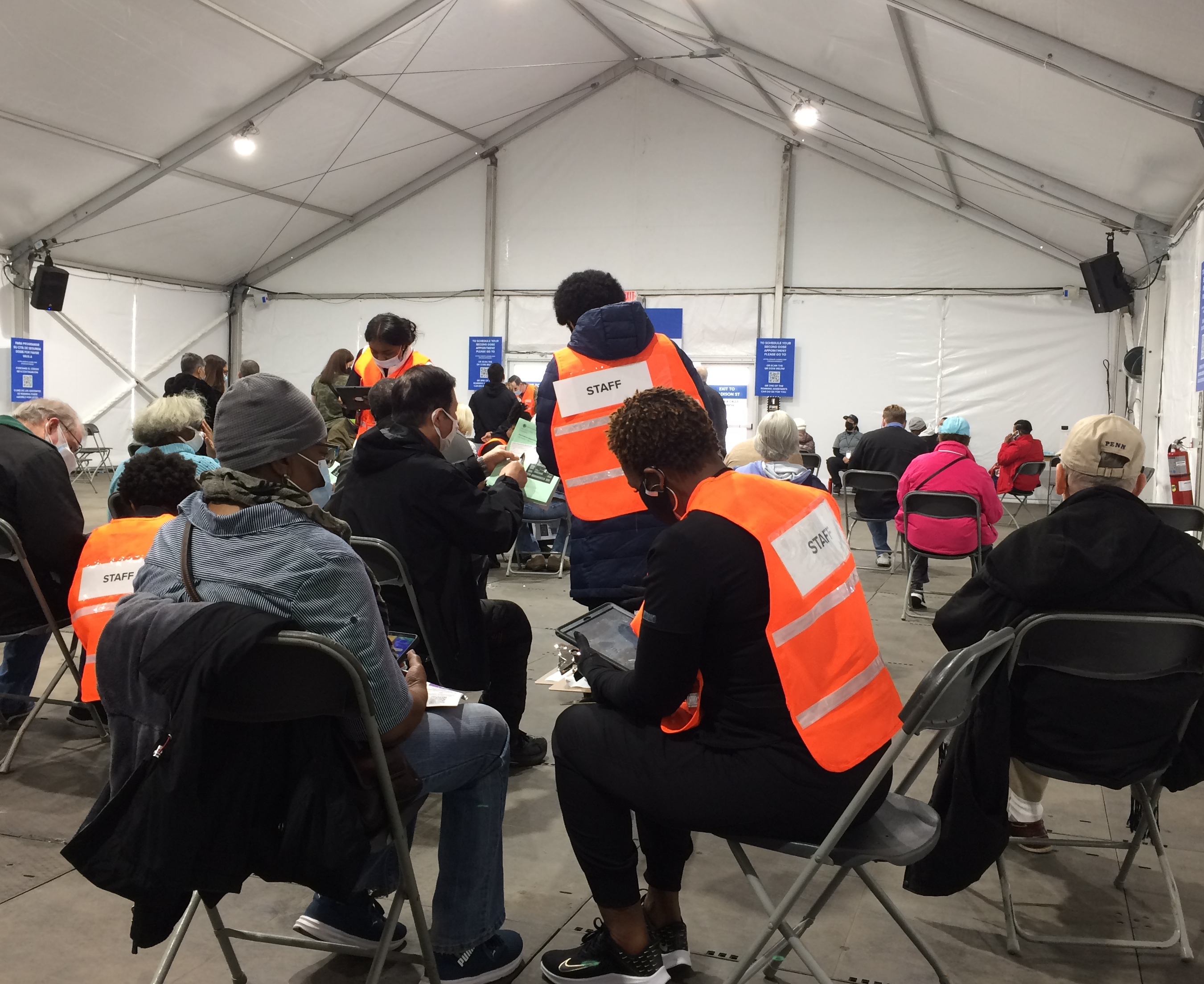
United Center Vaccination Site, Chicago
The only slightly irritating moment involved signing up for the booster. Point your phone at this QR code, said signs with large QR codes on them, and it will start the process of signing up for you. I’ve been down this road before. I point my phone at a QR code and it does precisely nothing. There must be a step missing that I don’t know about, and no one ever mentions, because everyone who knows about it assumes everyone else knows about it. That’s a common problem with tech, I find, but ultimately not a big deal in this case.

Staff with iPads were on prowl looking for people who couldn’t use the QR code for one reason or another, and soon one of them had signed our friend in for her second shot, which will be in early April back at this same temporary vax complex.
12 Pix 20

Back to publishing on January 3, 2021, or so. Who knows, there might be snow by then.

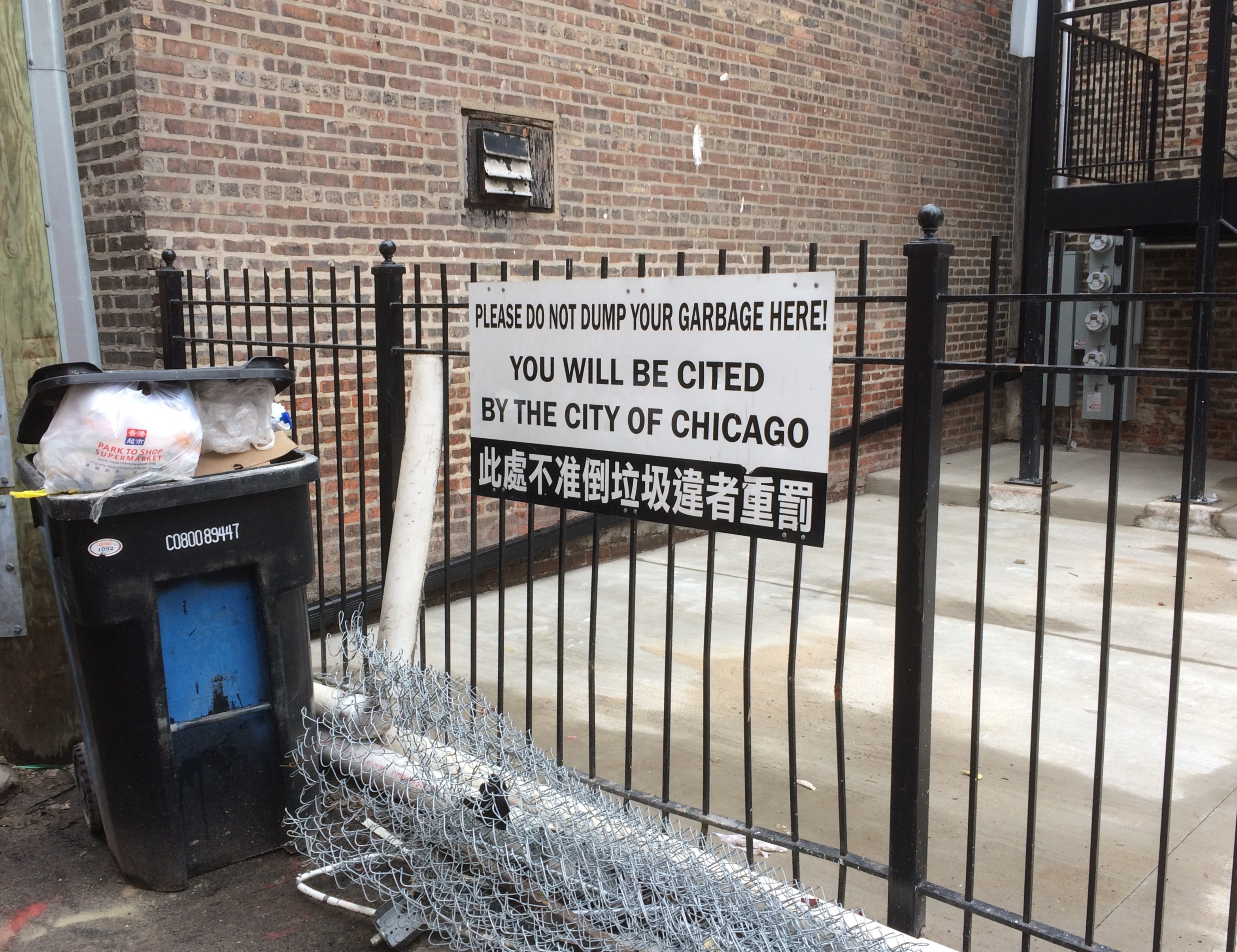
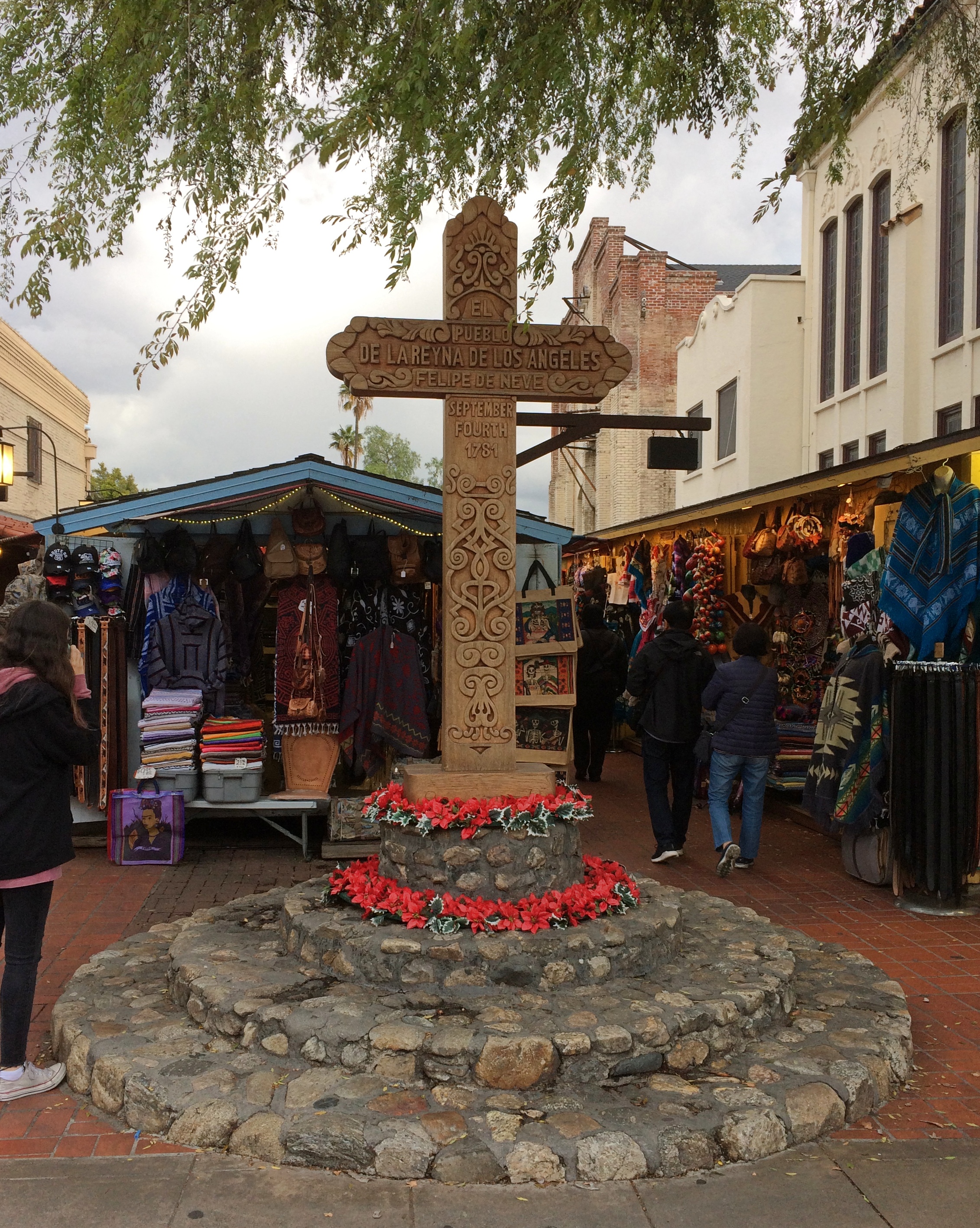
Twelve pictures to wrap up the year, as I have in 2016 and 2017and 2018 and 2019, though this time around I won’t bother with a rigid, one-picture-for-each-month structure. They will be roughly chronological.

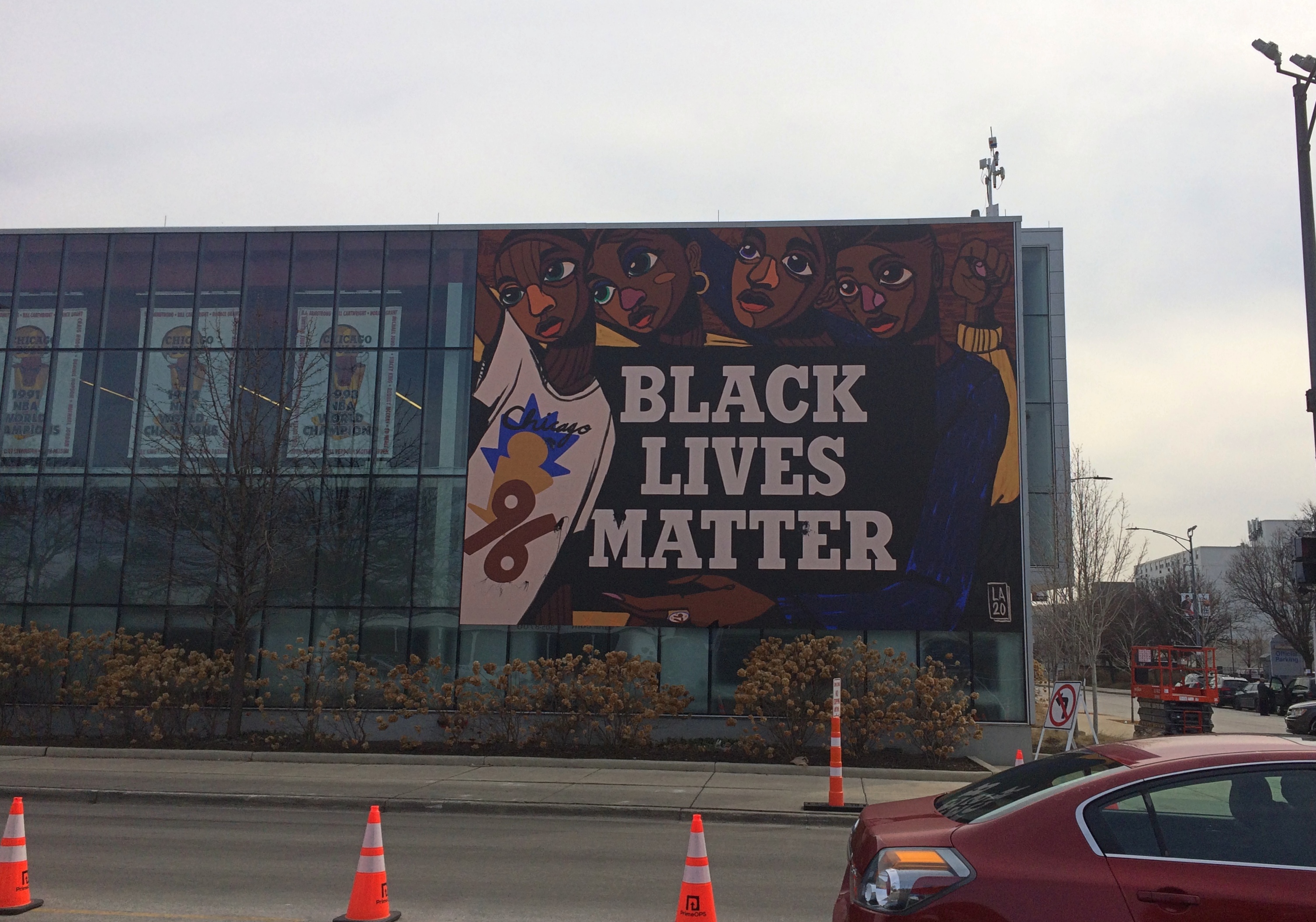
Chicago
Los Angeles

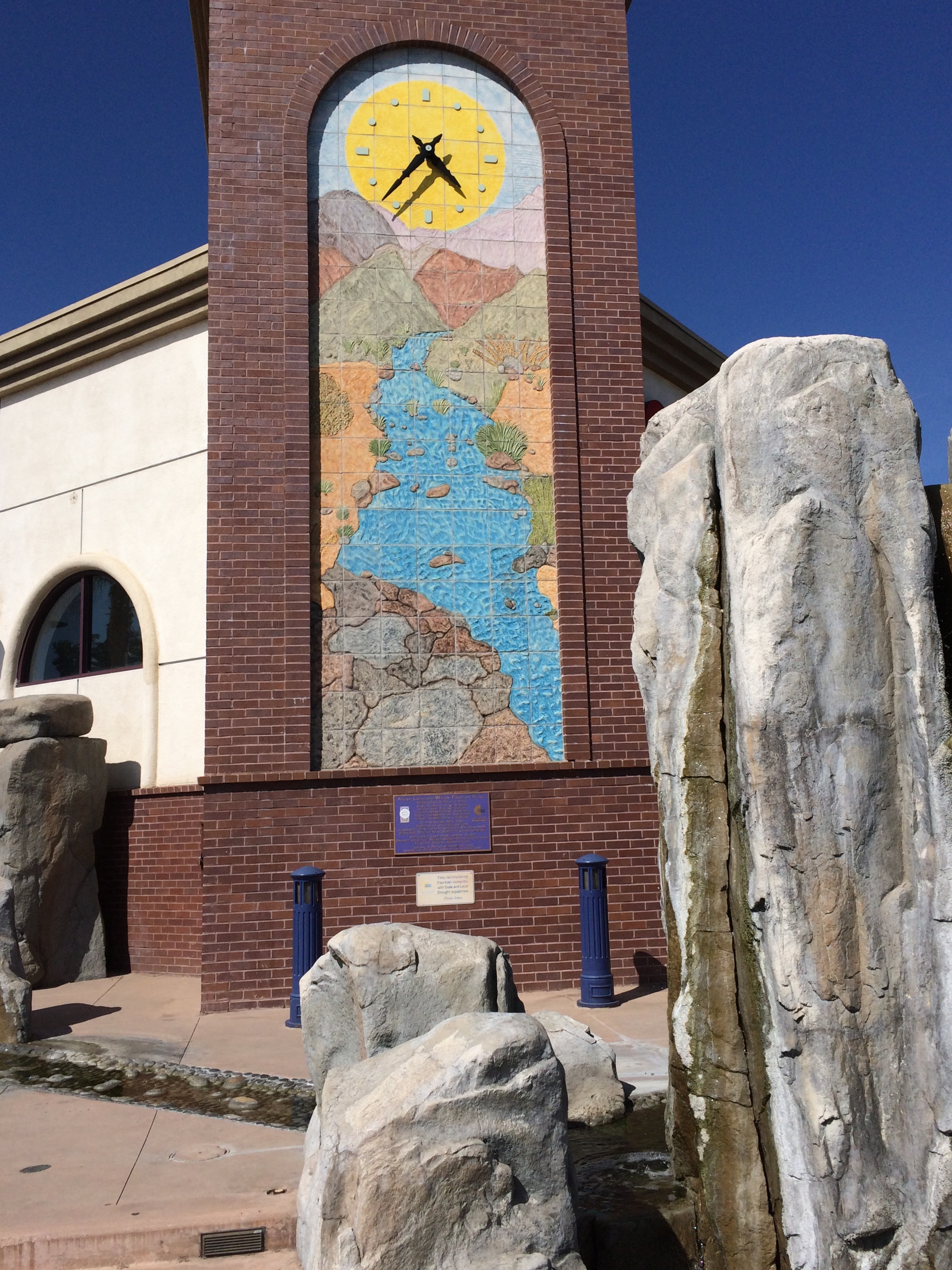
Azusa, California

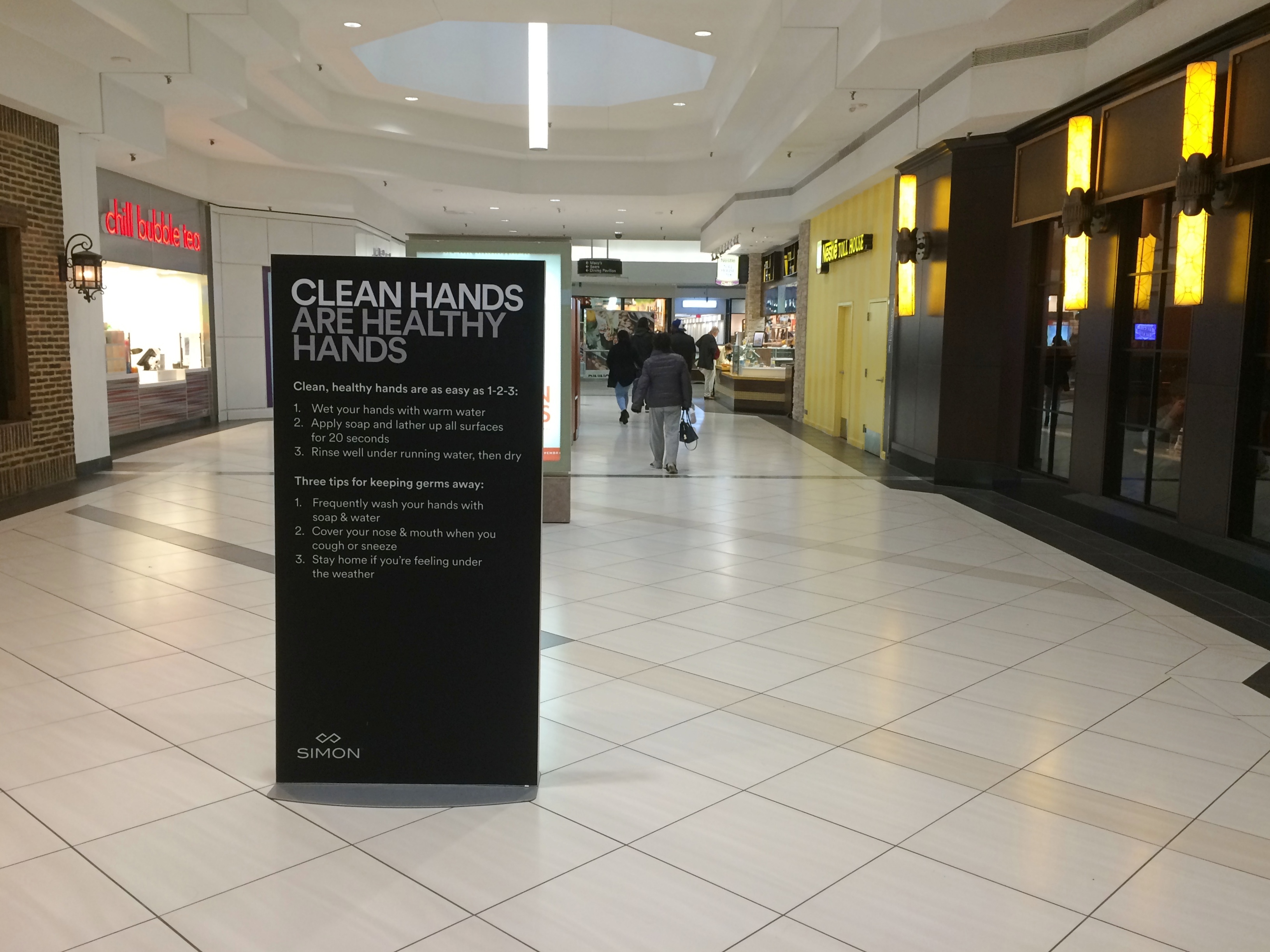
Schaumburg, IllinoisWest Dundee, Illinois

Schaumburg, Illinois
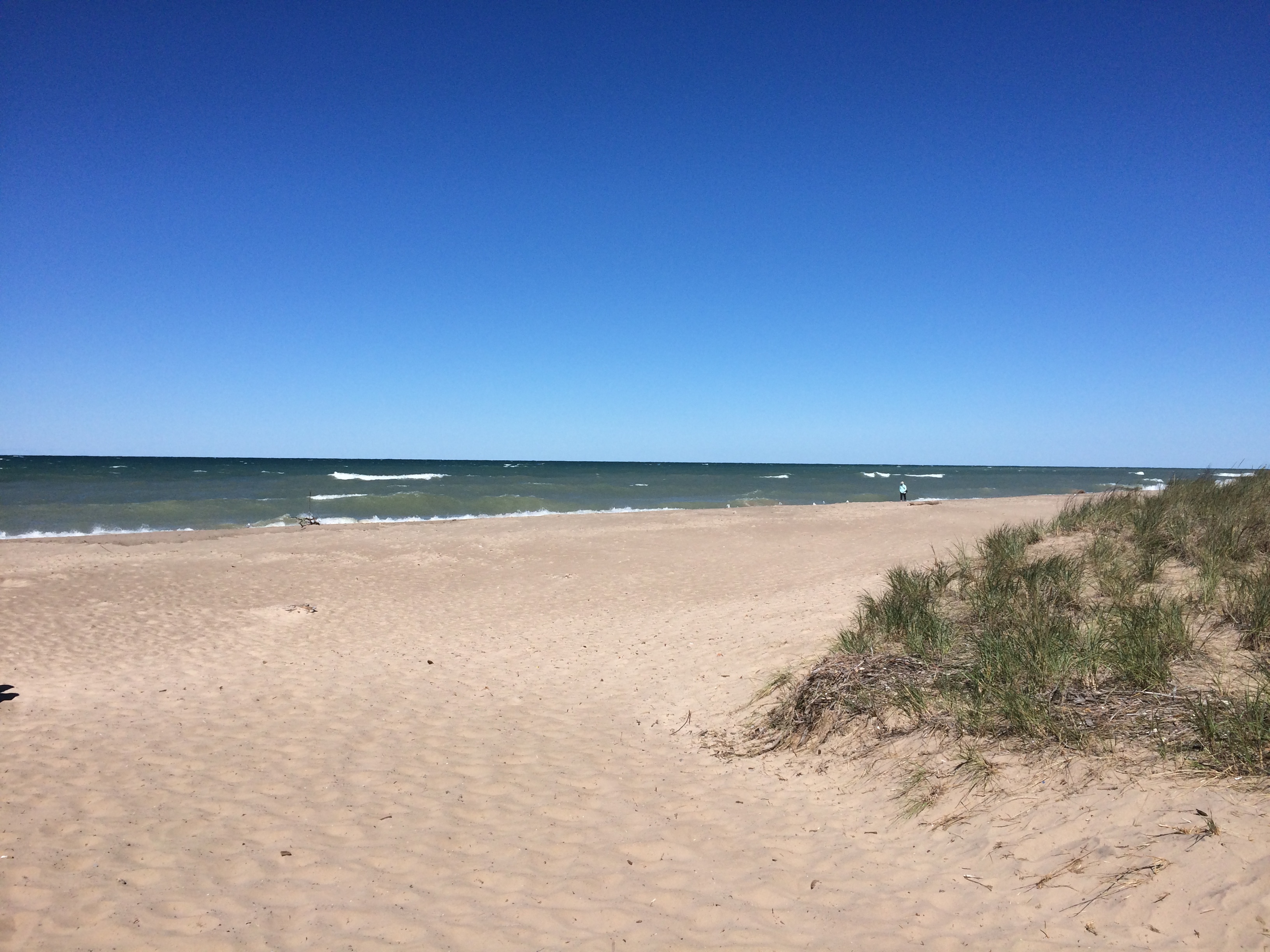
Baraboo, WisconsinBeverly Shores, Indiana

Carbondale, IllinoisSchaumburg, IllinoisChicago

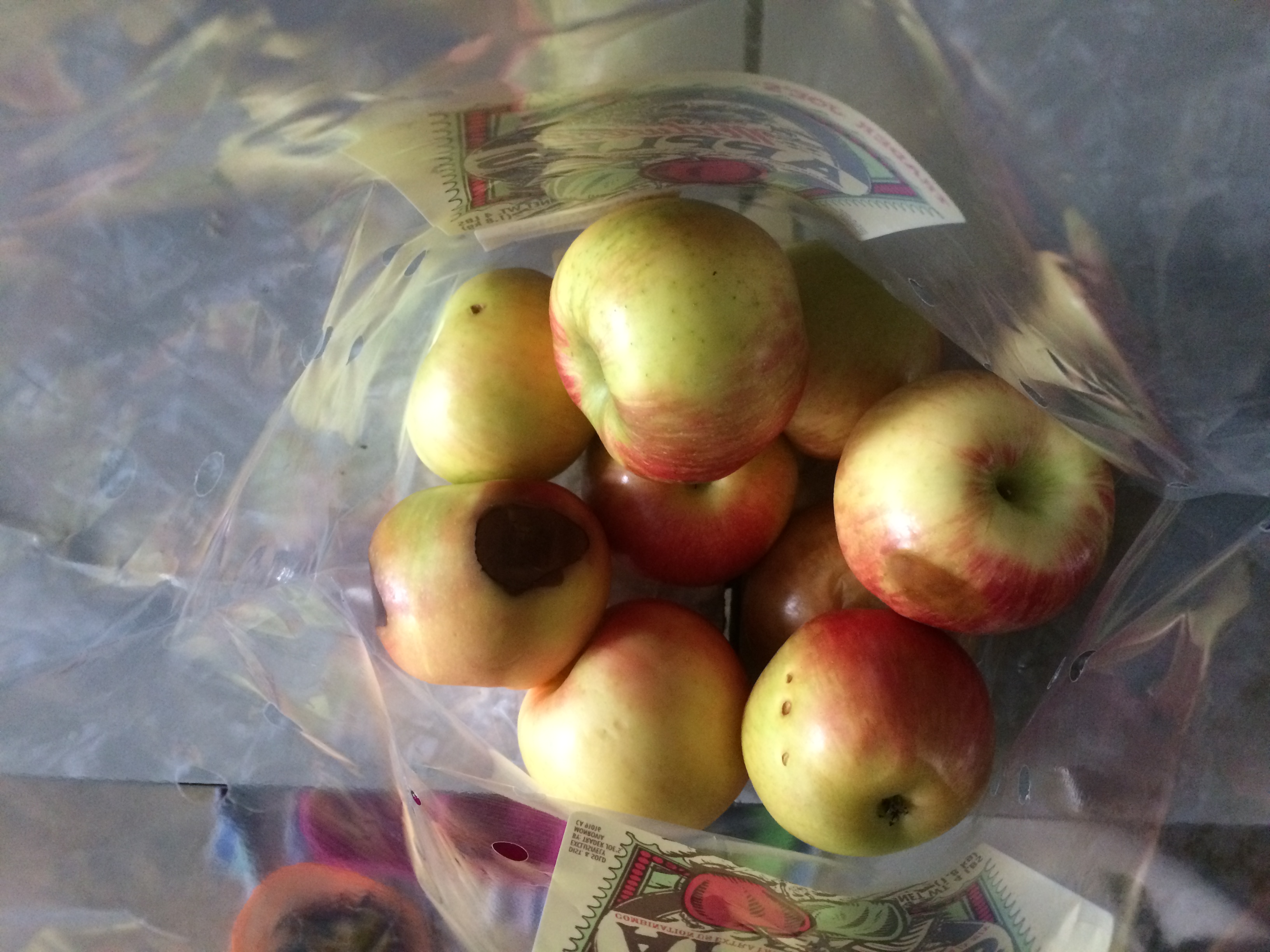
One bad apple

Merry Christmas & Happy New Year to all.

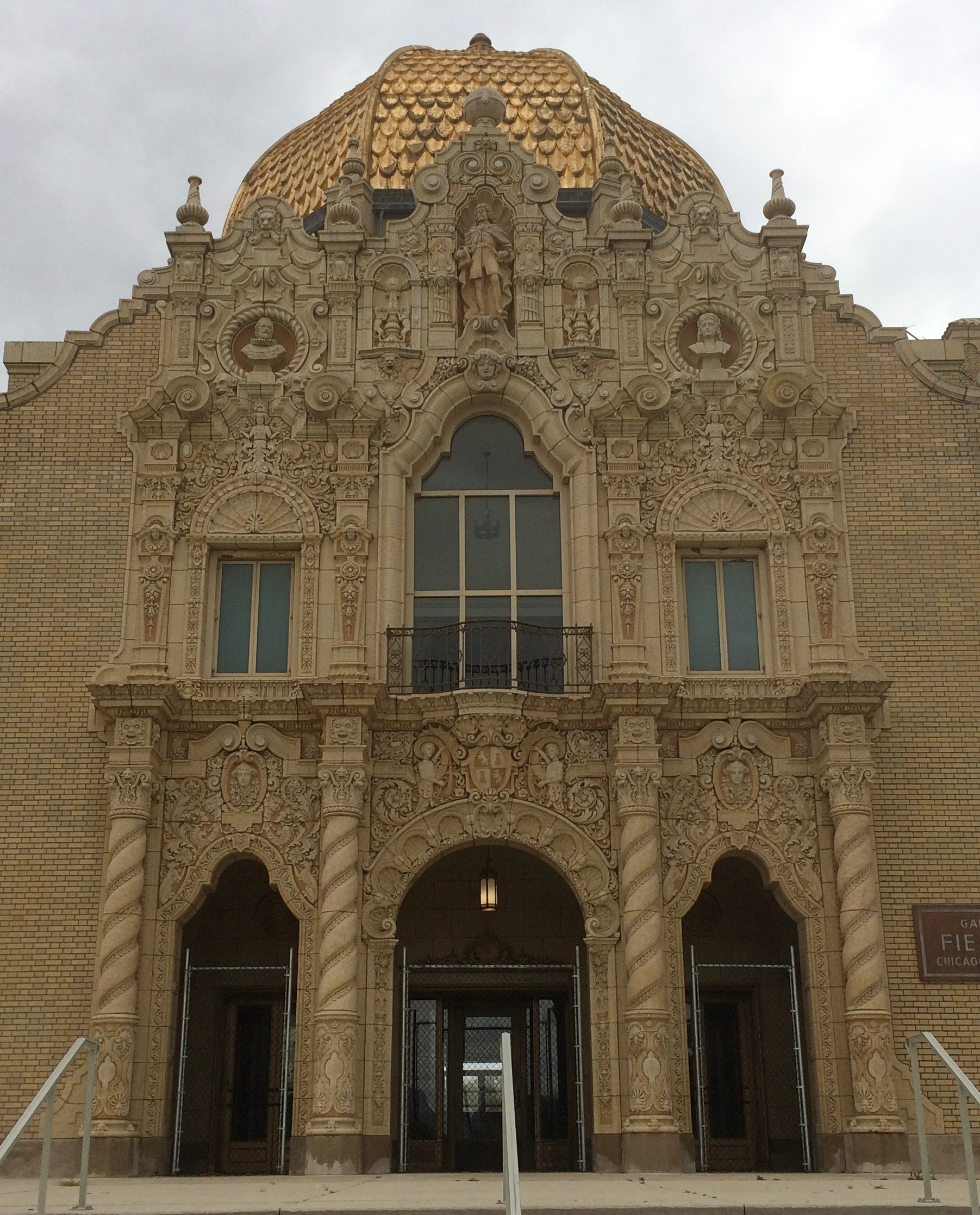
The Garfield Park Fieldhouse

On October 24, as mentioned yesterday, we visited Lake County forest preserves. The next day, a Sunday, we went into the city, near Humboldt Park. Temps were around 50, but the park was alive with people, including a lot of dog walkers.

While Yuriko attended her cake class (just her and the sensei, these days), I decided to pop down to Garfield Park, which is one of the major Chicago parks connected by boulevards. I hadn’t been there in a good while, since some visits to the Garfield Park Conservatory.
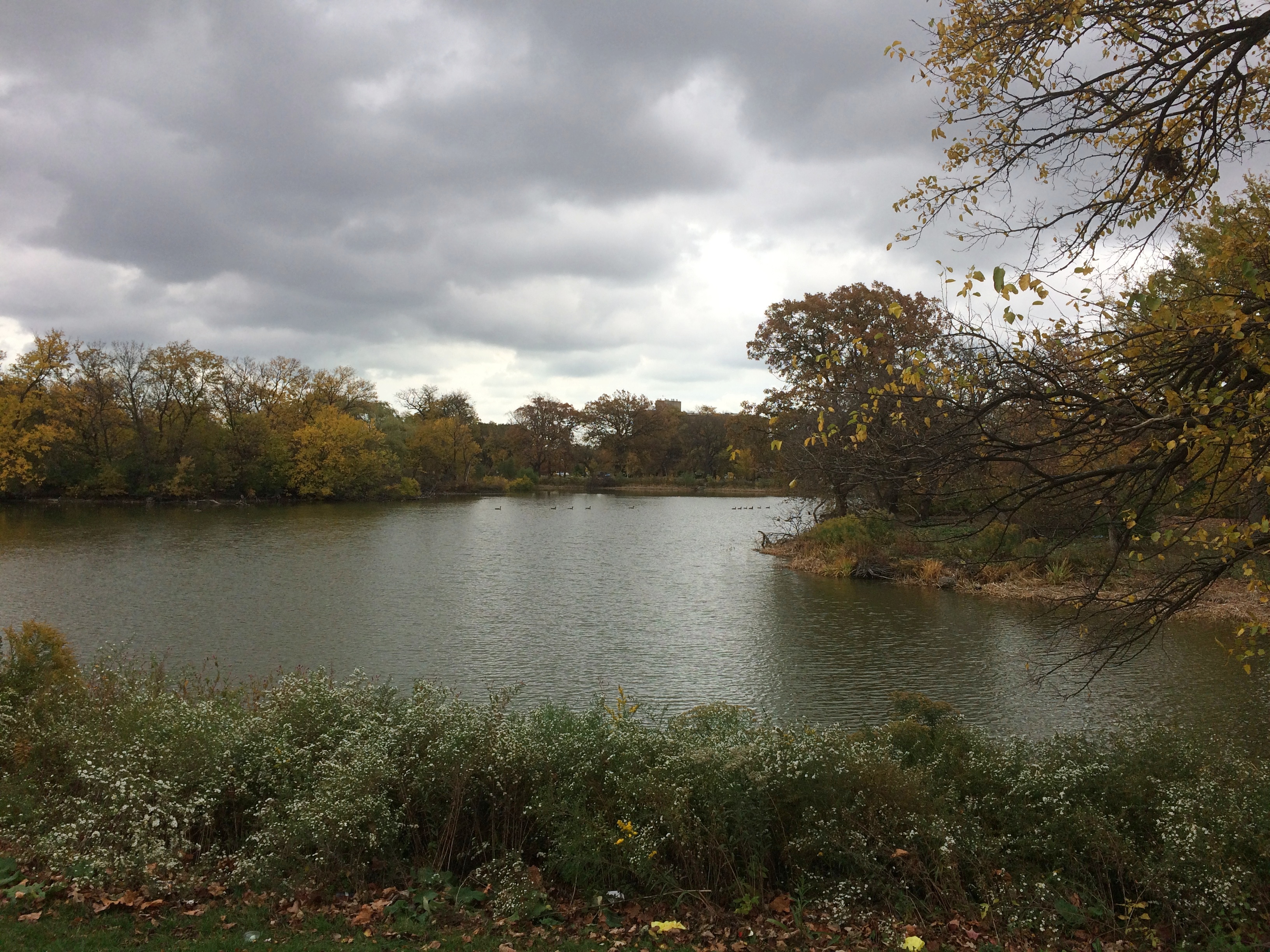
The park, just as open and inviting in layout as Humboldt, since it too was a masterpiece of landscaping by William LeBaron Jenney, was nearly deserted on that Sunday in October.
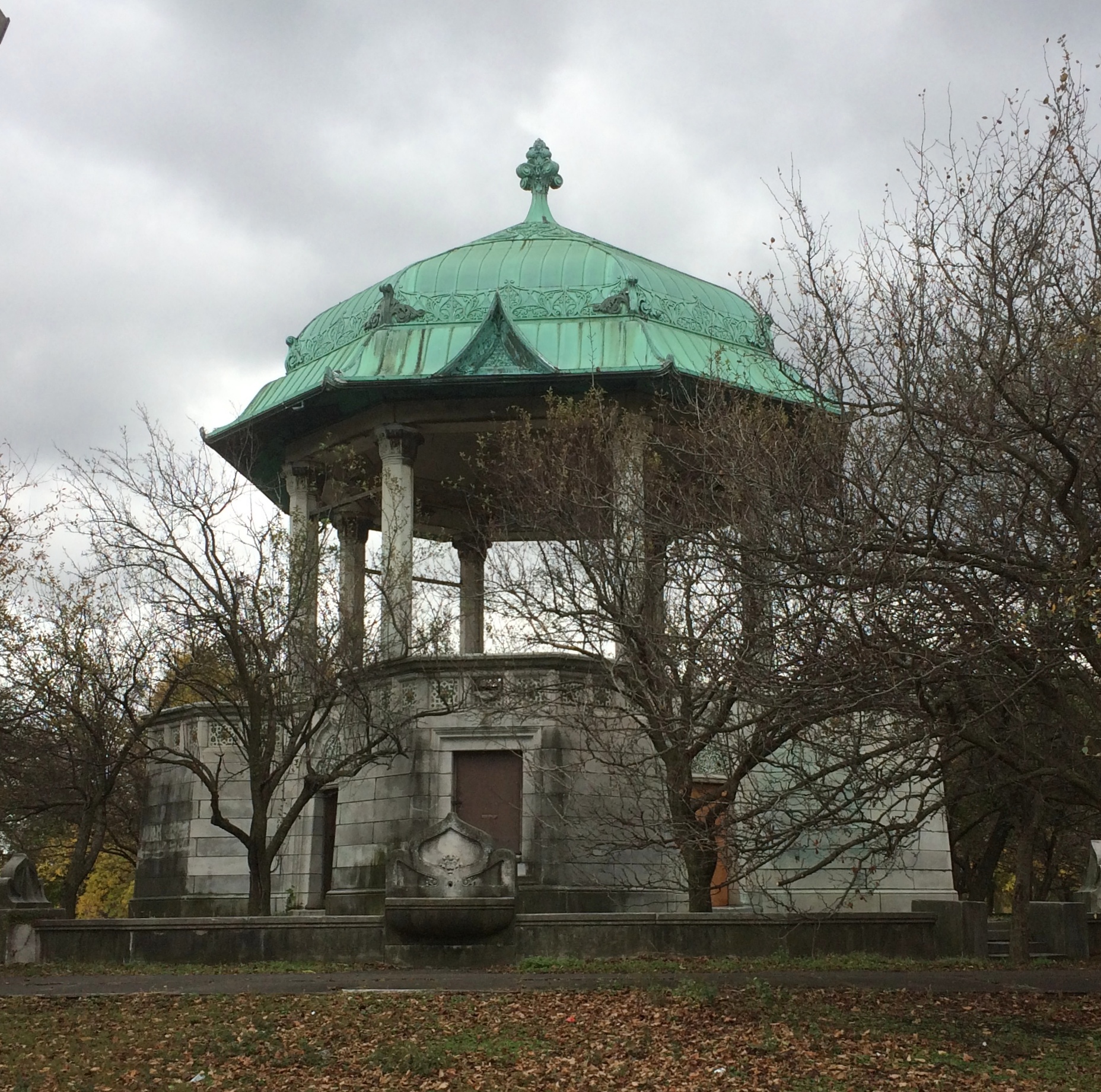
Garfield Park, ChicagoThat didn’t encourage me to linger, but I did take a look at a few things, such as the bandshell, designed in 1896 by J. L. Silsbee.

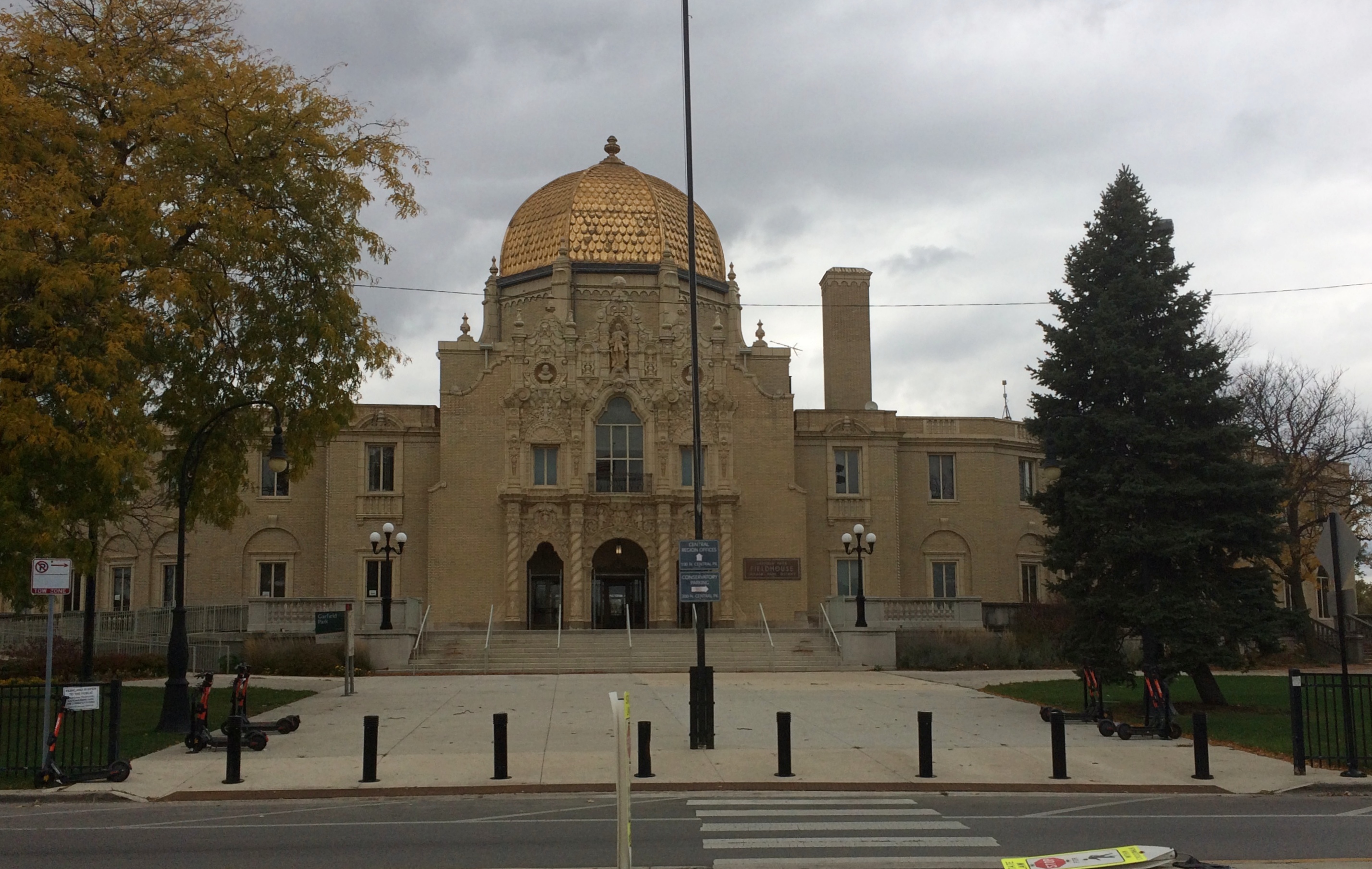
Garfield Park, ChicagoMostly, though, I’d come to see the Garfield Park Fieldhouse. I’d only ever gotten glimpses of it from the El.
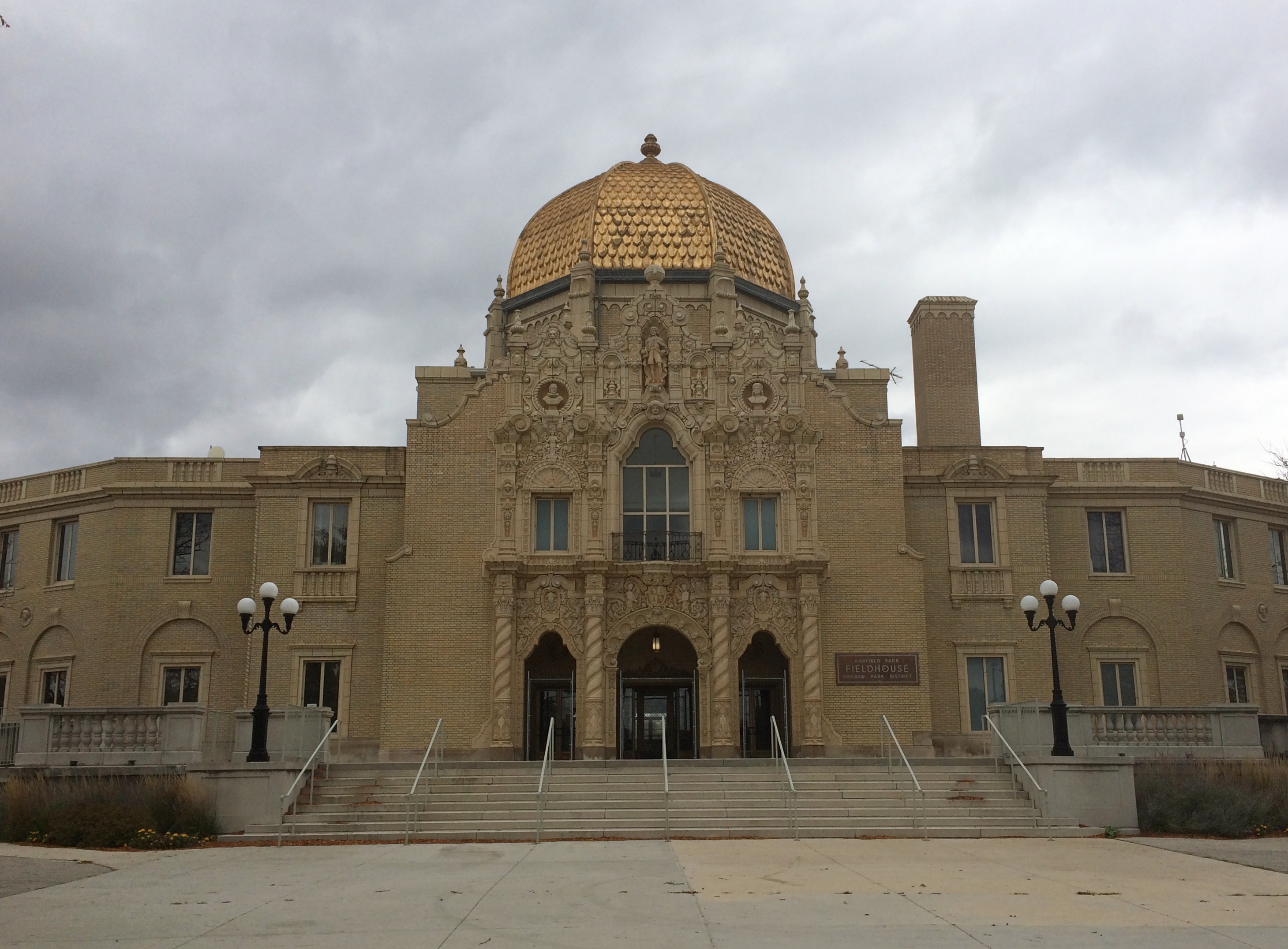
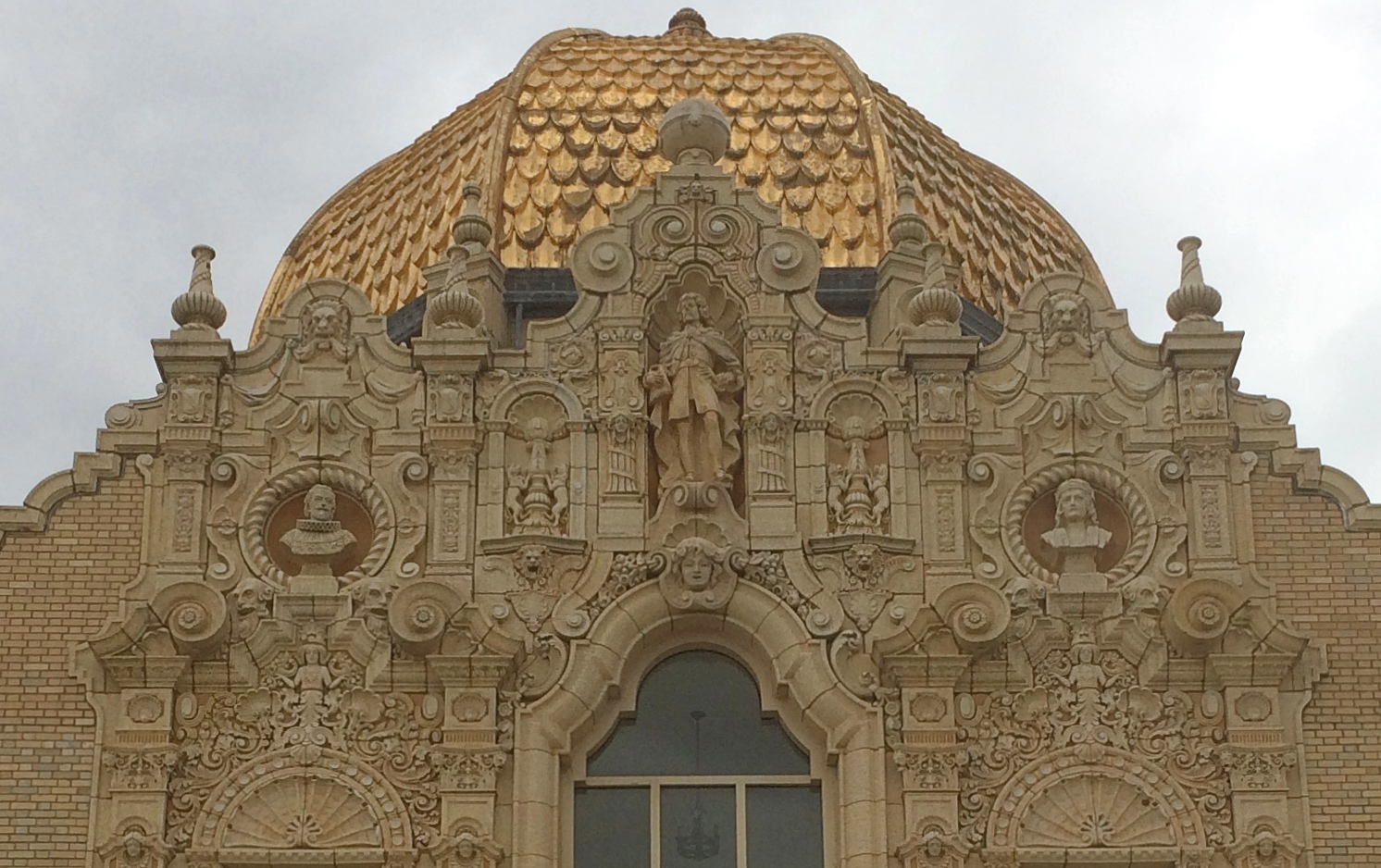
Garfield Park Fieldhouse, ChicagoOriginally built in 1928 to be administrative offices for one of the pre-Chicago Park District park entities, AIA Guide to Chicago Architecture says that designers Michaelson & Rognstad took inspiration from the California State Building at the 1915 Panama-California Expo in San Diego. (Still standing in Balboa Park, and quite a place.)

“The facade is exuberantly… punctuated with a Churrigueresque entry pavilion of spiral Corinthian columns, cartouches and portrait sculptures,” the Guild says.

Garfield Park Fieldhouse, Chicago

Garfield Park Fieldhouse, ChicagoGarfield Park Fieldhouse, ChicagoIs it ever. I understand that there’s more to gawk at inside, but in our time the building is closed.

National Museum of Mexican Art ’15

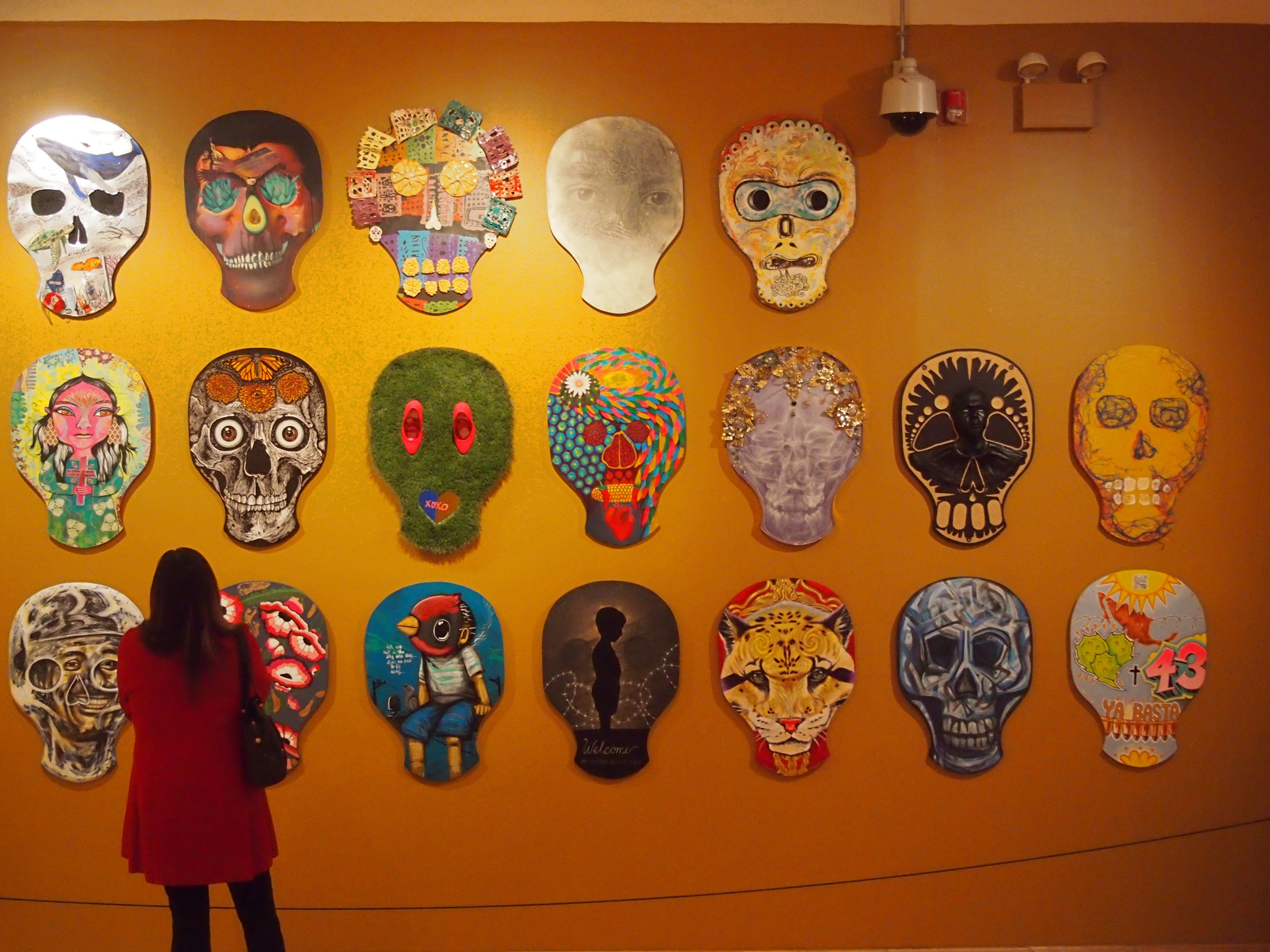
Five years ago this month, I made it to the National Museum of Mexican Art in the Chicago neighborhood of Pilsen, in time to see its annual Día de los Muertos exhibit. This year it was cancelled as an in-person event, as you’d think. No visiting the Day of the Dead exhibit in person, to reduce the chance of Death coming your way.

I haven’t visited since, though there’s still time to see this year’s exhibit virtually, which is probably interesting, but not as satisfying as being there. If this year has taught us anything, it’s that primary experience is primary.

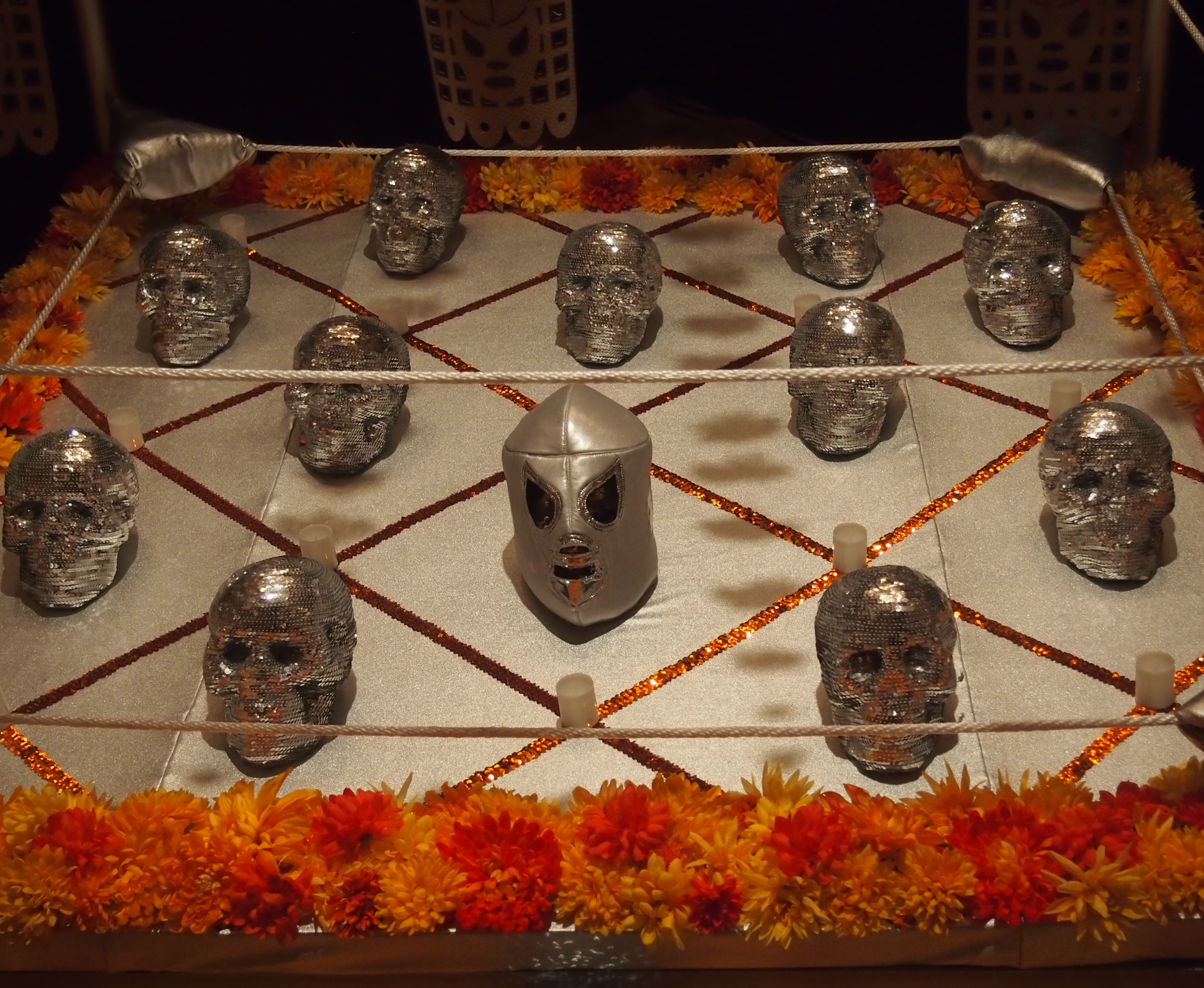
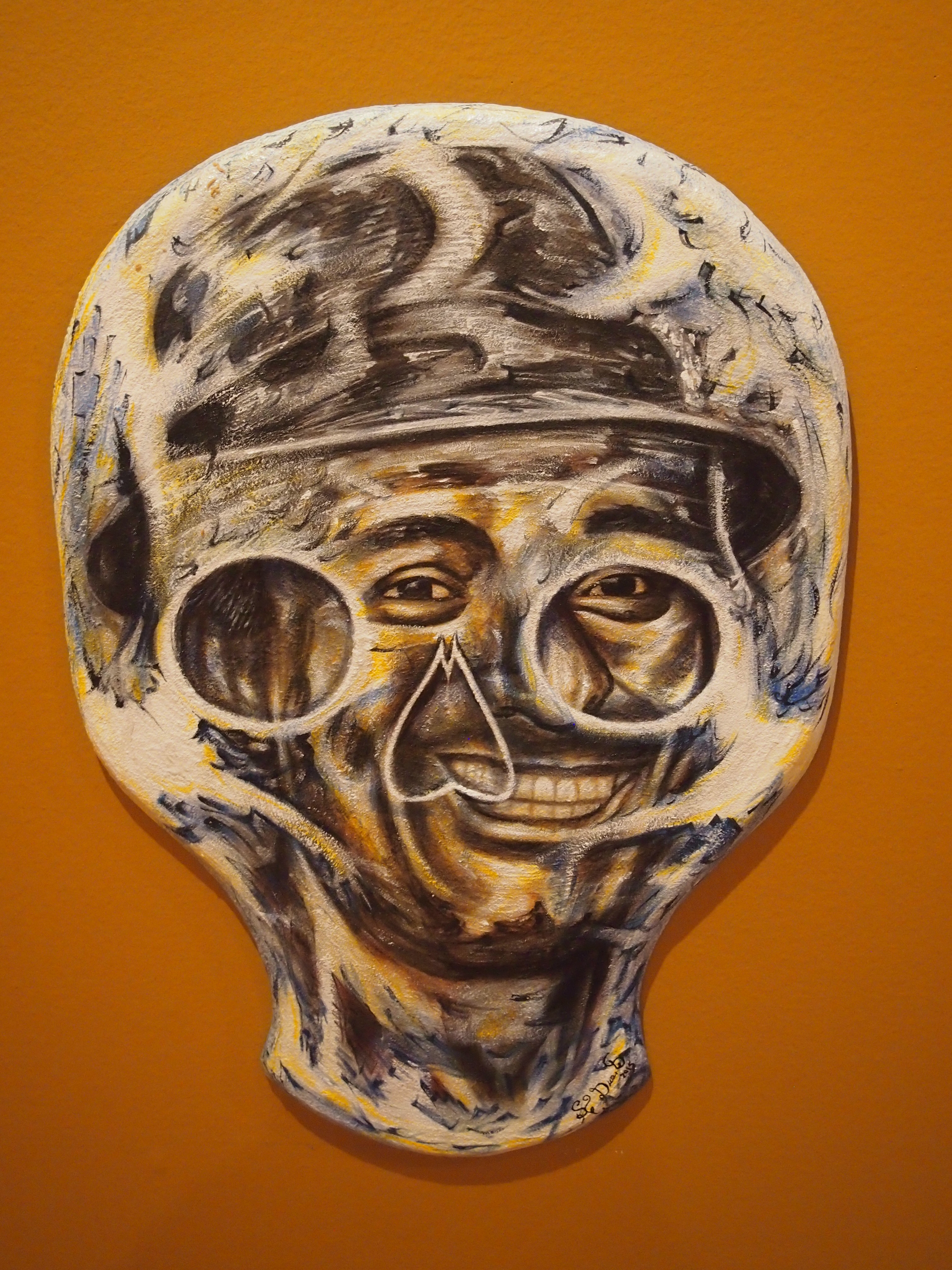
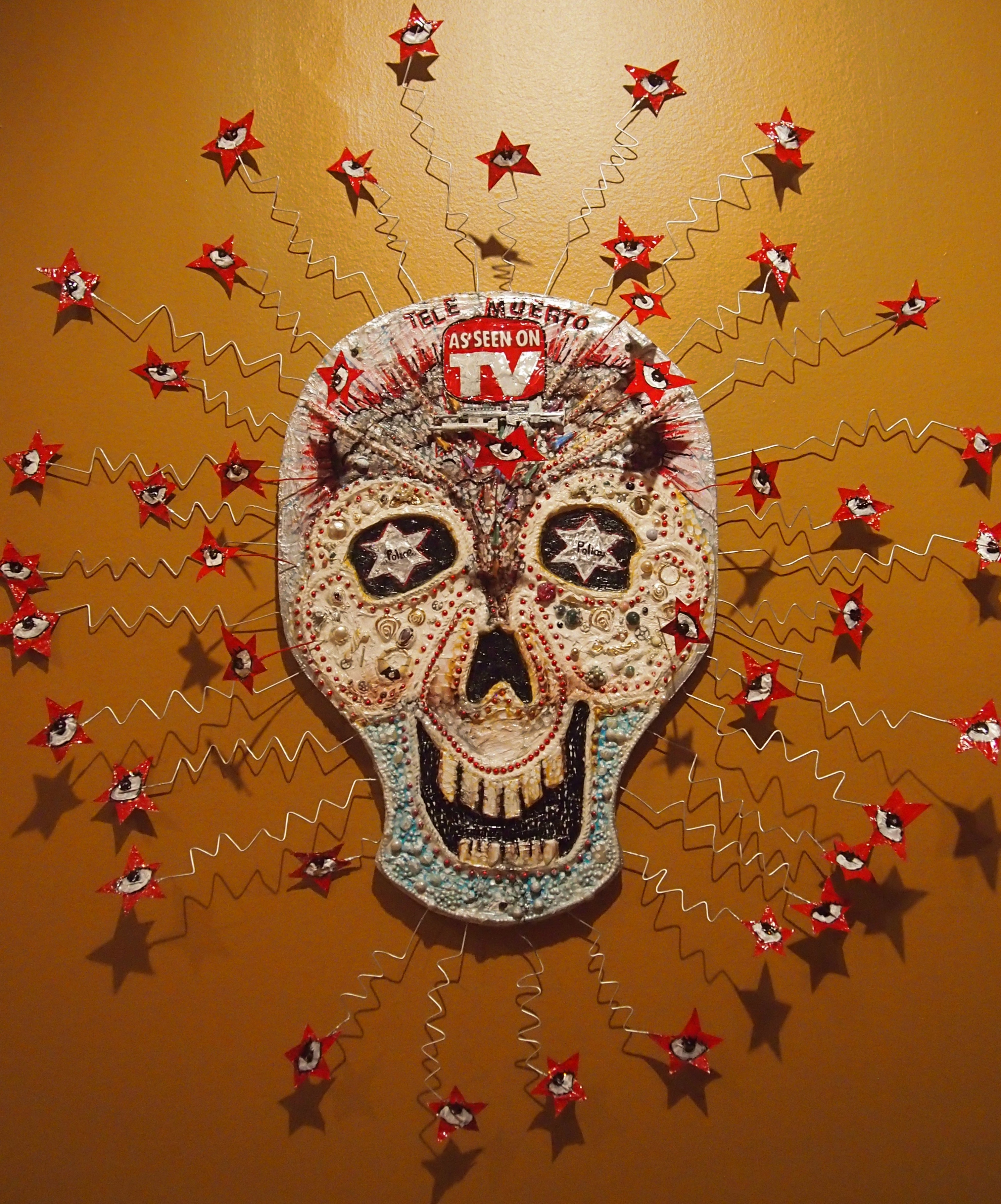
At the National Museum of Mexican Art, I experienced art skulls.

Day of the DeadDay of the DeadDay of the Dead

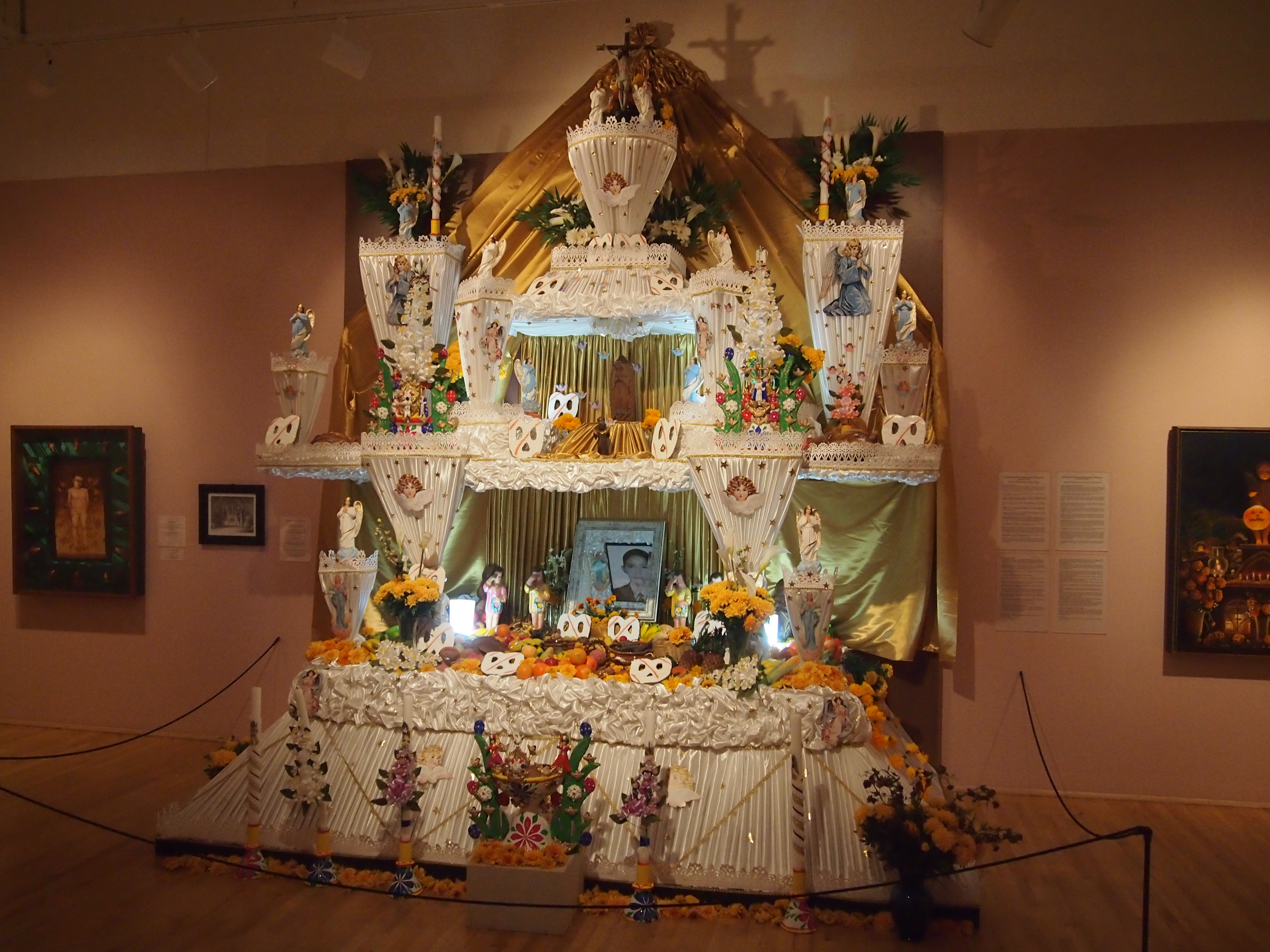
Two Puebla artists, Jose Antonio Cazabal Castro and Silverio Feliciano Reyes Sarmiento, created this monumental altar for Day of the Dead celebrations in the town of Huaquechula in the state of Puebla. Remembering a boy, looks like.

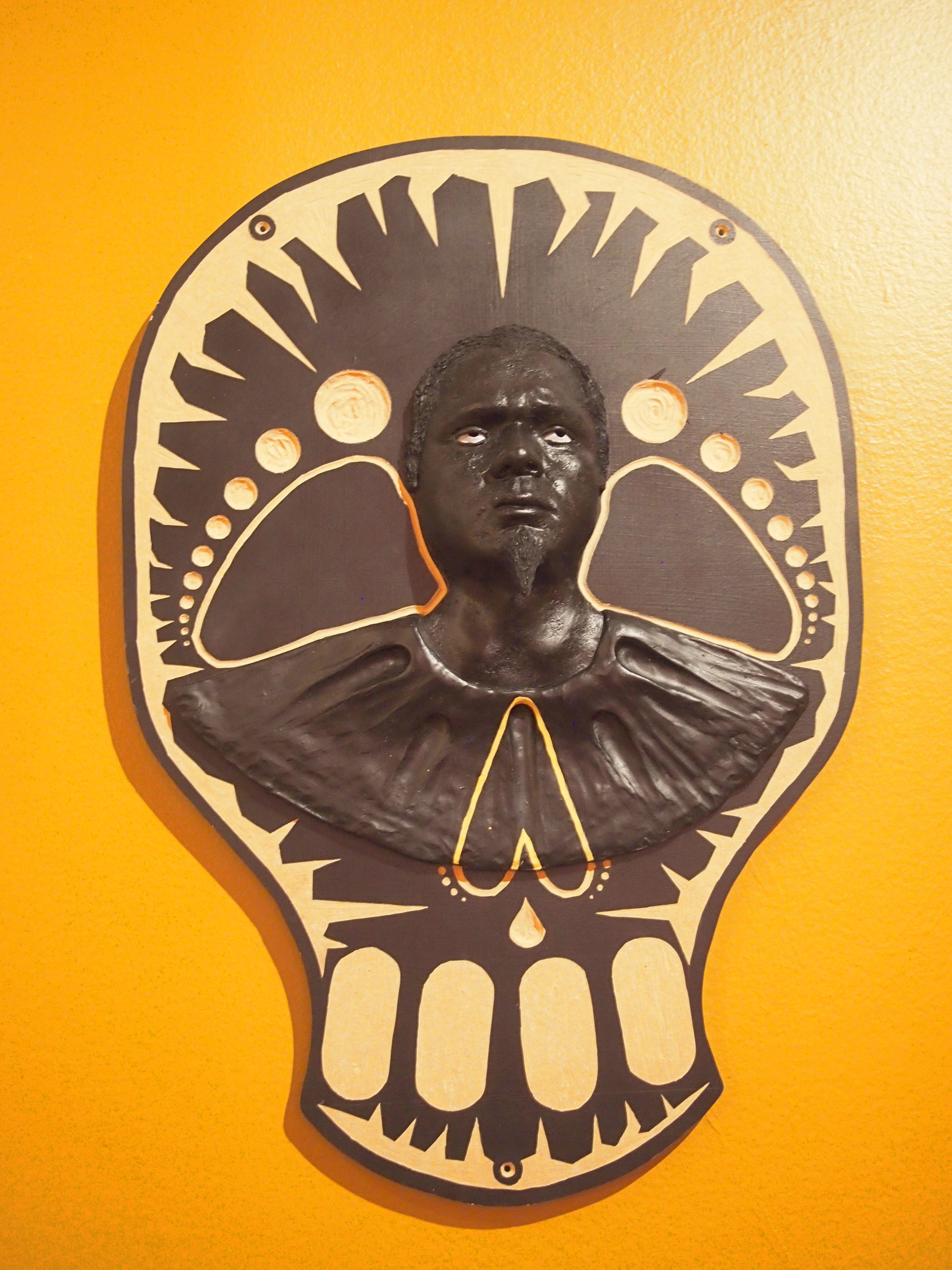
One more.
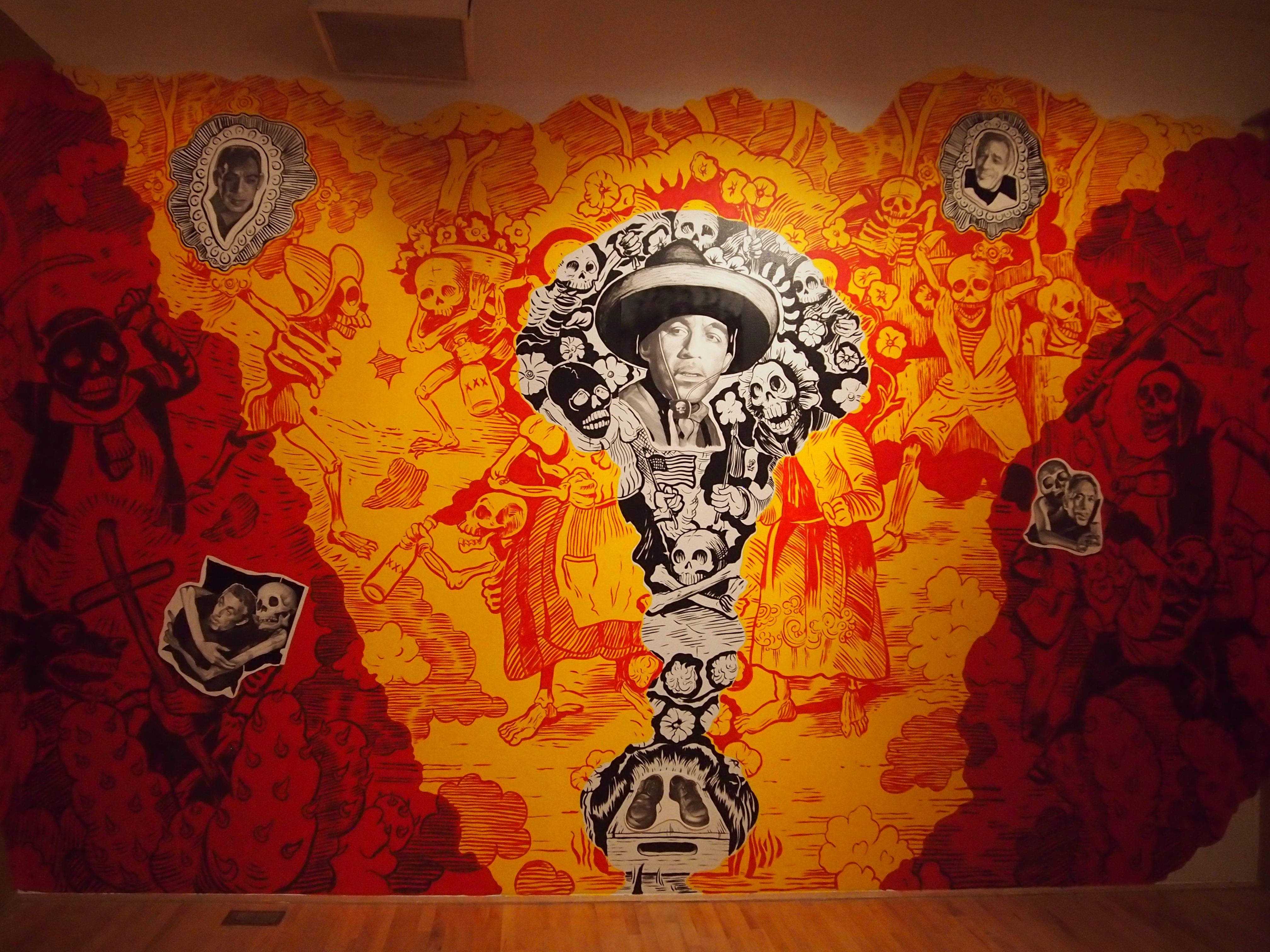
A detail, most of it really, of “Skeletons of Quinn/Calacas de Quinn,” a 2015 work by Hugo Crosthwaite of Baja California.

Churches by Bus ’15

No Open House Chicago this year, as you’d expect; no Chicago Architecture Center bus tours or house walks or Doors Open Milwaukee either. For some time now, those events have often been part of fall for us, such as in 2013 or 2014 or 2017 or last year.

Five years ago we took a Chicago Architecture Foundation (as it was then) bus tour of six Chicagoland churches. The other day I took a look at the images from then.
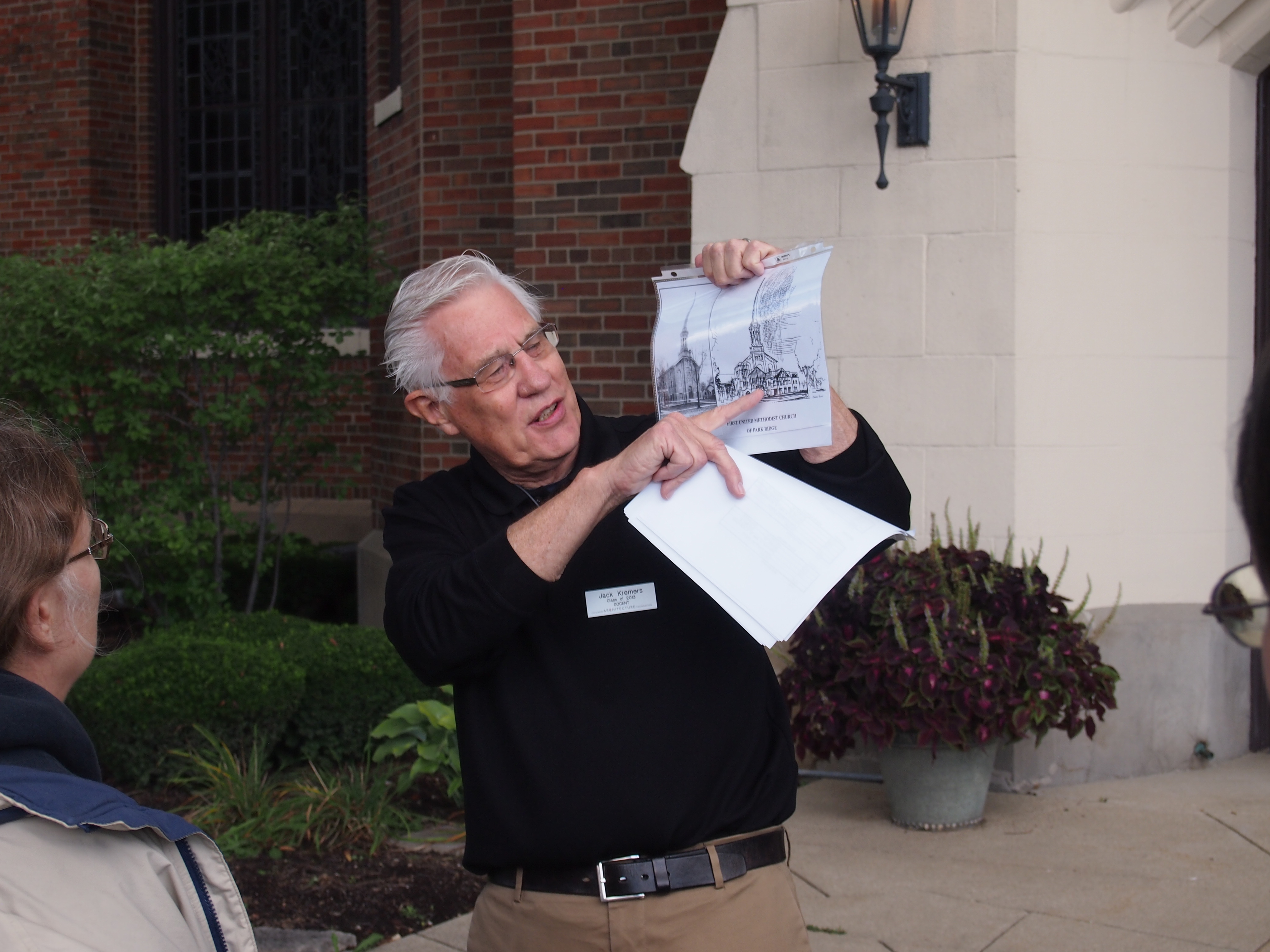
Such as at the First United Methodist Church in Park Ridge, including docent Jack pointing out some feature.
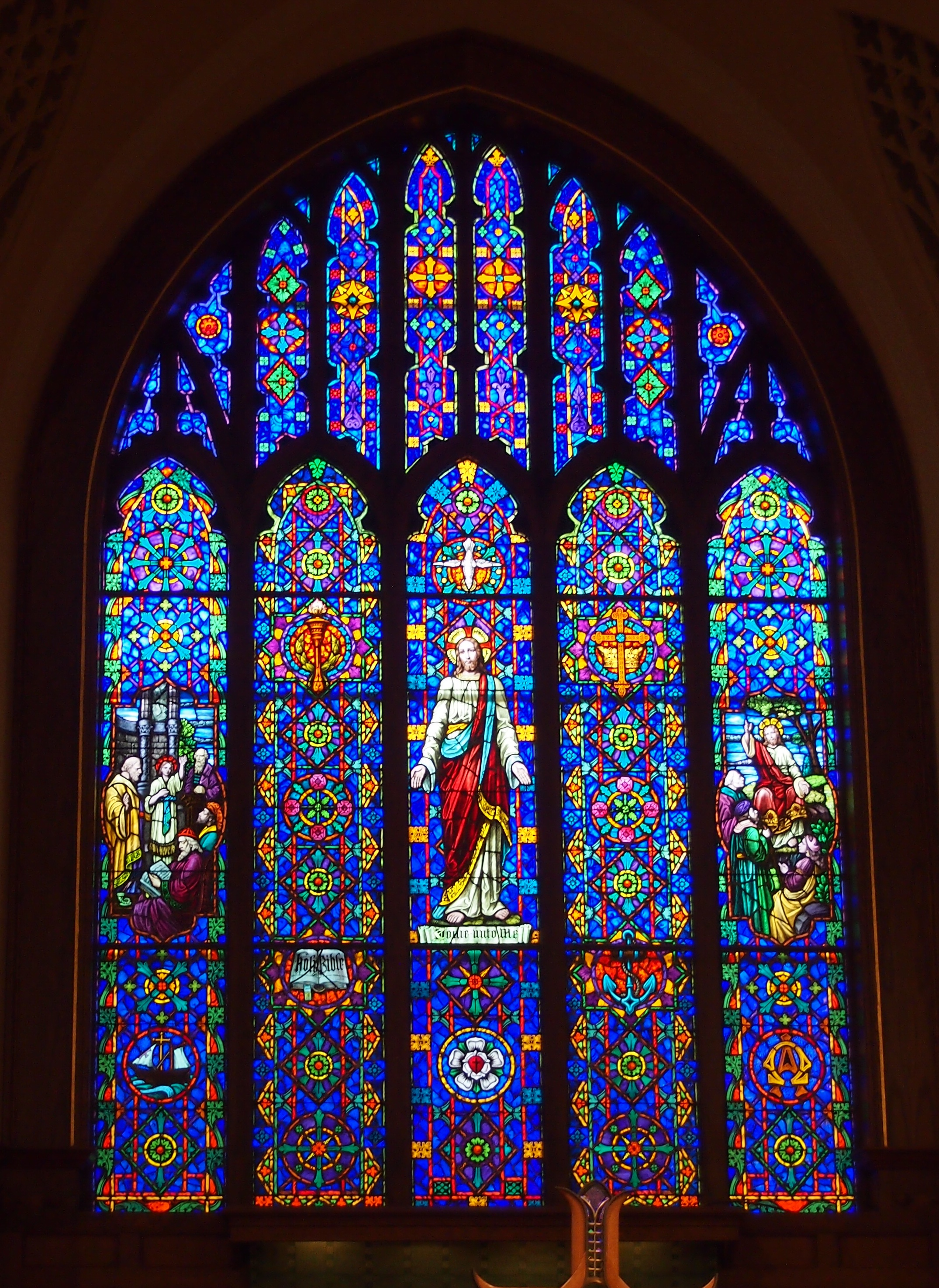
First United Methodist Church in Park RidgeA detail from the church’s stained glass.
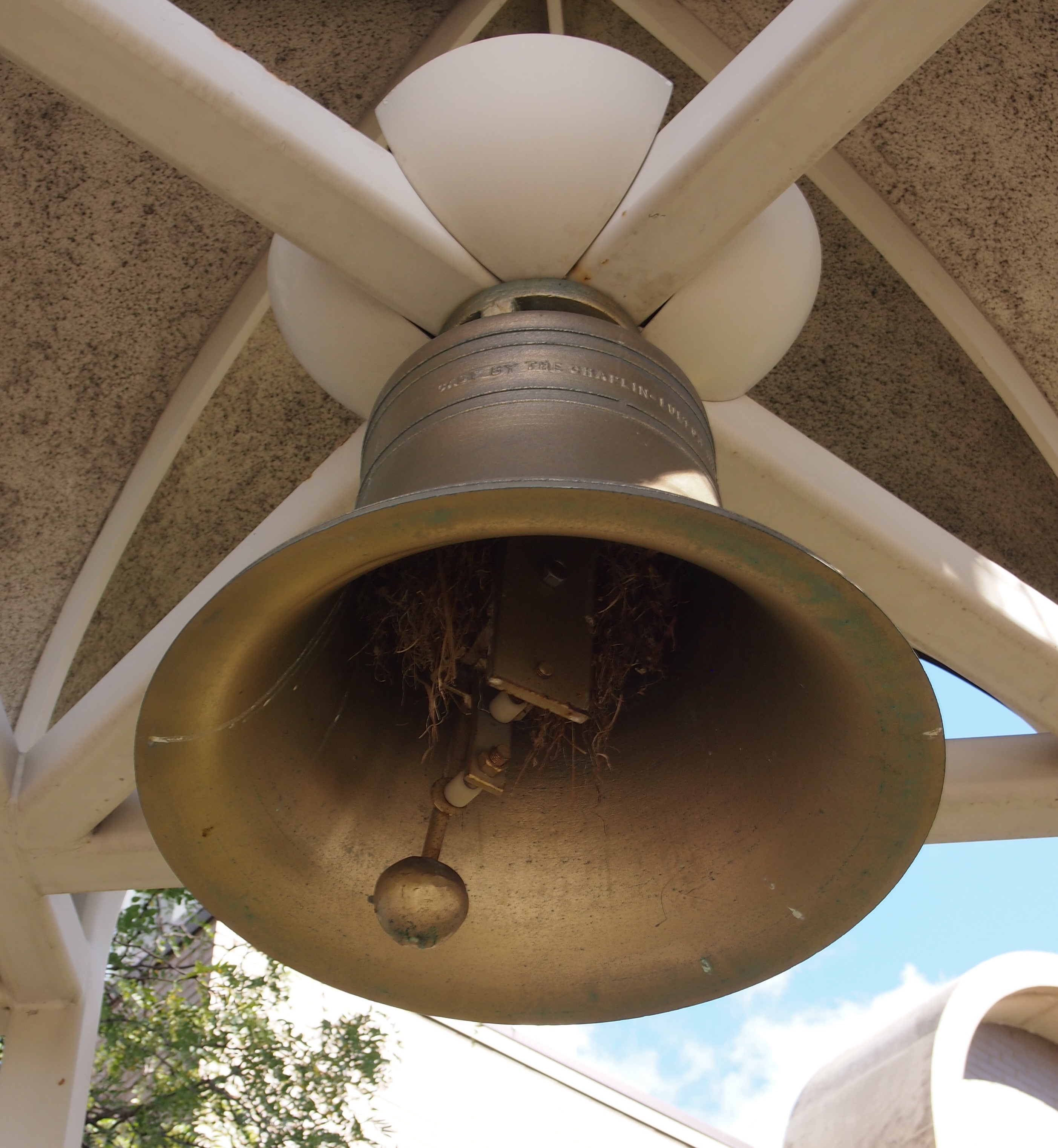
First United Methodist Church in Park RidgeNext was the Holy Resurrection Serbian Orthodox Cathedral. A bell hangs outside.
Holy Resurrection Serbian Orthodox CathedralA plaque next to the bell tower explains, in English and Serbian, that the bell was cast in 1908 and formerly hung at a Serbian Orthodox church in Chicago. “[It] has been placed in this tower so that it may once again peal with joy at weddings and baptisms, announce the commencement of church services, and sadly toll at the passing of our parishioners,” the plaque says.

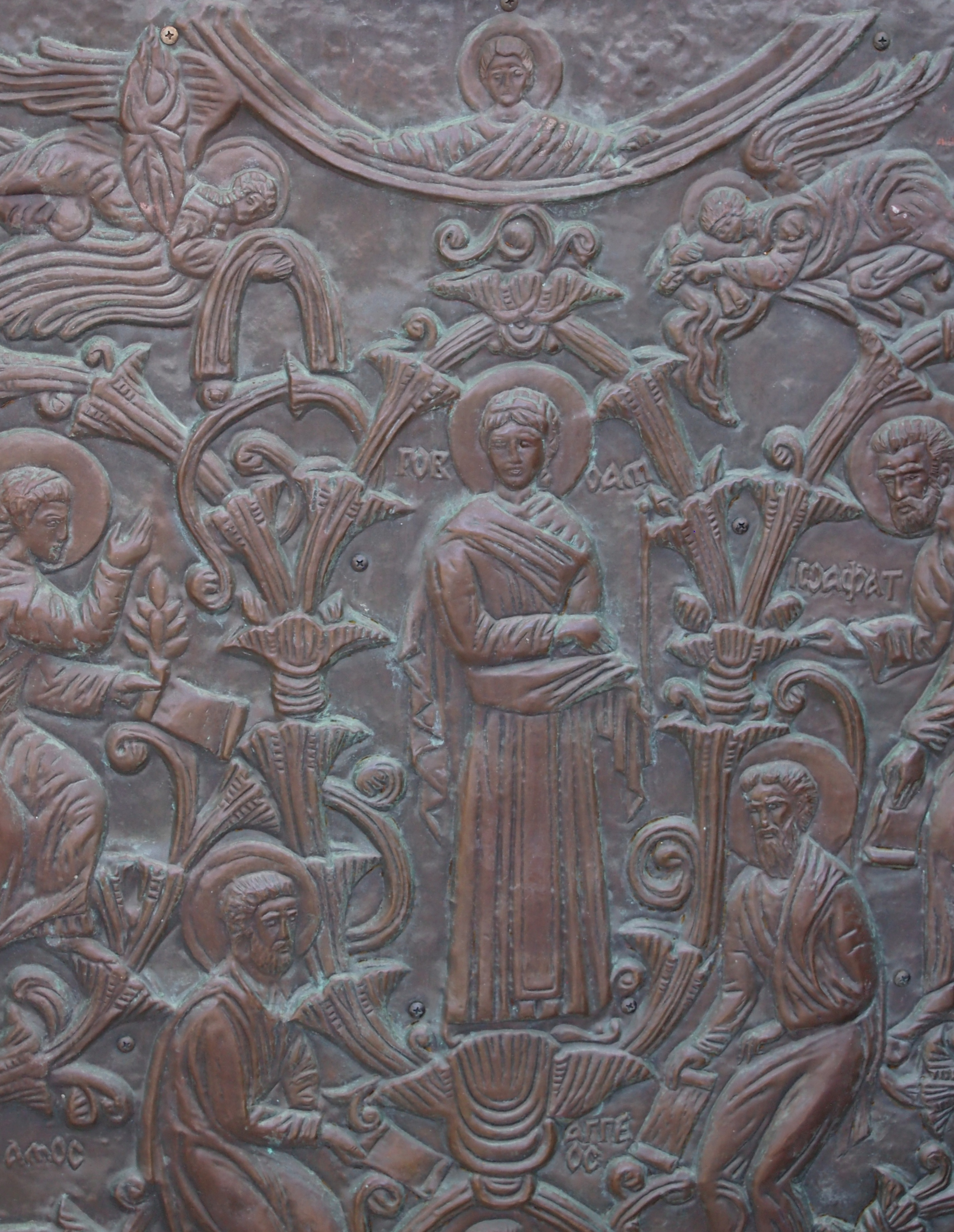
A detail of the bronze front doors.
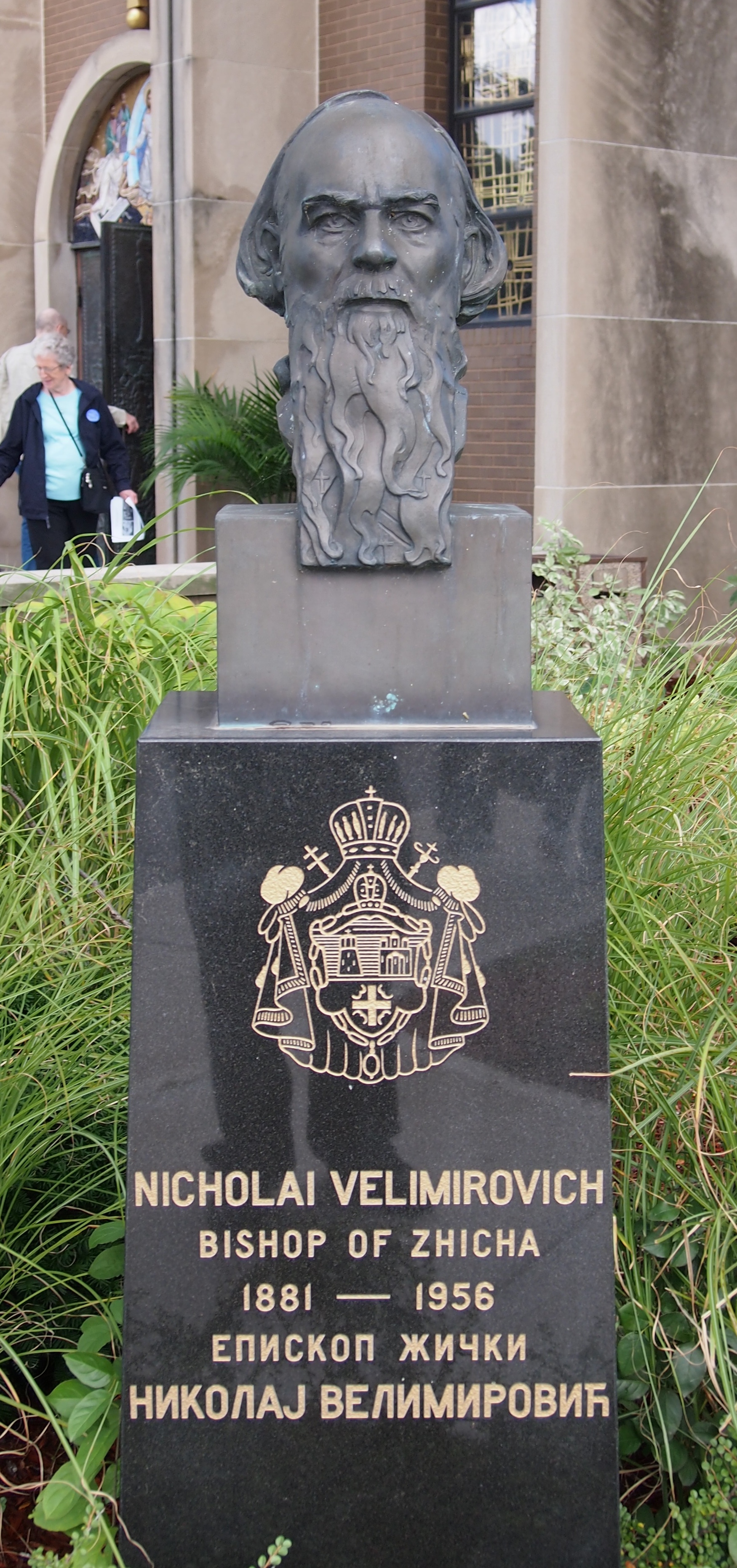
Holy Resurrection Serbian Orthodox CathedralA prelate I didn’t know. Now I do.
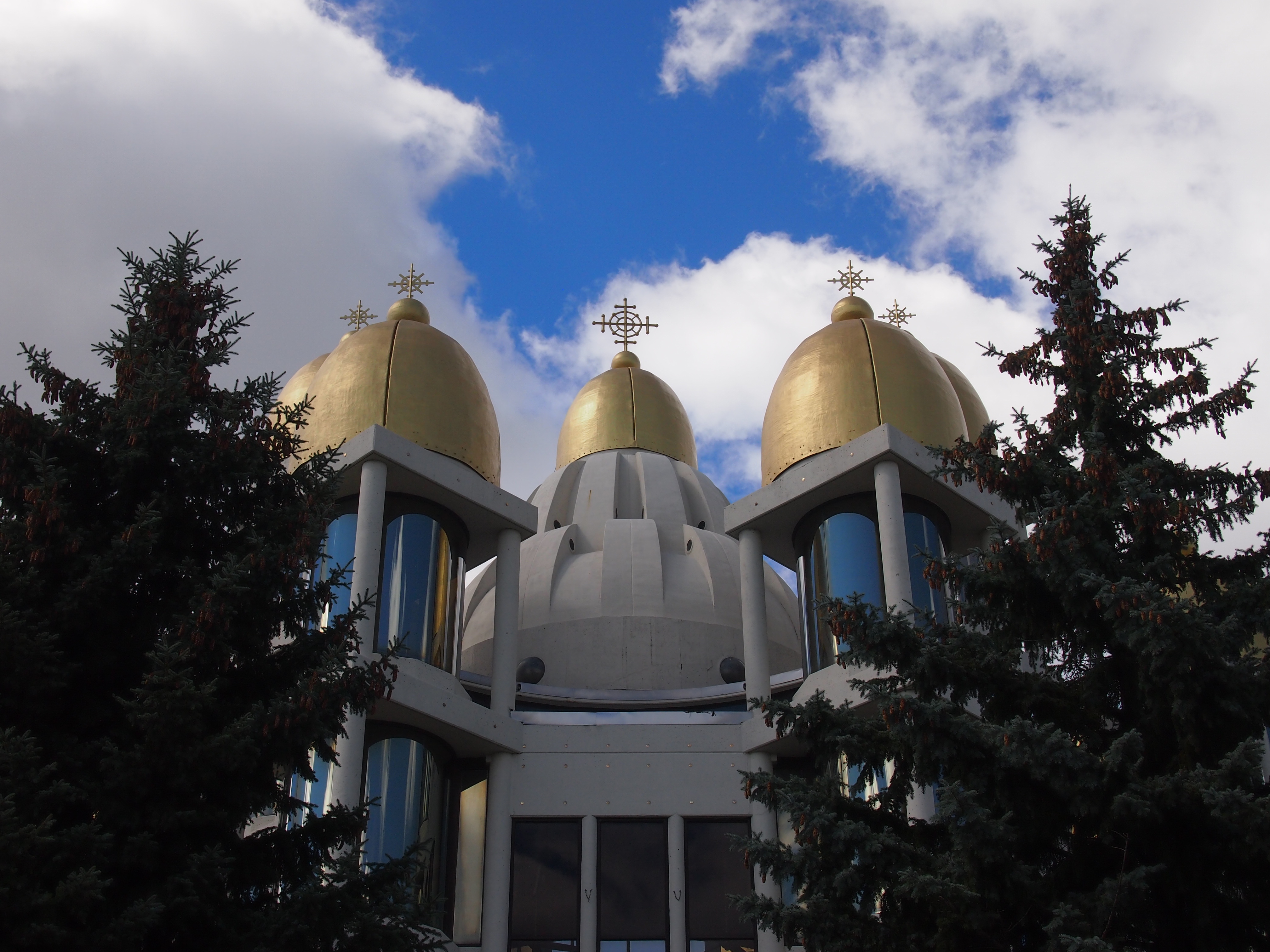
Holy Resurrection Serbian Orthodox CathedralSt. Joseph the Betrothed Ukrainian Catholic Church.
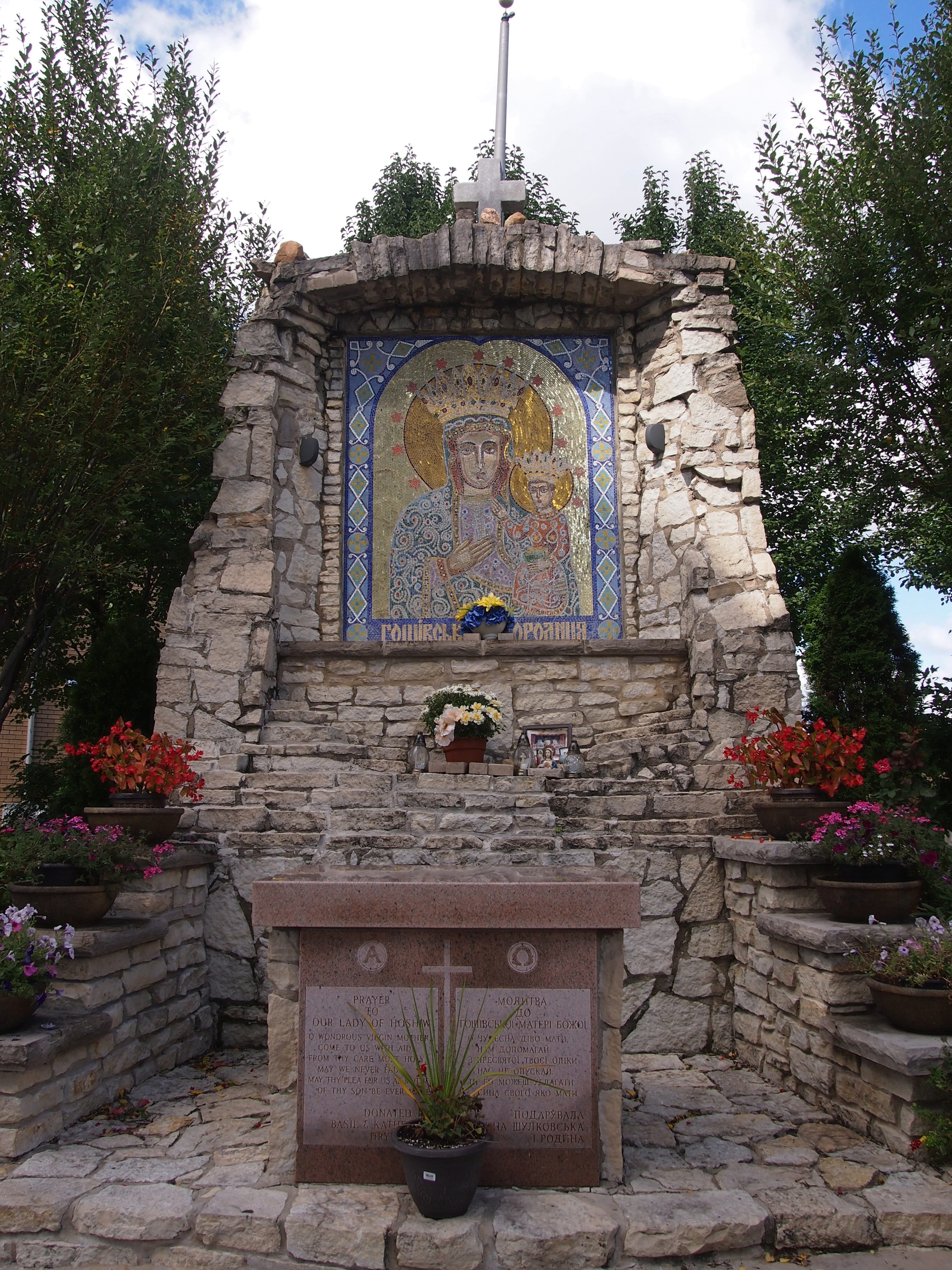
St. Joseph the Betrothed Ukrainian Catholic Church.Near the main structure is an outdoor shrine to Our Lady of Hoshiv.St. Joseph the Betrothed Ukrainian Catholic Church.“The icon in the grotto is a modern replica of the miraculous icon of Our Lady of Hoshiv, considered by many Ukrainians to be a special place of pilgrimage,” the church web site notes.

“The original icon was painted at the beginning of the 18th century, and during the Turkish and Tatar incursions in Ukraine was taken to Hoshiv for safety.

“In Hoshiv, the icon began to miraculously glow with a great halo, as witnessed by many locals and their priest. After the glow subsided, there were tears on Our Lady’s face.

“After this miracle, the people petitioned Metropolitan Lev Sheptytsky to transfer the icon to a ‘holy place’ and it was moved to the Basilian monastery of Yasna Hora (Bright Mountain) in Hoshiv. There the miraculous nature of this icon continued to reveal itself with many documented healings.

“The Grotto of Our Lady of Hoshiv that stands next to St. Joseph Church was built in 1961-1962, and was dedicated in May 1962 by Bishop Jaroslaw Gabro.”

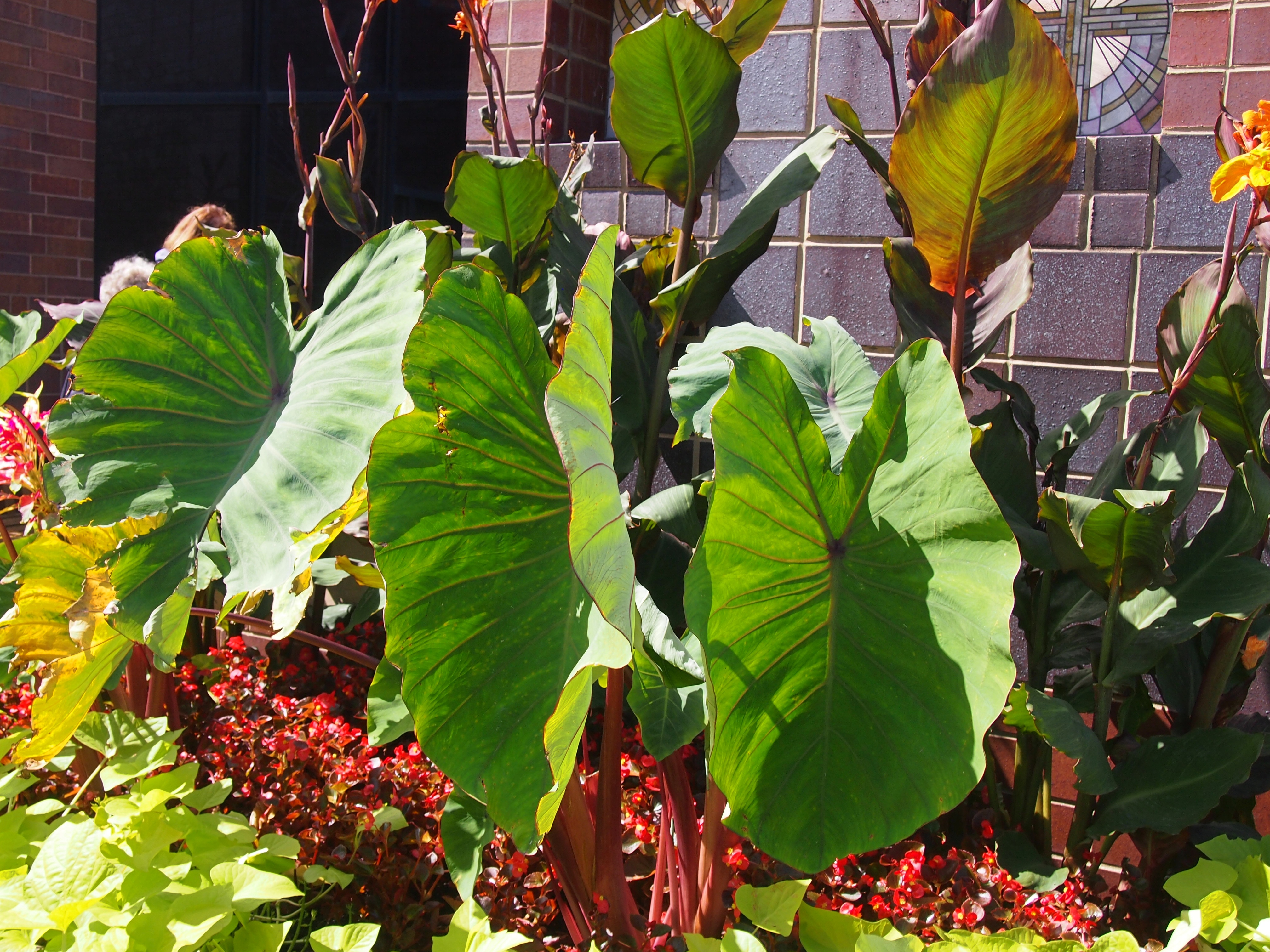
Outside Our Lady of Hope in Rosemont is, was, a patch of elephant ears.
Our Lady of Hope RosemontThe church isn’t overwrought with stained glass, but there is some.
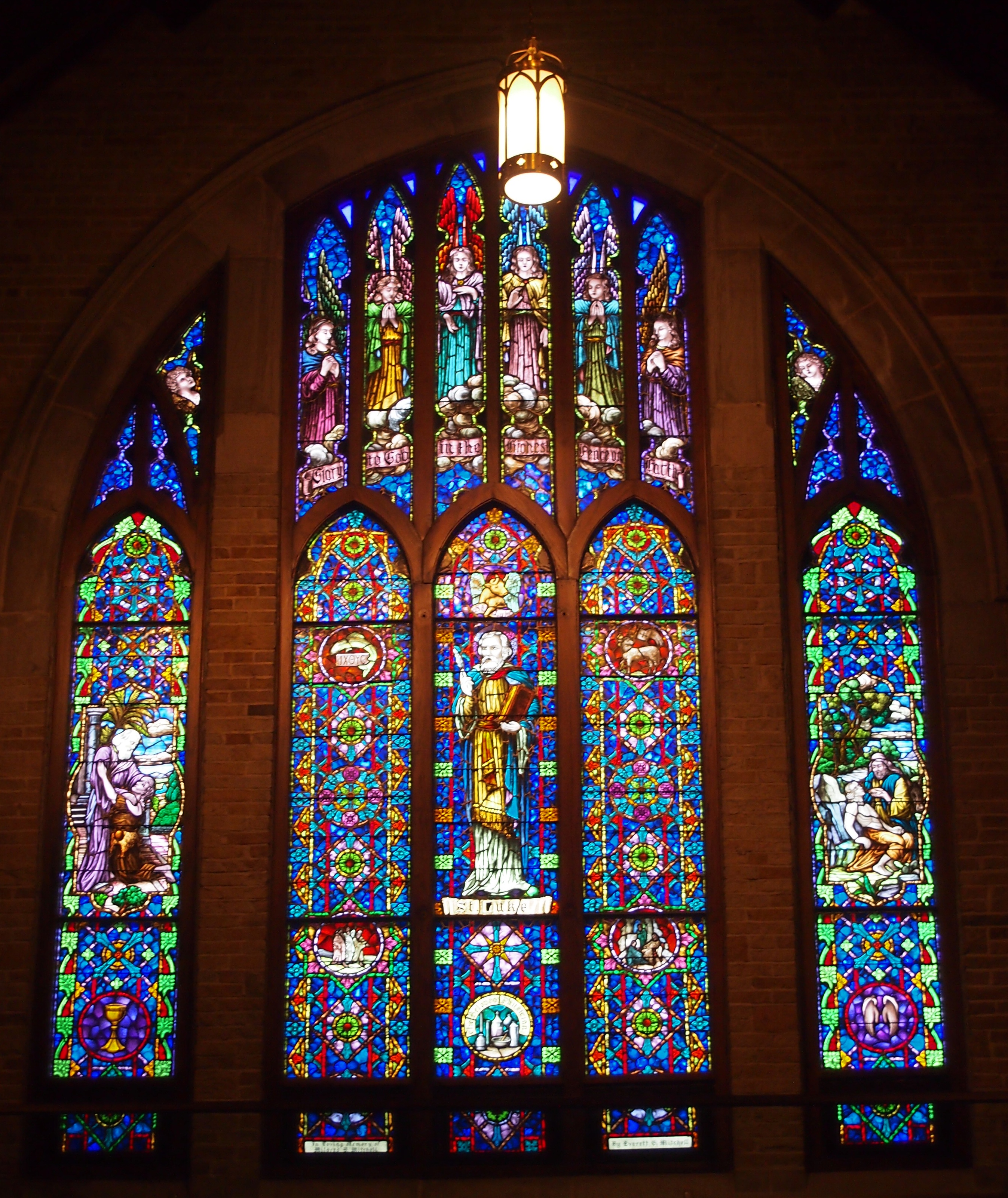
Our Lady of Hope RosemontMuch more stained glass can be found at St. Luke’s Lutheran Church in Park Ridge.St. Luke’s Lutheran Church in Park Ridge

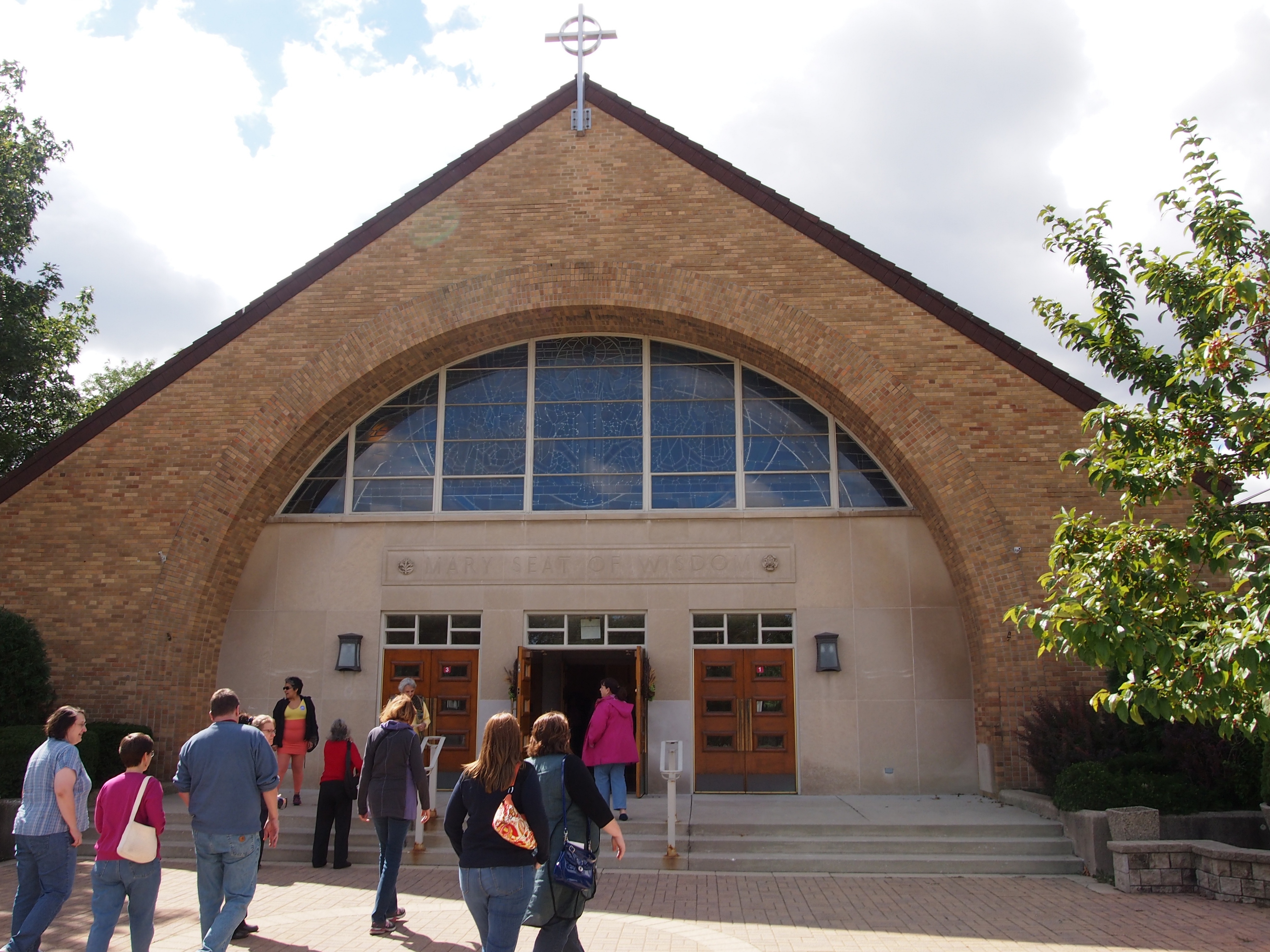
St. Luke’s Lutheran Church in Park RidgeOne church we visited but which I didn’t post about — I don’t remember why — was Mary, Seat of Wisdom, also in Park Ridge.

Mary, Seat of Wisdom

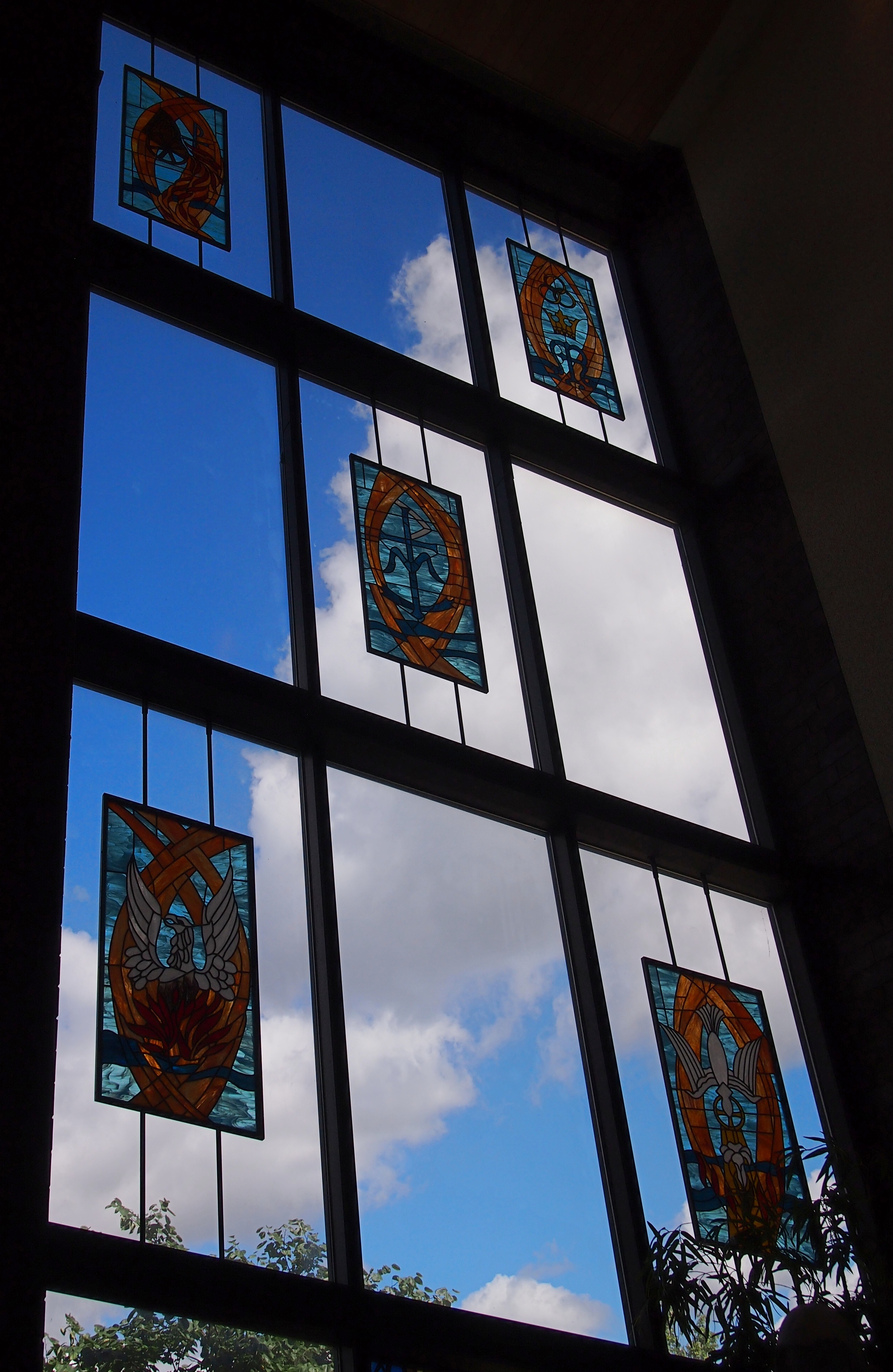
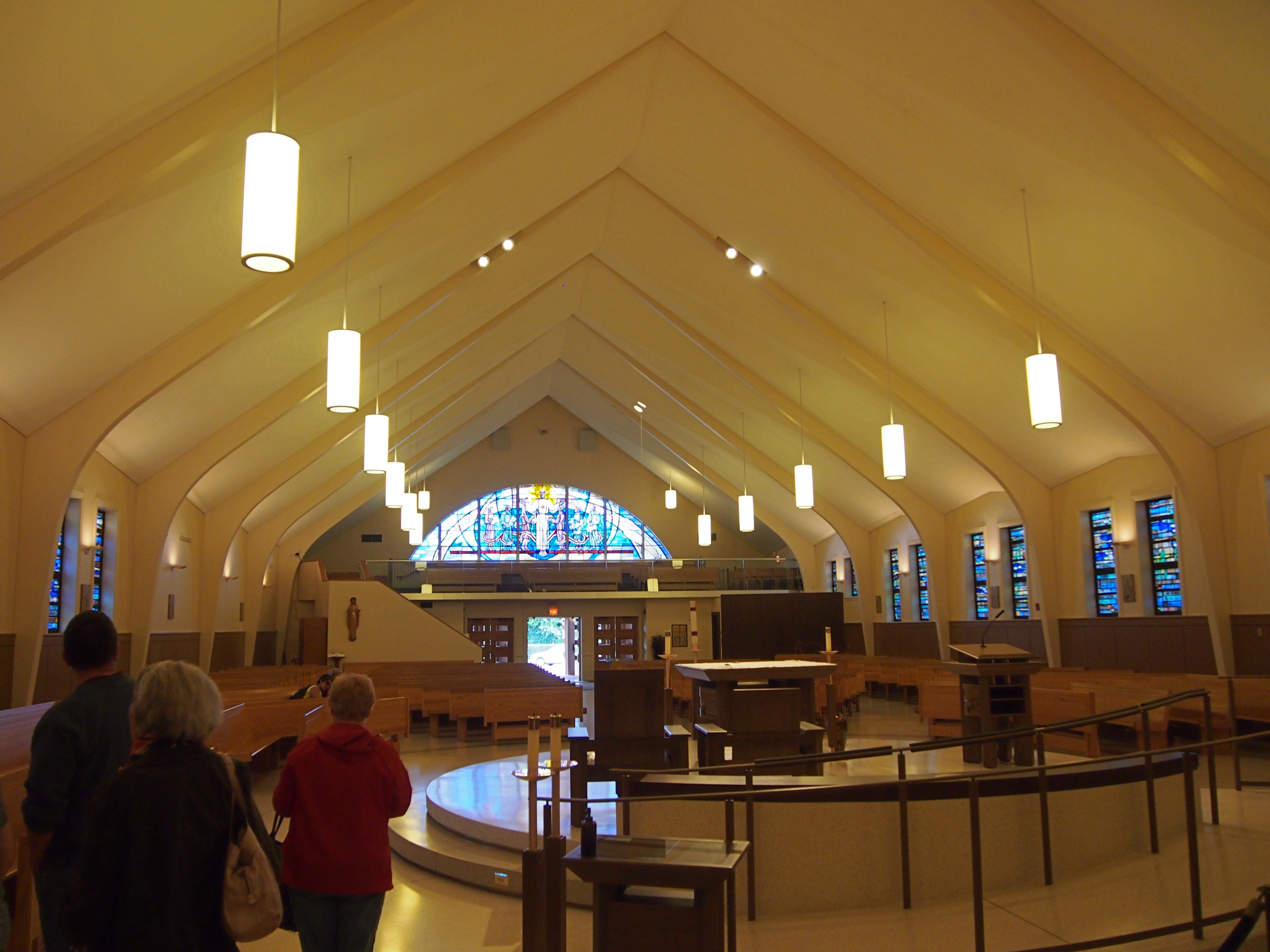
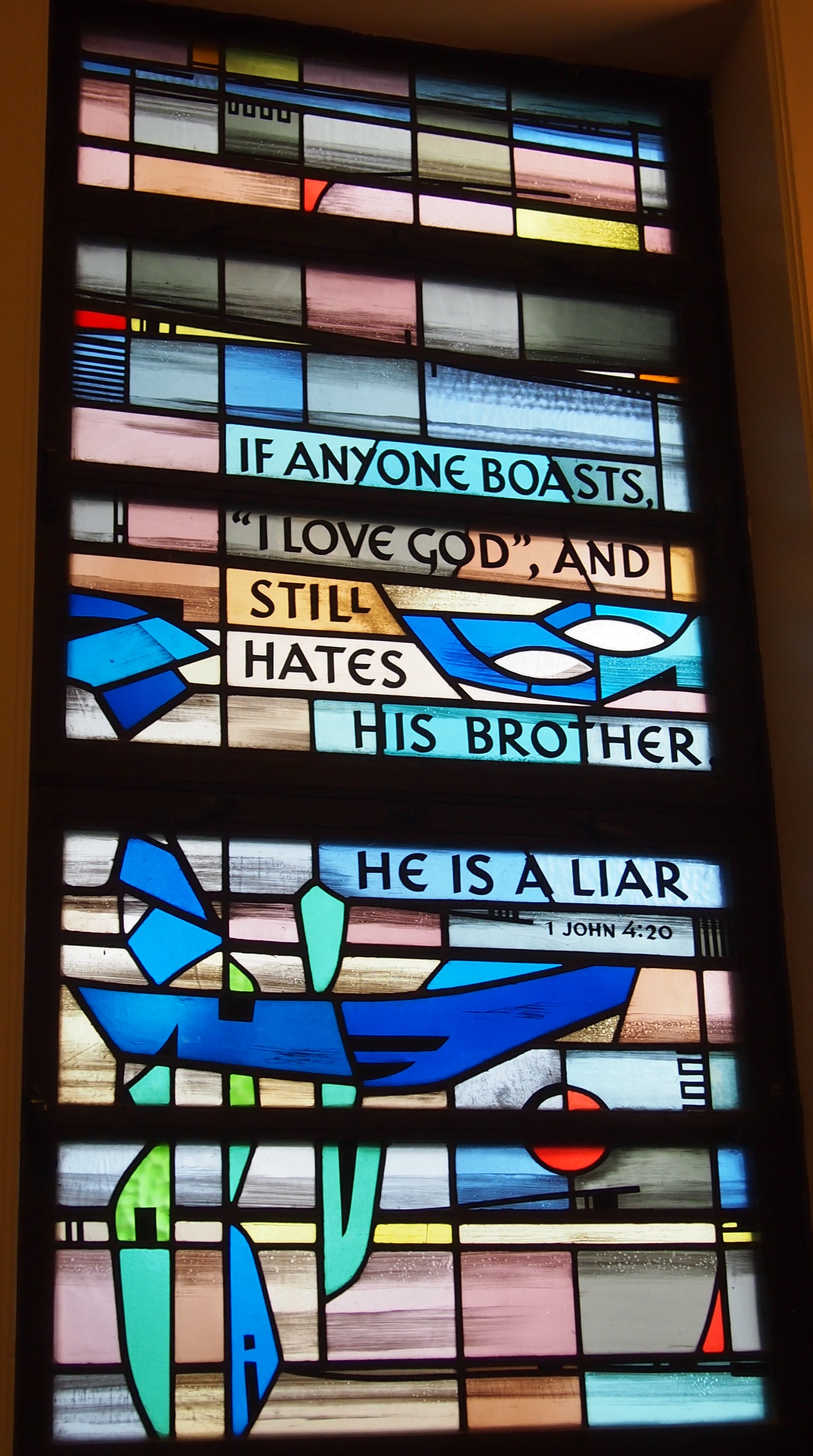
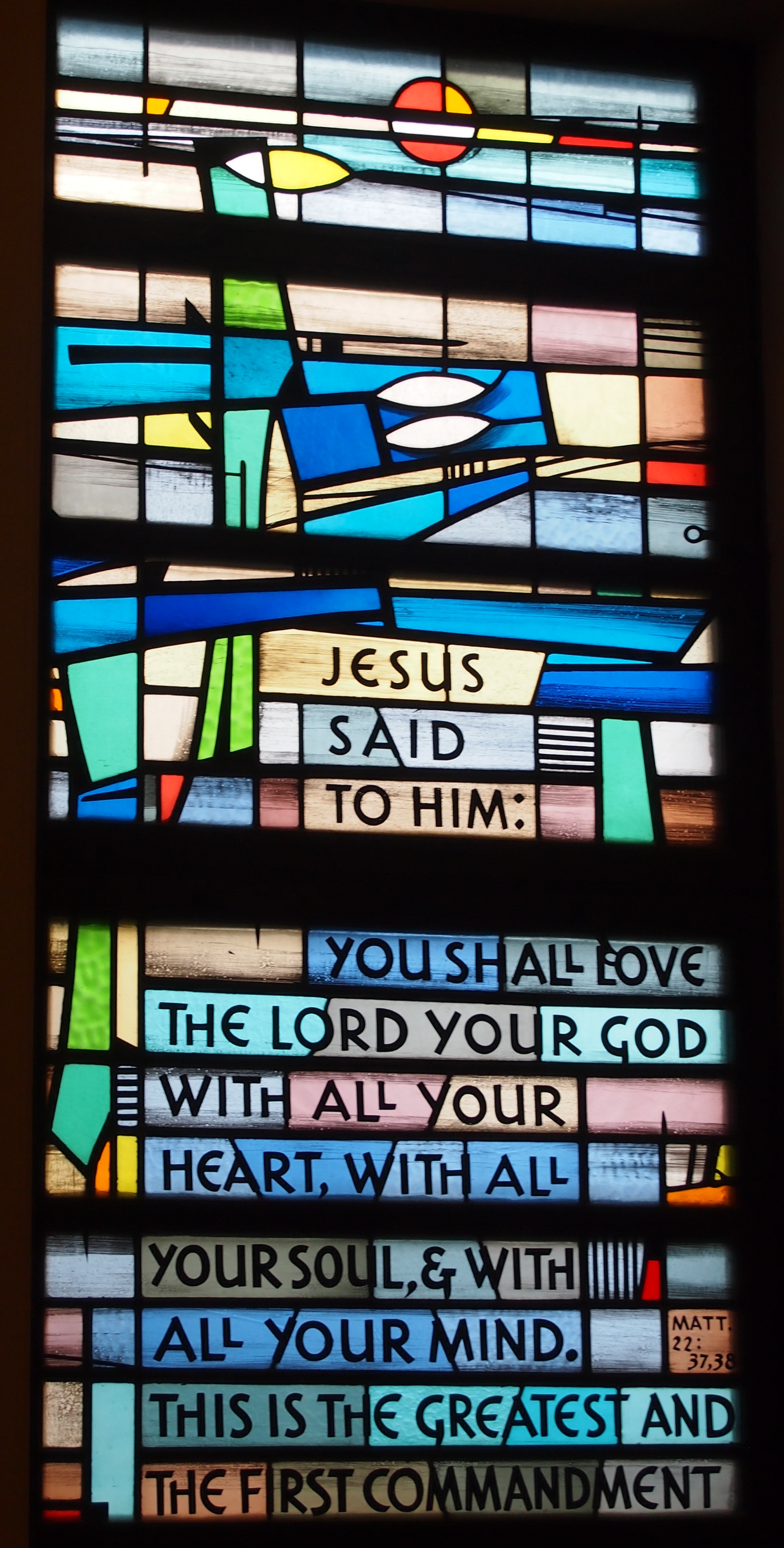
Mary, Seat of WisdomMary, Seat of WisdomInteresting stained glass, not quite like I’ve seen elsewhere.Mary, Seat of Wisdom Mary, Seat of Wisdom

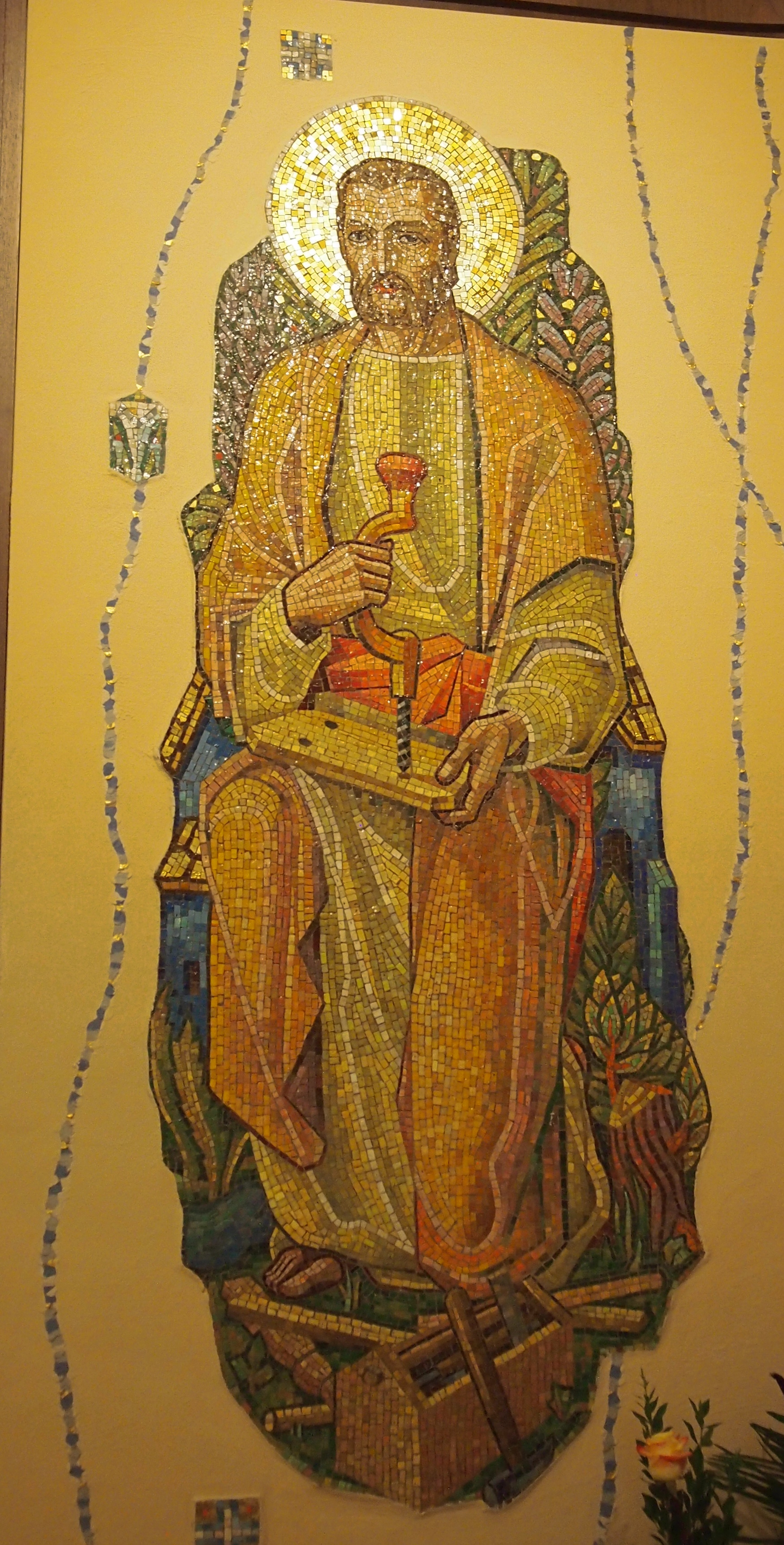
Mosaics. Or was it a painting that looks like a mosaic? I don’t remember.
Mary, Seat of WisdomAnother detail I liked.
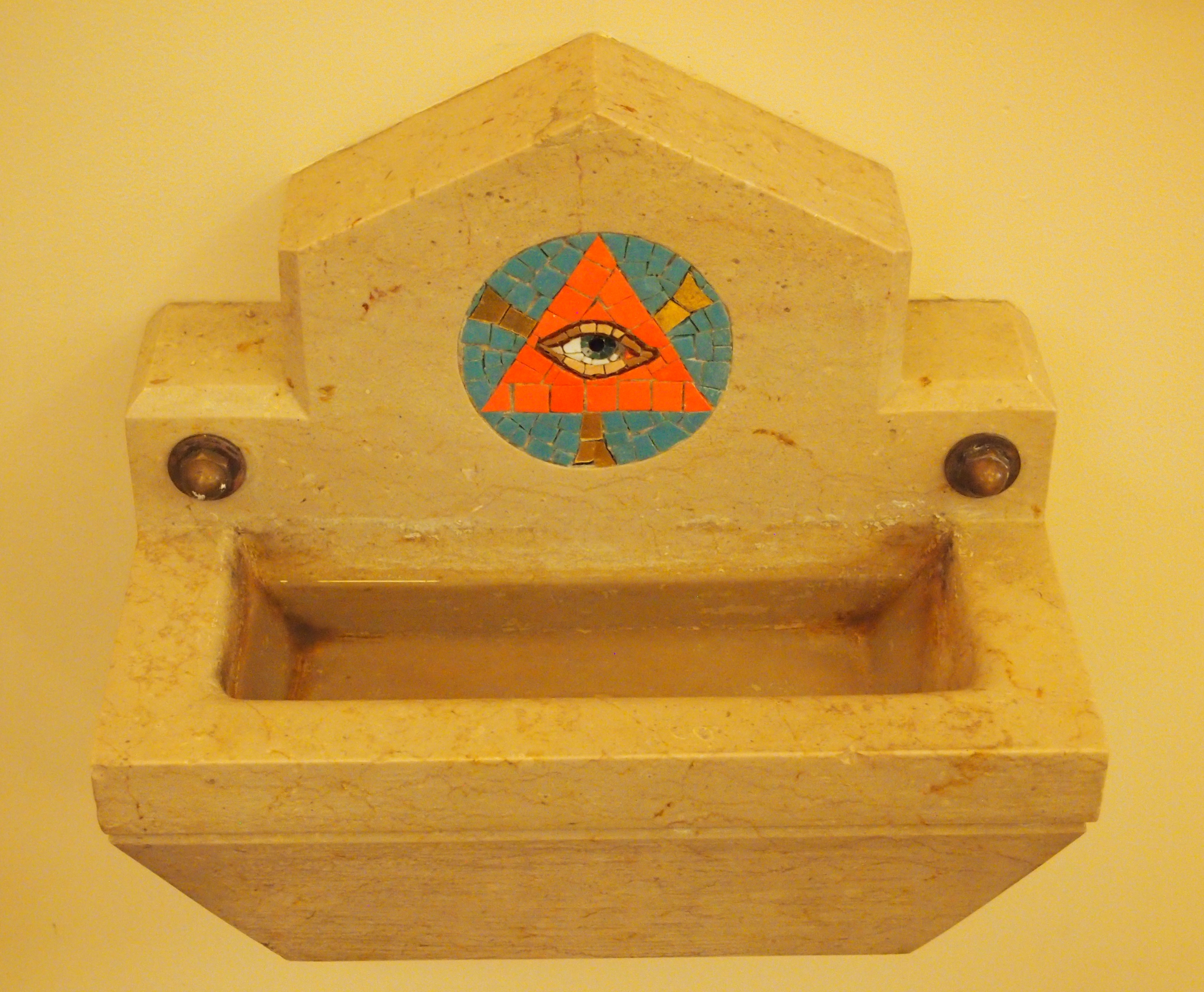
Mary, Seat of WisdomThe Eye of Providence clearly belongs in a church, and maybe even on the dollar bill, but it would be interesting if it popped up randomly in public places. Just to give people something to think about.

The Century of Progress Architectural District

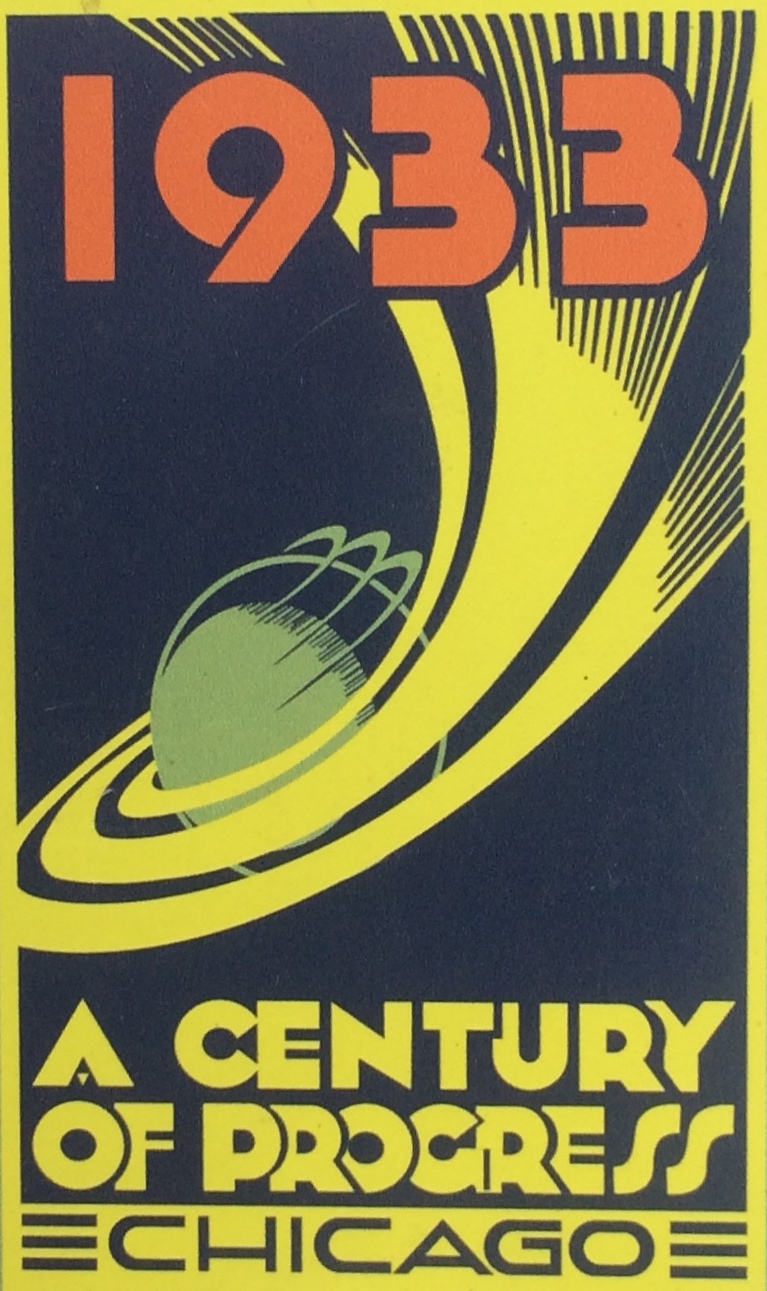
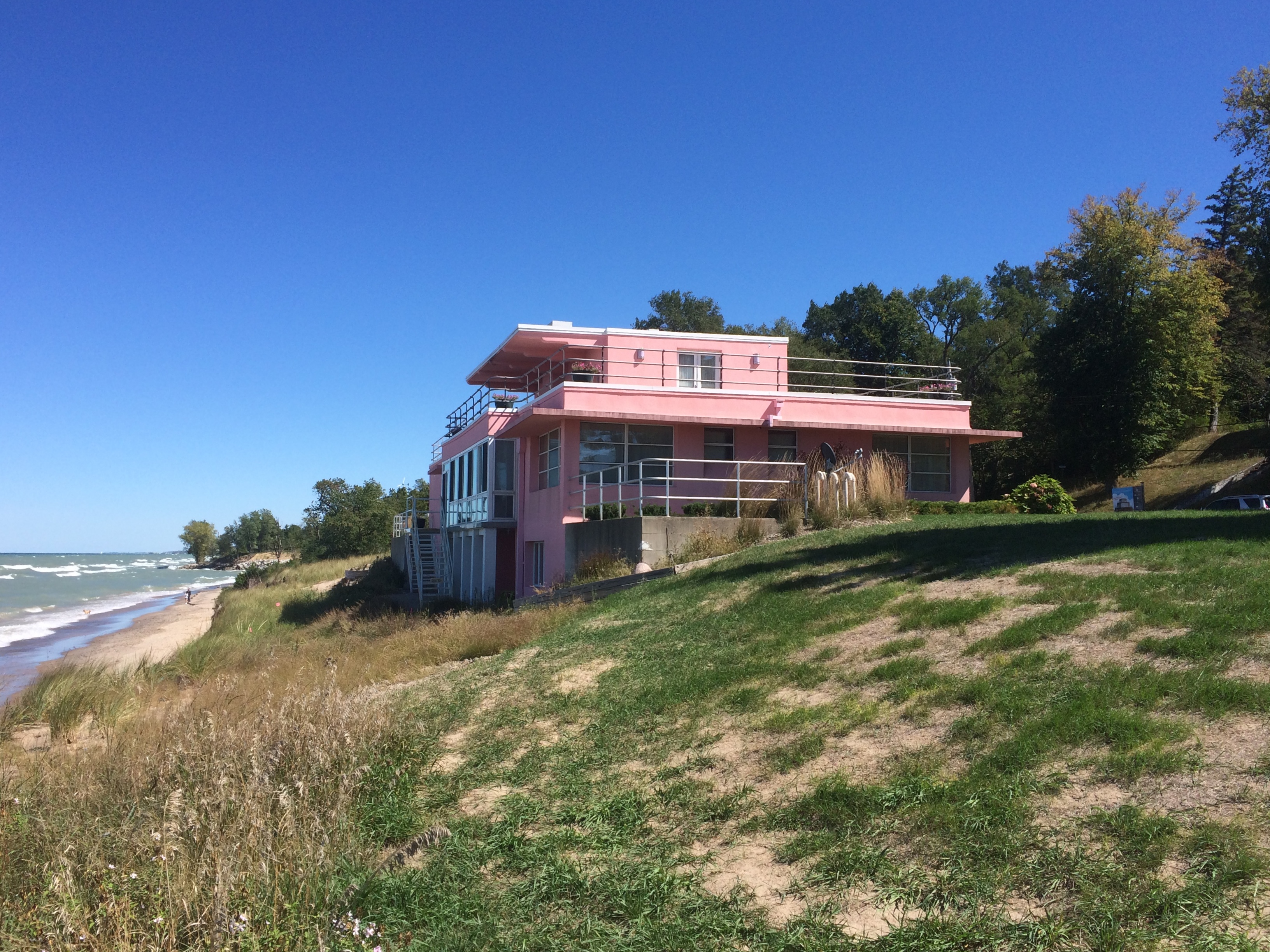
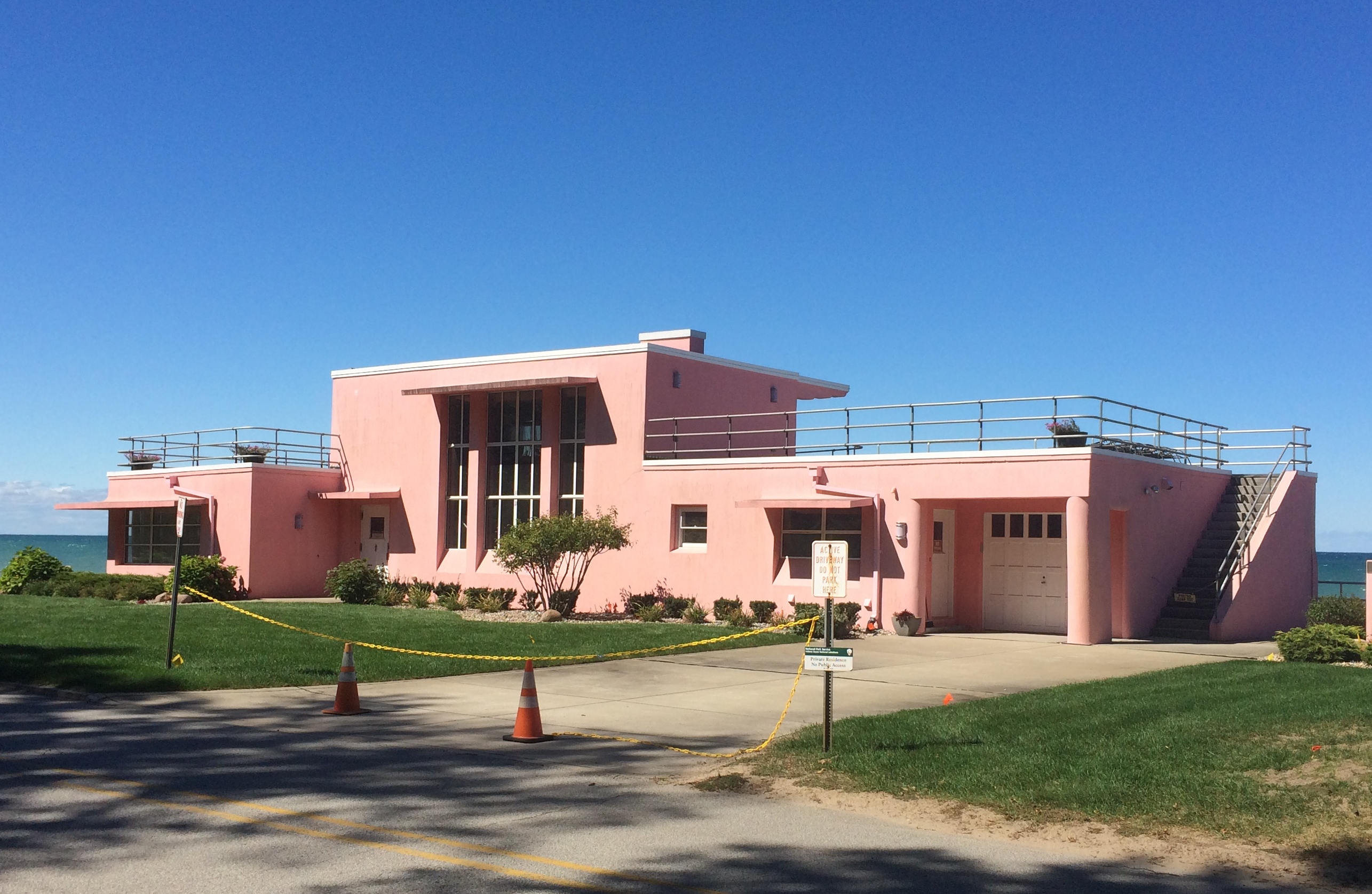
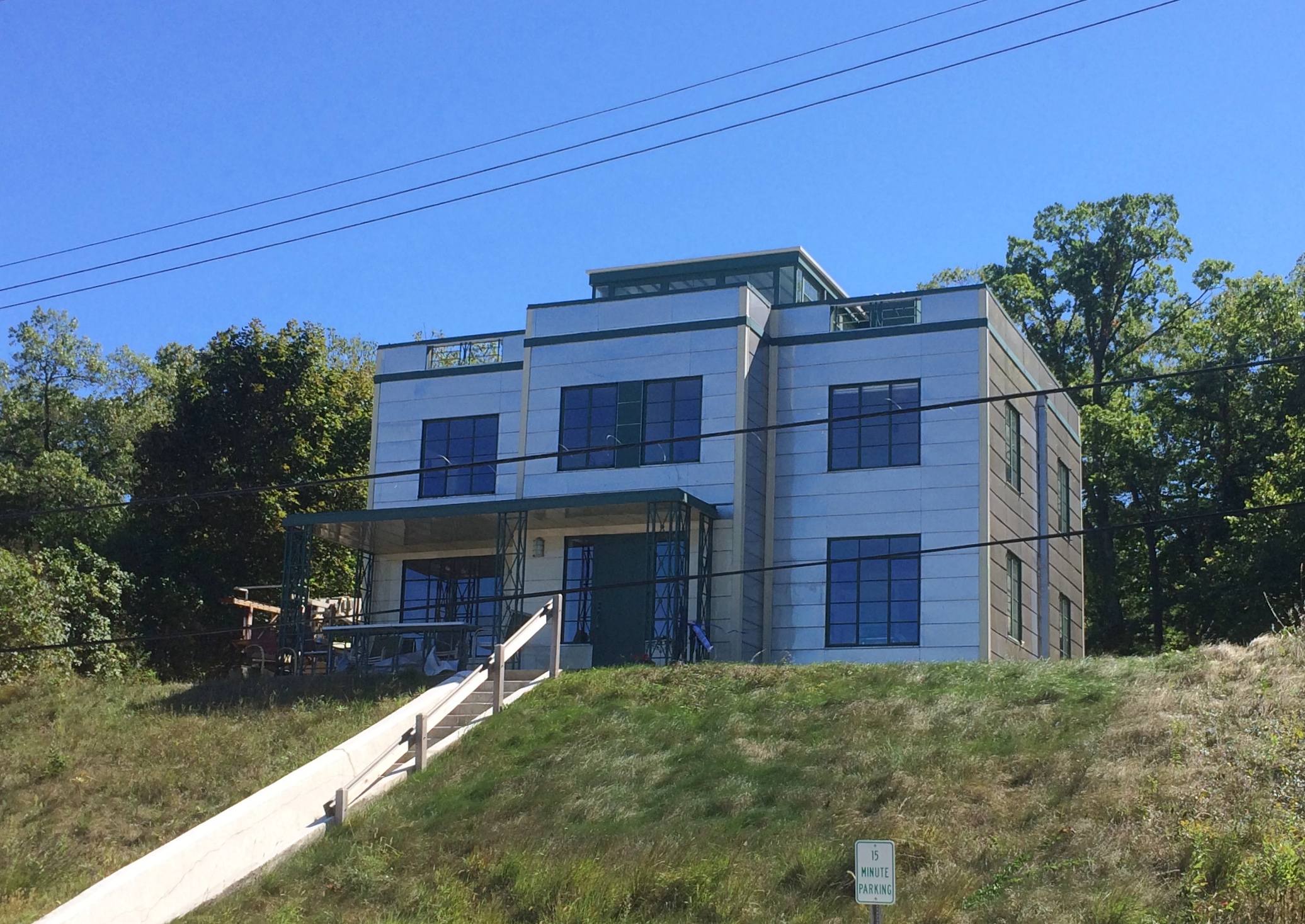
Tucked away on a small road paralleling Kemil Beach on Lake Michigan is the Century of Progress Architectural District, which includes five houses originally built for the world’s fair in Chicago in 1933. The houses were moved by barge across the lake after the fair, and are now part of Indiana Dunes National Park.

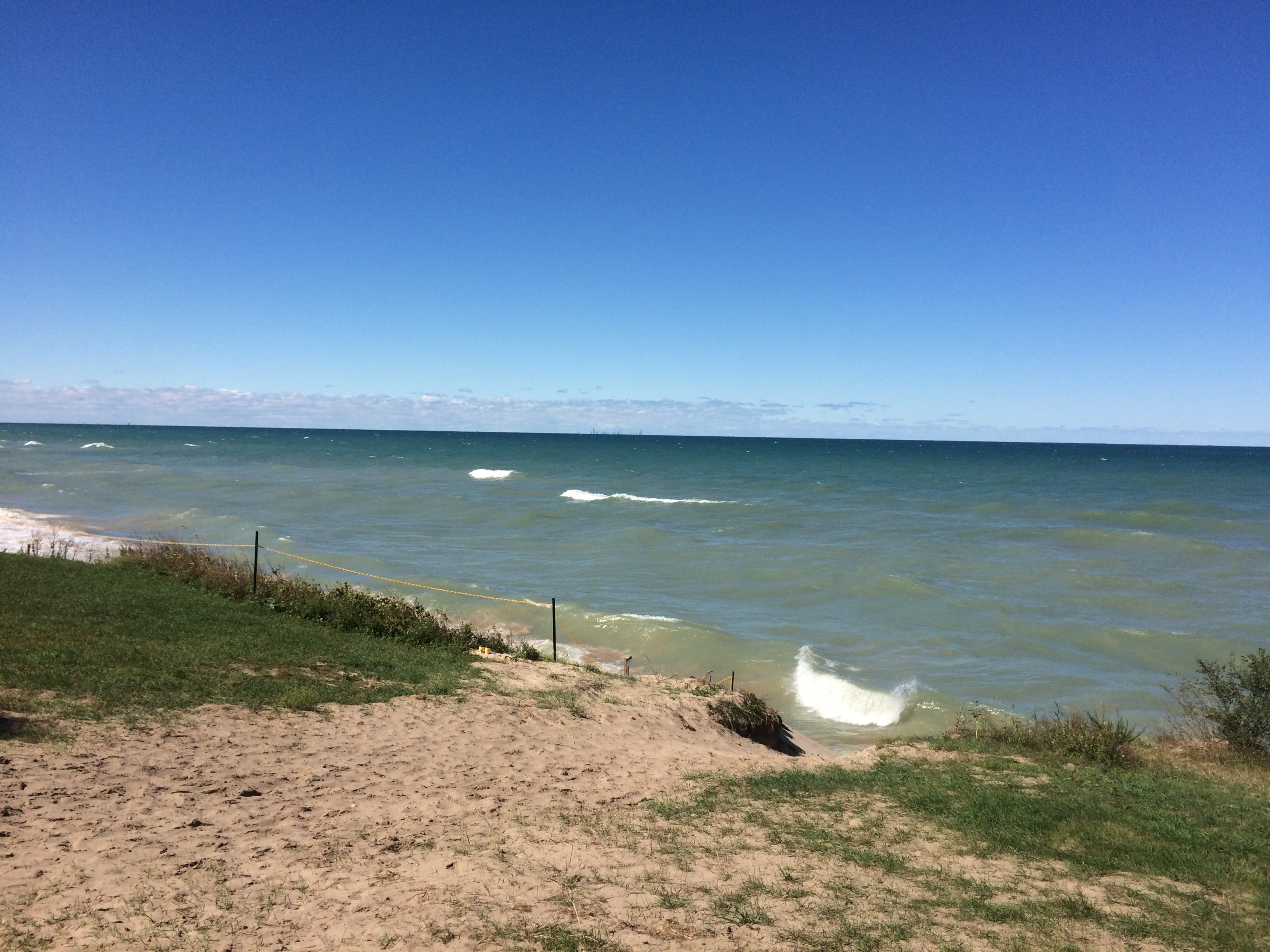
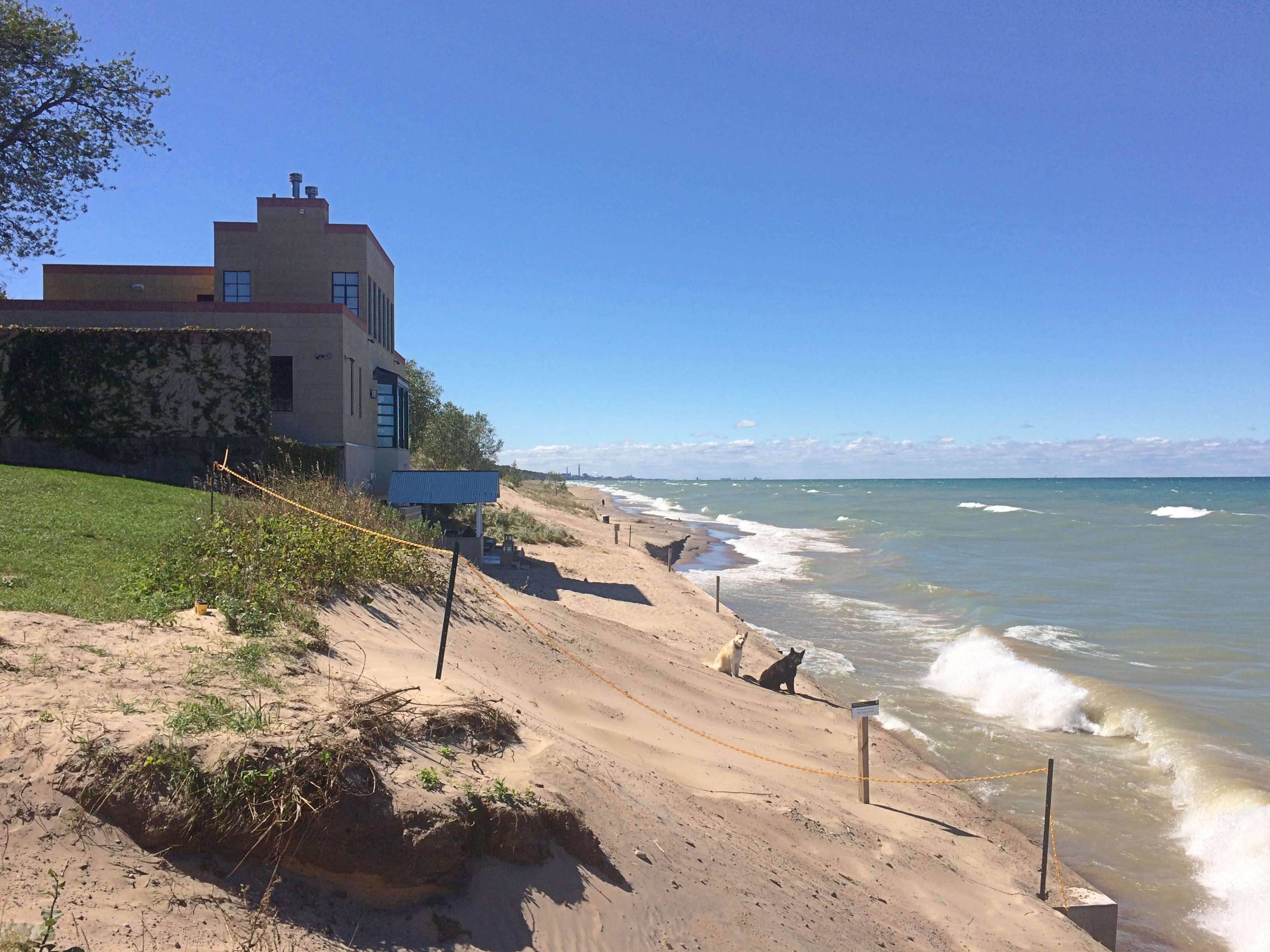
More about that shortly. First, the view from Kemil Beach, which is nearly as far south as you can go and still be on the edge of Lake Michigan. The day we visited was clear and sunny, but not hot — more of a moderate September warmth.
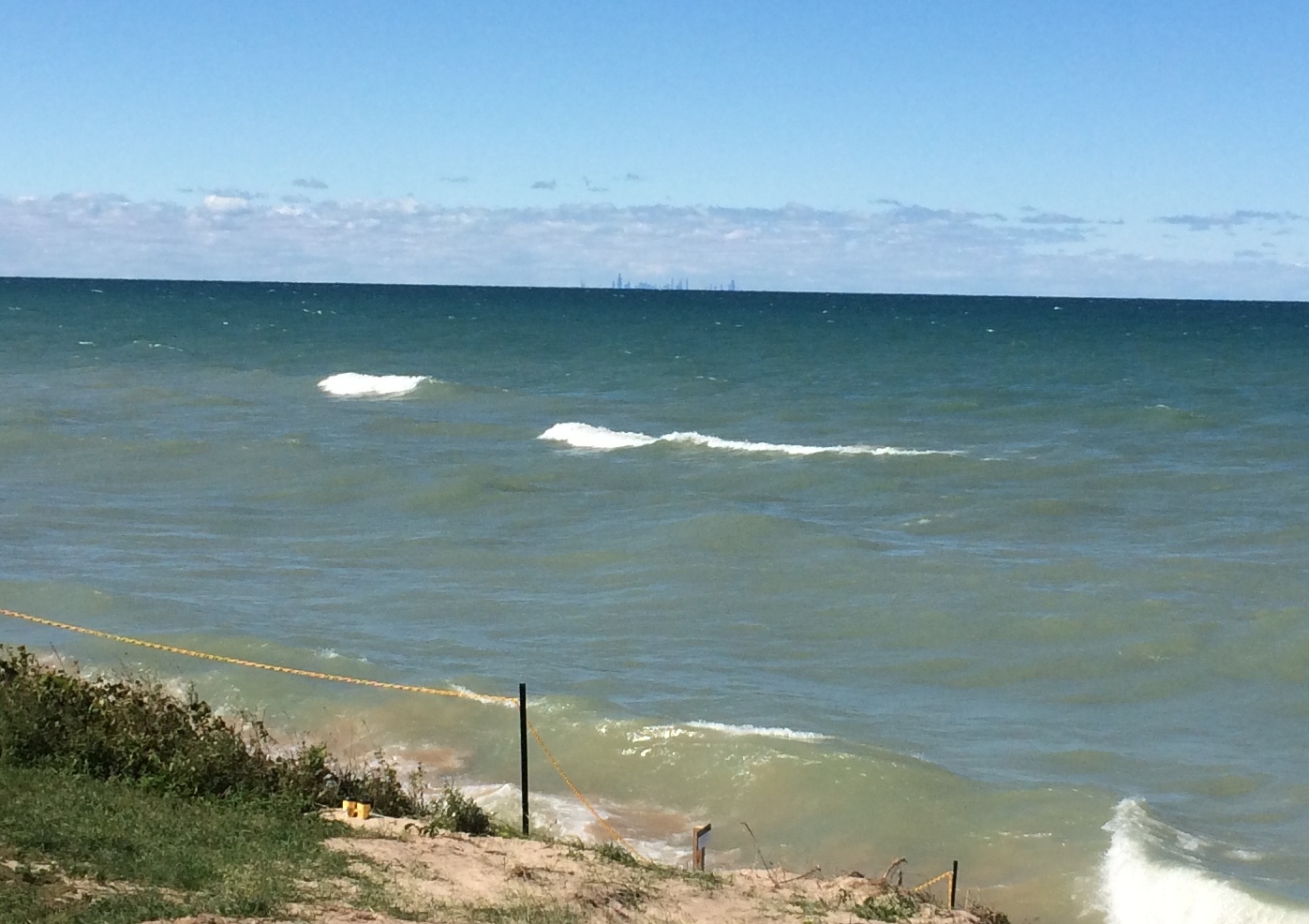
If you look carefully at the horizon at that place, the enormous buildings of the Chicago skyline are visible, but look as insubstantial as grey chalk marks on a watercolor.
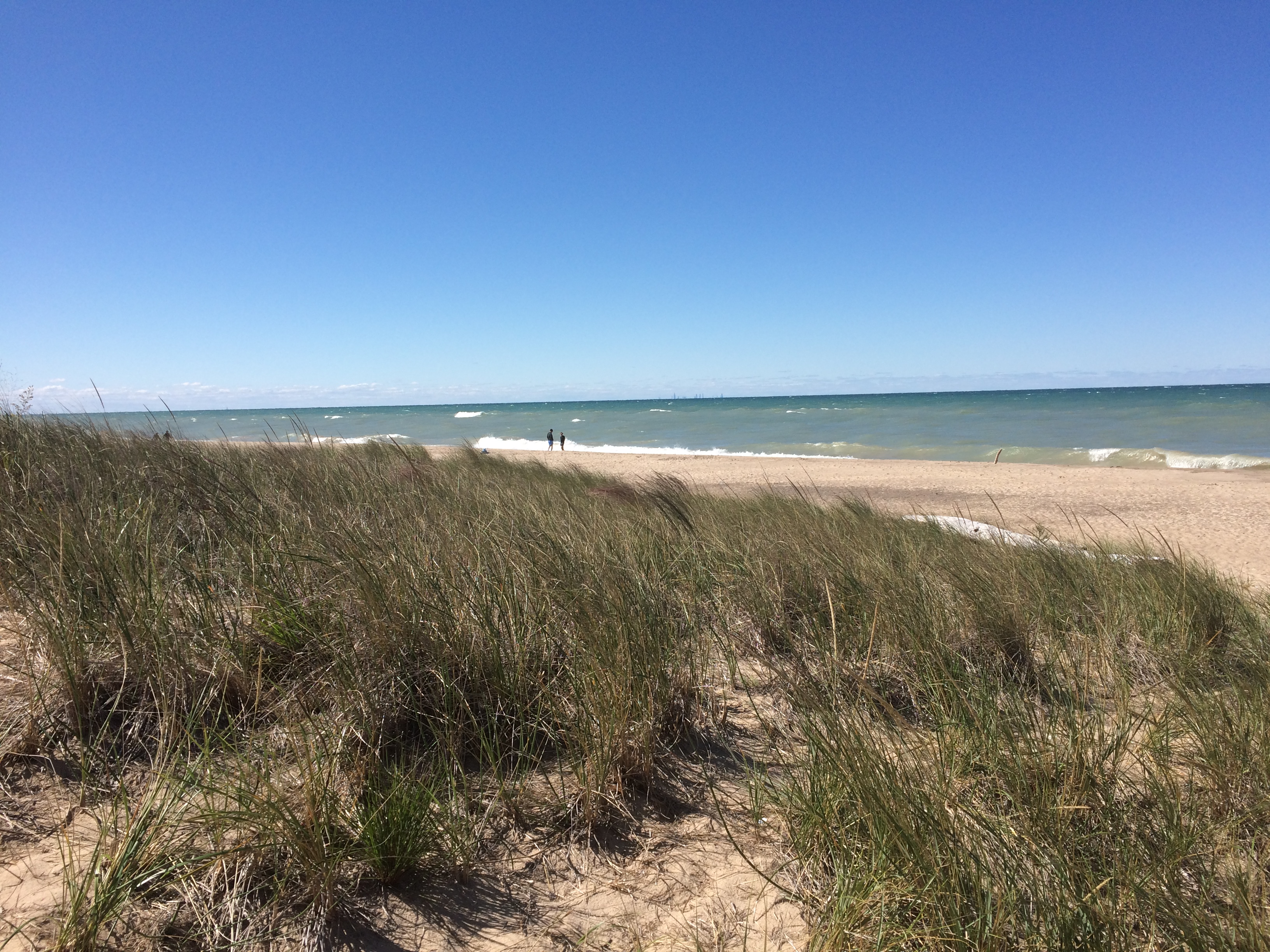
Kemil Beach IndianaNot far from the houses is access to the beach itself.Kemil Beach Indiana

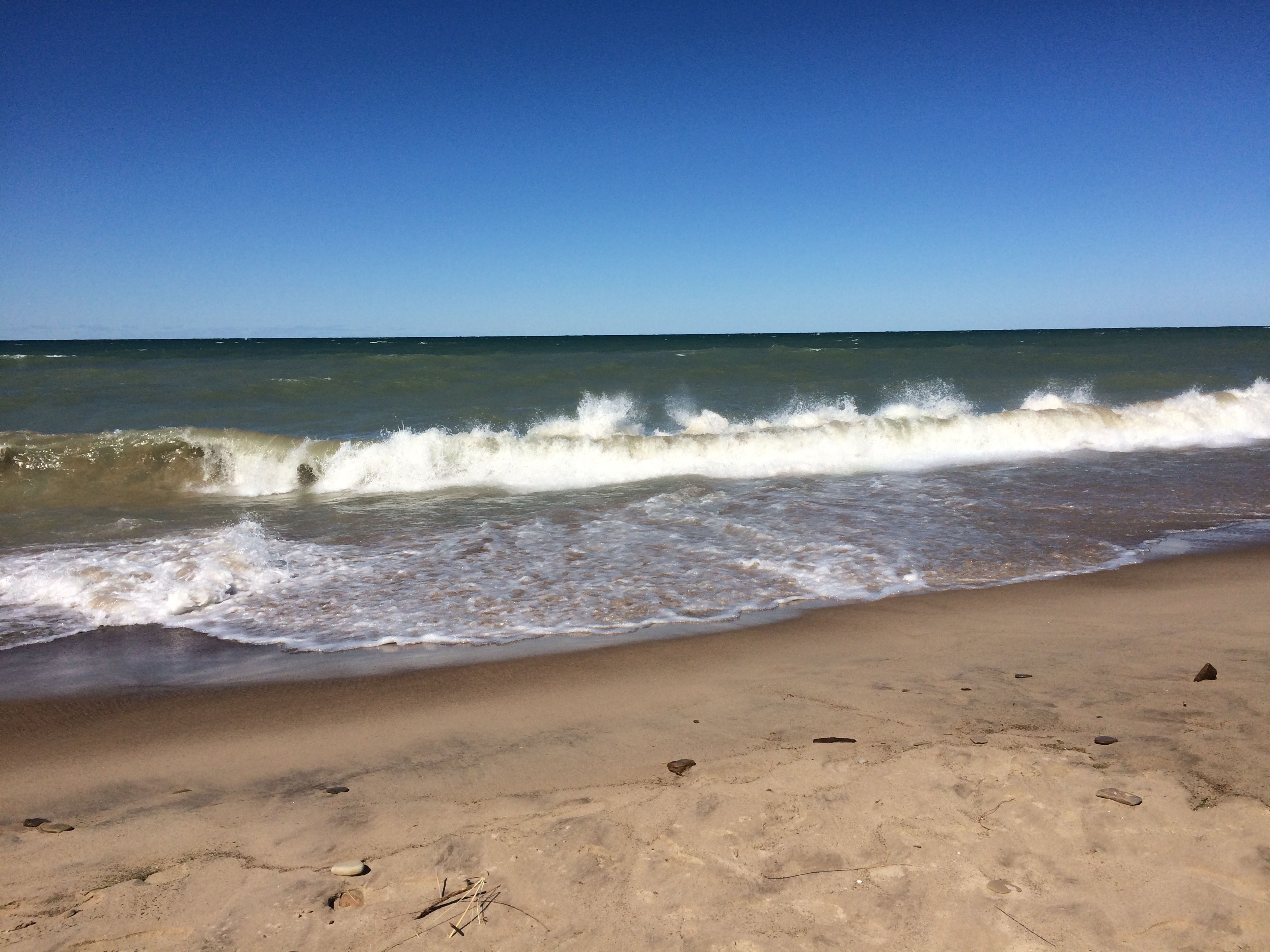
Kemil Beach IndianaNot many people were out and about, even though it’s part of a national park. Then again, the beach was windswept, bringing in large breakers.
Kemil Beach IndianaThat sounded like this.

Perched right over the shore is the pink Florida Tropical House, designed by Miami architect Robert Law Weed to promote Florida living to fairgoers. Come be Florida Men and Women, that is.Century of Progress Architectural District

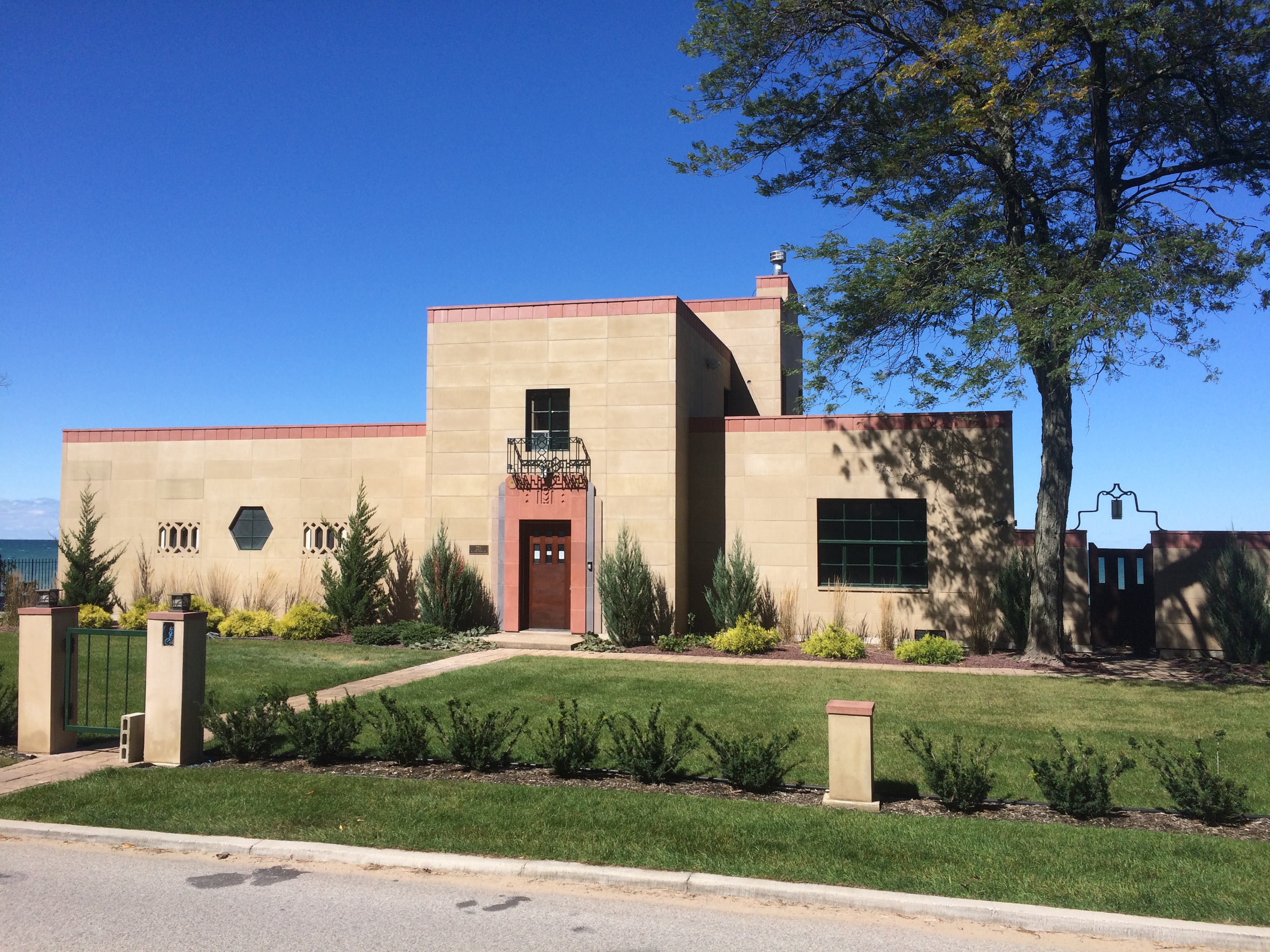
Century of Progress Architectural DistrictAlso perched over the shore is the Wieboldt-Rostone House, which showcased a building material called Rostone (limestone, shale and alkali). Design by Indiana architect Walter Scholer.Century of Progress Architectural District

Century of Progress Architectural DistrictOn the hill above the road are the three other houses dating from the world’s fair. One, the Cypress Log Cabin, was meant to showcase that building material, and hugs the ground so closely that it was a little hard to see from the road.

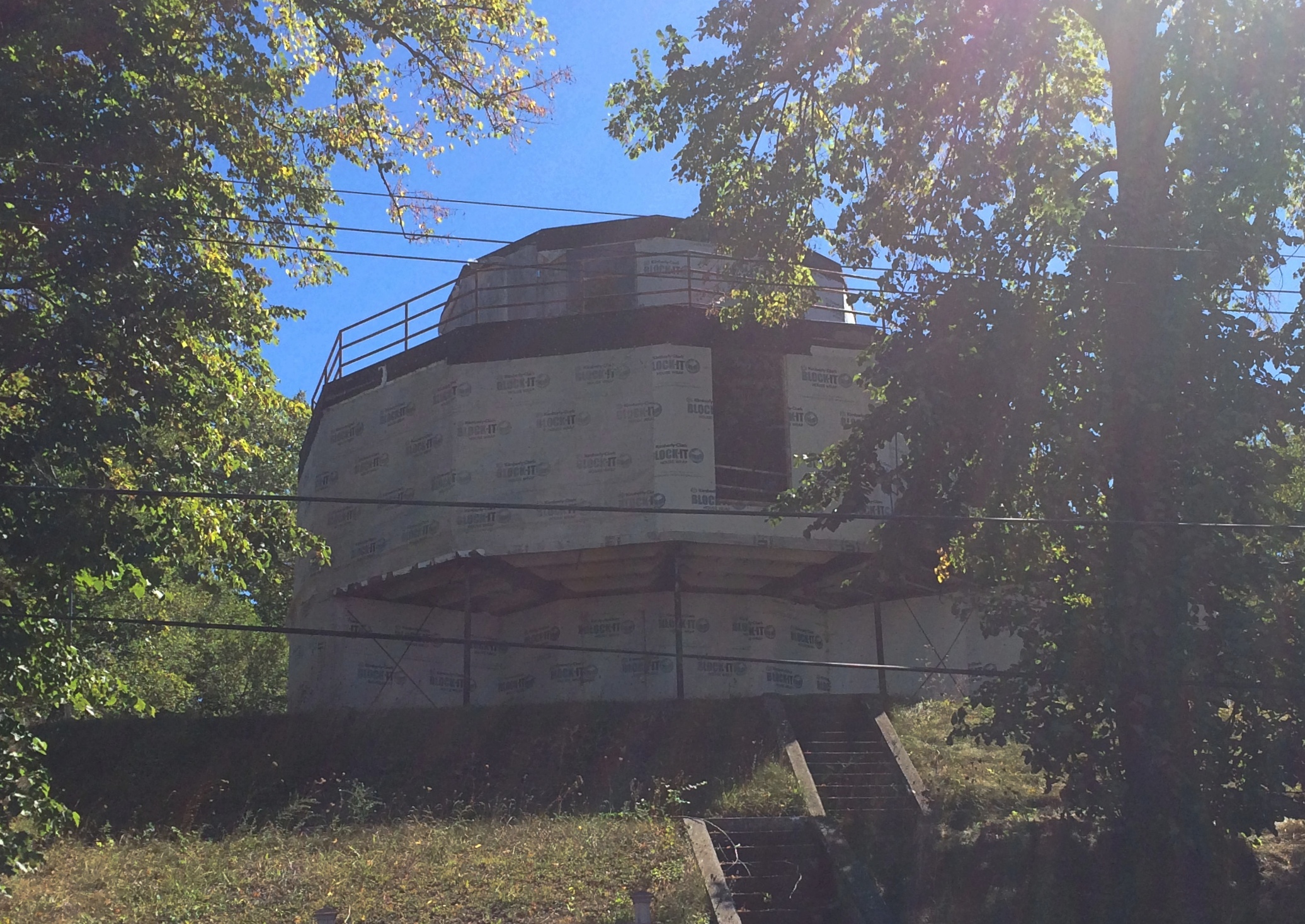
Another hillside structure, the Armco-Ferro House, was “an ode to the virtues of porcelain enamel and steel — expressed in the form of a prefabricated home,” the sign at the bottom of the hill told me.Century of Progress Architectural DistrictFinally, the House of Tomorrow, which is currently wrapped for renovation. Design by Chicago architect George Frederick Keck.

Century of Progress Architectural DistrictAll in all, an interesting little neighborhood. That’s a fitting term, since people actually live in the houses, except for the House of Tomorrow, and someone will live there when the work is done. Signs asked visitors to respect the privacy of the occupants. Tours of the interior are given only once a year, I’ve read, though I expect that isn’t going to happen this year.

In a remarkably imaginative move on the part of a government agency — the Park Service, which owns the properties — the houses are leased for 30 years at no charge, provided the lessees agree to restore and maintain the properties in that period.

Bohemian National Cemetery

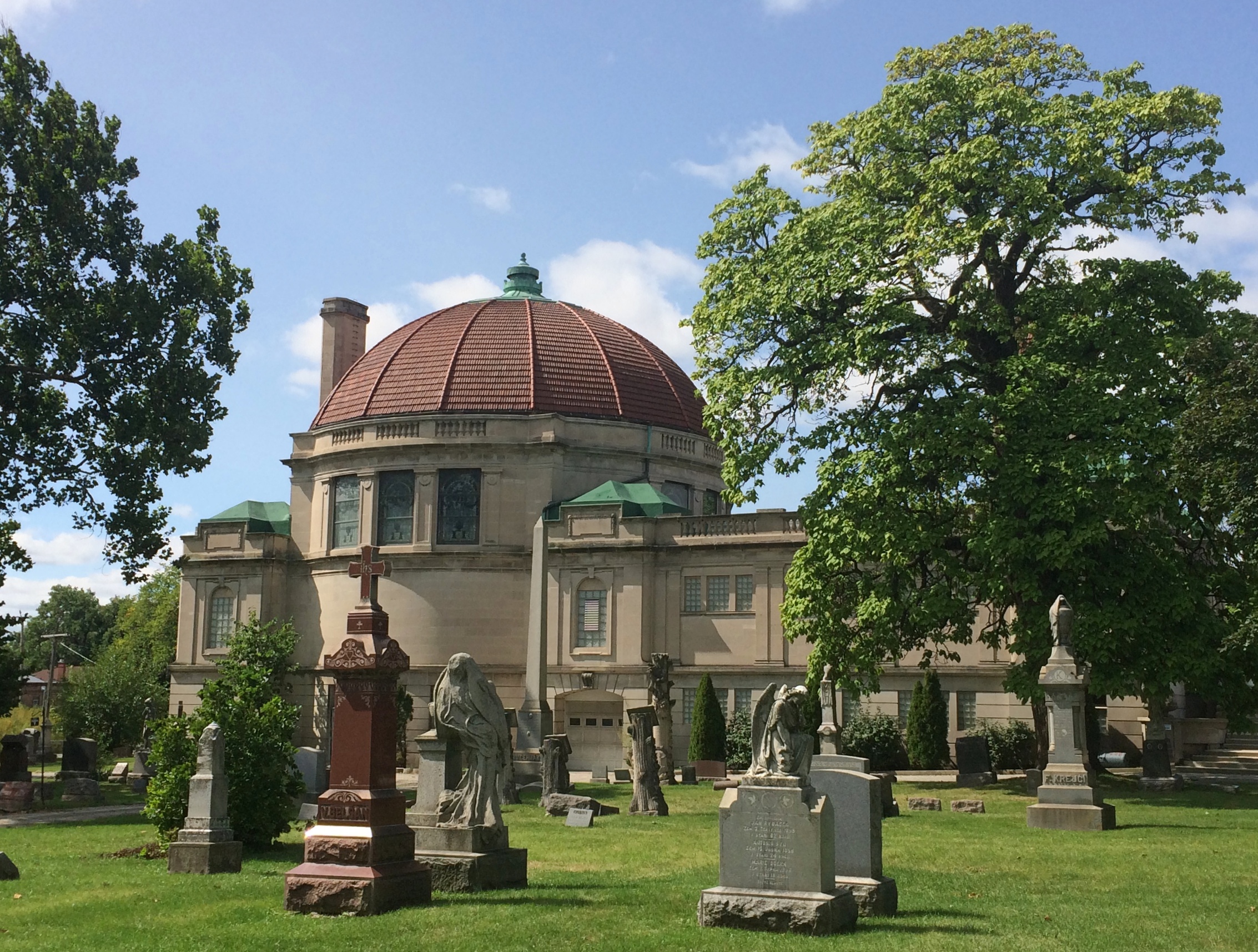
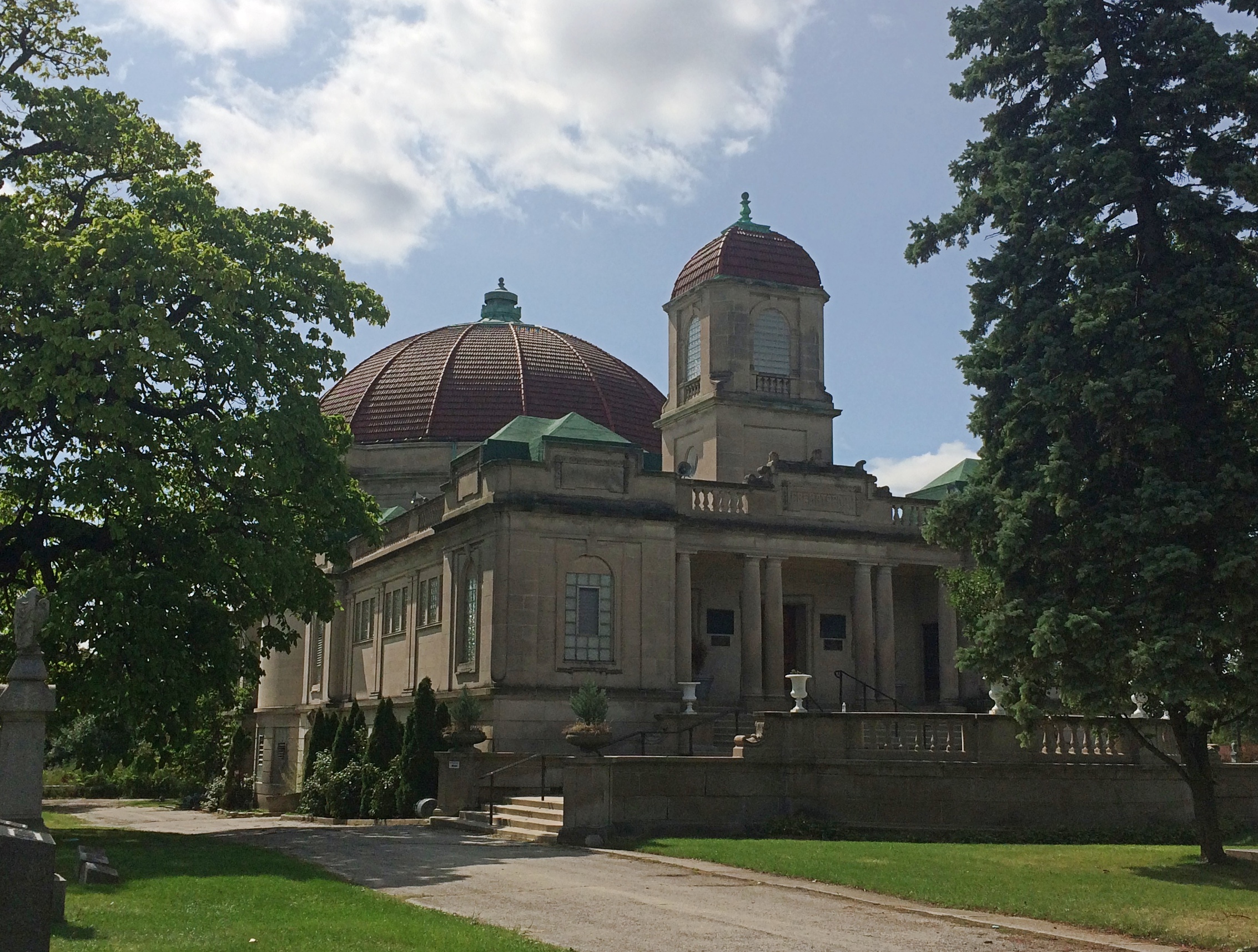
Back in 2004, I met Bob the crematorium operator by chance, and he showed me part of the facility he ran. The interior of this building.Bohemian National Cemetery ChicagoresplendentThat’s the crematorium and columbarium at Bohemian National Cemetery on the Northwest Side of Chicago, one of the resplendent cemeteries in the city. Bob wasn’t around when I returned for a visit on Sunday, September 13, and the building was closed.

As usual even at a beautiful cemetery, few other living people were around. But it was sunny and warm, and I had a good look.Bohemian National Cemetery

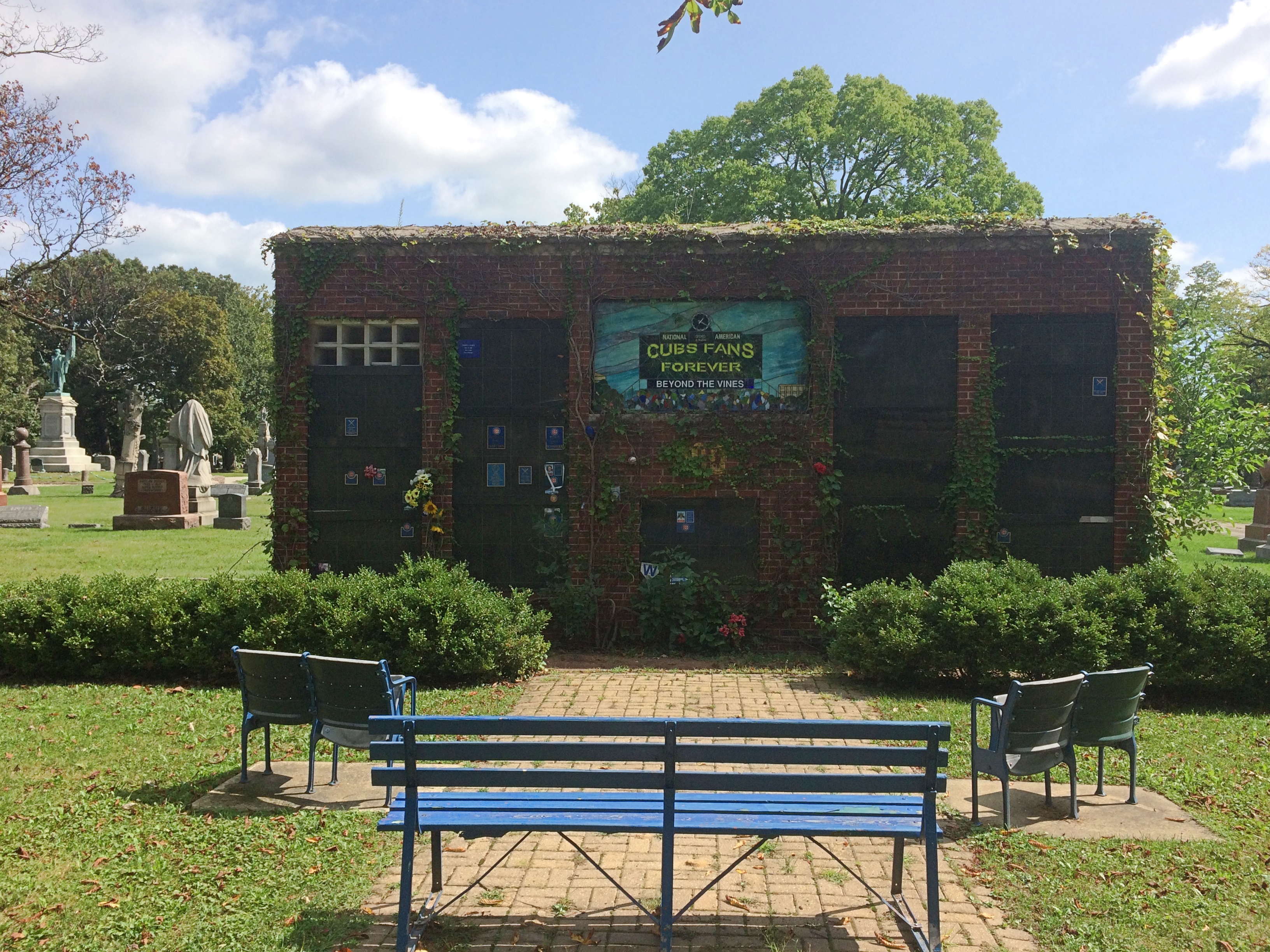
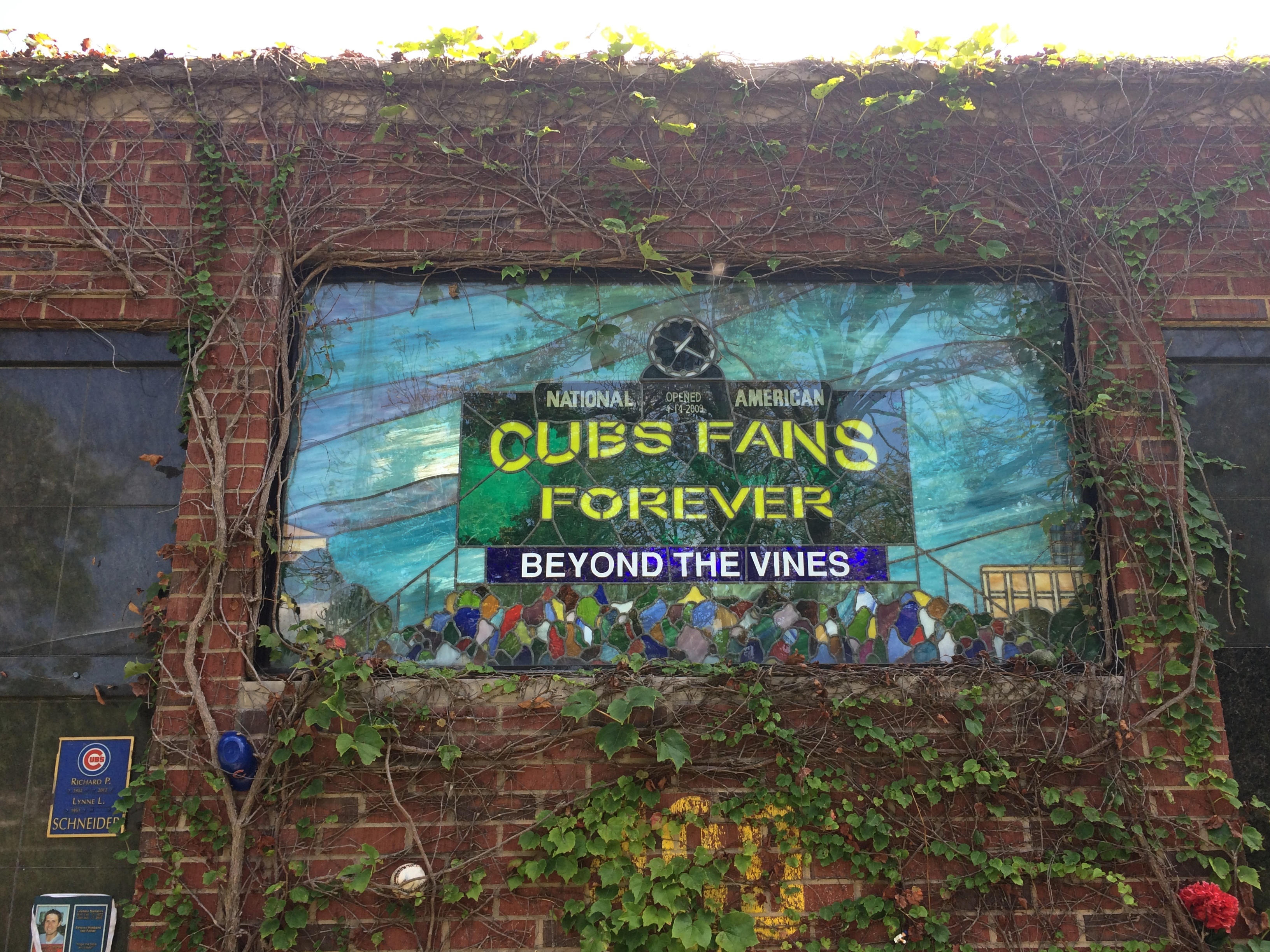
Bohemian National CemeteryBohemian National CemeterySince the last time I visited, something unique (probably) in any cemetery has been added: Beyond the Vines.

“The 24-foot-long brick monument offering peace to the ashes of Cubs fans is called ‘Beyond the Vines.’ It sits in perpetual sunshine at Bohemian National Cemetery,” reported the Chicago Tribune in 2009, when the cemetery erected the structure.
The front was was in shadow when I saw it.
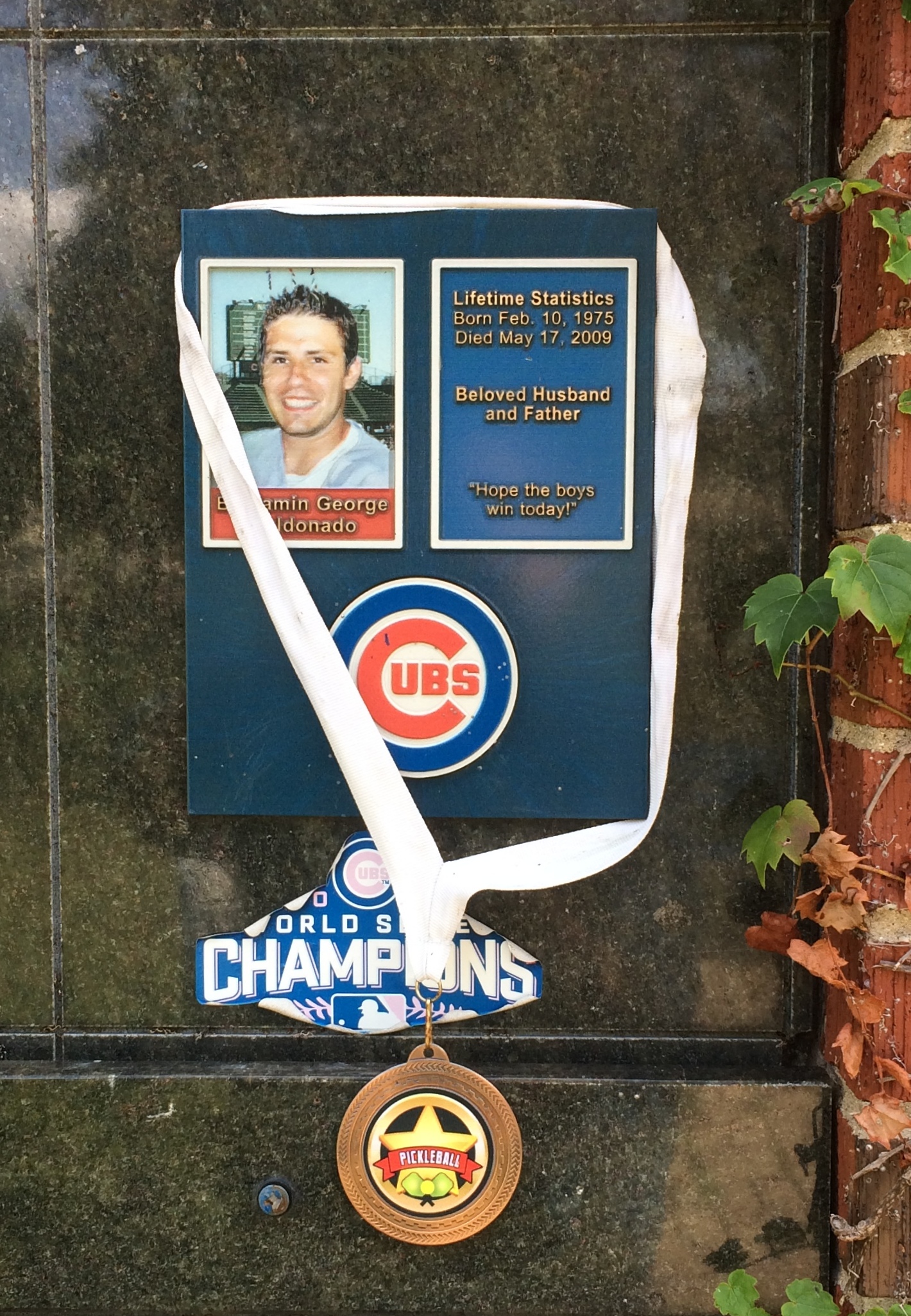
Bohemian National CemeteryStill, the purpose of the columbarium is clear.
Bohemian National CemeteryThere are still spaces for anyone who cares for one. This marker for this fellow, name partly obscured, tells a sad story of early death but also the endless optimism of a Cubs fan.
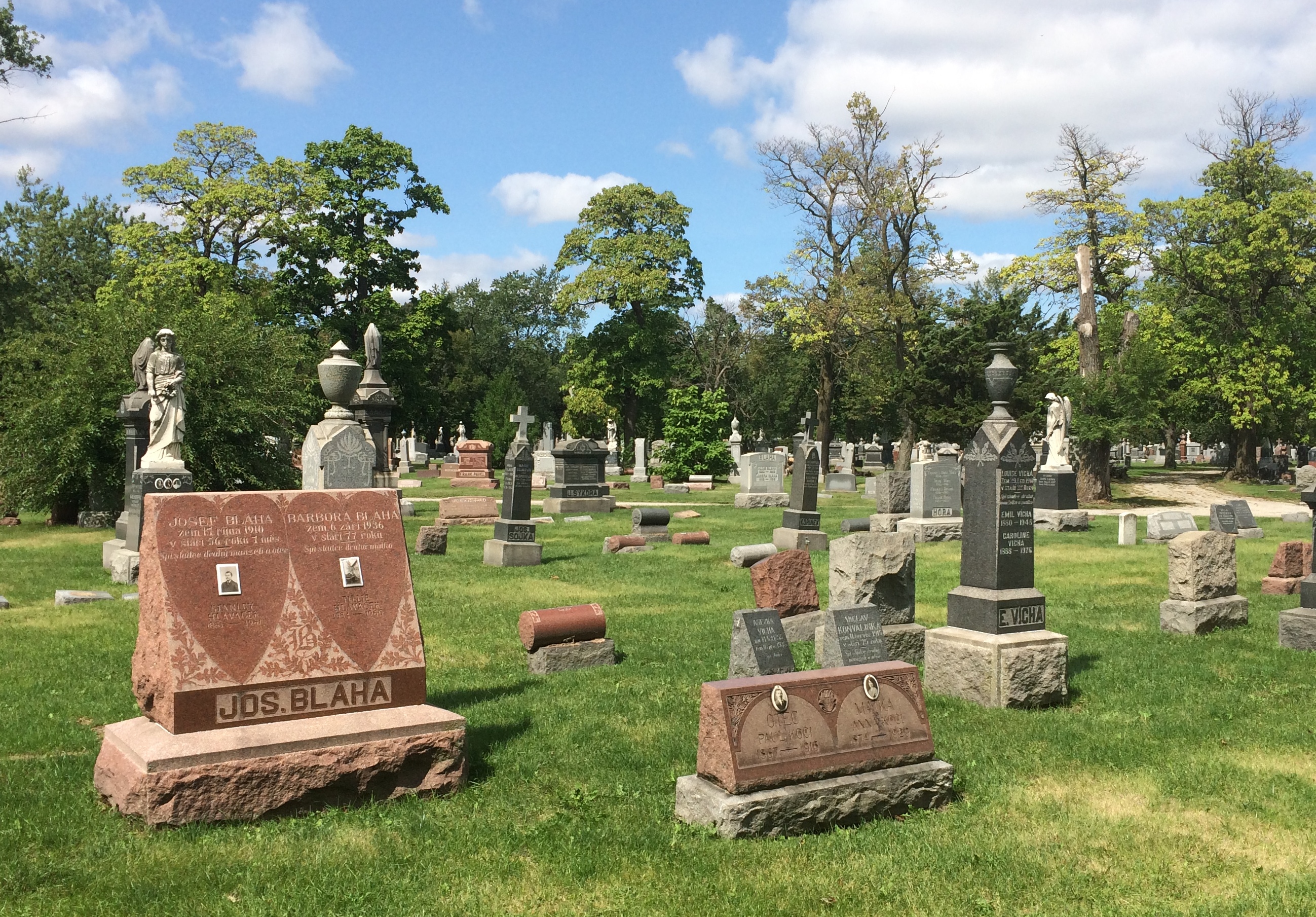
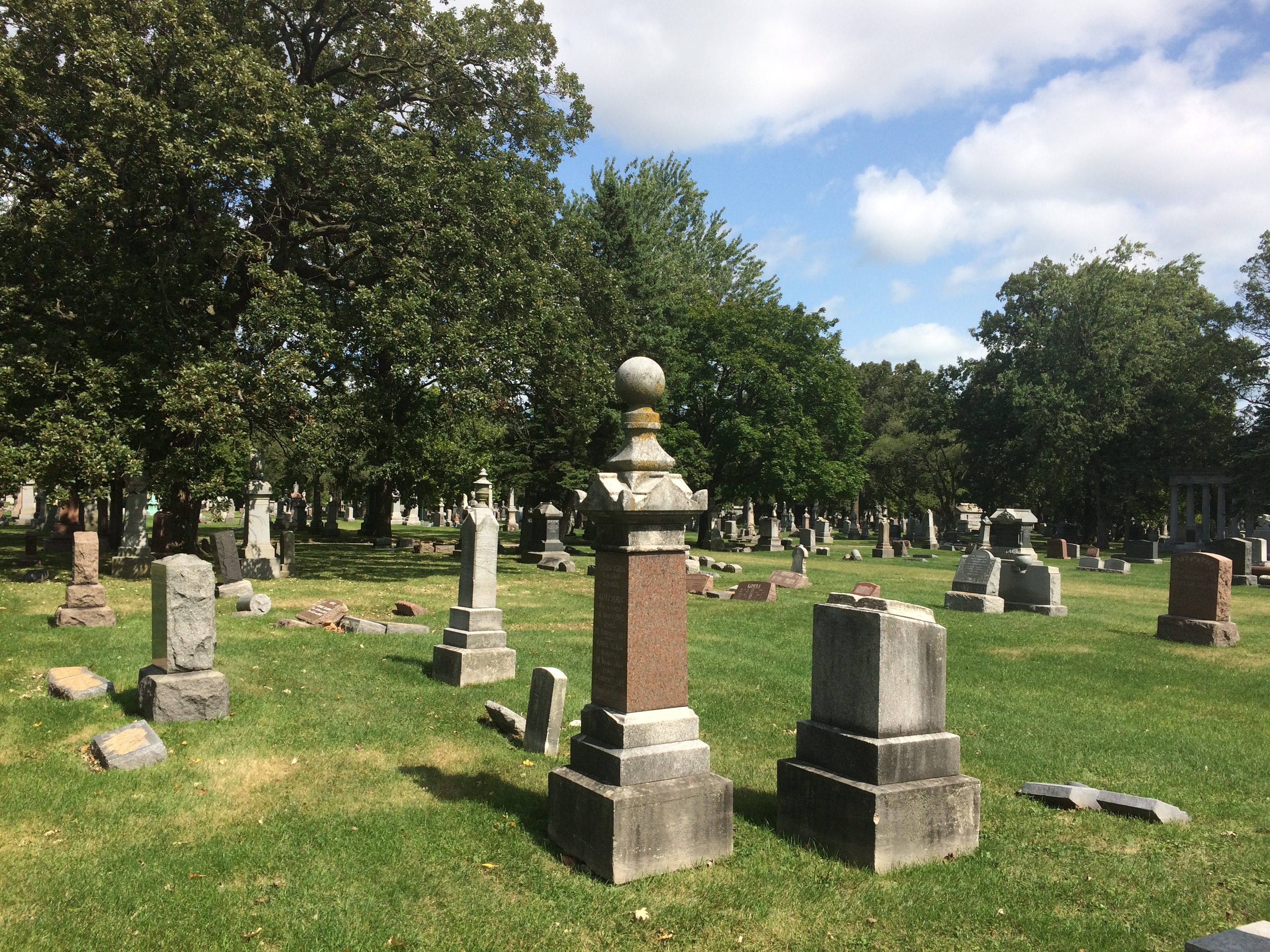
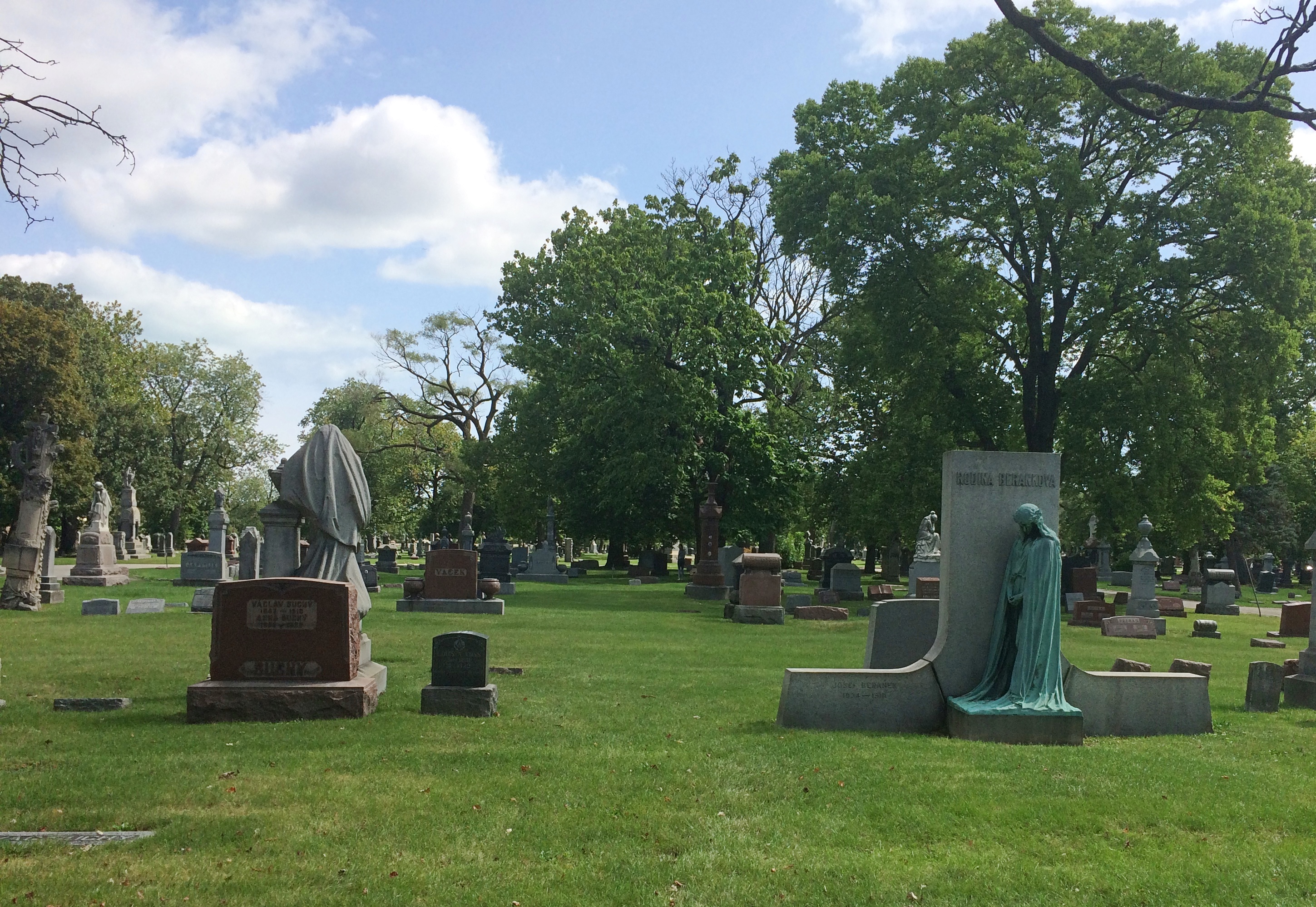
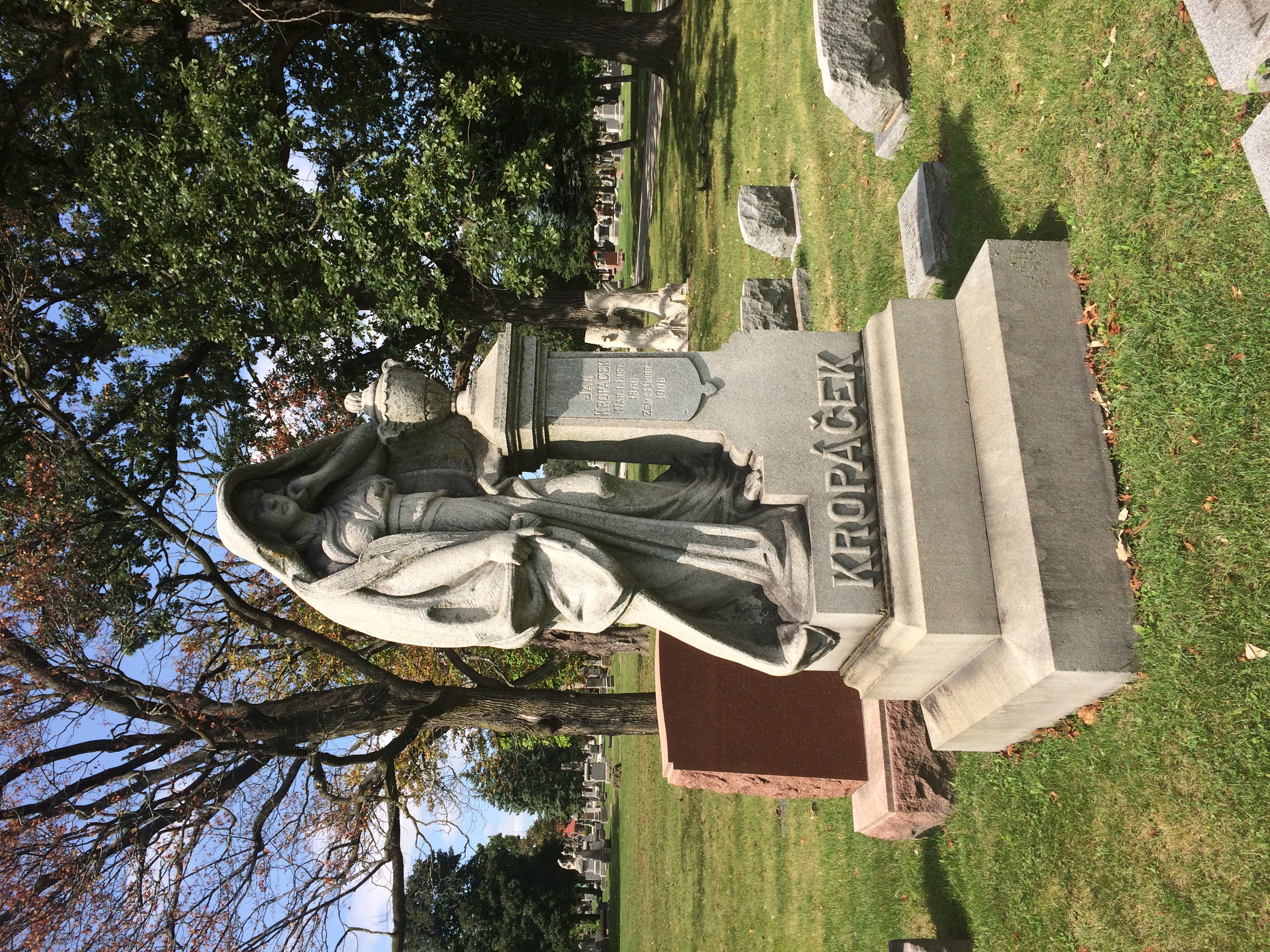
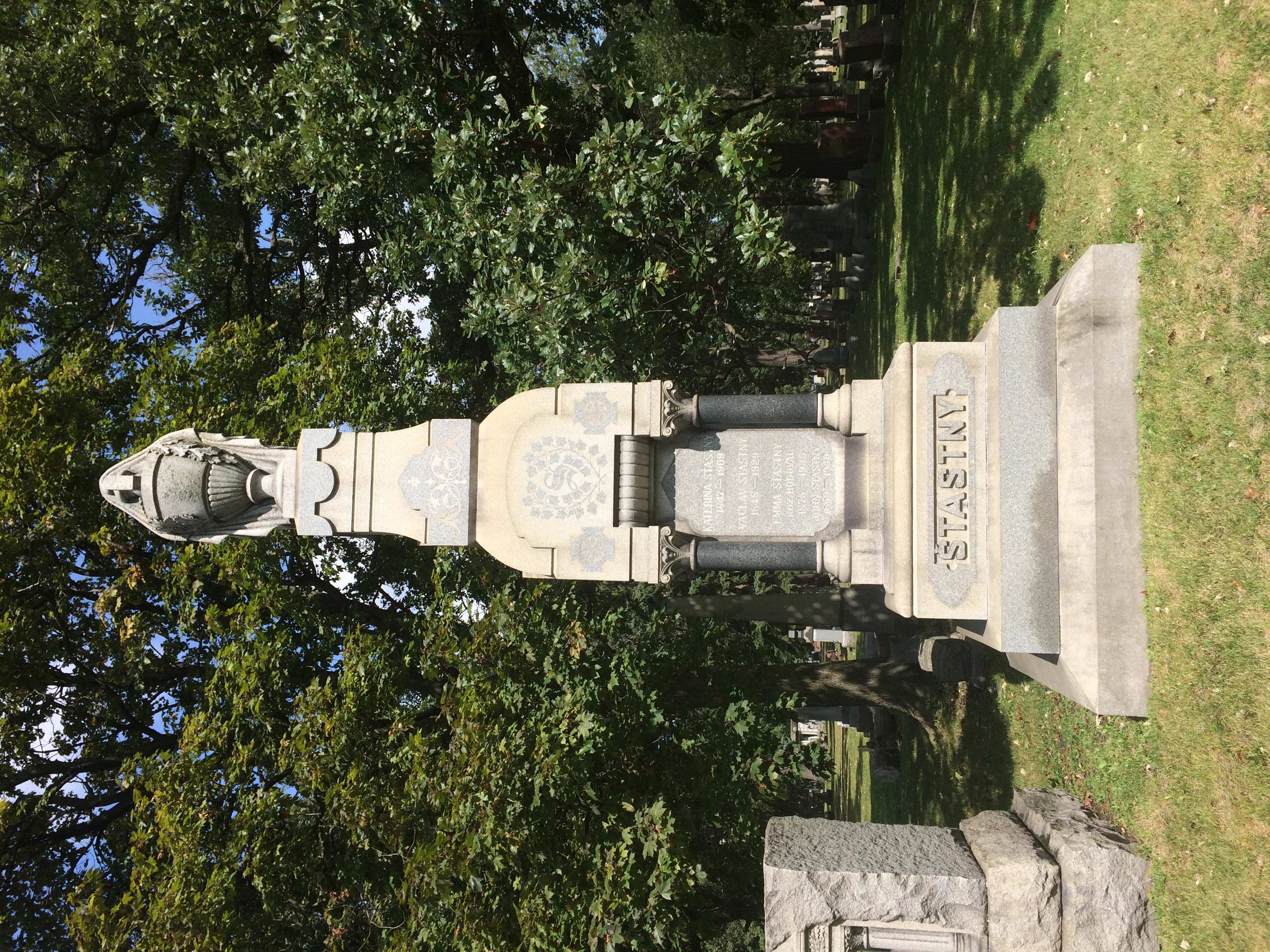
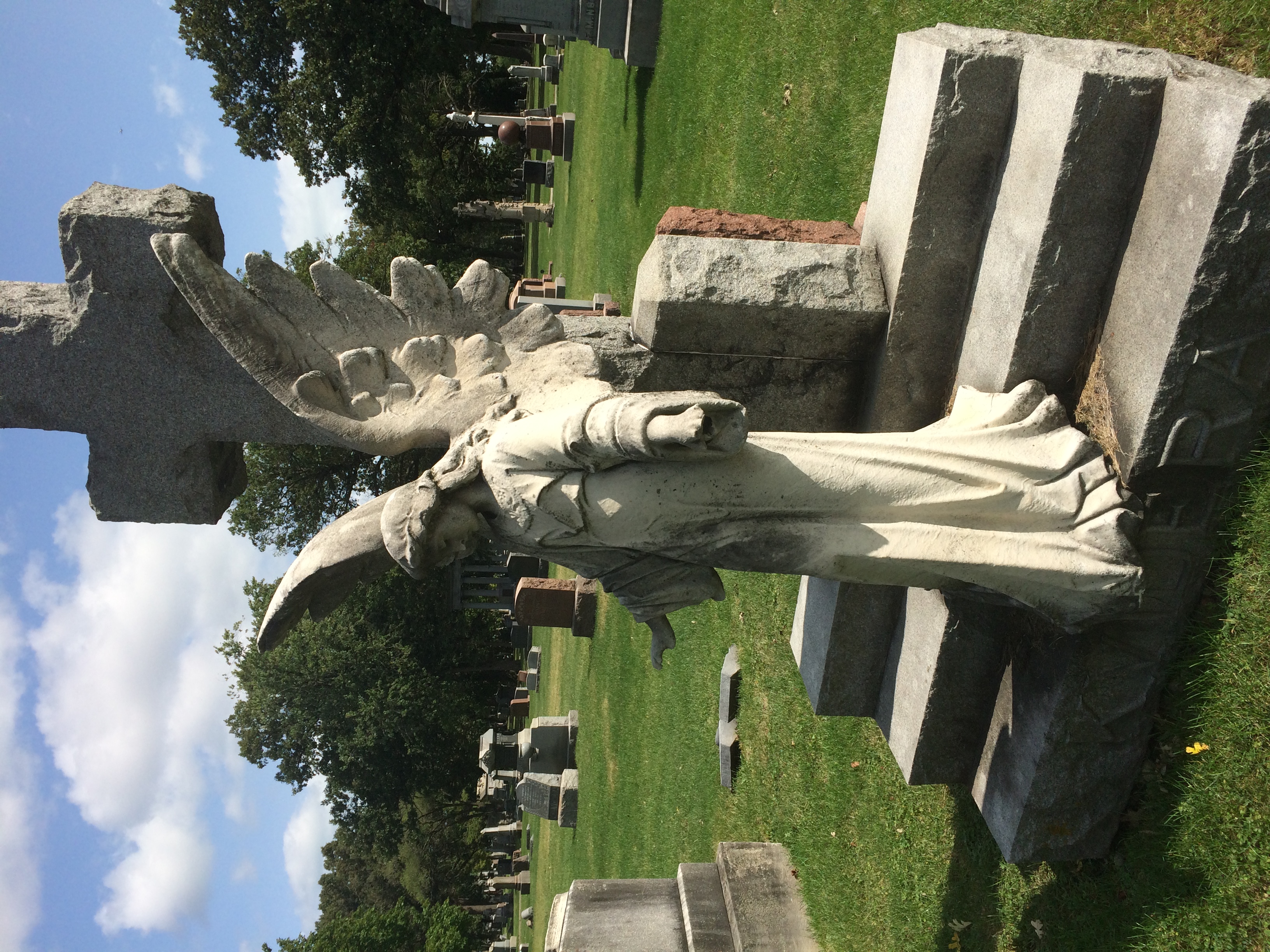
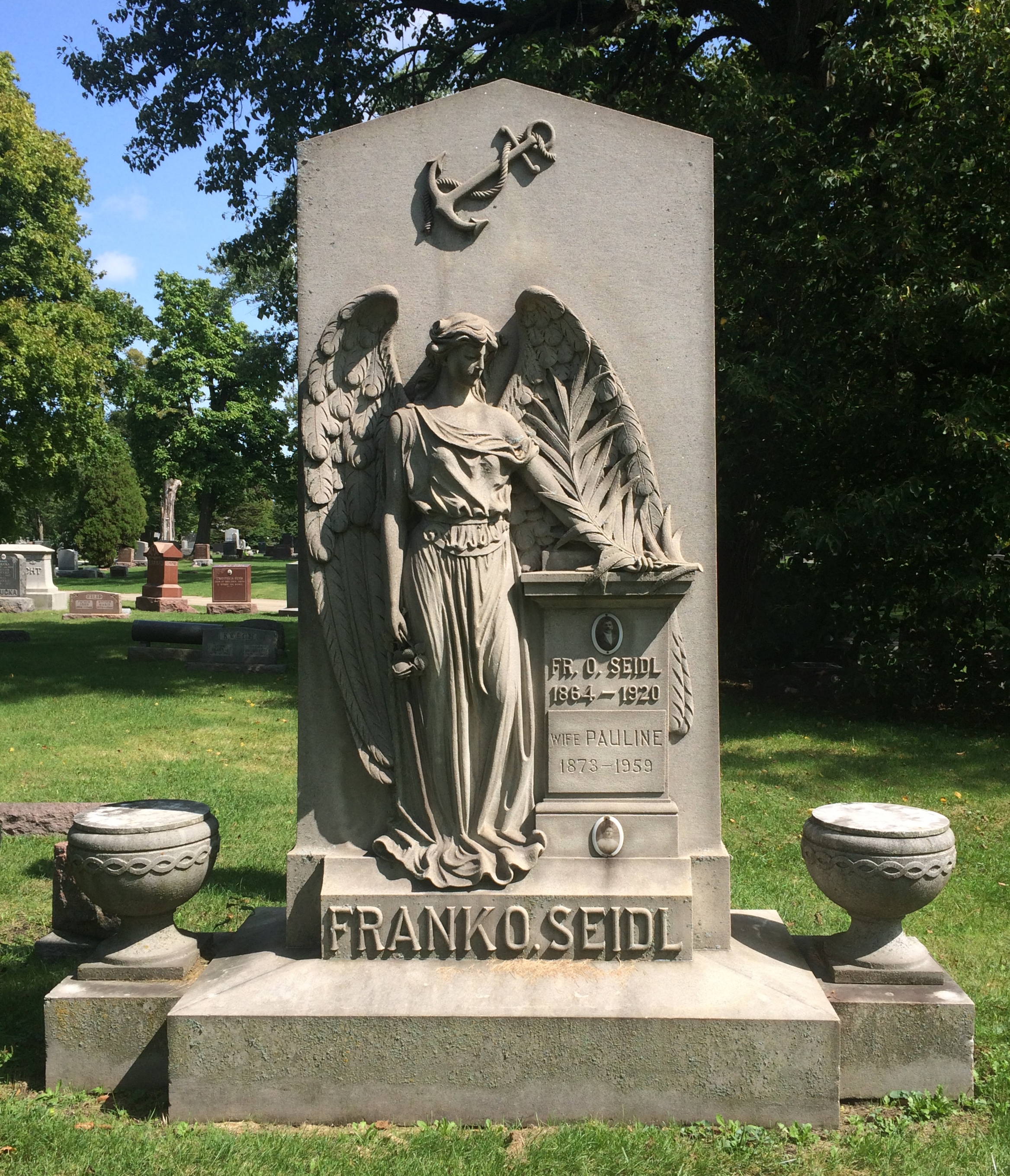
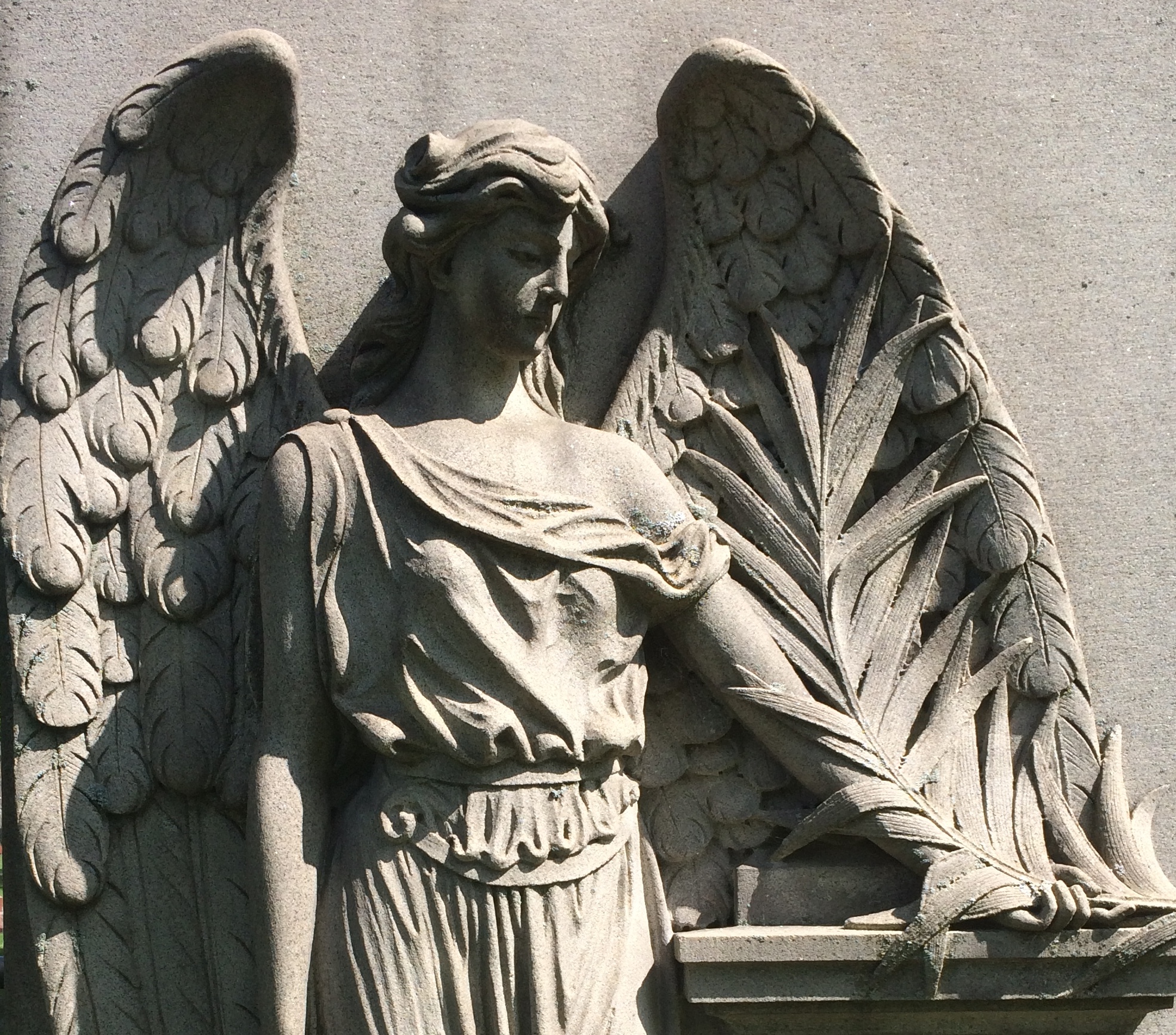
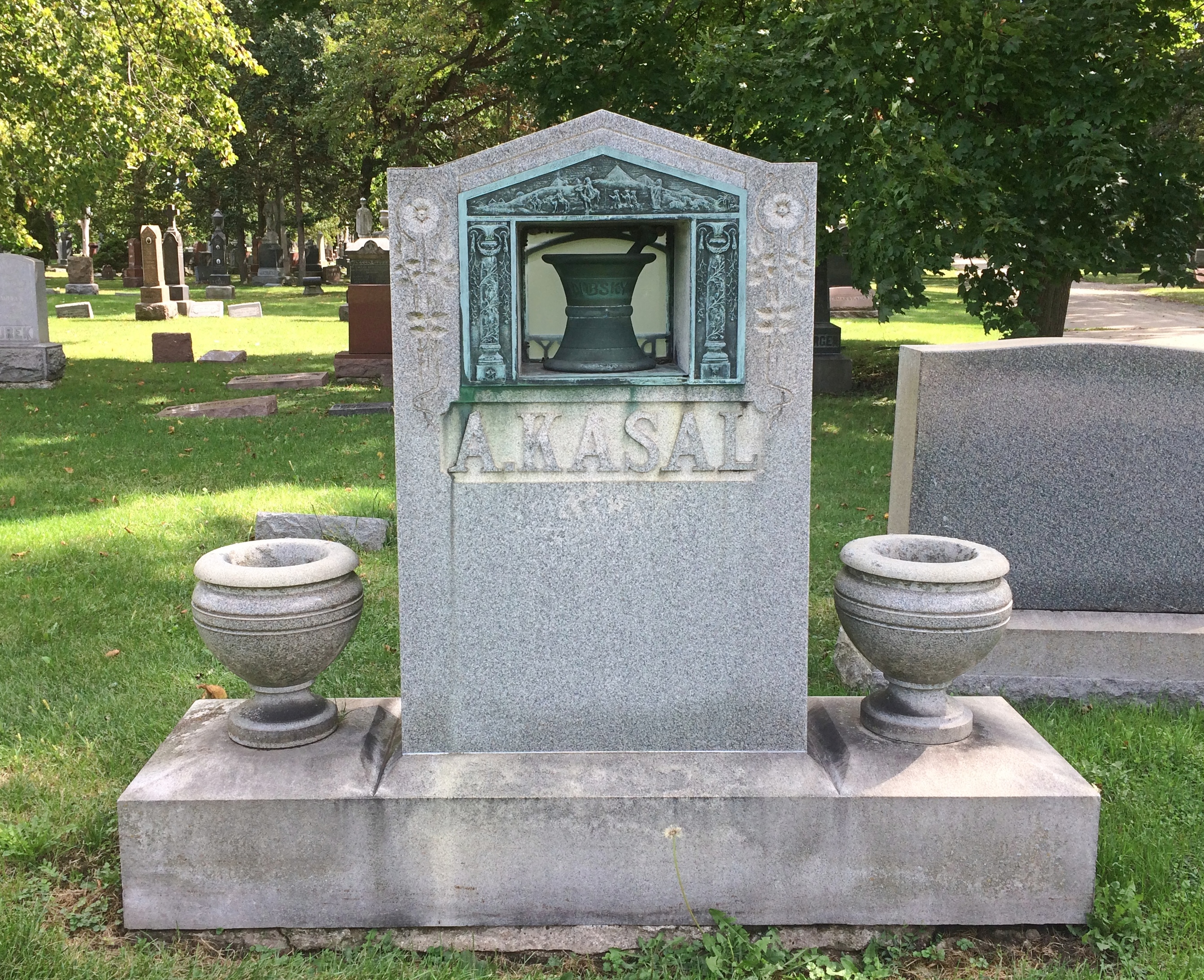
Bohemian National CemeteryBohemian National, founded in the late 19th century by the Czech immigrant community in Chicago, has a wide selection of funerary art.

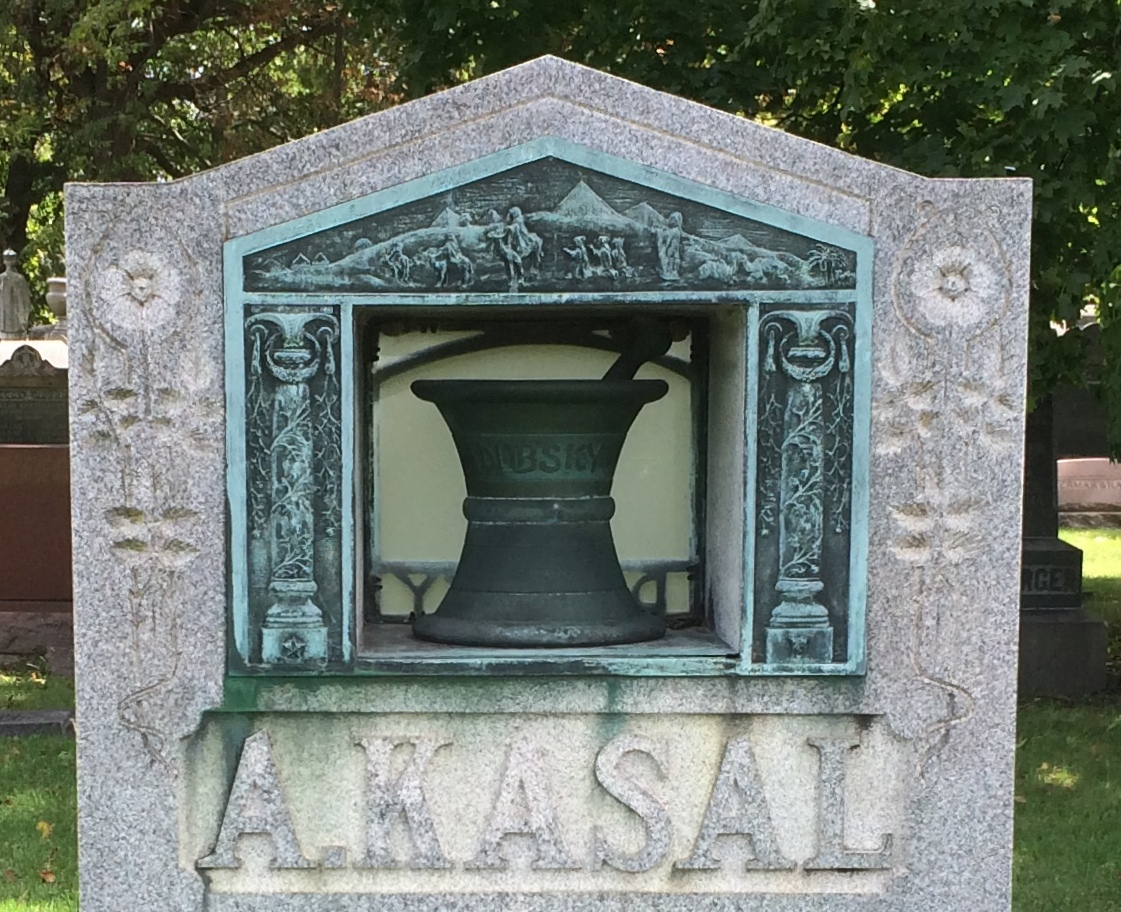
Bohemian National CemeteryBohemian National CemeteryBohemian National CemeteryBohemian National CemeteryBohemian National CemeteryA pharmacist’s stone? Looks like a mortar and pestle.Bohemian National Cemetery

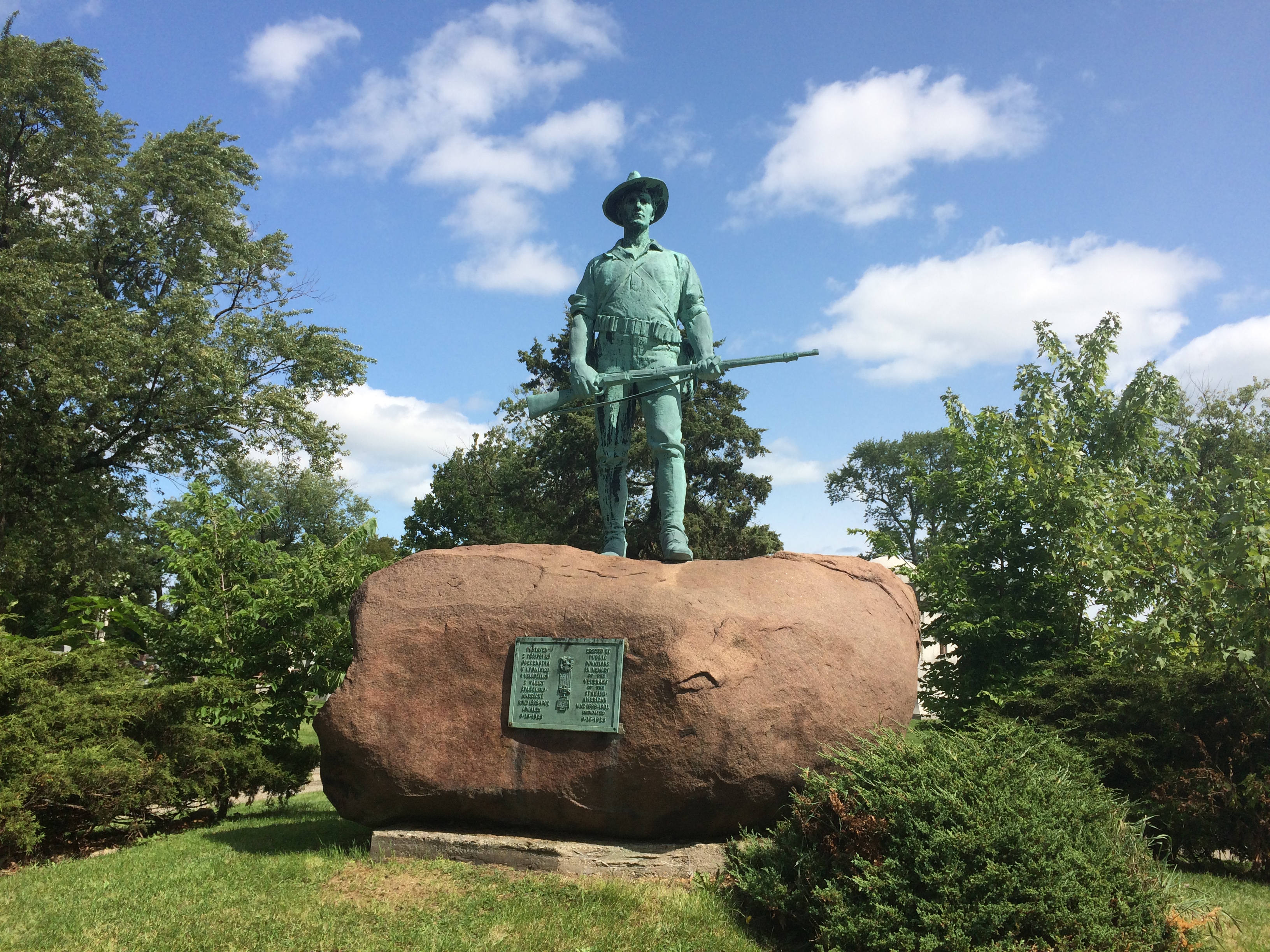
Bohemian National CemeteryCivil War and World War(s) veterans are honored with memorials, as you’d expect, but the place also spares a thought for veterans of the war with Spain, erected in 1926. The plaque is in English and Czech.
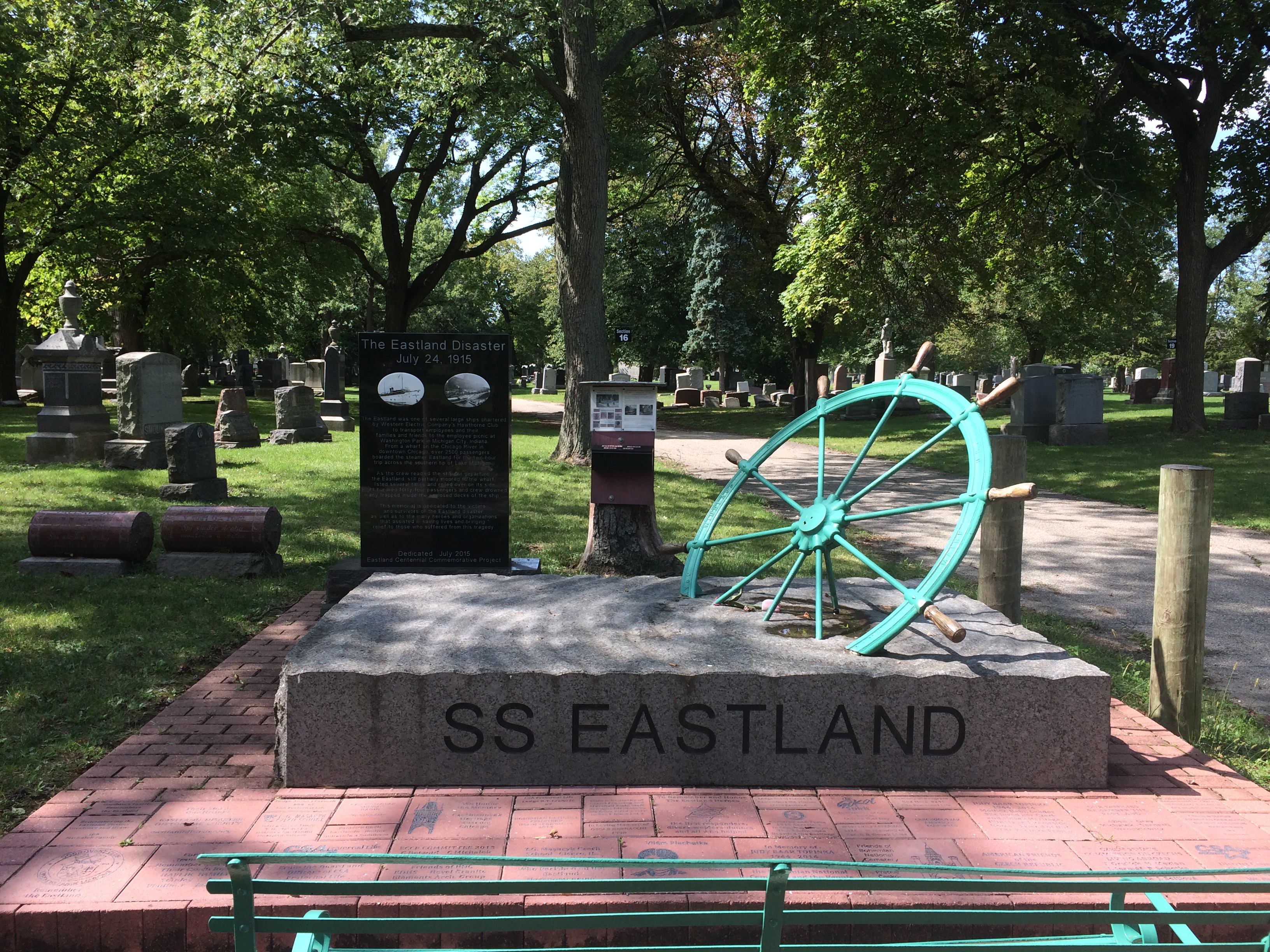
Bohemian National CemeteryDeep in the cemetery is Anton Cermak’s mausoleum, but I didn’t see it. A memorial I did see is to the victims of the Eastland disaster.
Bohemian National Cemetery“The site was chosen because the cemetery on Chicago’s Northwest Side holds the largest number of victims from the disaster — 134,” the Trib says, reporting on the dedication of the memorial in 2015, for the 100th anniversary of the disaster.

Social Zoom

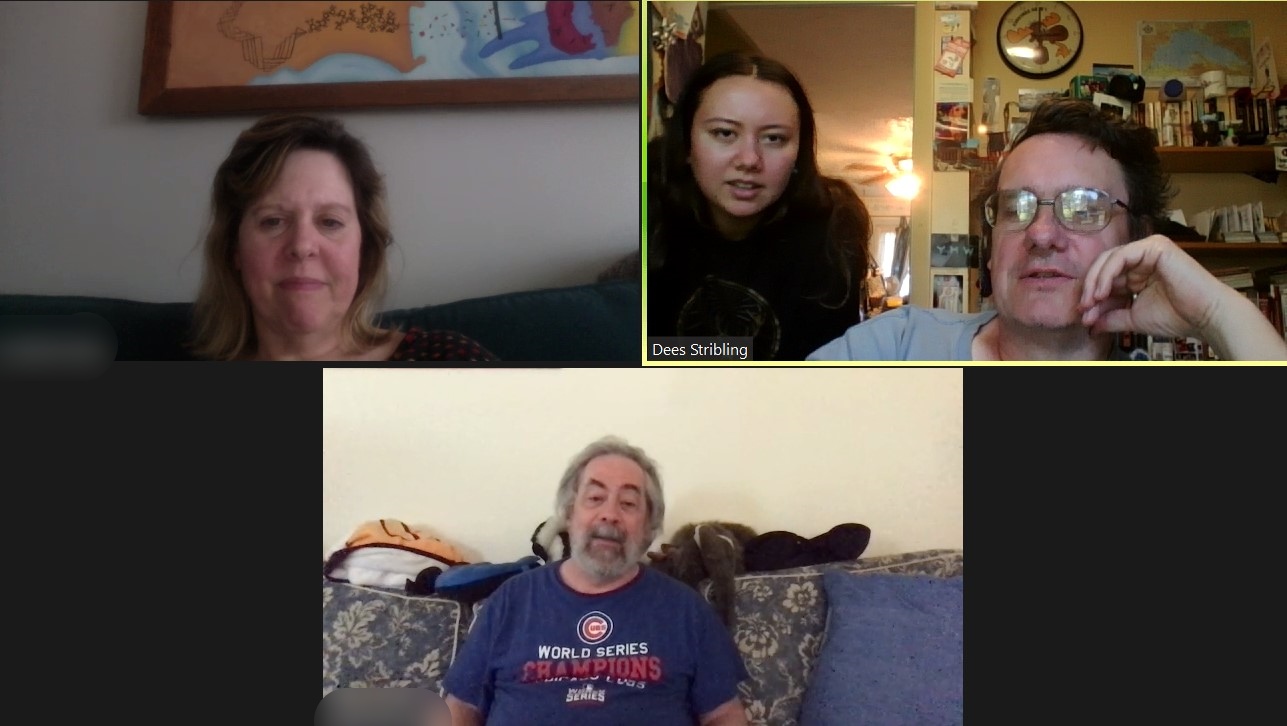
A first on Sunday afternoon: social Zoom. Old friends of mine and I gathered together, remotely. I’d only ever used it for work.

Lilly dropped in for a few minutes. The spouses of my friends, who are also friends of mine, were on hand most of the time as well; I didn’t do a screen capture until just before we signed off. Not as much fun as a visit in person, but enjoyable anyway.

Mm, Grits

There are two kinds of grits in the house. As far as I know, people aren’t hording grits these days, but I haven’t shopped for them since before the pandemic, so who knows.

To the left, the brand I’ve eaten for years. The standard. The go-to. Often the only brand at the grocery store. Easy to make, best eaten after only a few minutes for cooling. Some add butter. I usually add honey, but not always.

To the right, a brand recently acquired. The texture is slightly different, but not enough to put me off of it. Takes longer to make. Naturally, the verbiage on the package tries to make a virtue of that necessity: “You’ll have to hesitate before you eat quick grits again,” it says. Naah.

The standard grits package tube lists the following as ingredients: degerminated white corn grits, plus iron and various vitamins, which are added in the processing. The new grits bag merely lists white corn. Made me wonder if the hull and germ have been removed, which seems essential to grits.

Note this handy definition at Culinary Lore:

Hominy: An endosperm product made from corn, made up of starch, with the hull and germ removed.

Grits: Ground hominy (usually coarse).

I checked the nutrition facts on the new grits package, and indeed it seems that whatever vitamins might have been present in the hull or germ aren’t there, so I assume they aren’t there either.

Anyway, grits and I go way back. As long as I can remember, because my mother made them and I assume her mother did too, though I don’t have any specific memory of grandma’s grits. I learned to make them myself early on.

I also learned that somehow, most restaurants that offer grits serve an inferior version to what you make at home. How is that? Occasionally, though, I find superb grits away from home. For instance, years ago in Mexico Beach, Florida, I had wonderful cheese grits — at a place probably destroyed by Hurricane Michael a year and a half ago.

When I moved to Chicago in the late ’80s, I was glad to find grits in the grocery stores, despite being well north of the Grits Line. I shouldn’t have been surprised, considering how many Southerners, black and white, have migrated to the region over the decades.

Grits aren’t available in Japan. At least they weren’t 30 years ago. We gaijin ordered it by the case from North America, which we then split up. (PopTarts were ordered the same way.) I remember serving them at my apartment in Japan to a Scotsman who also lived in Japan. He liked it well enough.

“Porridge, is it?” he said. I wasn’t sure how to answer. Can porridge be made from corn? Maize, that is. Seems yes, or maybe, since porridge can be any grain, though I think it’s usually associated with oats and not de-germed corn. Porridge isn’t part of my dialect anyway. Growing up I never heard anything outside of children’s stories called porridge, such as what the Three Bears prepared for themselves and Goldilocks pirated.

Yuriko had no notion of grits growing up and still doesn’t care for them. Lilly took to them in a big way, but Ann did not. Different children, different tastes.

Downtown Chicago St. Patrick’s Day Parade, 2018

I fell asleep to light rain and occasional thunder on Friday night. A comforting sound. During the hours when I was dreaming odd dreams — damned odd, but it all made perfect sense at the time — the rain must have picked up its pace, since large puddles had formed in our back yard by Saturday morning, as usually happens with inches of rain. But not quite this much.

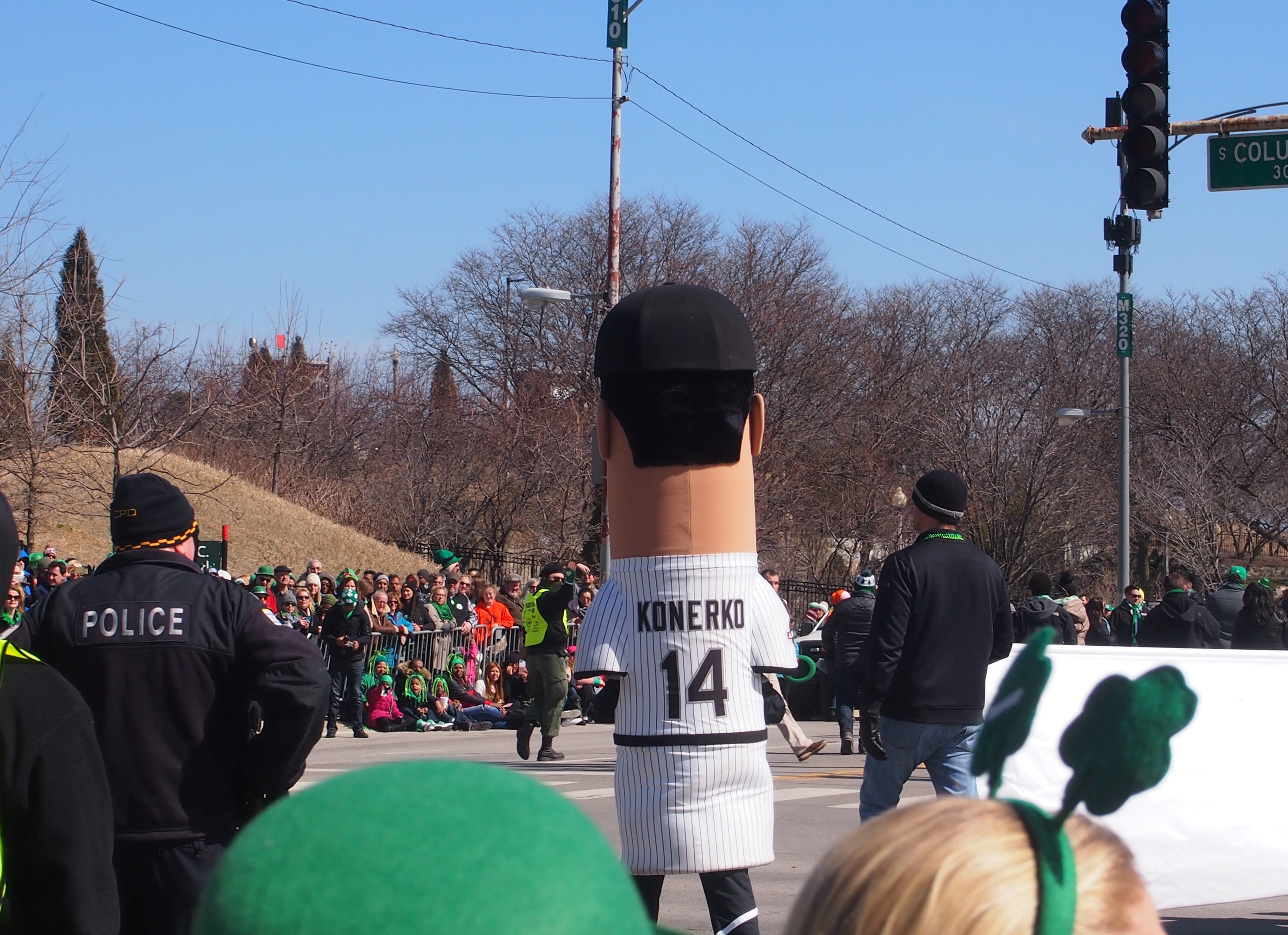
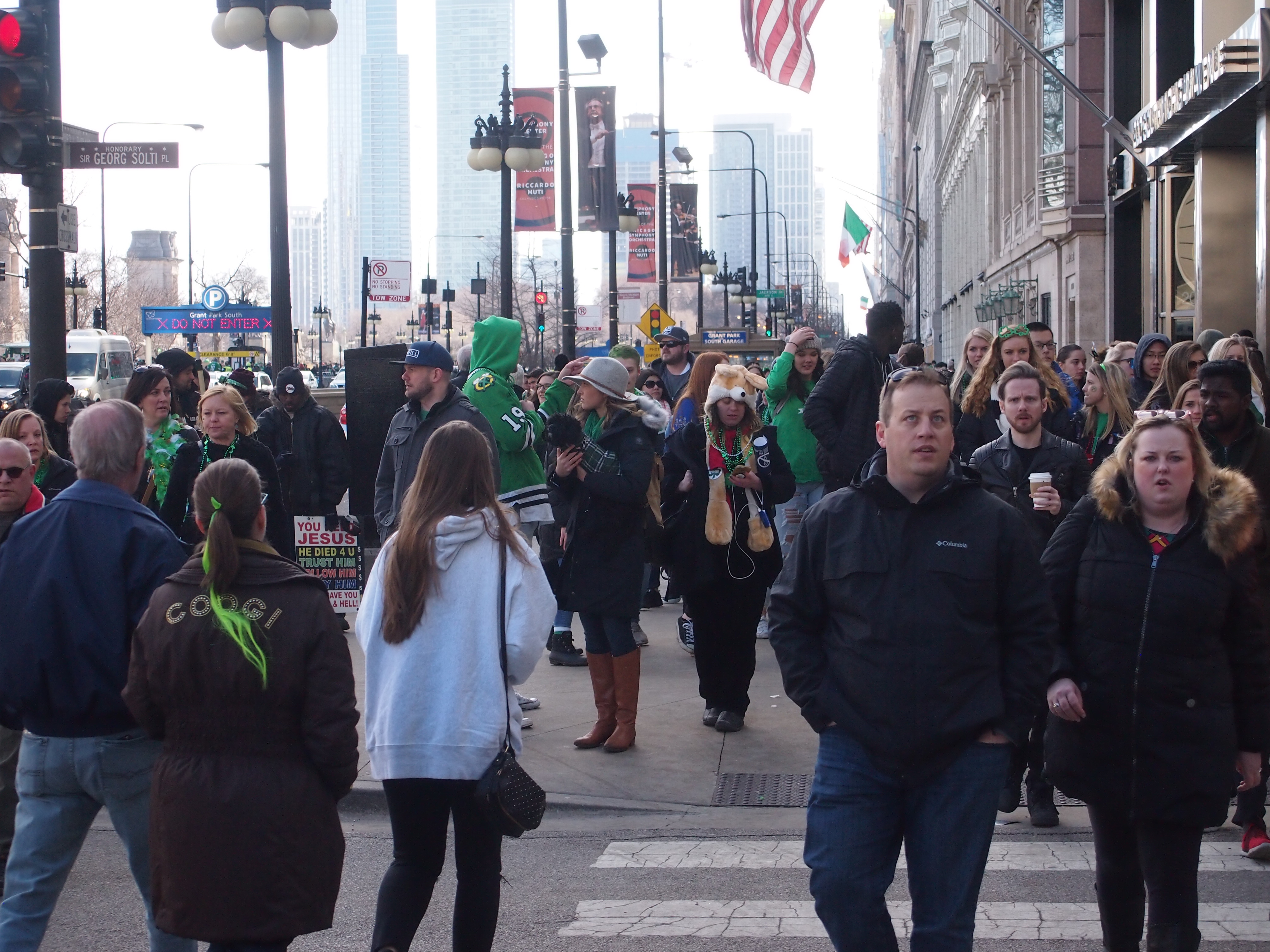
Two years ago we went into the city in mid-March and found ourselves near the Downtown Chicago St. Patrick’s Day Parade. We were going to visit the Art Institute that day, and the parade was passing next to the museum, on S. Columbus Dr.

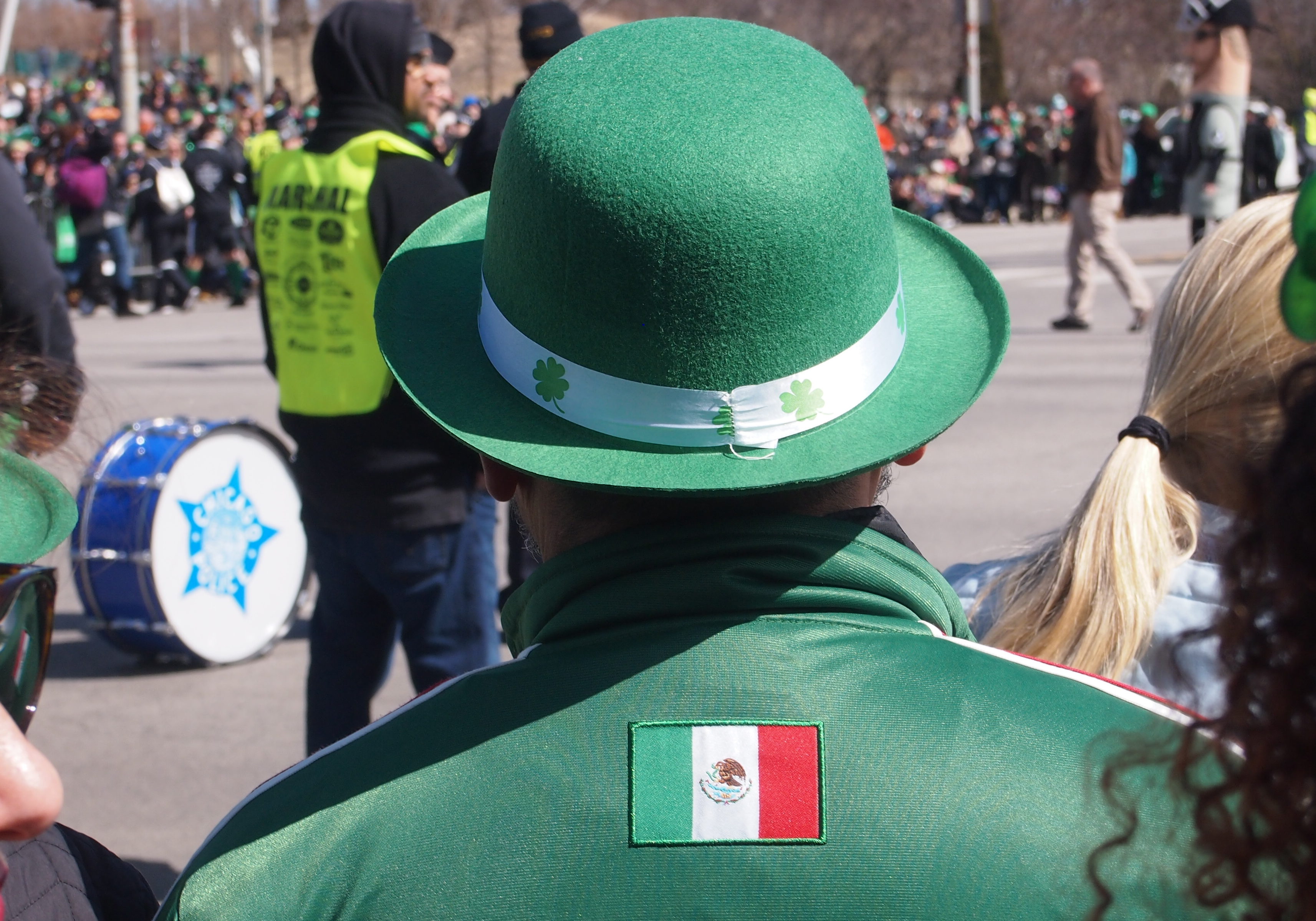
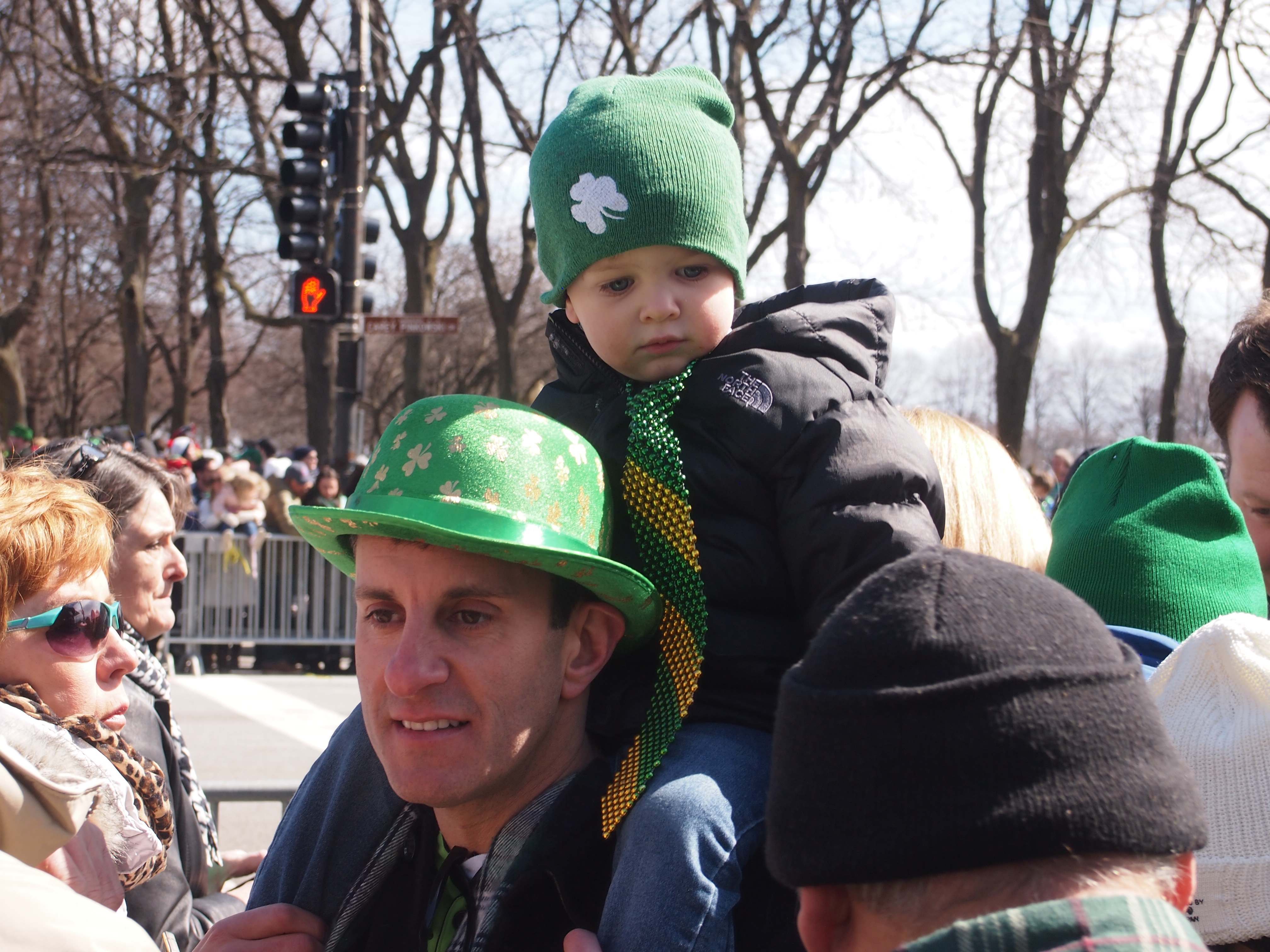
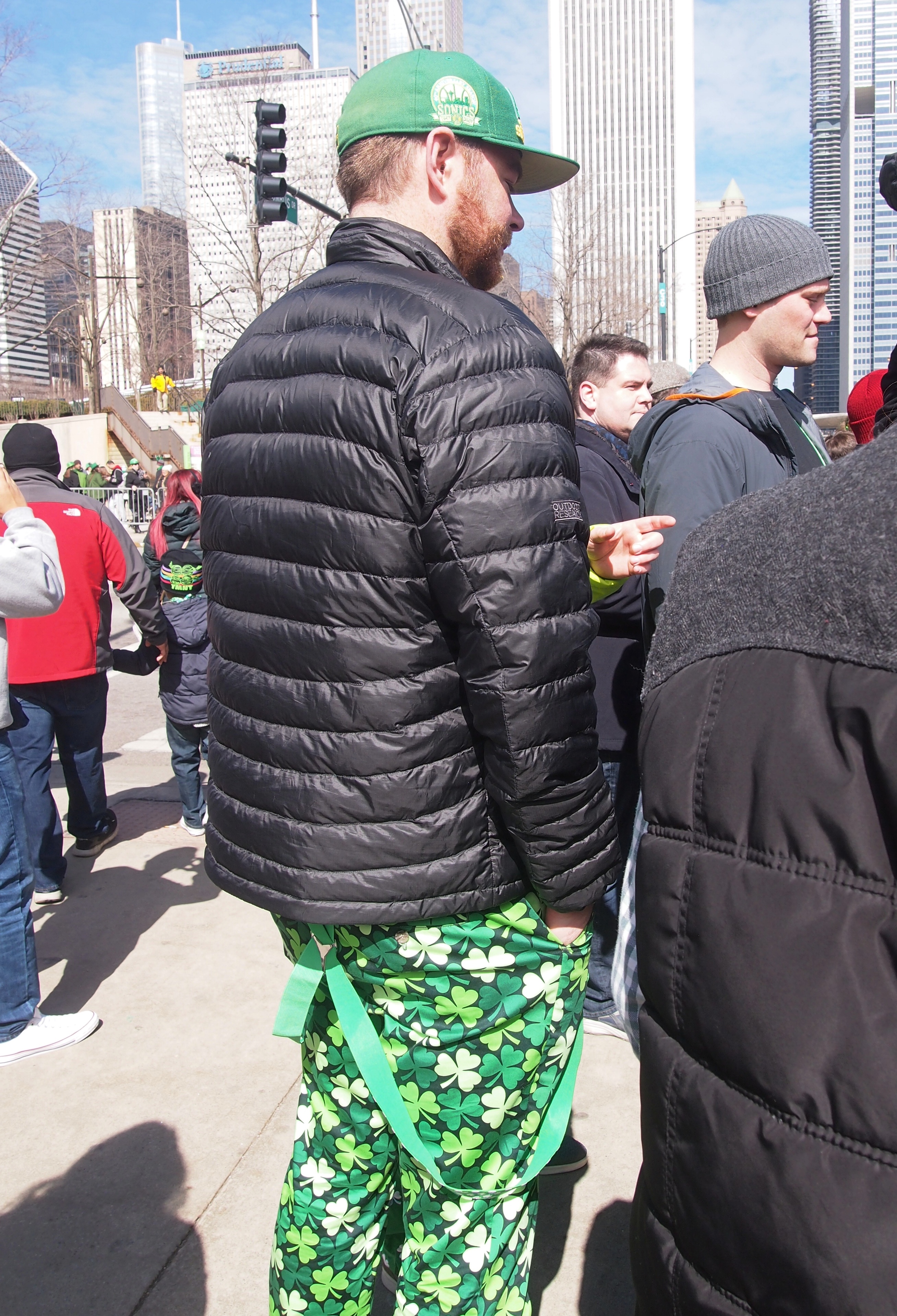
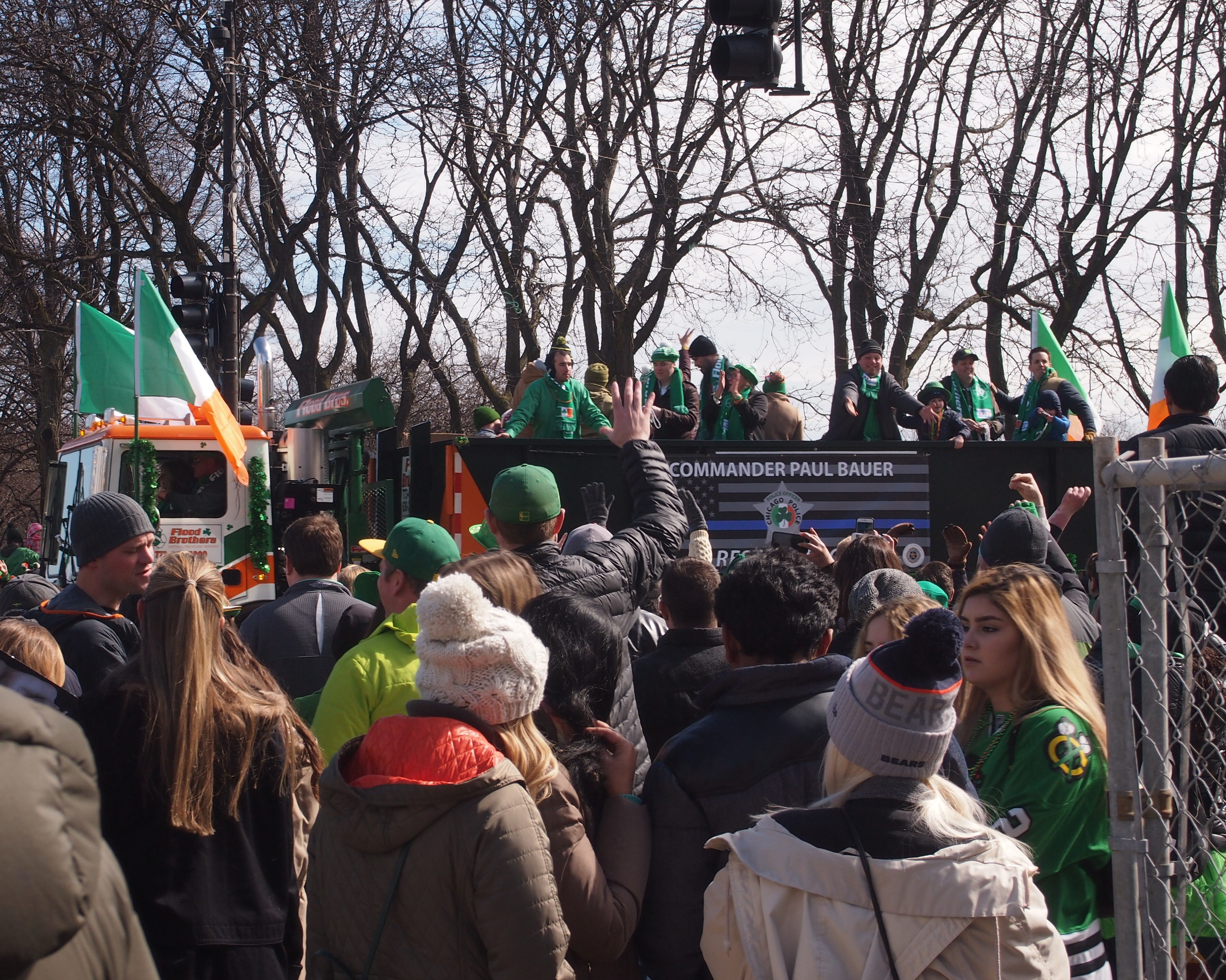
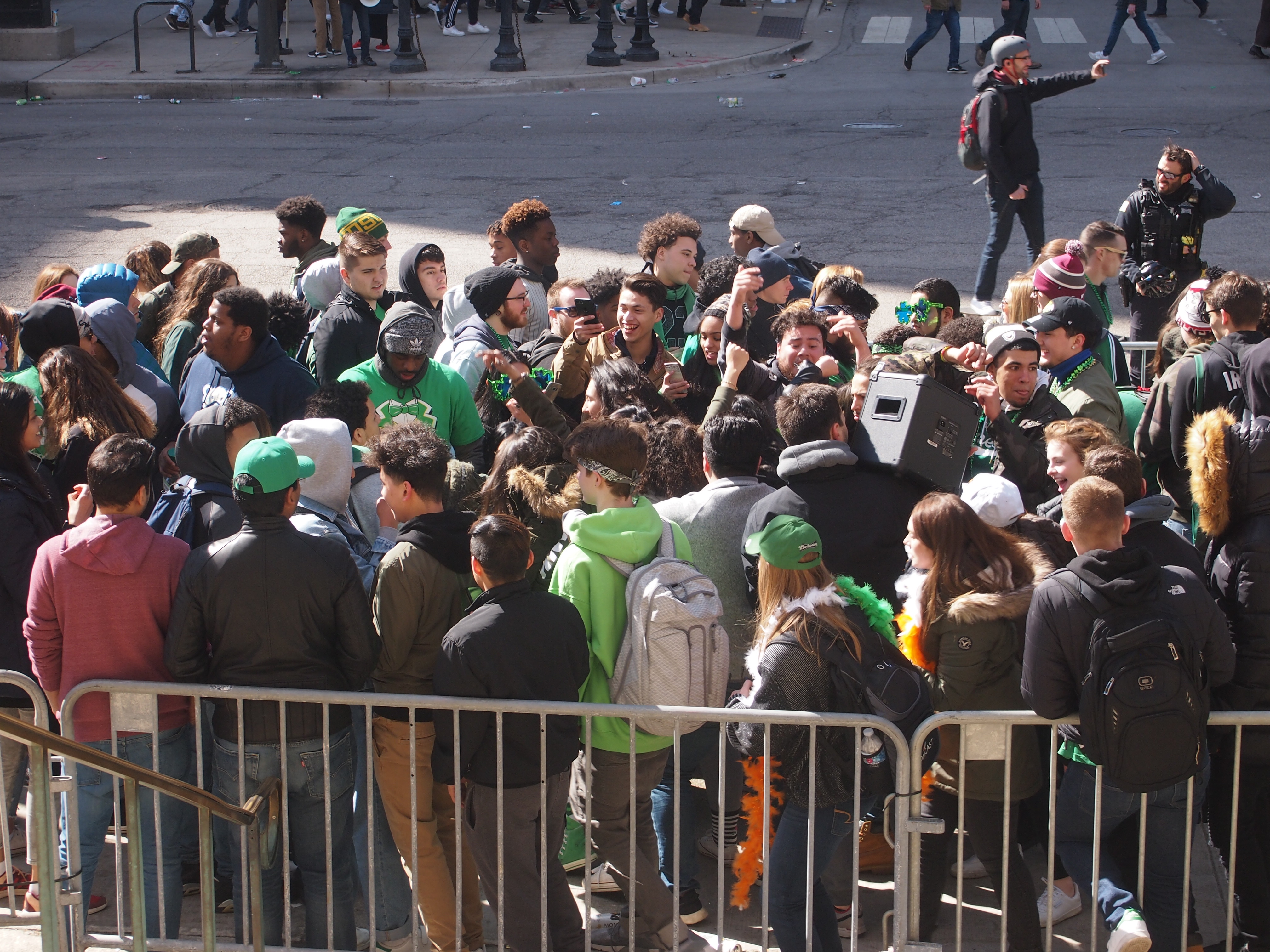
We walked over to see it, but the crowd was so thick that we never really got a close look. Often enough, the view looked something like this.Downtown Chicago St. Patrick's Day Parade 2018The crowd was festive, with many dressed for the occasion.Downtown Chicago St. Patrick's Day Parade 2018Downtown Chicago St. Patrick's Day Parade 2018

Downtown Chicago St. Patrick's Day Parade 2018

We stayed for a little while and saw what we could.Downtown Chicago St. Patrick's Day Parade 2018

Downtown Chicago St. Patrick's Day Parade 2018

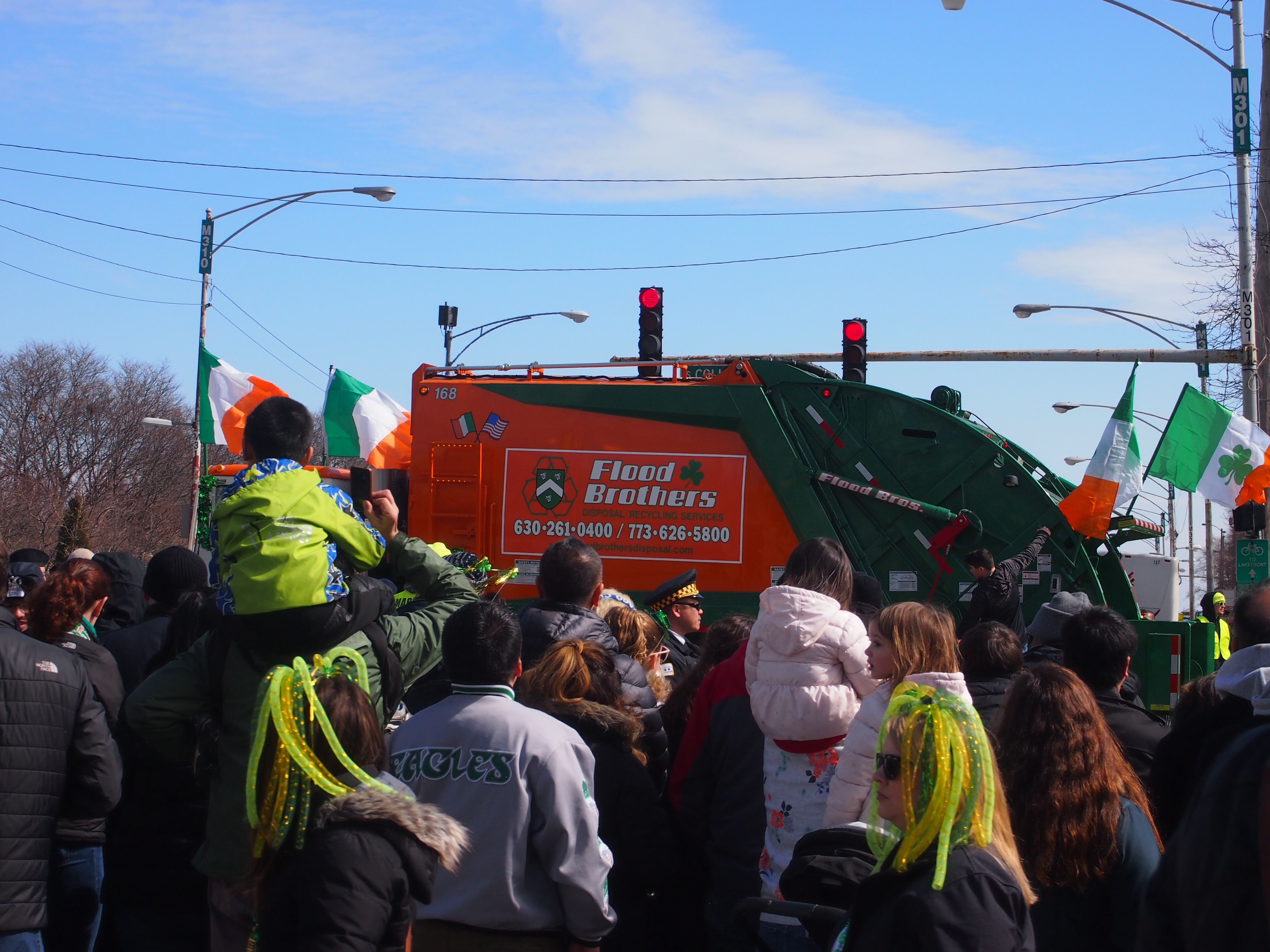
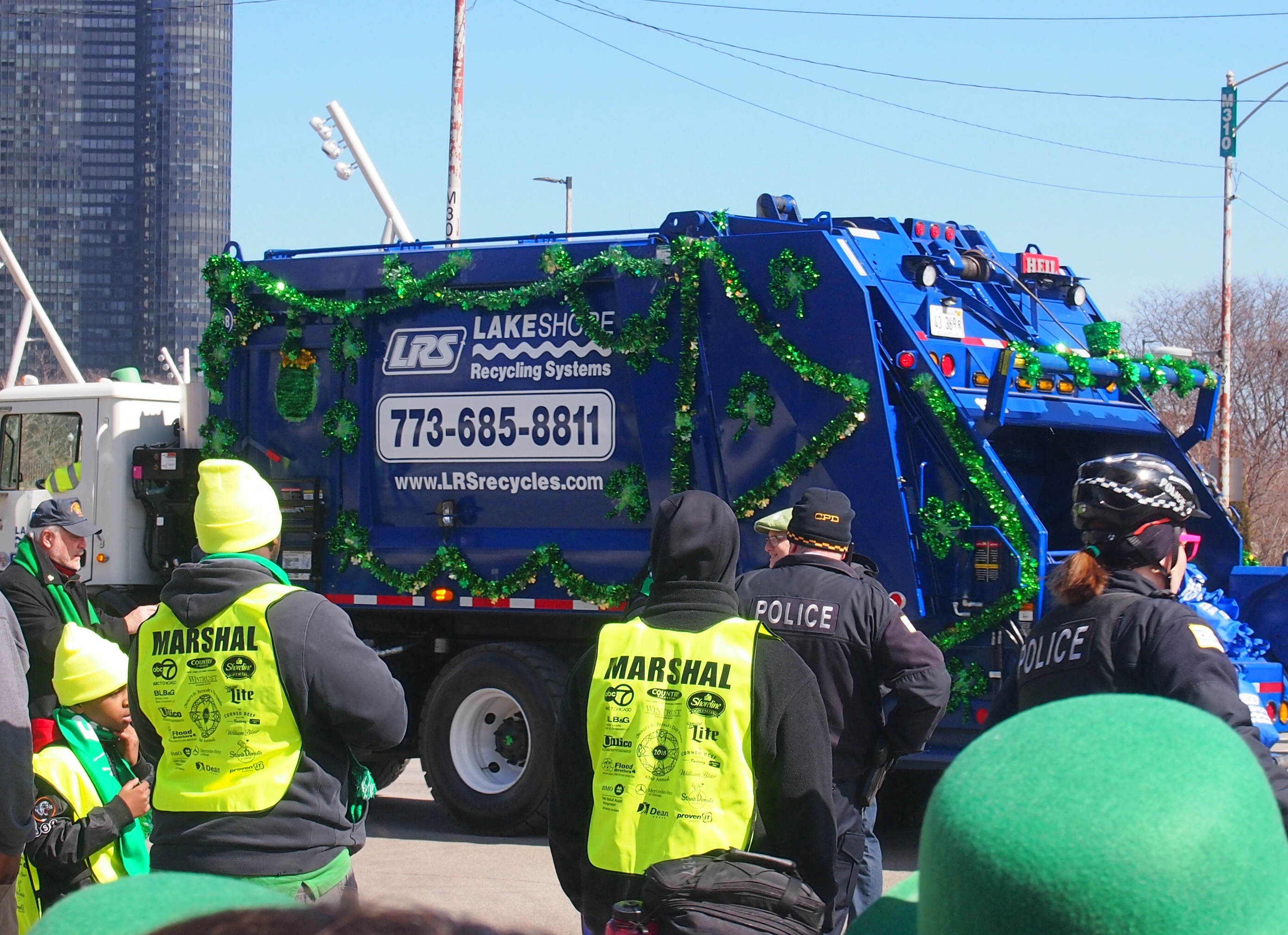
The solid-waste industry was well represented.Downtown Chicago St. Patrick's Day Parade 2018

Downtown Chicago St. Patrick's Day Parade 2018

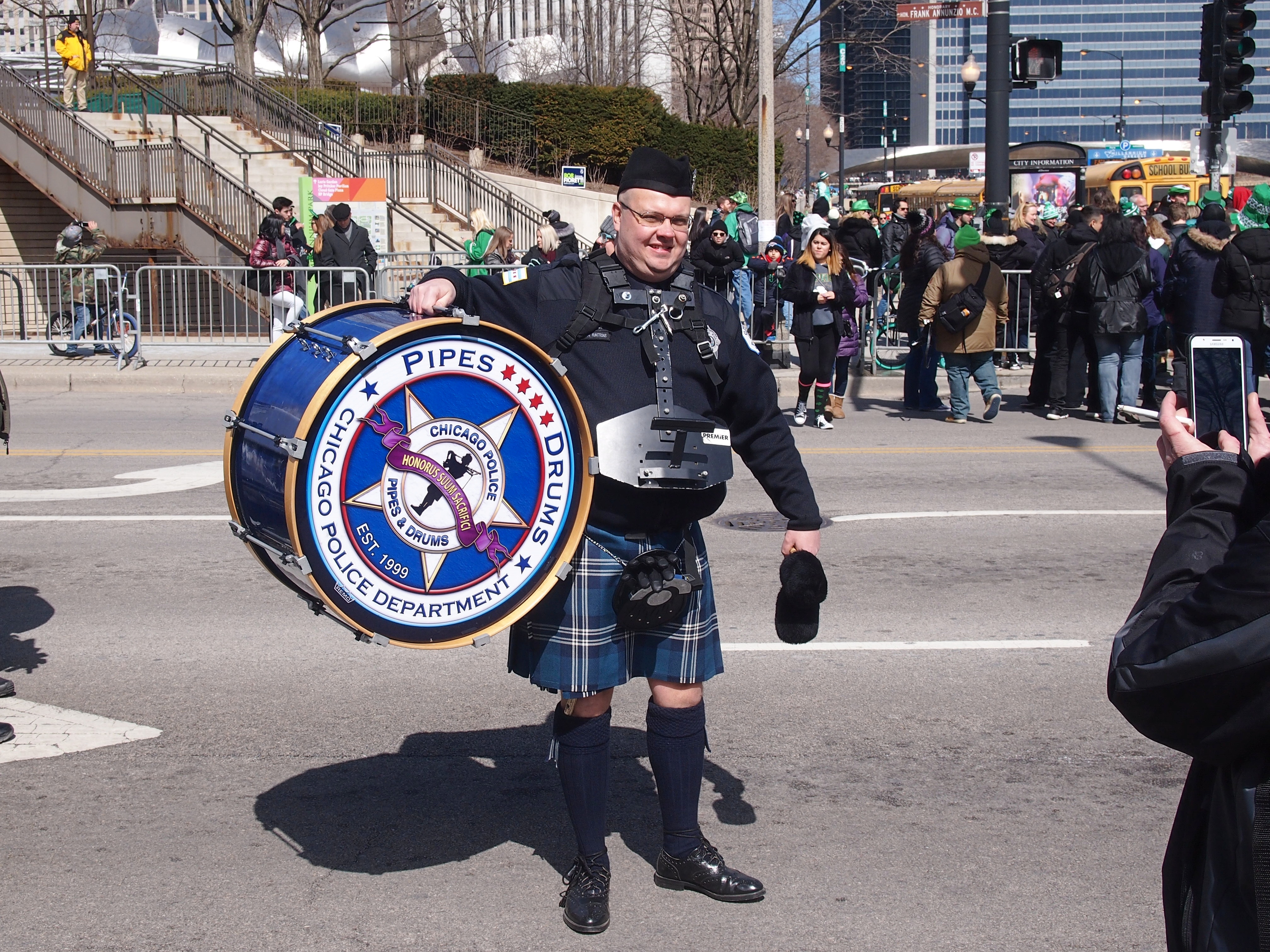
Some participants were off to the side. I suppose they were finished and watching the rest of the parade.

Downtown Chicago St. Patrick's Day Parade 2018

Crowds thronged in front of the Art Institute and elsewhere.
Downtown Chicago St. Patrick's Day Parade 2018Downtown Chicago St. Patrick's Day Parade 2018No social distancing in evidence. It would have been weird if there had been. No wonder the parade was cancelled this year.