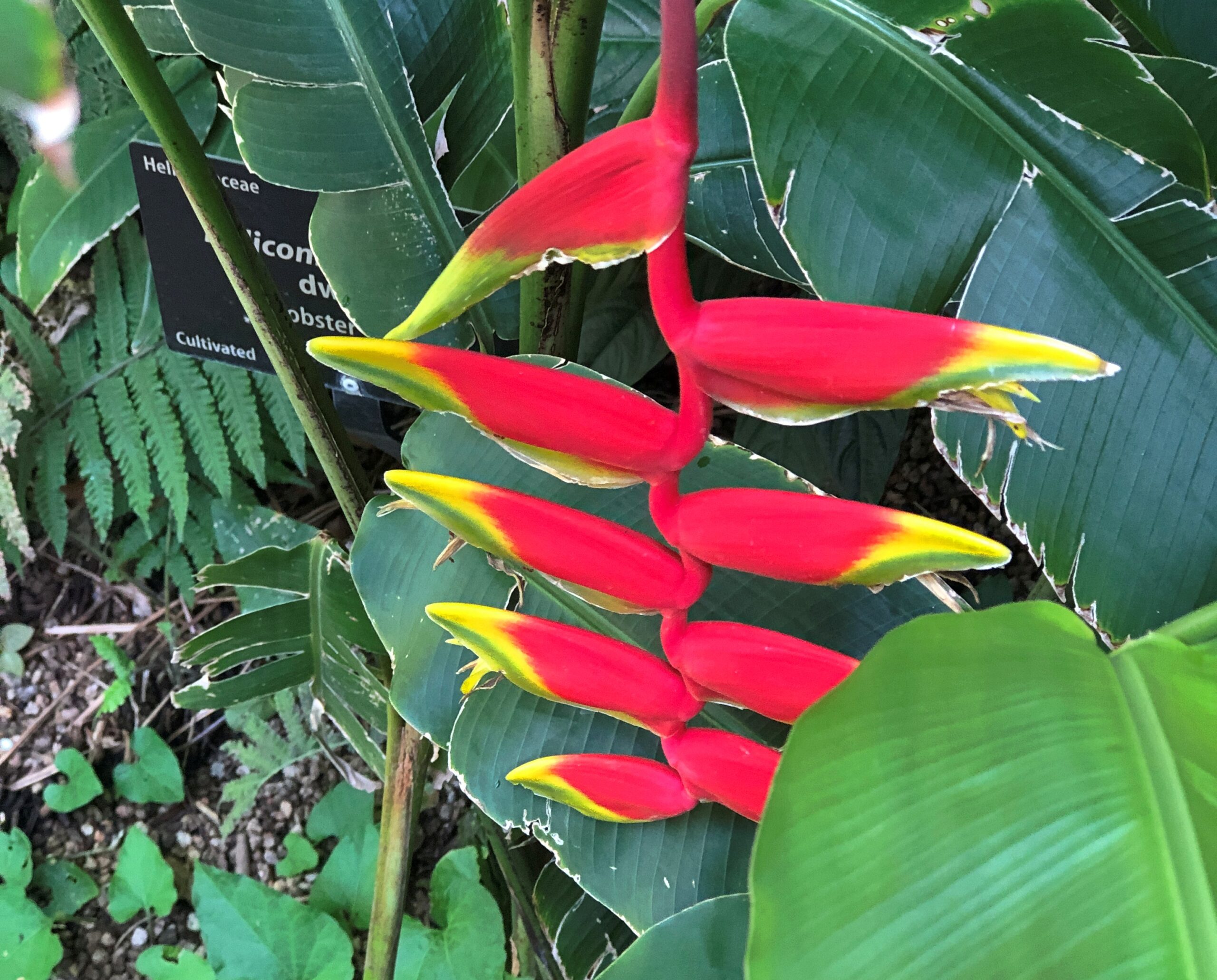
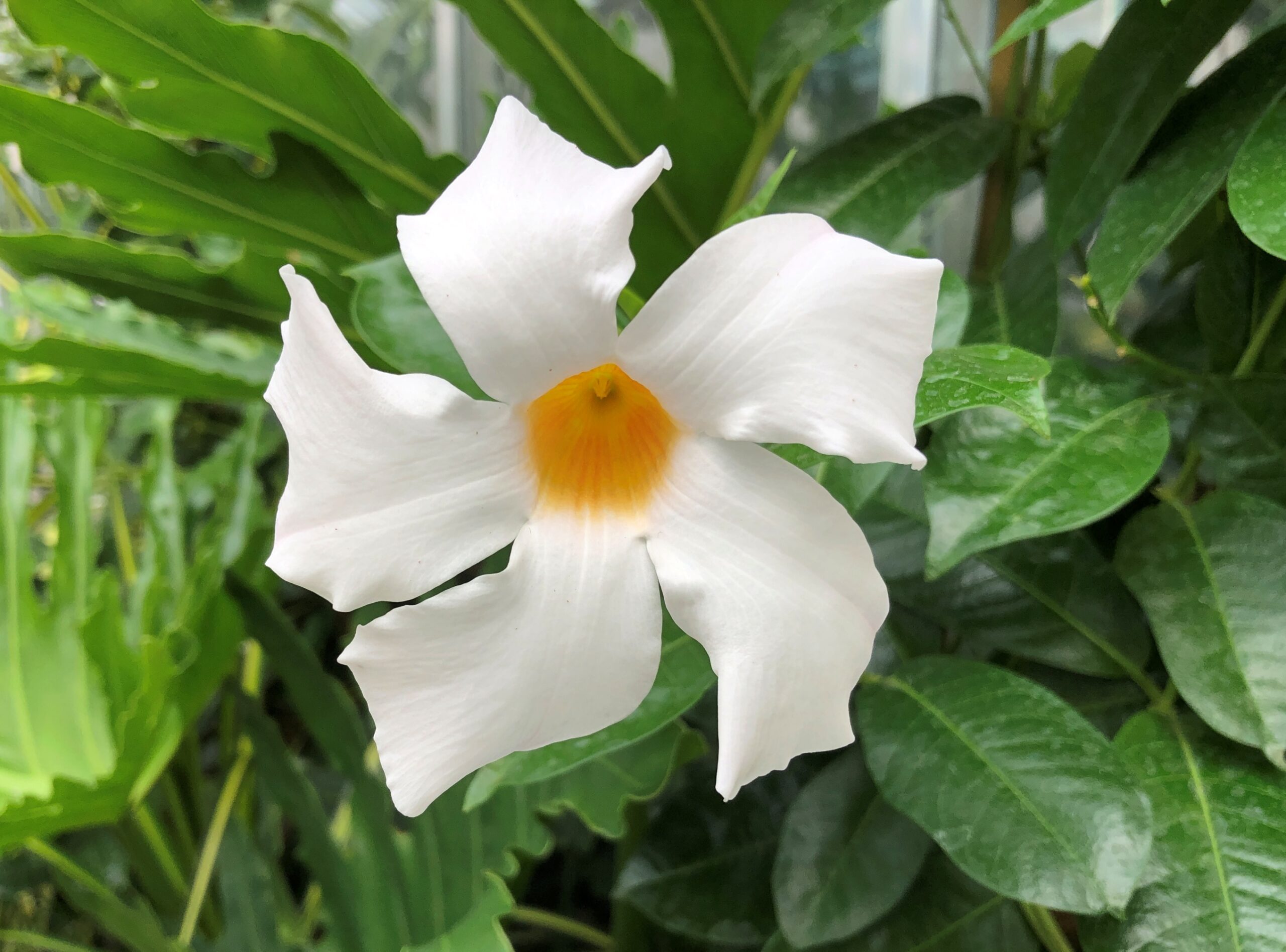
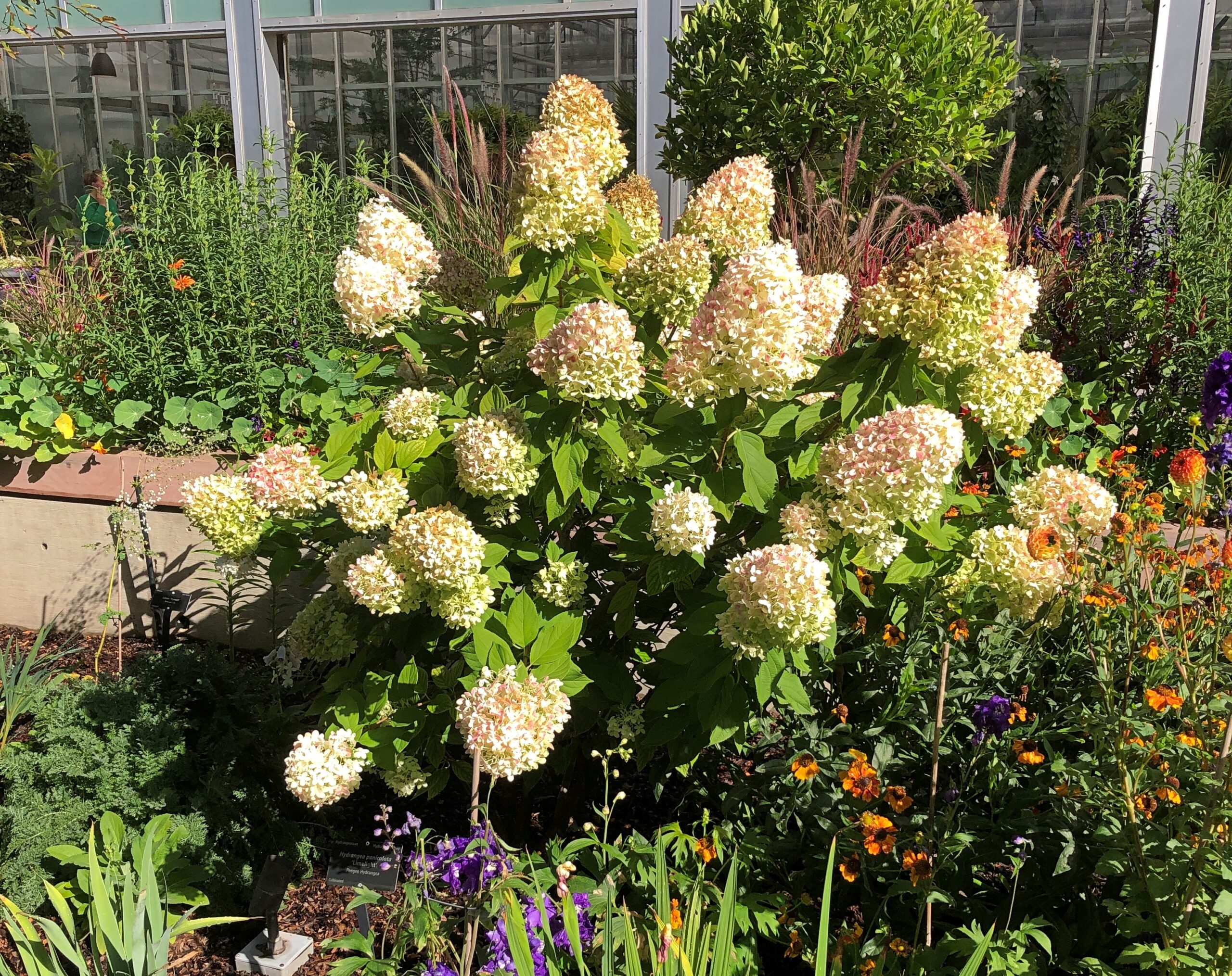
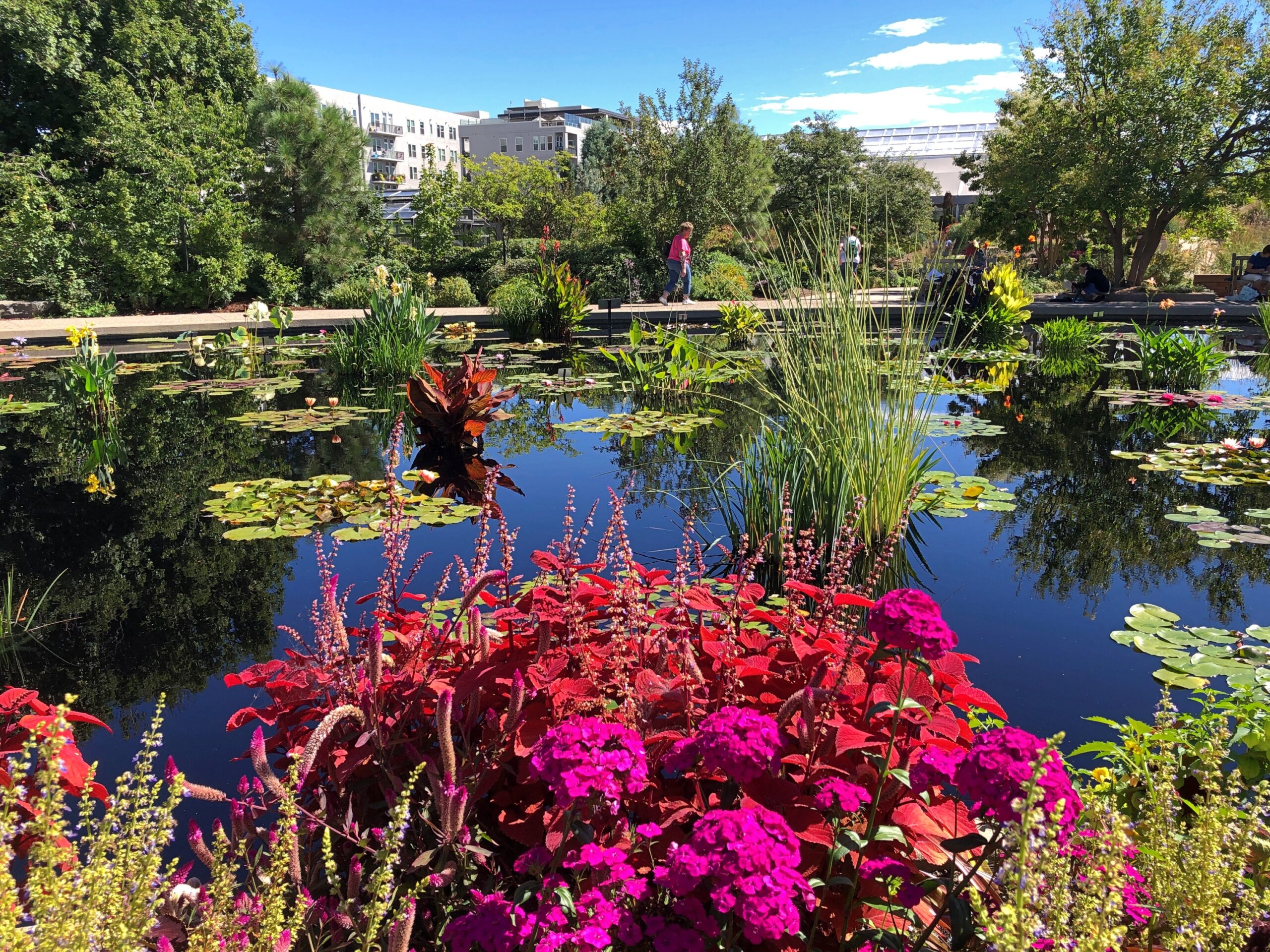
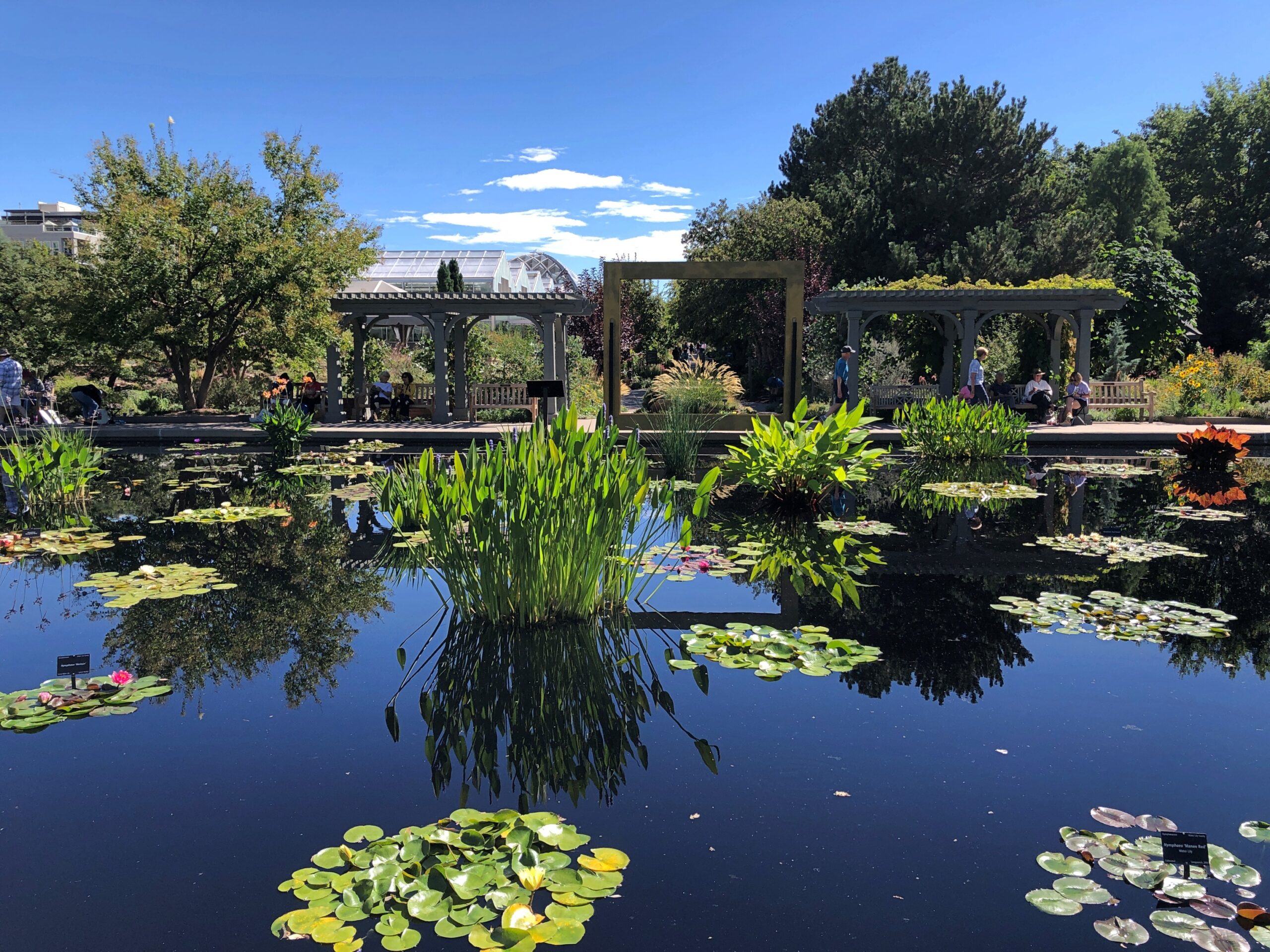
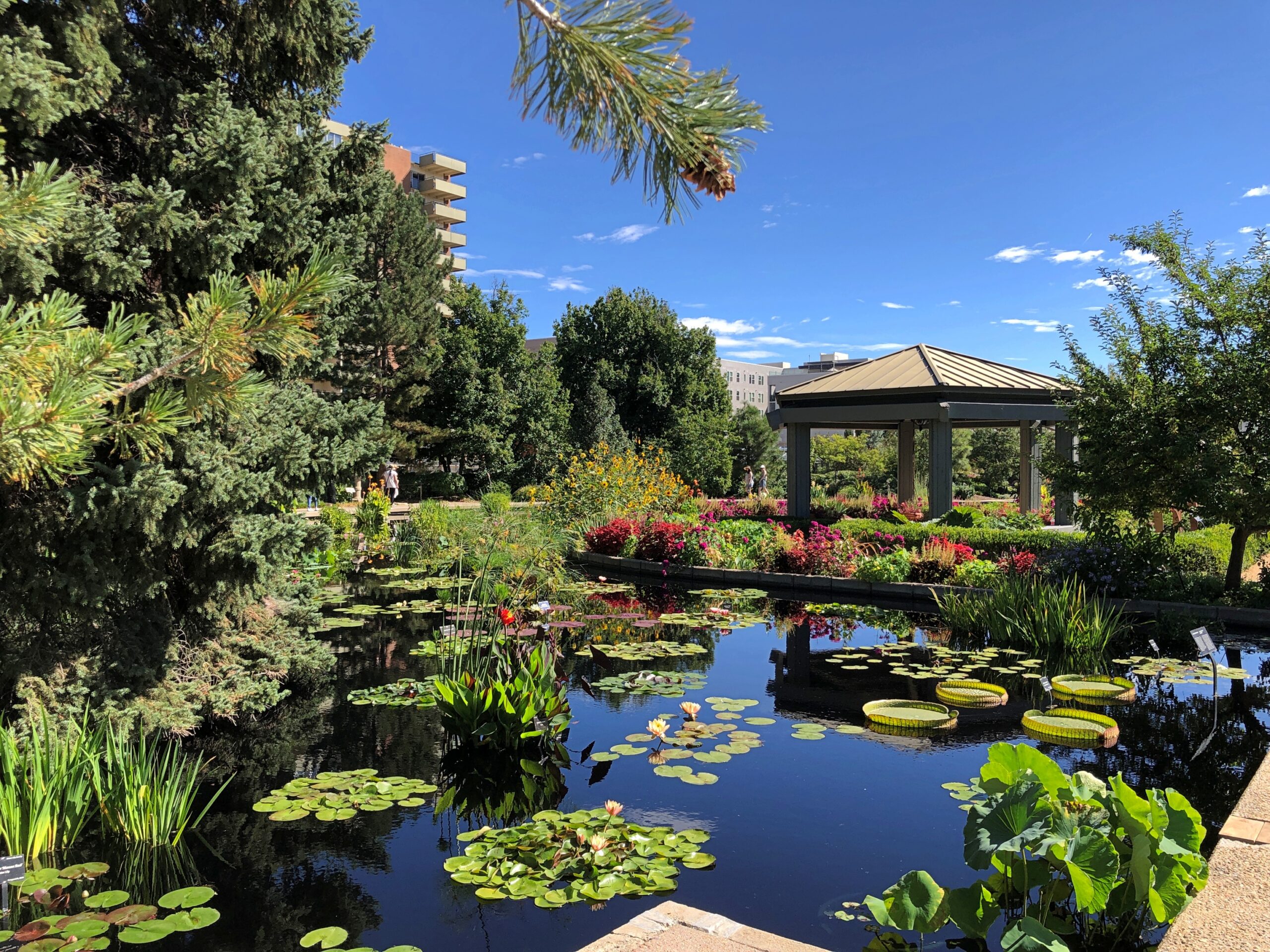
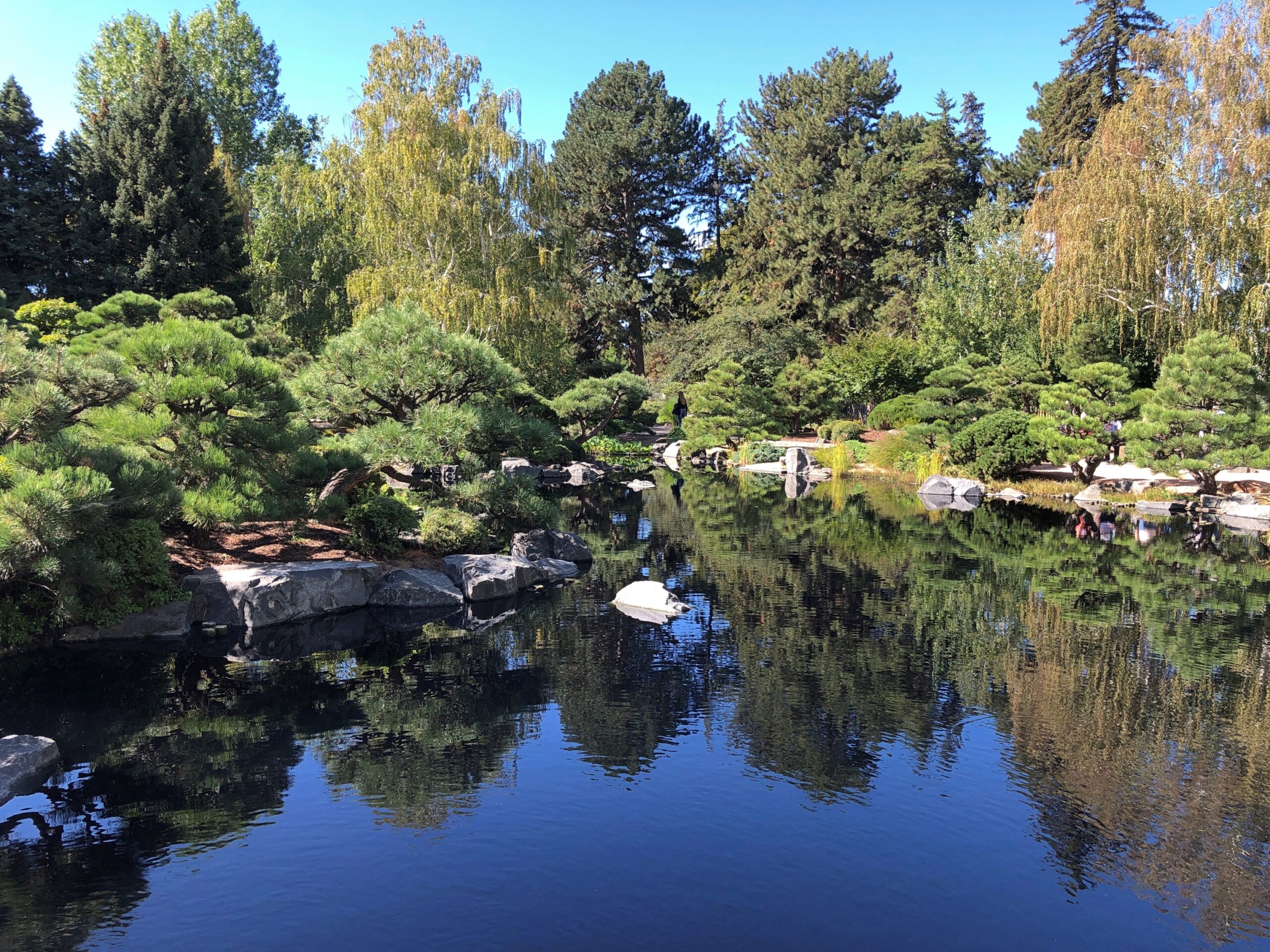
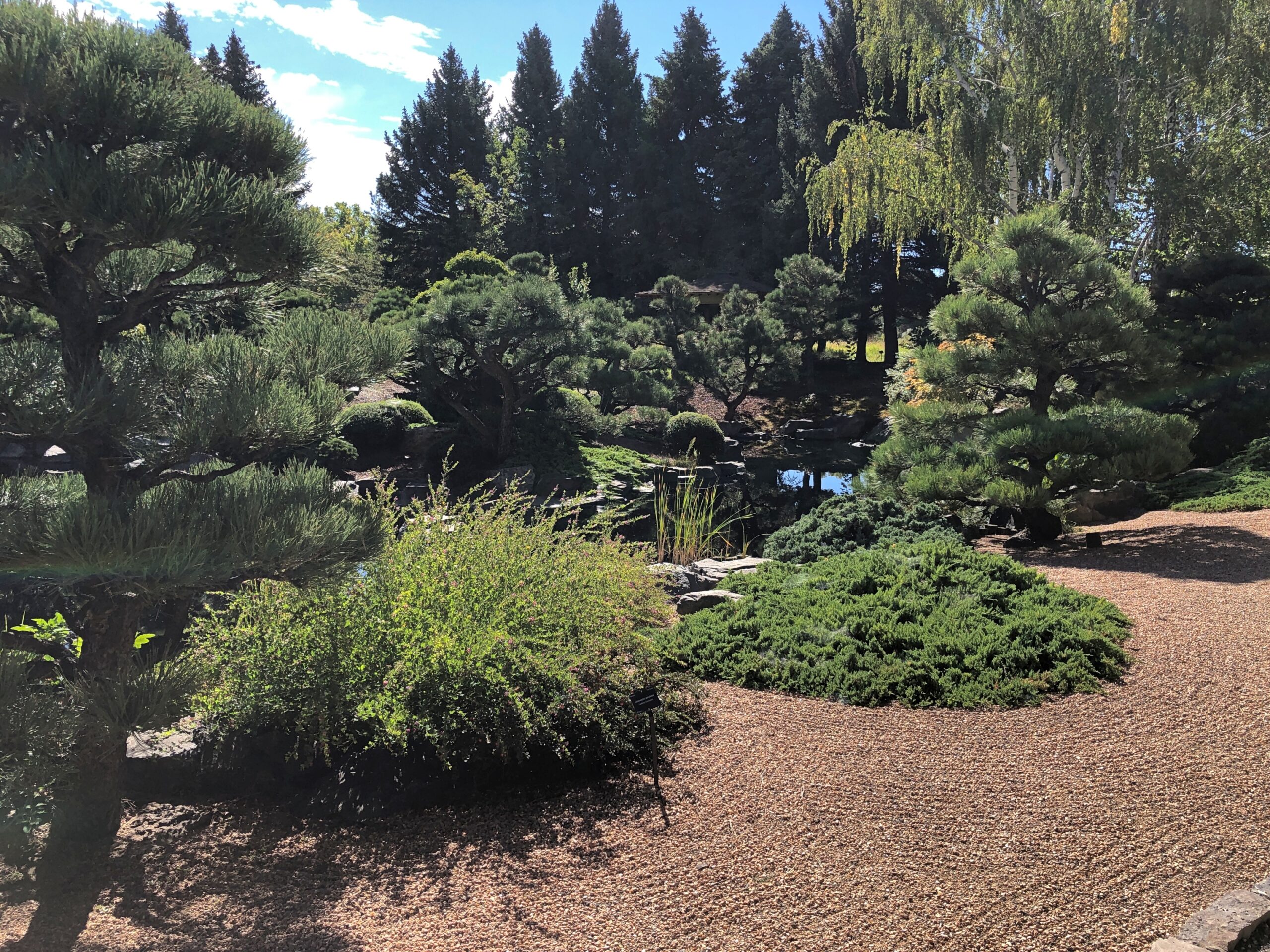
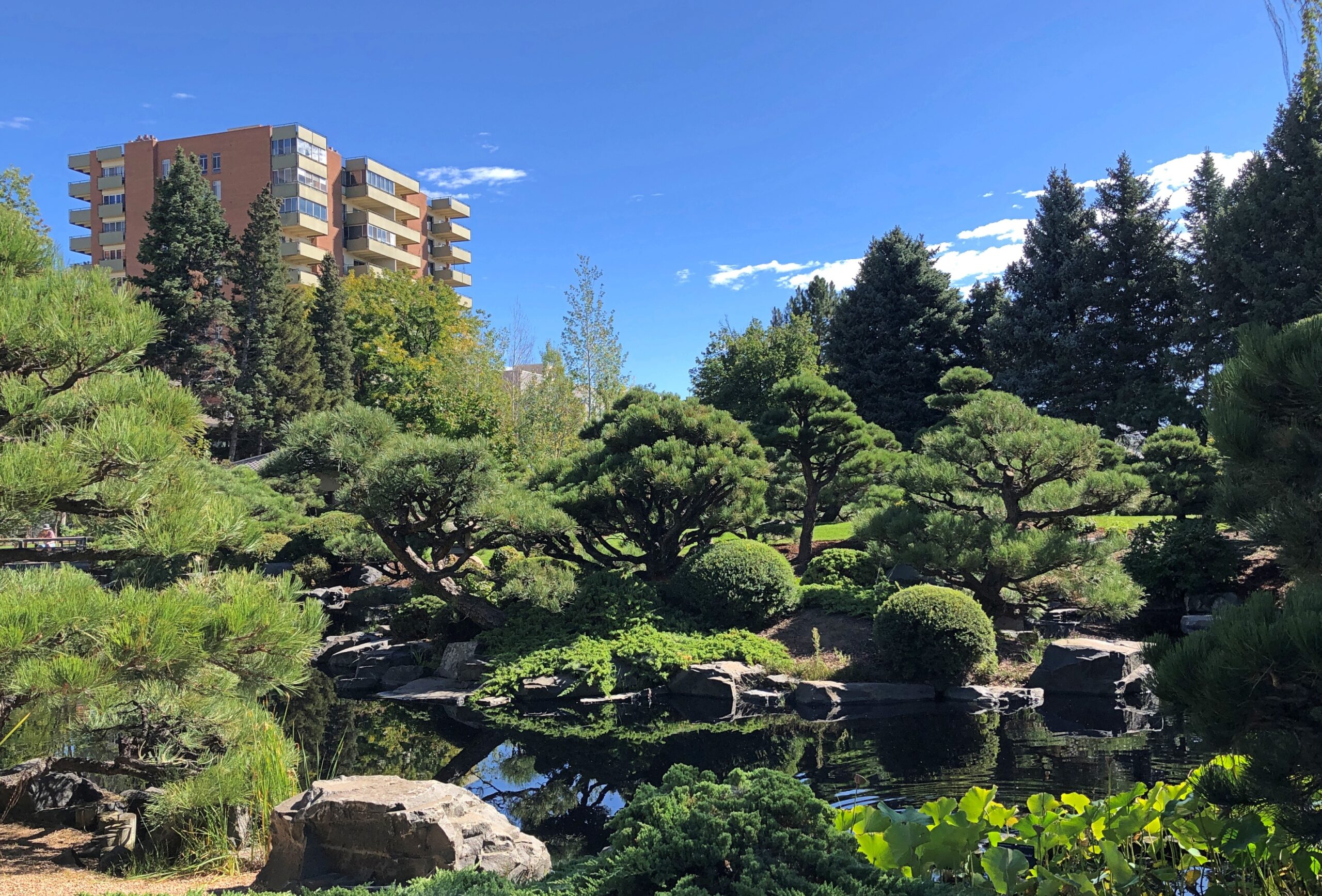
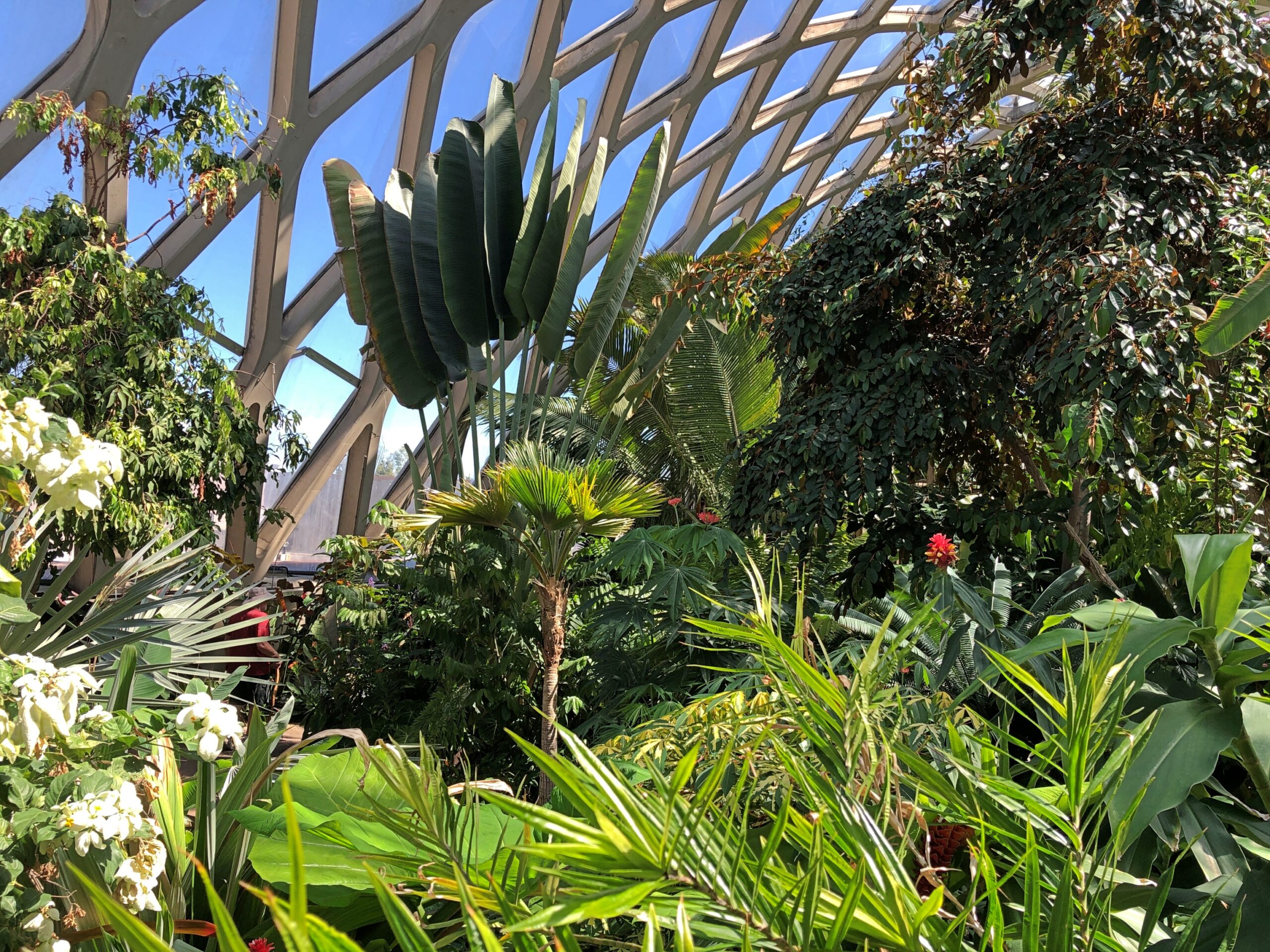
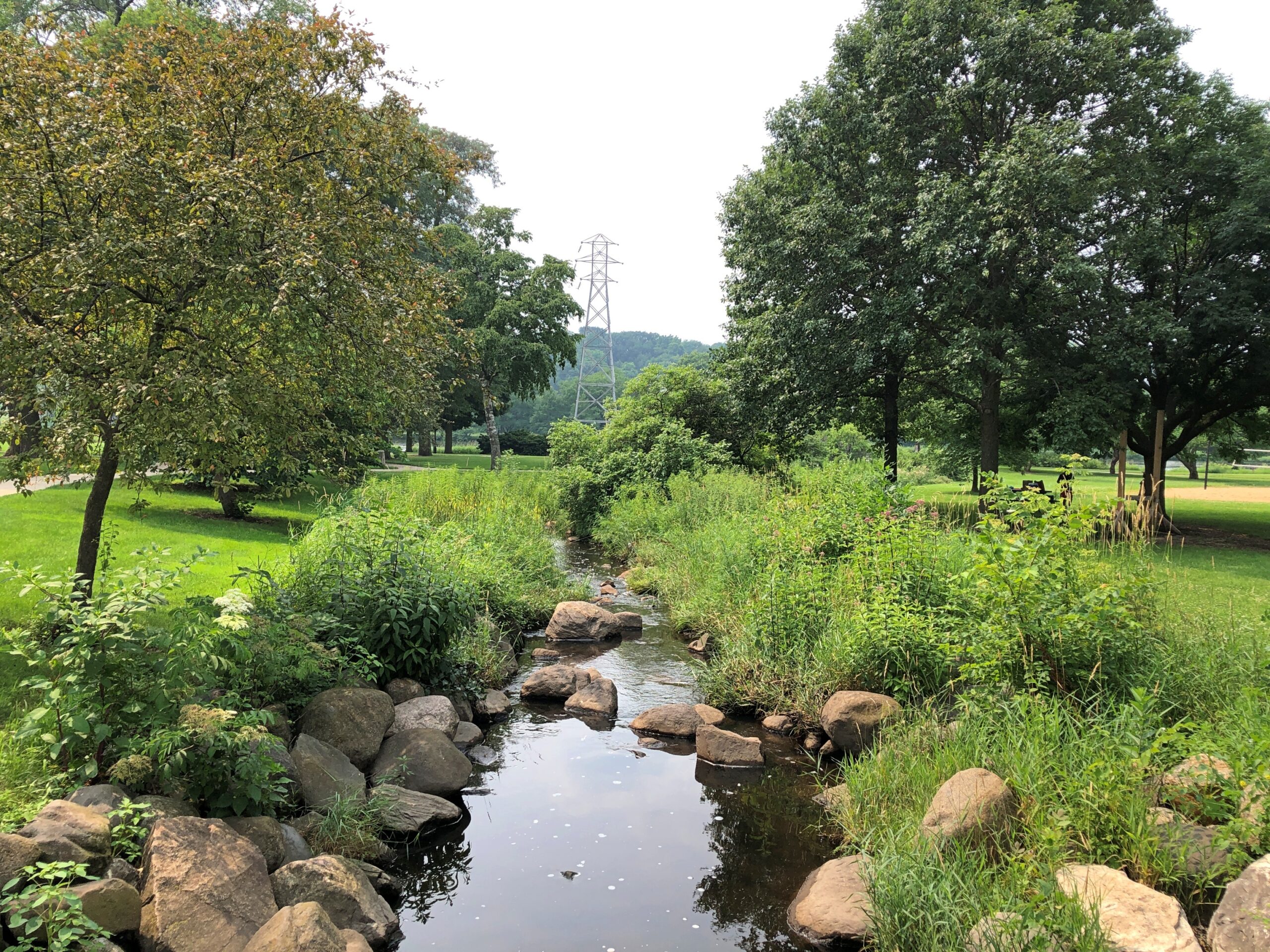
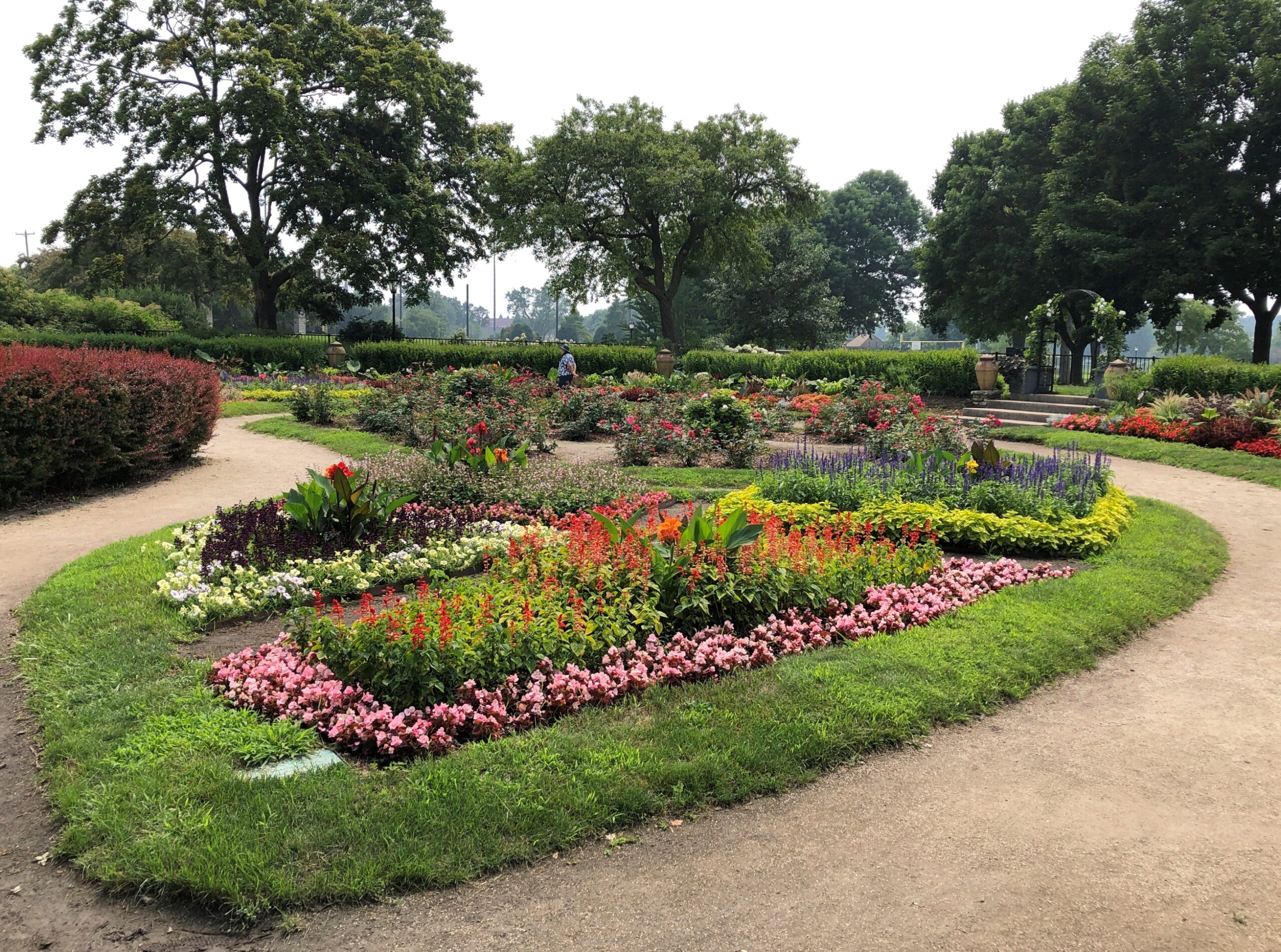
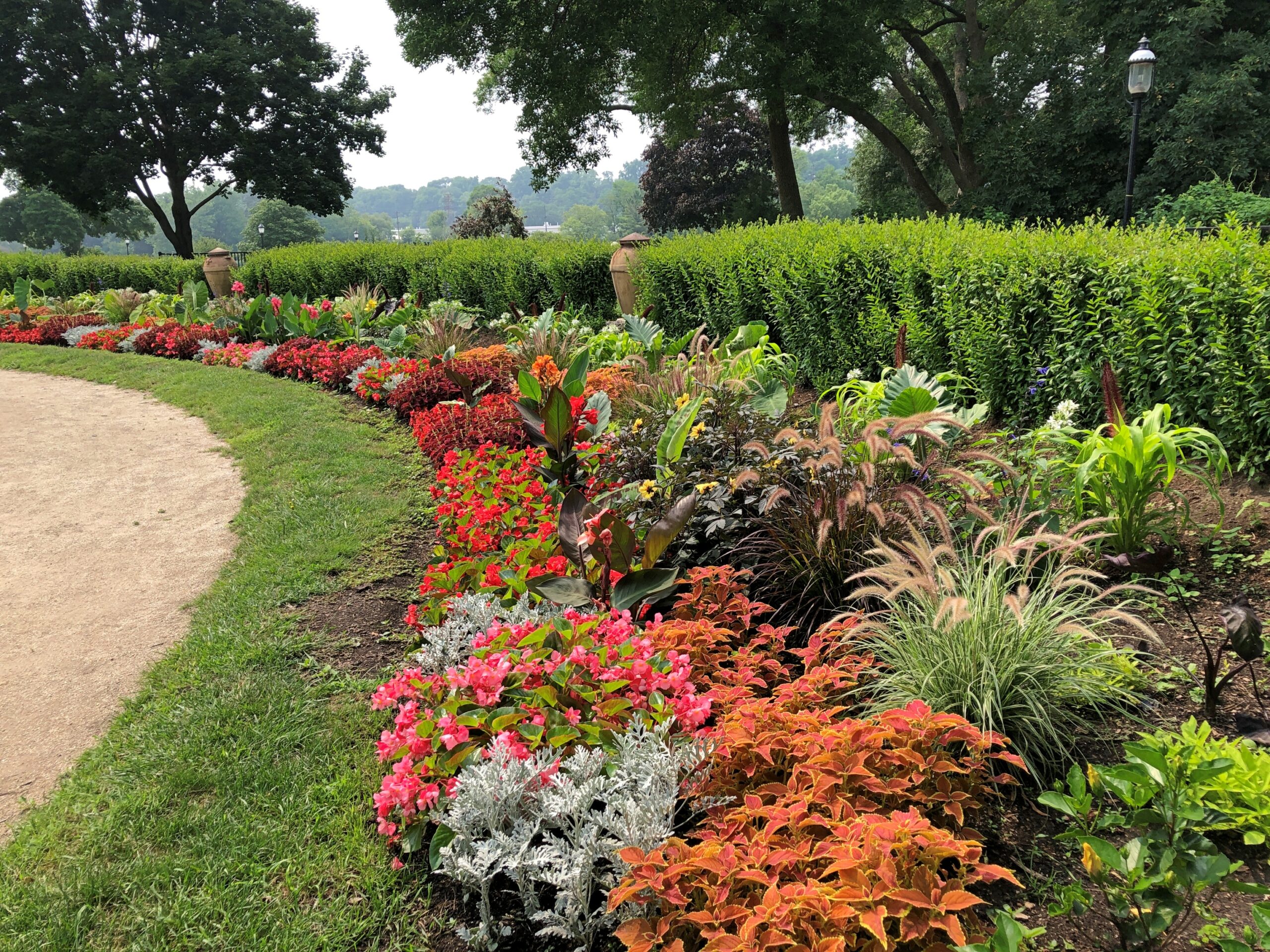
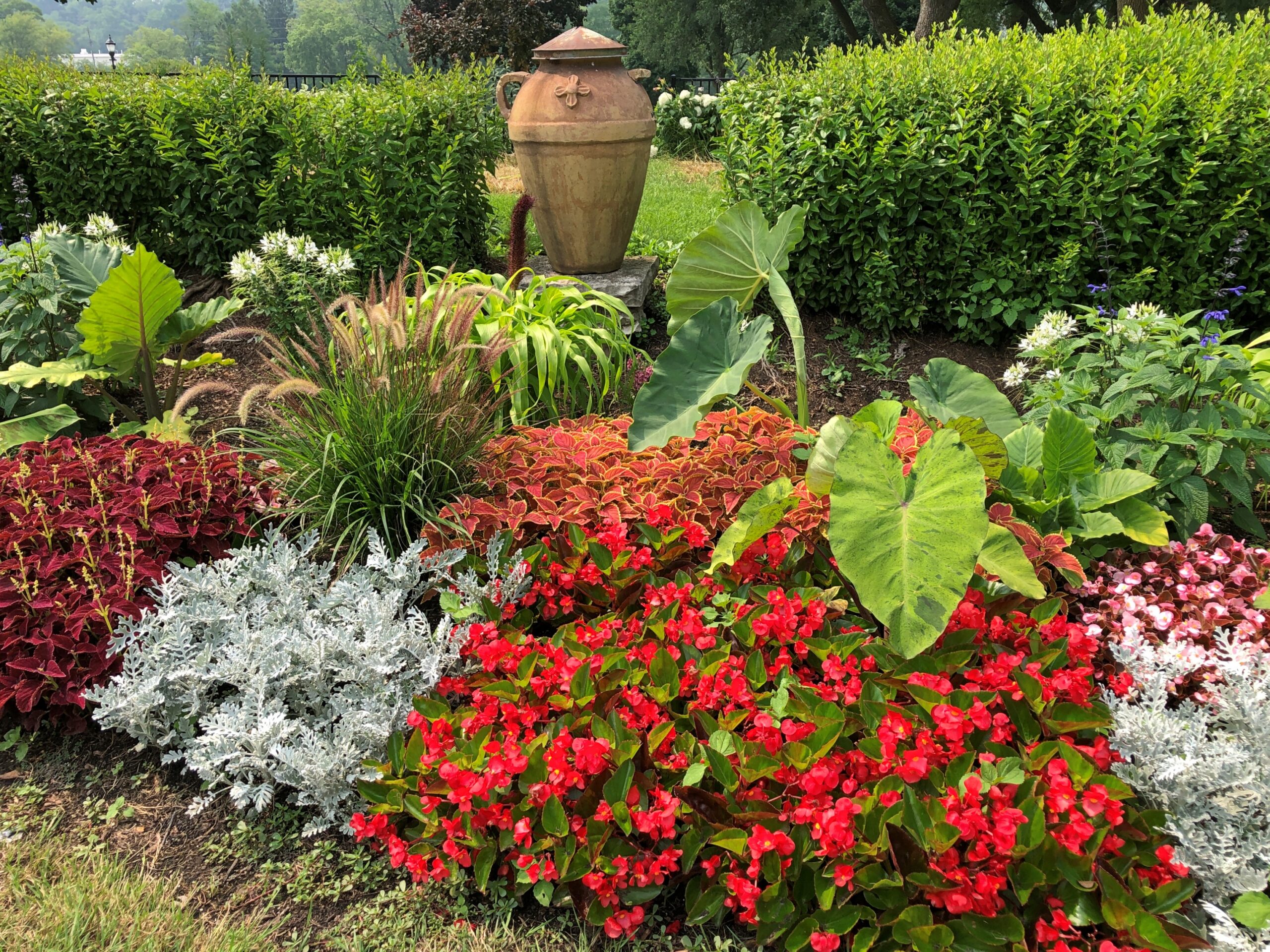
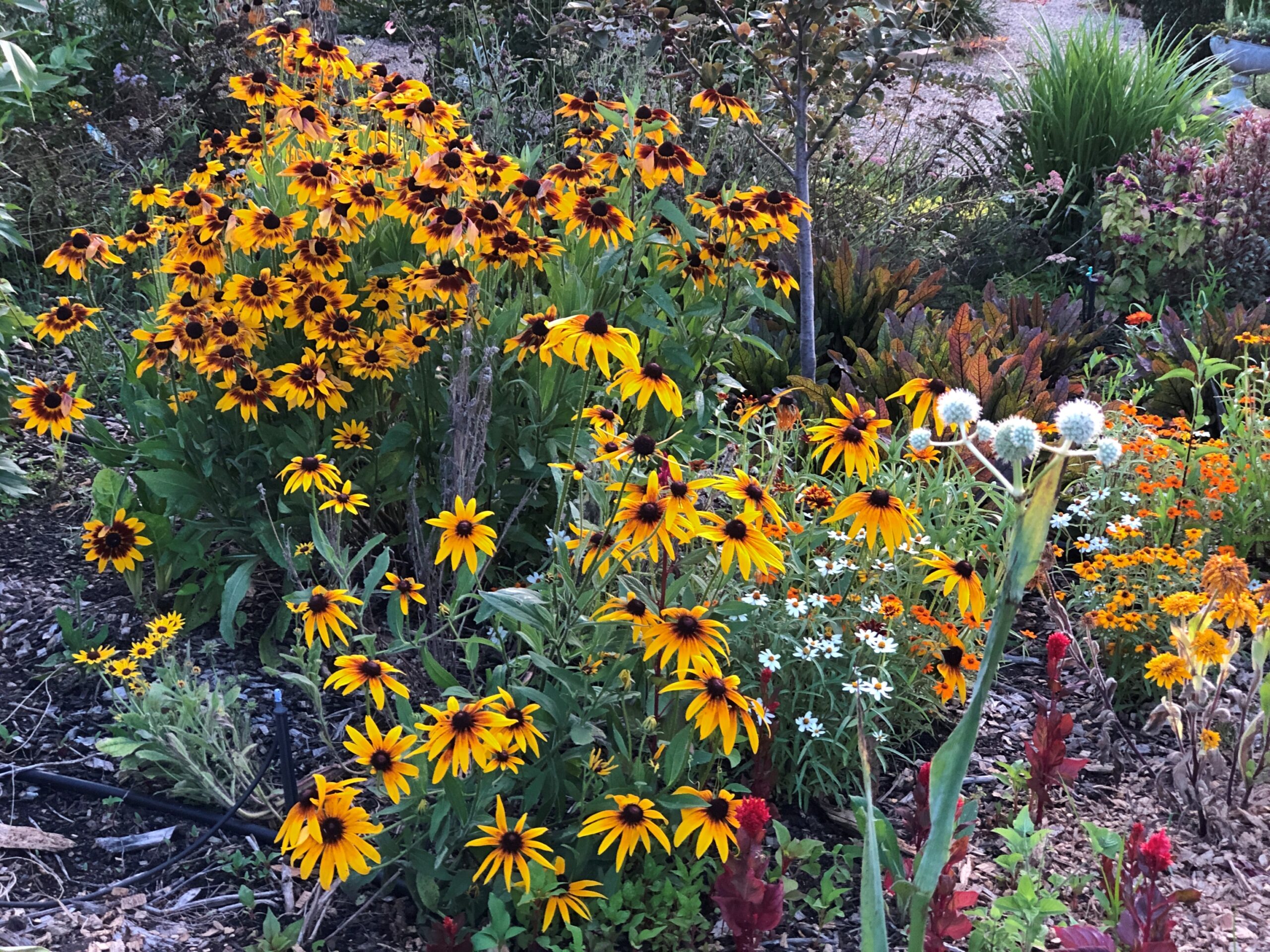
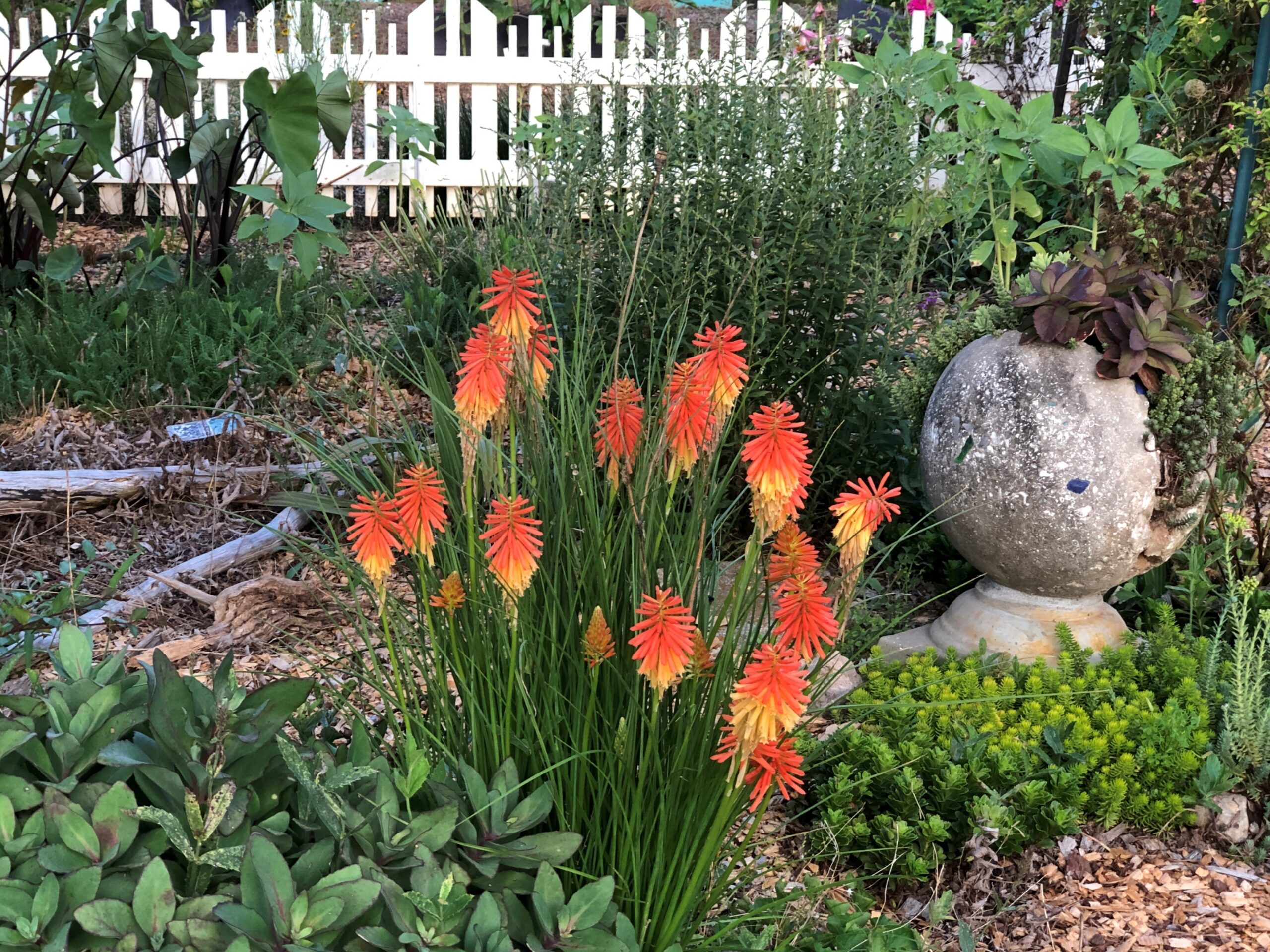
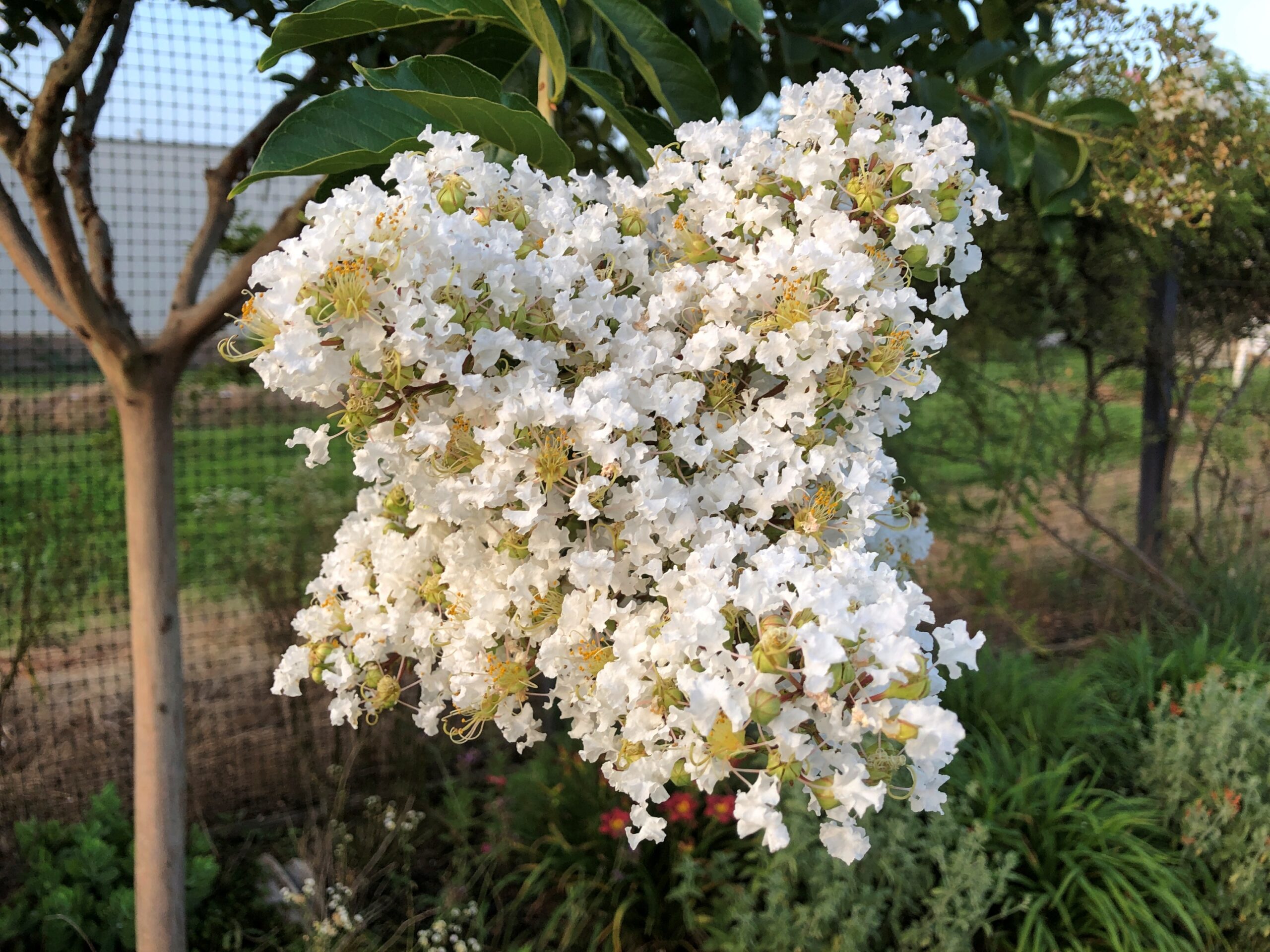
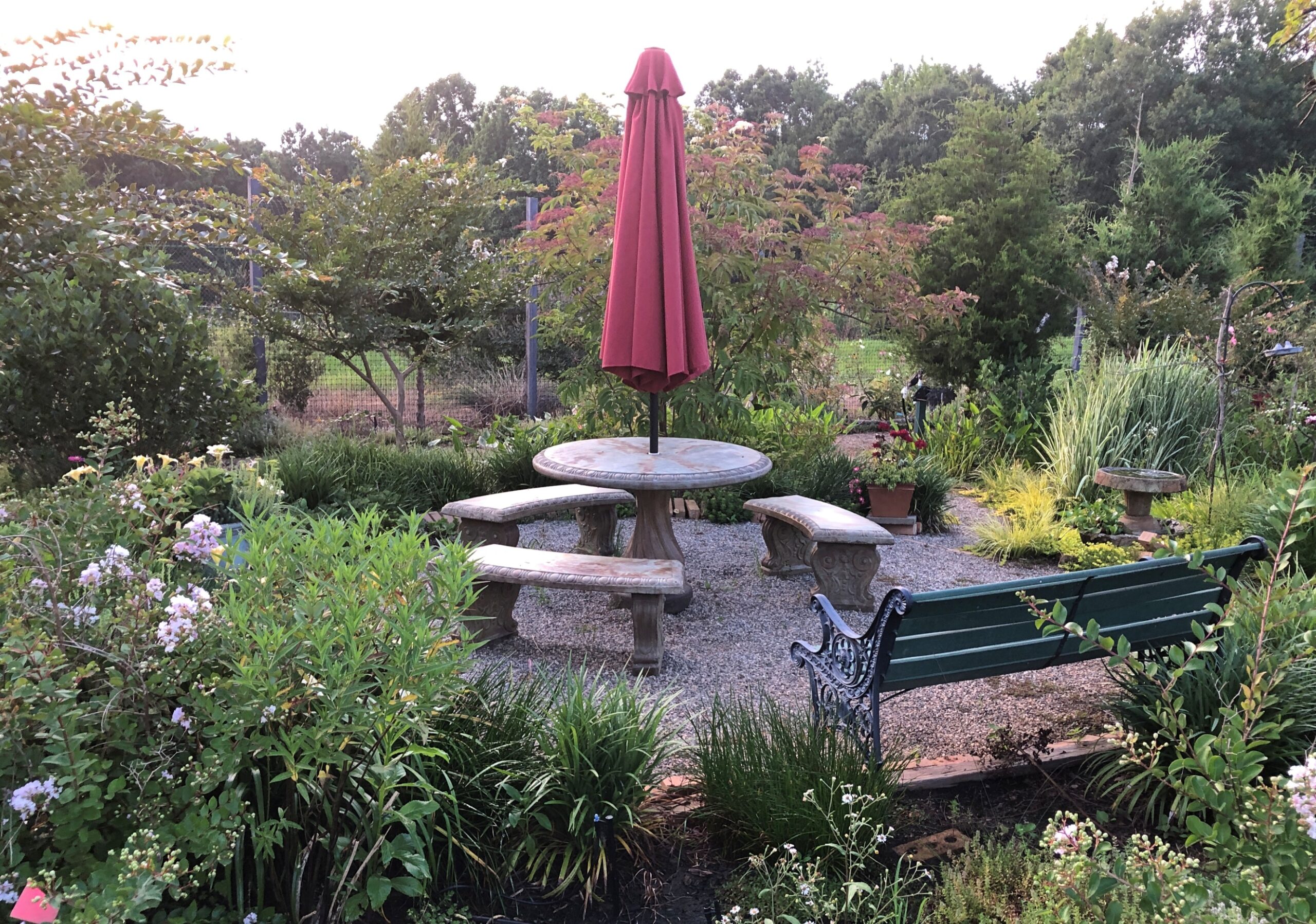
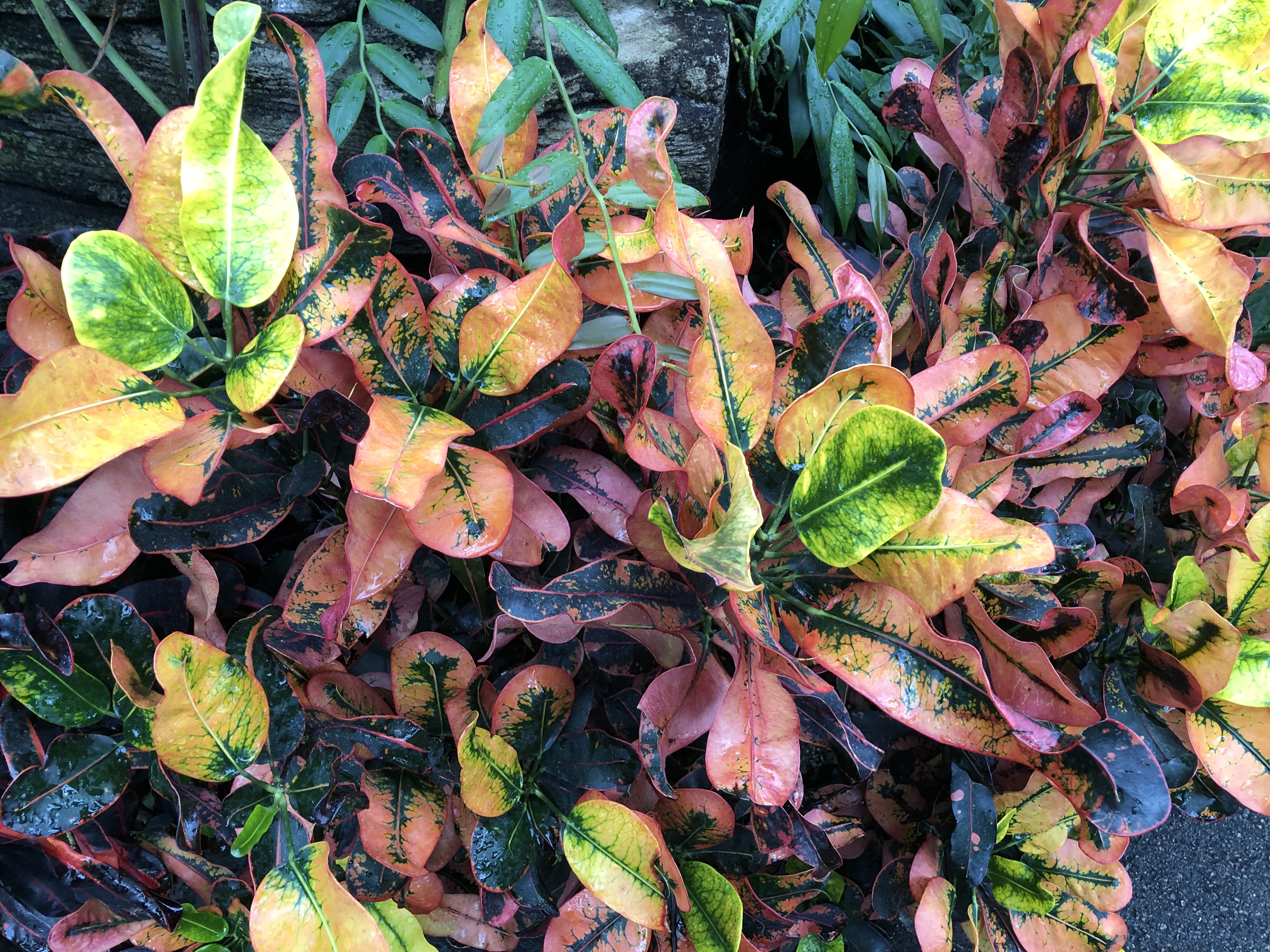
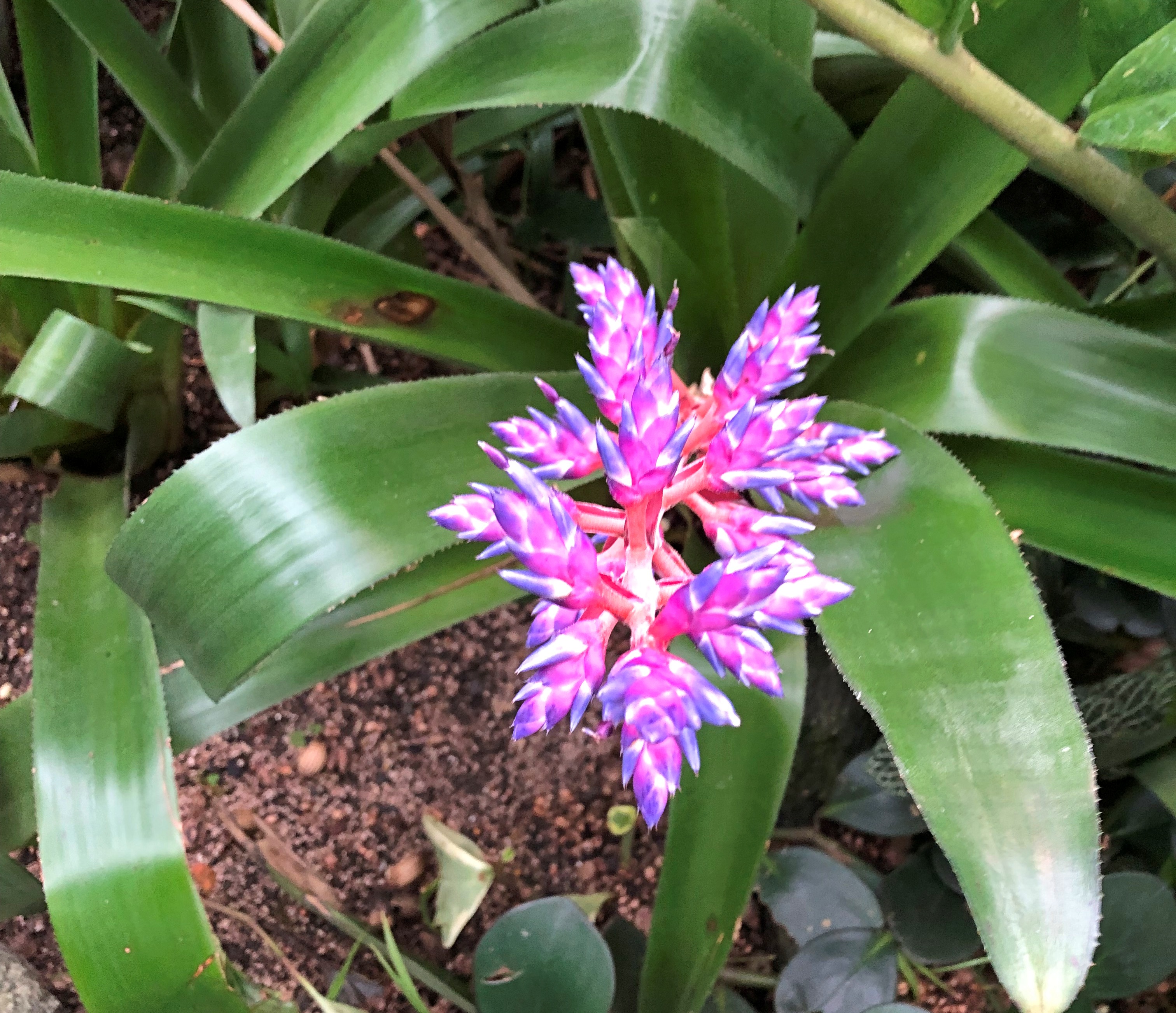
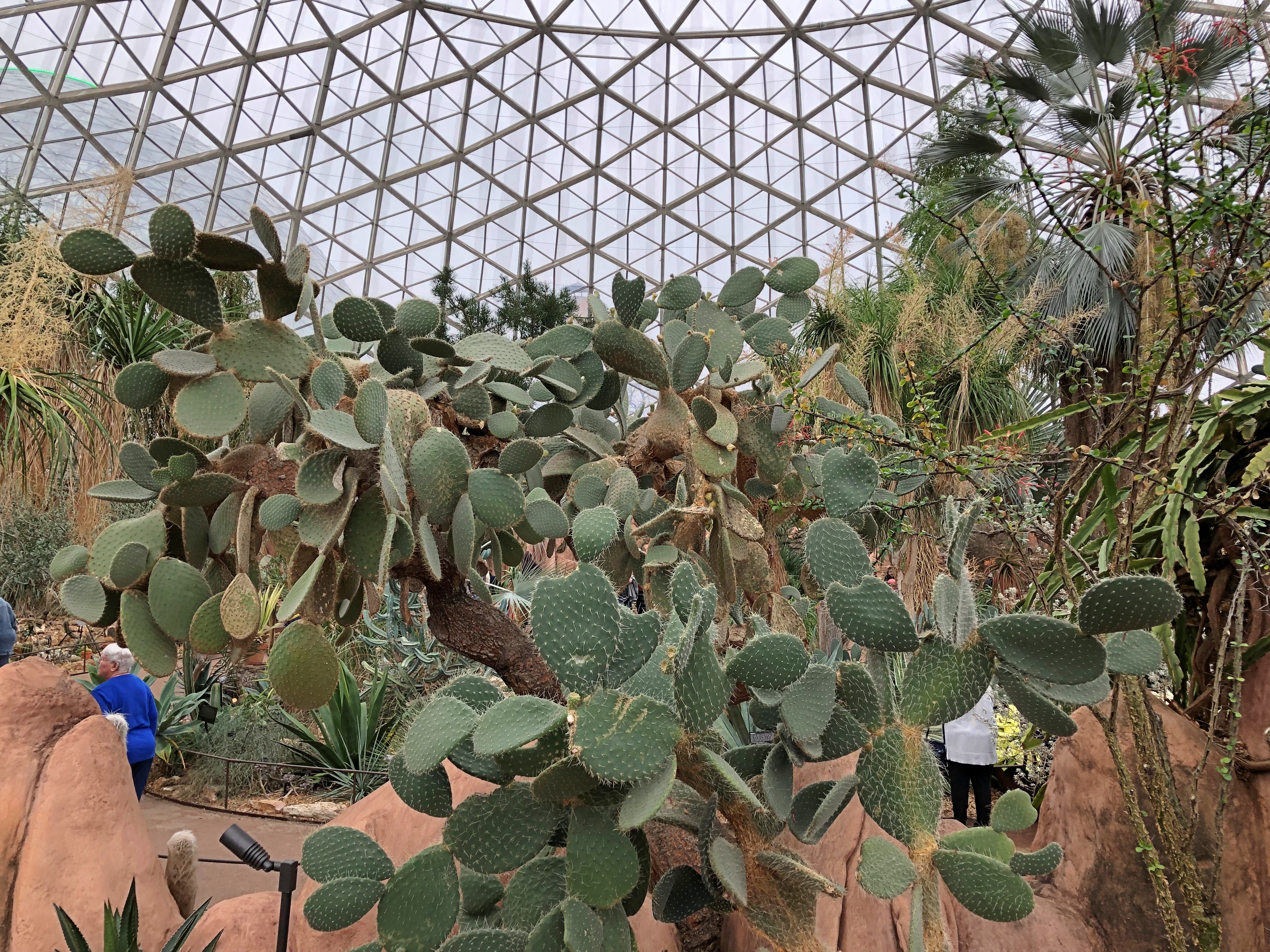
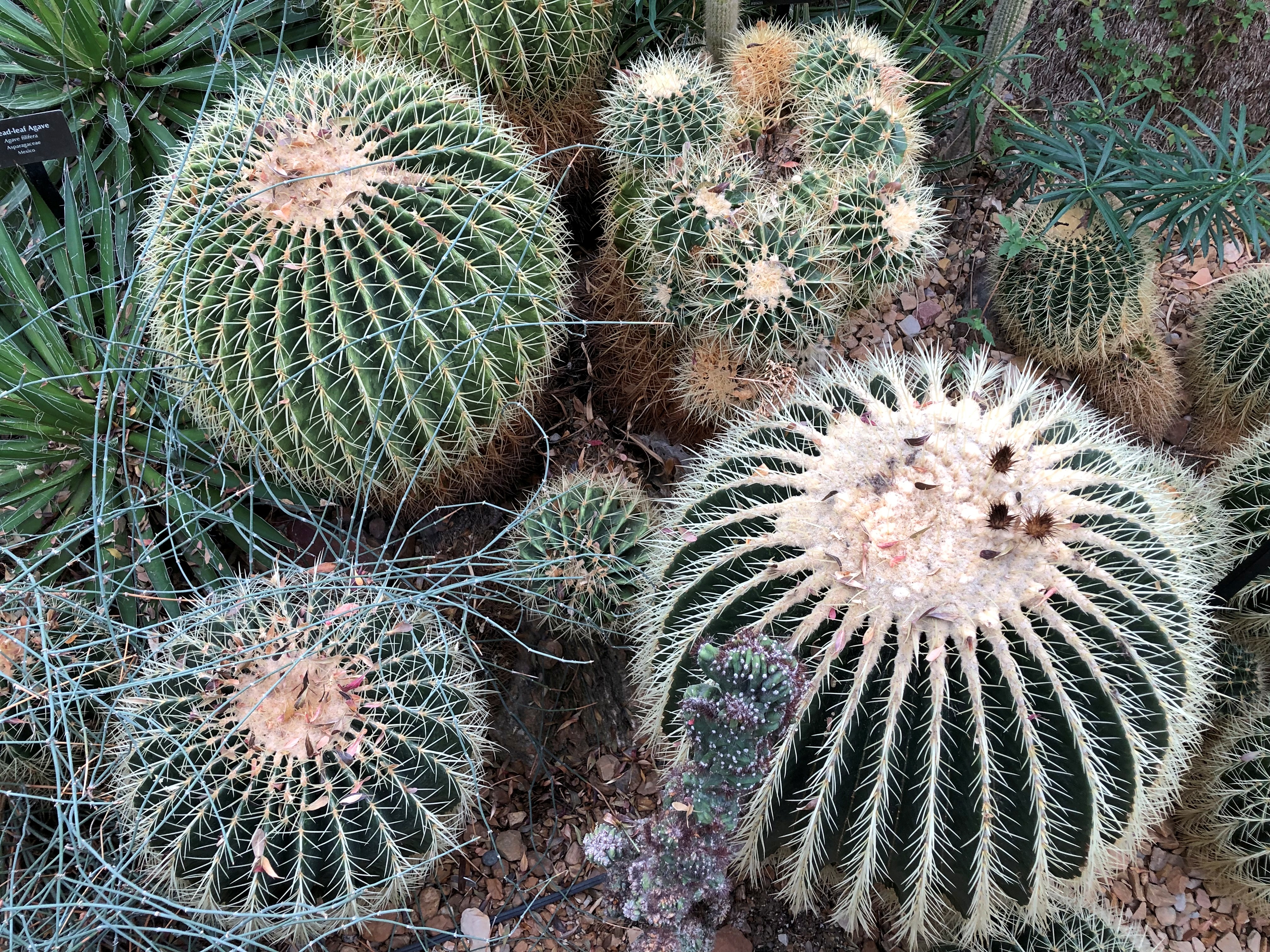
Our only full day in Denver, September 10, was forecast to be a hot one, so we schemed to arrive at the Denver Botanic Gardens when it opened in the morning and stay there until the heat became uncomfortable. We liked the place so much that we stayed well after the heat locked into high.
The place includes a few whimsical installations, but mostly it’s straightforward flora.
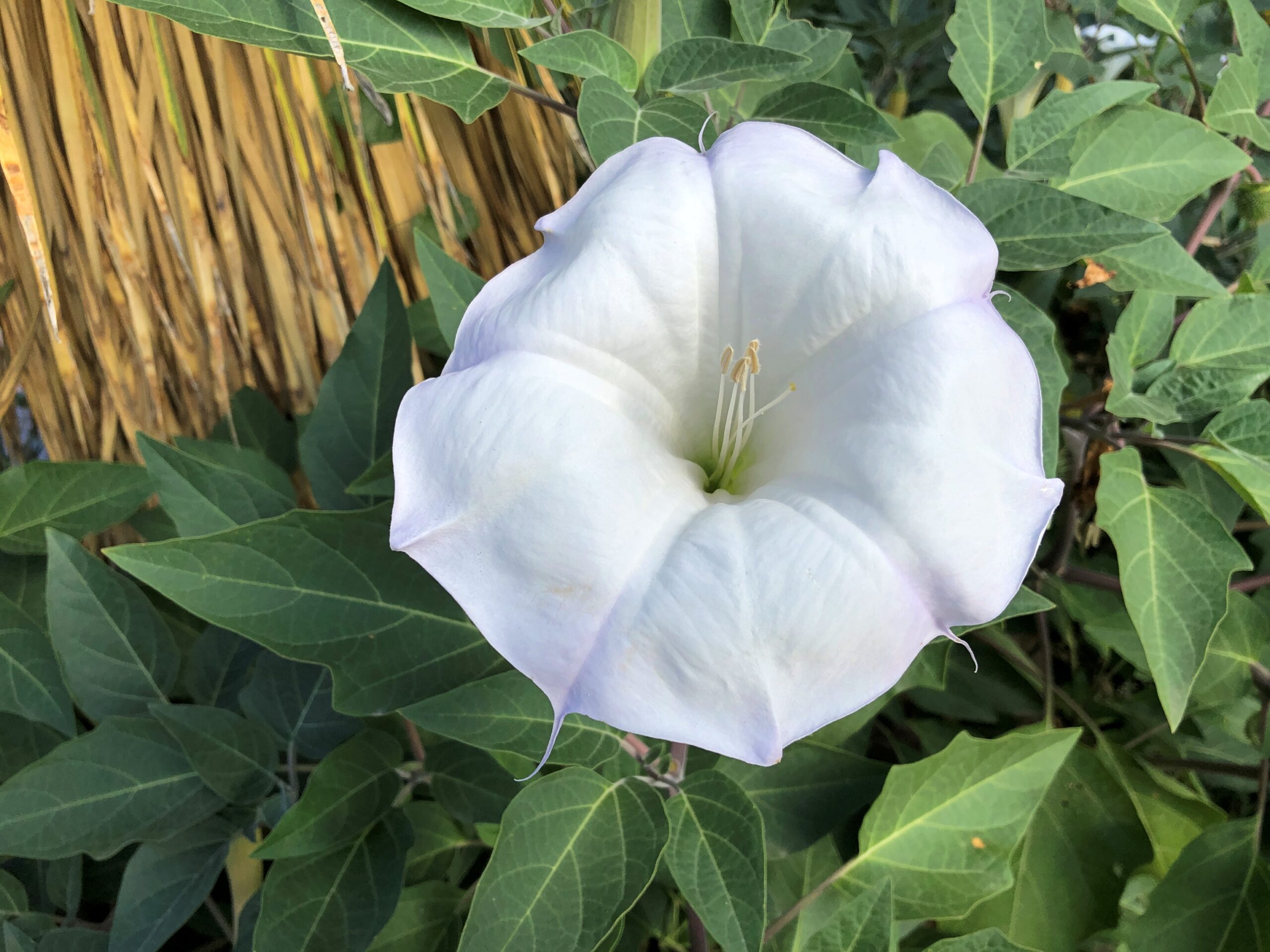
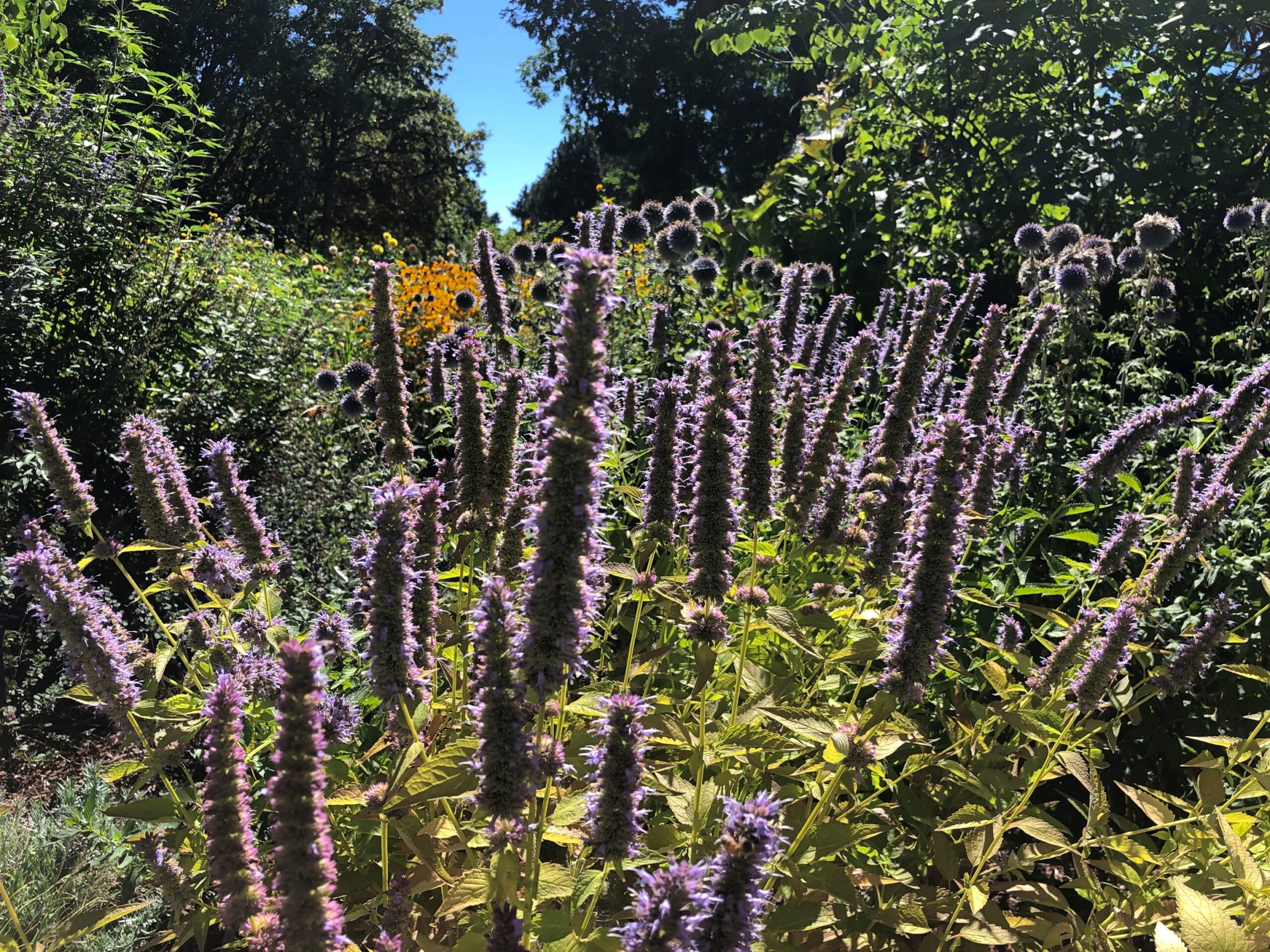
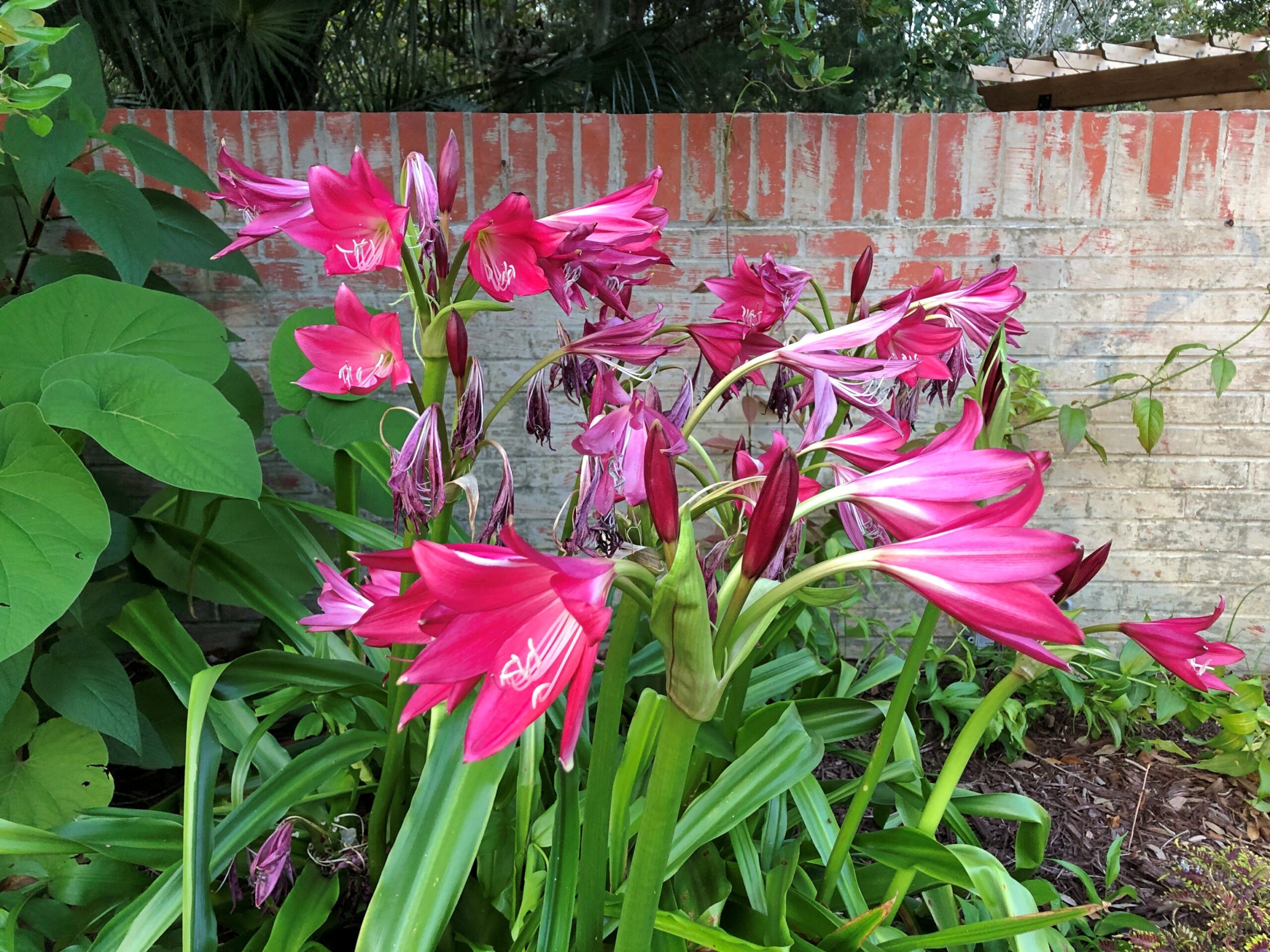
The flowers alone were worth the price of admission. Singly.
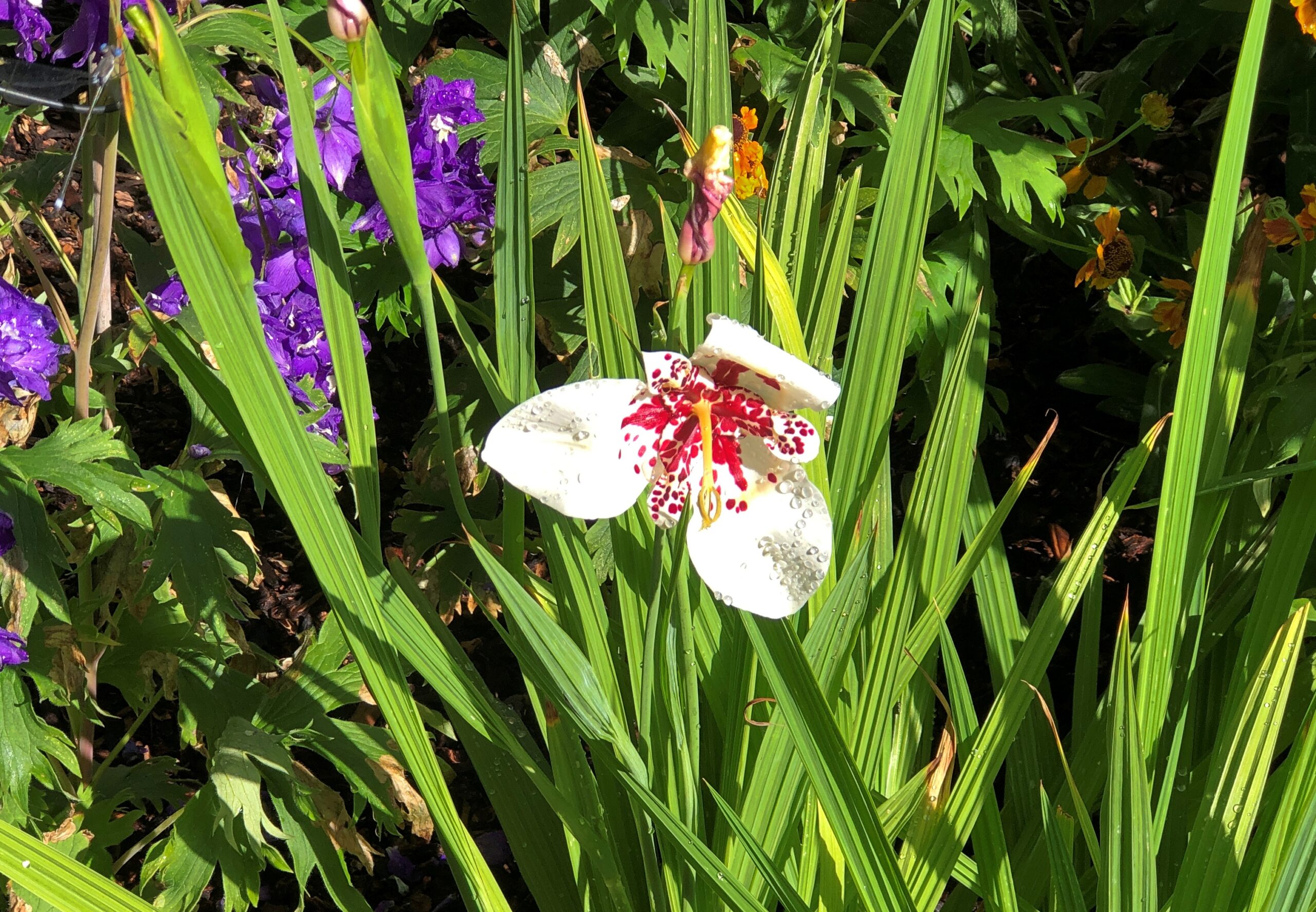
And in profusion.
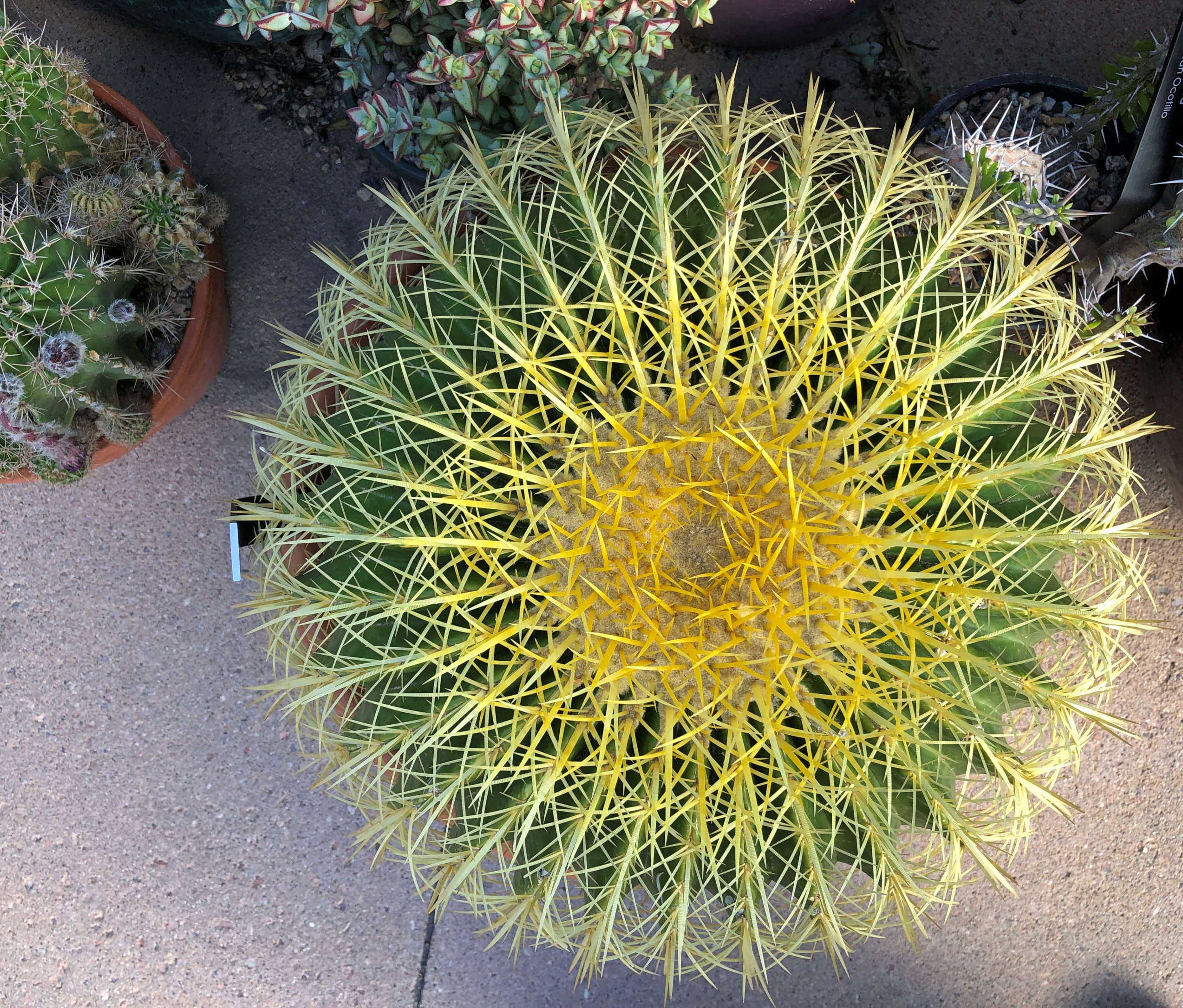
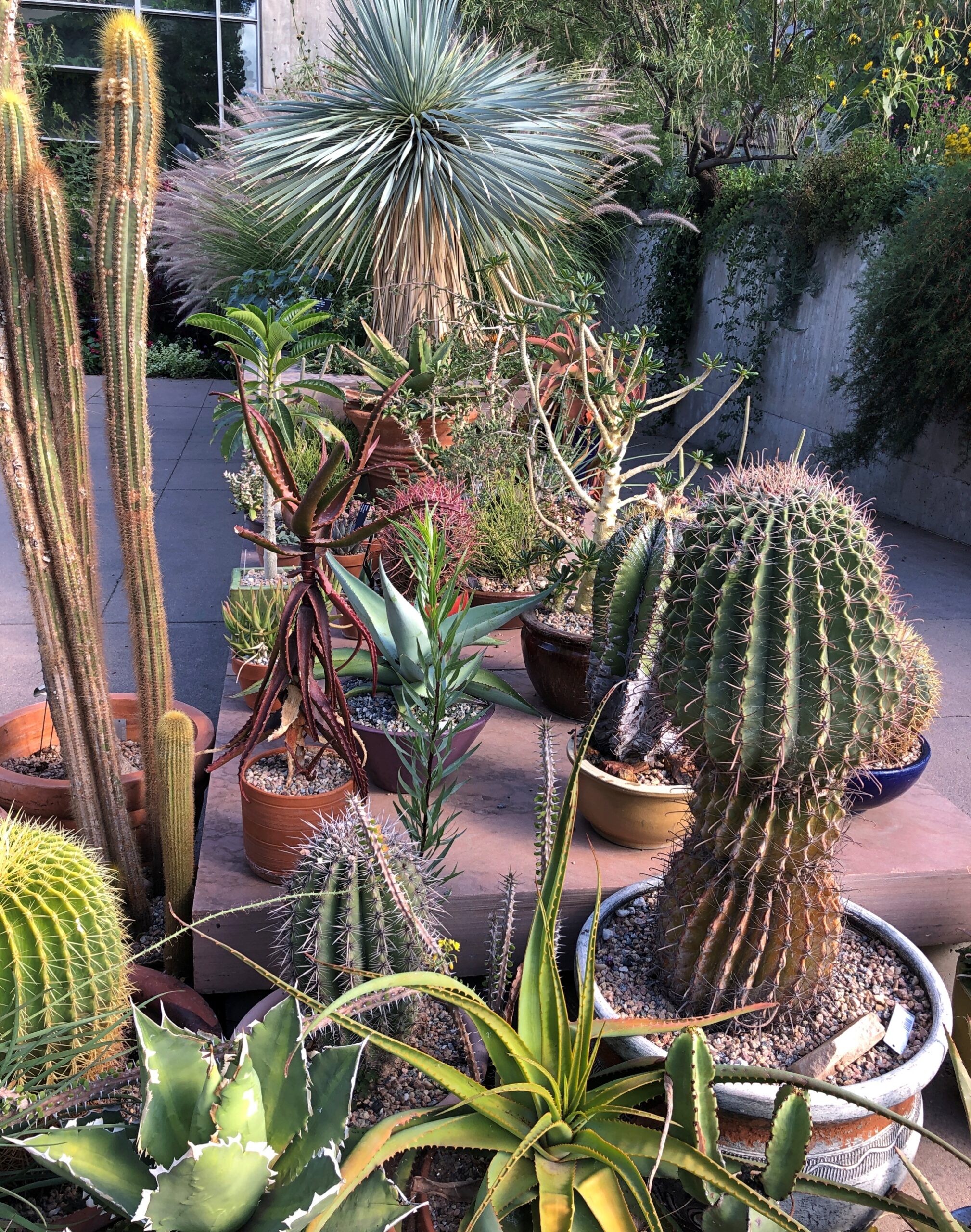
At 23 acres in the middle of a major metropolitan area, the gardens are enormous, with paths leading off in various directions to a sizable pond garden, a Japanese garden, and a giant tropical conservatory, among other features, such as an alpine garden and a steppe garden and a xeriscape demonstration garden (“Dryland Mesa”). Not to forget cacti.
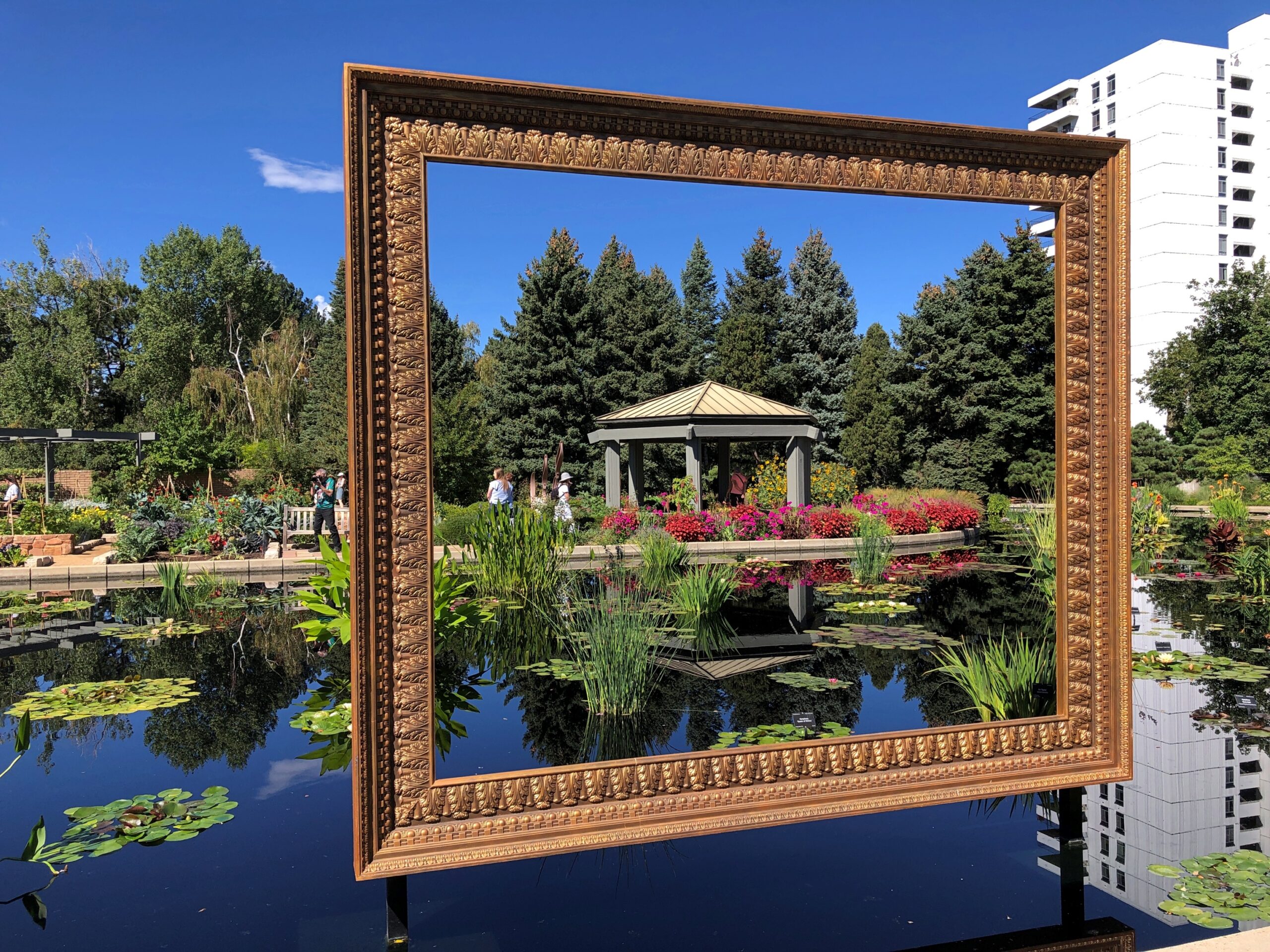
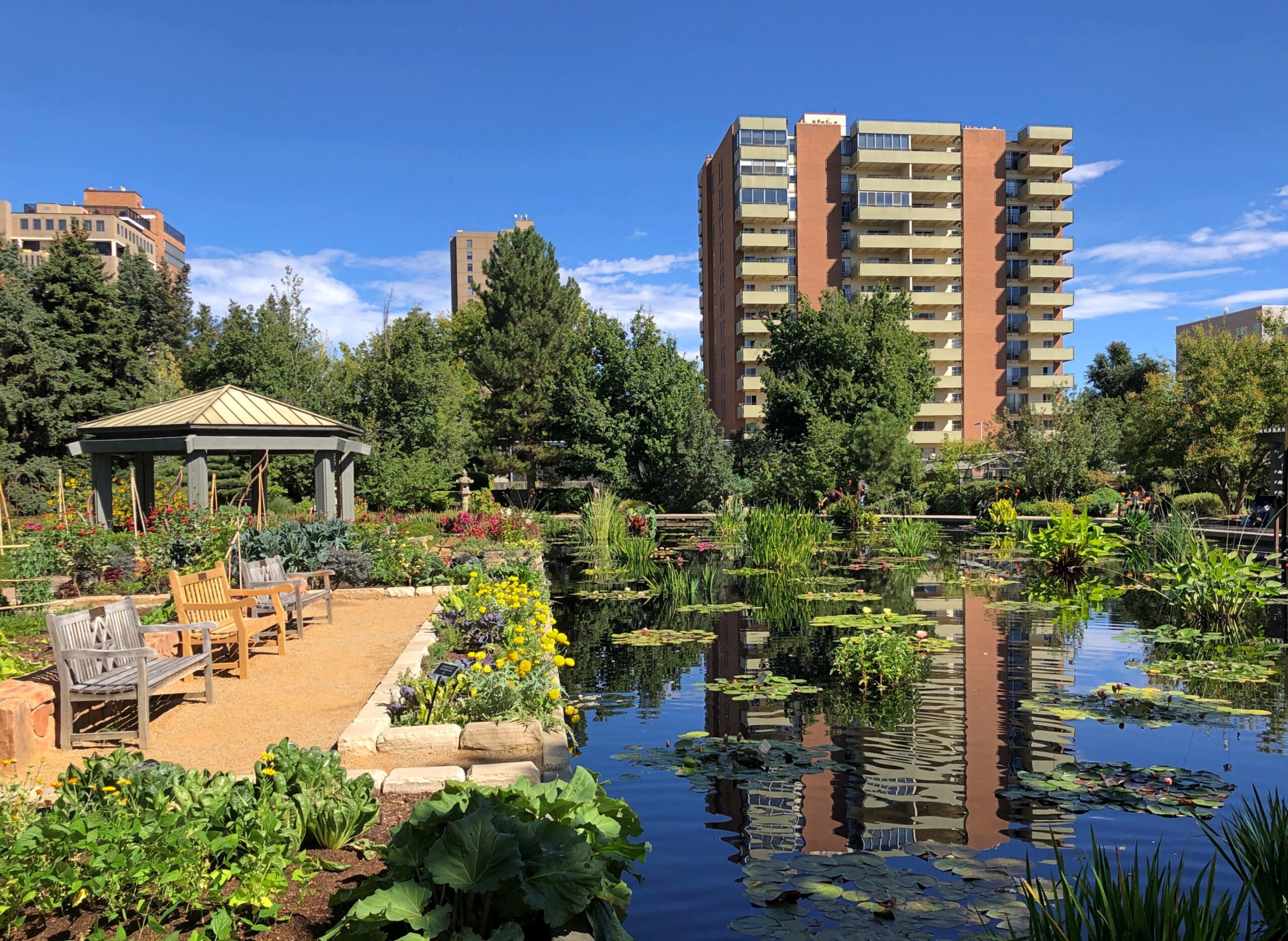
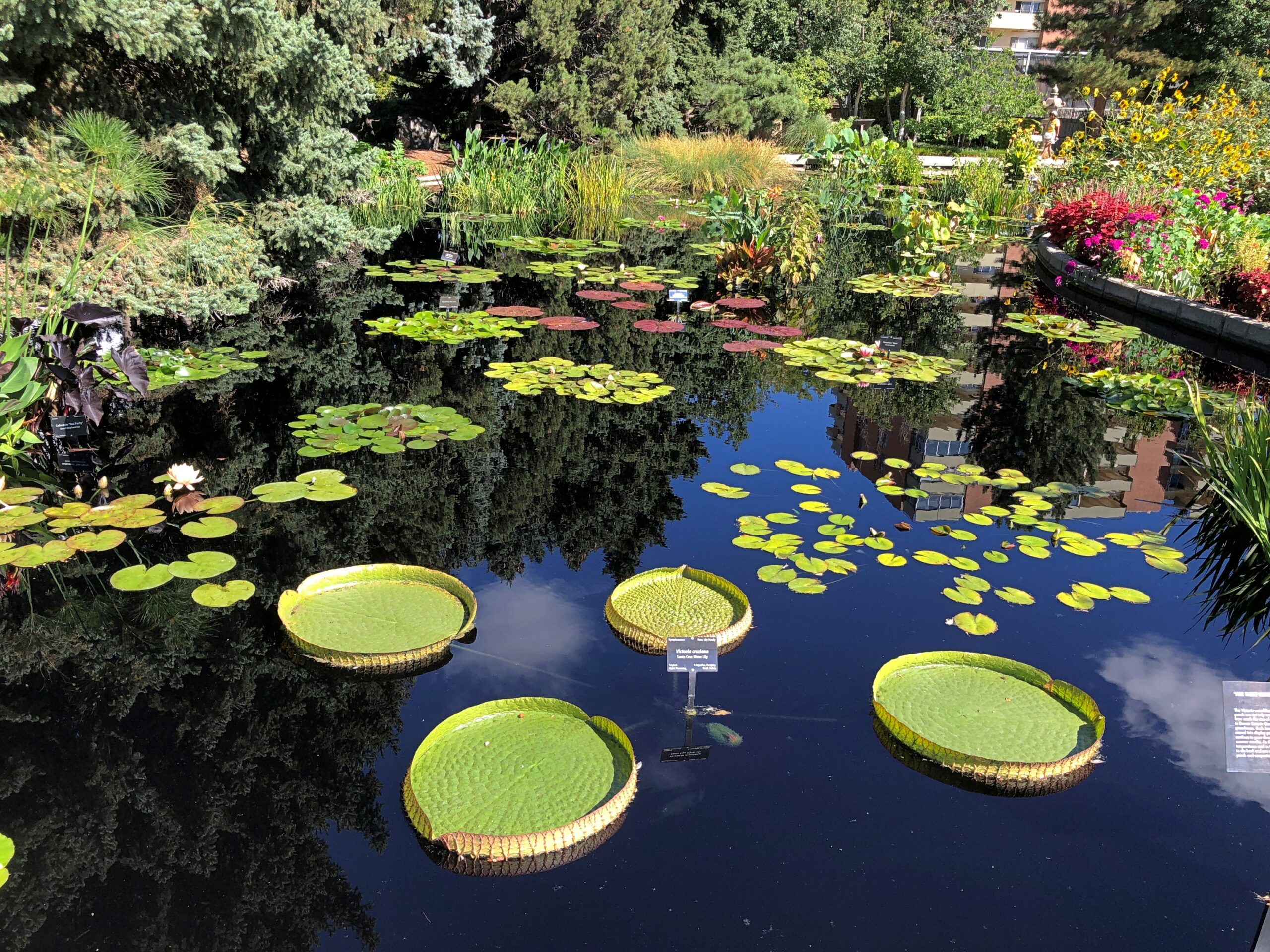
There was no way to see everything, so we focused on various parts, such as the pond.
I’d never see lily pads like this.
Built for squadrons of dragonflies to land on.
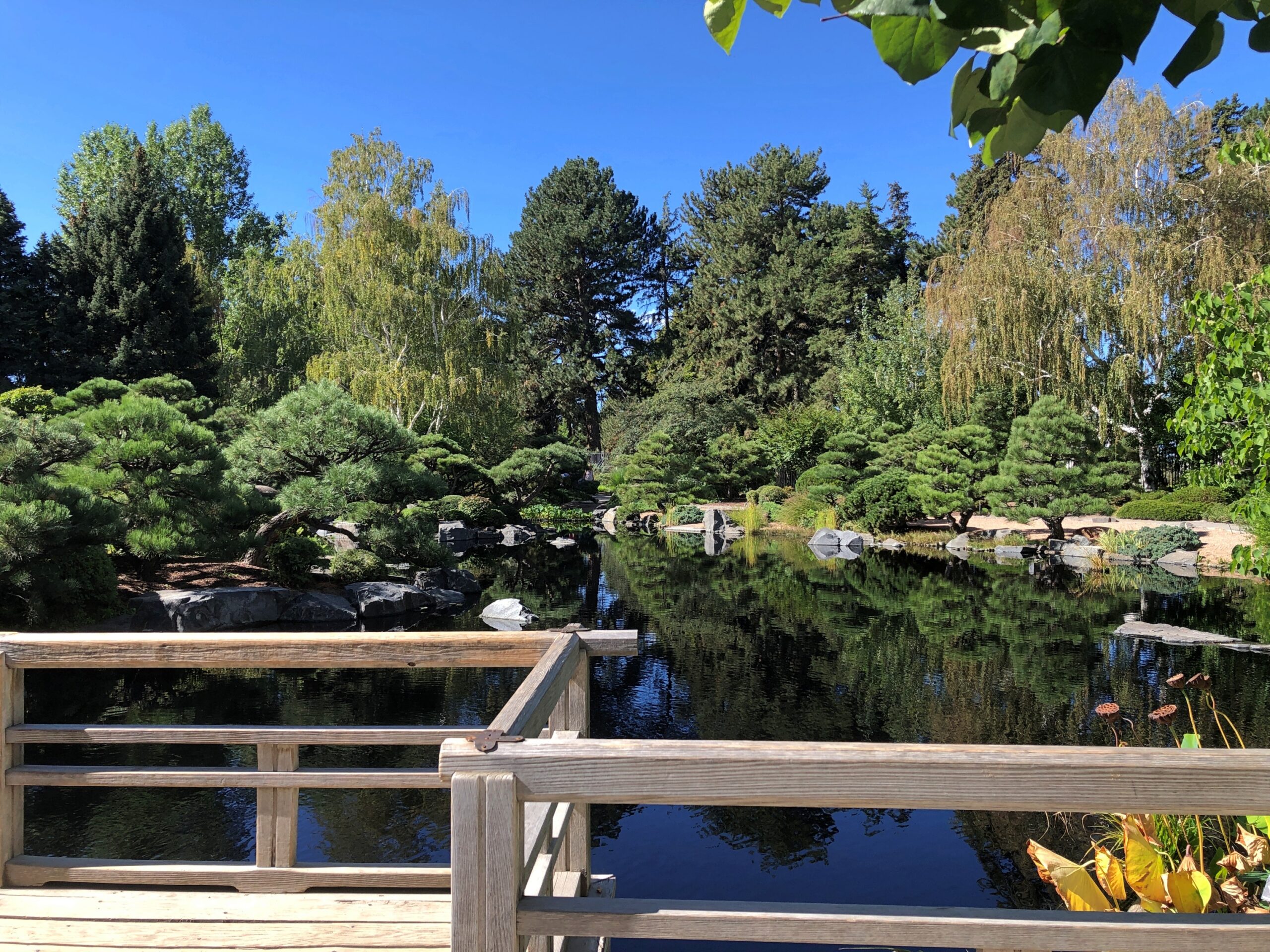
We also spent time in the Japanese garden, known as Shofu-en, the Garden of Wind and Pines, designed by Koichi Kawana (d. 1990). He did the Japanese garden at the Chicago Botanic Garden and a lot of other places, curiously including Suiho-En, the Garden of Water and Fragrance at the Donald C. Tillman Water Reclamation Plant in Los Angeles.
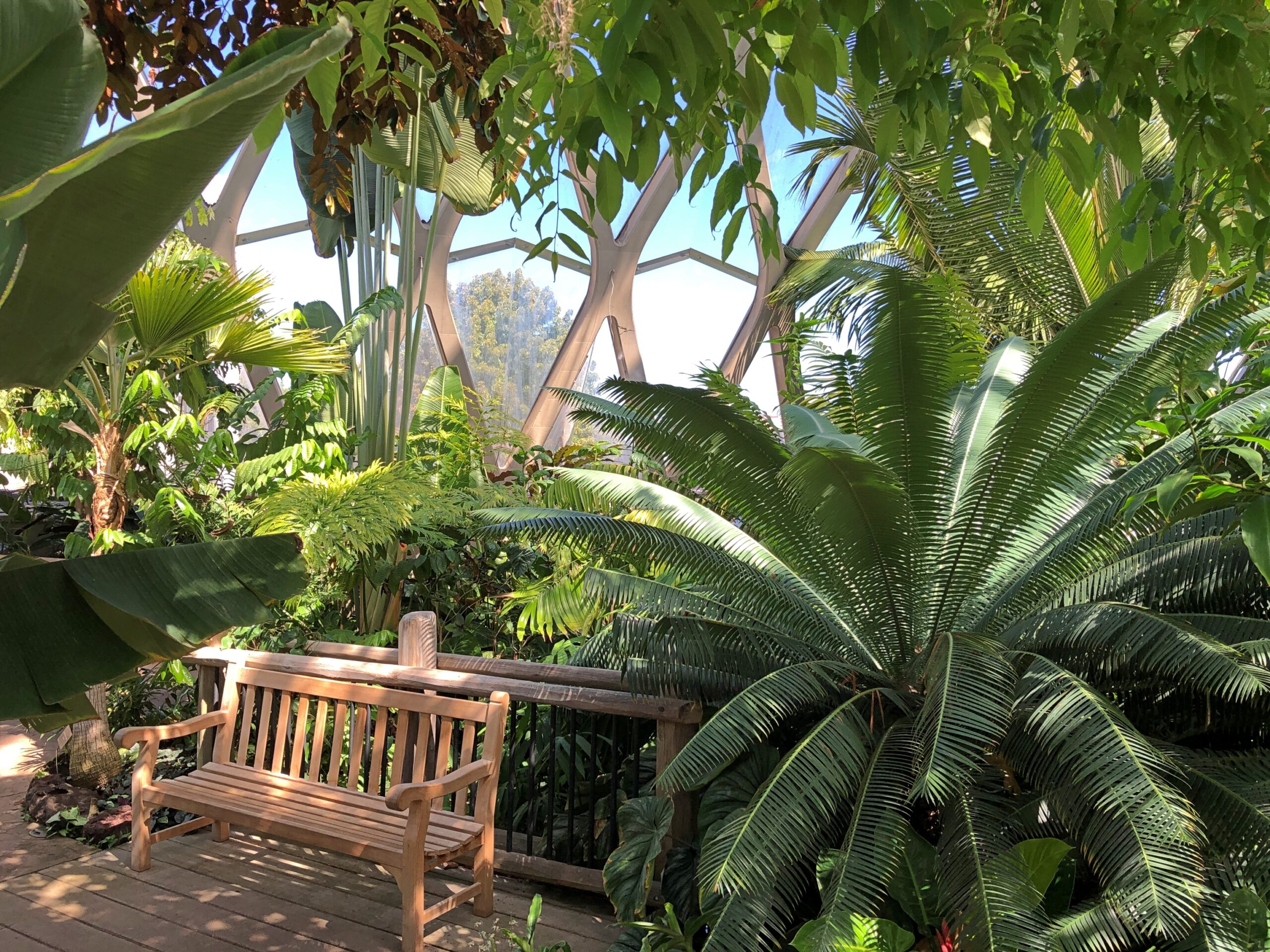
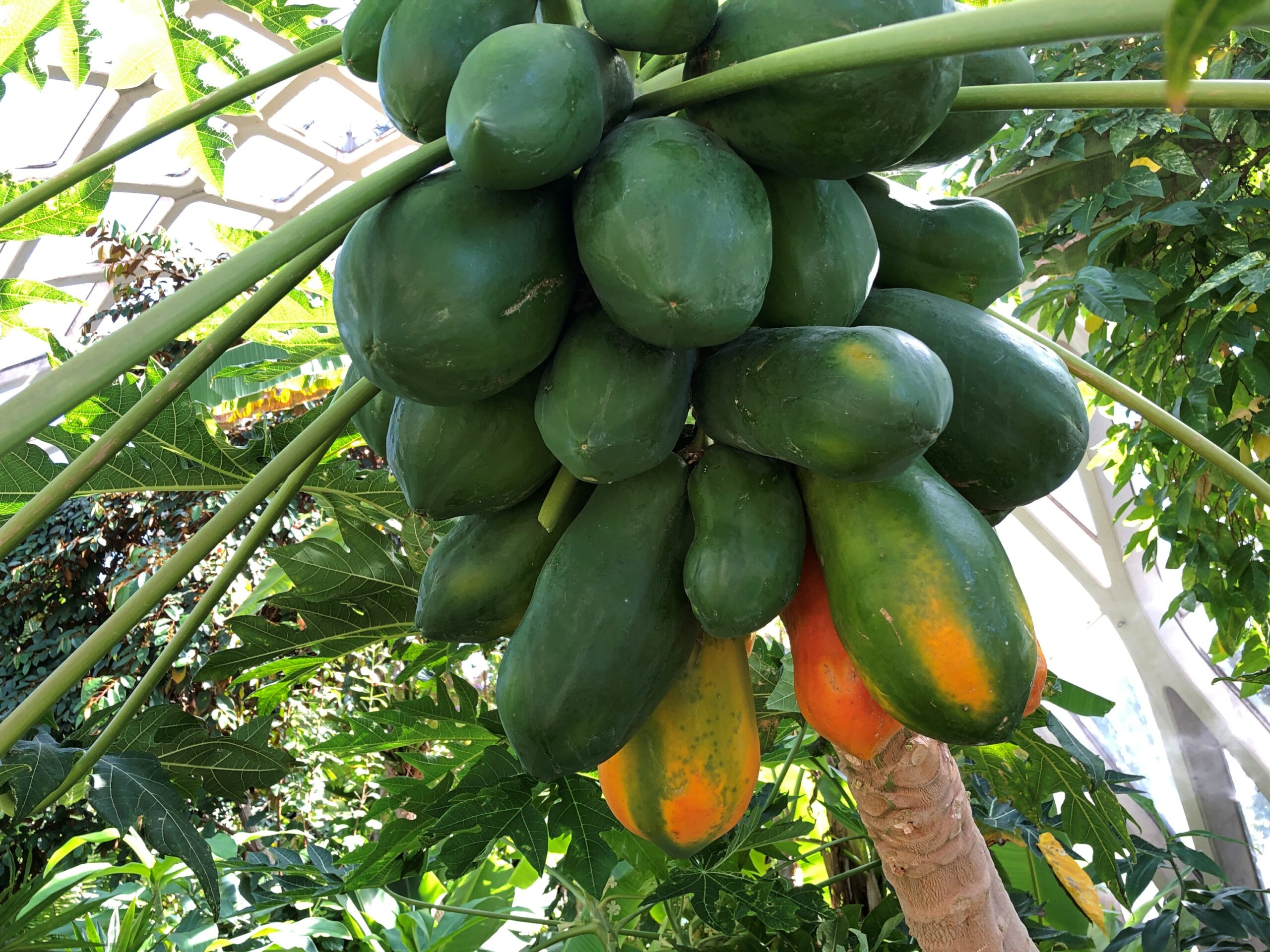
Then there was the conservatory.
To listen to the three-minute audio on this page, the place sounds as high-maintenance as you’d expect, especially the watering and pruning that’s done by hand. To keep a slice of the tropics alive in a mile-high temperate location, I’d say it’s worth the effort.
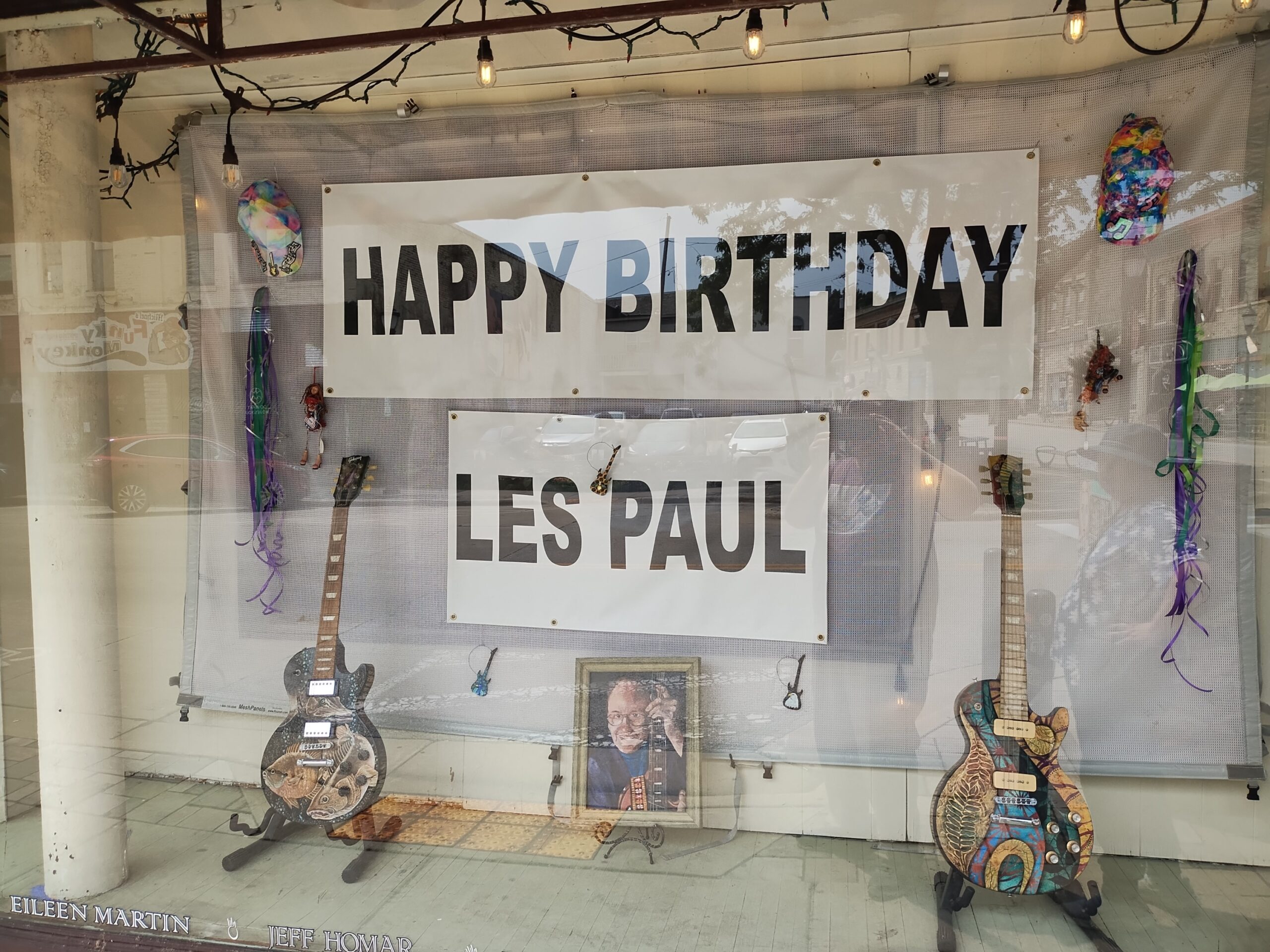
Something I didn’t know about Waukesha, Wisconsin, before we went there last month: that Les Paul (b. 1915) grew up around there. Waukesha certainly hasn’t forgotten.
A recent sign, since his birthday is in early June. Waukesha is a “GuitarTown,” because of its association with the famed musician and music technologist. Apparently there is more than one GuitarTown, since Gibson Guitars doles out the moniker, or at least used to.
“Waukesha was named a Gibson GuitarTown in 2012 and 2013, two years in a row, to honor the birth and resting place of electric guitar legend Les Paul,” The Freeman reports. “Other GuitarTowns include Austin, Nashville and London.”
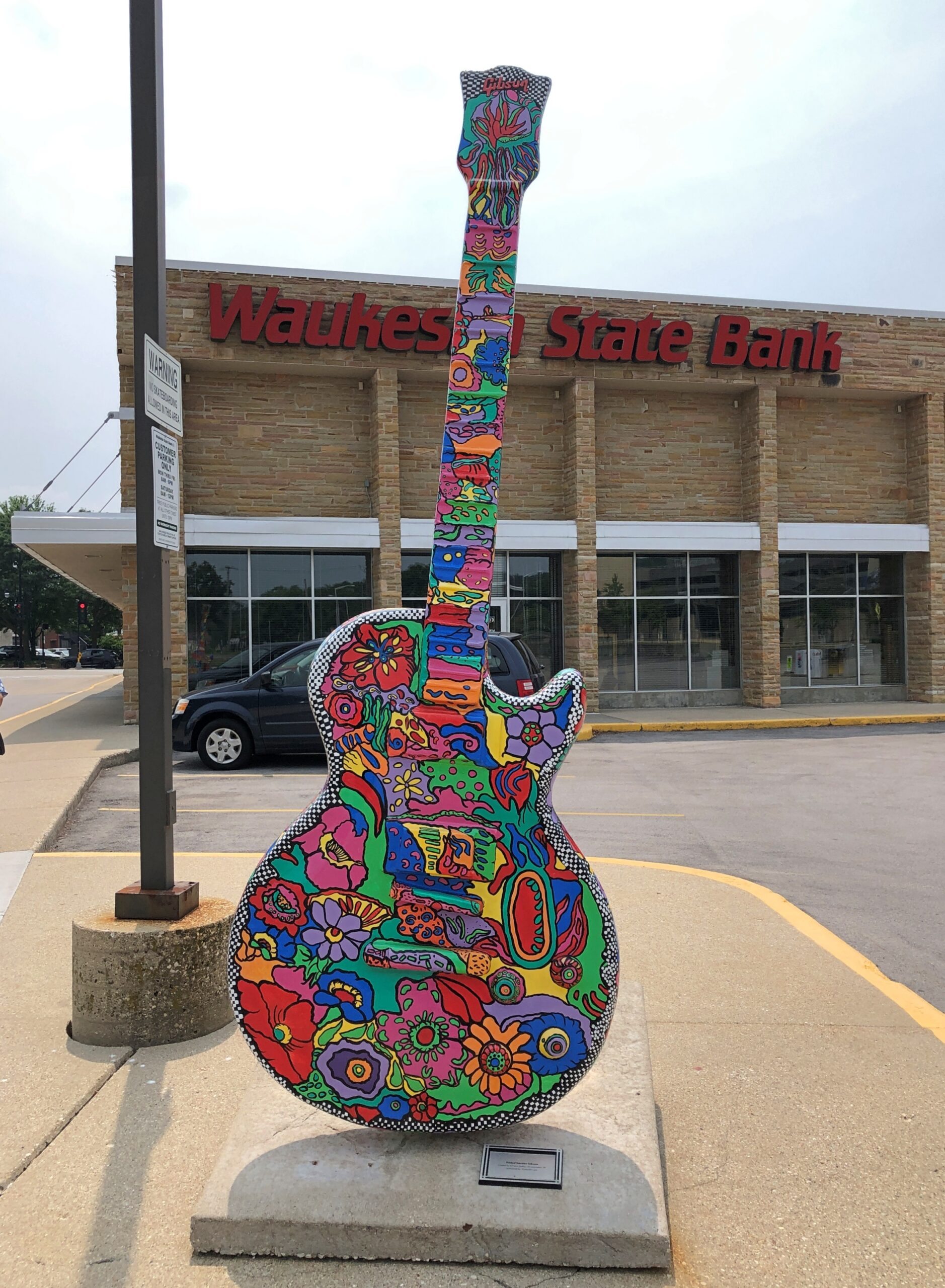
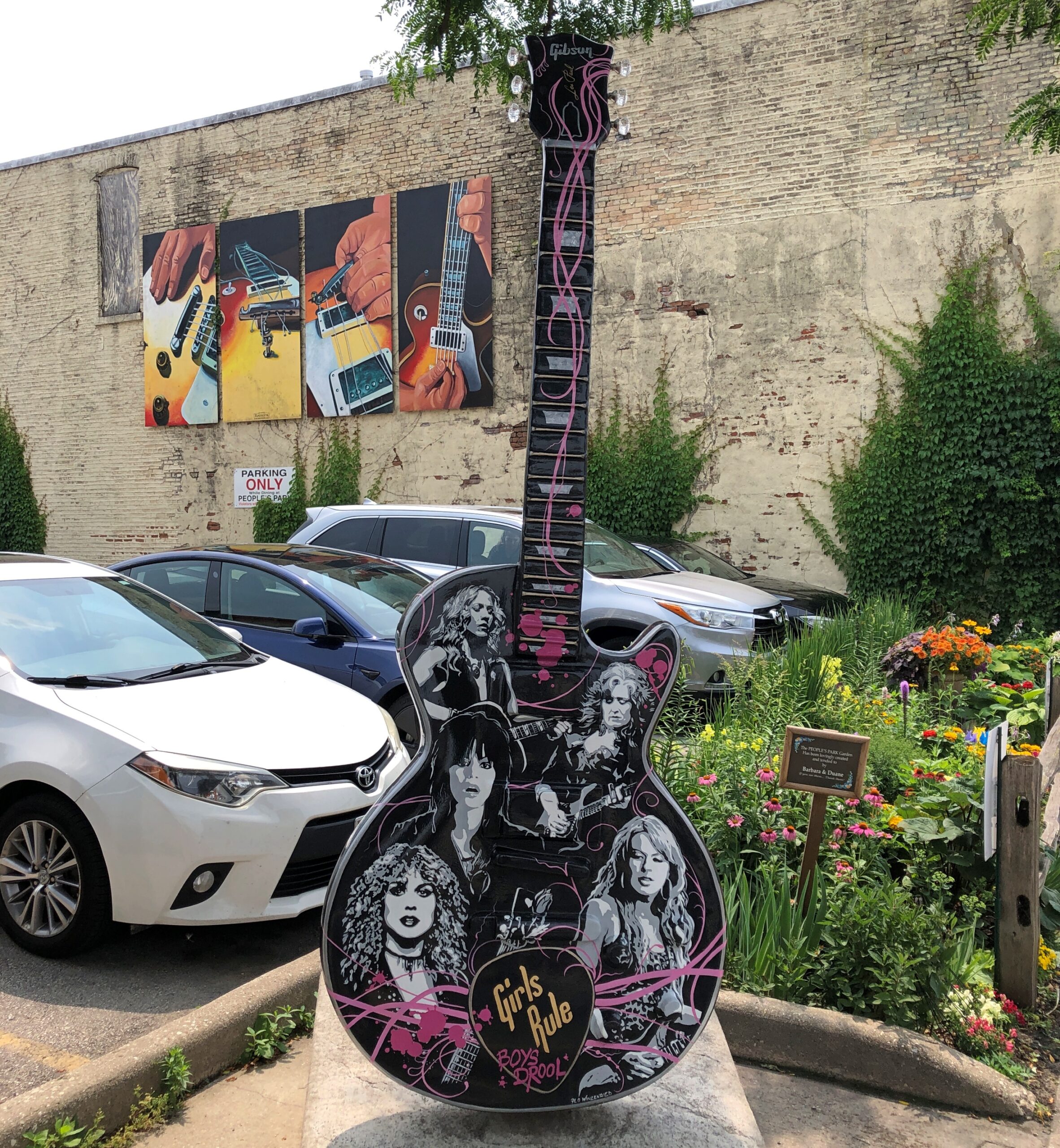
As GuitarTown, Waukesha has 15 guitar statues in public places, each 10 feet tall and designed by local artists. Elsewhere in town, you can find Les Paul Middle School, Les Paul Parkway, the Les Paul Performance Center, and the Les Paul gravesite monument. Missed that, alas. Maybe some other time. But we did drive on his parkway. And see a few of the giant guitars.
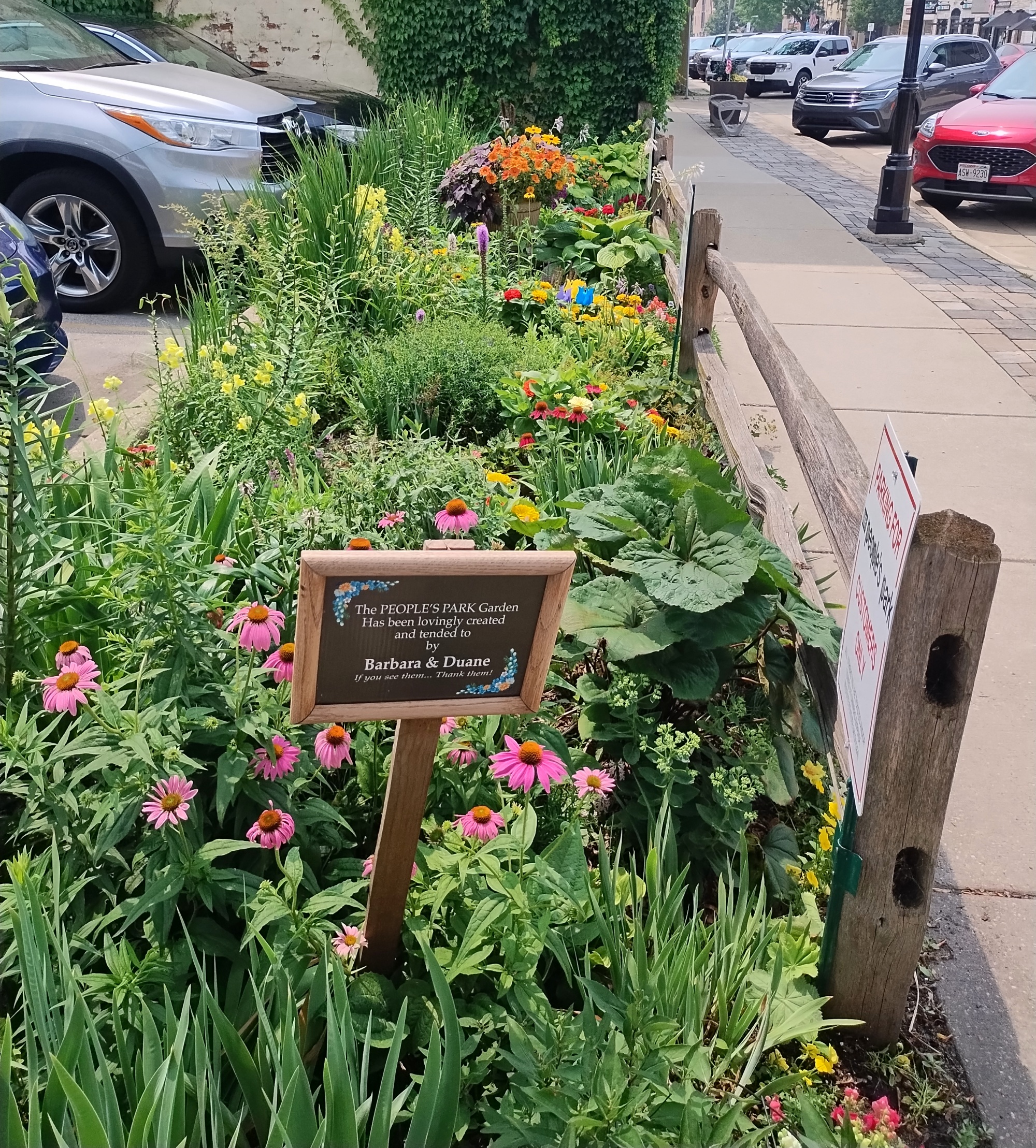
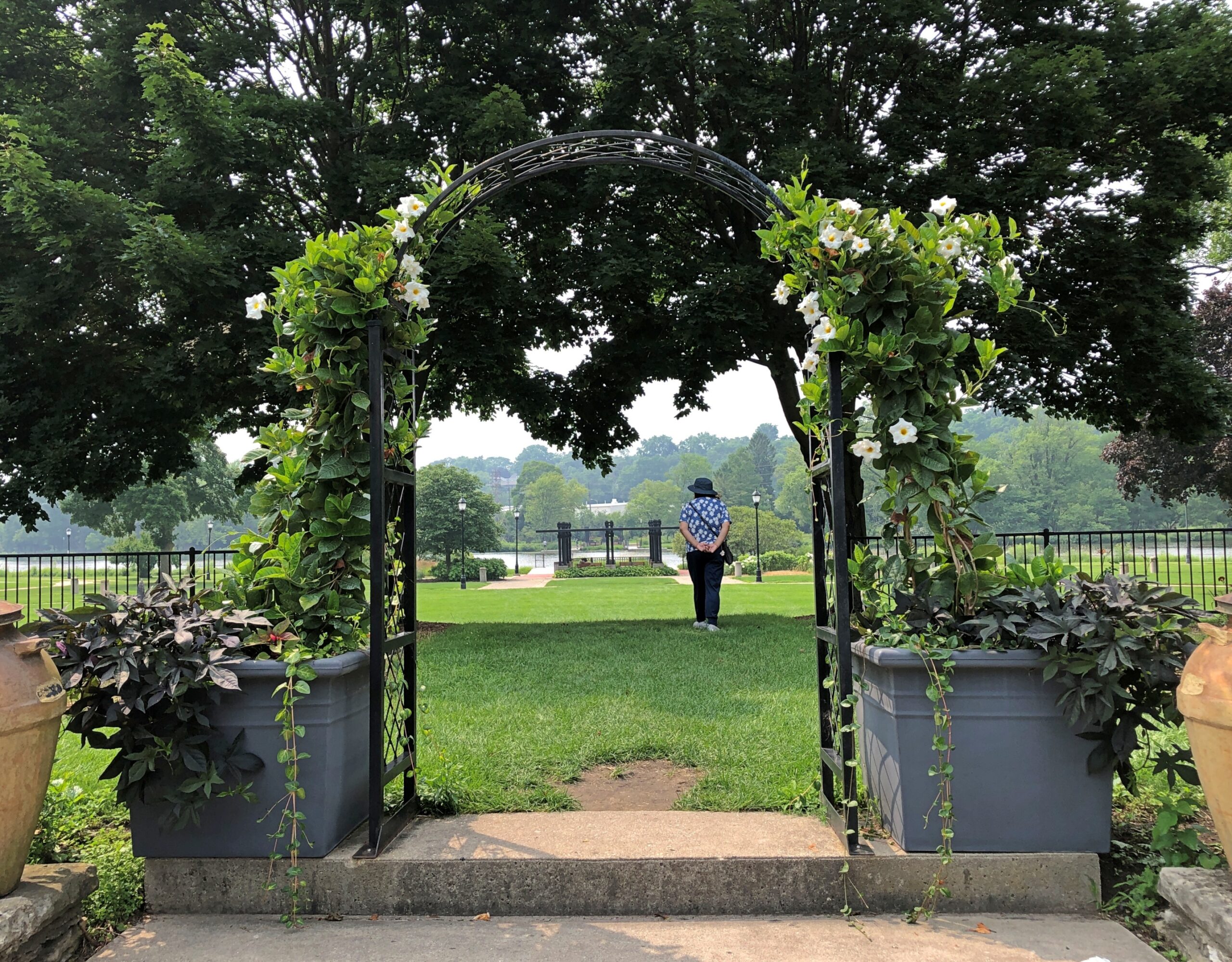
Next to that particular guitar, a small garden is wedged between the sidewalk and a parking lot. The PEOPLE’S PARK Garden, says the sign.
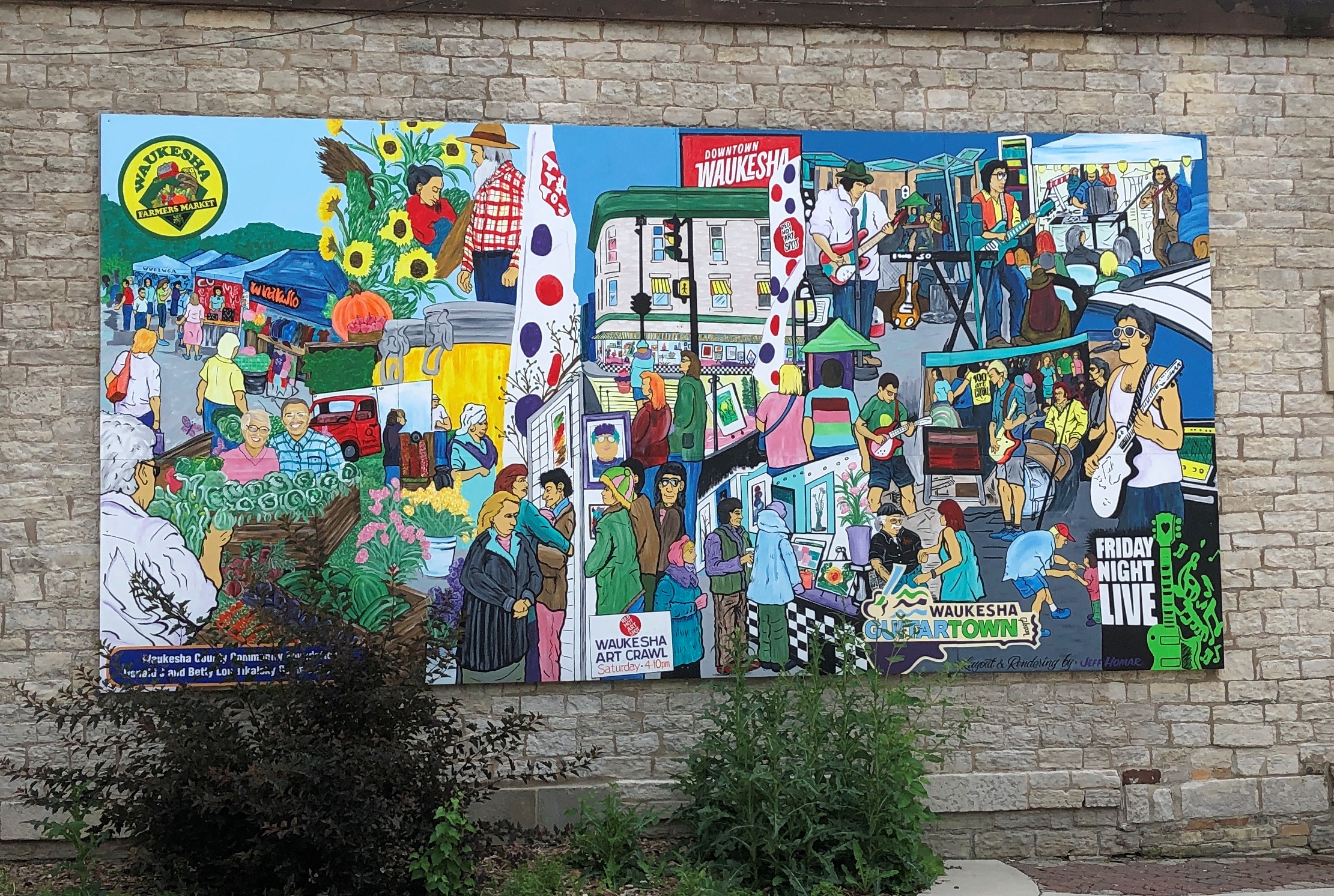
The Wall Dogs also came to town and painted 13 murals. I assume this is one of them.
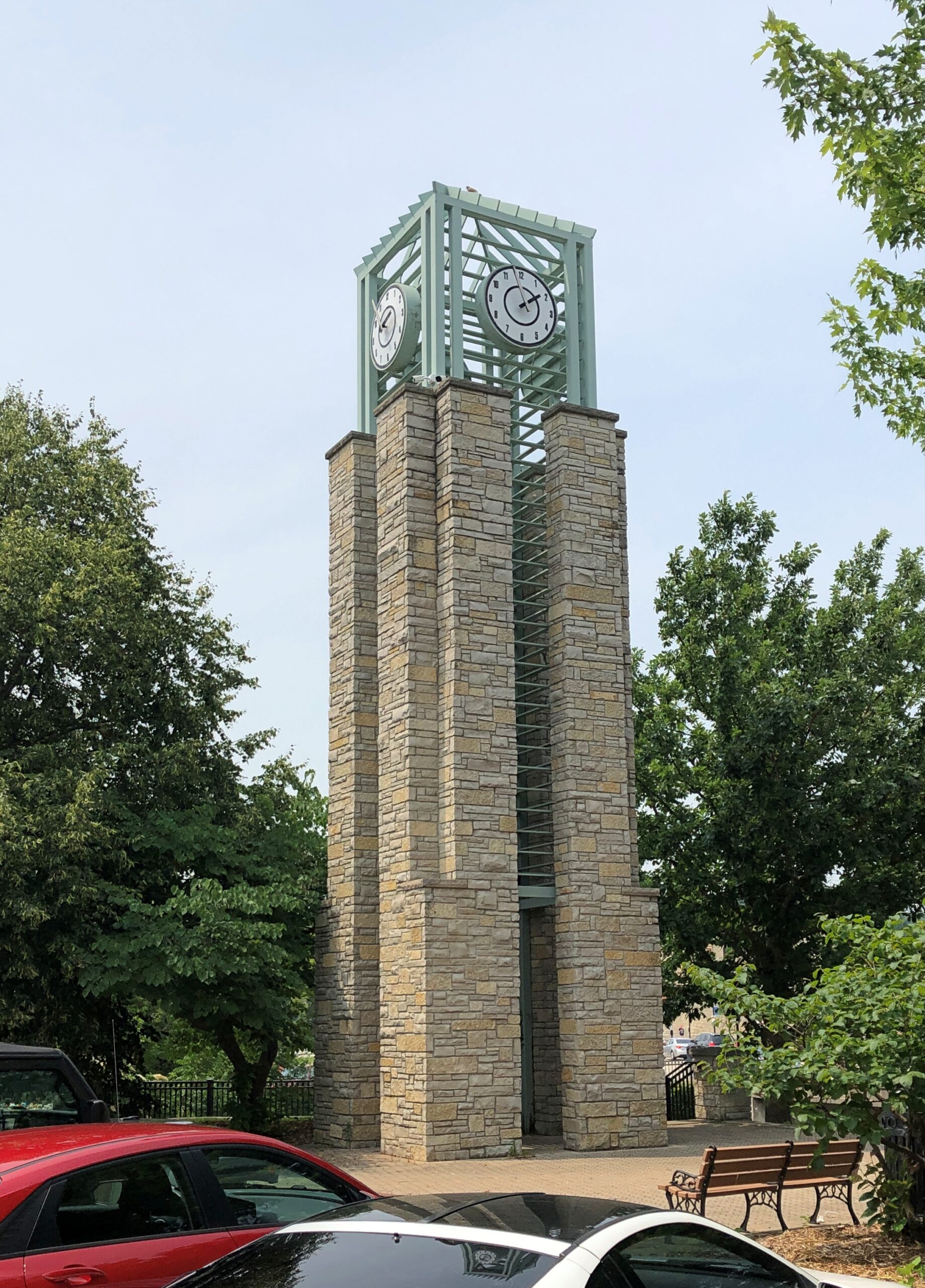
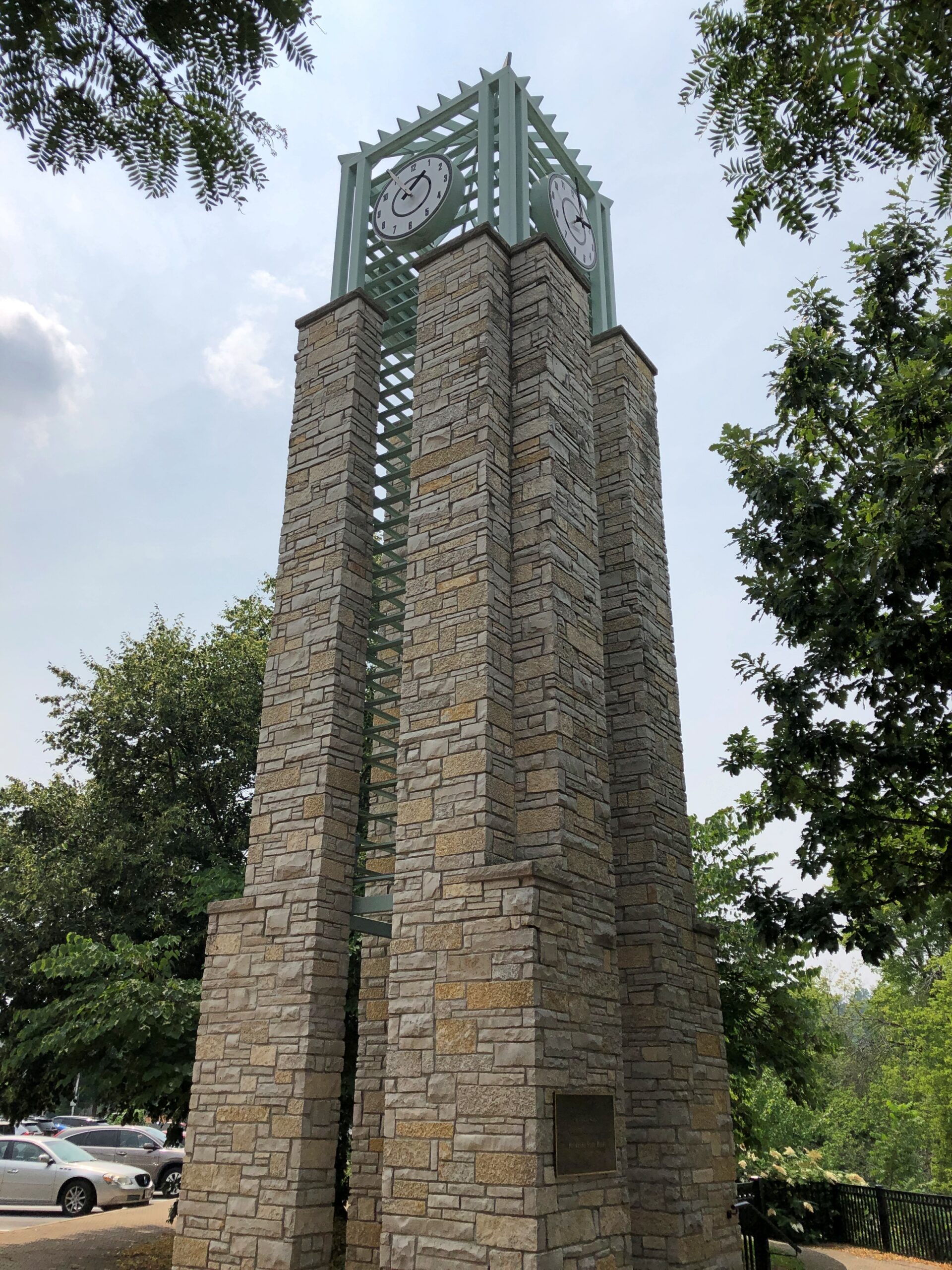
Across a parking lot from that mural rises Waukesha’s impressive stone clocktower.
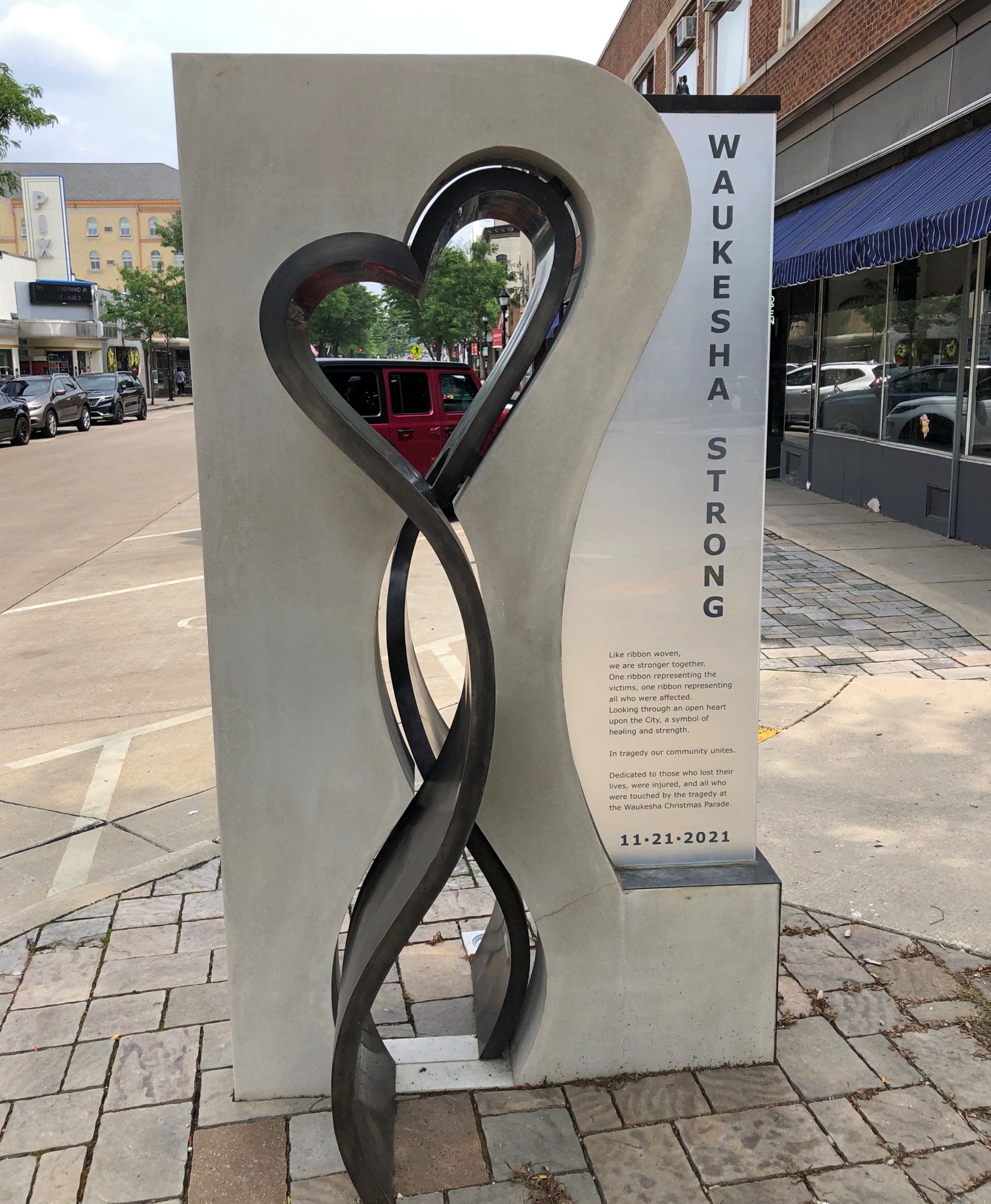
On Main Street, a memorial.
Outrages by homicidal wankers are so common that I had to refresh my memory about that particular one, in late 2021. Then I remembered. The only good thing I can report is that the wanker, who went double wanker at his trial by asserting sovereign citizen nonsense, is now a permanent resident of a tightly locked state facility.
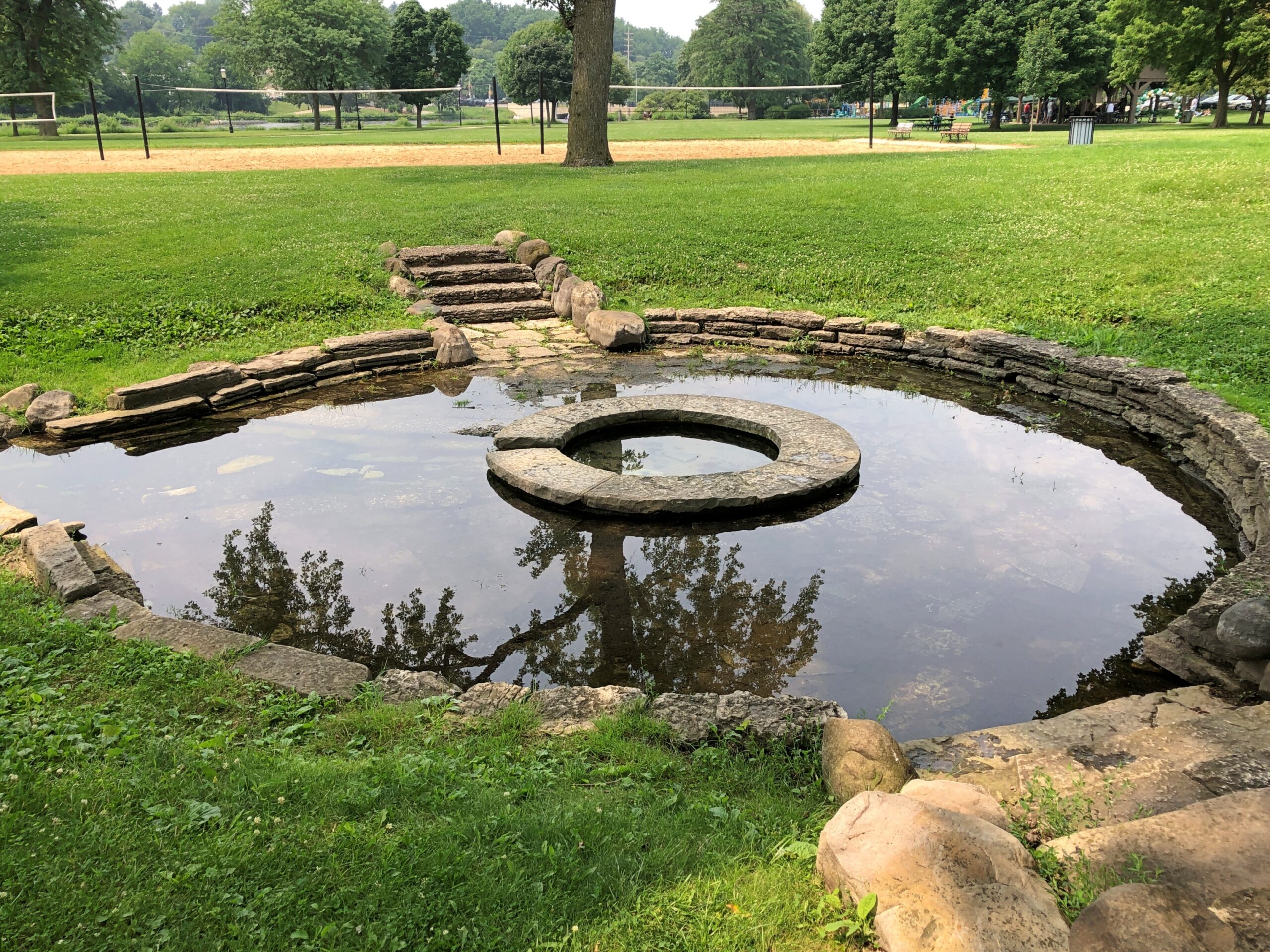
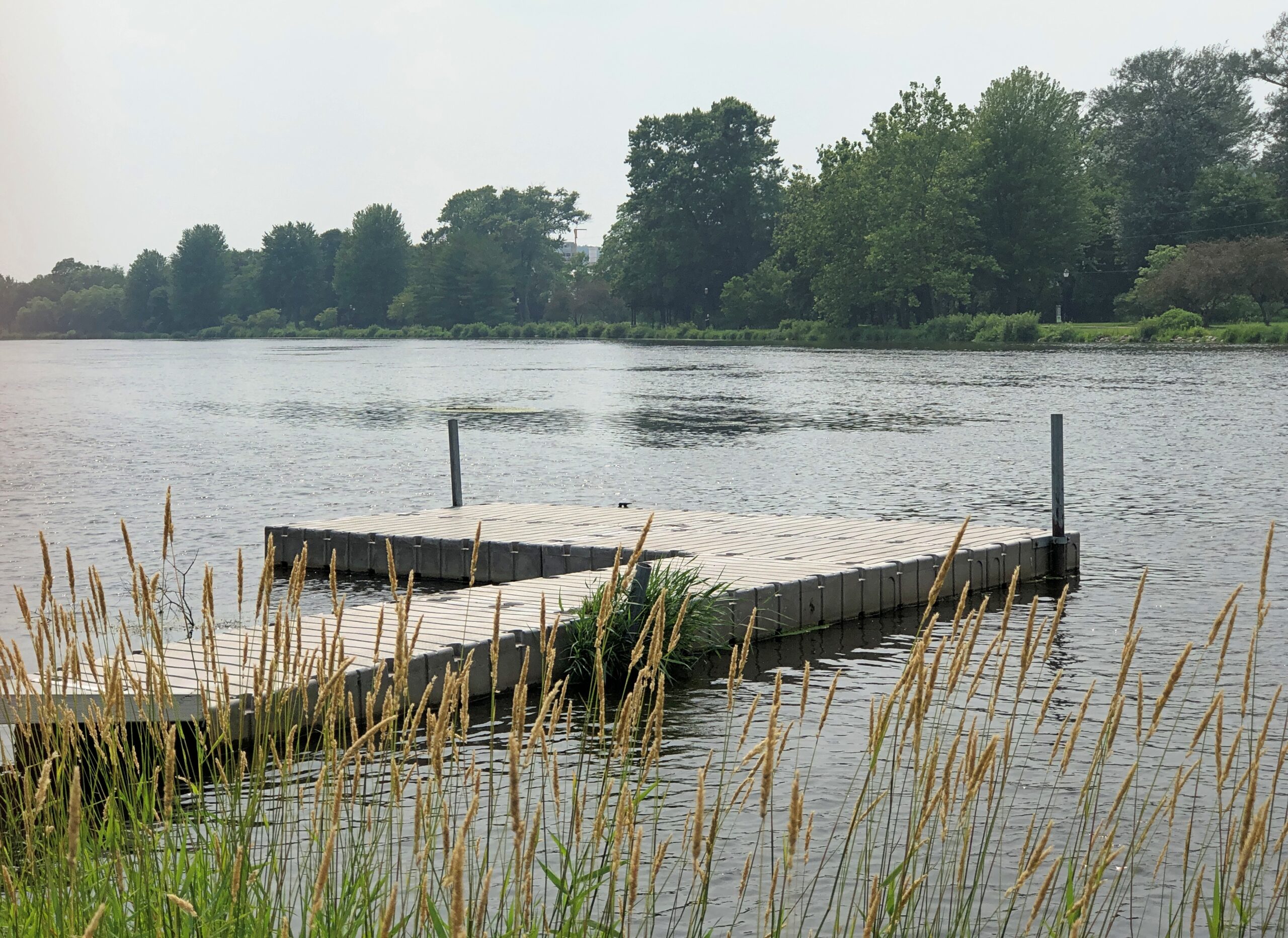
Upriver a half mile or so from downtown is the sizable riverside Frame Park.
Including the Frame Park Formal Gardens.
I hope the park and its garden weren’t damaged too much by the raging Fox, since it is flat most of the way from the garden to the river.
The Fox is large at this point. Not something you want to see described as “angry.”
Now I can say I’ve been to Athens. The one in Georgia, that is, spending two nights. But most of that day in late June, I was elsewhere in Georgia – the part that Sherman burned – visiting two different old friends, one in the morning, the other the afternoon, so my time in Athens was fairly limited. The neighborhood near the university looked interesting, as college towns often are, so with any luck I’ll be back sometime for a closer look.
But I did spend enough time in town to happen across the aforementioned two-story concrete chicken and egg. It was another example of serendipity on the road. The reason involved traffic patterns in the western part of Athens. My motel was off a fairly busy major road, the Atlanta Highway, meaning that entering the property headed west – away from Athens – meant turning across two intense lanes of traffic without a clearly marked turning lane or a light.
So more than once, I headed west to the next major intersection, made a right, and then turned around to head back east on the Atlanta Highway so I could make a right turn into the motel. One time late in the afternoon, I decided to drive just a little further down that turning road – Cleveland Road – to see what I could see, and was soon rewarded with the concrete chicken.
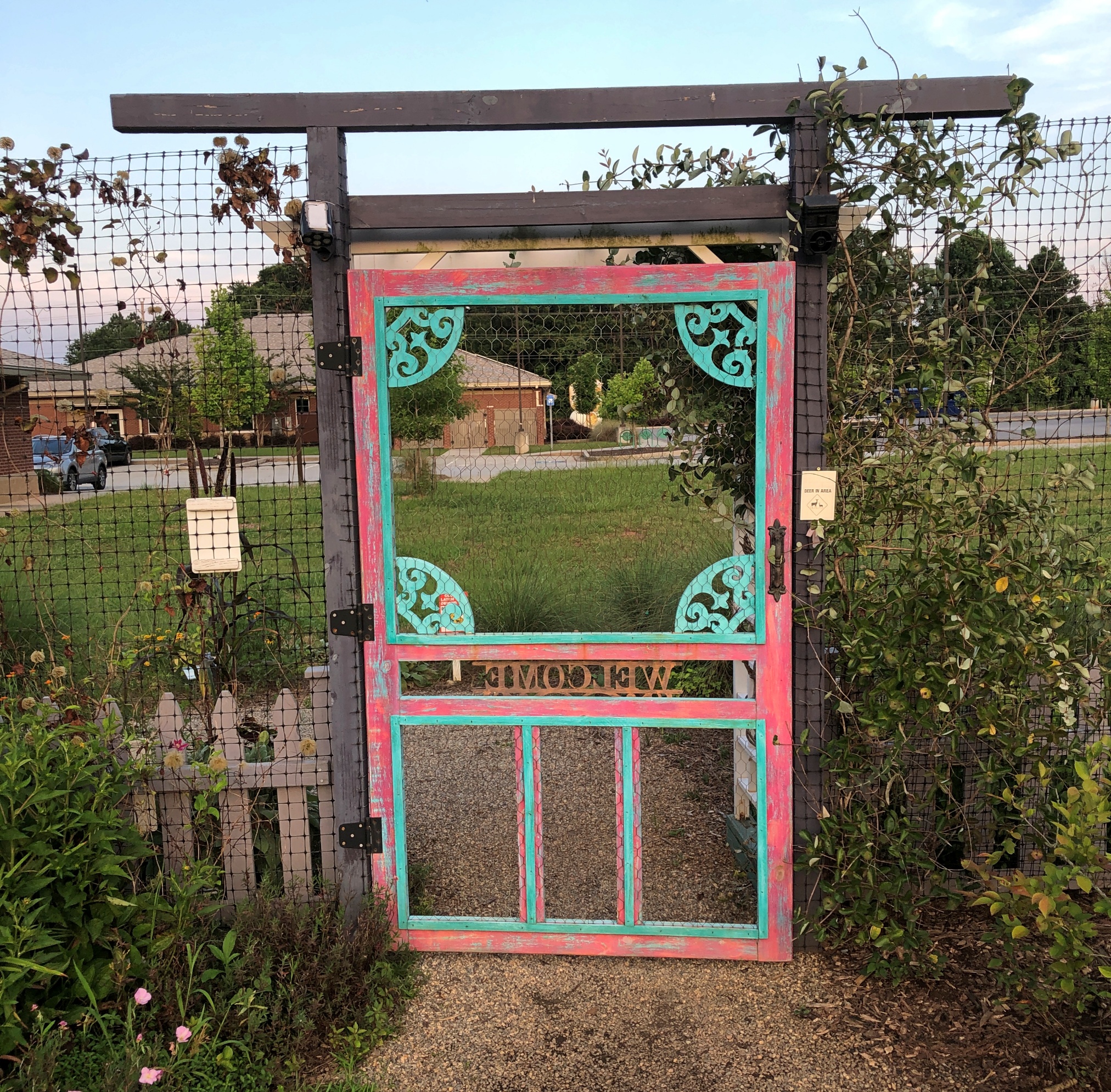
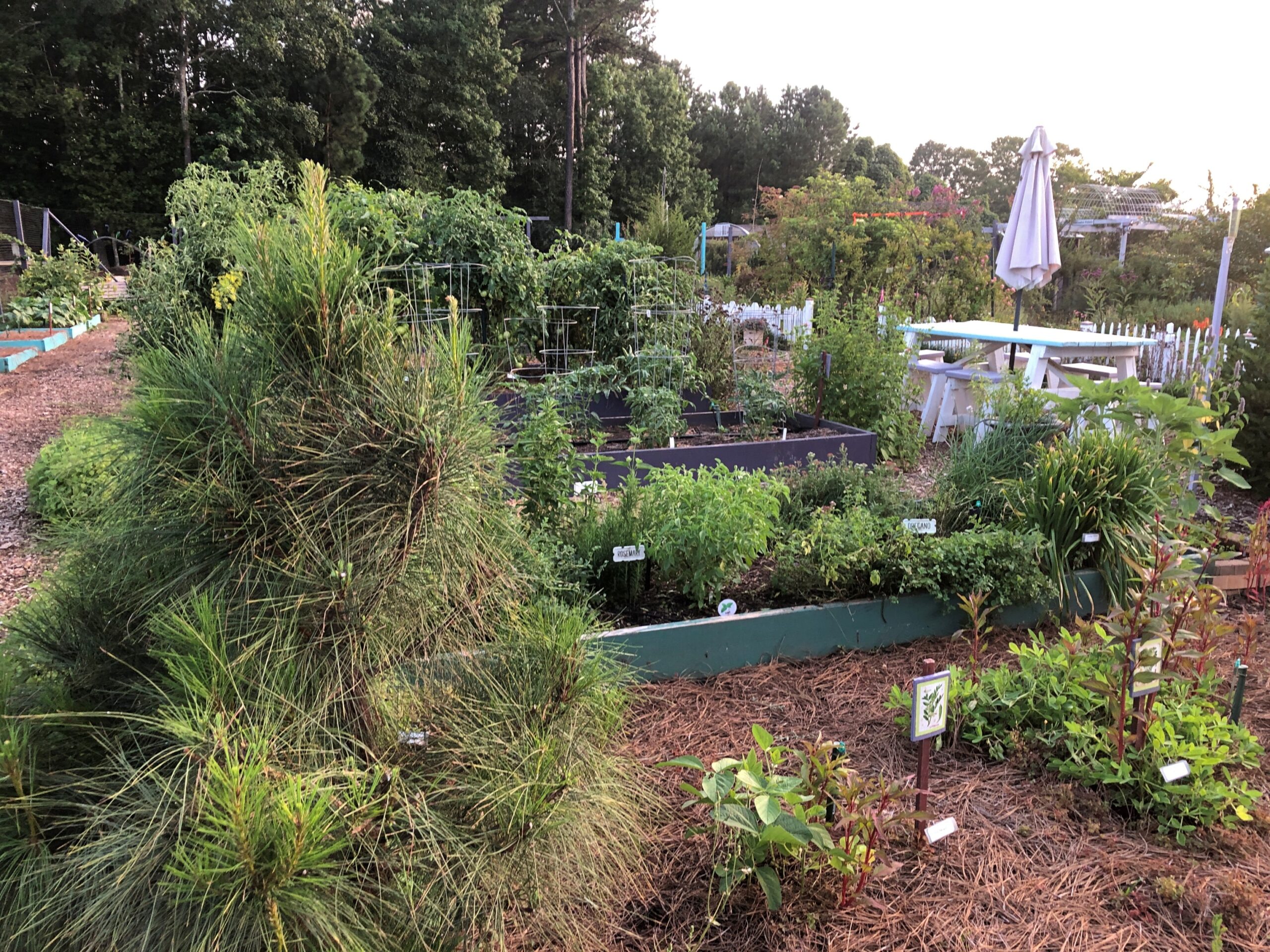
But that wasn’t all. Behind the building that houses the University of Georgia Extension Athens-Clarke County is a sizable garden. The sun was nearly down, so heat was less of an issue. I spent some time looking around. No one else was there.
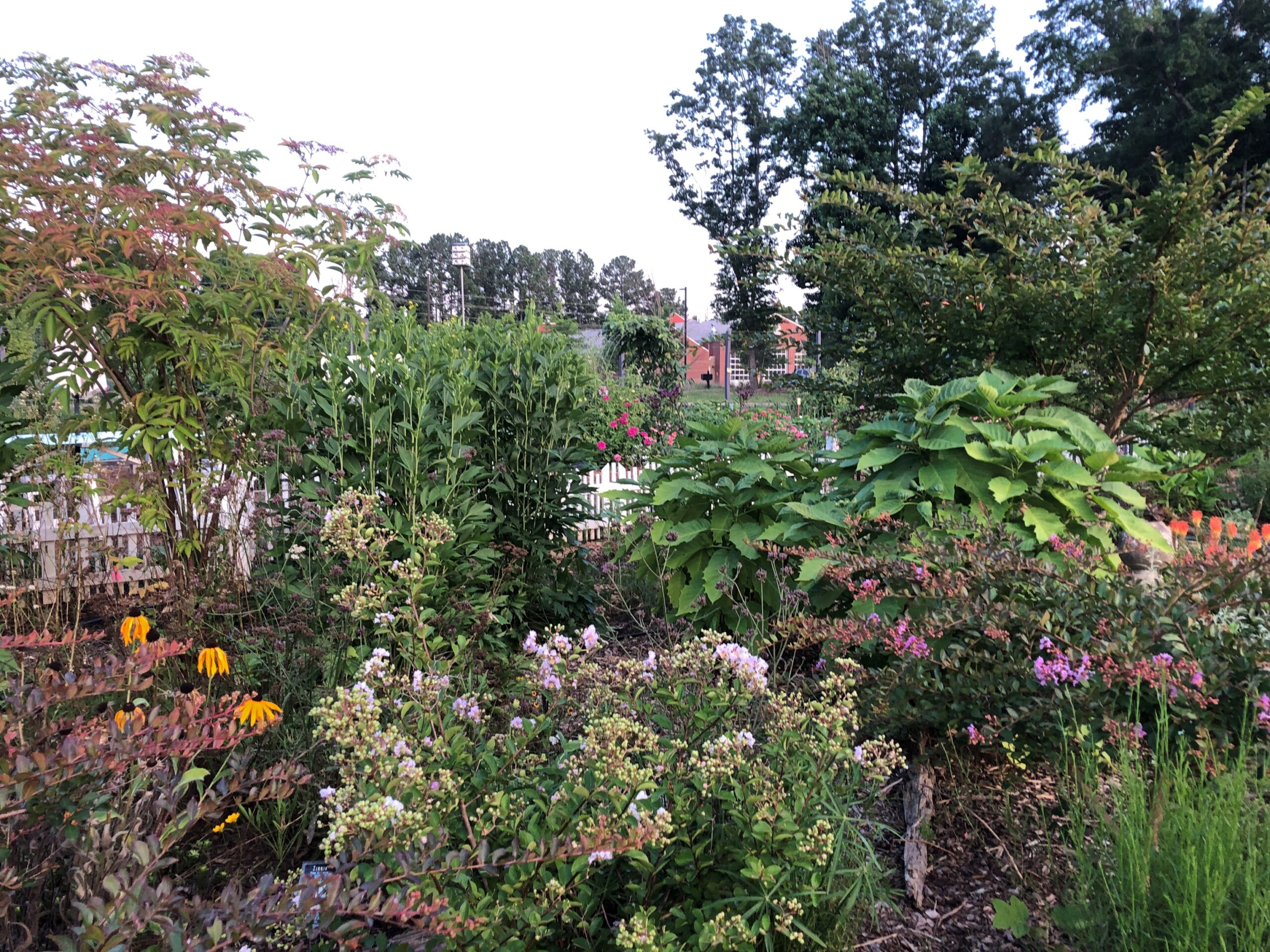
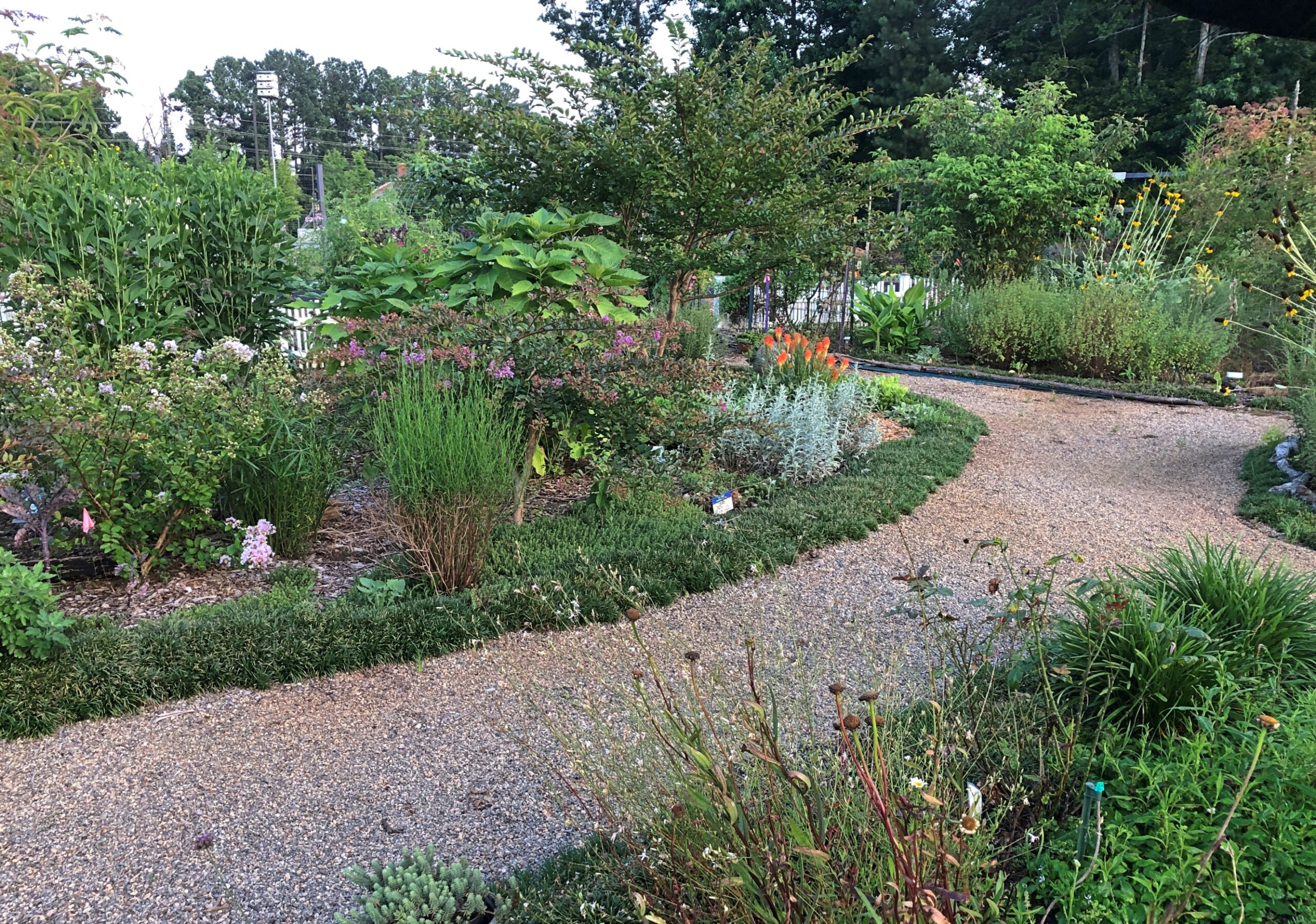
It’s a 17-acre lush garden, including a wide variety of edible plants.
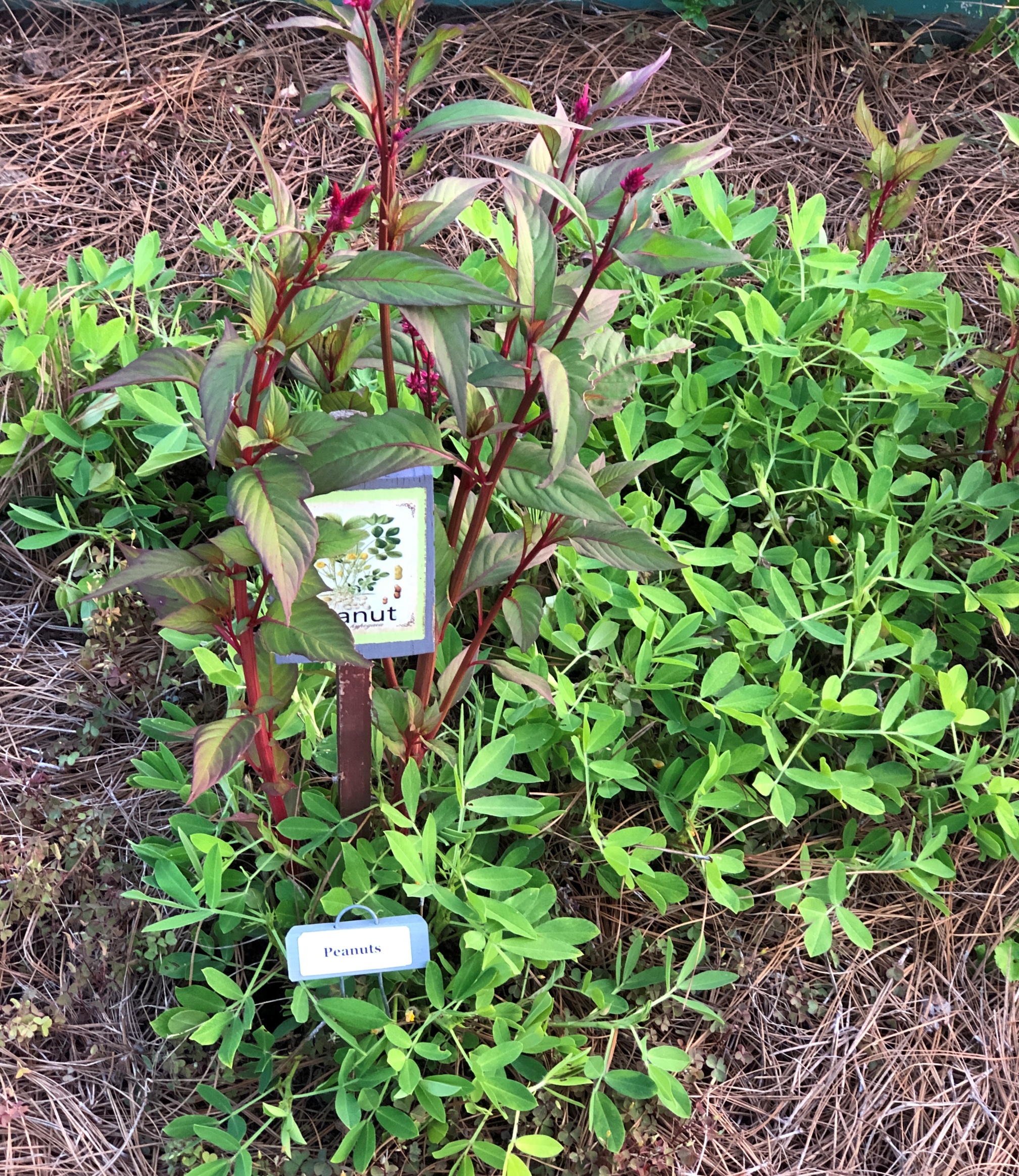
What would a Georgia garden be without peanuts?
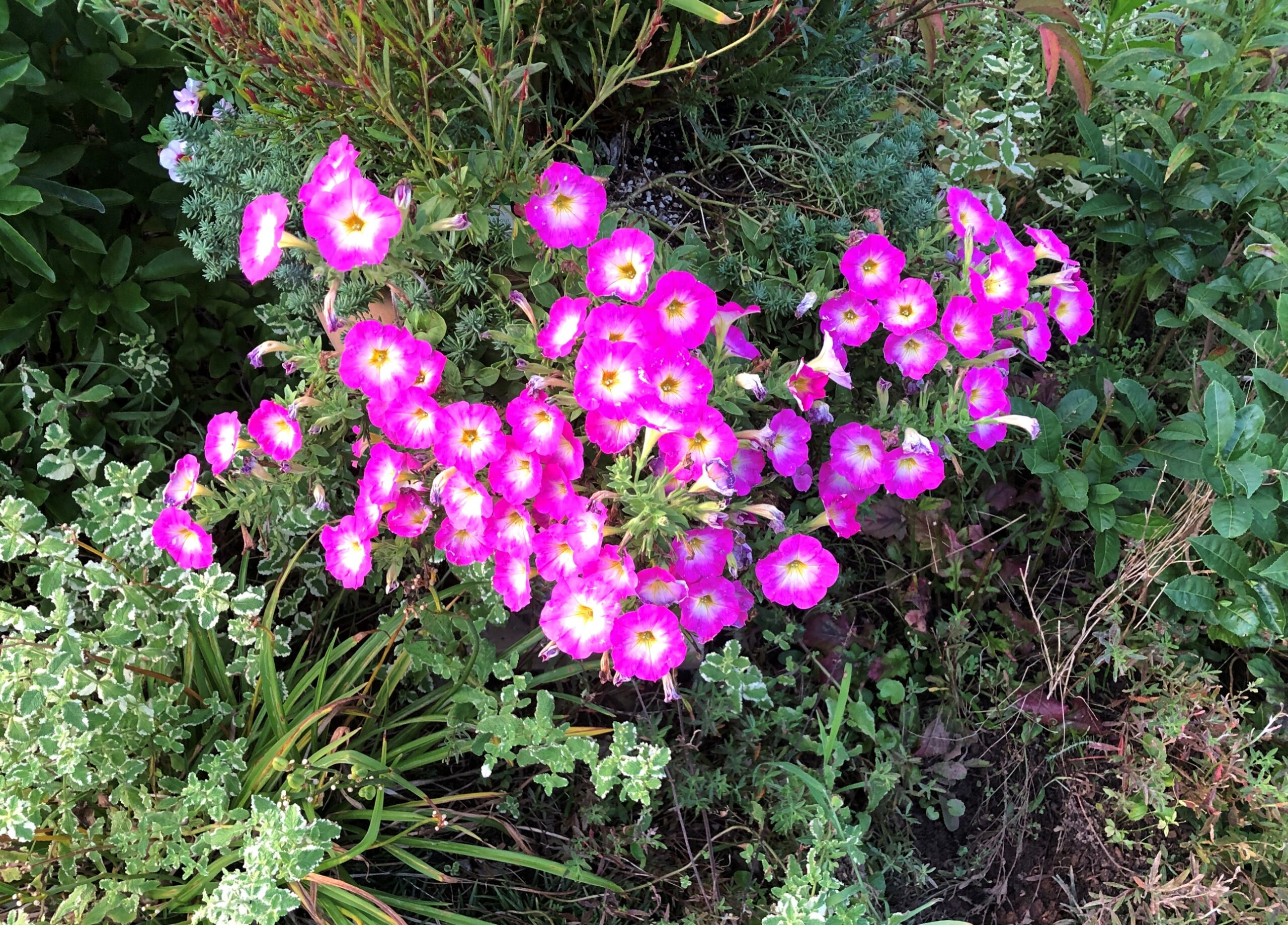
Plus a lot of flowers.
Even a few places to relax.
Wonderful spot. The lesson here: if you see a giant chicken statue by the road, investigate further.
The June heat dome was a deal breaker in Myrtle Beach when it came to daytime outdoor activities, except for our short stroll to Pier 14 and the beach below. A visit to a place like Brookgreen Gardens, which is actually south of town not far from the coast at Murrells Inlet, wasn’t going to happen during the onslaught of the daytime sun.
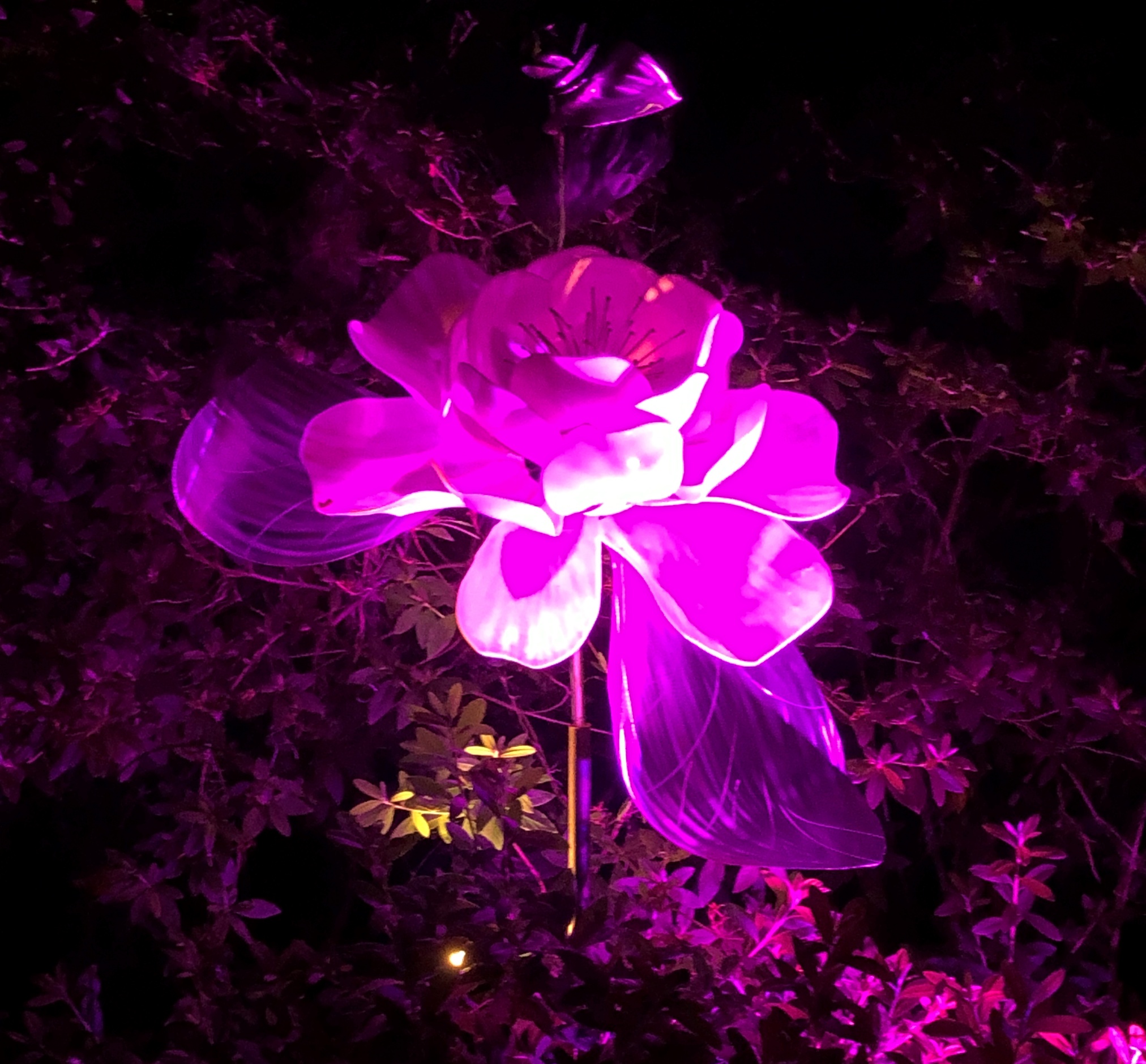
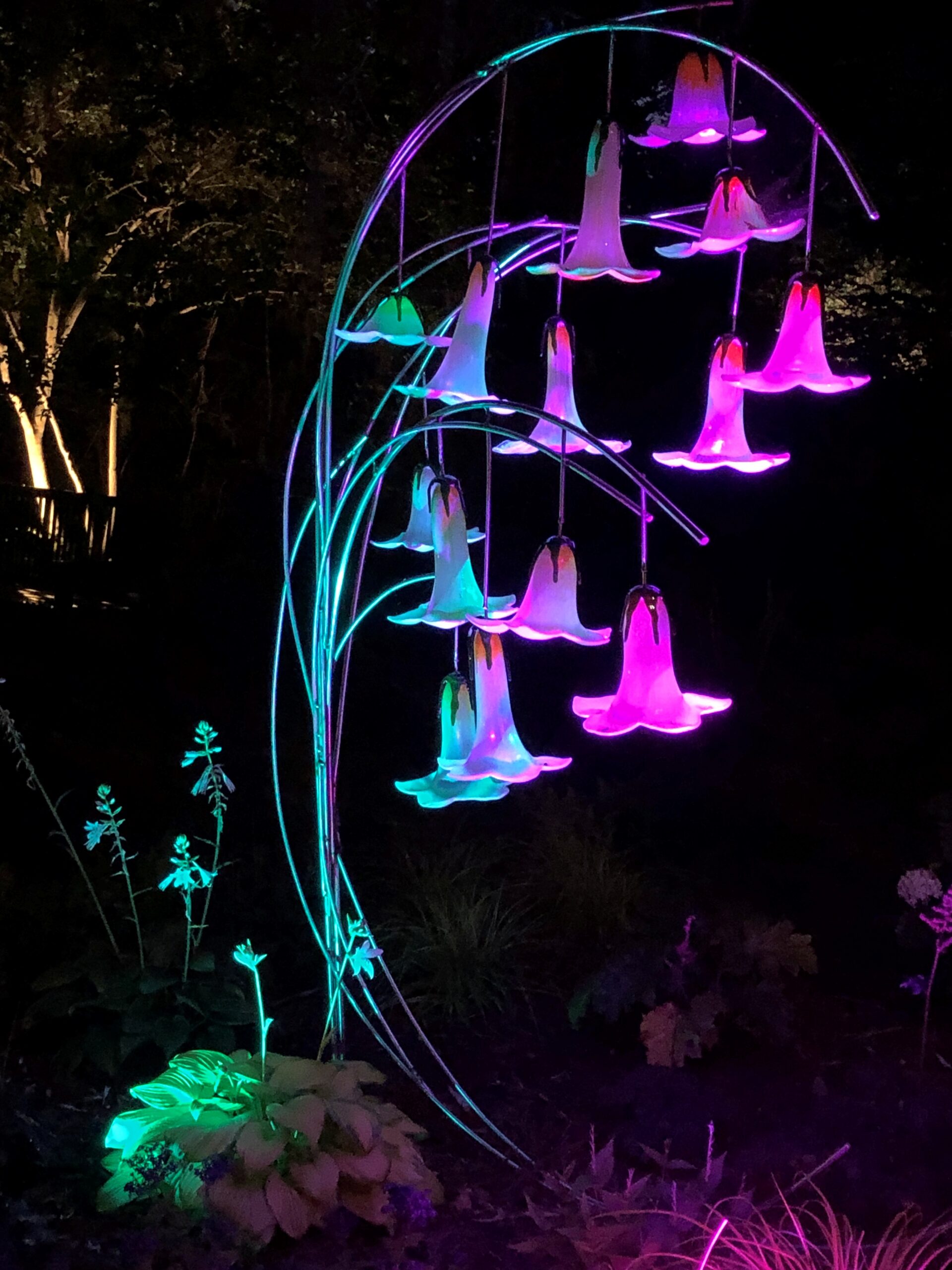
But I found out that on some days in the summer, part of Brookgreen is open well into the evening, offering cooler temps – and still sauna-like humidity – with light displays. That was doable, and so we went on the Saturday evening we were in town.
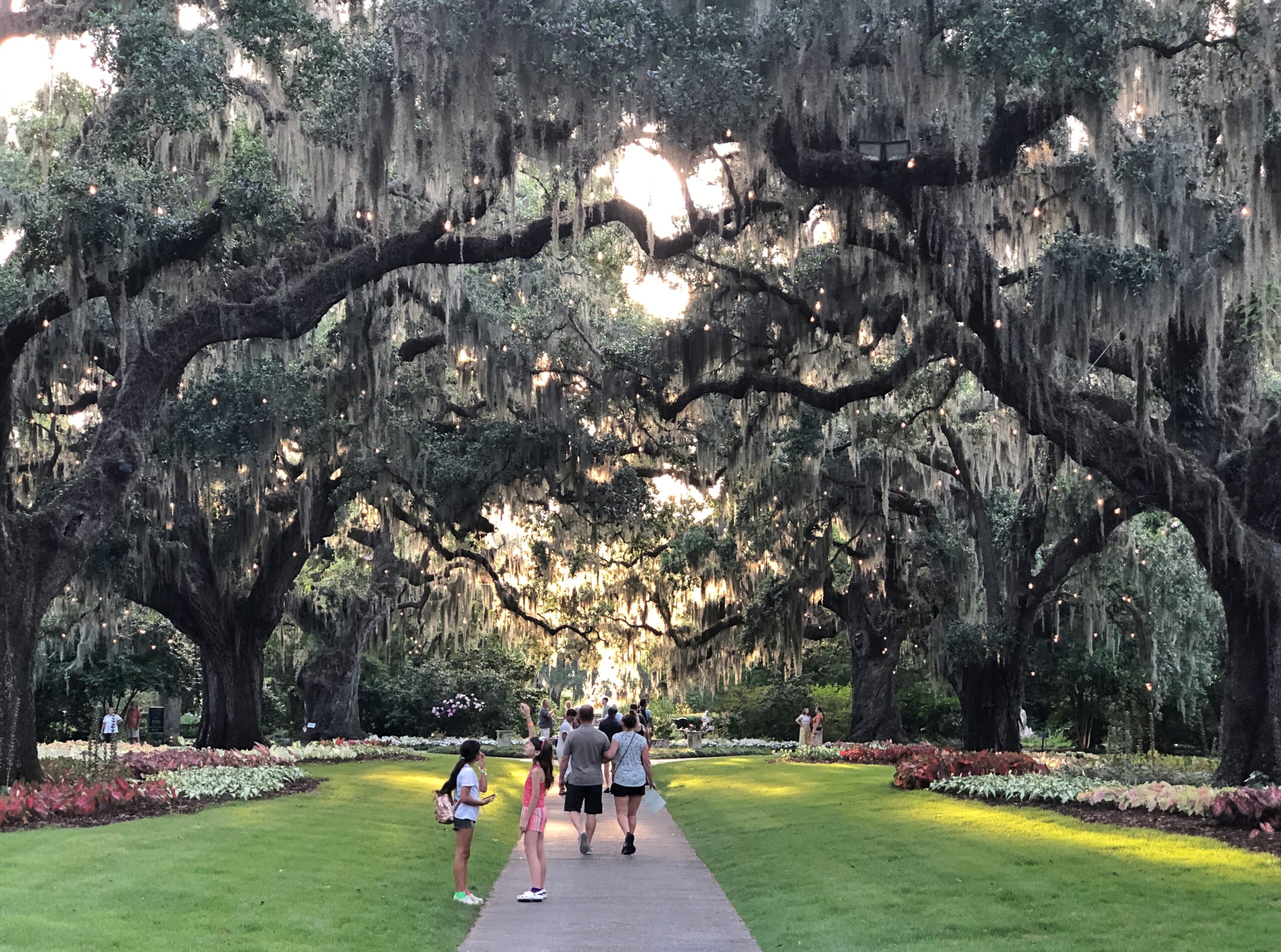
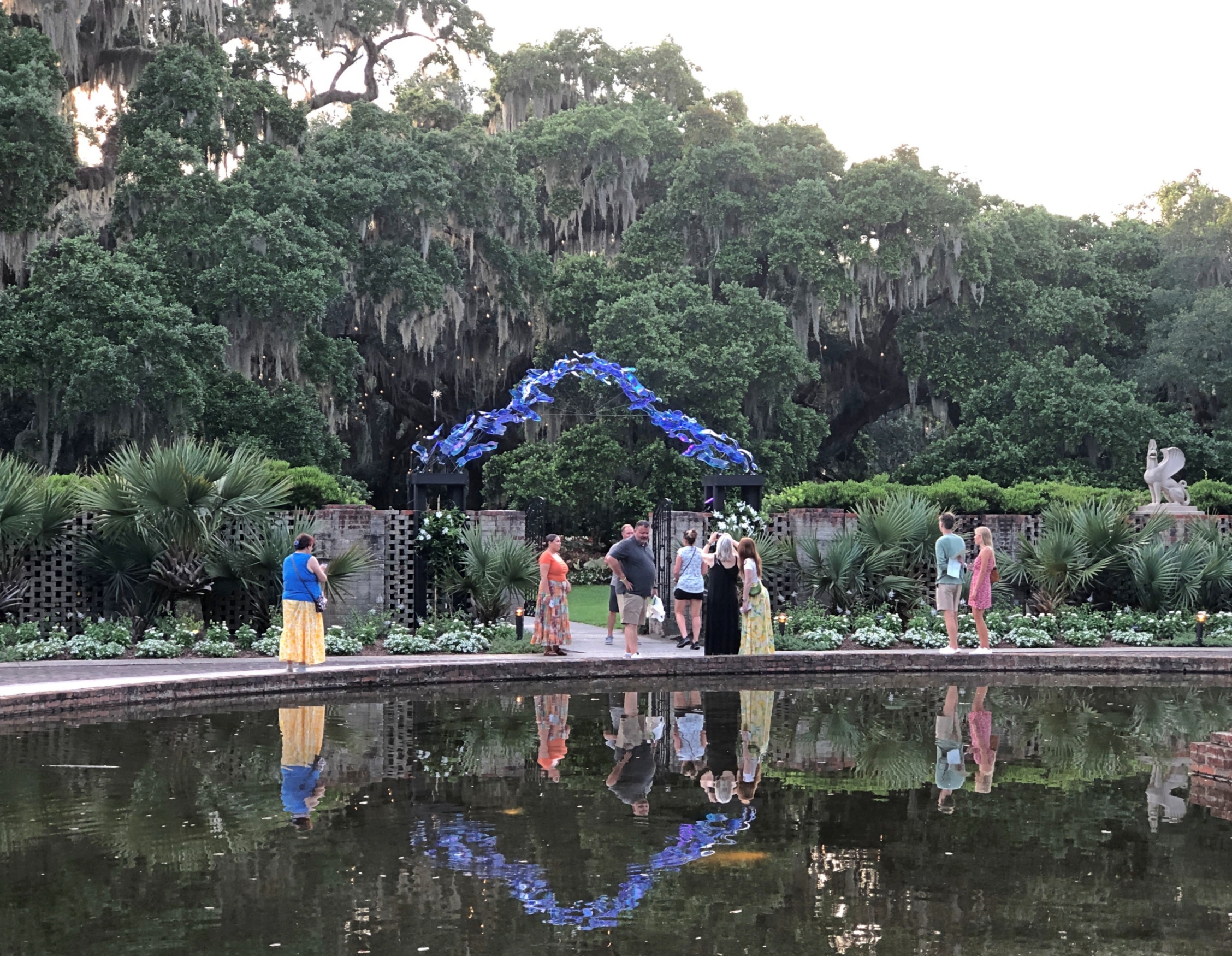
The grand Spanish moss promenade by day.
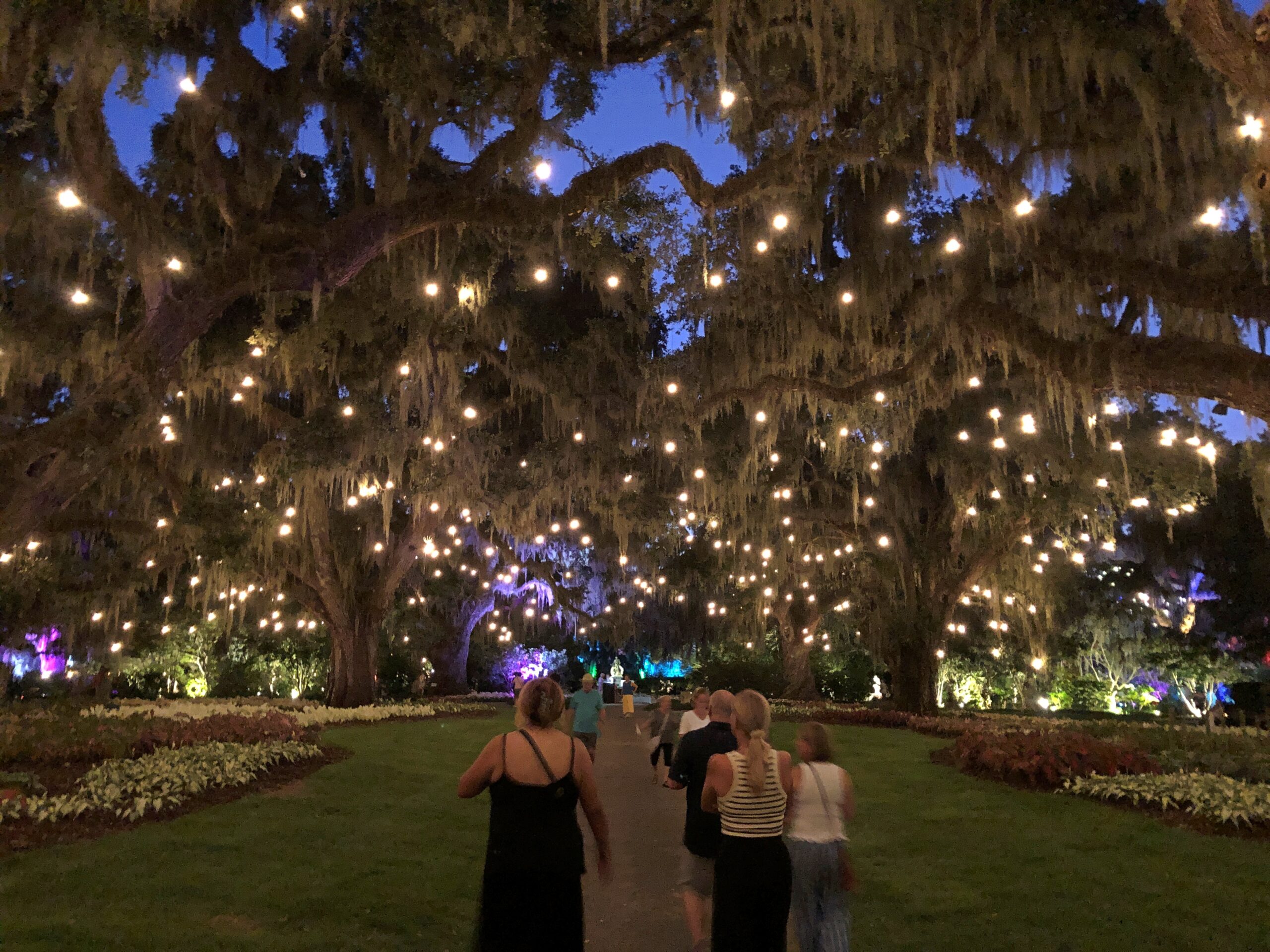
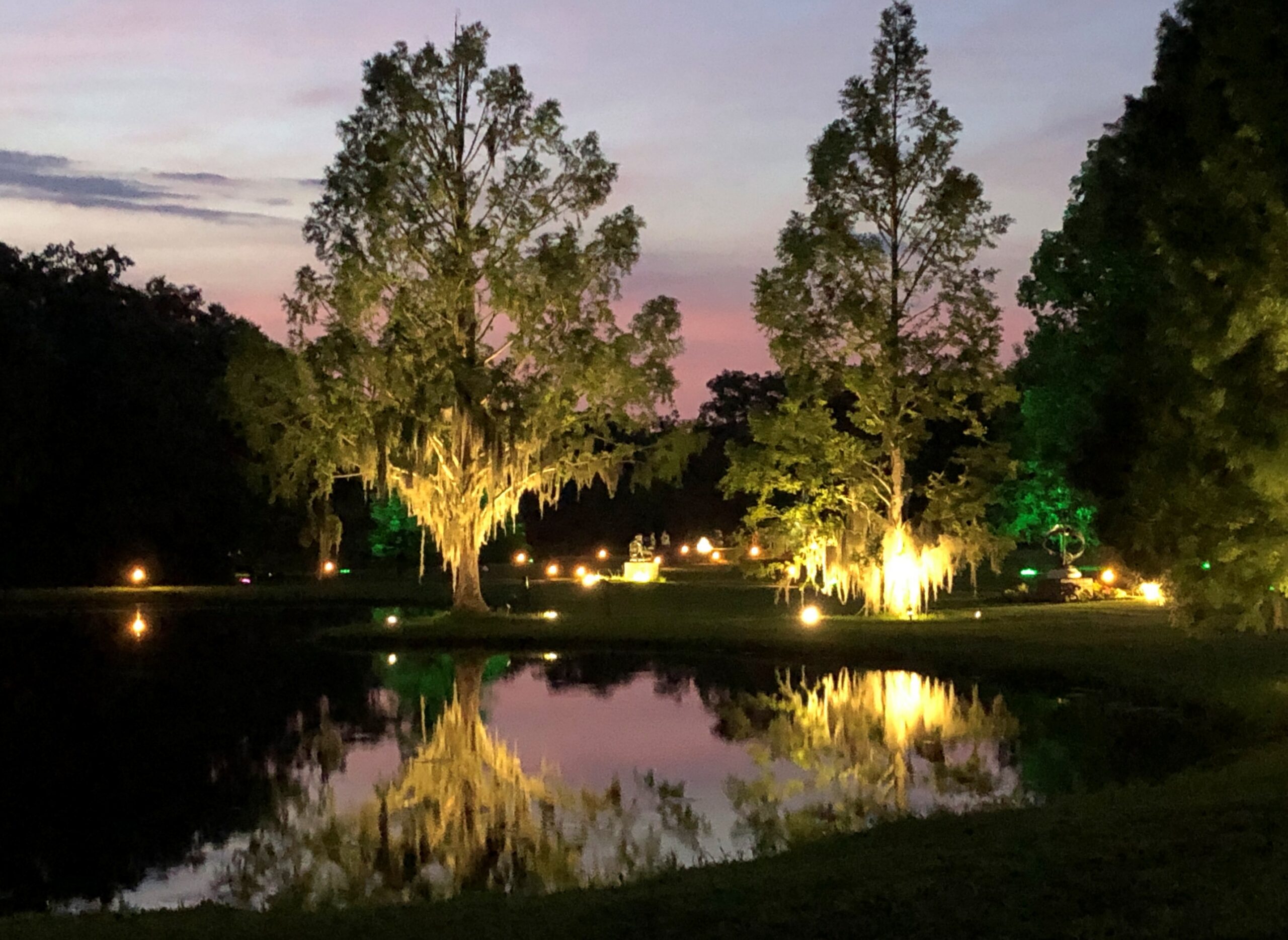
Lights up after dark.
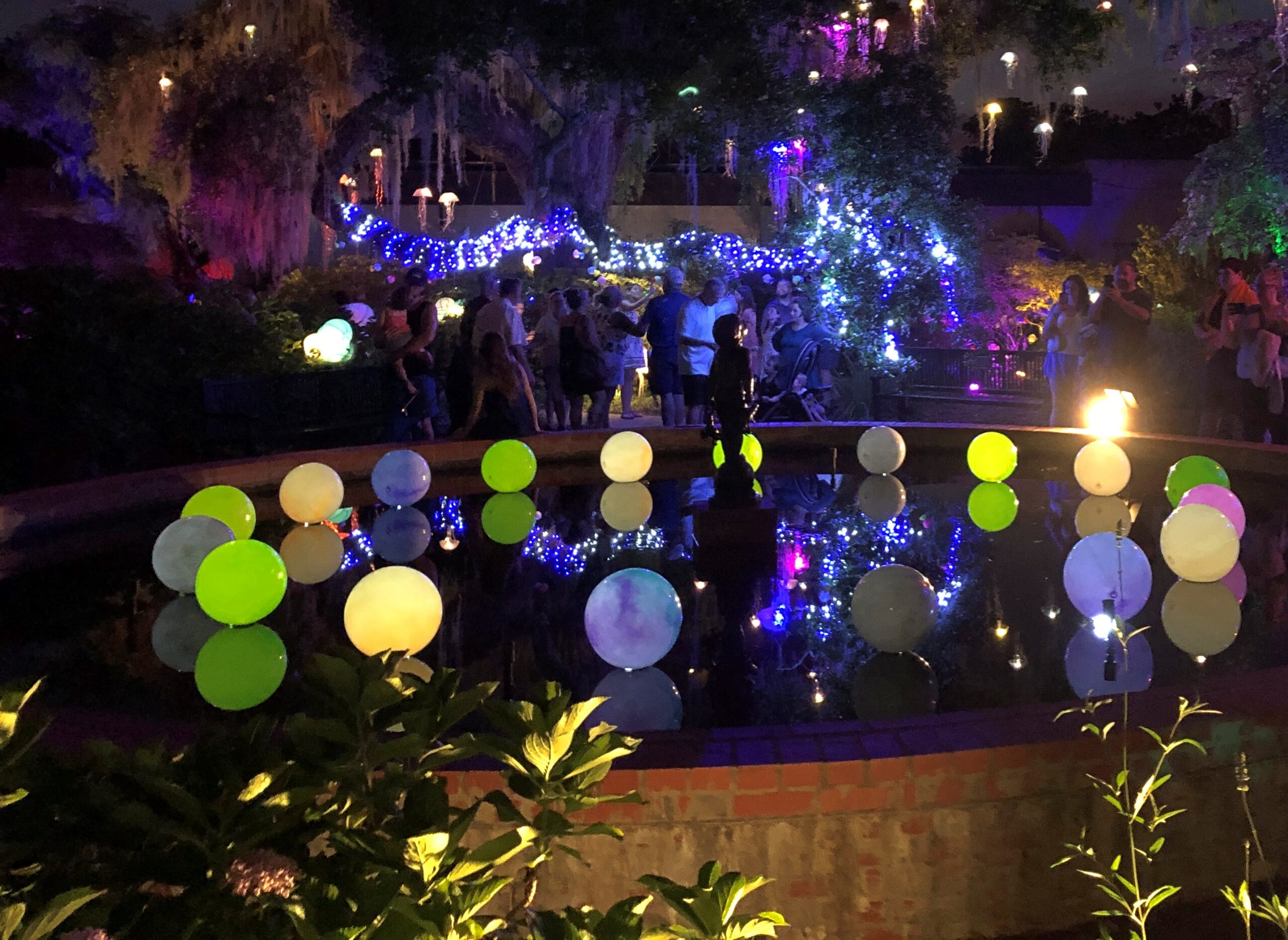
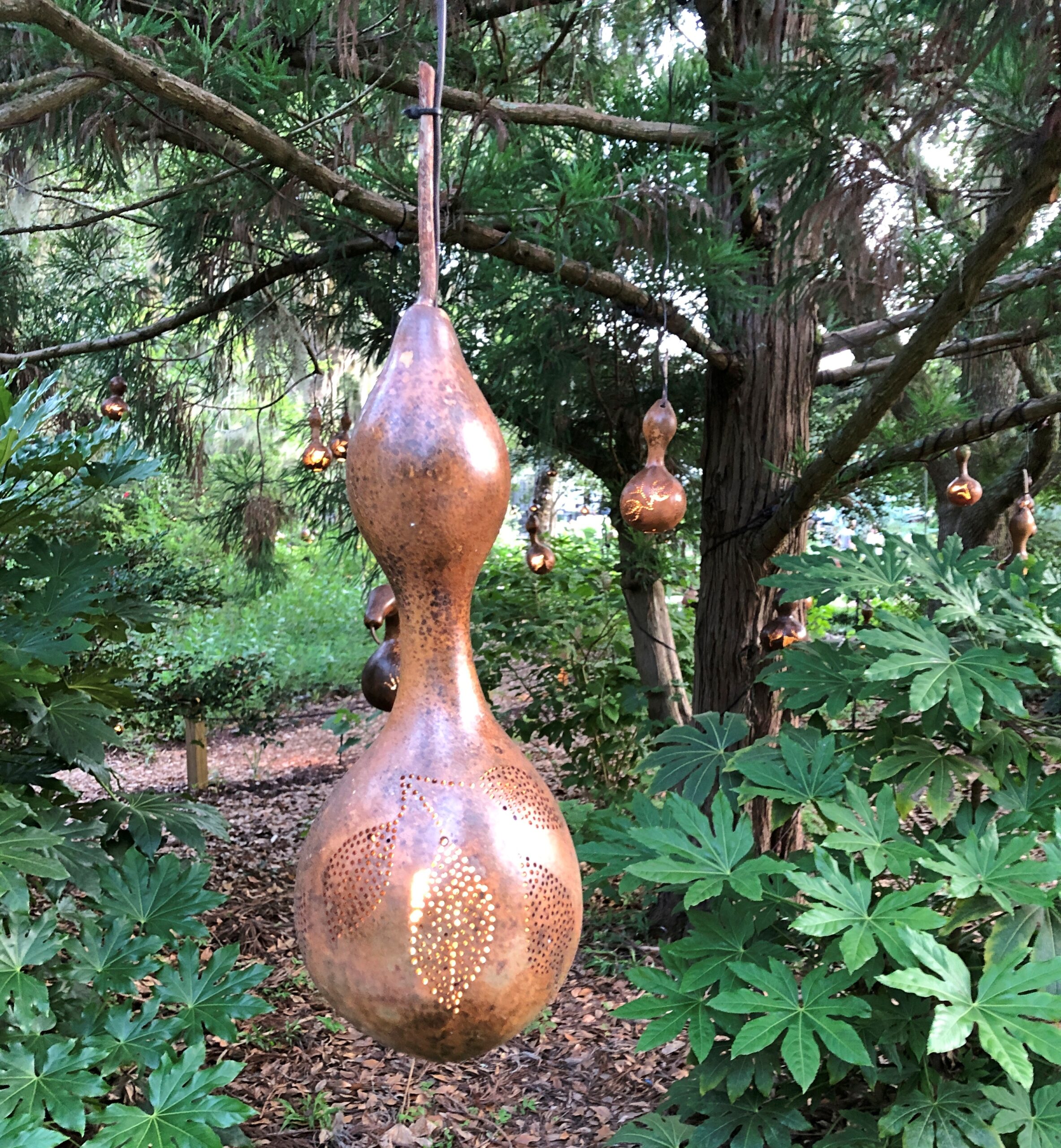
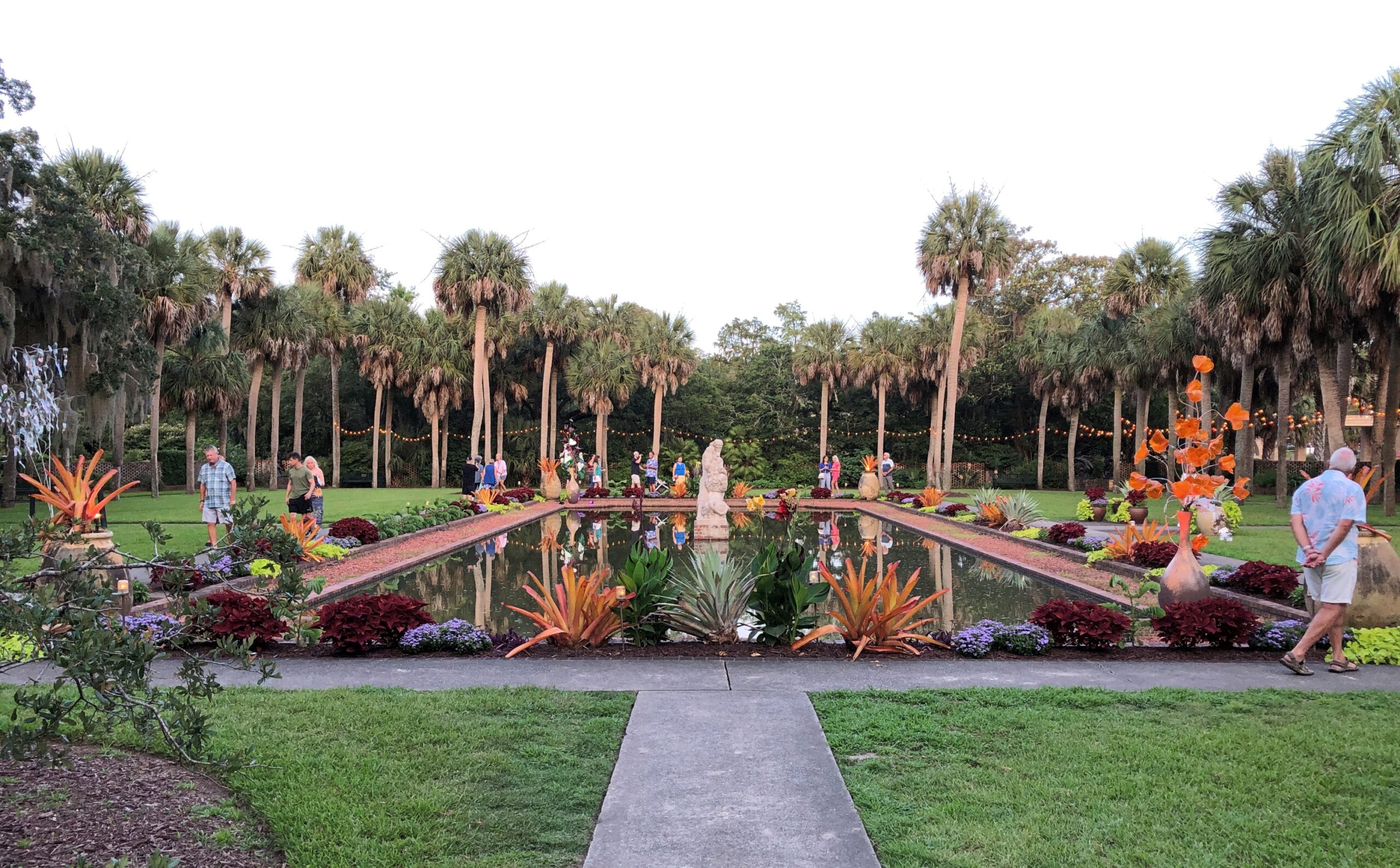
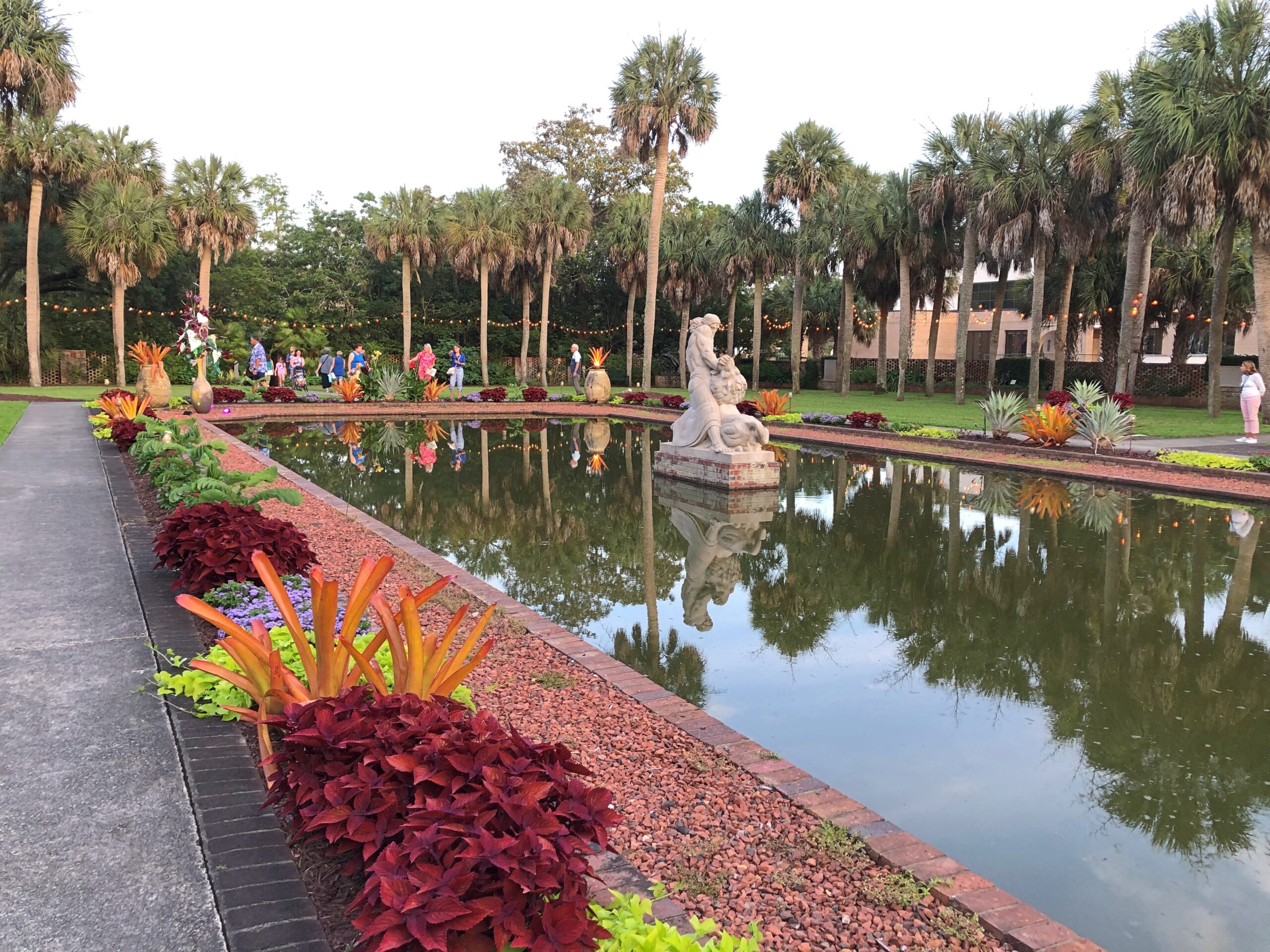
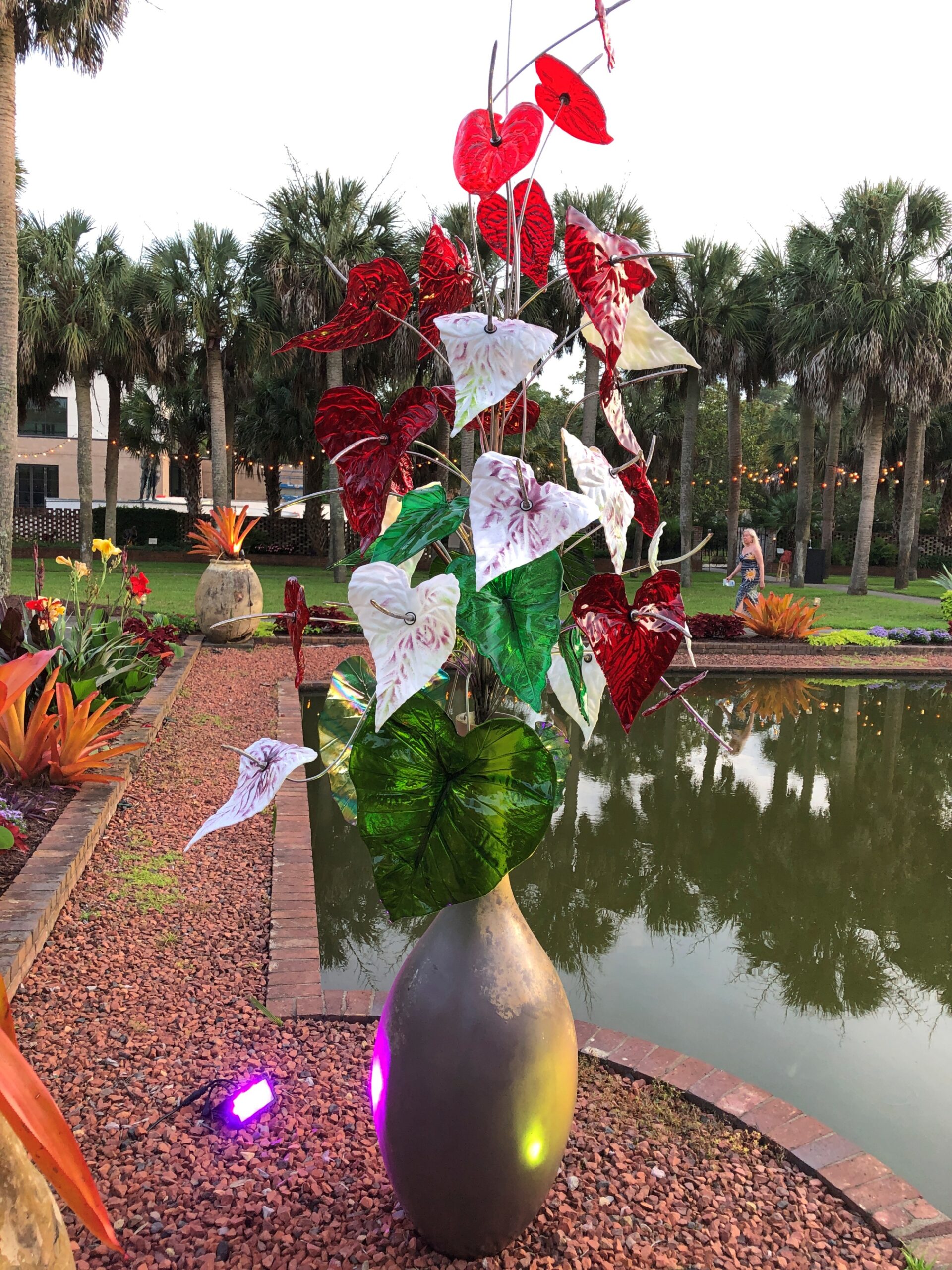
The garden calls it Summer Light: Art by Night.
Other botanic gardens have similar light shows, such as one every year by the Chicago Botanic Garden that we’ve been to a few times. But that’s in winter. Summer’s just as good a time, better in some ways, with no worries about blizzards or subzero temps, even if the nighttime is shorter.
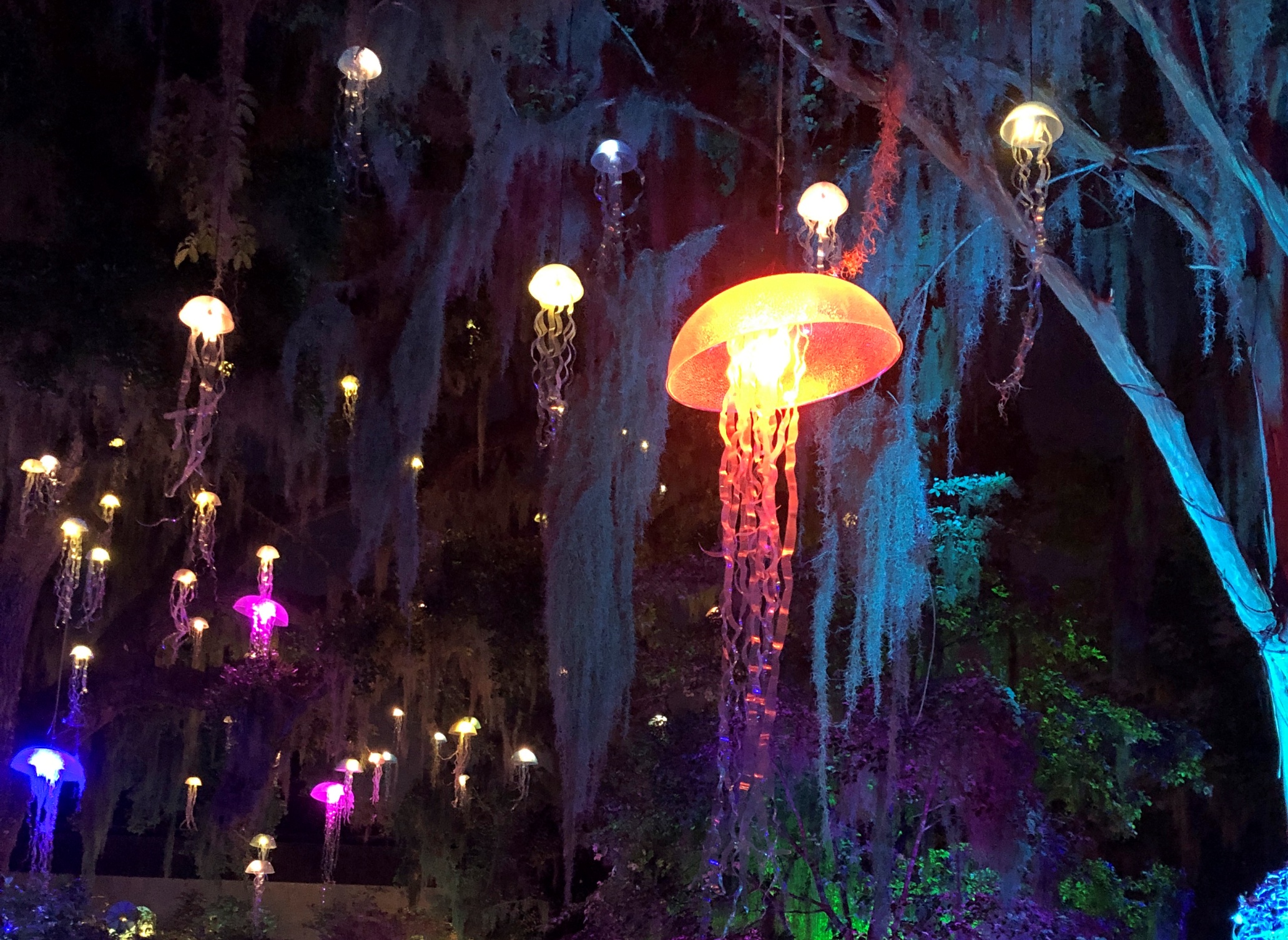
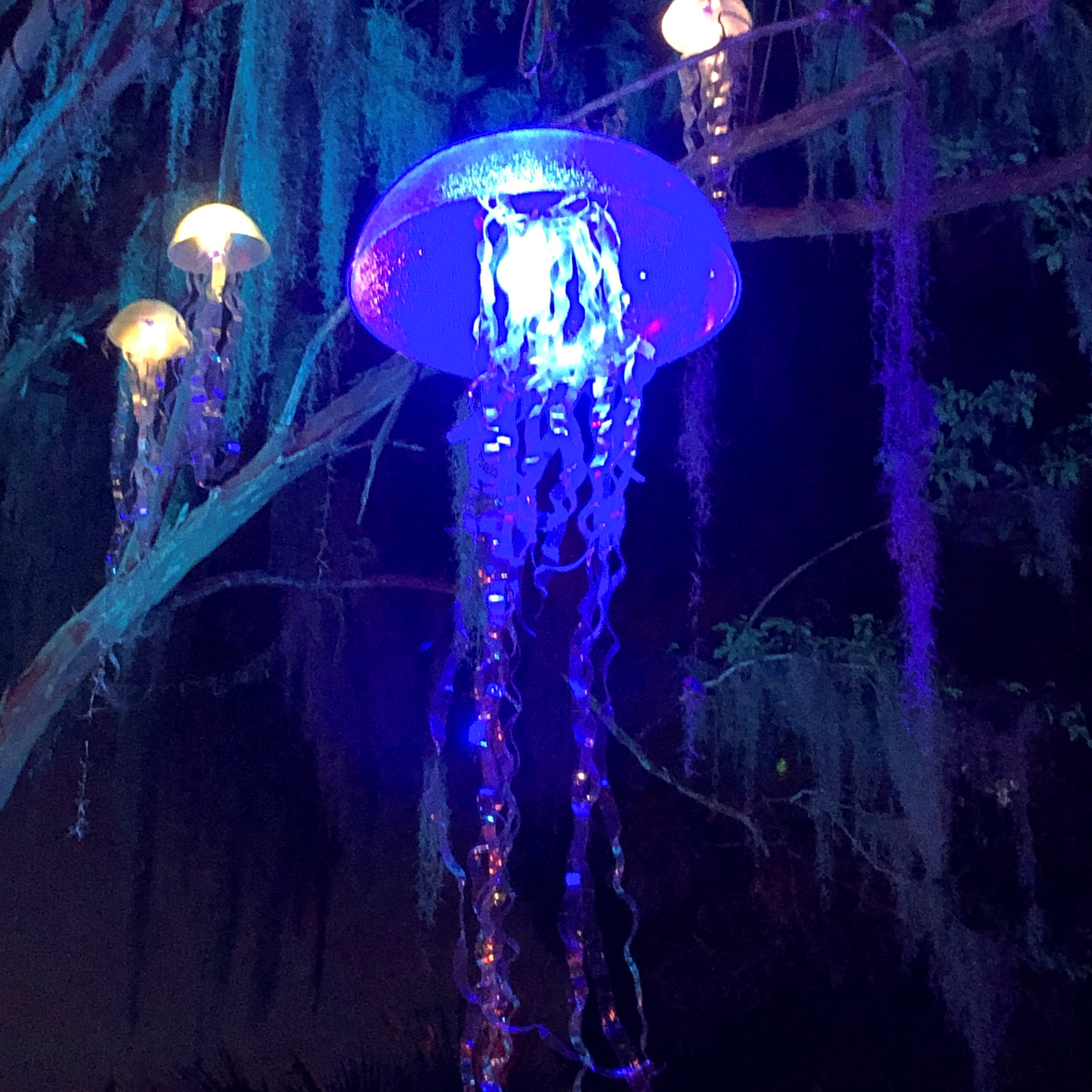
These glowing jellies were in the Children’s Garden.
Too good just for kiddie-winkies, if you asked me.
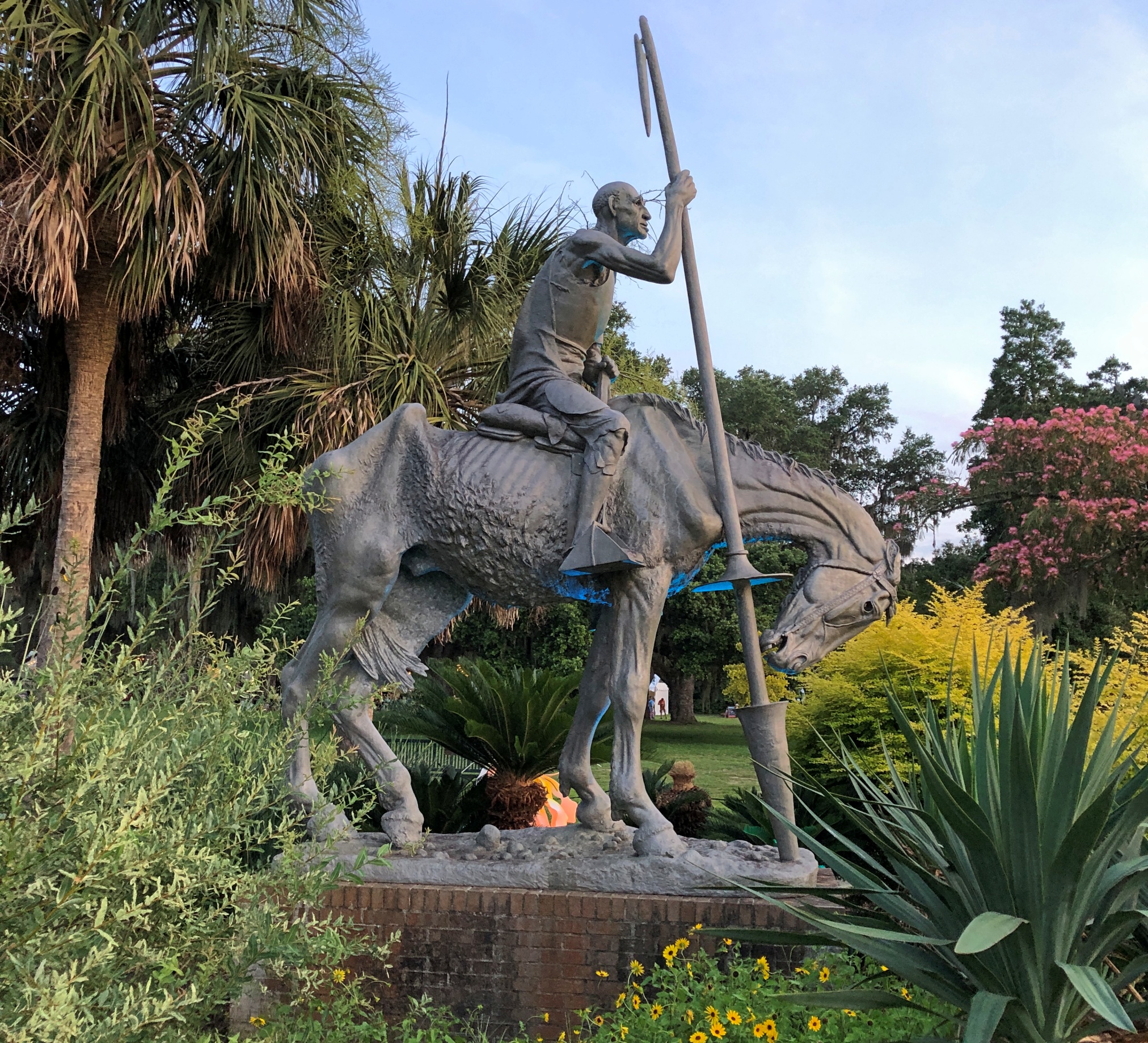
How does the saying go? Wherever there is Don Quixote –
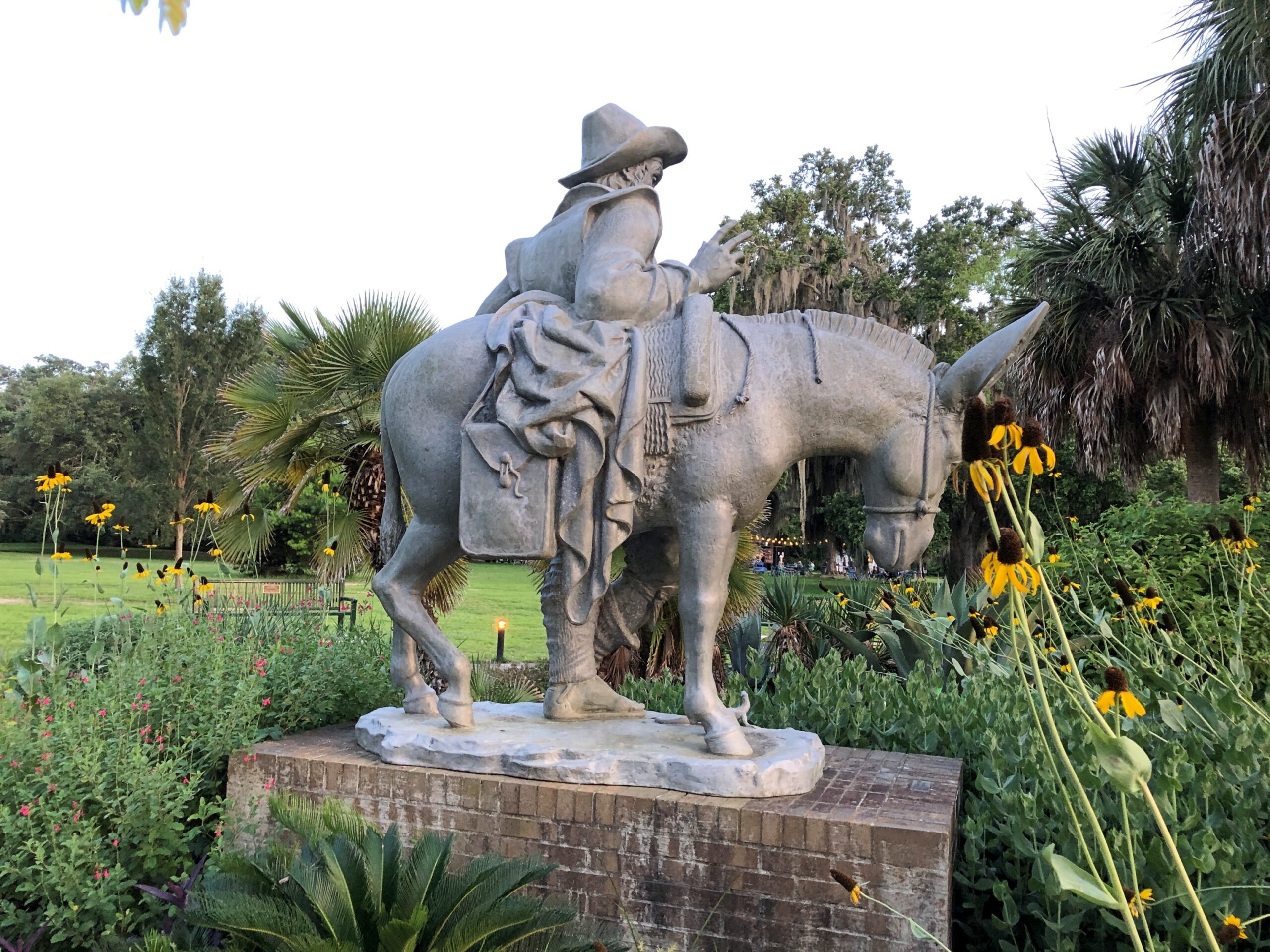
– there is Sancho Panza.
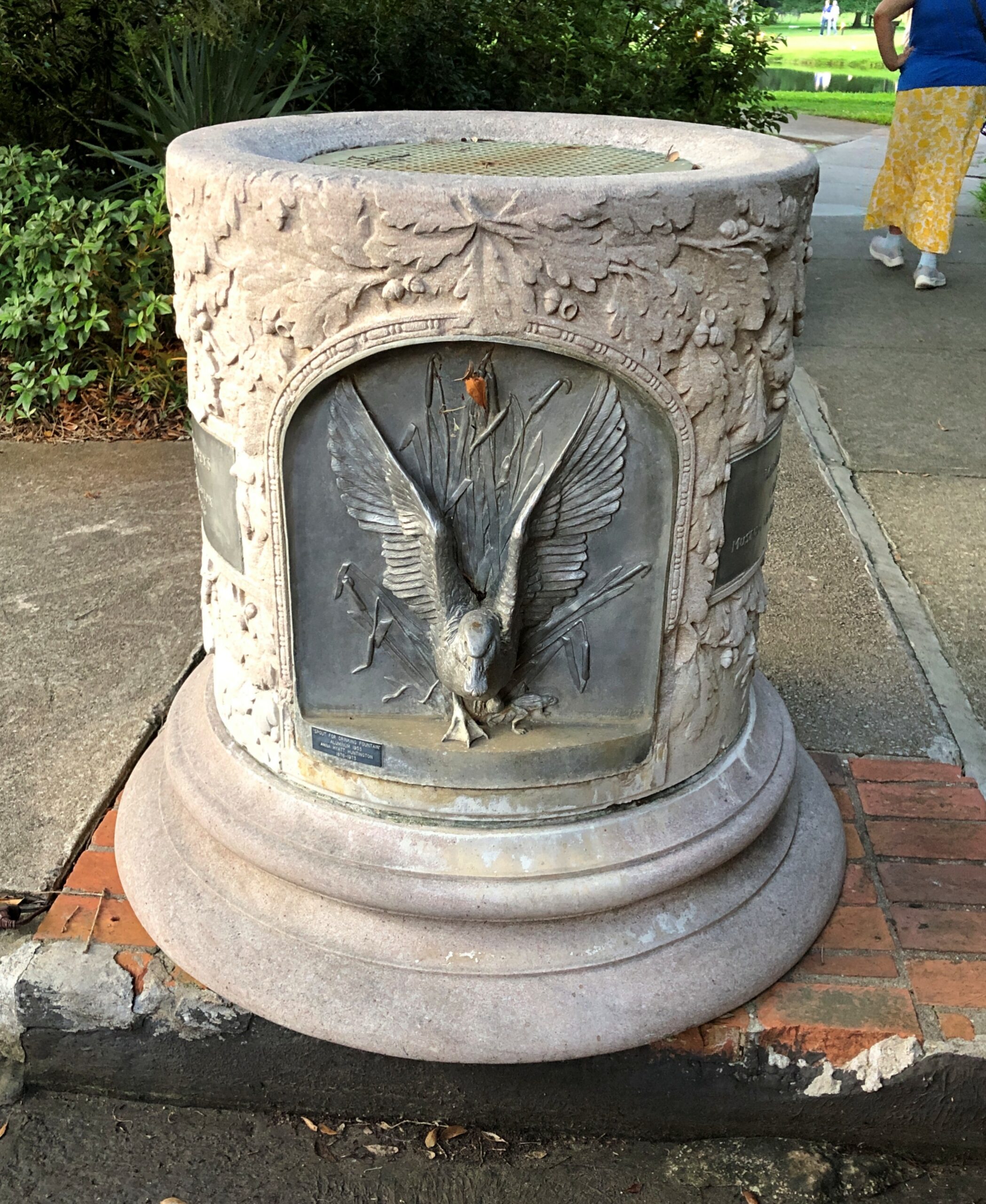
No one says that as far as I know. But you could. Anna Hyatt Huntington (d. 1973) created “Don Quixote” in 1947, and eventually Carl Paul Jennewein (d. 1978) did the companion “Sancho Panza” in 1971, apparently at Huntington’s request. You can find the famed literary pair in aluminum among many other artworks at Brookgreen Gardens in South Carolina – over 2,000 works by 430 artists, according to the garden. We arrived late in the afternoon of the 21st, dodging most of that day’s heat by timing it that way.
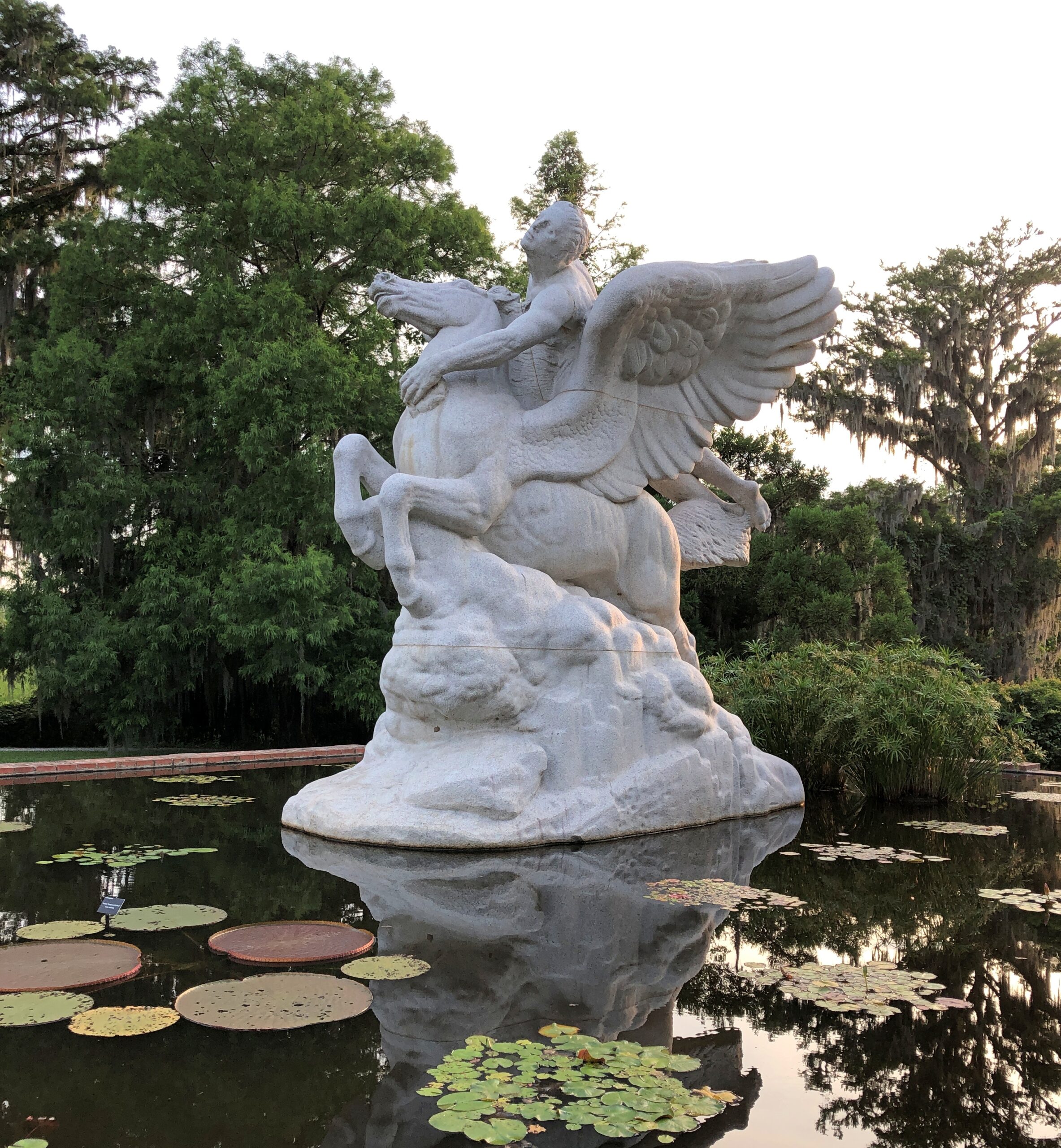
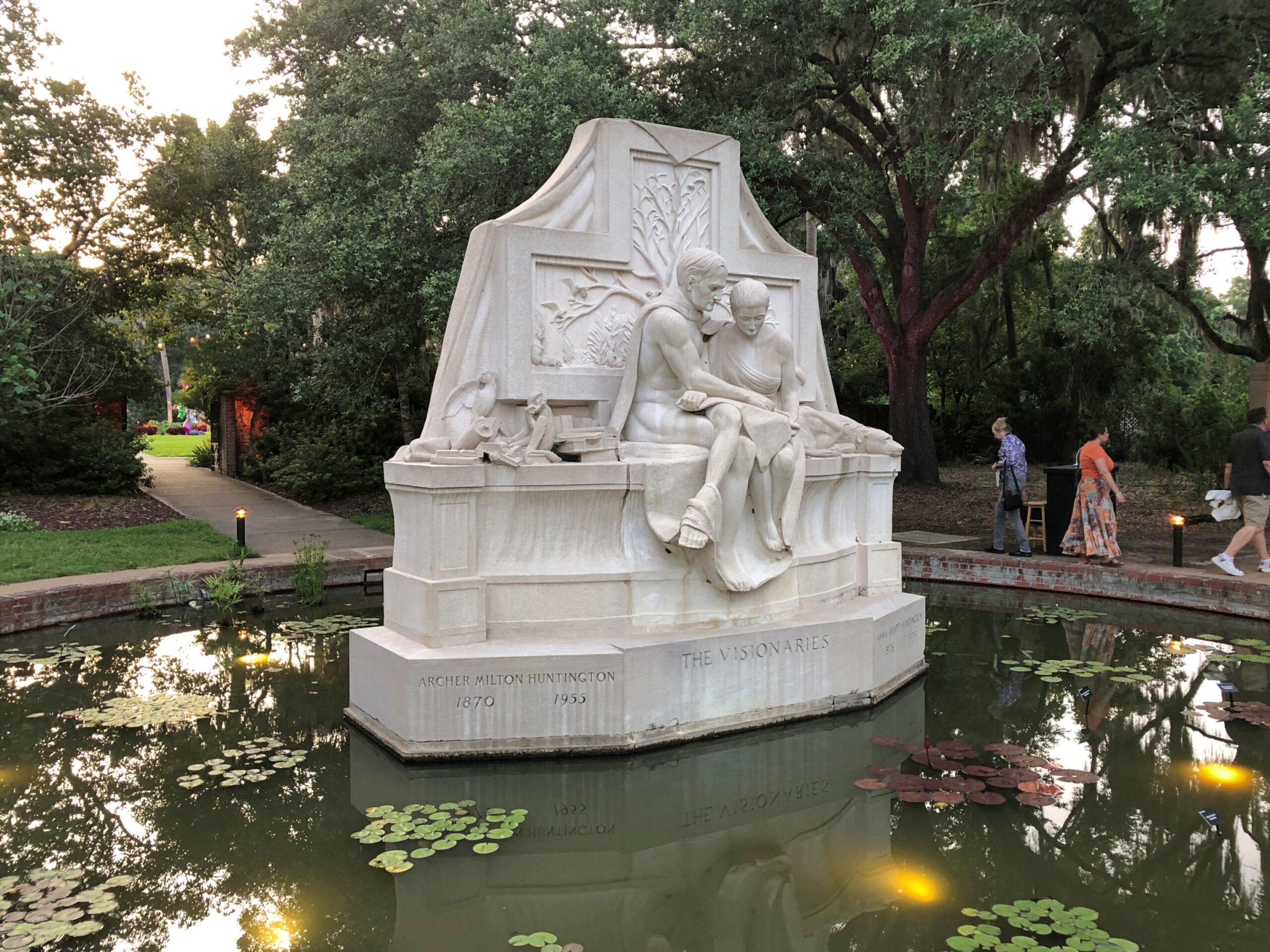
Some works are larger than the Cervantes characters.
Archer Milton Huntington (d. 1955) isn’t entombed in that artwork, as much as it looks like it. He’s in a mausoleum in the Bronx befitting a very wealthy man, so this one just honors him. Along with his wife Anna, a successful artist in her own right, railroad heir and scholar Archer acquired the land and planned the gardens.
Others works aren’t as large, or as conventional.
The sculpture garden, formally known as Archer & Anna Hyatt Huntington Sculpture Garden, is only part of Brookgreen Gardens. Spanning 9,100 acres, the grounds also count as a botanical garden, and there is a zoo and wilderness areas, all teased out of the swampland, rice fields, woods and beaches that marked the site before the 20th century. Some historic sites still exist on the land, especially relating to the rice plantations that used to be there.
“From its inception [in 1931], Brookgreen had a three-pronged purpose: first, to collect, exhibit, and preserve American figurative sculpture; second, to collect, exhibit, and preserve the plants of the Southeast; and third, to collect, exhibit, and preserve the animals of the Southeast,” the garden’s web site explains.
Paths wind through the lush landscapes.
And under towering oaks bearded with Spanish moss.
Talk much about colonial North Carolina and Blackbeard is going to come up – at least when talking with my old friend Dan, who had a fascination with the buccaneer even back in college. An artful storyteller, which surely helped him in his former career as an ad man, Dan can regale you with Blackbeard stories, detailing his short but colorful pirate career, including the fiery display he made of his person to scare onlookers witless. A pirate needs to be known for more than mere thievery on the high seas.
“In battle [Edward] Teach would have a sling over his shoulders that held at least three flintlock pistols and would often stick lit matches under his hat to give a smokey and fearsome appearance,” the Golden Age of Pirates explains, though without the Dan’s storytelling gusto, illustrating Blackbeard’s pyrotechnical flair with gestures all his own.
Dan and his wife Pam recently moved to New Bern, NC, very near Blackbeard’s haunts, including the site of his swashbuckler’s death in action off Okracoke Island. I don’t believe their retirement move from Alabama was to be near Blackbeard, but it certainly couldn’t have hurt during site selection. On the first evening of my visit to New Bern, Dan and I spent had a fine time out on his deck, perched near a small inlet ultimately connected to the wider ocean, watching the stars slowly emerge and talking of old times and newer things but not, at that moment, about Blackbeard.
That was the next day, as we toured Tryon Palace, even though the original structure was built many decades after Blackbeard’s newly severed head wound up tied to the bowsprit of the sloop Jane, put there by pirate hunter Robert Maynard. One colonial subject leads to another.
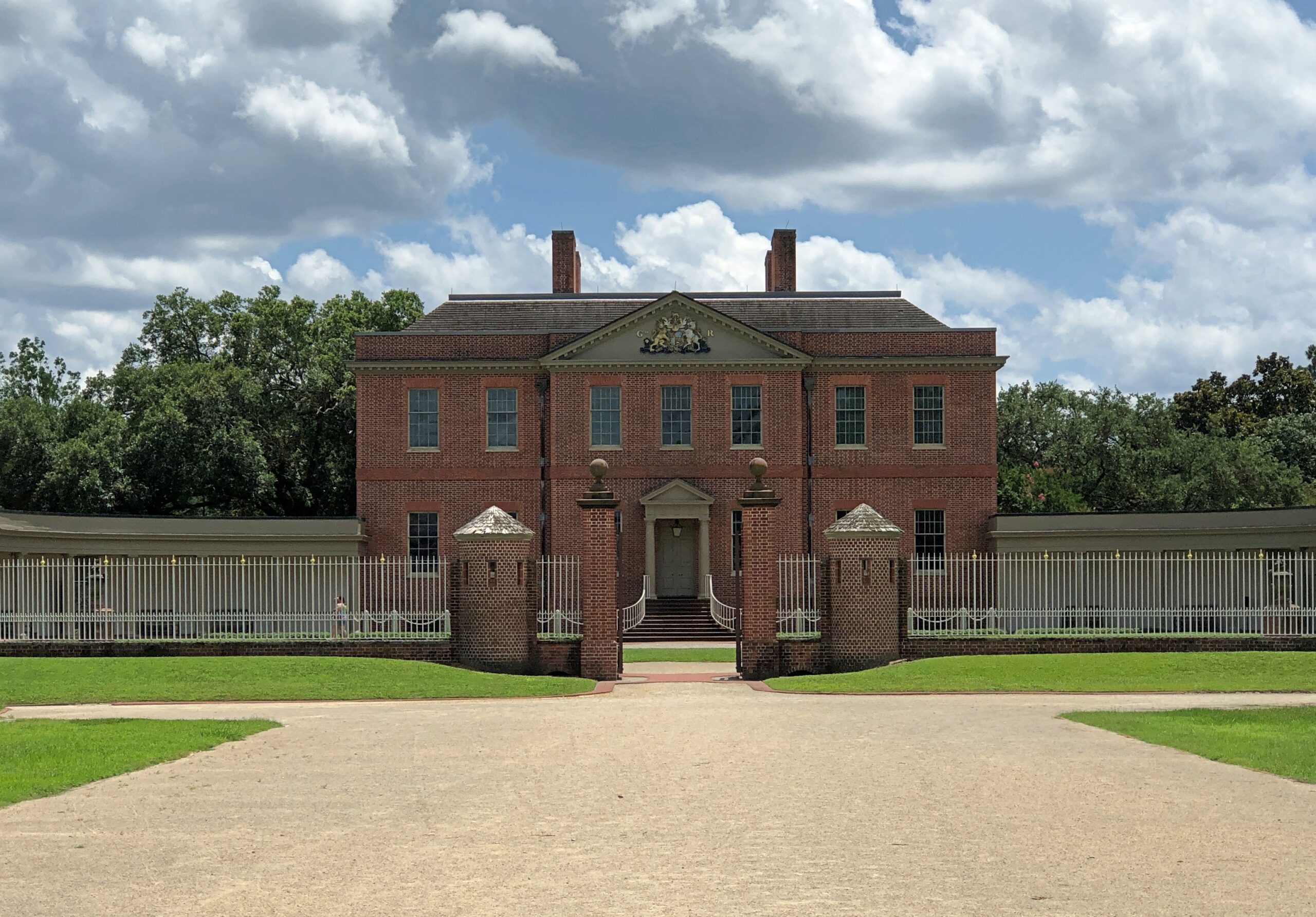
Tryon Palace is crown jewel of historic sites in New Bern, except that it’s actually a recreation of the 20th century. Somehow that doesn’t take away from its historic appeal.
When you stand in front of it, you’re peering not only back to 1770, when the colonial government of North Carolina completed, at great expense, a structure that looked like this one. You’re also looking at a building completed within living memory, in 1959, which is considered a faithful restoration of the one that NC Gov. William Tryon had erected.
“When the colonial Assembly convened in [New Bern] on 8 Nov. 1766, Tryon presented a request for an appropriation with which to construct a grand building that would serve as the house of colonial government as well as the governor’s residence,” says the Encyclopedia of North Carolina.
“Less than a month later, the Assembly acceded to the governor’s wishes by earmarking £5,000 for the purchase of land and the commencement of construction. The appropriated sum was borrowed from a fund that had been established for the construction of public schools. To replenish the depleted school fund, a poll tax and a levy on alcoholic beverages were imposed.”
Just about the worst kind of taxes when it came to irritating the non-coastal non-elites of the colony, a discontent that eventually erupted as the Regulator Rebellion. Ultimately Gov. Tryon, in personal command of the colony’s militia, crushed the Regulators – untrained men who seem to have been foolish enough to meet Tryon’s trained men in an open field at the Battle of Alamance in 1771. (Which isn’t entirely forgotten.)
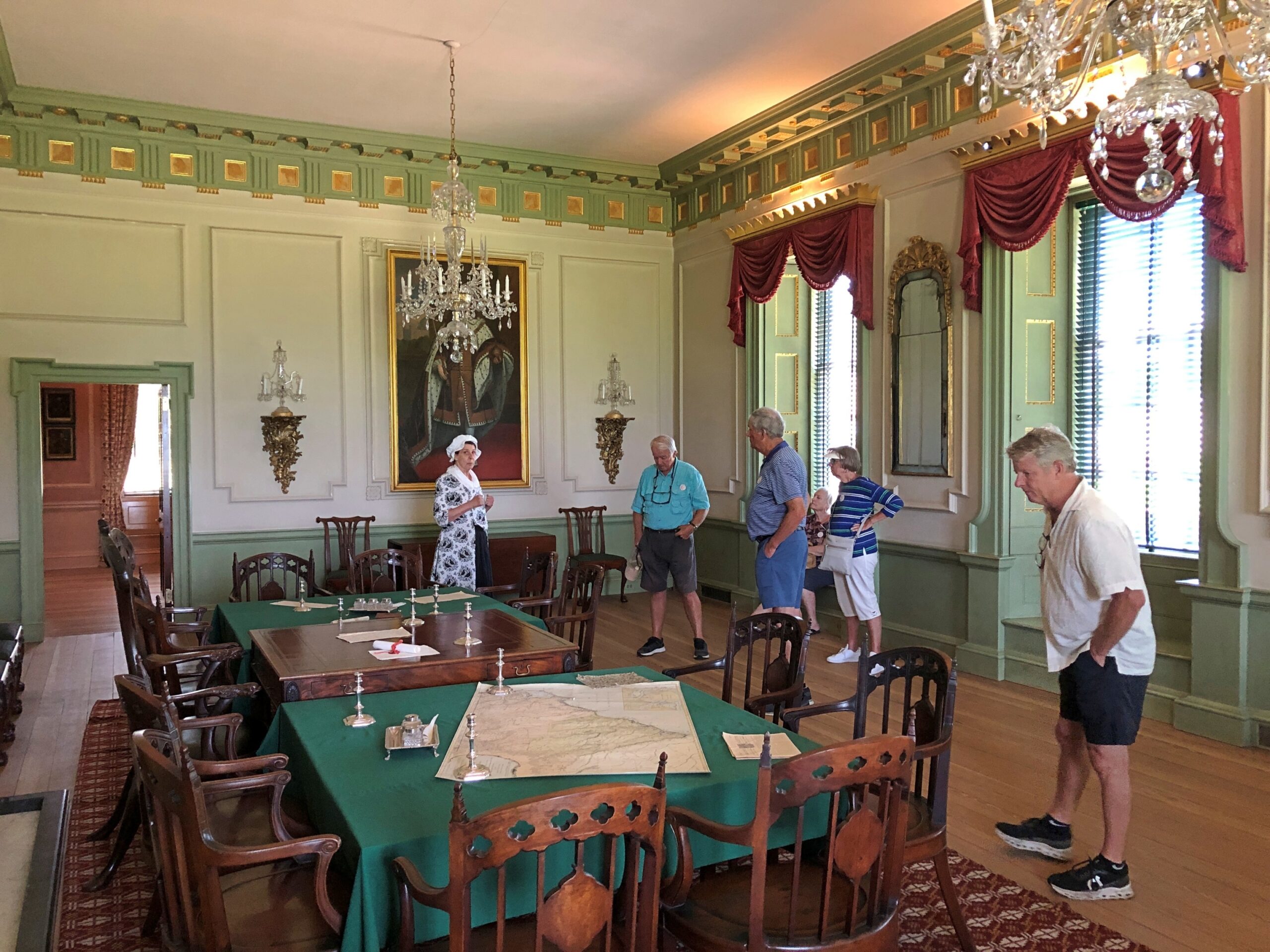
We took an early afternoon tour of Tryon Palace, guided by a woman in period costume. She told us about Tryon – no mention of Alamance, however – and his successor, Josiah Martin, the only other royal governor to use the palace. Gov. Martin spent more on furnishing the place, only to be obliged to skedaddle come the Revolution. We also heard about architect and master builder John Hawks (d. 1790), who came to North Carolina from England to build the palace which, of course, is only a palace by canebrake standards of the colony. It is a stately manor house, however.
The colonial legislature and the new state legislature both used the palace for a while, so it counts as the first capitol of North Carolina. That meant I was visiting yet another state capitol, without realizing it at first. A former capitol, that is, including ones I’ve seen in Illinois, Texas (counting Washington-on-the-Brazos as such), Virginia, Florida and Iowa. Abandoned as a government building after the NC capital left New Bern, fire consumed most of Tryon Palace just before the end of the 18th century. Its west wing survived for other uses over the next century-plus.
In the 20th century, along came Maude Moore Latham, a wealthy local woman with a taste for historic restoration. If much of colonial Williamsburg up in Virginia could be restored, so could colonial New Bern in North Carolina. Despite the fact that a road and houses had been built on the site of old Tryon Palace, she eventually facilitated the restoration, made possible (or at least more accurate) by the fact that John Hawks’ plans for the building had survived.
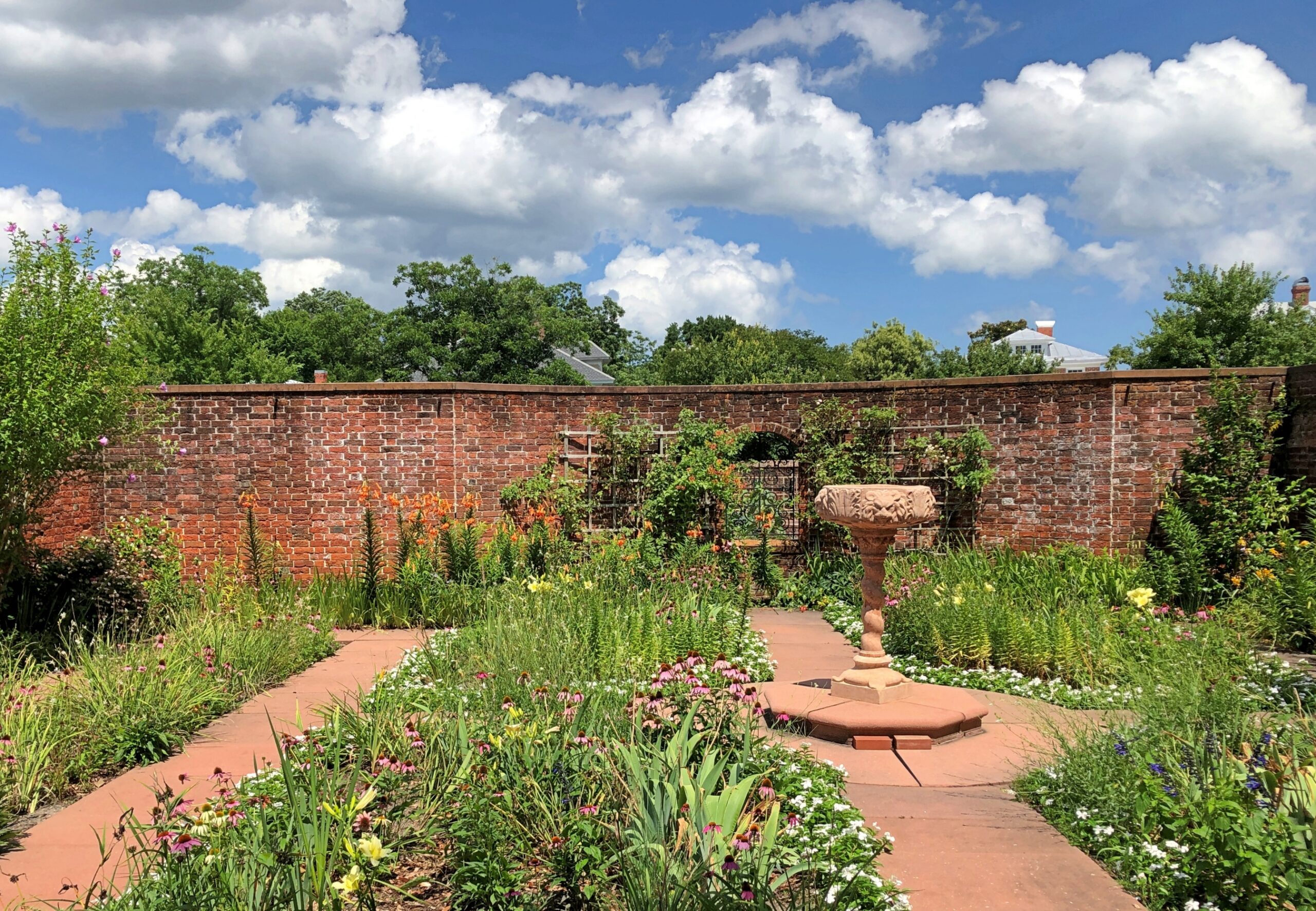
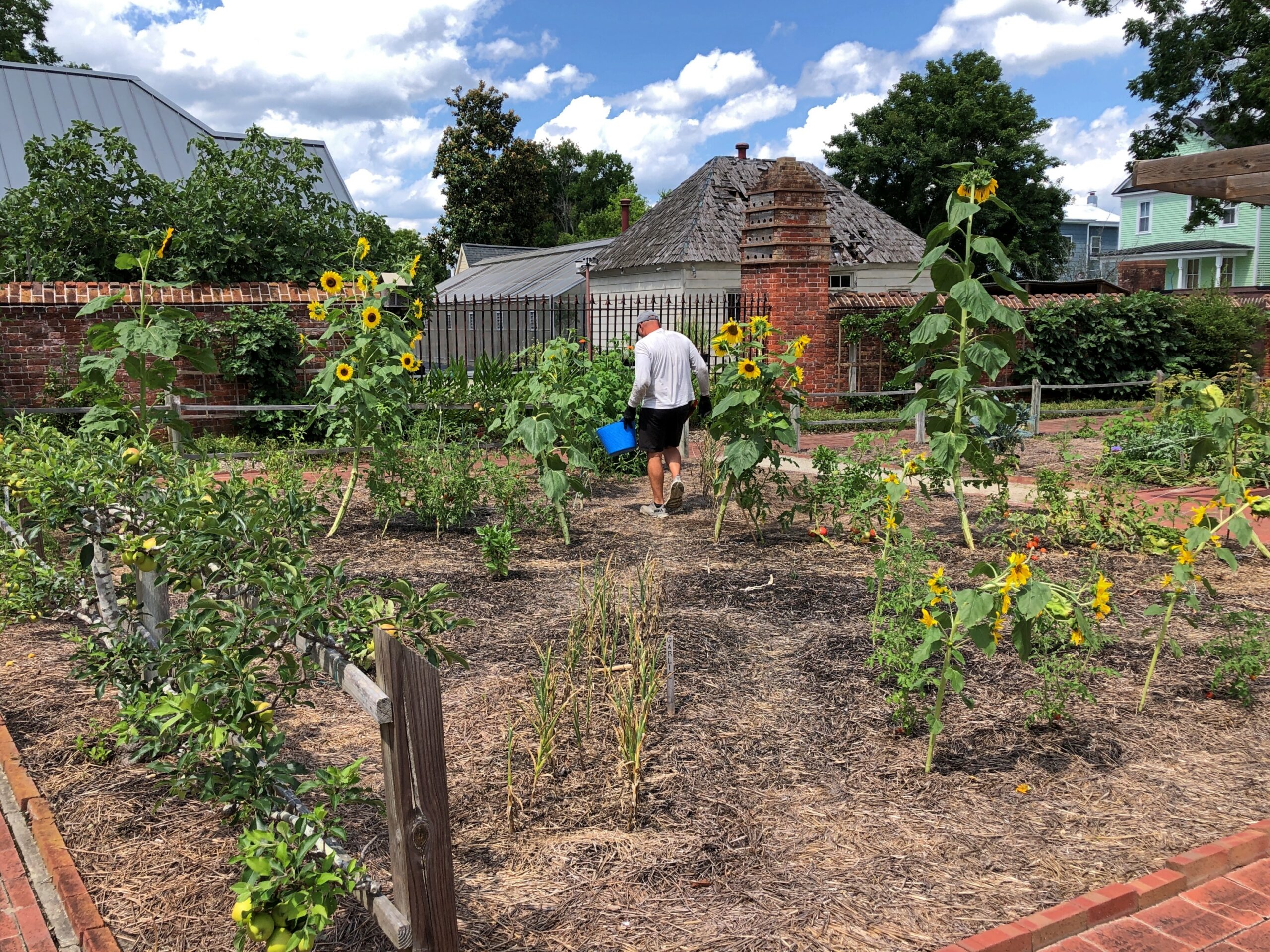
Also restored: The gardens of Tryon Palace, flower and vegetable. Despite the heat, we couldn’t miss that.
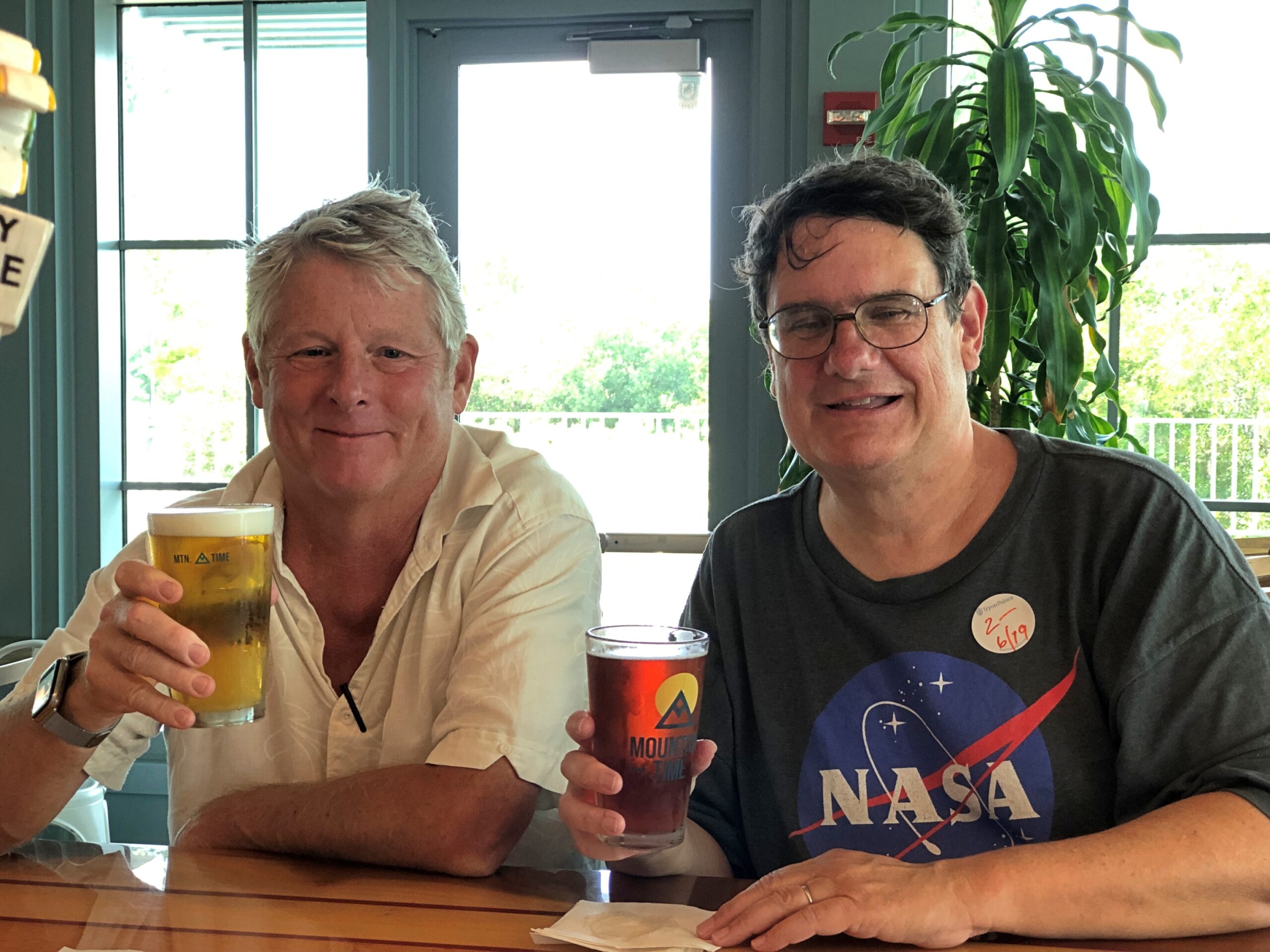
After our sweaty visit to the palace and gardens, Dan and I repaired to the restaurant in the nearby North Carolina History Center, called Lawson’s On The Creek, for refreshing beverages and more talk of Blackbeard and many other things. We closed the joint down over beer, at 4 p.m.
Downing a beer was just the thing. That was our homage to those days of yore. In colonial America, beer was no mere refreshing beverage, but an essential one.
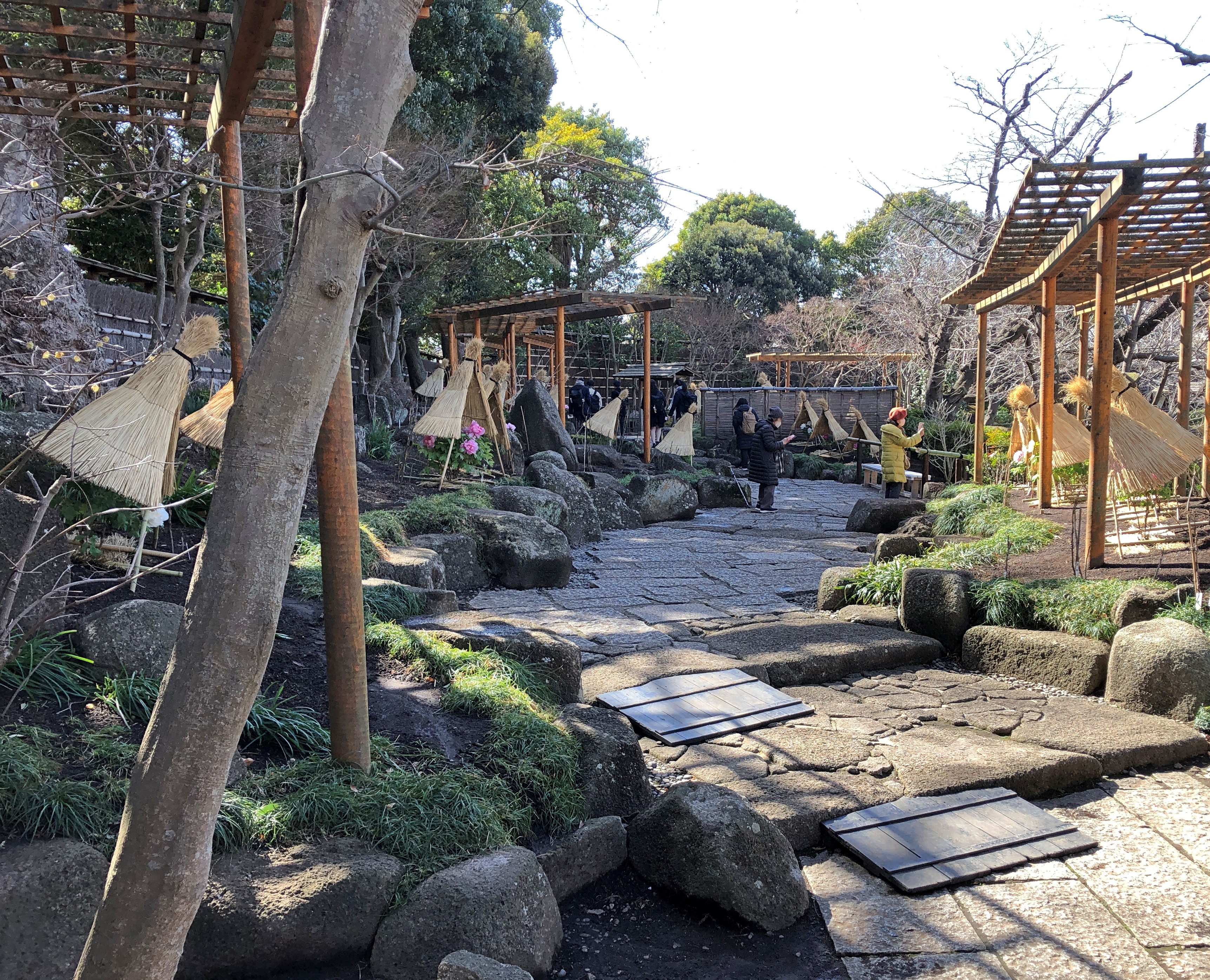
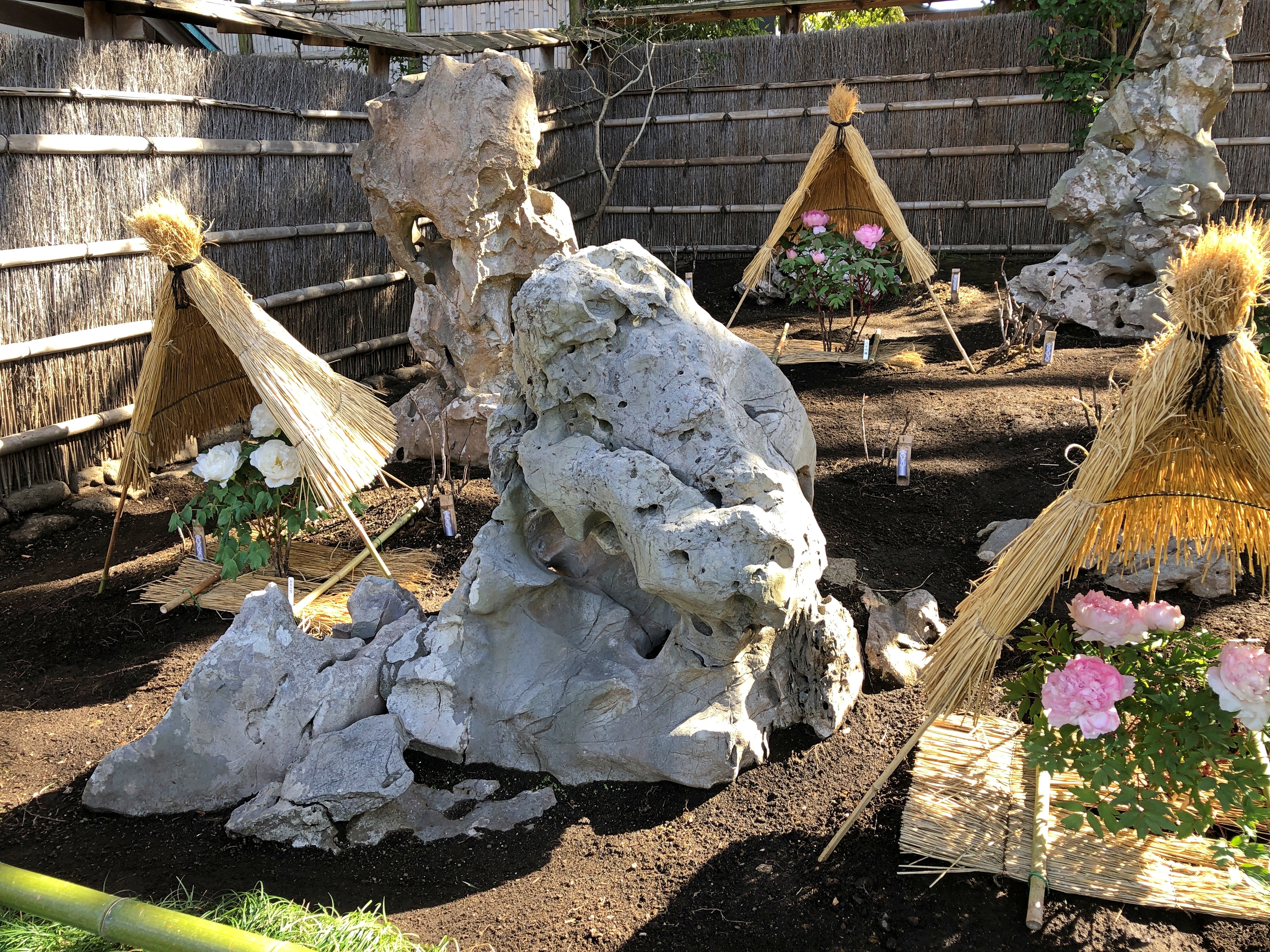
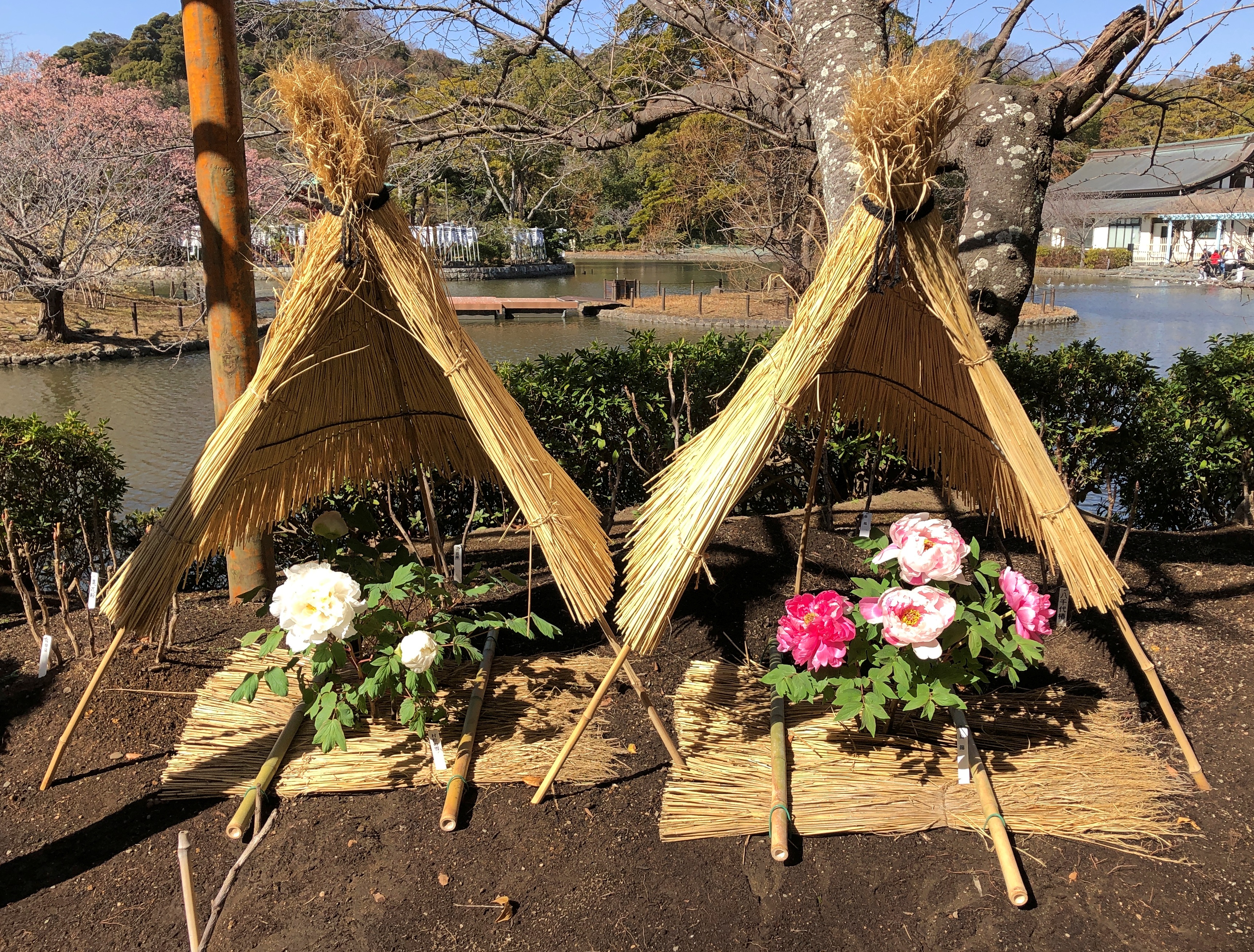
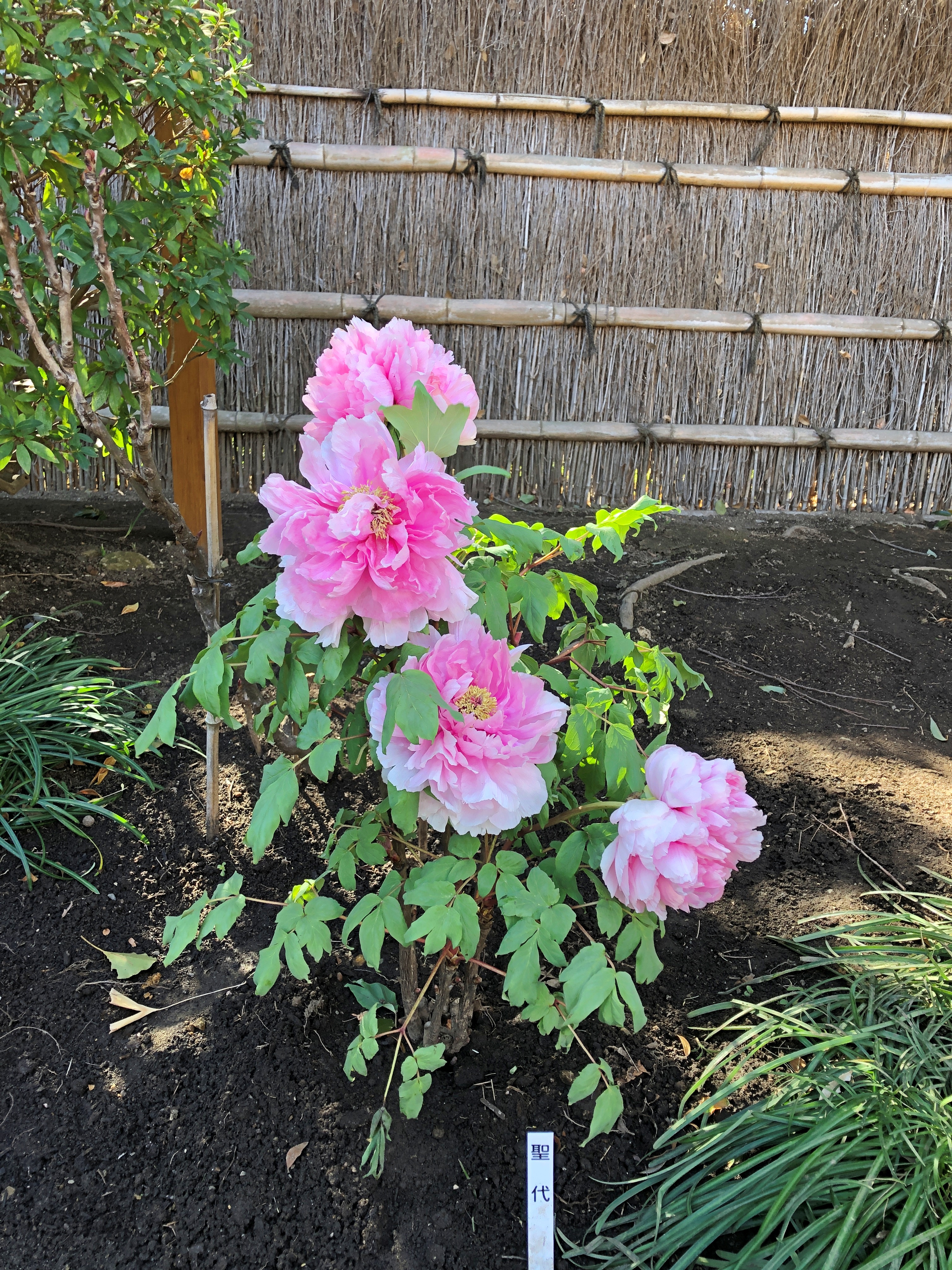
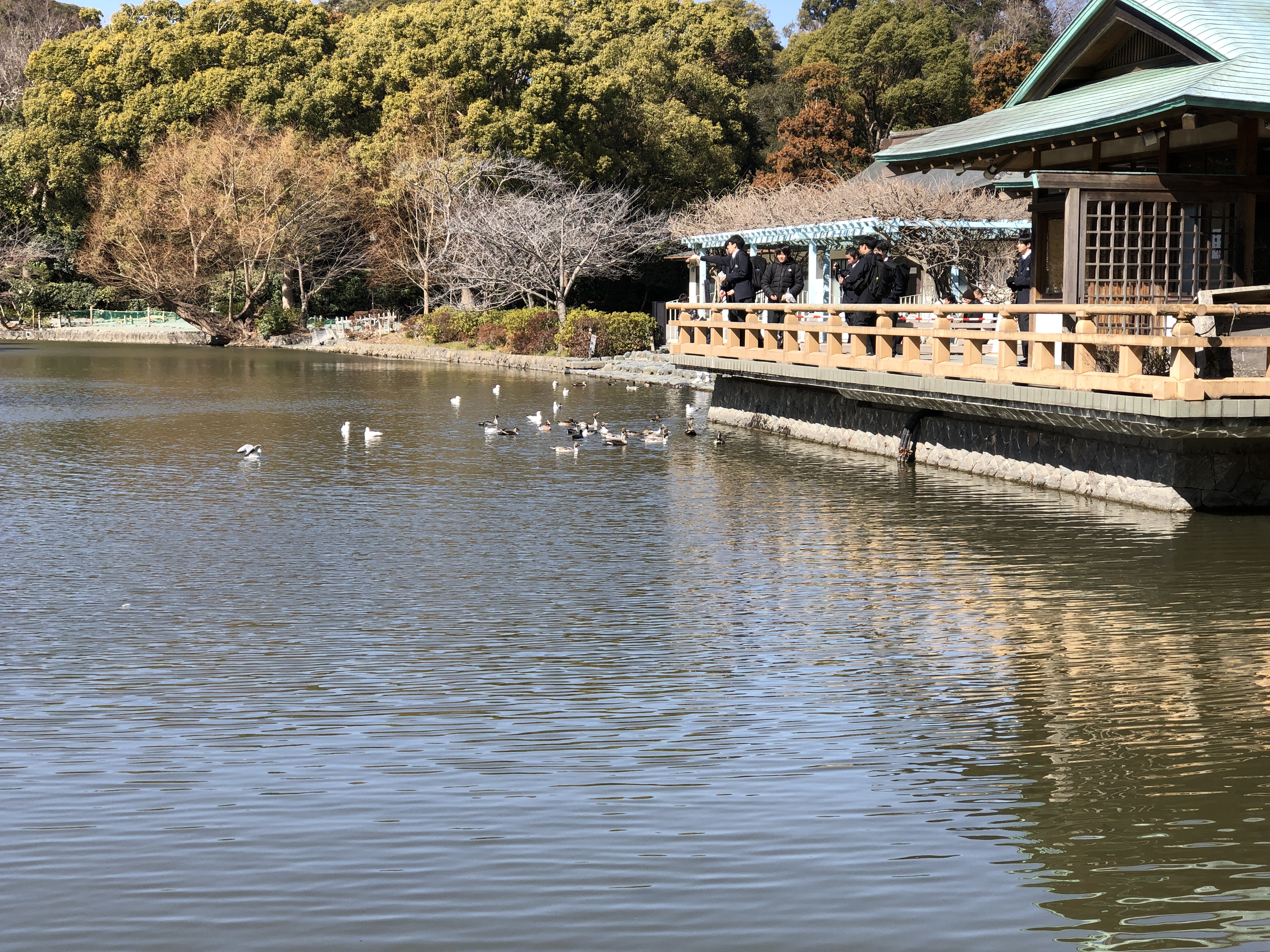
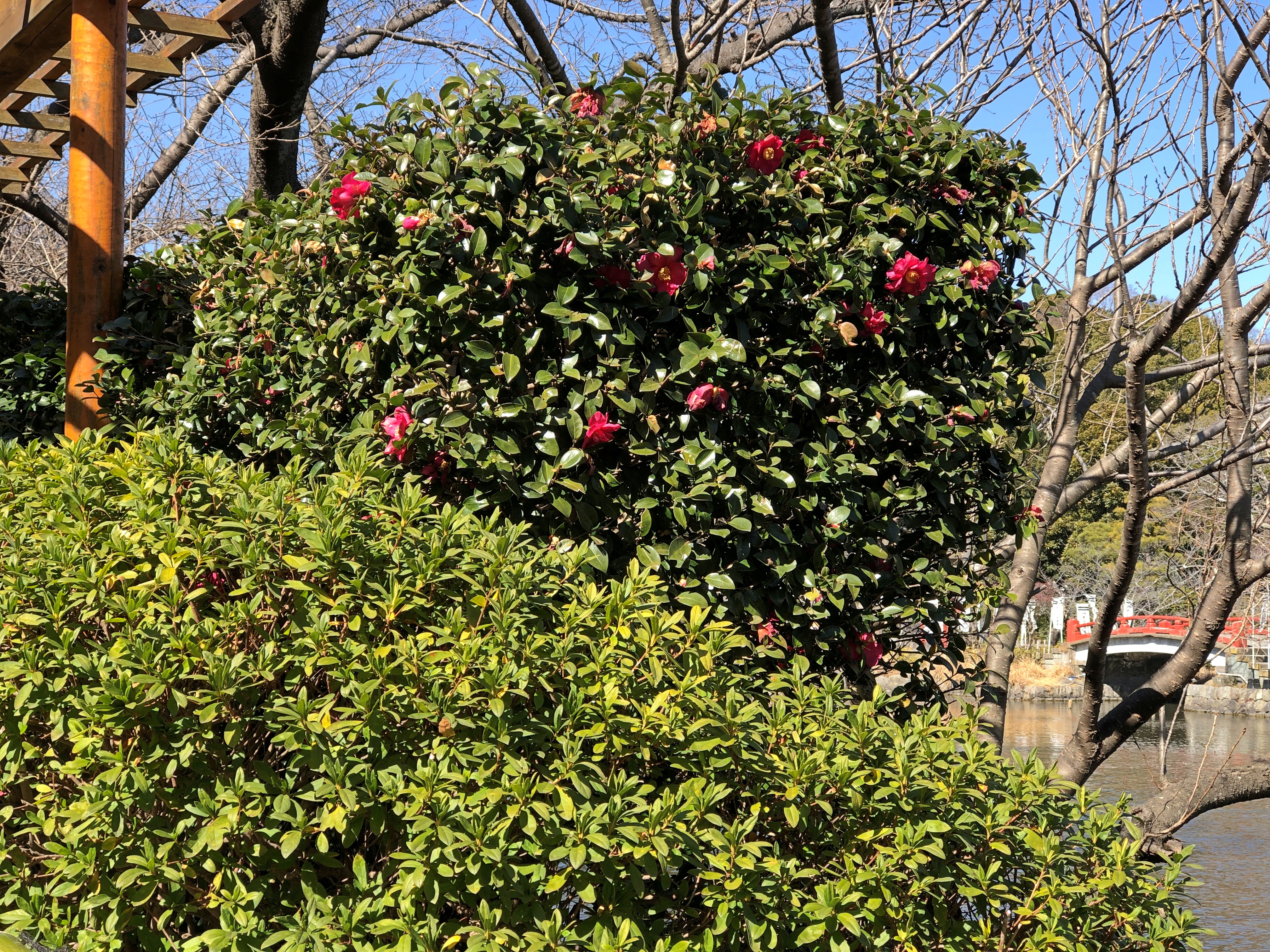
On the extensive grounds of Tsurugaoka Hachimangu Shrine in Kamakura – or maybe a separate entity adjacent to the shrine, it wasn’t quite clear – was a garden that managed to sport flowers in mid-February.
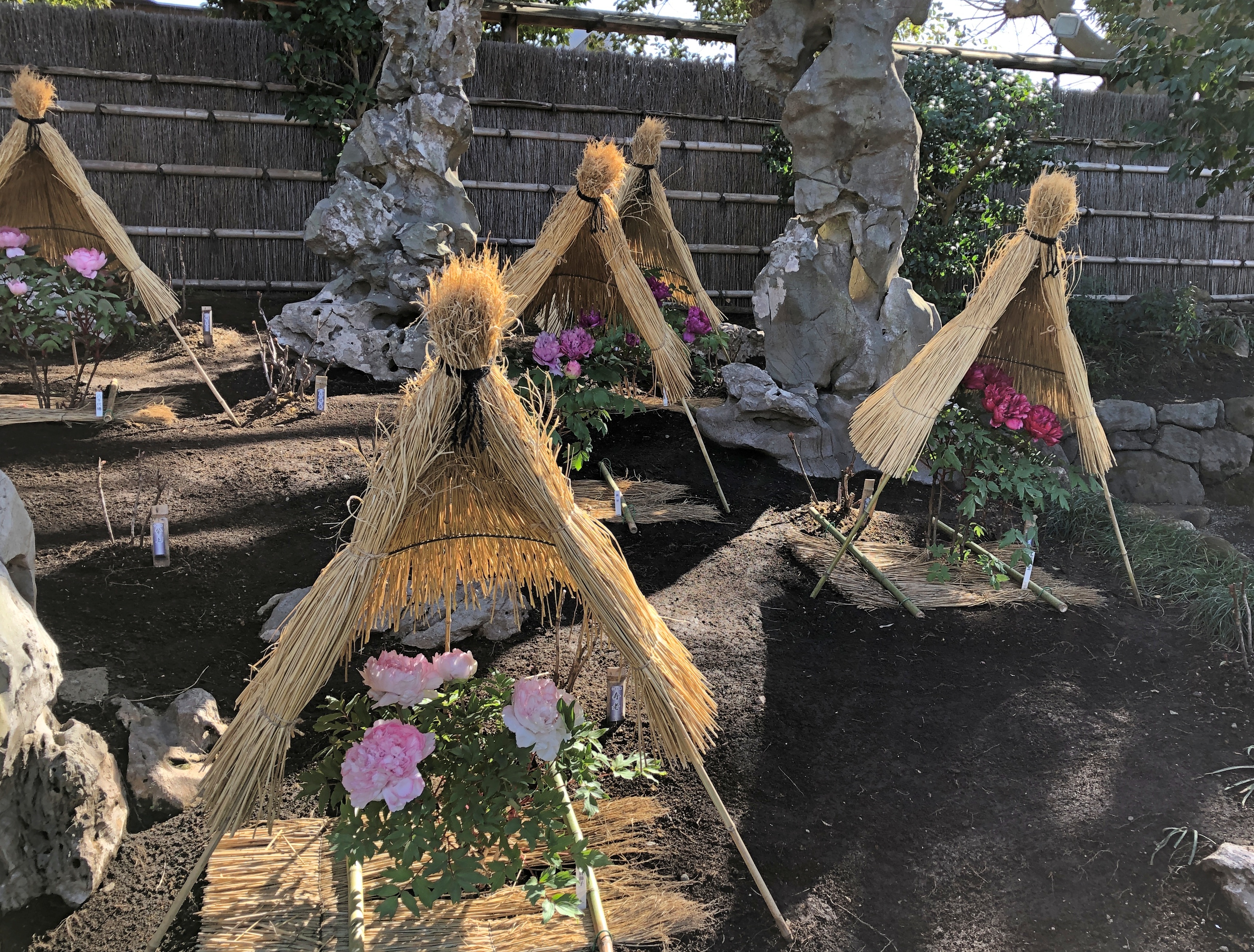
Part of the gardeners’ strategy seemed to be tepee-like straw structures over the blooms, many of them ‘mid the garden stones.
There must be a word for that sort of cover. In English or Japanese or some other language, and it must work somehow, though speaking as a non-gardener, it doesn’t look like it would keep cold air out. The area is roughly the same latitude as Nashville or Oklahoma City, certainly far enough north for some chilly winter days, though presumably the ocean off Kamakura moderates temps somewhat in Kamakura. Anyway, it does get cold there, as this detailed climate page notes.
Or maybe the growing season is longer than it used to be. Whatever could be the cause of that?
Not every floral growth was covered.
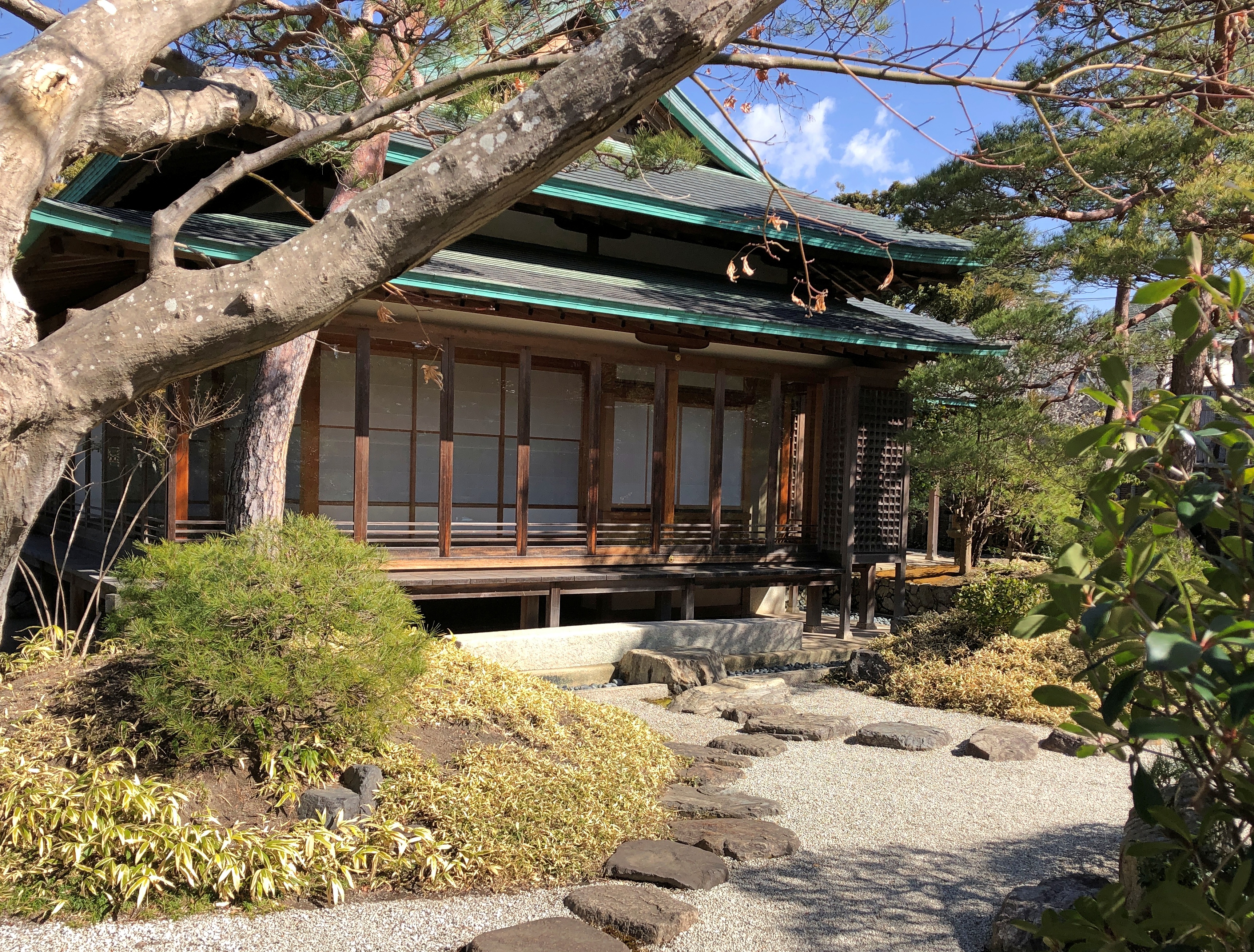
Even without flowers, the place made for a pleasant stroll in an elegant setting.
What would a kaiyushiki teien, a stroll garden, be without bamboo?
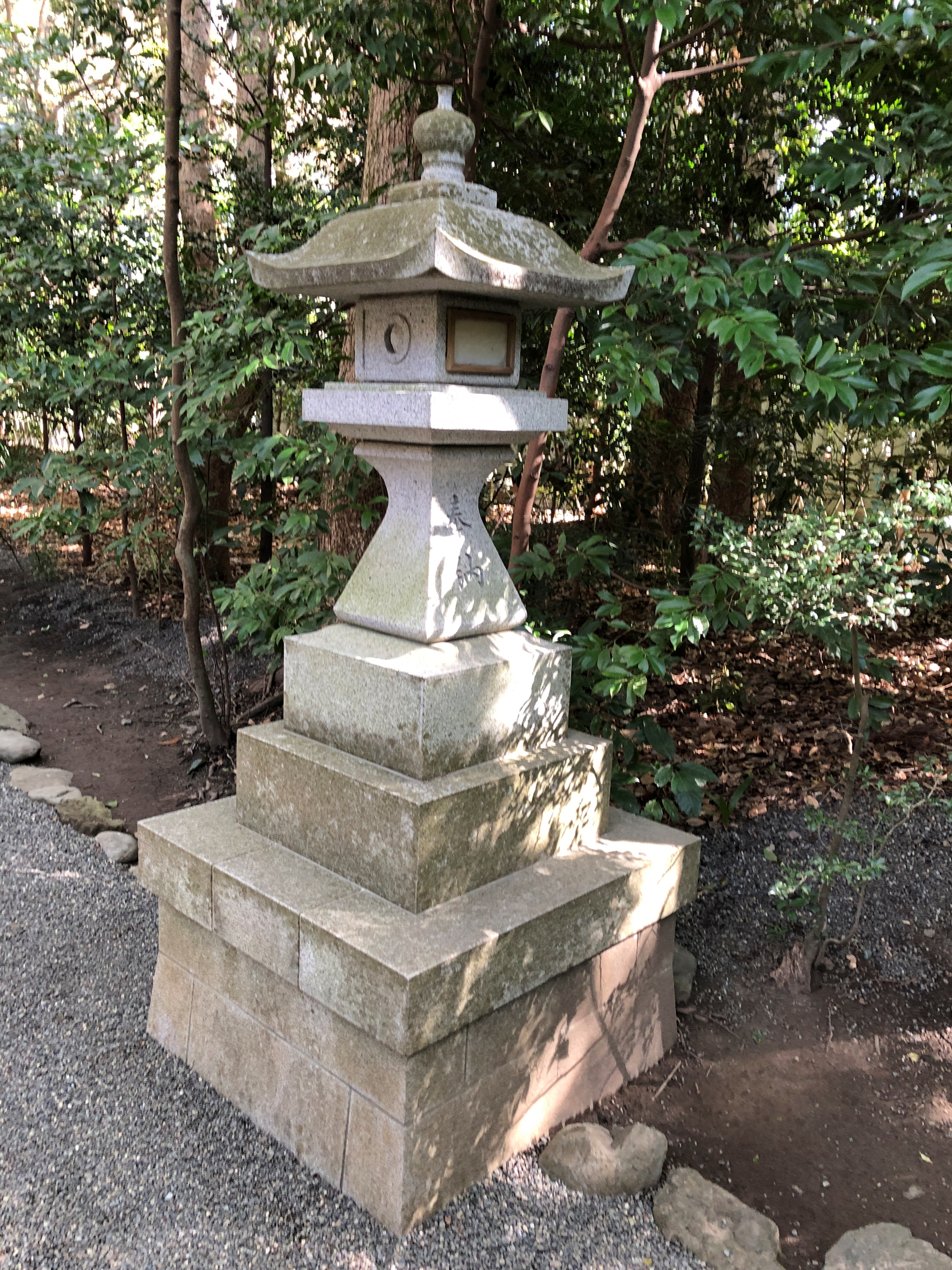
Or a stone lantern?
After we strolled the garden, we made our way to the Kamakura Daibutsu, the Big Buddha, a bronze of many tons that somehow makes you think about impermanence. As February days go, the one in Kamakura was top-notch.
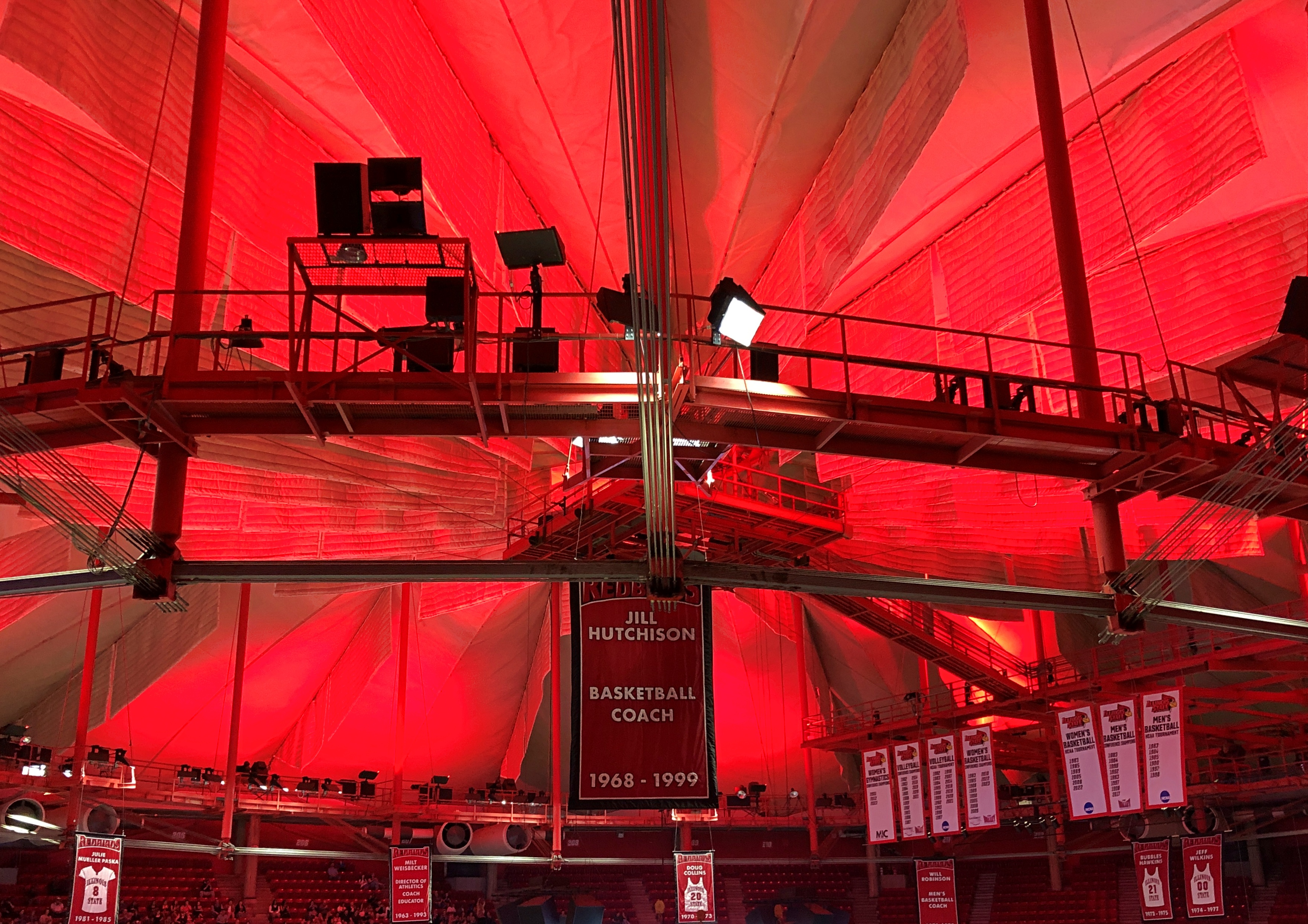
That’s the ceiling of CEFCU Arena in Normal. Once upon a time CEFCU was Caterpillar Employees Federal Credit Union. That company‘s HQwasn’t far away, also once upon a time. But in more recent years, the entity became an independent financial services firm, renamed Citizens Equity First Credit Union to keep the initialism consistent.
It didn’t occur to me until later that the ceiling is Redbird red.
Speaking of red.
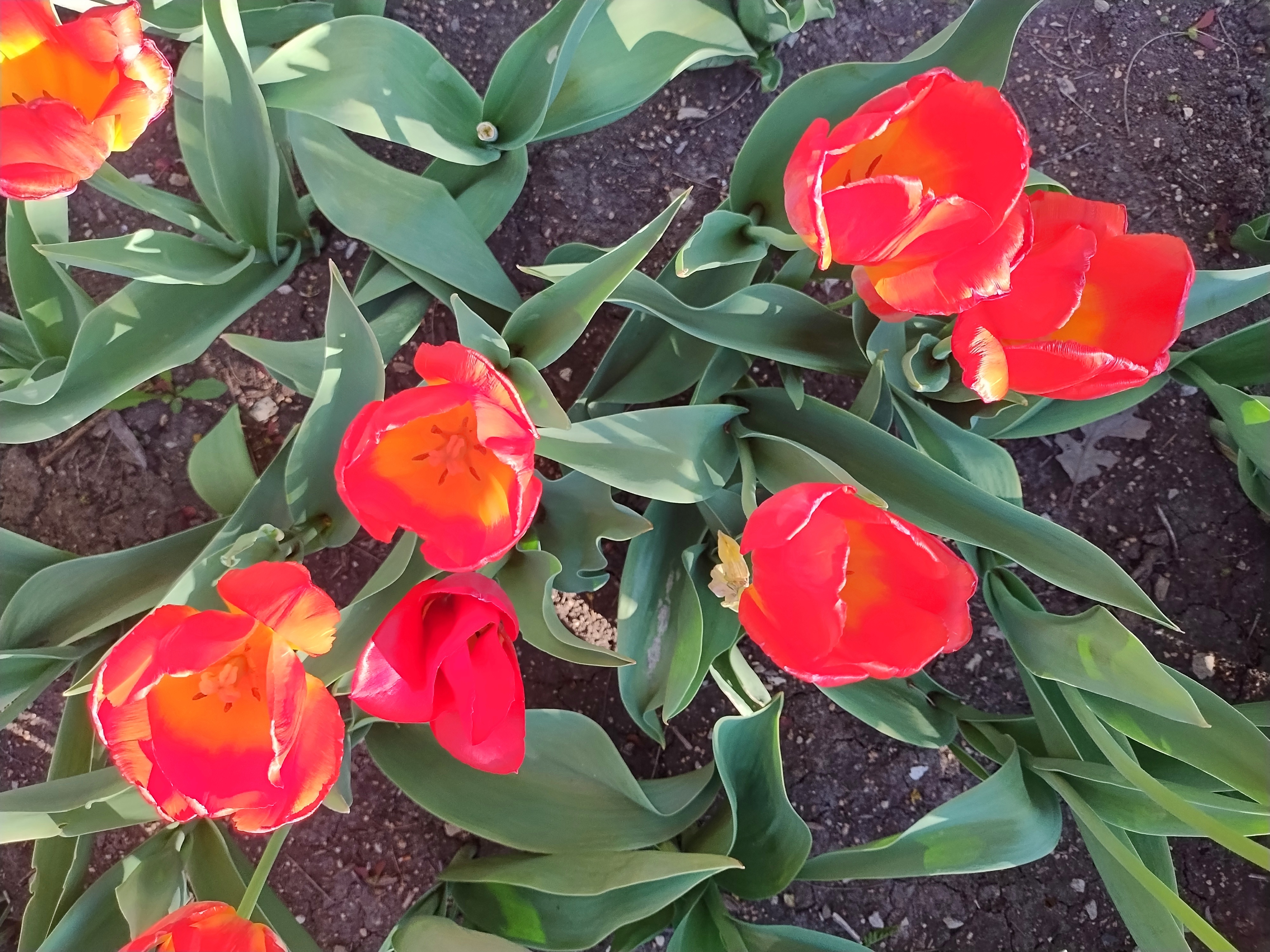
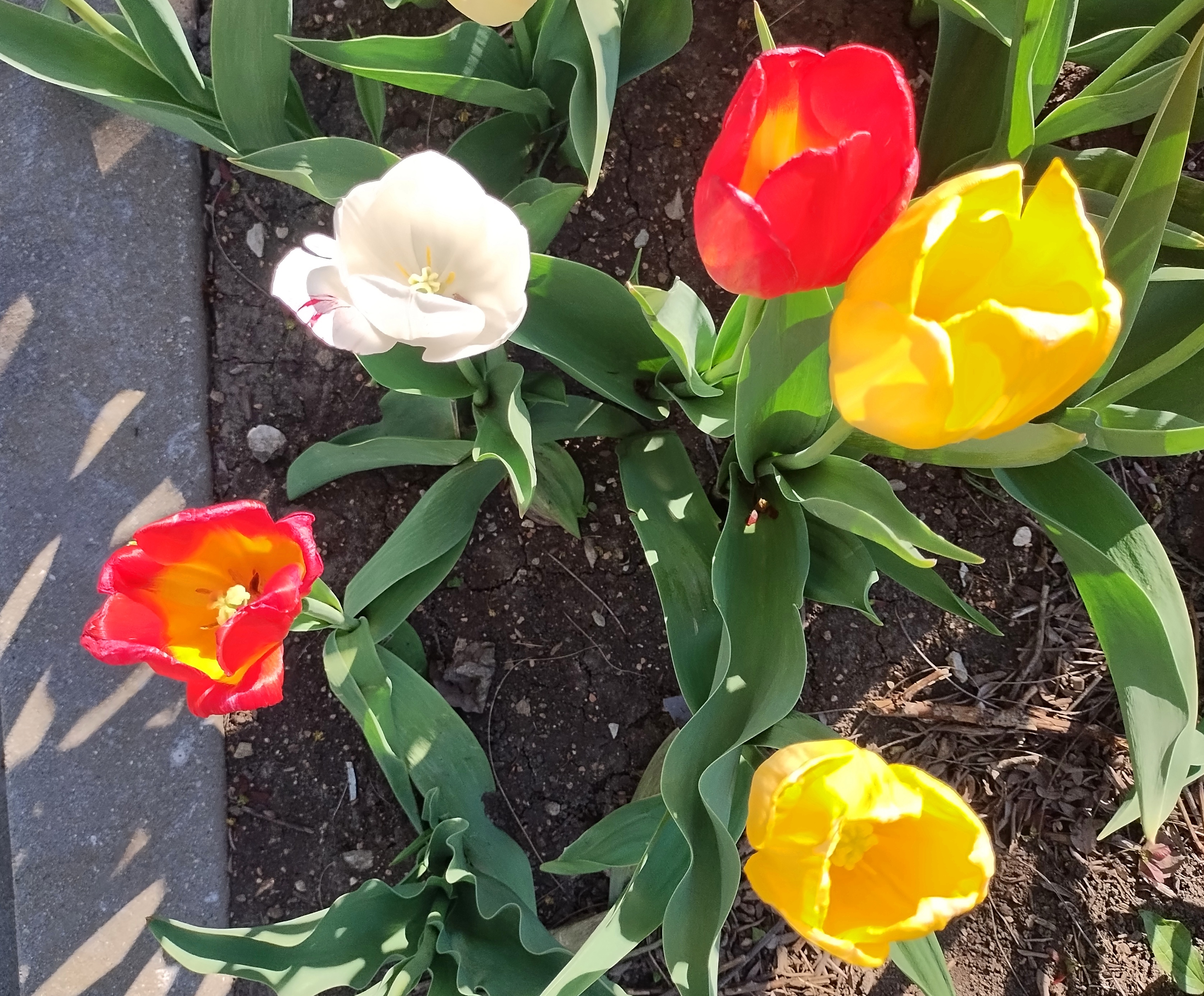
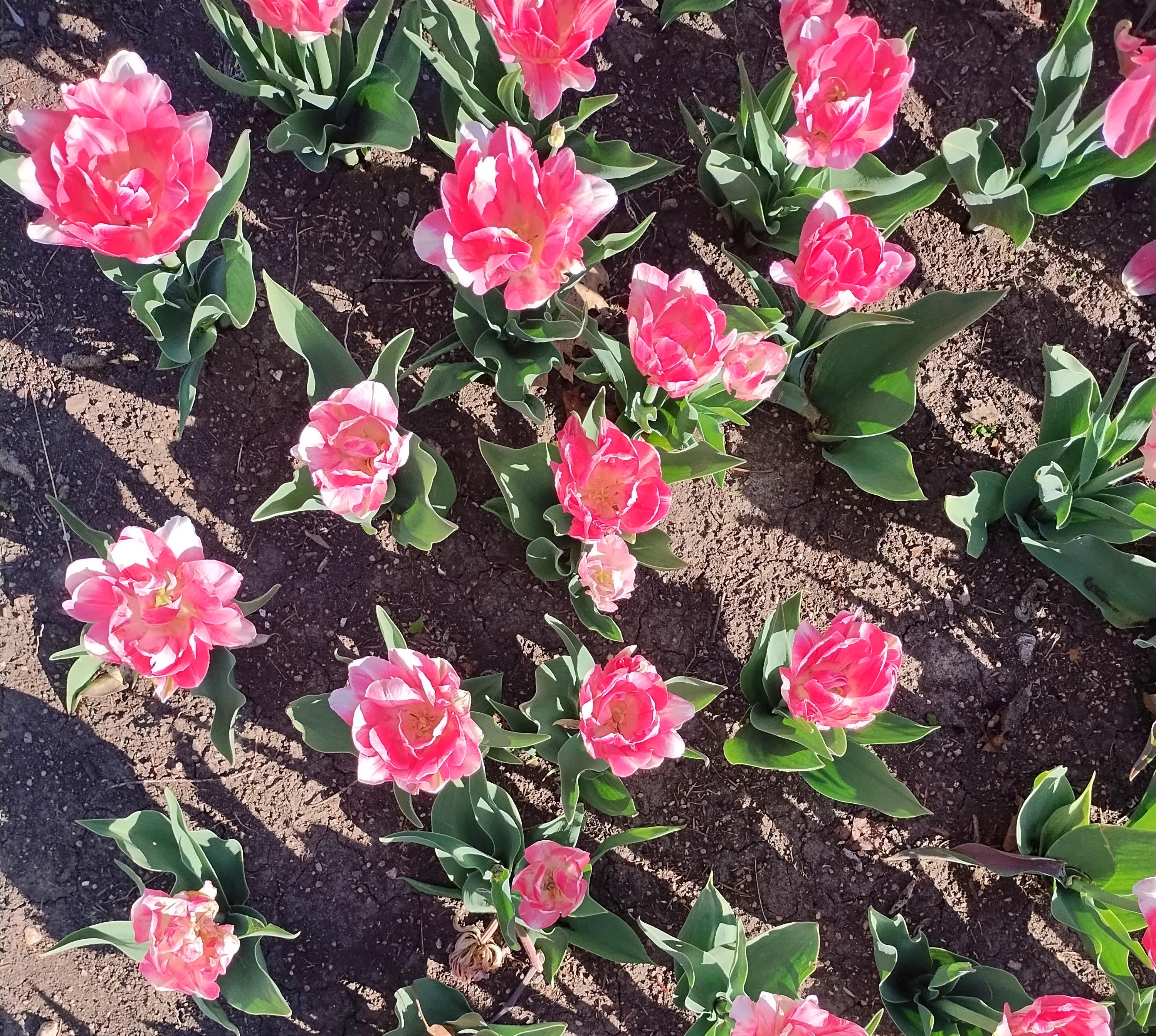
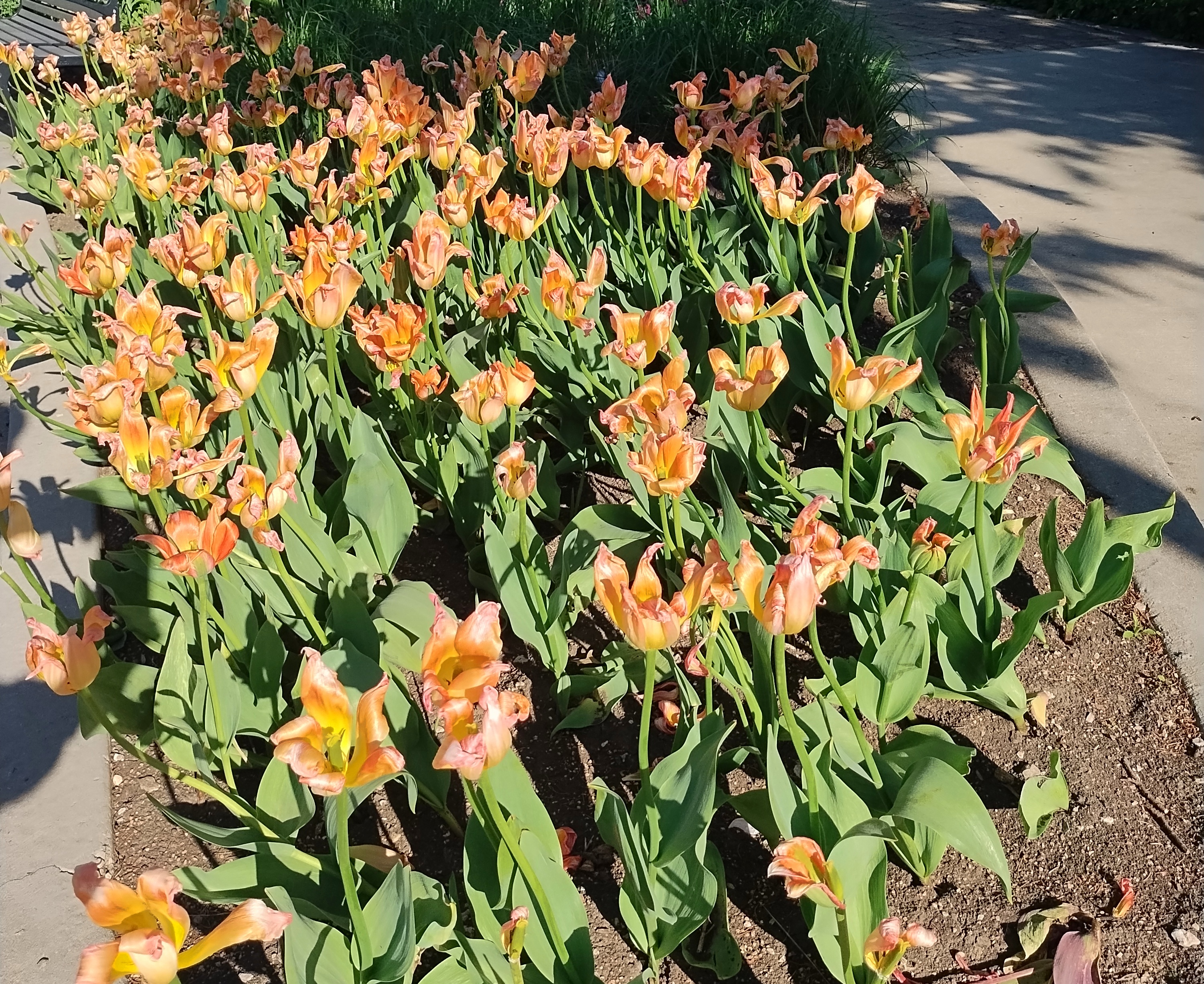
Not in Normal or anywhere else I’ve traveled lately, unless you count flowerbeds here in the northwest suburbs, about a mile and a half from home. Not just reds, either.
Nothing like spring flowers to remind you of favorite old springtime songs.
Back in the planning stages for our recent trip, which was last fall, Yuriko wasn’t entirely persuaded that we should visit India. Not at least for any reason I might think it was a good one: because we would already be on that side of the world (more or less) by visiting Japan; because we’d never gotten around to India, even in ’94; or because as a modern state built on a long series of storied civilizations, it would surely would be an interesting place to visit.
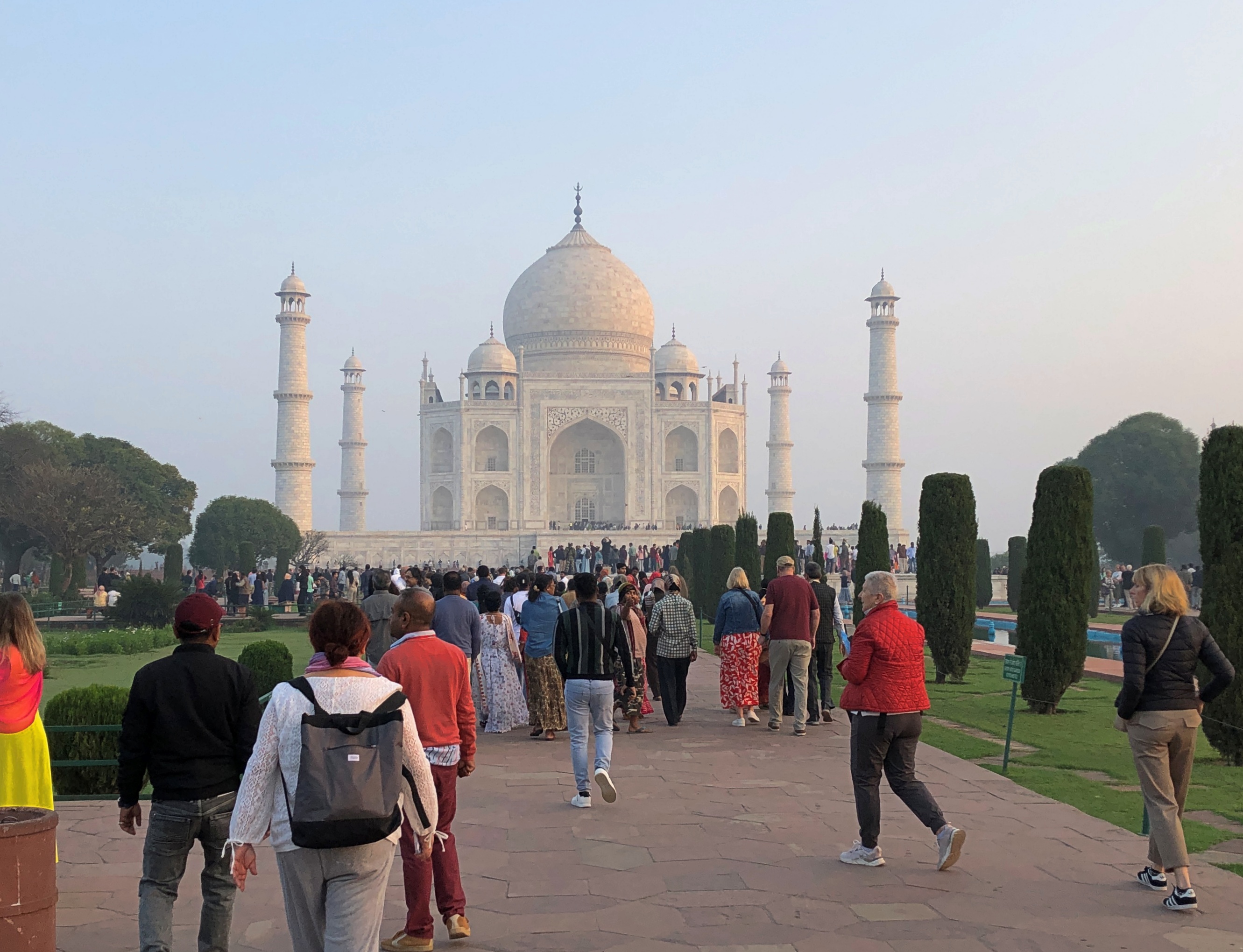
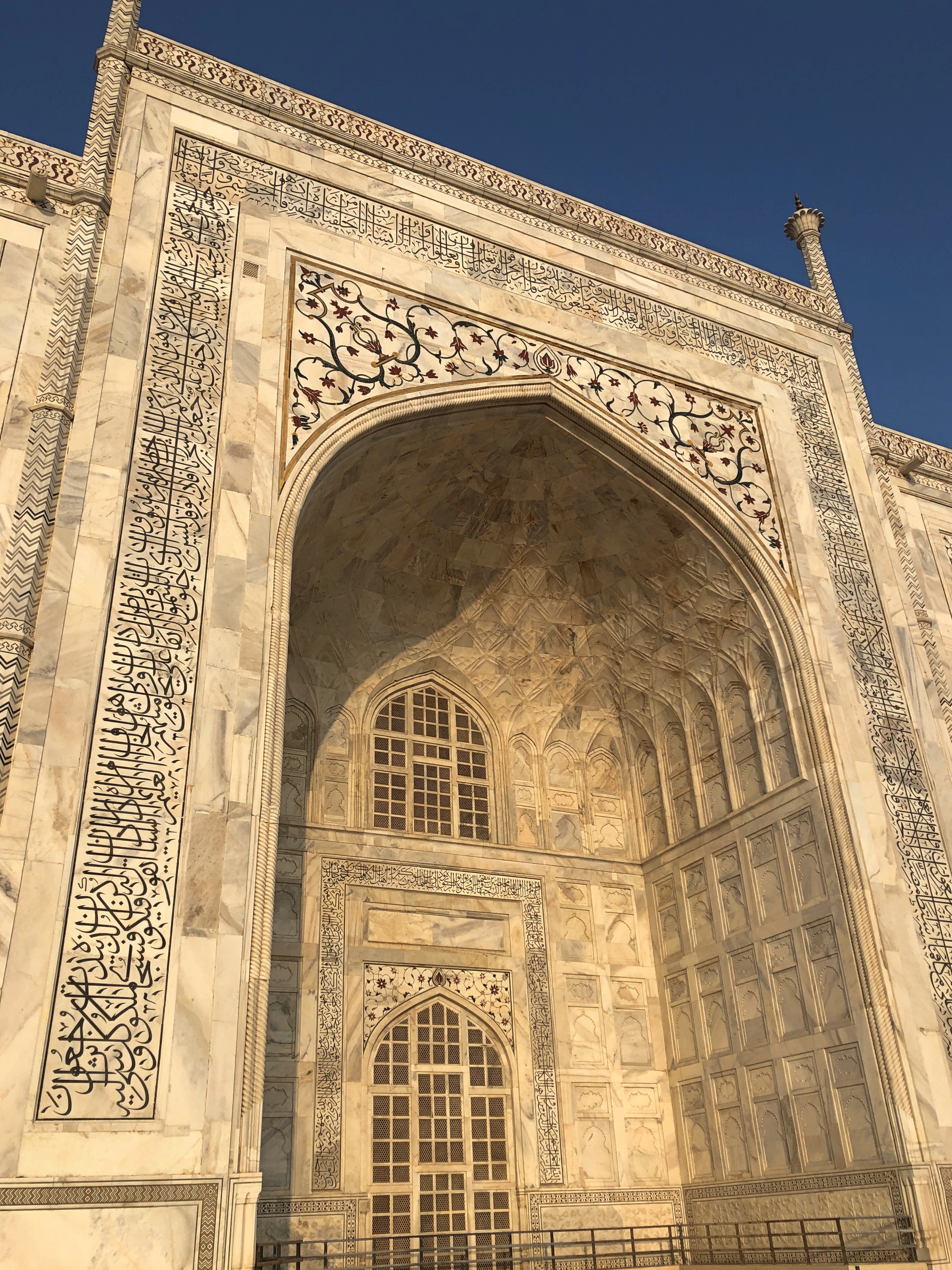
No matter, I had an ace in the hole. “Of course, we’ll be able to see the Taj Mahal,” I said. That did it.
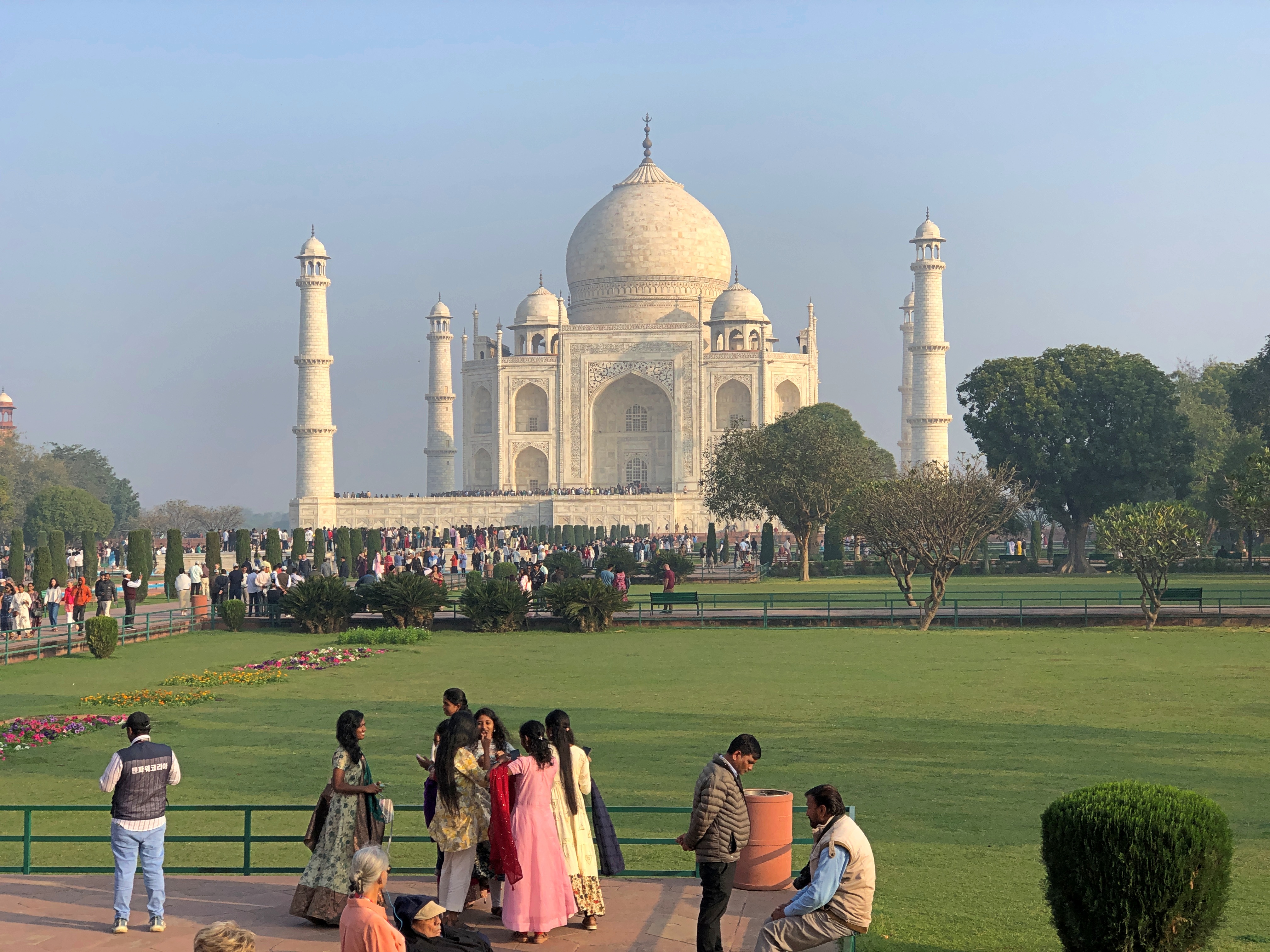
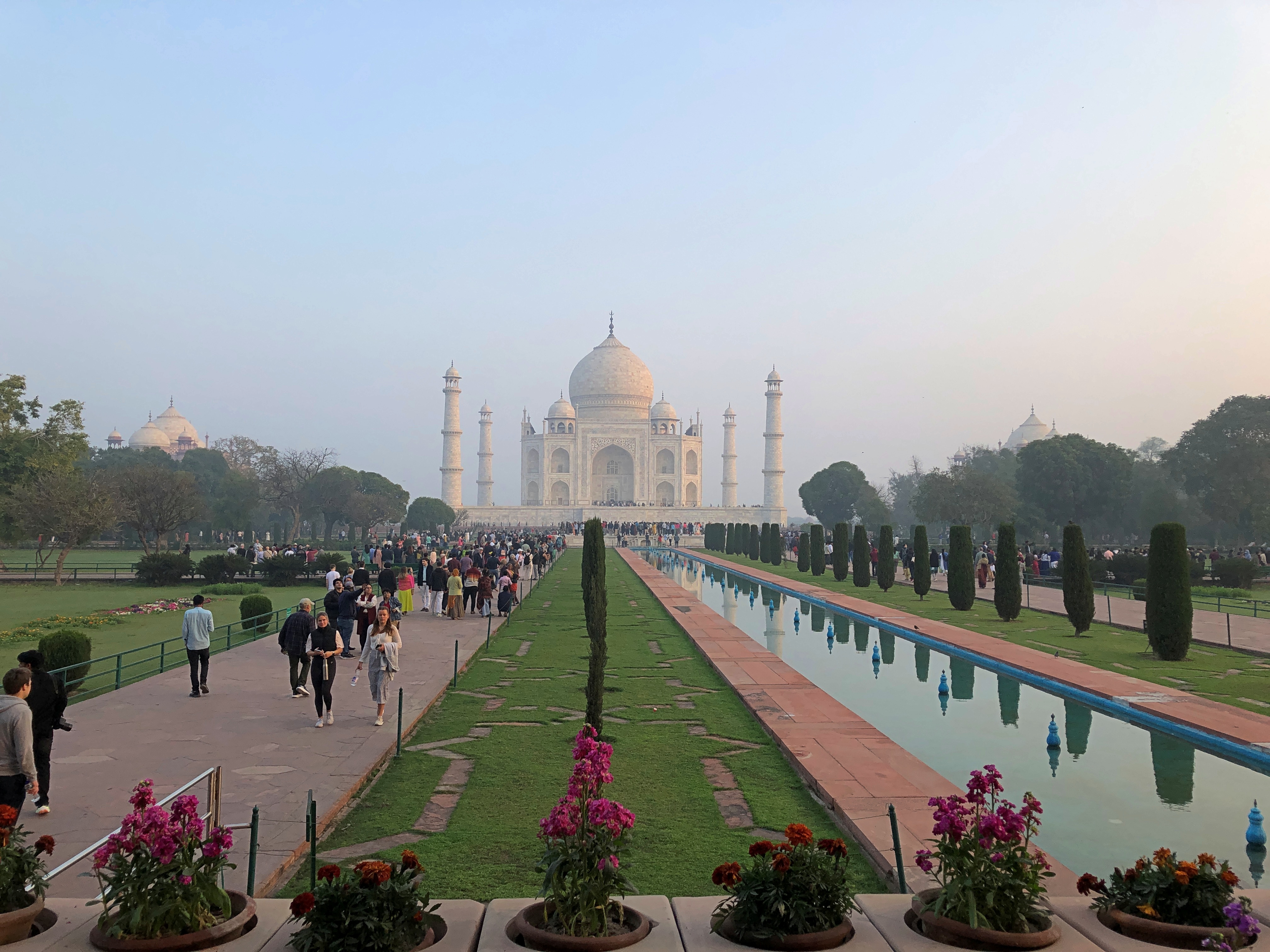
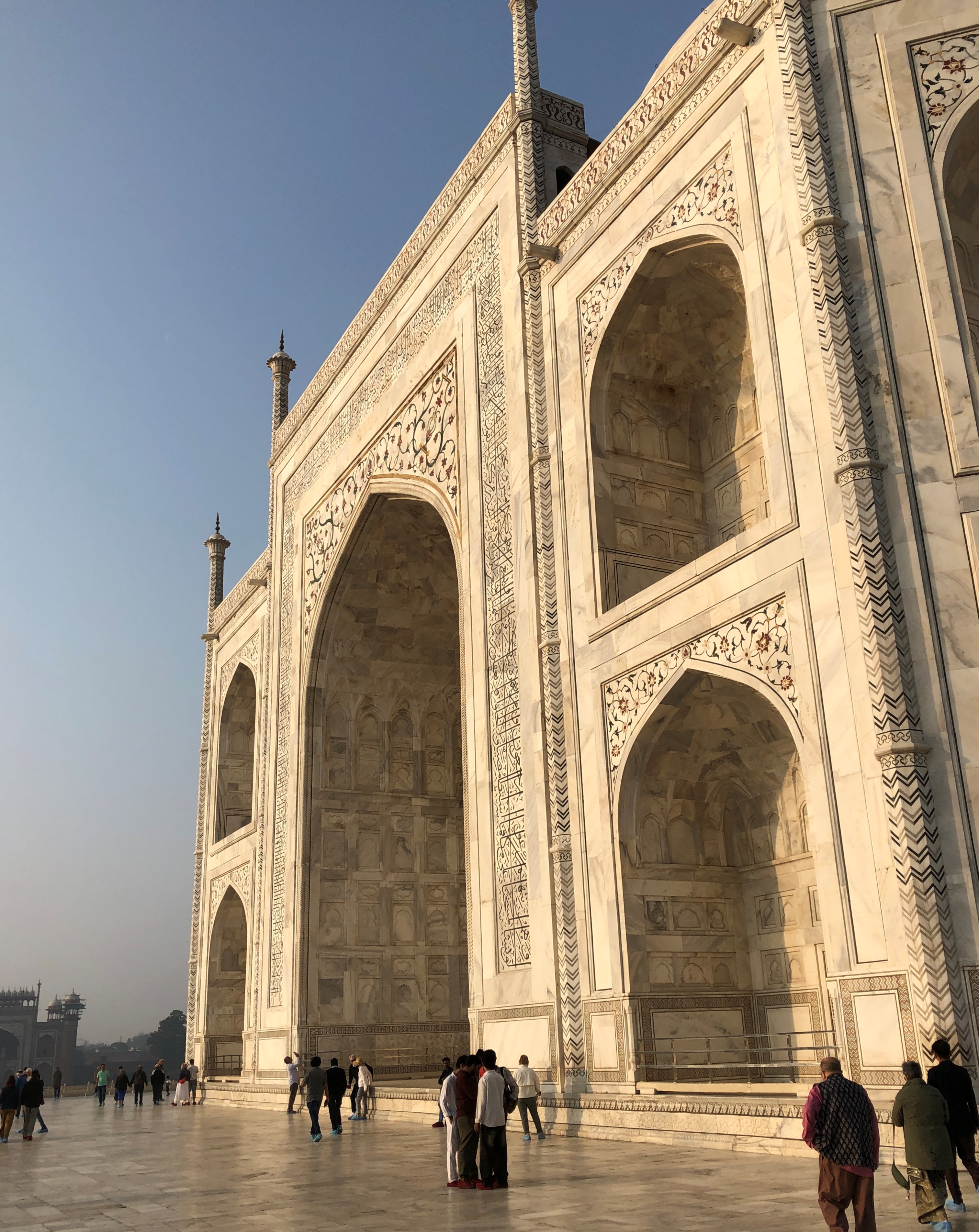
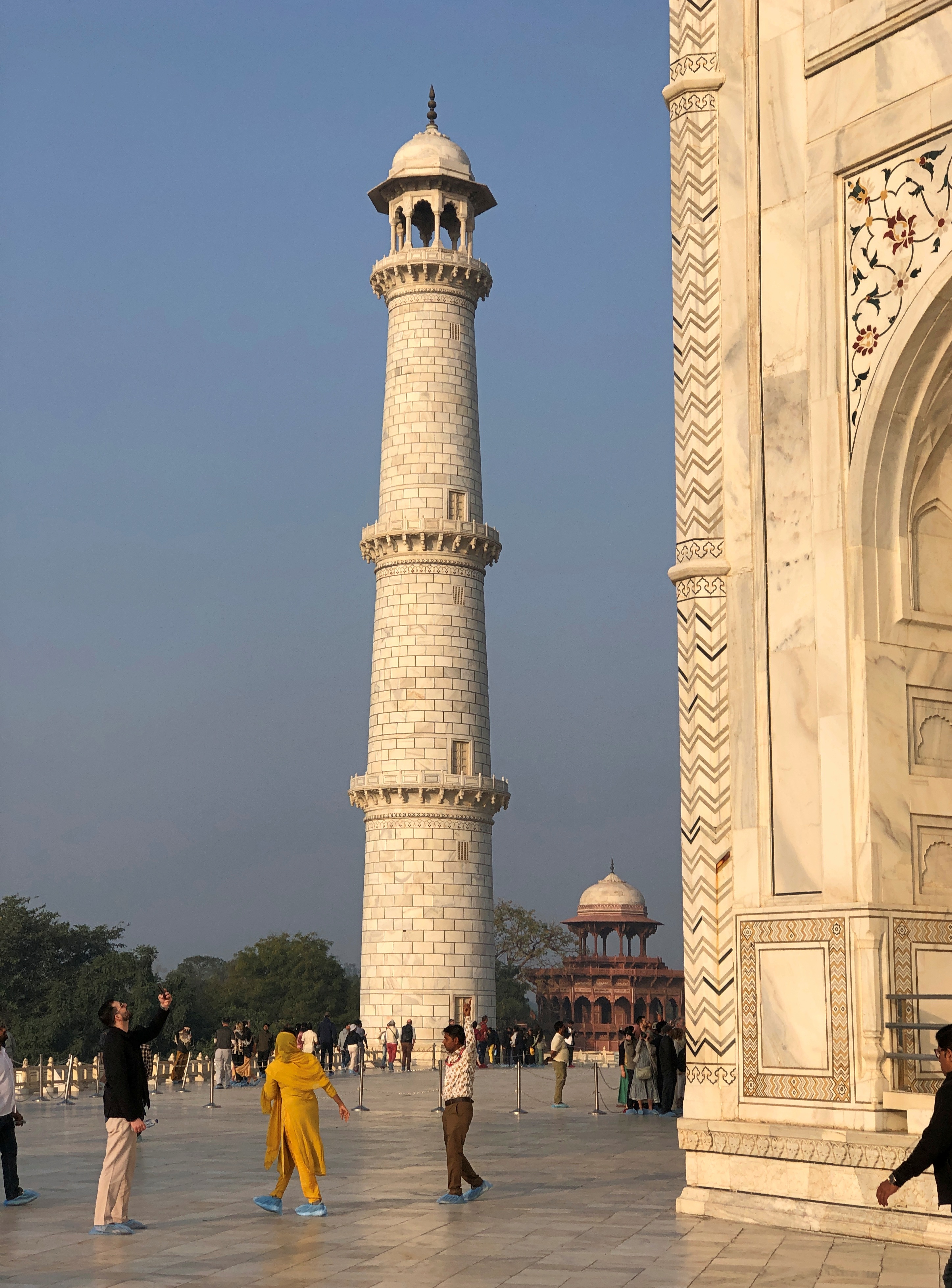
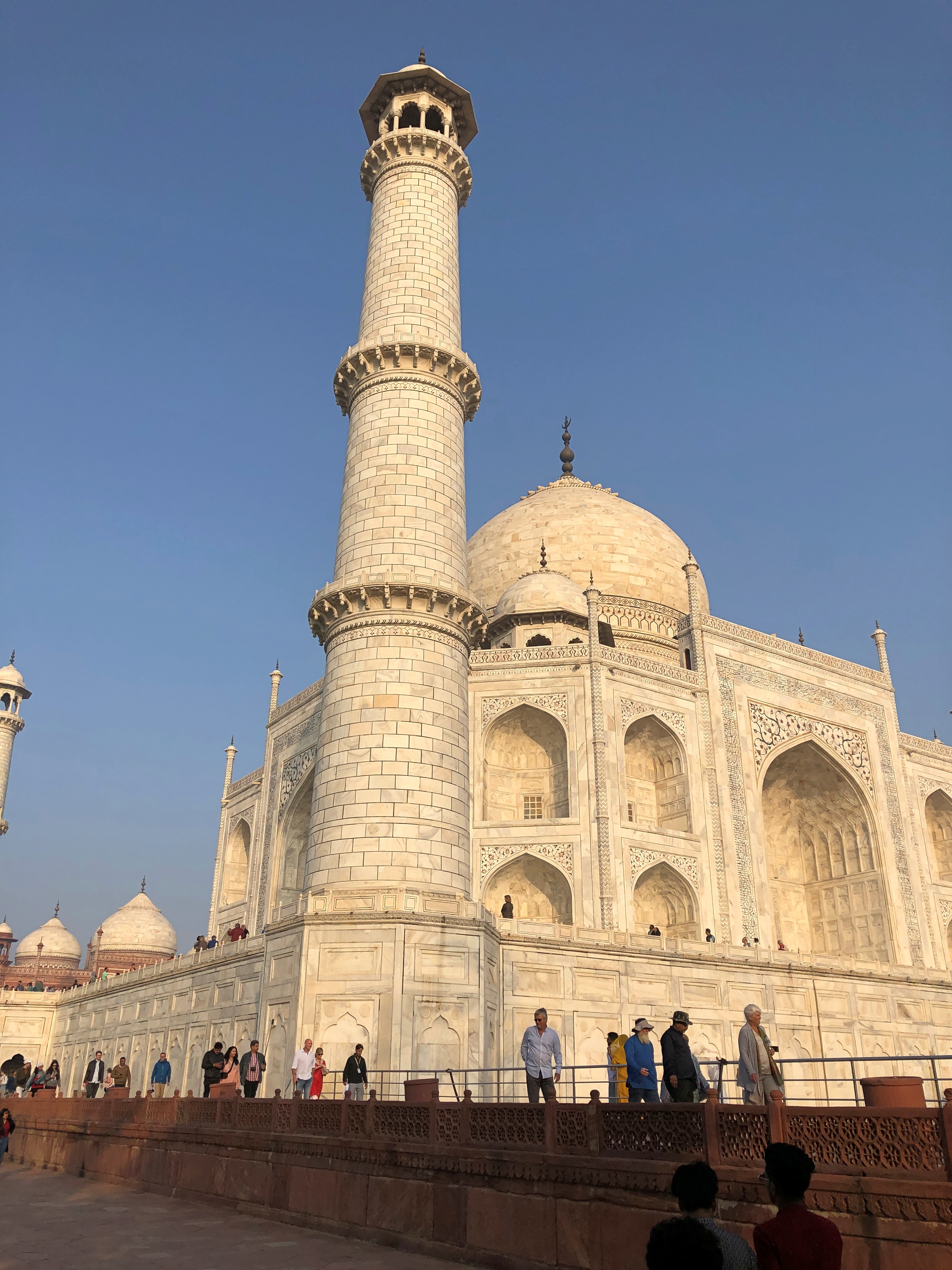
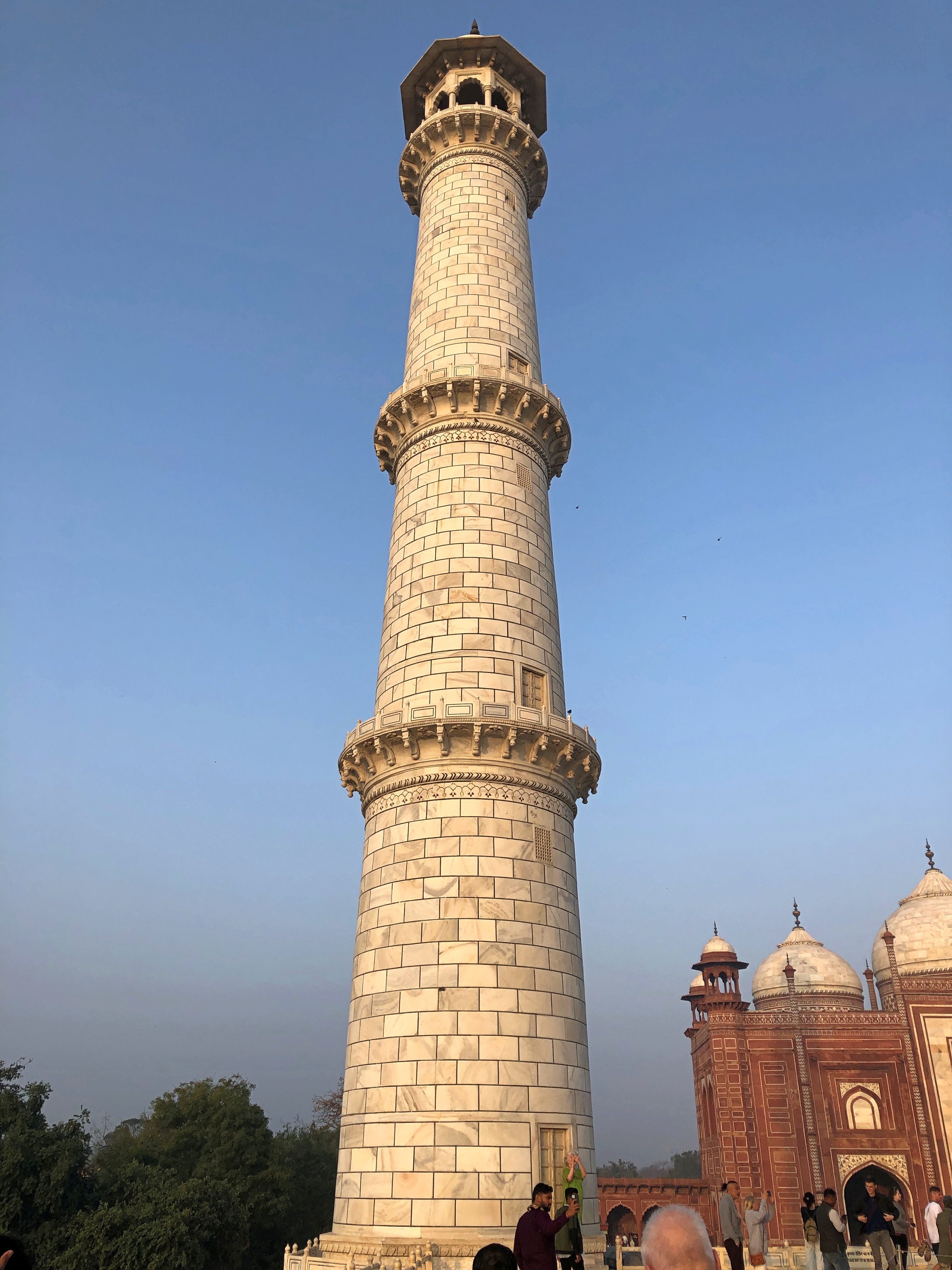
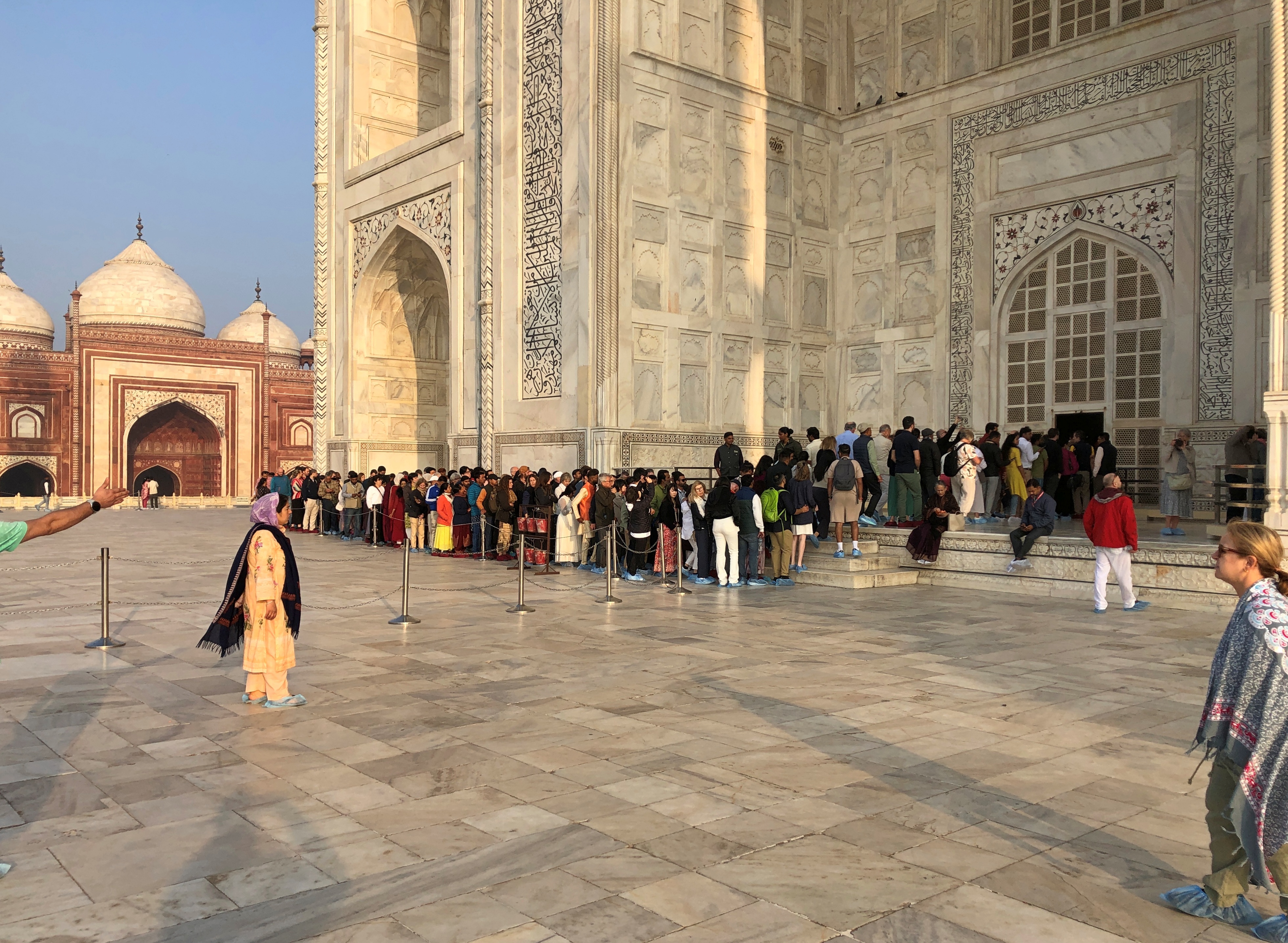
So, on February 22, we did.
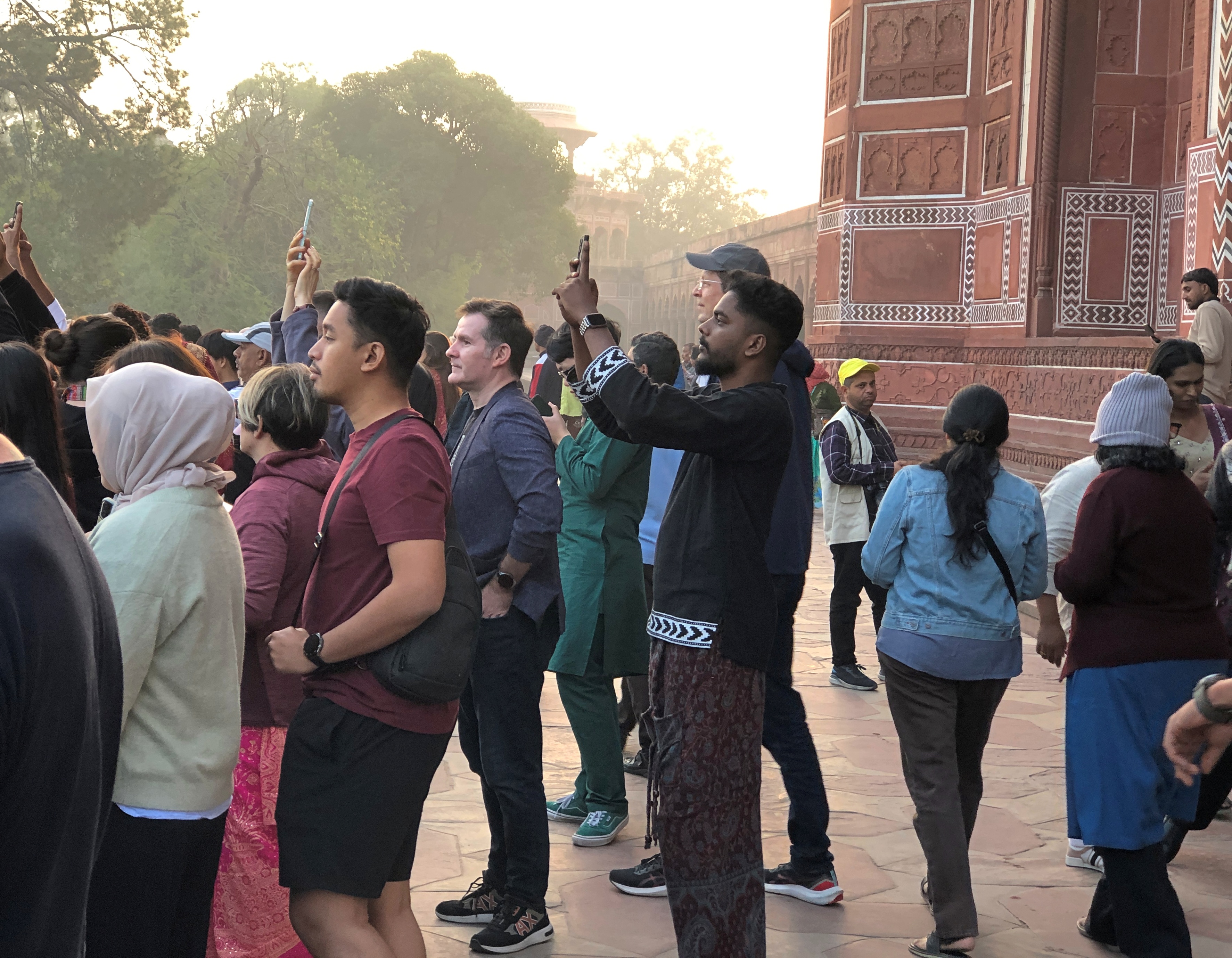
From a number of vantages.
I sent the first image to a number of friends via email, since I didn’t expect to find many postcards in India, or if I did, I wouldn’t want to deal with a post office to mail them, especially considering that delivery would be uncertain anyway. The email message:
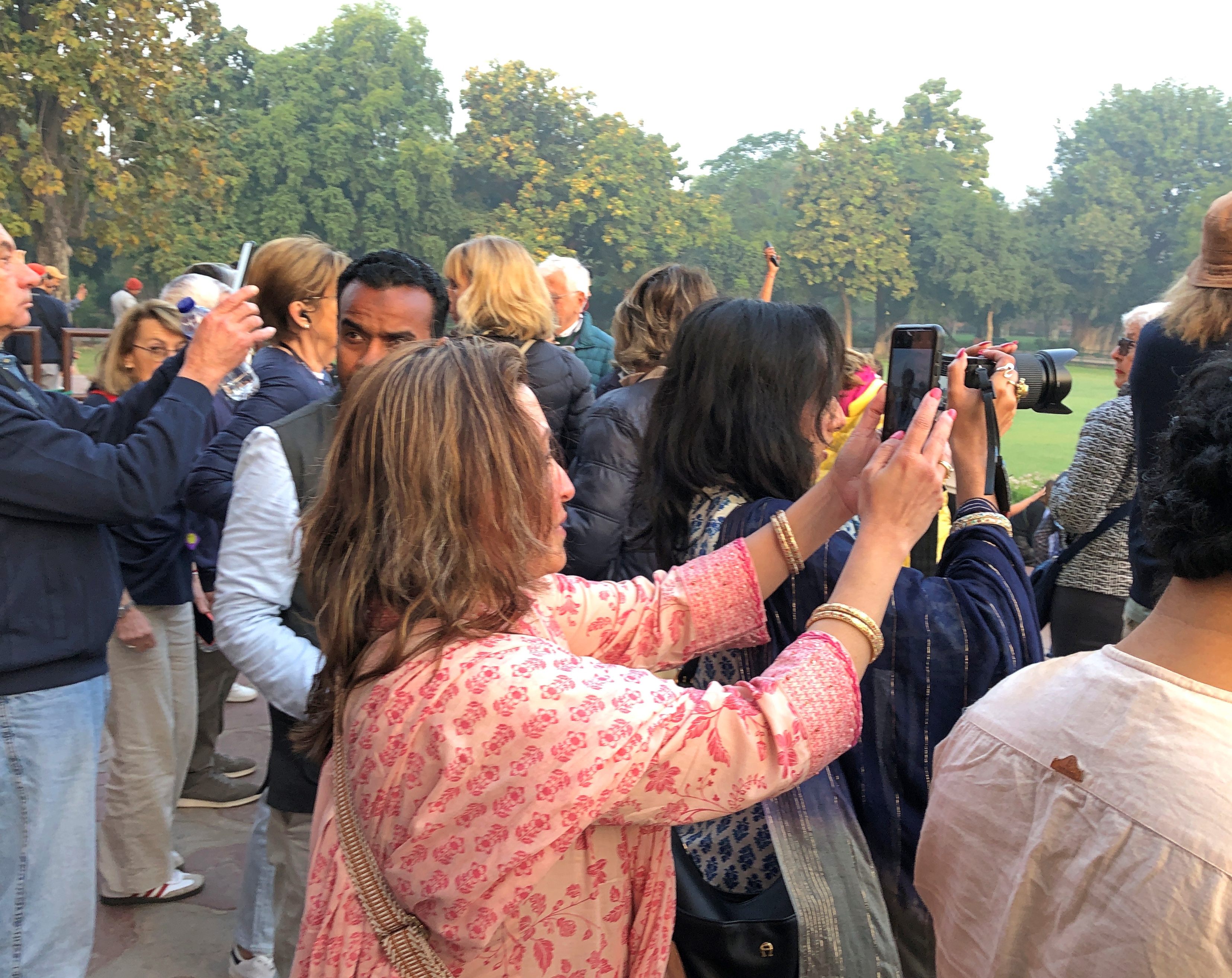
A physical postcard from India is unlikely, but here’s an image you aren’t likely to see in a card or Instagram. You are likely so see it, however, if you stand in front of the structure, as we did… Entirely worth the effort to get here. I didn’t mind the crowds that much — they are a happy crowd, after all, and you’re one of them.
Even in a crowd, assuming they aren’t jostling you, you can pause, stare and consider where you are. The Taj Mahal. A place only ever seen in pictures before, considered one of the top works of human beings. In person, your eyes are apt to agree.
The story of the Taj Mahal is too well known to relate here, as are descriptions of its beauty and architectural transcendence. But I will say this: What would the Indian tourism industry do if the Mughals hadn’t been so keen to build monumental structures? The Taj Mahal is just the crown jewel of a large collection that has survived to our time.
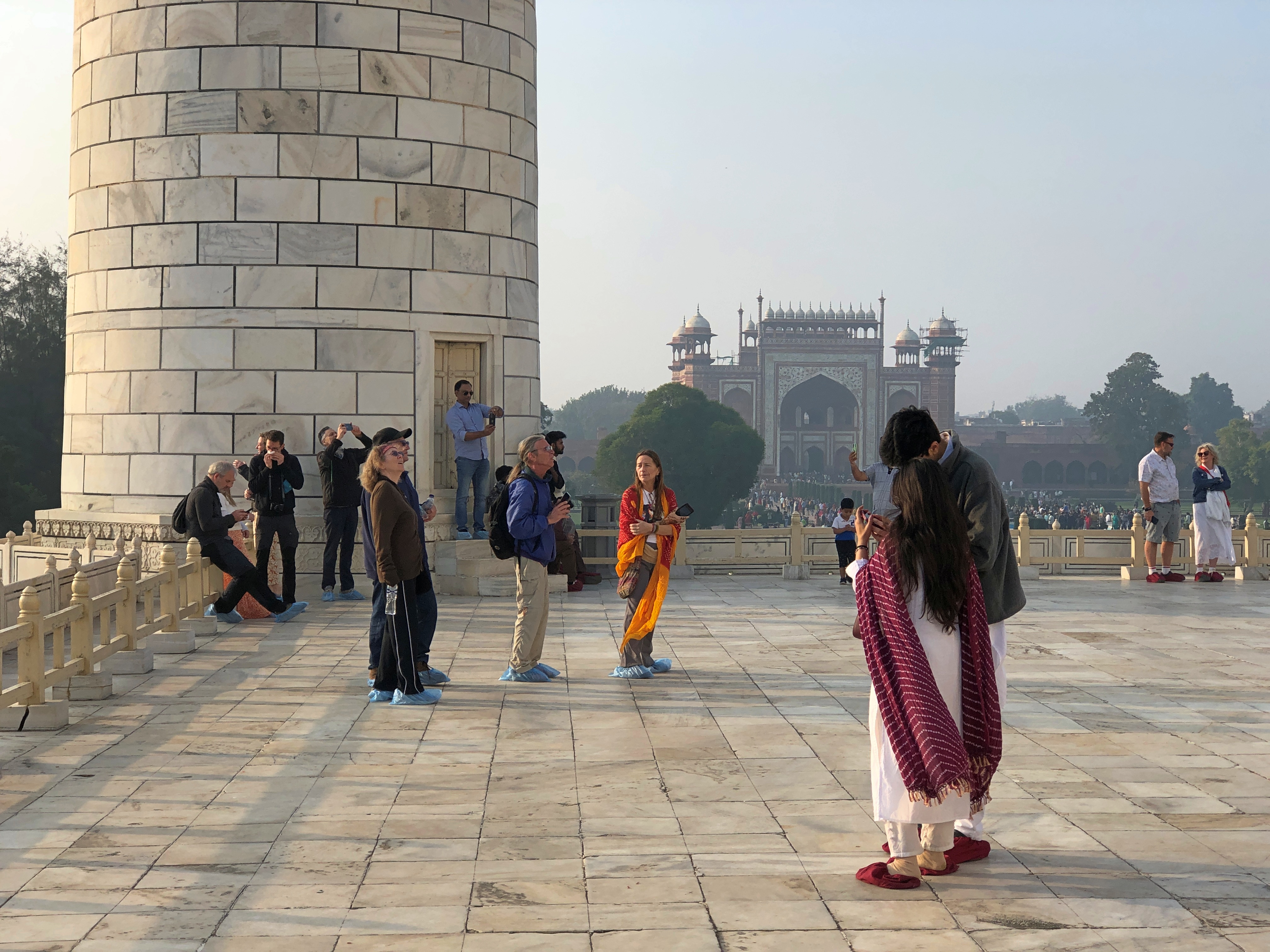
One can visit the terrace.
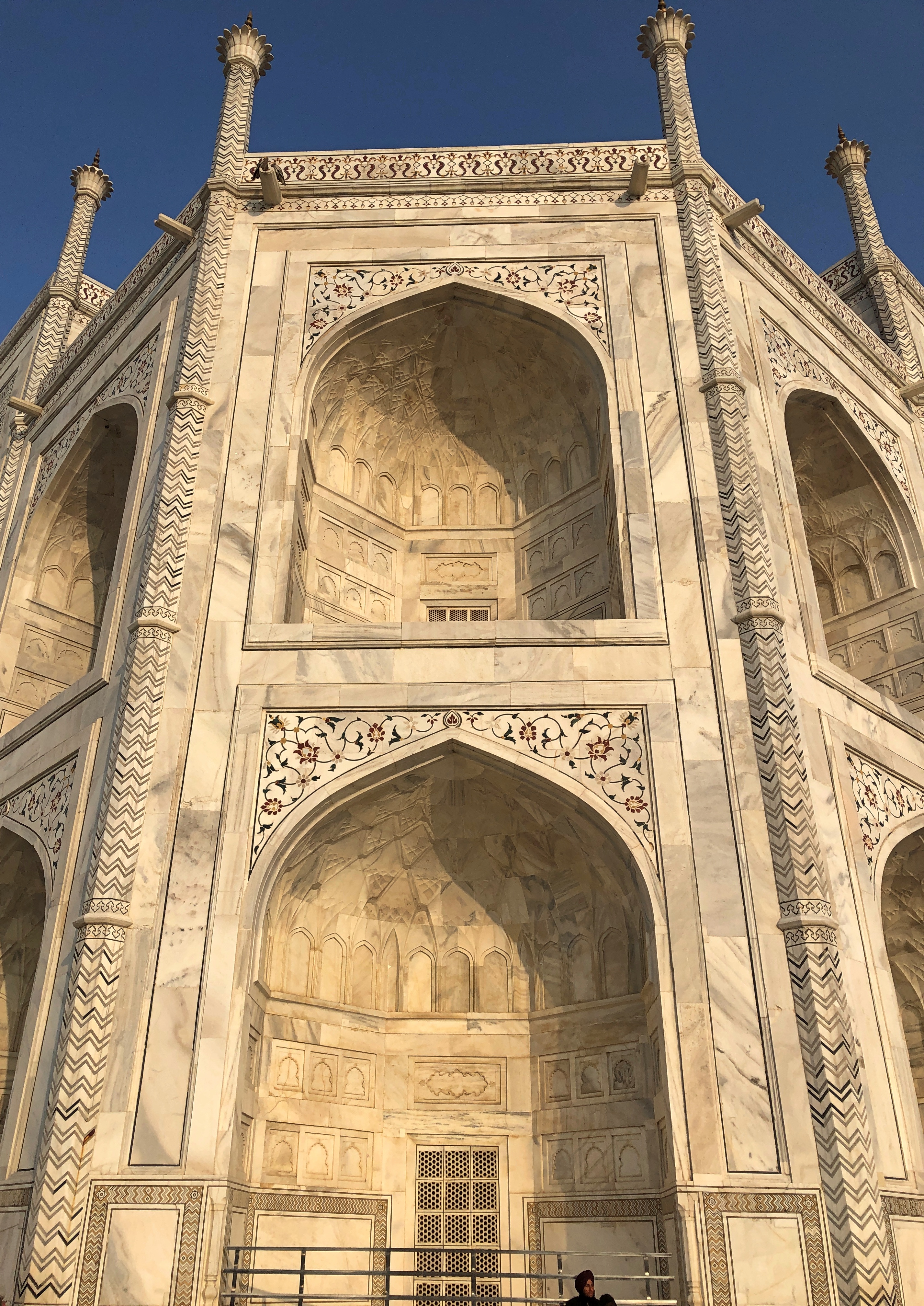
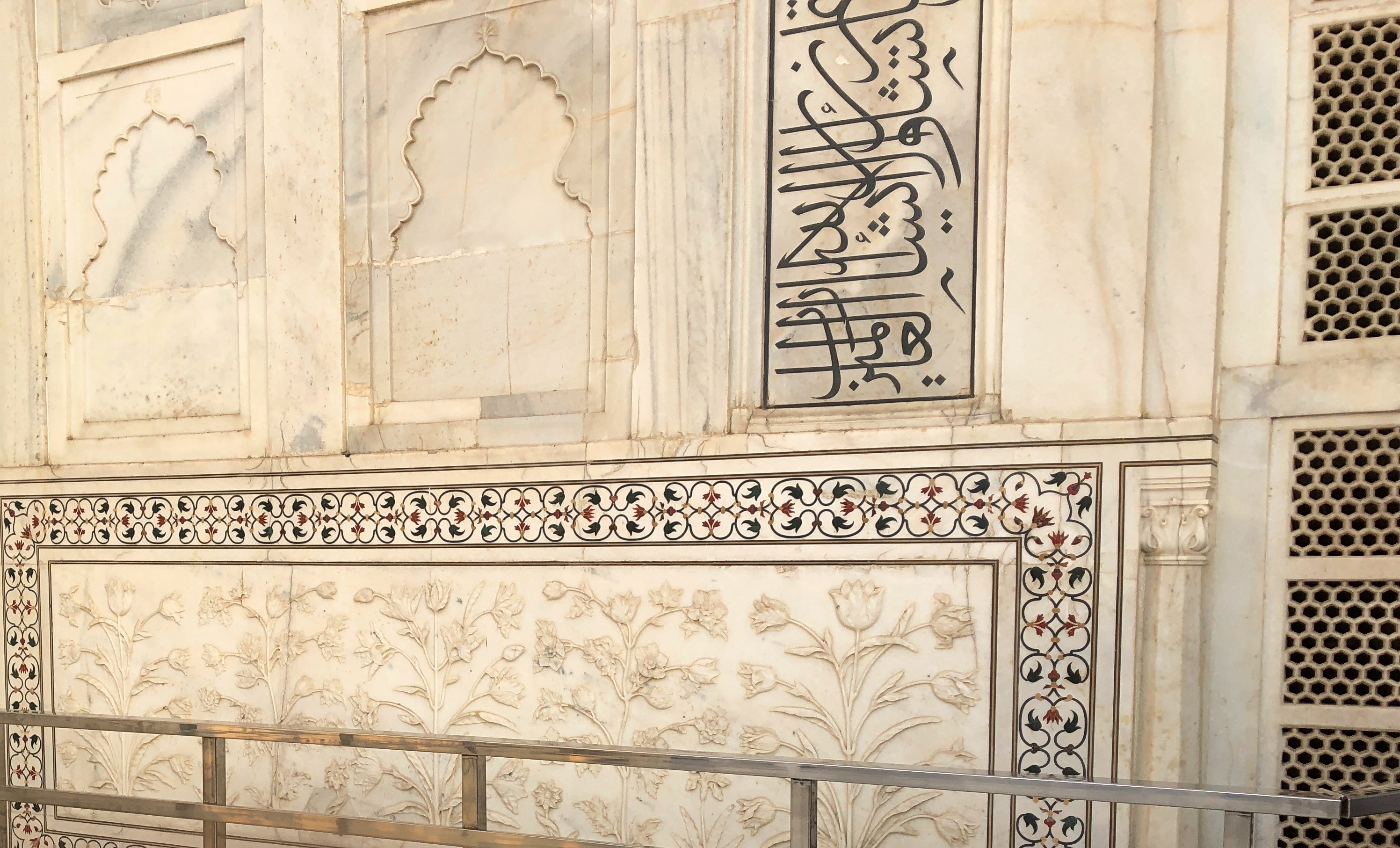
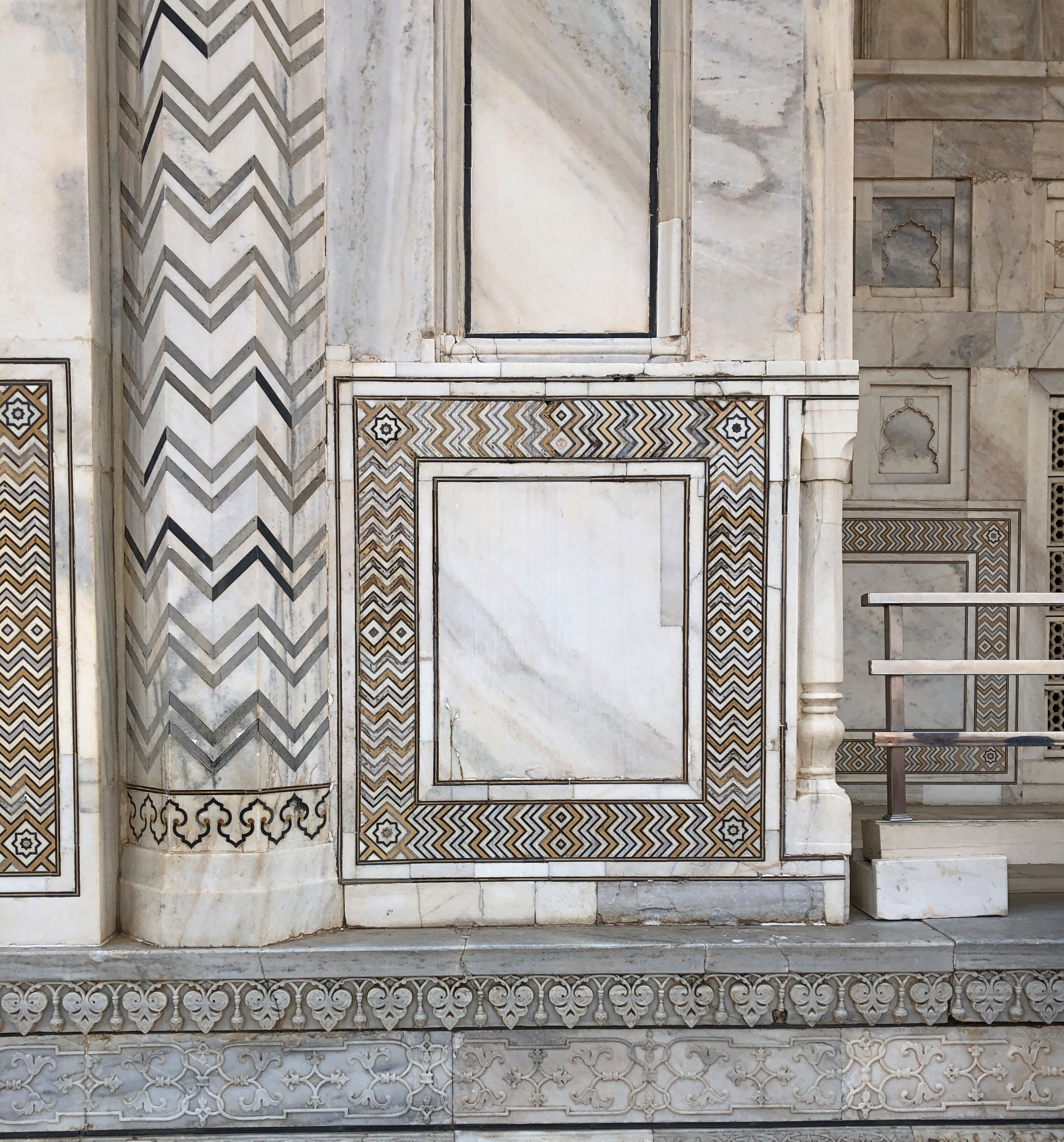
For closeups of the intricate marble work.
It is believed that an eventual total of 20,000+ masons, stone-cutters, inlayers, carvers, painters, calligraphers, dome builders and other artisans from throughout the realm, and probably beyond, workedmore than two decades on the mausoleum and outbuildings.
Inlay, not painting. Twenty-eight kinds of stones, I’ve read.
Imagine the graceful lines of the Taj Mahal main dome without the companion minarets. That would be like Saturn without its rings.
You can also go inside the chamber where ornate slabs sit above the internment sites of the empress Mumtaz Mahal, and, almost as an afterthought, the emperor Shah Jahan, who ordered the Taj Mahal built in the 17th century. We joined the line.
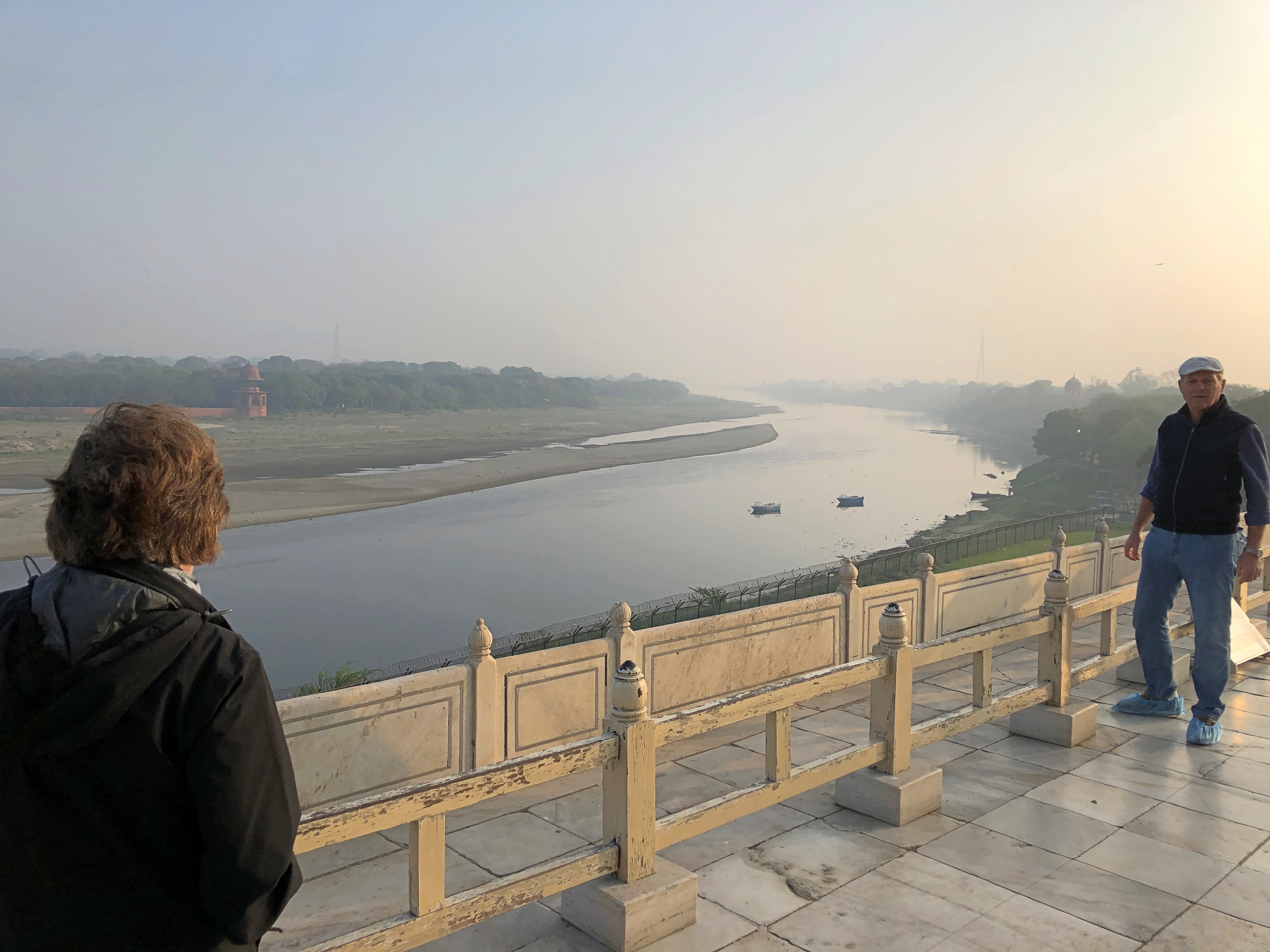
The mausoleum faces away from the river, but it is back there. The view from the mausoleum of the wide Yamuna River, tributary of the Ganges.
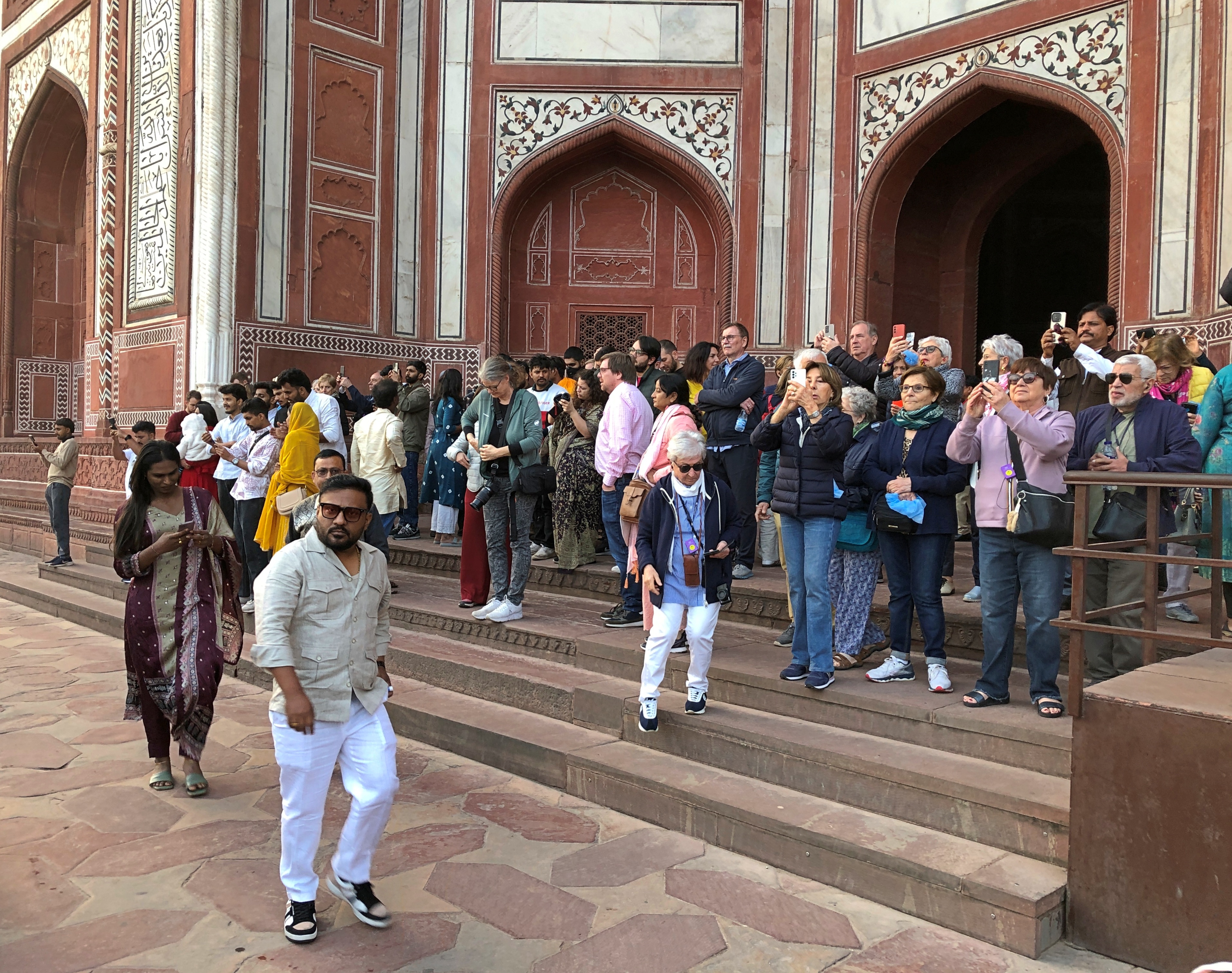
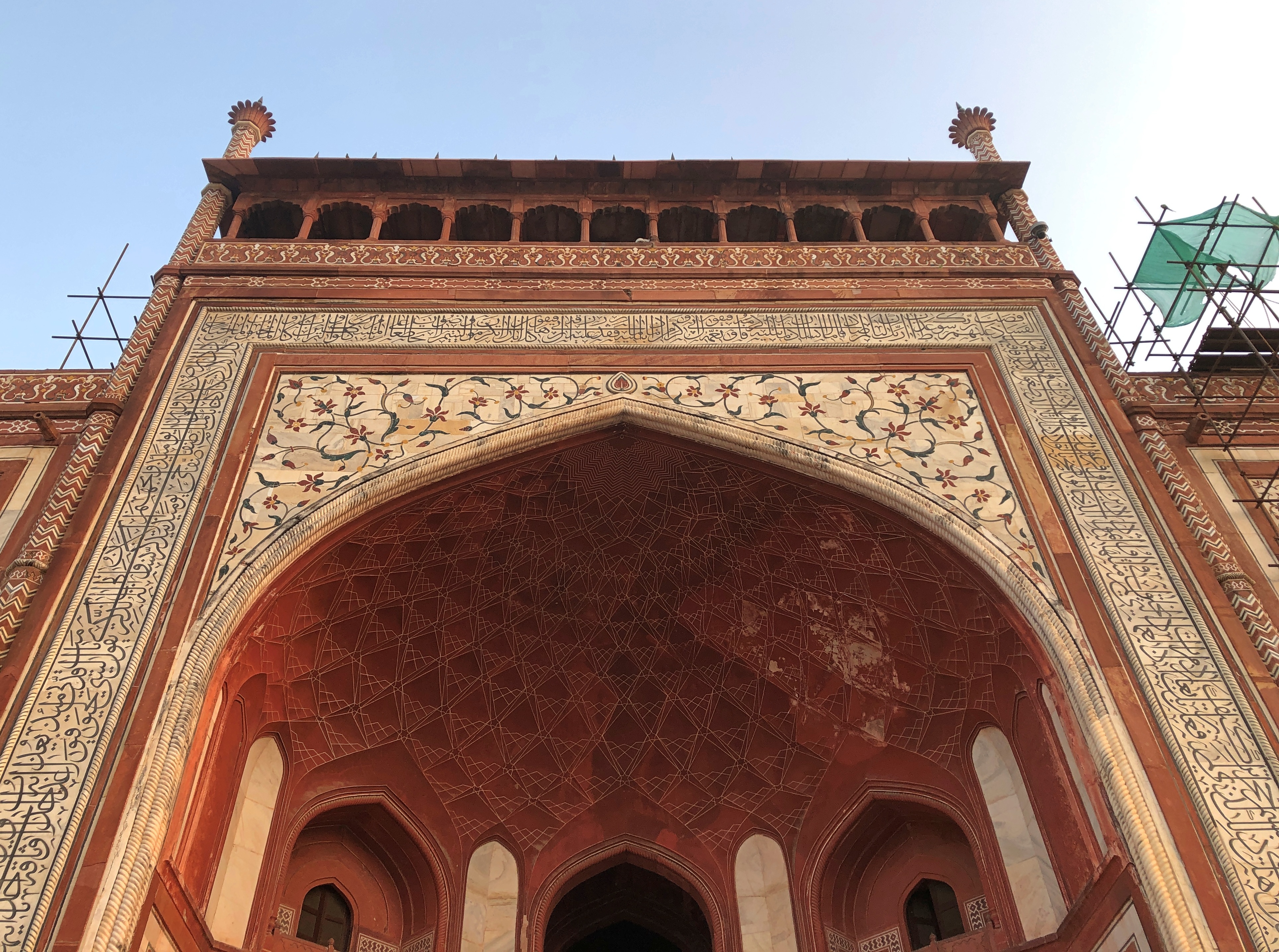
A structure that doesn’t get enough love. The main gate of the grounds, through which you pass to see the mausoleum. It is outshone by the mausoleum, but wow.
Since we went to Indiana just before Christmas, it only seemed logical (to me) to go to Wisconsin just after Christmas. Due to considerations I don’t need to detail, we chose to make it a day trip. Milwaukee is convenient that way.
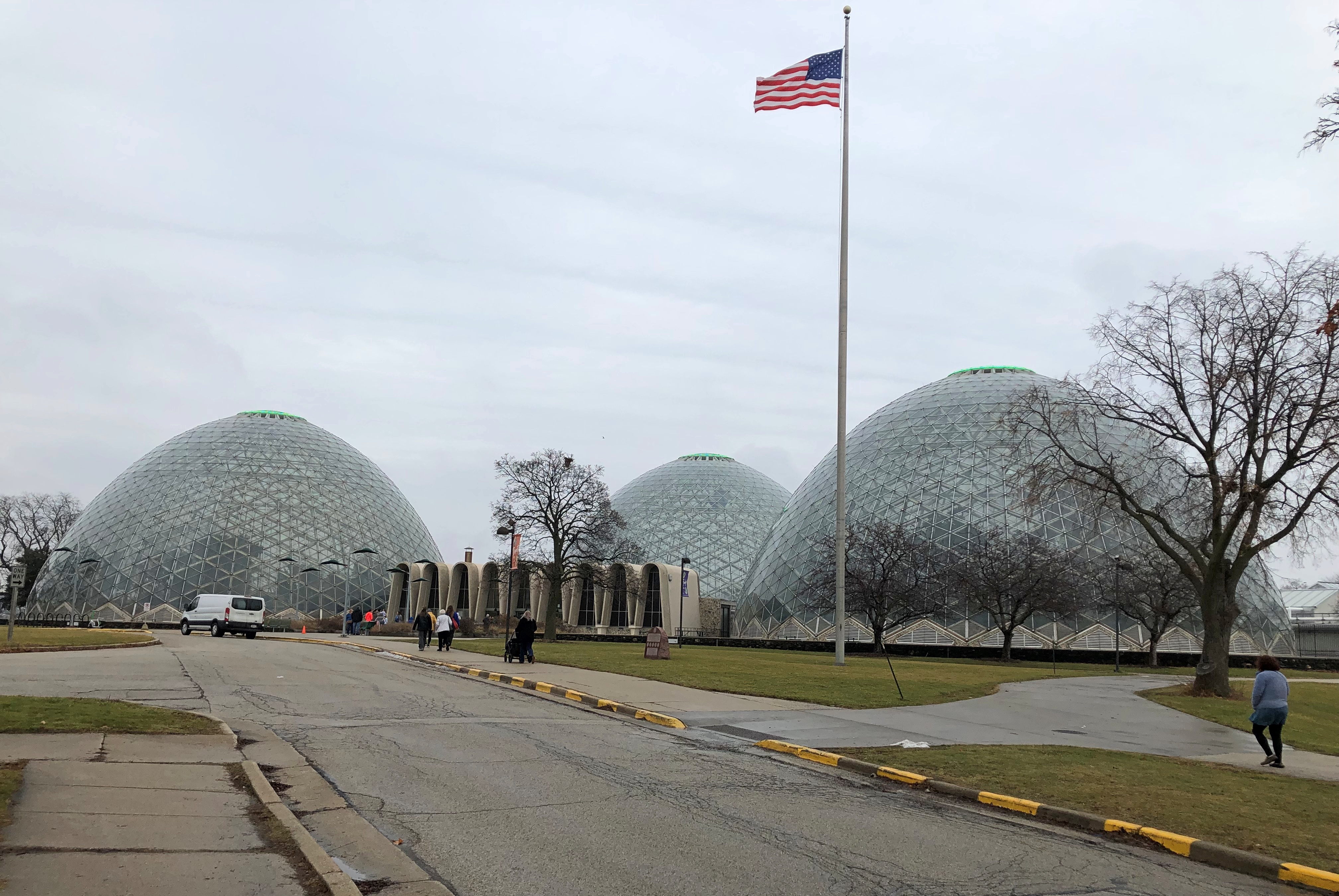
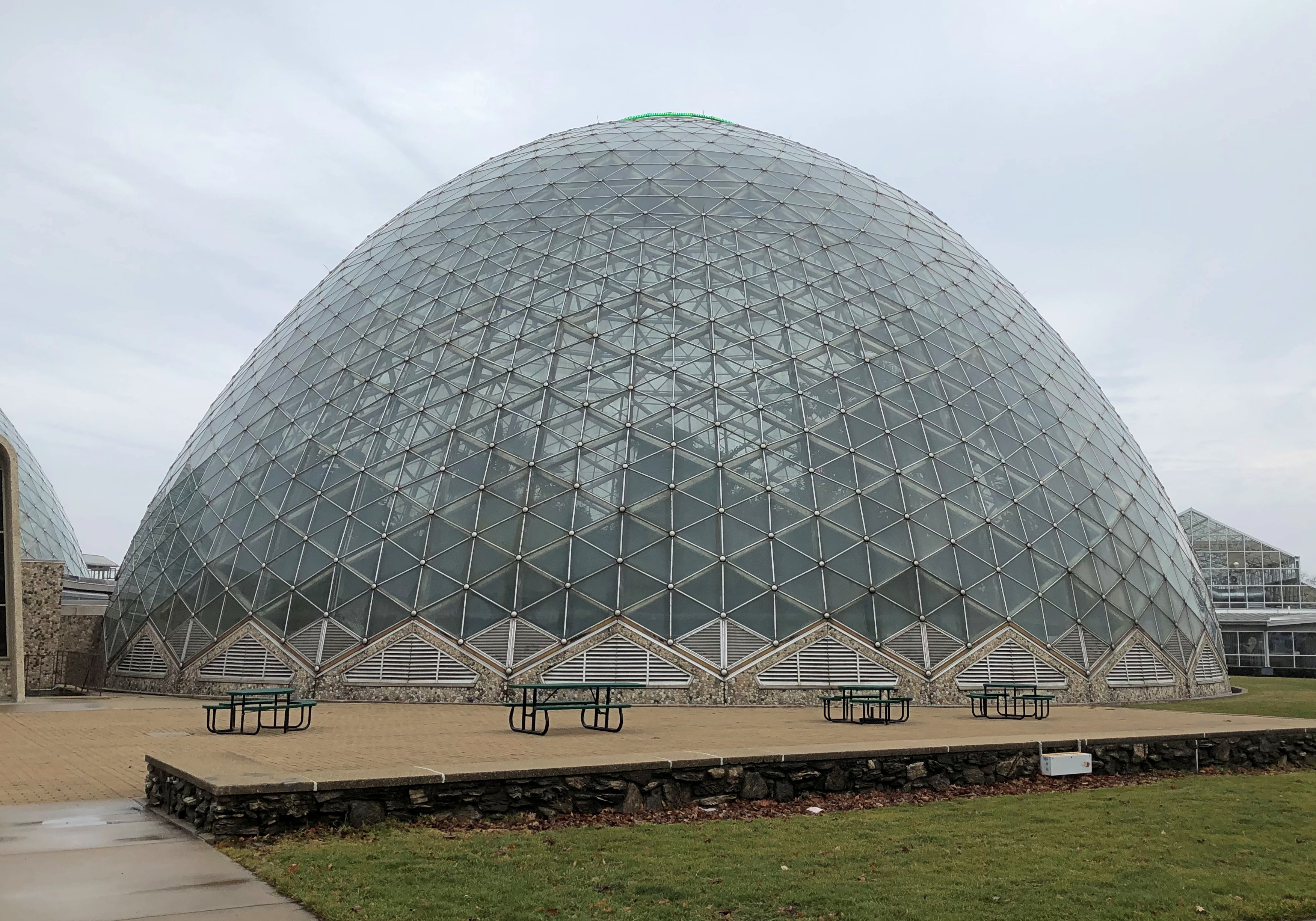
We arrived at the Mitchell Park Domes late in the misty drizzly but not freezing morning of December 27. Not our first visit, but the last time was quite a while ago.
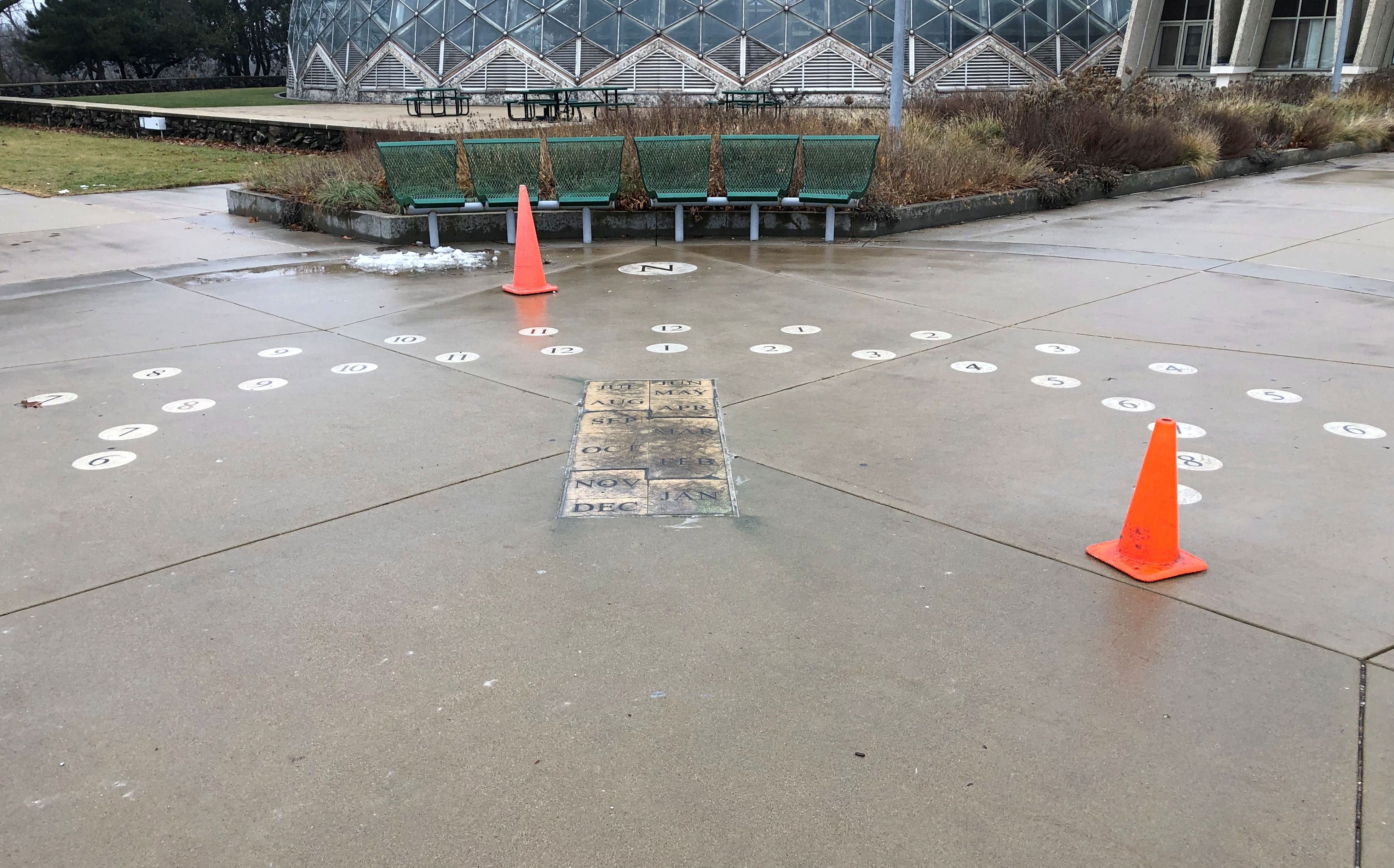
Didn’t remember this detail: An analemmatic sundial in the sidewalk near the entrance, the likes of which you don’t see often. But no sun.
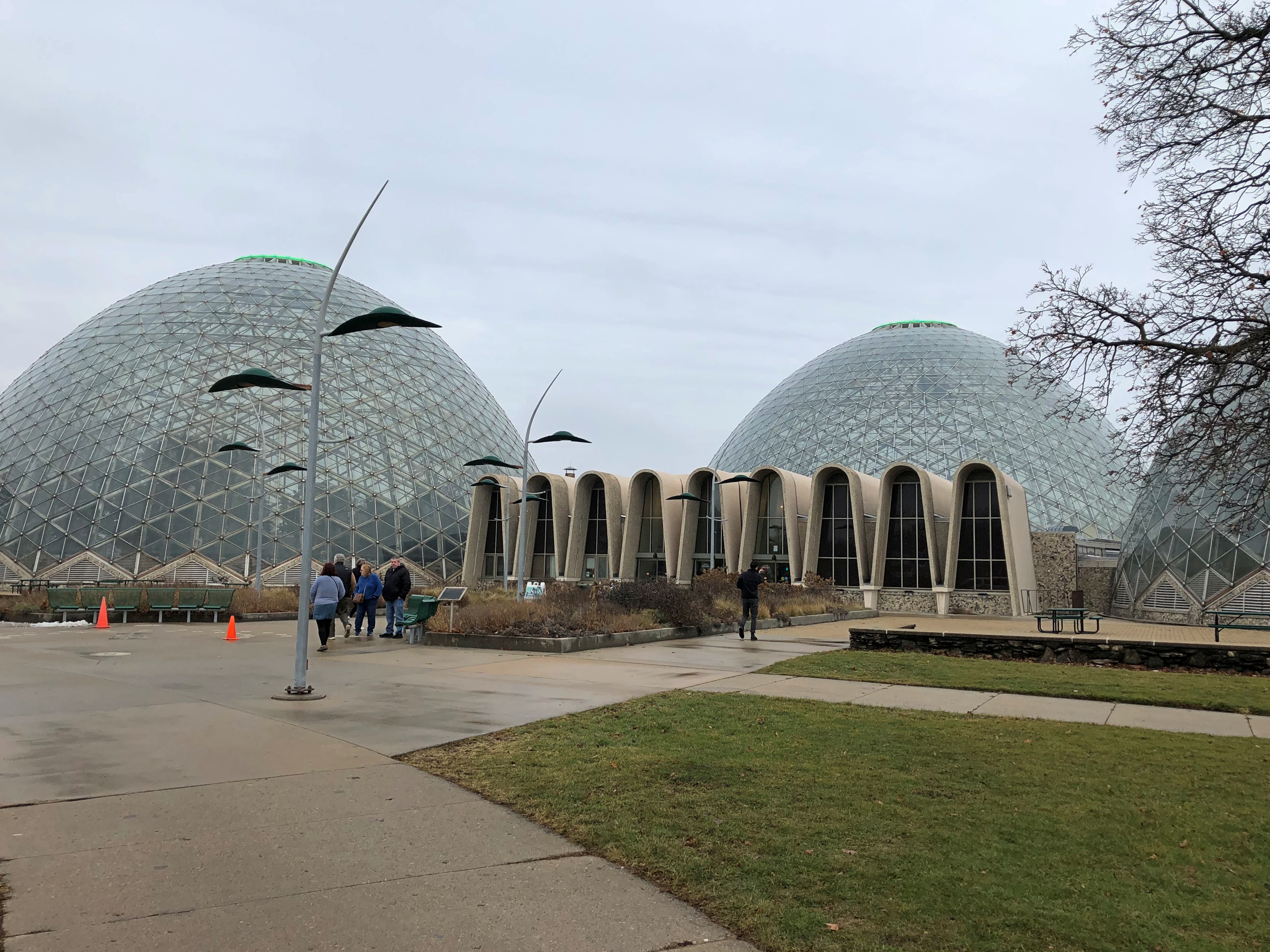
Formally, the place is known as the Mitchell Park Horticultural Conservatory and, since the last time we were there, the fate of the Domes was the subject of a number of recommendations and other proposals. One proposal was to knock ’em down and replace them with something still undesigned, but which I suspect which would be more along the lines of immersive edu-tainment. Again, just a suspicion, but that would fit a pattern: destroy something distinctive to a particular place (in this case, Milwaukee) and put up something that could be anywhere, in the name of an enhanced guest experience that is interactive as a modest pinball arcade.
A few months ago, the county committed to spending some money on the Domes, including “a $30 million commitment from Milwaukee County once funding milestones are achieved,” according to Friends of the Domes, which unfortunately sounds like “when the county figures out how to get the money, this could take a while.” But at least the magnificent triad of domes isn’t going to be destroyed in a plan to merge it with the county’s Milwaukee Public Museum.
“Based on our review of the information we believe there could be a great guest experience which integrates the content and stories from Milwaukee Public Museum with the content and experience of the current Domes and Conservatory,” a 2019 report by an outfit called Gallagher Museum Services notes. “Specifically, the natural history portion of the MPM storyline fits very nicely with the Domes experiences. From our analysis, GMS has concluded that the Milwaukee Domes should be demolished. The cost of properly renovating the Domes greatly outweighs the benefit of doing so…”
A far as I can tell as a non-Milwaukeean, the reaction to that was, “Outweighs the benefits? Says who?” Anecdotal evidence supports the preservationists. On the Friday after Christmas this year, when people have more time to go out, they were out in force at the Domes. Not obscenely crowded, but pretty busy. All ages. Many were families with small children. Children who will, if allowed, take their own children one day.
The GMS report makes it sound like the Domes themselves aren’t really part of the “Domes experience,” which really just involves an elaborate garden, as opposed to an elaborate garden in a distinctive, placemaking setting. The experience, the report seems to assert, is portable: take it out from under the Domes and you’d still have the “Domes experience” somehow in a spiffy new building.
People like the Domes. They already want to go there. The Domes are not the Milwaukee Public Museum, which is a fine institution in its own right, however one might shoehorn the “Domes experience” into a part of that museum that happens to be about nature. The “Domes experience” is only found at the domes, and the people of Milwaukee know that.
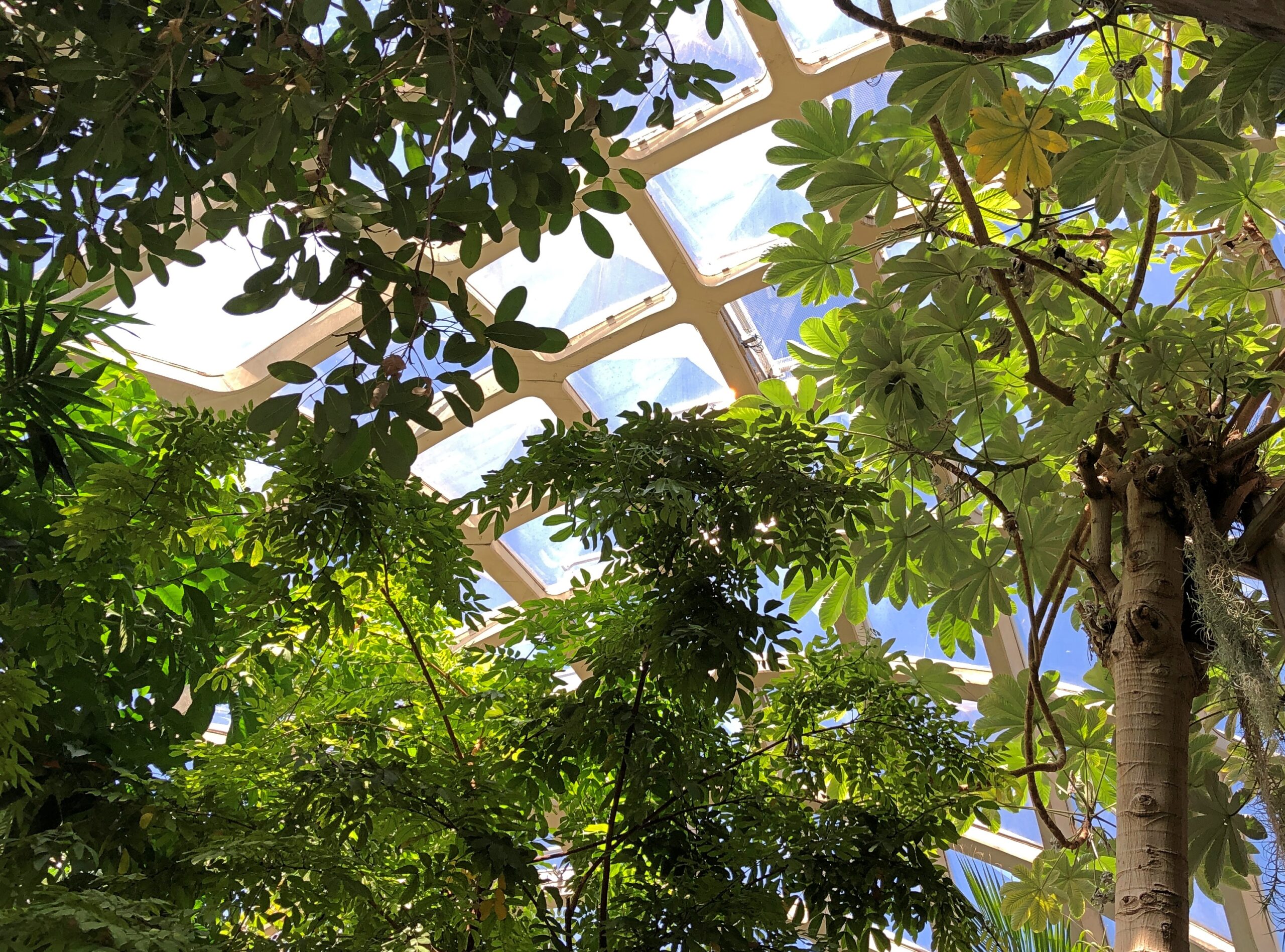
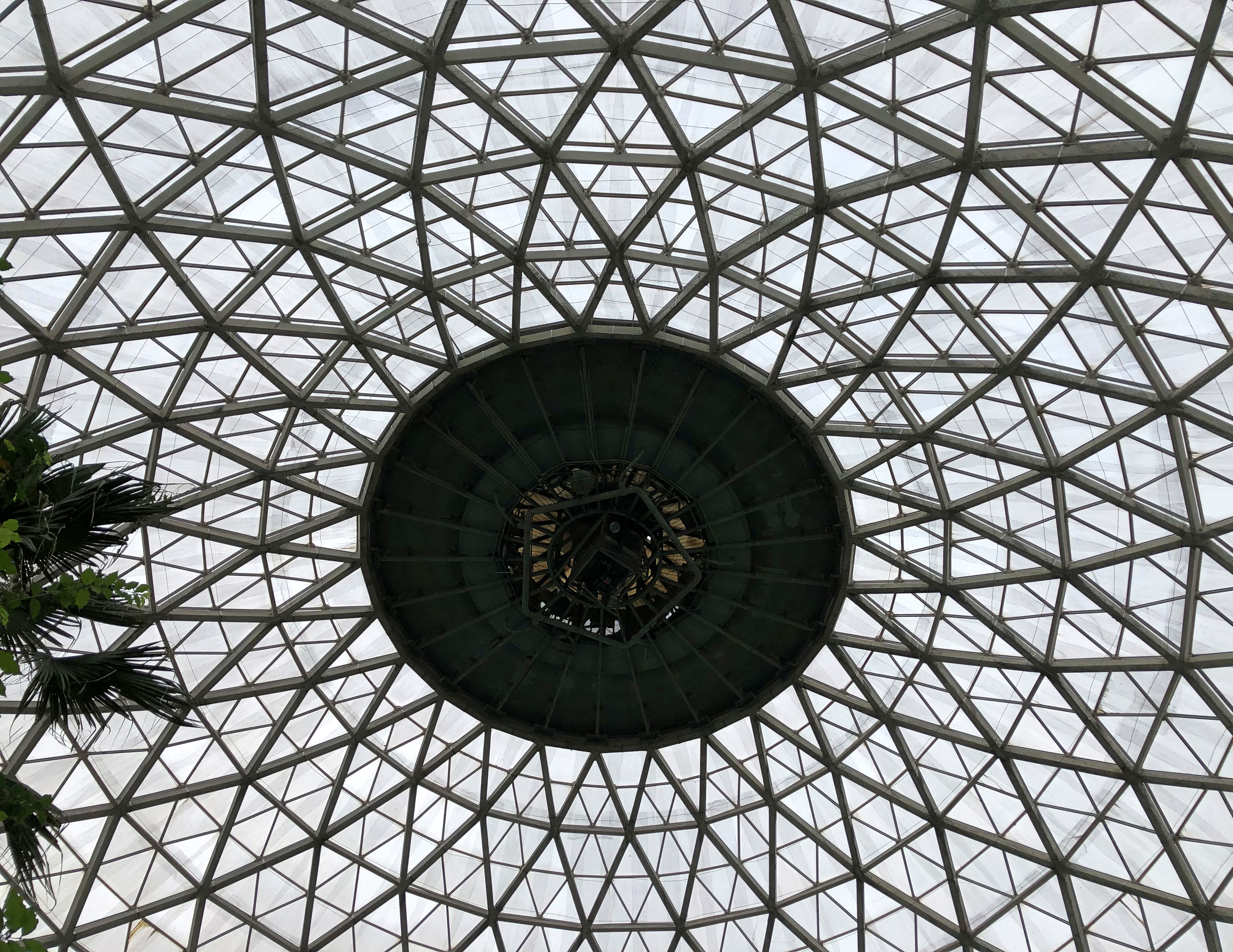
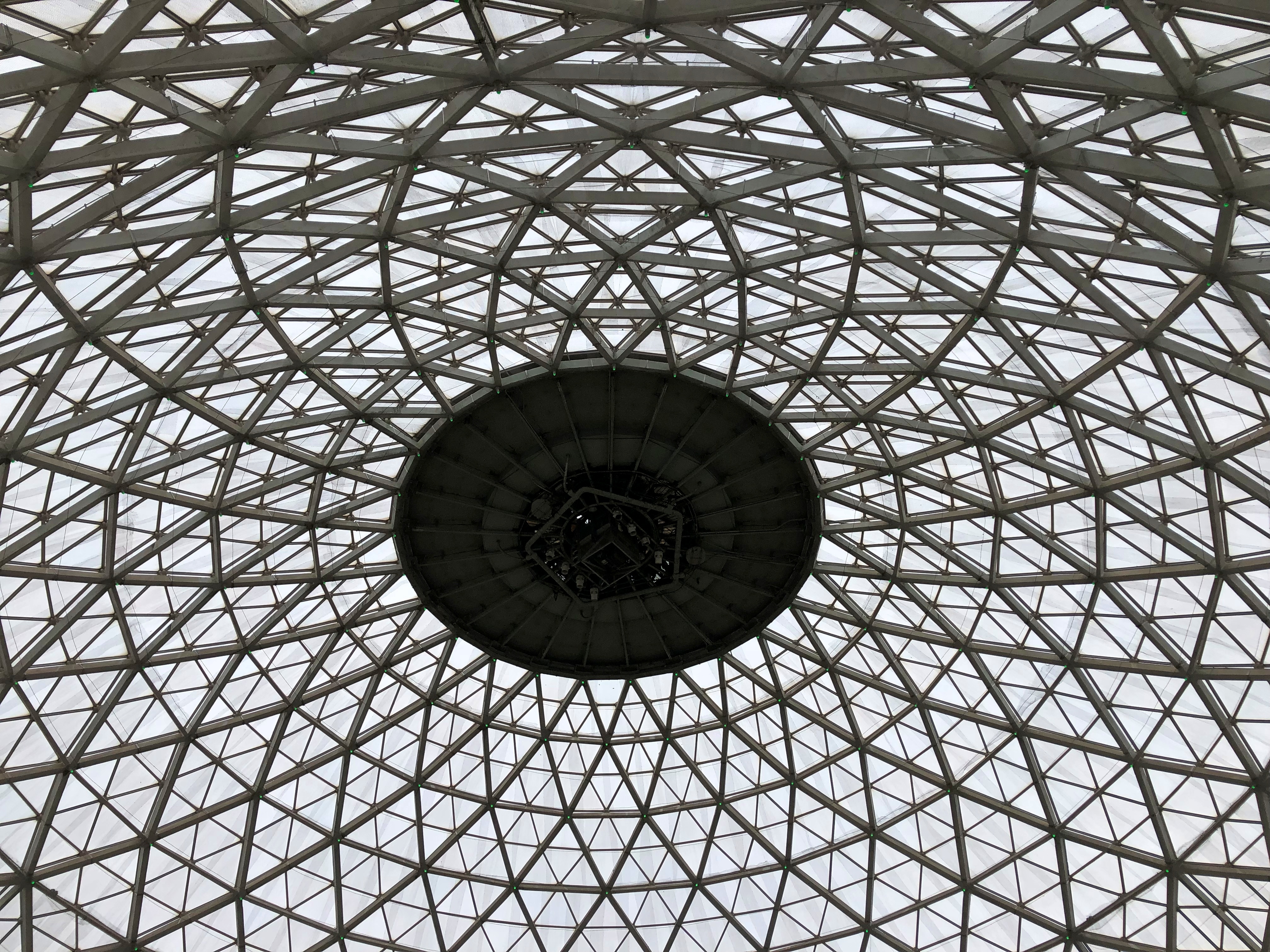
I believe that too. Just for the vaulting glass overhead, if nothing else.
The Domes hold their crowds pretty well, too. We were able to circulate comfortably and without any sort of jostling.
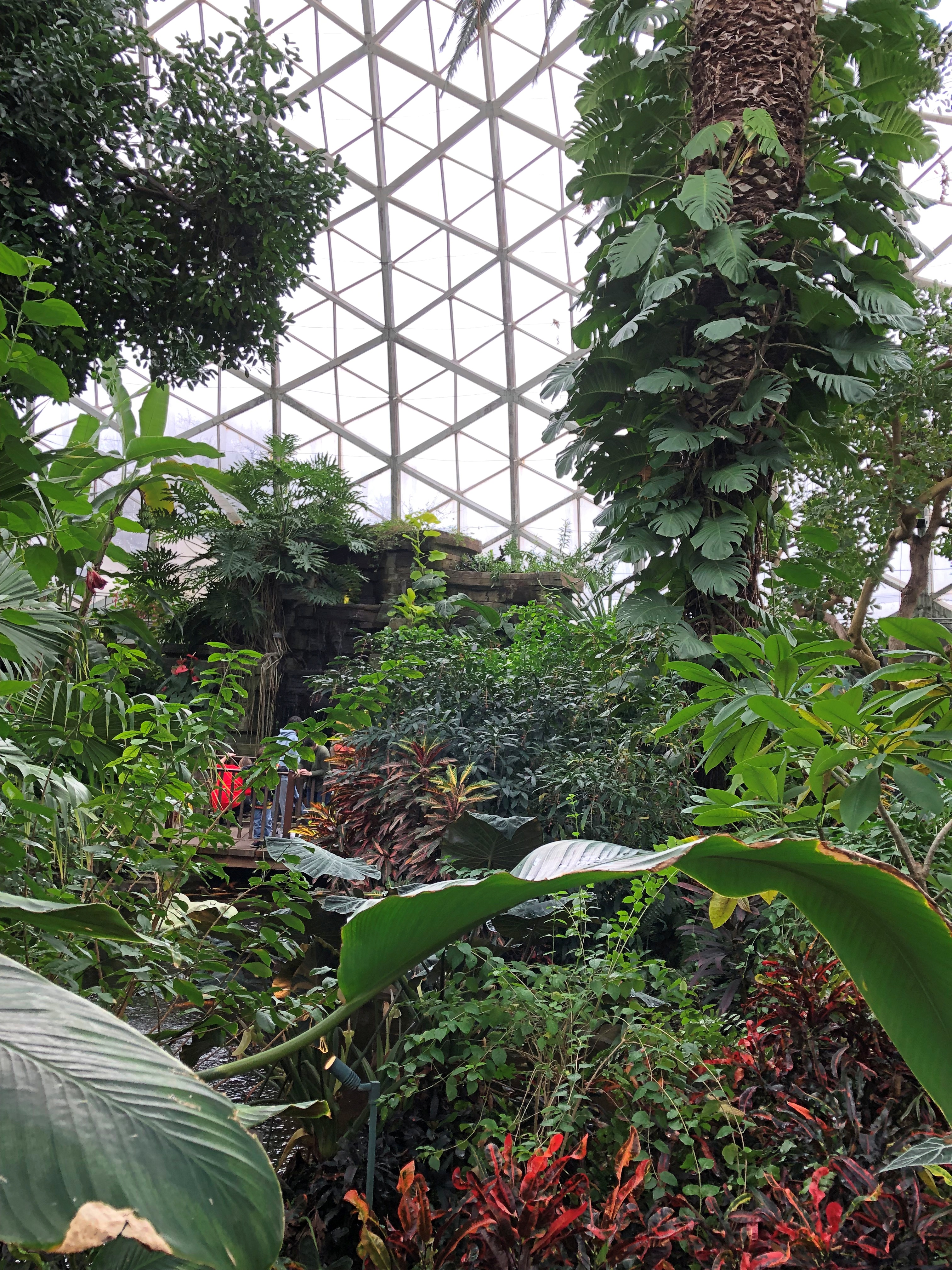
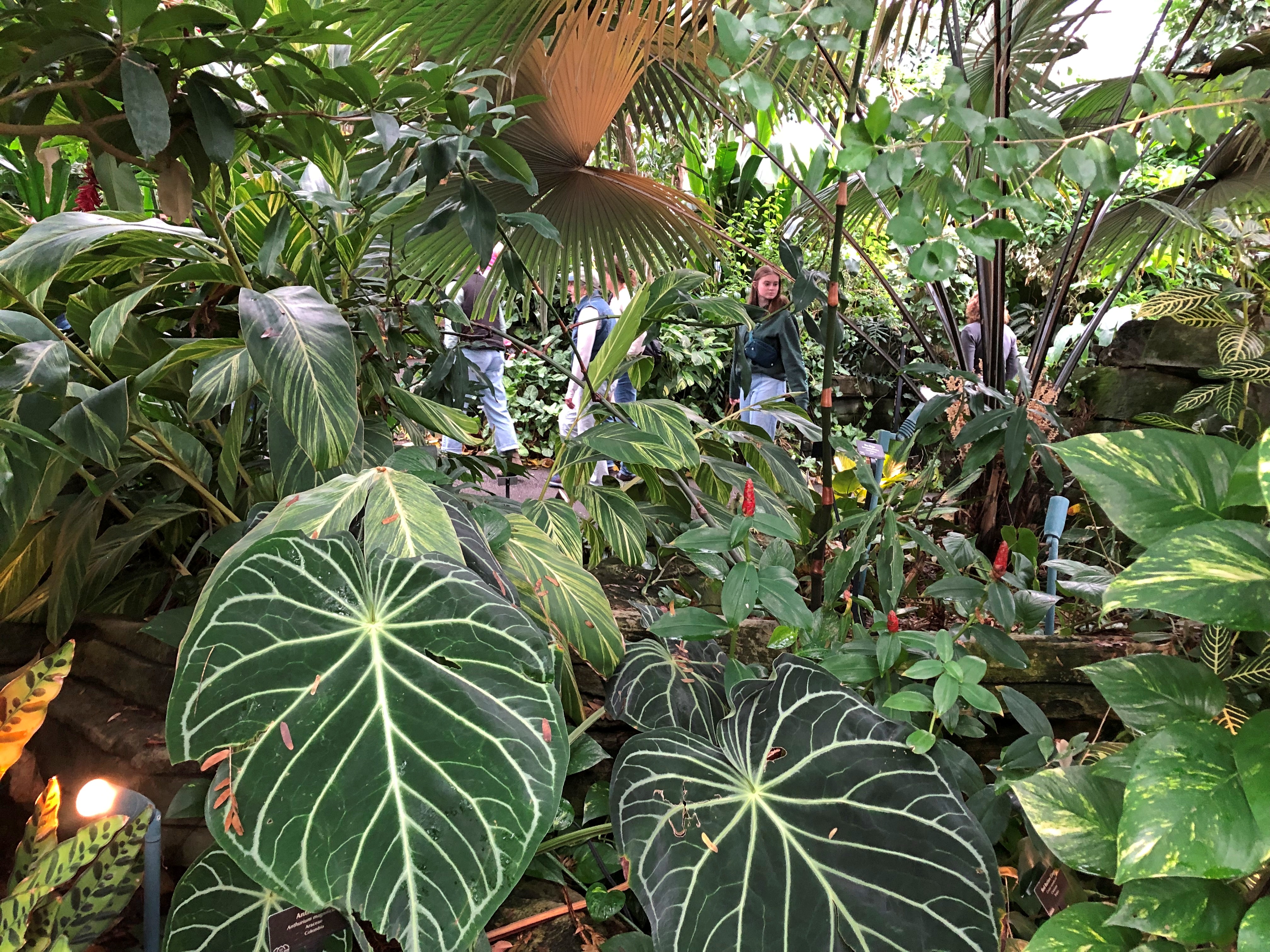
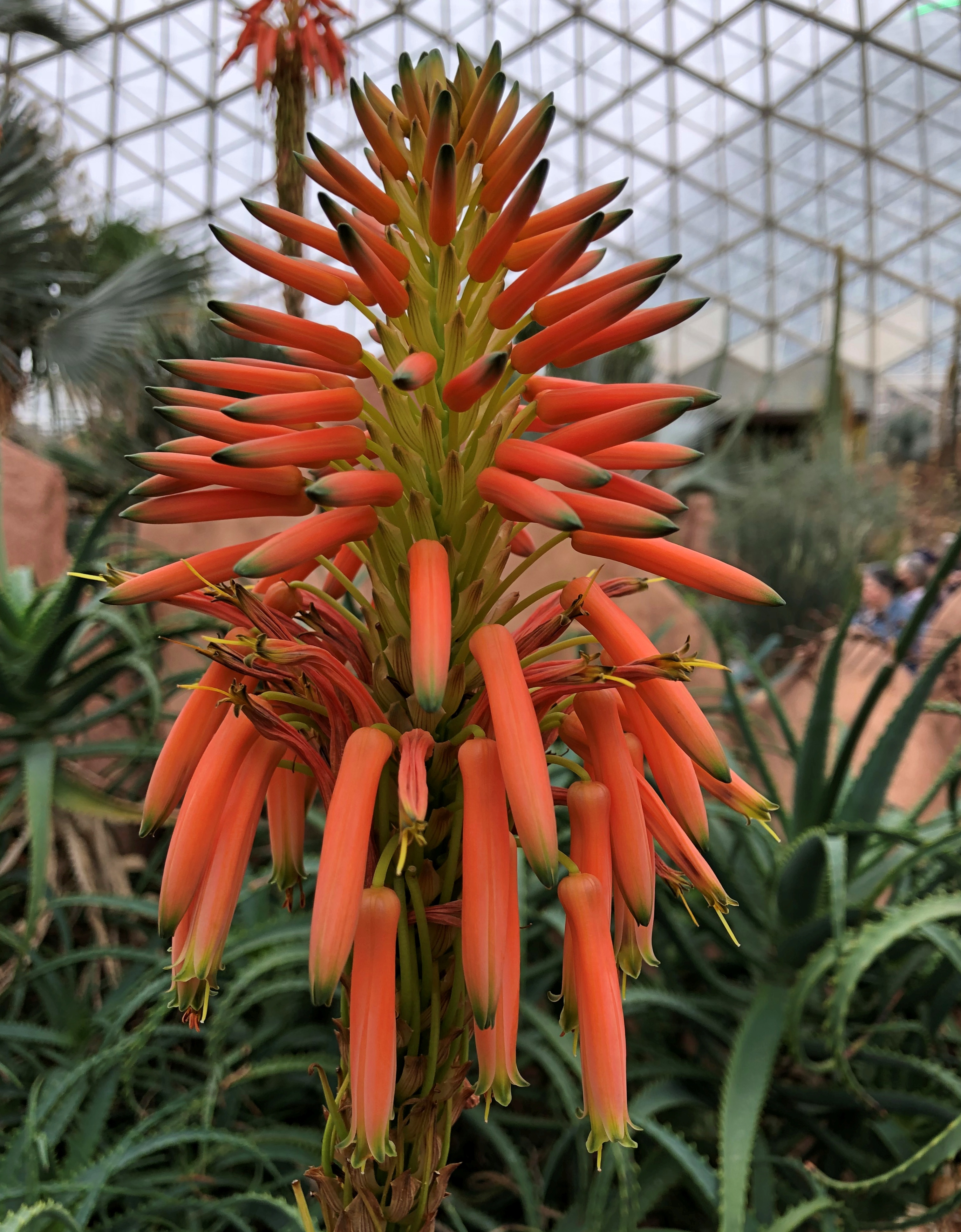
The tropical dome.
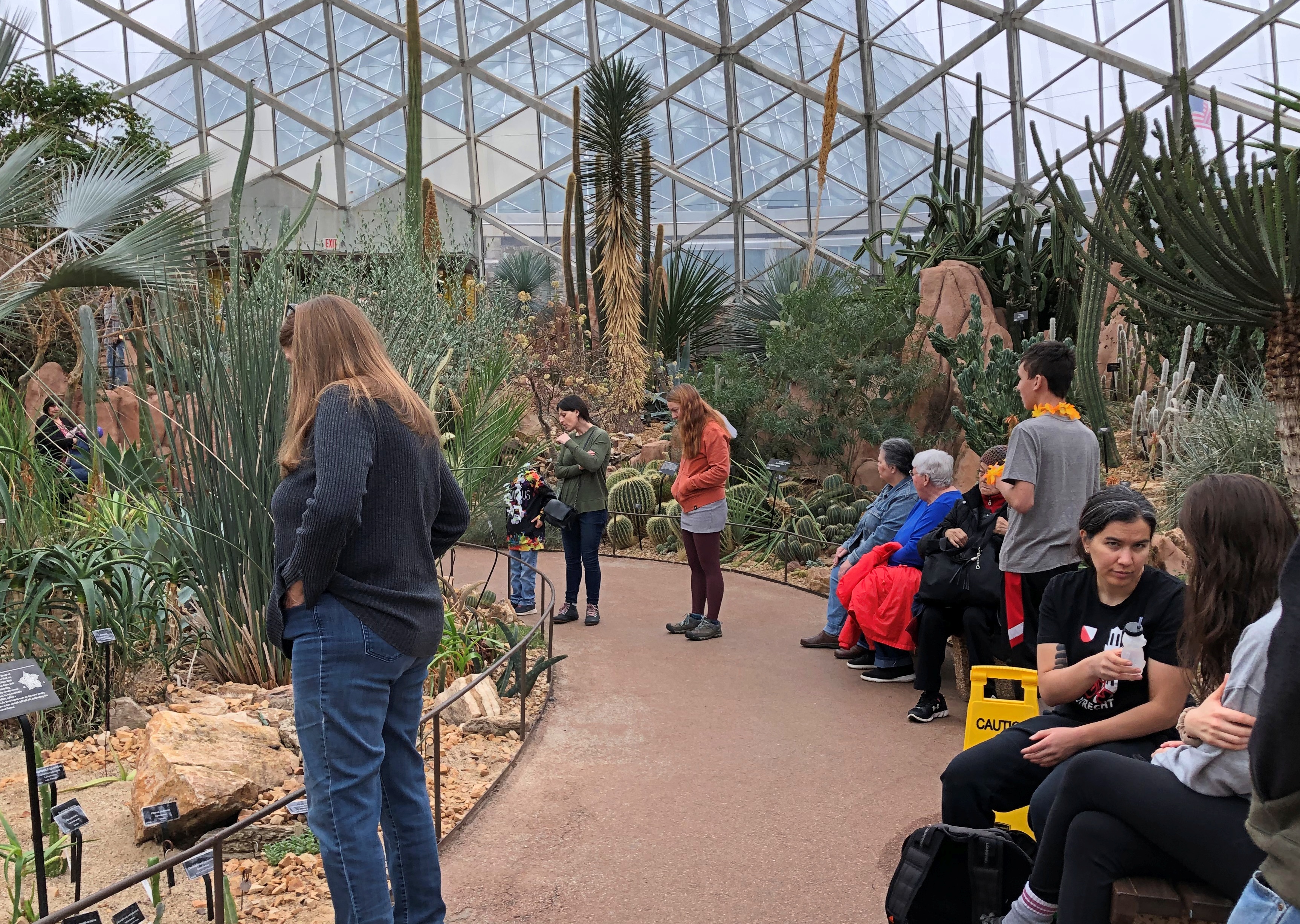
The arid dome.
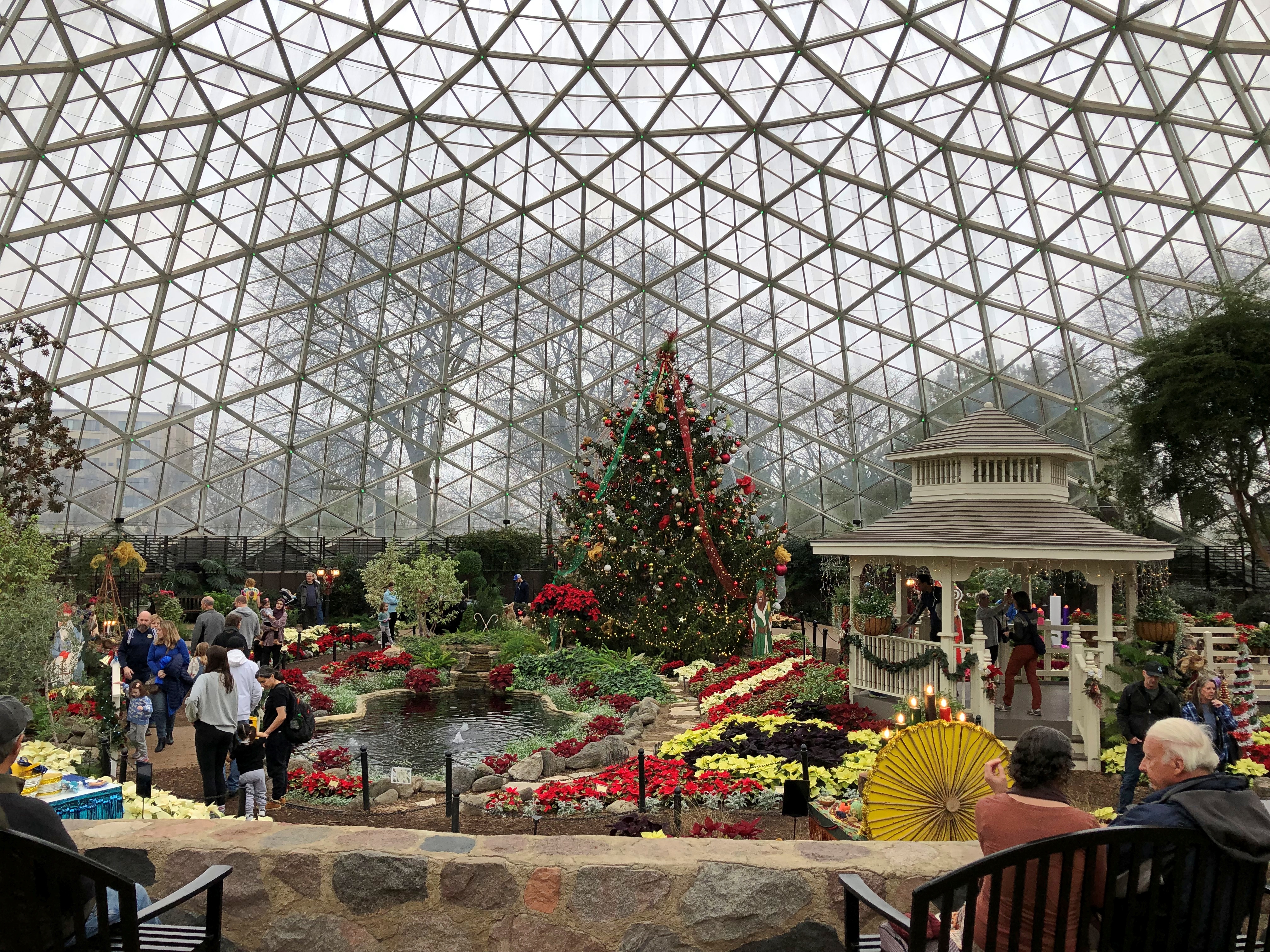
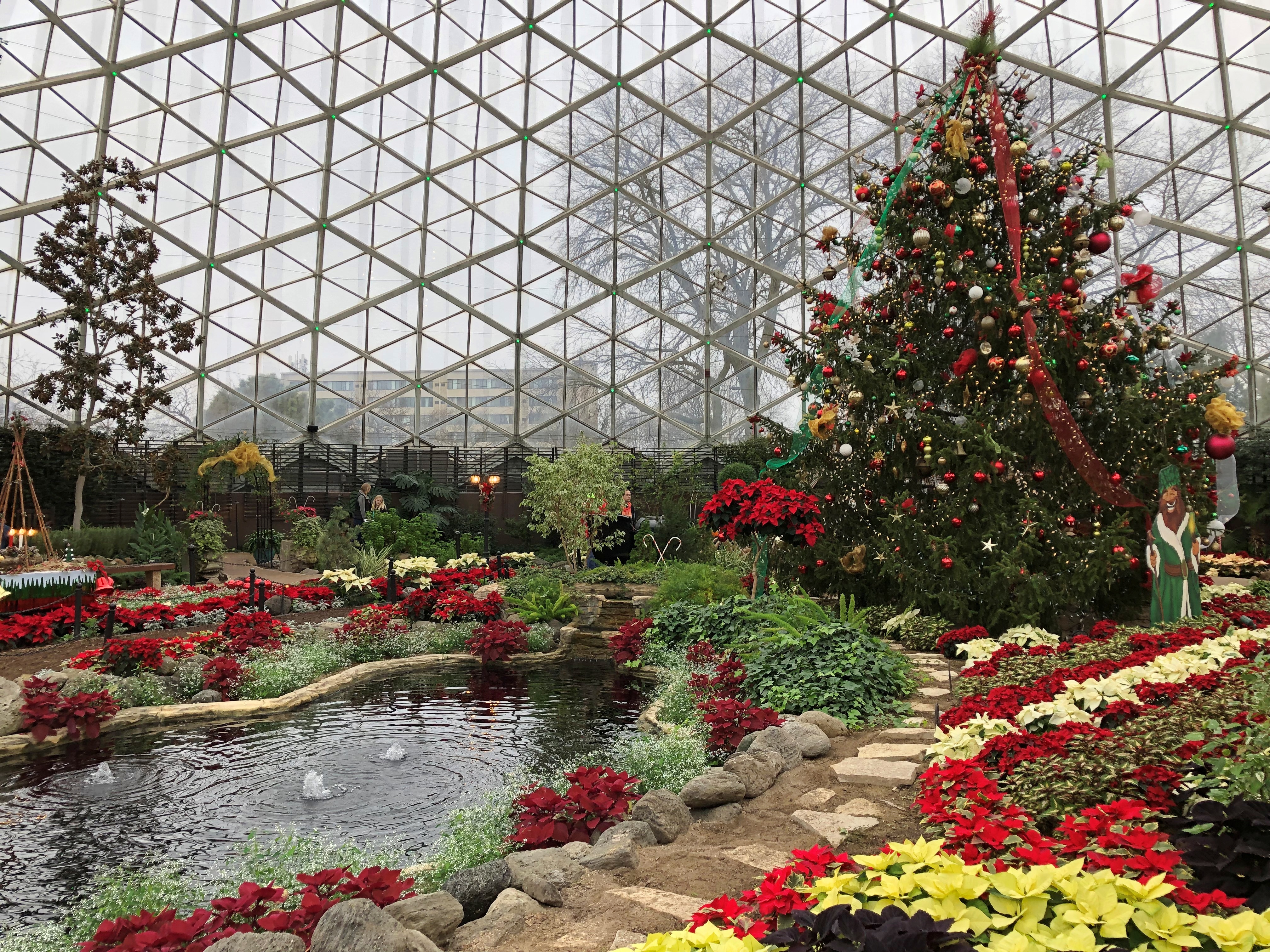
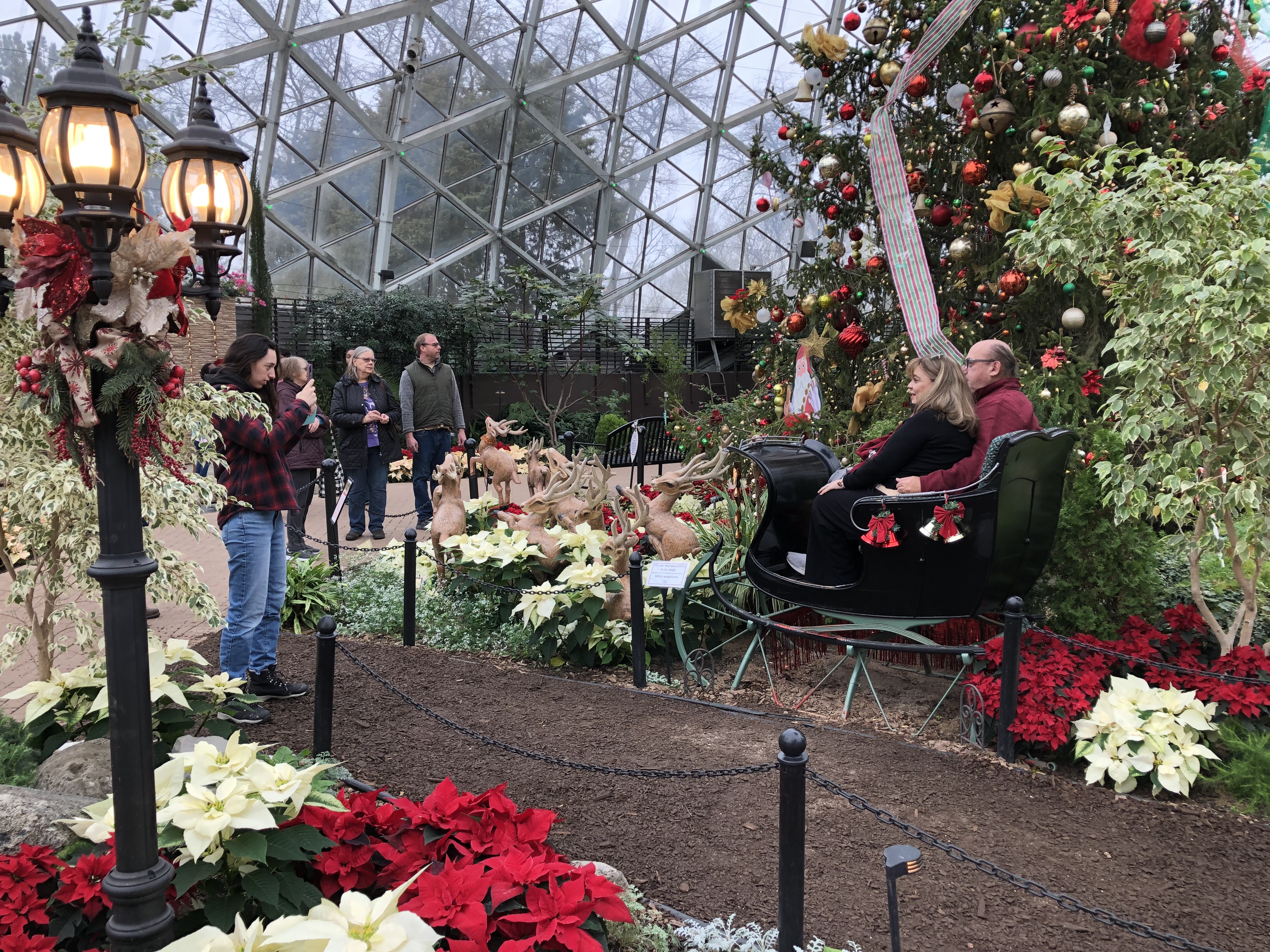
The show dome.
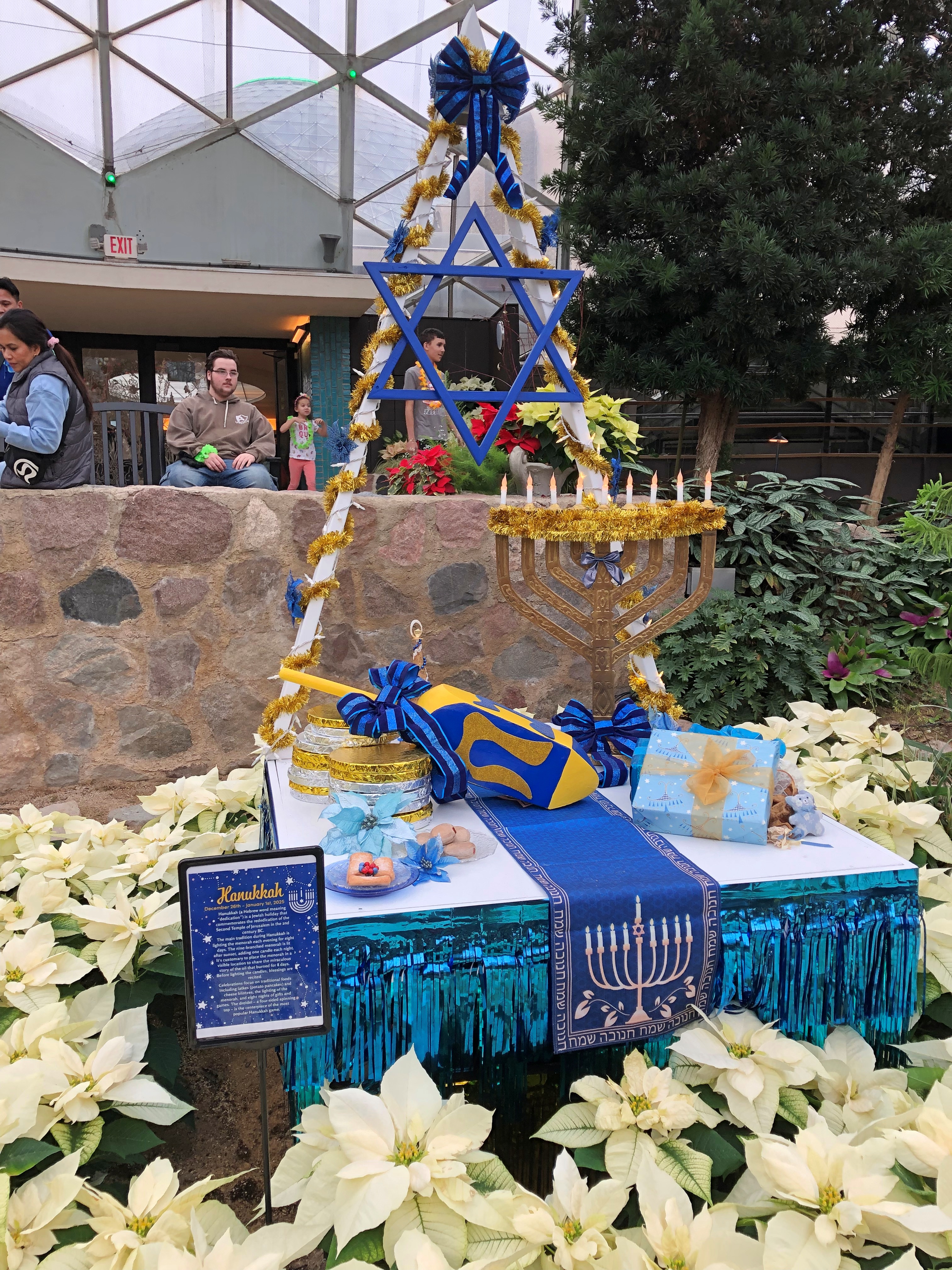
Christmas was represented, of course, but also Advent, Winter Solstice, Hanukkah, and Kwanzaa.
As we did those years ago, we caught it during the holiday season show, and quite a show it is under the Domes.