Foellinger-Freimann Botanical Conservatory

Some years ago, we passed through Fort Wayne on the way home from Dayton. It was a Sunday afternoon, and we had a choice between lunch and spending some time at the Foellinger–Freimann Botanical Conservatory, which is in downtown Fort Wayne. Lunch usually wins out in such situations, and it did then.

But I didn’t forget about Fort Wayne’s conservatory. I like a good conservatory or botanical garden, whether under glass or open air. Forty years ago, while on my first visit to D.C., I happened on my first botanical garden — the most impressive United States Botanic Garden — and that piqued my interest.

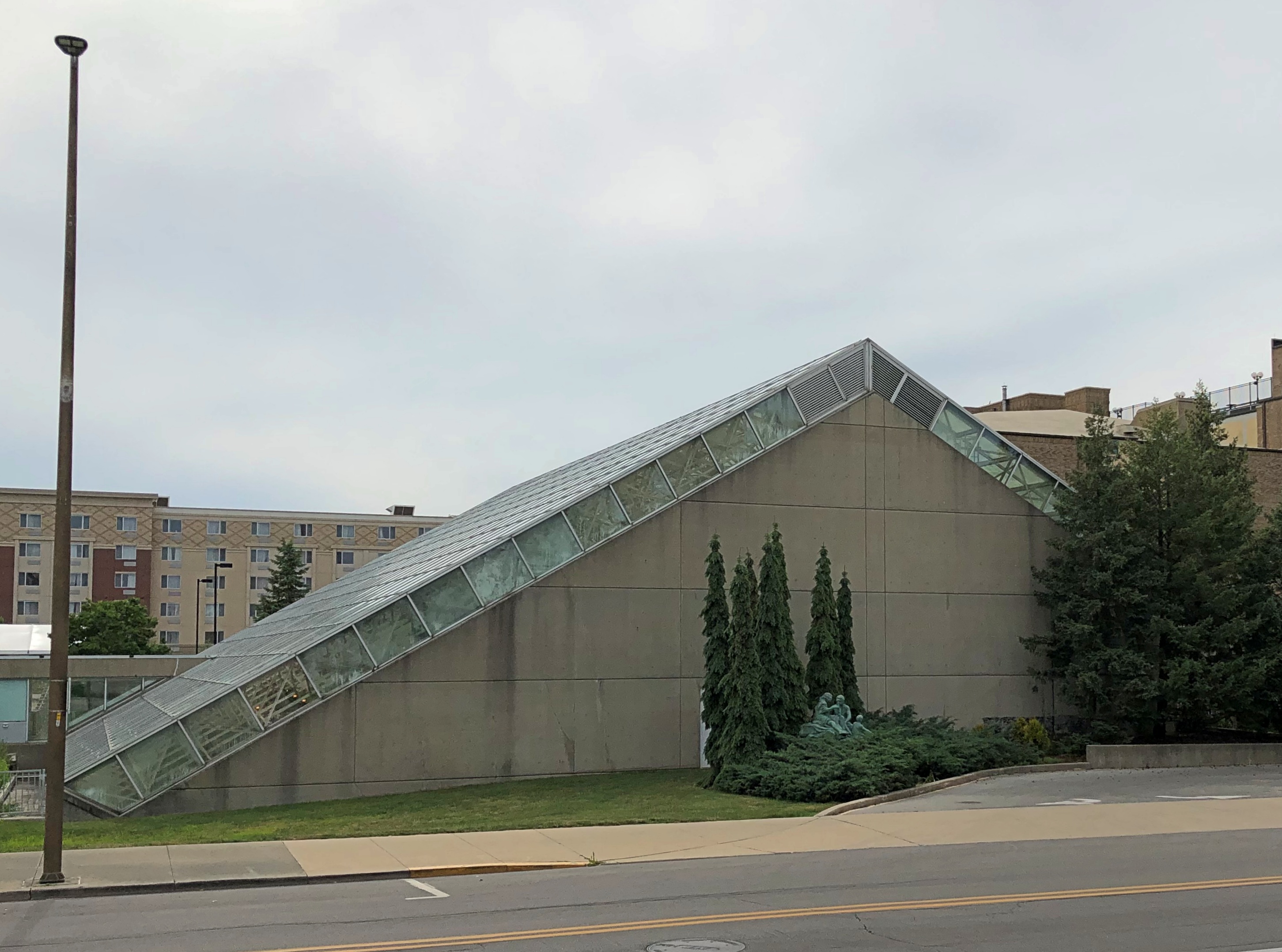
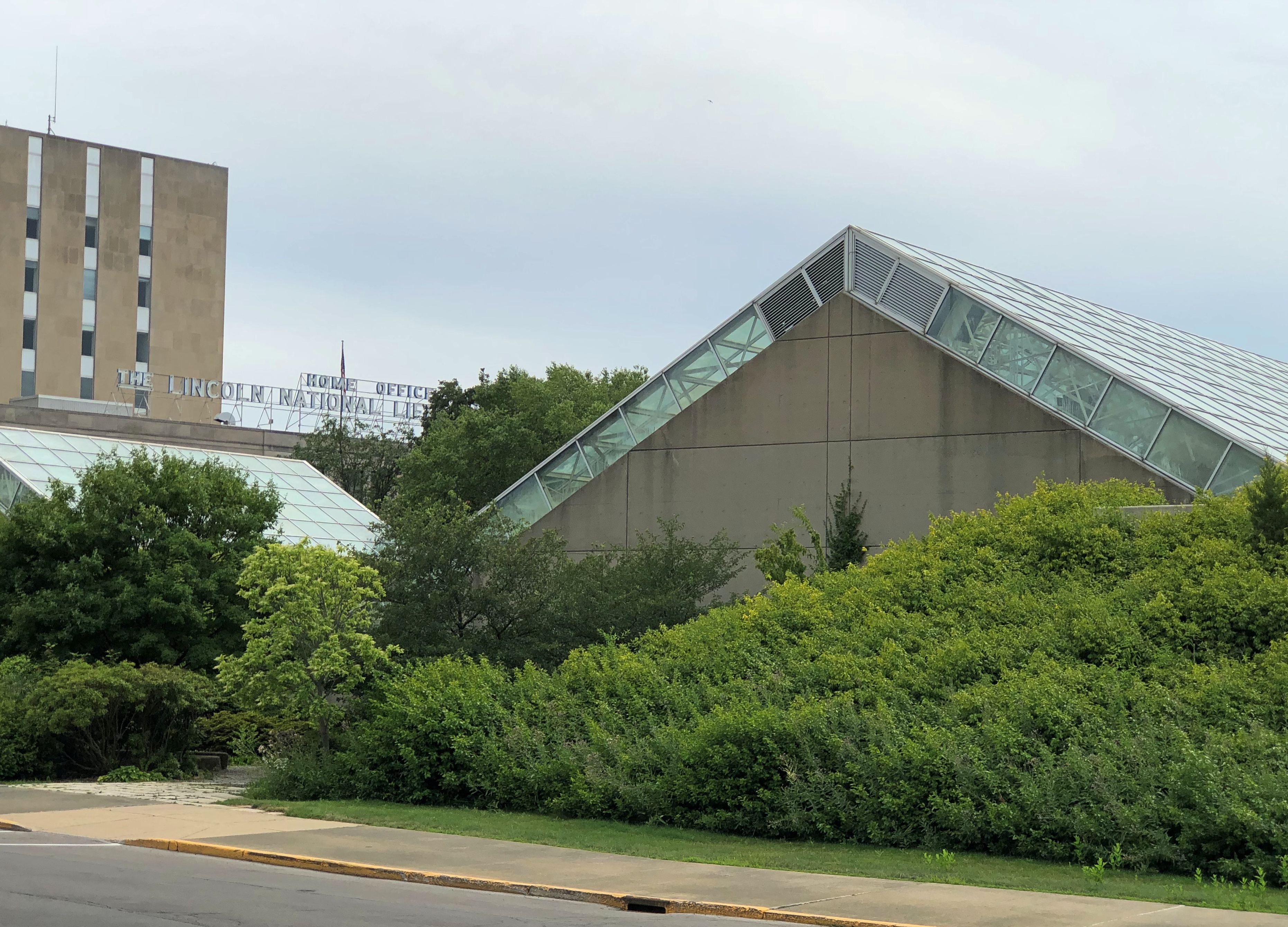
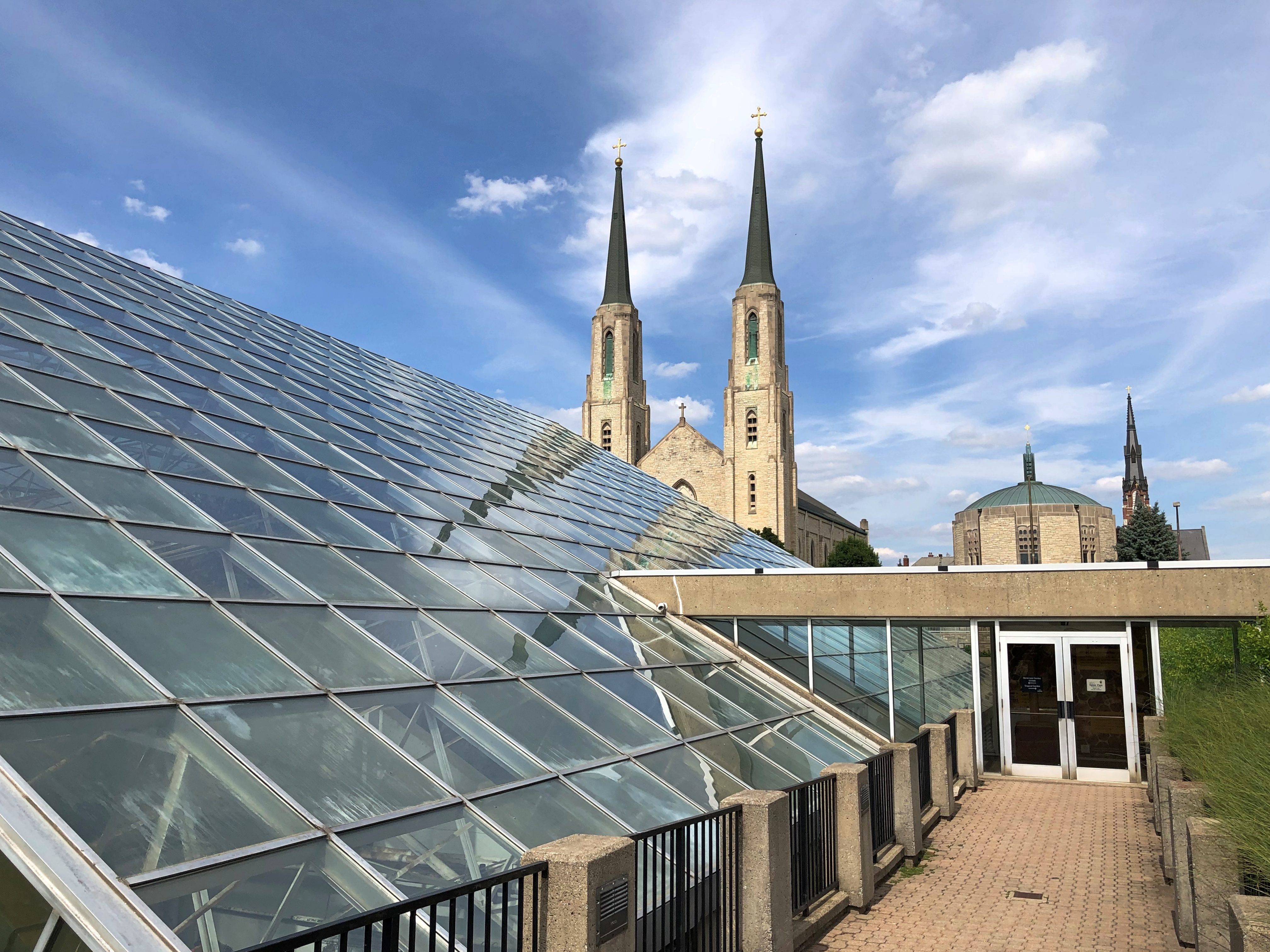
On July 2, we arrived in Fort Wayne an hour before the conservatory closed. Enough time this time. Not the most promising exterior. I’ve always been partial to domes when it comes to sheltering large numbers of plants.Foellinger-Freimann Botanical Conservatory
Foellinger-Freimann Botanical Conservatory

Foellinger-Freimann itself is nearly 40 years old, the result of redevelopment of the site by city, with the support of the Foellinger Foundation and the Frank Freimann Charitable Trust, both local orgs.

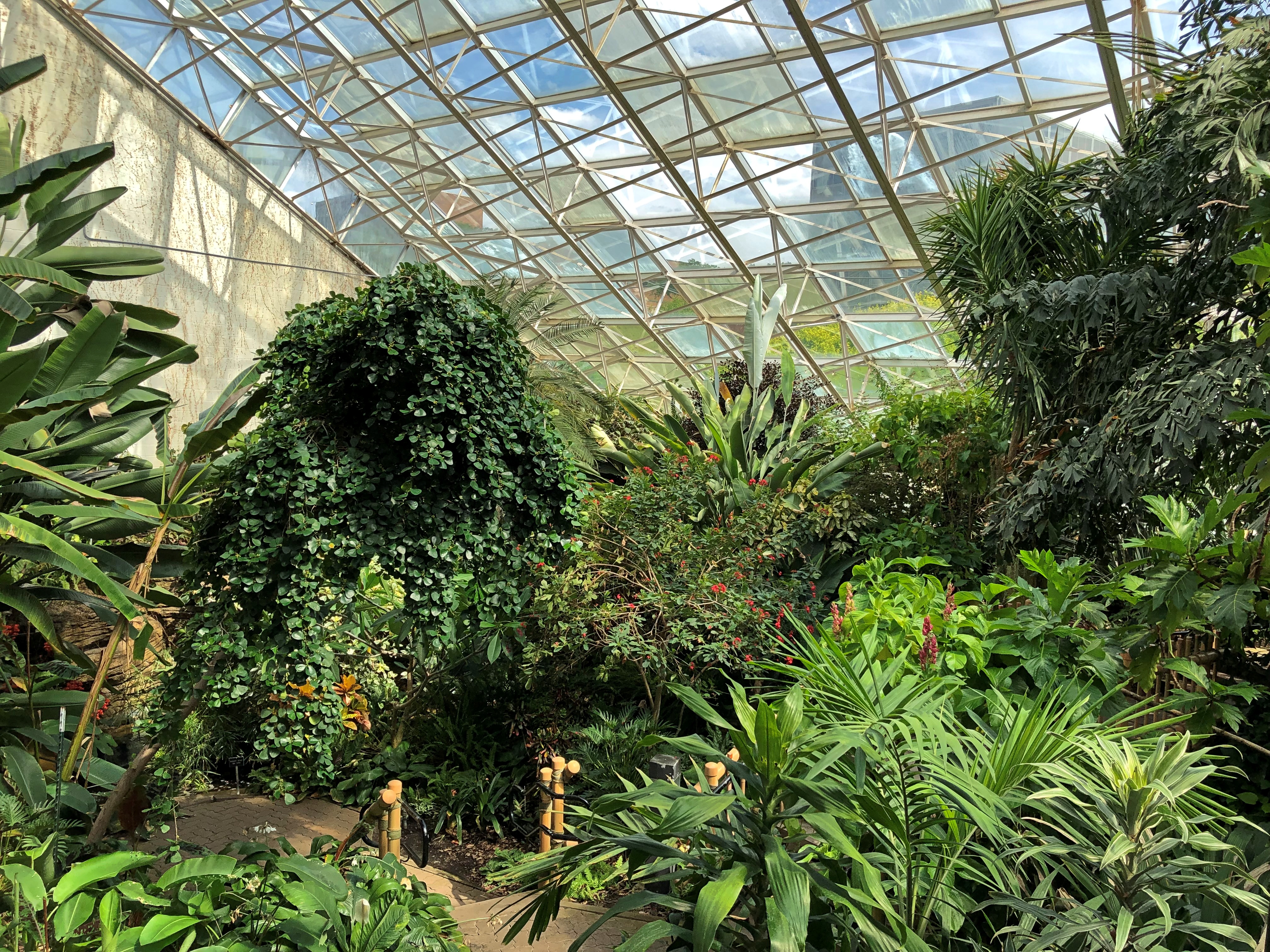
The grounds include 24,500 square feet of indoor gardens under three structures with slanting glass roofs, plus four outside gardens. From across the street, it looks a little bland, but it works well as a green space once you’re inside.

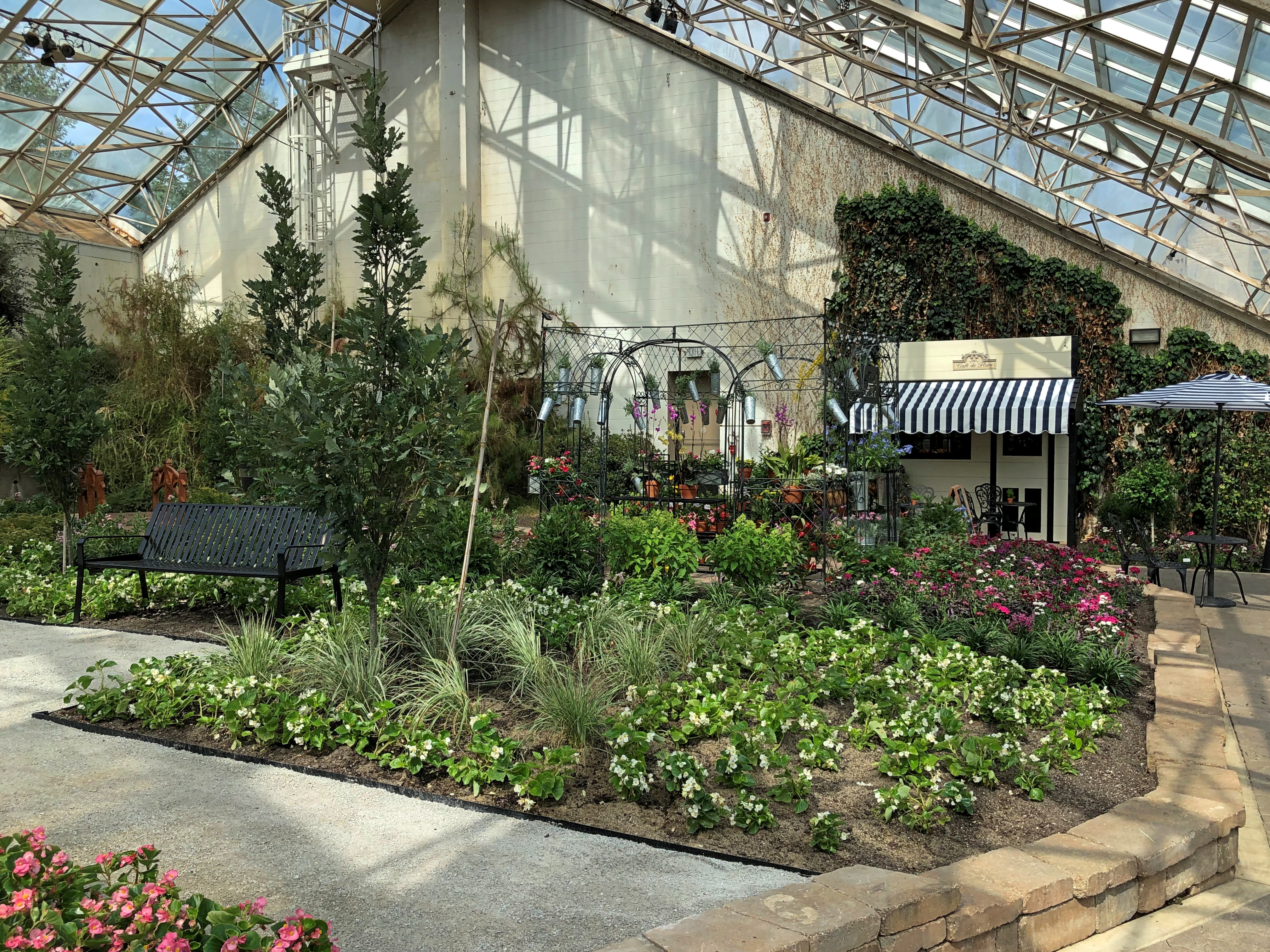
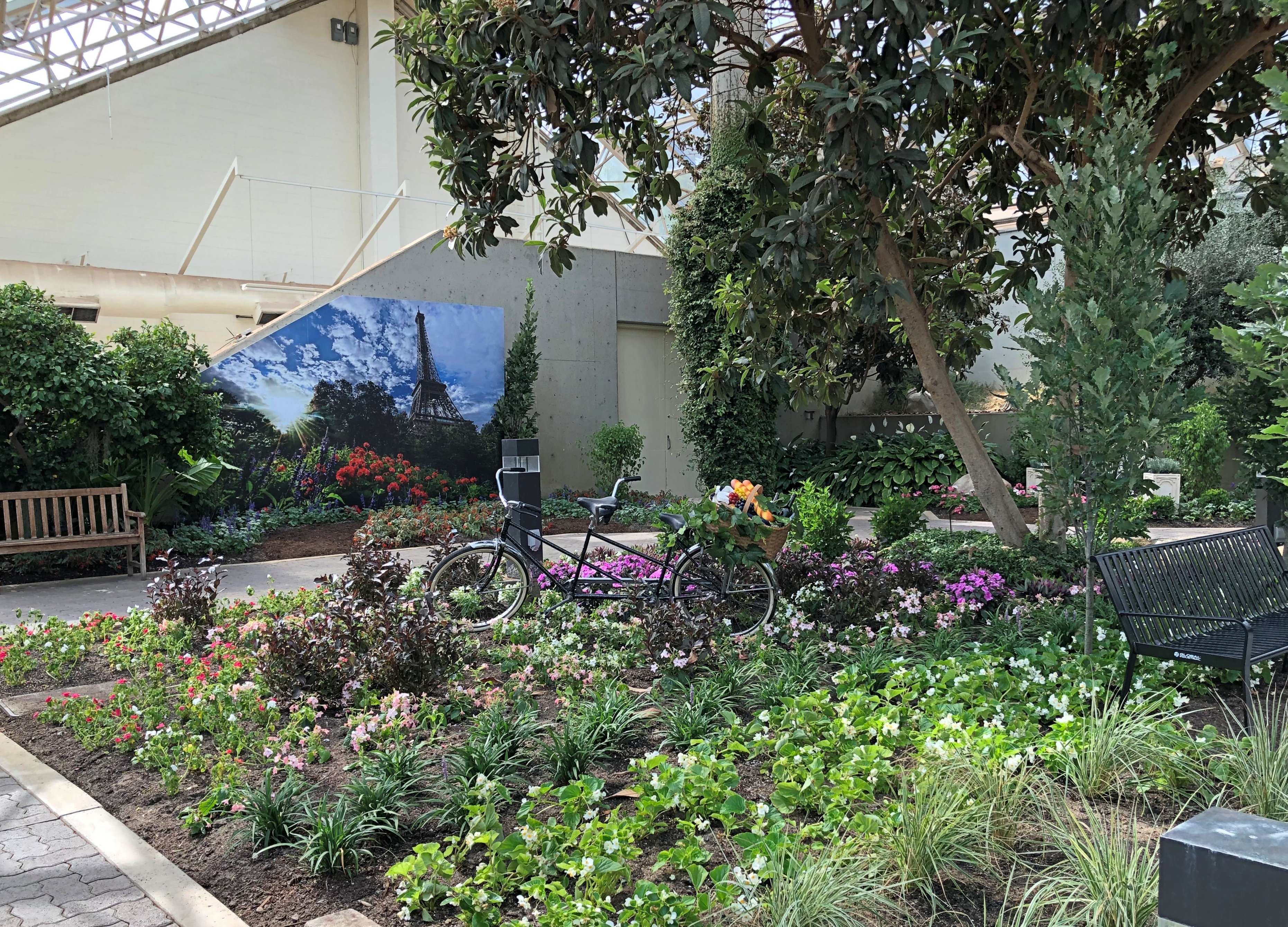
The first roofed garden has changing displays. The theme when we went was the gardens of Paris. Foellinger-Freimann Botanical Conservatory Foellinger-Freimann Botanical Conservatory

Nice. I guess it could have been the gardens of Nice — that would be different. But no, Paris gets all the glory. Wonder if the Corn Palace ever does Paris as its theme.

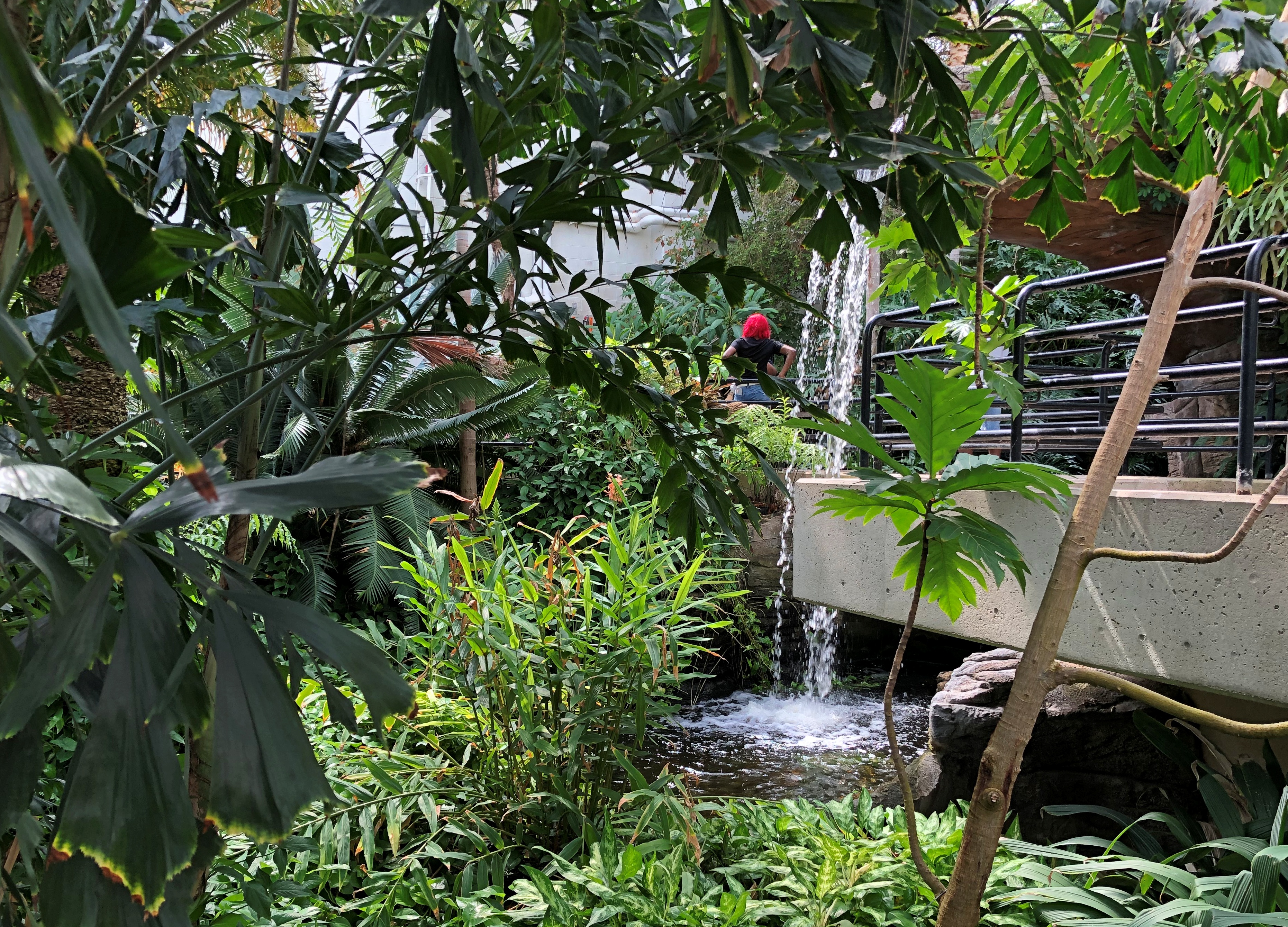
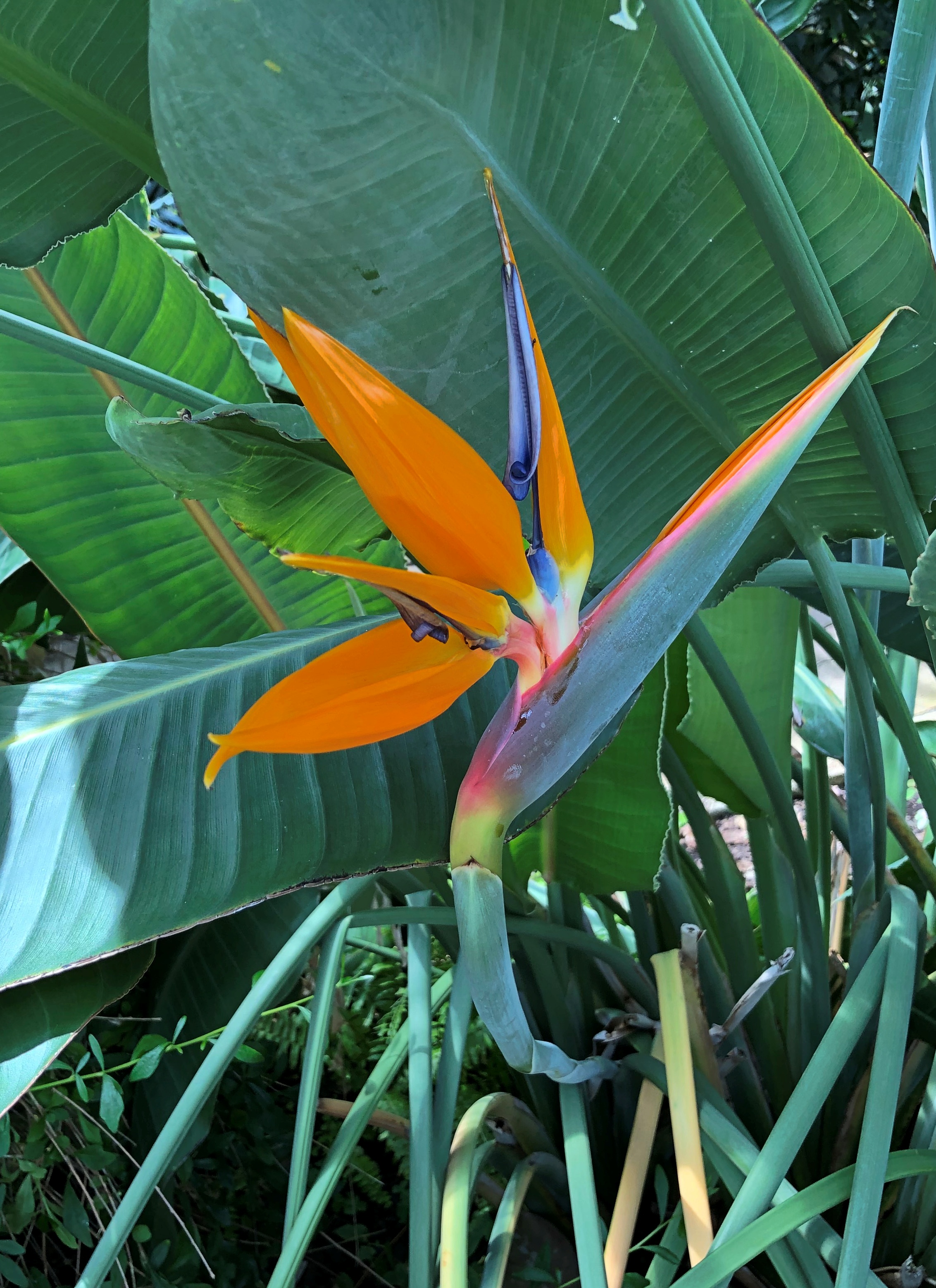
Next, a tropical garden. Guaranteed to be lush in July or January.Foellinger-Freimann Botanical Conservatory Foellinger-Freimann Botanical Conservatory

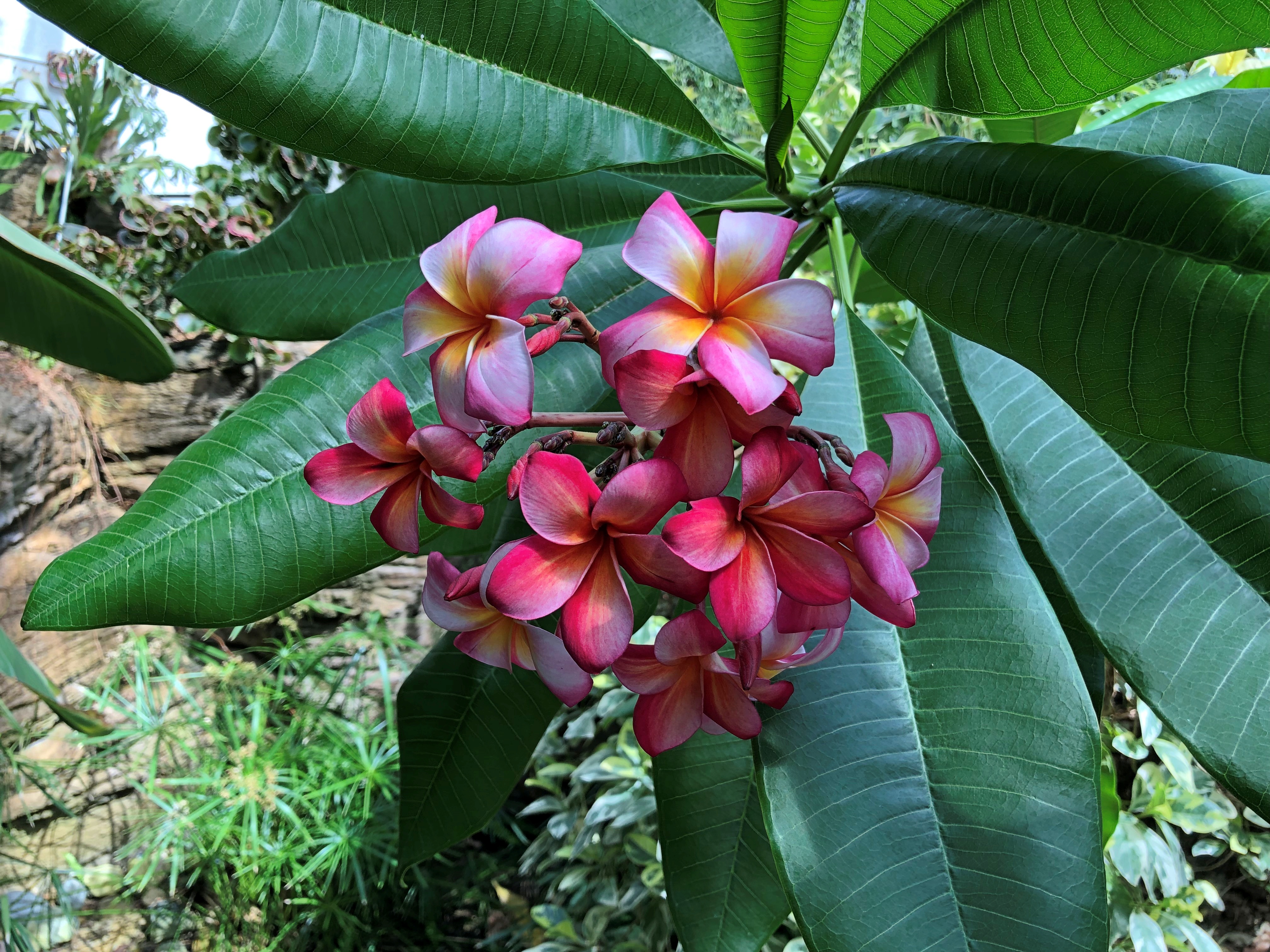
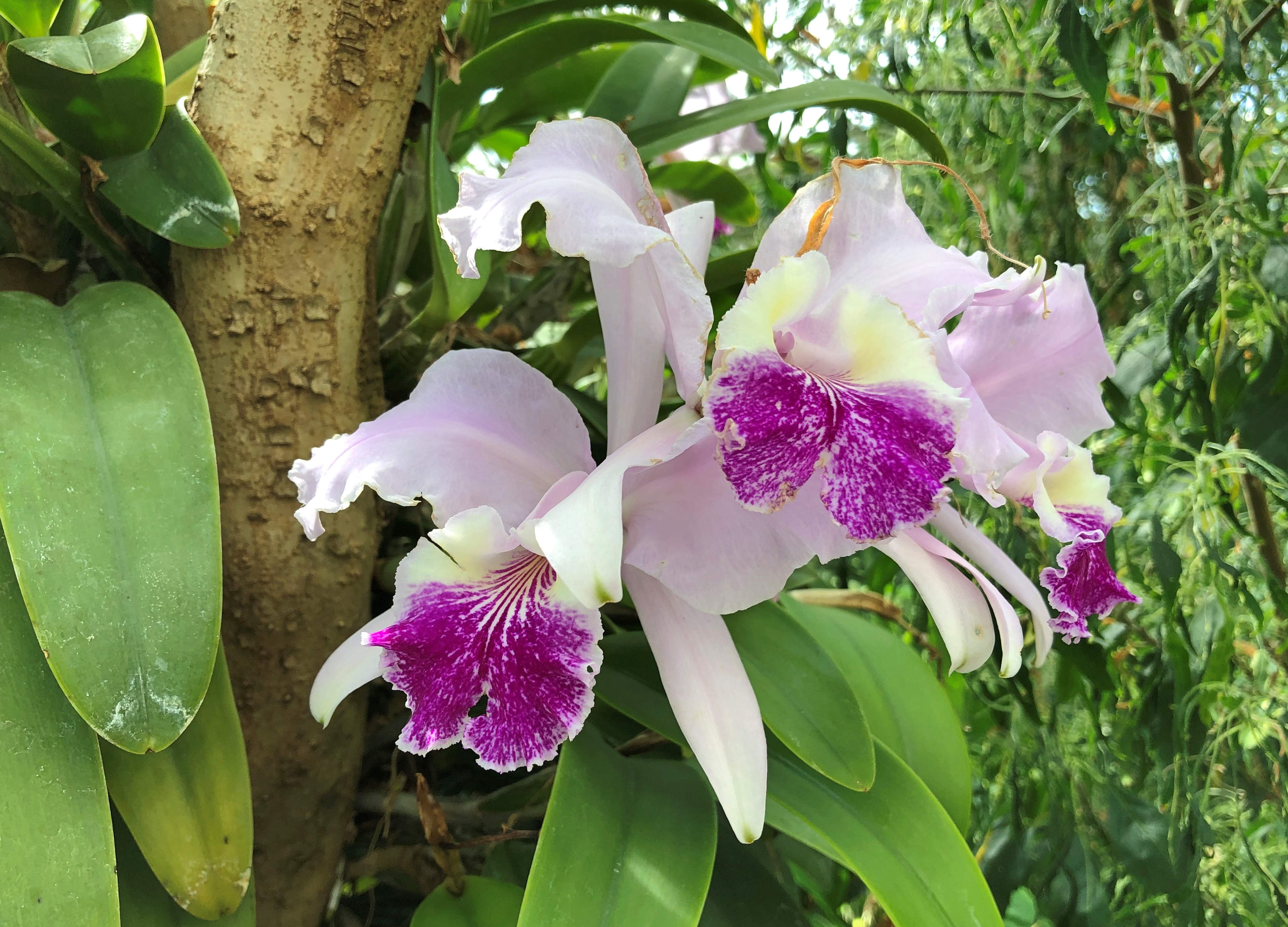
Too many good-looking flowers to name. At least, I don’t want to bother with names.Foellinger-Freimann Botanical Conservatory Foellinger-Freimann Botanical Conservatory Foellinger-Freimann Botanical Conservatory

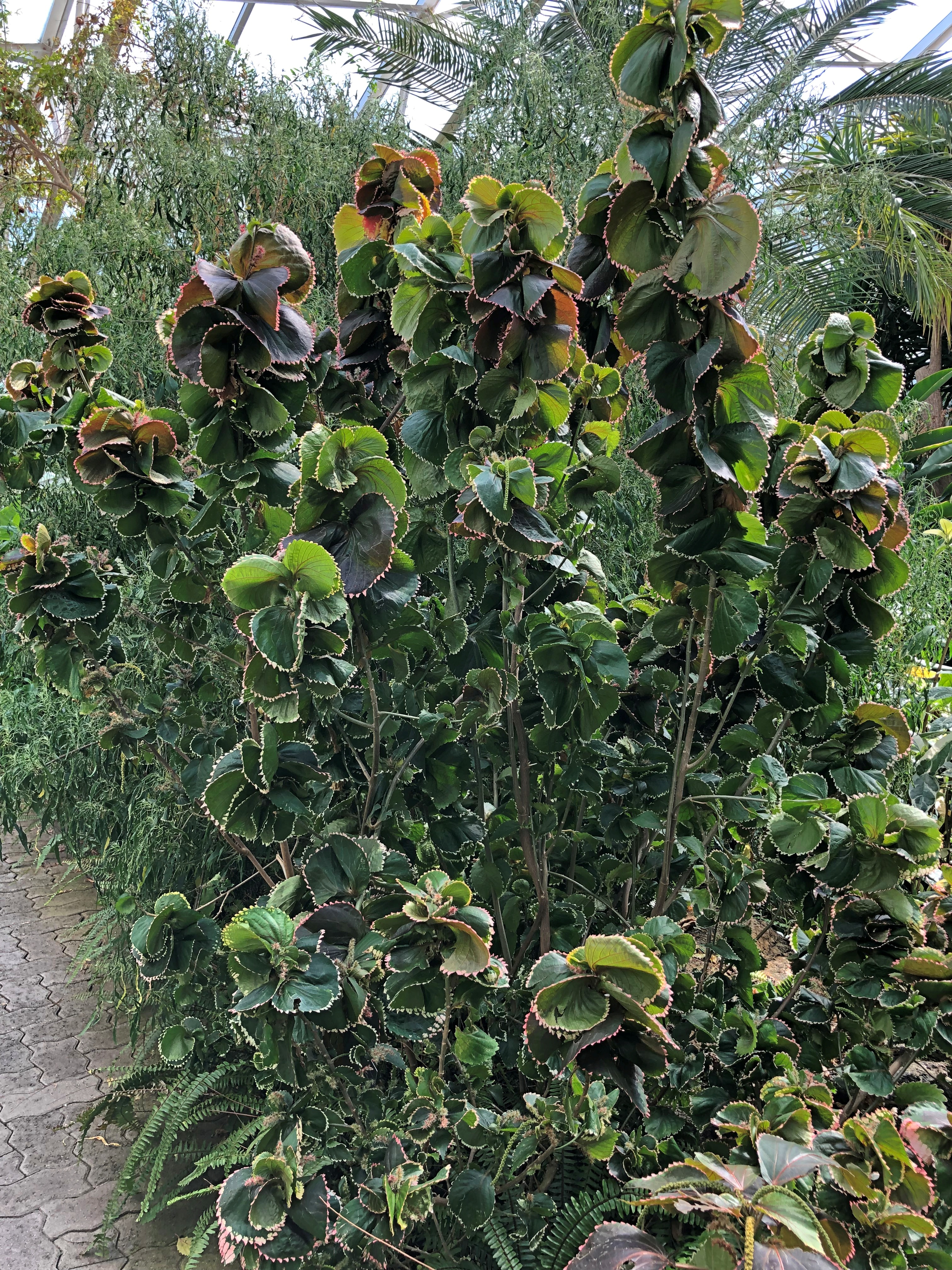
And not just flowers.Foellinger-Freimann Botanical Conservatory Foellinger-Freimann Botanical Conservatory

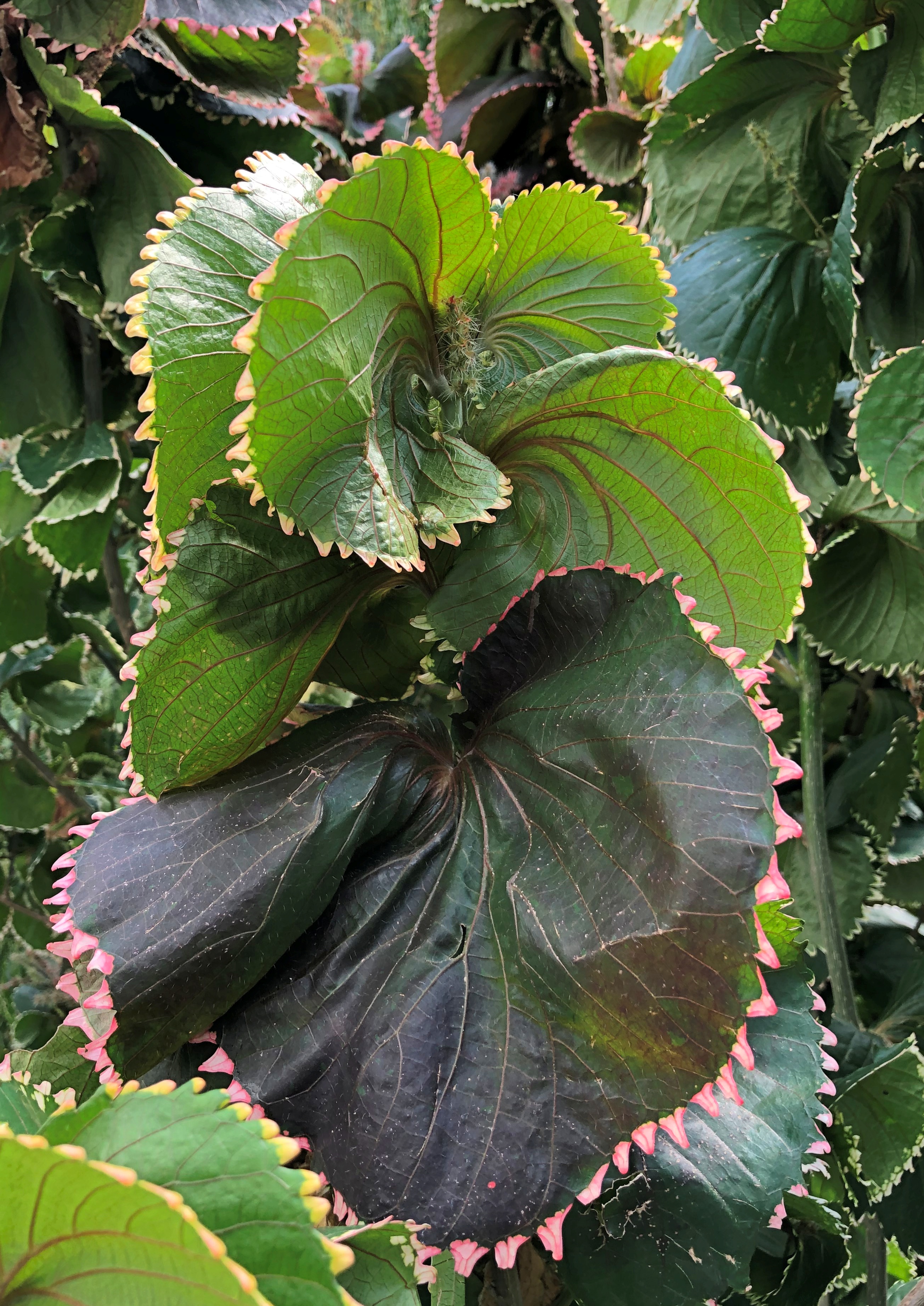
But I will say this is a breadfruit plant.
Foellinger-Freimann Botanical Conservatory

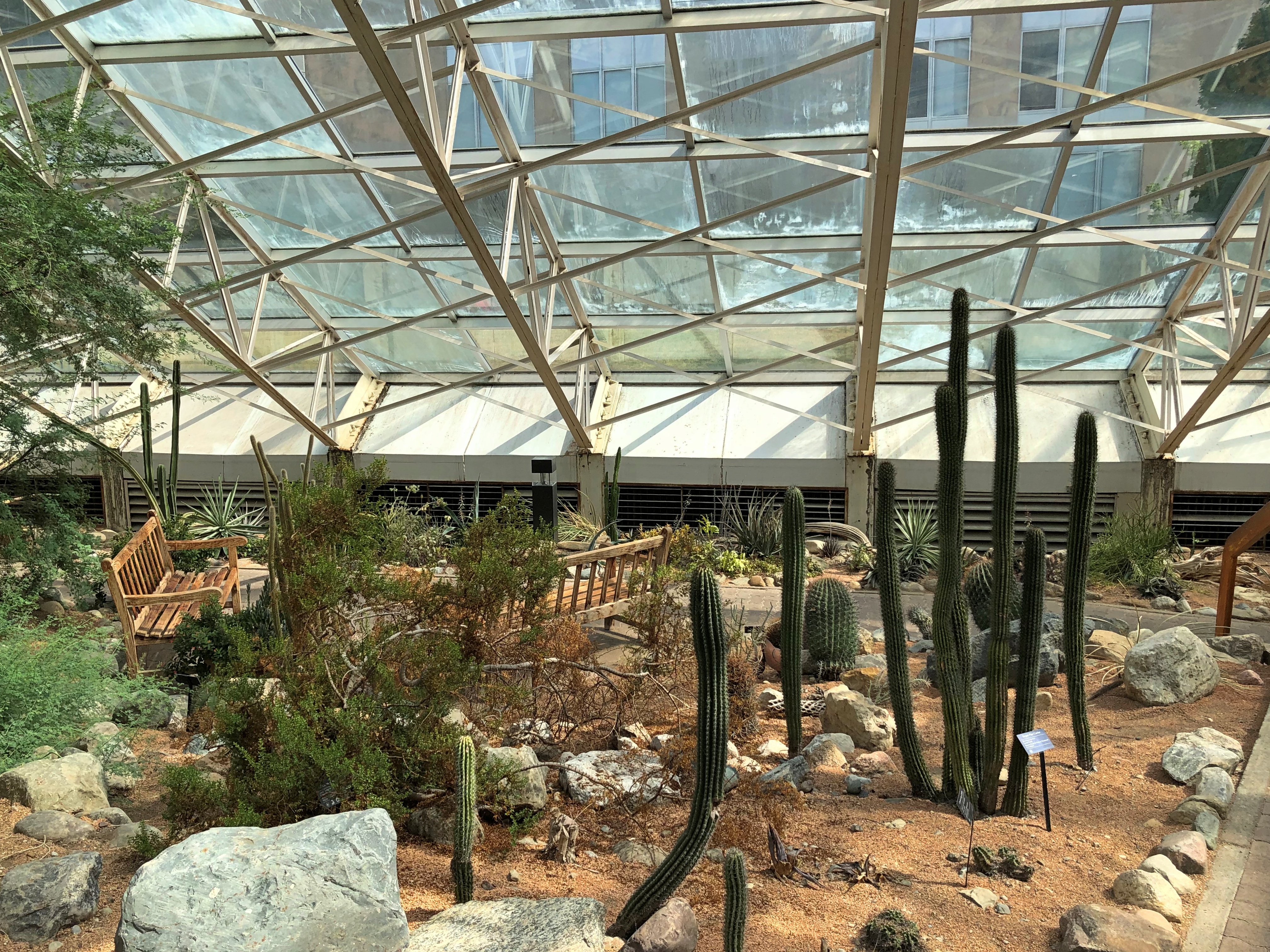
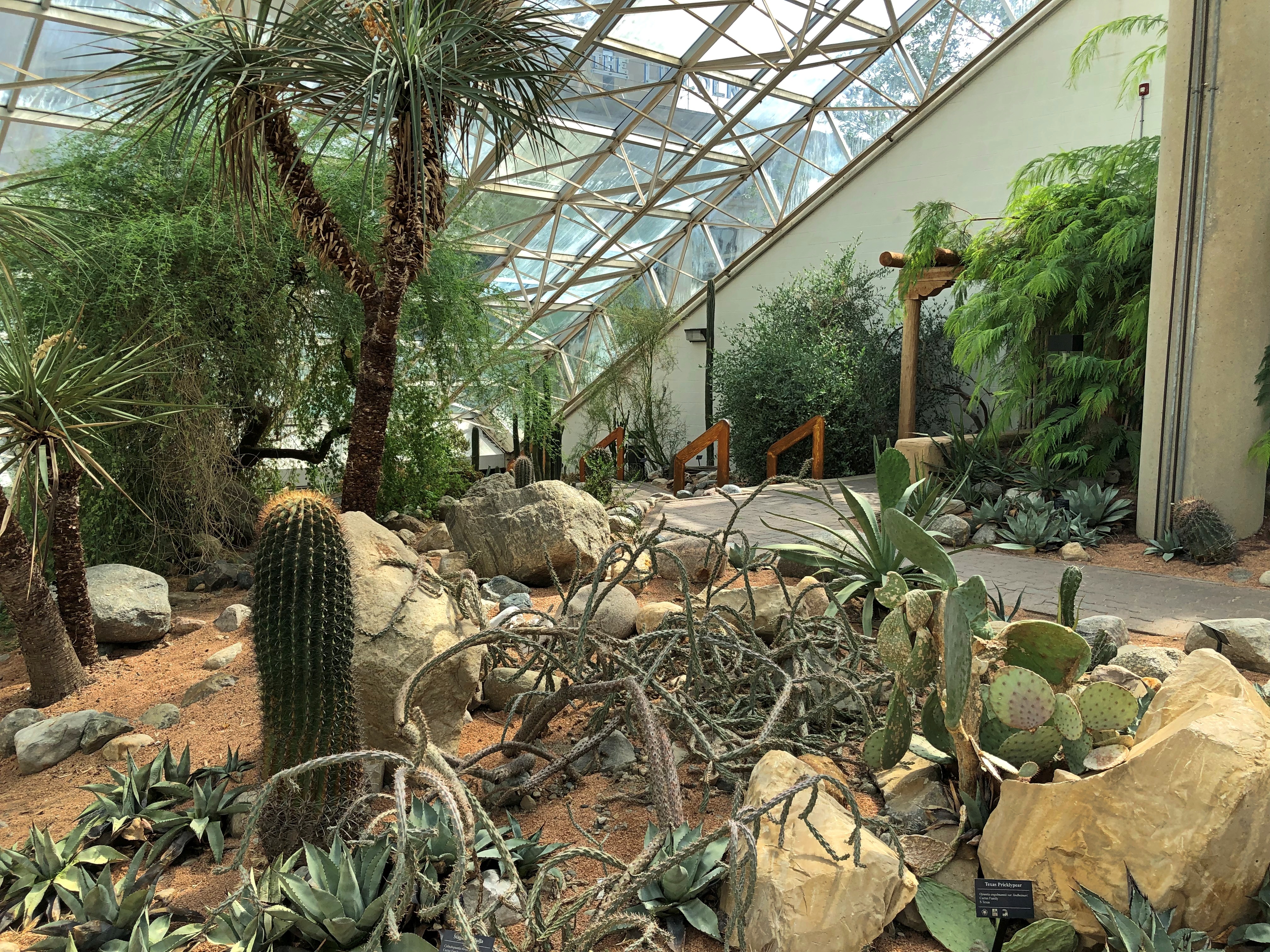
In the desert habitat, the plants are sparser, as you’d expect, but no less interesting.Foellinger-Freimann Botanical Conservatory Foellinger-Freimann Botanical Conservatory

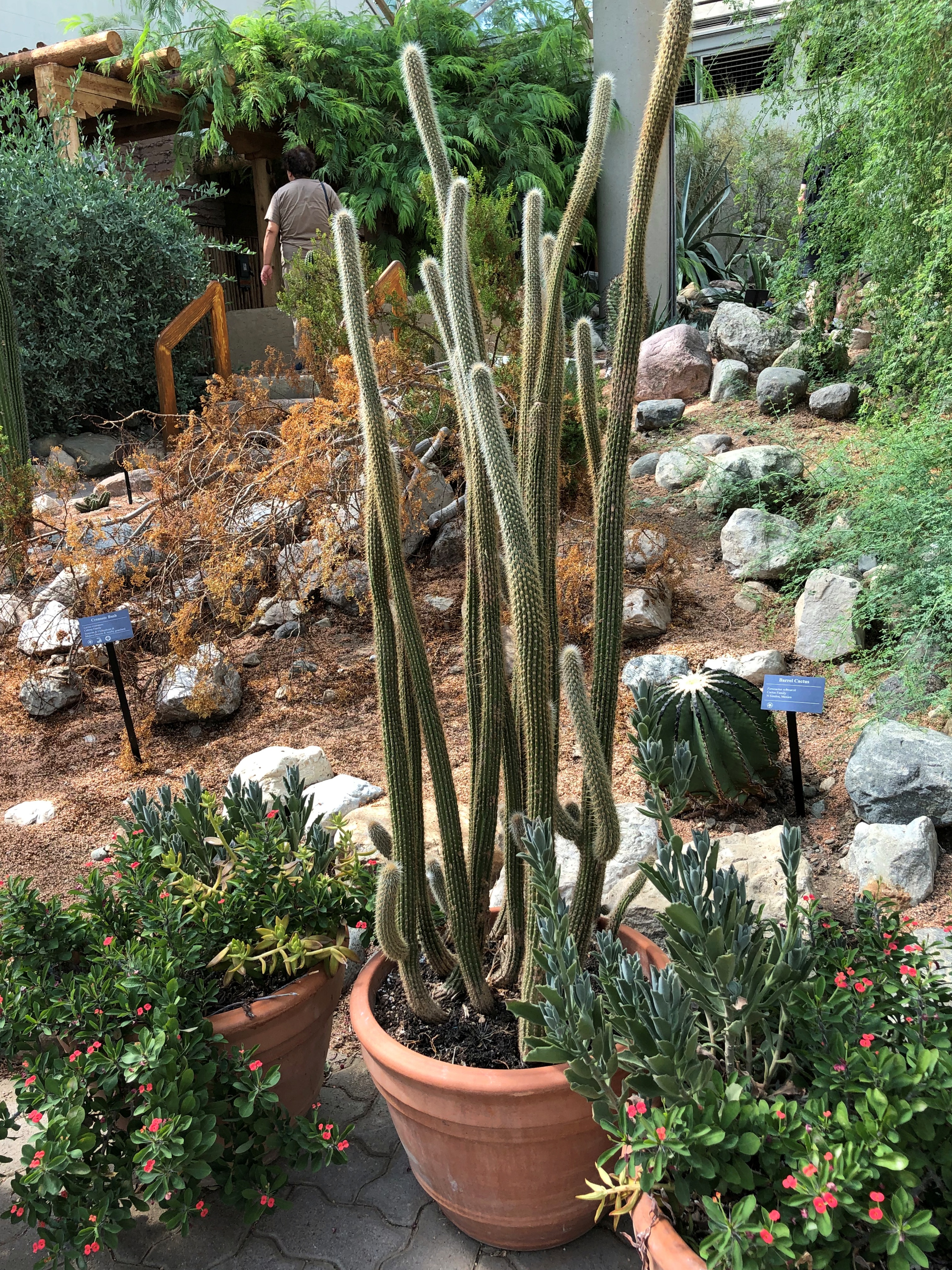
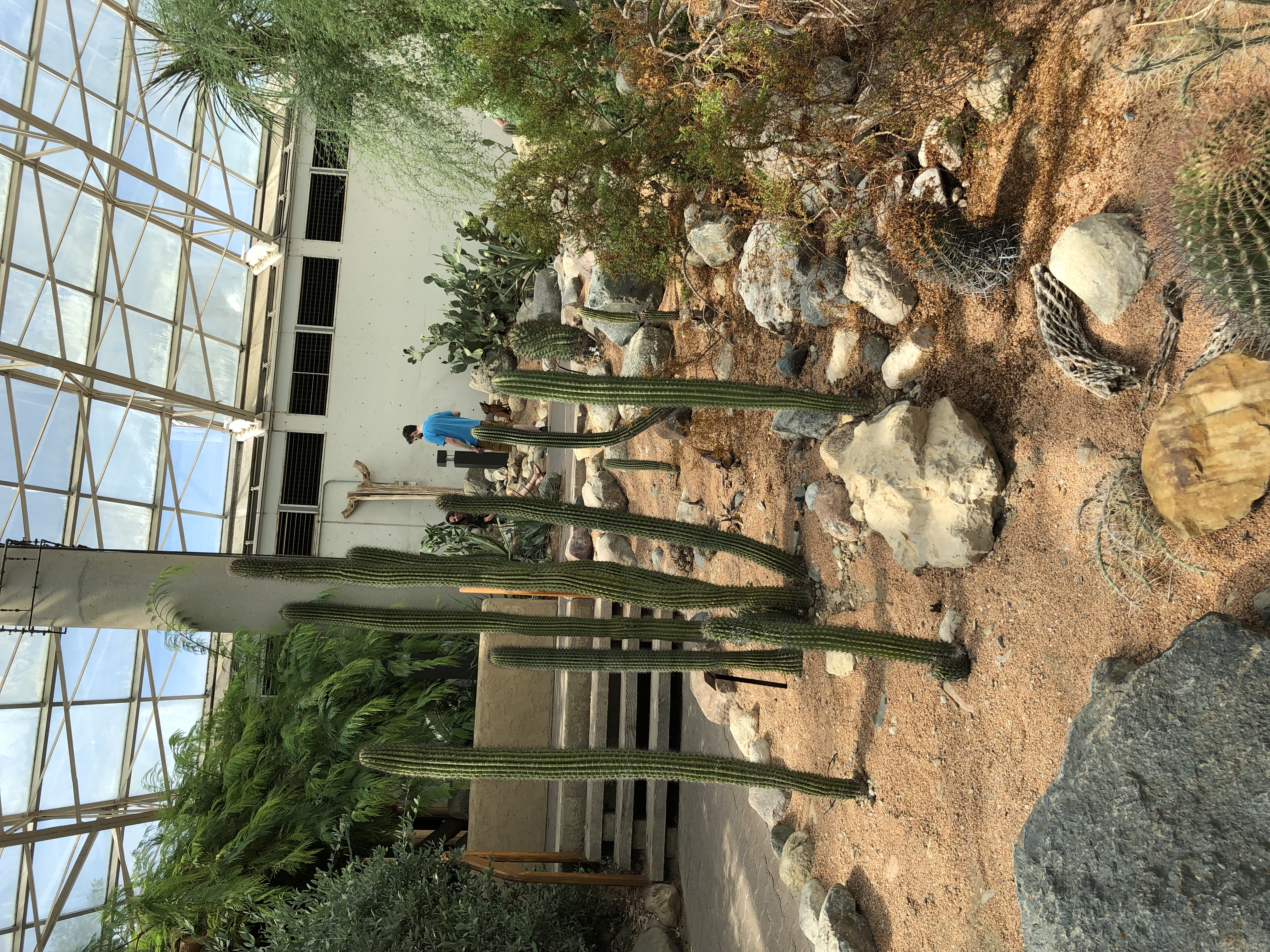
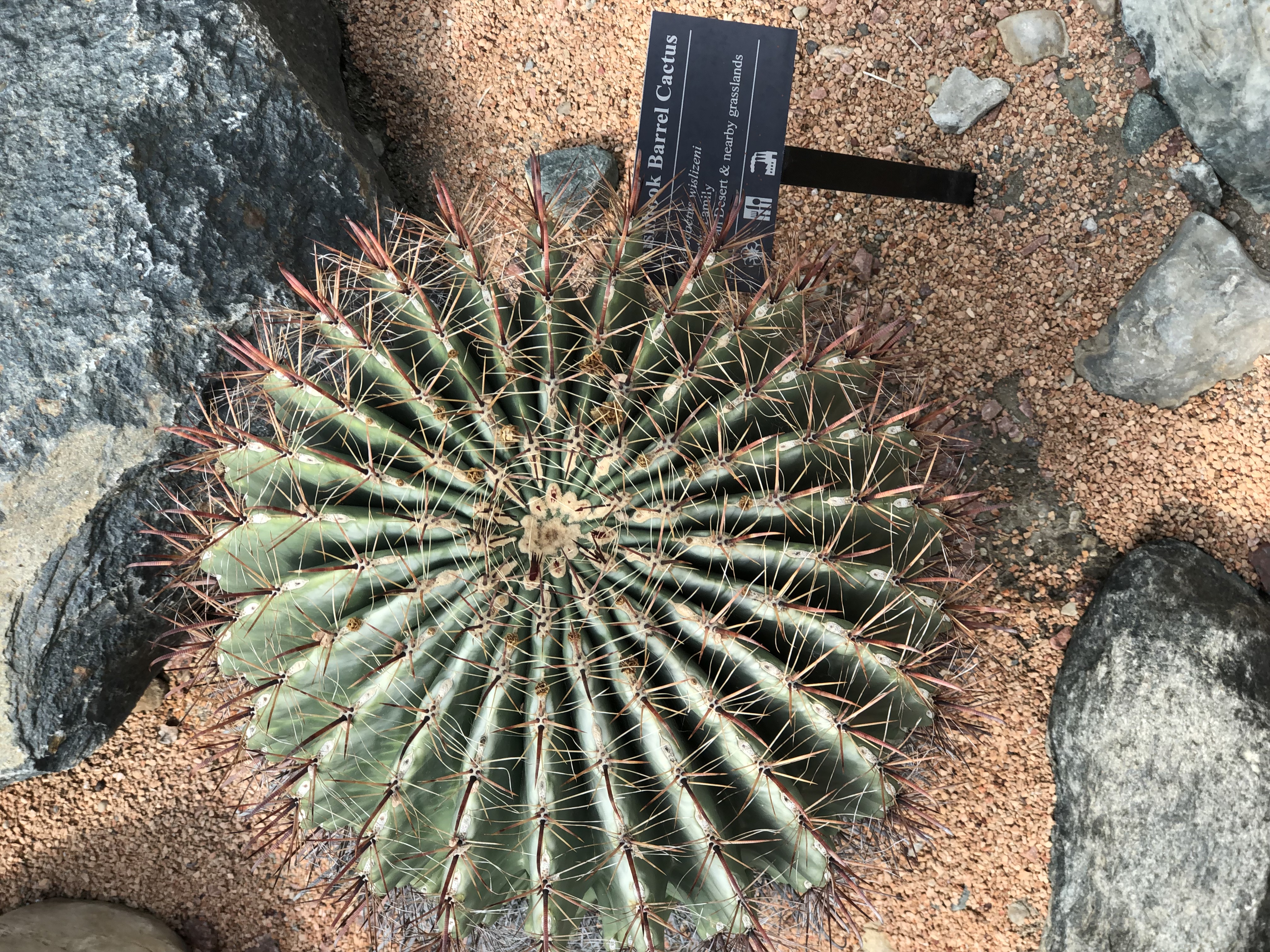
Various cacti, of course.Foellinger-Freimann Botanical Conservatory Foellinger-Freimann Botanical Conservatory

Including the fishhook barrel cactus, a painful-sounding name if there ever was one.
Foellinger-Freimann Botanical Conservatory

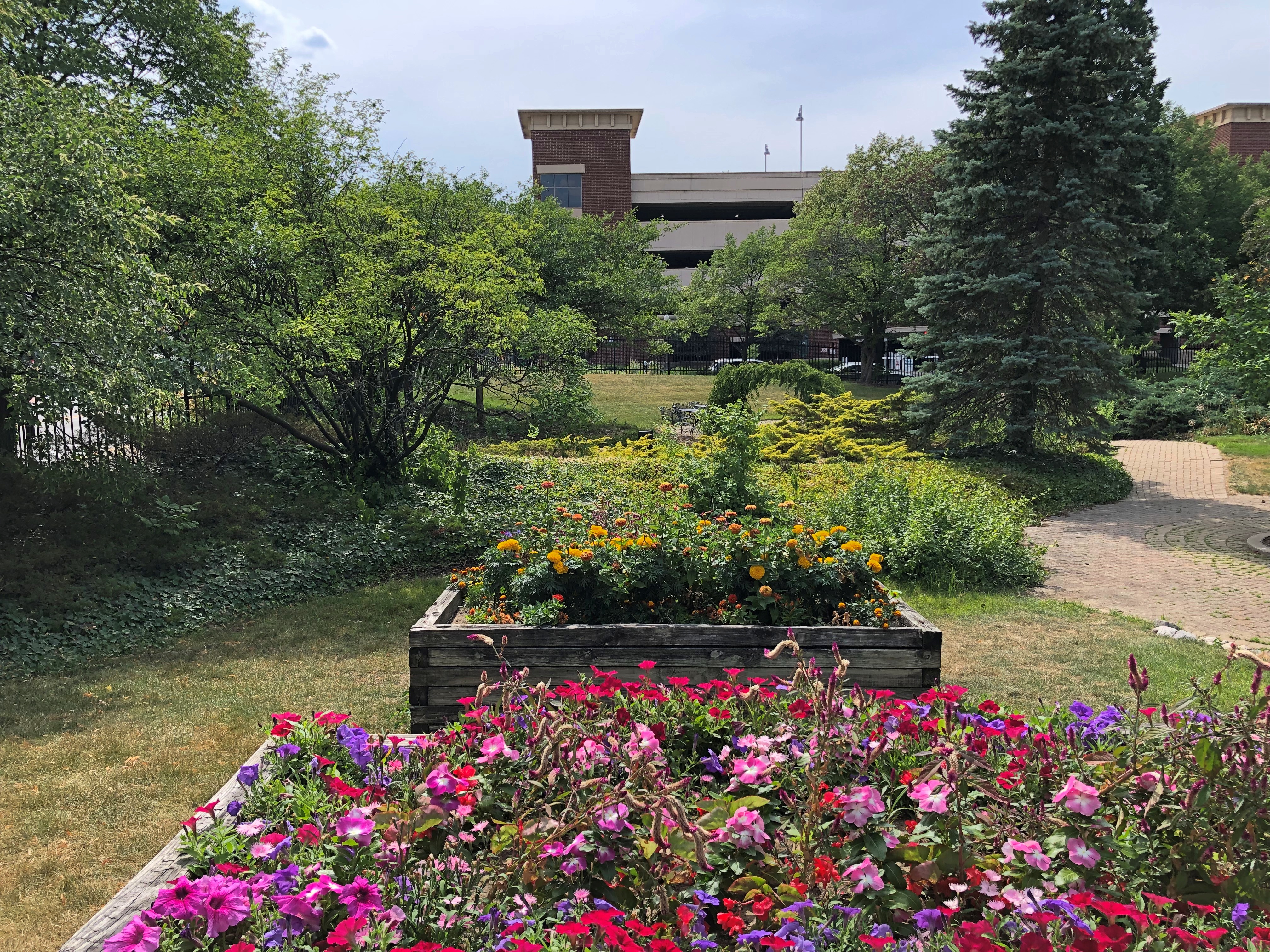
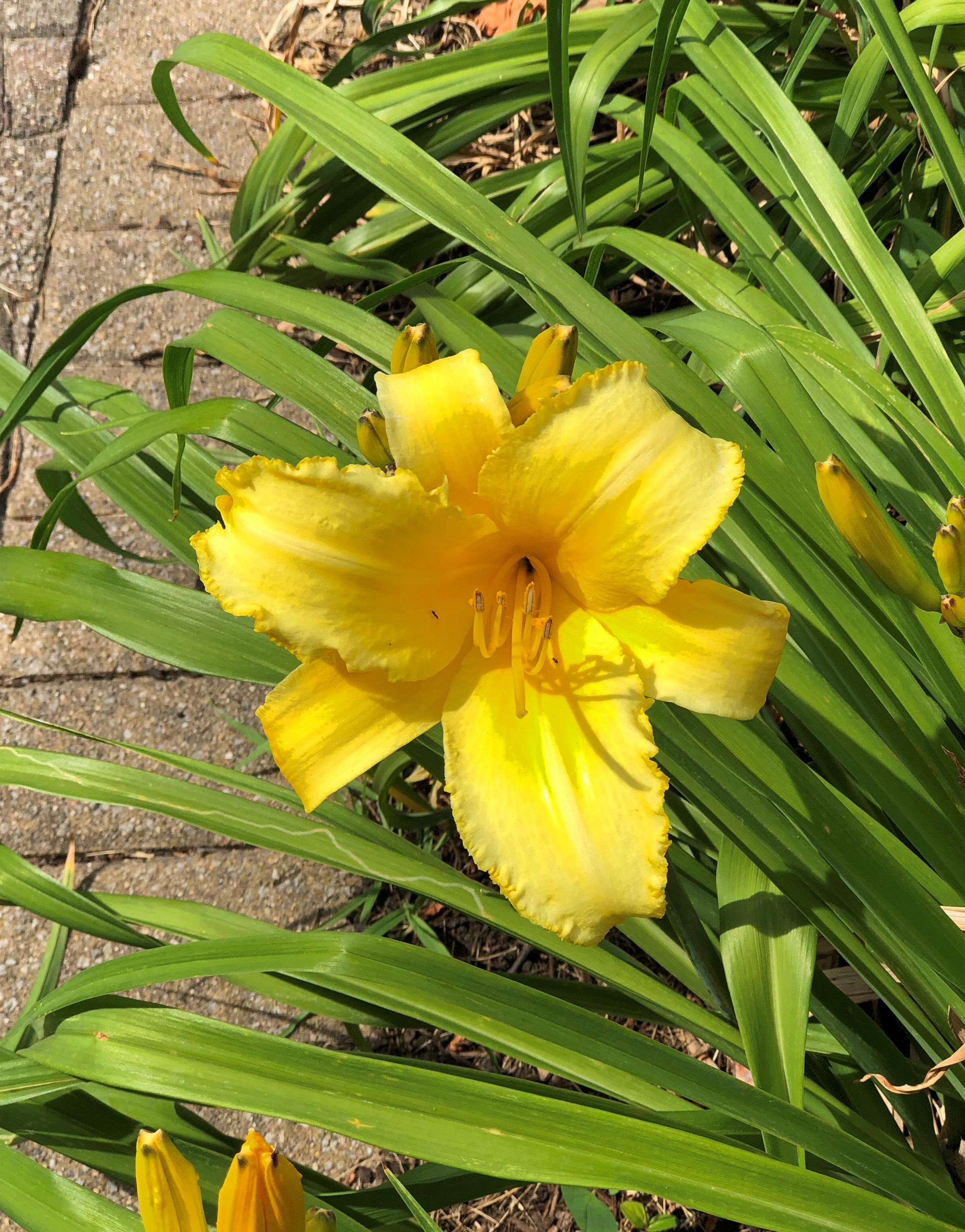
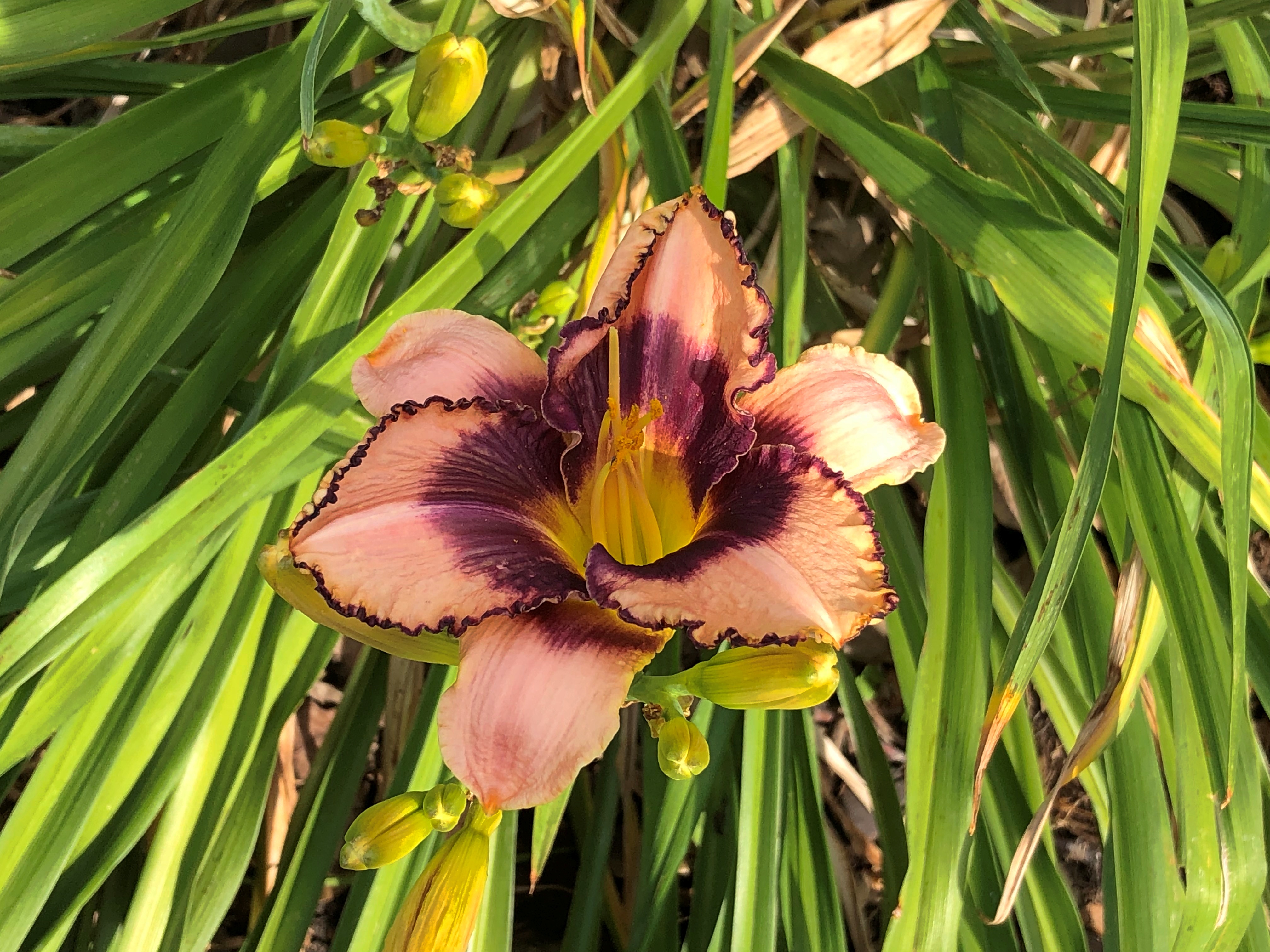
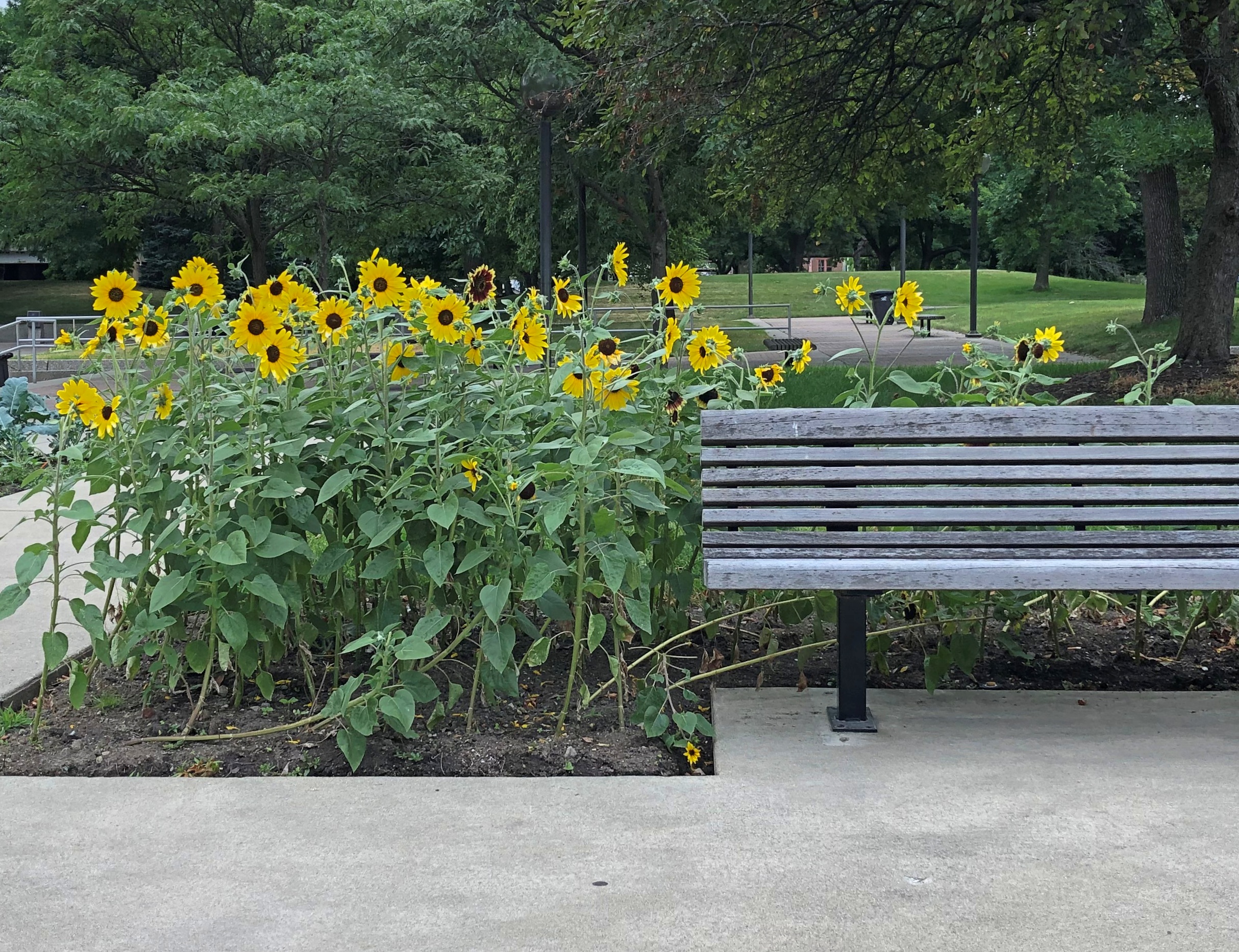
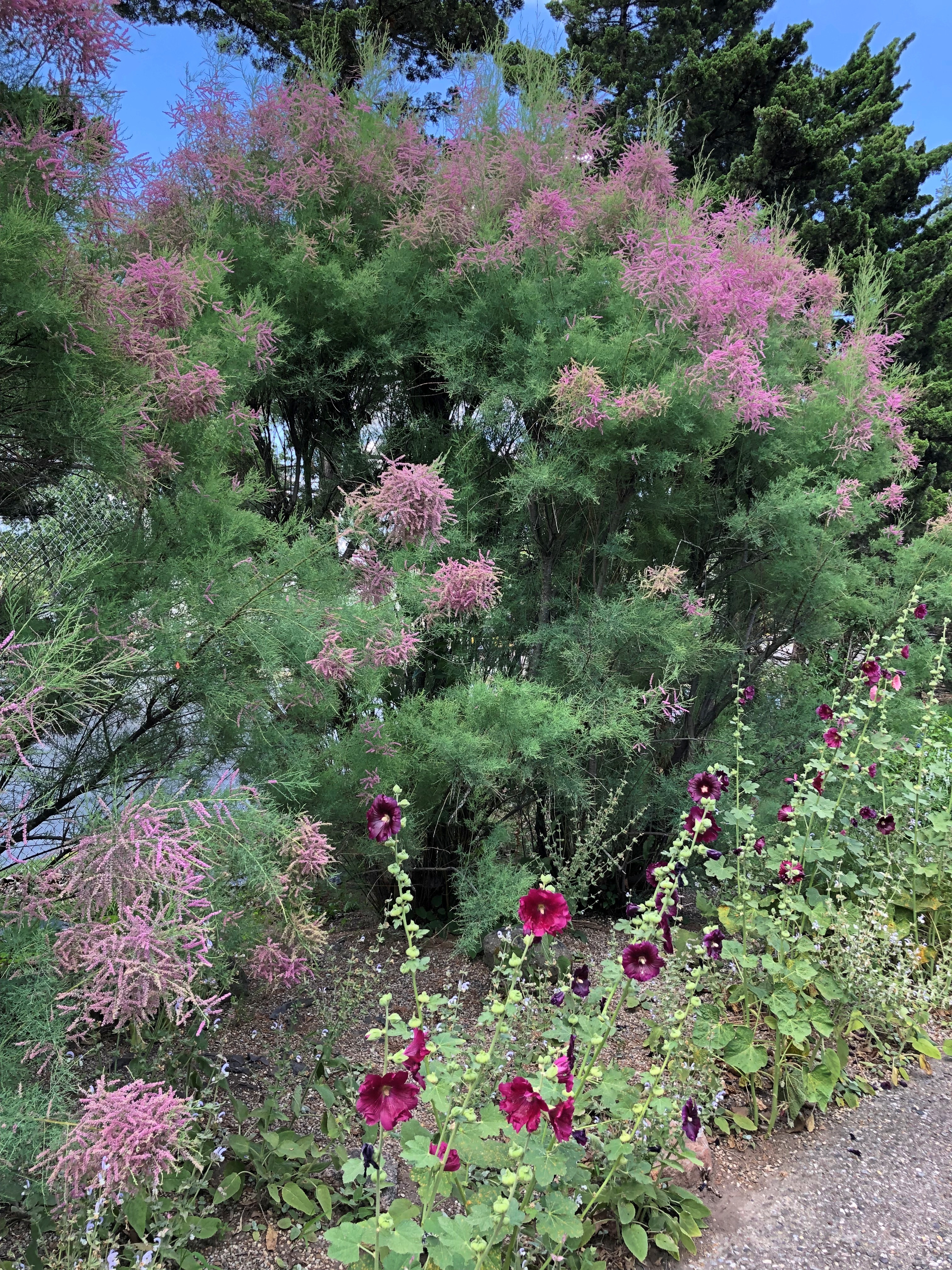
Outside, it was summer and the gardens weren’t short on blossoms.Foellinger-Freimann Botanical Conservatory Foellinger-Freimann Botanical Conservatory Foellinger-Freimann Botanical Conservatory

Just before heading back inside, I caught this view.
Foellinger-Freimann Botanical Conservatory

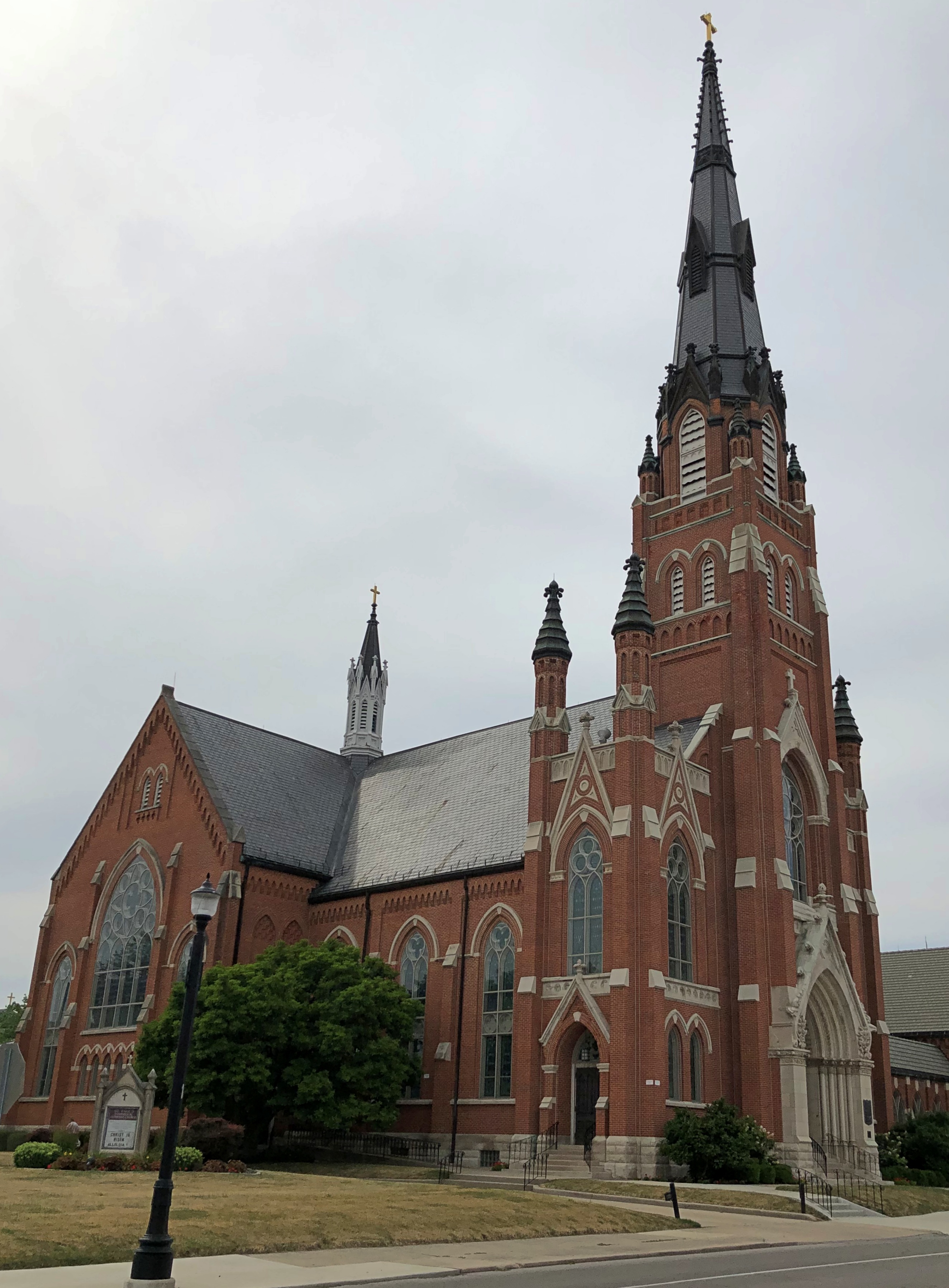
The Cathedral of the Immaculate Conception, which is across the street, looks like it’s inspecting the glass of Foellinger-Freimann.

Downtown Fort Wayne

RIP, Will Friend. I didn’t know him well, but did meet him at events over the years, and we got along. I didn’t realize he was quite that young.

Toward the end of the afternoon on Saturday, we took a walk in downtown Fort Wayne. Not long after parking the car, this caught our attention.Wells Street Bridge, Fort Wayne Wells Street Bridge, Fort Wayne

Not just any pedestrian bridge, but the historic Wells Street Bridge over the St. Marys River. A sign on the 1884 truss bridge names the Wrought Iron Bridge Company of Akron, Ohio, as the bridgebuilder.Wells Street Bridge, Fort Wayne

For nearly 100 years, vehicular traffic crossed the bridge, but in 1982 it became a pedestrian walkway. A view from the bridge, toward a less-developed part of the city.Wells Street Bridge, Fort Wayne

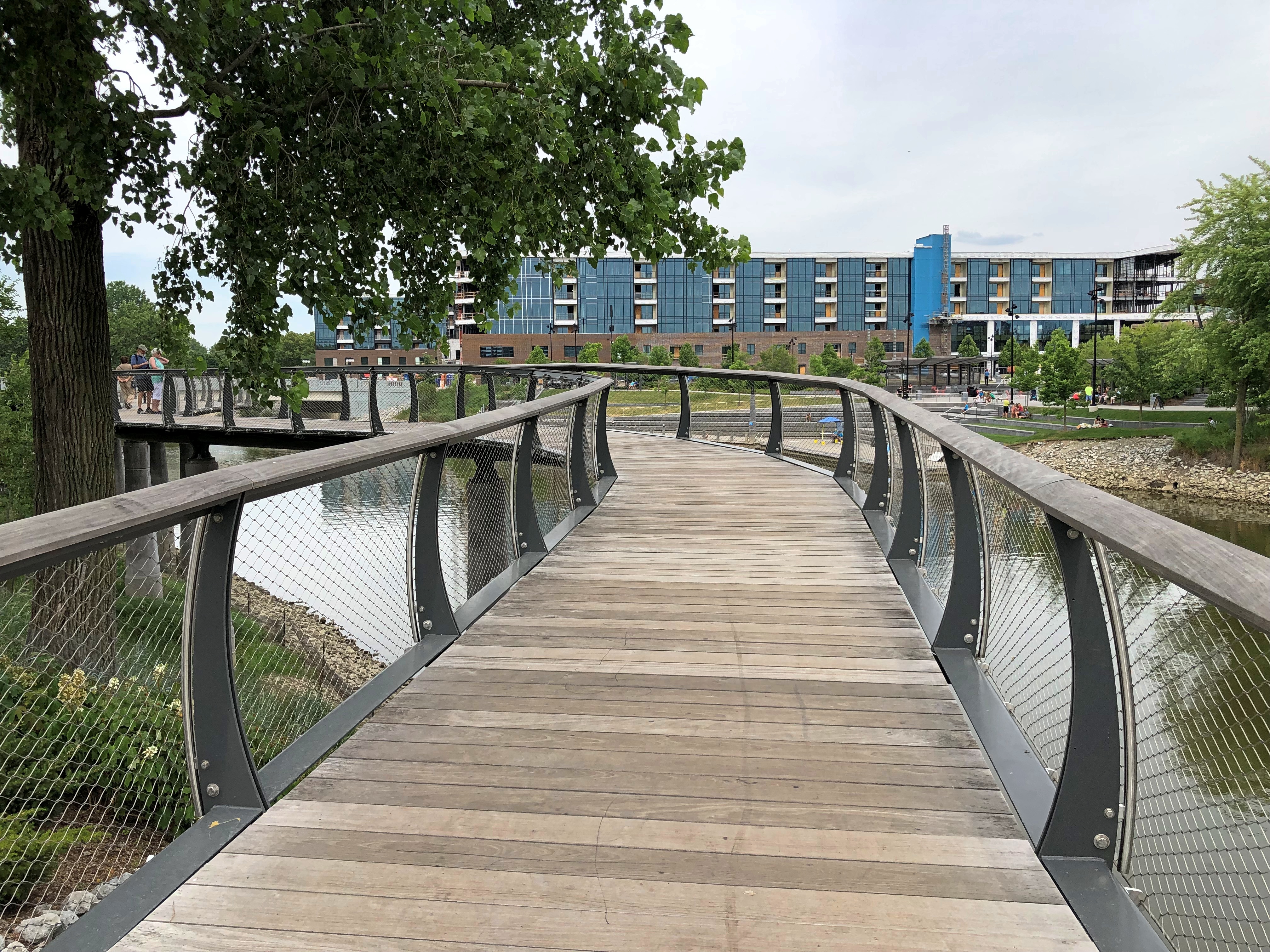
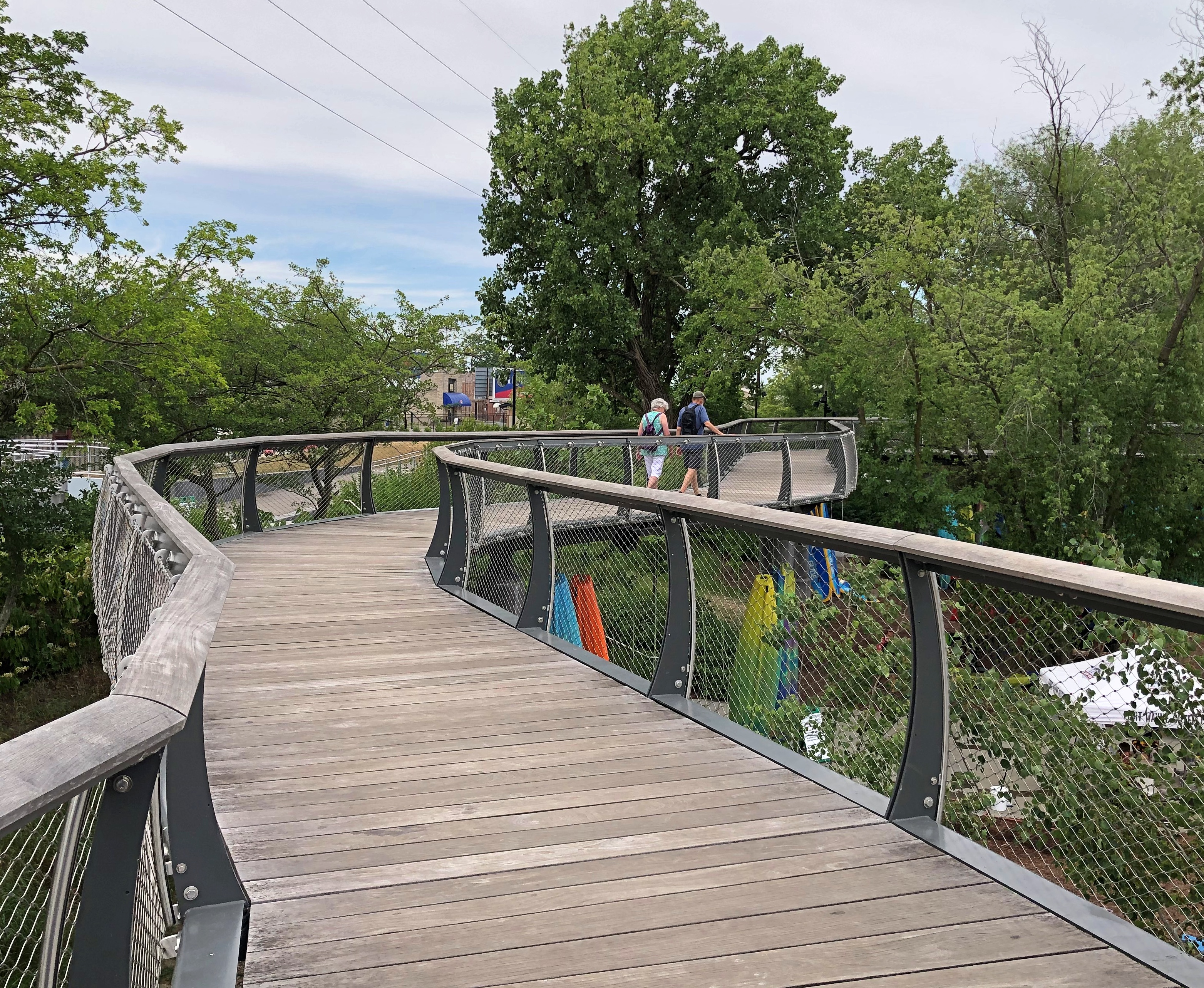
After you cross the bridge, there is another elevated walkway, this one over a small section of riverbank. The blue building in the background is a block of riverside apartments, under construction. Move to Fort Wayne, young members of the laptop class. While rents don’t exactly seem cheap there — I don’t think anywhere counts as that anymore — there have to better deals than in the large cities.Riverwalk, Fort Wayne Riverwalk, Fort Wayne

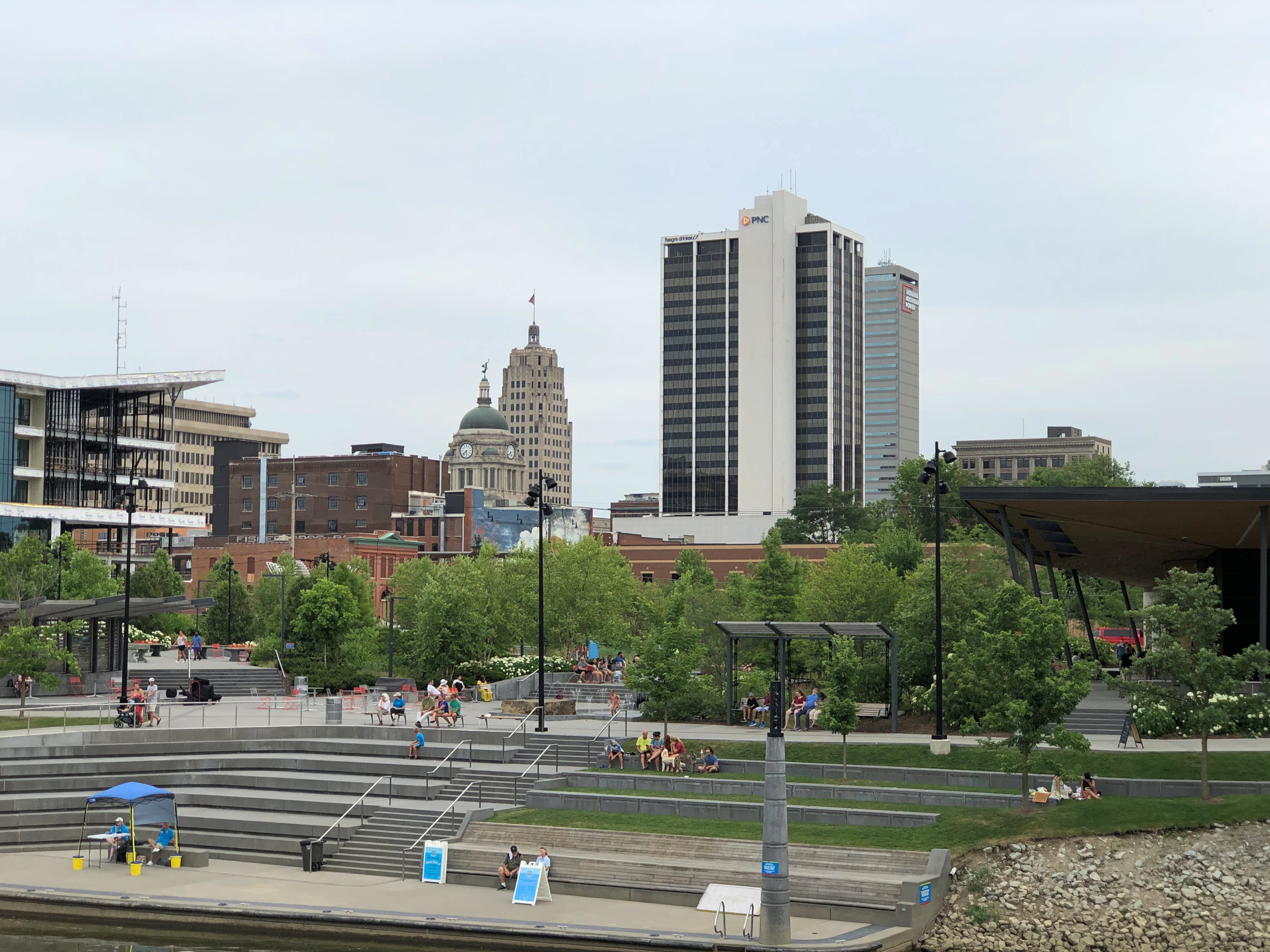
The walk offers a view of the Fort Wayne — skyline isn’t quite the word. A view of a few  larger buildings in the background, with Promenade Park in the foreground. We soon  rested a while at that park, lounging around on iron chairs at an iron table, drinking soda. Rest: always an essential part of any walkabout.Downtown Fort Wayne

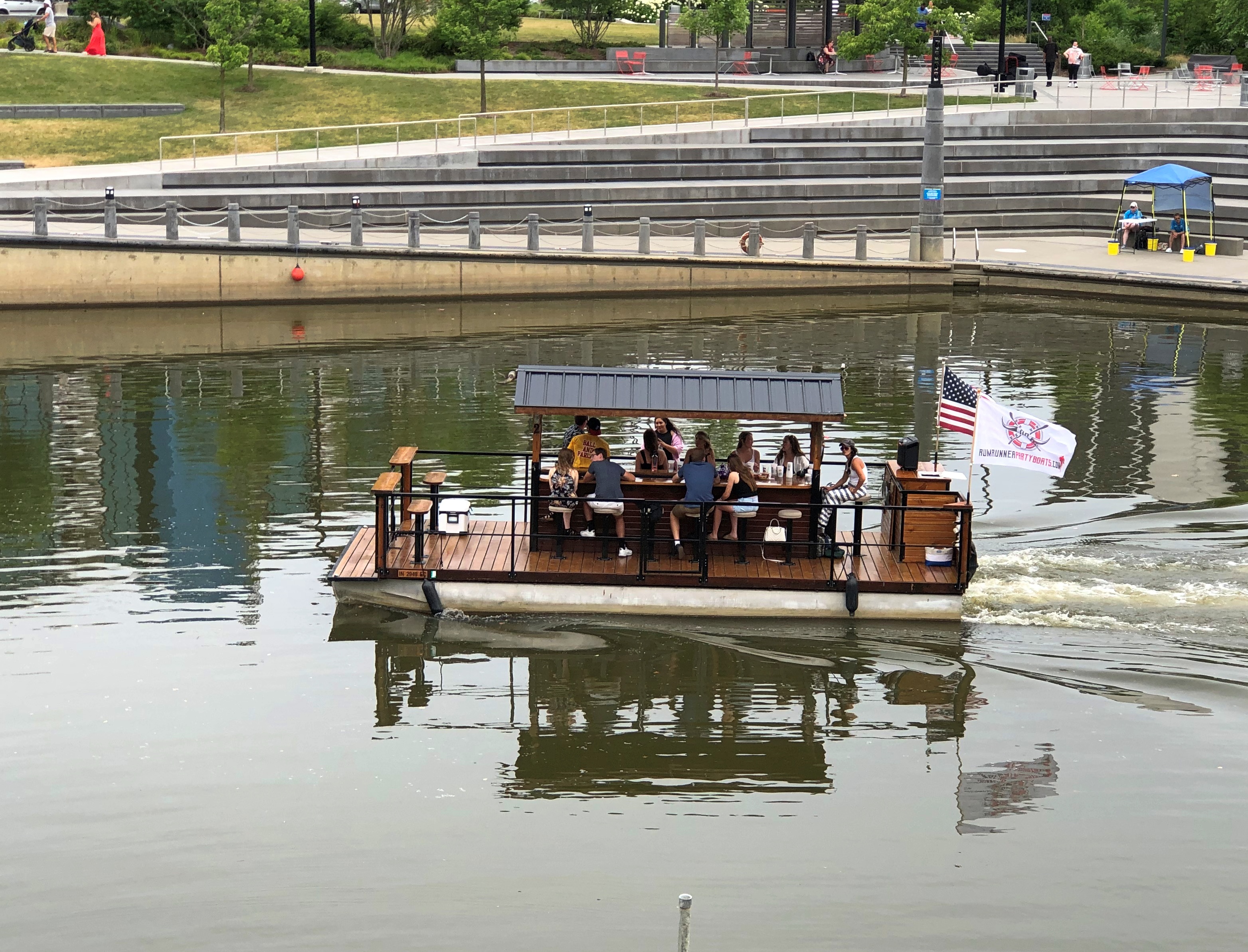
Occasional party boats ply the St. Marys.Downtown Fort Wayne

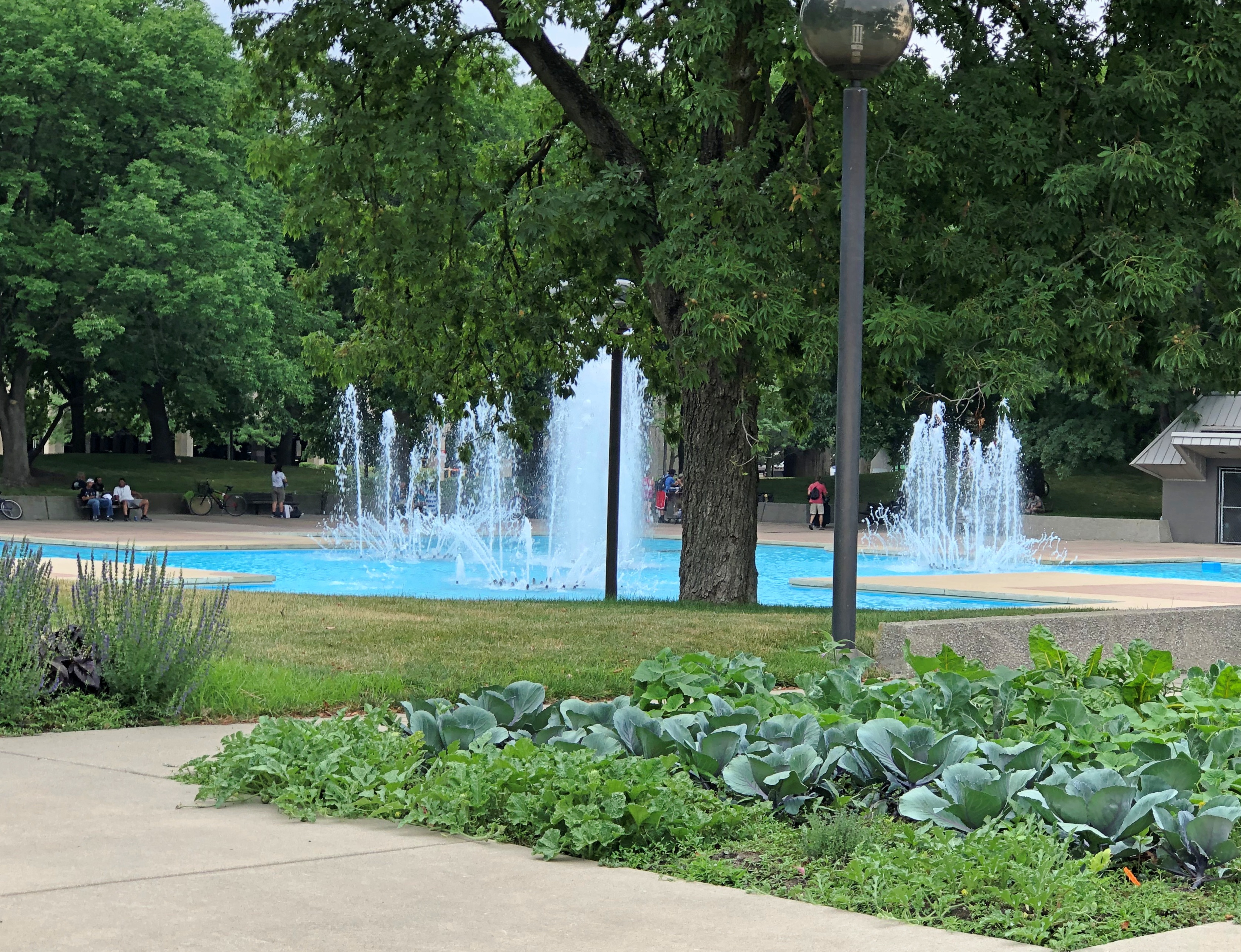
Away from the river is Freimann Square, home of the aforementioned Anthony Wayne statue, as well as a fountain and flower beds. Downtown Fort Wayne
Downtown Fort Wayne

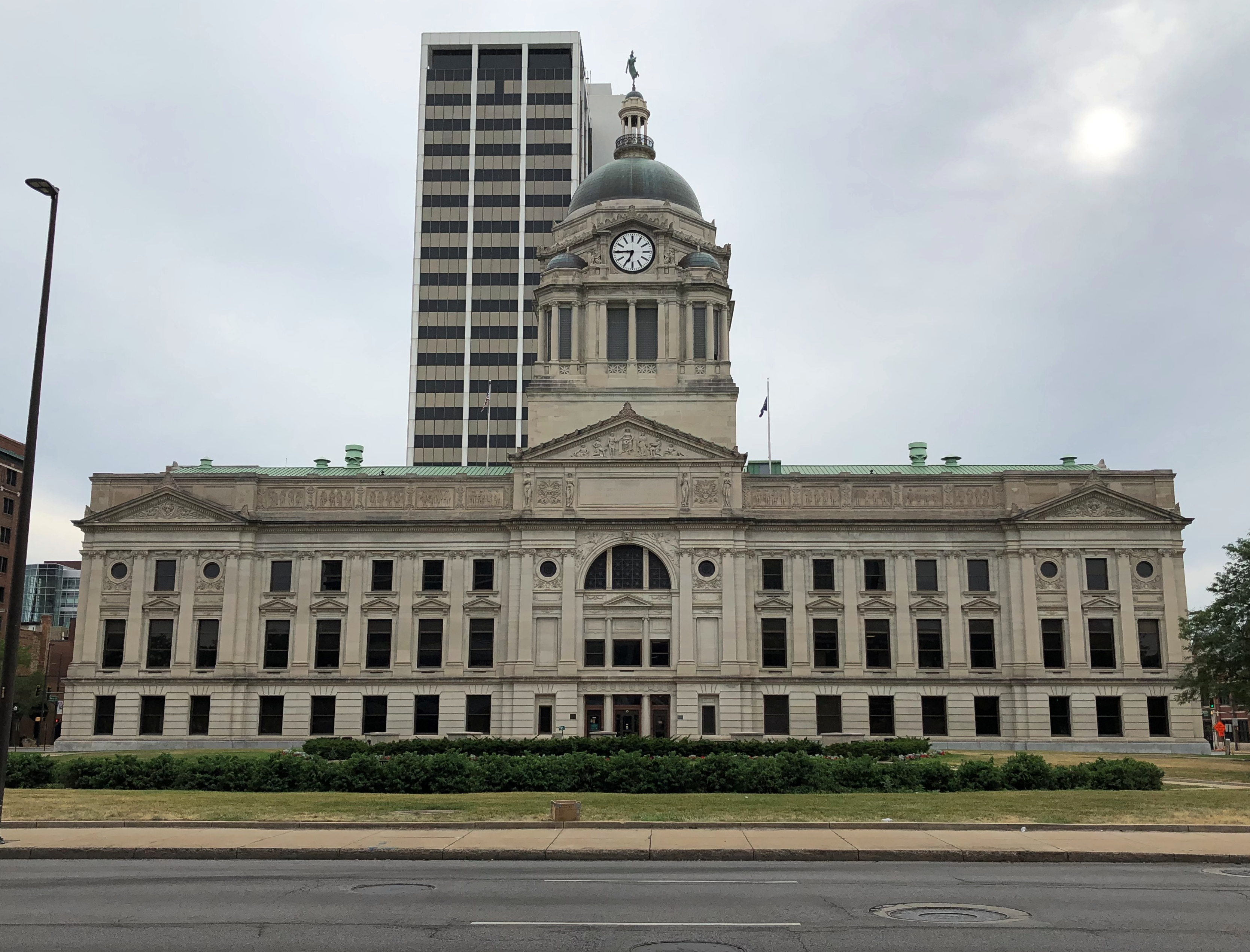
Not far is the Allen County Courthouse, designed around the turn of the 20th century by Hoosier architect Brentwood Tolan.Courthouse, Downtown Fort Wayne Courthouse, Downtown Fort Wayne

The figure on top, I’ve read, is a copper Lady Liberty that turns, as a vane does, with the wind.

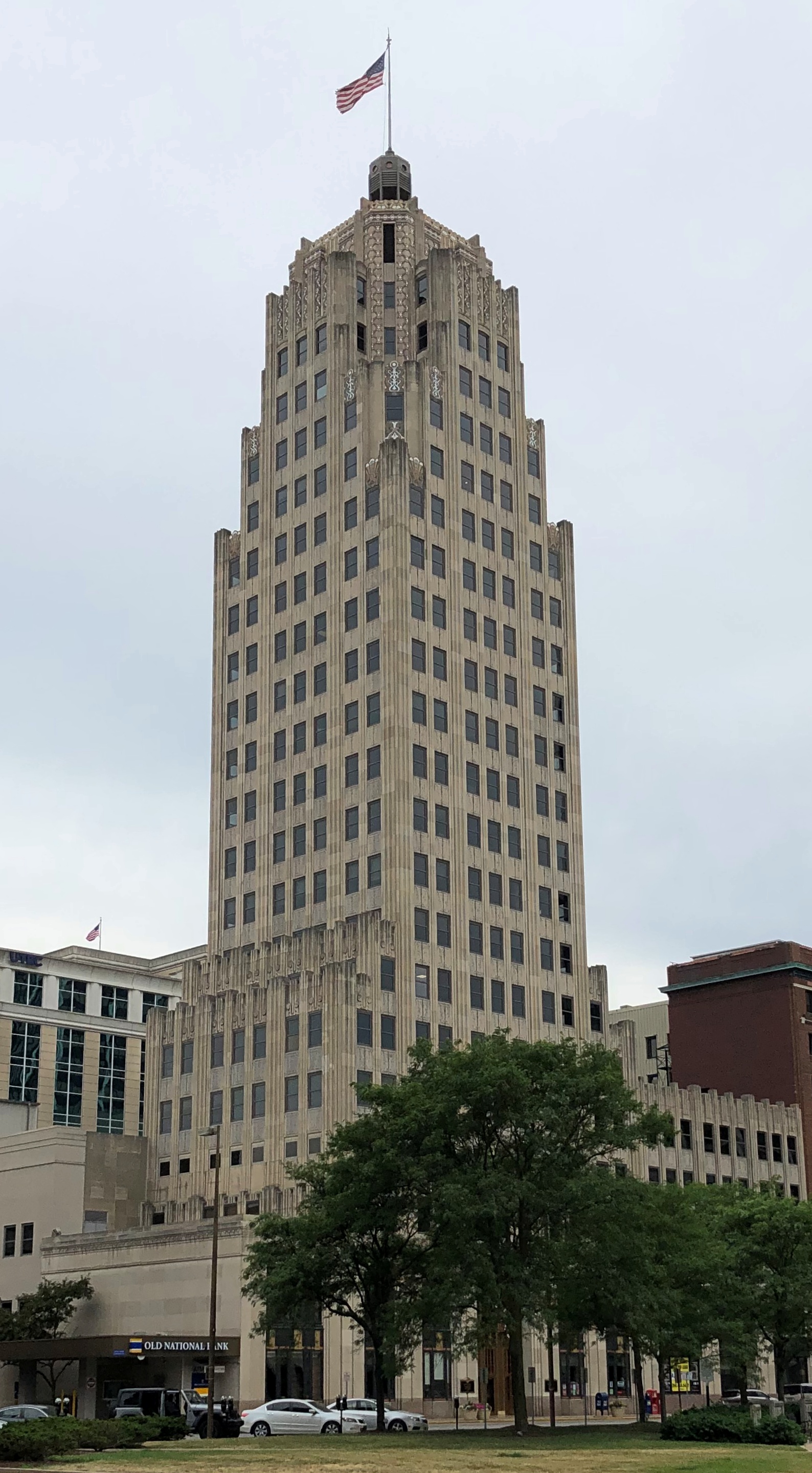
A few decades pass and you get art deco. In this case, the Lincoln Bank Tower, another of those structures started just in time — 1929. Design by another Hoosier architect, Alvin Strauss.Lincoln Bank Building, Fort Wayne
It could have been the German American Bank Tower, but for some hard-to-figure reason the bank changed its name in 1918.

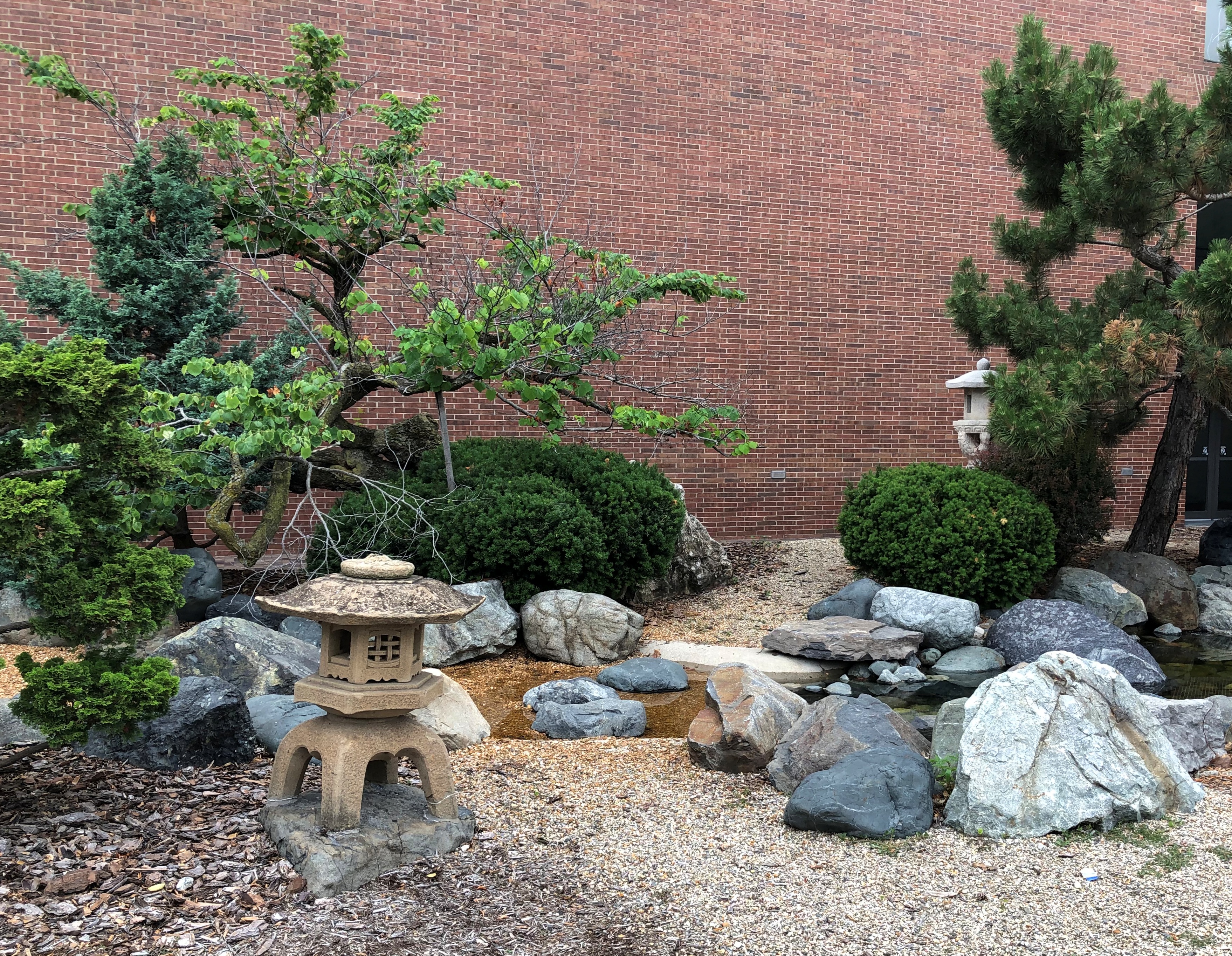
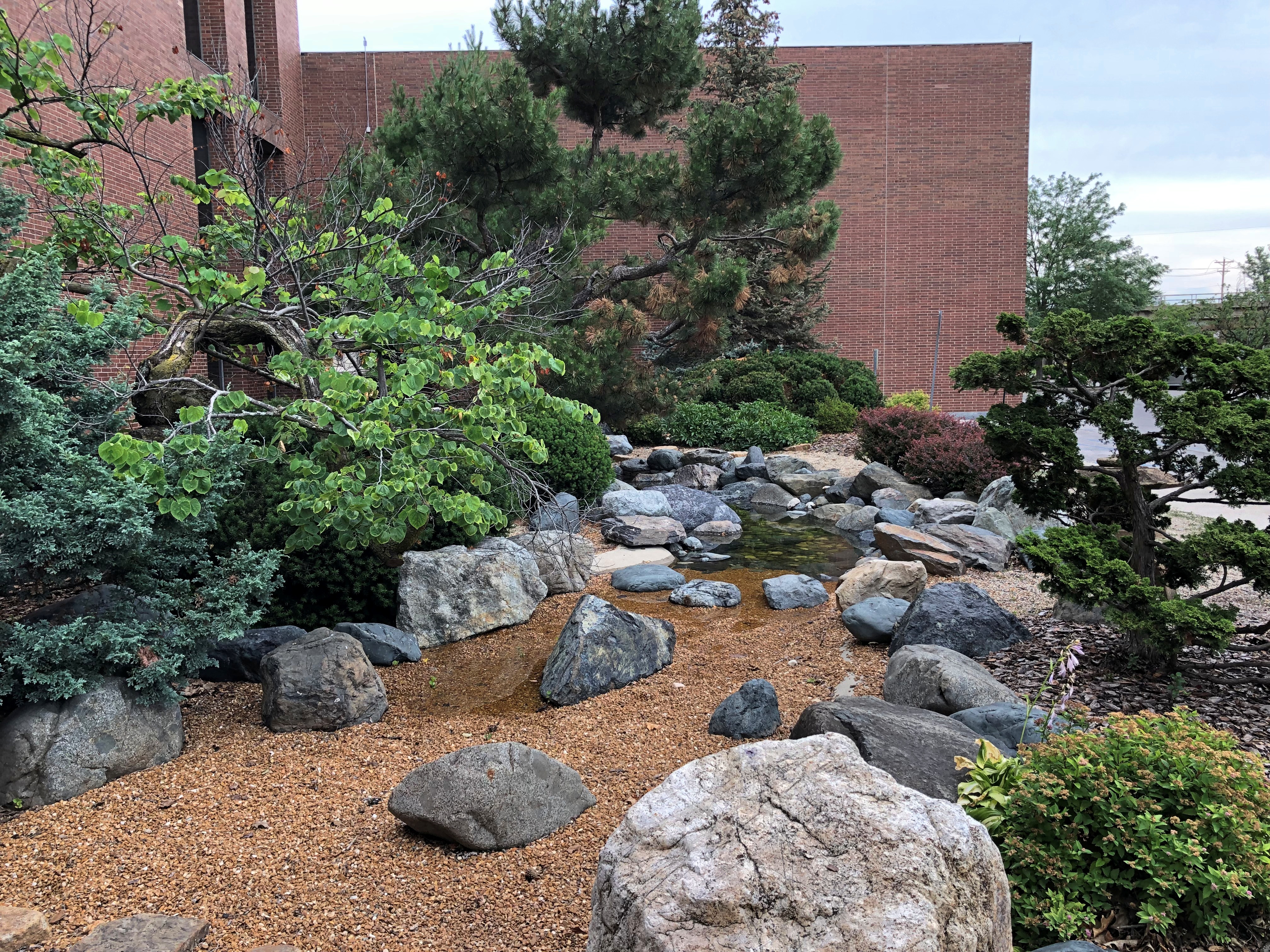
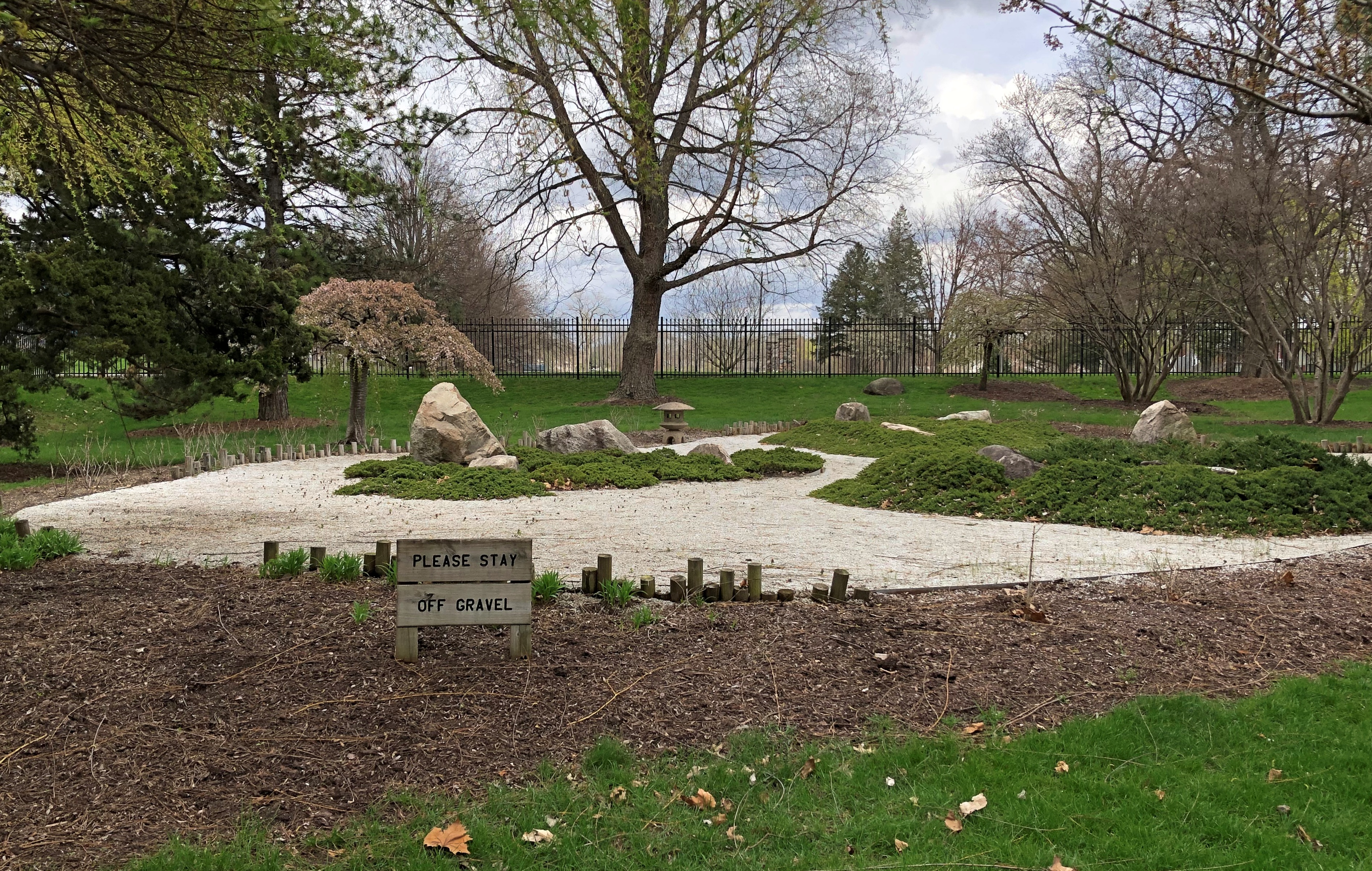
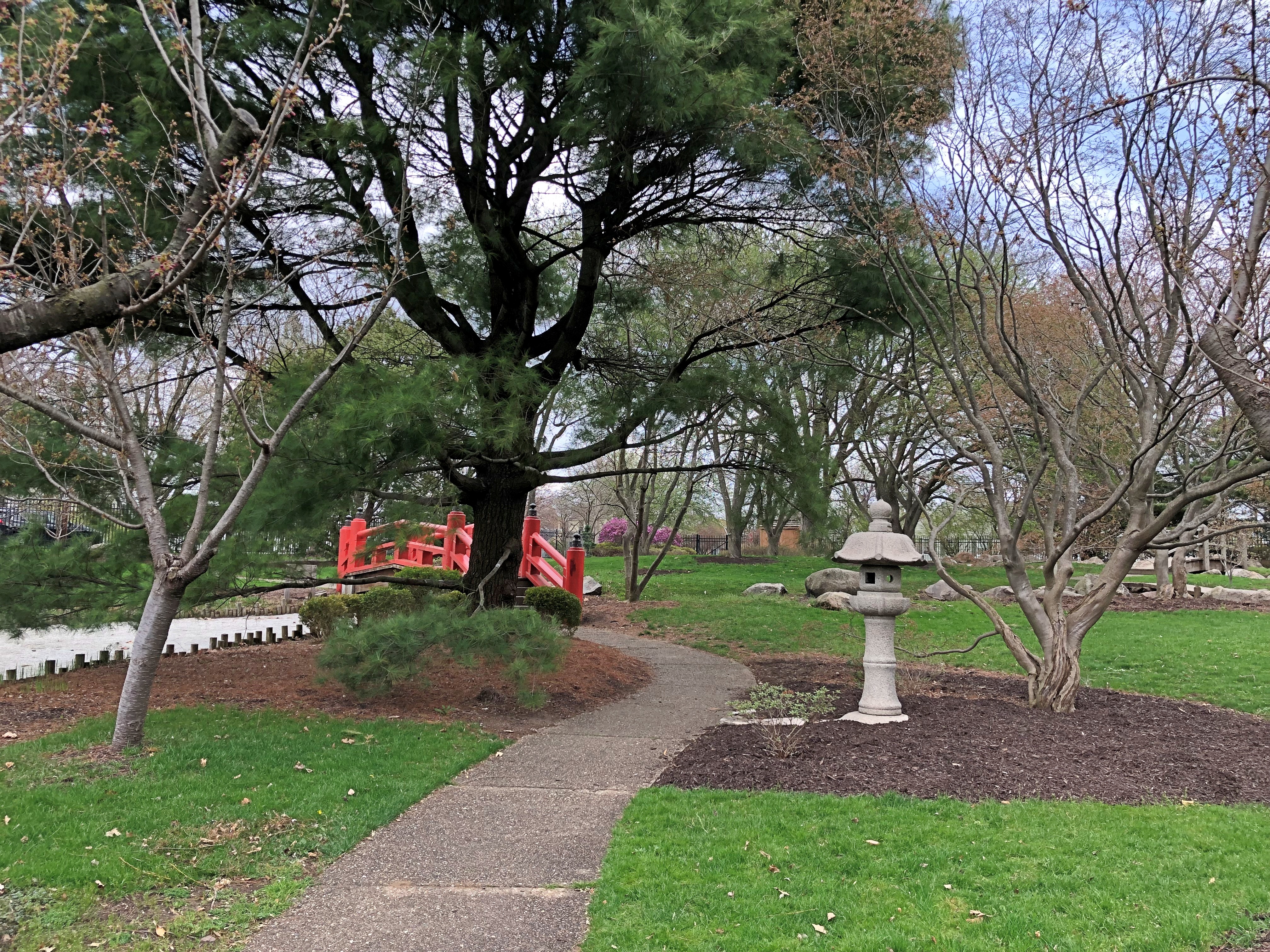
The Japanese Friendship Garden, on a tenth of an acre near the Fort Wayne Museum of Art, was gift of one of Fort Wayne’s sister cities, Takaoka. I had to look it up, even though I probably passed through it on a train the fall we went to Hida-Takayama. I suspect most Japanese, faced with the name Fort Wayne, would have to look it up, too.

The museum was closed when we got there, but the garden is always open. Bonus: the garden also features a 2002 time capsule under a rock, slated for a 2027 opening.Friendship Japanese Garden, Fort Wayne Friendship Japanese Garden, Fort Wayne

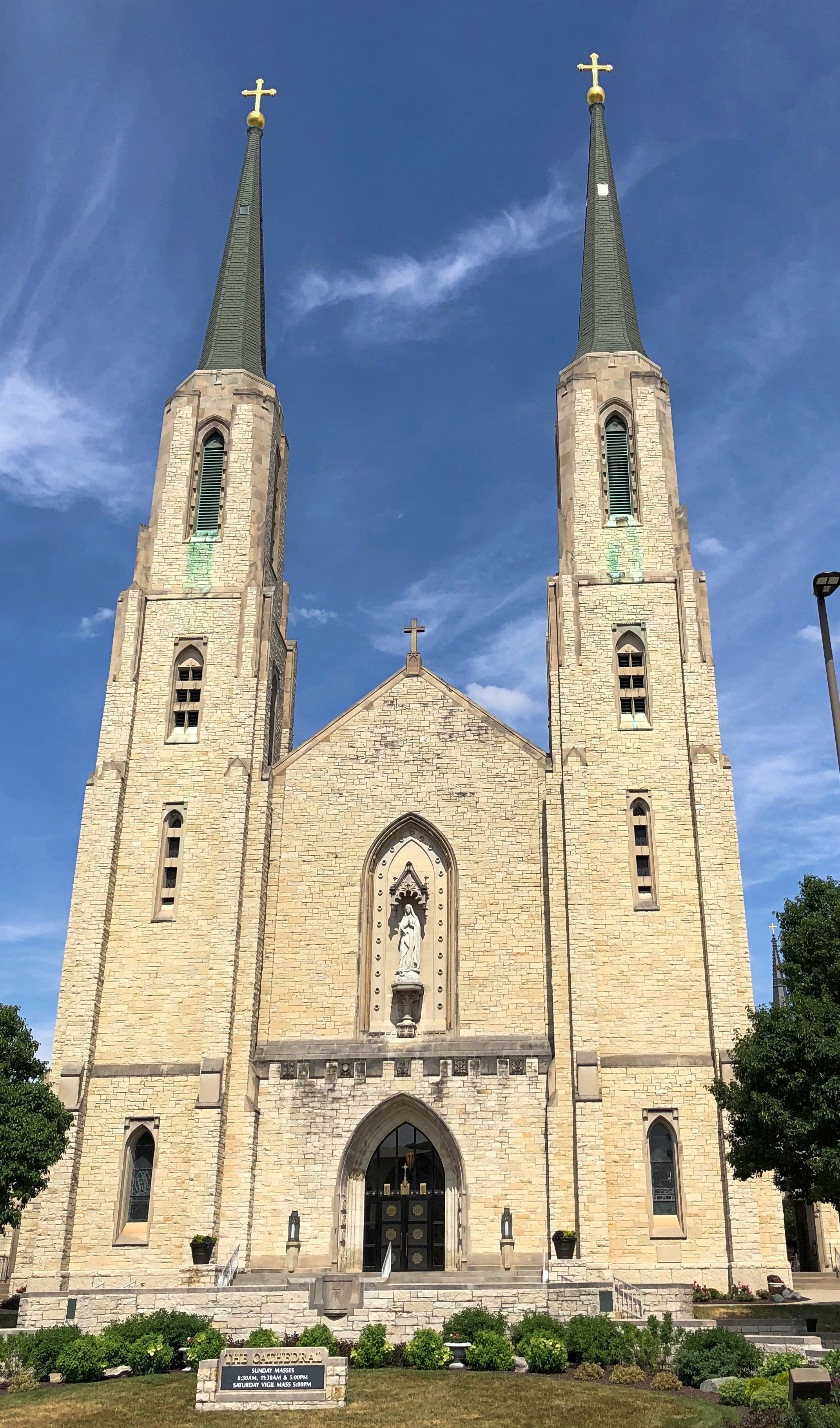
Elsewhere downtown: Cathedral of the Immaculate Conception. Dating from 1860, it is the oldest church building in Fort Wayne, with its Gothic design attributed to Rev. Msgr. Julian Benoit.Cathedral of the Immaculate Conception, Fort Wayne Cathedral of the Immaculate Conception, Fort Wayne

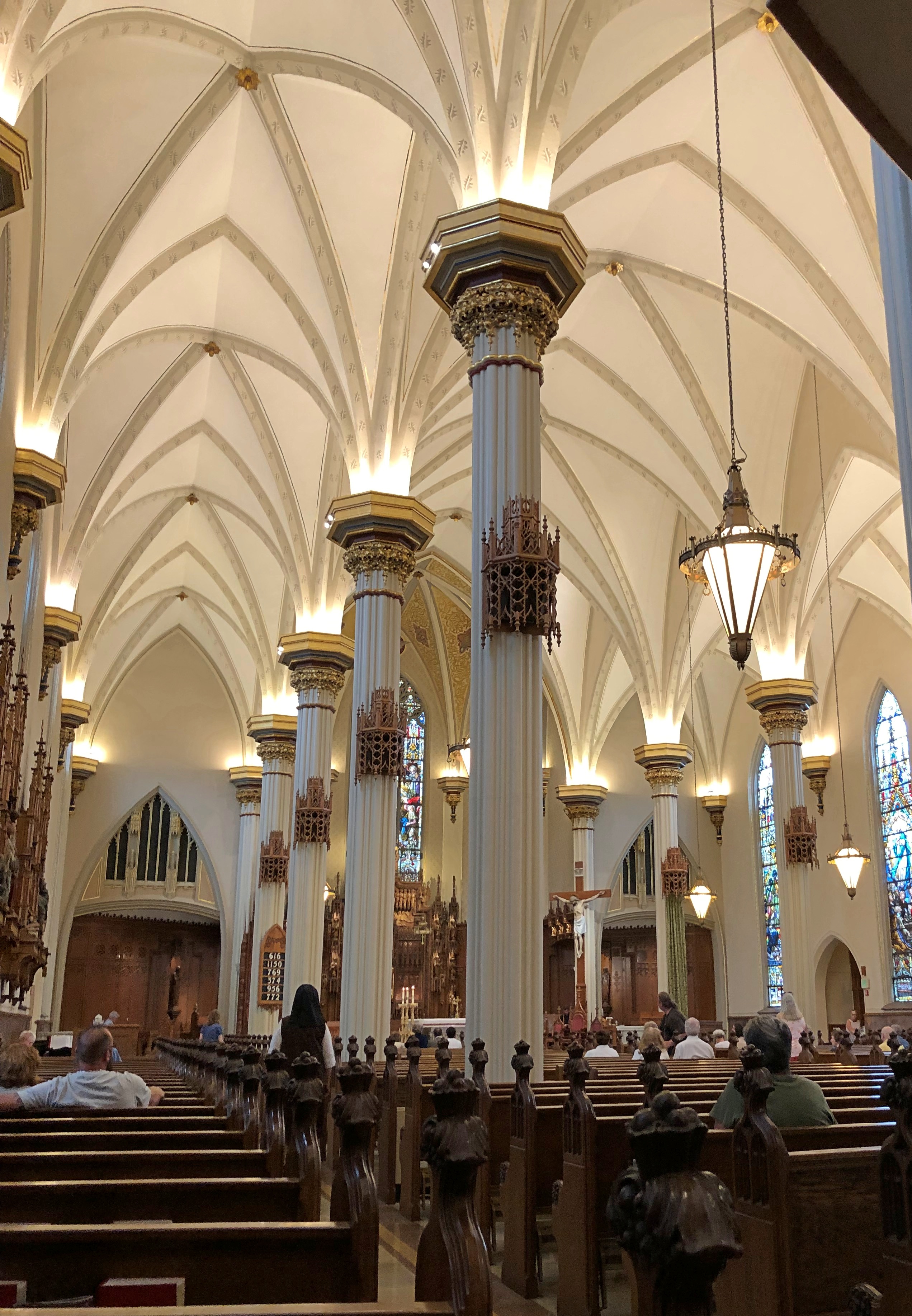
Vigil mass was about to start, but we got a peek.Cathedral of the Immaculate Conception, Fort Wayne
Cathedral of the Immaculate Conception, Fort Wayne

It isn’t the only sizable church around. A few blocks away is St. Paul’s Evangelical Lutheran Church. St. Paul's Evangelical Lutheran Church , Fort Wayne

Not open. Too bad, looks like quite a looker inside.

Northern Indiana Dash

Ah, high summer.

That’s in Dallas. I’m not there. Today’s high here was 79 F., a dip from a hot and muggy 90s-day on Tuesday. Several degrees of latitude will make that difference.

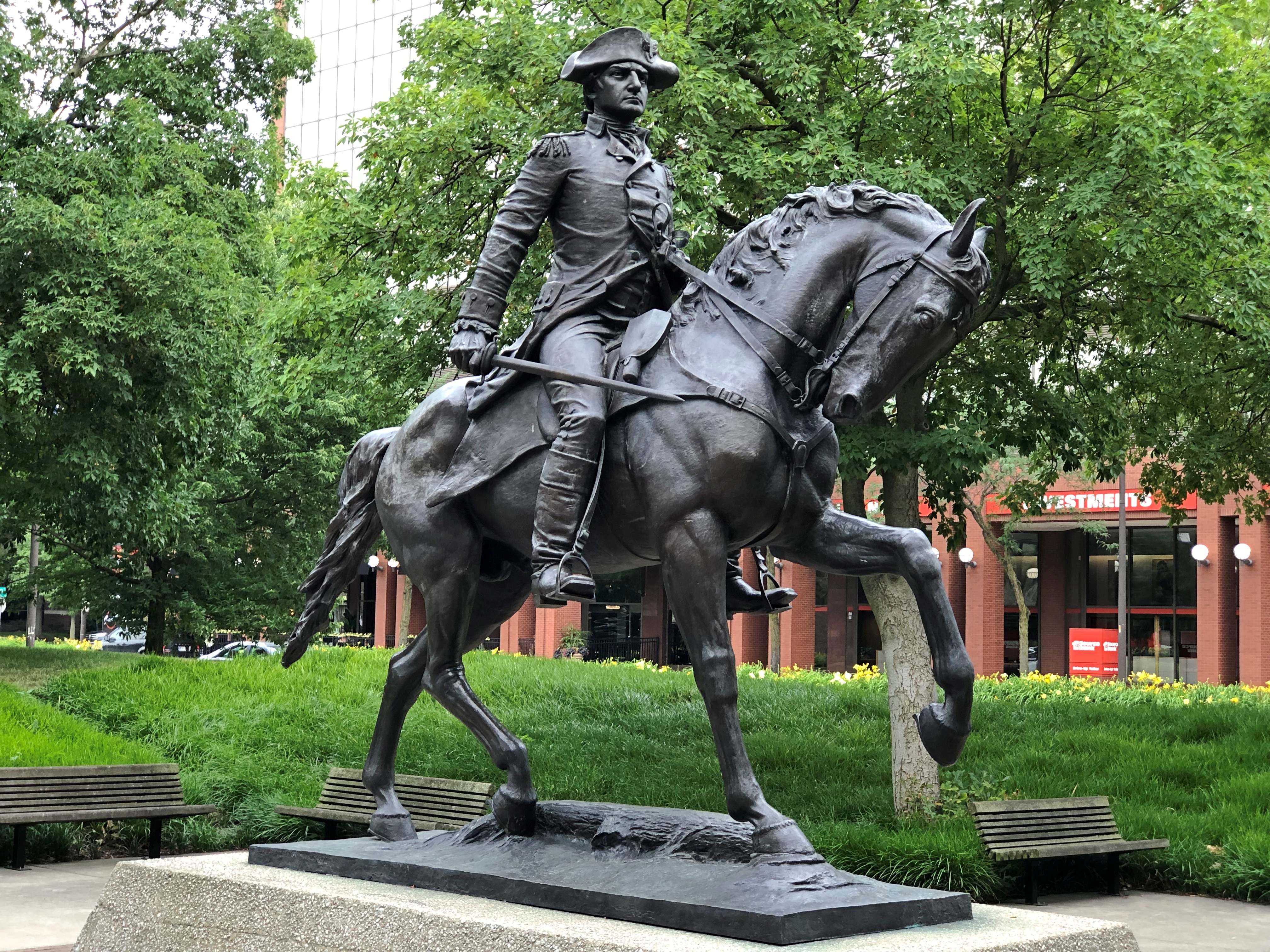
One of these days, the times might catch up with Gen. “Mad” Anthony Wayne, leader in the Revolution and scourge of the Northwest Territory Indians, but for now, you can find him on horseback in bronze at Freimann Square in downtown Fort Wayne, Indiana, in a work by Chicagoan George Etienne Ganiere (1865-1935).Gen. Mad Anthony Wayne statue, Fort Wayne

We gazed a Mad Anthony for a few moments as part of our trip through northern Indiana. I wanted to take a short trip over the long Independence Day weekend, but I didn’t want it to consume the entire three days.

So on Saturday, we left in mid-morning and made our way to Fort Wayne, where we stayed overnight. On Sunday, we returned across northern Indiana to get home, which took up most of the day.

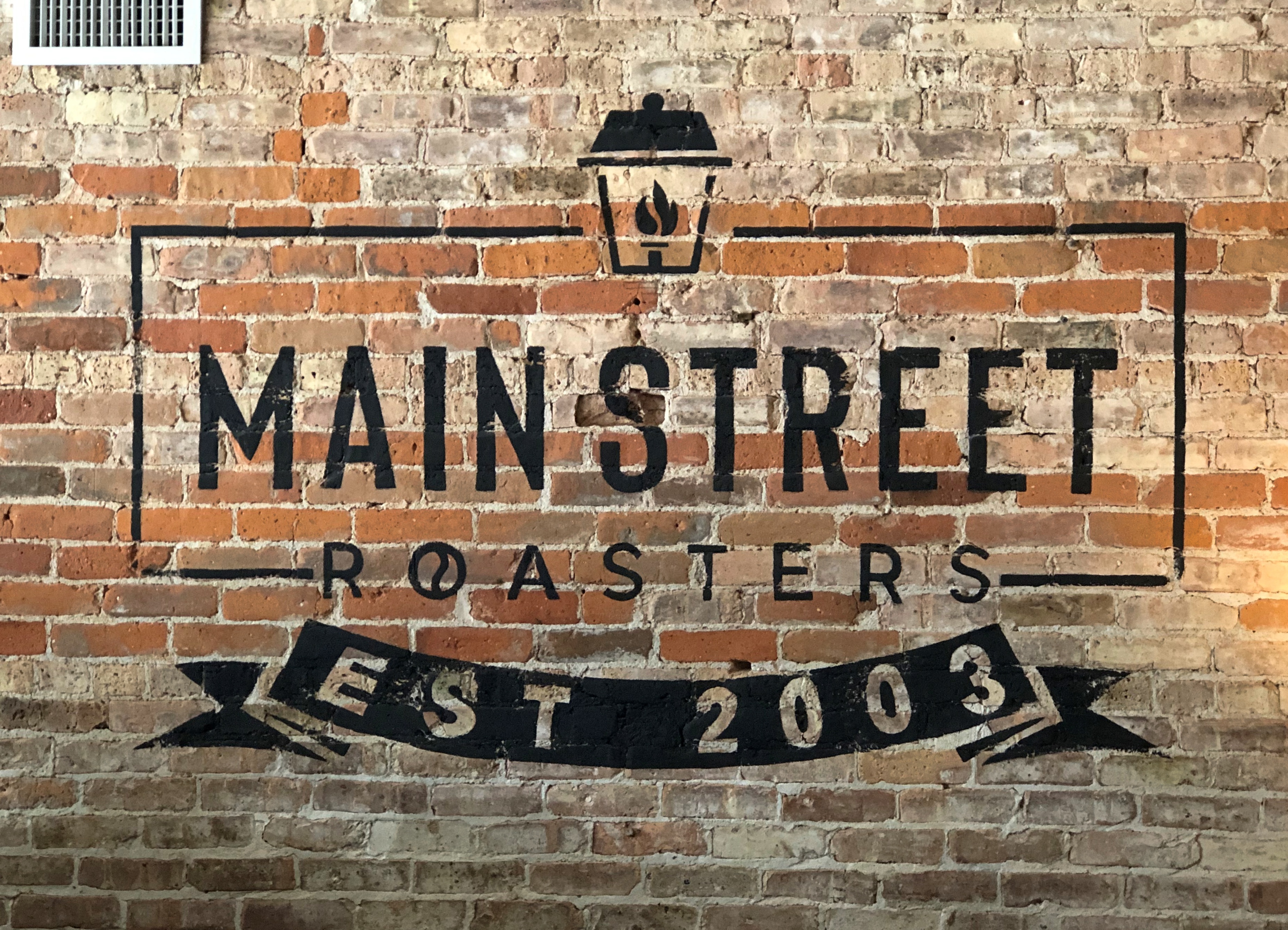
We arrived in Nappanee, Indiana, for lunch on Saturday. I’m glad to report that Main Street Roasters (not so new anymore, it seems) makes a fine pulled pork sandwich. Yuriko said the ingredients in her Cobb salad tasted very fresh, and I sampled some, and agreed. The place was doing a brisk business.Main Street Roasters

We figured the main source for both fresh pork and fresh greens was the Amish farms in the area. Nappanee is considered the focus of one of the country’s larger Amish populations, though that’s a little hard to tell in a casual look around downtown, which isn’t so different from other Indiana towns its size (pop. nearly 7,000). Out away from town, though, you can see from the road farm houses and other buildings, clustered closer than in other rural areas, which is characteristic of Amish settlements.

In town, Plain People in carriages rolled by now and then. Some female store clerks wore the small head coverings common among Mennonites. The Amish tourist attraction in Nappanee known as Amish Acres closed in late 2019, and a more upmarket property re-opened the next year — in an example of bad timing, though it seems to have survived — as The Barns at Nappanee, Home of Amish Acres. Maybe all those extra words are going to cost you more.

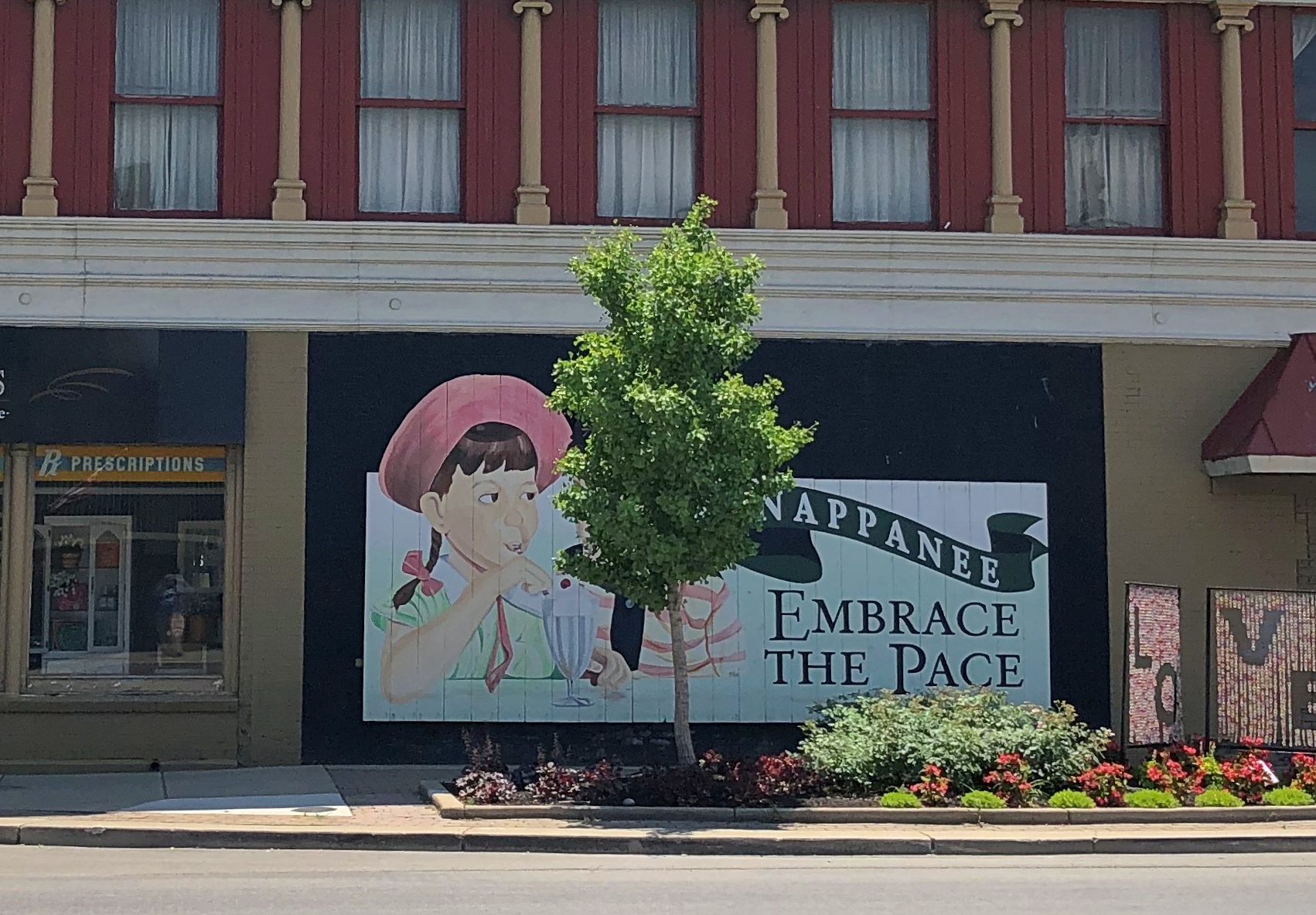
Across the street from Main Street Roasters (and not Amish Acres).Nappanee, Indiana

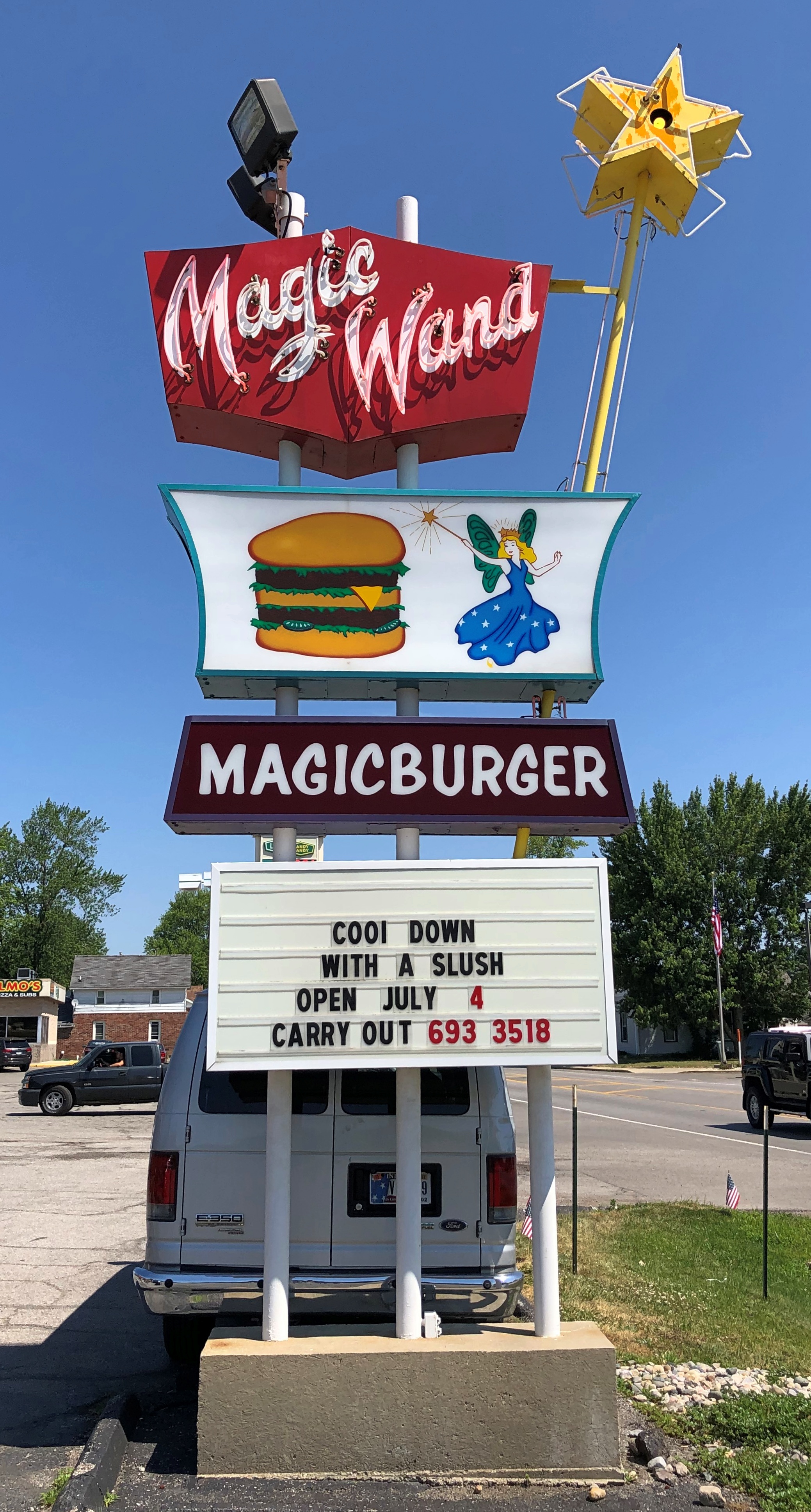
On Sunday, our first brief stop was at Magic Wand, home of the Magicburger, which can be found in Churubusco, Indiana.Magic Wand, Churubusco

We didn’t have a magic burger, but rather shared a strawberry milkshake to go. Among strawberry milkshakes, it was the real deal. The real tasty deal, straw-quaffed as we speed along U.S. 33.

Churubusco was a name I took an instant liking to. The town fathers apparently read in their newspapers about the battle of that name, and wanted the town to borrow a bit of its martial glory. According to some sources, it gets shortened in our time, and maybe for a long time, to Busco. I also noticed references to the place, on signs and the like, as Turtletown. Really? What was that about? I wondered.

The Beast of Busco, that’s what. Quite a story. A giant among turtles that the townsfolk never could quite capture. I haven’t had this much fun reading hyperlocal history — lore — since I chanced across a small lake in Wisconsin that is supposedly home to an underwater pyramid. Turtle Days was last month.

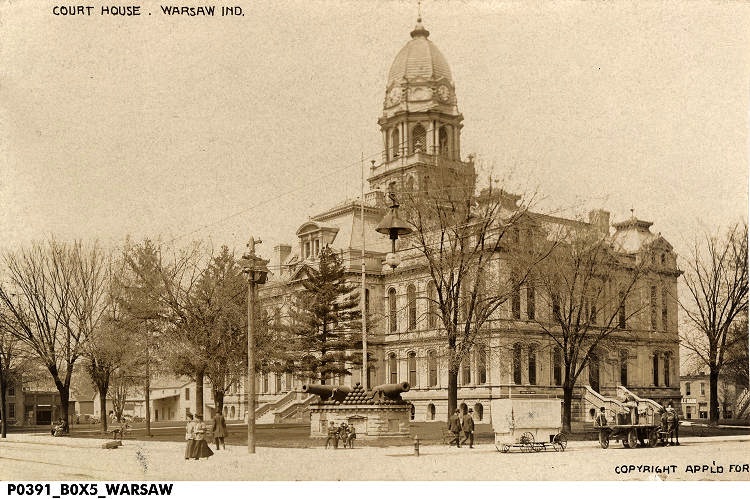
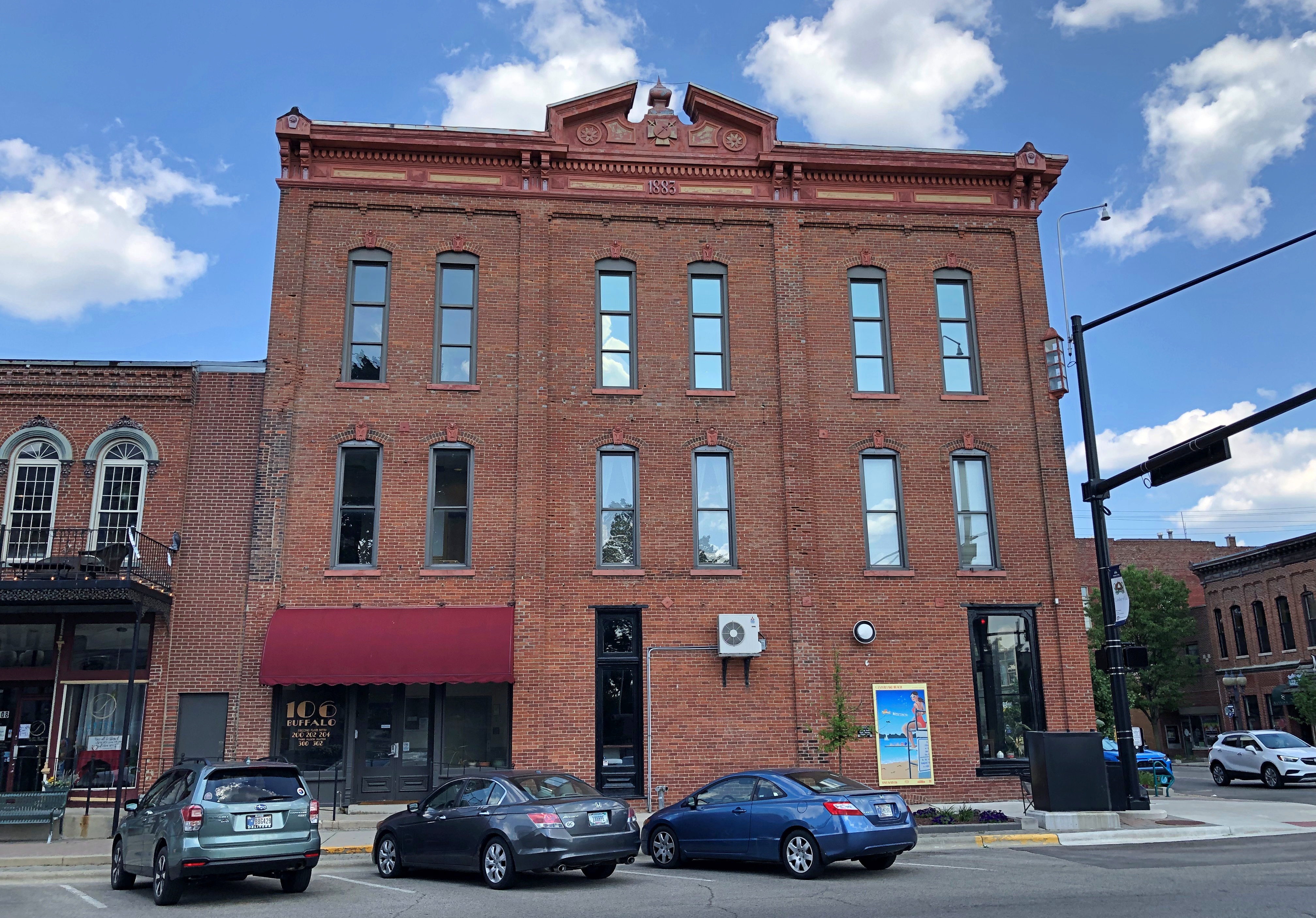
Another spot for a short visit on Sunday: Warsaw, Indiana. It’s the seat of Kosciusko County, with a handsome Second Empire courthouse rising in the town square.Kosciusko County Courthouse

Designed in the 1880s by Thomas J. Tolan, who died during construction, the Indiana Historical Society says. The project was completed by his son, Brentwood S. Tolan.Kosciusko County Courthouse

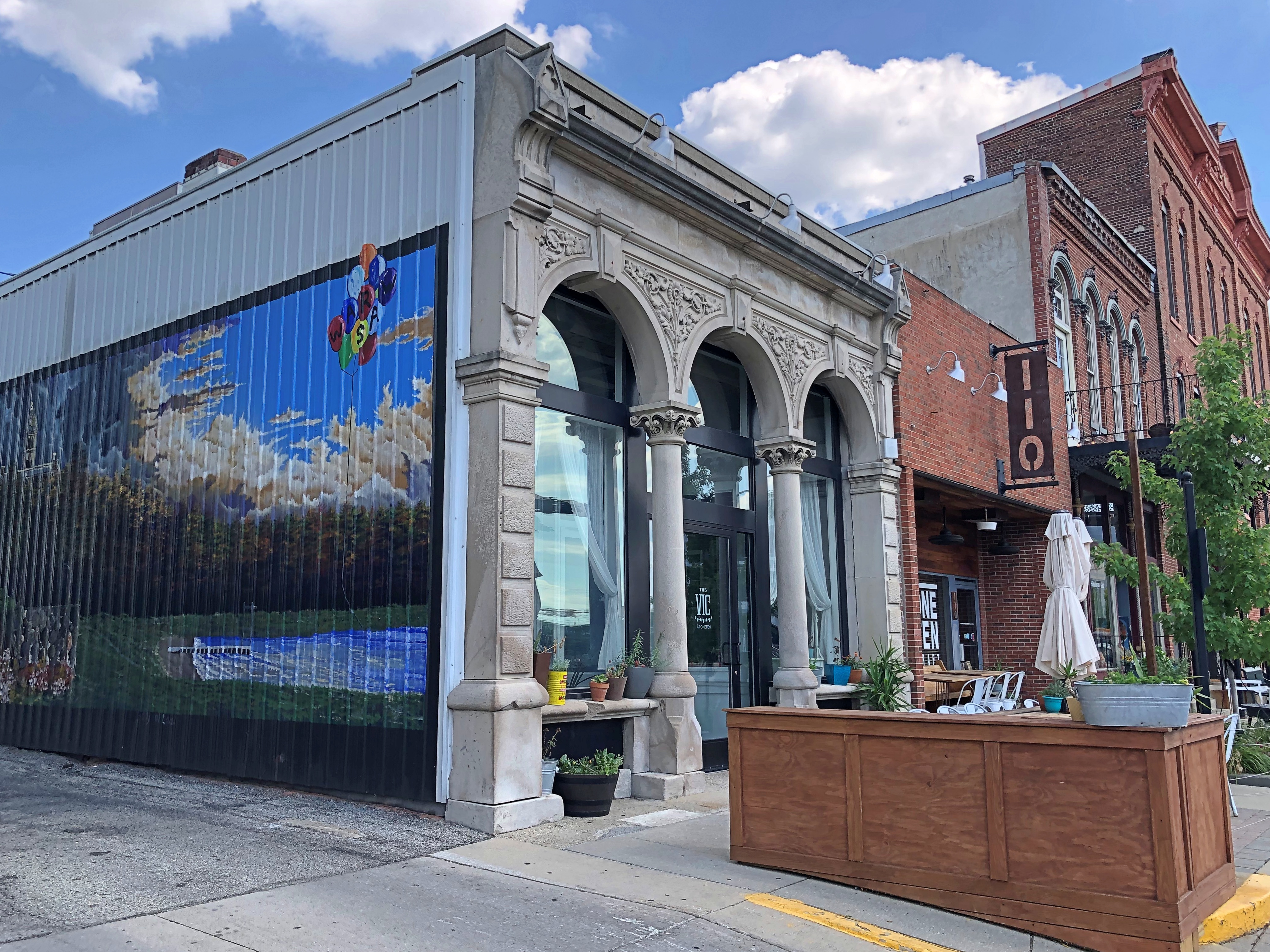
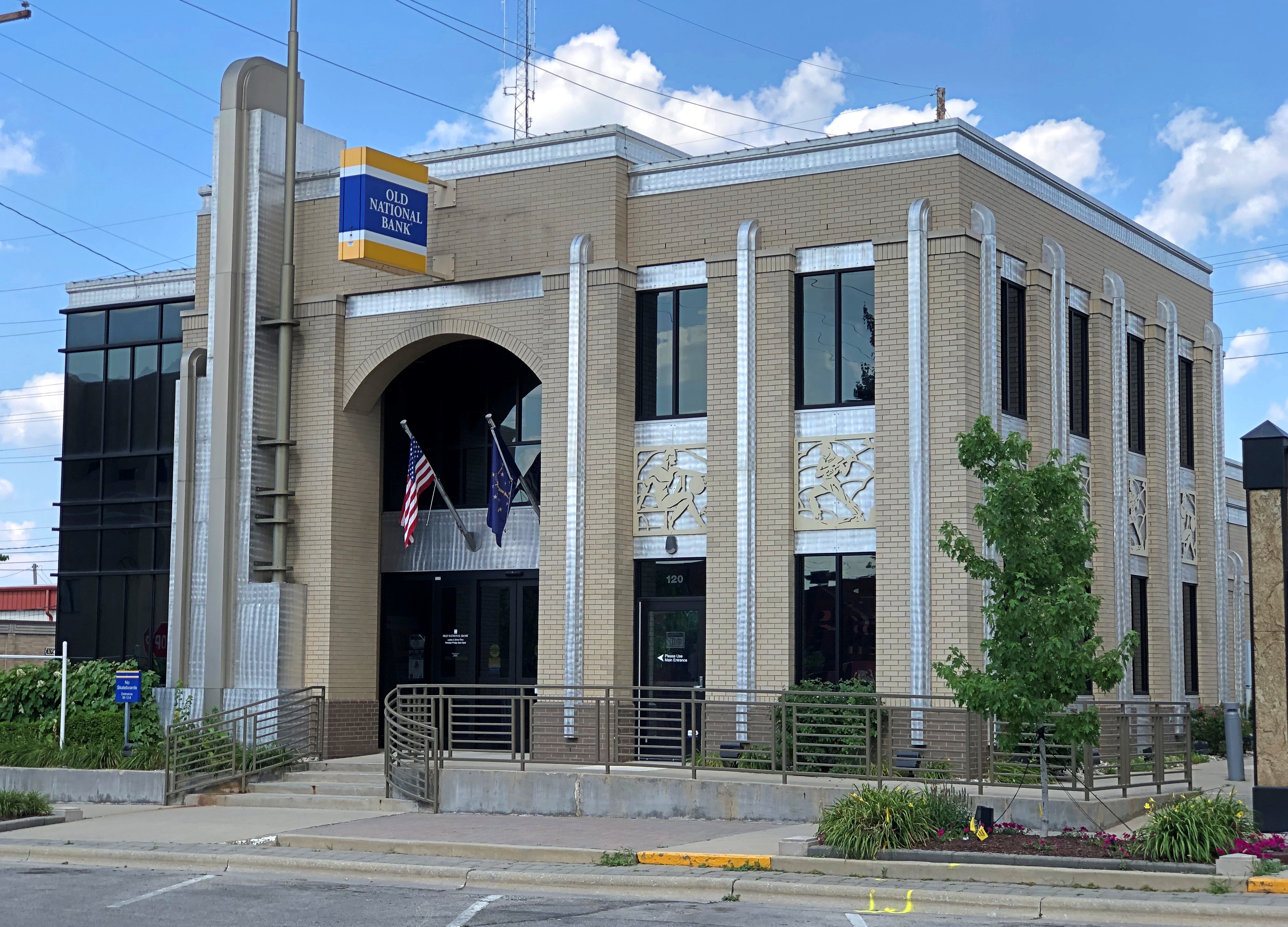
The square sports some other handsome buildings, too.Warsaw, Indiana Warsaw, Indiana Warsaw, Indiana

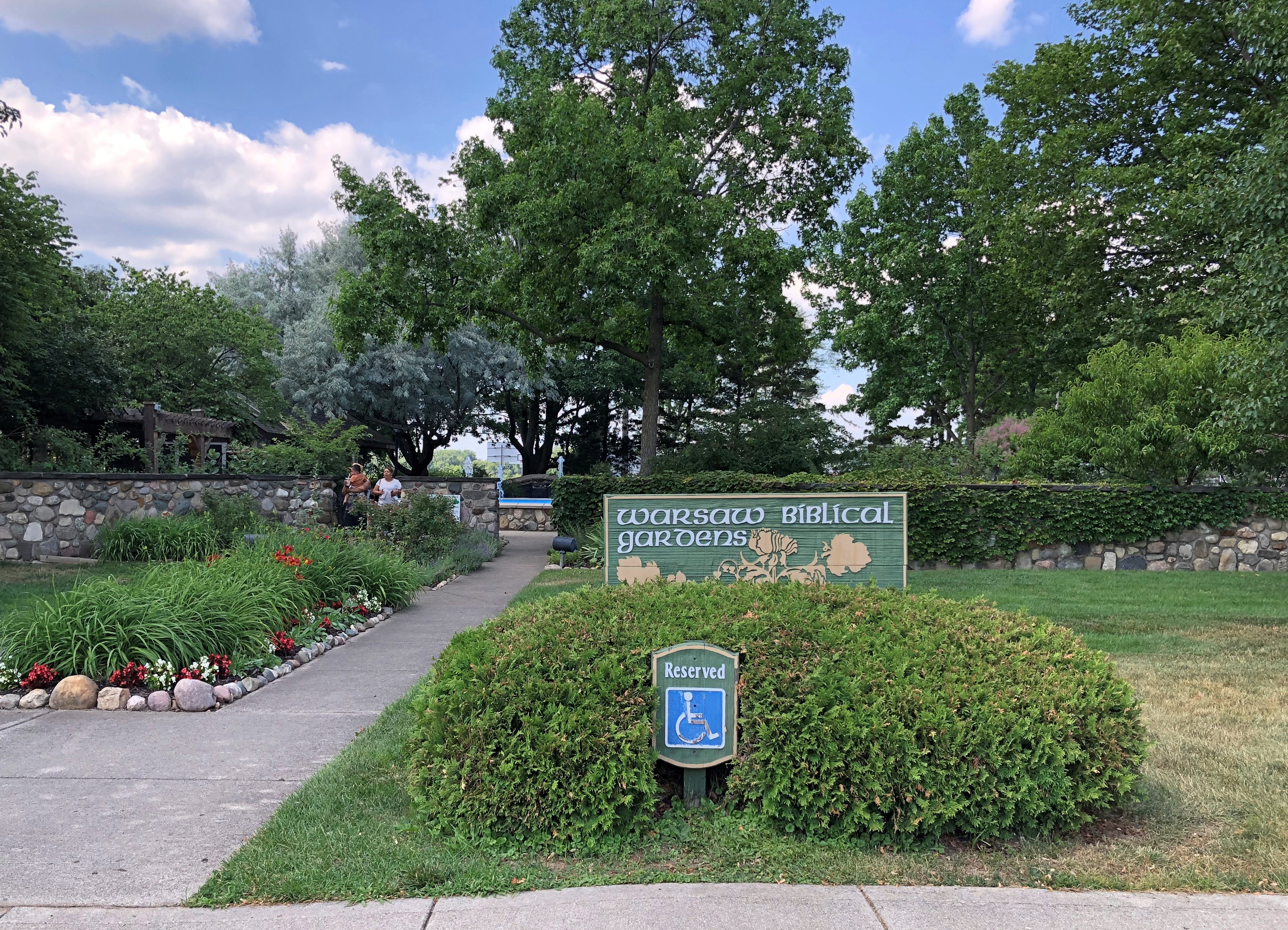
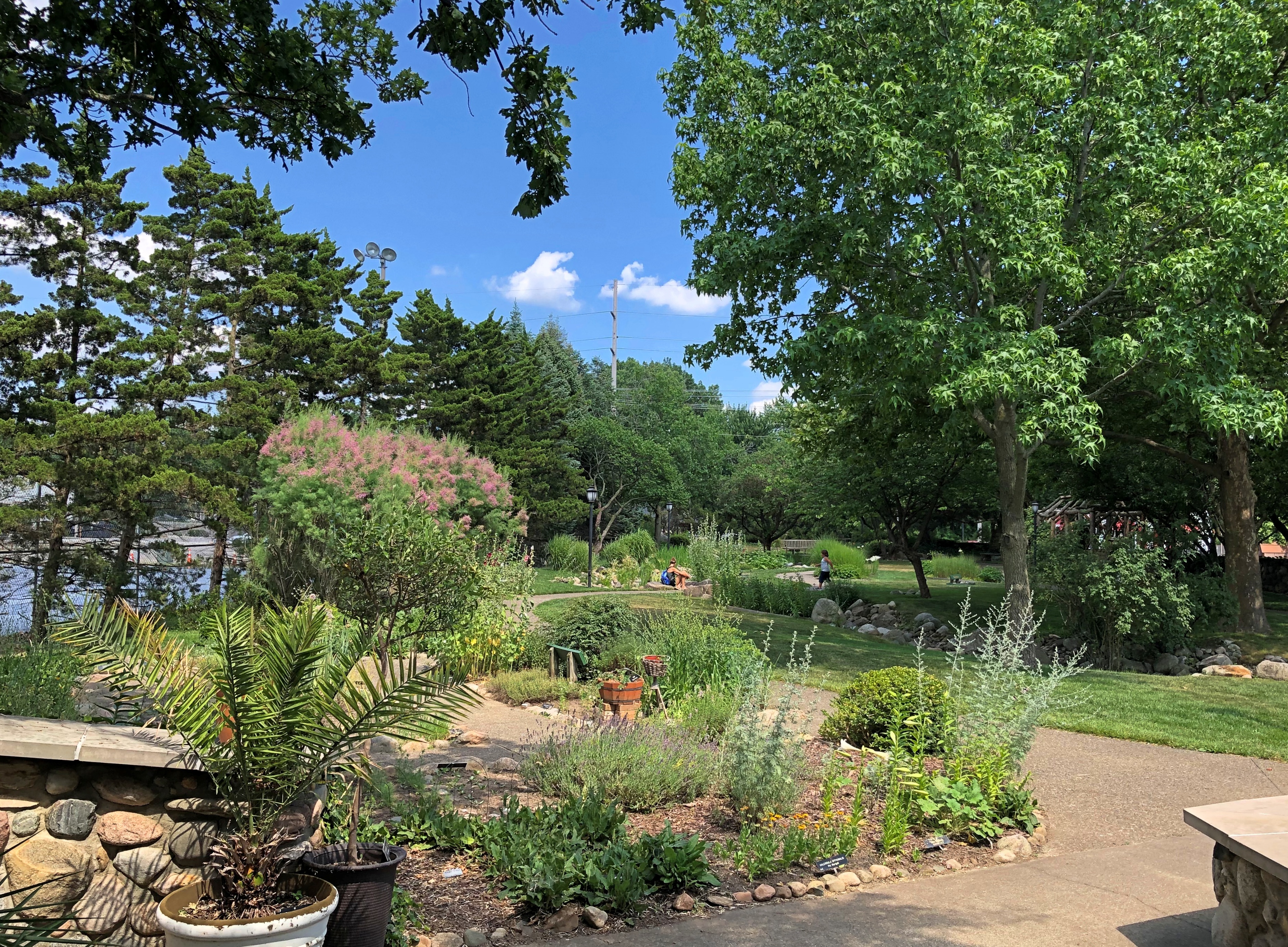
Warsaw is also home to a garden the likes of which I’d never imagined, and the reason I stopped in town, days after spotting it on Google Maps and then looking it up: the Warsaw Biblical Gardens.Warsaw Biblical Gardens Warsaw Biblical Gardens Warsaw Biblical Gardens

The brainchild of a local woman back in the 1980s with access to the land. “It would be no ordinary garden — not a rock garden, nor a rose garden, nor a perennial garden — it would be a truly unique and beautiful Biblical Garden,” the garden’s web site says.

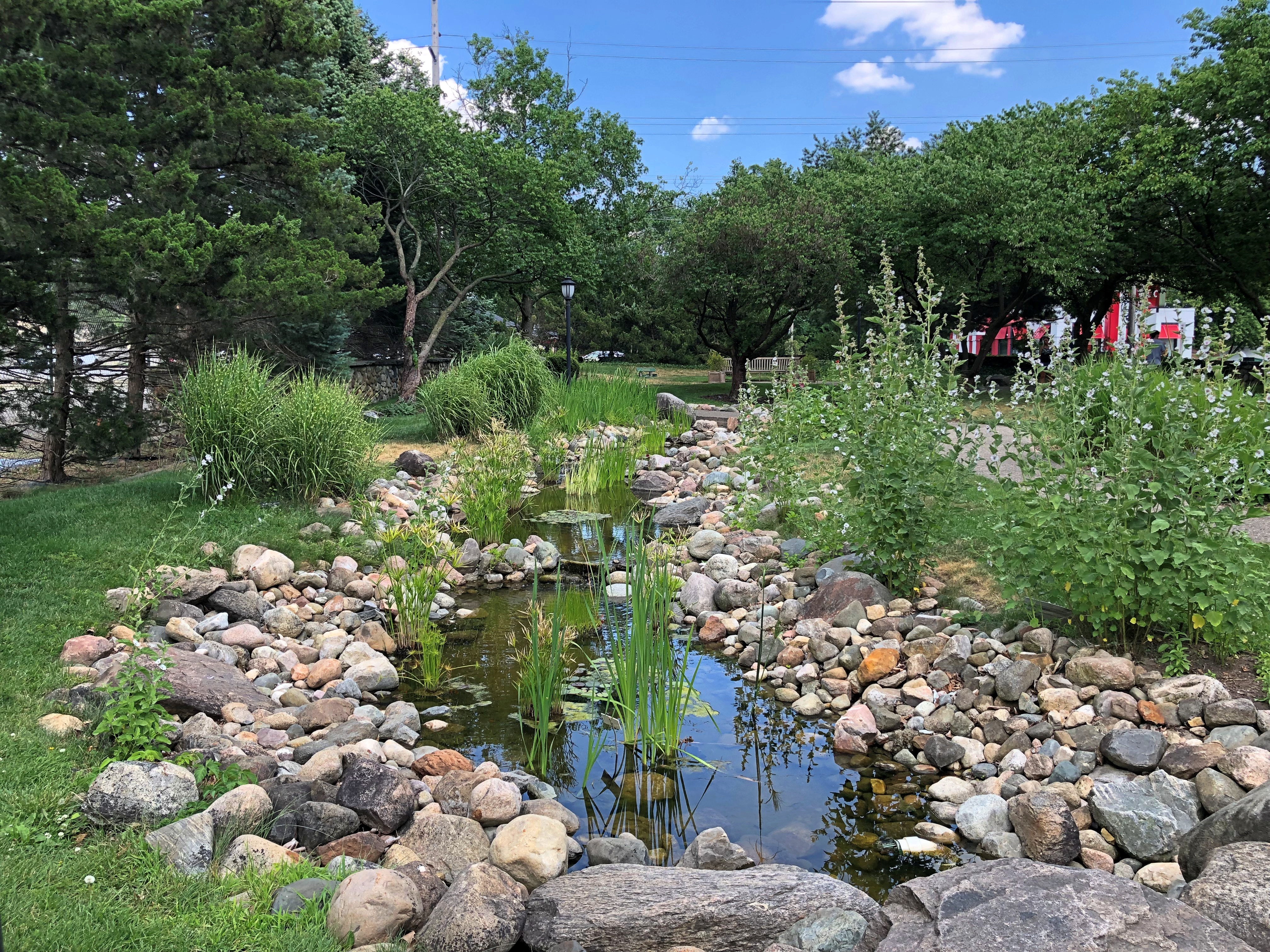
“Actually, we say ‘gardens’ because the Warsaw Biblical Gardens has a variety of areas: the Forest, Brook, Meadow, Desert, Crop and Herb gardens; the Grape Arbor; and the Gathering site. Warsaw Biblical Gardens is ¾-acre in size, and there are very few gardens like this in the United States.

“The term ‘biblical’ refers mainly to the fact that the plants, trees, flowers, herbs, etc., are mentioned in the Old and/or New Testaments of the Bible. These have been carefully researched to preserve the integrity of the Gardens’ uniqueness.

“The Warsaw/Winona Lake area of Indiana has a long religious history. That history begins perhaps with the Chatauqua times of Winona Lake, now being revived. [Really?] Many other famous historical religious figures made their home’s here, from Homer Rodeheaver to Fanny Crosby to Billy Sunday.”

I won’t pretend I didn’t have to look up the first two of those three. Regardless, it’s a stunning little place.Warsaw Biblical Gardens Warsaw Biblical Gardens Warsaw Biblical Gardens

Go far — always good if you can manage it. But also go near.

South Bend City Cemetery

Oddly enough, our microtrip to South Bend last weekend wasn’t much of a trip to South Bend. Our motel was in the city, near the airport, and we drove through town a few times, but mostly we were in Norte Dame — which is a town besides being a university of that name — and Mishawaka.

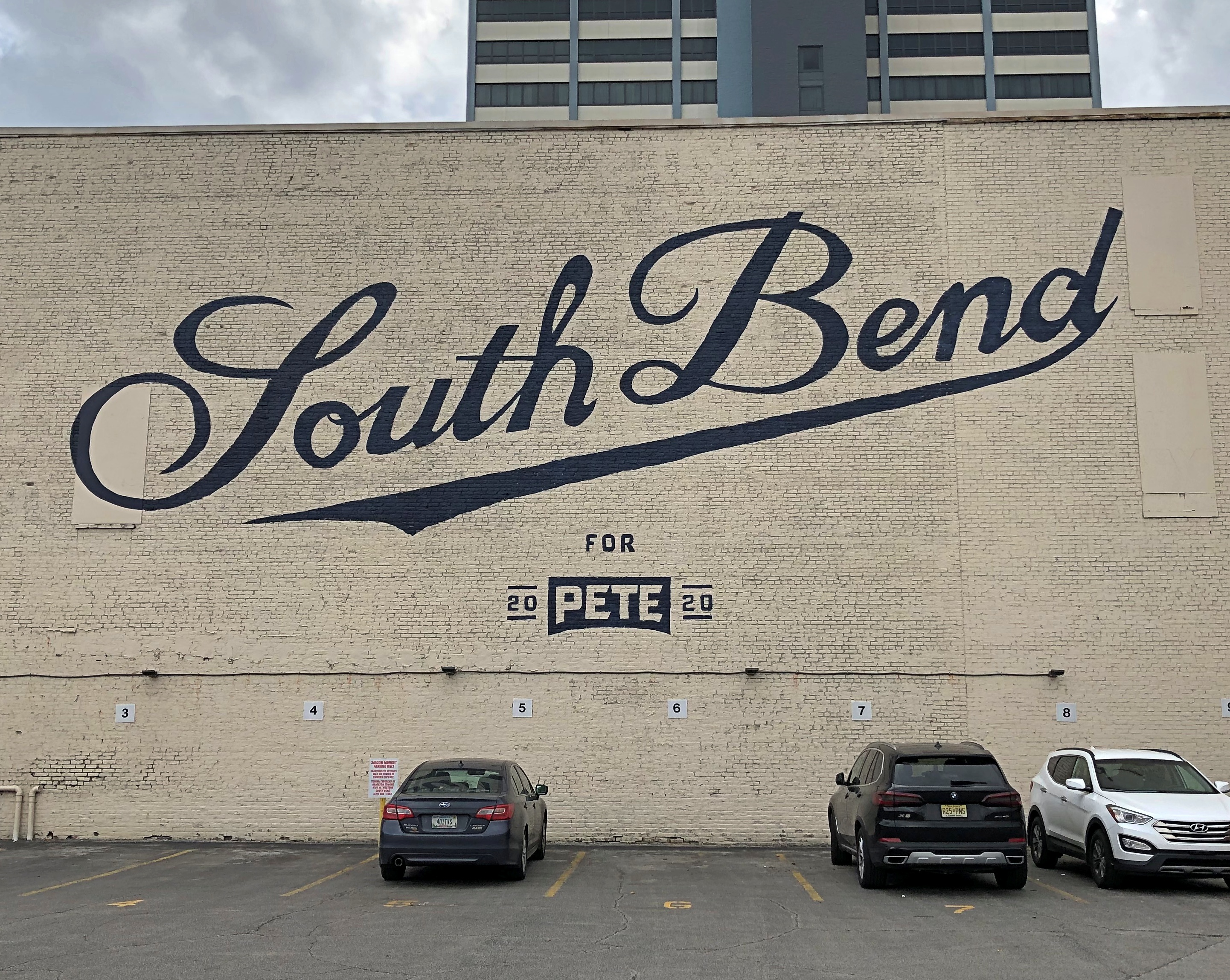
Still, we had a few South Bend moments.South Bend for Pete mural

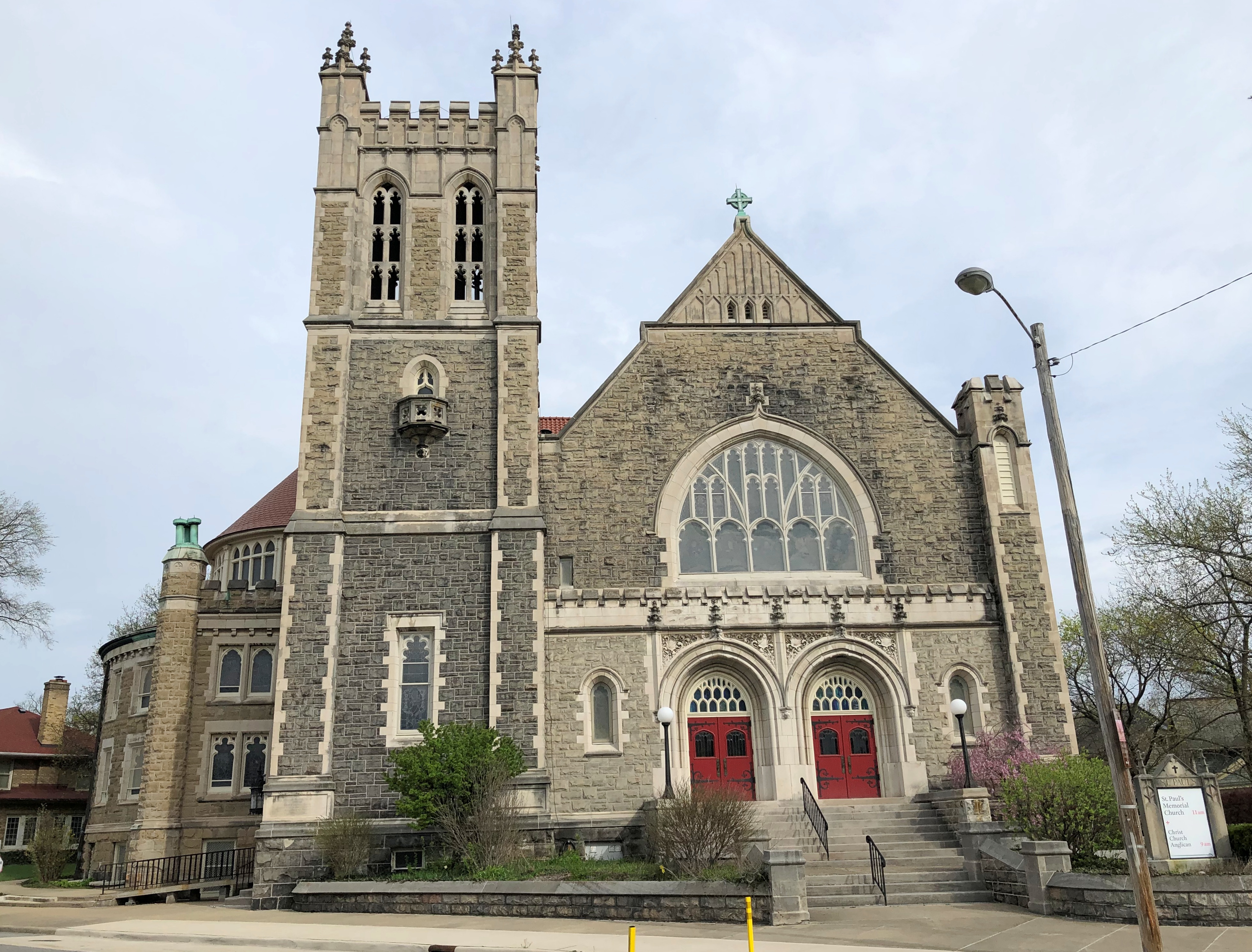
Also, on Sunday morning, I went by myself to the South Bend City Cemetery, because of course I did. On the way I took a short look at St. Paul’s Memorial Church (Episcopal), because of course I did.St Paul's Memorial Church, South Bend

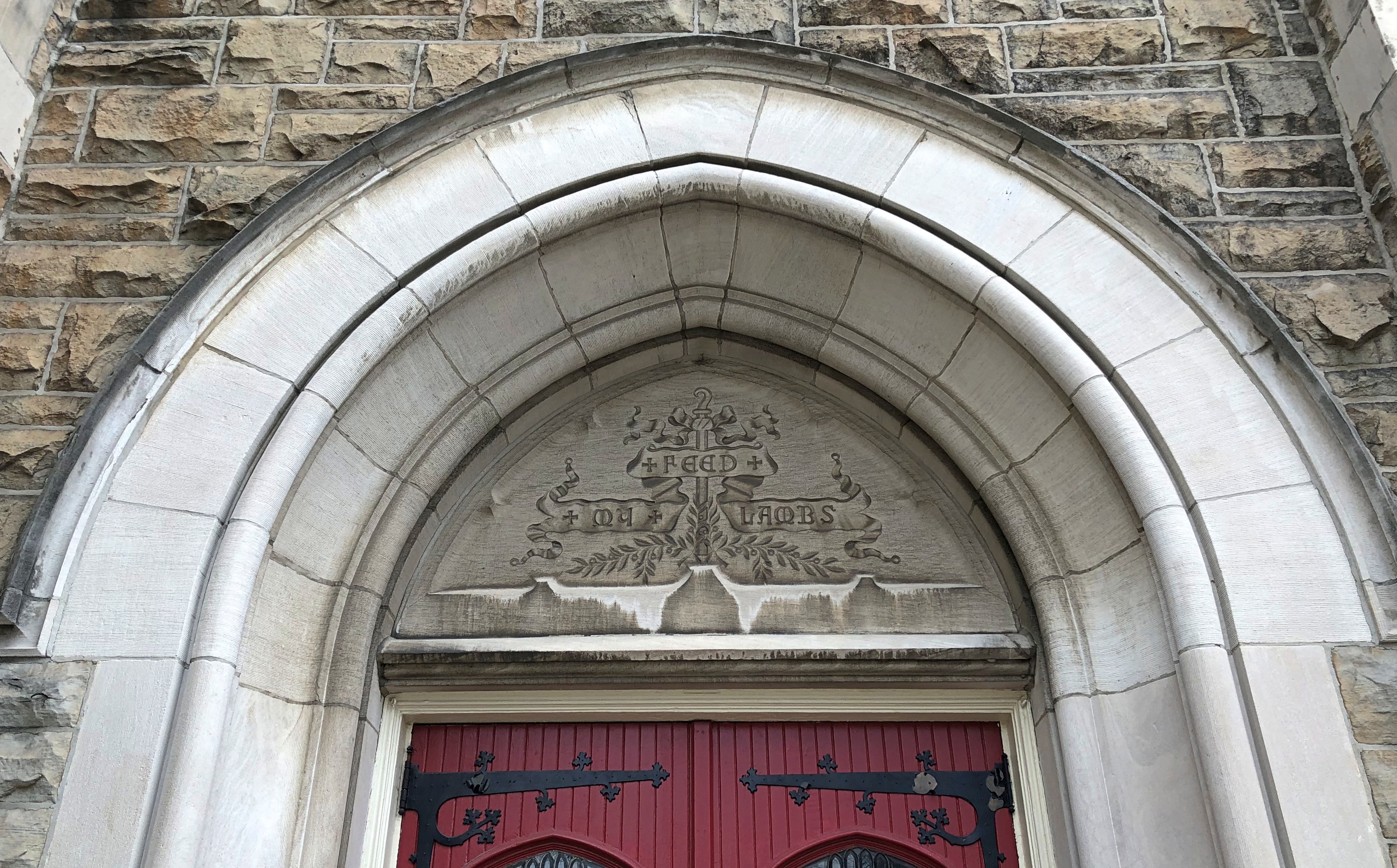
With John 12:17 over one of the doors.St Paul's Memorial Church, South Bend

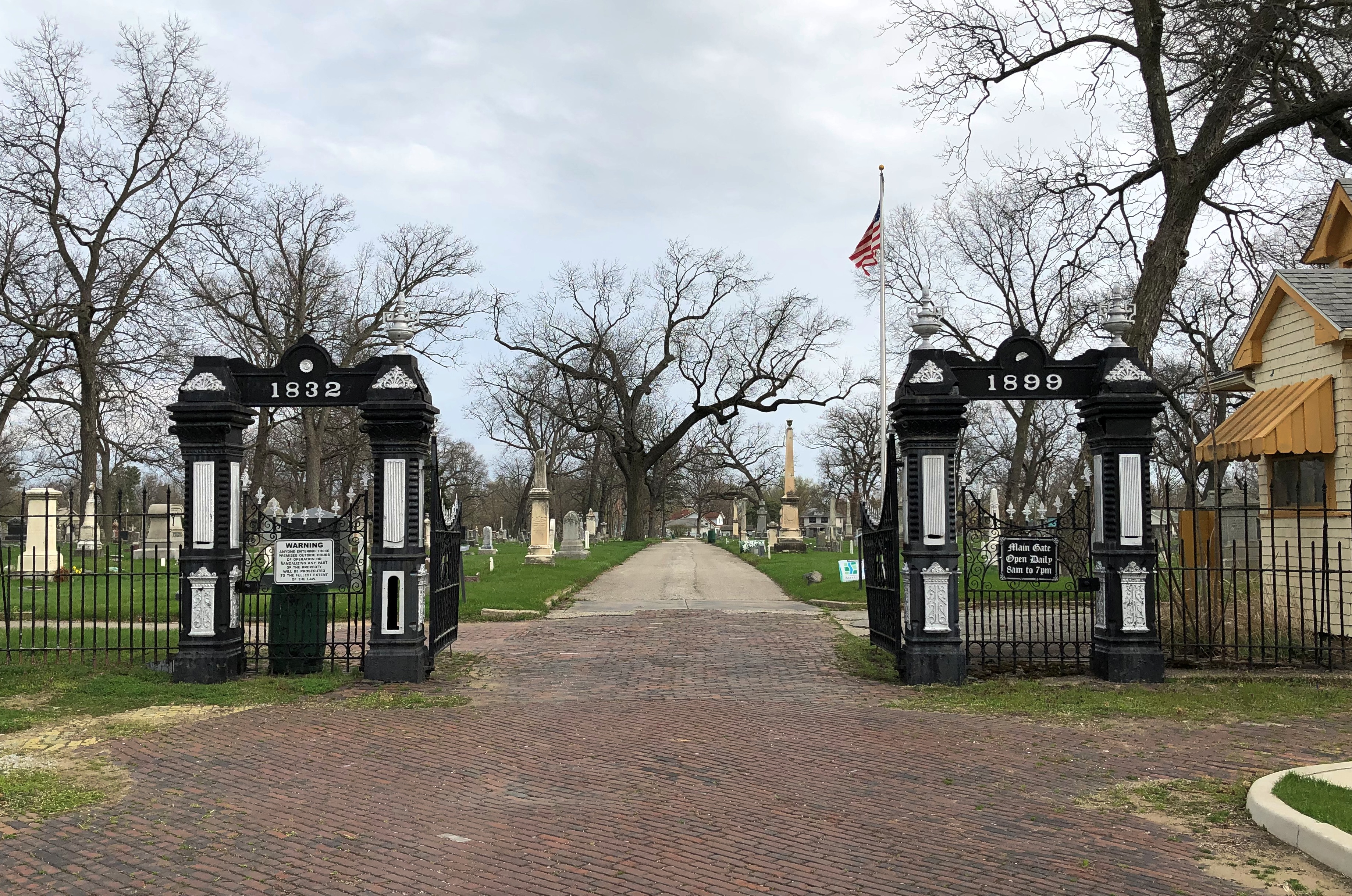
The cemetery is a few blocks away. Founded in 1832, with about 14,800 permanent residents, mostly from the 19th century, though I spotted a scattering of 20th-century burials.

An aside: I read this week that Kane Tanaka, regarded as the oldest living person, died at 119. Born in 1903. Though it’s clearly been true for a while, I just realized that means that no one who lived any time at all in the 19th century is still alive. No one whose age is verifiable, anyway.

Except in the sense that we still remember, personally, people who lived at least a little while in that century, such as my grandmother. Is someone not well and truly dead until everyone who remembers him or her is too?

South Bend City Cemetery, the entrance.St Paul's Memorial Church, South Bend

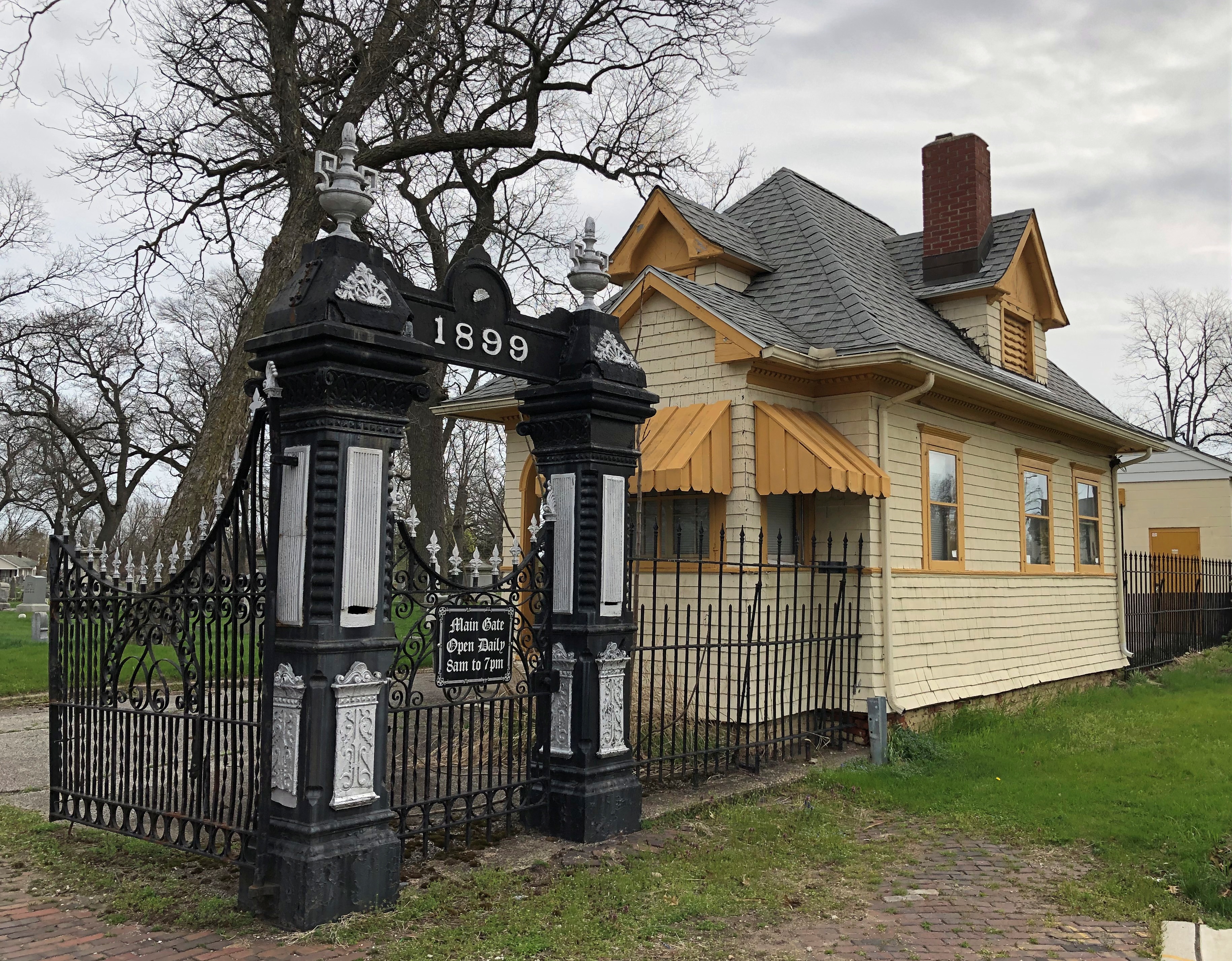
The cemetery office, I assume. Handsome little structure.South Bend City Cemetery 2022

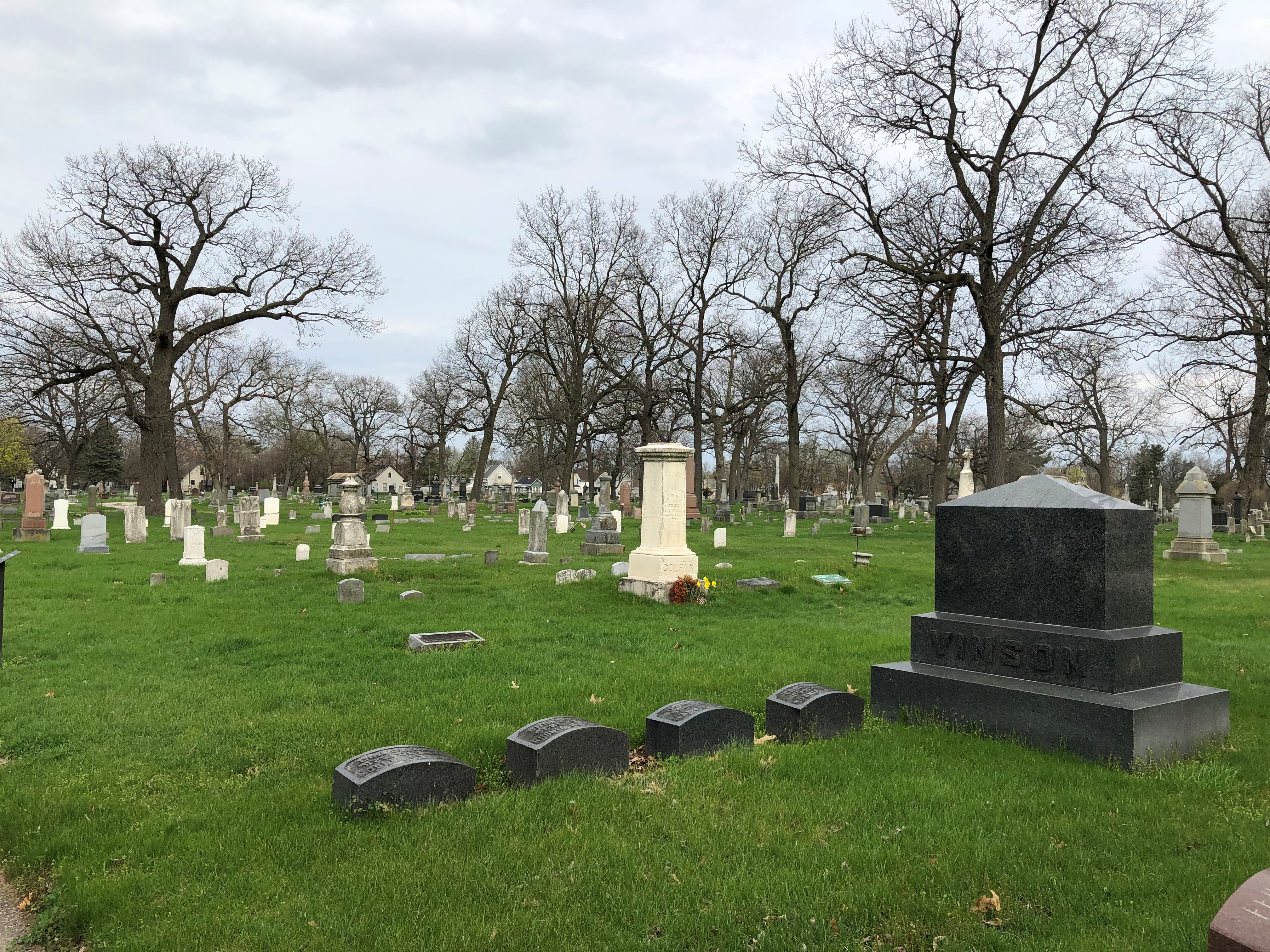
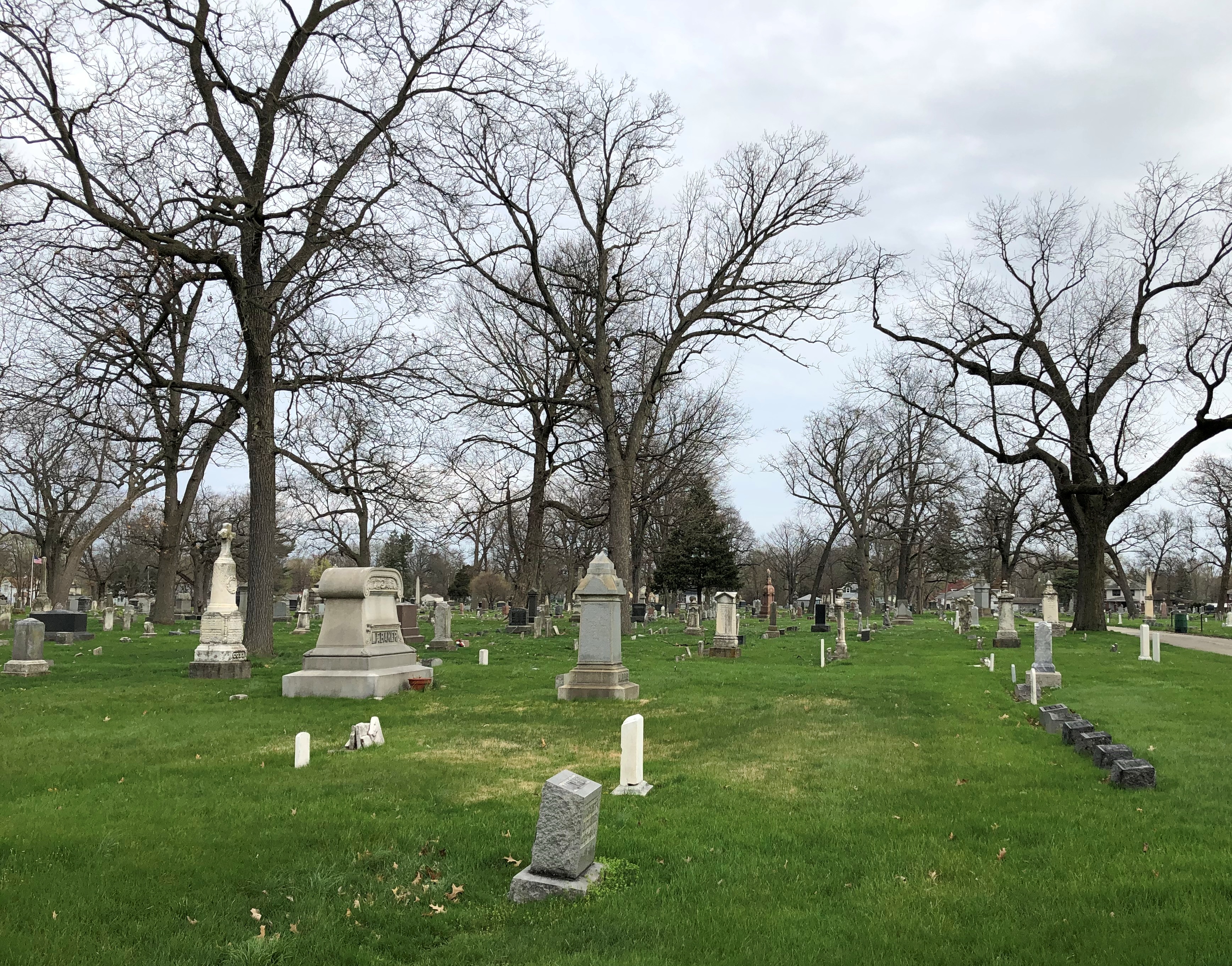
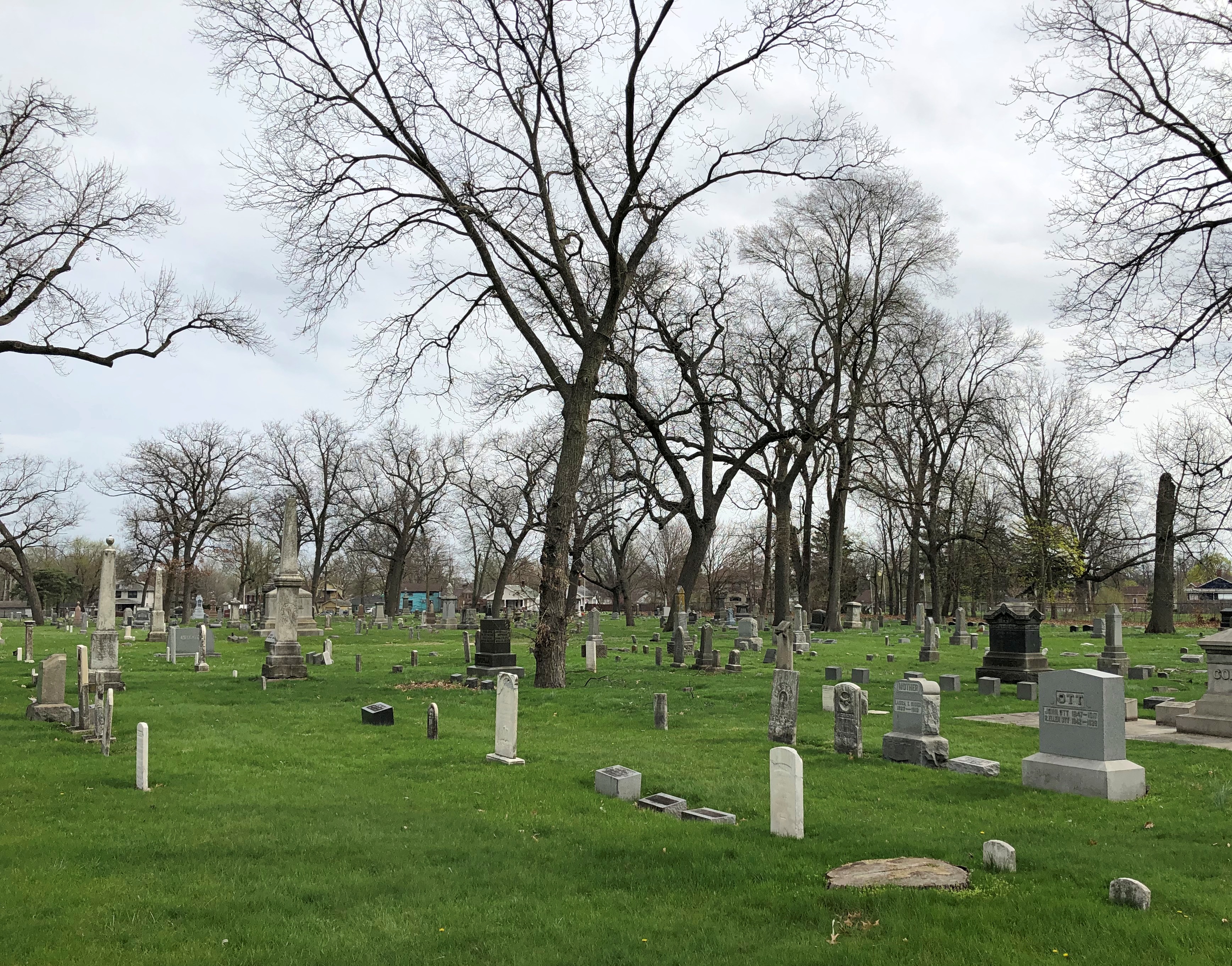
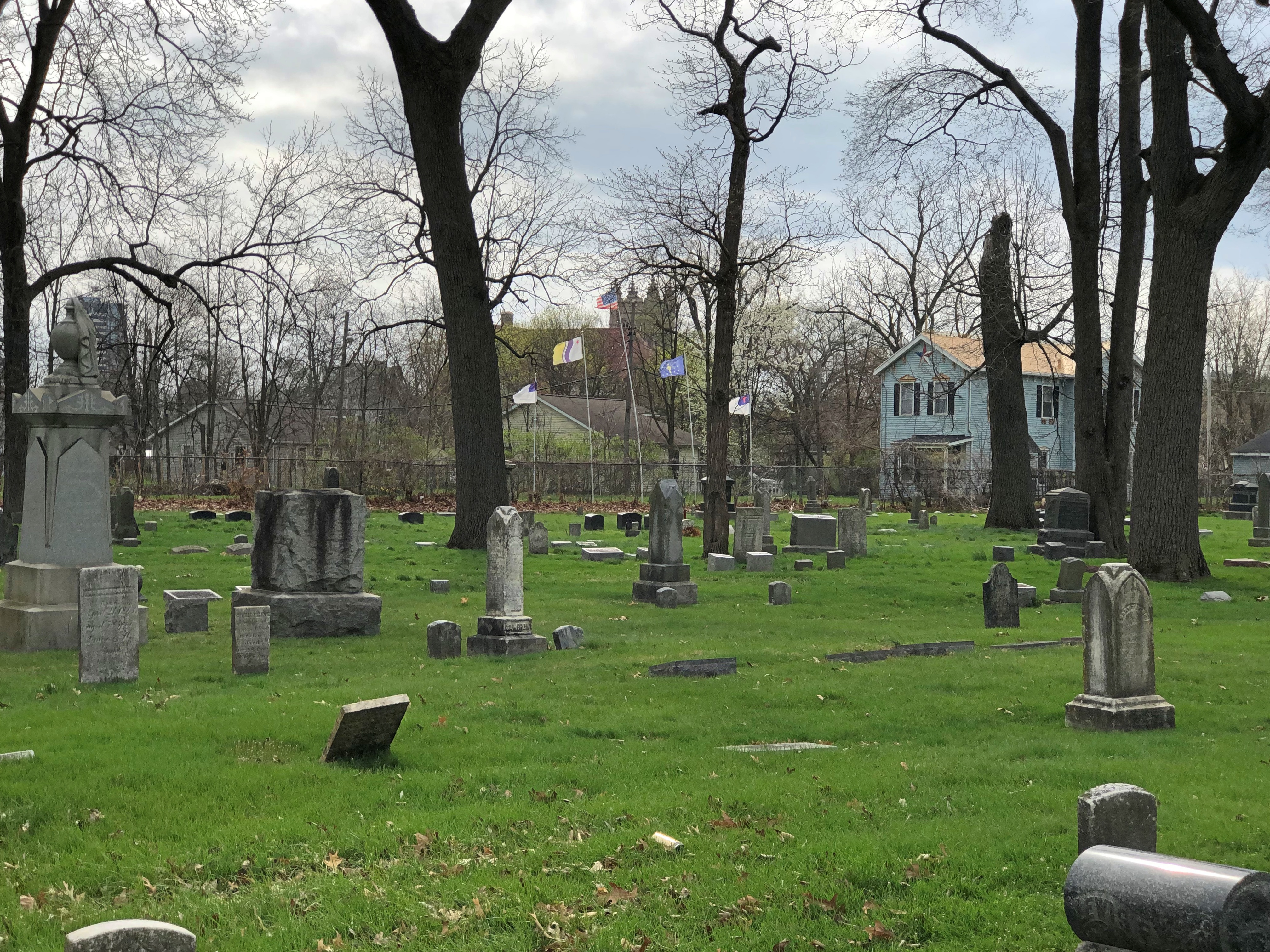
Not too many large memorials or much funerary art, but well populated by a variety of weathered standing stones. As usual, I was the only living person around. Not even groundskeepers on Sunday.South Bend City Cemetery 2022 South Bend City Cemetery 2022 South Bend City Cemetery 2022

As I said, the cemetery’s pretty near St. Paul’s, which is in this image.South Bend City Cemetery 2022

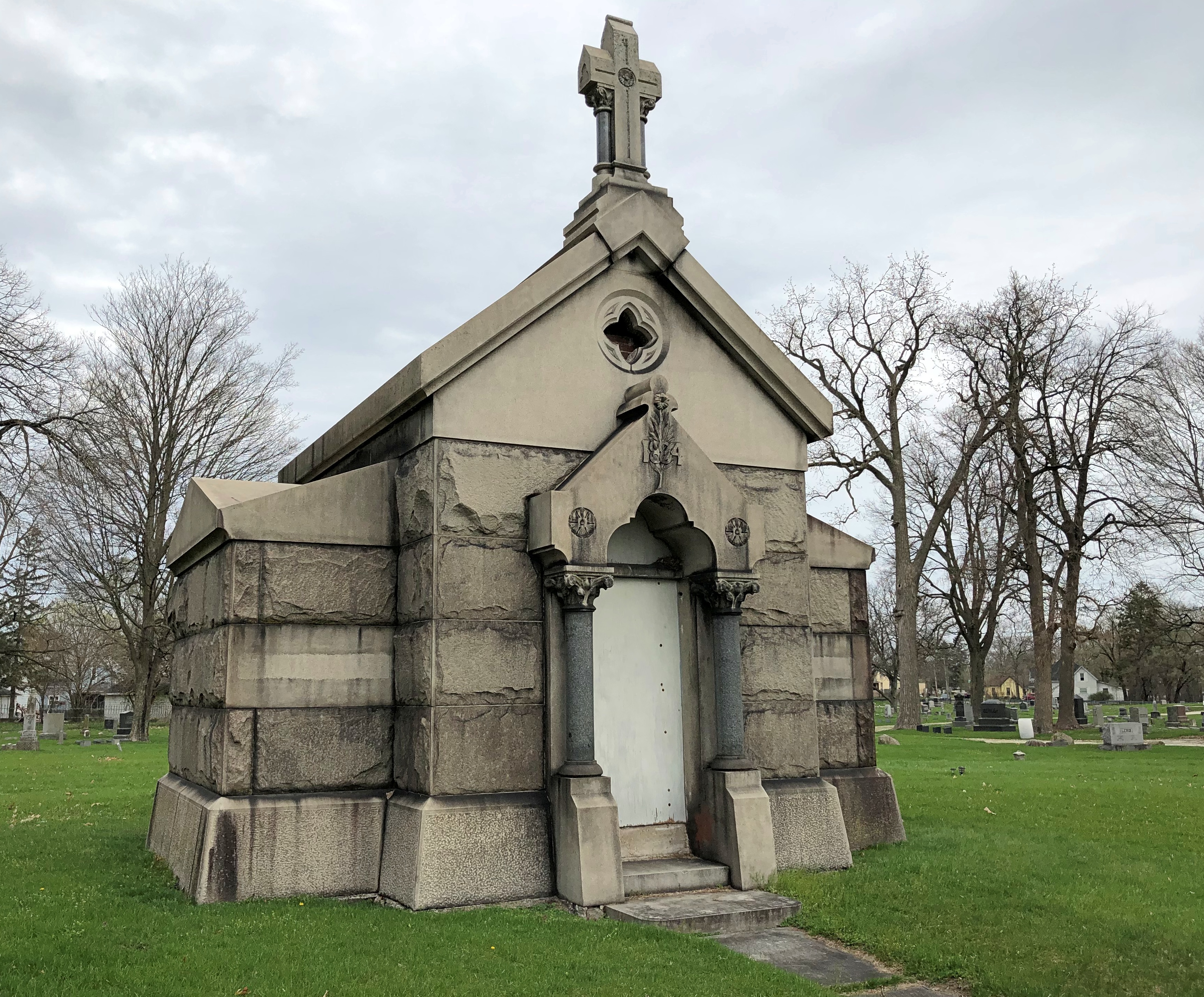
A handful of mausoleums. No name on this one.South Bend City Cemetery 2022

A boarded-up mausoleum. Not something you see much. I like to believe that the cast-iron door that probably hung there went to a scrap drive and did its tiny part to defeat Hitler. But I also suspect that it might have been stolen one night instead.

Large to the small.
South Bend City Cemetery 2022

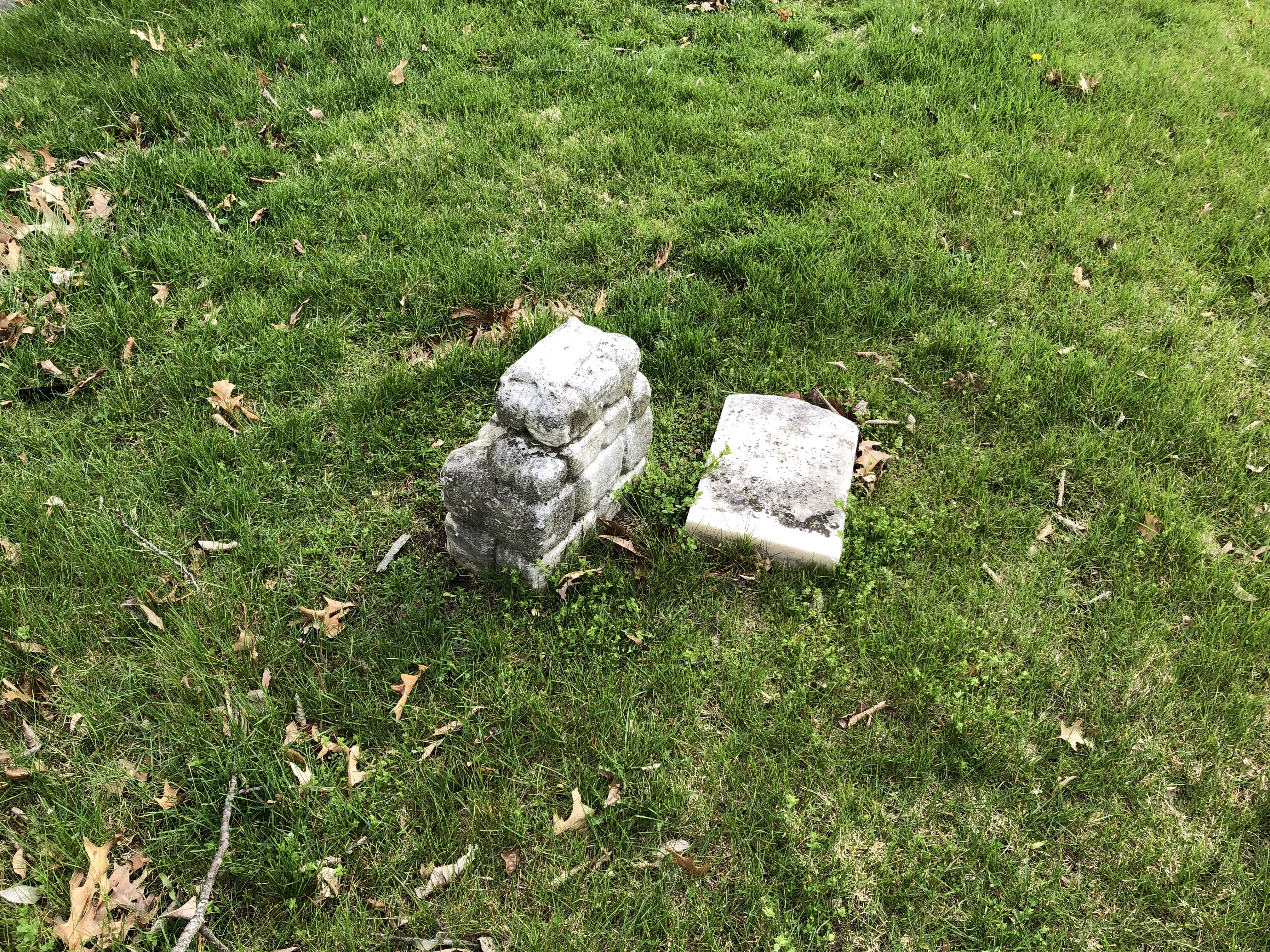
The worn, broken stone of Peter Roof, the first recorded burial. Roof, I understand, was a veteran of the Revolution.

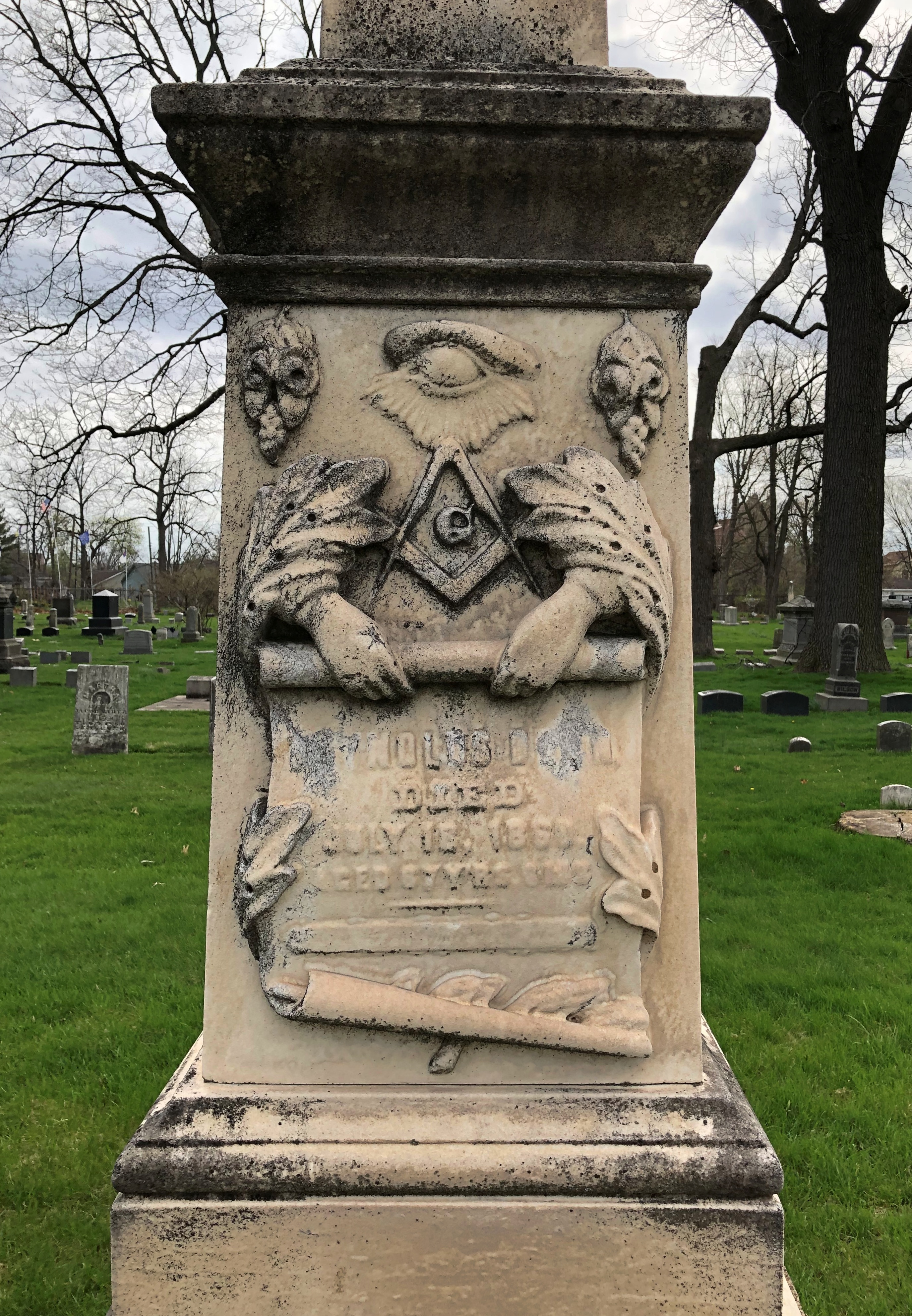
There’s a poignancy in time eating away at memorials as surely as it did those memorialized. Worn lettering, old-time symbols, dark smudges of pollution and dirt.South Bend City Cemetery 2022

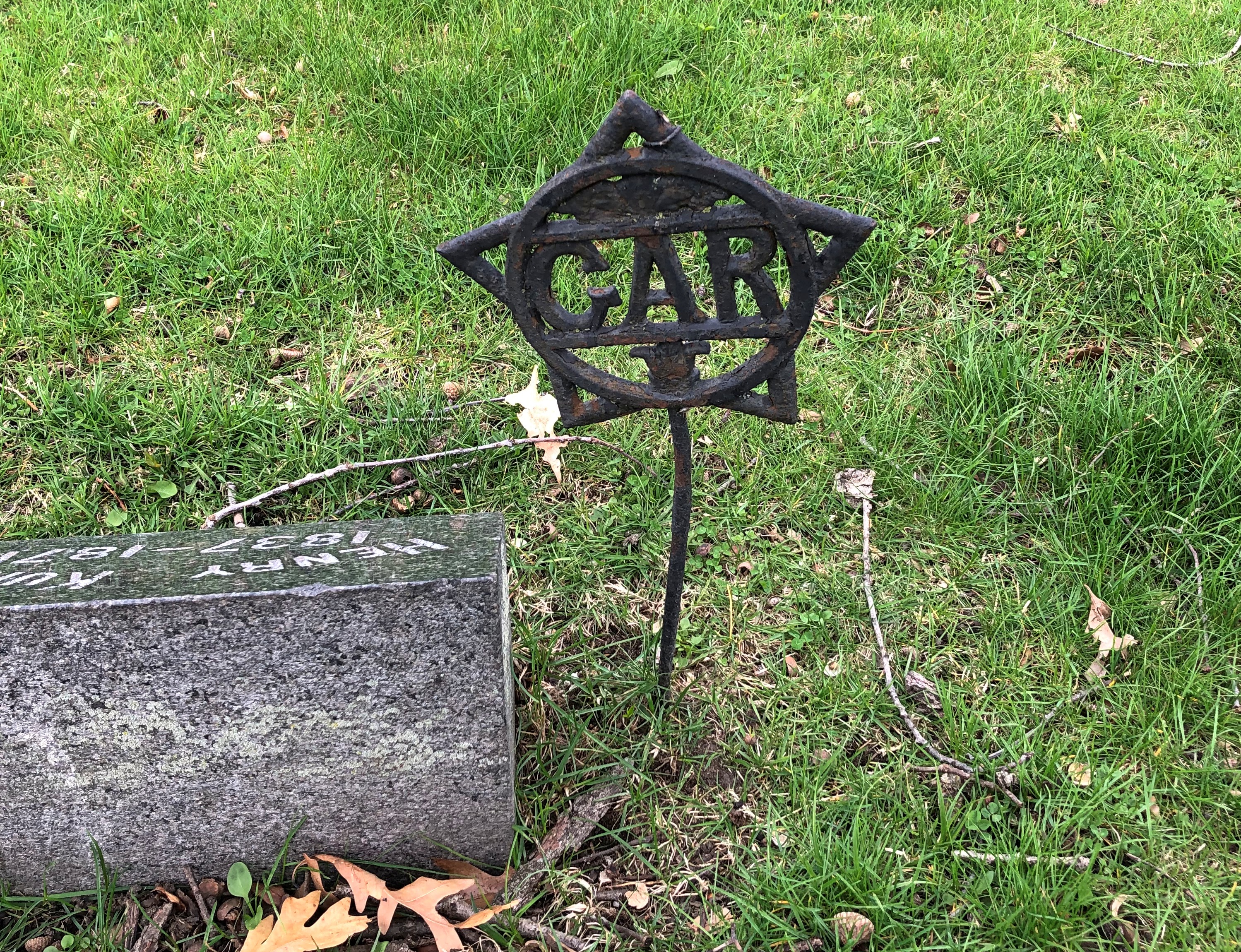
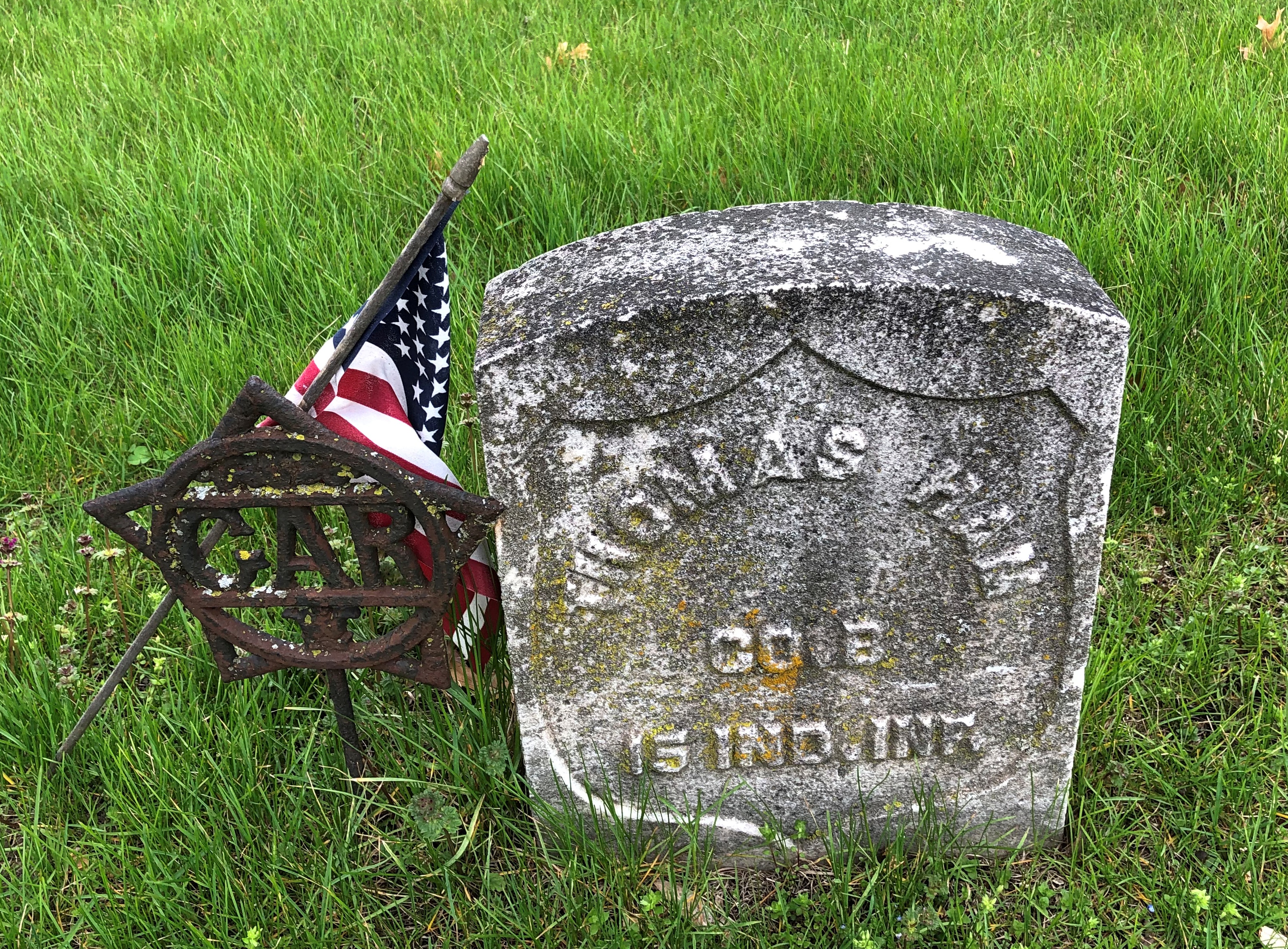
Rust, too. Such is the condition of the GAR stars I saw. This is the kind of cemetery that would have them. Rusty, but they endure as a faint echo of the camaraderie of men who fought and won the day for the Union.South Bend City Cemetery 2022 South Bend City Cemetery 2022

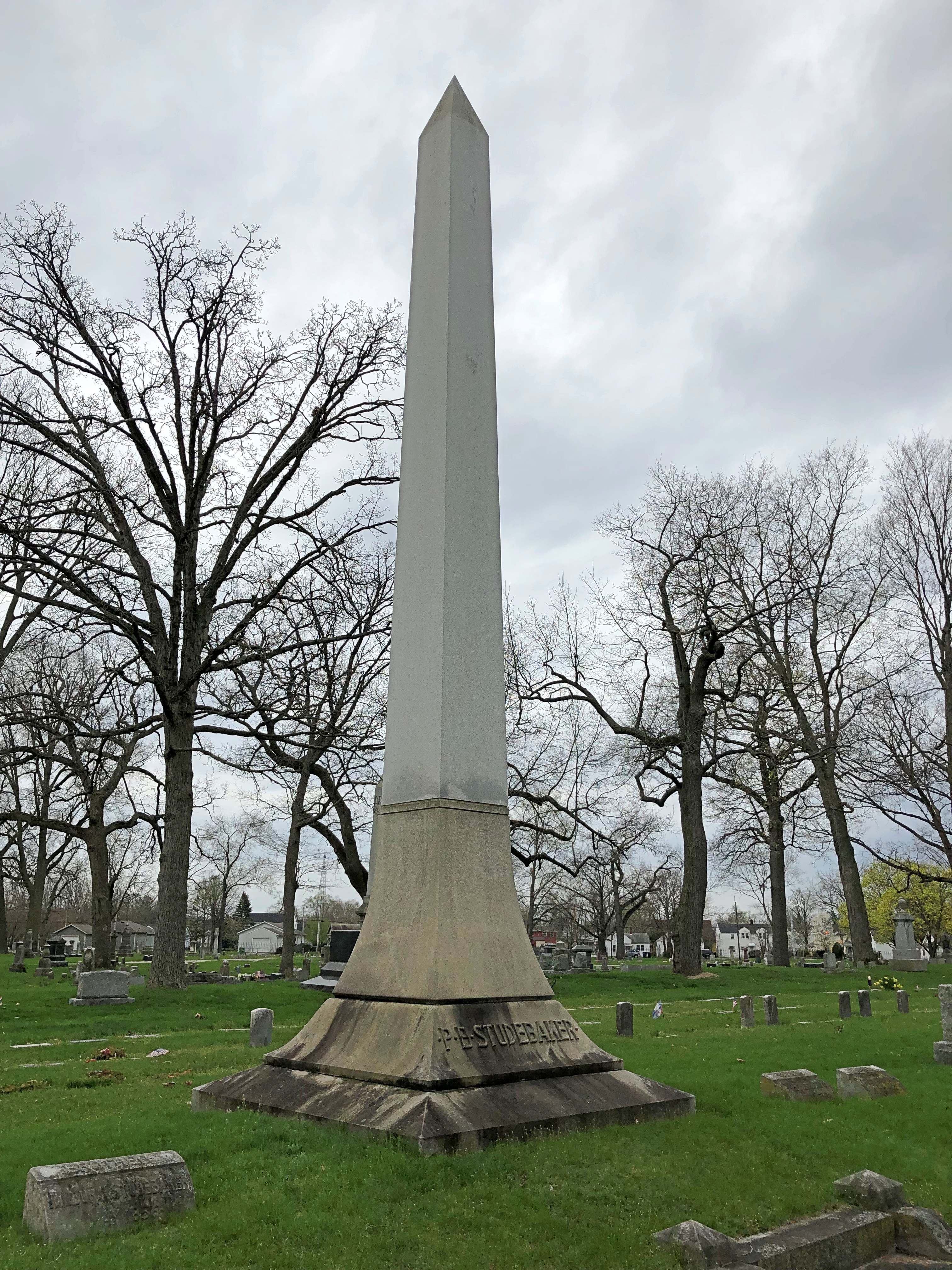
As you’d expect, at least one Studebaker has a sizable memorial. South Bend was their town.

The memorial has lasted much longer than the company of that name.South Bend City Cemetery 2022

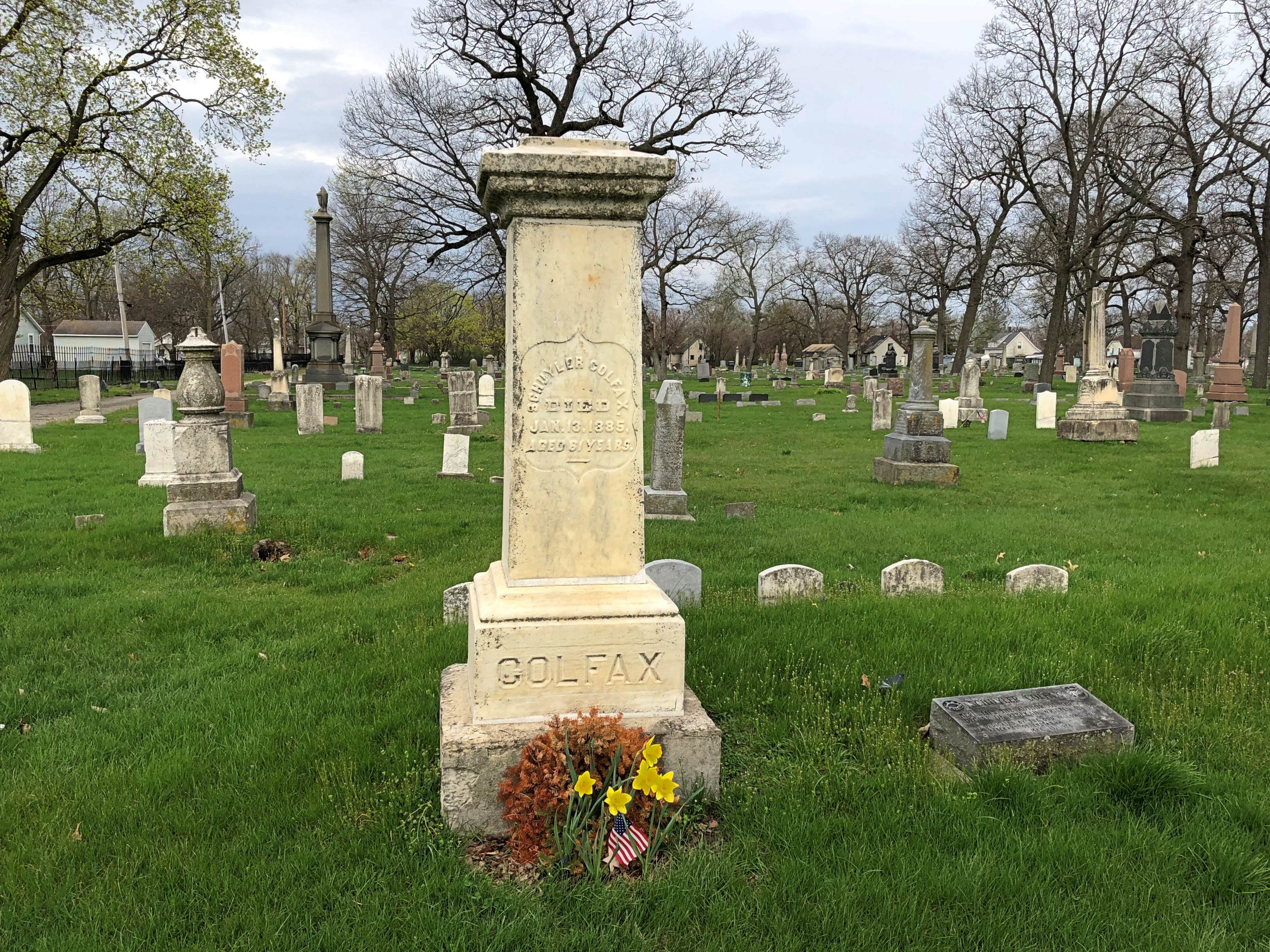
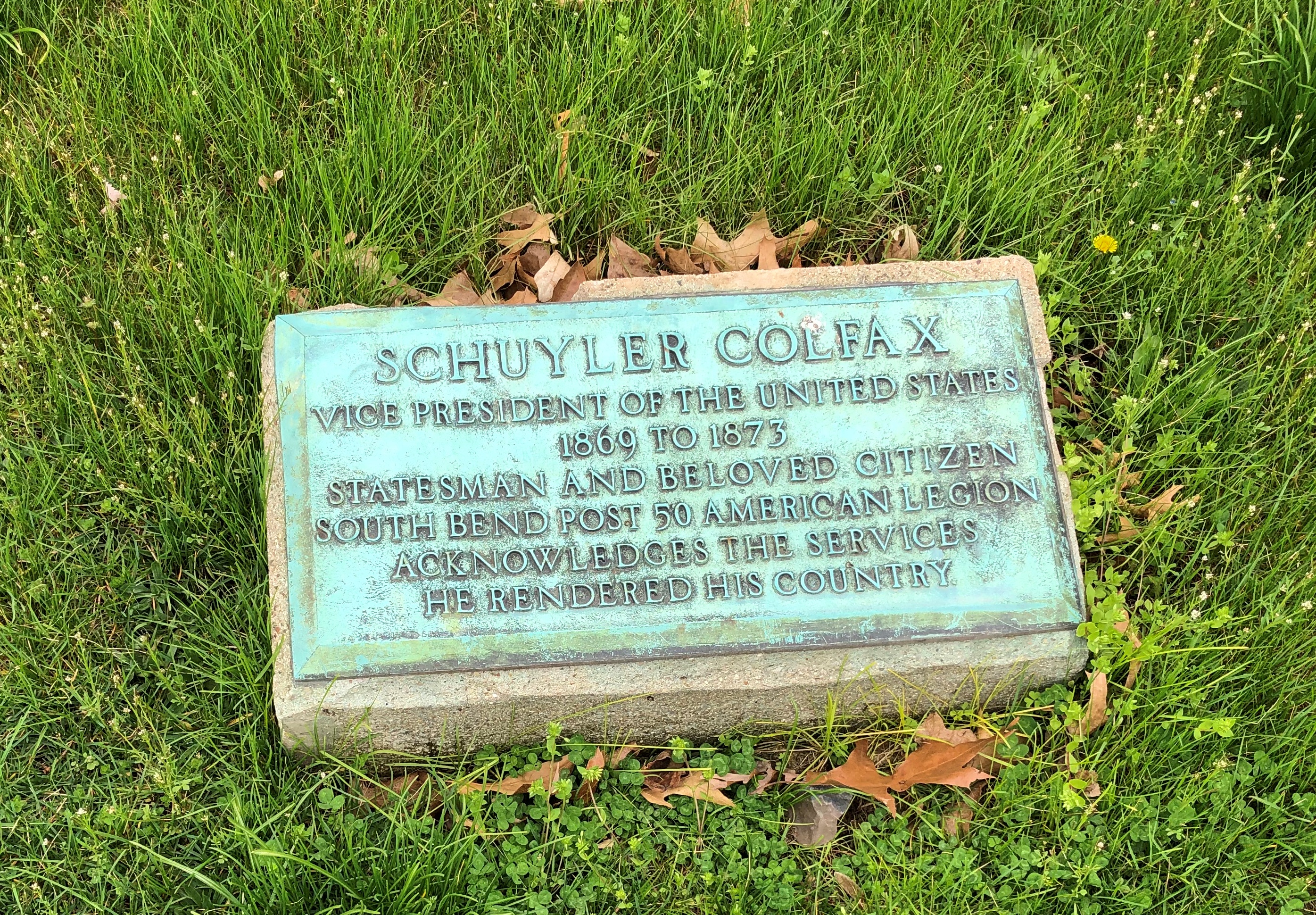
I didn’t come looking for the car-making family. I had someone else in mind: Schuyler Colfax.South Bend City Cemetery - Vice President Schuyler Colfax grave

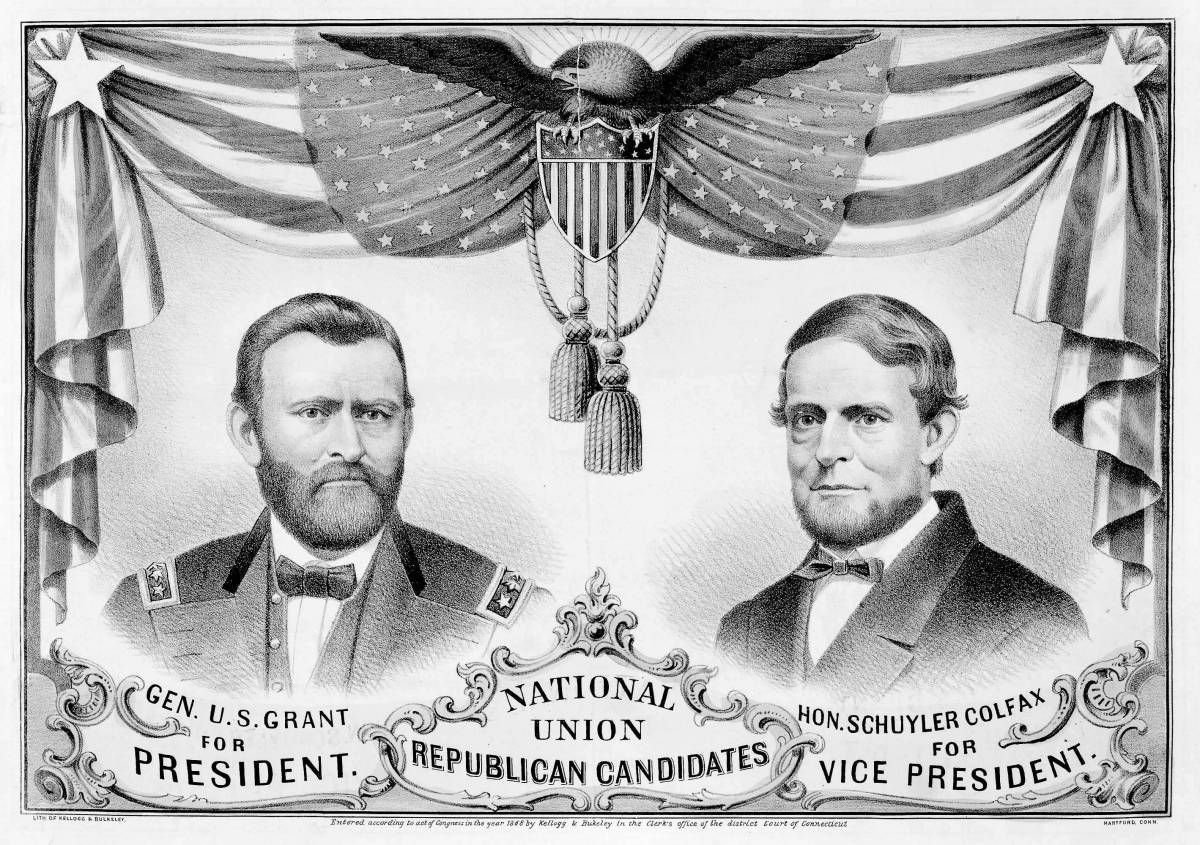
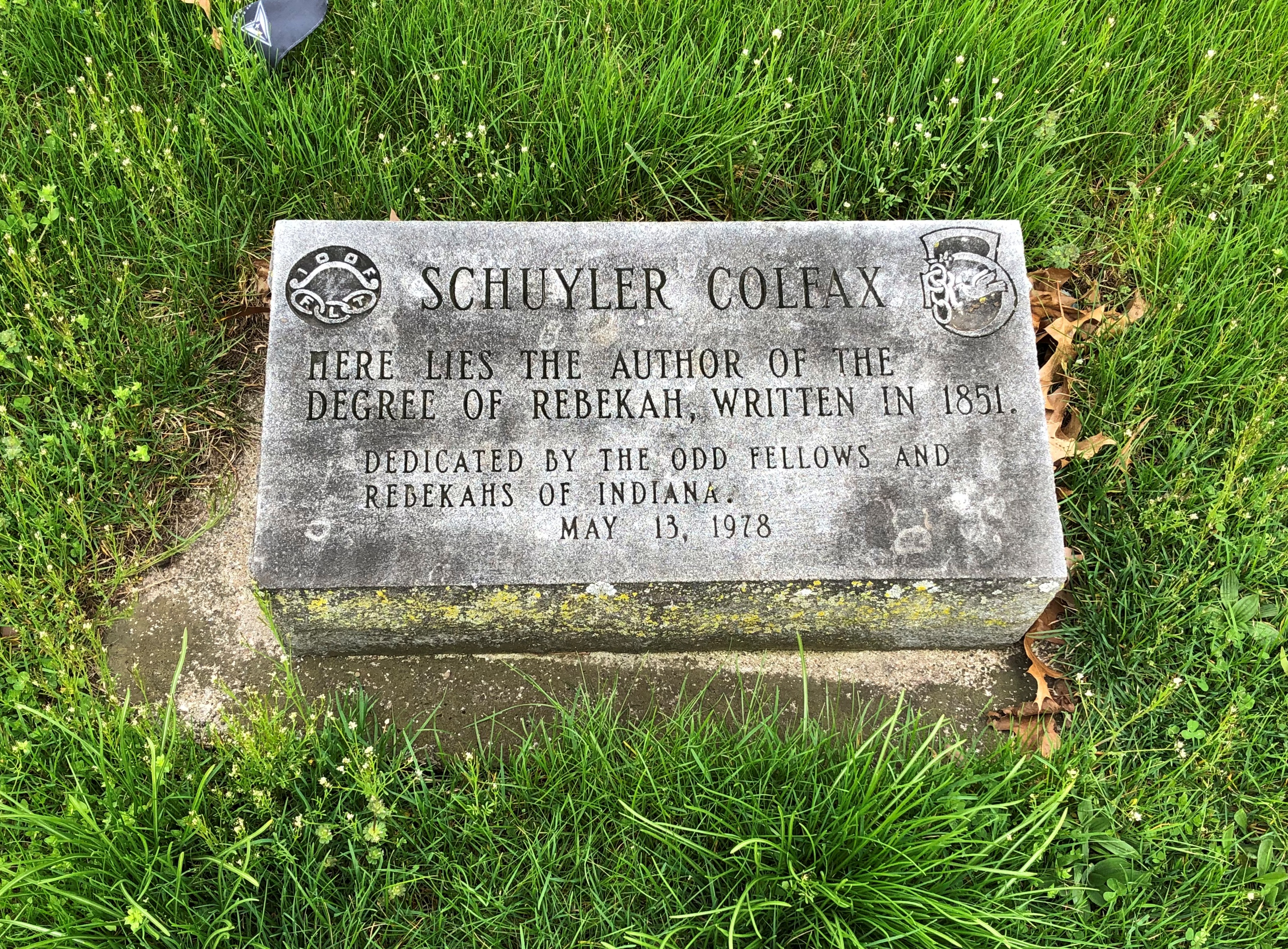
Good old Vice President Colfax of Grant’s first term, famed in — well, neither song nor story. Still, his contemporaries thought highly of him. They must have. Not only did he get the main stone, he got this.South Bend City Cemetery - Vice President Schuyler Colfax grave

And this — close to our time, in 1978.South Bend City Cemetery - Vice President Schuyler Colfax grave

Order of Rebekah? Now you know.

Leaving the cemetery, I was glad to see that it’s on Colfax Ave. It’s a more modest street than Colfax Ave. in Denver, but South Bend is a more modest town.

Mishawaka Walks

Worth noting: U.S. Grant was born 200 years ago today in Point Pleasant, Ohio. There hasn’t been a presidential birth bicentennial since Lincoln’s in early 2009, which came on the heels of Andrew Johnson’s in late 2008.

Later this year, there will be another one: Rutherford B. Hayes, born in Delaware, Ohio on October 4, 1822. One cold day in the mid-1990s, I dropped by the Hayes home museum in Fremont, Ohio, sparking an interest in presidential sites that hasn’t abated. Good old RBH. President most likely to be mistaken for Benjamin Harrison in a lineup. After his bicentennial, it won’t happen again till Chet Arthur has his day in 2029.

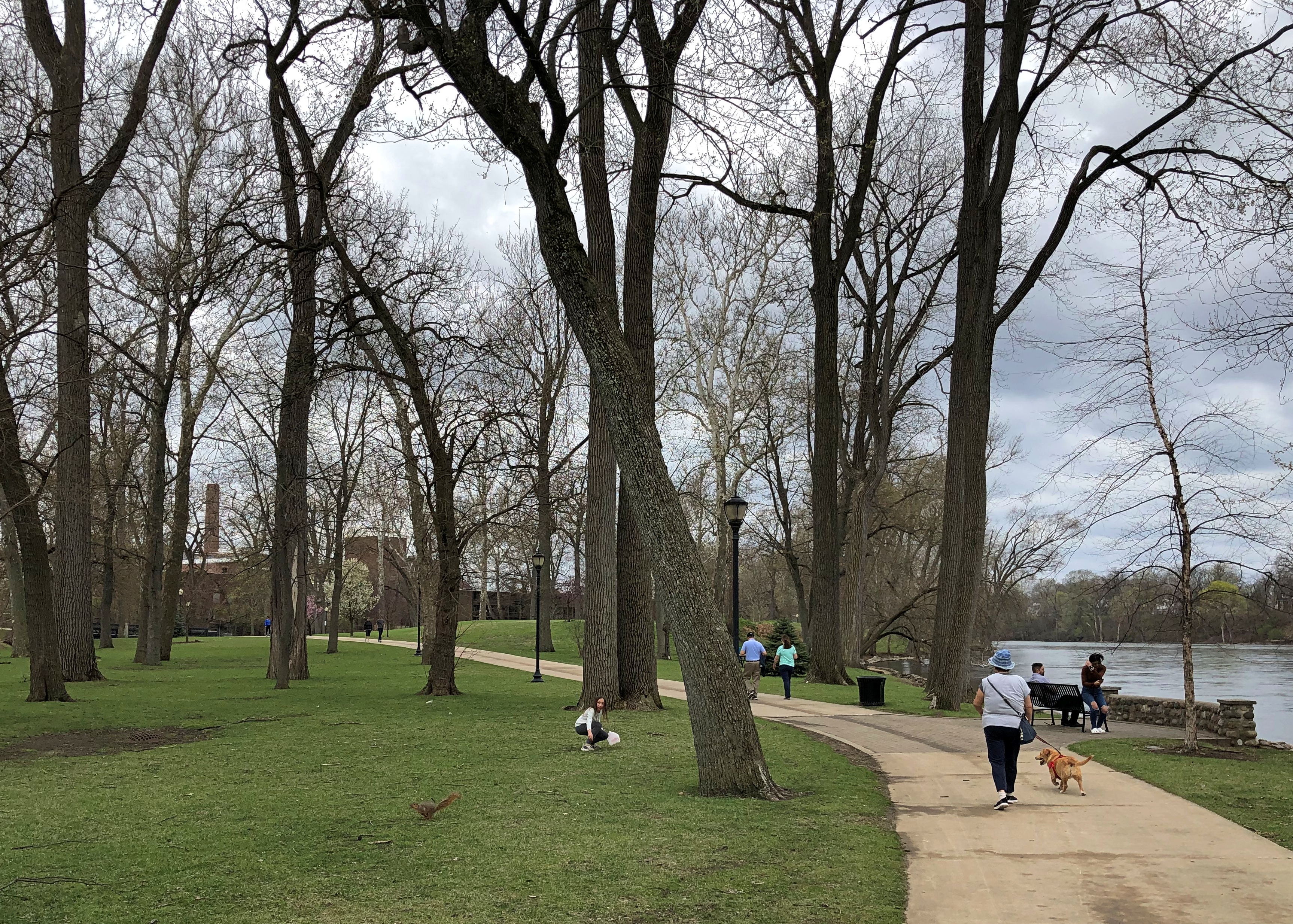
The St. Joseph River flows mostly westward through Michigan and into Lake Michigan, but it bends into Indiana at South Bend and its twin town, Mishawaka. Until recently I gave little thought to Mishawaka as a destination, but then I learned about its riverwalks. We arrived late in the morning on Sunday to sample one of them, the walk along the budding-verdant Kamm Island Park.

Downtown Mishawaka seemed fairly pleasant as well. It reminded me of some of the towns along the Fox River in Illinois — Aurora, say, or St. Charles, both of which hug a mid-sized river and consider it an amenity.

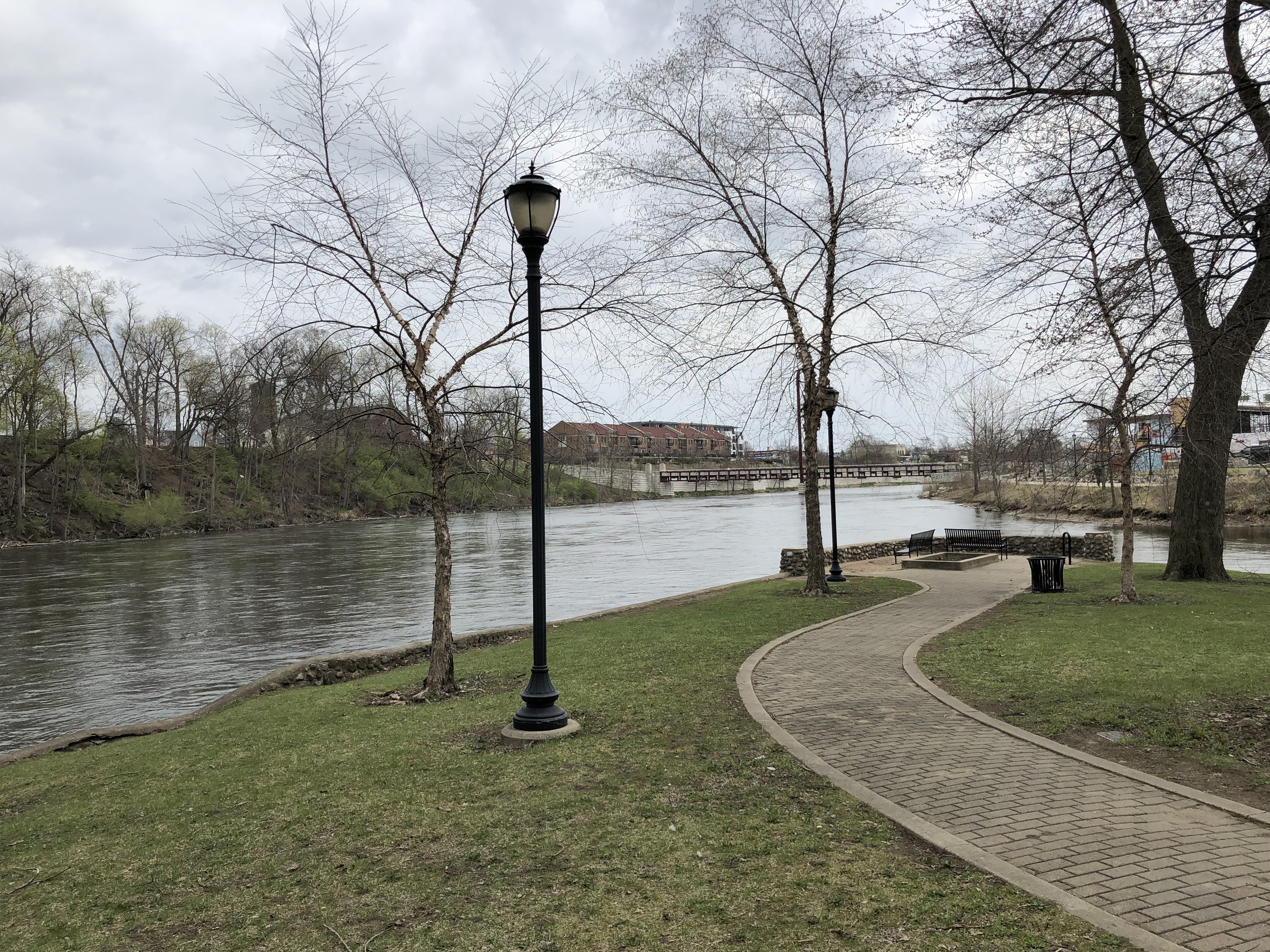
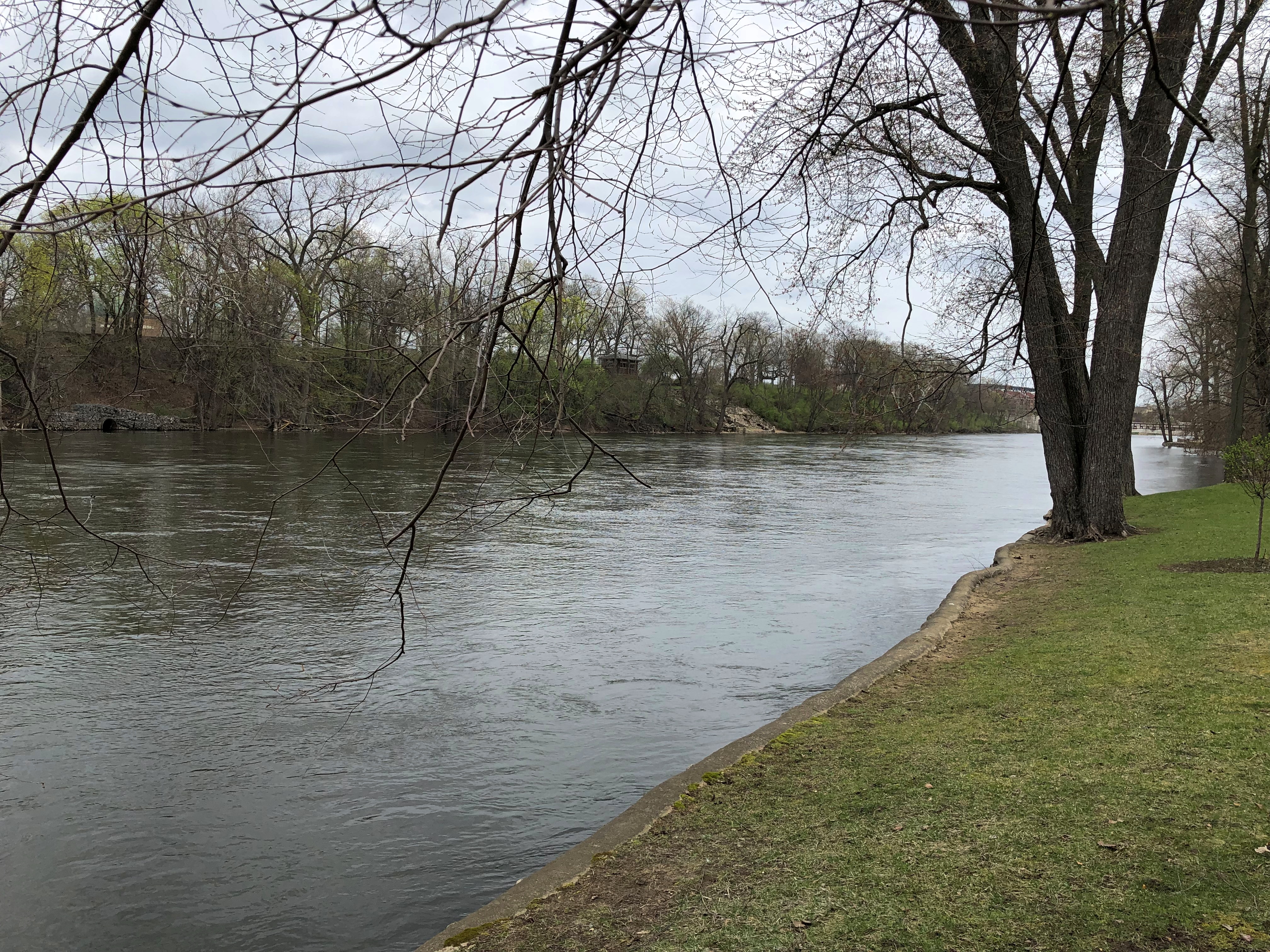
As well they should. Some views of Kamm Island Park.Kamm Island Park Kamm Island Park
Kamm Island Park

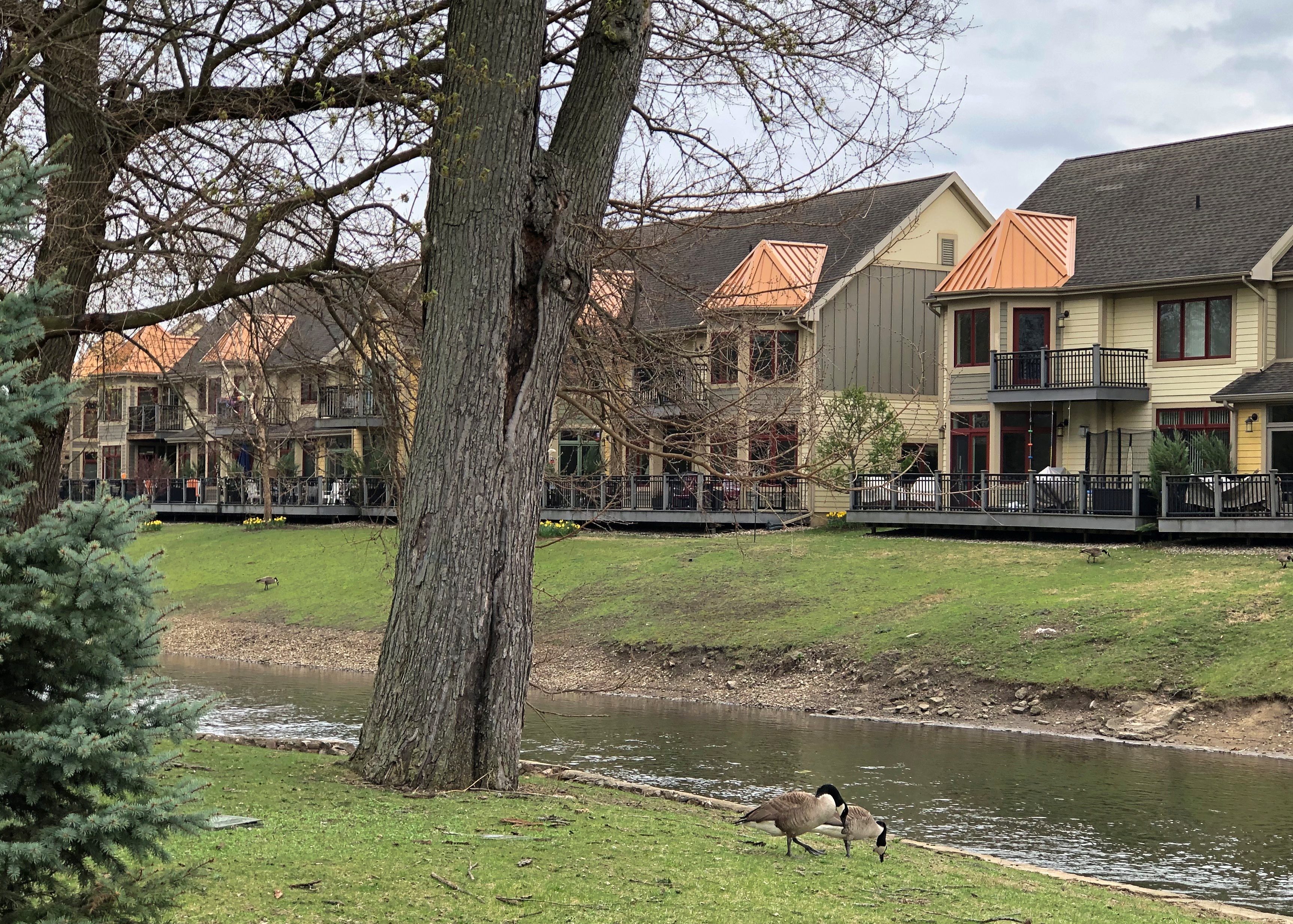
New development has come to the area. Not sure I’d want to live there, but I’d probably get a kick out of renting one of the units for a few days.Kamm Island Park

One curiosity on Kamm Island that I didn’t think to take pictures of: the fact that small, colorful figurines and other items, plastic and ceramic, stand at the base of many of its trees. No group is the same. A planned art project or spontaneous whimsy? Homage to elves or the work of elves?

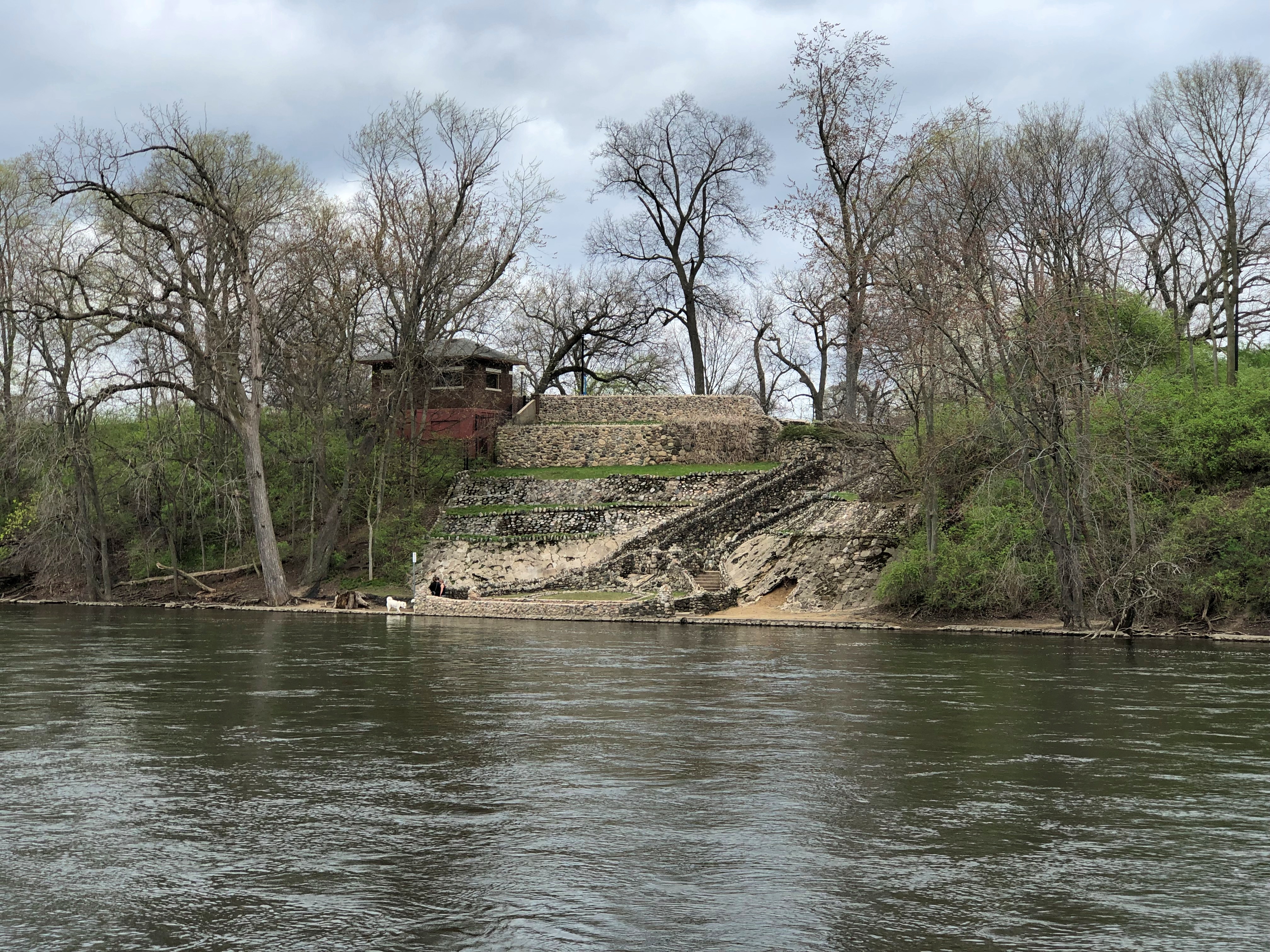
Across the river at Kamm Island is Battell Park, the city’s oldest park, which has its own trail and some features not found elsewhere, namely a rock garden built by the WPA. This is the view of the lower level of the rock structure.Battell Park

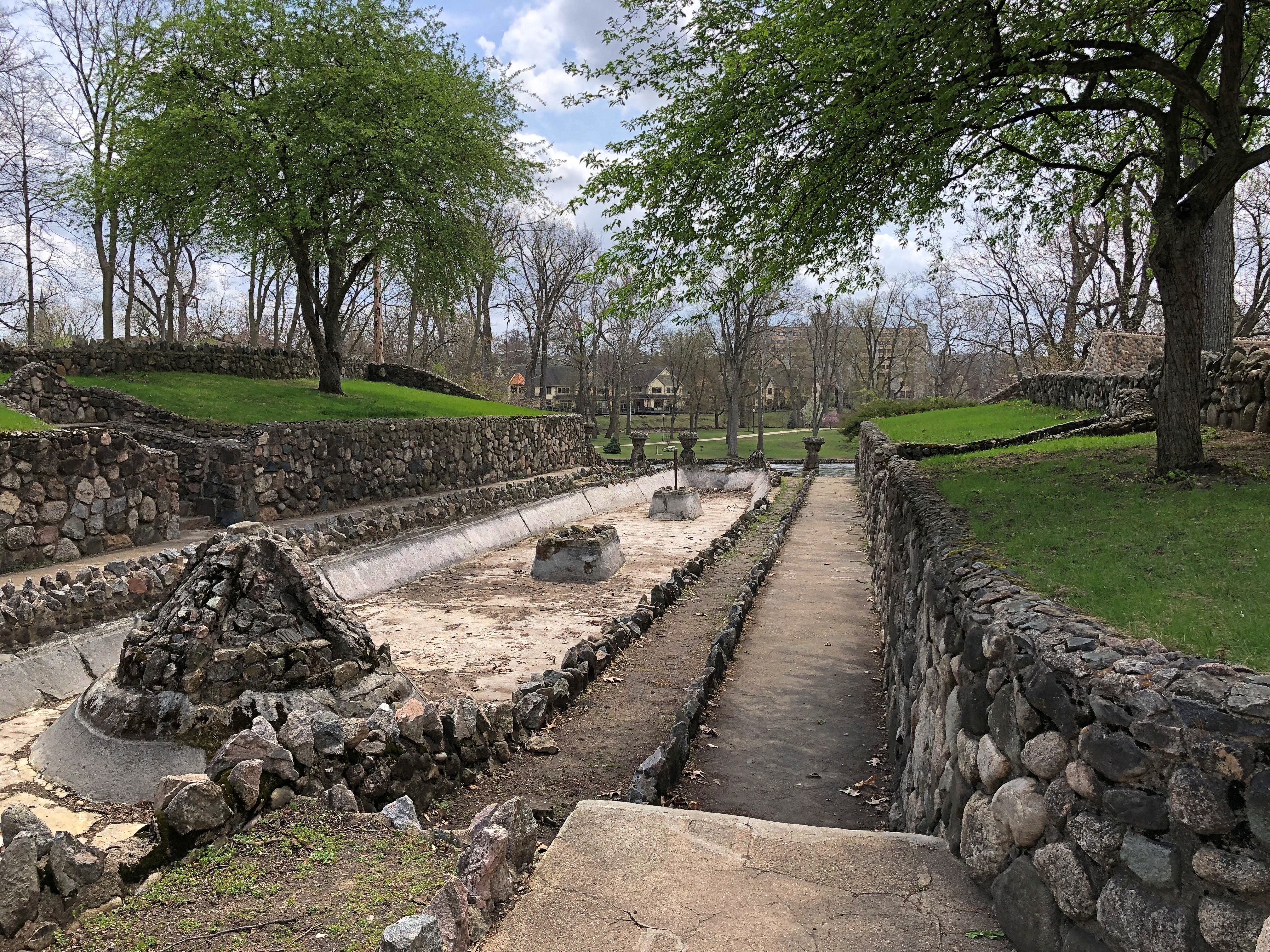
After lunch, which consisted of takeout Chinese from a storefront near UI South Bend eaten at the picnic shelter of a windy park near the Potawatomi Zoo, we stopped at Battell Park for a look at the upper level of the rock garden. Water must flow through its channels some of the year, down to the river, but looks like it hasn’t started for the season quite yet. Still, it’s an impressive work.Battell Park

As much as I laud the CCC — whose works I keep encountering, some stunning — I have to put in a word for the WPA and its wide legacy too. I grew up with one of its finest projects — the San Antonio Riverwalk — as well as our high school stadium, which once upon a time had a plaque denoting it as a WPA project. This is an excellent site for browsing its projects, along with the rest of the visible New Deal.

Upstream a mile or so from Battell is Merrifield Park, also in Mishawaka. That was the last place we visited in town before heading home, because we wanted to see one of the park’s smaller features, Shiojiri Garden (Shiojiri Niwa), dedicated in 1987. Small but enchanting.

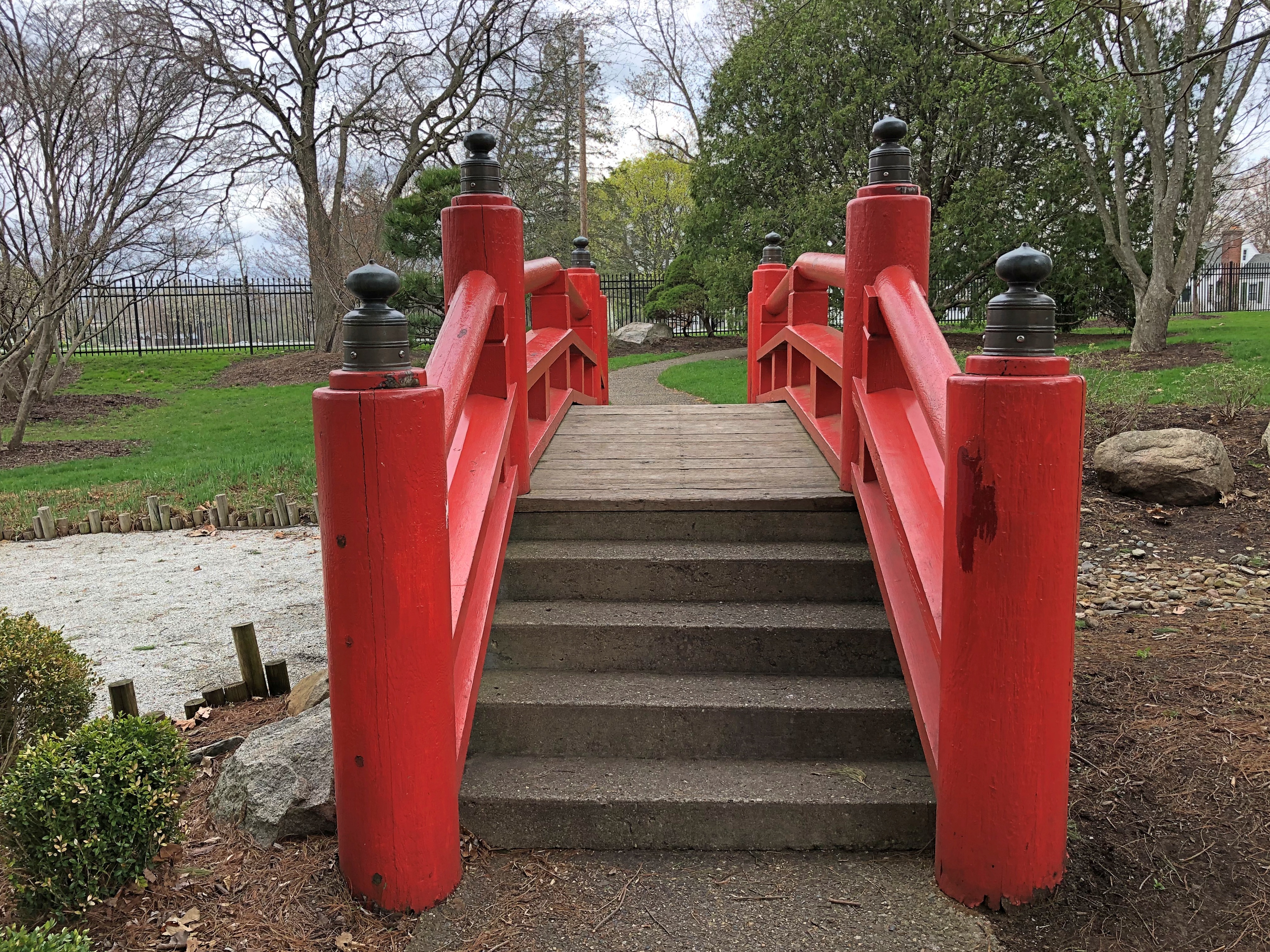
“This garden was a gift to the city of Mishawaka from its sister city, Shiojiri (Nagano Prefecture, Japan),” Atlas Obscura notes. “The designer was Shoji Kanaoka, the same man who planned the Japanese gardens at the Epcot Center in Florida. It features a multitude of trees and flowers, including a grove of cherry trees. There are also two snow lanterns, four bridges, and a teahouse pavilion built in the traditional Japanese style.”Shiojiri Niwa Shiojiri Niwa Shiojiri Niwa

Nice. You might call it a pocket Japanese garden, and Mishawaka — and the world — are better for it.

Notre Dame Stroll

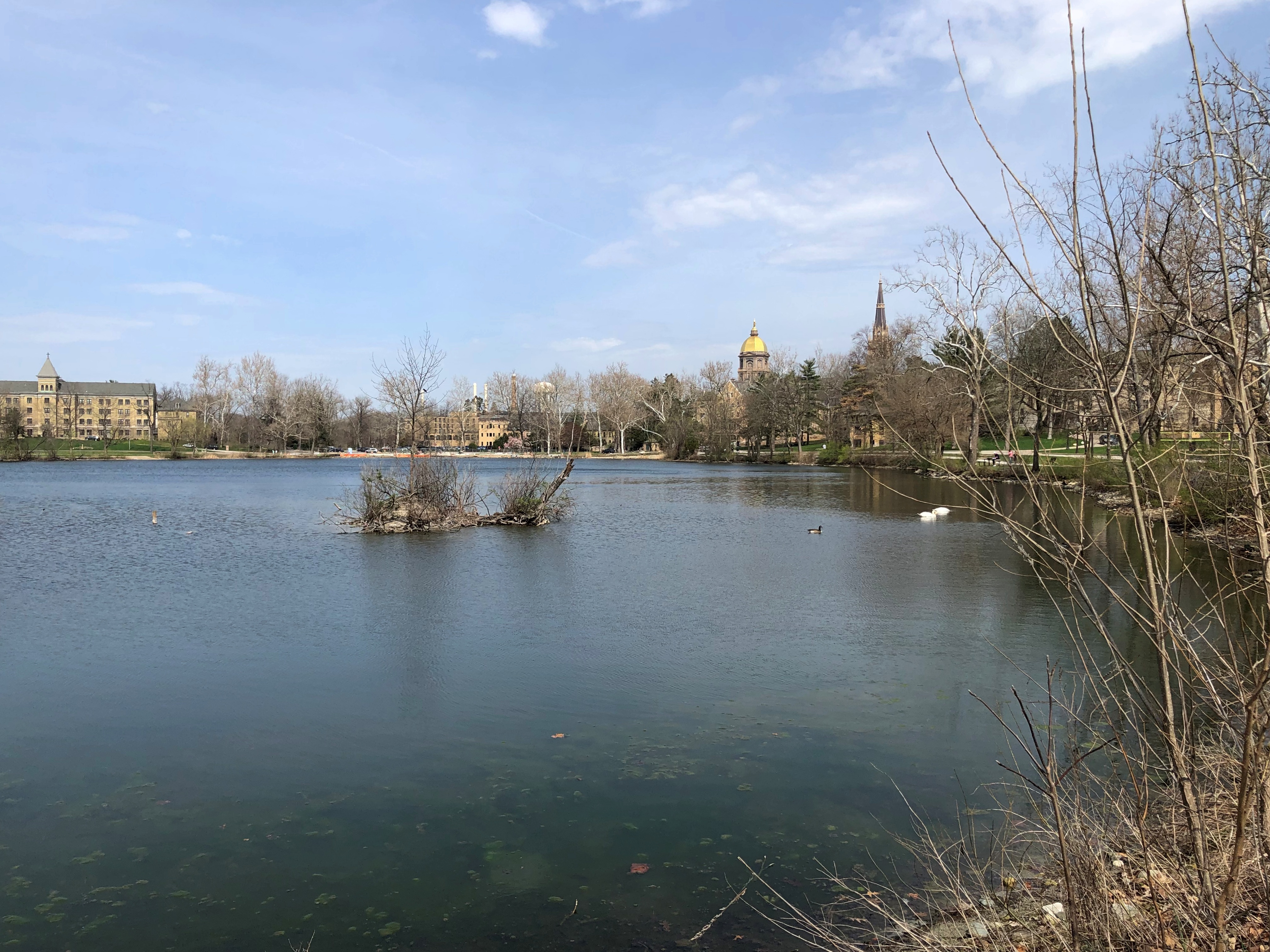
Along with the rest of northern Indiana, the campus of the University of Notre Dame is just beginning to turn green, with grass fully that color, and bushes and trees budding. We began our walk on campus on Saturday afternoon as one does, at a large parking lot. But the lot had good placement, not far from St. Mary’s Lake.St Mary's Lake, Notre Dame St Mary's Lake, Notre Dame

A nearby lake is St. Joseph’s. You’d think there would be a Baby Jesus Pond somewhere, but I don’t see it on the map.

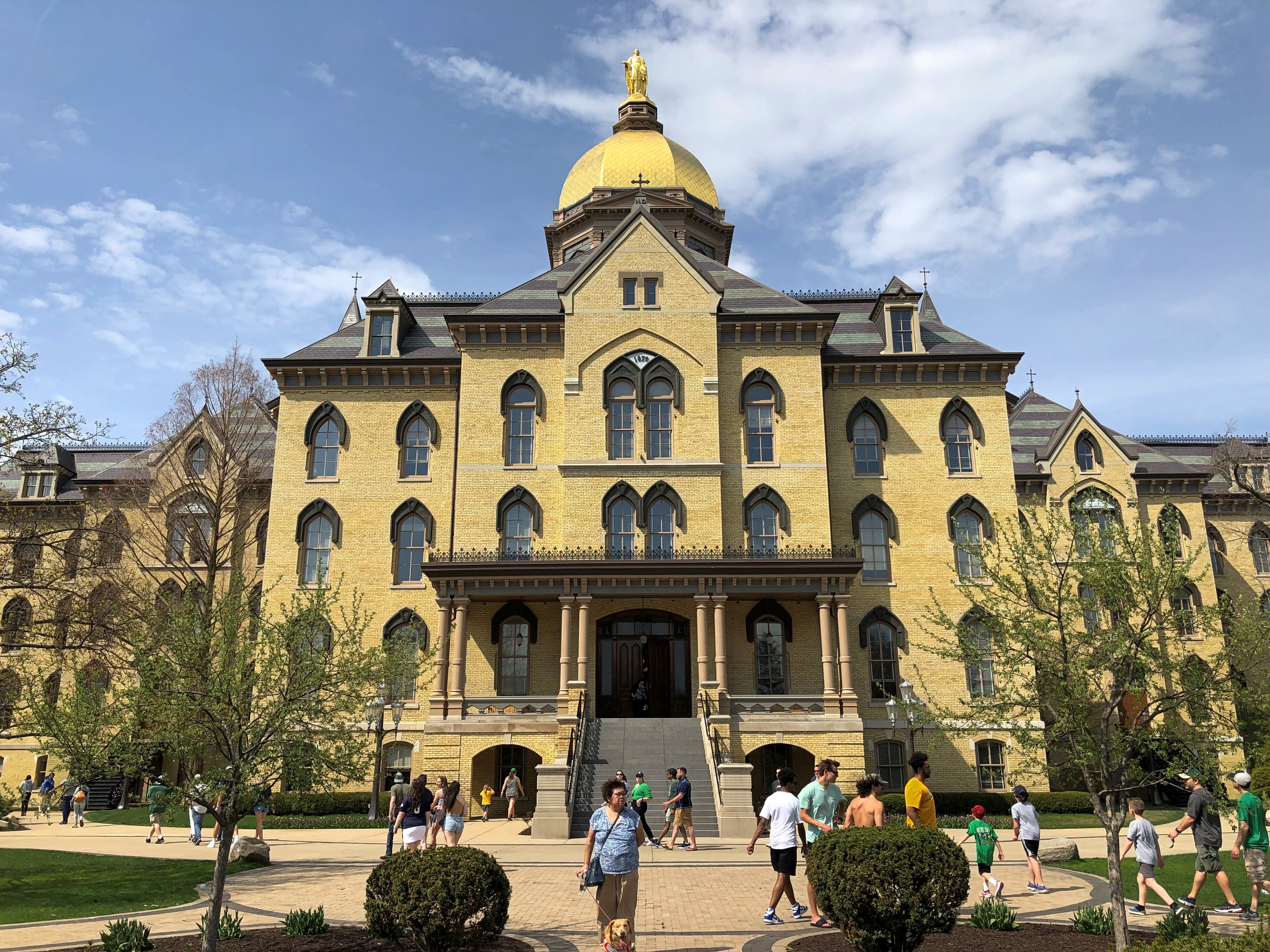
Next to the basilica is Norte Dame’s magnificent Main Building. Serving as the administrative center for the school, the structure dates from 1879, replacing a building that burned down early that same year, and was designed Willoughby Edbrooke. Its gold-leaf dome was added a few years later, complete with a massive gilded statue of Mary atop it.Notre Dame Main Building

The interior looks pretty spiffy. Unfortunately, it was closed for an event. So we headed south along the well-manicured lawns of Notre Dame, eventually reaching the Eck Visitor Center and the Hammes Bookstore, which would be more accurately called the Hammes ND-Themed Clothing Store.Notre Dame campus

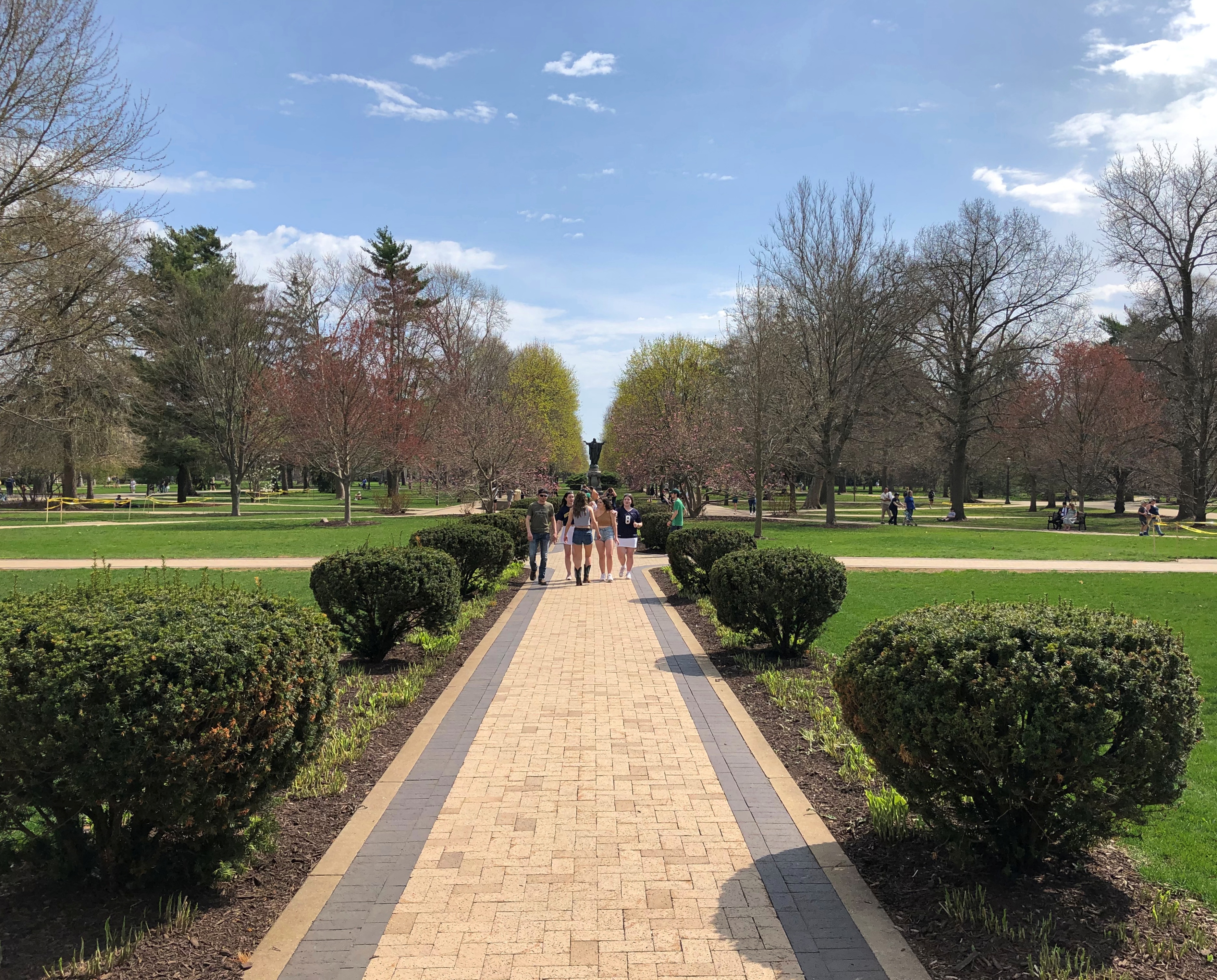
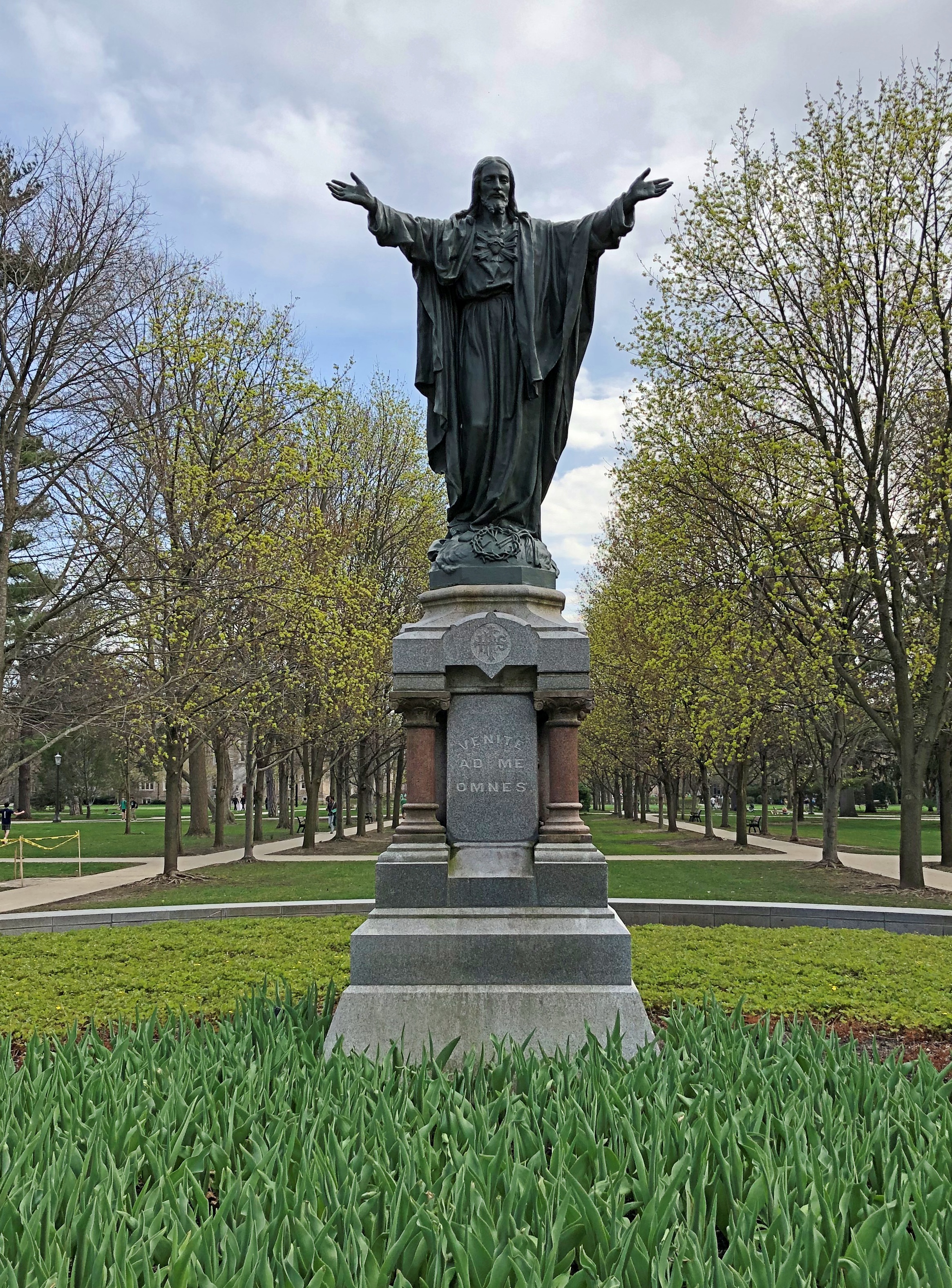
Jesus faces the Main Building.Notre Dame campus

This isn’t the Touchdown Jesus Notre Dame is known for, however. That, alas, we didn’t see (or First Down Moses, either).

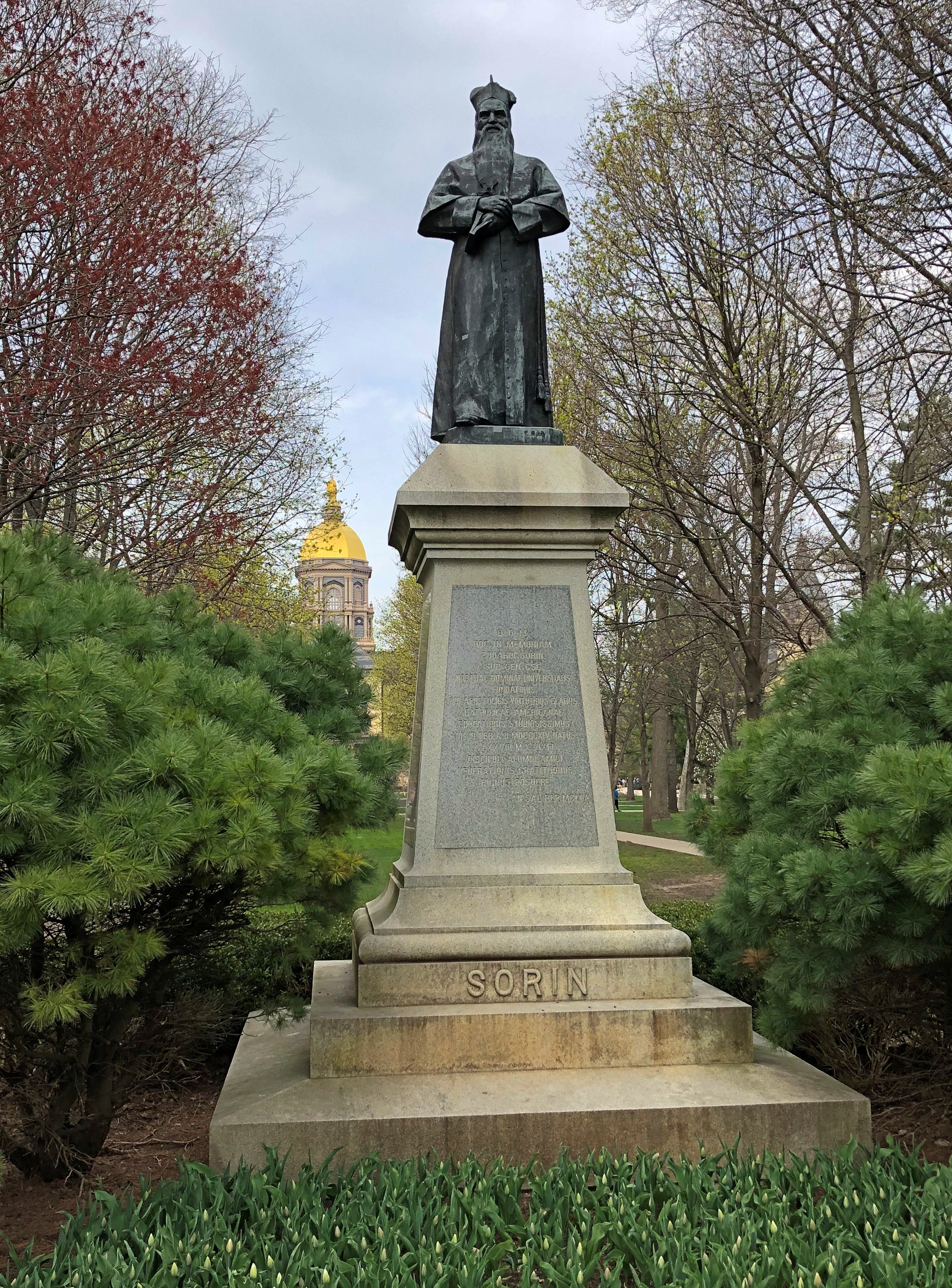
Further down the lawns is the founder and first president of Norte Dame in bronze, created by Italian sculptor Ernesto Biondi and unveiled in 1906.
Notre Dame campus

Namely, the Very Rev. Edward (Édouard) F. Sorin (1814-93), who also had time to found St. Edward’s University in Austin and have a mighty oak named for him. The plinth is inscribed with Latin, lauding Sorin.

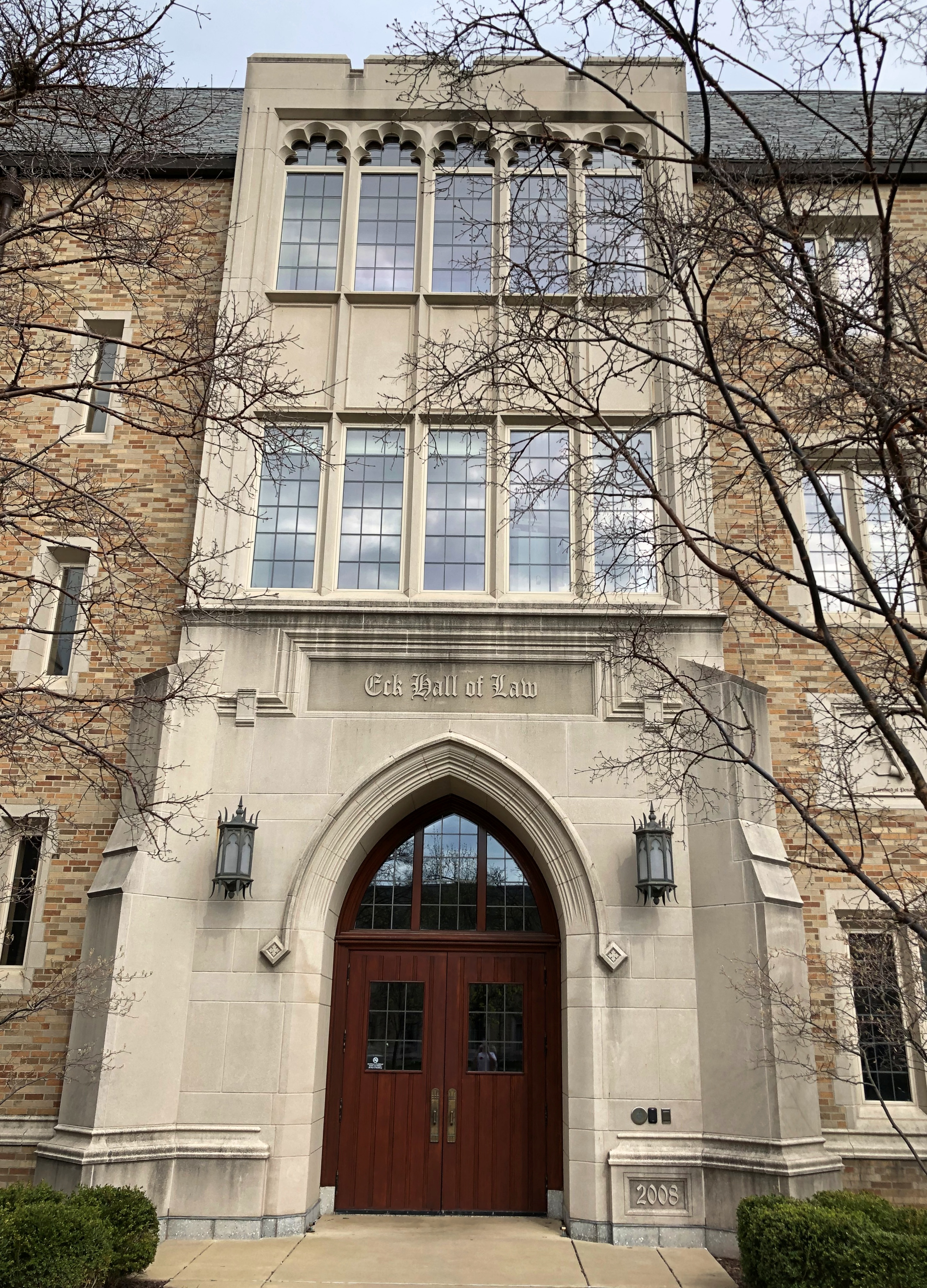
South along the lawns is a raft of collegiate buildings with collegiate names: Sorin Hall, Lafortune Student Center, Hayes-Healy Hall, Walsh Hall and the Norte Dame law school. Formally, it’s the Eck Hall of Law. I was impressed by how new the building looked, despite its traditional stylings. It is fairly new: 2008, a design by Cardosi Kiper.
Notre Dame Campus

A lot of the buildings looked newish, which tells me that Notre Dame has the dosh in our time — or can source it from donors like Mr. Eck — for capital projects. As indeed it does: the university’s endowment is about $12.3 billion, putting it at number 8 on this U.S. News & World Report list.

That kind of money also buys some nice details, or at least it should.Notre Dame Campus

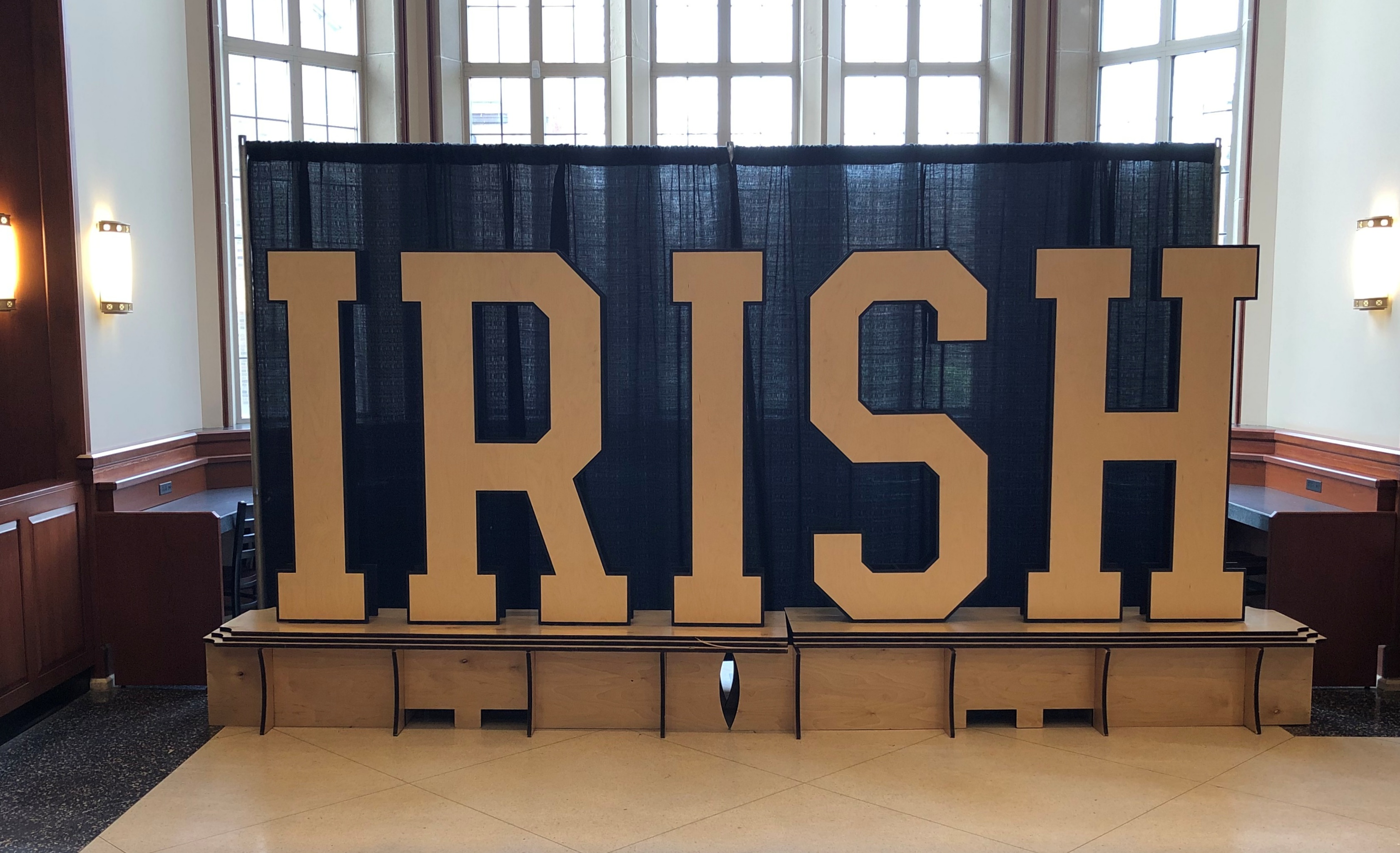
Further on, the “bookstore” didn’t let you forget where you were.Notre Dame campus

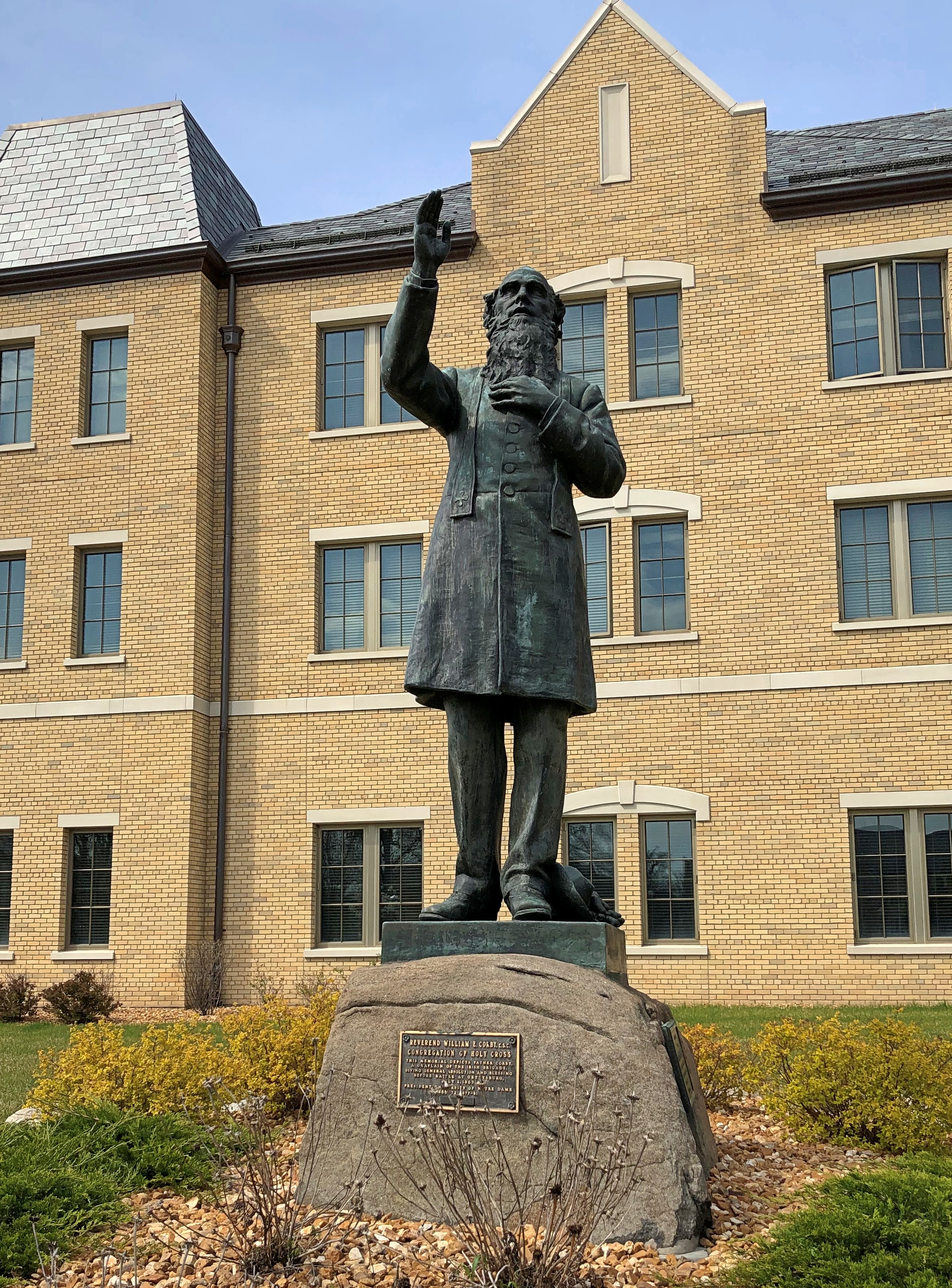
Finally, I don’t want to forget Chaplain William Corby, who rates a statue not far from the basilica and Main Building.Notre Dame campus

A plaque near the bronze says: The first bronze sculpture of Chaplain William Corby by Samuel Murray was dedicated on the Gettysburg battlefield by Civil War veterans of the five regiments of the Union Army’s Irish Brigade. His statue is on the same boulder of Cemetery Ridge where he stood to give the soldiers General Absolution on July 2, 1863, the second day of the three-day battle

Minutes later the Irish Brigade went into action at Little Round Top and the Wheatfield. The Brigade lost 27 killed, 109 wounded, and 62 missing. Gettysburg’s individual statues are of generals, except President Lincoln, Chaplain Corby, and a civilian.

This duplicate statue was dedicated here in 1911. Father Corby was president of Notre Dame twice: 1866-72, 1877-82. He planned the Grotto, finished in 1896, and died in 1897.

The Basilica of the Sacred Heart, Notre Dame

Last Friday we had the first genuine thunderstorm we’ve had in a while, as opposed to mere heavy rain, complete with the necessary light and noise, plus heavy rain. Saturday dawned warm and sunny, a glorious spring day, made for going somewhere.

But first I loaded the back of my car with two old computers, two banker boxes of papers and an auto battery long since defunct, and took them to a drive-through recycling event organized in an enormous parking lot next to Boomers Stadium (formerly Flyers Stadium). Didn’t take long to dispose of these things, and it didn’t cost me anything, since I assume the recyclers will make something from the materials they gather.

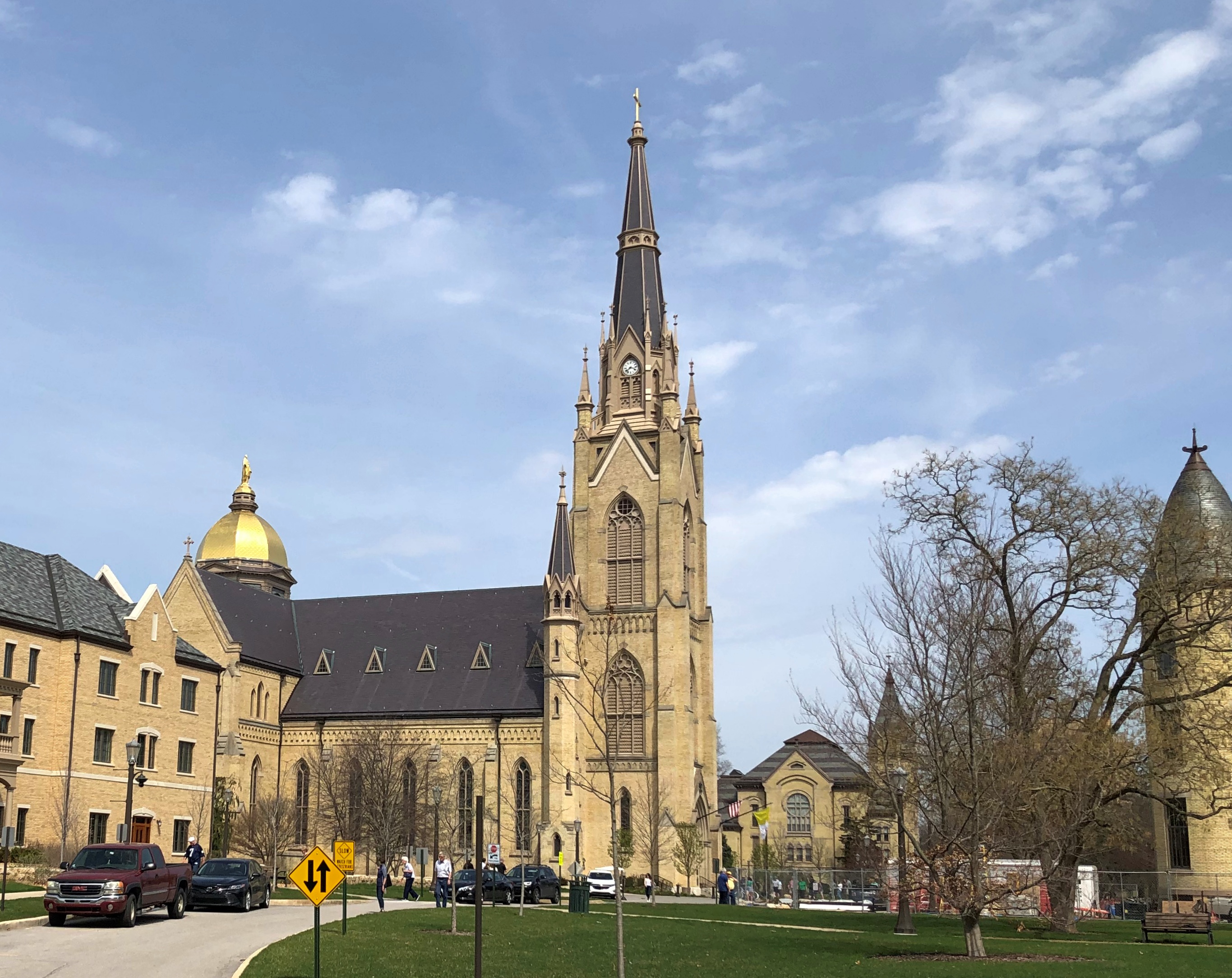
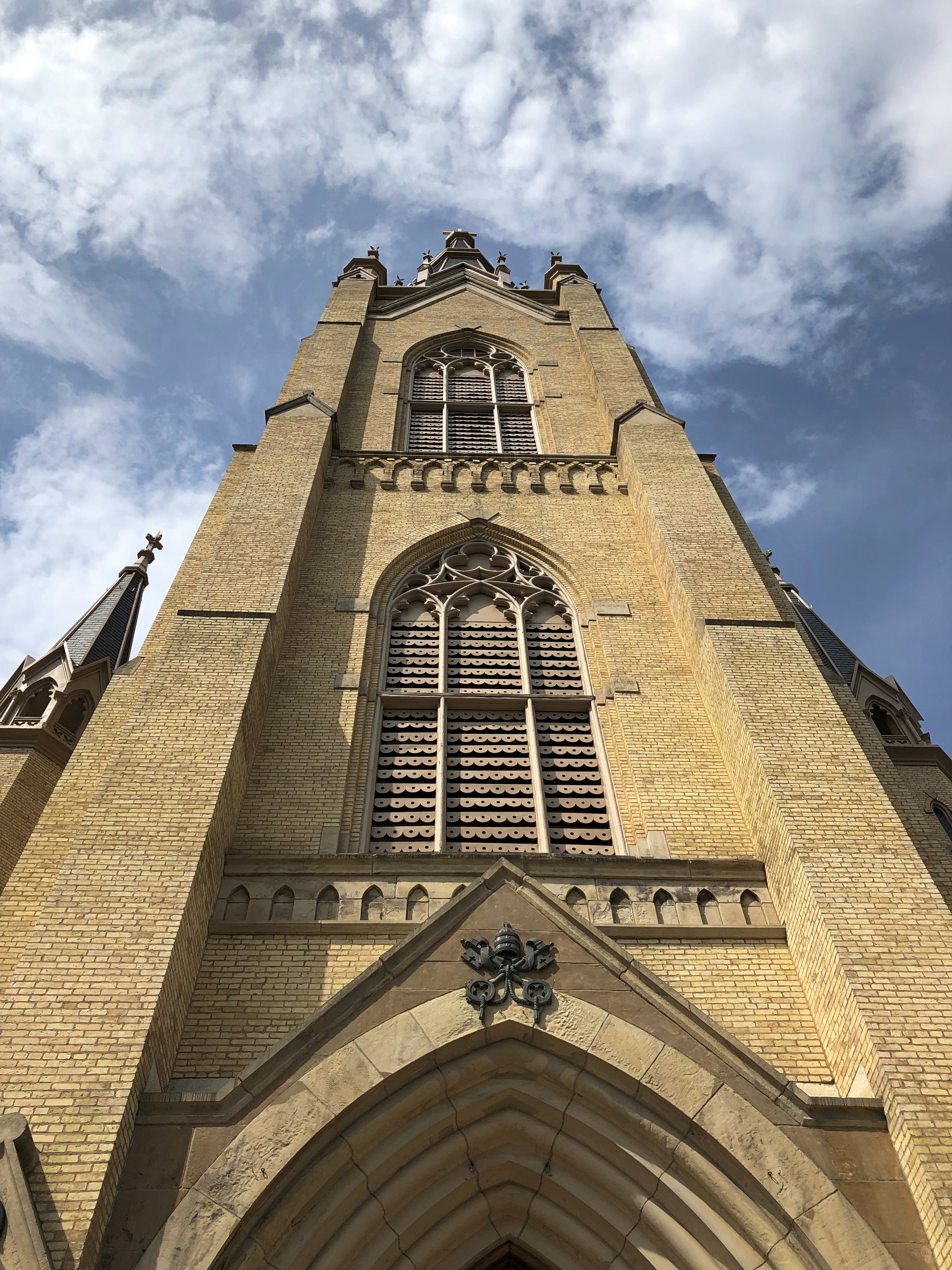
After that, and packing a few things in the now-empty back of the same car, we drove east for a 30-hour trip to South Bend-Mishawaka, Indiana. We arrived at the campus of the University of Notre Dame mid-afternoon, parked in a large lot near the likes of St. Mary’s Lake and the Knute Rockne Memorial Gym, and made our way to a place I’ve wanted to visit for years: the Basilica of the Sacred Heart, Notre Dame.

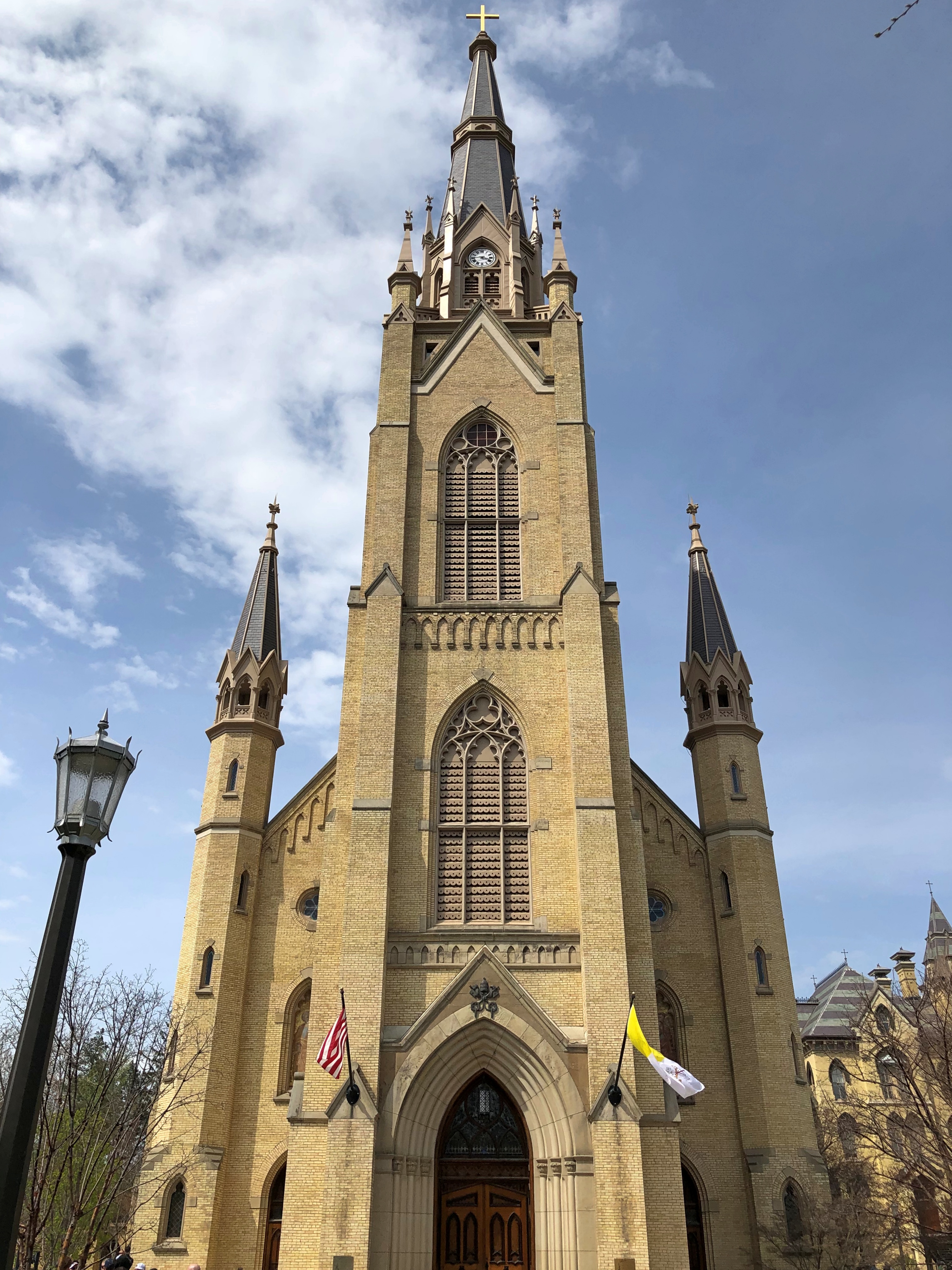
It towers over campus.Basilica of the Sacred Heart, Norte Dame, Indiana Basilica of the Sacred Heart, Norte Dame, Indiana Basilica of the Sacred Heart, Norte Dame, Indiana

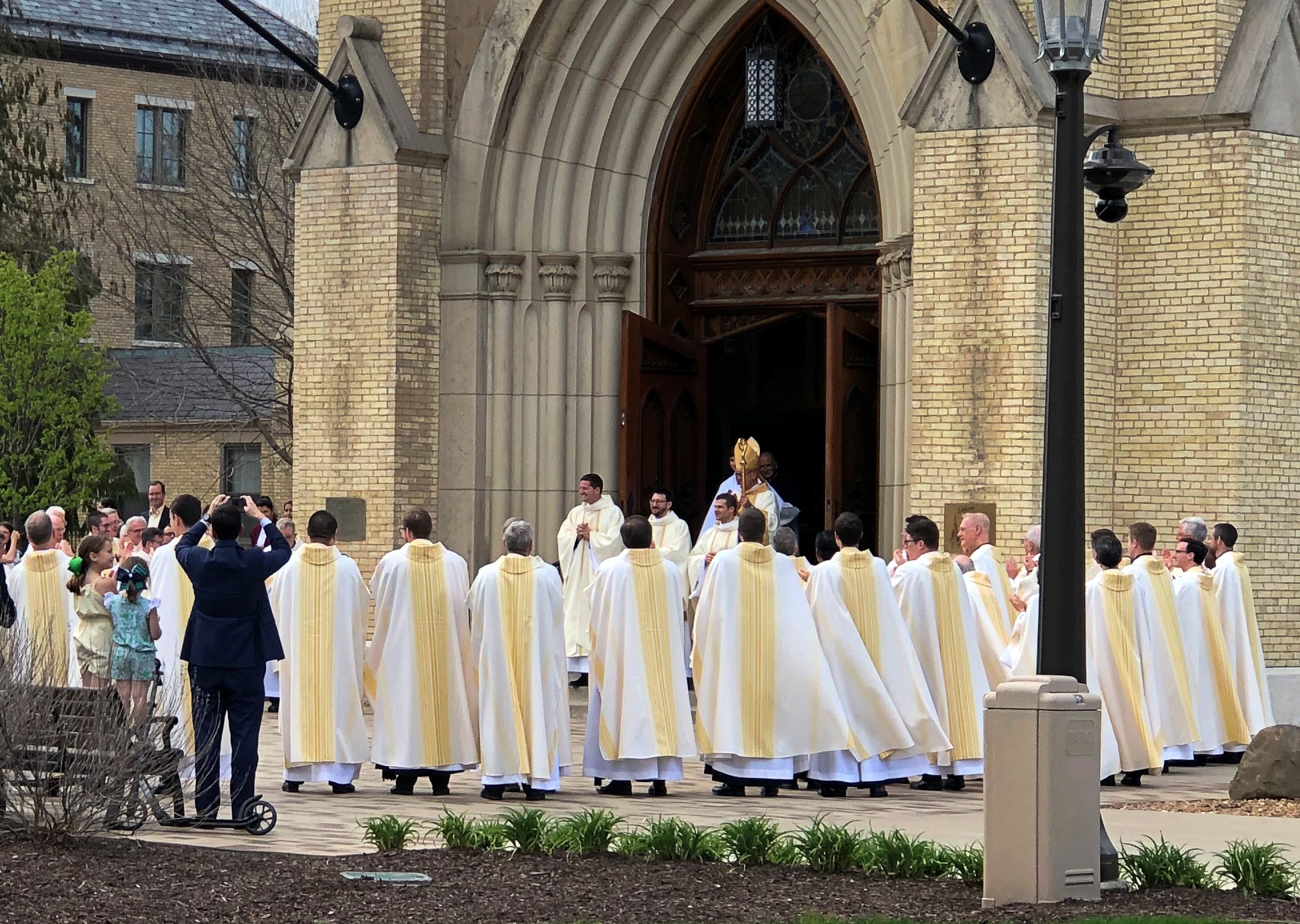
That’s as far as we got toward the entrance before being told that an ordination was in progress, and we’d have to come back when it was over, in about 30 minutes.

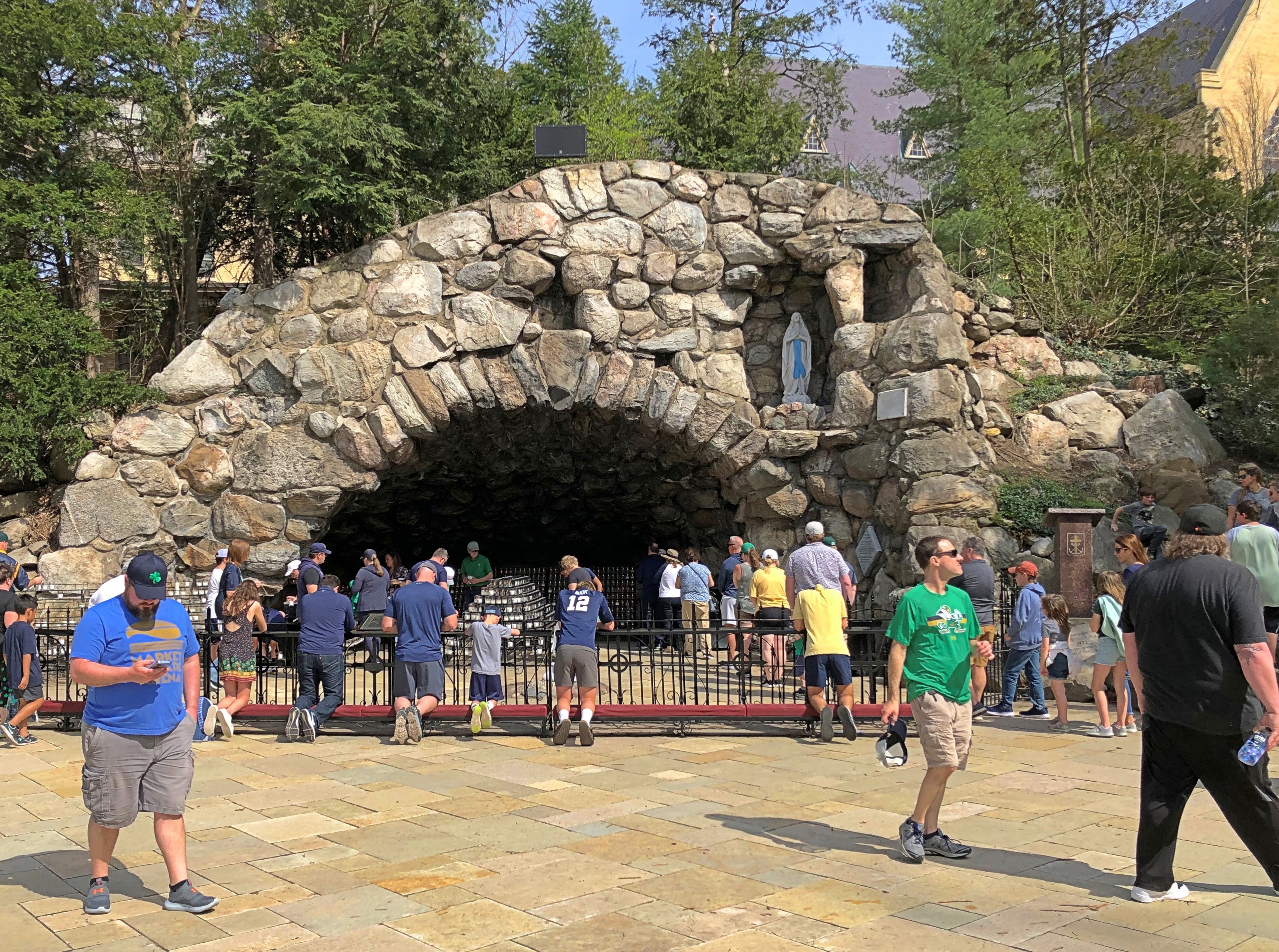
There’s plenty else in the vicinity. Soon we found ourselves at the university’s Lourdes-class Grotto, downslope from the basilica. We joined a fair-sized crowd at the place.Grotto, Notre Dame, Indiana

I think the last time I was there was on a gray, drizzly day in November maybe 20 years ago, making a brief stop on a longer trip whose purpose I forget. That day, there weren’t nearly as many people. Just me, actually.

Then we started wandering down the sculpted lawns of Norte Dame leading away from the basilica, but hadn’t gone far when the basilica bells started tolling. A joyous tolling.

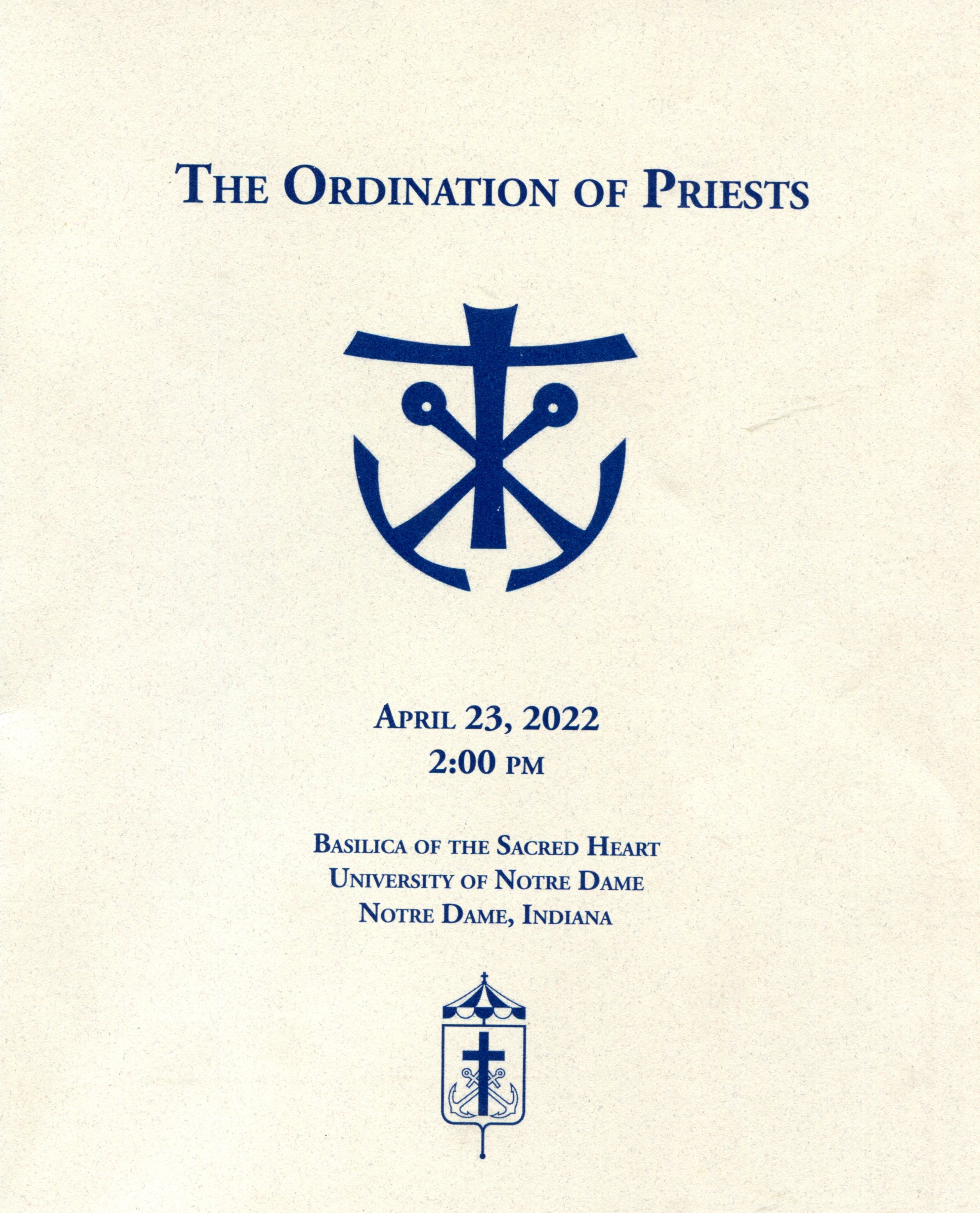
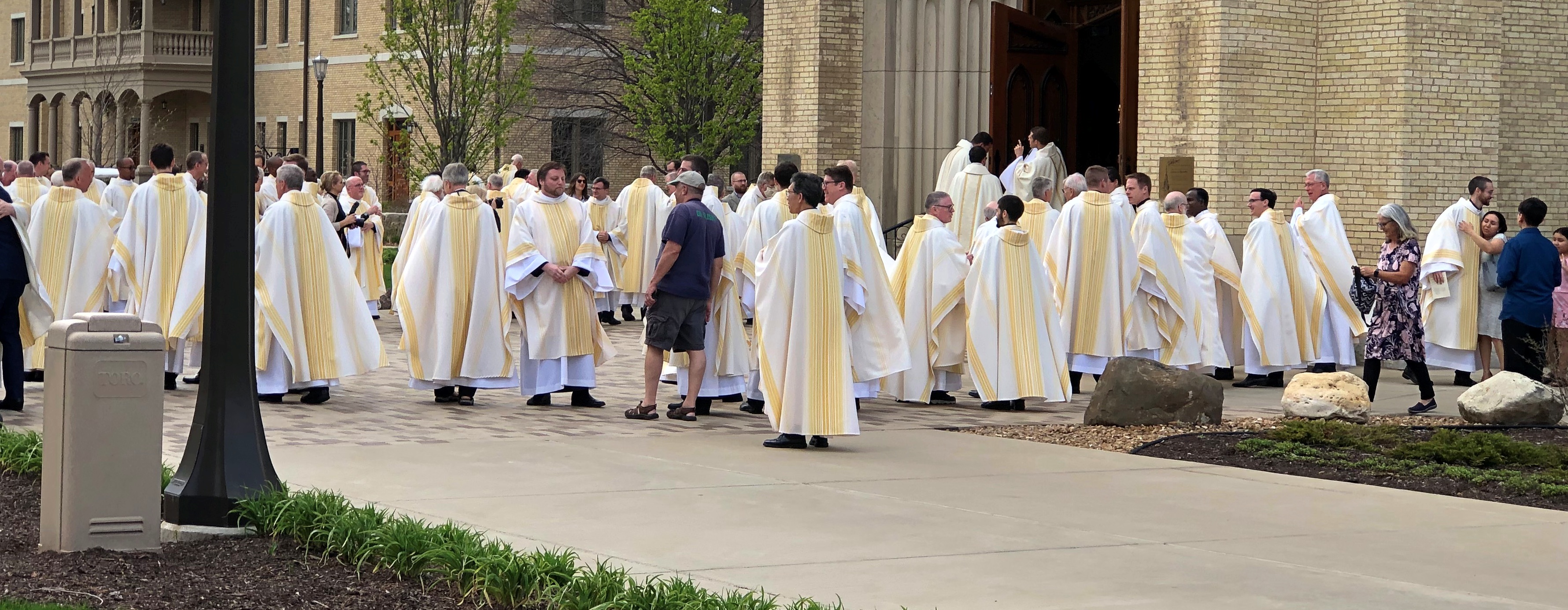
Note that people are spilling out of the basilica, especially those many in white ecclesiastical robes. The ordination had concluded. Later, I picked up the program.

Three men were ordained that day: Drew Clary, Cameron Cortens and Gabriel Griggs. The cross and anchors on the cover are from the seal of the Congregation of Holy Cross, one of whose schools is Notre Dame.

A bishop soon emerged, who presumably would be the ordaining bishop, the Most Rev. Kevin Rhoades. He stood talking to the priests and others for a few minutes.Basilica of the Sacred Heart, Norte Dame, Indiana
Basilica of the Sacred Heart, Norte Dame, Indiana

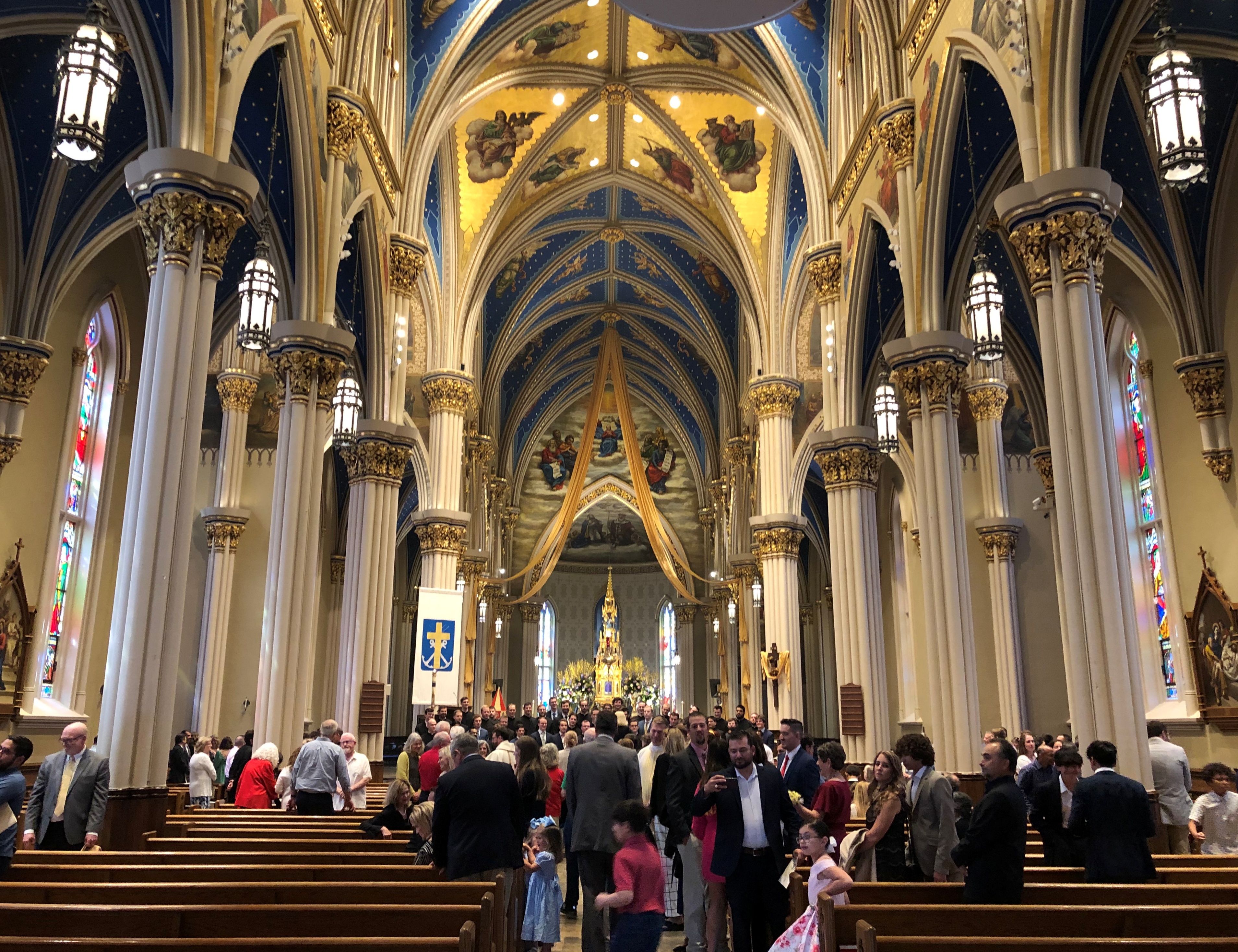
Soon people formally, but more ordinarily dressed, poured out of the church, and socialized outside for a while. Taking turns minding the dog, Yuriko and I took turns looking inside.Basilica of the Sacred Heart, Norte Dame, Indiana
Basilica of the Sacred Heart, Norte Dame, Indiana

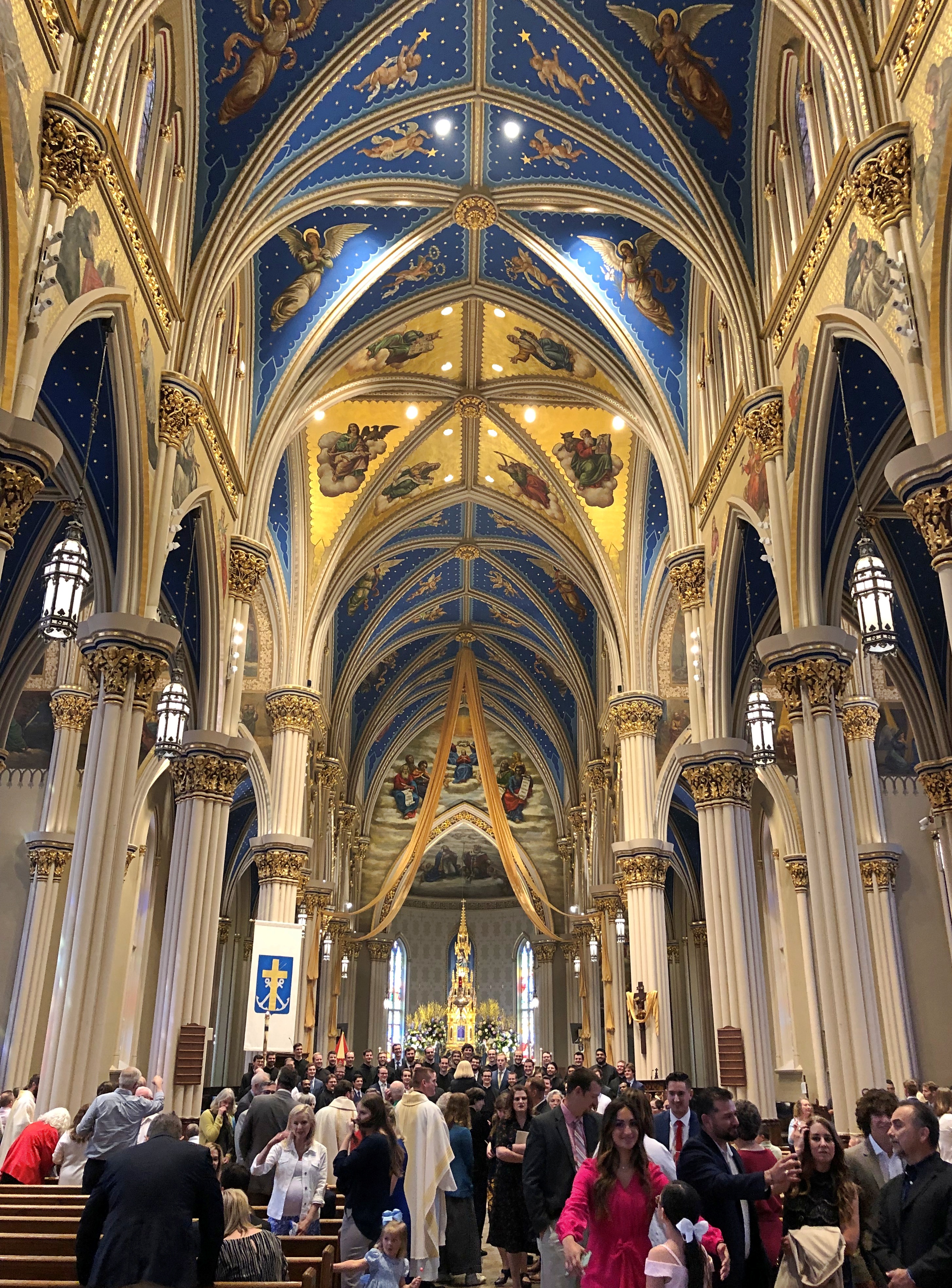
As splendid an interior as I’ve seen anywhere.

“The church’s history dates to the 1830s when missionaries built a log cabin to house a chapel at the site,” Midwest Guest says. “Father Edward Sorin, founder and first president of the University of Notre Dame, built a larger log structure for the Church of the Sacred Heart of Jesus by 1848…

Later in the century, Fr. Sorin tasked renowned church architect Patrick Keely to design him a grand edifice. A little too grand, as it happened.

“Father Sorin apparently experienced sticker shock when Keely submitted a design with an estimated completion price of $100,000 and enlisted his church’s pastor and a religious brother who was an amateur architect and builder to work with Keely to develop a more modest plan.”

Which they did. The Gothic Revival building that stood in front of me, with its bell tower poking the sky, lavish walls outside and in, heaven blue ceiling with gold stars and heavenly beings, was from a more modest plan?

An Urban Ruin Explorer

Almost a warm day. Certainly not a cold one, which felt like a relief. I didn’t have as much time outside as I wanted, though we had a good dog walk at dusk and I spent time after dark on the deck, drinking tea. Much cooler by then, but no wind at all. With a coat and cap, not bad for half an hour.

Just discovered Chris Luckhardt. A talented photographer and videographer with a specialty in urban ruins. At least, that’s my estimation of him after watching his video about looking around the abandoned City Methodist Church in Gary, Indiana. Quite a wander. I plan to watch some more of his work.

Trepidation would probably keep me from going to exactly the sort of places he goes, but I understand the impulse. A healthy sense of exploration that involves the near as much as the far.

12 Pix 20

Back to publishing on January 3, 2021, or so. Who knows, there might be snow by then.

Twelve pictures to wrap up the year, as I have in 2016 and 2017and 2018 and 2019, though this time around I won’t bother with a rigid, one-picture-for-each-month structure. They will be roughly chronological.

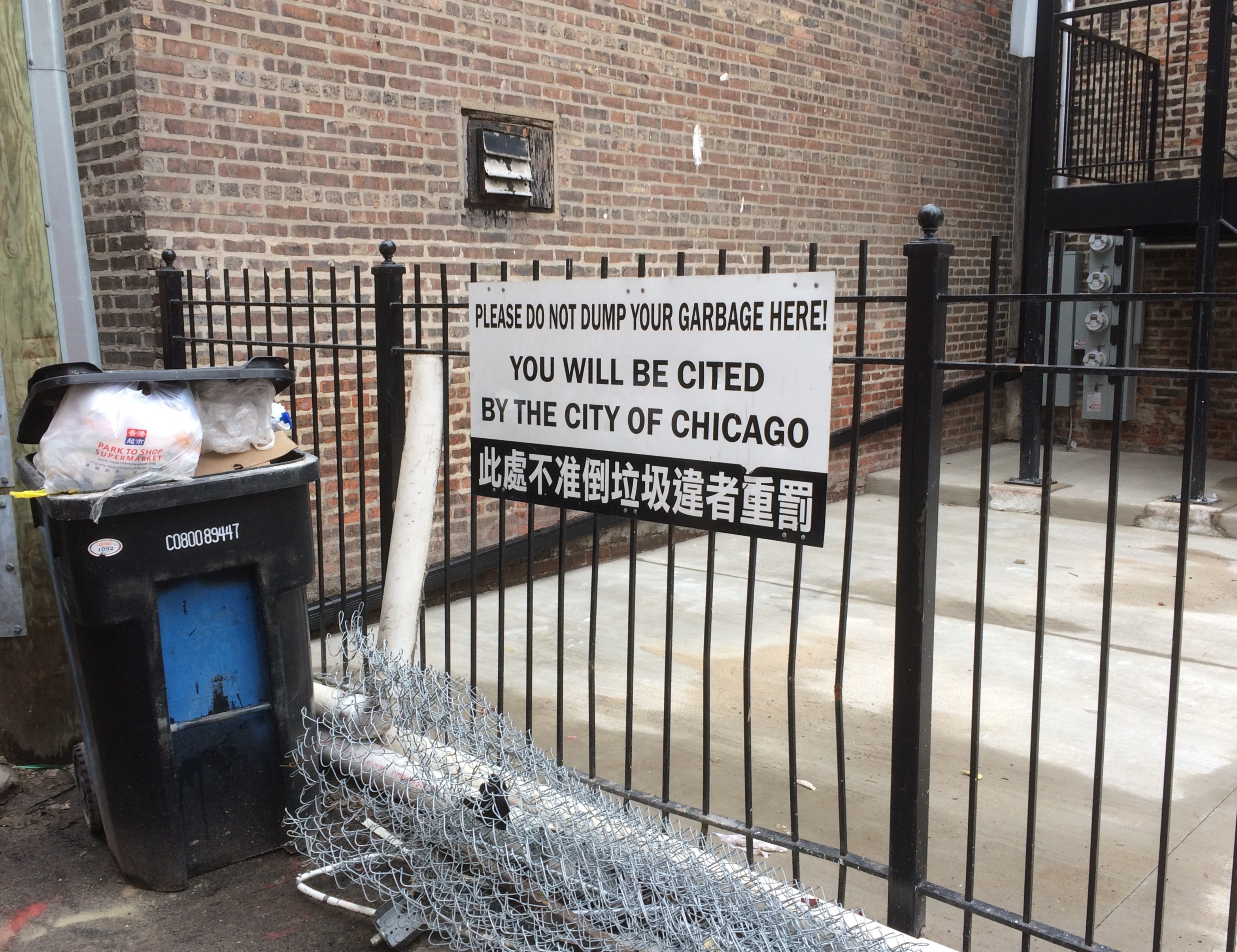
Chicago
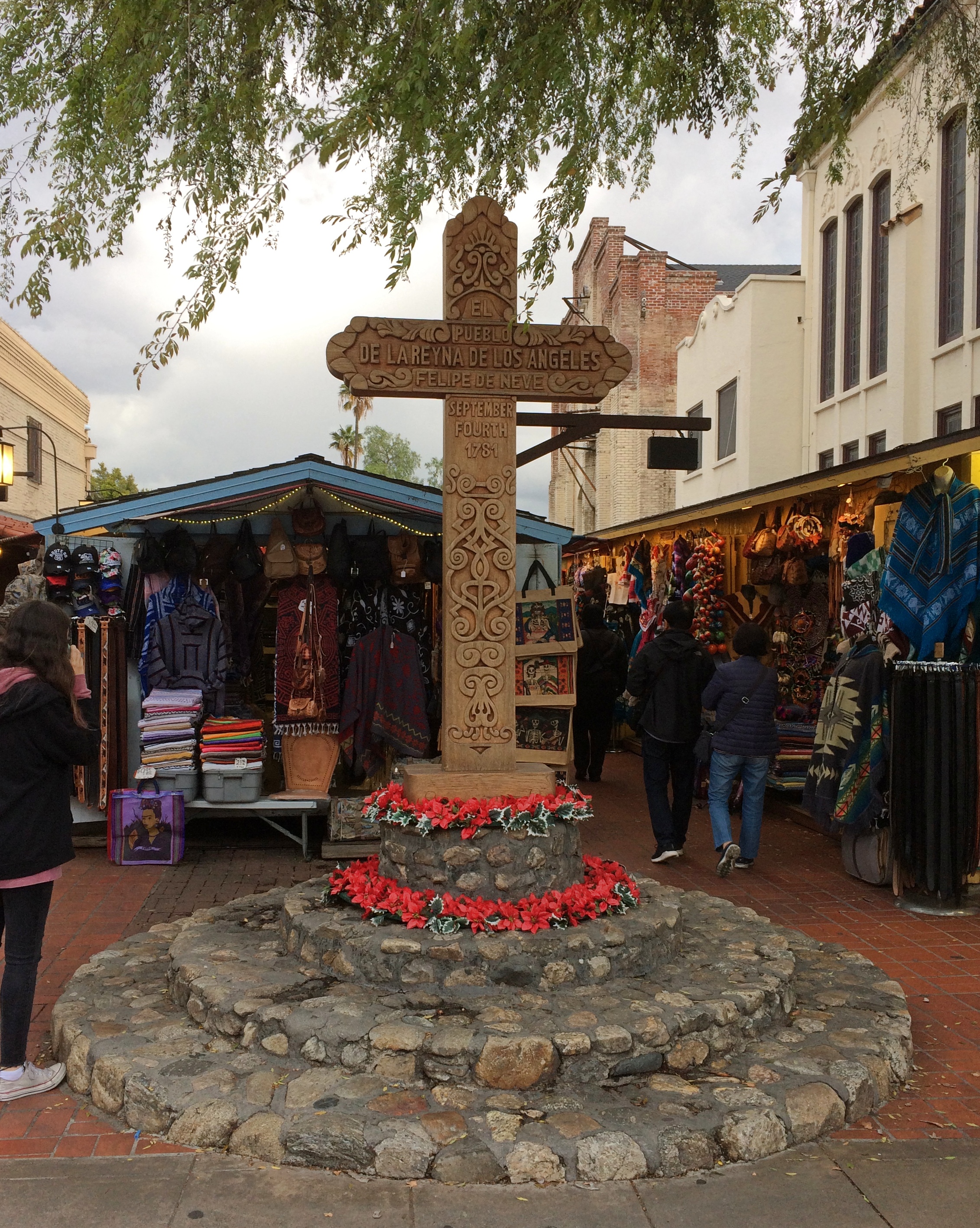
Los Angeles

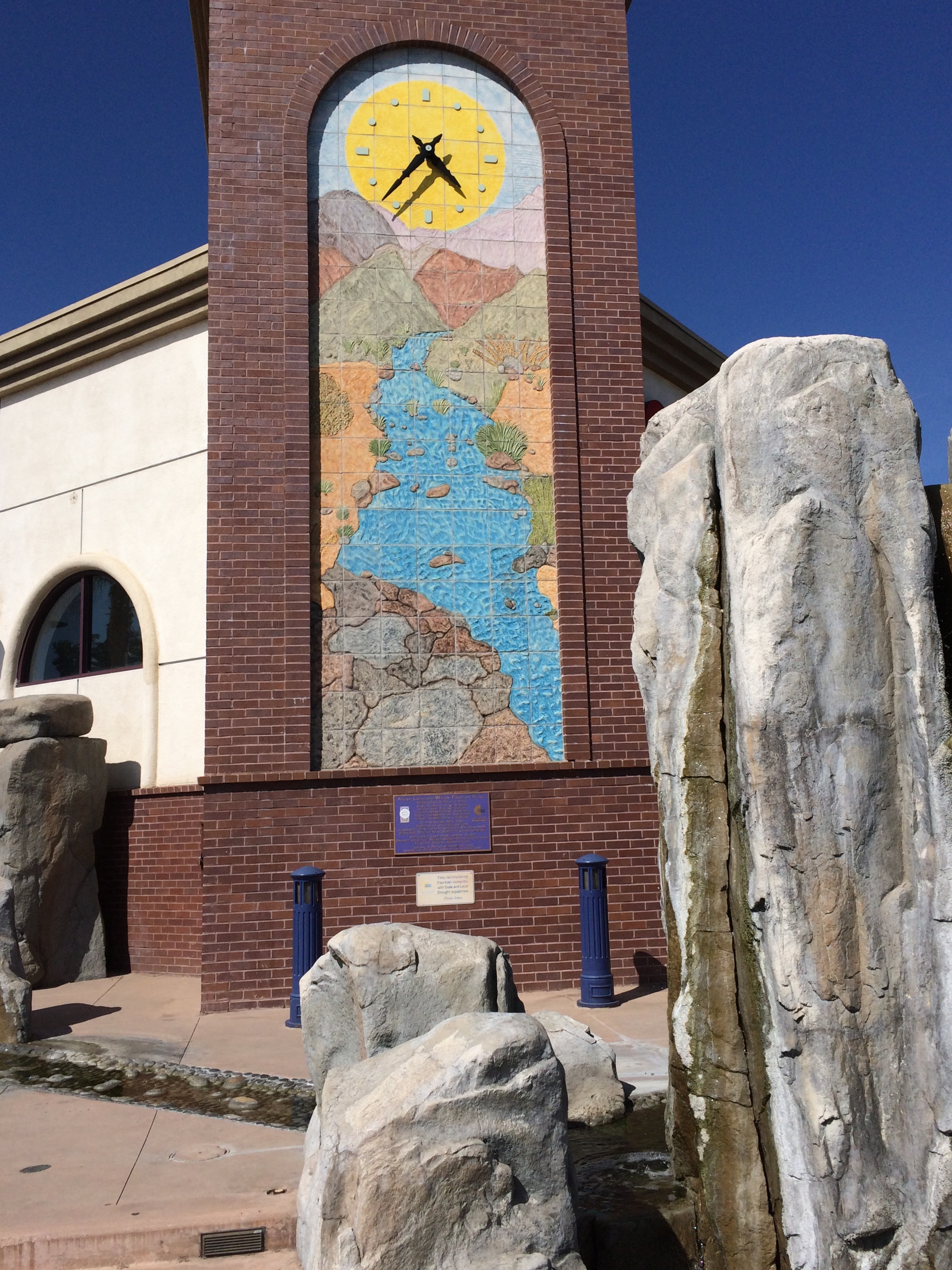
Azusa, California

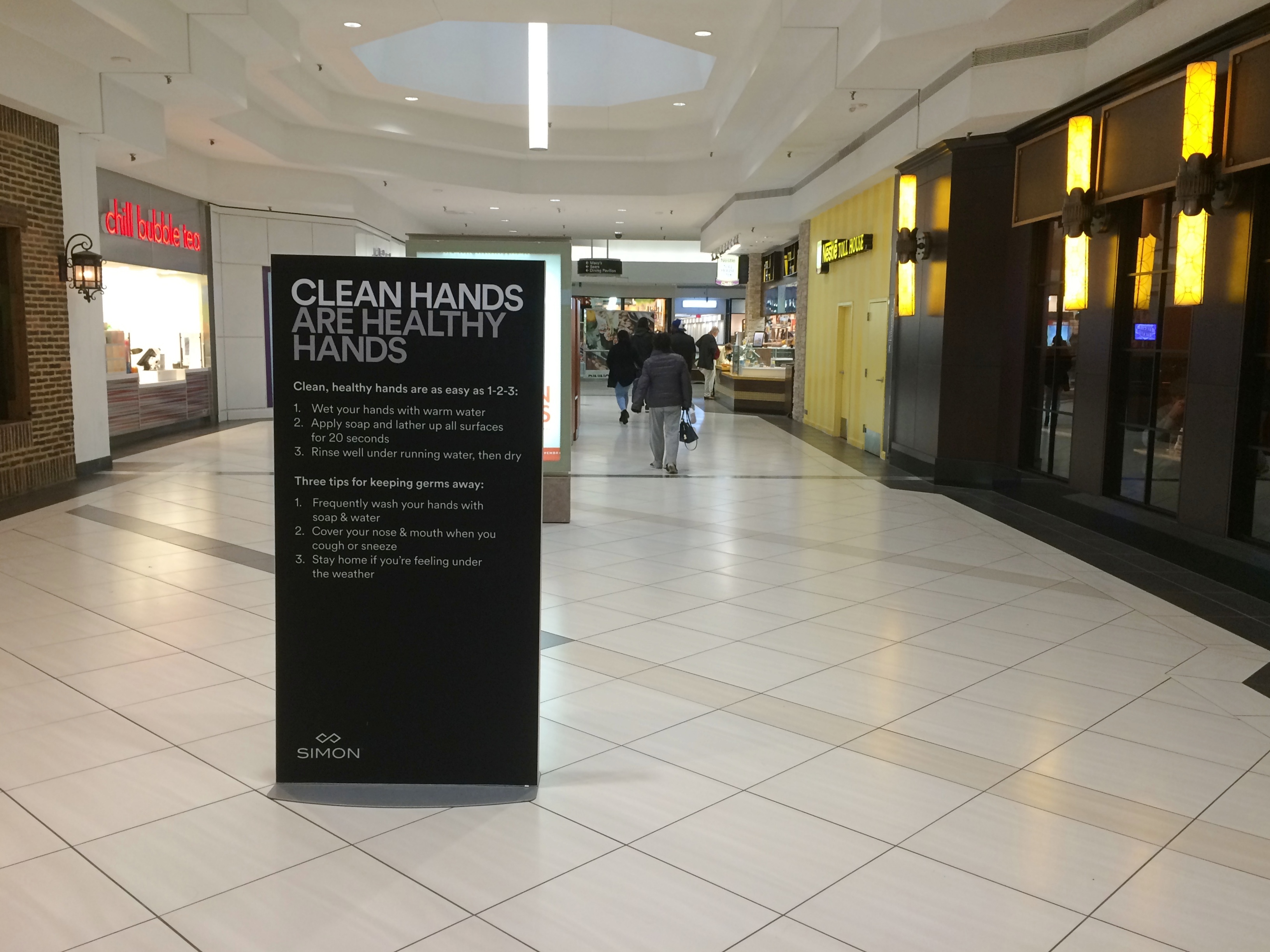
Schaumburg, IllinoisWest Dundee, Illinois

Schaumburg, Illinois

Baraboo, WisconsinBeverly Shores, Indiana

Carbondale, IllinoisSchaumburg, IllinoisChicago

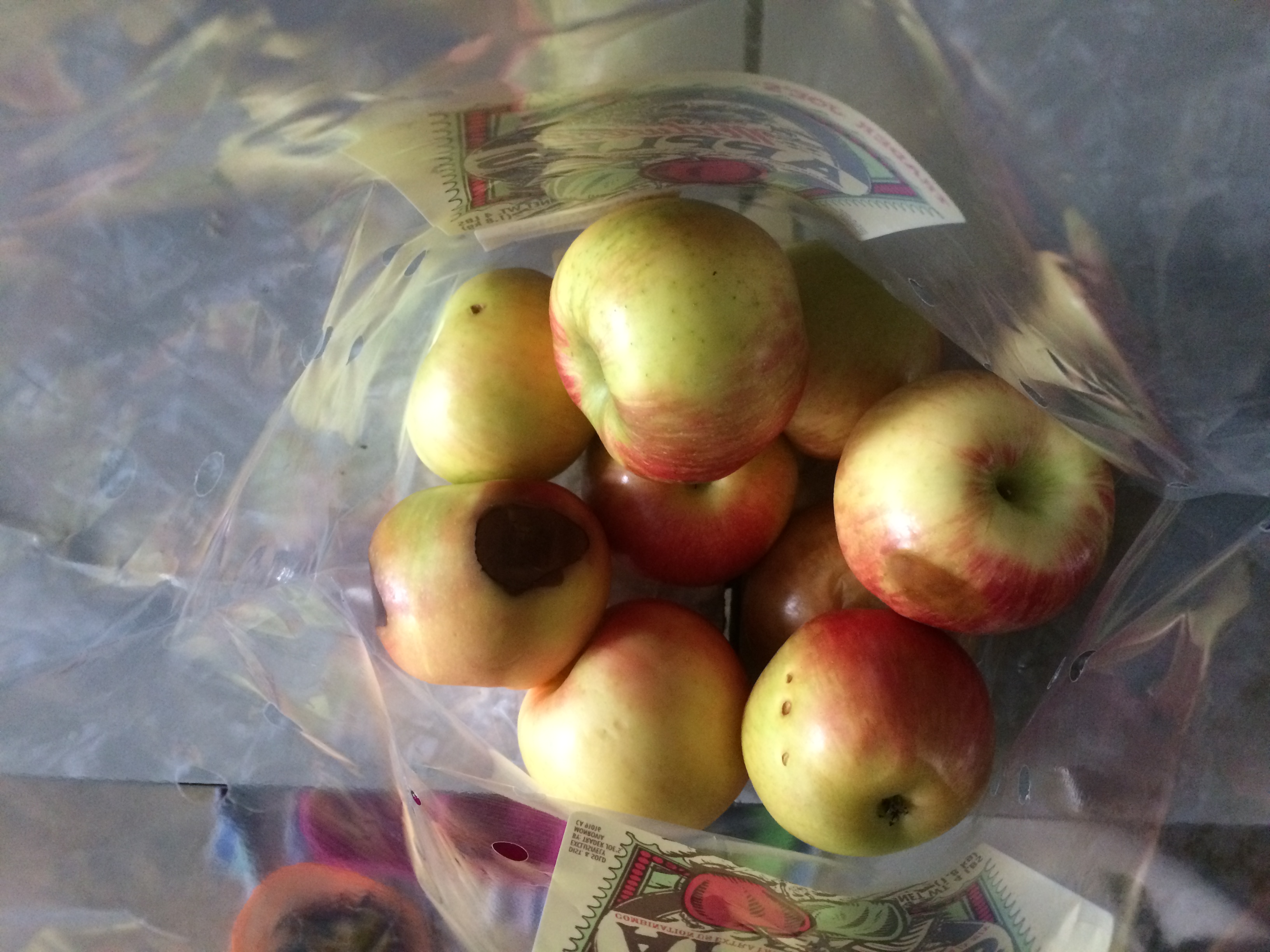
One bad apple

Merry Christmas & Happy New Year to all.

New Harmony, Indiana, Part 2

After wandering around New Harmony, Indiana, for a while and seeing many interesting things, it occurred to me that we hadn’t visited one of the places that I was curious to see, because I didn’t know exactly where to find it.

Google Maps in this instance didn’t know either. Or rather, I didn’t know exactly what the spot was called, to tell Google. The search engine isn’t a mind reader, not yet (but surely that’s Alphabet Inc.’s dream).

We spent time looking around an antique and knickknack store on the main street, since New Harmony, pop. 750, has some of the elements of a day-trippers town (like Fredericksburg, Texas). I found a candle holder I wanted to give as a gift, and after paying for it, I asked the woman behind the counter two questions.

One, where I might find postcards, since her store had none. She offered a suggestion, and another customer who had overheard us offered another suggestion, which turned out to be closer by and correct.

My other question: “Can you tell me where I can find Paul Tillich’s grave?” I’d read it was in town. Not in a cemetery, but a standalone location.

I can’t claim to be an expert on Paul Tillich, or even remember that much about him or his theological ideas. Whatever I might have learned during my collegiate religious studies had long been forgotten. Still, I figured I should drop by and pay my respects, and later do a little reading to refresh my memory.

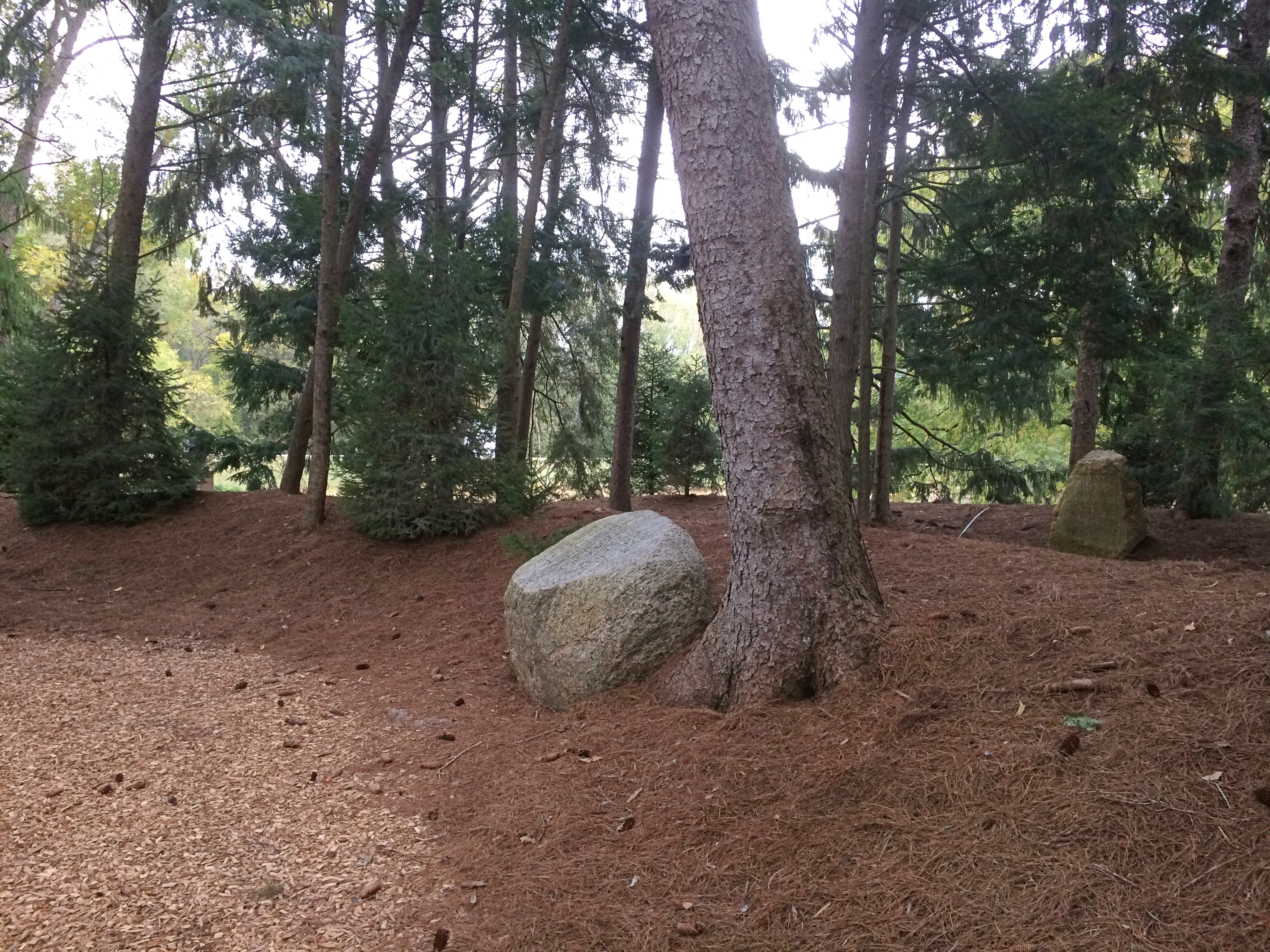
She told me where to find him. We’d wandered by previously without realizing it, since he’s tucked in a grove of conifers forming Paul Tillich Park.Paul Tillich Park New Harmony Indiana
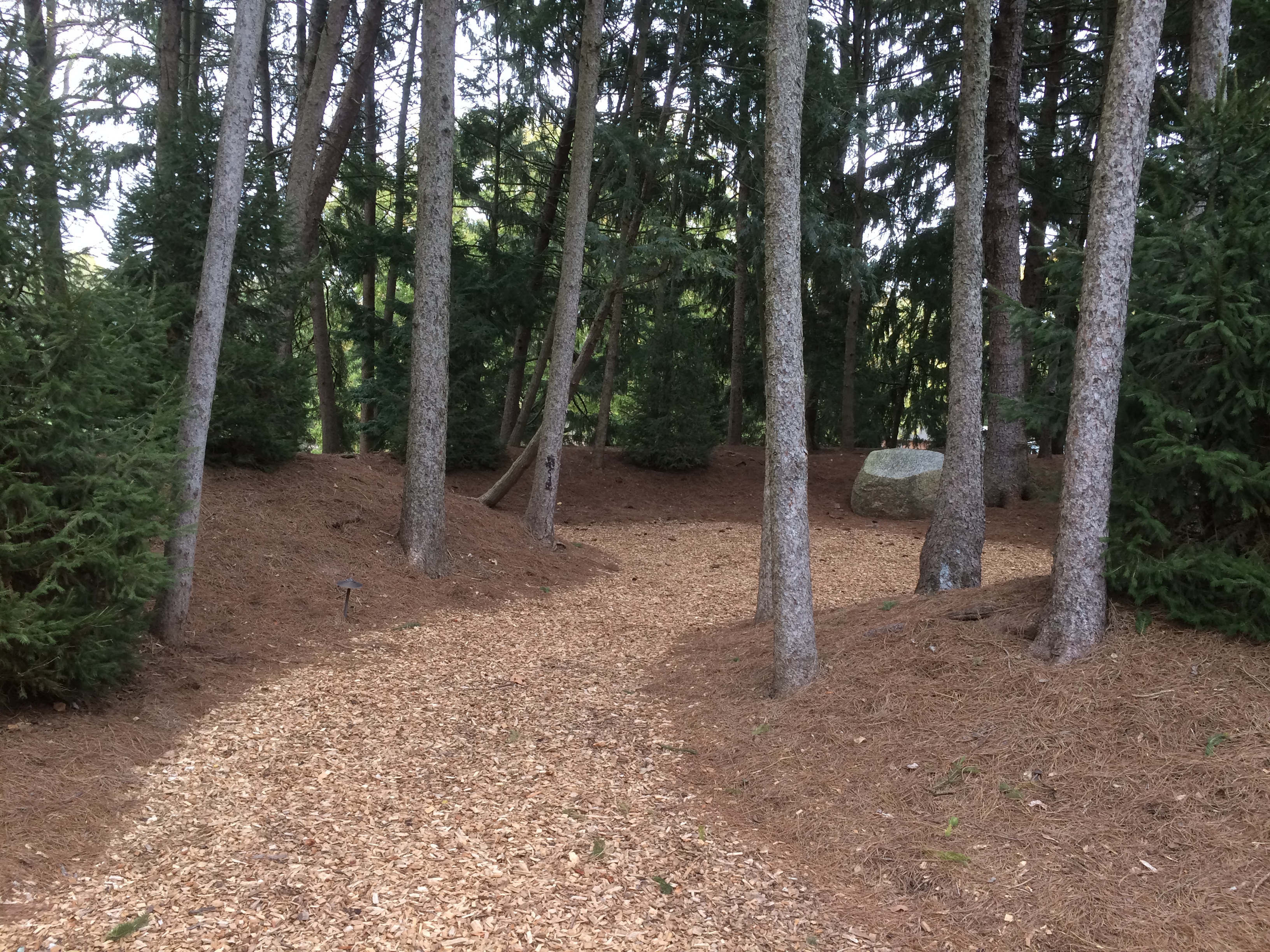
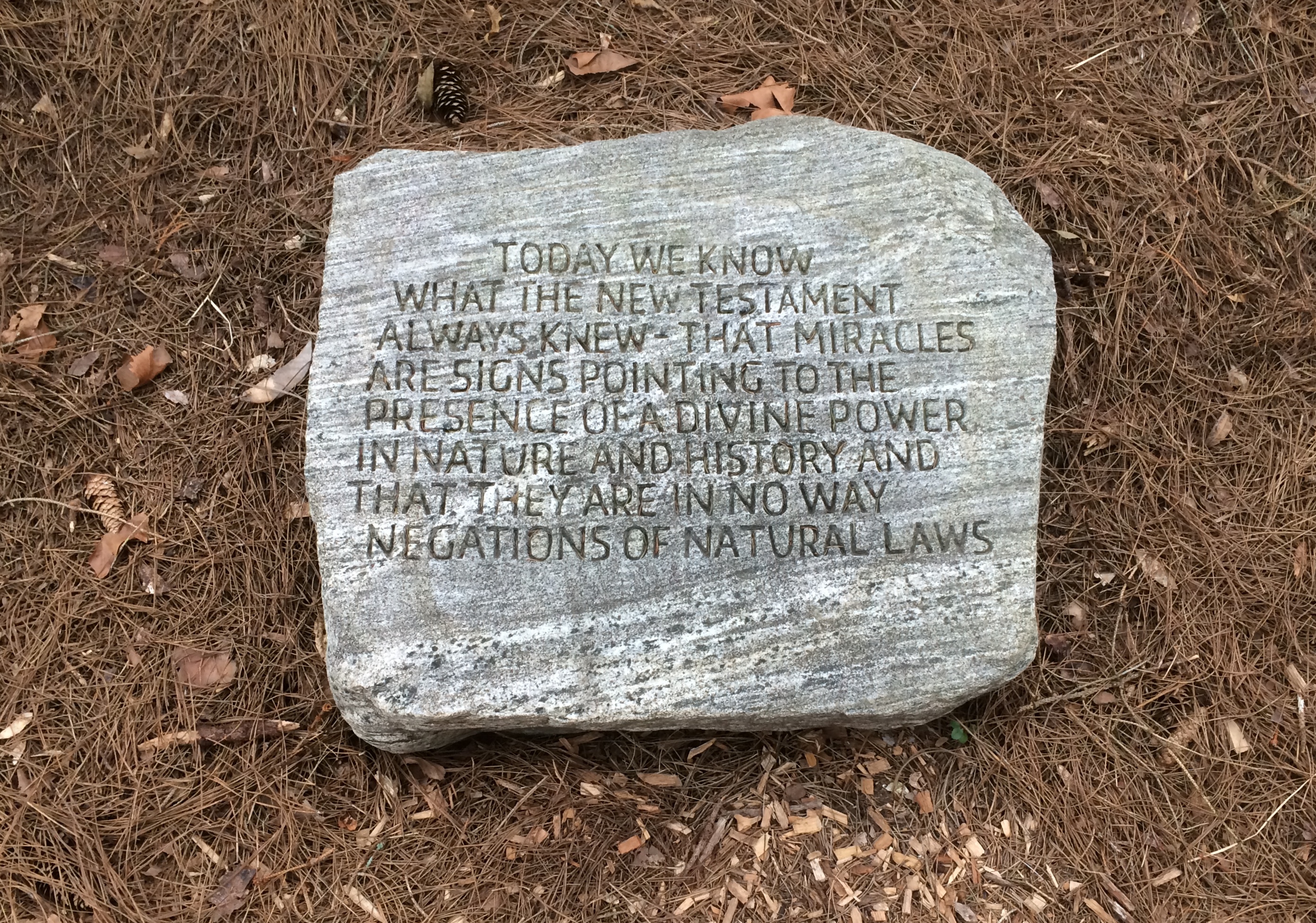
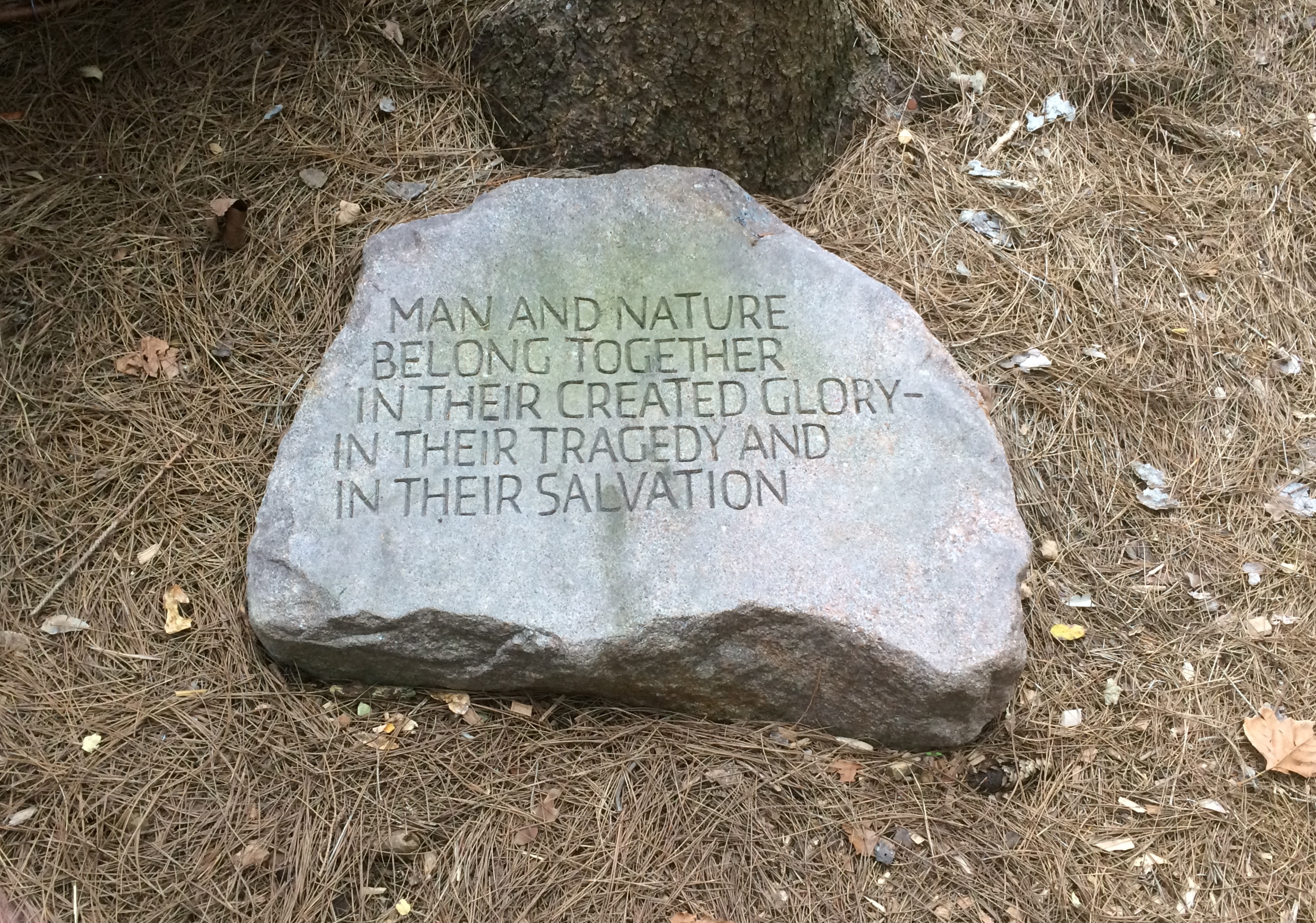
Paul Tillich Park New Harmony IndianaNone of the stones in the pictures are his gravestone. Rather, they’re some stones in the park with Tillich’s words carved on them.Paul Tillich Park New Harmony Indiana Paul Tillich Park New Harmony Indiana
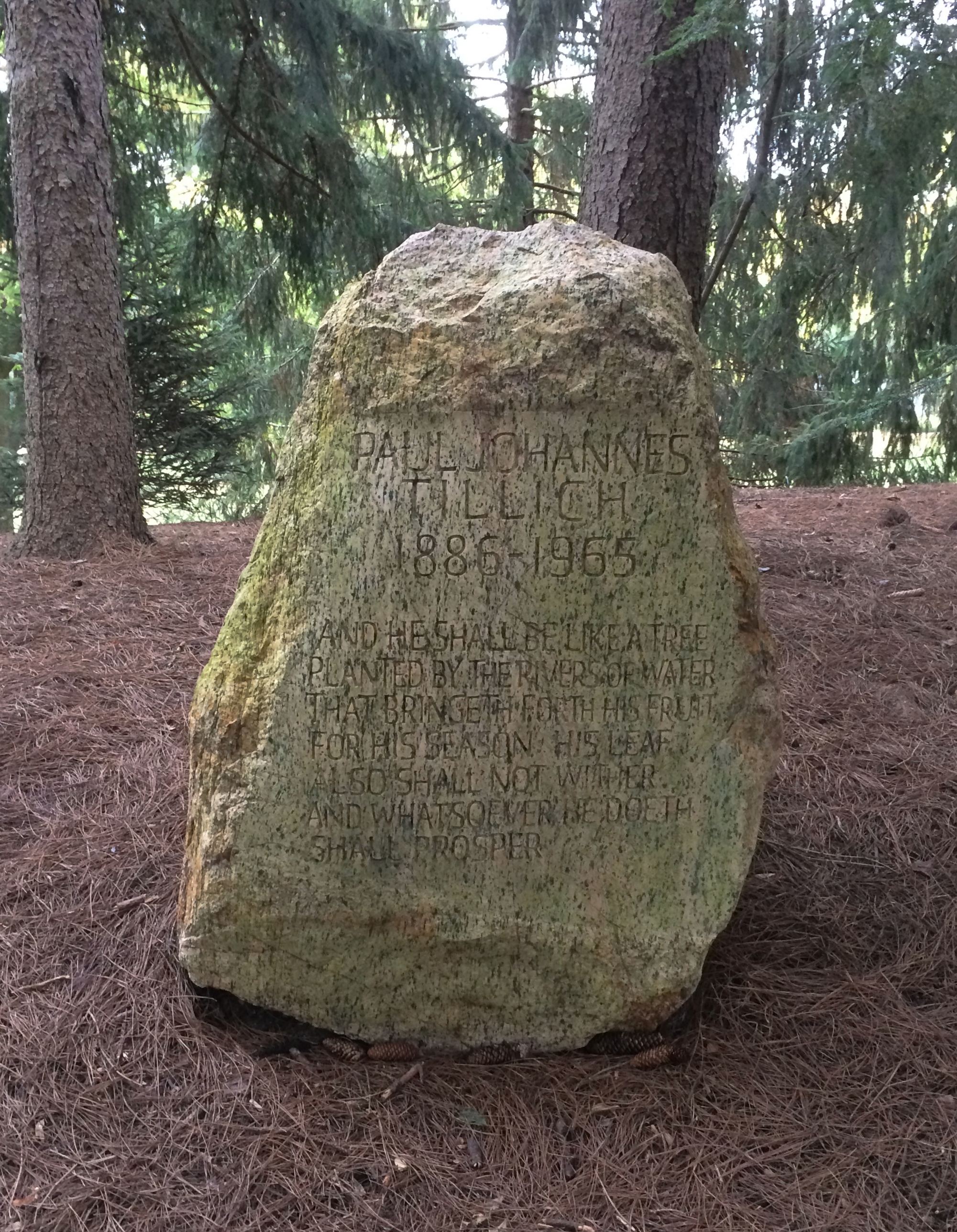
This is his stone.
Paul Tillich Park New Harmony Indiana
A little hard to read, even when you’re standing in front of it. Turns out to be Psalm 1:3.

PAUL JOHANNES TILLICH
1886-1965
And he shall be like a tree planted by the rivers of water, that bringeth forth his fruit for his season; his leaf also shall not wither; and whatsoever he doeth shall prosper.

What’s Tillich doing in Indiana? Broadly speaking, he was another inadvertent gift to the United States from the Nazis, like Einstein or Thomas Mann or Billy Wilder or Walter Gropius. Tillich came to America in 1933 and held a number of academic posts in this country. Apparently he was taken with the history and setting of New Harmony.

“Before his death in 1965, the philosopher Paul Tillich hoped to make New Harmony a center for his own teachings, and thus in a way fulfill the early ambitions of Rapp and Owen in making the town an example of spiritual and material concerns successfully united,” notes a 1978 New York Times article, which is worth reading all the way through. “The trust created Paul Tillich Park…”

Jane Blaffer Owen’s trust, that is, mentioned yesterday.

“Jane Owen’s charisma emanated from her spiritual liberality [also, maybe, her largesse]. She was profoundly affected by the teaching of the twentieth-century German-American theologian Paul Tillich, becoming by turns his admirer, student, and friend….” writes Stephen Fox in a magazine published by Rice University — also worth reading all the way through.

“In 1963, she persuaded Tillich to come to New Harmony to dedicate a site across Main Street from the Roofless Church for a park to be named in his honor.”

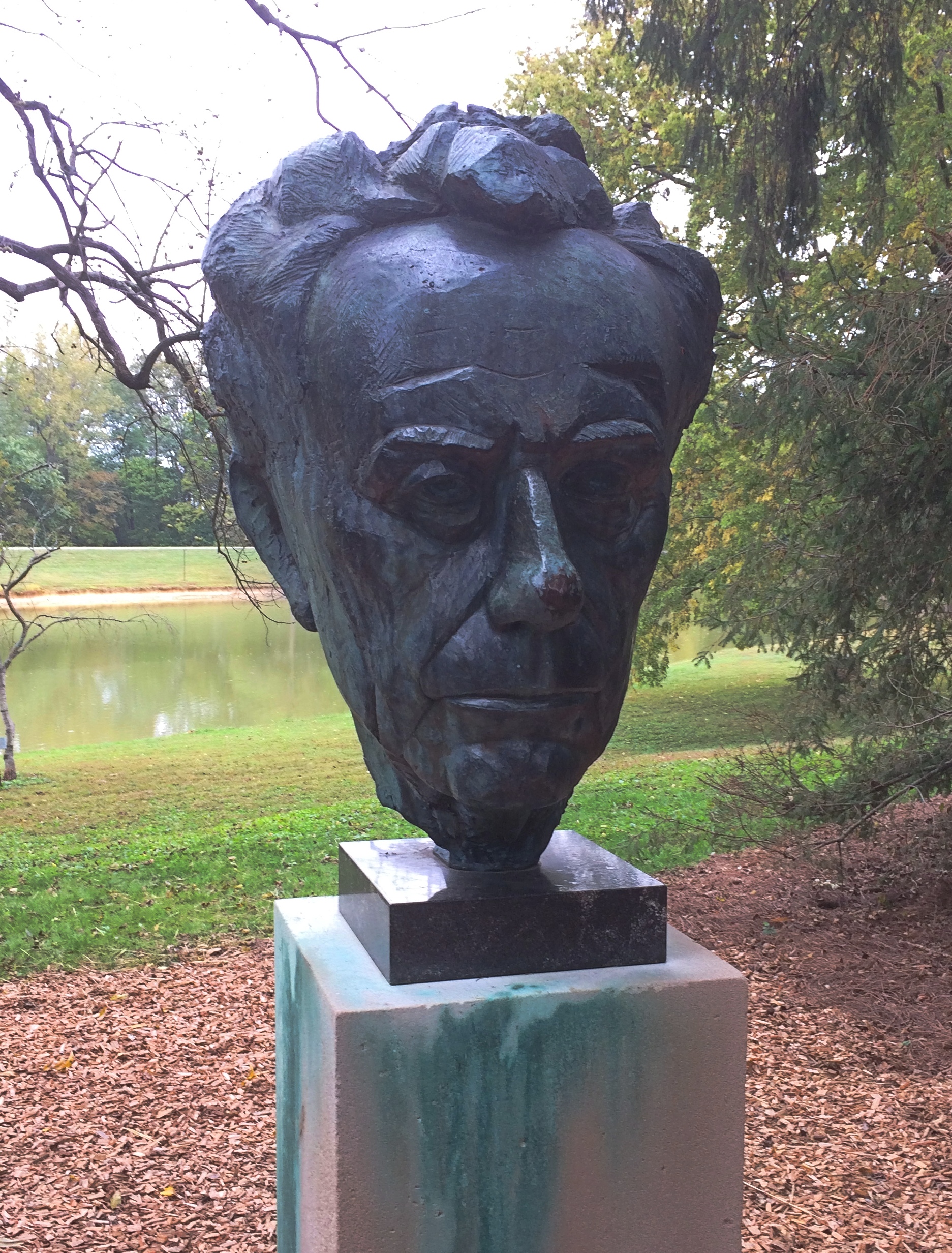
“On [Philip] Johnson’s recommendation, she had the New York landscape architects Zion & Breen design a natural setting of grassless berms planted thickly with spruce and hemlock trees, around which granite boulders inscribed with passages from Tillich’s writings and a bronze bust by James Rosati were installed. This is where Tillich’s ashes were interred in 1966.”

This is the Rosati bust.
Paul Tillich Park New Harmony Indiana

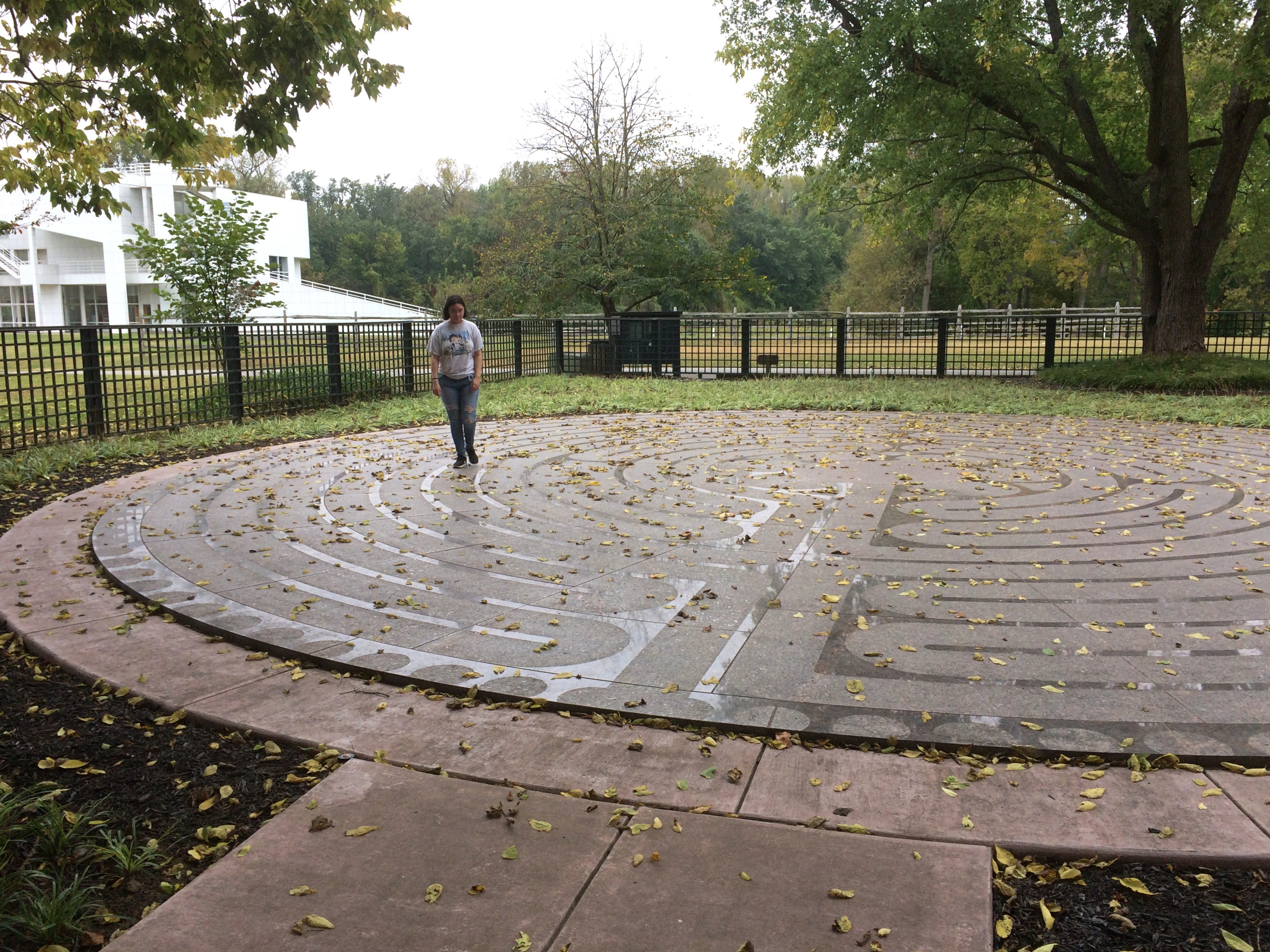
We weren’t quite finished with New Harmony after visiting Tillich. We spent some time at the town’s labyrinth, formally the Cathedral Labyrinth and Sacred Garden and patterned after one in Chartres Cathedral. Another work of the Robert Lee Blaffer Foundation.labyrinth New Harmony Indiana labyrinth New Harmony Indiana
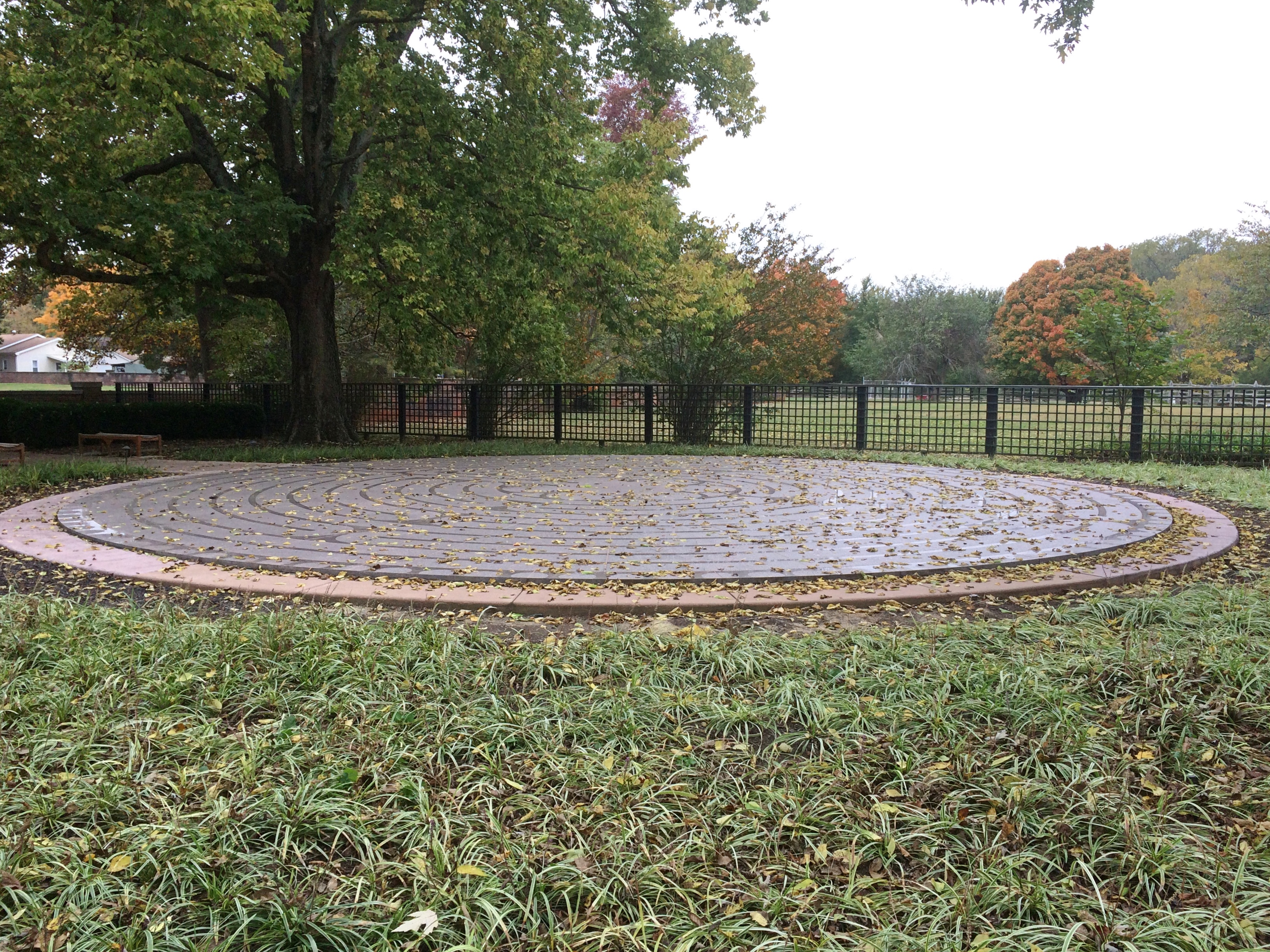
We spent some time walking it. Ann had more patience with it than I did.

Finally, we approached the Harmonist Cemetery, or the Rappite Cemetery, a burying ground surrounded by a low wall. Outside the wall are an assortment of well-worn stones, dating from the 19th century but after the utopian experiments in New Harmony.
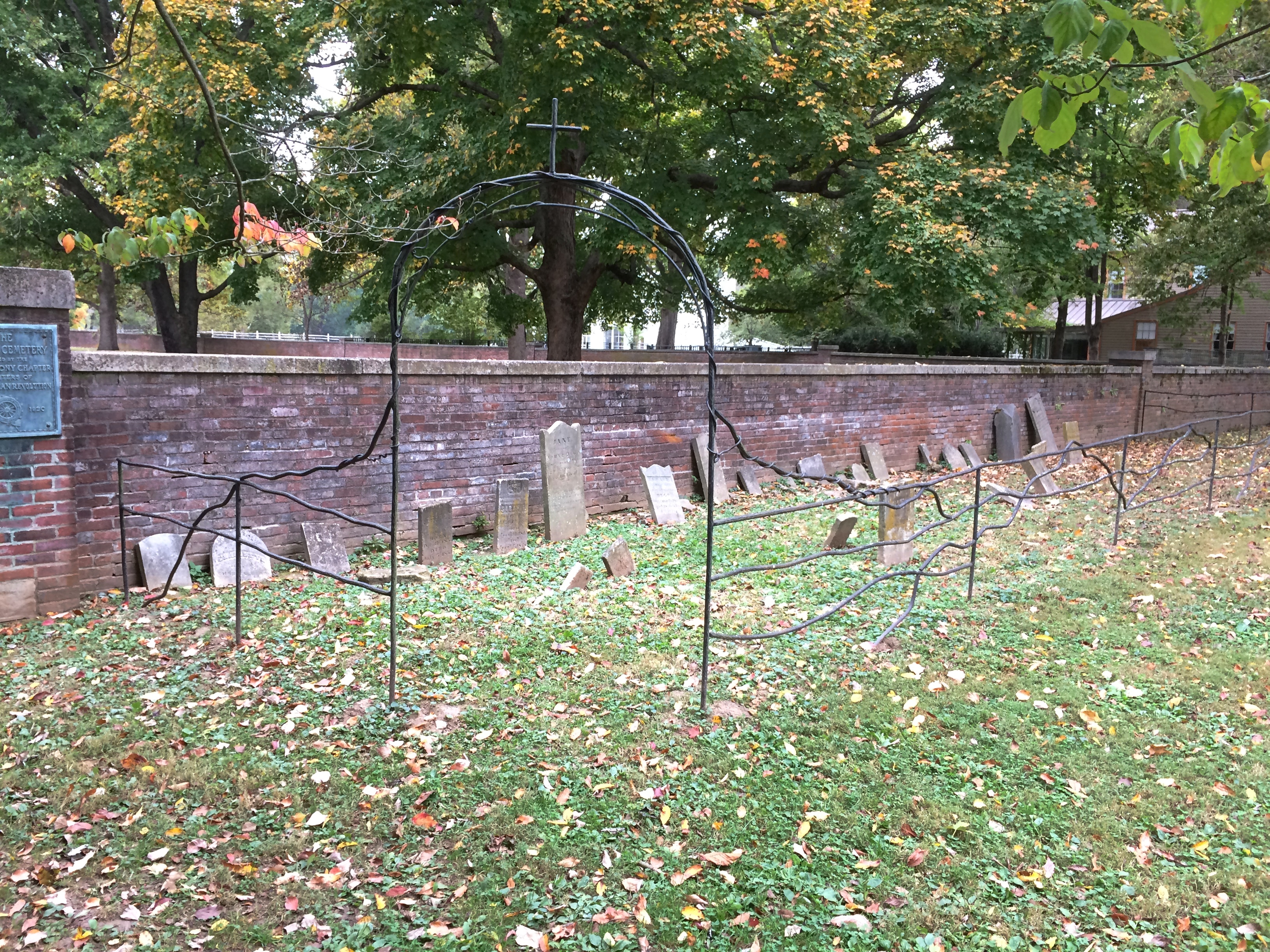
harmonist cemetery New Harmony Indiana

Many are illegible, but I could read the names and much of the info on this one.
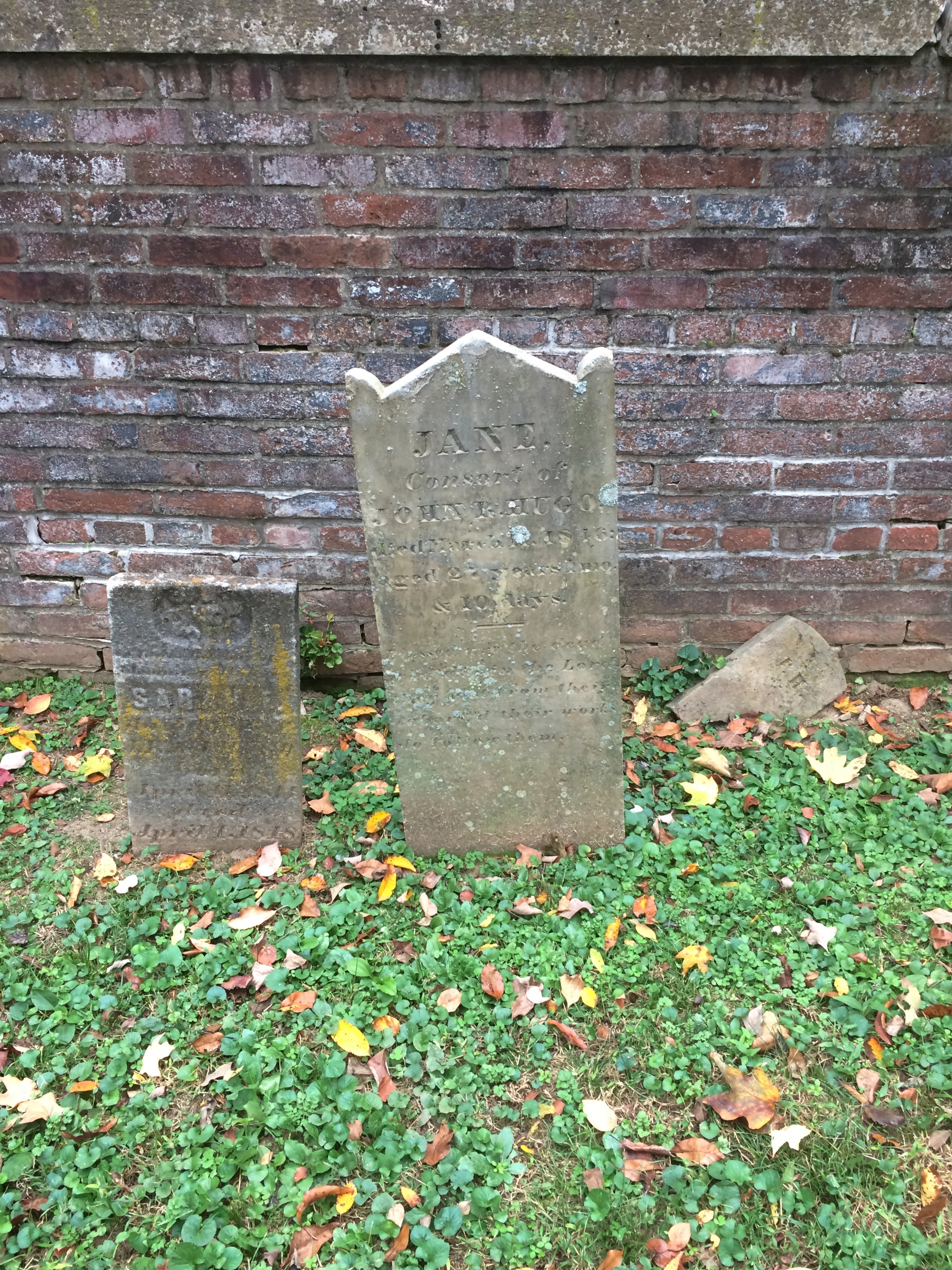
harmonist cemetery New Harmony Indiana

JANE
Consort of
JOHN T. HUGO
Died March 11, 1846
Aged 27 years, __ months and 10 days.

“Consort” isn’t a word I’ve seen too much in cemeteries, but maybe I don’t go to the right ones.

Behind the wall are no stones, just a wide expanse of grassy ground.
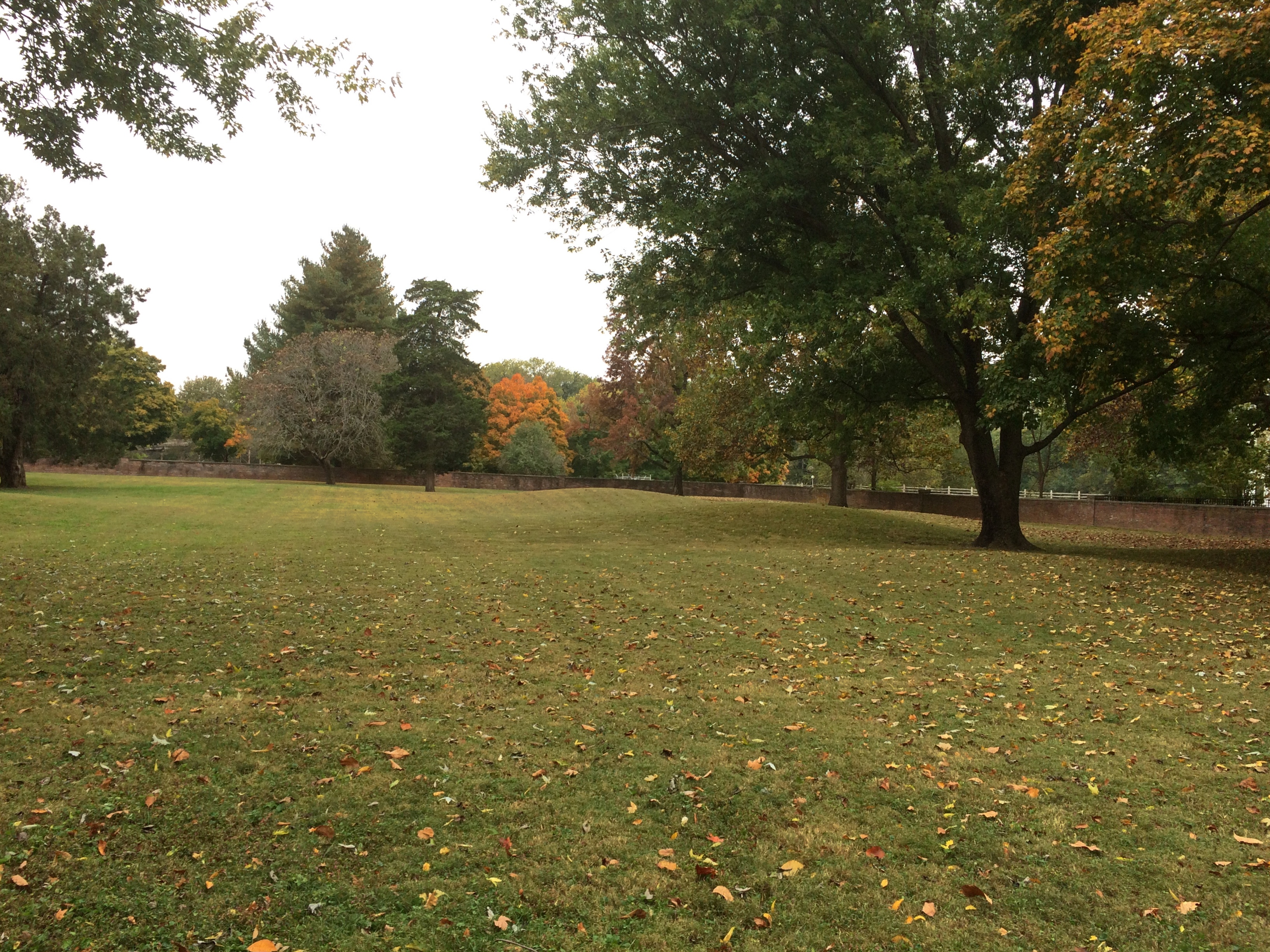
harmonist cemetery New Harmony Indiana

There was nothing on site to explain that, but after a moment’s thought we speculated that the Harmonists didn’t believe in individual gravesites or markers, so we were looking at a mass grave. Later I checked, and that’s correct. Ann said that made the site unsettling, and I suppose mass graves can be, say if mass violence was involved. I don’t think that was the case for the Harmonists; just the result of the everyday dangers of living in the 19th-century frontier.
Note also the mounds. Apparently the area was home to Indian mounds before the Harmonists came, and so they must have considered it a natural for a burial ground. About 230 of the colonists lie there.