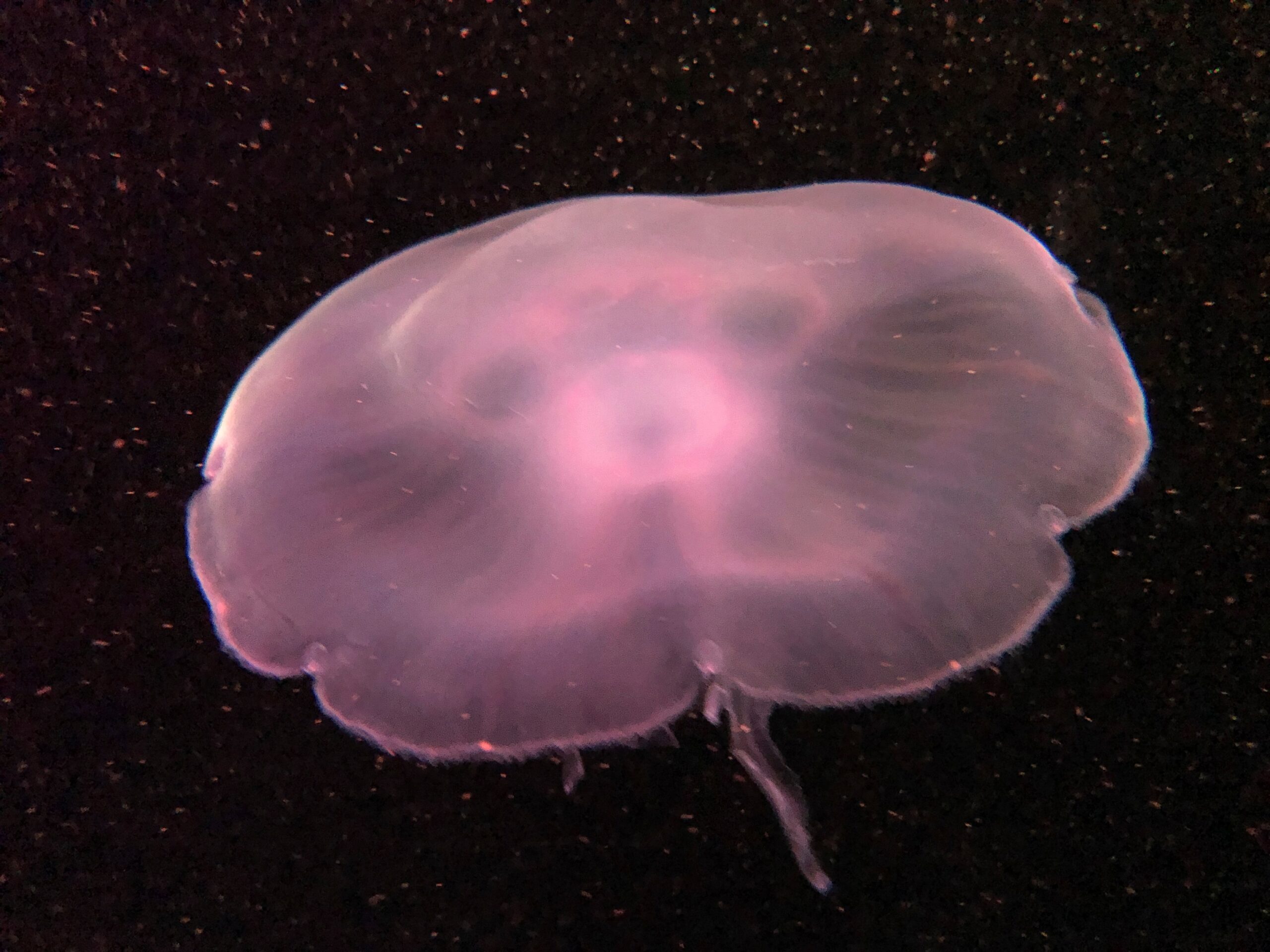
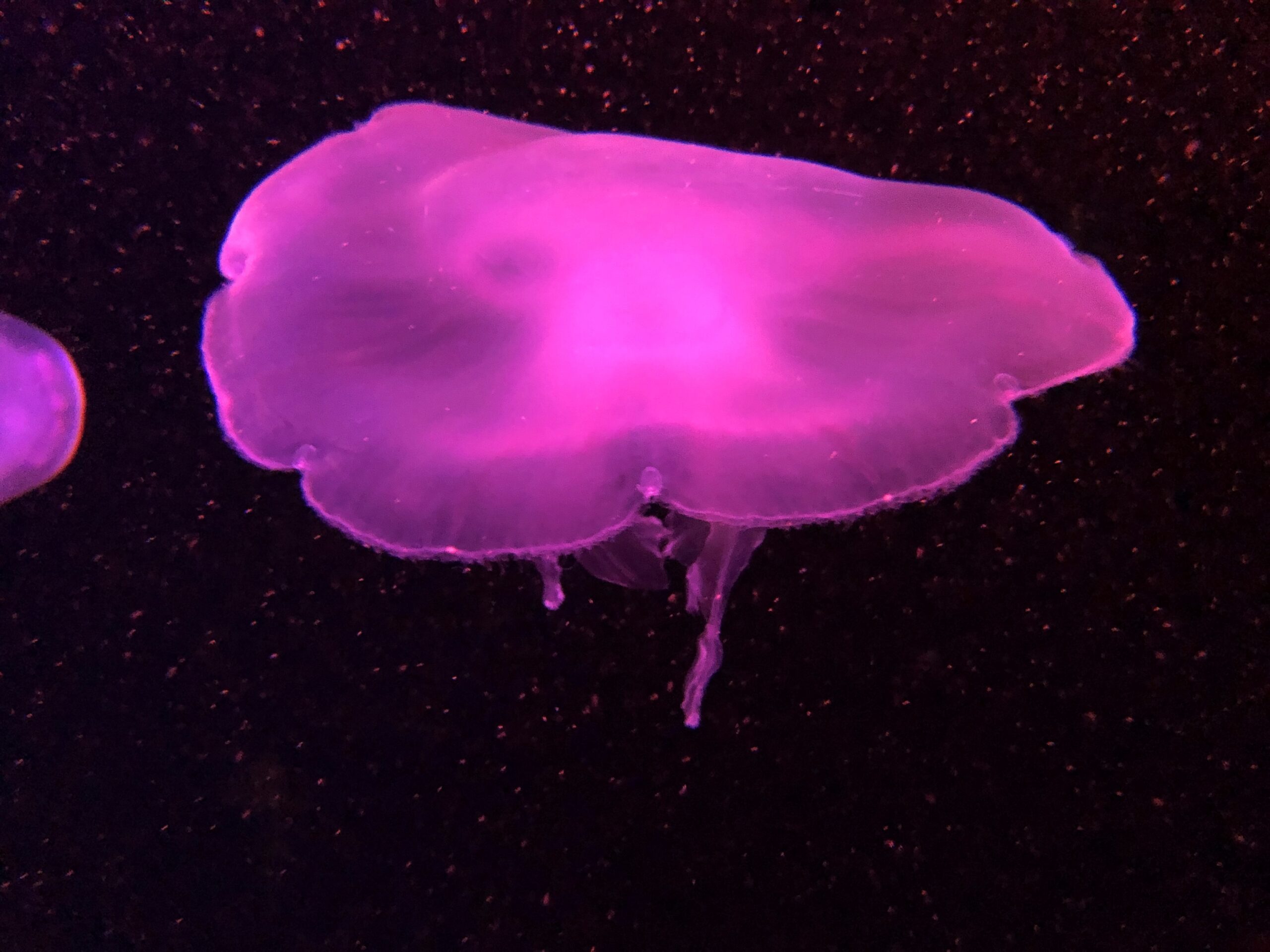
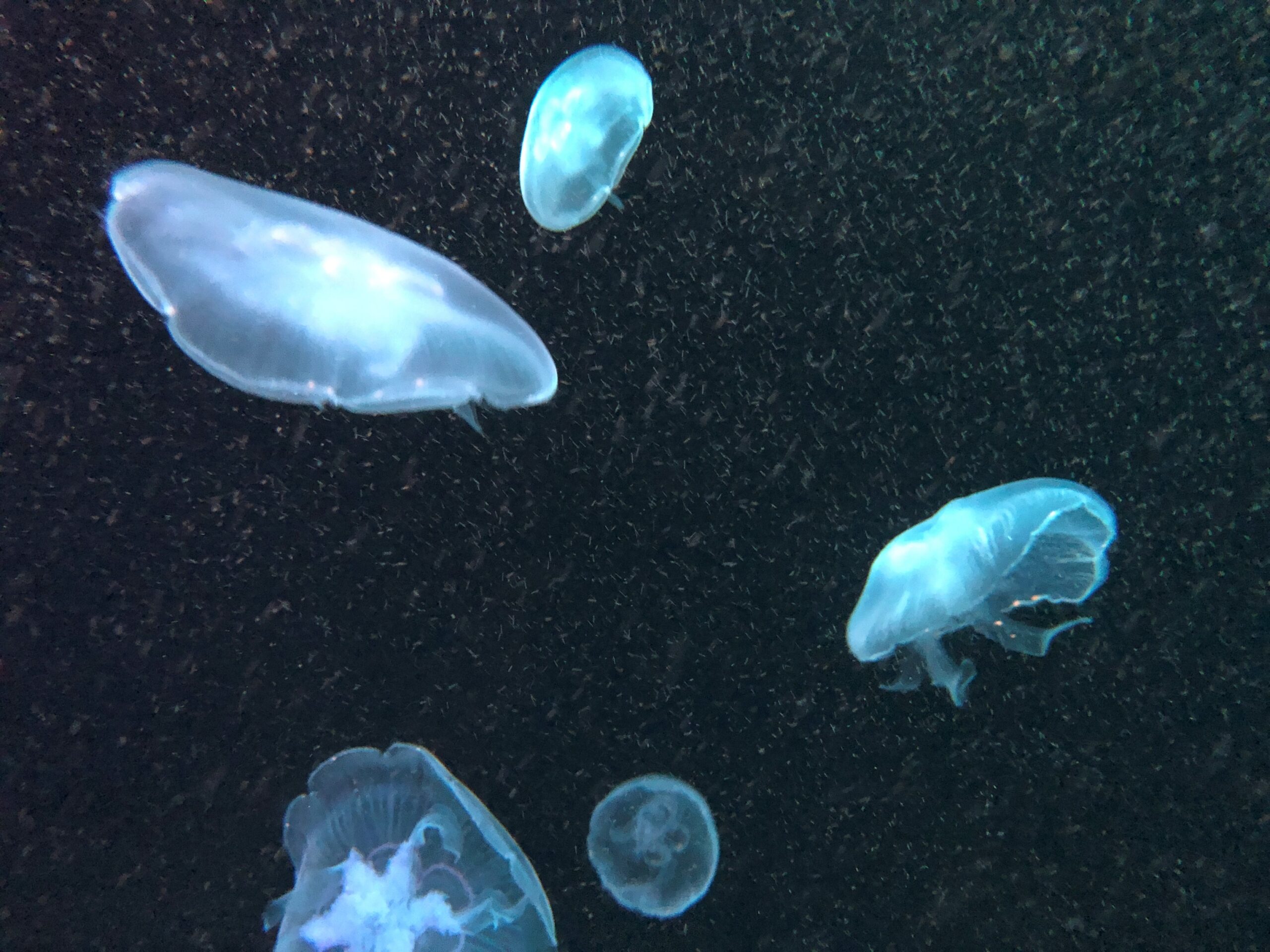
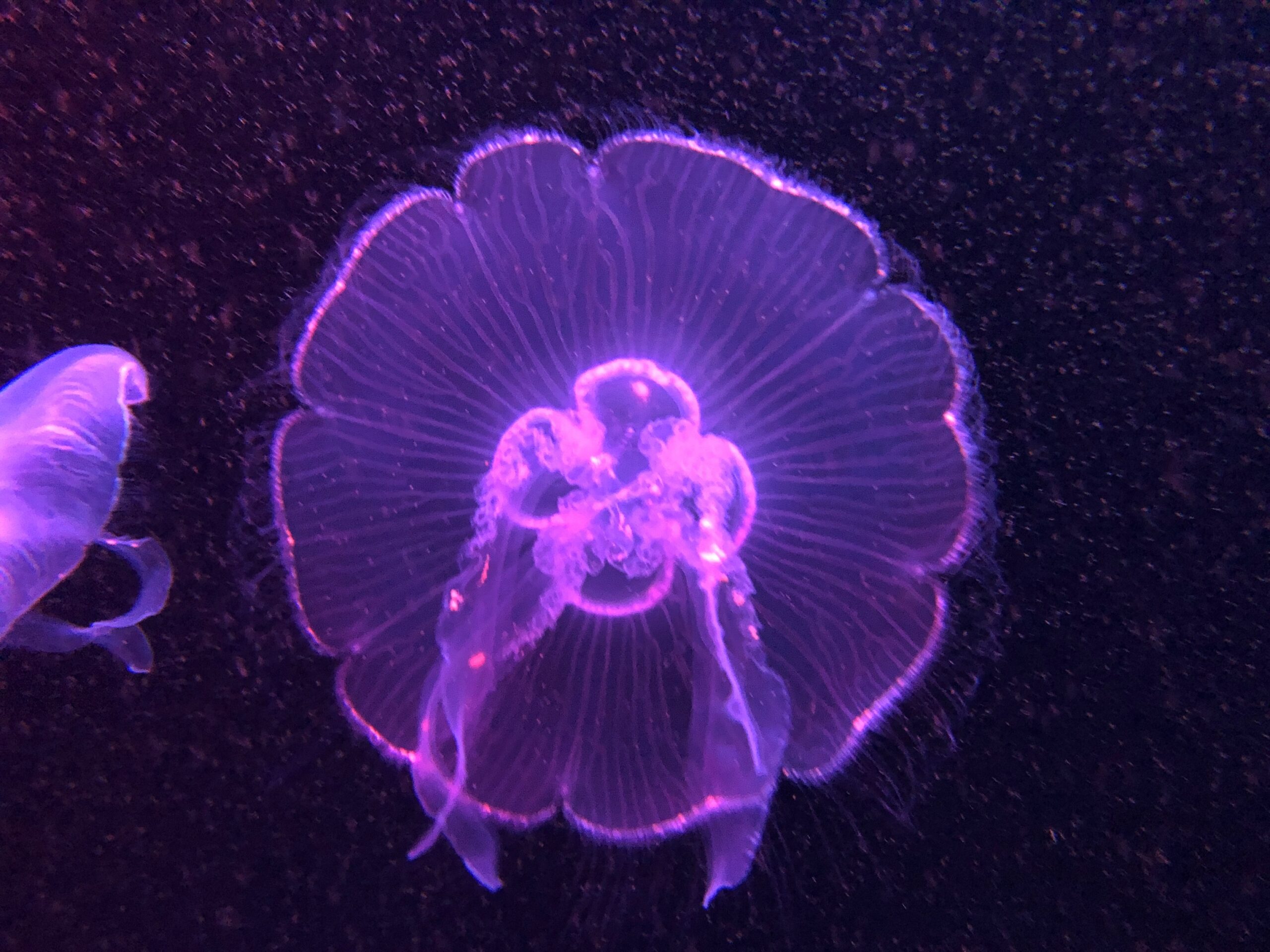
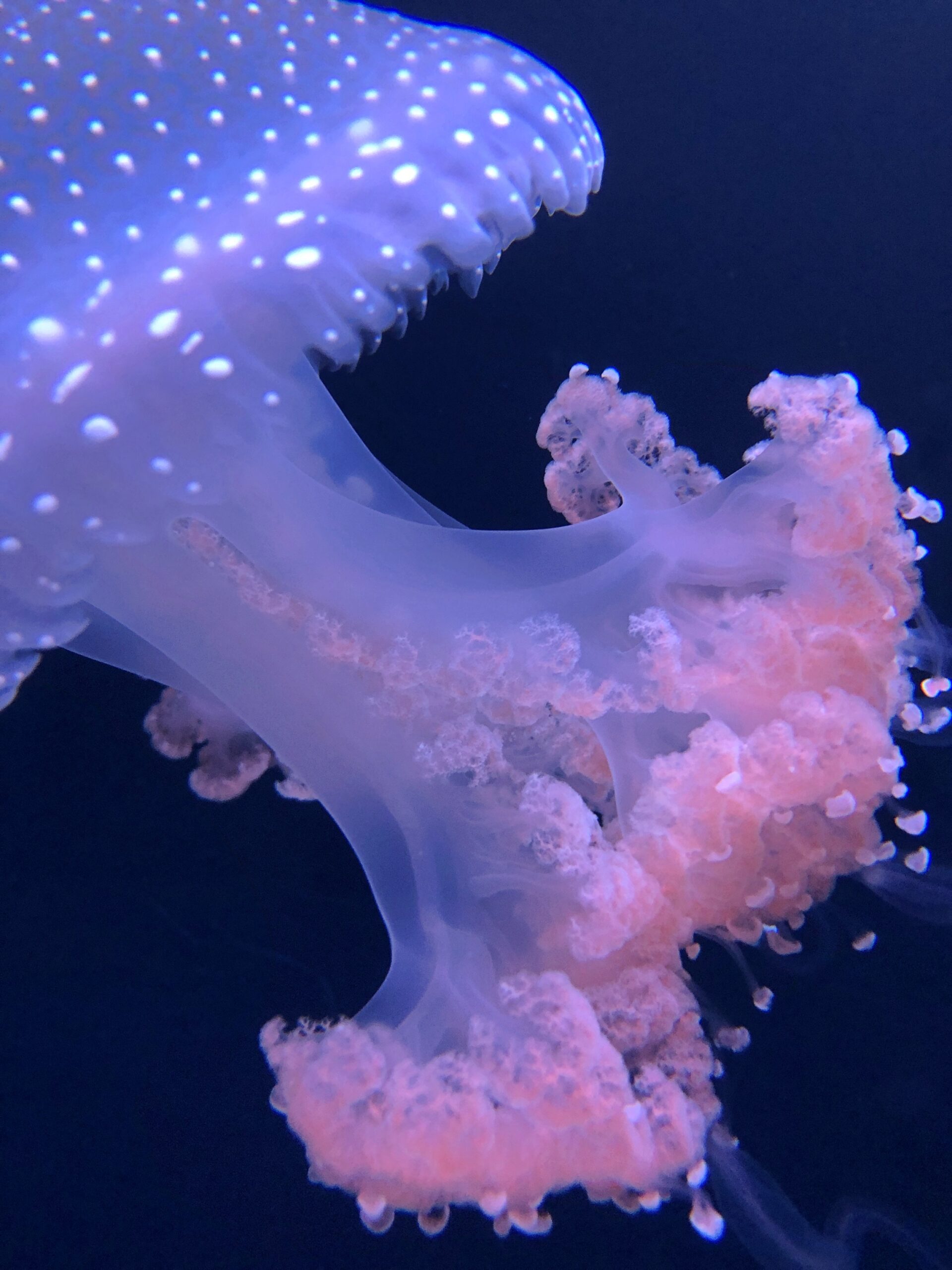
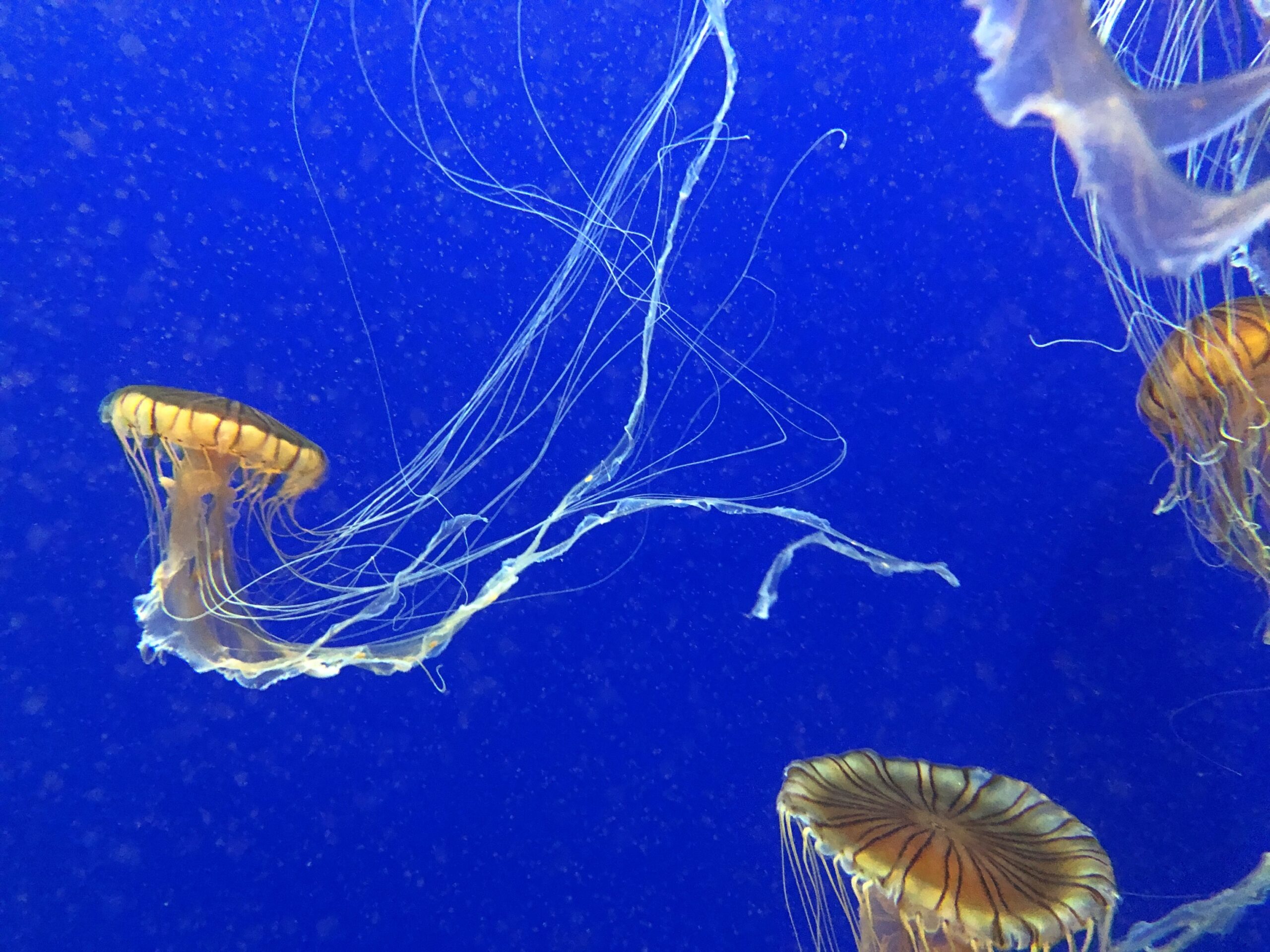
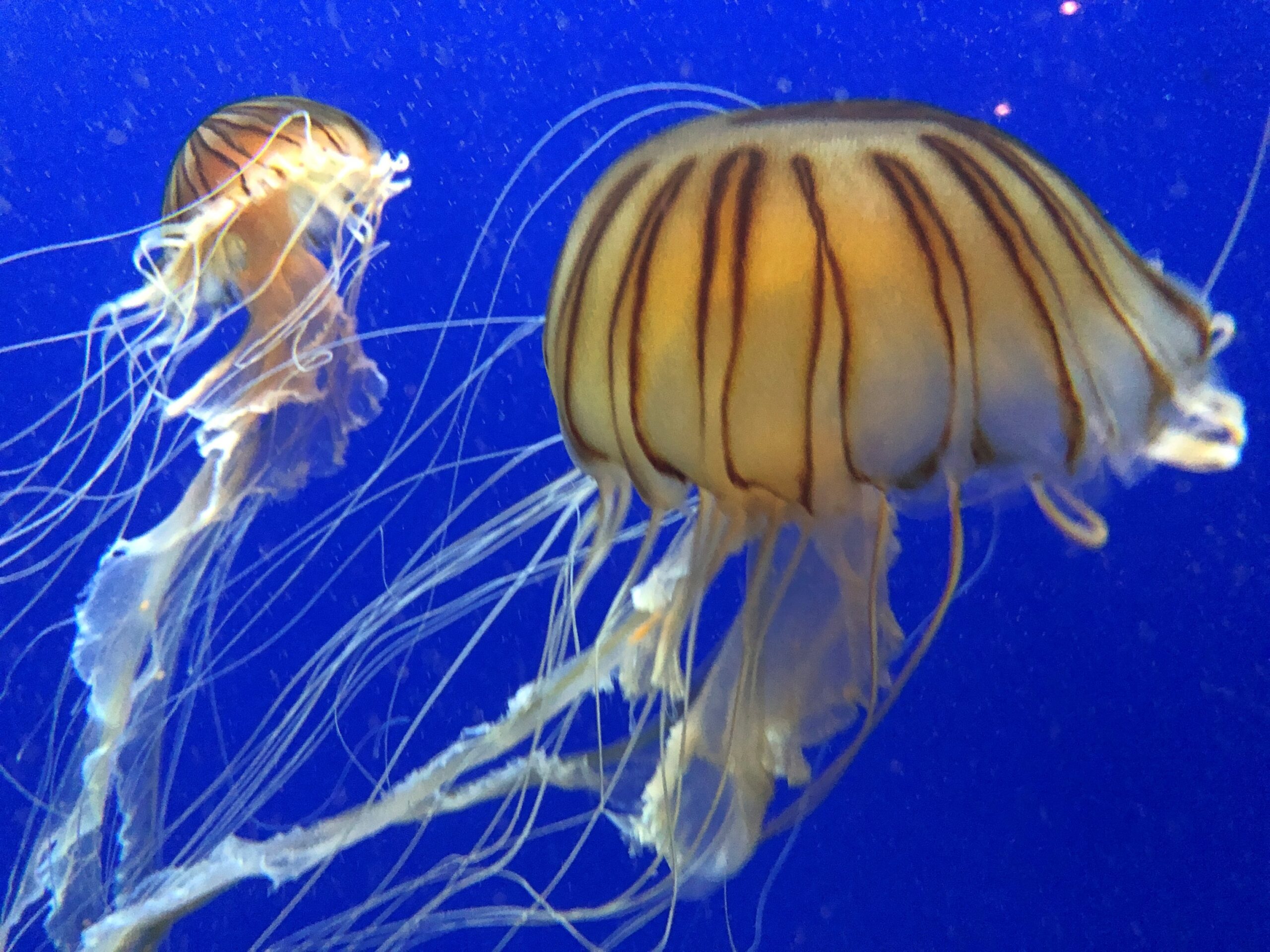
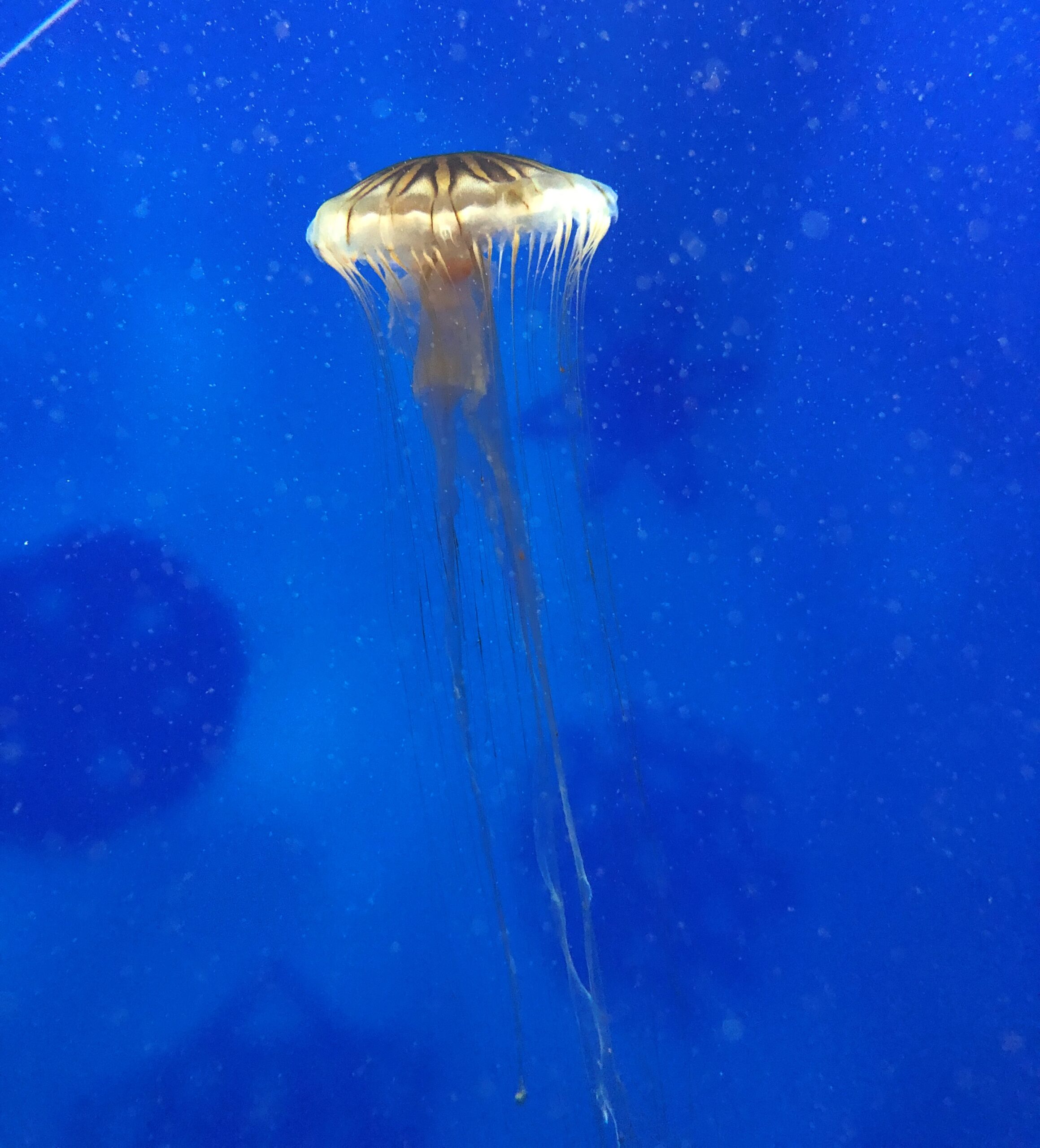
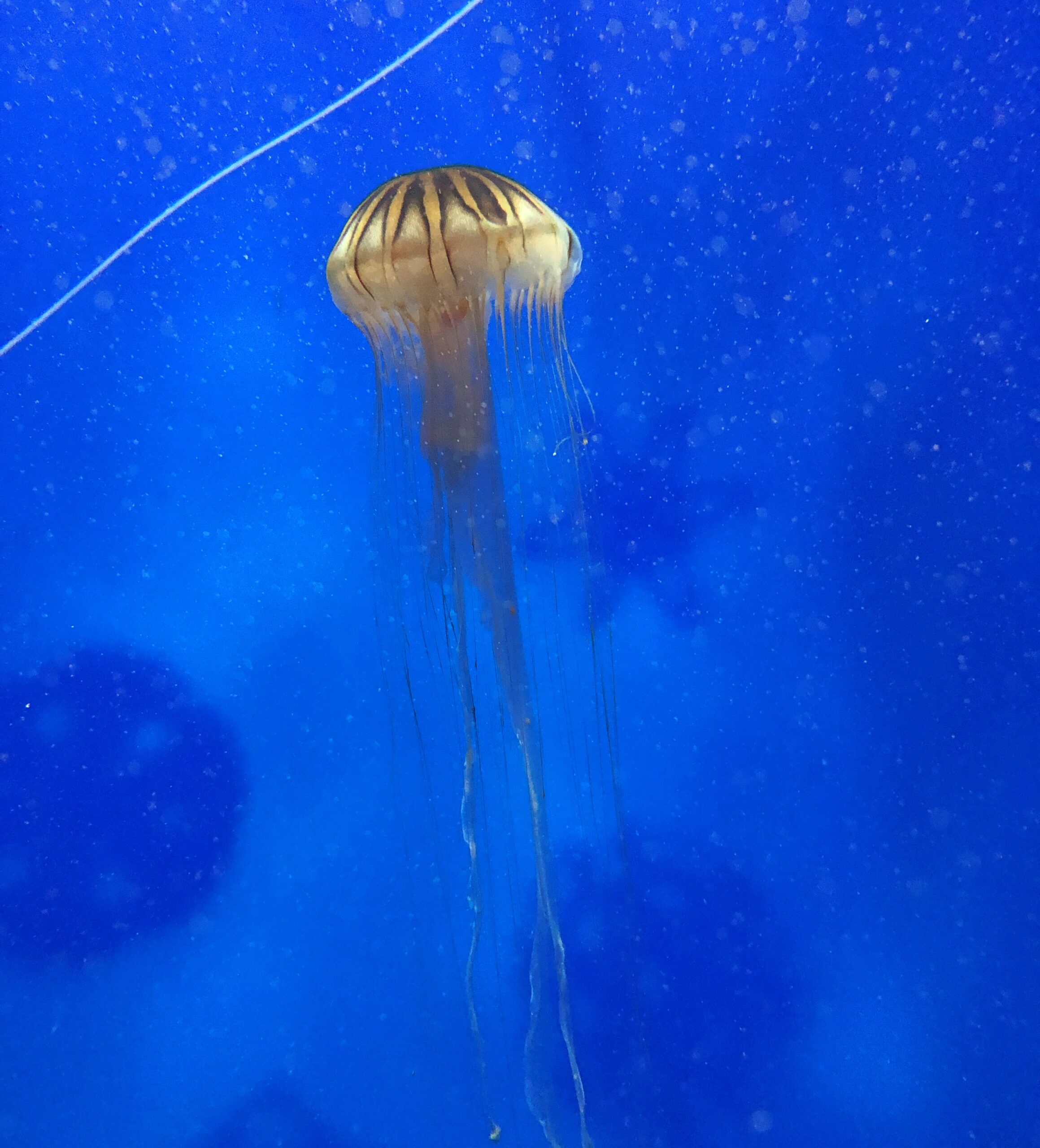
I’m always glad to spend some time peering into a tank where the moon jellies drift, but also somehow contract their entire selves to glide along in deep quiet.
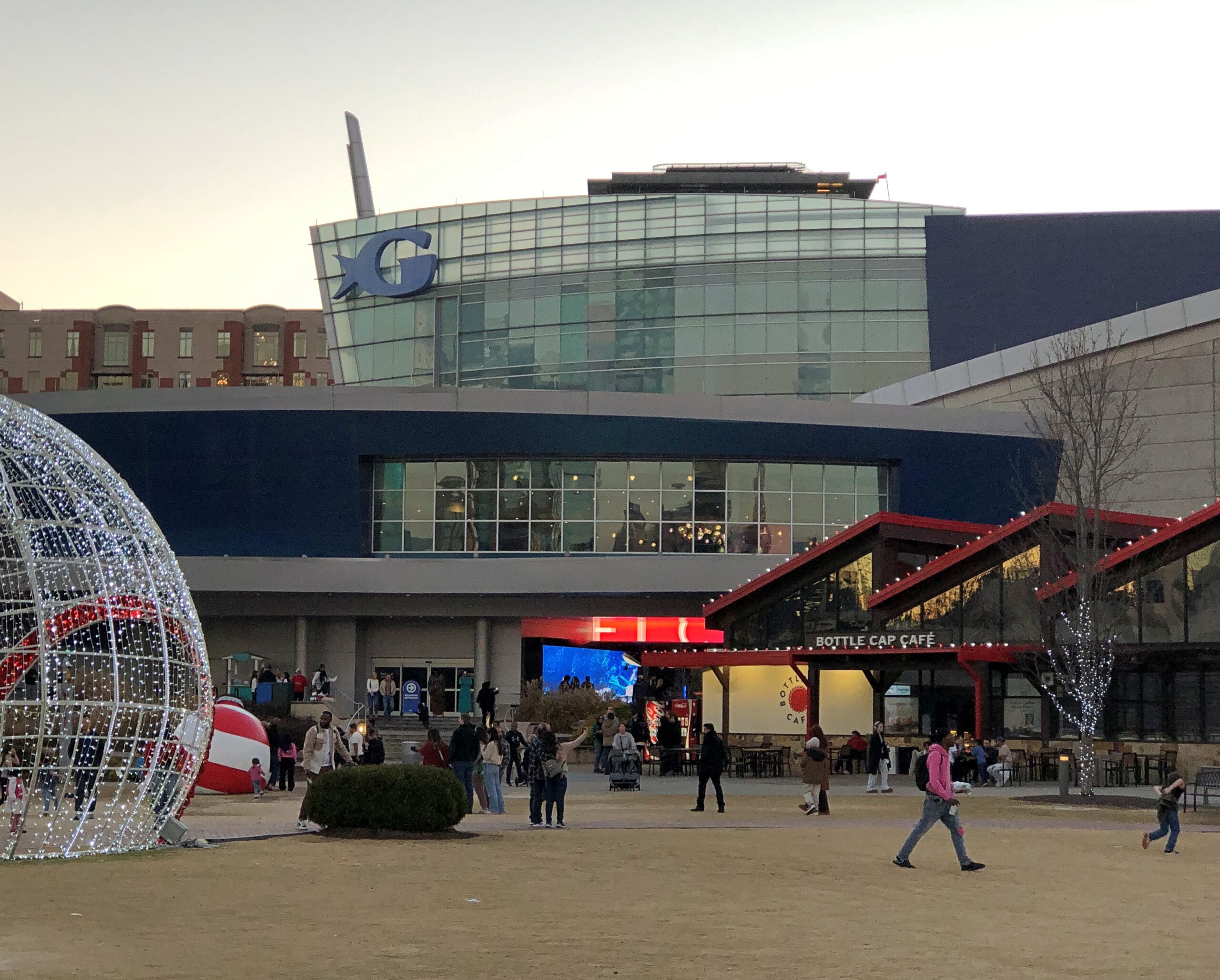
We’d come to the Georgia Aquarium, which keeps company in downtown Atlanta with the World of Coca-Cola, the National Center for Civil and Human Rights, and a large parking deck on about 20 acres of a plaza known on maps as Pemberton Place. To its south is Baker St. and Centennial Olympic Park; to the north, Ivan Allen Jr. Blvd. and a massive substation behind walls. For just an instant I thought that was Irwin Allen Jr. Blvd., and was disappointed to realize otherwise.
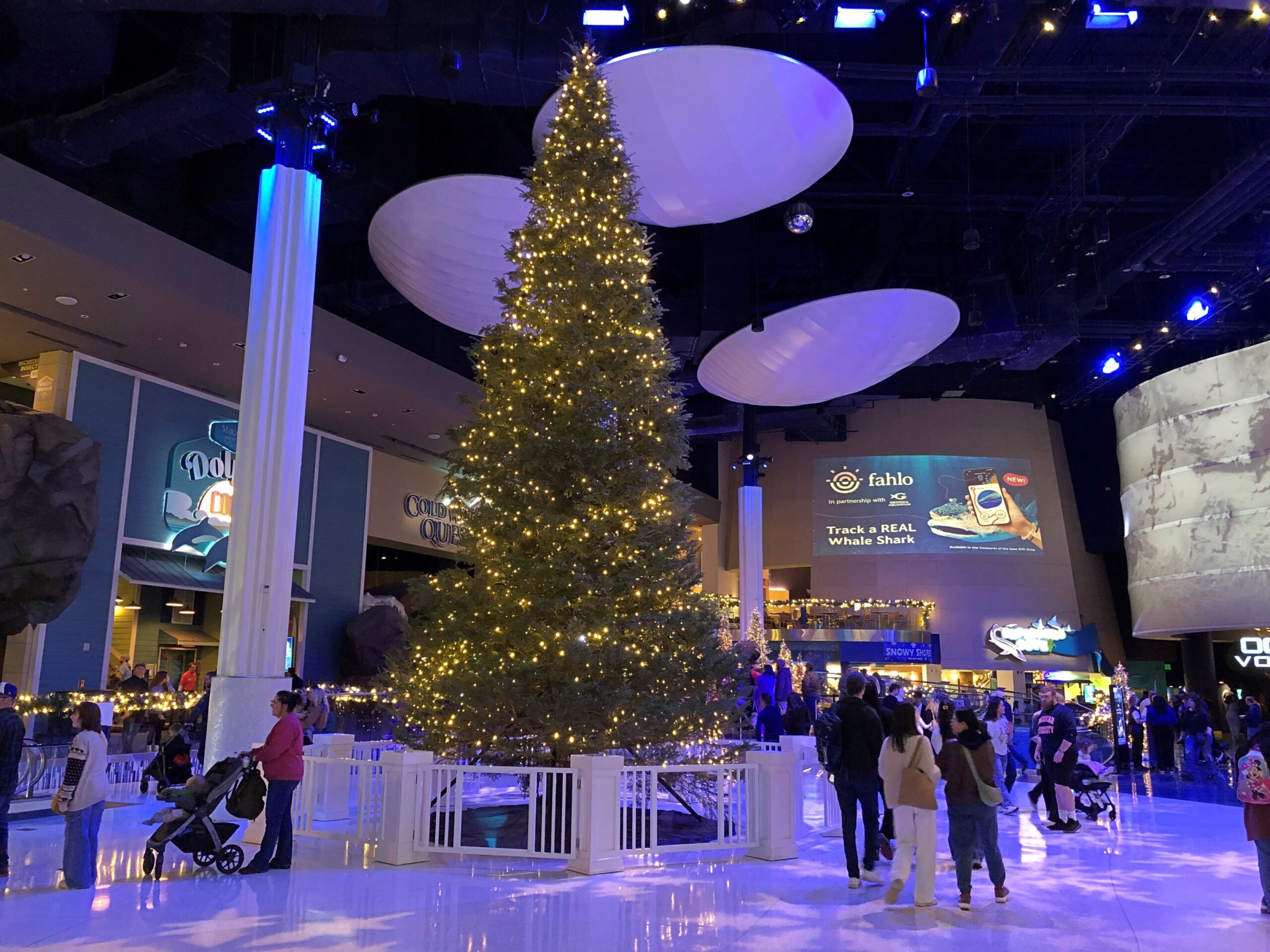
At 11 million gallons – which is apparently how major public aquariums are measured – the Georgia Aquarium is listed on Wiki as the sixth largest in the world and the largest in the United States, and I believe it. The structure is hub-and-spoke, with an enormous, vaulting hall with sizable exhibit spaces radiating from that hall: Tropical Diver, Ocean Voyager, Explorers Cove, Cold Water Quest, Southern Company River Scout, Dolphin Coast, Truist Pier 225 and Aquanaut Adventure.
Five days before Christmas, much of the human population of Atlanta was there, gawking at the sea and land creatures. We did our own gawking.
The invertebrate collection included much more than moon jellies. There were other kinds of jellyfish, too, looking like the sort of thing that if you see on the beach in Australia (or anywhere), you’d better not to touch.
They puff along.
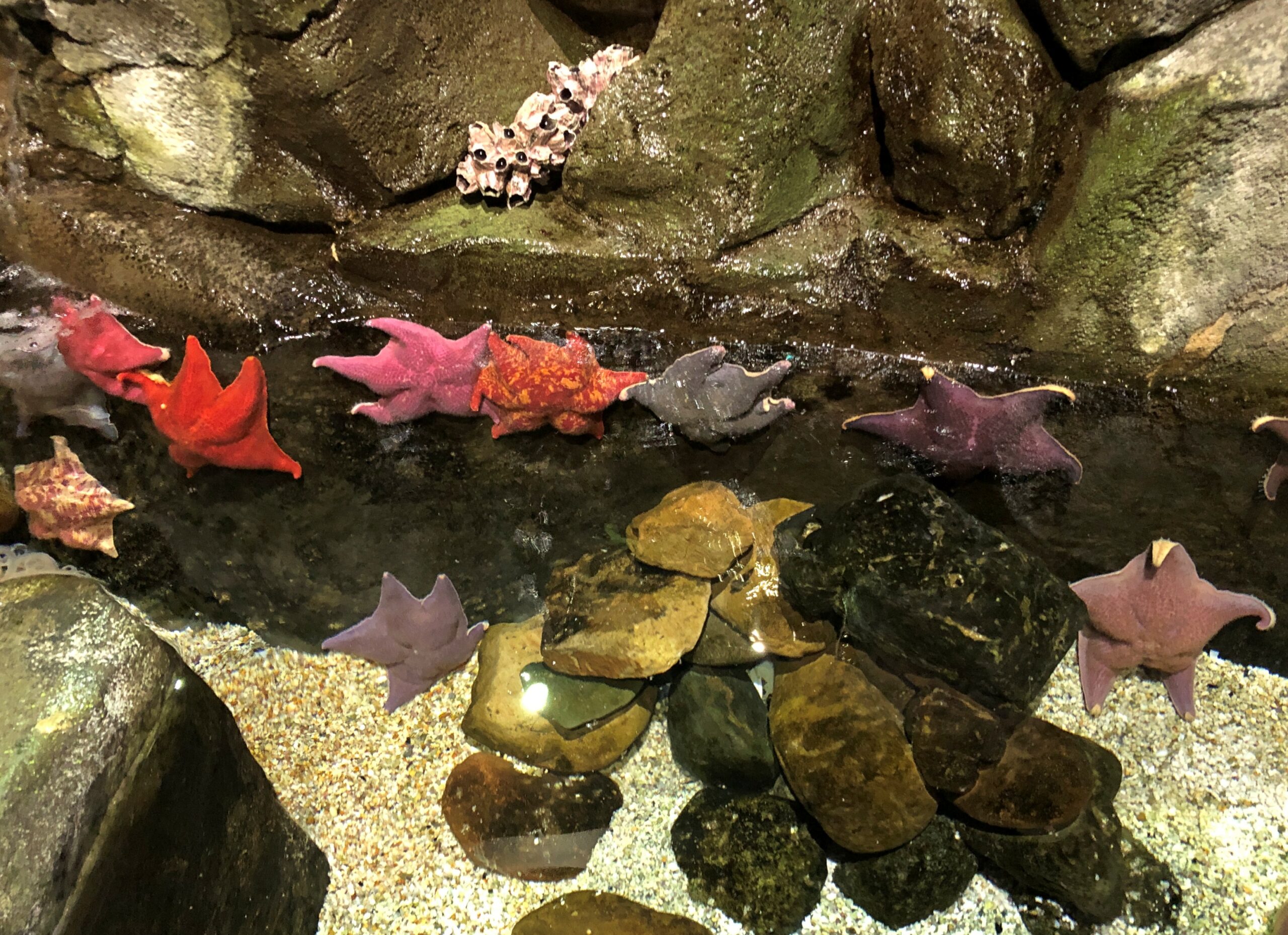
Other invertebrates. Such as the inspiration for Patrick Star.
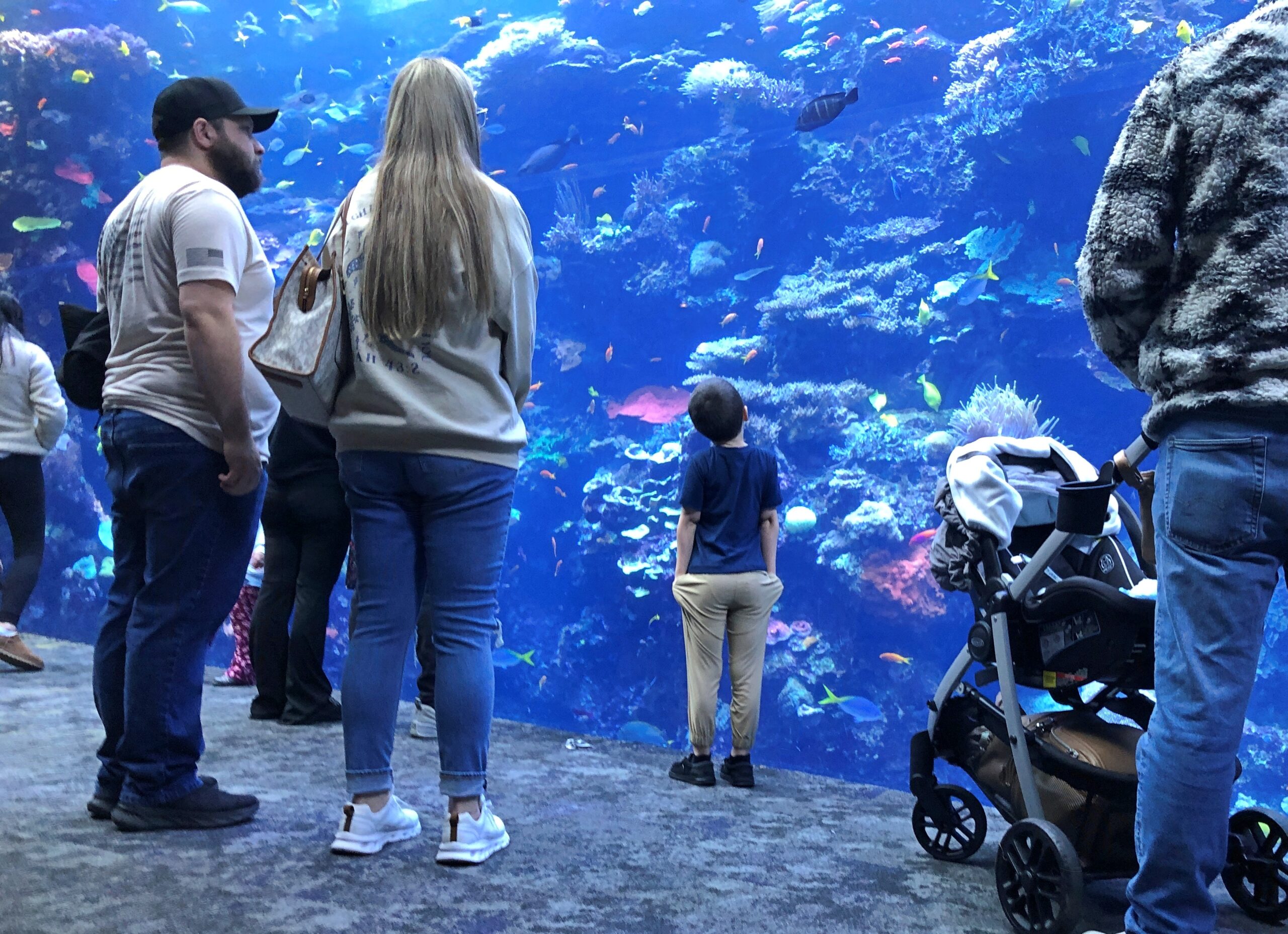
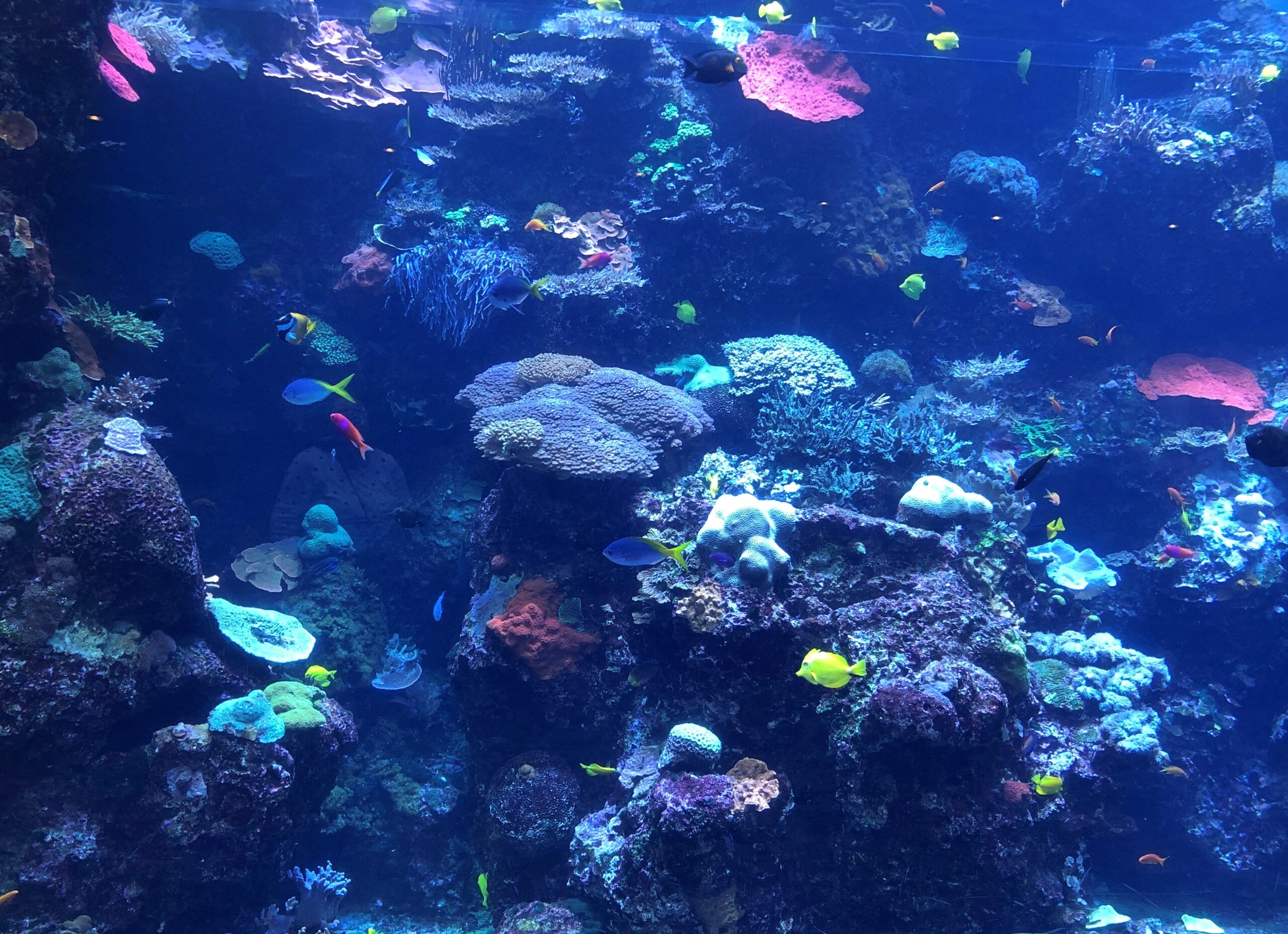
And of course, fish. Many, many fish.
Including the inspiration for Nemo.
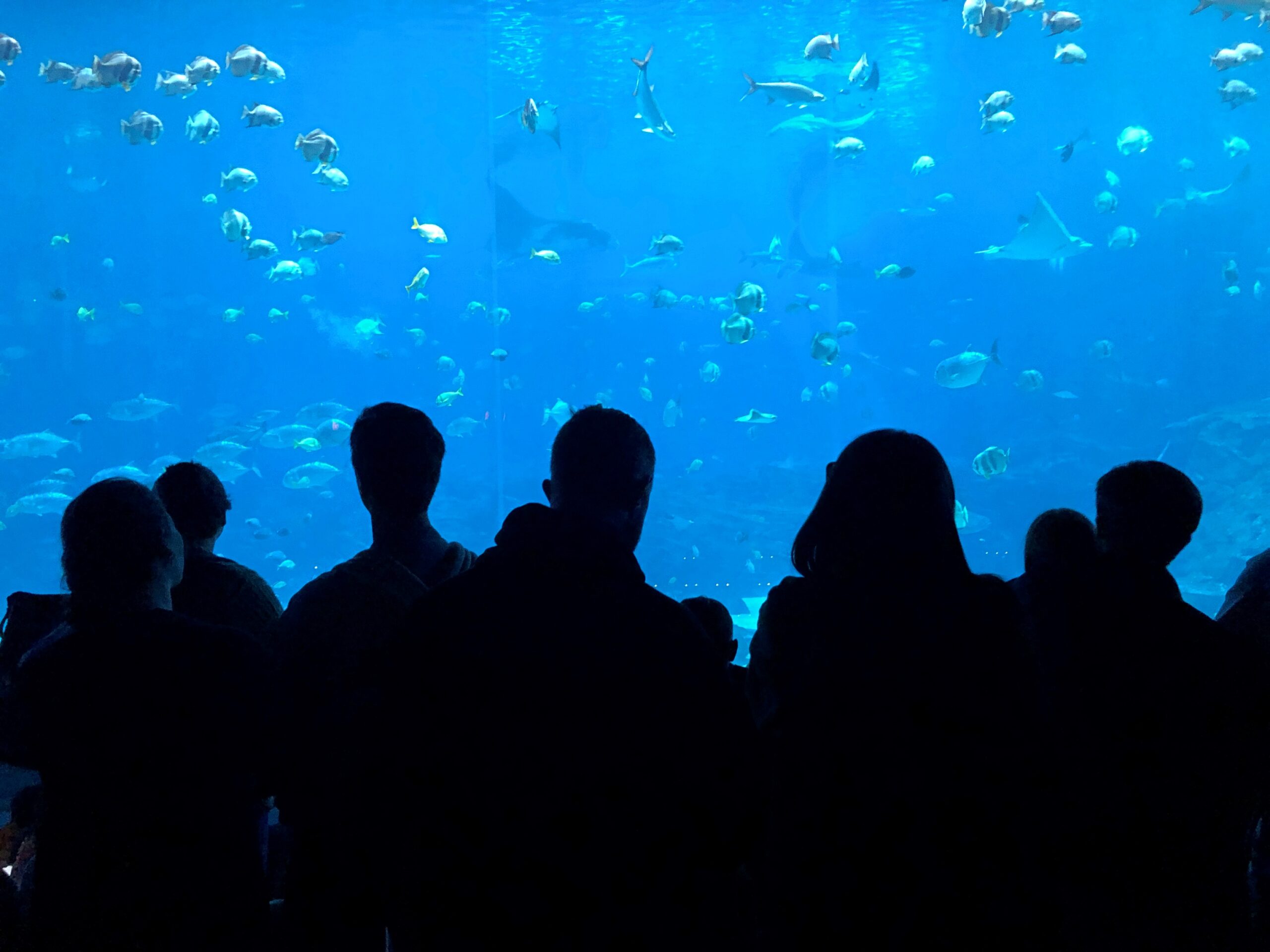
Small creatures can be intriguing or even enchanting, but what really packs ’em in are the likes of whale sharks, the largest fish species know to science, and one of the aquarium’s signature attractions. There’s no shortage of other kinds of sharks as well, it always being Shark Week at the facility: tiger sharks, silvertip sharks, blacktip reef sharks, and great hammerhead sharks.
More from the sea: Manta rays, goliath groupers, green sea turtles, Japanese spider crabs and weedy sea dragons. Freshwater creatures include, but are hardly limited to, Asian small-clawed otters; black spot piranhas — just how many kinds of piranhas are there, anyway? — snapping turtles; banded archerfish; discus fish; and shovelnose sturgeon.
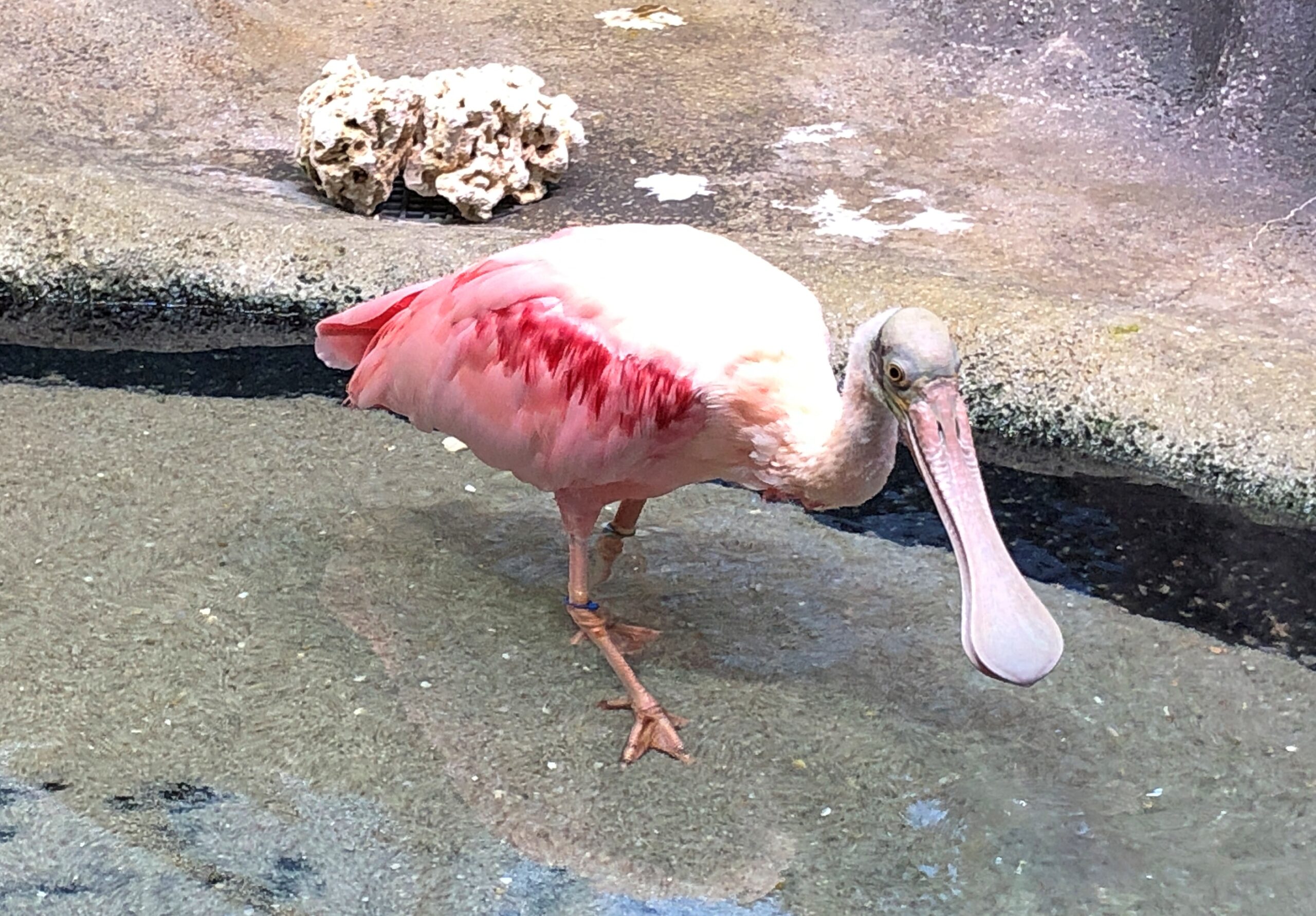
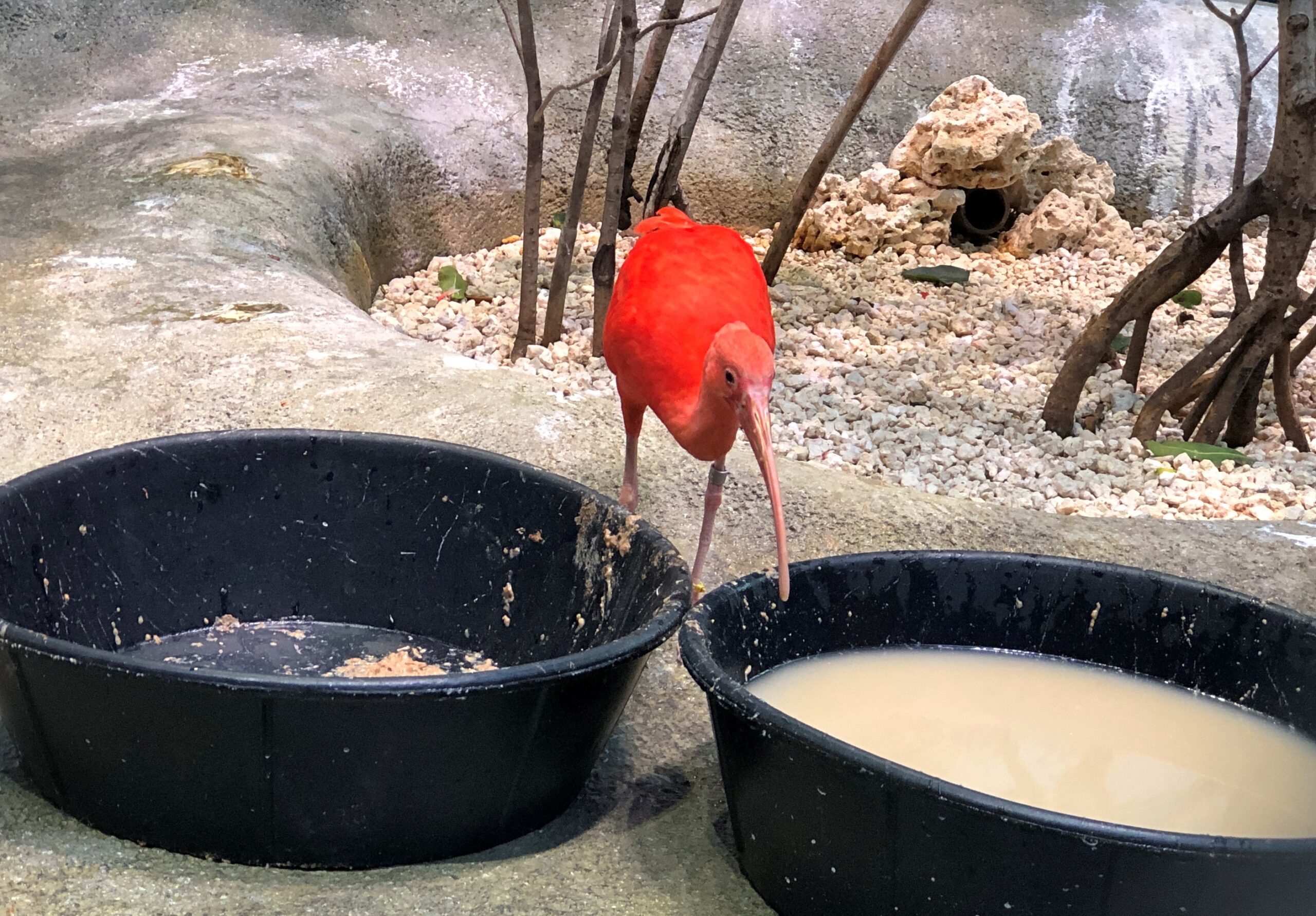
A few birds are on hand, such as spoonbills and ibises. Ones that subsist on fish, in other words.
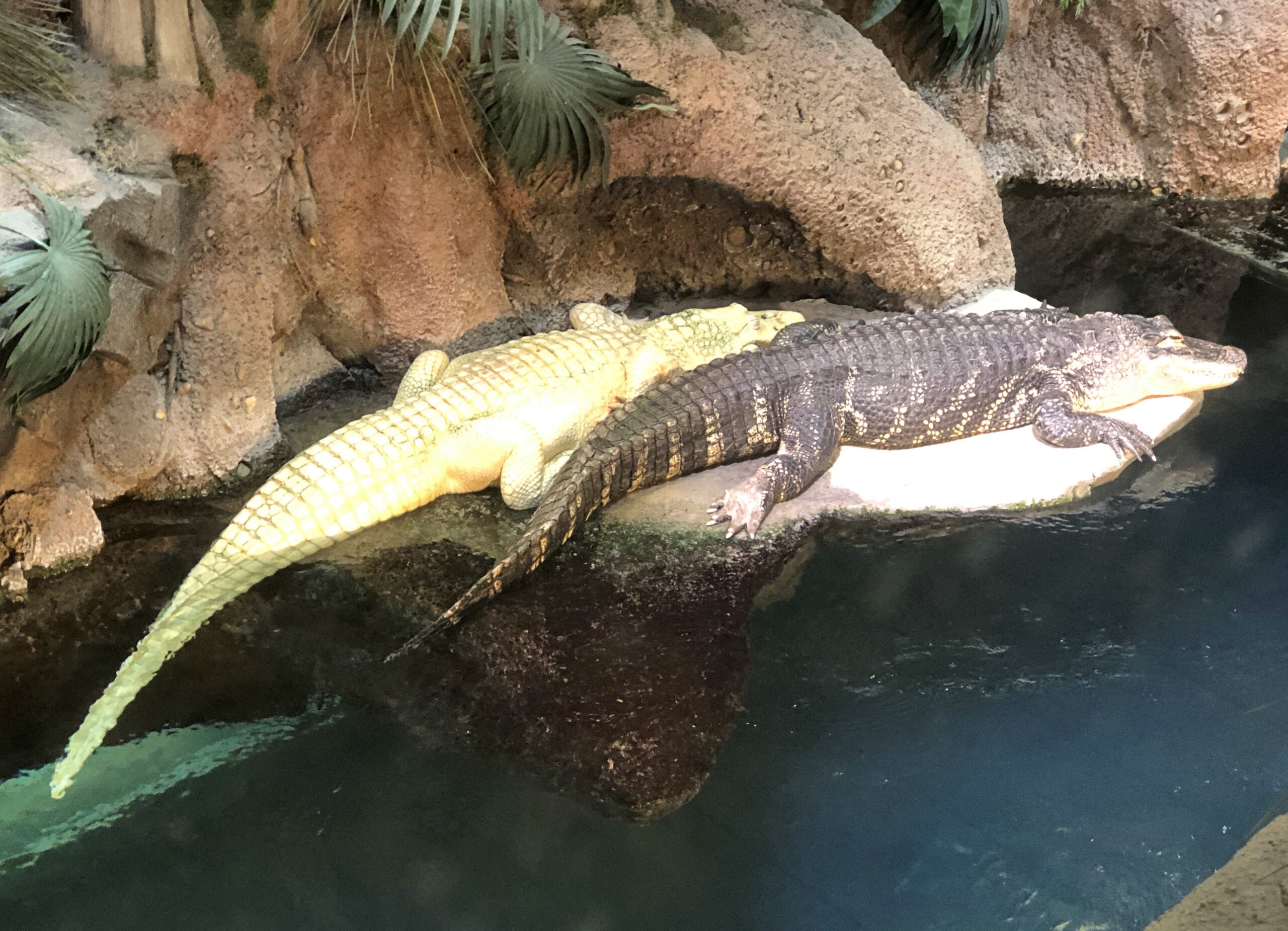
In case we hadn’t had enough gators in Florida, the aquarium had a few Georgia gators, including a rare albino. I take it Georgia gators were the inspiration for Albert in Pogo.
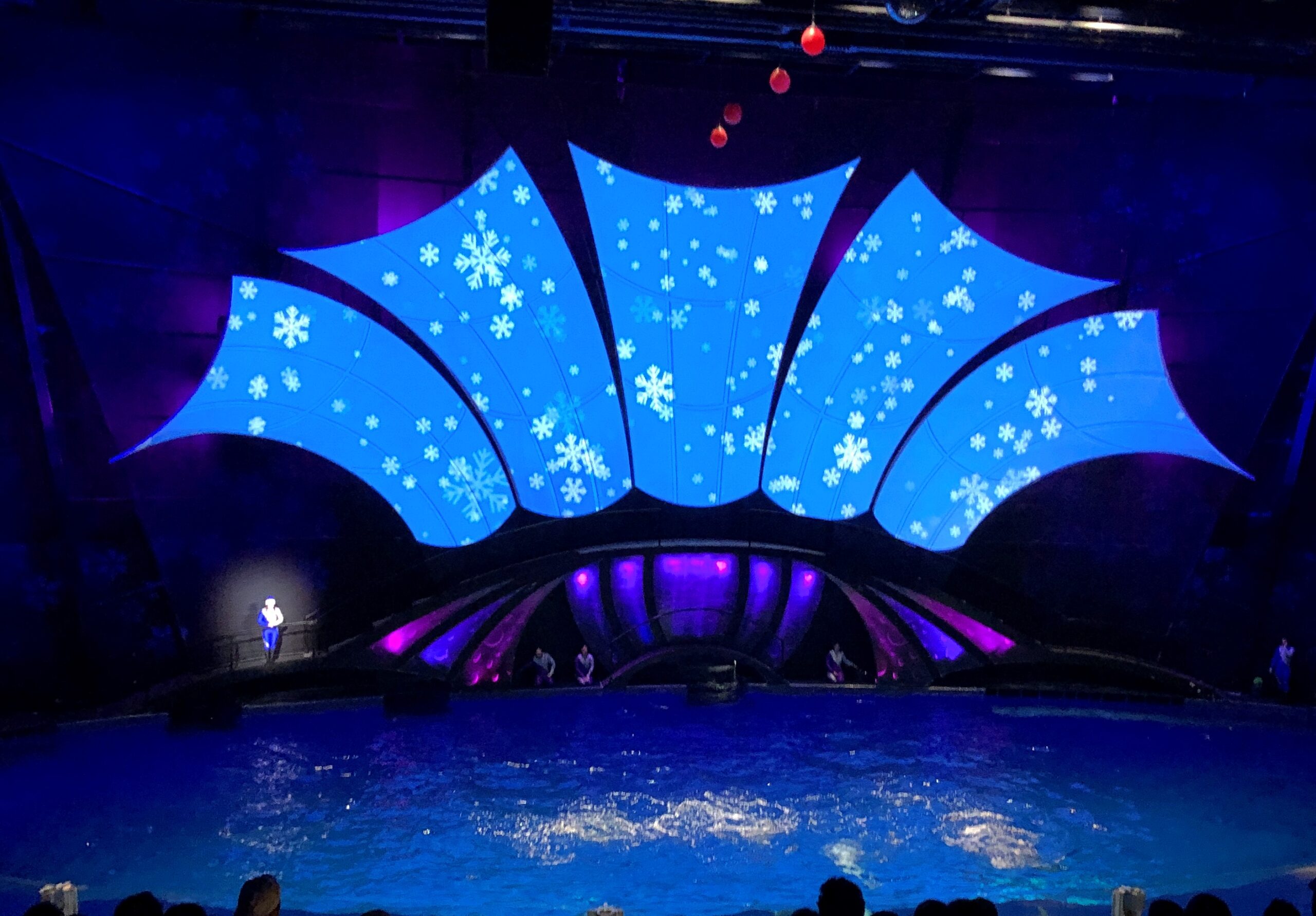
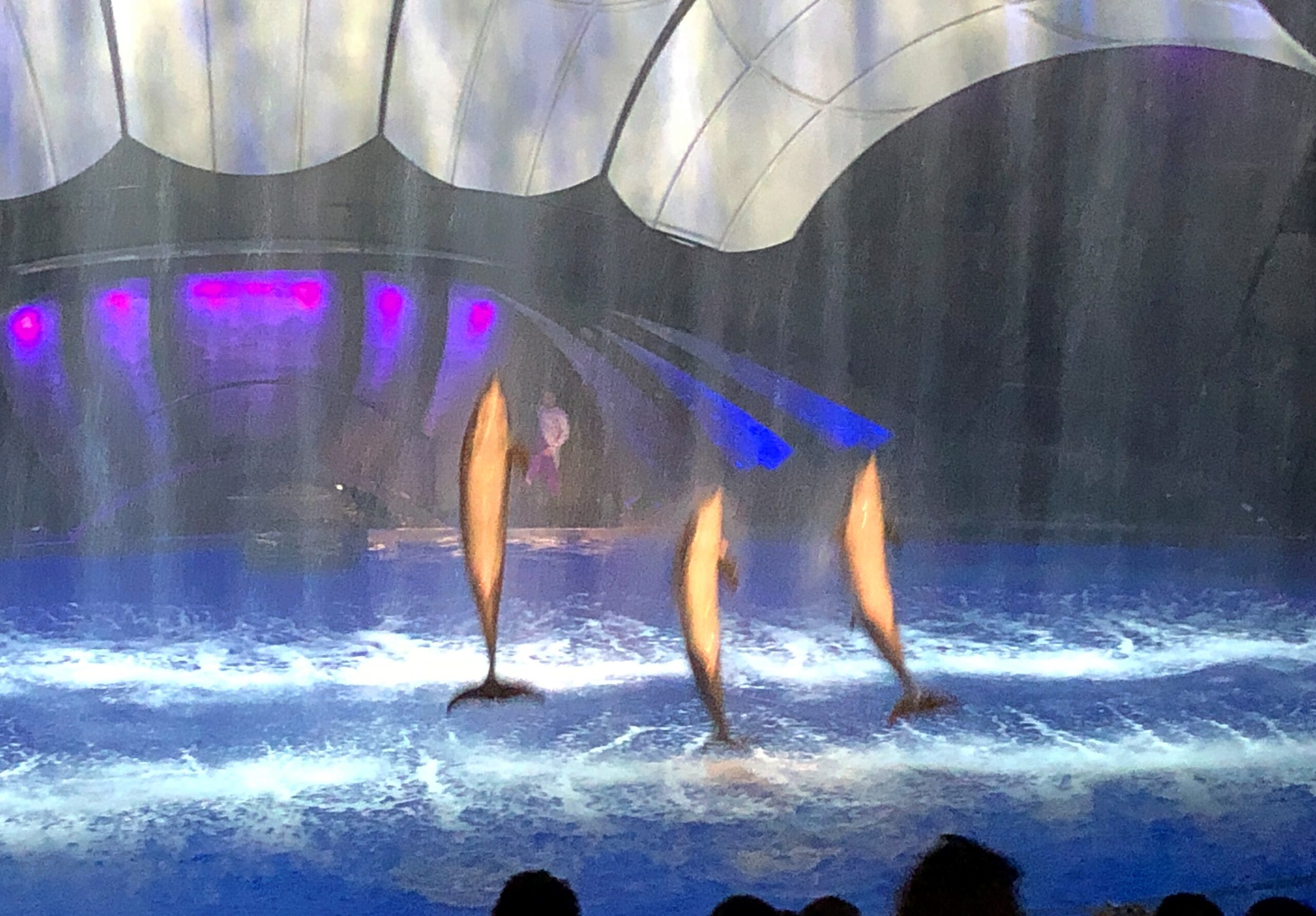
We saw the dolphin show. My still camera wasn’t the best for capturing the action, and there was a lot of jumping and splashing, but squint and the second shot looks like an impressionist work featuring a line of mid-air dolphins.
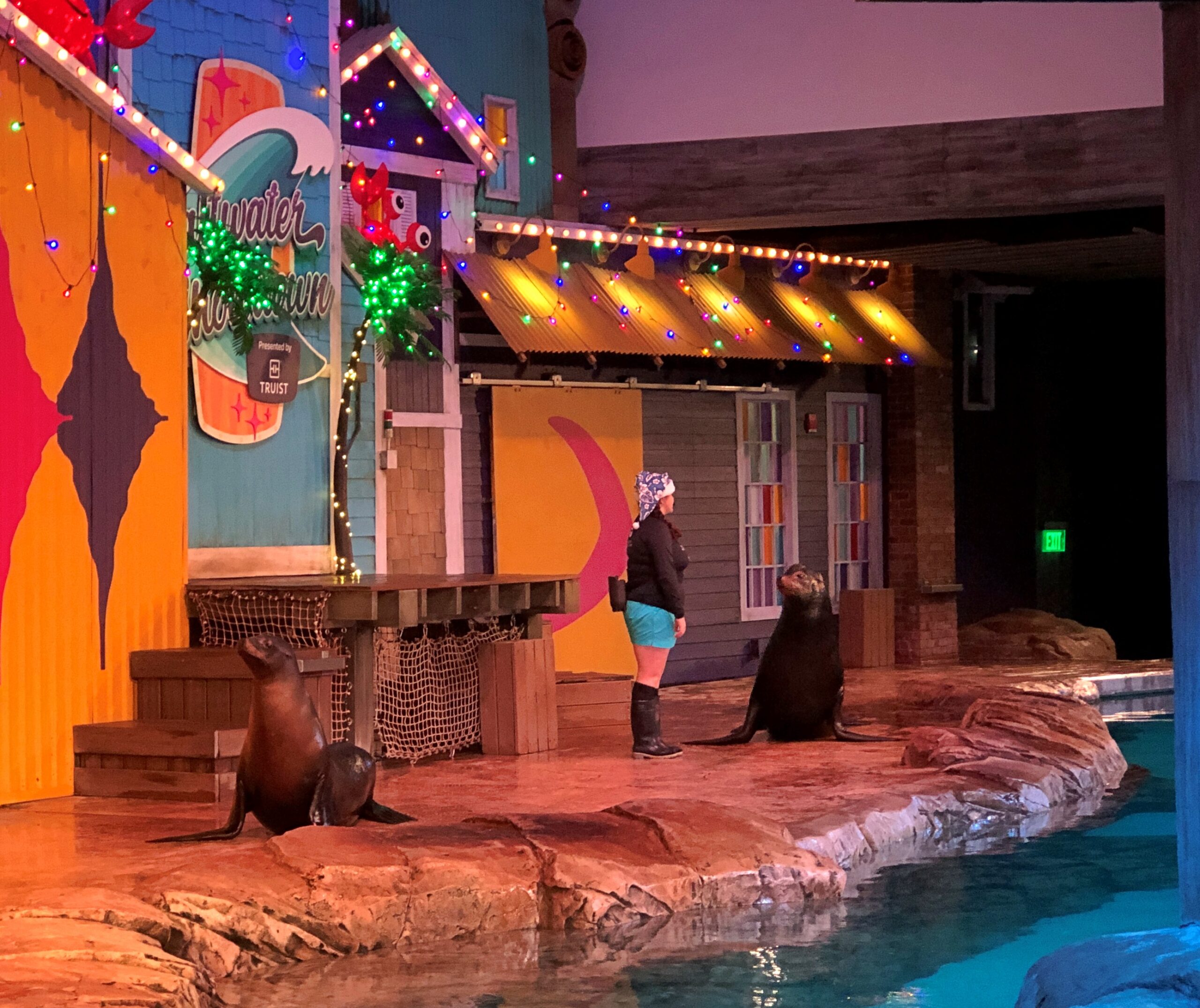
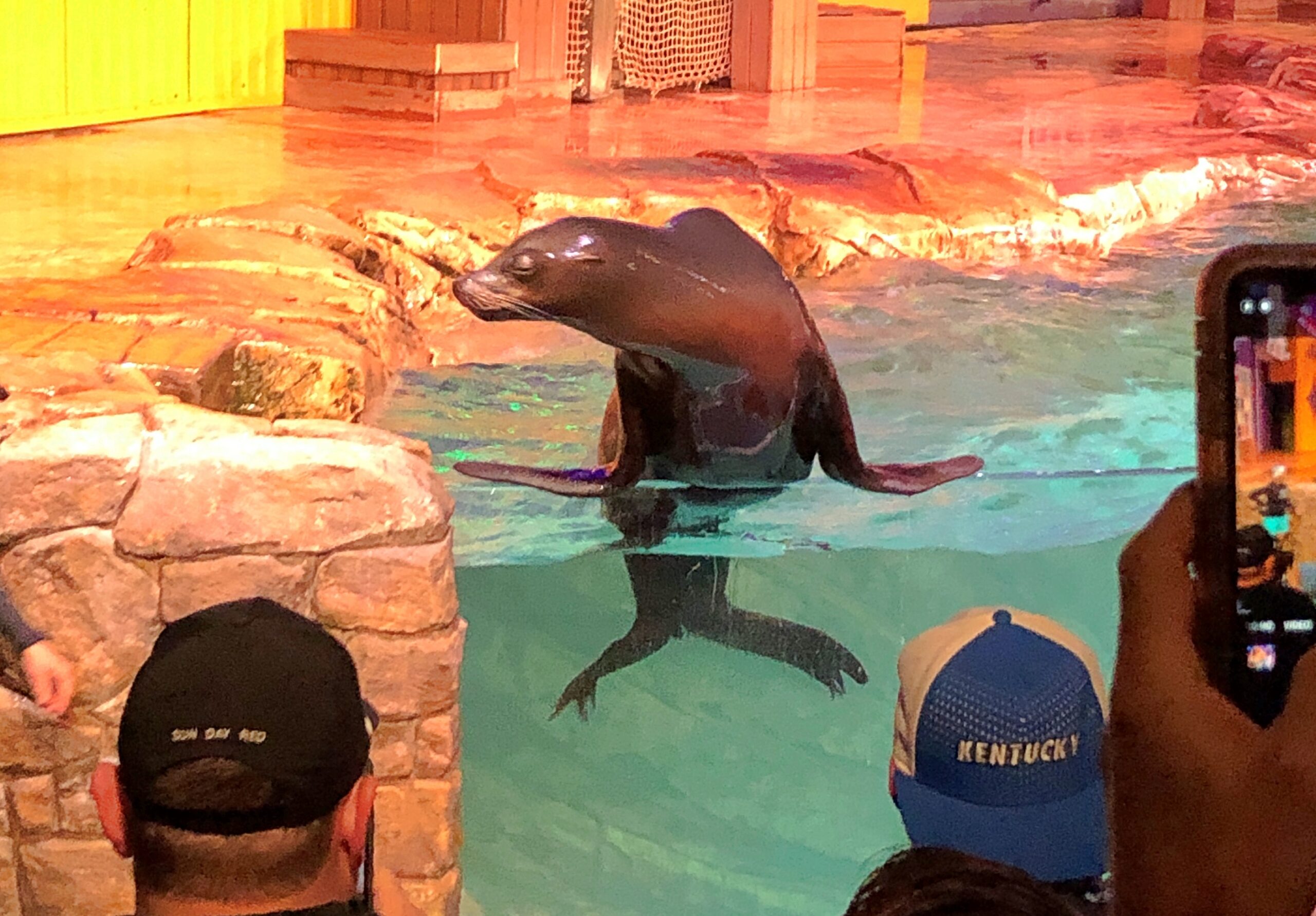
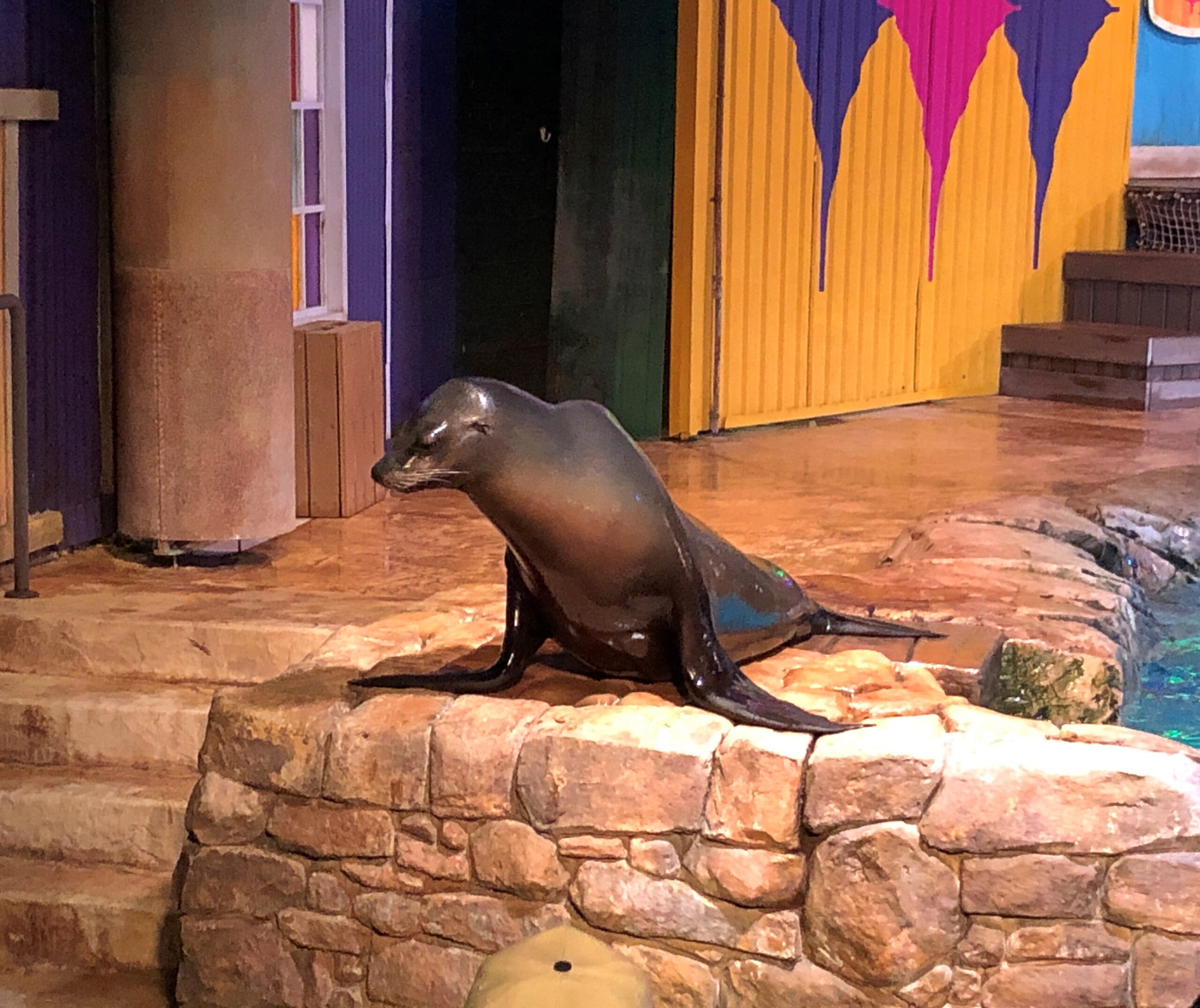
A separate show features seals and sea lions, doing seal and sea lion things for fish rewards.
About half as many people crowded into the aquarium would have made for a better experience, but I can’t begrudge the Georgia Aquarium its massive popularity, since it delivers the aquatic goods. Better a crowd than too few people. They’re out seeing real things. Often better, I believe, to see some part of the physical world than an electronic simulacrum.
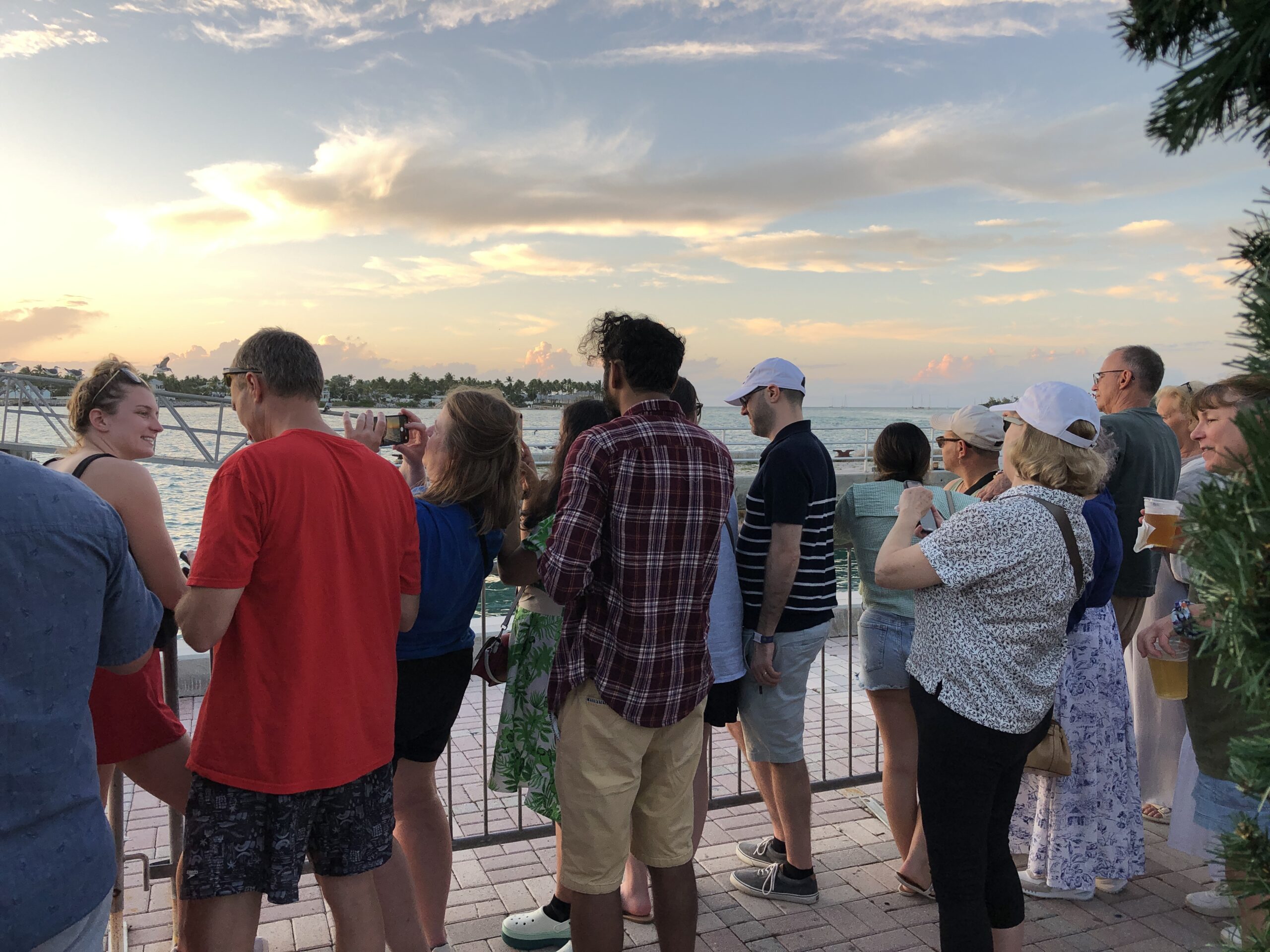
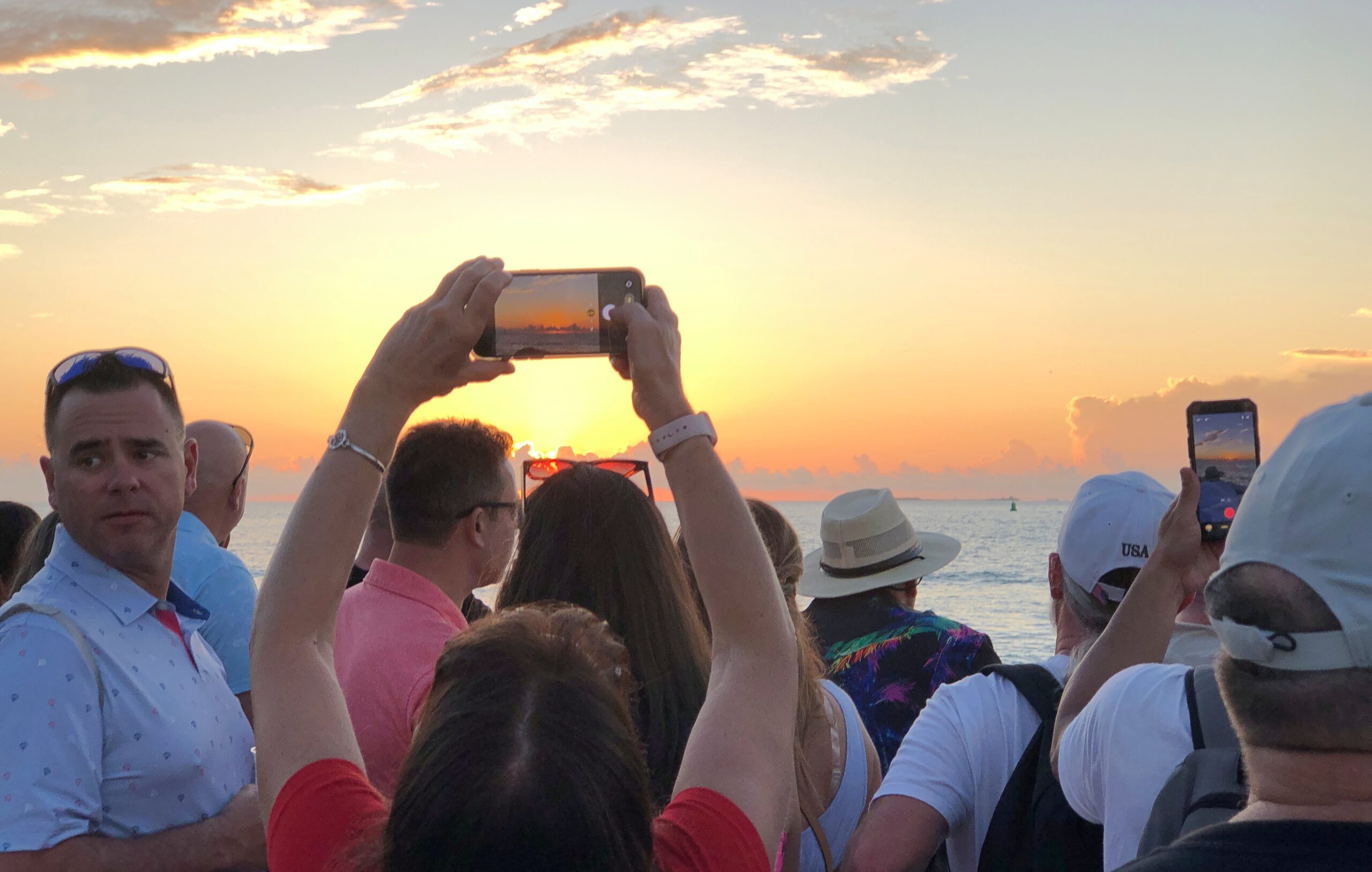
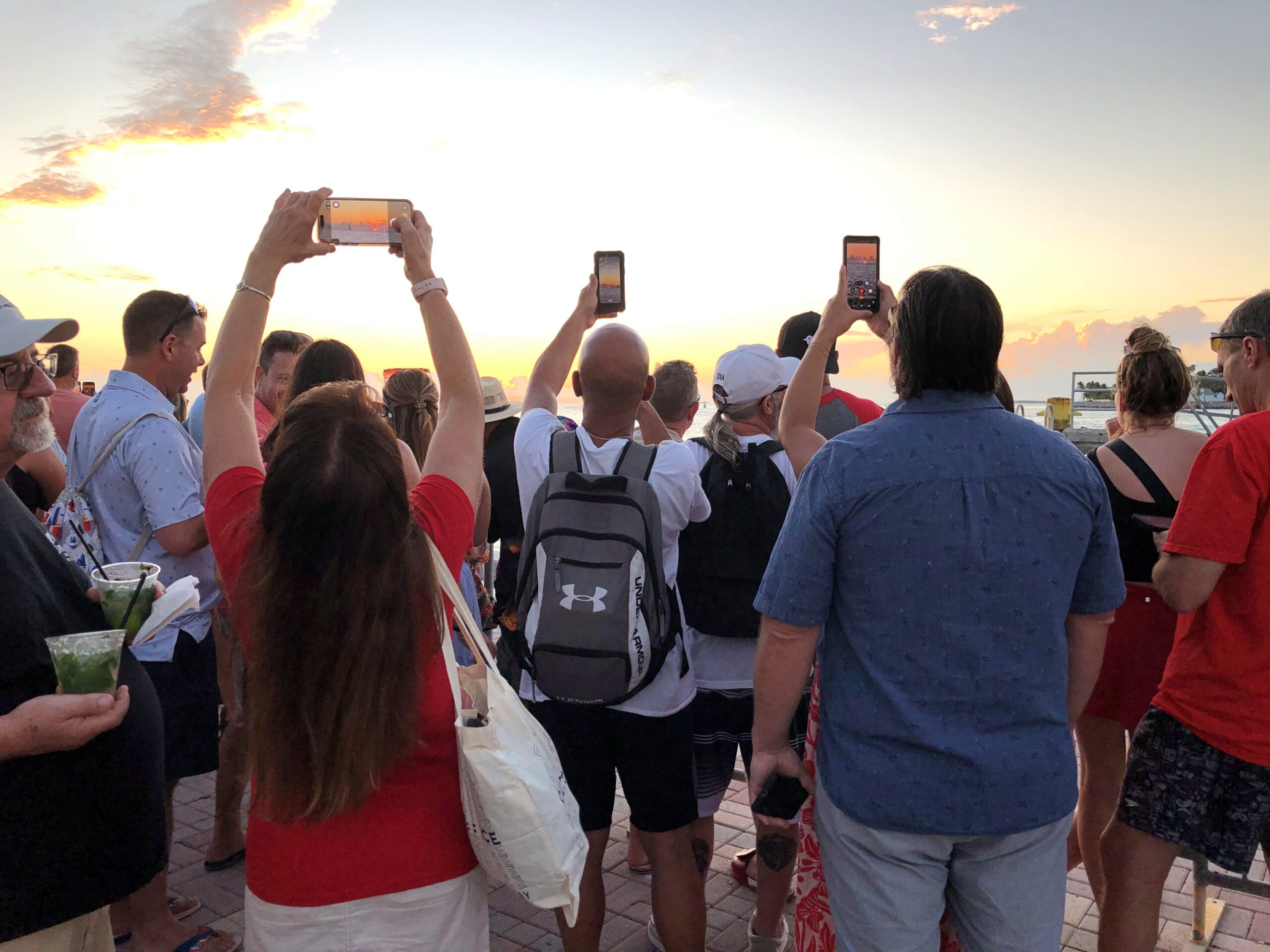
We joined the other Key West tourists, and who knows maybe a few locals, for an spontaneous sunset viewing party. I know if I lived around there, I’d be out at least occasionally, taking in something that never gets old. No organizer at all, just people collecting at the right place at the right time to see the disk of the sun transition from yellow to red and other colors, as it visibly creeps lower toward the horizon. Down the sun went, in its predictable splendor, and then — green.
I’m pretty sure what I saw was an inferior-mirage flash, to use a technical term I learned later. I checked later, finding that one characteristic of such a flash is an oval of light lasting no more than 2 seconds (I’d say it was no more than a single second, if that). They tend to happen when the surface is warmer than overlaying air, and close to sea level.
All that fits for the green flash — a variety of green intense and completely new to me — as the sun set our first day in Key West. The flash came exactly as the top edge of the disk of the sun dipped below the horizon. You have to, I believe, be looking straight at the exact right place at exactly the right moment to see it, as I was, by pure accident. I’d heard about green flashes for a long time, but I’d never seen one. A really long time: I remember them being mentioned during a planetarium show in San Antonio as a kid in the early ’70s.
We hadn’t come to Mallory Square to see a green flash or any other meteorological optical phenomena. We hadn’t even come to see the sun go down. We just happened to arrive at Mallory, a large public plaza near the north end of Duval St. and right at the water’s edge, just at the right time, after gadding about that part of Key West.
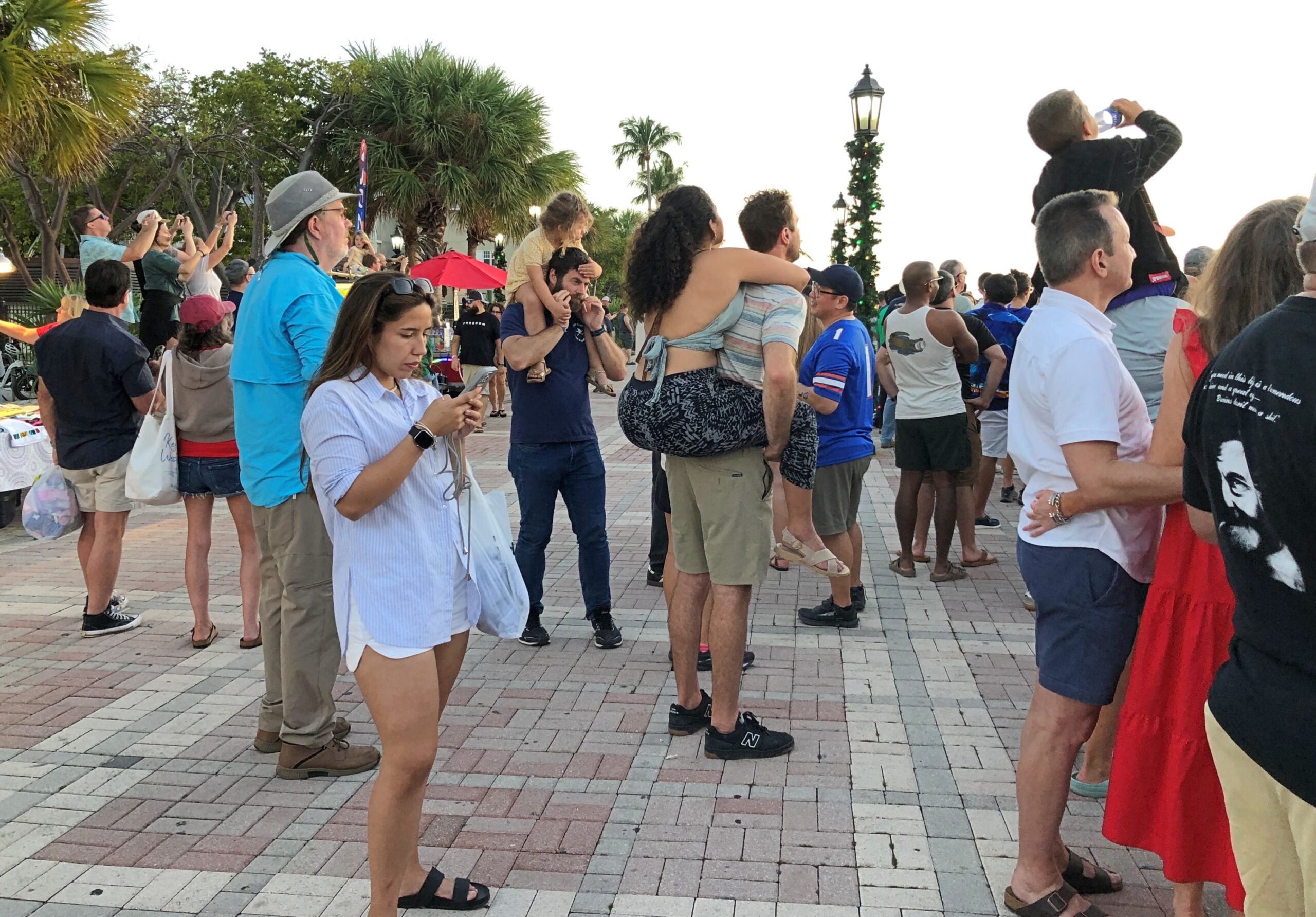
It’s a mildly festive place around sunset. Also, people are waiting. The sun was not to be hurried.
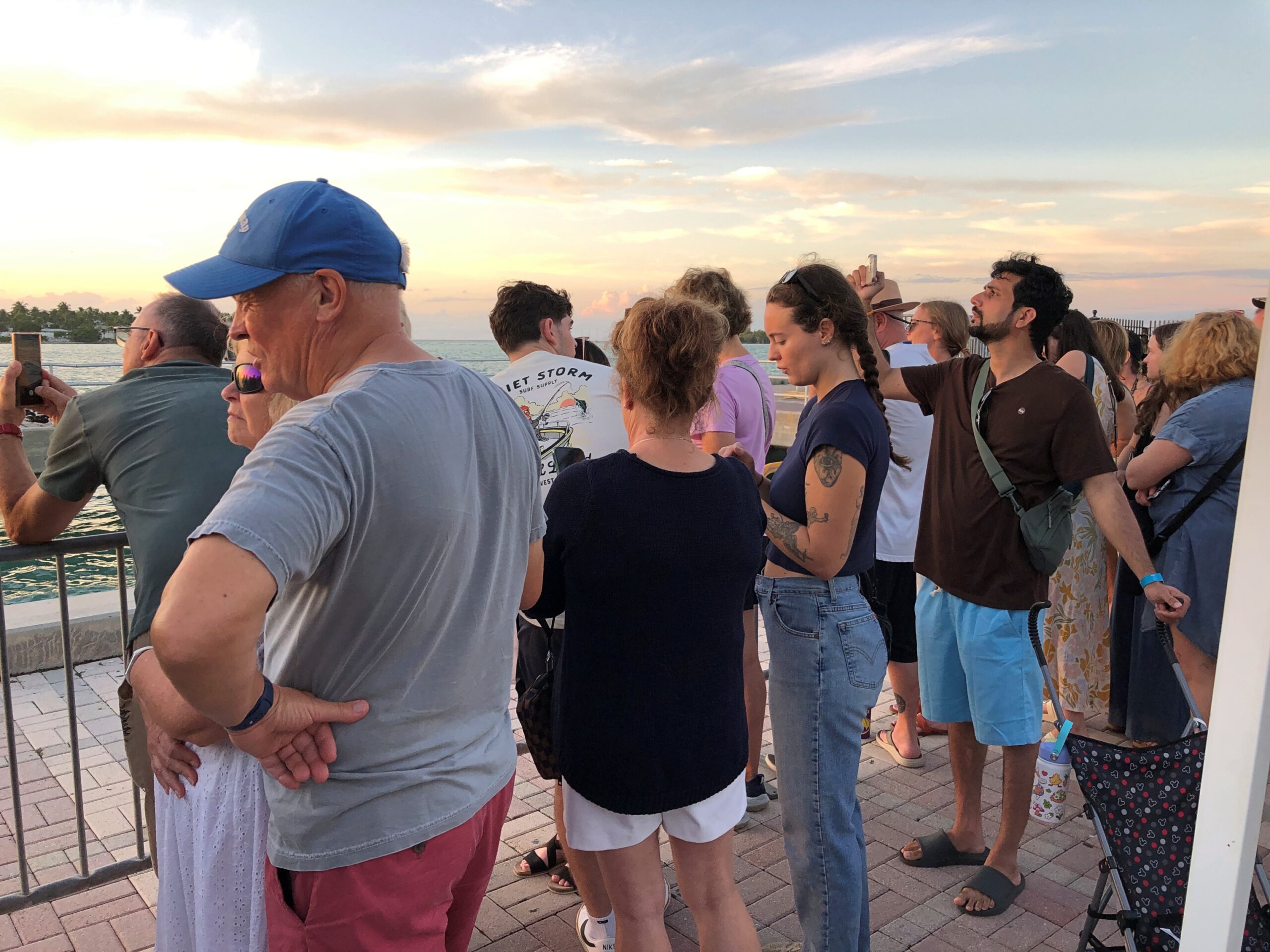
Lots of people around, not an overwhelming crowd, more of a happy milling of vacation-goers.
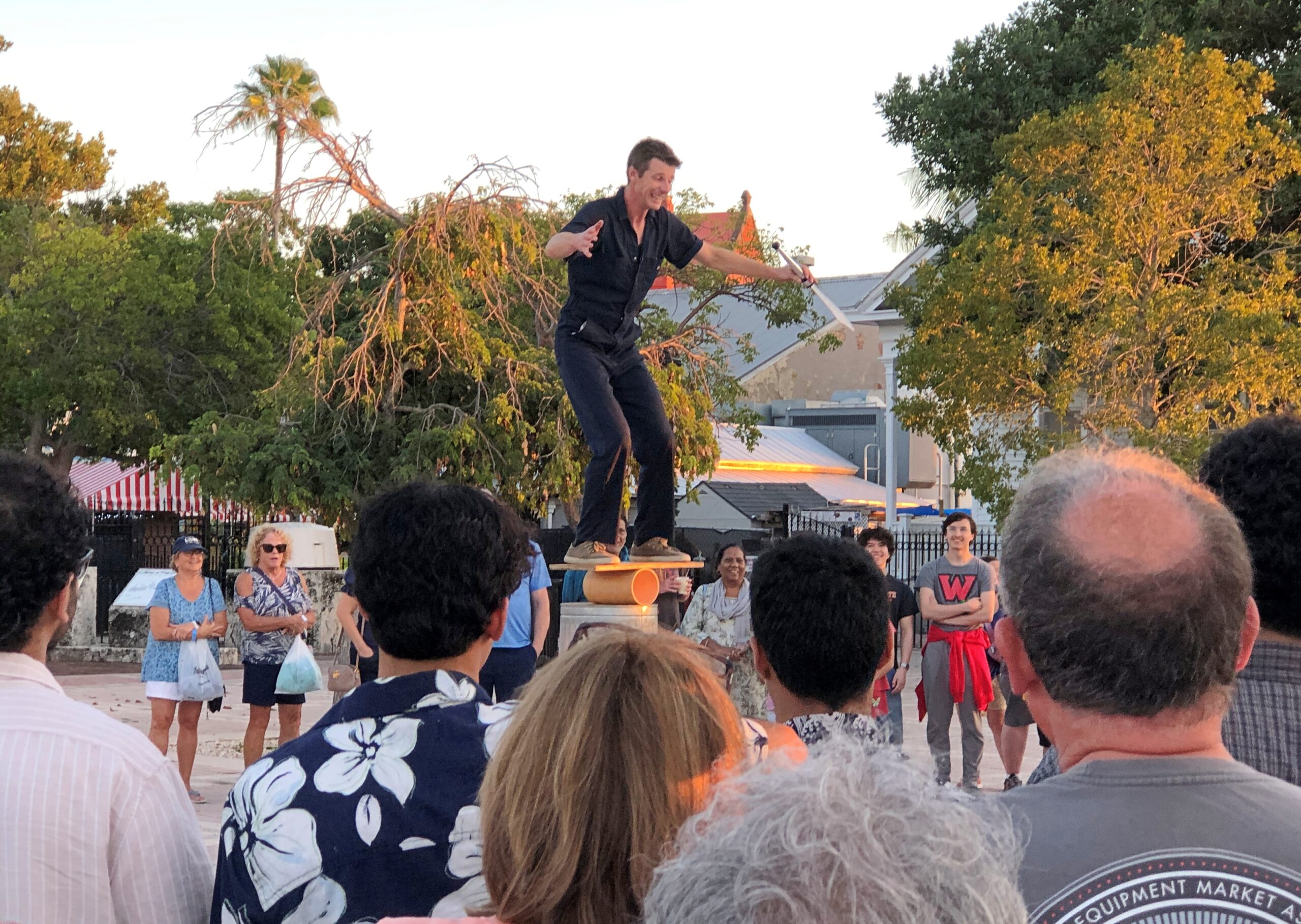
Live entertainment was on hand.
The star attraction, however – make that the solar attraction – was the sunset. Mallory Square has a fine view of the westward horizon, where sea and sky come together like a hazy kiss out on the ocean.
So now I’ve seen a green flash. A total solar eclipse (two, actually), lunar eclipses, the transit of Venus, double rainbows, ground-to-sky lightning, sun- and moondogs, meteors, planets through telescopes including the moons of Jupiter and Saturn, the impressive whisp of the Milky Way in a dark sky, the Southern Cross and the Magellanic Clouds – add a green flash to the list.
But what other cool things to see in the sky that so far have eluded me? The aurora, for one. Aurora borealis would be great, and certainly more doable than aurora australis, but wouldn’t seeing the Southern Lights be a kick? I think I first learned about it in a Carl Barks Scrooge McDuck comic, and never forgot.
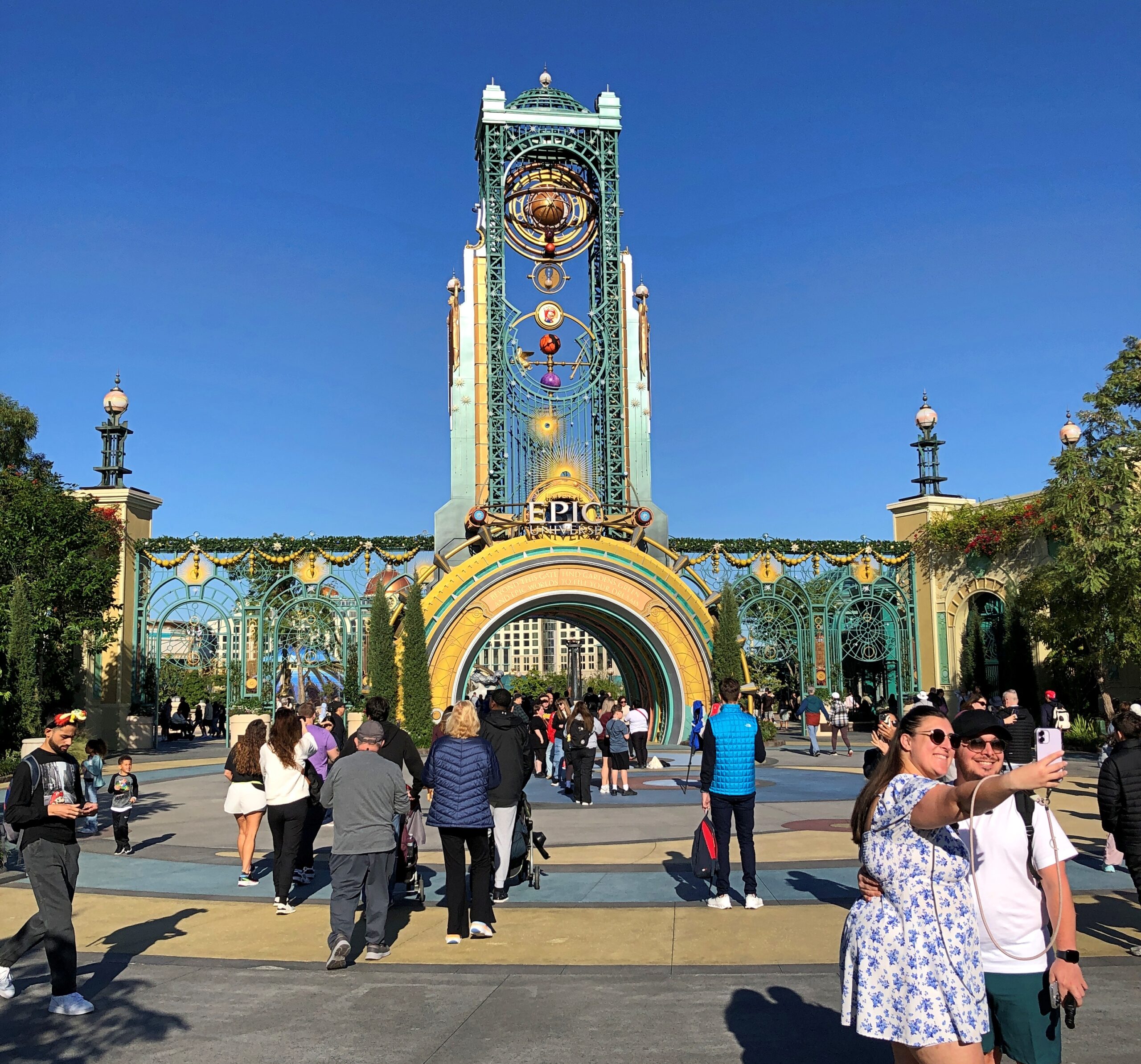
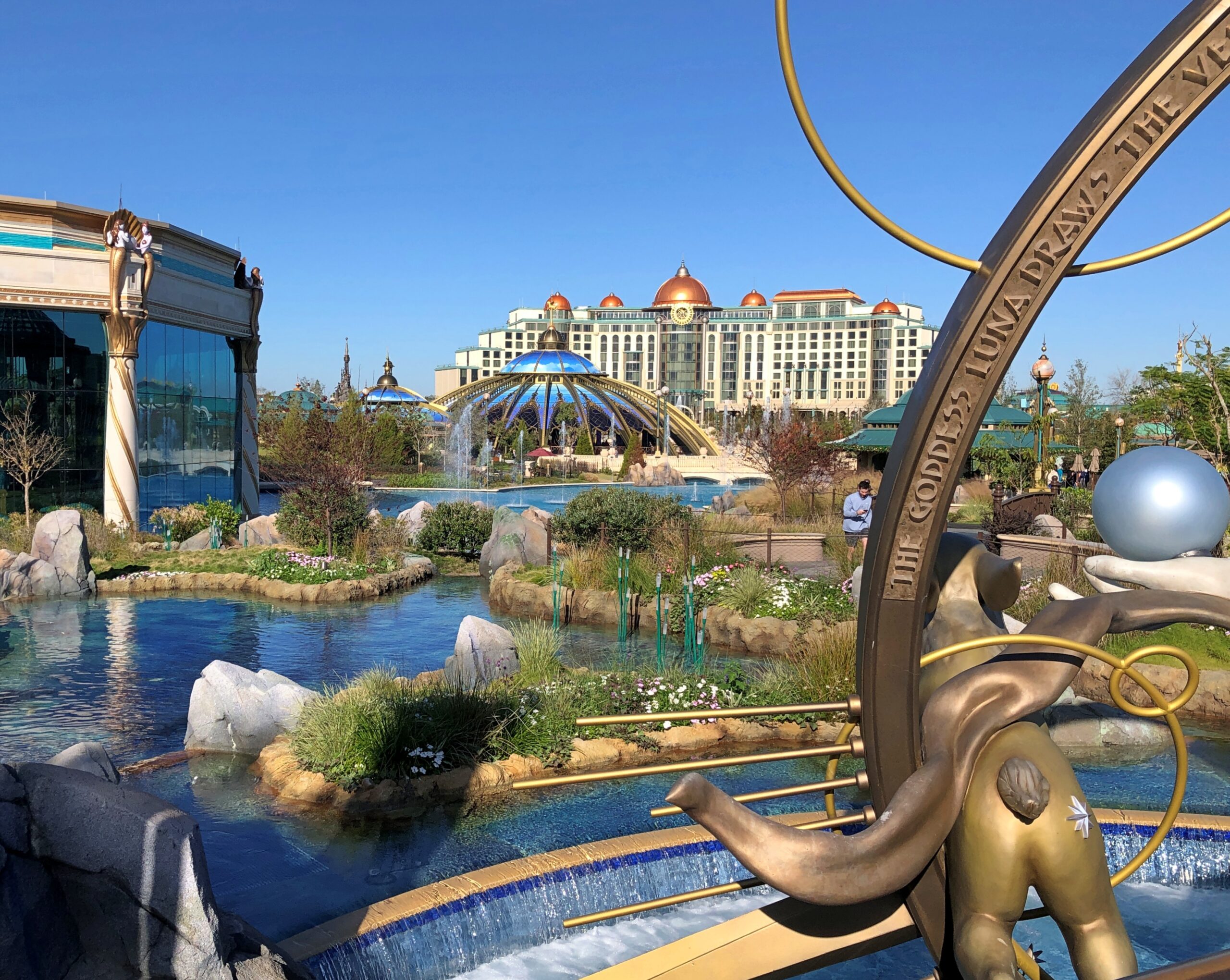
A theme park should have a theme, right? As far as I could tell, the theme of Universal Epic Universe, the most recently opened park in central Florida, is We Own These Valuable Intellectual Properties. Namely, such globally successful entertainment franchises as Harry Potter and Mario Bros. and How to Tame Your Dragon. I mean, How to Train Your Dragon. Shows you what I know about these properties, which is a lot less than many people.
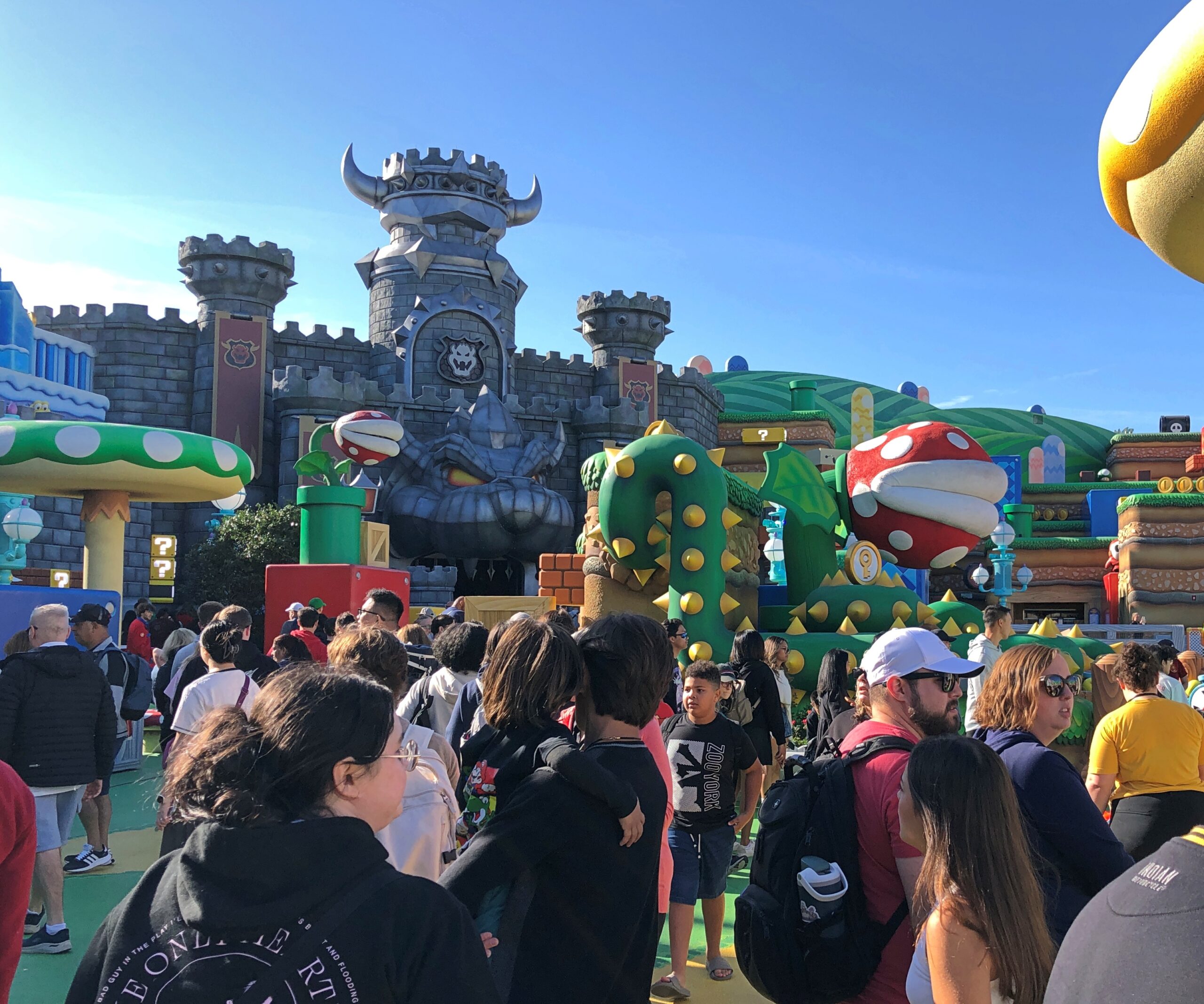
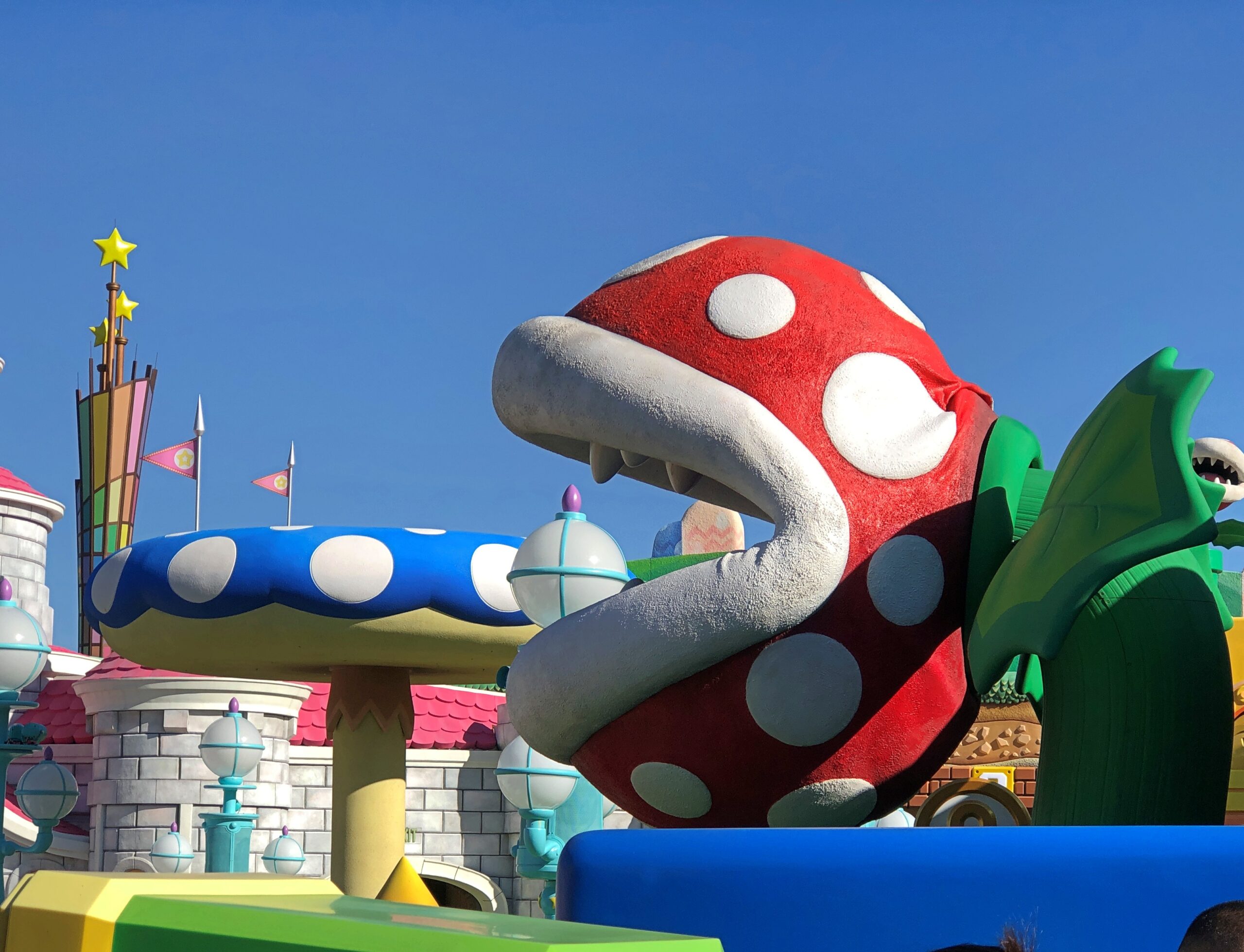
For instance, Ann had to school me in who Bowser was, which she was happy to do as we waited in line for the first ride of the day at Universal Epic Universe, in the area of the park devoted the world’s most famous cartoon building supers. Even I know Mario and Luigi. I was around to see their arcade games appear in the early ’80s. I’d heard of Princess Peach. Word of damsels and their distress tends to get out.
Bowser is the main antagonist of franchise, turns out. The line snaked through his castle or lair or the Bowser secret scheming room, since he seems like a fellow that schemes a lot. But I will say this: Universal went to a lot of trouble to give you something to look at as you waited for the ride, including in this case giant faux library books with such titles as Why Good Things Happen to Bad People, The Second Place Banana and Other Horror Stories, and Sibling Rivalries and How to Exploit Them, and many more, all in-universe jokes, some of which were amusing even if you didn’t know the back story. A committee of Mario Bros. experts must have spent months on dreaming up the titles, marveling every day that they were paid to do so.
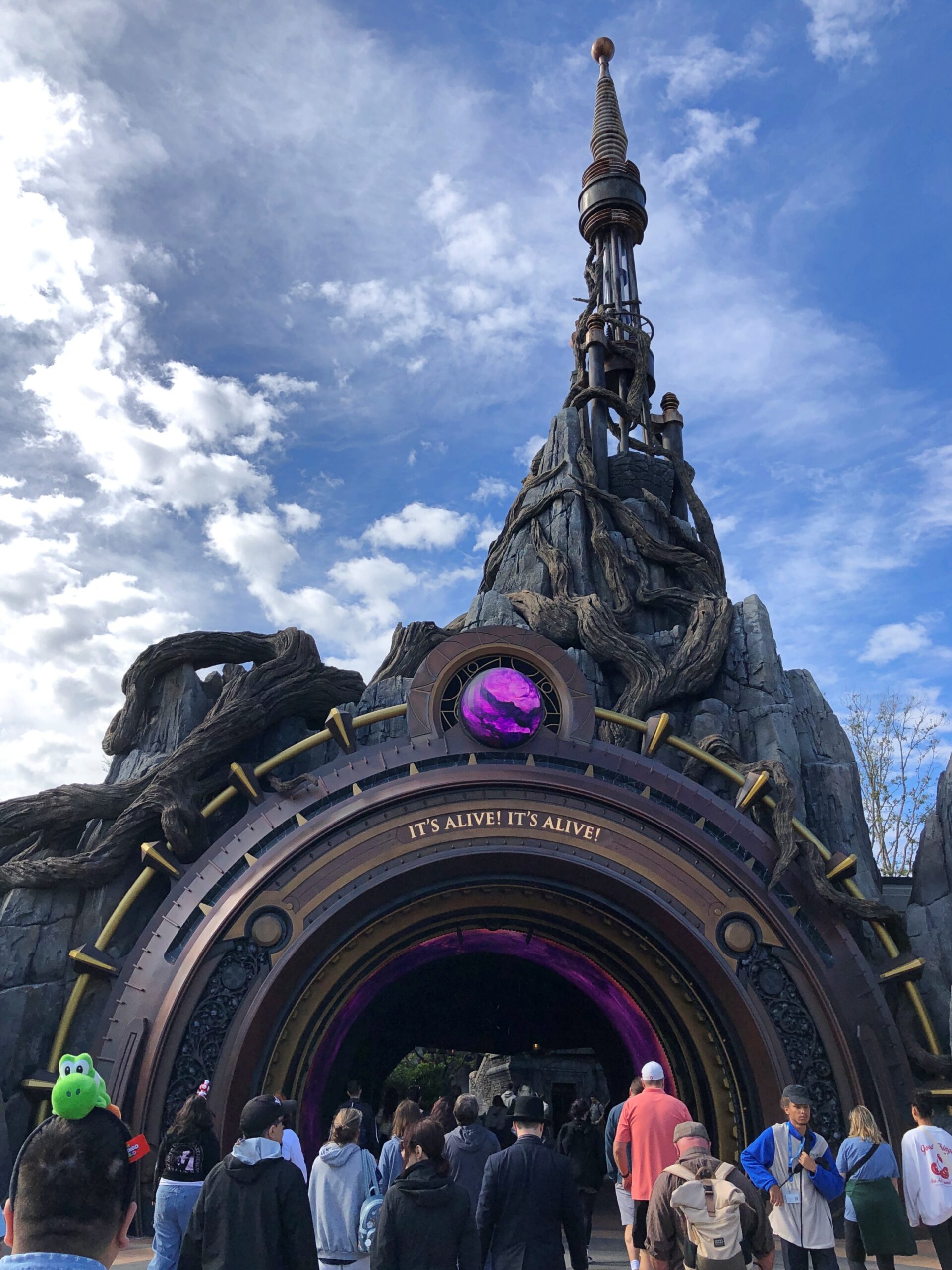
The overflow of things to see while you wait repeats itself in the other major rides: the Gothic detail that evoked the monochromic worlds of the early Universal horror pictures, and the positively palatial hall ahead — a long time ahead — of the Harry Potter-adjacent wizard swooshing ride.
We’d arrived fairly early on the morning of December 9 for our day at Universal.
The weather was ideal for the visit. The crowds were less than ideal, but not bad. I can’t imagine the hordes at the park, say, today – one of the days between Christmas and New Year’s, when many more people are off, and kids aren’t in school.
We opted not to do the line-skipping scheme, after I determined that adding it to the ticket prices for three people would involve roughly the same amount of money as the accommodation budget for the entire trip. Universal, which is to say Comcast, was already getting enough of my money.
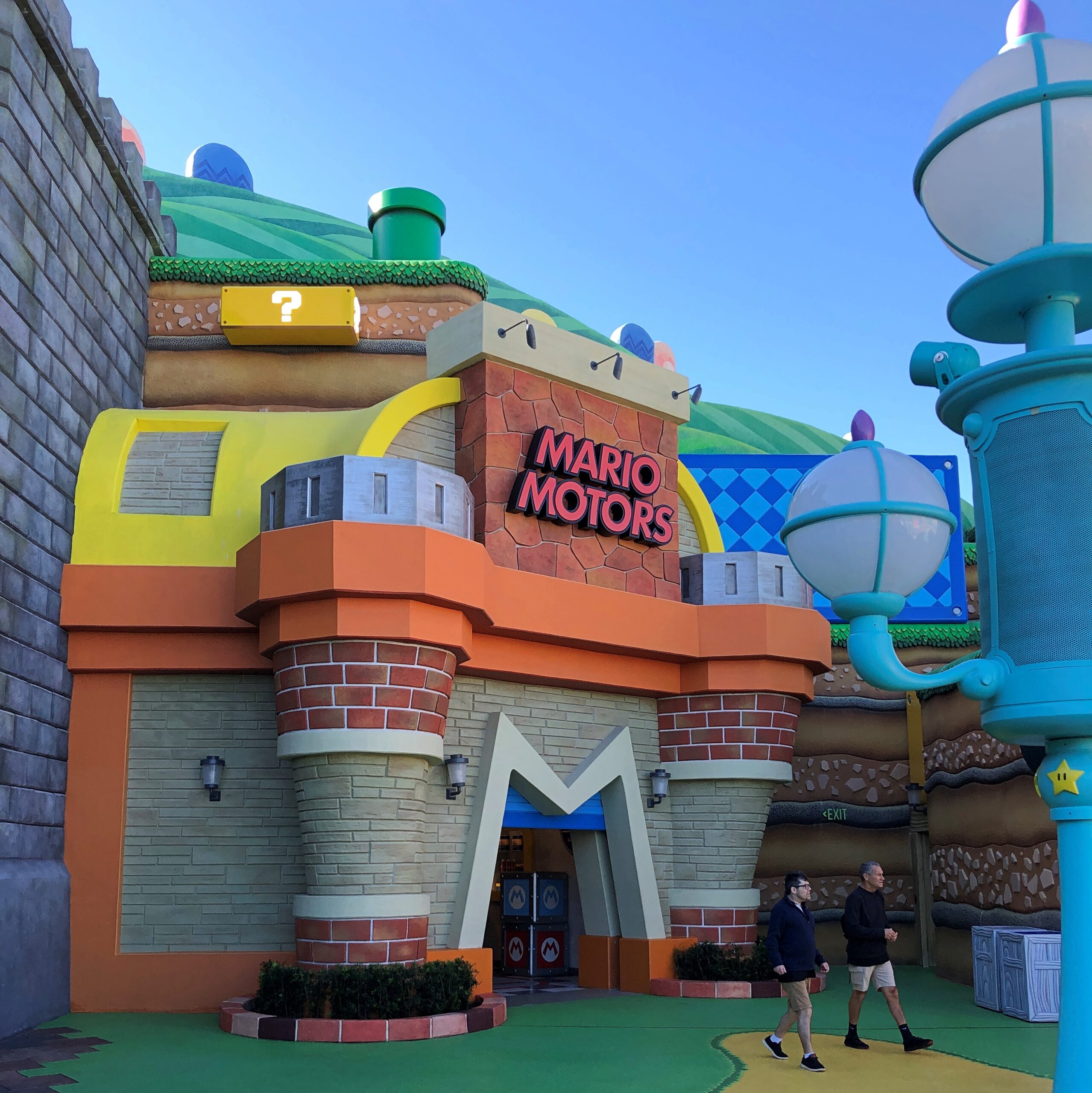
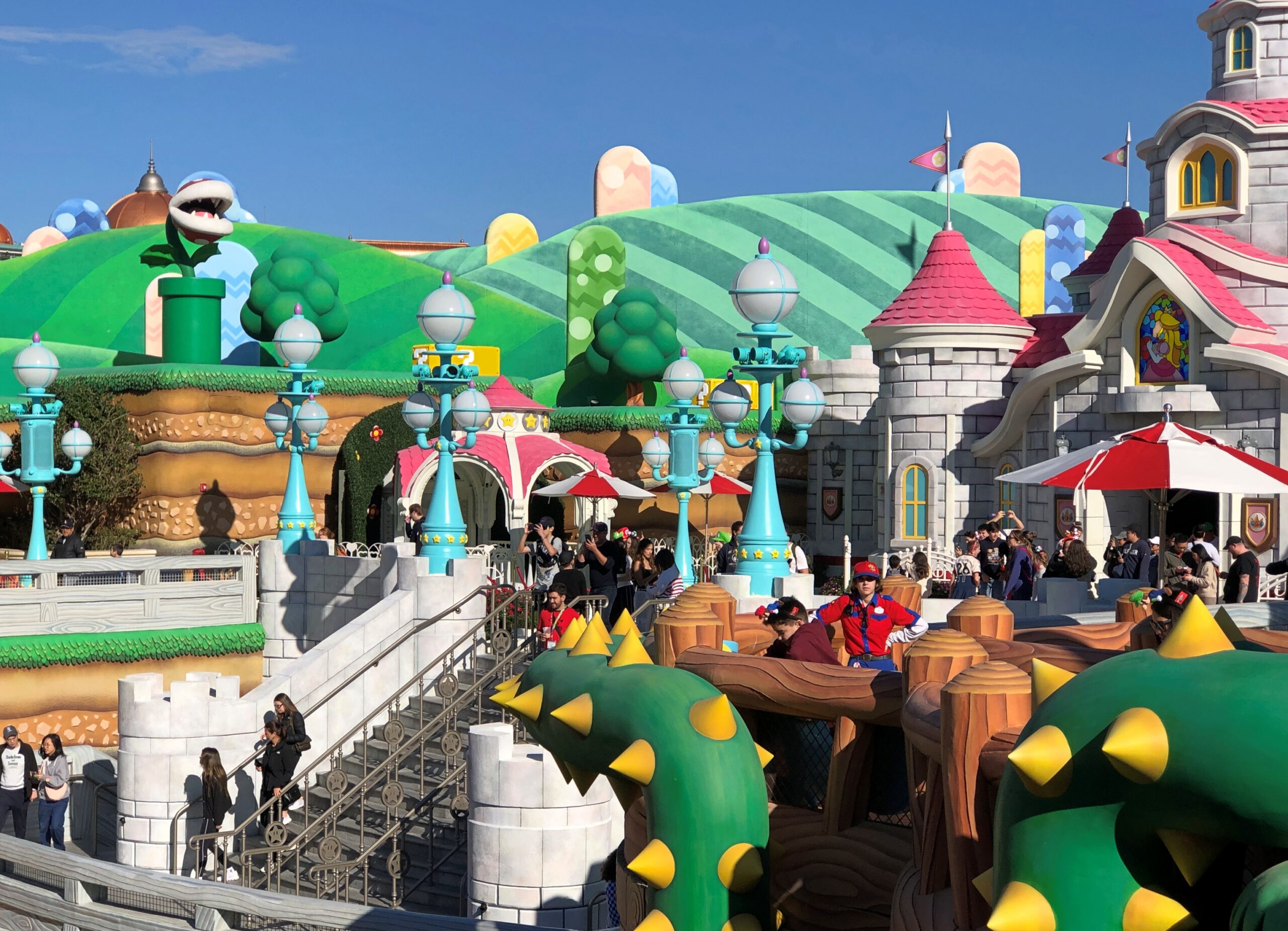
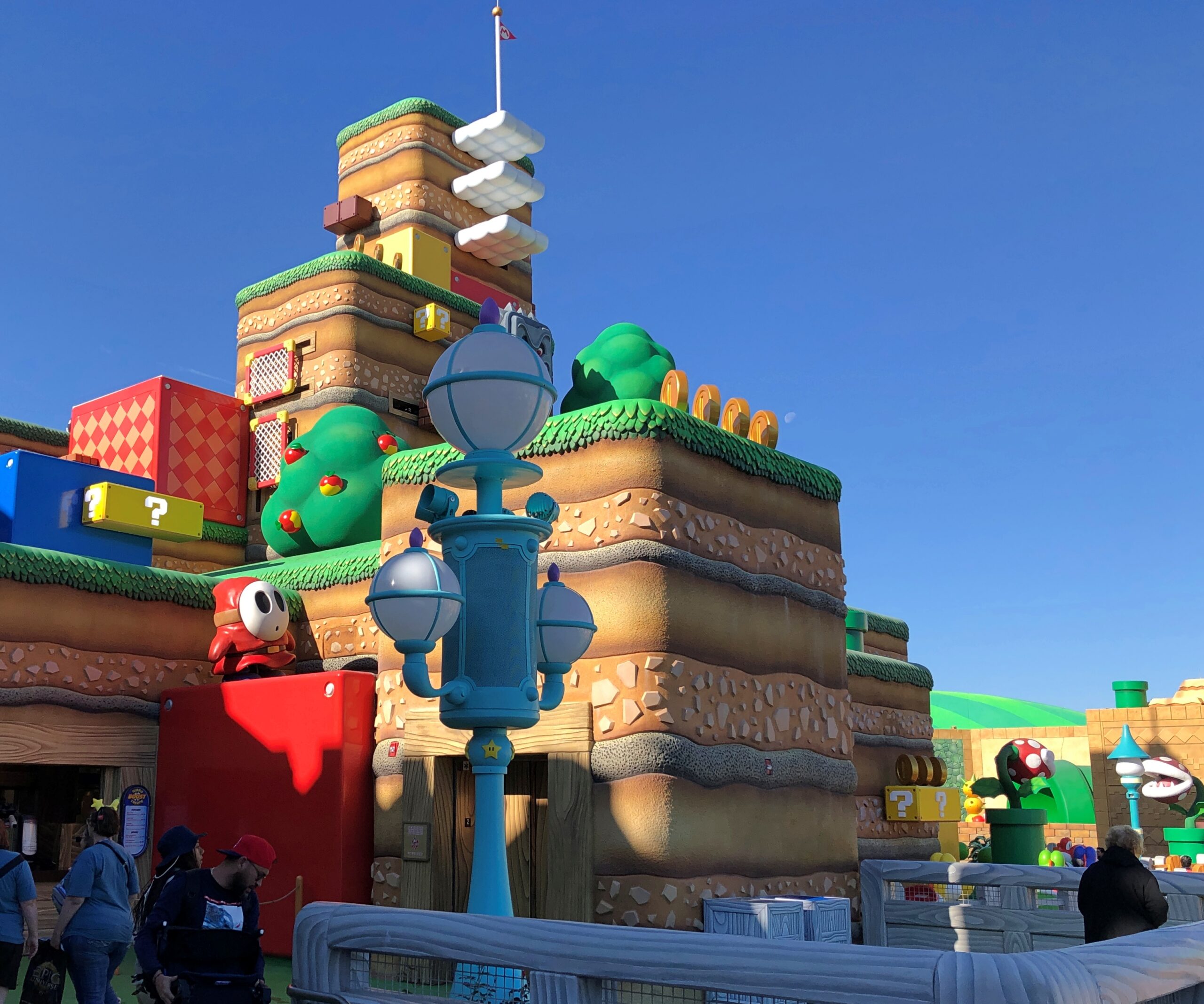
But I carp. Regular tickets by themselves aren’t cheap, but the quality of the attractions is very high, even if you aren’t particularly interested in the franchises. Mario-world is pretty interesting, even before you do the ride, which offered sensory-overload that involved a blur of simulated kart racing. I can’t actually remember much more than that after more than two weeks, but there was a lot of light and motion and grabbing of that wheel.
The plaza outside the ride. Like stepping into the game, yes? A big hit, anyway.
Who knows? These very buildings might be the inspiration of a wildly popular architectural style in the 22nd century.
When we got to ride entrance, there was a posted 60-minute wait. Ann insisted we go right then. When we exited, we noticed that the wait time had more than doubled. Good call, Ann.
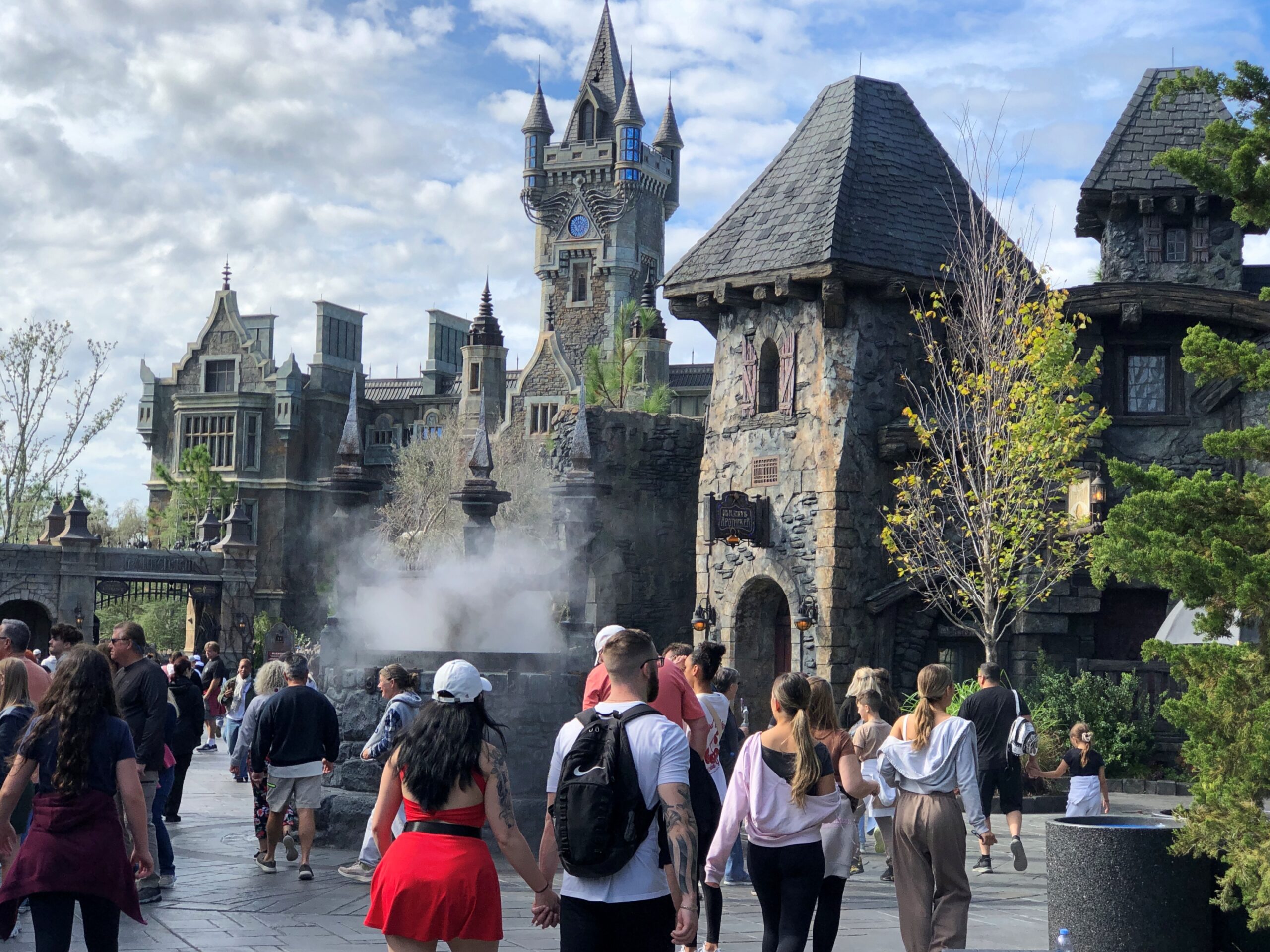
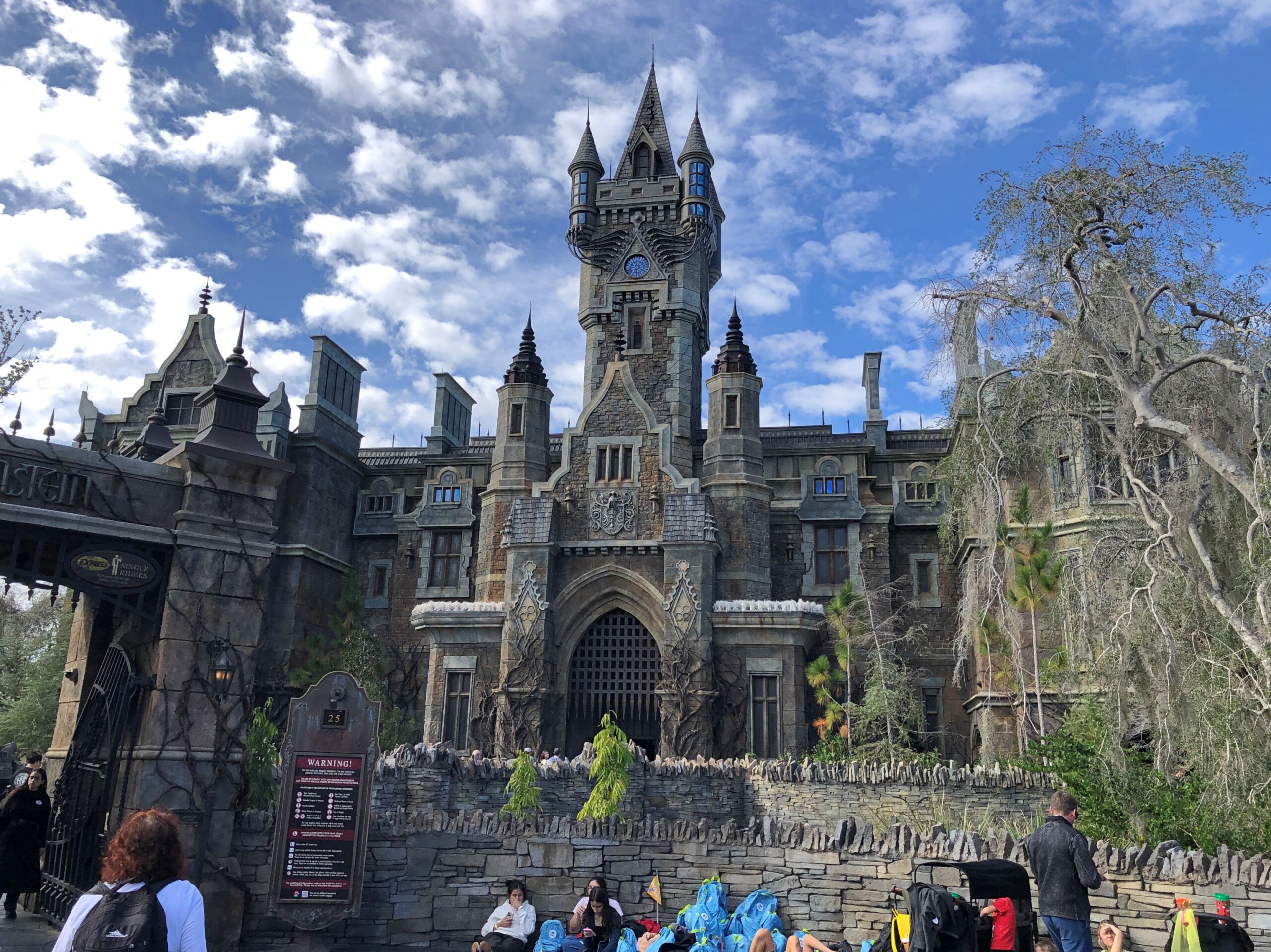
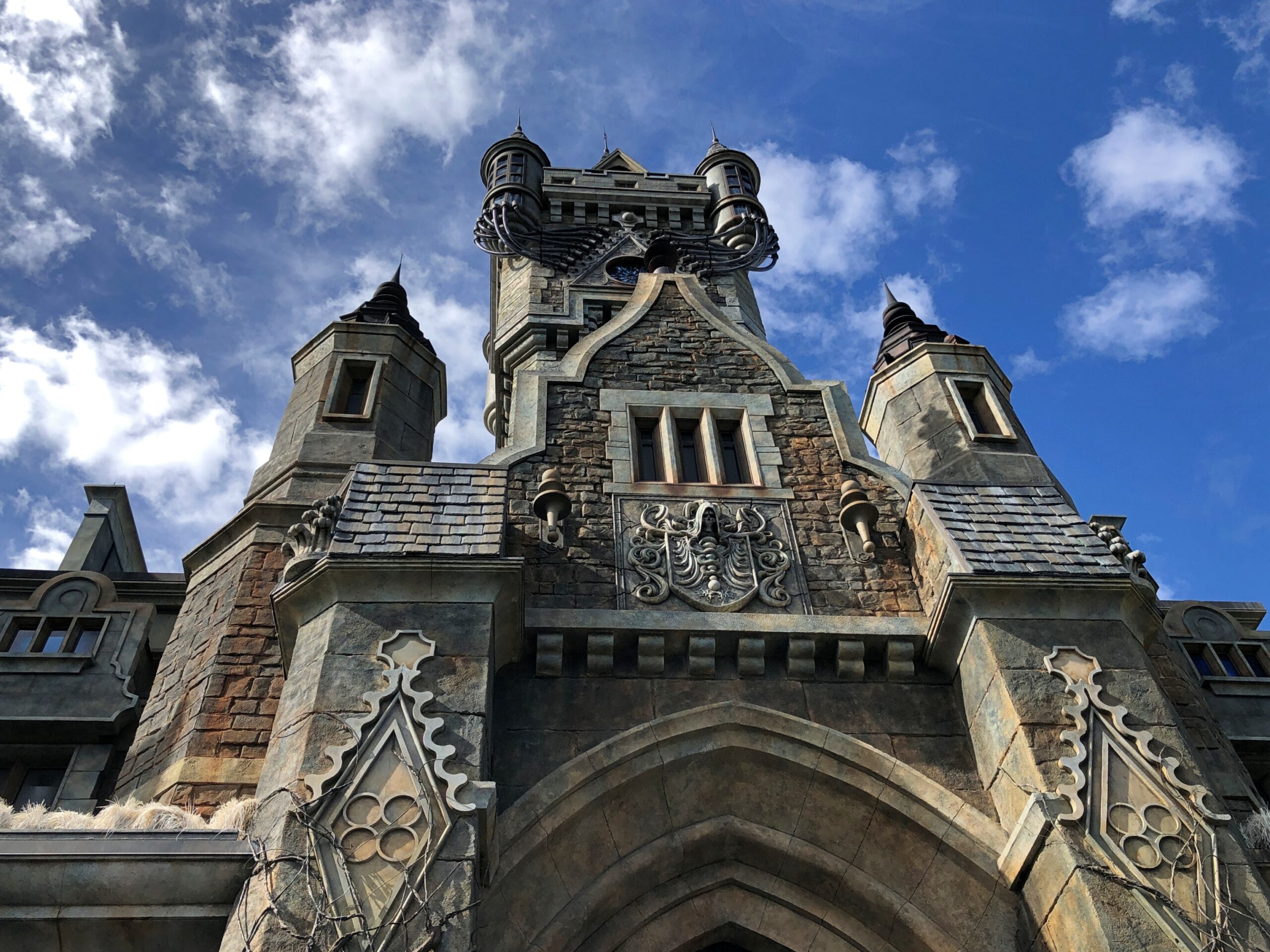
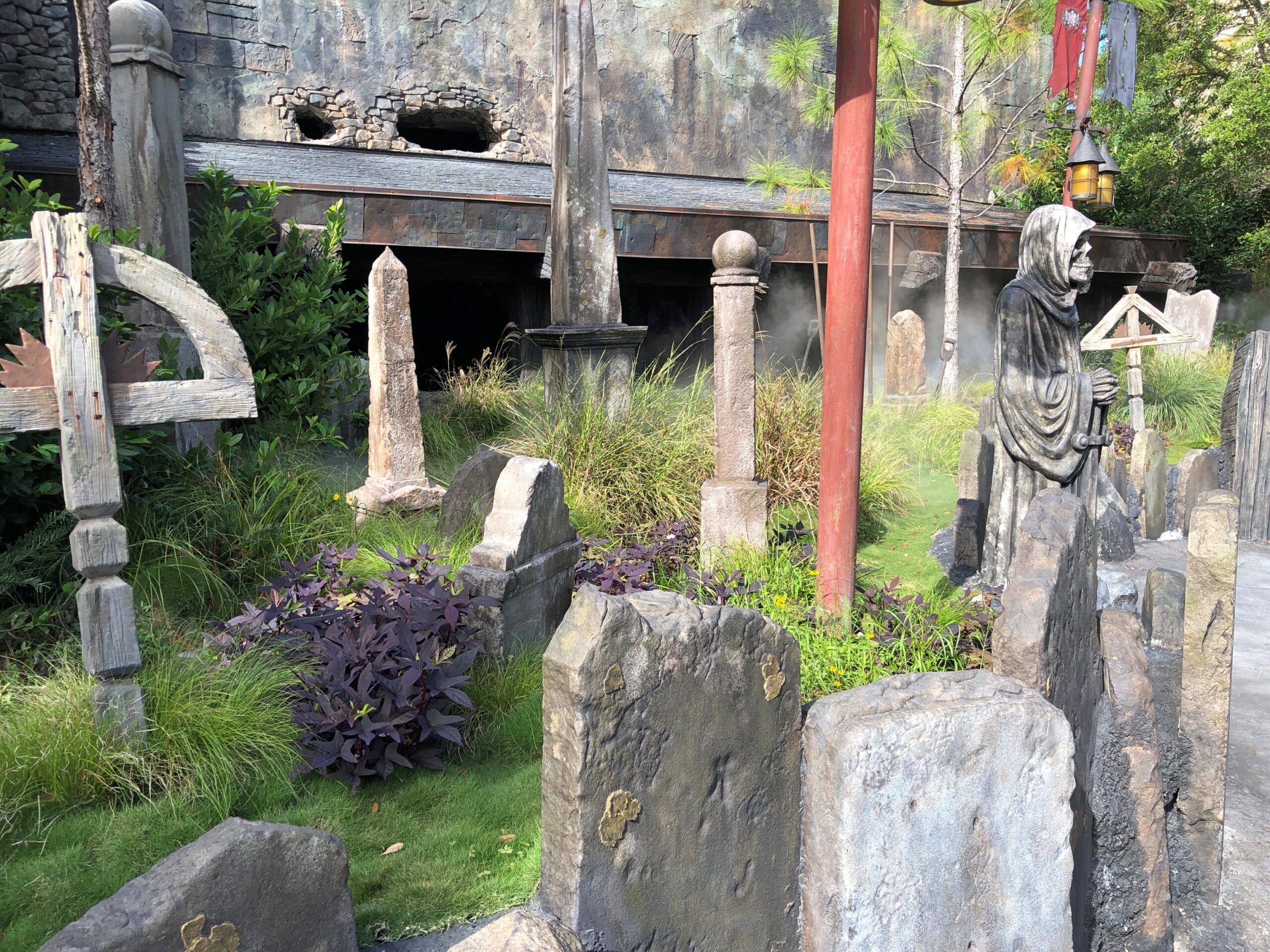
Our second ride involved a faux Transylvanian castle and the various monsters from Universal’s 1930s and ‘40s monster heyday. The style, amusement park Gothic. From the towering castle of Frankenstein renown to the details in faux stone and faux headstones.
Faux it may be, but that’s no cheap structure. Add to that the ride at the heart of the building, and you’ve got some impressive entertainment engineering.
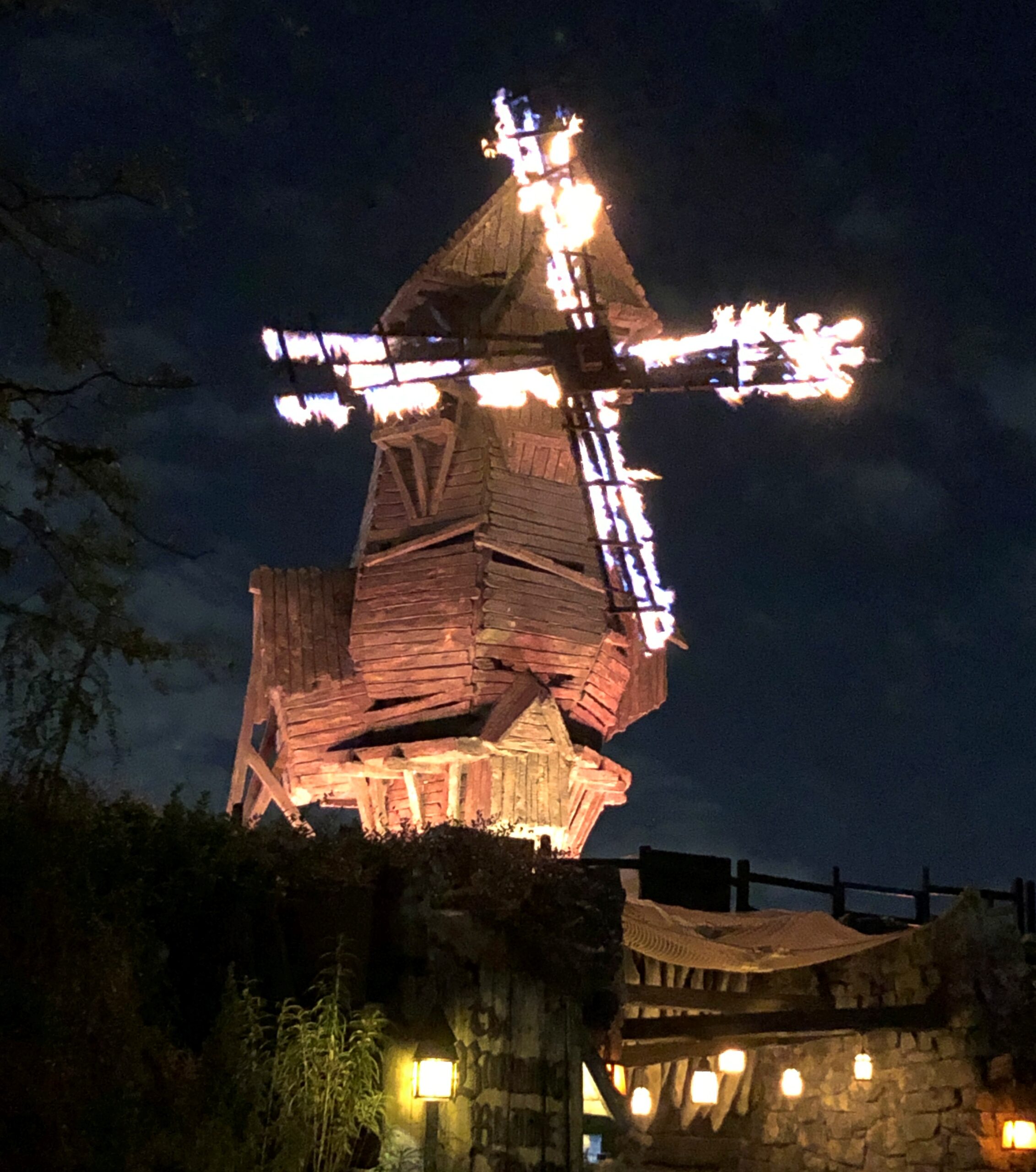
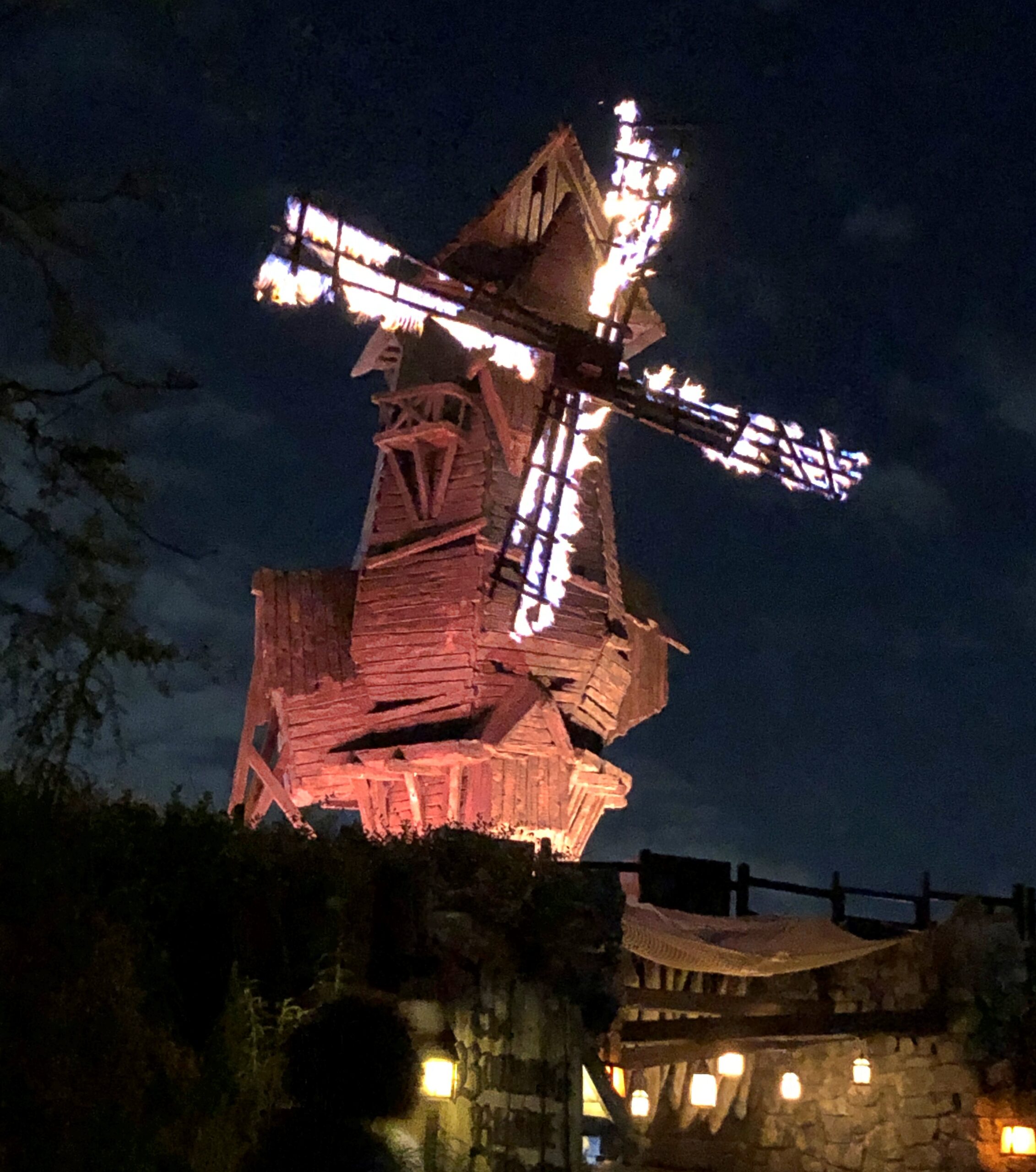
We came back after dark for the roller coaster in the Frankenstein part of the park. Ann wanted to go back for the roller coaster, that is, a separate ride from the one in the Gothic castle. While Y and I waited on a nearby bench we saw, by chance, the burning windmill. Nice touch. It didn’t collapse, naturally, and would re-ignite every 15 minutes or so.
The Frankenstein ride wasn’t quite as intense, in lights or motion, as Mario Bros., but was it was about as loud, with a character purporting to be Victor Frankenstein’s great-granddaughter directing the monster to fight Count Dracula — or was it the Werewolf? The Creature from the Black Lagoon also made an cameo appearance, but the details of the ride are a little fuzzy. Entertaining hubbub, that’s what it was.
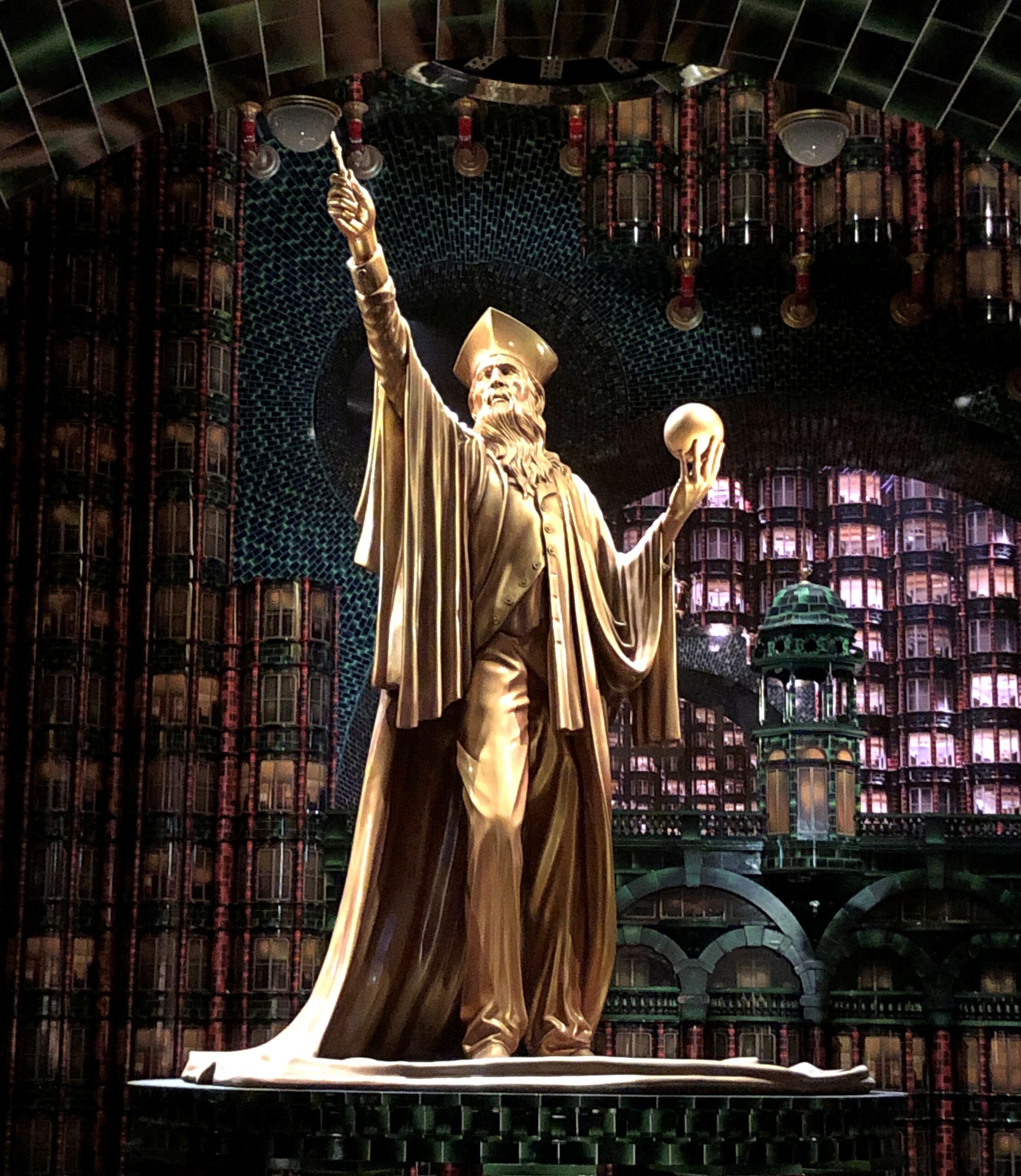
The line for the Harry Potter-ish ride was the longest. Around an old-fashioned amusement park waiting pen, down a long hall, though “portholes” foggy with dry ice emissions, into a vast hall, around a cluster of gigantic gilded statues, under several floors worth of faux offices, near another gigantic gilded statue (below) into another hall, and there you were. Ready to go up some stairs, along another couple of hallways, and down some more straits. You did have things to read along the way, such as Wanted Posters for villainous wielders of the Dark Arts.
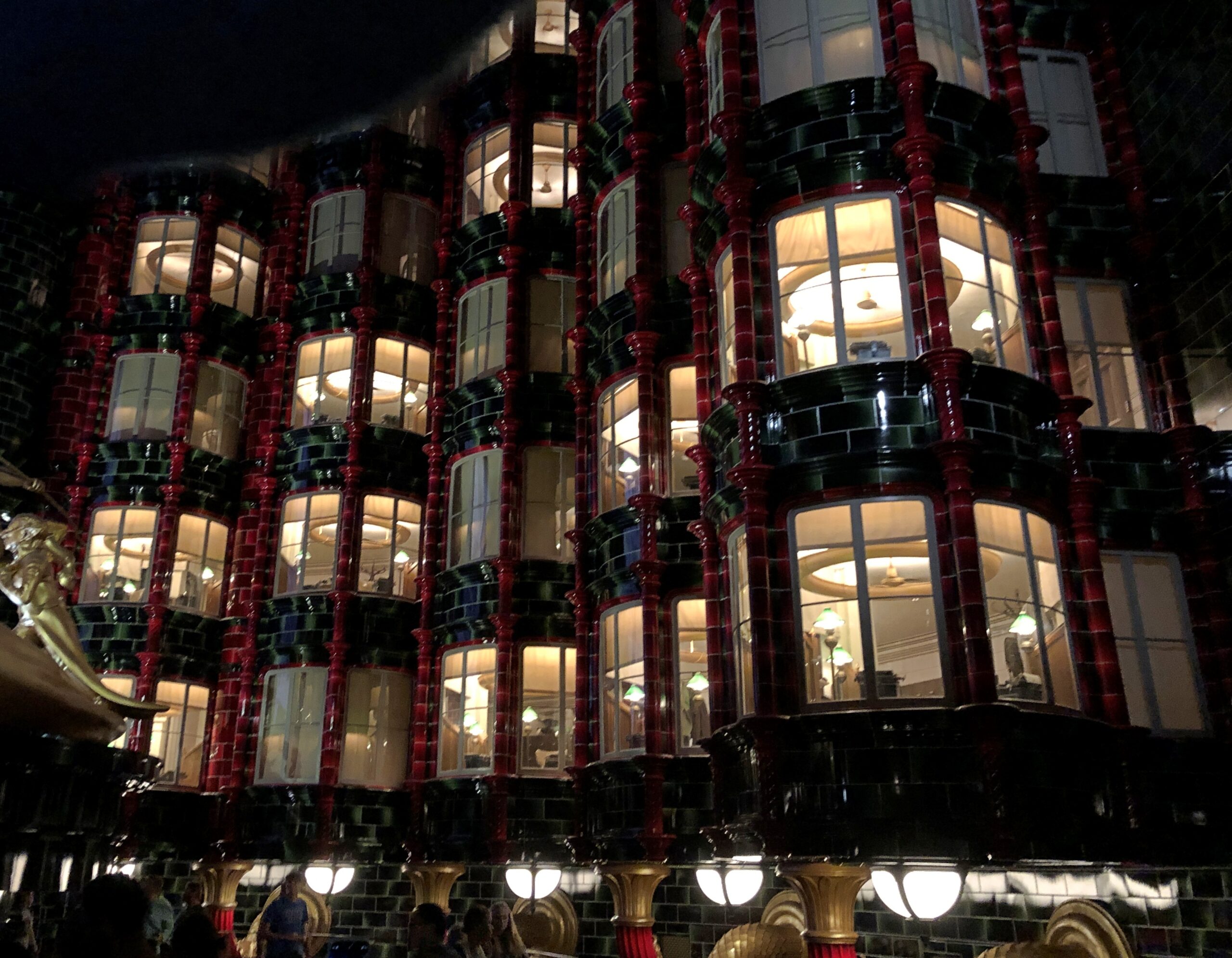
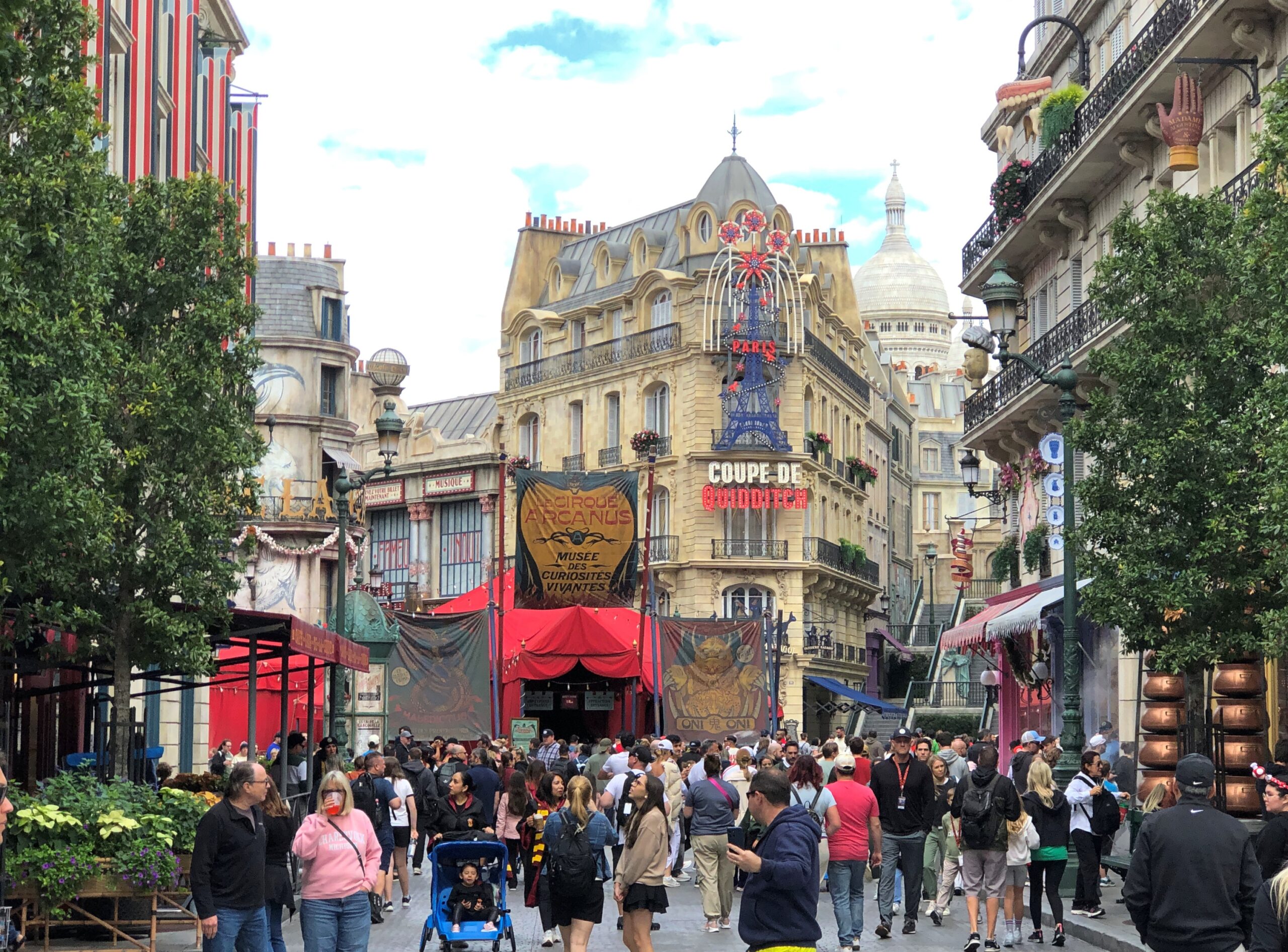
The ride was also ensconced in a faux Paris, in a building that was supposed to be the French magic ministry in the early 20th century (it is a prequel), down to a warren of small offices with lamps and typewriters of the period.
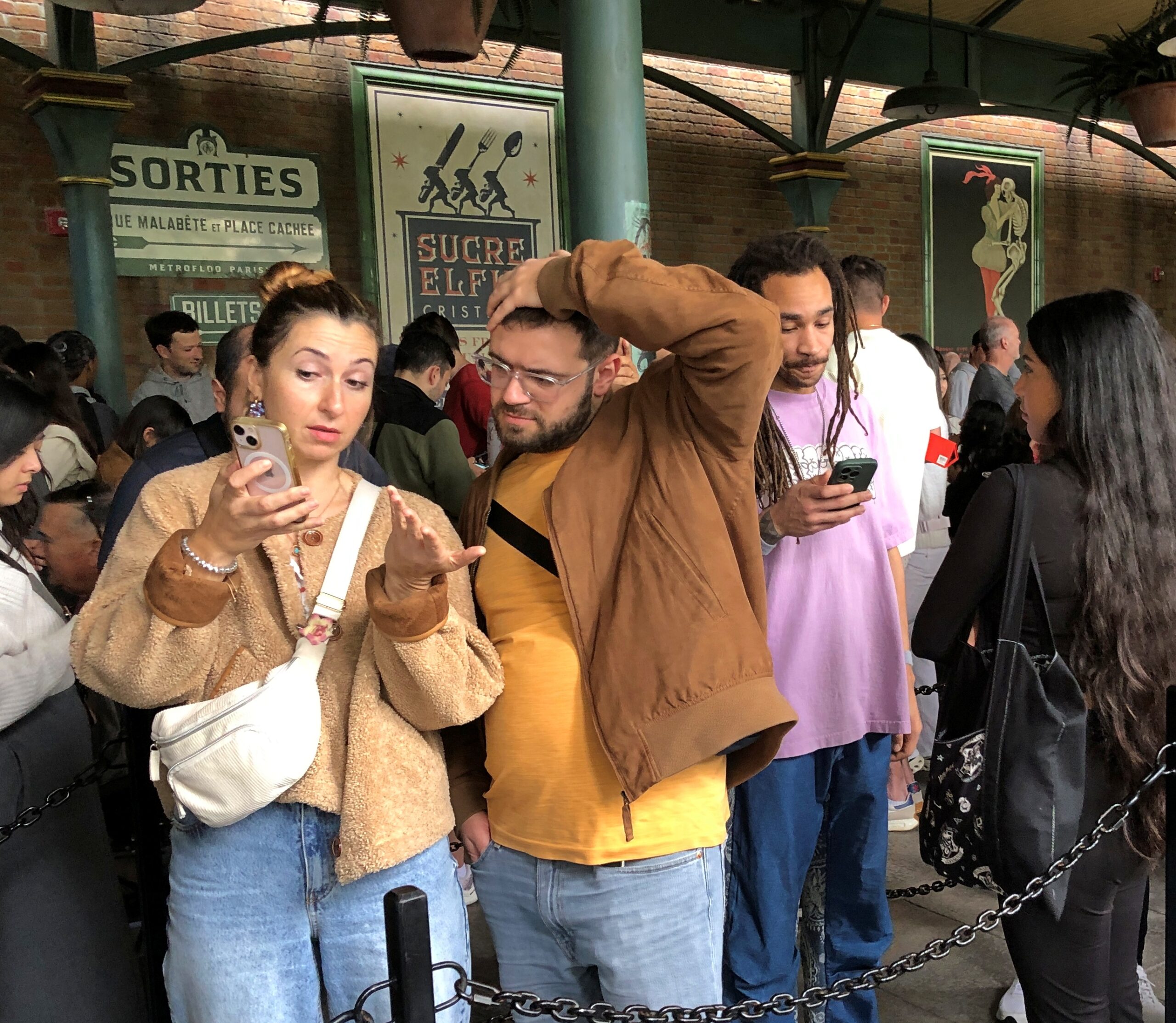
Why Paris? Even Ann wasn’t quite sure, but thought it had something to do with one of the prequels, which has something to do with the French Ministry of Magic or the like. Say, does the minister report to the President of the Third Republic? Or is he not part of representative government? Regardless, I was impressed by faux Paris – the most Parisian place I’ve seen except for the actual city of Paris.
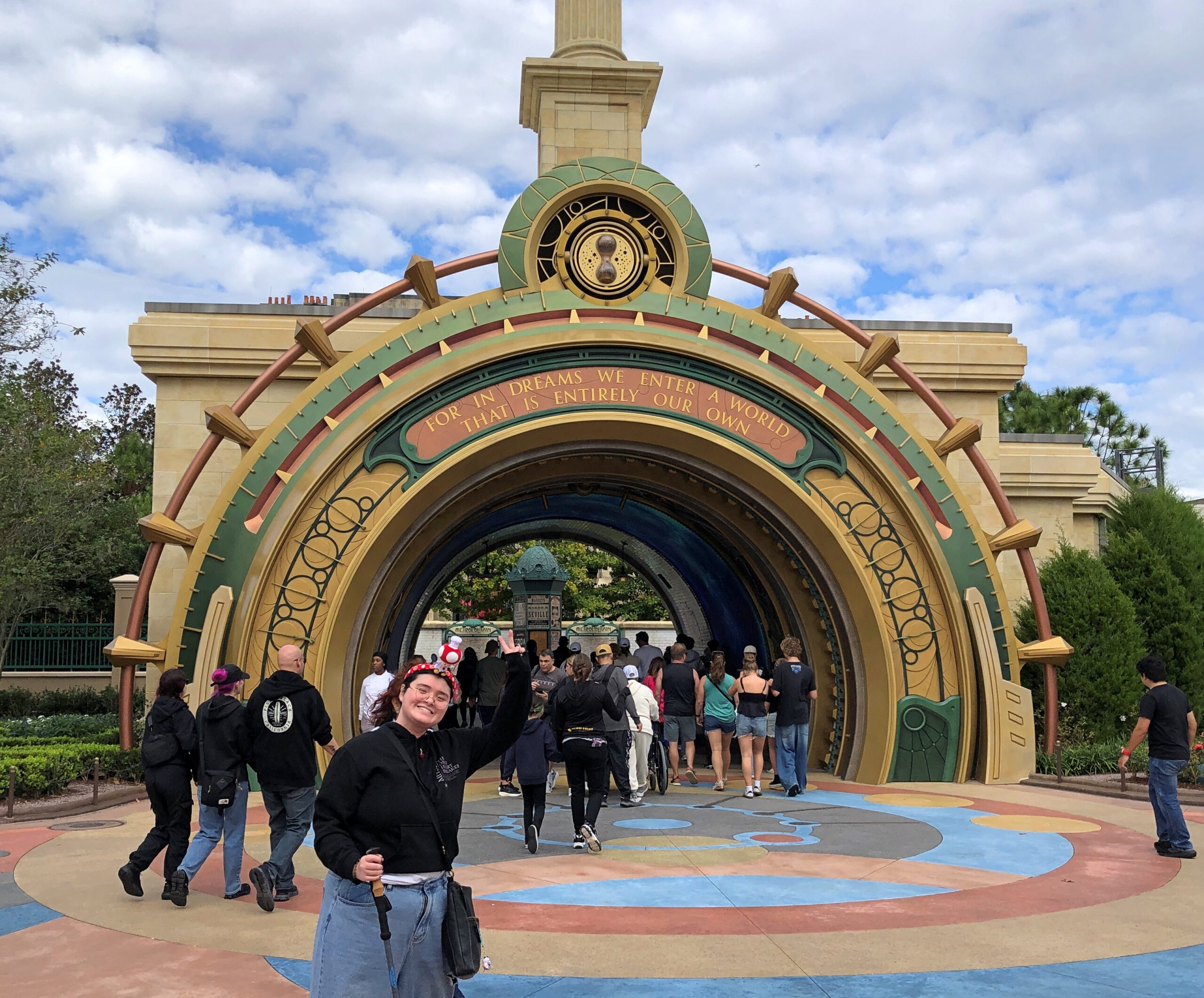
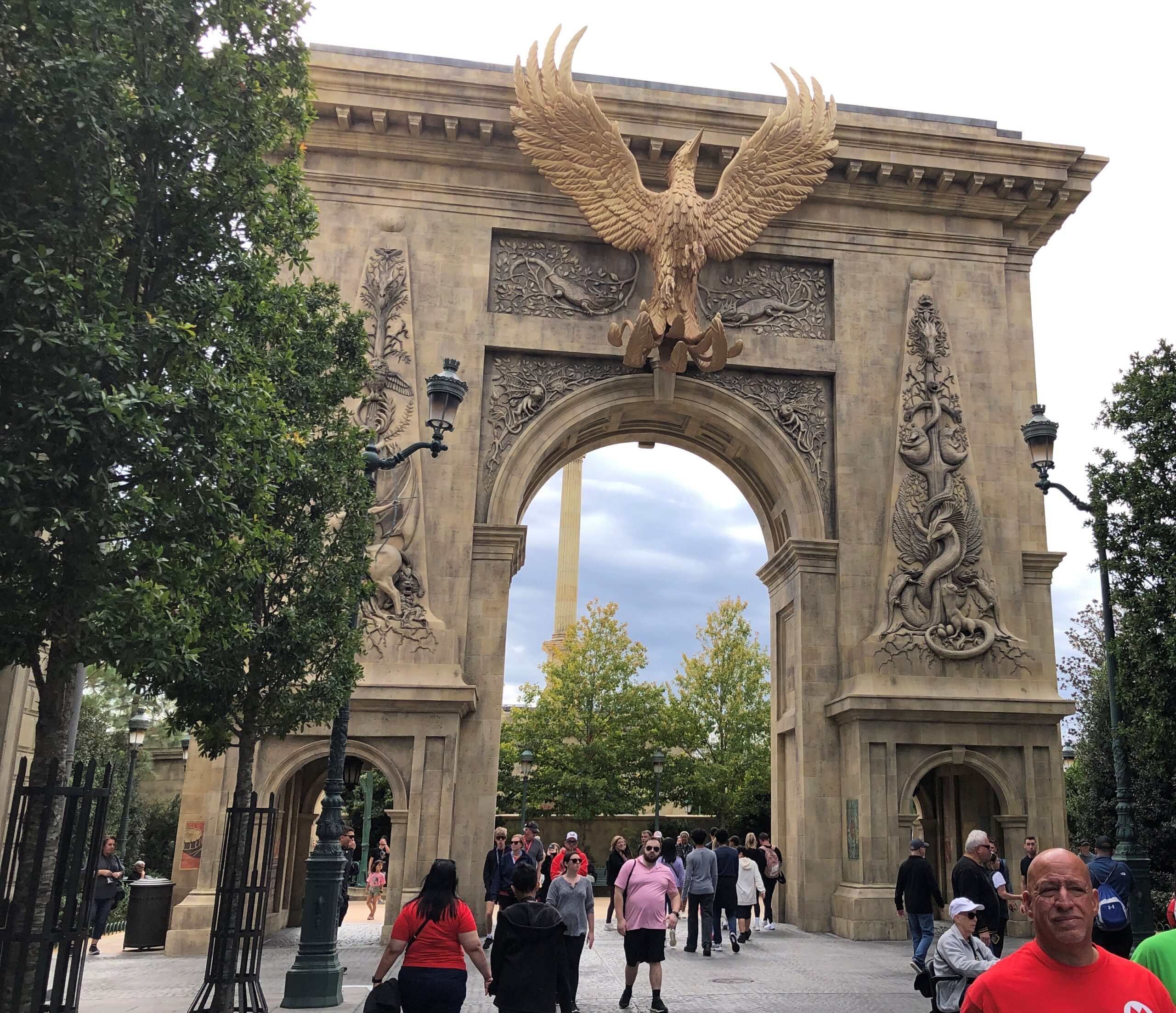
The entrance, which led to —
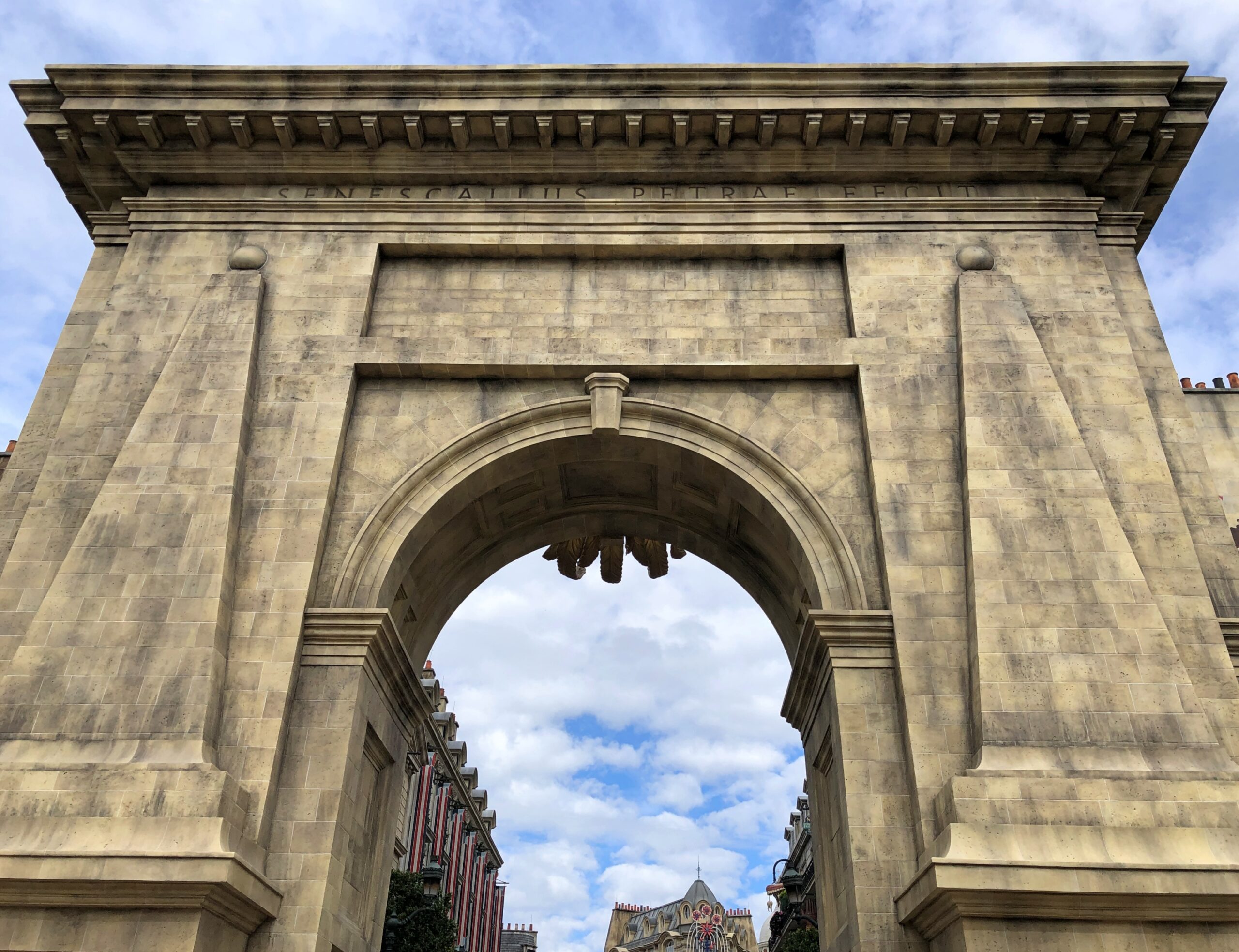
— to a truly monumental arch, front and back.
Leading to faux Paris streets in their faux glory. I keep using that word, but it doesn’t mean I wasn’t impressed.
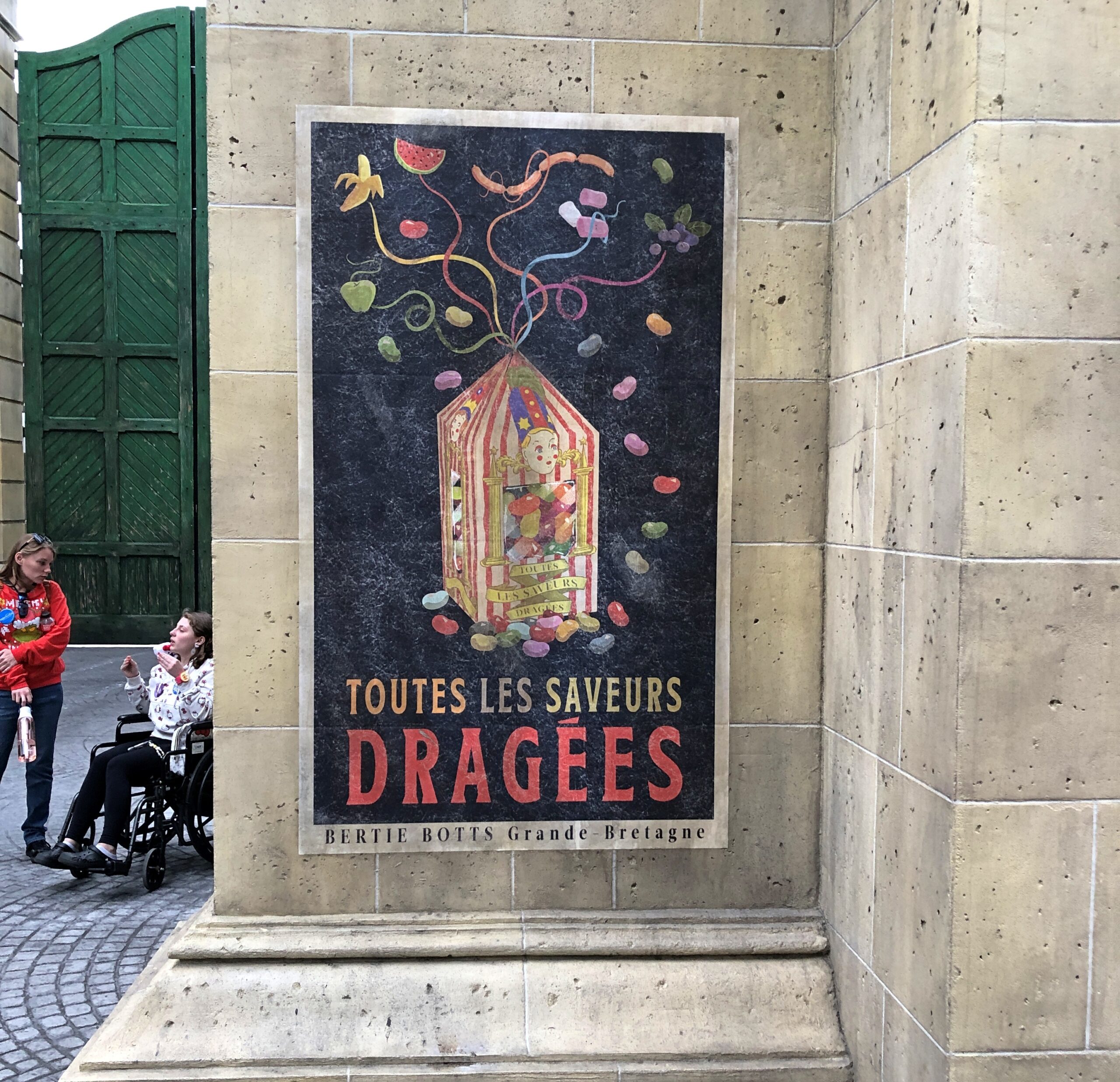
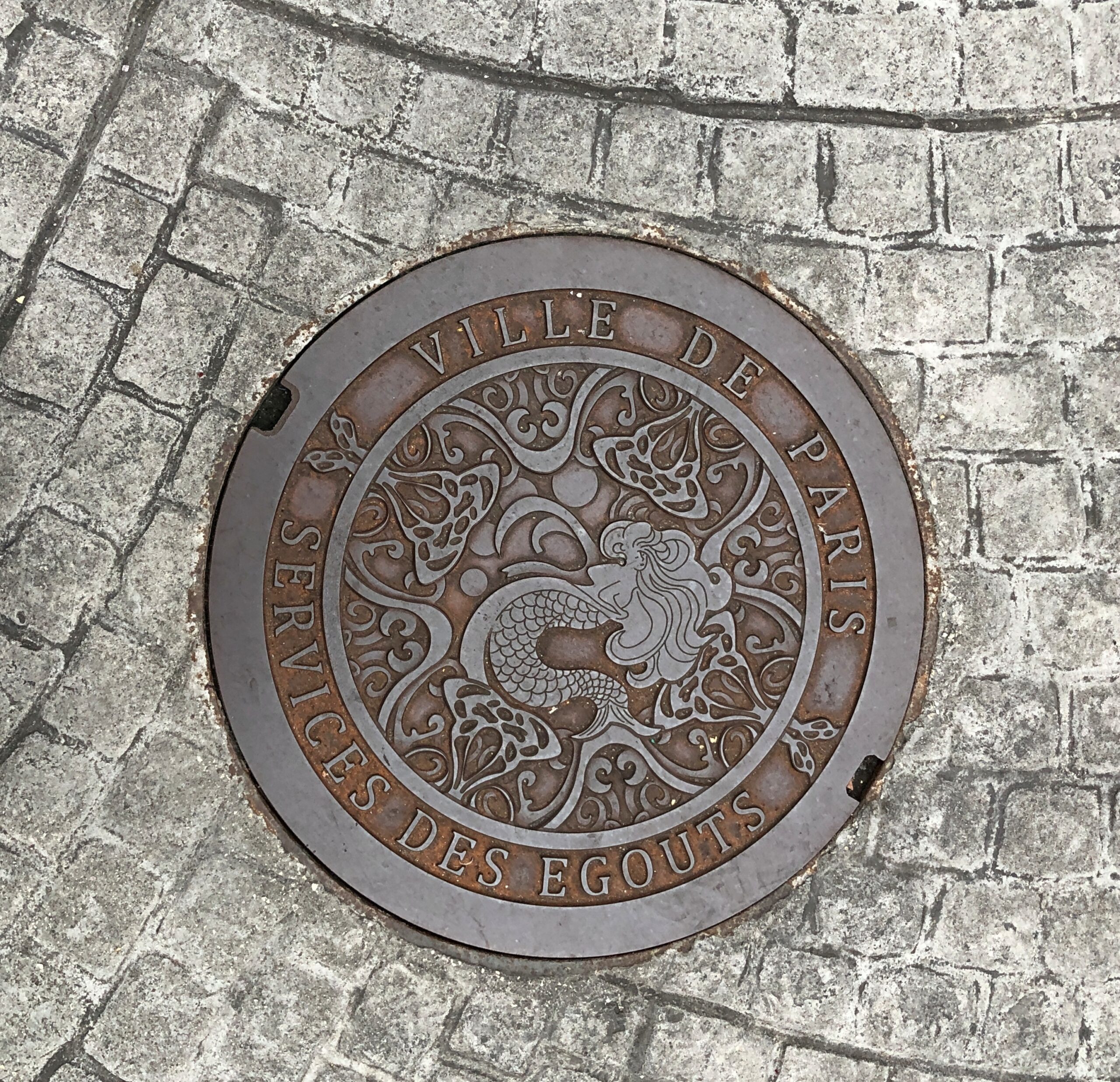
Details, details.
The 110-acre Universal Epic Universe, a name that doesn’t quite click, seems to have been designed to be compact enough to do in a day. There is a hub, there are spokes, the aforementioned themed areas, which included their main rides, but also other rides and plenty of shops and eateries. Yet none of the areas was overly large, and all of them were marked by a distinctive tower for each that could be seen from a distance. Nice bit of waymarking.
We had lunch at one of the faux-Paris restaurants. At a Olde World Europe-themed restaurant at which you ordered food via an app. The food was good, but that business with the app, which we had to figure out on the fly, didn’t please me at all. I can only hope that isn’t the future of food service.
Once we got to the Harry Potter ride — remember, it is located in Paris, for reasons, and Harry himself seemed to be only a minor presence — the long line was instantly forgotten in the shaking and lurching and whizzing. Characters etched of light came and went, following a script set down in computer code. It reminded me of a roller coaster, even though most of the sensation of motion was done via special effects, especially active lighting. Supposedly we were sitting in a jury box – one of the characters was on trial for something or other. I used to like roller coasters, but age has taken that pleasure from me.
I have to admit it, we bought gas at Buc-ee’s more than once on our trip to Florida. Turns out that the chain’s gas prices are comparable with Costco. That is, 20 to 30 cents cheaper per gallon than most standard gas stations. Costco tends to be on main thoroughfares in densely populated places, which is sometimes convenient, sometimes not. Buc-ee’s is the flip of that, tending to be on major highways at some distance from densely populated places. Sometimes convenient, sometimes not.
We gassed up at the Smiths Grove, Kentucky Buc-ee’s just off I-65 on December 5, early in our trip. We had to make a decision on how to proceed from there. One choice: continue on I-65 to Nashville, take I-40 east from there roughly to Cookeville, Tennessee, and take smaller roads into Jackson County, to reach our friends’ home in the holler. Or: take smaller roads across southern Kentucky and into Tennessee, bypassing metro Nashville and going through towns and hamlets and farmland and woods we’d never seen before, ultimately connecting to the appropriate small roads in Jackson County. It isn’t too hard to guess what we did.
Kentucky 101
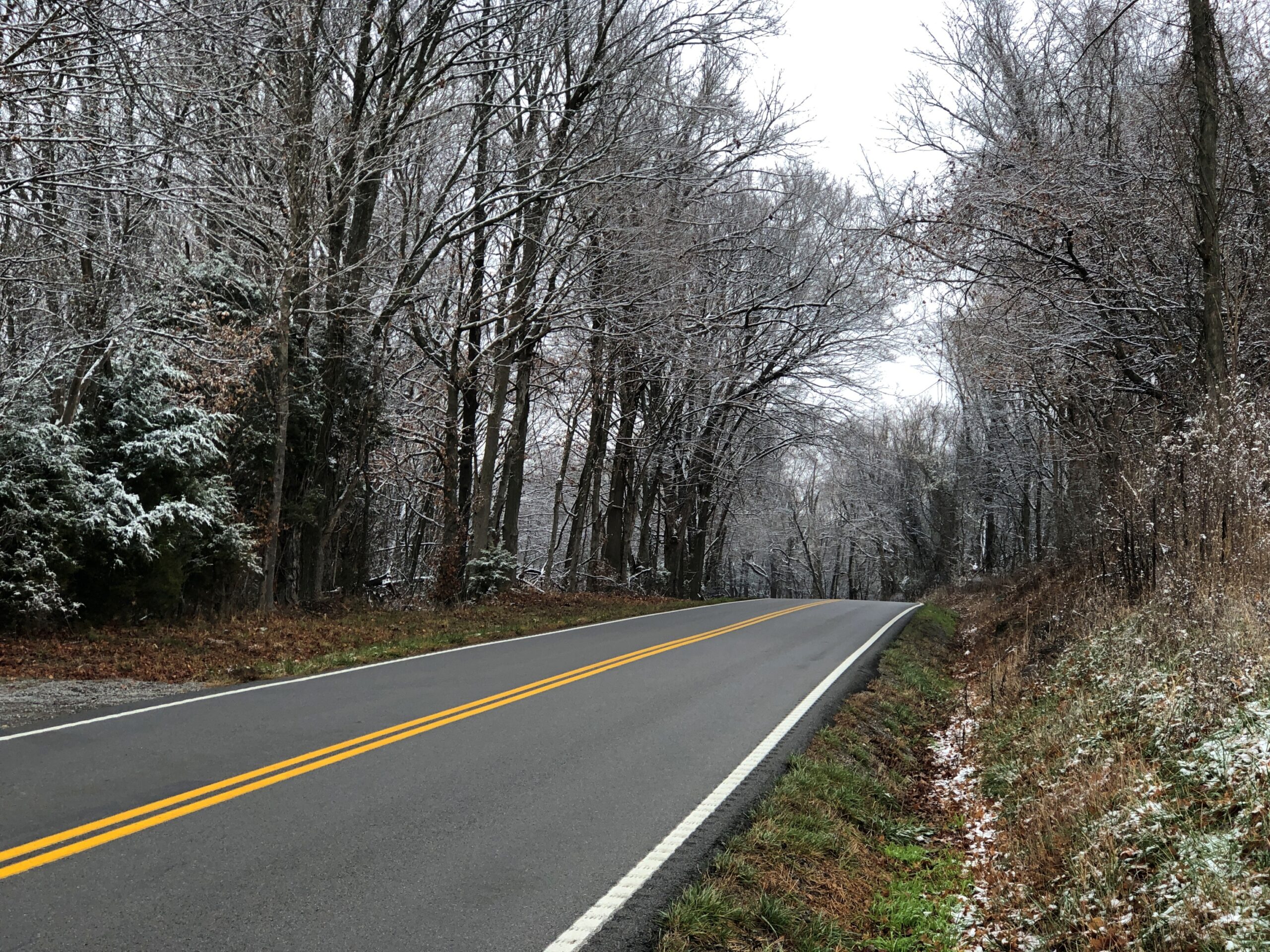
It so happened that exiting from Buc-ee’s in Smiths Grove takes you to Kentucky 101, a two-lane highway that can either take you back to I-65 or south through Warren and Allen counties. Coming from the crowds of Buc-ee’s, people and cars, the contrast of heading south on Kentucky 101 is clear.
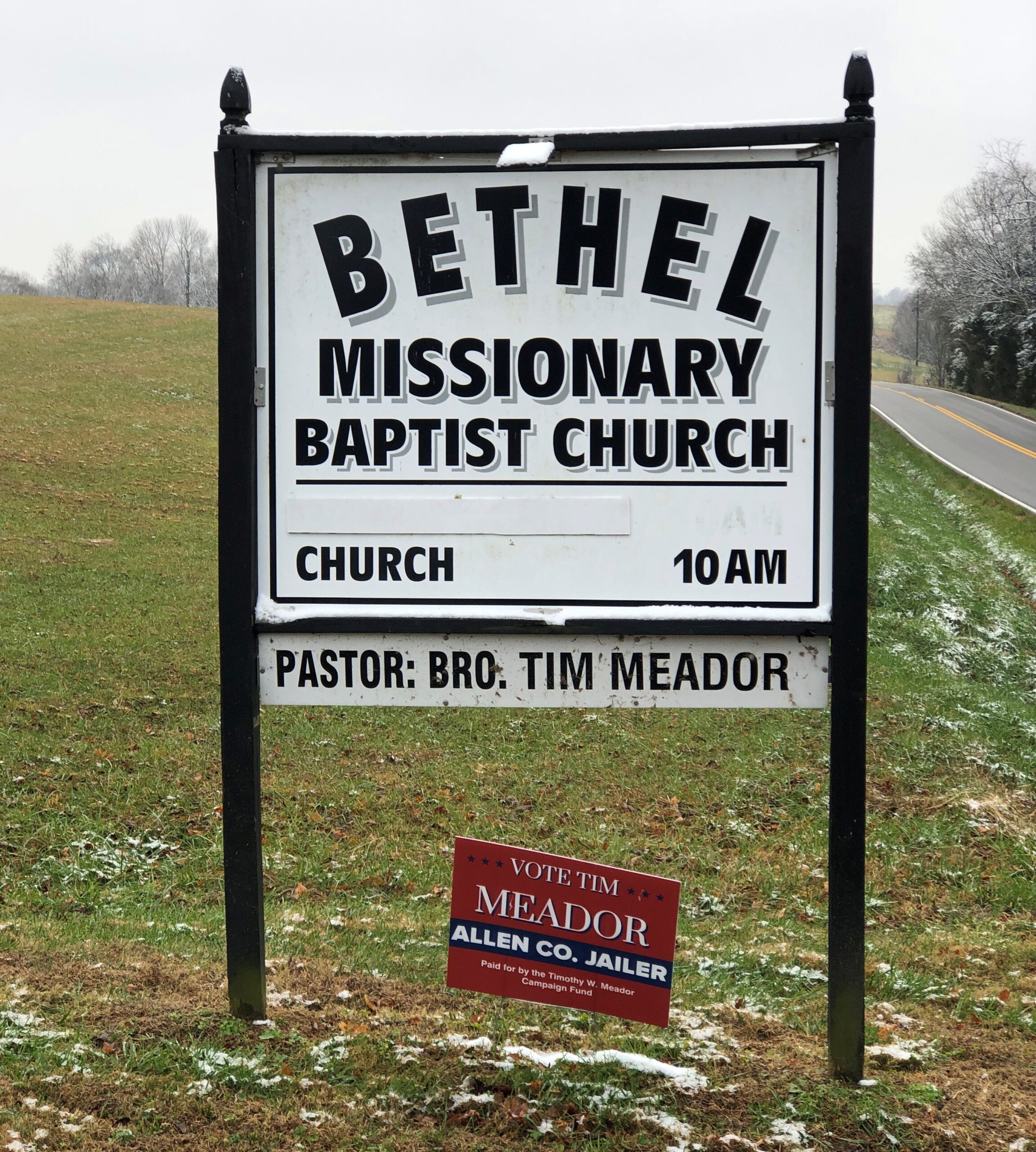
As of now, at least, Bro. Tim Meador is the Allen County Jailer, so I assume he won the most recent election.
I know that’s a county job that probably involves a fair amount of paperwork. Still, I picture the Jailer as an official who, like in a movie, puts offenders in the jug himself, turning a skeleton key (one of a few jangling on a big ring) to lock the cell.
Scottsville, Kentucky
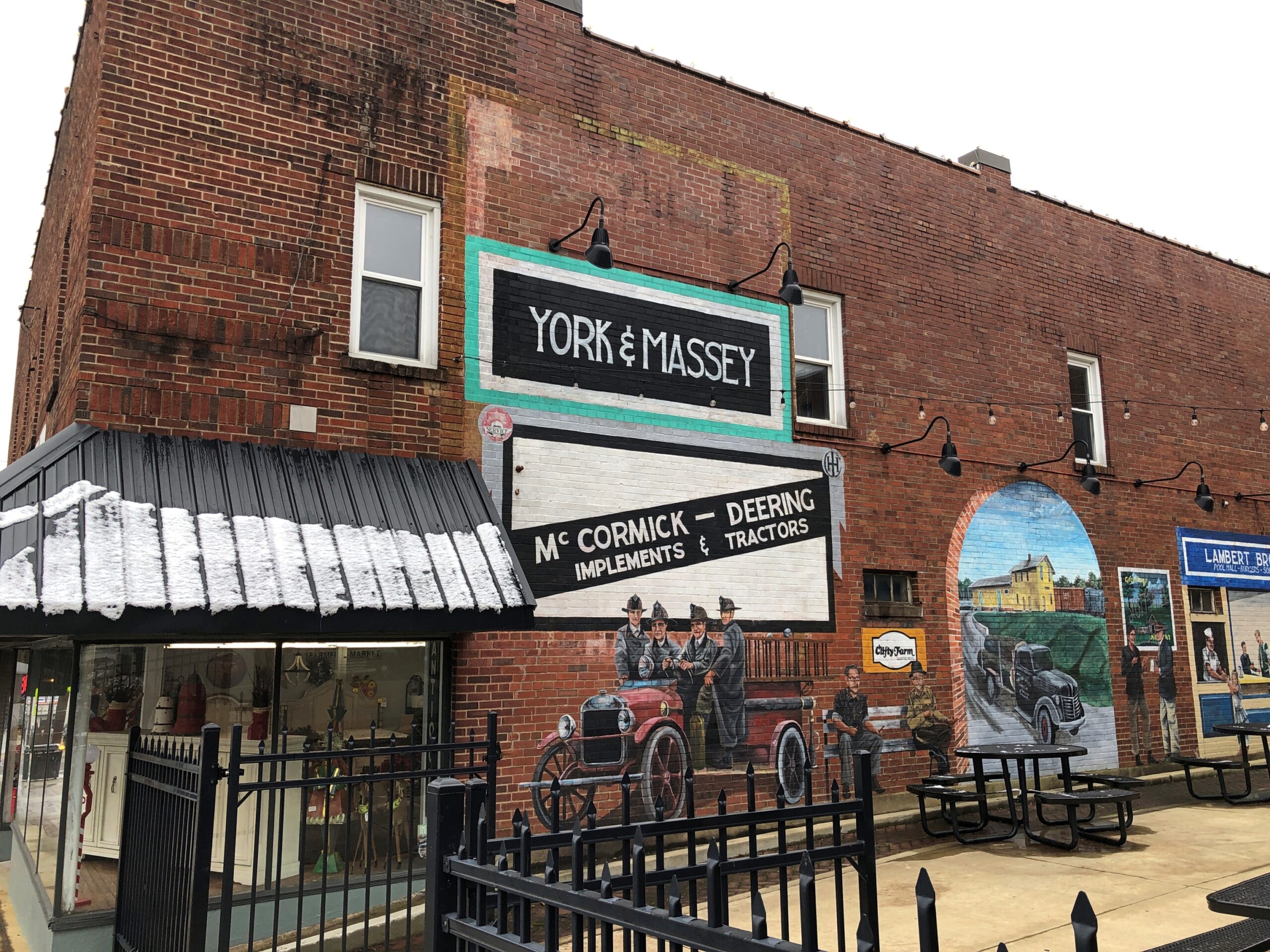
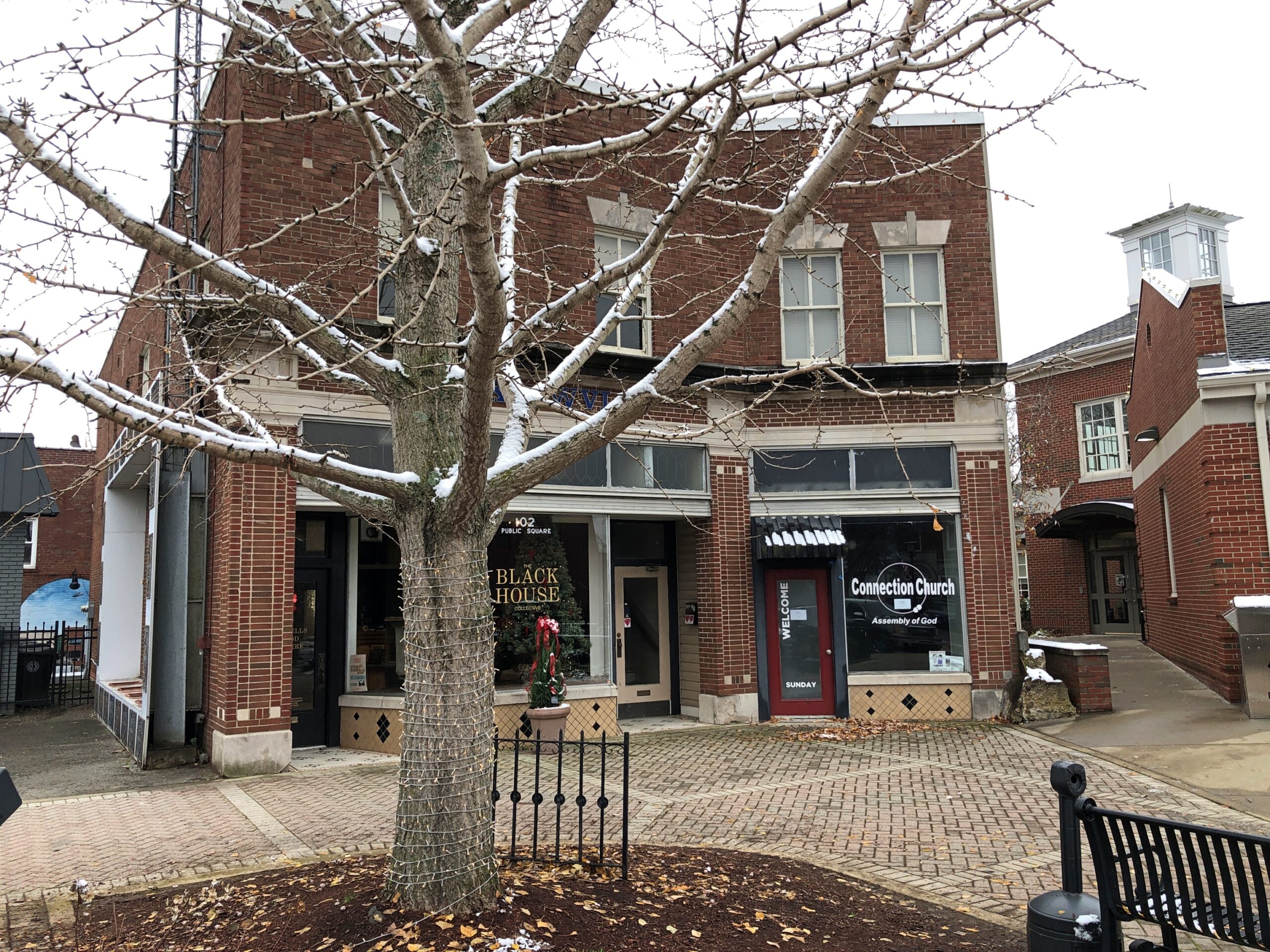
The main traffic hub of Scottsville (pop. 4,300), the seat of Allen County, is the junction of Kentucky 101 and 98, known as Main and Court streets locally. Instead of a county courthouse, the hub is in the form of a square with businesses around it and a lot of traffic passing through. More than I would have guessed.
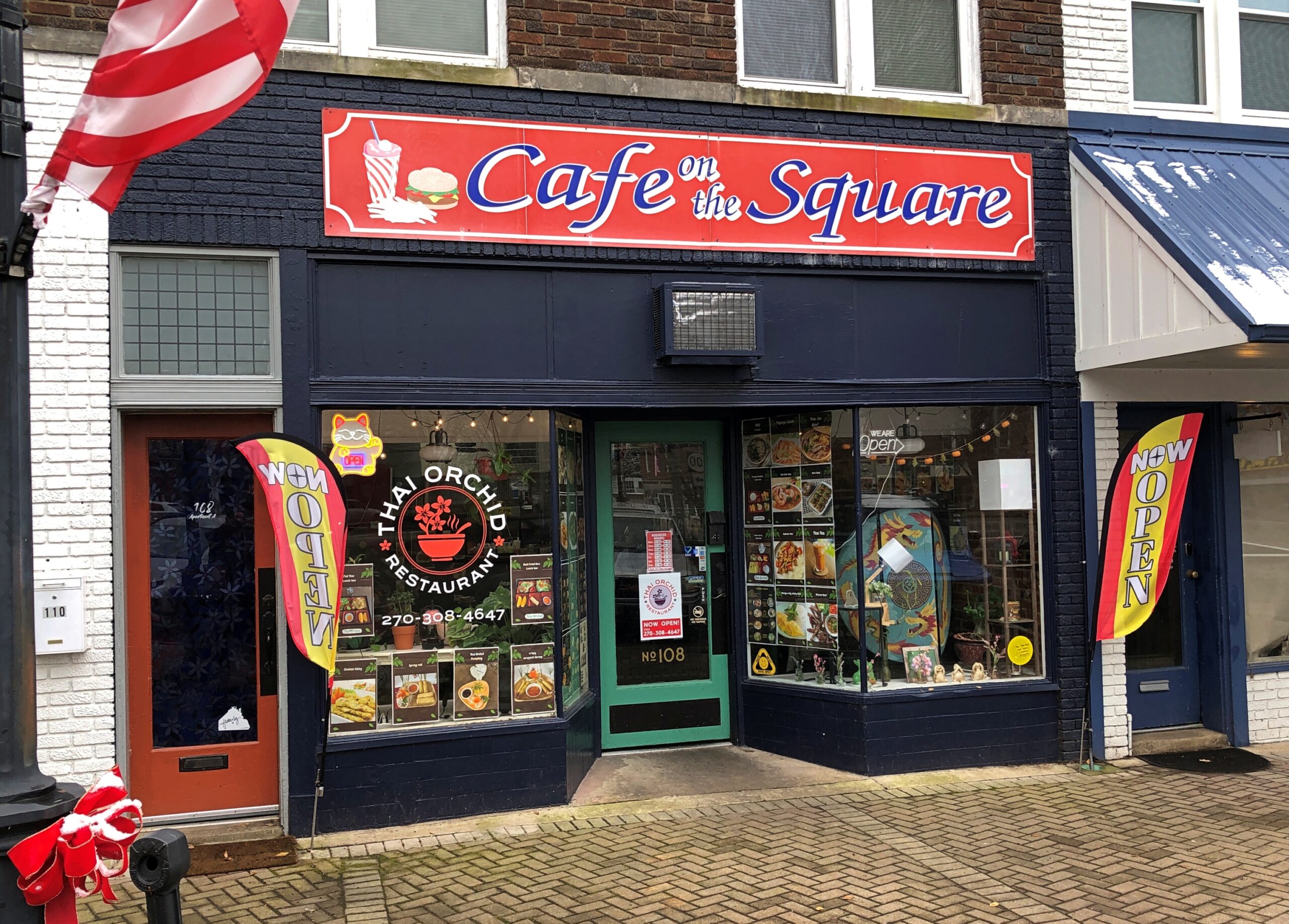
It was lunchtime. I can report that Thai Orchid is as good as you might find in a larger town. In our time, Thai has pretty much joined the tapestry of American cuisine as thoroughly as Chinese or Mexican food did in previous generations.
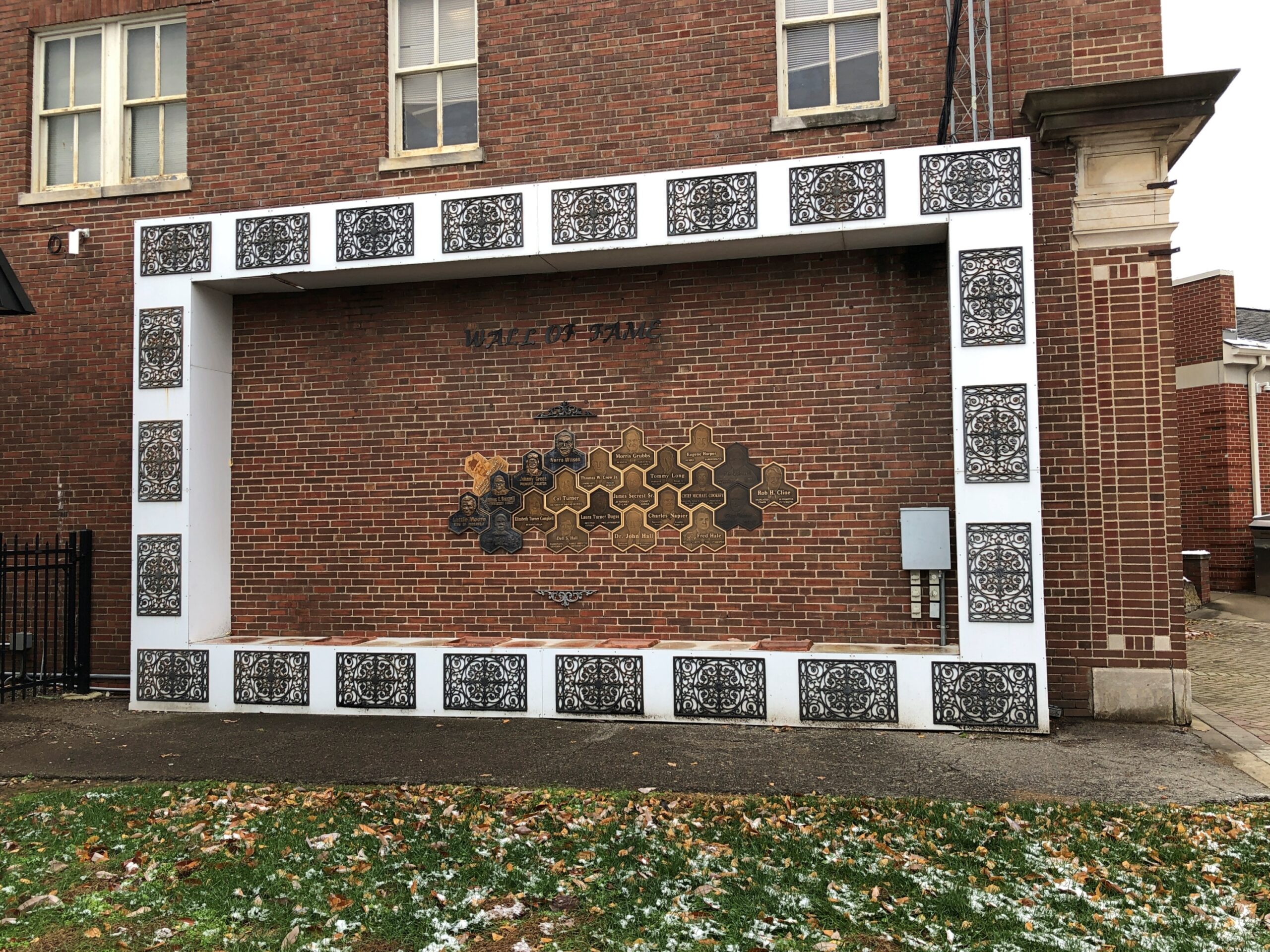
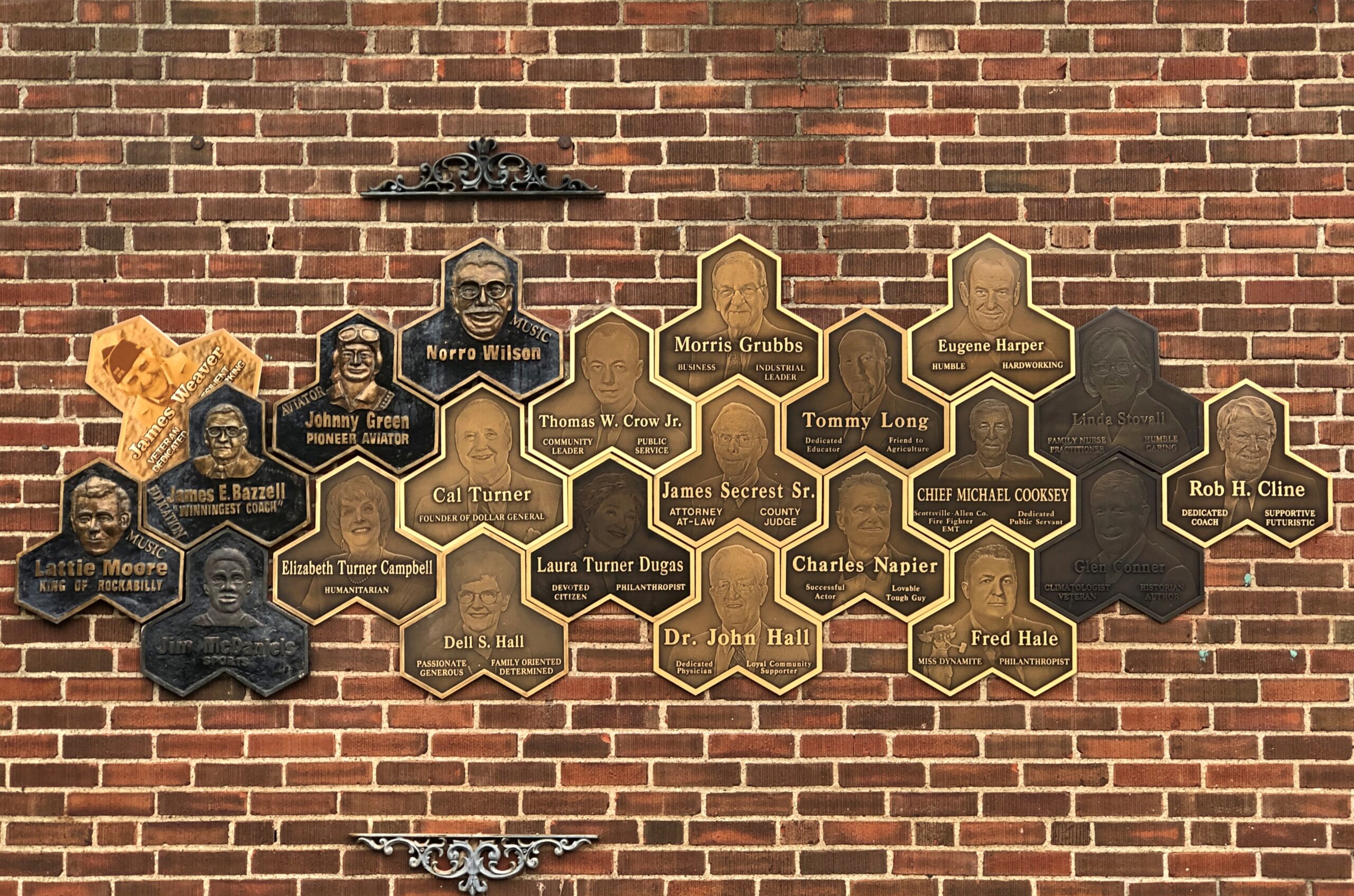
The main public library is near the square, sporting a local Wall of Fame.
The names include Lattie Moore, who sang, “I’m Not Broke but I’m Badly Bent,” a song with pretty much the same theme as Al Dexter’s “Wine, Women and Song.”
I won’t look all the names up, but the Scottsville Wall of Fame also includes Johnny Green, pioneer aviator, who did the first commercial flights between Florida and Cuba, apparently.
Red Boiling Springs, Tennessee
We drove on Kentucky 98 east to the near-border town of Gamaliel, pop. 391, still on the Kentucky side of the line. A lesser-known Biblical name, but I also can’t help thinking of the G. in Warren G. Harding.
South from there, Kentucky 63 turns into Tennessee 56 after a few miles. There’s no sign marking the border, just one announcing the Tennessee highway number. Pretty casual for a line that might have been an international border, had the secessionists had their way (unless, of course, Kentucky left the old US).
Besides a cool name, Red Boiling Springs (pop. 1,205), Tennessee, has a history. As the name suggests, people took the waters there.
“As recently as 1920, Red Boiling Springs had about a dozen places in which visitors could stay,” The Tennessee Magazinereported a few years ago. “The largest was the Palace Hotel, which had 180 rooms. Over the next several generations, business declined… and… a 1969 flood destroyed large parts of the town. However, three of the Red Boiling Springs resort hotels are still open. They were in (nearly) continuous operation throughout the 20th century and still reflect more of the lifestyle of the late 19th century than they do the 21st.”
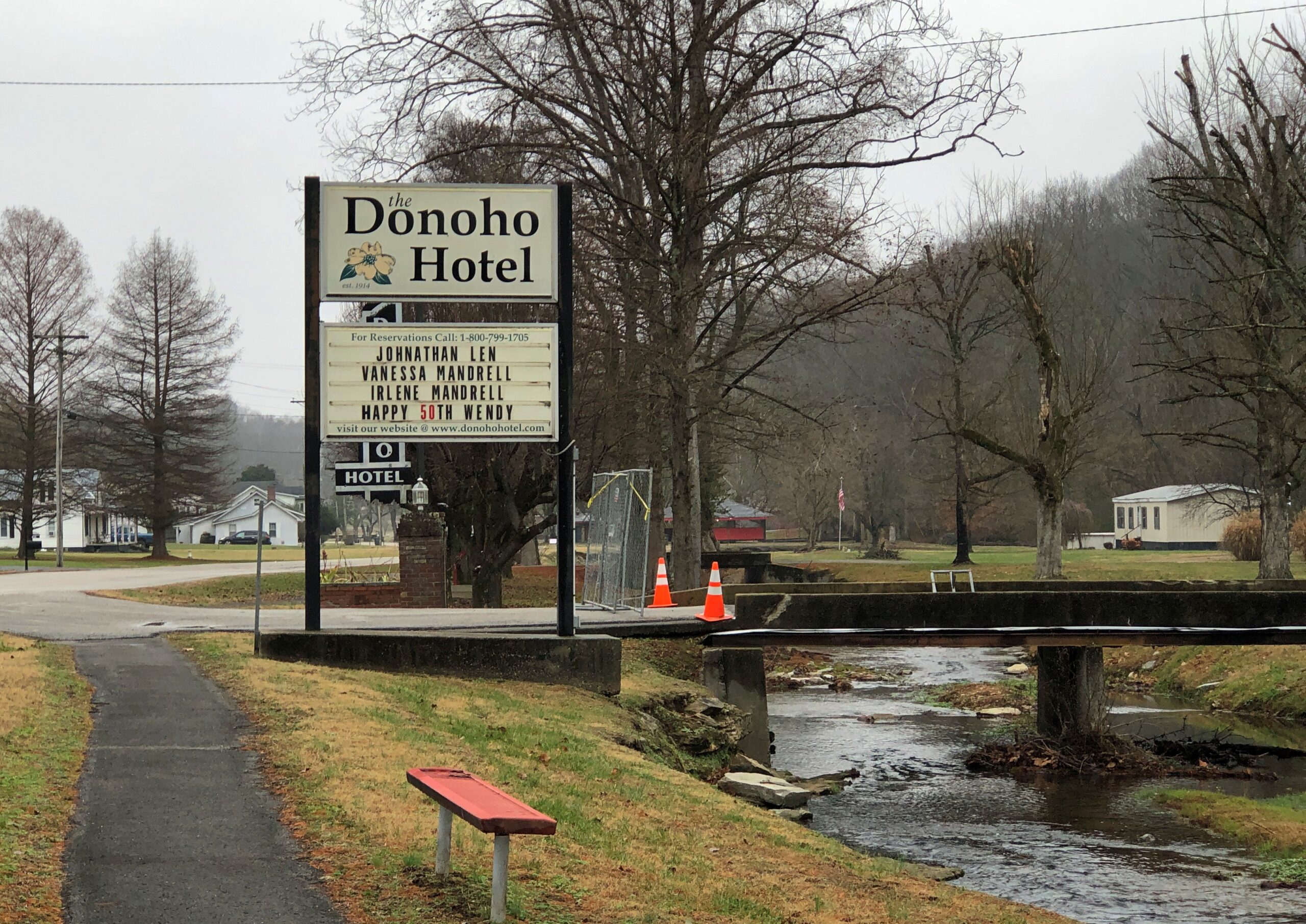
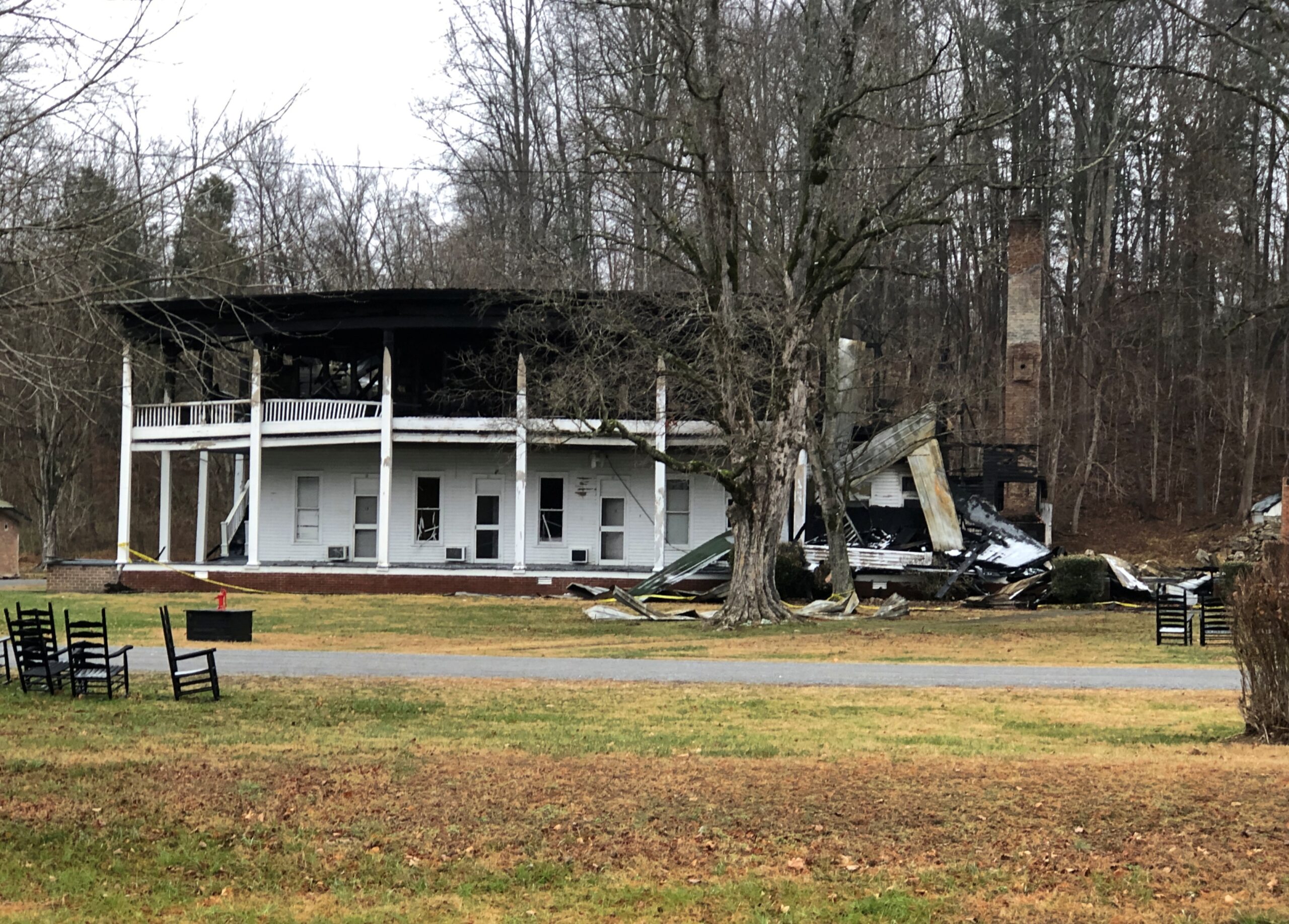
Make that two hotels. One of those mentioned in the article, the Donoho, burned down in November.
The gray, chilly day somehow fit the scene of a wrecked historic hotel.
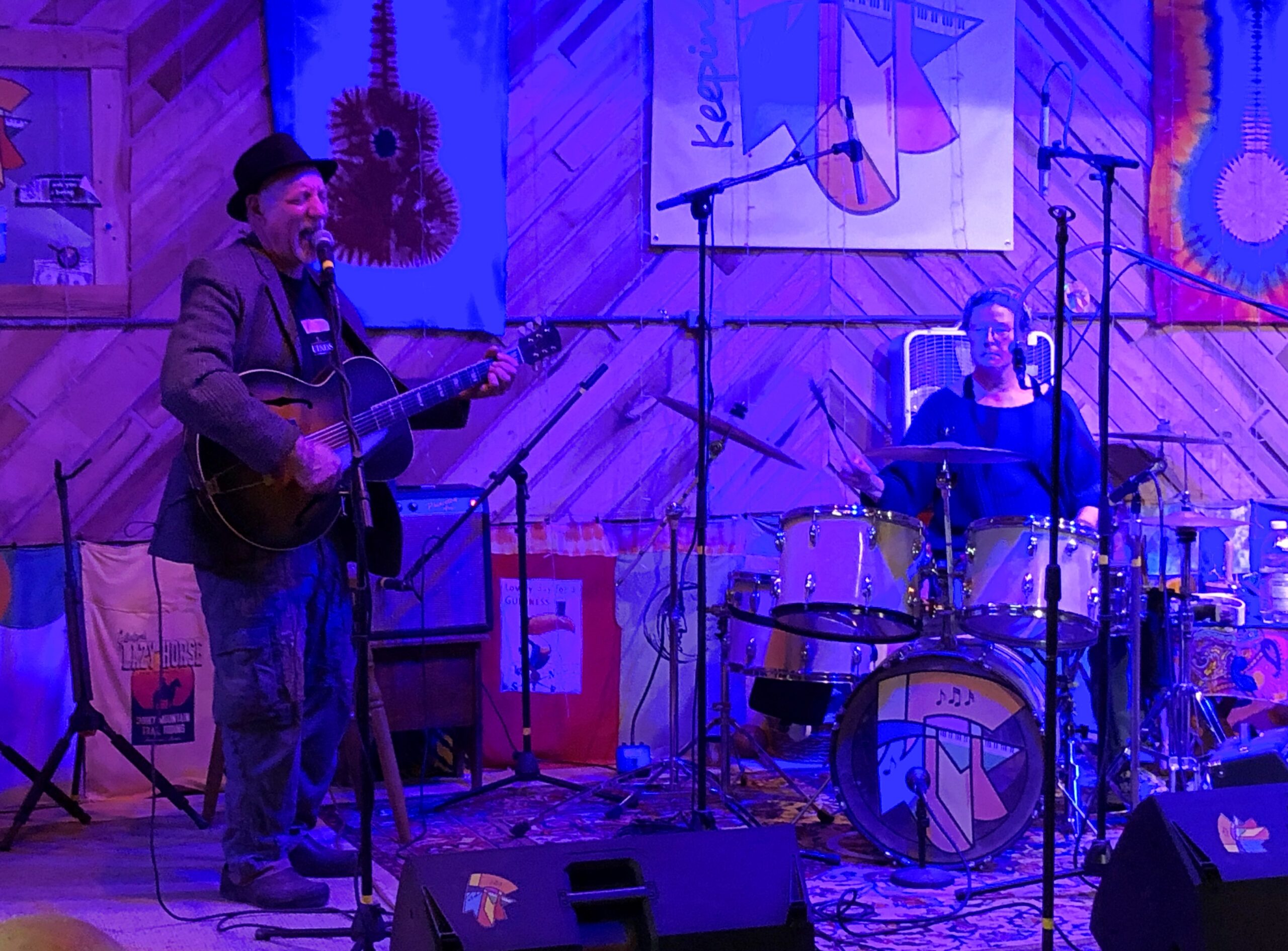
Damned shame. I can’t leave it at that. Soon after passing through Red Boiling Springs, we arrived at our destination in eastern Middle Tennessee. The next day, we enjoyed a Tennessee hootenanny.
Our hosts, Dave and Margaret, on guitar and drums.
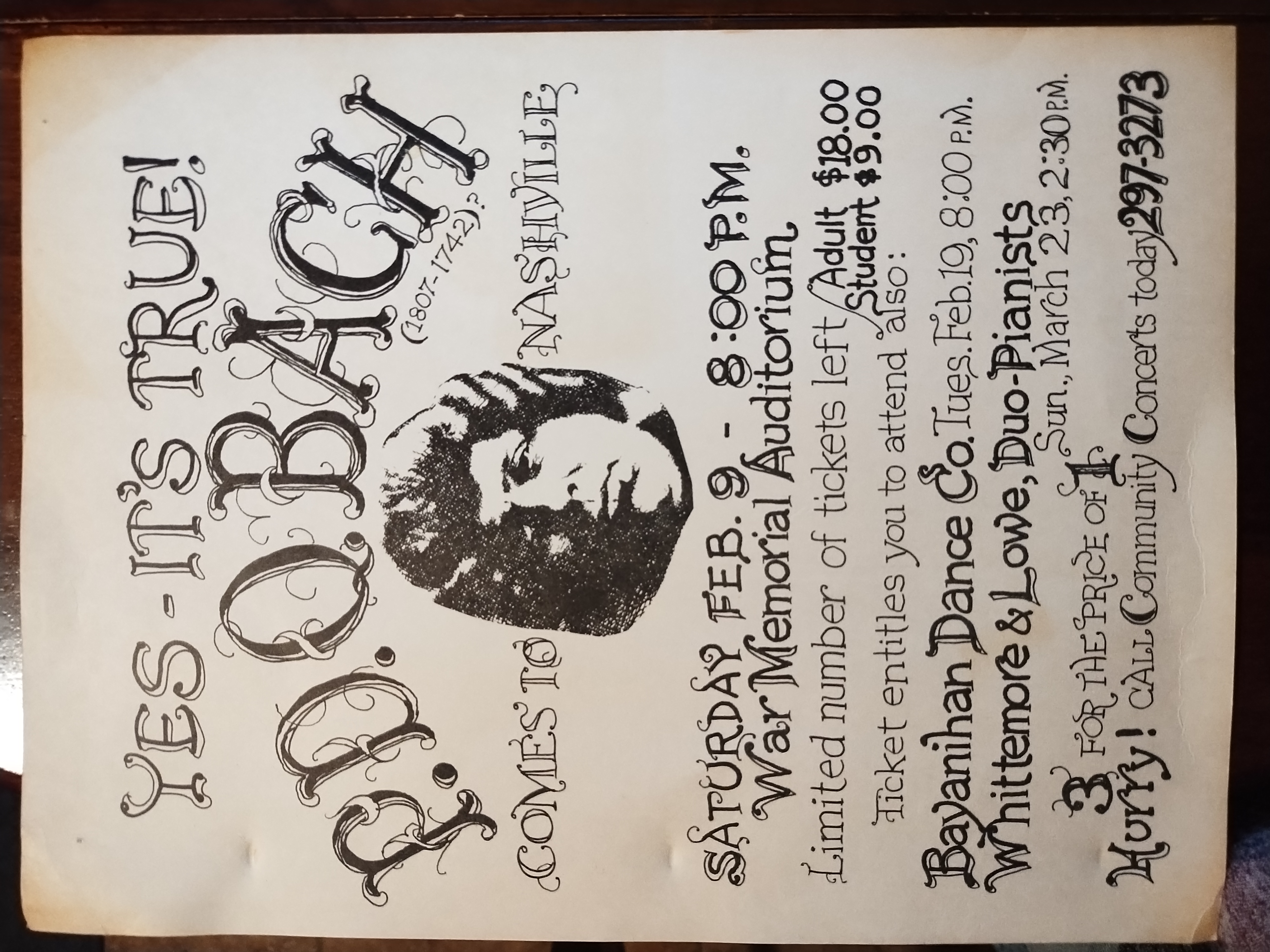
Below is a poster I picked up among the debris in the closet of my former room in San Antonio, and brought back north last month. I probably originally liberated it from a wall at Vanderbilt, though I would have had the good manners to do so after the concert.
I remember going to see P.D.Q. Bach in Nashville in early 1980, but, maybe true to the spirit of the not-great composer himself, I don’t remember much about the concert. After all, Schickele.com says: “P.D.Q. was virtually unknown during his own lifetime; in fact, the more he wrote, the more unknown he became.”
It’s easy to believe that after 45 years, my memory of the concert is slight. I saw Bob Marley in concert in 1980 as well, and mostly I remember the various kinds of smoke at the venue, and Marley’s frequent cries of “All hail Jah!” and “Free Zimbabwe!”
Back to P.D.Q. Bach. I must have been amused by the concert. Not as much as if I’d actually known anything about classical music, but I’m sure Peter Schickele’s antics were amusing above and beyond mere music spoof. I’m also pretty sure I went by myself, since even the student price (more than $34 in current money) would have been a lot for an act no one else had ever heard of.
But I had. We had at least one record of his around when I was in high school, namely Report from Hoople: P. D. Q. Bach on the Air, which was in personal heavy rotation for a little while, along with all our Tom Lehrer records.
That reminds me: I need to get around to writing that short bio of that other non-famous musician, Irwin Hepplewhite, leader of Irwin Hepplewhite and the Terrifying Papoose Jockeys during the gold and silver age of American pop, since clearly no one else is going to do it.
Back to P.D.Q. Bach again. I didn’t note the passing of Peter Schickele last year, but I’m going to now. Here’s an interview he did only a few years after he came through Nashville. Everybody comes to Nashville, even Irwin Hepplewhite and the Terrifying Papoose Jockeys, who brought the house down – literally, a ceiling fixture fell on them – at the Ryman in ’69, one of the lesser-known events referenced in “American Pie.”
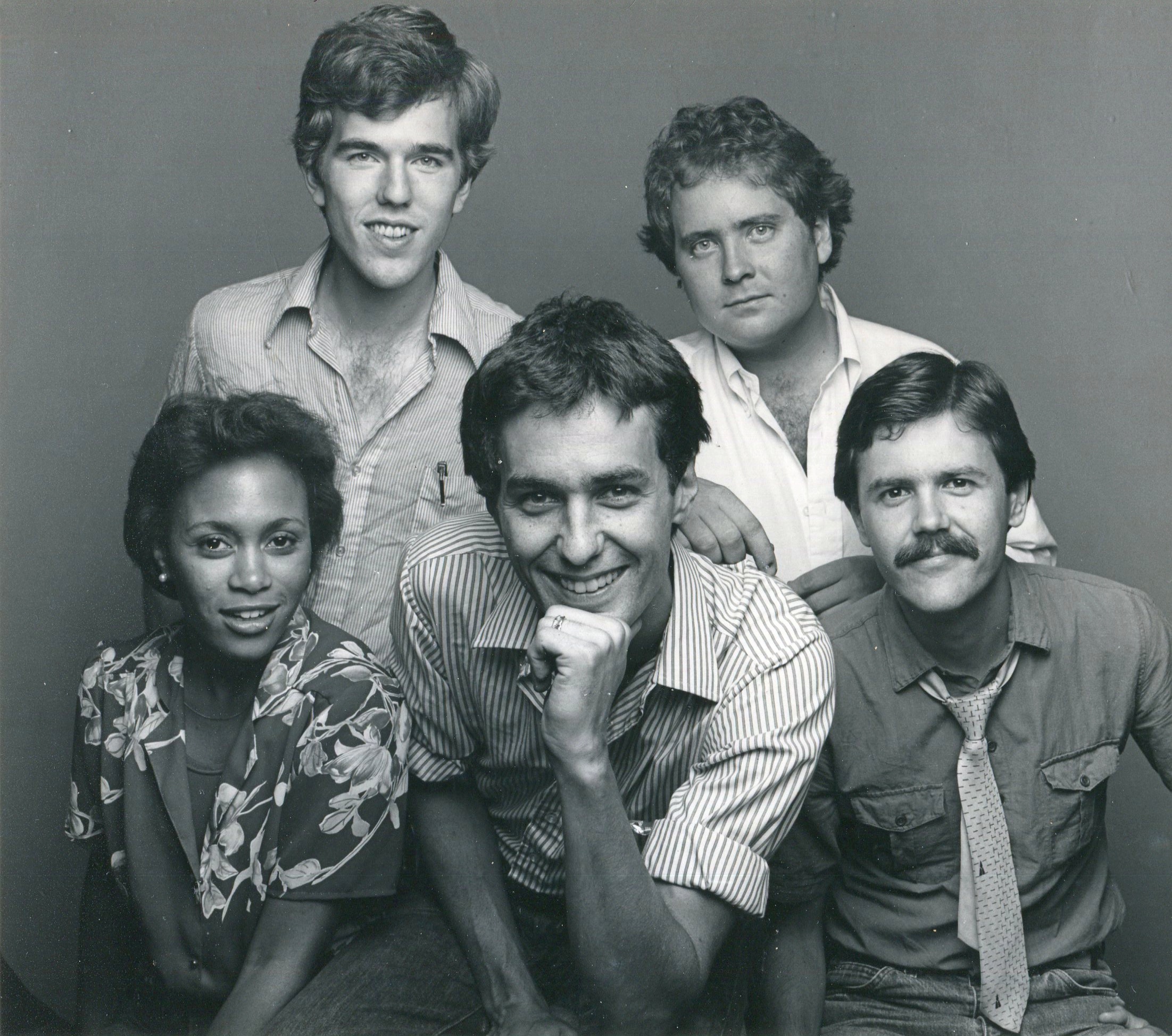
It’s entirely possible that this is the only place this photograph is posted anywhere. Considering the imponderable size of all the servers everywhere, that would be something. But also completely trivial, since there’s no end of physical images tucked away collecting dust.
I’ve had this physical print in my possession for more than 40 years. How exactly I got it in the first place, I don’t remember. It looks like a publicity shot, with the white border trimmed out for scanning, though nothing was printed there to indicate who they are, which seems like a serious lapse. Maybe that cost extra, or they couldn’t agree on a name yet.
But I know them (mostly). The five people were the members of a short-lived comedy troupe in Nashville, Gonzo Theatre.
One reference to the troupe online I’ve found is at a page on Newspapers.com depicting the July 18, 1982 Daily News-Journal of Murfreesboro, Tennessee.
The entirety of the text: NASHVILLE July 23, 31 “Gonzovision” will be presented by the writers of Gonzo Theatre every weekend at The Cannery, 811 Palmer Place.
The troupe name was Gonzo Theatre and the show was called Gonzovision. On the back of the photo, someone else wrote Gonzovision, and I added 1982.
On July 23 that year – very likely, since on the 31st I was caving in rural Tennessee – I went with some of my friends to The Cannery to see Gonzovision (the venue is still around as Cannery Hall). I remember being entertained, but otherwise not much else about the show. At one point, one of the troupe pretended to be Bob Dylan, another pretended to be Ethel Merman, and they did a duet. That was funny.
Also, there was a well-known local politico in the audience, who was red-nose drunk at the time, and the troupe spent some time making fun of him. I wish I could remember who that was, and what they said, but my notes are silent on the matter. Even 20 years ago, I couldn’t remember much more about the skits.
All this brings to mind Jim Varney. Not because he was a member of the troupe at that moment – he had better, and far more remunerative things to do at that time. Rather, some of the members of Gonzo Theatre would soon be in the very first Ernest movie, Dr. Otto and the Riddle of the Gloom Beam, a flick that took a bit of my money and about an hour and a half of my time for little in return.
Lee Johnson is at top left of the photo. He’s no doubt the reason we knew about the show at all, since we were tight with his younger brother Mike. Mac Bennett, whose career in movies was very brief, is top right. Sometime later, I heard him recite from memory, at a party and with great verve, a translation of Baudelaire’s “Get Drunk.”
Jackie Welch is bottom left. These days she’s “a professional life coach and president of Visions Manifest Coaching Services,” according to imdb, but whose web site doesn’t exist anymore. She has had a minor career in the movies – including a couple of other Ernest movies, Ernest Goes to Jail and Ernest Scared Stupid, and the short-lived TV show, Hey, Vern, It’s Ernest. Too bad Varney died when he did (2000) or she might have been in such epics as Ernest Goes to War, Ernest Rockets to Mars and Ernest and the Zombie Apocalypse, which surely would have been made in the 2010s.
I can’t remember the name of fellow in the lower center, who looks to be the head of the troupe, but I do know that to the right of him was Daniel Butler, who was also in Ernest movies, but is better known (relatively speaking) for a thing called America’s Dumbest Criminals. Again, too bad Varney’s career was cut short: Butler could have been his counterpart in My Dinner With Ernest.
Rain and wind sometimes but sun and warmth other times this week here in northern Illinois. Had breakfast on the deck most of the days since we returned. Lisbon wasn’t quite as warm as expected, with cool evenings – a little below 20° C. – evolving into warmish days, maybe 25° C. or so, followed again by cool evenings. We were rained on only once, more about which later.
We arrived tired in the early afternoon of May 14 at the smallish but popular Praça Luís de Camões, emerging from the artificial lighting of the Metro into broad sunlight on the warmest day during our near-week in southern Portugal, just shy of about 30° C as they reckon things.
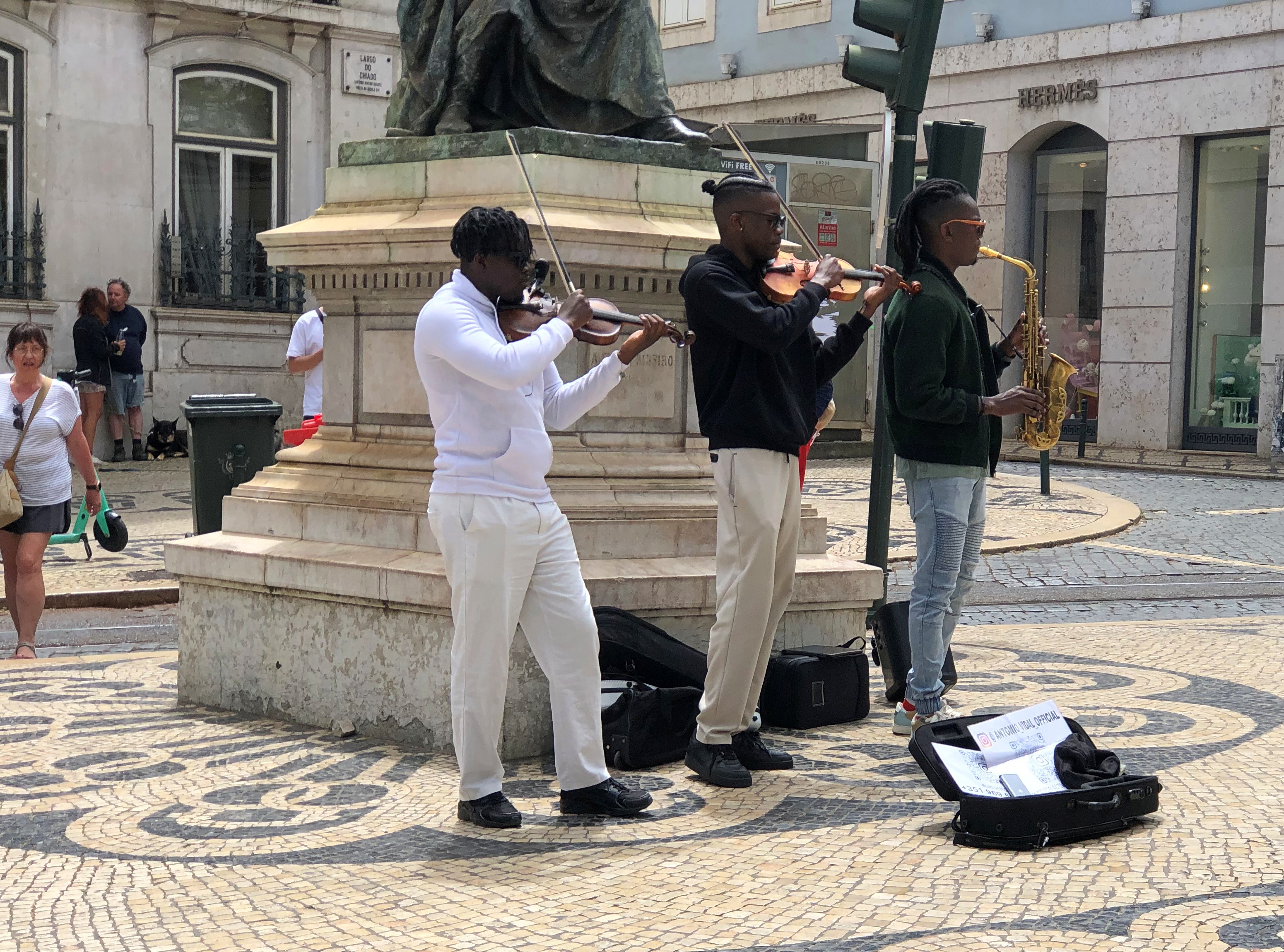
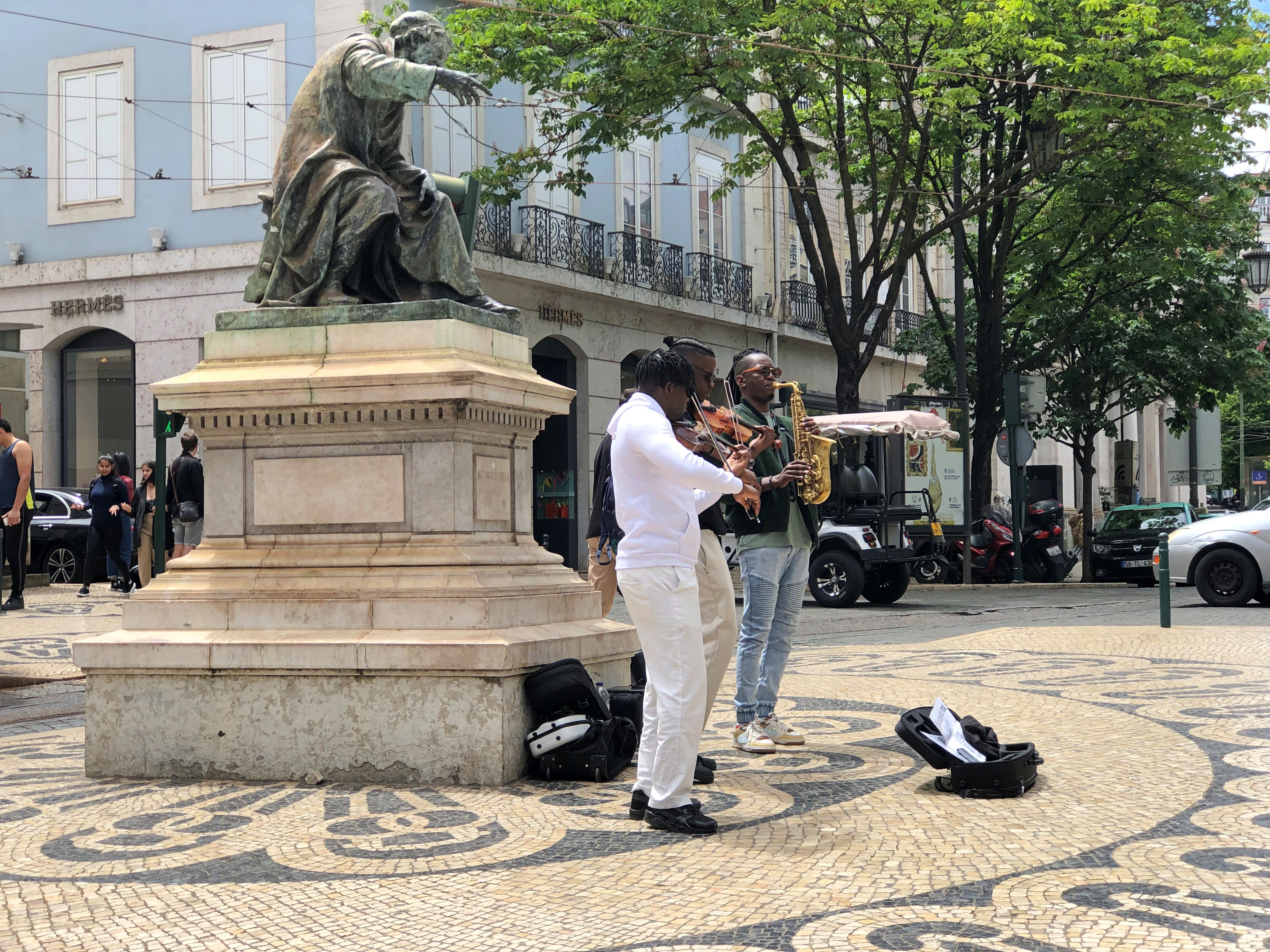
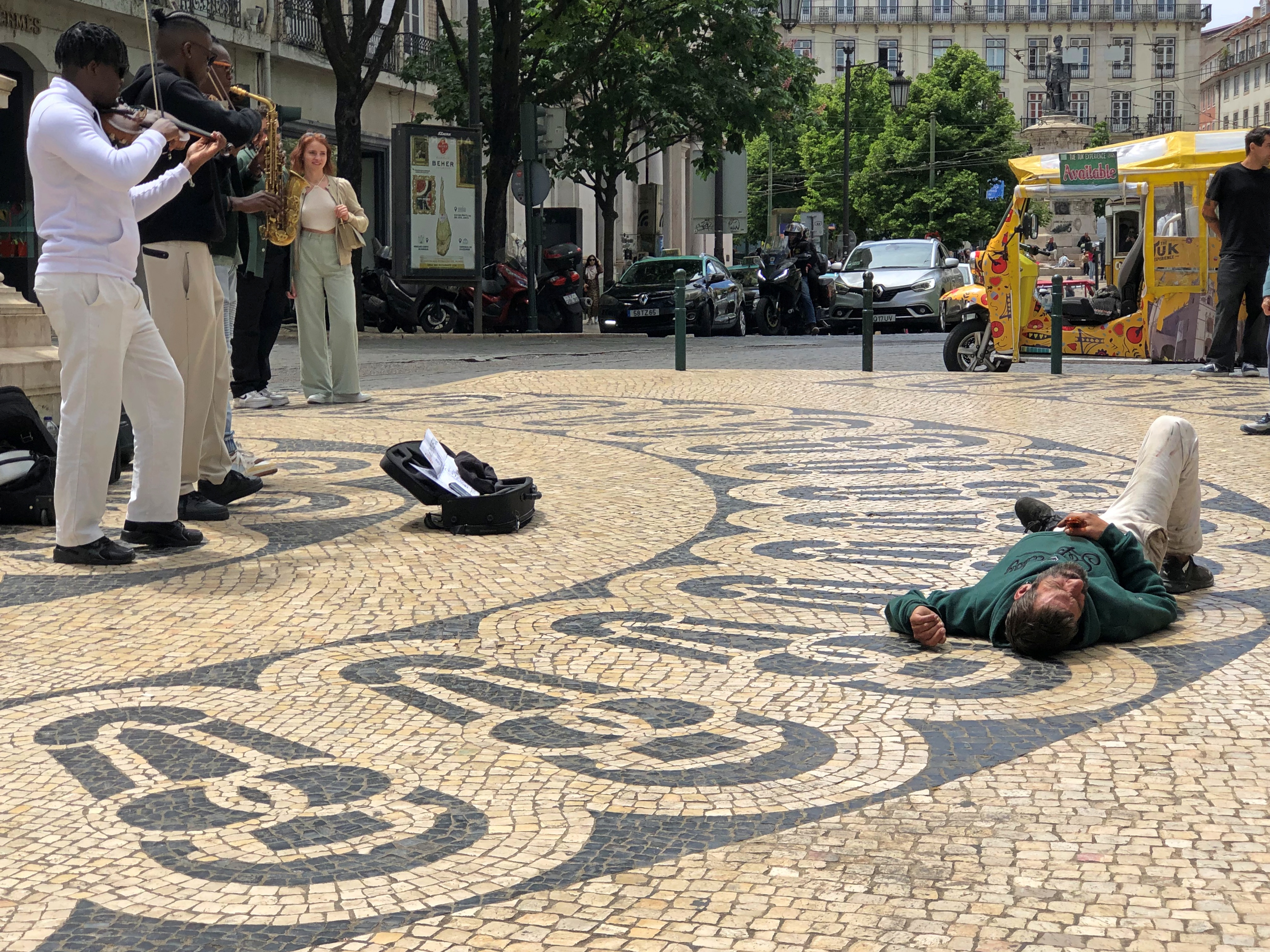
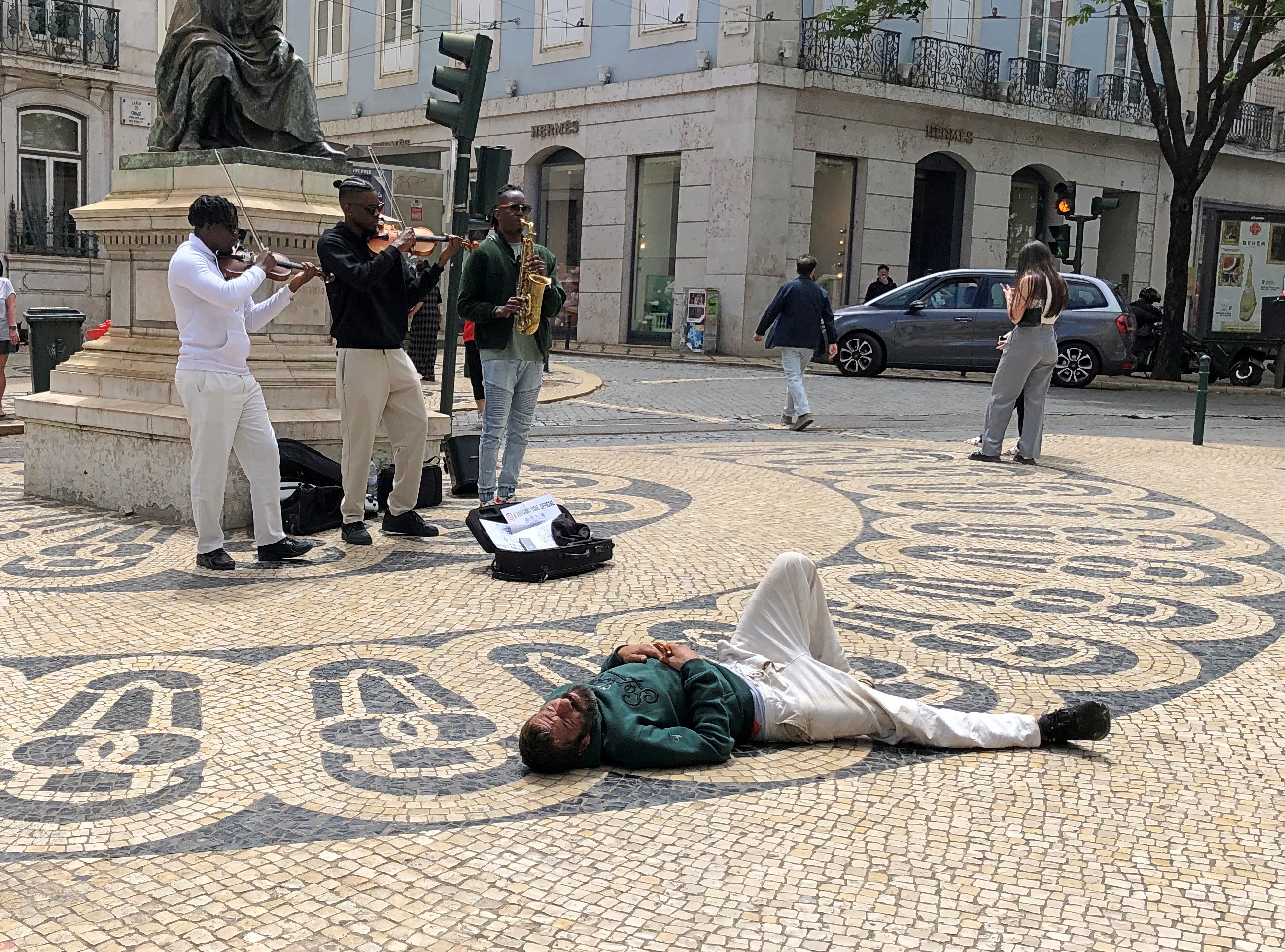
At once the dulcet sounds of these three gentlemen captured our attention, and we joined the loose ring of those listening. A good thing to do while sitting around getting ready to catch your second wind.
They played their versions of jazz standards and more recent songs. Sweet versions, each of the musicians taking the tunes aloft in distinctive ways. I didn’t see their names posted, even when I got close enough to drop in one euro each, so they’ll just have to be the Musicians of Praça Luís de Camões.
They had an enthusiastic audience member. He danced around on his feet for a while, the lay on the plaza tiles and “danced” around in that position.
We’d have listened longer, but we needed to obey our thirst, to use the ad phase that’s too good just to be that. Facing the square: McDonald’s. We each had a cold drink.
That’s my idea of a good souvenir, and I took it as such.
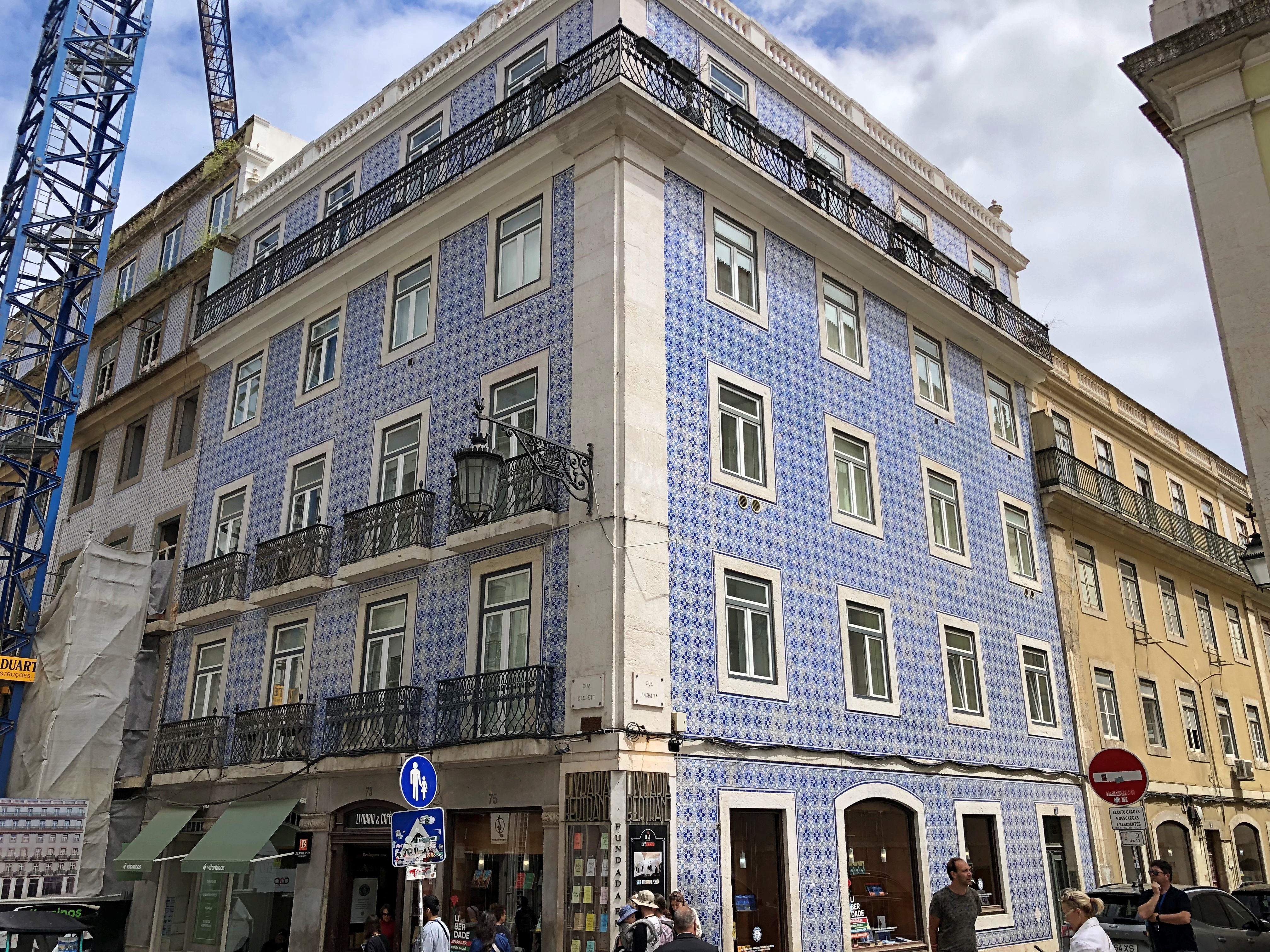
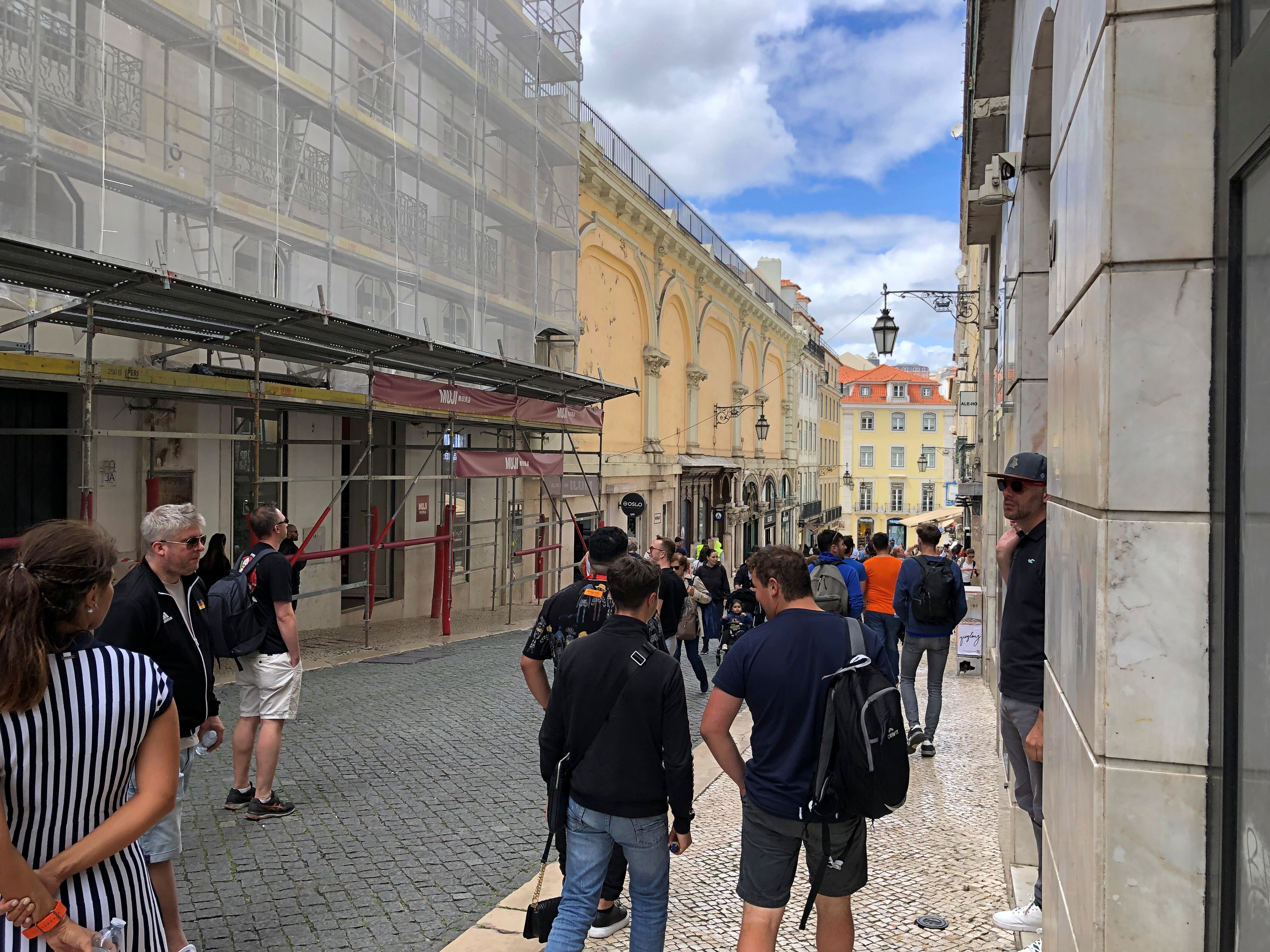
We headed down a busy retail street, R. Garrett, a thoroughfare with the likes of Ale-Hop Rua Garrett, Stradivarius women’s clothing, Gardenia shoe store, bbnails, Happy Socks, Livraria & Cafe, a book store, and the Percassipt quilt shop. A handsome street at spots. And under development.
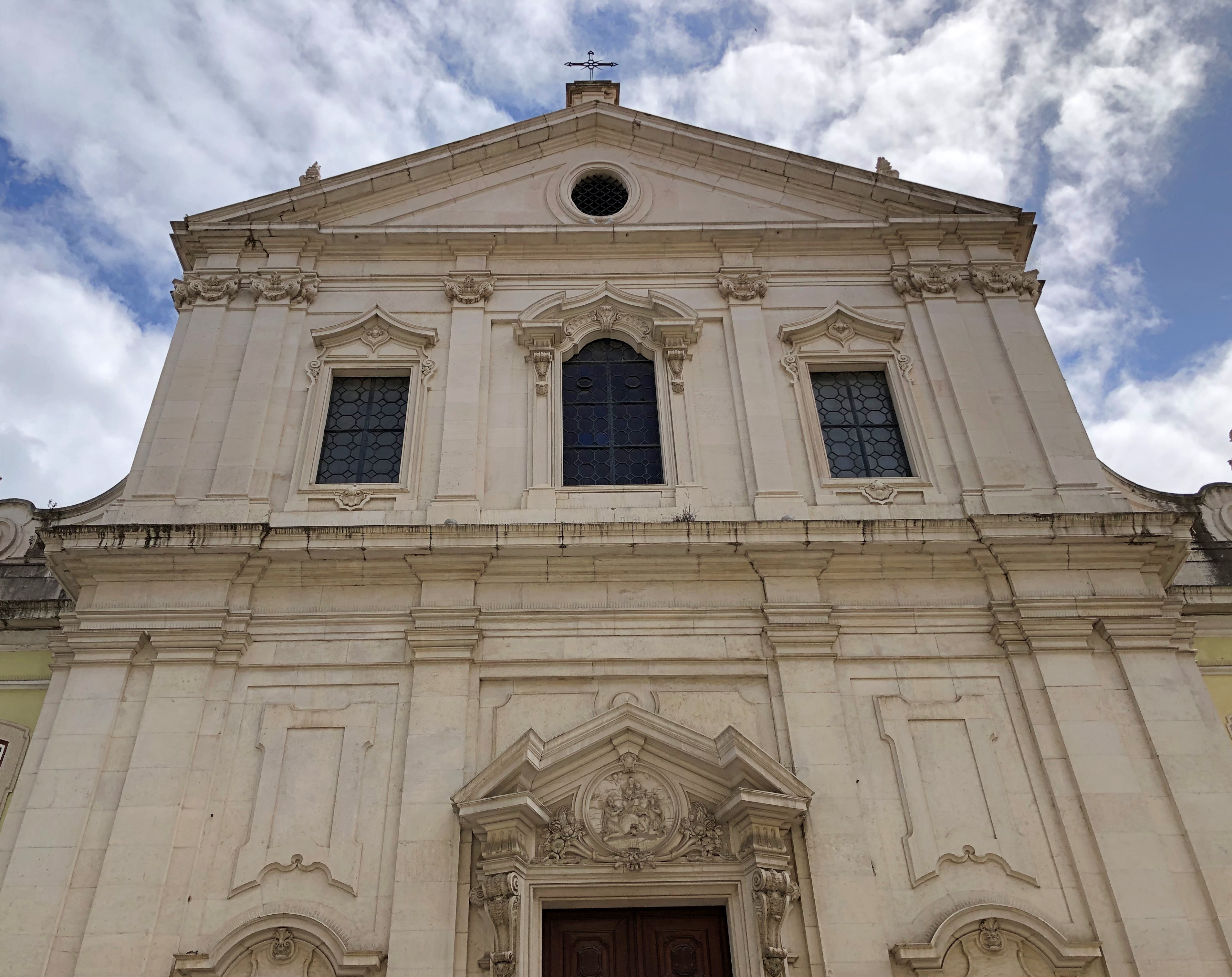
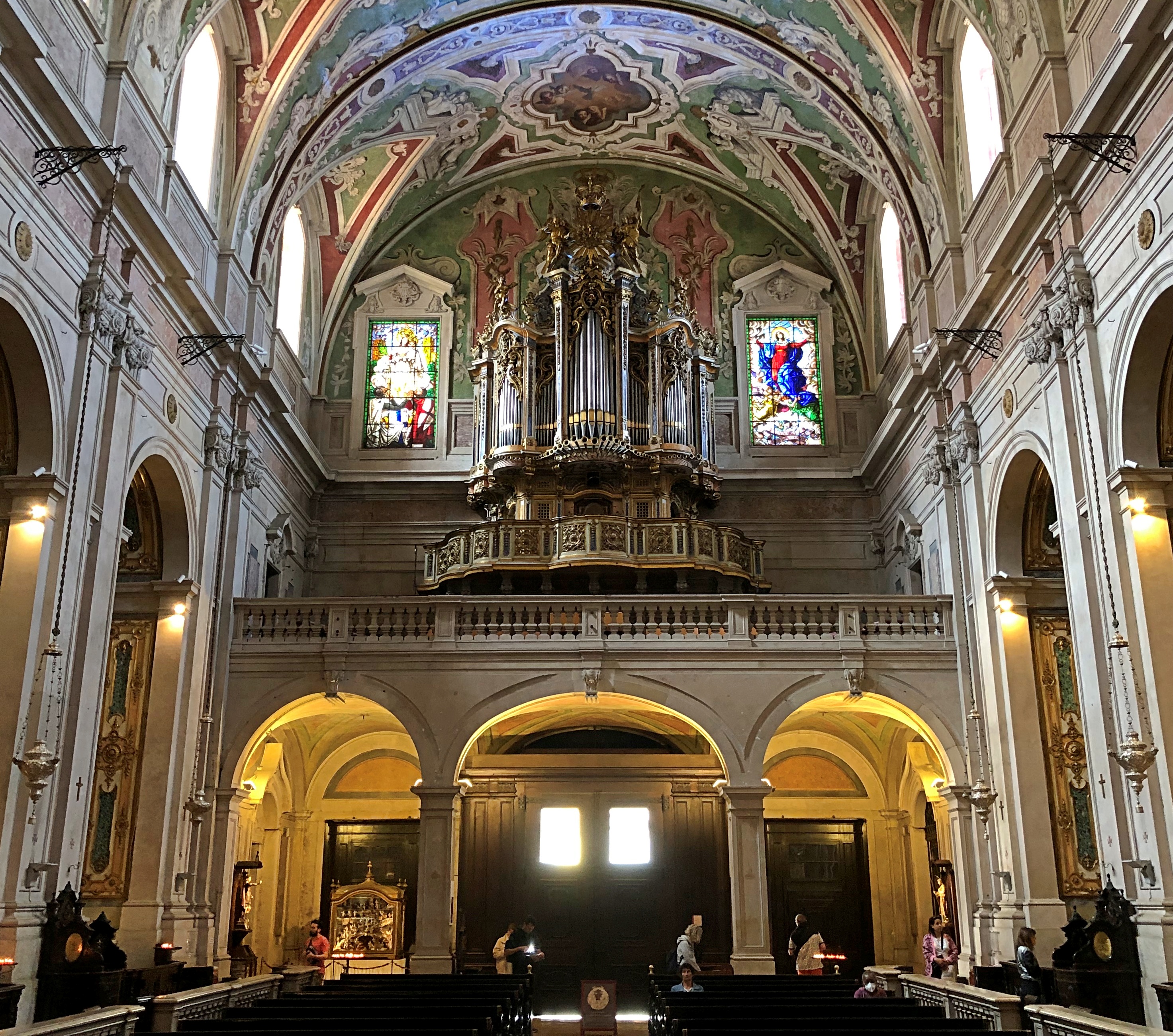
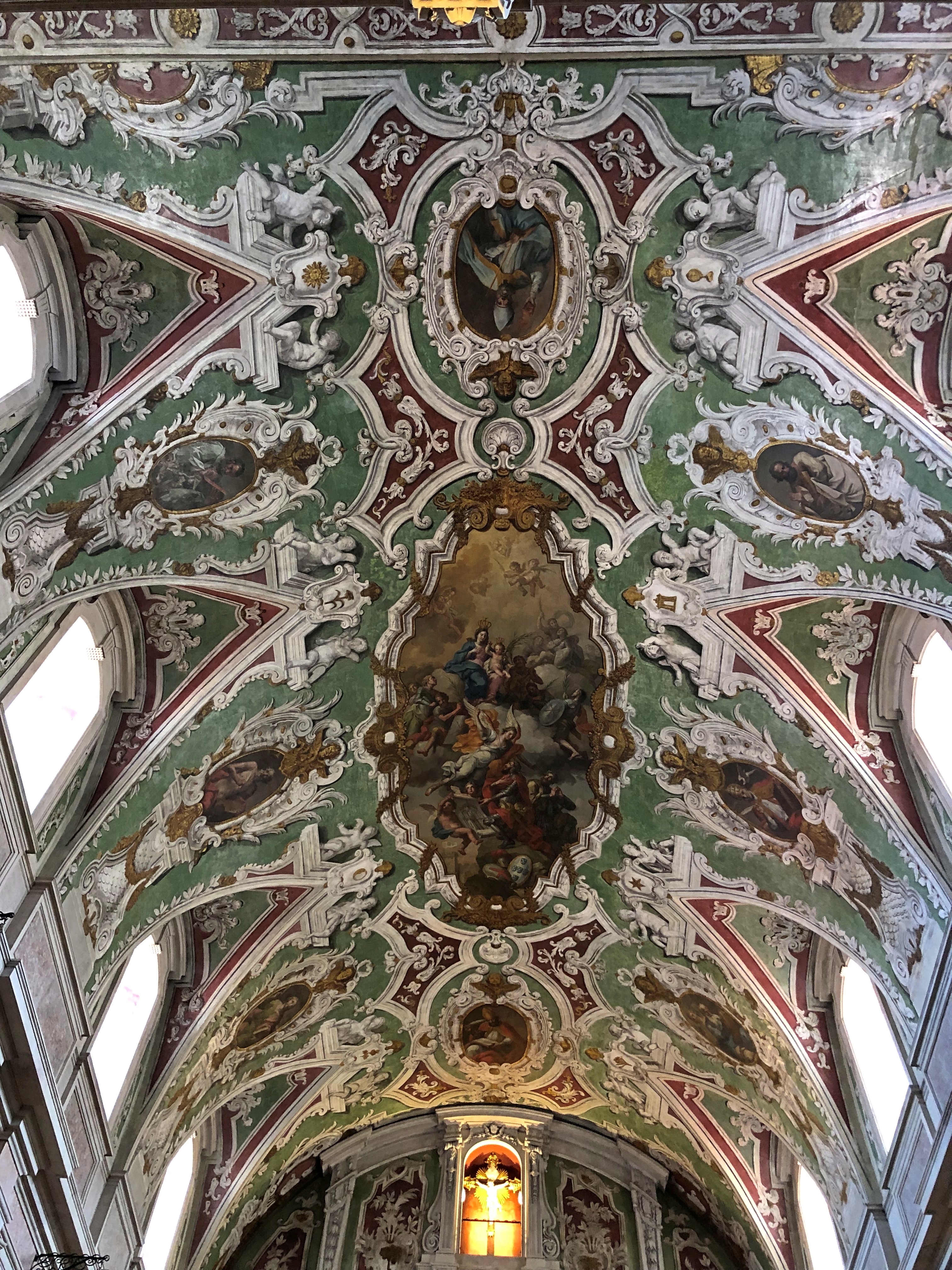
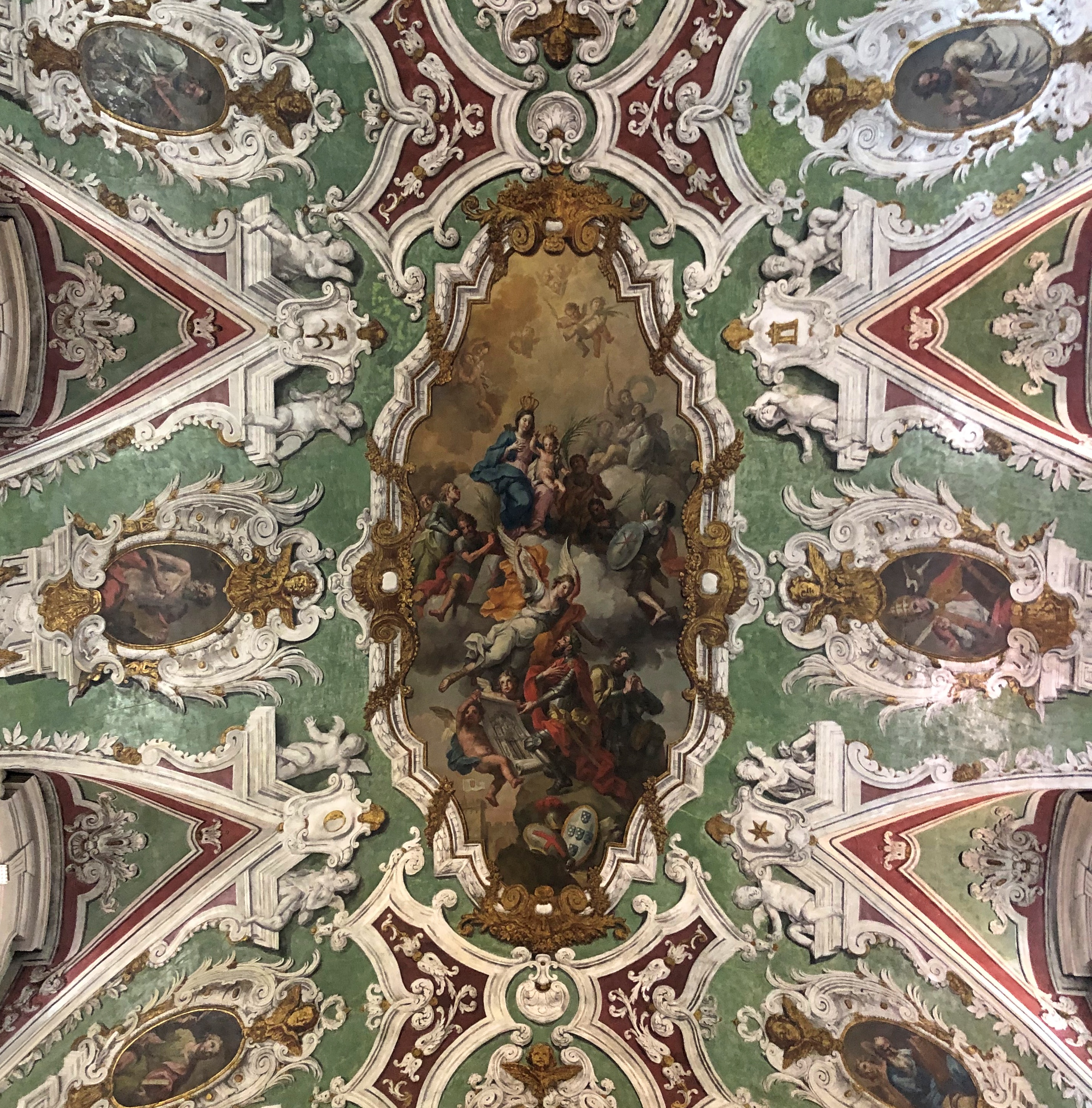
Basílica de Nossa Senhora dos Mártires, the Basilica of Our Lady of the Martyrs, also rises on the street.
Before 1755 there was a different church on this site. As a Christian site, its roots stem back before Moorish domination of the Iberian peninsula.
Reinaldo Manuel dos Santos designed the current church, and of him Portuguese Wiki says: “Reinaldo Manuel dos Santos (1731-1791). Arquiteto e engenheiro militar português, foi um dos maiores expoentes da arquitetura e do urbanismo pombalinos,” which I believe is clear enough except for that business about pombalinos, a building and design style distinctive to Lisbon after the earthquake.
Now that’s a ceiling for the ages.
At R. do Carmo, a pedestrian street, Yuriko and Ann went to examine a particular clothing and other item store, while I took a wander.
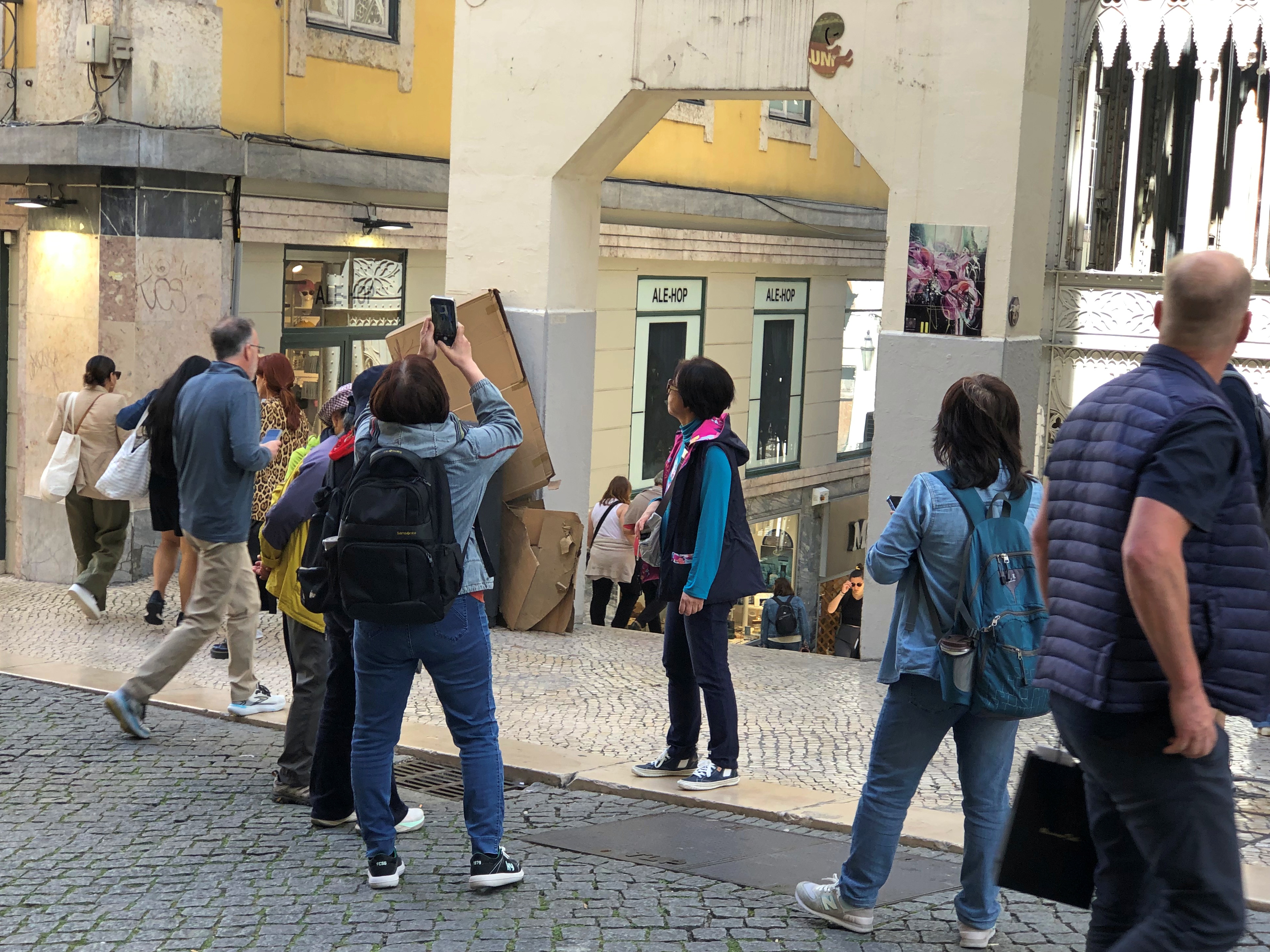
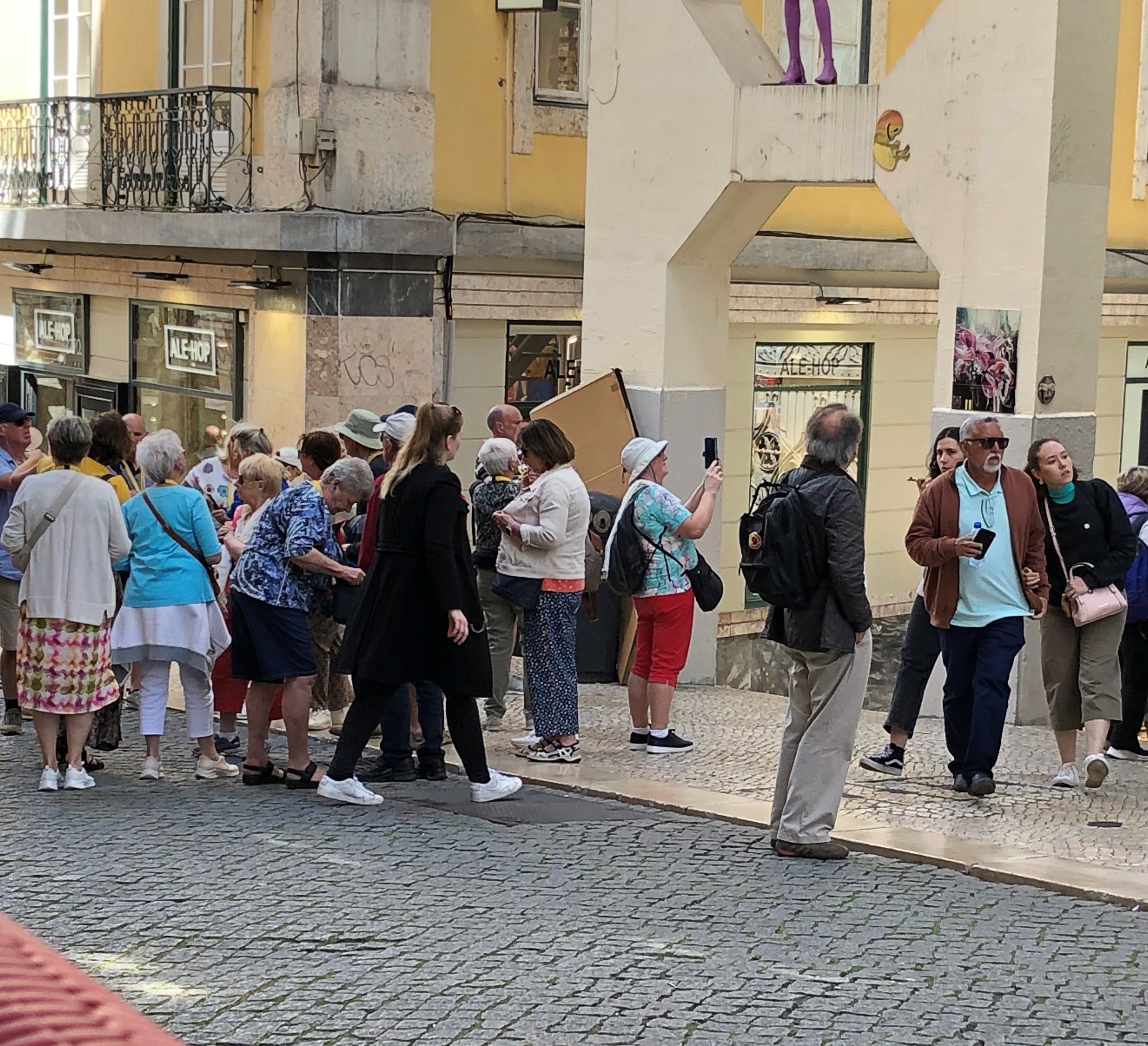
People seemed to be paying attention to something.
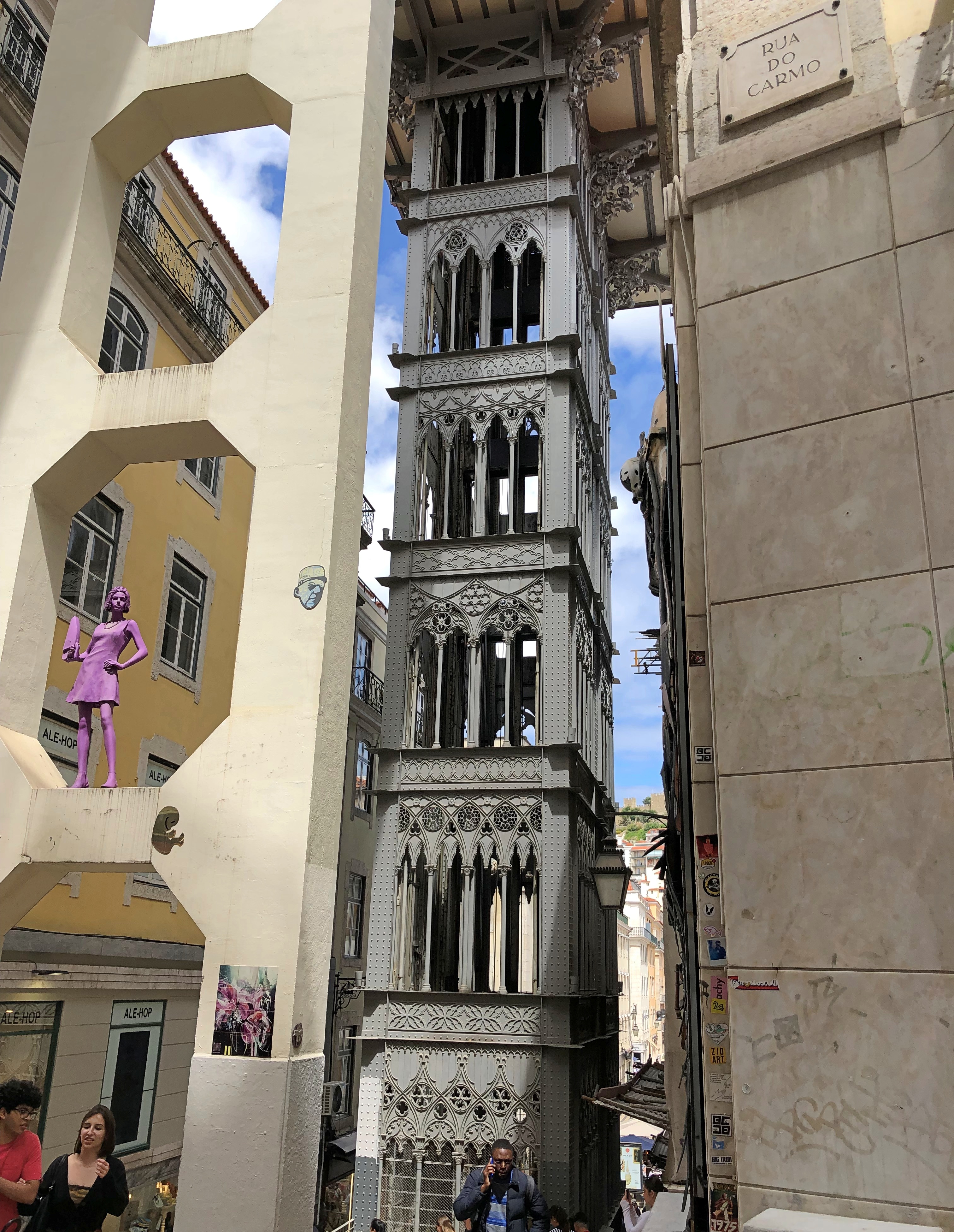
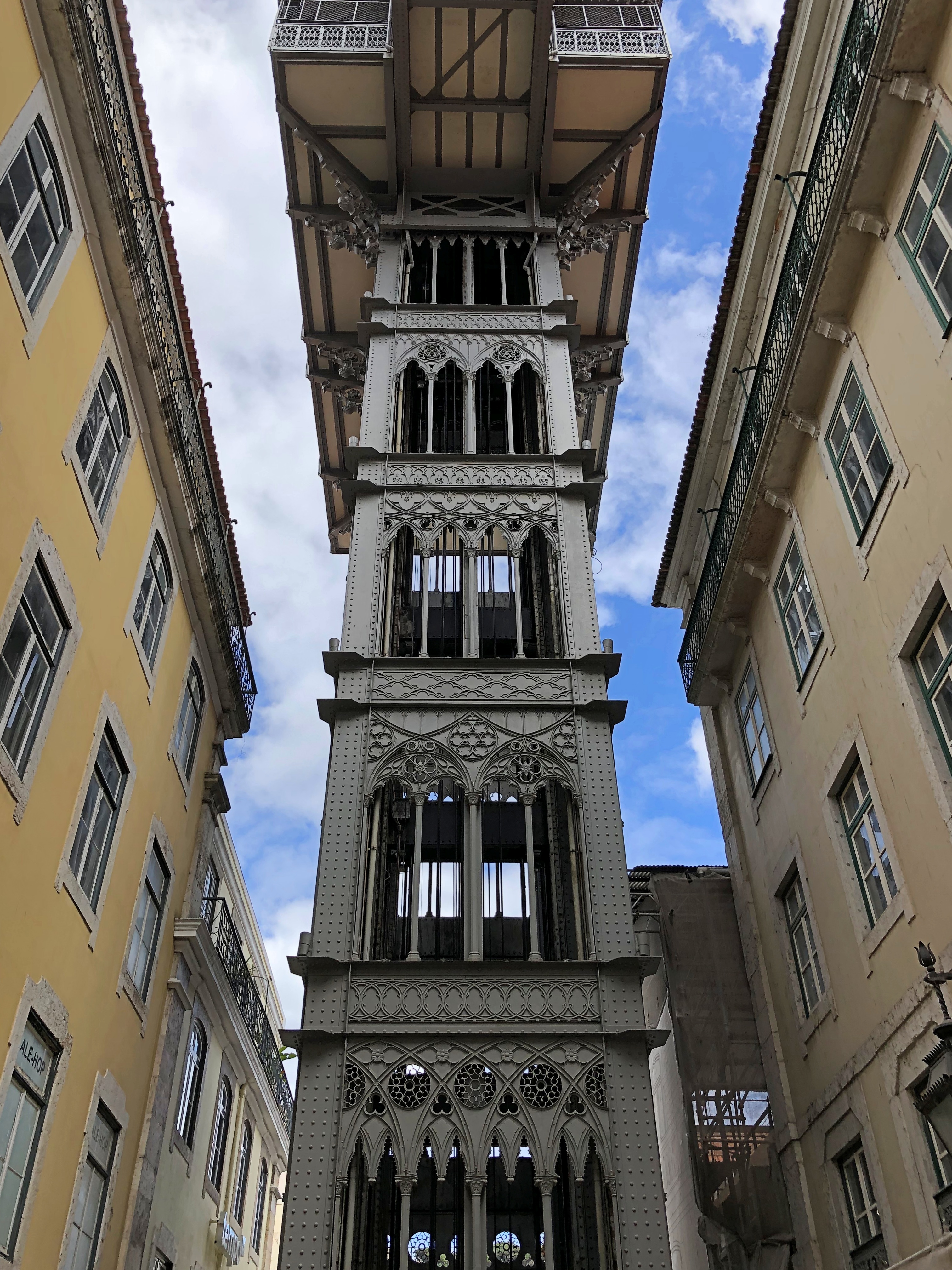
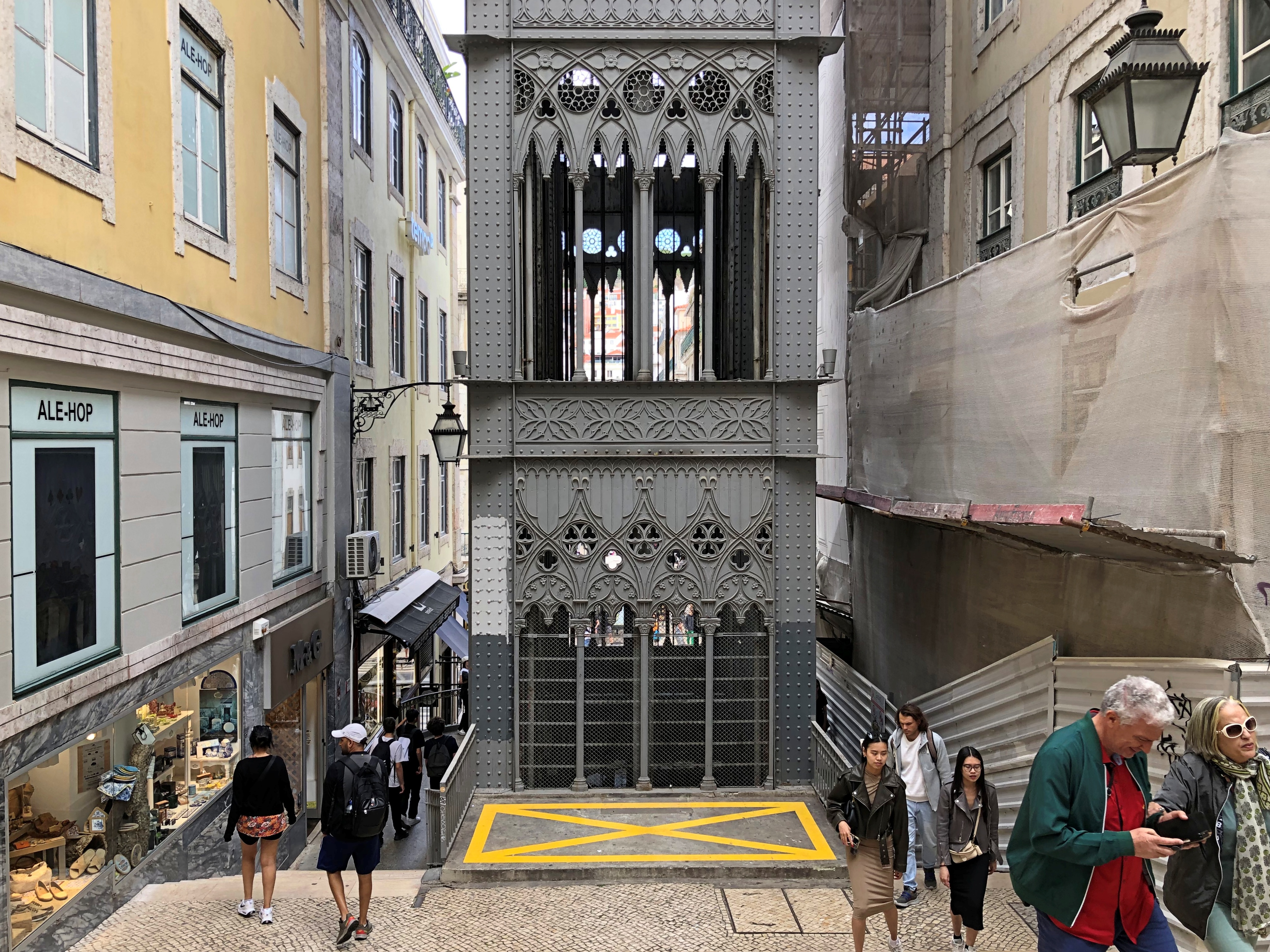
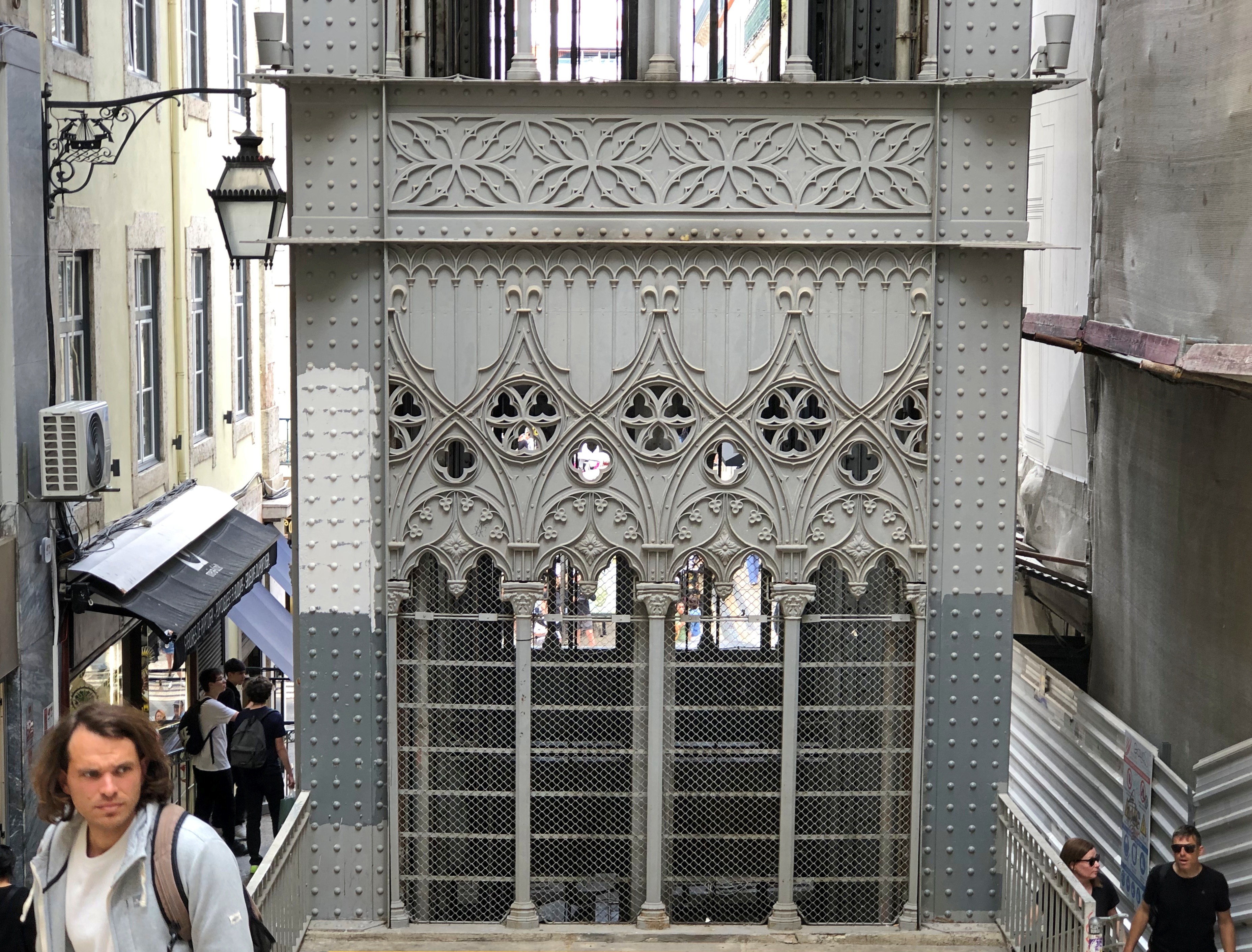
They were right to take pictures. Stand just off the street was Elevador de Santa Justa, a Machine Age lift connecting two parts of the city, each at a different elevation.
I’d read about it, but didn’t make a particular plan to see it. But there it was. The work of one Raoul Mesnier du Ponsard, who is known for this structure and others like it. We didn’t get around to taking a ride, since time is short and Lisbon’s destination list is long, whoever compiles it.
It might not feel like spring out there, but no matter. Time for spring break. Back to posting around April 18.
Not long ago, an entire movie on YouTube called First Spaceship on Venus came to my attention, and I decided to watch a few minutes to see how bad it might be. Soon I realized, this isn’t that bad. For what was clearly a pre-manned spaceflight depiction of spaceflight, not bad at all. I didn’t have time to finish it, but I will at some point.
I’d never heard of it. But I have heard of Stanisław Lem. I read His Master’s Voice years ago – nearly 40 years, so I don’t remember much – and saw the 1972 movie version of Solaris, ditto, though I’ve read it’s rather different from his novel. Turns out First Spaceship on Venus is the American title of Silent Star (Der Schweigende Stern), an East German-Polish production from 1960. Lem wrote the source book, The Astronauts, a few years earlier. The American version is dubbed into English and, I understand, cut in length.
More idle curiosity for the day: checking ticket prices for Billy Joel and Stevie Nicks, who are appearing the same night at Soldier Field in June. The closest ticket for sale is pretty close indeed: front section, third row. For resale, actually. There are a scattering of resale tickets available in that section, with those on the third row listed for $3,791 + fees. Oddly enough, fourth row seats list for $2,794 + fees. At least for now. So one row ahead, where you can catch a slightly better glimpse of Mr. Joel’s shiny pate, is worth about a grand more?
I expect that represents dynamic pricing of some kind, facilitated by soulless algorithms in the service of maximized shareholder value, and varies from moment to moment. But I was never one for front row seats anyway, or even third or fourth. Checking further, I found that you can bring your opera glasses and sit way back for $179. As it happens, I’ve seen both of those entertainers; separately, in 1979 and 1980. I don’t remember what I paid. A handy inflation calculator tells me that $179 now is the equivalent of $47 back then. I’m positive I didn’t pay that much, total, for both tickets.
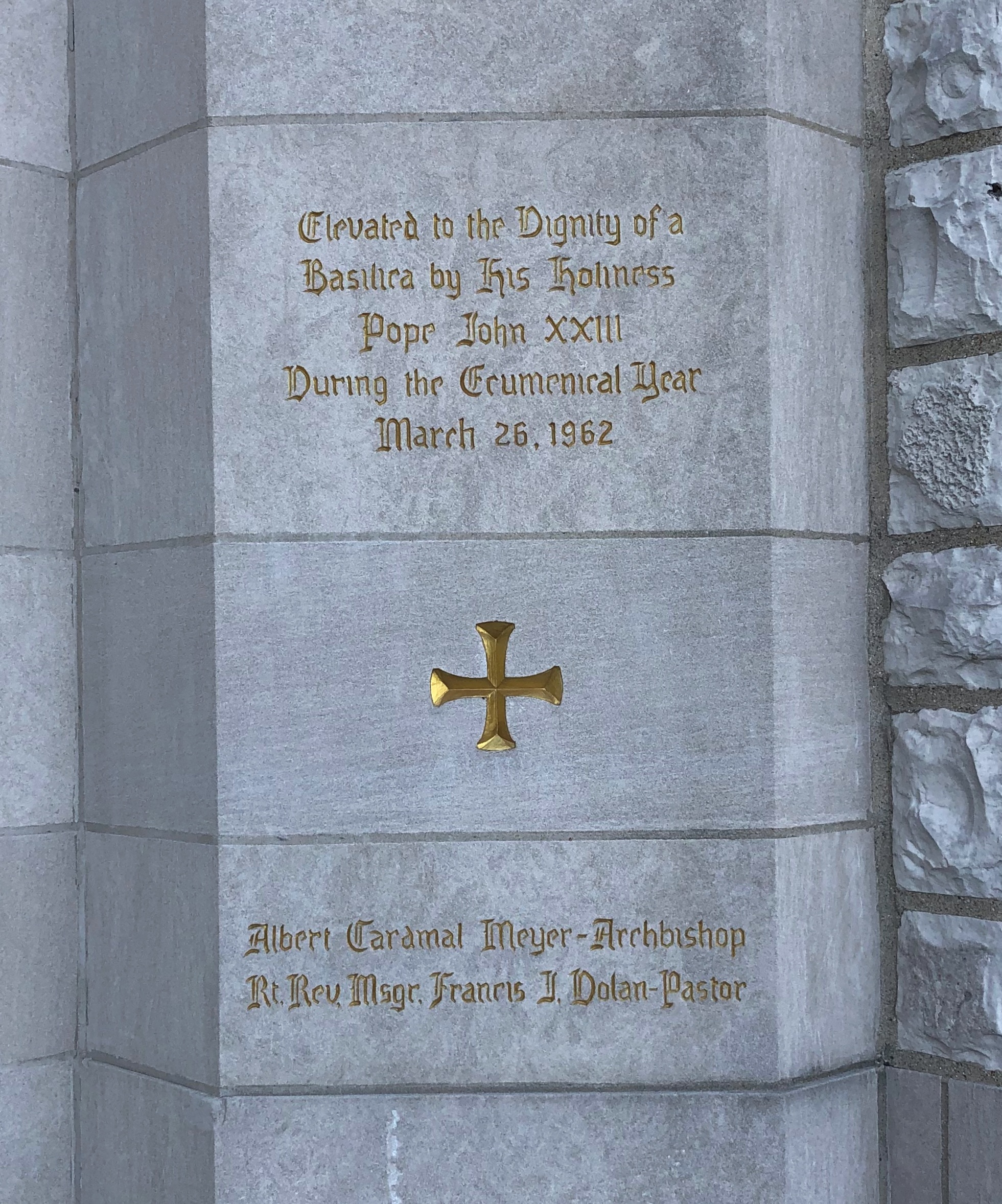
Visiting Queen of All Saints Basilica in Chicago last month, I took an image of carved text that puzzled me a bit, but then I forgot to look it up.
“Ecumenical Year?” I remembered to look into that more recently, and realized that it must refer to the first year of Vatican II, which was indeed 1962. Formally in English, the meeting was the Second Ecumenical Council of the Vatican.
Naturally, when one hears of Vatican II, it’s time to listen to “The Vatican Rag.”
The council might have been 60 years ago, but that song never gets old.
The video that captured the ramming and collapse of the Francis Scott Key Bridge has a morbid fascination, and you don’t even have to rubberneck to see it. I watched it a few times this morning, marveling at how what looked like a tap – but of course was tons of mass colliding with the structure – could bring the whole thing down so fast.
Then again, we’ve all had similar experiences on a (fortunately) smaller scale. One time I brushed ever so lightly against a stack of dishes drying in the rack, and much of the stack lost its cohesion in a moment, with the dishes suddenly rearranging themselves in a clatter, a handful tumbling to the sink and the floor, though I don’t remember that any broke.
I was also reminded of something I’ve written about before, some comedy about a previous (1989) shipwreck.
“About a week after the [Exxon Valdez] spill, I went to the Second City comedy revue… and they did a 15-second skit about it, a to-the-point gag.
“Silhouetted on the stage was a fellow standing behind a large ship’s wheel. From offstage, an announcer said something like, ‘And now, what really happened on the Exxon Valdez…’ Pause. Then the stage lights went up, reveling a familiar red shirt and white sailor’s cap on the fellow at the wheel, who was fumbling with it. At the same instant, a familiar voice boomed from offstage, startling the fellow: ‘GILLIGAN!’ the Skipper bellowed.”
If Second City had a mind to, they could do exactly the same sketch this weekend, only changing the line to “what really happened to the Key Bridge in Baltimore.” It would be in bad taste, since it looks like six men lost their lives in the collapse, but death doesn’t always nix comedy. In fact, often not. For example in ’86, NASA = Need Another Seven Astronauts.
Would many in their audience miss the Gilligan reference due to their relatively tender age? Maybe, but Gilligan is better remembered than a lot of ’60s TV characters. As an enduring stock character, the bumbling moron, he participates in something bigger than mere TV entertainment. Something that probably goes back a lot further even than Plautus, to the most rudimentary forms of pratfall entertainment among our remote ancestors.
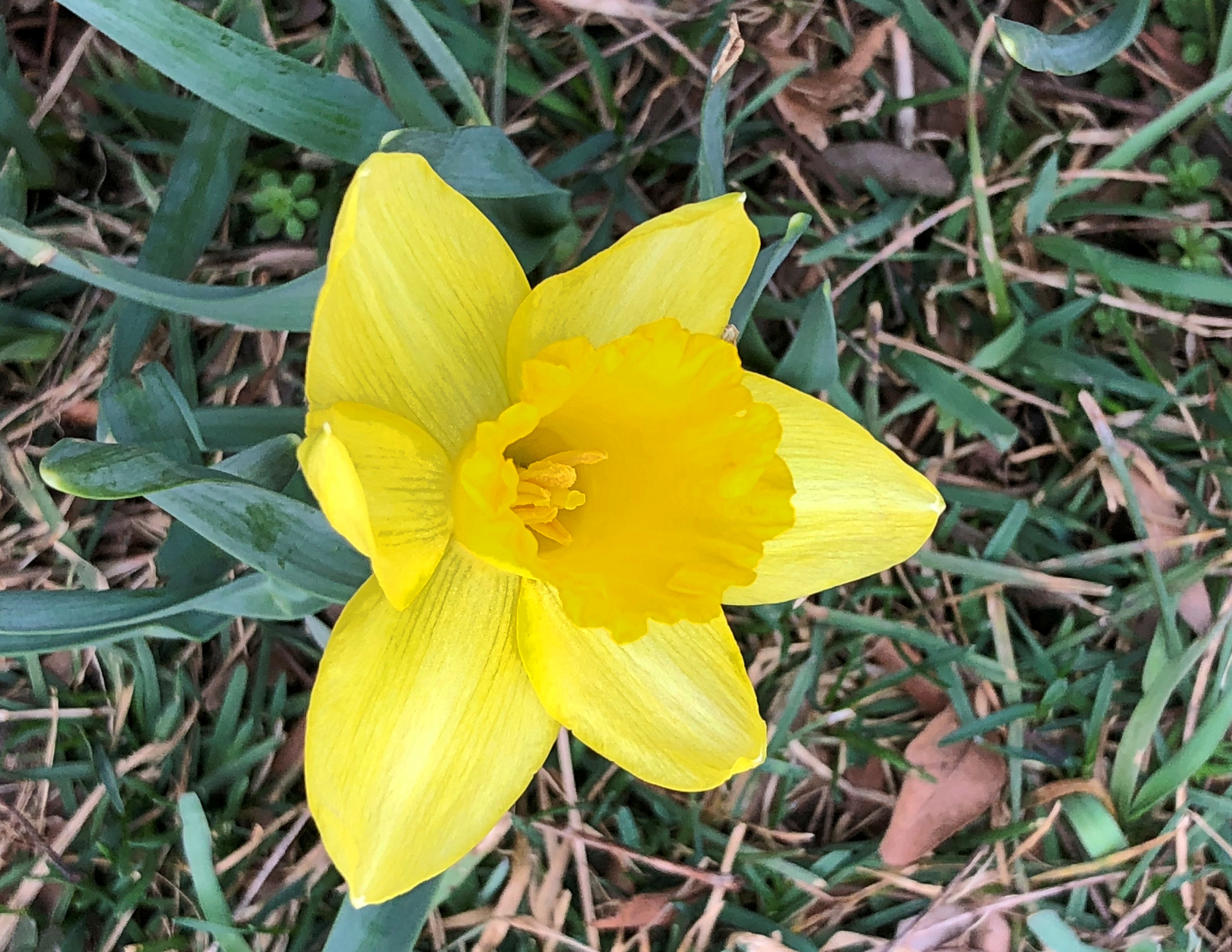
Heavy rain and thunder last night, big puddles today and cool air, though no freeze. The first crocus is out. It actually bloomed just ahead of the rain.
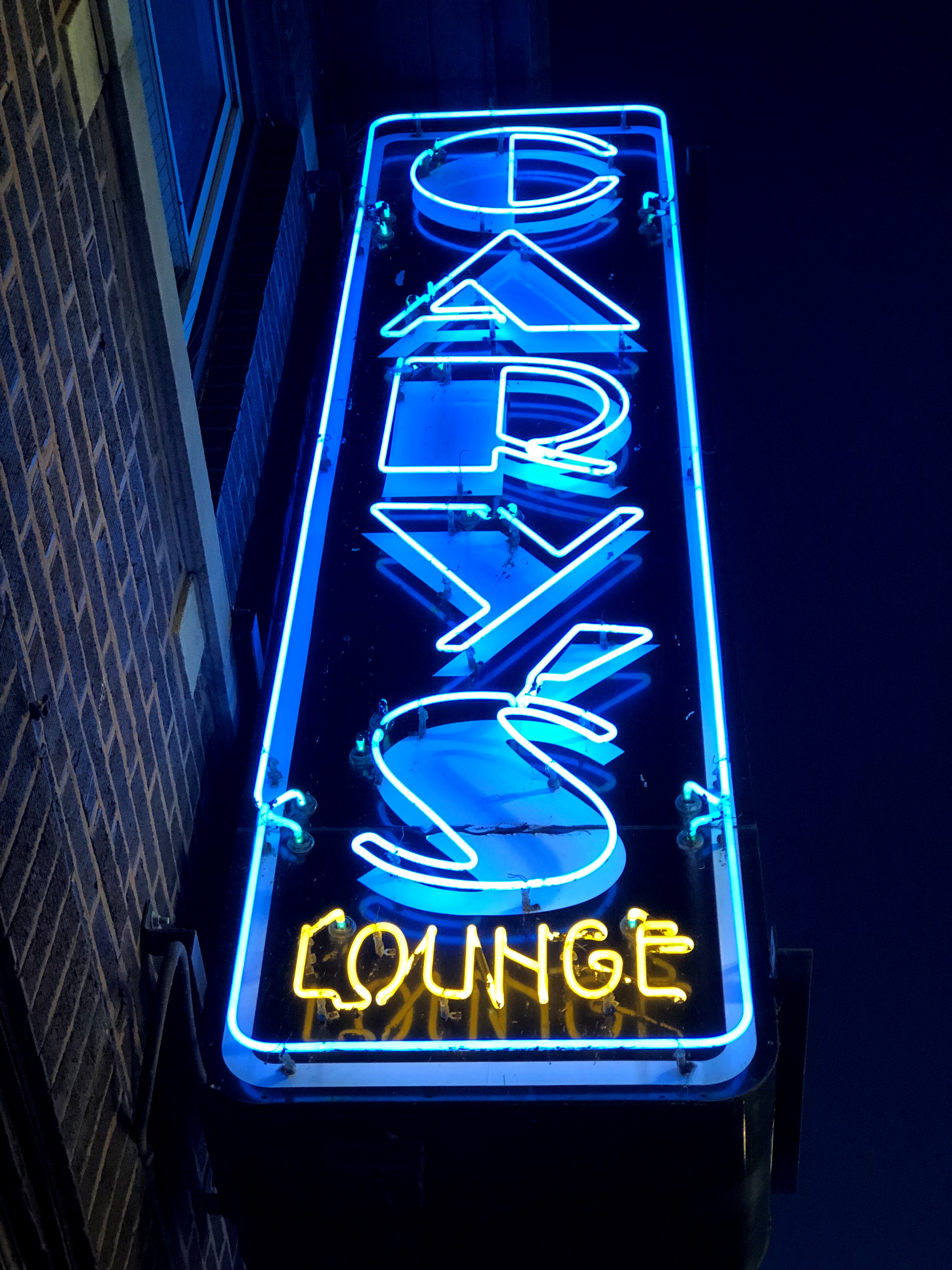
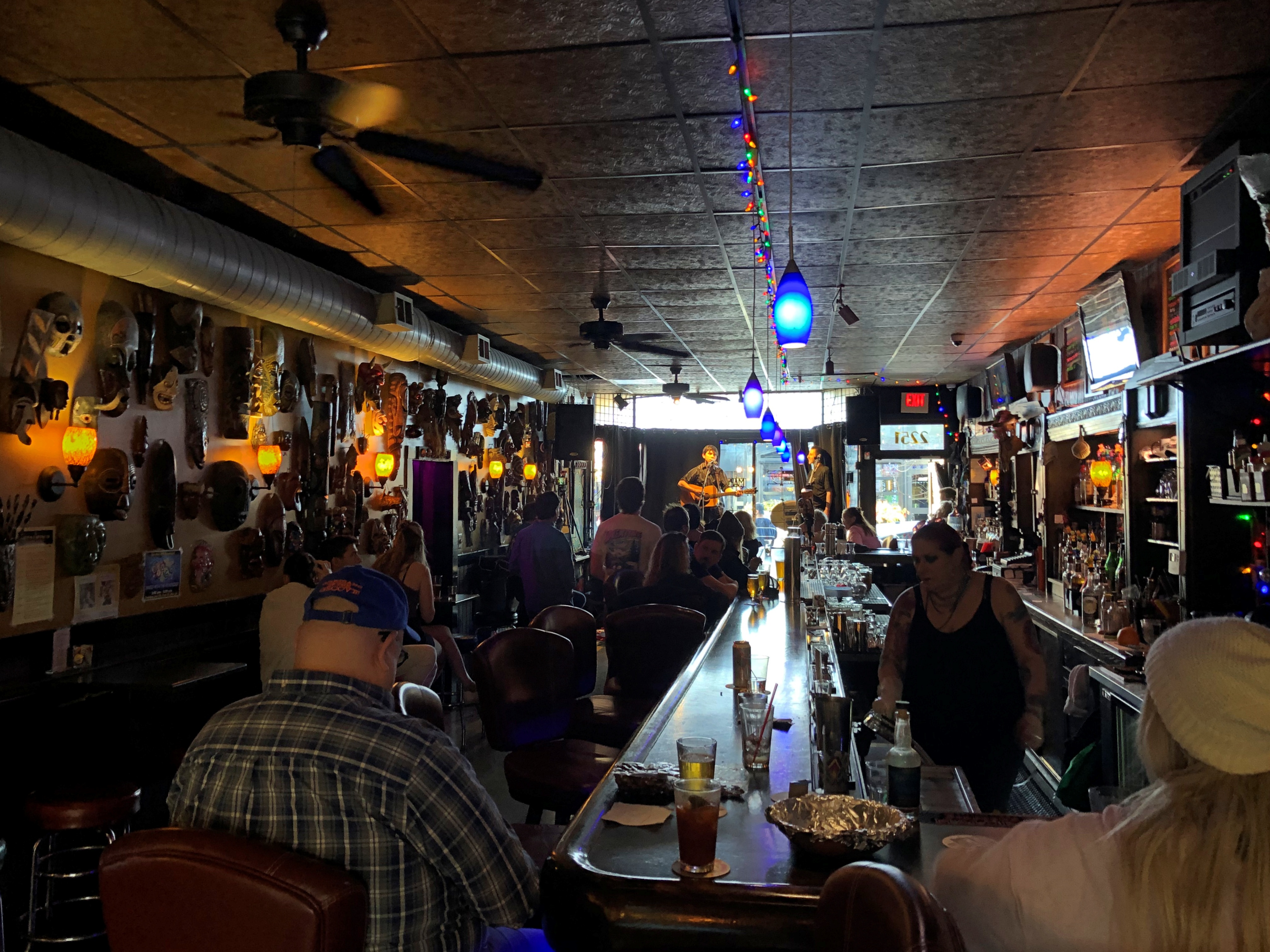
My goal on Sunday was to make it to Cary’s, a bar on Devon Avenue on the northwest side of Chicago. I made it. As bar neon goes, this one’s the top, put it in the Cole Porter song.
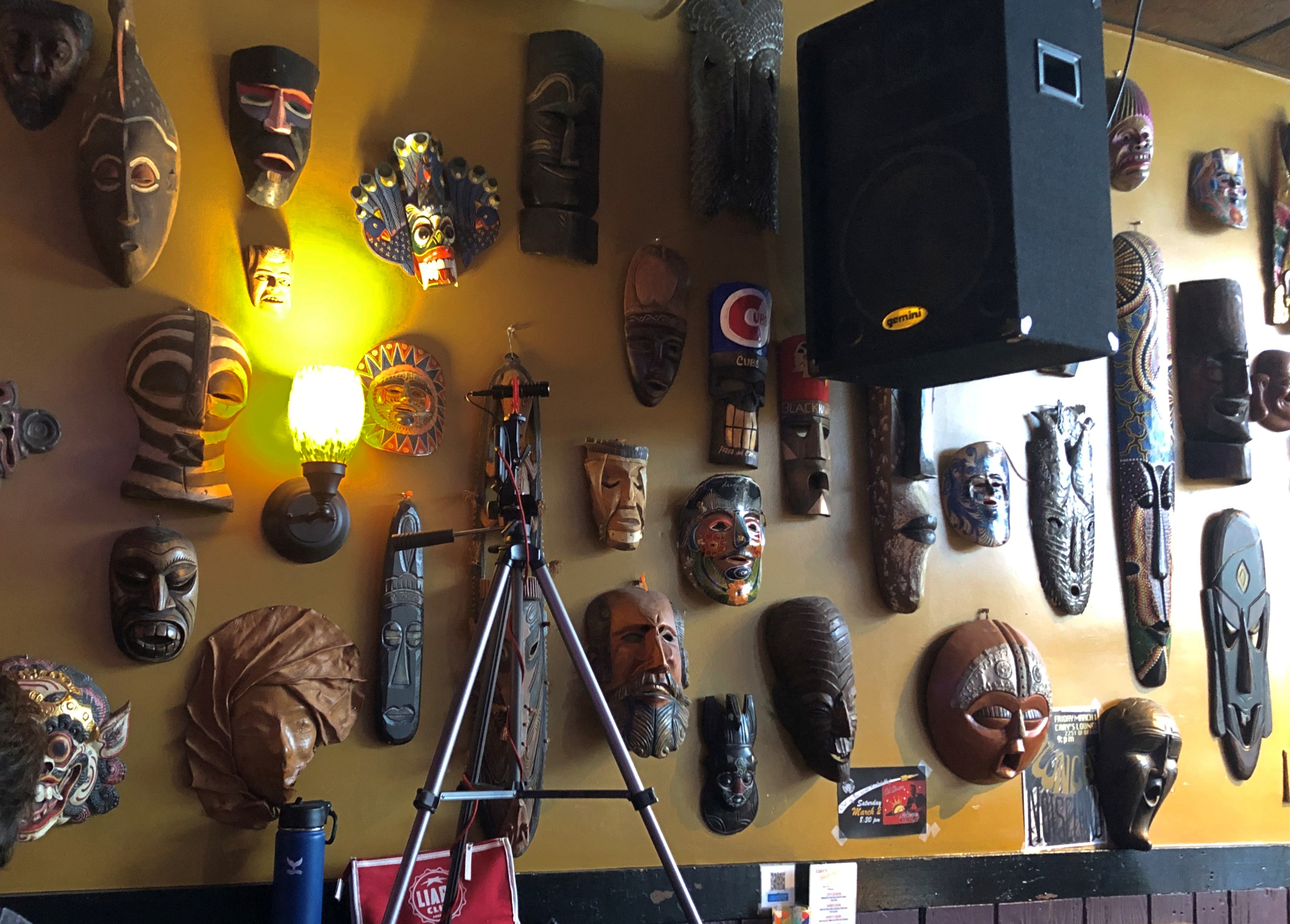
Mask décor inside. Pixar: there’s a movie in bar masks that talk while the bar is empty.
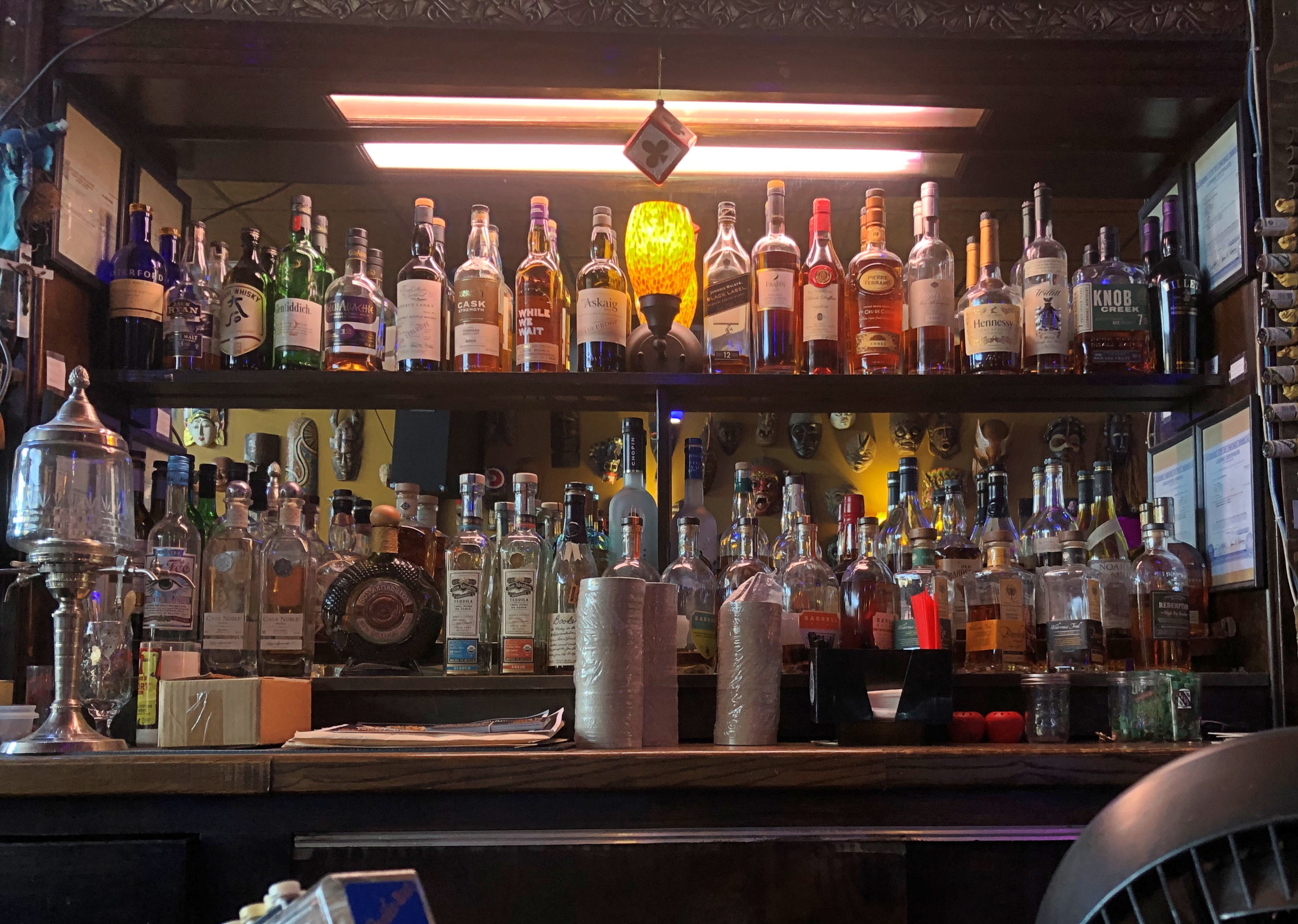
Mostly, though, it’s a Chicago bar.
The bar stands out in the area, because much of the surrounding neighborhood is South Asian in character and it isn’t. Nearby establishments include Lahore Food & Grill, Hyderabad House, Pak Sweets, New Bombay Hair & Beauty Salon, Devon Gurdwara Sahib of Chicago, Musk & Oud (gift shop), Amar Carpet, Chandni Exclusive (bridal shop), Mehrab Supermarket, and many more.
Back when we lived in Chicago, in both the late ’80s and mid-90s, we’d seek out Indian food in the area, but I hadn’t been there recently. Not much seems different these days, despite the sizable expansion of the South Asian population here in the suburbs: on an unusually warm March evening, Devon and the nearby streets were alive, a constant churn in and out of the shops, along the sidewalks and out into the streets, where cars had a tight fit. I’d have wandered around Devon on foot more on Sunday, but I arrived only in time for the beginning of the show at Cary’s, because of the aforementioned detour en route, and the fact that parking is near impossible on Devon, and almost so on the streets around it, whose spaces are restricted mostly to residents.
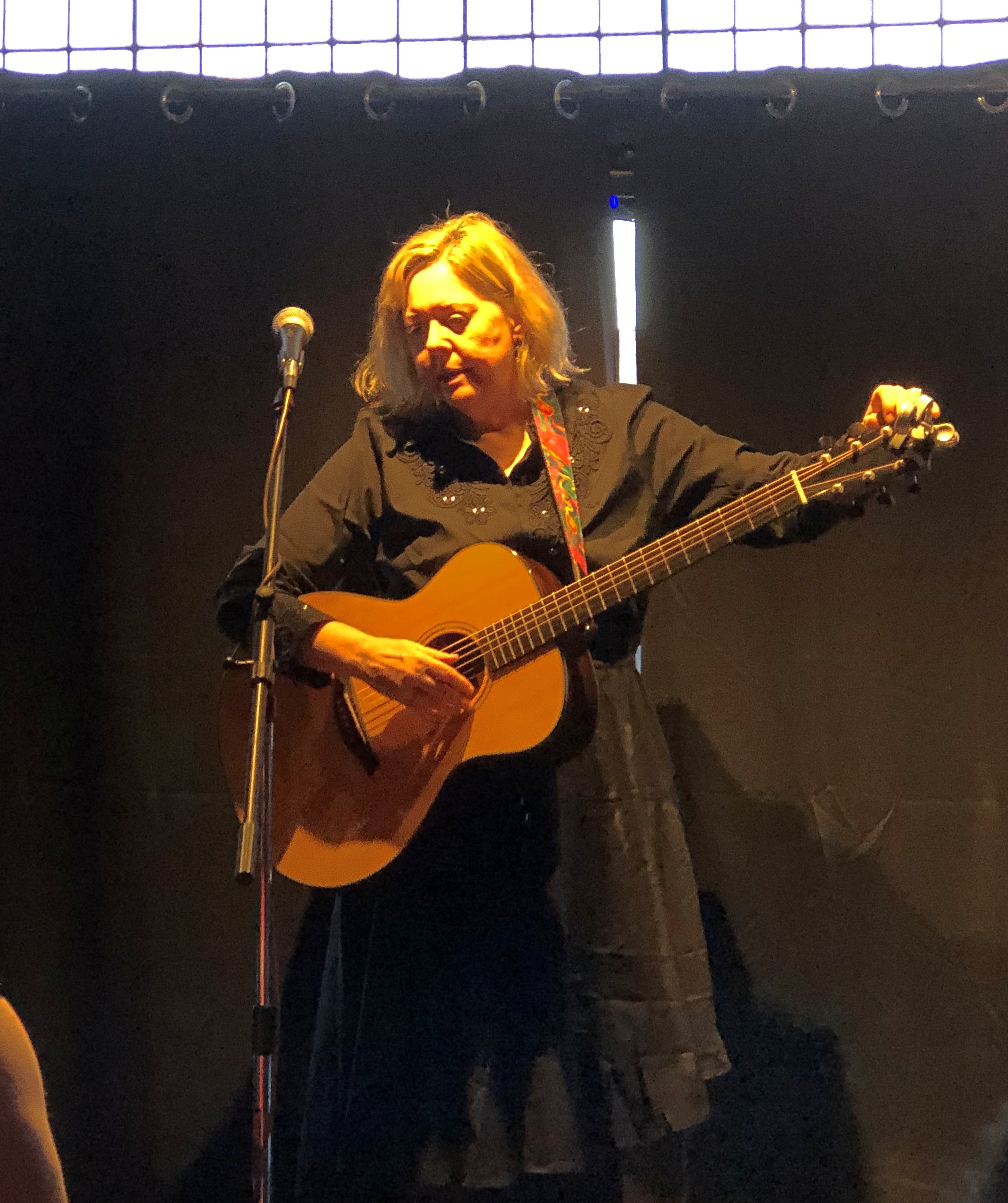
I went not because I go to bars that much, but to see my old friend Wendy (even when this picture was taken in ’87, I’d already known her about five years), who was slated to play guitar and sing. On stage, she’s Jenn. I also got to see the opening act. He and his band — a bass player and a drummer — were also quite good, though Dylanesque isn’t quite how I’d describe him musically, though he’s got that the Dylan in Greenwich Village look on the poster, at least.
Wendy only plays in public occasionally, and I’d never heard her more than noodle on the guitar. I’m glad to report she plays guitar very well, and has a fine singing voice, though her lyrics were sometimes hard to hear over bar noise. Still, she was especially lilting in holding long notes seasoned by her Nashville background: that cut through the noise.
I told her these things afterward. I was glad I didn’t feel compelled to politely lie to her about her talent because, fortunately, she had some.
Years ago, in the summer of ’82 in fact, other friends and I went to a Nashville bar, I forget which one, to see a fellow one of us knew slightly, an aspiring musician, who had invited us for an open mike night. He was, I think, a waiter or bartender, but of course, every other waiter or bartender in Nashville aspires to musical success.
He must have aspired more specifically to be like Glenn Fry or Don Henley, but was a failure. Just didn’t have enough in the way of musical chops; even we could hear that. We were polite about it, though. I wonder whether that was doing him a disservice, but I expect in the fullness of time, he found out.