Central Park Ramble ’25 (Strawberry Fields For Now)

Kids came in some numbers for Halloween here in the northwest suburbs yesterday, but I didn’t keep an exact count this year. The day was cool but not cold, without a hint of rain, so that might have encouraged turnout, like for voting. One time a passel of kids showed up, maybe a dozen or so, all under 10, with a smaller passel of parents off near the sidewalk.

We were giving away full-sized candy bars until they ran out, and the passel squealed with delight at receiving the various Hersey products. Even now, the costumes are a blur, maybe because I didn’t recognize a lot of the characters. Ones that I might have known weren’t familiar either. I asked the parents of a very small boy — ah, first-timers — what he was supposed to be. His shirt pattern reminded me of TMNT, but it was Hulk, they told me. “Hulk smash,” they said. “Hulk smash, all right,” I agreed.

All of the Halloween traffic, except for a handful of older kids, came before dark. My not-so-inner curmudgeon reacts: in my day, we trick-or-treated after dark, risking bodily injury on the streets, and we liked it.

But I am glad to report that the older kids – junior high and even high school – are far fewer than they were, say, 20 years ago. So it’s back to the way it should be. For older people, there are always such seasonal events as the Greenwich Village Halloween Parade. To this day, the ’06 iteration of that parade remains the only time I’ve encountered the band KISS live – they were the grand marshals (RIP, Ace Frehley). We also encountered Space Ghost then, or at least a fellow who was adamant about his Space Ghost identity.

Near Central Park on Fifth Ave. is 1 East 57th Street. We walked by last month.
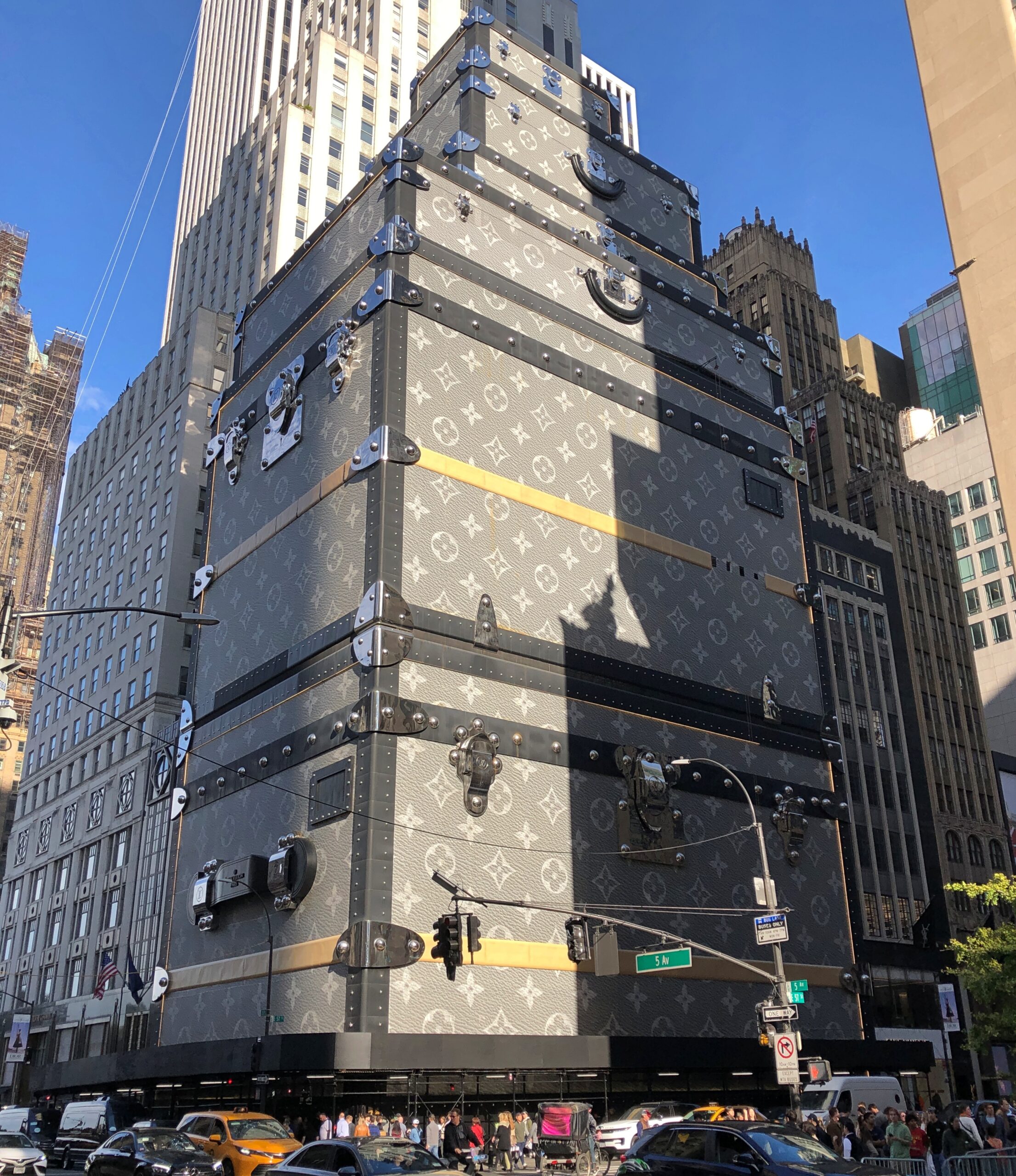
Louis V 2025

A few years ago, luxe retailer LVMH Moët Hennessy Louis Vuitton added a faux facade to its NY flagship store there on the avenue, one that evokes its signature luggage trunks in a highly visible way. Redevelopment plans for the building behind the trunks were unveiled not long ago, so I suspect the trunk-appearance doesn’t have much longer to look down on Billionaire’s Row and its strato-priced residential properties (whose high rents and sale prices don’t necessarily guarantee high-quality construction, apparently).

As we neared Central Park, we spent a little time at Augustus Saint-Gaudens’ statue of William Tecumseh Sherman (dedicated 1903) in Grand Army Plaza. Life’s too short not to look at some Saint-Gaudens from time to time.
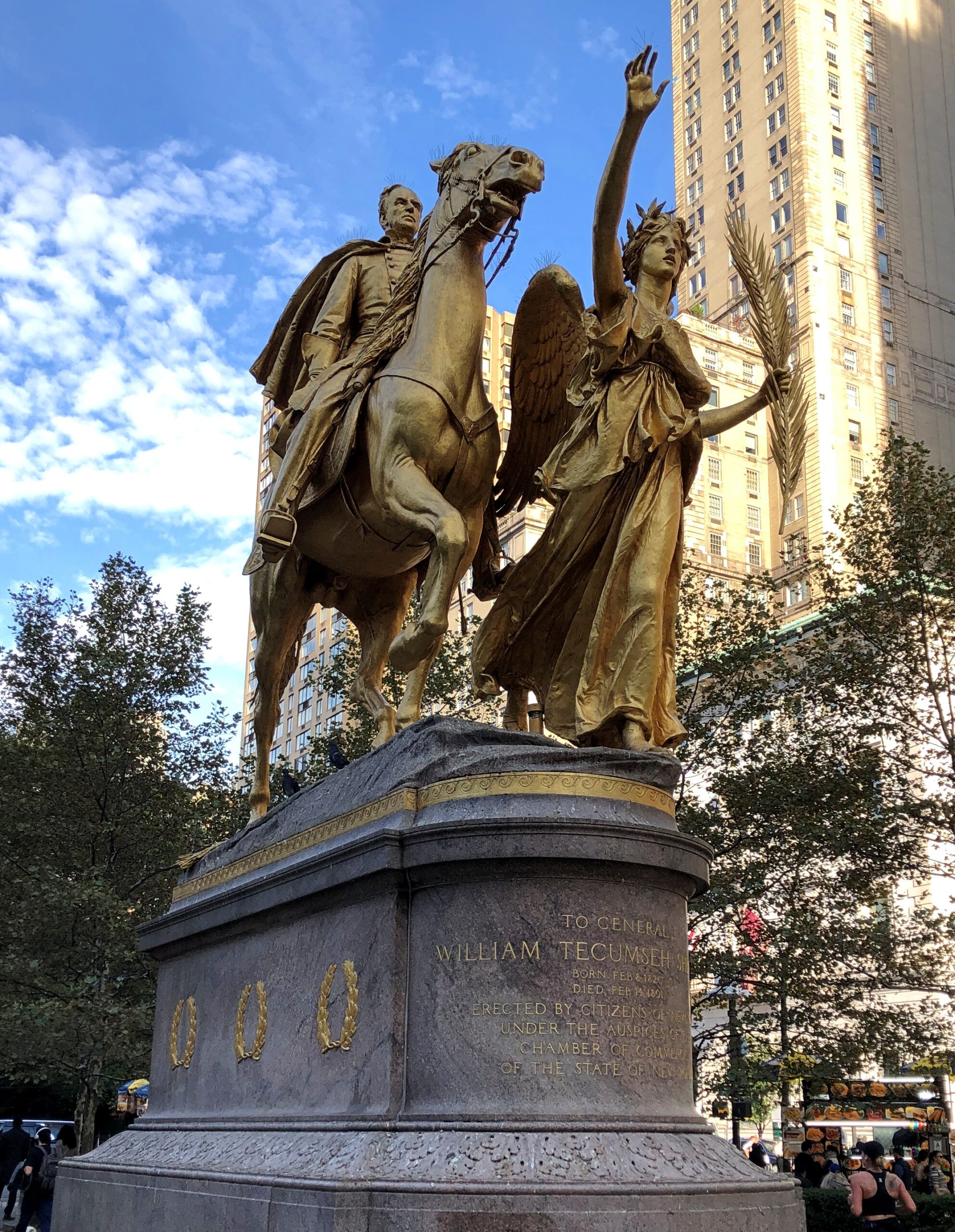
Grand Army Plaza

Not far away, something a little newer.
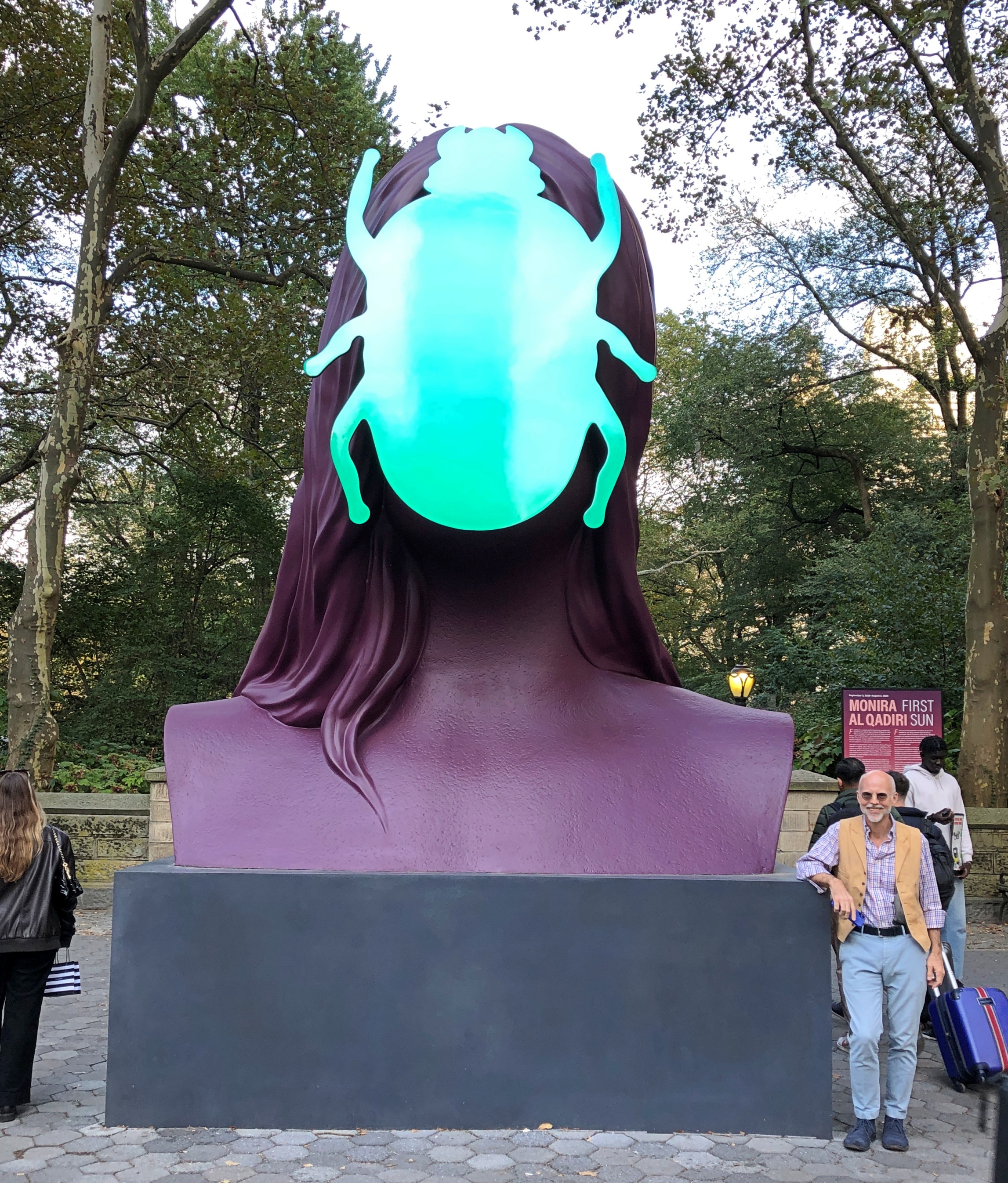
“First Sun,” a painted aluminum sculpture of a human-scarab figure by Senegalese artist Monira Al Qadiri, and slated to be in place until the end of next summer.


“First Sun,” a painted aluminum sculpture of a human-scarab figure by Senegalese artist Monira Al Qadiri, and slated to be in place until the end of next summer.

Visible from near the statues is the storied Plaza Hotel and an Apple Store, which is open 24 hours, Google Maps tells me. Storied in a different way.

I’m glad the Plaza acknowledges its fictional role in The Great Gatsby by featuring a lavish-beyond-the-dreams of Croesus Gatsby Suite. Of course. A smart hotel operator isn’t going to waste an opportunity like that. In this case, Fairmont Hotels and Resorts, a Canadian company, managing for owner Katara Hospitality – the large hotelier owned by the Qatari government. In the 21st century so far, the Plaza has been owned by an Israeli company and then an Indian one before Katara bought it. There’s something oddly American about an ownership trajectory like that.

We – Robert, Geof, Yuriko and I – charted ourselves a simple walking path through some of the southern reaches of Central Park. Manhattanites and visitors to the borough were out in Saturday-afternoon force. Saturday, in the park/I think it was the 18th of October. No, that doesn’t scan. A fair number of pitch-a-blanket cap and souvenir salesmen were out, too, but not nearly as many buskers as a great city park like Central Park should attract.
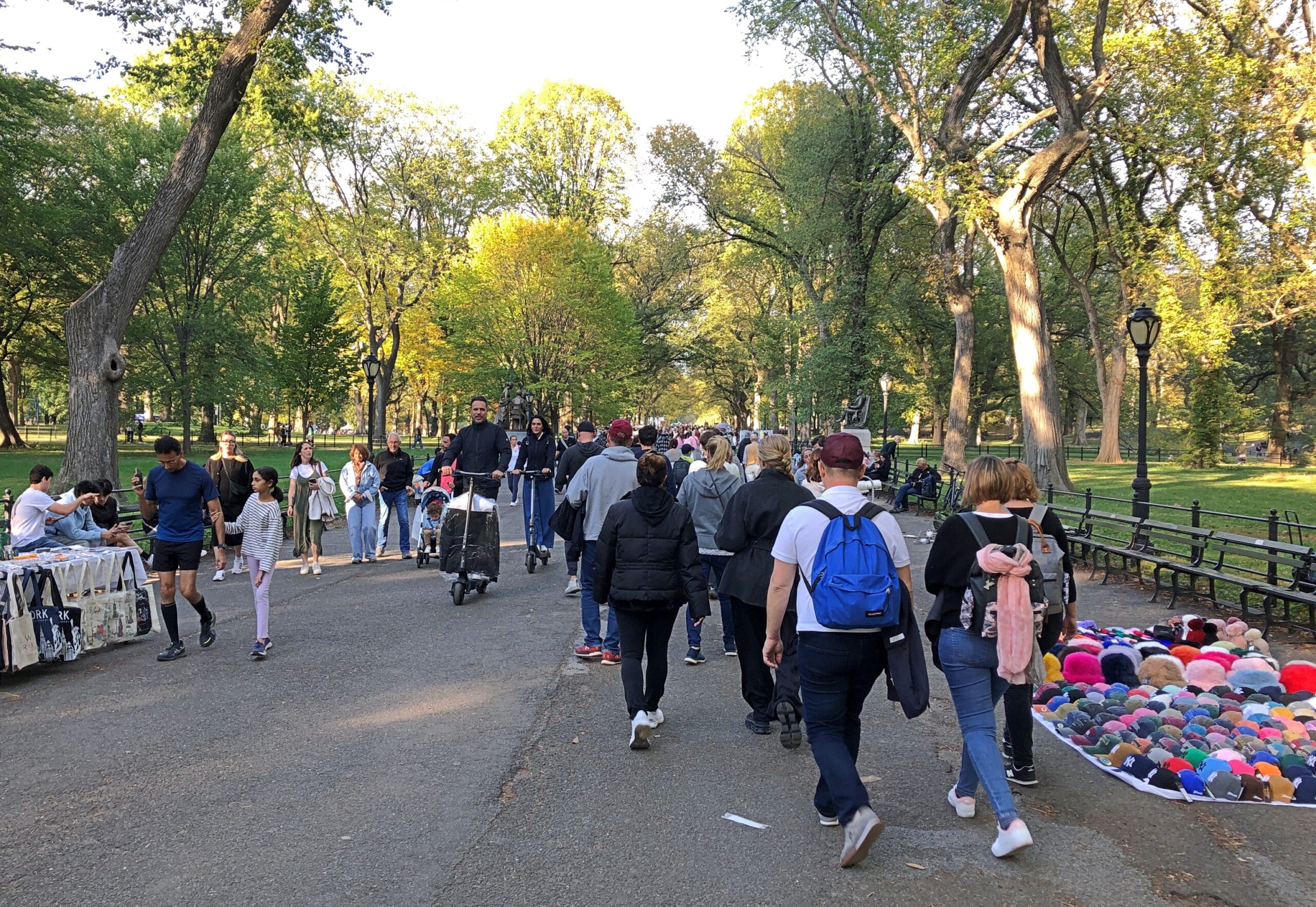
Central Park Oct 2025

There’s an editorial right there: why America needs more buskers, and why some American cities need to chill when it comes to suppressing buskers. Europeans might not be right about everything, but about allowing buskers? Yes.

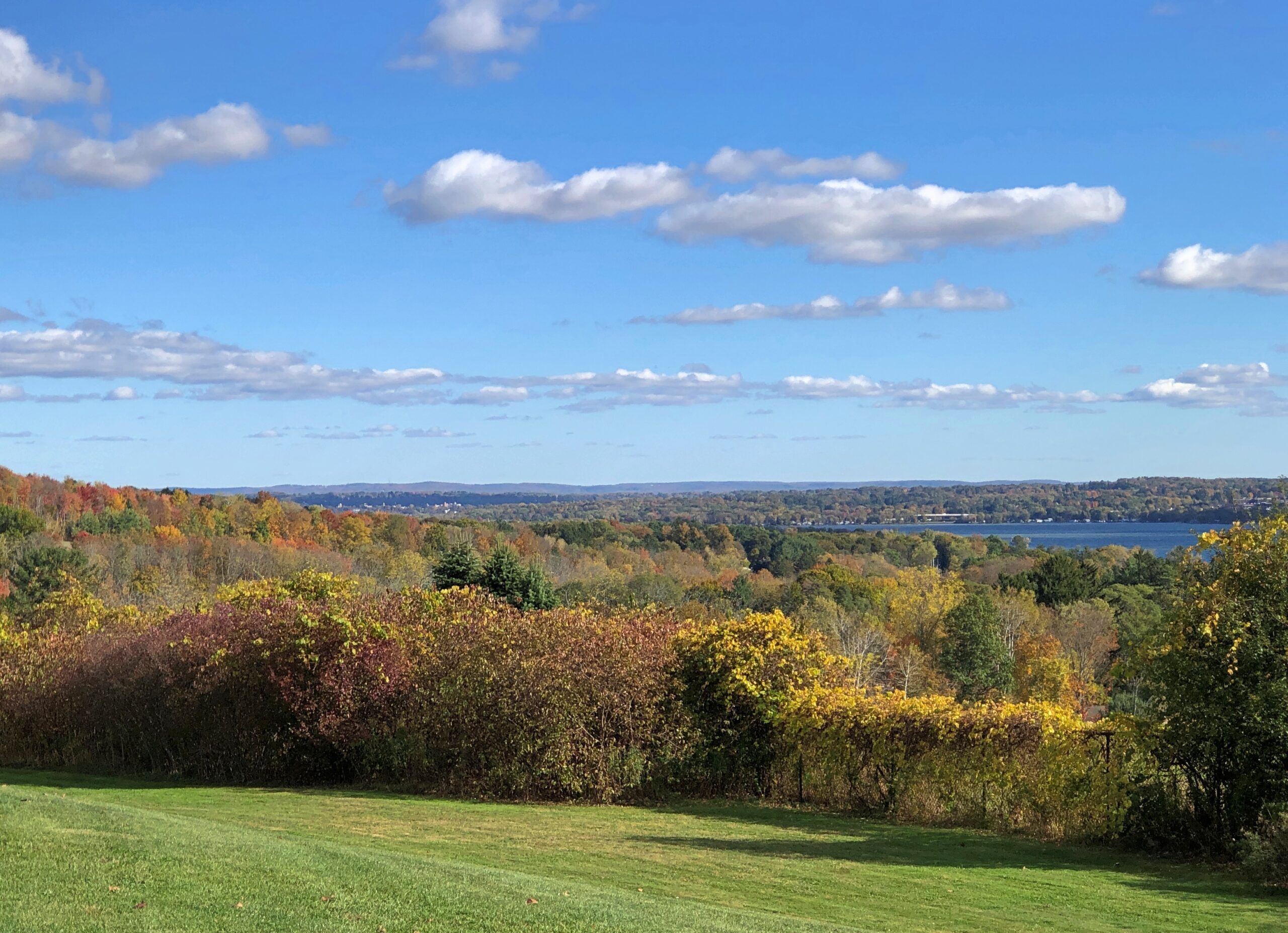
The leaves weren’t at peak just yet, with the greens still hanging on more than not. I don’t remember which visit to Central Park it was, but one time I wandered the park during peak coloration, whipped into even greater yellow-and-red glory by a brisk October wind. Temporary clouds of leaves came and went, even as the wind shook more leaves from their branches. Color, but also motion.

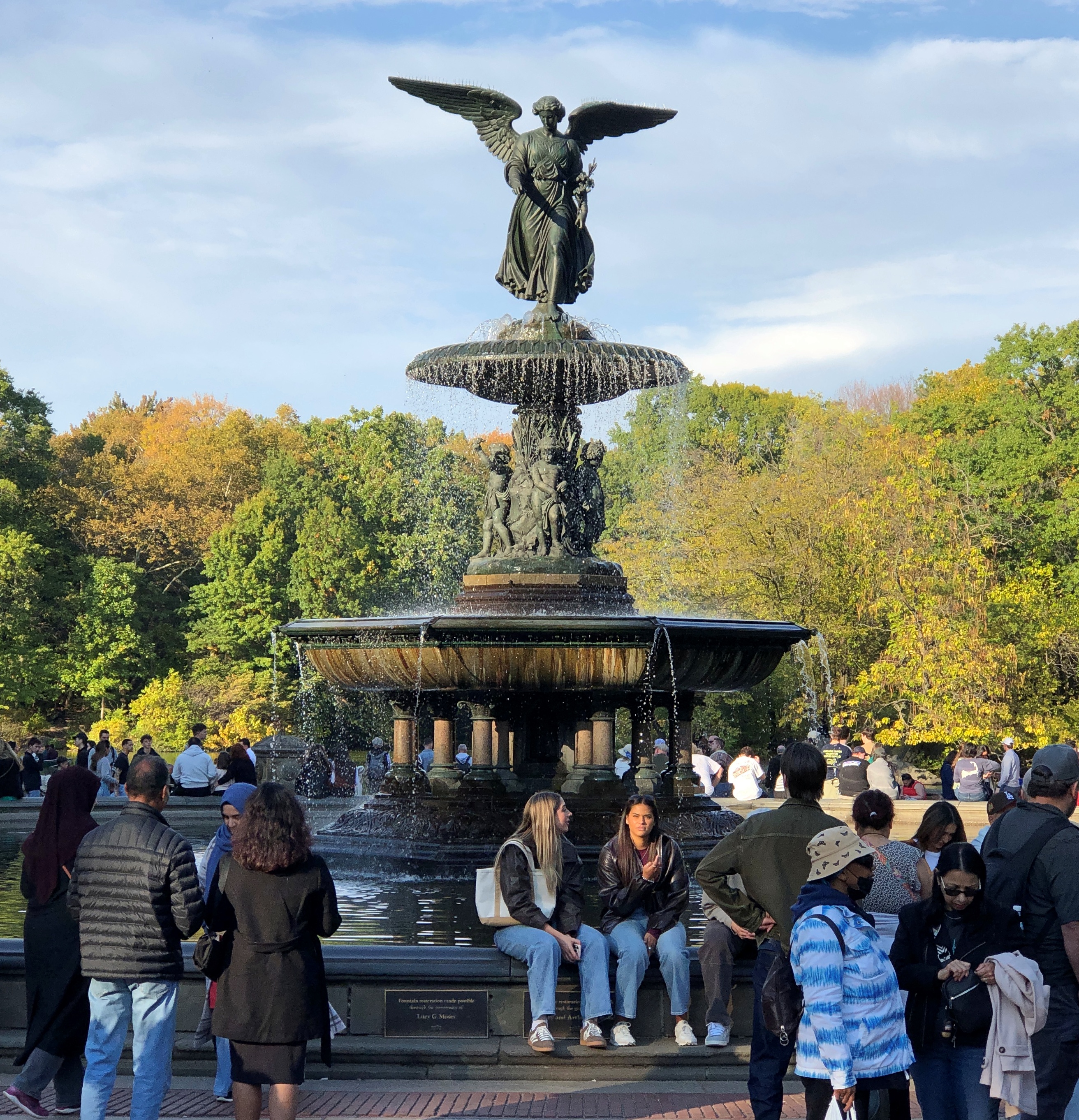
Eventually, we came to The Lake by way of Bethesda Terrace and Fountain.
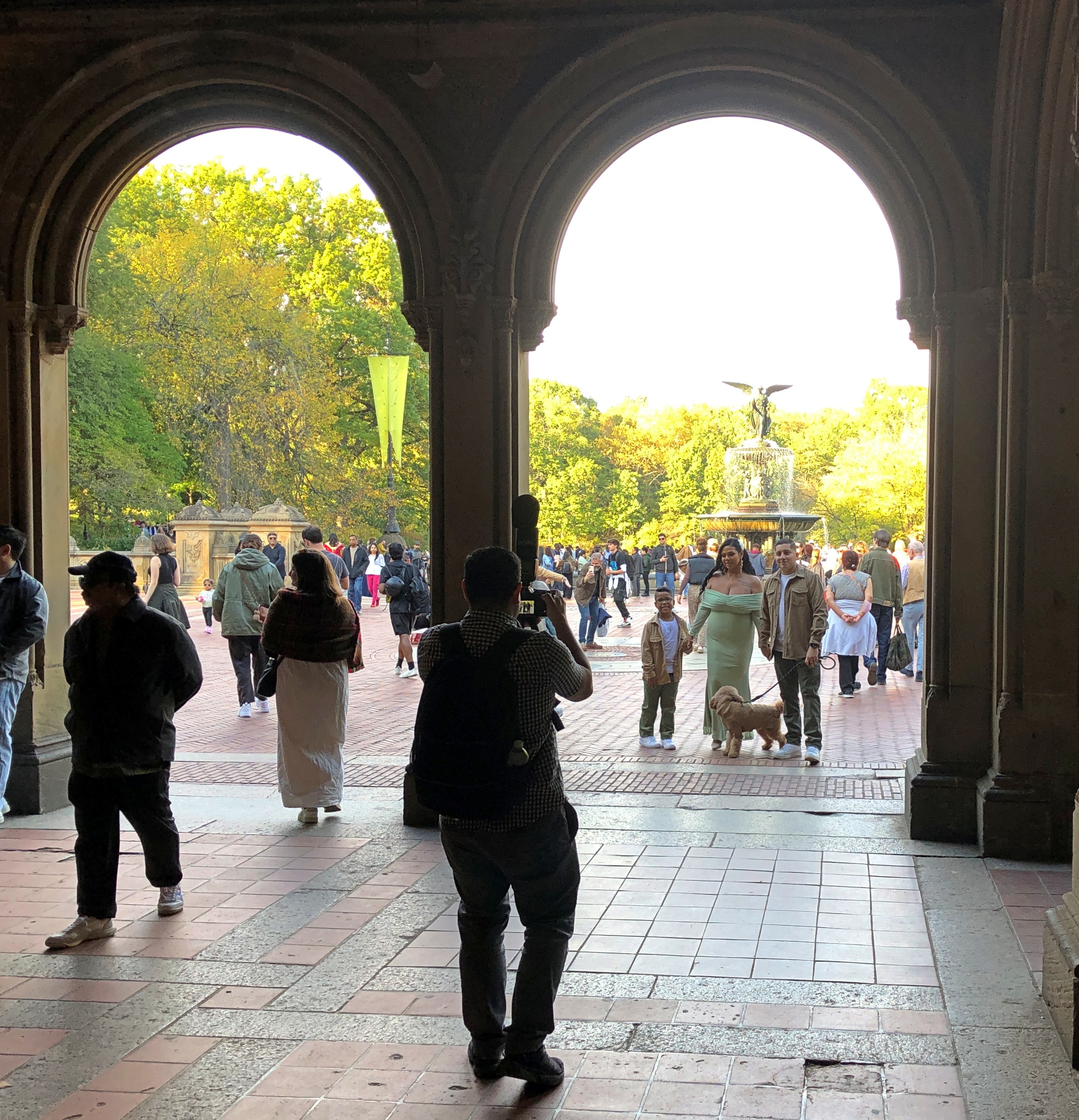
Central Park Oct 2025

But not all the way across The Lake to The Ramble, whose Wiki description drily states that “historically, it has been frequented for both birdwatching and cruising,” with hyperlinks articles about both of those activities. What about cruising birdwatchers? There’s a Broadway musical in that concept somewhere.

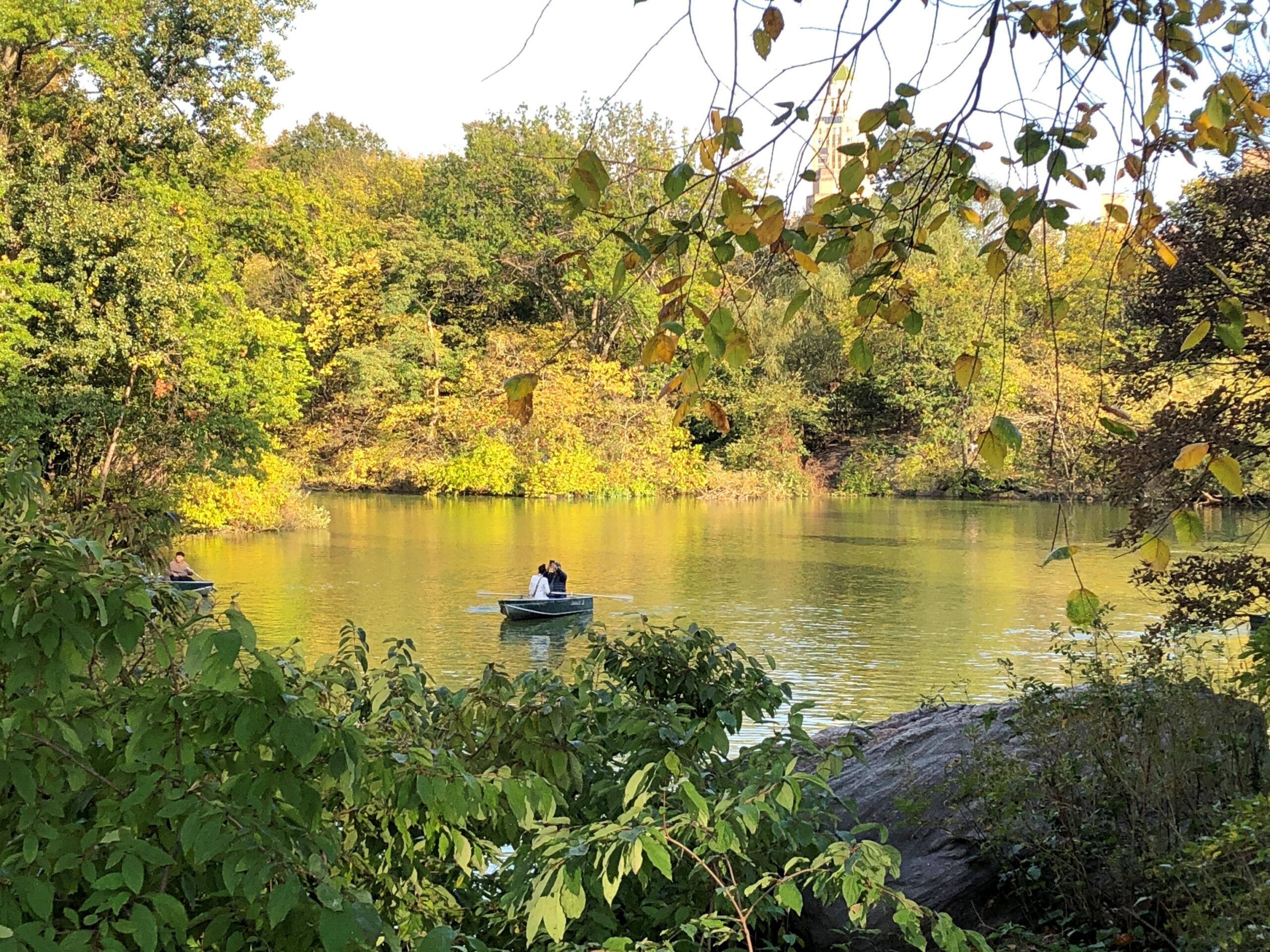
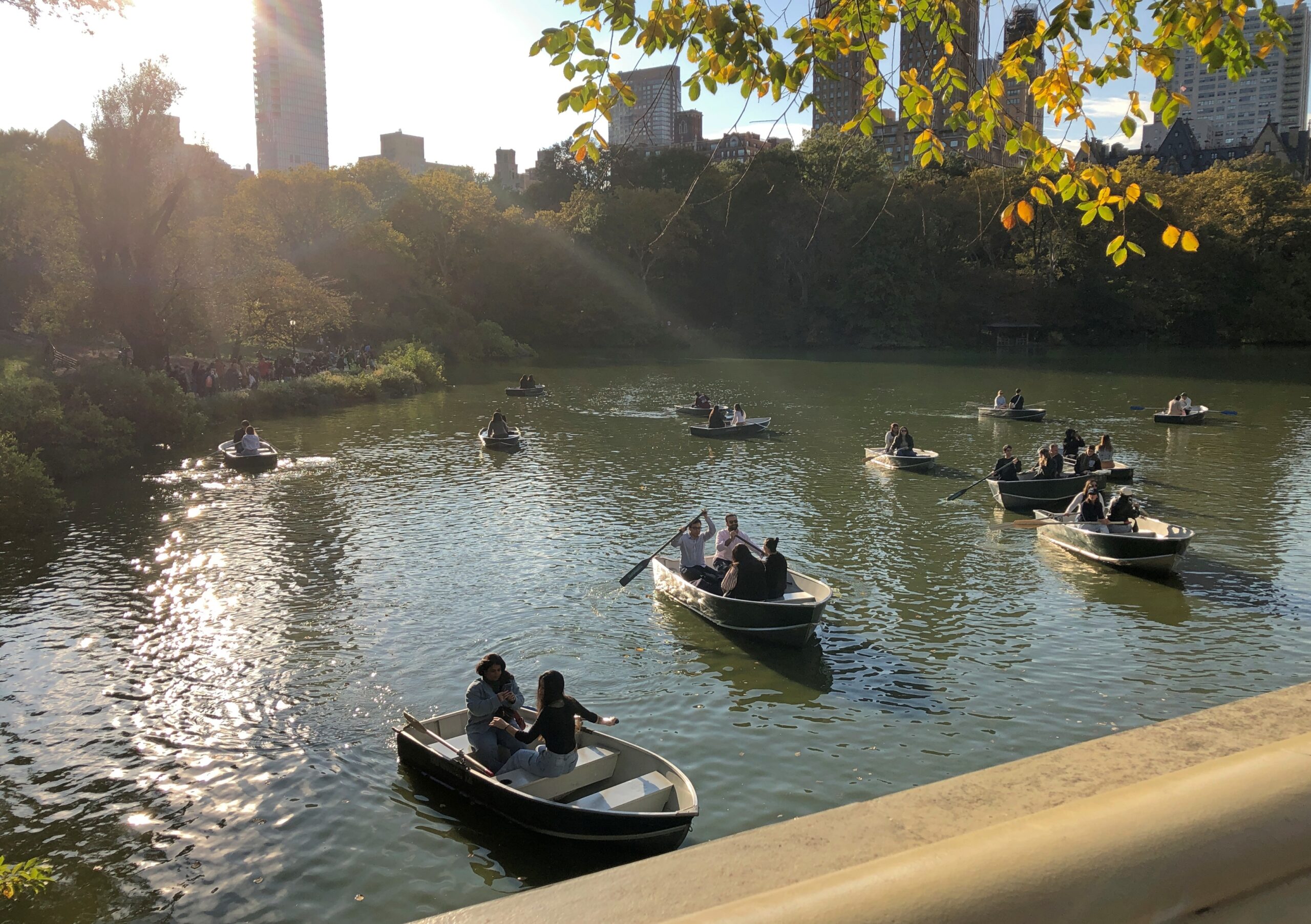
The Lake was clearly a good time and place for casual boating.
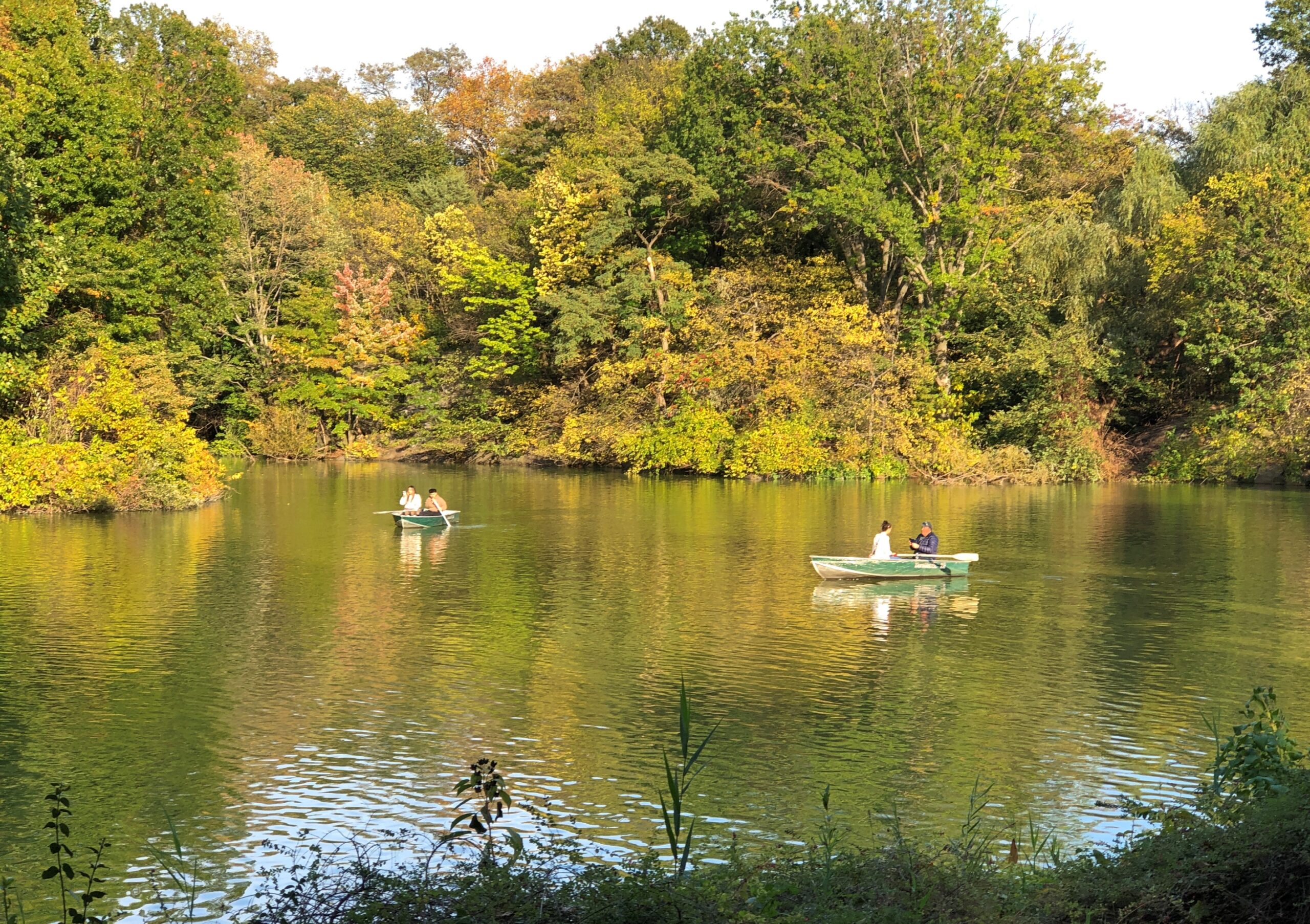
Central Park Oct 2025

The view from the Bow Bridge.

An Upper West Side backdrop.
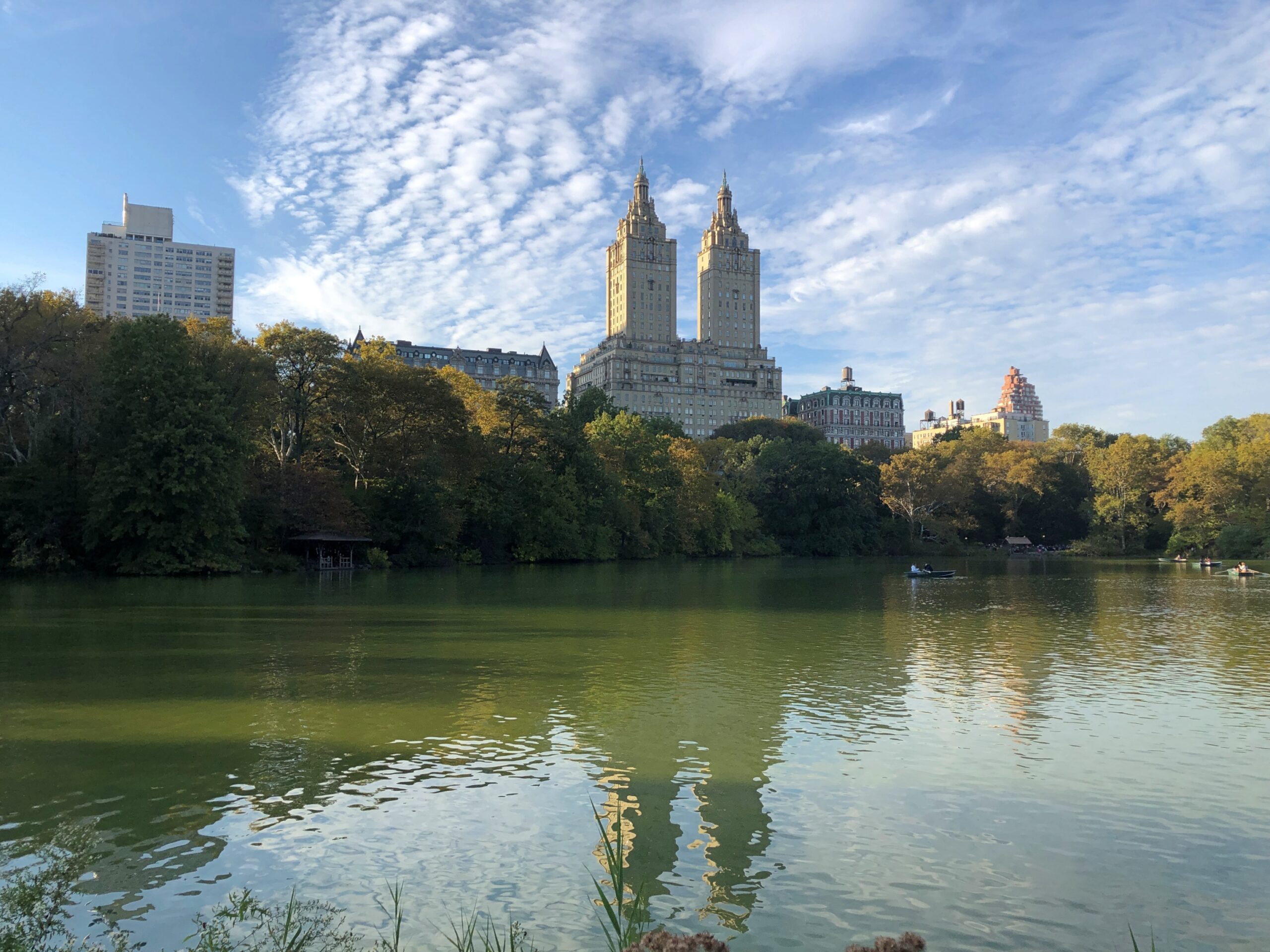
In that part of Central Park, it’s hard to miss Strawberry Fields. There is a fairly empty section.
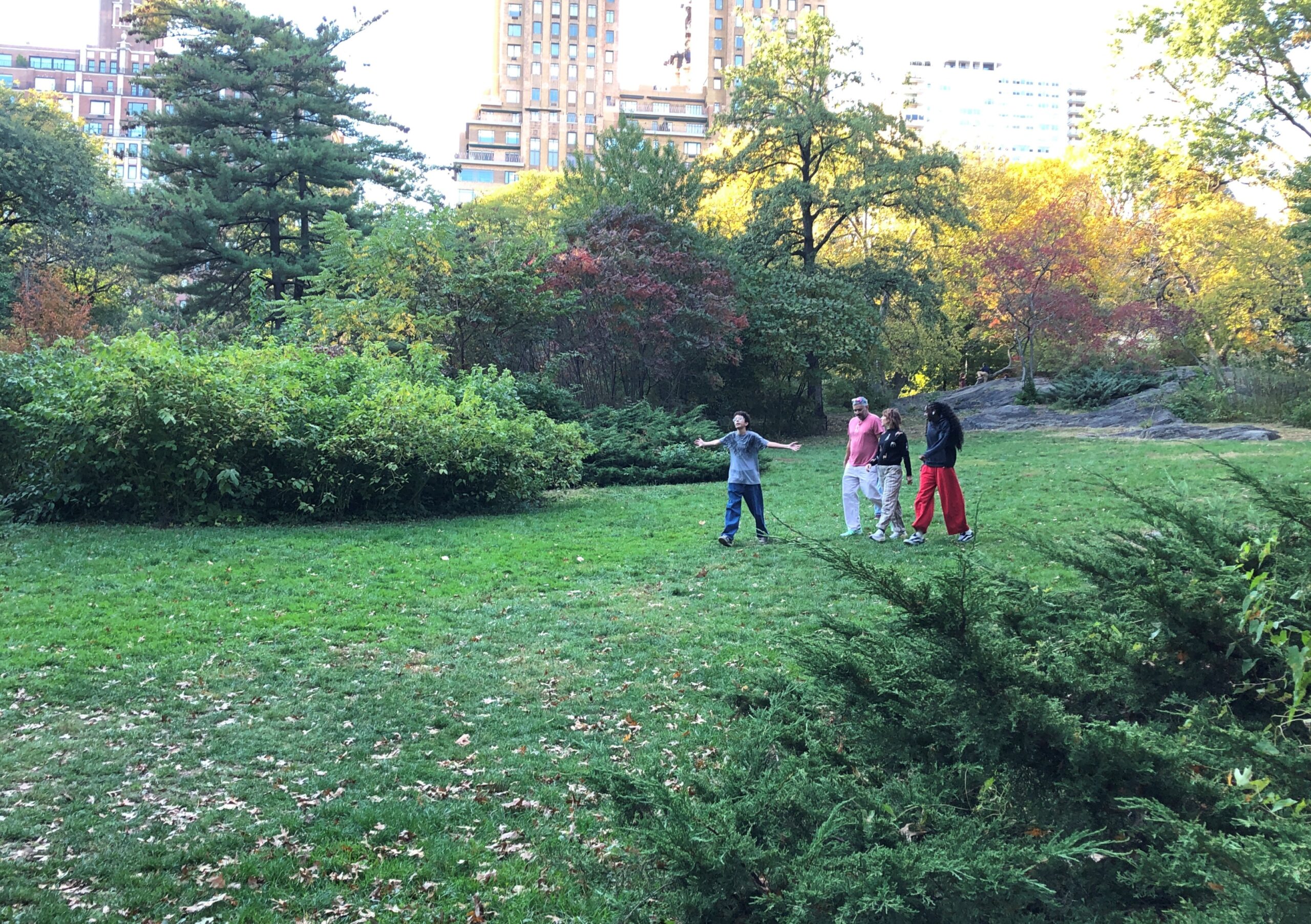
Central Park Oct 2025

That’s not the case when you get to the Imagine memorial. Among the visitors, a guitarist was noodling out one of the more famous Lennon-McCartney tunes, but I forget which. One of the usual ones. Not “Dr. Robert,” say, or “Happiness is a Warm Gun.” So that was one busker anyway, since I think he had a guitar case open in front of him. All you need is love, sure, but bills are bills.
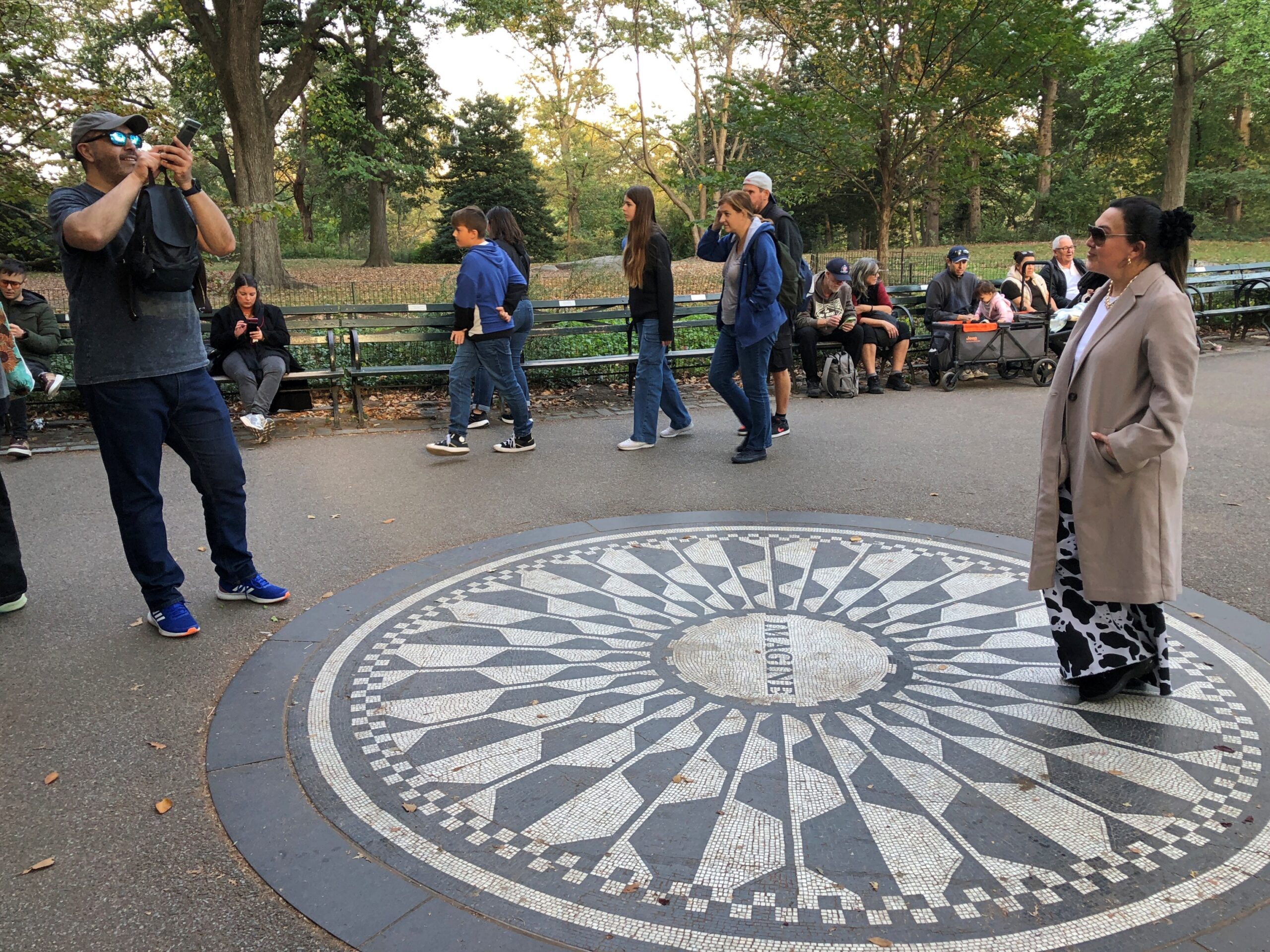
Central Park Oct 2025 - Imagine

Gone these 45 years and still packing ‘em in. Good for you, Mr. Lennon. In another 45 years? It would be interesting to know, and I sure I won’t.
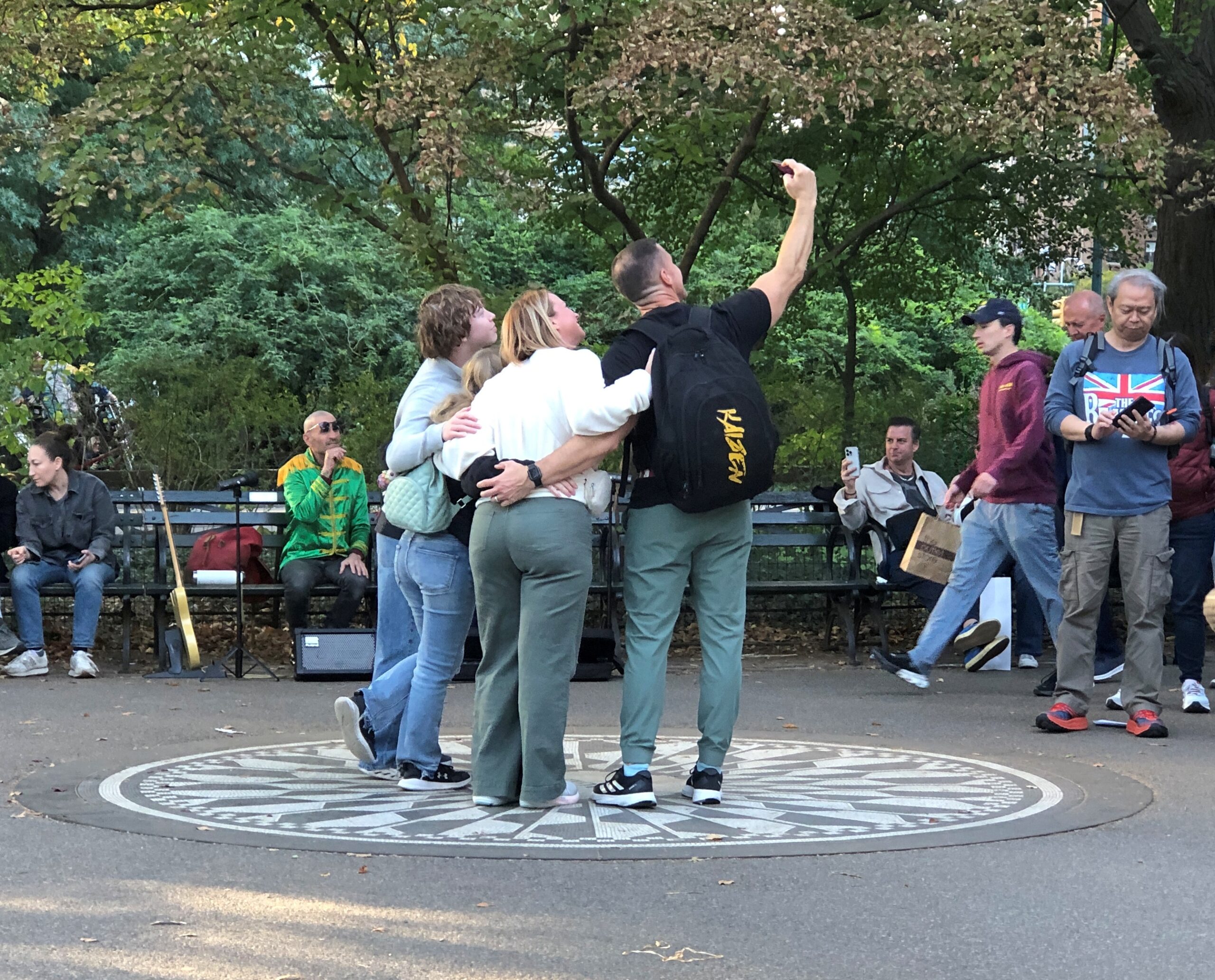
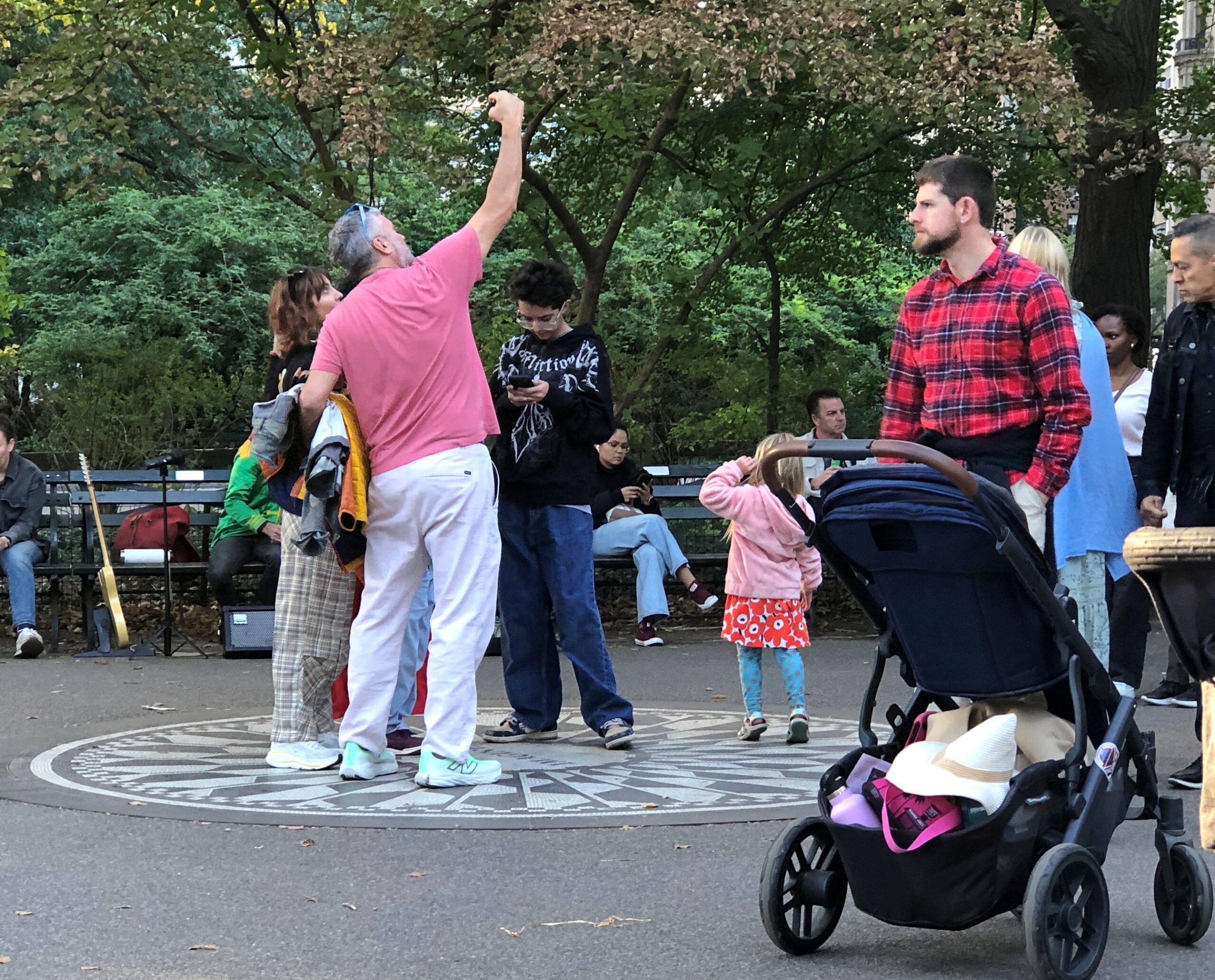
Central Park Oct 2025 - Imagine

I’m afraid the history of memorials doesn’t bode well for the longevity of any memorial, even the kind that people line up to pose with. I didn’t know the man, but I suspect somehow that the thought of fading into obscurity wouldn’t have bothered John Lennon.

At that point, you emerge from the park and are practically face-to-face with the Dakota.
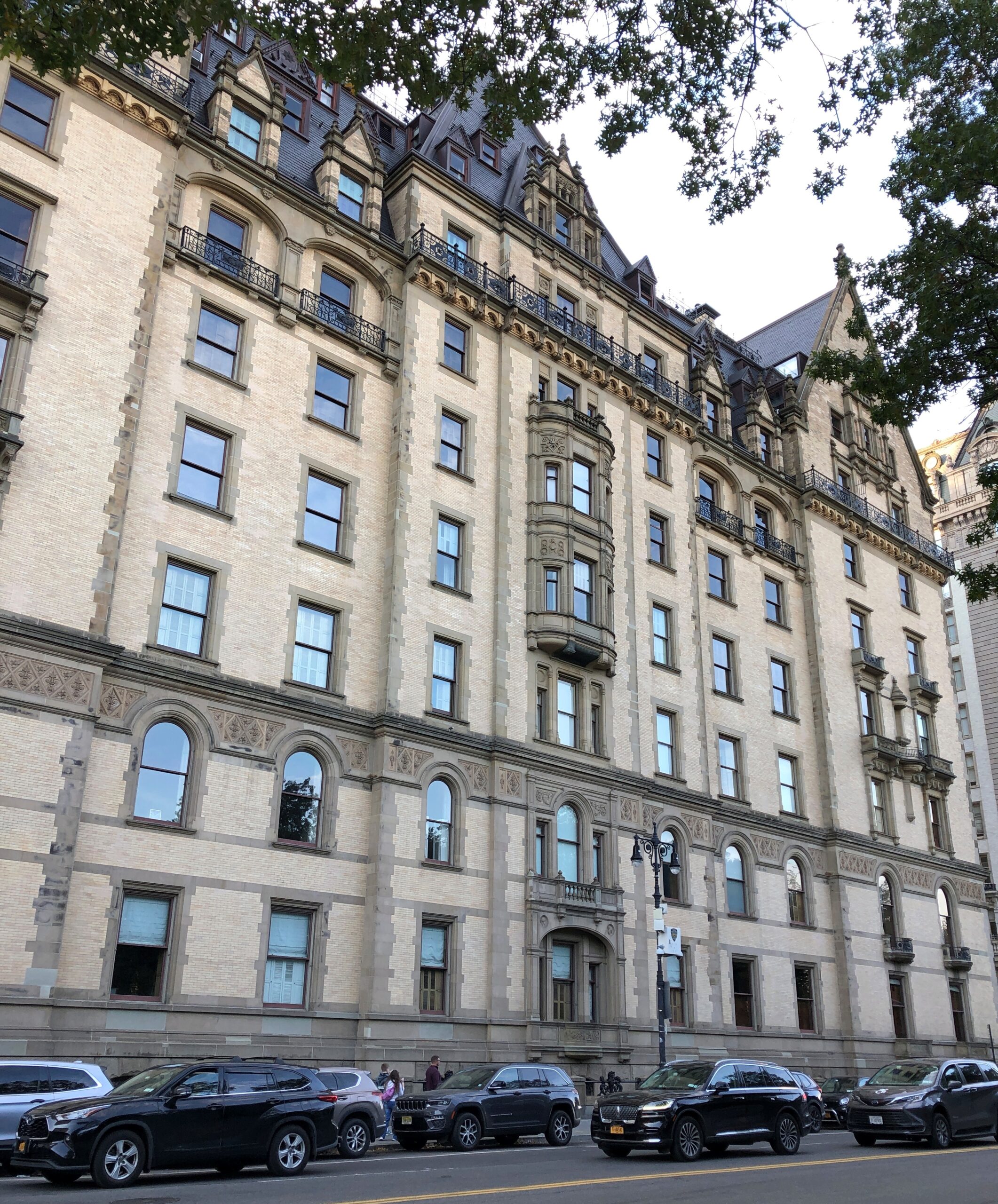
Dakota, Manhattan

We headed east to a subway station, and happened to walk by the entrance of the Dakota. In its grim way, it’s a kind of memorial too. The signs make it known with no uncertainty that no one unauthorized is getting in.

Southern Tier Fall Crossing

Drive out from Erie, Pa., headed northeast, and soon you have a decision to make: I-90, which becomes the New York State Thruway, or I-86, which does not. Besides costing more money, the NYST went places I didn’t want to go (this time): greater Buffalo, Rochester, Syracuse, Utica and into Albany, a route I drove as long ago as 1991 on my way to Boston.

By contrast, I-86 passes through much smaller places, winding through the hilly Allegheny Plateau, a way I had not been before. High time to do so, I thought. The road is also New York 17, with signs along the way identifying it as the Southern Tier Expressway. “Southern Tier” is the southernmost counties in upstate New York, which apparently is a longstanding regional term.

That’s a good-looking sign, and serves as a nod to the Seneca, who hold land in this part of the state. A Seneca artist named Carson Waterman did the design. For some miles before and after the town of Salamanca, which is part of the Seneca holdings, standard green highway signs include both English and Seneca.

One of the larger places on the Southern Tier Expressway is Jamestown, which I know from the song. It’s a game I occasionally play with my friends: Did You Know There’s A Song About…? and then I name something like rural electrification in Australia or the Versailles conference. In this case, the song is “Maddox Table” and it’s about labor organizing in Jamestown, hometown of the band 10,000 Maniacs. The town isn’t specifically mentioned in the lyrics, but Bemis Point is. Even before the Internet, I could look that up, and note that it’s a local recreation destination on Chautauqua Lake.

Chautauqua Lake is in Chautauqua County, the westernmost bump on the map of New York state. Ah, storied Chautauqua, which brings to mind the outdoor exhortations of men in full suits and women in long dresses, regardless of how hot it was. There’s another streaming service series for you: Chautauqua, set in the raucous 1890s. Could be a comedy or a Gritty Drama.

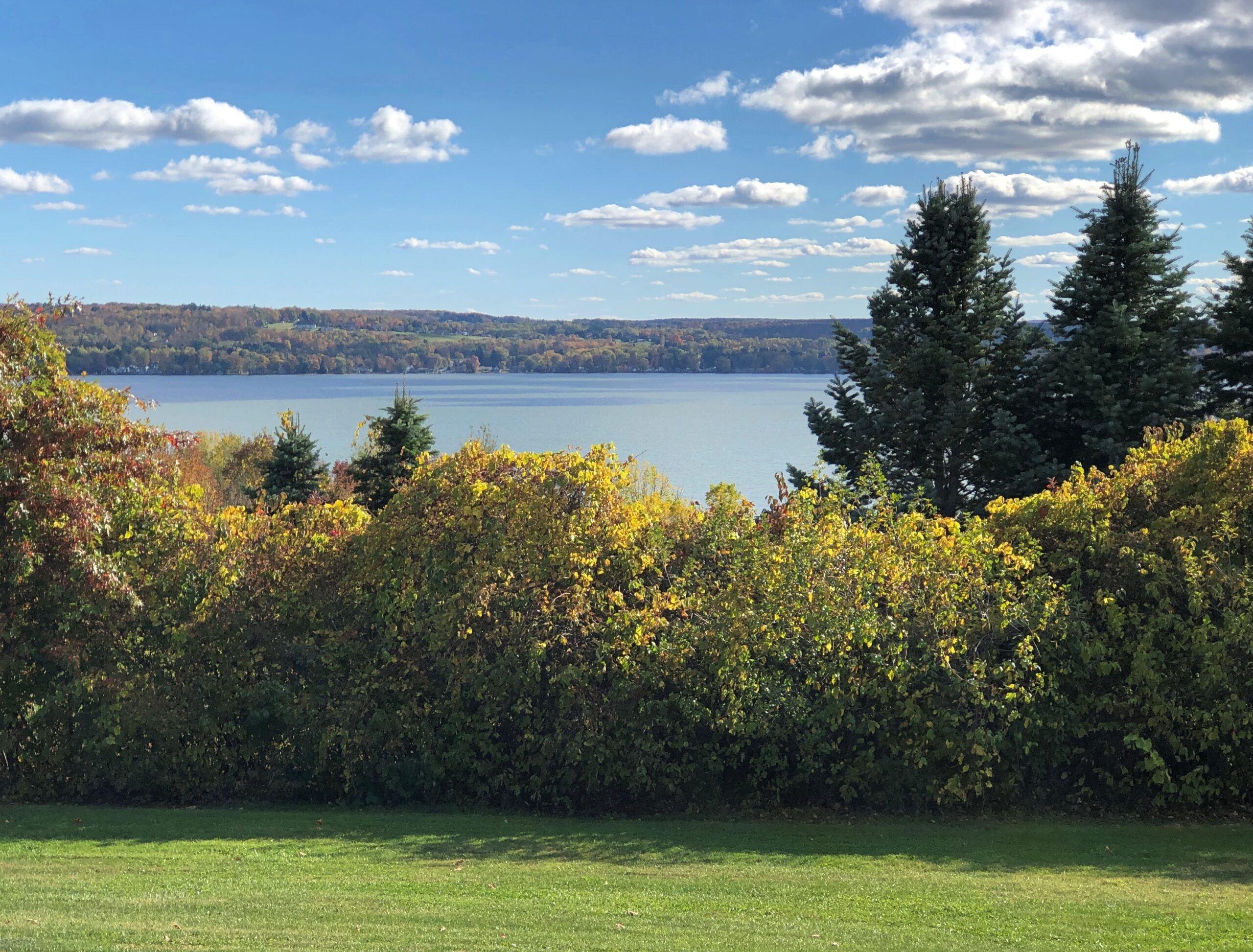
I wanted to reach my destination, Binghamton, NY, before too late, so I didn’t linger near the lake. But I did stop at the rest area on Chautauqua Lake, which is large, and contains multitudes of structures along its shores, and probably many more people in the summer. One of the more scenic rest areas of the trip, it turned out.

Southern Tier NY
Southern Tier NY

So was the next rest area, not far from Corning. A few hours to devote to the glass museum in that town would be well spent, I think.

Southern Tier NY
Southern Tier NY

After an uneventful night in Binghamton – the kind I prefer on the road – I set out for greater NYC, by way of the highway New York 17, the “future I-86” according to my maps, and then the highways New York 30 and 28.

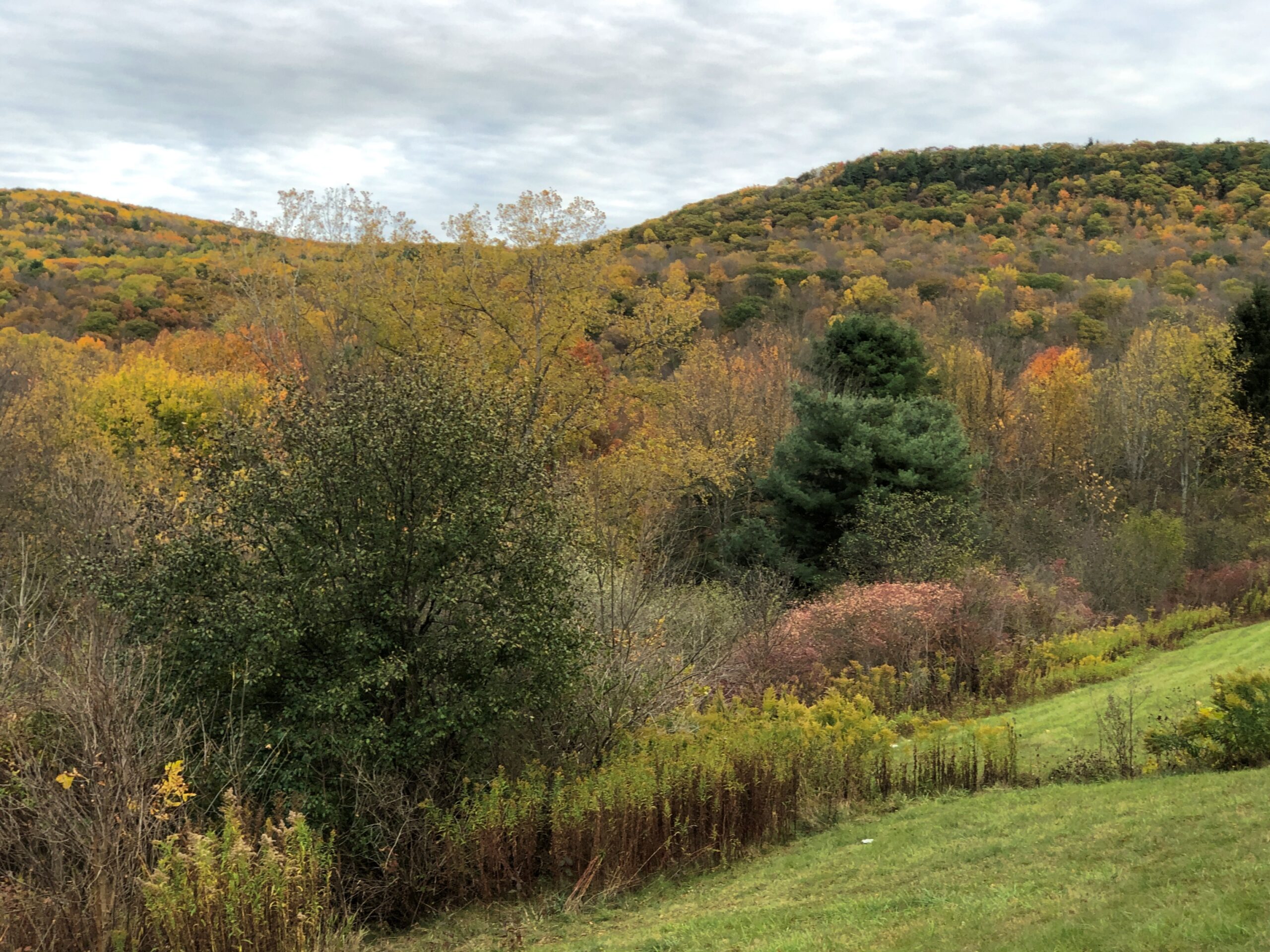
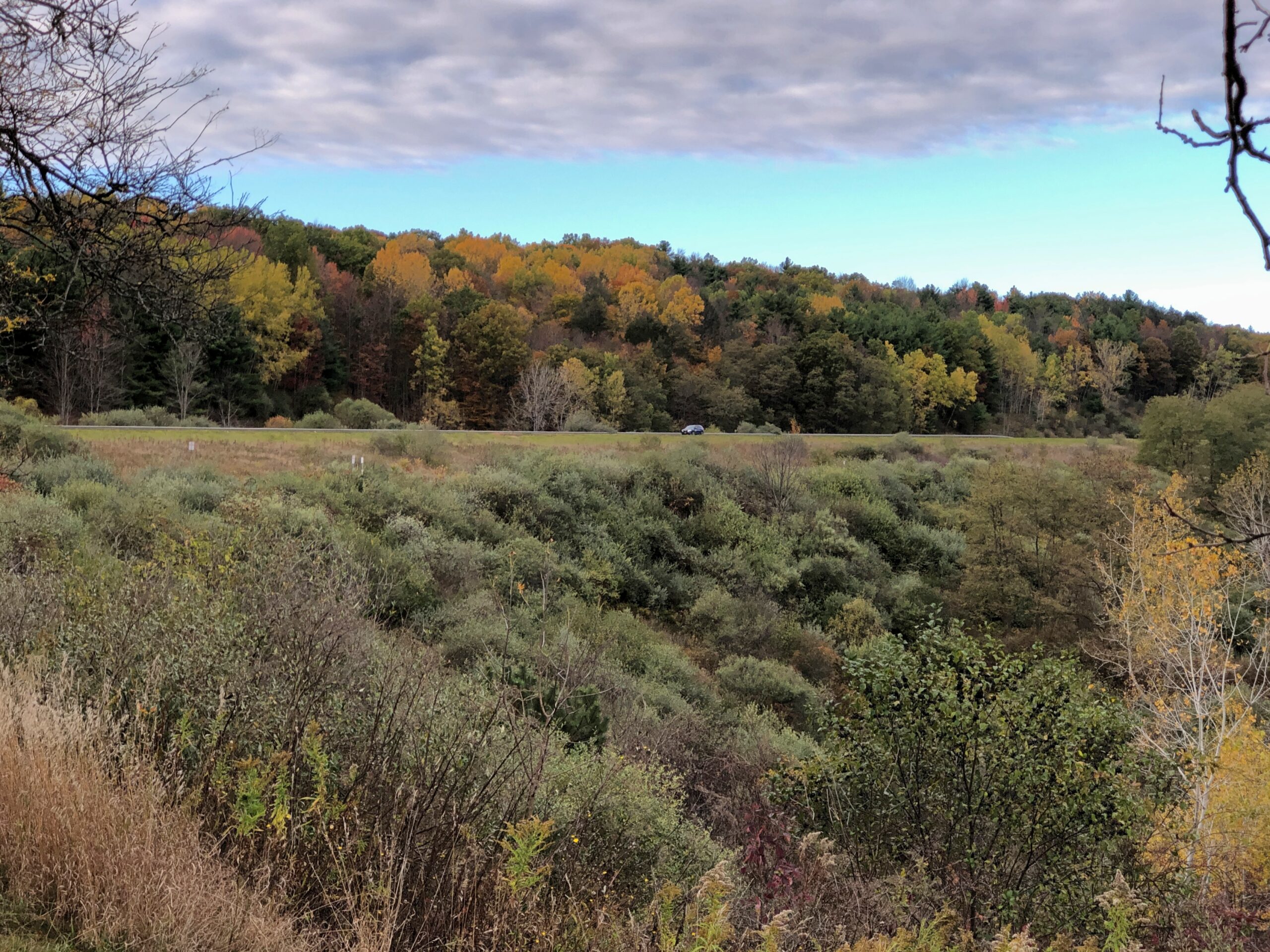
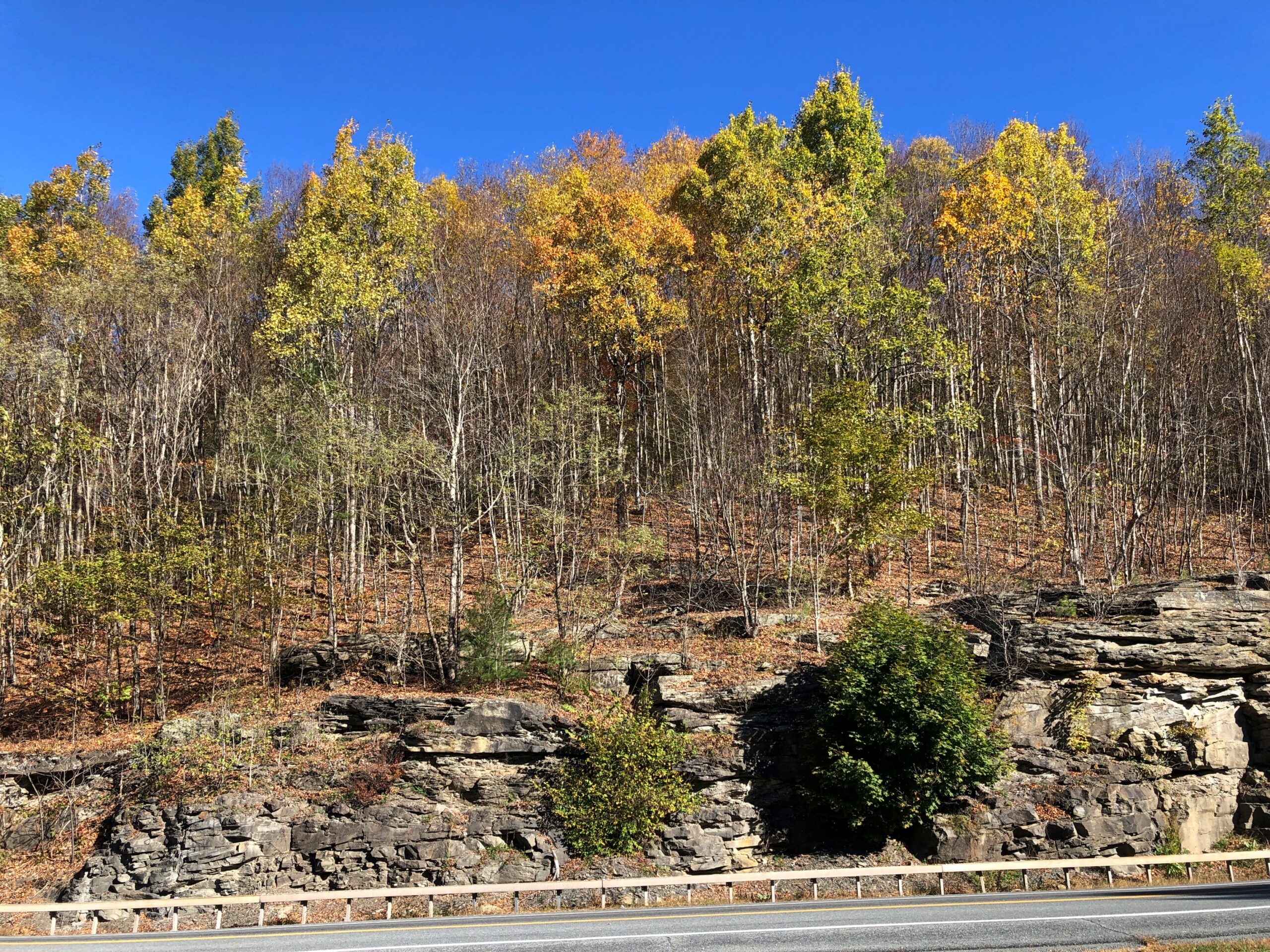
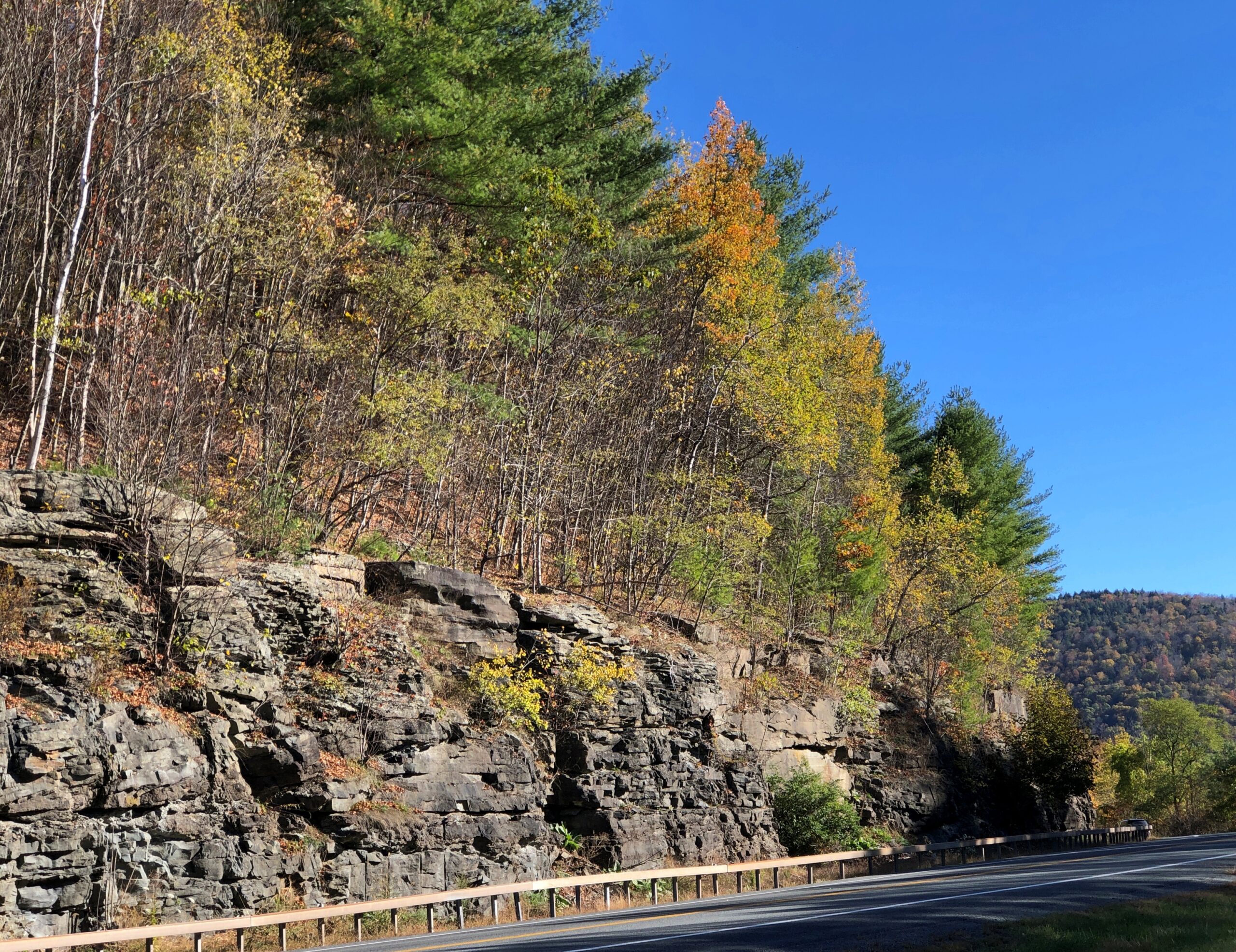
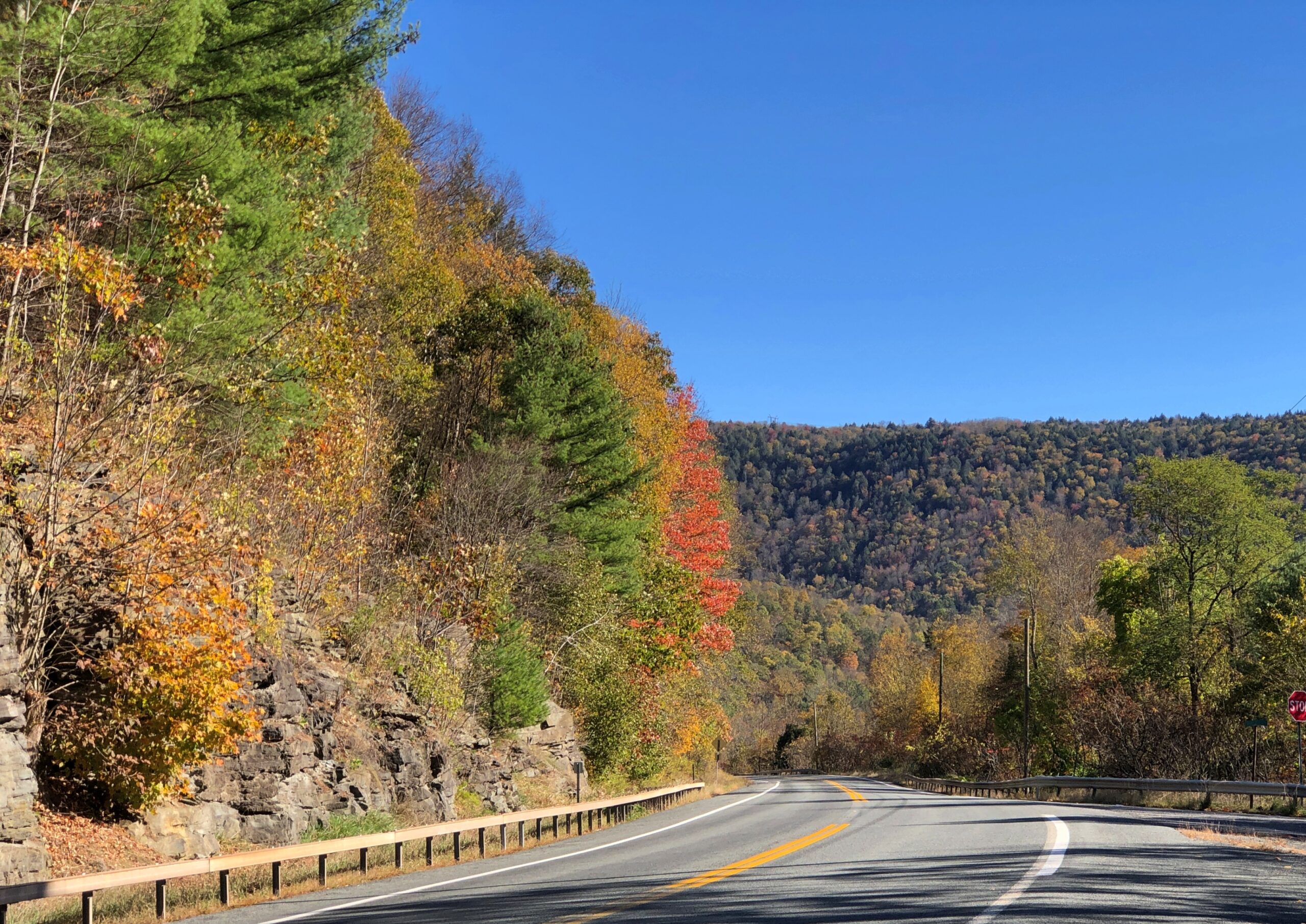
NY 30 skirts the edge of Catskill Park. Last time I was in the Catskills was during the Clinton administration, back when the Concord Hotel and Resort was still clinging to existence, so it’s been a while, and I’d never been in the colorful and nearly empty western edge of the park in October. That emptiness made all the difference in the car commercial driving I enjoyed.

Southern Tier NY
Southern Tier NY
Southern Tier NY

During all the driving over the next week or so after NY 30, empty roads would not be part of my reality.

Two Southern Wisconsin Cemeteries

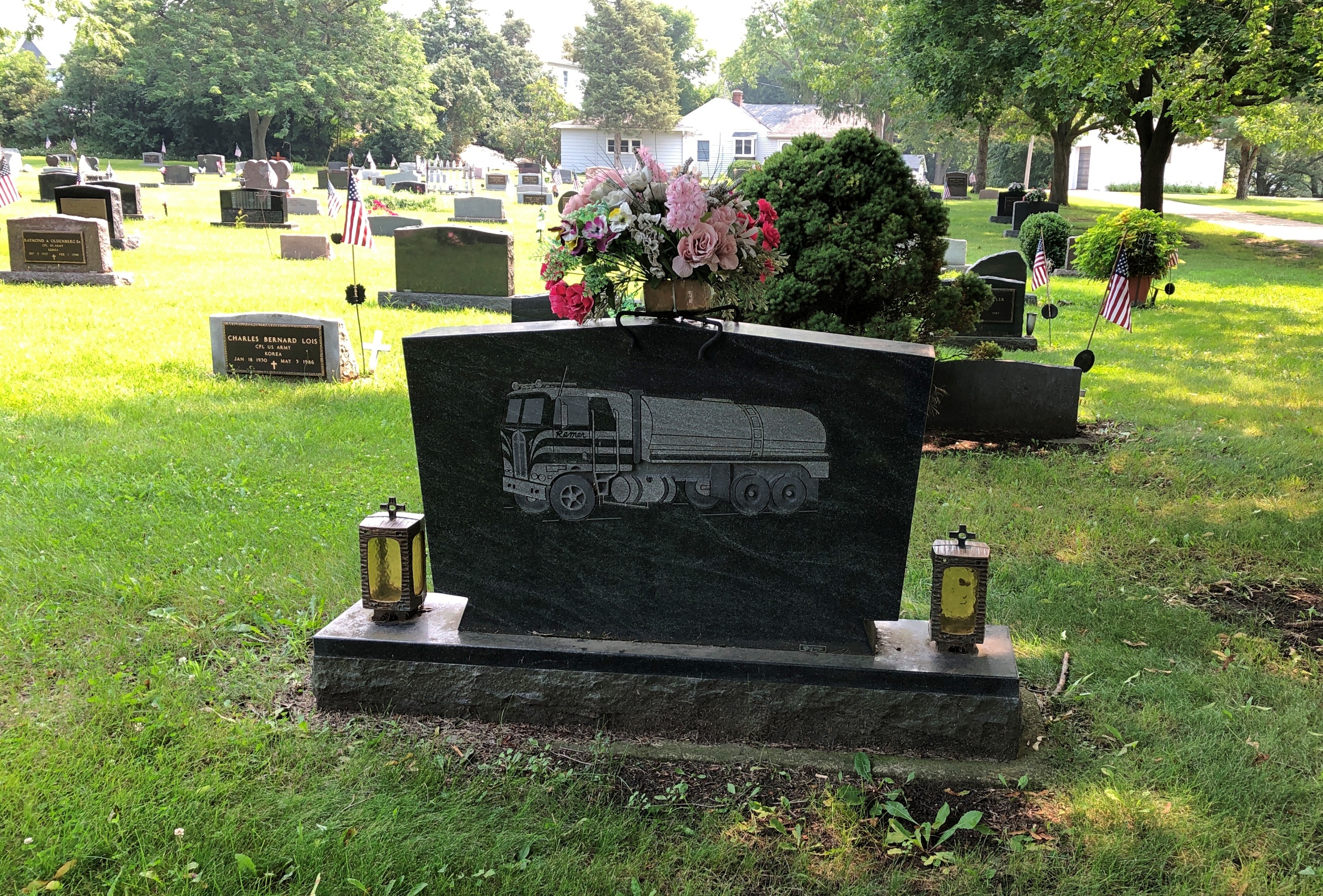
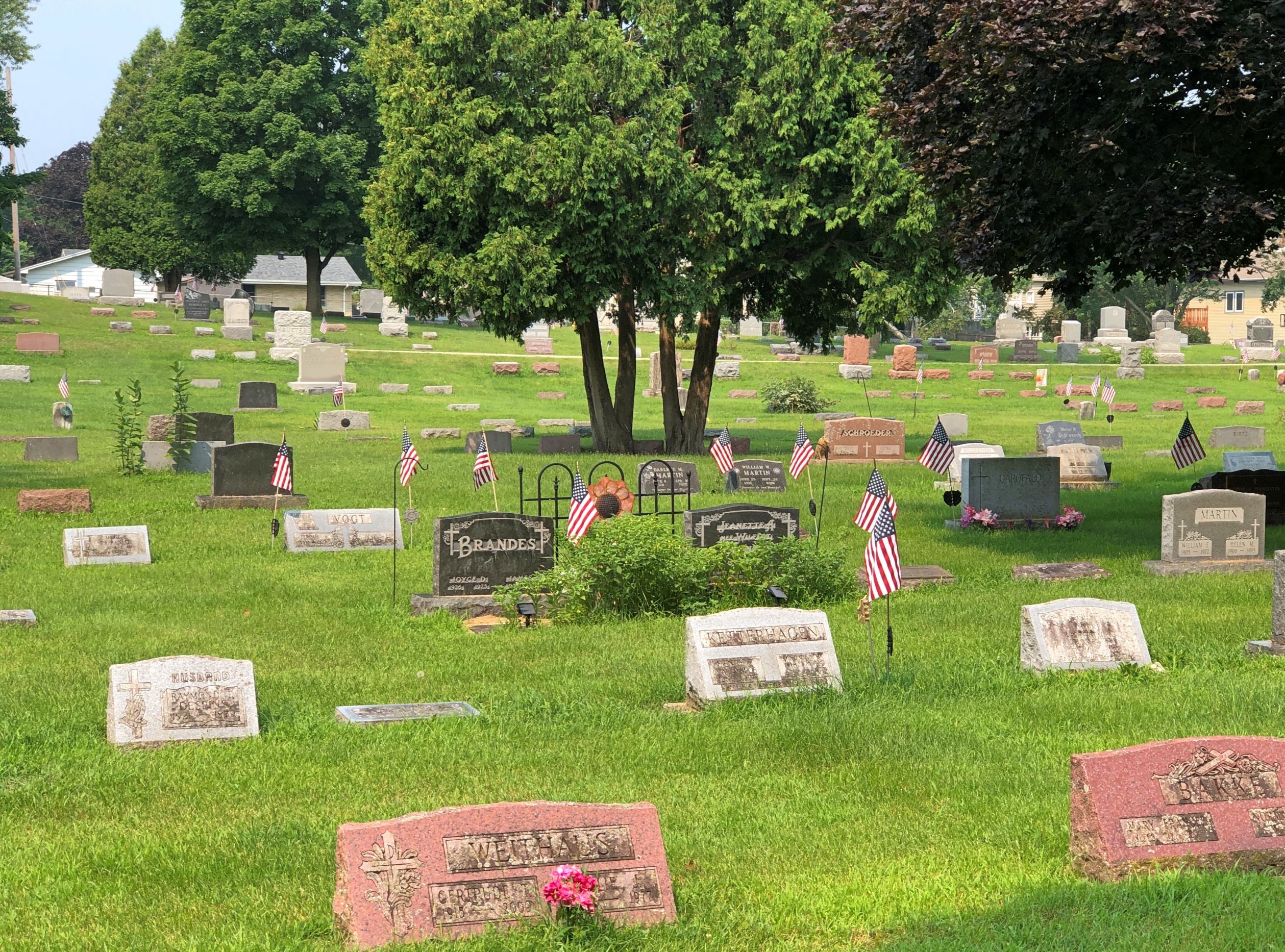
Something I’d never seen on a gravestone: a truck. I’ll bet most people can say that.

St Mary's Cemetery, Burlington, Wis

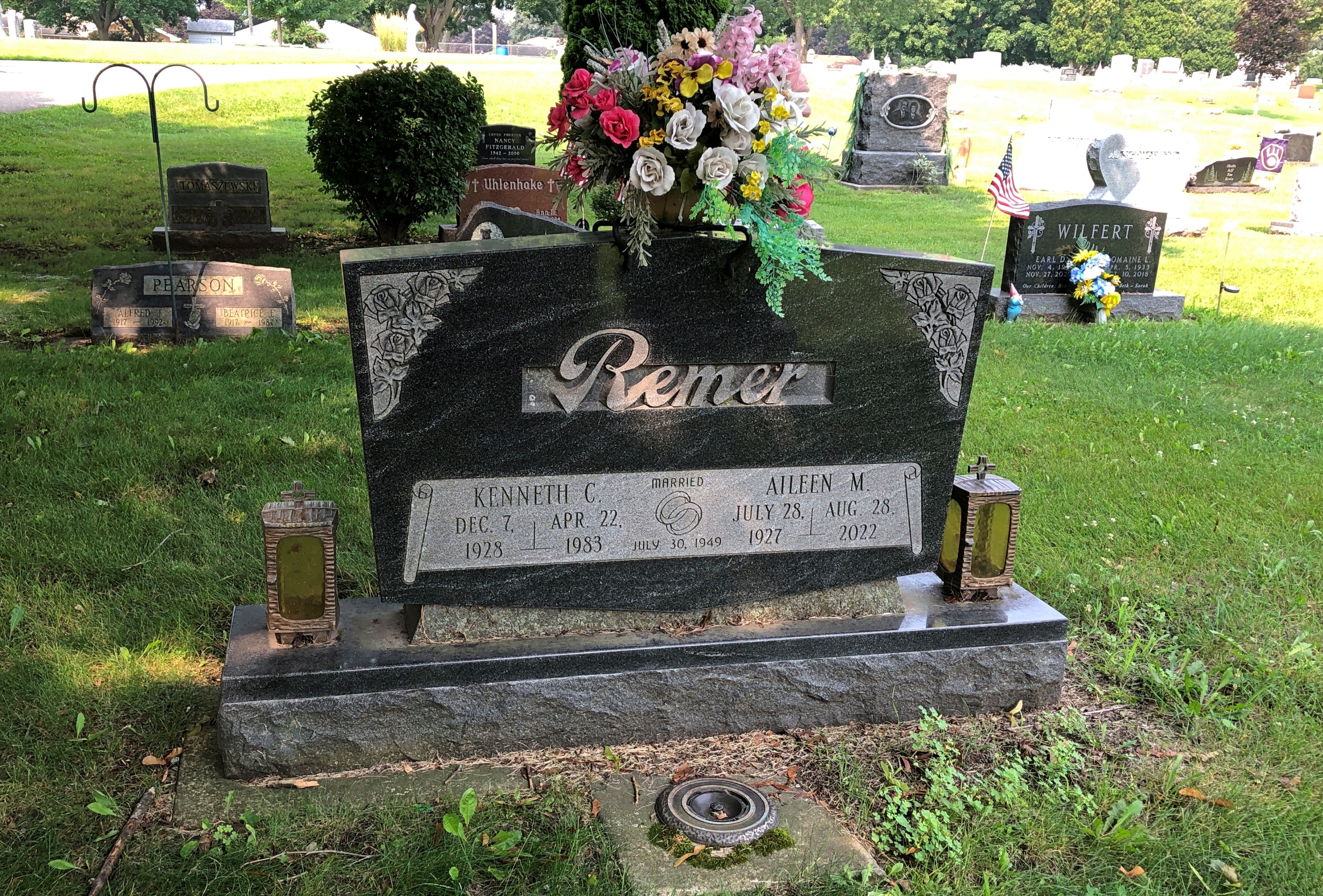
My best guess when I saw it was that Kenneth C. Remer was a trucking man who, among other things, lived through the short romanticization of trucking men in the mid-1970s. Something I’m sure is lost on later generations, as if that matters. If I were silly enough to say “That’s a big 10-4” to either of my daughters, I wouldn’t expect comprehension. That bit of code wasn’t invented by truckers, but even so.

I looked him up, as one can in our time. His obit says he was a “partner in Remer Milk Service.” So could be he drove a milk truck, at least sometimes. That is a liquid-hauling truck depicted on the stone. Not something celebrated in song and story, but useful work all the same.

Further down the rabbit hole, I came across this: “The 1970s Trucking Craze Can Be Traced Back to a Regional TV Commercial for Bread.” I never knew that, or if I did, I forgot it in the 50 years since then, because I’ve devoted very little thought to the subject over that time. Just another thing invented by ad men.

Another thought on that: though “Convoy” was much more popular, C.W. McCall’s “Wolf Creek Pass” is by far the more entertaining song. (And it’s a real place.) A better song about driving a truck is “Willin’,” originally by Little Feat. Of all people, the inestimable Linda Ronstadt did a remarkable cover of it.

I encountered Mr. and Mrs. Remer at St. Mary’s Cemetery in Burlington, Wisconsin last month. A Catholic cemetery with a nice assortment of stones.

St Mary's Cemetery, Burlington, Wis

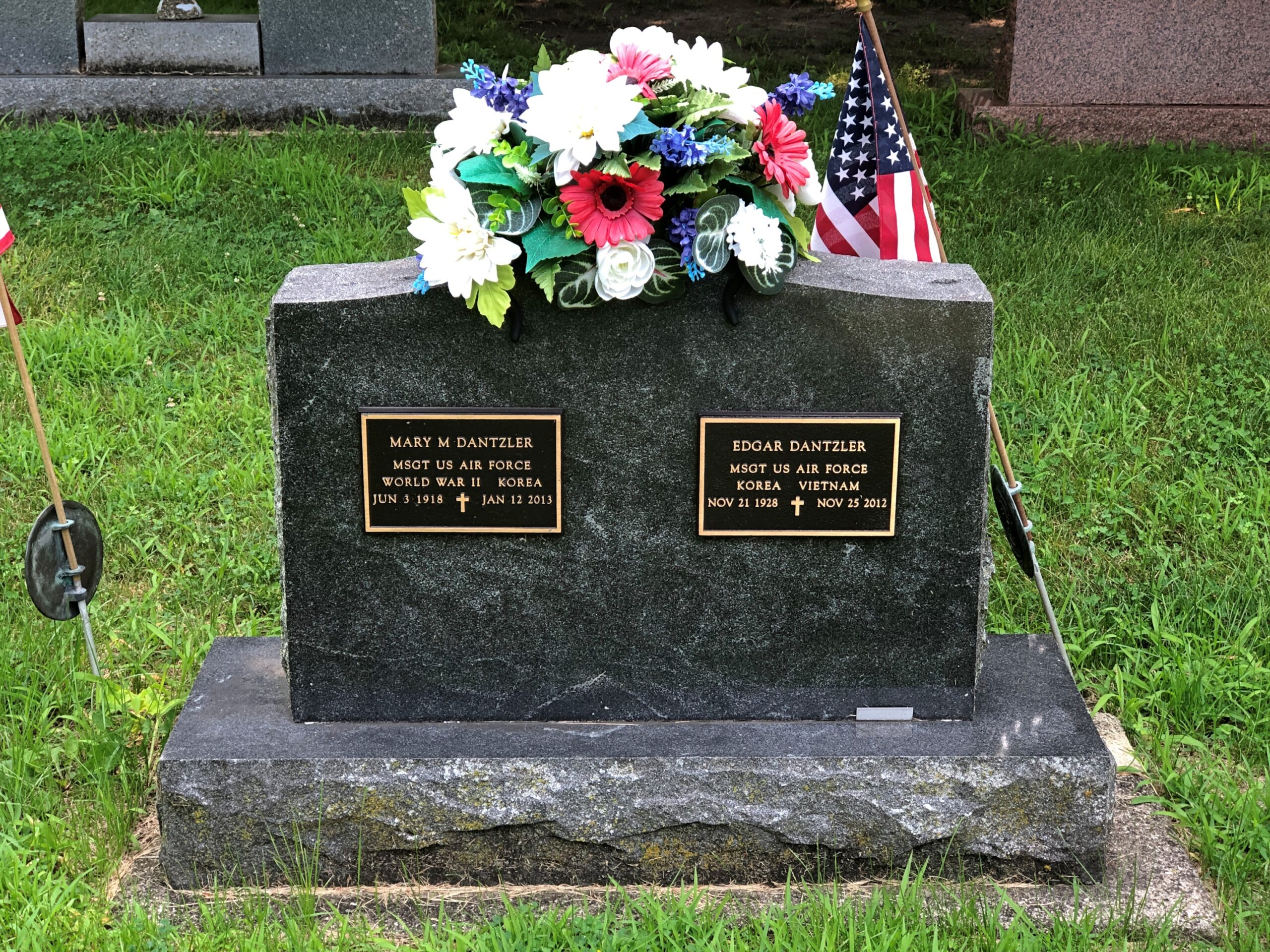
Unusual: two Air Force (I assume originally Army Air Corps) Master Sergeants, married to each other.

St Mary's Cemetery, Burlington, Wis

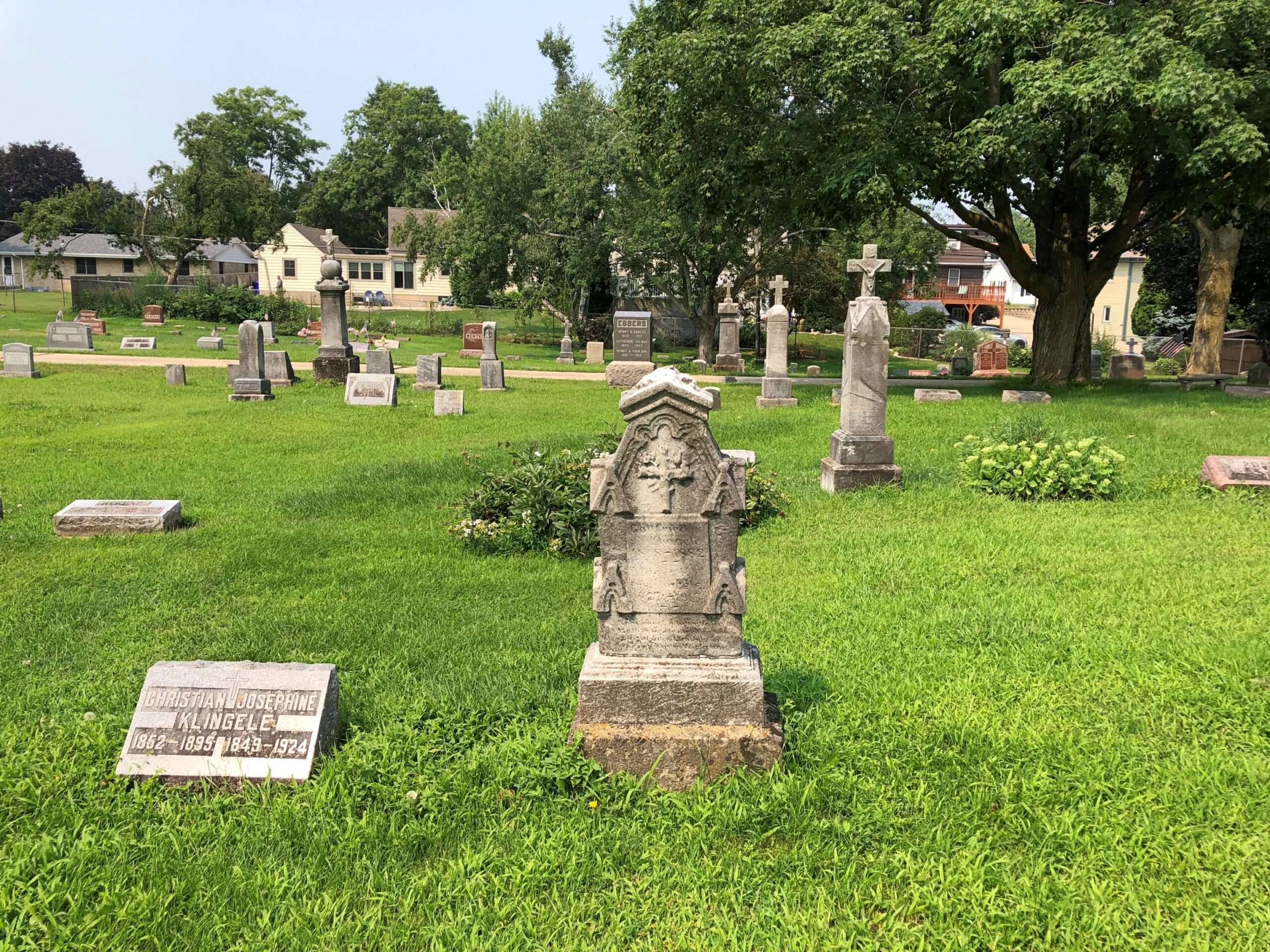
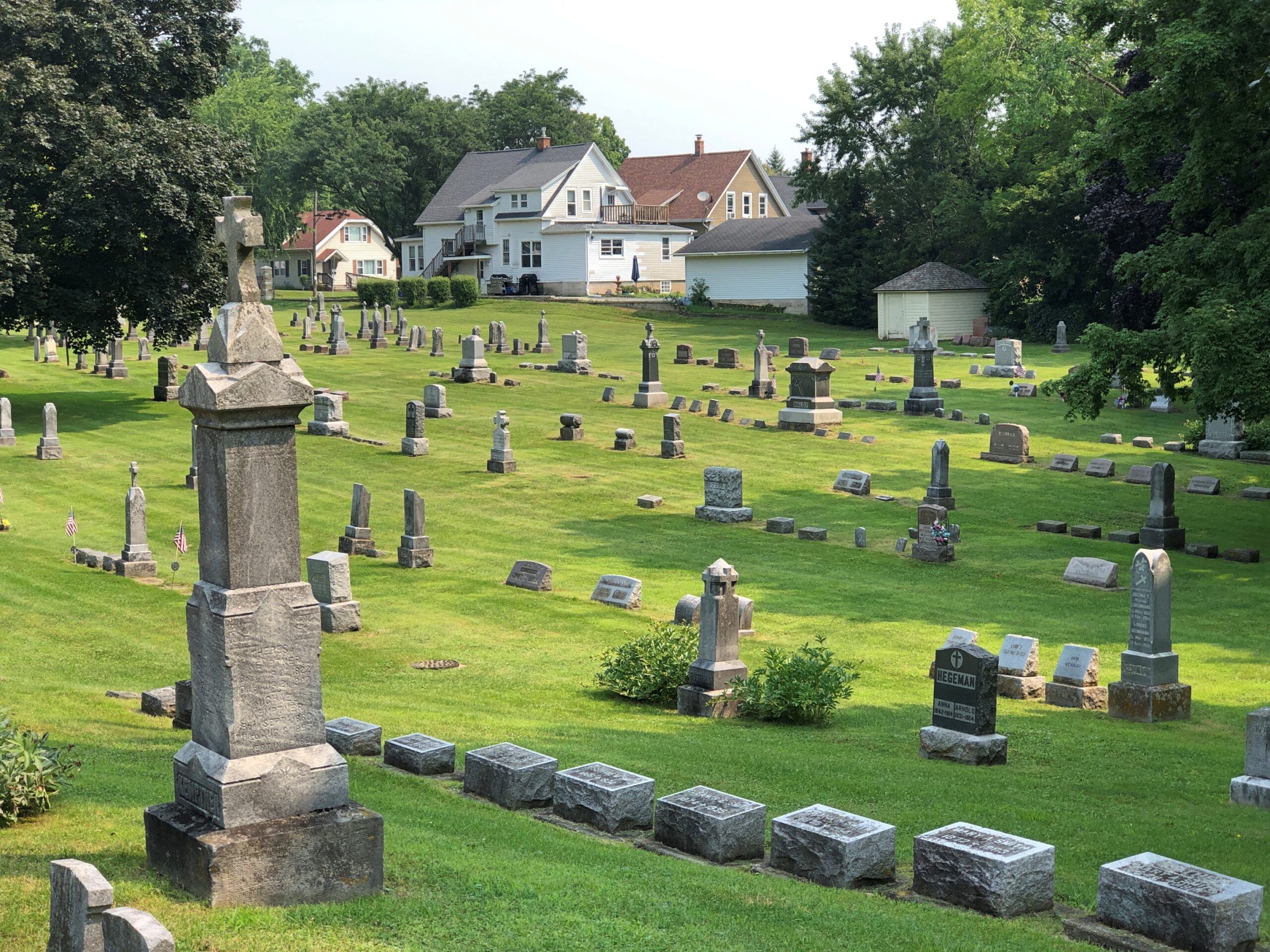
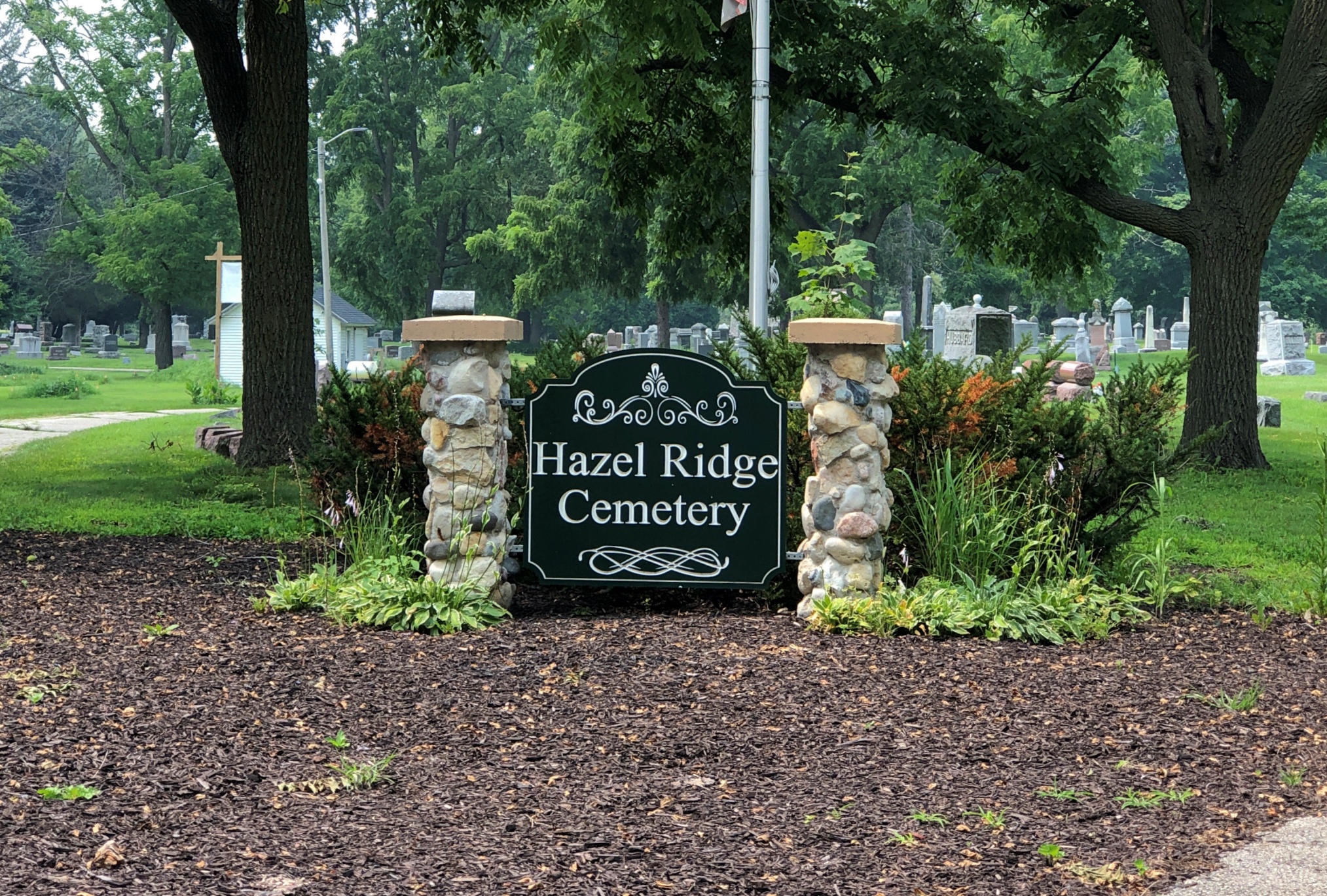
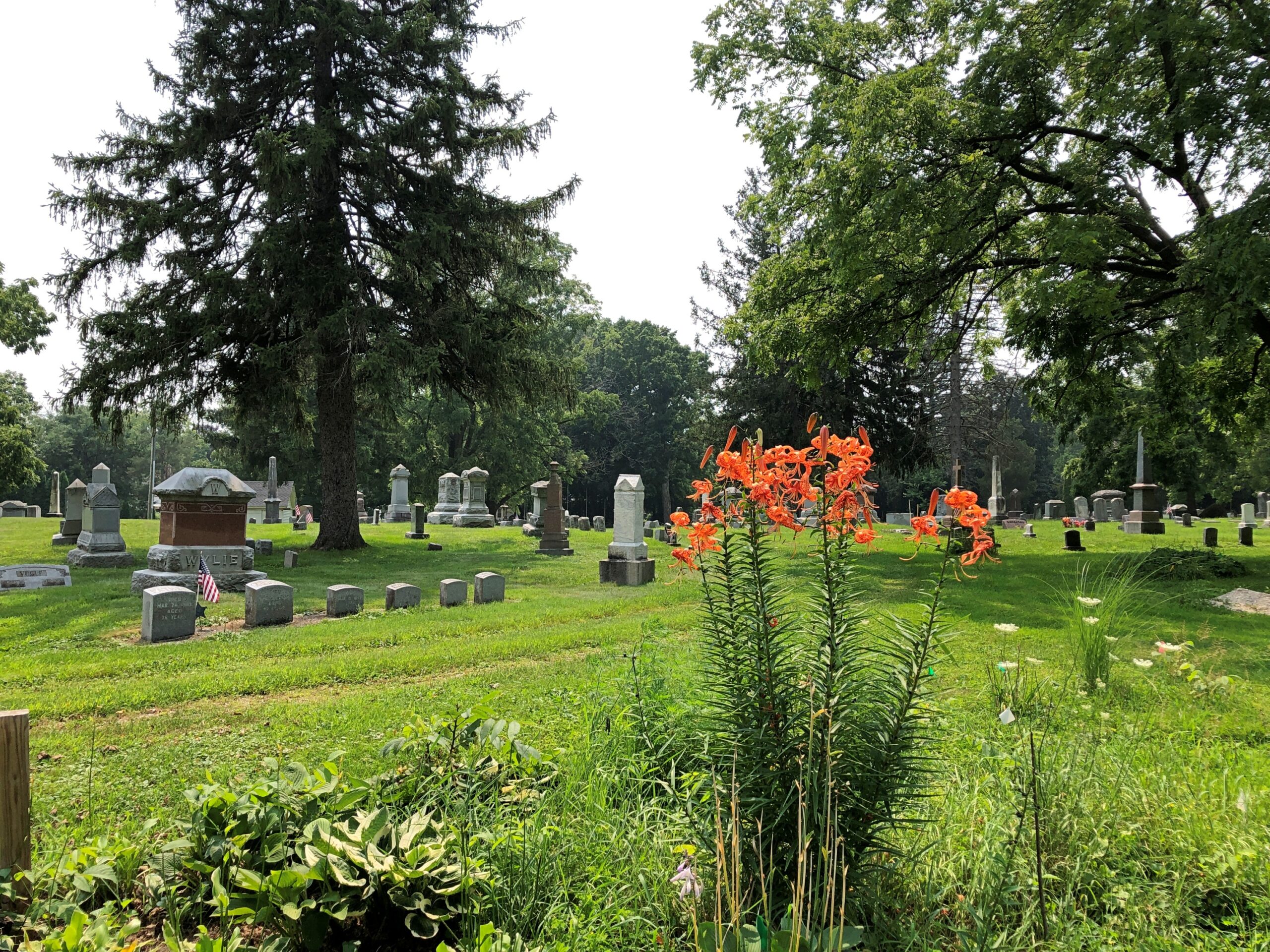
During my recent visit to Elkhorn, Wisconsin, I did no more than look for an “historic cemetery” on Google Maps to find Hazel Ridge Cemetery. Historic for sure, founded more than 150 years ago.

Hazel Ridge Cemetery

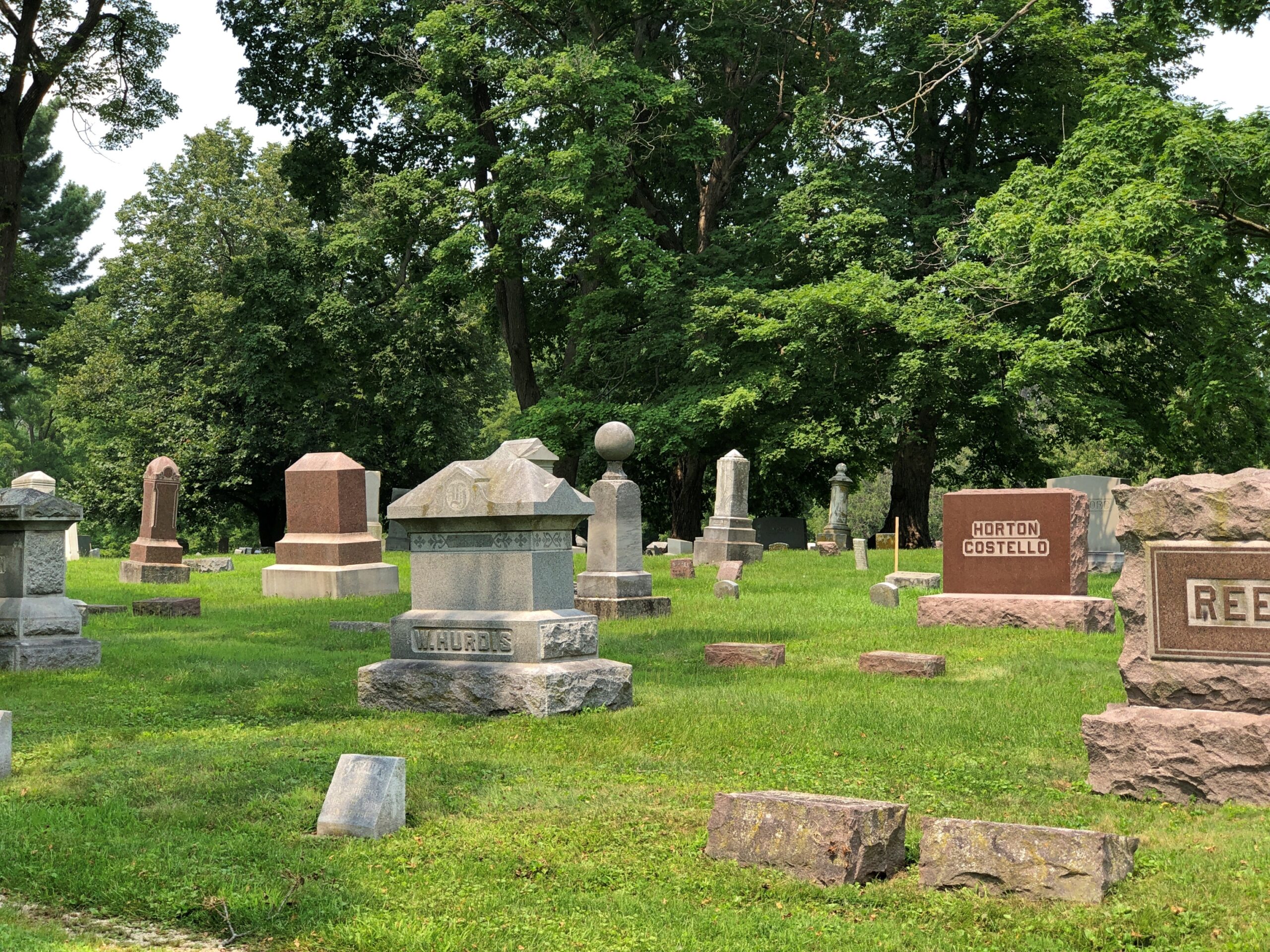
It too has a fine collection of memorials. The cemetery is also an arboretum, with more than 25 native species and ornamental varieties.

Hazel Ridge Cemetery

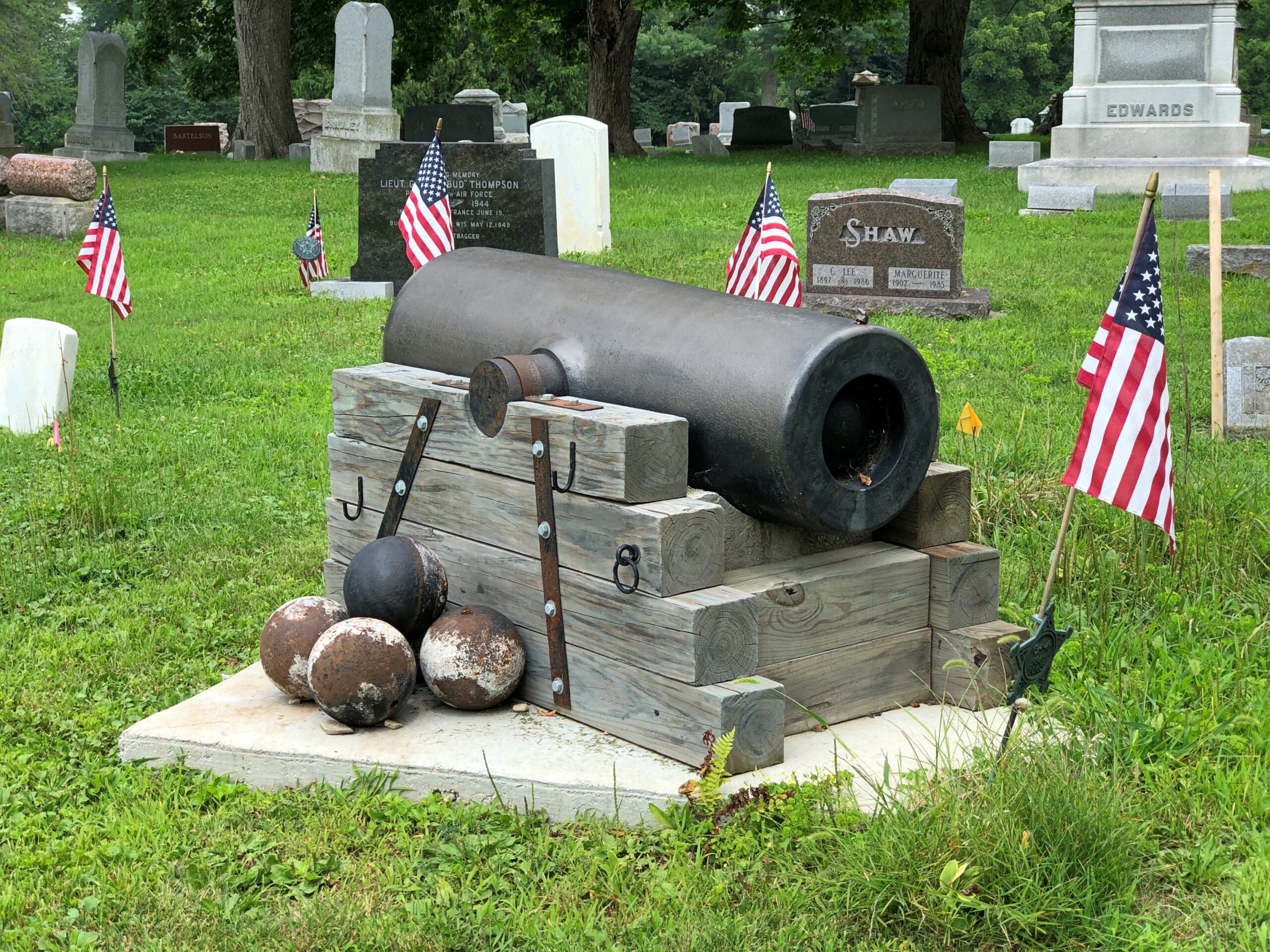
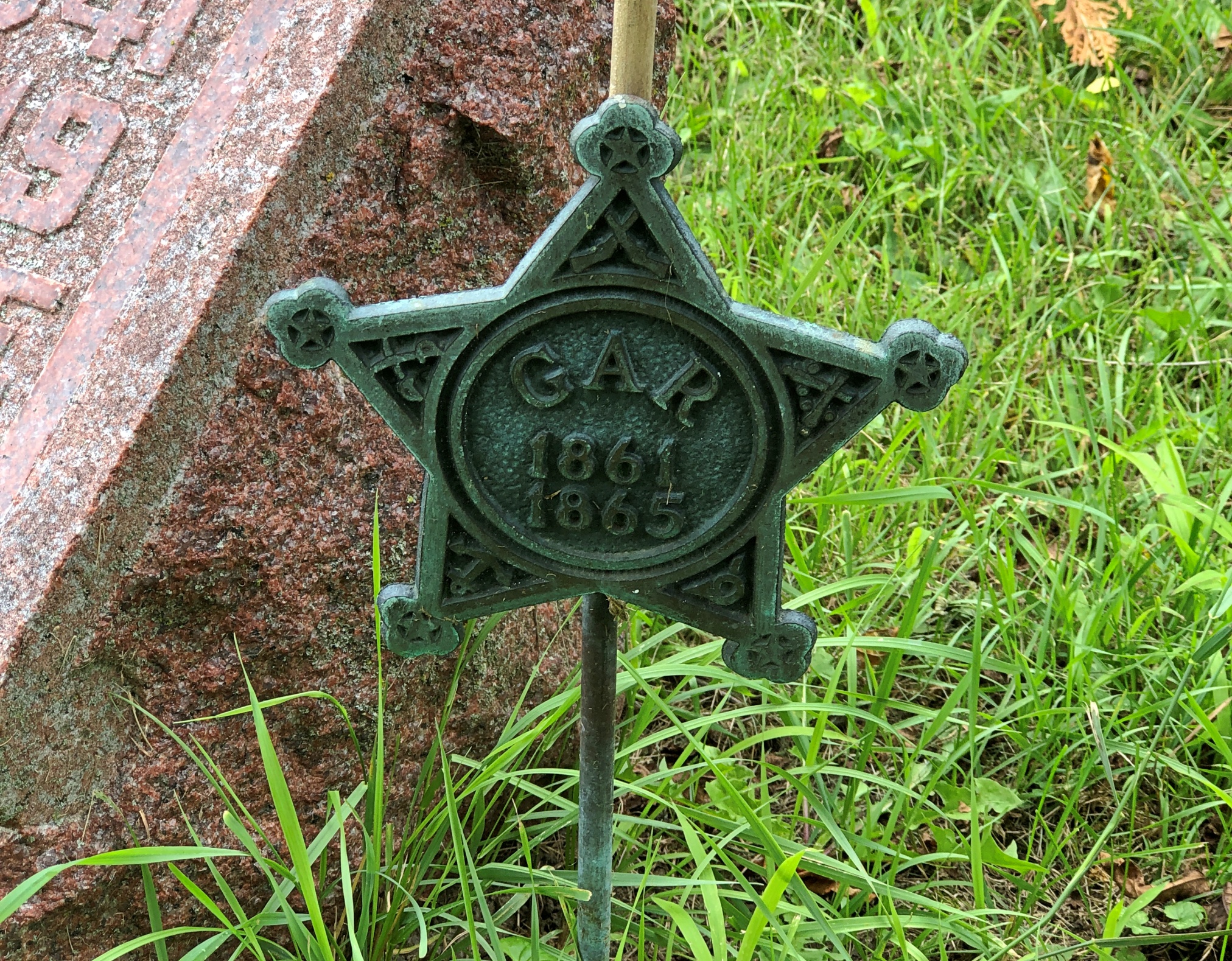
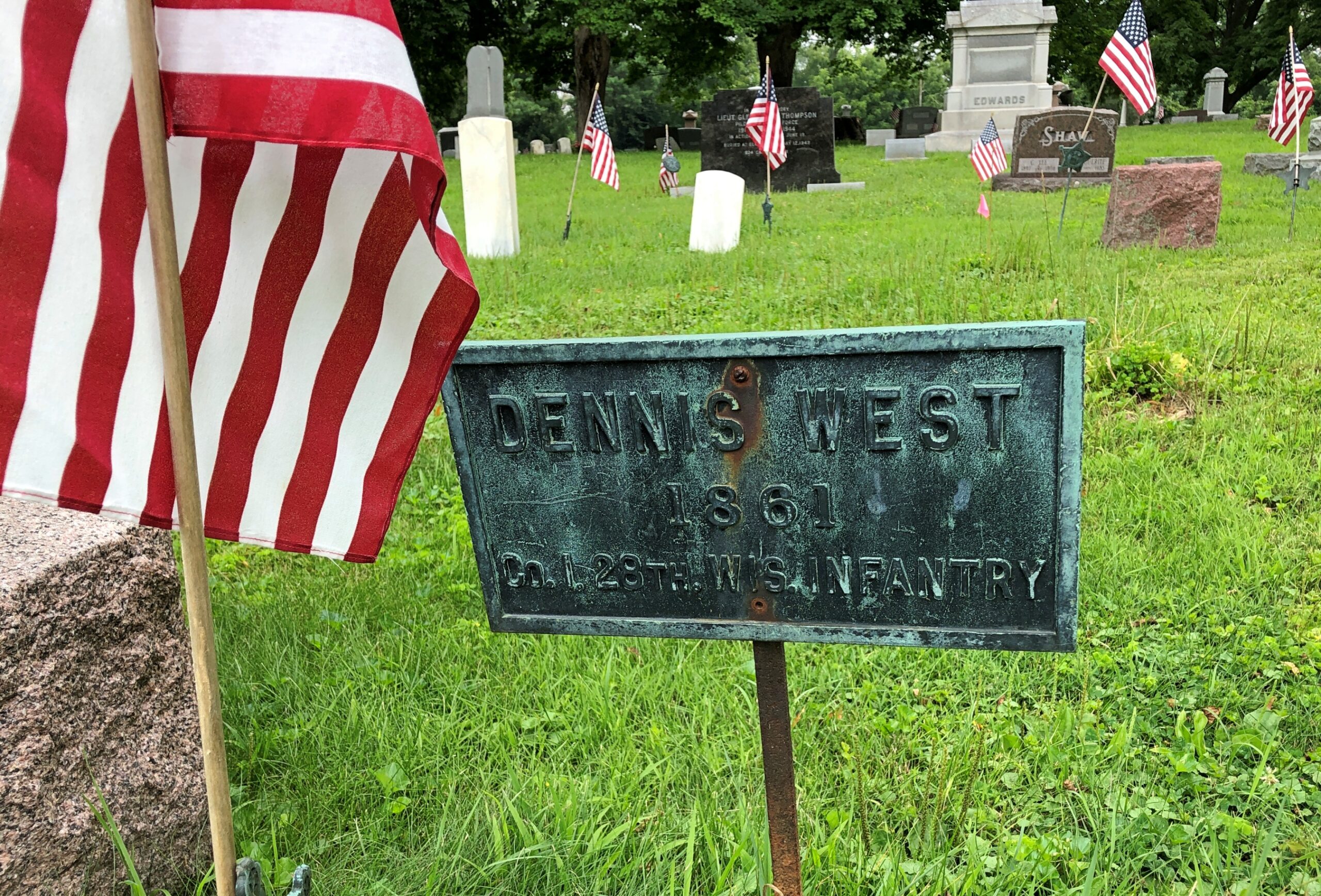
Hazel Ridge has a clutch of war dead memorials, including an 8-inch siege Howitzer as the centerpiece of a Grand Army of Republic memorial.

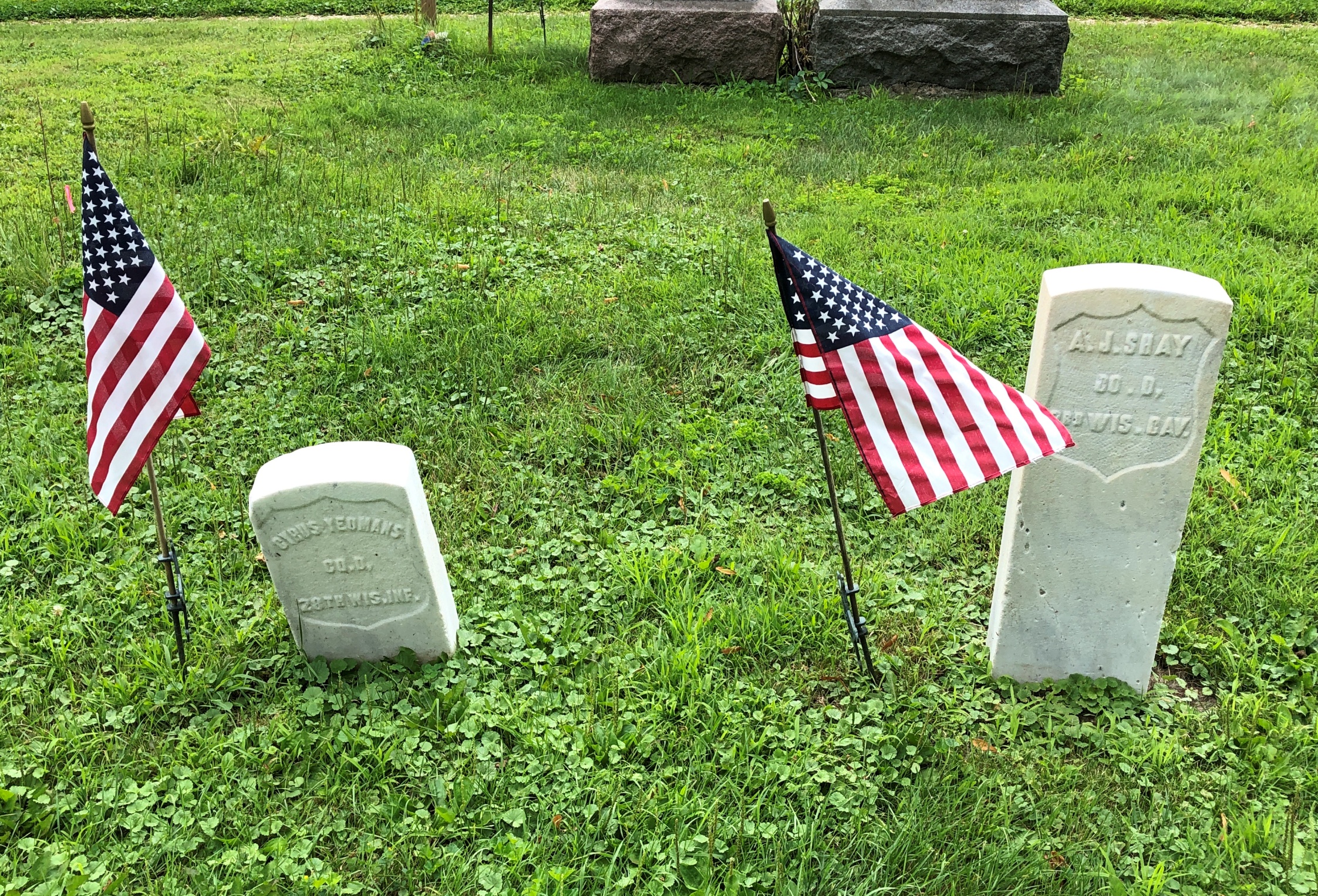
This particular cannon, according to a nearby sign, was made in 1862 at the Fort Pitt Foundry in Pittsburgh. I assume it did its part for the Union. Nearby are soldiers who did likewise.

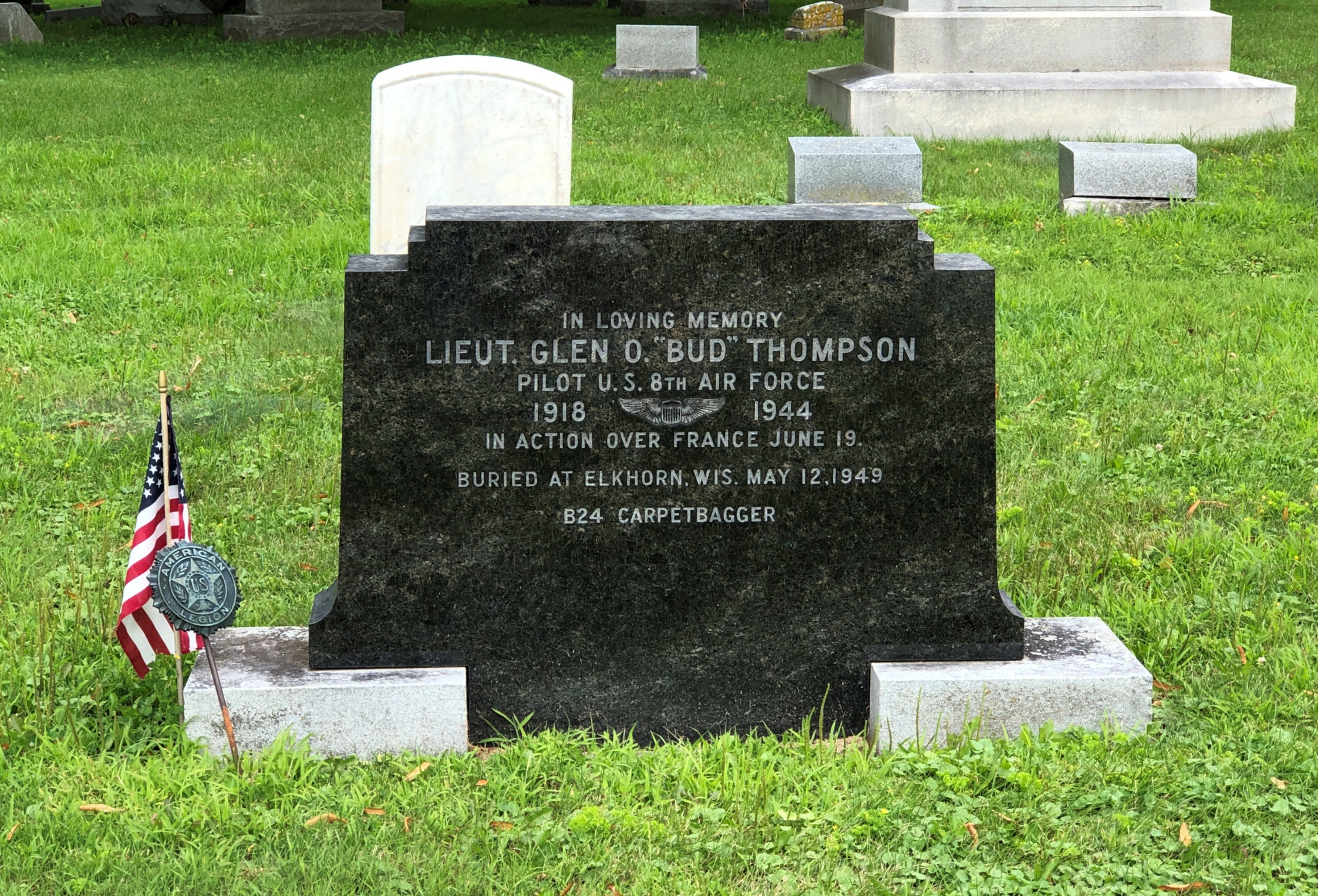
And those who died in later wars.

The single word “Carpetbagger” on the stone tells quite a story. Operation Carpetbagger involved black-painted B-24s flying low and slow by night, dropping supplies and agents to the resistance in France before and after the Normandy invasion. Clearly dangerous work. RIP, Bud.

More Waukesha

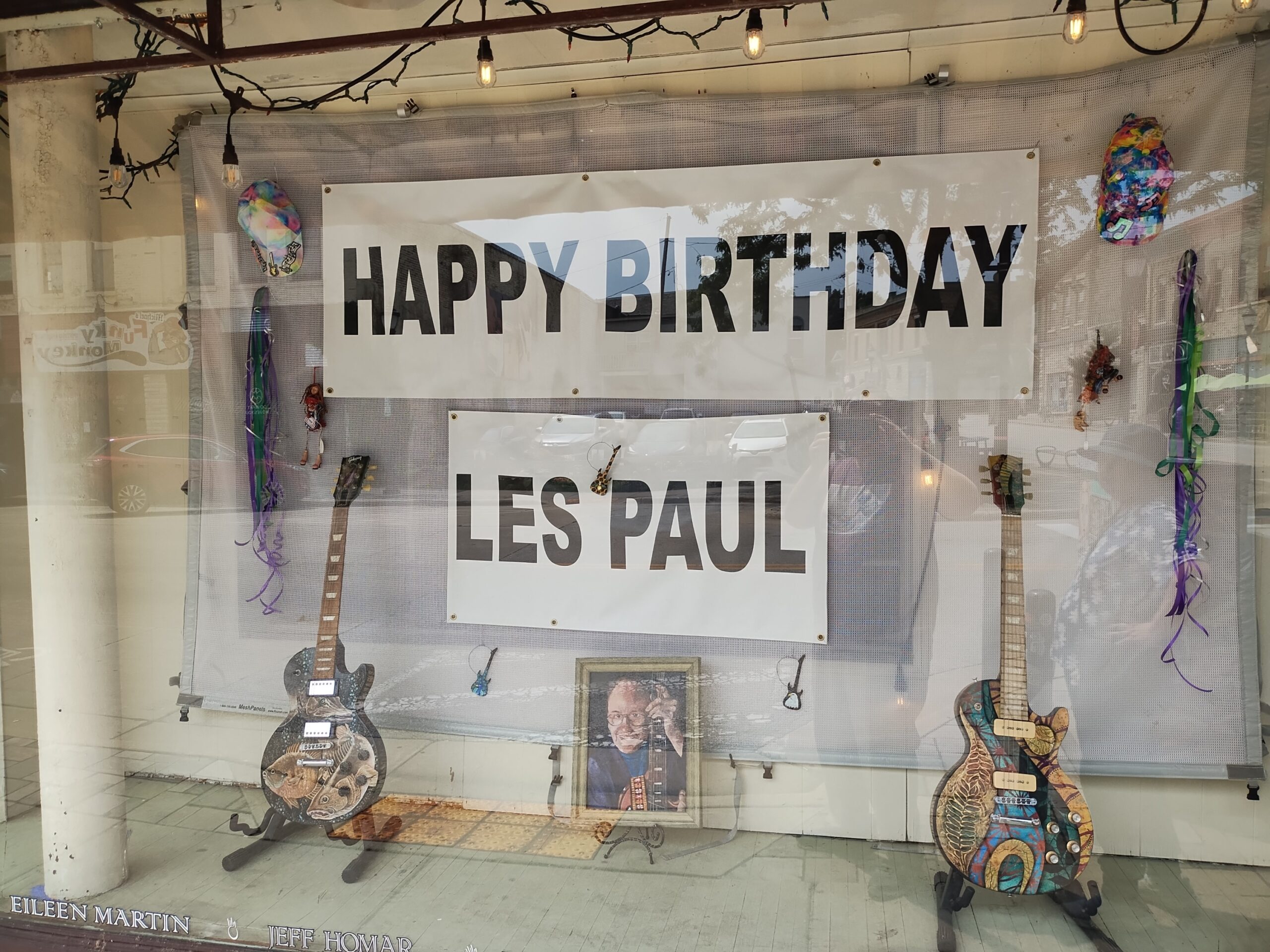
Something I didn’t know about Waukesha, Wisconsin, before we went there last month: that Les Paul (b. 1915) grew up around there. Waukesha certainly hasn’t forgotten.

Waukesha, Wisconsin

A recent sign, since his birthday is in early June. Waukesha is a “GuitarTown,” because of its association with the famed musician and music technologist. Apparently there is more than one GuitarTown, since Gibson Guitars doles out the moniker, or at least used to.

“Waukesha was named a Gibson GuitarTown in 2012 and 2013, two years in a row, to honor the birth and resting place of electric guitar legend Les Paul,” The Freeman reports. “Other GuitarTowns include Austin, Nashville and London.”

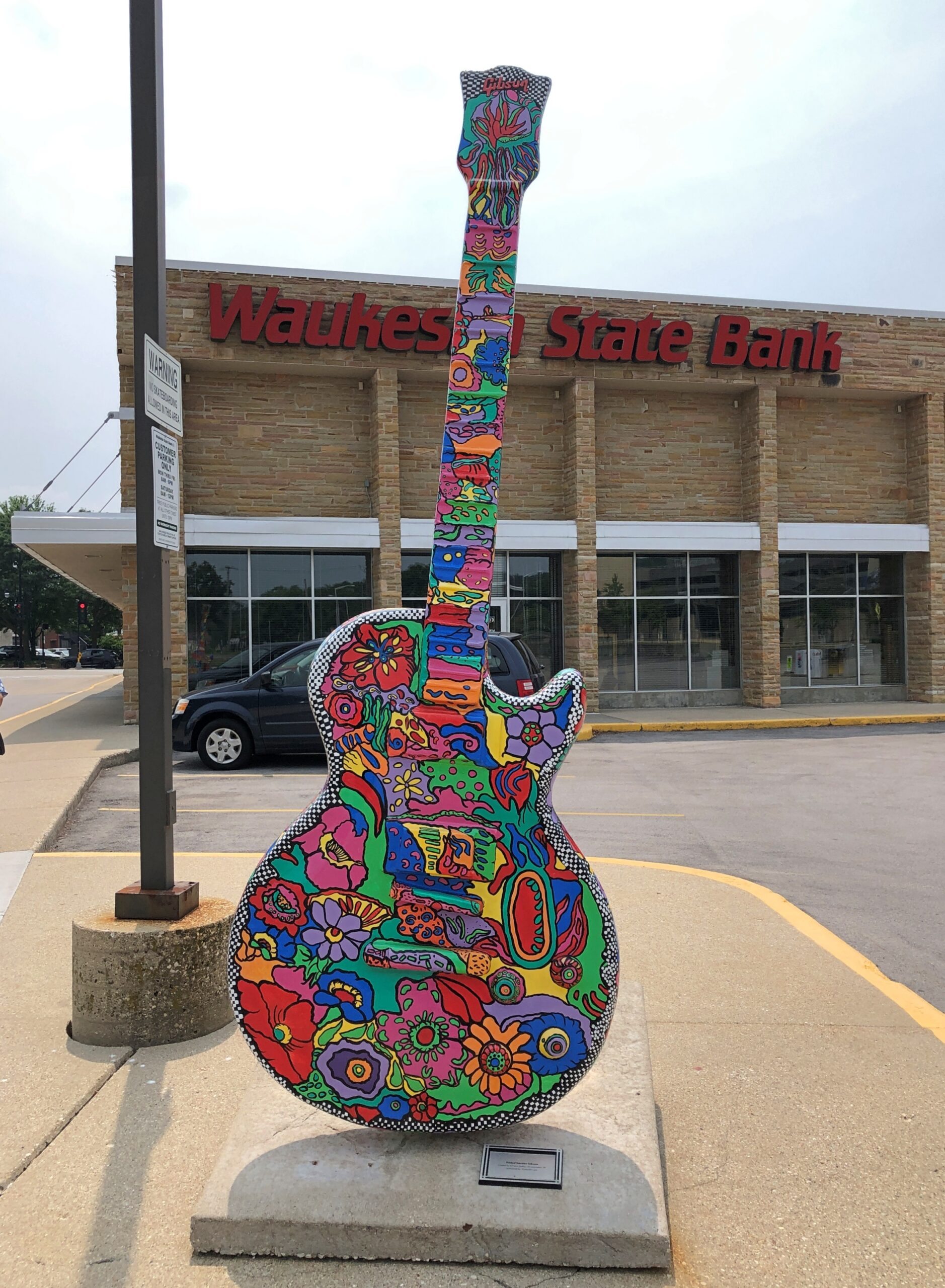
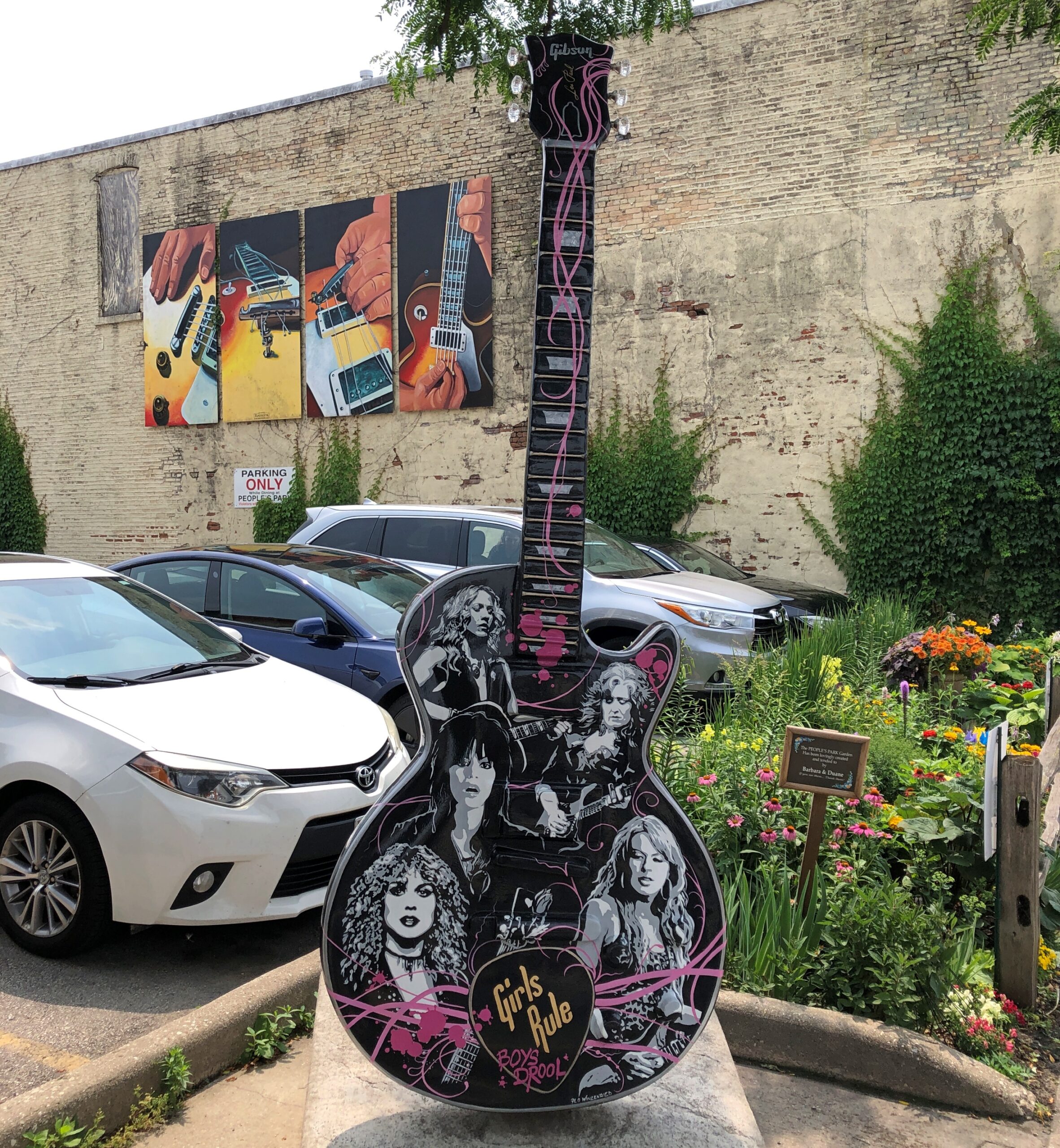
As GuitarTown, Waukesha has 15 guitar statues in public places, each 10 feet tall and designed by local artists. Elsewhere in town, you can find Les Paul Middle School, Les Paul Parkway, the Les Paul Performance Center, and the Les Paul gravesite monument. Missed that, alas. Maybe some other time. But we did drive on his parkway. And see a few of the giant guitars.

Waukesha, Wisconsin
Waukesha, Wisconsin

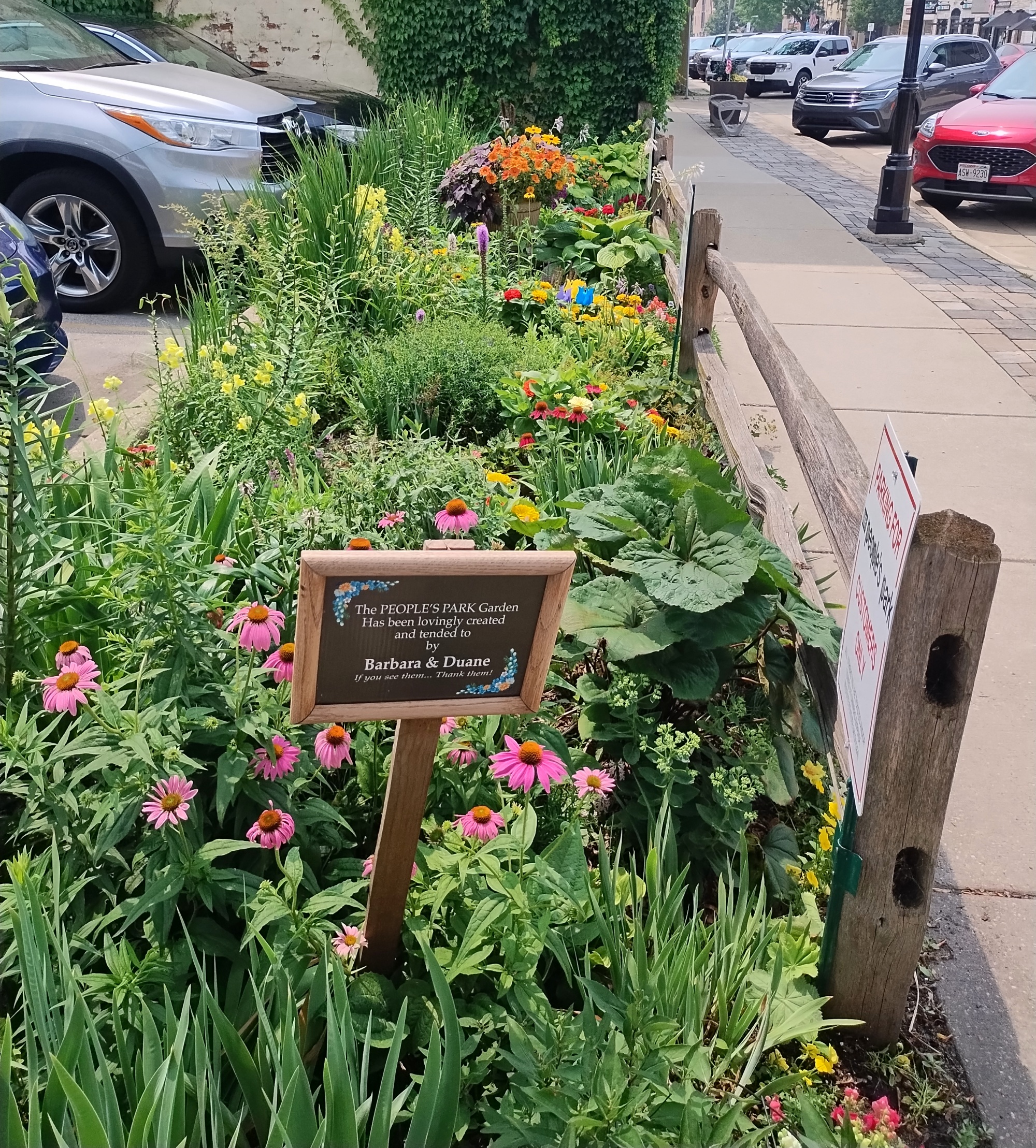
Next to that particular guitar, a small garden is wedged between the sidewalk and a parking lot. The PEOPLE’S PARK Garden, says the sign.

Waukesha, Wisconsin

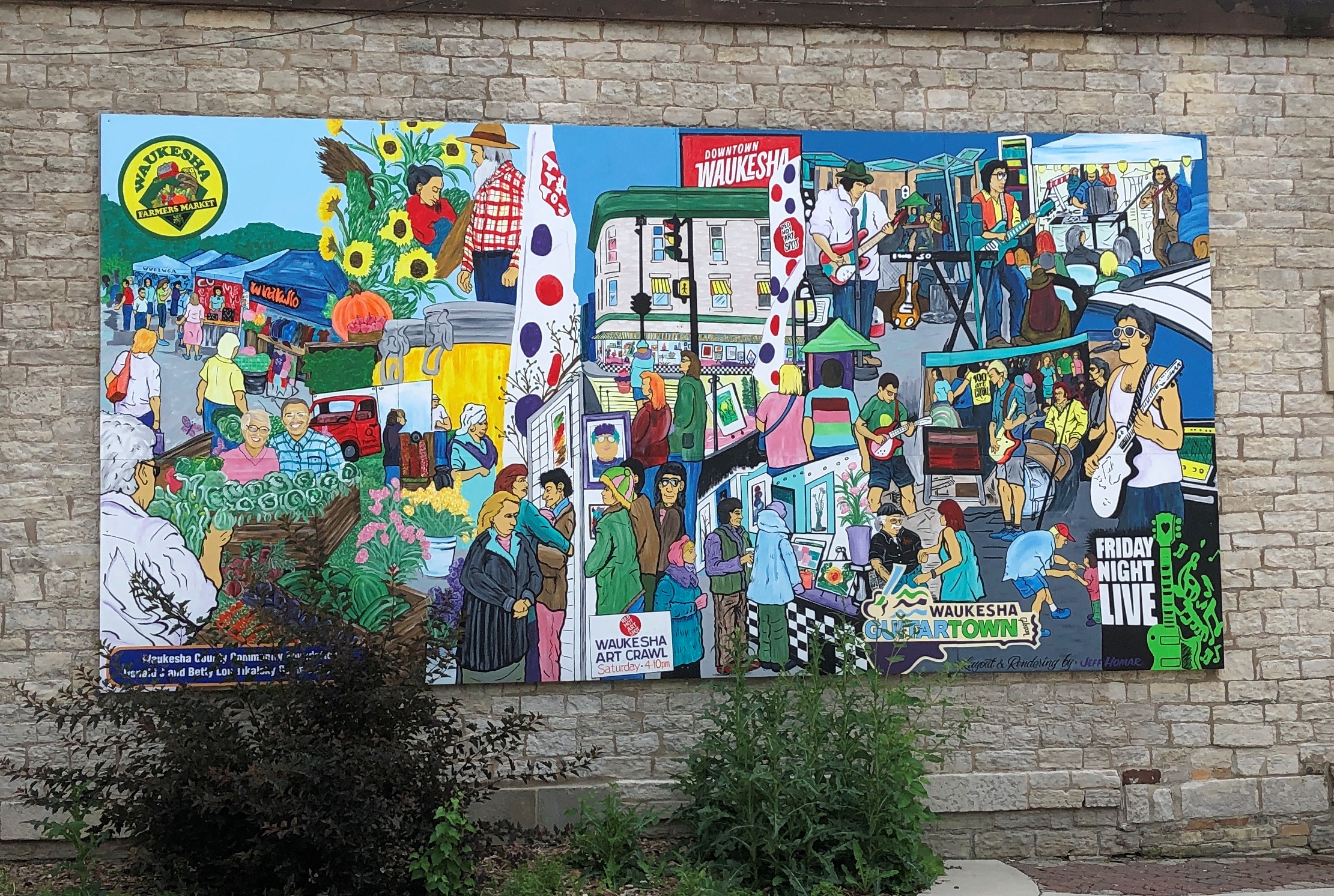
The Wall Dogs also came to town and painted 13 murals. I assume this is one of them.

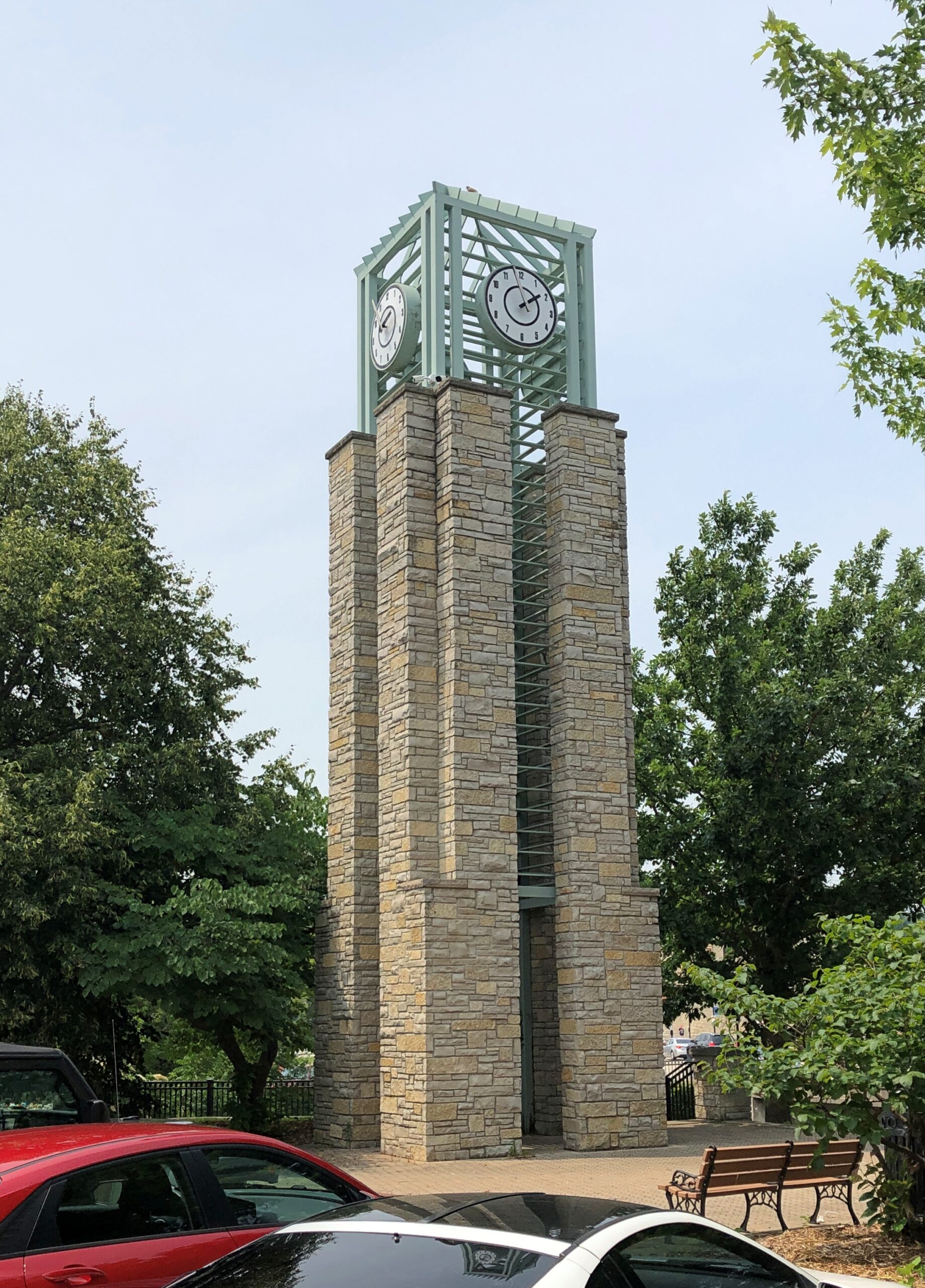
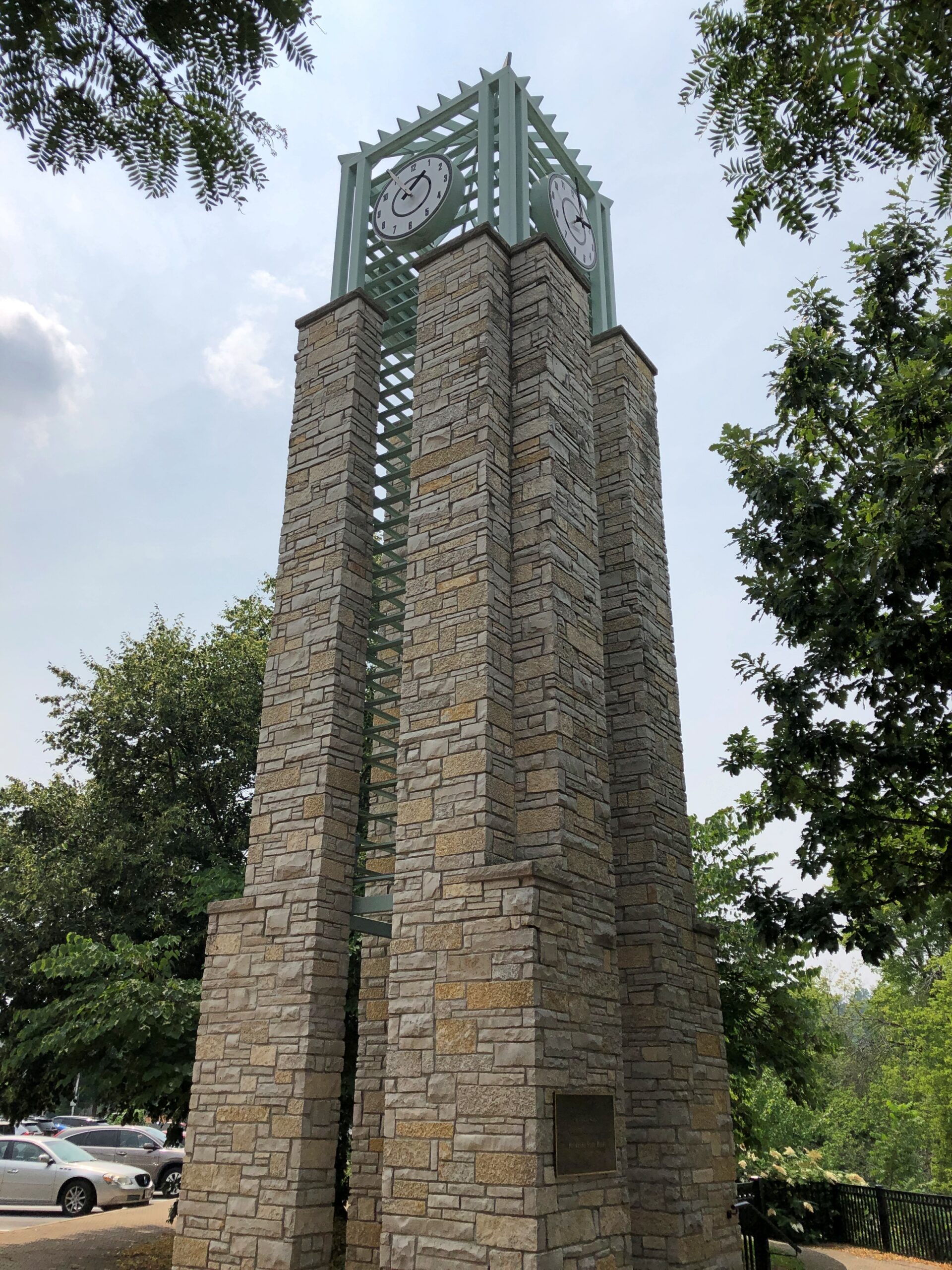
Across a parking lot from that mural rises Waukesha’s impressive stone clocktower.

clock tower waukesha

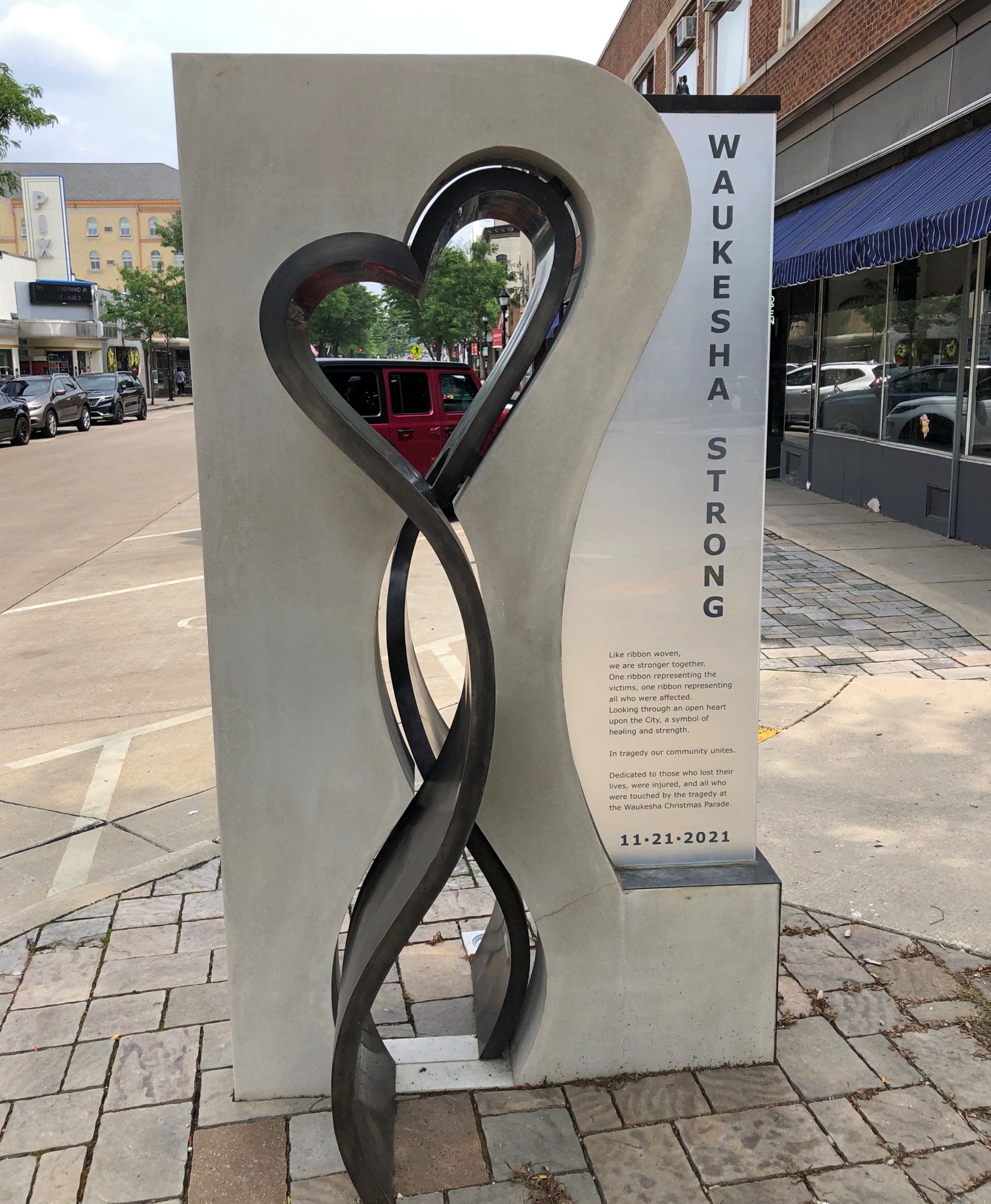
On Main Street, a memorial.

Waukesha, Wisconsin

Outrages by homicidal wankers are so common that I had to refresh my memory about that particular one, in late 2021. Then I remembered. The only good thing I can report is that the wanker, who went double wanker at his trial by asserting sovereign citizen nonsense, is now a permanent resident of a tightly locked state facility.

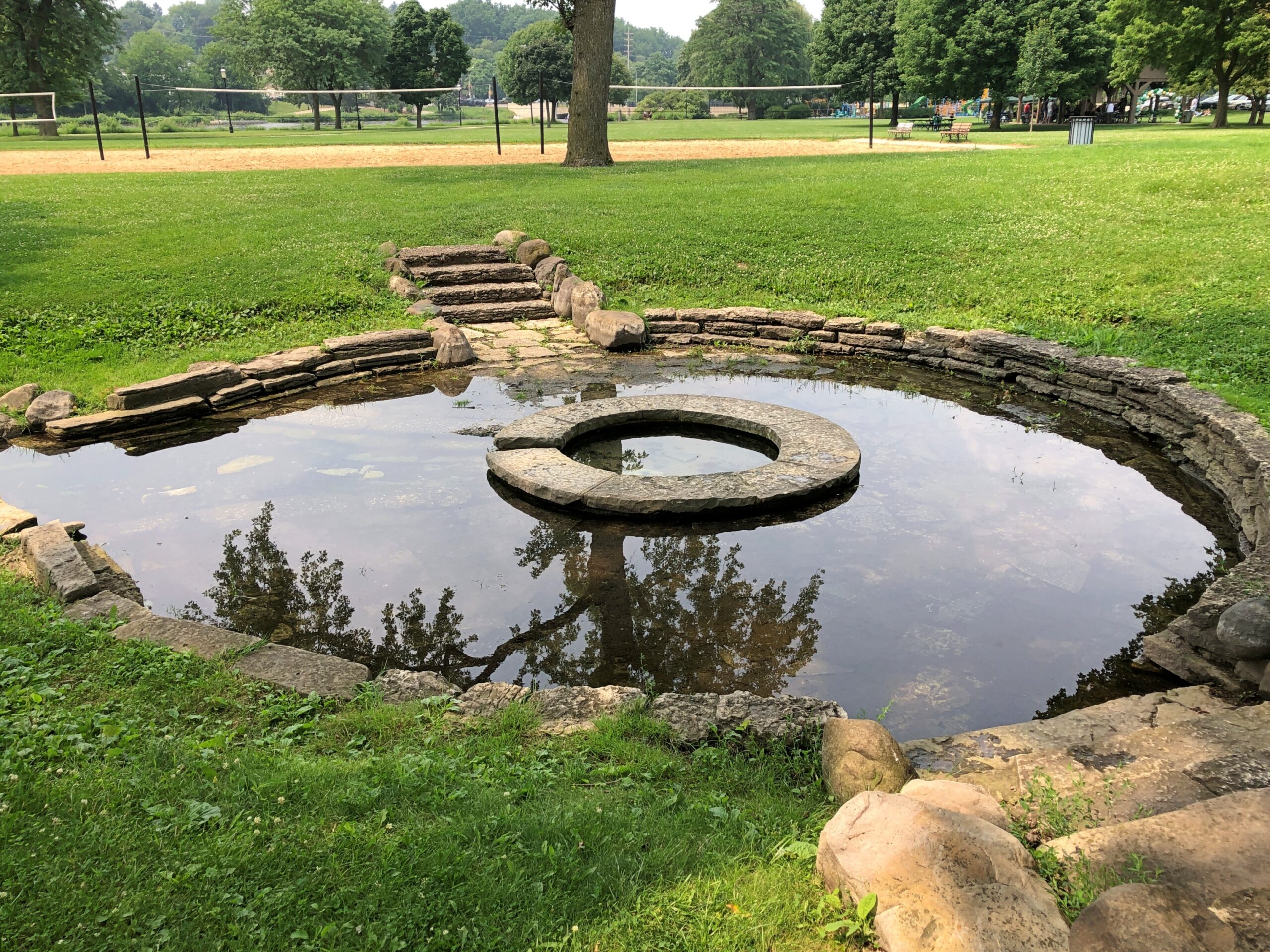
Upriver a half mile or so from downtown is the sizable riverside Frame Park.

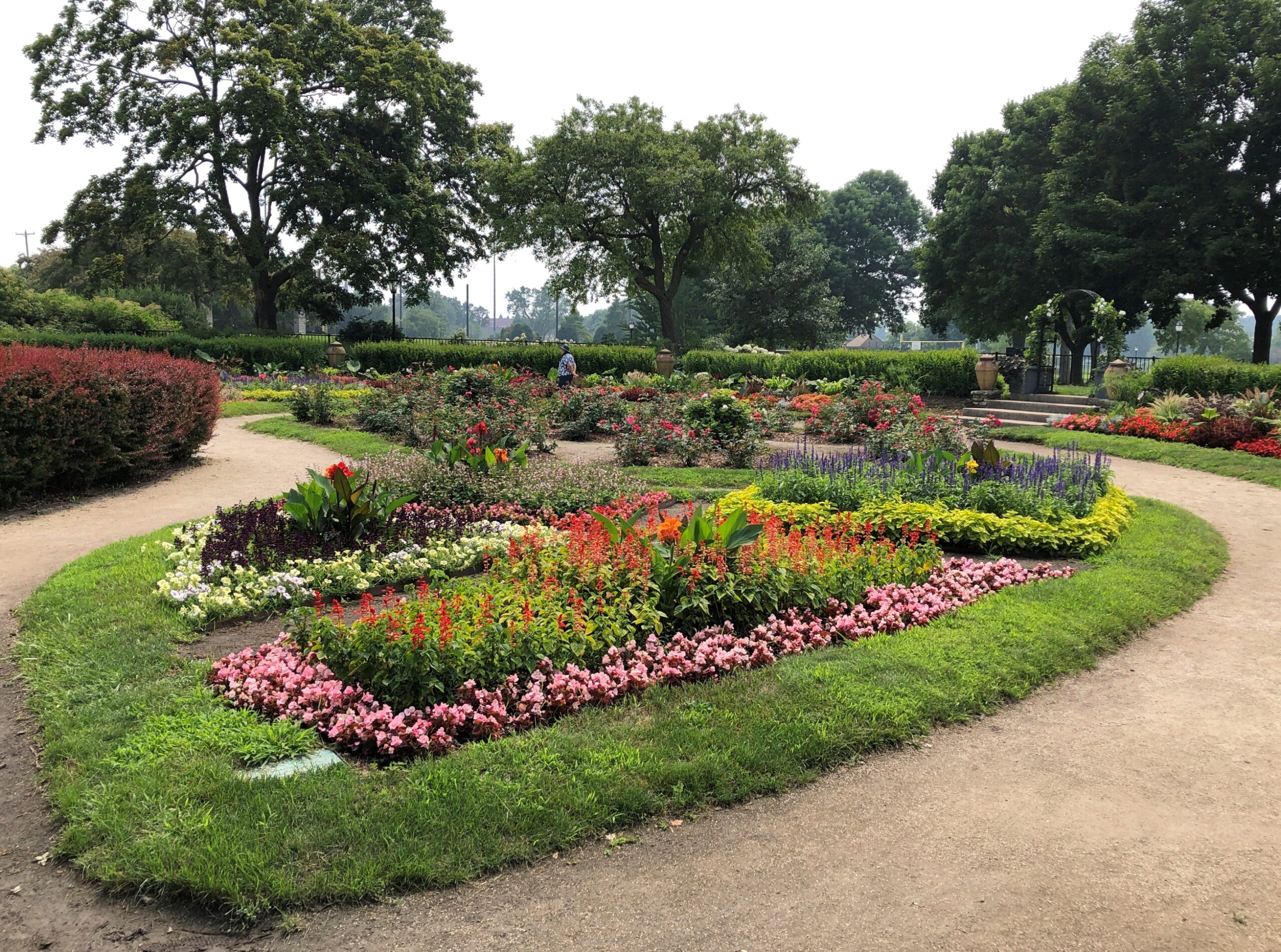
Including the Frame Park Formal Gardens.

Waukesha, Wisconsin
Waukesha, Wisconsin
Waukesha, Wisconsin
Waukesha, Wisconsin

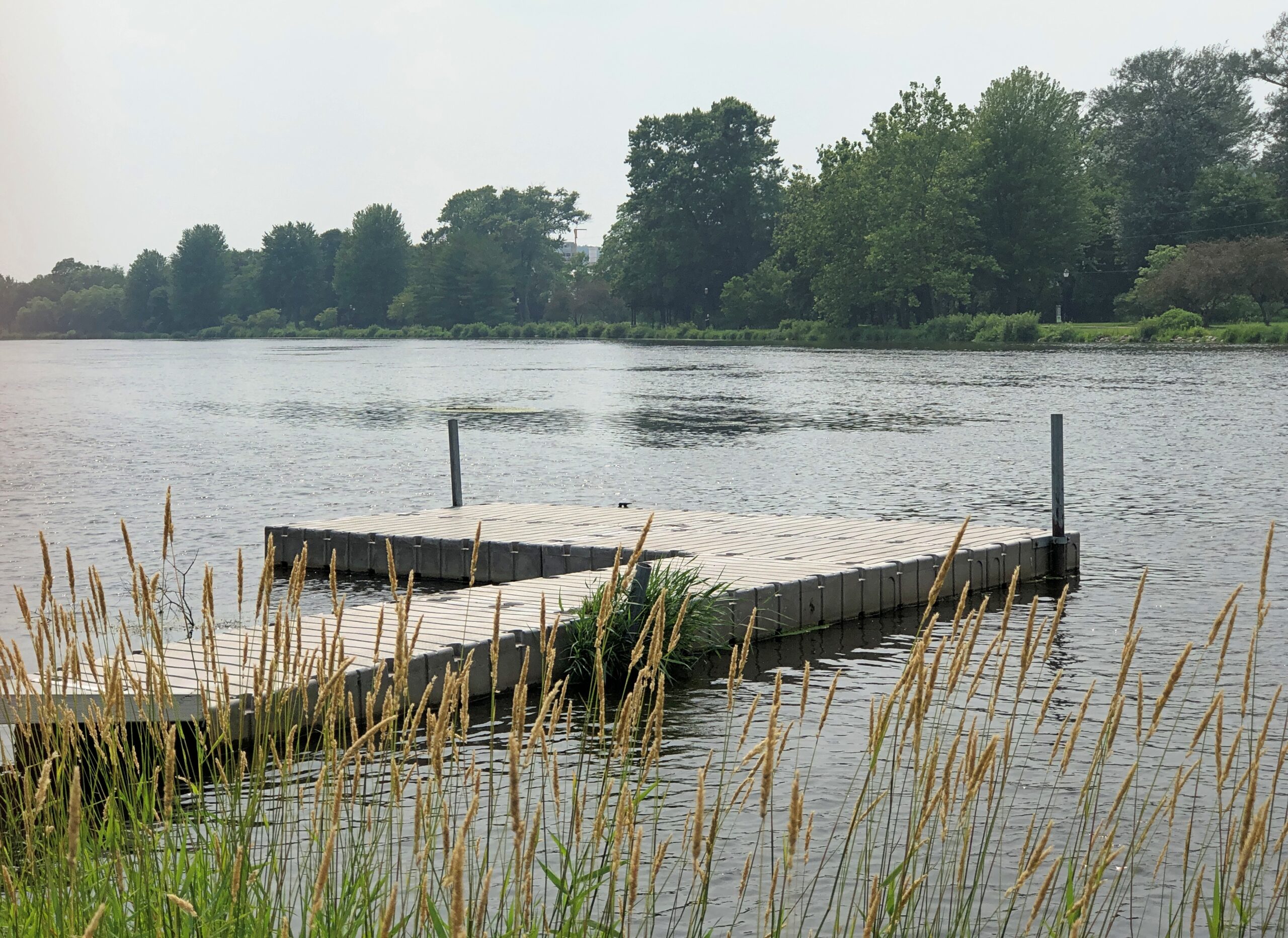
I hope the park and its garden weren’t damaged too much by the raging Fox, since it is flat most of the way from the garden to the river.

Waukesha, Wisconsin

The Fox is large at this point. Not something you want to see described as “angry.”

Downtown Waukesha

The other day I wondered how long it would take to count a million dollars’ worth of nickels and dimes a million times. That’s one of the dream images from “Minnie the Moocher.” Not just a dream, but an opium dream. After all, no sooner does Minnie learn to kick the gong around, does a vivid dream of wealth begin, all shiny and metallic, ending with:

She had a million dollars worth of nickels and dimes

And sat around and counted them all a million times

Let’s say half the dollar value is nickels, half dimes. That would be 5 million dimes and 10 million nickels. So 15 million individual coins. Let’s also say it takes a second to count each, just to keep it simple. That would be 15 million seconds, or 0.475 years (roughly, I shaved off a few places). Counting them a million times would thus be (roughly) 475,000 years.

Of course, if it’s an opium dream, the niceties of time and such don’t apply. Still, it sounds like a hellish task of a Sisyphean kind. But maybe it would be a heavenly task, if you have no sense of the passage of time.

I didn’t sit down to figure all that out until I was at my desk, but the question came out of nowhere during a short interstate drive just before the end of July, up in the southeast corner of Wisconsin. One destination that day, a Sunday, was downtown Waukesha, an outer suburb of Milwaukee, but a place with a distinct history of its own, where people came to take the waters once upon a time.

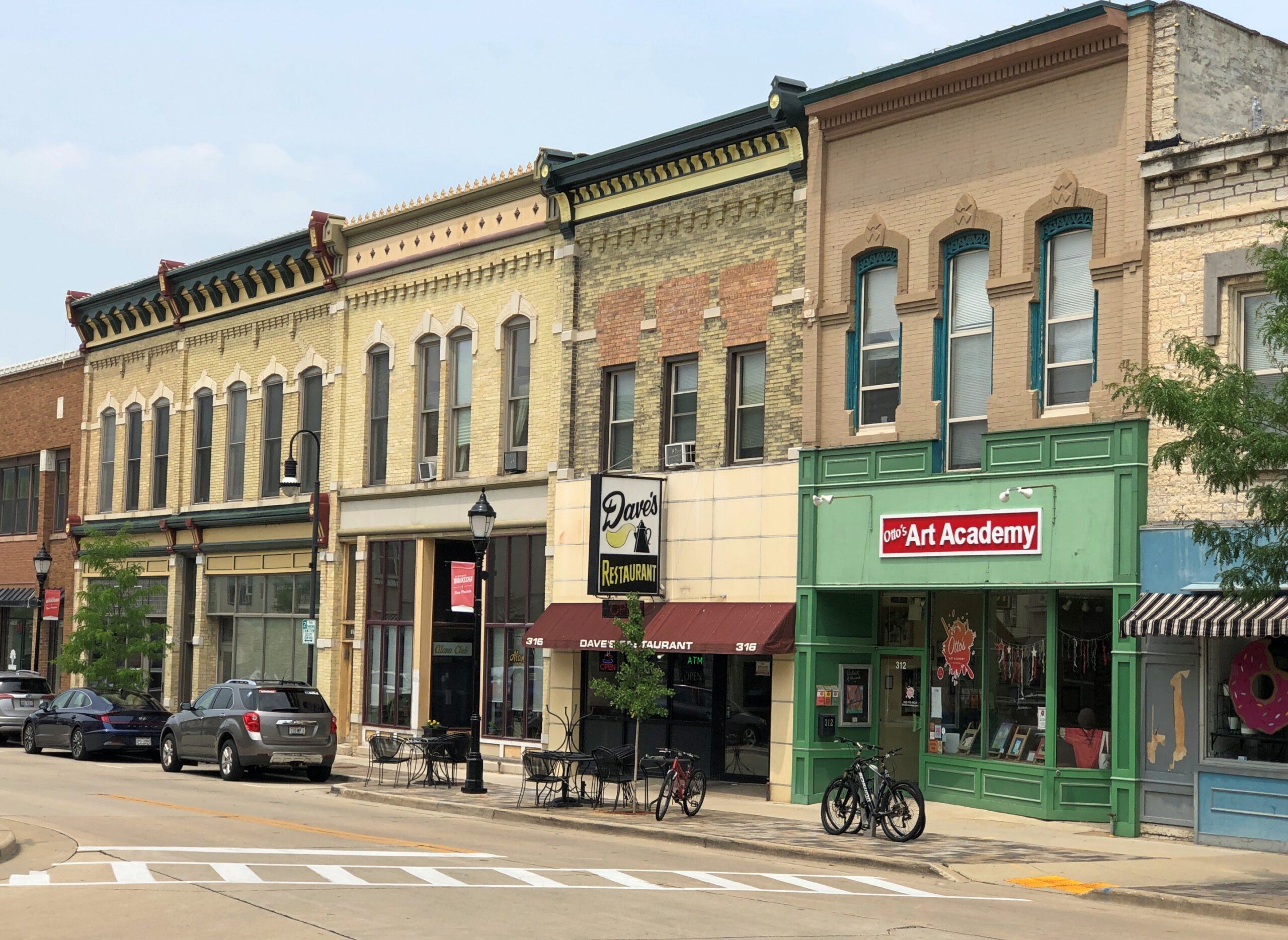
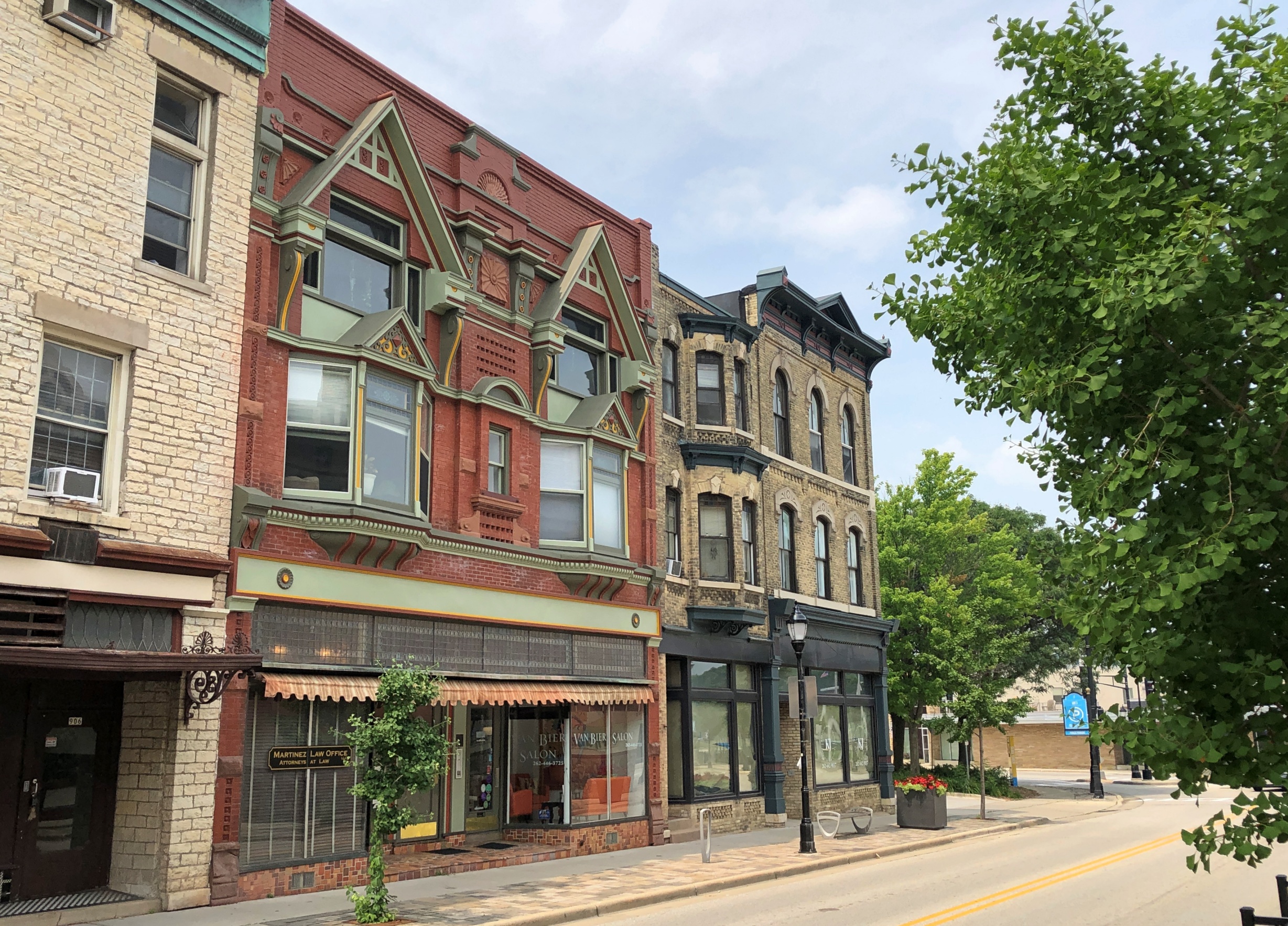
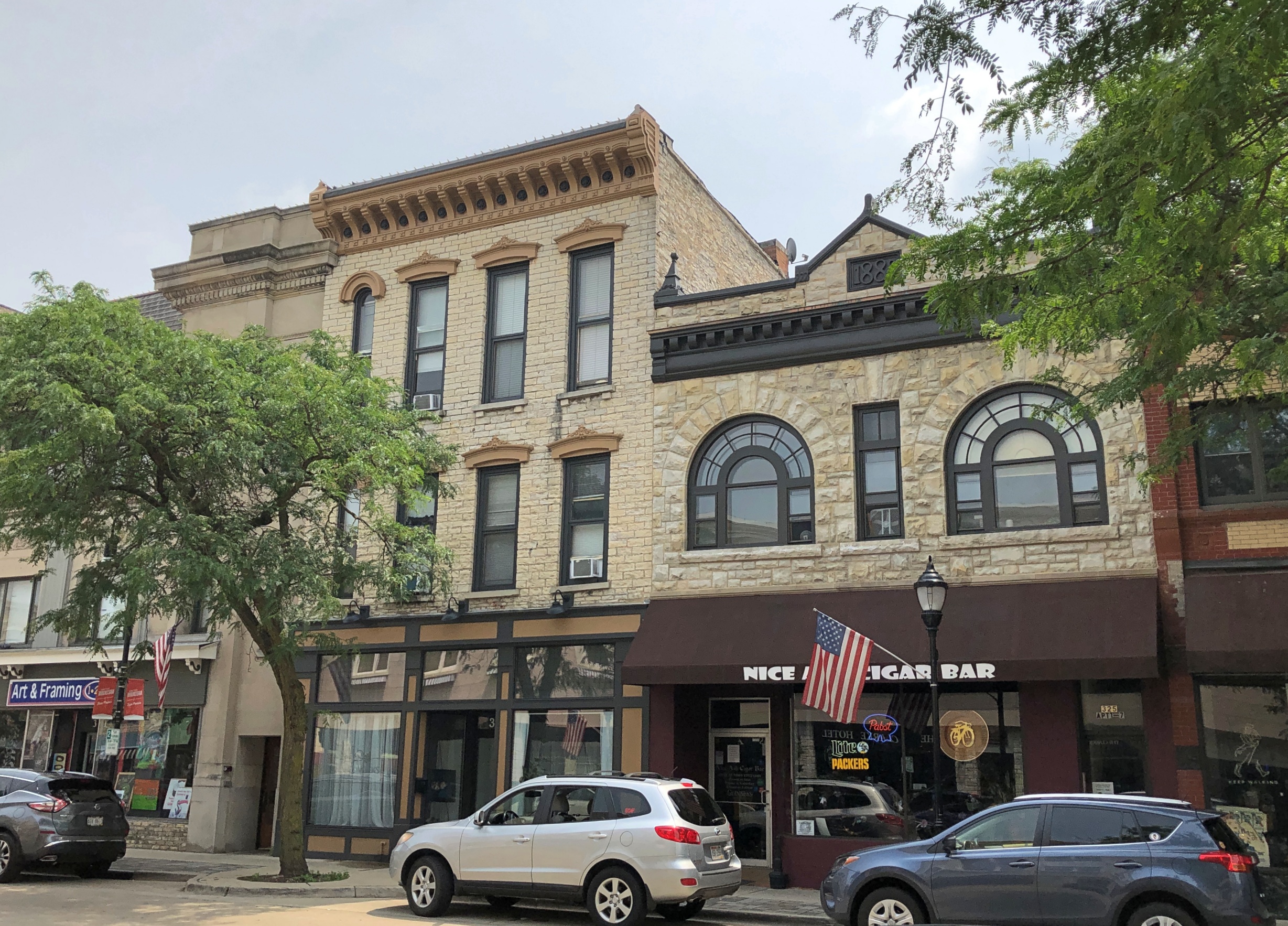
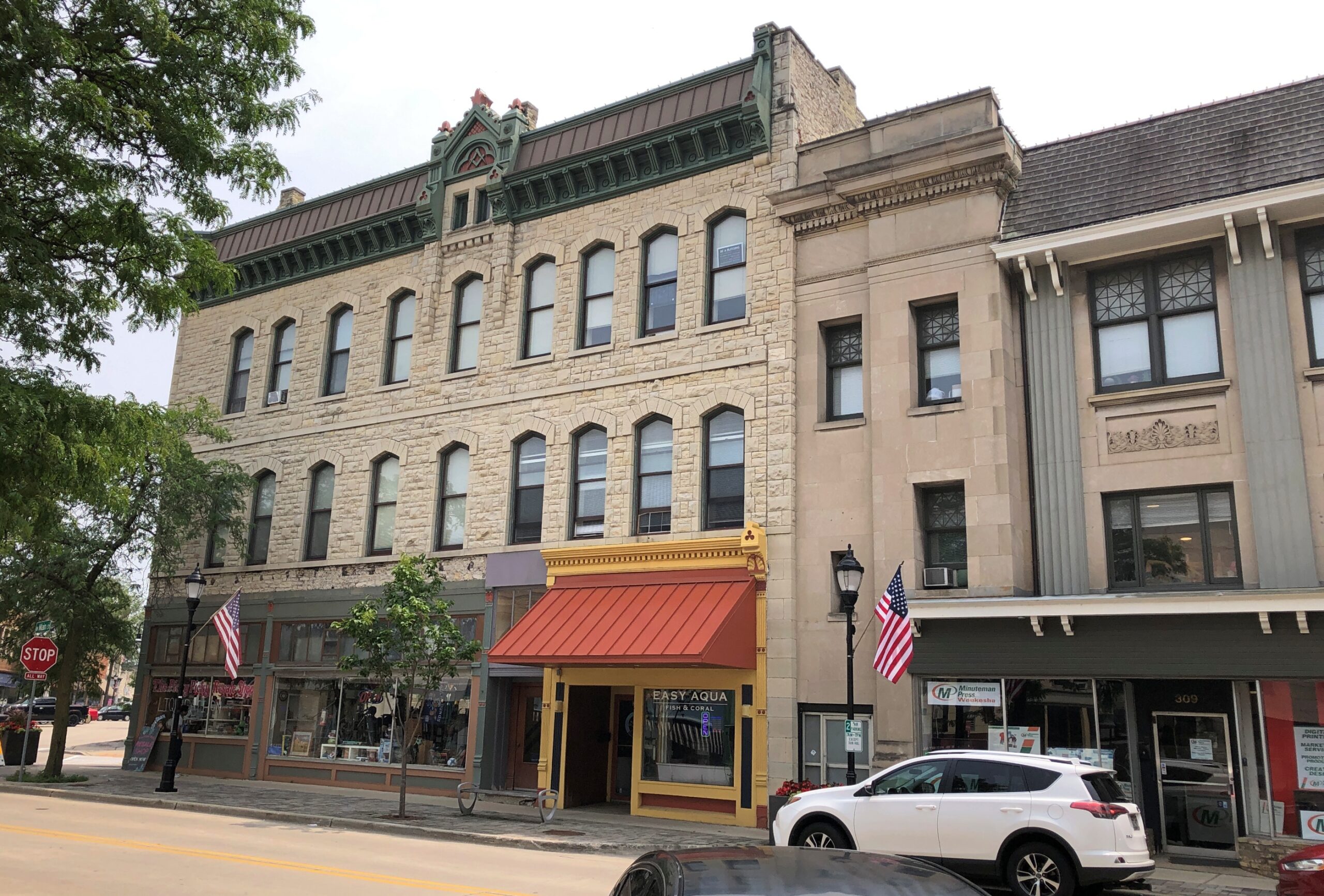
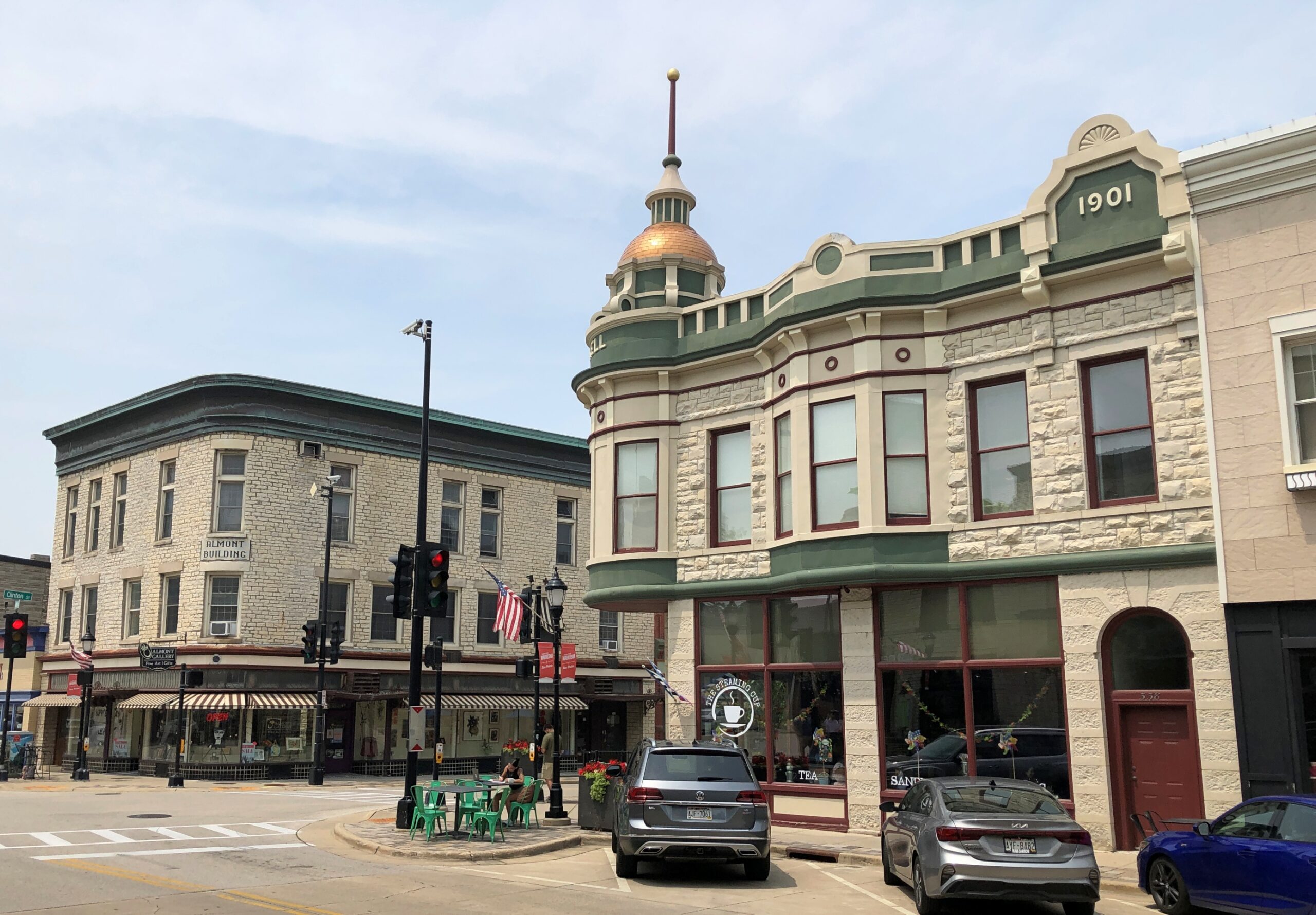
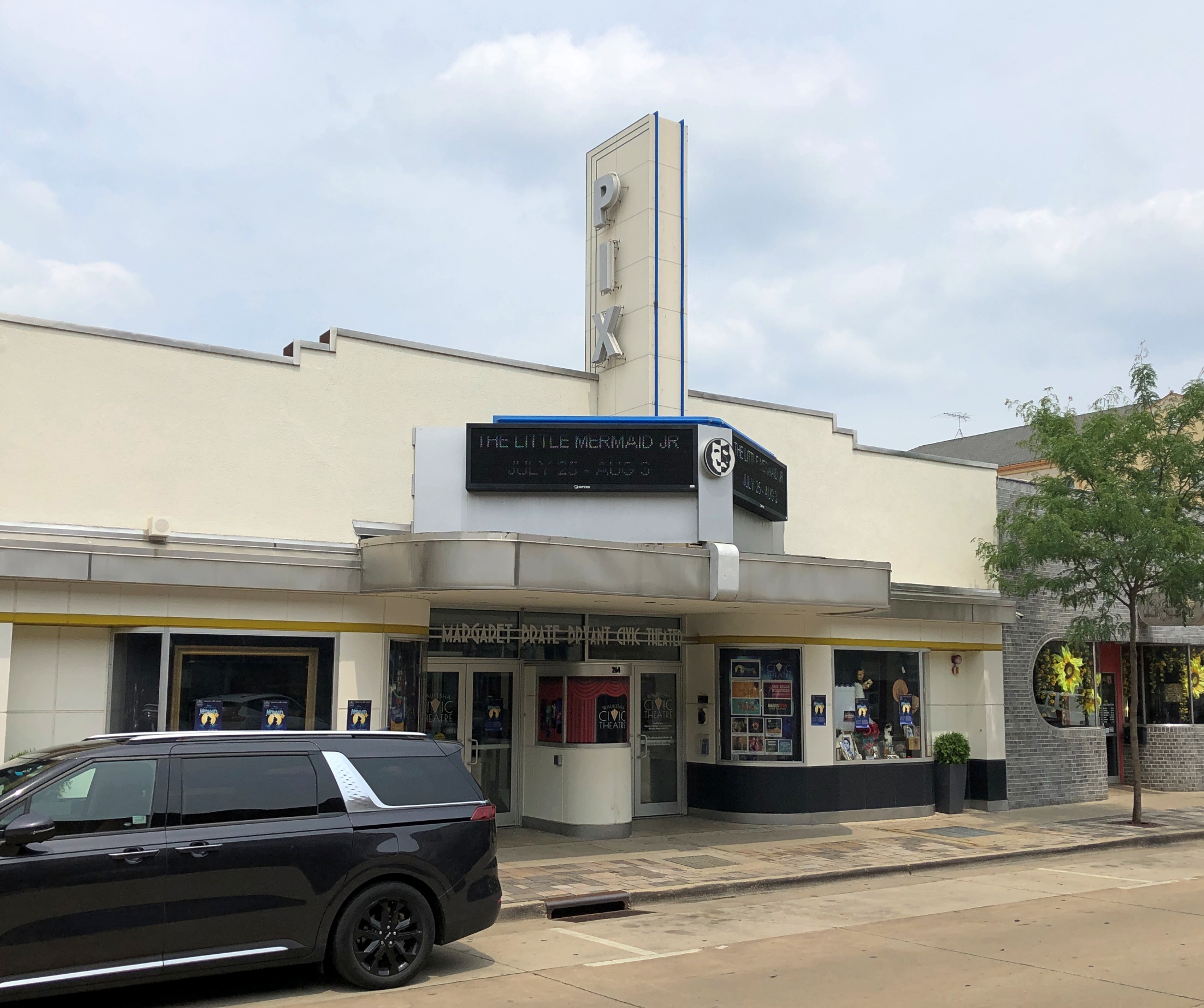
We spent some time near the five-pointed intersection of Main, Broadway and Grand, focal point of a handsome streetscape.

Waukesha, Wisconsin
Waukesha, Wisconsin

Now this is a set of buildings.

Waukesha, Wisconsin

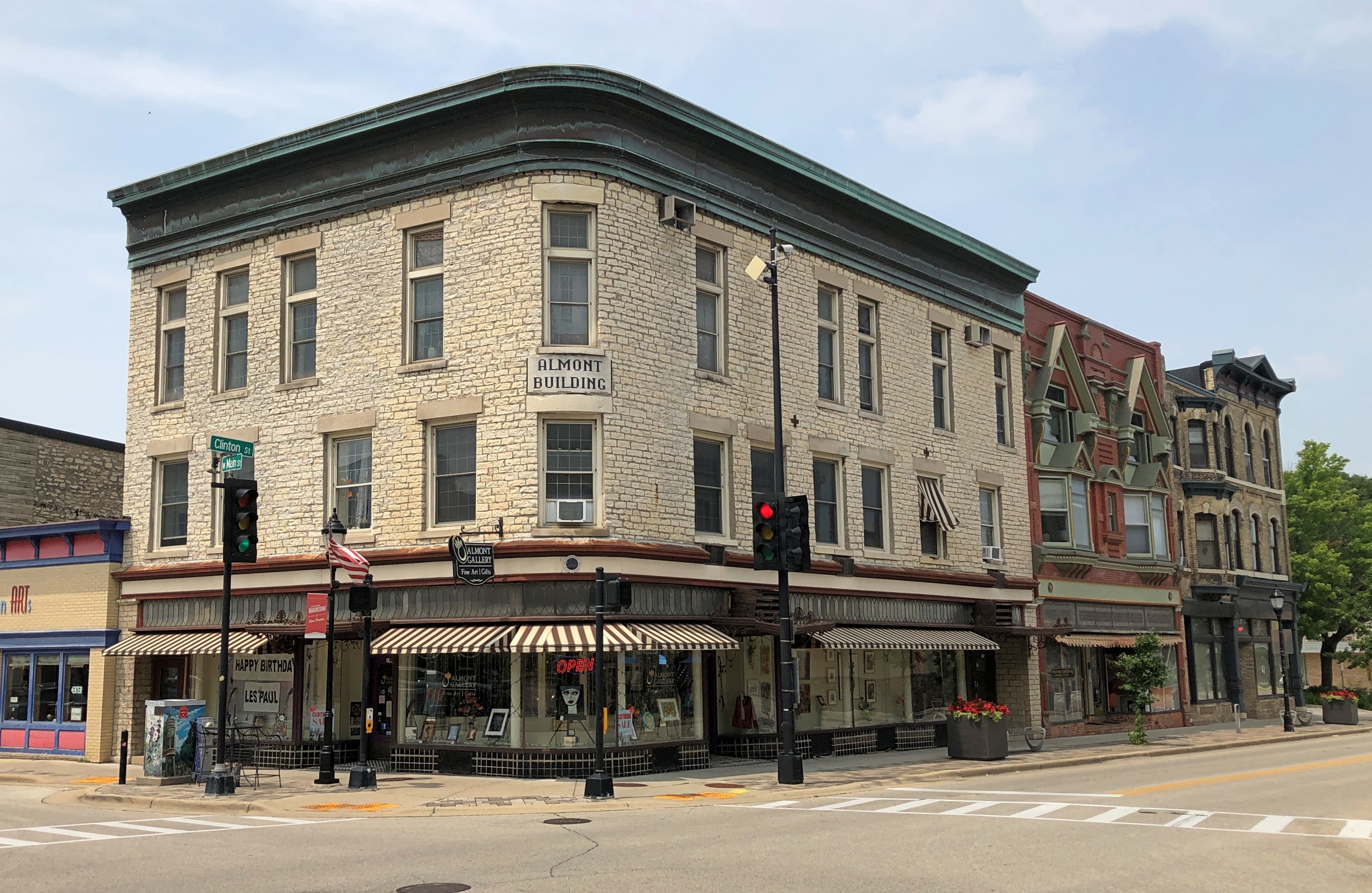
The Almont Building, whose original name was the Robinson Block.

“The core of the downtown, prior to 1856, consisted of freestanding wooden frame buildings, but a new era began after a massive fire nearly destroyed this northern section of Main Street,” the Waukesha County Historical Society & Museum says. “The Robinson Block was built in 1857 with fireproofing in mind and is the first Five Points building to use Waukesha limestone.”

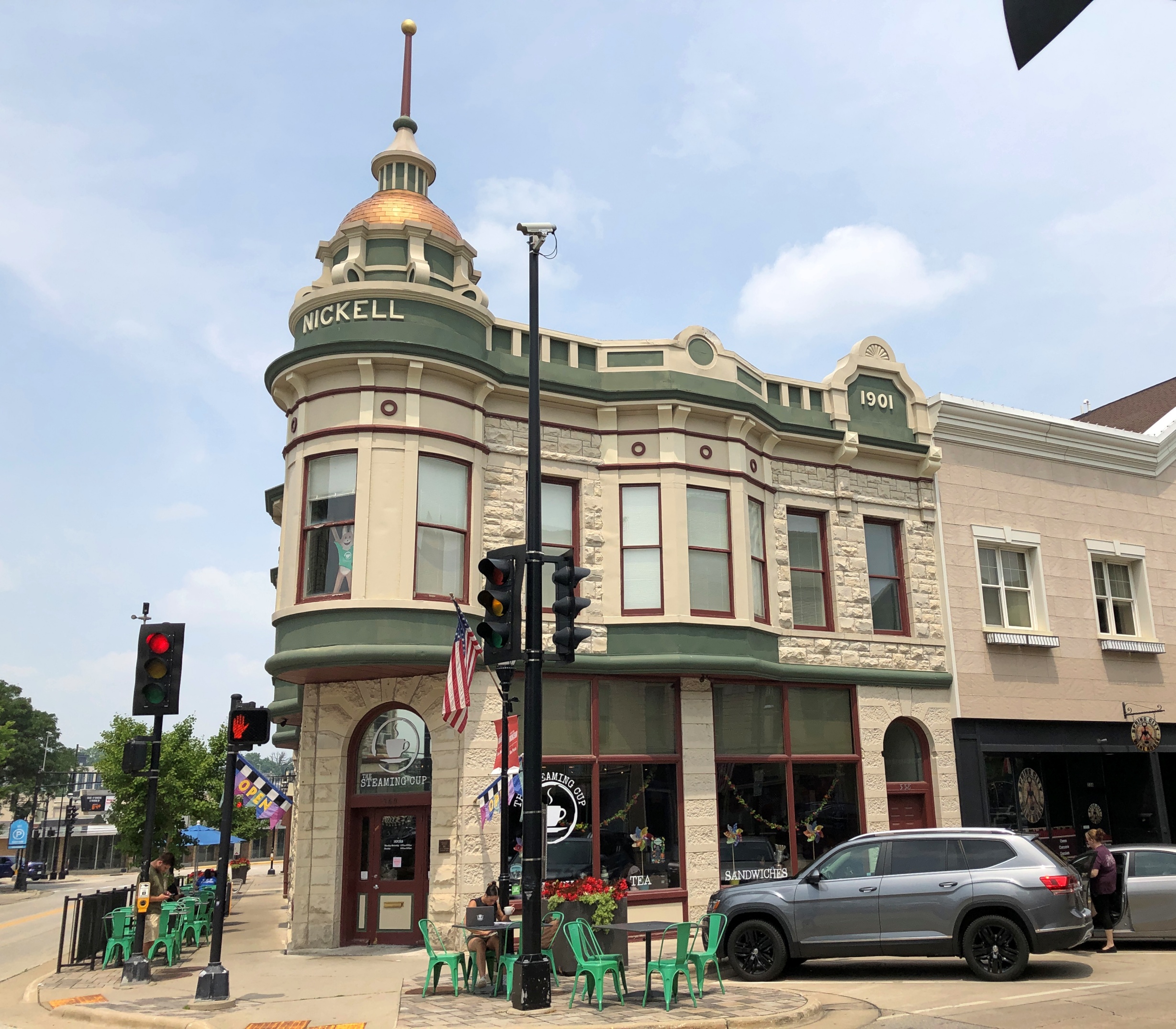
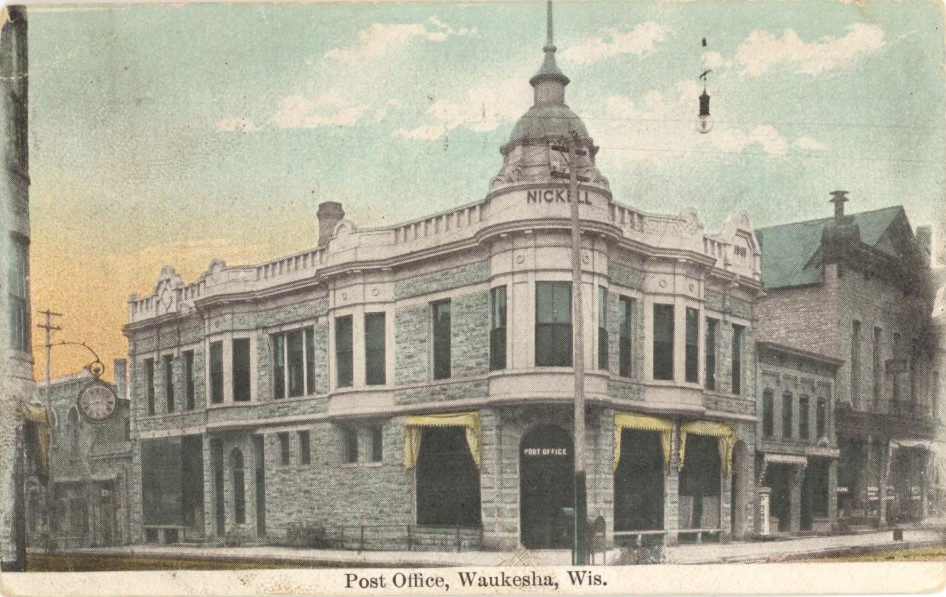
The Nickell Building, as it looked recently, and long ago.

“Built by Addison J. Nickell, local businessman and jeweler, the first floor housed the U.S. Post Office from 1902-1914,” notes the WCHS&M. “The work of Waukesha architect C.C. Anderson, this Queen Anne displays a projecting oriel and corner turret capped by a domed roof: both are covered by pressed metal.”

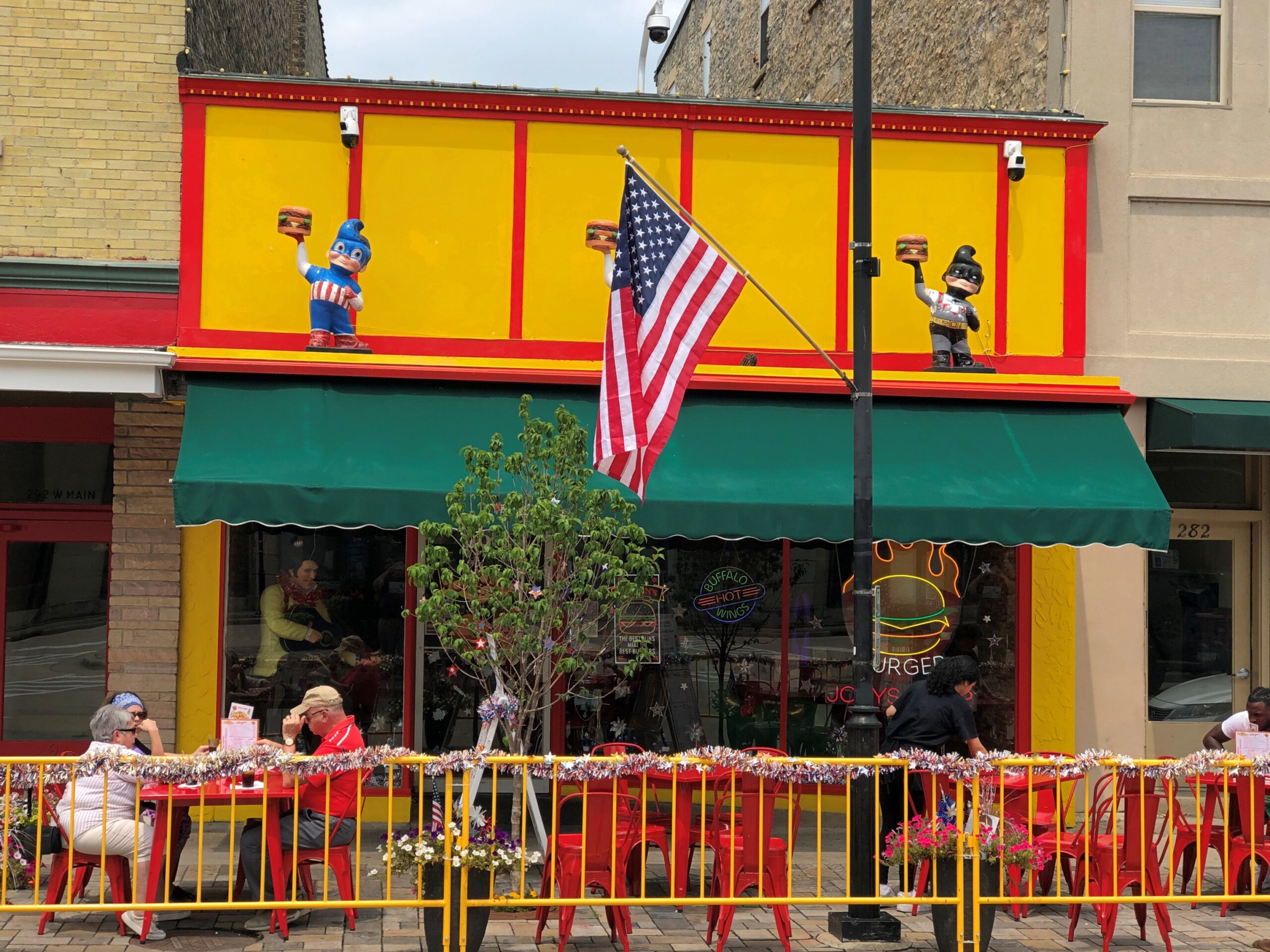
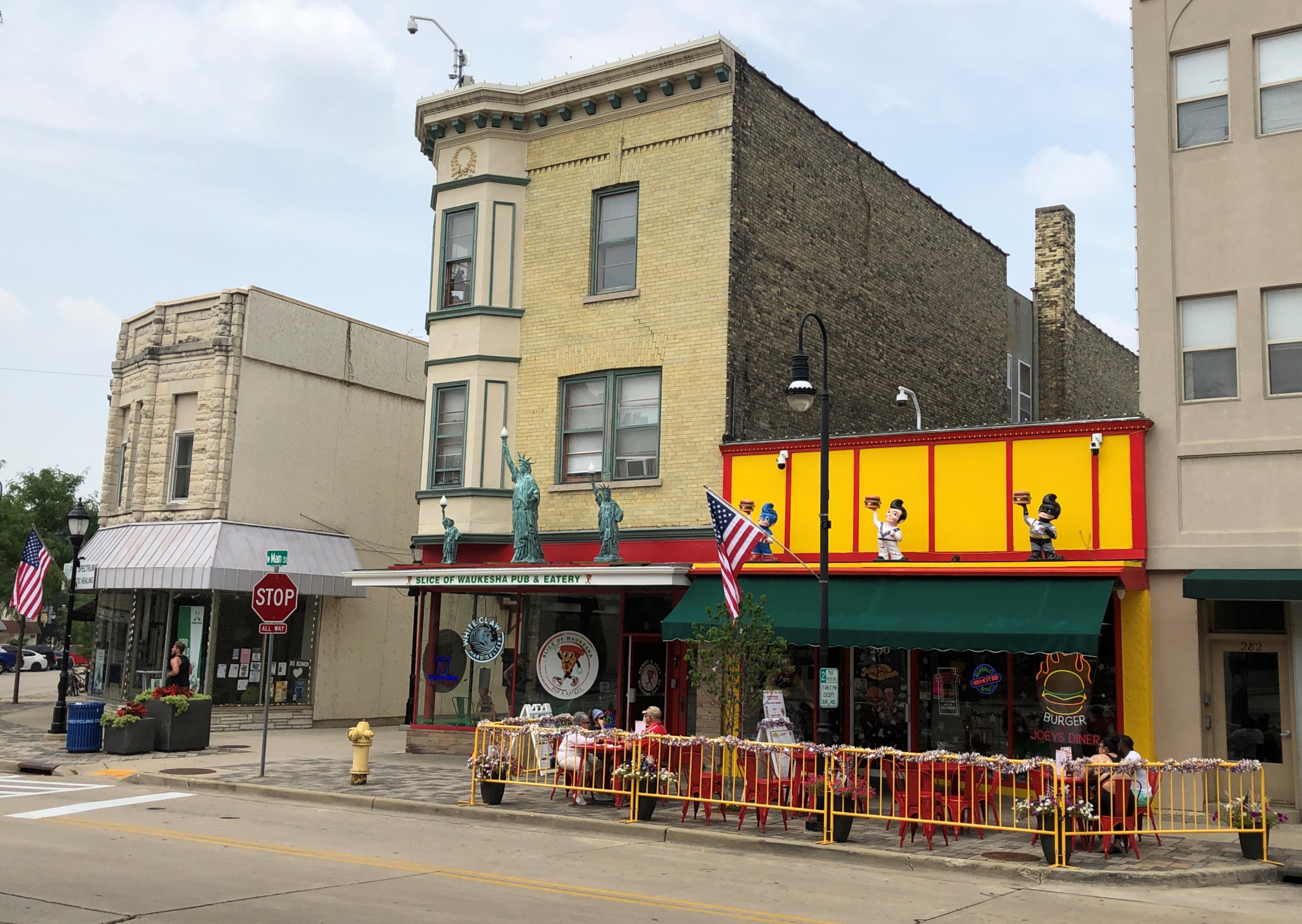
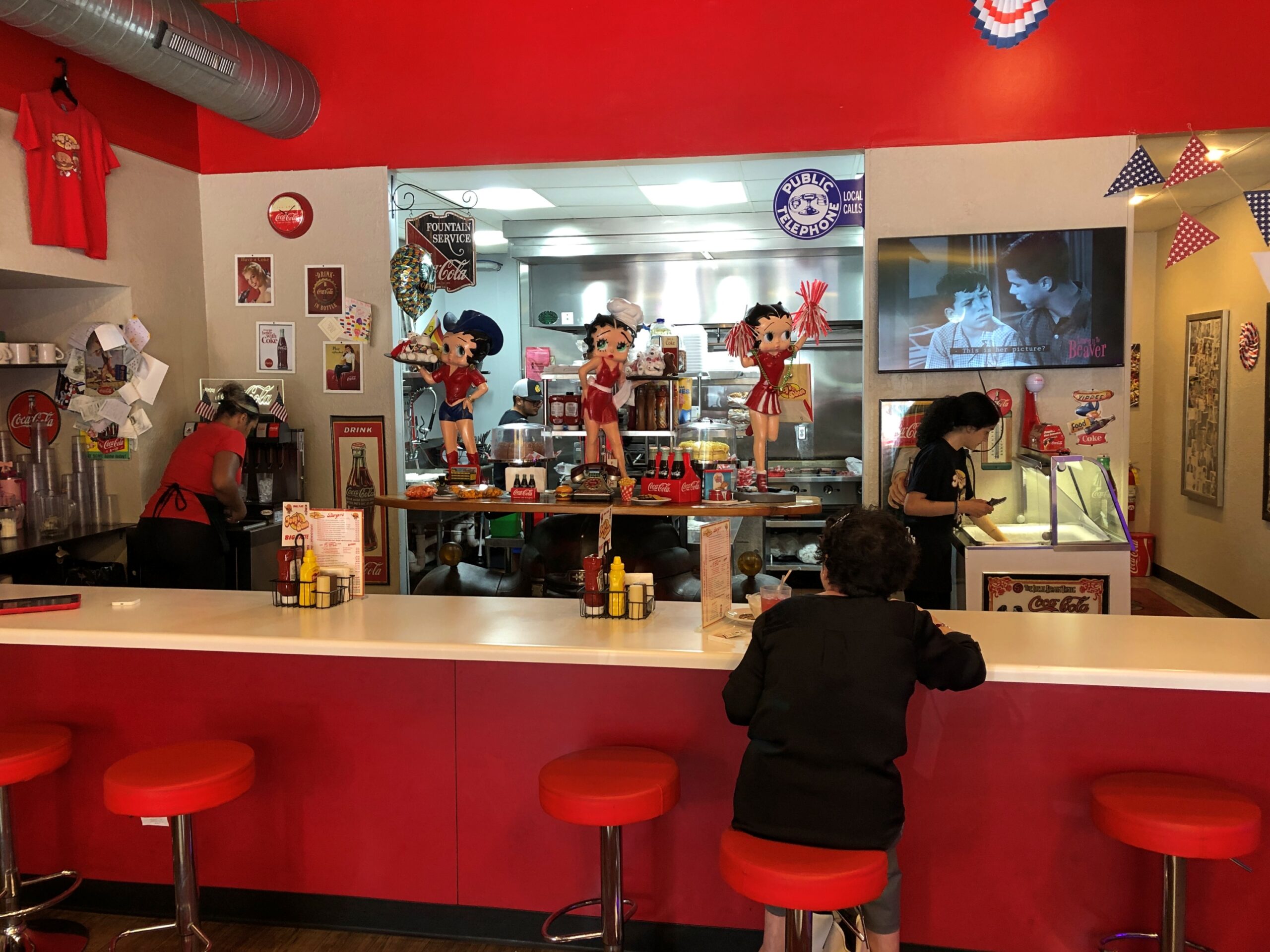
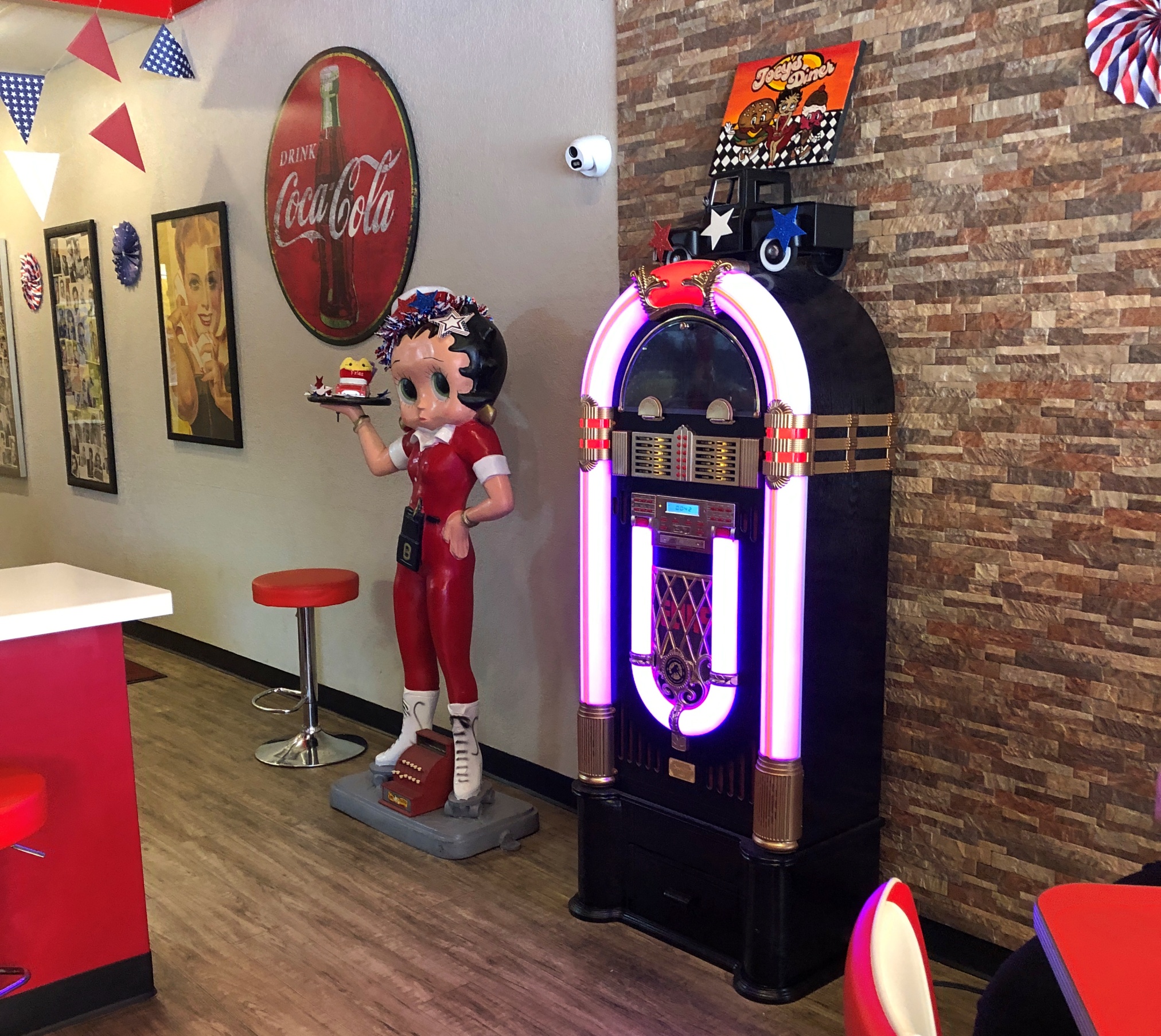
Being mid-day, one bit of business to take care of: lunch. We soon found the friendly joint called Joey’s Diner.

Joey likes Betty.

Joey’s is next to an Italian restaurant, similarly casual, that I think was owned by the same fellow. He was everywhere at once all the time — running a restaurant is nothing if not busy, and he seemed to be running two — but toward the end of our meal, asked how it was. I answered enthusiastically to the positive about my simple but also delicious hamburger. He responded by giving us a slice of chocolate cake, on the house. Thanks, Joey.

The street has other (many other) examples of places found here and nowhere else.

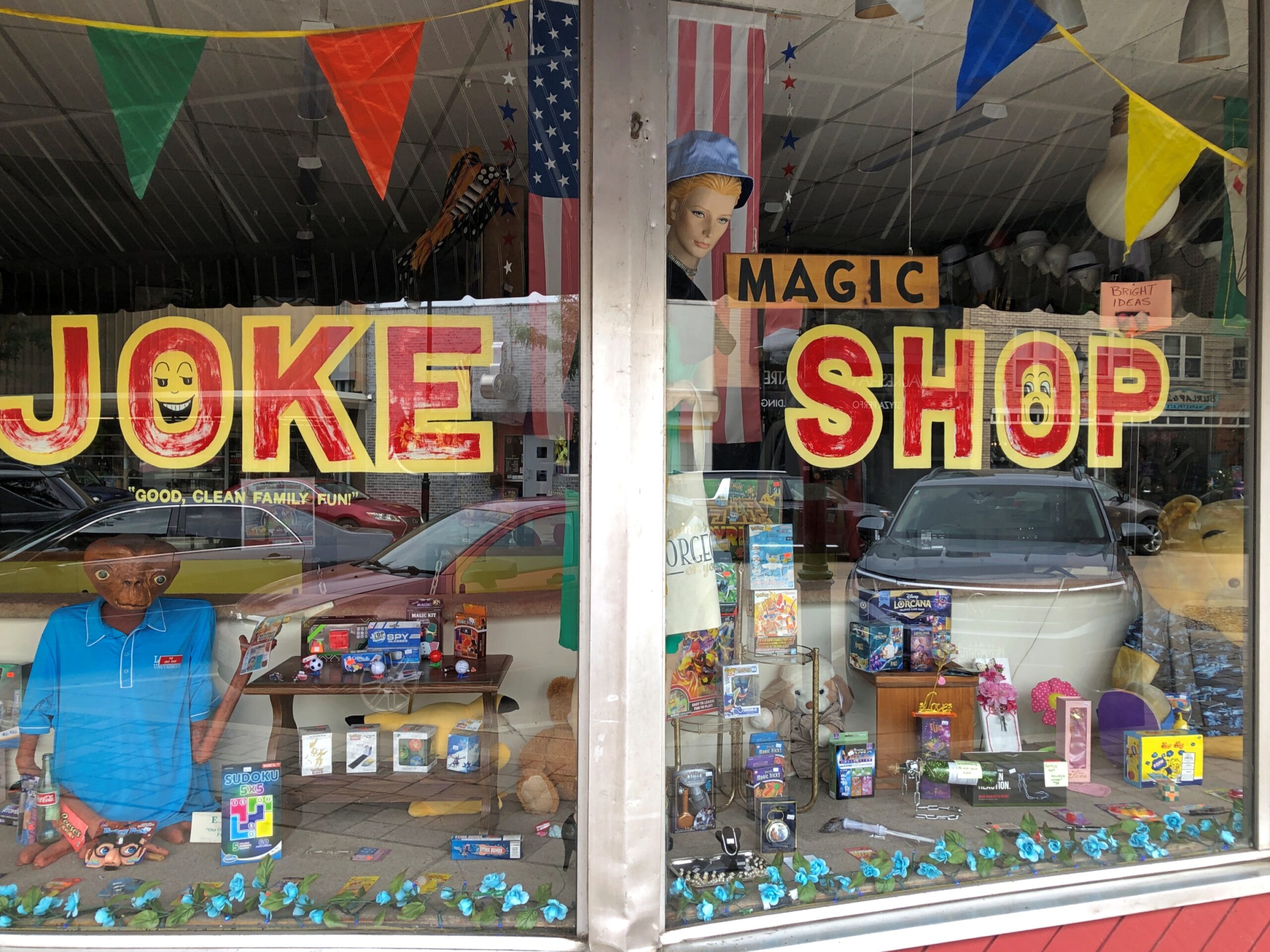
Been a while since I’d seen a joke shop. Closed.

Waukesha, Wisconsin
Waukesha, Wisconsin

The last one might have been Uncle Fun in Chicago, which closed some years ago. Too bad about that, but at least Jest For Fun Joke Shop, which has been at this Waukesha location more than 40 years, is keeping the retail tradition alive.

Augusta Flyby

In the heat of midday back in late June, en route to Athens, Ga., I arrived at the Georgia Welcome Center on I-20, a sizable structure just inside the state, and did what I needed to do. Returning to my car, I wondered whether I should drive into Augusta, only a few miles off the Interstate at that point. Specifically to downtown, to see what I could see, even at 90+° F. or so.

Would it be worth the short detour? At that moment, the lyrics of a song of my youth came to mind, as the only mention of Augusta I know in popular music.

I beg your pardon, mama, what did you say?

My mind was drifted off on Martinique Bay

It’s not that I’m not interested, you see

Augusta, Georgia is just no place to be.

The song was “An American Dream” by the Nitty Gritty Dirt Band (a.k.a. the Dirt Band) – with backing vocals by Linda Ronstadt, no less – which reached No. 13 on the Billboard Hot 100 after its release in late 1979, and probably annoyed Augusta’s city fathers and other local boosters. But all that was nearly a half century ago, so I expect any annoyance is long gone as the tune has slipped into obscurity.

The song merely came to mind then, as songs often do, and didn’t affect my decision – which was to go. Do a flyby, in my idiosyncratic nomenclature for such a visit. That is, pass through a place, but a little more than merely driving through. If I see anything interesting during a flyby, I’ll stop for a short look. (So not only is my nomenclature eccentric, it isn’t really accurate. Who cares.)

Sure enough, I spotted something worth stopping for.

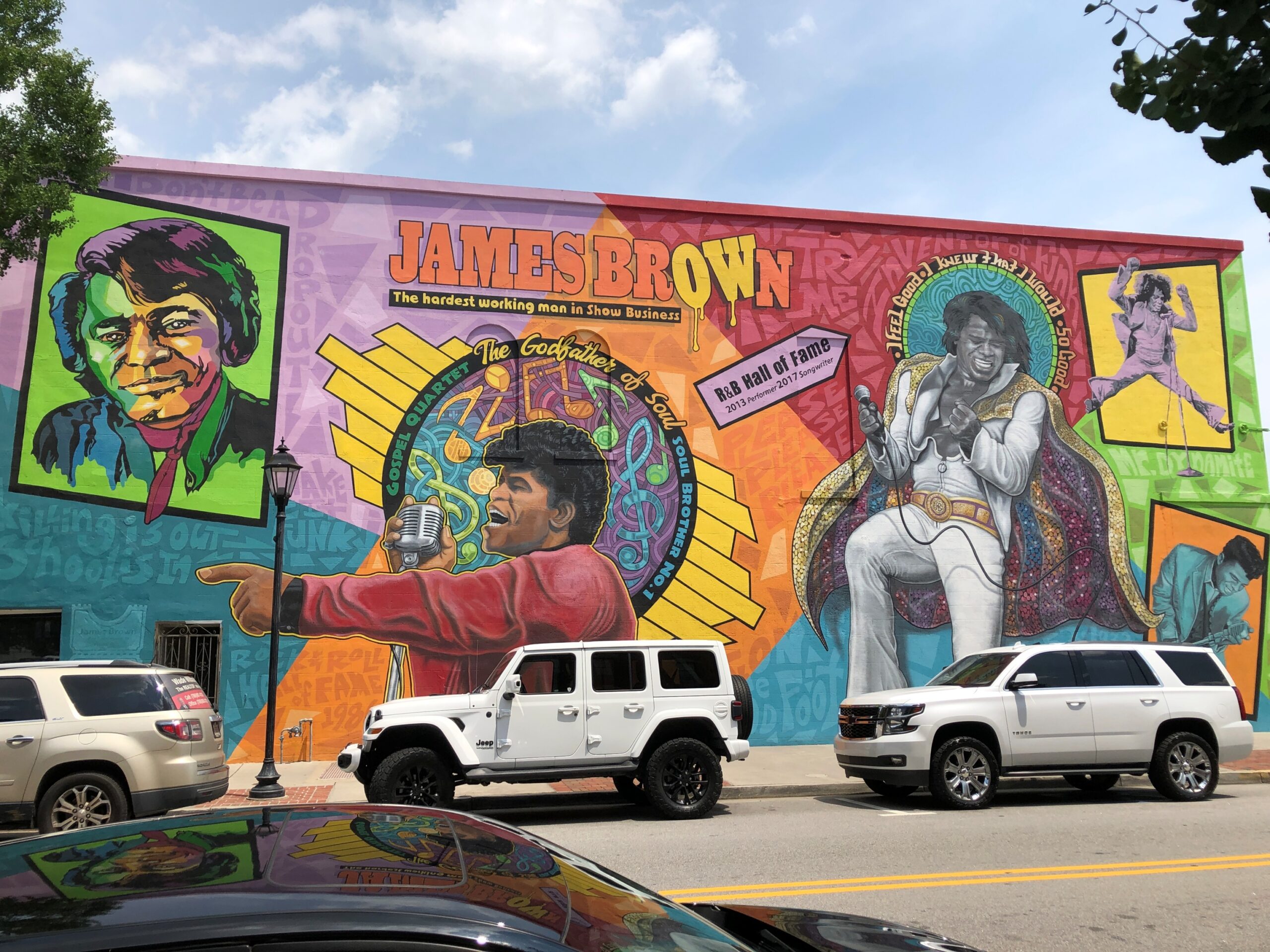
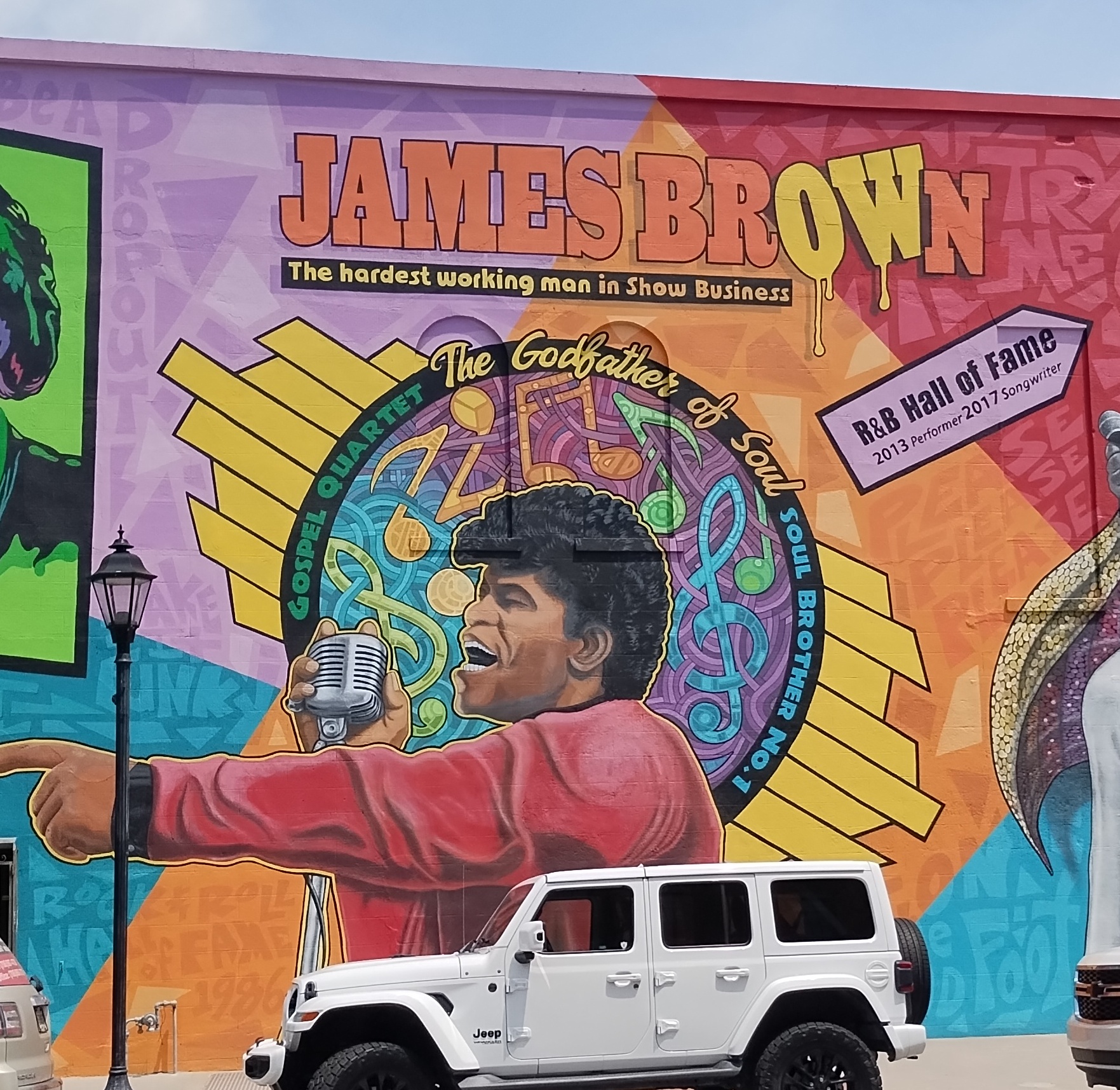
James Brown mural, Augusta

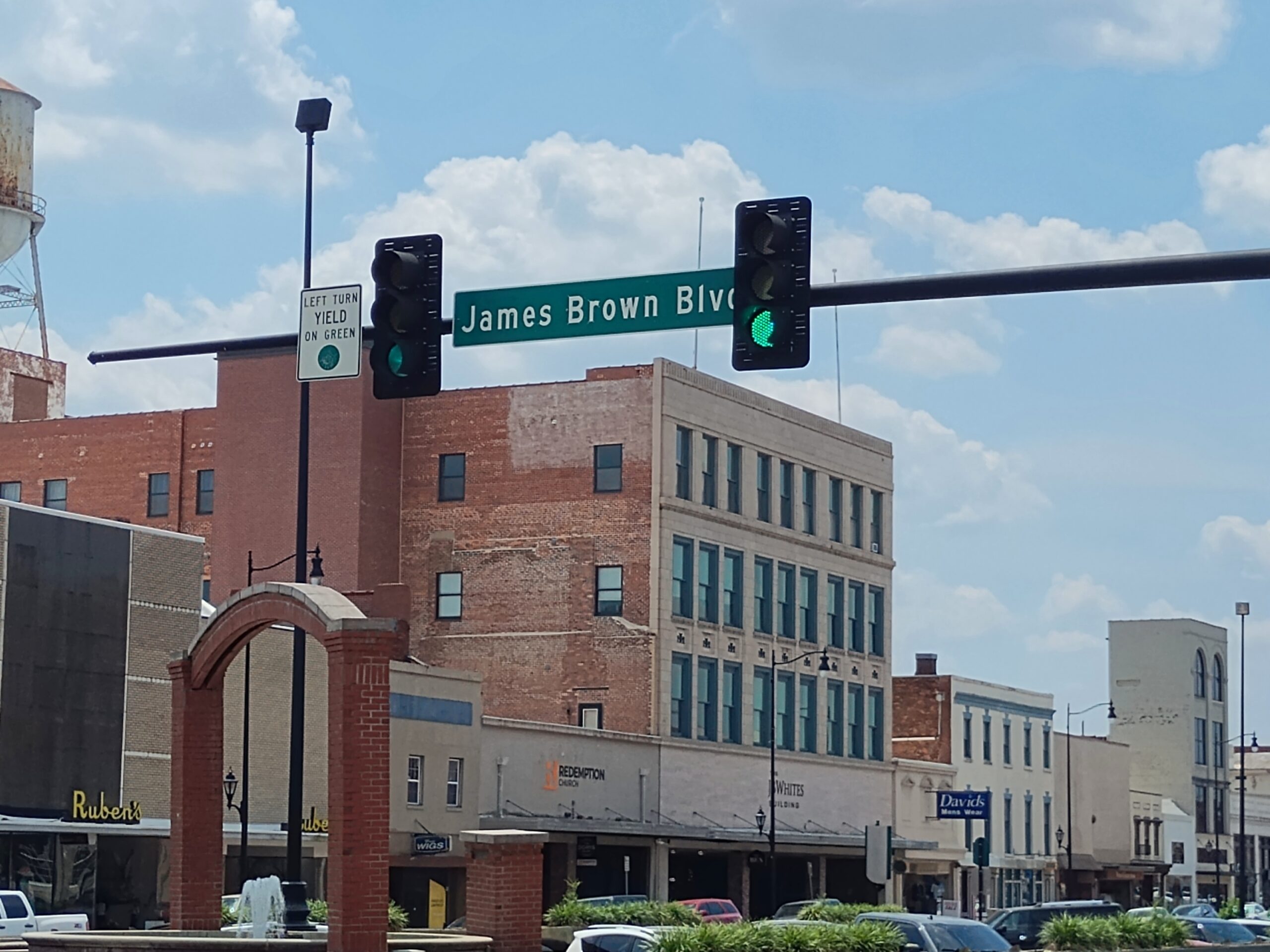
A mural at the intersection of James Brown Blvd. and Broad St., completed in 2020 by an artist named Cole Phail. Though born in South Carolina, Brown grew up in Augusta, a fact I previously didn’t know.

James Brown Blvd

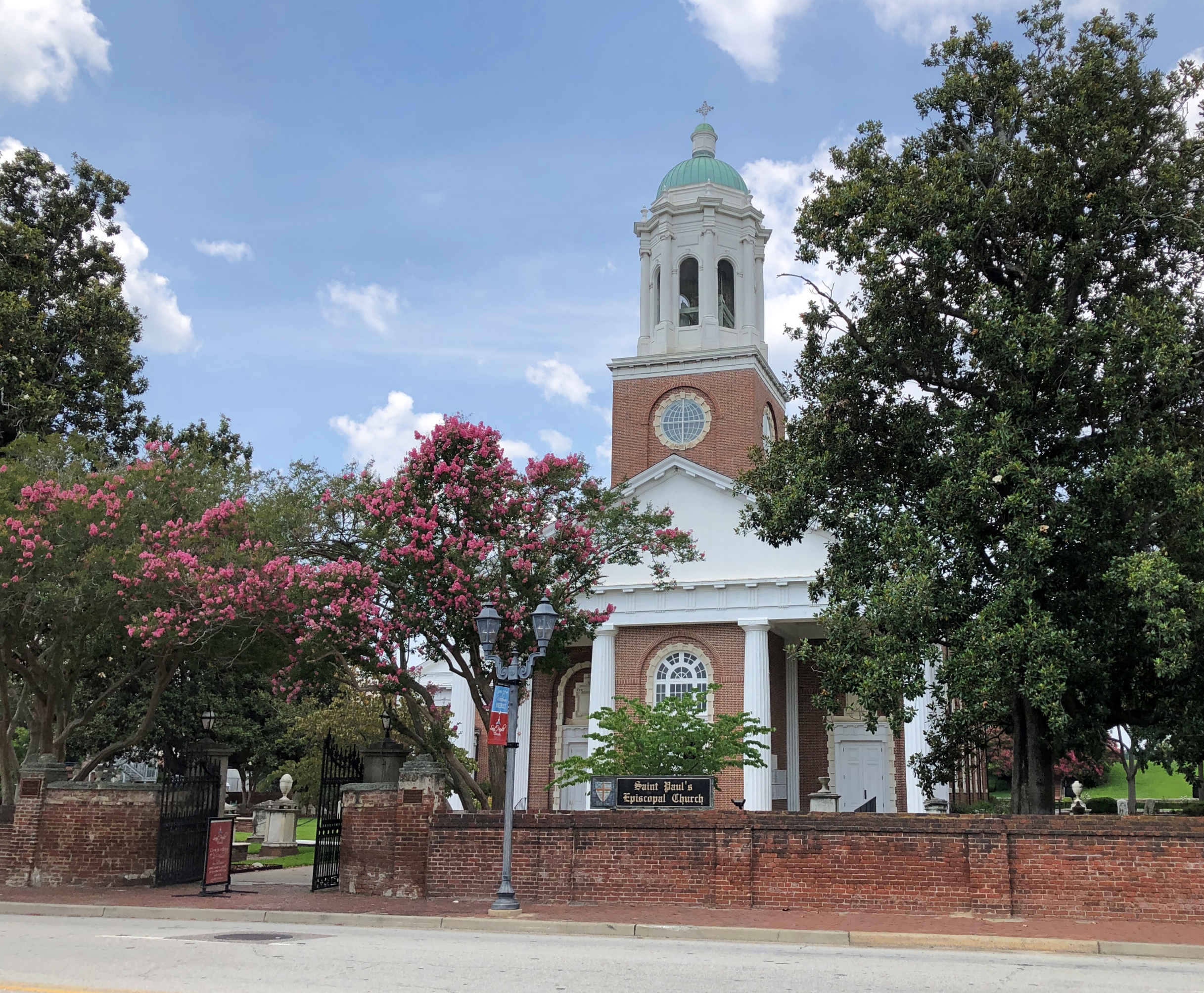
Later I learned that there’s a bronze of the Godfather of Soul not far away on Broad, but I didn’t look around enough to spot it, considering the heat dome, which seemed to be bearing down on me personally at that moment. So I looked at the mural, got back in my car, and blasted the AC. A few blocks away, as I was driving along, I saw an open church. I had to stop for that, too.

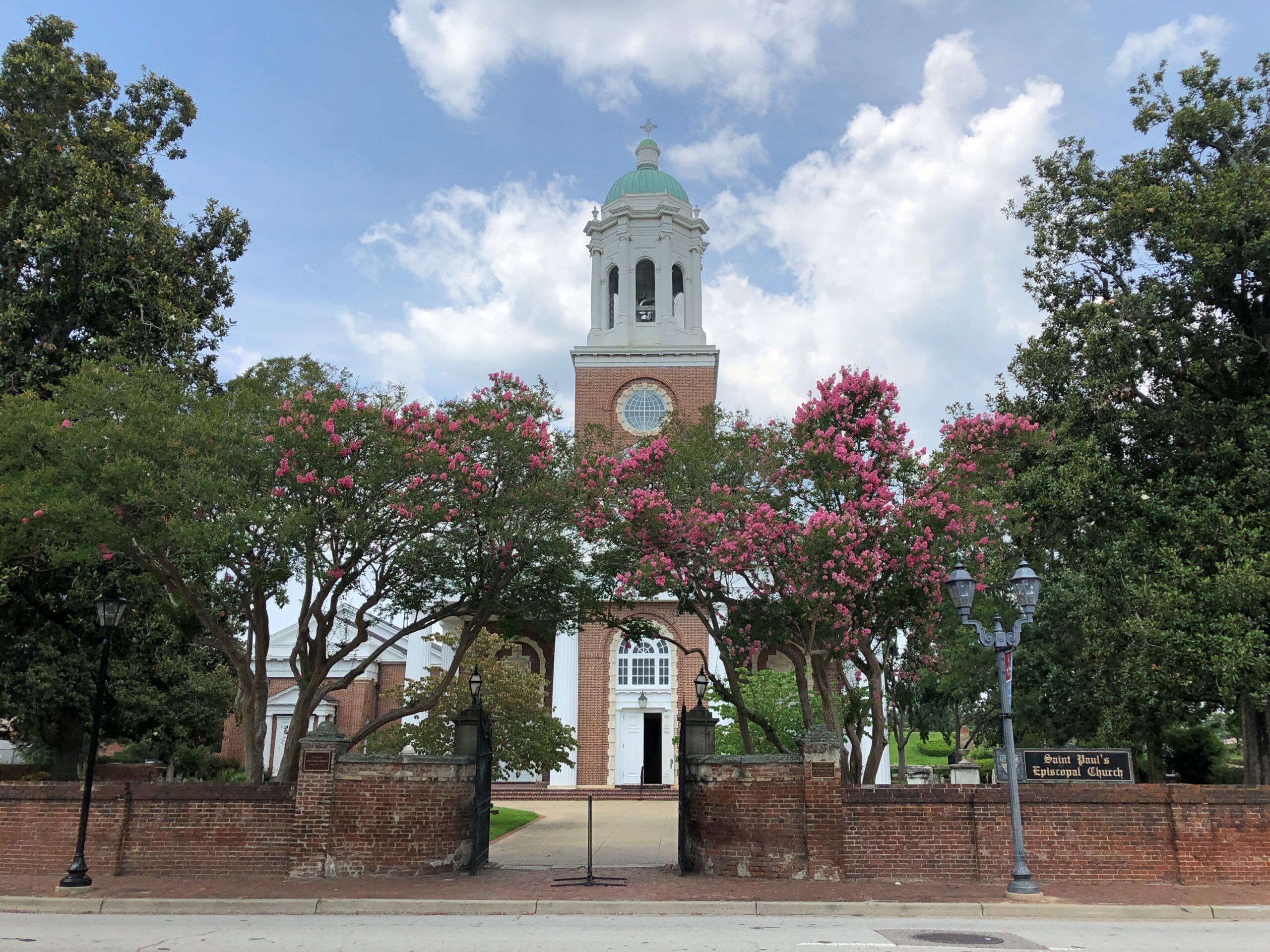
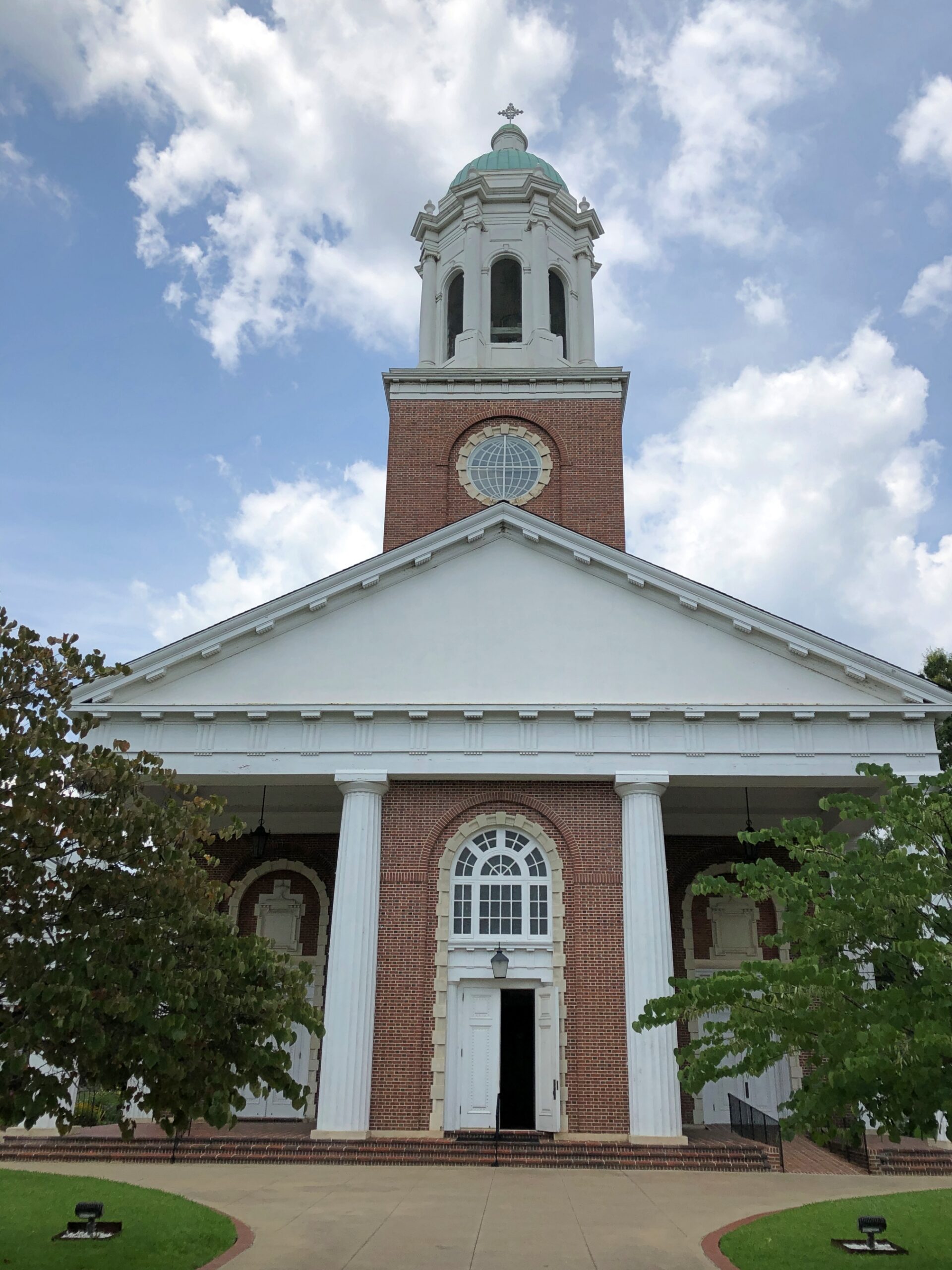
St Paul's Church, Augusta

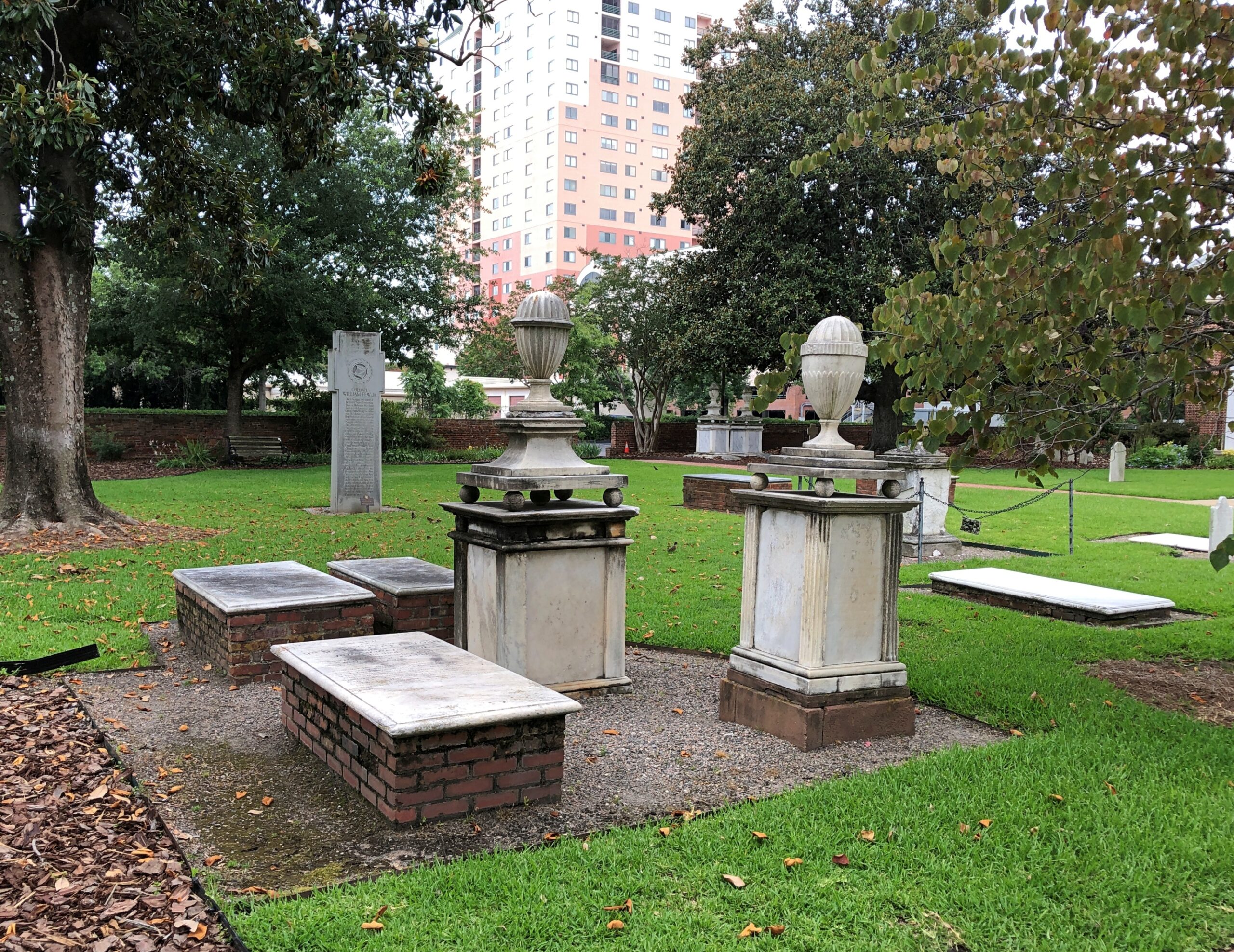
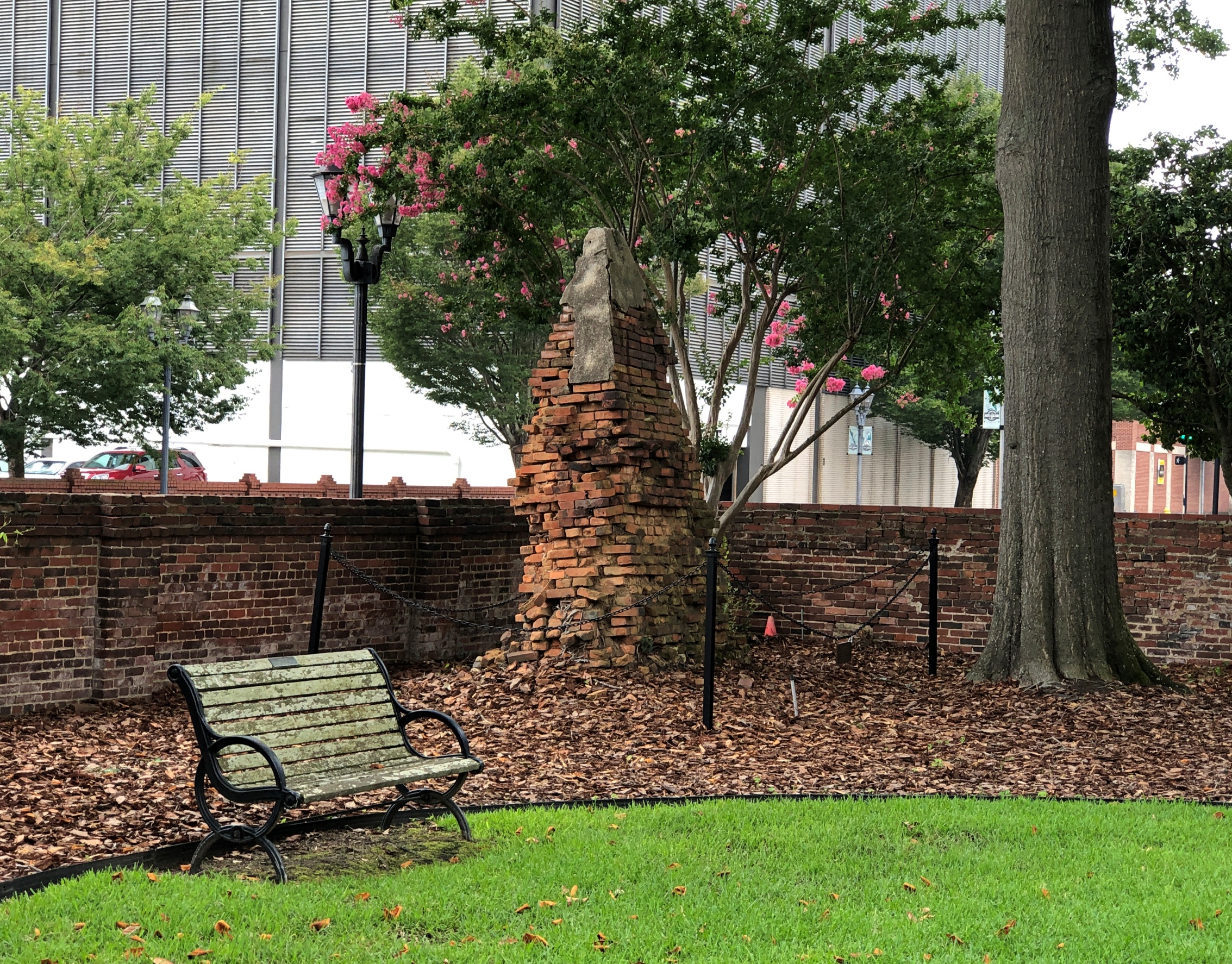
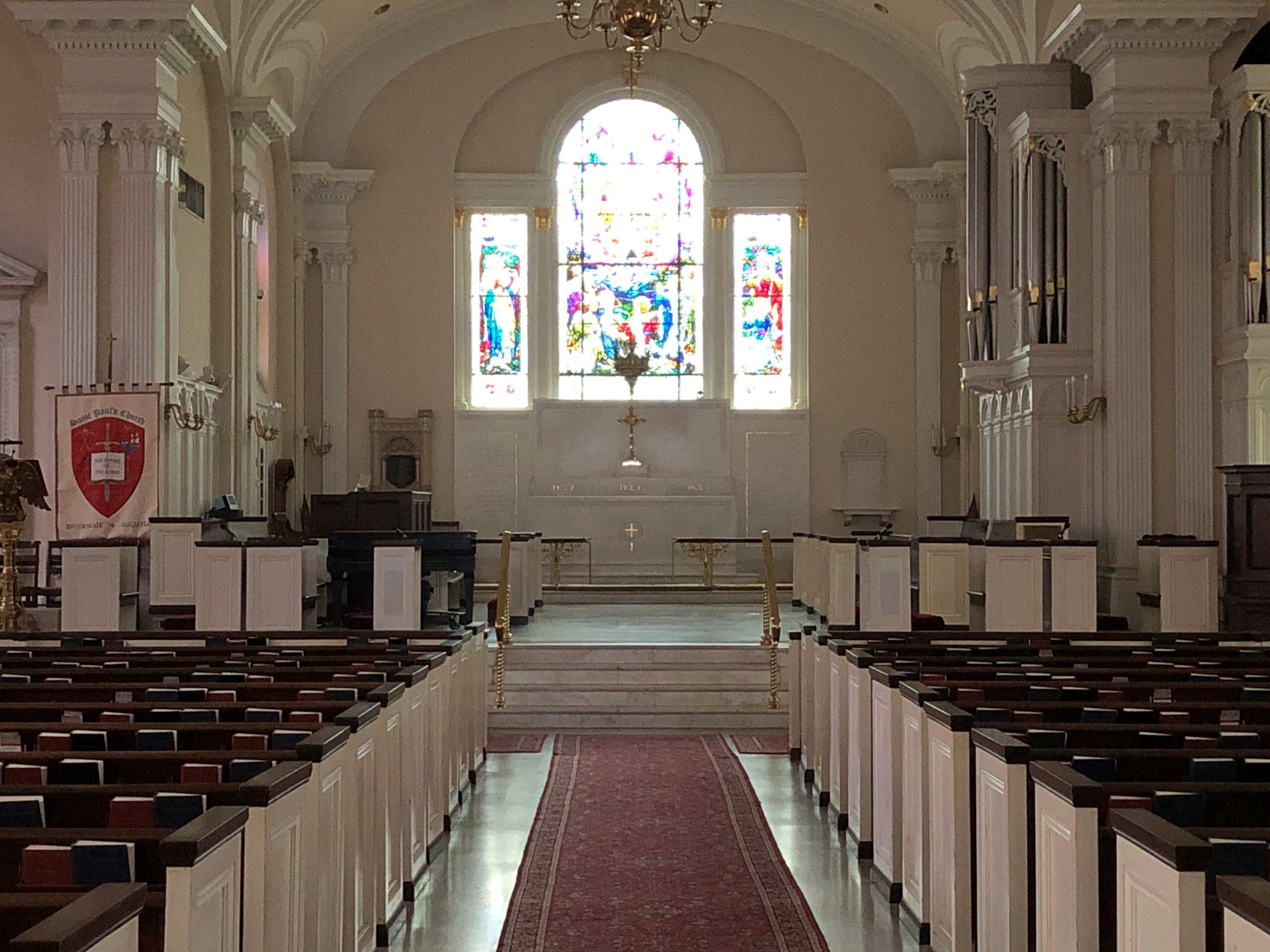
St. Paul’s Episcopal. Not only a church building, but a church graveyard as well.

St Paul's Church, Augusta

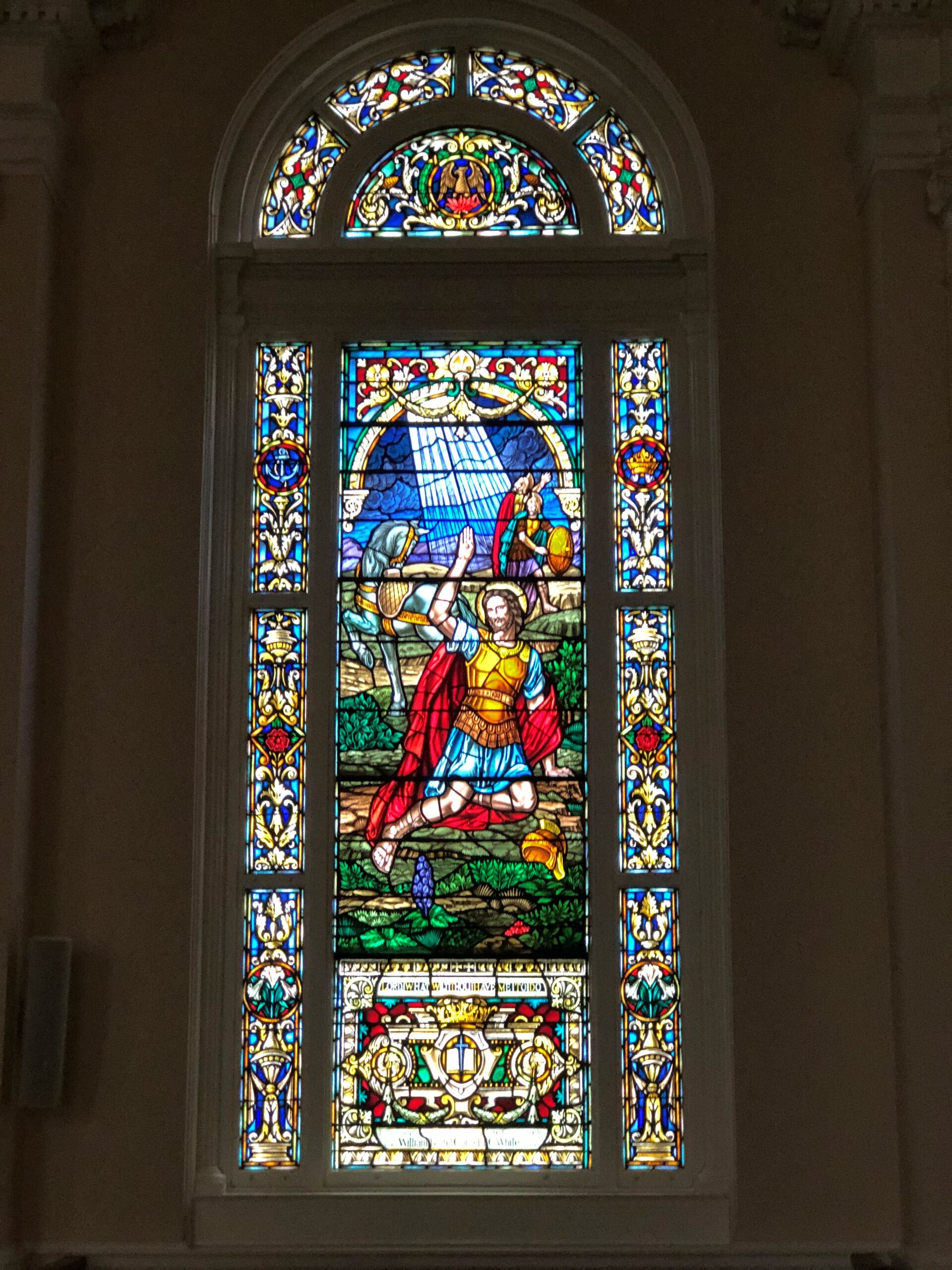
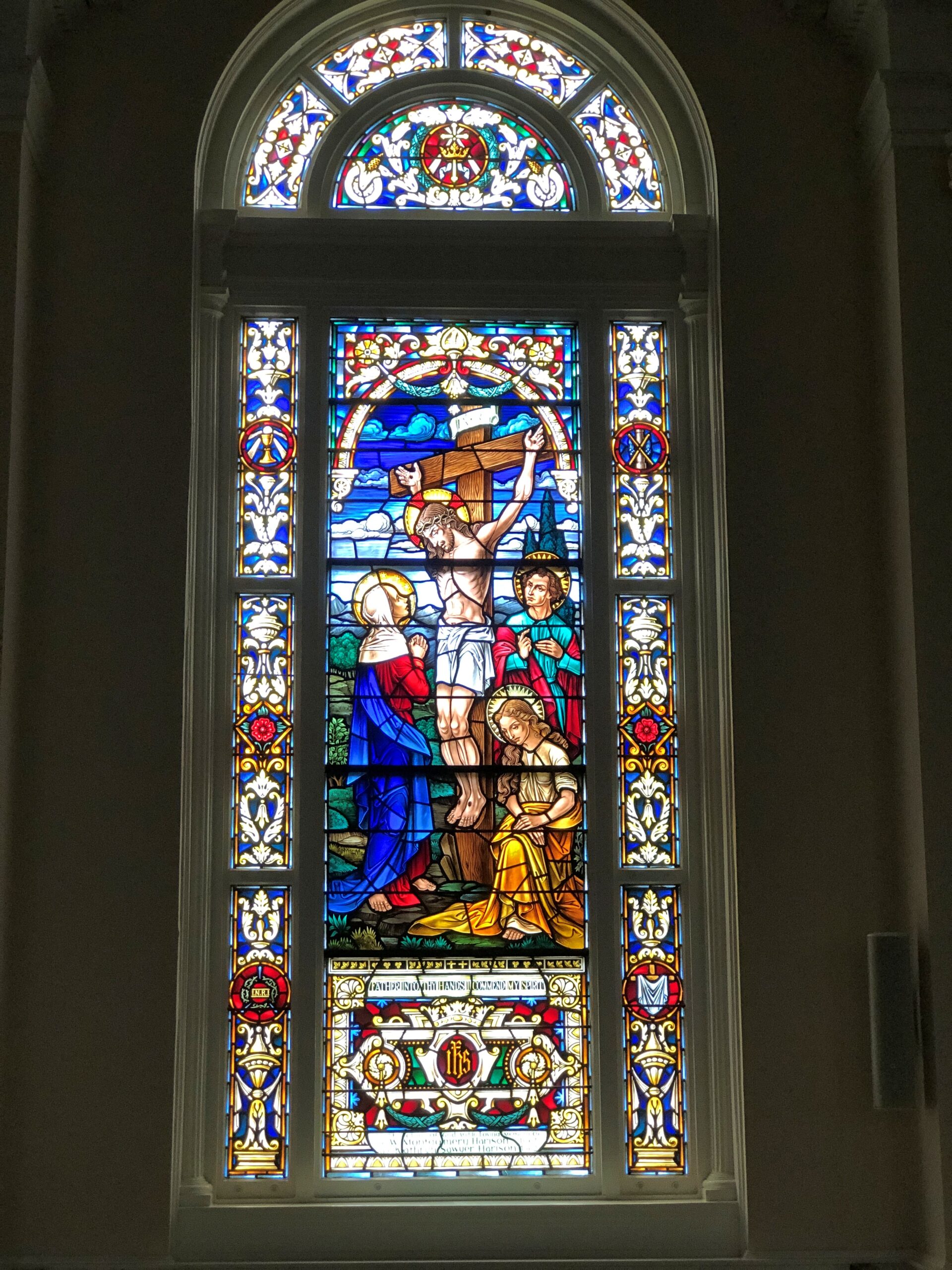
Inside, some fine stained glass.

St Paul's Church, Augusta

“Four buildings on this site have been destroyed,” the church web site says. (Sank into the swamp? Burned down, fell over, then sank into the swamp? Speaking of 50-year-old references.)

“Our present church, built in 1919, was designed as a larger copy of the 1820 church lost in Augusta’s Great Fire of 1916. Among the furnishings saved from the fire is the original baptismal font brought from England in 1751, now located in the narthex.

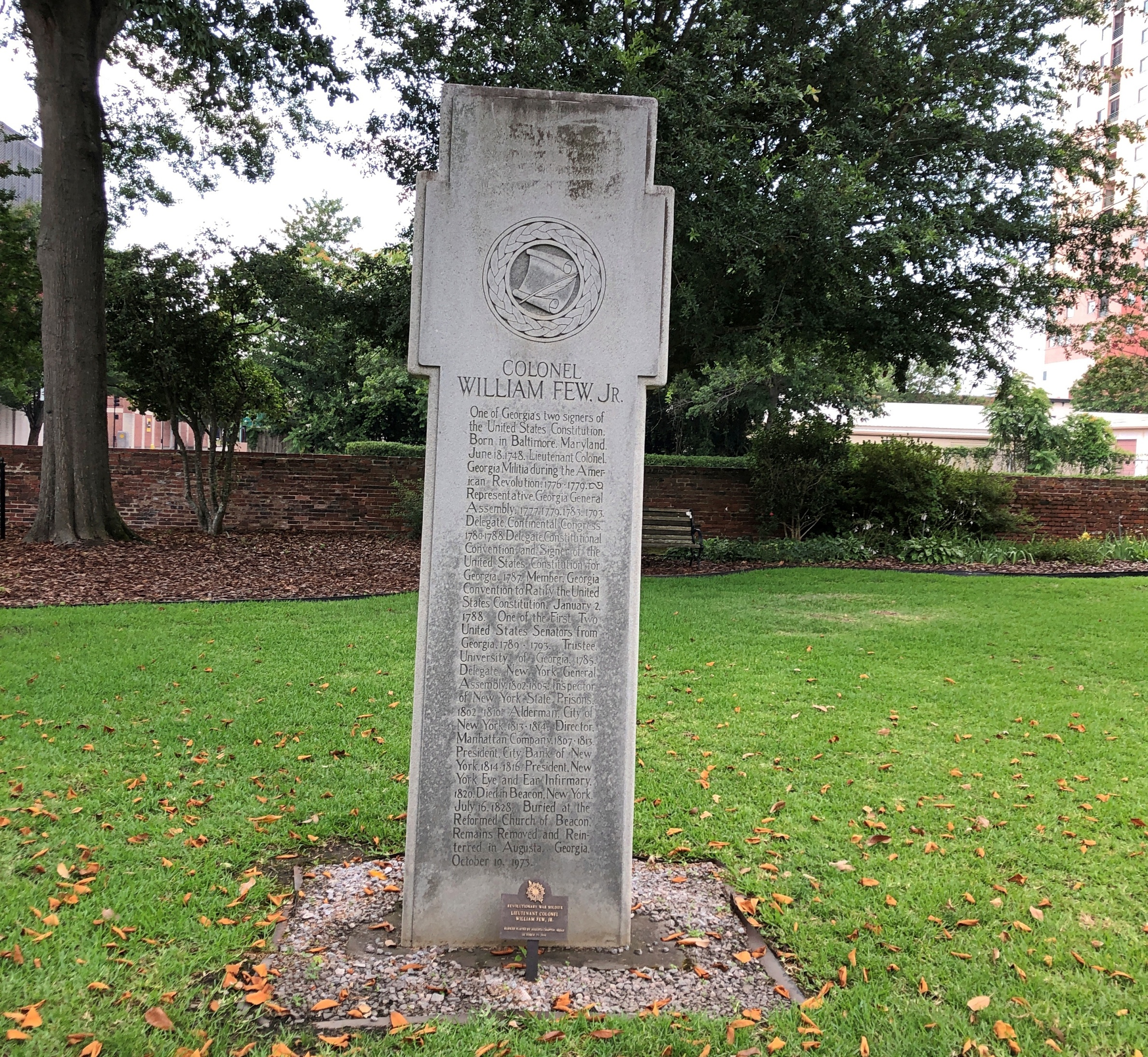
“History buffs will find the church yard fascinating. Many undocumented graves lie beneath the ground, but others are marked, including that of Col. William Few, a signer of the United States Constitution, whose portrait hangs in the narthex…”

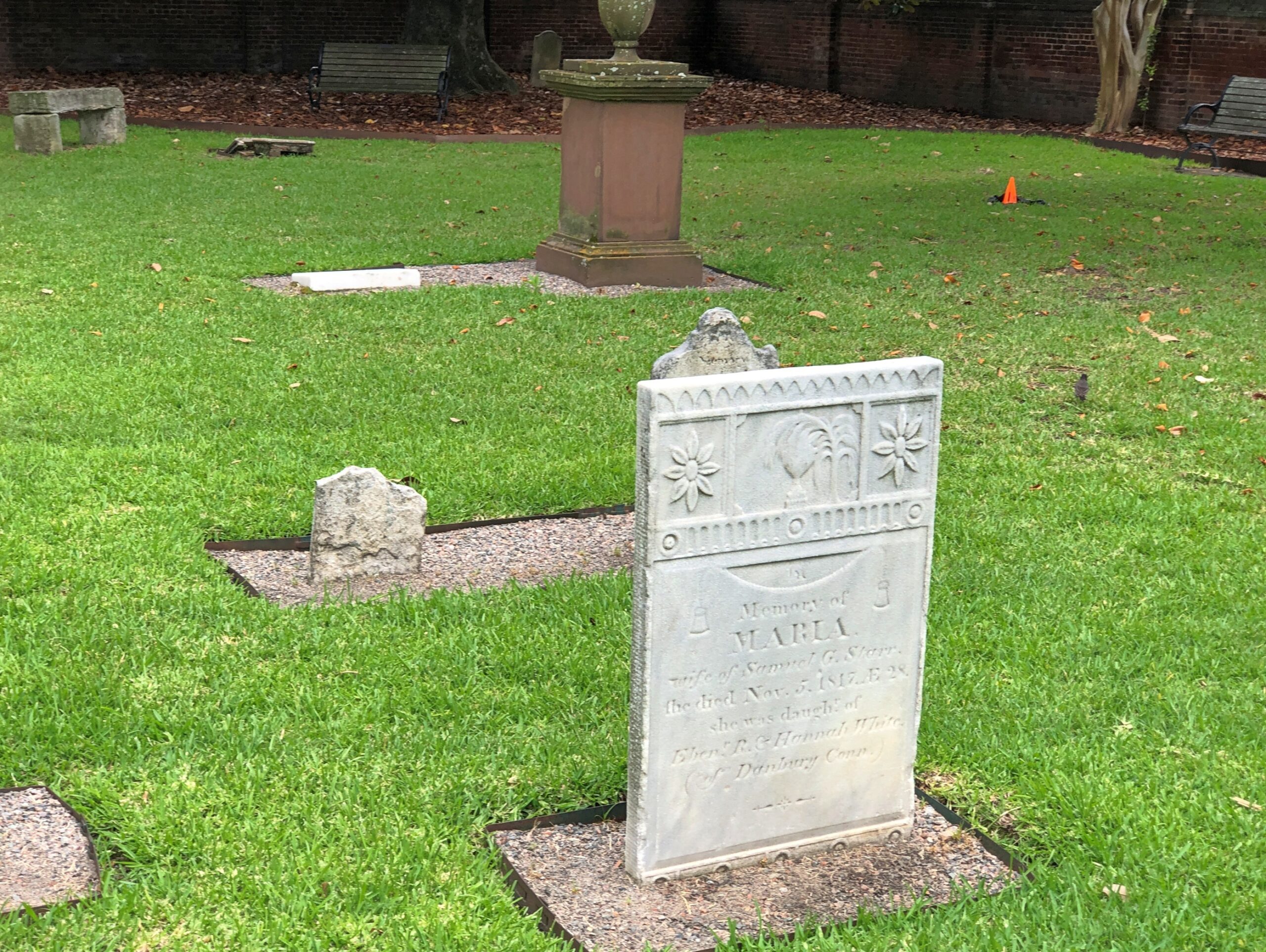
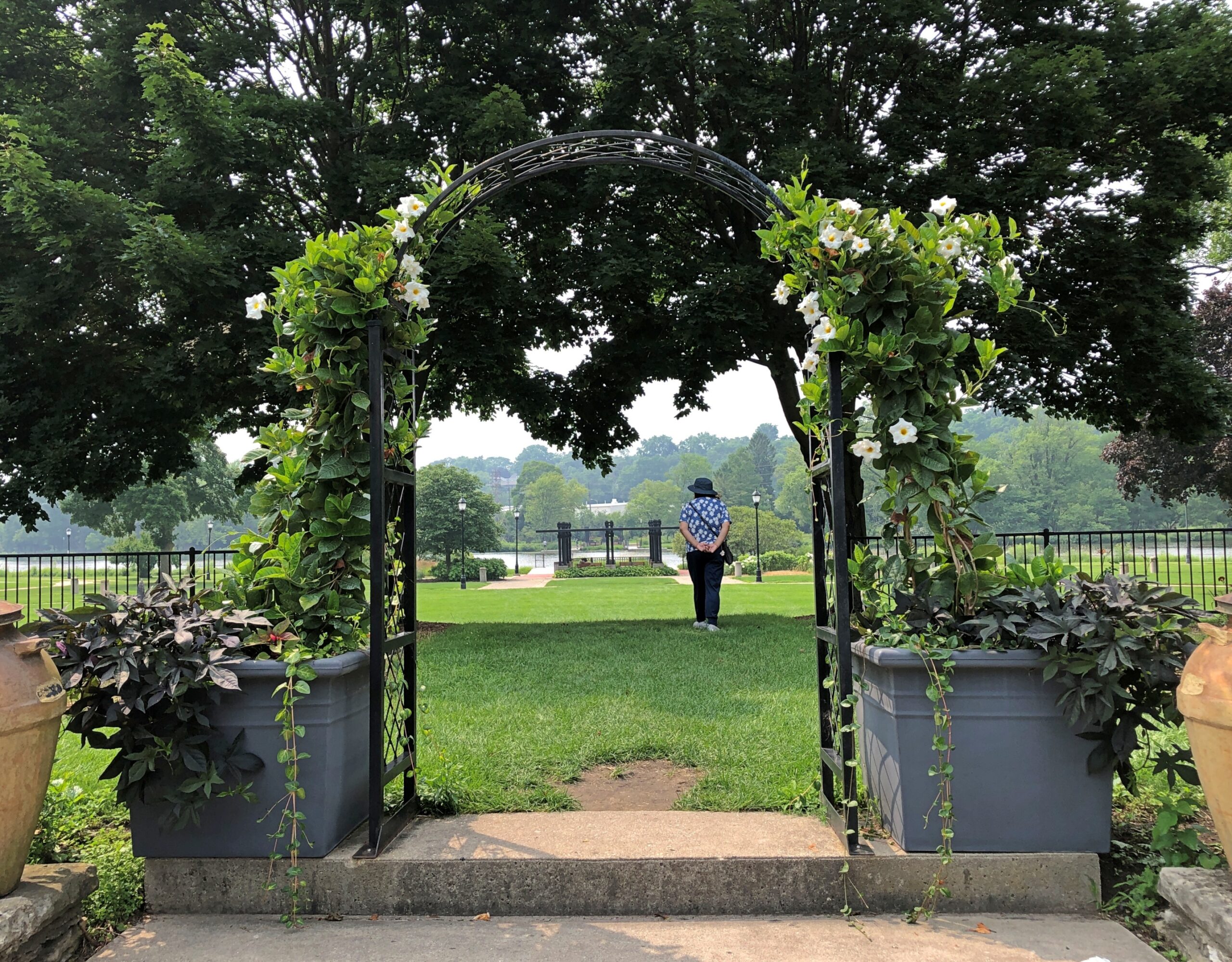
Missed the painting. But I did see Col. Few’s stone.

St Paul's Church, Augusta

A busy fellow, both before and after the Revolution, including attendance at the Constitutional Convention in 1787, and a stint as one of Georgia’s first Senators under the Constitution. His capsule bio at the Biographical Dictionary of the U.S. Congress mentions all that, except leaving out the fact – detailed by the stone I saw – that he was reinterred at his current location in 1973.

Also, no word on whether he knew Button Gwinnett, everyone’s favorite early Georgia politico. He must have. Gwinnett might have had a similar career had he not ended up on the wrong end of a dueling pistol in ’77.

RIP, Mr. Lehrer

Summer moves forward. Some flora from around the time of the solstice this year, all found on public land hereabouts in the Northwest Suburbs.

flora 2025

It was a rainy summer as of June, and it has been in July. When I got home today, I found driveway and deck puddles and damp bushes. Lush, flowery bushes.

flora 2025

Sad news over the radio: Tom Lehrer, 97, died. All the cool kids in the ’70s had your records in high school, Mr. Lehrer. Not really. But I did, and so did my friends, and we’re better for it even now.

Alte Nationalgalerie, Berlin

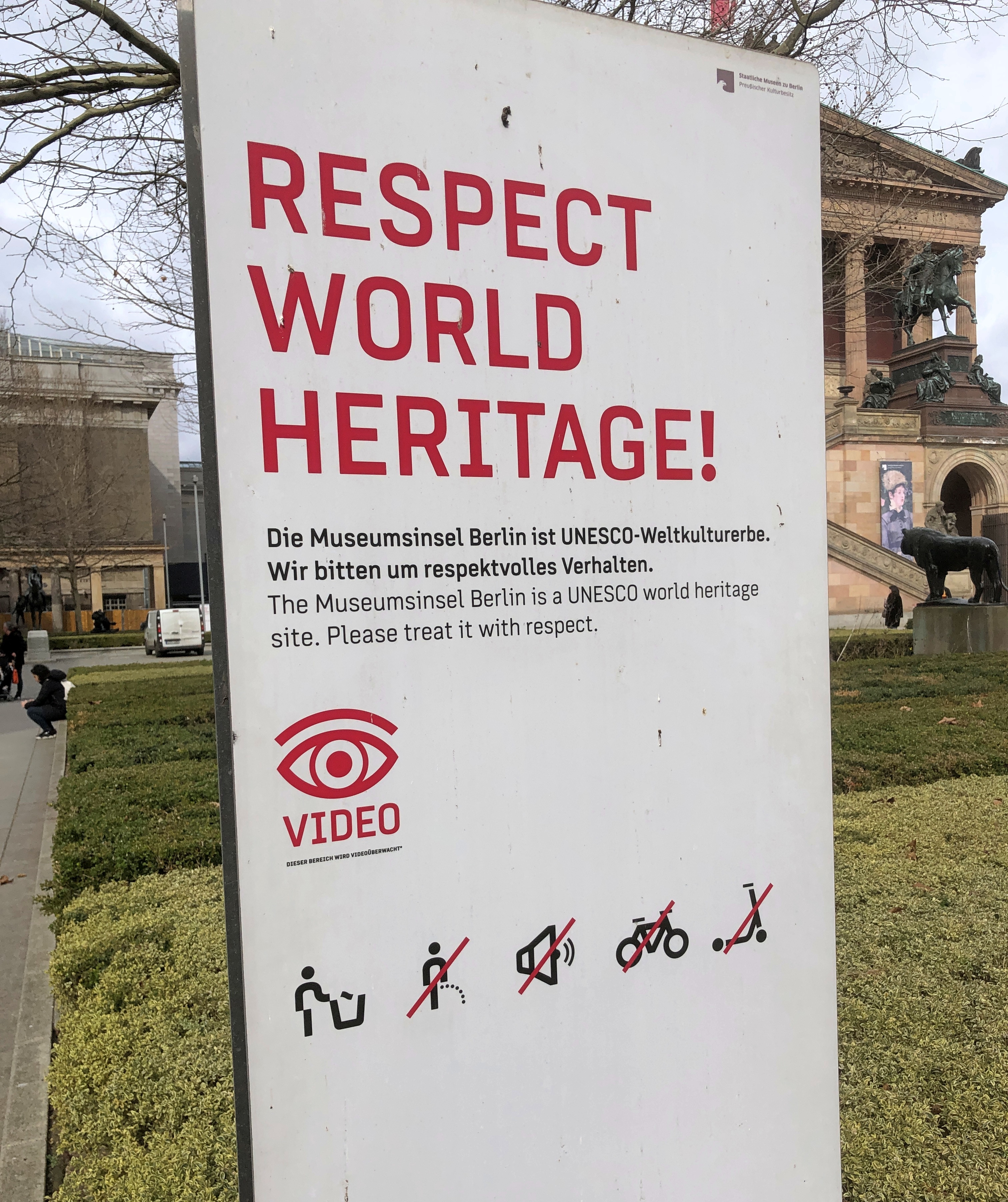
I’m not sure exactly what “Hey, this is a World Heritage Site! Show some respect, wanker!” would be in German, but I suspect in German you probably could shout just the right mix of threat and shaming.

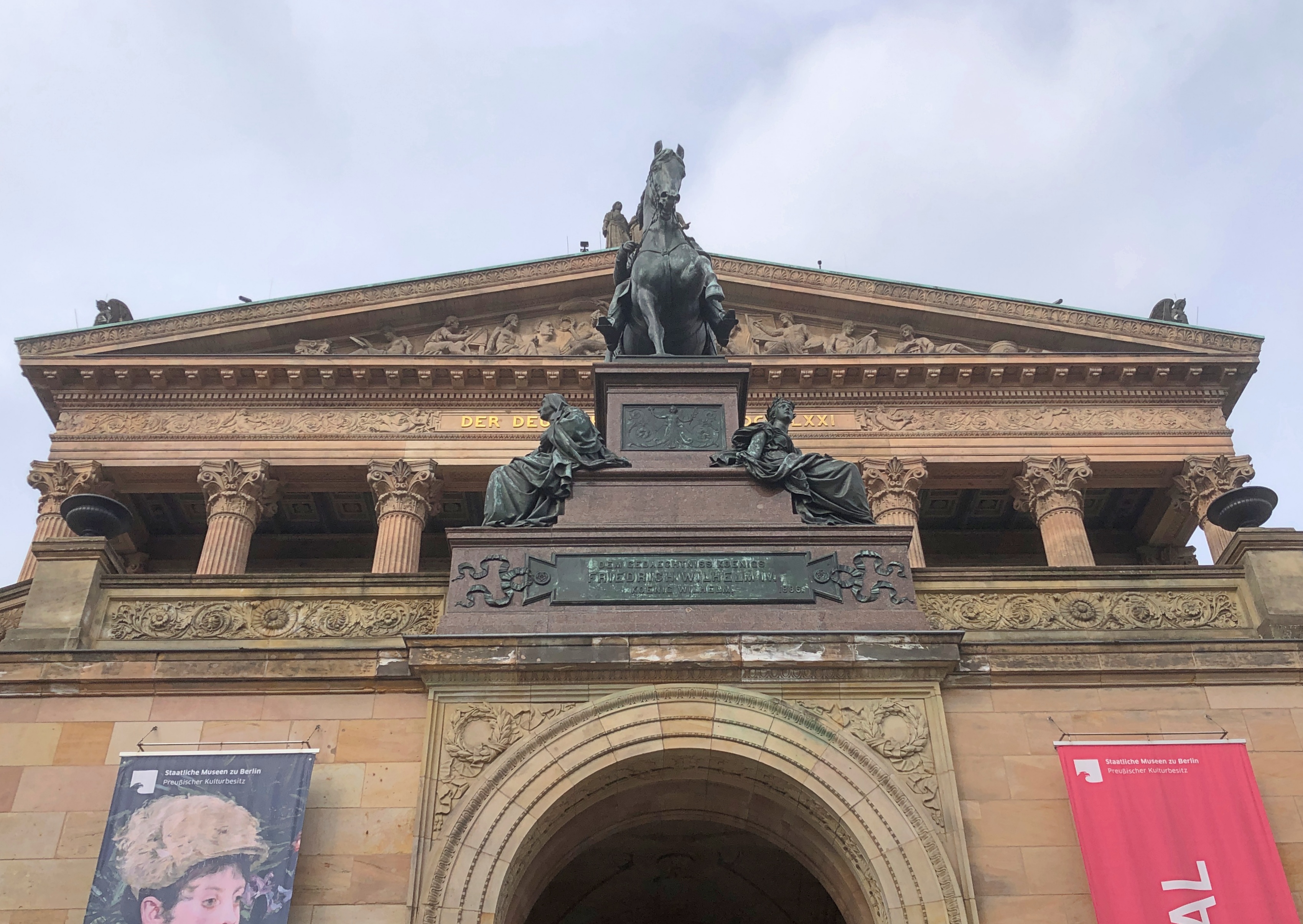
Spotted in March on Museum Island (Museumsinsel) in Berlin.Alte Nationalgalerie, Berlin

Note that the red-letter headline is in English. I think of that as more of a function of English as a ramshackle world language than the propensity of Americans, Britons or Australians to use bullhorns while peeing on World Heritage Sites from their bicycles or scooters. Well, maybe Australians would. (I trade in that stereotype with abiding affection for that nation, since the Australians I know would sound right back about Americans). To be honest, it also sounds like something Florida Man would do.

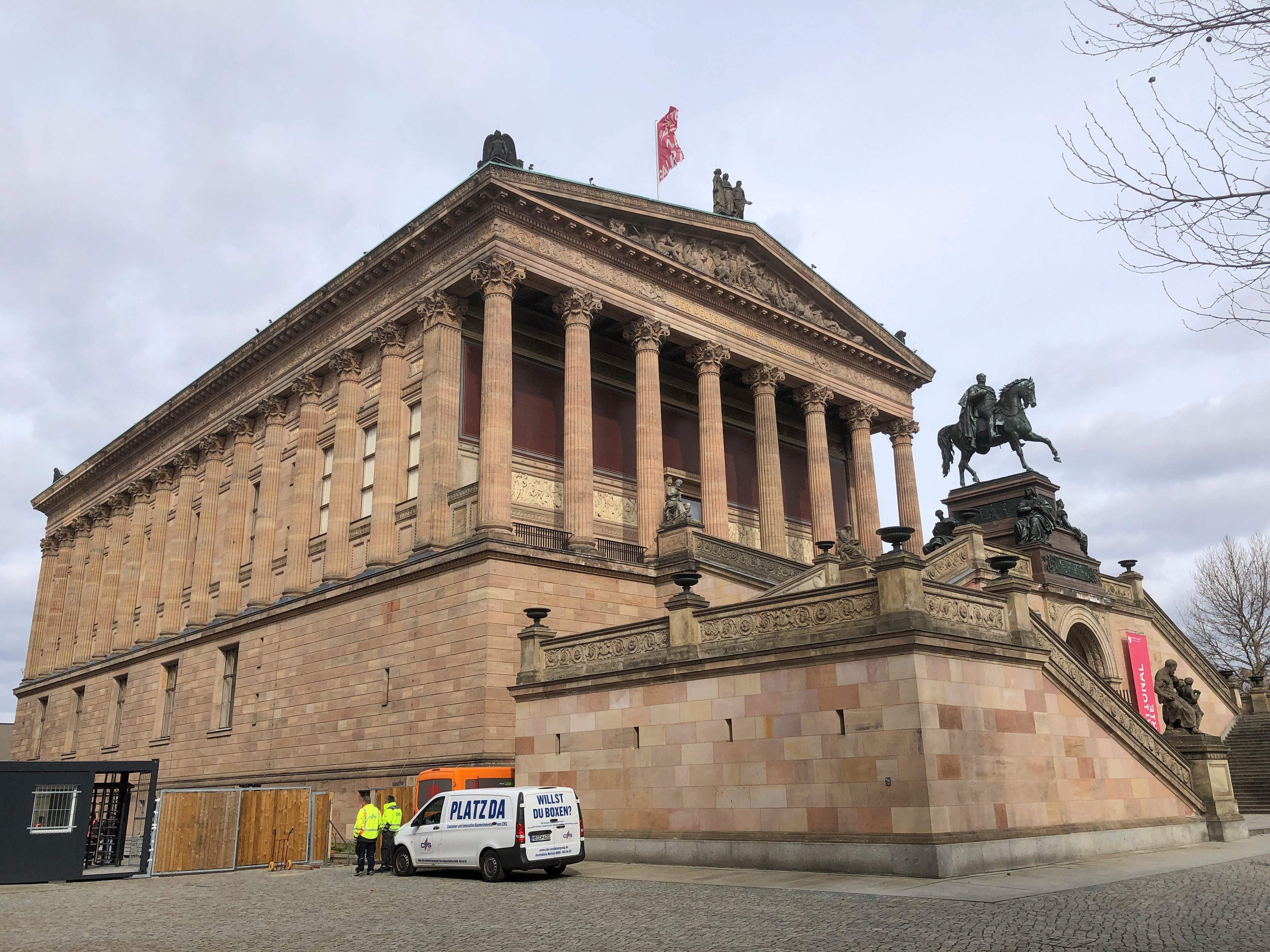
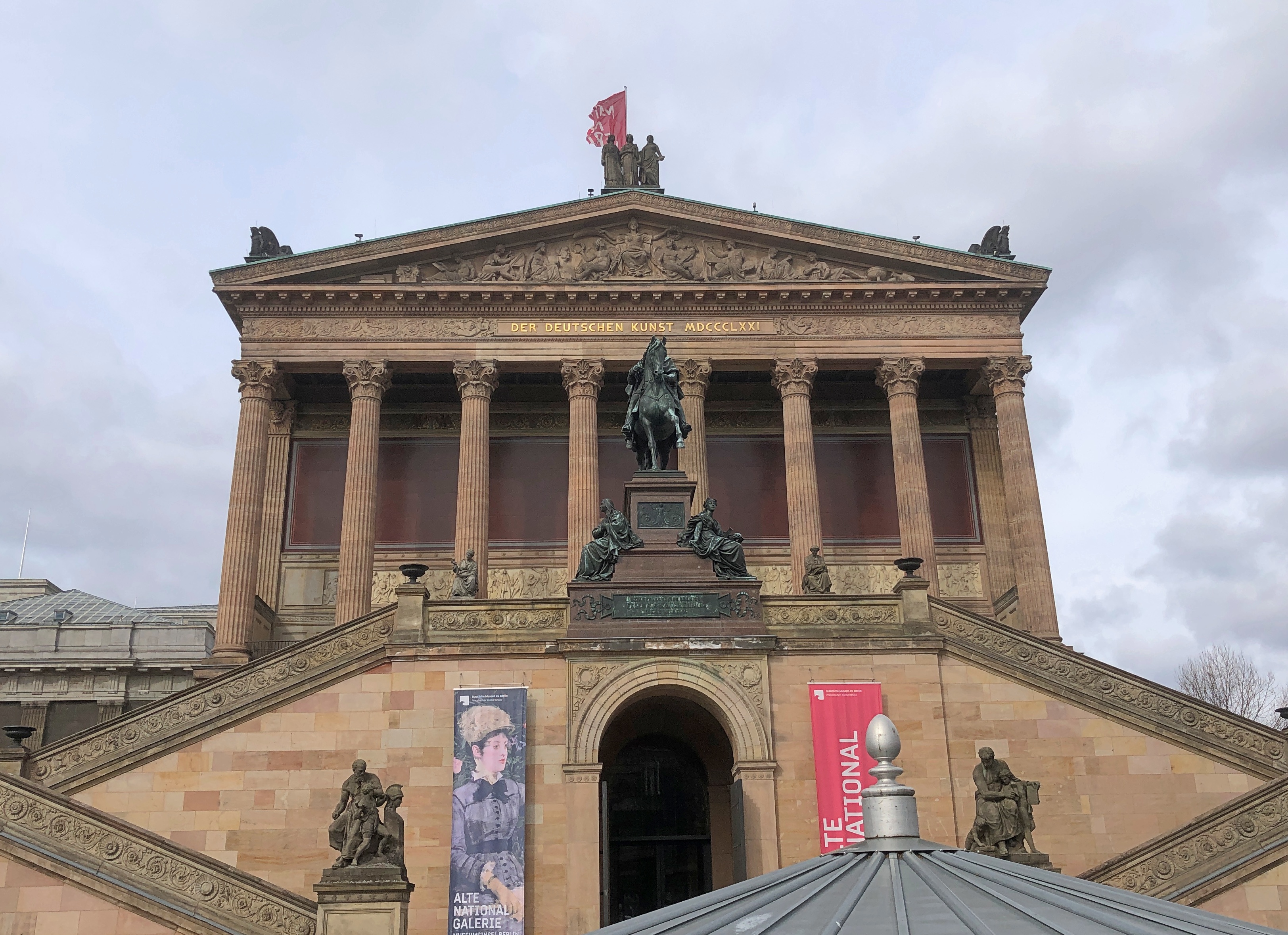
We were in the vicinity of the Alte Nationalgalerie.Alte Nationalgalerie, Berlin Alte Nationalgalerie, Berlin Alte Nationalgalerie, Berlin

Make it a Greco-Roman temple, at least on the outside, King Friedrich Wilhelm IV must have said, though he didn’t live to see its completion in 1876. August Stüler was tasked with the design, but he didn’t live to see it done either.

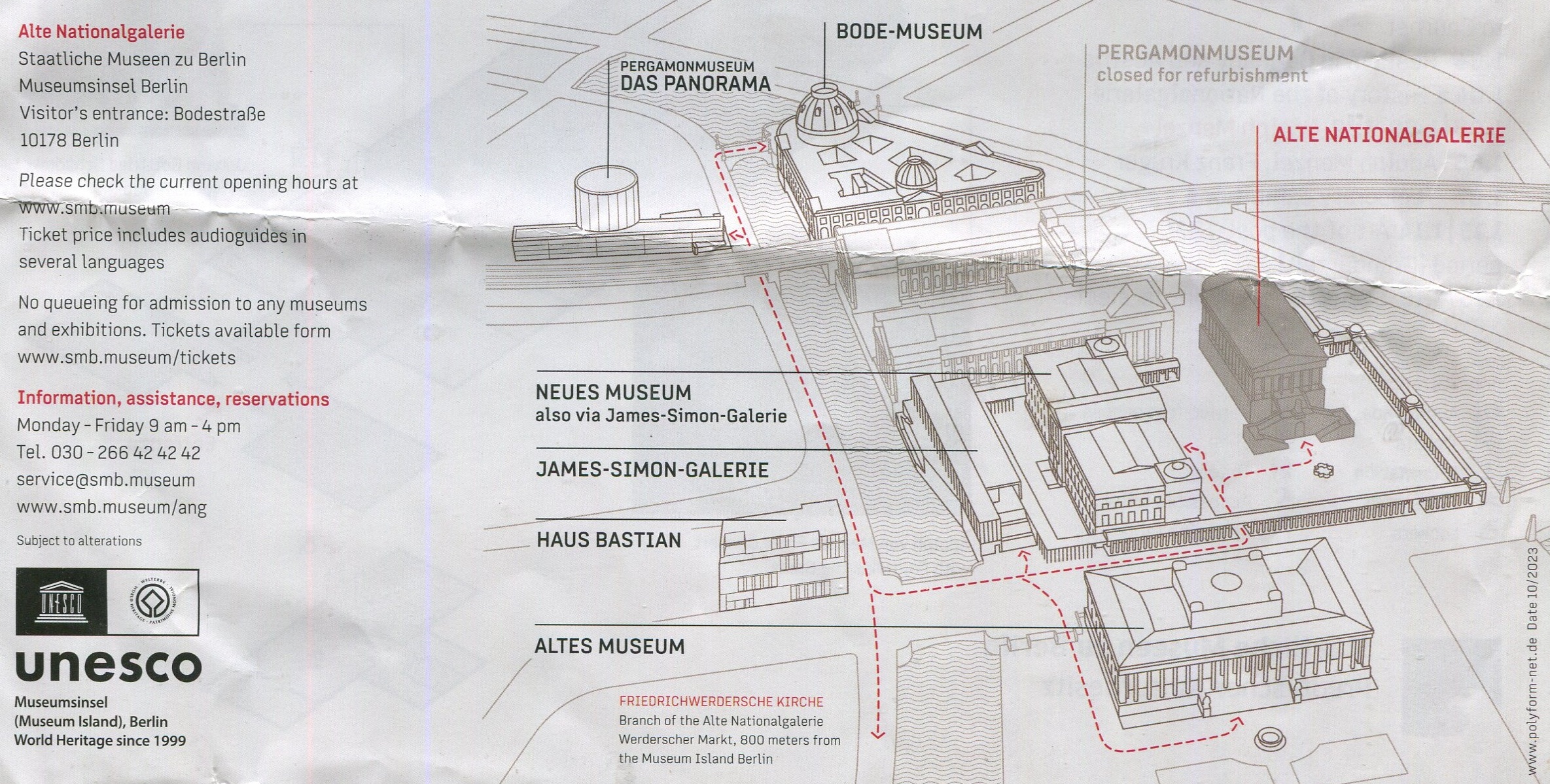
The museum complex on Museum Island certainly deserves to be on the UNESCO list. A detail from the museum’s tourist leaflet shows the Old National Gallery in relation to the others, and the fact that the Pergamon Museum is “closed for refurbishment.” Dang.

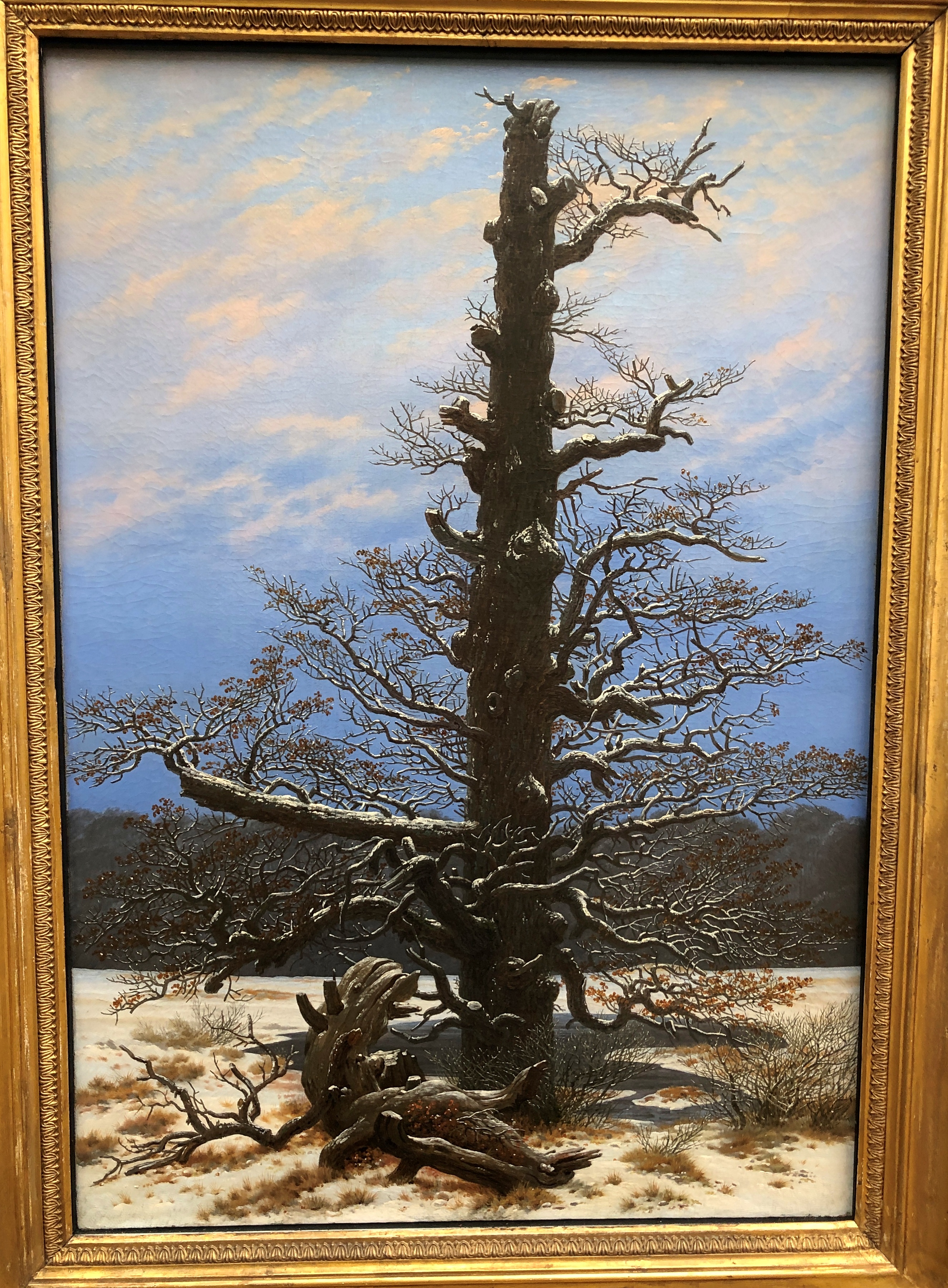
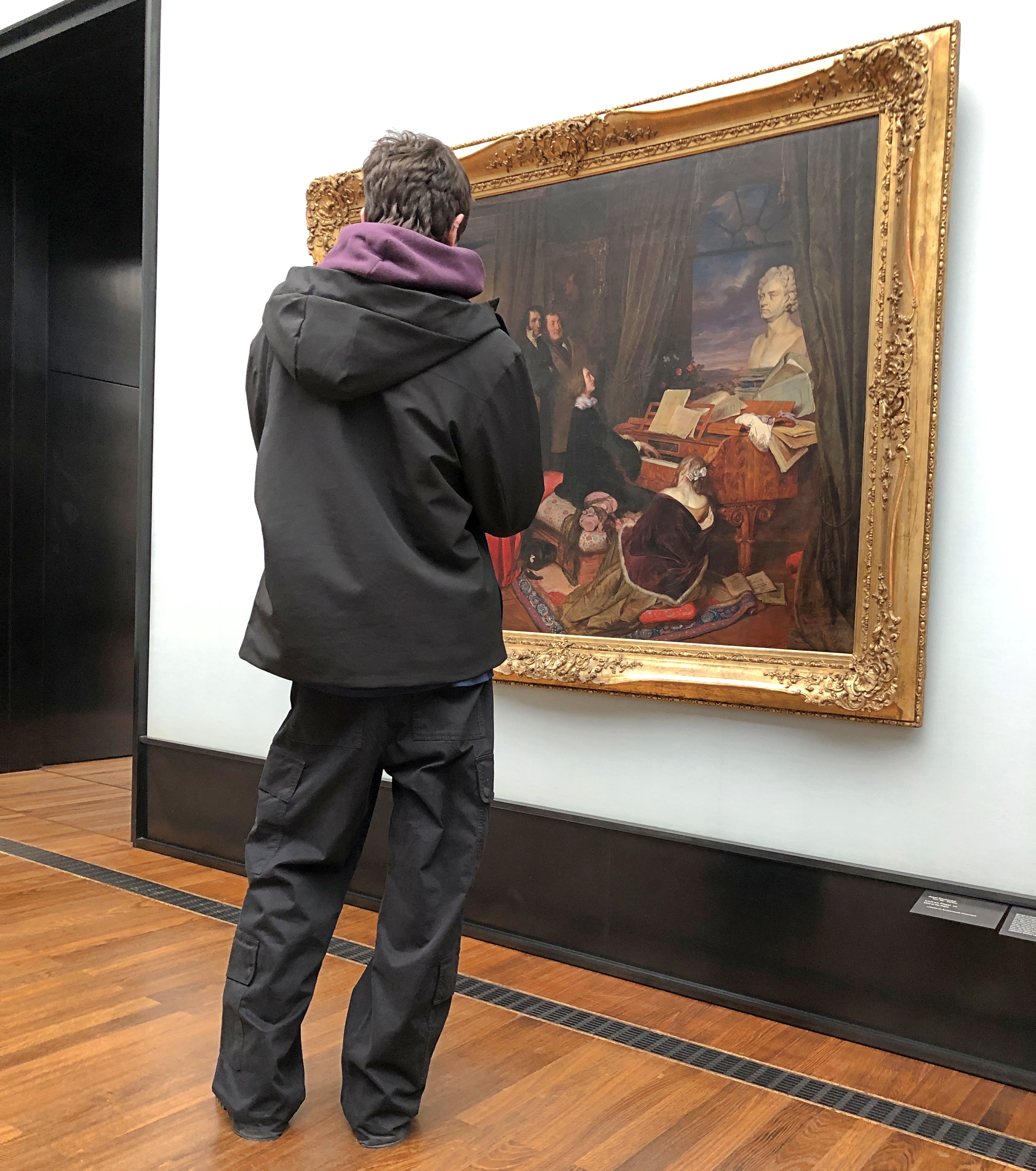
We didn’t go directly to his gallery up on the third floor, but I knew the Casper David Friedrich was a priority at Alte Nationalgalerie. Like visiting an old friend. They say maintaining social relations is important for one’s health in older years, and maybe that’s so. But I’m sure visiting old friends makes your life better in the here and now. Mine, anyway. Including mainly people, but also places and favorites in art or entertainment.

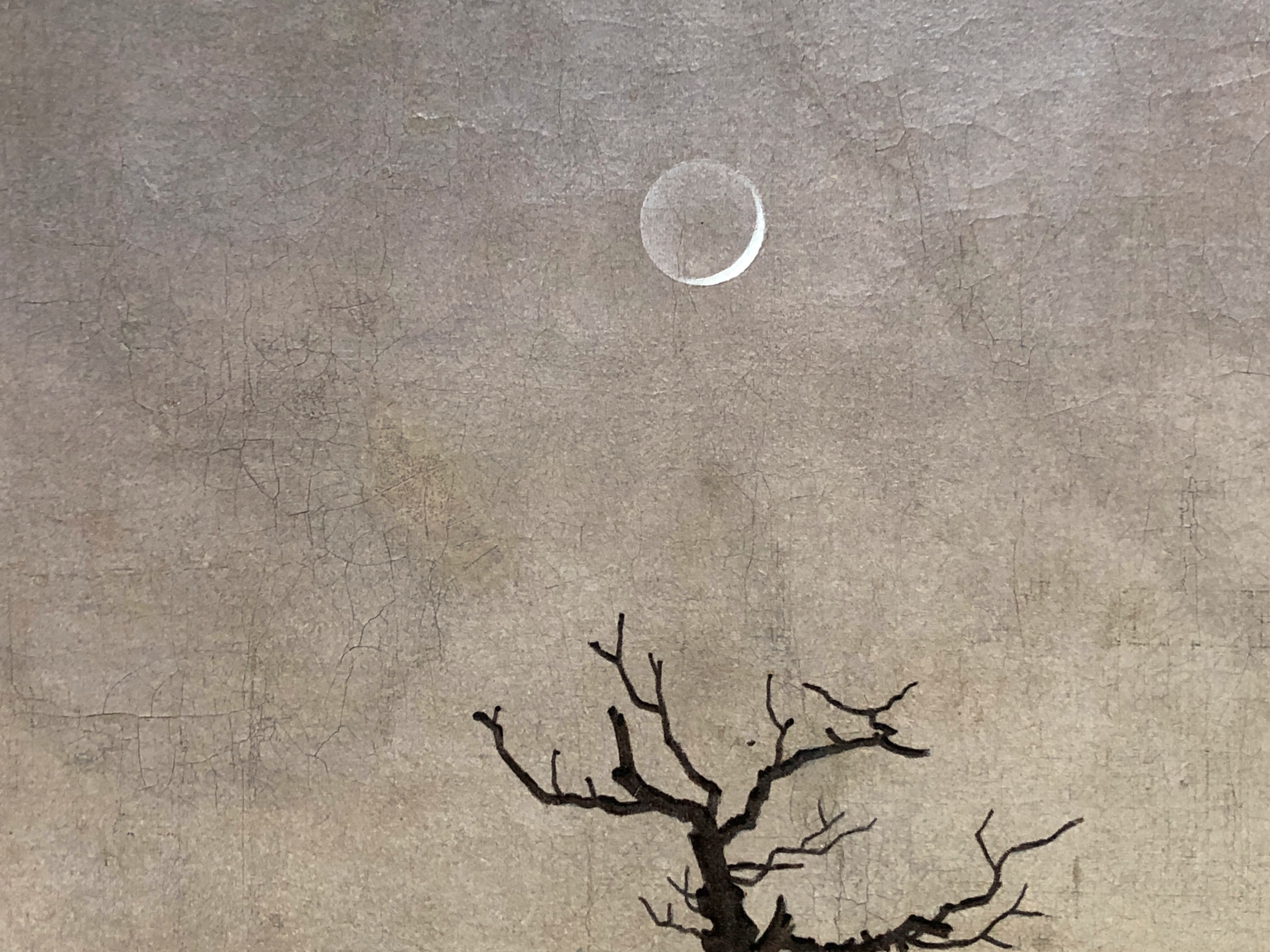
My old buddy Casper’s canvasses are usually good for more than one detail. Such as “Abtei im Eichwald” (1809/10), sporting a good old Casper David Friedrich moon.Alte Nationalgalerie Alte Nationalgalerie

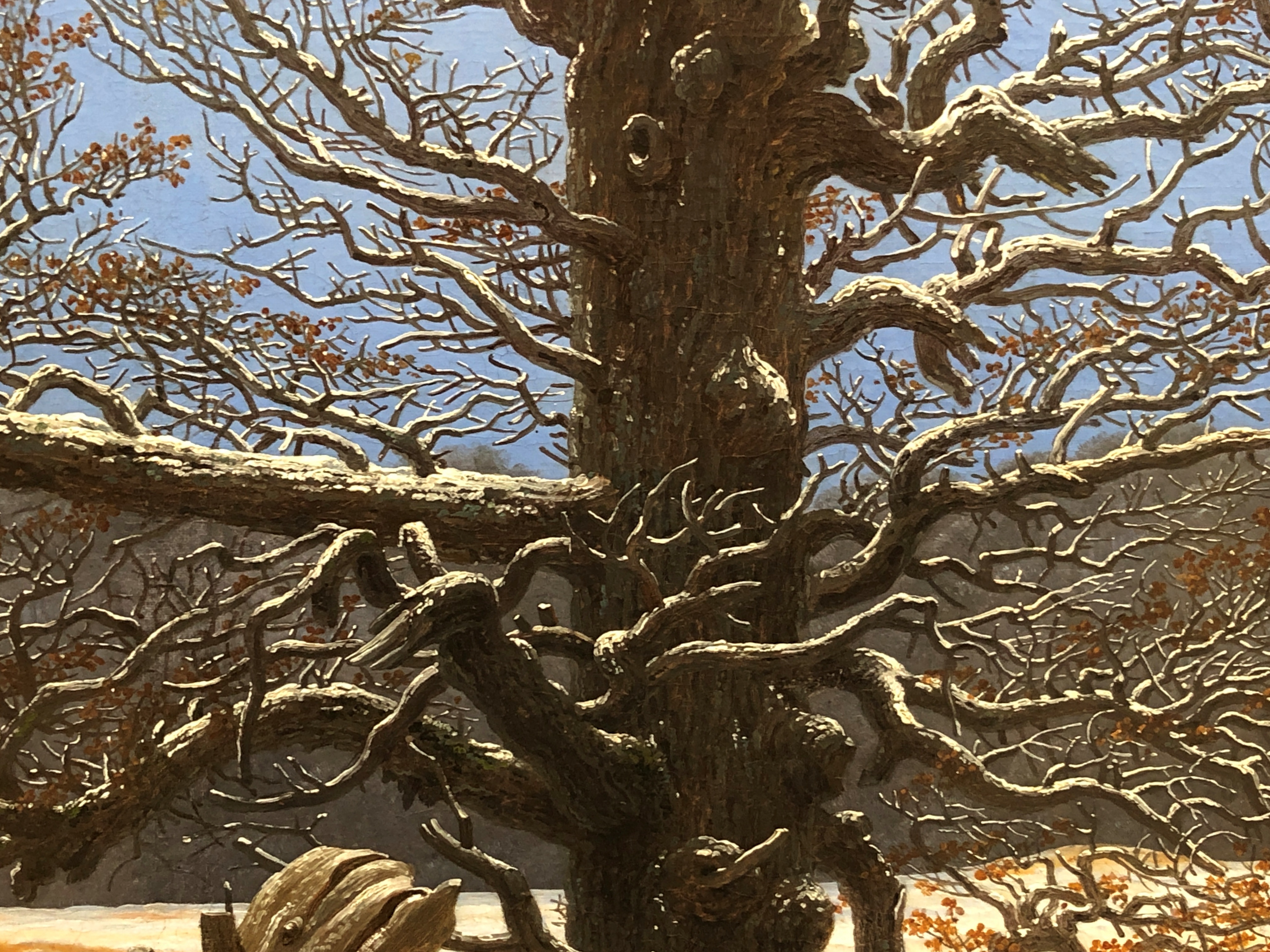
Or “Eichbaum im Schnee” (1829). The man had a gift for trees too.Alte Nationalgalerie Alte Nationalgalerie

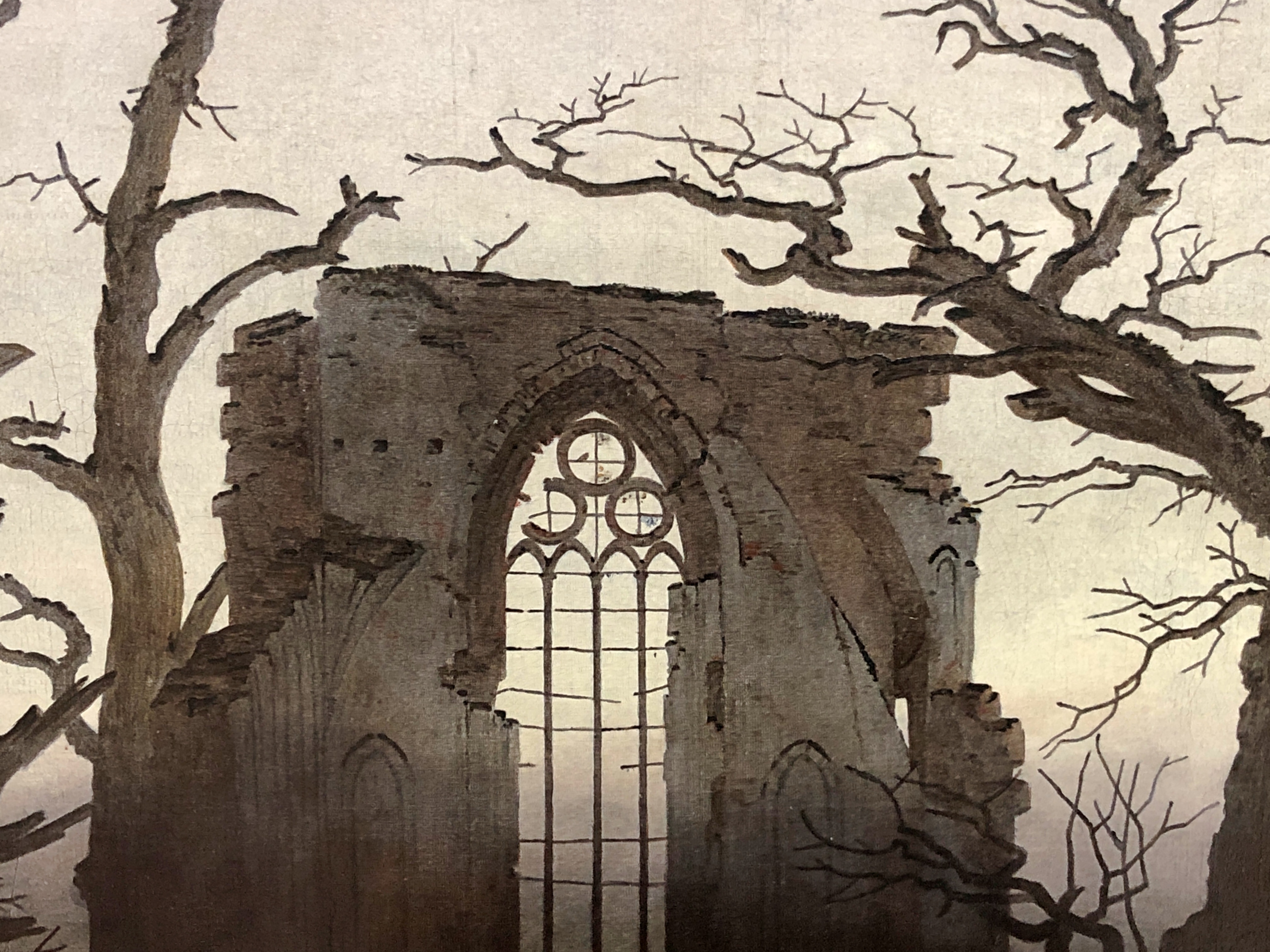
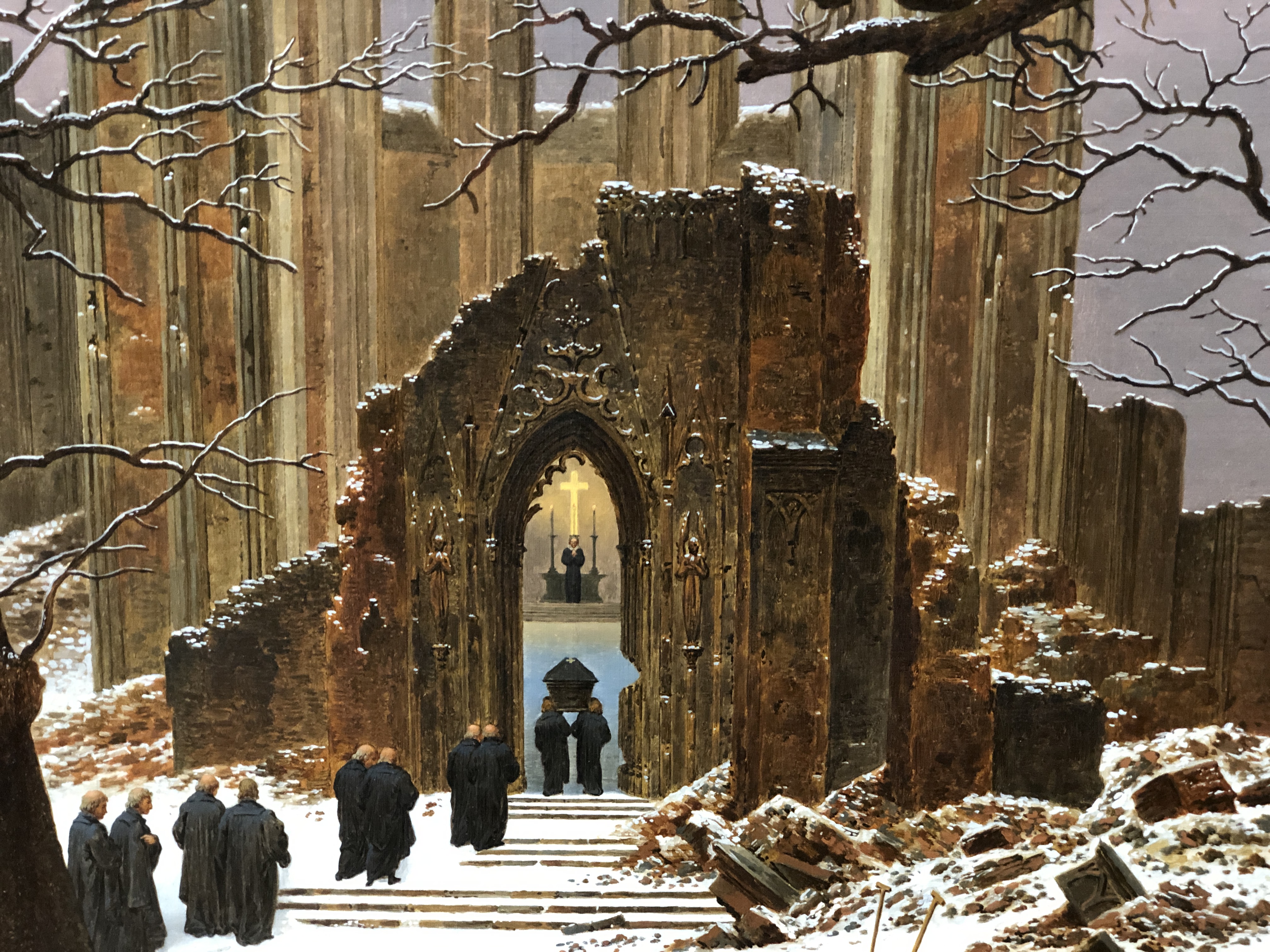
This one is CDF and it isn’t, since it is a copy of one of his paintings, “Klosterrunie im Schnee” (1891), by an unknown artist. The original didn’t survive WWII.Alte Nationalgalerie

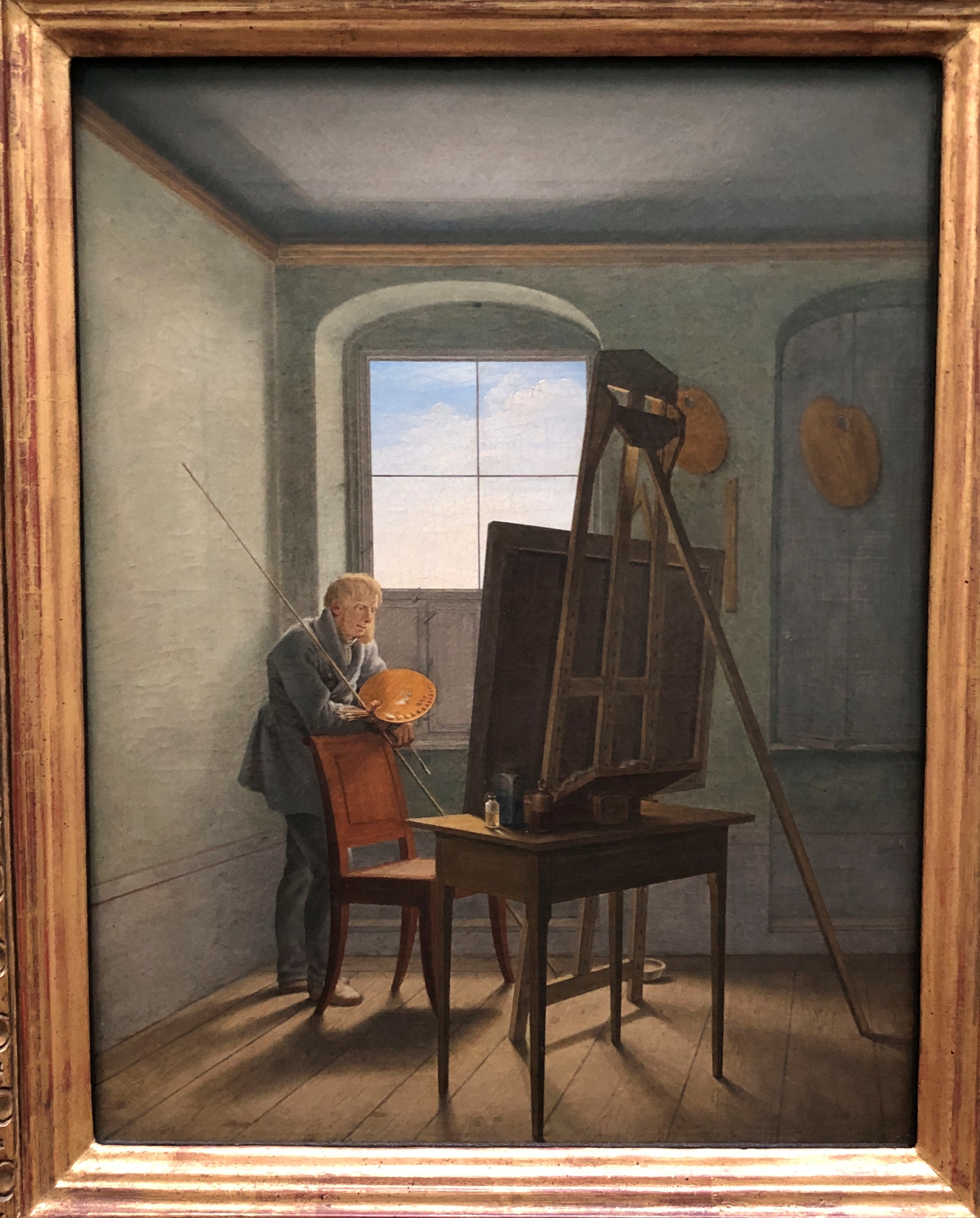
There was even an appearance of CDF himself, at work, in a portrait by colleague Georg Friedrich Kersting (d. 1847).Alte Nationalgalerie

There probably would have been more CDF on display, but as it happens, the place to be right now to see many of his works is the Met, which is hosting Caspar David Friedrich: The Soul of Nature until May 11. Seventy-five paintings, drawings, and prints by Friedrich are in that show.

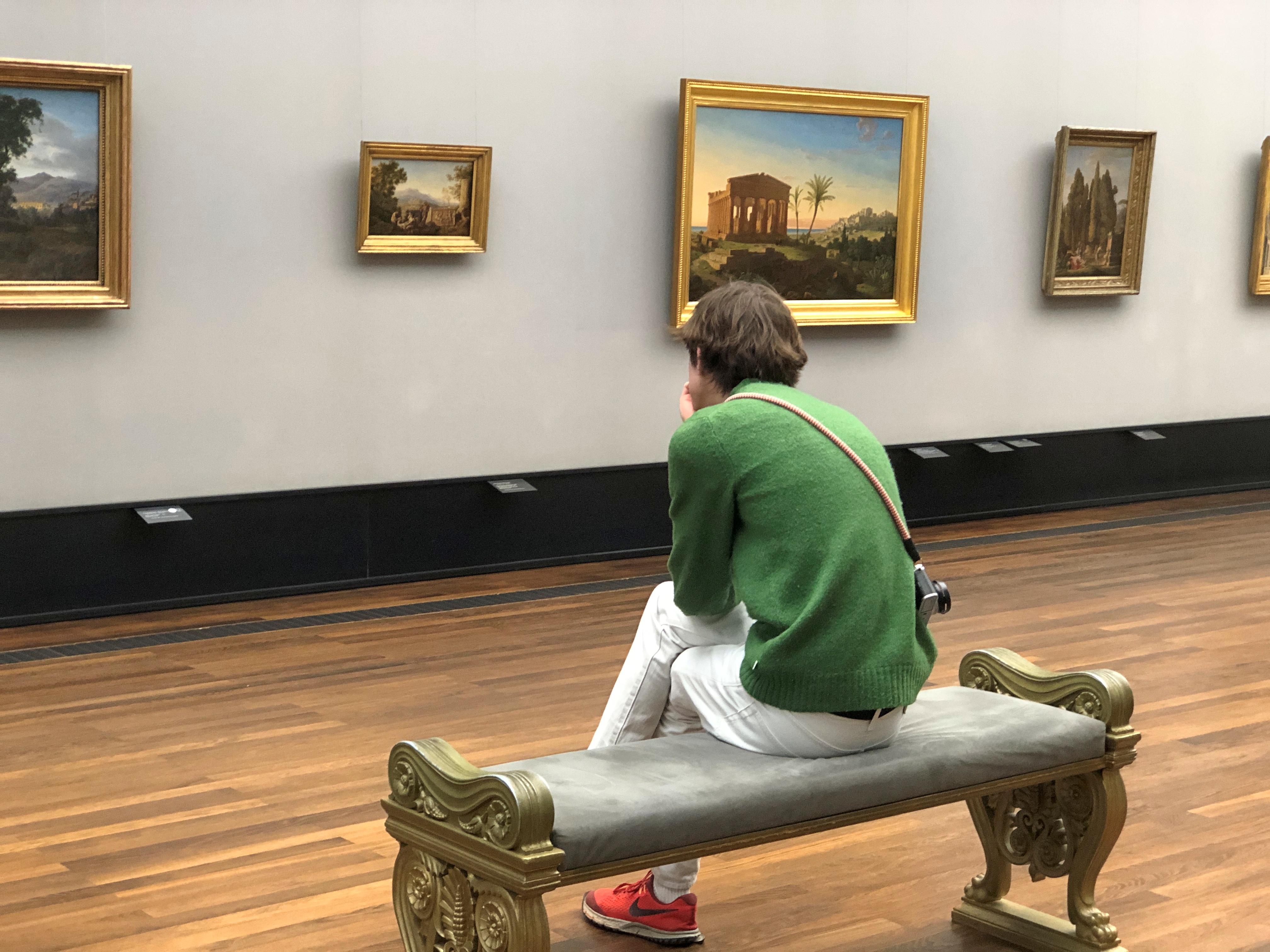
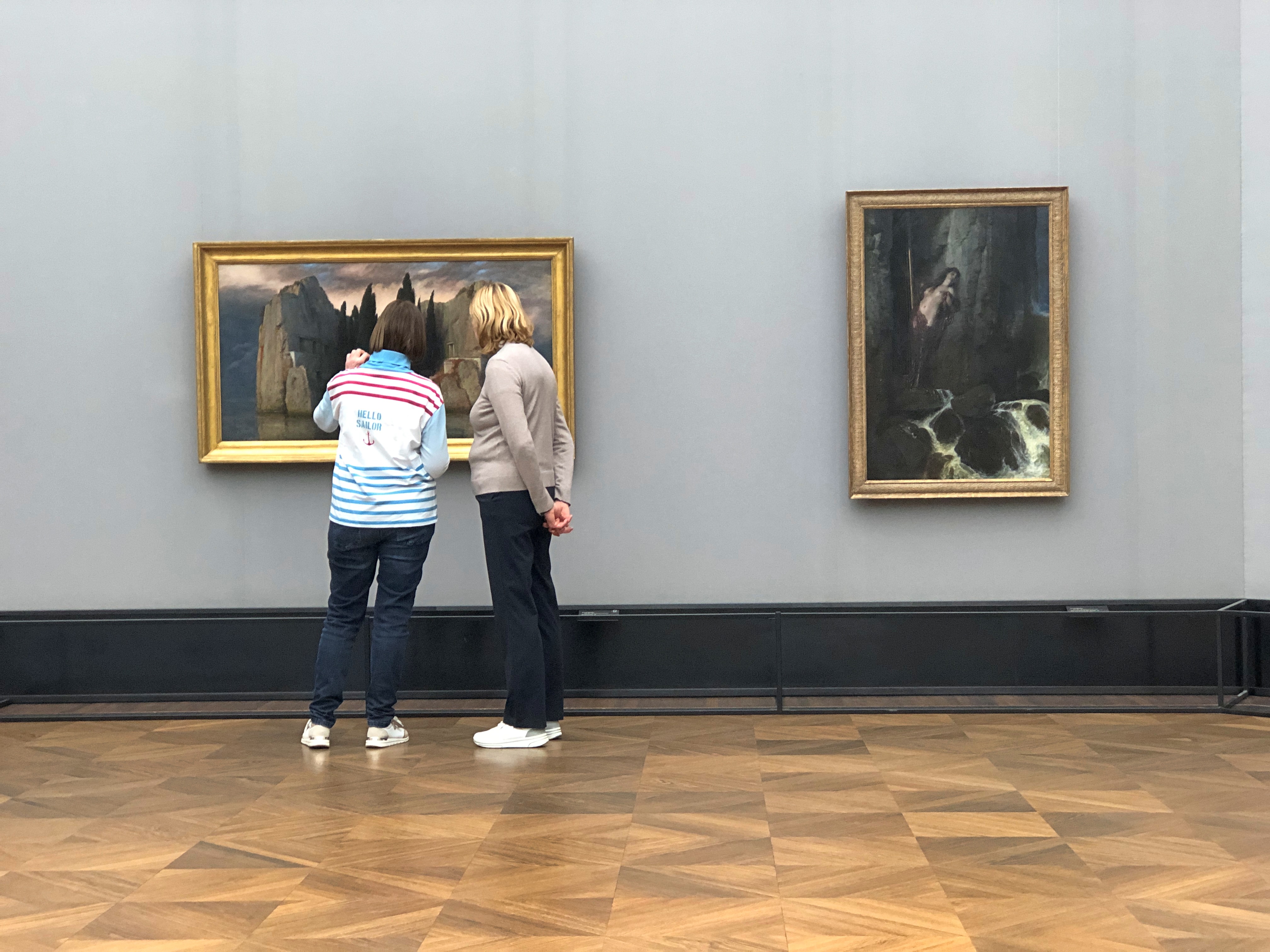
No matter, the museum offers plenty else to see, with a collection of European art roughly from the French Revolution to WWI. The place wasn’t crowded, but a fair number of museumgoers were around.Alte Nationalgalerie Alte Nationalgalerie Alte Nationalgalerie

We spent a while looking around ourselves.

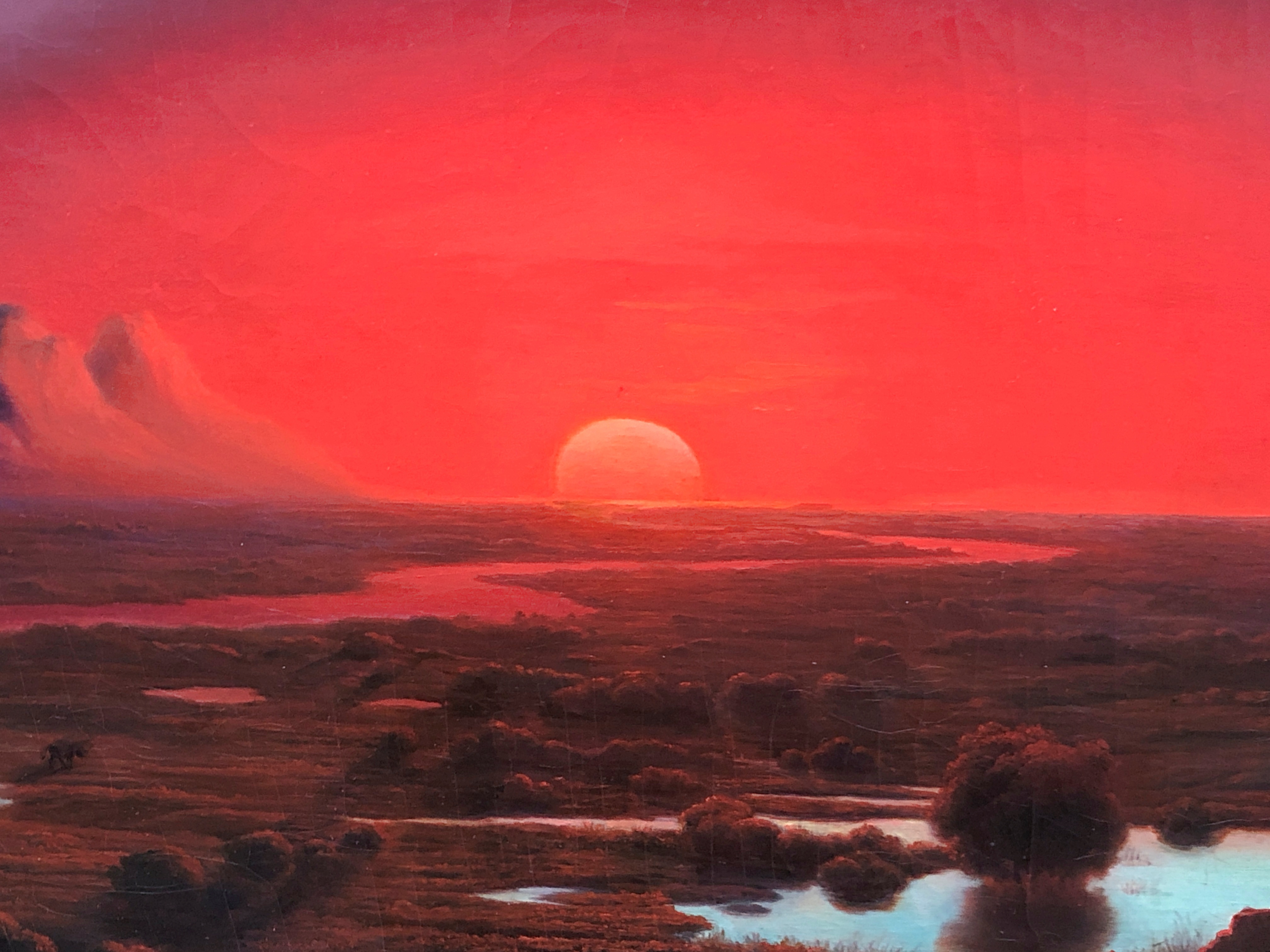
Detail from “Die Pontinischen Sümpfe bei Sonnenuntergang” (“The Pontine Marshes at Sunset”) (1848) by August Kopisch, which has a Chesley Bonestell vibe.Alte Nationalgalerie, Berlin

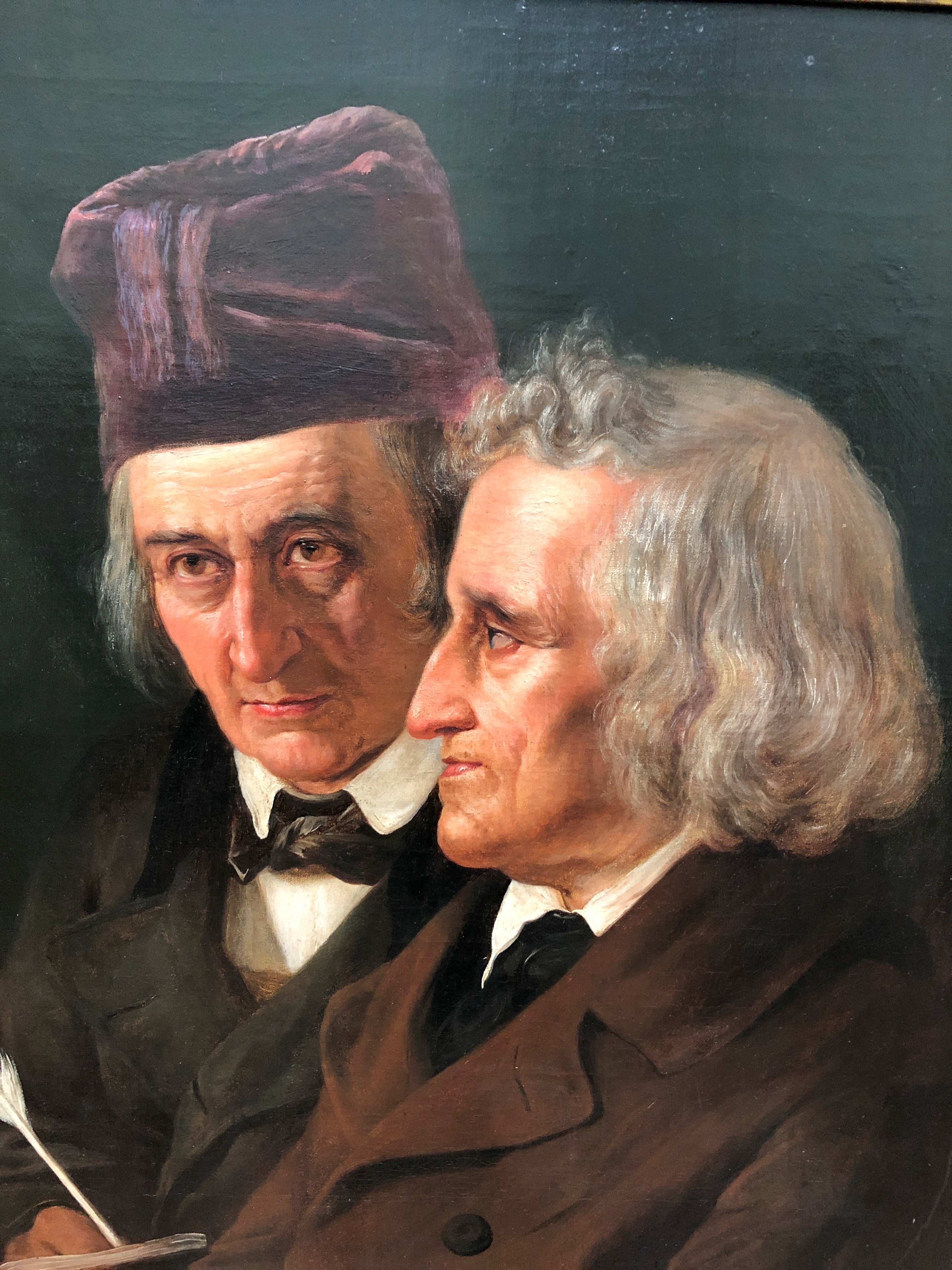
Detail from “Doppleporträt der Brüder Jacob und Wilhelm Grimm” (1855) by Elisabeth Jerichau-Baumann.Alte Nationalgalerie, Berlin

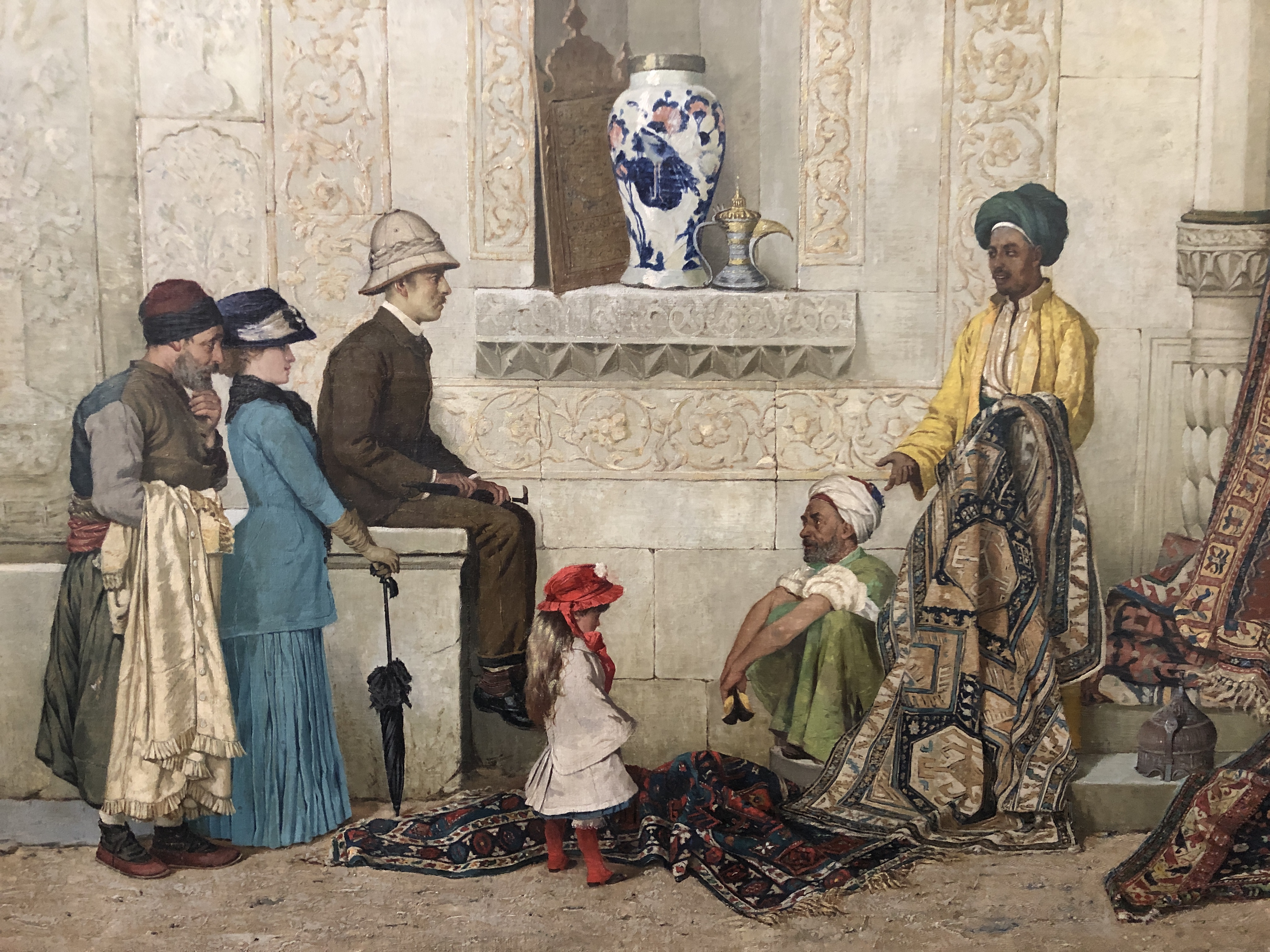
Detail from “Tükische Straßenszene“ (1888) by Osman Hamdi Bey.Alte Nationalgalerie, Berlin

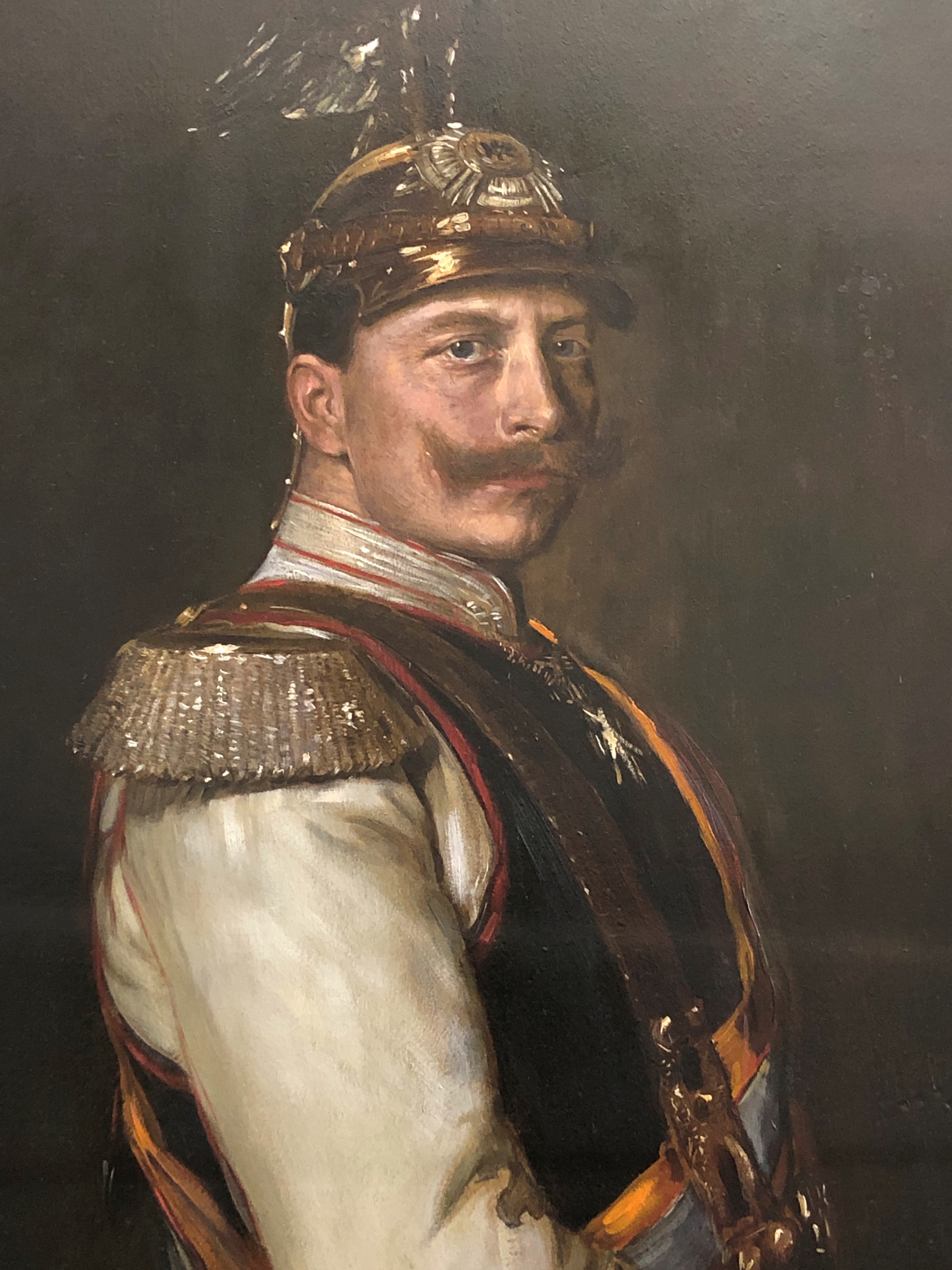
Detail from “Porträt Kaiser Wilhelm II” (1895) by Vilma Parlaghy.Alte Nationalgalerie, Berlin

 Tough luck, Willie. But at least your hope didn’t end at the end of a rope.

Sanssouci

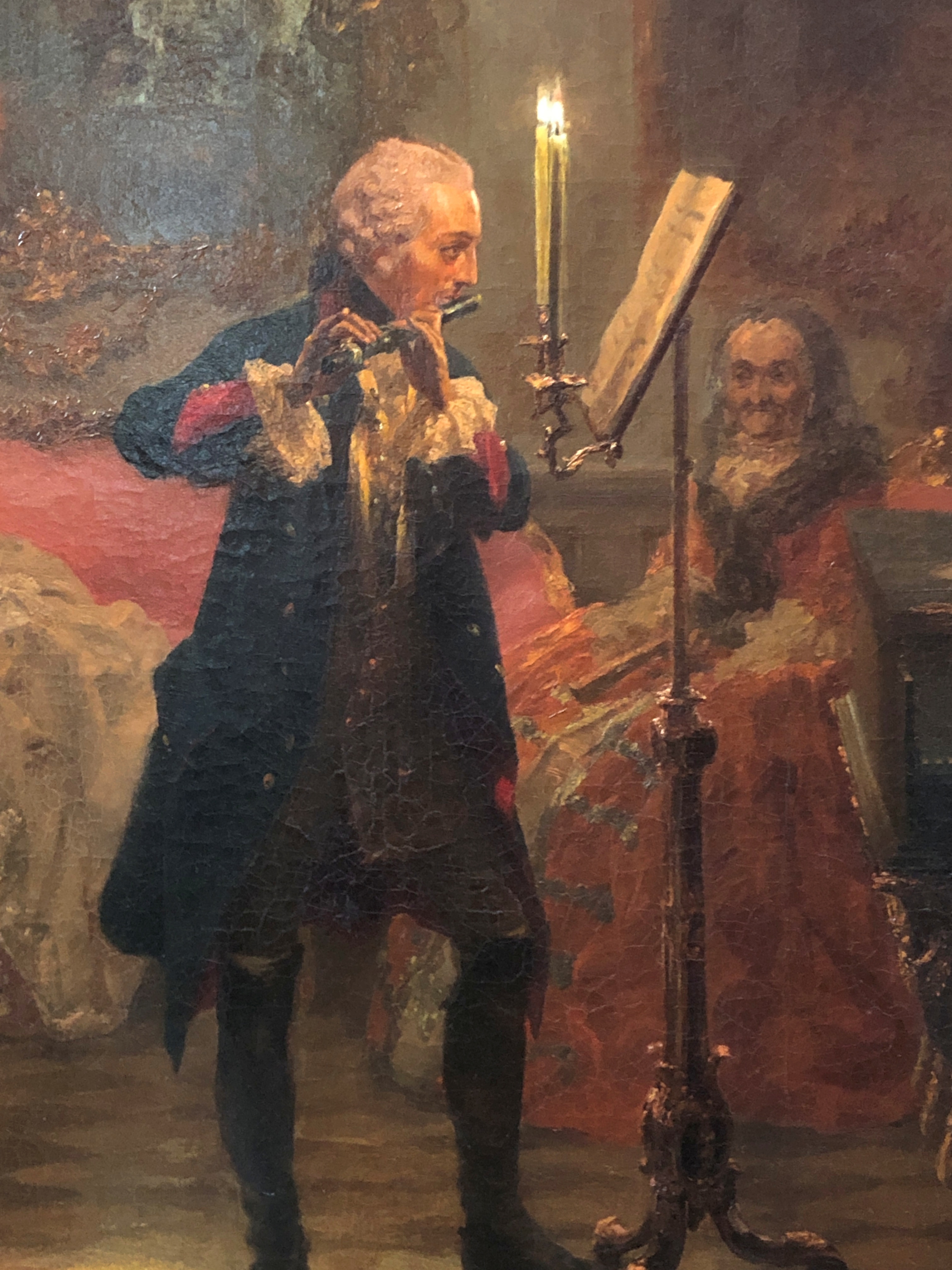
At the Alte Nationalgalerie in Berlin, more about which eventually, there is an enormous canvas by Adolph Menzel (d. 1905), one of a number of his paintings on display: “Flötenkonzert Friedrichs des Großen in Sanssouci” (“The Flute Concert of Frederick the Great at Sanssouci”; “Frederick the Great Playing the Flute at Sanssouci”), dating from 1850-52.

When I made my detail, I focused on the king. Reading about the painting, and looking at images of it, I see that I might as well have focused on the preternaturally luminous chandelier.Sanssouci

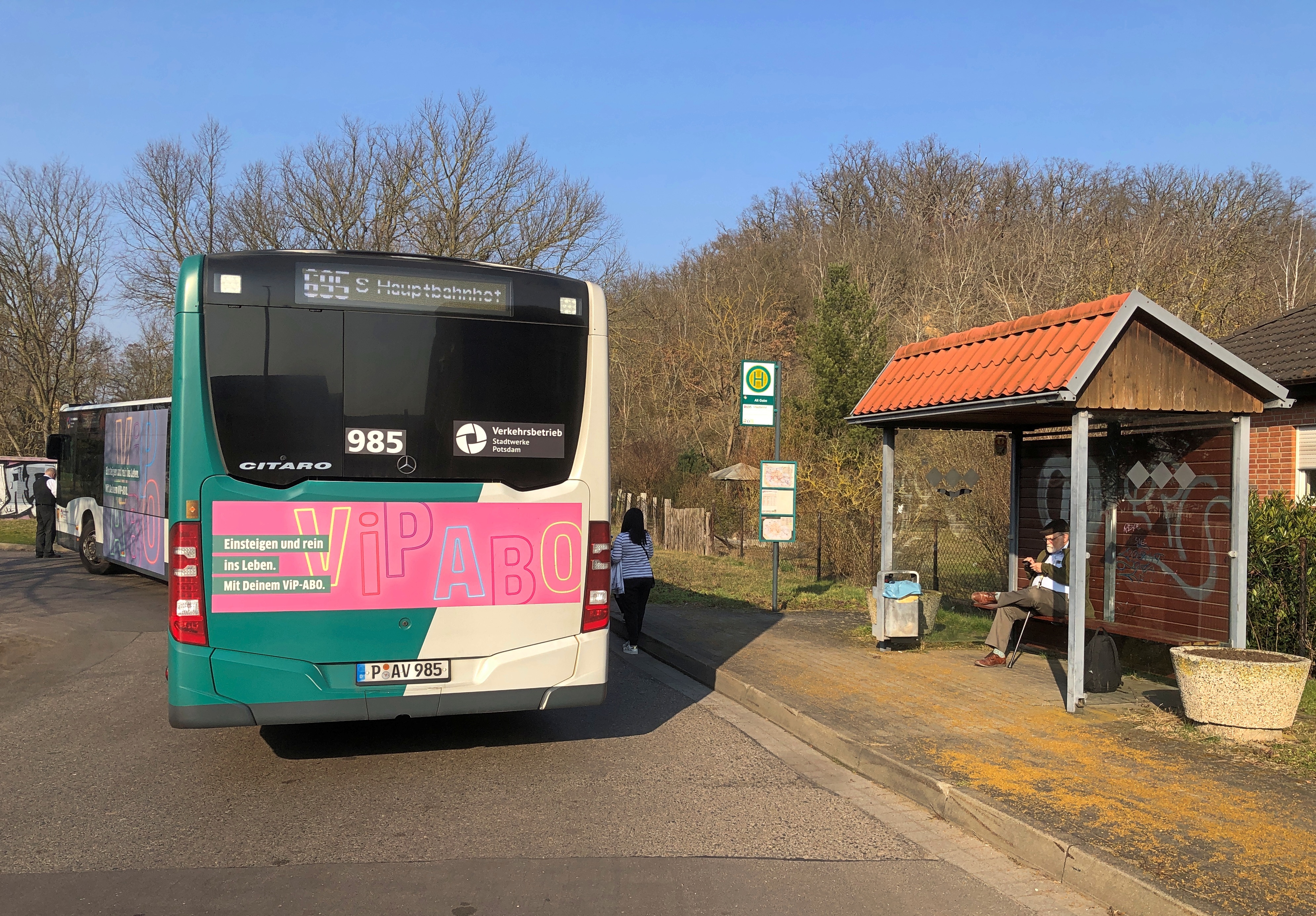
A few days earlier, on March 9, Jay and I had boarded a train at AlexanderPlatz in central Berlin bound for Potsdam, location of Frederick’s summer retreat, Sanssouci. I expect that in the 18th century, the area was indeed a retreat, a healthy distance from Berlin and its hubbub. These days, you take the S Bahn to an outer suburb. From the Potsdam main station, a municipal bus drops you off near one of the outbuildings of Sanssouci, now the ticket office. Remember that, it will be important later.

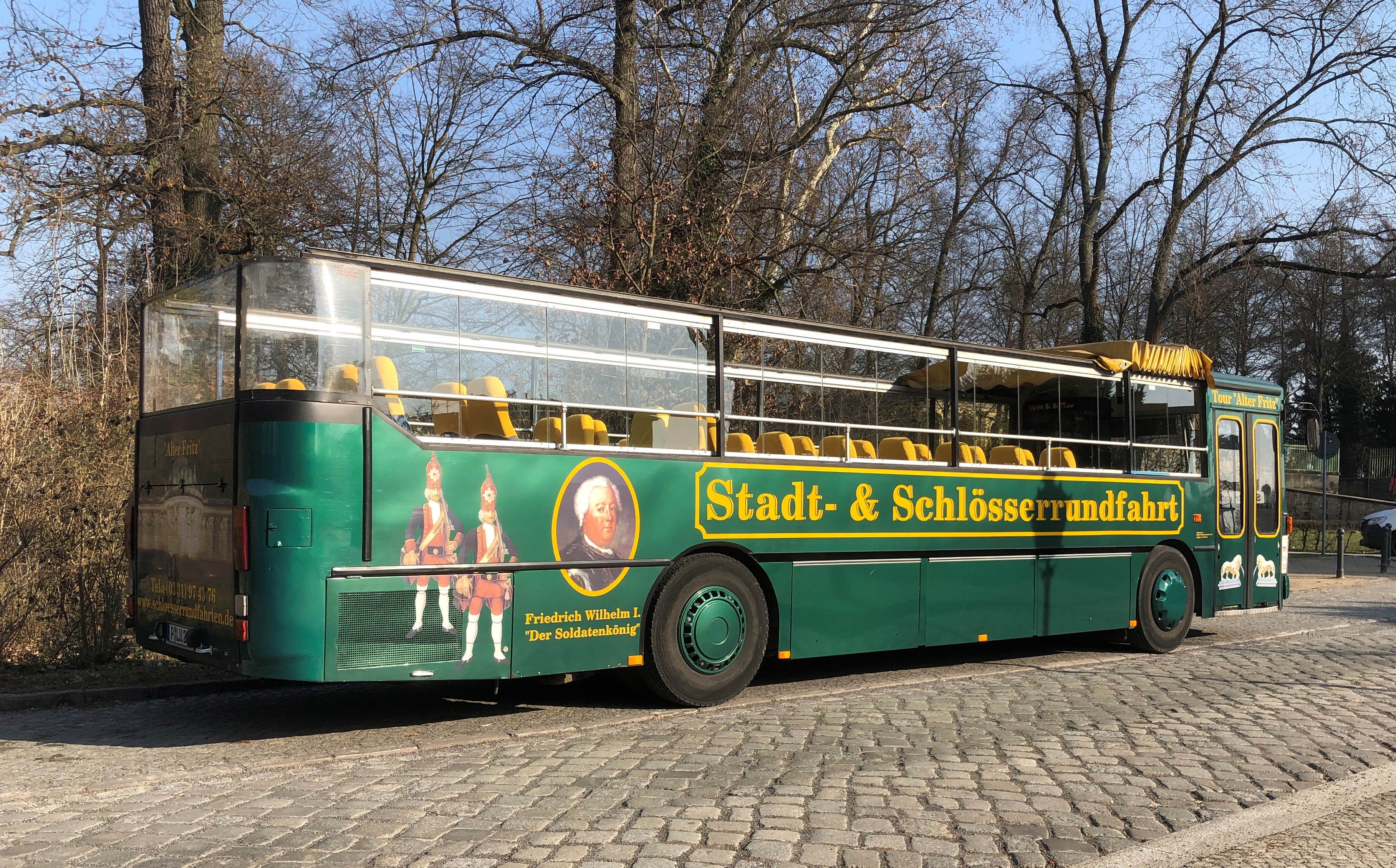
This wasn’t our bus, but rather a tour bus, playing up the Potsdam Giants, a storied Prussian infantry regiment and special passion of Frederick the Great’s father Frederick William I, who is pictured as well (and it was Frederick the Great who disbanded them). I’d heard of the Giants, but not in detail, and the more I learn about them, the more amused I am.Sanssouci

Now there’s a name for a German baseball team: The Potsdam Giants. As far as I can tell, there is no such team, though the Humburg Stealers, the Mannheim Tornadoes and the Heidenheim Heideköpfe (ah, those funky Swabians) knock around the horsehide sphere professionally in the Federal Republic. That’s what I ought to do, if I ever go back to Germany, see a baseball game. Bet there are some peculiarities. Like in Japan, when you release balloons during the Seventh Inning Stretch. At least they did at Hanshin Tigers games in the early ’90s. Actually, they were blown up condoms.

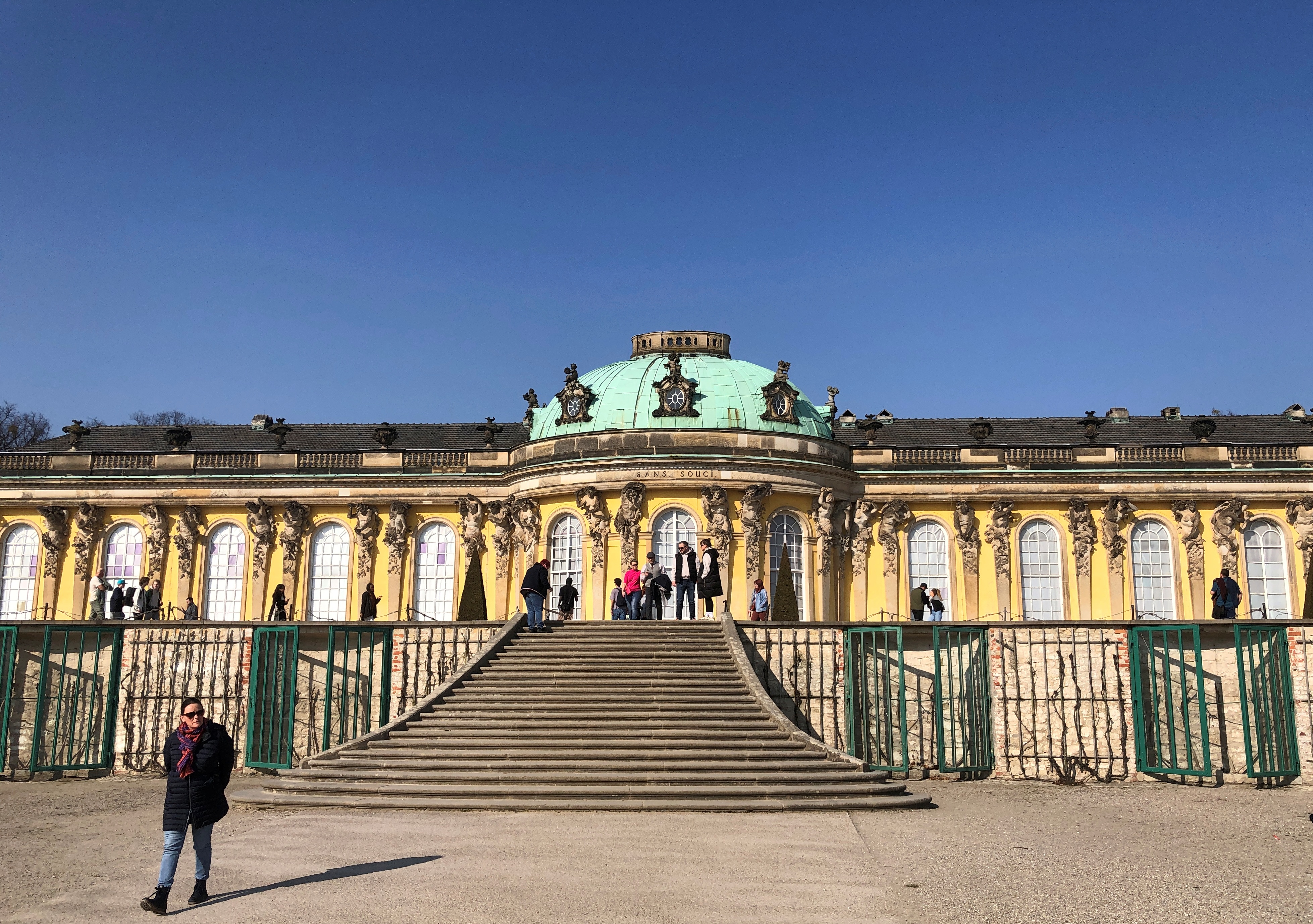
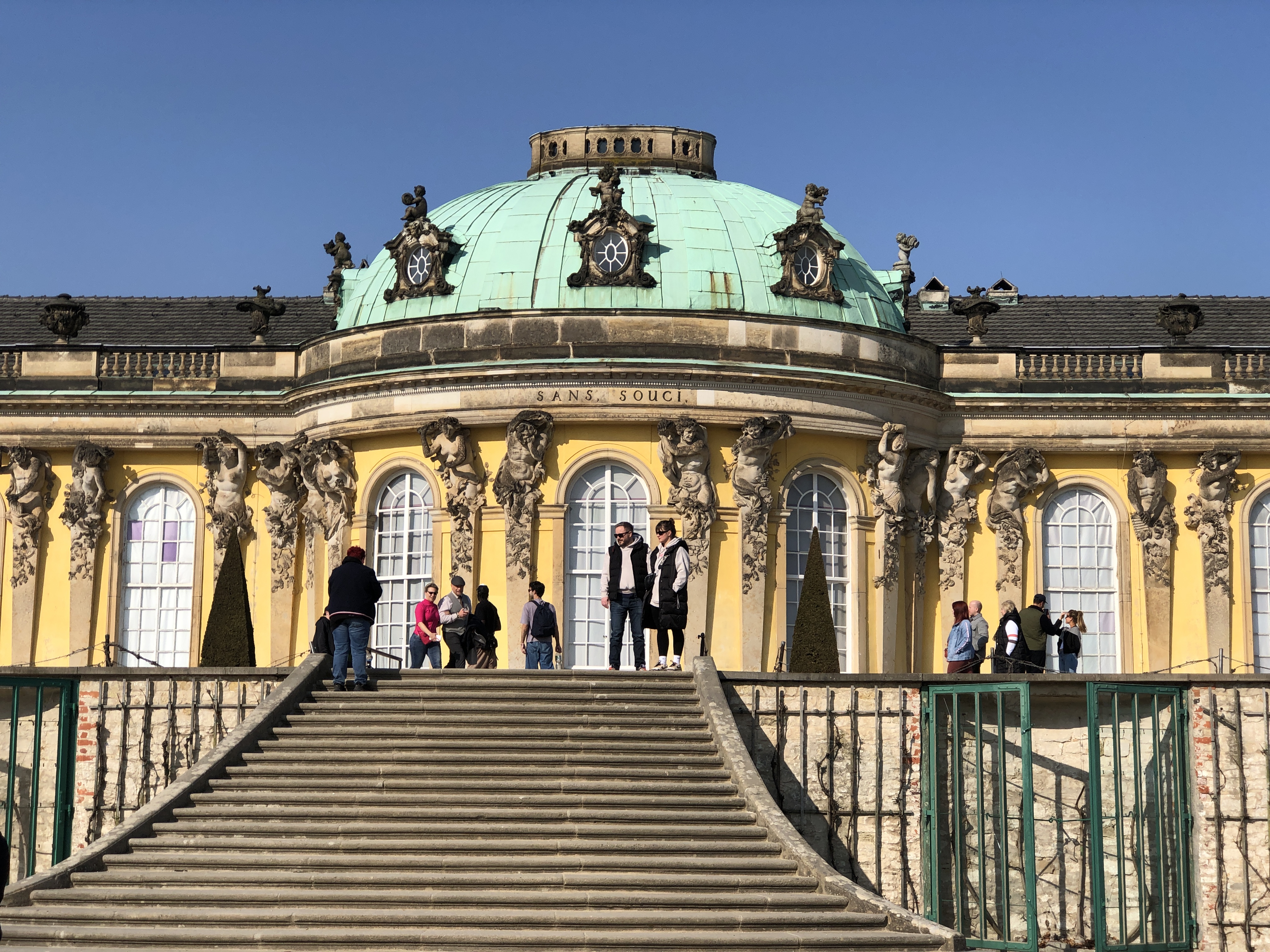
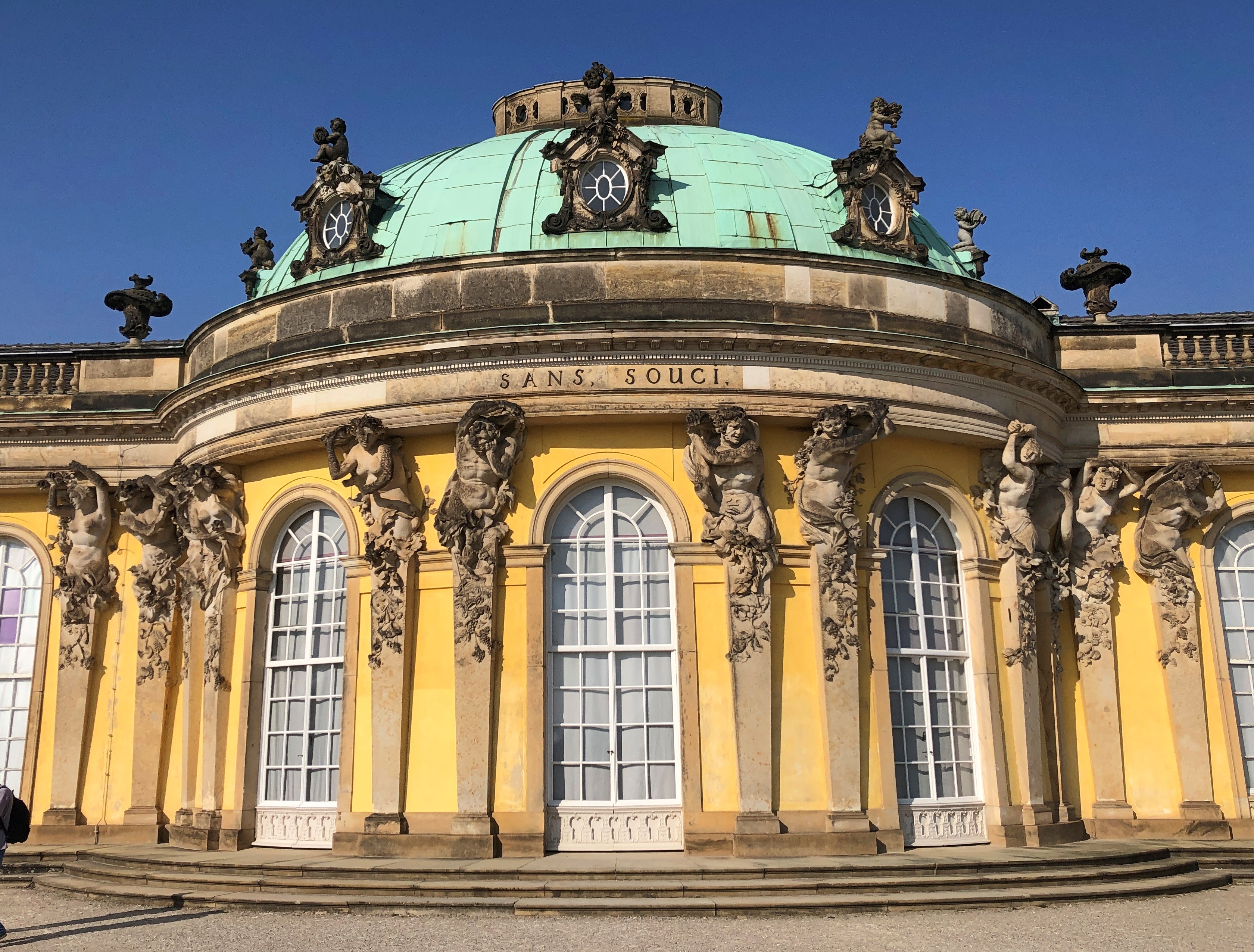
The styling is Sanssouci in most English-language sources, but spelled Sans, Souci. on the building.Sanssouci Sanssouci Sanssouci

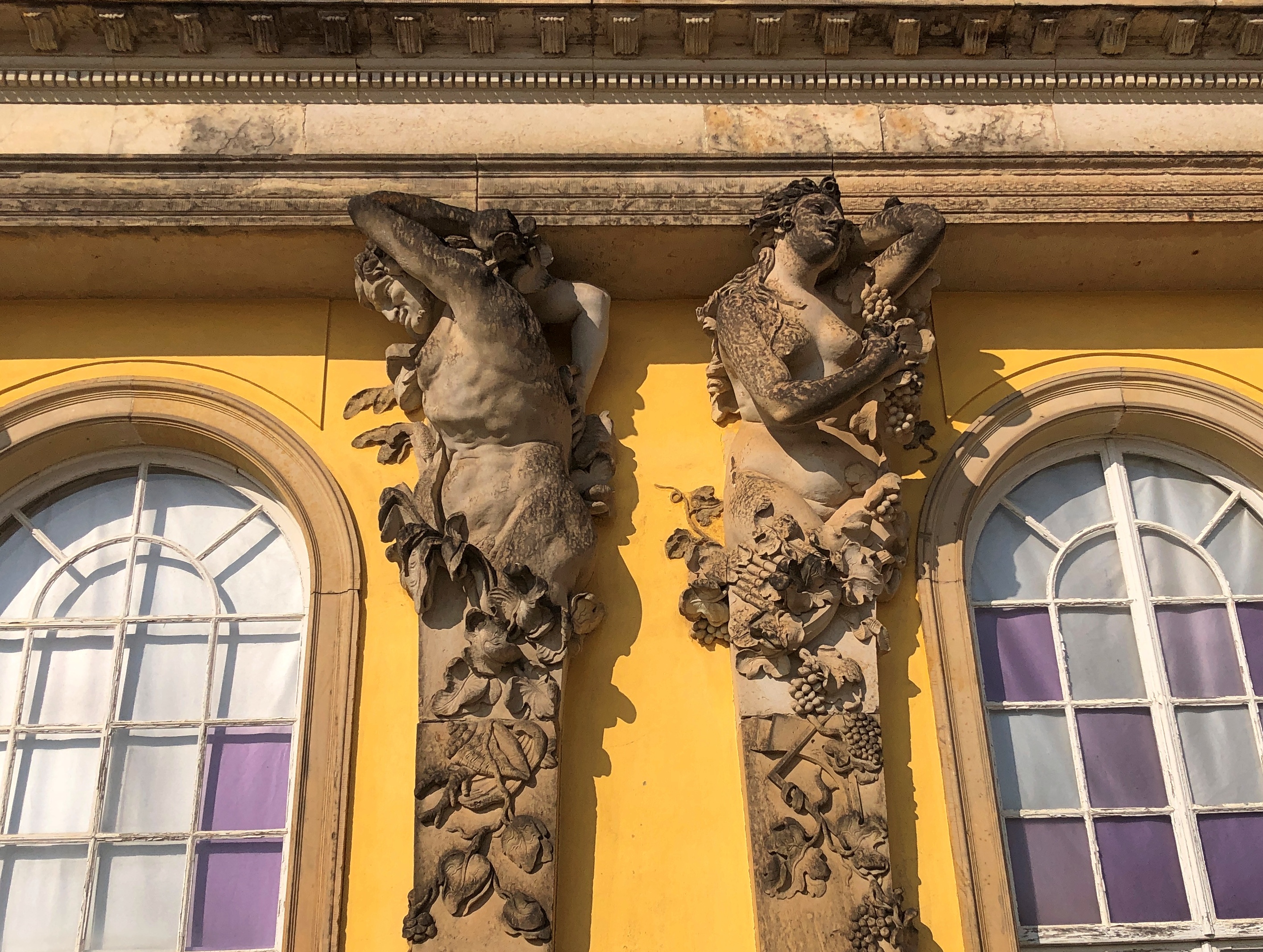
Seems like party-time in stone. Vineyards were important to the scheme of Sanssouci, so of course Bacchus-adjacent figures should be too.Sanssouci

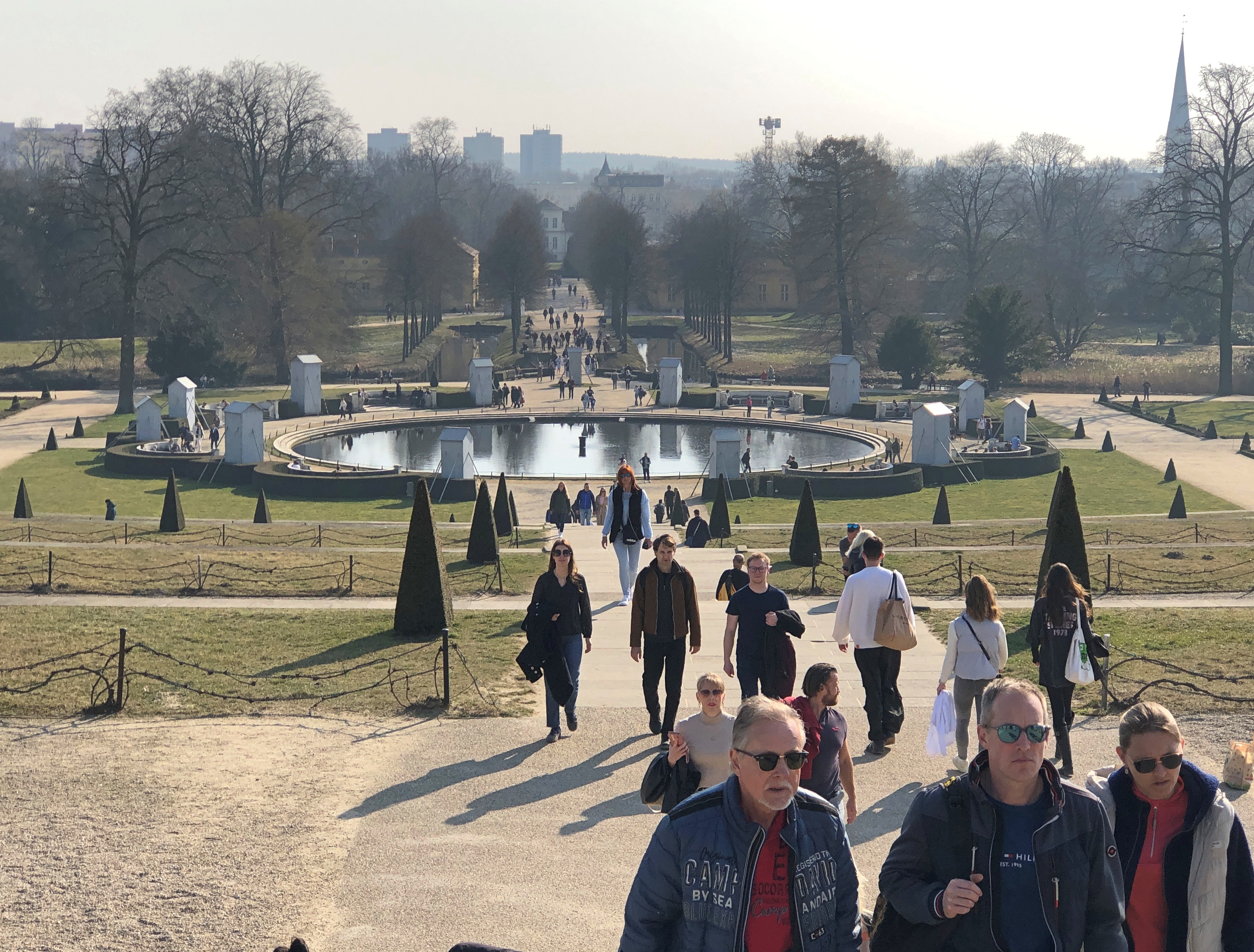
The view from the palace. This time of the year, there was no admission to the Sanssouci gardens, so it functioned as a city park. A mild Sunday in March had brought people out to the park. Sanssouci

A benefit of low-season tourism: practically no waiting to get into the palace. I say low season, but in a lot of places in Berlin, and Prague too, we noticed that school groups, or individual students, were out and about in force. A form of spring break?

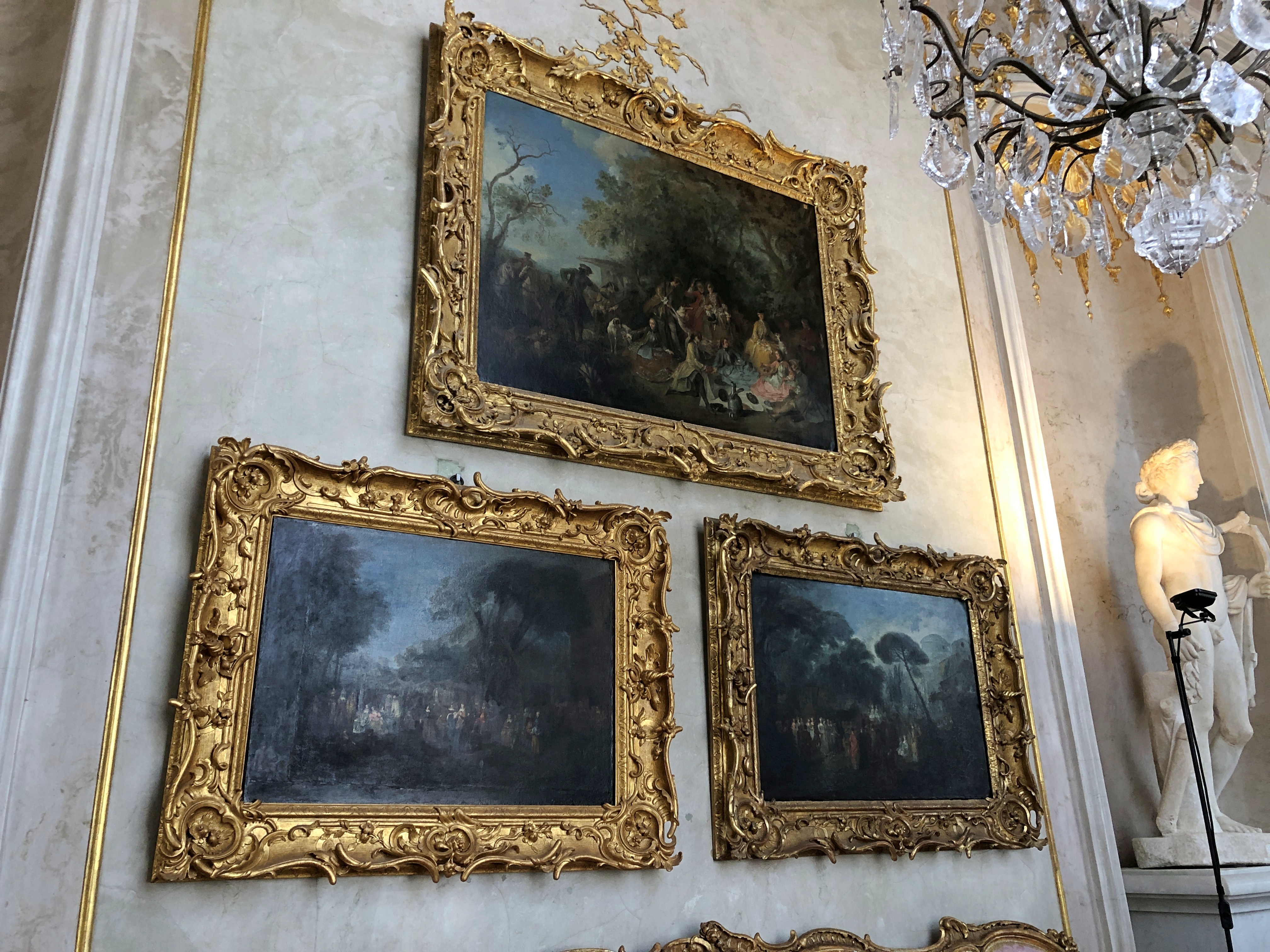
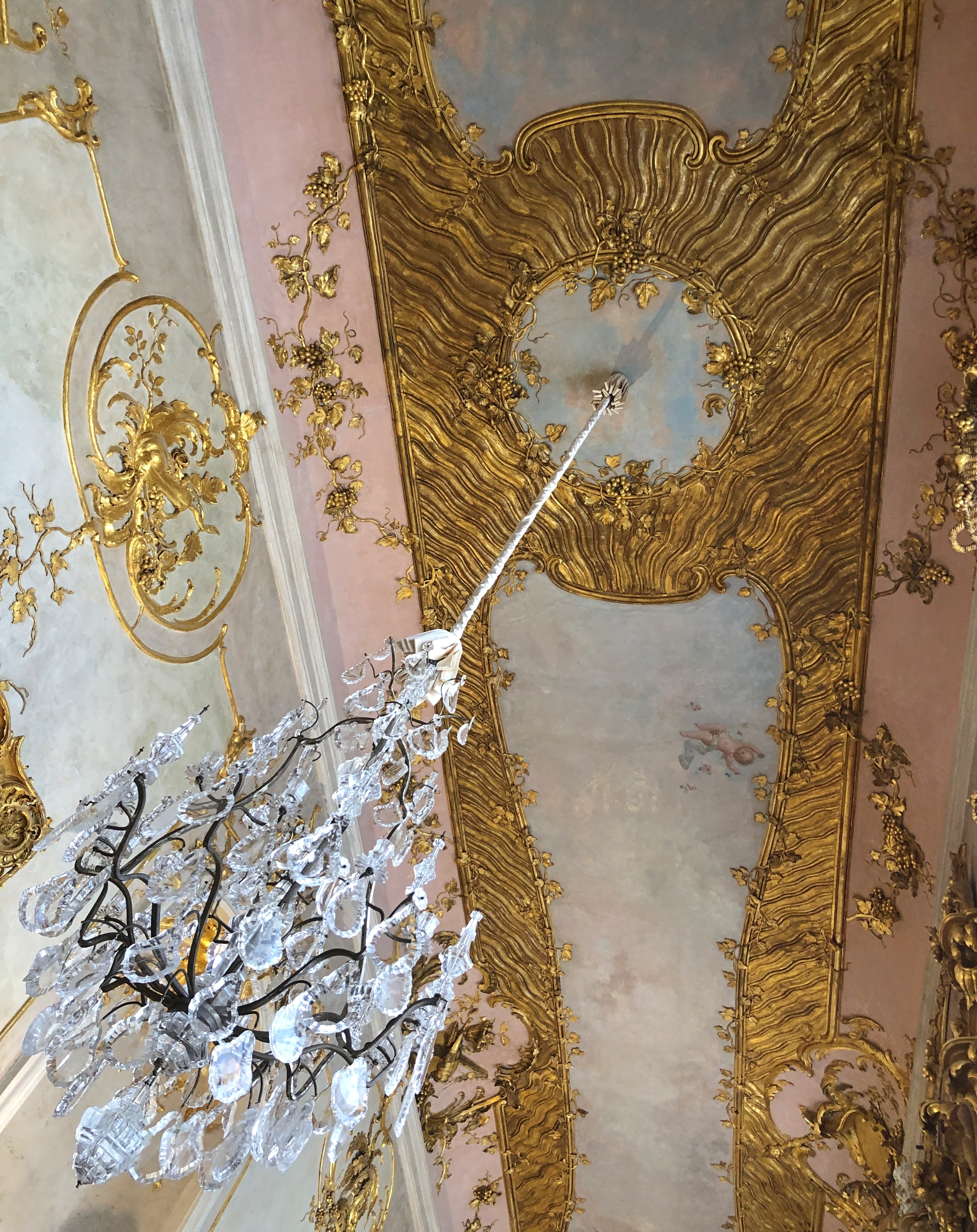
Images without reference to room.Sanssouci Sanssouci Sanssouci

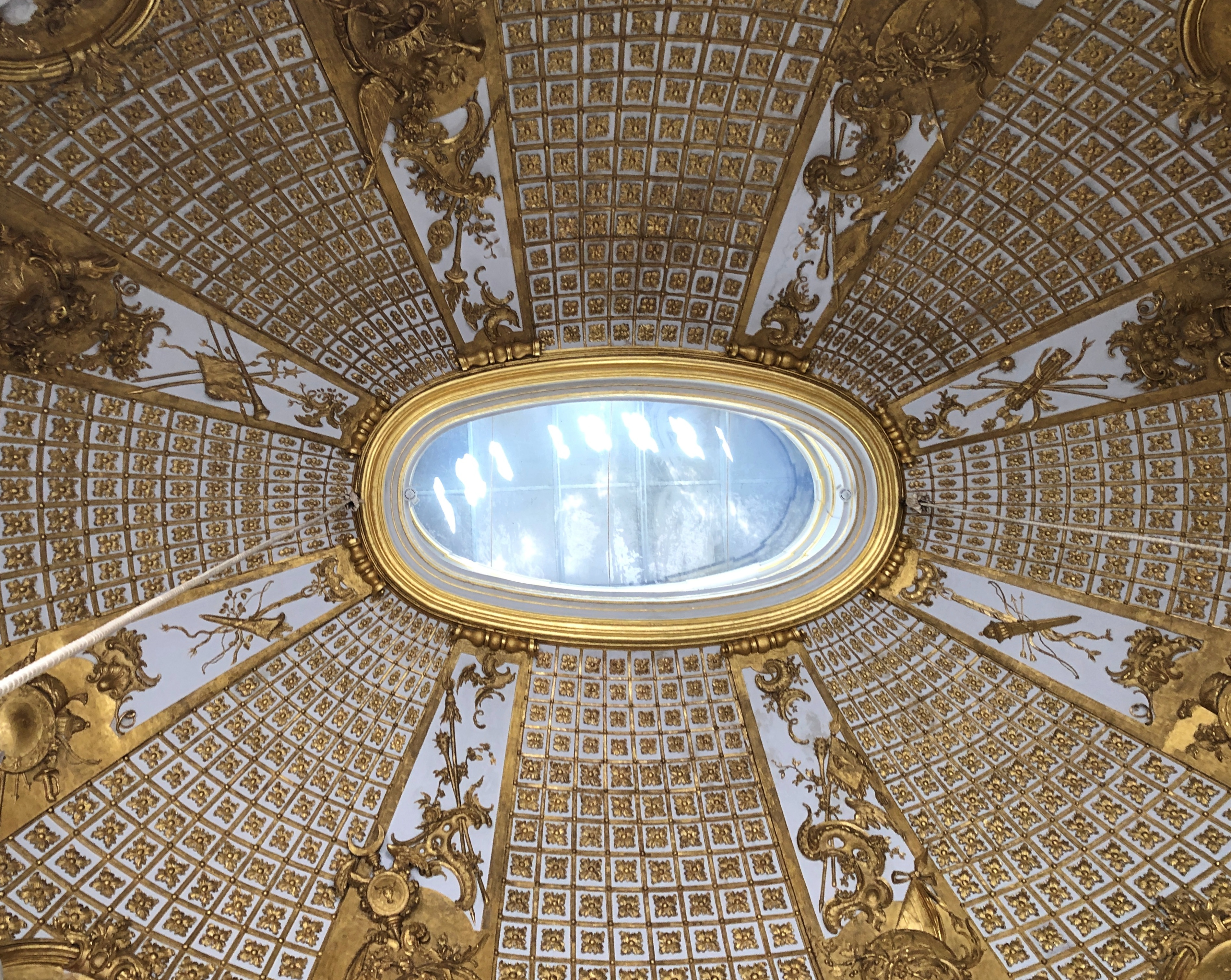
One thing to like about the Rococo effervescence at Sanssouci is that there isn’t too much of it. As 18th-century European palaces go, it’s modest. Frederick wanted a place to entertain himself and others, not wow visiting muck-a-mucks. Only a dozen or so rooms. You don’t come away feeling overloaded.

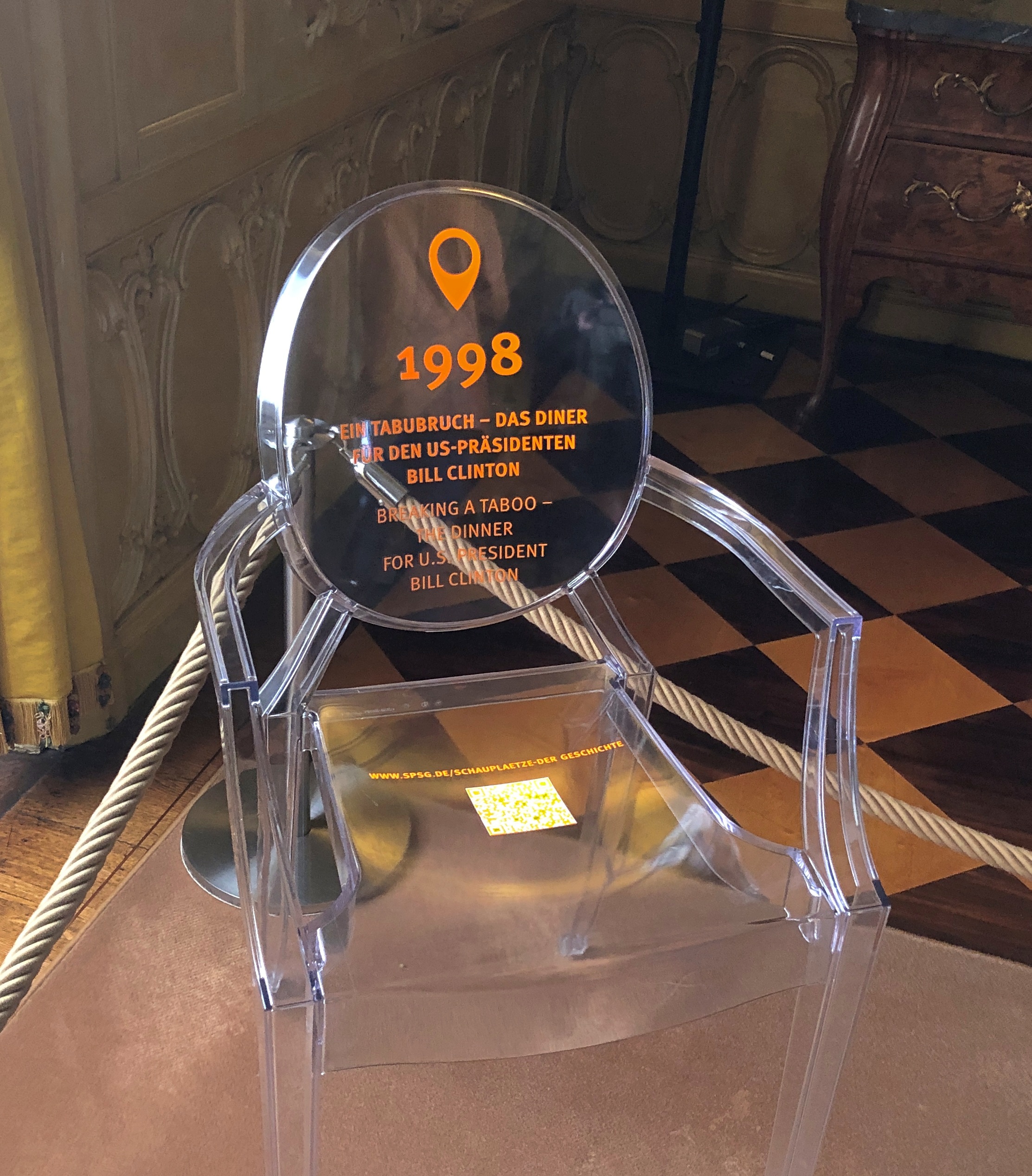
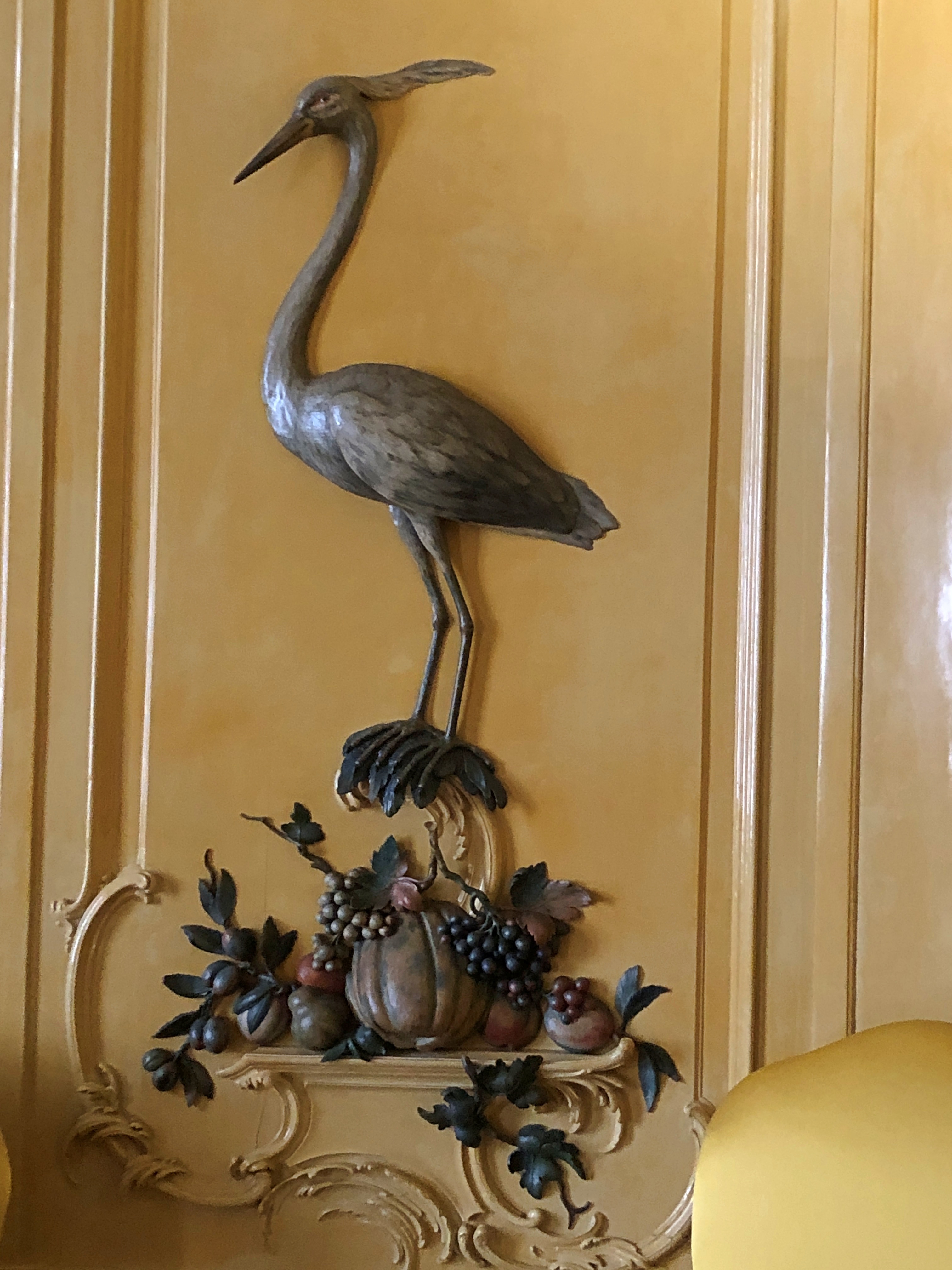
What is this about?Sanssouci

I quote this at some length because this material, from the organization that oversees the palace, is funny. And a little quaint.

On May 13, 1998, at Sanssouci Palace a taboo in historical preservation was broken. After more than a hundred years, the Marble Hall of Frederick the Great’s summer residence once again became the scene of a festive dinner...

This time it was the Chancellor Helmut Kohl, who had prevailed against all of the preservation apprehensions. It had been his express wish to honor Bill Clinton, the president of the United States of America, with a luncheon at Sanssouci during his second state visit to Germany…

The suggestion to hold the dinner in the Ovid Gallery in the neighboring New Chambers of Sanssouci, which otherwise served as the festive setting when receiving state visitors, was turned down by the American chief of protocol.

The sensual scenes from the Metamorphoses by the Roman poet Ovid, set into the gallery walls in the form of gilded stucco reliefs, were considered by the protocol chief as being too permissive. There was a fear that the press would make a connection to the Lewinsky affair, which had been a constant theme for the media since the beginning of 1998.

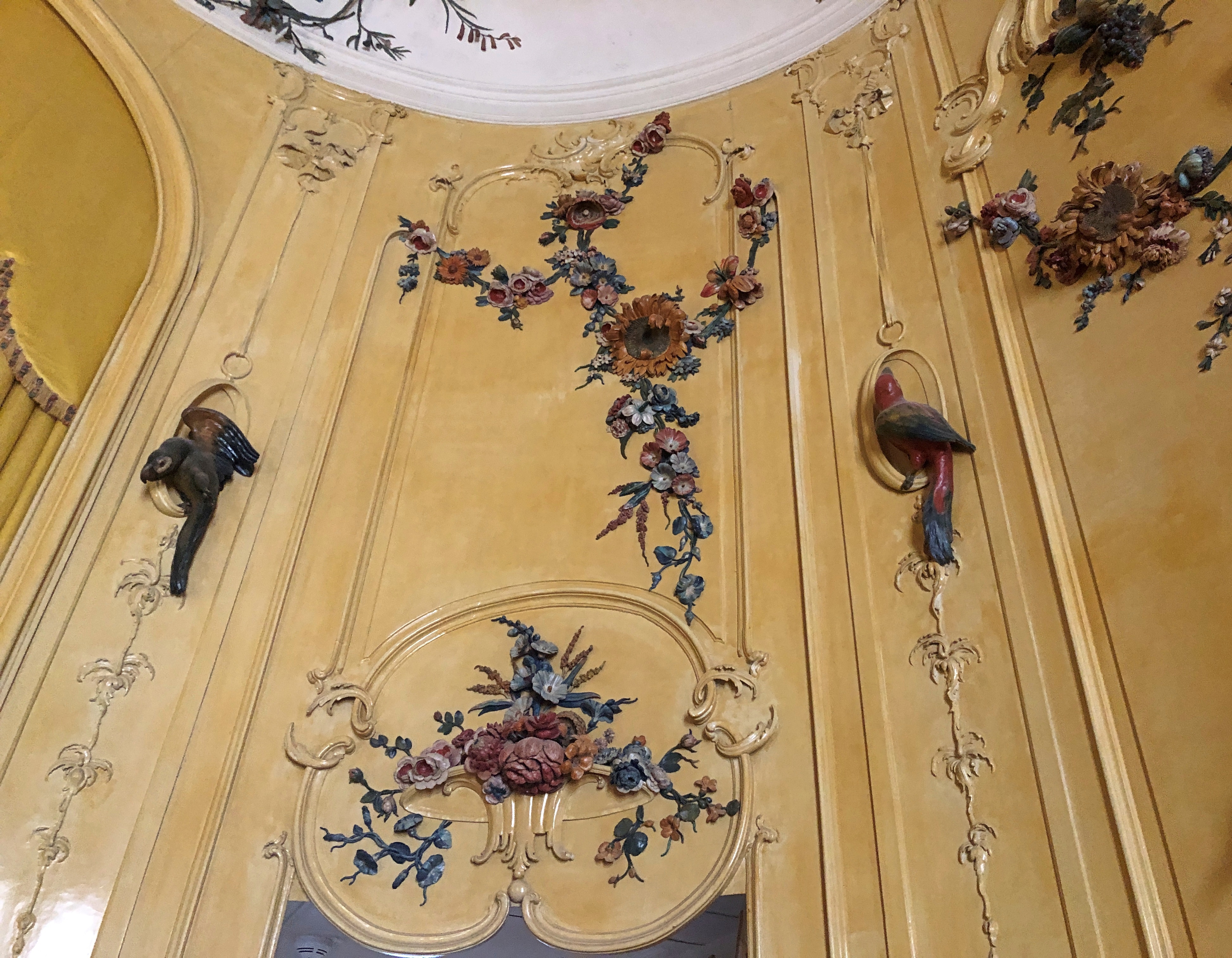
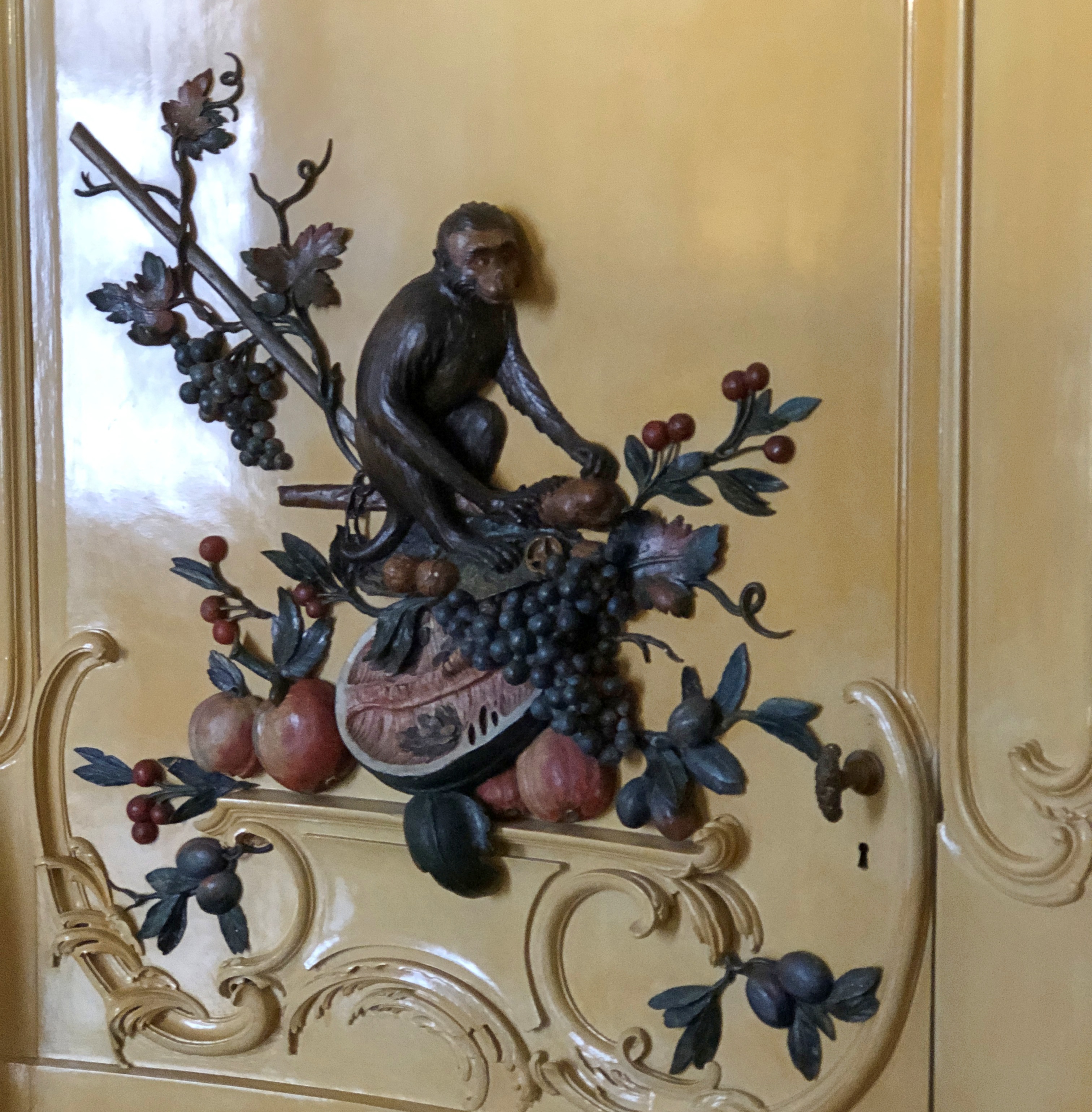
Scenes from the room supposedly decorated for Voltaire, who visited the palace till he had a falling out with the king. rococo  rococo  rococo

When we were done, we went back to the bus stop where we got off, operating under the assumption that Sanssouci was as far as the bus went, and it would take us directly back to the train station. This was wrong. Soon we were riding along, further into less developed areas, and I remember thinking – or did I say it out loud? — I don’t remember any of this.

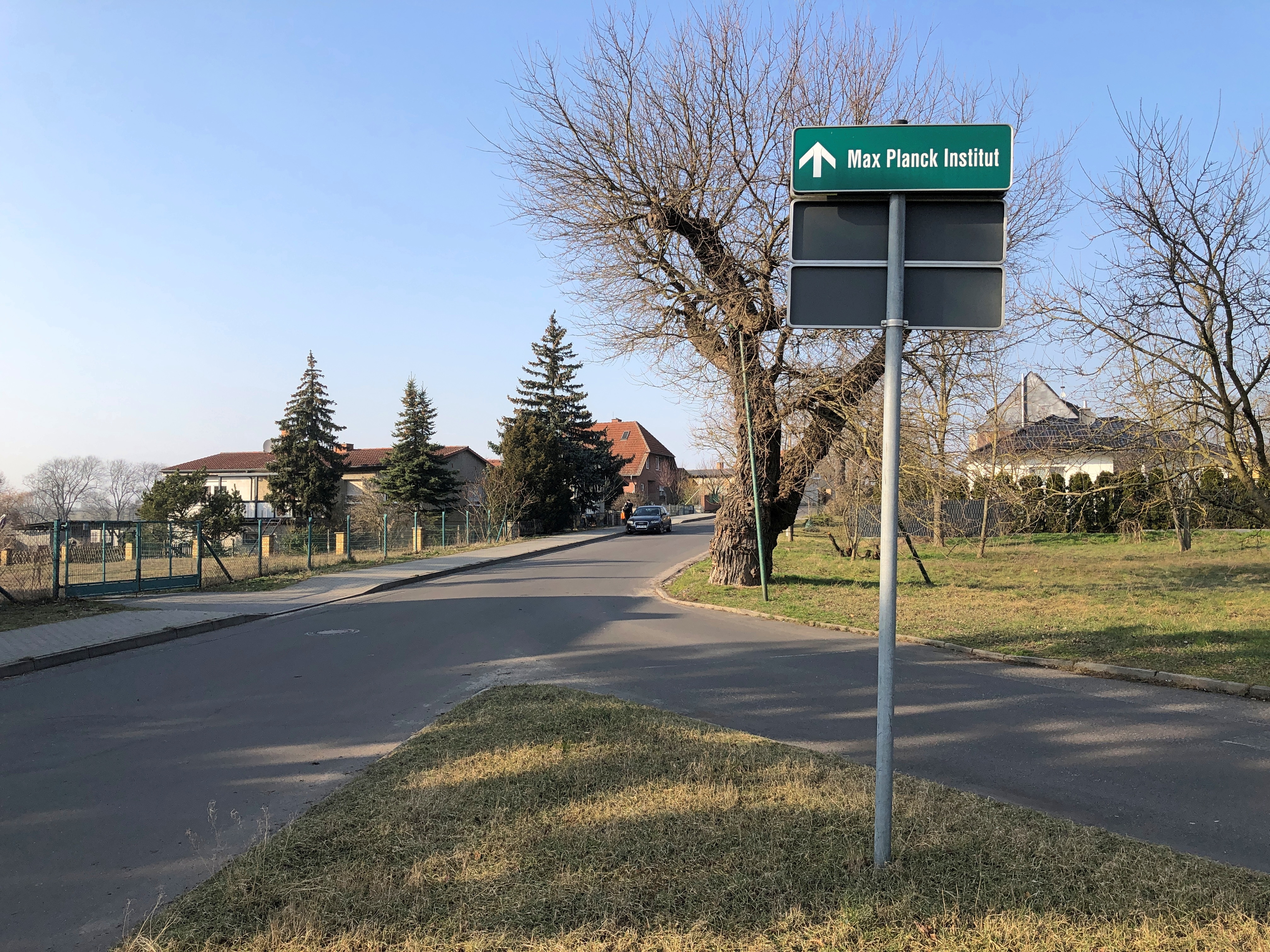
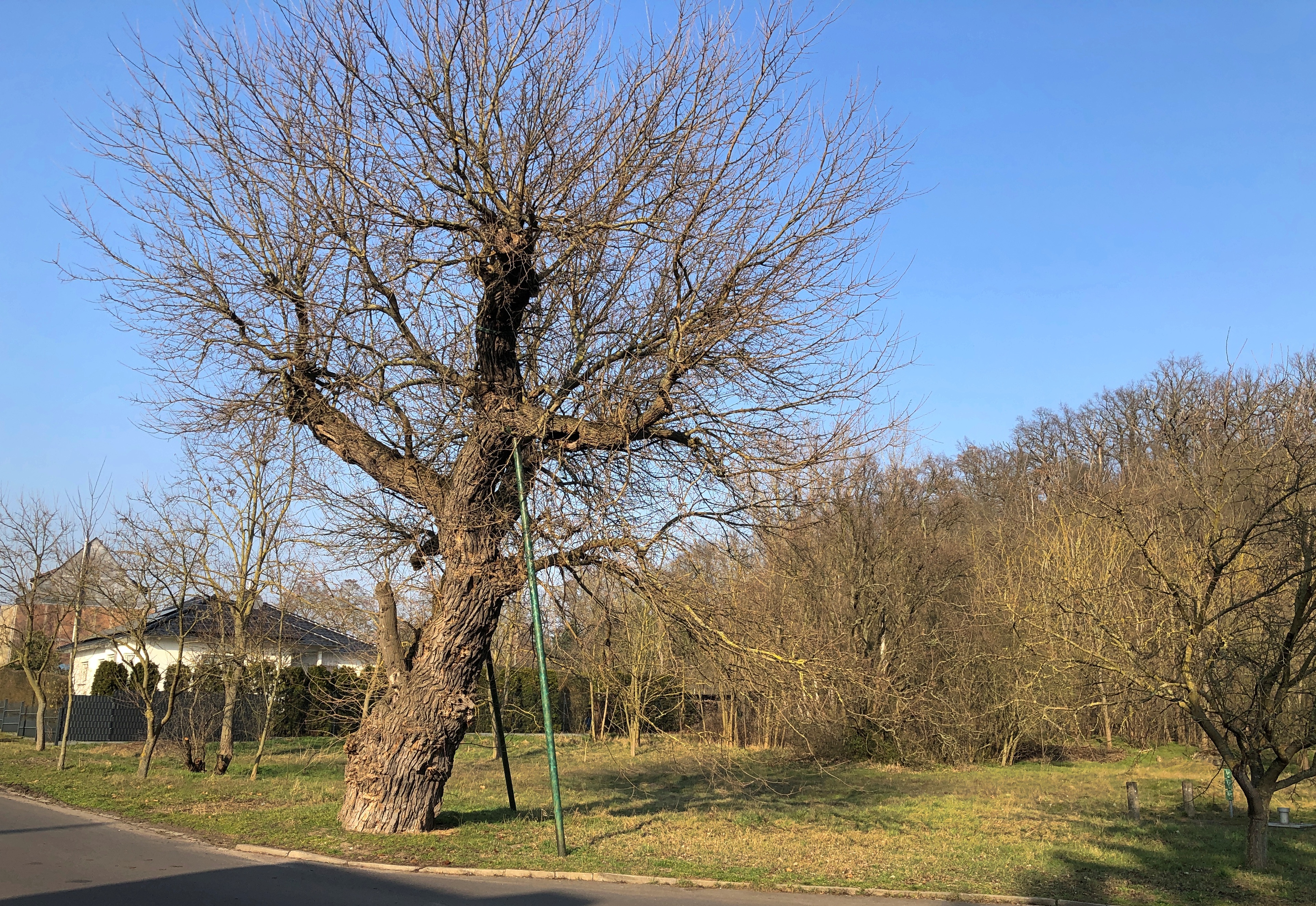
We passed by a sign for the Max Planck Institute in front of some buildings in the mid-distance. Really? That’s here? Suburban Berlin was certainly plausible, but later I found out that Max Planck Society is headquartered in Munich, and has a lot of branches. That includes one in Golm, an outlying neighborhood of Potsdam, with narrow and lightly traveled streets through smallish but pleasant single-family houses with yards. Elsewhere in Golm are fields that are probably agricultural, or at least pastureland.

I hear Max Planck Institute and I suspect one or more branches are doing Time Tunnel research. You know, go back in time and make sure Hitler becomes an architect instead of a politician, that kind of thing. That kind of thinking is what I get for watching TV science fiction as a lad.

Then the bus stopped and we were directed to exit at the end of the line. Jay mustered his German and communicated with the driver, a chunky middle-aged fellow puffing on his vape, now that he was on break. The bus, we found out, would return to the train station in about 30 minutes. We were able to communicate this to the two other passengers who had done the same as us, two women tourists from South Korea, I think.

Such was a Sunday schedule, meaning a wait at the transit hub of Golm.Golm, Germany

Luckily, the day was mild, almost pleasant, so sitting around outside for a while was no issue. Or taking a short walk.Golm, Germany Golm, Germany

An oddity.Sanssouci

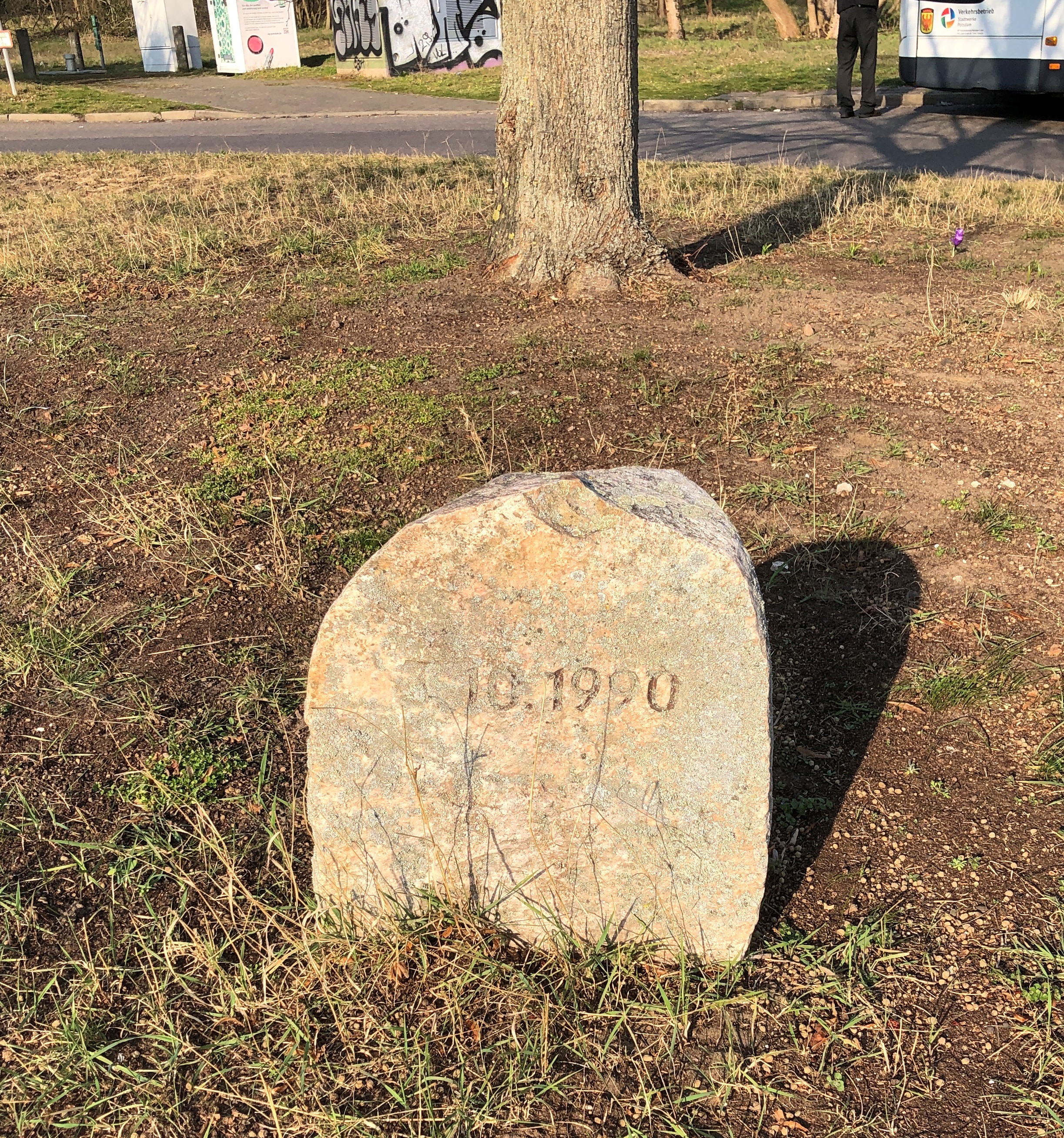
3.10.1990 is all it says. The date of German reunification. The neighborhood’s private memorial to that event? Or was it a former border marker? I checked and no, Potsdam was firmly in East Germany. A stone marking the occasion when Potsdam, or even Golm, didn’t have to be in the DDR any more? Could be.

P.D.Q. Bach 1980 (Not 1780)

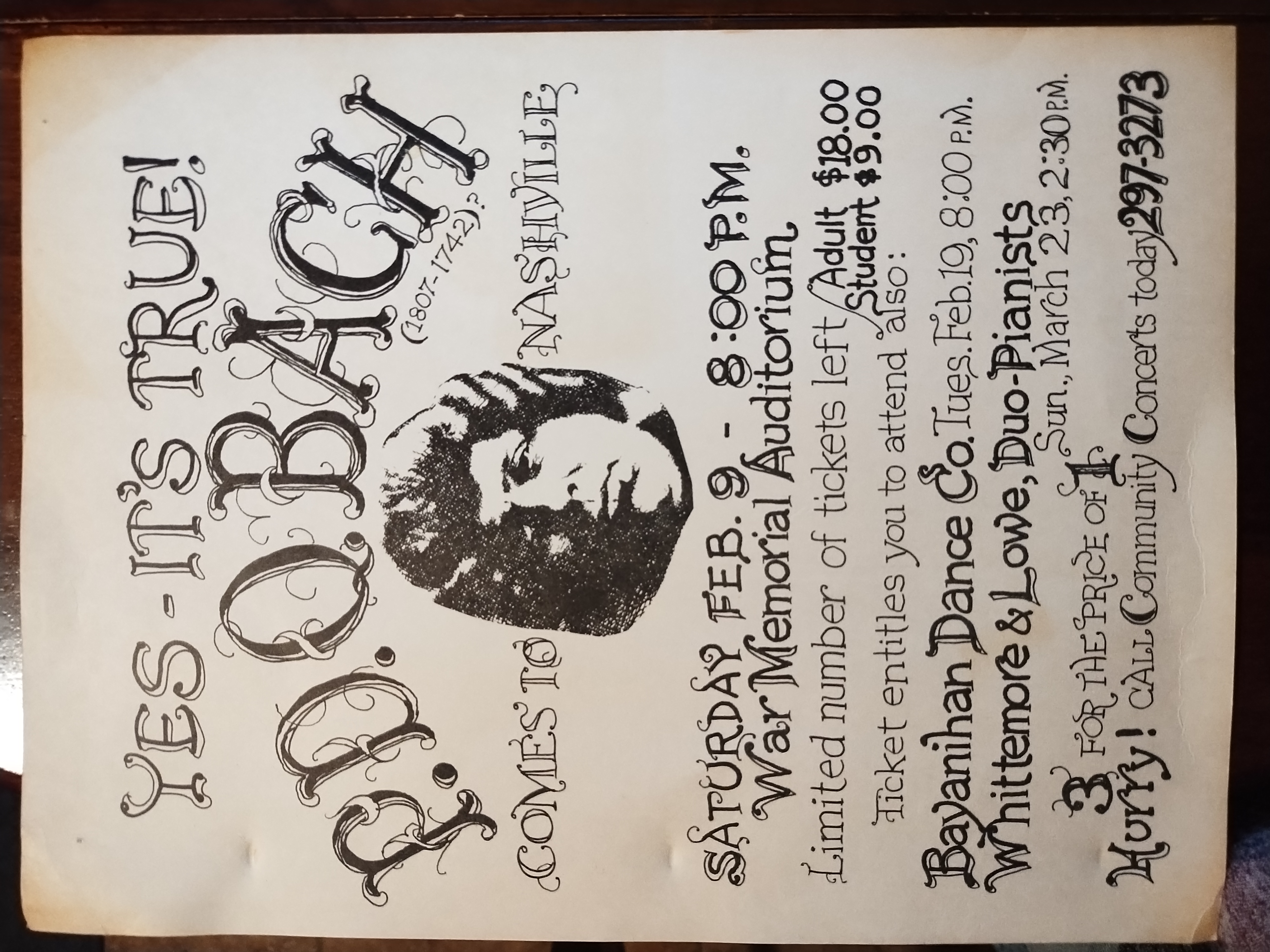
Below is a poster I picked up among the debris in the closet of my former room in San Antonio, and brought back north last month. I probably originally liberated it from a wall at Vanderbilt, though I would have had the good manners to do so after the concert.

I remember going to see P.D.Q. Bach in Nashville in early 1980, but, maybe true to the spirit of the not-great composer himself, I don’t remember much about the concert. After all, Schickele.com says: “P.D.Q. was virtually unknown during his own lifetime; in fact, the more he wrote, the more unknown he became.”

It’s easy to believe that after 45 years, my memory of the concert is slight. I saw Bob Marley in concert in 1980 as well, and mostly I remember the various kinds of smoke at the venue, and Marley’s frequent cries of “All hail Jah!” and “Free Zimbabwe!”

Back to P.D.Q. Bach. I must have been amused by the concert. Not as much as if I’d actually known anything about classical music, but I’m sure Peter Schickele’s antics were amusing above and beyond mere music spoof. I’m also pretty sure I went by myself, since even the student price (more than $34 in current money) would have been a lot for an act no one else had ever heard of.

But I had. We had at least one record of his around when I was in high school, namely Report from Hoople: P. D. Q. Bach on the Air, which was in personal heavy rotation for a little while, along with all our Tom Lehrer records.

That reminds me: I need to get around to writing that short bio of that other non-famous musician, Irwin Hepplewhite, leader of Irwin Hepplewhite and the Terrifying Papoose Jockeys during the gold and silver age of American pop, since clearly no one else is going to do it.

Back to P.D.Q. Bach again. I didn’t note the passing of Peter Schickele last year, but I’m going to now. Here’s an interview he did only a few years after he came through Nashville. Everybody comes to Nashville, even Irwin Hepplewhite and the Terrifying Papoose Jockeys, who brought the house down – literally, a ceiling fixture fell on them – at the Ryman in ’69, one of the lesser-known events referenced in “American Pie.”