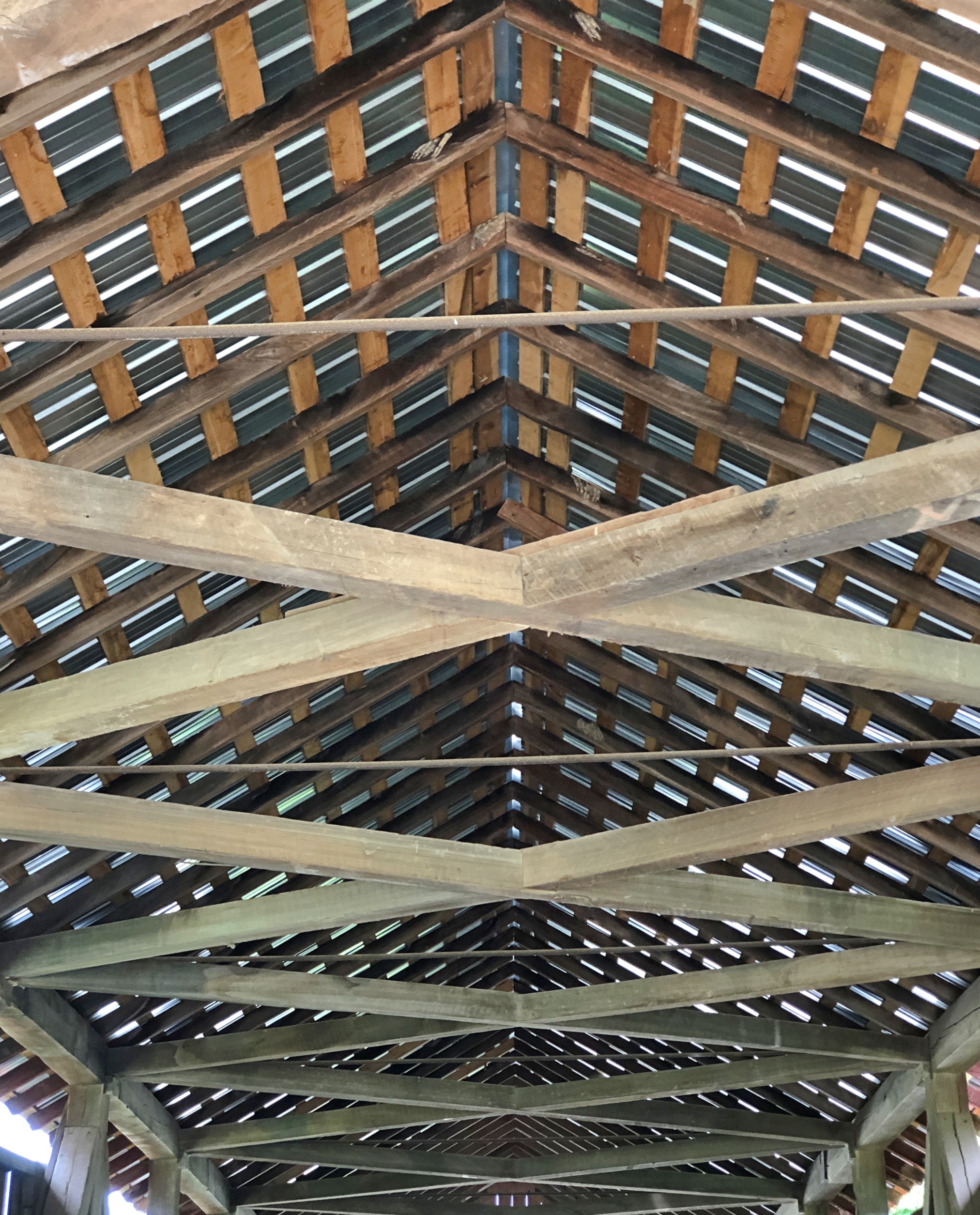
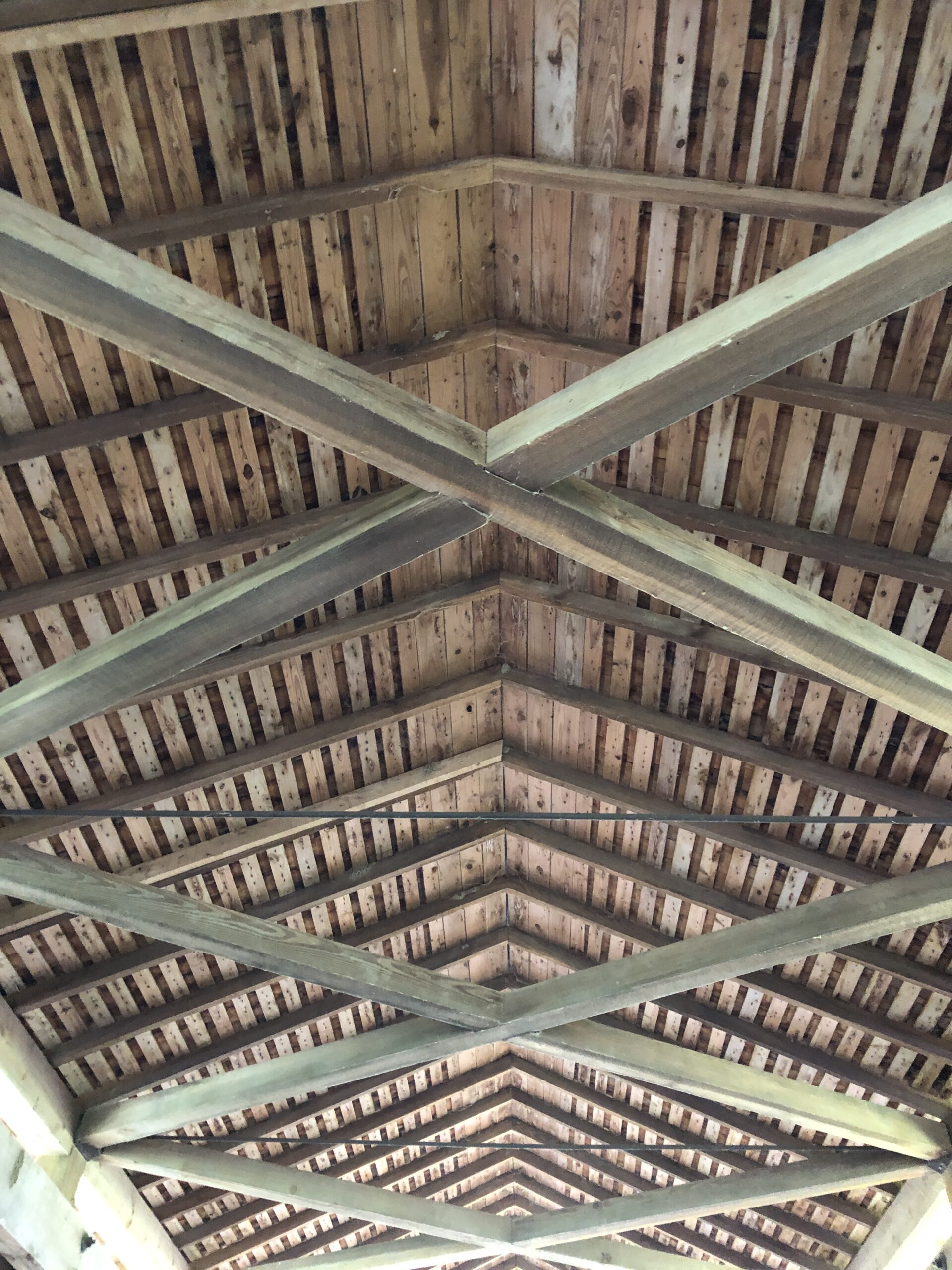
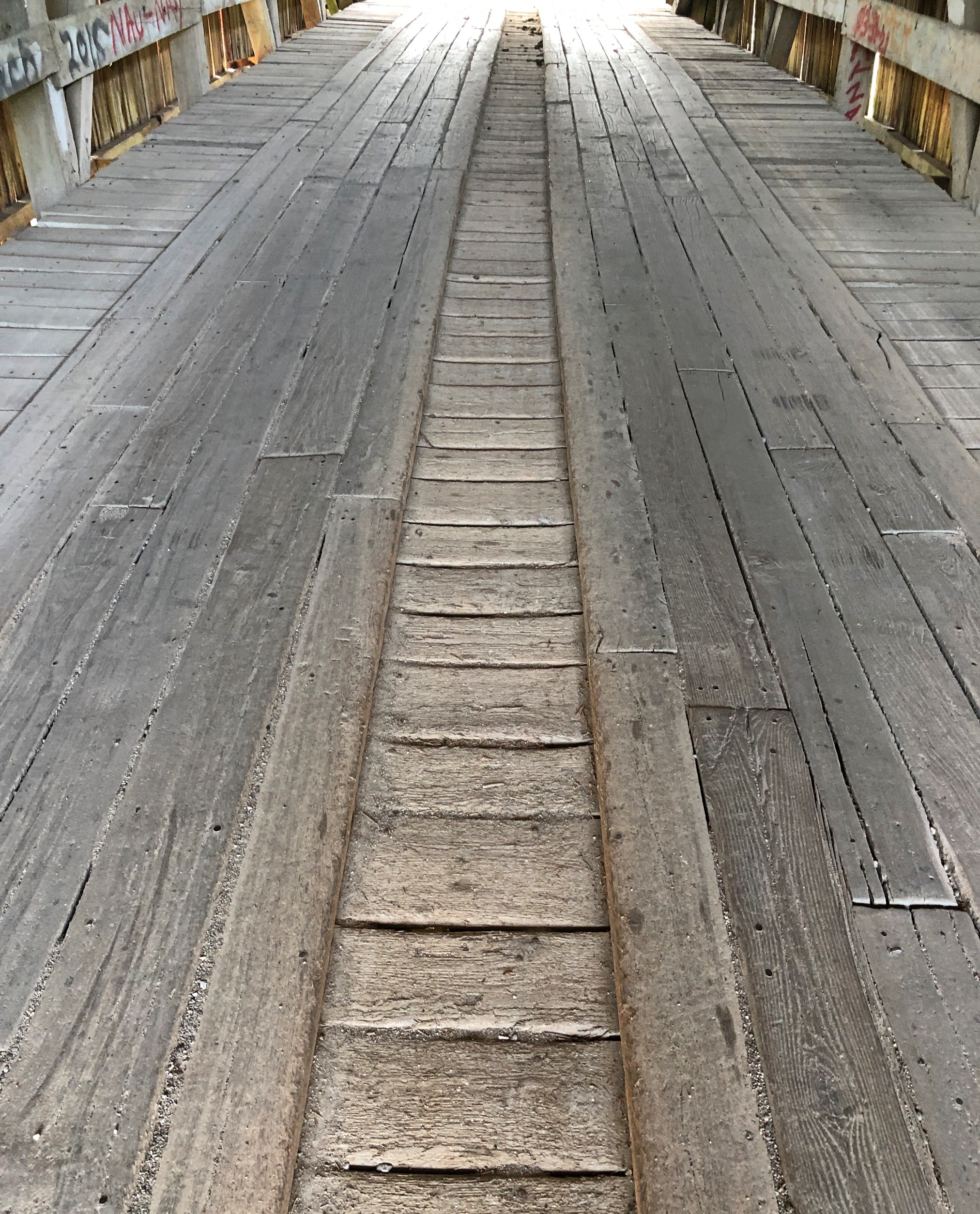
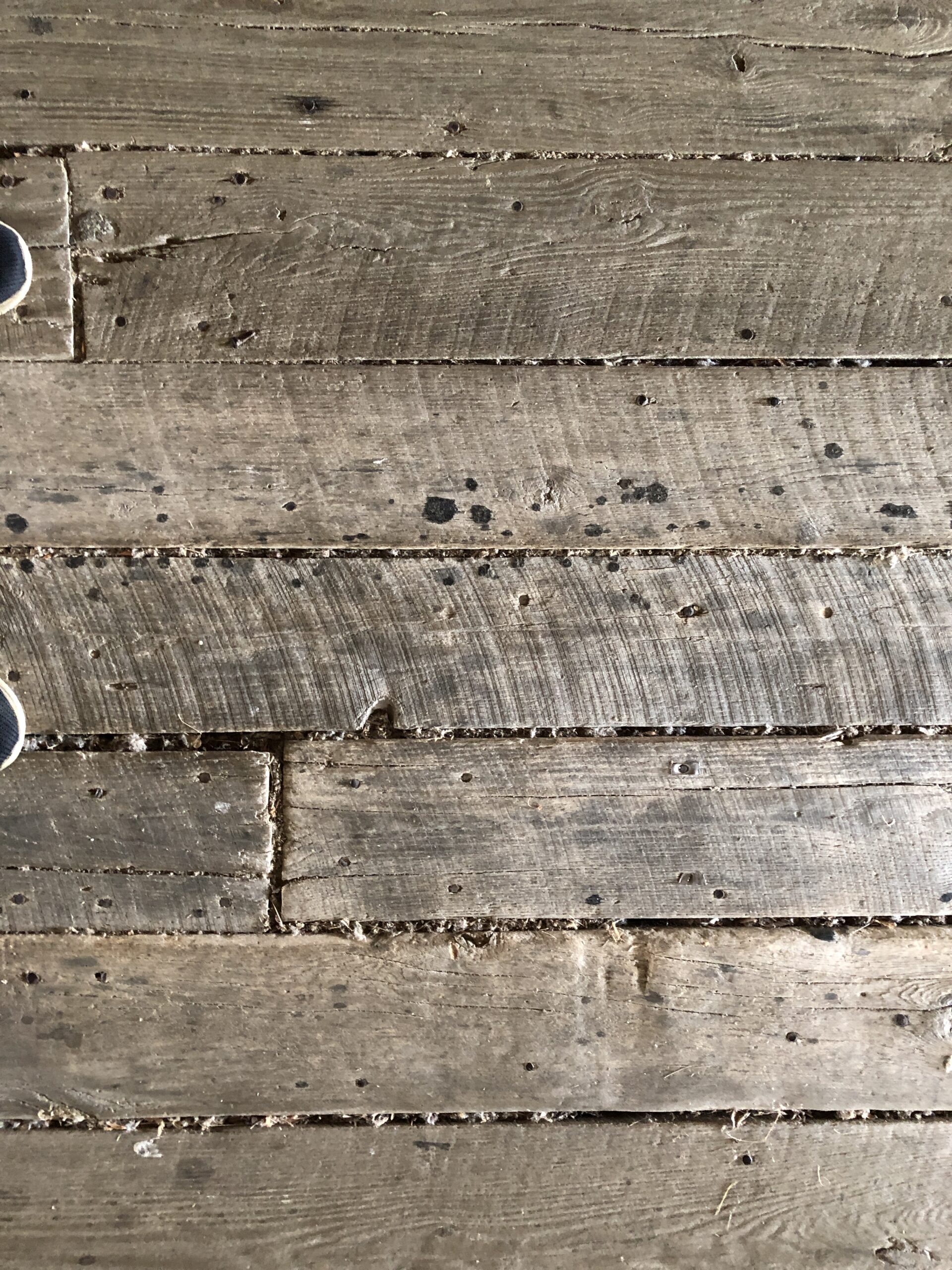
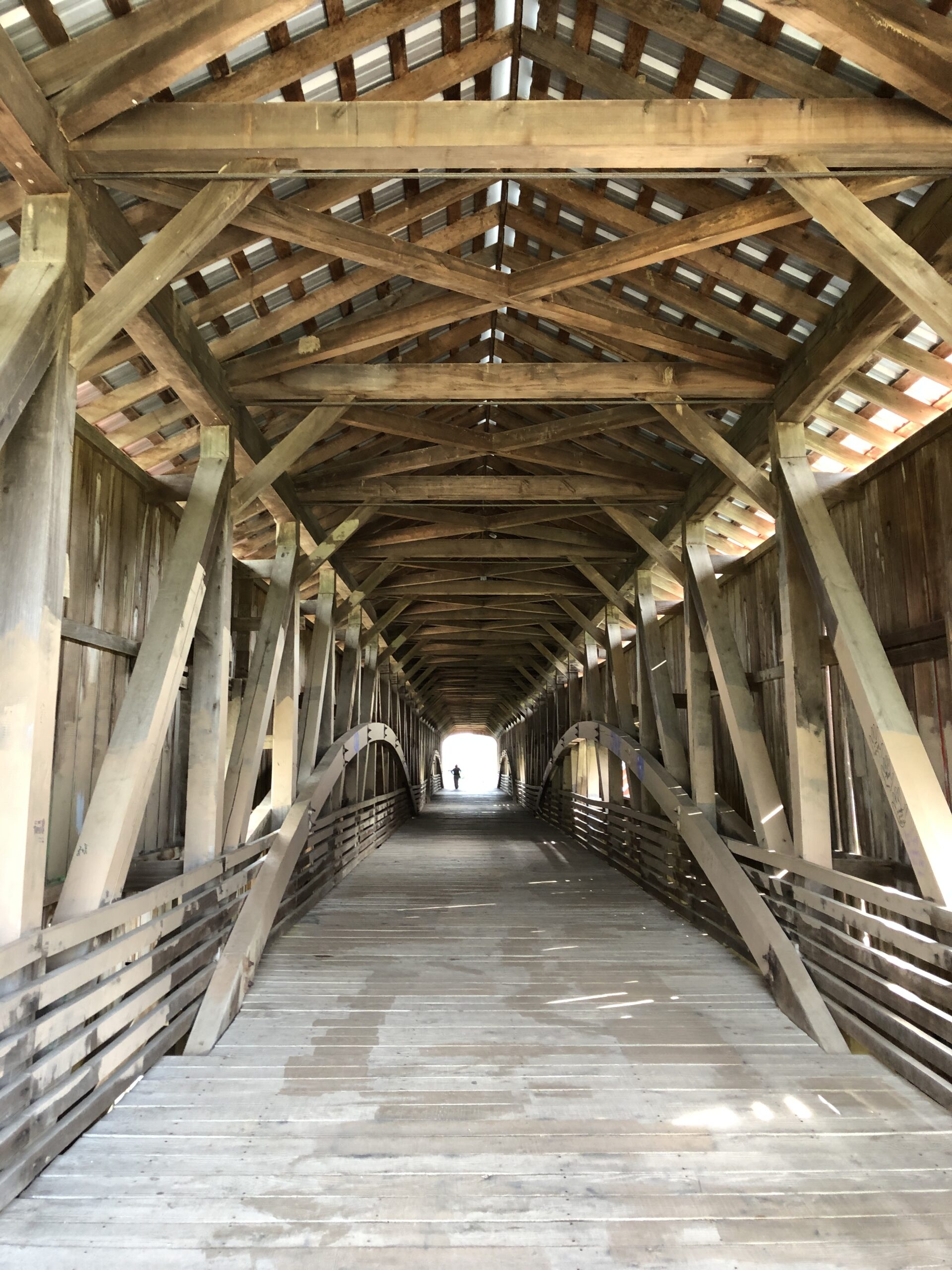
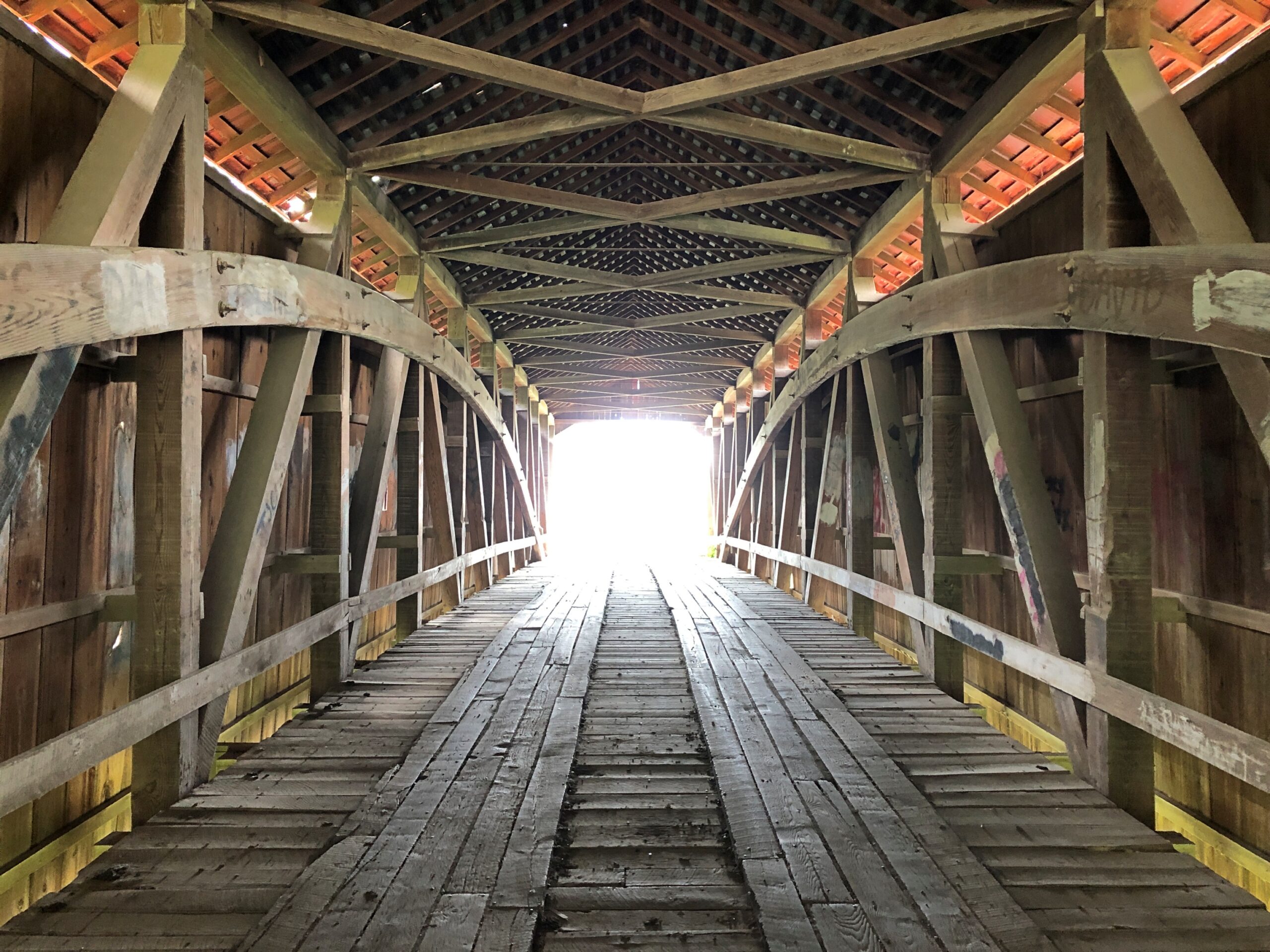
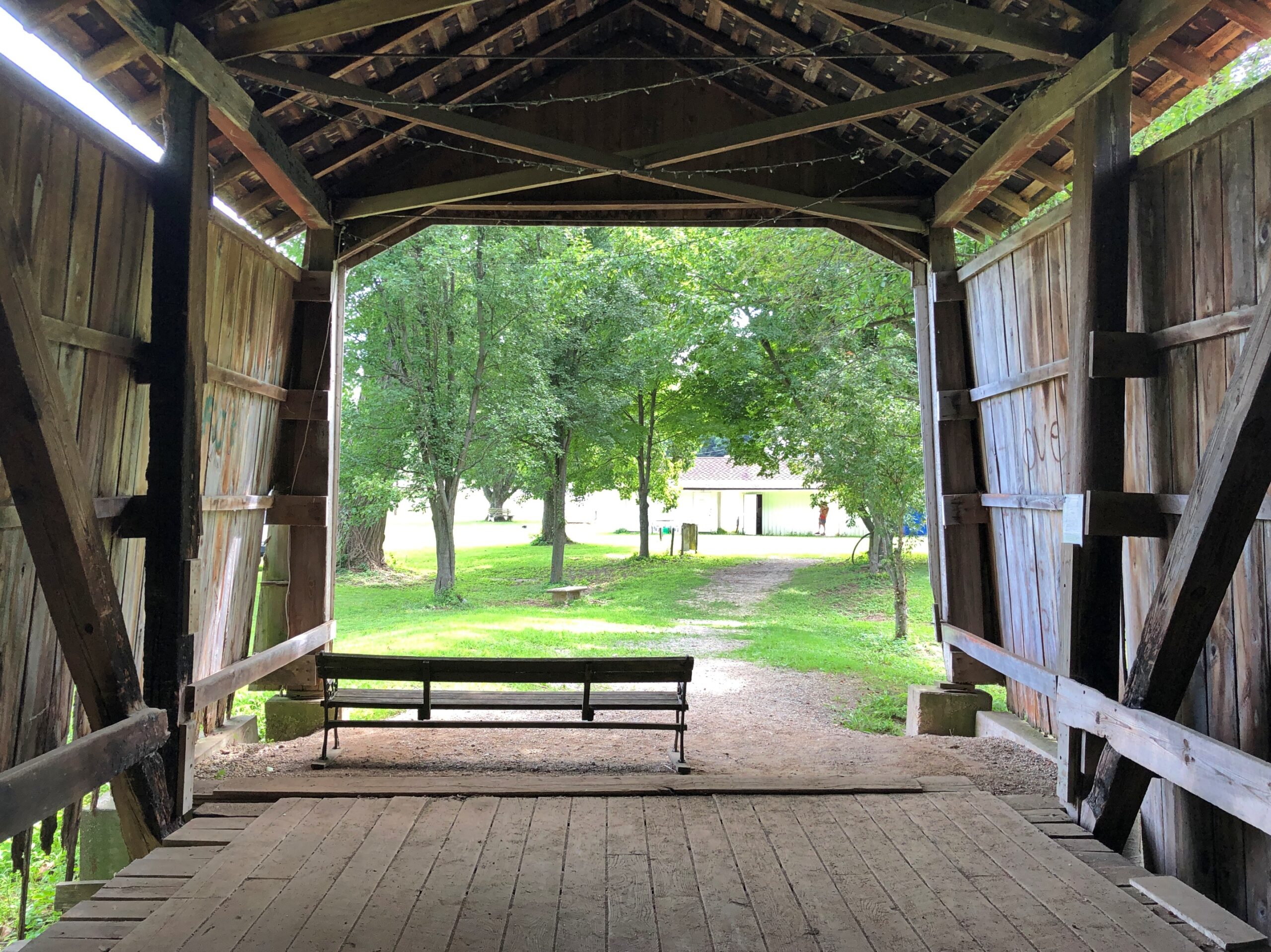
It’s one thing to admire the artistry of a Parke County, Indiana, wooden bridge standing at its entrance, or below near the edge of the creek. Another to wander in and surround yourself with all that wood, from roof –
– to floor.
Your eyes spend a few seconds being useless as they adjust, the boards creak and the wood doesn’t exactly smell strongly one way or the other, as it might have when the bridge was new, but even now there’s a faint woody odor, maybe more enhanced after a rain. No recent rain for us, just plodding over dry boards cut well over a century ago.
Being summer, there was a distinct contrast between the brightness outside and the shadows inside a covered bridge. My camera doesn’t interpret the light pouring from the other side of the bridge in quite the way my eyes did. Even so, the camera captured that distinct contrast in its own digital-image way.
Except for those times its image was closer to the eyes’.
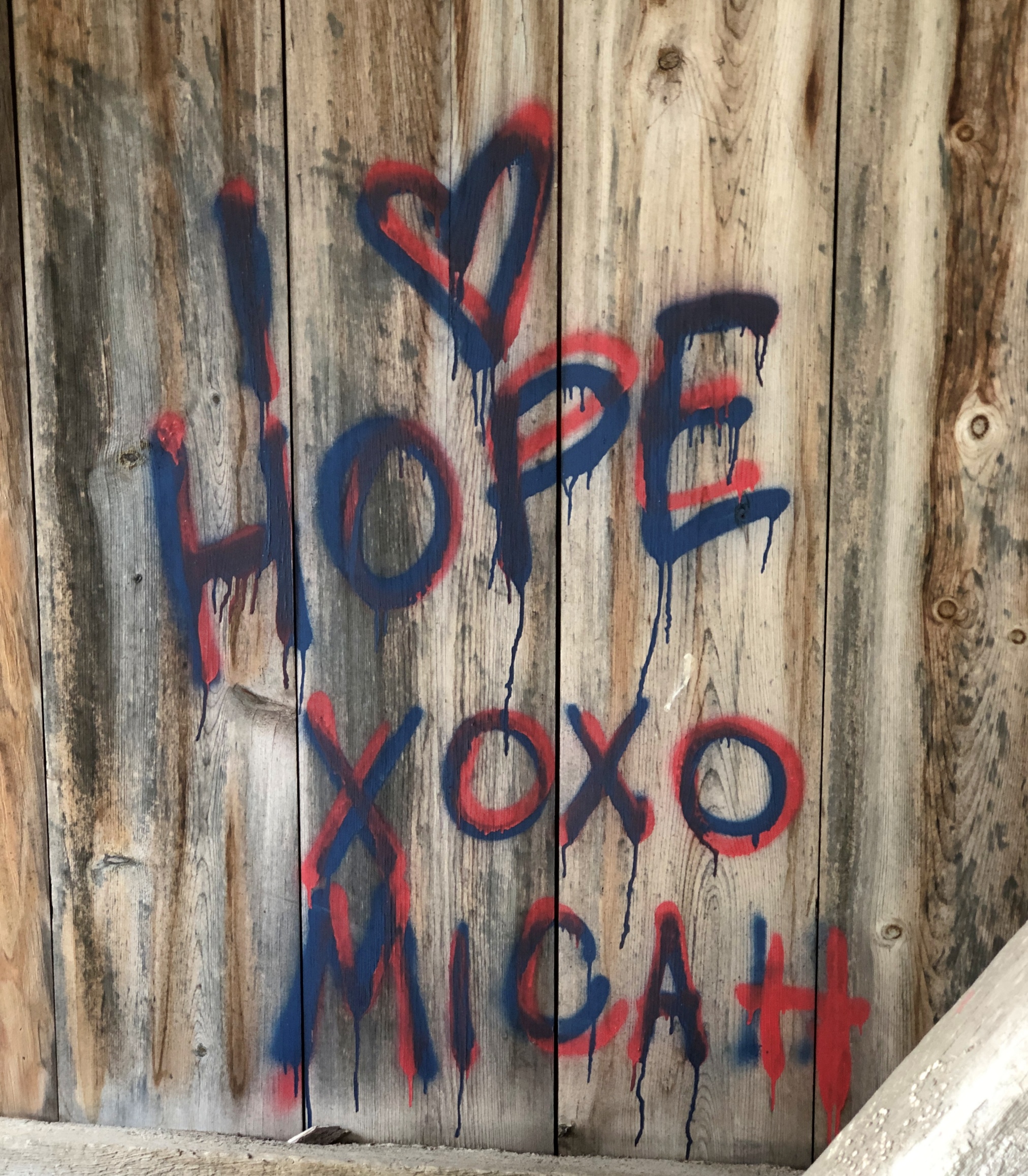
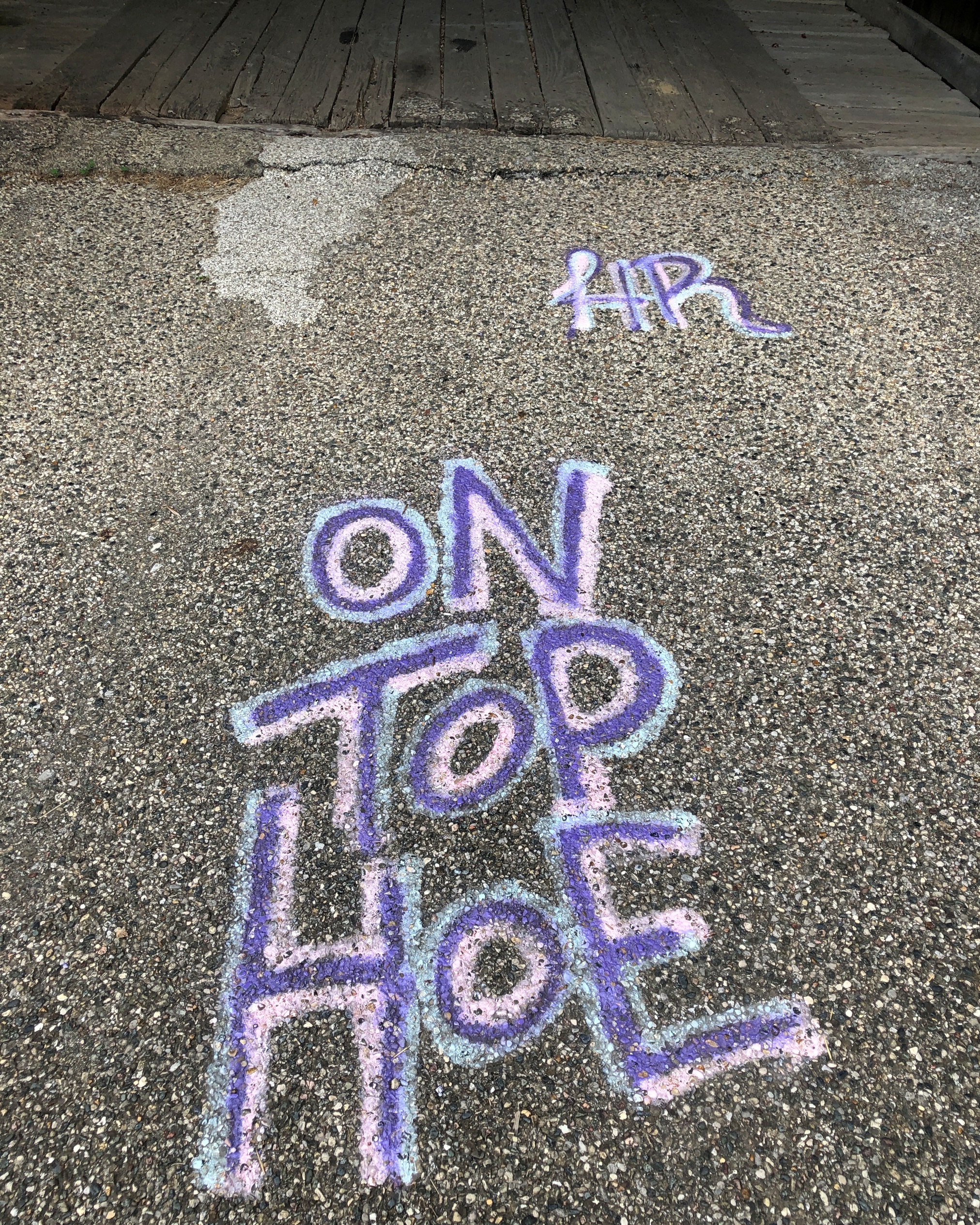
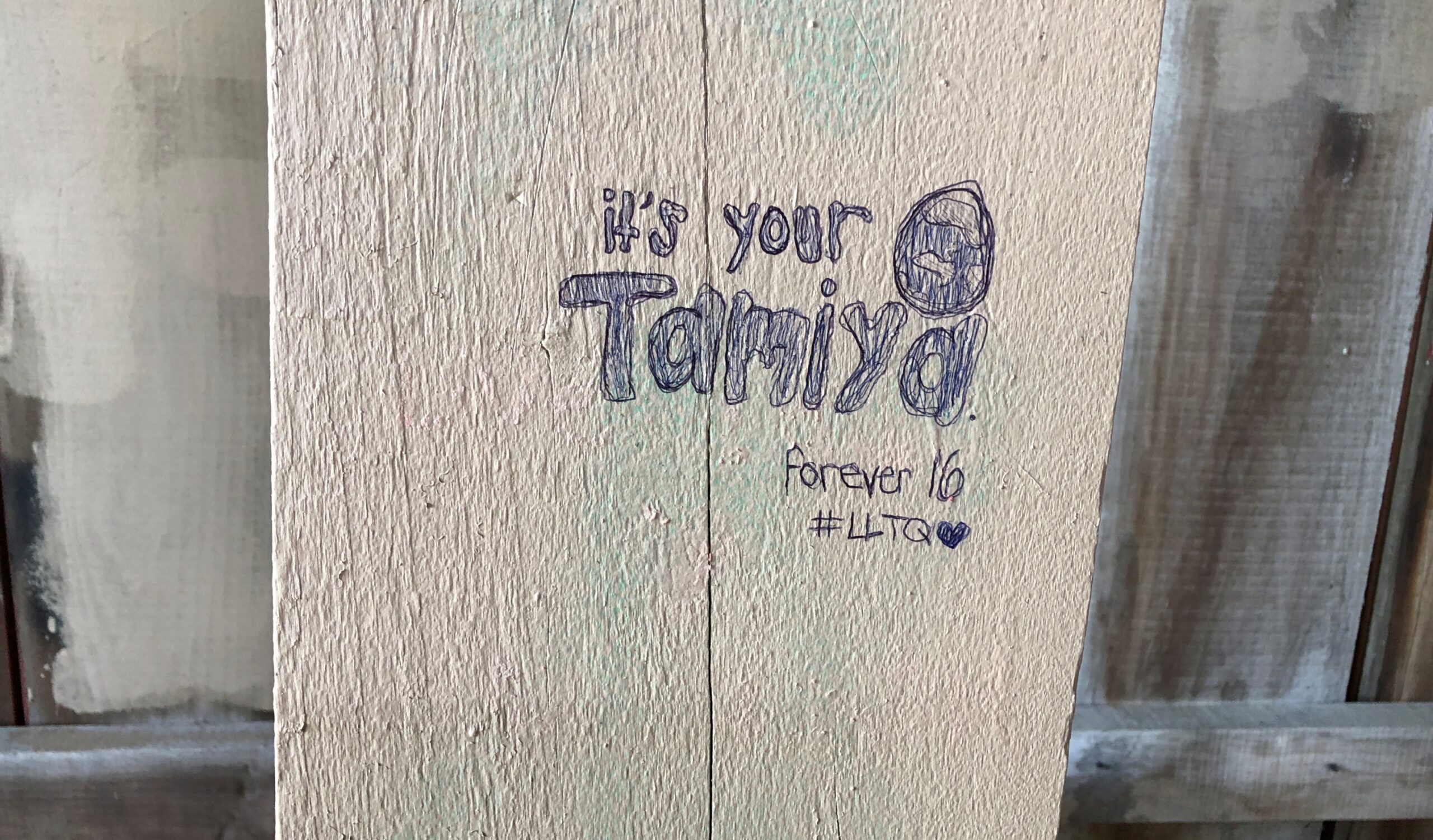
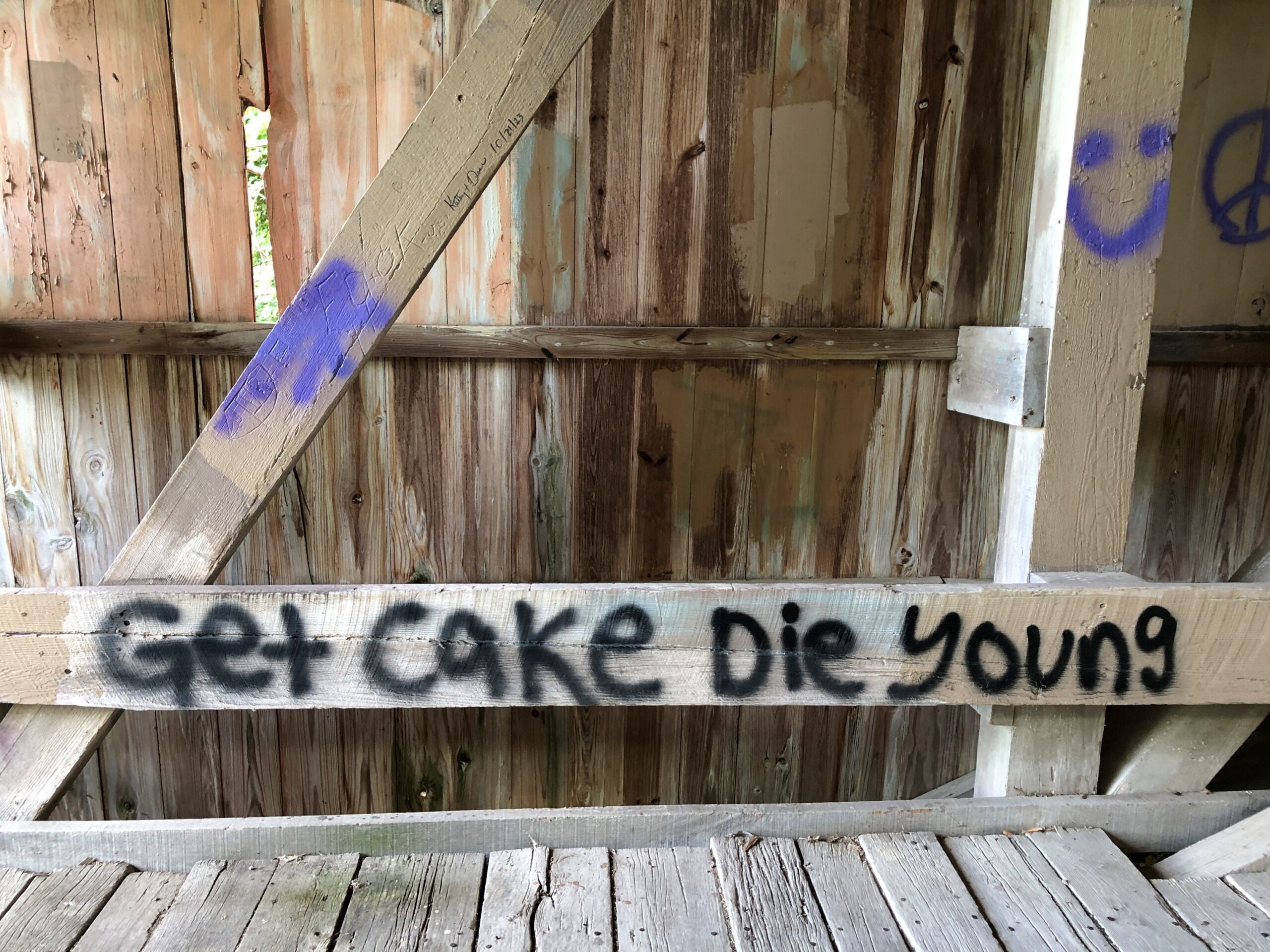
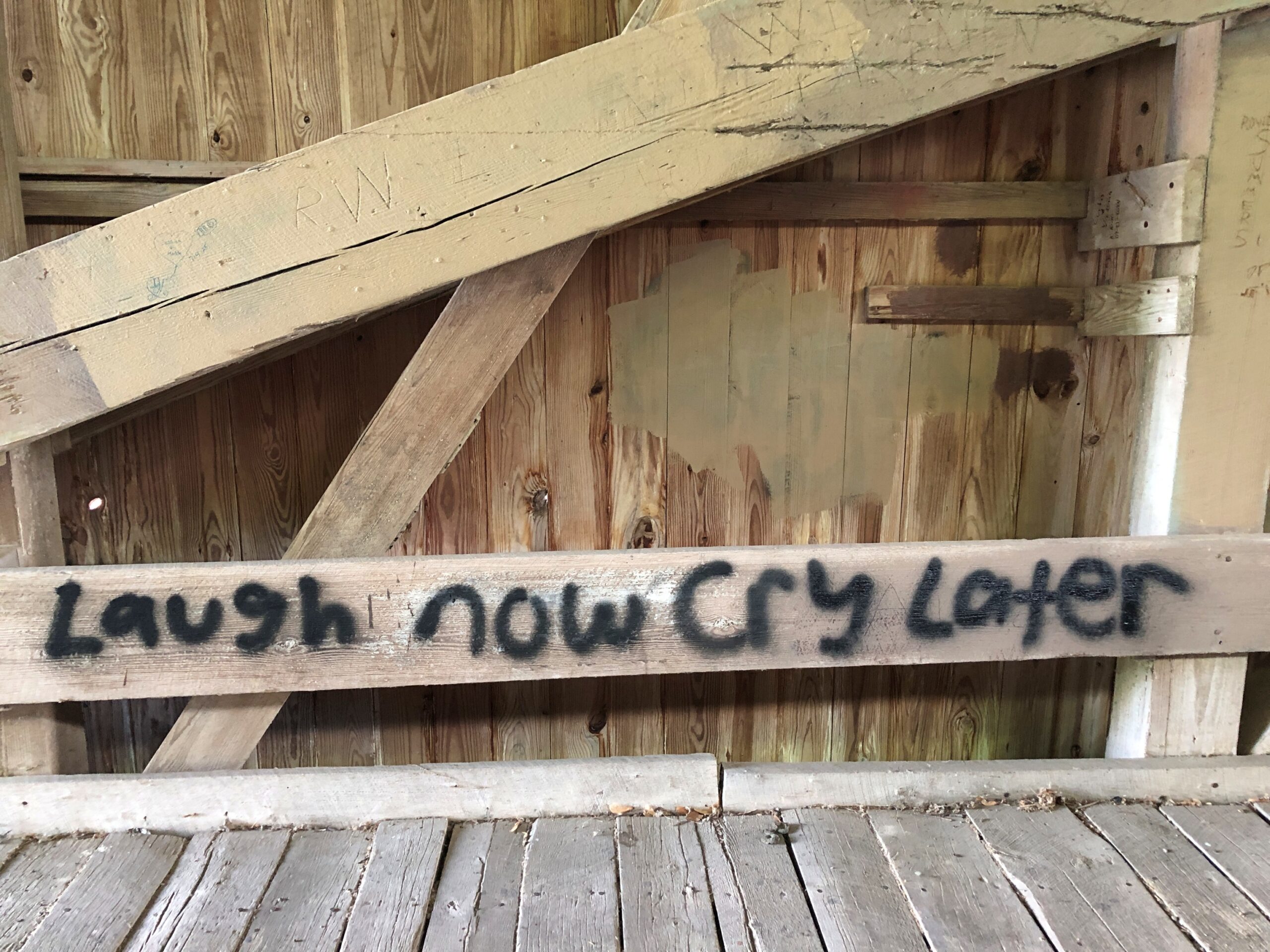
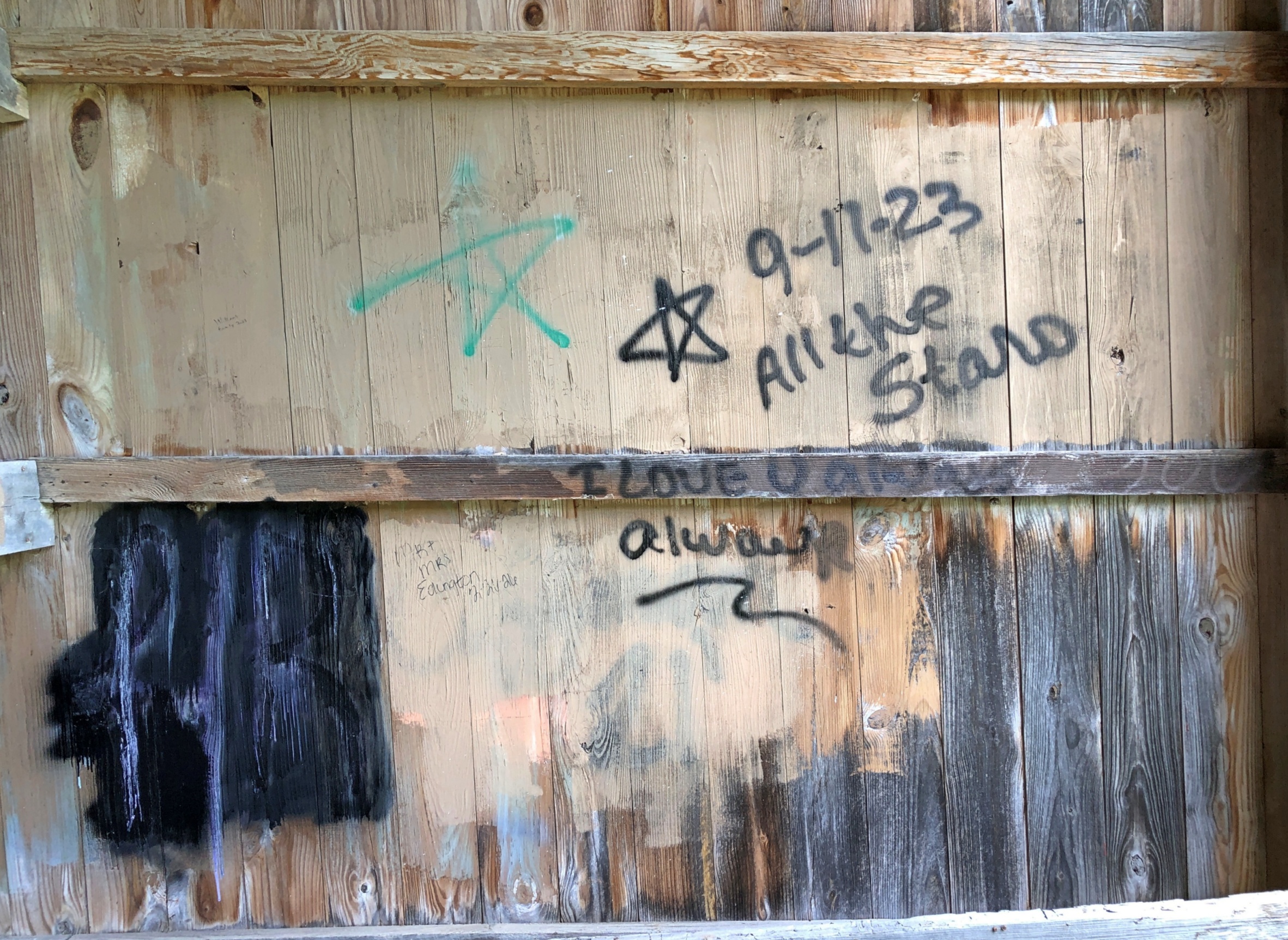
Also inside the bridges: graffiti, of course. The oldest extant covered bridge in Parke County reportedly dates from 1856. I imagine the oldest graffito – what would they use, chalk? – dates from ca. 1856.
The usual collection of declarations of love, puerile insults, political statements, enigmatic phrases and random nonsense.
And the whack-a-mole efforts to suppress it.
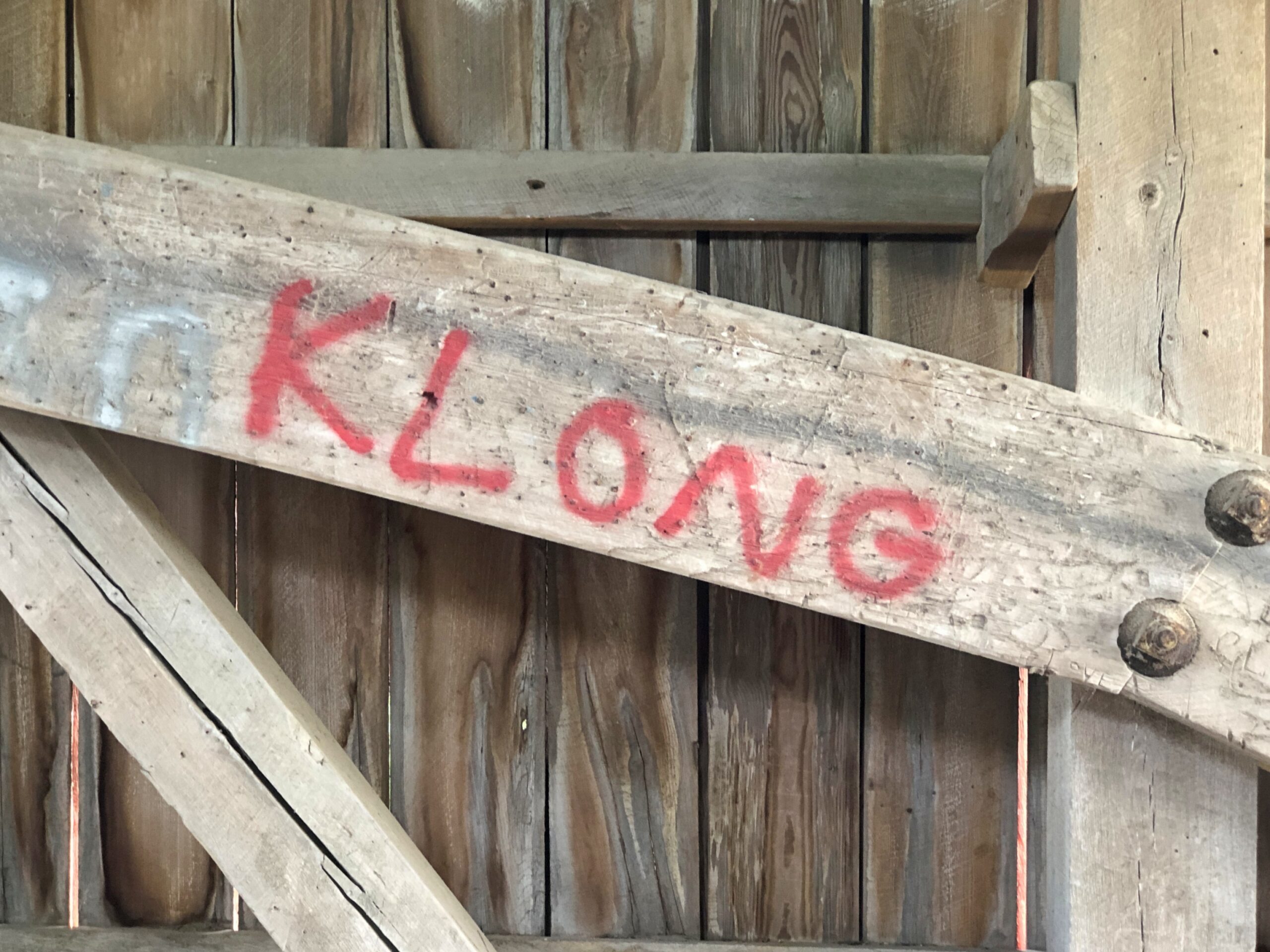
Klong. That’s my favorite from this round of graffiti spotting. An idiosyncratic item.
A dictionary meaning is canal in Thai. An alternate spelling of that, anyway. Or a Swedish homegoods retailer – reminds me of Ikea, but clearly more upmarket. Hard to know the mind of a graffitist, but I’ll bet it’s neither of those.
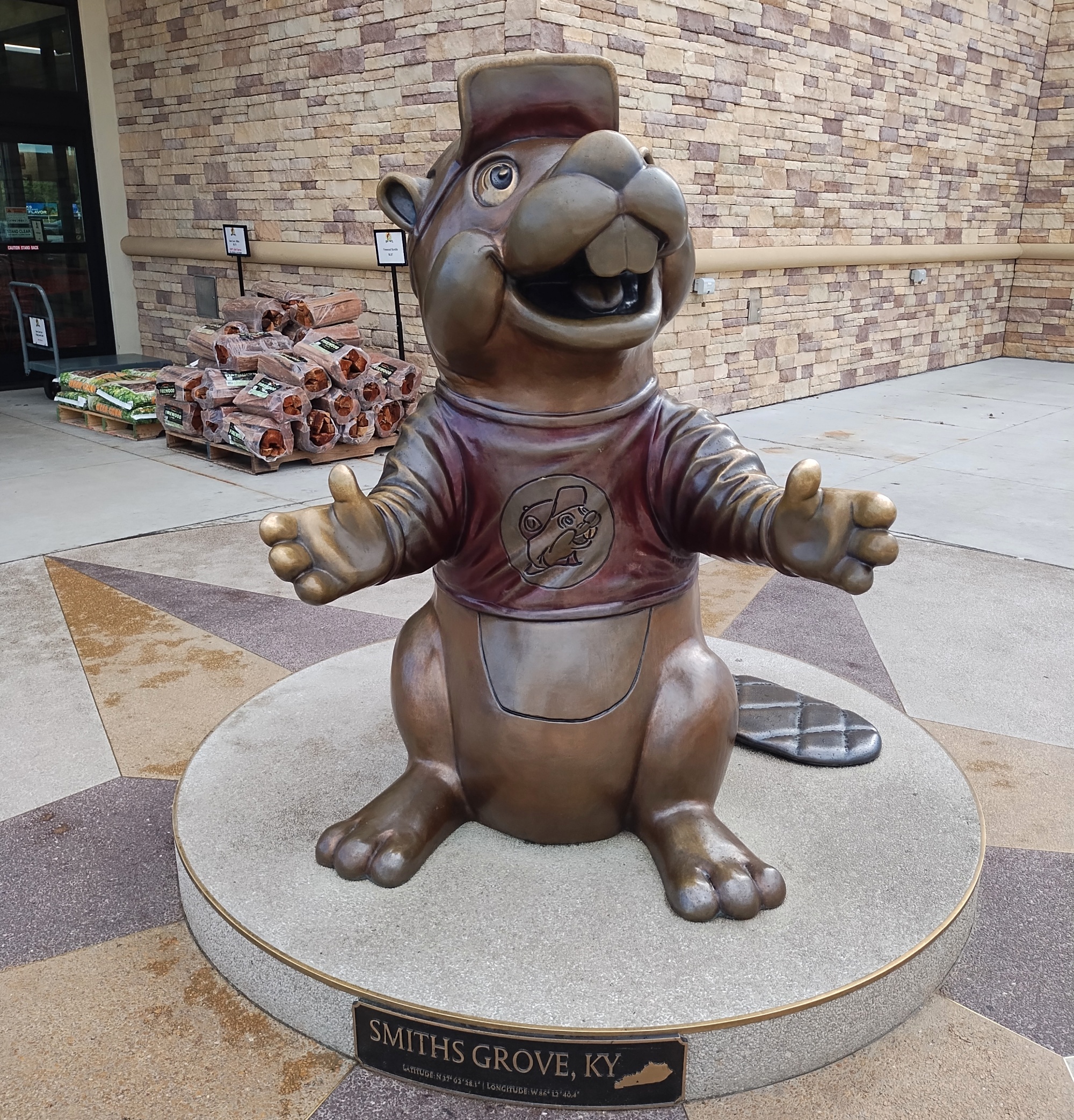
The Buc-ee’s imperium marches on. On my way to Tennessee that first day, I stopped at the location near Smiths Grove, Kentucky, to visit its gleaming facilities. Business was reasonably brisk that Monday, but nothing like the bedlam on the Sunday, nearly two weeks later (on the trip’s last day), when I stopped on the way back home at the same place, for the same reason.
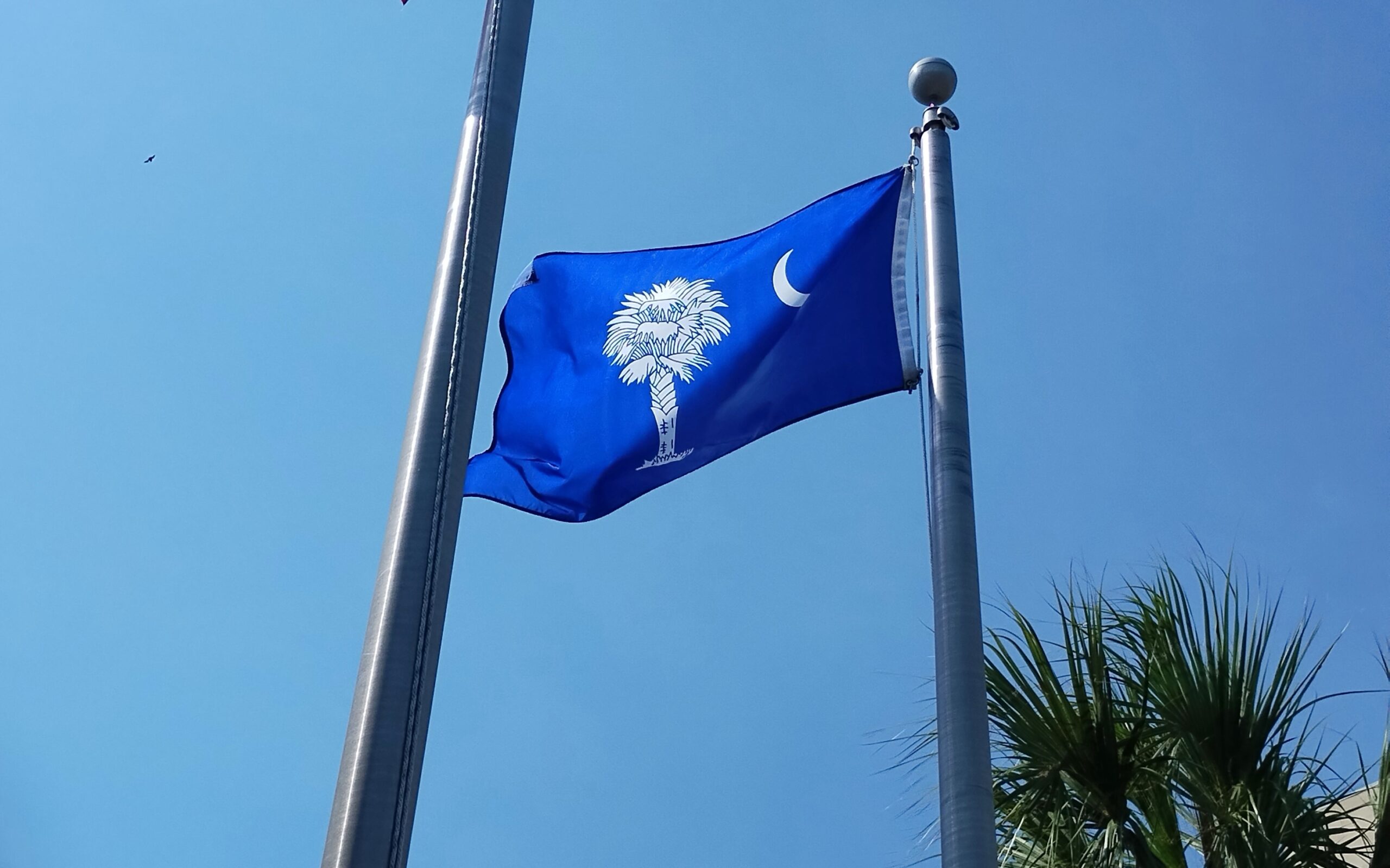
South Carolina
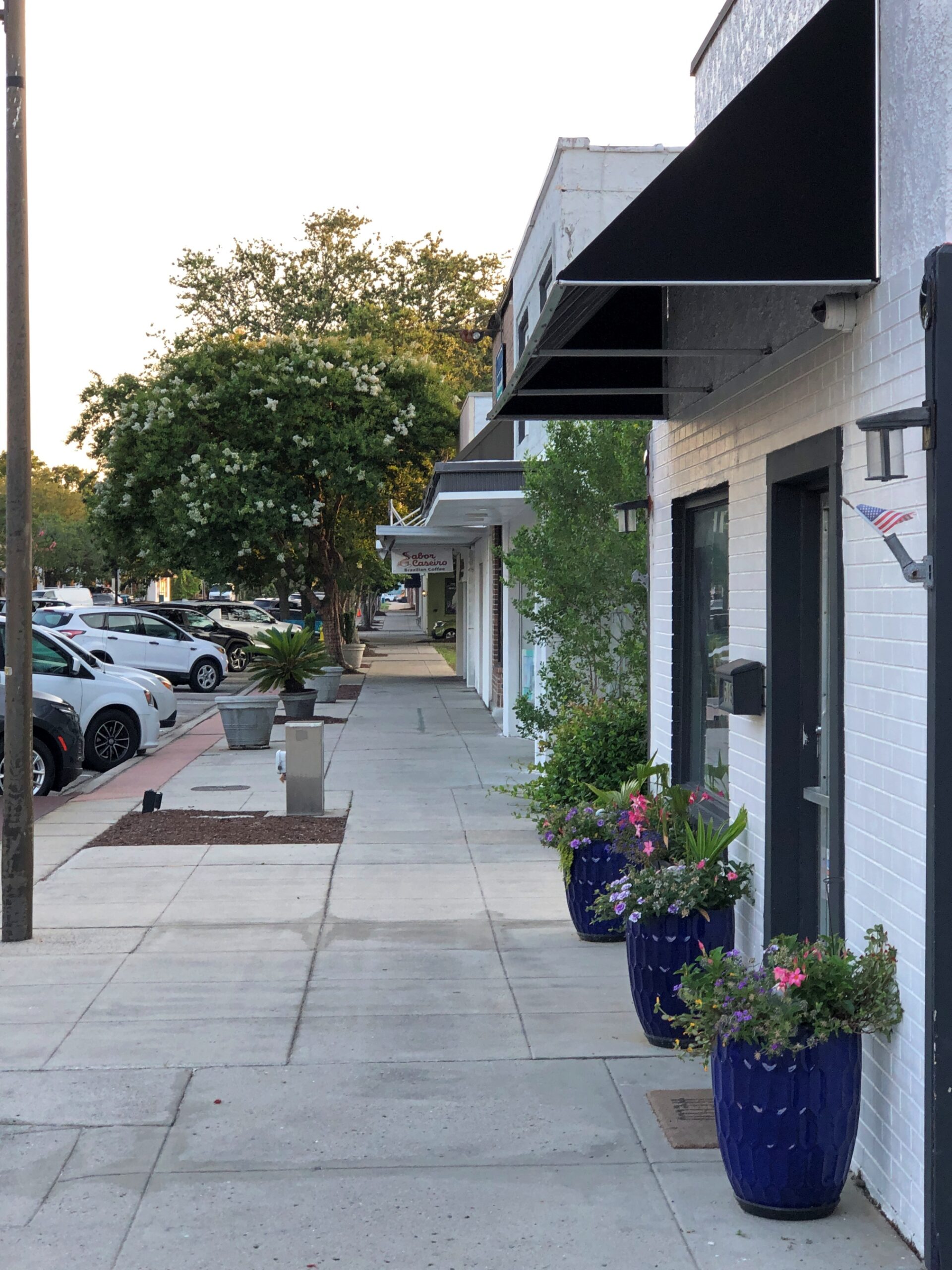
Had a pleasant walk down a non-tourist street on a Sunday in Myrtle Beach. Not a lot going on. The late afternoon light had a nice glow.
Myrtle Beach International Airport used to be Myrtle Beach Air Force Base, which began as Myrtle Beach General Bombing and Gunnery Range in 1942 for use by the U.S. Army Air Corps. It closed in 1993.
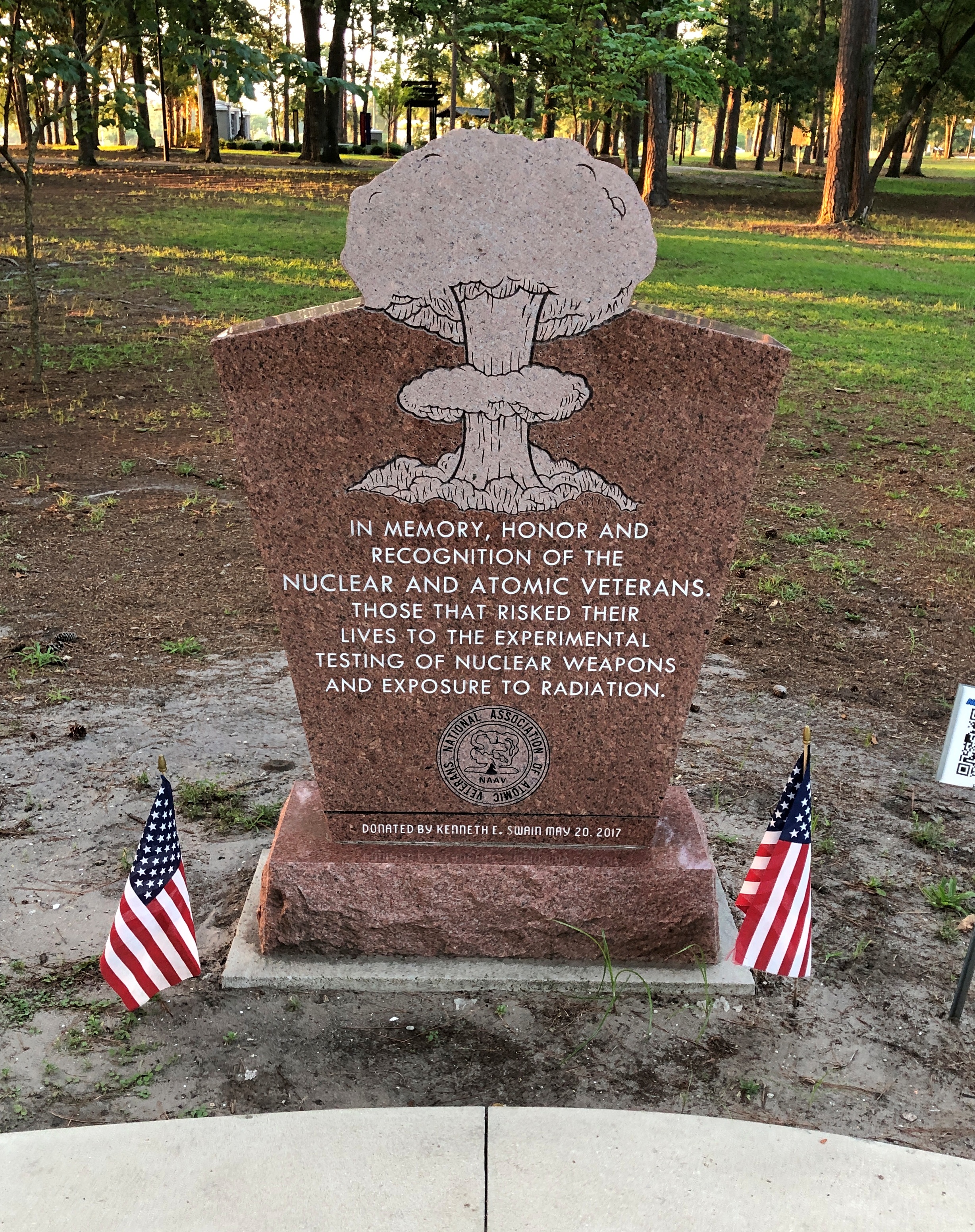
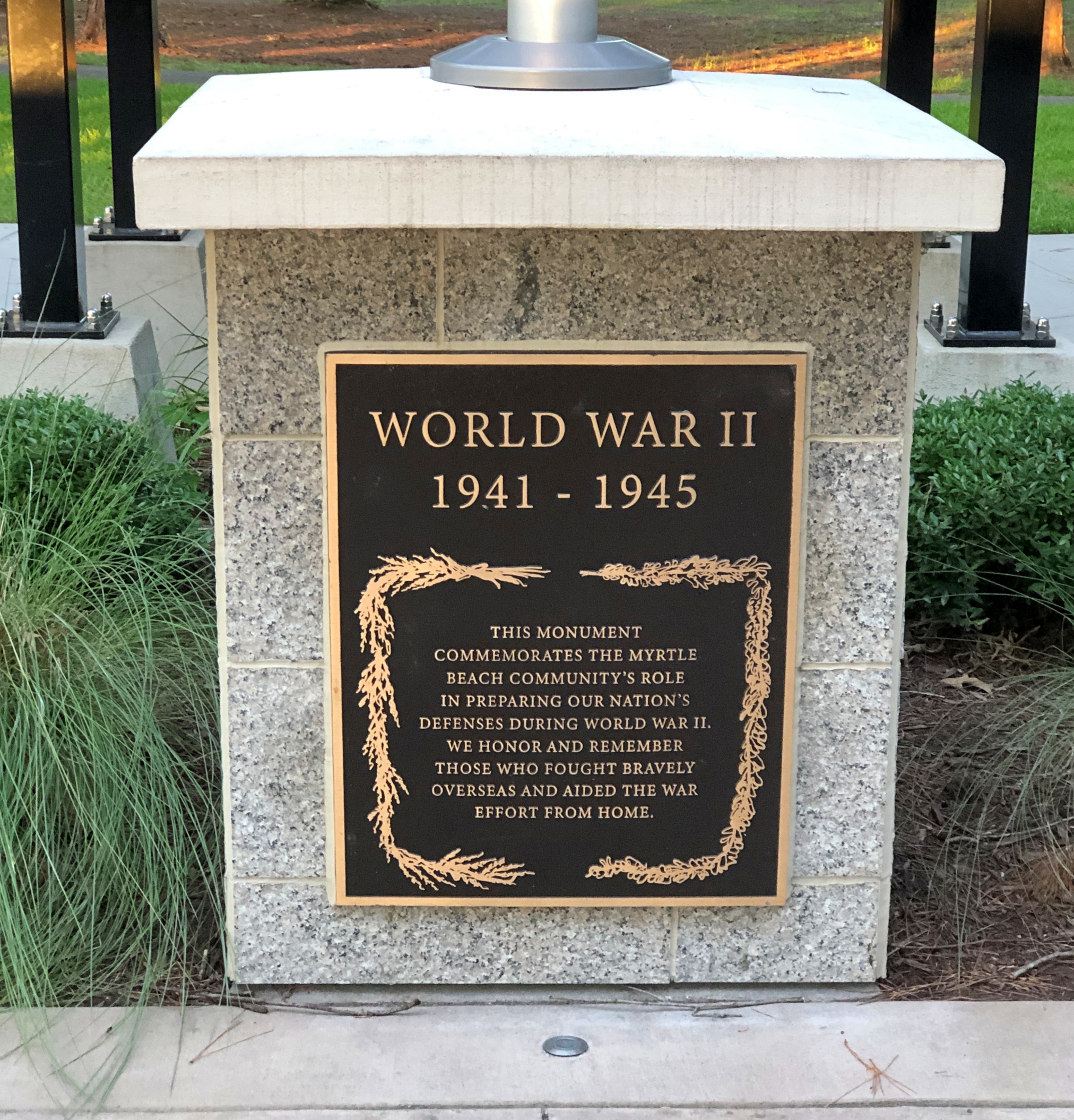
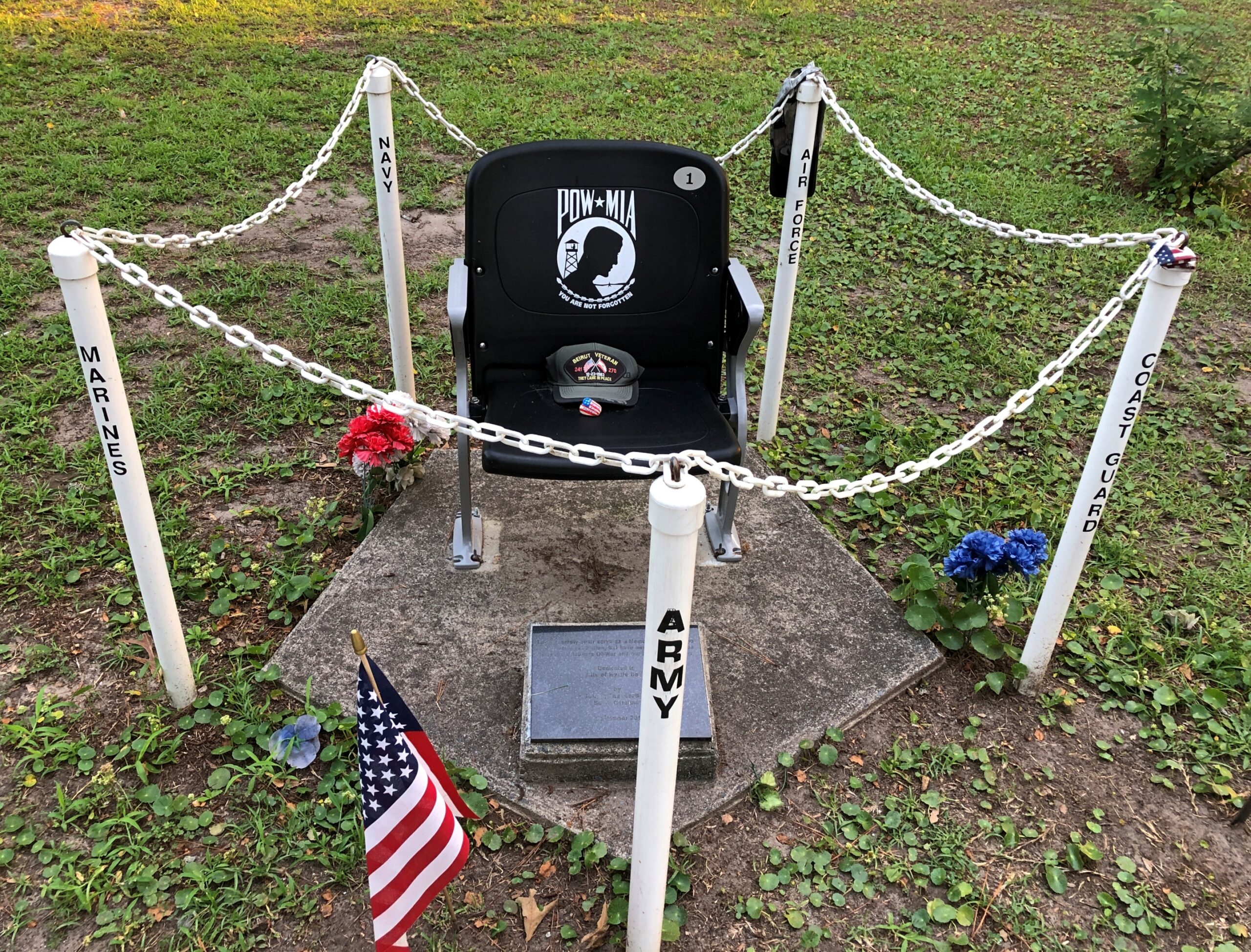
One legacy of the base is a cluster of military memorials near the perimeter of the airport – at a place called Warbird Park, which is fully accessible to casual visitors – that includes something you don’t see all the time.
It is one memorial among many.
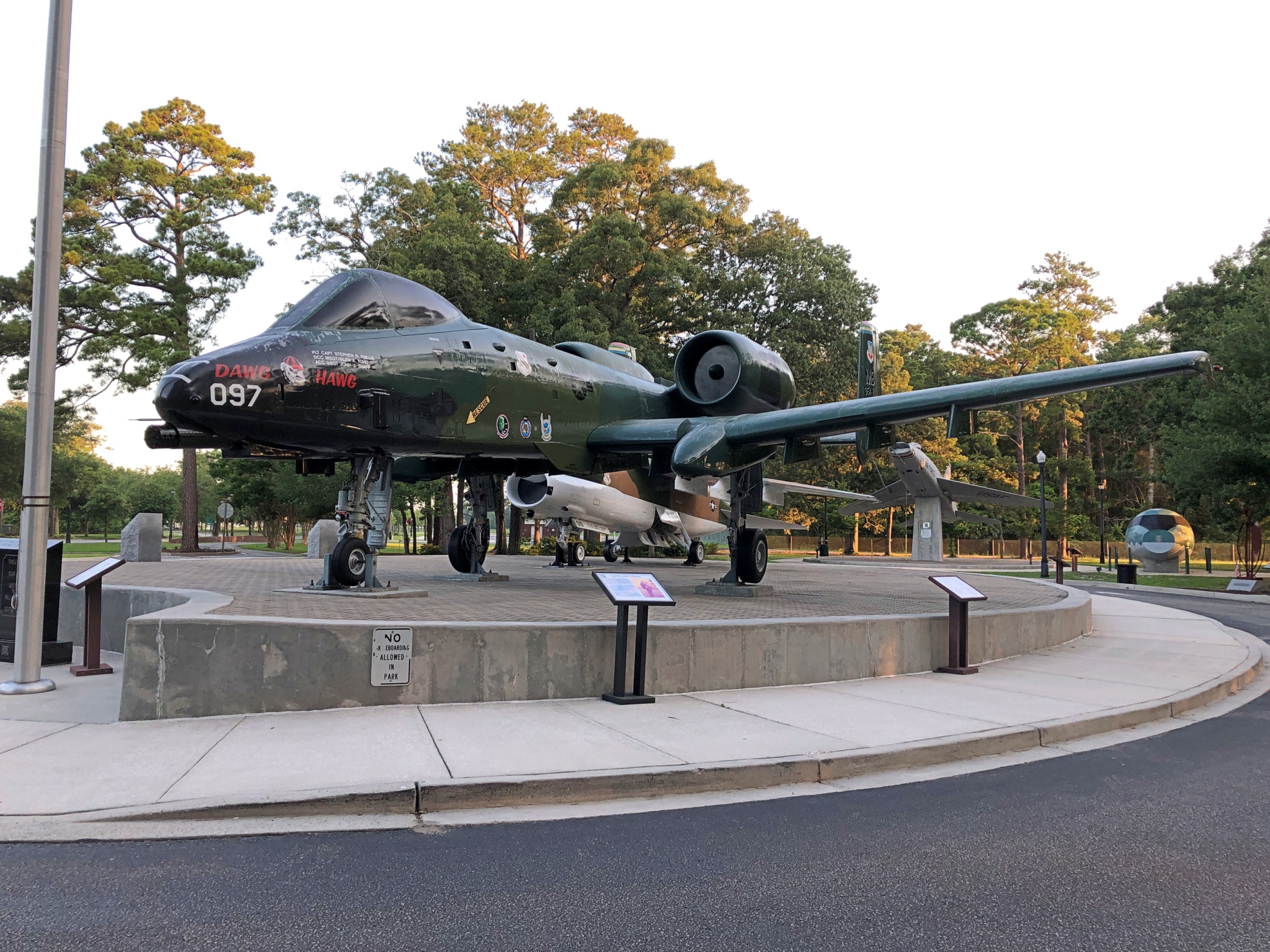
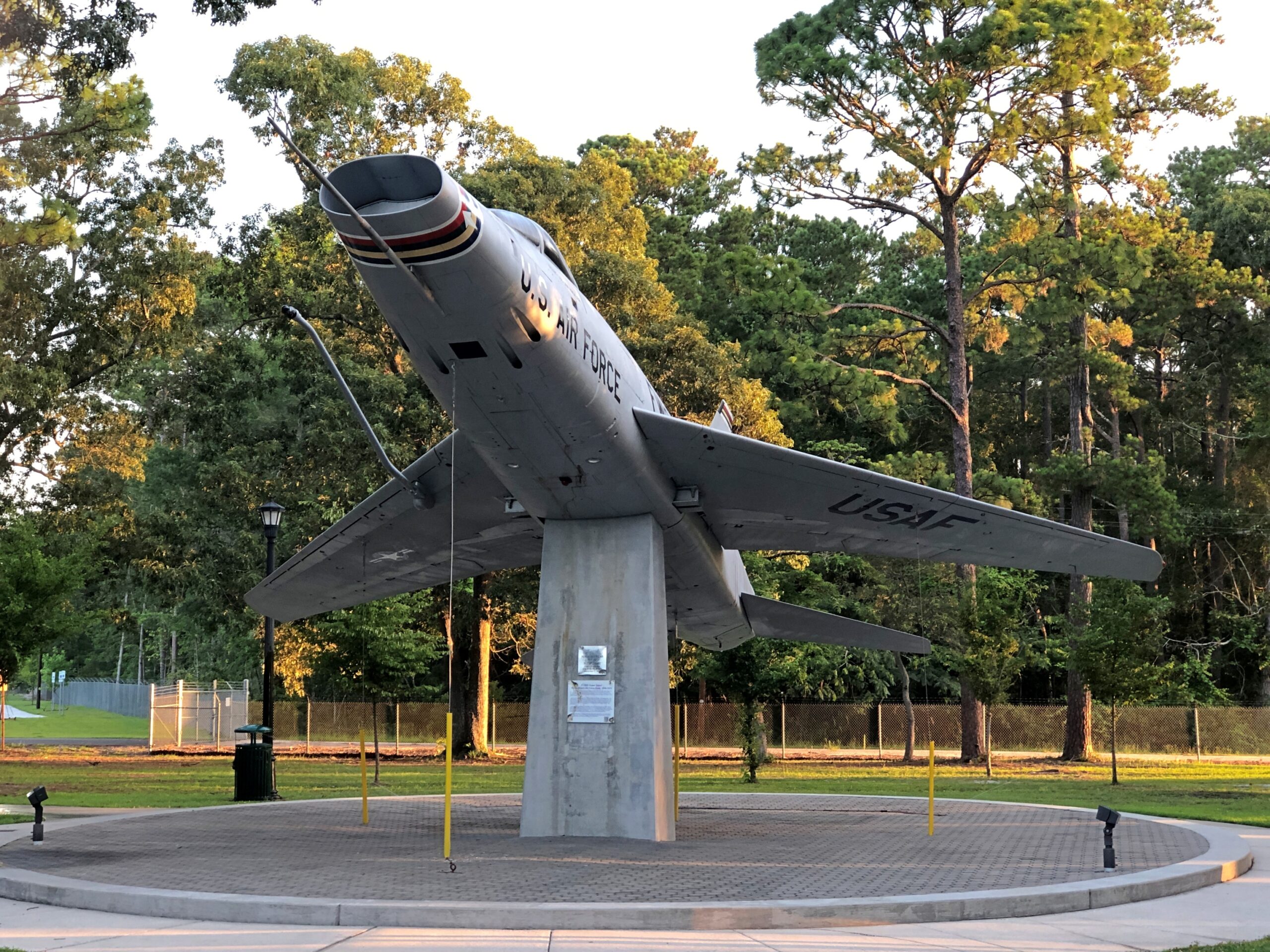
As well as some of the aircraft that used the air base.
Found at a MB beach shop among the clothes and beach equipment. Nothing says Myrtle Beach better than skulls, no?
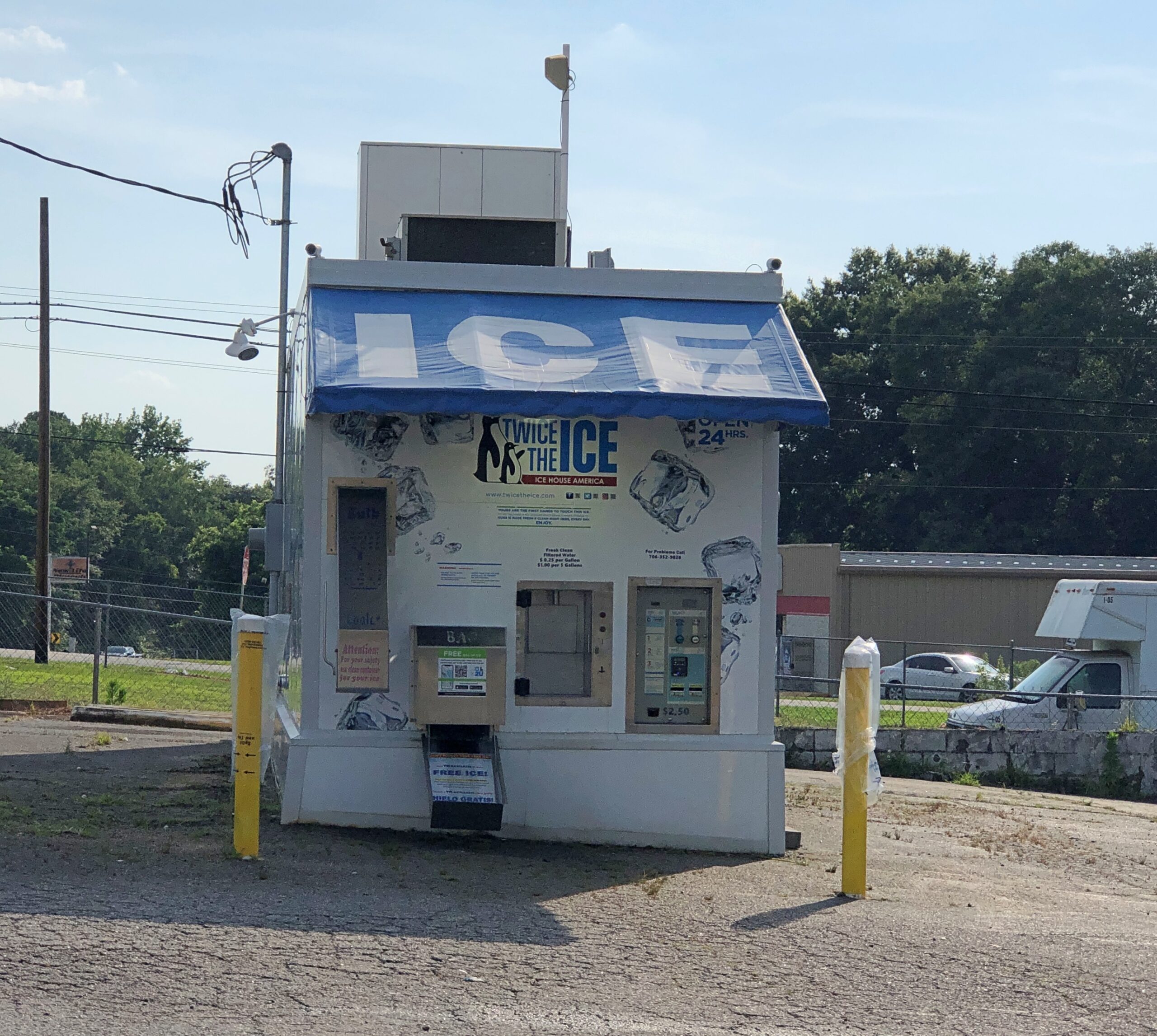
An automated, Fotomat-style ice store in north Georgia. They’re not as common up north, with the closest of this brand to me (I checked) in Aurora, Illinois.
Twice the Ice is the brand name. Quick facts: there are about 3,300 Twice the Ice locations so far in the United States and elsewhere – water and ice “vending machines,” according to one page on the company web site. Another page on the same site puts it at over 4,000 locations, which just means part of the site isn’t being updated. Whatever the exact number, there are a lot, and most if not all are franchised, representing about 1,000 franchisees.
It’s automation we call all get behind. I don’t think the machines are putting ice handlers and baggers at local gas stations and grocery stores out of work, since who holds that specific job?
So far as I know, “Ice is Civilization” is not the company motto. But it could be. It was said with such conviction by Allie Fox in The Mosquito Coast.
Of course, by the end of the book and movie both, he was howl-at-the-moon mad. So maybe some other slogan. Then again, that line is one of the few things – besides the fact that Allie Fox goes nuts chasing Utopia – that I remember from either the book or the movie after about 35 years. So it’s pretty memorable.
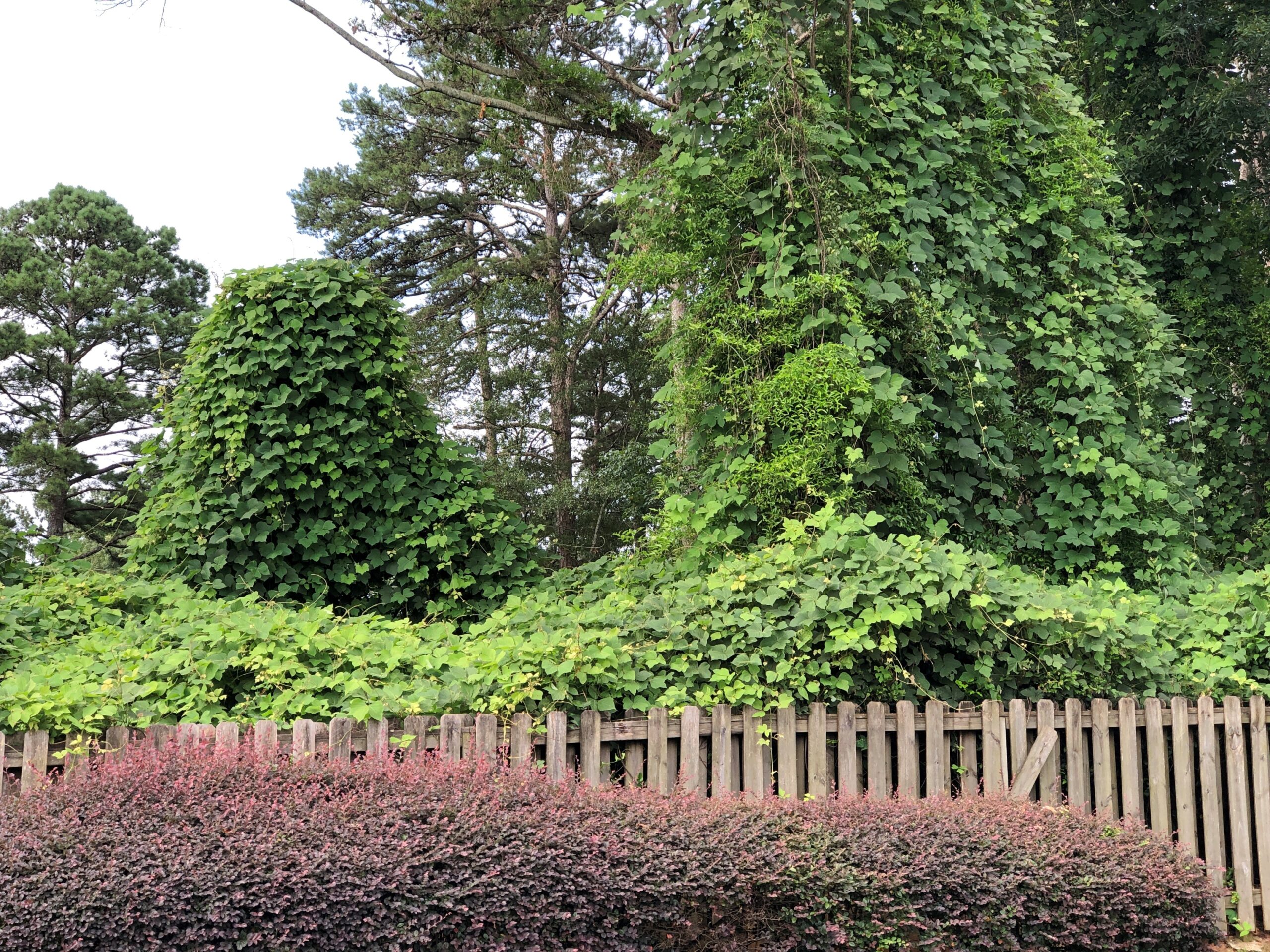
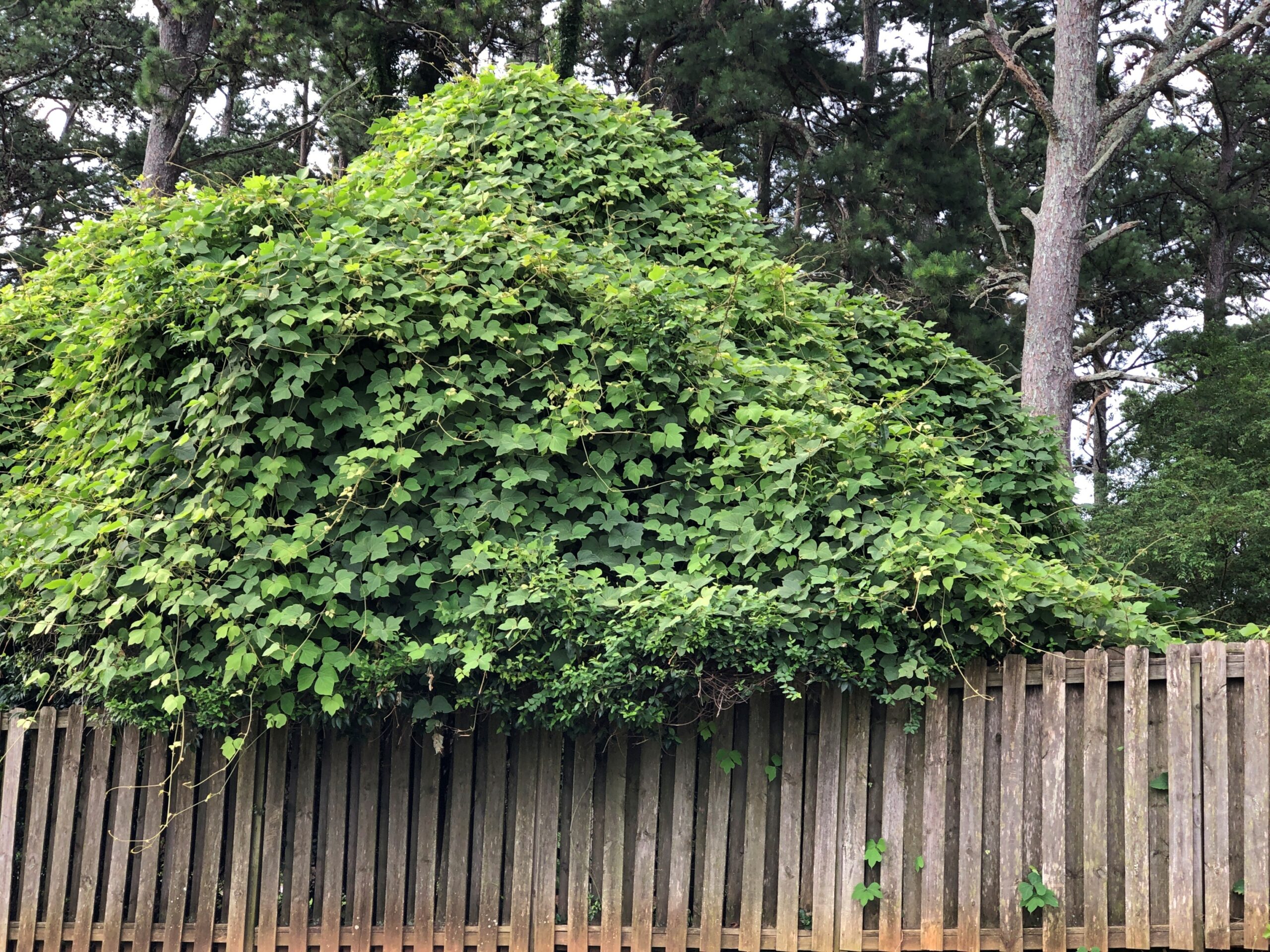
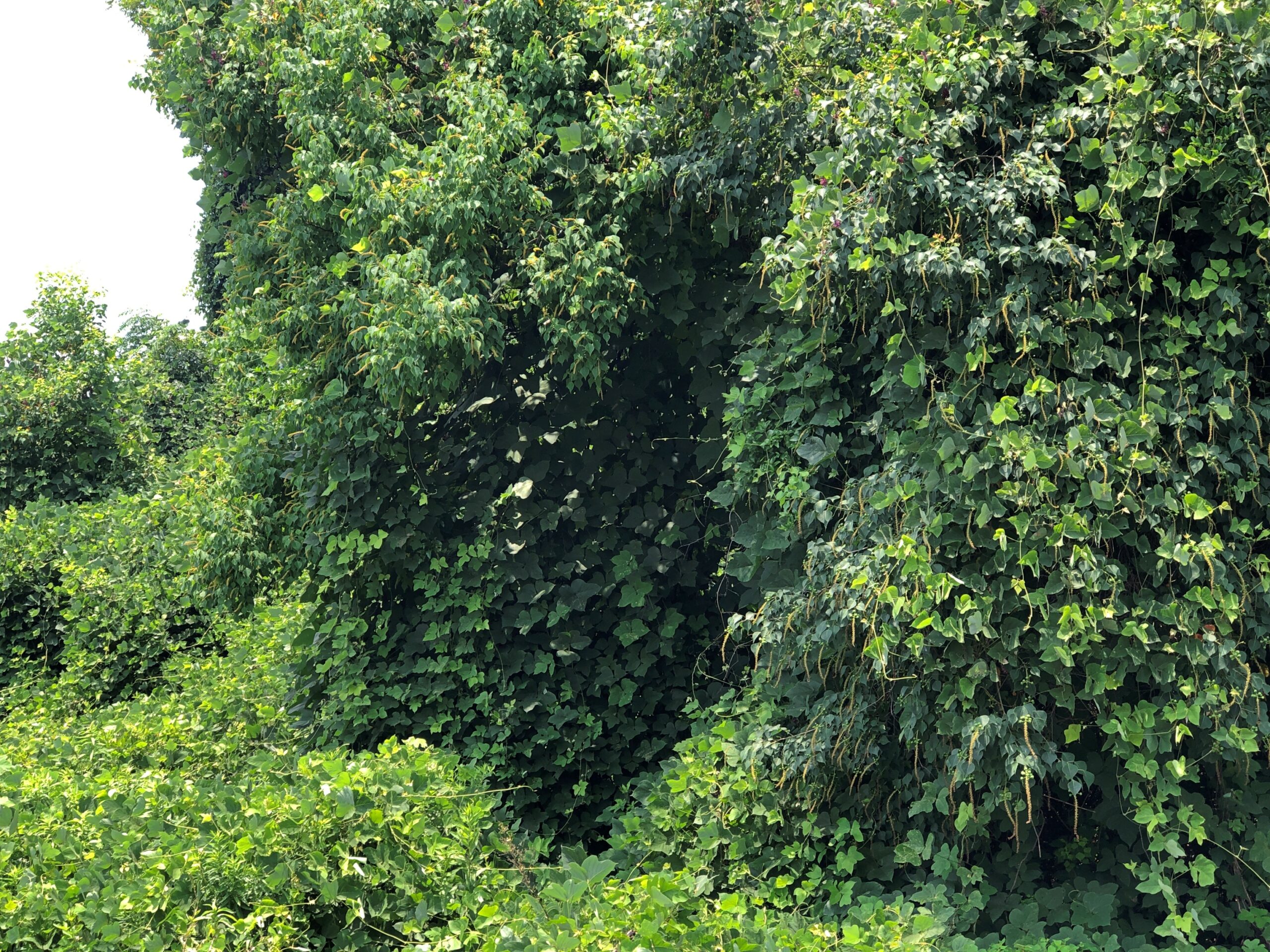
After gassing up at a station in north Georgia, I parked away from the pumps near the edge of the property to fiddle with my phone for a few minutes. Just outside the car window, kudzu lurked.
Which got closer.
And closer. Man, it grows fast.
Not really, but I did see all that kudzu at the edge of the gas station property. Kudzu. Who hasn’t seen the walls of it down South?
“In news media and scientific accounts and on some government websites, kudzu is typically said to cover seven million to nine million acres across the United States,” Smithsonian magazine reported in 2015. “But scientists reassessing kudzu’s spread have found that it’s nothing like that. In the latest careful sampling, the U.S. Forest Service reports that kudzu occupies, to some degree, about 227,000 acres of forestland, an area about the size of a small county and about one-sixth the size of Atlanta.
“That’s about one-tenth of 1 percent of the South’s 200 million acres of forest. By way of comparison, the same report estimates that Asian privet had invaded some 3.2 million acres — 14 times kudzu’s territory. Invasive roses had covered more than three times as much forestland as kudzu.”
Yet kudzu is regarded as a particularly intractable invasive species. How is that? It grows well in highly visible places. Such as next to a gas station parking lot. Smithsonian notes: “Those roadside plantings — isolated from grazing, impractical to manage, their shoots shimmying up the trunks of second-growth trees — looked like monsters.”
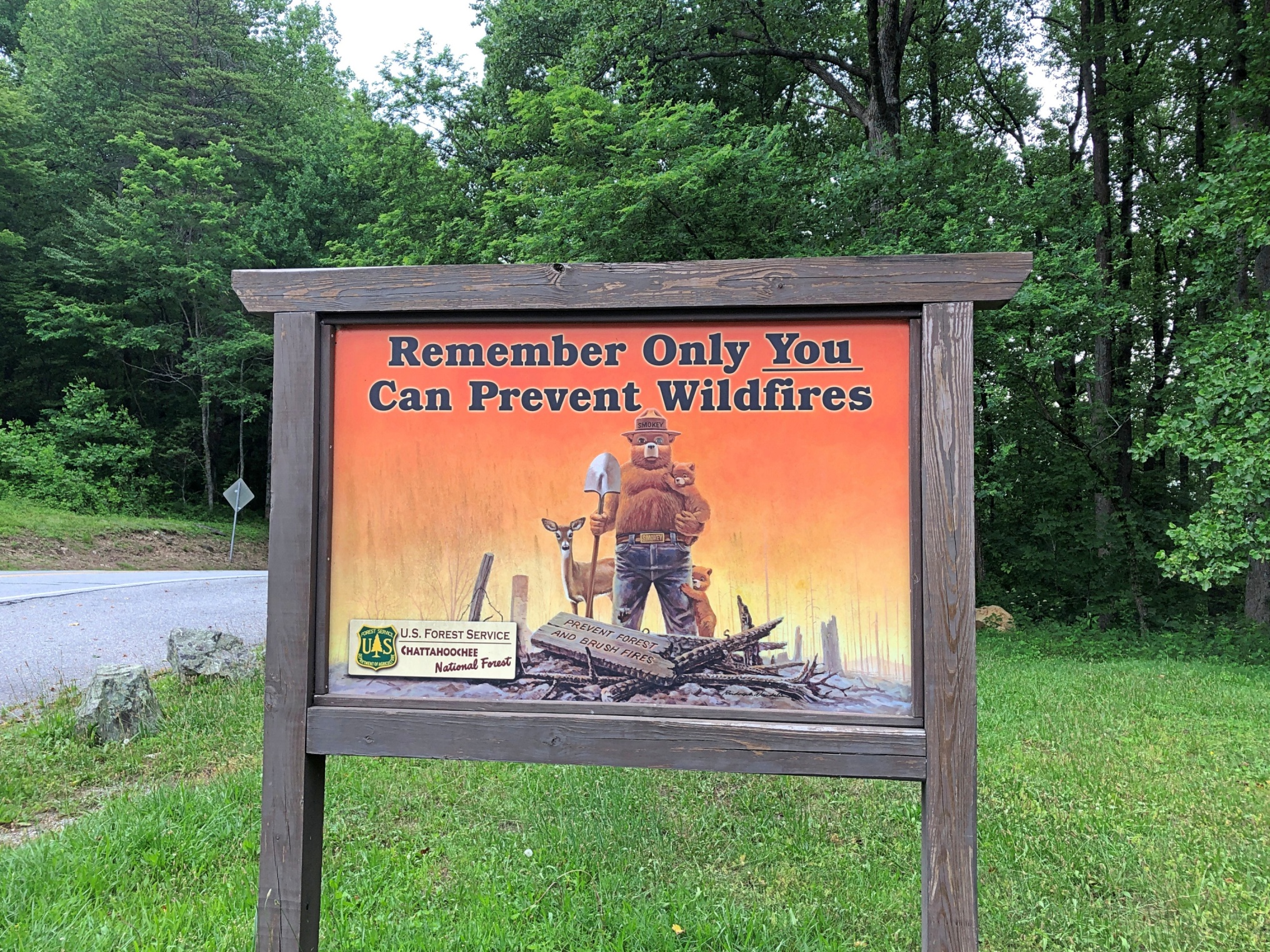
Along Georgia 60 in Chattahoochee NF, Smokey Bear is still at his job.
One thing leads to another online, and Smokey eventually lead me to “Smokey the Bear Sutra.” Only takes a few minutes to read, and it’s a trip. Just like the song “Elvis is Everywhere,” there’s a founding document of a religion in the distant future, one that asserts that humans should never have given up worshiping bears.
Had a bizarre dream last night, which isn’t really unusual, since that’s the way of dreams often enough – but this one – let’s call it rich and strange. And lengthy. It kept going and going, involving an alt version of downtown Chicago, and alt version of the company I worked for in the late 1980s, though no one that I knew was there; a vaguely menacing, nighttime scene always, though it wasn’t a nightmare; a message that had to be relayed, somehow; a fictional character – a very famous fictional character – spoken of as if real, who eventually showed up after a funeral, laughing; and details that made me think, that’s too much of a detail. For a dream. Is this a dream? One detail involved a chipmunk peaking out of a hole in the sidewalk, or maybe the street; another was a globe that I could see but not get close enough to read well, though I really wanted to. But I did notice that the United States, on this globe, included British Columbia and maybe the Yukon Territory, and I woke up thinking that maybe that 54° 40′ or Fight business led to a real war, in which the U.S. prevailed.
Perhaps the strangest thing about this rich and strange dream is that fully an hour and a half after I woke on this bright summer morning in the northwest suburbs, in the waking world I know and inhabit, I was able to write the above description.
Tennessee
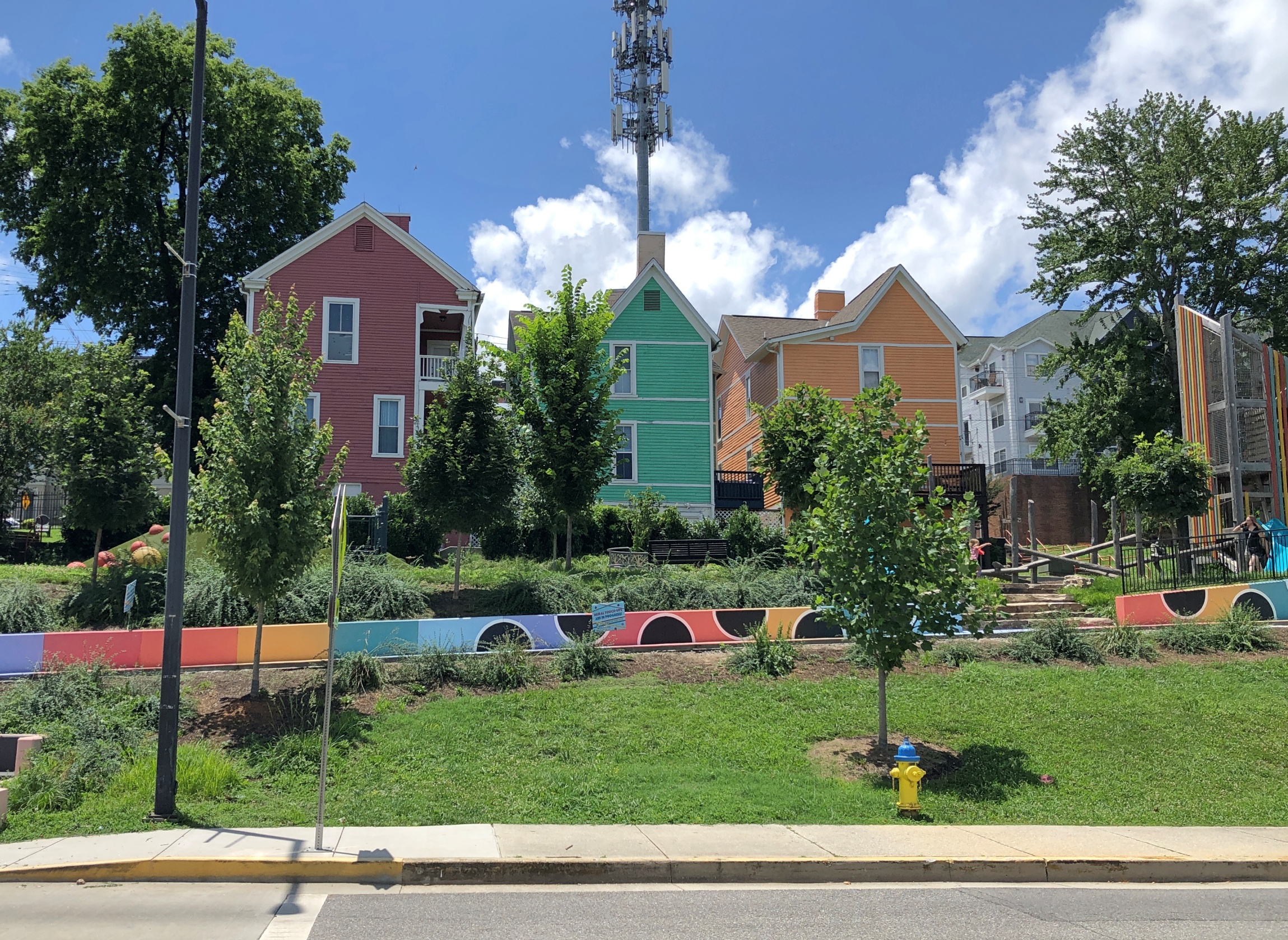
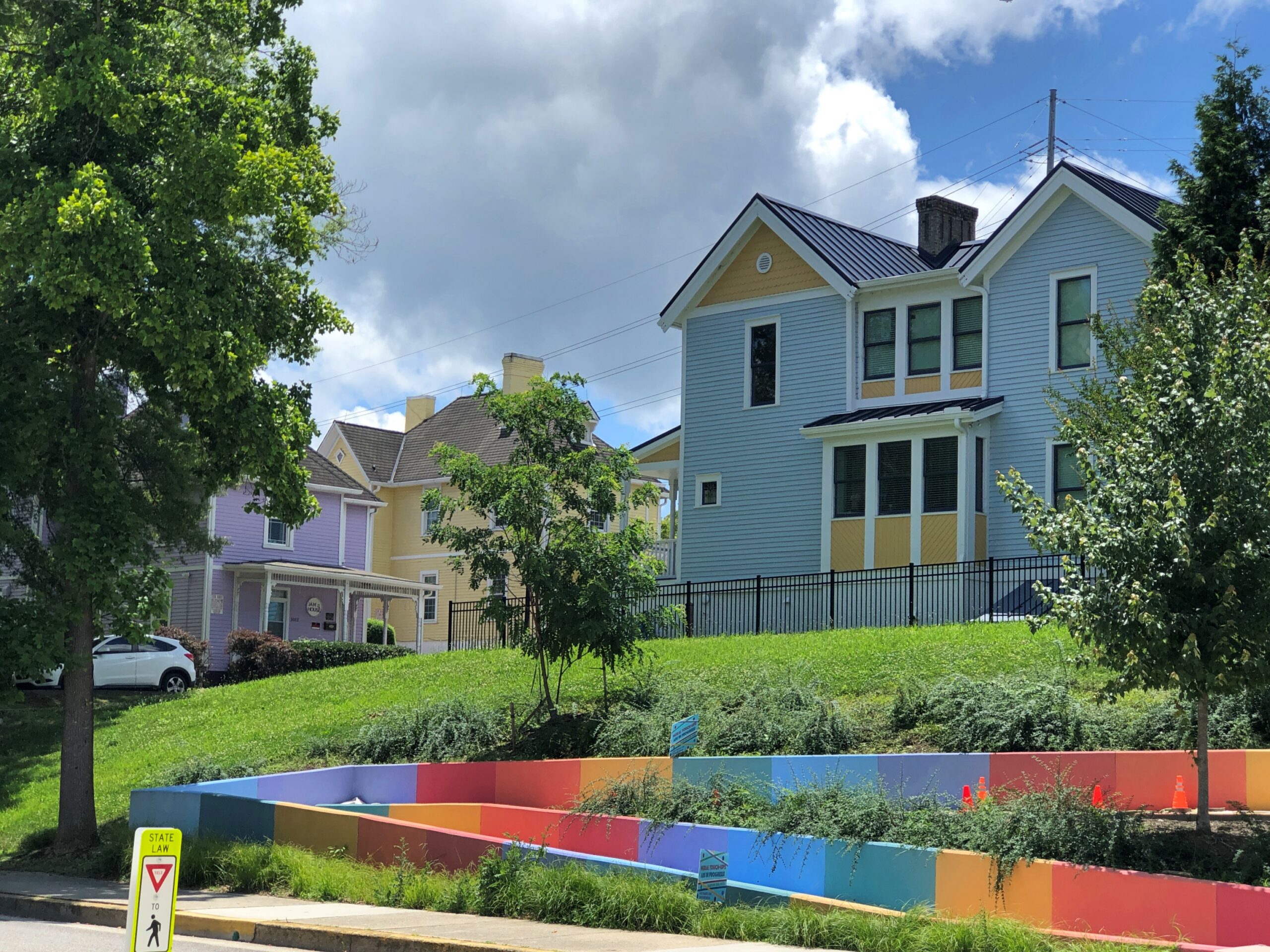
When passing eastward through Tennessee during my most recent interstate drive, I spent a little time in Knoxville, as mentioned, mostly to see the Sunsphere. To get to the tower from the free parking lot, I walked along part of World’s Fair Park Dr., with these colorful pastel houses visible on a small rise nearby. I was reminded of Rainbow Row in Charleston.
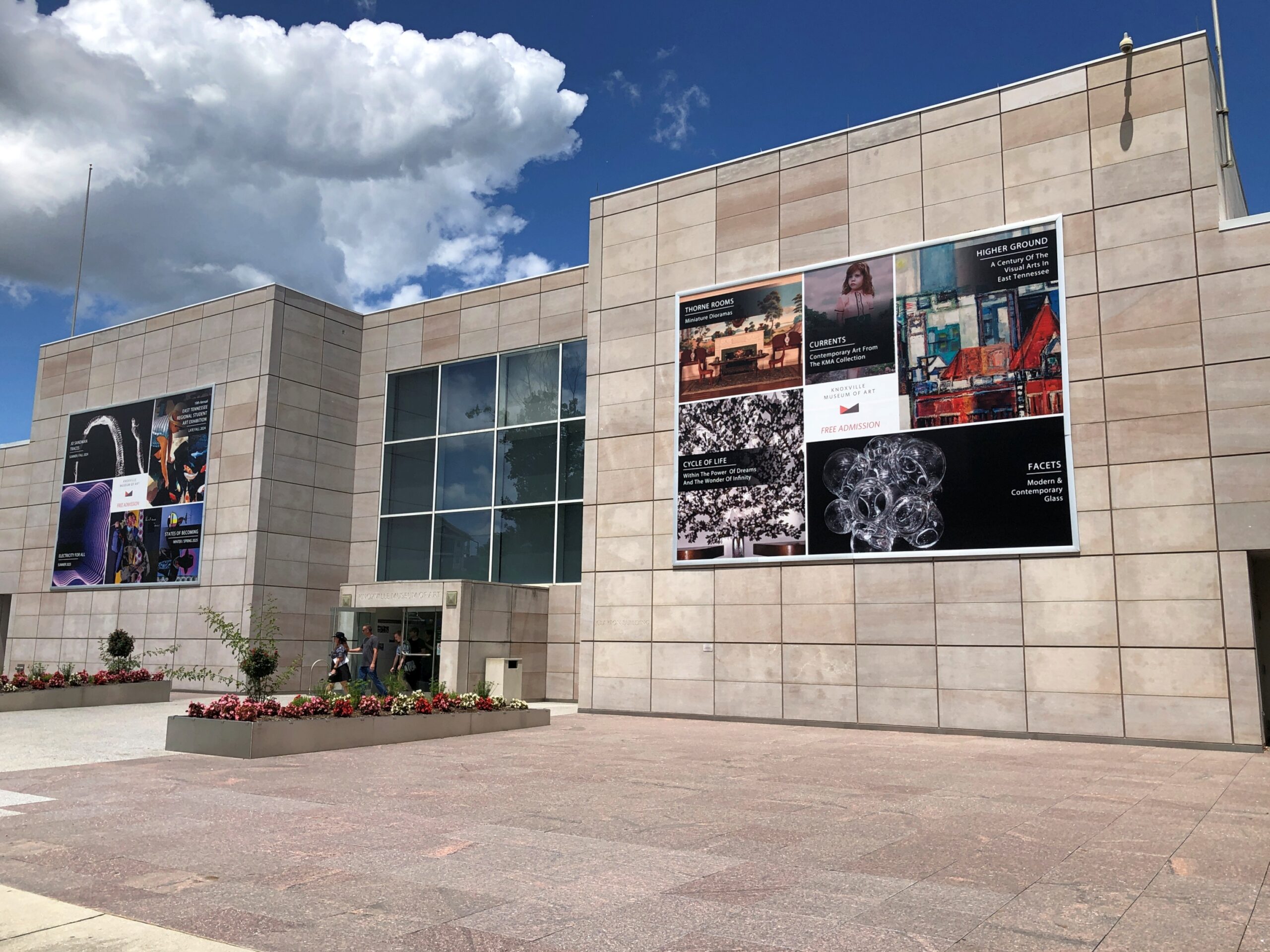
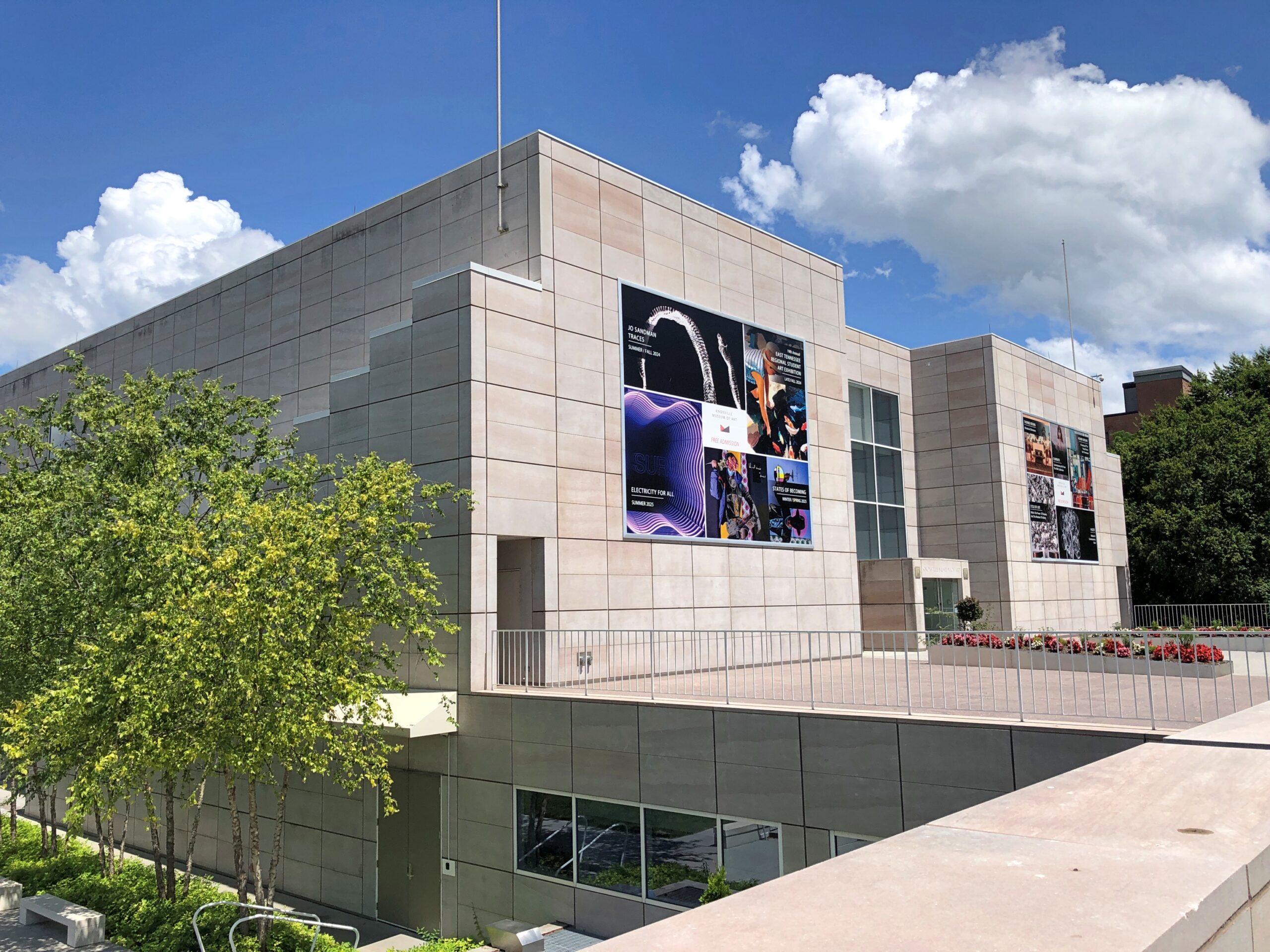
On the way back, I popped into the Knoxville Museum of Art.
For a brutalist building, a nice bit of work by Edward Larrabee Barnes (d. 2004). If it blackens and streaks in the future, as such buildings tend to do when exposed to urban air, its appearance might morph into something merely ugly. But it looks like it’s been kept clean enough since its construction in 1990. As a museum, KMA has a lot to recommend it, such as air conditioning, free admission and a not-too-vast collection specializing in something you aren’t going to see elsewhere, namely East Tennessee art.
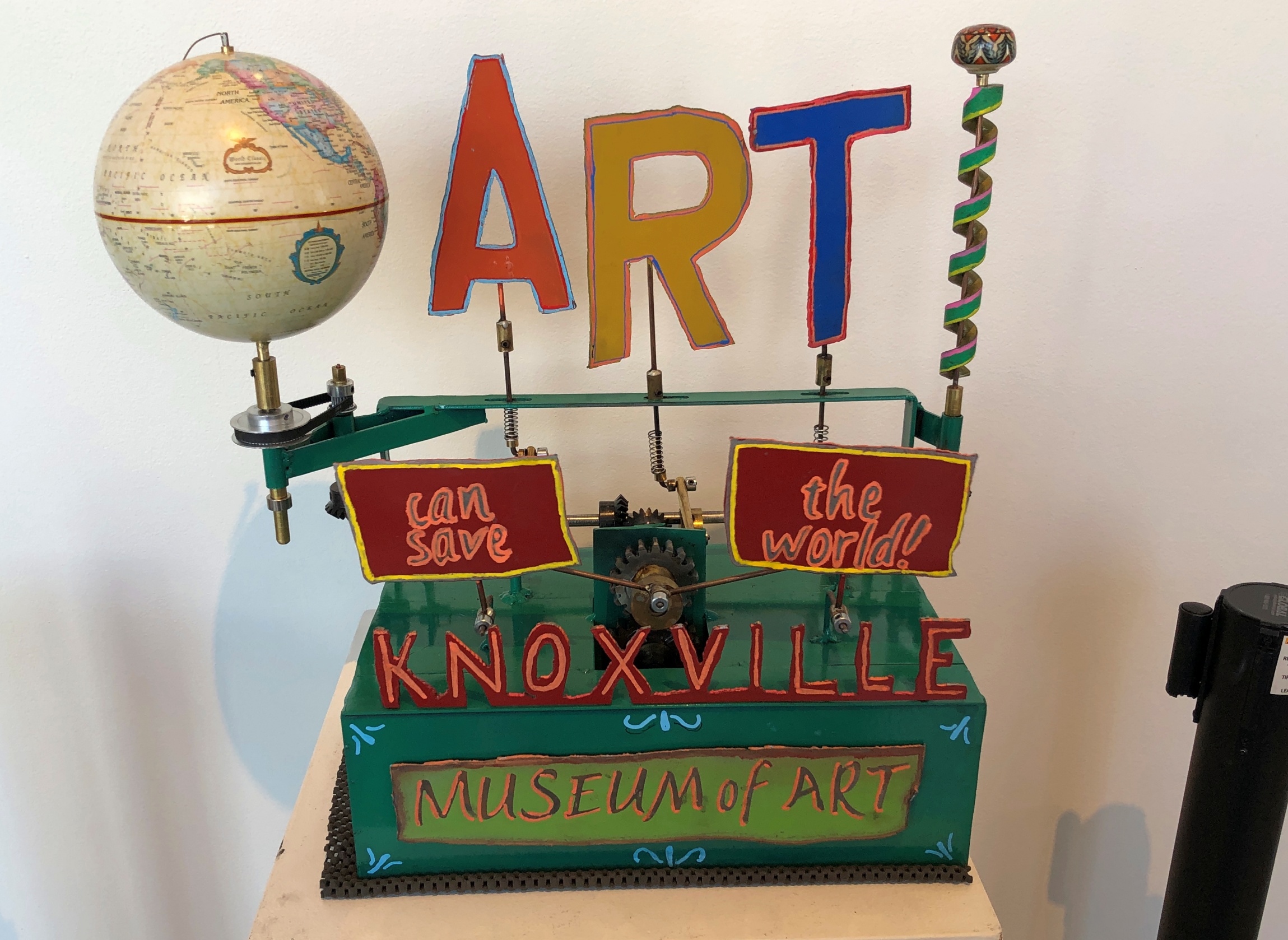
Such as a piece by artist Patrick Deason. Ah, the optimism. Unless he’s being sarcastic.
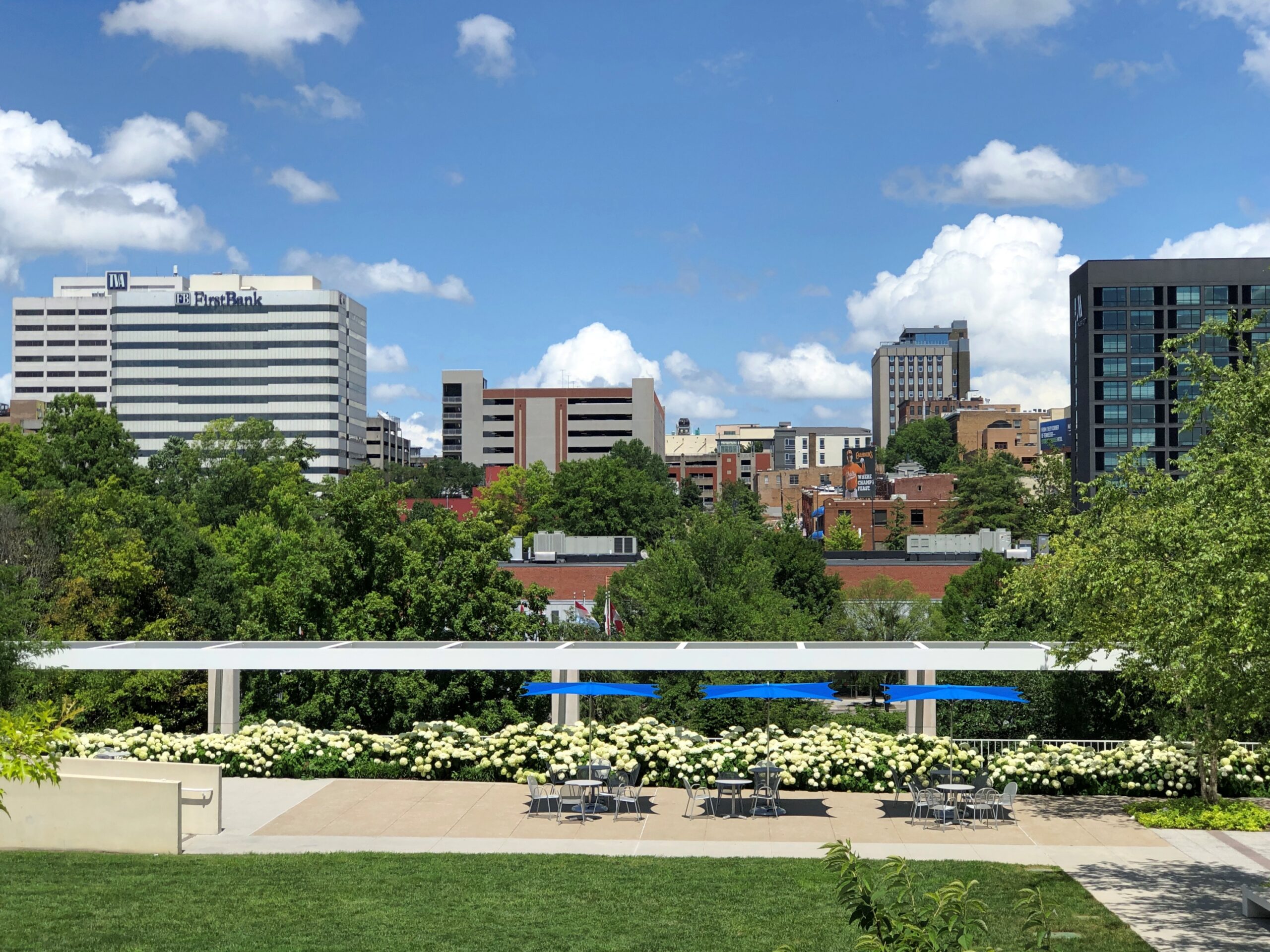
The museum also has a porch with a nice view of downtown Knoxville.
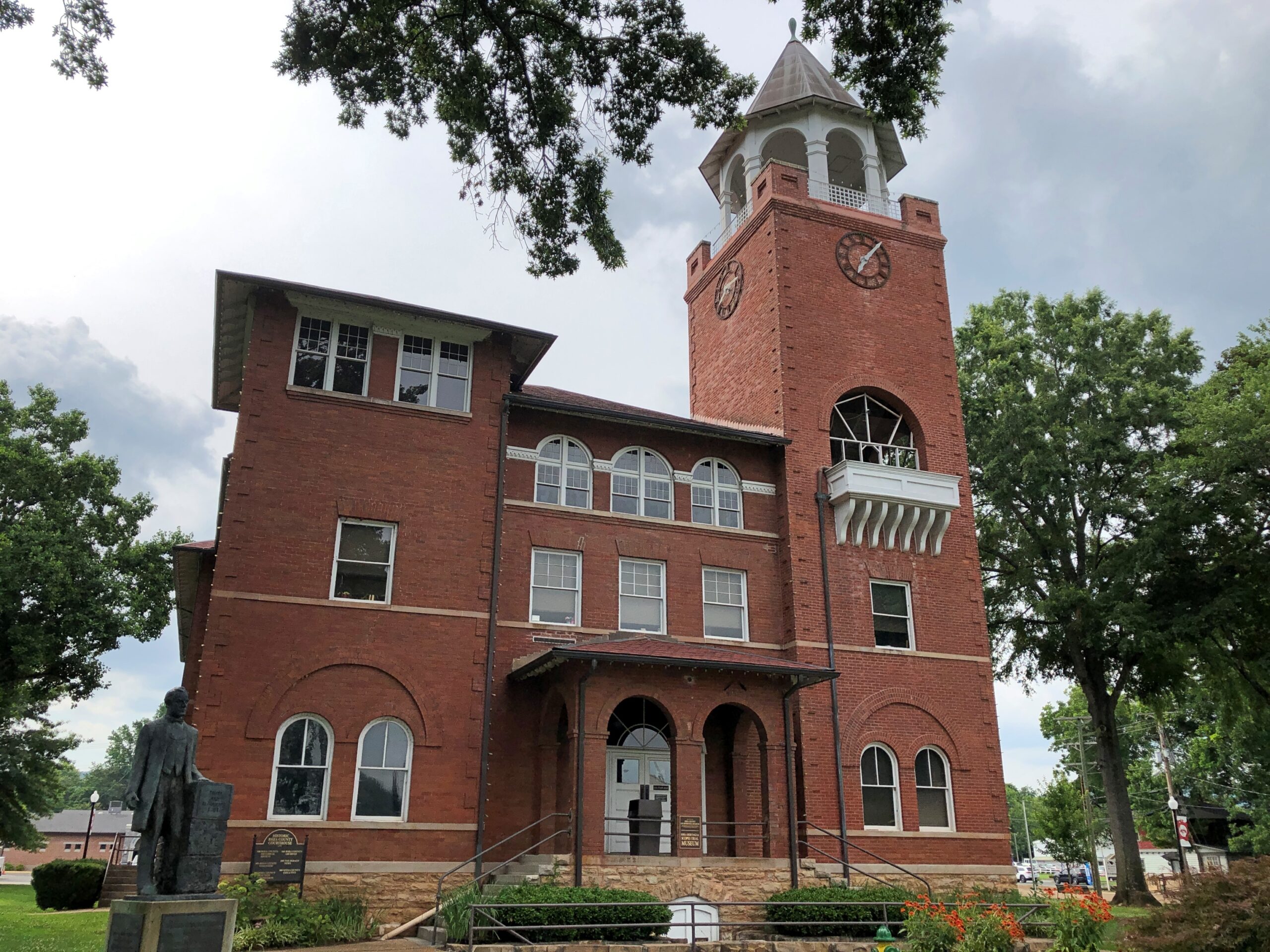
On my return westward through Tennessee, I made a point of passing through Dayton, site of the Scopes Trial, now 100 years ago. There is a museum devoted to the trial in the handsome and nicely restored 1890s Rhea County Courthouse, though I arrived after it had closed for the day.
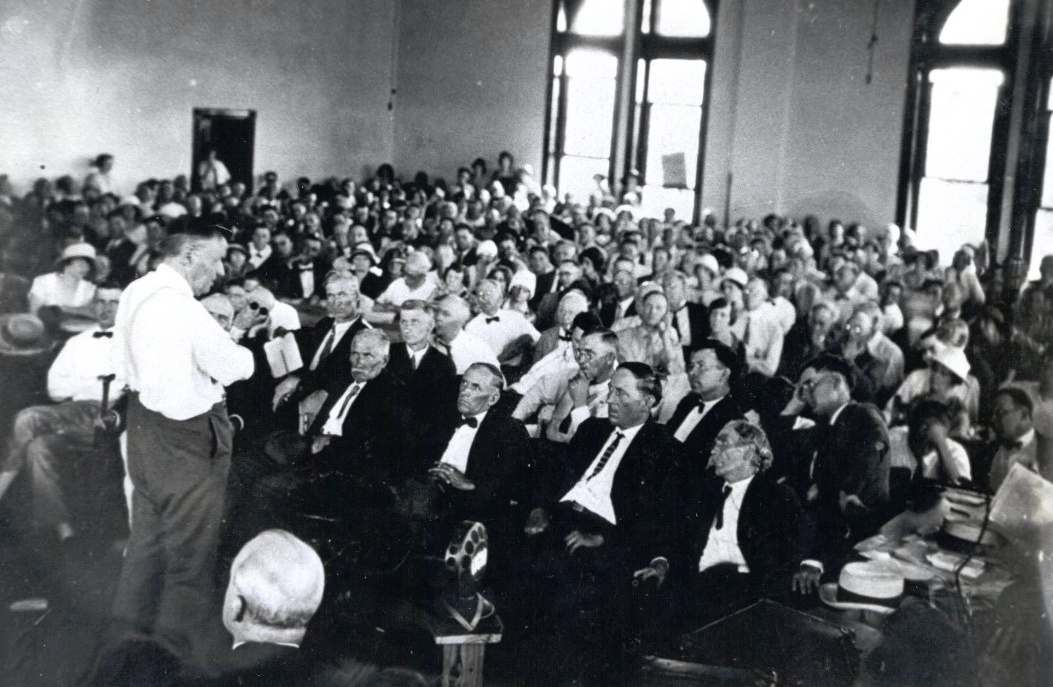
I look at pictures taken during the trial, and wonder how this multitude sat through it all, in an un-air-conditioned building. Guess like my grandma, as late as her last summer in 1970, they were used to it.
Before I got there, I heard a fellow on the radio discussing the (then) upcoming festival that Dayton was planning in honor of the centennial, as a bigger version of an annual event held in July. He might have been the organizer, I forget.
He pointed out that for many years Daytonites mostly wanted to forget about the trial – especially after the movie Inherit the Wind (1960) depicted the residents of Hillsboro, stand-ins for them, as fundamentalist bumpkins, at a time when the actual event was still in living memory. Which is nothing that Mencken didn’t do in 1925. Now the trial and Mencken and the movie are all part of that nebulous thing most people experience as the undifferentiated Past, and the townspeople have largely embraced the trial, according to the man on the radio. As well they should. It’s what Dayton, Tenn., has that no place else does.
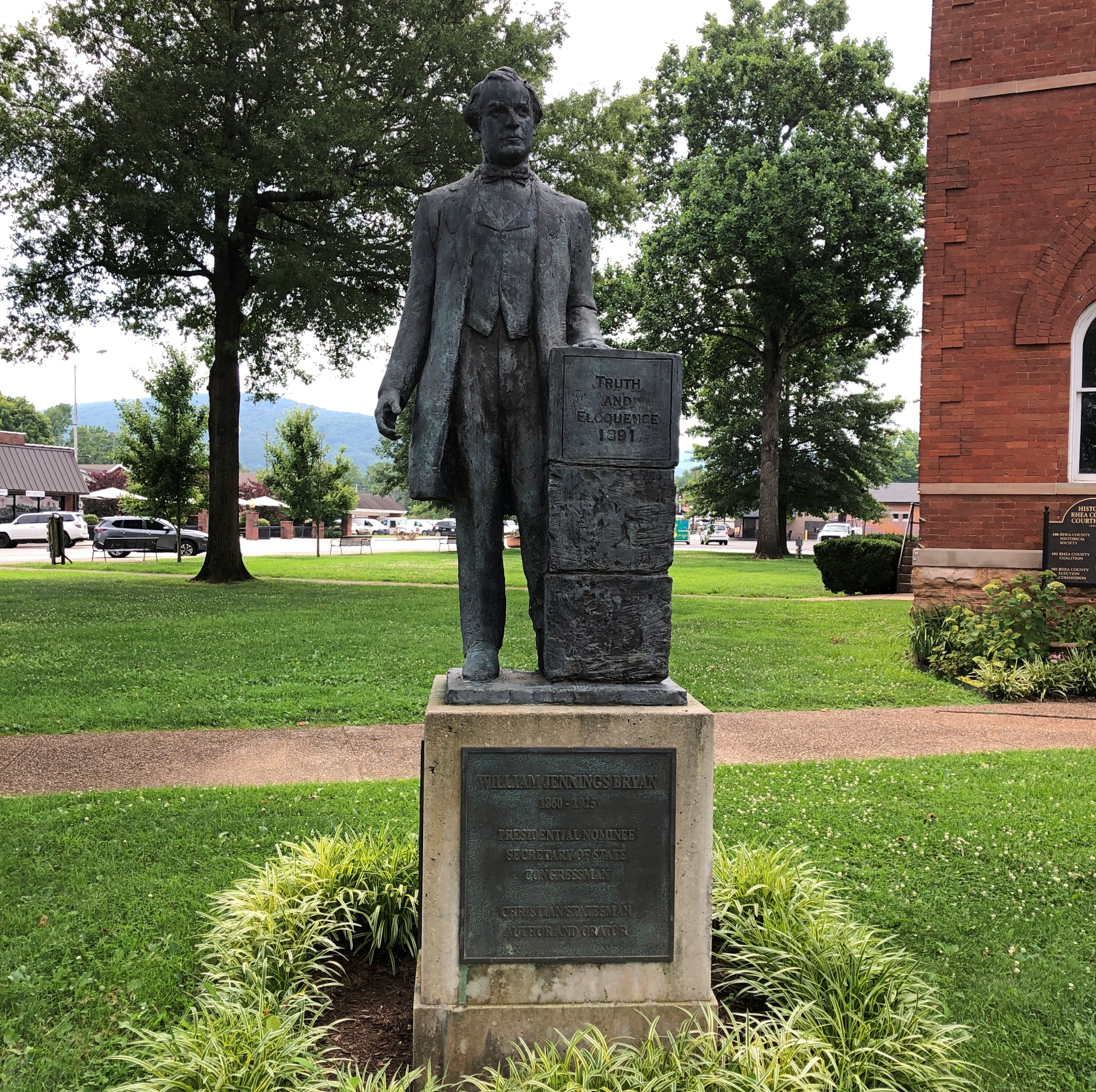
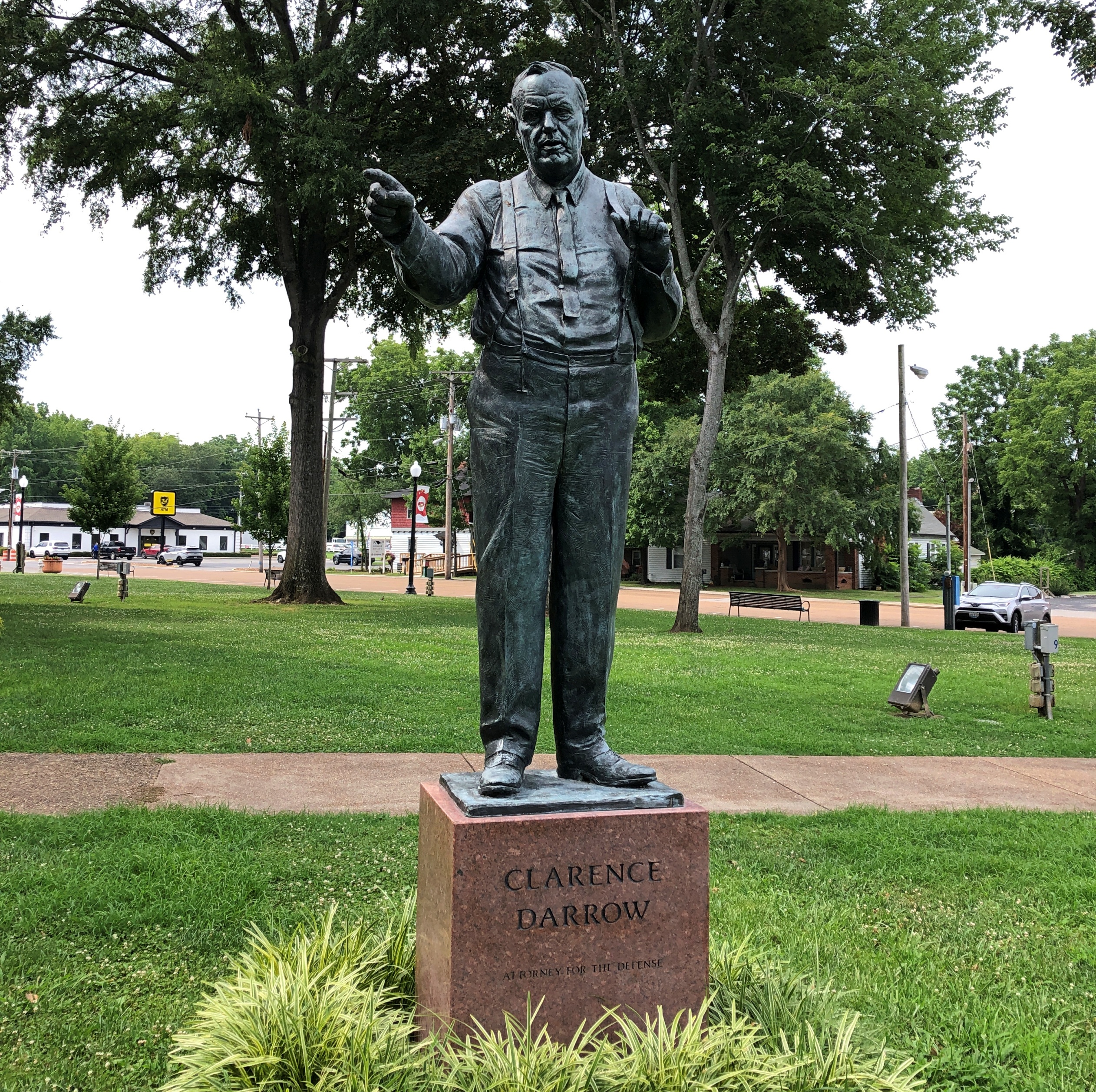
On the courthouse square, William Jennings Bryan and Clarence Darrow square off in bronze. Bryan College paid for the former, the Freedom From Religion Foundation the latter.
North Carolina
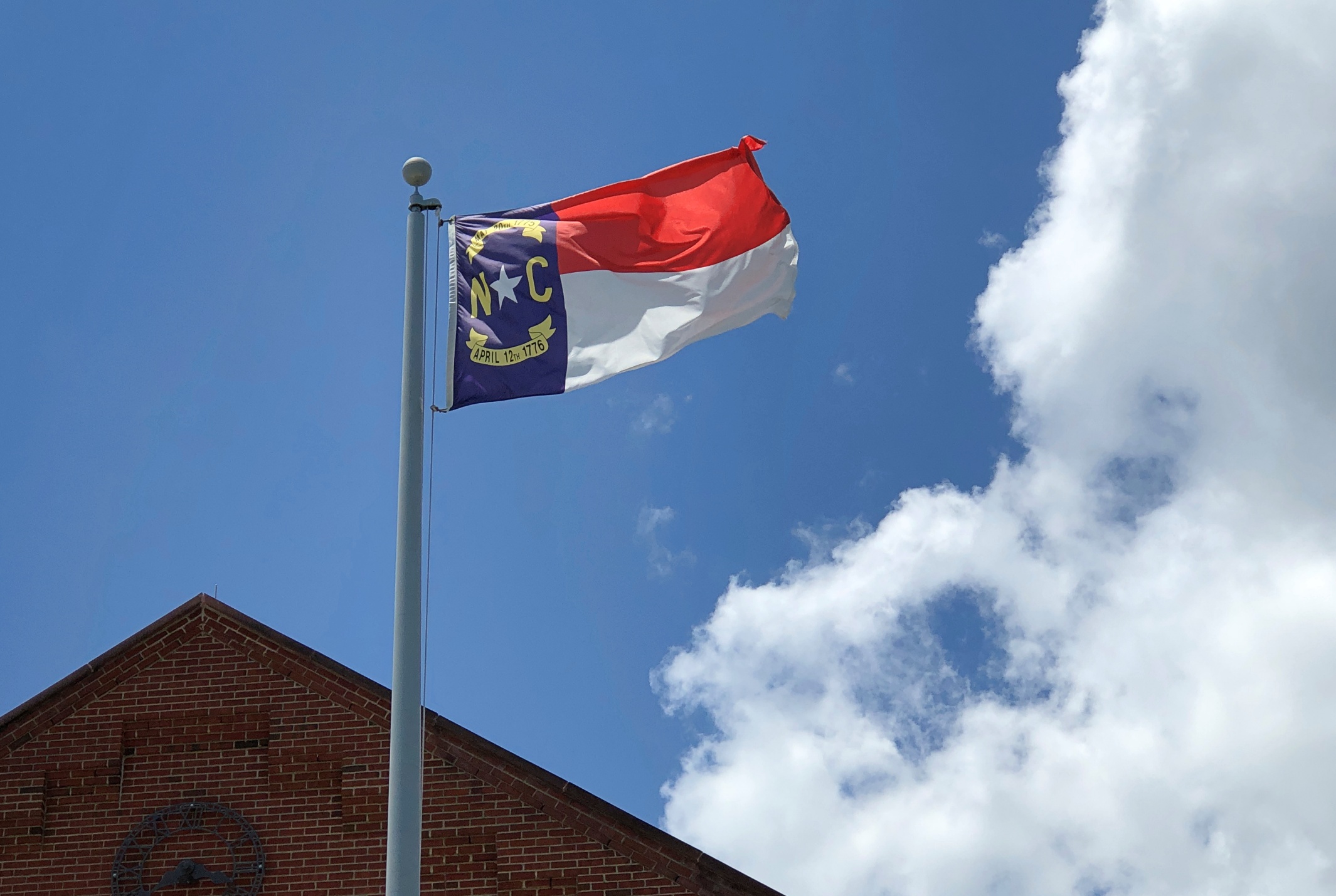
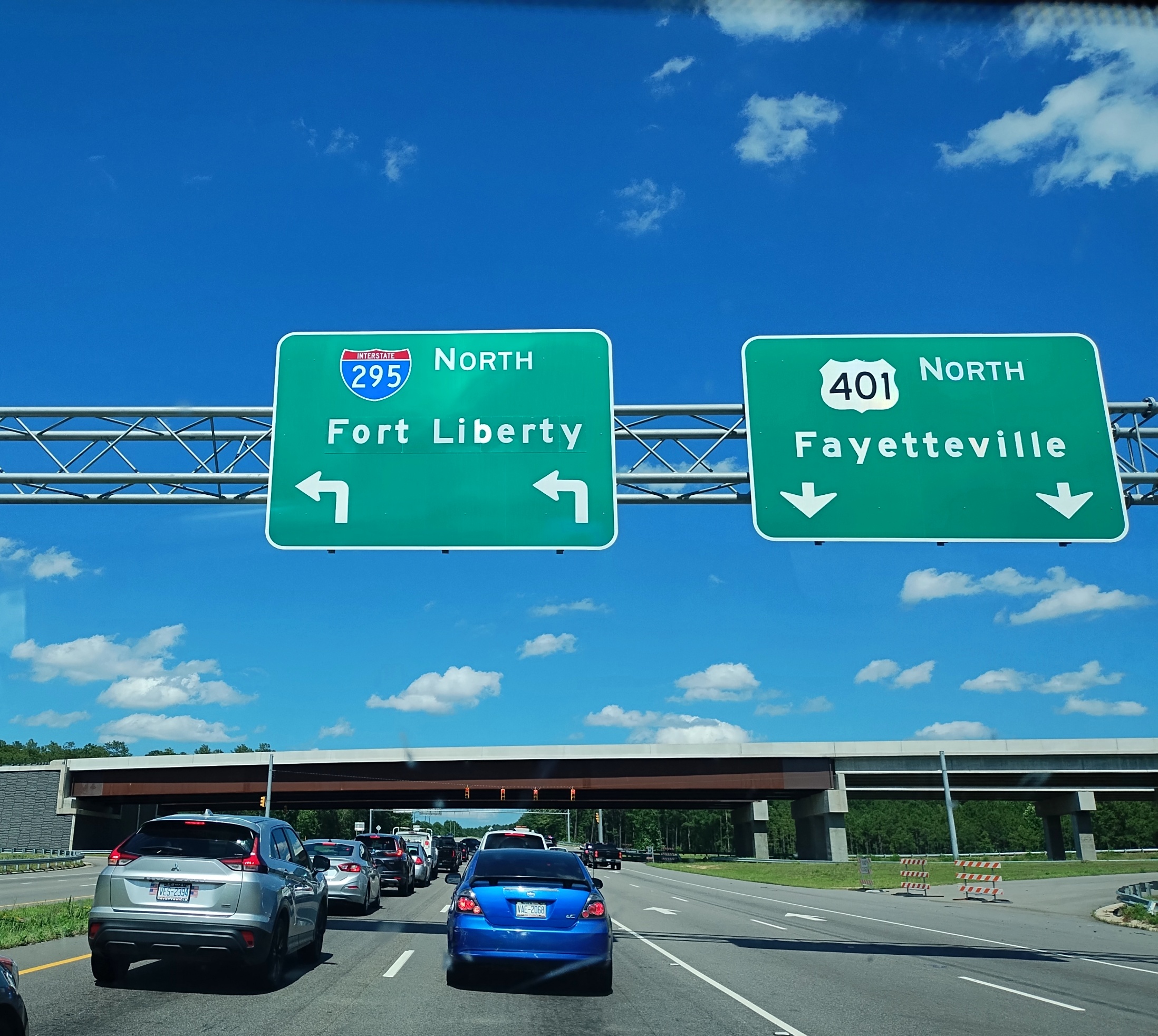
I was stuck momentarily in traffic near the military installation formerly known as Fort Bragg and then known as Fort Liberty and now known again as Fort Bragg. The traffic sign hasn’t caught up with the latest flip-flop.
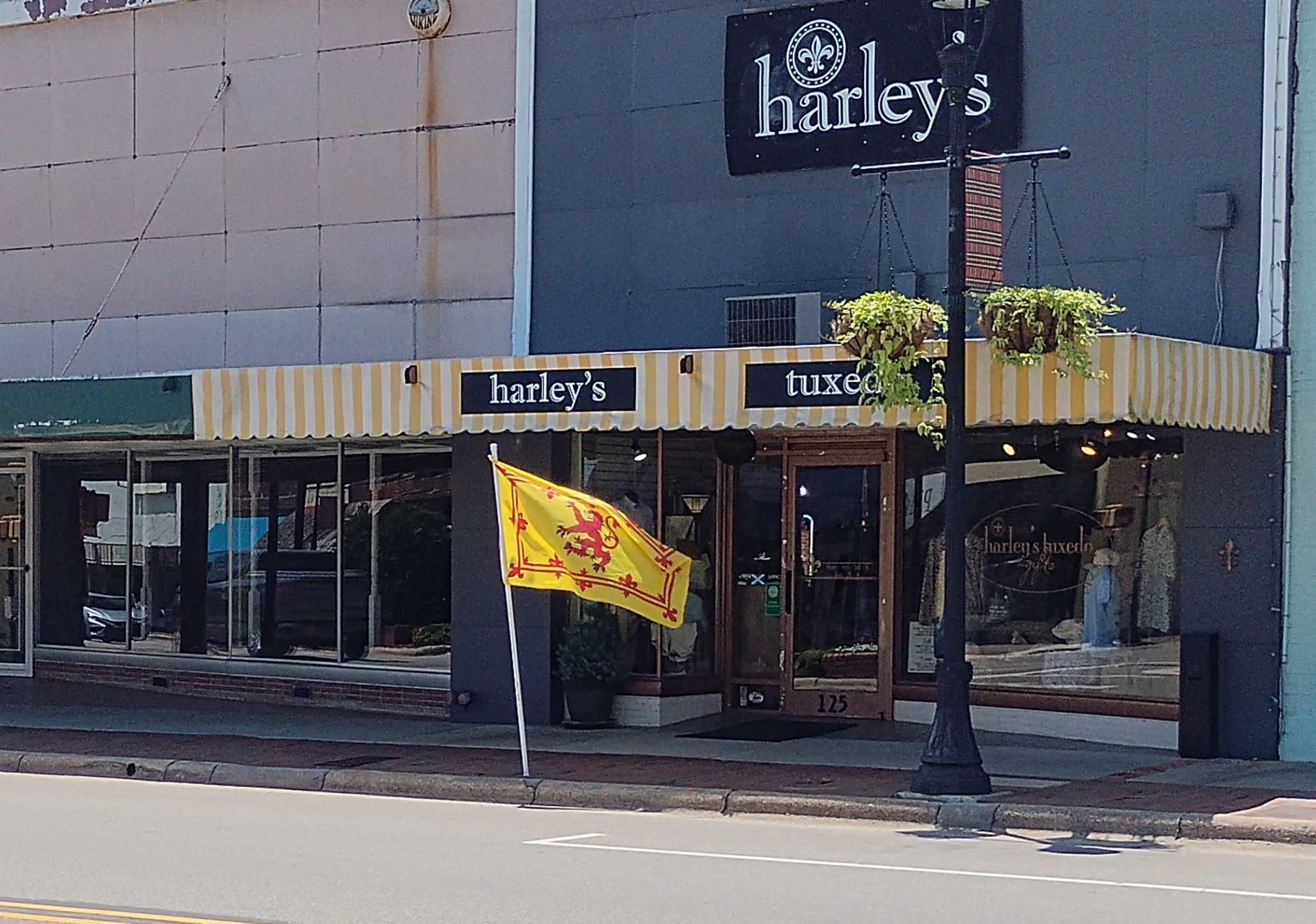
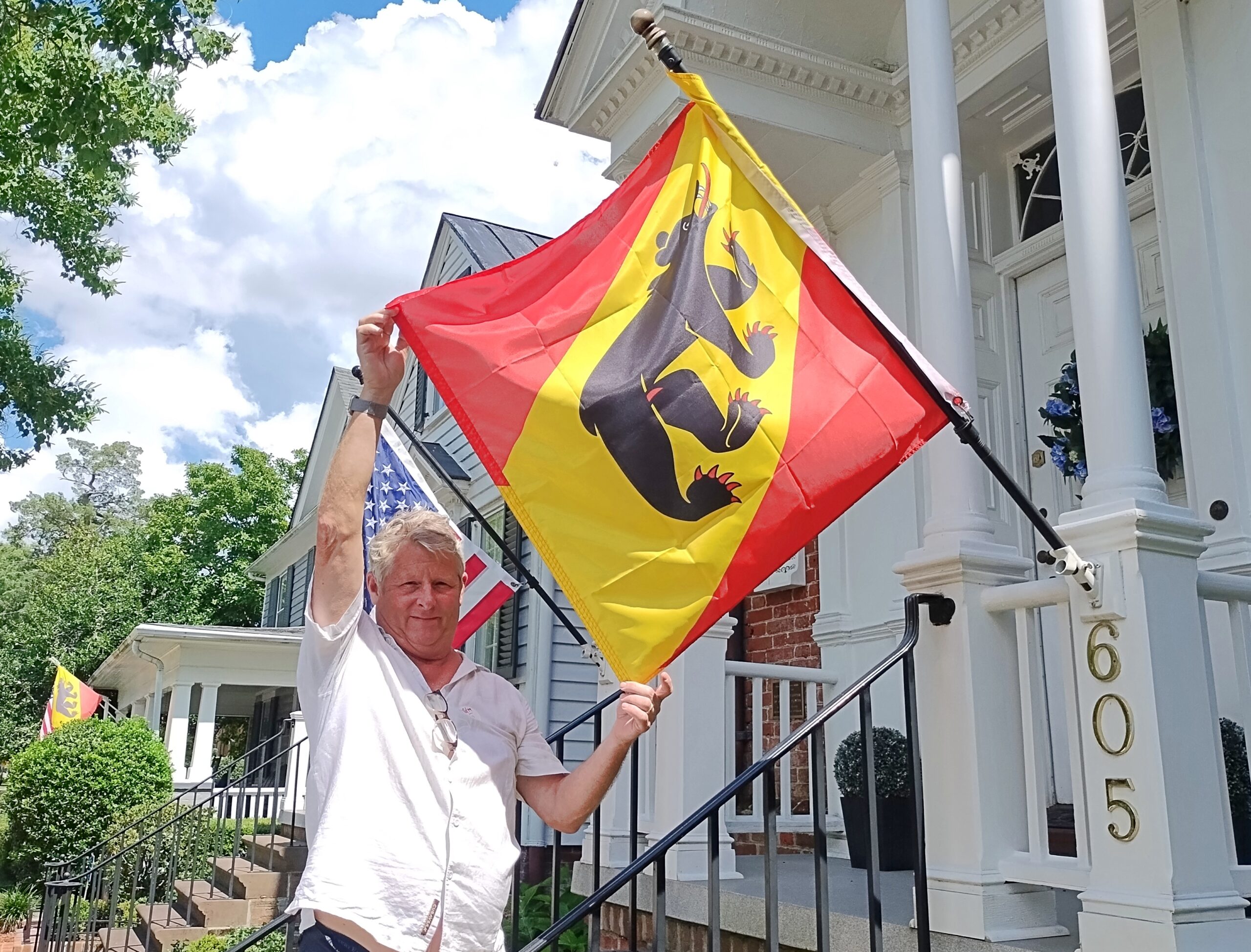
I stopped for lunch in Laurinburg, NC, at a storefront Chinese restaurant. Across the street, a tuxedo shop flew the Royal Banner of Scotland. Not something I’ve ever seen aflutter in the U.S. or anywhere, for that matter. But there is a school called St. Andrews University nearby, so maybe it’s not such a stretch. Make that was — the school closed just this May.
Wiki tells us: “As the personal banner of the Monarch, use of the Royal Banner of Scotland is restricted under the Act of the Parliament of Scotland 1672 cap. 47 and the Lyon King of Arms Act 1867 (30 & 31 Vict. c. 17), and any unauthorised use of such is an offence under the Act.” That has no bearing on its use in North Carolina, I’d say, considering how the Revolution turned out.
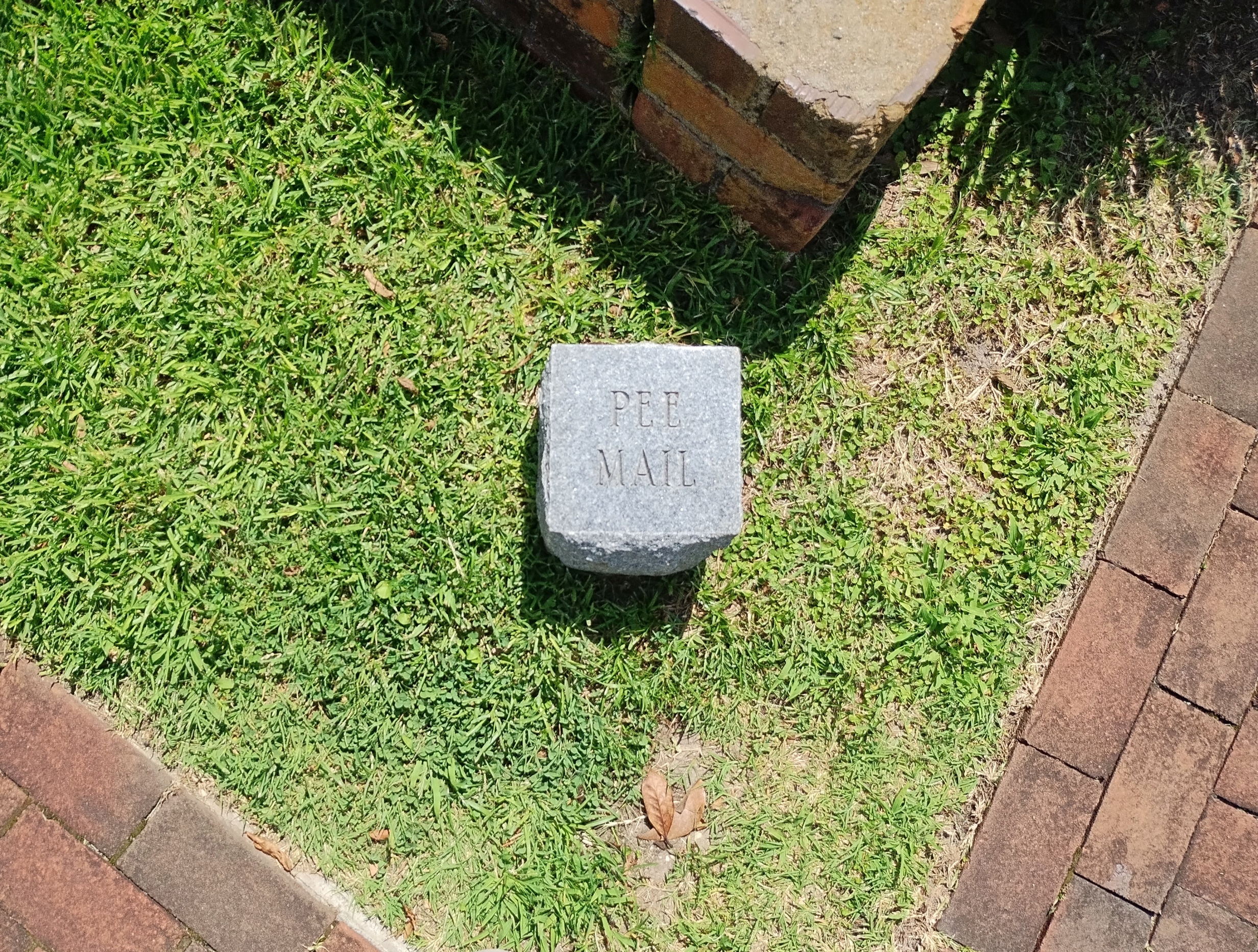
In New Bern, NC, this was a bit of a mystery at first.
Until I figured it out. A place for dogs to leave messages.
Now I can say I’ve been to Athens. The one in Georgia, that is, spending two nights. But most of that day in late June, I was elsewhere in Georgia – the part that Sherman burned – visiting two different old friends, one in the morning, the other the afternoon, so my time in Athens was fairly limited. The neighborhood near the university looked interesting, as college towns often are, so with any luck I’ll be back sometime for a closer look.
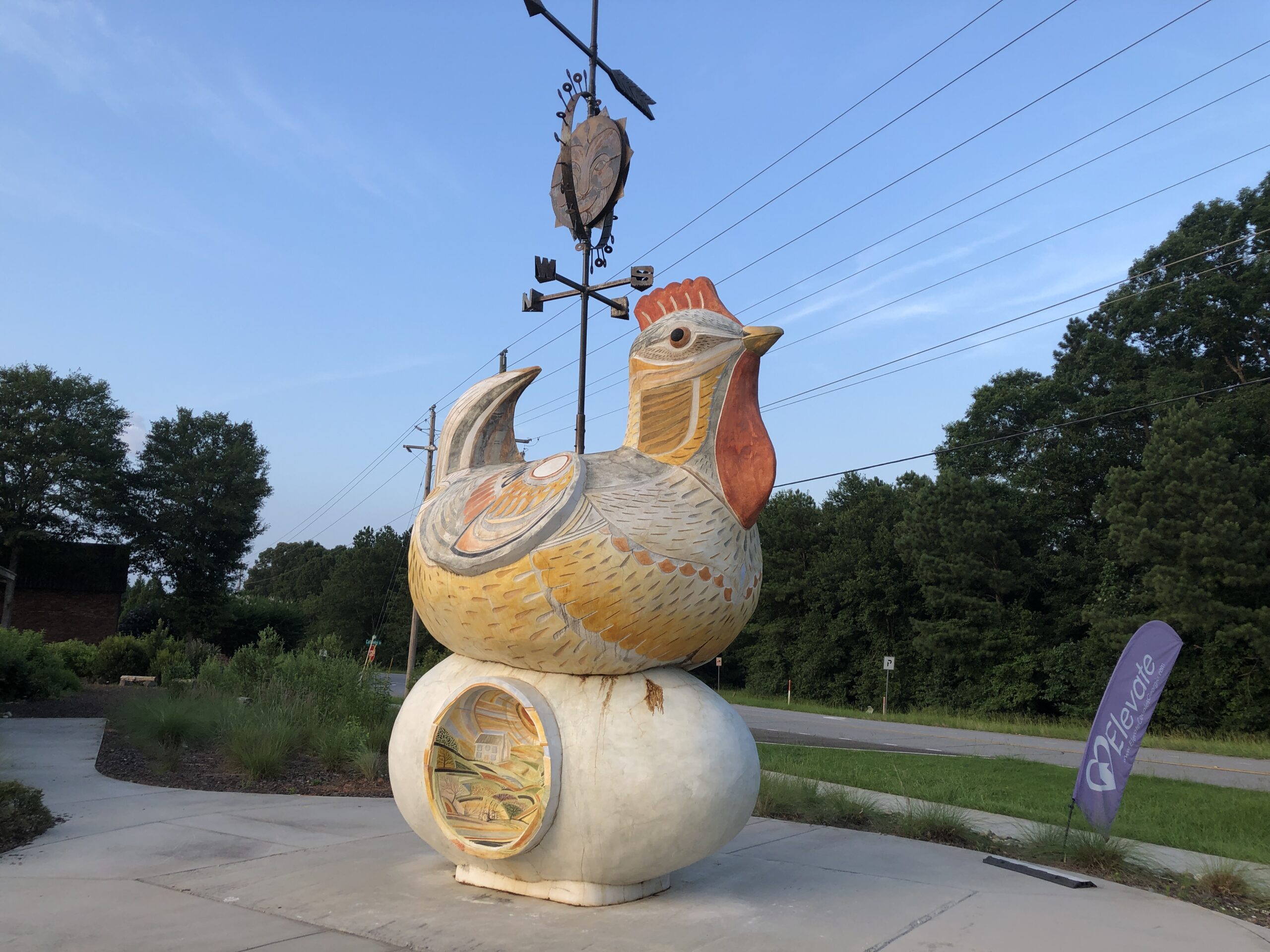
But I did spend enough time in town to happen across the aforementioned two-story concrete chicken and egg. It was another example of serendipity on the road. The reason involved traffic patterns in the western part of Athens. My motel was off a fairly busy major road, the Atlanta Highway, meaning that entering the property headed west – away from Athens – meant turning across two intense lanes of traffic without a clearly marked turning lane or a light.
So more than once, I headed west to the next major intersection, made a right, and then turned around to head back east on the Atlanta Highway so I could make a right turn into the motel. One time late in the afternoon, I decided to drive just a little further down that turning road – Cleveland Road – to see what I could see, and was soon rewarded with the concrete chicken.
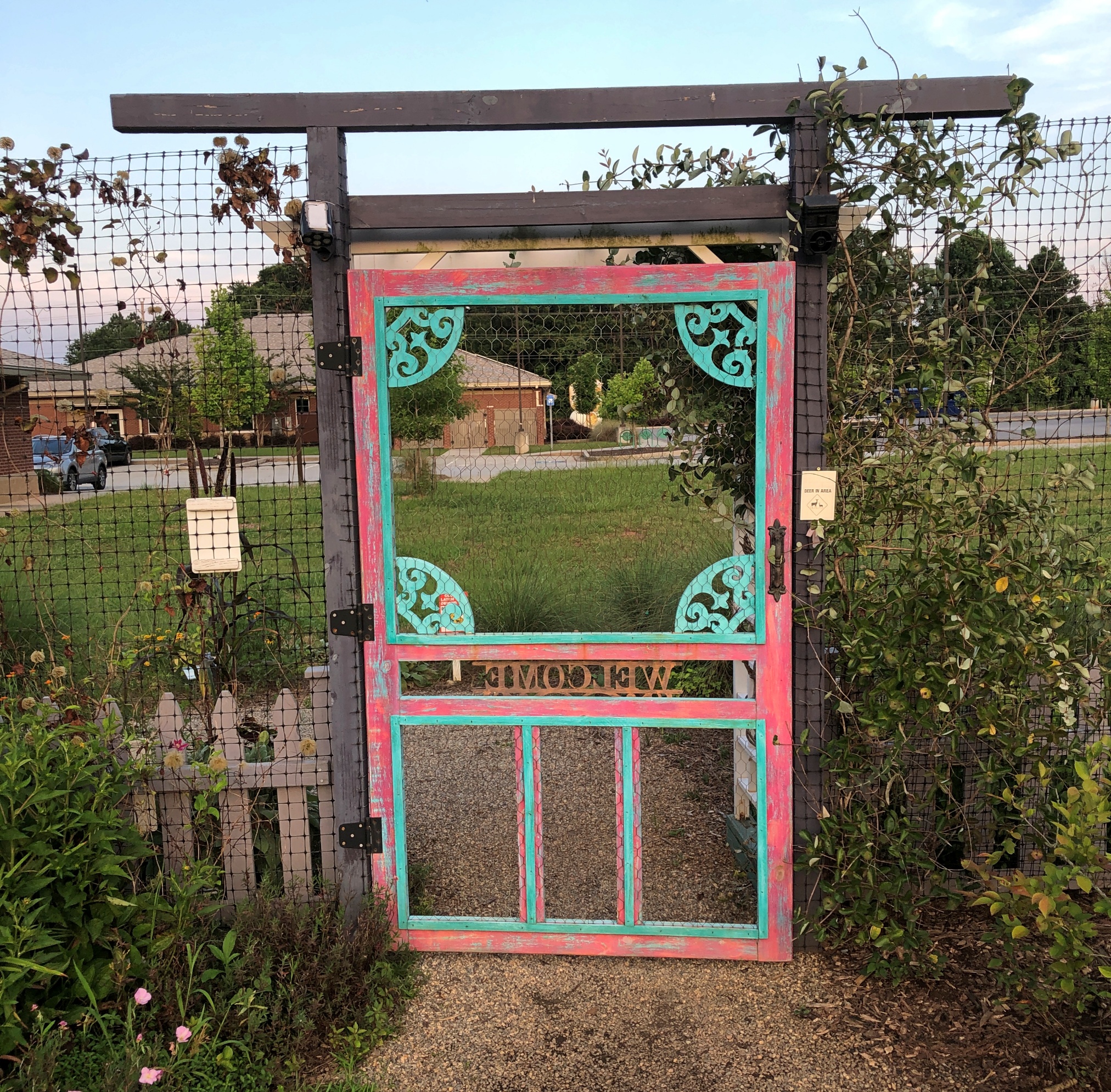
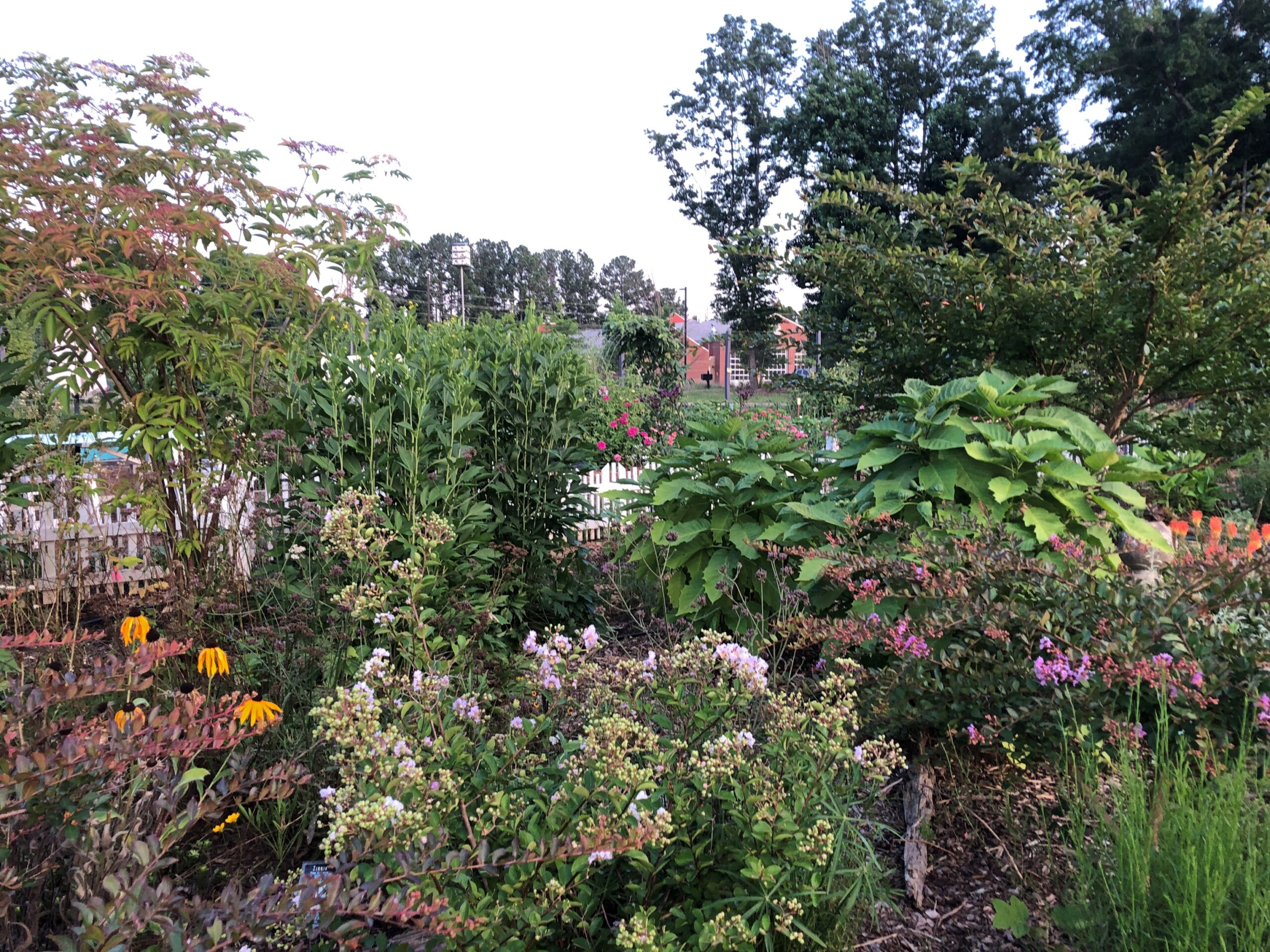
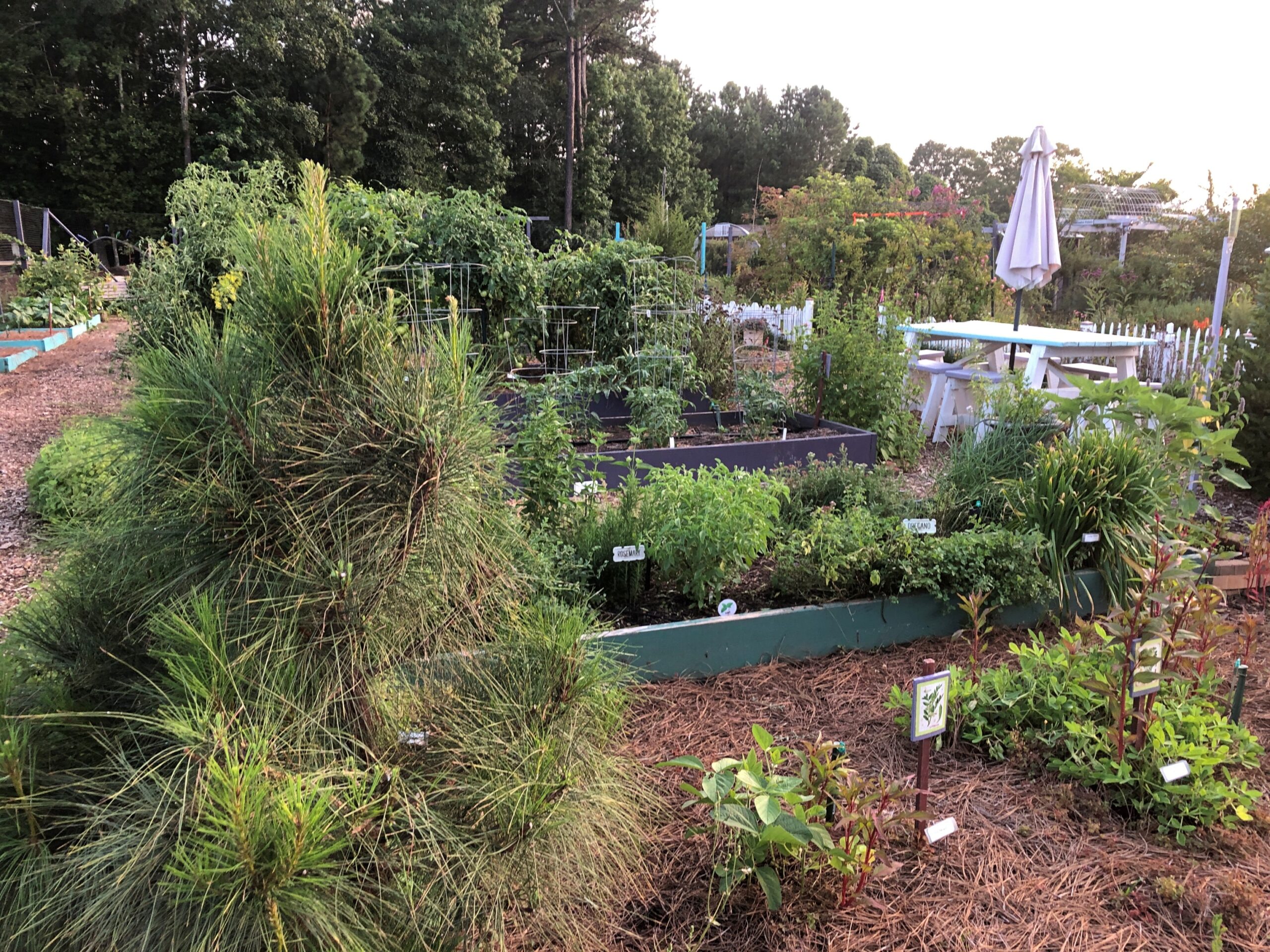
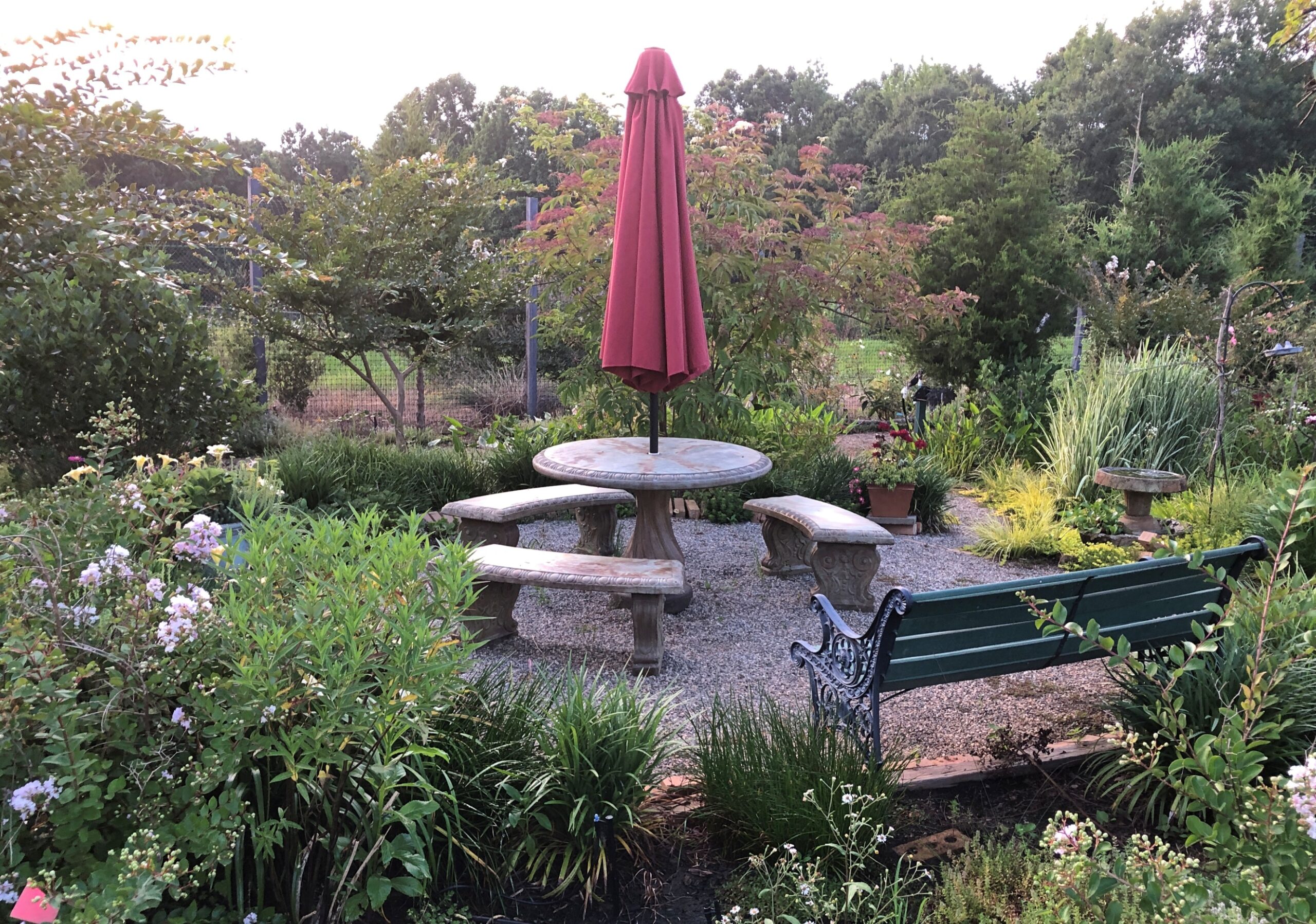
But that wasn’t all. Behind the building that houses the University of Georgia Extension Athens-Clarke County is a sizable garden. The sun was nearly down, so heat was less of an issue. I spent some time looking around. No one else was there.
It’s a 17-acre lush garden, including a wide variety of edible plants.
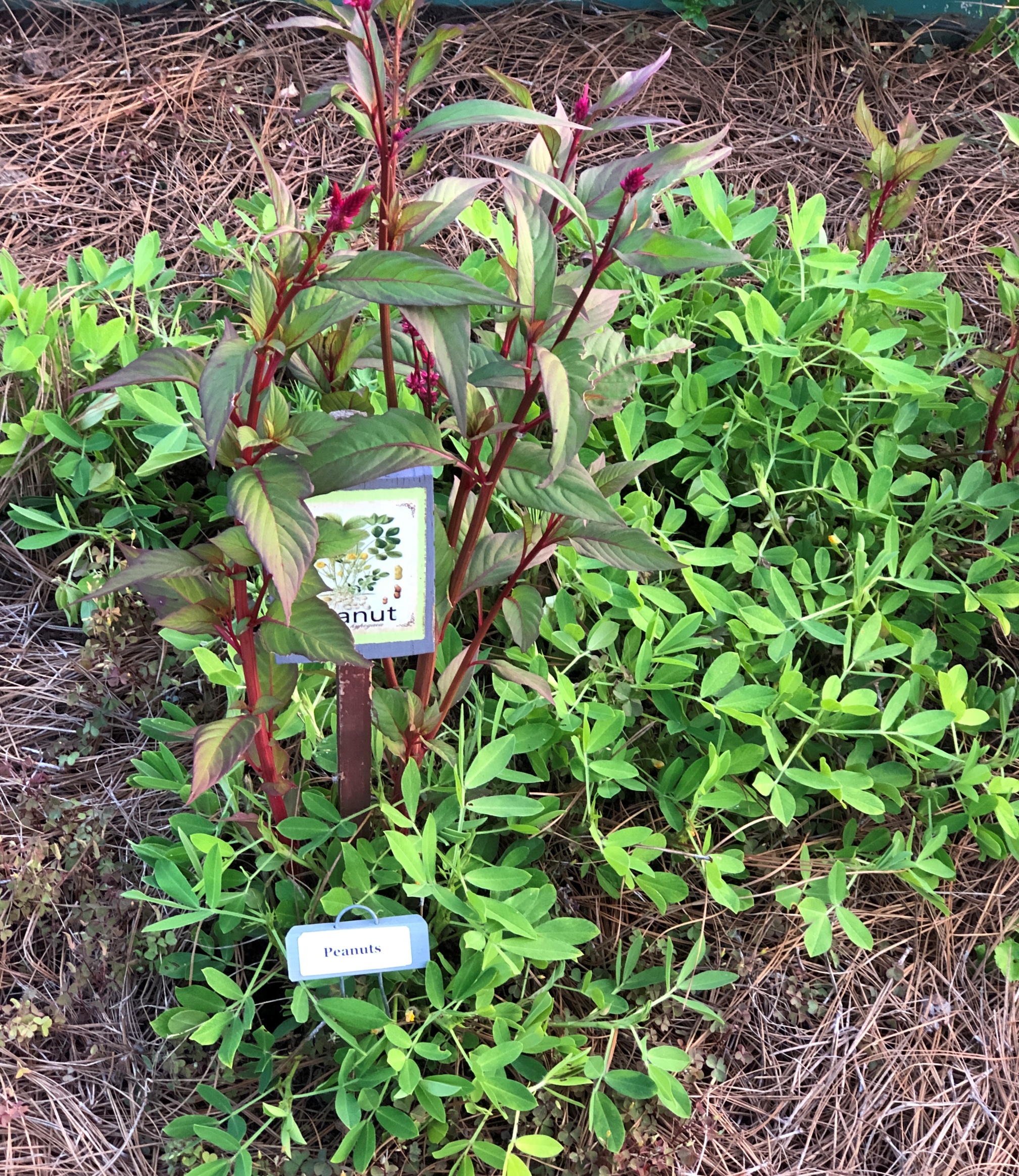
What would a Georgia garden be without peanuts?
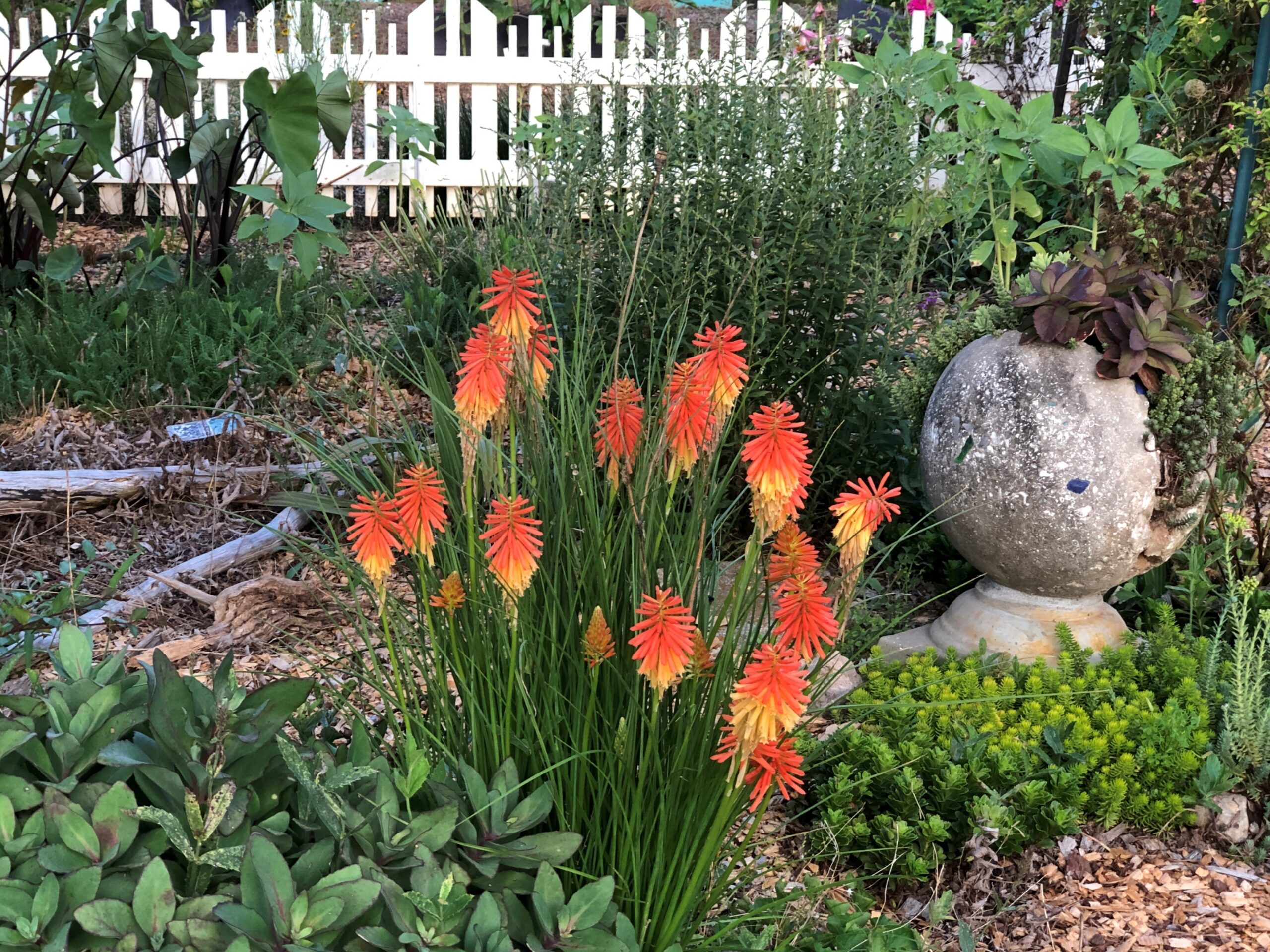
Plus a lot of flowers.
Even a few places to relax.
Wonderful spot. The lesson here: if you see a giant chicken statue by the road, investigate further.
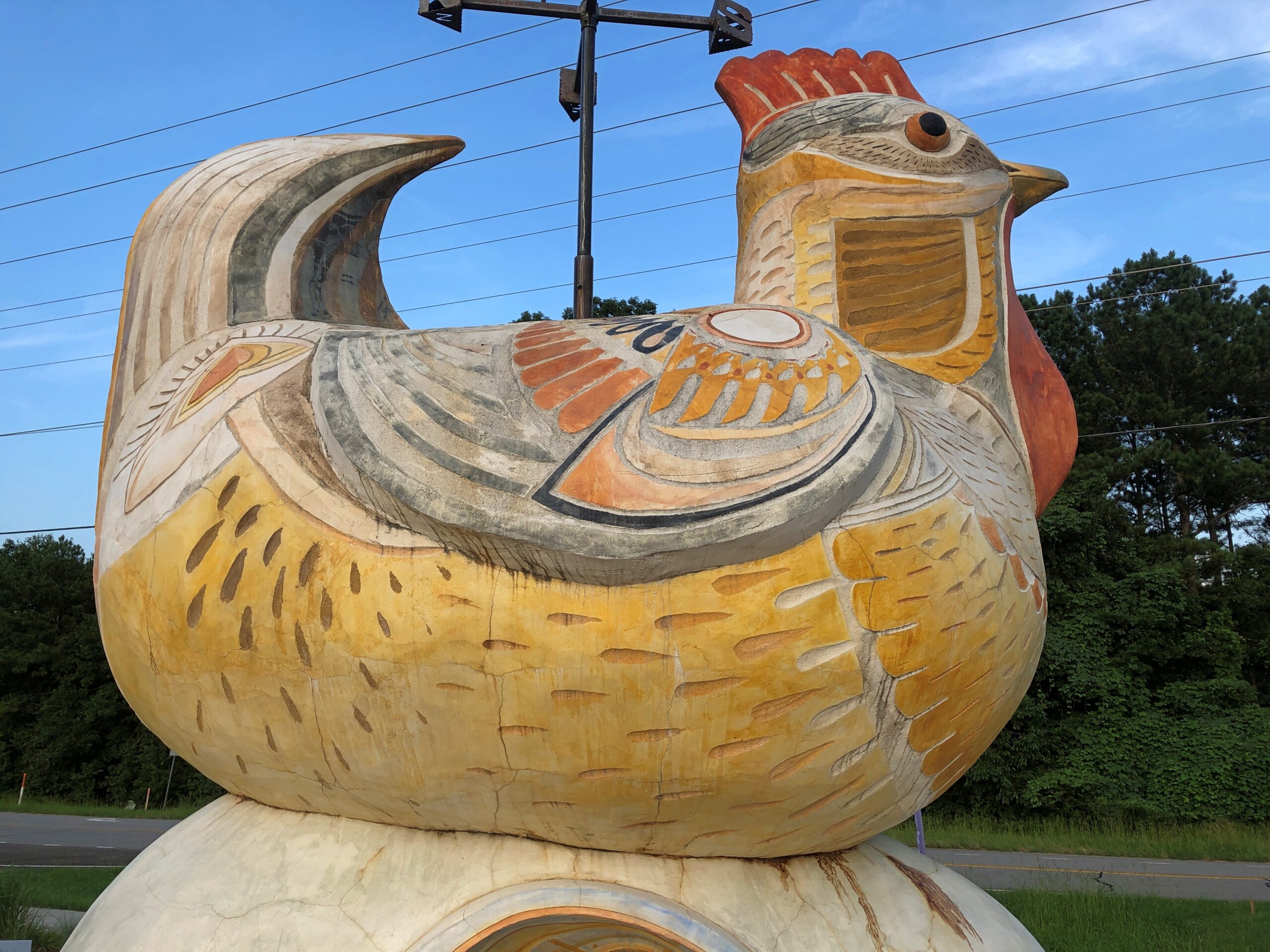
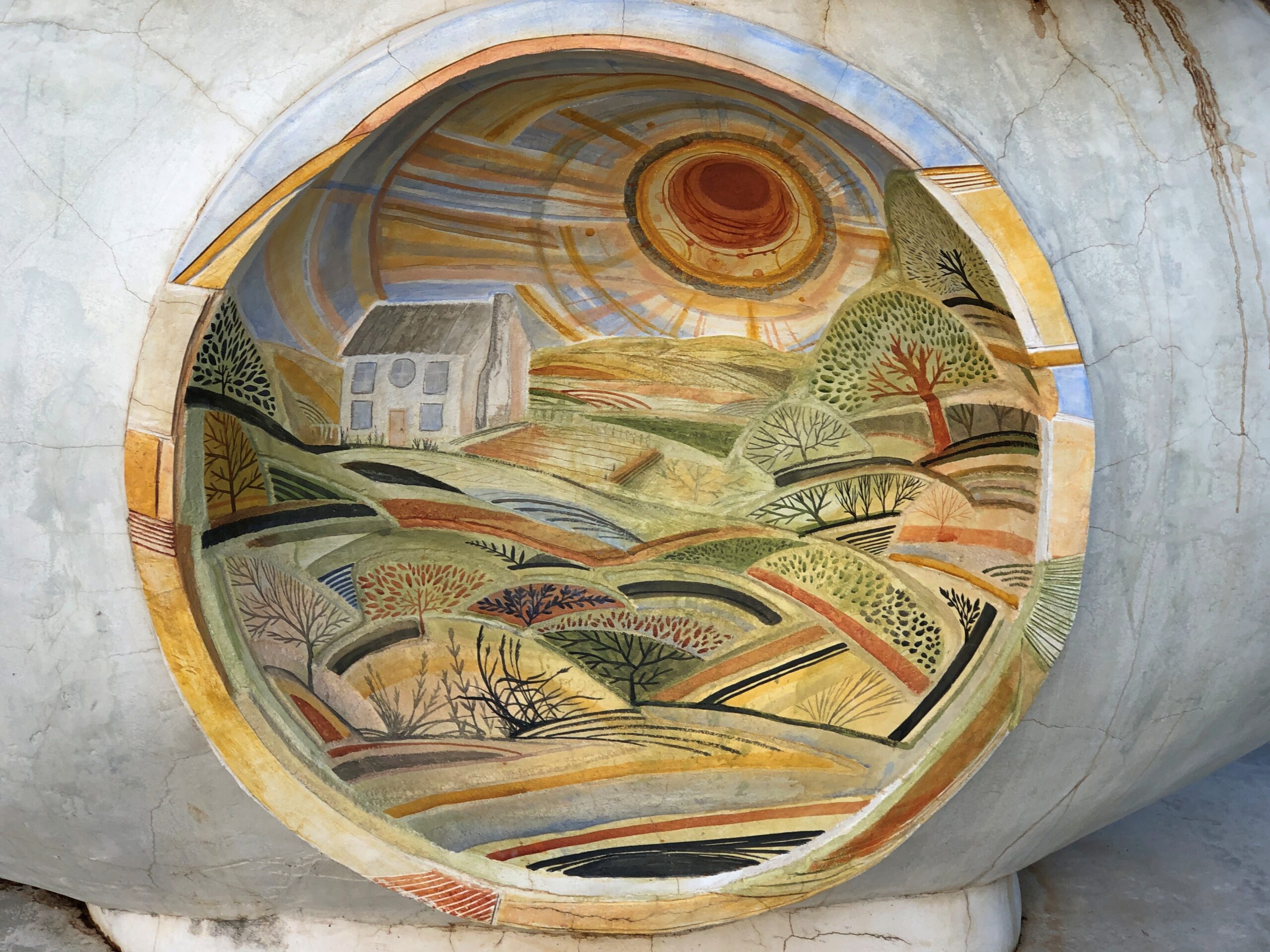
Sometimes you’re driving along, minding your own business because your business at that moment is driving, and you see a two-story chicken near the road. Three stories if you count the iron weather vane perched atop the bird.
I had to stop to see that. More precisely, it’s a concrete chicken on a concrete egg, settling the question of which came first (the concrete did). The chicken, and the egg, are on property owned by the University of Georgia, used for the Athens-Clarke County Extension in Athens. Erected in 2022. More about the work, “Origins,” is here. All ag extensions should have just a little whimsy.
The chicken appeared roughly in the middle of the 3,285 miles I drove between June 16 and June 29, taking a lasso-shaped path from the Midwest across the Southeast, all the way to the ocean at Myrtle Beach, South Carolina: through Indiana, Kentucky, Tennessee, North Carolina, South Carolina, and Georgia, and back through Tennessee, Kentucky and Indiana.
The concrete hen took the cake for novelty, but along the way I saw a memorial to a mostly forgotten incident in the War of 1812, went into a mirrored tower built for a world’s fair, chanced on the spot where the mostly forgotten diplomat who brought the poinsettia to the U.S. is buried, and braved the tourist sprawl that is Mrytle Beach. I heard stories of Blackbeard while near the coast, near his hideouts. I strolled the genteel downtown of the second-oldest town in North Carolina, passing the notable spot where Pepsi-Cola was invented. We visited a three-story souvenir shop that has stood the test of time in Myrtle Beach, which I’m happy to report sells not just postcards, but vintage local postcards, at popular prices. One evening we wandered past sculptures and colored lights among the Spanish moss in South Carolina. For a moment I beheld a complete set of the U.S. gold coins minted in Dahlonega, Georgia.
I drove by houses, farms and fields, past small businesses open and defunct, and junkyards and billboards — an industry that would collapse without ambulance chasers, I believe — and factories and water towers and municipal buildings. That is to say, structures and greenery of all manor of use and upkeep, an inexhaustible variety of human and natural landscapes. Homogenization my foot. Except, of course, every burg with a zip code also has at least one dollar store.
We – my machine and I and sometimes Yuriko, who flew to Myrtle Beach to meet me for a weekend – experienced an incredibly lush Southeast not long after a rainy spring, on big roads and small, straight and curvy, all the while defying the heat. I heard it enough on the radio: a “heat dome” had settled over the eastern United States. It persisted from the first day in Indiana to the last day in Indiana, though it had moderated a bit by then. Temps were in the 90s most days, but nothing that’s going to faze a Texan with an air conditioned vehicle and bottled water.
We did adjust our schedule to mostly be out in the morning or evening, except at Myrtle Beach, where a walk in the heat that made me feel my age and maybe then some. A less hot but more humid walk in a mostly forgotten national park in South Carolina saw flights of mosquitoes barreling down on me. A few of them penetrated my DEET coverage.
I saw and did all that and much more, but that was only the bronze and silver of the trip. The gold was visiting old friends.
That was actually the priority this time around. Before the trip, one of the friends I planned to visit asked me via text: “What’s your trip about?”
My text answer: “Visit old friends, see new things & take long drives.”
In Nashville, Stephanie and Wendall.
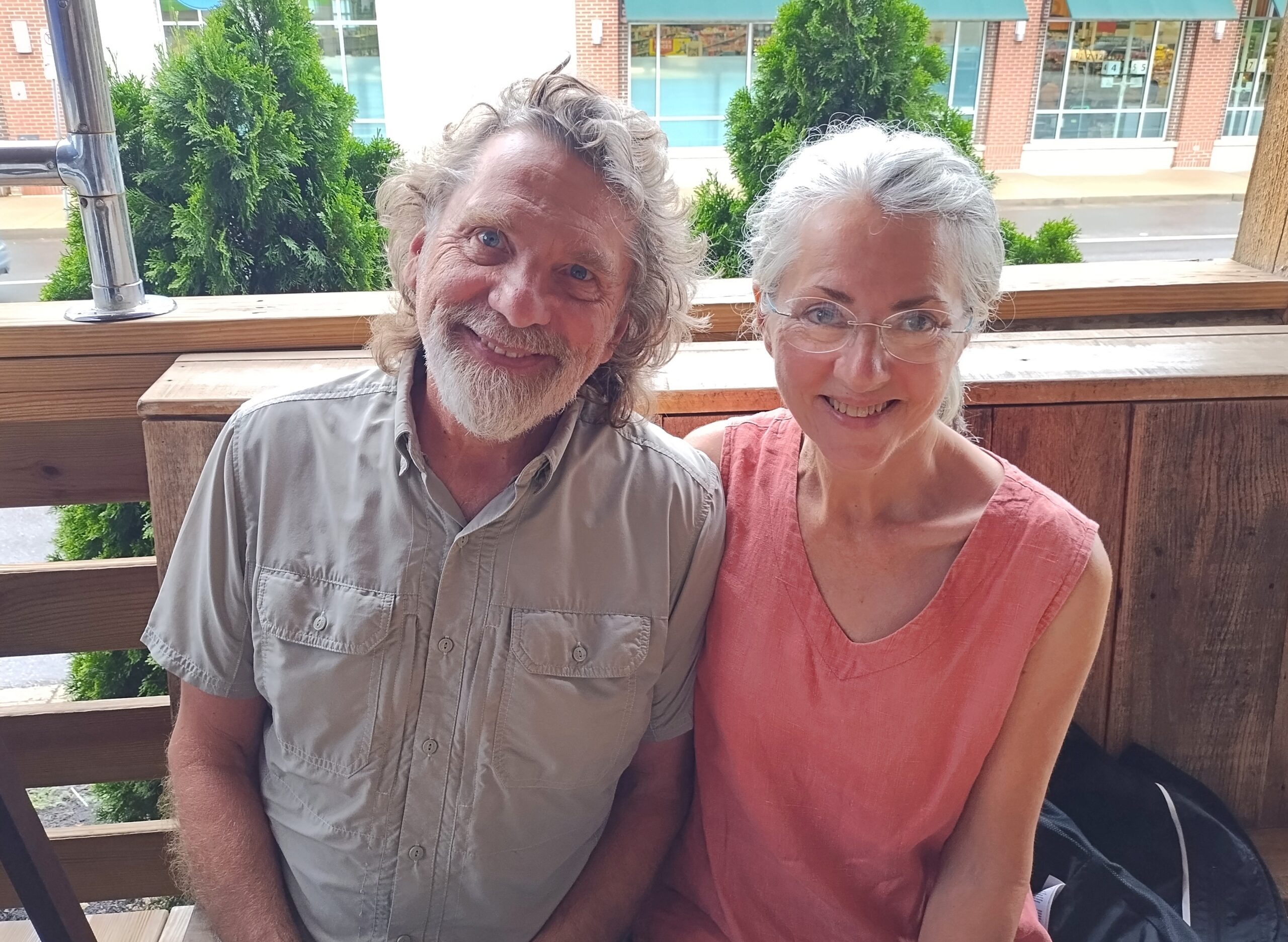
In North Carolina, Dan and Pam. She had enough sense not to wander around in the heat with us.
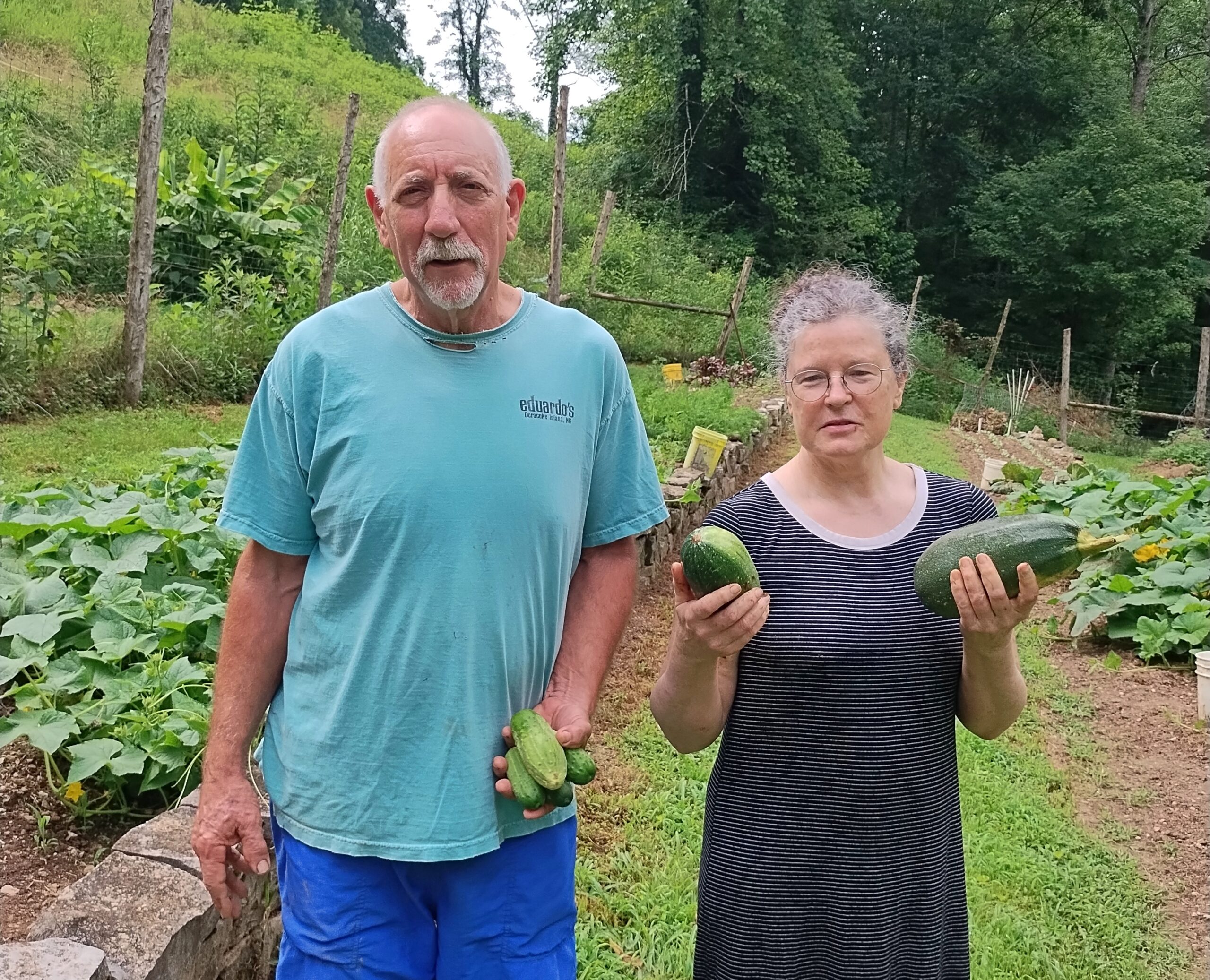
In rural Tennessee, Margaret and Dave.
Separately in Georgia, Layne and Stuart. I was glad to see them all, and I think they were all glad to see me. Known most of ’em since the 1980s, and we had a time — then and now.
Summertime, and the living’s not bad. Pretty good, really. But those aren’t as catchy as the actual lyric. Time to pause posting for the summer holiday string: Flag Day, Juneteenth, Canada Day, Independence Day and Nunavut Day. Come to think of it, that’s an exceptionally representative run of holidays for North America. Back around July 13.
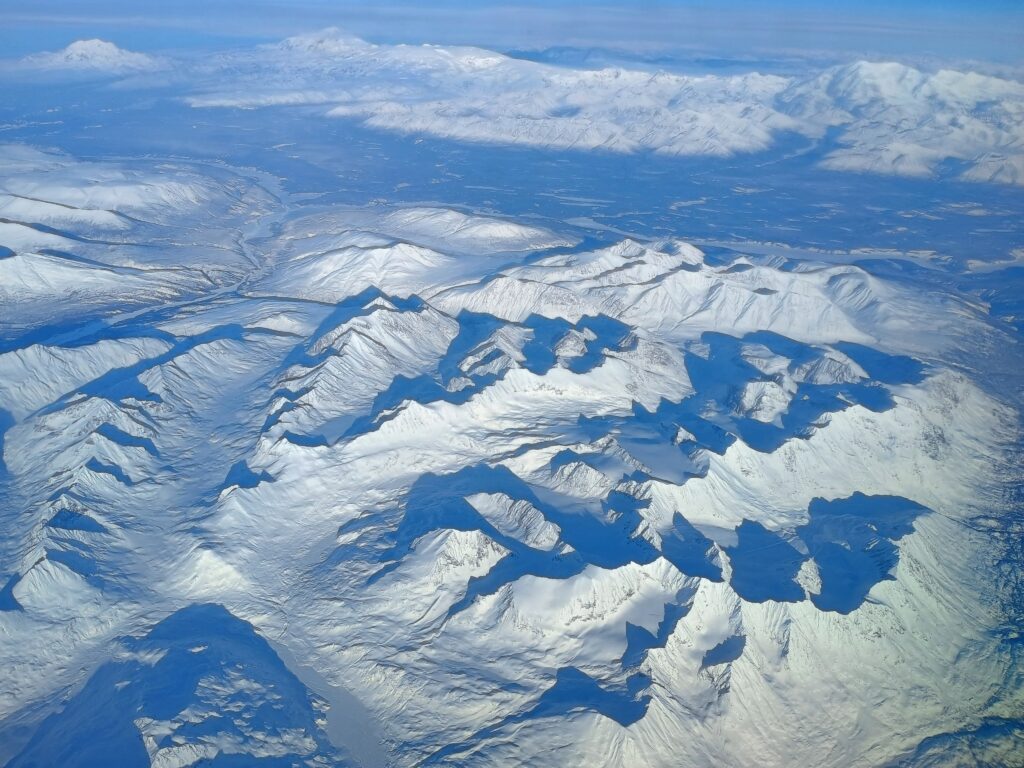
The flight from Chicago to Tokyo took us far north, as that flight path usually does. There was more light than I thought there would be, looking down at this moment on the February snows of the Yukon or Alaska; I’ll never know which. I could have been eying the border, for all I know, which suggests that borders are a gossamer fiction at these latitudes.
Japan
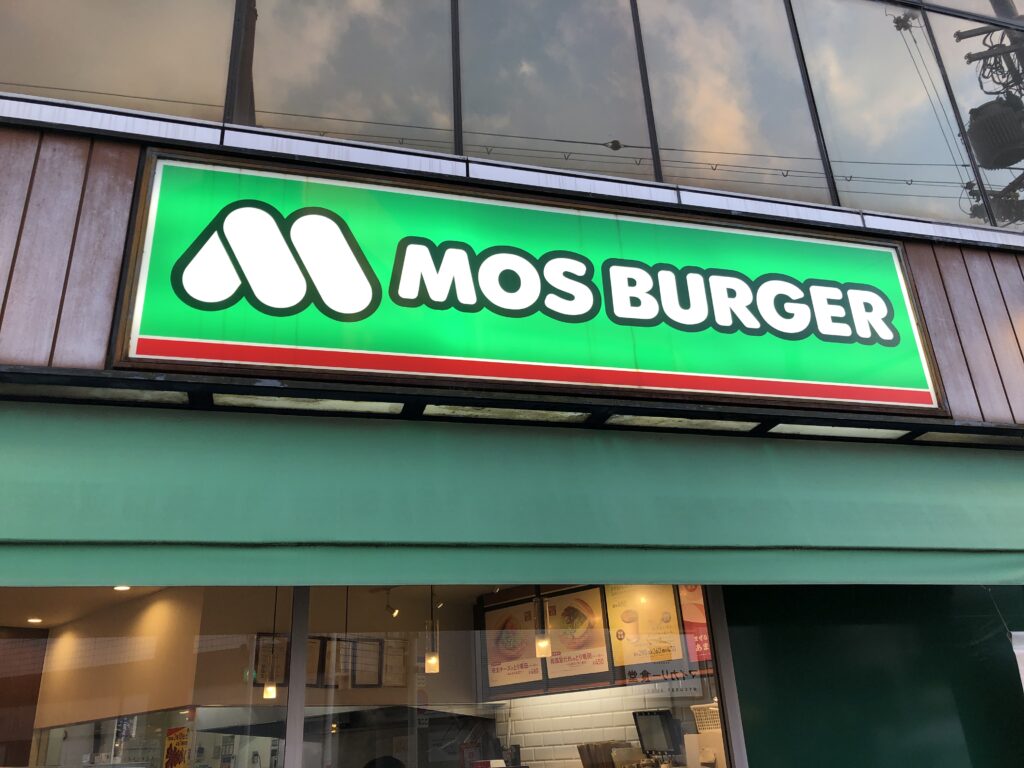
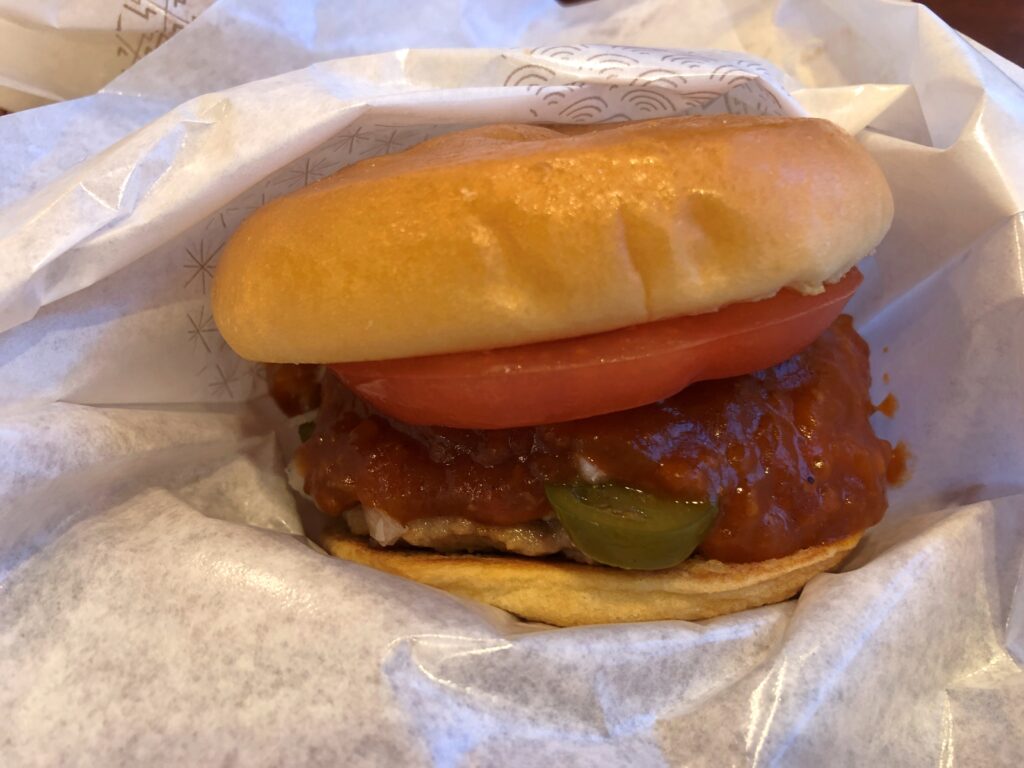
It was a happy moment when we ate at Mos Burger. One of these days, I’m going to dig out my paper copy of an article I wrote for Kansai Time Out in 1993 about four varieties of Western-style fast food chains founded in Japan, and post it. Today isn’t that day. But I can say that Mos Burger was the best of them.
As good as I remember it from 25+ years ago, the last time I went to one.
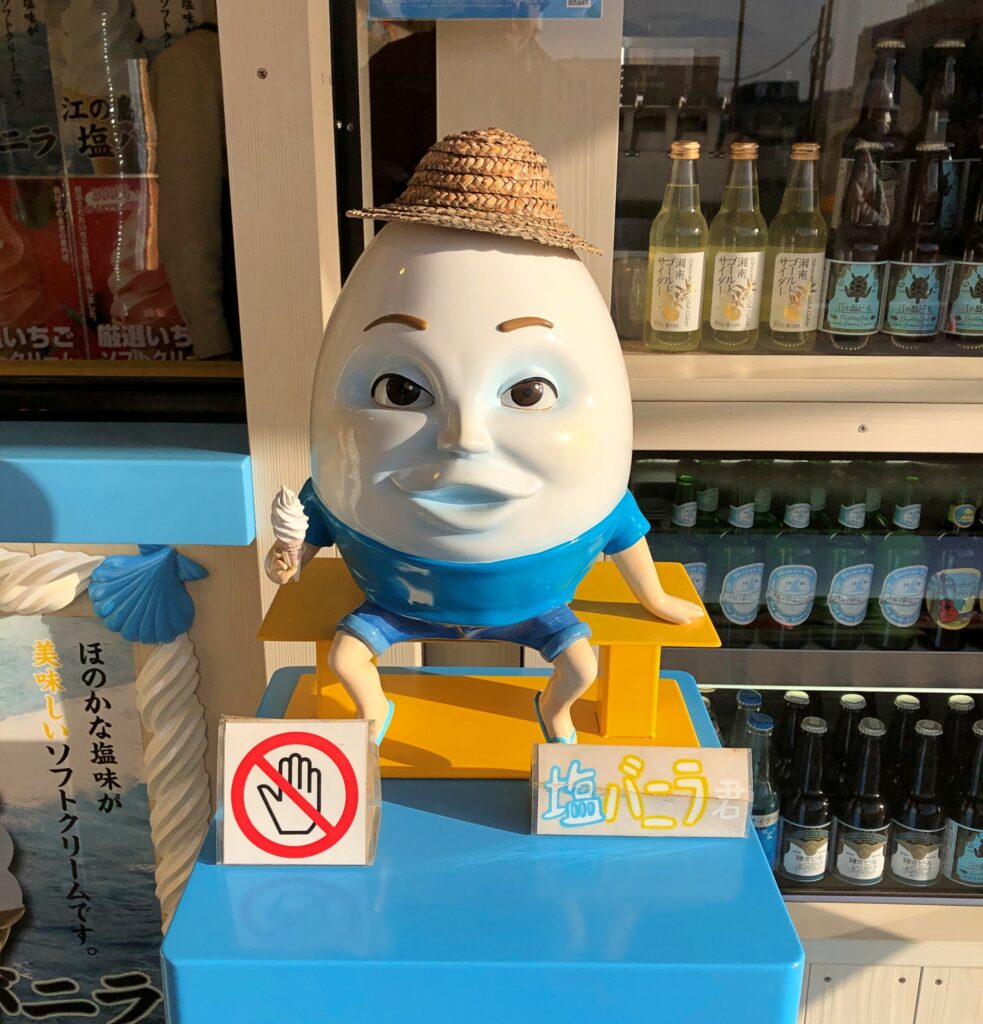
In Enoshima, near the ocean, this fellow hawks soft serve ice cream. Goo goo g’joob. Look but don’t touch.
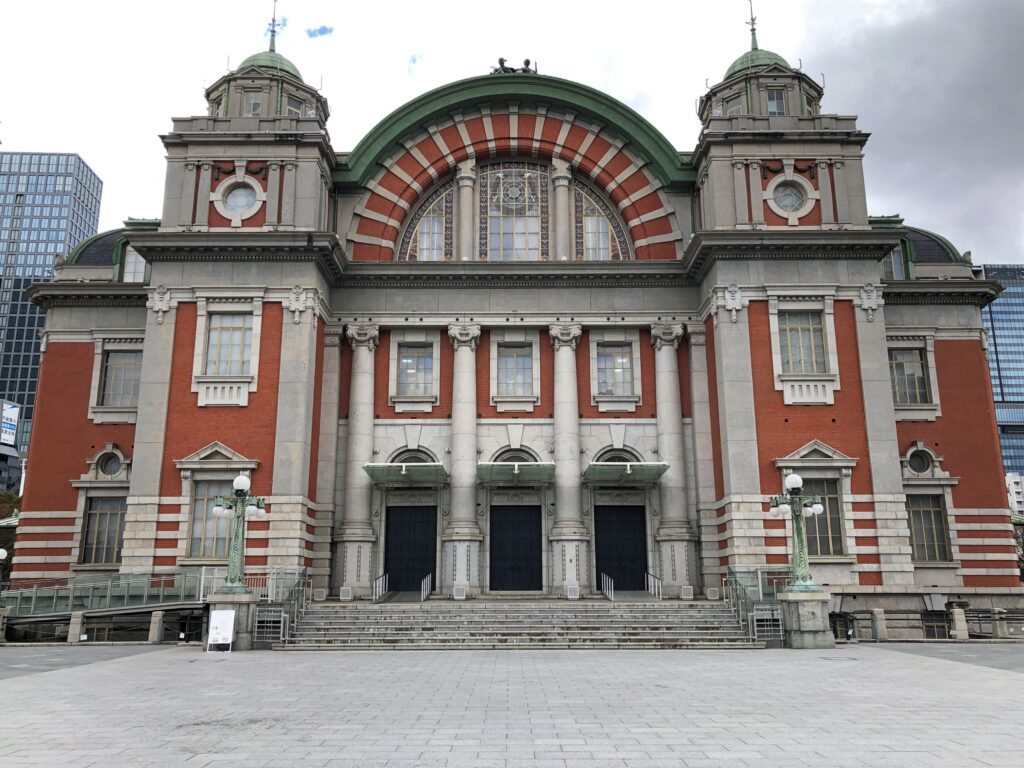
The handsome Osaka City Central Public Hall, completed in 1918. Amazing that it survived the war and urban renewal 20 years later, those forces that generally gave modern urban Japan the boxy concrete character it enjoys today.
India
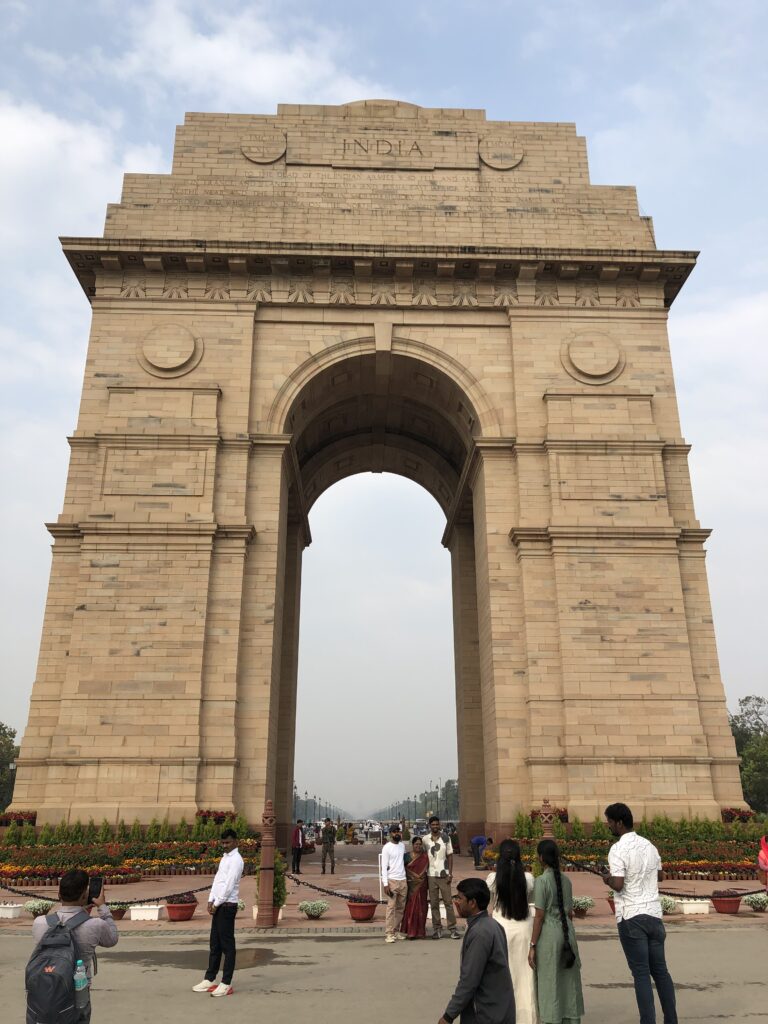
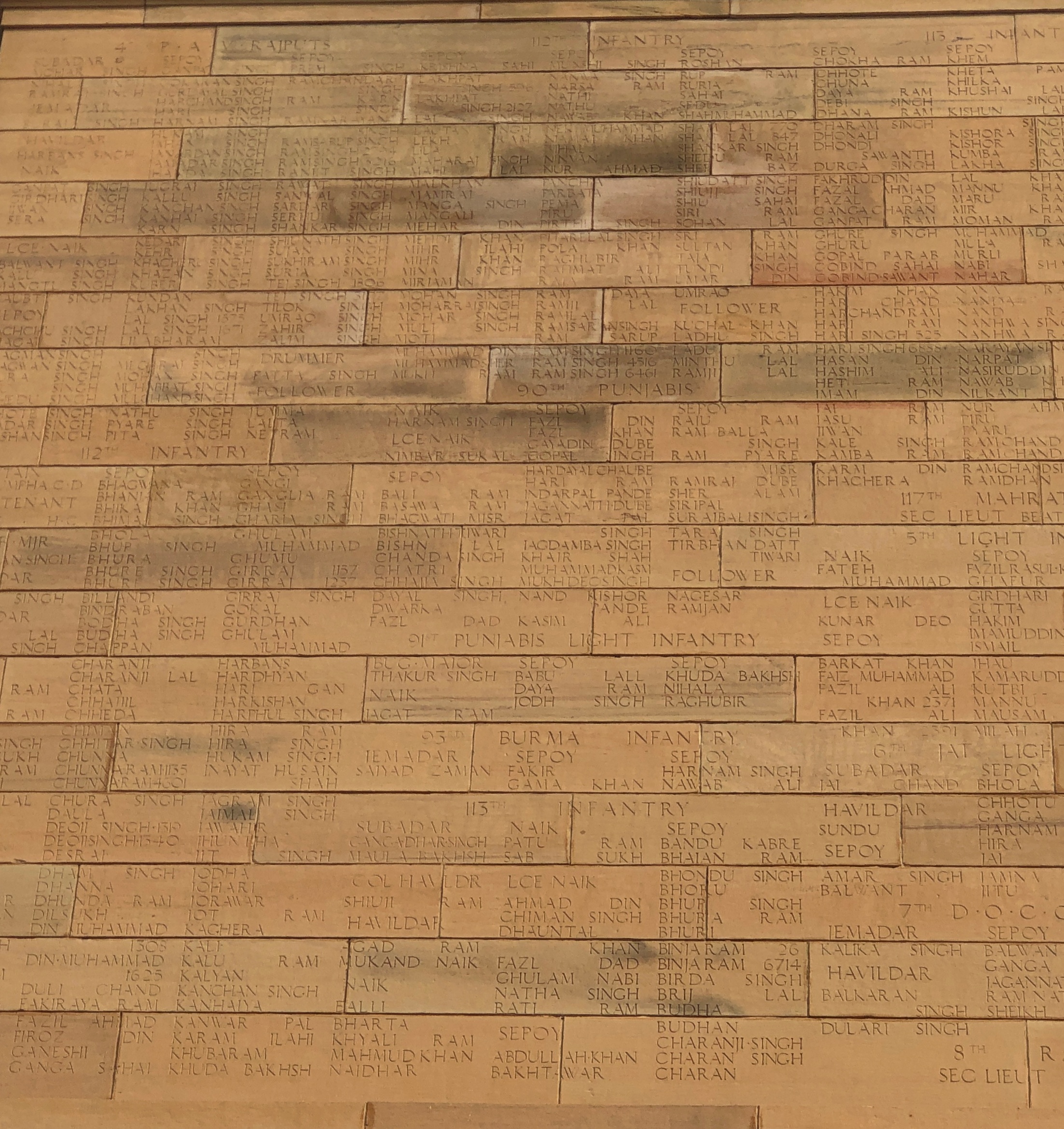
A monumental monument in New Delhi: India Gate, which honors more than 74,100 soldiers of the Indian Army who died during the Great War, and a number more in the Third Afghan War a few years later. They did their part. One of the larger relics of the Raj, unless you count things better described as legacies, such as railroad lines, parliamentary government, and the bitter feud between India and Pakistan.
While we were looking at India Gate, a group of about a dozen uniformed schoolboys, who had detached themselves from a larger group, approached me and asked where I was from. They were gleeful to hear “America,” a reaction I didn’t know anyone would have anymore, but I suppose they’ve seen a lot of our movies. A middle-aged male chaperon appeared in short order and shooed them away, while giving me a sidelong glance with a hairy eyeball, though I hadn’t precipitated the encounter in any way. I was just a suspicious foreigner, I guess.
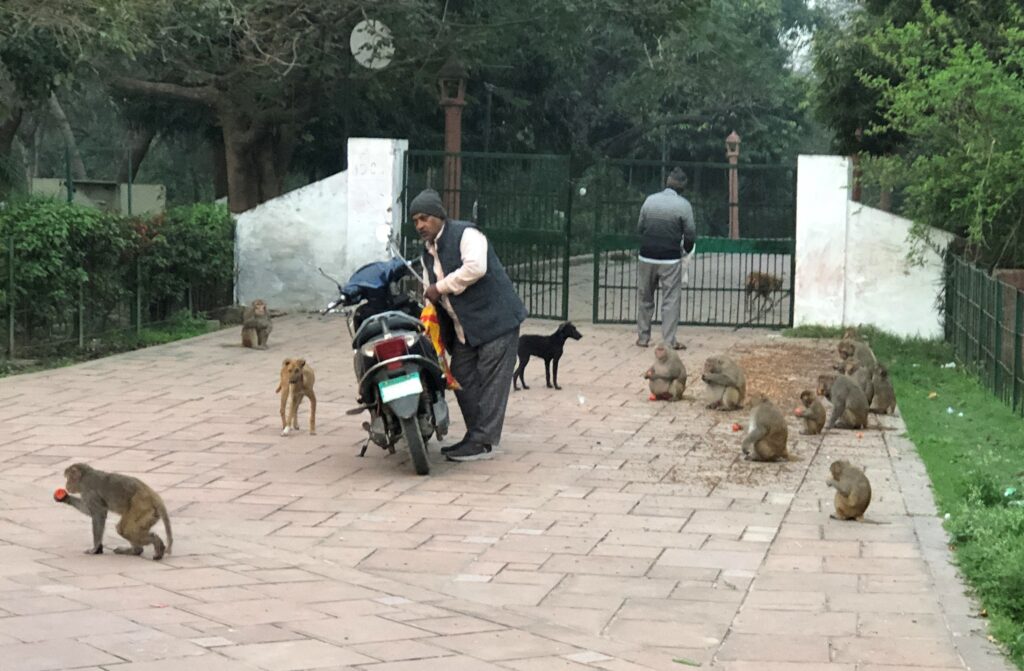
The Taj Mahal has a fair amount of parkland around it. That means a population of monkeys, too. I spotted more monkeys in urban India than I would have anticipated. These didn’t seem to be bothered by the men, the dogs or the motorcycle.
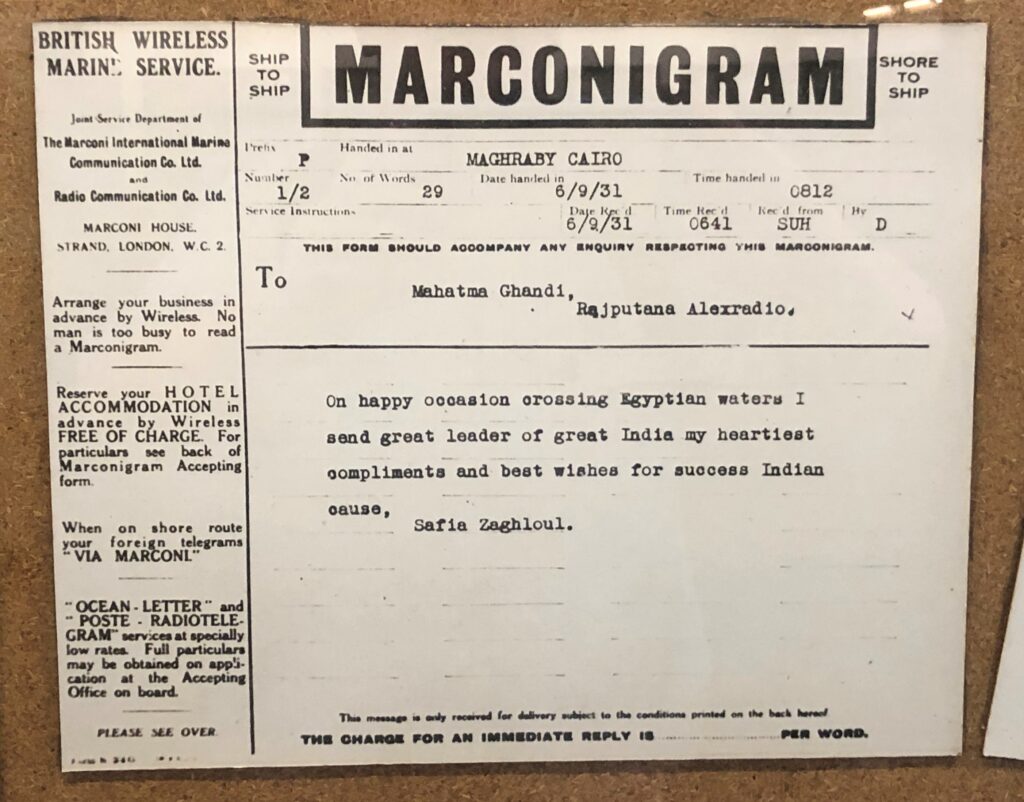
On display at the Ghandi Museum: a Marconigram. I don’t know that I’d ever seen one of those before. Or maybe there was one on display at the Titanic Museum in Branson. Anyway, that’s one good reason to go to museums: for things once common, now curiosities. Safia Zaghloul was an Egyptian political activist of the time.
United Arab Emirates
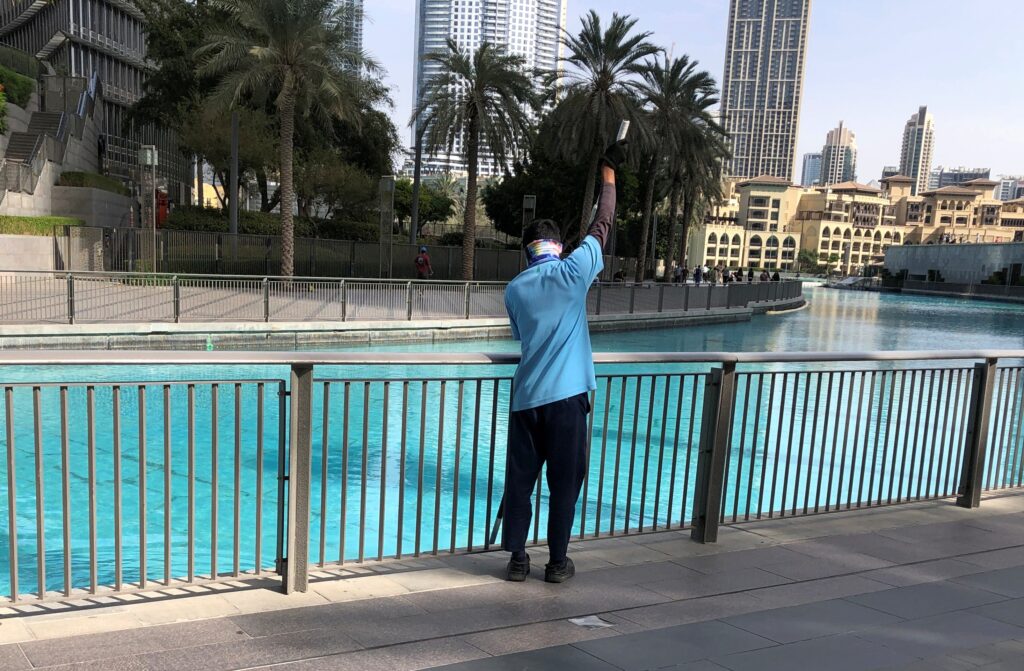
In Dubai it seemed like there were more men at work sweeping, mopping and other cleaning of floors and other flat places, per square meter, than anywhere else I’ve ever been. There are worse things to do with cheap labor.
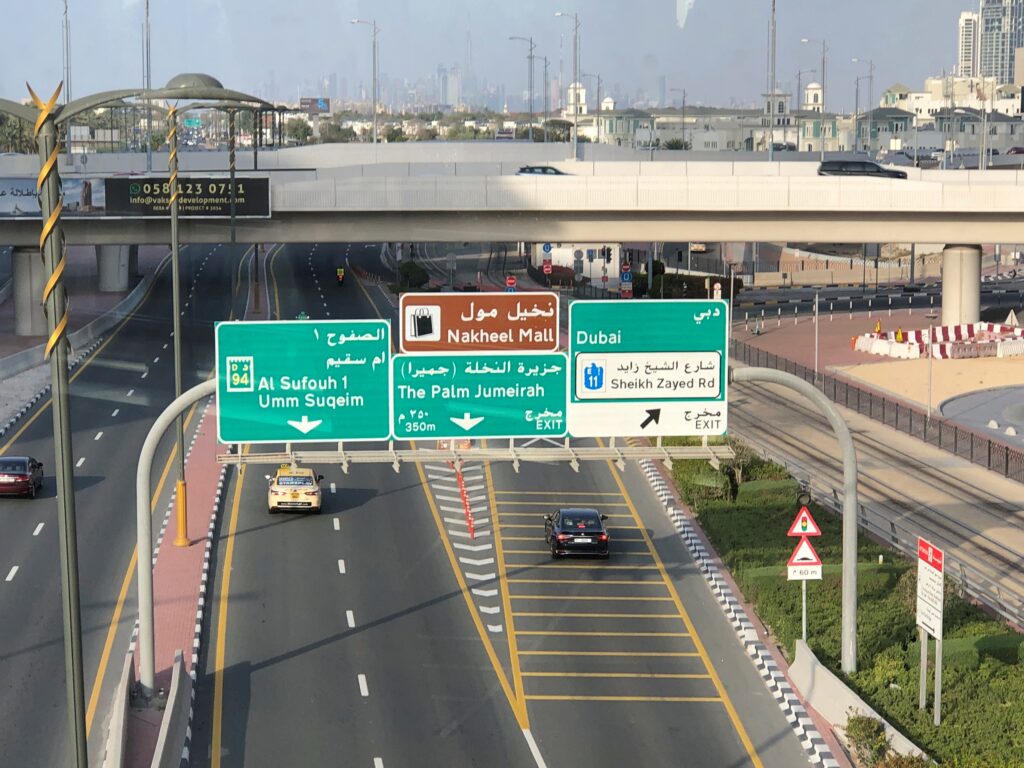
Not sure exactly where this was, except somewhere out on Palm Jumeirah. Must have been a wall, or like a wall, in one of the posh retail corridors winding through one of the posh resort properties amid the poshness of the island.
Note: White on green is common indeed around the world.
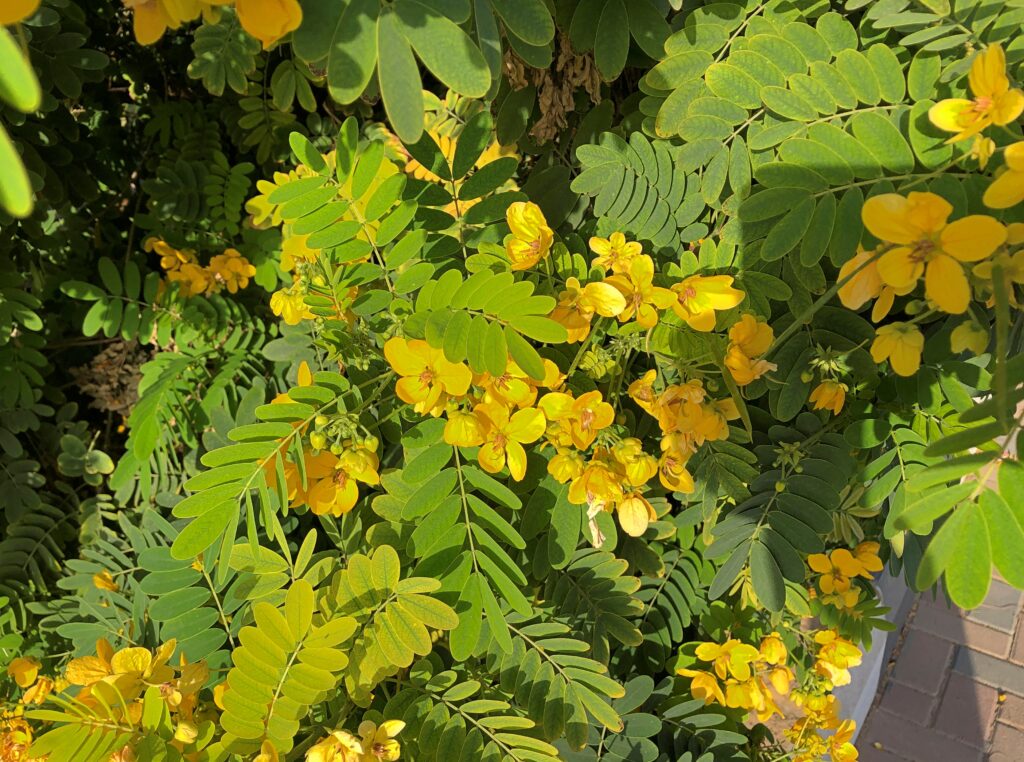
Desert flowers. Of course, sprinklers water that bit of terrain at regular intervals.
Germany
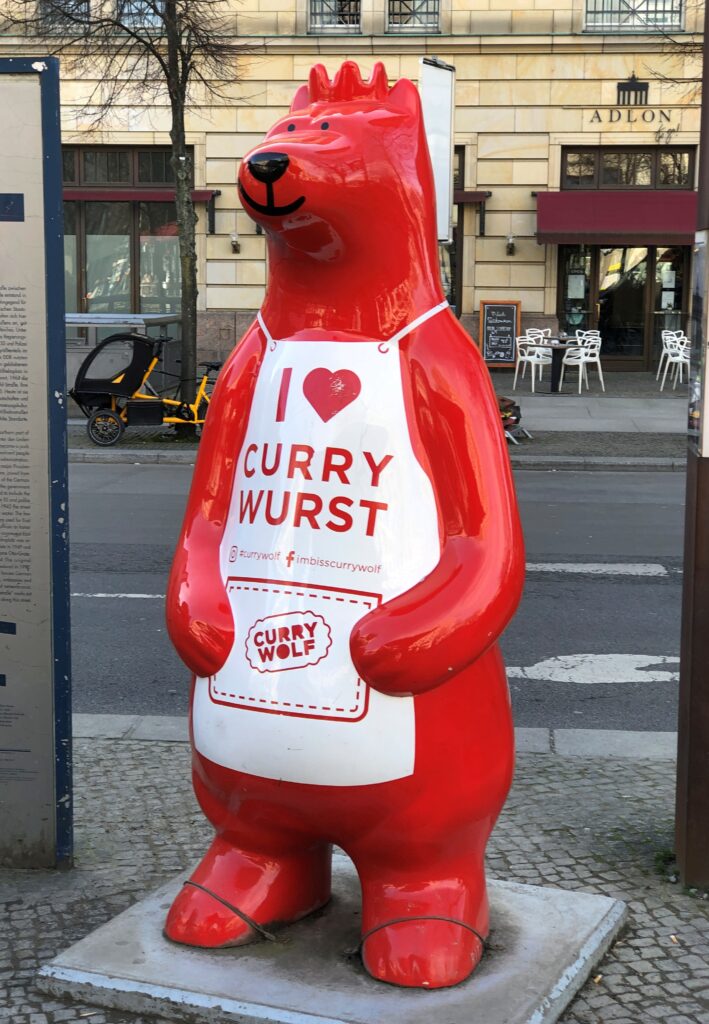
What’s Berlin without currywurst? They say it came into style soon after the city was divided.
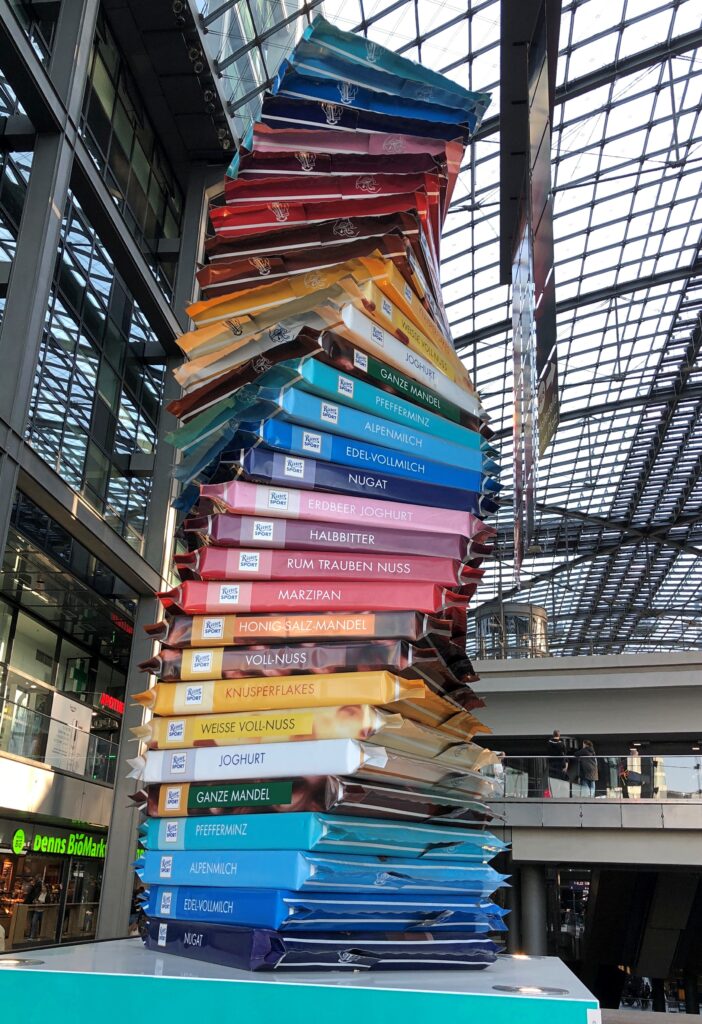
What would Germany be without Ritter Sport? A giant stack of them can be seen, in their great variety, at the Hauptbahnhof in Berlin. Later, I bought about 10 squares of RS at a discount price at a Netto grocery store near our hotel. Think Aldi or Lidl, but more cluttered.
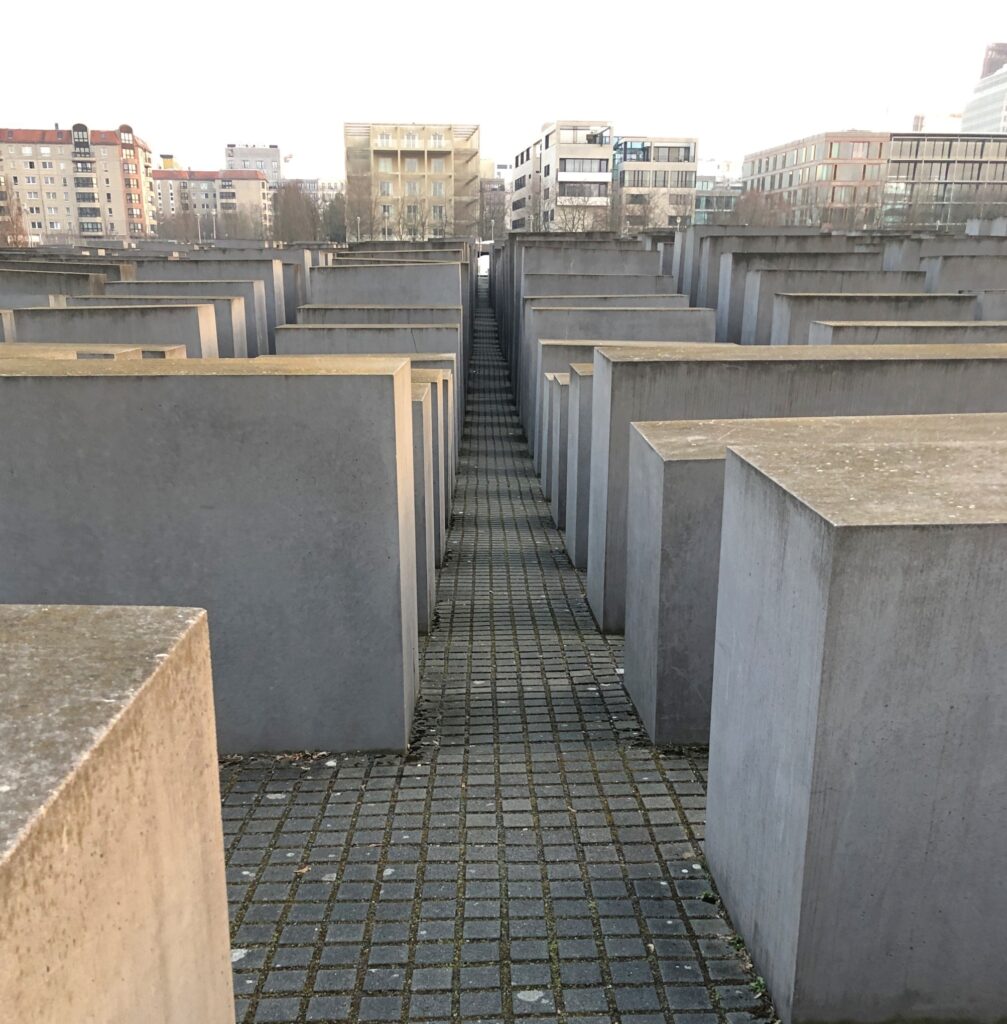
Views of the Memorial to the Murdered Jews of Europe, Denkmal für die ermordeten Juden Europas, near the Tiergarten in Berlin. It wasn’t there in 1983.
Czech Republic
Not calling it Czechia. Or, if it ever comes to it, not calling India Bharat, either.
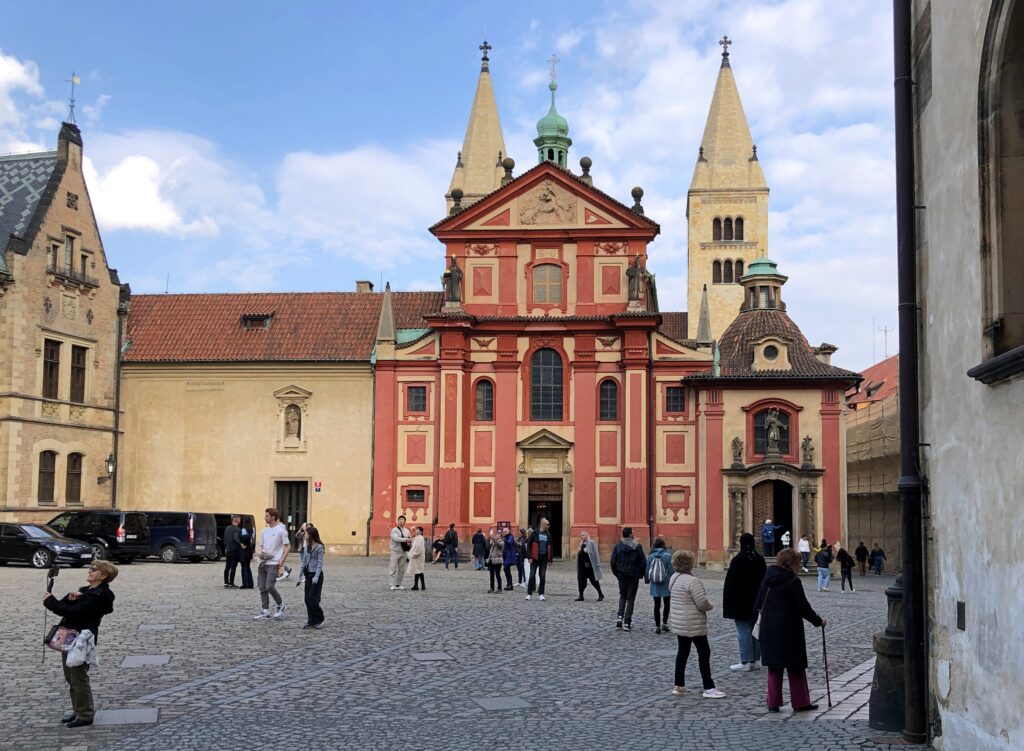
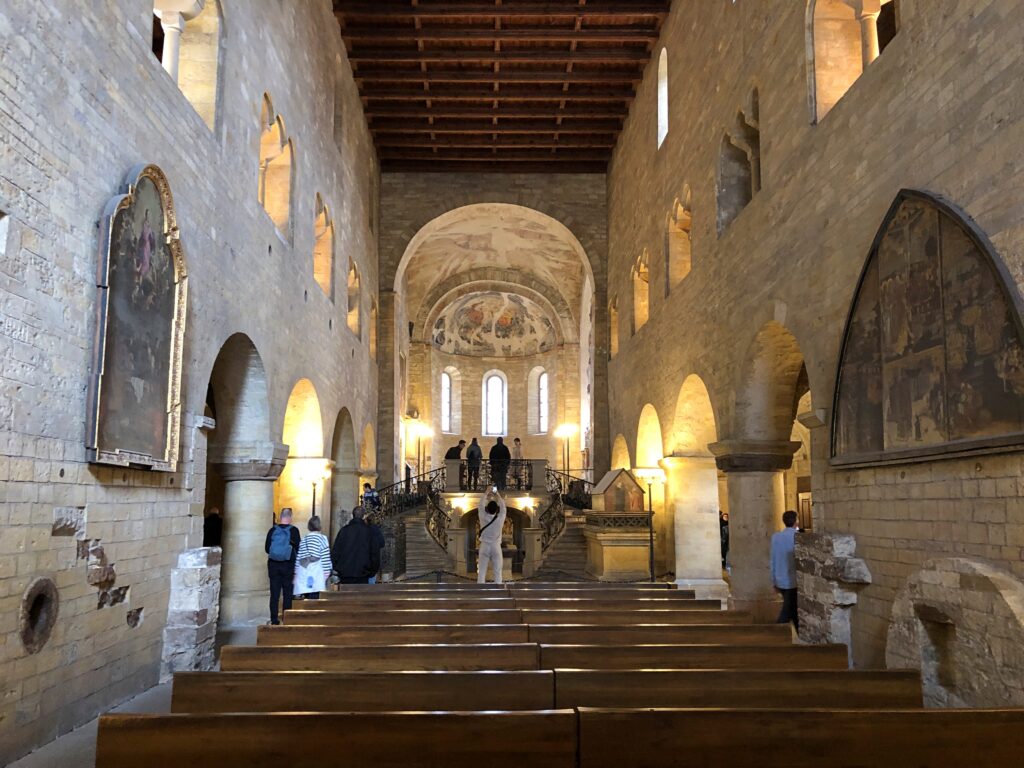
St. George’s Basilica. I admired the nearby St. Vitus Cathedral. That’s a grand edifice. But St. George’s has that human scale, and echoes of an even earlier time. It was completed during the time of Good King Wenceslaus.
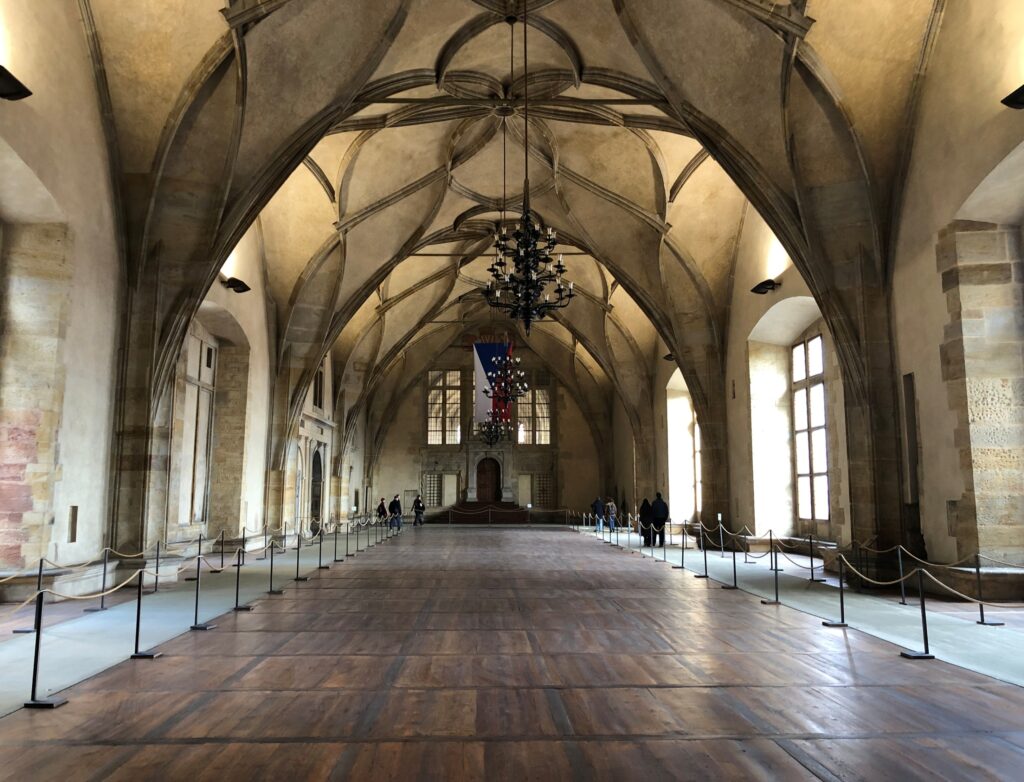
Vladislav Hall. The site of centuries of Bohemian parties, banquets and balls, me boys. That and affairs of state.
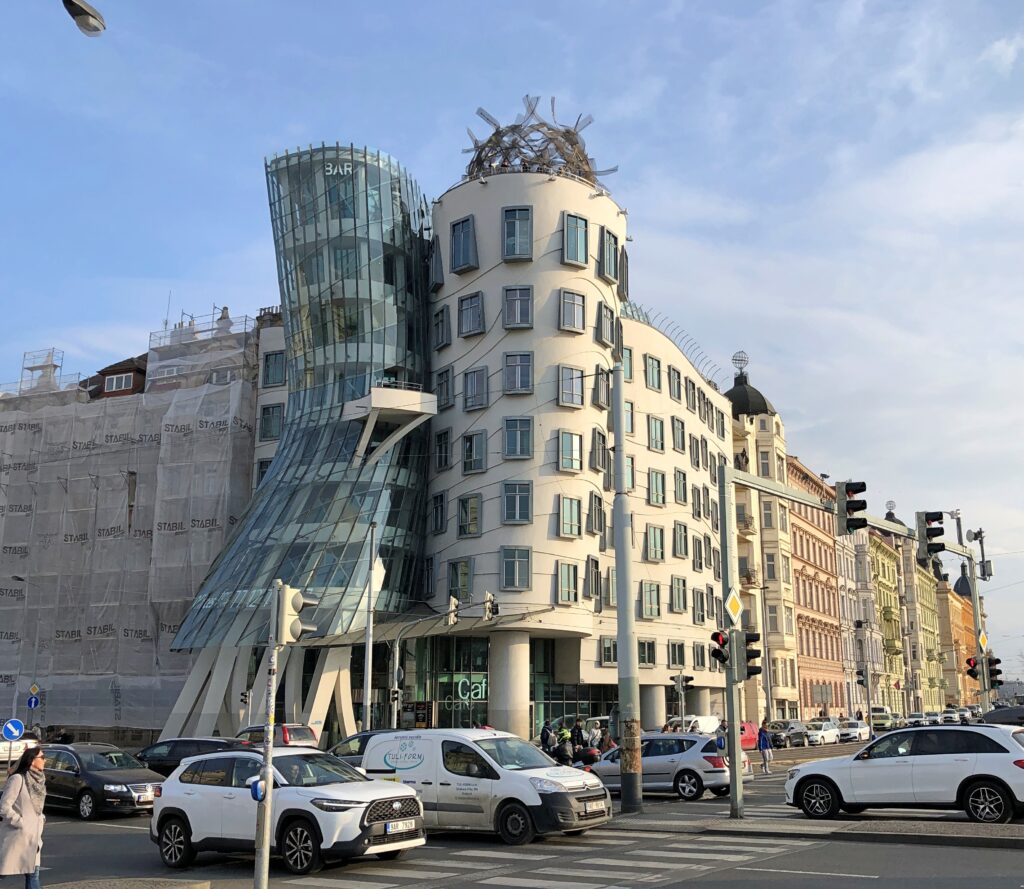
The Dancing House. We rode a streetcar line out of our way to see it, though not that far. It wasn’t there in 1994.
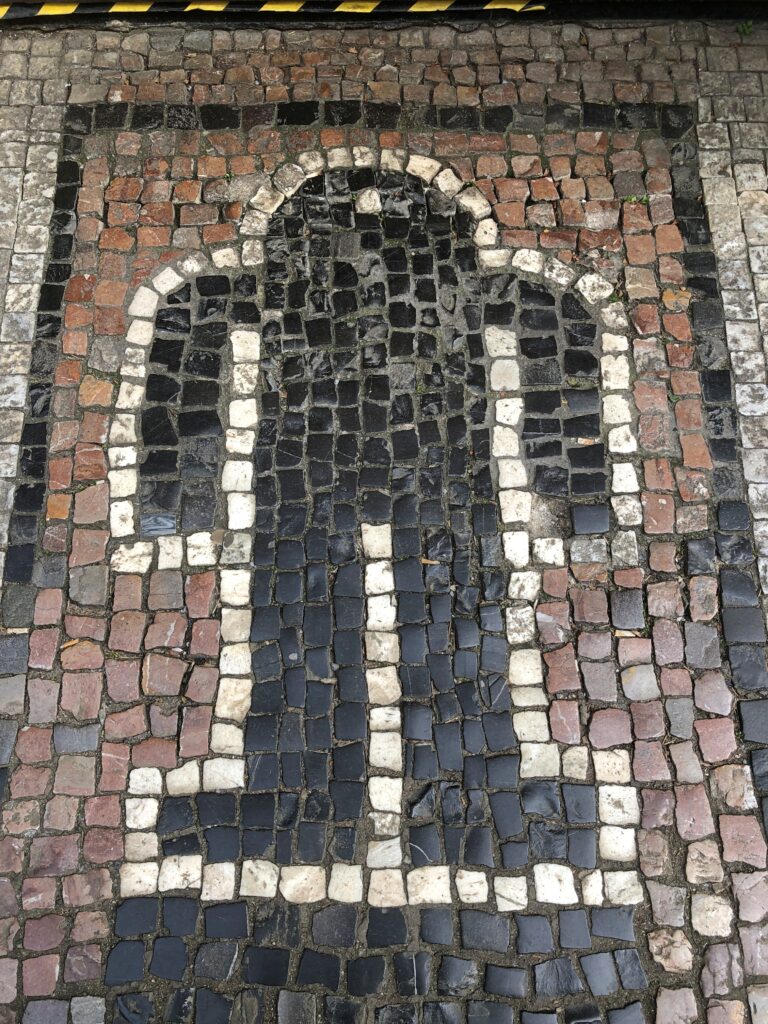
A sidewalk golem in the old Jewish Quarter of Prague. The Sidewalk Golems was a relatively obscure band who sometimes toured with Irwin Hepplewhite and the Terrifying Papoose Jockeys.
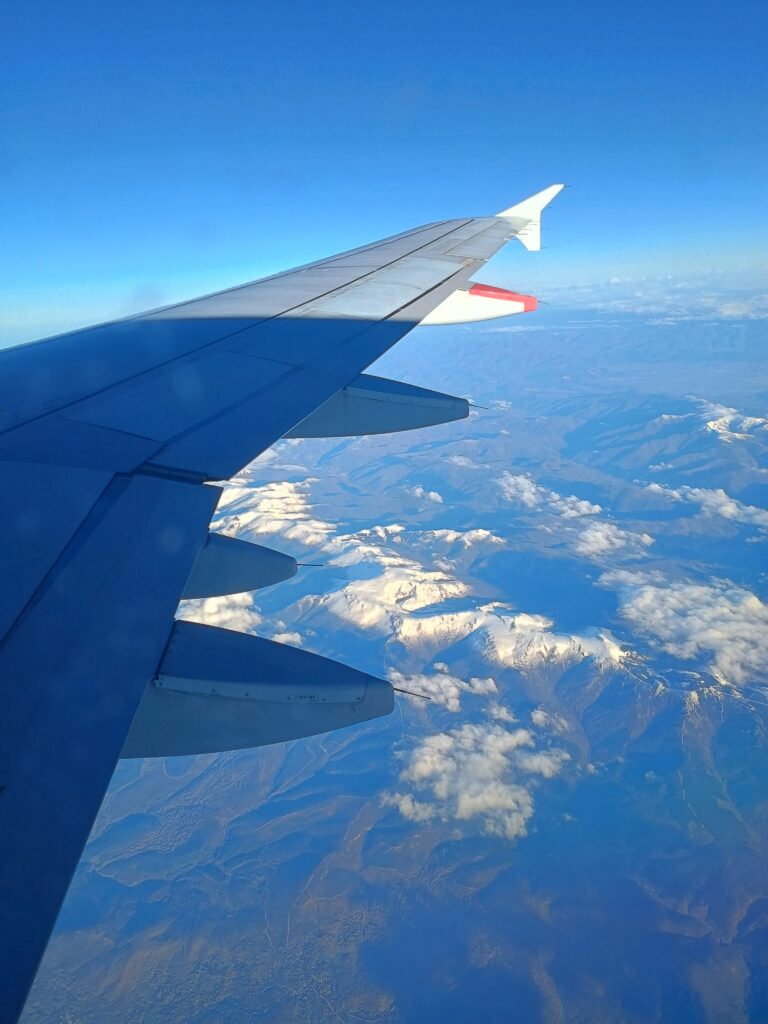
This could have been over Spain or Portugal.
The last image of thousands that I took, a staggering number in any context except digital images that take practically no time or effort to make.
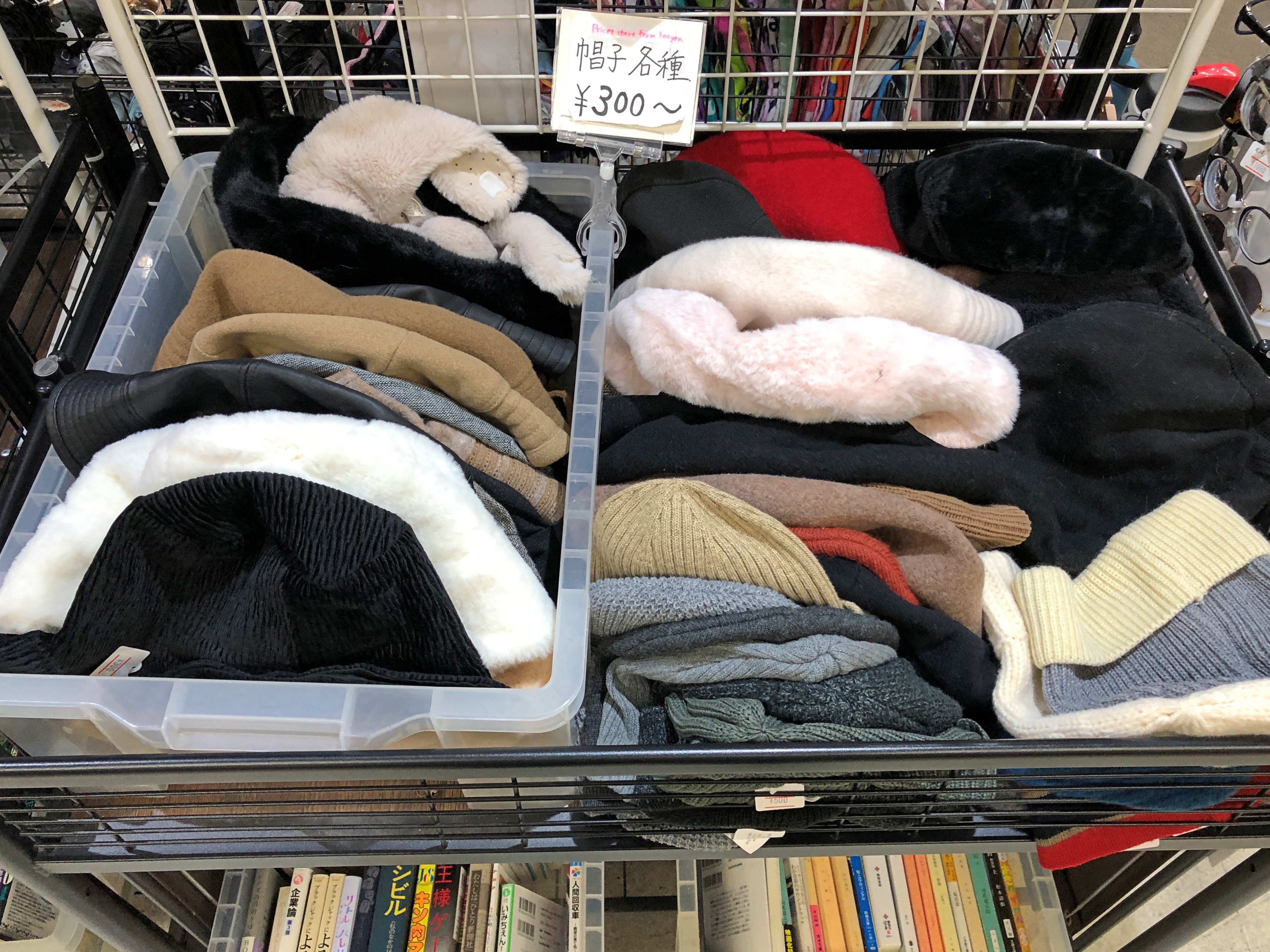
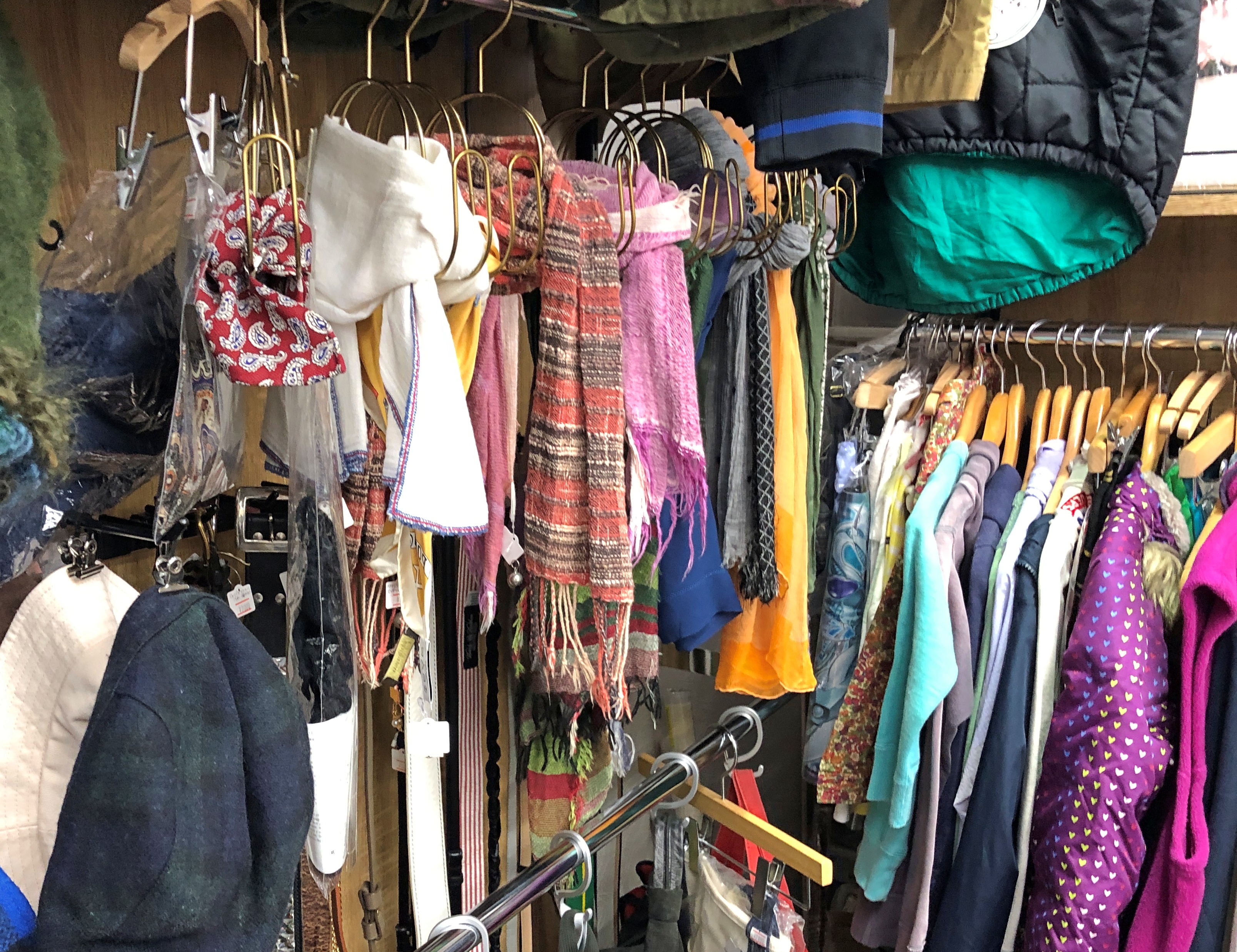
The sign doesn’t say the winter accessories are ¥300, but rather that they start at ¥300. A critical detail, but even so the items aren’t pricey.
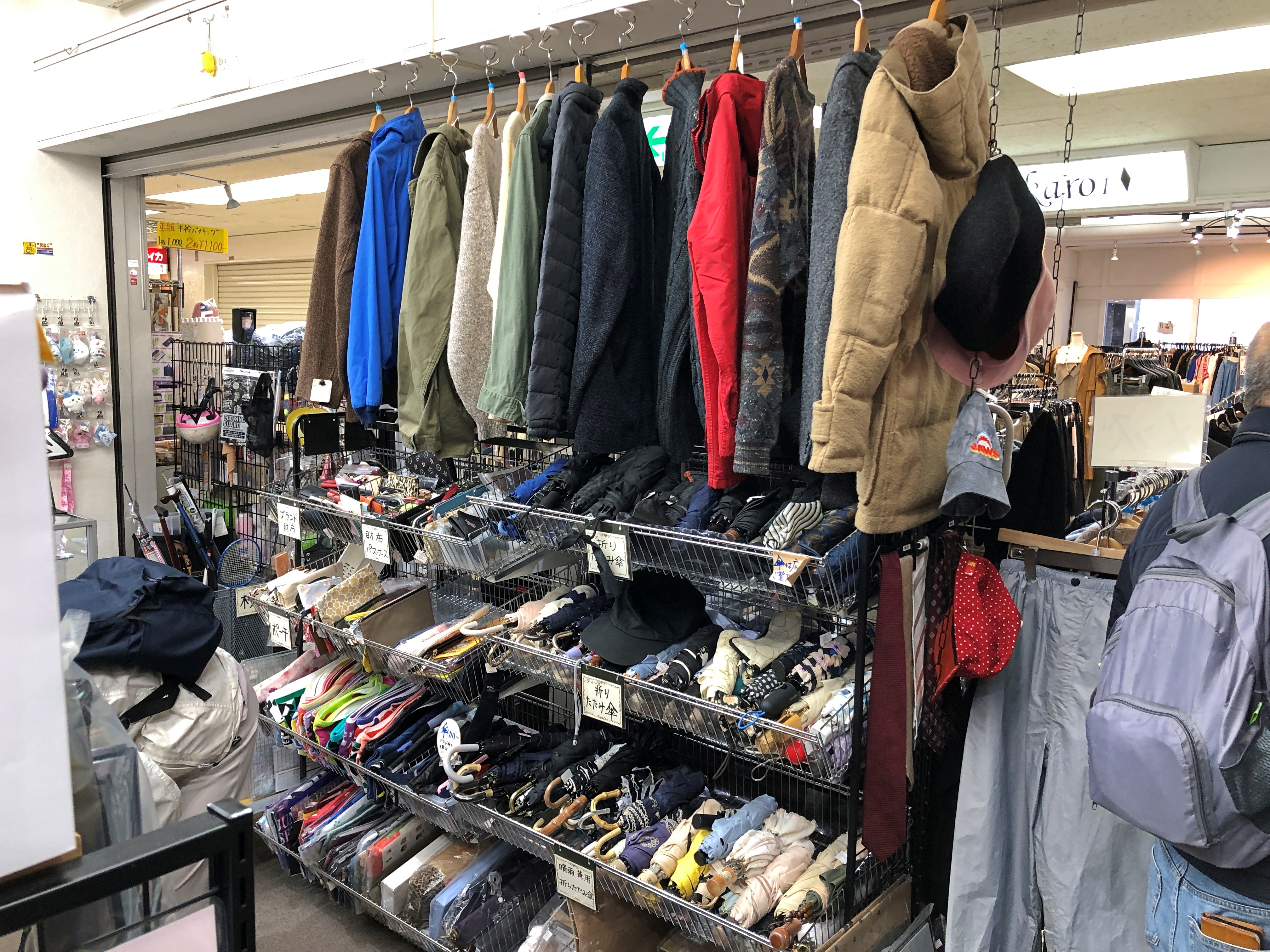
We’d come across a curious shop deep in the heart of Osaka.
Riding into Osaka on a Keihan regional line, we transferred to the city’s subway system, specifically the Midosuji line (御堂筋線, Midōsuji-sen), which runs under a grand avenue of that name, Midosuji Blvd., for a few miles. The Midosuji line proceeds from Umeda to Namba and beyond to places like Tennoji, names that might not mean much to the outside world, but which are old and familiar to me.
My first summer in Japan, I hung out briefly with Bernadette and Lyn, two Kiwis, and Sean, a Californian.
“I tell people at home I can speak Japanese,” Sean said one fine evening at Osaka Castle Park. He’d only been in the country a few weeks.
“Oh, yeah?” said the saucy Lyn.
“Yeah, Yodoyabashi. Hommachi. Daikokucho!”
That was a laugh. He’d rattled off some of the station names on the Midosuji line.
I digress. Yuriko and I went a few stations south, then emerged at ground level and headed east on foot, along another major avenue, though without the ginko trees or skyscrapers or wide bridges of Midosuji Blvd. I had to look up the new street’s name later: Chou-Dori, a literal translation of which would be, Middle Road.
Above Chou-Dori is a major expressway. Built under the expressway is a row of massive buildings, one after another, maybe 10 or more of them: Semba Center, the entire collection is called. Space is at a premium in urban Japan.
Each Semba Center building had entrances on either end, directly in the shadow of the expressway, and each building – at least the half-dozen or so we walked through – was packed with discount retailers, lining each side of a hall that ran the entire length of the building. You want discounters in Osaka, this is the place to come, Yuriko told me. Clothes, mostly, including more than one cloth merchant, but also household goods and decorative items.
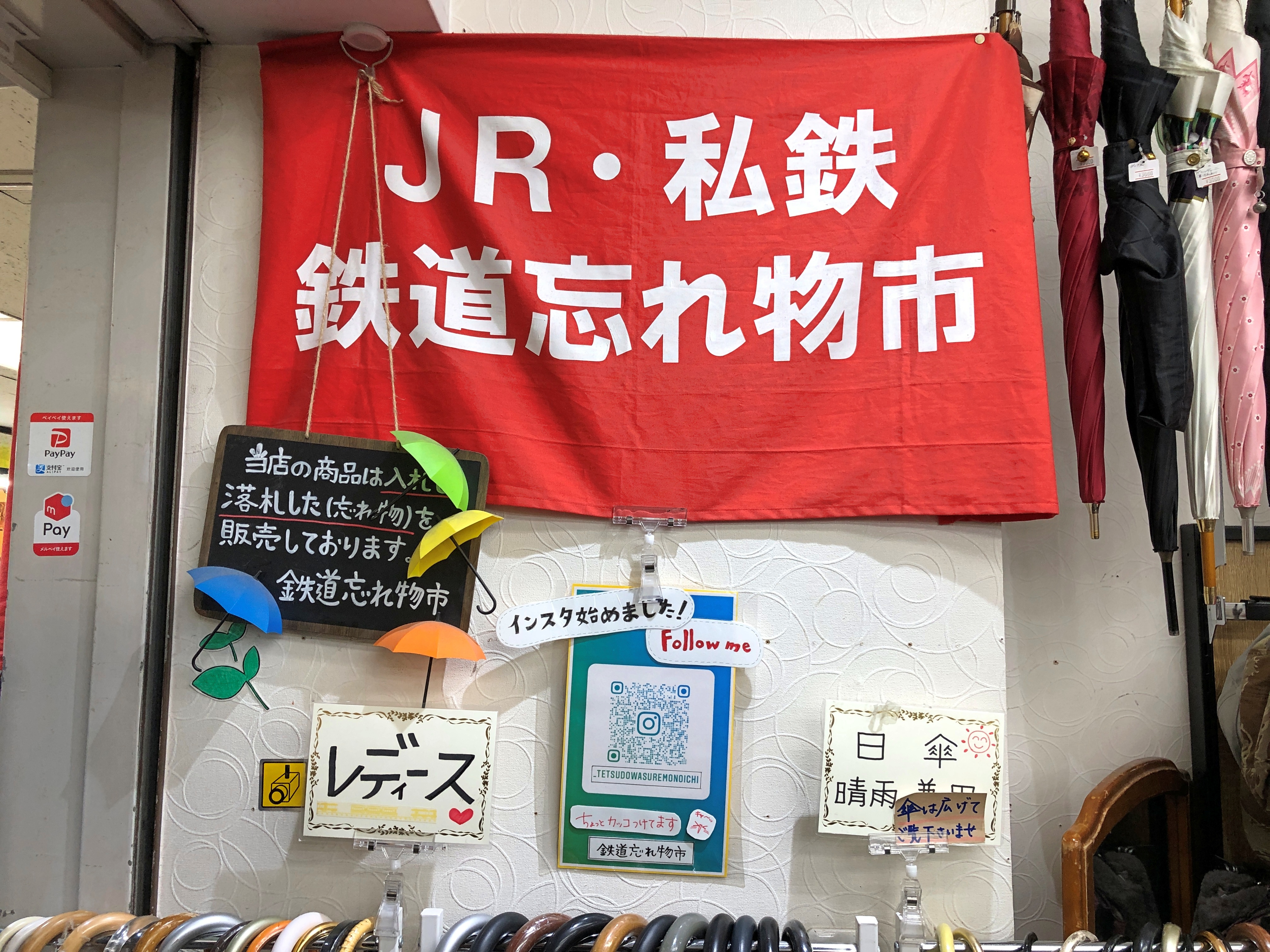
At Semba Center Building No. 9, 3-3-110 Senbacho, Chuo-ku, Osaka (to give its full address) is Tetsudo Wasuremono Ichi.
That is, the Railroad Forgotten Items Store. It’s a store that sells items left on JR trains – presumably Osaka-area JR trains, since I know there is an equivalent store in Tokyo. Many millions of people use those trains every day, so it stands to reason that there is a constant flow of many left items, all the time.
JR must have a deal with the store owner, the details of which hardly matter, though I suppose the railroad acts as a wholesaler of items left over a few months (some details are here). I’ll bet really valuable items aren’t sold that way, though. If somehow your Brasher Doubloon ended up in the JR lost and found, it would mean you were grossly careless, someone who found it had no idea what it was, and a JR-favored coin dealer would get to buy it.
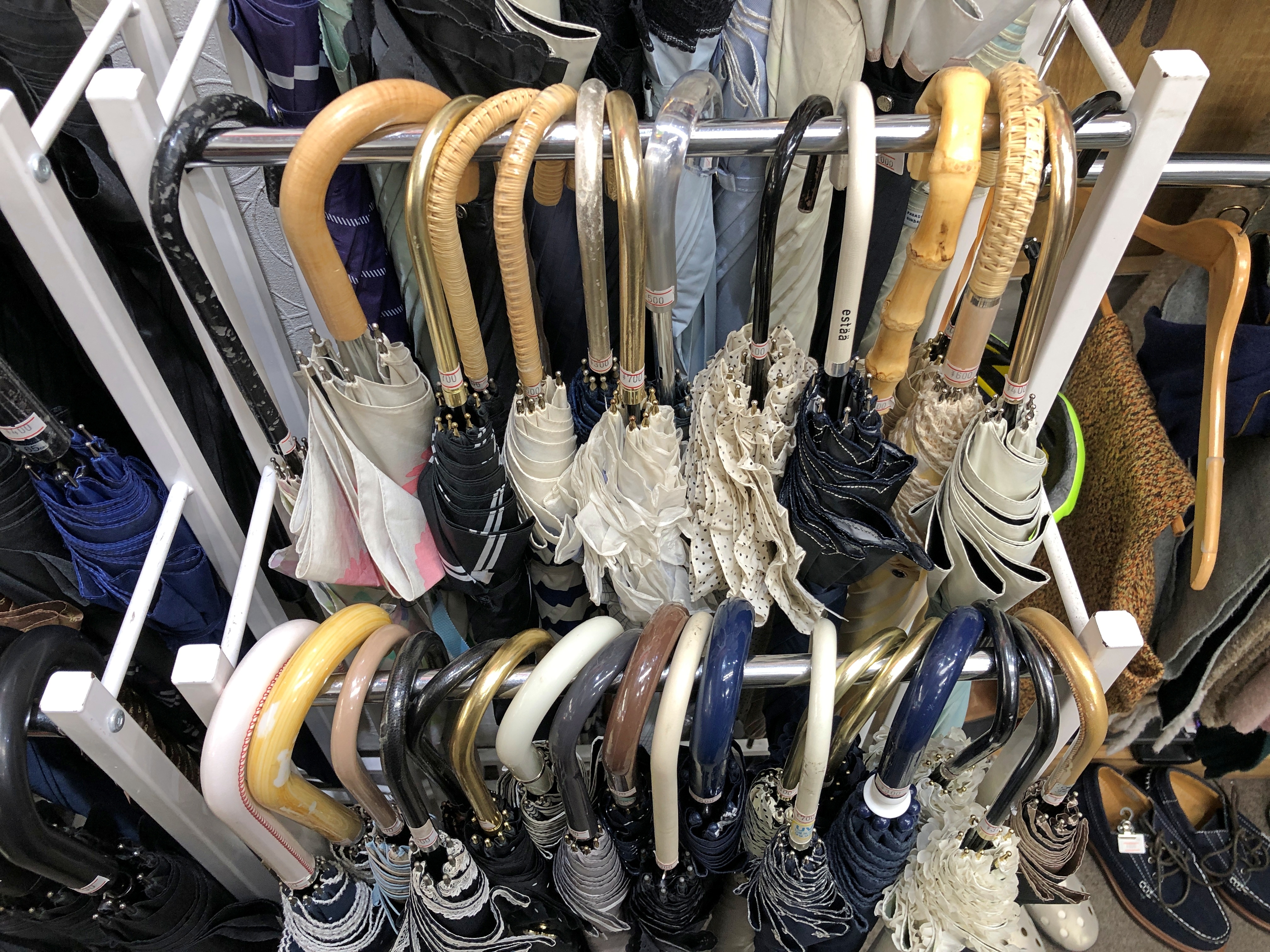
Be that as it may, people leave behind a lot of umbrellas. In Osaka, there’s no excuse to pay full price for an umbrella.
The place is well stocked with clothes, too.
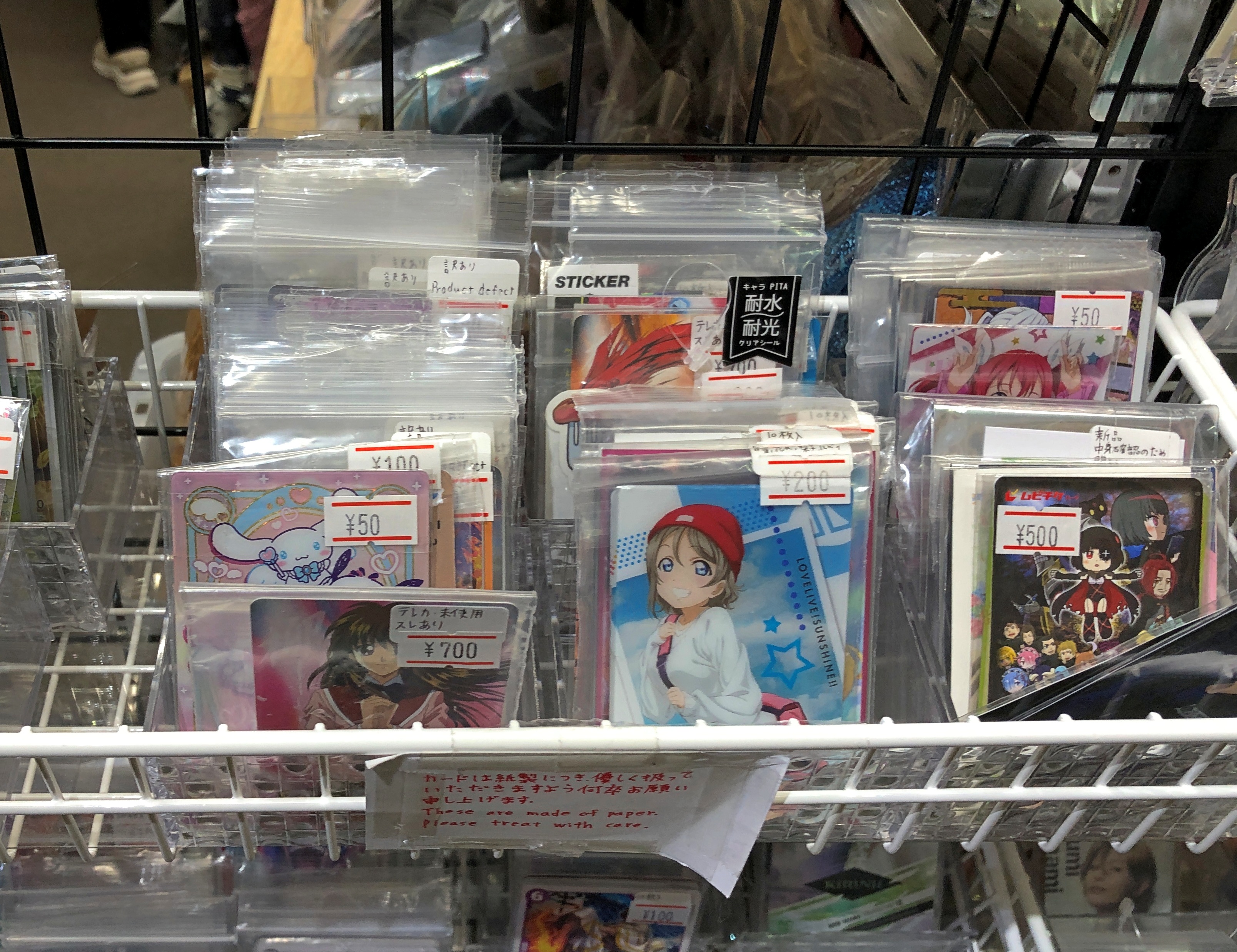
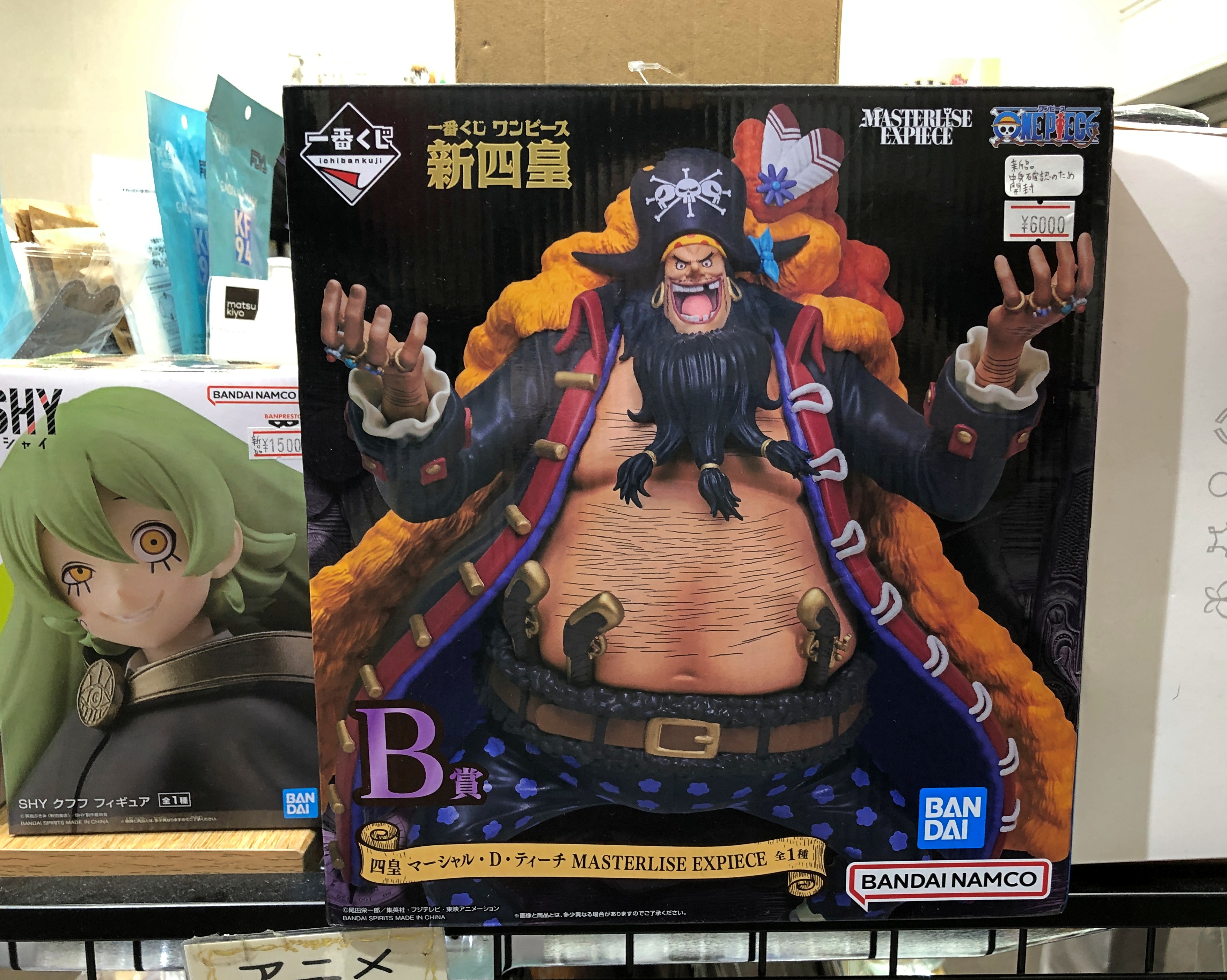
Many are the small items. Seems only reasonable.
People lose some odd things.
There’s enough readable text for me probably to figure out what this is, but somehow not knowing is more satisfying as a travel memory.
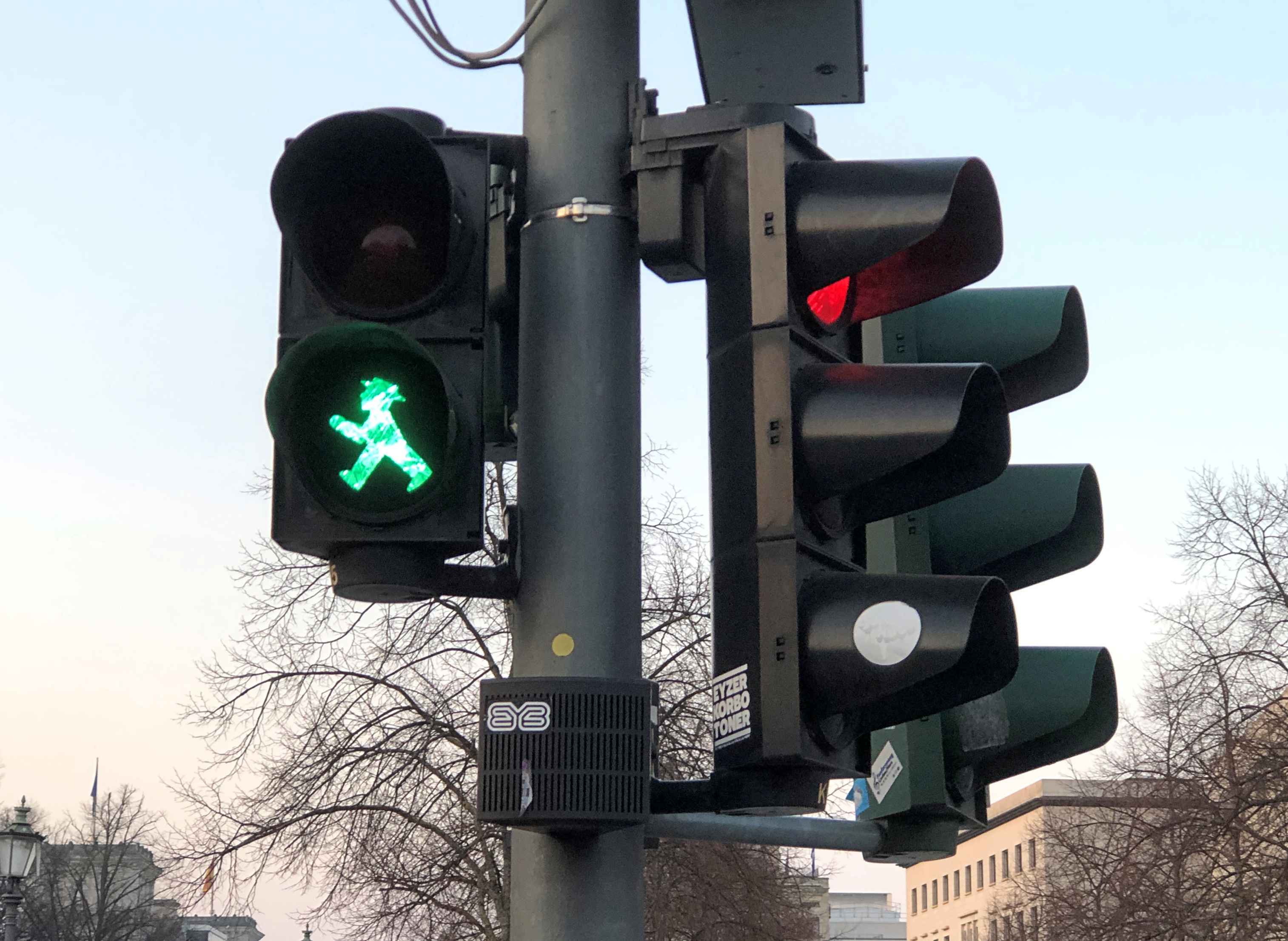
Spend enough time as a pedestrian in the former East Berlin – and it doesn’t actually take that long – and you begin to notice that the Walk/Don’t Walk signals aren’t like anywhere else. Green and red, respectively, like everywhere else, but otherwise unique cartoon men in hats.
This is the Walk sign.
That probably would have remained a passing thought for us, but at the Berlin Hauptbahnhof we spotted a store selling goods and souvenirs based on the cartoon man, who has a name: Ampelmann, that is, Traffic Light Man. The postcards were a bit expensive, but I was so amused I bought one to send and one to keep.
I sent the Walk green Ampelmann and kept the card with the Don’t Walk red Ampelmann (see below), who stands in front of various noteworthy structures in Berlin, such as the Brandenburg Gate, the TV tower at Alexanderplatz, and the Victory Column in the Tiergarten. The Walk green Ampelmann card has the same structures, but he’s strolling past them.
We also picked up an fine intangible souvenir when we learned about Traffic Light Man and his robust gait and distinctive headwear. It’s hard to know when you’ll find those, but find them you do if you’re paying just a little attention. Also, he’s a bit of fun on the beaten path — what could be more literally a beaten path than a street crosswalk?
The woman behind the counter told me that the lights were created in East Berlin in the 1960s, and when reunified Berlin wanted to phase them out in the 1990s, Berliners east and west weren’t having it. By then he was no mere traffic accessory, but a small yet vivid cultural phenomenon, star of comic strips, games and radio spots. He was too popular to be erased from street crossings throughout the east. So he remains, a rare beloved relic of the DDR, though I understand his backlights are now thoroughly modern LEDs.
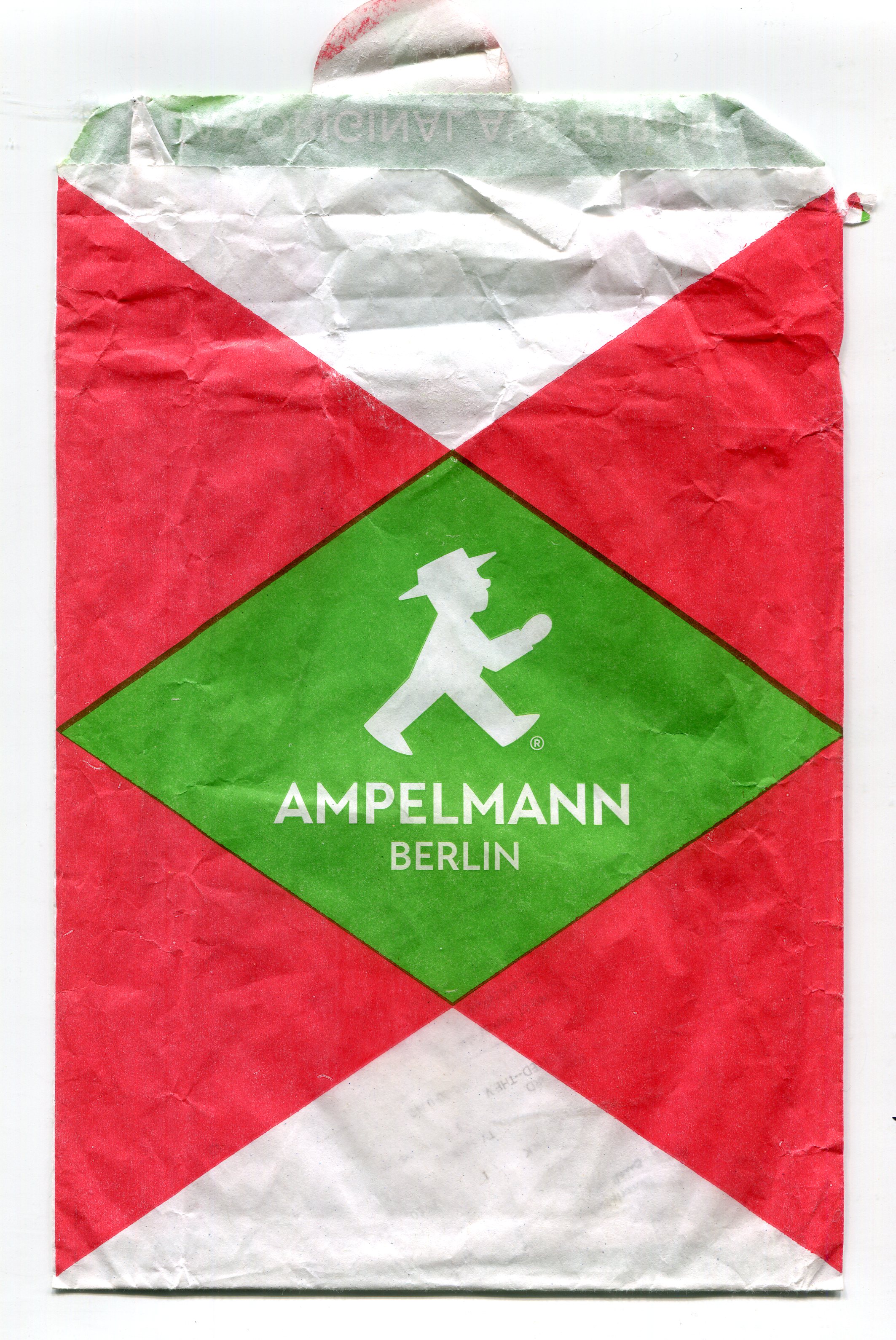
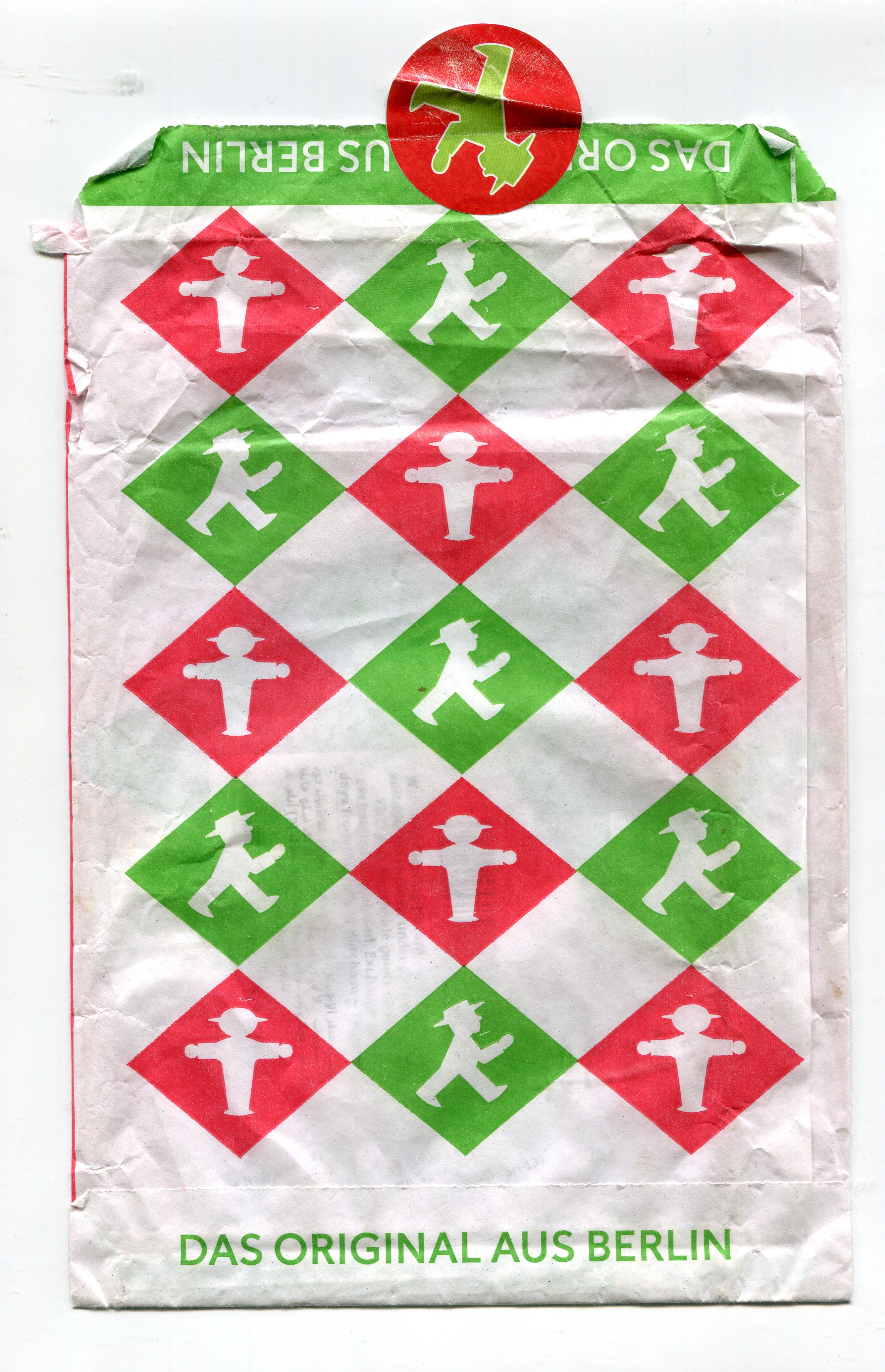
I got an additional souvenir in the form of a bag from the shop.
The story of Ampelmann, first drawn in 1961, is told by the web site of that name, including information about his creator, Berlin resident Karl Peglau (d. 2009), who is described as a traffic psychologist. I can’t ever remember hearing about that profession before, but I’d say that traffic in a lot of places could use professional help. Whatever your job, you could do a lot worse for a legacy than Ampelmann.
The main Ampelmann shop is on Unter den Linden. We must have walked right past it. But somehow we didn’t miss the DDR Museum a little further on, where the thoroughfare is called Karl-Liebknecht-Straße – another relic of East Berlin (before that, it was Kaiser-Wilhelm-Straße).
We didn’t feel like visiting the museum itself, but we did go to the gift shop.
As my wont, I got a few more postcards, while Jay got a refrigerator magnet. This one: Marx, Engels and Lenin. None of them, of course, lived long enough to encounter refrigerator magnets, but I’m pretty sure they would have denounced them as bourgeois frivolity. All the more reason to get some.
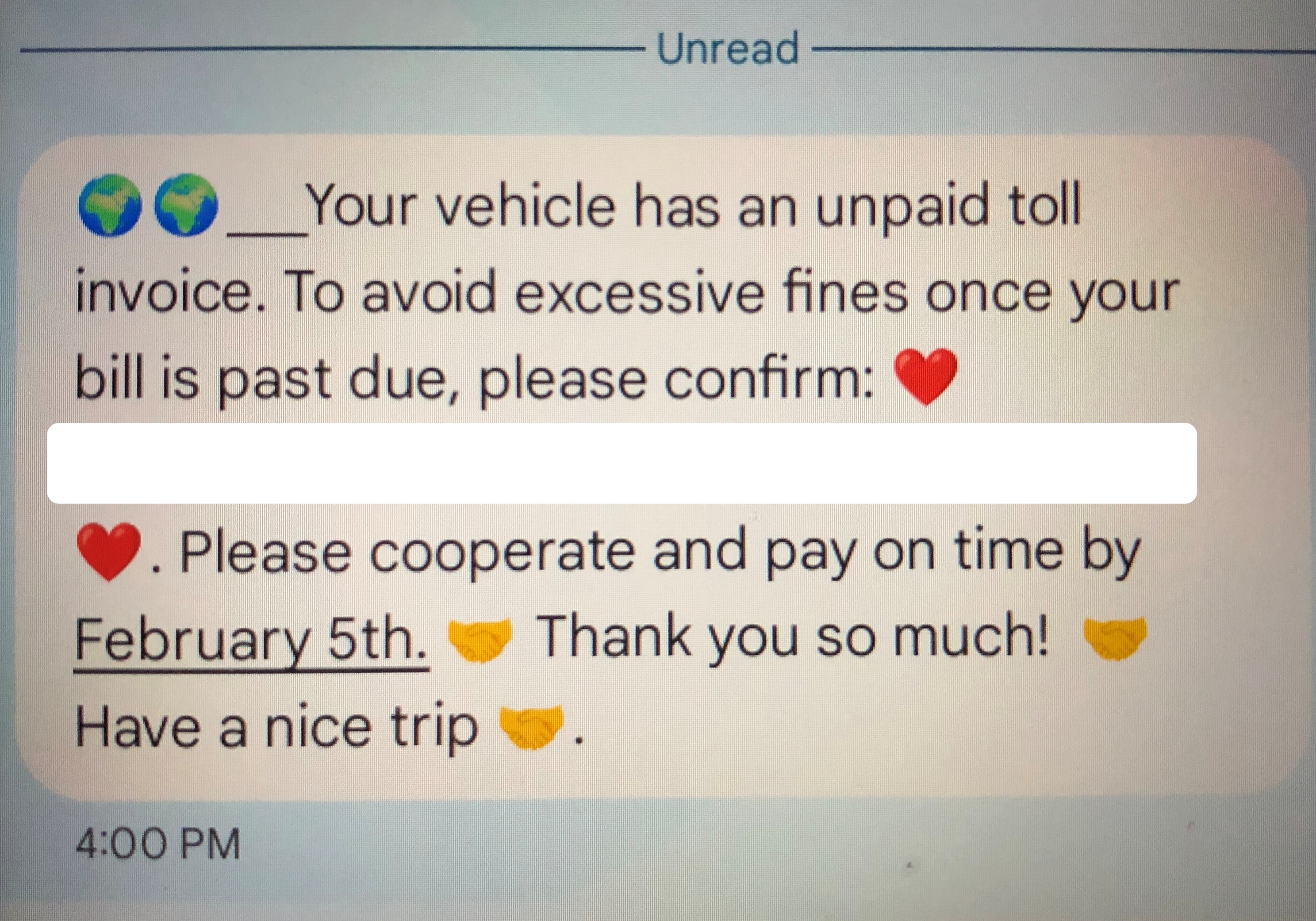
As scam text messages go, this one needs work. Mostly literate, but the tone is off.
I don’t think the tollway authority has a bit of girlishness in it. Or boyishness either, or any particle of human emotion. It functions as a machine: in its own small sphere, a calculating, persistent revenue-generating engine. Then again, I guess it’s fitting that the text message is likely machine produced.