Corsicana, Texas

Everything about this picture says Texas: the Collin Street Bakery sign, marking a famed Texas bakery; the Texas flags; the HEB grocery store; the pickup truck driving by; the onion domes off in the distance. Onion domes?

Texas4.25.14 001First a little background. On April 24, 2014, Jay and I drove south on I-45, the main road from Dallas to Houston. About 50 miles south of Dallas is Corsicana, seat of Navarro County, and home of the Collin Street Bakery. I’ve been eating its fruitcakes on and off for years, mostly by mail order, but in 1996 (I think) I passed through town and visited the bakery store.

As the web site notes: “The DeLuxe Texas Fruitcake or Pecan Cake you order today is still baked true to the old-world recipe brought to Corsicana, Texas from Wiesbaden, Germany in 1896 by master baker Gus Weidmann. He and his partner, Tom McElwee, built a lively business in turn-of-the-century Corsicana which included an elegant hotel on the top floor of the bakery.”

The hotel is gone, but you can still buy baked goods at the bakery store, including the signature fruitcake. We bought one to take to our mother, plus some smaller items for more immediate snacking. From the parking lot, we noticed those nearby onion domes, and being curious about onion domes in small-town Texas, we went over for a look. After all, how often do you see Moorish Revival buildings in small-town Texas? Probably more often than I’d think, but anywhere there one was.

It’s the Temple Beth-El, a former synagogue on 15th St. in Corsicana.  A shot from across the street is here; it’s a handsome building.

Like the Collin Street Bakery, Temple Beth-El too dates from the late 19th century. The Jewish community of Corsicana isn’t what it used to be – they probably went to Dallas, like everyone else – so in more recent years, the building’s been a community center overseen by the Navarro County Historical Society.

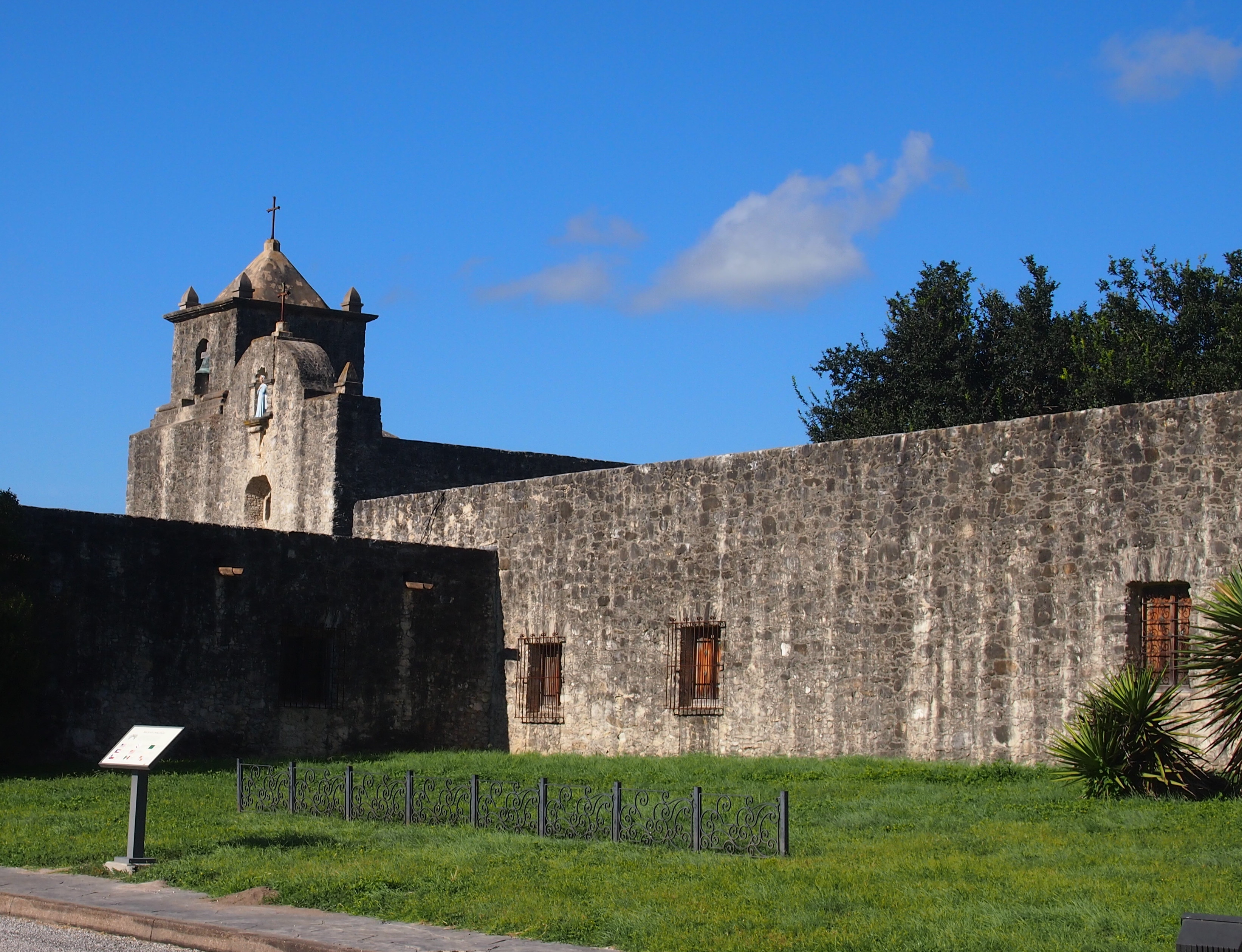
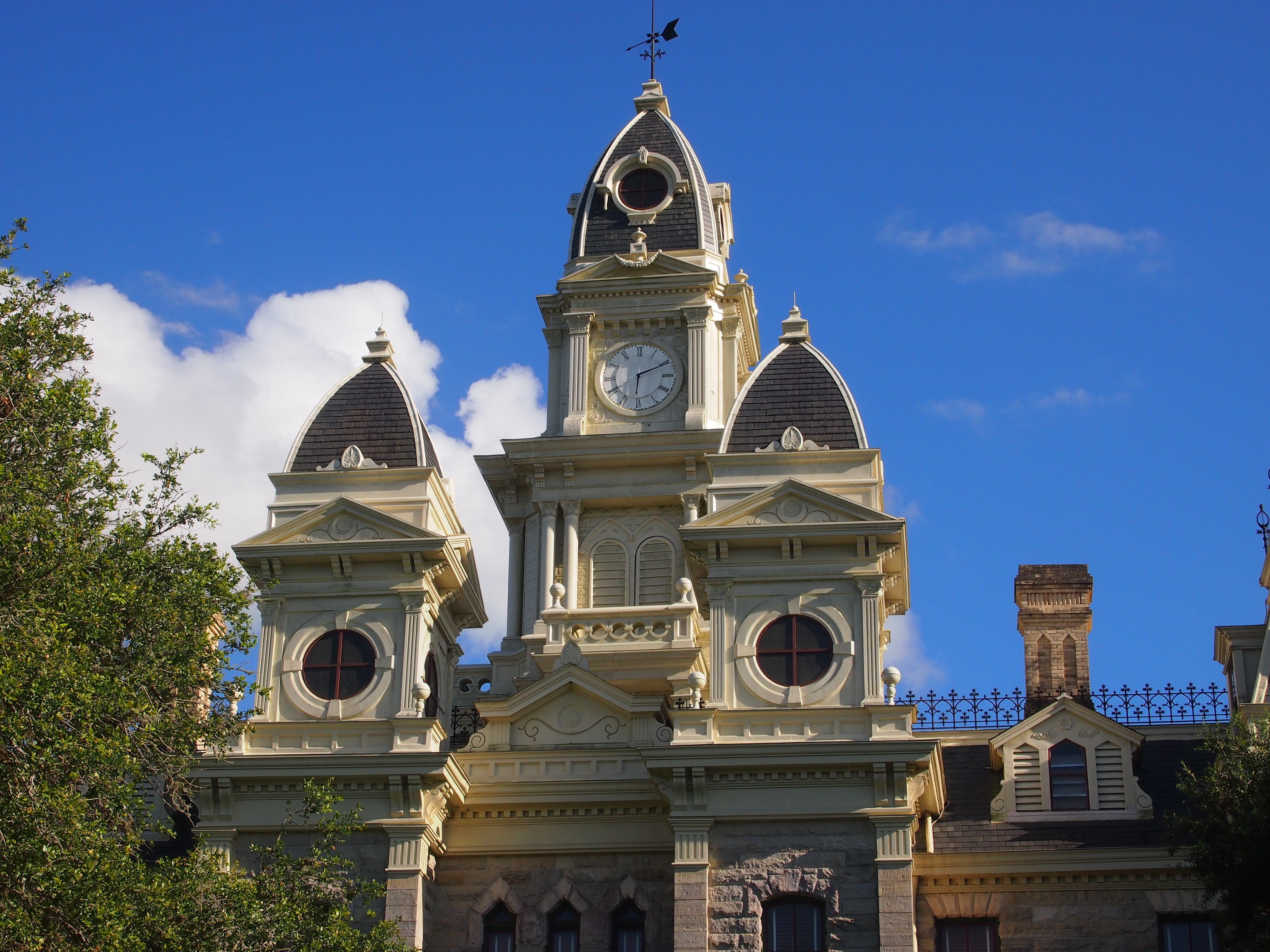
Now fully in a look-see mood, Jay and I went over to the Navarro County Courthouse grounds. Navarro himself was there. A statue of Jose Antonio Navarro, that is.

The Smithsonian tells us that “the sculpture was commissioned by the Texas Centennial Commission to honor Jose Antonio Navarro (1795-1871), a native Texan lawyer, merchant, and rancher who founded Navarro County and co-created the Republic of Texas. Navarro named the County seat Corsicana after his father’s birthplace, Corsica. While on an expedition to Sante Fe, Navarro was captured by Mexican soldiers and given a life sentence for treason. He escaped in 1845 and upon his return to Texas was elected as a delegate to the Convention which approved the annexation of Texas and drafted the Constitution.”

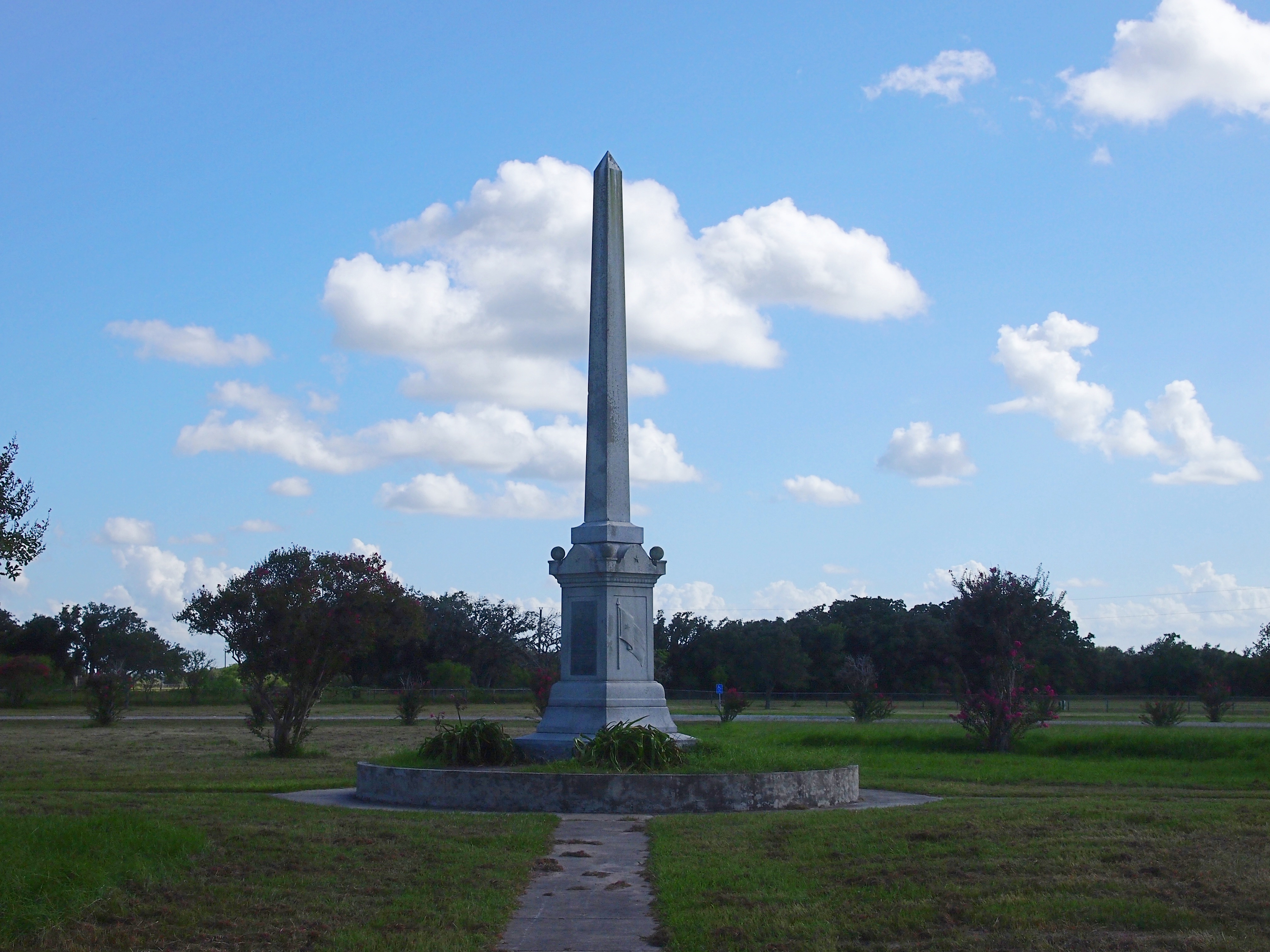
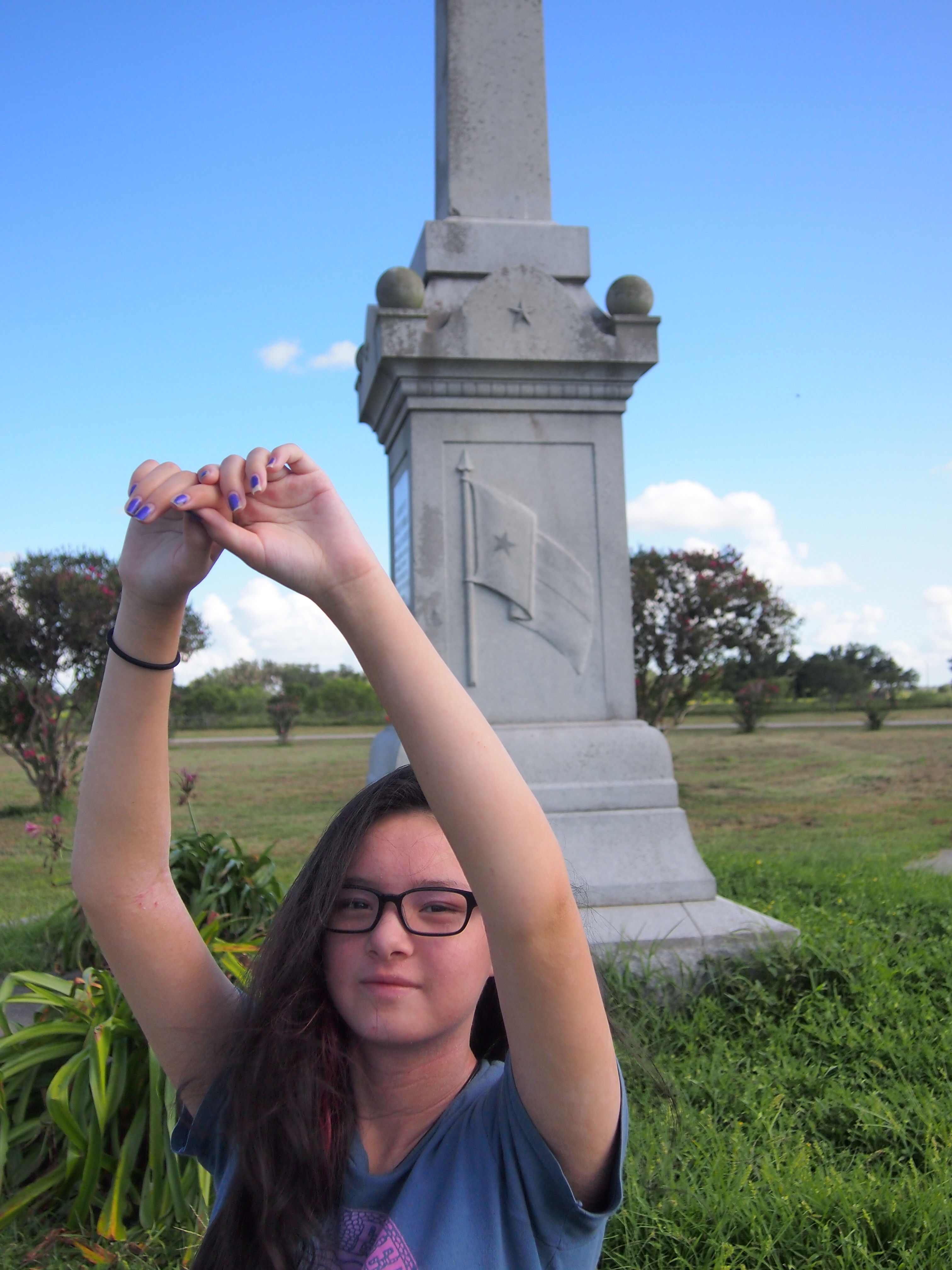
Nearby Navarro stands “The Call to Arms,” a Confederate memorial. It’s a little unusual, not being a soldier standing at attention or the like.

The statue’s plaque says that it was erected in 1907 by the Navarro Chapter of the United Daughters of the Confederacy “to commemorate the valor and heroism of our Confederate soldiers. It is not in the power of mortals to command success. The Confederate soldier did more – he deserved it.”

History’s written by the victors, indeed.

The Curious Statues of Fontana, Wisconsin

Around this time two years ago, during a strangely warm interlude that greened the grass and budded the trees and bushes in March, we spent part of a day at Williams Bay and Lake Geneva, Wisconsin. Lake Geneva is town’s name; Geneva Lake is the lake’s name, supposedly, but I’ve never heard anyone call it that. That was the day we saw this oddity in Lake Geneva.

One of my ambitions that day was to drive all the way around the lake, which we did before returning home (one of these days, I  might walk around the lake, since there’s a trail all the way around; but maybe not all at the same time). On the western edge of the lake is the town of Fontana, whose full name is Fontana-on-Geneva Lake.

We stopped at a little lakeside park in Fontana and found this statue near the beach. PhotoBatch4.10.12 028The plaque says: Dedicated to the memory of ARTHUR B. JENSEN whose generosity and foresight made this beach possible. I assume that’s the same Arthur B. Jensen who wrote Shawneeawkee, friendly Fontana: A history, which can be yours for $100.

Not far away is this memorial.

PhotoBatch4.10.12 027FONTANA WEEPS September 11, 2001. An admirable sentiment, but I have a sneaking feeling that if that plaque happens to survive until 2101, say, people will wander by without the faintest idea what it’s about, even when they notice it, which they won’t. But that’s not a reason to not erect memorials. To paraphrase Mother Teresa, “Memorialize anyway.”

Finally, there was this.

PhotoBatch4.10.12 030Never Say Can’t seems to be the title. Shirley Brost, at least according to one source, seems to be alive and well in Fontana, but I’m not going to track anything else down about her. The oddity about this work isn’t even the frog — but why a frog? — but the not-so-admirable sentiment. I suppose it’s supposed to laud determination, which can be laudable sometimes. But it’s just as important — more important, I’d say — to have a clear idea of what you can, and can’t, do.

Here’s a better idea for a title: Never Say Cant. Except people would think it’s a typo.

Atlanta ’10

About three years ago on the way to Springfield, we stopped in Atlanta, Illinois, which isn’t far from I-55 but which used to be right on U.S. 66. These days that means there’s enough nostalgia traffic – and probably local regulars – to support the revived Palms Grill Café. We ate there three years ago, only a short time after it re-opened. Some years before that an artist named Steve Estes painted a mural dedicated to the original joint across the street.

A helpful sign under the mural says: “In its early days, weekly dances and bingo nights accompanied the blue-plate specials served at the Palms Grill Café. The “Grill” was also Atlanta’s Greyhound bus-stop. You just turned the light on above the door if you wanted the bus to pick you up. Located directly across Rt. 66 from this mural, the Palms Grill Café served Atlanta’s citizens, as well as a steady stream of Rt. 66 travelers, from 1936 until the late 1960s.

In his design of the “Palms Grill Café” mural, Steve Estes of Possum Trot, Kentucky, captured the intent of the “Grill’s” first owner, Robert Adams, an Atlanta native, who named it after a restaurant he frequented during trips to California. The mural was completed in June 2003 during the “LetterRip on Rt. 66” gathering of approximately 100 Letterheads in Atlanta.

The Letterheads are a group of generous and free-spirited sign painters from across the United States and Canada who are interested in preserving the art of painting outdoor signs and murals.

Just down the street from the mural is a small park with a handful of memorials. This stone caught my eye.

The modern sign says:

Knights of Pythias “Memorial Tree” Stone

This stone was dedicated by the Atlanta, Illinois Knights of Pythias organization as a memorial to veterans of World War I. The stone was placed under a Memorial Tree on November 11, 1921. At some unknown date, the stone was removed from its original location. It then rested behind the Atlanta Library for many years. Research continues to identify the exact location of the memorial tree. Atlanta’s Acme Lodge #332 of the Knights of Pythias was organized in 1892. No longer active in Atlanta, the Knights of Pythias, is an international fraternity founded in 1864, whose motto is Friendship, Charity and Benevolence.

Can’t remember which tree was planted by the Knights of Pythias, eh? Just goes to show you that no matter how fervently one generation wants later ones to remember something, they probably won’t. Or if they do, it’s a matter of chance as much as anything else. Then again, you can also make a reasonable argument along the lines of, Who cares which tree a long-gone fraternal order planted in an obscure town in the heart of North America in the early 20th century? Really important things will be remembered. (Except that they usually aren’t. Except by historically minded eccentrics.)

The Atlanta Library is an octagon dating from 1908. That’s a fine shape for a building. There need to be more of them. The exact reasons for choosing that shape for this library are probably lost, but I’d think it made for better lighting in an era when electric lighting, though available, wouldn’t have been as bright as later.

According to the library web site: “Near the turn of the 20th century, the Atlanta Women’s Club established a committee with the purpose of erecting a Library building. Land located next to the tracks of the Chicago and Mississippi railroad, was donated to the City of Atlanta by Seward Fields, a descendant of William Leonard. Leonard was one of the contractors responsible for helping build the Chicago and Mississippi railroad… A beautiful bookcase dedicated to Seward Fields is still in use at the Library.

Mrs. Martha Harness Tuttle… helped fund the erection of the Atlanta Library building.  In 1908, she donated $4,000 – over half the funds needed for the new structure. The Library Board adopted plans for erecting an octagonal-shaped structure as prepared by architect Paul Moratz, of Bloomington, Illinois… The new building was dedicated on Saturday, March 28, 1908.

The Opera House and the Box It Came In

I’ve said it before, and I’ll say it again: acknowledge the famous, or at least the noteworthy, but don’t ignore the obscure. Never know what you’ll find in obscurity. Besides, odds are you yourself are obscure. It’s the human condition, or rather the condition of most humans.

That’s an over-long intro for the Sandwich Opera House, which we chanced on after seeing the Farnsworth. Sandwich, Illinois, is a town on U.S. 34 in southeastern DeKalb County. The Opera House dates from the golden age of opera house construction in small-town America, the late 19th century. It’s apparently also the City Hall. It was closed, but you could admire it from across the street.

It’s still in use for entertainment. For a little contrast, I took a picture of this brutalist box of a building across the street.

Maybe it isn’t beyond saving. What it needs is a lick of paint – some DayGlo green, say. It could be the Green Cube of Sandwich.

Wisconsin Eats

On our second evening in Wisconsin, I went out to pick up our evening meal. Everyone else knew what they wanted, and so I went to those places, but I didn’t have anything in mind for myself. By chance I came across My Lee’s Egg Roll House at the corner of Franklin and Richmond in Appleton. I followed an impulse to go there, and bought a takeout meal of two large egg rolls with fried rice. I also picked up a roll – mini-loaf? piece? of “longcheng” bread with strawberry filling for snacking on the way back to the motel.

I was the only customer, so I asked the woman behind the counter if she were My Lee. She was, she said in a heavy accent, and hoped that I would enjoy my egg rolls. I learned from an article posted on the wall that she and her husband had opened up the store only last year in a former Batteries Plus location. They are Hmong, originally from Laos (I think). Whatever their back story, I’m happy to report that in Appleton, Wisconsin, in our time they make some fine egg rolls and filled bread.

Harmony Cafe is on College Blvd in Appleton’s business district, created from the joining of two narrow spaces in brick-facade buildings old enough to sport punched tin ceilings. Apparently it’s one of two locations, with the other in Green Bay. Goodwill Industries of North Central Wisconsin runs the place, and benefits from it. That by itself wouldn’t have persuaded me to visit, or even its composting of coffee and food waste or use of fair-trade coffee beans. But I happened to know from my visit last August that the joint has a tasty Cuban pork sandwich, one just about as good as the one I had in Tampa’s Ybor City. It’s still on the menu. Good eats.

On the way home, we stopped at Mars Cheese Castle on I-94 near Kenosha, purveyor of cheese, meat, baked goods, sweets and more. The place has been enlarged since I was last there, and actually looks like the kind of castle a kid would draw.

The place is a roadside institution. Sure enough, it’s in Roadside America, which says: “This mainstay of Cheesehead gastronomy has reopened in a new, more castle-like building only a few feet from its original location, which was bulldozed for an I-94 interchange (the classic sign was saved). Now with real battlements! A real drawbridge! The Castle still has its cocktail lounge, and still sells ‘cow pies’ and udder-shaped coffee mugs — and its iconic roof-mounted cheese-chomping overcaffinated-eyed giant mouse sculpture has been repainted and moved indoors so that people can now pose next to it.”

We got some cheese curds. Made in Wisconsin, of course.

Red Bird

And just who was Red Bird? An early 19th-century warrior of the Winnebago, or as they call themselves, the Ho-Chunk. To my ear at least, that double naming works out well, since Winnebago is a fine name for the major lake in Wisconsin, and Ho-Chunk is a fine name for the tribe’s 21st-century casinos, which are in Wisconsin Dells and other places (and which advertise a fair bit in the metro Chicago market).

There’s a large statue of Red Bird facing Lake Winnebago at High Cliff State Park.

Its plaque says the statue was “designed by Adolphe E. Seebach” and “executed by Sculpture House, New York.” Seebach was apparently a Wisconsin sculptor who died in 1969, but a cursory look for him doesn’t uncover much more.

The Banta Company Foundation paid for the work; information on Banta isn’t hard to find. It was a large printing company based in Menasha, one of the Fox Cities, in business for over a century until R.R. Donnelley swallowed it in 2006. Why the company foundation decided to sponsor a statue of Red Bird in 1961—the date on the plaque—I couldn’t say. But there he stands, supposedly depicted as he was in 1827.

The Wisconsin Historical Society says of Red Bird: “Wrongly informed that the U.S. had executed two of their warriors, and thinking other tribes would support them due to widespread white incursions on Indian land, a party of Ho-Chunk from LaCrosse [including Red Bird] attacked settlers near Prairie du Chien in the last week of June, 1827. They killed two men and assaulted a child before returning to their village. On June 30th, a keelboat passing that village was attacked because the Ho-Chunk believed it was the same one whose crew had recently abducted and raped several Indian women.

“In response, the U.S. Army moved troops up from St. Louis, local militia units were hastily formed, and a total of ca. 600 soldiers assembled at Prairie du Chien. Another 100 militia were gathered at Green Bay, where 125 Menominee, Oneida and Stockbridge warriors joined in support of them. In late August these two forces converged from different directions on the assembled Ho-Chunk near Portage. On Sept. 2, 1827, Ho-Chunk tribal leaders surrendered the warrior Red Bird and five others, and further bloodshed was avoided. Red Bird died in prison and the other warriors were tried, sentenced to death, but ultimately pardoned.”

Elsewhere I’ve read that Red Bird dressed in his best finery to surrender – which is how he’s depicted in the statue – and expected to be put to death immediately, as he might have been by another tribe. To his bewilderment, he was chucked in prison, the sort of place in which you might die of dysentery, rather than experience a warrior’s death.

High Cliff Graffiti

On the northeastern shore of Lake Winnebago–the largest inland lake in Wisconsin–is High Cliff State Park, whose name ought to be a clue that it offers vistas of the lake. But it’s more than any old cliff. The Wisconsin DNR says that “the park gets its name from the limestone cliff of the Niagara Escarpment, which parallels the eastern shore of Lake Winnebago.”

It wasn’t the first time on this trip we’d seen the escarpment. County Road B in up the Door Peninsula has views of cliffs. According to Door County Coastal Byway, “Door County’s Green Bay side has the true escarpment, with exposed dolomite rock 200-250 feet high. At the base of these rock faces are remnants of the chunks of stone that fall from the cliffs to form ‘talus.’ ”

I wouldn’t know talus if I stubbed my toe on it, but the cliffs were evident, especially at George K. Pinney County Park, just off County Road B. At High Cliff State Park, the vantage is from on top of the cliffs, though trees block the view in some places. Maybe that’s why a wooden observation tower rises above the trees.

A plaque on the tower says, “THIS TOWER is dedicated to WILLIAM M. WRIGHT, spirited leader and longtime friend of High Cliff State Park. Built in 1984 with private funds from Kimberly-Clark Foundation Inc. and High Cliff State Park Association Inc.”

The plaque doesn’t tell you how many steps it takes to get to the top. An unusually helpful graffito at the bottom tells you that it’s 64 all together.

And it is. Eight flights of eight steps each. As you ascend, the helpful graffiti continues all of the way up.

Until you reach the top. You’re rewarded for climbing 64 steps with a broad view of northern Lake Winnebago, which isn’t so large than you can’t see the opposite shore, where Appleton, Neenah, and the other Fox Cities are located.

The Gardens of the Fox Cities

The Gardens of the Fox Cities in Appleton, Wis., consists of a series of formal plantings, such as the rose garden, which also includes a statue called “Reflections of Love,” by a local sculptor named Dallas Anderson. In the full flush of early July, it’s a gorgeous, but hot, setting. We visited fairly early in the morning – early for us on non-work days, ca. 10 a.m. – but even so, the heat was on.

The gardens are either part of the large and mostly rec-oriented Appleton Memorial Park, or right next to that park, with no visible border. Turns out that the gardens also include wilder sections. Frame your shot just right and it’s a little hard to imagine that about 360,000 people live in the surrounding metro area.

Look carefully, though, and there’s a house and a telephone pole in the distance. The gardens’ water features, some of them, luxuriated in lily pads.

The gardens also included a plant I’d never heard of – though there are many of those – called Lamb’s Ear (Stachys byzantina), which is native to Turkey and Iran. It’s an incredibly smooth plant, much like felt.

A Short Visit to Brussels

Southern Door County, the part below the Sturgeon Bay Ship Canal, isn’t the Door of tourist lore. But we discovered one of its charms all the same. Wisconsin 57 is the main road from the city of Green Bay to the town of Sturgeon Bay, and consulting the invaluable guidebook Moon Wisconsin, I noticed a town called Brussels just off the highway. “Brussels and surrounding towns… constitute the country’s largest Belgian-American settlement,” Moon asserts. “The architecture of the region is so well preserved that 100 buildings make up Wisconsin’s first rural National Historic Landmark.”

I had to take a look at that. We headed from 57 up County Highway C, and from that vantage, I have to say, it’s easy to miss most of those historic structures. Until you get to the junction of Highway C and Cemetery Road, that is, where you’ll find the St. Francis and St. Mary Parish Church. The setting is distinctly rural, complete with the odor of cow manure.

ST FRANCIS CHURCH is carved over the main entrance, but I understand that another congregation, St. Mary’s, joined St. Francis at one time. Not surprising, considering the way rural populations have dwindled in recent decades. My family thought I was stopping to see the adjacent cemetery, which looked interesting enough, but I really wanted to see whether the church was open. To my surprise, it was. I had to pry everyone else out of the car to come see the interior, which has some nice stained glass.

One side was well-lit by the sun, so I took some pics of saints. Because who doesn’t like stained-glass saints? Such as Agnes, patron of chastity, gardeners (?), girls, engaged couples, rape victims, and virgins.

Or Hubert, patron of hunters, mathematicians, opticians, and metalworkers.

I also discovered, on further inspection, that the Francis of the church name is Francis Xavier, missionary to Asia, though why the Belgians who built the church chose him, I couldn’t say.

Everyone was waiting for me in the car as I looked around the cemetery, so I didn’t have long. Besides gravestones, it also featured a small grotto.

The light wasn’t quite right, but I say when you run across a grotto, take a picture if you can.

Return to Cana

Leaving Sturgeon Bay, we headed up the Green Bay side of the peninsula on County Highway B, which later merges into County G and takes you into Egg Harbor. It’s a pleasant, two-lane highway, with bayside property on one side, mostly waterfront houses, and less-developed land – sometimes rising bluffs – on the other. All of it was lush. It’s been a rainy year in Wisconsin, too. I was expecting more traffic, this being the high season in Door, but most of the time no one was visible ahead or behind.

Until we got to Egg Harbor, that is. It might be quaint not to have any streetlights in your town, but Egg Harbor needs one at the juncture of County G and Wisconsin 42, the main road through town. The town seemed to be even more touristed than Sturgeon Bay, but with less space to put people. I asked if anyone wanted to get out and look around, but no one did, citing the early-afternoon heat.

We pressed on across the peninsula, via County Highway E, which passes mostly through farmland. The road also comes within sight of Kangaroo Lake, the peninsula’s largest inland lake. Kangaroo? I wondered. That’s the kind of name that makes me wonder. Maybe one of the pioneers of Door County imported kangaroos to see if they could be raised for meat. That failed, but some escaped, and their descendents live around the lake. They’re wily and hard to spot, in case you were wondering.

On the Lake Michigan side of the peninsula, we made a return visit to the Cana Island lighthouse. Most of us were back, anyway. Ann didn’t exist the last time we were there, almost exactly 12 years ago. Lilly of course didn’t remember being there, but in 2001, I took her picture wandering down the path to the lighthouse.

So I decided to do the same this time around, in roughly the same place along the path leading to the light. As I occasionally tell people I meet with small children, if you keep feeding them, they get bigger.

The grounds and the light are pretty much as I remember them. In his remarkable web site specializing on lighthouses of the western Great Lakes, Terry Pepper writes of the lighthouse: “Cana Island is somewhat a misnomer, since it is only an island when the lake levels are high. The majority of the time, there is an exposed rocky sinew of land which connects to the mainland.

“Congress appropriated funds for construction the spring of 1869 and a crew immediately undertook the task of clearing a three-acre station site. Leveling a rock foundation, a buff-colored cream city brick tower began to take shape. Eighteen feet in diameter at the base, the tower rose 65 feet, gently tapering to a diameter of 16 feet at its uppermost… Spiraling within the tower is a gracefully spiraling set of cast iron stairs, with 102 stairs.

“The cast-iron lantern atop the tower was likely prefabricated at the Milwaukee Lighthouse Depot and transported to the site by Lighthouse tender. Equipped with a Third Order Fresnel lens with the focal center of the lens situated approximately 75 feet above the tower bottom, the lens boasted a focal plane of 82 feet above mean lake level.” (Visible for 16 miles, according to the docent, and lighting the waters near Door to this day.)

Ann wanted to climb to the top of the tower, which was open by extra admission. The top was accessible via the aforementioned 102 steps.

Her mother and sister didn’t want to go up, so I went with her. Before we went, and even after we’d climbed to the top, I was certain that we hadn’t gone up last time, probably because it was closed. But now I’m not so sure. You’d think I’d remember climbing a spiral of narrow cast-iron steps and taking in a sweeping view of the greens of the peninsula and the blues of Lake Michigan, with a constant wind blowing in my face, but maybe not. Memory’s a trickster.