Southern Loop Leftovers: TN & NC

Had a bizarre dream last night, which isn’t really unusual, since that’s the way of dreams often enough – but this one – let’s call it rich and strange. And lengthy. It kept going and going, involving an alt version of downtown Chicago, and alt version of the company I worked for in the late 1980s, though no one that I knew was there; a vaguely menacing, nighttime scene always, though it wasn’t a nightmare; a message that had to be relayed, somehow; a fictional character – a very famous fictional character – spoken of as if real, who eventually showed up after a funeral, laughing; and details that made me think, that’s too much of a detail. For a dream. Is this a dream? One detail involved a chipmunk peaking out of a hole in the sidewalk, or maybe the street; another was a globe that I could see but not get close enough to read well, though I really wanted to. But I did notice that the United States, on this globe, included British Columbia and maybe the Yukon Territory, and I woke up thinking that maybe that 54° 40′ or Fight business led to a real war, in which the U.S. prevailed.

Perhaps the strangest thing about this rich and strange dream is that fully an hour and a half after I woke on this bright summer morning in the northwest suburbs, in the waking world I know and inhabit, I was able to write the above description.

Tennessee
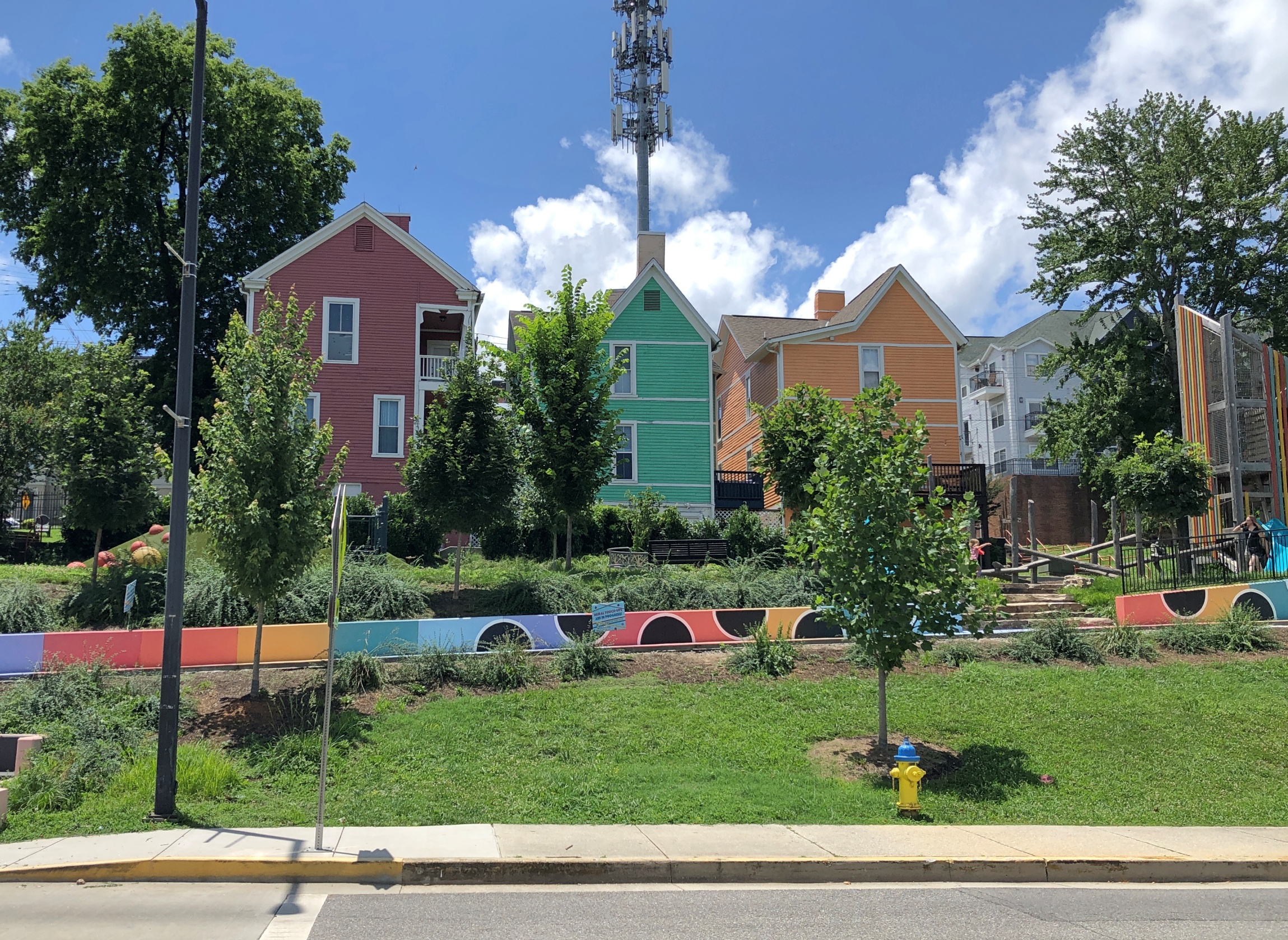
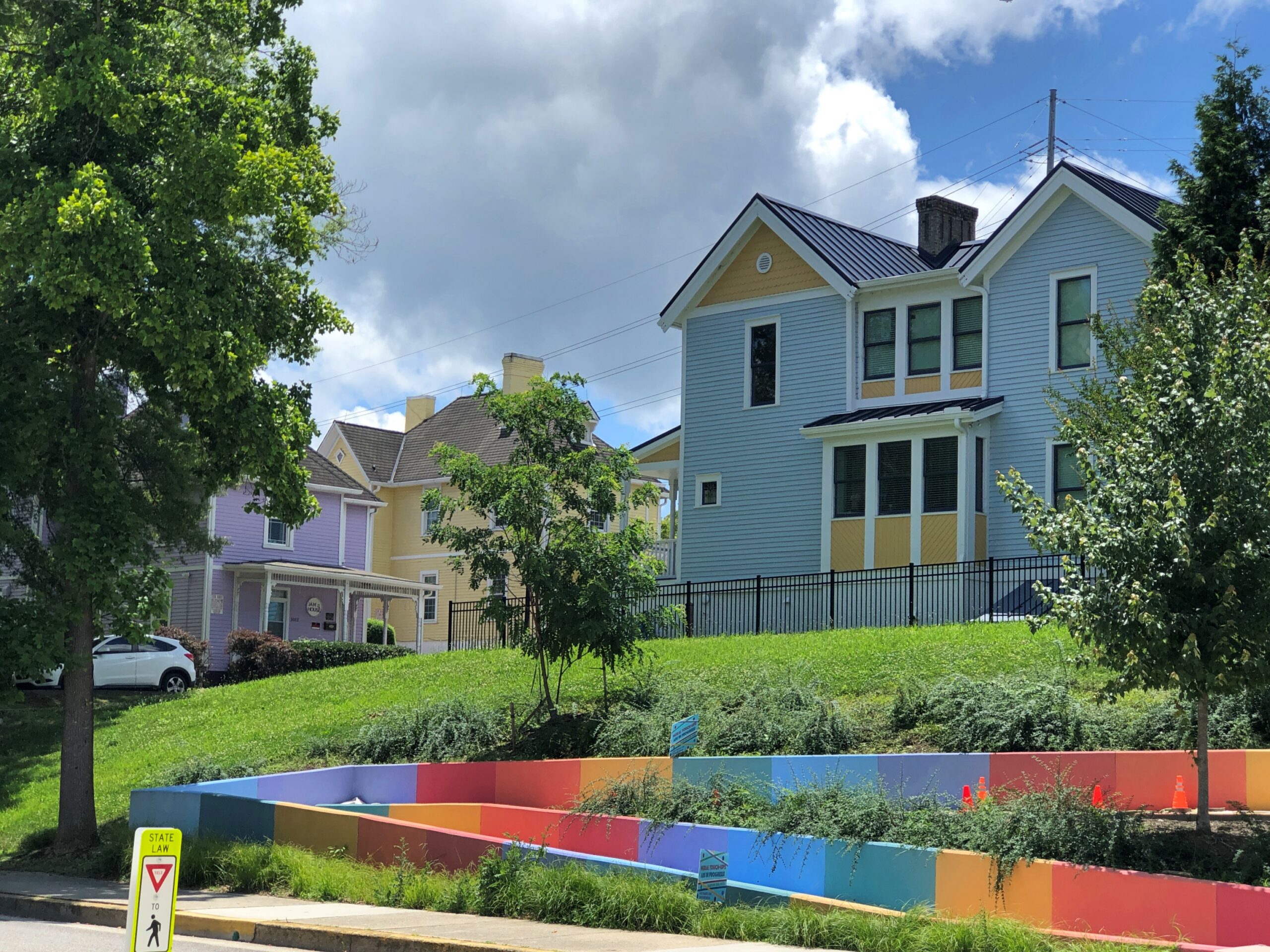
When passing eastward through Tennessee during my most recent interstate drive, I spent a little time in Knoxville, as mentioned, mostly to see the Sunsphere. To get to the tower from the free parking lot, I walked along part of World’s Fair Park Dr., with these colorful pastel houses visible on a small rise nearby. I was reminded of Rainbow Row in Charleston.
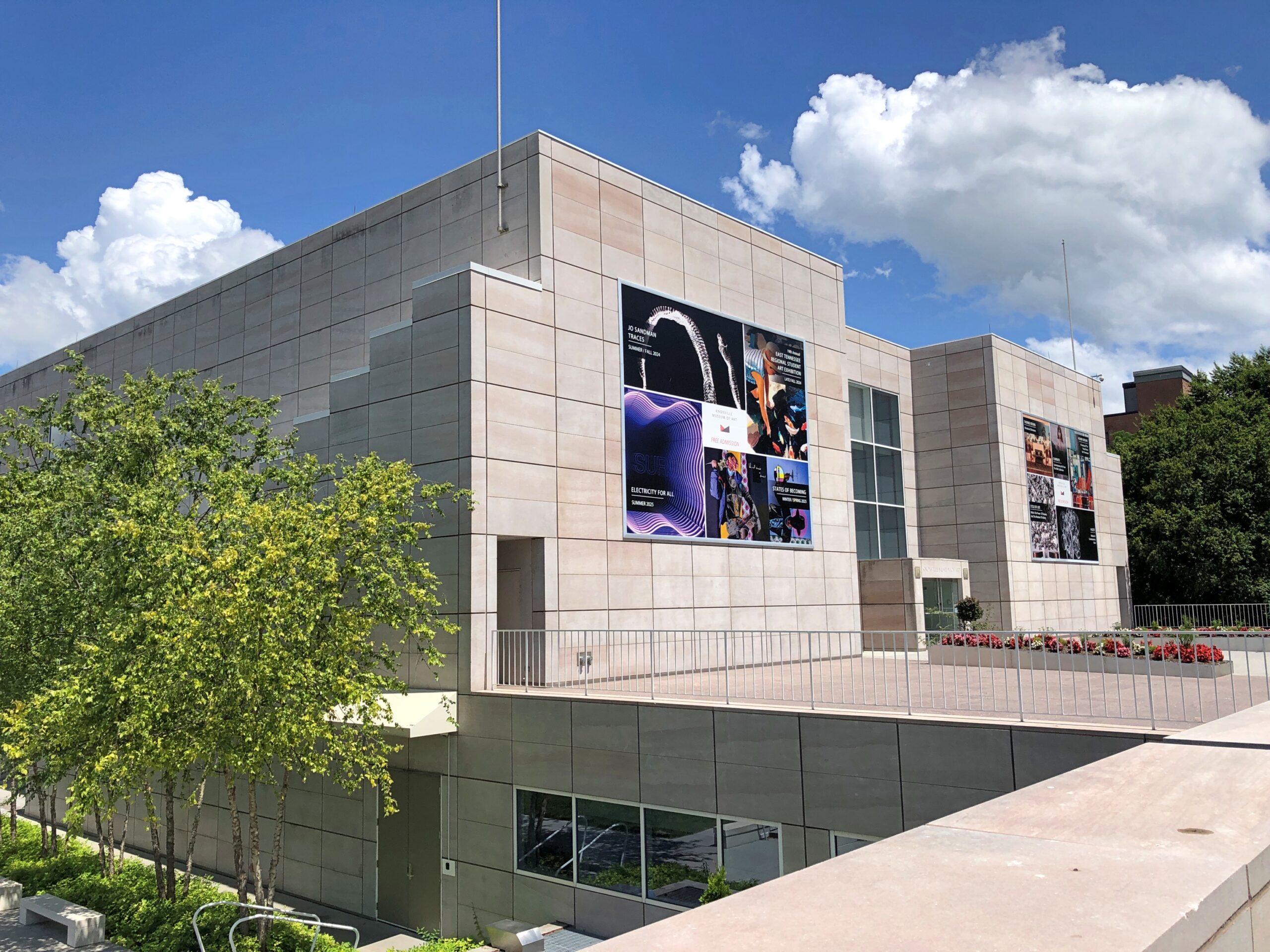
On the way back, I popped into the Knoxville Museum of Art.
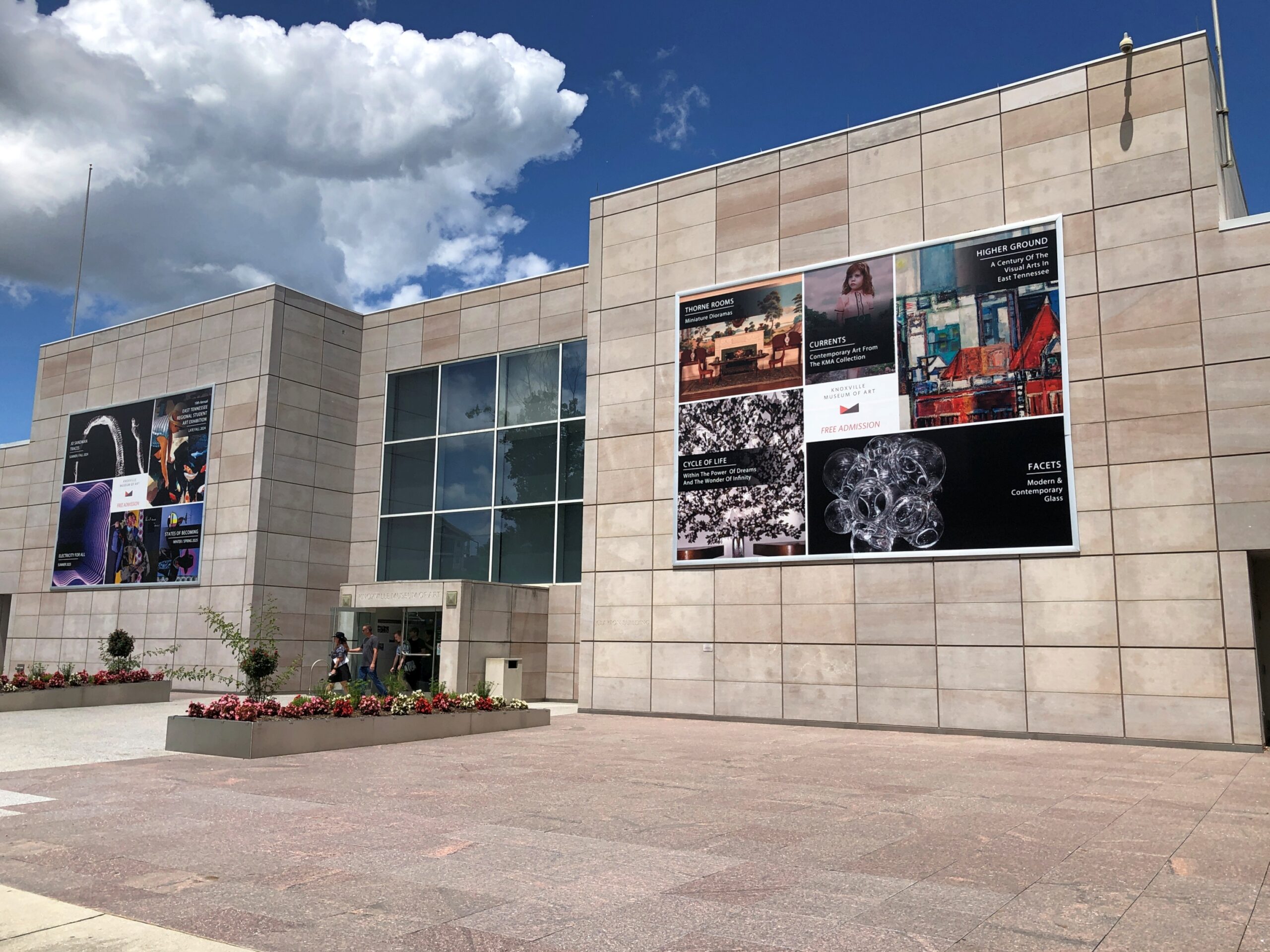
For a brutalist building, a nice bit of work by Edward Larrabee Barnes (d. 2004). If it blackens and streaks in the future, as such buildings tend to do when exposed to urban air, its appearance might morph into something merely ugly. But it looks like it’s been kept clean enough since its construction in 1990. As a museum, KMA has a lot to recommend it, such as air conditioning, free admission and a not-too-vast collection specializing in something you aren’t going to see elsewhere, namely East Tennessee art.
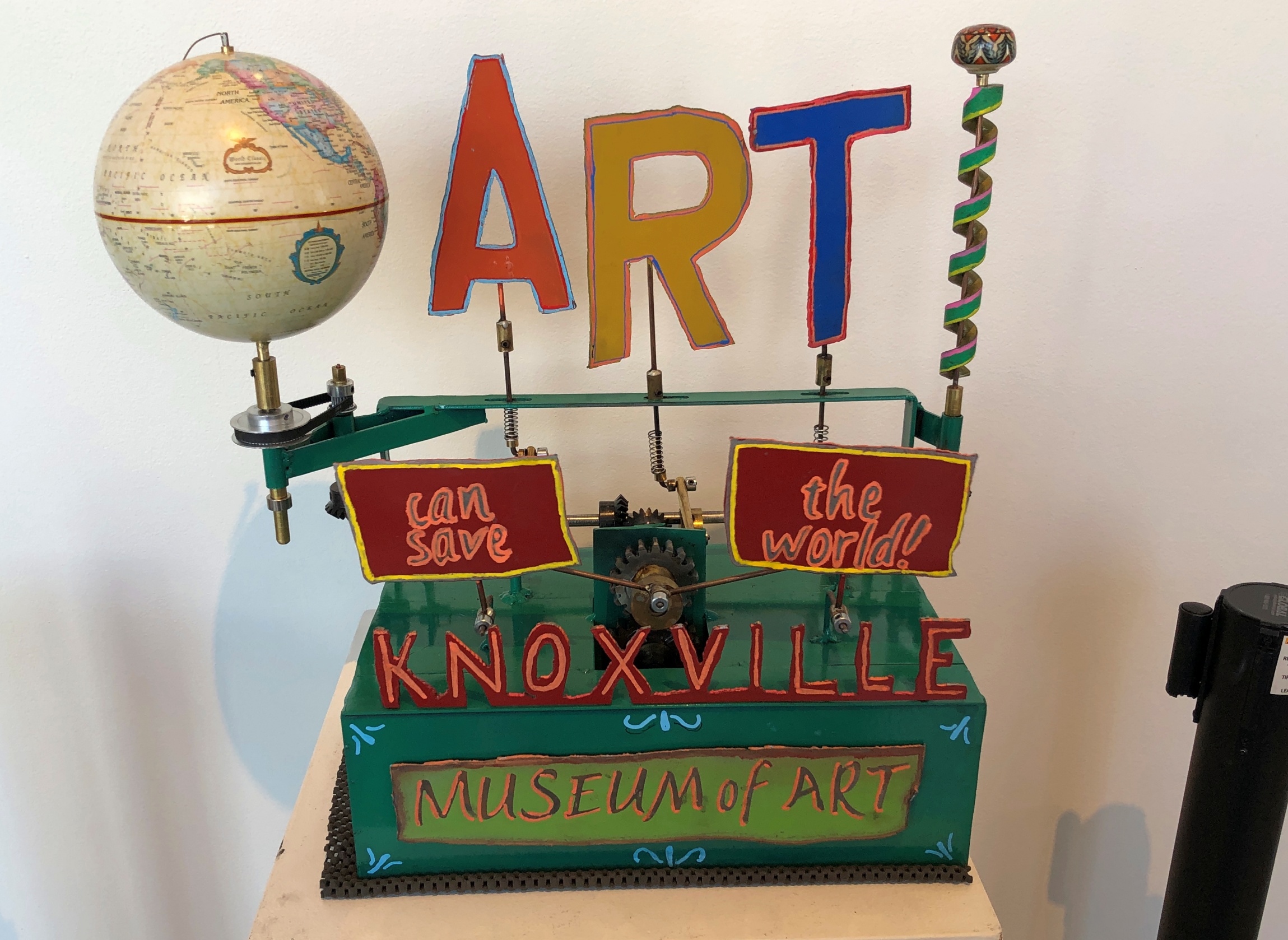
Such as a piece by artist Patrick Deason. Ah, the optimism. Unless he’s being sarcastic.

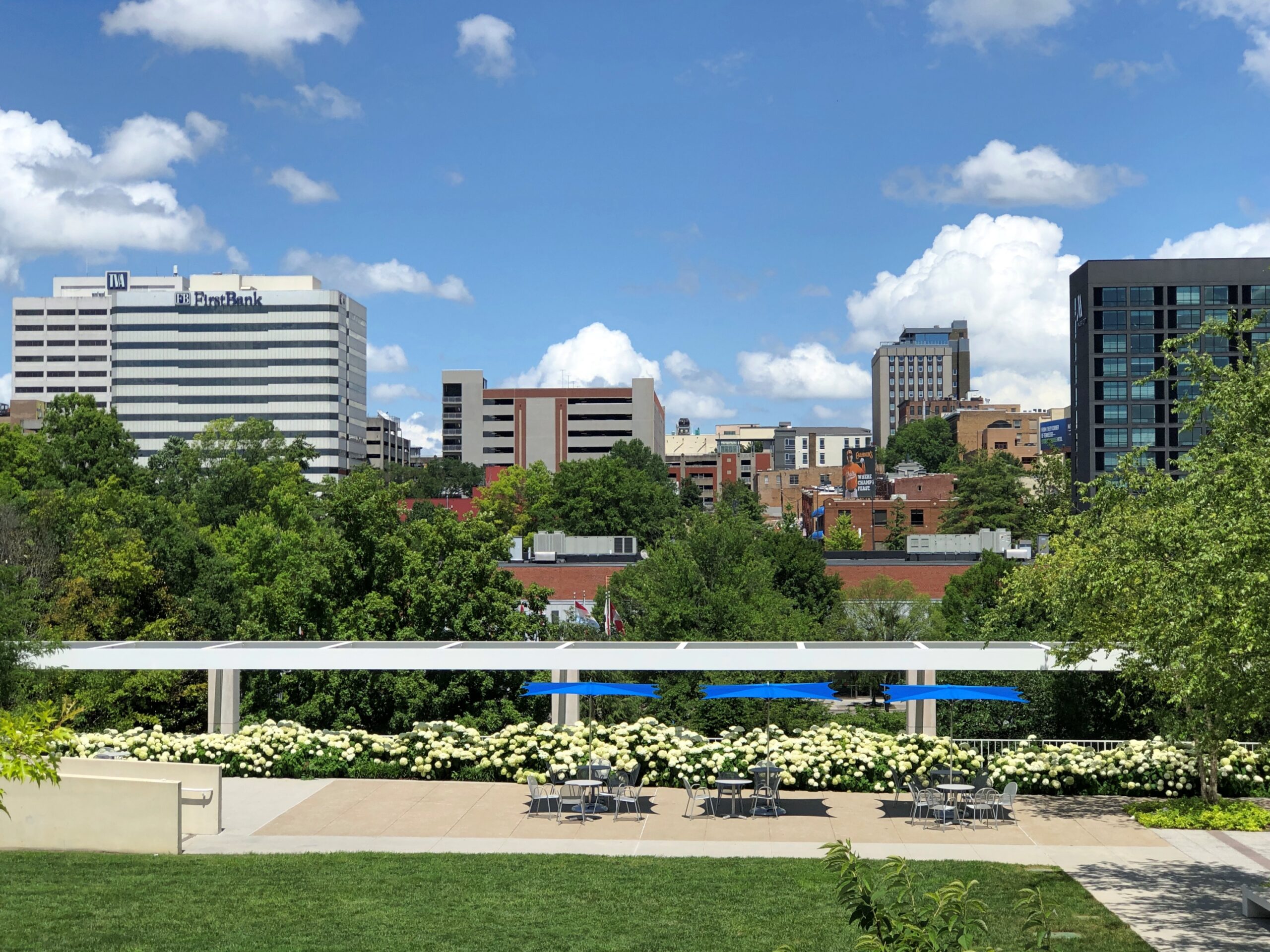
The museum also has a porch with a nice view of downtown Knoxville.
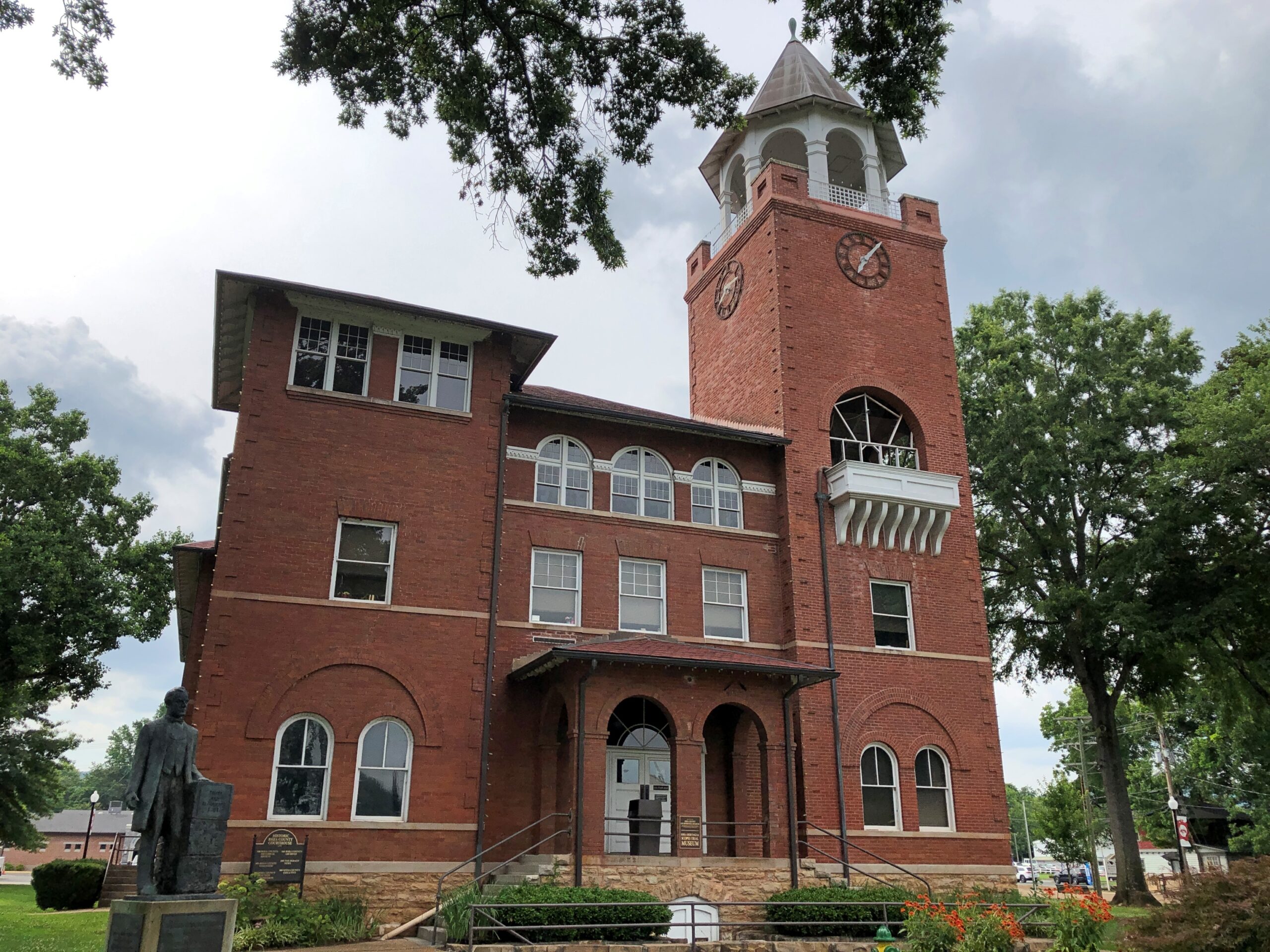
On my return westward through Tennessee, I made a point of passing through Dayton, site of the Scopes Trial, now 100 years ago. There is a museum devoted to the trial in the handsome and nicely restored 1890s Rhea County Courthouse, though I arrived after it had closed for the day.
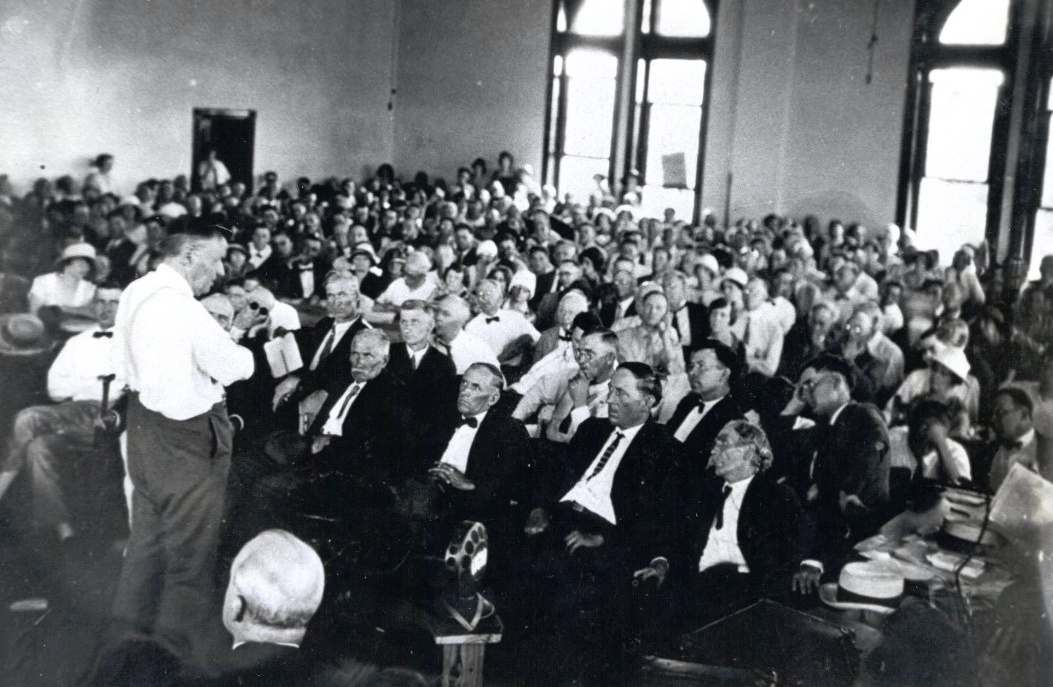
I look at pictures taken during the trial, and wonder how this multitude sat through it all, in an un-air-conditioned building. Guess like my grandma, as late as her last summer in 1970, they were used to it.
Before I got there, I heard a fellow on the radio discussing the (then) upcoming festival that Dayton was planning in honor of the centennial, as a bigger version of an annual event held in July. He might have been the organizer, I forget.

He pointed out that for many years Daytonites mostly wanted to forget about the trial – especially after the movie Inherit the Wind (1960) depicted the residents of Hillsboro, stand-ins for them, as fundamentalist bumpkins, at a time when the actual event was still in living memory. Which is nothing that Mencken didn’t do in 1925. Now the trial and Mencken and the movie are all part of that nebulous thing most people experience as the undifferentiated Past, and the townspeople have largely embraced the trial, according to the man on the radio. As well they should. It’s what Dayton, Tenn., has that no place else does.

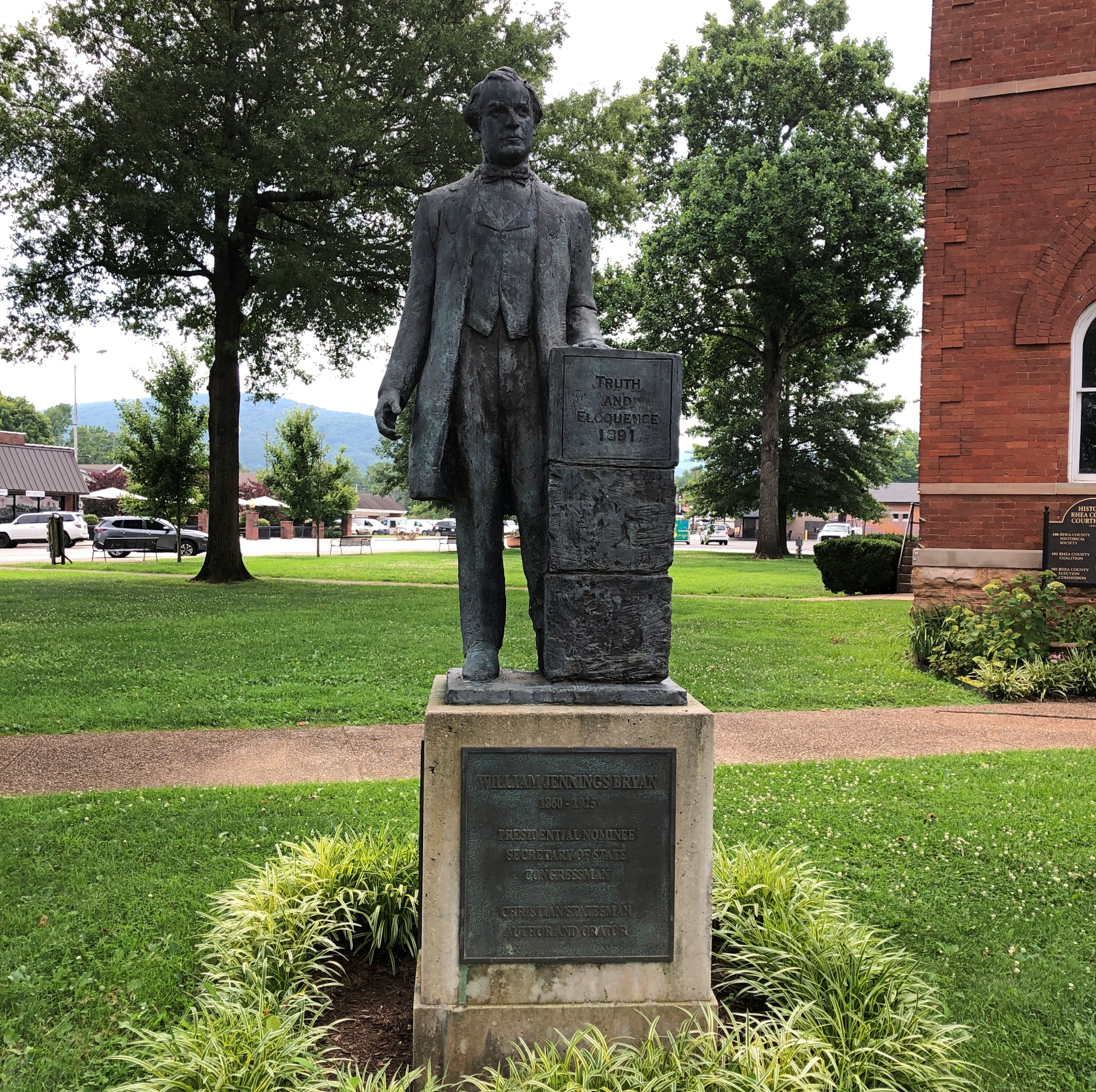
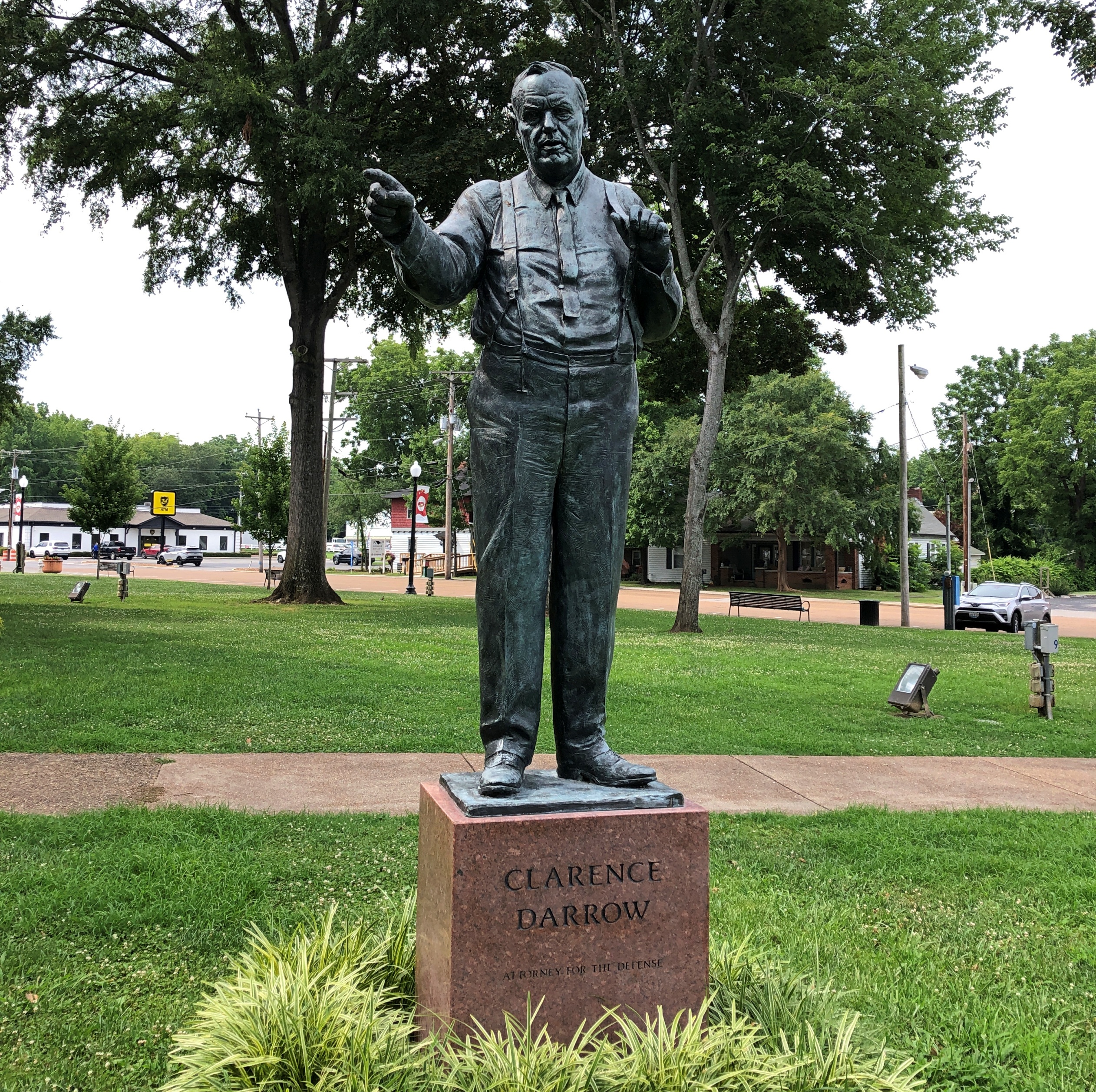
On the courthouse square, William Jennings Bryan and Clarence Darrow square off in bronze. Bryan College paid for the former, the Freedom From Religion Foundation the latter.
North Carolina
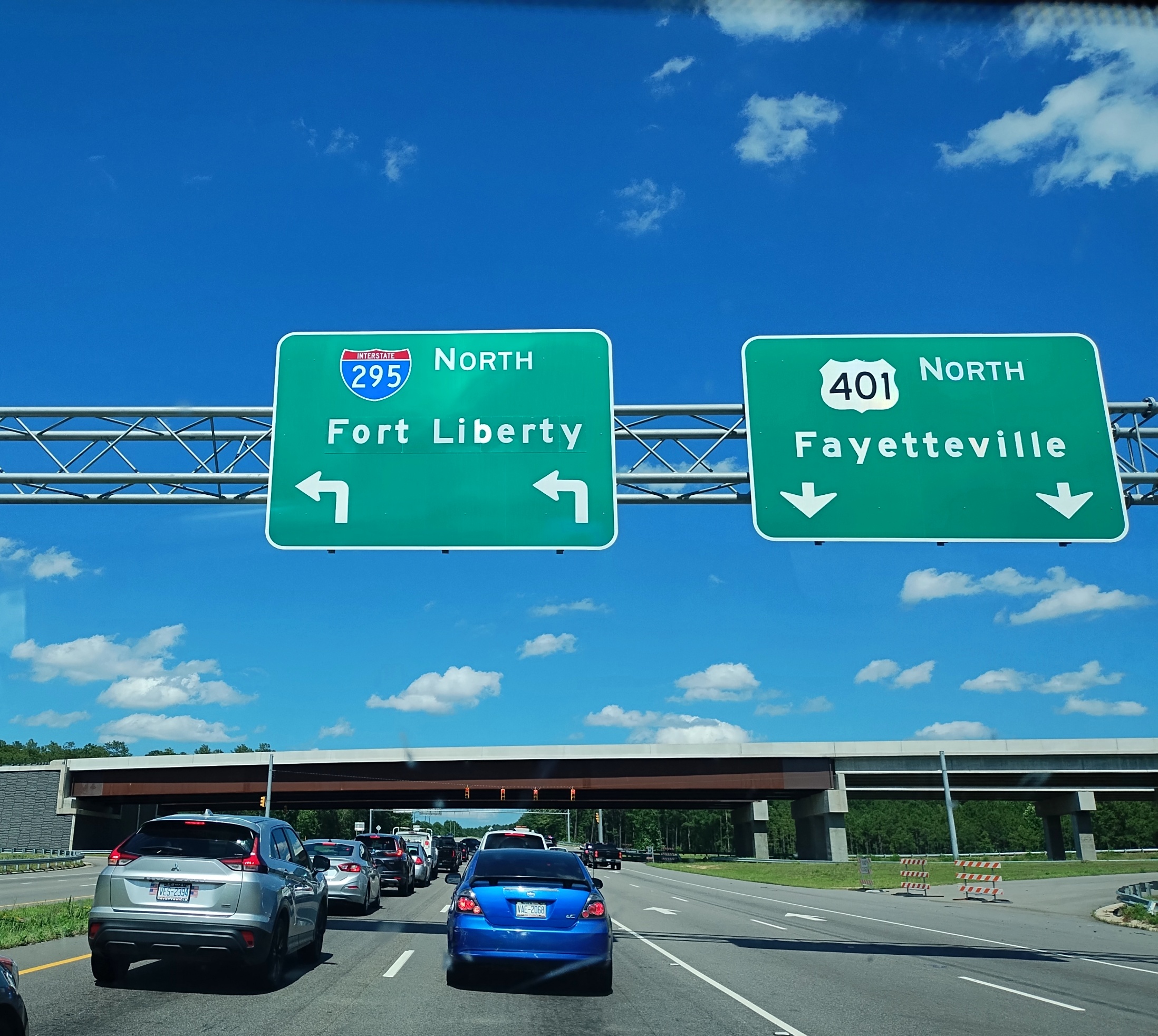
I was stuck momentarily in traffic near the military installation formerly known as Fort Bragg and then known as Fort Liberty and now known again as Fort Bragg. The traffic sign hasn’t caught up with the latest flip-flop.
I stopped for lunch in Laurinburg, NC, at a storefront Chinese restaurant. Across the street, a tuxedo shop flew the Royal Banner of Scotland. Not something I’ve ever seen aflutter in the U.S. or anywhere, for that matter. But there is a school called St. Andrews University nearby, so maybe it’s not such a stretch. Make that was — the school closed just this May.
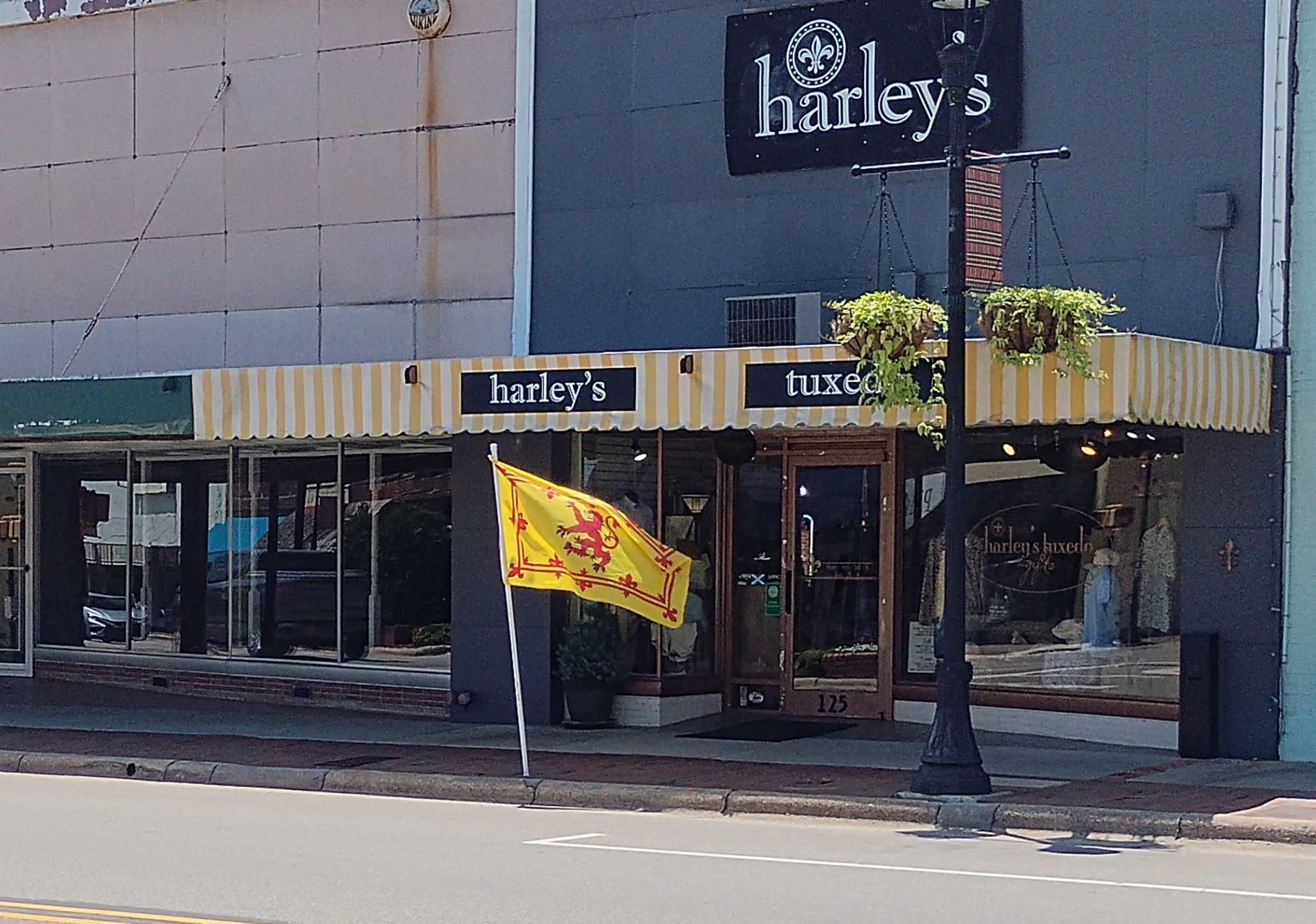
Wiki tells us: “As the personal banner of the Monarch, use of the Royal Banner of Scotland is restricted under the Act of the Parliament of Scotland 1672 cap. 47 and the Lyon King of Arms Act 1867 (30 & 31 Vict. c. 17), and any unauthorised use of such is an offence under the Act.” That has no bearing on its use in North Carolina, I’d say, considering how the Revolution turned out.

In New Bern, NC, this was a bit of a mystery at first.
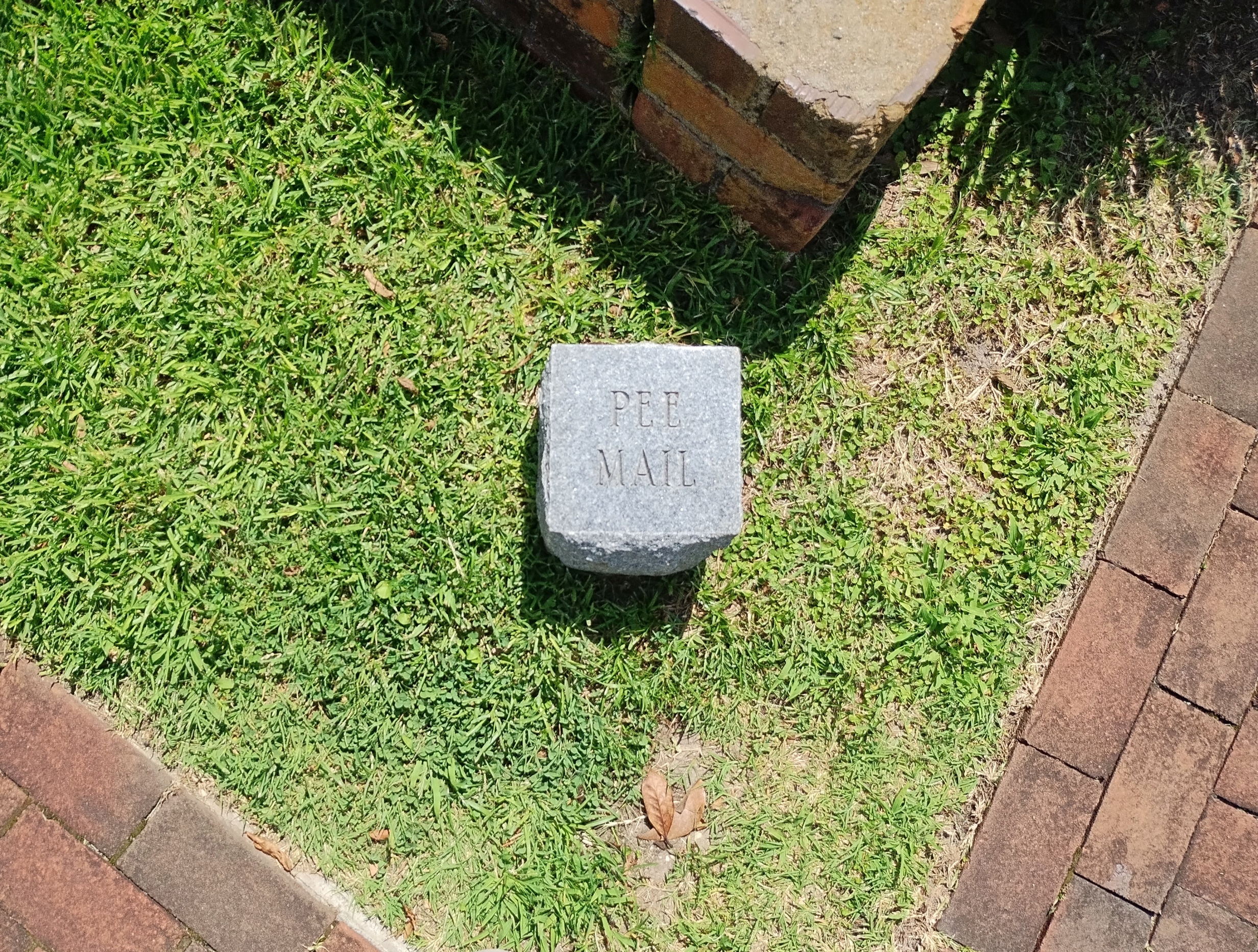
Until I figured it out. A place for dogs to leave messages.
Southern Road Food ’25

I’m no Guy Fieri, but I don’t really need to be to find road food. Besides, he has a staff. I just have Google Maps and my experience and instincts, which sometimes fail me, but more often guide me to cheap, local and delicious. That and word-of-mouth recommendations have led me to a lot of tasty dishes over the years.

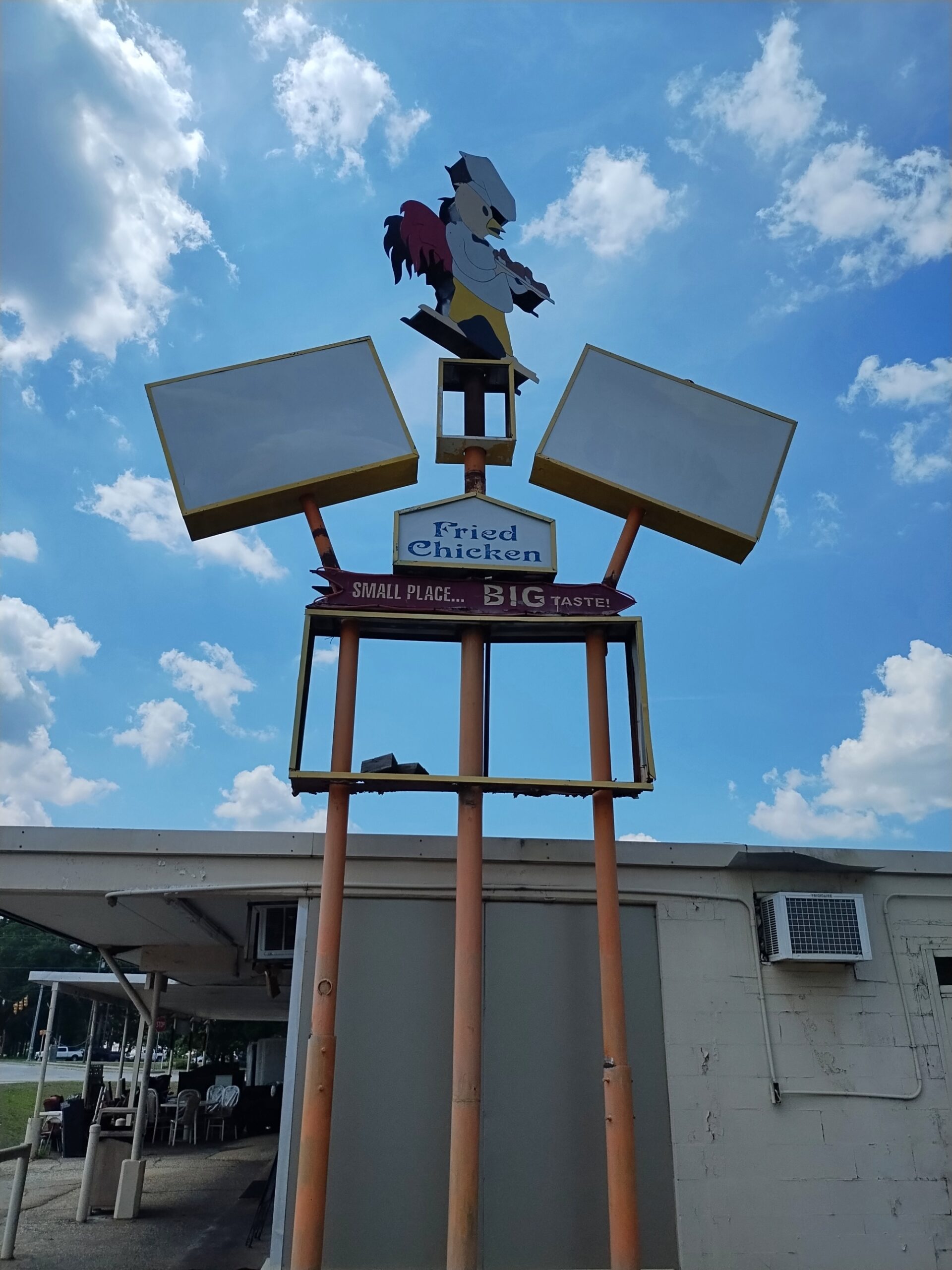
On my recent Southern jaunt, I arrived in Sumter, SC, around lunchtime, and found my way to Korner Shack II. Not that you could tell the name from the sign over the cinder block shack.

I’d happened on a Southern chicken joint, true to that tradition, take out only, and during the few minutes I waited for my order as people came and went — for it was a popular place — I noted I was the palest customer. I ordered a box of chicken livers and fries that I ate partly in a nearby park, and partly in my room that evening. Mildly spiced and well fried, the boxed livers reminded me of the satisfying livers that a Chicago-area Harold’s Chicken would serve. Korner Shack sold me one of the best meals of the trip.

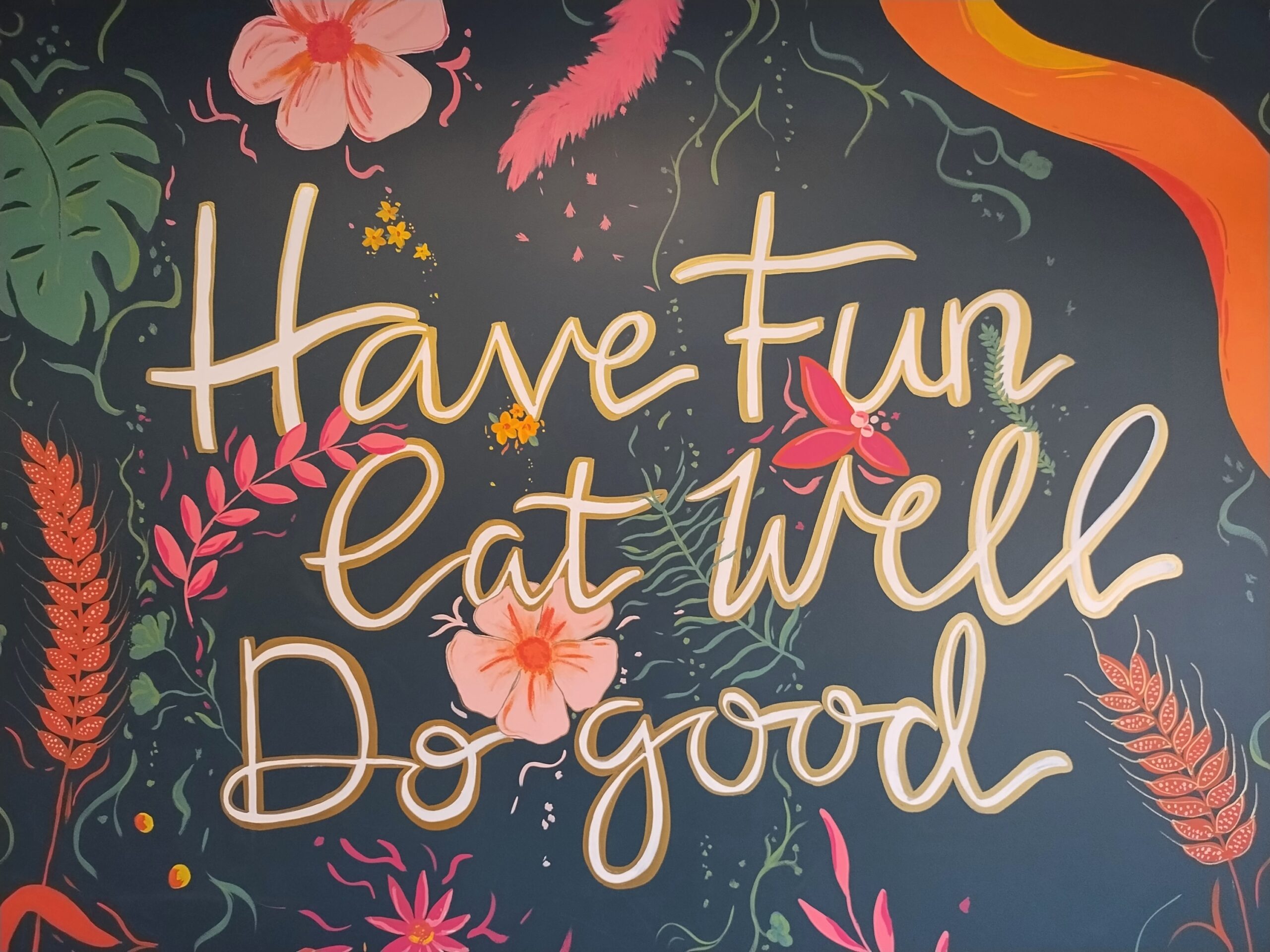
Back in Myrtle Beach, Yuriko and I breakfasted one morning at Winna’s Kitchen, who offers patrons some sunny advice on the wall.

Winna's Kitchen

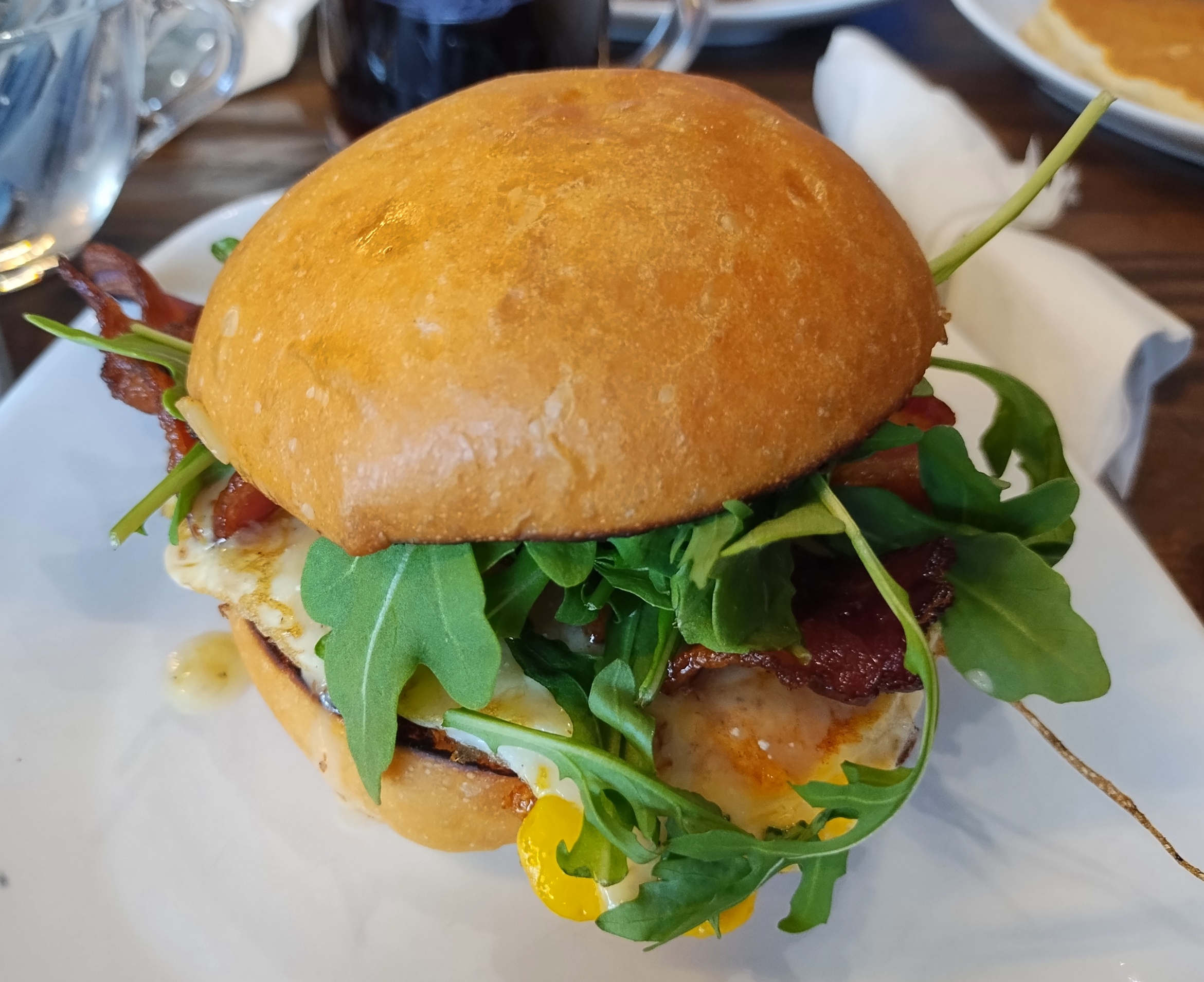
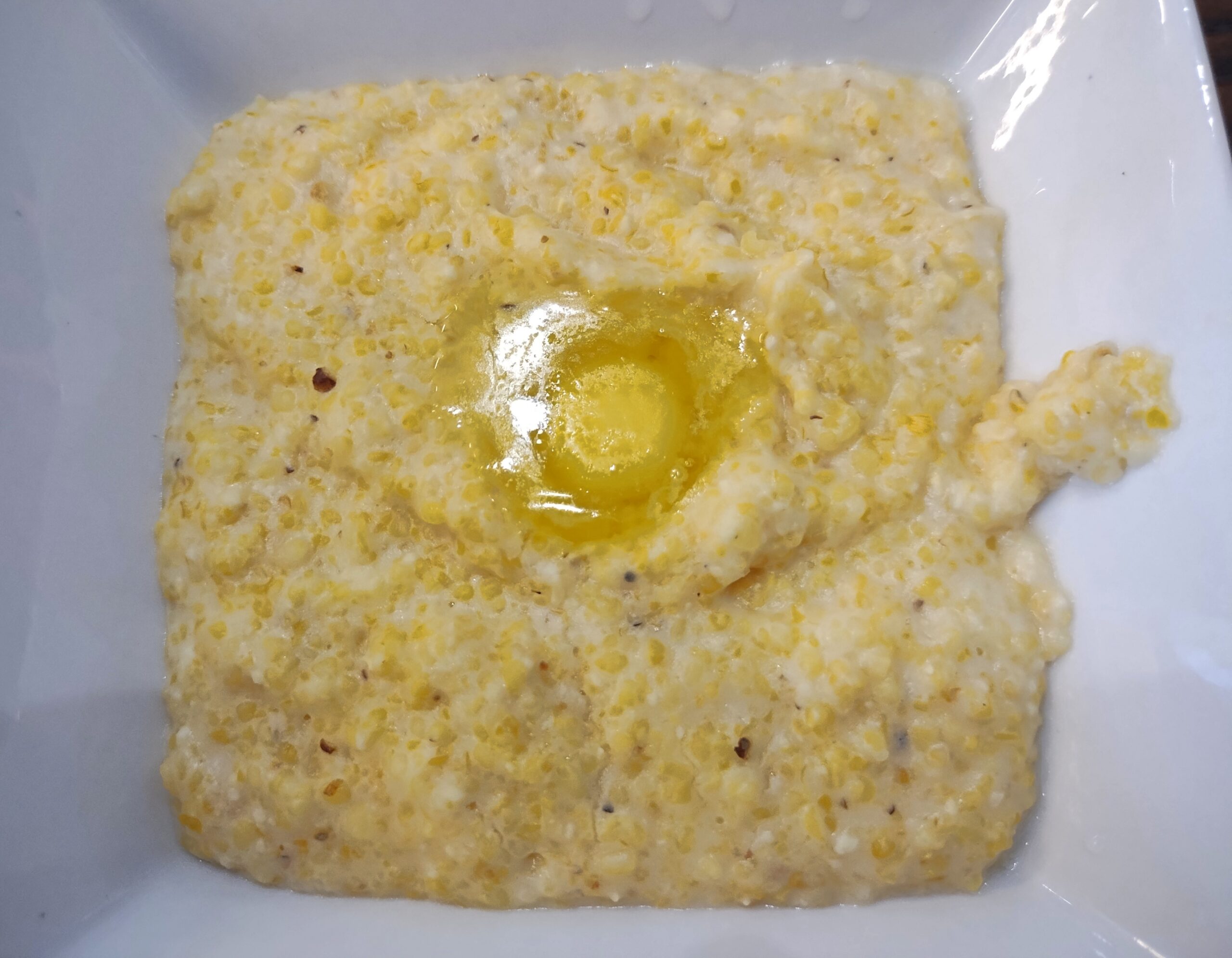
That, and really good food. I had the Whistler – “crispy sausage or bacon, sharp coastal cheddar, a fried egg & lemony-dressed arugula on a homemade bun,” the menu said. With a side of grits.

Winna's Kitchen
Winna's Kitchen

Superb. Even the buttery grits. At home I usually douse my grits with honey, but butter will do. Experience has taught me that restaurants aren’t always good with grits, but when they are, they can be really good. Winna’s served up some of those really good grits, complementing its really good breakfast sando, though not quite as memorable as the cheese grits I enjoyed at a place in Mexico Beach, Florida, that I believe was washed away by a hurricane some years after I visited in the 2000s.

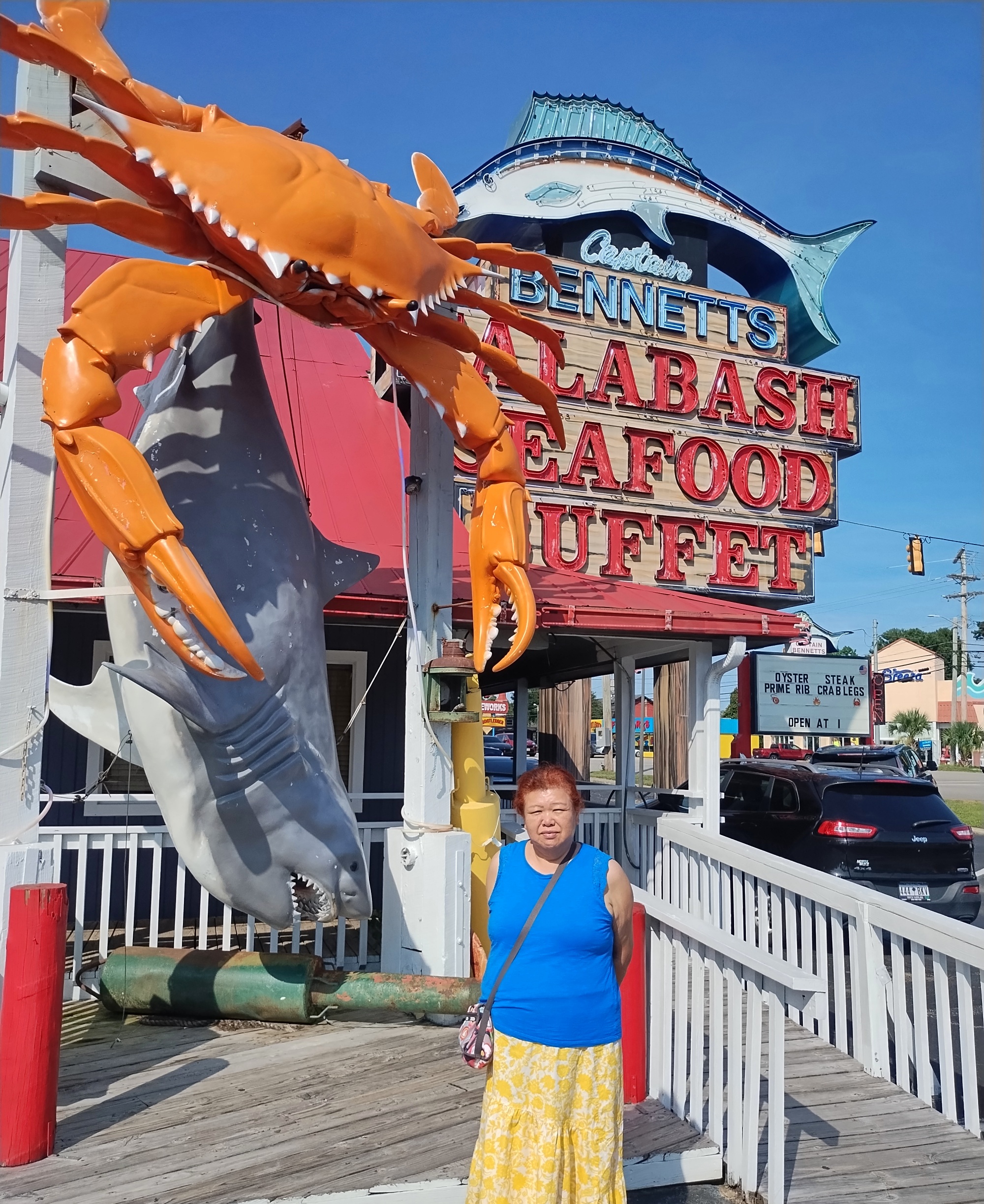
Also in Myrtle Beach: seafood in bulk.

Myrtle Beach

Not the best I’ve ever had, and a little expensive, but satisfying – especially Yuriko’s desire for seafood during a visit anywhere near the sea, true to her Japanese upbringing.

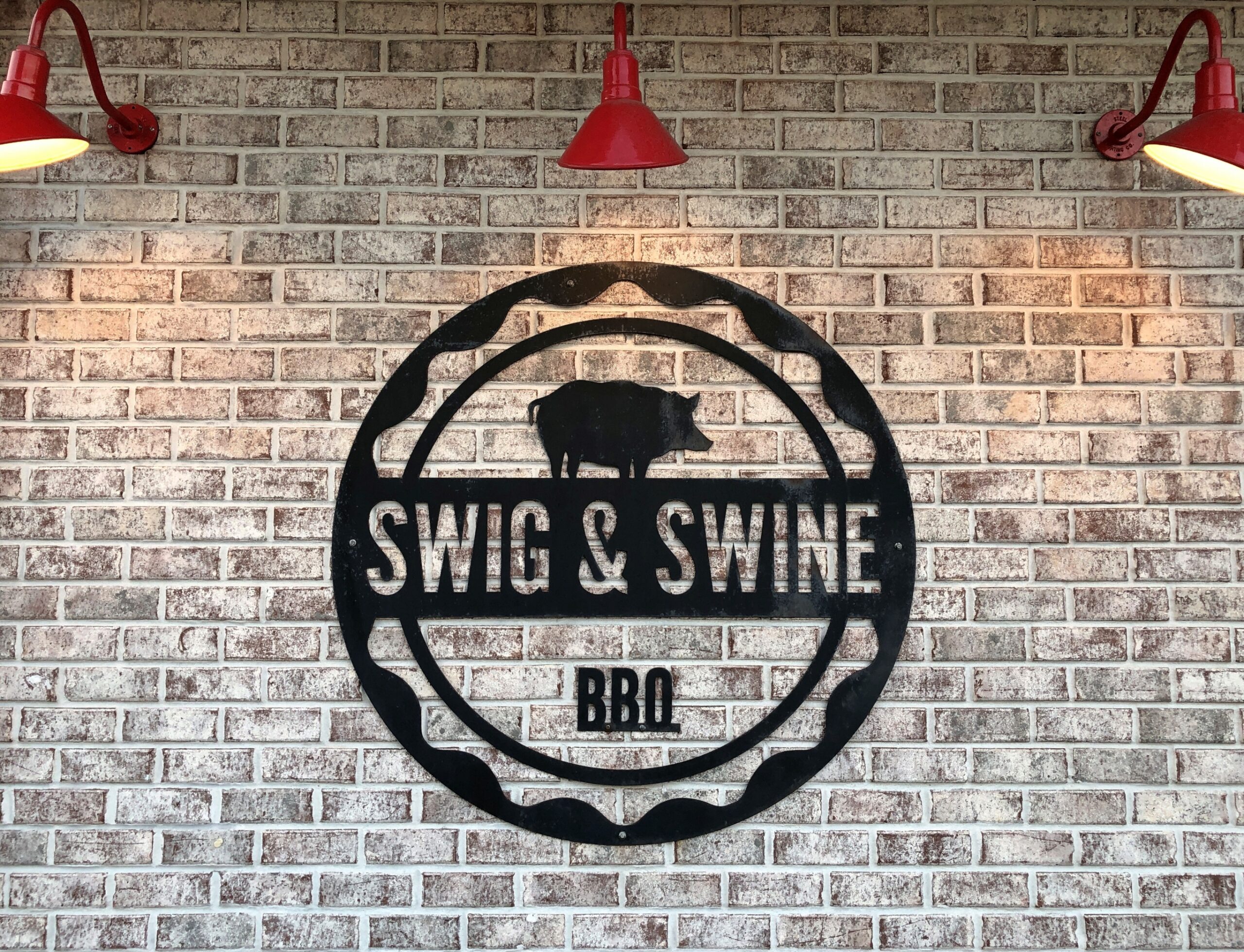
Didn’t have barbecue in MB, but I liked this sign.

Didn’t eat here either. Call it Schrödinger’s restaurant.

Myrtle Beach

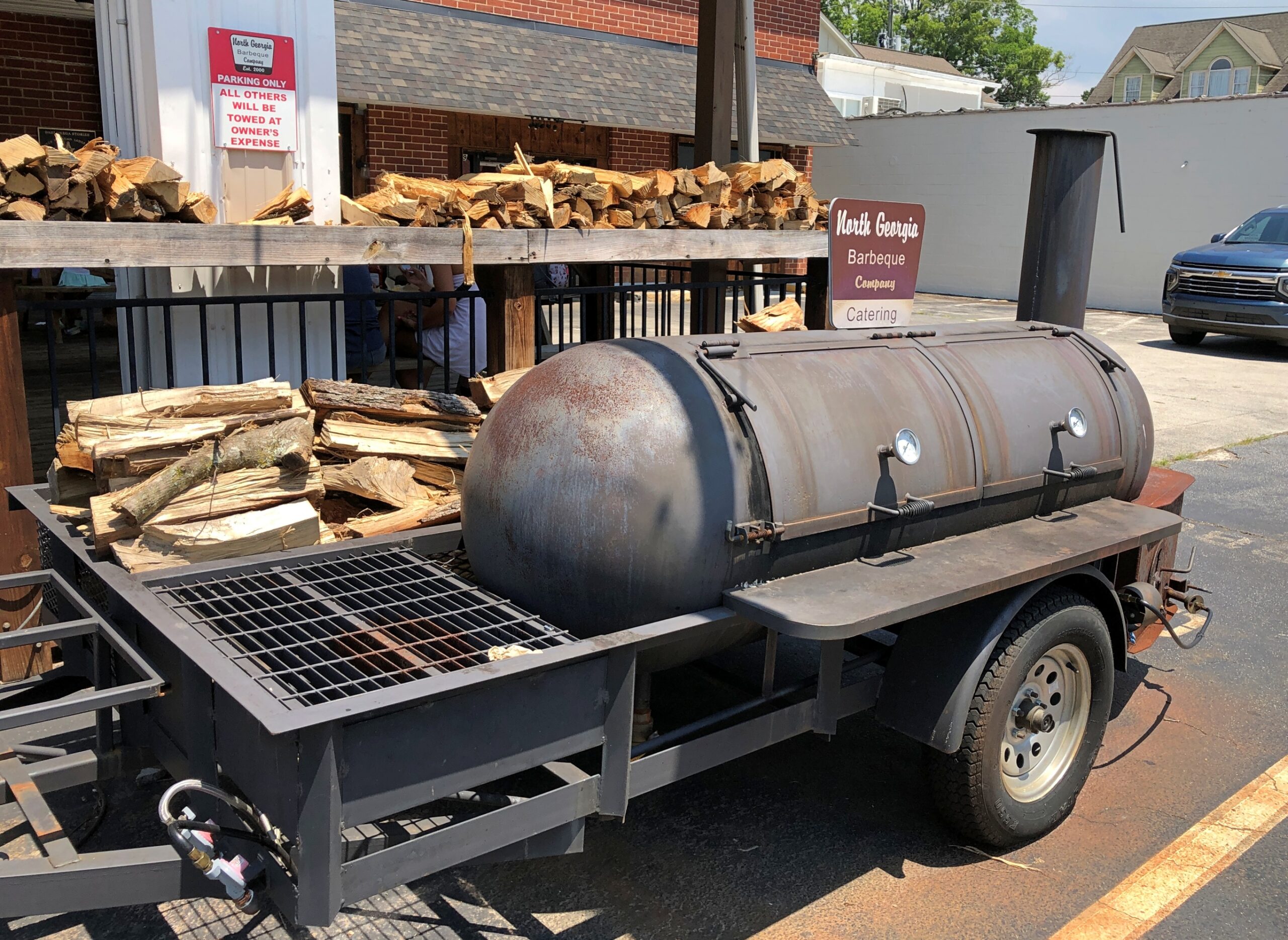
I found barbecue in Georgia. Specifically, Dahlonega. North Georgia Barbecue Co. is a stone’s throw from the Gold Museum and its best advertisement is out front of the restaurant. Good eats inside.

While it’s well and good to support local joints, I’m not a snob when it comes to fast food on the road. Otherwise, how would I know the joy of Mos Burger or have experience with how different cultures interpret something as distinctively American as fast food?

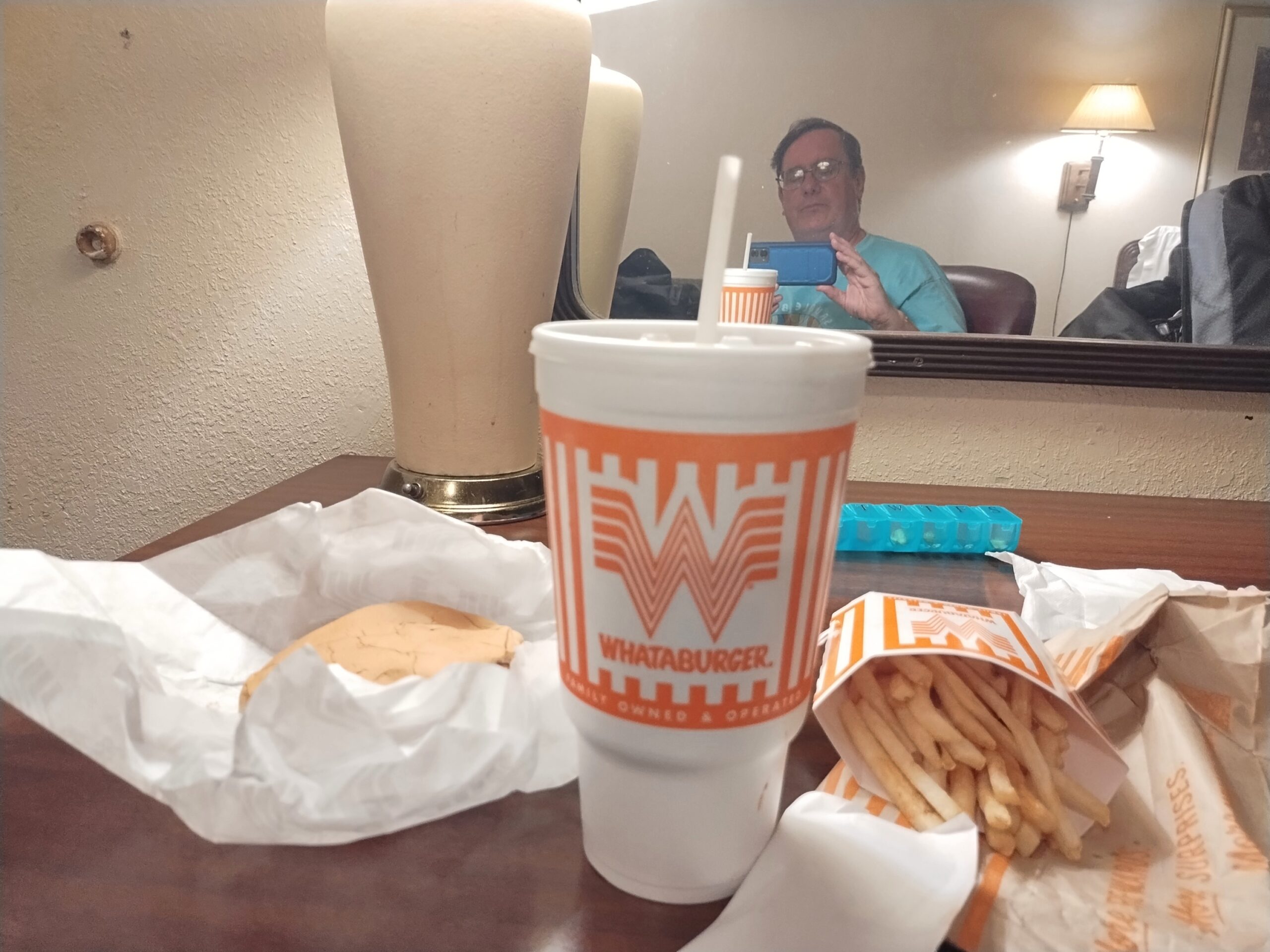
Not long after arriving in Athens, Ga., I spotted a place I associate with Texas. I took a drive-thru order back to the room.

Whataburger

I checked, and the large majority of Whataburger locations are indeed in Texas, but there are others in 16 other states, including 35 in Georgia.

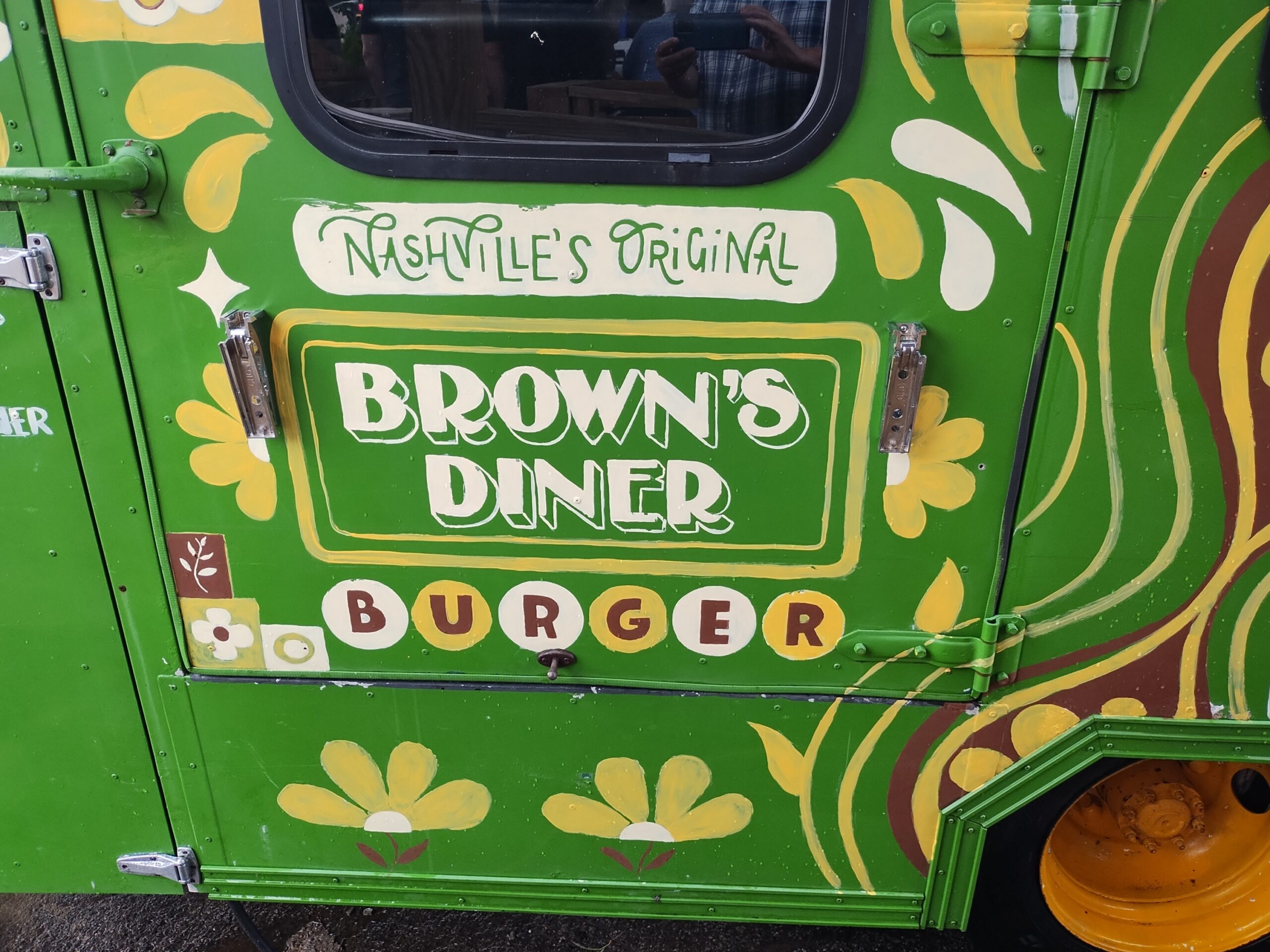
Finally, an old friend among Nashville places: Brown’s Diner.

Brown's Diner

My friends Stephanie and Wendall treated me to a wonderful homemade meal at their house, so later I treated them to a meal at Brown’s, deep in the heart of Nashville. It is a storied place nearly 100 years old, though expanded since I knew it. I enjoyed a fair number of burgers at Brown’s in the 1980s, but not since, and was a little surprised that it has survived to the present, but glad. I had a Brown’s burger and it all came back to me; and I understood the joint’s longevity.

Gold!

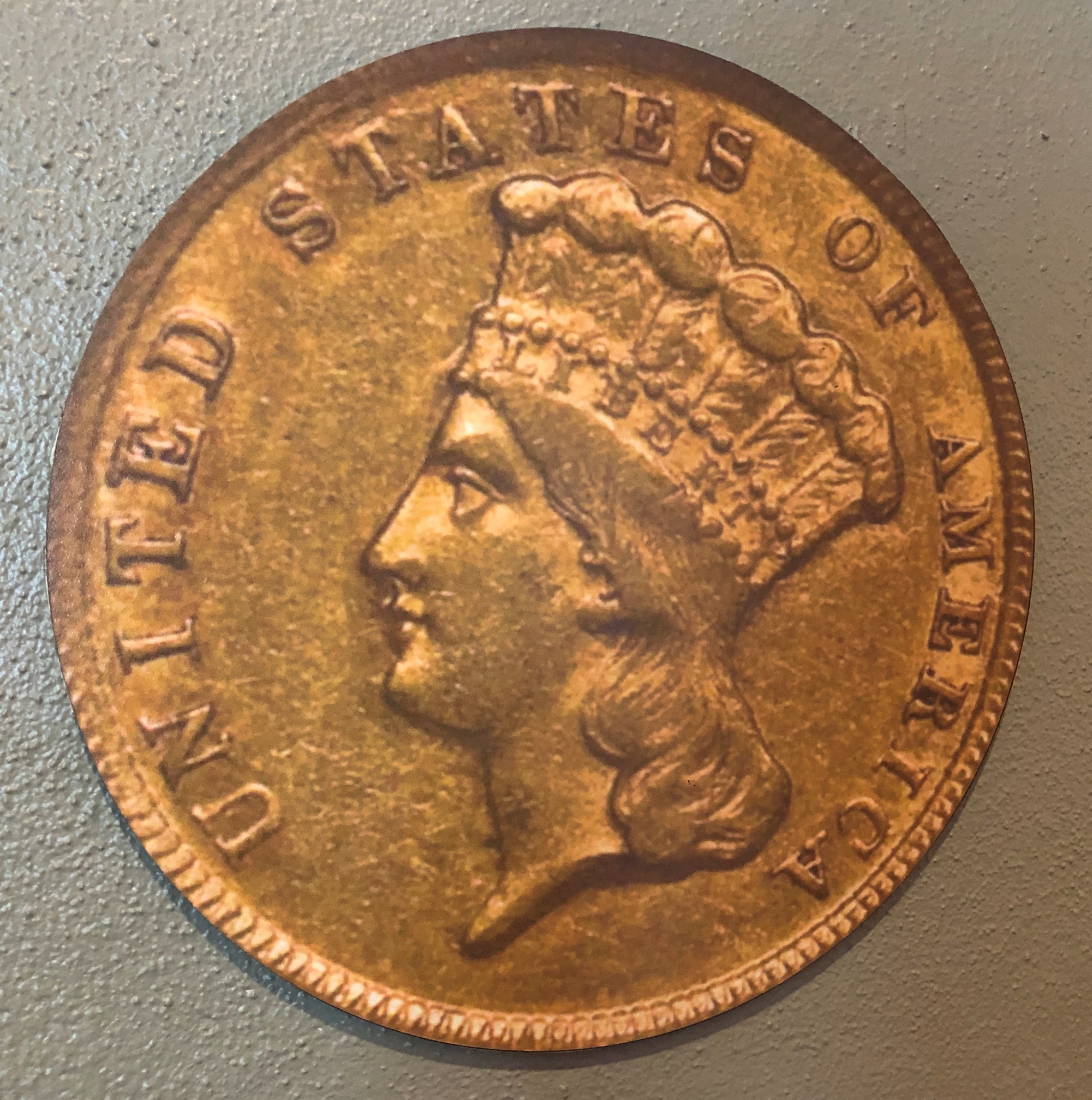
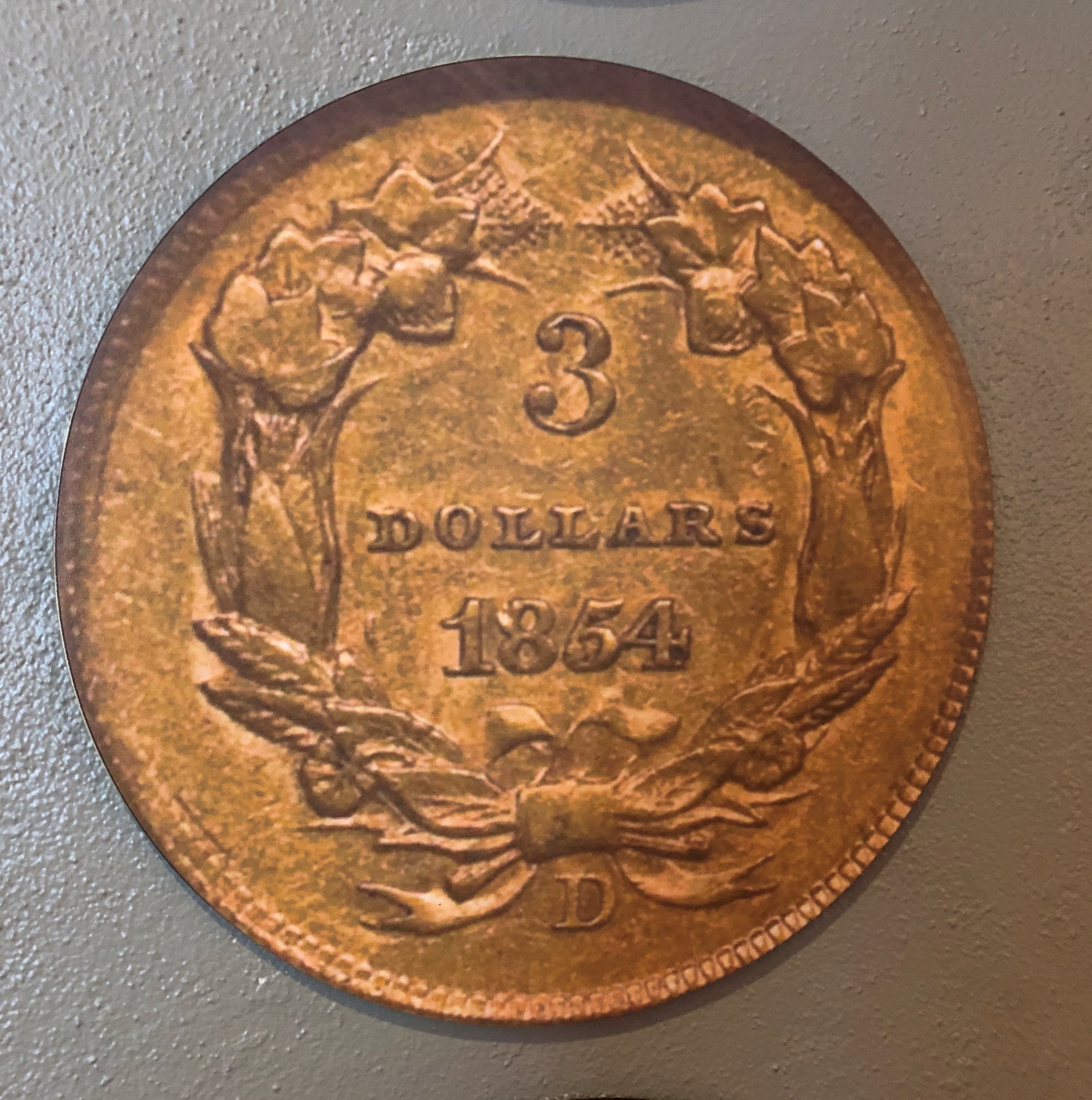
When pondering the immortal deeds of President Millard Fillmore, as one should occasionally, his signature on the Coinage Act of 1853 is worth a thought. The law, signed weeks before he left office, adjusted the silver content of most U.S. coinage, but also created the $3 gold piece. When that hoary old cliché about the queerness of a $3 bill is trotted out, I’d guess that most people don’t know that there was actually such a denomination. It was a gold coin rather than paper, made from 1854 to 1889, though few were minted most of those years.

I already knew about $3 gold pieces before I arrived at the Dahlonega Gold Museum in late June on my way to Tennessee, but if I hadn’t, I could have learned about them there. Dahlonega, Georgia, used to be home to a branch mint where they were made. Only gold coins were made at Dahlonega, including that odd duck of a denomination for exactly one year (1854), but also gold dollars, quarter eagles and half eagles until 1861. No eagles or double eagles, however.

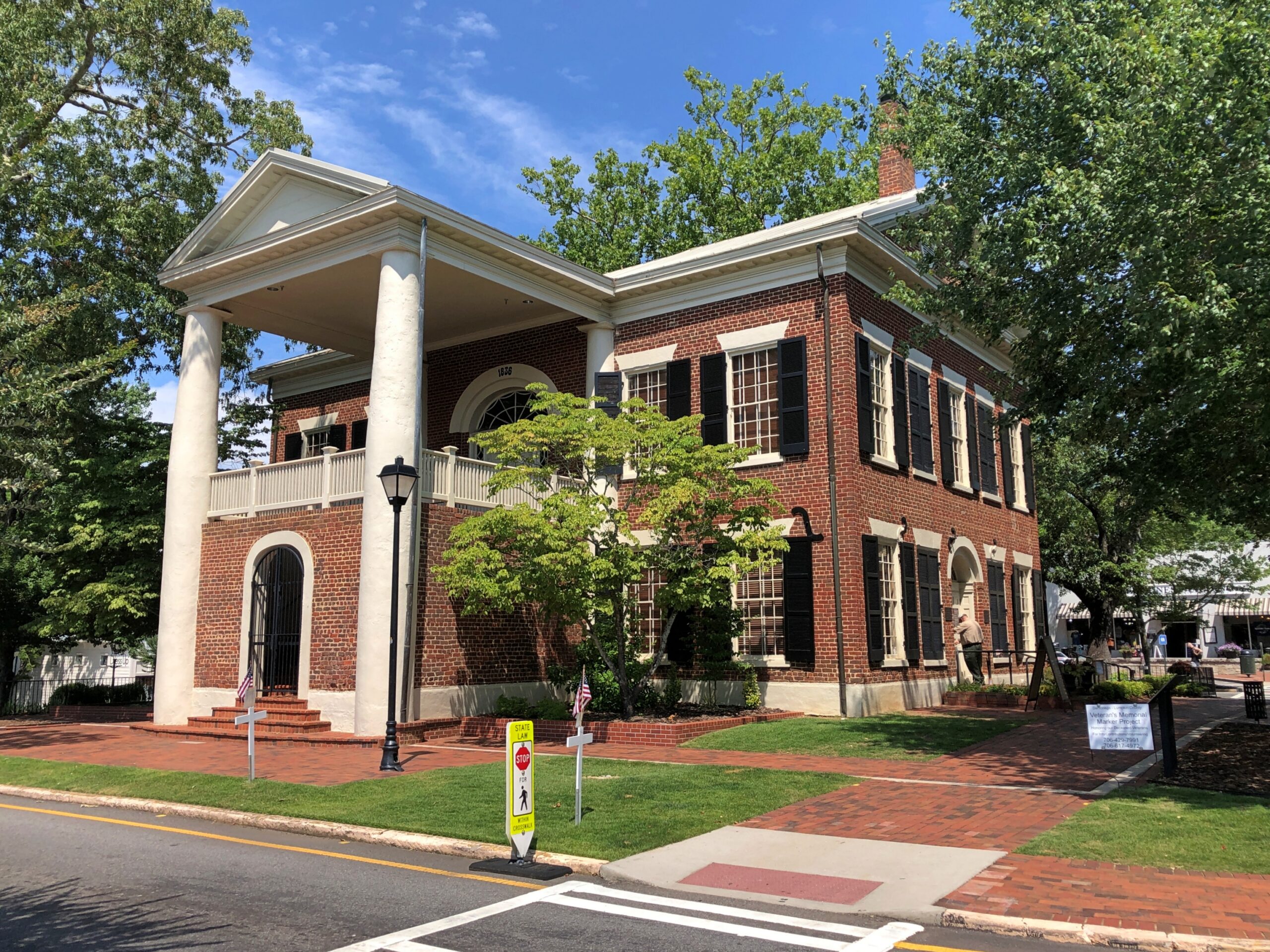
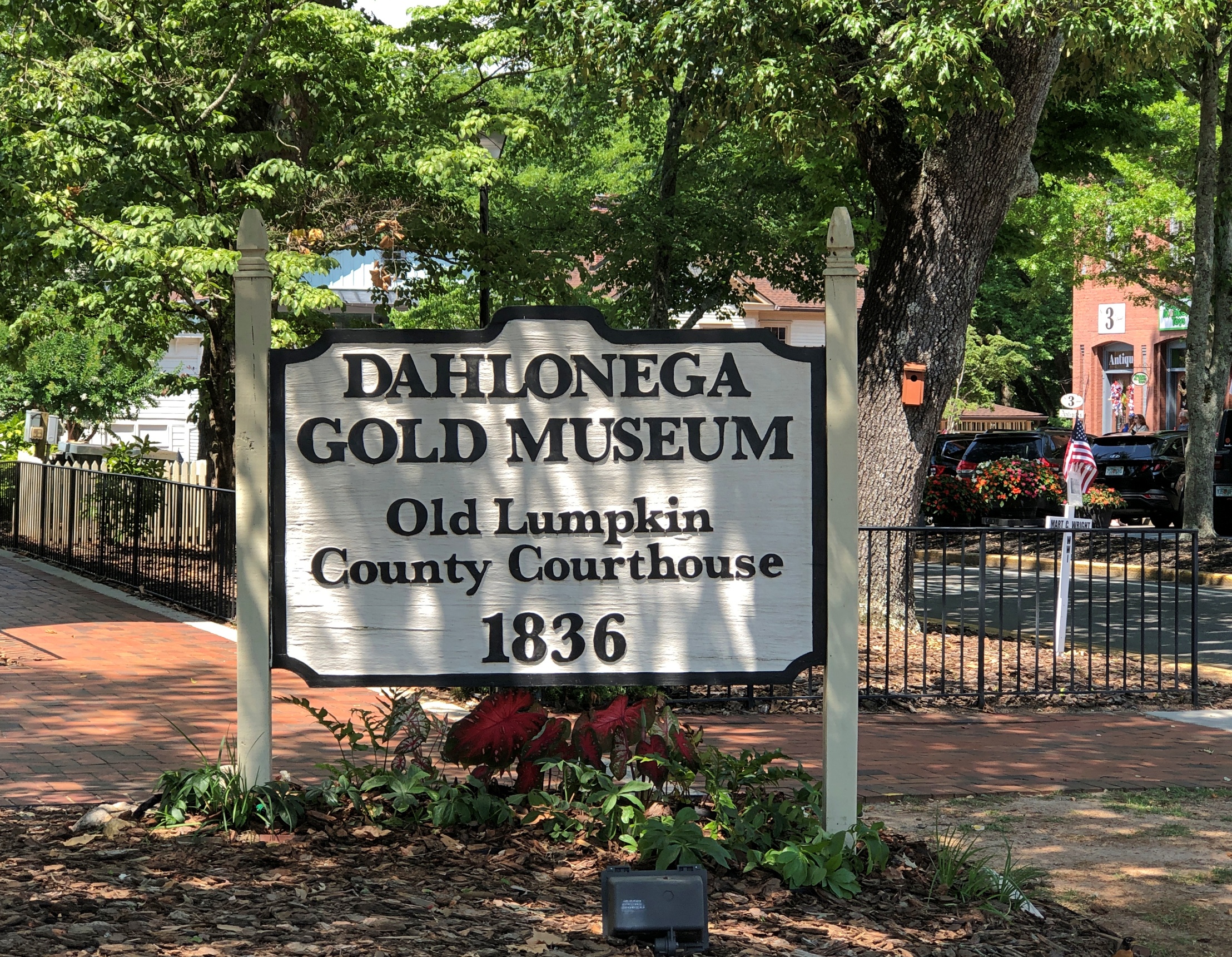
The history of gold coinage at the Dahlonega Mint wasn’t that long. Congress authorized a branch mint there (and in Charlotte, NC, and New Orleans) in 1835, and coin production started at Dahlonega in 1838. The north Georgia gold rush beginning in the late 1820s justified such a move. The Civil War resulted in the closure of the mint, which never reopened afterward, and not too much later, the mint building in Dahlonega burned down. The modern museum is in the former Lumpkin County Courthouse and tells the story of gold in the area.

The museum has exhibits about the mint, but also the gold rush, including information about the discovery and mining of the metal, some antique equipment, and a nod to the Cherokee on whose land the gold was discovered — the rush helped precipitate the Indian Removal Act — as well as the slaves and free labor that worked the streams and hills looking for gold. There was also, behind thick glass, a complete collection of Dahlonega gold coins, mint mark “D,” long before Denver got that letter for its coins.

The protective glass made photographing the actual coins problematic, but the museum thoughtfully provided enlarged images of a few of the coins in its display, including the $3 piece.

Like the 20 cent piece or the Susan B. Anthony dollar, the $3 gold piece wasn’t popular when new. Too easily confused with the quarter eagle would be my guess, though their designs are very different. But they are popular among collectors now, and quite valuable. As a result, alas, I’m unlikely ever to own one. In the most extreme case, an 1870-S $3 piece, the only example known to exist, sold at auction in 2023 for more than $5.5 million.

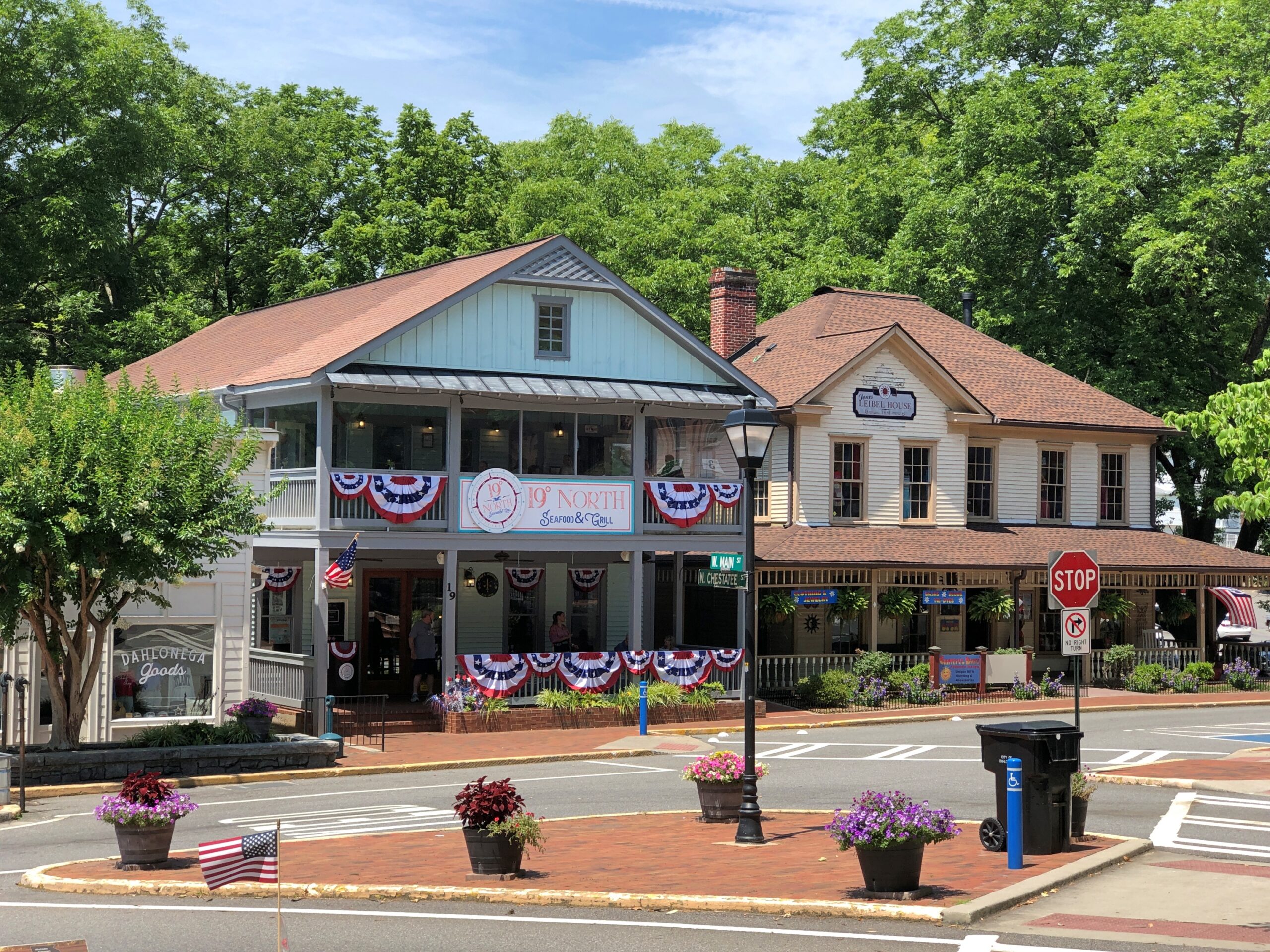
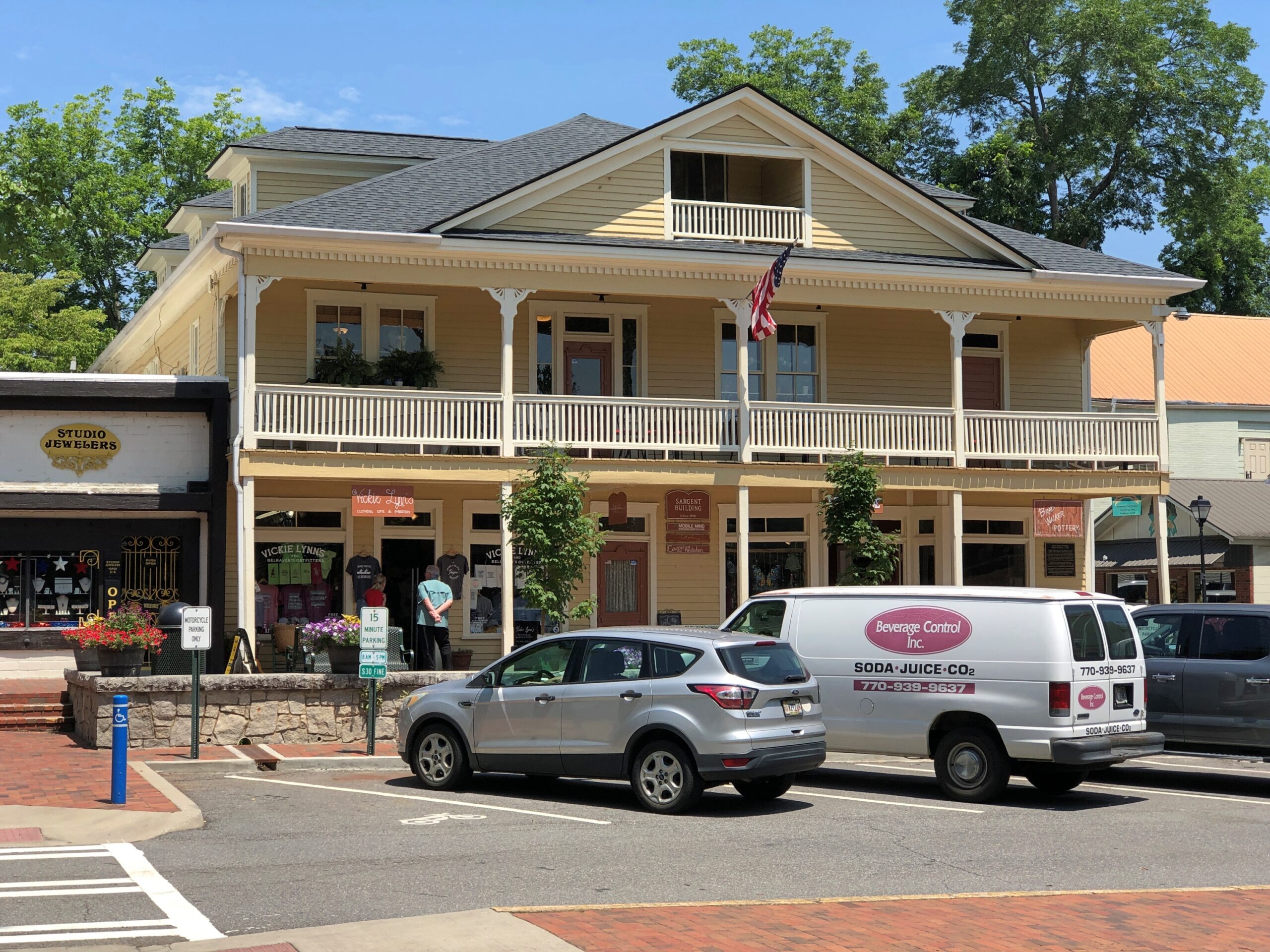
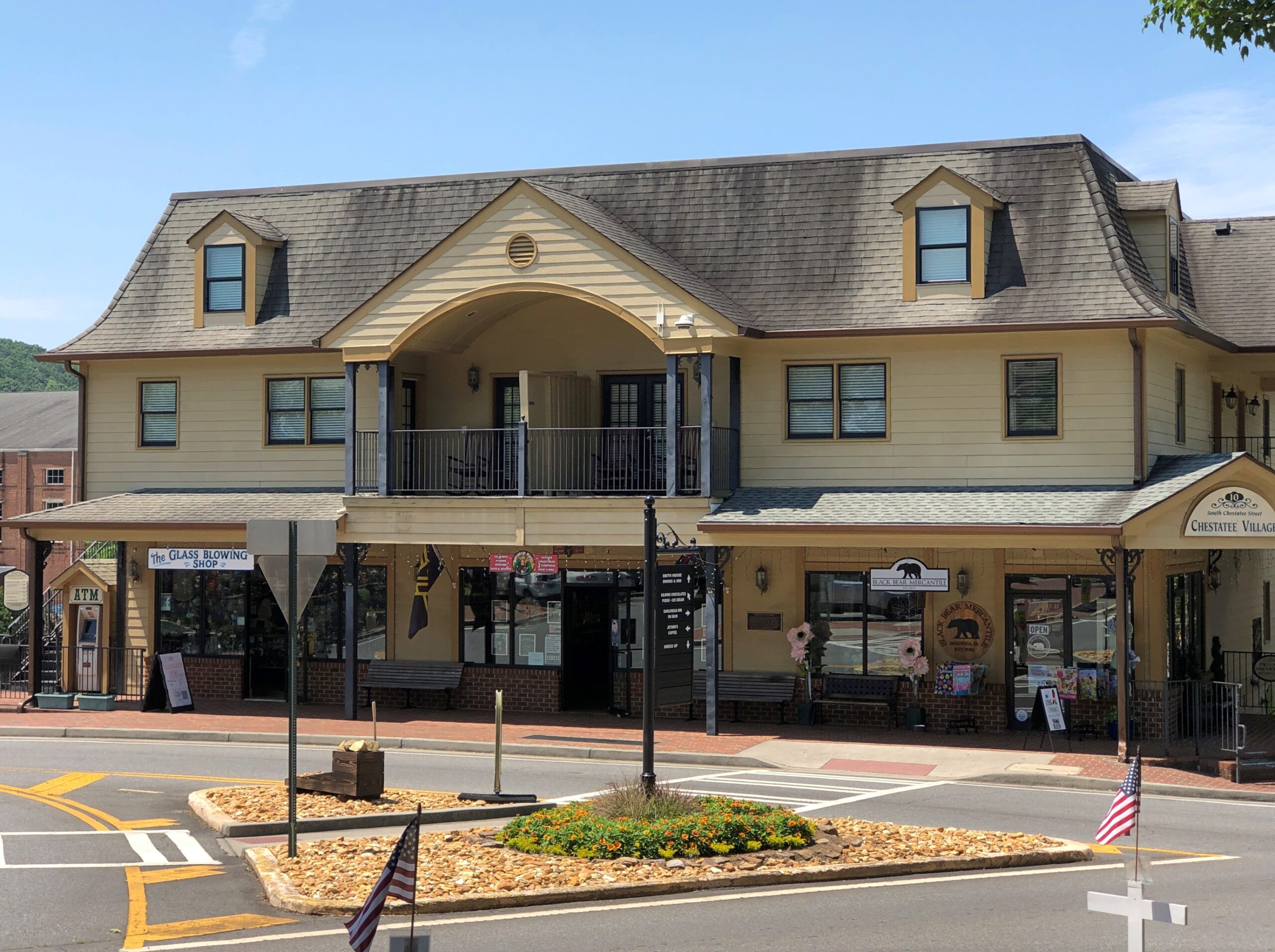
As for Dahlonega, its downtown has the handsome look of a day-trip destination from Atlanta and a lot of suitable businesses. On the former county courthouse square, you can find the likes of Gustavo’s Scratch Kitchen, Vintage Musical Instruments, Dahlonega Tasting Room, The Glass Blowing Shop, Studio Jewelers, Lynn’s Gifts, Country Cottage (also gifts), Local Pup pet store, 19° Seafood & Grill, Paul Thomas Chocolates, Dahlonega Goods and Dress Up Dahlonega.
Dahlonega, Ga.
Dahlonega, Ga.

A blazing hot day might not have been the best time for a visit, so the square wasn’t especially crowded. I only spent enough time on foot to get from a parking lot a block away to the museum, and then took a walk around the building under the shade of the trees on the grounds. For a hot summer day, not a bad walkabout. Certainly worth the effort to see some Dahlonega gold.
Conway, South Carolina

The day was on, the heat was on, and I was on the road again. I’d driven out to Myrtle Beach from Illinois. Now I planned to drive back.

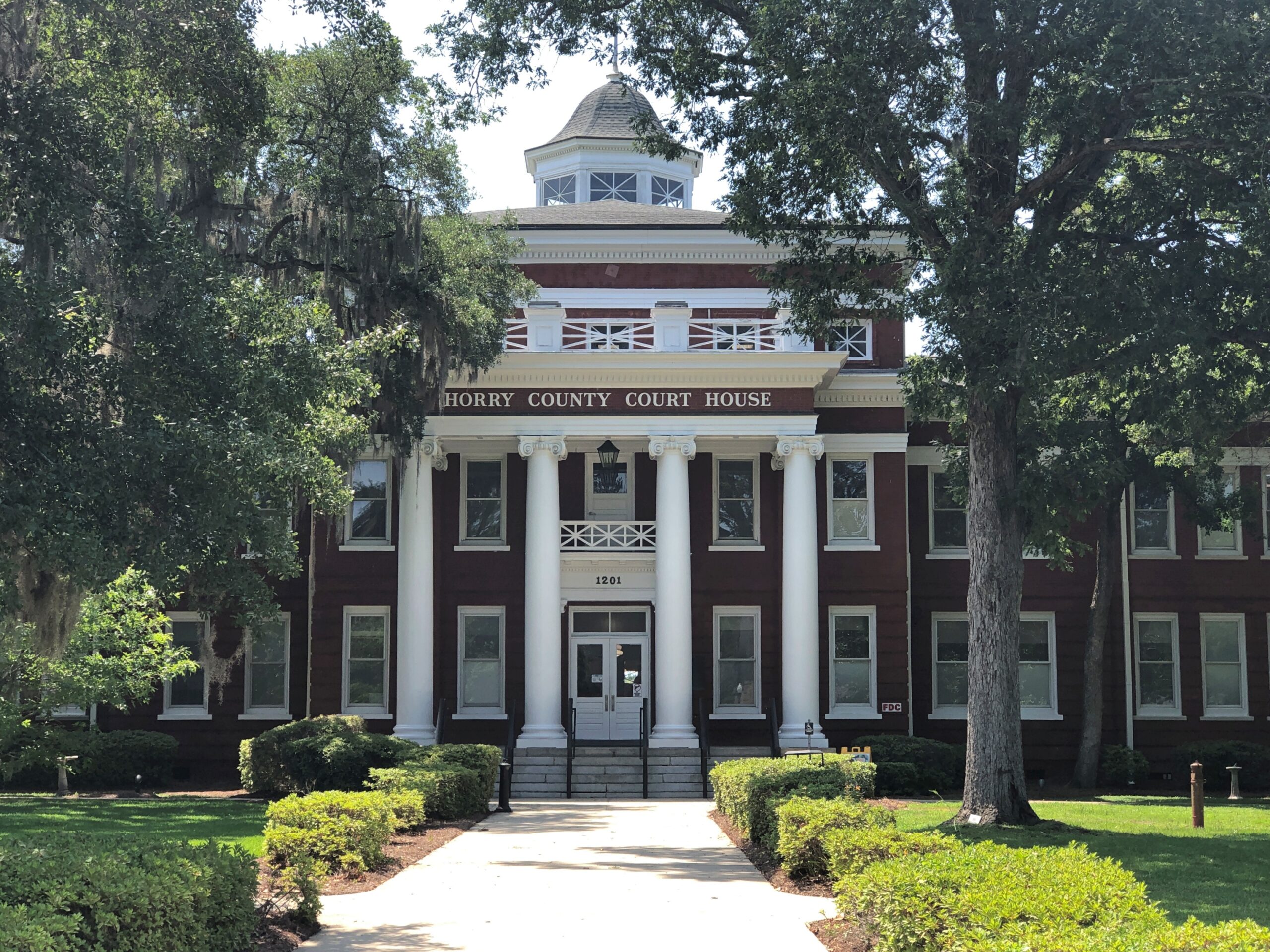
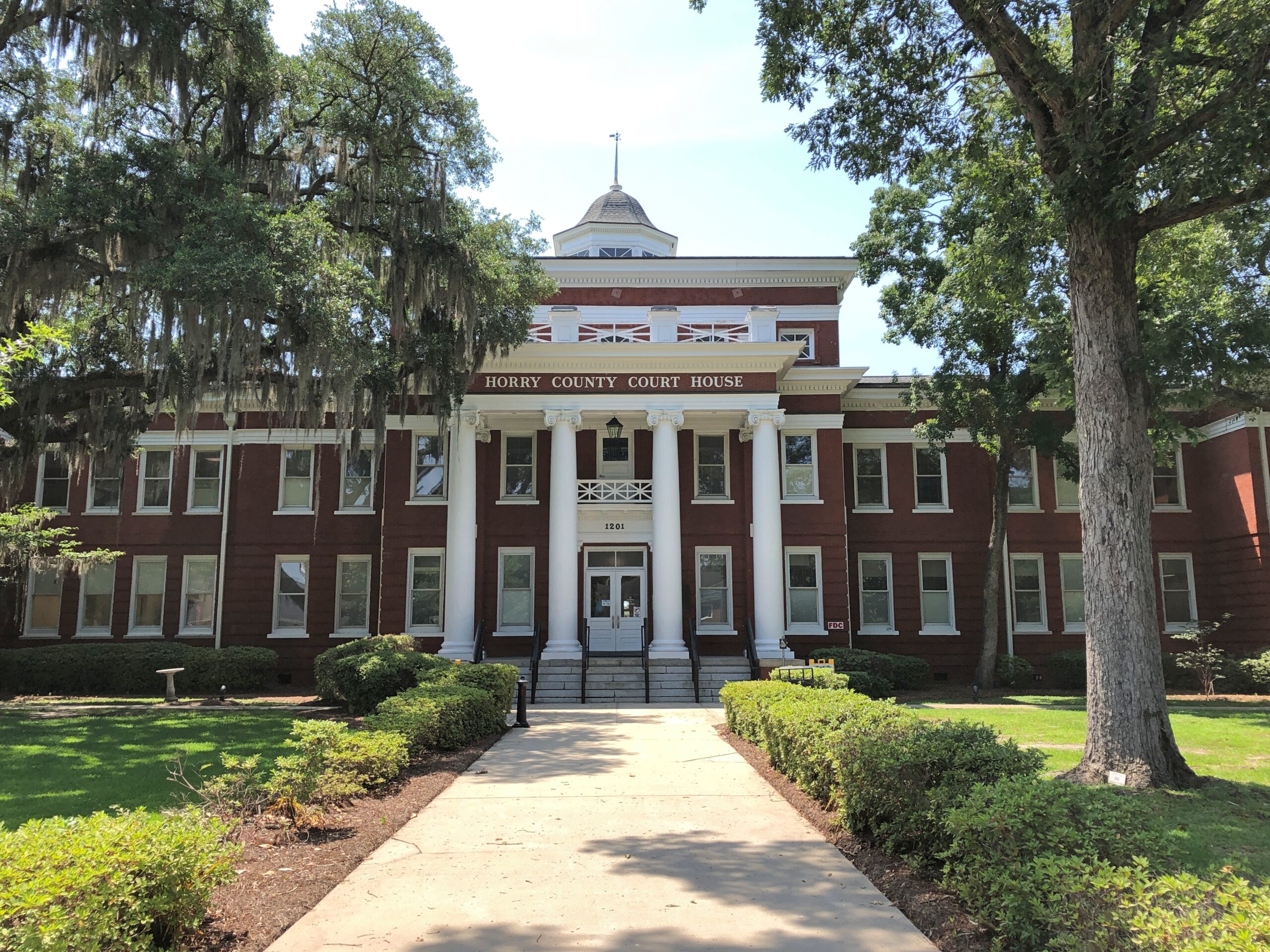
First stop, not far: Conway, South Carolina, much smaller than Myrtle Beach, yet the seat of Horry County. I’d assume that arrangement goes back to the time when the county’s focus was on Conway, a center of turpentine production, not Myrtle Beach, which was a wasteland dotted with wax myrtles.

Nothing like a handsome county courthouse.

Conway, SC

In the ragged diamond shape that is South Carolina, Horry is the easternmost tip. At the time of the Civil War and immediately afterwards, Horry was the poorest county in the state, an almost literal backwater isolated by the Pee Dee Swamp on the west and south. Now the county is one of South Carolina’s most prosperous.

The transformation is a story of railroads and a turpentine boom, followed by a tobacco boom, followed by a tourism boom. Along the way, new prosperity meant a new courthouse, finished in 1908.

Not long after, in the 1920s, the courthouse was the scene of another of those trials of the century mostly forgotten after a century, namely the Bigham trial, “in which Edmund Bigham — a member of a prominent, controversial Florence County family — was tried for the murder of five family members, including his brother Smiley Bigham, who was a state senator,” South Carolina History Trail says.

“Crowds packed the courtroom daily and the trial attracted newspaper reporters from as far away as New York City. One potential witness was murdered, another died of a heart attack while testifying, and some locals believed that the defendant somehow made the nearby Waccamaw River overflow its banks. The courtroom drama ended when the defendant suddenly accepted a guilty plea.”

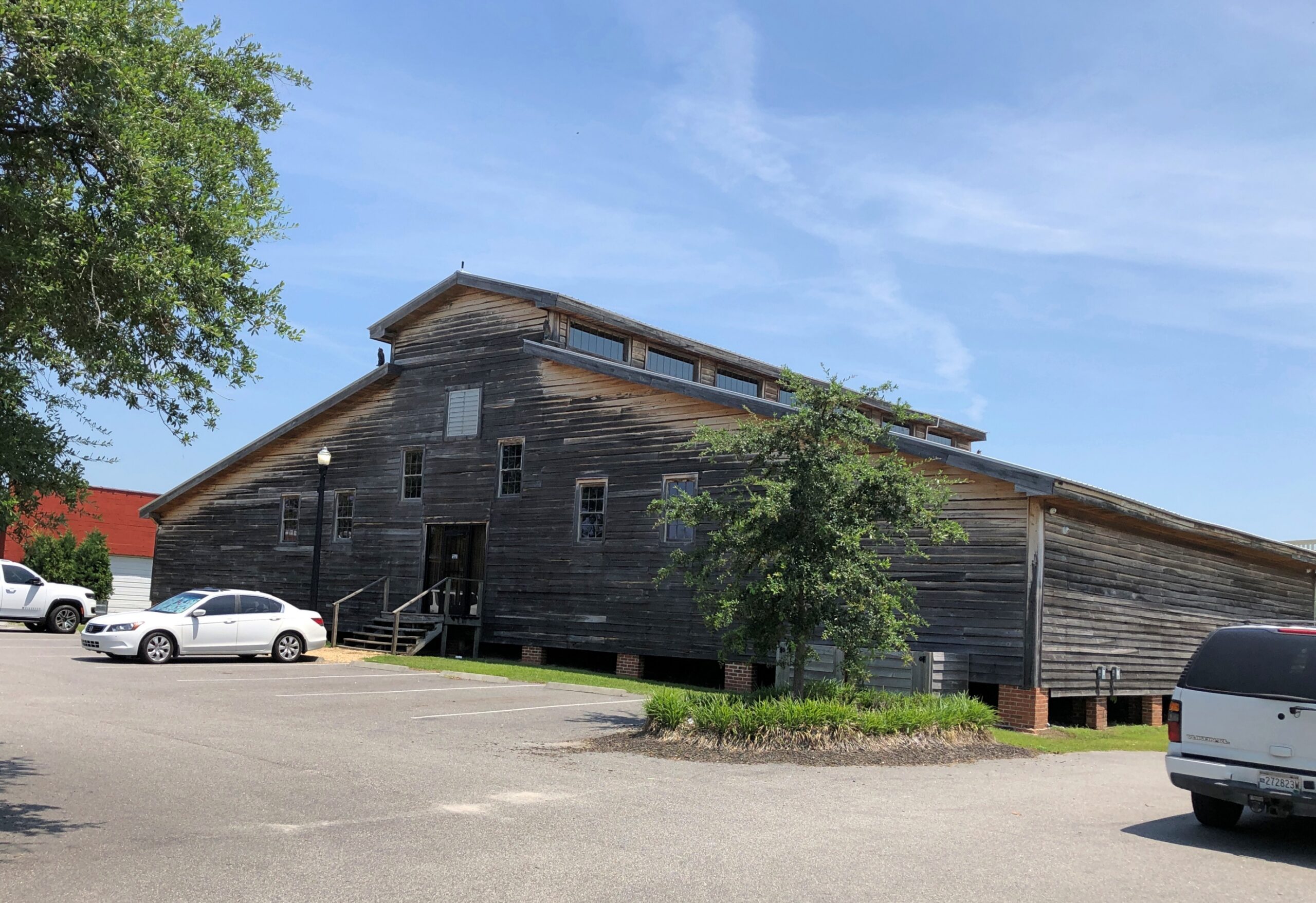
Not far from the courthouse, because nothing is very far from anything else, is an enormous wooden warehouse. This is the back.

Conway, SC

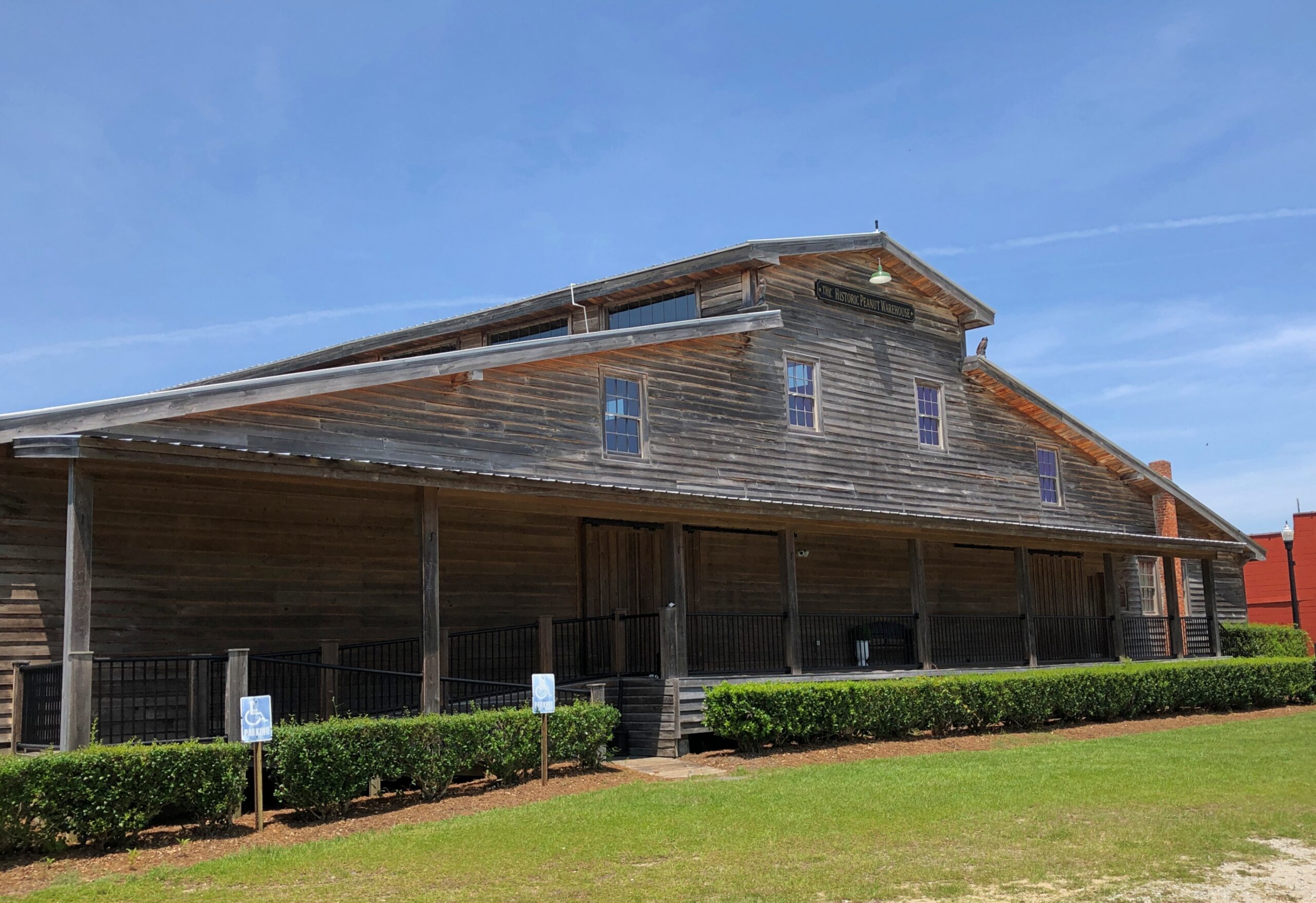
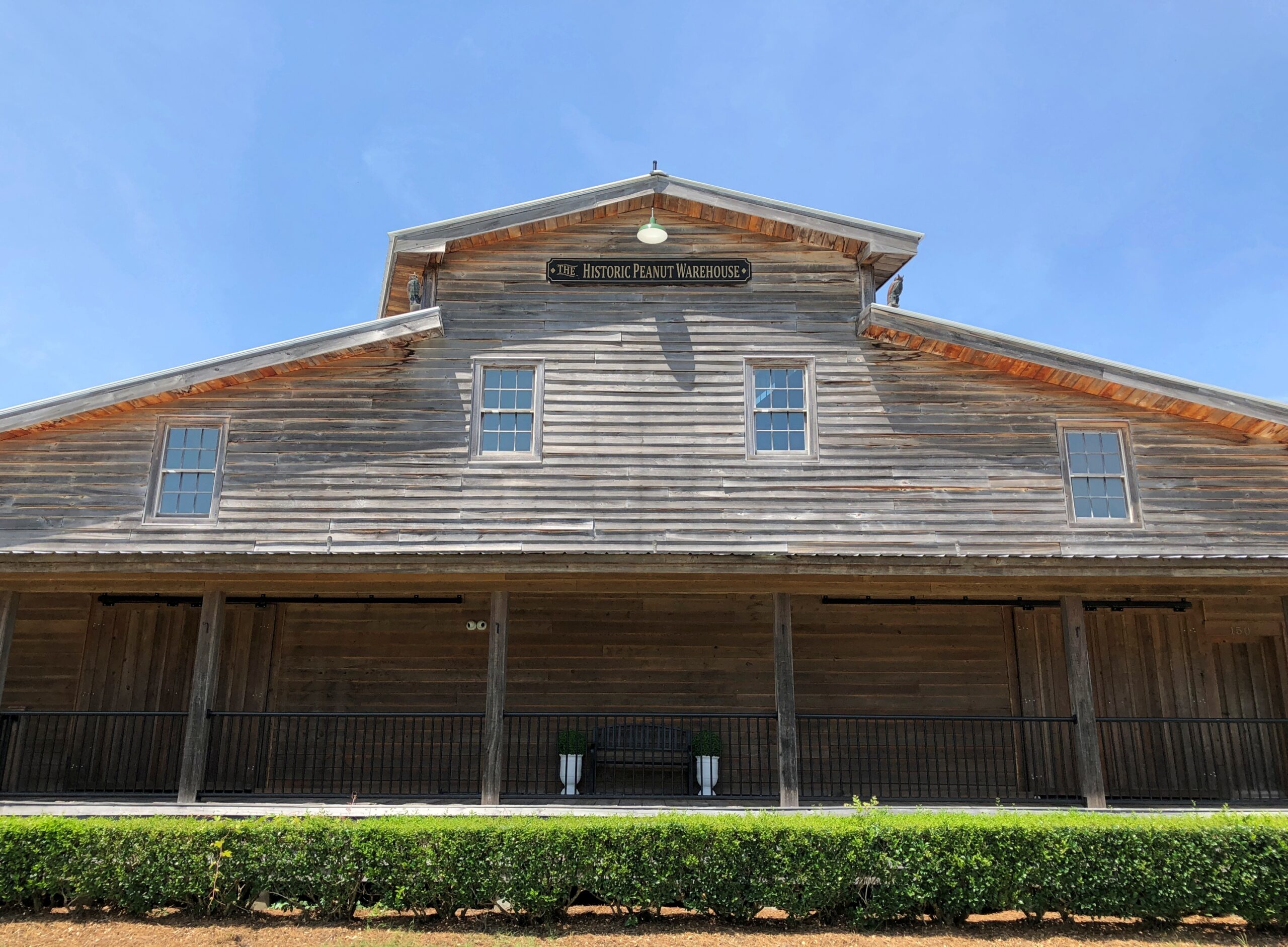
Round to the front.

Conway, SC

Historic Peanut Warehouse. Historic tips us off that no goober peas have been stored there in some time, and the like-new wood means restoration in the not-so-distant past.

Anyway, I should have known peanuts had something to do with the wooden giant.

Conway, SC

When new in 1900, the warehouse held peanuts, but after some years that gave way to decades of tobacco storage. In our time, you can hold an event there, and I’d bet its lifeblood is weddings.

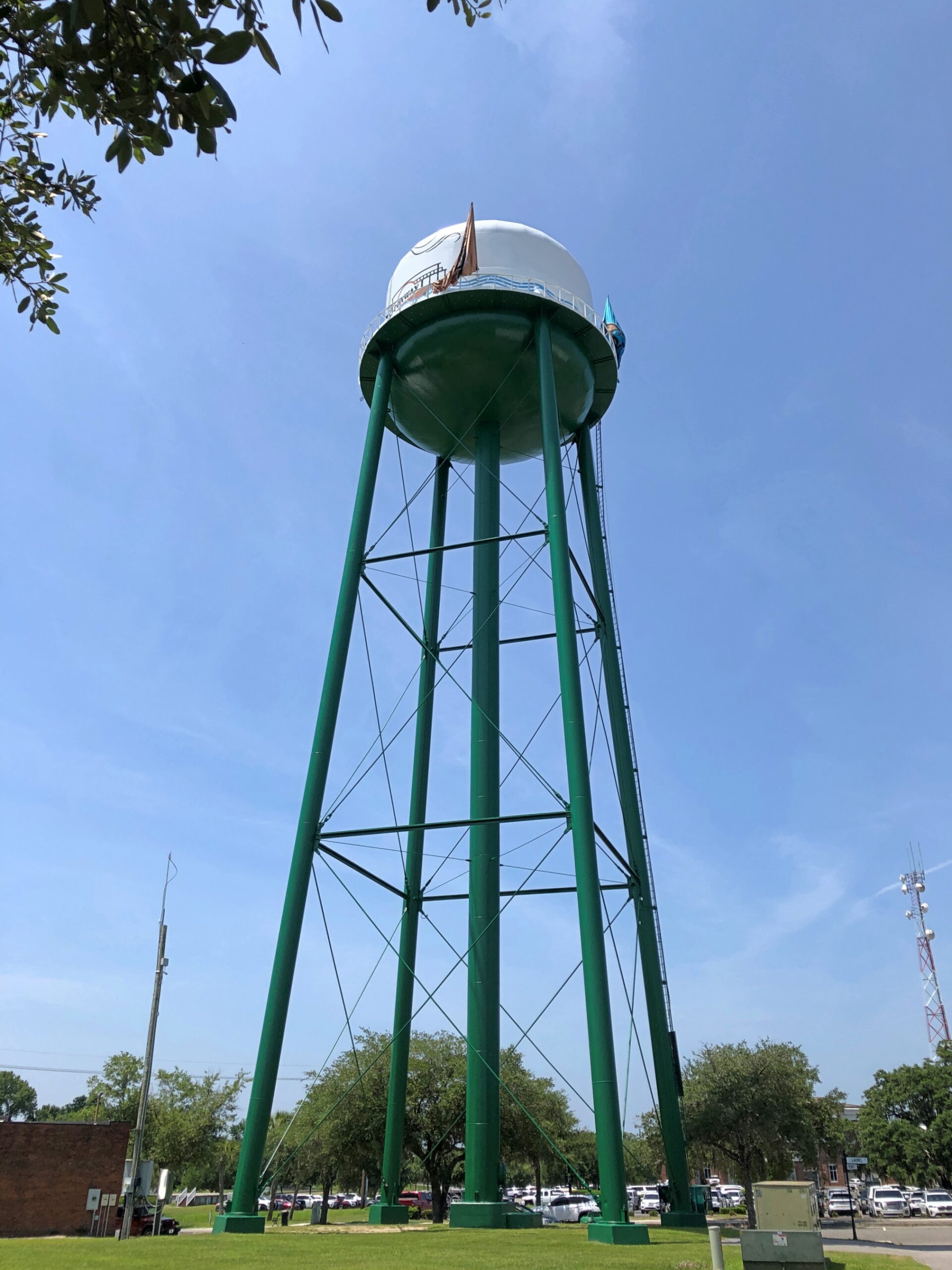
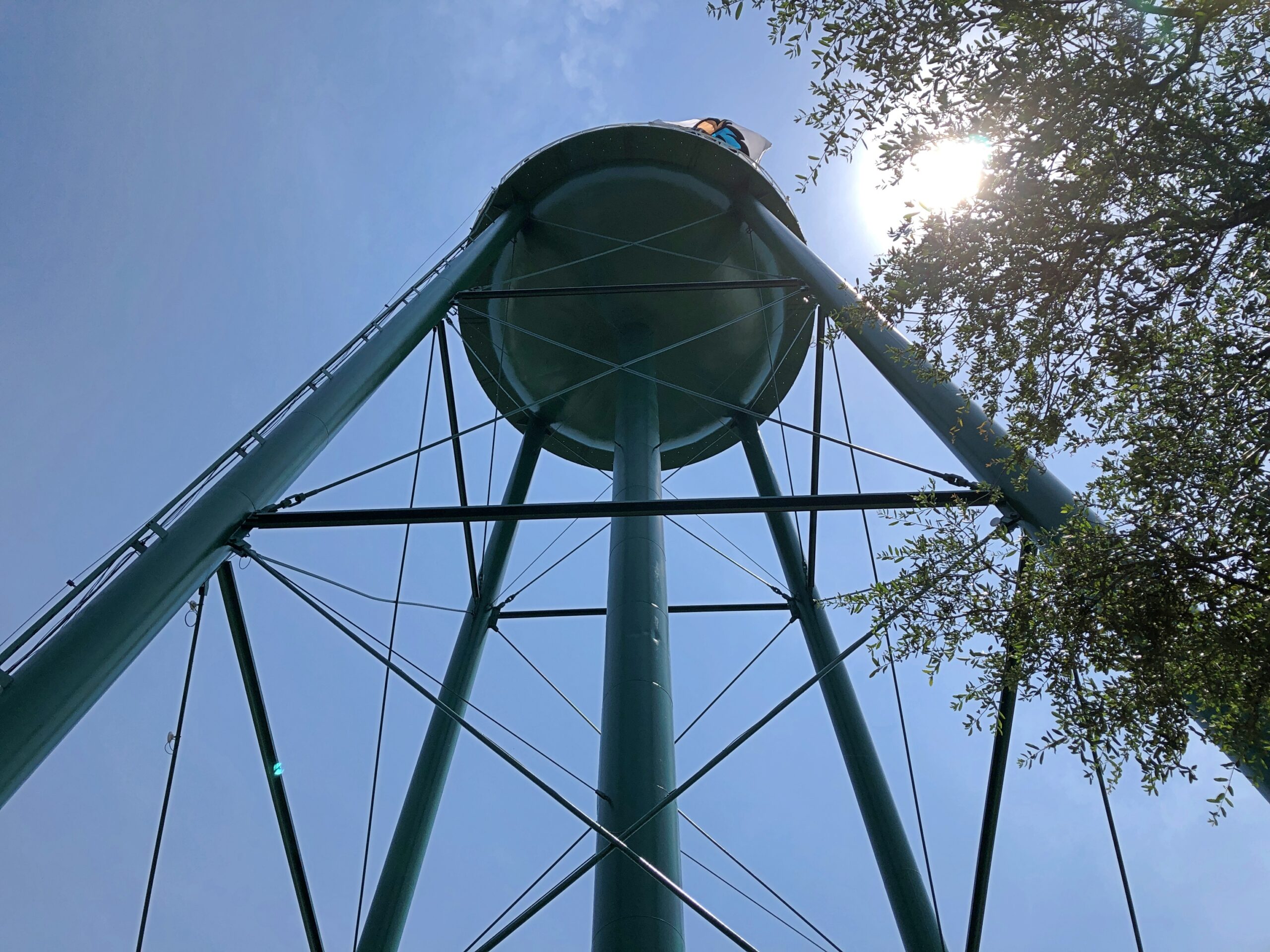
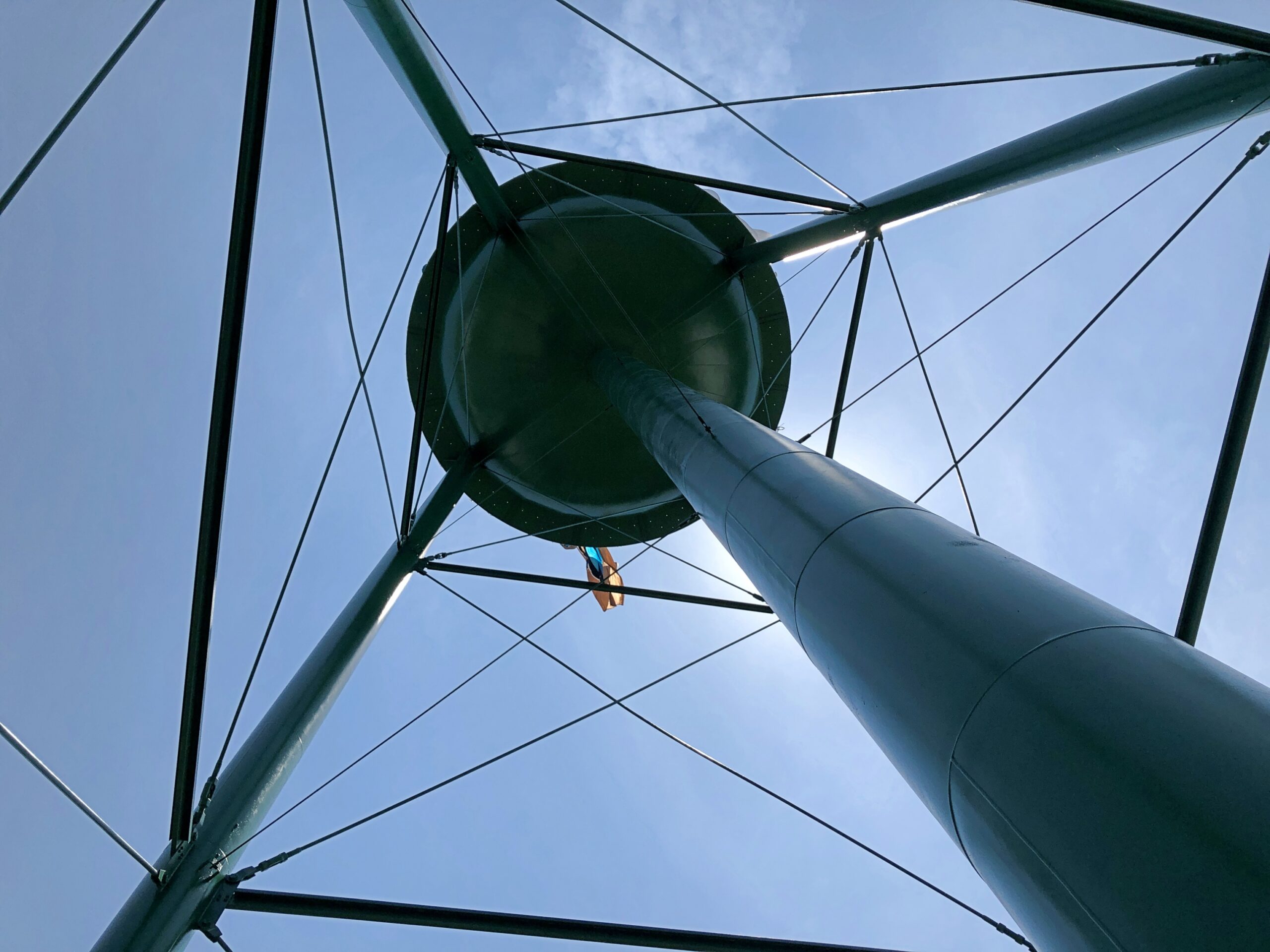
Other parts of Conway beckoned, such as a walkway along the Waccamaw River. The prospect of heat exhaustion or at least a headache put me off such an idea. But the heat didn’t mean I couldn’t admire the artful green-and-white local water tower.

Conway, SC

As a small child visiting my grandma in Alamo Heights, Texas, I admired the local water tower, silver-gray with a distinct cap atop it, and easily visible from her house. I’ve been looking at water towers ever since. (This article says the tower’s nickname was Tin Man, but I never heard anyone call it that, and my own personal name for it, which became family argot, was “Squeaky.”)

Near the water tower.

Conway, SC

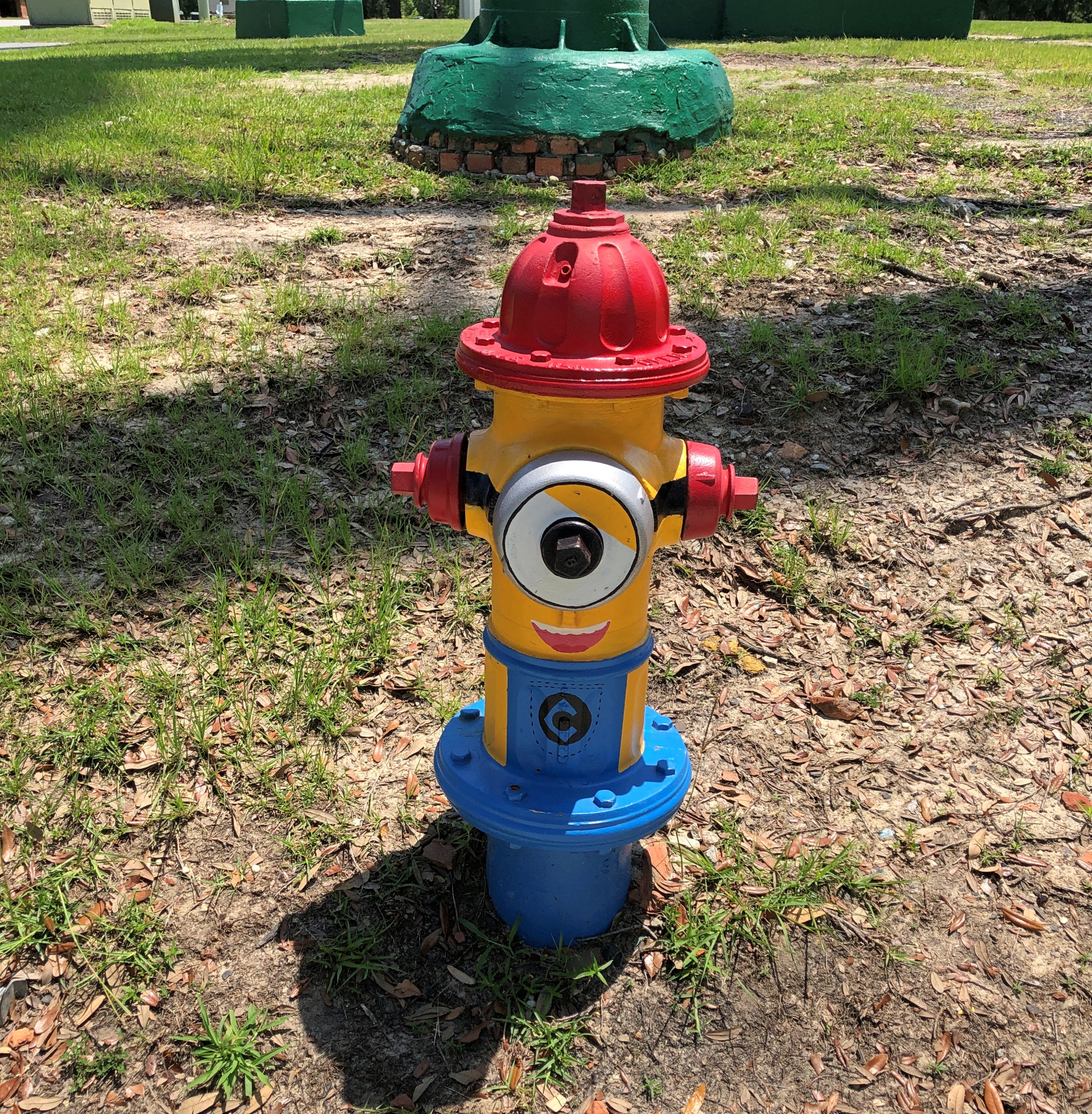
A bit of municipal whimsy. We could all use a little more of that. But not too much.

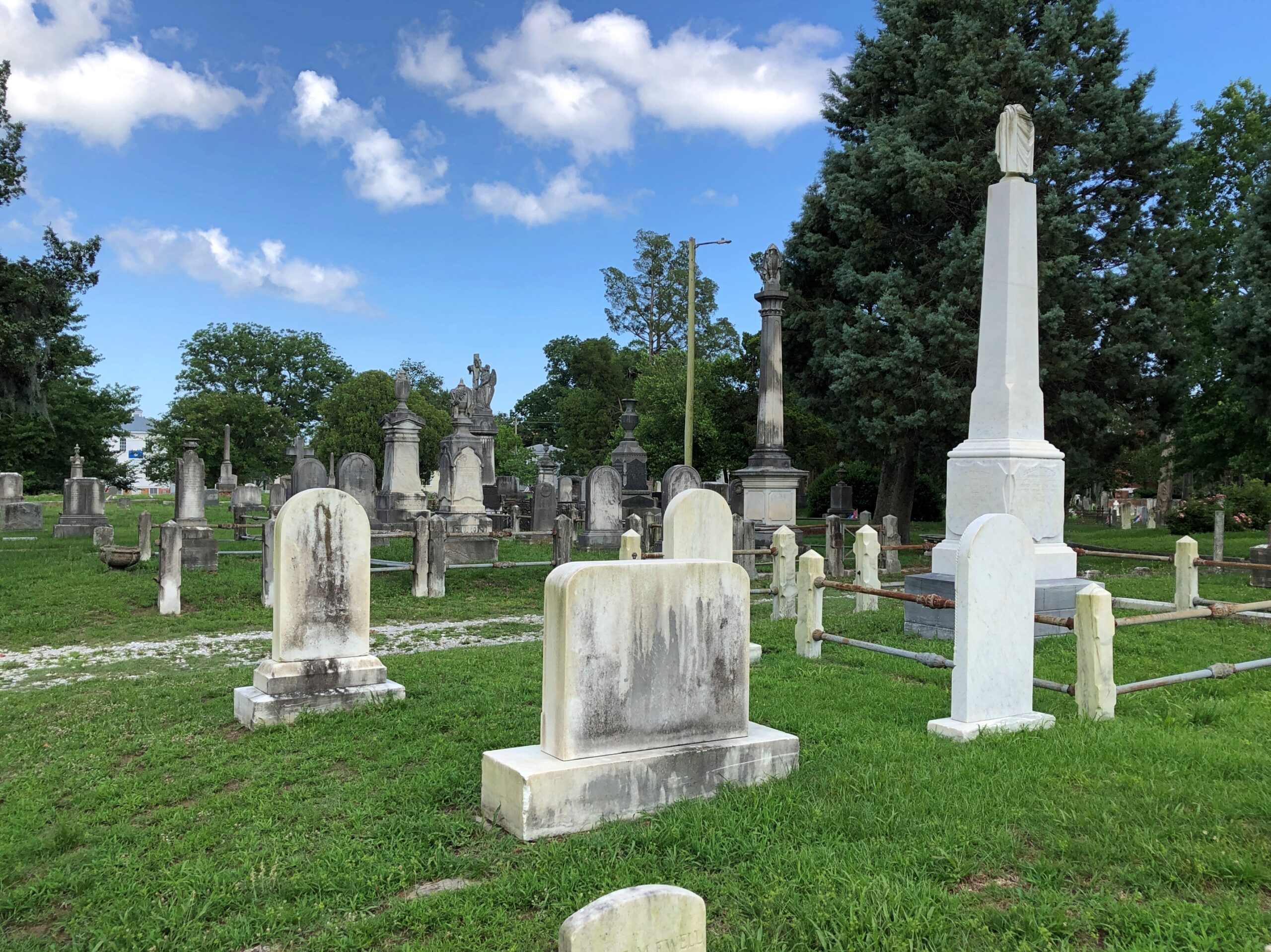
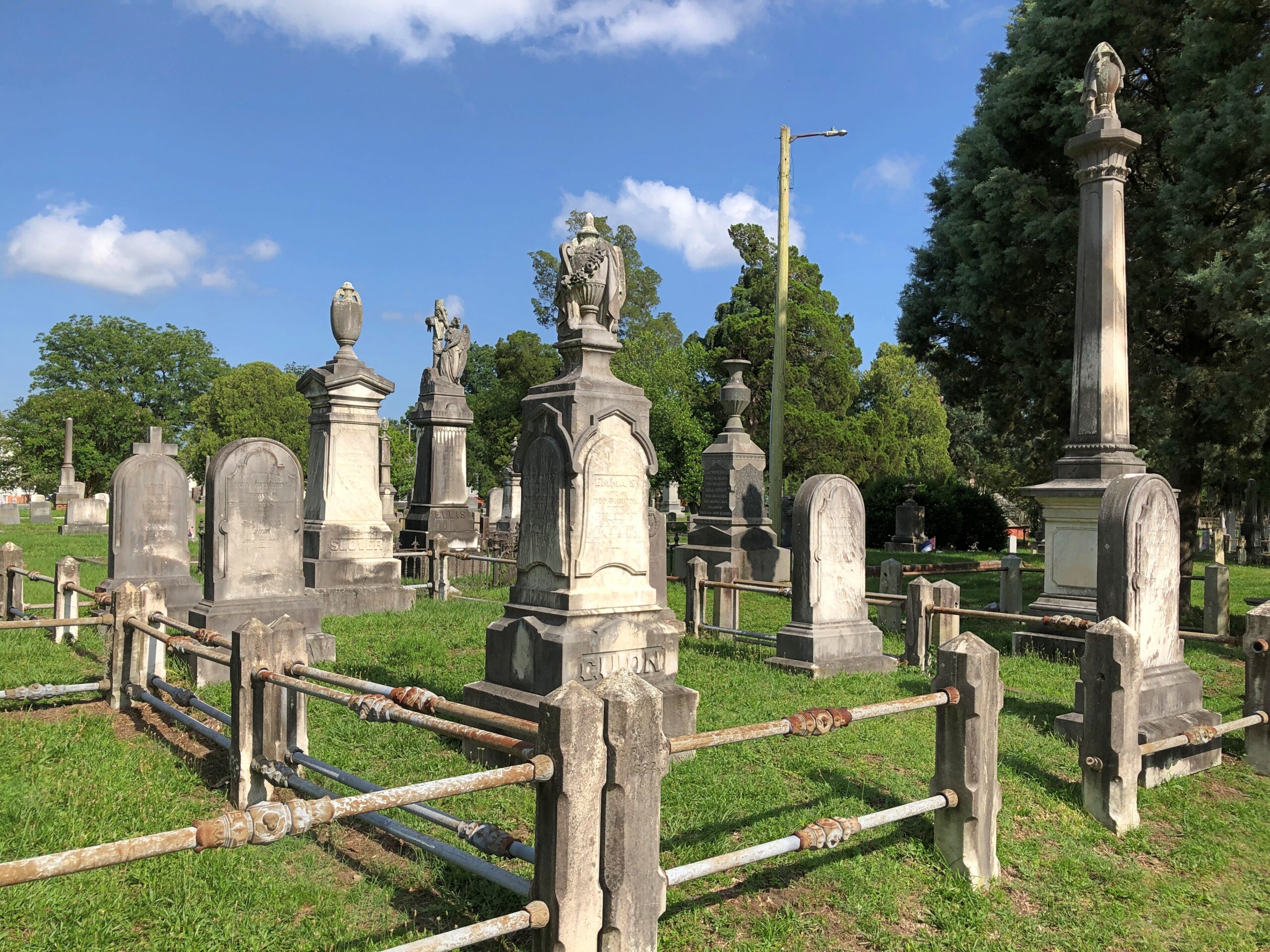
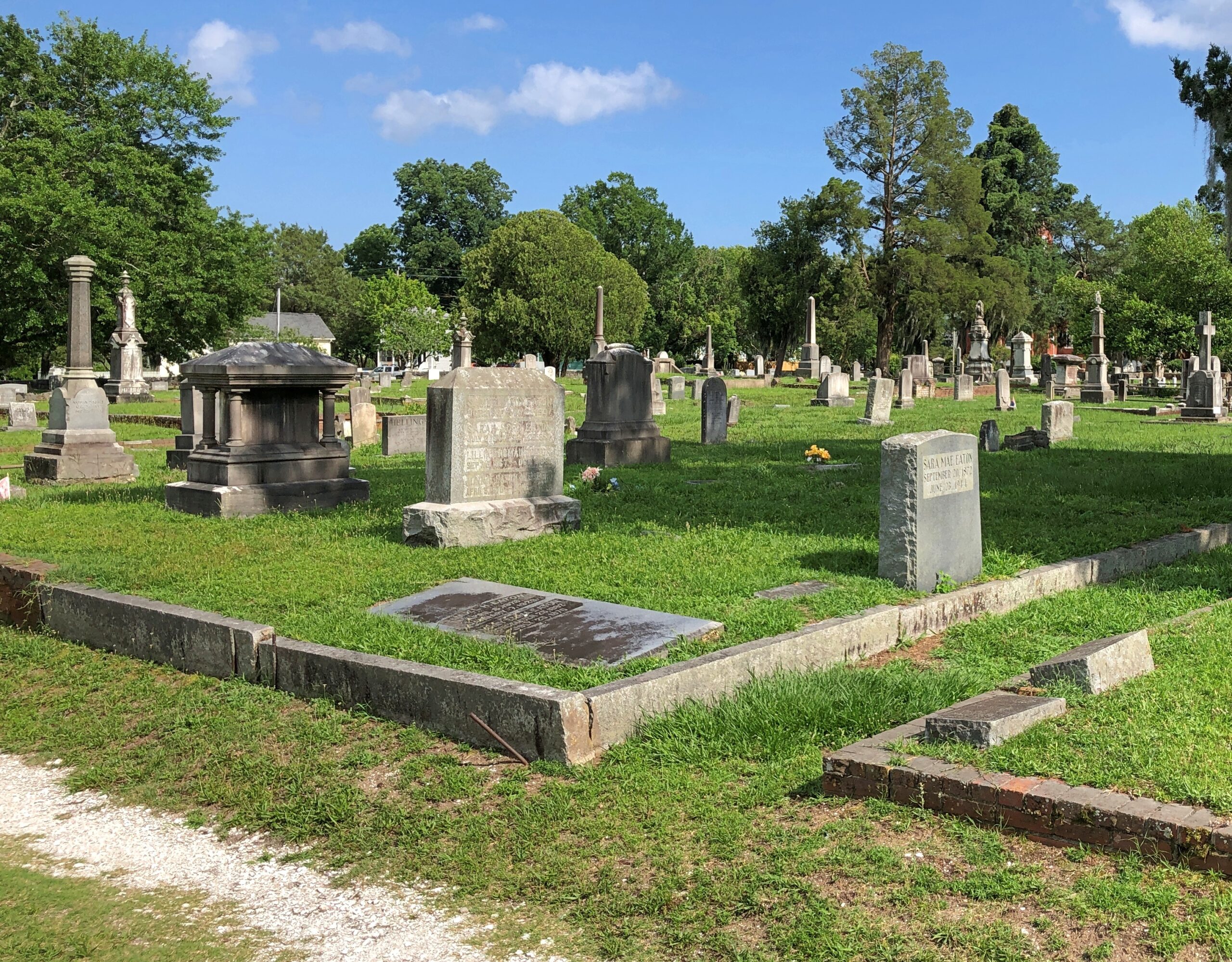
Cedar Grove Cemetery, New Bern

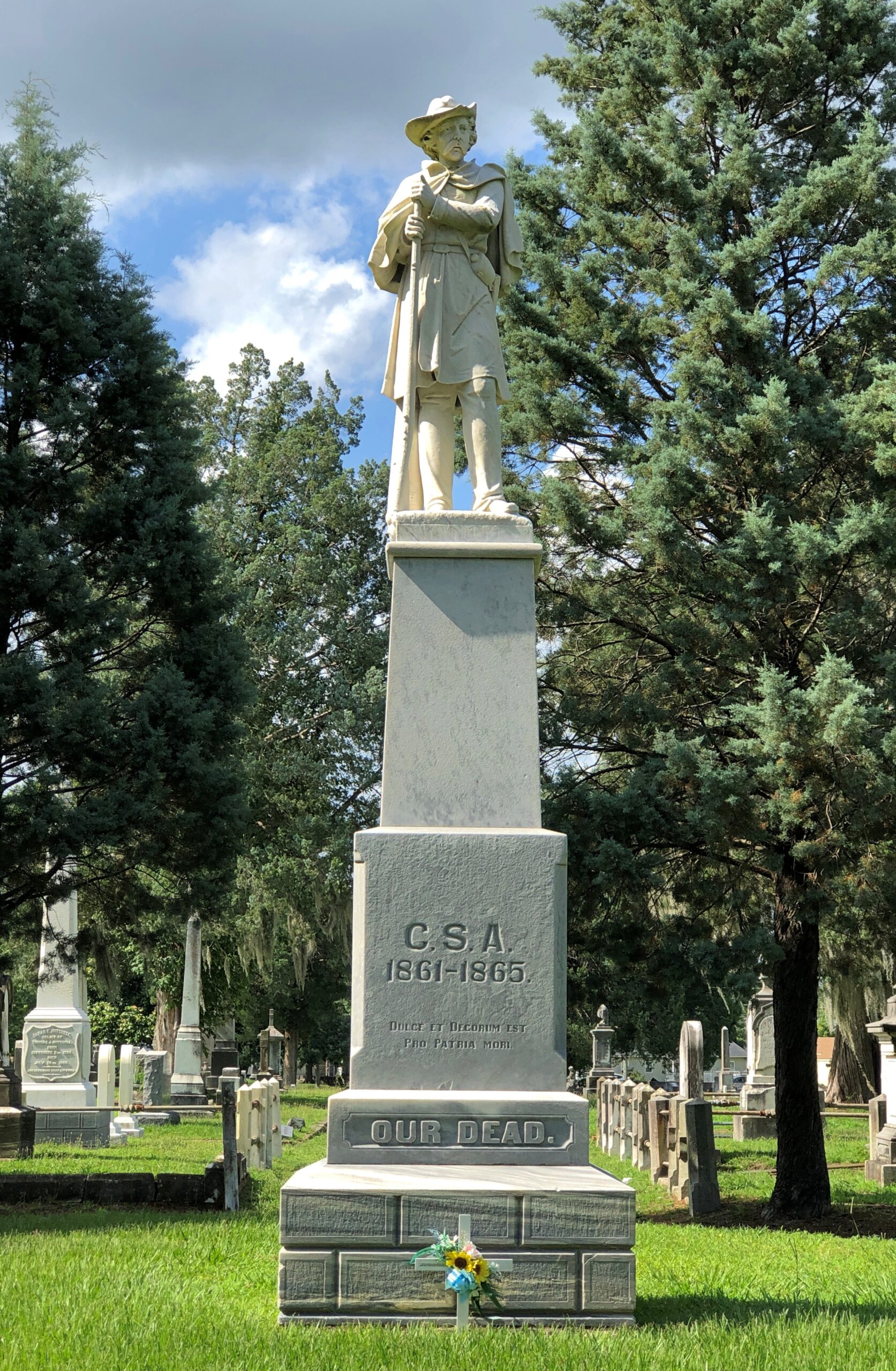
Back to the WPA North Carolina guide, vintage 1939 (p. 230): “Cedar Grove Cemetery… was opened in 1800 by the Episcopalians and turned over to the city in 1854… The Confederate Monument, a 15-foot marble shaft, identifies a mass Confederate grave. Tradition says that his law desk and chair were buried in this cemetery with the body of William Gaston. Interred here are William J. Williams, who pained the Masonic portrait of Washington owned by the Alexandria, Va., lodge, a photograph of which is in the New Bern Public Library, and Moses Griffin, benefactor of city schools.”

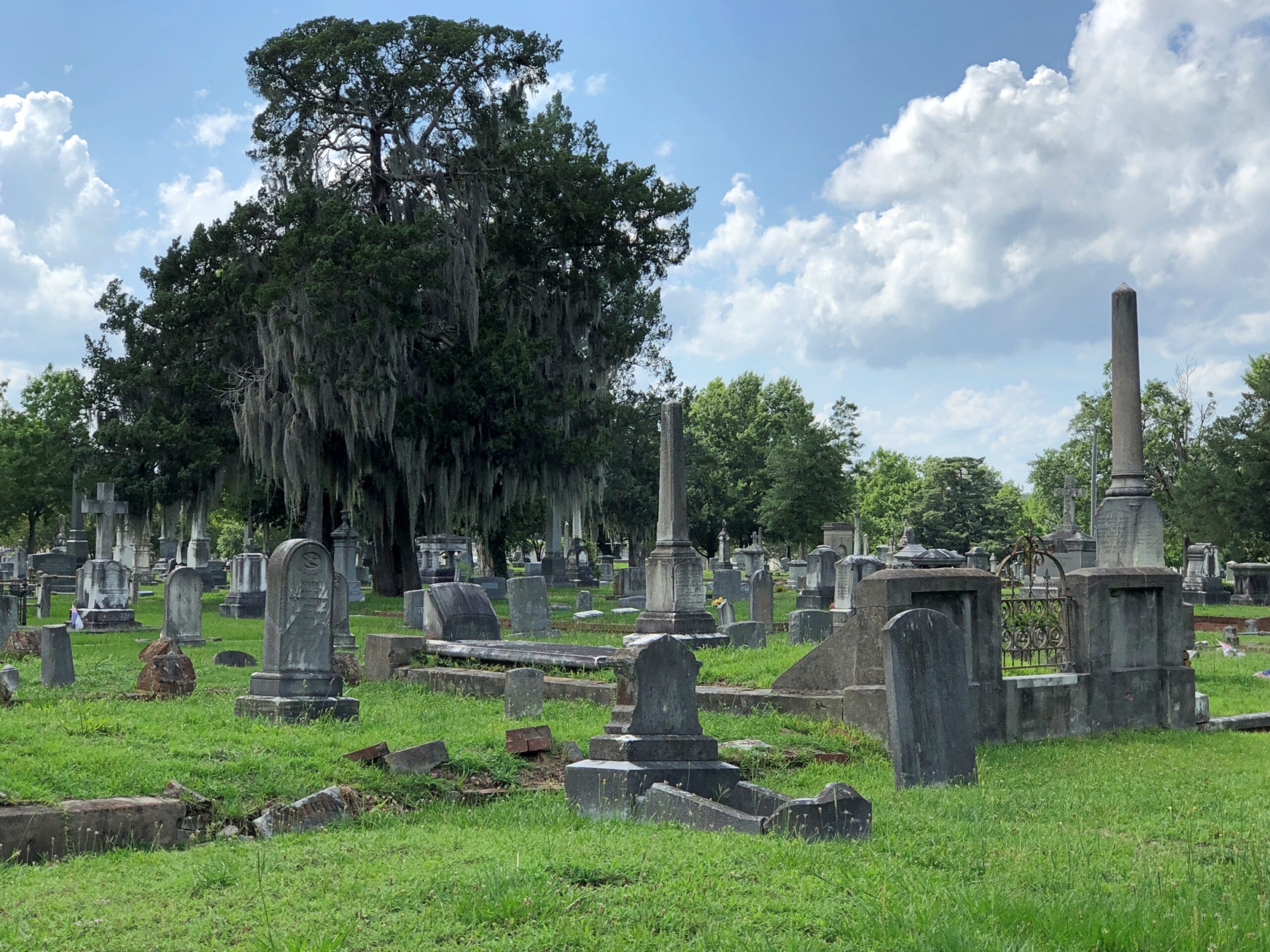
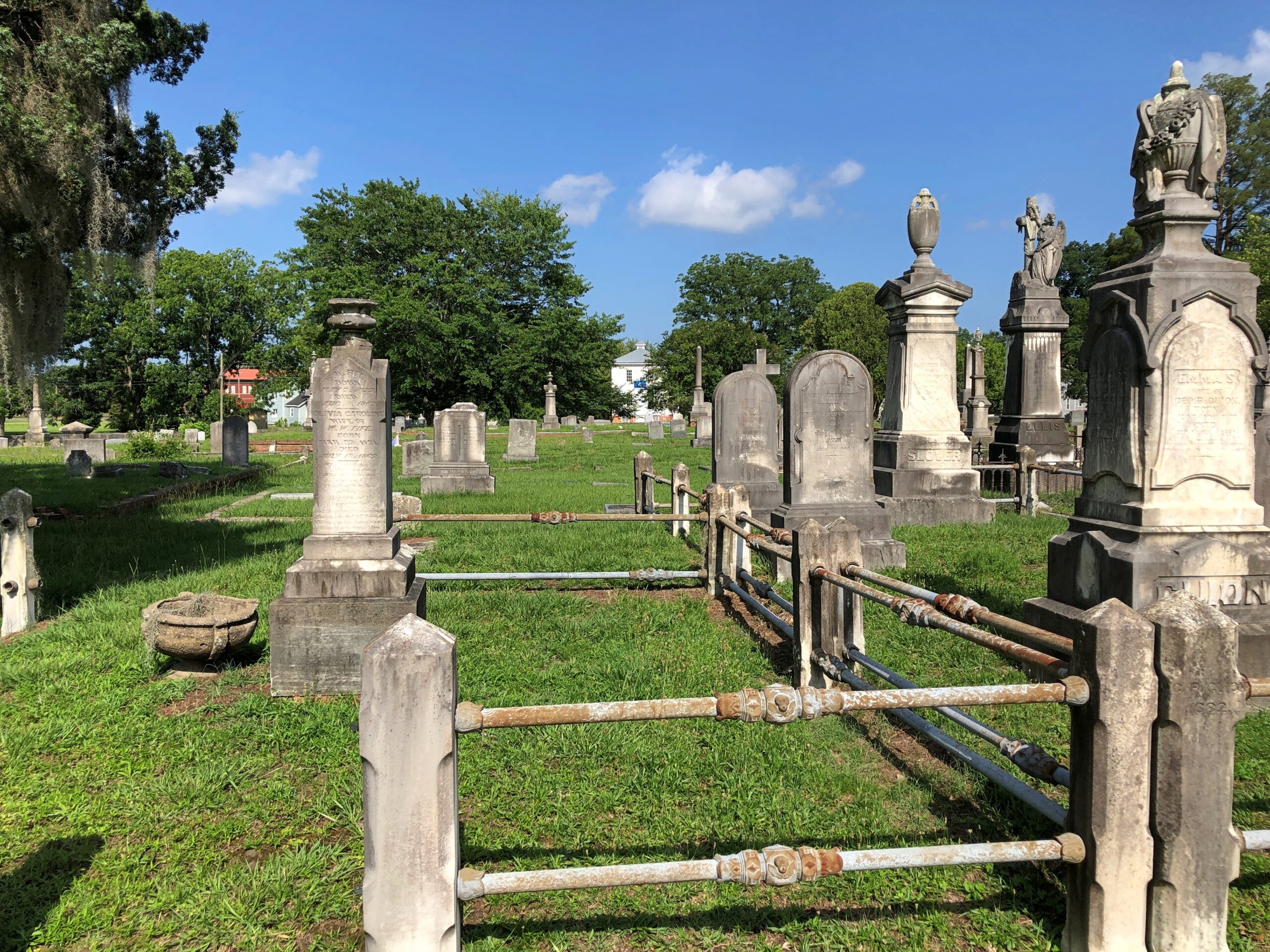
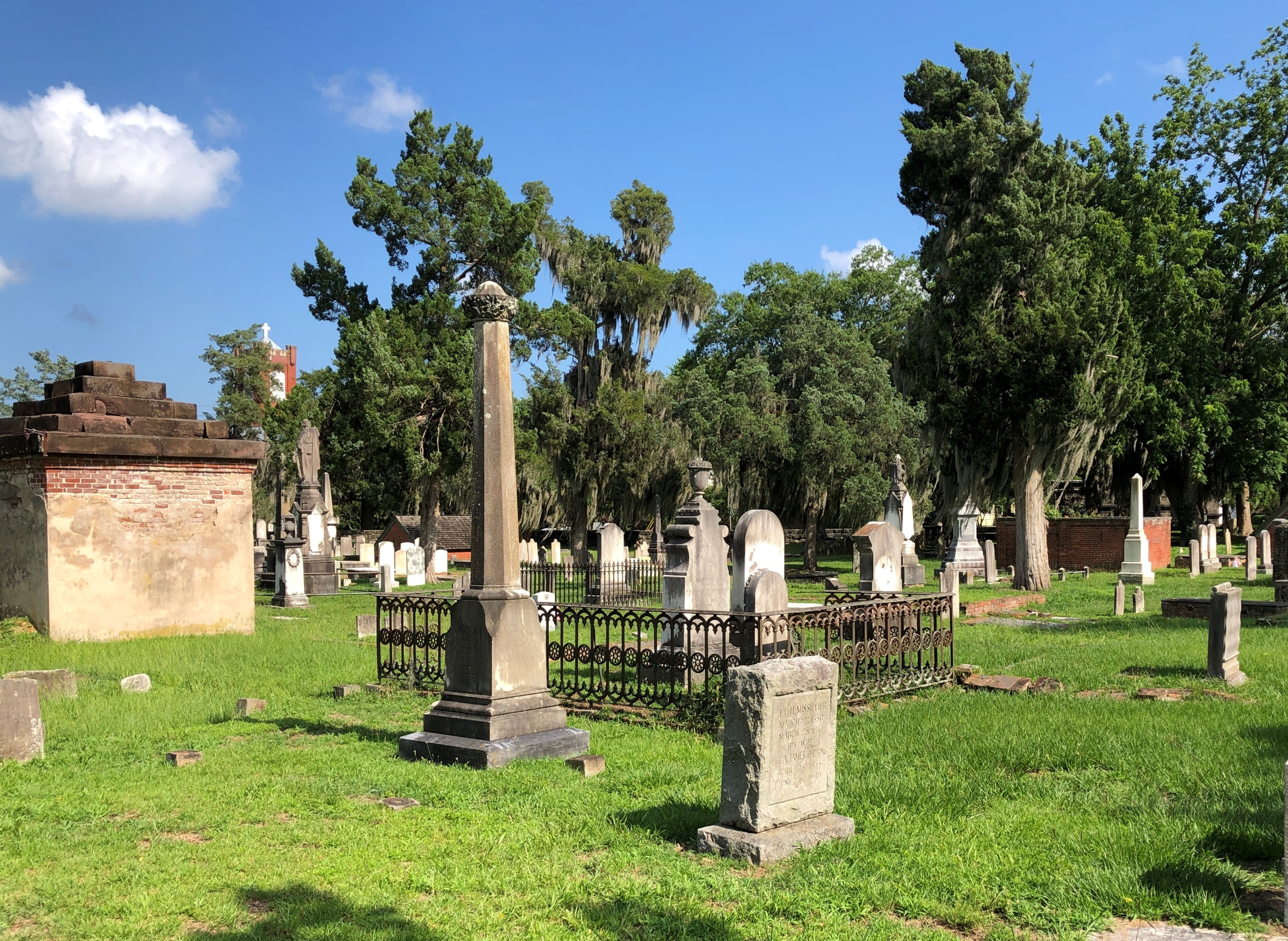
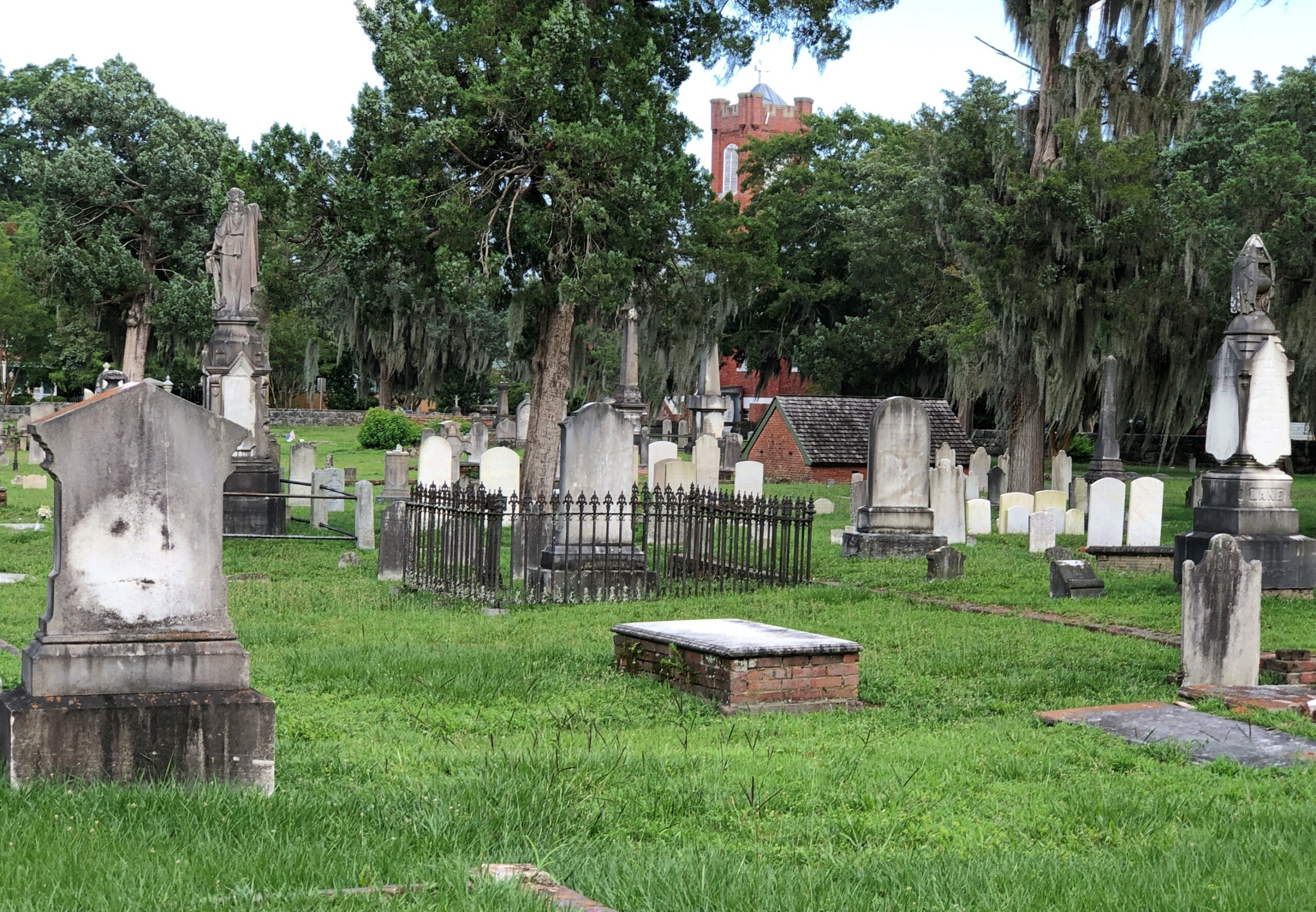
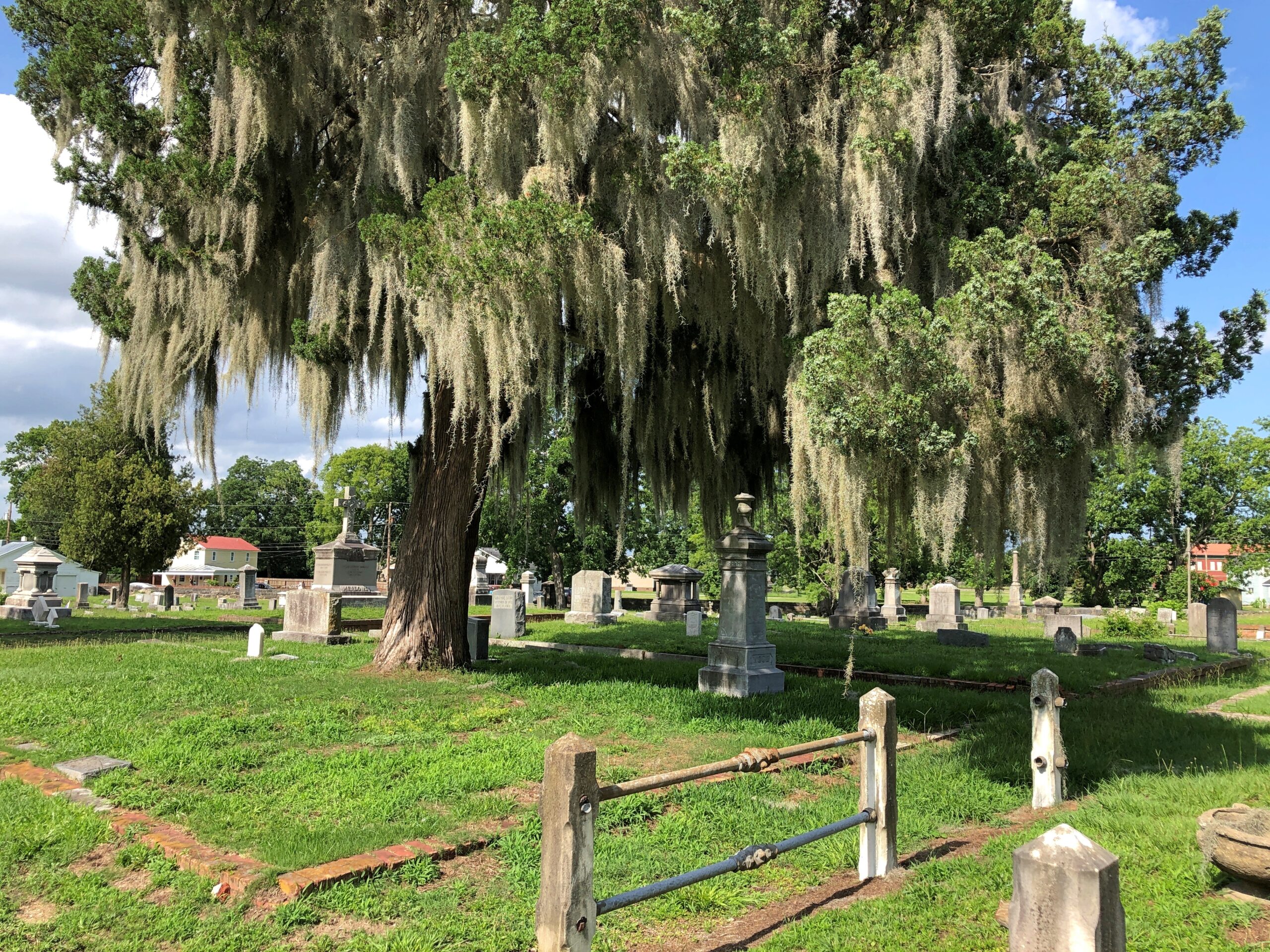
As the day’s heat began to wane, we made our way to Cedar Grove. The place has a good contour, created by the diversity of stones, ironwork and greenery.

The place has a good contour, created by the diversity of stones.
Cedar Grove Cemetery, New Bern NC

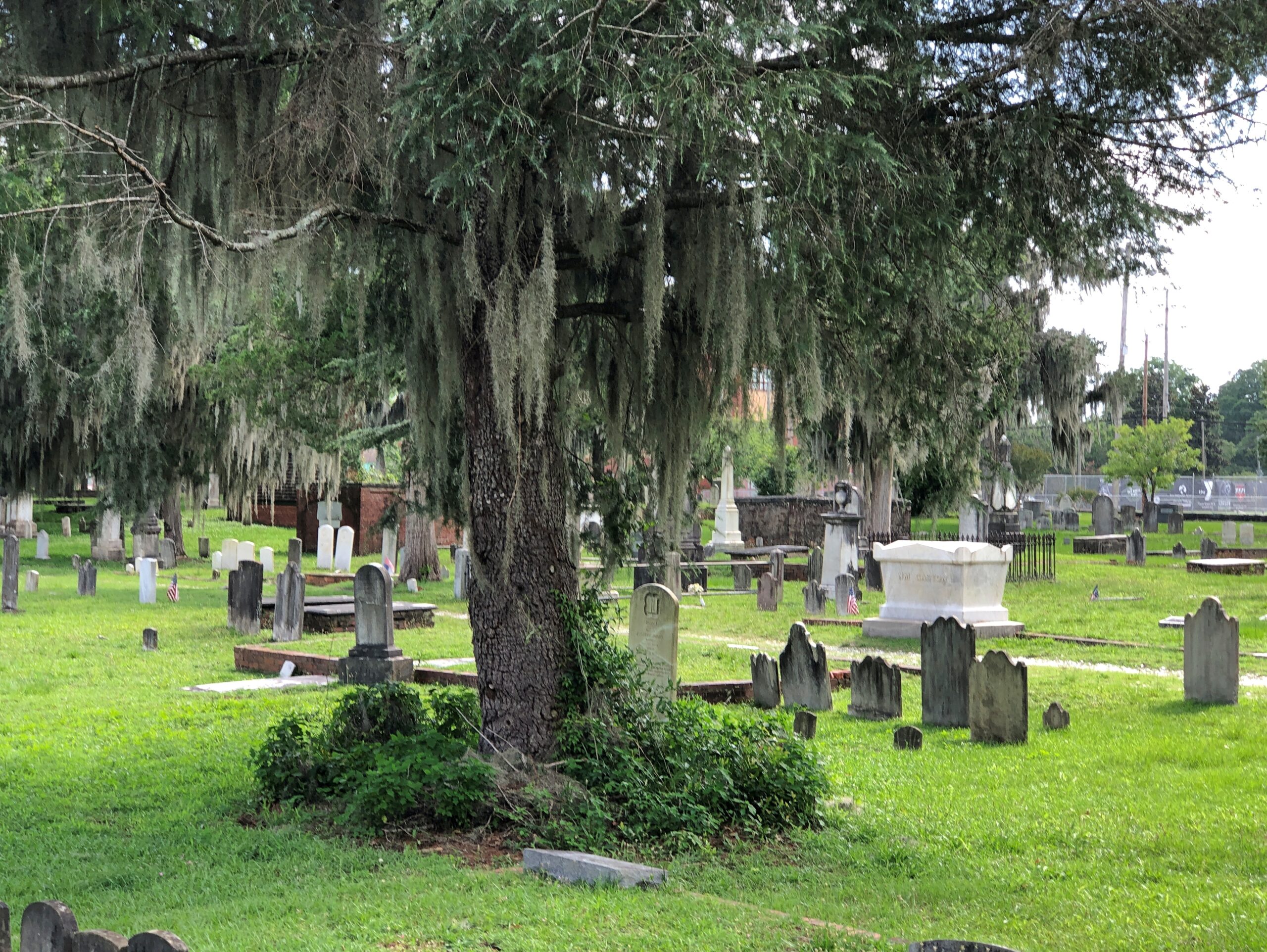
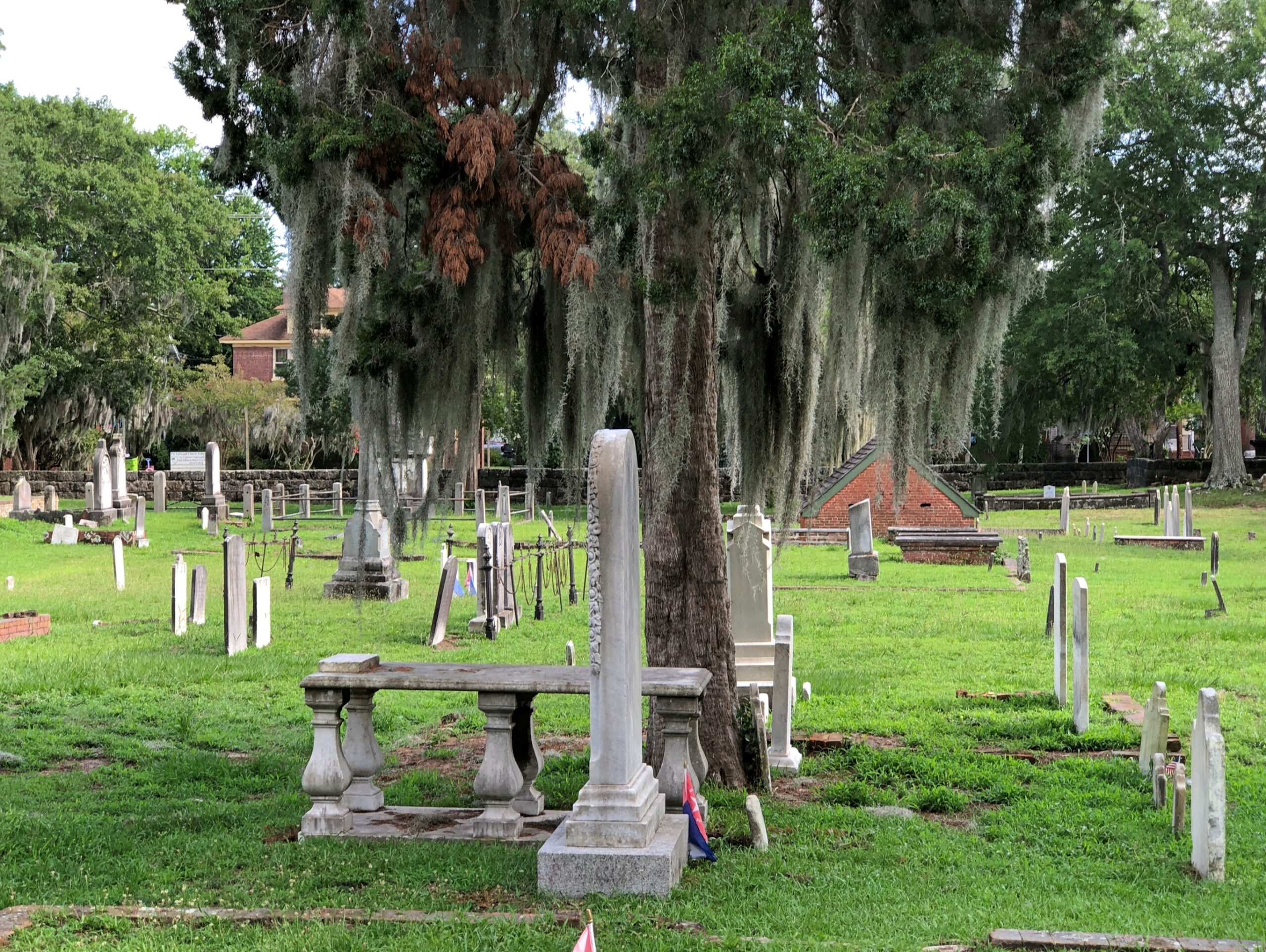
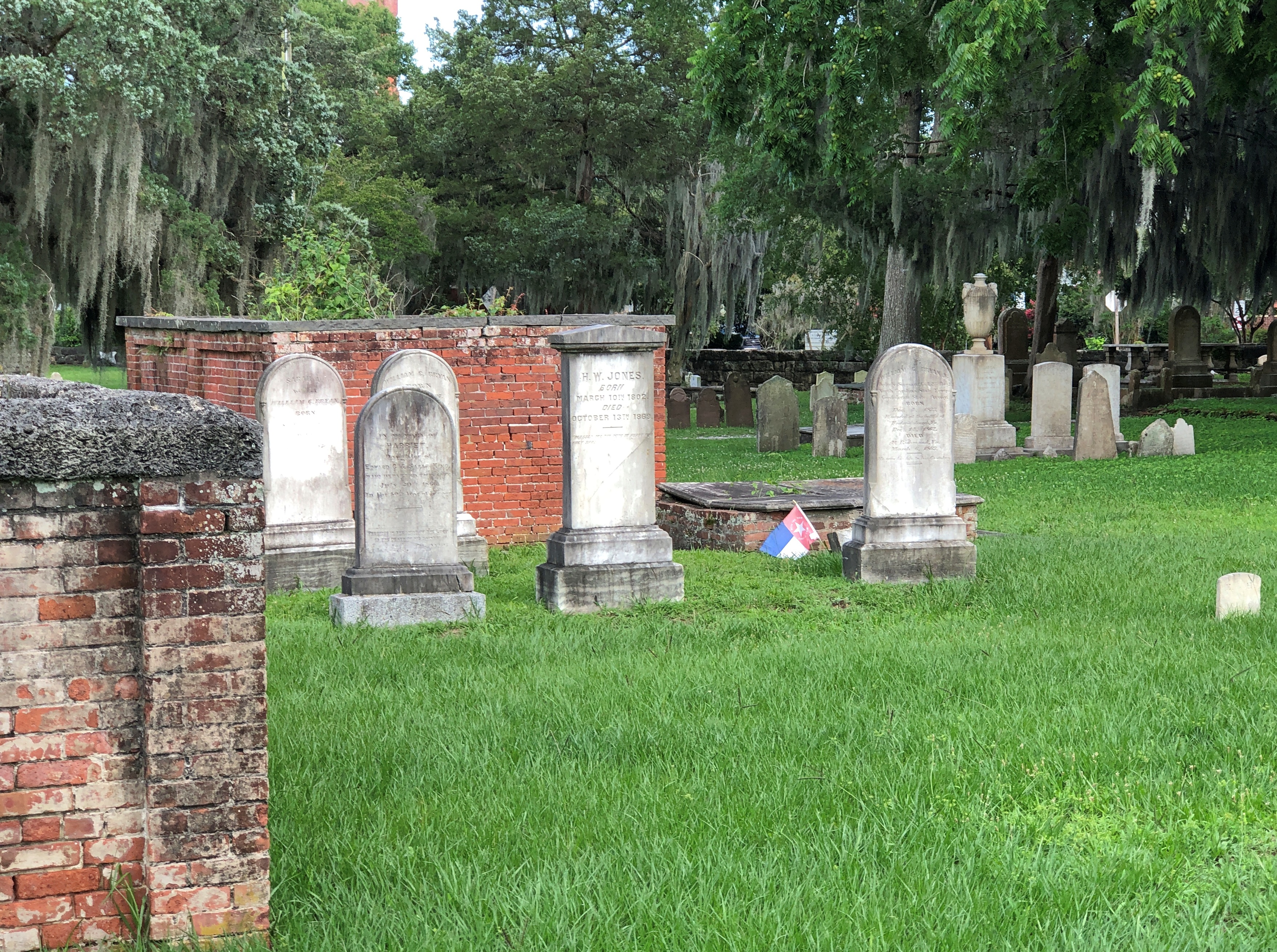
All in all, Cedar Grove is a Southern cemetery along the lines of Magnolia Cemetery in Charleston or Bonaventure in Savannah, though not quite as watered as the former or wooded as the latter, or as large as either. But cut from the same sort of lush, low-lying coastal territory, with trees draped with Spanish moss and flat spots thick with stones of the Old South.

Good old Spanish moss. The Carolina coast, and even up into coastal Virginia, is within its range.

Cedar Grove Cemetery, New Bern NC

Didn’t see the painter William J. Williams or any of the other permanent residents mentioned by the WPA guide, but of course the Confederate Monument was easy enough to spot.

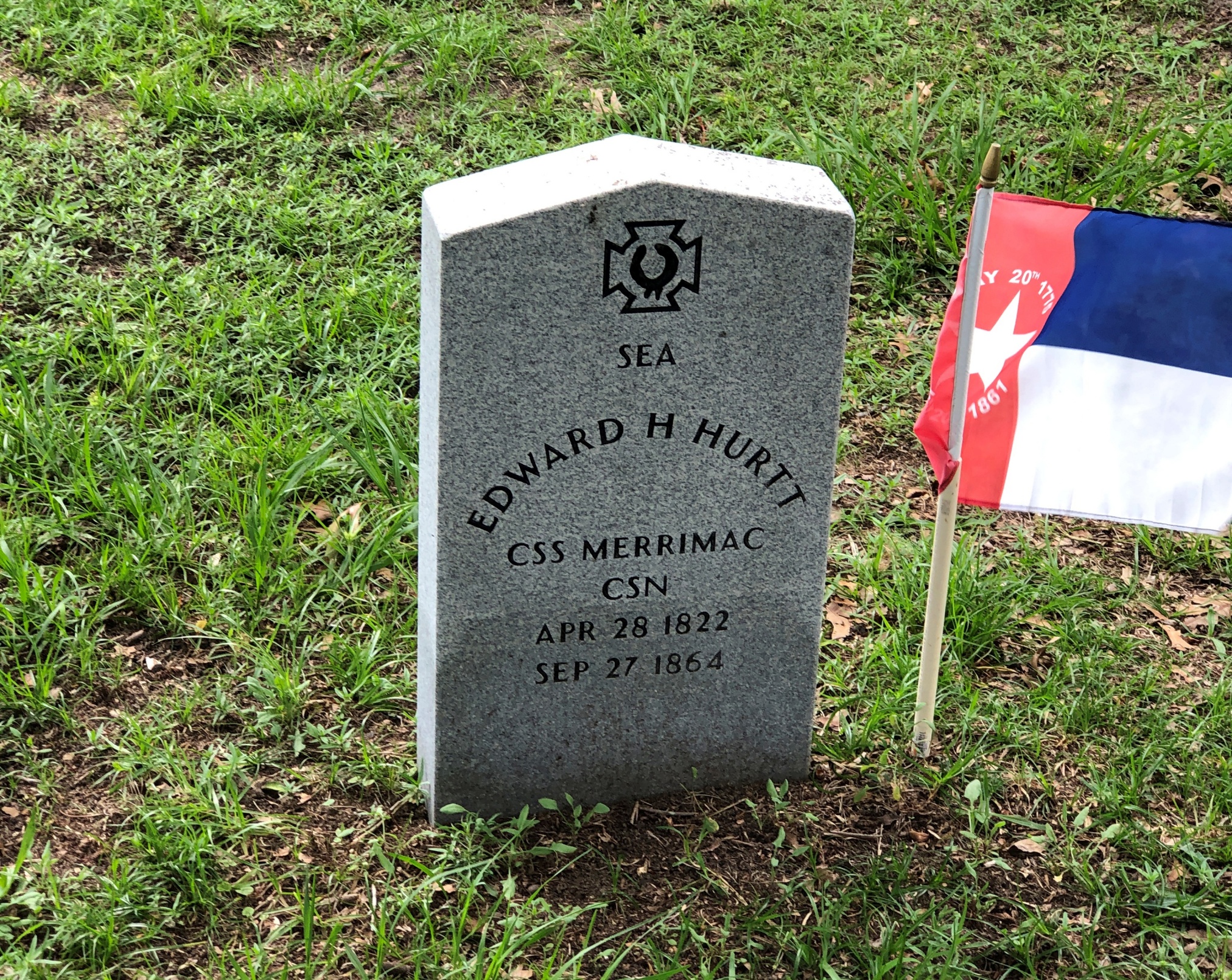
Many Confederate veterans had their own stones, of course.

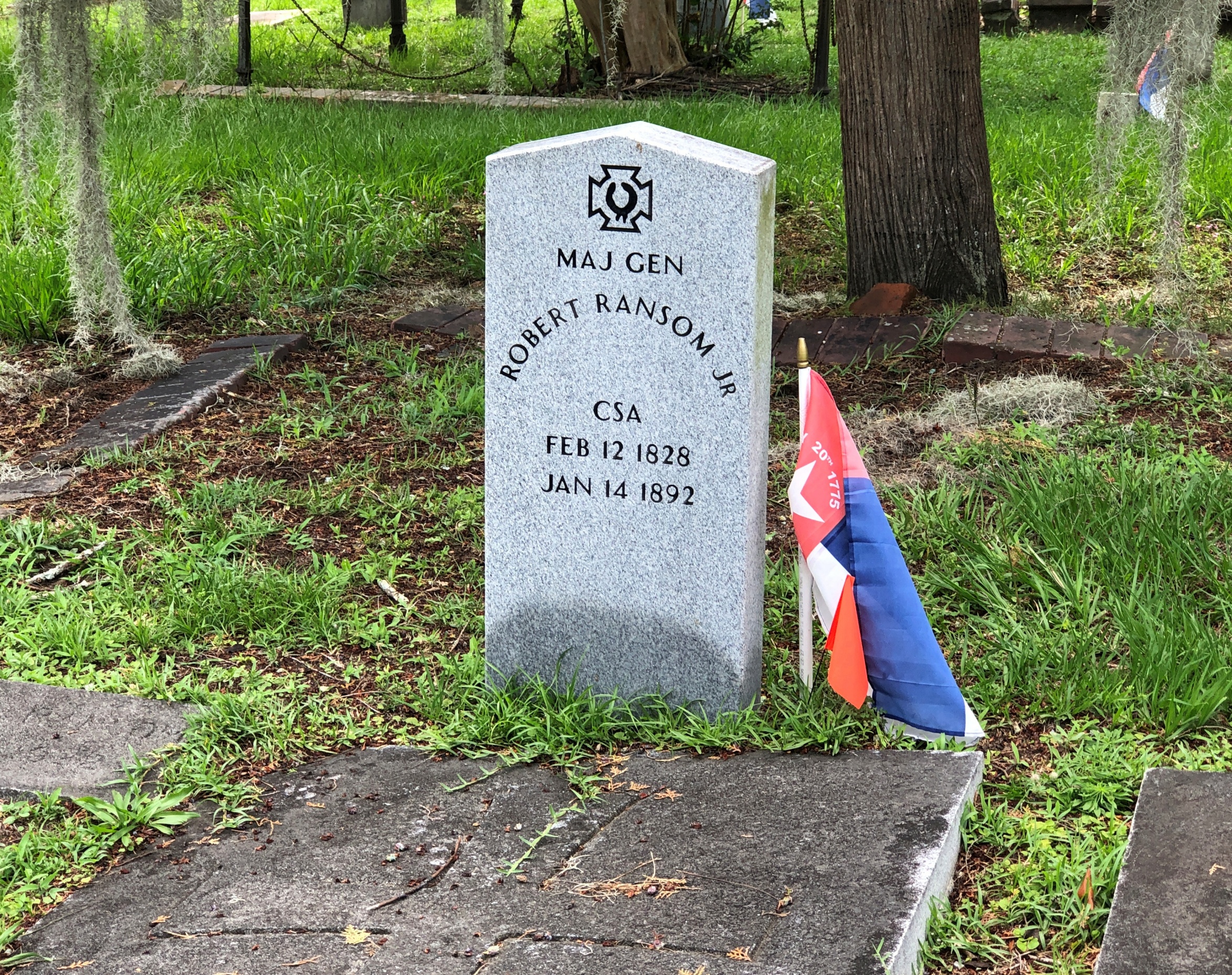
Interesting that the guide didn’t mention Maj. Gen. Robert Ransom Jr., but there he was.

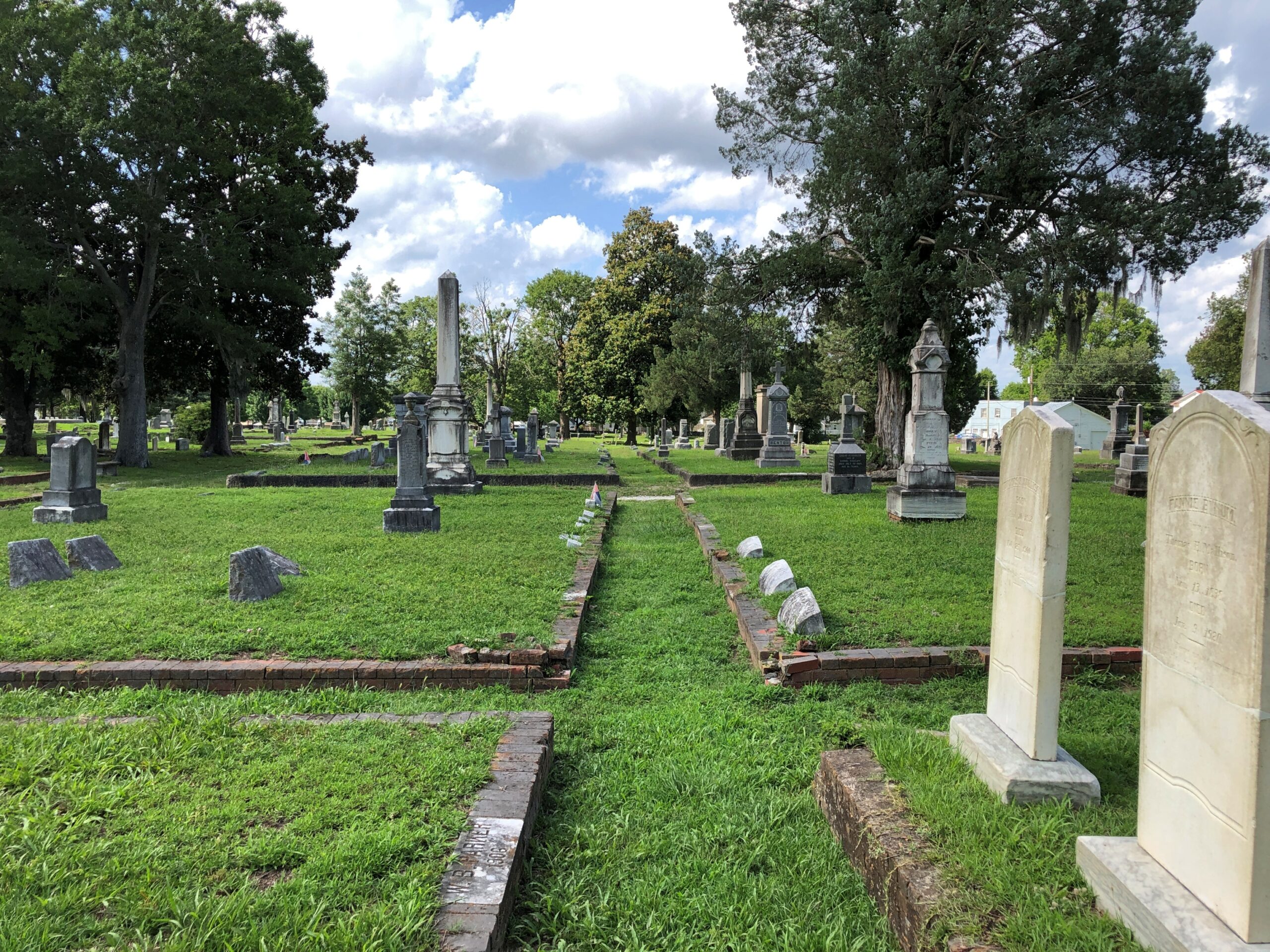
From the looks of it, these are wagon driveways that allowed hearses to traverse the cemetery.

Cedar Grove Cemetery, New Bern

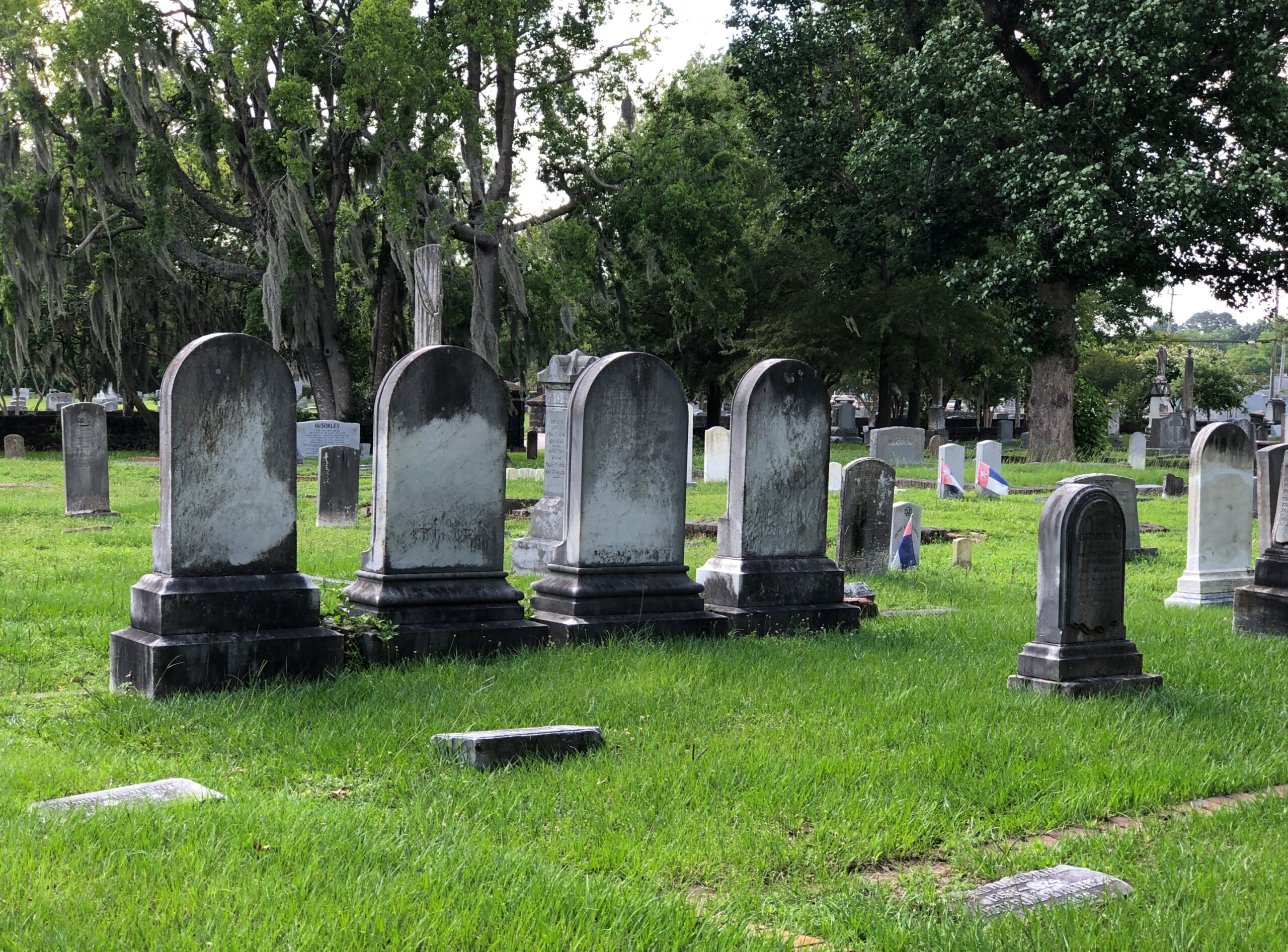
Among those “streets,” plenty of other fine stones.

Cedar Grove Cemetery, New Bern

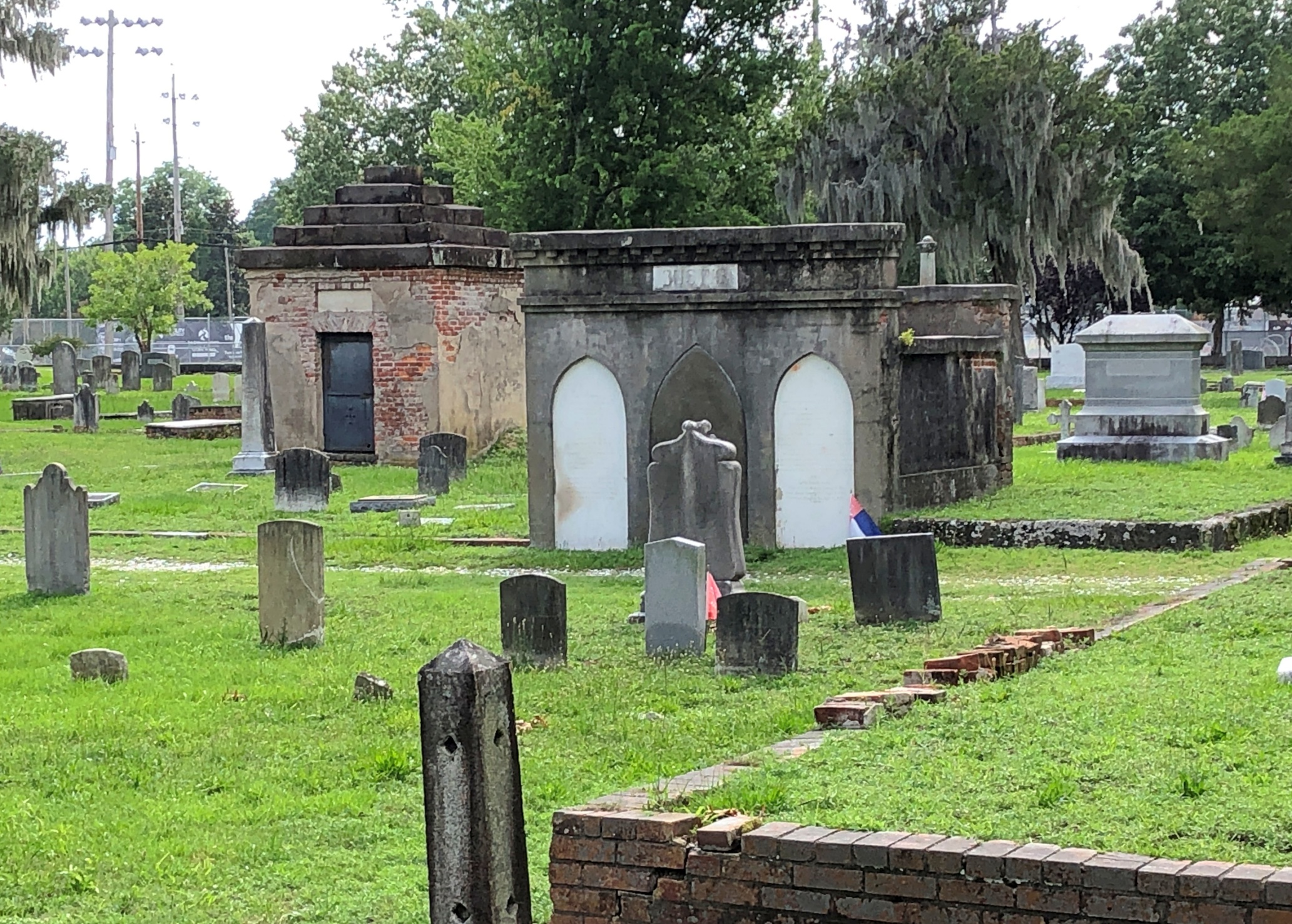
Some mausoleums, but none of the monumental ilk you see in places historically with more money.

Cedar Grove Cemetery, New Bern

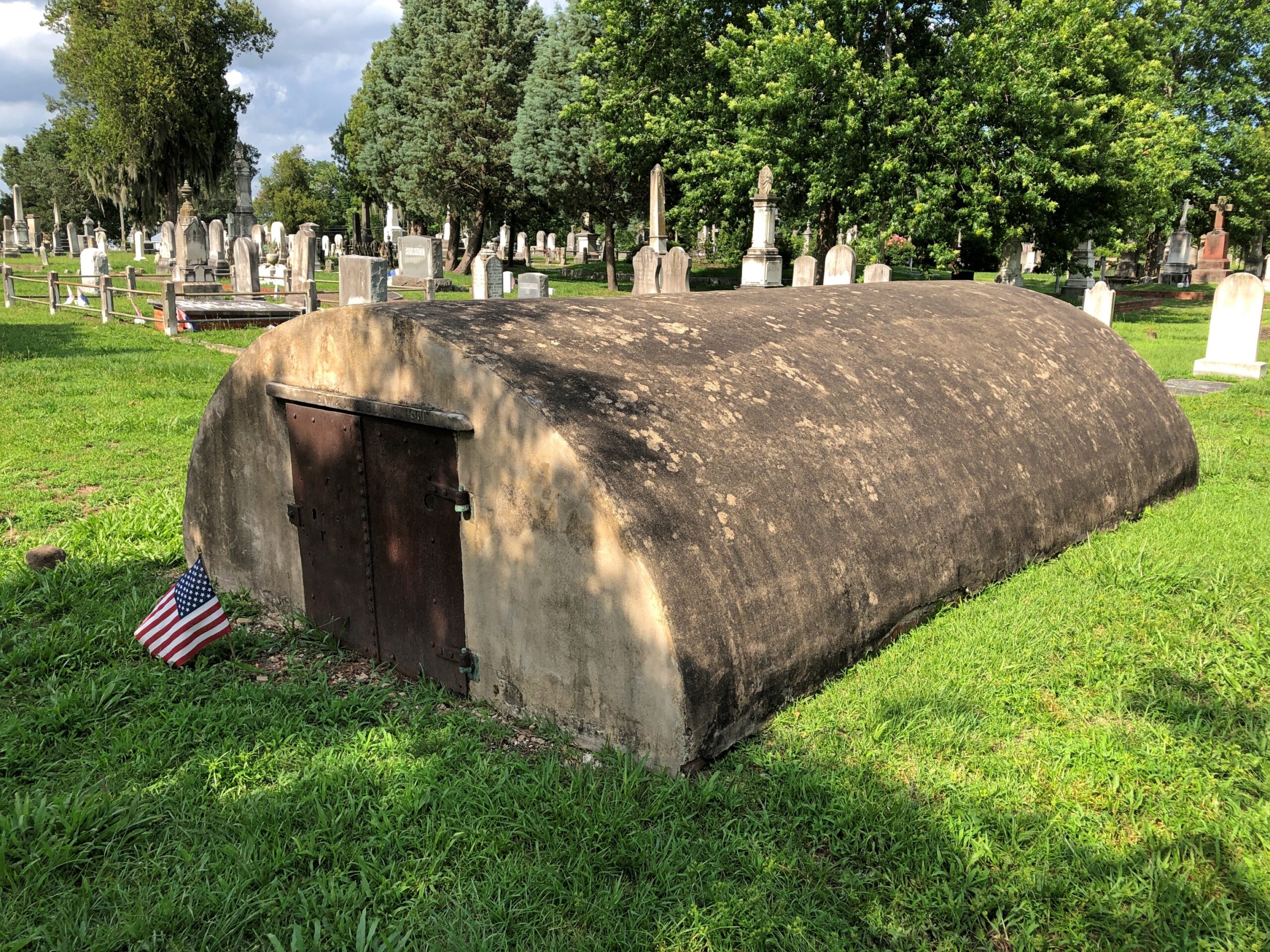
The last one is a little unusual, though I think I’ve seen similar structures occasionally here and there. Going for that concrete Quonset hut look, though considering its age, I’d bet that reference would be anachronistic.

New Bern Ramble

While waiting to be seated for brunch on Middle Street in downtown New Bern on Juneteenth, Dan and I had time for a stroll. The day was warming up, but not quite to a scorcher, and the sidewalks along Middle and Pollack Sts. are often in shade. That part of New Bern, shady and old, is quite the charmer.

“New Bern, one of North Carolina’s oldest towns, retains the flavor of past centuries,” North Carolina: A Guide to the Old North State (1939), p. 221, tells us. Information from the WPA Guide series is of course a little old, but mostly stands the test of time.

“The community, which processes a domestic architecture of charm and distinction, is spread across a bluff at the confluence of the Neuse and Trent rivers, 35 miles from the Atlantic Ocean. Massive brick townhouses, stately Georgian residences and wisteria-curtained clapboard cottages line narrow streets shadowed by oaks, poplars, elms and pecan trees. Many of the old streets retain their original brick pavements.”

All that would be downtown New Bern these days, as the town’s population – given as 11,981 by the WPA in 1939 – had expanded to 31,291 by 2020, according to the Census Bureau. So much of the town is actually late 20th-early 21st-century sprawl punctuated by parking lots and familiar retail.

Still, at the historic core, there is “domestic architecture of charm and distinction,” even now, with the older buildings mostly occupied by the likes of The Black Cat Shoppe, Faulkenberry Auctions, Anchored in New Bern (gift shop), Carolina Creations, Bear City Fudge Co., Curls & Lace Bridal Hair, and such restaurants as Cypress Hall, MJ’s Raw Bar and Grille, and Baker’s Kitchen, where we eventually brunchified (and it was delicious).

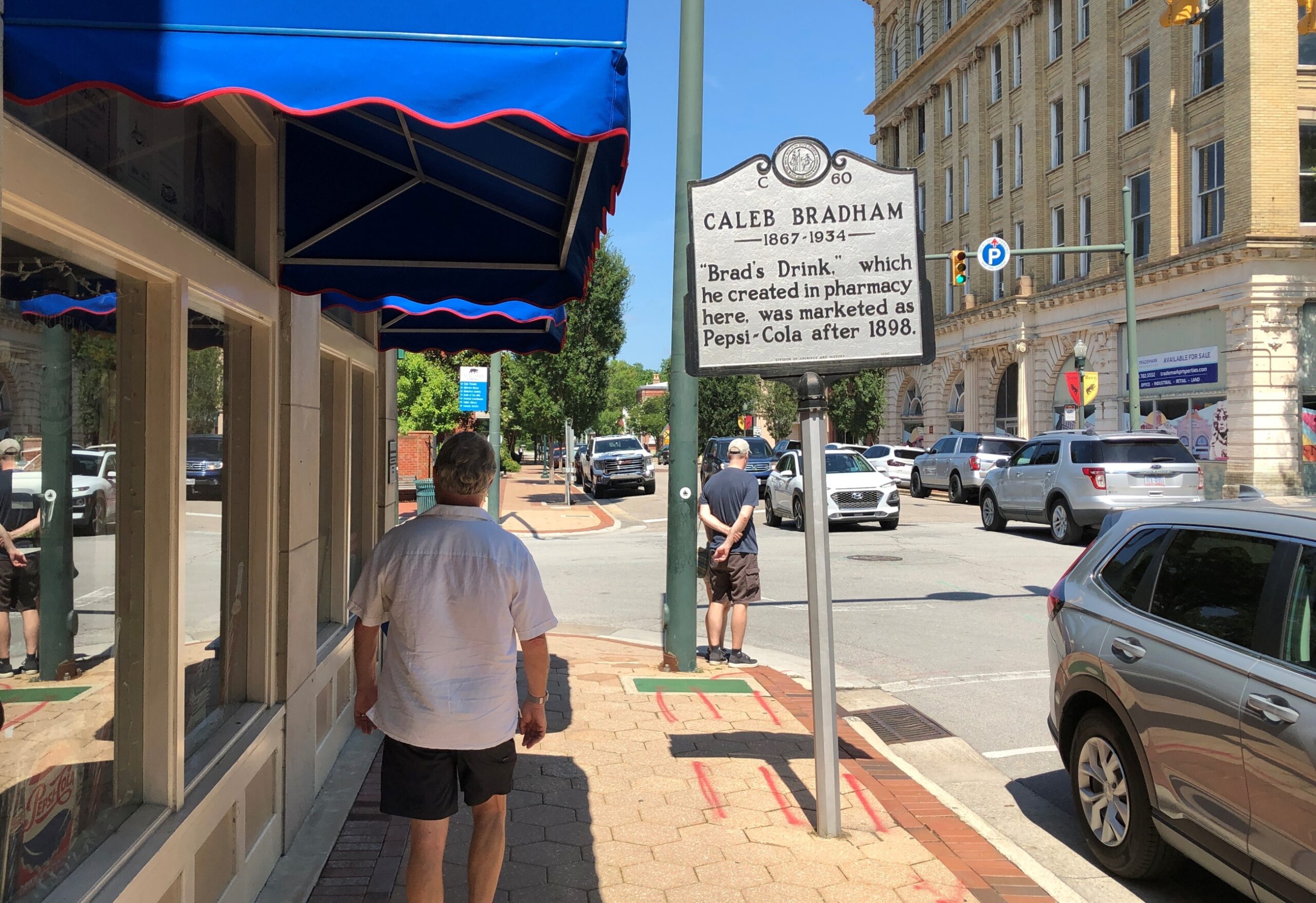
We visited a few shops and strolled by other spots, such as the former corner drug store credited as the invention-place of Pepsi-Cola.

New Bern NC

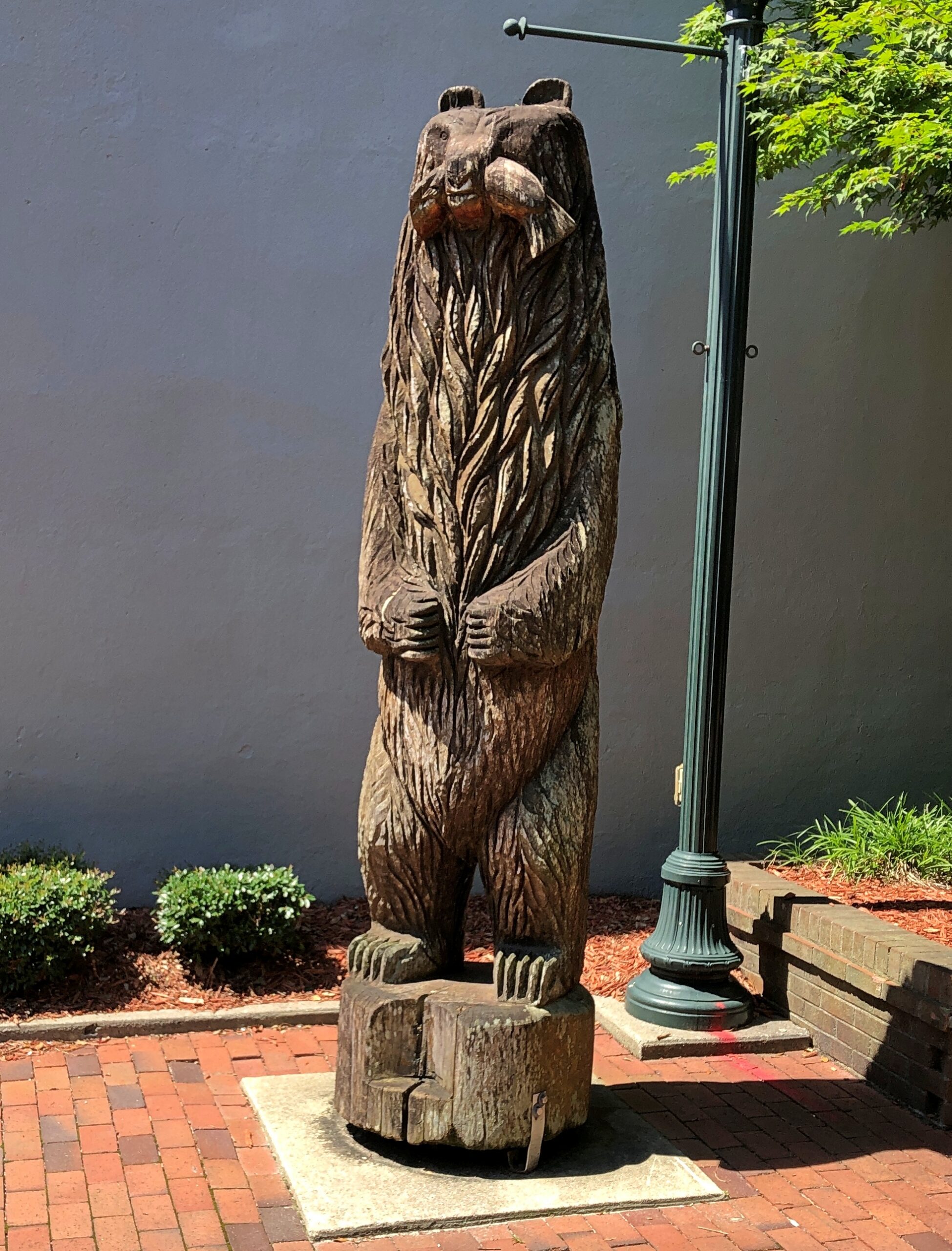
A pleasant alley off Middle St. is known as Bear Plaza. Good thing living bears aren’t found there, but you are reminded of bears.

New Bern NC

Bears are front and center as pawed, powerful symbols of the Bern towns, old and new, Swiss and American. As posted previously, the New Bern flag –

— looks a lot like the old Bern flag, with certain small but important modifications. Old Bern:

The WPA guide points out that the very first European settlers in the area were not in fact Swiss, though led by a Swiss. The colonists were German and had a harrowing experience getting here.

“The first settlers were survivors of an expedition of 650 German Palatines, Protestants expelled from Baden and Bavaria. Under the leadership of Swiss Baron Christopher de Graffenried, and aided by a gift of £4000 from Queen Anne of England, this group planned a colony in America. De Graffenried placed Christopher Gale and John Lawson in charge of the expedition.

“In January 1710, two ships sailed from Gravesend, England. Storms impeded the vessels and disease ravaged the voyagers, more than half of whom succumbed. A French vessel captured one of the transports as it entered Chesapeake Bay in April, and plundered the colonists. Fever further reduced the number and only a sickly remnant reached the Chowan River, where Thomas Pollock, a wealthy planner, provided them with transport to the Neuse and Trent rivers.”

De Graffenreid himself came a little later with some Swiss colonists, buying land from the Lords Proprietors of Carolina and paying off the local Tuscarora Indian chief as well. The natives were not mollified, however.

“In September 1711, the settlement was almost wiped out by a Tuscarora uprising. In the first attack, 80 settlers were slain. Lawson and de Graffenreid were taken to the Indian fort, Nohoroco, where Lawson was tortured to death, and de Graffenreid was held prisoner for six months. The war raged intermittently for two years, and the colonists were reduced such desperation that in 1713 many of them returned with de Graffenreid to Switzerland. The settlement made a new start on the leadership of Colonel Thomas Pollock, proprietary governor…”

Just one damn thing after another in early America. But the town survived, eventually becoming important enough to be the capital of North Carolina, as detailed yesterday.

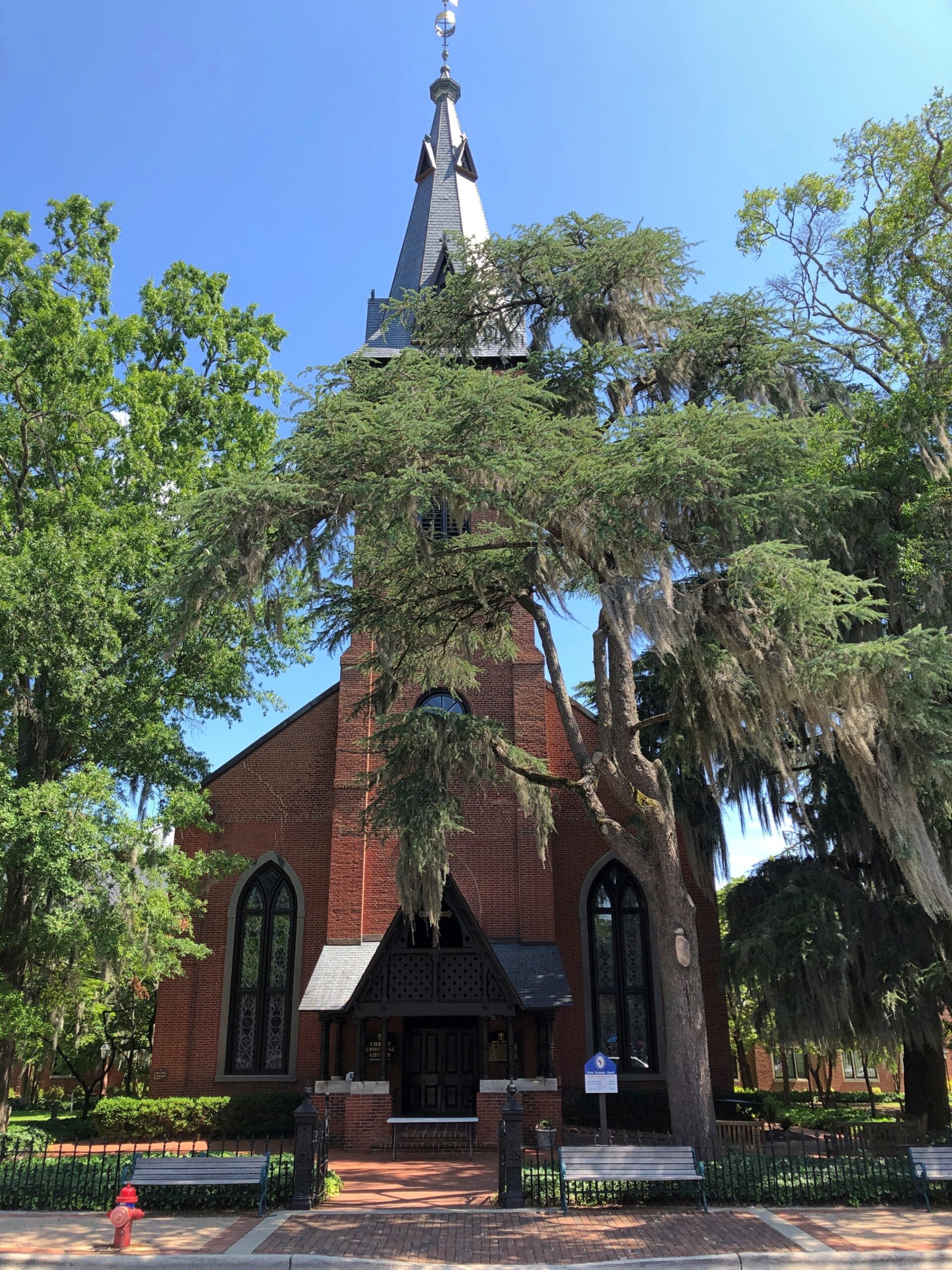
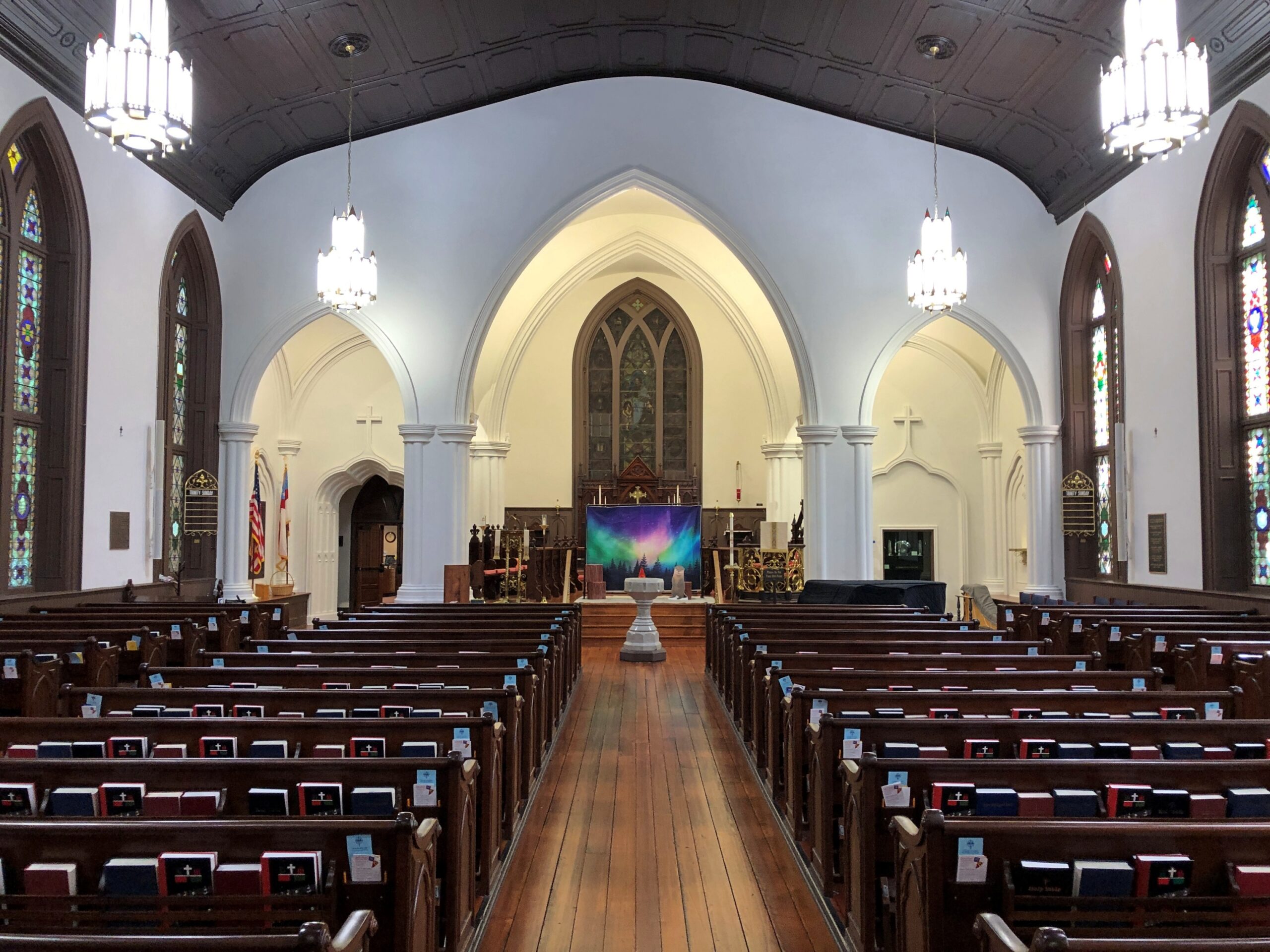
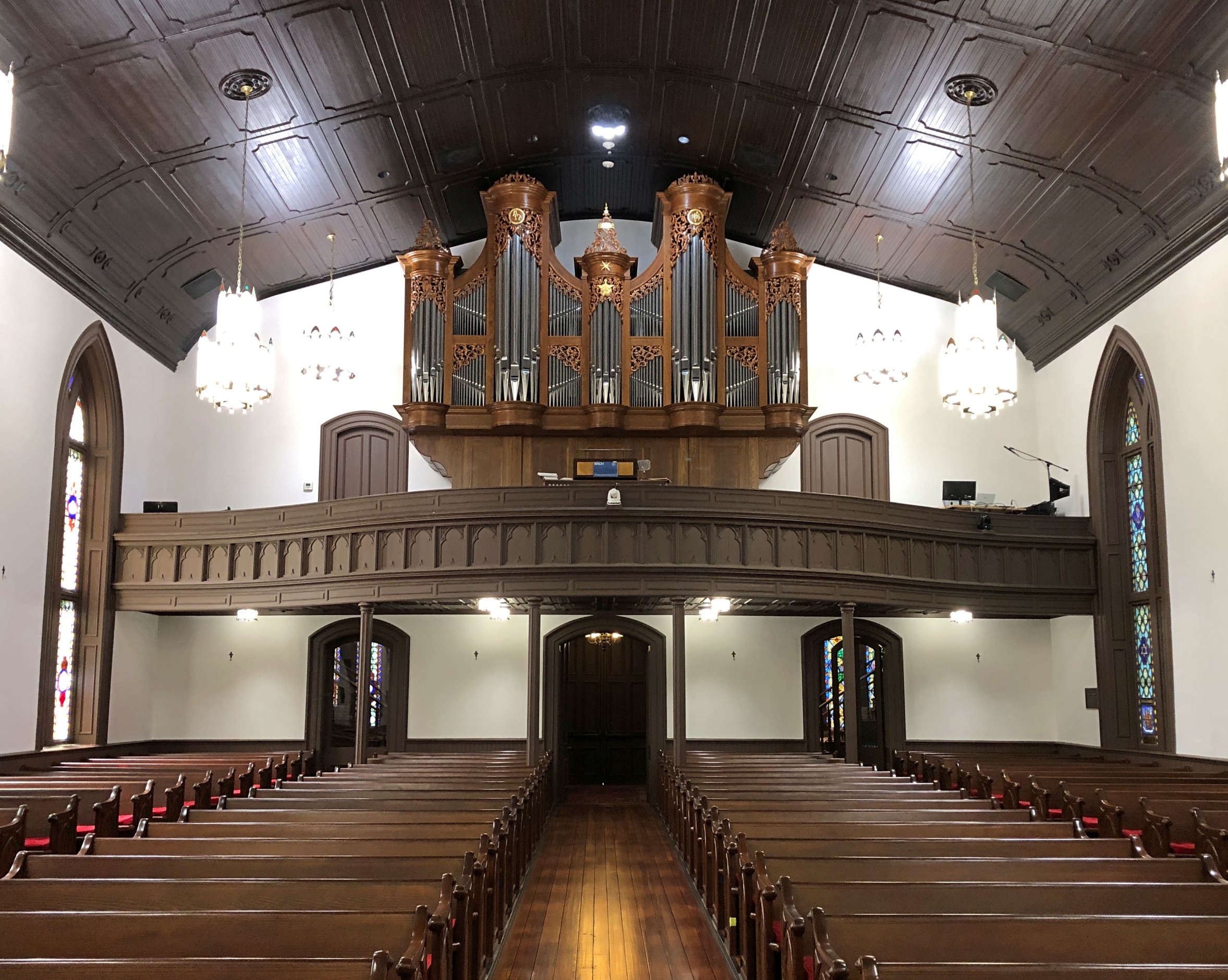
Christ Church Episcopal rises above Pollock St.

Other churches clustered in the area, but Christ Church had the advantage of being open that weekday and holiday morning.

Christ Church, New Bern NC

Back to the WPA guide, p. 228, on Christ Church: “[At the] NE corner Pollock and Middle streets, a weathered red brick edifice whose lofty, gold-crowned spire rises above great trees shading an old graveyard, was erected in 1873 upon the site of two earlier churches. The parish was organized in 1715 the first church was built in 1750. A Bible, Book of Common Prayer and silver communion service given by George II are retained, though royal Governor Martin attempted to take them with him when he fled town in 1775.

“When Parson Reed, the royalist rector, prayed for the king, lads prompted by patriot parents drummed at the door and shouted ‘Off with his head!’ This church was razed during the Revolution, reputedly because the brick had been brought from England. [Sounds like a likely story.] The second church was erected in 1825. Its outer walls were used for construction of the present building. In a corner of the churchyard fence, with its muzzle embedded in the ground, is the the Lady Blessington Cannon taken from the British ship Lady Blessington, captured in the Revolution.”

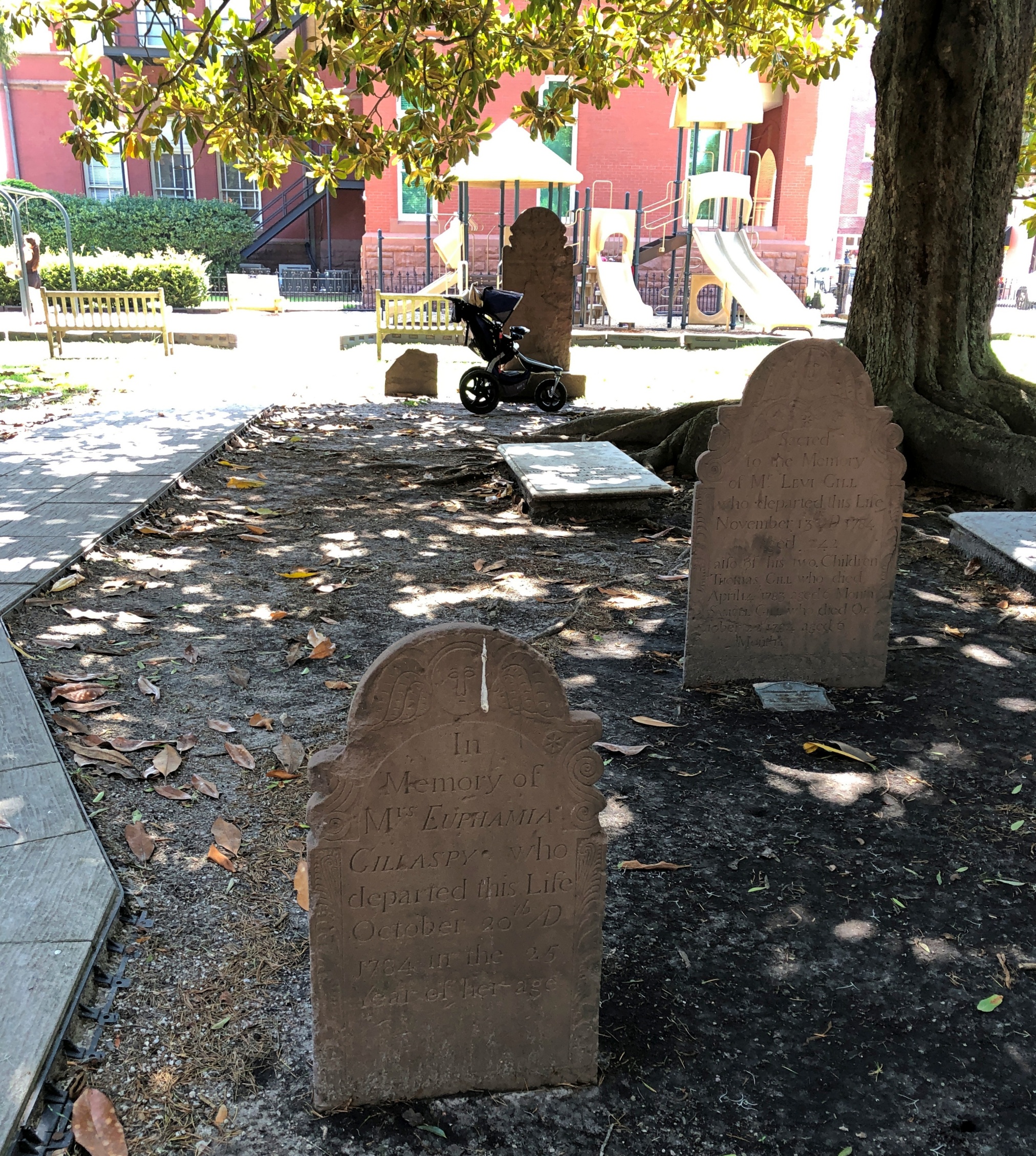
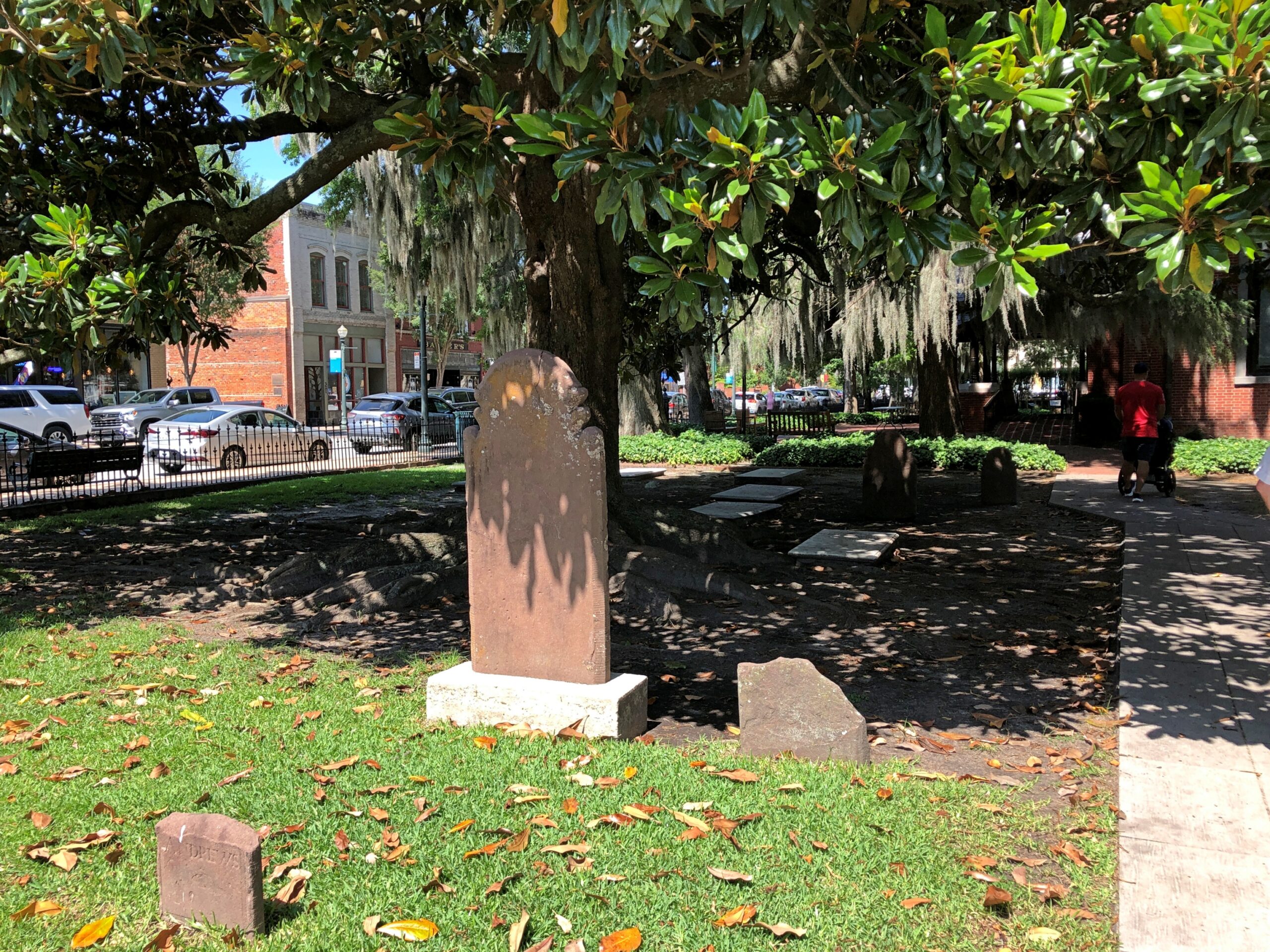
We didn’t see any embedded cannon, but on church land outside the Christ Church building were a cemetery and a playground. Not a combination you see much, but maybe there should be more places like that to remind us that the the arc of a lifespan is all too brief.

Christ Church, New Bern NC

It’s a handsome Southern church burial yard, complete with magnolias and Spanish moss.

Christ Church, New Bern NC

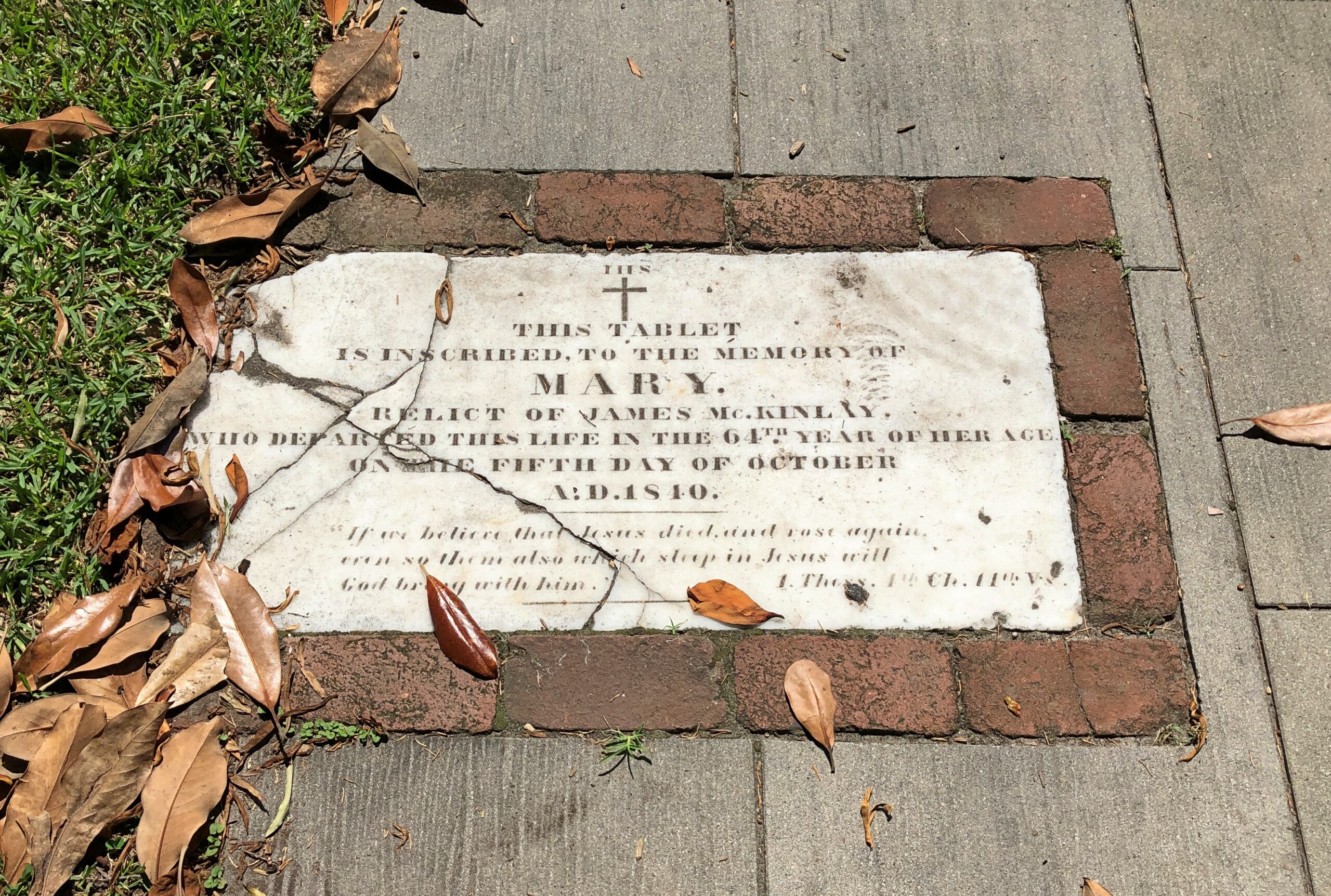
Included are stones reflecting older language usage, as you sometimes find in older cemeteries. “Relict,” as in widow, isn’t one you see much these days.

Christ Church, New Bern NC

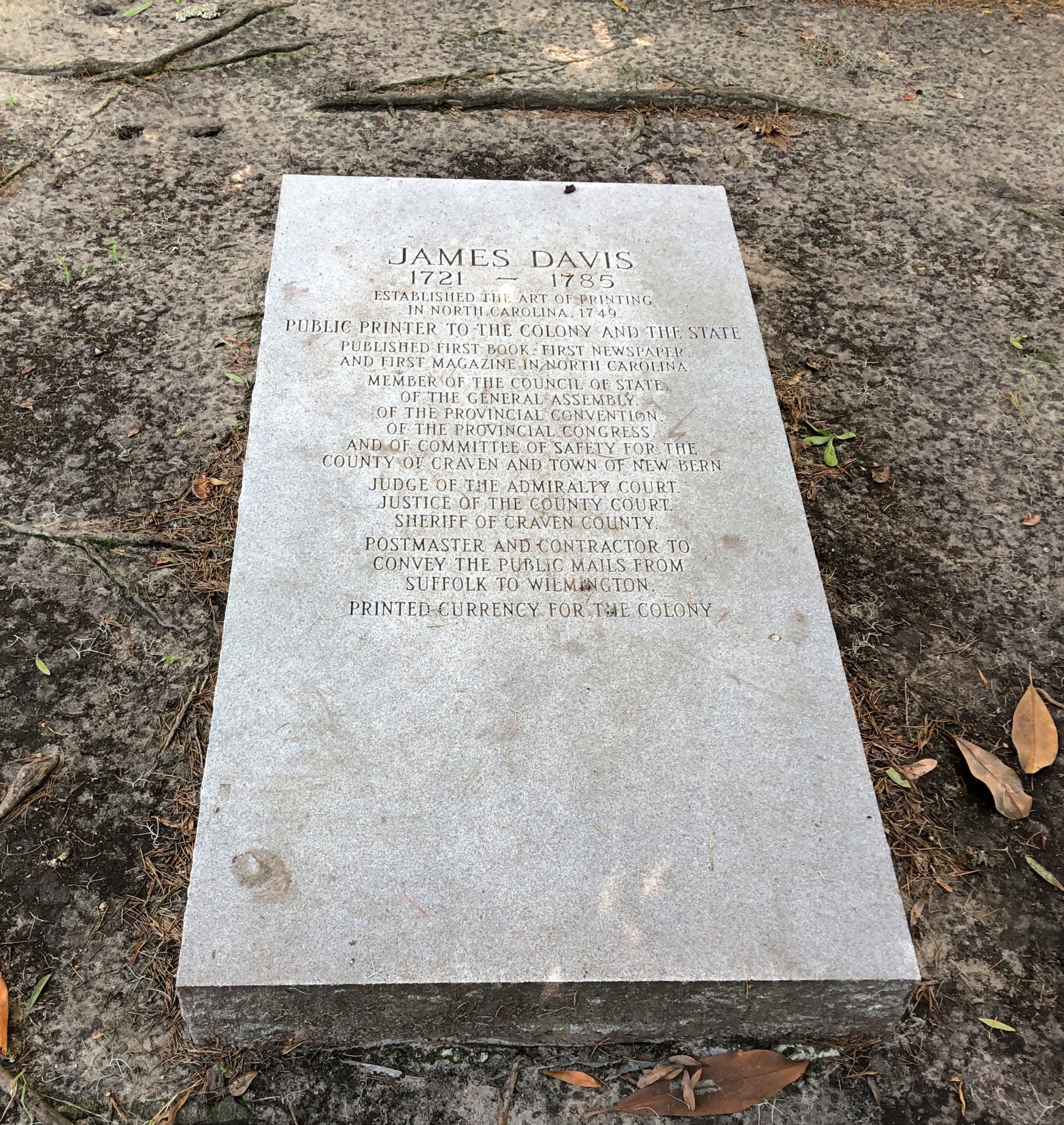
A wordy memorial. I hope the stone carver was paid by the letter.

But he’s notable enough: James Davis, quite a busy fellow in colonial North Carolina and later the state.

Tryon Palace

Talk much about colonial North Carolina and Blackbeard is going to come up – at least when talking with my old friend Dan, who had a fascination with the buccaneer even back in college. An artful storyteller, which surely helped him in his former career as an ad man, Dan can regale you with Blackbeard stories, detailing his short but colorful pirate career, including the fiery display he made of his person to scare onlookers witless. A pirate needs to be known for more than mere thievery on the high seas.

“In battle [Edward] Teach would have a sling over his shoulders that held at least three flintlock pistols and would often stick lit matches under his hat to give a smokey and fearsome appearance,” the Golden Age of Pirates explains, though without the Dan’s storytelling gusto, illustrating Blackbeard’s pyrotechnical flair with gestures all his own.

Dan and his wife Pam recently moved to New Bern, NC, very near Blackbeard’s haunts, including the site of his swashbuckler’s death in action off Okracoke Island. I don’t believe their retirement move from Alabama was to be near Blackbeard, but it certainly couldn’t have hurt during site selection. On the first evening of my visit to New Bern, Dan and I spent had a fine time out on his deck, perched near a small inlet ultimately connected to the wider ocean, watching the stars slowly emerge and talking of old times and newer things but not, at that moment, about Blackbeard.

That was the next day, as we toured Tryon Palace, even though the original structure was built many decades after Blackbeard’s newly severed head wound up tied to the bowsprit of the sloop Jane, put there by pirate hunter Robert Maynard. One colonial subject leads to another.

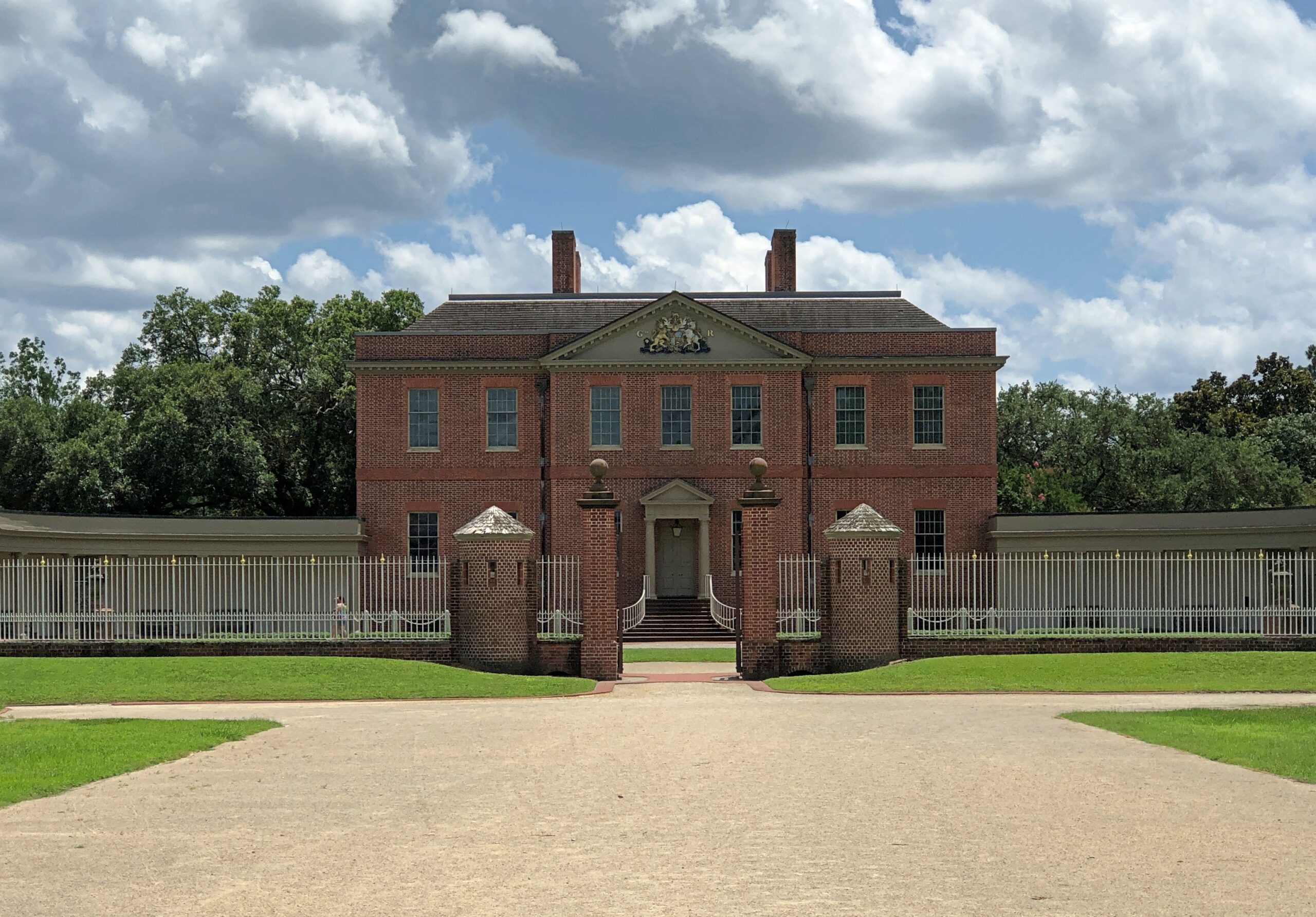
Tryon Palace is crown jewel of historic sites in New Bern, except that it’s actually a recreation of the 20th century. Somehow that doesn’t take away from its historic appeal.

Tryon Palace

When you stand in front of it, you’re peering not only back to 1770, when the colonial government of North Carolina completed, at great expense, a structure that looked like this one. You’re also looking at a building completed within living memory, in 1959, which is considered a faithful restoration of the one that NC Gov. William Tryon had erected.

“When the colonial Assembly convened in [New Bern] on 8 Nov. 1766, Tryon presented a request for an appropriation with which to construct a grand building that would serve as the house of colonial government as well as the governor’s residence,” says the Encyclopedia of North Carolina.

“Less than a month later, the Assembly acceded to the governor’s wishes by earmarking £5,000 for the purchase of land and the commencement of construction. The appropriated sum was borrowed from a fund that had been established for the construction of public schools. To replenish the depleted school fund, a poll tax and a levy on alcoholic beverages were imposed.”

Just about the worst kind of taxes when it came to irritating the non-coastal non-elites of the colony, a discontent that eventually erupted as the Regulator Rebellion. Ultimately Gov. Tryon, in personal command of the colony’s militia, crushed the Regulators – untrained men who seem to have been foolish enough to meet Tryon’s trained men in an open field at the Battle of Alamance in 1771. (Which isn’t entirely forgotten.)

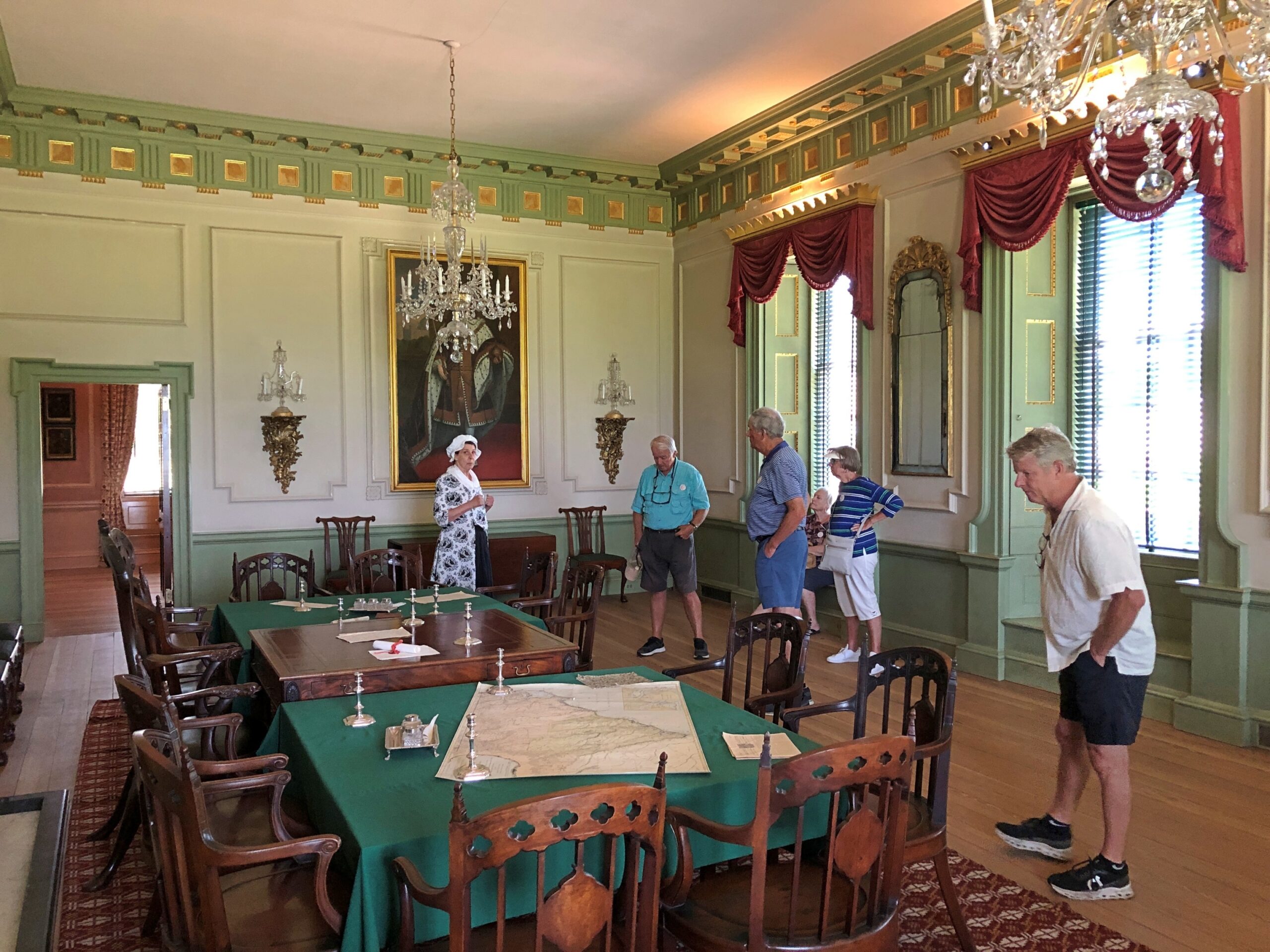
We took an early afternoon tour of Tryon Palace, guided by a woman in period costume. She told us about Tryon – no mention of Alamance, however – and his successor, Josiah Martin, the only other royal governor to use the palace. Gov. Martin spent more on furnishing the place, only to be obliged to skedaddle come the Revolution. We also heard about architect and master builder John Hawks (d. 1790), who came to North Carolina from England to build the palace which, of course, is only a palace by canebrake standards of the colony. It is a stately manor house, however.

Tryon Palace

The colonial legislature and the new state legislature both used the palace for a while, so it counts as the first capitol of North Carolina. That meant I was visiting yet another state capitol, without realizing it at first. A former capitol, that is, including ones I’ve seen in Illinois, Texas (counting Washington-on-the-Brazos as such), Virginia, Florida and Iowa. Abandoned as a government building after the NC capital left New Bern, fire consumed most of Tryon Palace just before the end of the 18th century. Its west wing survived for other uses over the next century-plus.

In the 20th century, along came Maude Moore Latham, a wealthy local woman with a taste for historic restoration. If much of colonial Williamsburg up in Virginia could be restored, so could colonial New Bern in North Carolina. Despite the fact that a road and houses had been built on the site of old Tryon Palace, she eventually facilitated the restoration, made possible (or at least more accurate) by the fact that John Hawks’ plans for the building had survived.

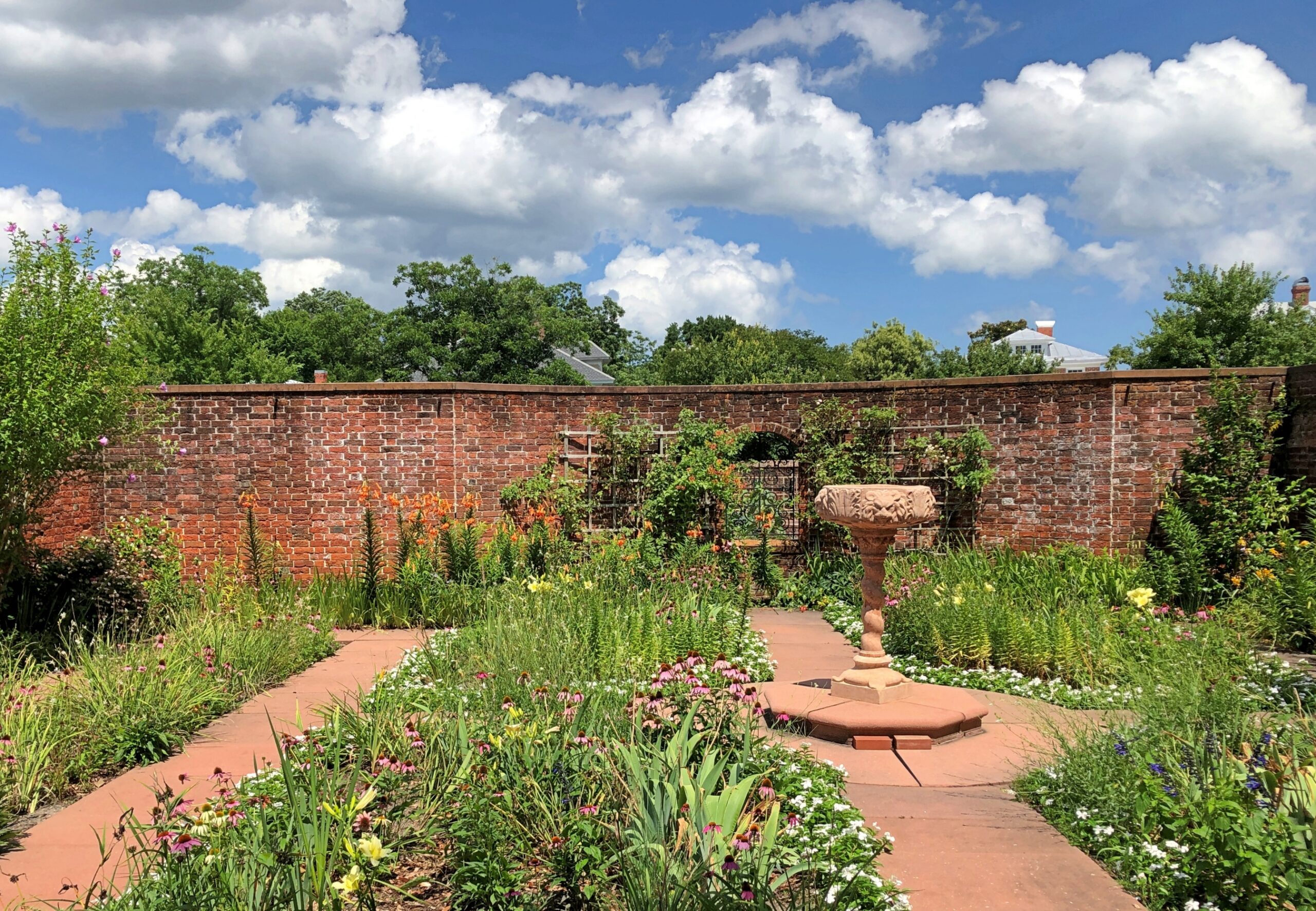
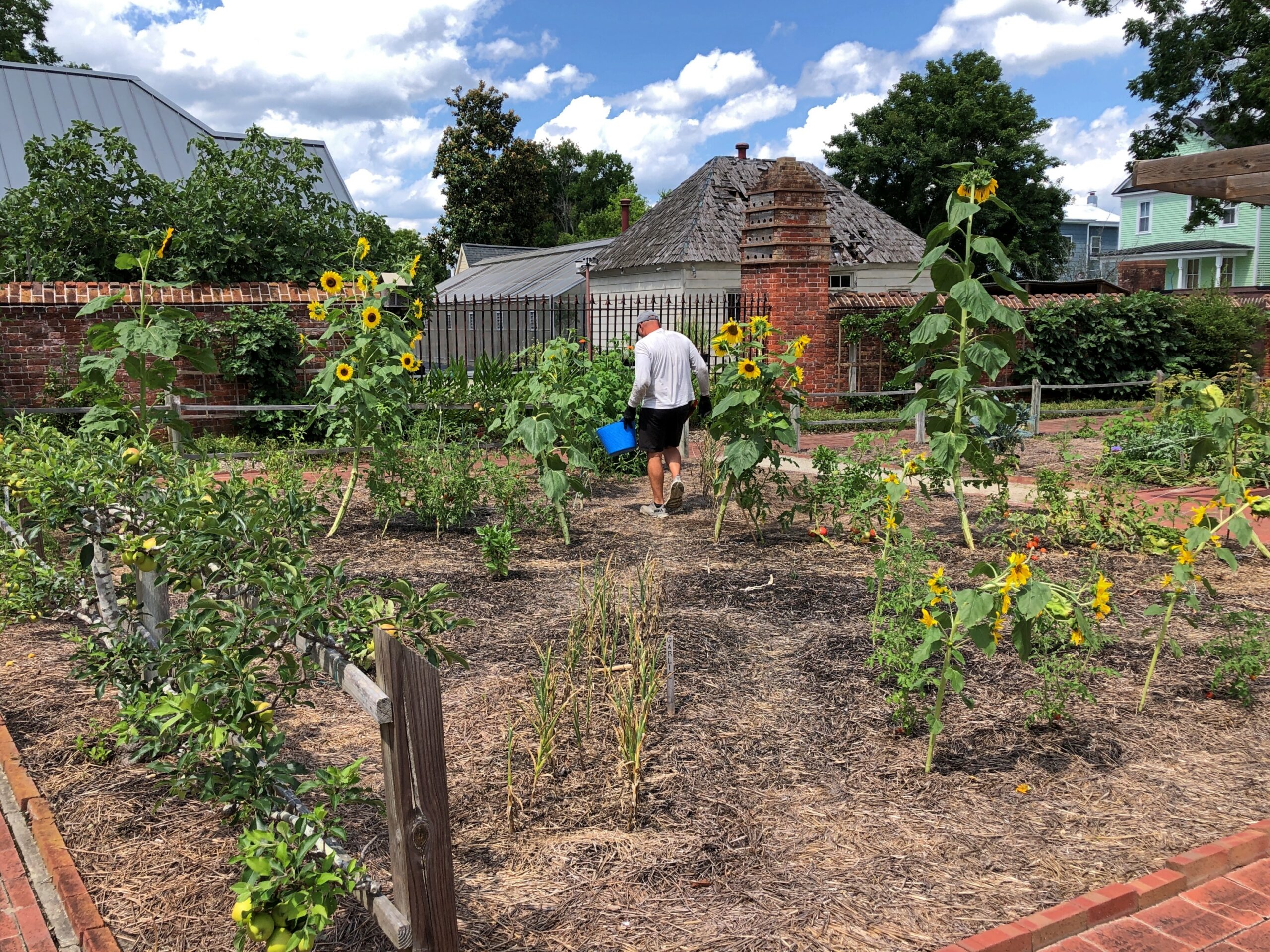
Also restored: The gardens of Tryon Palace, flower and vegetable. Despite the heat, we couldn’t miss that.

Tryon Palace garden
Tryon Palace garden

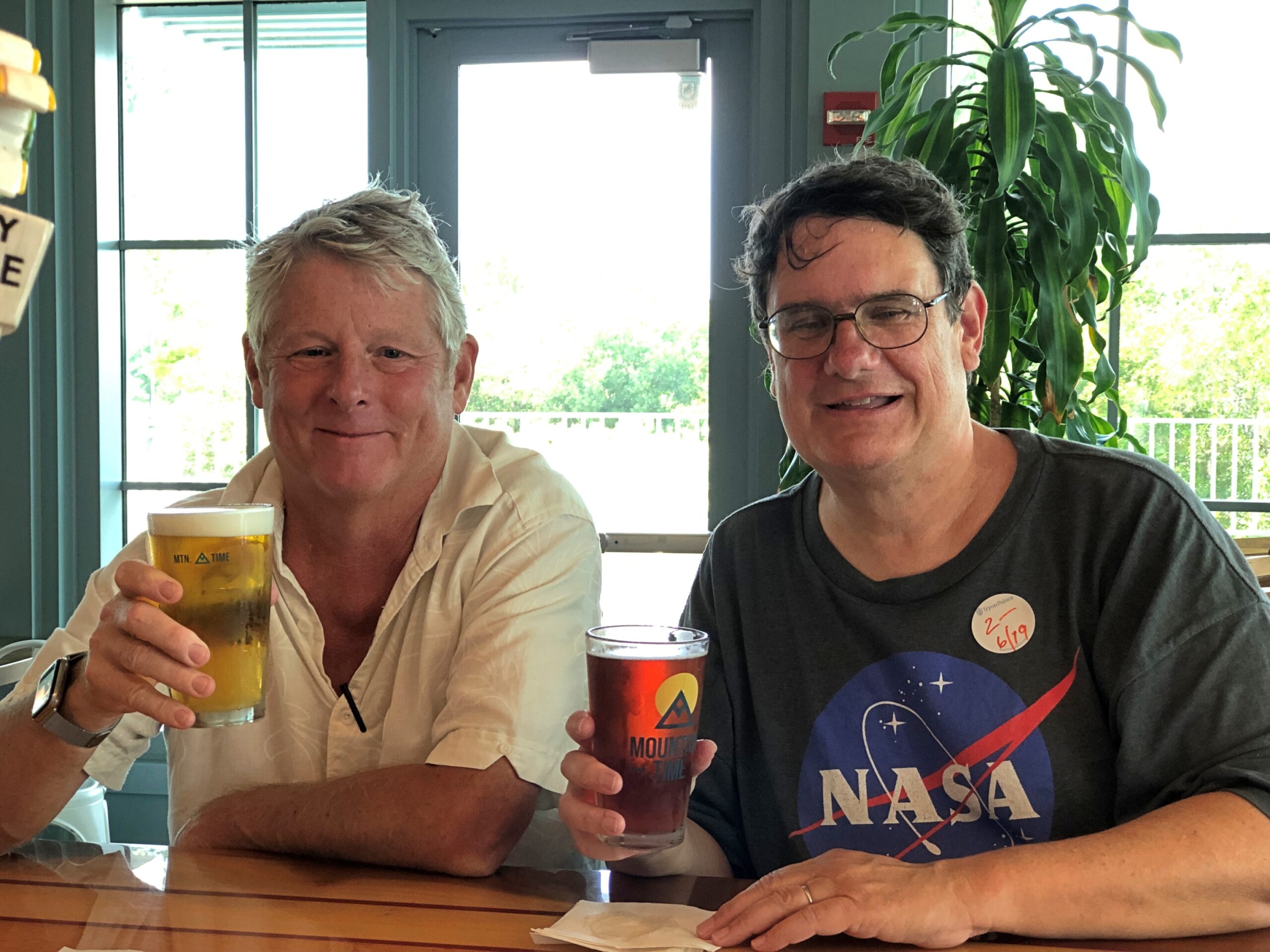
After our sweaty visit to the palace and gardens, Dan and I repaired to the restaurant in the nearby North Carolina History Center, called Lawson’s On The Creek, for refreshing beverages and more talk of Blackbeard and many other things. We closed the joint down over beer, at 4 p.m.

Dan and Dees

Downing a beer was just the thing. That was our homage to those days of yore. In colonial America, beer was no mere refreshing beverage, but an essential one.

North Carolina, South Carolina

Maybe I should have looked at something like this before driving between Knoxville and Charlotte last month.

Note the array of Construction Zone markers along I-40. Turns out travelers are lucky to be able to drive the road at all, considering that Hurricane Helene last year did so much damage that the highway – an Interstate of considerable importance regionally – was closed for five months, only reopening on March 1.

Reopening as a two-lane road, with each lane bounded on the outside by those concrete barriers you never want to see when driving. Separating the lanes is what amounts to a curb, painted yellow. This goes on for about 12 miles, as reconstruction work goes on. That isn’t a long stretch of road under normal conditions, but when you’re between barriers, behind a truck and in front of a truck, with traffic (many trucks) coming the other way just on the other side of a yellow curb, and little margin for error on anyone’s part, your reaction as a driver is going to be: when will this end?

That was my reaction, anyway. Had some nice drives on this trip. Western North Carolina I-40 wasn’t one of them.

“The hurricane washed away about 3 million cubic yards of dirt, rock and material from the side of I-40,” NCDOT reported. I’m having trouble visualizing a million cubic yards, much less three, but I’m sure it was a staggering amount.

“The stabilization process involved driving steel rods into the bedrock, filling the rods with grout, applying a metal screen then sprayable concrete to the face of the walls. There were four different rigs operating at the same time.

“Crews installed 90,000 square feet of soil-nail walls across the 10 different damage locations in less than 130 days. They also drilled nearly 2,100 feet of nails and fortified 4 miles of the shoulder for truck traffic.”

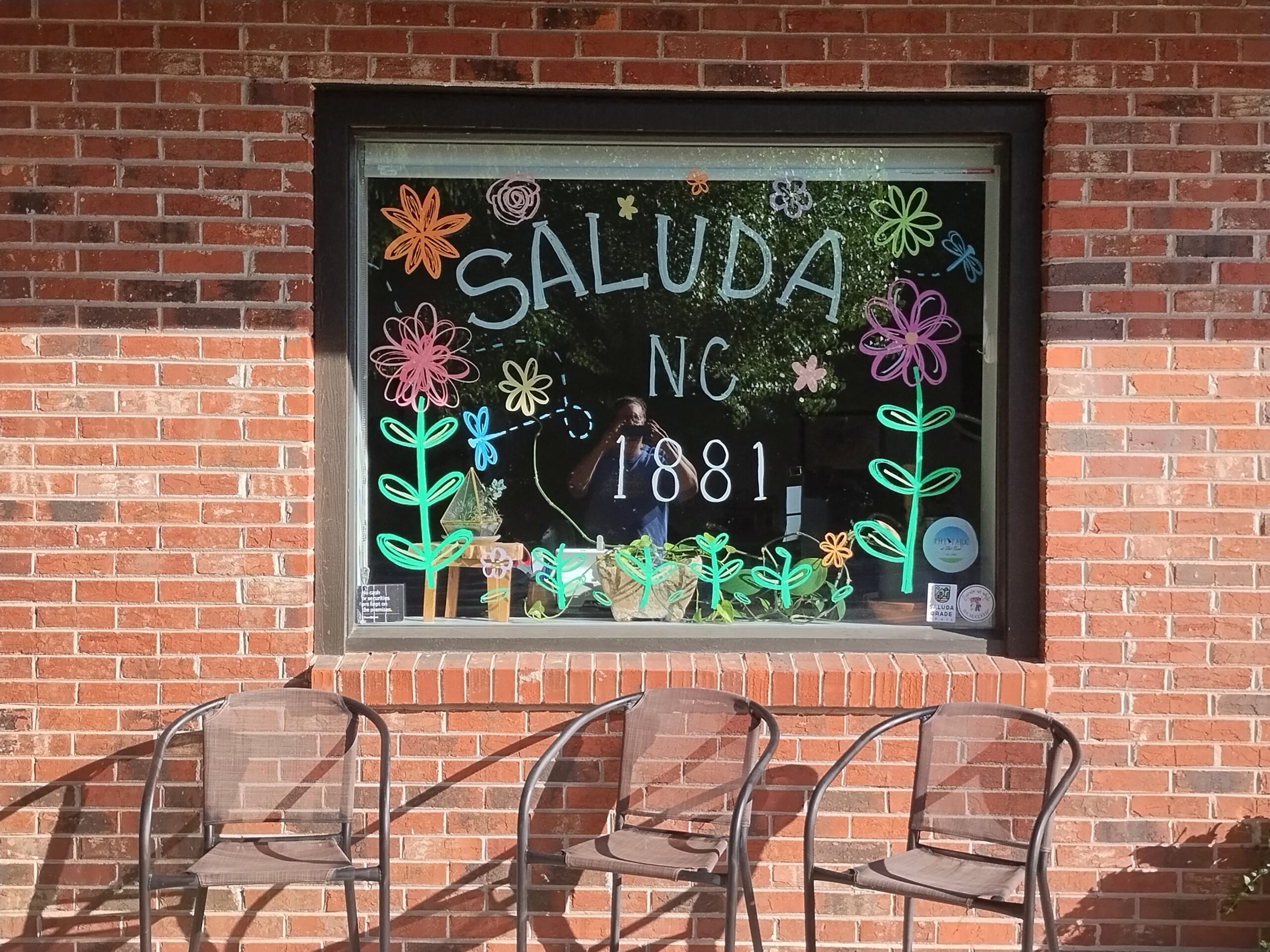
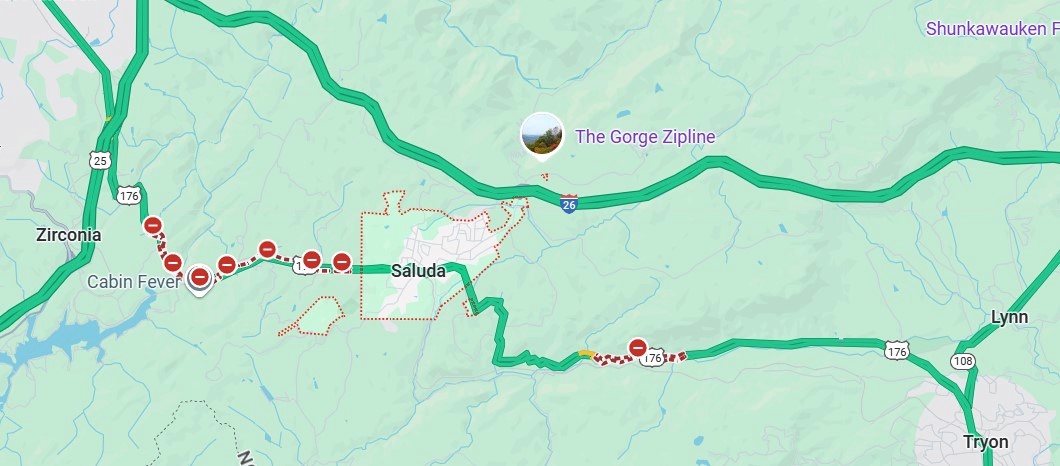
My goal for the afternoon had been to take I-40 from Knoxville to Asheville and then I-26 south to its junction with South Carolina 11, which is Cherokee Foothills Scenic Highway, and take that road east. I’d been advised that the town of Saluda, NC, on US 167, was a pleasant place to stop, and it was, though most of the shops were closed by the time I got there.

Saluda, NC

I had the idea that I would drive US 176 to the next town, Tryon, NC. Oops, no. Road closed. Maybe the hurricane did that as well.

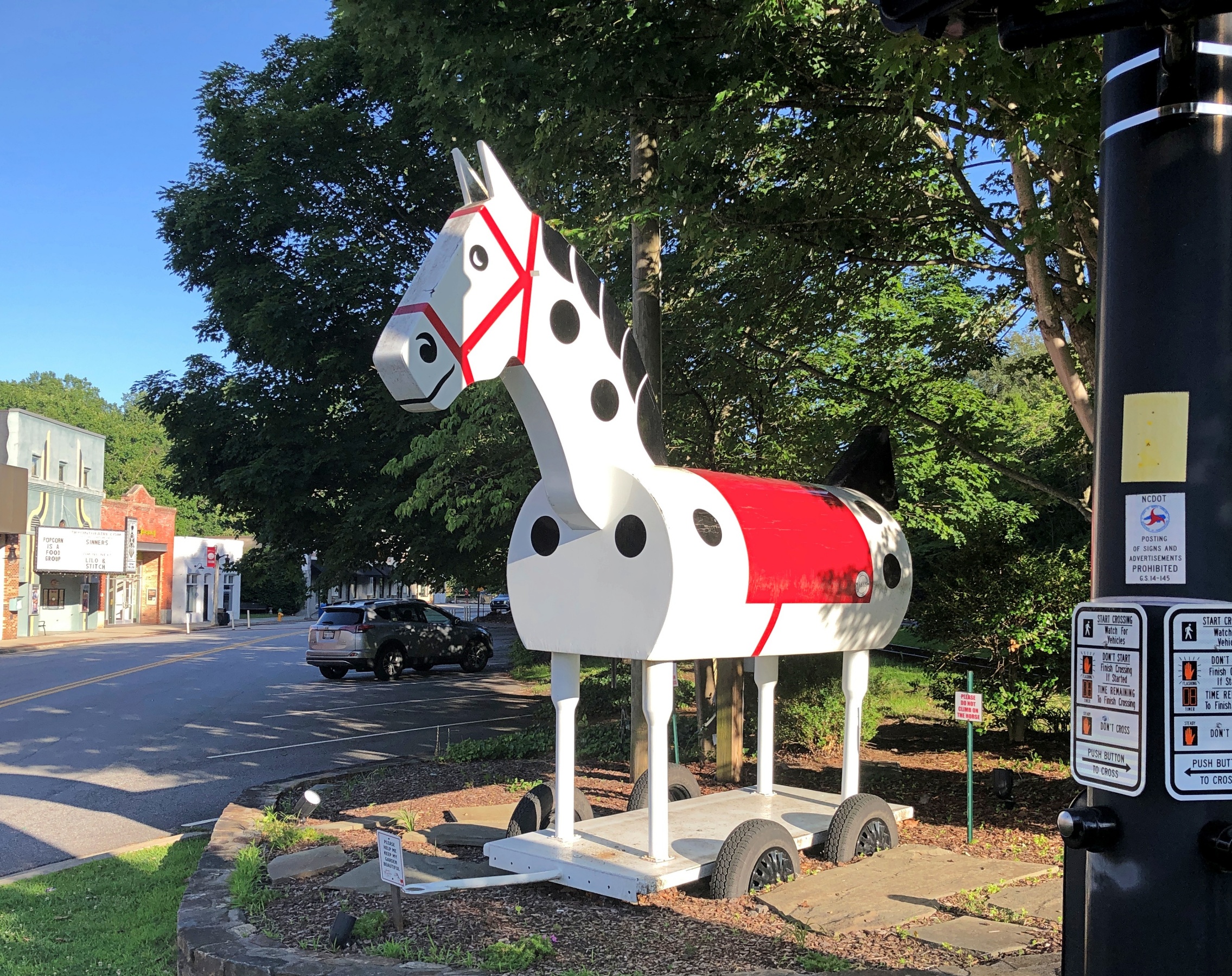
So I got back on I-26 and went to the Tryon exit. I didn’t have any idea what to expect in Tryon, certainly not the Tryon Horse, which is a large toy horse on wheels. It stands on US 176, known as South Trade St. at that point. This is the fifth iteration of the horse in nearly 100 years.

“[The first Tryon Horse] was originally designed as an advertisement for the first horse show held in Tryon at Harmon Field in 1928,” says the Tryon History Museum. “It came from a drawing done by Eleanor Vance, based on an idea from Romaine Stone, who was active in the Tryon Riding and Hunt Club, and from then seventeen-year-old master builder Meredith Lankford.

“The Tryon Horse was built in the basement of Miss Vance and Miss Yale’s house by Meredith Lankford and Odell Peeler and was assembled in the driveway… The Tryon Horse… was brought out for future horse shows and parades, and was stored in the Paper Box Factory located on Depot Street. Unfortunately, the first horse was destroyed when the factory burned in the 1930s.”

It was no accident that the talent was available locally in the 1920s to build such a thing. At the time, Tryon was noted for a company that made toys, especially high-end wooden toys.

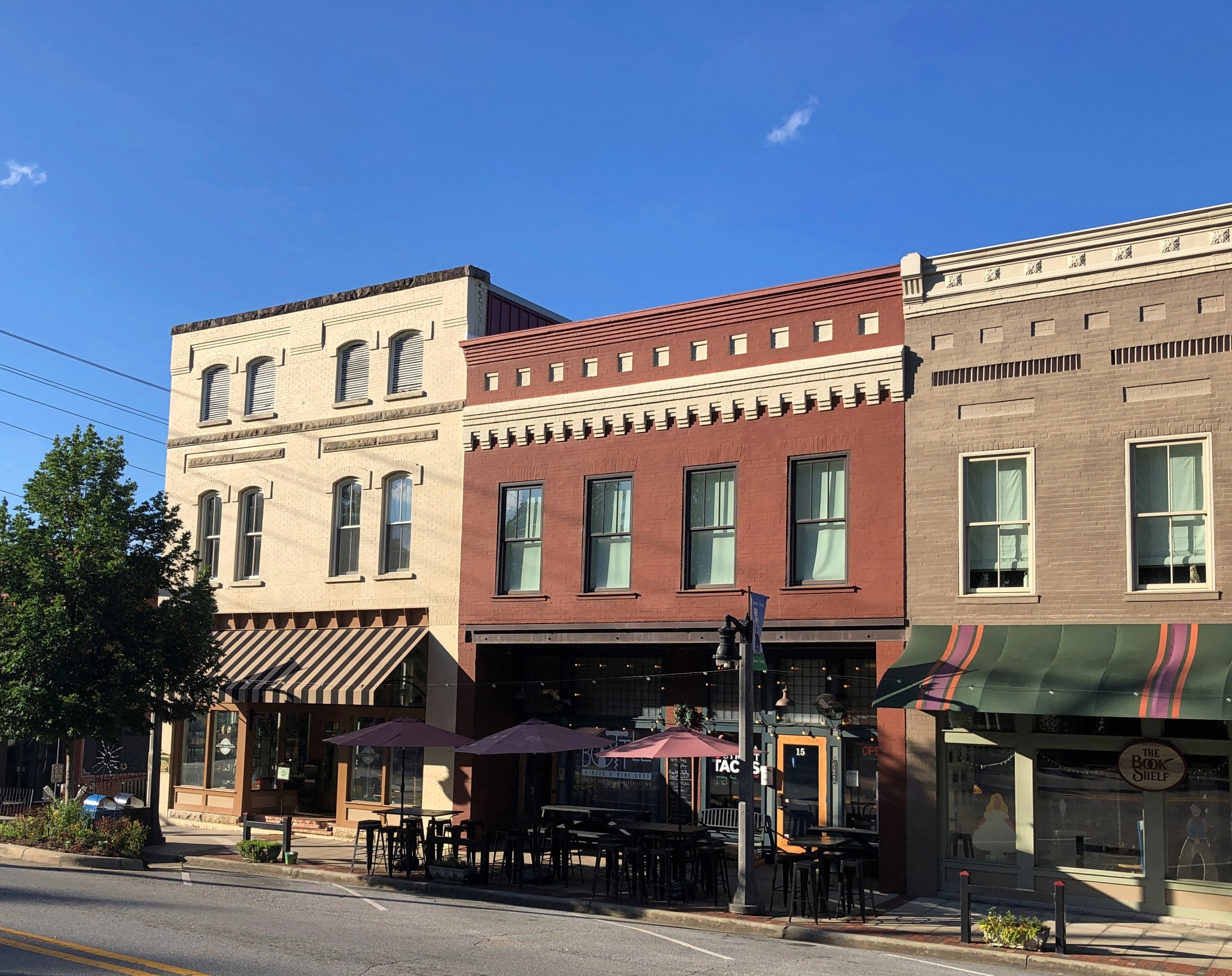
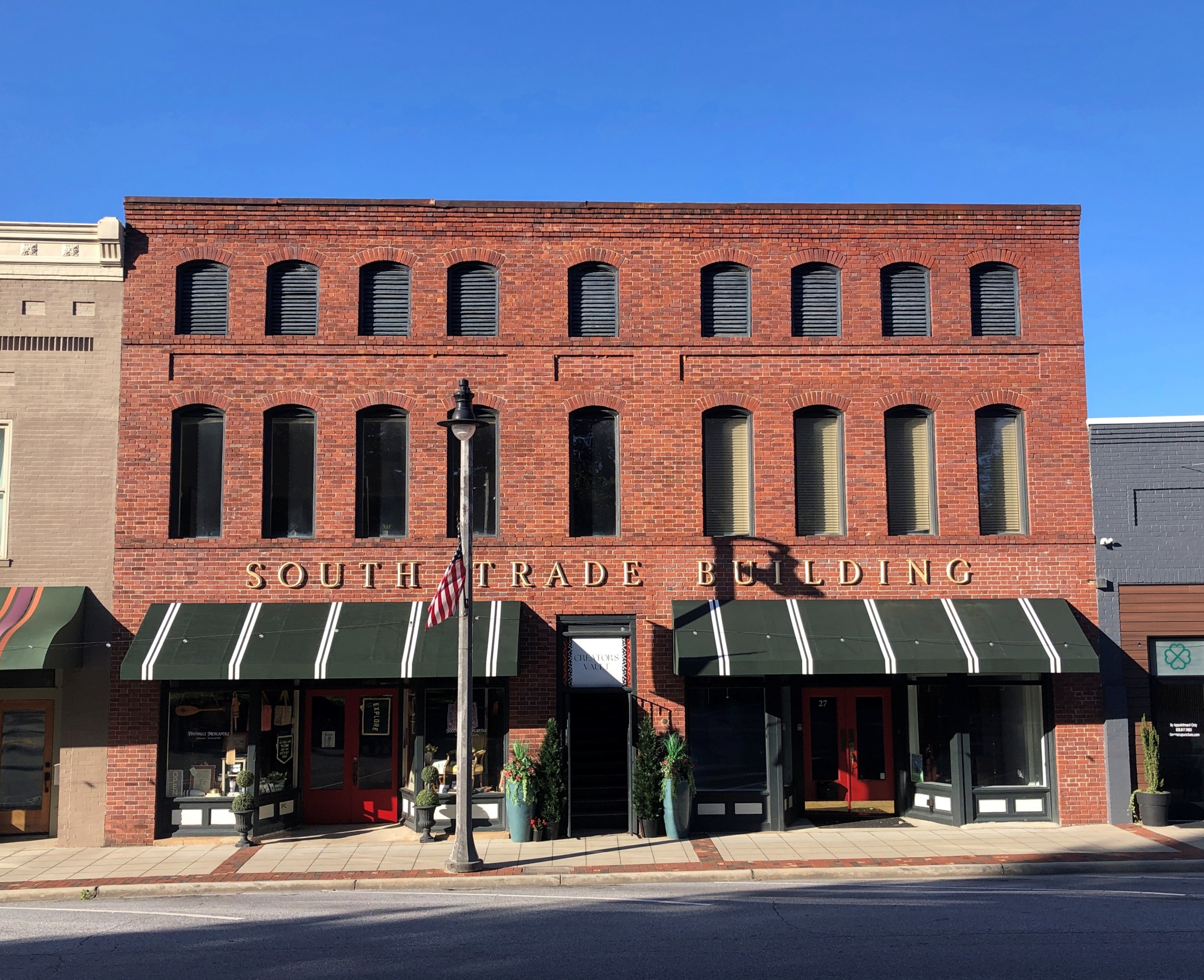
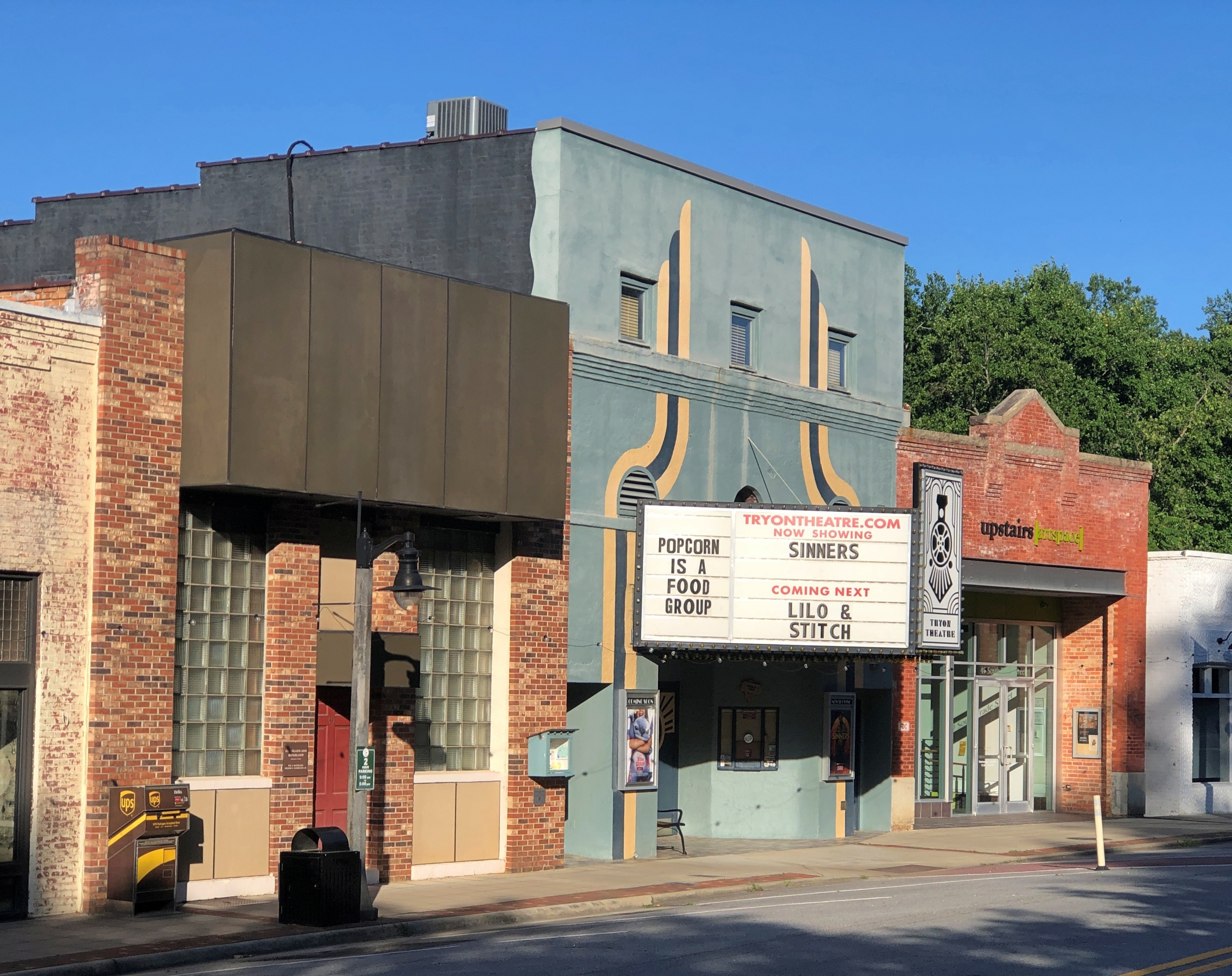
South Trade St. is a handsome thoroughfare, populated by older buildings developed to support trade.

Tryon NC
Tryon NC

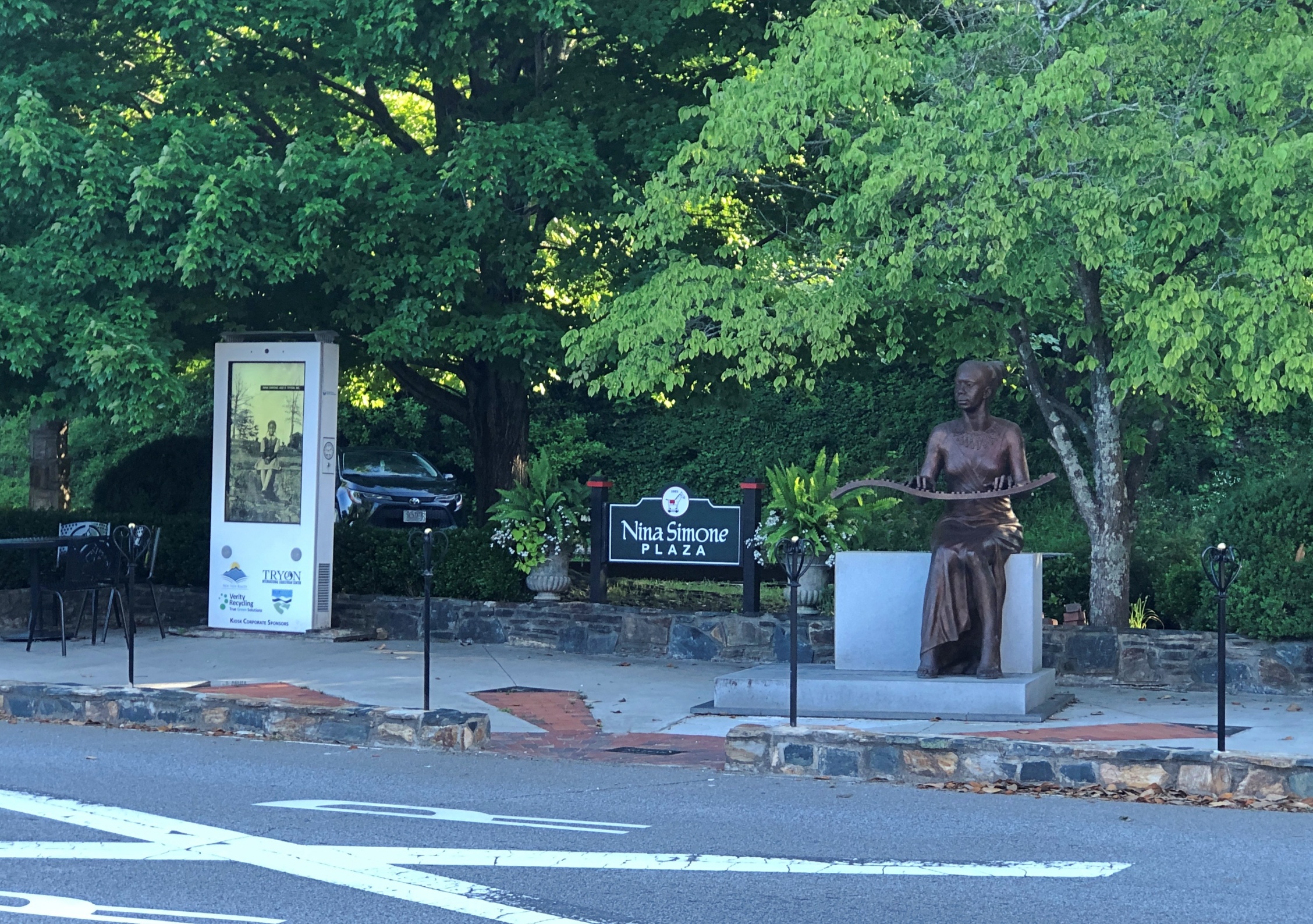
Something else I didn’t expect on the street: Nina Simone Plaza.

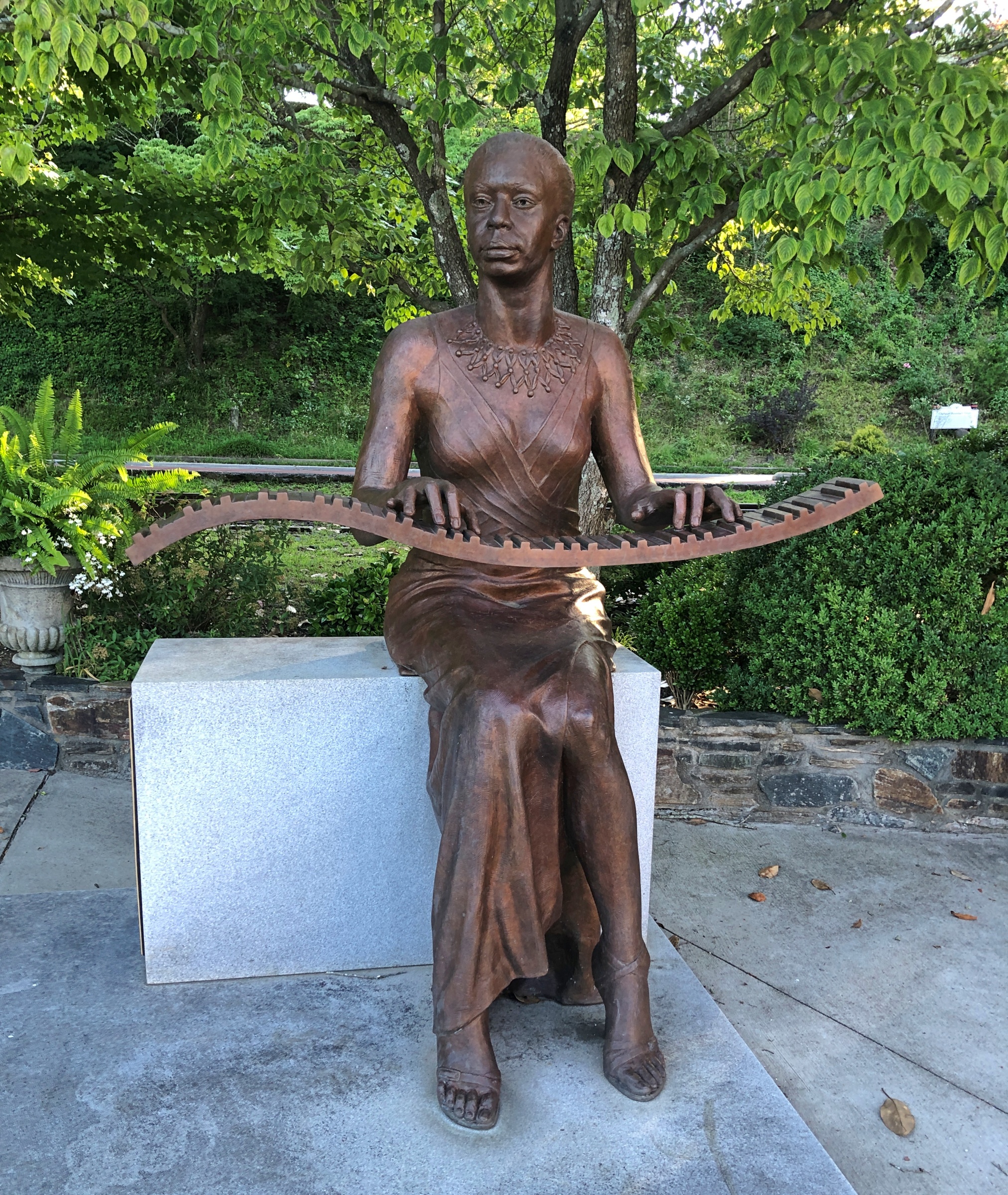
Complete with a bronze of the musician and activist, who grew up in Tryon, and who no doubt got out as soon as her talents allowed. She died in 2003; the statue was dedicated in 2017.

Nina Simon bronze, Tryon NC

A remarkable detail (so I’m remarking on it): “The sculptor, Zenos Frudakis, included a bronze heart containing Simone’s ashes welded to the interior of the figure’s chest,” says the University of North Carolina. For his part, Frudakis has had quite a career.

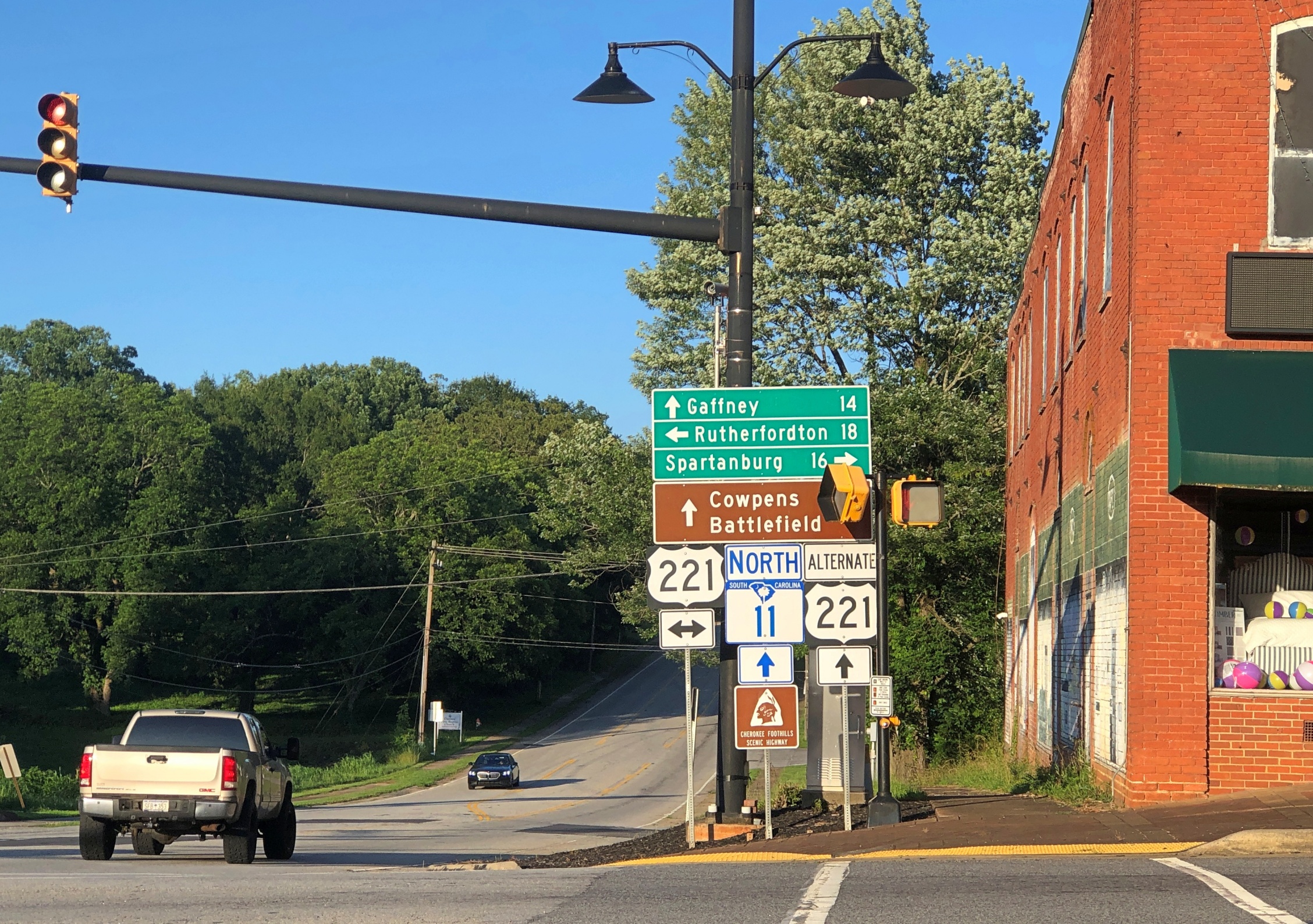
Later in the day, I eventually made it to South Carolina 11 at Campobello, SC, and drove east to its end for 50 miles or so to Gaffney, SC. I’d intended to visit Cowpens National Battlefield along the way.

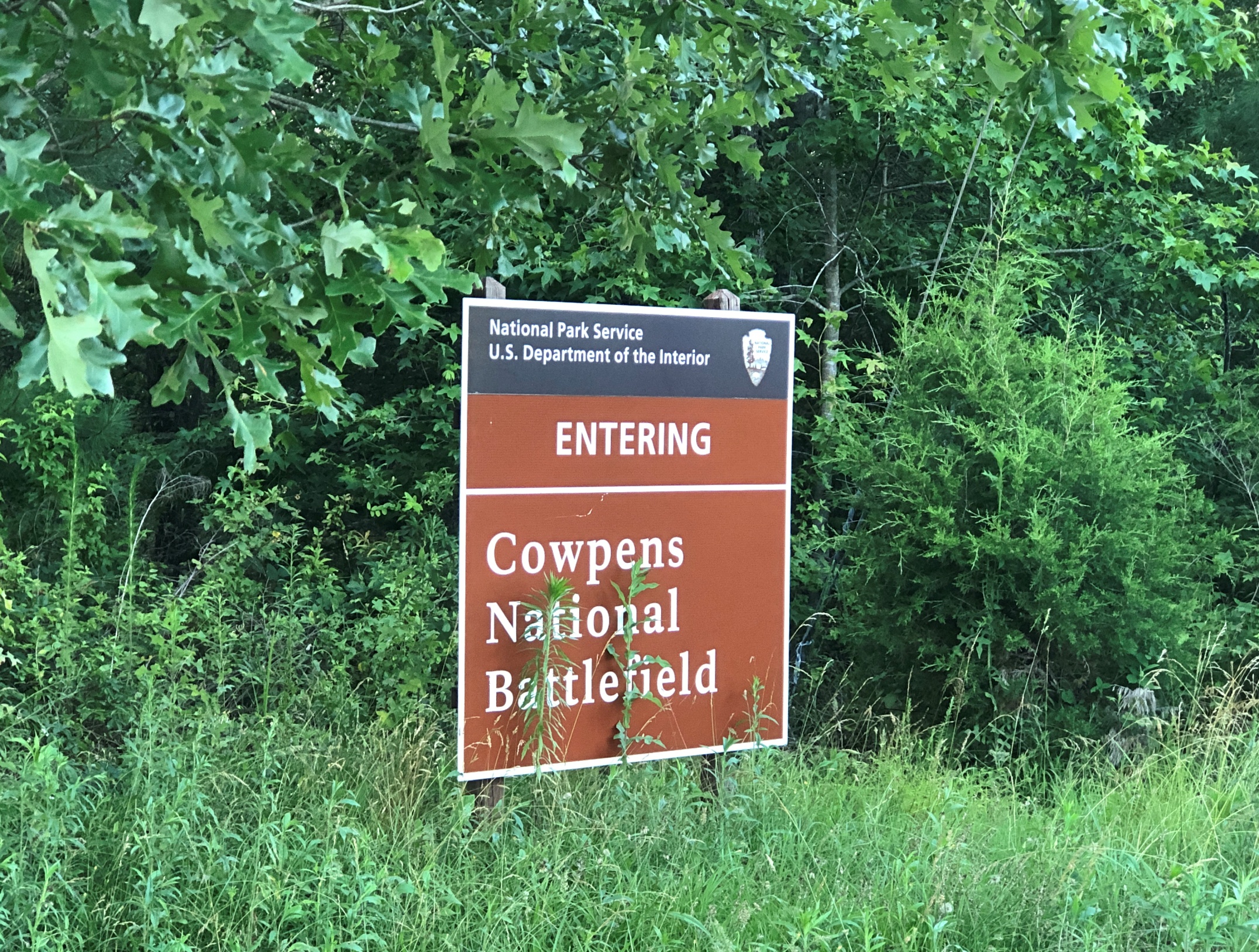
No dice. The main entrance to Cowpens was closed by the time I arrived. I understand closing the visitors center at the end of the day, but the entire place? A mile or so east on SC 11 was an alternate entrance, so I stopped there.

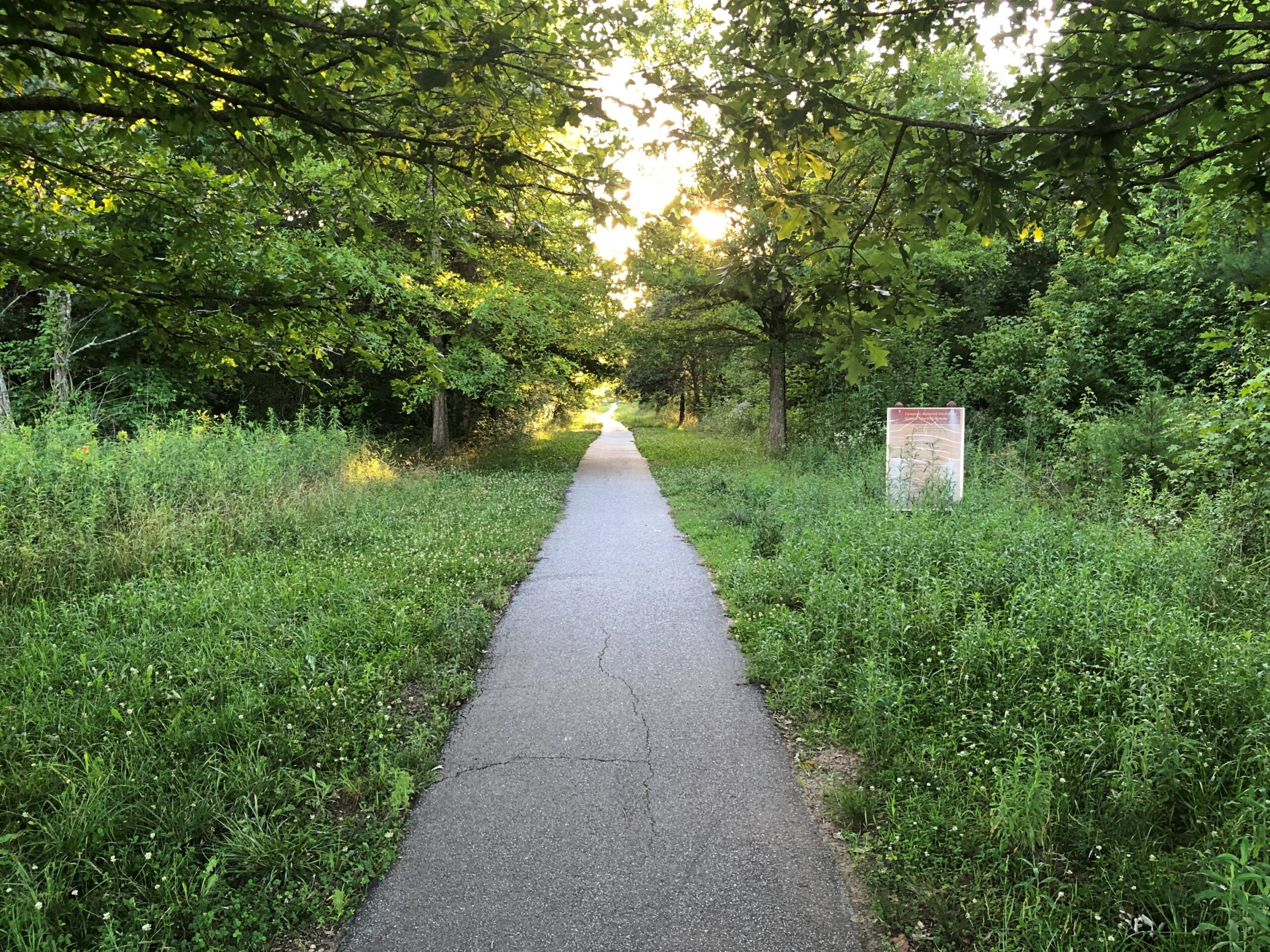
I walked down the path toward the battlefield, but thought better of it after about 10 minutes.

Cowpens National Battlefield

I wanted to get to Charlotte before the end of the day. Summer days are long, but not endless. Also, mosquitoes.

Scottsburg, Indiana

Just the latest in bad news: the lodge on the North Rim of the Grand Canyon burned down due to wildfire. At least no one died in the incident, but it’s always unfortunate when a grand edifice meets its end. I wouldn’t bet on reconstruction, either.

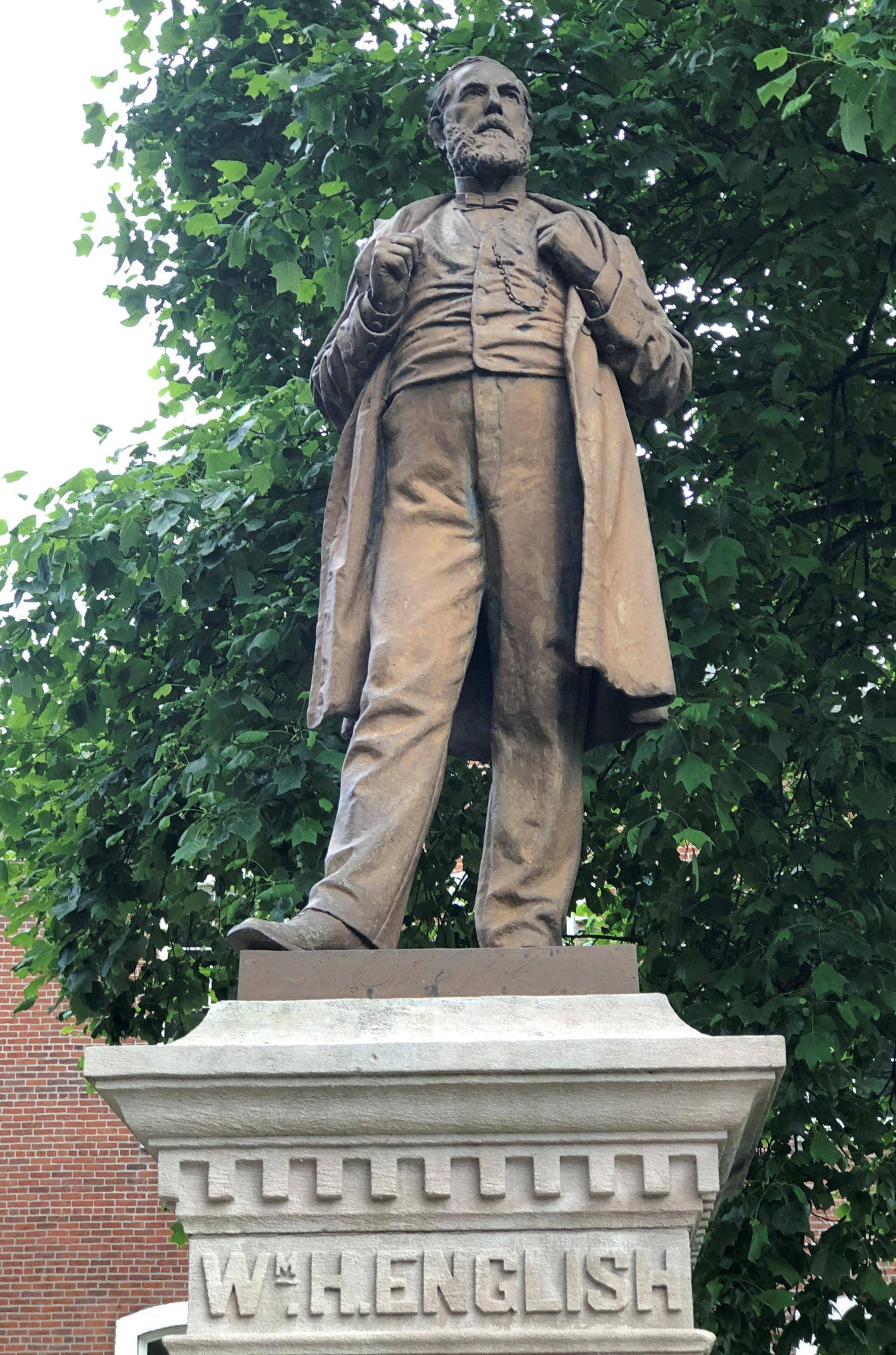
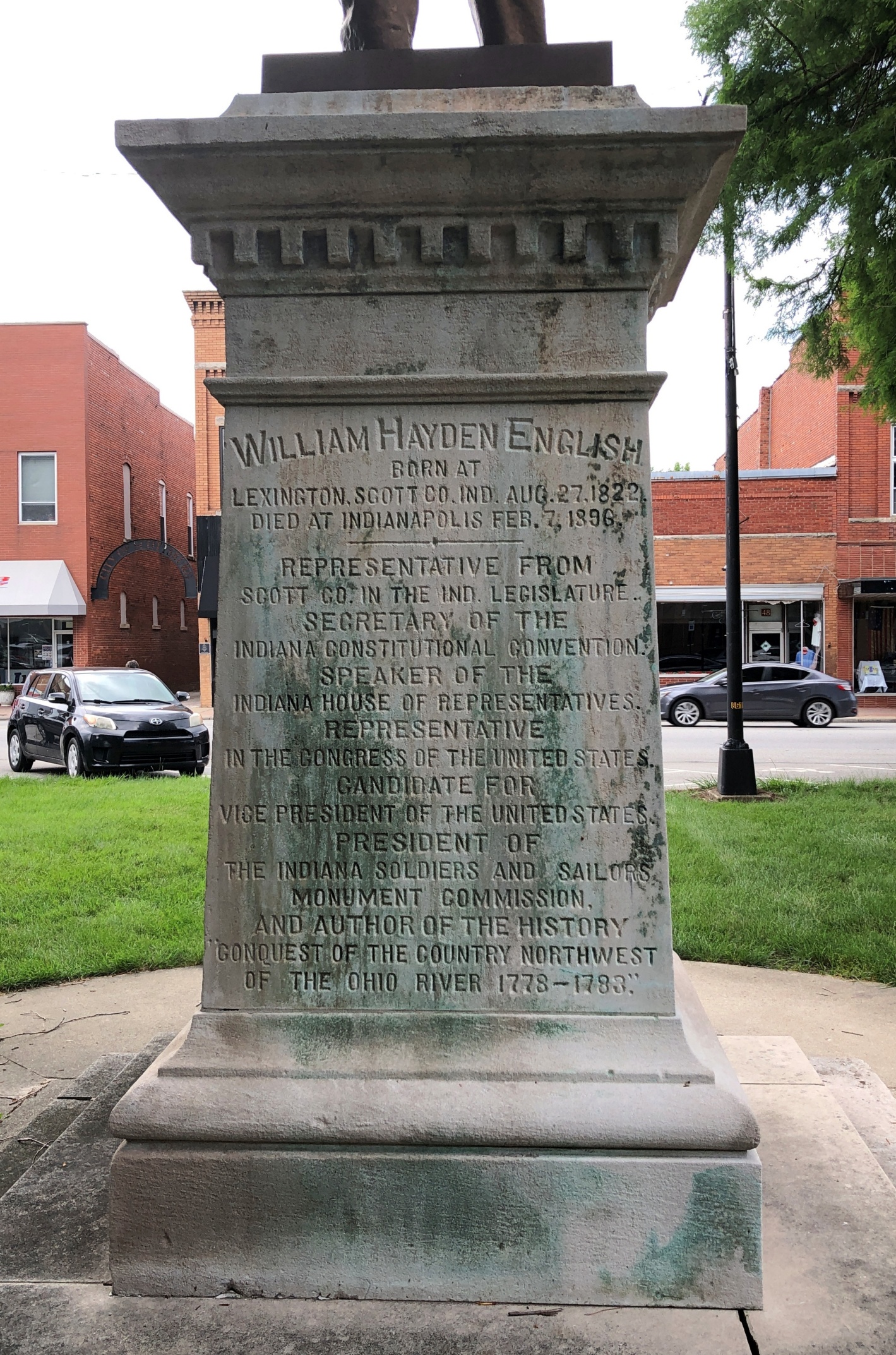
The heat was already on by the time I arrived in Scottsburg, Indiana on the first day of the trip, June 16. But not enough to keep me from taking a stroll around the Scott County courthouse, where I found native son William H. English.

Scottsburg, Indiana Scottsburg, Indiana

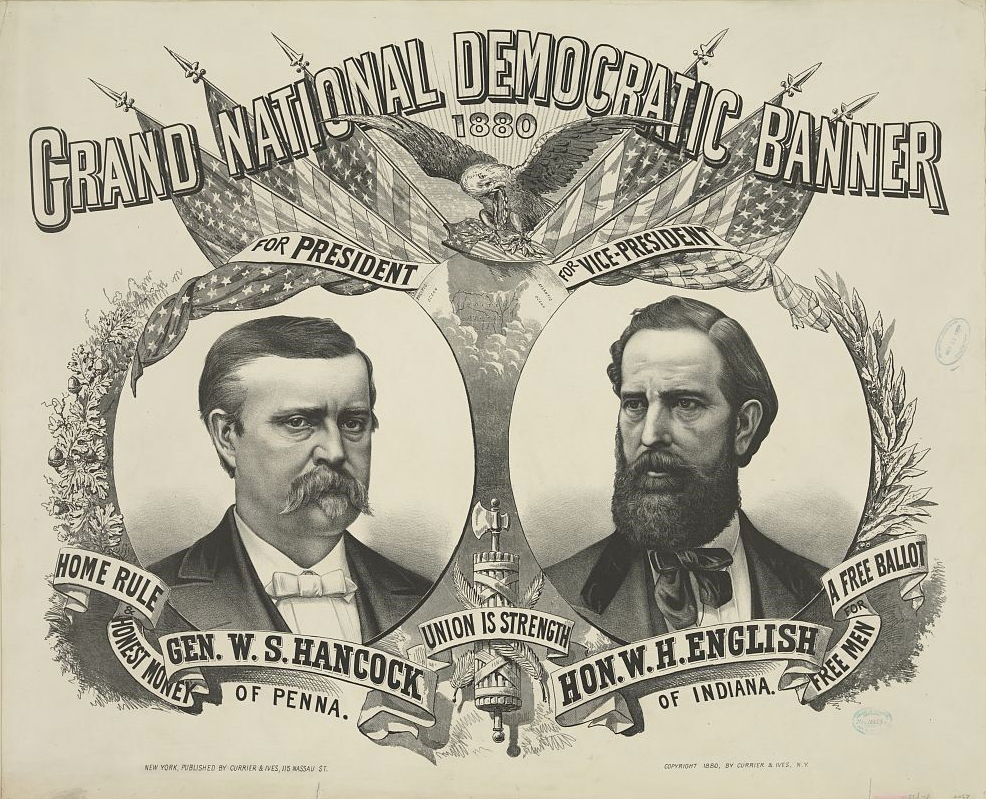
After only a few hours on the road, by chance, I’d come across a presidential sight. Presidential adjacent, anyway, since English (d. 1896) is that most obscure of obscurities, someone who ran for vice president and lost – in 1880 in his case, on the Democratic ticket with Winfield Scott Hancock, who himself isn’t going to ring any bells outside presidential history buffs. The statue went up in 1908.

That was the election James Garfield won, which he no doubt regretted before long.

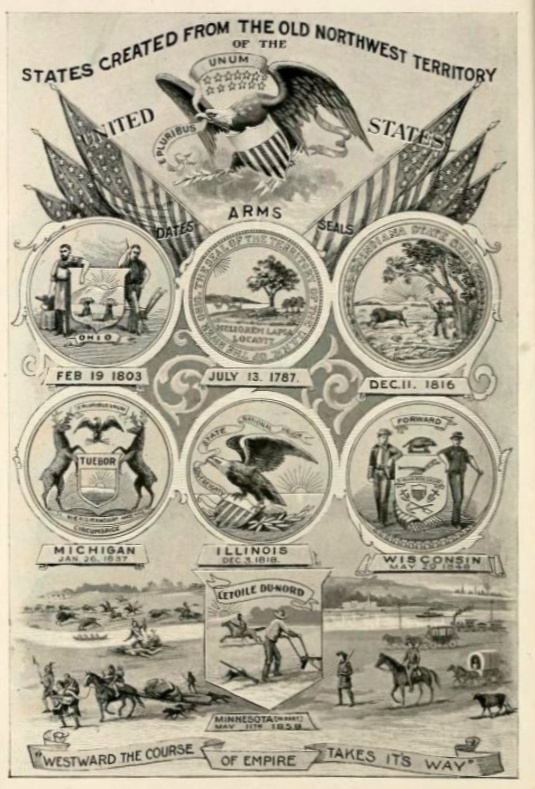
English, or his heirs, felt that a book he wrote, Conquest of the Country Northwest of the Ohio River 1778-1783, was worth a mention along with the offices he held or aspired to. The marvel here in the 21st century is that the work is just about instantly accessible (Vol. 1 and Vol. 2). An illustration facing the Vol. 1 title page (on the optitle page?) not only falls into the They Don’t Make ‘Em Like That Anymore category, it’s squarely in, No One Would Think of It territory. Just as well, I figure.

To get to Nashville from metro Chicago, the direct route is via I-65, which cuts across Indiana. Considering the importance of both of those cities to me, I’ve driven the route more times than I can count. But I have to report that it isn’t one of the more interesting drives in the nation, and at eight to nine hours drive time in the best of conditions, you feel it yawn beneath your wheels when you yourself yawn.

So the strategy over the years has been to break up the trip. Such as a place like Scottsburg, pop. 7,300. The town is close enough to Louisville to be its exurb – maybe. I haven’t spend enough time in Louisville, as interesting as it is, to have any sense of its greater co-prosperity sphere, or at what distance that might peter out.

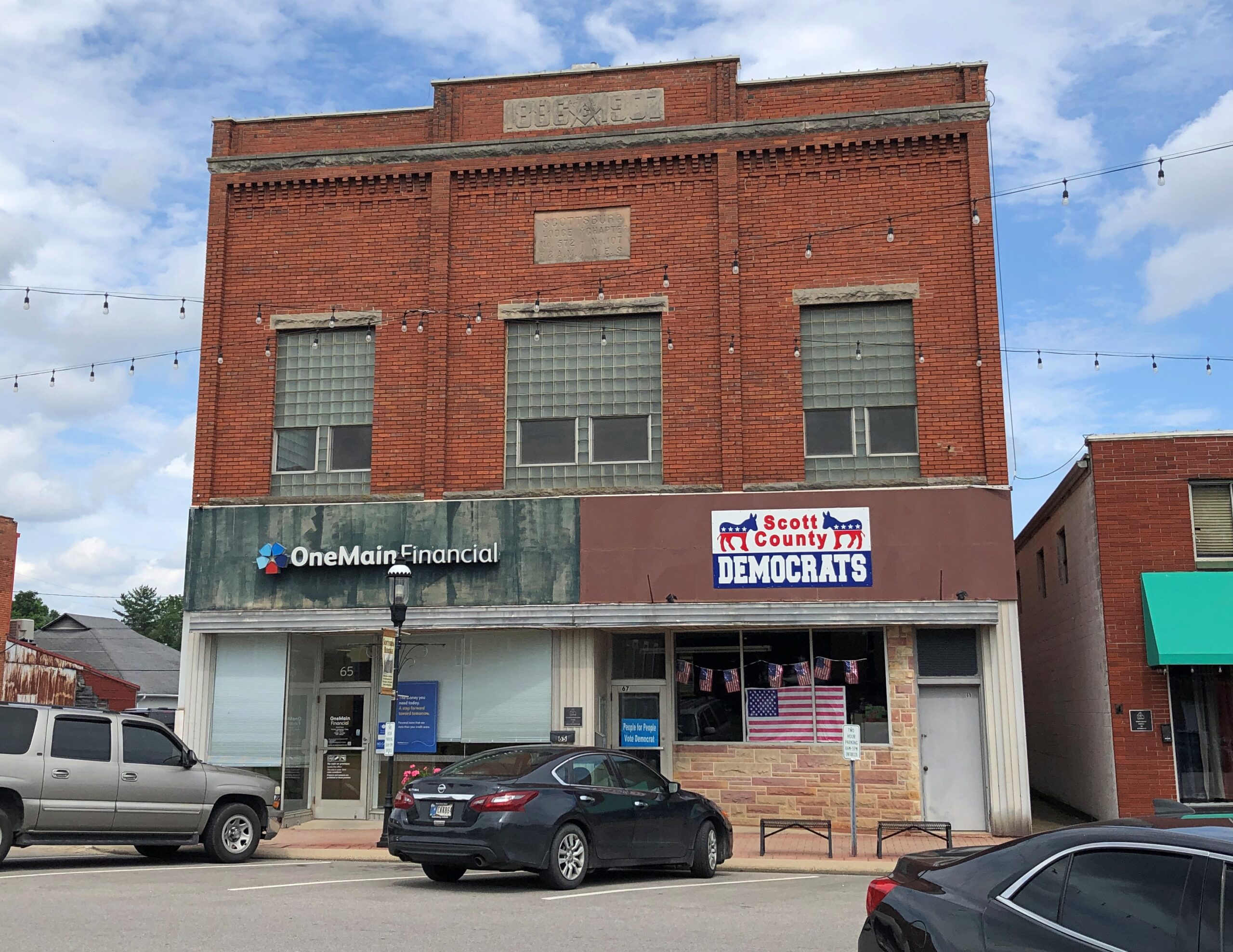
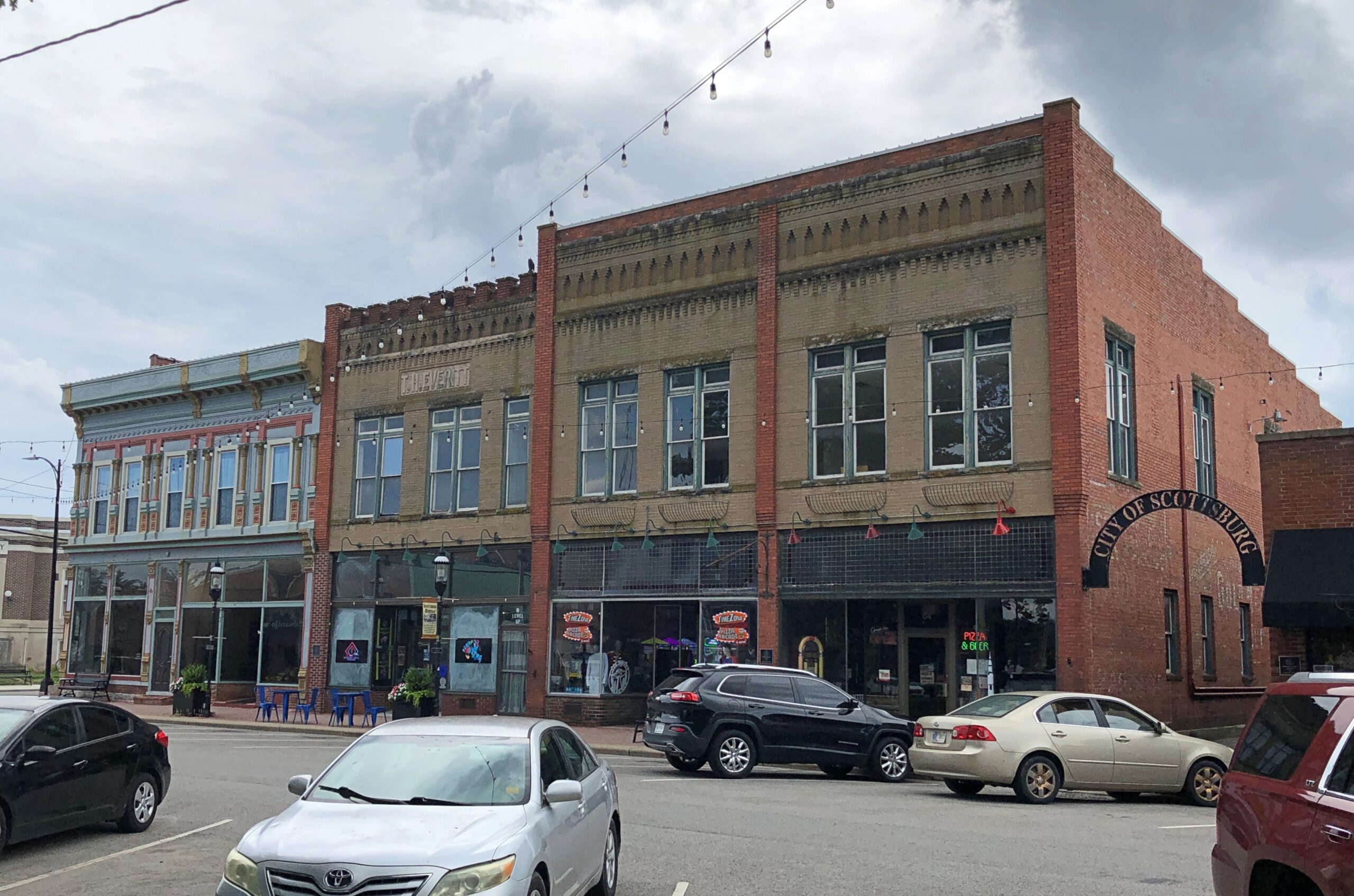
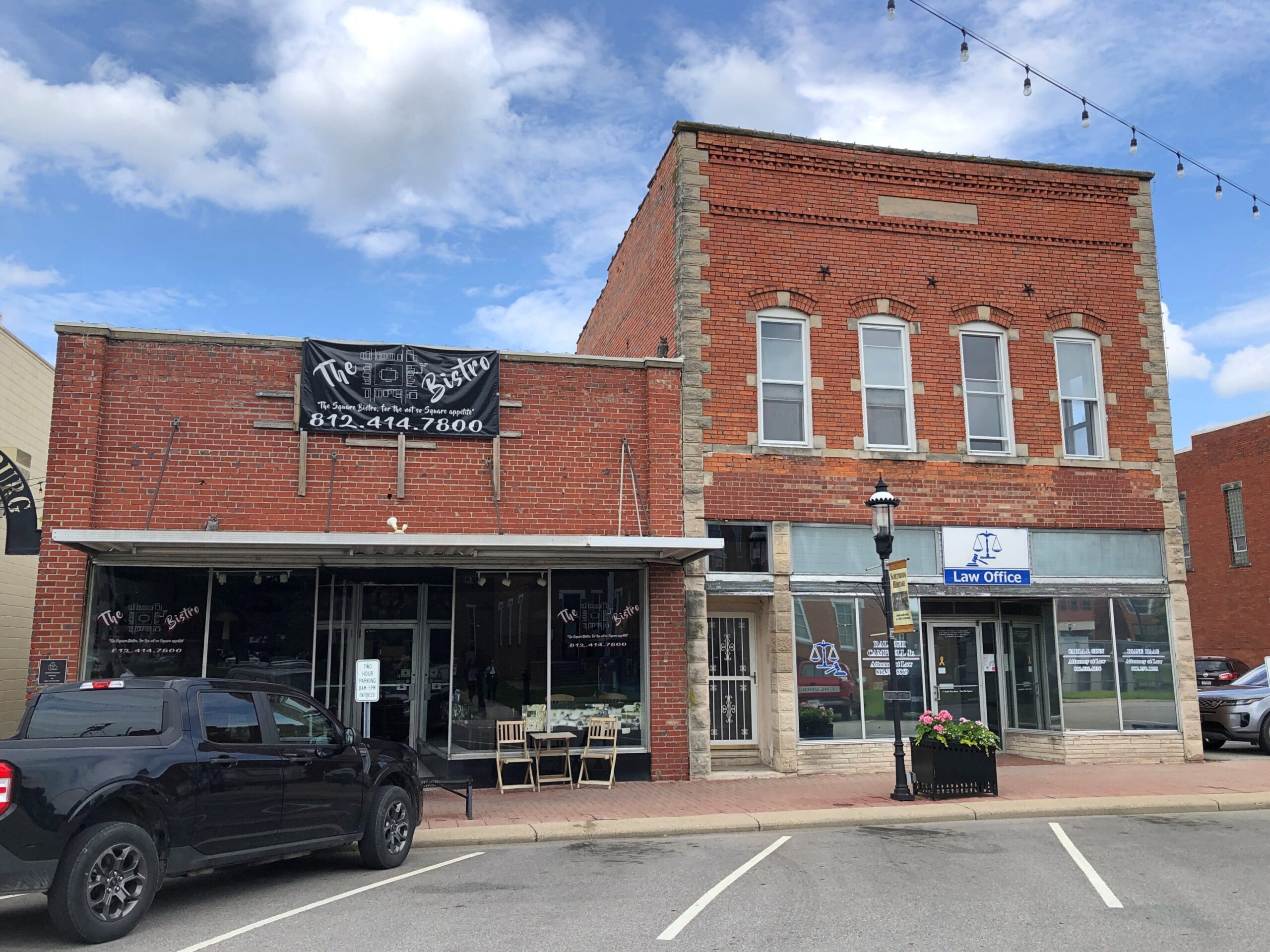
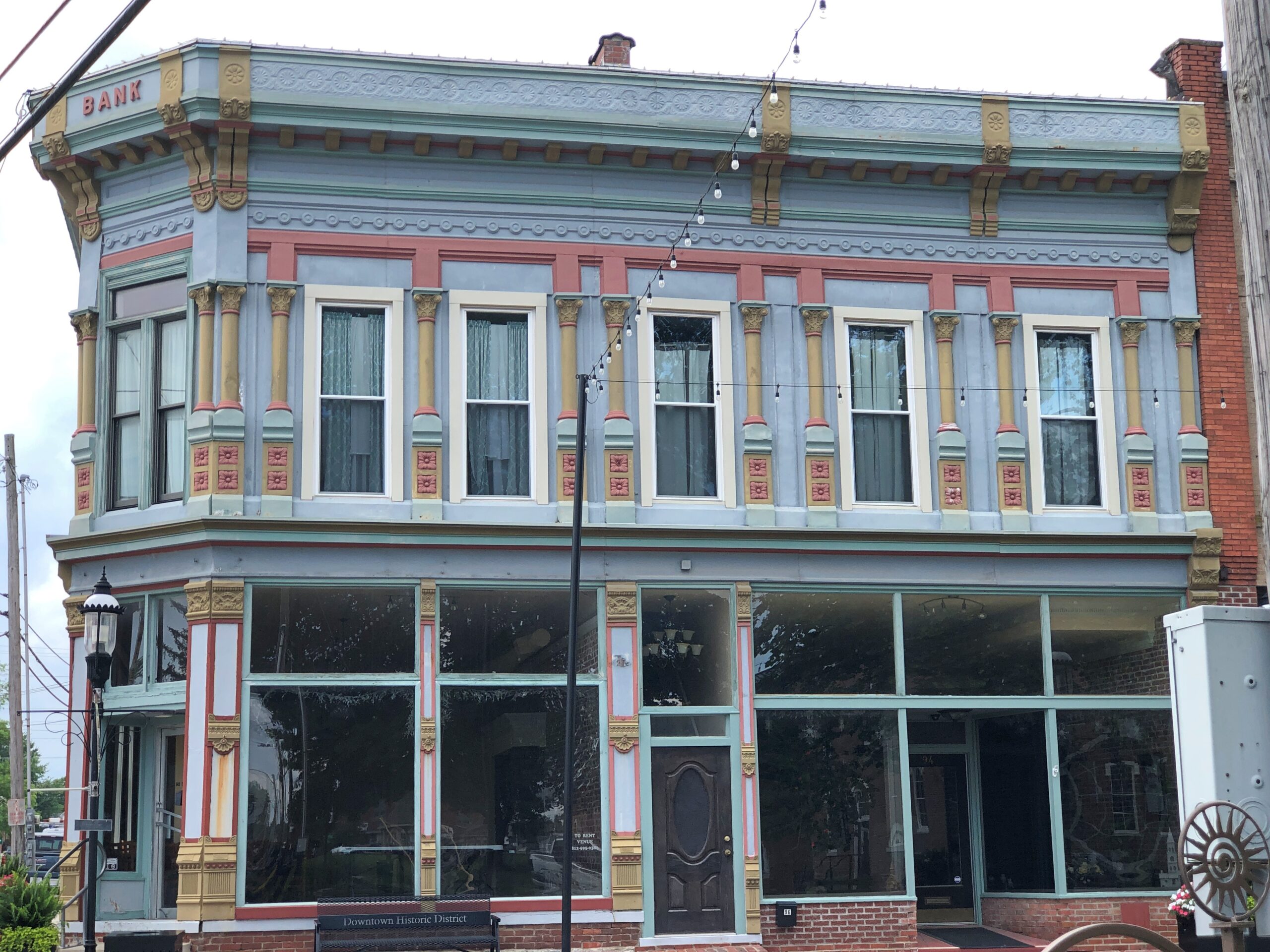
Scottsburg has one thing a picturesque exurb needs: a picturesque courthouse square. Or at least elements of it.

Scottsburg, Indiana Scottsburg, Indiana

Downtown is in fact a national historic district: Scottsburg Courthouse Square Historic District. I get a kick out of discovering that kind of thing retroactively, which I did this time.

“The district is composed of one-, two-, two-and-a-half and three-story brick and stone commercial structures with zero setbacks, which form an essentially contiguous perimeter to the wooded courthouse lawn,” its registration form on file with the U.S. Interior Department says. “There are a total of 48 contributing buildings within the district. The character of the district is defined by late 19th and early 20th century commercial architecture with significant examples of the Italianate, so Richardsonian Romanesque, Renaissance Revival, Colonial Revival, and Art Moderne styles.

“The predominant building material is red brick, as evidenced by the courthouse and 29 commercial buildings within the district. Secondary materials include Indiana limestone and various shades of buff and yellow brick, decorative brick work, cast iron, ornamental pressed metal and glazed tile and Carrera glass…”

Scottsburg, Indiana Scottsburg, Indiana

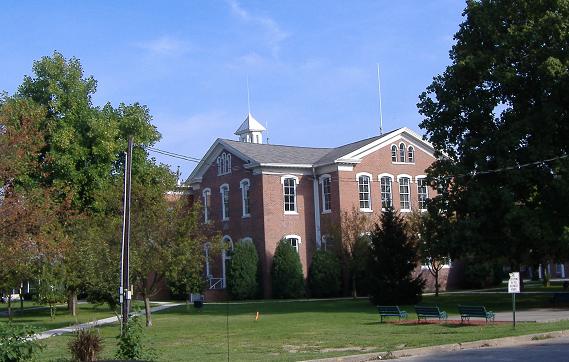
In the heat of the moment (literally), I neglected to get a decent shot of the courthouse itself, but someone called Bedford thoughtfully put an image in the public domain.

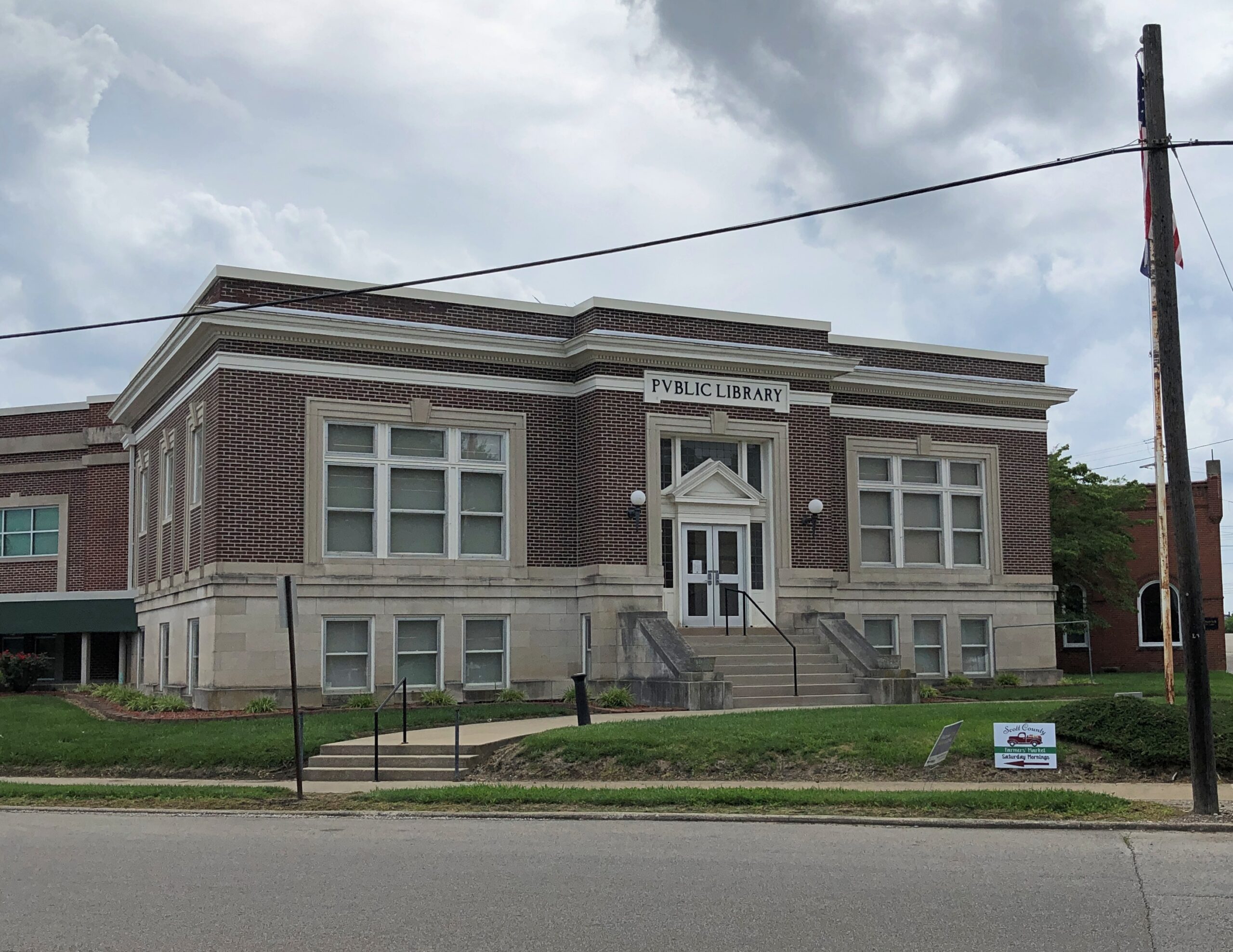
Could it be a Carnegie Library?

Scottsburg, Indiana

Yes. Completed 1917, still a library. One of the more than 1,680 in the United States funded by the robber baron, many of which endure after a century plus.

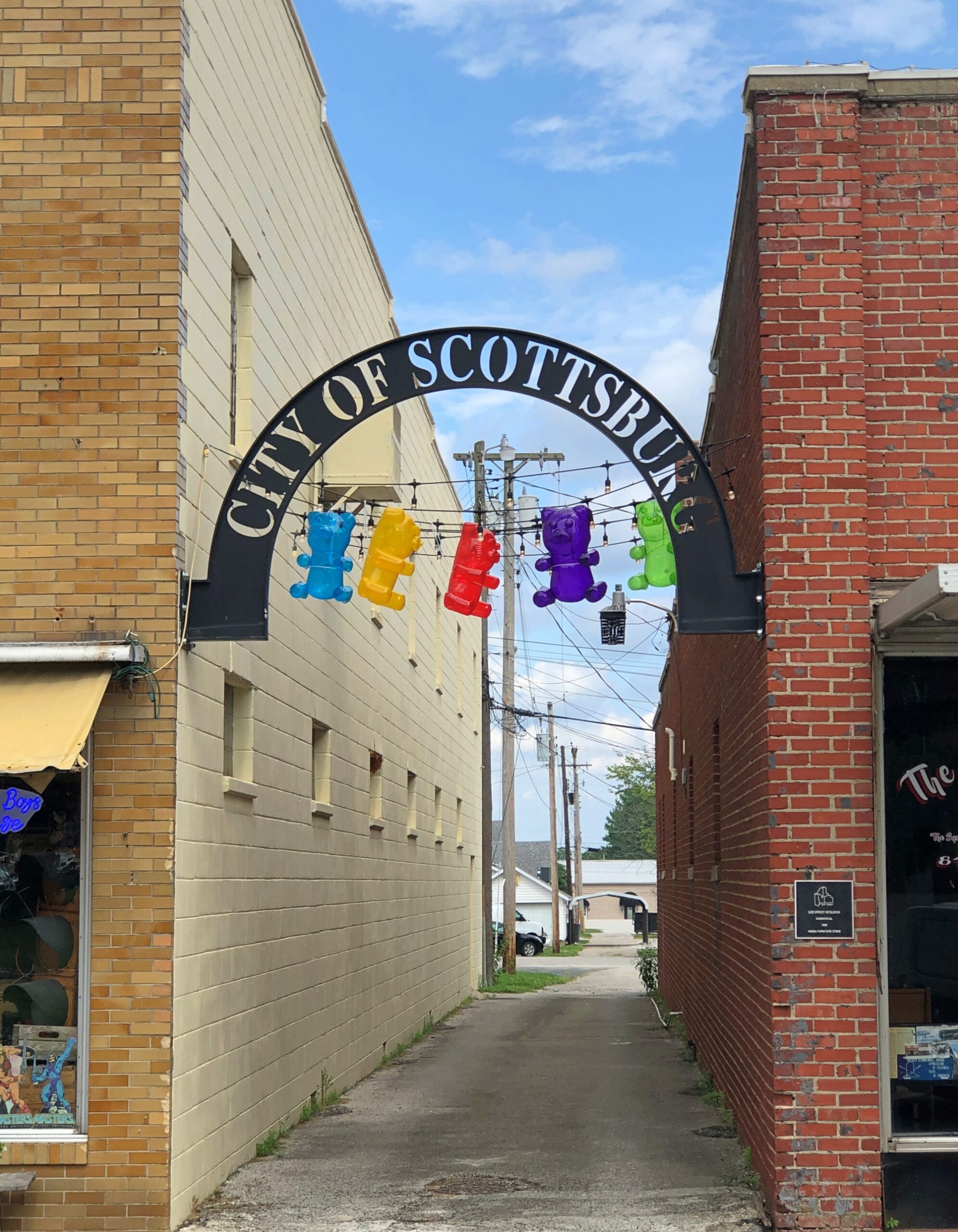
Some courthouse square details.

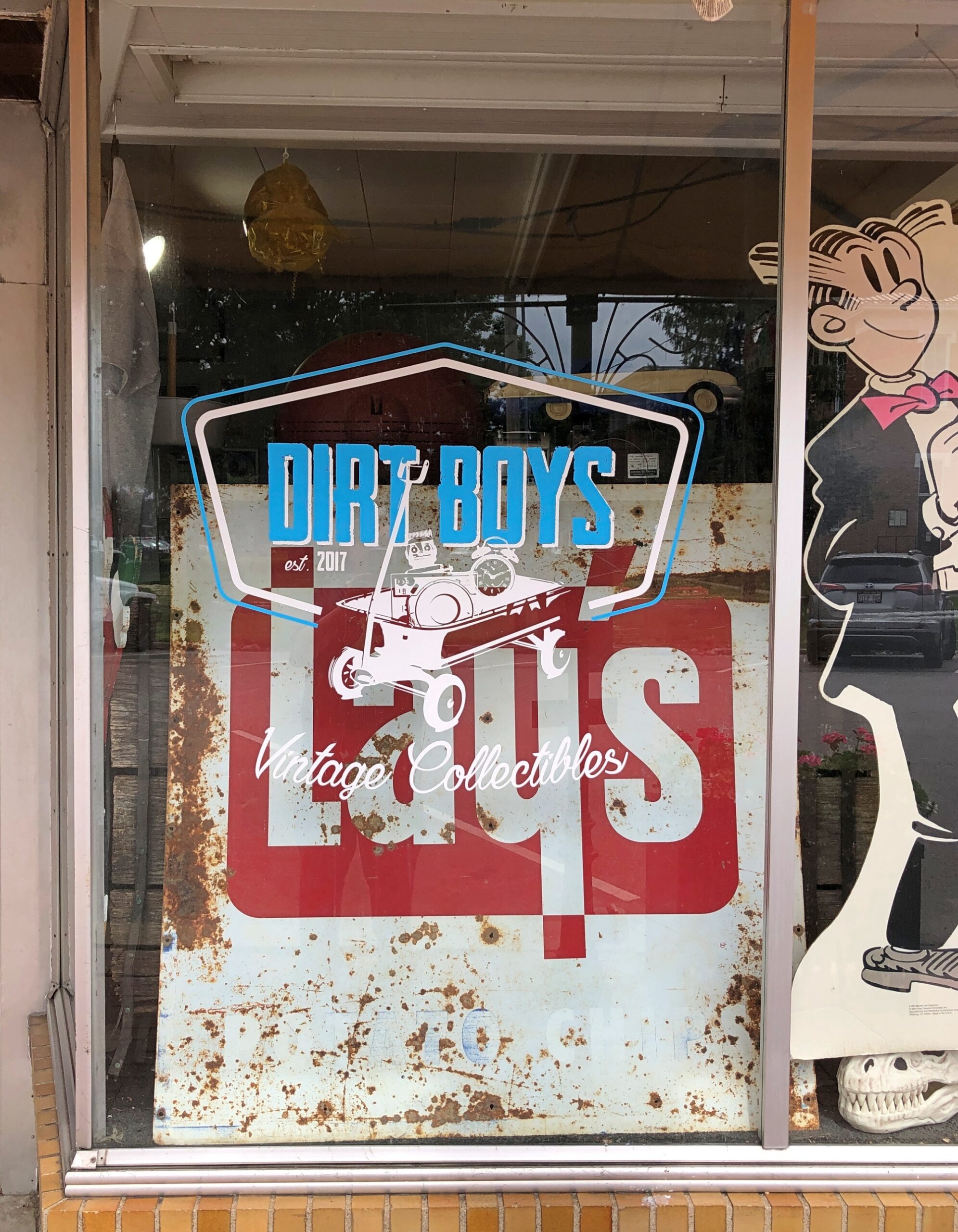
Dirt Boys Vintage Collectibles joins the likes of city offices and law offices, but also Warriors Den coffee shop, Time Zone Pizza Arcade, Chicago City Pizza and Bootlegger’s Bar & Grill. Those not needing to eat can visit Wildflowers Boutique, Moxie Music Center or Working Class Tattoo Parlor, all there on the square.

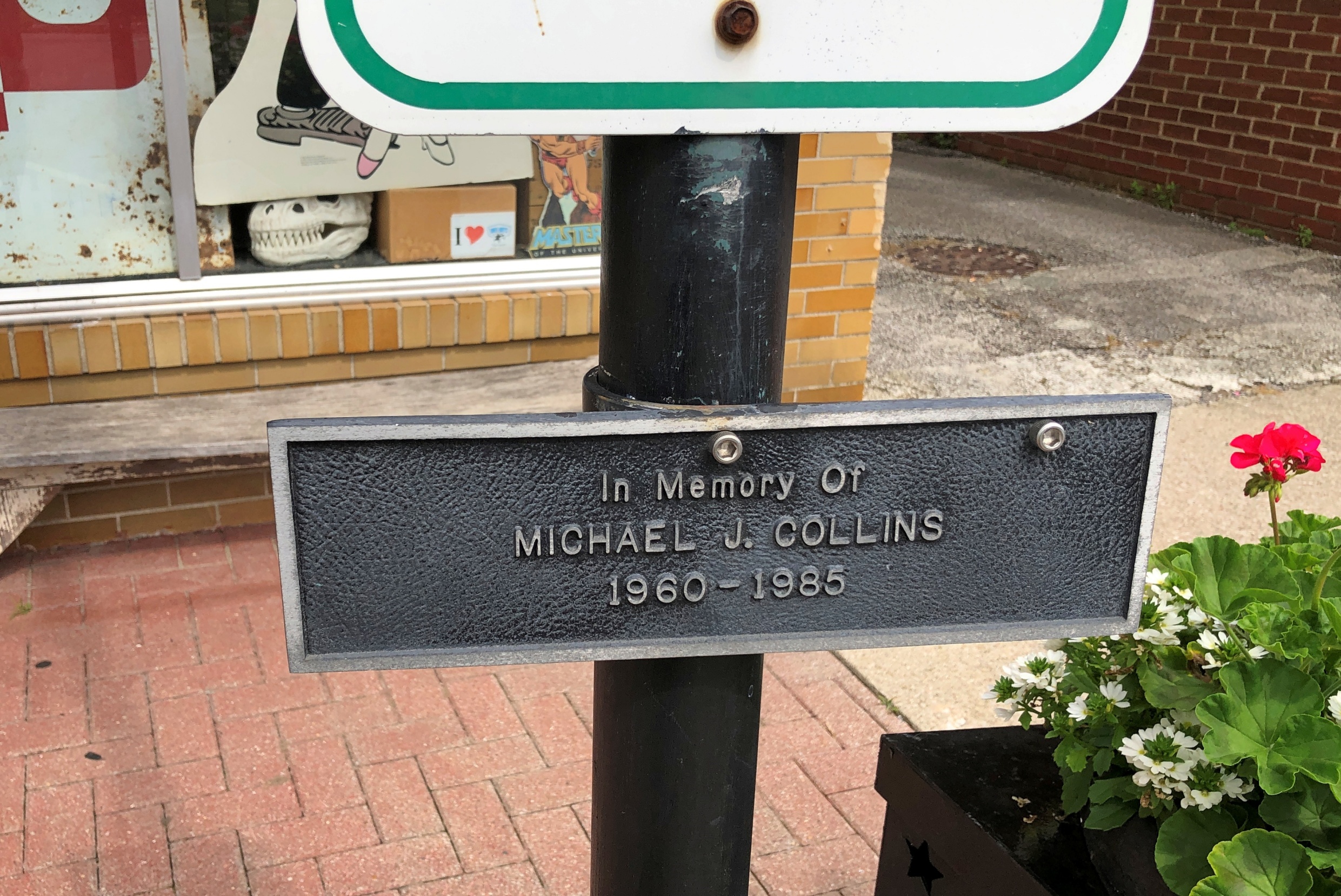
So is a plaque to the memory of one Michael J. Collins (d. 1985).

Scottsburg, Indiana

A contemporary of mine who didn’t make it far out of the gate. RIP, Michael, whoever you were. Are.

GTT ’25

One way to deal with January, the grimmest month here in the frozen North (today’s high, 2° F.): adjust your latitude southward. Not everyone has that option, or really even that many people do. Humans get around, but we aren’t a migratory species. Anyway, I managed to travel recently from around 40° North to around 30° North and stay there for 10 days.

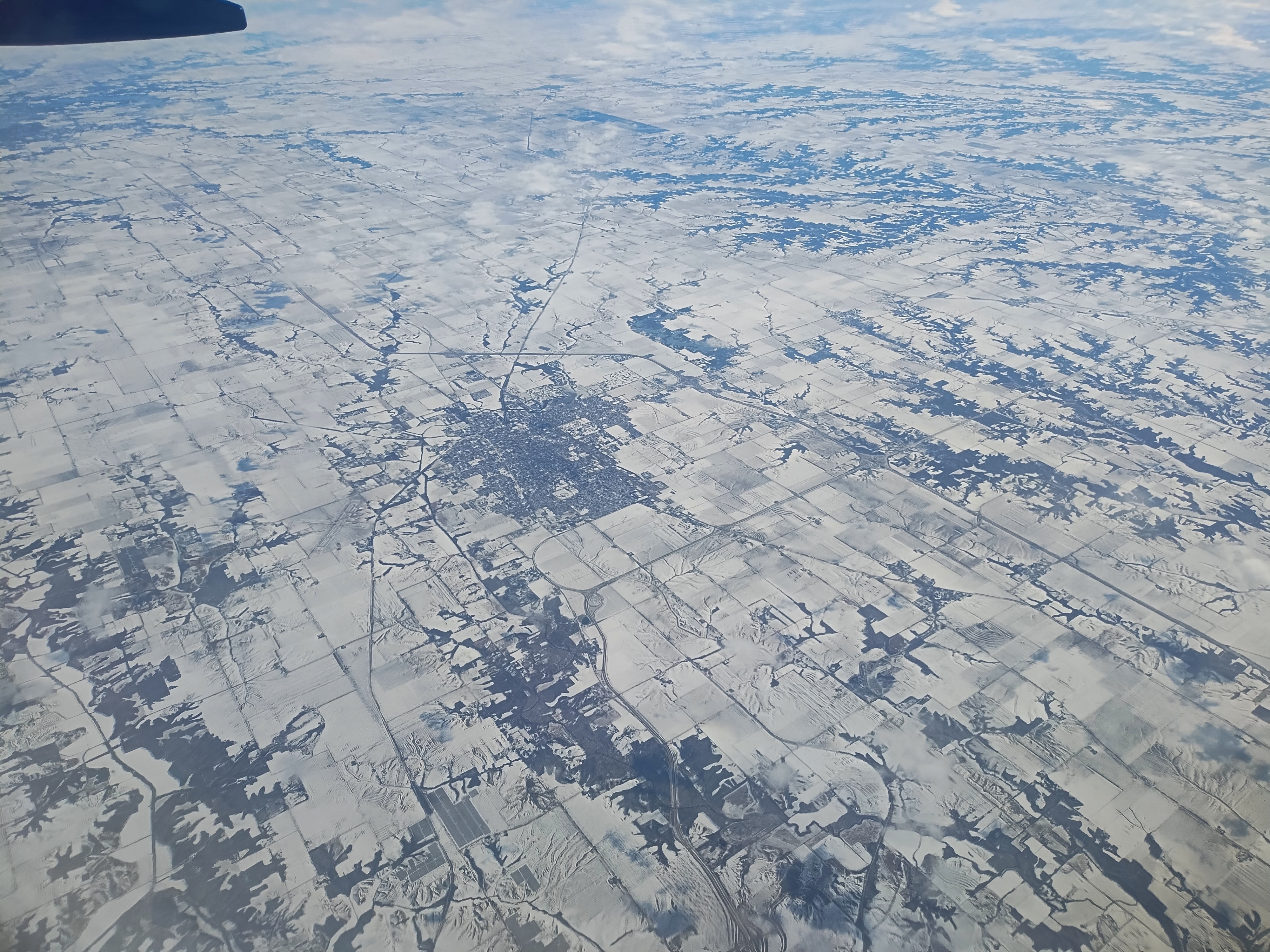
I flew from Chicago to Austin on January 9: from clear and chilly to overcast and not quite chilly enough for any precipitation to freeze. The flight path took us up and over an enormous winter storm passing south of Chicago at that time, whose southern edge expressed itself as cold rain in Austin. The storm made for spots of unnerving turbulence and some flight cancellations that day at places in between, such as Dallas, and a long descent into Austin Bergstrom through a gray soup. Hurray for radar.

On my return flight on January 19 out of Dallas — where I’d driven by then — I saw remnants of the earlier storm on the ground below. Somewhere over Missouri or southern Illinois that day, the ground still appeared white miles below, as far as I could see from my 737-800 perch.Post Snowstorm Midwest Jan 2025

Back in Chicago, there is very little snow on the ground. Dry January, indeed.

This was a family and friends trip, visiting more old friends than expected in Austin and San Antonio, including some I knew well in elementary school, meeting them in person for the first time in 40+ years, though I was on a zoom with one of them a few years ago. I’ve been making an effort to visit old friends for a few years now, because of mortality. Mine and theirs. People get a little weird if you say that part out loud, but I believe everyone feels the quiet ticking of the clock.

Also an Austin-San Antonio-Dallas trip, with a day in Corpus Christi thrown in for fun. Some places are like old friends you haven’t seen in decades, and so it was with Corpus, as Texans often call it. Not exactly a favorite destination from the old days, but I do have memories of high school speech tournaments at CC Ray and CC King (two Corpus high schools) maybe as recently as early 1979. I’m fairly sure Corpus was the first city except for San Antonio that I drove a car in, though that might have been Austin.

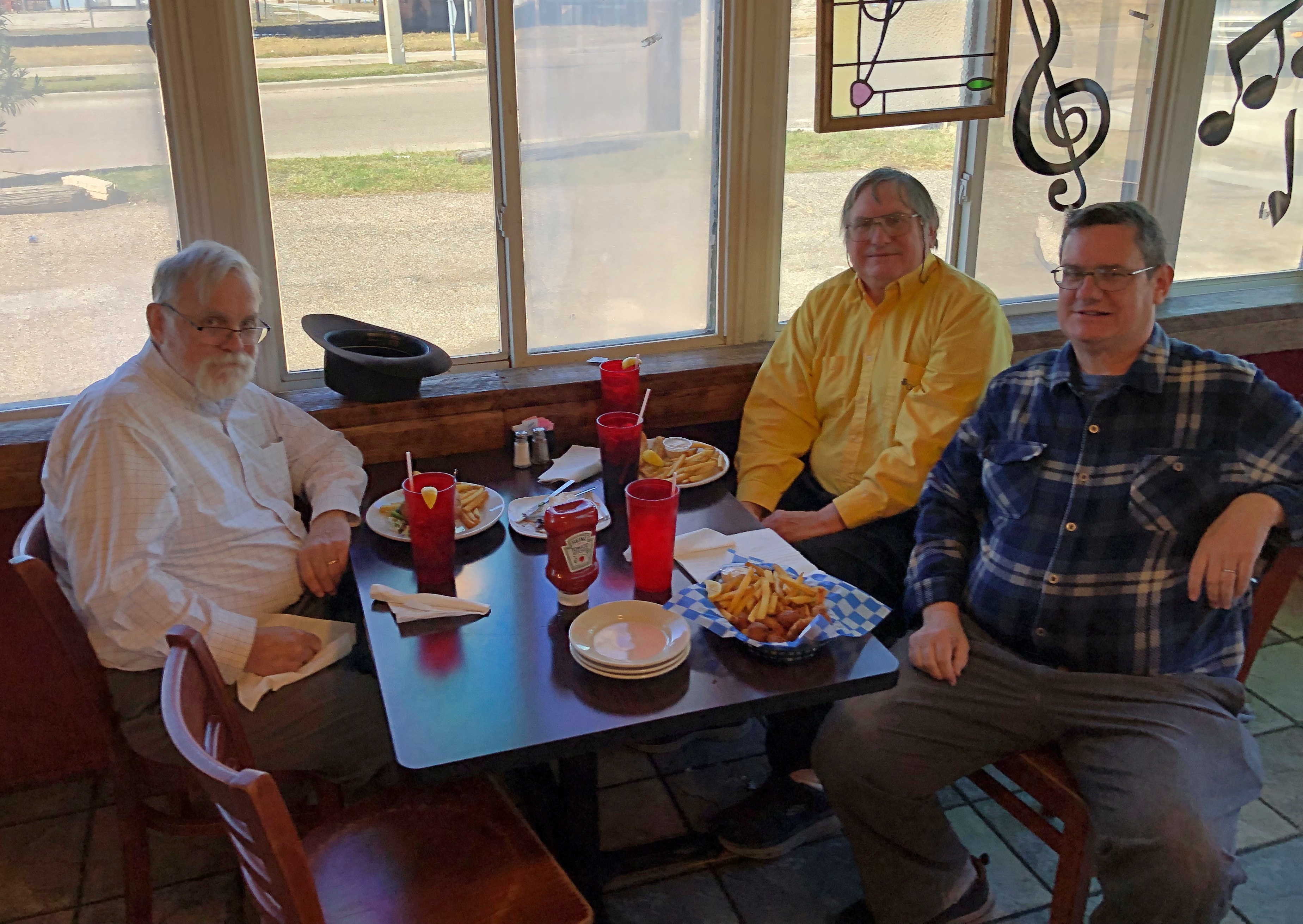
My brothers and I had lunch in the North Beach neighborhood of Corpus.Blackbeard's on the Beach

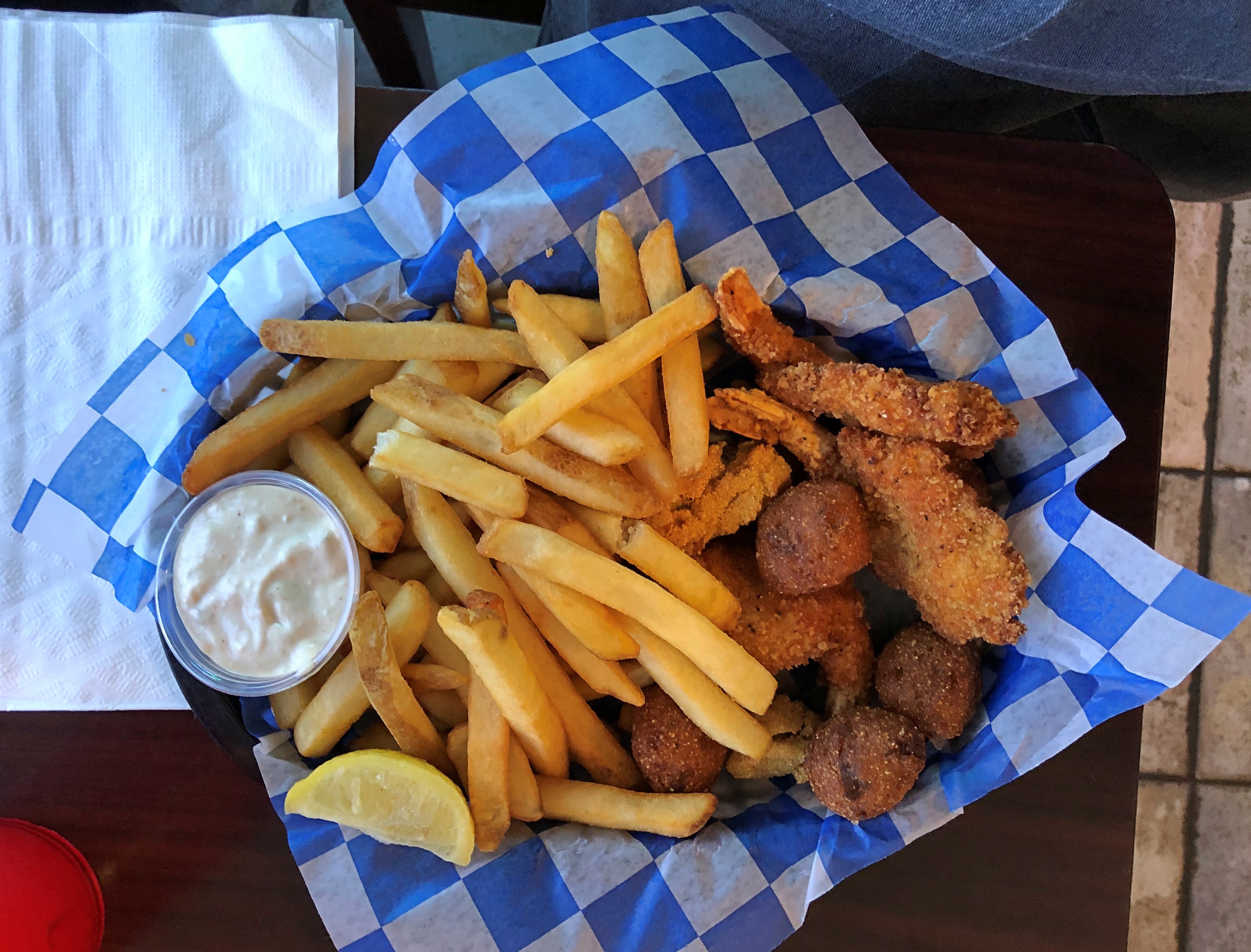
Seafood. The thing to eat on the Coast.Blackbeard's on the Beach

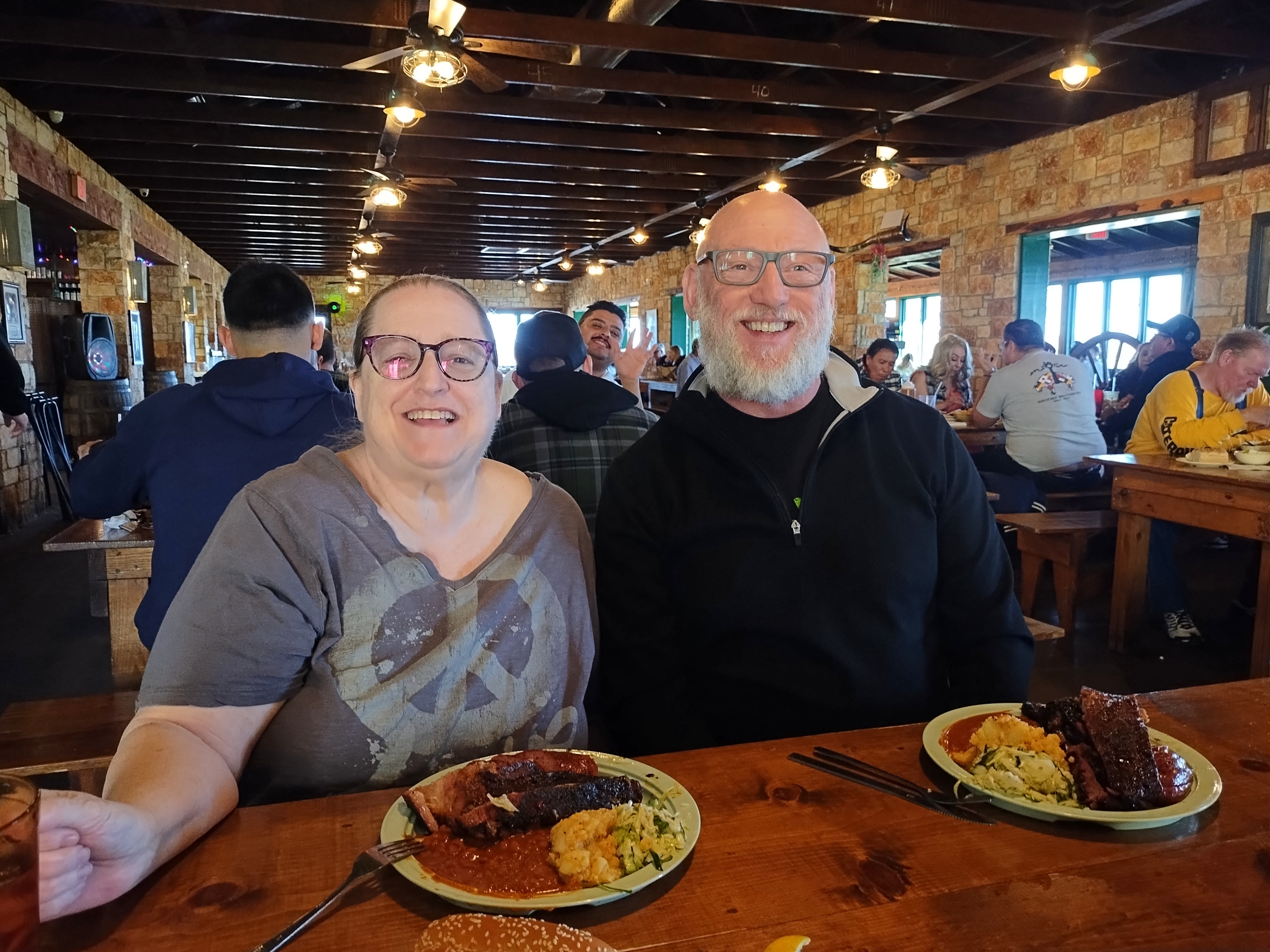
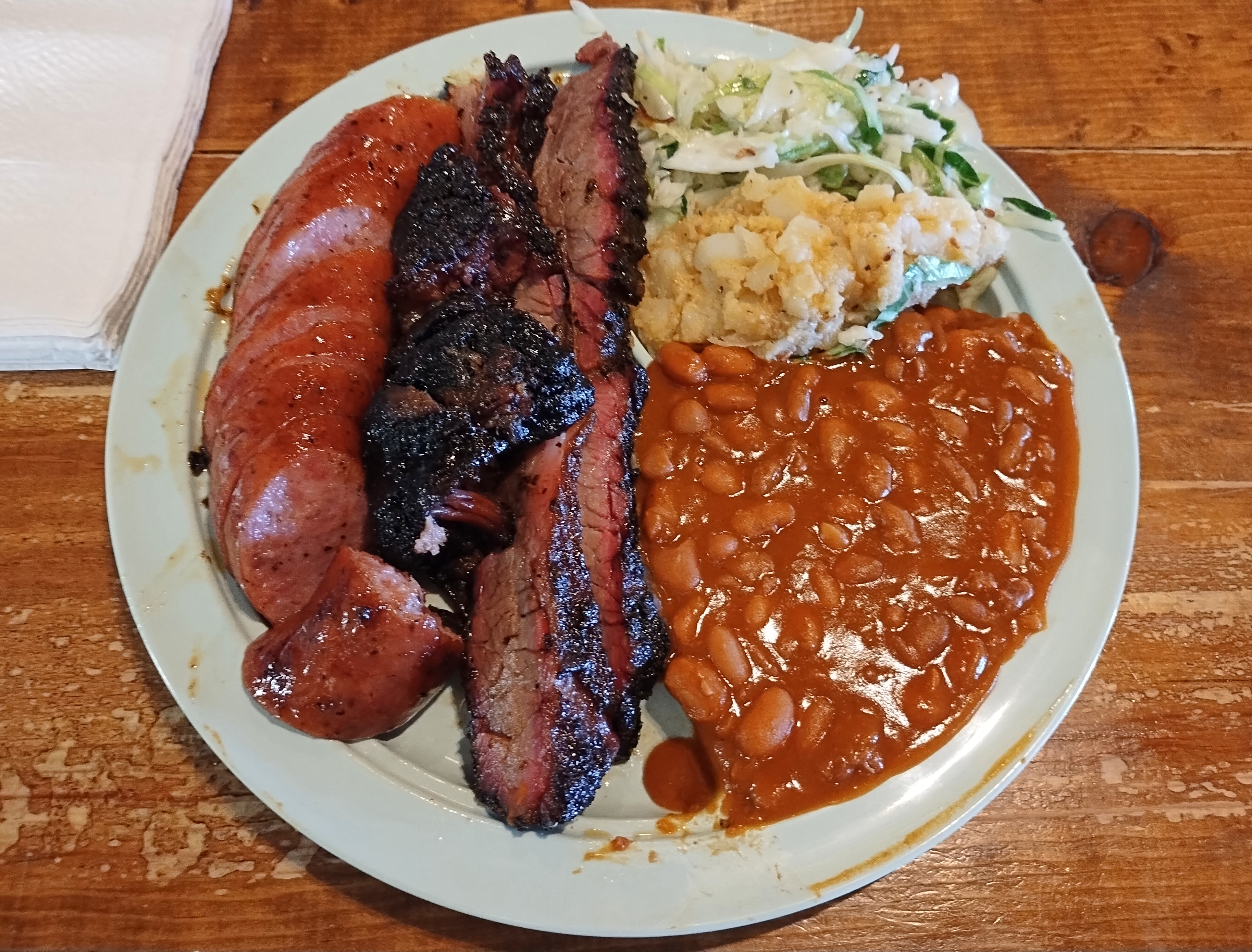
It was mostly an urban trip, but one fine day (nearly 60° F), old friends Tom and Nancy and I went to the suburban outskirts of Austin for lunch at the Round Rock location of the Salt Lick.

That too was visiting an old friend, in a way, though my fond memories are of the original Salt Lick in 1993, further out from metro Austin, in Driftwood, Texas, which is about as Hill Country as you can get. Still, the branch in Round Rock, with its long dining room and long tables and stone construction, seemed true to my memories of the original location. More importantly, the barbecue was just as good.Salt Like BBQ

Afterward, we took a walk in the historic district of Round Rock – our Round Rock Ramble – near the intersection of Main and Mays, among the finely restored late 19th- and early 20th-century stone edifices with names like the Old Broom Factory, the Otto Reinke Building and the J.A. Nelson Co. Building. Businesses of the 21st century seem to be doing well in these old two- and three-story stone commercial buildings, including the likes of Fahrenheit Design, Organica Aesthetics (a plastic surgery spa), Gharma Zone Korean Food and the Brass Tap.

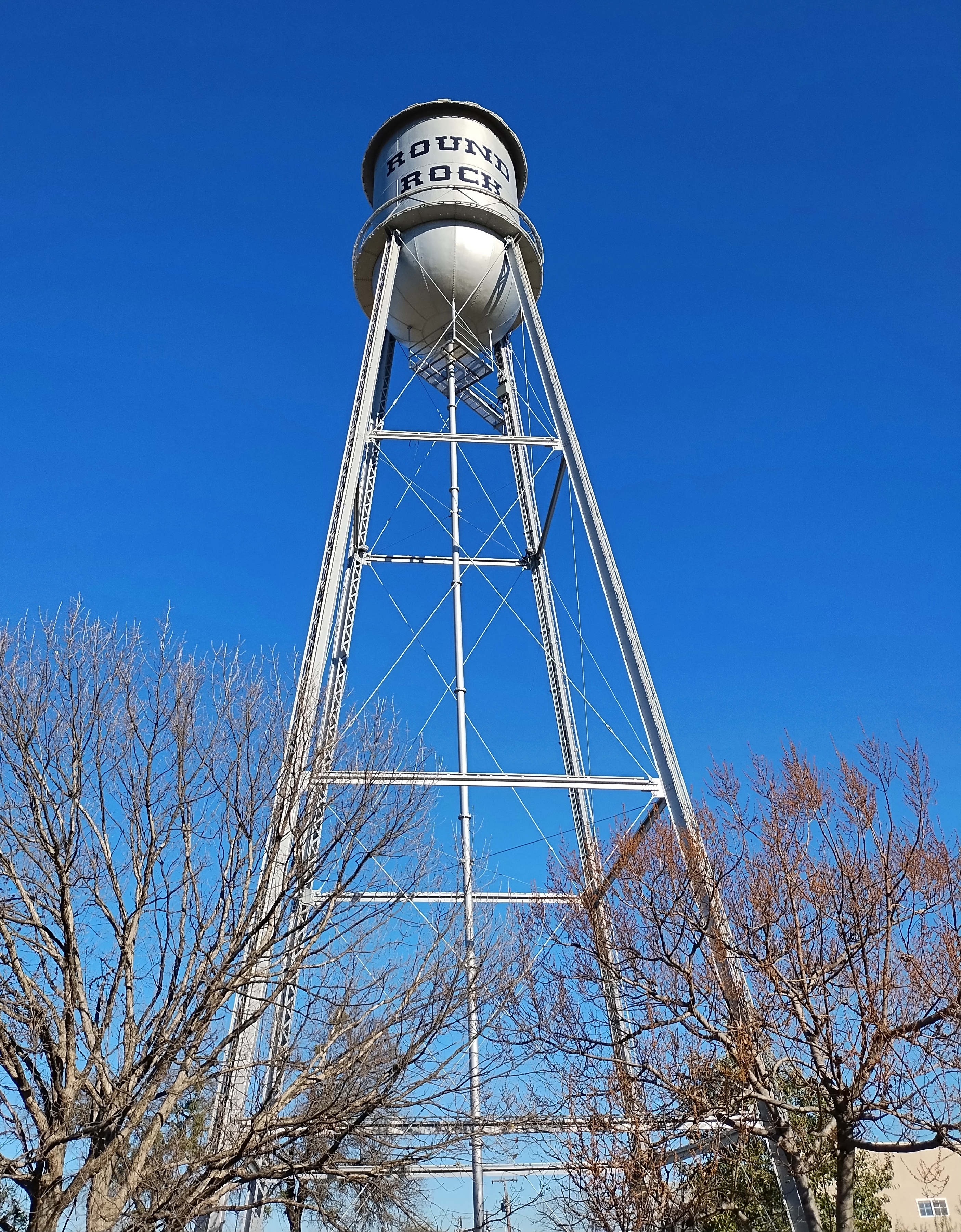
Nearby stands an impressive old water tower in a small park (Koughan Memorial Water Tower Park, according to Google Maps and Wiki).Round Rock, Texas

The tower is yet another legacy of the WPA. Even better –Round Rock, Texas

– you can stand right under it, something that isn’t always possible when it comes to public water infrastructure.