For good reasons. I was only 13 when the movie came out, with no memory of the original reference, and you couldn’t just dial up any old song on your machine in those days. Still, I’m happy to say I saw Young Frankenstein in the theater, as I did Blazing Saddles that same year, which also included some references I didn’t understand until later, notably the names of Lili Von Shtupp and Gov. Le Petomane.
On the road home from Florida, we passed through Chattanooga, a city I hadn’t visited since sometime in the 1980s. I also have handful of memories of Chattanooga during our family road trip around the South in 1969, especially the hotel.
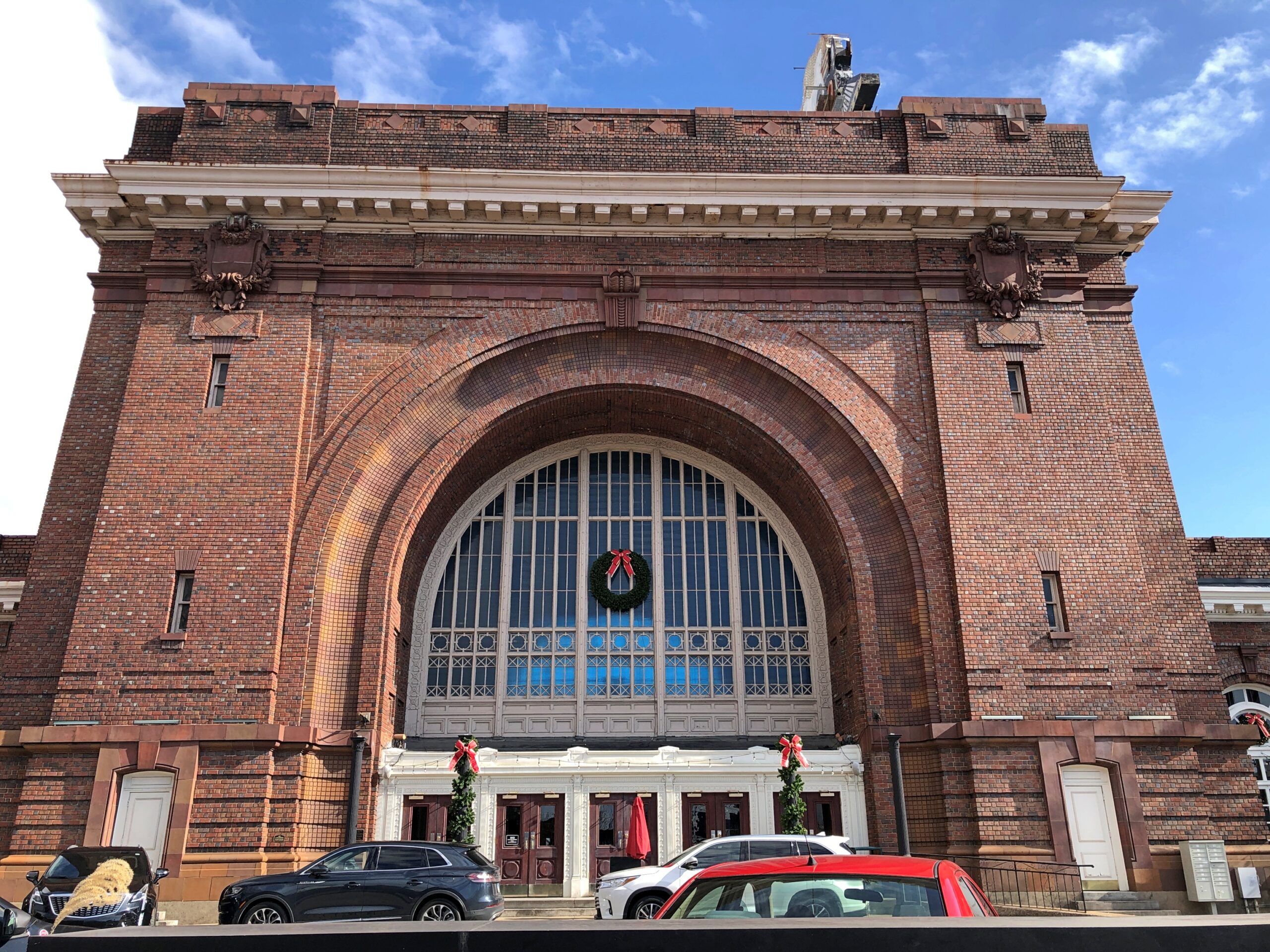
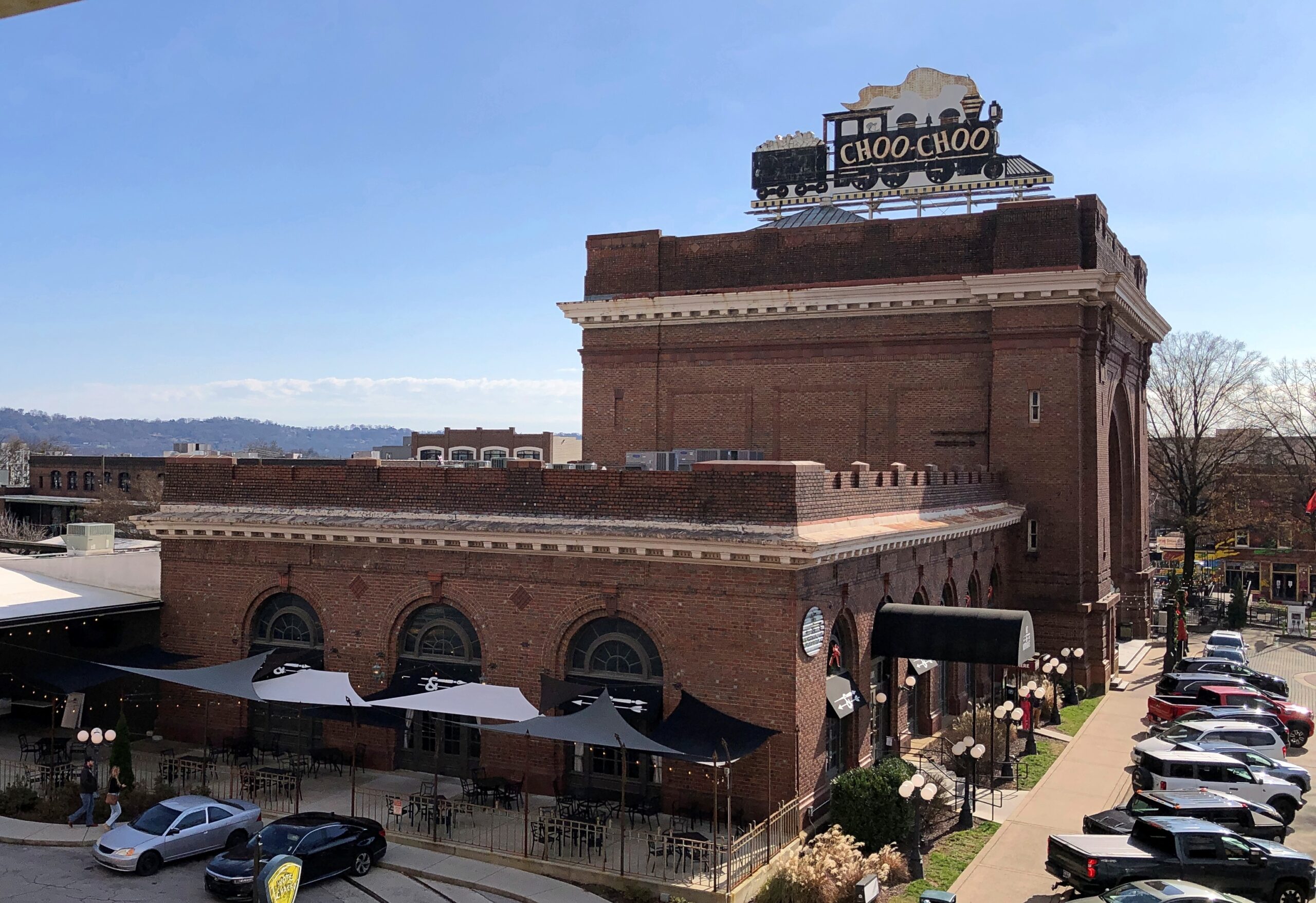
This time I noticed that the Chattanooga Choo-Choo was only a few blocks from the Interstate. So we paused our drive for a short visit.
“This landmark Chattanooga hotel located on Market Street in downtown Chattanooga initially served as the Southern Railway Terminal,” the Tennessee Encyclopedia says. “Designed by Beaux-Arts-trained architect Donn Barber of New York City, this magnificent architectural gateway to the Deep South opened during the Christmas season of 1909.”
With the mid-century decline of passenger rail in the U.S. came the near-demolition of the terminal, but the lesson of Penn Station and the era’s other thoughtless architectural destruction was apparently enough to fuel the Southern Railway Terminal’s preservation. With its redevelopment into a hotel-retail-entertainment complex came a new, instantly recognizable name: the Chattanooga Choo-Choo.
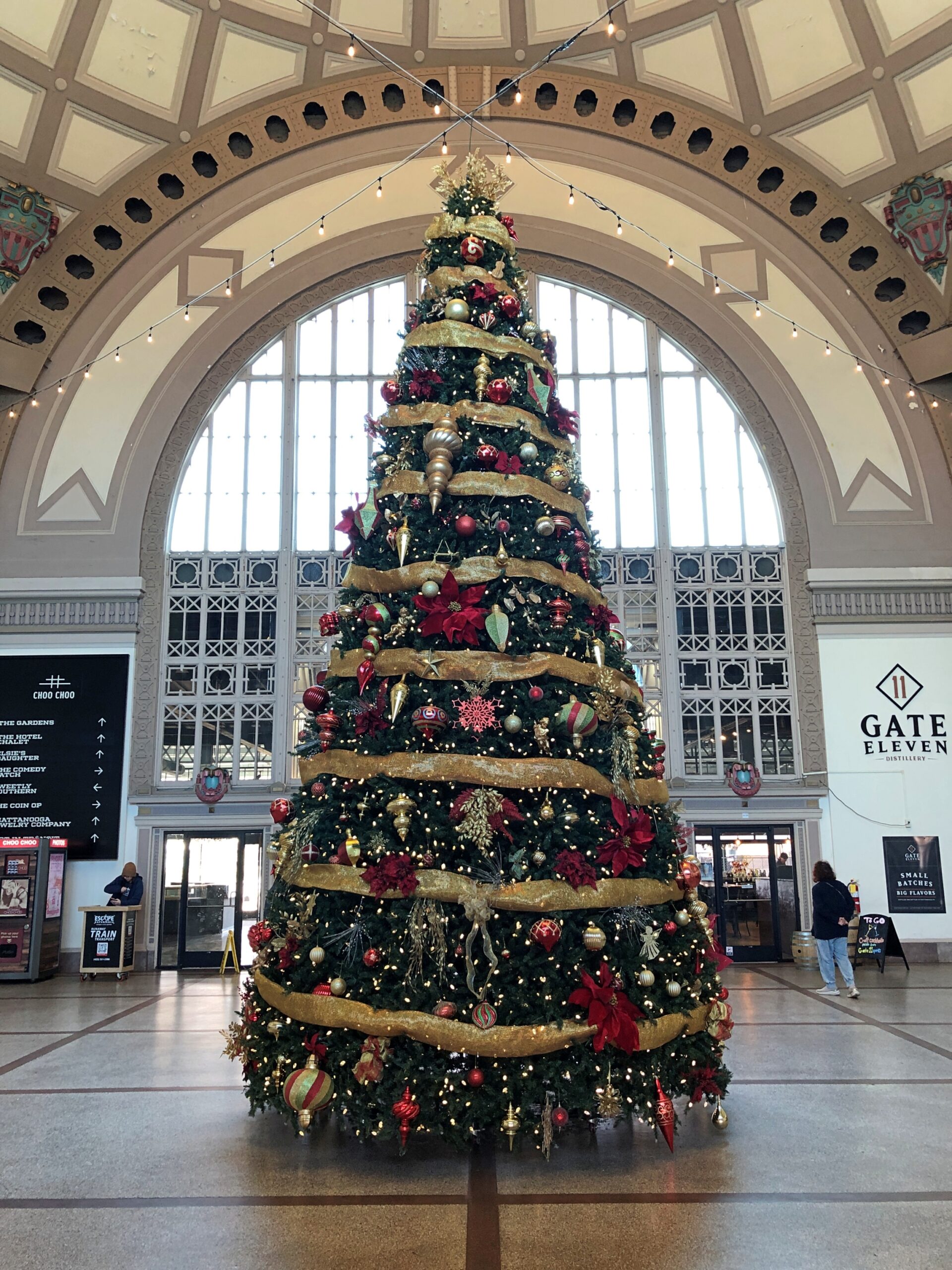
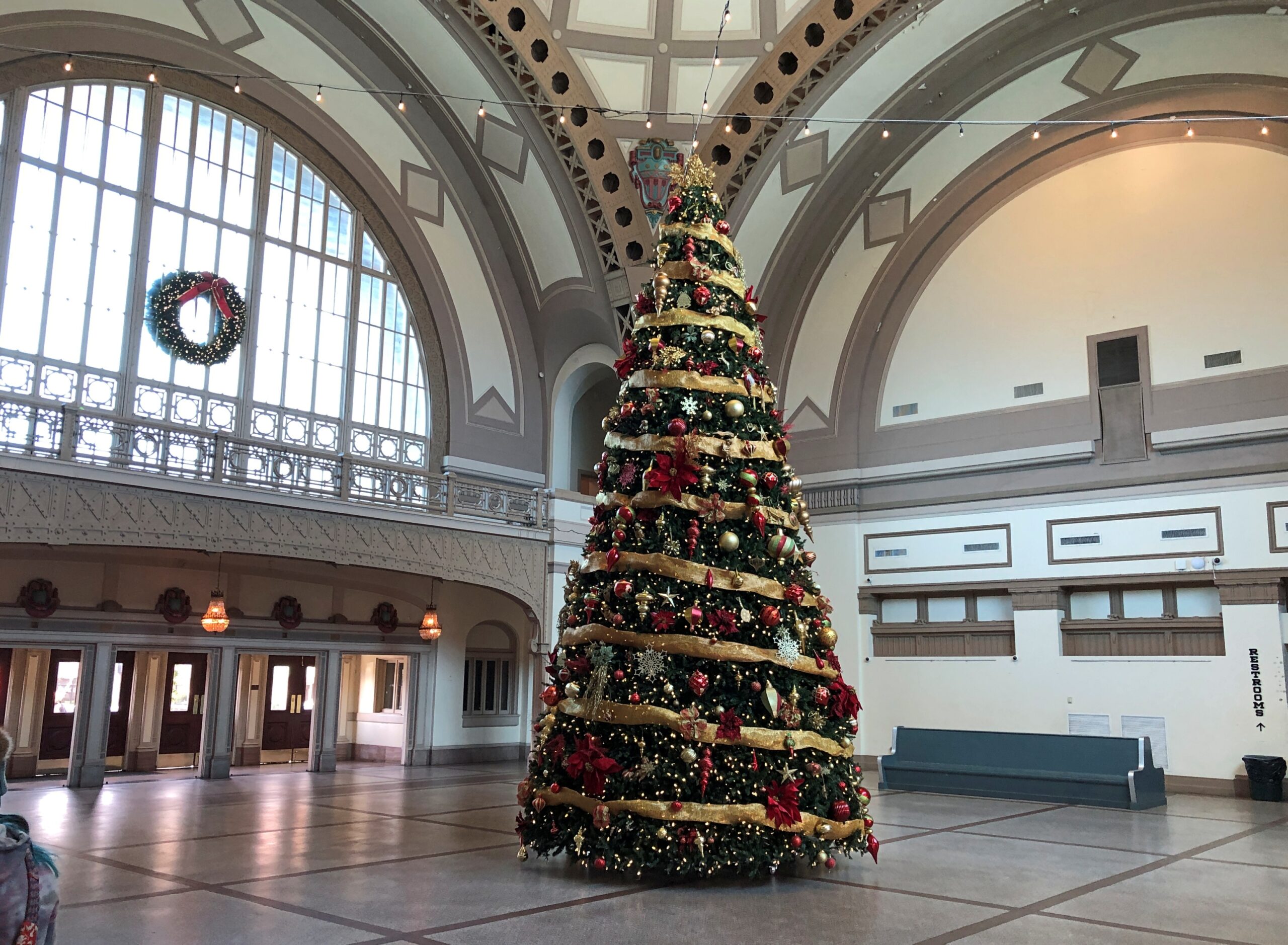
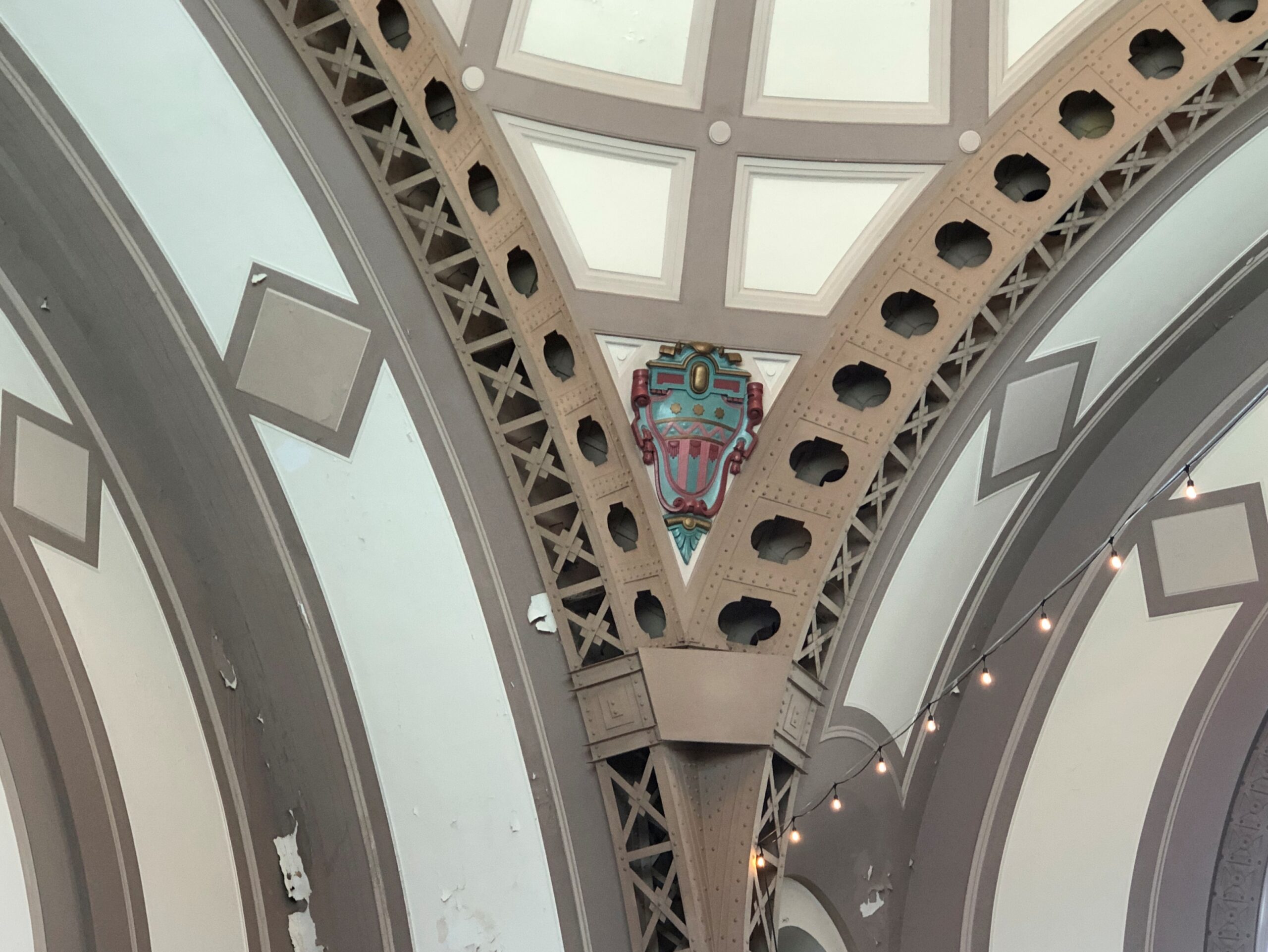
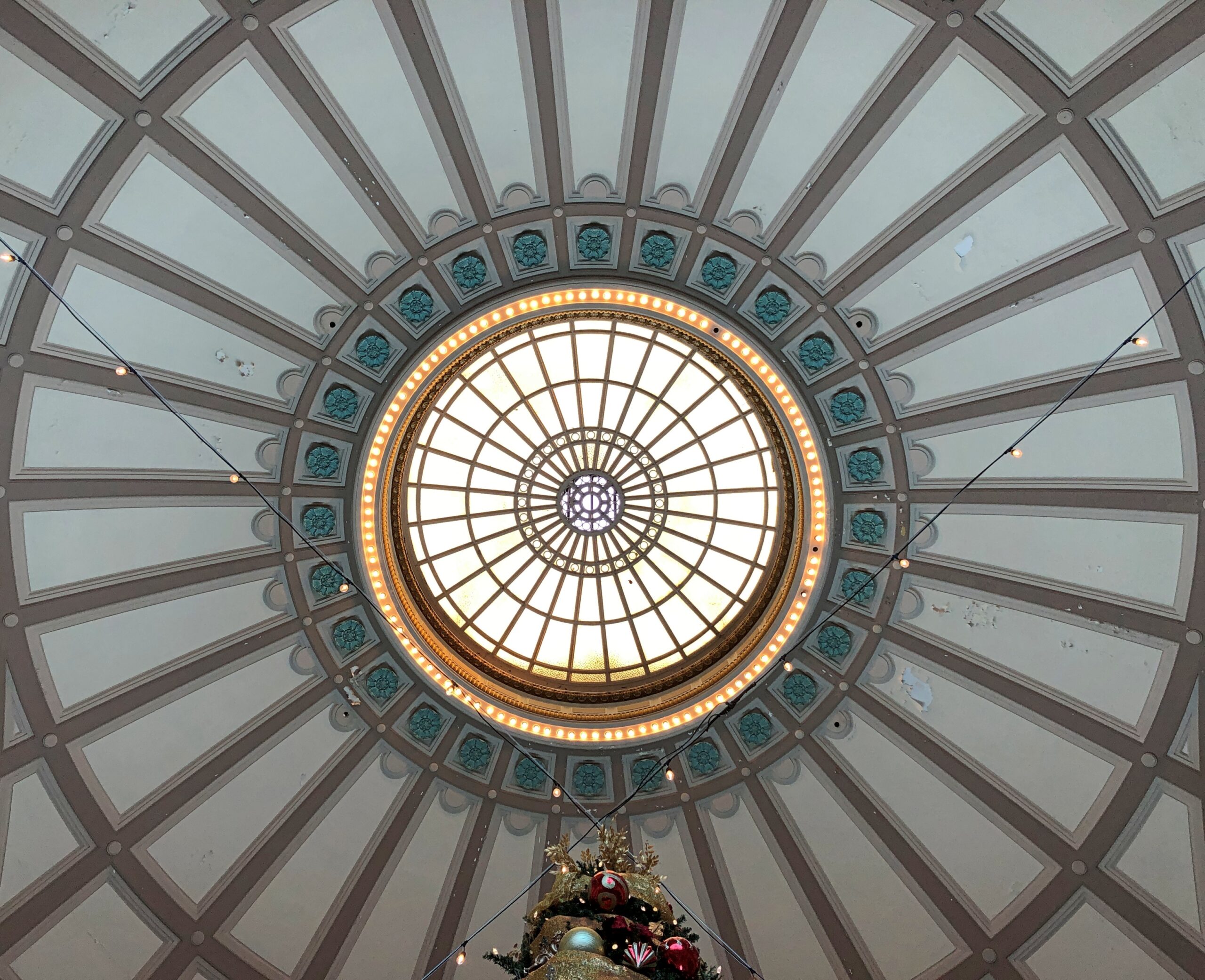
Inside, the sort of grand hall that marks grand old train terminals.
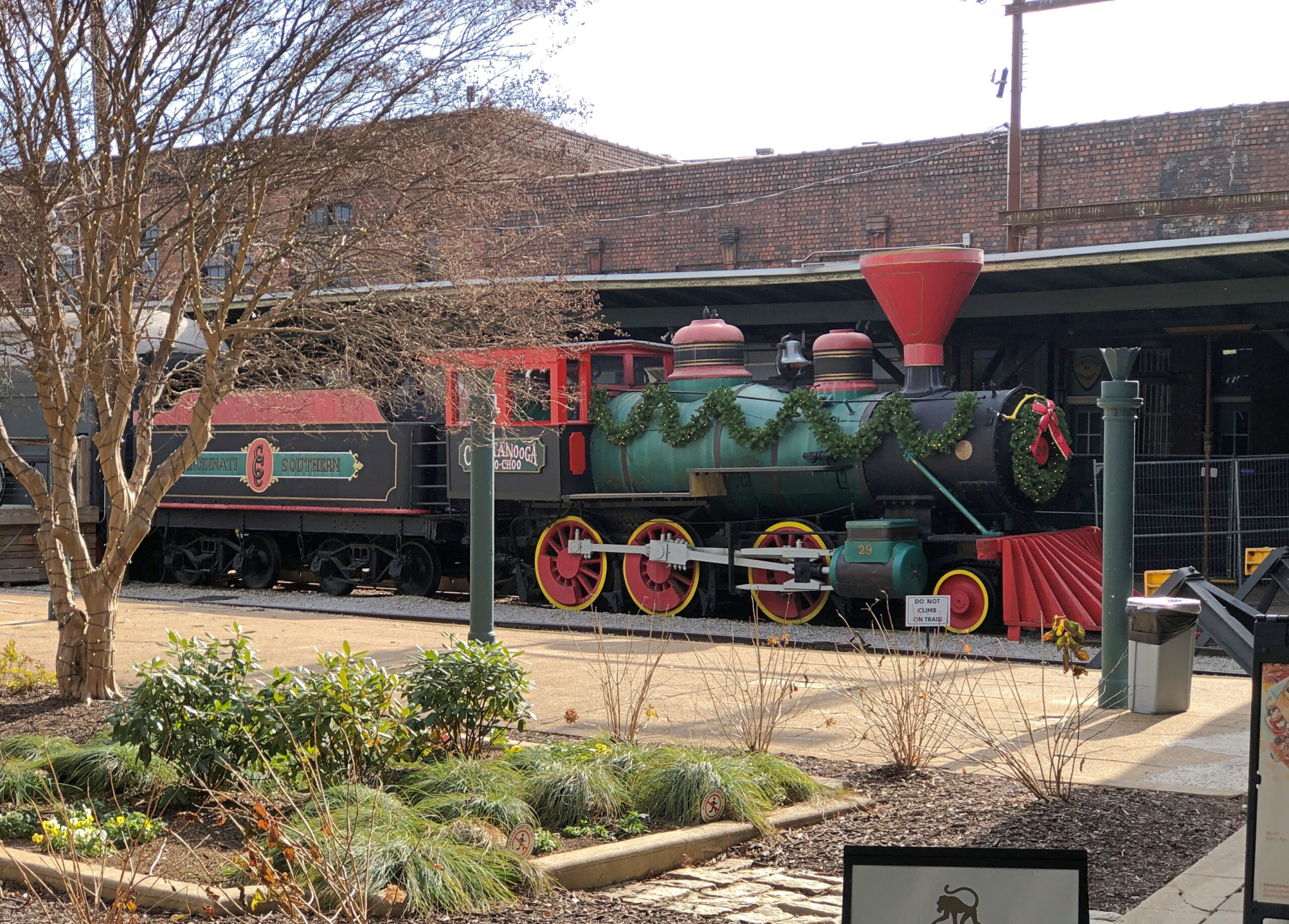
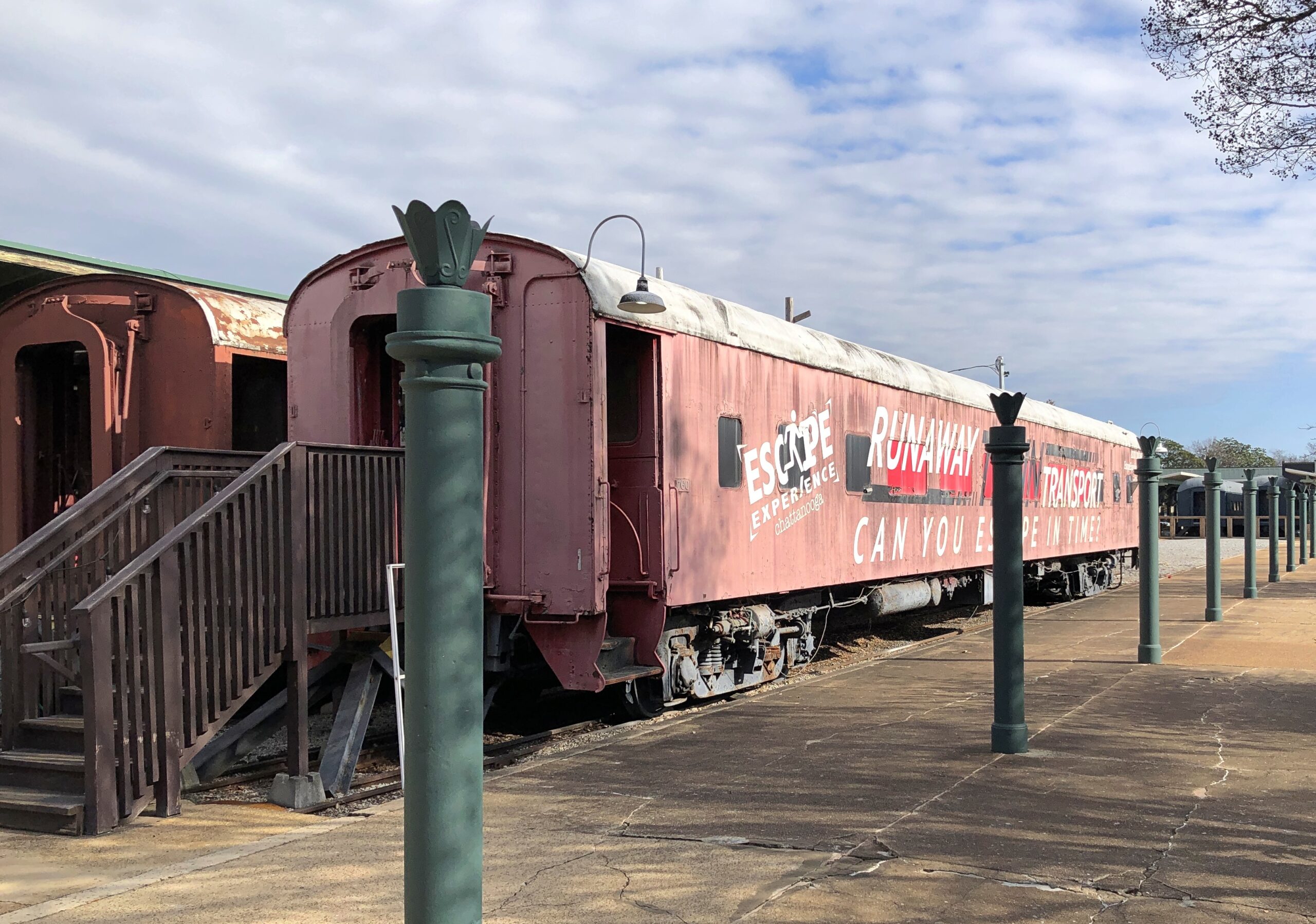
Behind the main building, relics of past choo-choos.
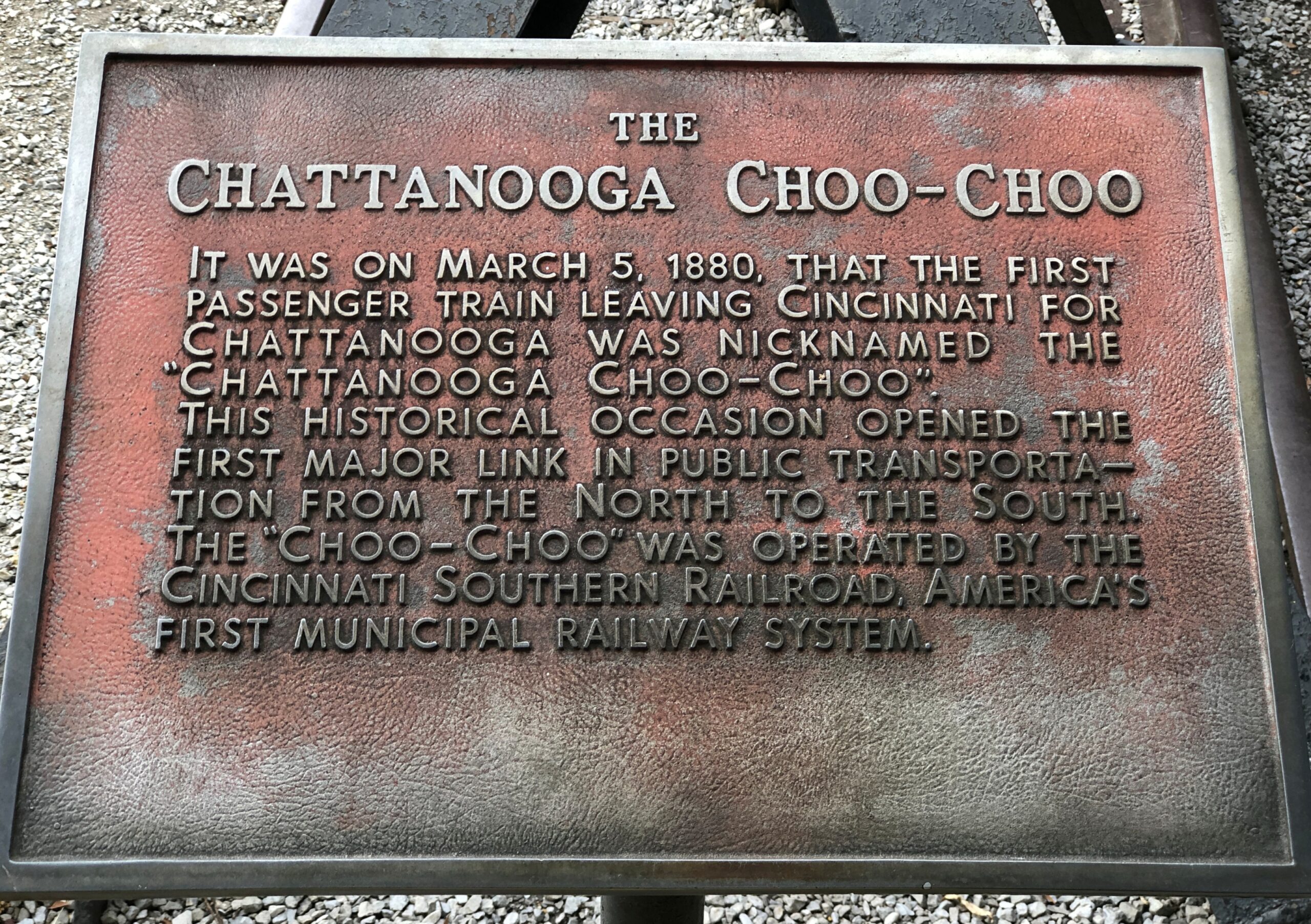
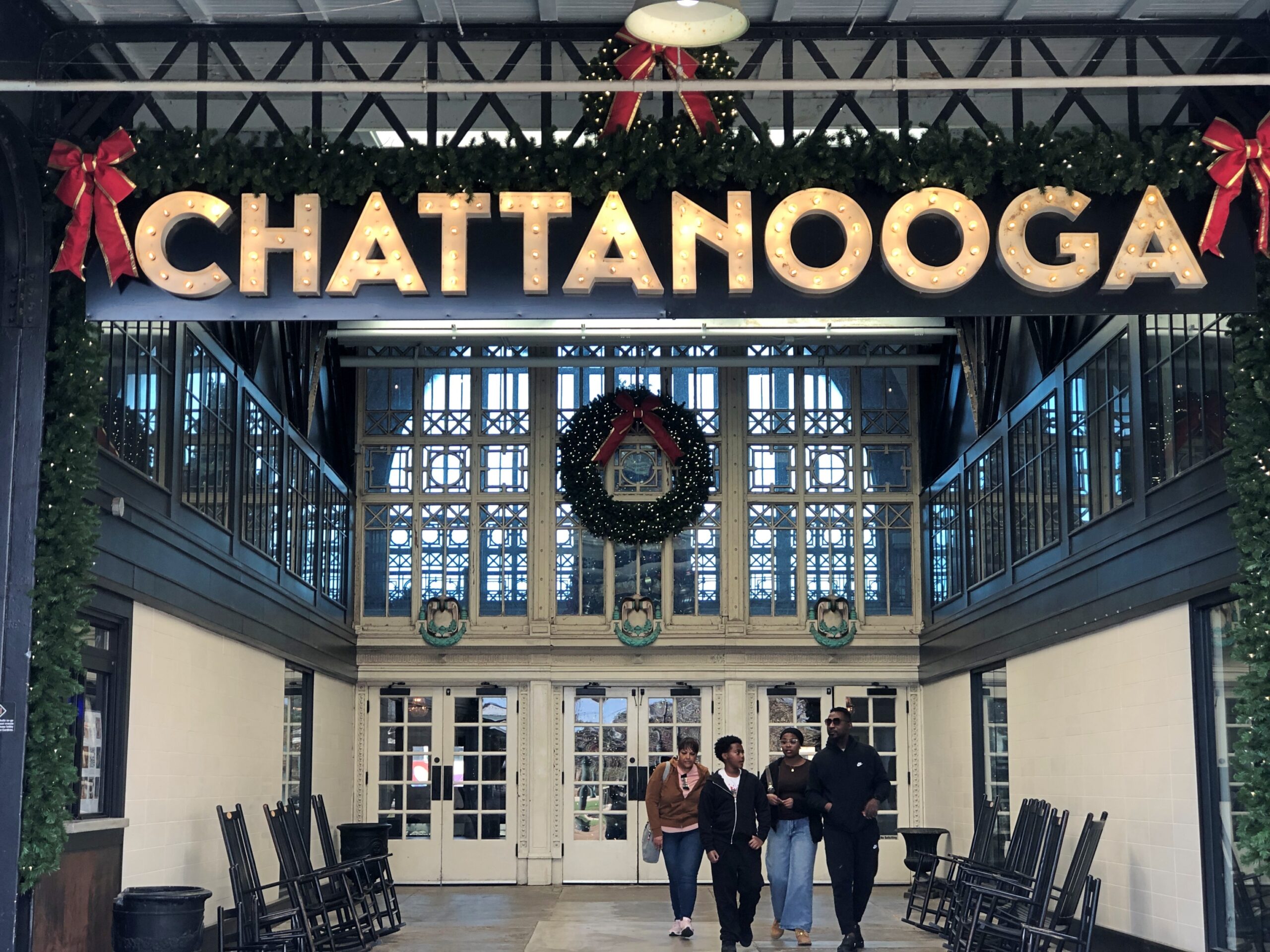
In case you’ve forgotten where you are.
Shovel all the coal in, gotta keep it rollin’ Woo, woo, Chattanooga, there you are
I have to admit it, we bought gas at Buc-ee’s more than once on our trip to Florida. Turns out that the chain’s gas prices are comparable with Costco. That is, 20 to 30 cents cheaper per gallon than most standard gas stations. Costco tends to be on main thoroughfares in densely populated places, which is sometimes convenient, sometimes not. Buc-ee’s is the flip of that, tending to be on major highways at some distance from densely populated places. Sometimes convenient, sometimes not.
We gassed up at the Smiths Grove, Kentucky Buc-ee’s just off I-65 on December 5, early in our trip. We had to make a decision on how to proceed from there. One choice: continue on I-65 to Nashville, take I-40 east from there roughly to Cookeville, Tennessee, and take smaller roads into Jackson County, to reach our friends’ home in the holler. Or: take smaller roads across southern Kentucky and into Tennessee, bypassing metro Nashville and going through towns and hamlets and farmland and woods we’d never seen before, ultimately connecting to the appropriate small roads in Jackson County. It isn’t too hard to guess what we did.
Kentucky 101
It so happened that exiting from Buc-ee’s in Smiths Grove takes you to Kentucky 101, a two-lane highway that can either take you back to I-65 or south through Warren and Allen counties. Coming from the crowds of Buc-ee’s, people and cars, the contrast of heading south on Kentucky 101 is clear.
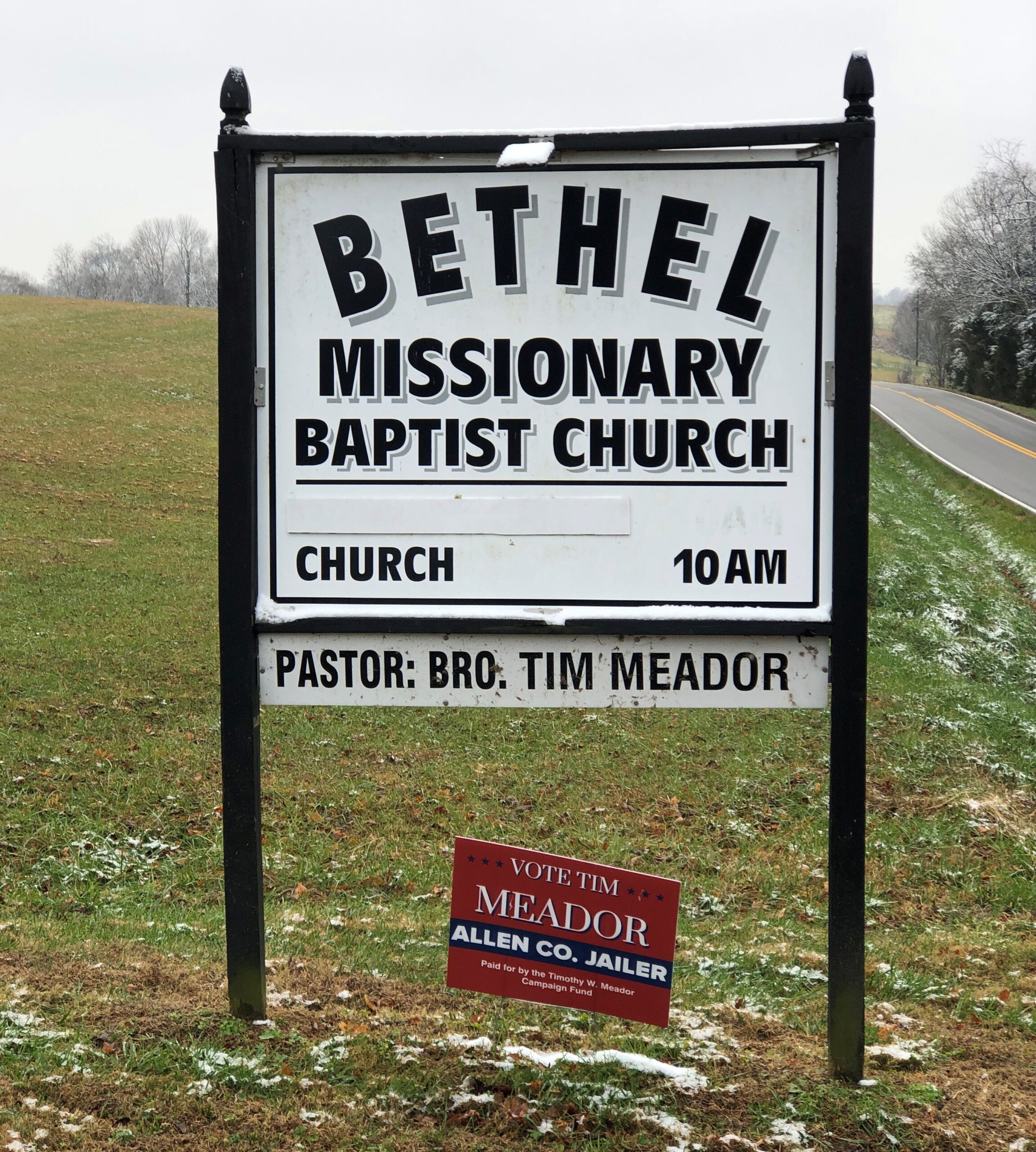
As of now, at least, Bro. Tim Meador is the Allen County Jailer, so I assume he won the most recent election.
I know that’s a county job that probably involves a fair amount of paperwork. Still, I picture the Jailer as an official who, like in a movie, puts offenders in the jug himself, turning a skeleton key (one of a few jangling on a big ring) to lock the cell.
Scottsville, Kentucky
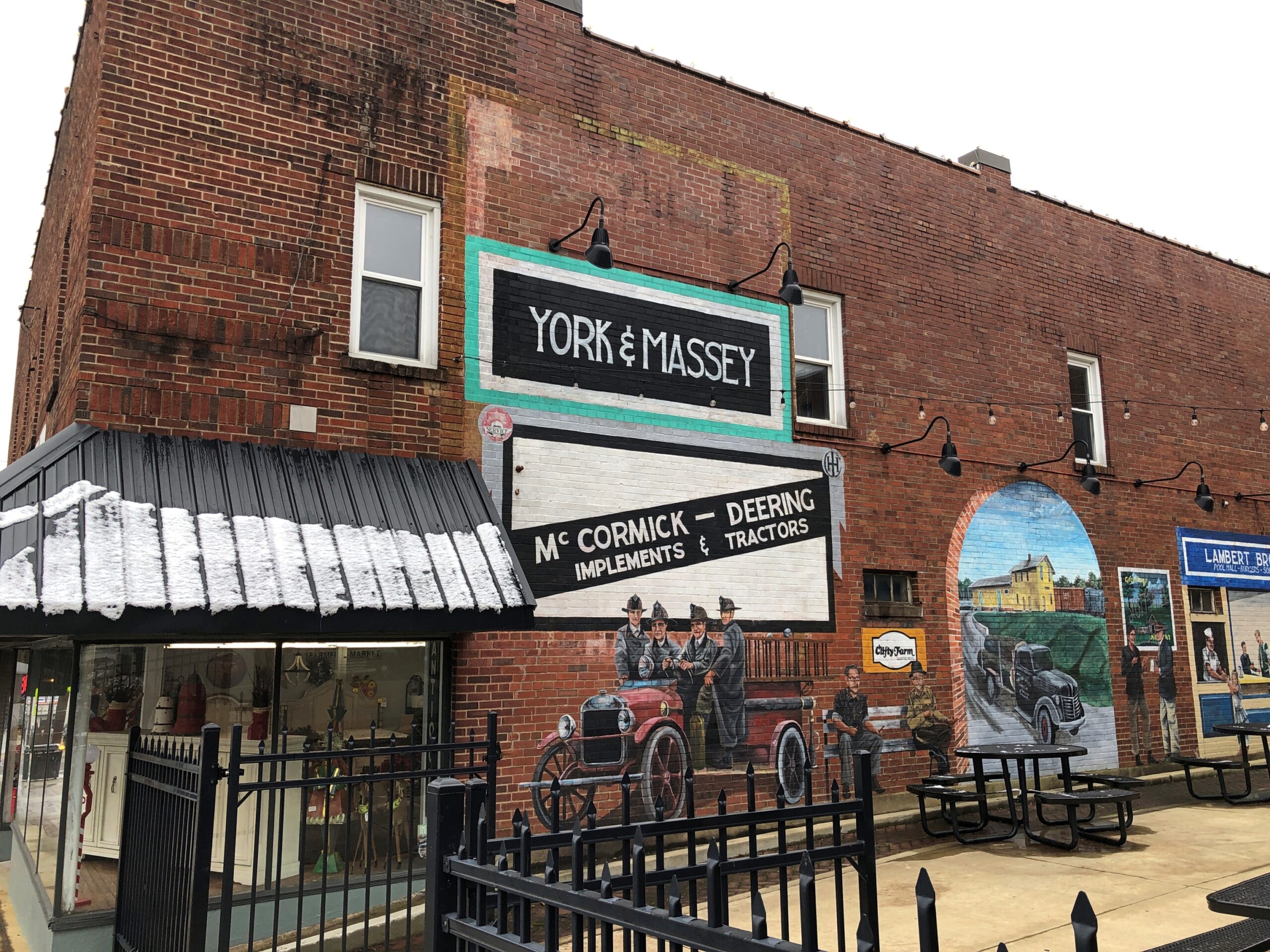
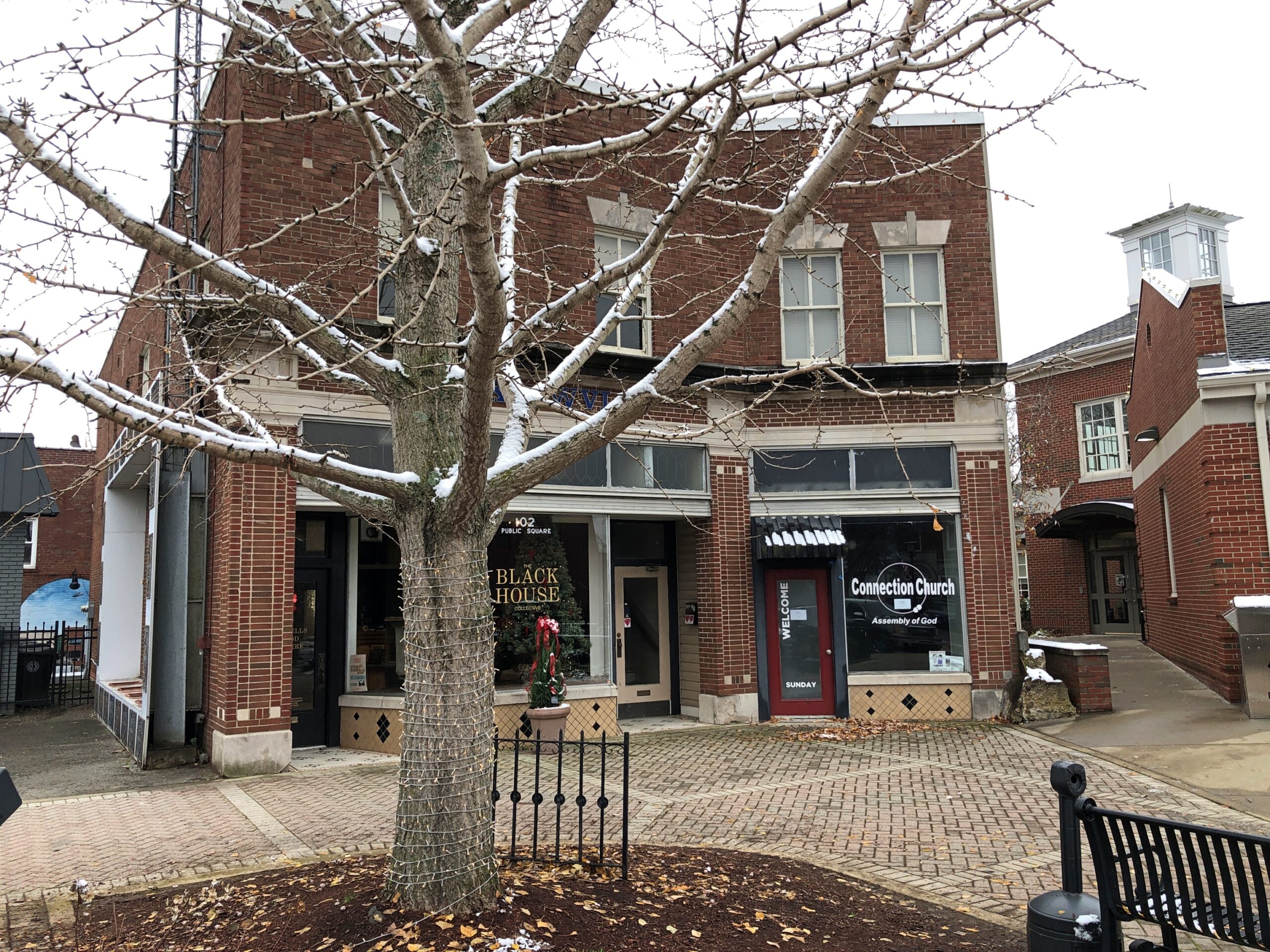
The main traffic hub of Scottsville (pop. 4,300), the seat of Allen County, is the junction of Kentucky 101 and 98, known as Main and Court streets locally. Instead of a county courthouse, the hub is in the form of a square with businesses around it and a lot of traffic passing through. More than I would have guessed.
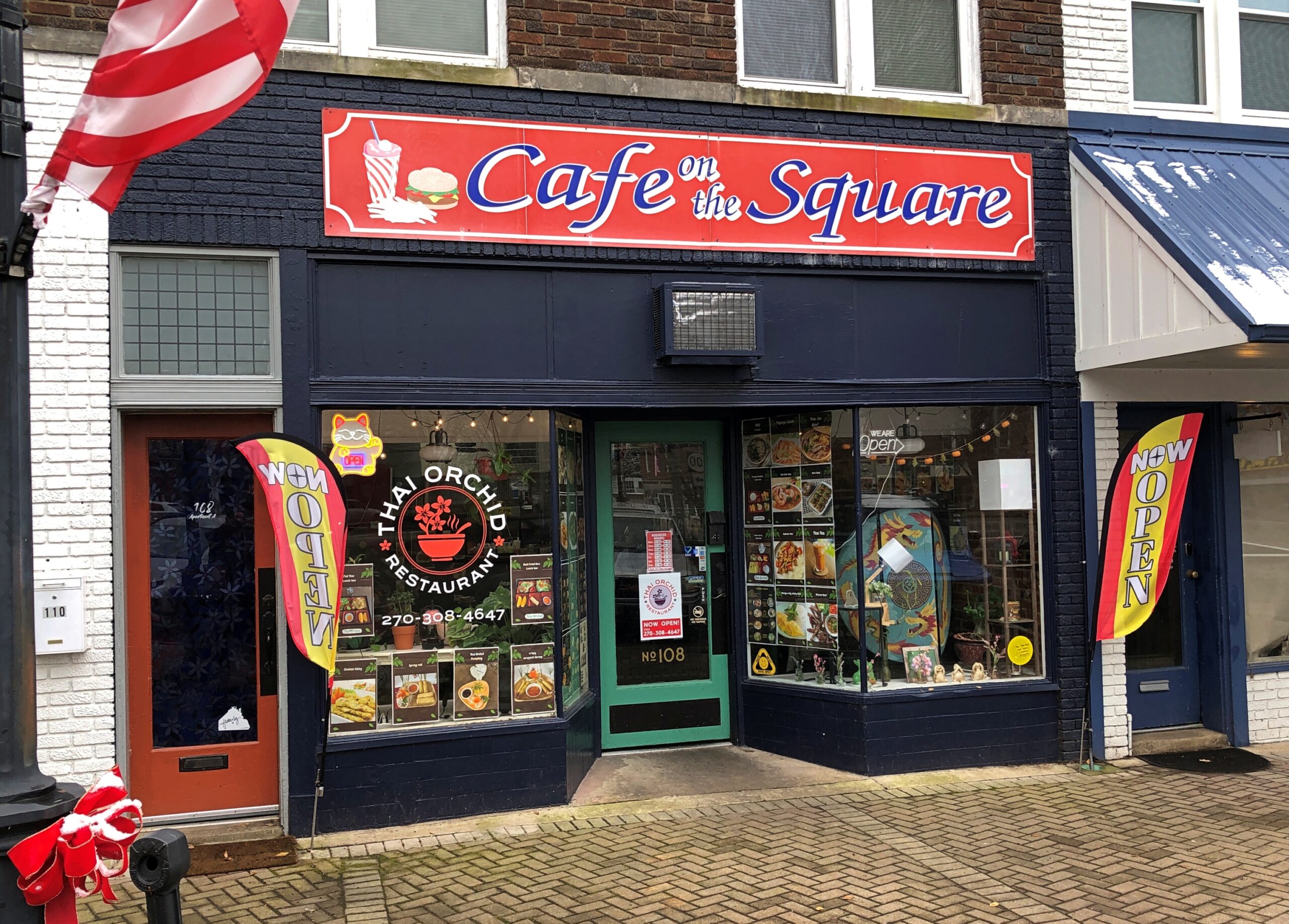
It was lunchtime. I can report that Thai Orchid is as good as you might find in a larger town. In our time, Thai has pretty much joined the tapestry of American cuisine as thoroughly as Chinese or Mexican food did in previous generations.
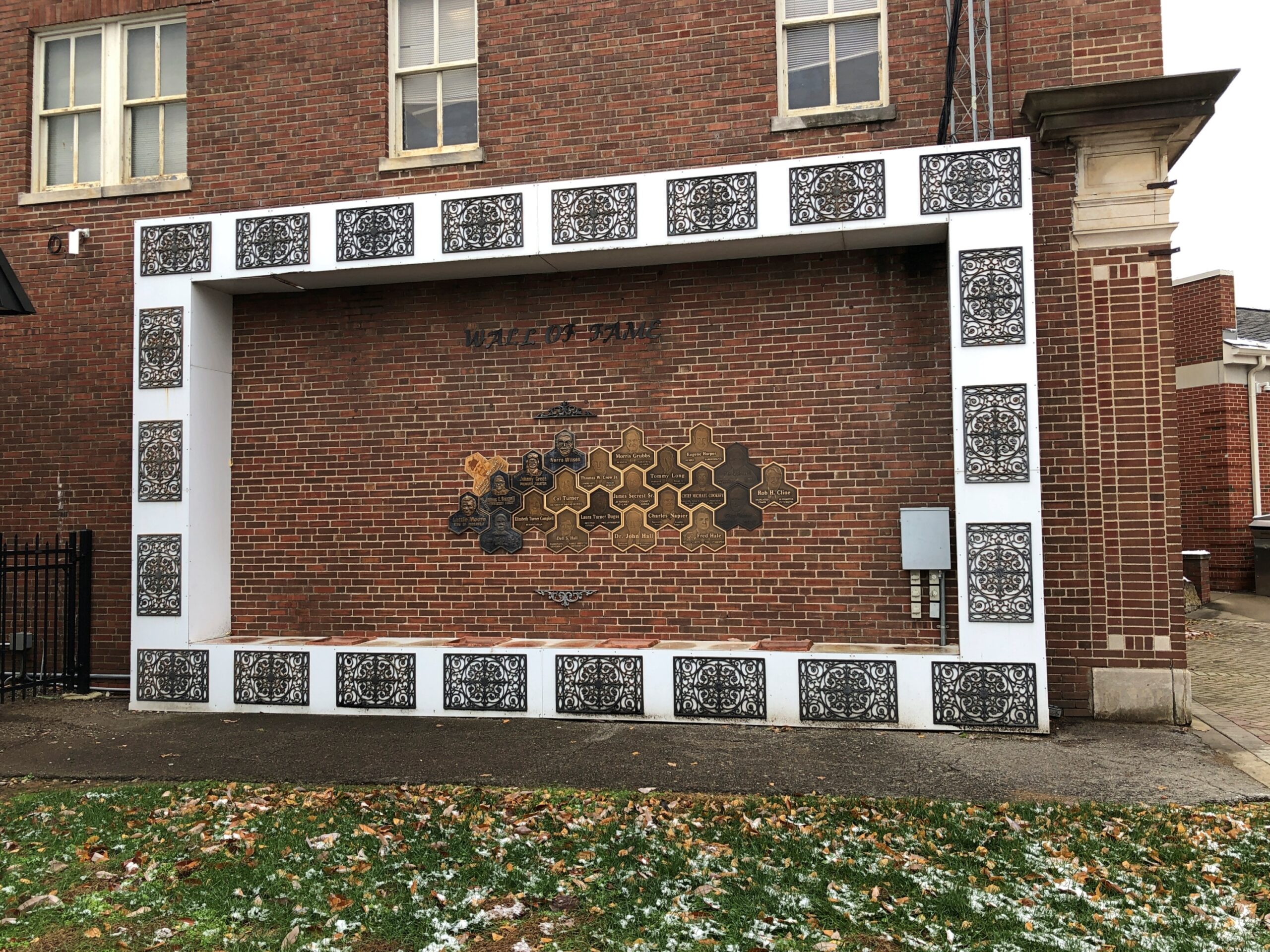
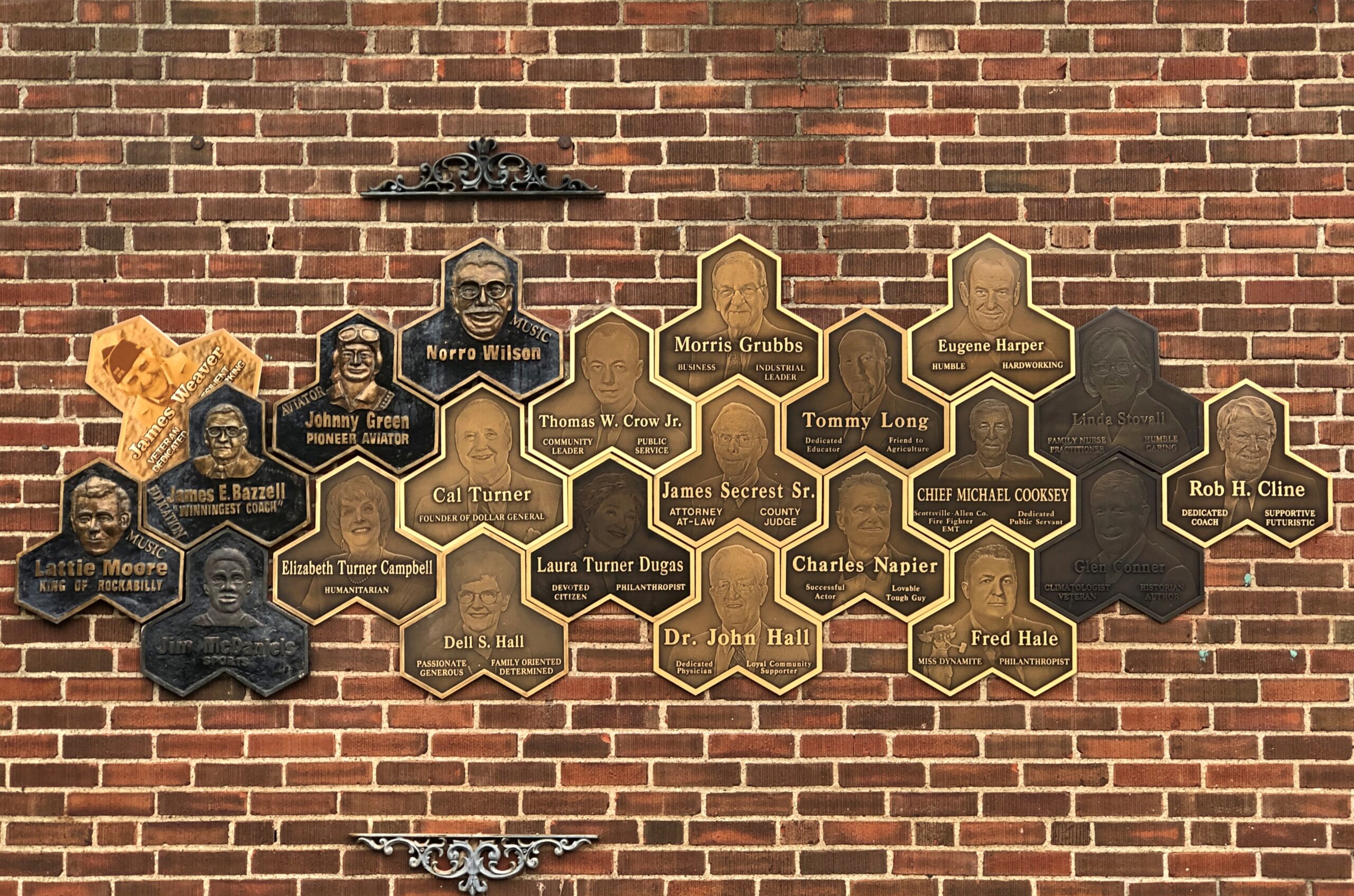
The main public library is near the square, sporting a local Wall of Fame.
The names include Lattie Moore, who sang, “I’m Not Broke but I’m Badly Bent,” a song with pretty much the same theme as Al Dexter’s “Wine, Women and Song.”
I won’t look all the names up, but the Scottsville Wall of Fame also includes Johnny Green, pioneer aviator, who did the first commercial flights between Florida and Cuba, apparently.
Red Boiling Springs, Tennessee
We drove on Kentucky 98 east to the near-border town of Gamaliel, pop. 391, still on the Kentucky side of the line. A lesser-known Biblical name, but I also can’t help thinking of the G. in Warren G. Harding.
South from there, Kentucky 63 turns into Tennessee 56 after a few miles. There’s no sign marking the border, just one announcing the Tennessee highway number. Pretty casual for a line that might have been an international border, had the secessionists had their way (unless, of course, Kentucky left the old US).
Besides a cool name, Red Boiling Springs (pop. 1,205), Tennessee, has a history. As the name suggests, people took the waters there.
“As recently as 1920, Red Boiling Springs had about a dozen places in which visitors could stay,” The Tennessee Magazinereported a few years ago. “The largest was the Palace Hotel, which had 180 rooms. Over the next several generations, business declined… and… a 1969 flood destroyed large parts of the town. However, three of the Red Boiling Springs resort hotels are still open. They were in (nearly) continuous operation throughout the 20th century and still reflect more of the lifestyle of the late 19th century than they do the 21st.”
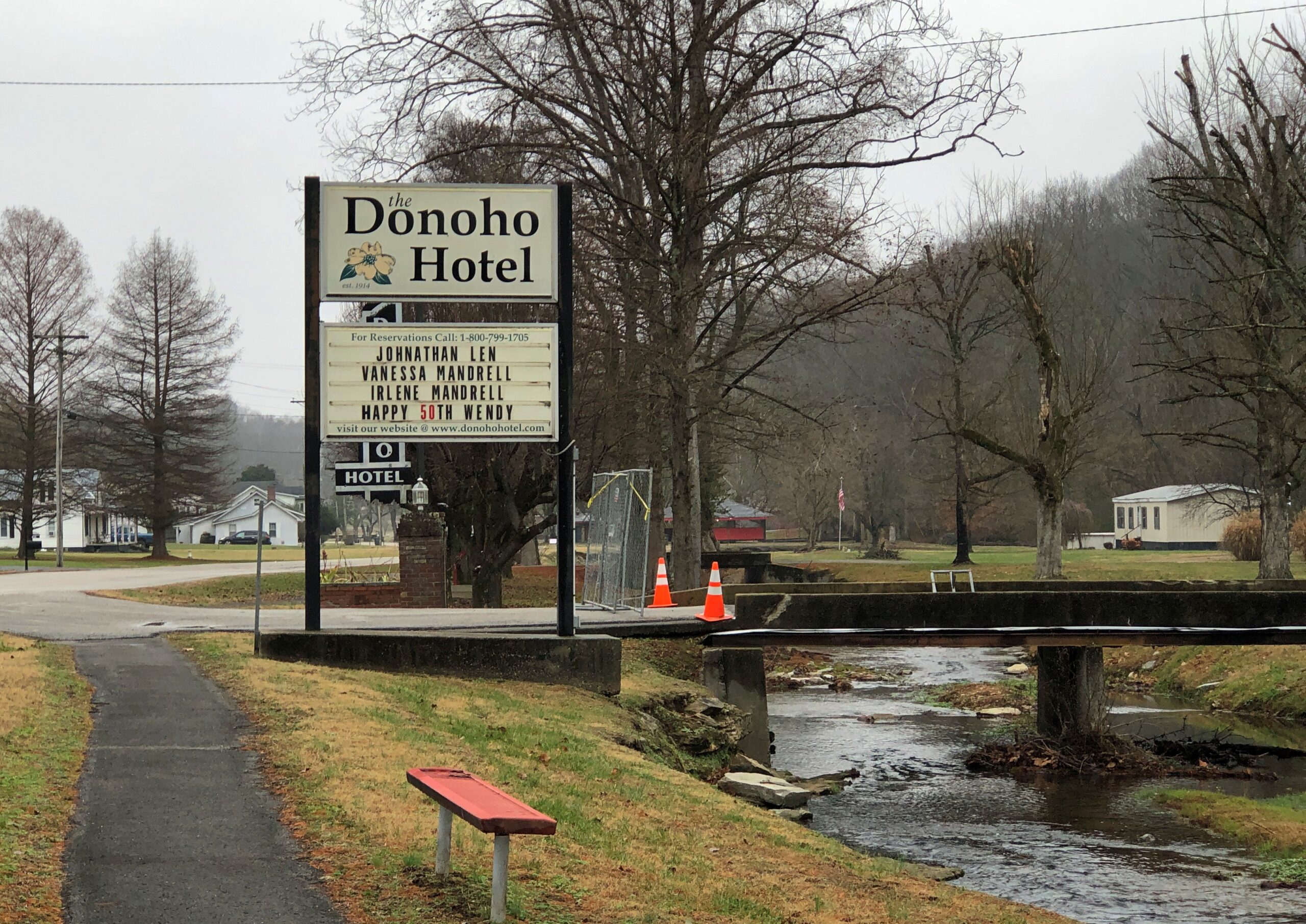
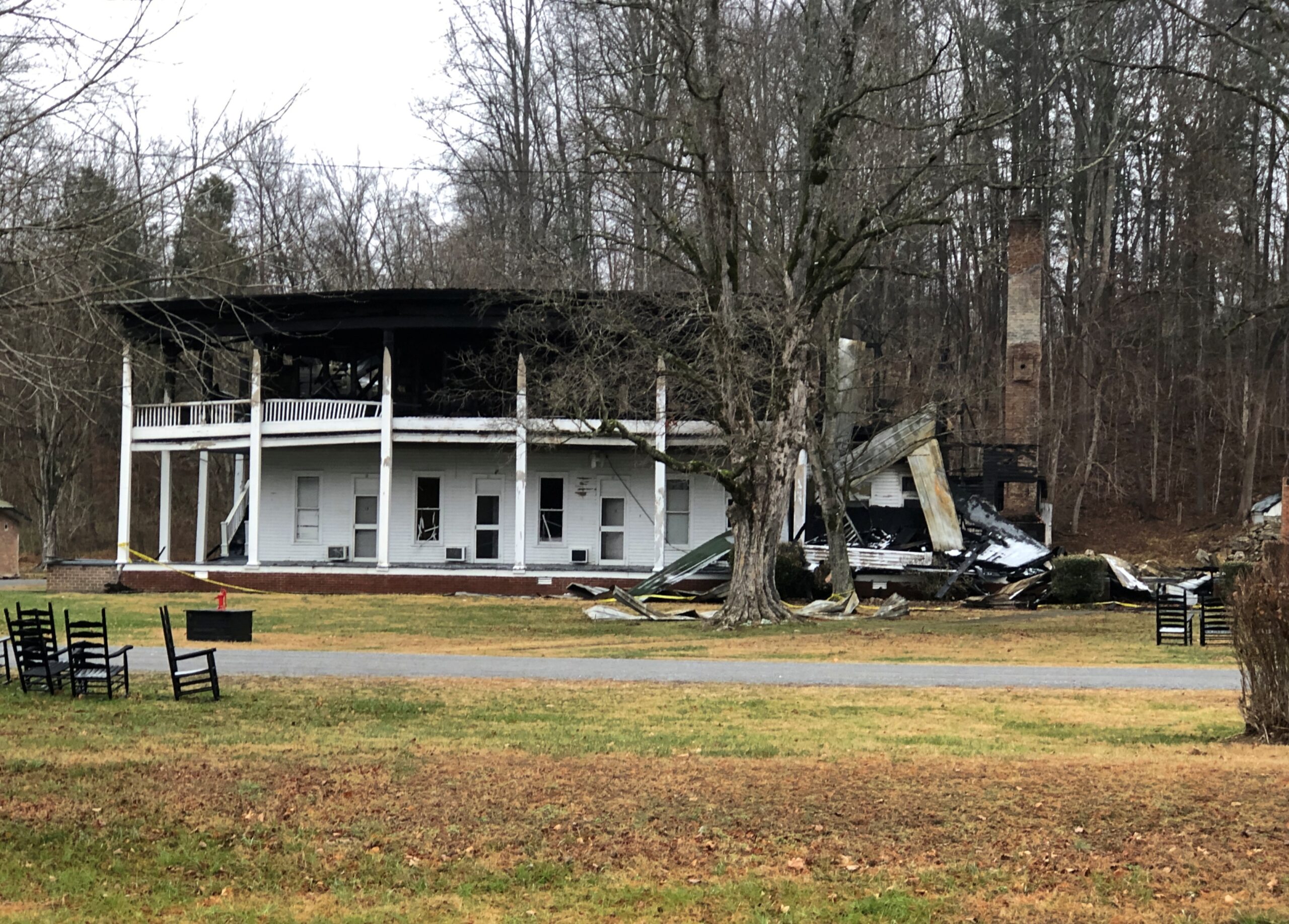
Make that two hotels. One of those mentioned in the article, the Donoho, burned down in November.
The gray, chilly day somehow fit the scene of a wrecked historic hotel.
Damned shame. I can’t leave it at that. Soon after passing through Red Boiling Springs, we arrived at our destination in eastern Middle Tennessee. The next day, we enjoyed a Tennessee hootenanny.
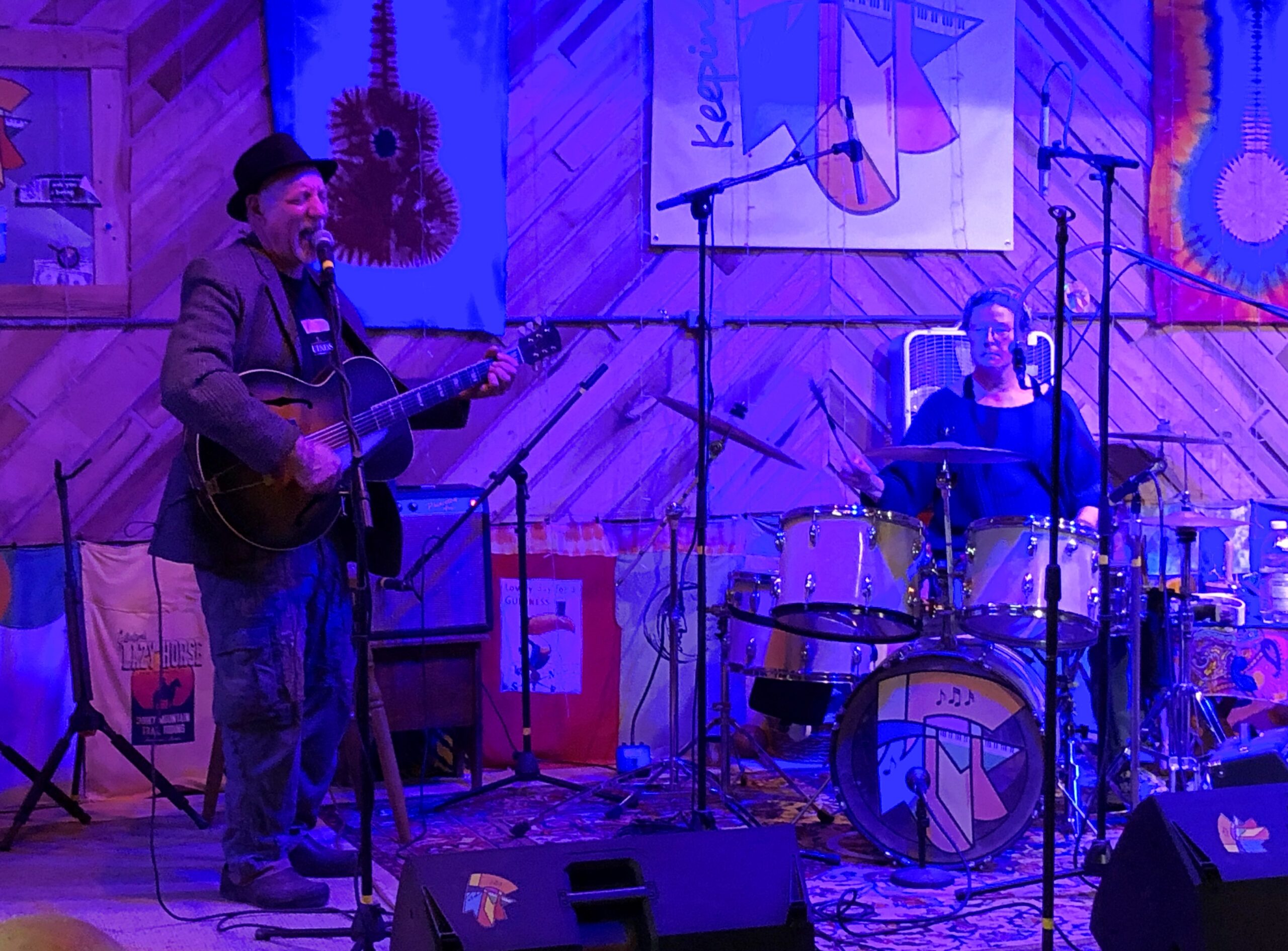
Our hosts, Dave and Margaret, on guitar and drums.
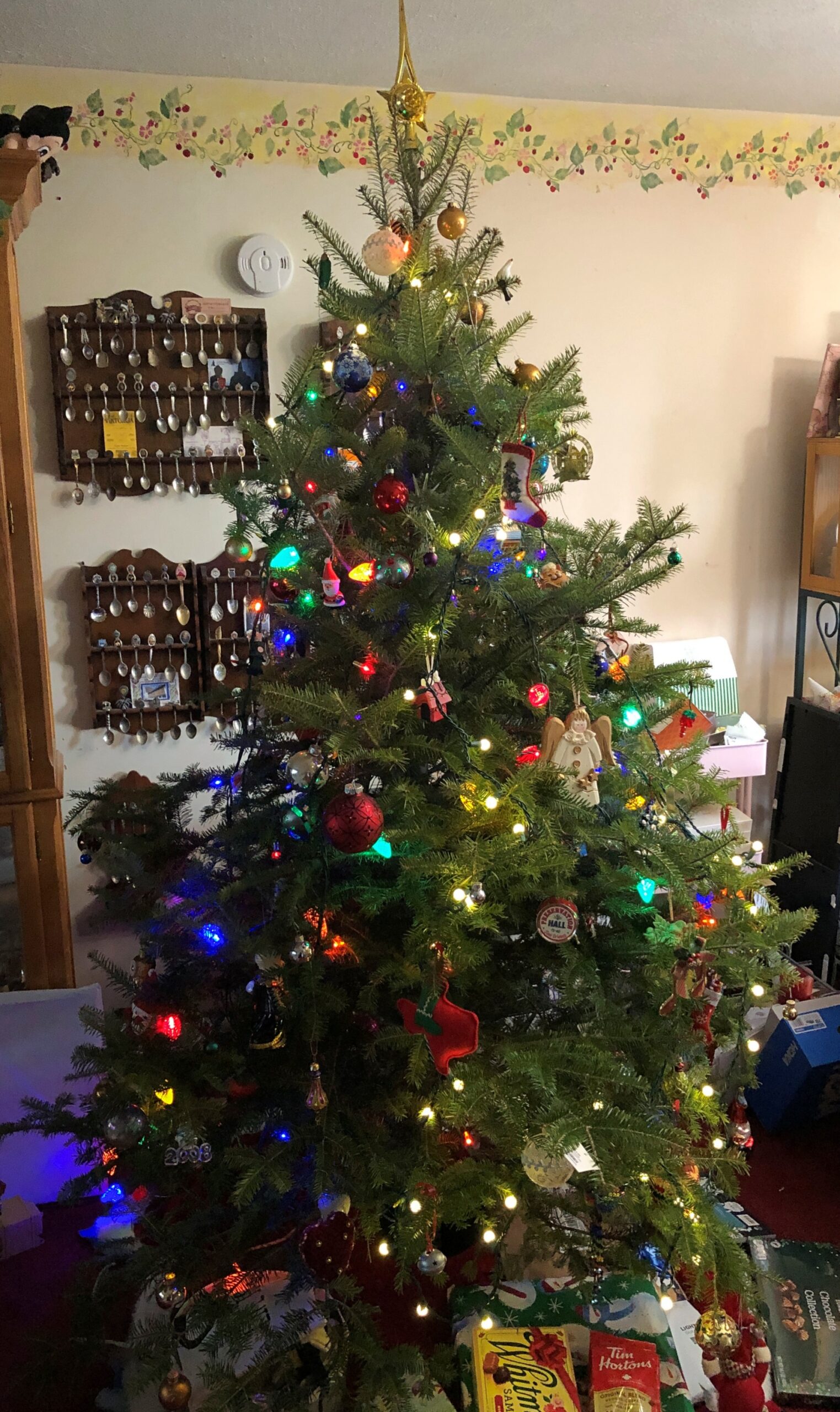
Decorating for Christmas this year meant a rapid set-up. We spent a fair number of hours on the 23rd making the living room ready for a tree – moving clutter, mostly. On Christmas Eve, I brought the tree in from the garage, and Ann mostly decorated it. Finishing touches, by me, were in progress even on the morning of Christmas Day, but since that moment in the life of our family doesn’t involve an early-morning rush downstairs by children anticipating Santa’s bounty any more, that was doable.
Ann did a fine job of decorating, in the style of our family: fill up the tree with a wide variety of glowing and glinting objects accumulated across the decades.
We got a late start on decorating for Christmas, though when I think about, decorating after the Solstice discourages the sort of front-loading of Christmas that a lot of people complain about, but which they do anyway.
We had a good reason for the late start: a drive to Florida and back, beginning on December 4 and ending on the 22nd. Not just to Florida, but as far as you can go in that state, at least by car, namely to Key West and back. Early to mid-December seemed like a good time to do such a thing, after any traveling people do for Thanksgiving but before the worst of the Christmas-New Year’s rush. A short shoulder season in other words, but a good one, with room rates not quite subject to surge pricing, and crowds thick in some high-volume tourist destinations, but not impossible.
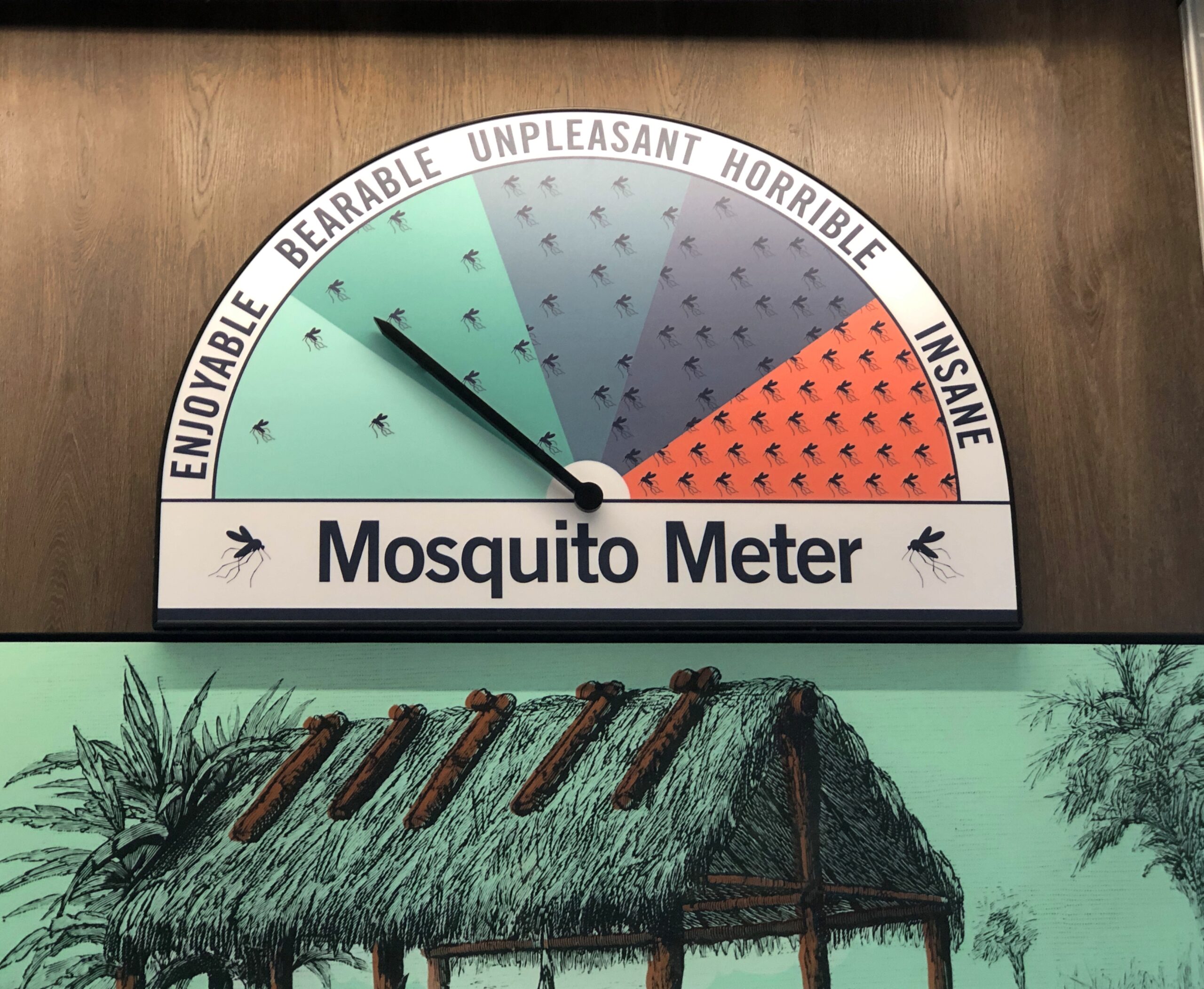
Also, Florida has few mosquitoes this time of year. Not no mosquitoes, as we found out one day in the southern reaches of the peninsula, just a “bearable” number.
Sometime earlier this year, I got the idea that I wanted to take four long drives after turning 64. Four for 64, you could say. Doing so by the end of 2025 wasn’t part of the idea, but that’s how things worked out. The drive to Florida and back, by way of such places as Indianapolis, Louisville, Chattanooga and Atlanta, totaled 3,682 miles. For all four trips since June, the total is about 14,300 miles.
That could be made to sound impressive, but in fact American men my age average more than that every year, about 15,000 miles, at least according to this source, which cites US DOT data. Younger men drive even more annually. Most of that is commuting, however. My commuting mileage by car has been exactly zero this year, and while I drive locally to stores and such, it couldn’t be more than a few thousand miles. So it seems clear that, as an American man, it was my duty to get out and drive.
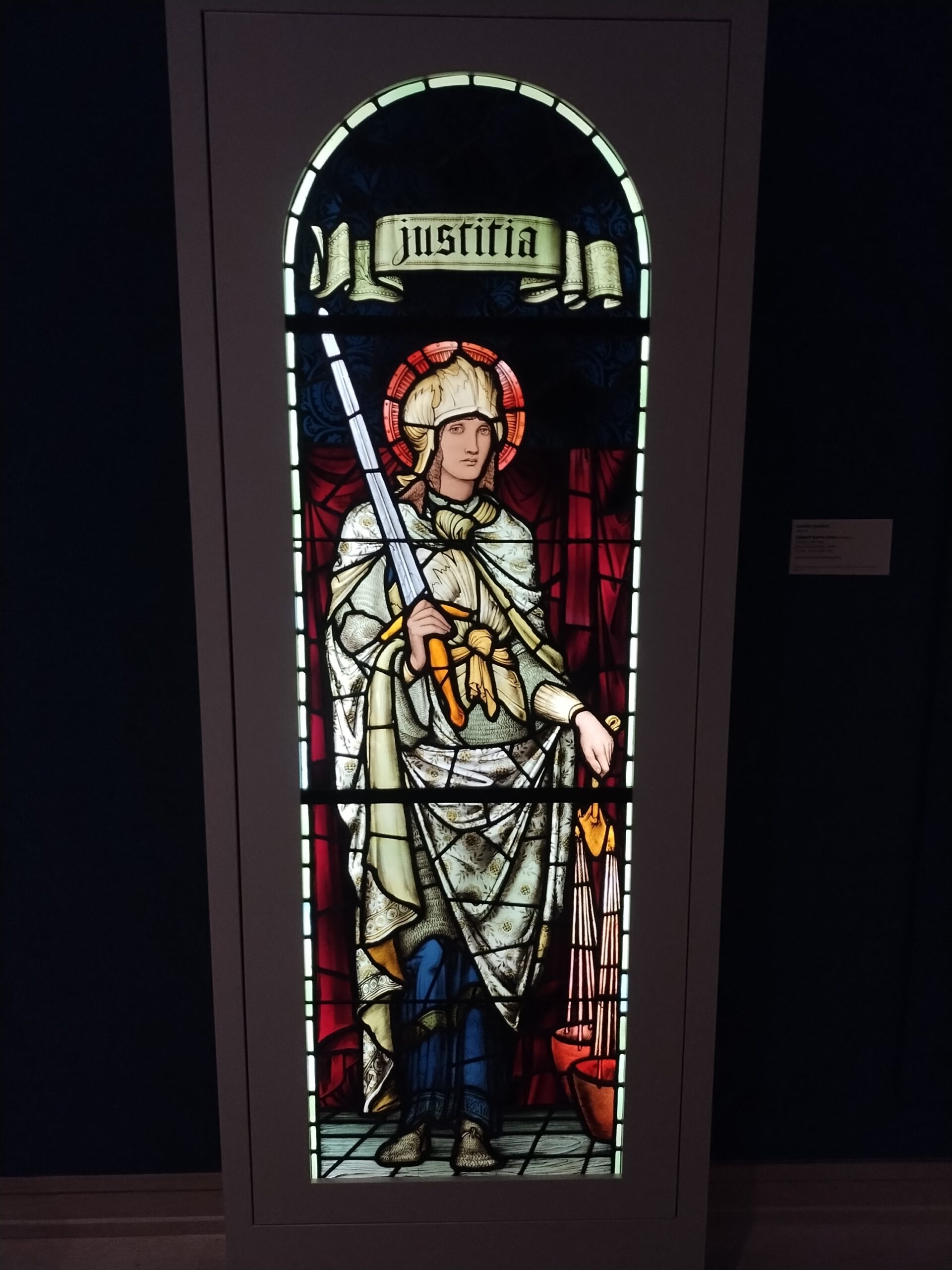
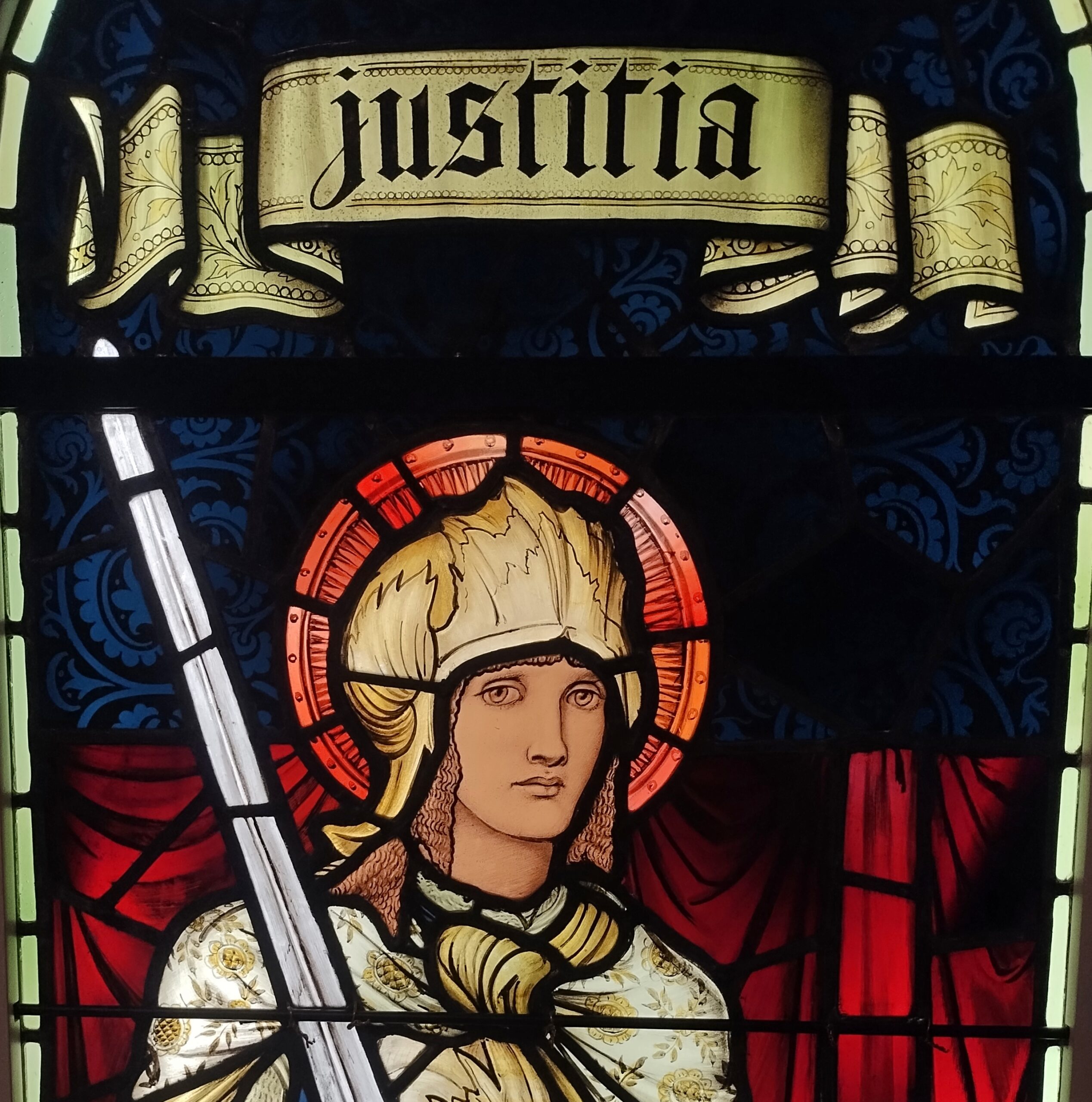
When we headed south in early December, snow covered the ground all the way past Indianapolis, where we stopped for a few hours at the Indianapolis Museum of Art, which is part of a larger campus called Newfields – and better examined in summer, I think. But the museum is a good one, with a solid collection, especially 19th-century American and European works. Such as “Justitia,” a Morris & Co. work from the 1890s.
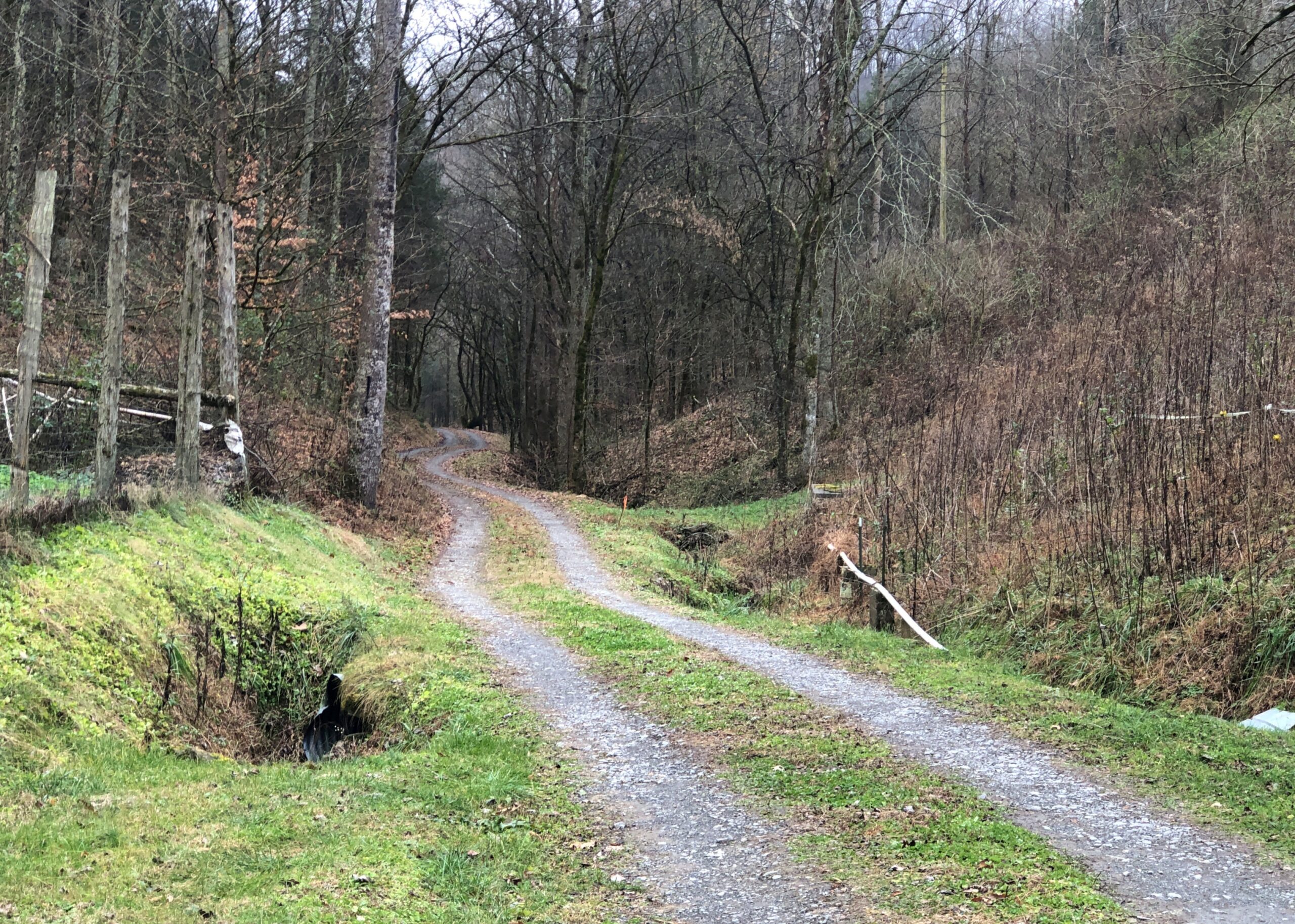
After overnighting south of Louisville, we diverted from I-65 and took smaller roads through southern Kentucky and into Tennessee to a holler in Jackson County, where we were the guests of dear friends. Tennessee musicians from those parts — some professional, others skilled amateurs — gathered on the the evening of Saturday the 6th, for one of the periodic jams in our friends’ barn, which houses no animals these days, but a small stage and some sound equipment and a fair number of folding chairs. A joyful jam it was. Food was potluck. I like to think we went to a hootenanny.
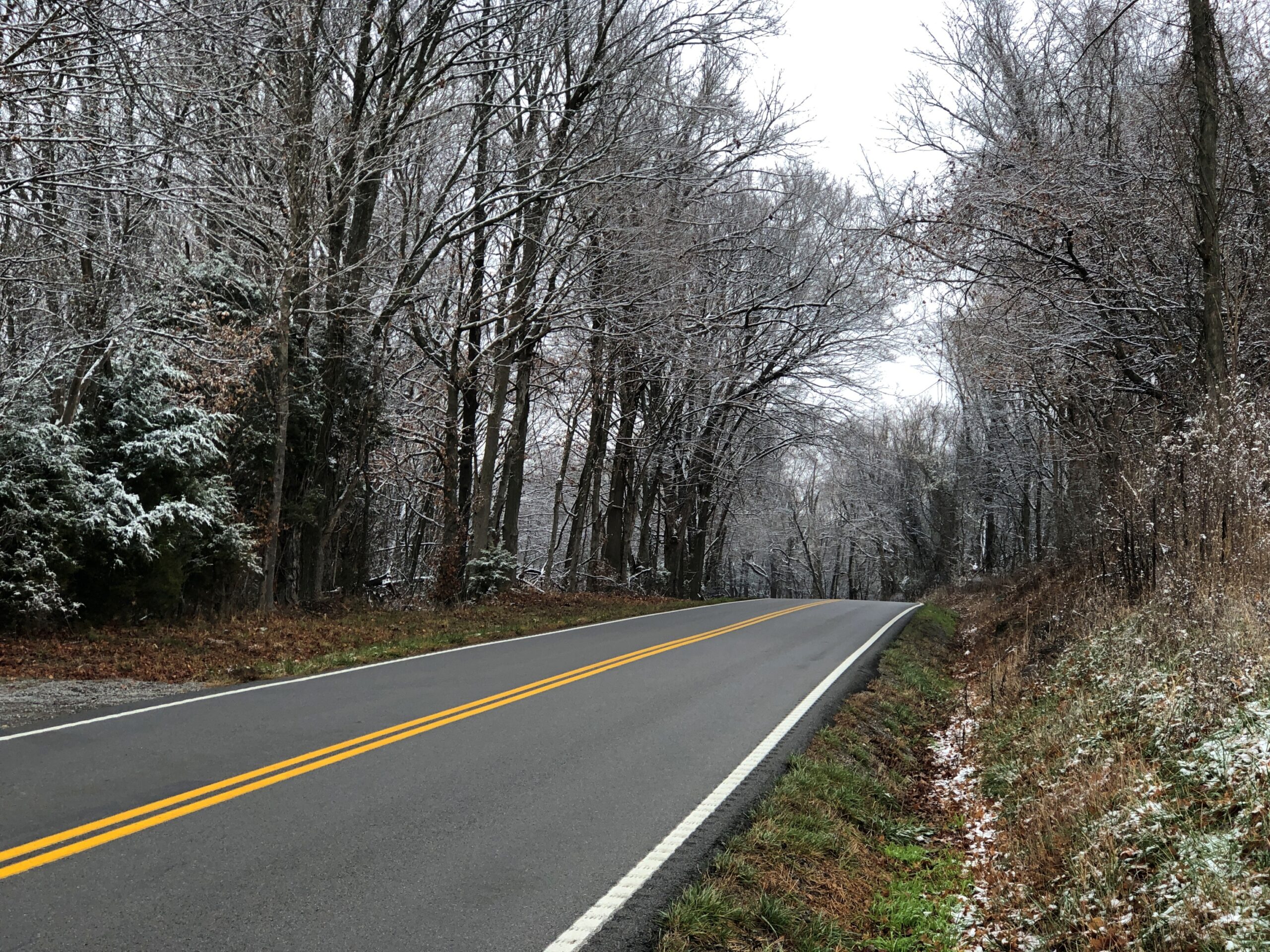
The road through the holler. By this point, no snow. We were trading cold for warmth. That was one of the goals of the trip. Maybe the main one.
From there it was mostly a straight shot down through Georgia on I-75 to Florida, and eventually US 27 to Orlando by way of non-coastal Florida places like Gainesville, Ocala and Lady Lake, a string of settlement less agricultural and less pastoral now than ever, more like an endless outer suburb. Heavy traffic is an invasive species in this part of Florida, surely as pythons are in damper parts of the state. Not just masses of cars and trucks, either, but also golf carts. We passed close enough to The Villages to see billboards advertising legal representation in the event of golf cart accidents. Carts, I’ve heard, provide transport in great numbers in that sprawl of a settlement.
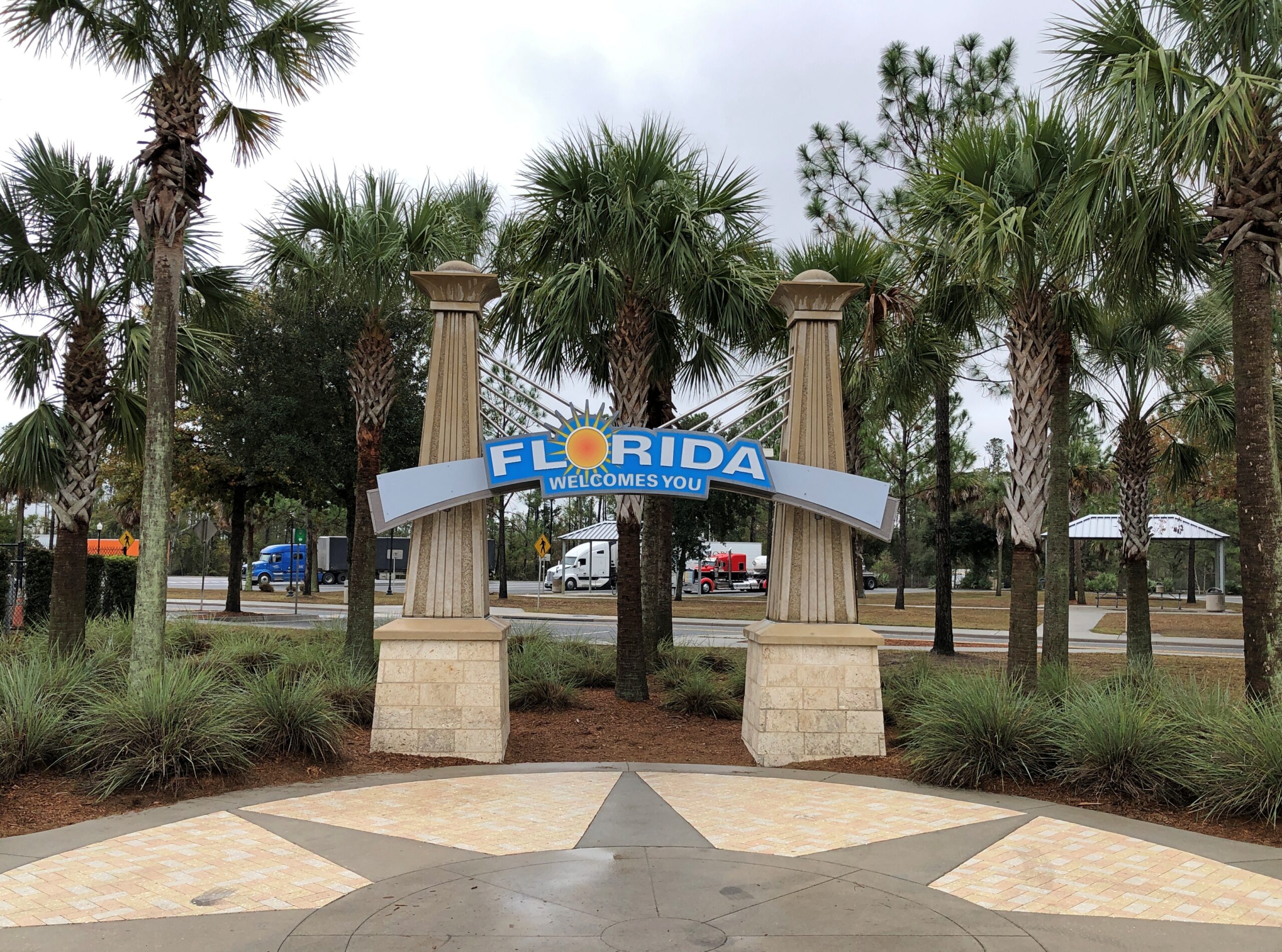
The drive to and in Florida involved the usual North American mix of large and small roads, smooth and ragged, grid-like and irregular, though Florida cities tended toward the irregular (except for Key West), and as crowded as can be and as empty as can be. Snow lined the way up north, thinning out the further south we went, giving way to brown landscapes and bare trees. Then we came into greenery – evergreens and palms and even deciduous species turning color. We crossed mighty bridges over mighty rivers, small culverts over alligator haunts, and the string of bridges that make up the civil engineering marvel known as the Overseas Highway (US 1). We crossed barely acknowledged borders and signs at the Florida visitor center on I-75 proclaiming The Free State of Florida.
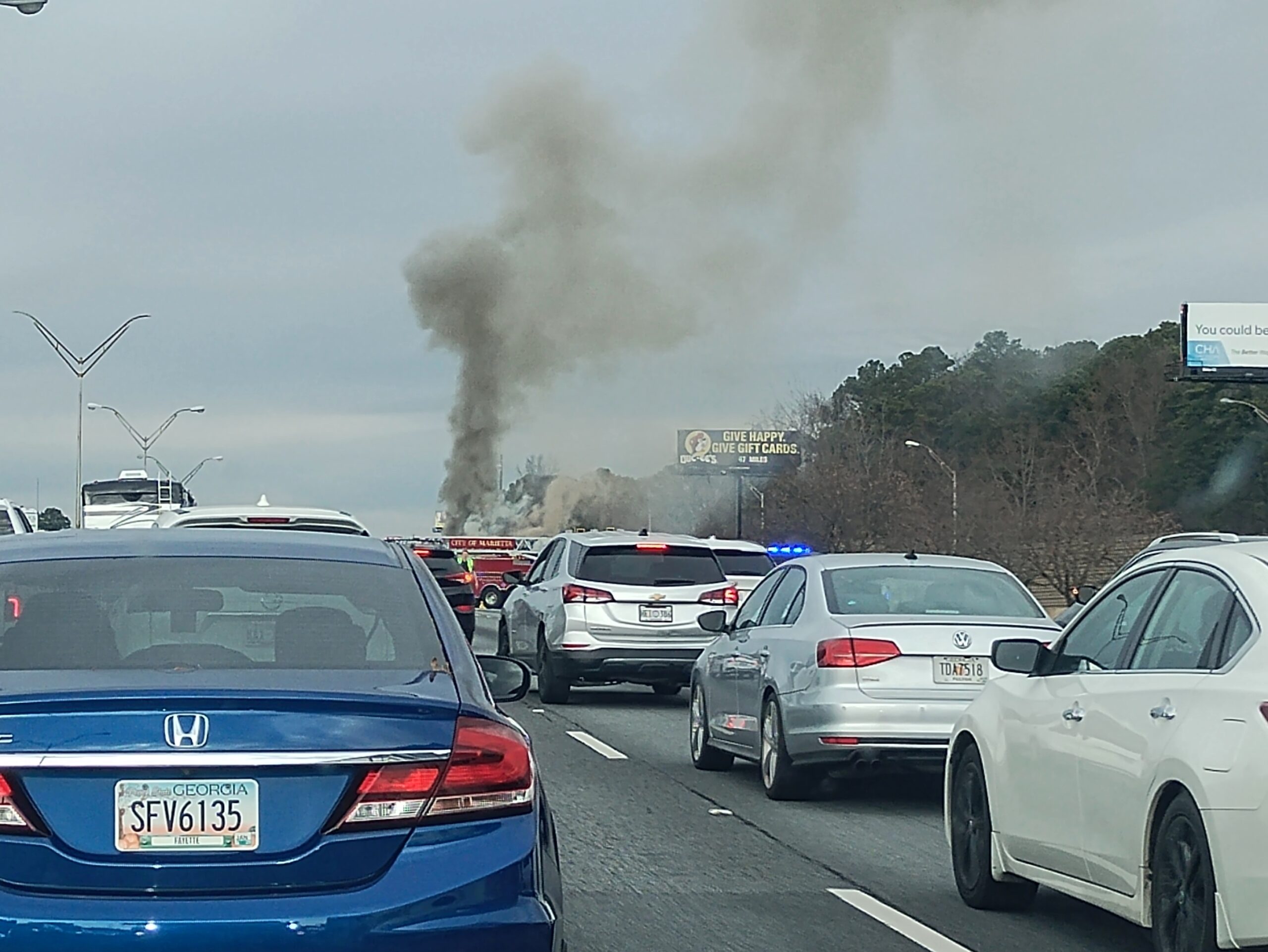
Florida Man was out and about, weaving in and out of high-speed traffic, pushing 100 and pretty sure that physics doesn’t apply to him, though I have to admit that Florida isn’t different from any other state in that way. Traffic stopped cold more than once: for a banged up, upside-down SUV; for a raging RV fire, attended by a half-dozen firemen; for a serious two- or maybe three-car wreck on the other side of a divided highway; for construction, usually without any workers in sight; and once for no reason that we could tell at all.
In Orlando, we spent all December 9 at Universal Epic Universe, a theme park that only opened in May. Ann flew in the day before we went to the park and flew home the day afterward, taking advantage of the low prices that discount airlines offer to high-volume places in a shoulder season, if you take no bags and buy nothing to eat or drink at sky-high prices, literally and figuratively. A small bag of hers had been stowed in our car for the visit.
A theme park is one thing, but I wanted a look at Orlando, at least a sliver of it, the next day. Ann’s flight was fairly late that day, so we were able to spend part of it in posh Winter Park, including a tour boat ride through the town’s small lakes, lush with greenery and expensive houses on their banks, and connected by canals.
A drive that included the stretch of US 41 that passes through the Everglades took us to Homestead, Florida, and the mid-century charms of The Floridian motel. A day in Everglades NP followed, including an airboat tour and a drive to the coast at Florida Bay. The next day, before leaving Homestead for a drive in the rain across the Overseas Highway to Key West and while the sun still shined, we toured the Coral Castle, a one-man construction project using 1,000 tons of oolite to make walls, carvings, stone furniture, and a castle tower.
Key West was a two-day, three-night mid-December ramble on the busy and less busy streets of Old Town, including humans but also chickens, taking in the likes of the Hemingway House, the Little White House, Mallory Square, the San Carlos Institute, the Key West Aquarium, and the Key West Cemetery. Also, tourist shops, boutiques and the building where Pan-Am was founded. We ate and drank, though as our wont, nothing alcoholic. Key West was decked out for the holidays but not over the top. We walked and walked some more. It felt like a couple of pleasant summer days.
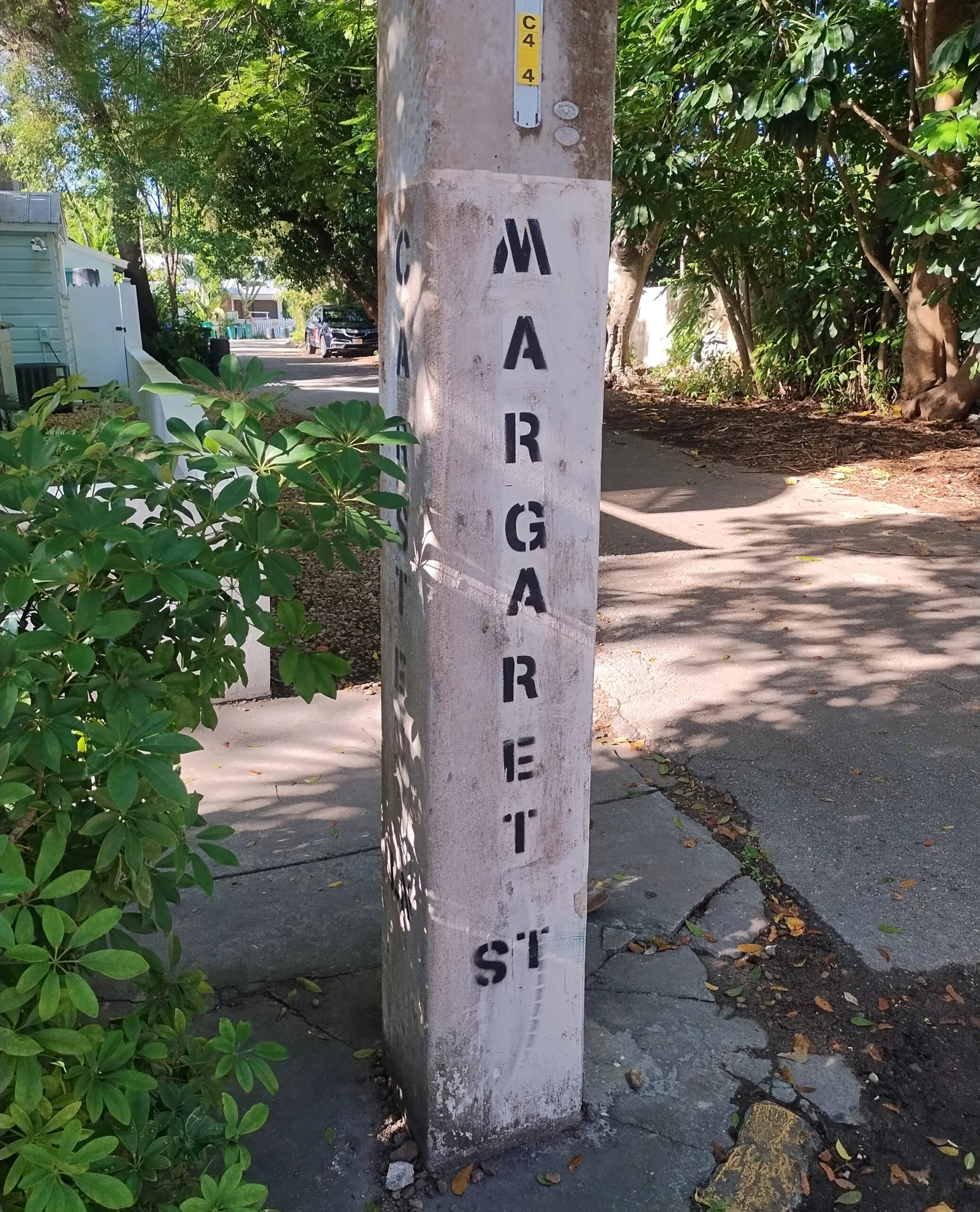
From my 2014 visit, I knew that on the back streets near the little-visited cemetery, parking was possible on an otherwise cramped island. So it was. On Margaret Street, within sight of the cemetery.
The return drive took us up the eastern coast of Florida, but avoiding the worst traffic in Miami-Dade by taking Florida’s Turnpike. By December 17, we’d arrived in Orange Park, a large suburb of Jacksonville, for a stay with two other dear friends, former Austinites now in northern Florida. Part of the next day was in and near downtown Jacksonville, one of the larger U.S. cities I’d never visited before (I believe San Jose is now the largest on that list). During our downtown stroll, we encountered the coolest building in Jacksonville and certainly one of the coolest in Florida.
We quit Florida on the 19th, but weren’t quite done with the trip. Yuriko had never been to Atlanta and wanted to go. Though I’d been however many times since 1982, I was happy to oblige, so we spent two nights and a day there, using the day to see the astonishing Georgia Aquarium and the impressive but somewhat overpriced World of Coca-Cola.
The last legs of the trip were long drives: Atlanta to Elizabethtown, Kentucky; and from there to home the next day. I wasn’t about to let them be completely dull drives, so we stopped on the second-to-last day in Chattanooga, to see the conveniently located, blocks-from-the-highway Chattanooga Choo-Choo redevelopment. On the last day of the trip, we stopped in Jeffersonville, Indiana, and walked across the Big Four Bridge, a former RR bridge across the wide Ohio, now serving pedestrians and bicyclists.
Home and then — Christmas, when things slow down for a week or so. Good timing.
Had a bizarre dream last night, which isn’t really unusual, since that’s the way of dreams often enough – but this one – let’s call it rich and strange. And lengthy. It kept going and going, involving an alt version of downtown Chicago, and alt version of the company I worked for in the late 1980s, though no one that I knew was there; a vaguely menacing, nighttime scene always, though it wasn’t a nightmare; a message that had to be relayed, somehow; a fictional character – a very famous fictional character – spoken of as if real, who eventually showed up after a funeral, laughing; and details that made me think, that’s too much of a detail. For a dream. Is this a dream? One detail involved a chipmunk peaking out of a hole in the sidewalk, or maybe the street; another was a globe that I could see but not get close enough to read well, though I really wanted to. But I did notice that the United States, on this globe, included British Columbia and maybe the Yukon Territory, and I woke up thinking that maybe that 54° 40′ or Fight business led to a real war, in which the U.S. prevailed.
Perhaps the strangest thing about this rich and strange dream is that fully an hour and a half after I woke on this bright summer morning in the northwest suburbs, in the waking world I know and inhabit, I was able to write the above description.
Tennessee
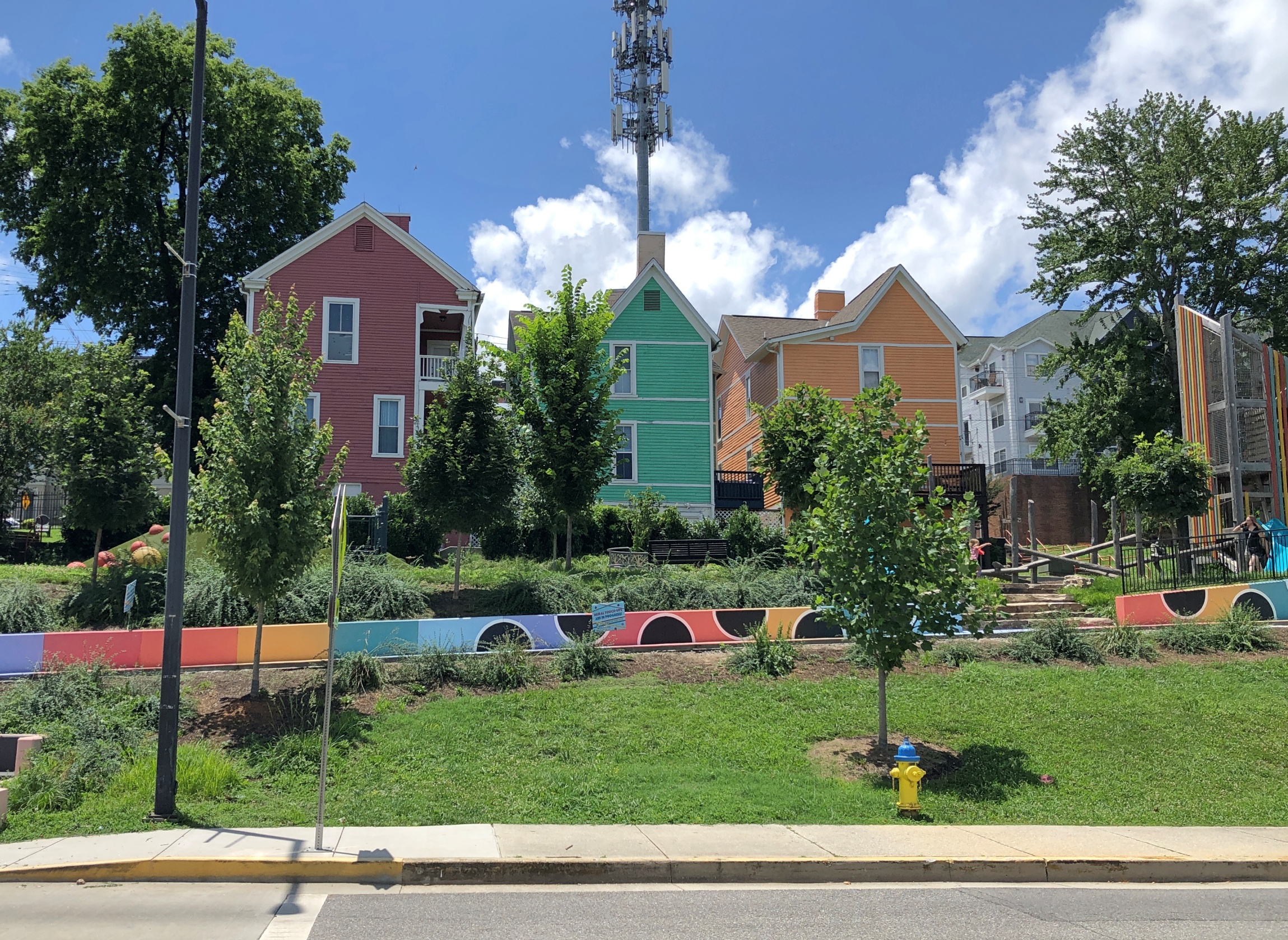
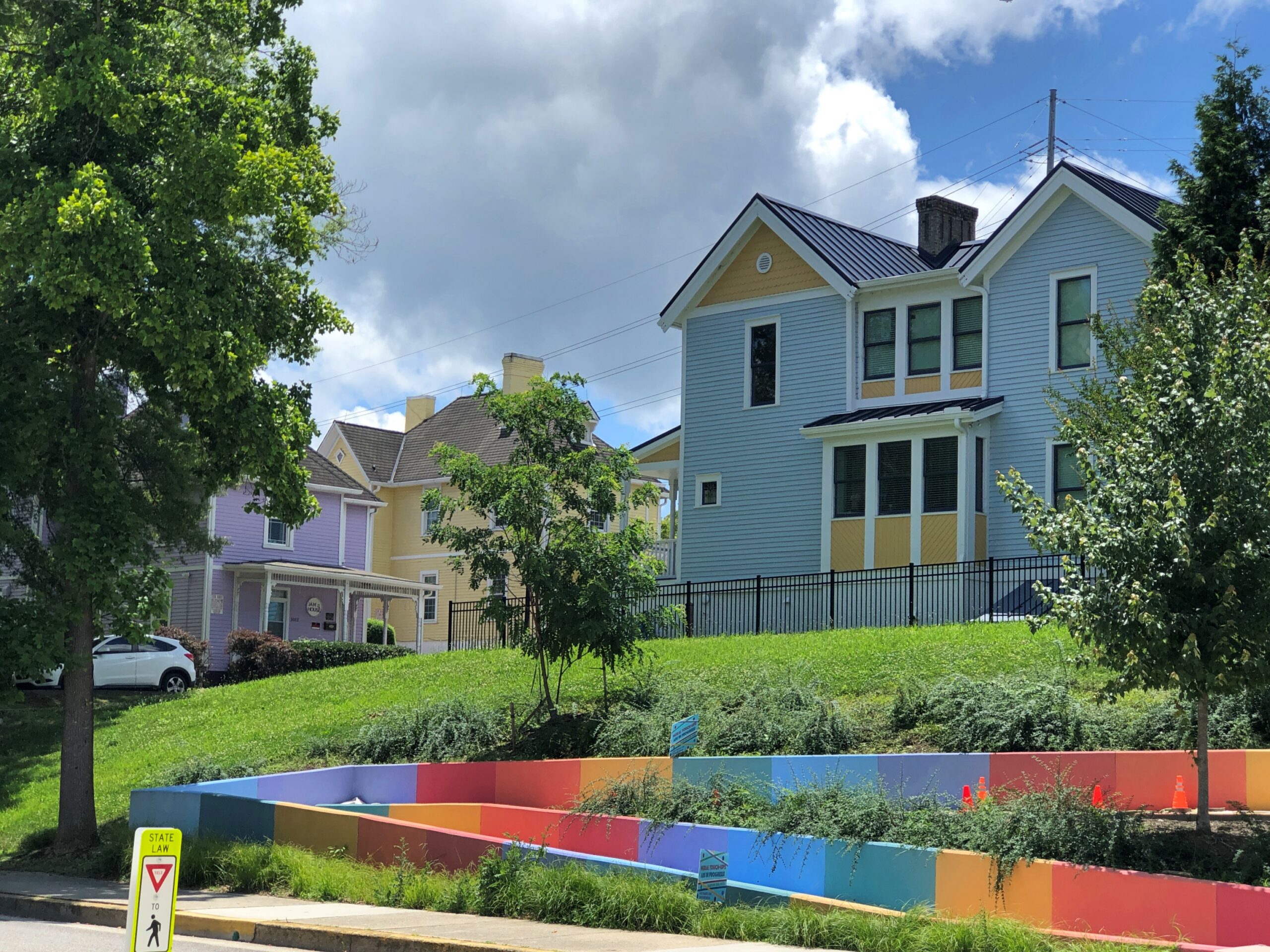
When passing eastward through Tennessee during my most recent interstate drive, I spent a little time in Knoxville, as mentioned, mostly to see the Sunsphere. To get to the tower from the free parking lot, I walked along part of World’s Fair Park Dr., with these colorful pastel houses visible on a small rise nearby. I was reminded of Rainbow Row in Charleston.
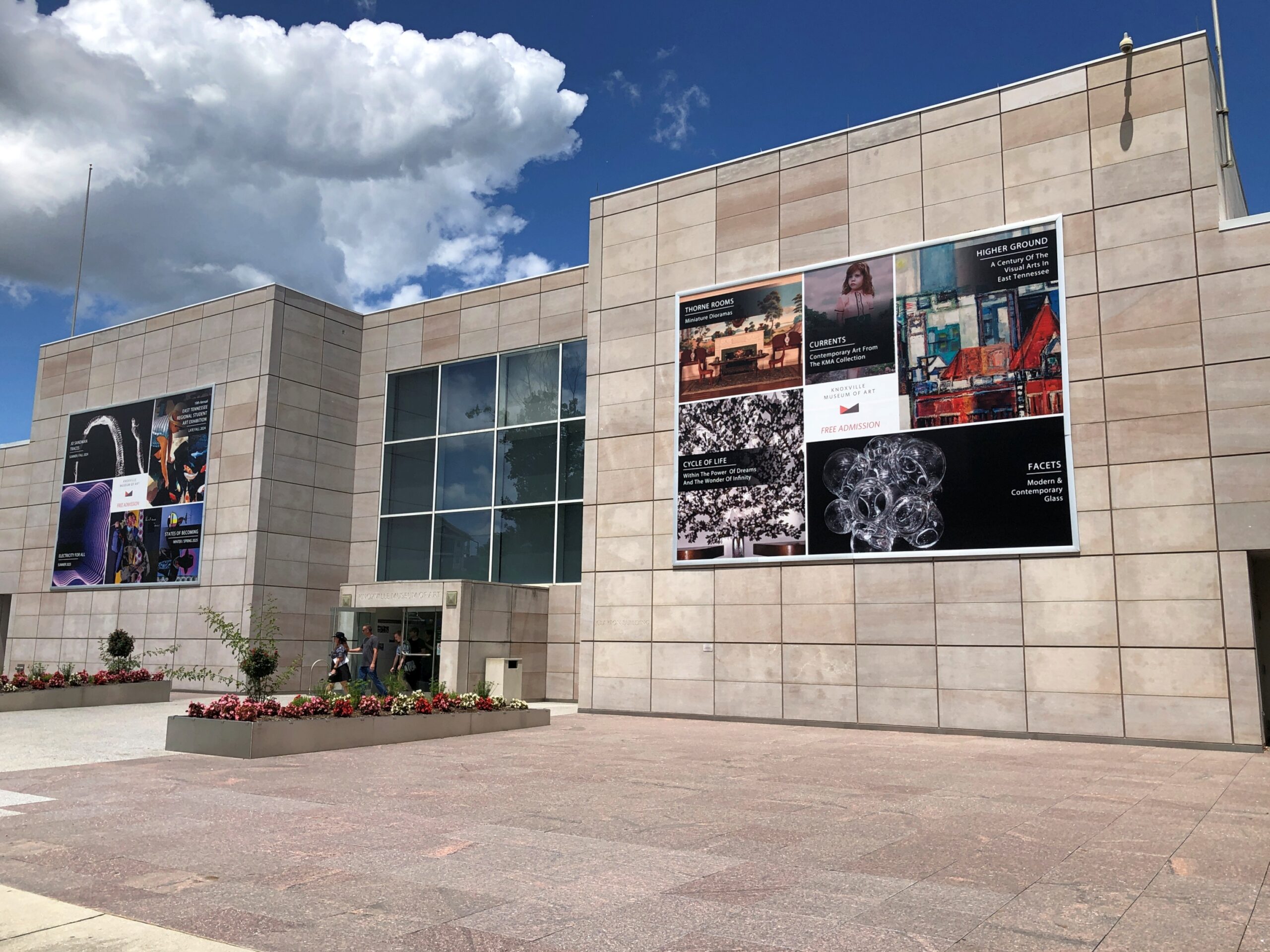
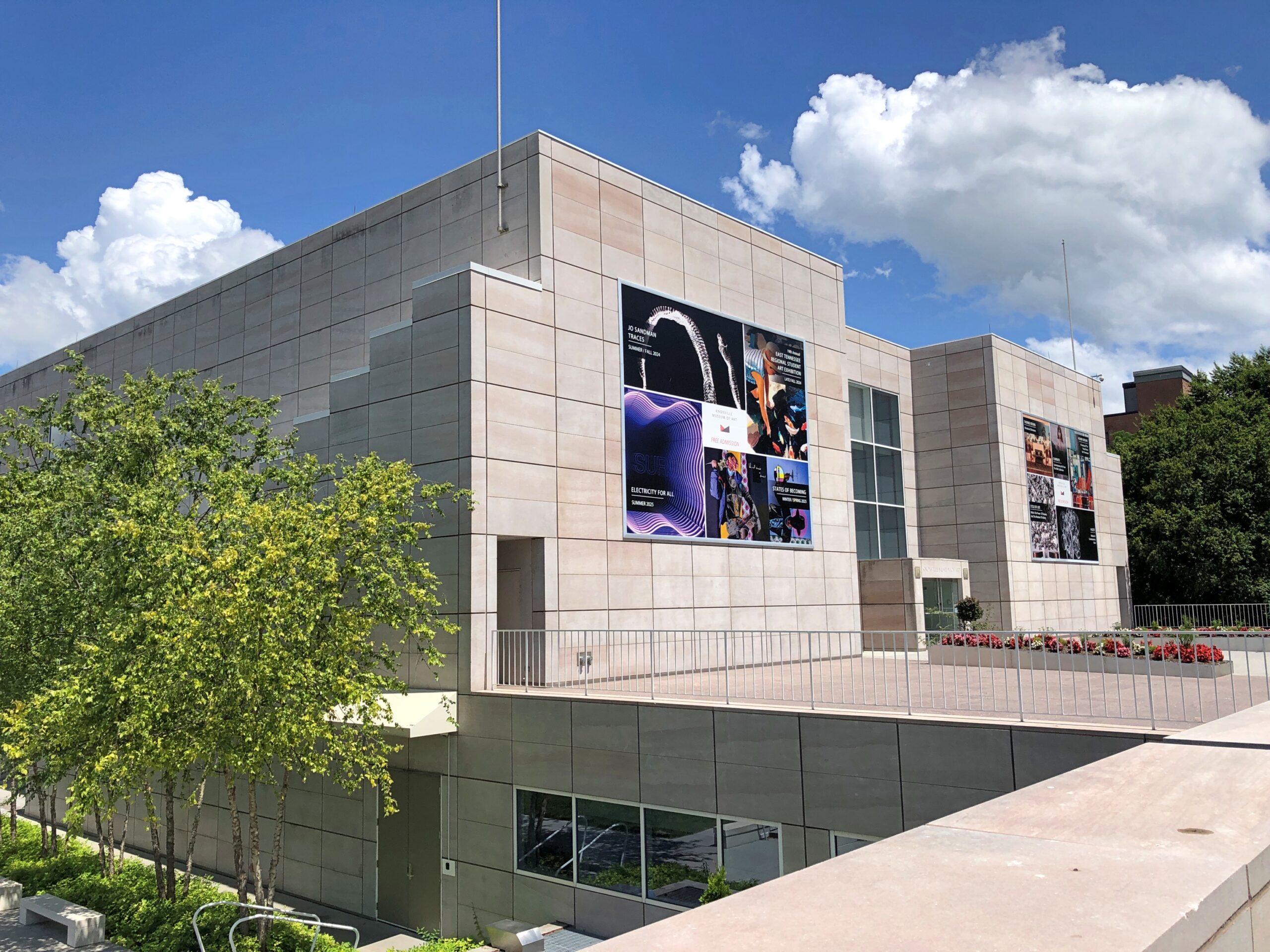
On the way back, I popped into the Knoxville Museum of Art.
For a brutalist building, a nice bit of work by Edward Larrabee Barnes (d. 2004). If it blackens and streaks in the future, as such buildings tend to do when exposed to urban air, its appearance might morph into something merely ugly. But it looks like it’s been kept clean enough since its construction in 1990. As a museum, KMA has a lot to recommend it, such as air conditioning, free admission and a not-too-vast collection specializing in something you aren’t going to see elsewhere, namely East Tennessee art.
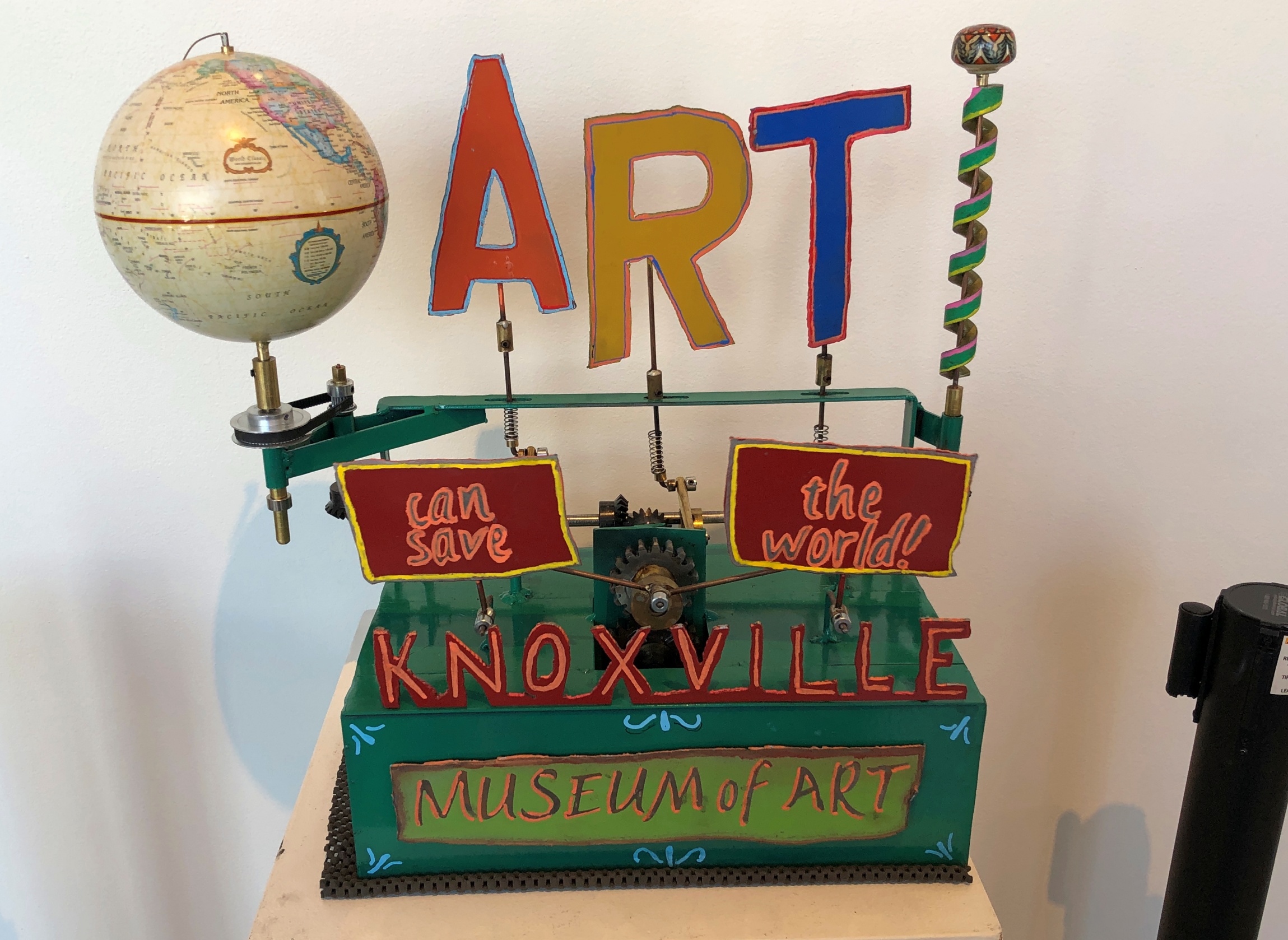
Such as a piece by artist Patrick Deason. Ah, the optimism. Unless he’s being sarcastic.
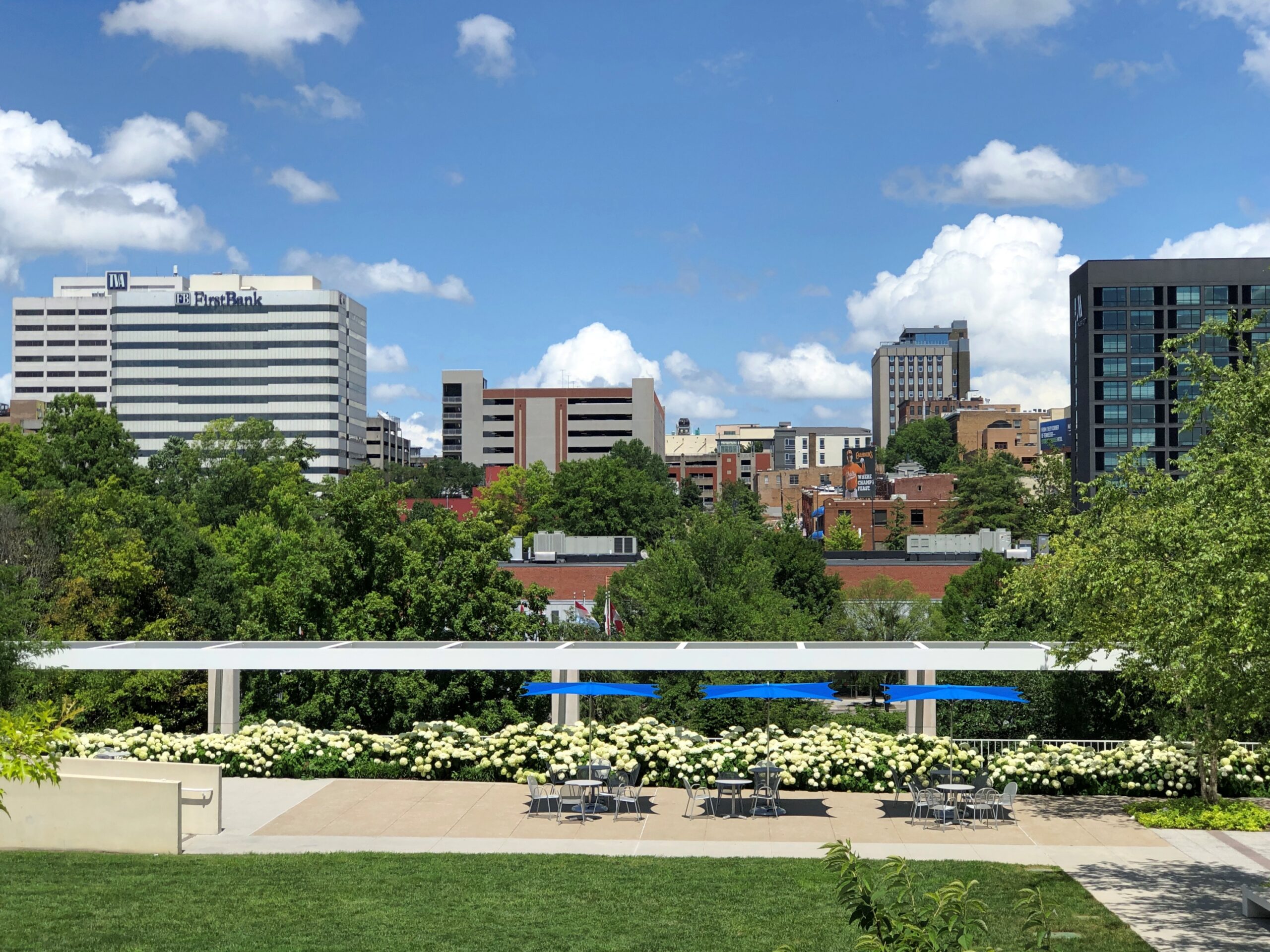
The museum also has a porch with a nice view of downtown Knoxville.
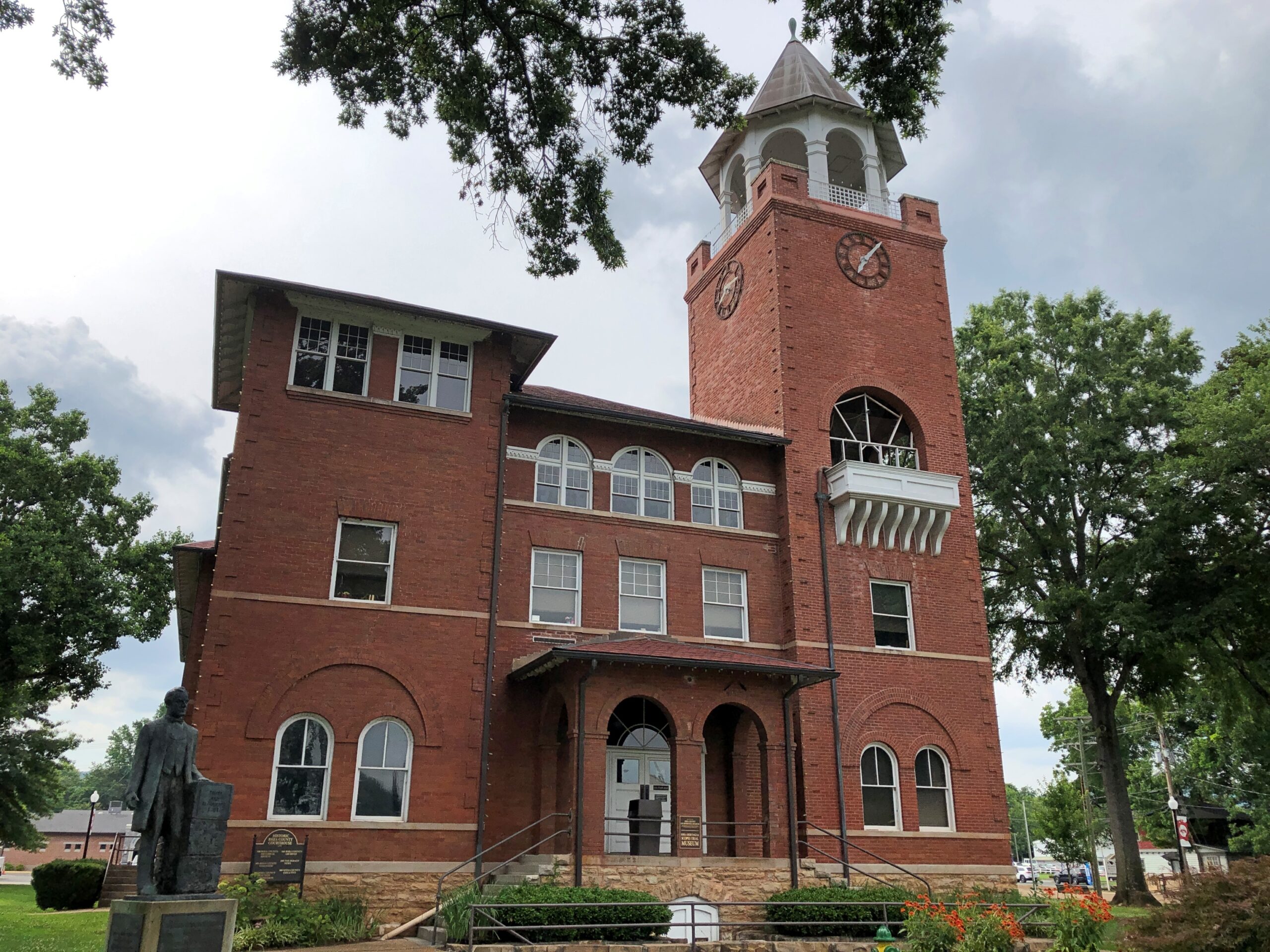
On my return westward through Tennessee, I made a point of passing through Dayton, site of the Scopes Trial, now 100 years ago. There is a museum devoted to the trial in the handsome and nicely restored 1890s Rhea County Courthouse, though I arrived after it had closed for the day.
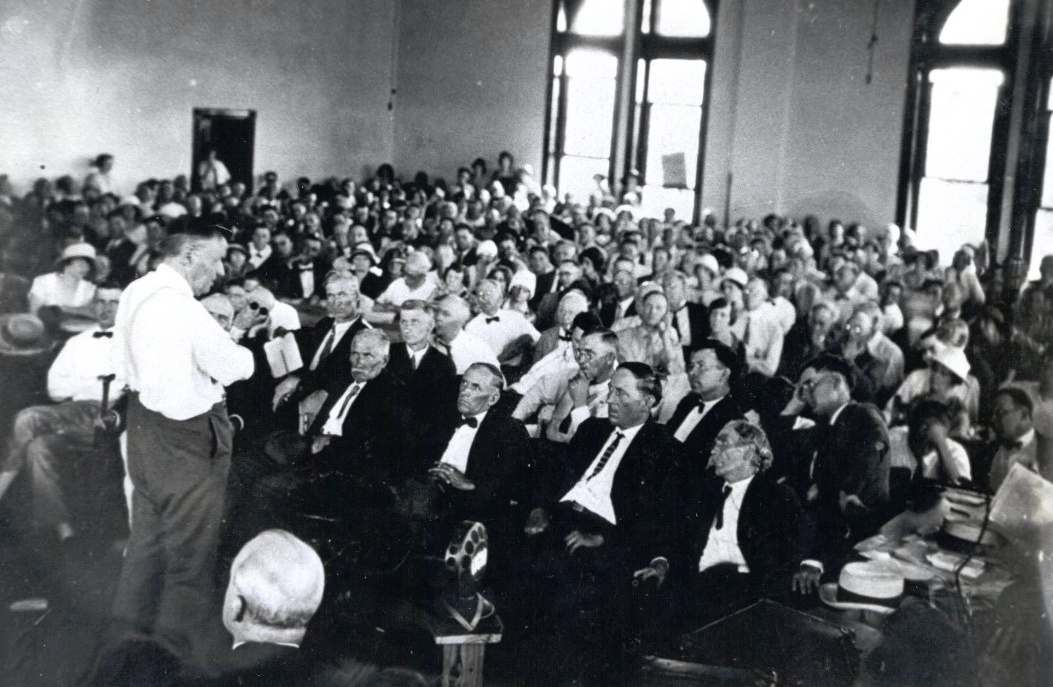
I look at pictures taken during the trial, and wonder how this multitude sat through it all, in an un-air-conditioned building. Guess like my grandma, as late as her last summer in 1970, they were used to it.
Before I got there, I heard a fellow on the radio discussing the (then) upcoming festival that Dayton was planning in honor of the centennial, as a bigger version of an annual event held in July. He might have been the organizer, I forget.
He pointed out that for many years Daytonites mostly wanted to forget about the trial – especially after the movie Inherit the Wind (1960) depicted the residents of Hillsboro, stand-ins for them, as fundamentalist bumpkins, at a time when the actual event was still in living memory. Which is nothing that Mencken didn’t do in 1925. Now the trial and Mencken and the movie are all part of that nebulous thing most people experience as the undifferentiated Past, and the townspeople have largely embraced the trial, according to the man on the radio. As well they should. It’s what Dayton, Tenn., has that no place else does.
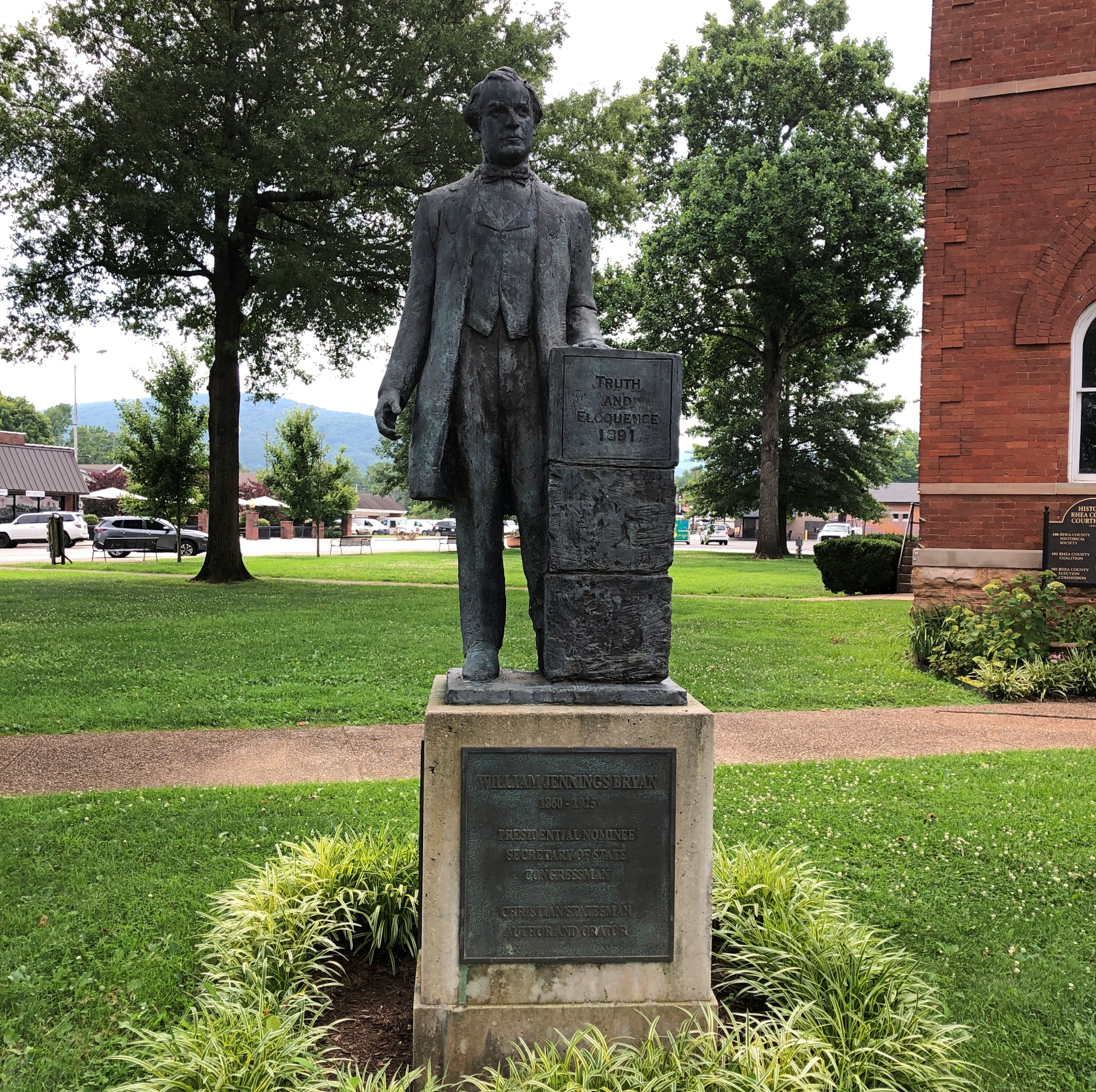
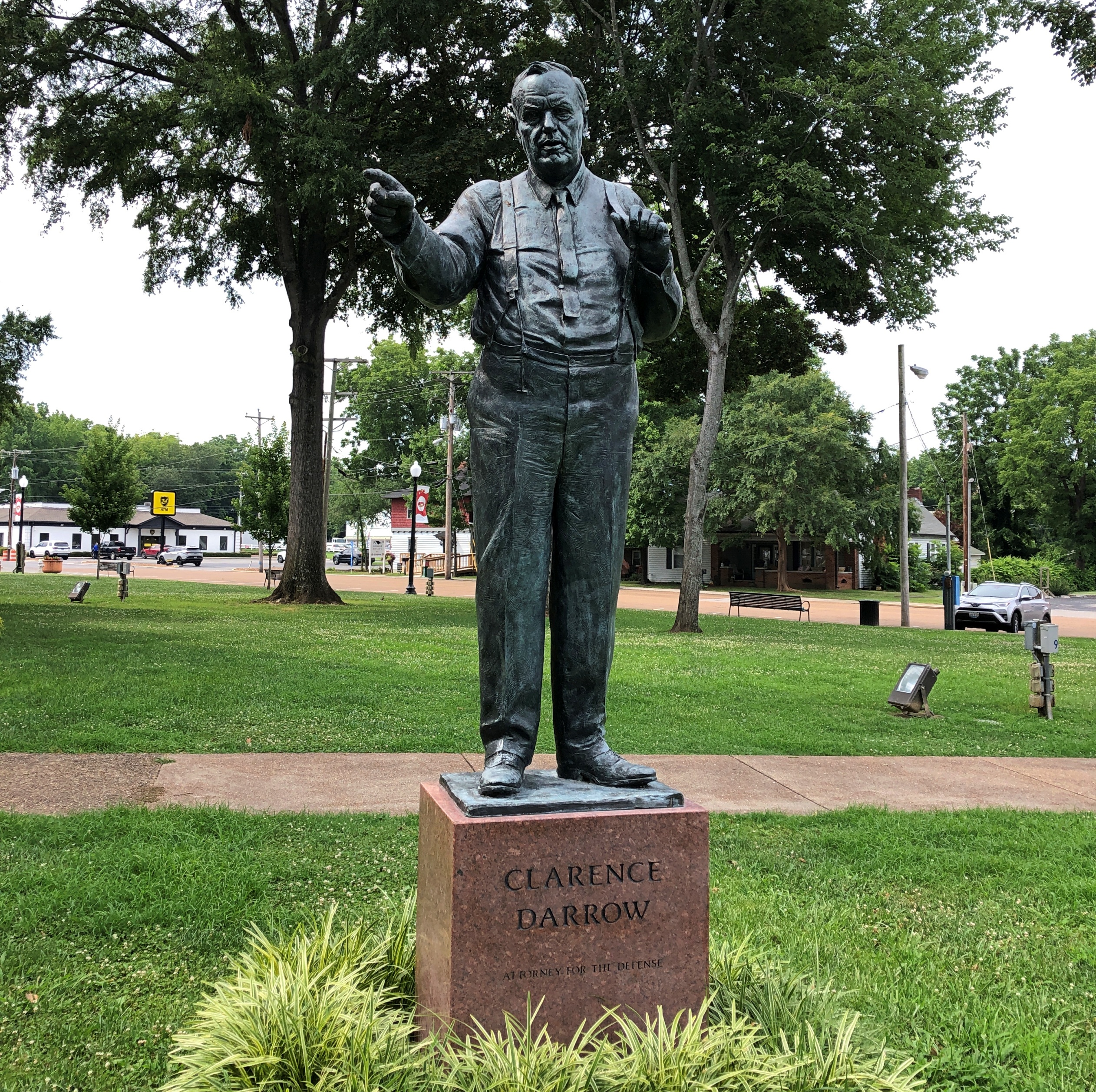
On the courthouse square, William Jennings Bryan and Clarence Darrow square off in bronze. Bryan College paid for the former, the Freedom From Religion Foundation the latter.
North Carolina
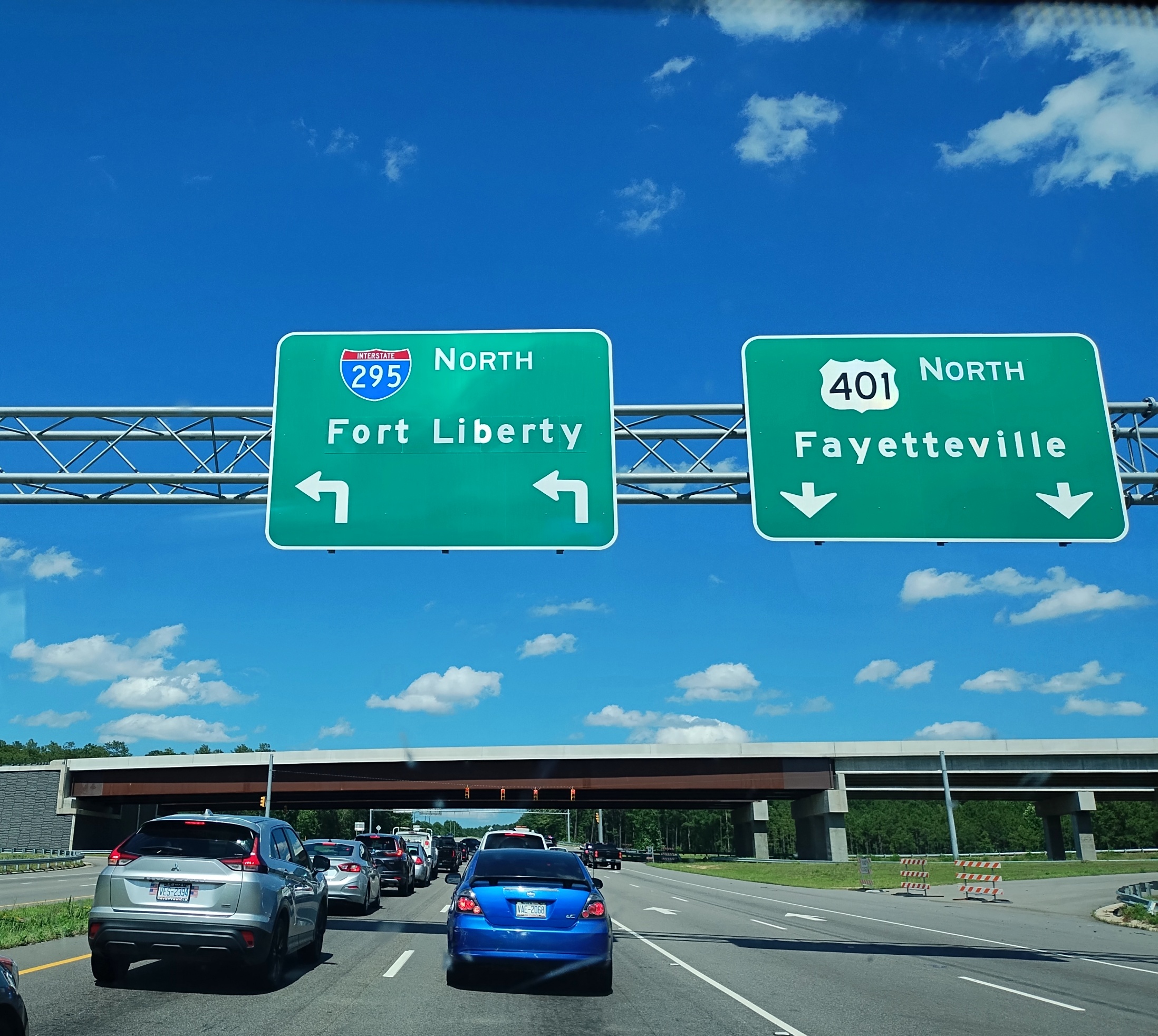
I was stuck momentarily in traffic near the military installation formerly known as Fort Bragg and then known as Fort Liberty and now known again as Fort Bragg. The traffic sign hasn’t caught up with the latest flip-flop.
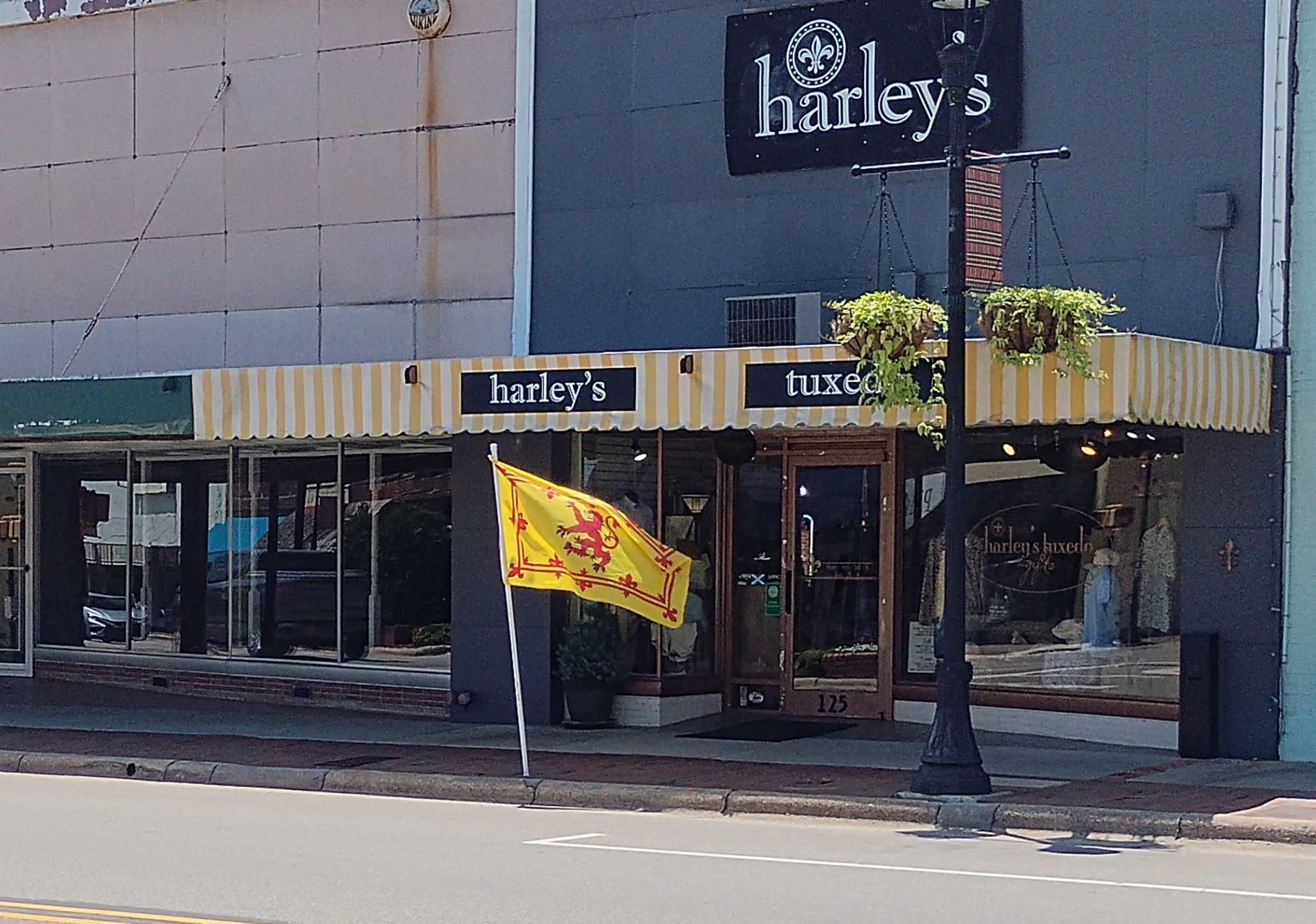
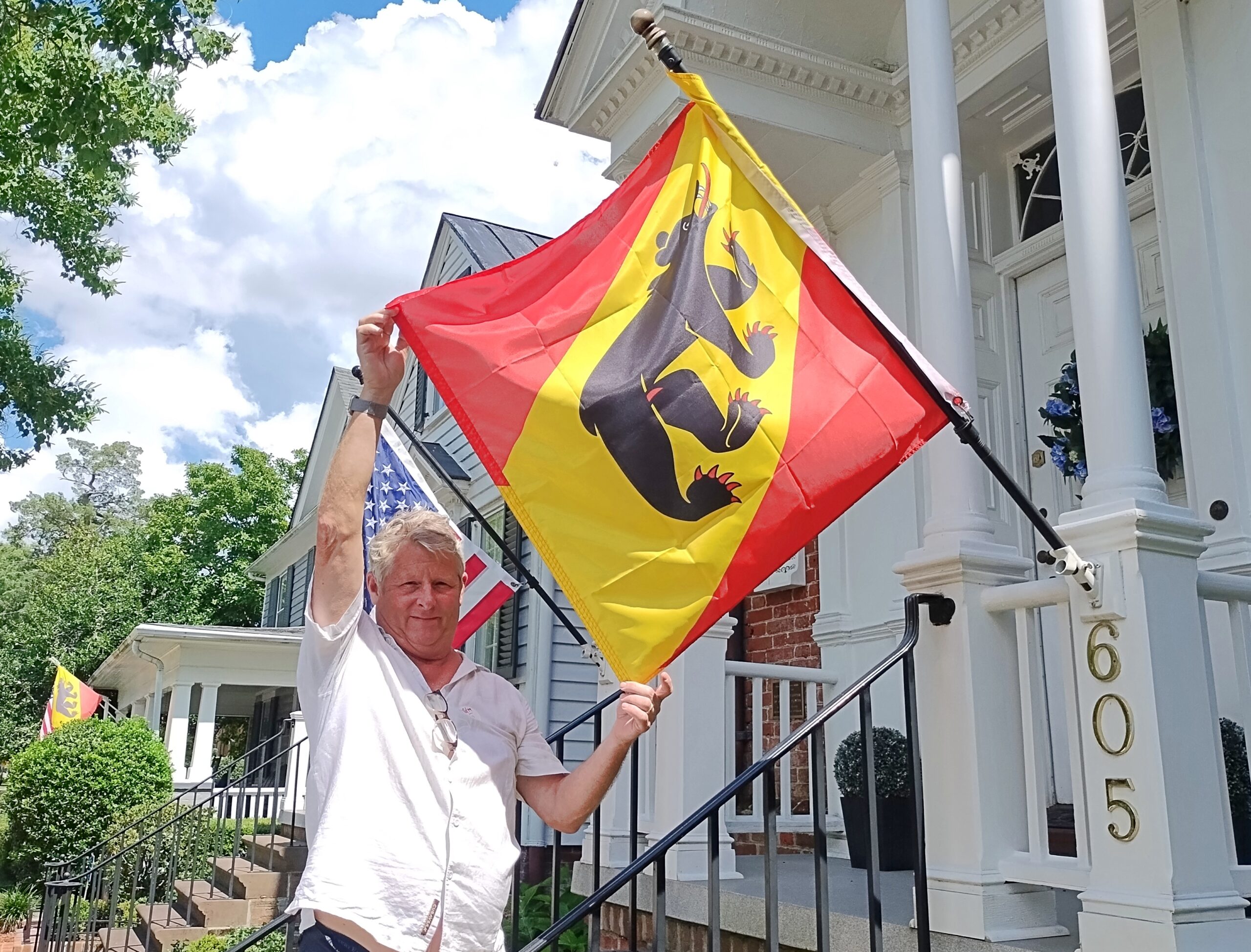
I stopped for lunch in Laurinburg, NC, at a storefront Chinese restaurant. Across the street, a tuxedo shop flew the Royal Banner of Scotland. Not something I’ve ever seen aflutter in the U.S. or anywhere, for that matter. But there is a school called St. Andrews University nearby, so maybe it’s not such a stretch. Make that was — the school closed just this May.
Wiki tells us: “As the personal banner of the Monarch, use of the Royal Banner of Scotland is restricted under the Act of the Parliament of Scotland 1672 cap. 47 and the Lyon King of Arms Act 1867 (30 & 31 Vict. c. 17), and any unauthorised use of such is an offence under the Act.” That has no bearing on its use in North Carolina, I’d say, considering how the Revolution turned out.
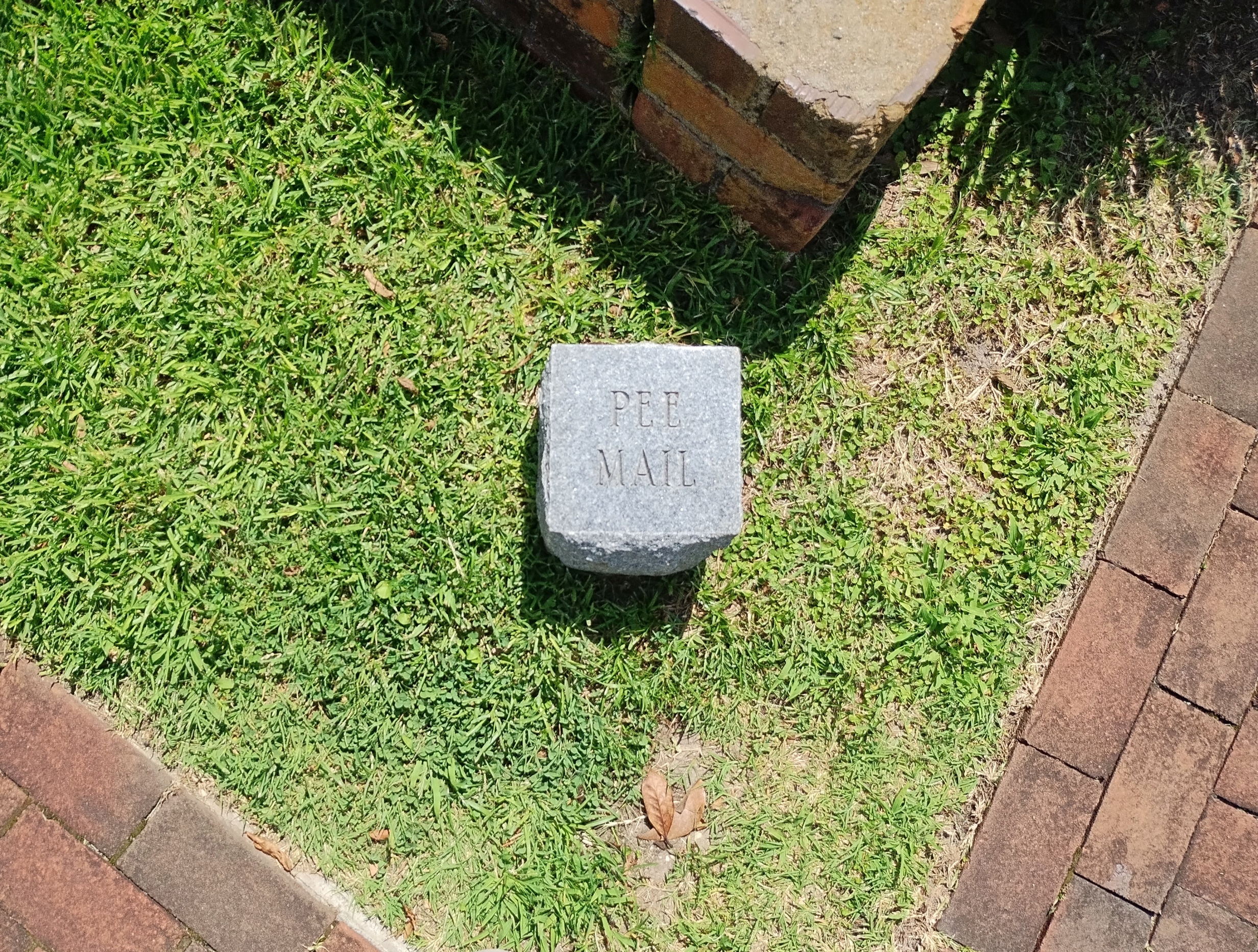
In New Bern, NC, this was a bit of a mystery at first.
Until I figured it out. A place for dogs to leave messages.
I’m no Guy Fieri, but I don’t really need to be to find road food. Besides, he has a staff. I just have Google Maps and my experience and instincts, which sometimes fail me, but more often guide me to cheap, local and delicious. That and word-of-mouth recommendations have led me to a lot of tasty dishes over the years.
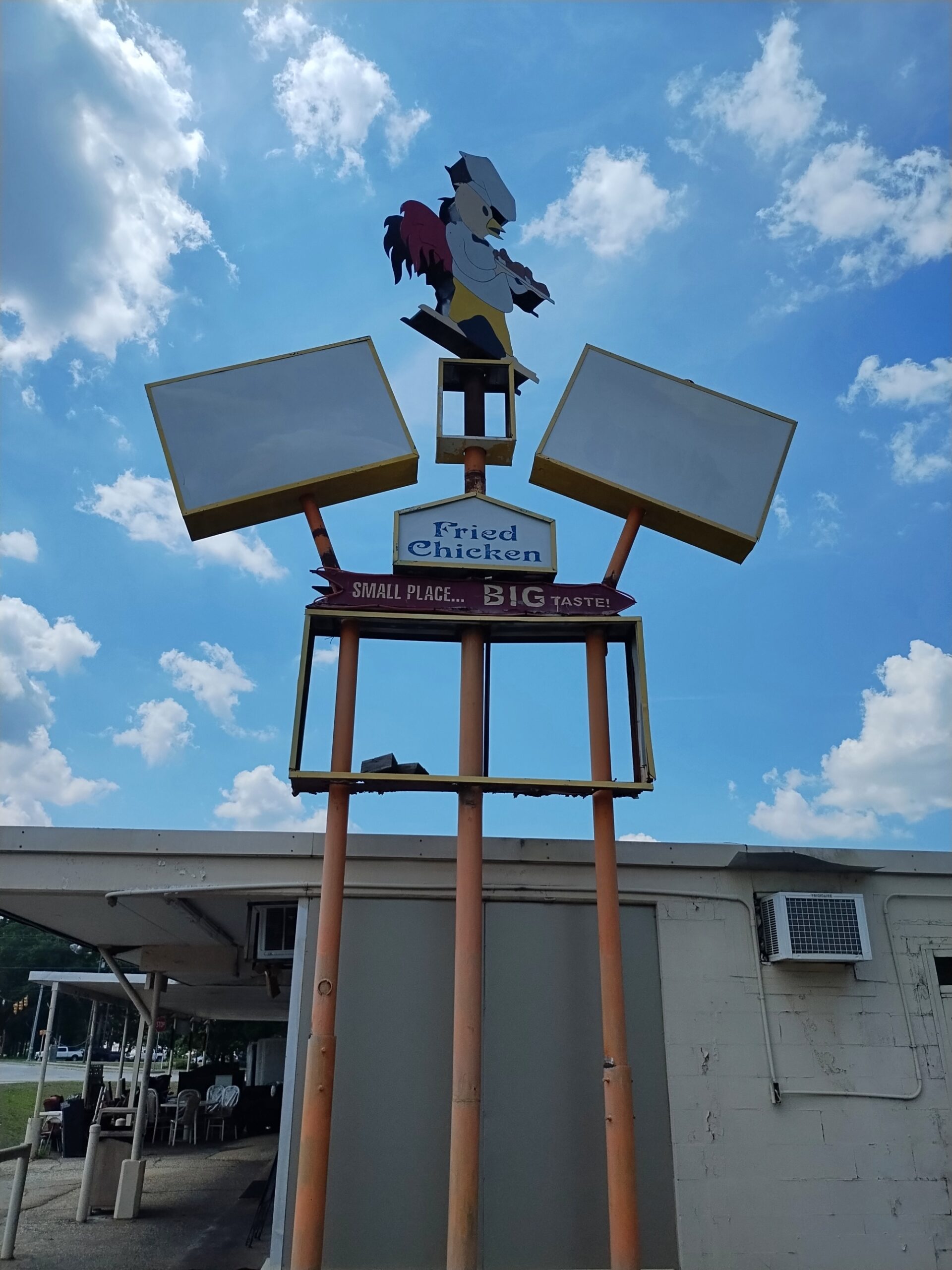
On my recent Southern jaunt, I arrived in Sumter, SC, around lunchtime, and found my way to Korner Shack II. Not that you could tell the name from the sign over the cinder block shack.
I’d happened on a Southern chicken joint, true to that tradition, take out only, and during the few minutes I waited for my order as people came and went — for it was a popular place — I noted I was the palest customer. I ordered a box of chicken livers and fries that I ate partly in a nearby park, and partly in my room that evening. Mildly spiced and well fried, the boxed livers reminded me of the satisfying livers that a Chicago-area Harold’s Chicken would serve. Korner Shack sold me one of the best meals of the trip.
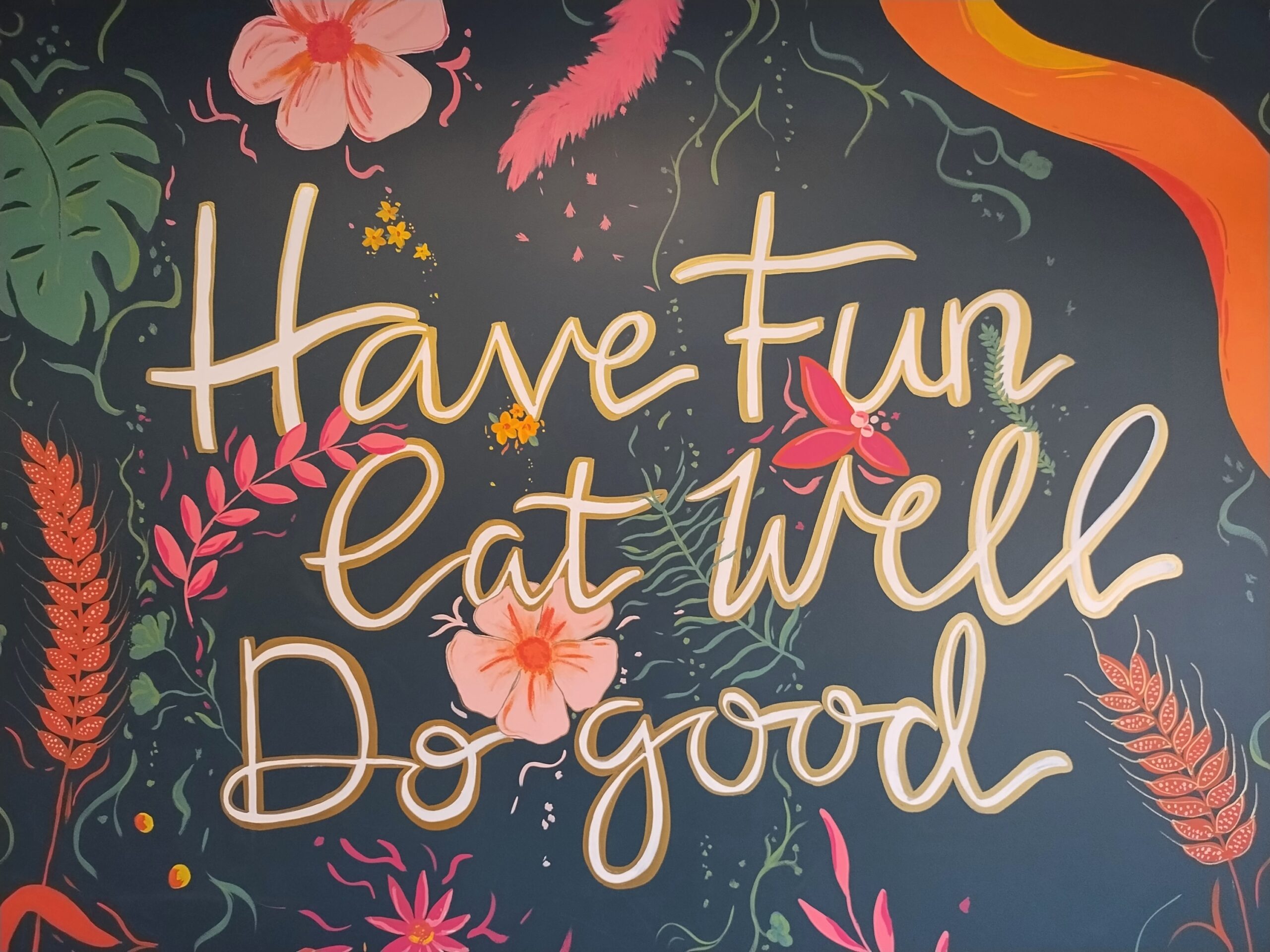
Back in Myrtle Beach, Yuriko and I breakfasted one morning at Winna’s Kitchen, who offers patrons some sunny advice on the wall.
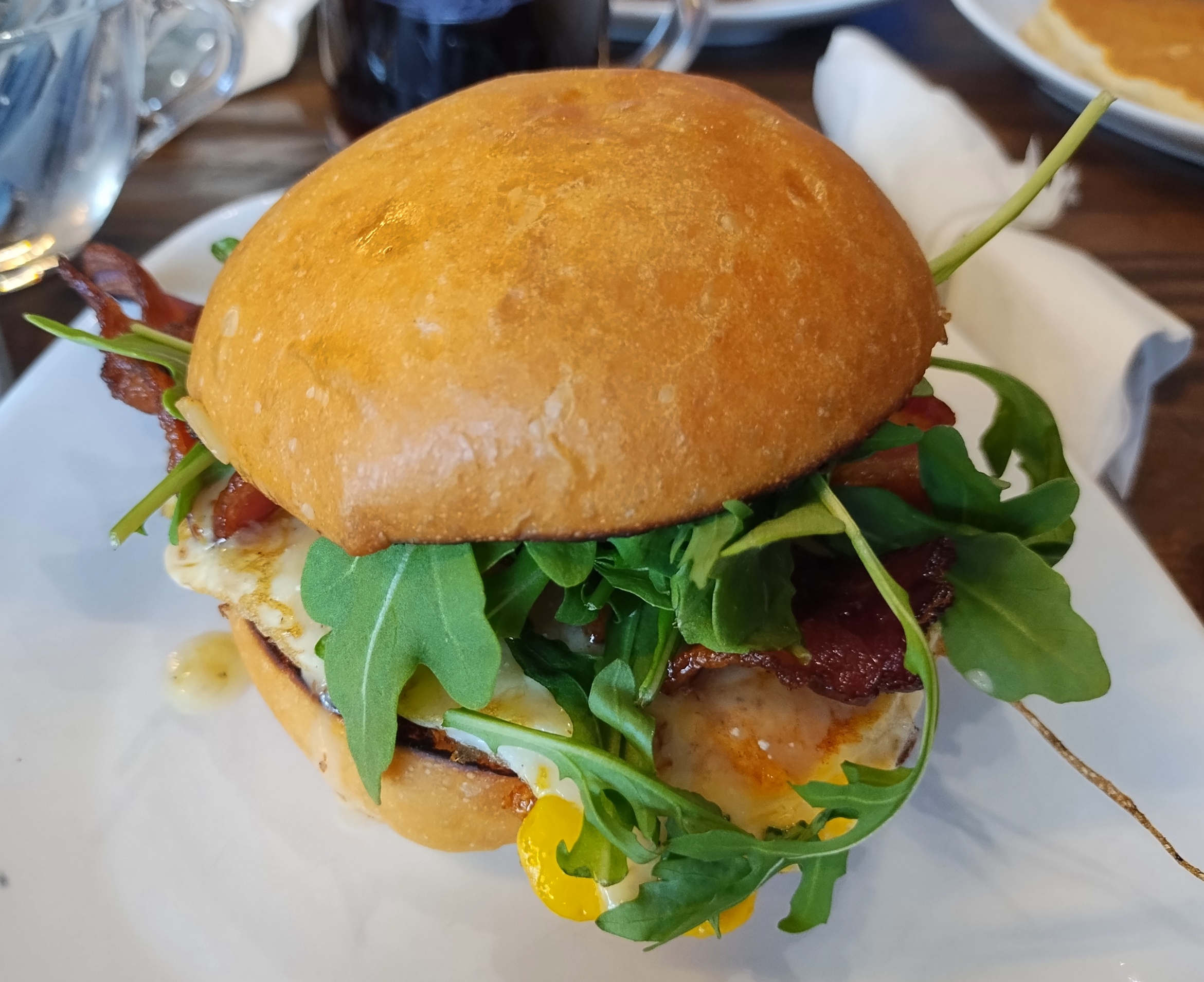
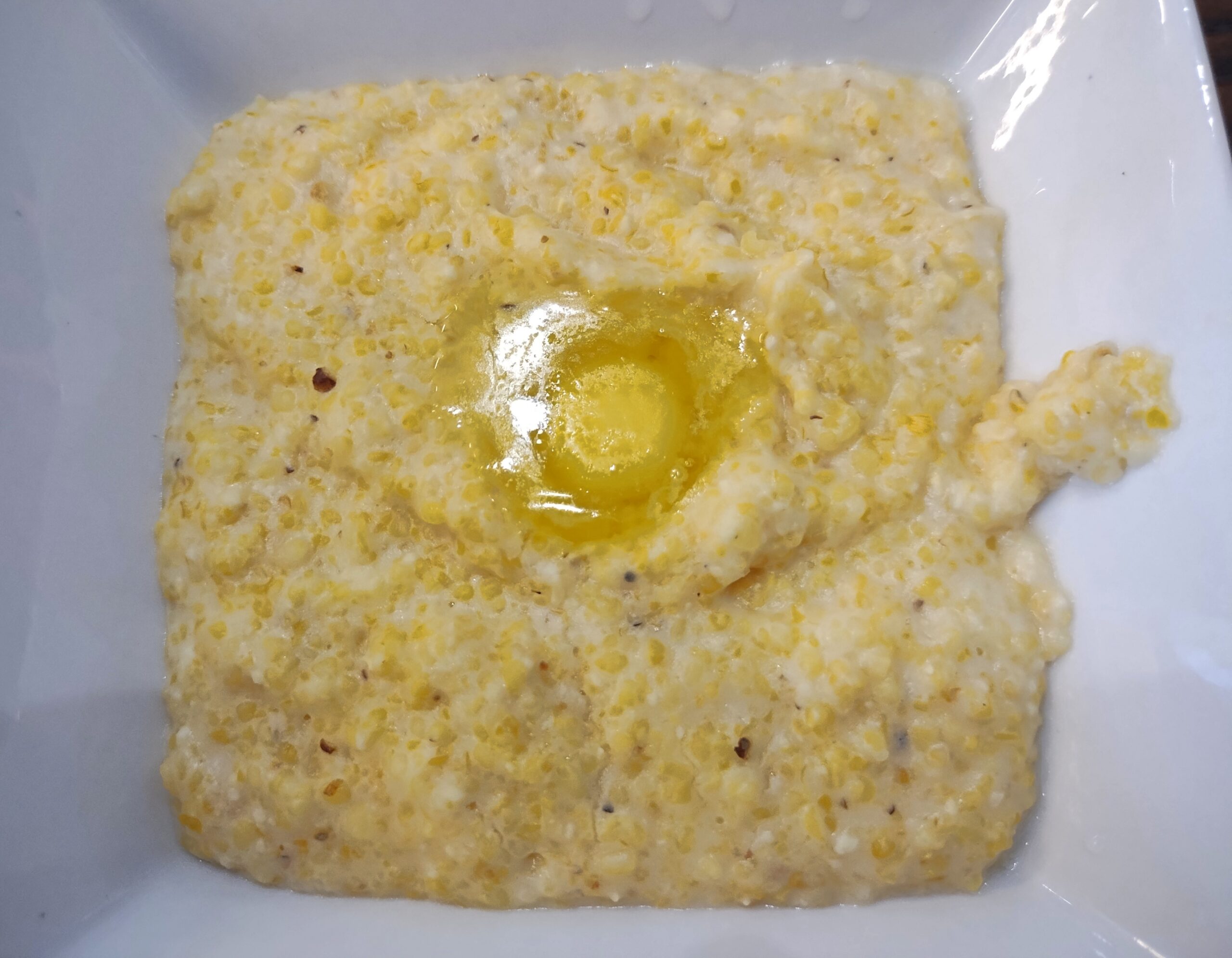
That, and really good food. I had the Whistler – “crispy sausage or bacon, sharp coastal cheddar, a fried egg & lemony-dressed arugula on a homemade bun,” the menu said. With a side of grits.
Superb. Even the buttery grits. At home I usually douse my grits with honey, but butter will do. Experience has taught me that restaurants aren’t always good with grits, but when they are, they can be really good. Winna’s served up some of those really good grits, complementing its really good breakfast sando, though not quite as memorable as the cheese grits I enjoyed at a place in Mexico Beach, Florida, that I believe was washed away by a hurricane some years after I visited in the 2000s.
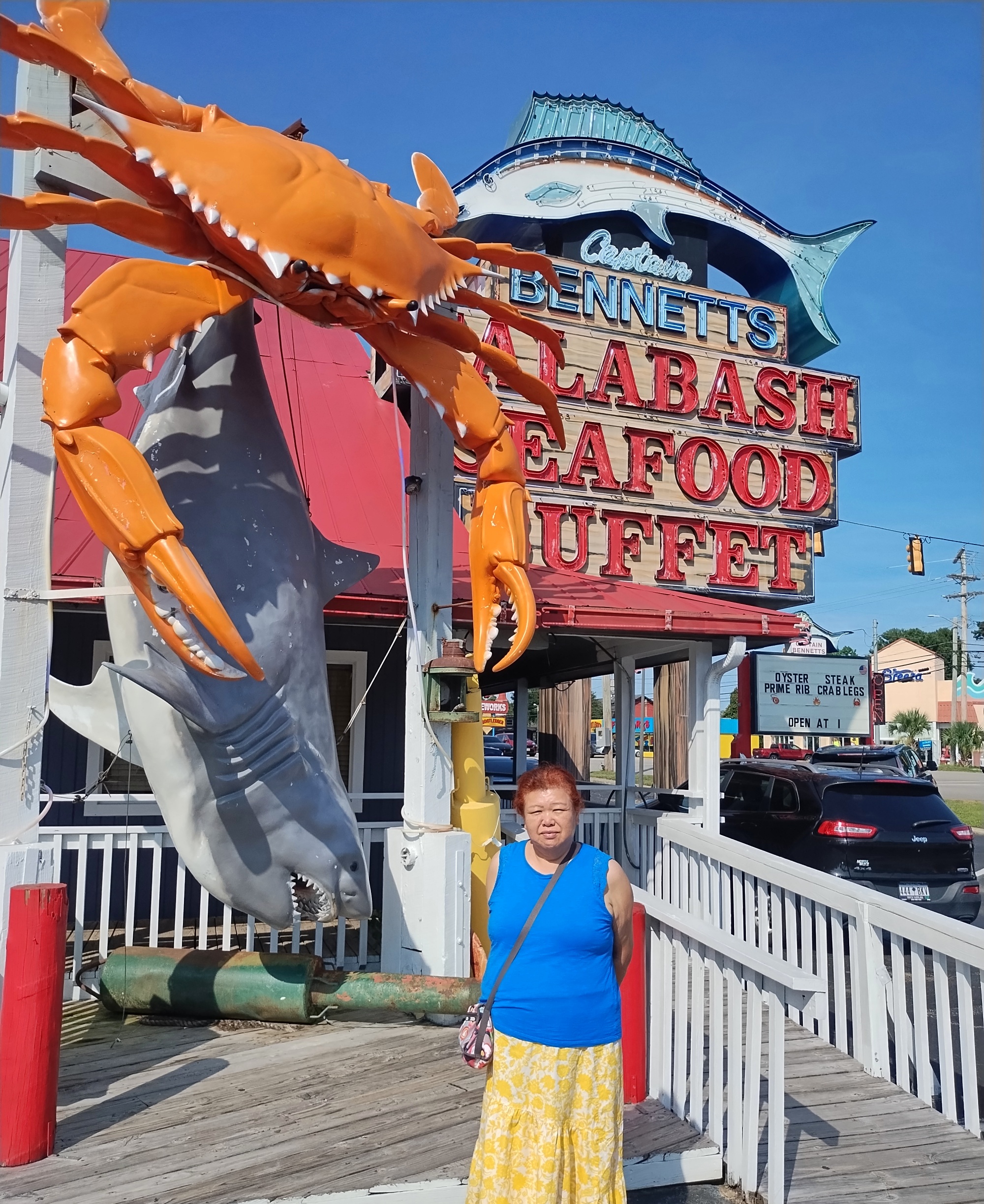
Also in Myrtle Beach: seafood in bulk.
Not the best I’ve ever had, and a little expensive, but satisfying – especially Yuriko’s desire for seafood during a visit anywhere near the sea, true to her Japanese upbringing.
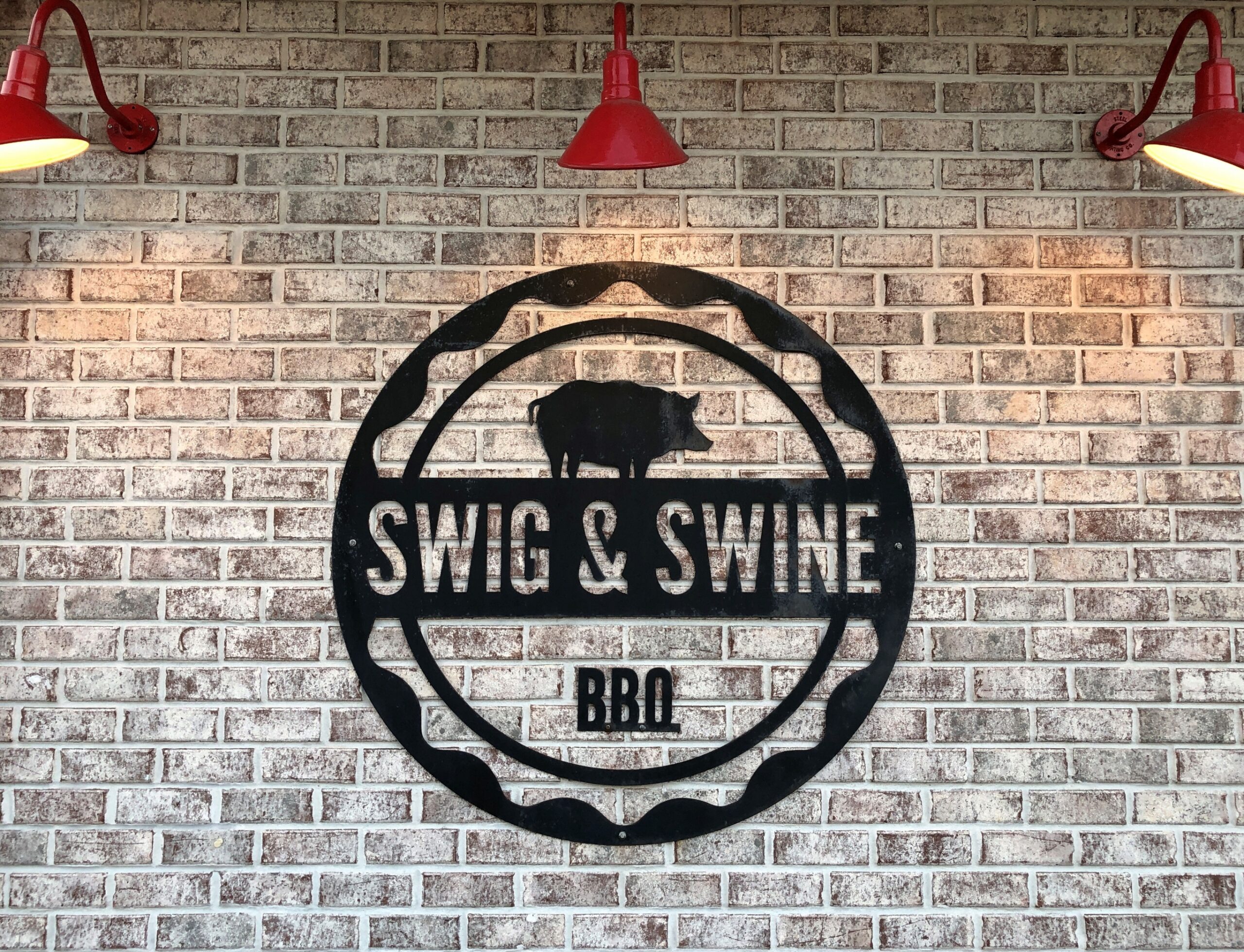
Didn’t have barbecue in MB, but I liked this sign.
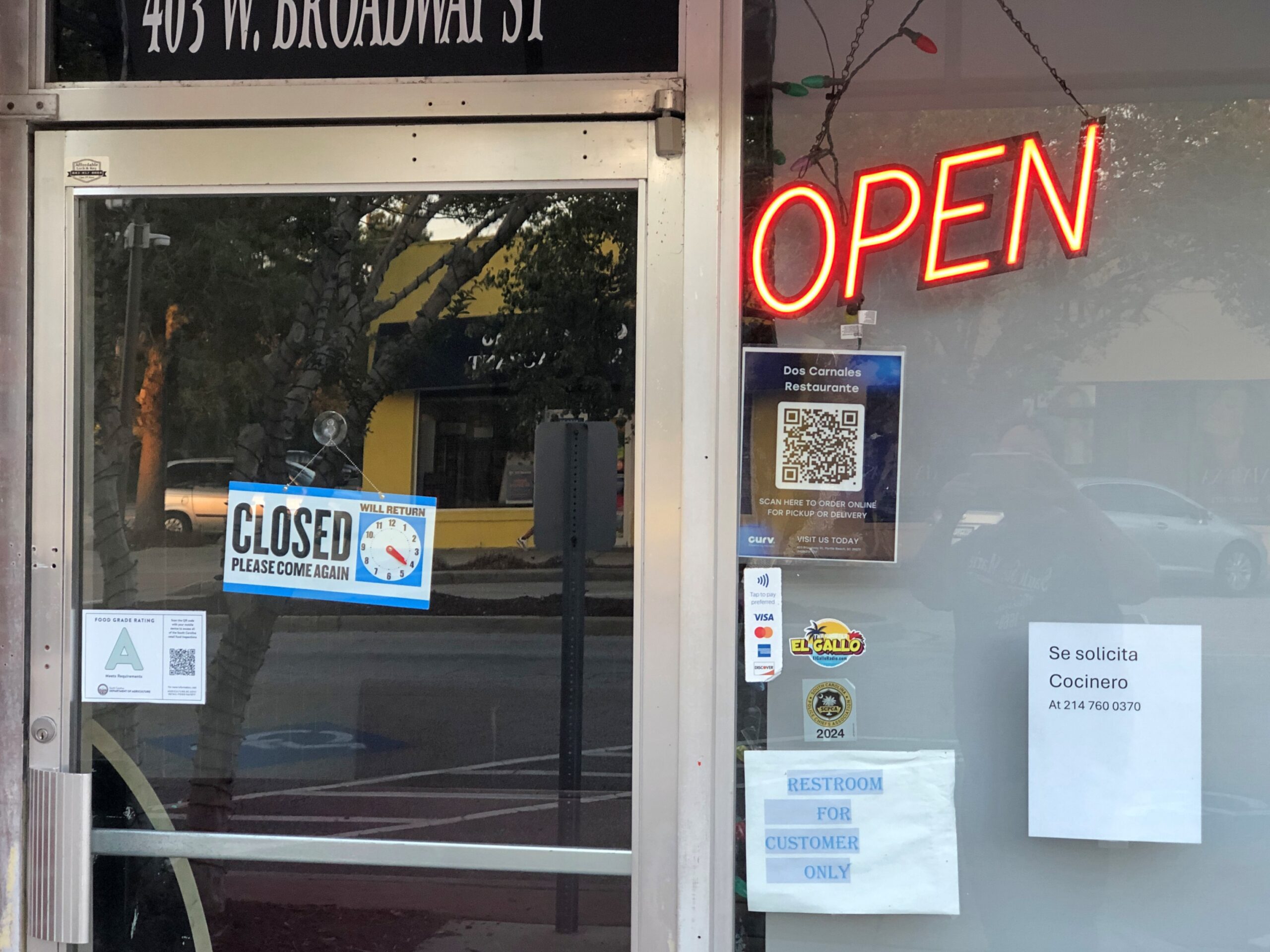
Didn’t eat here either. Call it Schrödinger’s restaurant.
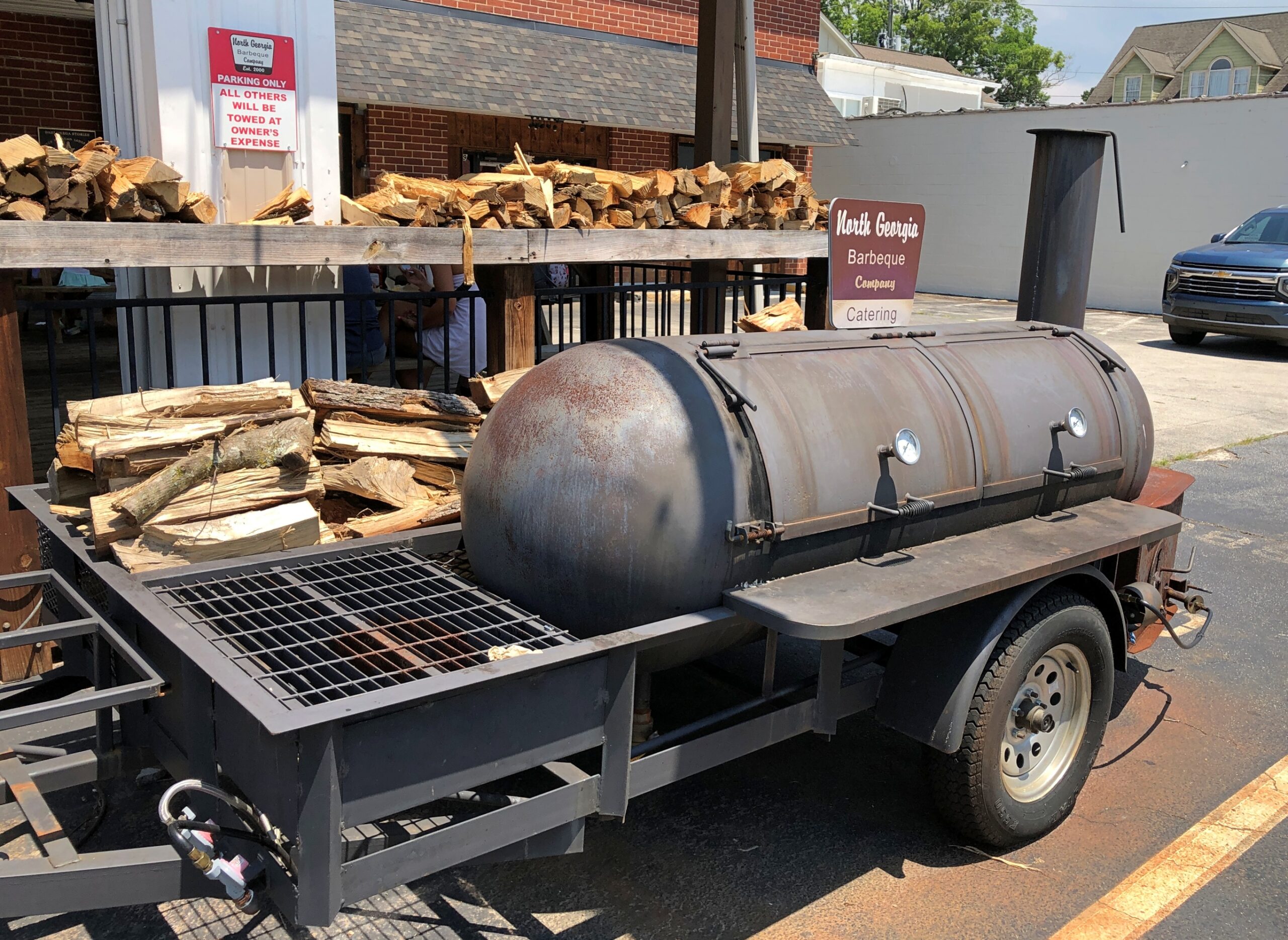
I found barbecue in Georgia. Specifically, Dahlonega. North Georgia Barbecue Co. is a stone’s throw from the Gold Museum and its best advertisement is out front of the restaurant. Good eats inside.
While it’s well and good to support local joints, I’m not a snob when it comes to fast food on the road. Otherwise, how would I know the joy of Mos Burger or have experience with how different cultures interpret something as distinctively American as fast food?
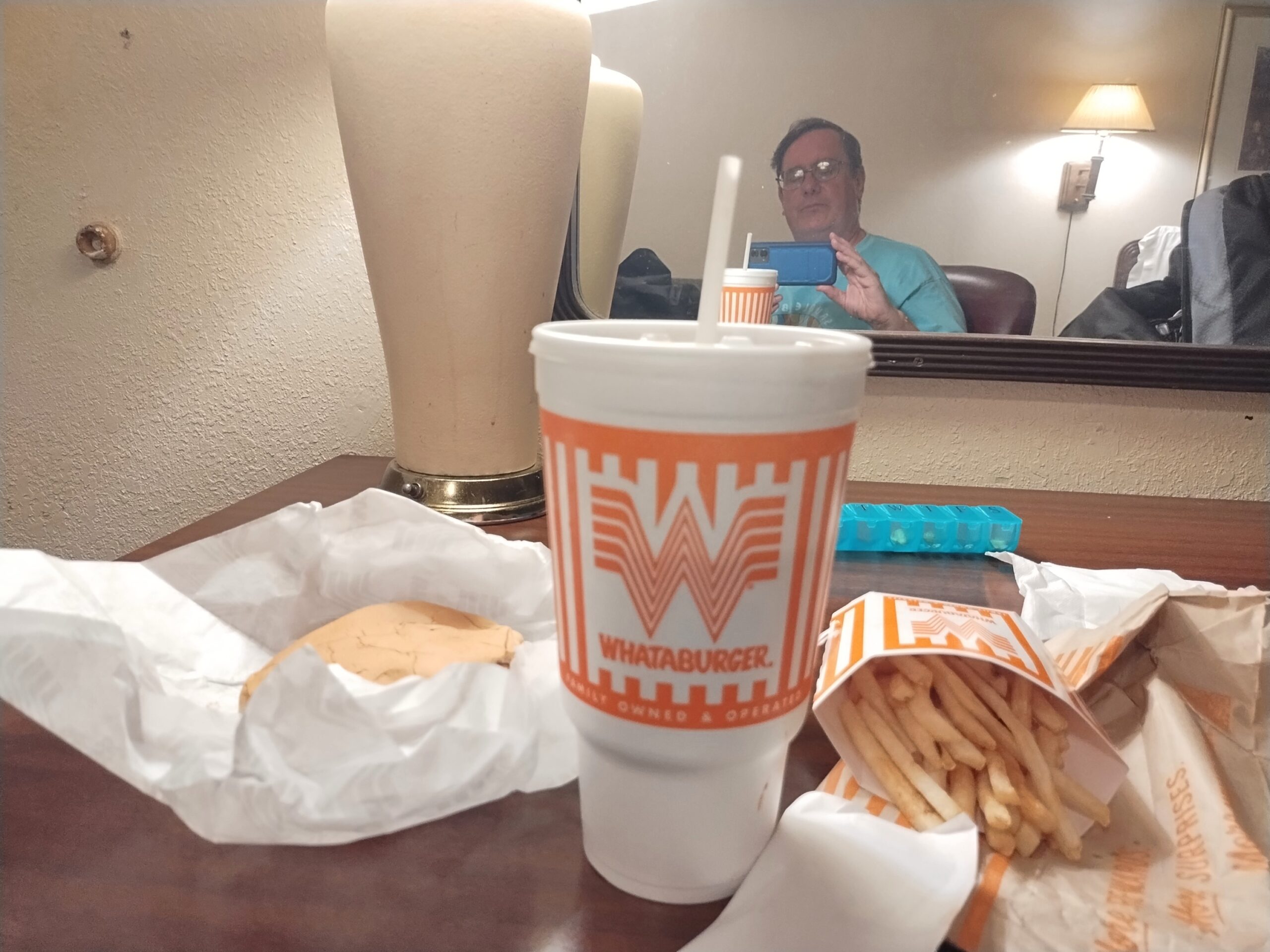
Not long after arriving in Athens, Ga., I spotted a place I associate with Texas. I took a drive-thru order back to the room.
I checked, and the large majority of Whataburger locations are indeed in Texas, but there are others in 16 other states, including 35 in Georgia.
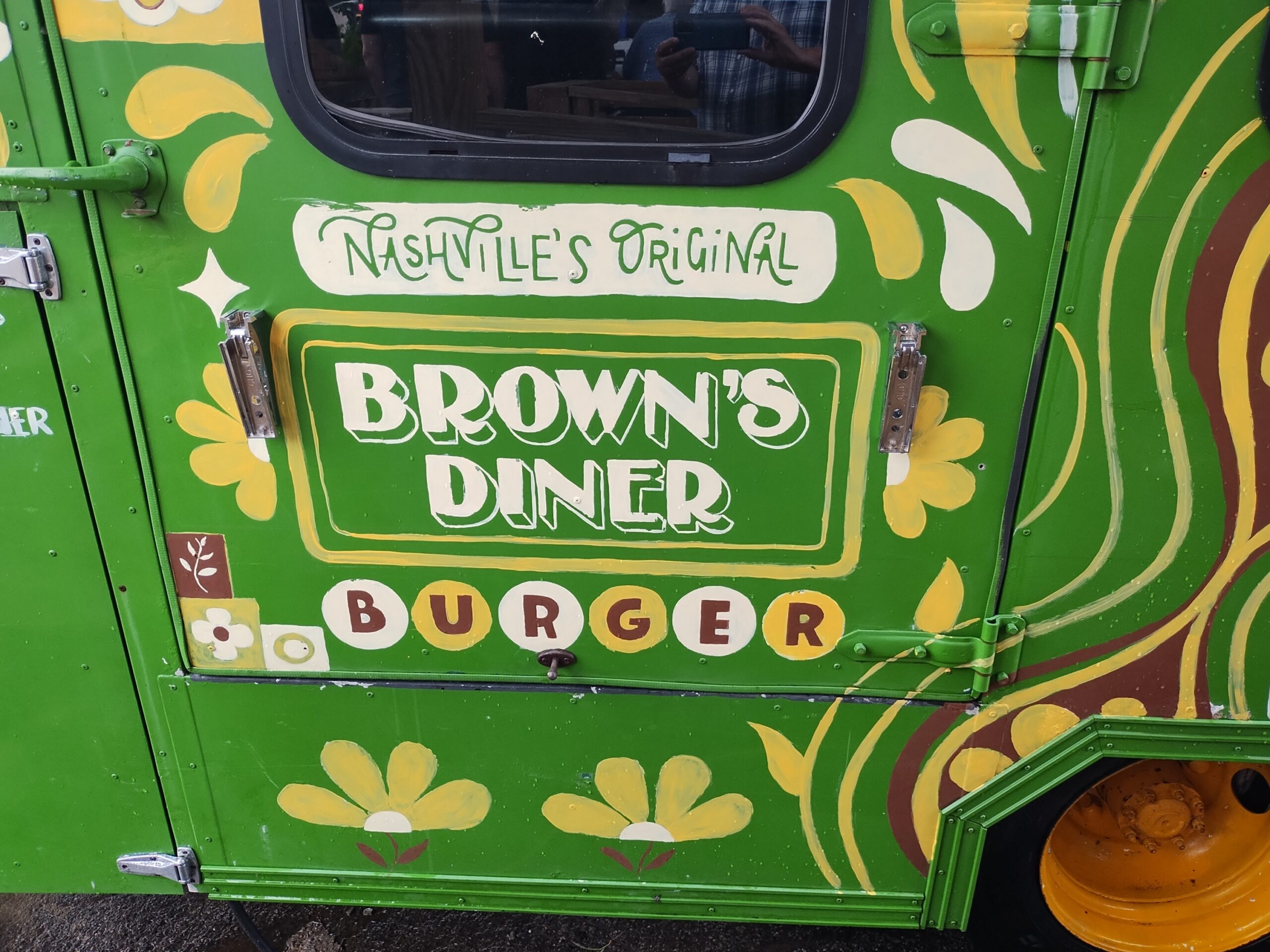
Finally, an old friend among Nashville places: Brown’s Diner.
My friends Stephanie and Wendall treated me to a wonderful homemade meal at their house, so later I treated them to a meal at Brown’s, deep in the heart of Nashville. It is a storied place nearly 100 years old, though expanded since I knew it. I enjoyed a fair number of burgers at Brown’s in the 1980s, but not since, and was a little surprised that it has survived to the present, but glad. I had a Brown’s burger and it all came back to me; and I understood the joint’s longevity.
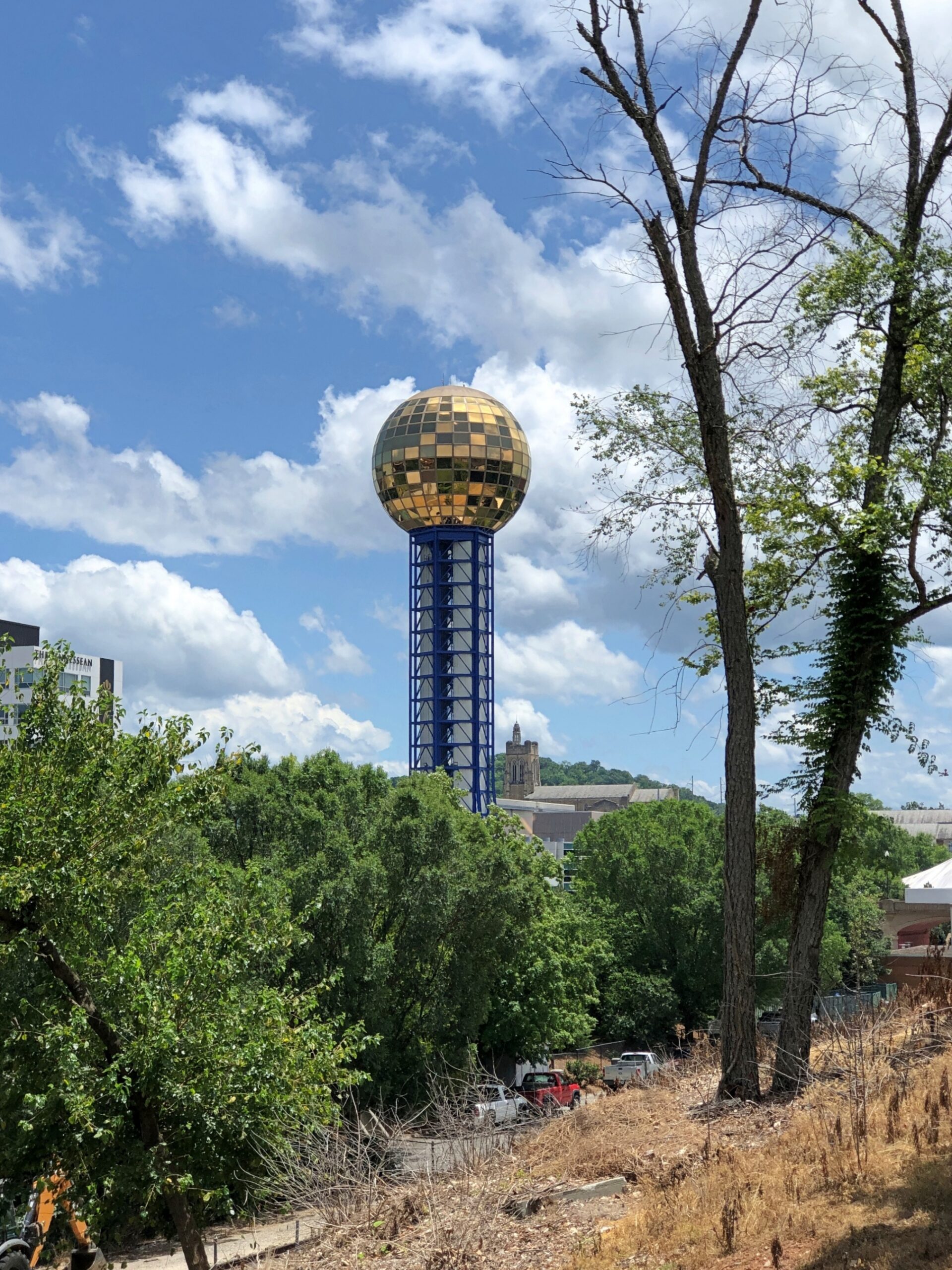
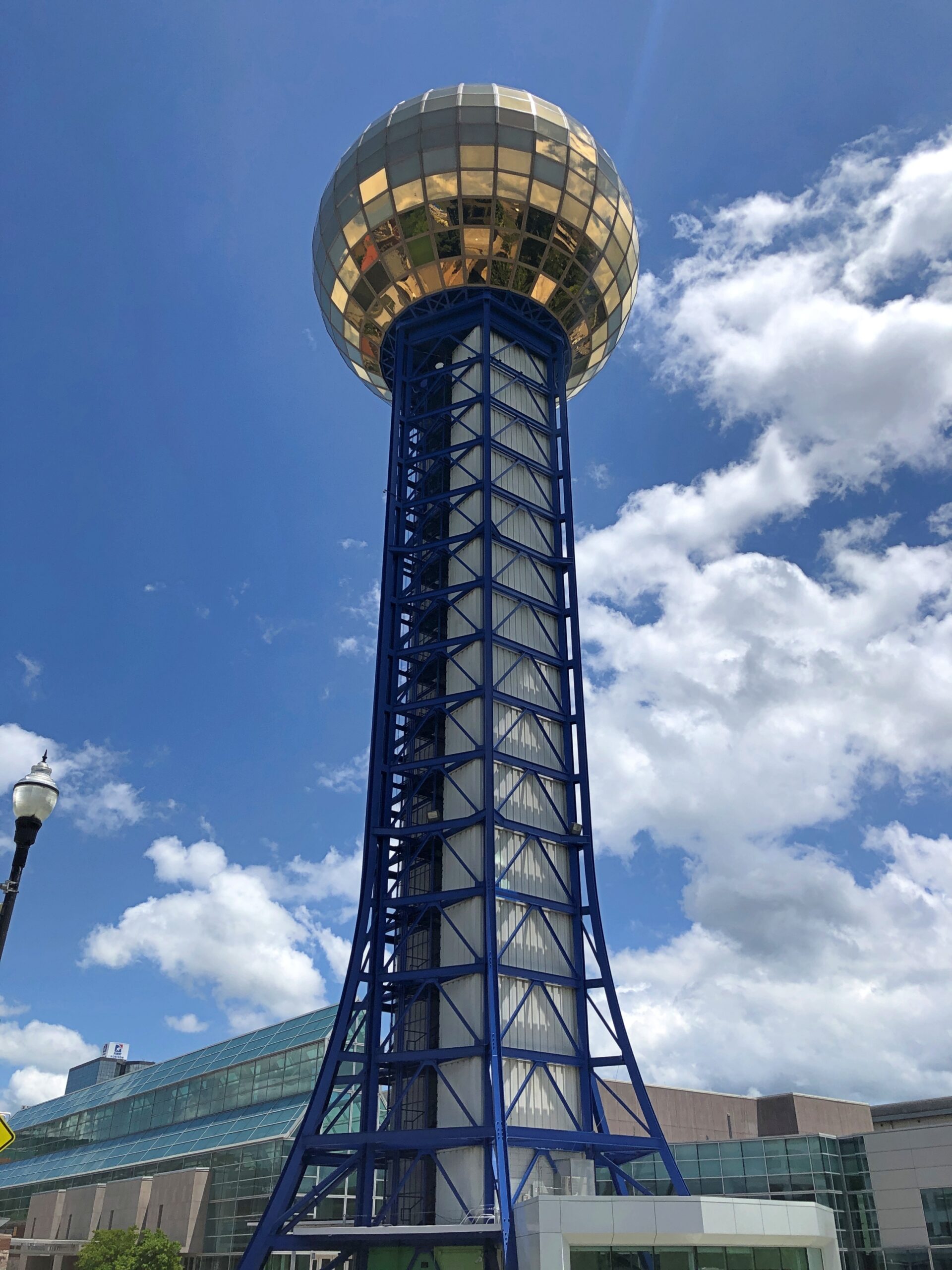
Something was fitting about visiting the Sunsphere on a hot day in June.
There might have been closer places to park near the structure, but I’m a rank novice when it comes to knowing my way around downtown Knoxville. Luckily, the streets weren’t densely packed with traffic, even on a mid-day weekday, so I made my way easily to surface parking about a quarter mile from the tower. Free parking, the best kind.
A quarter-mile isn’t too far to walk, fortunately. But high heat adds strain to the walk. It didn’t rise to the level of an ordeal, just discomfort, with my head toasty under a hat and my throat irrigated from time to time with bottled water. People might not believe it, but discomfort is an essential ingredient to a good trip. Not unremitting discomfort, just intermittent bursts.
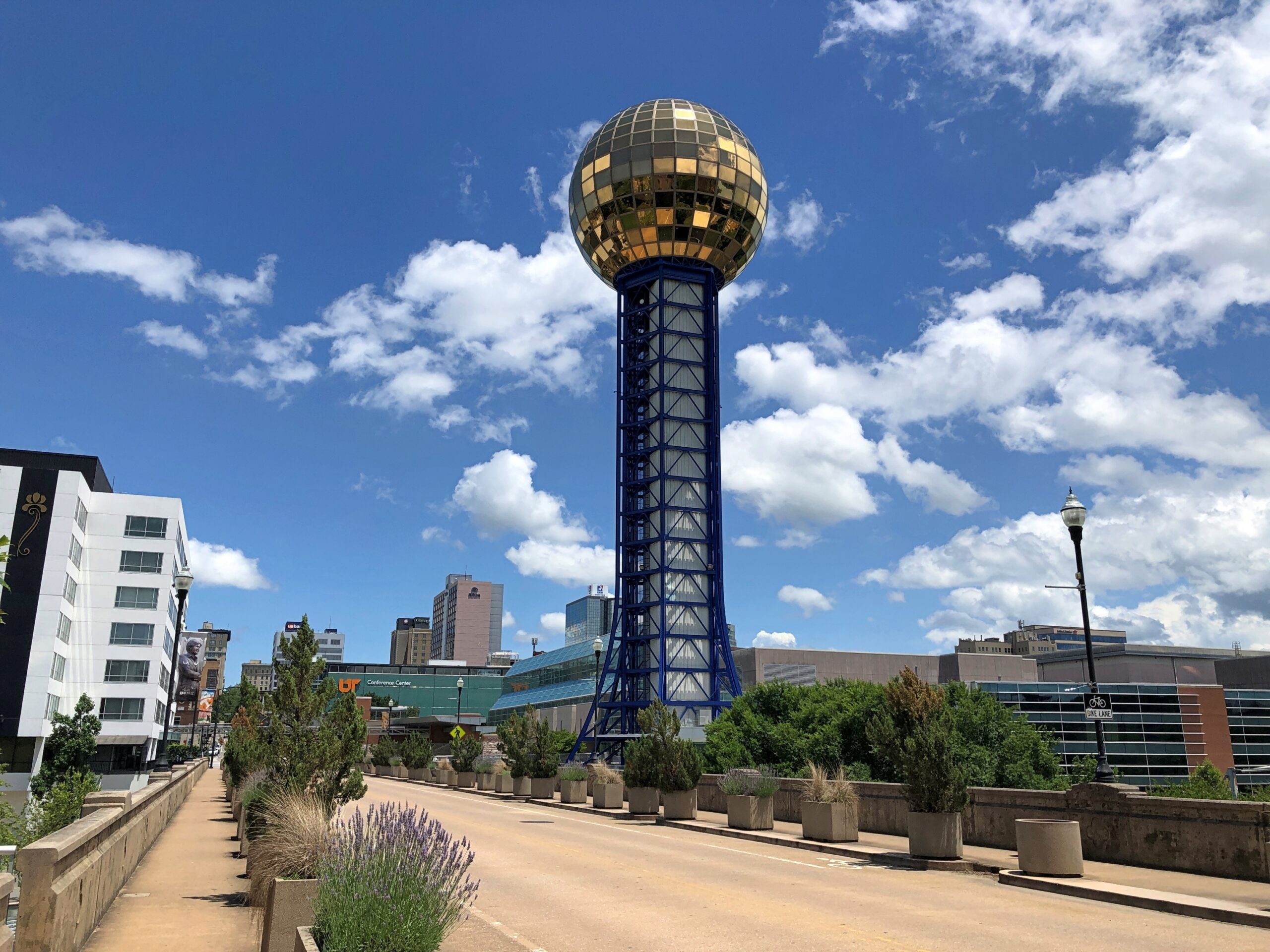
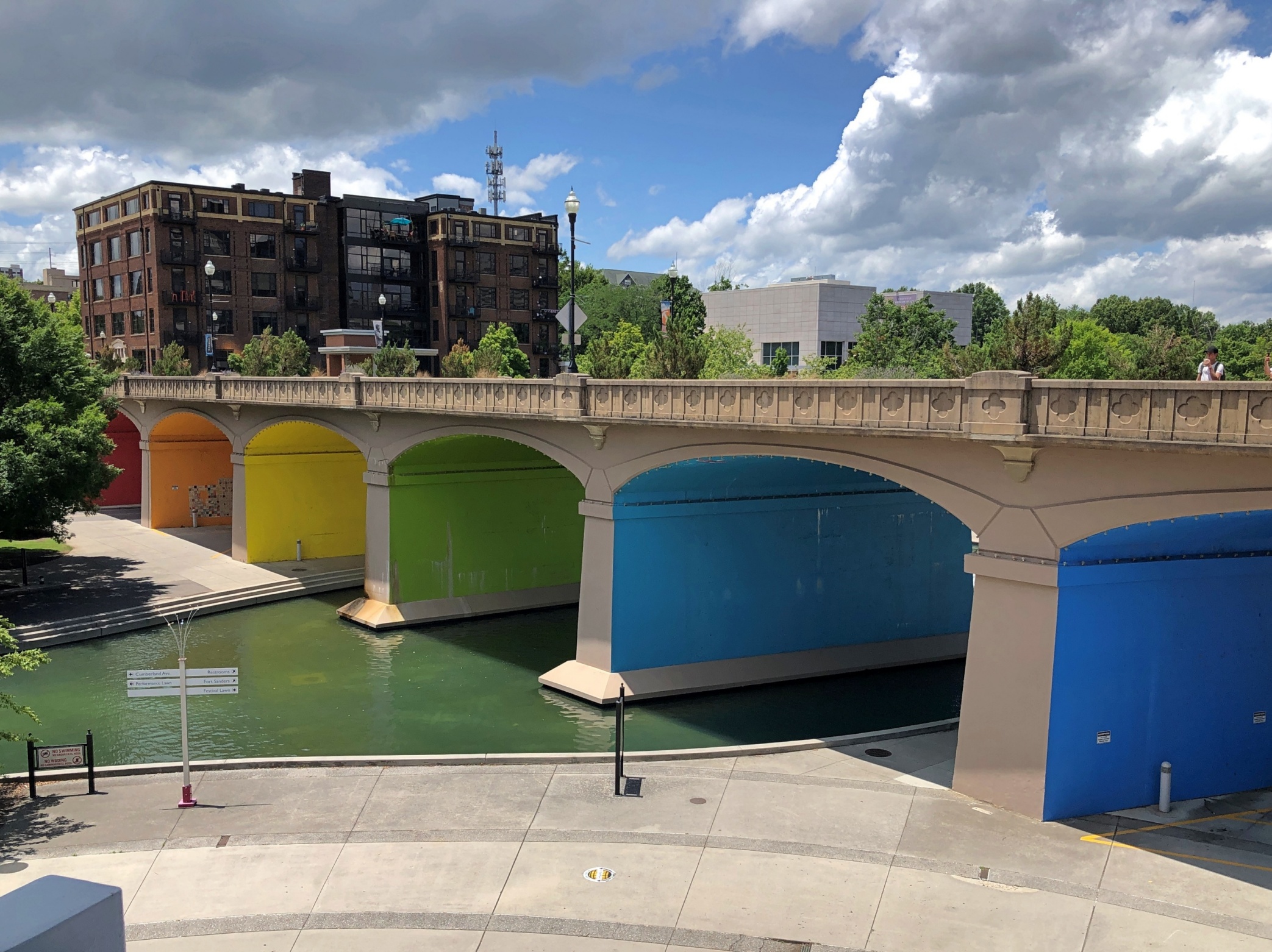
From the parking lot, I followed a street to a corner, rounding to a view of the tower on the other side of the Henley Street Bridge. An ideal sort of bridge for pedestrians, actually, one that carries not only cars but has generous sidewalks, demarked by sizable planters.
The bridge from the other side, just under the Sunsphere. Good work. The colors are a nice touch.
A highly visible legacy of the Knoxville International Energy Exposition, that is, the 1982 World’s Fair, the Sunsphere abides as a goldish homage to Sun. At least, that was the idea that fair organizers (or their publicists) came up with. For an expo about energy, the centerpiece would be the source of all energy here on Earth, though not solar energy per se, certainly not in the early ’80s.
Why Knoxville? Why not? By then worlds fairs were passé anyway, and were regarded with indifference by most Americans. Such as my college-age self, and all my friends as well. More importantly for anyone thinking about organizing one, they tended to be money pits.
I’m of two minds about the decline of worlds fairs. One, tastes change, with information and experiences so widely available that a fair can’t compete, and so what? But I also think there’s much to be said for going places and seeing real physical things. Obviously I think that. Especially as opposed to losing yourself in a slender electronic box.
I’d come that day, passing through Knoxville from Nashville and en route to Charlotte, not just to see the Sunsphere exterior, but to ride the elevator to its observation deck and take in the view, roughly 300 feet up. I’d blown off seeing the fair 40+ years ago, but I wasn’t going to miss its shiny legacy on this trip if I could help it.
I’m glad to report that the interior of the Sunsphere is climate controlled. Also, admission is $10. If by magic the Sunsphere could relocate to any of the much larger U.S. metros, base admission might be three times that much, with a skip-the-line option for an extra fee. The structure is part of Knoxville’s World’s Fair Park, and I’d like to think that park authorities are holding the line on tourist inflation, but I’m sure it’s just what the market will bear.
A Knoxville architect named Don Shell, working for Community Tectonics in the early 1980s, led the design effort. “Much of the work involved structural engineering details, and Community Tectonics sought the consultation of Stan Lindsey and Associates in Nashville,” the Knoxville News Sentinel reported.
“Shell recalled that Lindsey used a new piece of equipment with which most architects at that time were unfamiliar — a computer. Problems were also encountered in trying to find gold-colored glass to represent the sun. In fact, the Rentenbach contracting firm checked with about 60 businesses before locating a company in New Jersey that would manufacture the pieces, Shell said.”
Actual gold is mixed in the glass, in what has to be minute amounts. Always useful, that element gold.
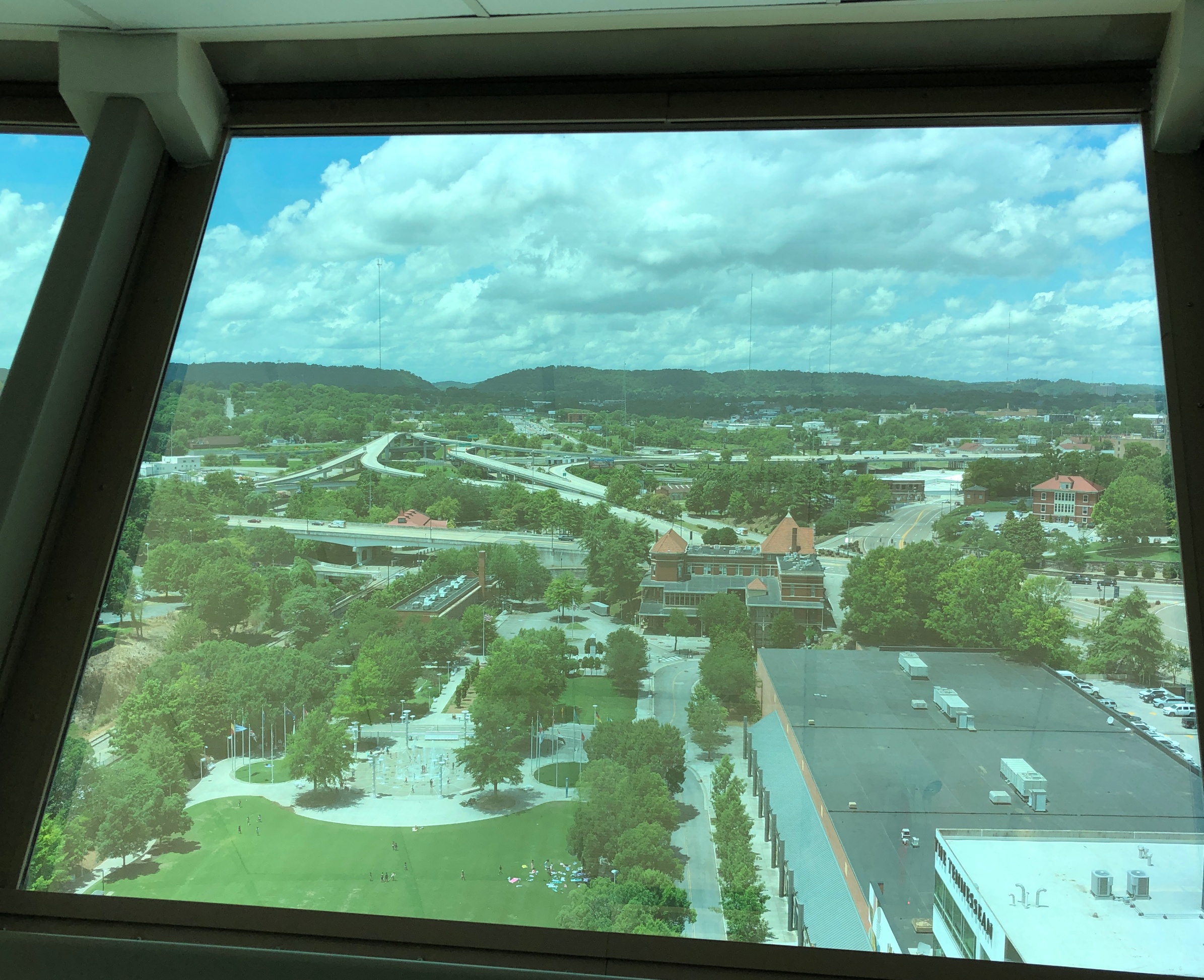
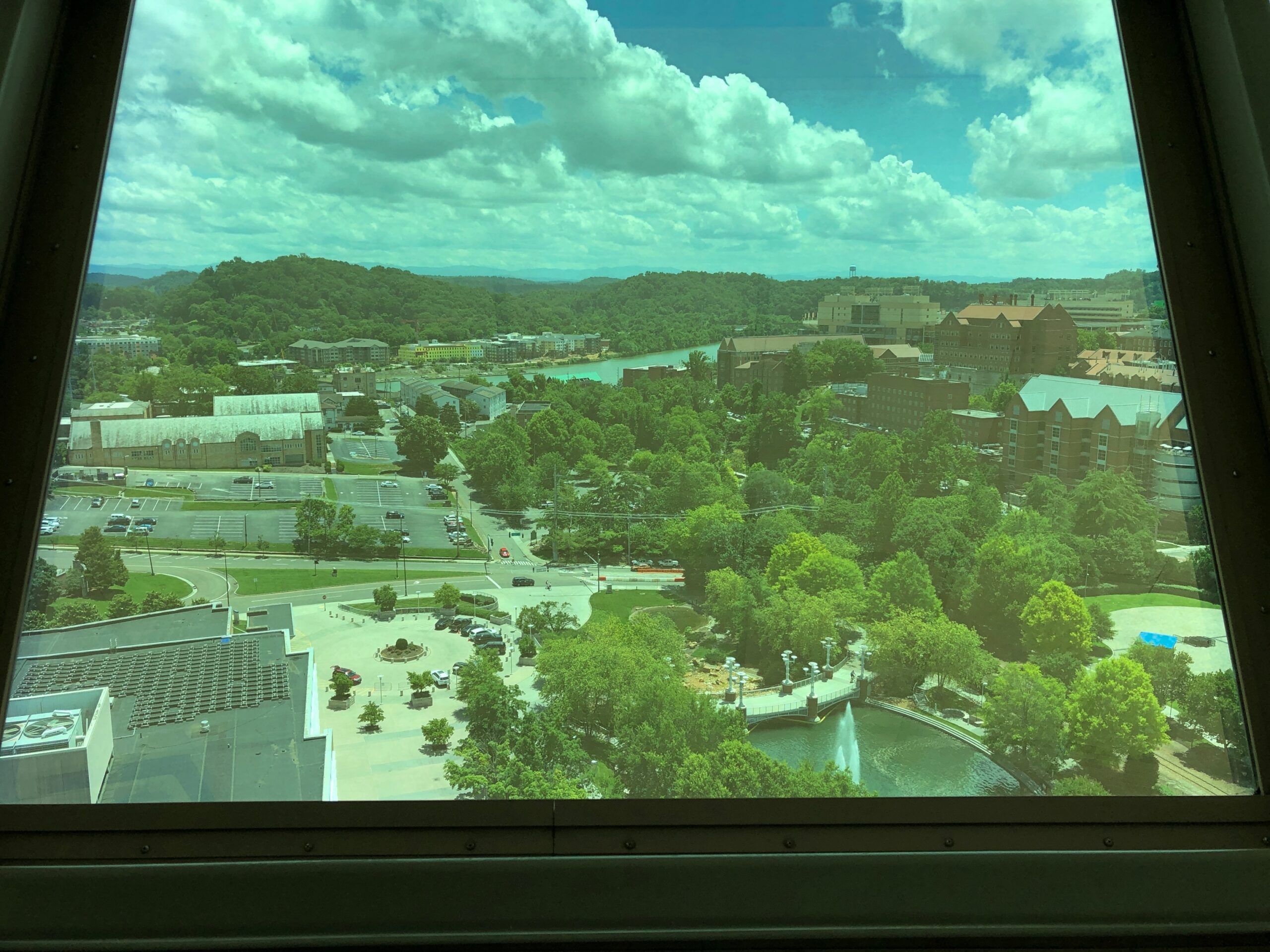
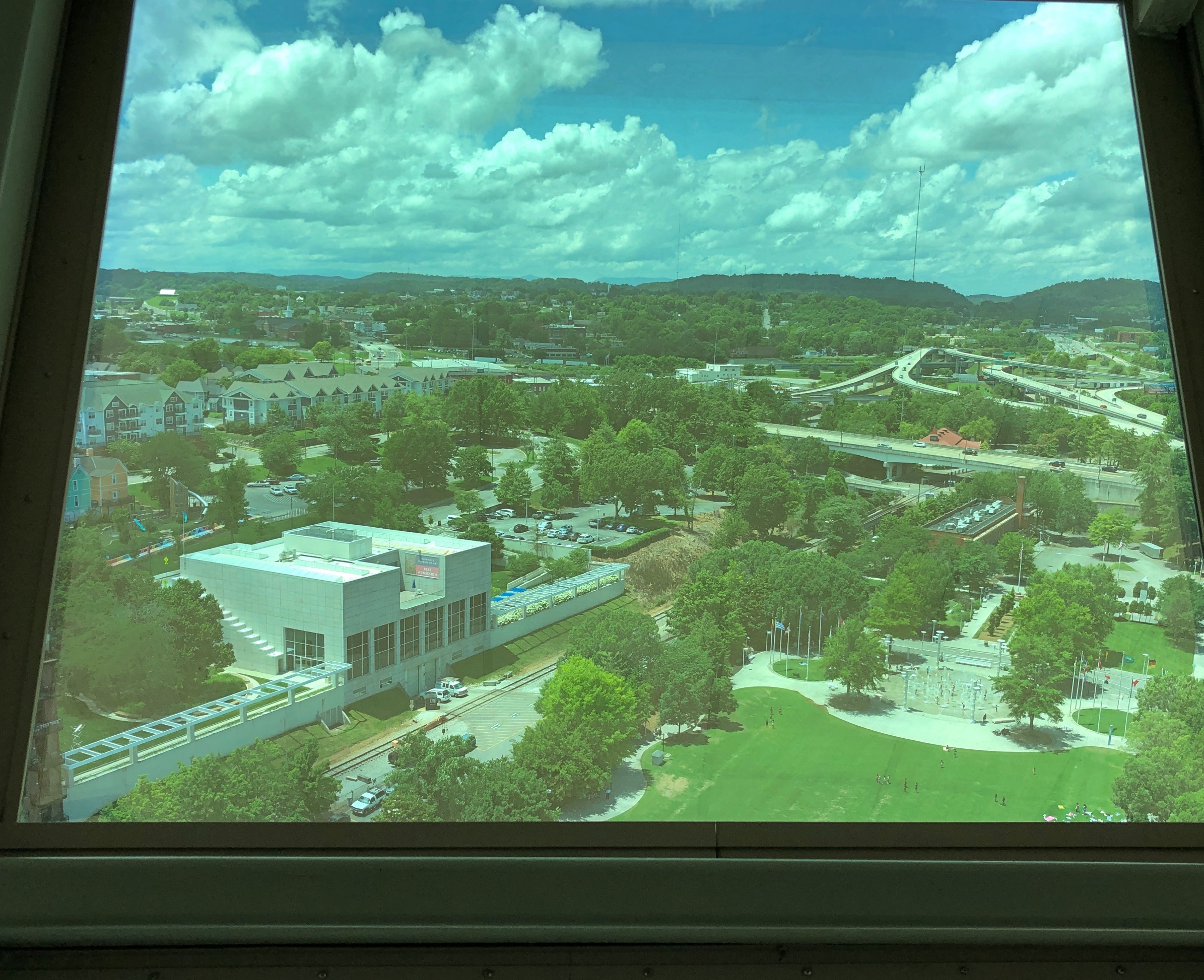
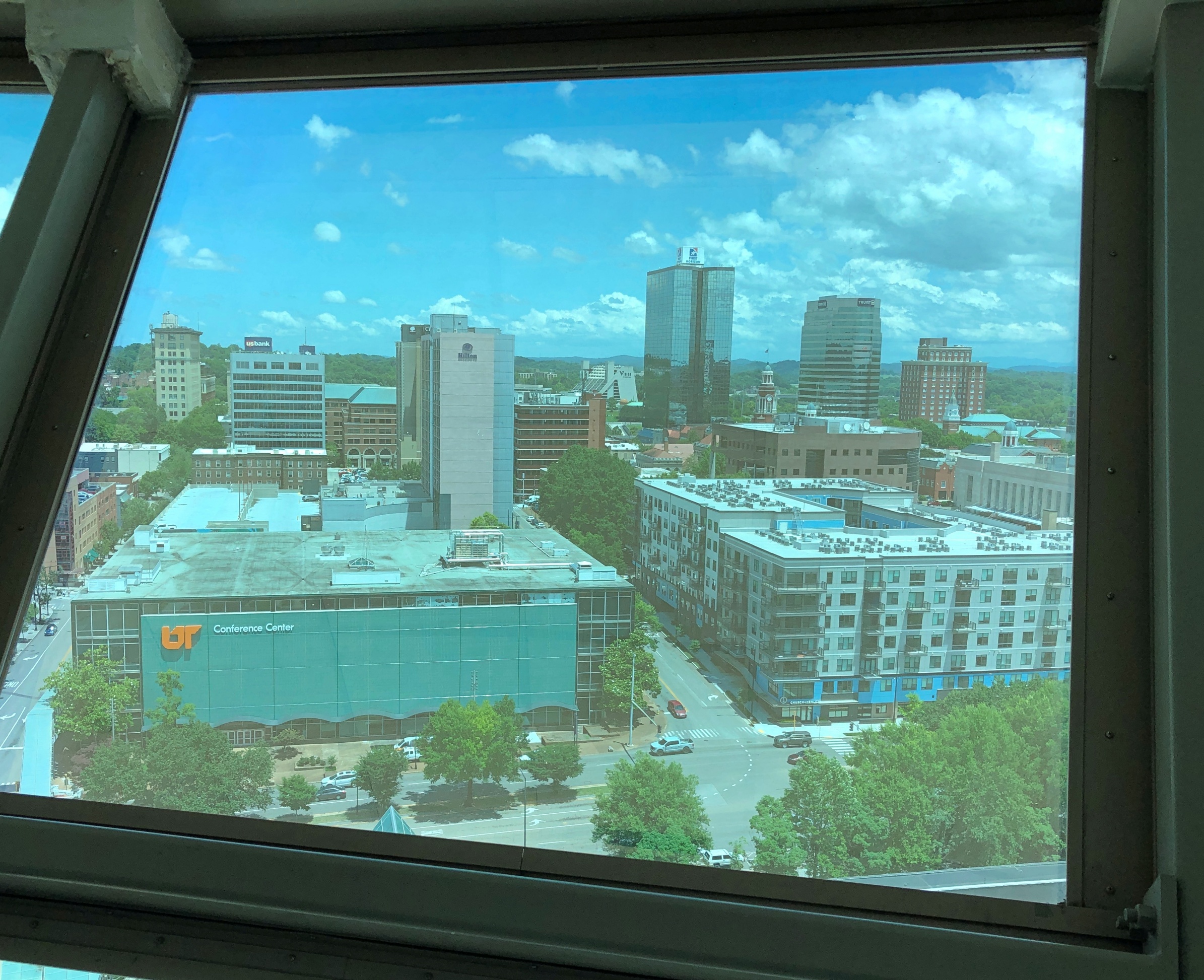
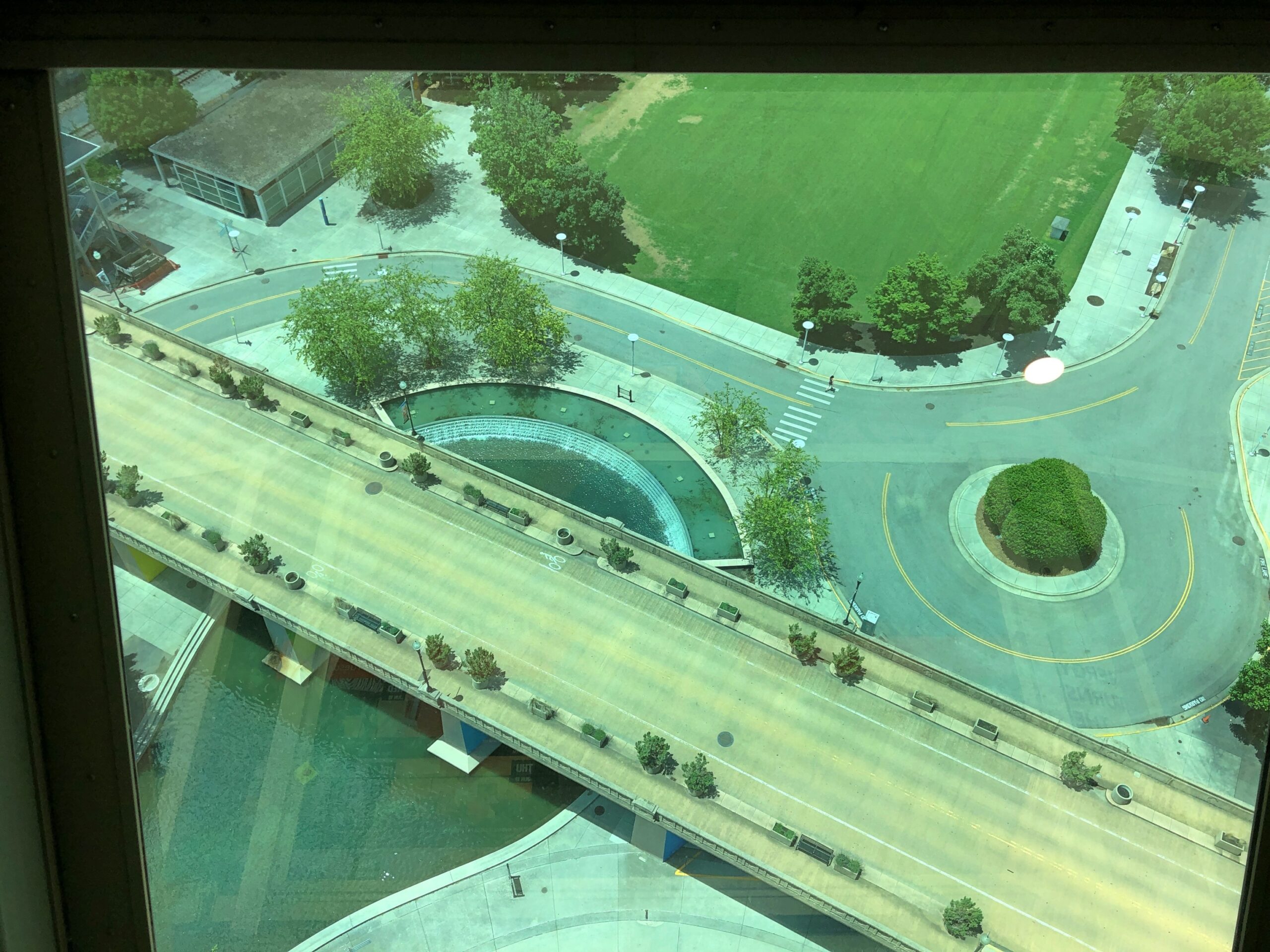
The observation deck is on the bottom half of the sphere, with 360-degree views of the terrain behind the gold-colored glass. In the images I made, that has the effect of bluing everything, creating the illusion that maybe the images are mid-century slides that have been tucked away unseen since then. Of course, these vistas didn’t exist in the mid-century, but never mind.
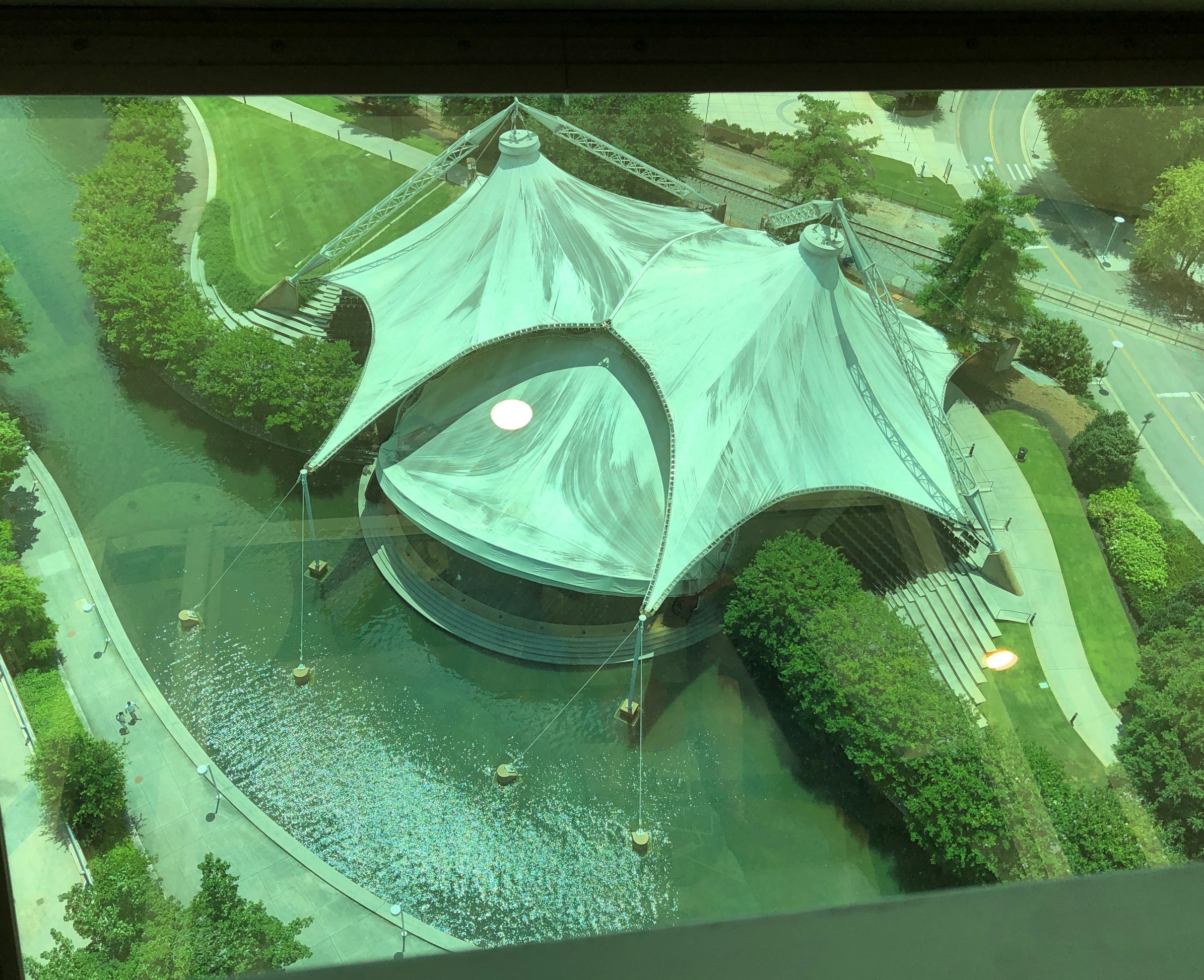
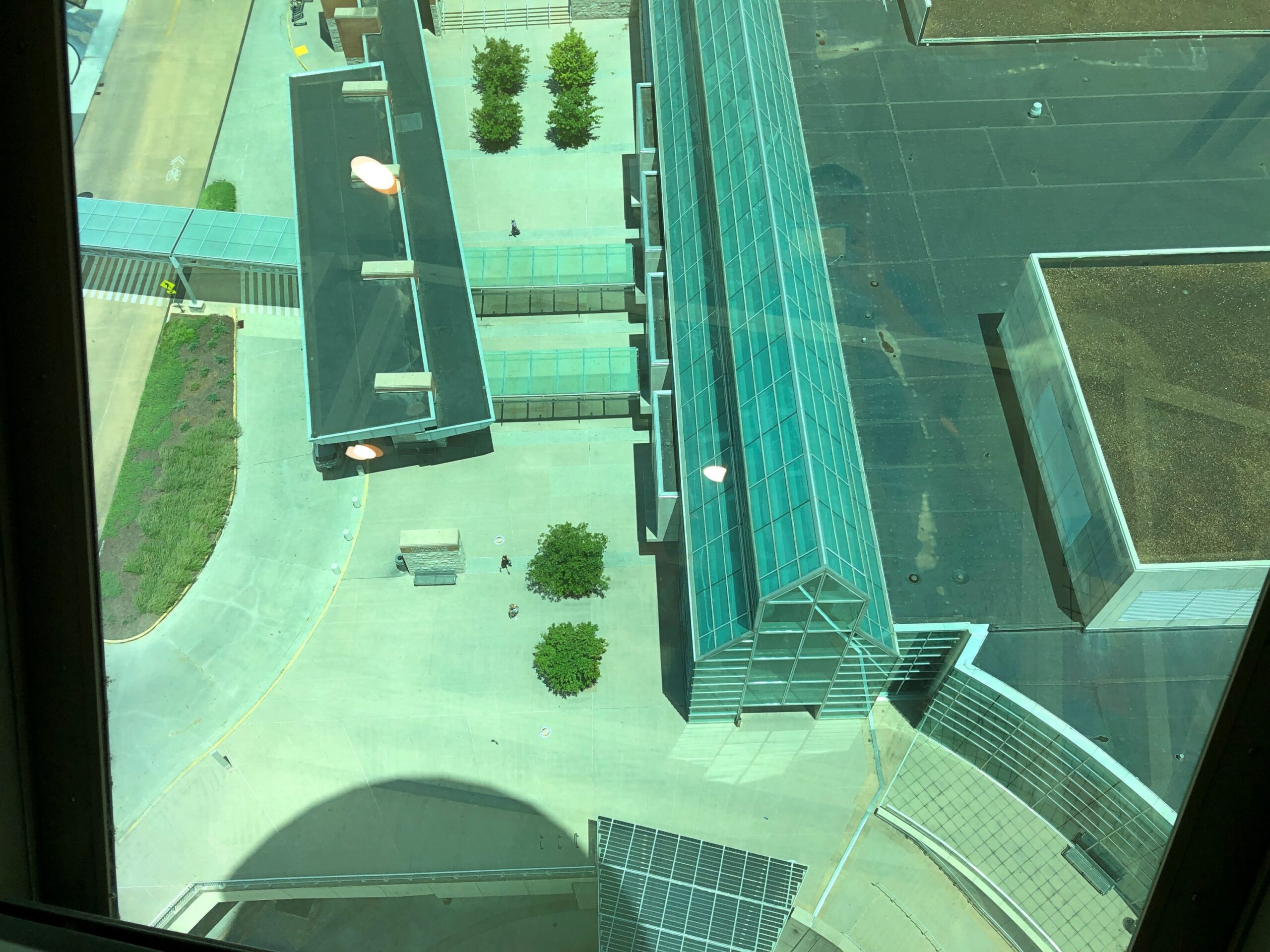
Getting a look straight down was a little tricky, but doable. The first image is the Tennessee Amphitheater, the only other structure from the fair still standing besides the tower.
One more of the Henley Street Bridge.
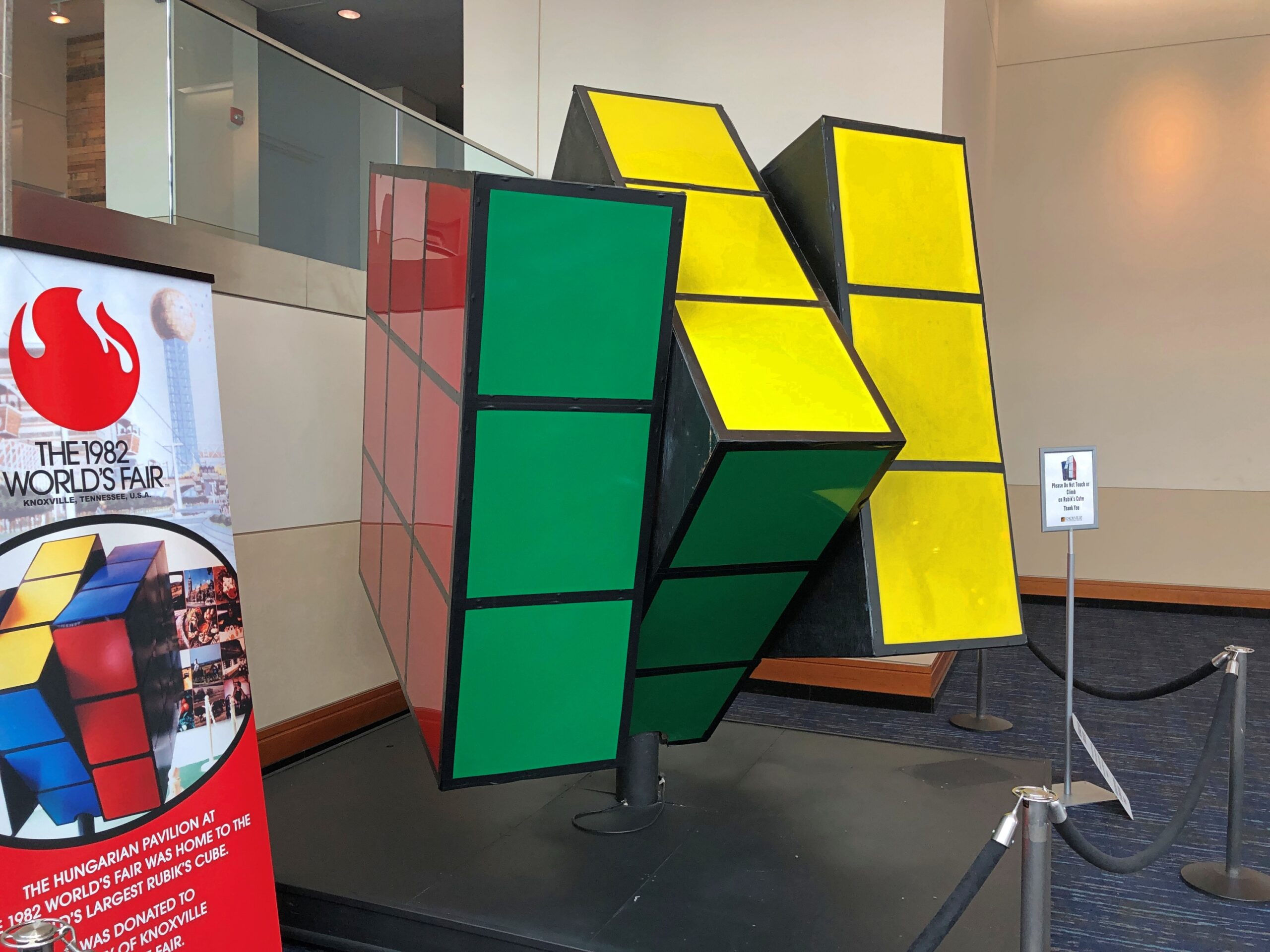
Once you’ve seen enough of the vista from the sphere, back on ground level the Knoxville Convention Center, developed on the former site of the U.S. Pavilion next to the tower, is open and showing the World’s Largest Rubik’s Cube. It used to grace the Hungarian Pavilion. I had to look it up: Rubik is still alive at 81, living in Budapest.
As usual with this kind of thing, both the tower and the cube went through a period of neglect in the decades after the fair, though it seems the cube got the worst of it, according to Roadside America: ‘The Cube, ten feet high and 1,200 pounds, constantly changed its color patterns thanks to a complex set of internal motors. When the Fair closed no one in Knoxville knew what to do with the Cube, and it eventually wound up beneath a freeway overpass, abandoned. This dereliction of civic duty was exposed by the Knoxville News Sentinel, and the embarrassed city then had the Cube restored and moved into the city’s Convention Center for the Fair’s 25th anniversary in 2007.”
As for the Sunsphere, it was never neglected so much physically, but otherwise it seems not much attention was paid to it for years until the 2010s, when the observation deck was renovated, adding exhibits about the world’s fair.
I’d actually gone inside the Convention Center to use the restroom. Sunsphere visitors, take note. The recent renovation didn’t include public restrooms, because there are none.
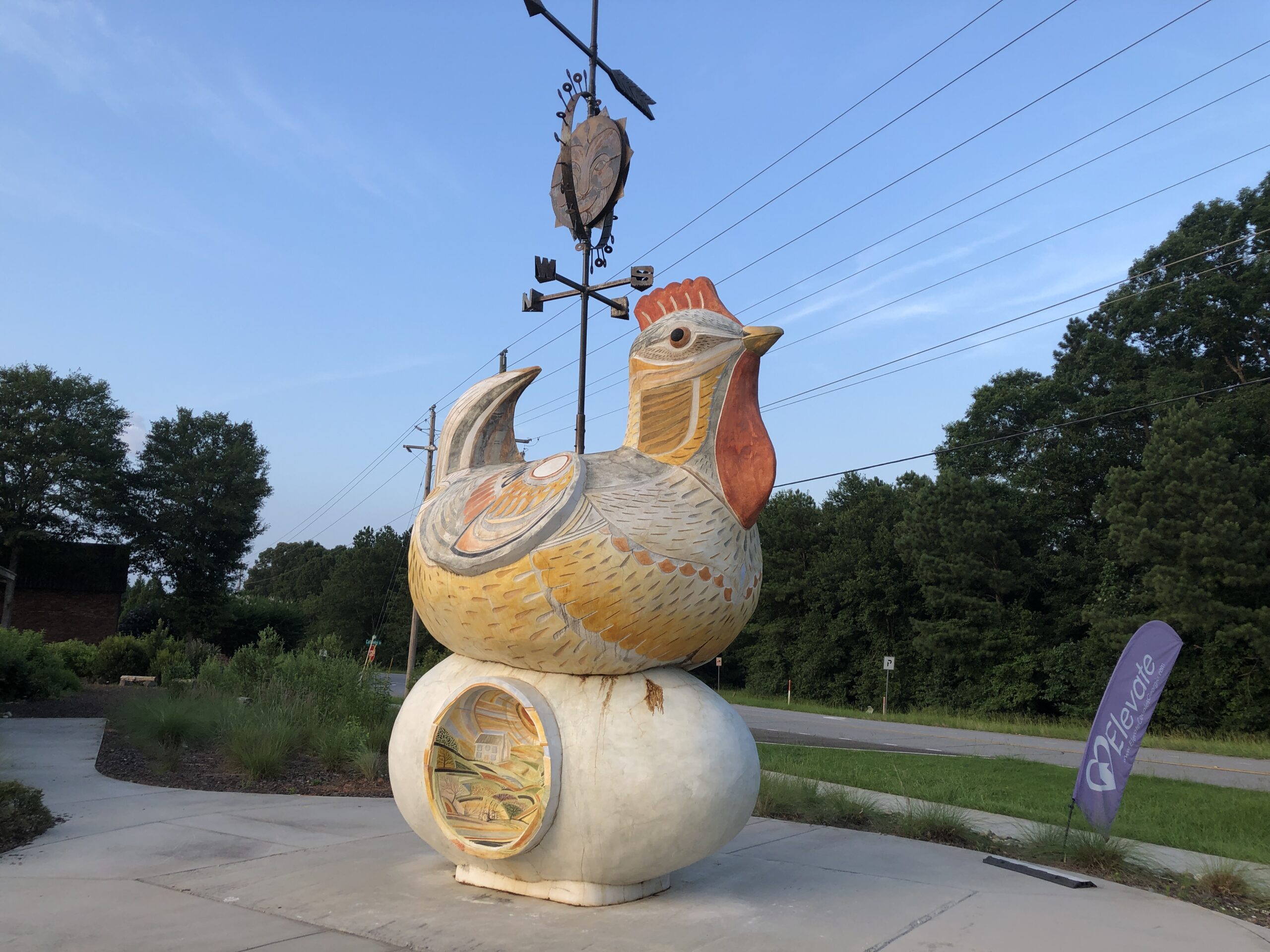
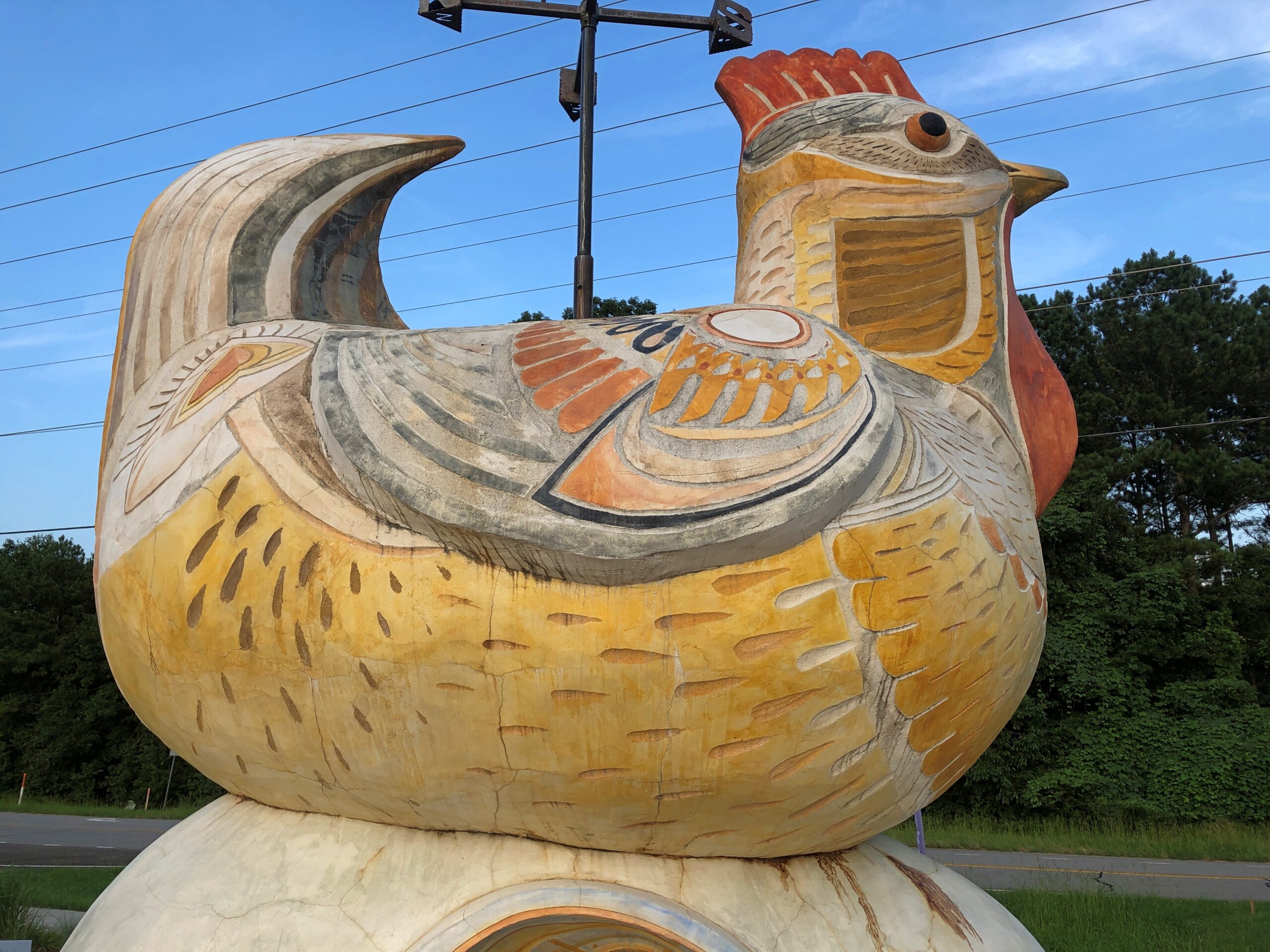
Sometimes you’re driving along, minding your own business because your business at that moment is driving, and you see a two-story chicken near the road. Three stories if you count the iron weather vane perched atop the bird.
I had to stop to see that. More precisely, it’s a concrete chicken on a concrete egg, settling the question of which came first (the concrete did). The chicken, and the egg, are on property owned by the University of Georgia, used for the Athens-Clarke County Extension in Athens. Erected in 2022. More about the work, “Origins,” is here. All ag extensions should have just a little whimsy.
The chicken appeared roughly in the middle of the 3,285 miles I drove between June 16 and June 29, taking a lasso-shaped path from the Midwest across the Southeast, all the way to the ocean at Myrtle Beach, South Carolina: through Indiana, Kentucky, Tennessee, North Carolina, South Carolina, and Georgia, and back through Tennessee, Kentucky and Indiana.
The concrete hen took the cake for novelty, but along the way I saw a memorial to a mostly forgotten incident in the War of 1812, went into a mirrored tower built for a world’s fair, chanced on the spot where the mostly forgotten diplomat who brought the poinsettia to the U.S. is buried, and braved the tourist sprawl that is Mrytle Beach. I heard stories of Blackbeard while near the coast, near his hideouts. I strolled the genteel downtown of the second-oldest town in North Carolina, passing the notable spot where Pepsi-Cola was invented. We visited a three-story souvenir shop that has stood the test of time in Myrtle Beach, which I’m happy to report sells not just postcards, but vintage local postcards, at popular prices. One evening we wandered past sculptures and colored lights among the Spanish moss in South Carolina. For a moment I beheld a complete set of the U.S. gold coins minted in Dahlonega, Georgia.
I drove by houses, farms and fields, past small businesses open and defunct, and junkyards and billboards — an industry that would collapse without ambulance chasers, I believe — and factories and water towers and municipal buildings. That is to say, structures and greenery of all manor of use and upkeep, an inexhaustible variety of human and natural landscapes. Homogenization my foot. Except, of course, every burg with a zip code also has at least one dollar store.
We – my machine and I and sometimes Yuriko, who flew to Myrtle Beach to meet me for a weekend – experienced an incredibly lush Southeast not long after a rainy spring, on big roads and small, straight and curvy, all the while defying the heat. I heard it enough on the radio: a “heat dome” had settled over the eastern United States. It persisted from the first day in Indiana to the last day in Indiana, though it had moderated a bit by then. Temps were in the 90s most days, but nothing that’s going to faze a Texan with an air conditioned vehicle and bottled water.
We did adjust our schedule to mostly be out in the morning or evening, except at Myrtle Beach, where a walk in the heat that made me feel my age and maybe then some. A less hot but more humid walk in a mostly forgotten national park in South Carolina saw flights of mosquitoes barreling down on me. A few of them penetrated my DEET coverage.
I saw and did all that and much more, but that was only the bronze and silver of the trip. The gold was visiting old friends.
That was actually the priority this time around. Before the trip, one of the friends I planned to visit asked me via text: “What’s your trip about?”
My text answer: “Visit old friends, see new things & take long drives.”
In Nashville, Stephanie and Wendall.
In North Carolina, Dan and Pam. She had enough sense not to wander around in the heat with us.
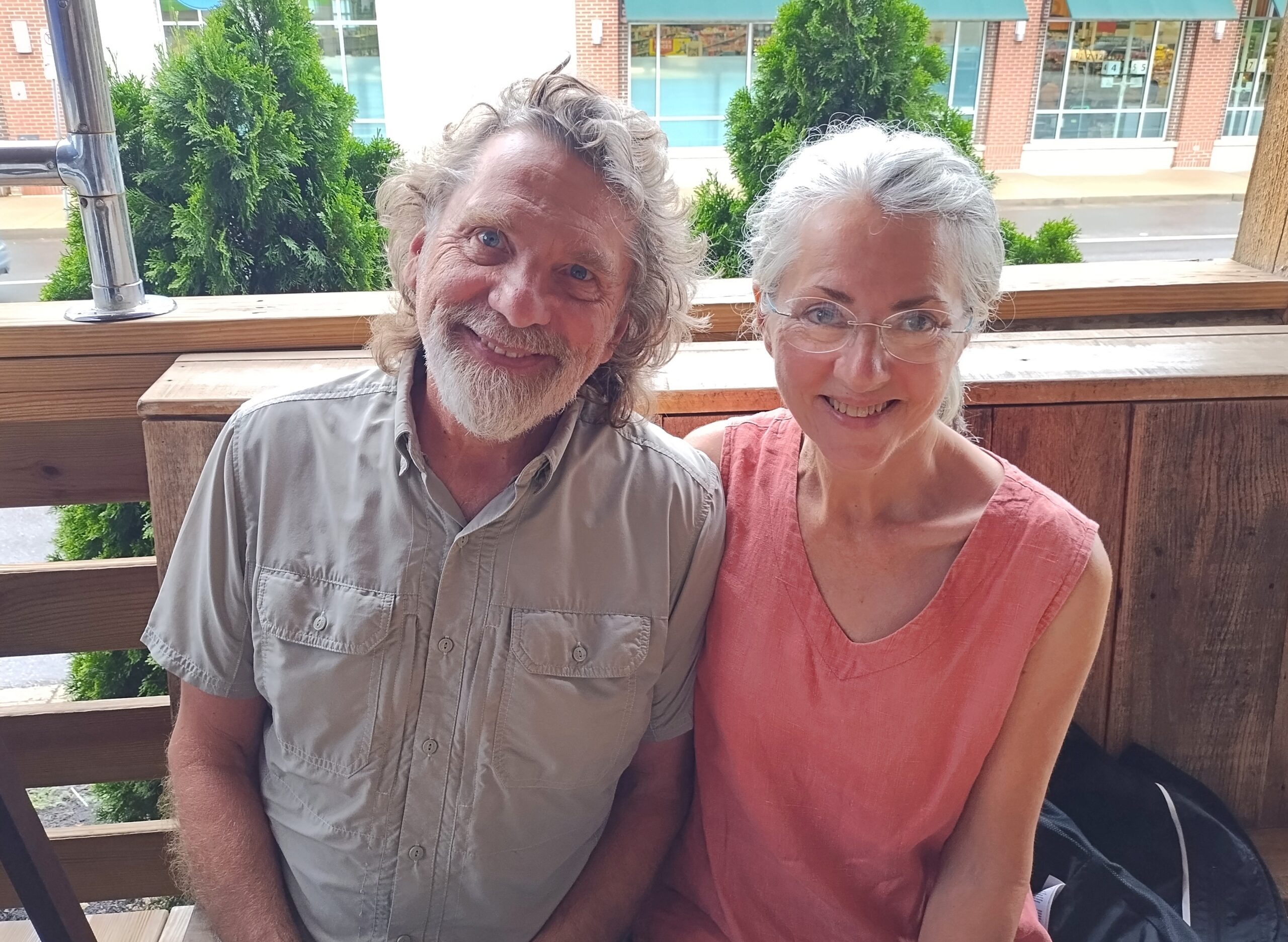
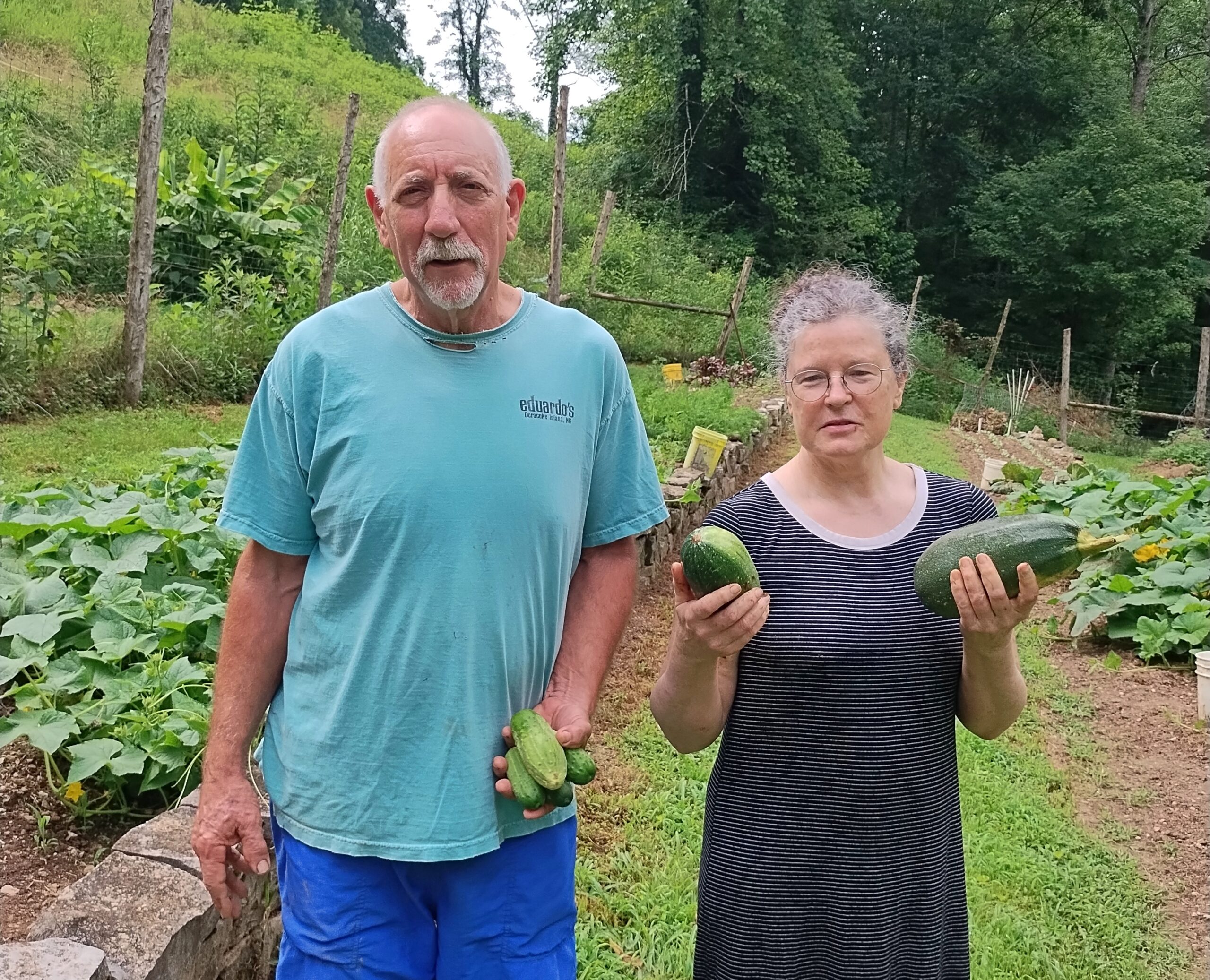
In rural Tennessee, Margaret and Dave.
Separately in Georgia, Layne and Stuart. I was glad to see them all, and I think they were all glad to see me. Known most of ’em since the 1980s, and we had a time — then and now.
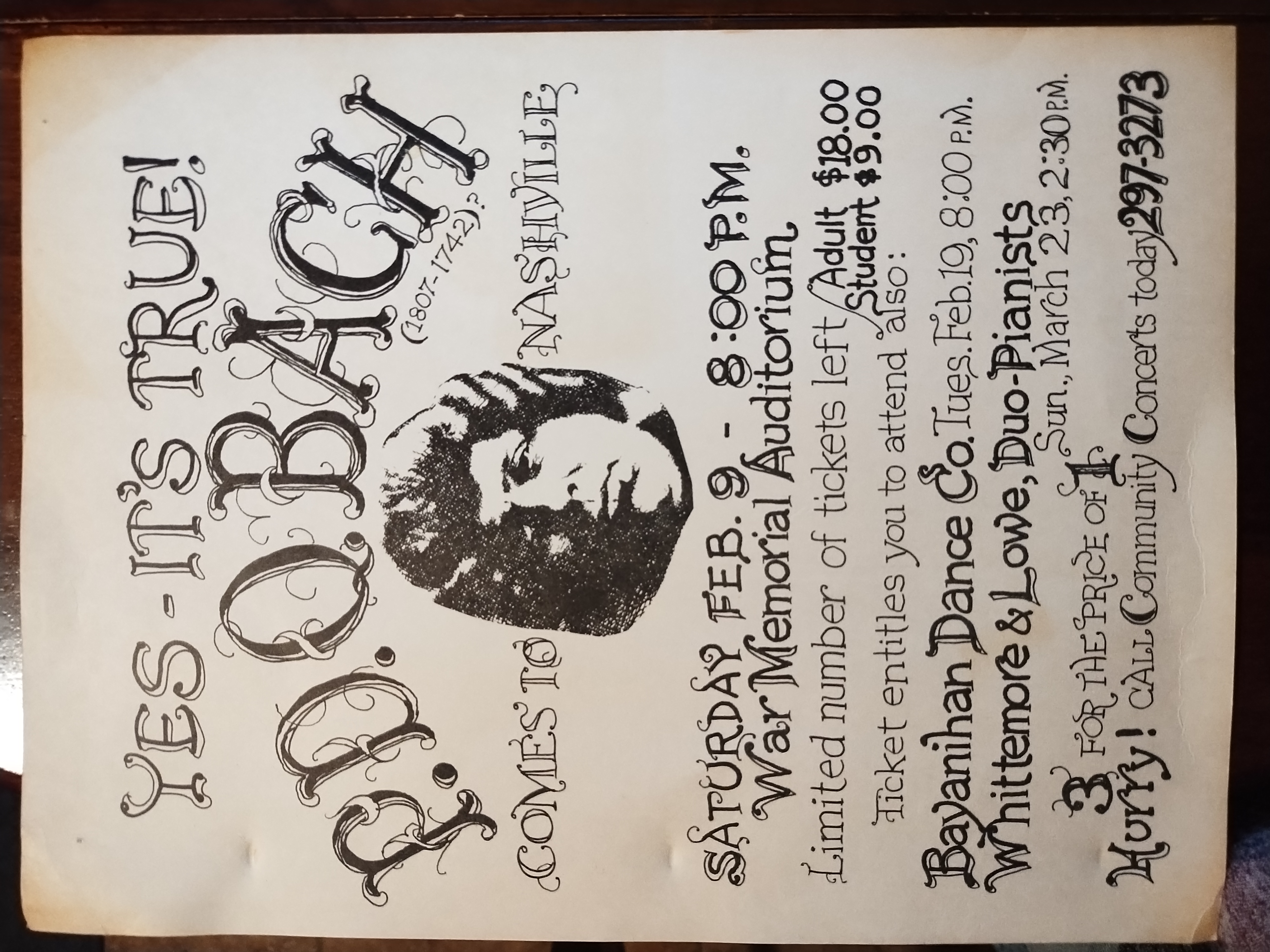
Below is a poster I picked up among the debris in the closet of my former room in San Antonio, and brought back north last month. I probably originally liberated it from a wall at Vanderbilt, though I would have had the good manners to do so after the concert.
I remember going to see P.D.Q. Bach in Nashville in early 1980, but, maybe true to the spirit of the not-great composer himself, I don’t remember much about the concert. After all, Schickele.com says: “P.D.Q. was virtually unknown during his own lifetime; in fact, the more he wrote, the more unknown he became.”
It’s easy to believe that after 45 years, my memory of the concert is slight. I saw Bob Marley in concert in 1980 as well, and mostly I remember the various kinds of smoke at the venue, and Marley’s frequent cries of “All hail Jah!” and “Free Zimbabwe!”
Back to P.D.Q. Bach. I must have been amused by the concert. Not as much as if I’d actually known anything about classical music, but I’m sure Peter Schickele’s antics were amusing above and beyond mere music spoof. I’m also pretty sure I went by myself, since even the student price (more than $34 in current money) would have been a lot for an act no one else had ever heard of.
But I had. We had at least one record of his around when I was in high school, namely Report from Hoople: P. D. Q. Bach on the Air, which was in personal heavy rotation for a little while, along with all our Tom Lehrer records.
That reminds me: I need to get around to writing that short bio of that other non-famous musician, Irwin Hepplewhite, leader of Irwin Hepplewhite and the Terrifying Papoose Jockeys during the gold and silver age of American pop, since clearly no one else is going to do it.
Back to P.D.Q. Bach again. I didn’t note the passing of Peter Schickele last year, but I’m going to now. Here’s an interview he did only a few years after he came through Nashville. Everybody comes to Nashville, even Irwin Hepplewhite and the Terrifying Papoose Jockeys, who brought the house down – literally, a ceiling fixture fell on them – at the Ryman in ’69, one of the lesser-known events referenced in “American Pie.”
For some reason, I thought of Music Row Joe the other day. It is an ’80s comic strip even more obscure, I believe, than Eyebeam, and not nearly as good, though it was occasionally worth a chuckle. I know that because I remember reading it in the Tennessean, which I subscribed to in the mid-80s. So I hadn’t thought of it much in nearly 40 years.
But the strip is not too obscure to be mentioned somewhere on line: a site called Stripper’s Guide, which “discusses the history of the American newspaper comic strip,” founded by one Allan Holtz. After a cursory look, the site seems fairly remarkable itself, a vast repository of the Music Row Joes of the world, though most of its content is older.
Stripper’s Guide says of the comic: “Music Row Joe was a local strip produced for the Nashville Tennessean. It ran at least 1983-87 based on my few samples and may have run much longer for all I know. The creators were Jim Oliver and Ron Hellard.
That’s the sum total of my knowledge of this feature – Holtz out!
EDIT 1/19/2020: This weekly strip ran 1/31/1982 – 3/27/1988. Based on a promo article it seems as if Jim Oliver was responsible for the art, and both contributed to gags.
The ne’er-do-well character Music Row Joe hangs out at the edge of the Nashville music industry, dressed part cowboy-like, part pimp-like, hat always covering his eyes in the style of Andy Capp. I’m pretty sure he was an aspiring musician – this was Nashville, after all – but I don’t remember whether he had some actual musical talent but couldn’t catch a break, or was merely a schlub with unwarranted dreams of fame. He was also (I think) involved in harebrained, though legal, moneymaking schemes that never panned out.
I only remember one of the strips. Music Row Joe is out on a street somewhere (16th Avenue South? Let’s hope so.) holding a few helium-filled balloons. He had a sign that said something like, “Balloons, $20,000 Each.” A old woman looking at his sign said to him, “Young man, you’ll never sell any balloons at that price.” In a thought balloon, Music Row Joe said, “I only need to sell one.”
In the spirit of Music Row Joe, I have this to offer. I’m not greedy: an authenticated jpg of this image, unique in all the world, can be yours for $5,000 (all rights otherwise reserved).
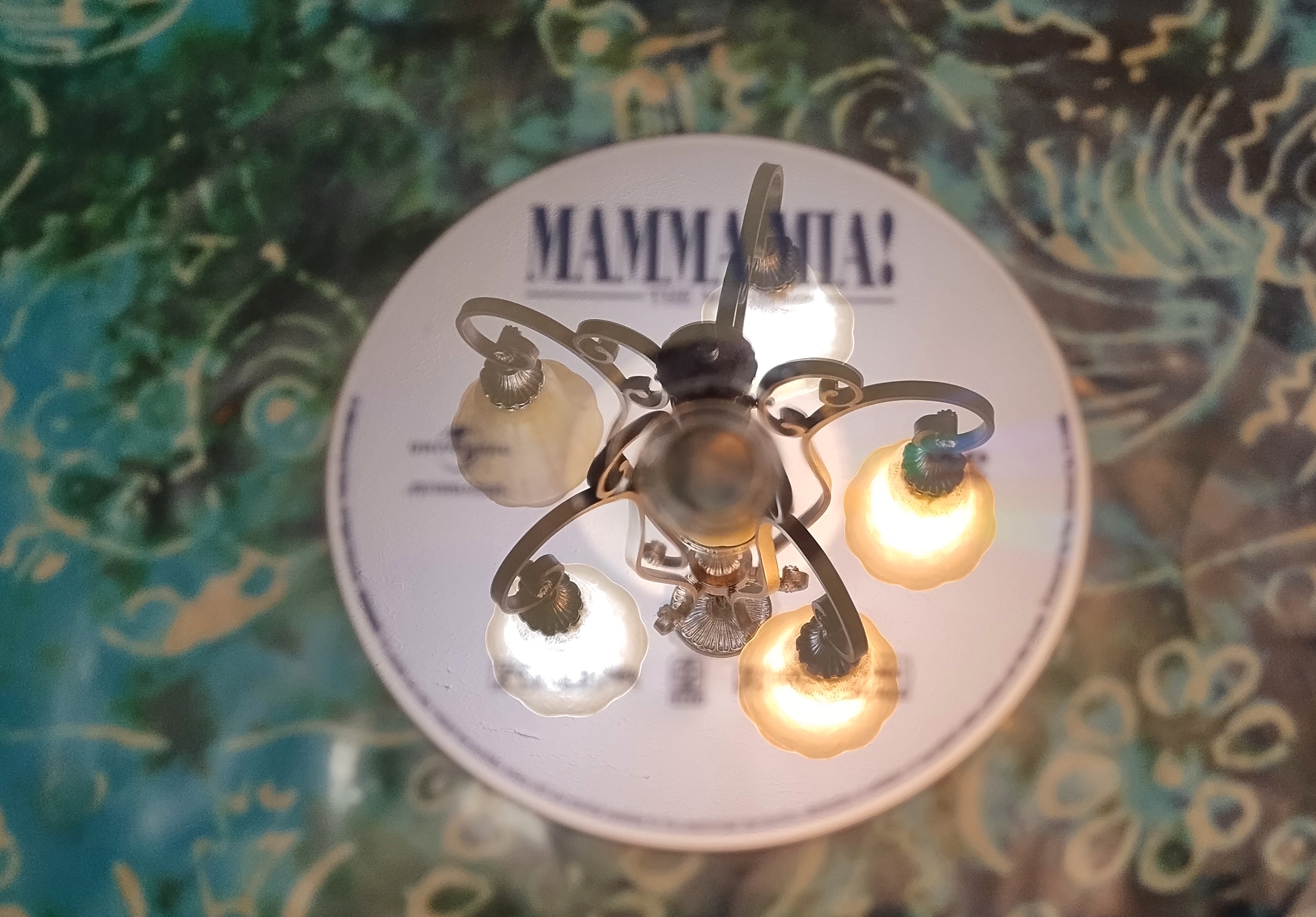
Back story, no extra charge. I tidied up the small mass of DVDs and CDs in the living room a few weeks ago. Not organized, just de-scattered. In that process, I came across Ann’s DVD copy of Mama Mia! The Movie, which she is very fond of, but which had gone missing. I put it on the dining room table to take a picture of it to send to Ann to let her know, noticing at once that it caught a reflection of the light fixture above. I took that image, but ultimately sent her another one without the reflection.
The disk had not been located for a good long time, maybe a year. Now there it was, demonstrating once again a household maxim we call all live by: you can’t find a thing by looking for it.
It’s come to my attention that Jim Varney did occasionally perform live with Gonzo Theatre. At least, the Tennessean posted an image of him doing stand-up at the Municipal Auditorium in downtown Nashville on November 14, 1982, describing him as a member of the troupe. So maybe he was sometimes; but not specifically on the night we went, and he isn’t in the publicity shot I have in my possession. A Tennessean article about Gonzo Theatre from the year before doesn’t mention him either.
Argh, we could have seen Varney live but, being ignorant young’uns, we didn’t know about the show. Bet he was a hoot and a half.
We were out and about the evening NBC broadcast the Olympic Parade of Nations nearly two weeks ago, so we didn’t see that. Since then, I haven’t felt much like following the Games. But occasionally I look at the medal counts. I see that the UK has 57 and France 56 thus far. Is that the count that the French really care about? No hope to best China or the U.S. (or even Australia), but maybe they’ll top the limeys.
What do the French call the British when they’re in a derogatory mood, anyway? One source says rostbifs.
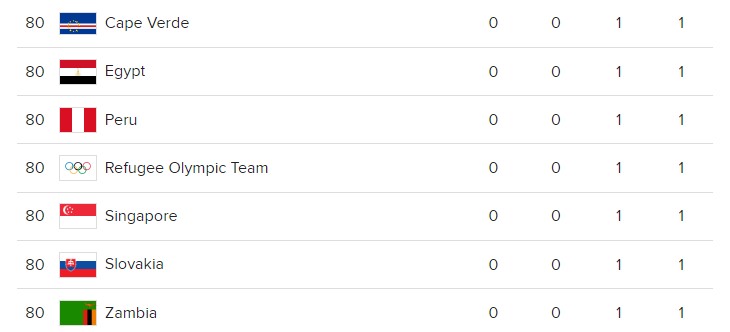
I also checked the nations that so far have a single bronze. They are:
Including one for the Refugee Olympic Team. How about that.
“Boxer Cindy Ngamba became the first-ever Refugee Olympic Team athlete to win a medal this week, giving the team its first piece of hardware since its creation nearly a decade ago,” NPR reports.
“Ngamba was born in the Central African country of Cameroon and moved to Bolton, England, at age 11, according to her official biography. She took up soccer at a local youth club, where she discovered boxing by chance at age 15.
Ngamba, who is gay, cannot return to Cameroon, where same-sex sexual relations are punishable by up to five years in prison… Ngamba qualified for the Refugee Olympic Team earlier this year, becoming the first boxer to do so.”