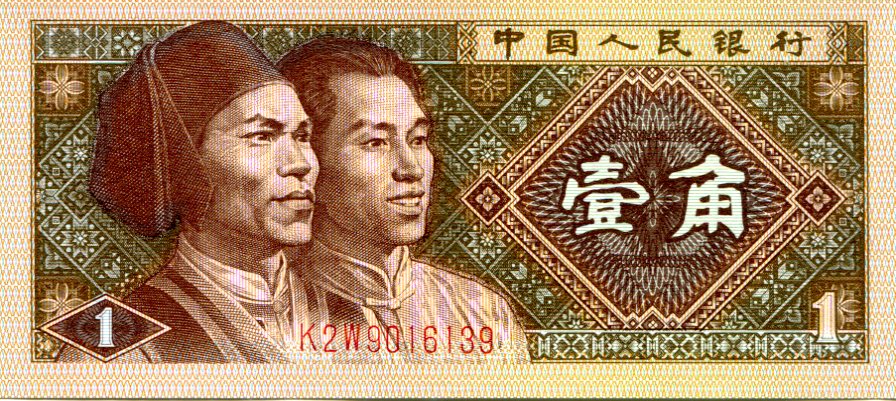
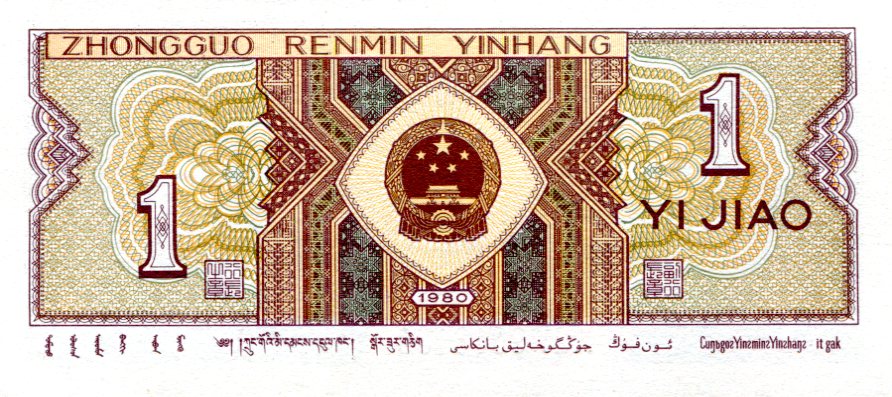
1 Jiao, 1980

From the NWS at 3 p.m. today, for northeastern Illinois: WINTER STORM WARNING REMAINS IN EFFECT FROM 6 PM THIS EVENING TO 9 PM CST FRIDAY…

“Heavy snow expected. Travel will be very difficult to impossible at times, including during the morning commute on Friday. Total snow accumulations of 8 to 14 inches, with localized higher amounts are expected.”

Well, that ought to be fun. Snow had already started as of 6 p.m. Thursday. Fortunately, all of us can stay home tomorrow.

One more small banknote for now. Small in value, about 1.6 cents, and small physically, 4½ by 2 inches. The 1 jiao of the People’s Republic of China. The PRC. I miss it being called red China, just a little.

1 jiao is 0.1 yuan. So you could say that this is a Chinese dime. The gentlemen depicted on the note are stalwart examples of Gaoshan and Manchu men, presumably looking boldly toward the socialist future. Manchu, I’d heard of. Manchu Dynasty and all that. Gaoshan, on the other hand, I had to look up. Seems that’s a term for Taiwanese aborigines.

Dated 1980, but in fact part of the fourth series of the renminbi (as opposed to FECs), which were issued from 1987 to 1997. So I might have picked this up in China. I know I have a few 1 jiao aluminum coins from our visit. Or the note might have been among the bunch o’ cheapies I got more recently.

This Has Never Happened in January

According to Accuweather at least, the highs in my part of the suburbs on January 26 and 27, 2018, were 51 F and 50 F respectively. Maybe so, but on Saturday the 27th from about 11 am to 2 pm, the air felt warmer. On my deck it felt warmer, maybe because of its southern exposure.

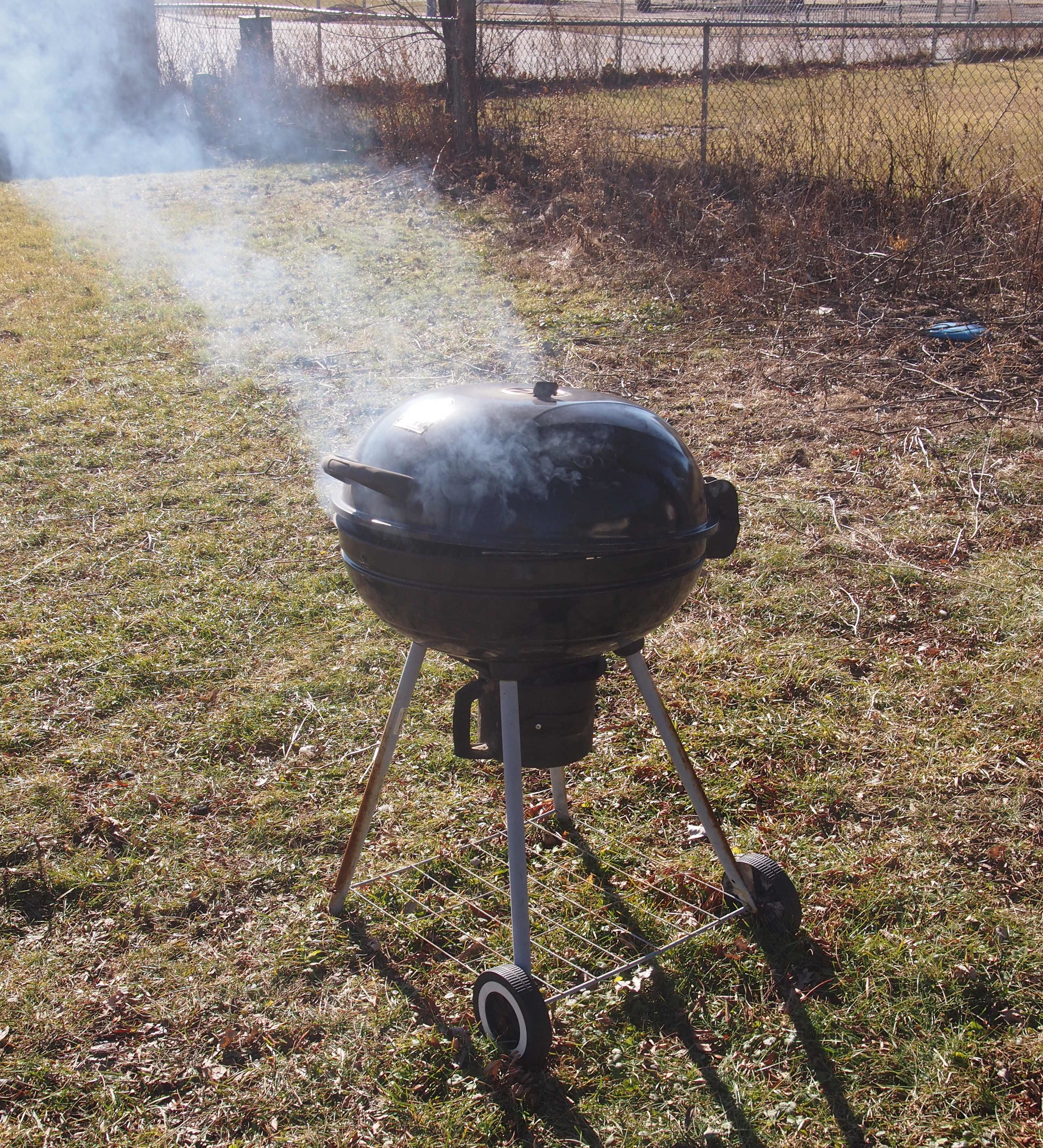
It felt so warm I decided to cook some sausages on the grill, which usually spends its winters standing idly in the back yard. That’s probably not good for the long-term condition of the grill, but it’s a nuisance to find a spot for it into the garage. Anyway, just after noon on Saturday the grill was smokin’.

It only looks like a dry grass hazard. Because of recent snow meltage — earlier in the week — the ground was damp, even soggy in spots.

Even better, we sat on the deck and ate the sausages for lunch. An al fresco lunch in northern Illinois in January. I don’t even need one hand to count the number of times I’ve done that. I’m not sure I even need more than one finger.

Of course it didn’t last. By Sunday temps were back below freezing, with a dusting of snow. But brevity made the warmth all the more pleasant.

Finding George Orwell in Burma

Heavy rain early this morning. I woke at 3 or so and cracked the window slightly so I could hear it as I fell back asleep, like I might do in the spring. Later, I was up to make sure the outside drain and inside sump pump were working, as I might do in the spring. They were.

Seems that we got an warm edge of what ought to have been a blizzard — snow that in fact hit Michigan and Wisconsin and Iowa, essentially an arc around the Chicago area. A storm that the Weather Channel, in its annual silliness on the subject of winter storms, insists on calling by a name, “Jaxson.”

The book I took to Mexico was Finding George Orwell in Burma by Emma Larkin (revised edition, 2011). Nothing like reading about a different country when you’re in different country, and the more different, the better. Burma certainly qualifies as very different from Mexico and, sadly for the Burmese, mostly in bad ways. Previously I’d only had a sketchy idea of how repressive the Burmese government has been for a long time (from what I’ve read, things are somewhat better now. Maybe). Though not writing a polemic per se, Larkin describes the totalitarian aspects of Burma very clearly.

“Burma’s surveillance machine is frighteningly thorough and efficient,” she says at one point. “It consists of a number of departments that come under of the Directorate of Defense Services Intelligence, known informally in Burmese as MI, for ‘Military Intelligence.’ MI’s mandate is vast: to monitor the entire Burmese population. It concentrates on obvious threats to the regime, which includes the armed forces themselves, and targets anyone who has ever criticized the government openly, NLD members, and foreigners both in the country and out. In short, everyone is being watched… in some towns the surveillance mechanism operates at the neighbourhood level, with MI minions filing daily reports to central bureaux… This method of control is highly effective: Big Brother really is everywhere.”

The mention of Big Brother is fitting, because the book is as much about Orwell and his works as Burma. Larkin structured the book as a bit of travel writing, in the sense that she visited places in Burma where Orwell lived as an imperial policeman, and writes about these places and her visits, but it’s much deeper that most travel pieces. She’s been visiting Burma for years and knows it well. She also knows Orwell and his works well, including Burmese Days, which naturally is discussed at length.

I didn’t realize, for instance, that the original publisher made Orwell change certain details, the better to hide the identities of people he’d based his Burmese Days characters on. Later, after the British had bugged out of Burma and all the colonials Orwell knew were dead, the details were changed back in more recent editions.

Sometimes, like standard travel writing, Larkin describes what she sees, and is pretty good at it: “I walked up Limouzin Street,” she writes of the town of Moulmein, where Orwell’s mother was born into the Limouzin family, who were important enough to have a street named after them. “It was a tidy street with a smooth tarmac surface and tin-roofed houses tucked away behind low white walls. Here and there unruly fronts of orange bougainvillea spiked over the fences and on to the pavement. A row of manicured bushes ran along the base of a pagoda wall. As I strolled up the slight incline I heard the faint sounds of radio music seeping out from some of the houses, but I didn’t meet a single person.”

Using the travel structure, Larkin was able to write thoughtfully about both Orwell and Burma, and how living there might have affected his thinking and writing. She also recounts meetings with various Burmese, and what they have to say about how wrong things have gone under military rule, presumably changing their names and all important details, so they don’t end up in some torture cell. In fact, I’ve read that “Larkin” itself is a pseudonym, presumably so she can not be kicked out of Burma when she goes there, or simply not allowed in.

On the whole, it was a good book to read when traveling. A good book might not be as important on the road as your passport or money, but I’d say it’s up there with clean underwear or broken-in walking shoes.

Campaign Cards Are Coming

There’s no official moment when it happens, but I think it’s happened all the same. We’ve passed into the Pit of Winter. All days in the pit are cold, as in well below freezing, but they come in varieties: cold sunny days, cold overcast days, cold snowy days. With the potential for a blizzard thrown in for grins.

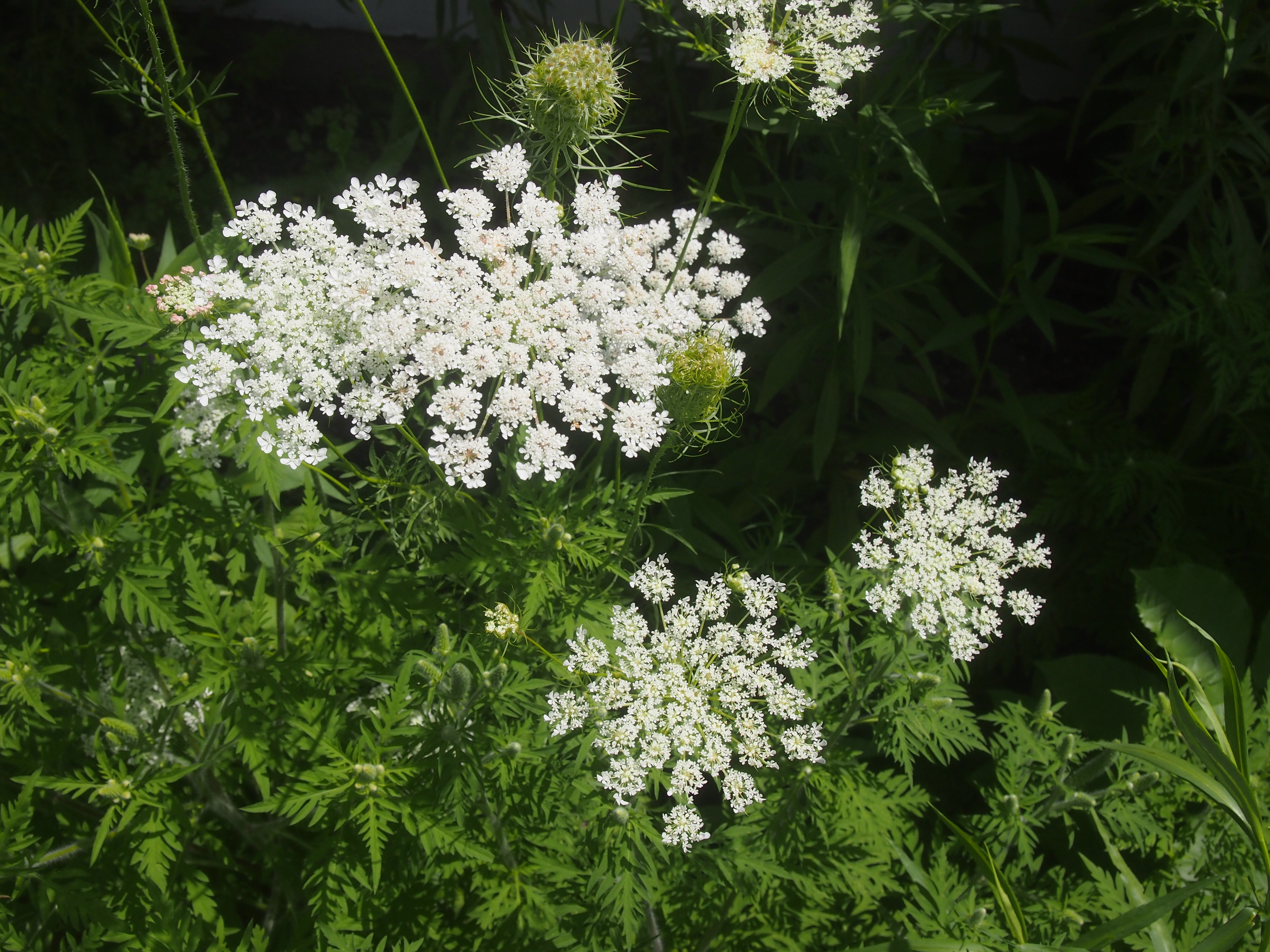
We can only fondly recall High Summer days, or imagine ones to come, at the remote opposite end of the calendar. They looked like this, at least from my deck.
The first political postcard of ’18 came in the mail a few days ago, sent by a candidate for a relatively minor local office. Not particularly creative: a touch of “next to of course god america i,” a dash of tough on crime, a serving of motherhood (in this case, the candidate is a woman. For a male candidate, a serving of loving family man.)

It’s easy to be cynical about that sort of advertising, as you can see, but it’s the formula that inspires contempt. I don’t really know anything about the candidate. In any case, I expect I’ll be seeing more soon, since the primary is March 20.

YouTube ads for Illinois governor have already started appearing. But at least we won’t hear campaign trucks making noise with loudspeakers, as you do before parliamentary elections in Japan.

A Preview of Winter

Miserable windy and cold today. For October anyway. In January, this would be a break from the deep freeze. In any case, it’s been October cold since Friday, with temps just below freezing by night.

On Thursday, when it was merely cool, I mowed the grass, front and back. During late summer, the lush greens had given away to dry brown, which suited me. I thought mowing was over for the year. But then the rains came — one of the wettest Octobers on record, I read — and greened things up again.

I could have skipped it anyway. But I’m just a little too much of a grew-up-in-the-20th-century middle-class householder to let it pass. So I mowed the lawn on October 26, the latest in the year I can ever remember doing that.

Now I’ll have a dandy lawn underneath the snow. Except it will be covered with leaves, because I don’t discard lawn leaves any more. In that way, I’m going green: leaving your leaves to nurture next year’s grass will be the thing soon. It also helps that I don’t want to do it.

Harvey and Irma

Harvey and Irma sound like an elderly couple living next to your grandparents 50 years ago. Actually, Irma was a woman living in the house next to my grandparents in Alamo Heights back in the mid-century. I have no idea whether she was a widow or, as my grandma would have put it without being remotely judgmental, an old maid.

When I visited my grandma as a young boy, Irma was kind enough to let me play in her yard and even on her front porch, and I think gave me snacks sometimes. I’m certain Irma is long gone, like grandma, but when I walked by her old house last year, it looked a lot like it used to, unlike my hard-to-recognize grandparents’ house.

Out of curiosity, and because I was busy today and so had the urge to spend time profitlessly, I checked the list of hurricane names at the National Hurricane Center, which is maintained by an international committee of the World Meteorological Organization. Tropical cyclone names have a six-year repeating pattern, alternating between female and male names in alphabetical order, except names beginning with Q, U, X, Y or Z, which are skipped all together. I remember when men’s names joined the list in 1979; it sounded odd at first, but normal pretty soon after.

So how many names on the Atlantic hurricane list are as old-fashioned as Irma? A few. Hazel, Beulah, Edna, Agnes, and Eloise have been retired, but Ida and Bertha are still on the list. Arguably names like Florence and Karen and Joyce are on their way out, but not yet. At least the WMO hasn’t picked up the likes of Brooklyn, Madison or Nevaeh. I’d go along with Moon Unit, though.

If Irma’s as fierce as it seems to be, the name will probably be retired, along with Harvey. That would leave an I name and an H name open. Alas, Igor is out — there was a storm of that name in 2010. Hortense is out as well, after a 1996 storm of that name.

One Hot Morning in Paducah, Kentucky

The weather forecast for Paducah, Kentucky, on August 21, 2017, called for partly cloudy skies. Ah, but which part? As good as weather forecasting has gotten in recent decades, that’s beyond its competence. When waiting for a solar eclipse under partly cloudy skies, you just have to hope for the best.

In the mid-morning that day, at least, partly cloudy meant high, thin cirrus clouds that probably wouldn’t obscure the eclipse too much. They certainly didn’t block the bright sunlight. So we went about our business. Mine was business. I got up early in the morning and wrote and filed and edited and so forth, continuing what I’d started Sunday afternoon and evening, compressing the day’s work into the morning, so I’d be free to watch the sky in the early afternoon.

Late in the morning, we checked out of the motel and headed to downtown Paducah, to seek out a late breakfast. We didn’t want to be distracted by hunger while looking up at the totality, nor during much of the drive home afterward. A scattering of stores along the way, and a few downtown, offered eclipse-related souvenirs.

That was the case even before we got to Paducah. One small-town restaurant not actually in the path of totality had a marquee advertising eclipse burgers and eclipse shakes, whatever those were. Officialdom, in the form of flashing highway signs, had also taken to warning drivers about traffic around the time of the eclipse. One sign — in rural Indiana, I think — said that pulling over to the side of the road to watch the event was unsafe.

All the way down to Kentucky, the radio mentioned the event, both in the form of news and deejay patter, some of it not very bright. On the morning of the eclipse, I spotted people wearing t-shirts commemorating the event. I know it was a superstitious feeling, but I thought that was a bad idea. Wearing a shirt about an event that hadn’t happened yet, and which could be spoiled by errant clouds? That’s just asking for cloudy trouble.

We arrived at about 11:00 for late breakfast/early lunch at the Gold Rush Cafe on Broadway. Gold rush indeed. The place was doing a land-office business. There was a 30-minute wait for a table, we were told. While the rest of my family waited, I took the opportunity to scout out the place where I’d planned to see the eclipse, a few blocks away at or near the McCracken County Library, which was holding an eclipse-themed event starting around noon.

I made my way from the restaurant south on 4th St., to Washington St., where I turned west. At Washington and 5th St. is the library, a modernist joint with a small area of greenery and trees next to the building. People were already gathering there, their cars filling the parking lot behind the library. Looked like an OK spot, as did the plaza across Washington from the library. I turned north on 5th past, amusingly, the offices of the Paducah Sun, and headed back to Washington. Another block east and I was back at the restaurant, sweating profusely. (Is there any other way to sweat on a hot summer day?) It was about 90 F and the sun was strong under those thin hazy clouds. Not perfect, but very good skies — if it would last another two hours.

We only waited about 20 minutes to get a table. The restaurant was abuzz with eclipse talk. The people at the next table, two of whom were wearing science-nerd t-shirts, talked about it. A woman at another table talked of seeing another eclipse in Australia. A bearded fellow at the table next to ours, eating by himself, talked to his waitress about where he might find some eclipse glasses. The place was full — more business than they usually get on a Monday, I figure — and the event seemed to be on everyone’s mind.

Later, I saw the restaurant’s Facebook page, which posted that morning: “Ok folks, I don’t imagine many of you are running around downtown today…. we’re taking our last orders at 12:30 so that way we can go see the eclipse as well. Thanks for your understanding!”

As for eclipse glasses, I’d acquired some Celestron brand shades online the month before, when I’d read that such glasses shouldn’t be used after more than three years. The ones we have from the Transit of Venus are five years old. That’s erring on the side of caution, since I don’t really know whether they degrade enough to be hazardous after five years.

Then, of course, there were reports of substandard glasses, either made carelessly or purposely so. If made with intentional disregard for eye safety, that’s as bad as making bogus antibiotics. Bastards. So that’s in the back of one’s mind, though I’d tested the glasses the week before in my back yard without ill effect. I’m glad to report that our Celestrons seem to have protected us.

As for a shortage of eclipse glasses on the day itself, there was none. The library was giving them away, and so was an antique shop across the street from Gold Rush Cafe (or maybe selling them, I didn’t ask).

While eating lunch, the skies outside dimmed for a short spell. I knew it was too early for the partial phase of the eclipse, so that meant only one thing: clouds. When we emerged from the restaurant some time after noon, white, fluffy cumulus clouds punctuated the sky. The kind you don’t mind seeing any other time. Some were sizable. This was bad. Periodically the sun would be obscured for a few minutes.

There was nothing for it but to wait. We spent a while in the antique store. I bought some postcards there, because of course I did, including an eclipse souvenir card. Glad I found it. The artist is Jane E. Viterisi, apparently a local artist.
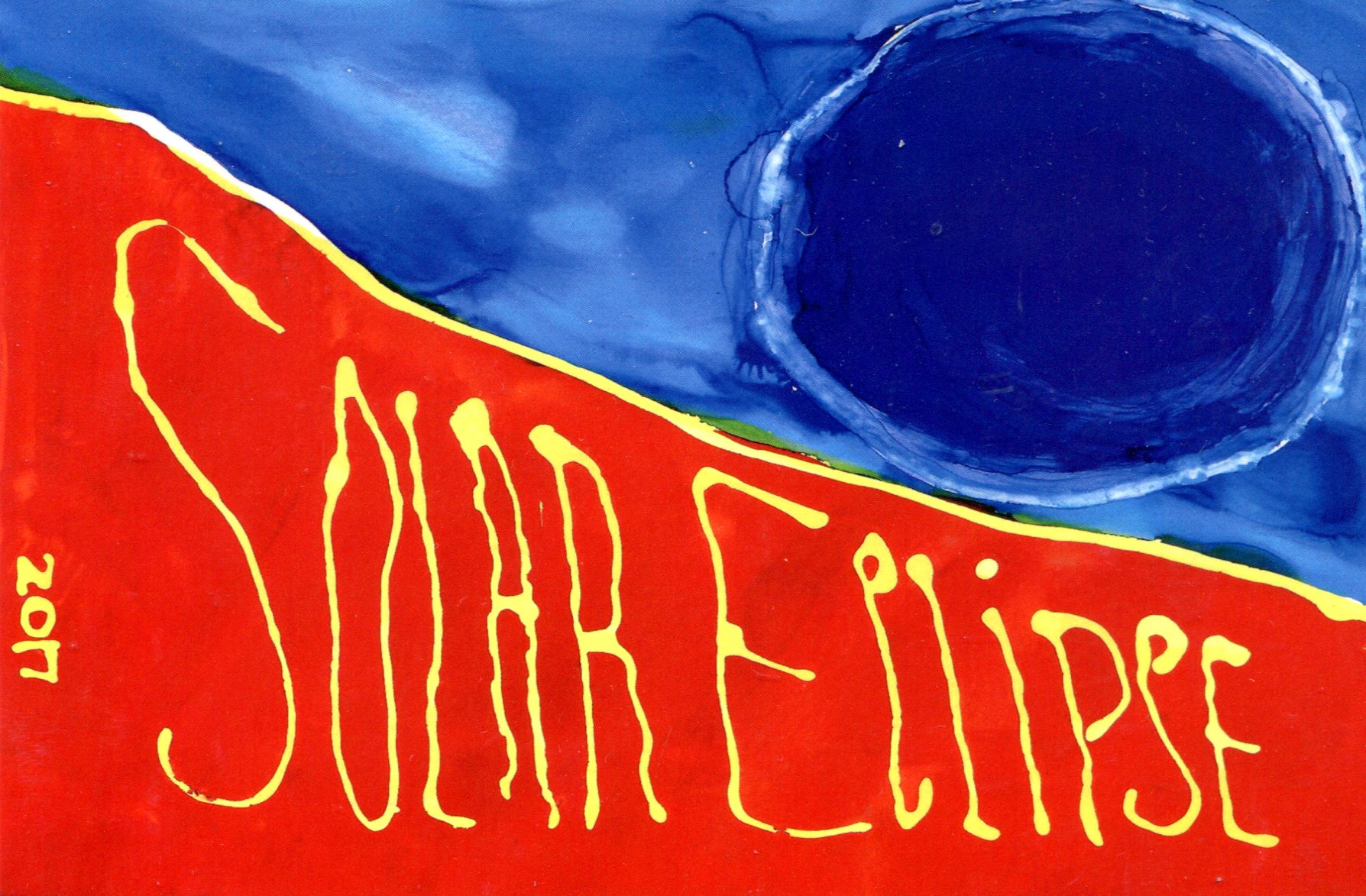
At about 12:30, we went to the McCracken County Library. The crowd wasn’t enormous, but sizable. People were milling around, parked in chairs and sitting on the ground. Just about everyone had glasses. We tried our eclipse glasses out for our first look at the event while in the library parking lot.

There it was, through the shades that excluded all other light: a fat orange crescent sun. Quite a sight all by itself, and getting leaner all the time. Meanwhile, the skies around the sun were clear, but clouds lurked elsewhere. Totality was coming.
Back Yard Flora ’17

Today was a mostly sunny, warm August day. The beginning of declining summer, though the grass and bushes are so green — there’s been a fair amount of rain this summer — that it looks more like June. The dry browns of August are missing this year. So far.

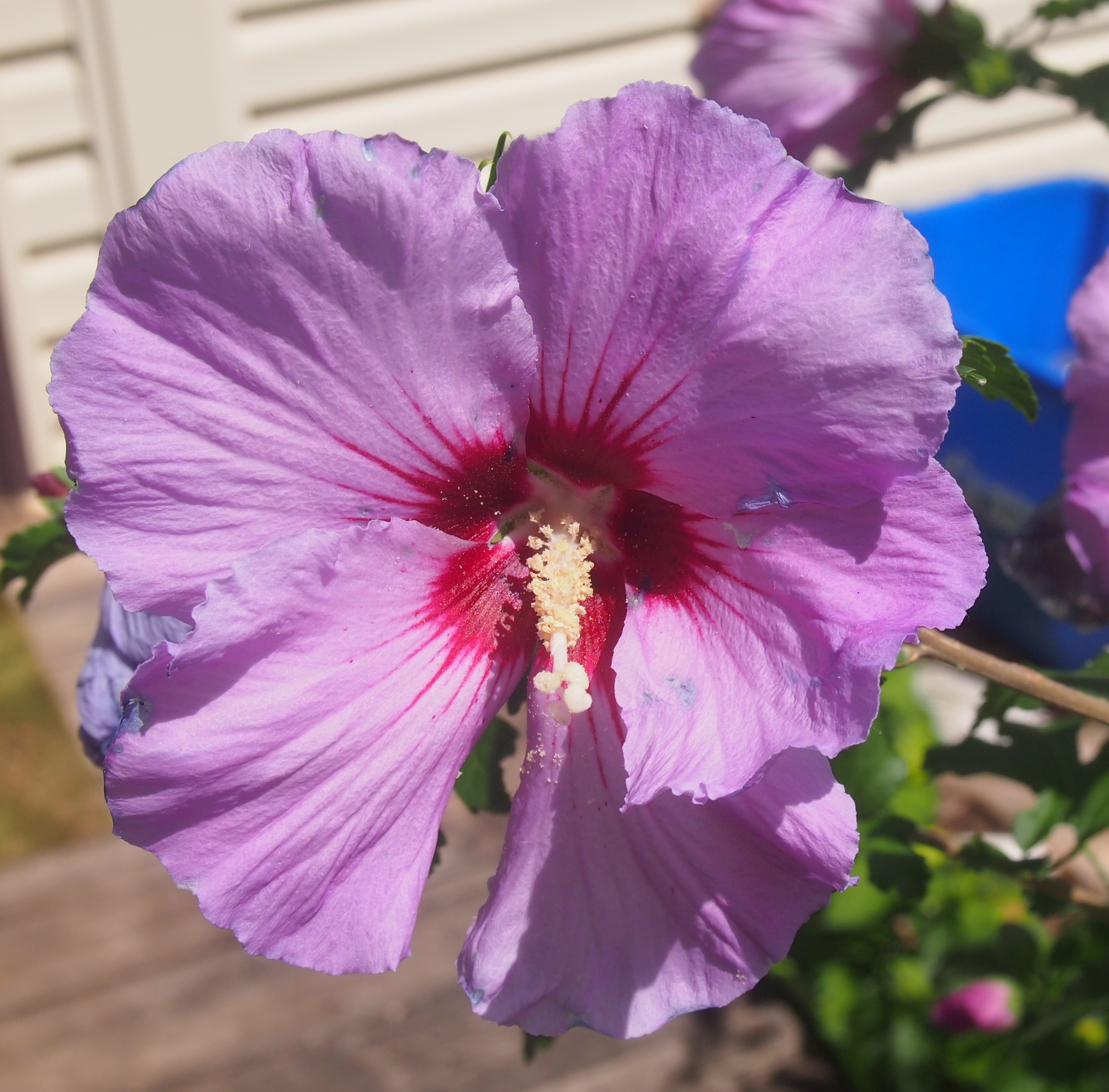
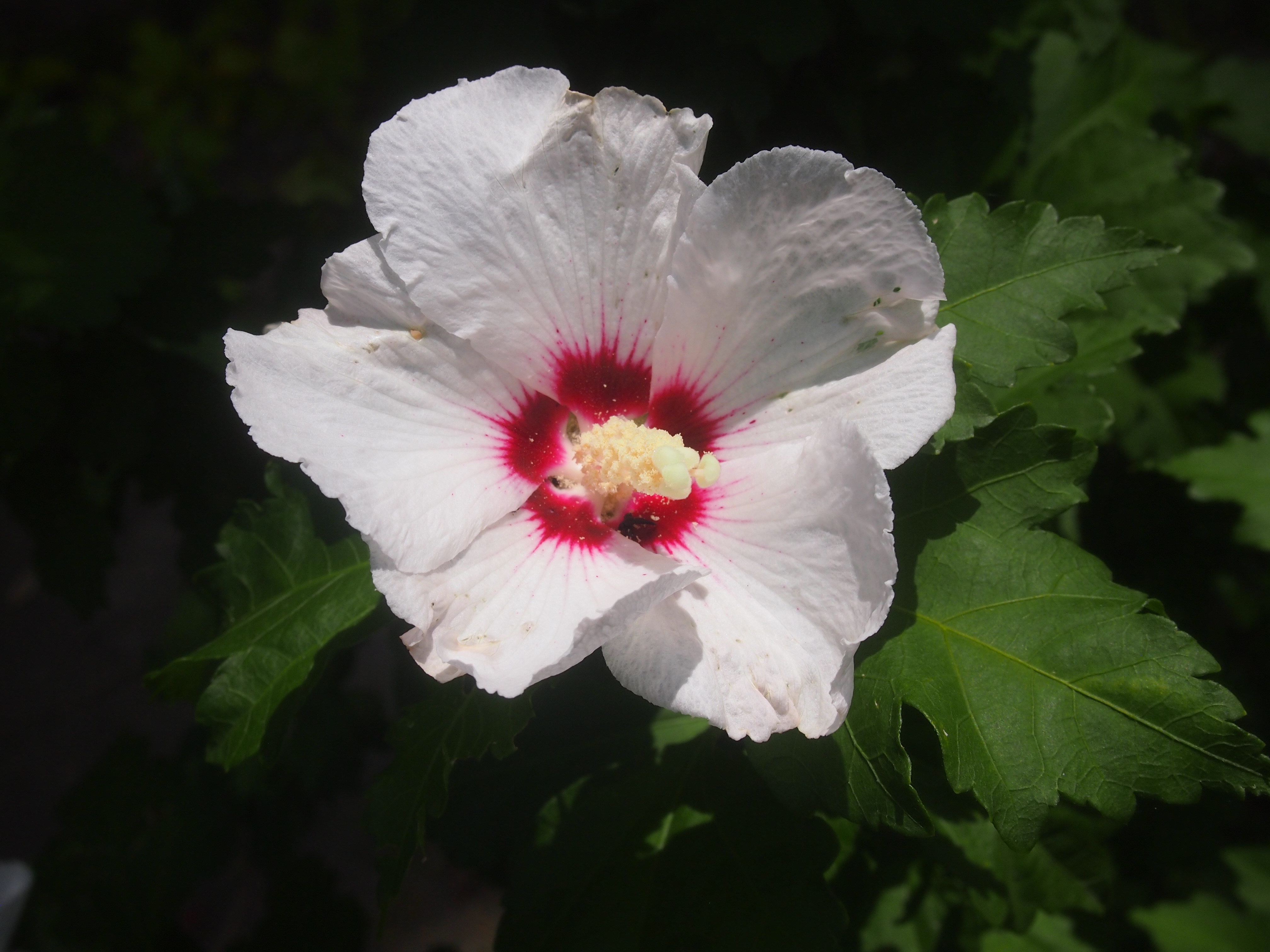
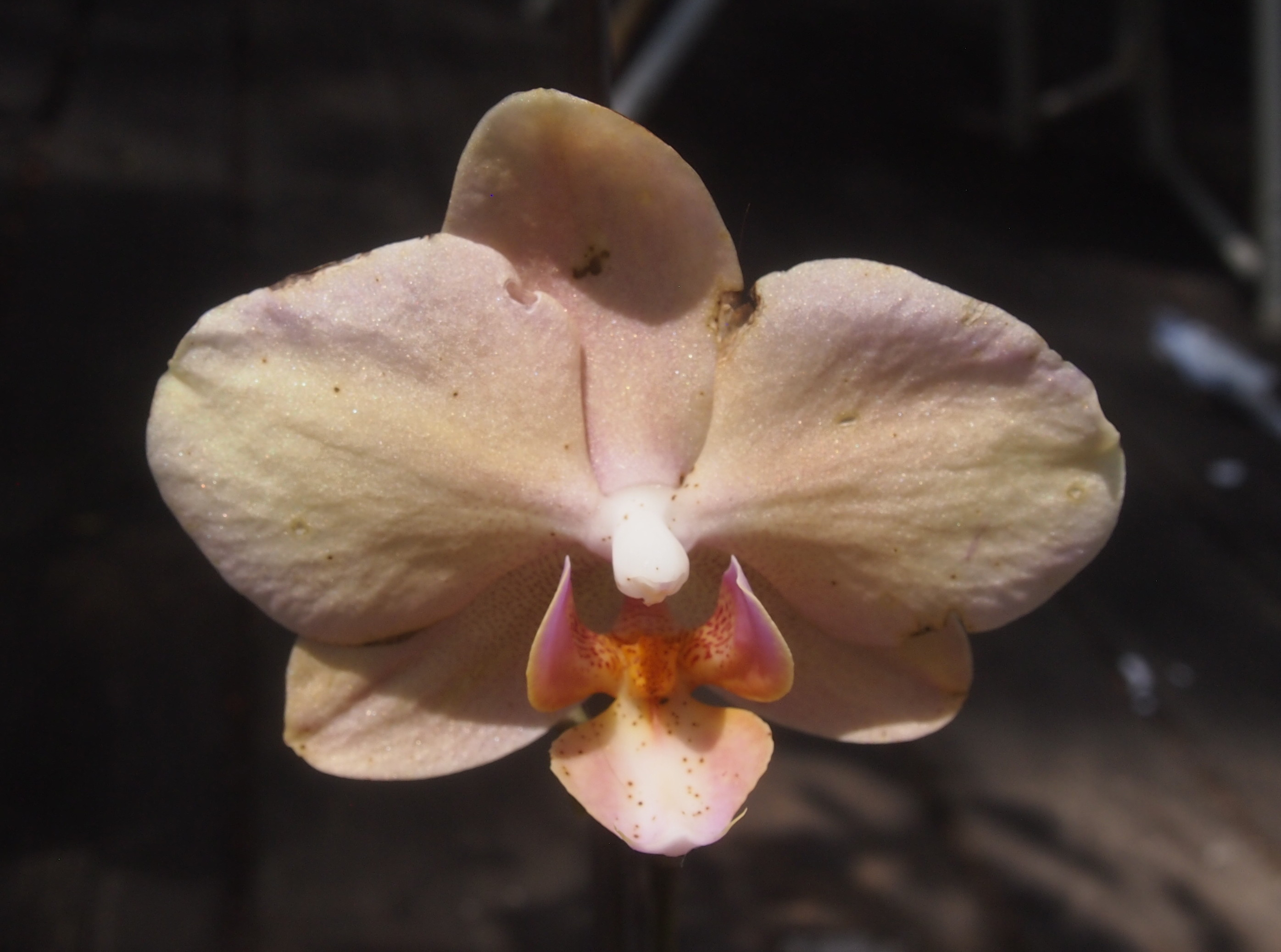
Around noon, I wandered around my back yard taking pictures of flora. Why? Why not?

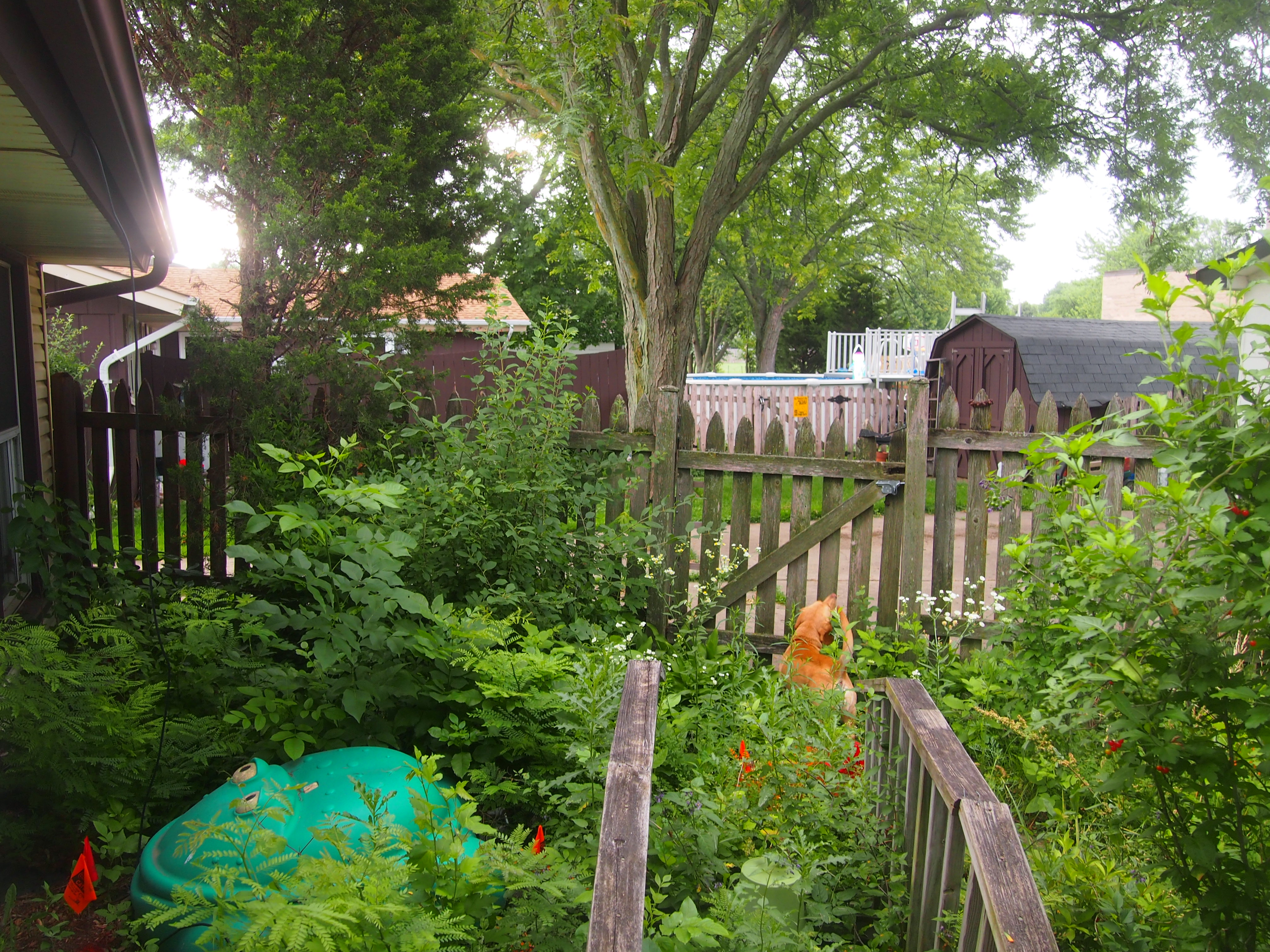
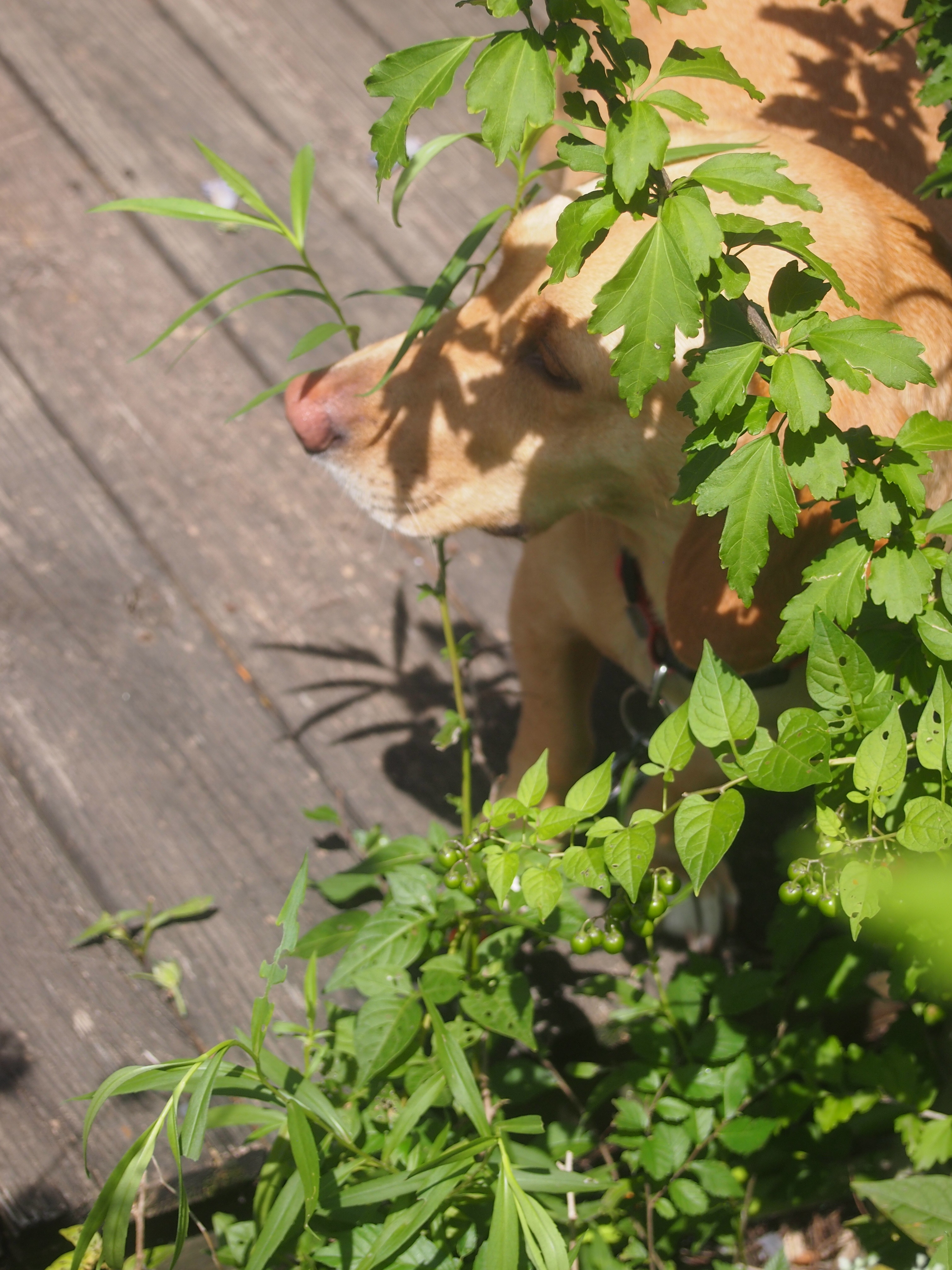
I also spotted some back yard fauna, lurking in the greenery.
The dog chews on the plants this time of year.

Why? Why not?

8/8/88 &c.

August 8, 1988

On this particular confluence of numbers for a date, I went to work. After all, it was also a Monday. VW started today as editorial assistant. At last we get one. After introductions and a basic editorial meeting, I spent a fair amount of the morning showing her how to use the VDT.

At 11 or so, I met a writer named SB. Seems like he could do good work for us. Works part-time now for another local mag that I’ve never heard of.

Lunch: KD, JD, VW, MS and me at Dick’s Last Resort, which opened not long ago at North Pier. I think there are others in Dallas and Houston. The place has its staff pretend to be rude. Restaurant motto: “Can’t Kill a Man Born to Hang.” Had a bucket o’ beef ribs & fries & slaw & bread. Was good.

[I checked just now, and the Dick’s Chicago location at some point moved to Marina Towers. It’s still a relatively small chain, with 13 locations, according to its web site. I went a few other times during the late ’80s, and maybe once again when I moved back to Chicago.

Dick’s used to serve — maybe still does — Mamba, pride of the Ivory Coast brewing industry. Actually a malt liquor, not a beer. Came in pint bottles with a croc and a map of Africa on the label. I bought one once just to drink something made in République de Côte d’Ivoire.

Not bad. Had the empty bottle for some years, but it disappeared at some point.]

In the afternoon, got a surprising amount done. Queried participants in the Mortgage Roundtable, interviewed an industry cockalorum, and more.  After work, had a hard time getting home. The El was jammed with Cubs fans going to the big-deal, first-ever night game at Wrigley.

Got home, a postcard was in the mail from Bill K. He says he’s in love and that “Elvis lives.” At 7:30 or so, I headed north on the El, away from all the hubbub, to go swimming. As I was walking to the pool from Davis station, it started raining hard. Got to the pool, swam. Less crowded than usual. Still raining some as I walked back to the station. Down to a drizzle by the time I got home, but I understand the big night game was called because of it.

[Sure enough, it was called. I seem to remember that Royko was there, and the next day in his column said he was tired of people telling him that God didn’t want night games at Wrigley. One was played to a conclusion the very next evening in better weather.]

Bucktown Sunday Morning

At about 5 pm on Friday afternoon, wind and rain and lightning struck Chicago’s northwest suburbs with special fury, knocking down trees and large branches. Itasca was particularly hard hit.

Lilly, whose train from the city was due later that evening, found herself delayed by a hour because of debris on the tracks near Itasca. On Sunday morning, we drove through that town on Irving Park Blvd. and saw several large trees laid low, including one on top of a building.

Our neighborhood didn’t get hit quite so bad. But we did get hail for a few minutes. Smallish ice pebbles that made some noise, but did no damage to the roof or the car that I could see.

Bucktown Chicago 2017By Sunday, the weather was very warm and steamy and not especially violent. Just the kind of day for a walk in the city, which is where we were going as we drove through Itasca. For a stroll I picked Bucktown, which is directly north of Wicker Park.

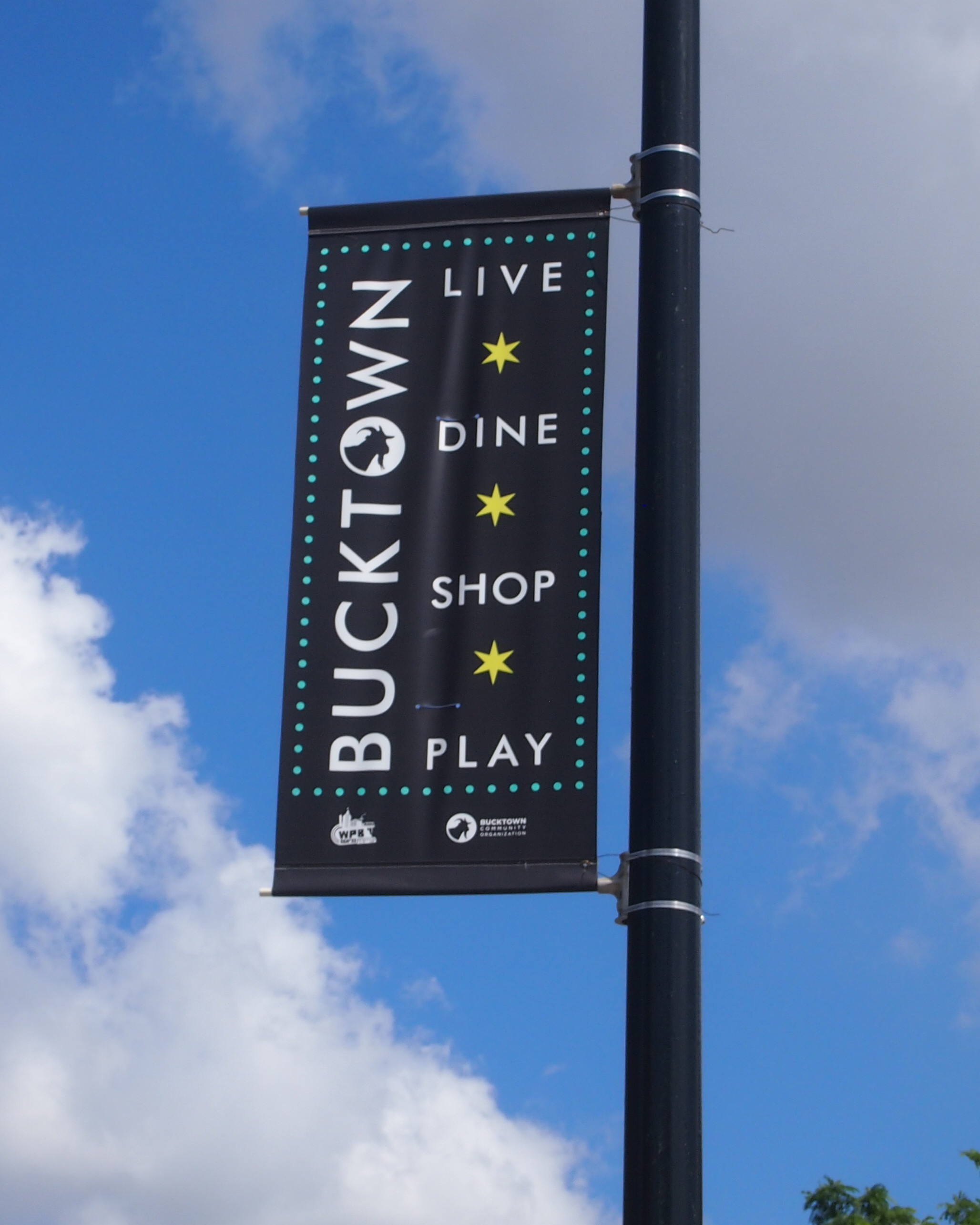
I didn’t live, dine, shop or play at all during my late morning amble, except that I was a living being as I passed through, and maybe I “played,” in the sense that walking around and looking at things isn’t work, unless that’s what you’re paid to do.

I don’t remember hearing much about the neighborhood during the late ’80s, but by the late ’90s, Bucktown was known as a gentrifying area. The gentrifying process is now mature, in that the area’s not a cheap place to live, though I suppose Lincoln Park and the Gold Coast and their ilk still outprice it.

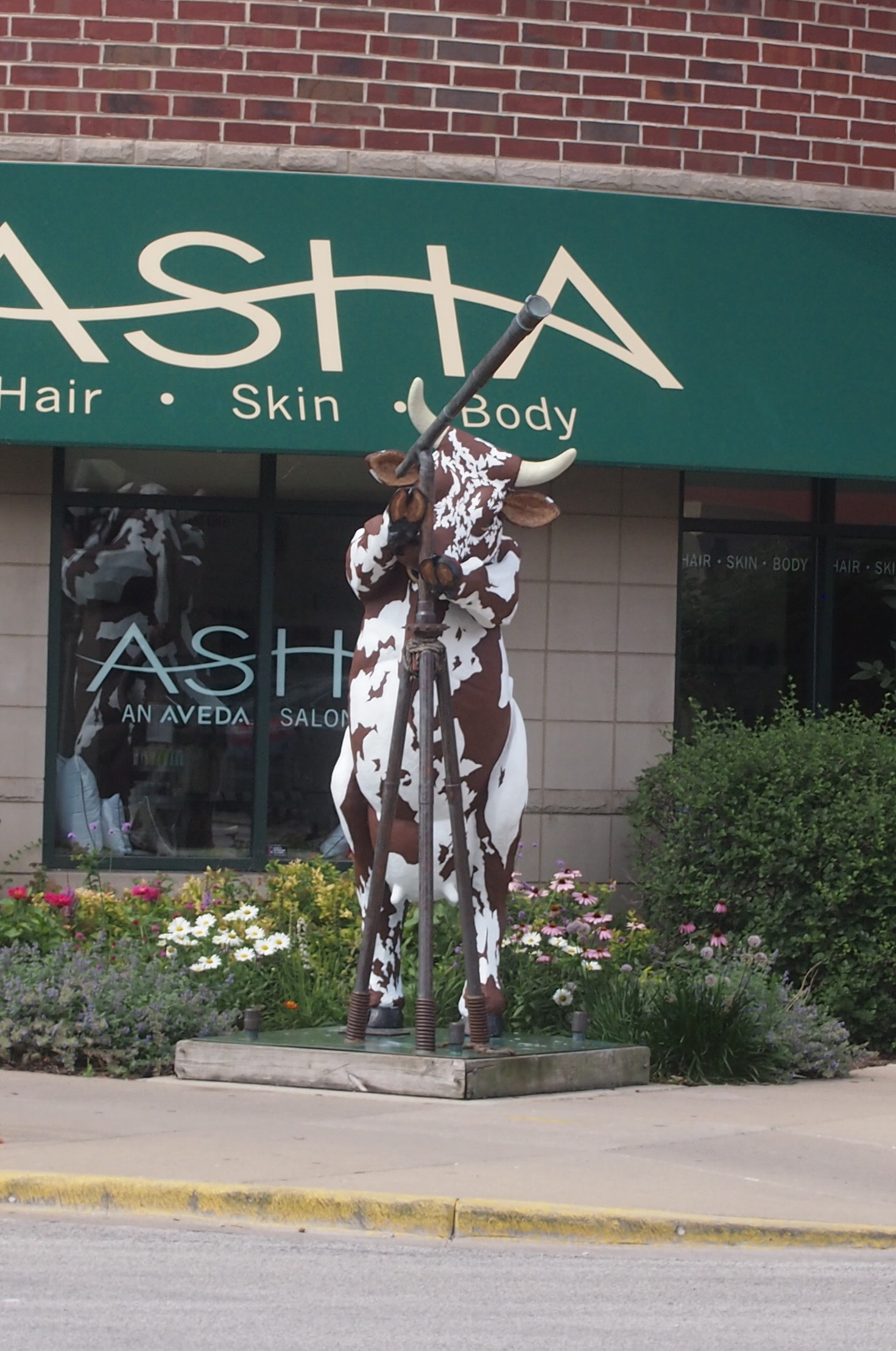
With the cost, you get amenities. Such as a statue of a bovine looking through a telescope, or maybe a fanciful theodolite.
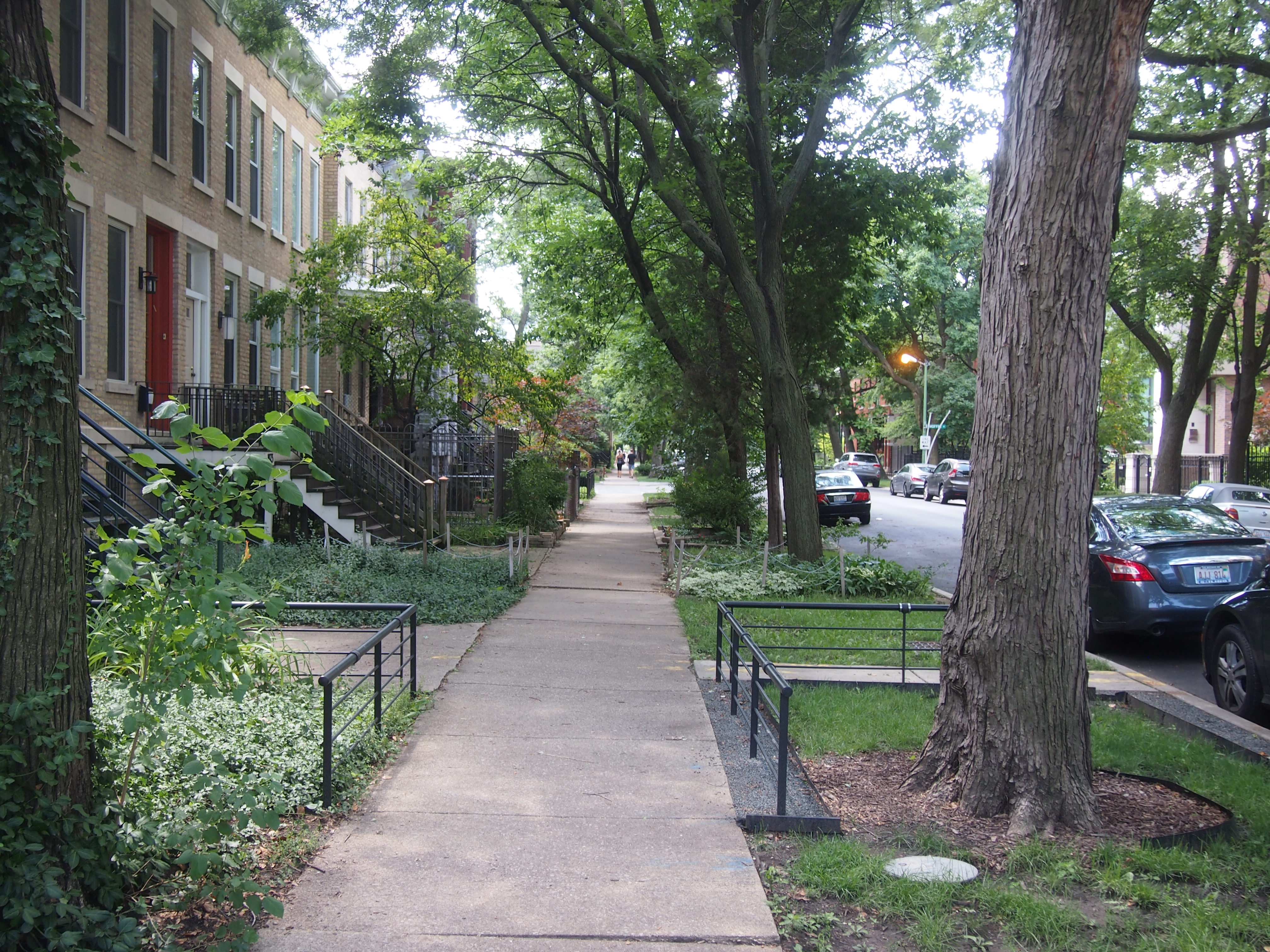
Bucktown Chicago cowAnd shady residential streets to walk down. That turned out to be an important feature on Sunday, as temps climbed toward 90 F.
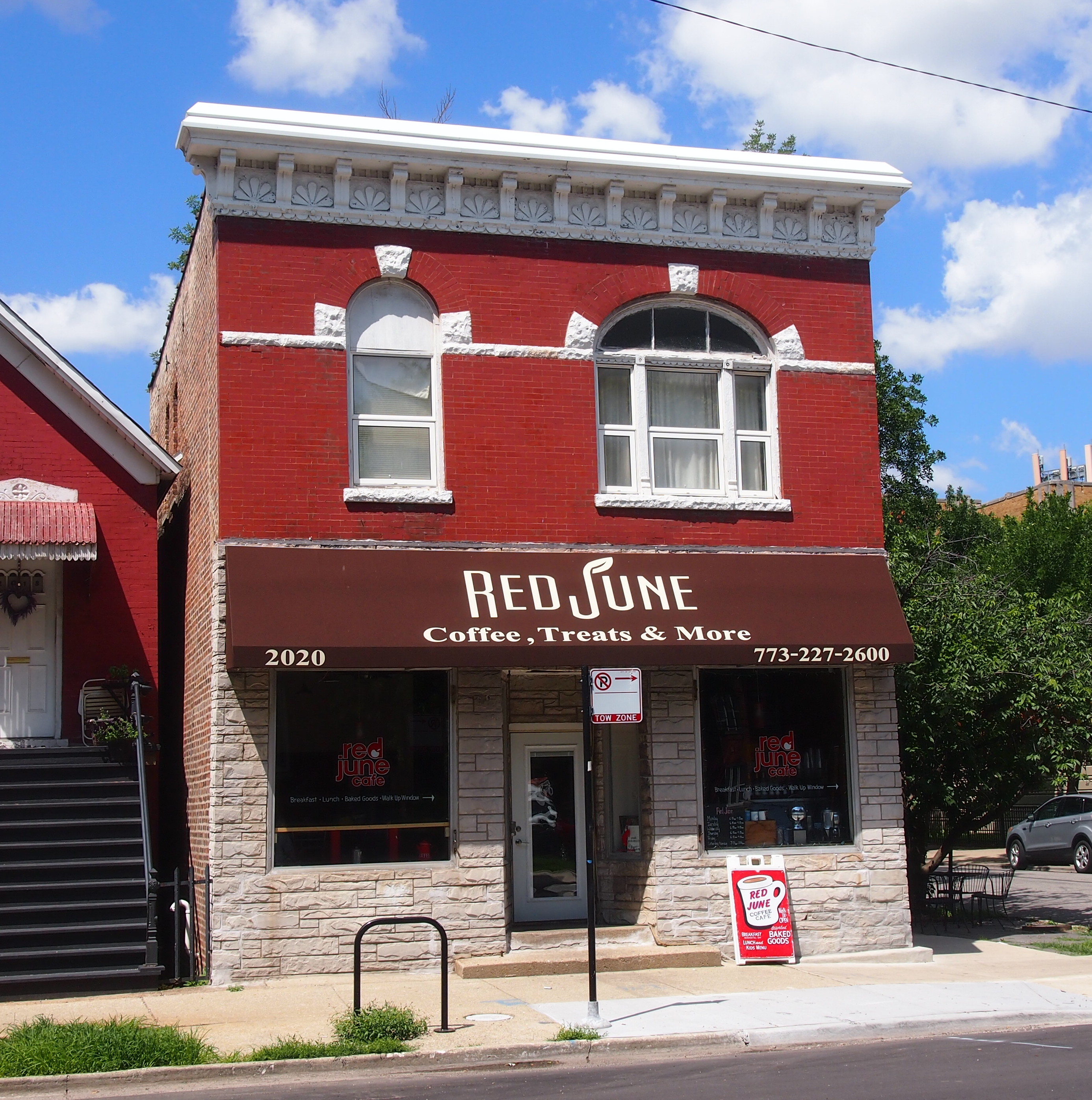
Bucktown, ChicagoBucktown features a fair number of interesting older buildings put to new use.

Bucktown Chicago 2017Bucktown, ChicagoAs well as new construction.
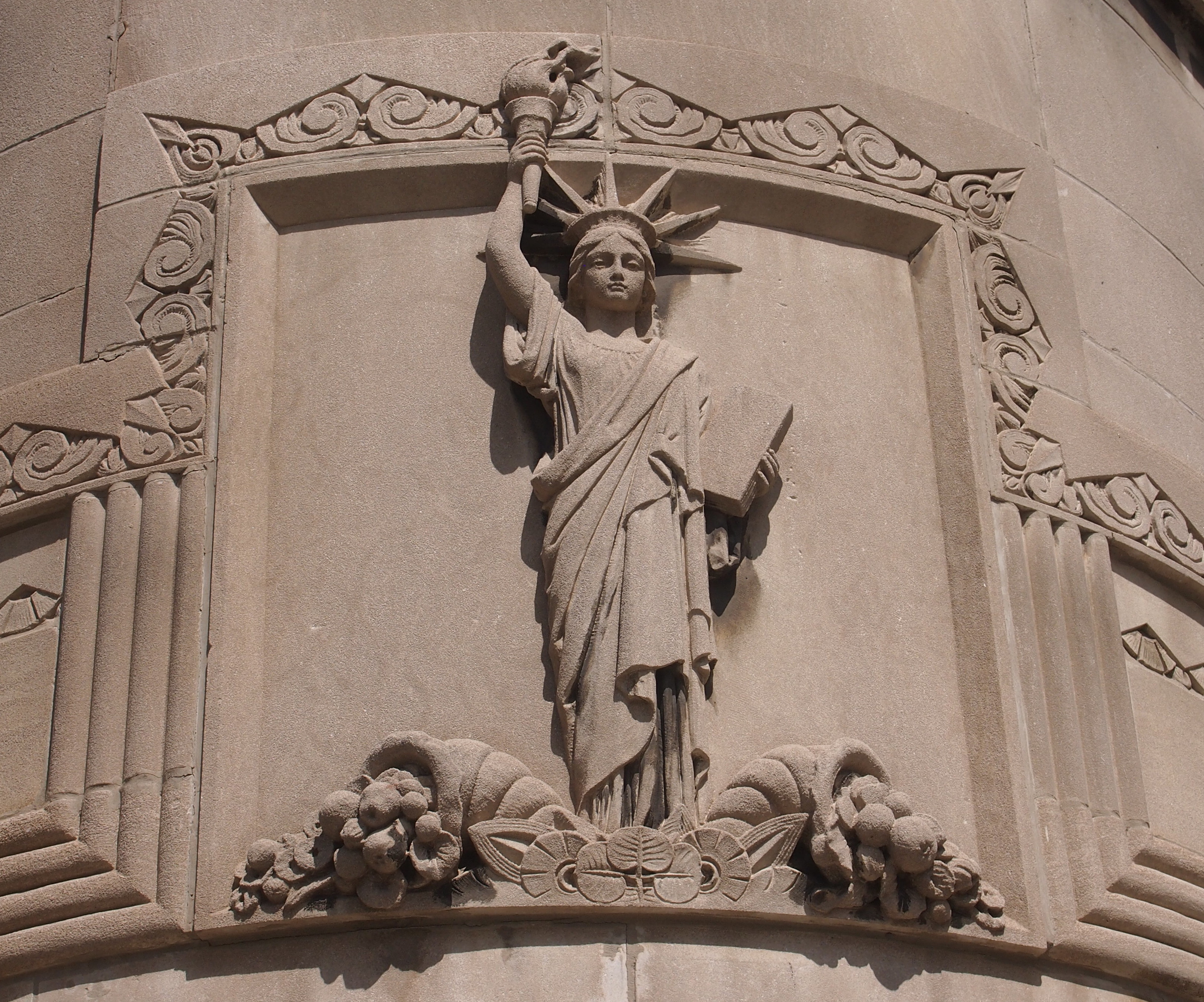
Bucktown, ChicagoAlong with some interesting detail sometimes. This figure looked out from just above the entrance to an older brick building on Damen Ave.
Bucktown Statue of LibertyYou never know where you’ll find Statue of Liberty-like images. The statue deserves to be called the i-word, but that word has been beaten to death in our time. My own favorite use of Liberty Enlightening the World — or La Liberté éclairant le monde to be more than pedantic — was a sizable one I saw years ago over the entrance of a pachinko parlor in Osaka.