The Overseas Highway

A few days ago, I sent the following email to the curator and historian at the Key West Art & Historical Society, Dr. Cori Convertito:

Dr. Convertito,

I recently visited Key West for another pleasant visit, and came away with a question I haven’t been able to answer, though perhaps I haven’t looked in the right places.

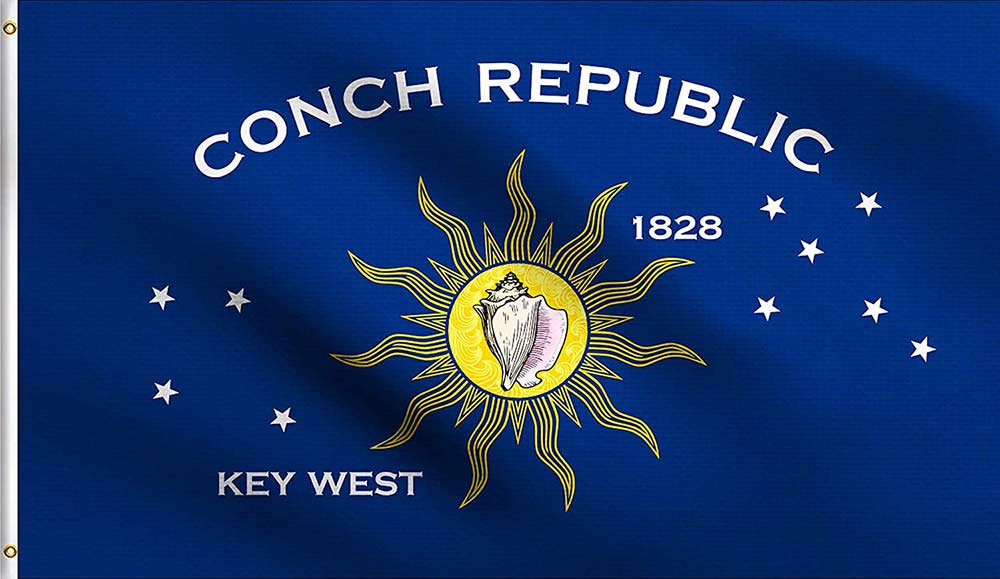
Who is credited with the creation of the Conch Republic flag? I understand that it appeared at the same time as the infamous roadblock and the “secession,” but detail on its creation is lacking. Do you happen to know that?

One reason to ask is that it’s a handsome design, though I’m not sure about the star pattern asterisms — is one or another supposed to be the Southern Cross?
Today she answered:

That’s a perceptive question, and a difficult one to answer definitively. The Conch Republic flag emerged alongside the 1982 ‘secession,’ but attribution is complicated by the fact that several individuals have, over the years, laid claim to the original iteration of the artwork, and reliable contemporary documentation is limited. As a result, it’s hard to credit a single creator with certainty.

What is clearer is the intent behind the design elements. In addition to the conch shell and sun, the star groupings are generally understood to represent two navigational asterisms: the Southern Cross and the Northern Cross (Cygnus). Their inclusion appears deliberate, reinforcing Key West’s maritime identity and its symbolic position between hemispheres.

I hope that helps clarify what is known, and what remains unresolved.

So the short answer is, like with a number of historical questions – even ones as recent as this – no one is sure. Good to know. Thanks, Dr. Convertito.

The Overseas Highway, from mainland Florida to Key West, or vice versa, is epic all around: an epic construction project once upon a time, and an epic drive in our time. Through the Upper Keys, the likes of Key Largo and Islamorada, the ocean isn’t usually visible, obscured behind thick development: commercial and residential buildings and omnipresent marinas. But it isn’t long before you’re skipping from key to key, some larger, some smaller, with water widely visible on both sides of the road.

The most epic section of the crossing, as far as I’m concerned: Seven-Mile Bridge.
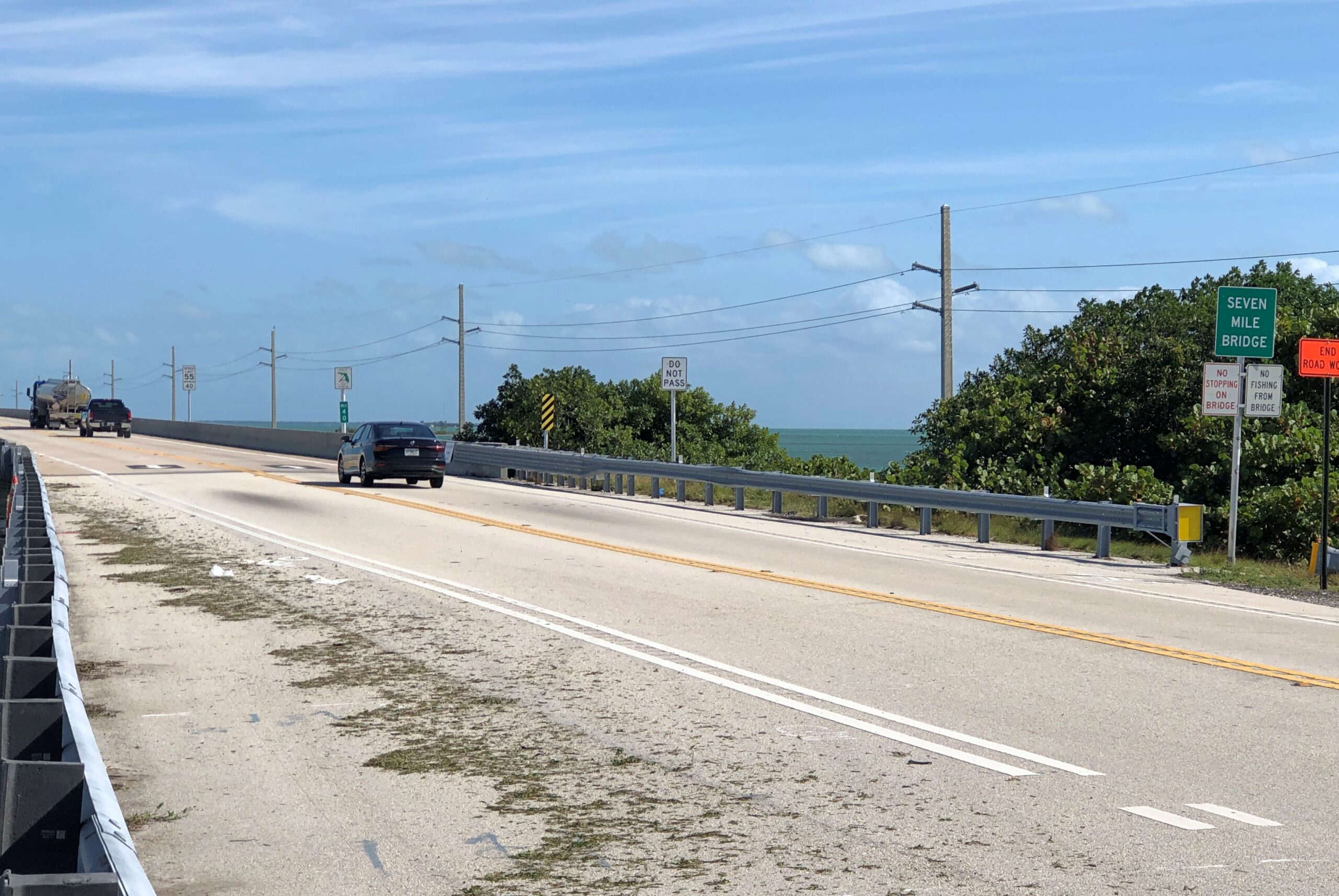
On an ordinary highway, seven miles isn’t much of a stretch at highway speeds. Listen to one song or another on the radio and you’re practically done with it. Those same minutes have a different quality over the wide water, glinting in the sun and spotted with boats and occasional small keys in the distance. There’s a sense of the mildly impossible. Of course it’s entirely possible, via a feat of 20th-century civil engineering, as is the 100-plus miles of the whole highway. I don’t believe my civil engineer grandfather ever drove the Overseas Highway, but I’ll bet he read about it with considerable satisfaction.
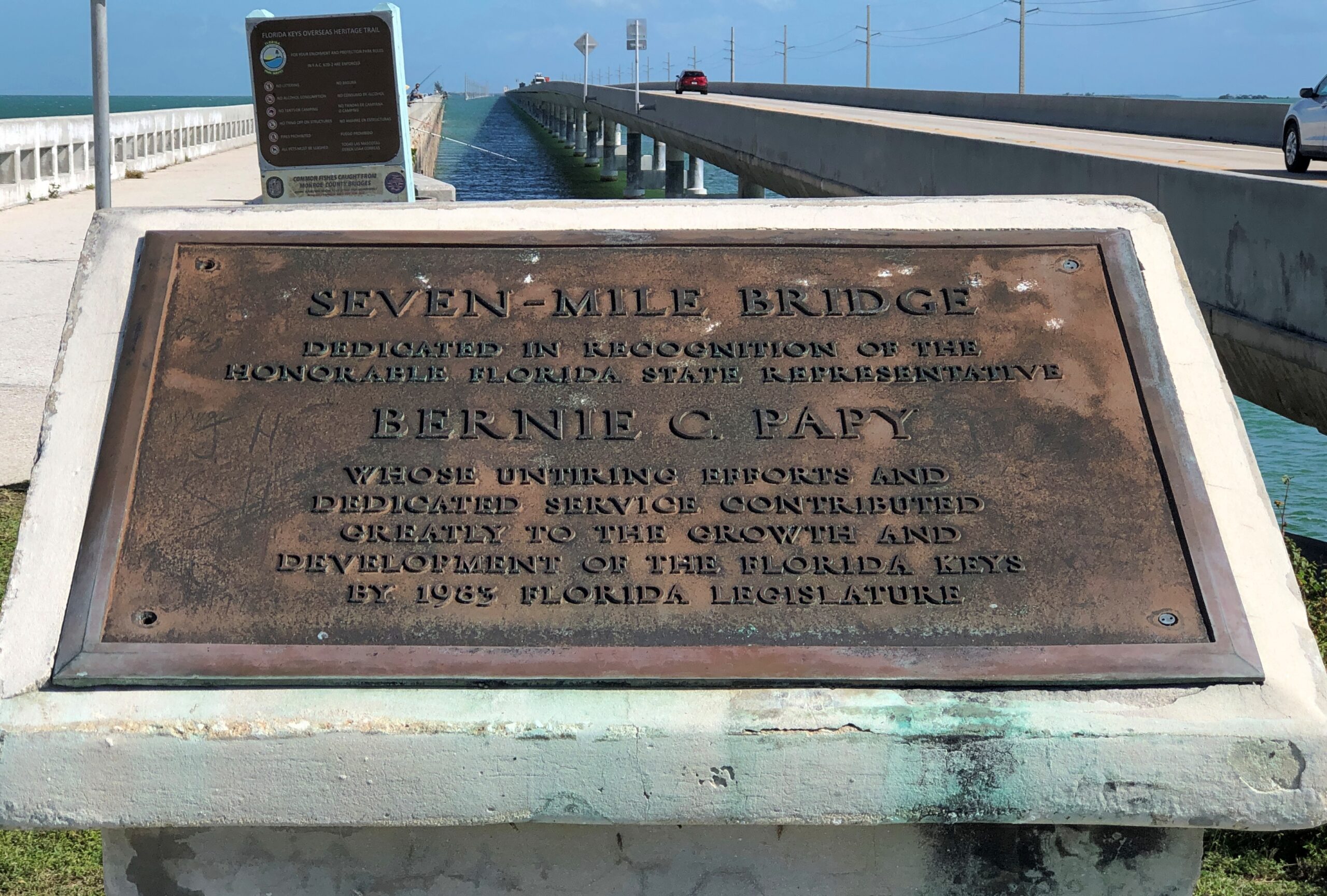
“The original 7 Mile Bridge, also known as the Knights Key-Pigeon Key-Moser Channel-Pacet Channel Bridge, was constructed in the early 1900s as part of Henry Flagler’s ambitious Overseas Railroad project,” notes the Key West Blog. “This railroad connected mainland Florida to Key West, revolutionizing transportation and trade in the region. However, after a devastating hurricane in 1935, the railroad was destroyed, and the bridge was converted into a highway.”

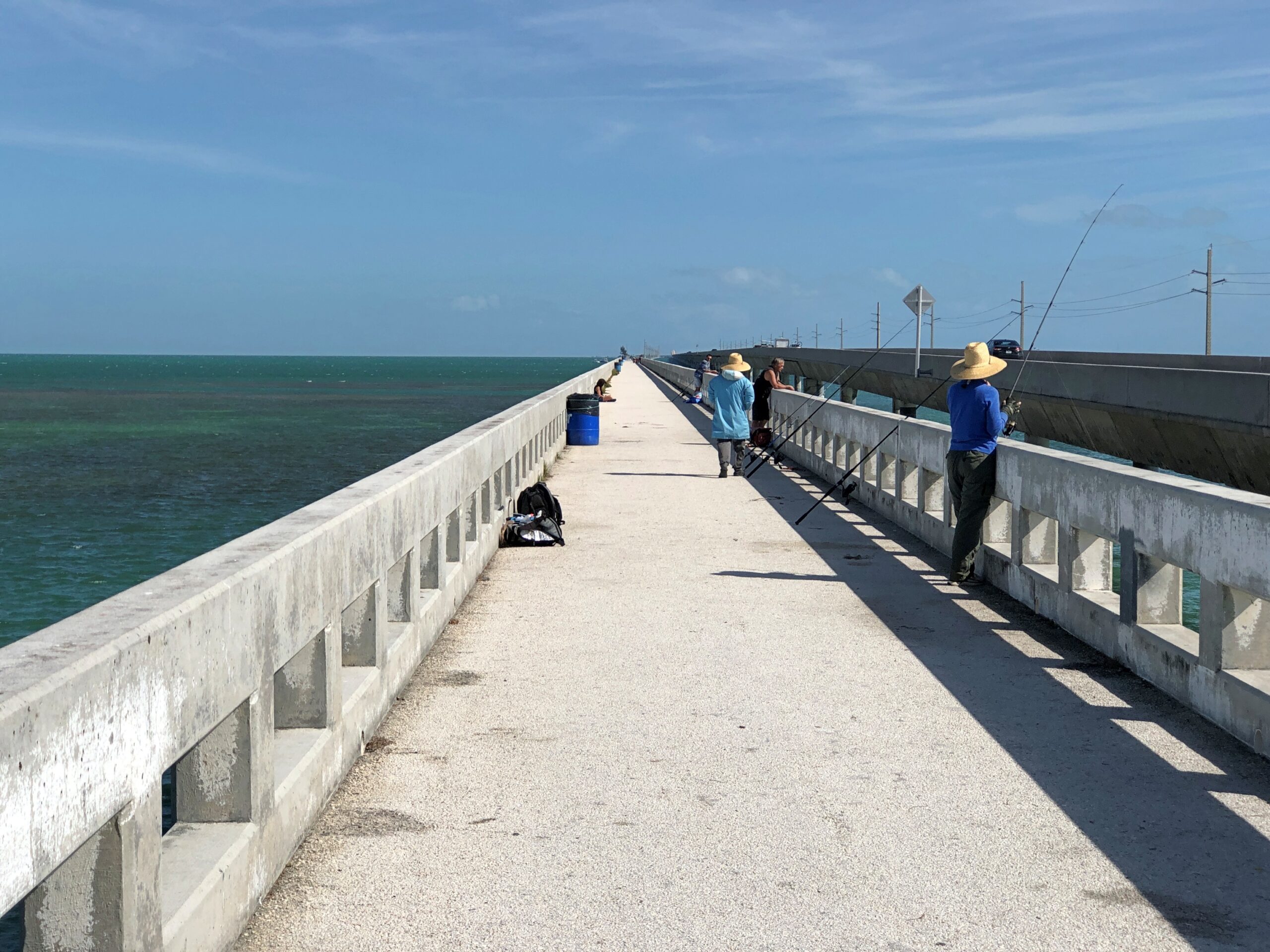
The history is a little more complicated than that, with the current bridge a 1980s work, leaving part of the original as a pedestrian and (especially) a fishing bridge. I’m no sport fisherman, but I understand tarpon, snook, snapper, grouper, bonefish and barracuda swim these waters.
At Big Pine Key, we stopped for a visit to the National Key Deer Refuge, a place focused on giving key deer a place to live, as it says in the name. For human visitors, there is a trail.
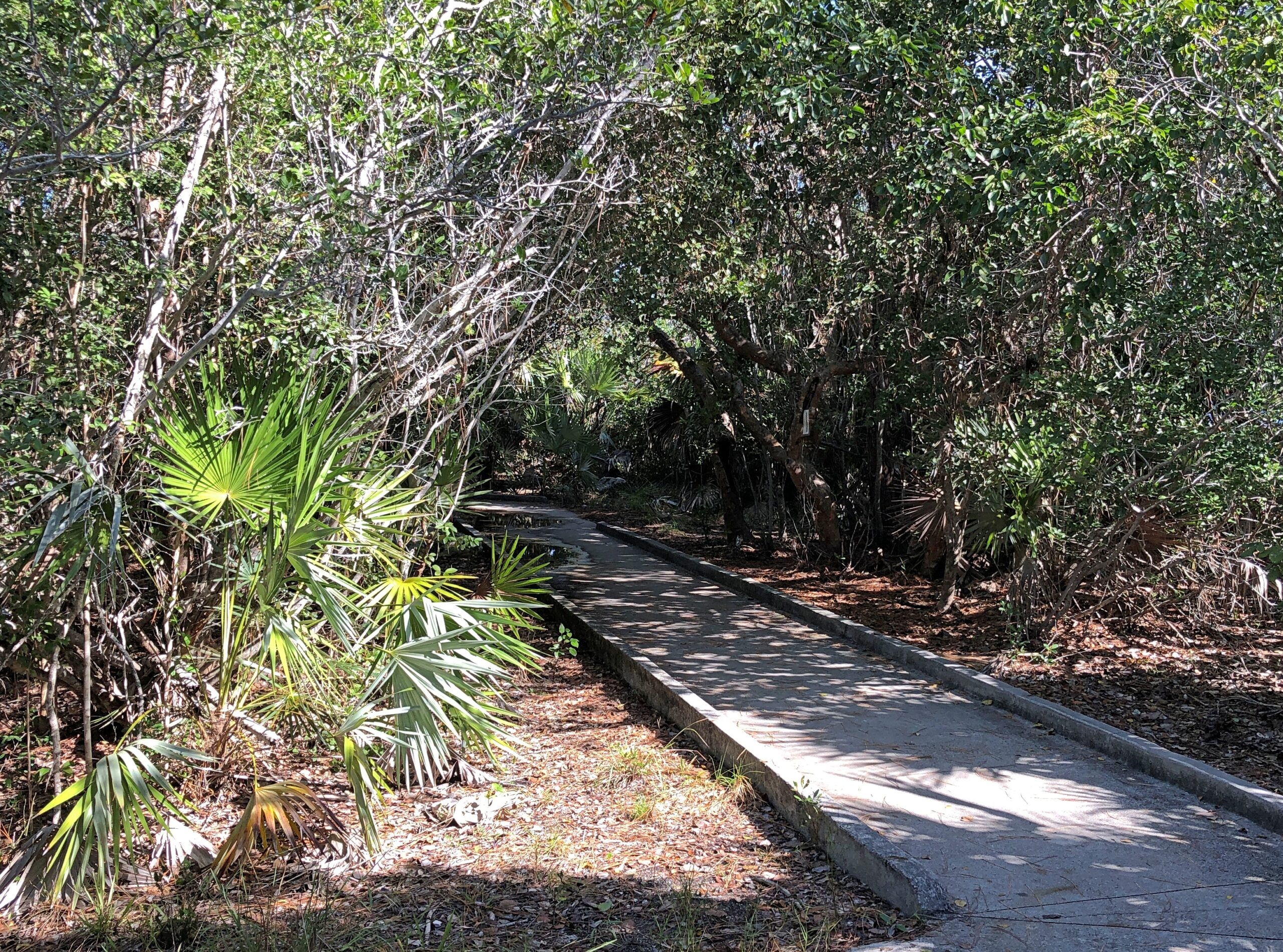
It goes partly around a pond in the refuge. No deer were to be seen.
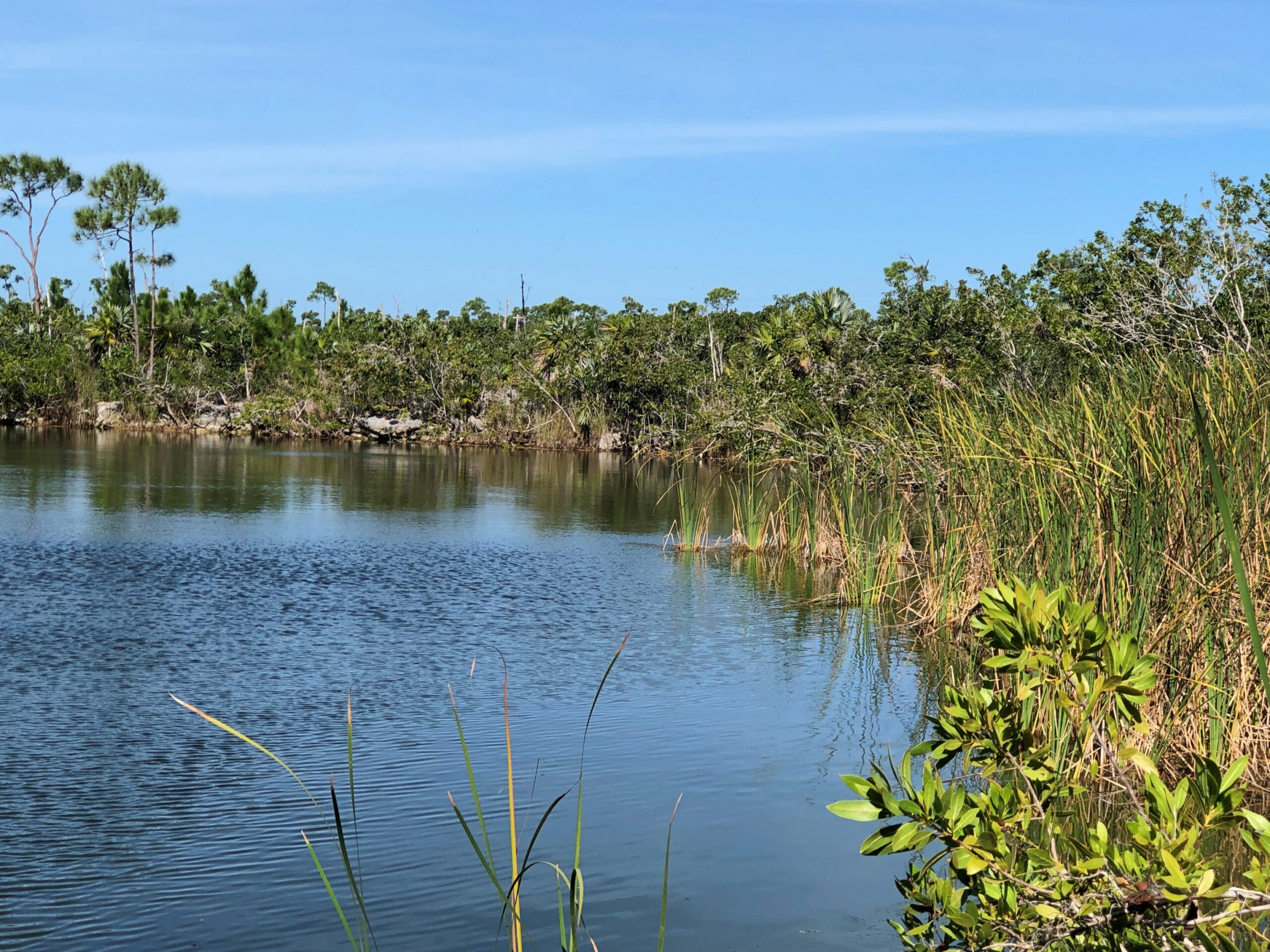
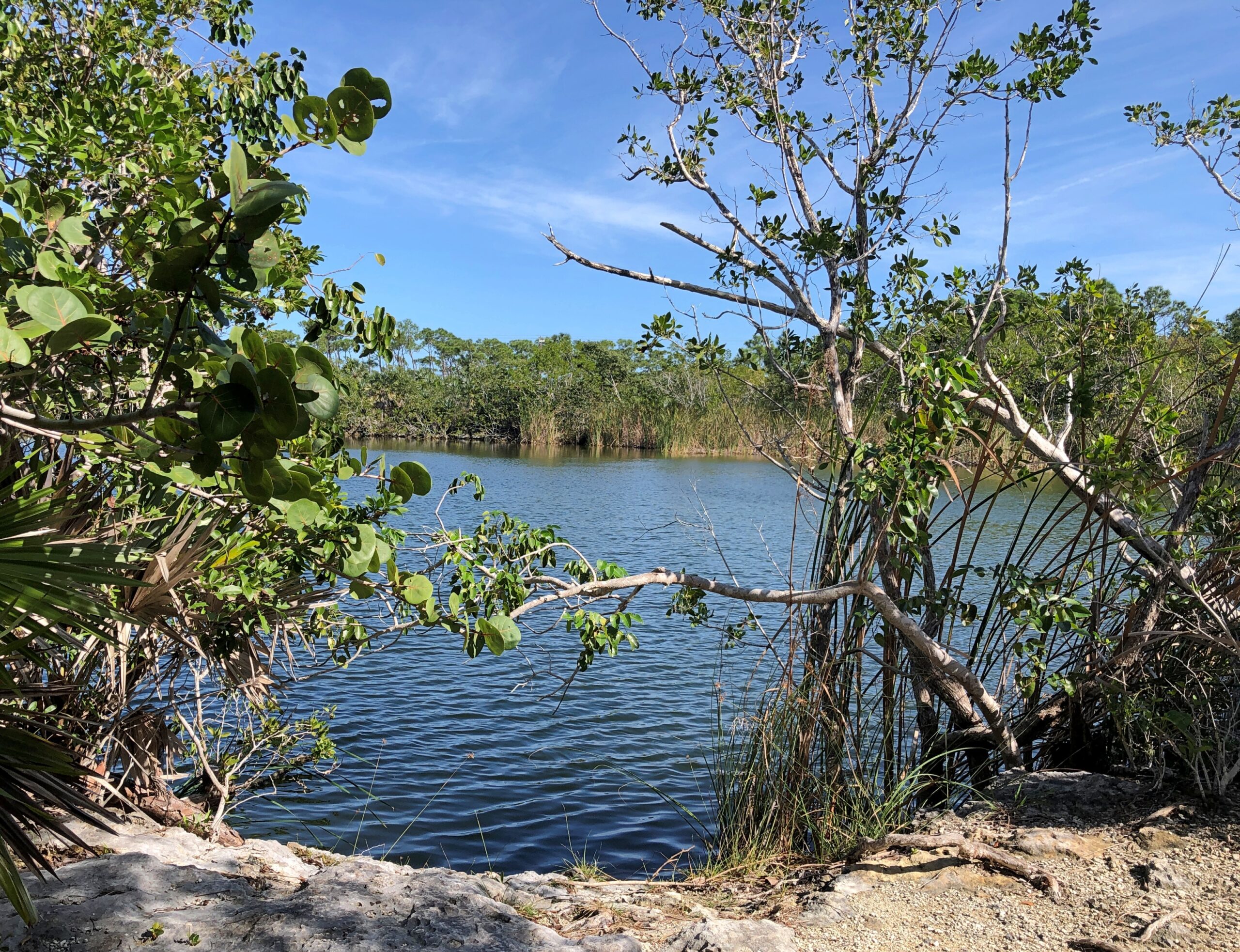
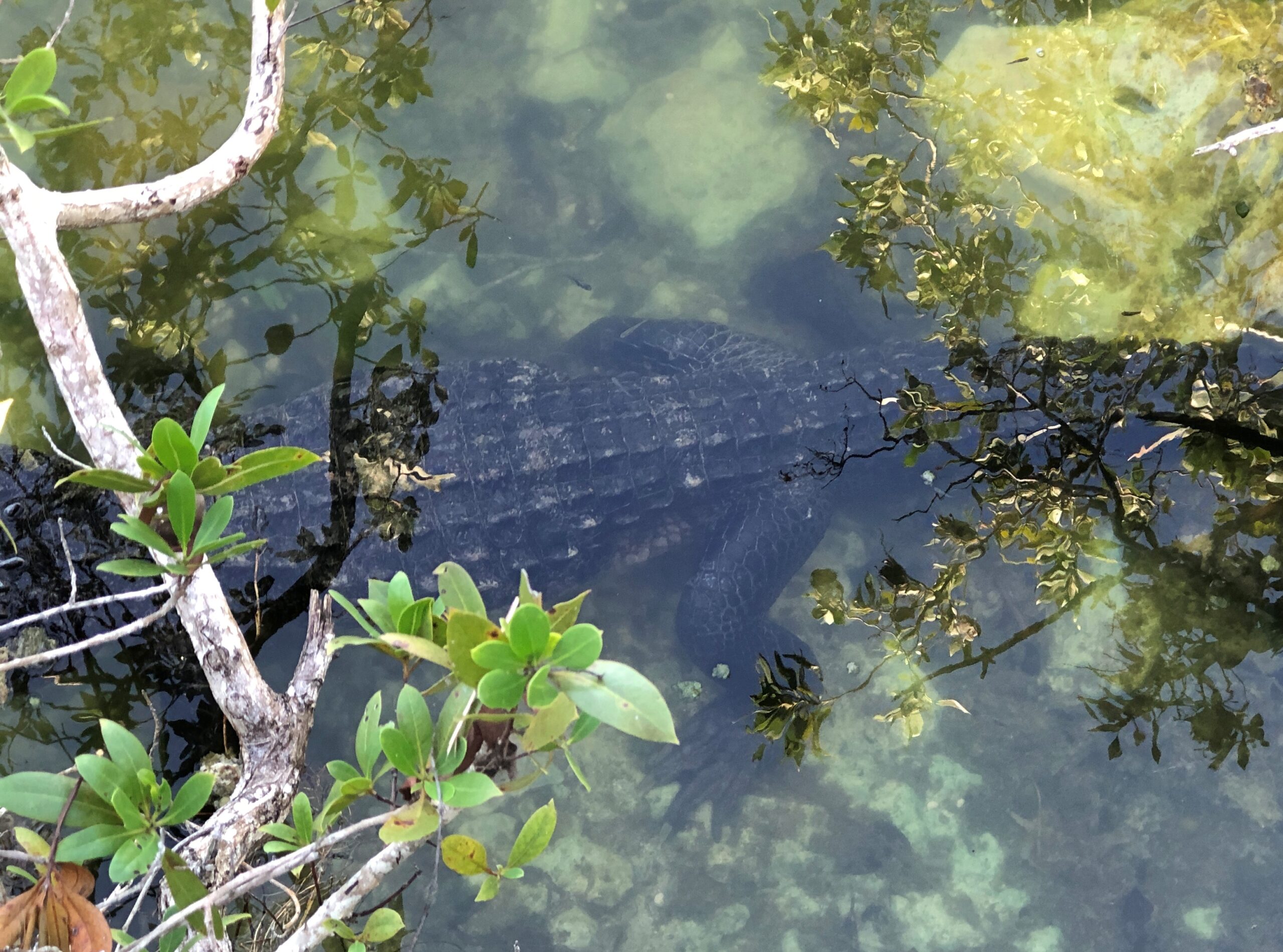
We did spot a gator, however. Or maybe a croc. Hard to tell at this angle. They both live in southern Florida.
A sign on the trail warns visitors not about reptiles, but a nearby poisonwood tree.
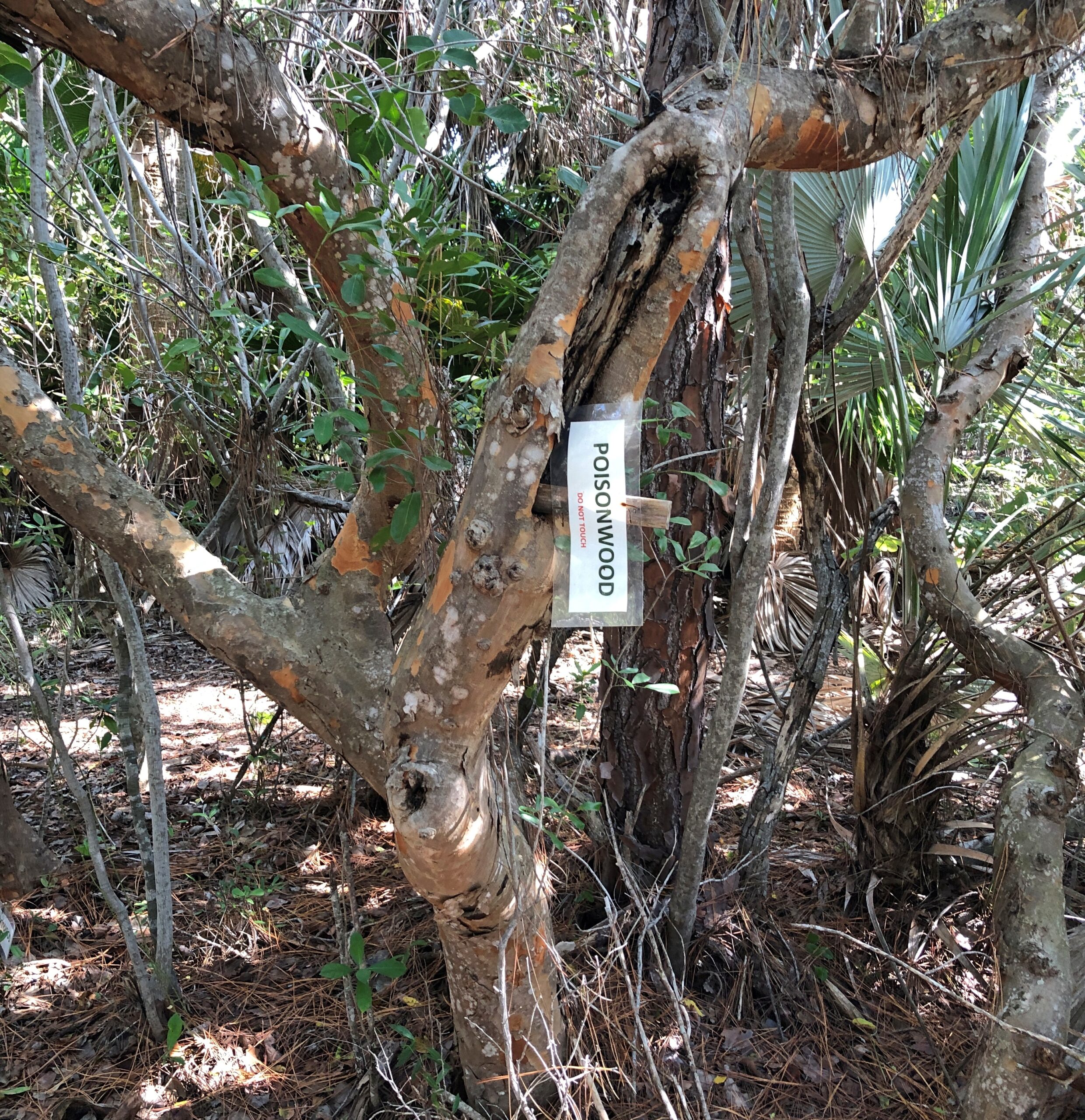
Poisonwood? A native to the Keys. It sounds bad, and it is.

Metopium Toxiferum [poisonwood] is related to poison oak, poison ivy, and poison sumac,” says the Tree Care Guide. “The tree produces the same irritant, urushiol, which causes an itchy, blistering rash. The oils from Metopium toxiferum cause dermatitis ranging in severity from a light red rash to intense skin blistering. Tea made from Metopium toxiferum leaves and twigs combined with bleach has been used to induce abortions but has also tended to kill the patient.”

Yikes. We took the advice of the sign and didn’t go near it.

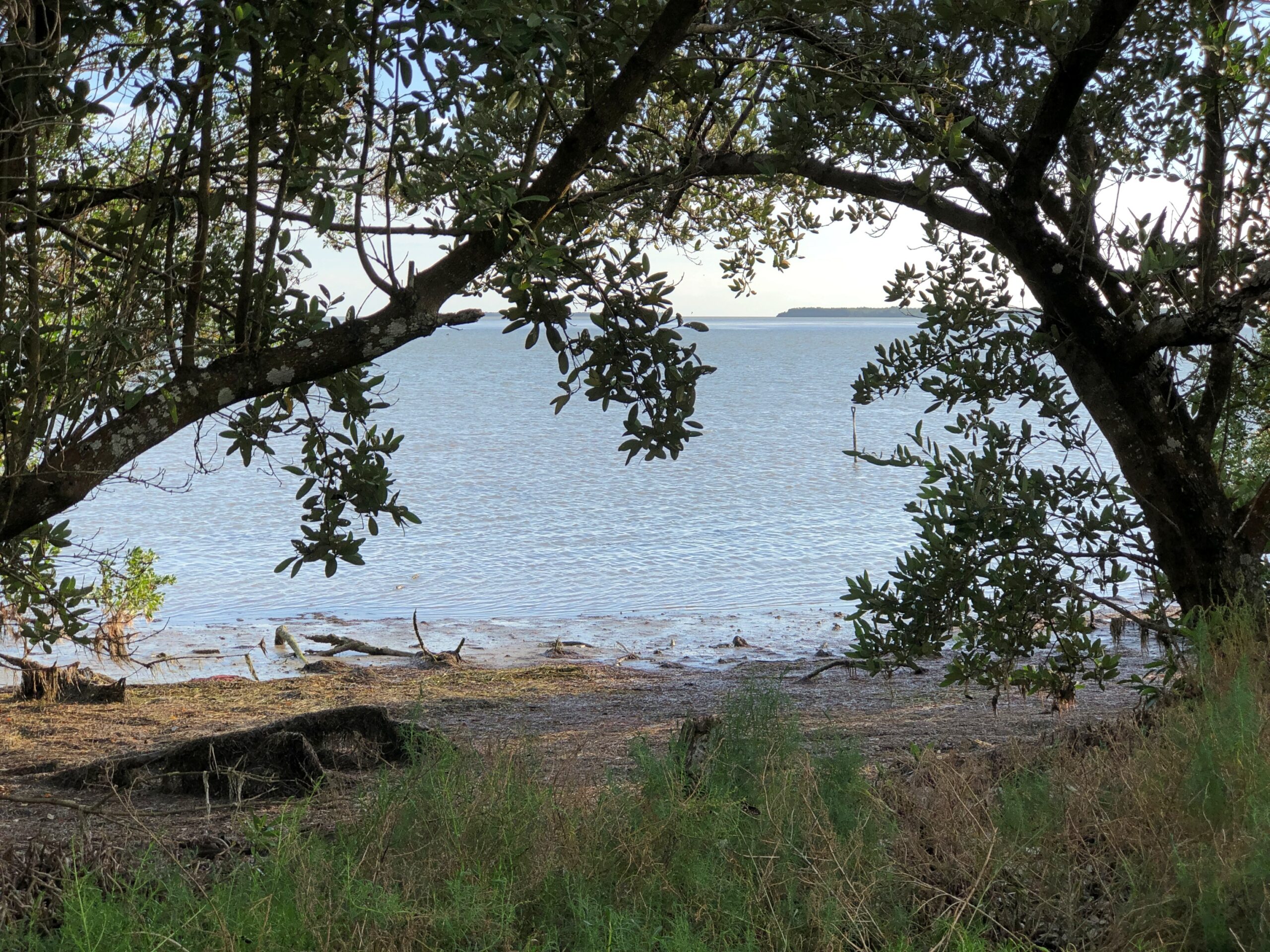
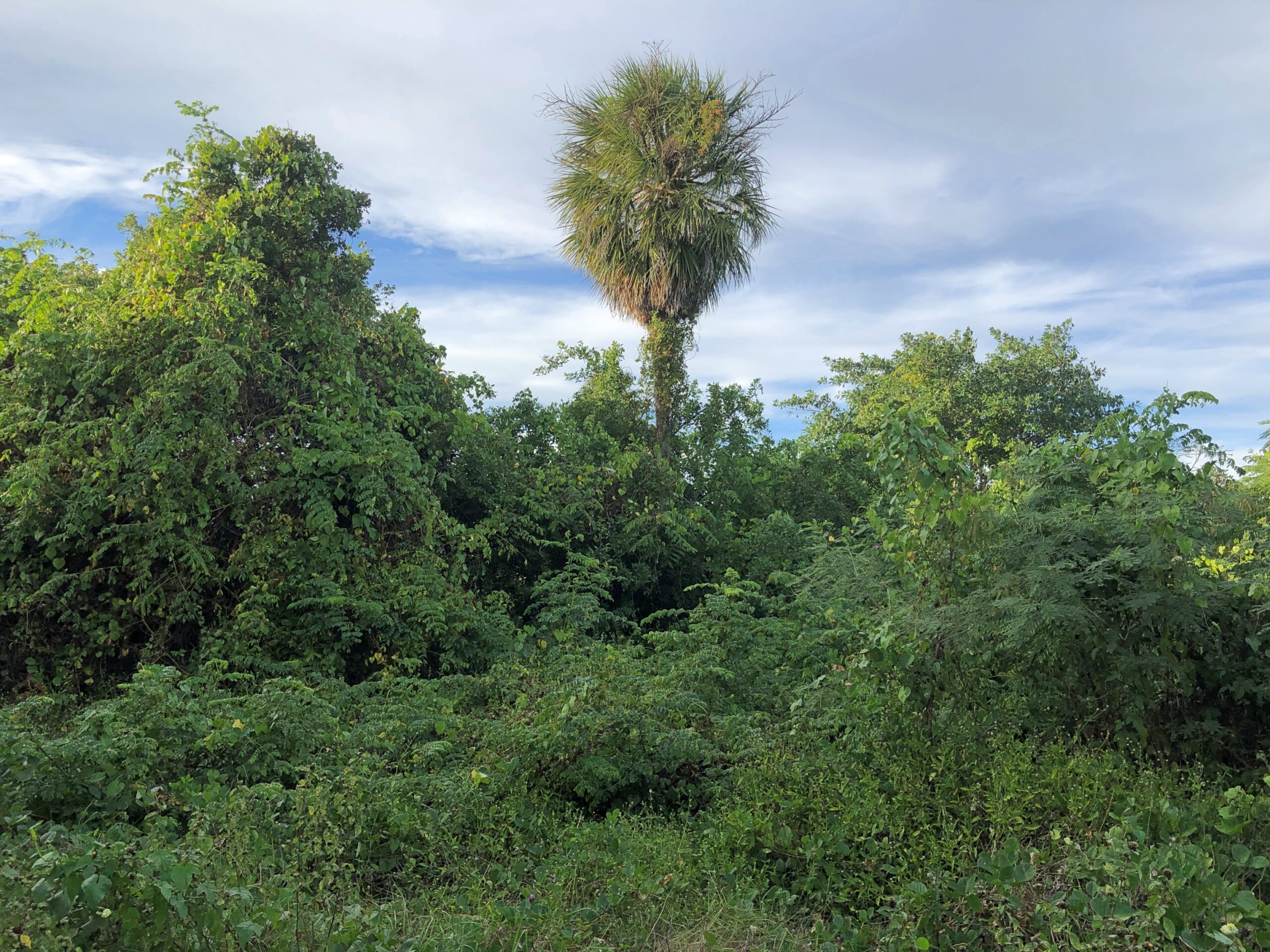
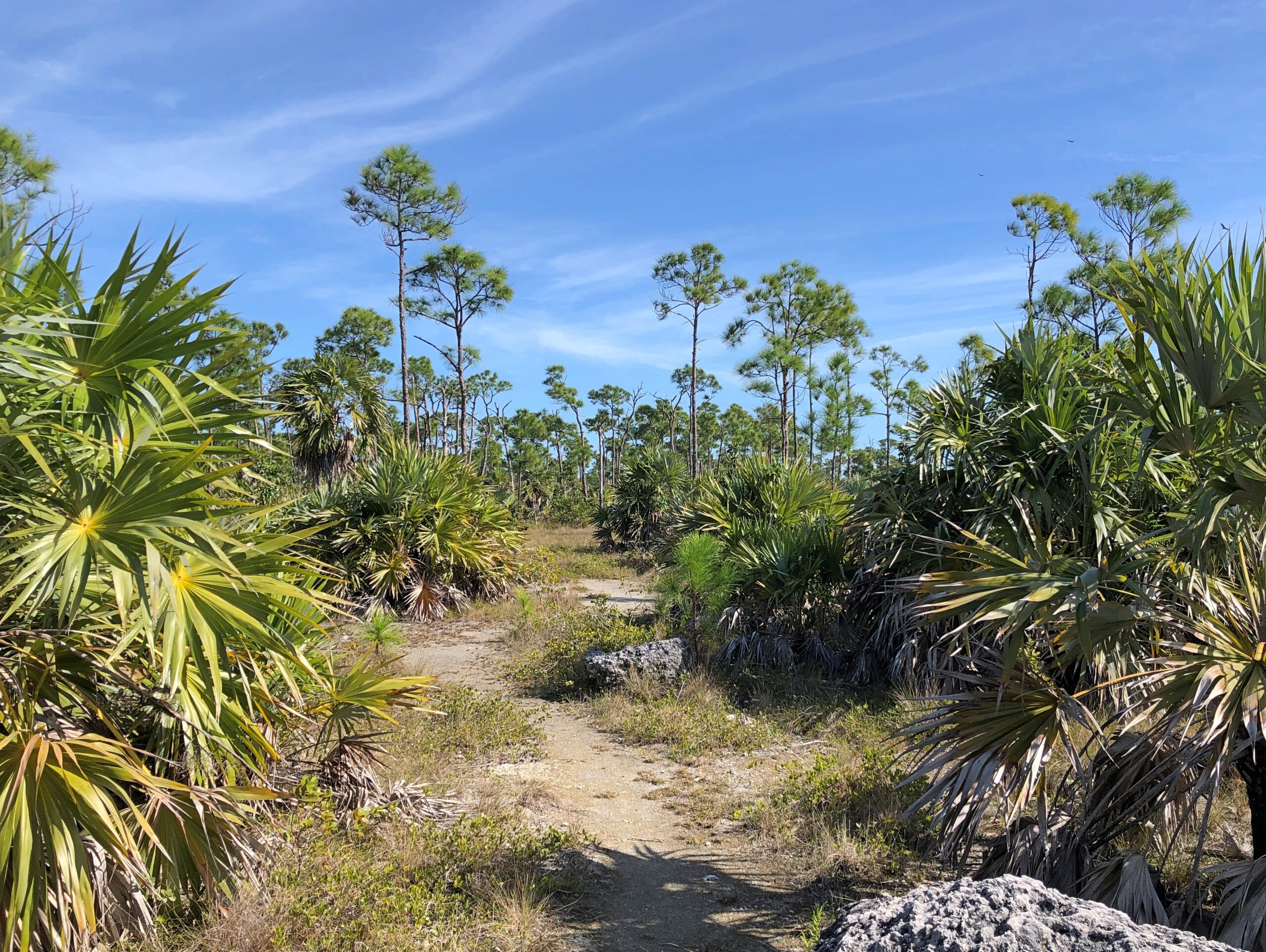
Across the road from the refuge parking lot, some undeveloped key landscape. There couldn’t be that much of that, at least on the keys connected by the highway.
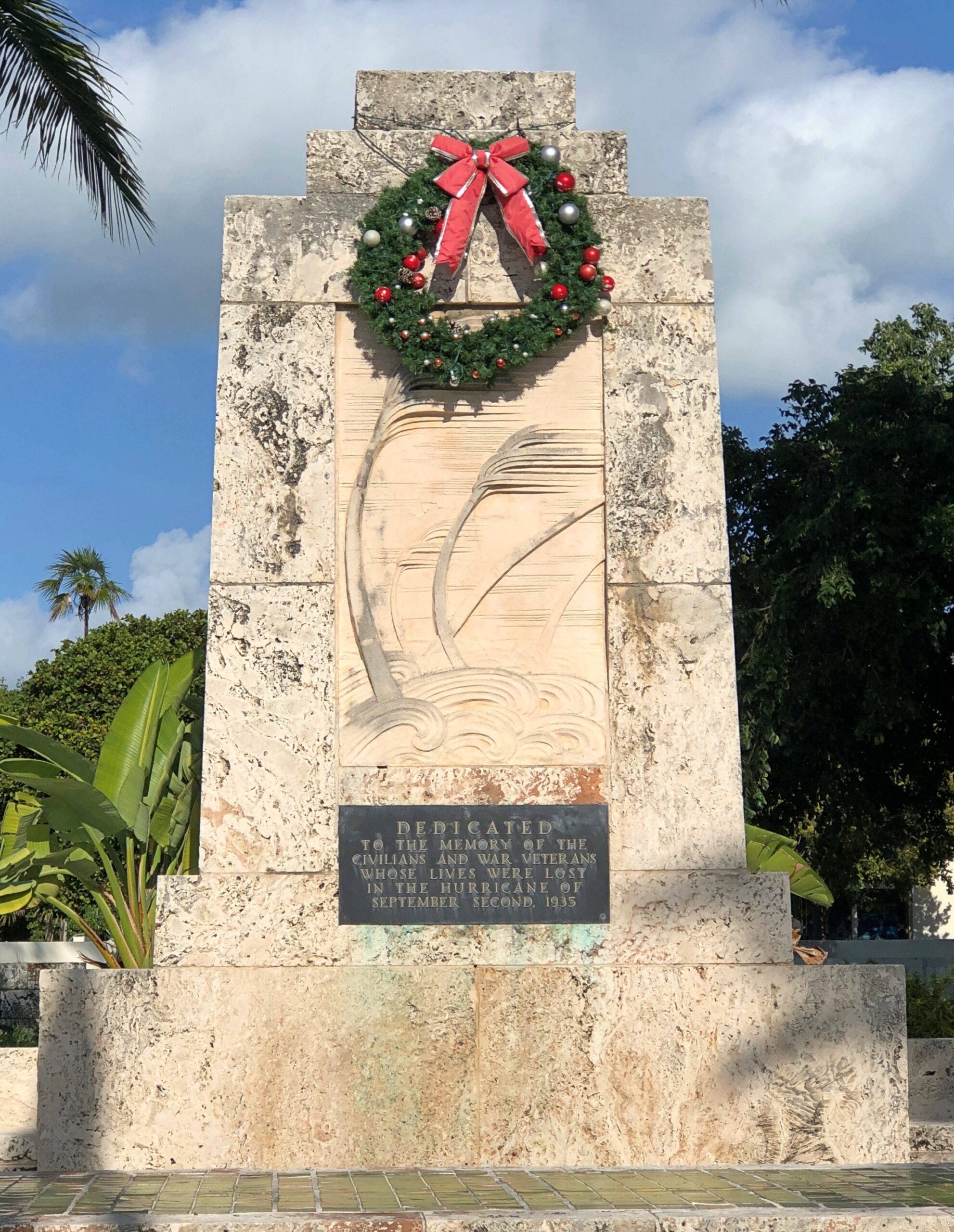
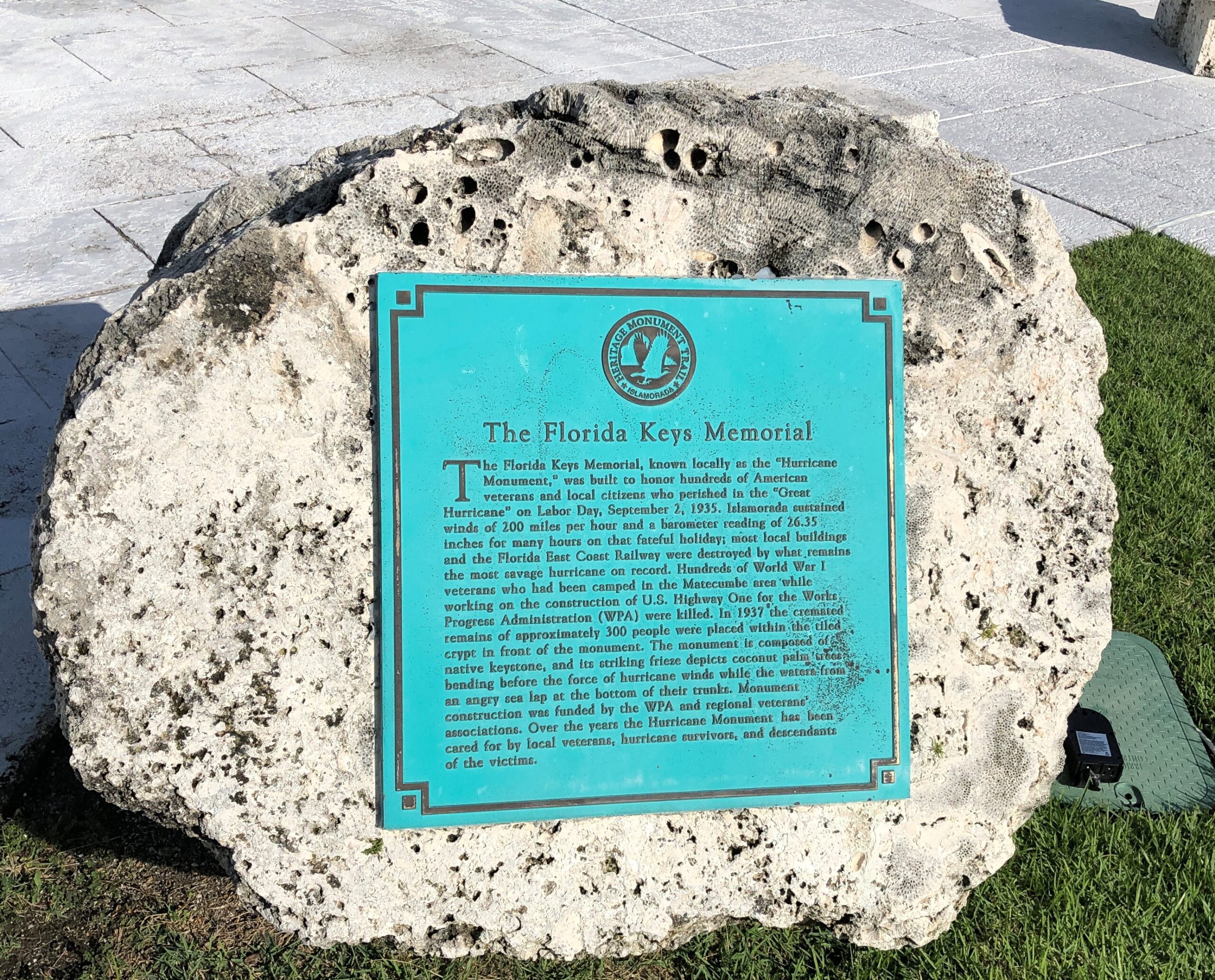
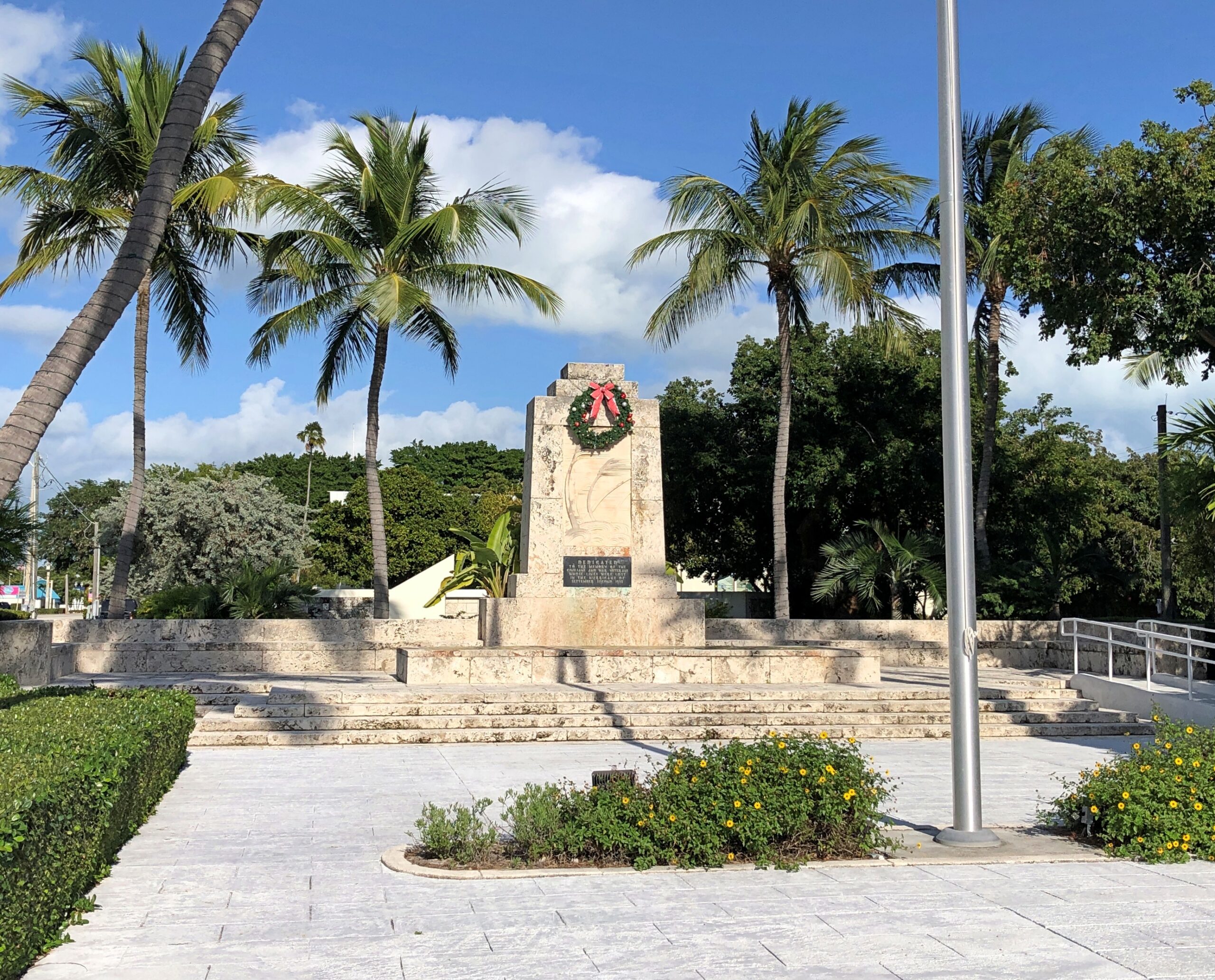
In Islamorada, which is spread across five small keys much closer to the mainland than either Key West or Big Pine Key, we stopped to pay our respects at the memorial to those who died in the 1935 hurricane.
Also in Islamorada, we drove past Betsy the Lobster, but sorry to say, didn’t stop for a closer look. What was I thinking?
Everglades National Park: Skeeters

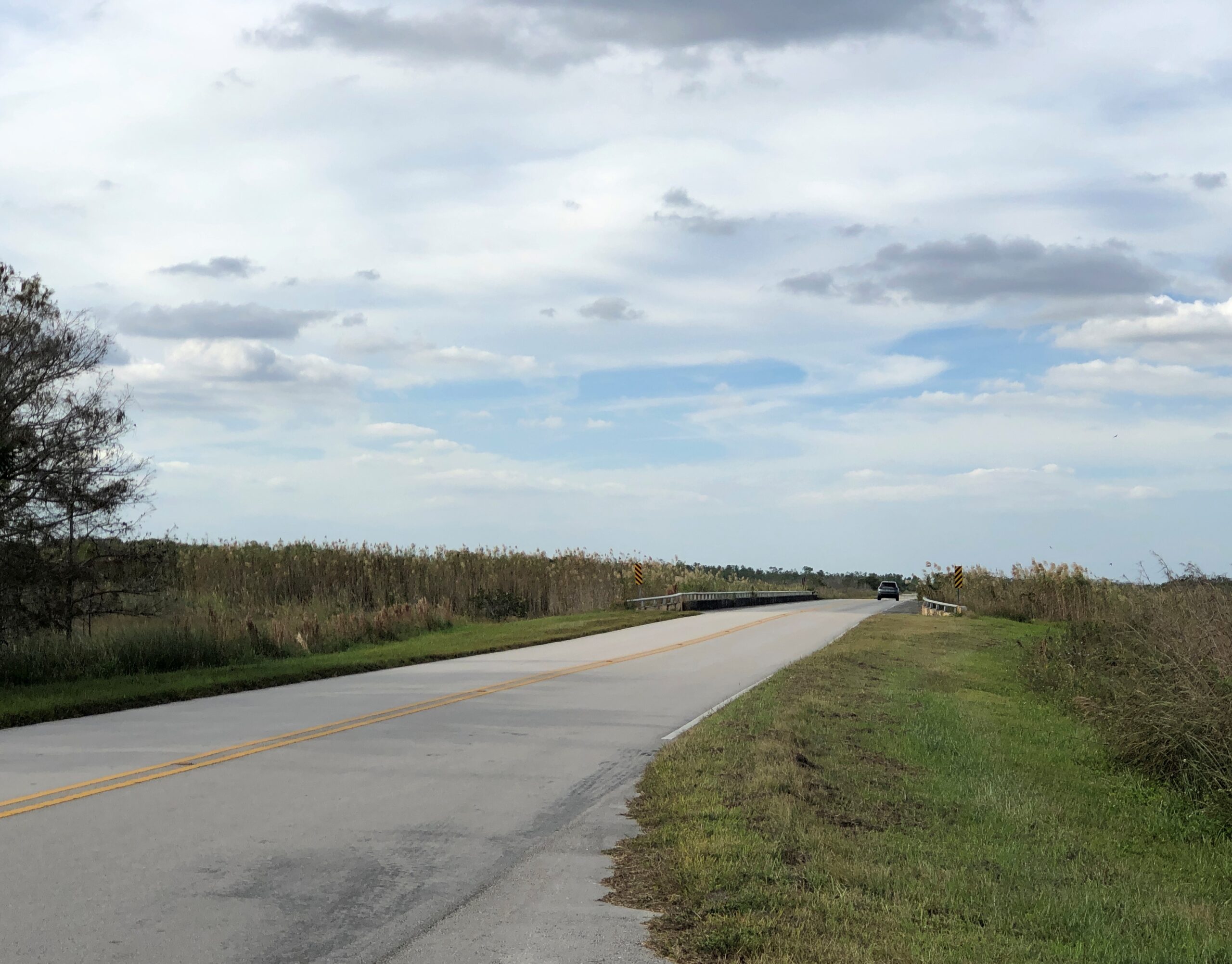
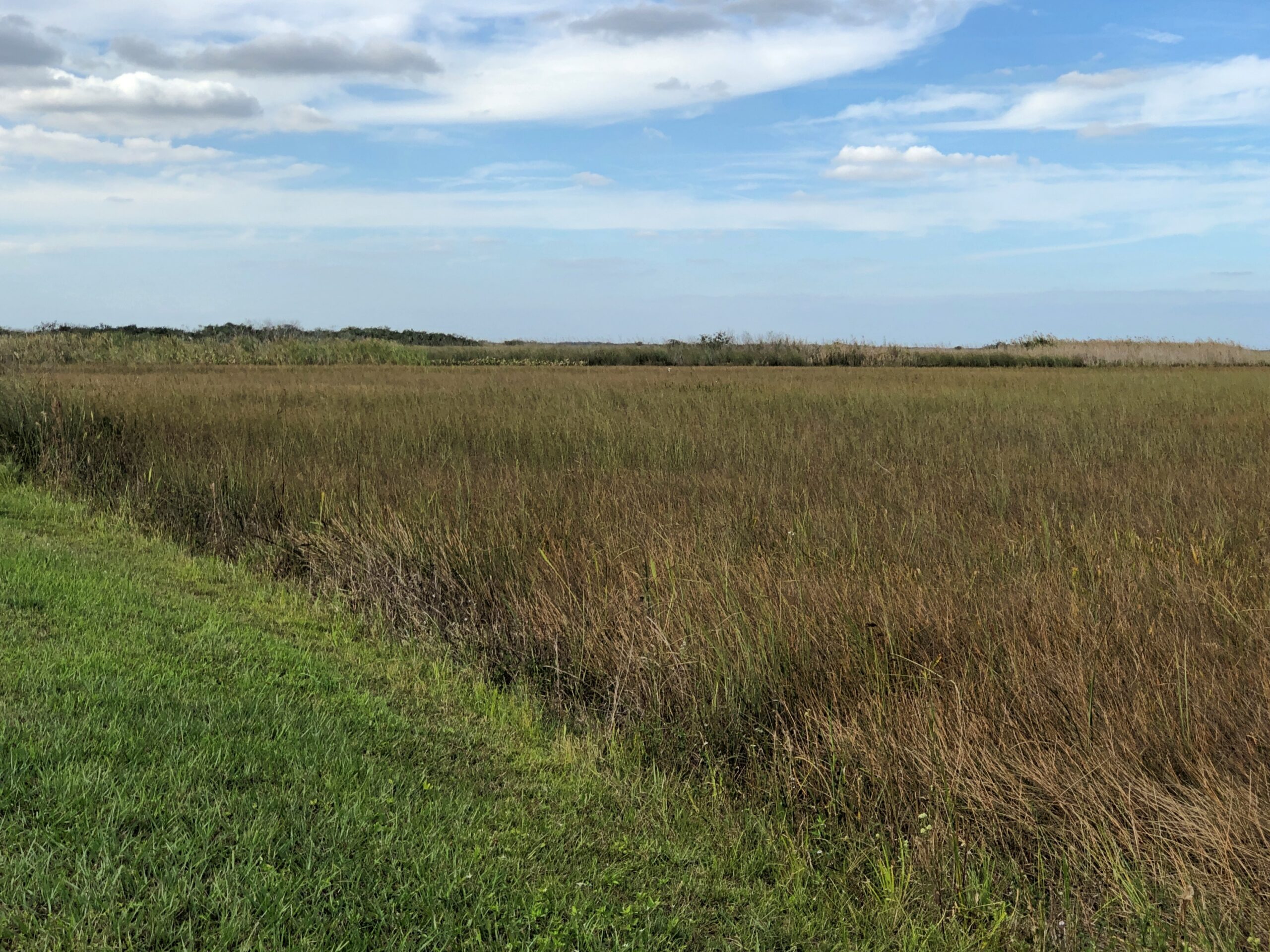
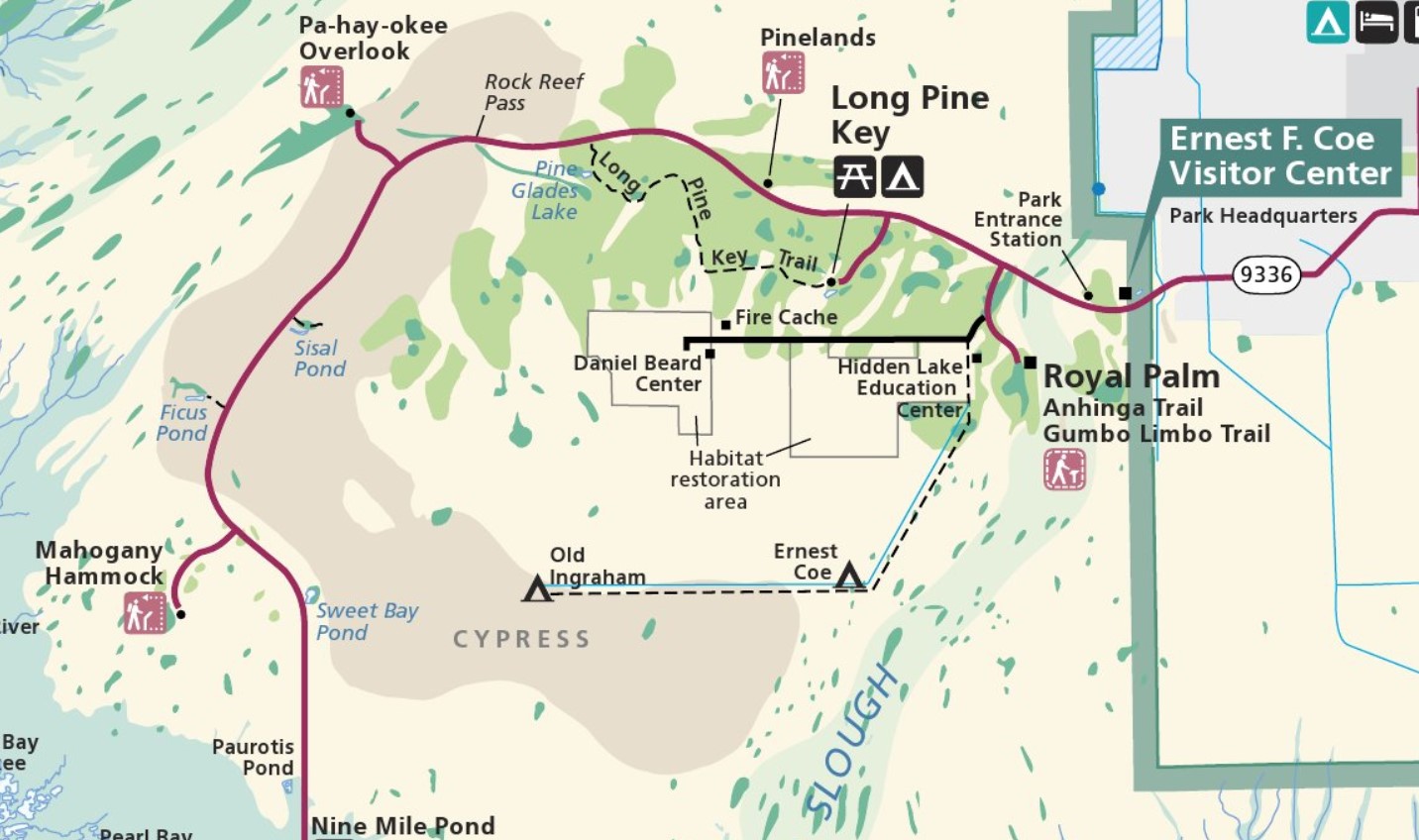
I’ve seen maps of Everglades National Park for years, and noted with great interest the main road snaking through the park, from the southern part of greater Miami to a point on the peninsula’s south coast. It was a road I’d long wanted to drive (in red, below), and on the afternoon of December 12, that’s what we did. Only about 40 miles each way in the park, so not too long a drive.

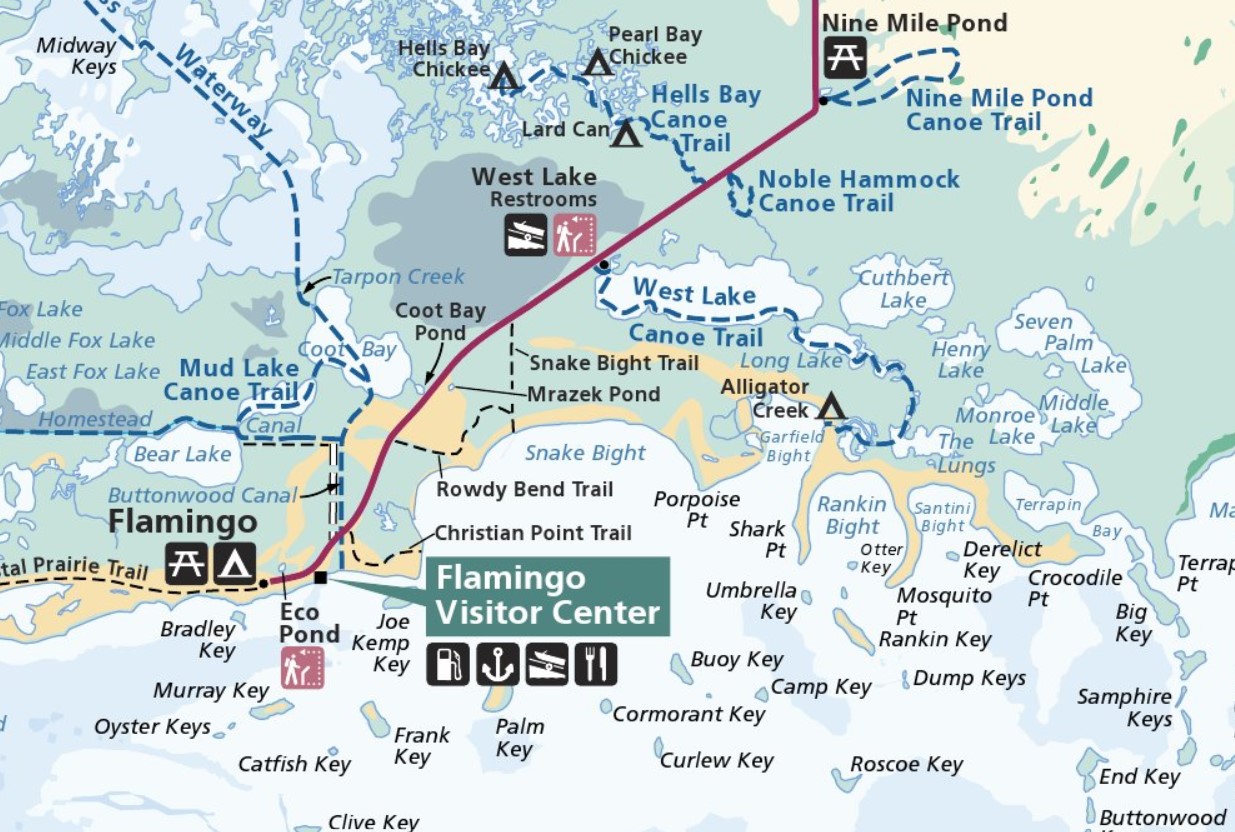
We stayed in Homestead, as far south as metro Miami goes, for the purpose of visiting the Everglades. Outside the park, the road is Florida 9336. Inside the park, it’s the less interestingly named Main Park Road. Odd, considering that some examples of nearby features are named Gumbo Limbo Trail, Hells Bay Canoe Trail, Alligator Creek, Snake Bight Trail and Coot Bay and Coot Bay Pond.

Almost no one else was around, which is the secret sauce for most enjoyable drives. My only minor complaint is that Pa-hay-okee Overlook, at the edge of a cypress zone, was closed. Considering how flat the terrain is, that view would have been expansive.

The park road takes you to Flamingo, Florida, which has no current human population unless you count park staff, who must stay nearby somewhere at least sometimes. Flamingo has no flamingos, according to a park ranger we met, whom I’ll call Bobbie. There seem to have been some of the birds in the late 19th century, she said, but they moved on when hunters showed up, looking for a source of colorful feathers for women’s hats fashionable at the time.

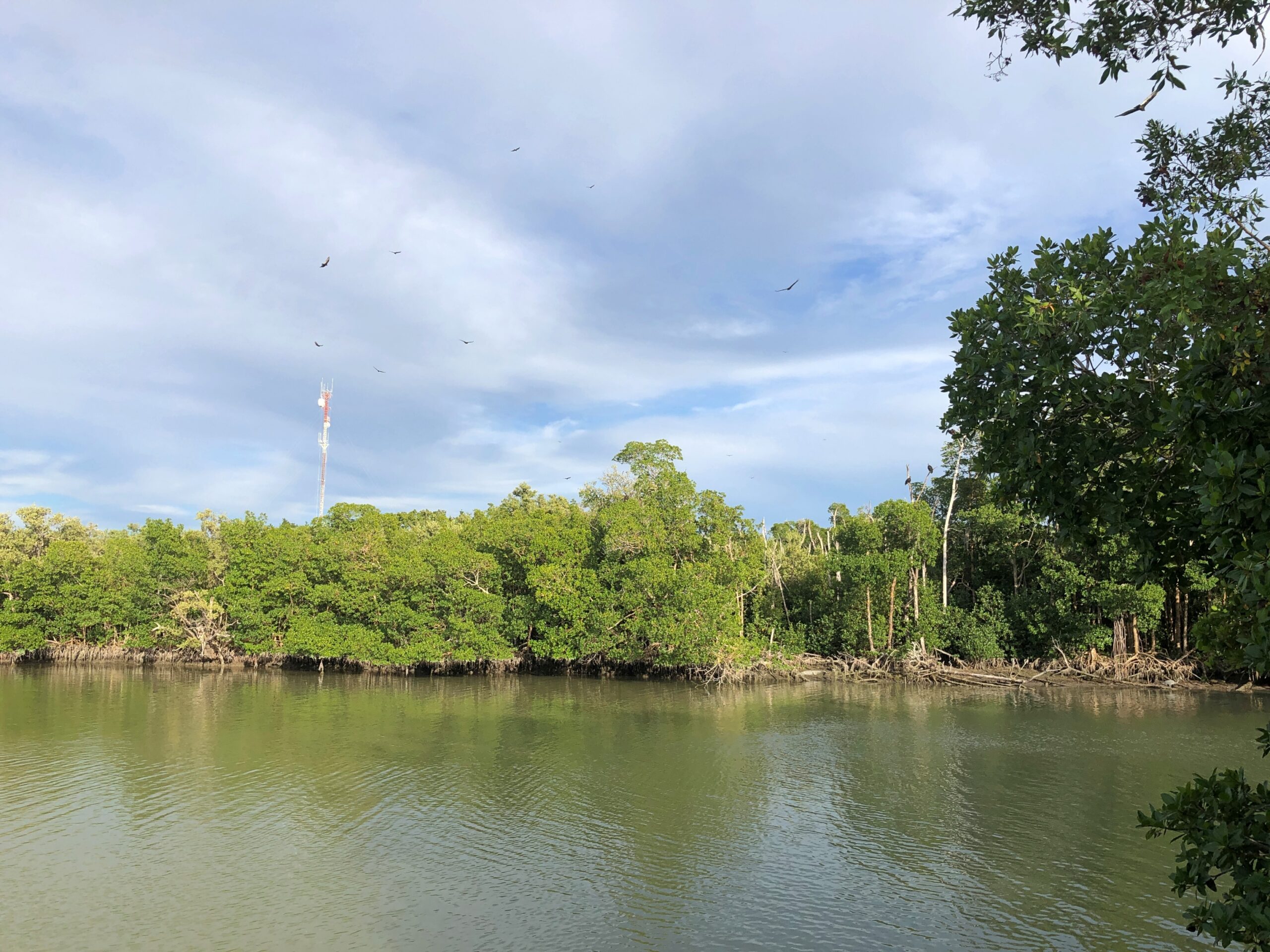
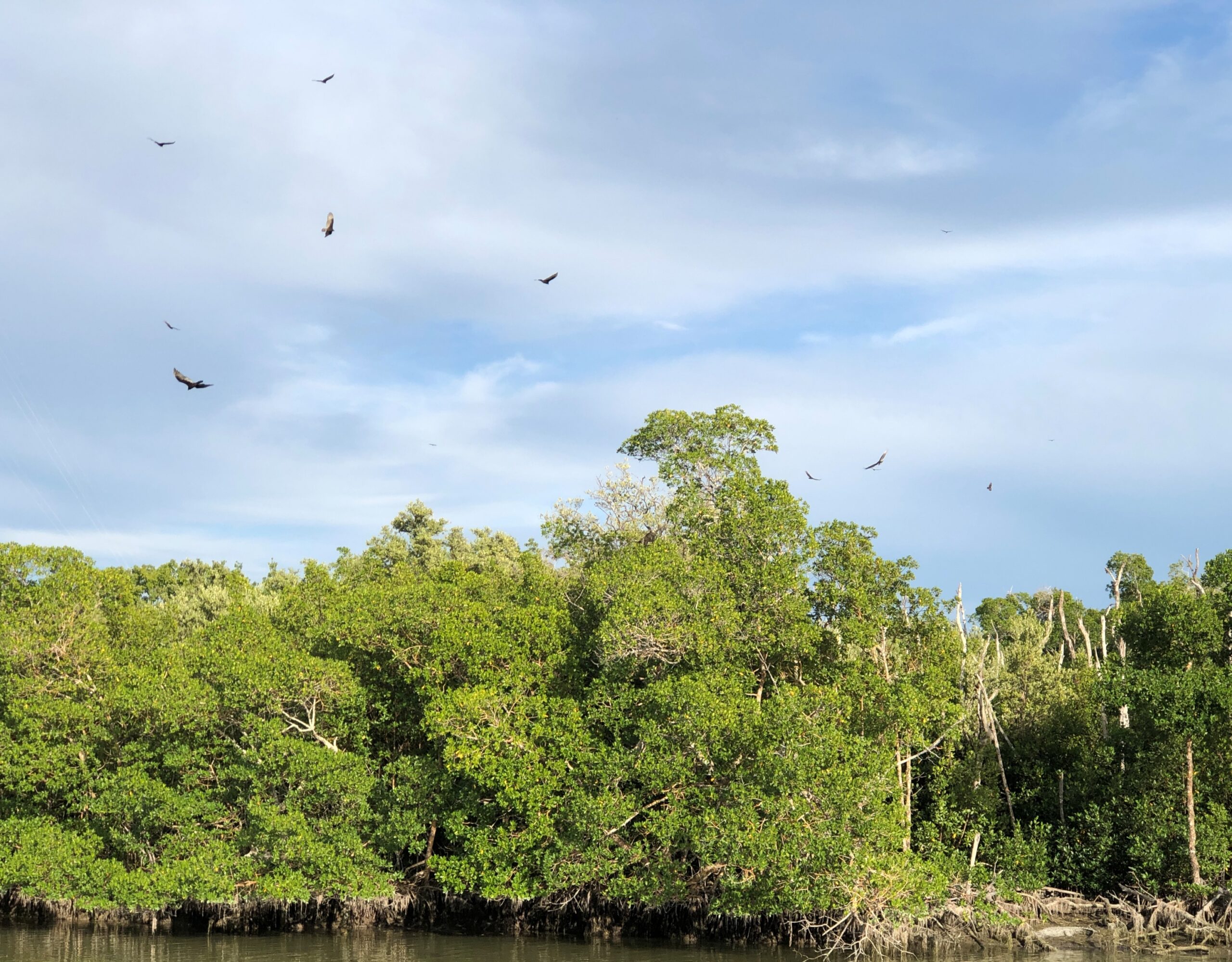
Plenty of other birds are still around, looking for a meal. Hadn’t seen that many circling birds since we were in north-central India.

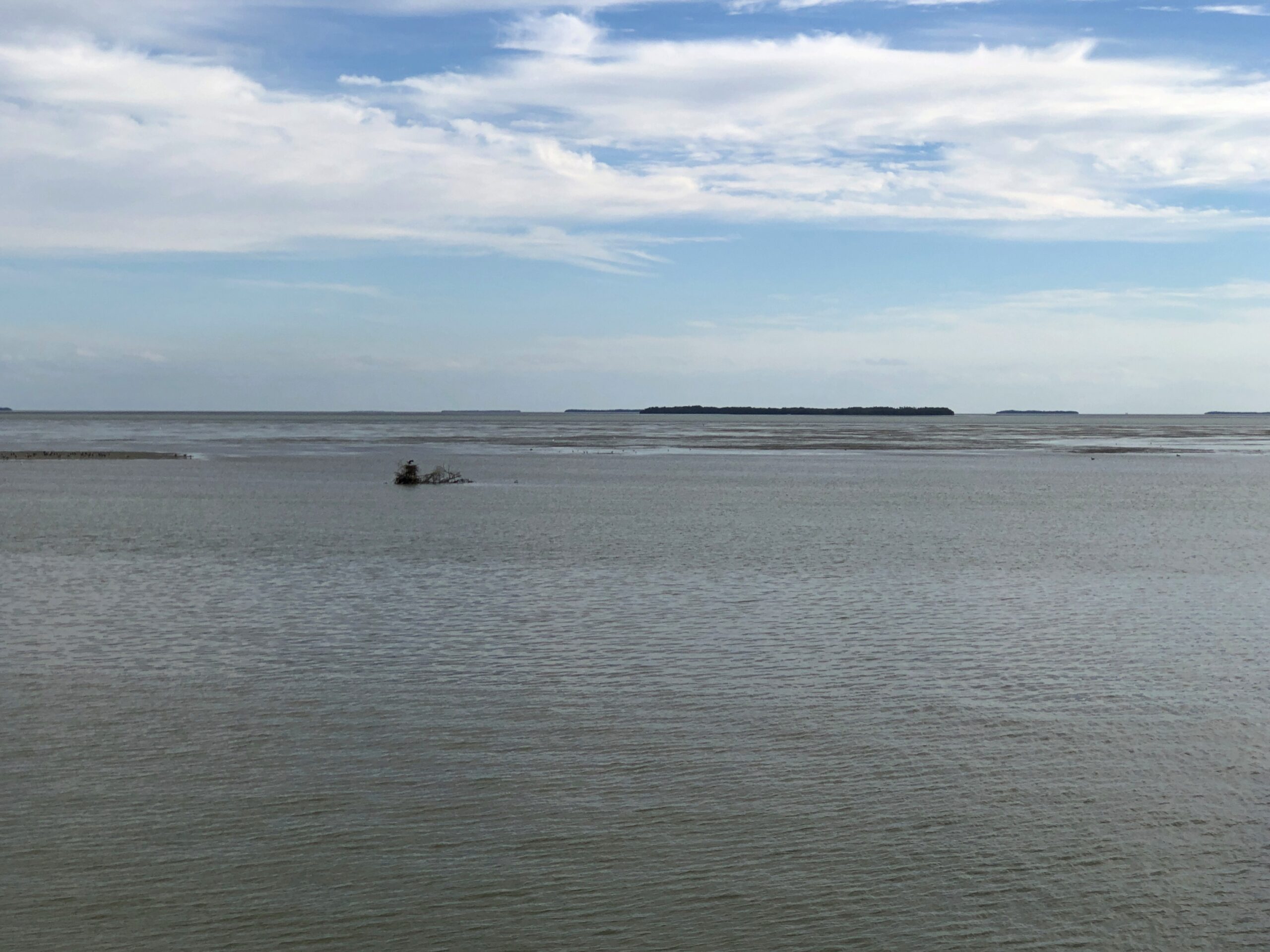
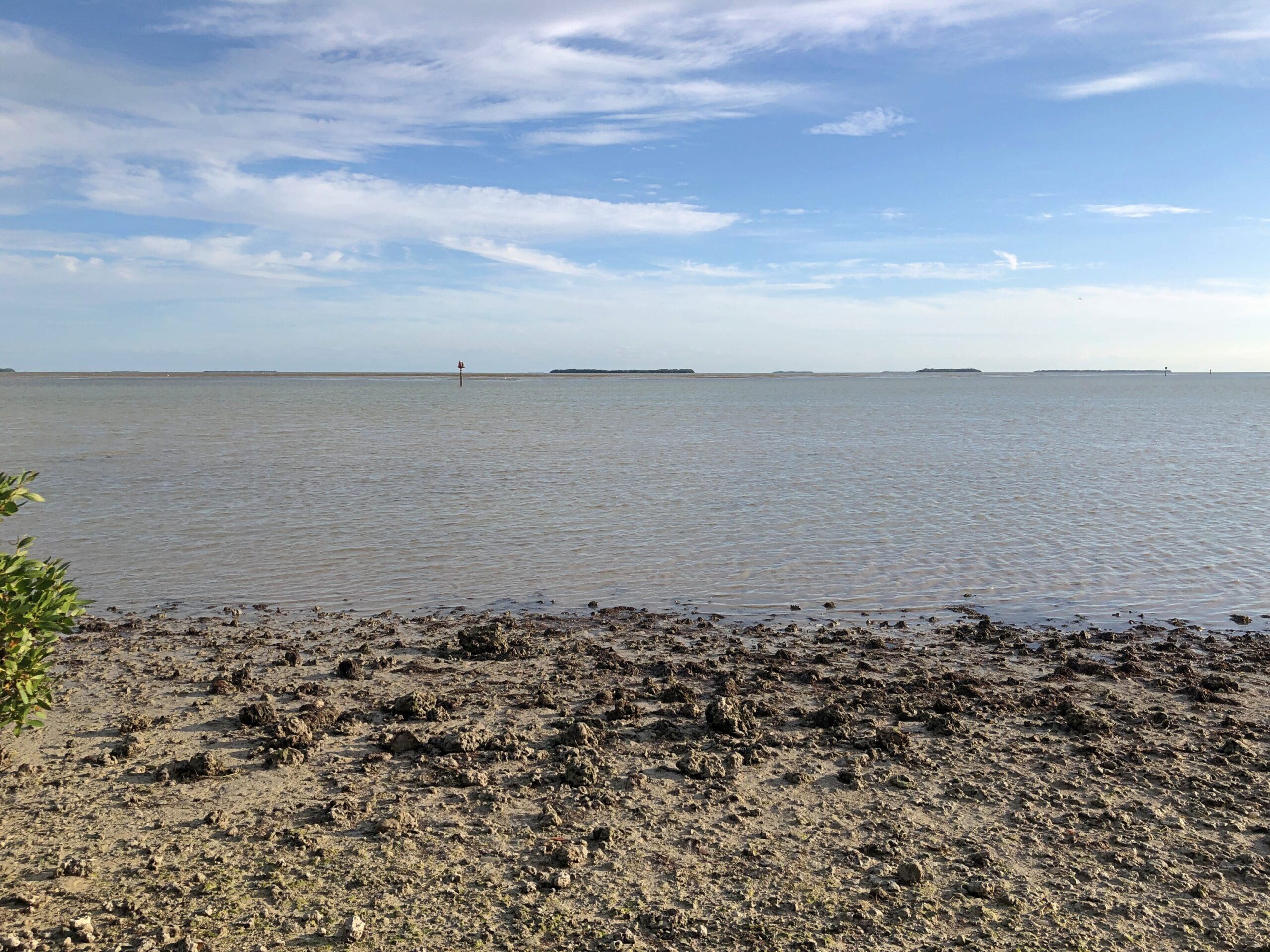
Flamingo, which is mostly the visitors center, lodging and campgrounds, offered views of Florida Bay and a few of its many keys, a term not limited to the chain of islands connected by the Overseas Highway.

We saw a manatee. Or at least a manatee nose poking out of the water near one of the docks at the park, then ducking underwater with an occasional small splash. The barest outline of its bulk was visible below.

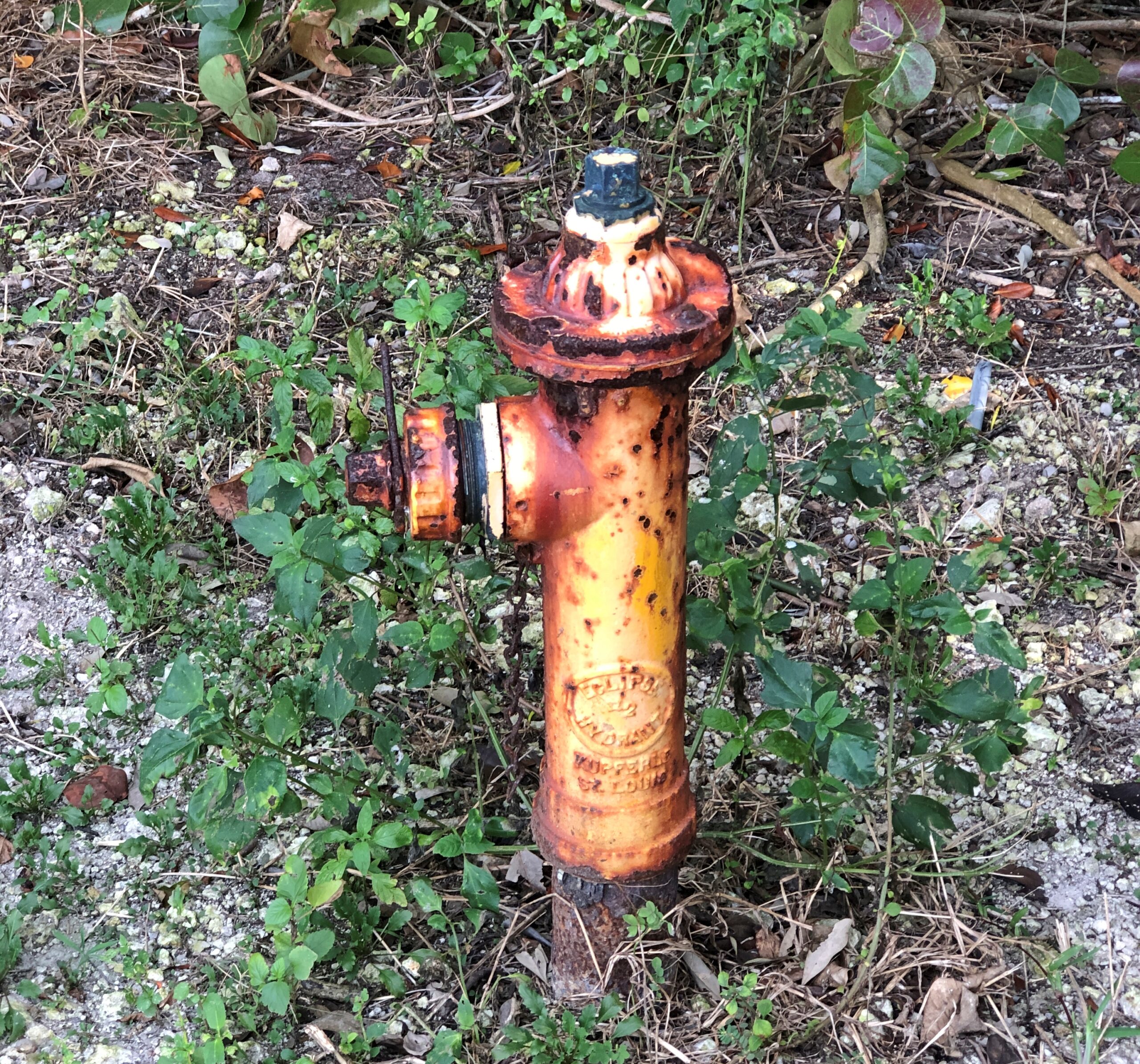
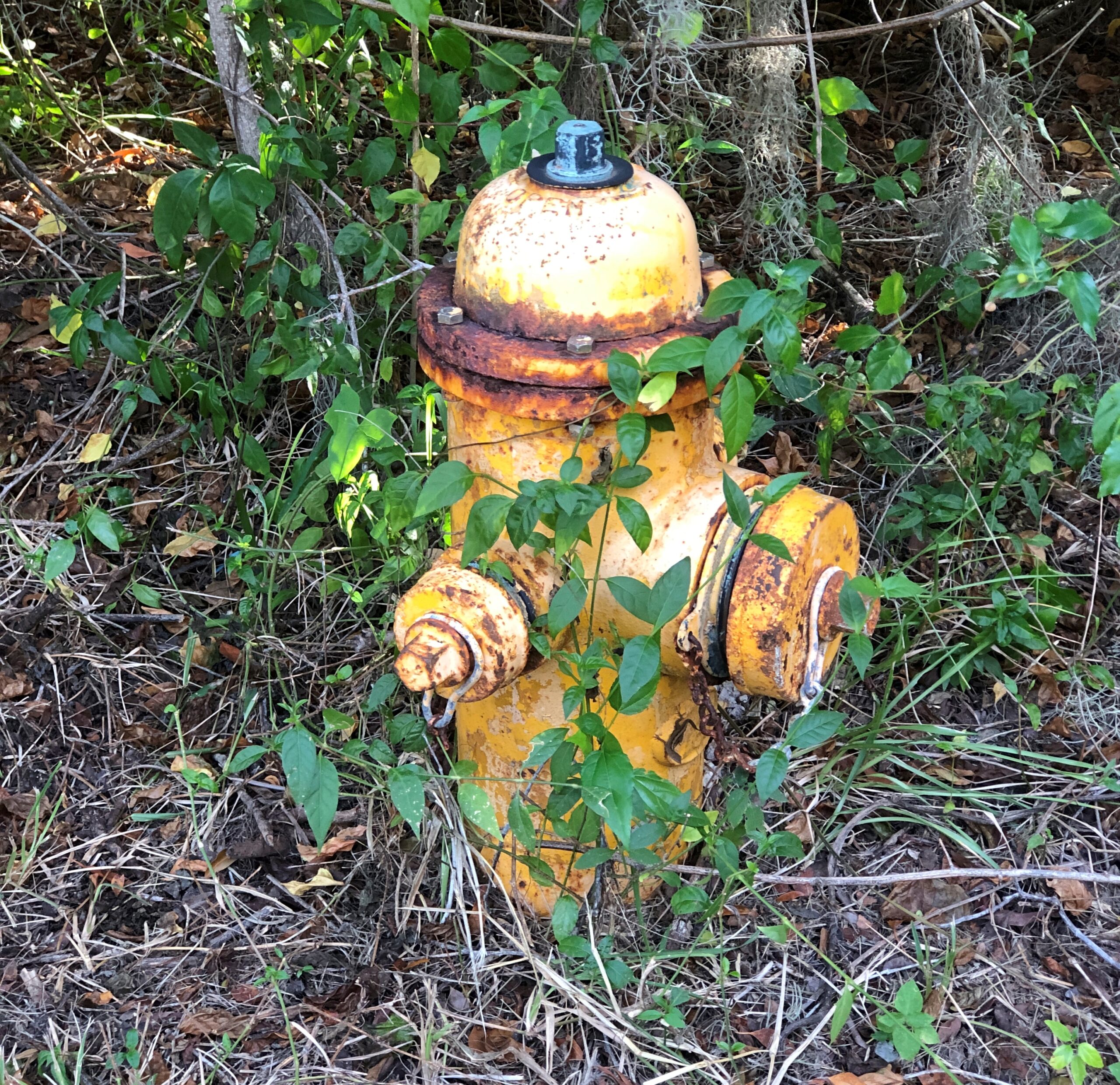
For some reason, the rusty fire hydrants on the park service property caught my attention.

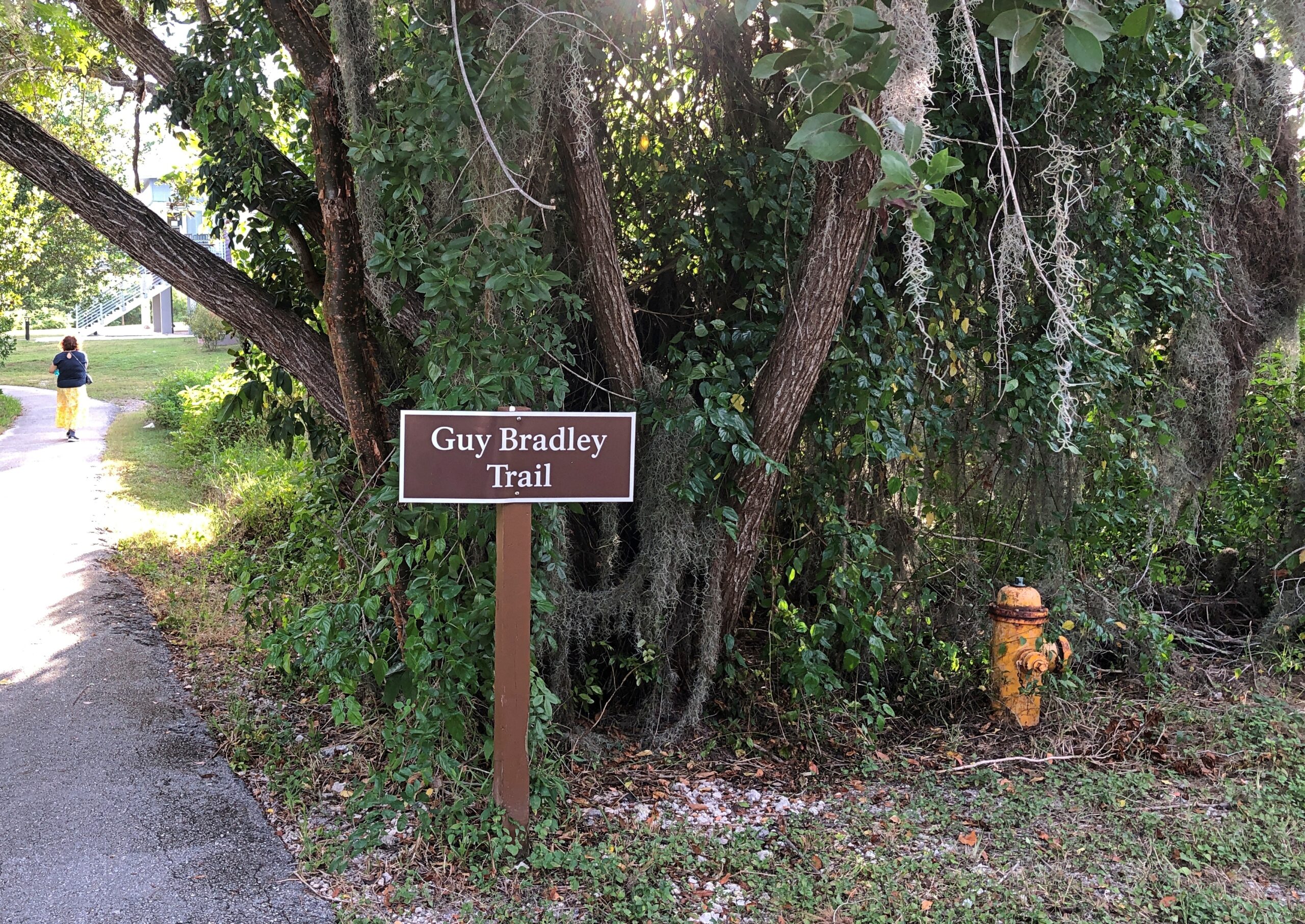
We walked the Guy Bradley Trail. The Flamingo visitors center is also named for Bradley, an early game warden in the area who died in 1905 at the hands of poachers.

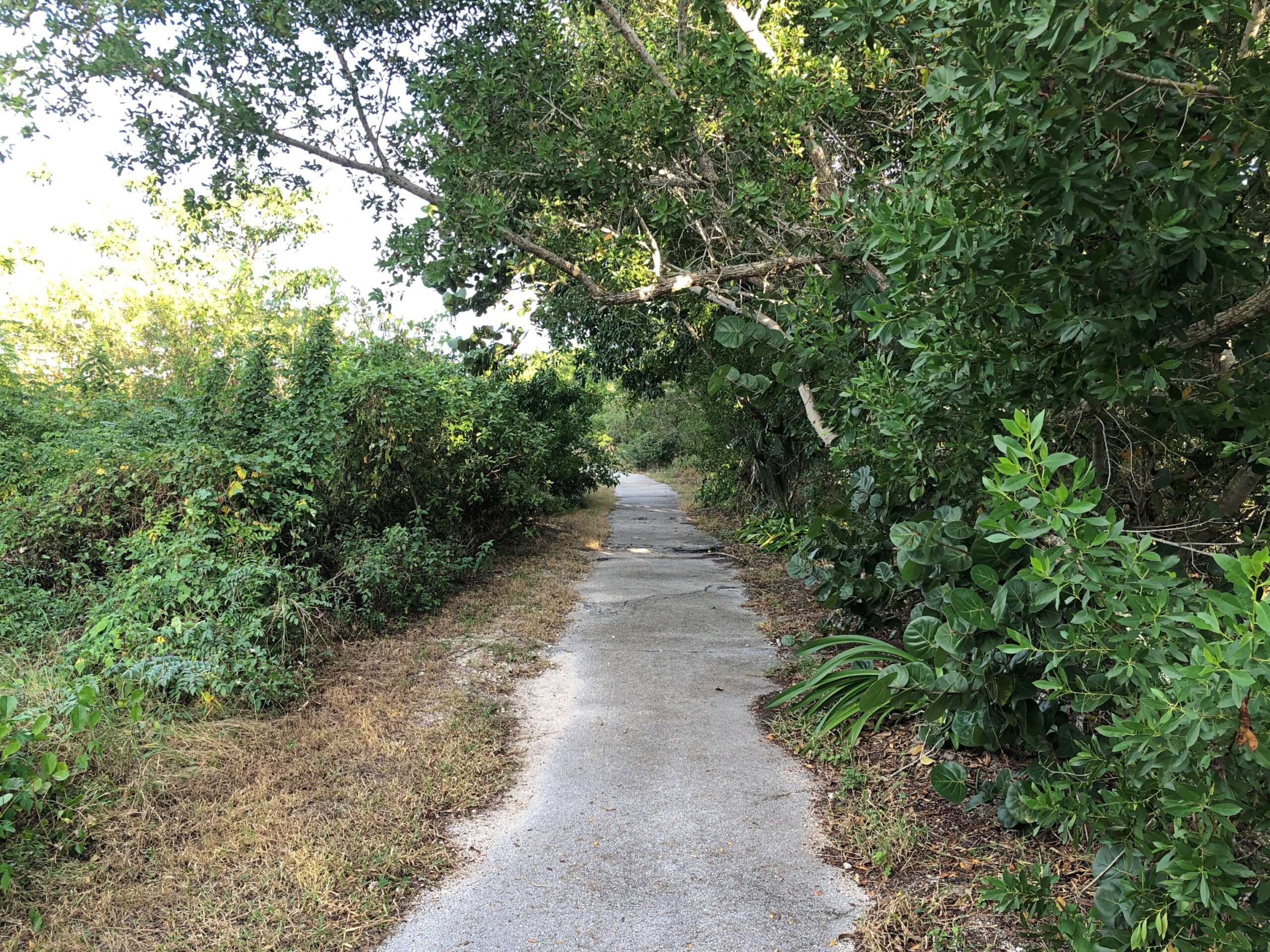
The trail, paved and mostly in good shape, was an easy one.

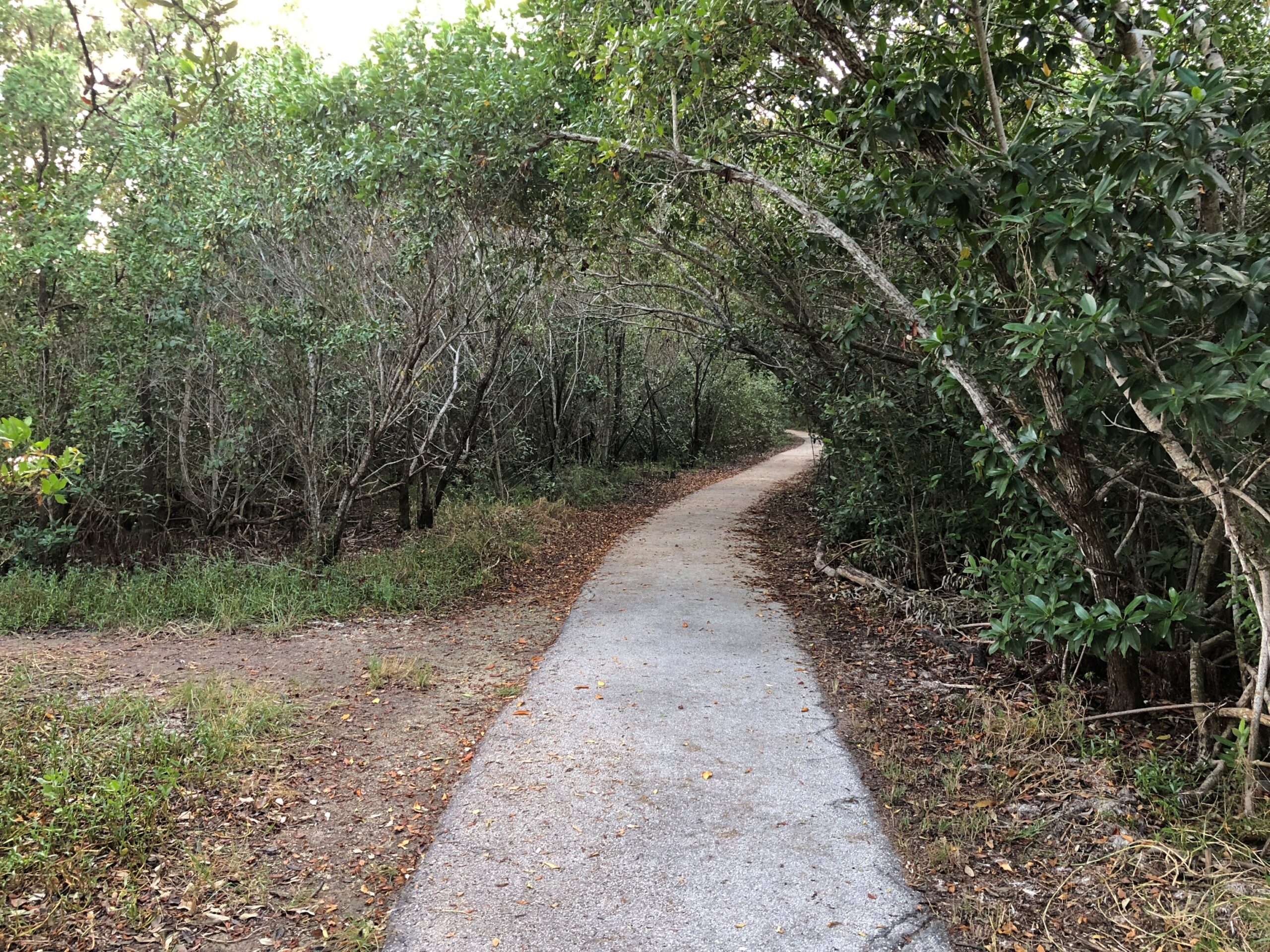
With some views of its own, including the ocean and not including the ocean.

One reason to visit the Everglades during the winter months, maybe the number-two reason right after the absence of searing heat, is the absence of mosquitoes. Make that the relative absence of mosquitoes. During our walk through the greenery around Guy Bradley Trail, a small number of winter mosquitoes were there to greet us.

Even in an age of DEET and whatever has mostly replaced DDT, you will find mosquitoes and more importantly, they will find you. That’s my experience over the years.

South Korea, 1990.

I close my eyes and I can recall those Pusan nights in ’90 in my non-climate controlled room, drinking the tea available in pots just outside everyone’s door, swatting mosquitoes that had clearly feasted on me moments before they died, and listening to the irregular beep-BEEP-beep-beeps of auto horns wafting in through the damaged window screens, along with more mosquitoes.

Saskatchewan, 2006

The only creature I run into regularly while camping is one or another kind of mosquito. The weather had been dryish in Jasper NP, so there weren’t that many there. Things had been even drier at Theodore Roosevelt NP, and we encountered only a very few hardy mosquitoes who managed to survive wrigglerhood in the risk-of-wildfire badlands this summer.

The plains near Regina, Saskatchewan, were another story. On the evening of July 3, we found a private campground a few miles east of Regina for a reasonable C$14. The place was sparse with people, probably since the Canada Day long weekend was winding down, but well populated with blood-drinking vermin. Their main diet likely came from the livestock on the surrounding ranches, but they weren’t above snacking on human beings. Once a cloud of them followed me, so I had to zig-zag back to our camp to lose them. Others buzzed intensely around the tent door until I sprayed it with Off.

Florida Panhandle, 2009

I got out of my car to look around. The forest seemed even more oppressively dense with rain clouds gathering overhead. The air was warm and a little steamy. All I heard was the crunching of my footsteps, the mild rush of the wind, the twitter of birds and, suddenly, the buzz of mosquitoes. Mammals as large as human beings must be a tasty treat for the mosquitoes of the Apalachicola River Basin, because they attacked with terrific speed and in increasing numbers. For all I know, there are a dozen kinds, part of the wonderful biodiversity of the area. I had no chemical protection. I’d forgotten to pack anything with DEET in it, and the TSA might have taken it away anyway.

I took a short look at an interpretive kiosk that had some artifacts behind glass, and another look at the Milly Francis marker, but within a few minutes I retreated to the car. A couple of the mozzies followed me in, but I managed to dispatch the bastards in a pop of my blood.

South Carolina, 2025

Other national parks have majestic mountains or picturesque glaciers or striking deserts or epic coastlines or an important history of human activity. They have high-profile wildlife and ecosystems unique in the world. Congaree does count as a special place, preserving a tiny fraction of the floodplain forests that used to cover much of the Southeast, but that’s a little hard to appreciate on the ground, especially as the target of its high-profile wildlife, mosquitoes.

Durango, Colorado

“Good morning.”

“Good morning,” Walter said in response to me, but in a hushed tone that somehow made his Austrian accent more distinct. “Do you want to see some bears?”

Yes. I followed him out to the large deck off the large common room of the Country Sunshine B&B. Outside we met with cool air, bright morning sun, and the strong smell of pine. The deck was a floor above the grassy ground, which sloped downward away from the bed and breakfast, shaded by a small copse of enormous pines.

We’d just spent the night at Country Sunshine B&B, the first of three for our visit to Durango, Colorado, a place I’d wanted to visit since the moment, years ago, when I heard Garrison Keillor describe the place in the engaging way that he had. I’d come out of our room – one of the three or four bedrooms off the common room – ahead of Yuriko, to examine the breakfast spread at the main table when Walter asked me about bears.

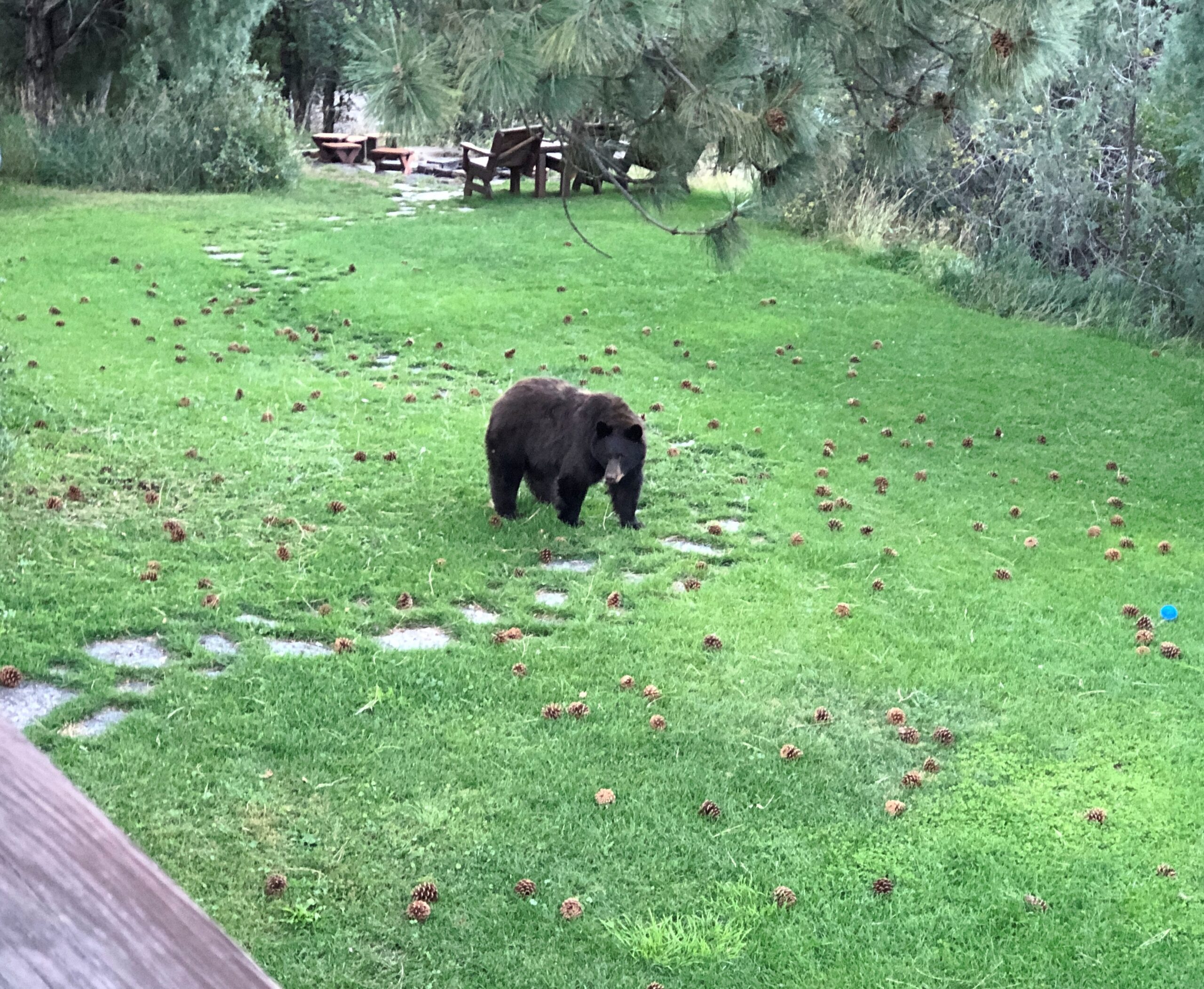
Under one of the tall pines, and among the many pine cones dotting the ground, was something dark and much larger: a bear.

Durango, Colorado

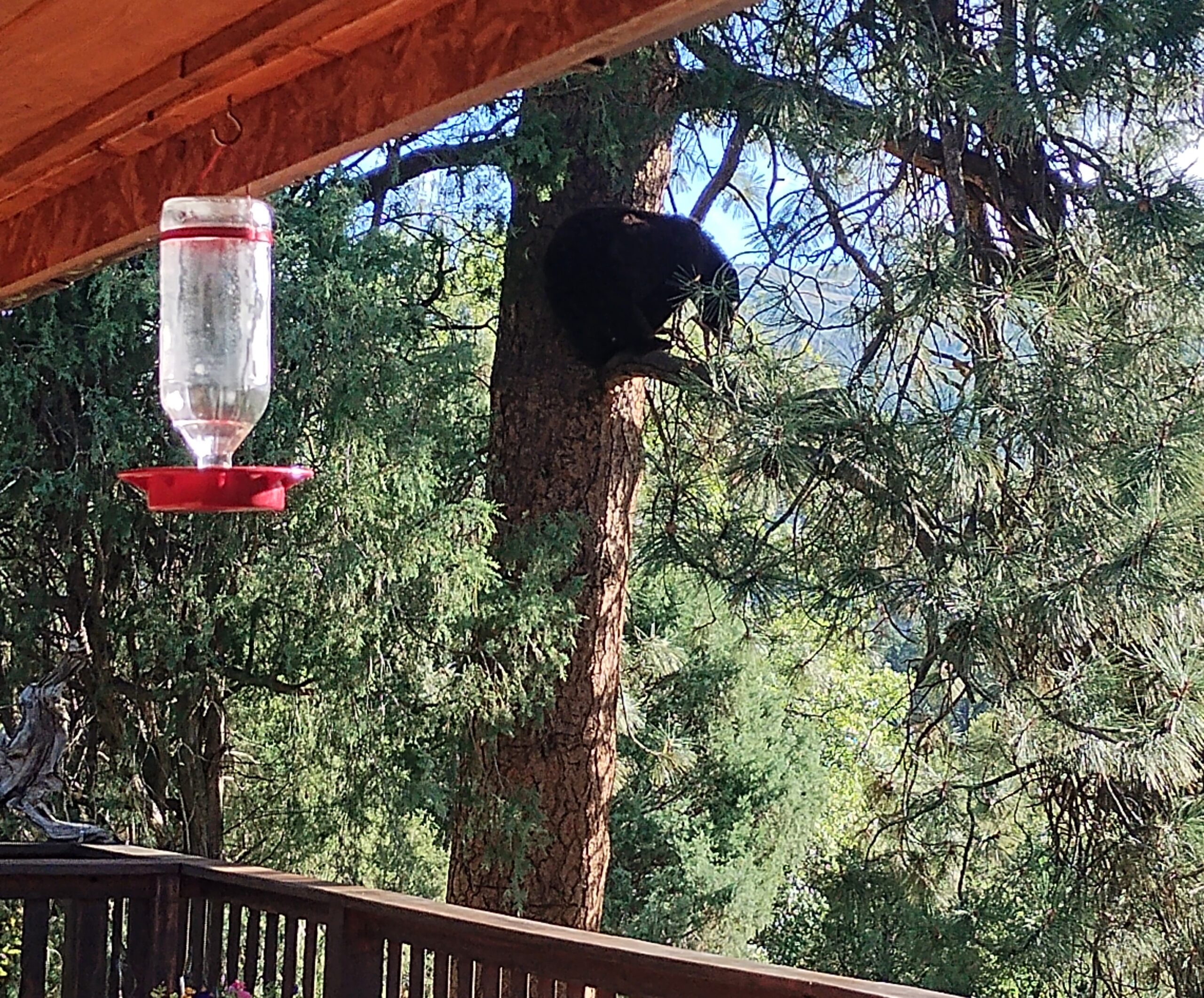
“He isn’t the only one,” Walter said, pointed upward. Another sizable bear was perched part way up the largest pine. I didn’t say anything, or maybe I did. Something along the lines of, How about that. When I spend time on my deck, squirrels are about as large as the animals get, except occasional rabbits and raccoons.

Durango, Colorado

“Look way up,” Walter said.

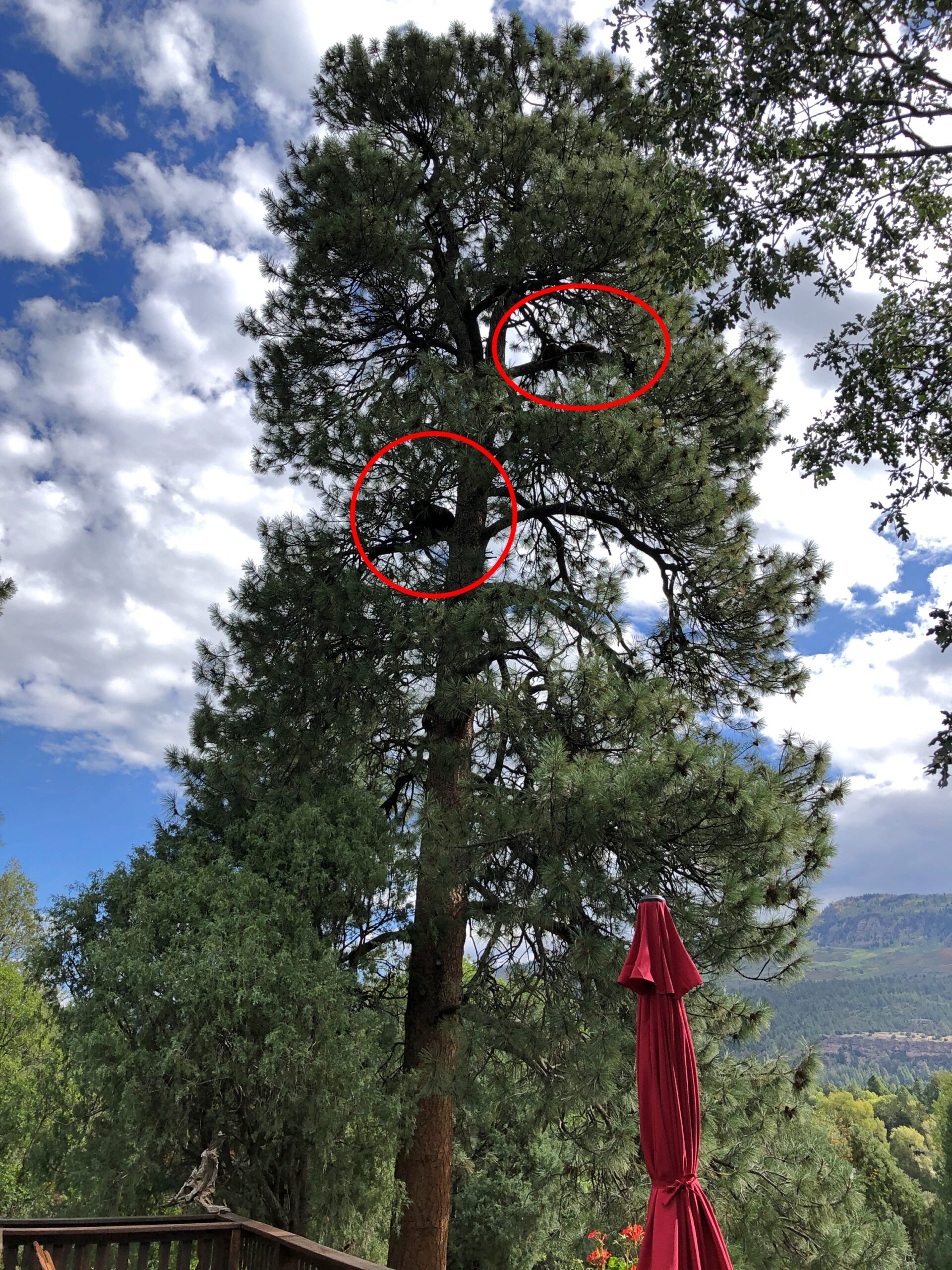
Two more bears – smaller bears, though I wouldn’t want to be face-to-face even with them – clung to the branches toward the top of the tree. They were hard to see, and my photos barely show them, but they were there, not moving a bit.

Durango, Colorado

Soon Yuriko, and some other guests, had come to the deck to see the bears and take pictures. Every few minutes while we watched, the largest of the bears, the one on the ground, would start shimmying up the tree. The bear in the tree snarled at his approach, and, after pausing for a few moments, the first bear returned to the ground.

We were about 10 miles north of Durango, where the human settlement is fairly thin, and bears known to prowl the mountains on either side of the single road, US 550.

In the two decades of so that Walter and his wife Jodi have owned the B&B, he said bears had been sighted. Of course they had. Get careless with closing an outdoor garbage receptacle and bears will make an appearance in the neighborhood. During dry spells, they come for the creek waters near the property, and Walter pointed out that this summer had been fairly dry in the region.

But this was a first, Walter said: probably a male bear out to do harm to some cubs, a female bear standing in his way — a bear drama playing out in the tree near the B&B.

Late that afternoon, we returned to the B&B. Papa Bear, as everyone was calling him now, still lingered under the tree. Mama Bear still watched him from the lower branches, and the cubs still clung to the upper branches. Papa Bear had mostly quit trying to climb the tree, Walter said, but he was still waiting around.

The bears stayed in place through that evening, but when I went to the breakfast table the next morning to examine the bagels and spreads and fruit and hot drinks, the bears – I checked from the deck – they were not to be seen. After their one-day show (from a human point of view), they’d taken their drama somewhere else,

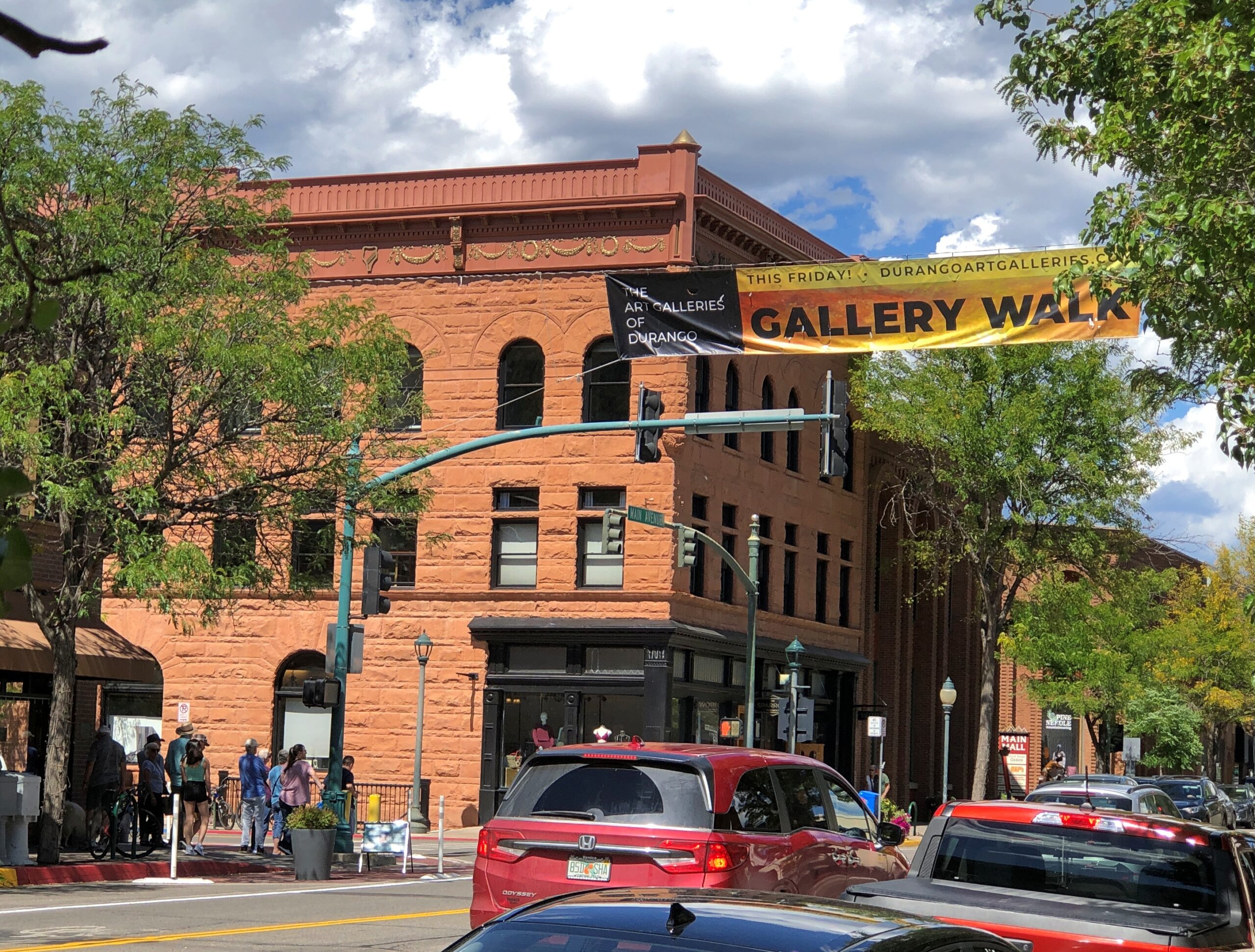
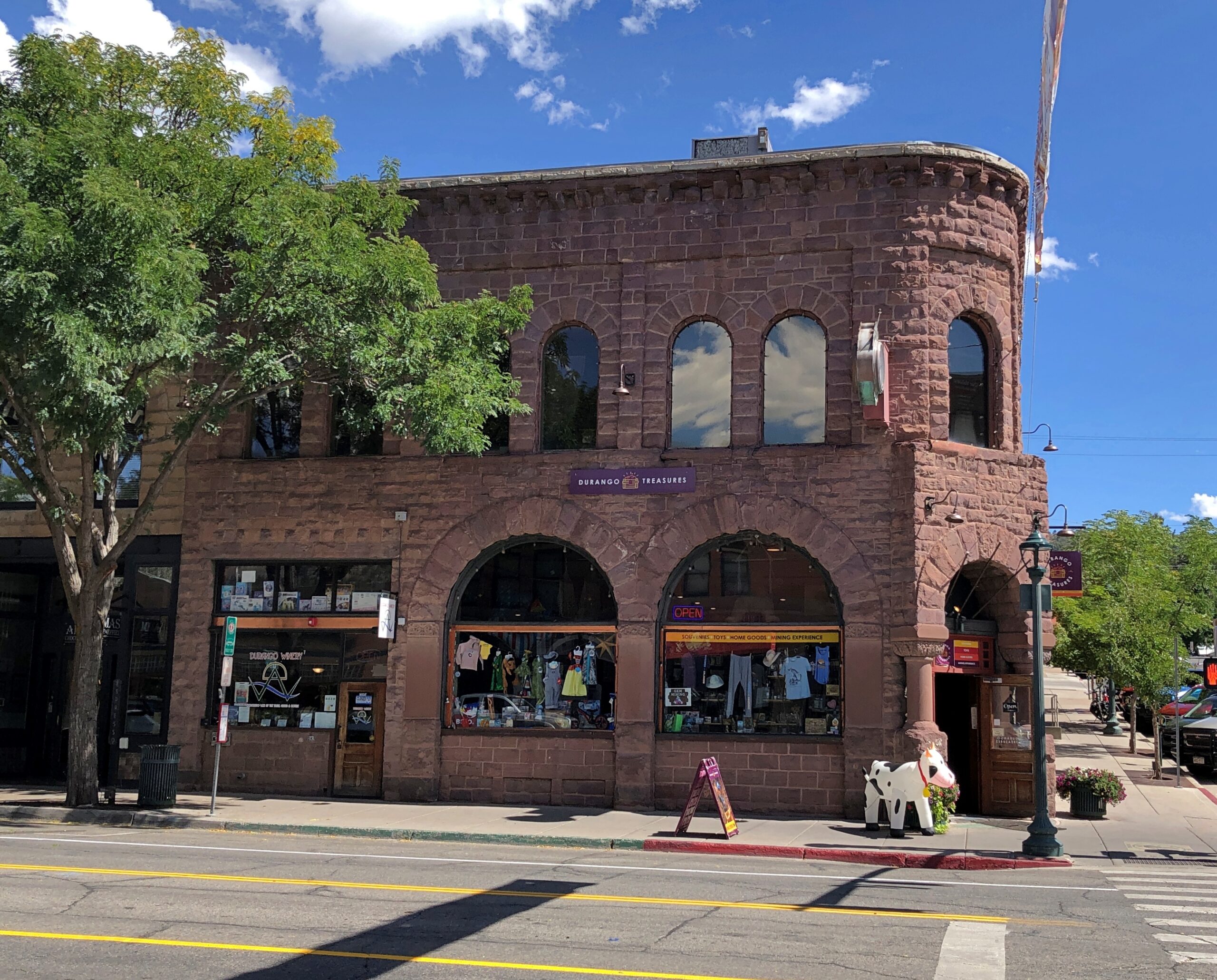
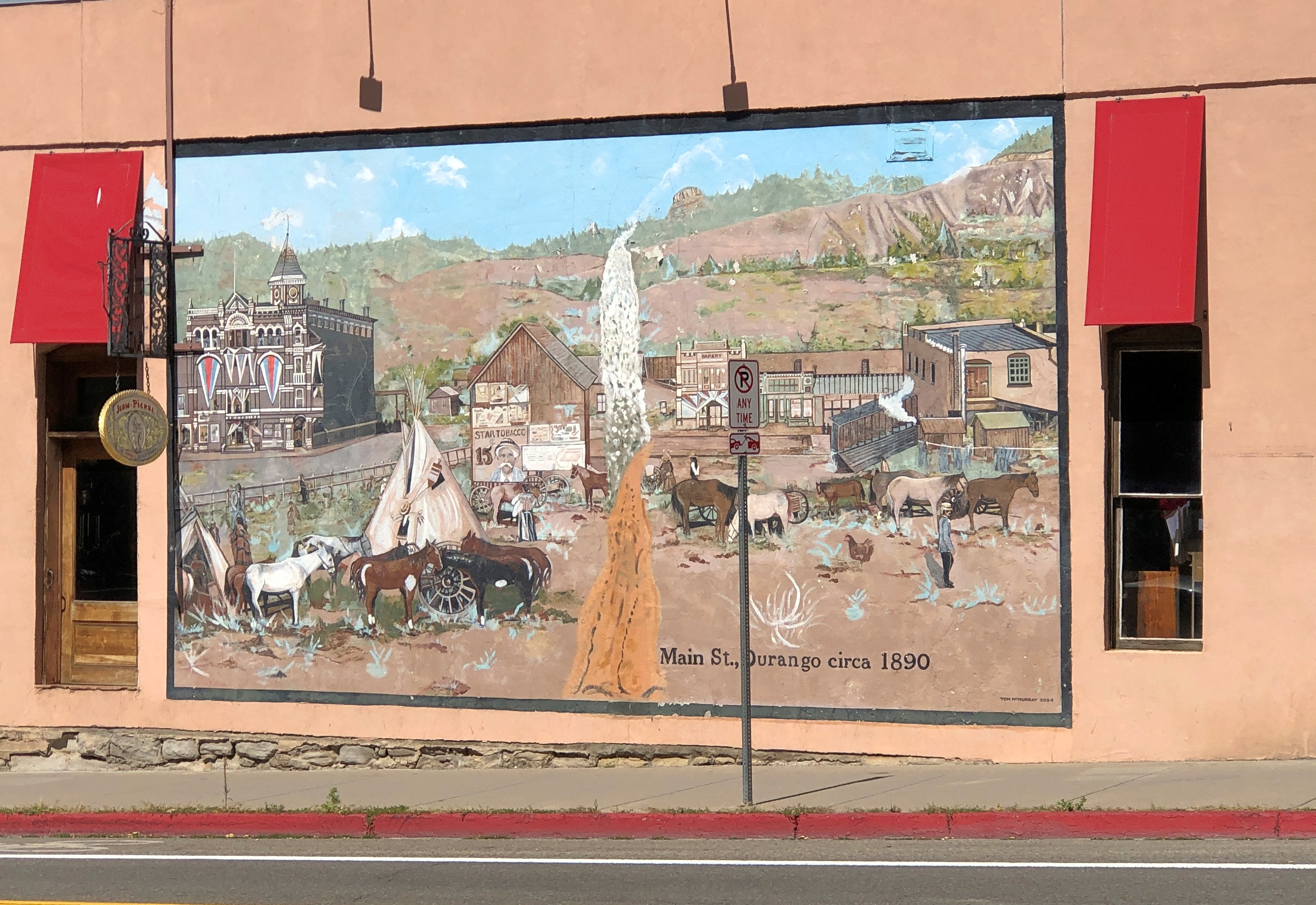
We spent that first day (September 16) wandering around town and nearby. In downtown Durango, small buildings that have endured for more than a century line Main Street.

Durango, Colorado
Durango, Colorado
We spent that first day (September 16) wandering around town.

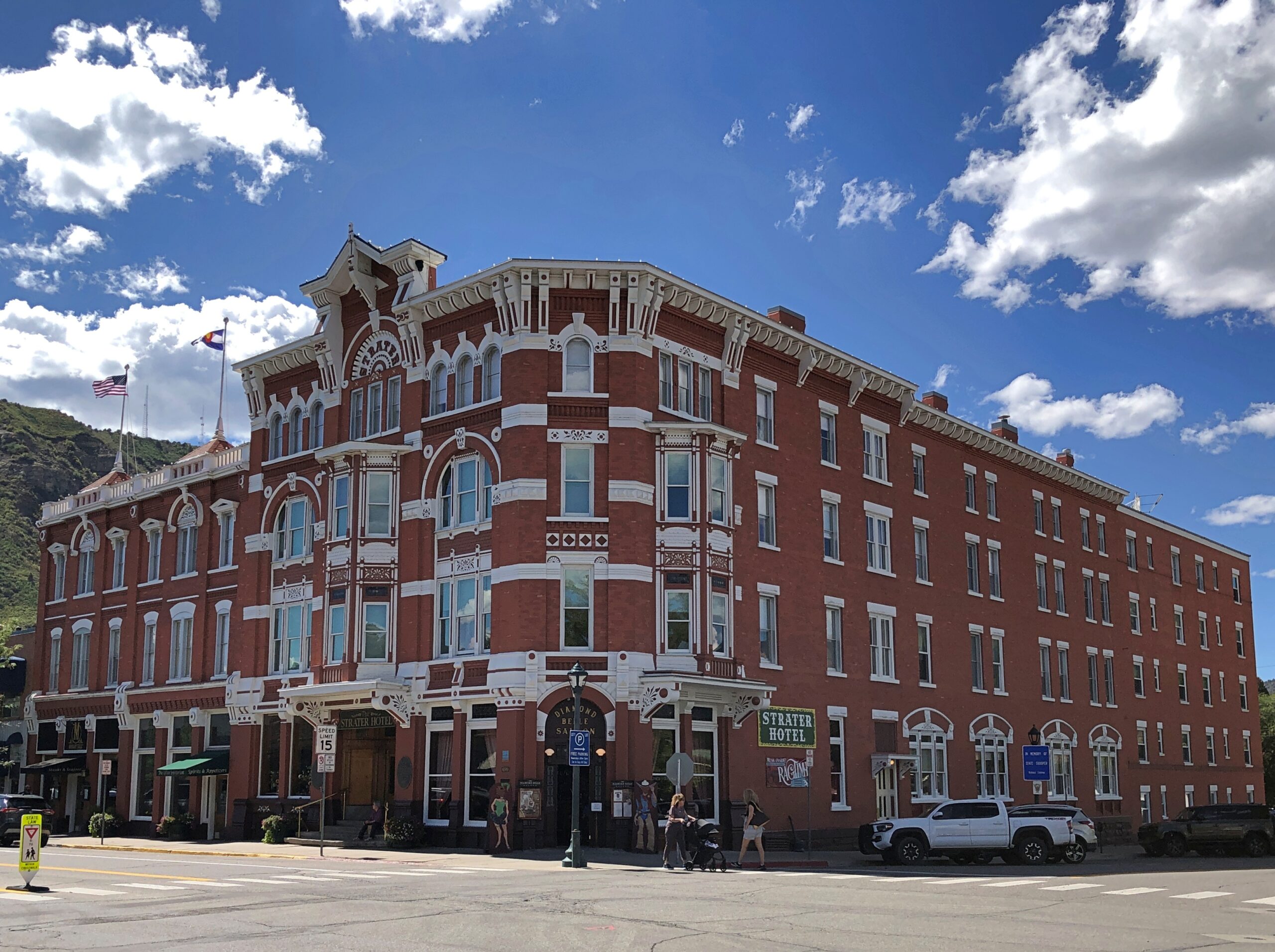
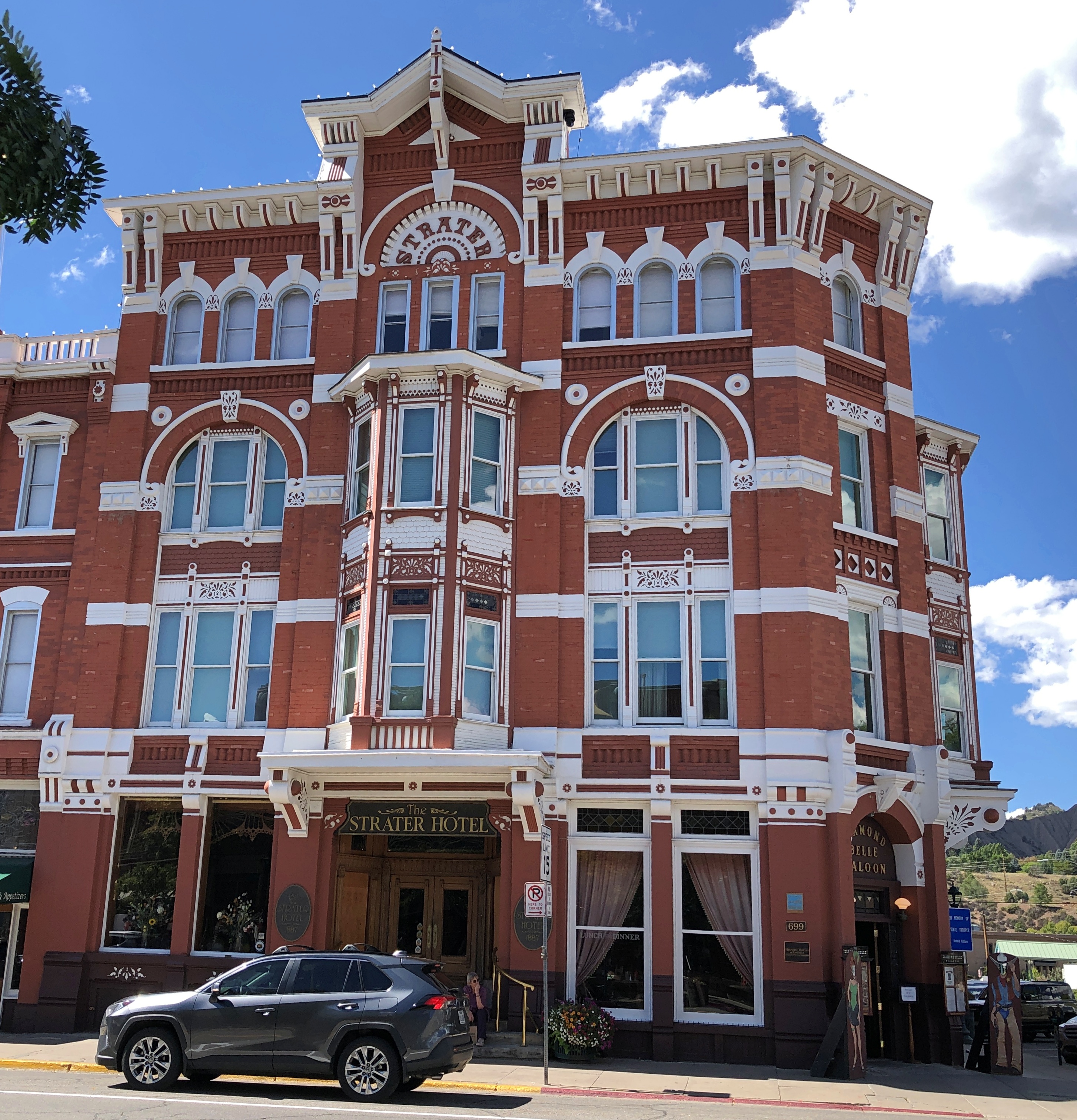
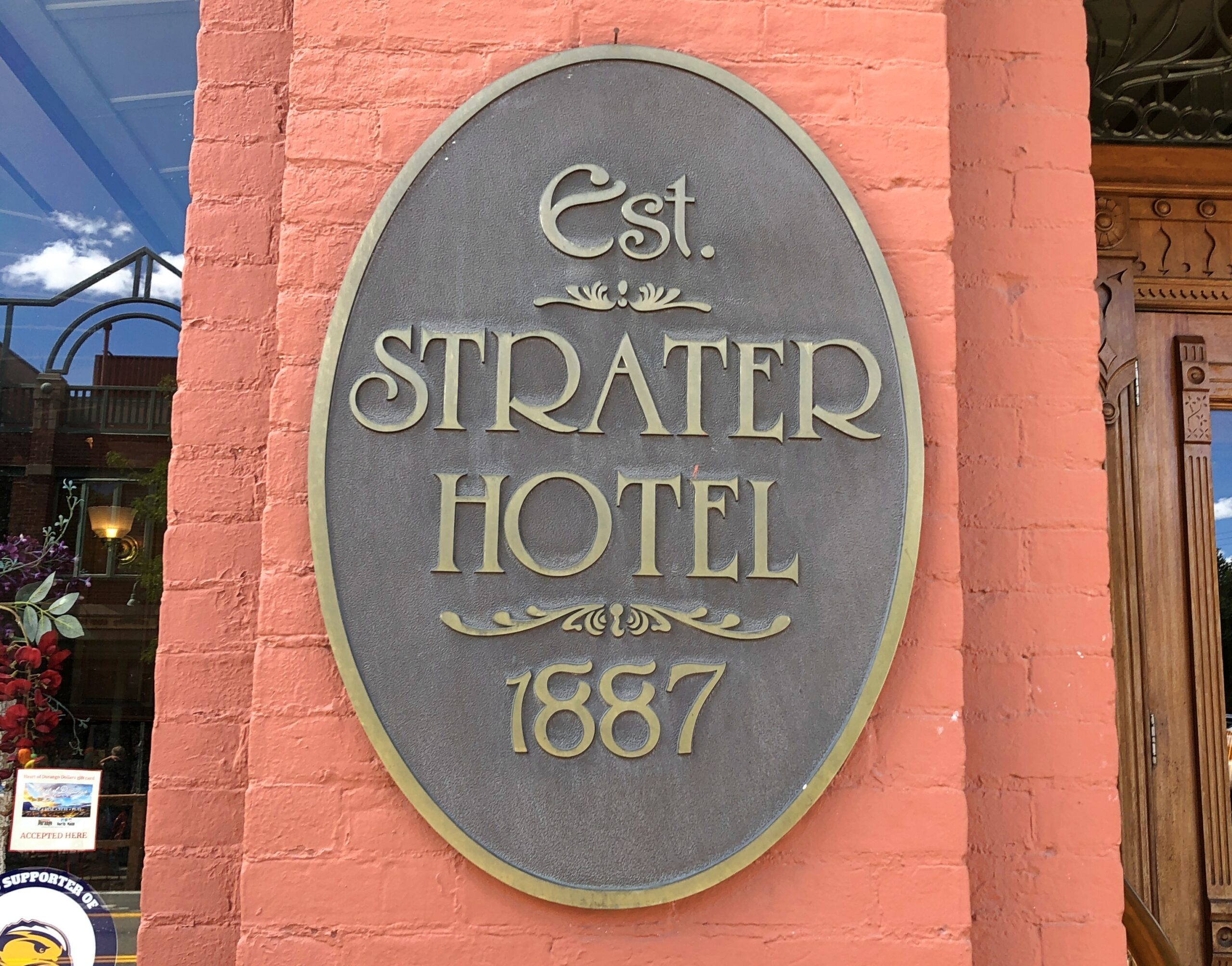
Or not so small. Such as the magnificent Strater Hotel, built in 1887.

Strater Hotel, Durango

The sort of place where presidents stay, or used to. Did any? The hotel web site doesn’t say. I’d ask ChatGPT, but it would probably tell me that FDR stayed there during his Grand Western States Whistle Stop Tour in 1939, a wholly fictional event. Wiki says Gerald Ford stayed there. Louis L’Amour did too, and now has a room named after him.

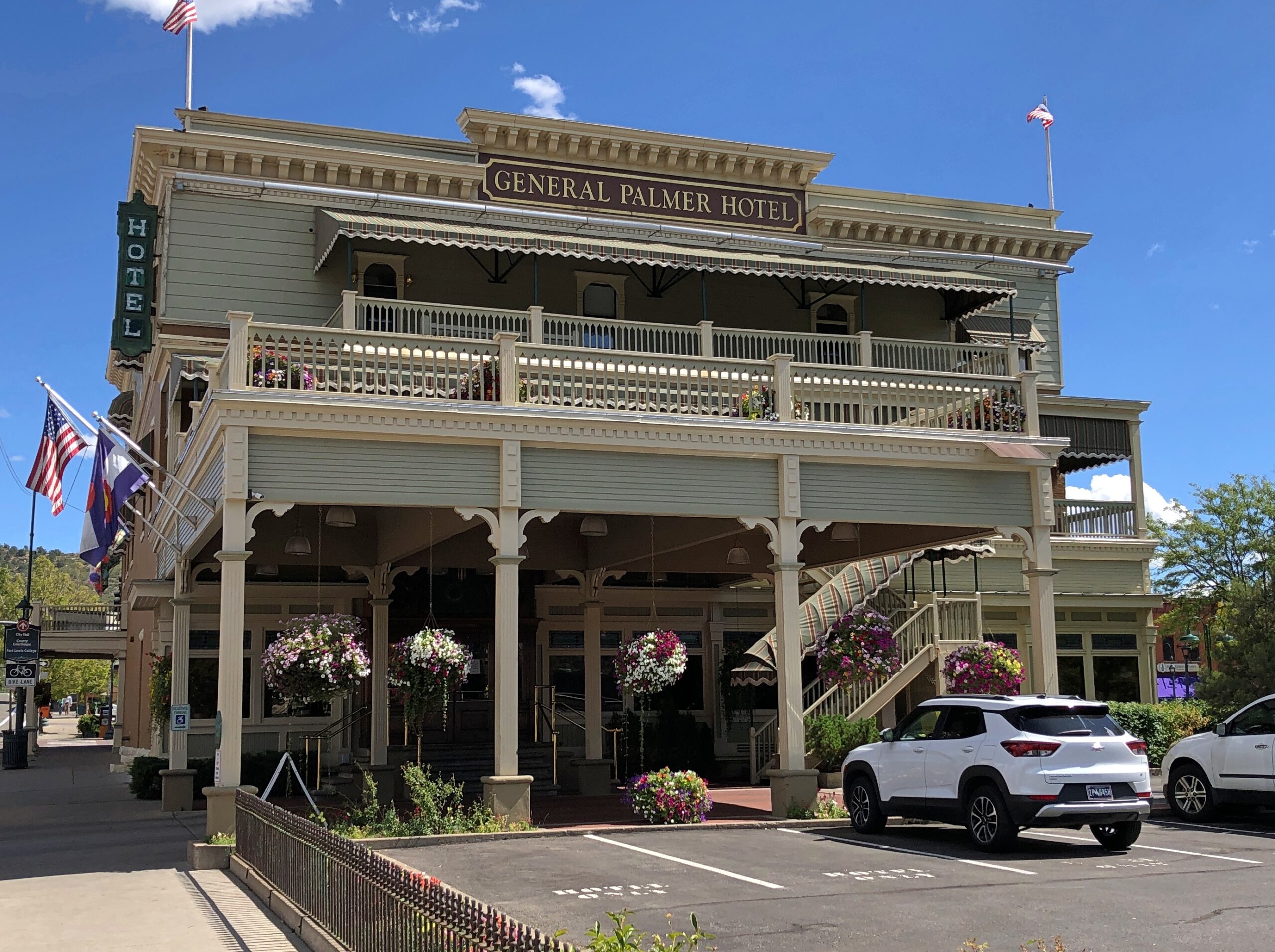
A competitor. Named for this fellow, Union (brevet) brigadier general and railroad man, who co-founded the Denver and Rio Grande RR.

General Palmer Hotel

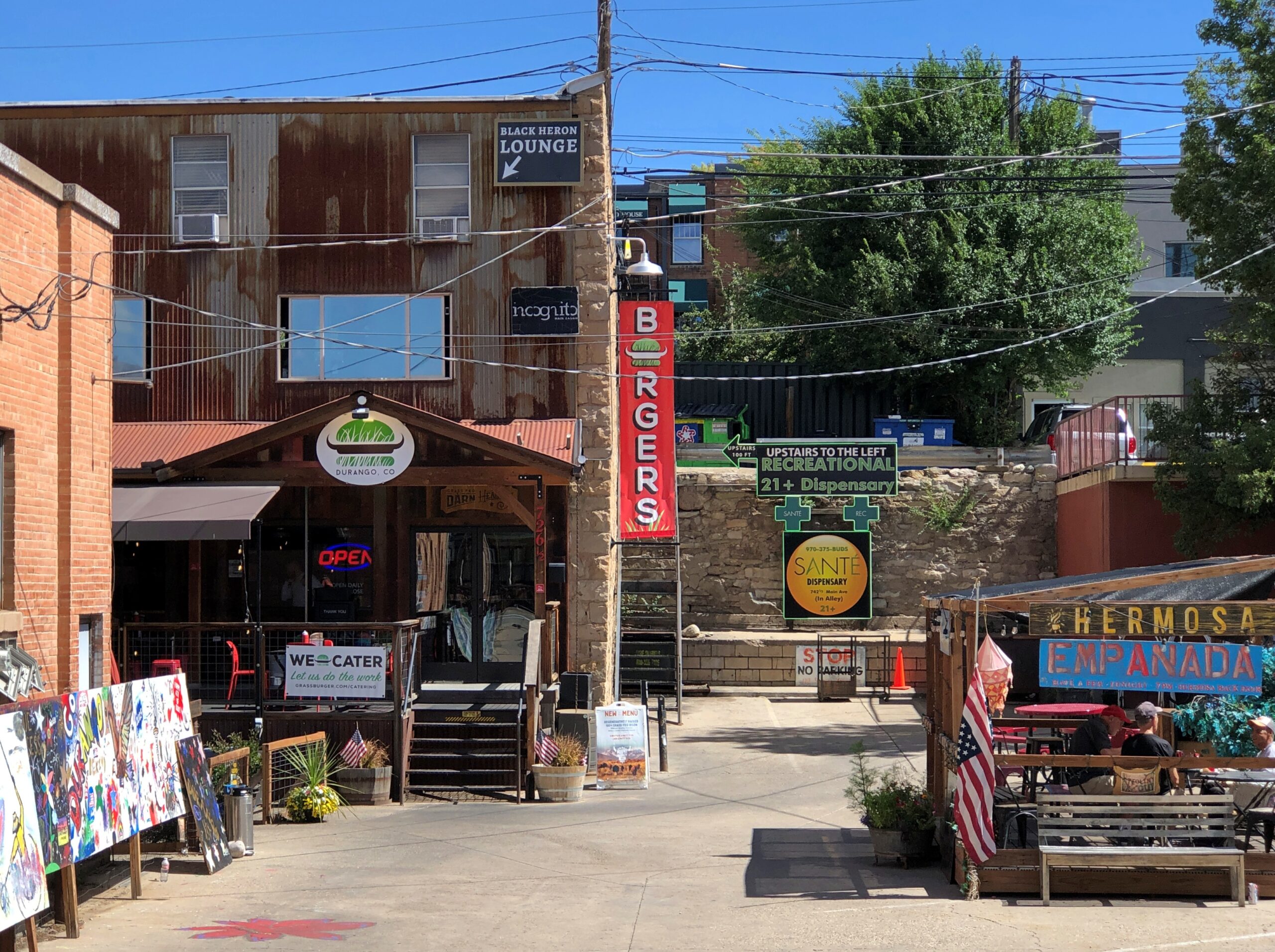
Downtown Durango is well supplied with retail.

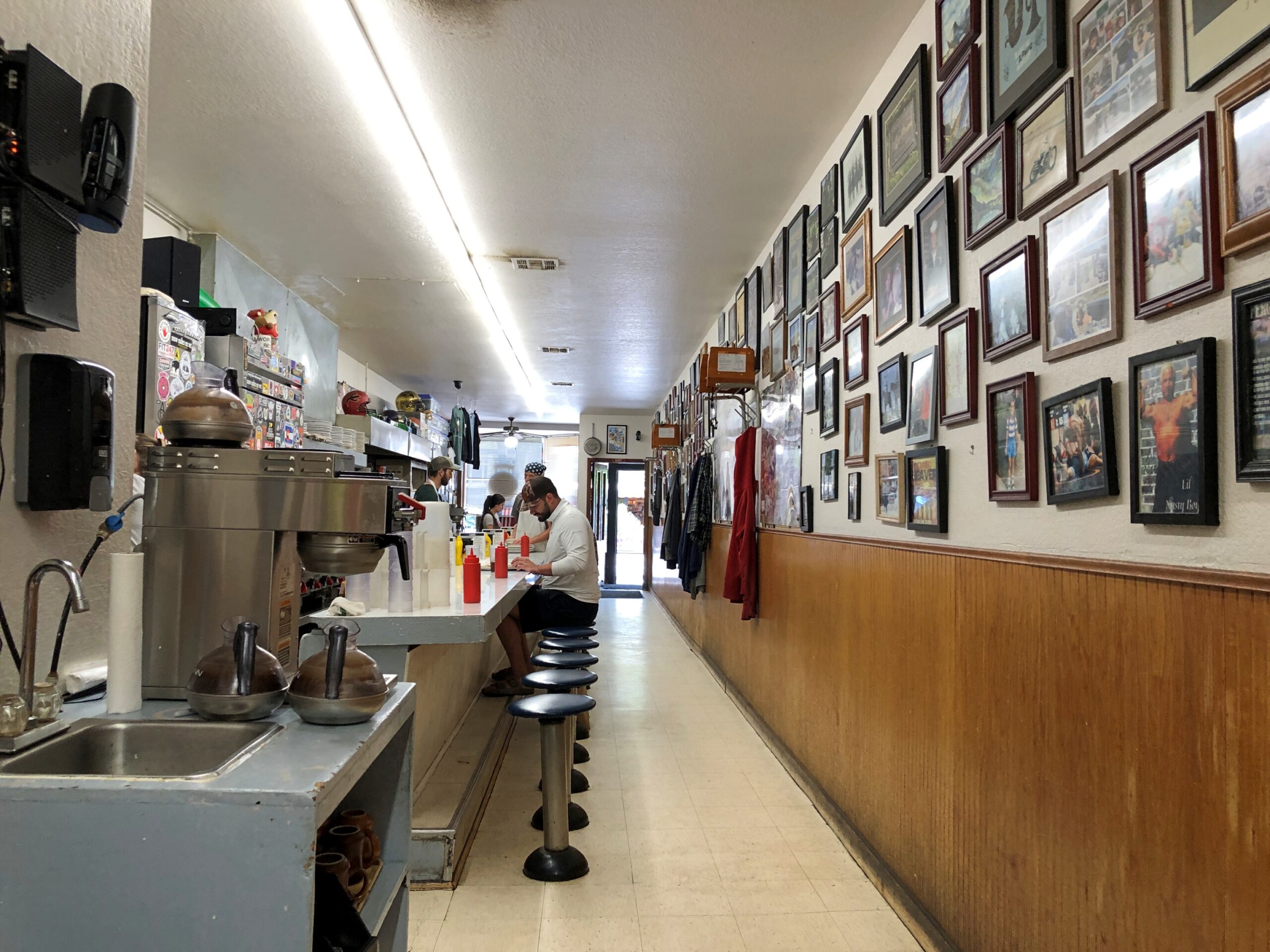
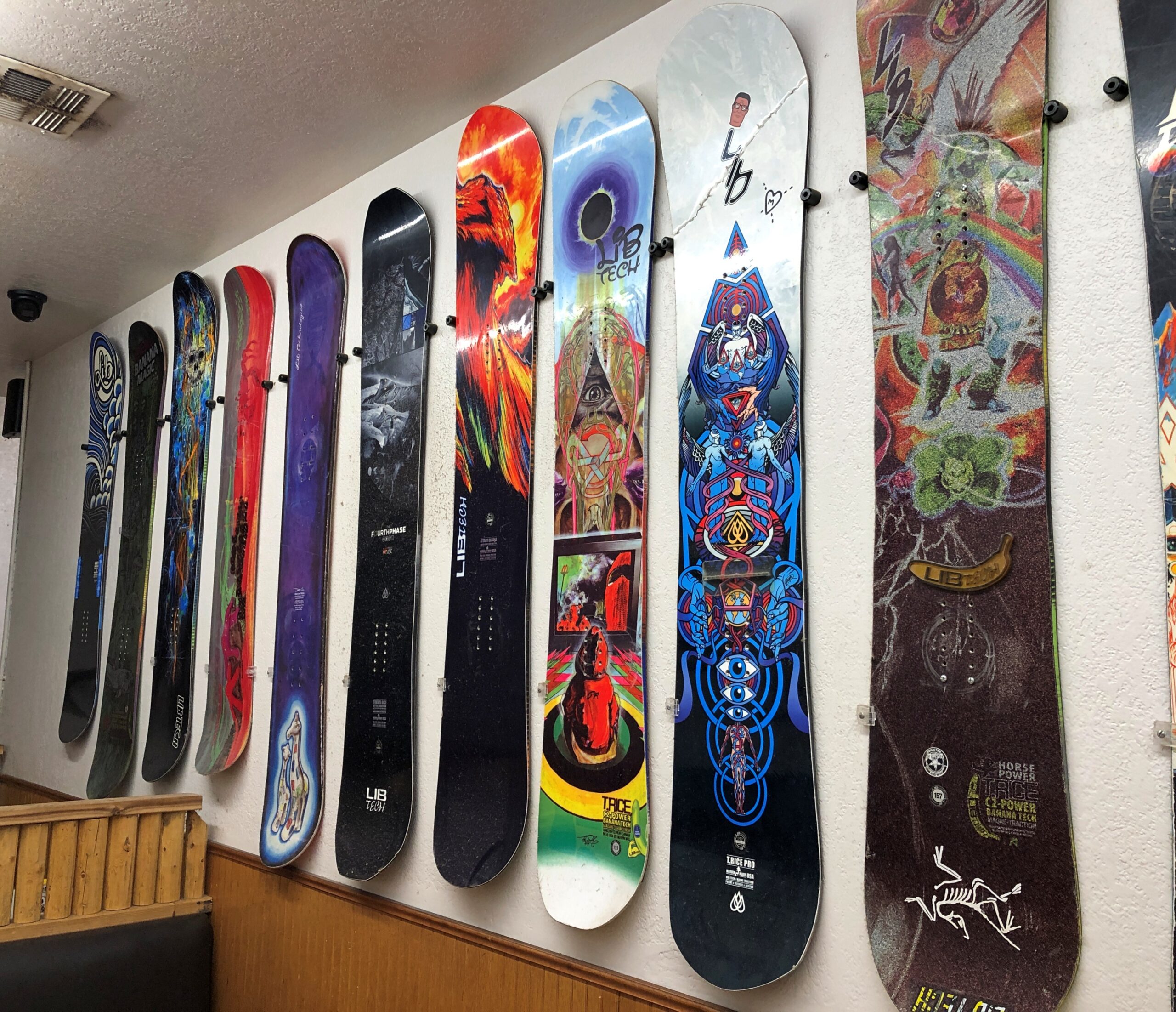
Lunch options, besides burgers and empanadas or a liquid lunch, included the likes of the Diamond Belle Saloon, Seasons of Durango, Chimayo Stone Fired Kitchen, Steamworks Brewing Company, and Eolus Bar & Dining. All very nice, I’m sure, but we chanced on something more to our tastes at that moment: the Durango Diner. In business for 60 years.

Durango Diner

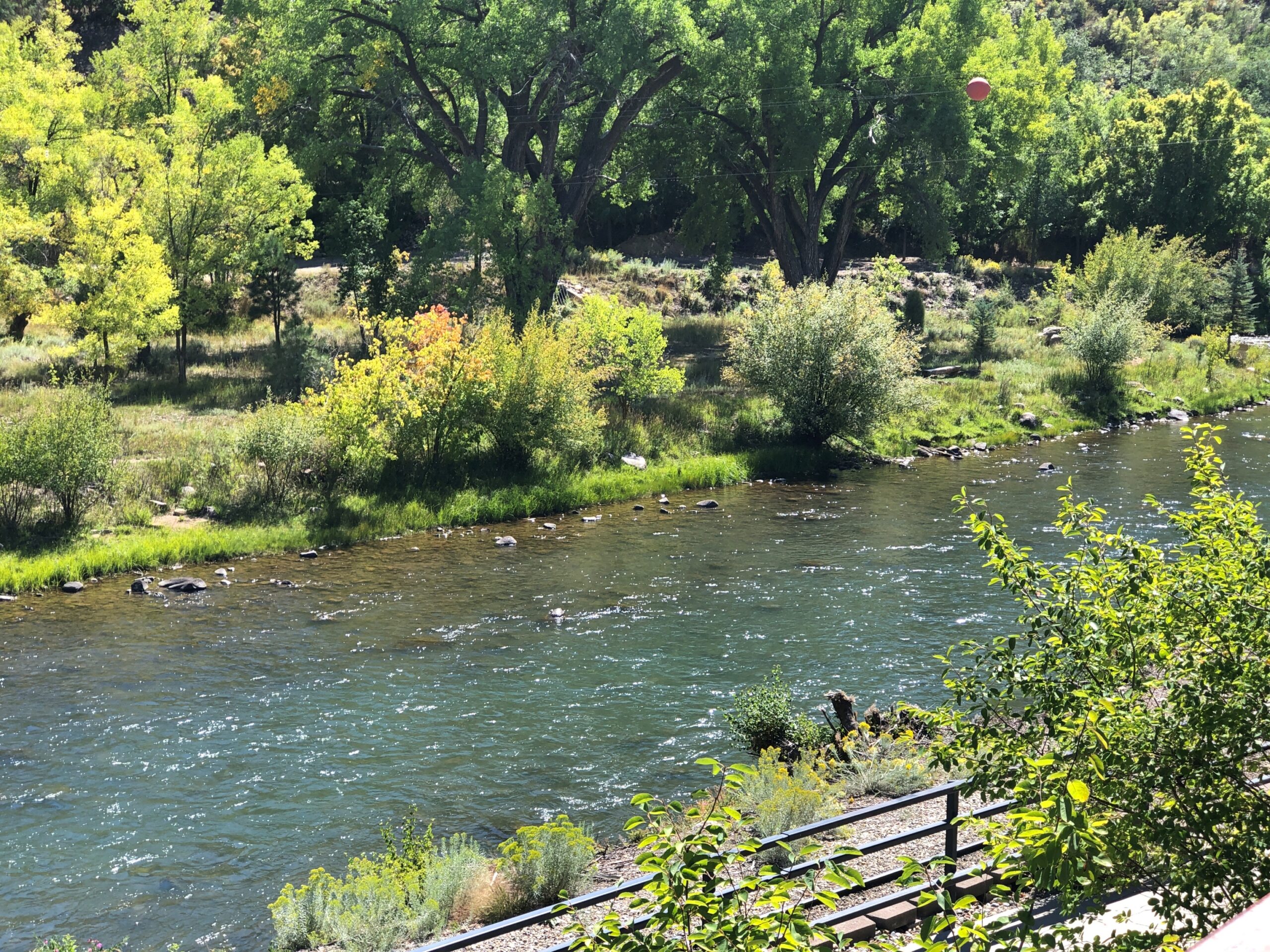
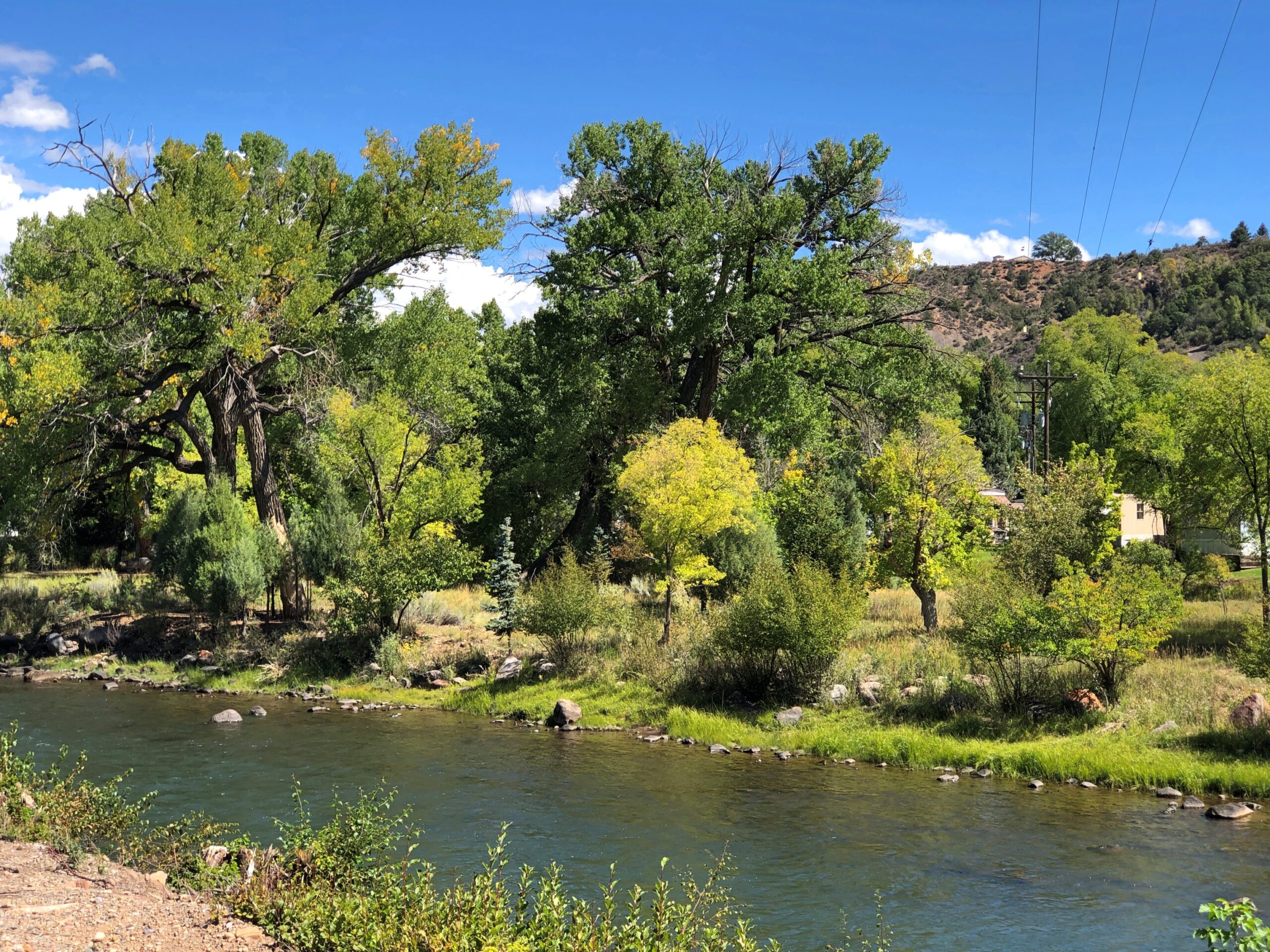
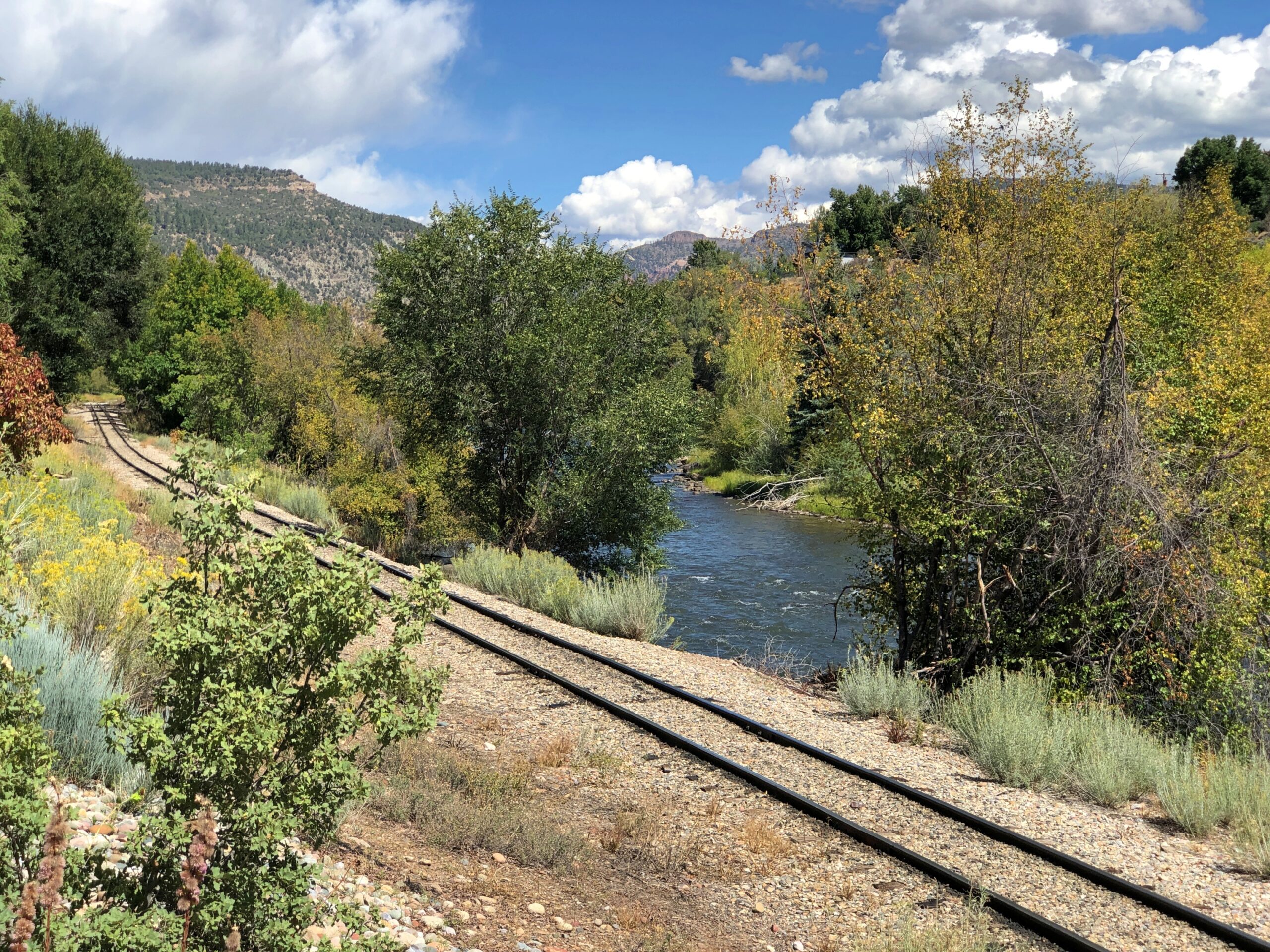
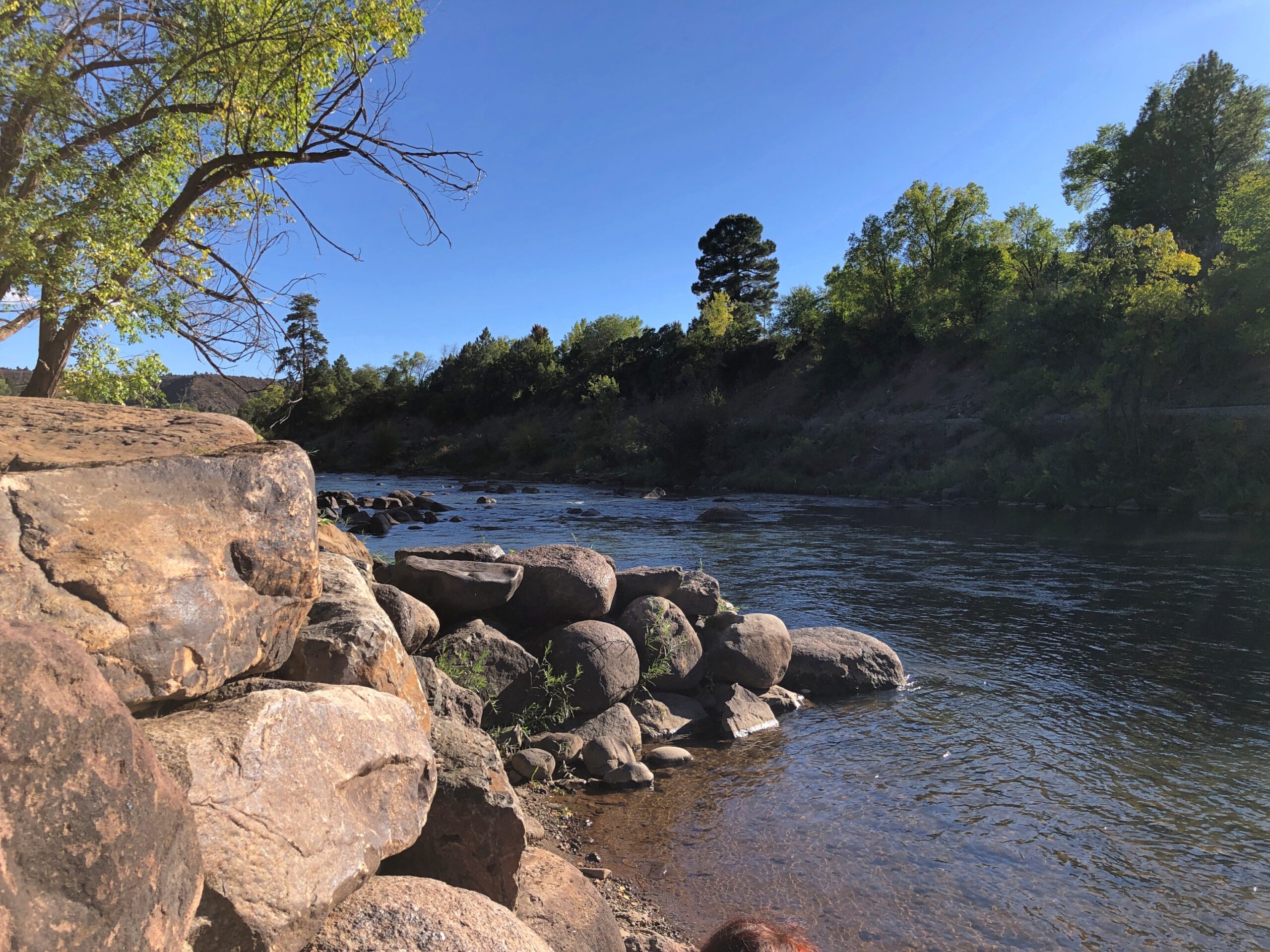
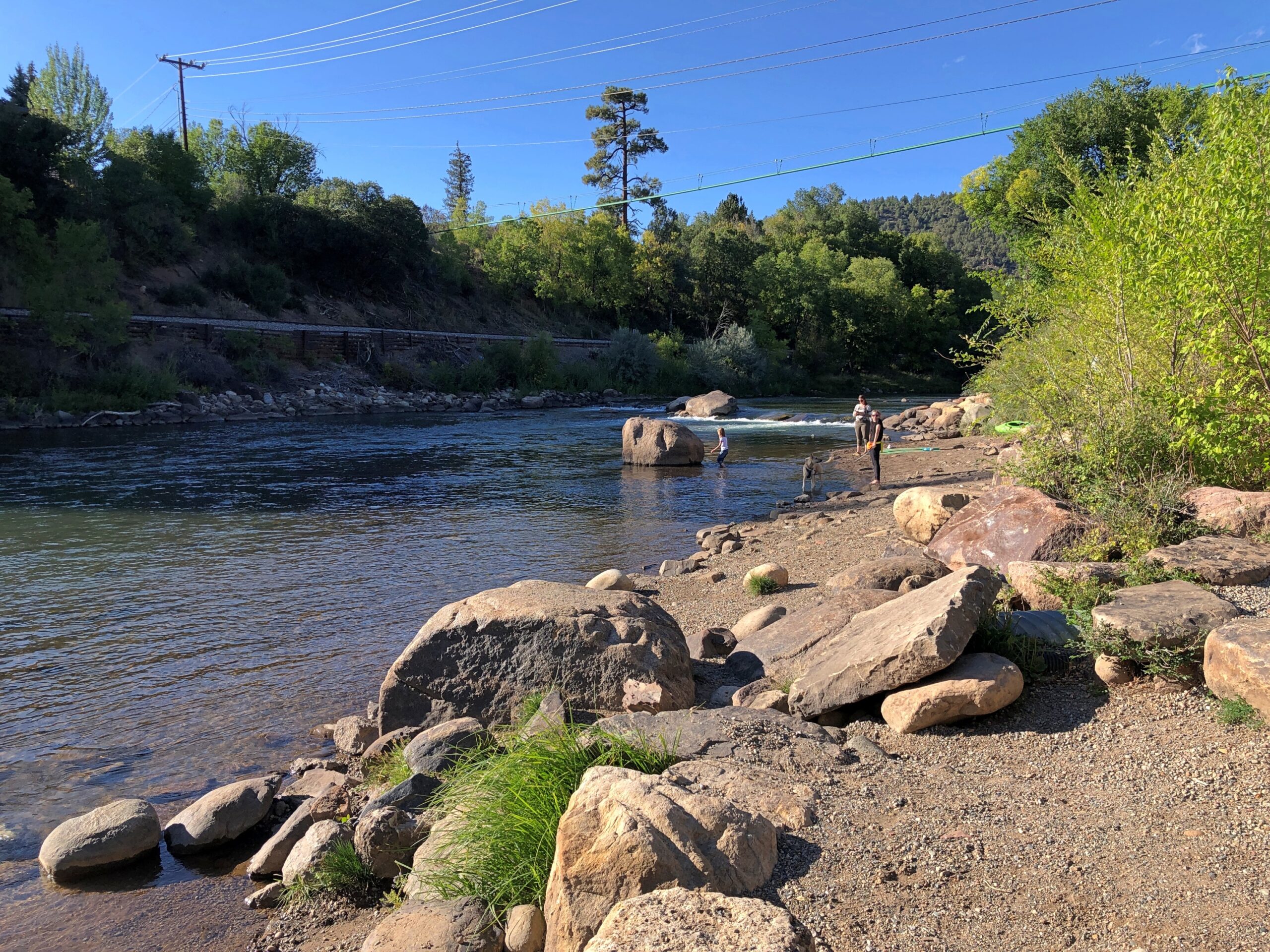
Durango started not so much as a mining town, but a railroad node that served the mines further up the line. Silverton, for instance. One reason Durango is where it is: the Animas River. These days, the river is accessible to pedestrians in a number of places in town. One was near the Durango Library, also the location of a shady sculpture garden.

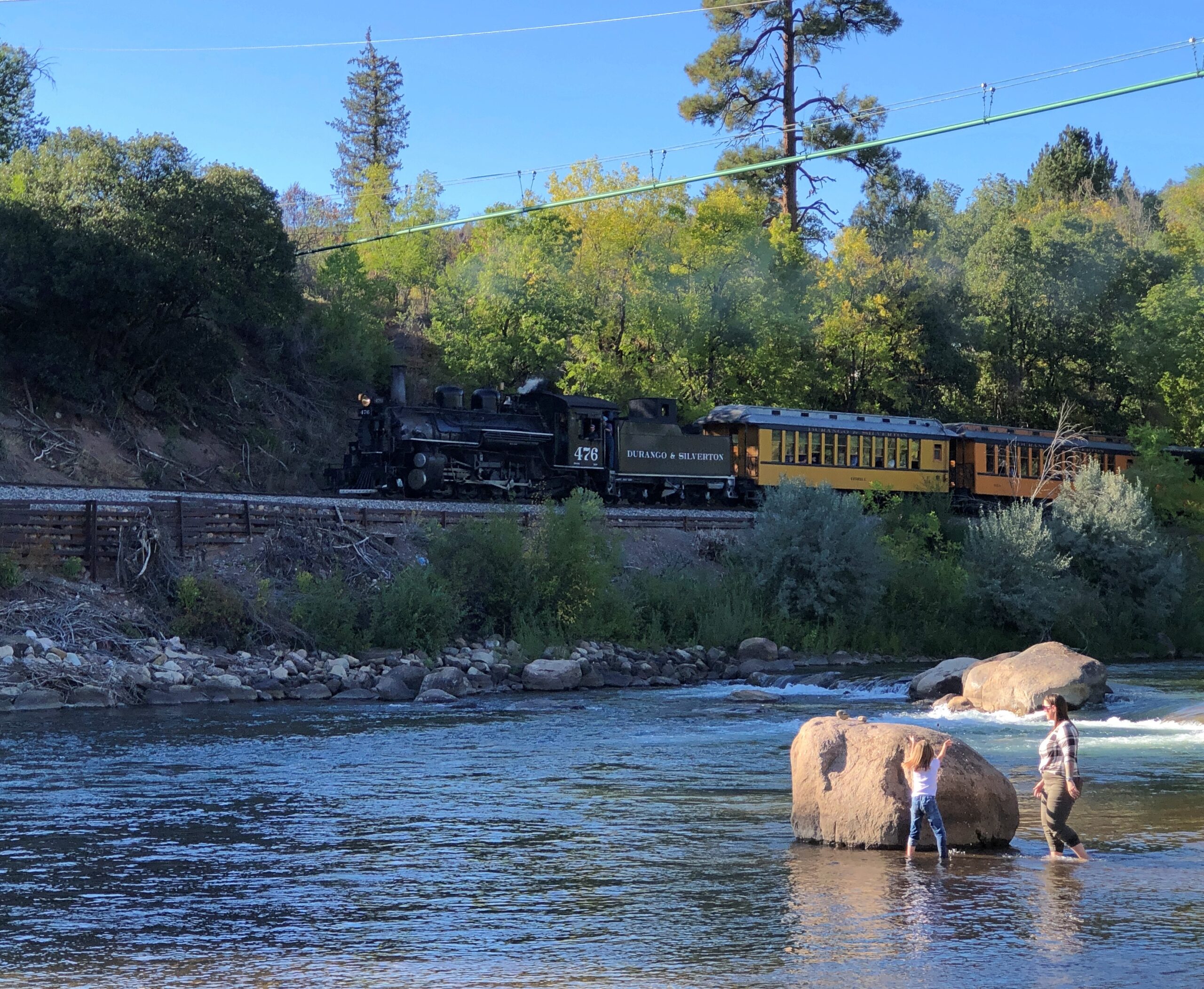
At this place, the tracks of the Durango & Silverton Narrow Gauge RR run along the river.

Animas River, Durango

That was also true at the 29th Street Park, though the tracks were on the other side of the river.

Animas River, Durango

We waved. A few waved back.

Rocky Mountain National Park

On September 15, KKTV in Colorado reported that Trail Ridge Road through Rocky Mountain National Park was “briefly closed Sunday [the 14th] due to the wintry weather. This was first time snow and ice shut down the road since it reopened in May.”

We drove that road two days before, on the 12th. As the article notes, the “48-mile highway through the park is North America’s highest continuous paved road and connects the east and west sides of the park… [it] reaches 12,180 feet at its highest point. Alpine Visitor Center, where snowfall was caught on webcam, is located at about 11,796 feet.”

We’d spent the night before in Granby, Colorado, from the looks of it a growing town – complete with large rows of spanking-new townhouses – and from there entered the park from the western, or less crowded side. The eastern entrance near Estes Park, Colorado, has a more direct connection to the mobs coming from greater Denver.

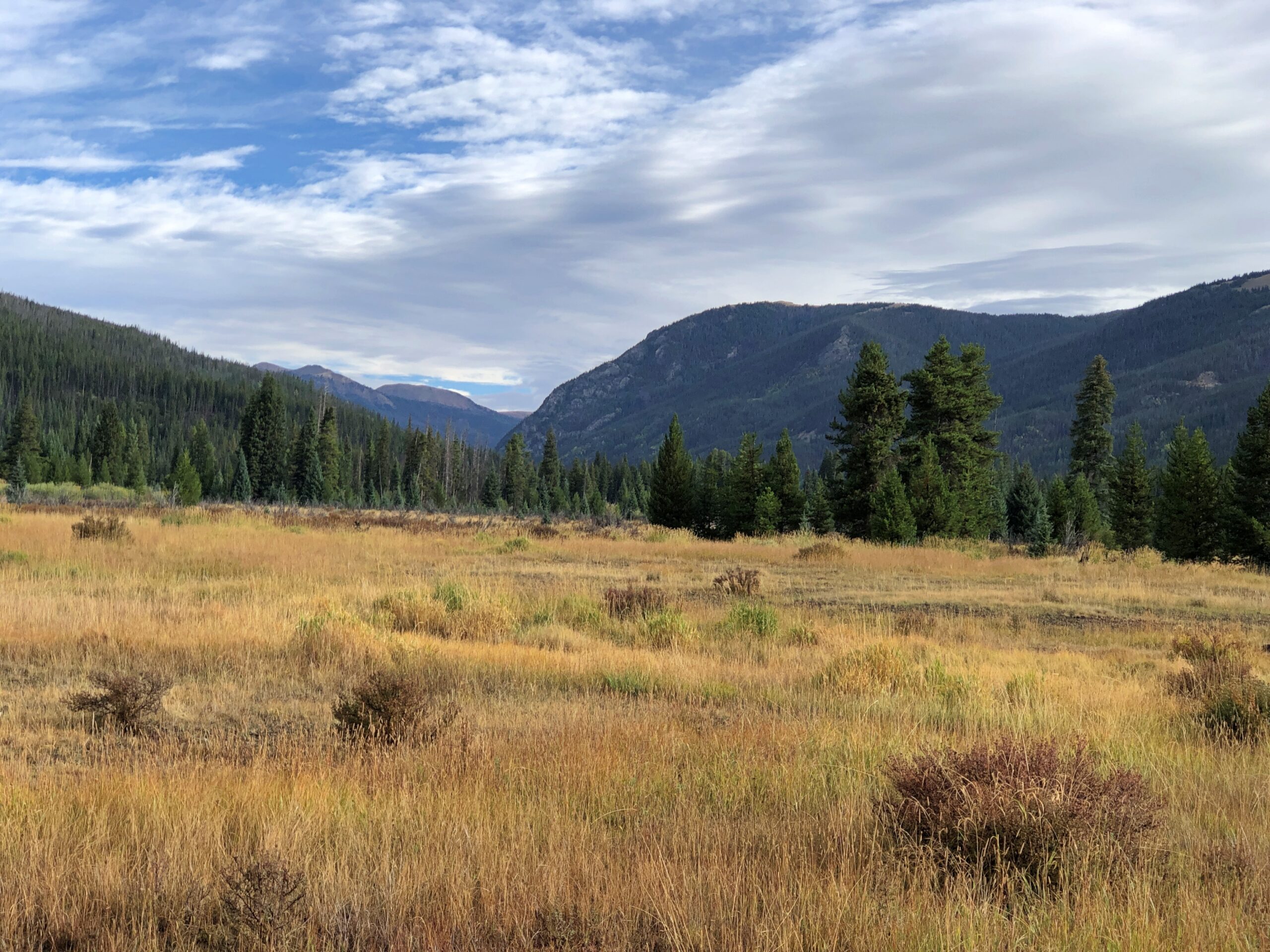
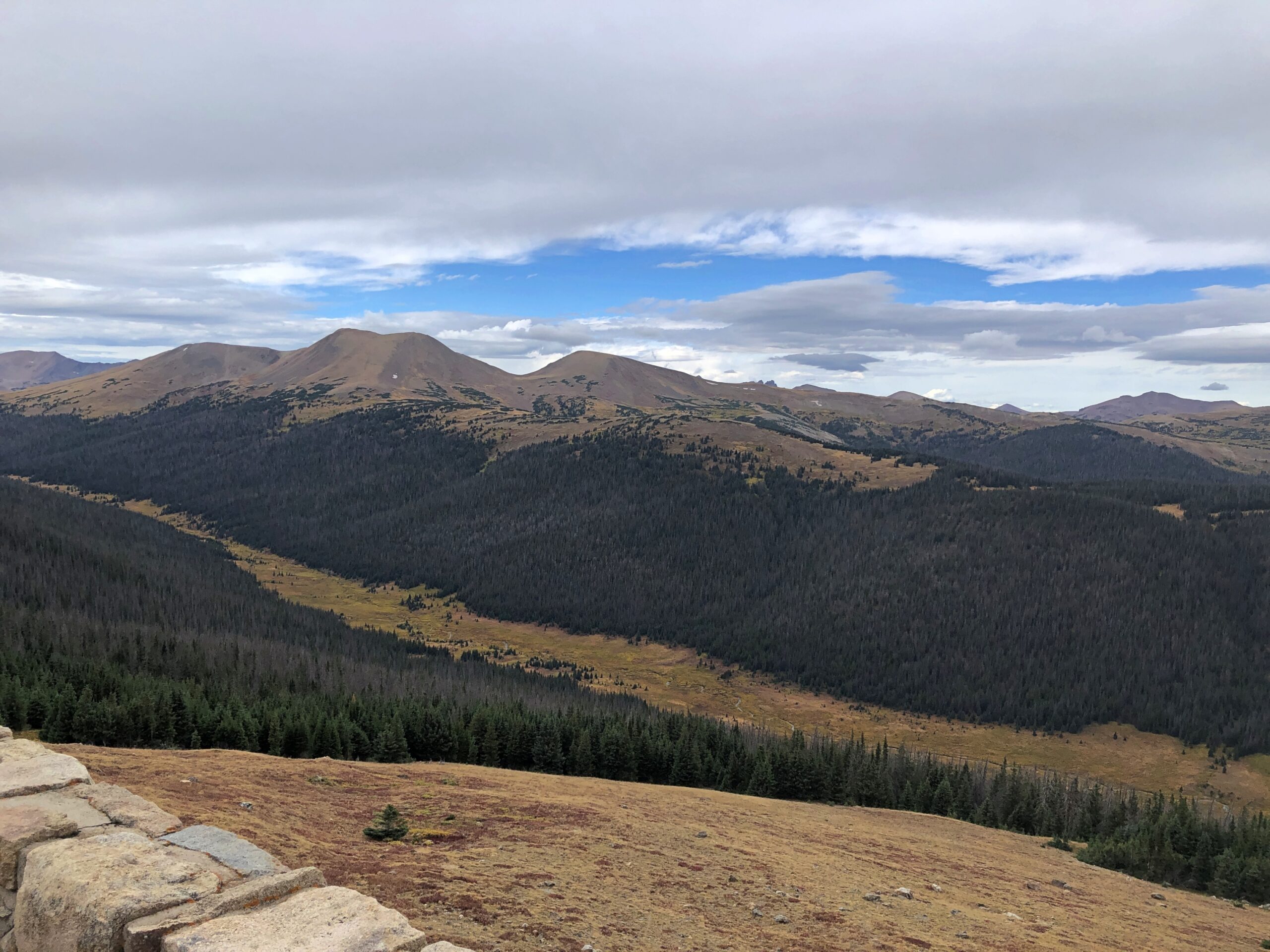
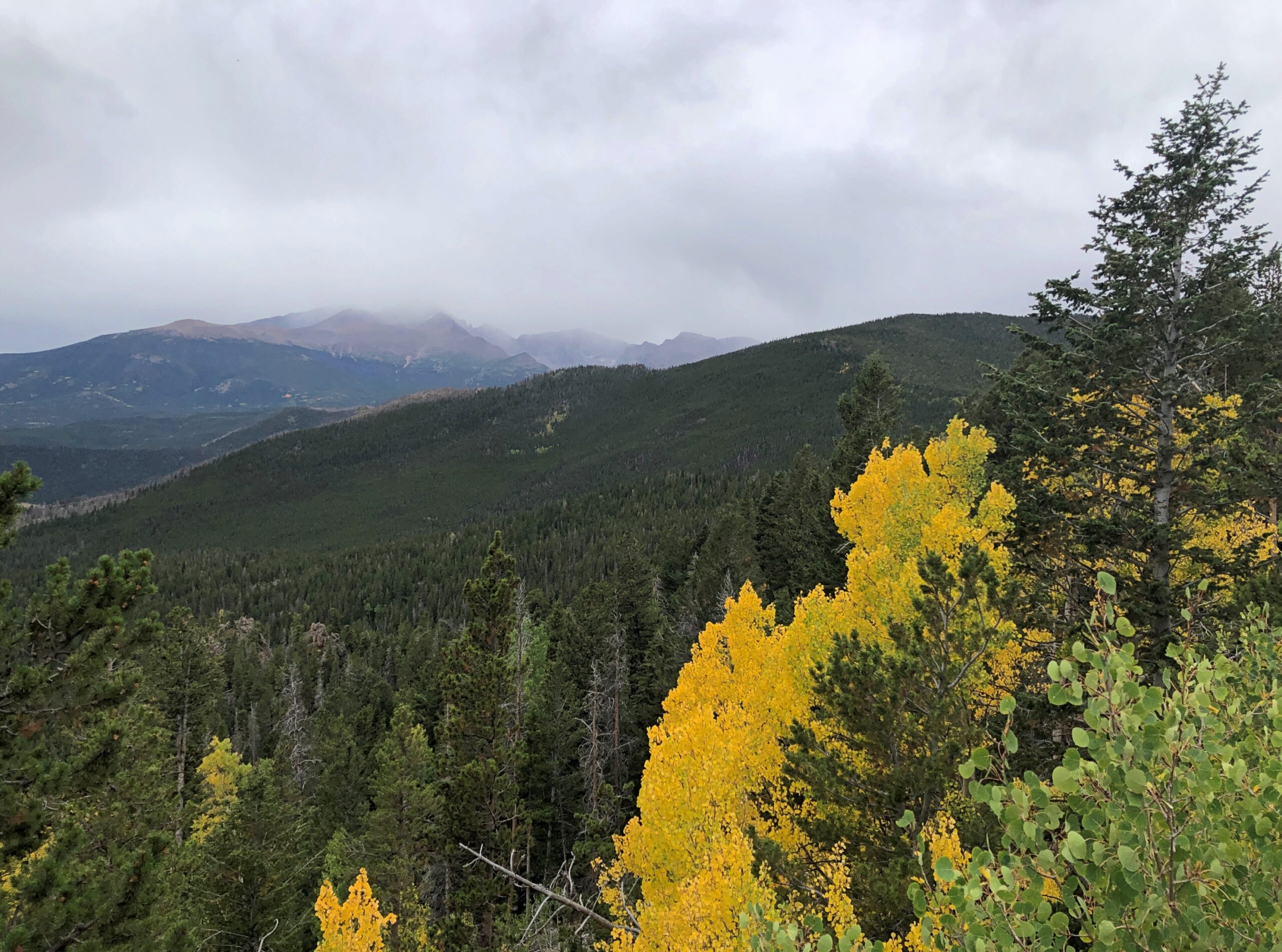
RMNP is a place of majestic vistas. We came for that, and were not disappointed. But I was just as impressed by something we saw near the western entrance at a place called Holzwarth Historic Site, in the Kawuneeche Valley. A picturesque place.

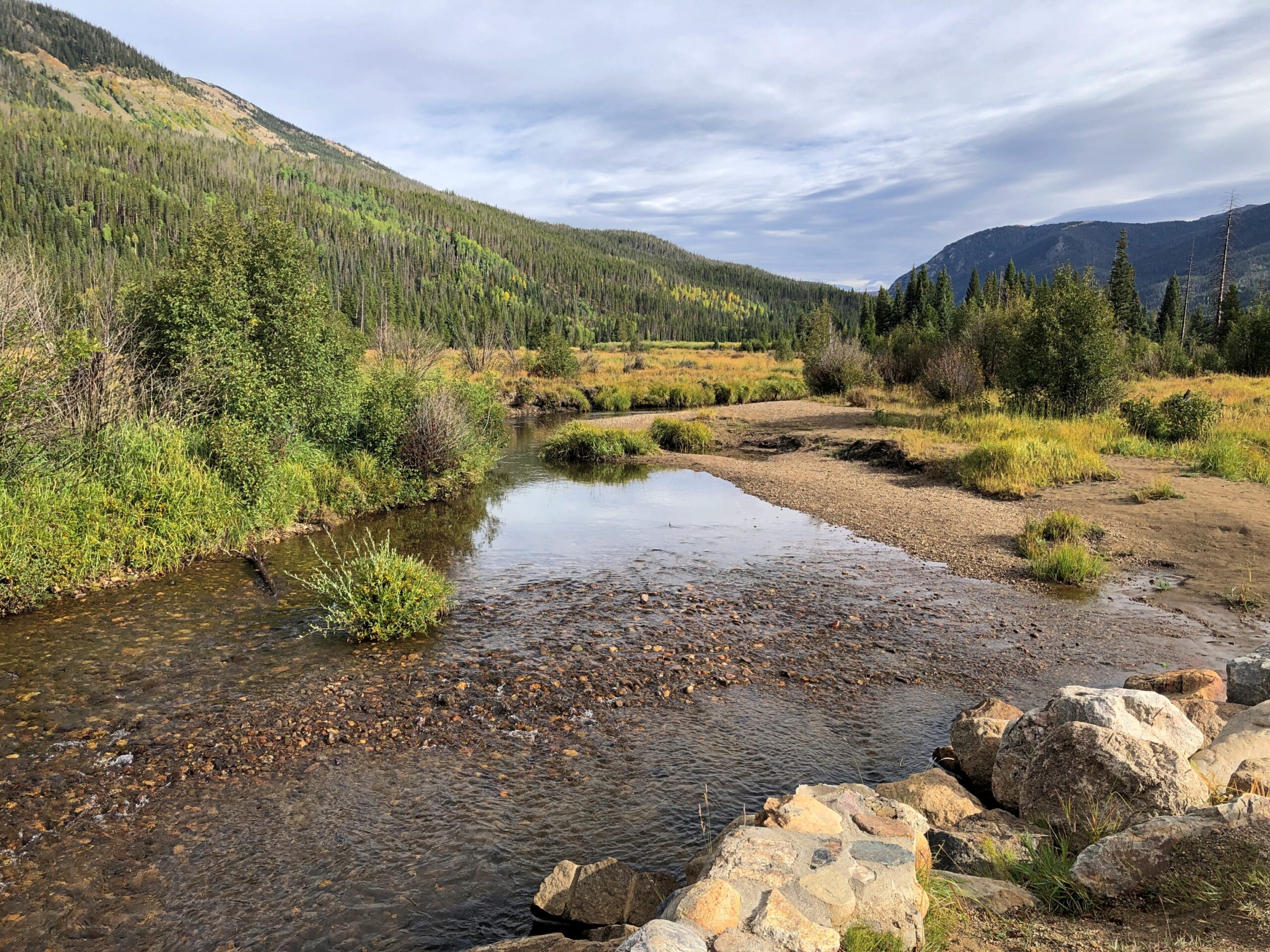
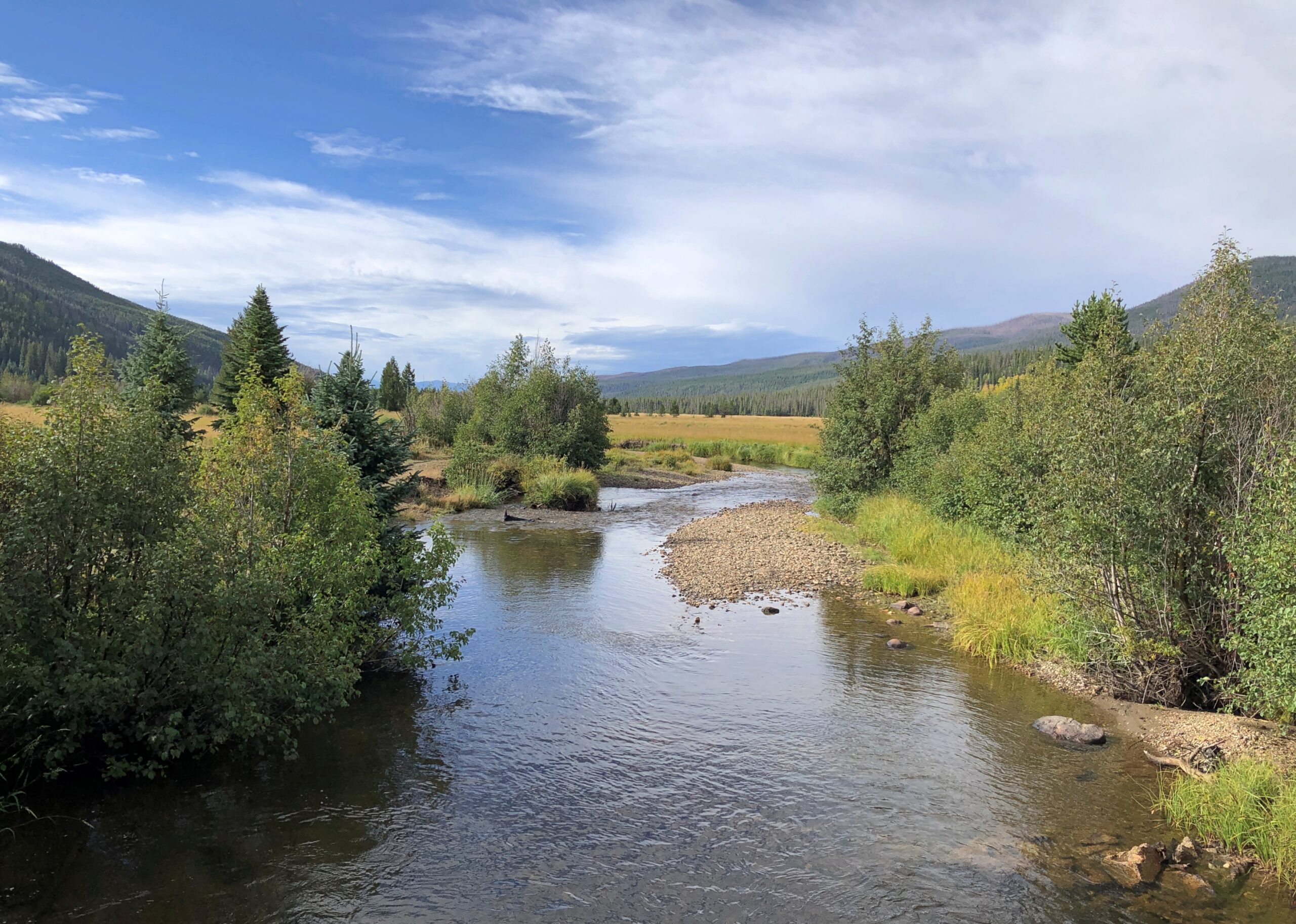
It was the first place we stopped in the park, walking on a path through part of the valley. A small bridge crossed what looked like a creek.

Rocky Mountain National Parl

A sign on the bridge informed us, however, that this was the Colorado River. A flabbergasting moment. I’d known that the Colorado rises in one of the remote parts of the park, but I didn’t know we were going to encounter the river – whose downstream will carve epic canyons and be dammed to the hilt for the water and power needs of millions of people – by crossing it on foot in a few seconds.

The Holzwarths ran a dude ranch on the site for much of the 20th century, before selling it to the Nature Conservancy, which eventually resulted in the area being added to the national park. A number of the dude ranch buildings still exist not far from the baby Colorado River.

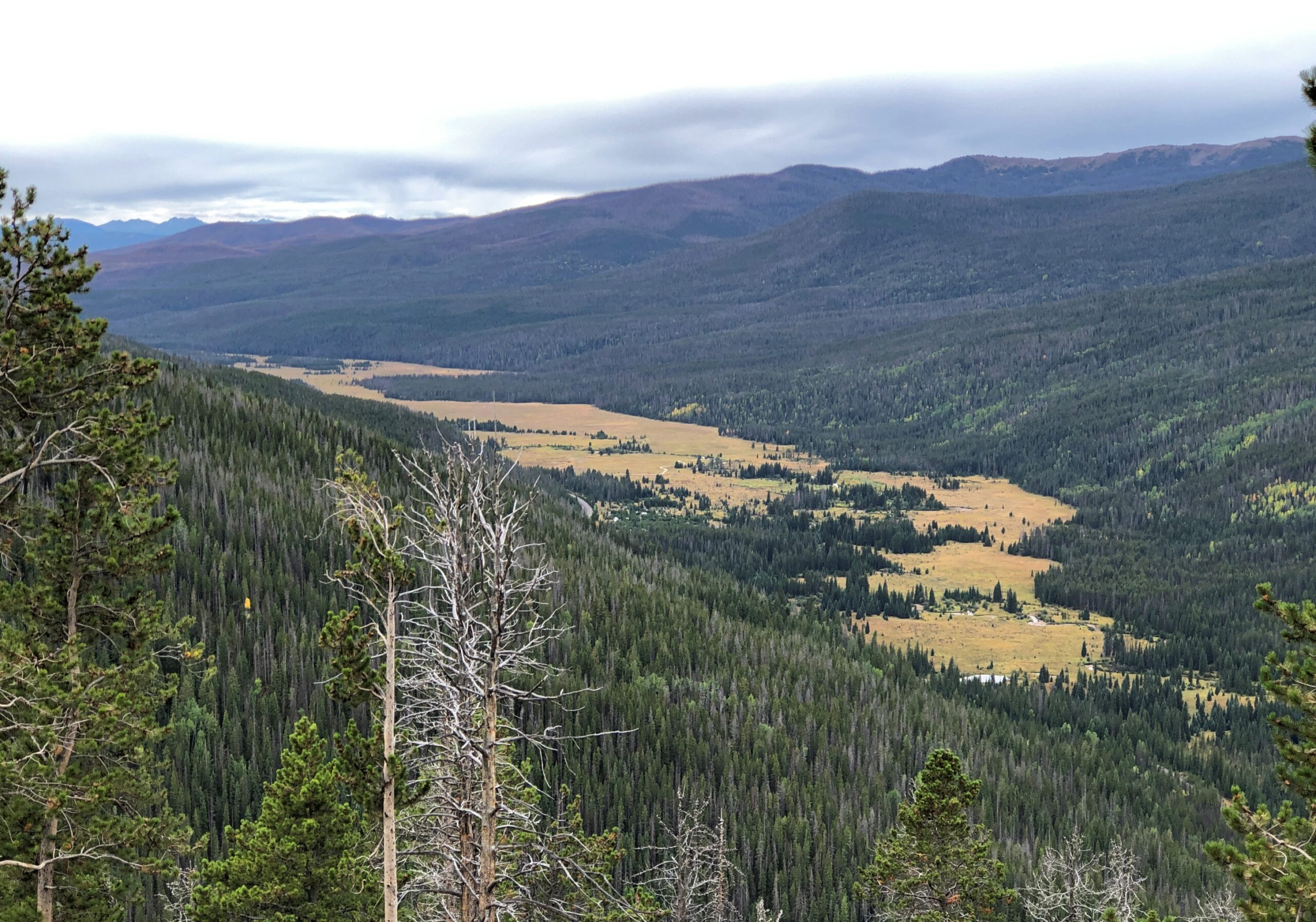
From the valley Trail Ridge Road, which is also US 34, heads upward. A look back at the valley.

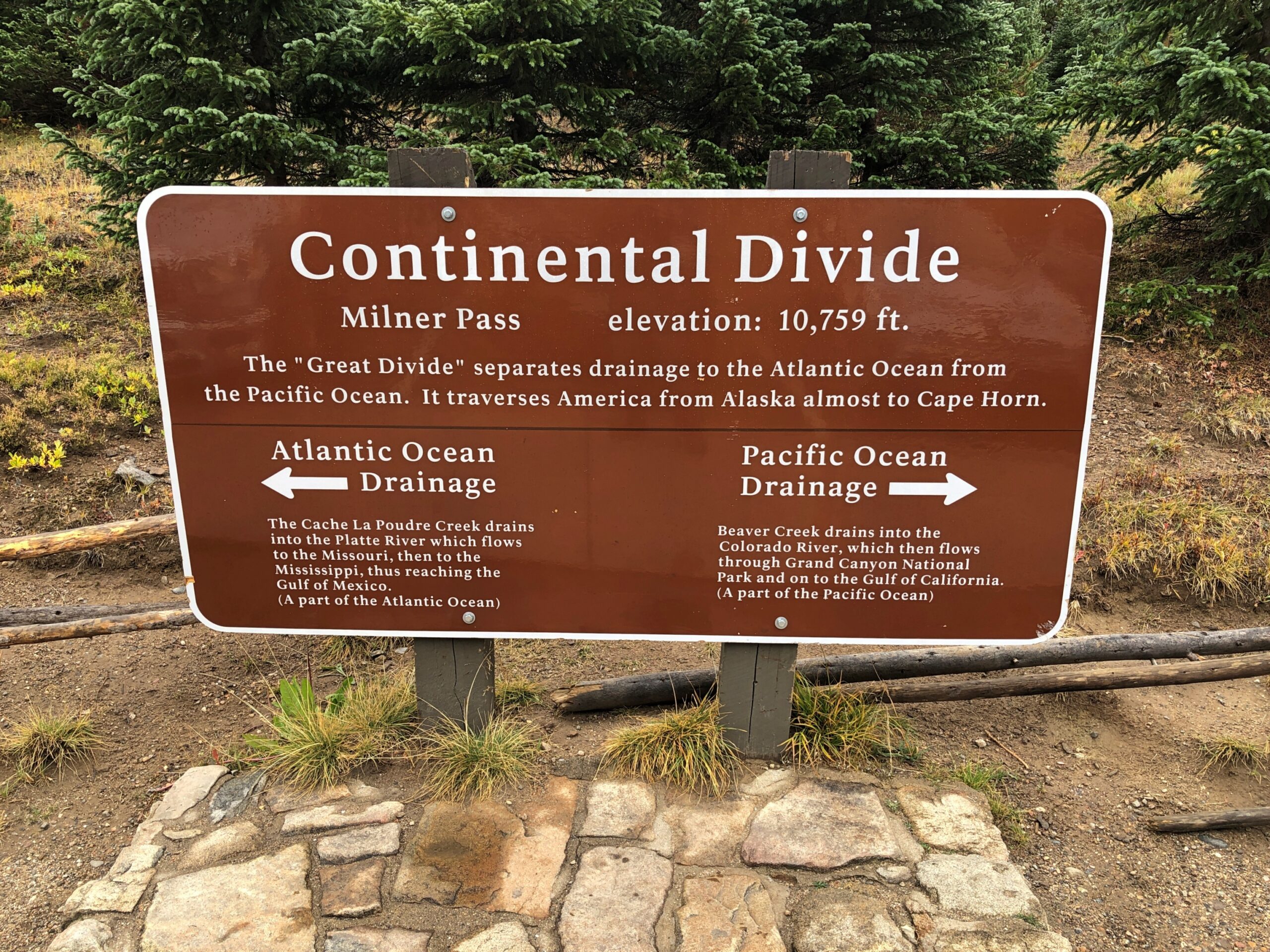
Soon you reach Milner Pass on the Continental Divide, crossing back to the Atlantic side; we’d crossed to the Pacific side at Berthoud Pass the day before outside the park, on the way to Granby.

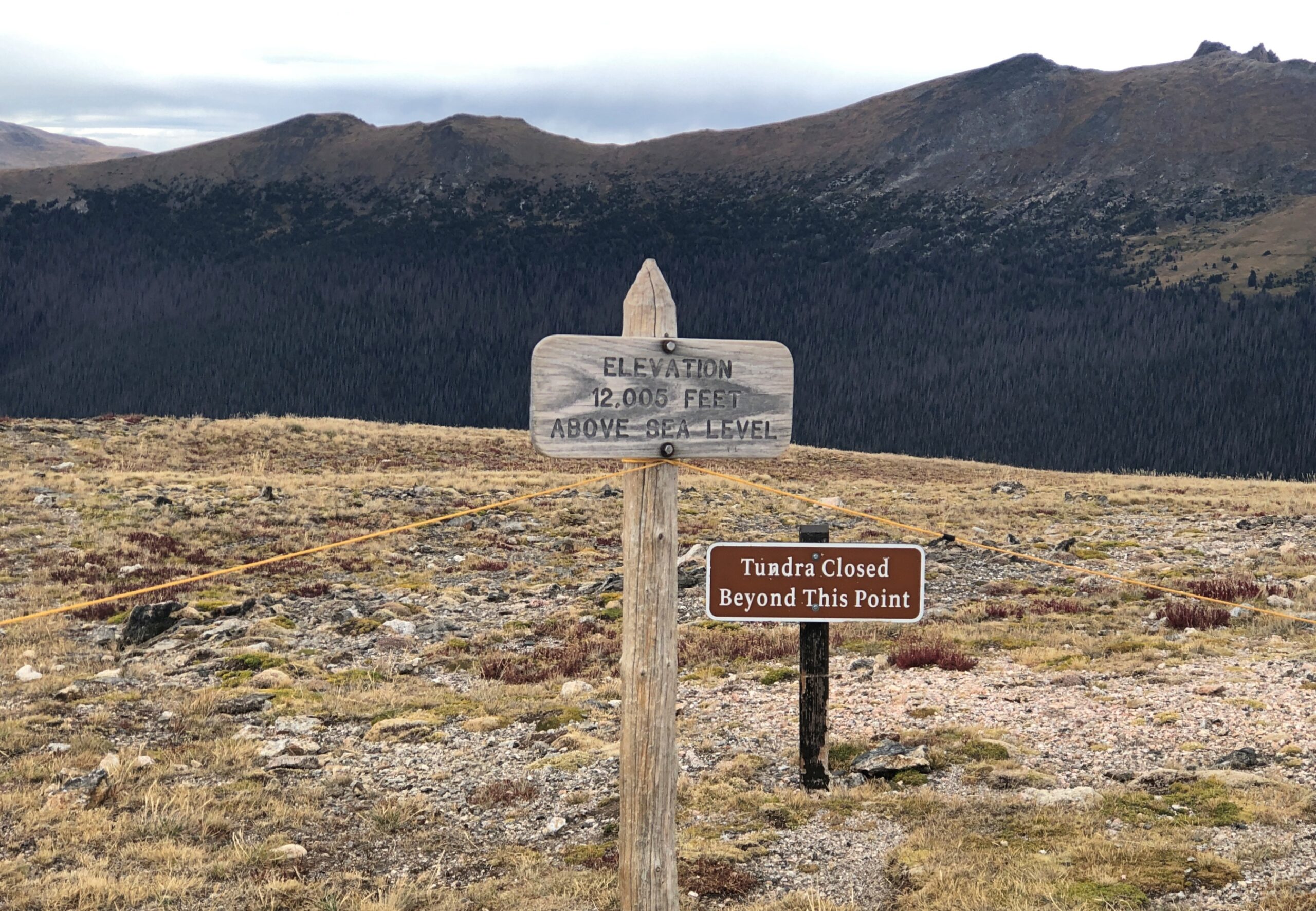
From there, the road takes you above the tree line. By that elevation, the warmth down in the valley is just a memory, as brisk chilly winds blow. The air was still above freezing that day, but not by much.

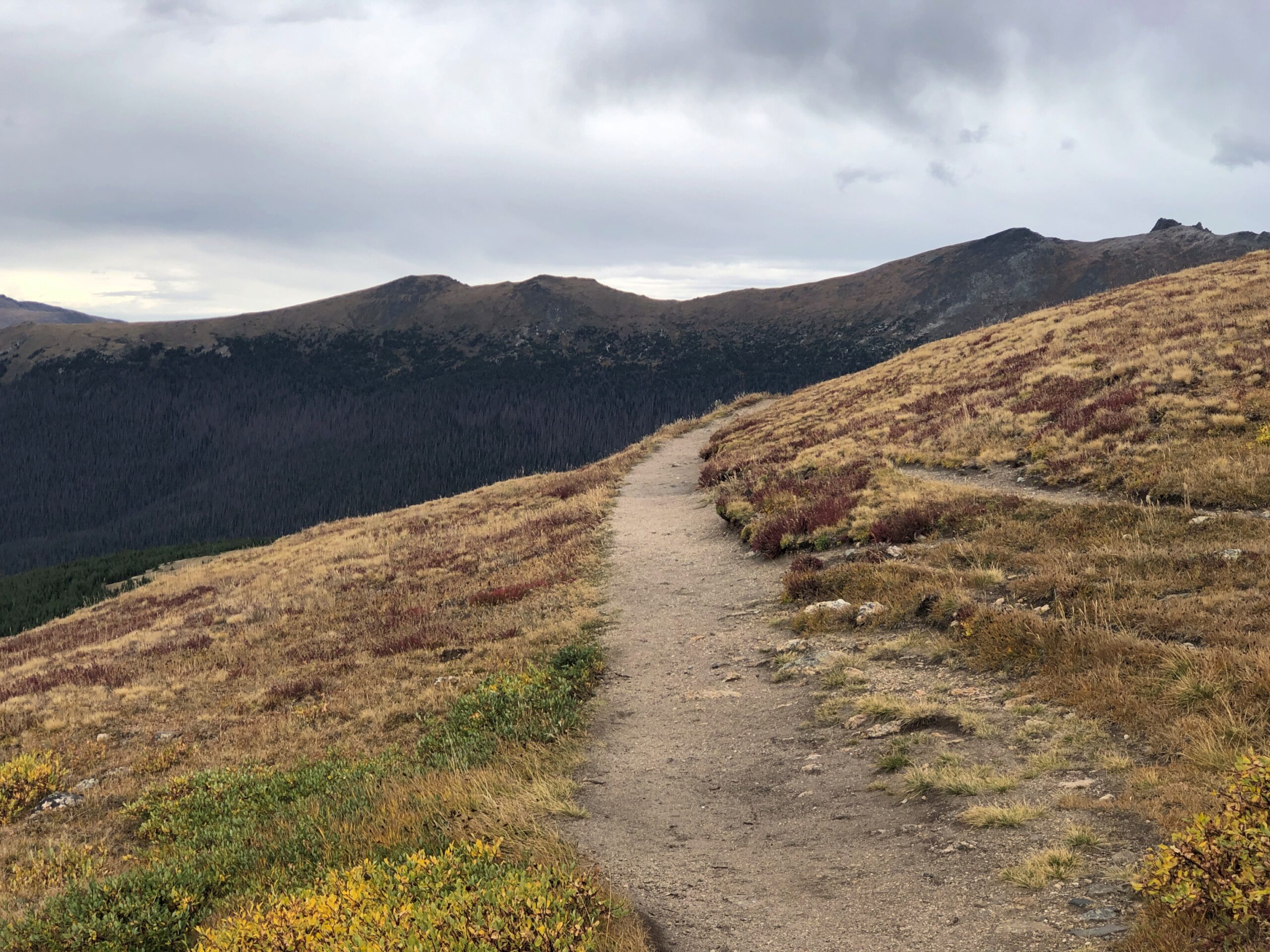
From one of the several pullouts on the road, a path through fields of alpine tundra.

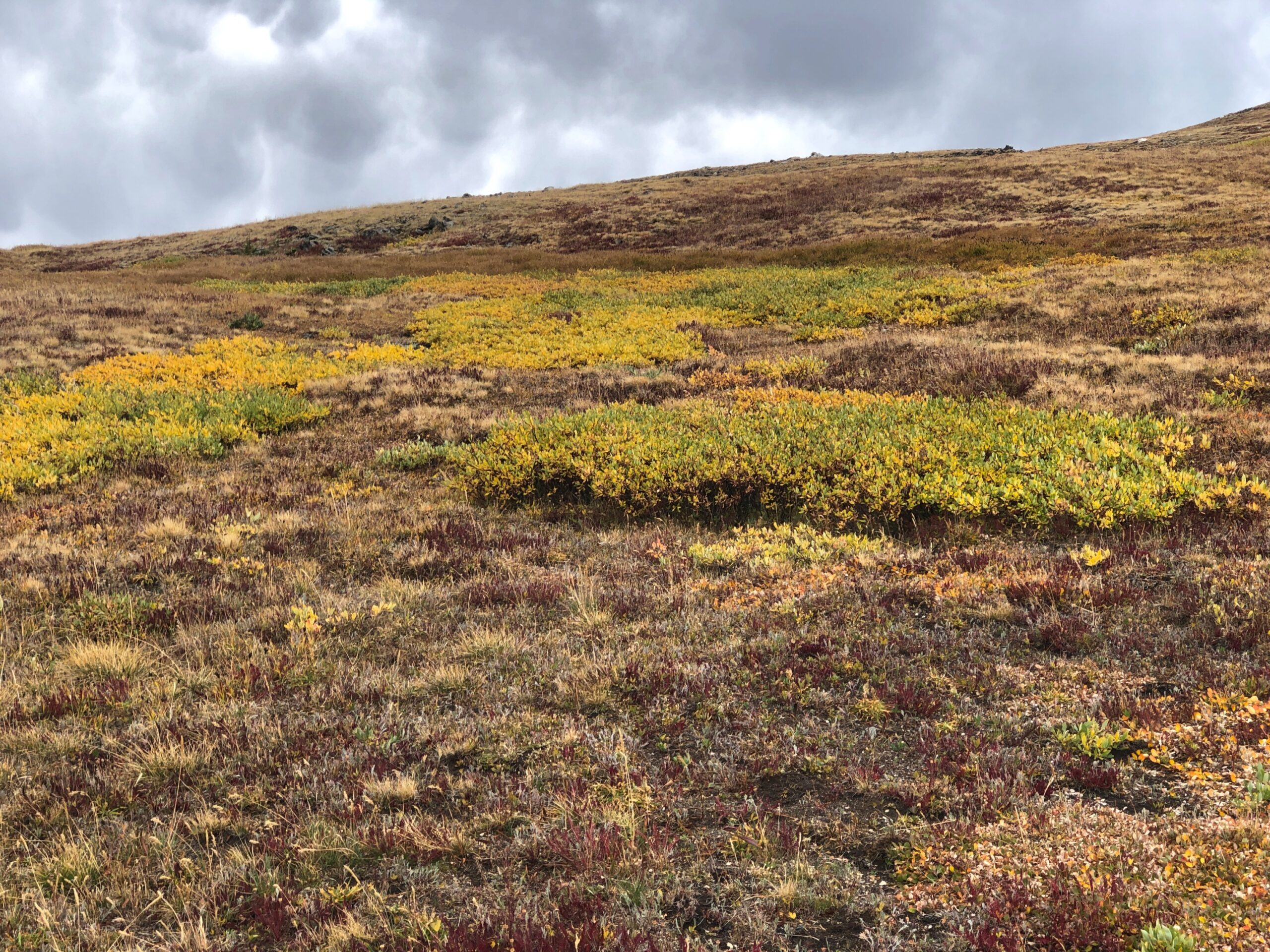
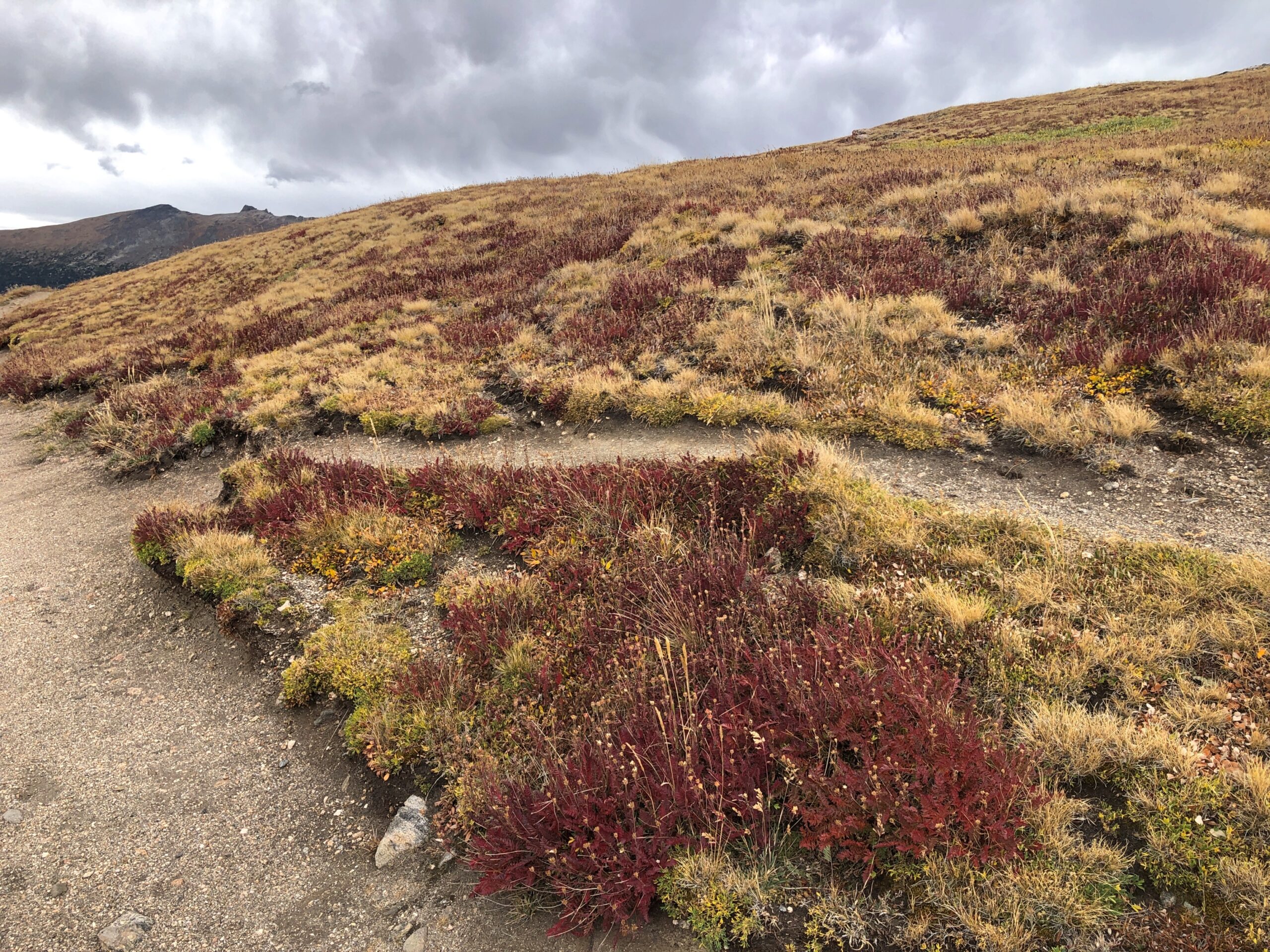
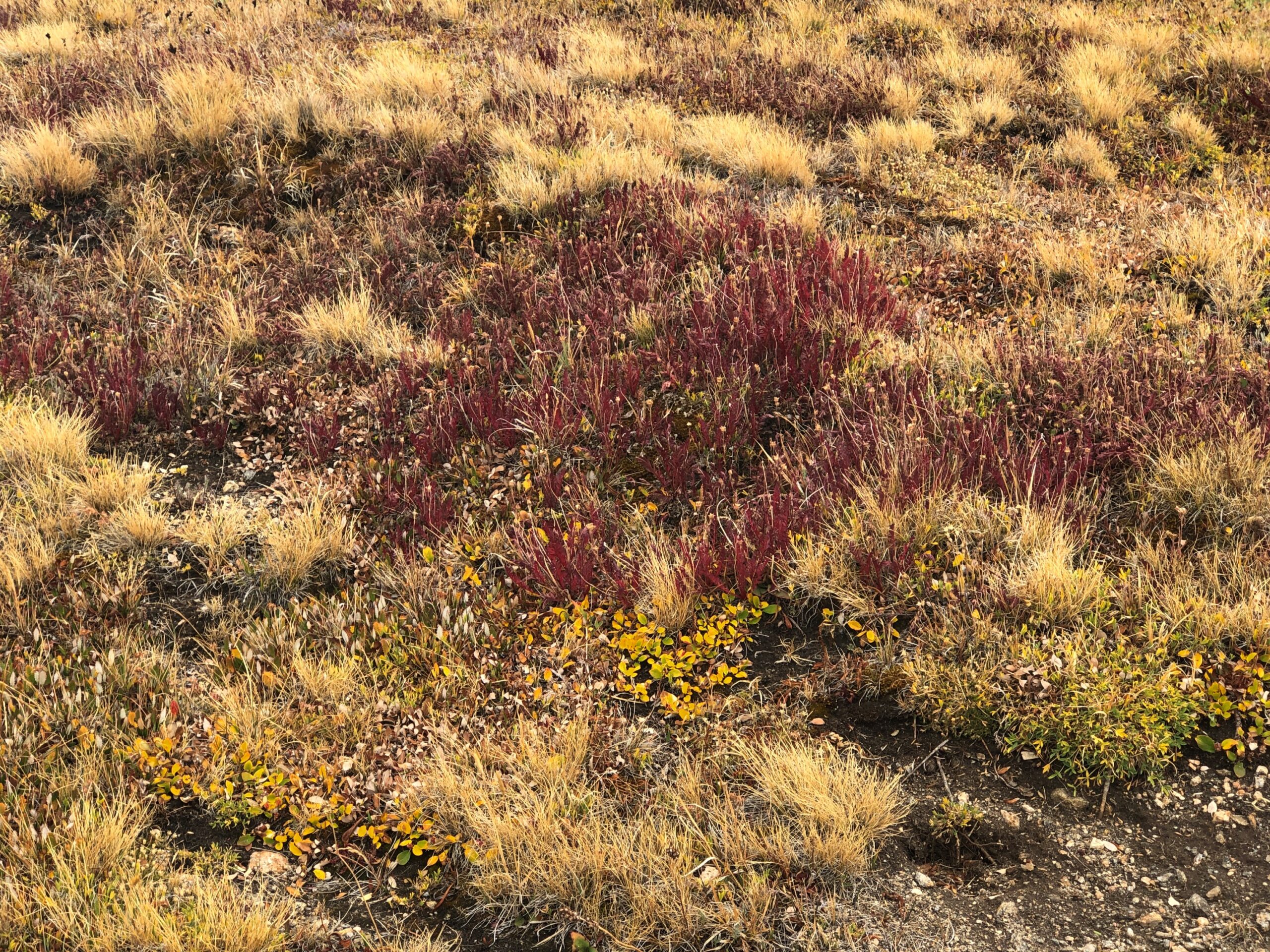
Been a long time since I’d seen any. Back in the Canadian Rockies? No, Alaska. Still, a while ago. We’d reached autumn above the tree line, with the tundra turning.

Rocky Mountain National Park

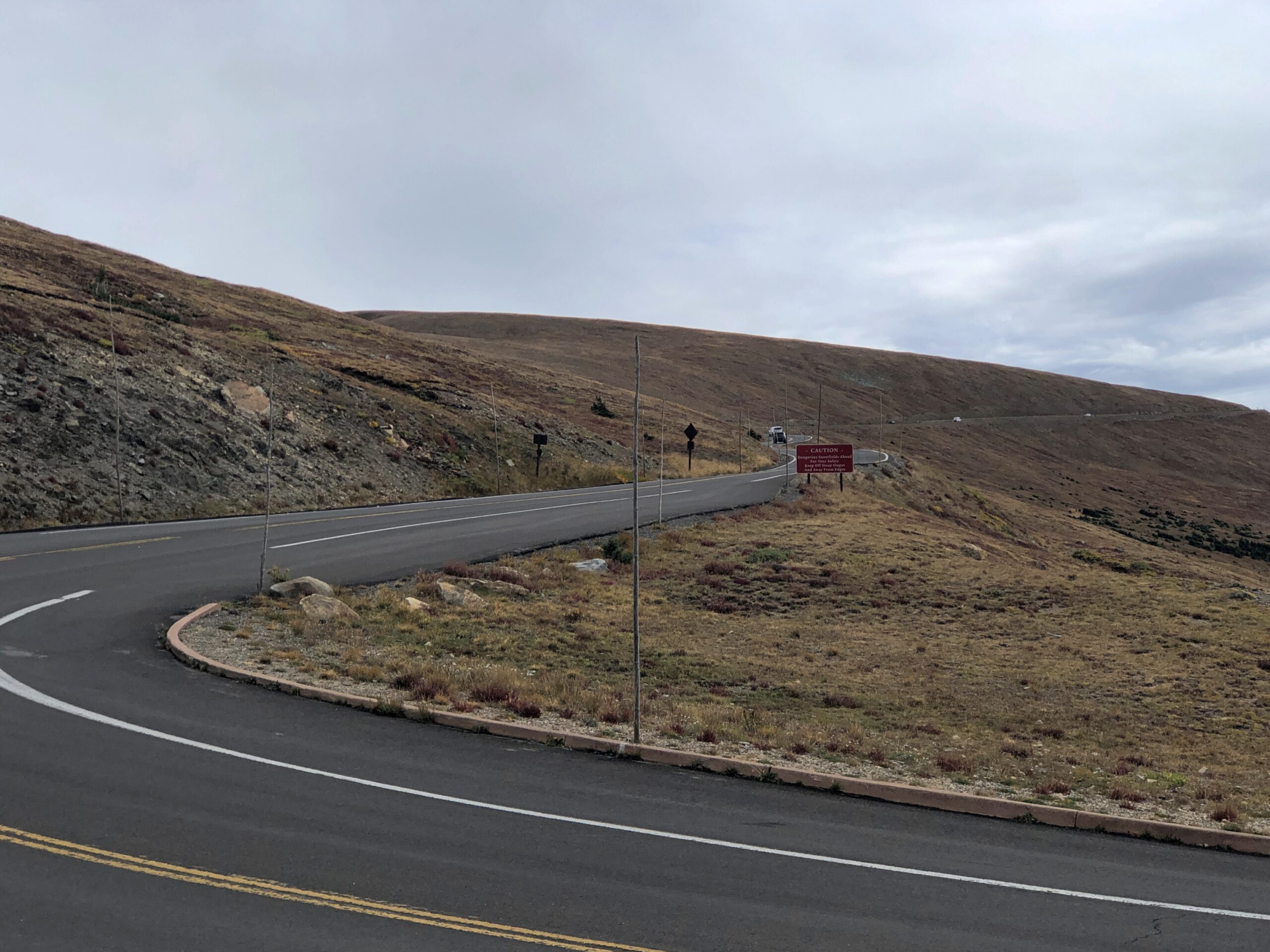
The road goes on.

Who first built the road? There was none when Rocky Mountain NP became a national park, with President Wilson’s signature on the bill. Improvements came later, and of course they were by the CCC.

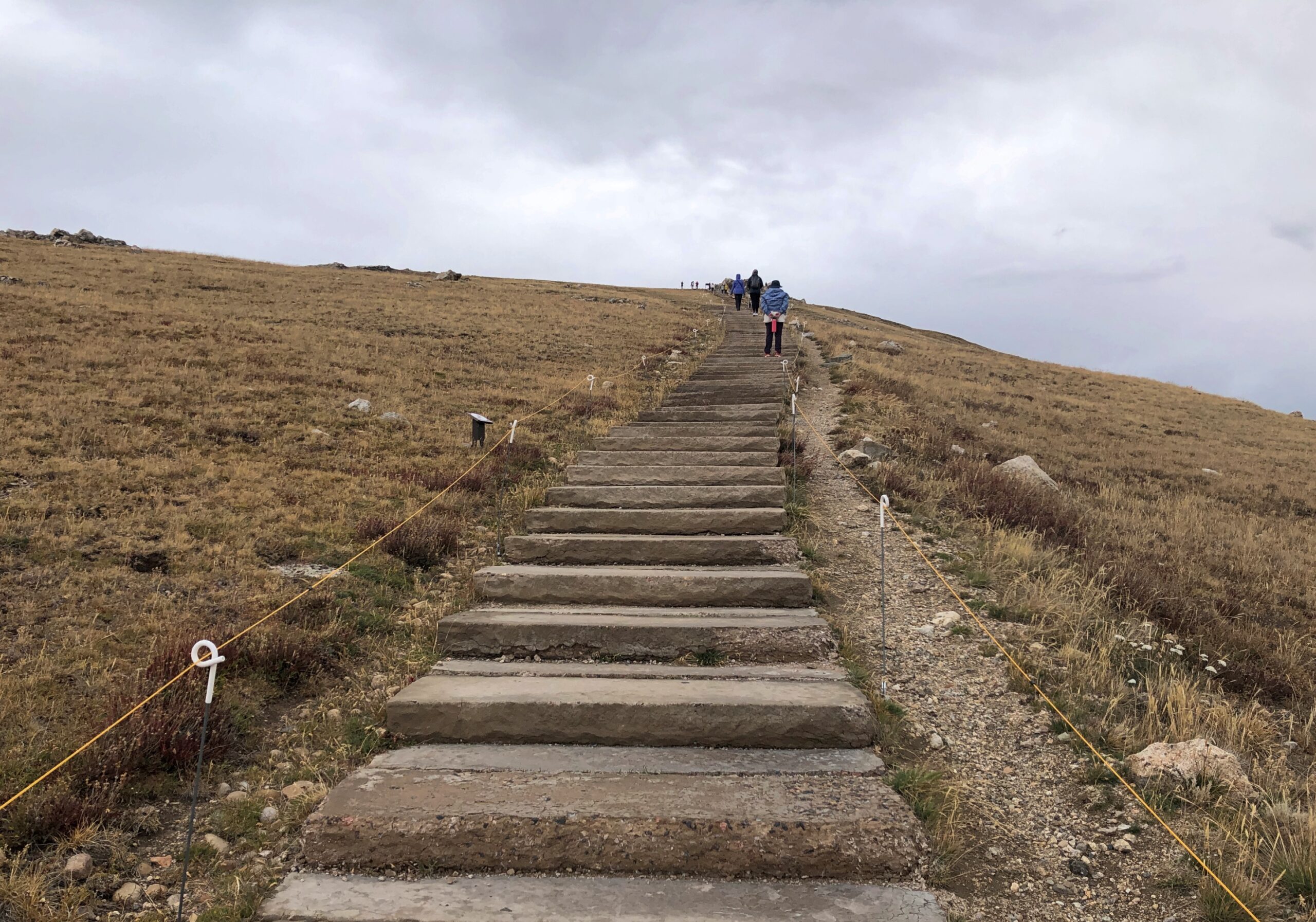
At the Alpine Visitor Center, parking was hard but not impossible to find. The views are good from there, but if you want the better vistas, you climb some outdoor stairs. Roughly 200 feet of them.

The air was cold and there wasn’t enough of it. Or so it seemed. I took my hiking pole, put on a sweater and cap and started up. I could have bought a small can of oxygen at the gift shop, had I known about it. I saw a woman, clearly older than me, coming up the stairs as I was headed down, pausing to inhale vigorously from such a can.

Yuriko and Emi made it to the top before I did, but by taking a number of breaks, I managed to get to there myself. Just another thing I should have done 30 (40) years ago. But even then, I’d have been tired at the top.

Rocky Mountain National Park

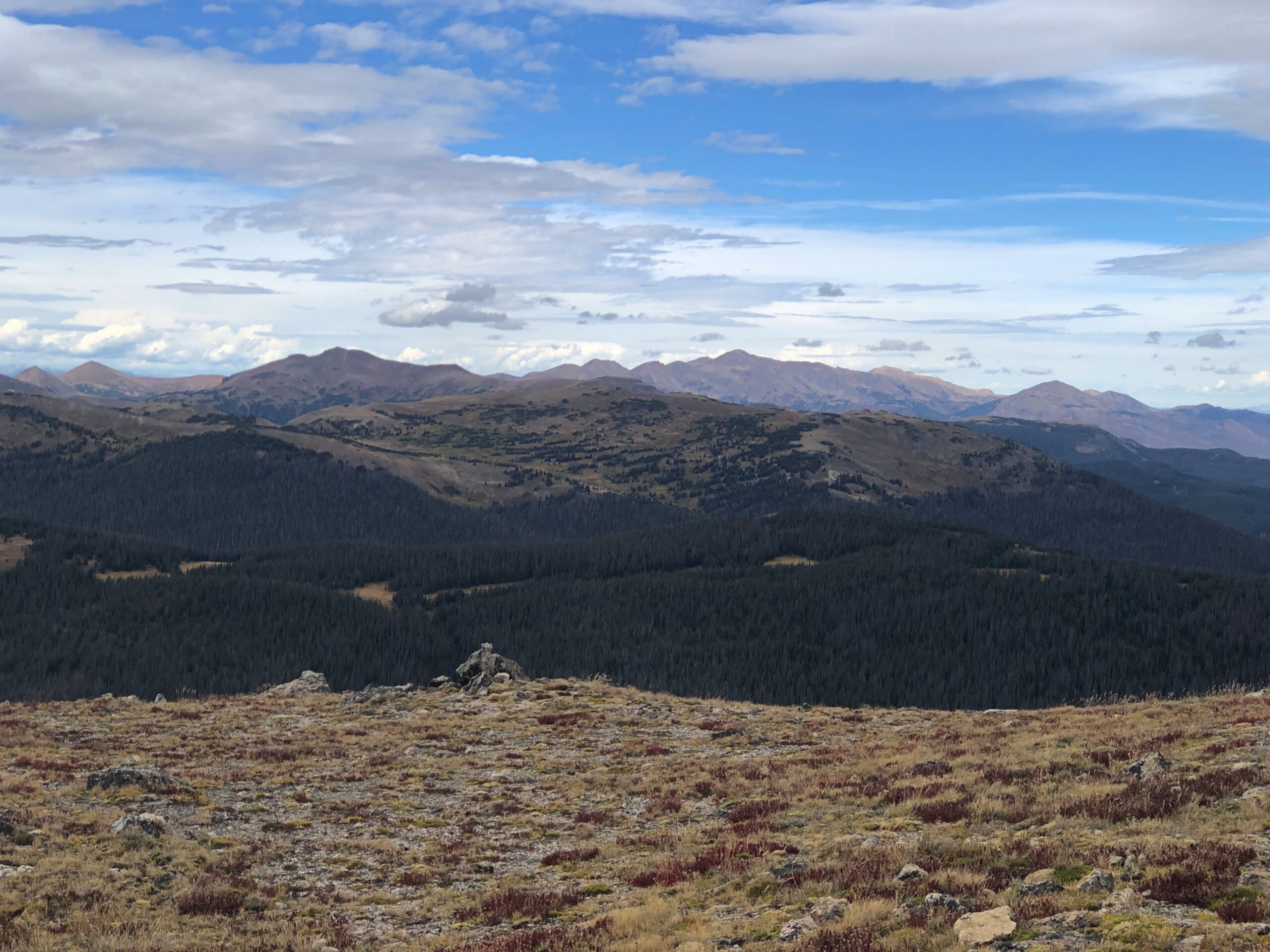
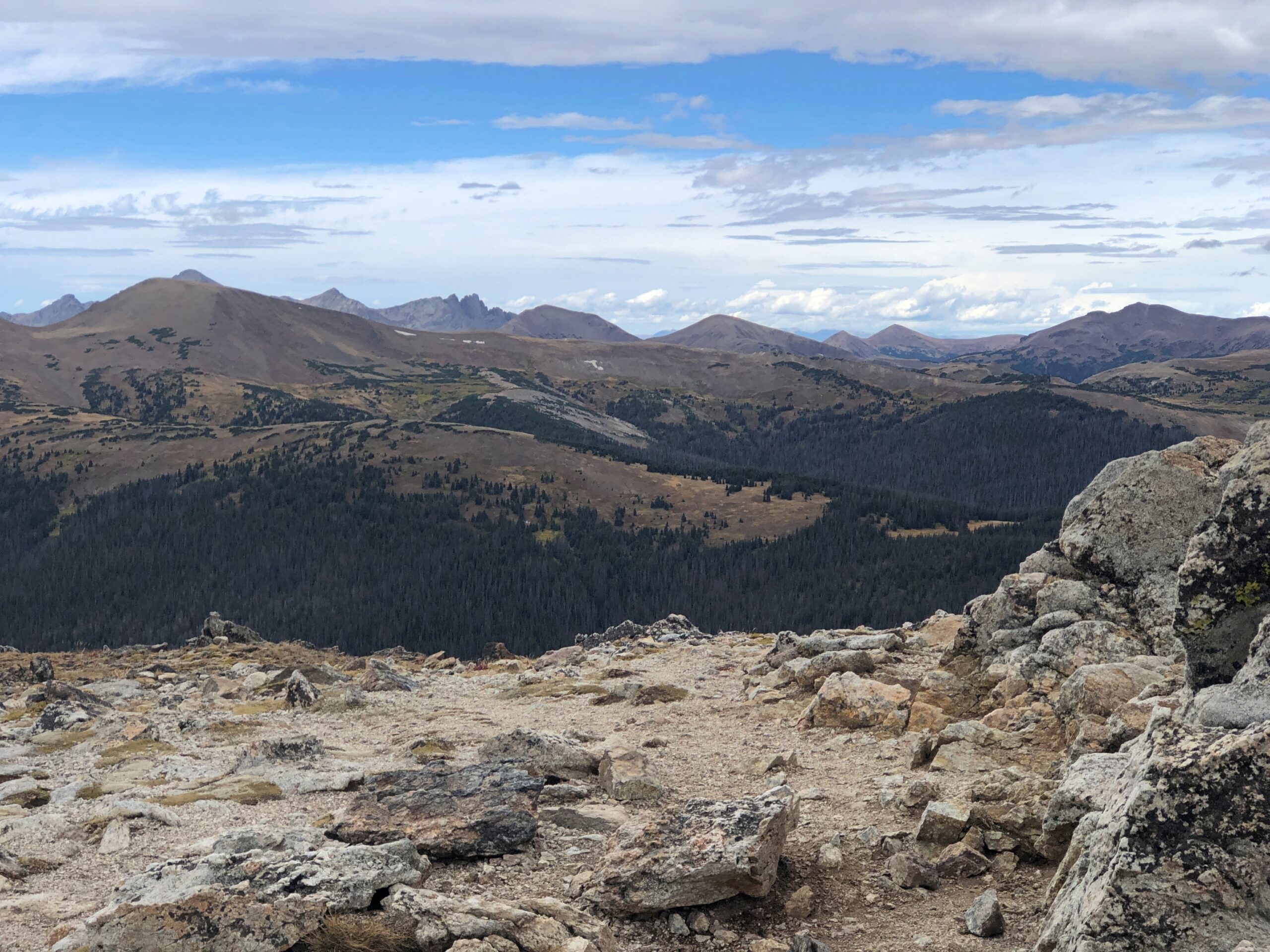
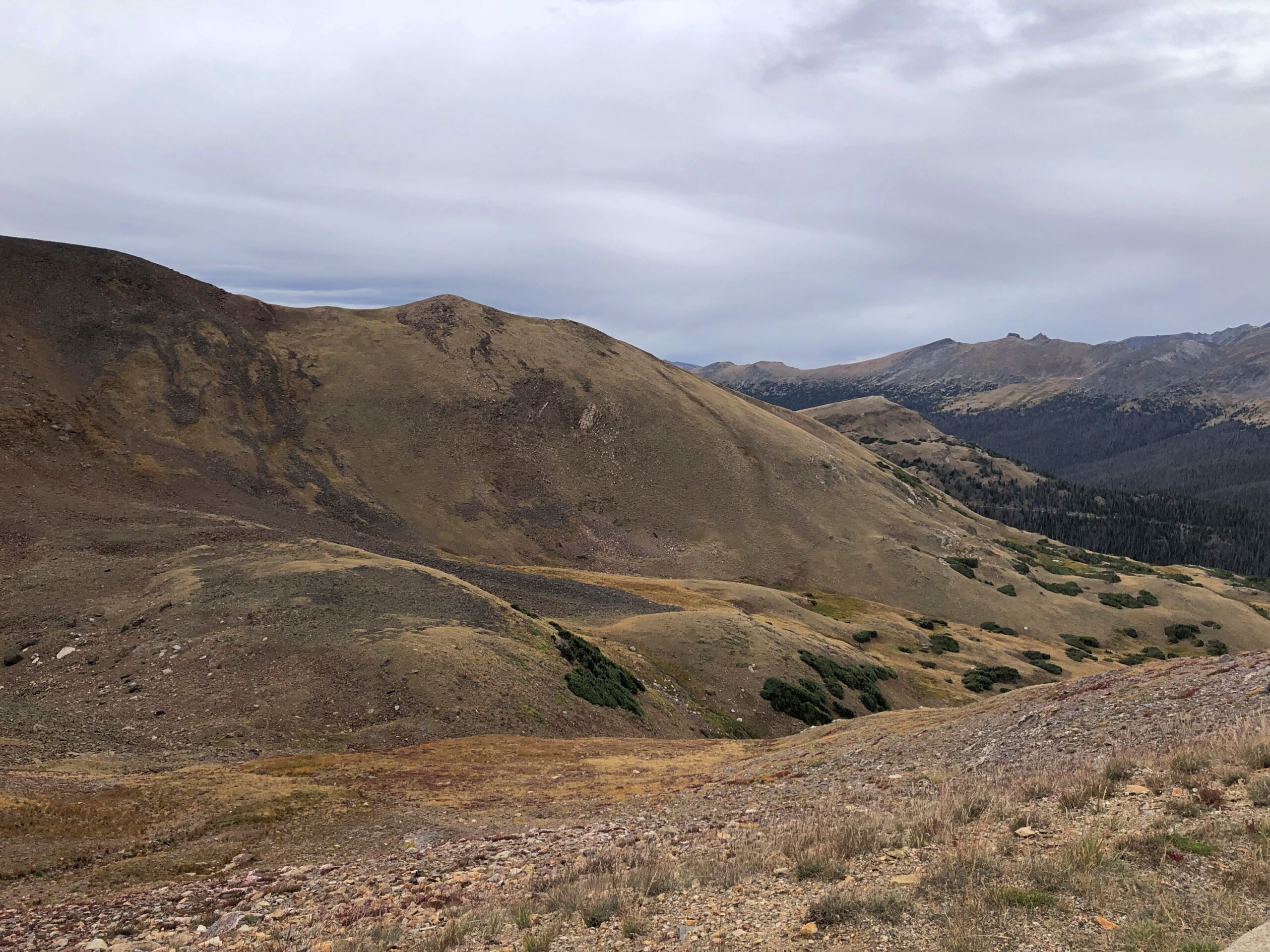
It’s that extra five feet that leaves you gasping, I think. No matter, the view was worth the gasps. Entirely. The images, as usual for this kind of vista, barely convey the scene in its glory. This is going to be a persistent reality over the next few days’ posts.

Rocky Mountain National Park

Enough to make you burst out with a rendition of “Rocky Mountain High.” If you had the oxygen. I have to say I was glad to repair soon to a lower altitude, one below the tree line. From the Alpine Visitor Center, the road heads toward the eastern entrance to the park, a good many miles away and several thousand feet closer to sea level.

Before we left the parking lot, we saw a fox — guess that would be an alpine fox, pointy snout, pointy ears, billowing with orange and white fur — trot onto the parking lot, as if it had a car parked there. A young ranger, presumably used to the elevation, took chase. Not to catch the fox, which would have been impossible, but probably to prevent the animal from getting run over. Roadkill is one thing, but parking lot kill would have put a small dint in the scenic wonder all around. Anyway, the fox headed for the slopes.

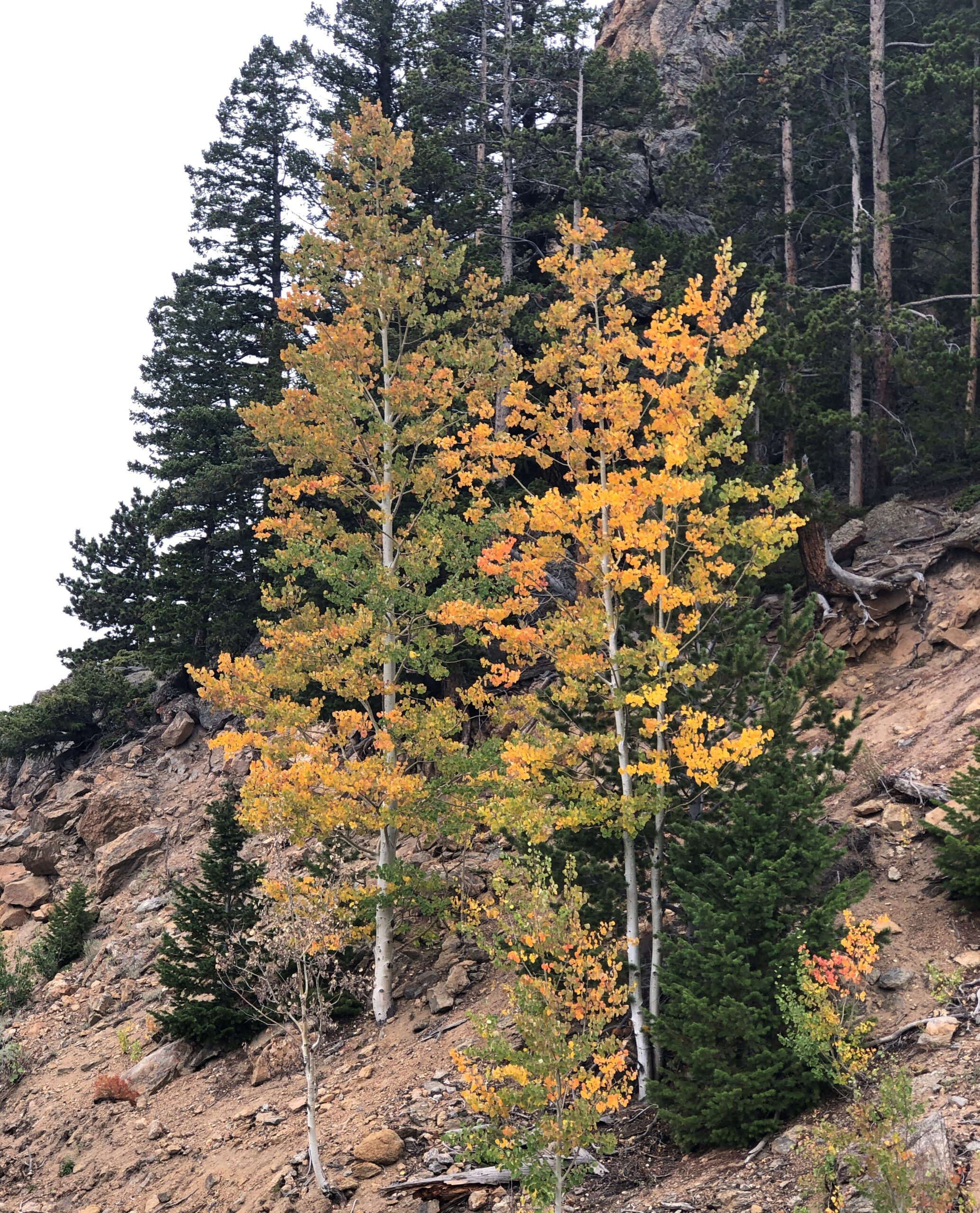
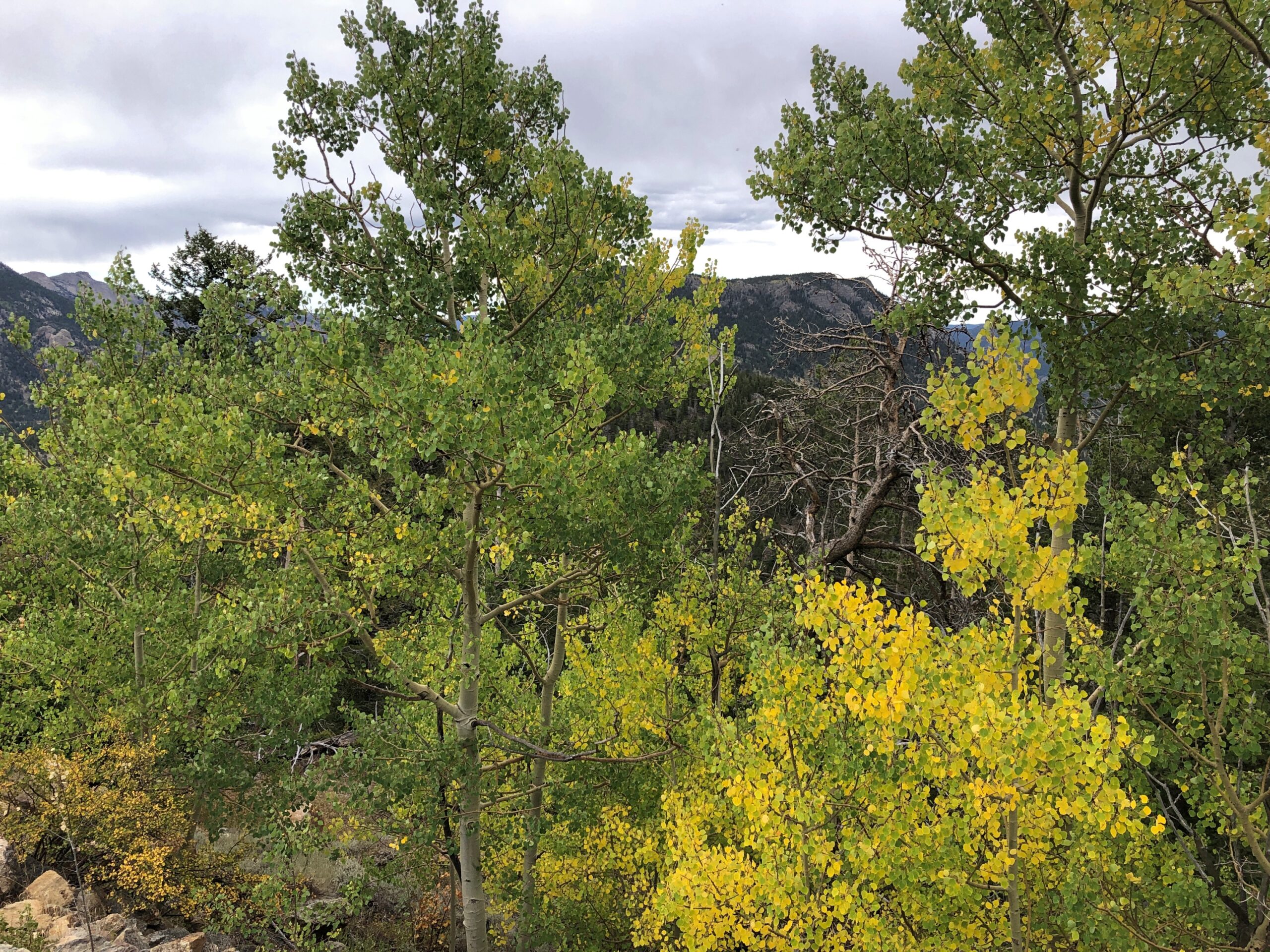
Not only was the air better below tree line, fall foliage was well under way, something we haven’t gotten much of even now here in northern Illinois, though it won’t be long.

Rocky Mountain National Park

One down, three to go. One of the marvels of Colorado’s four national parks is how different each of them are from the others, as we would soon see for ourselves.

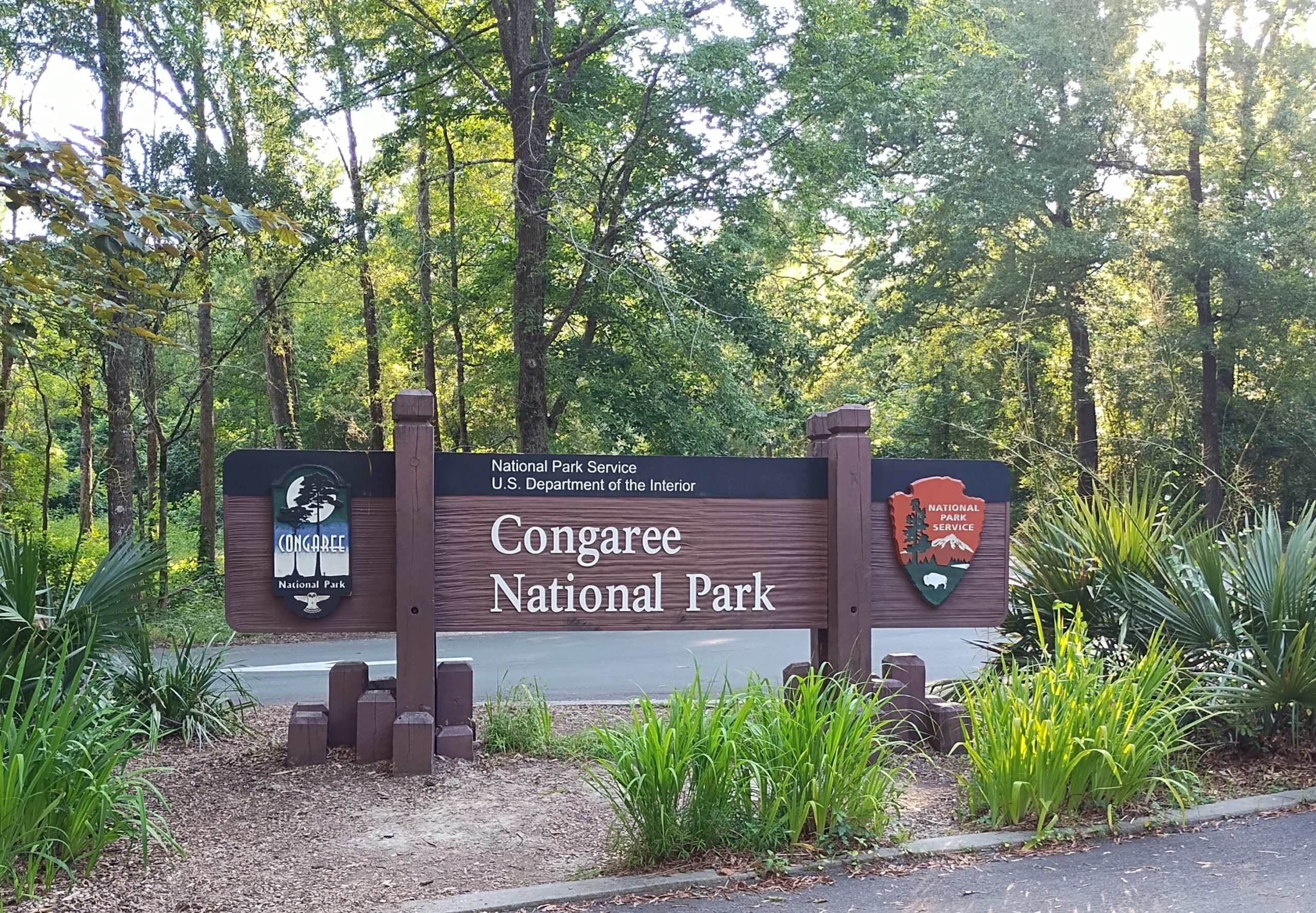
Congaree National Park

Yesterday rain came again to this rainy summer, and had the happy effect of turning the temps down outside today to wrap up July – pleasant 70s F. even at the noonday peak. Northern summers have much to recommend them.

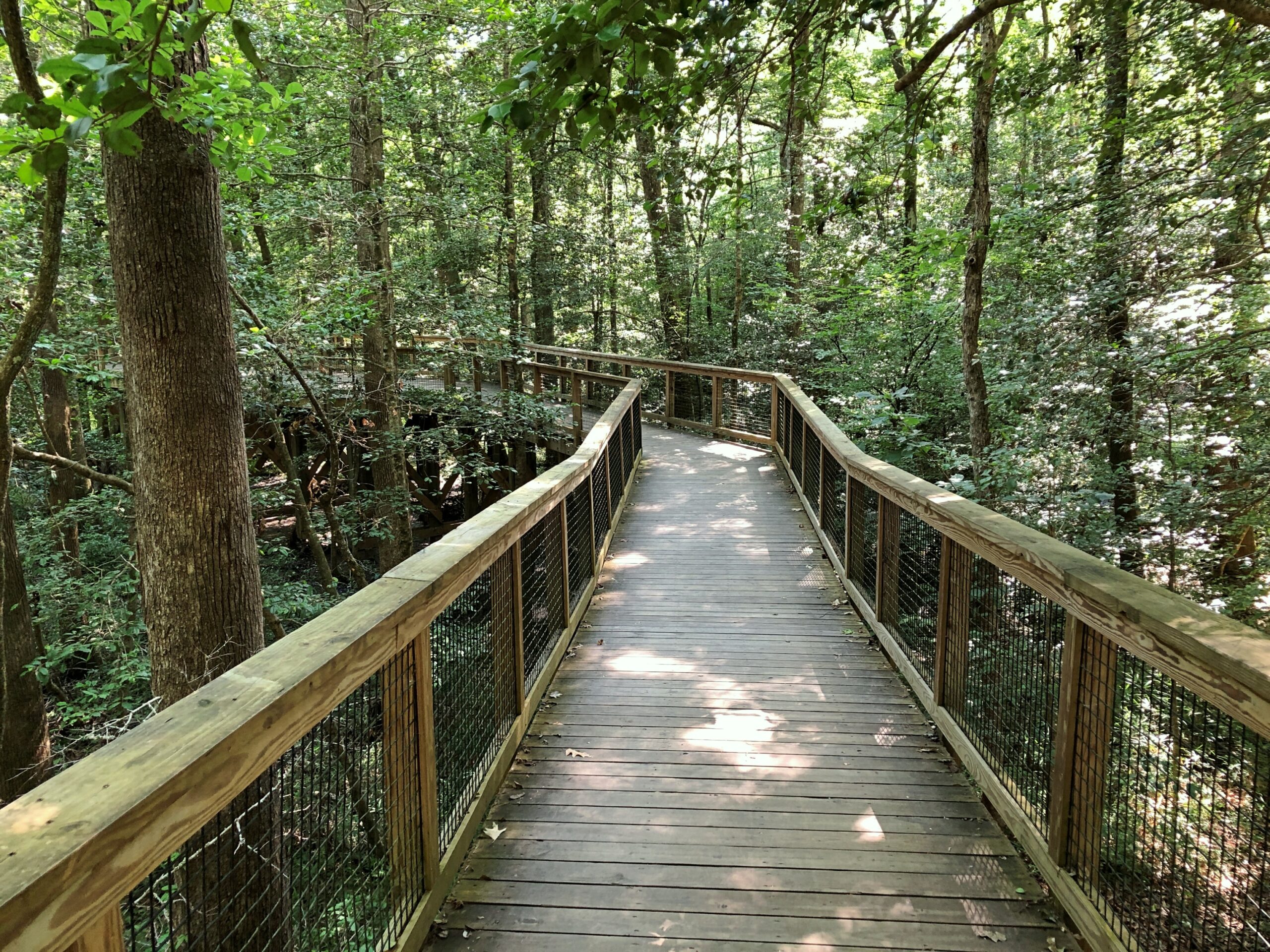
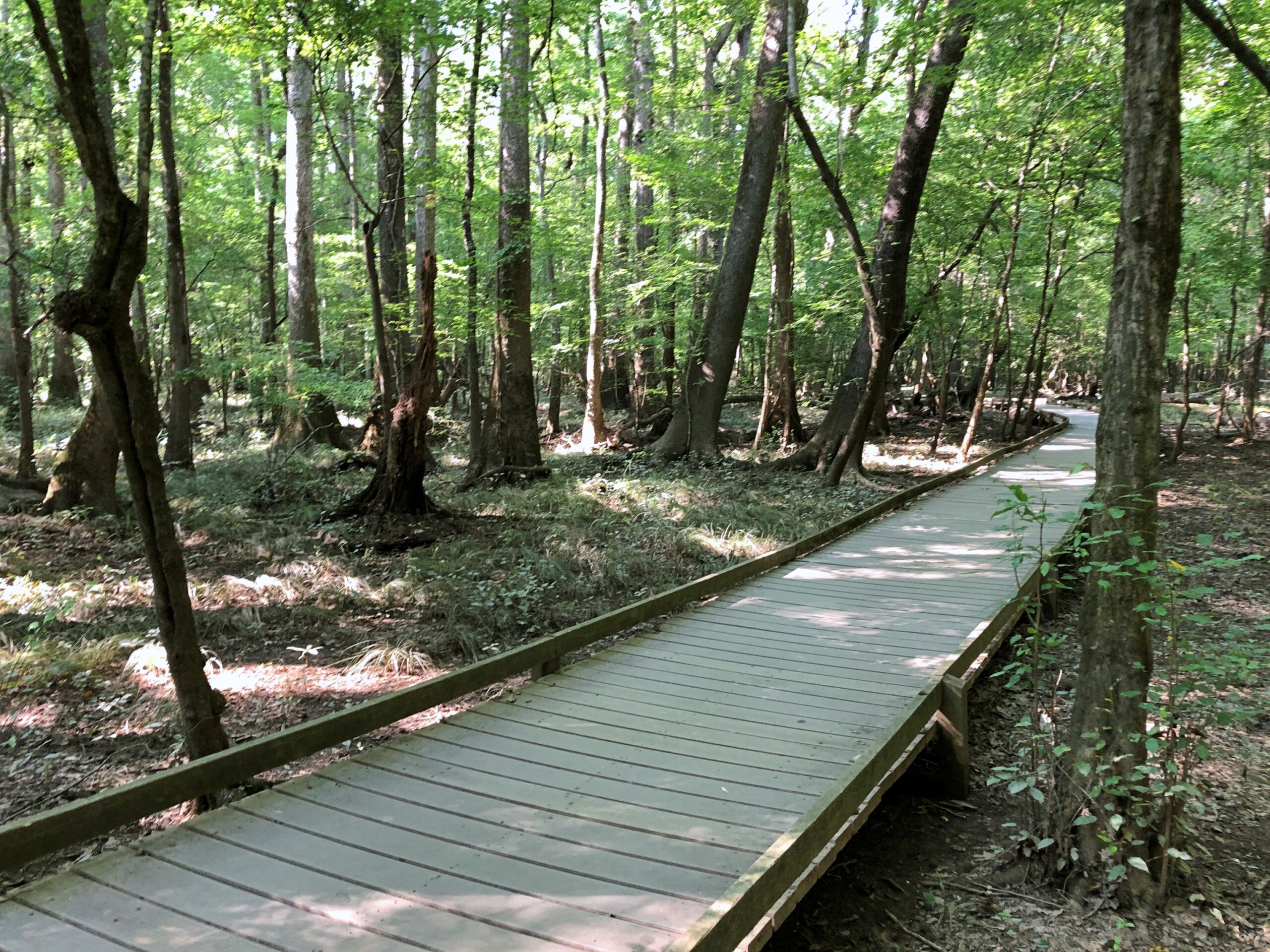
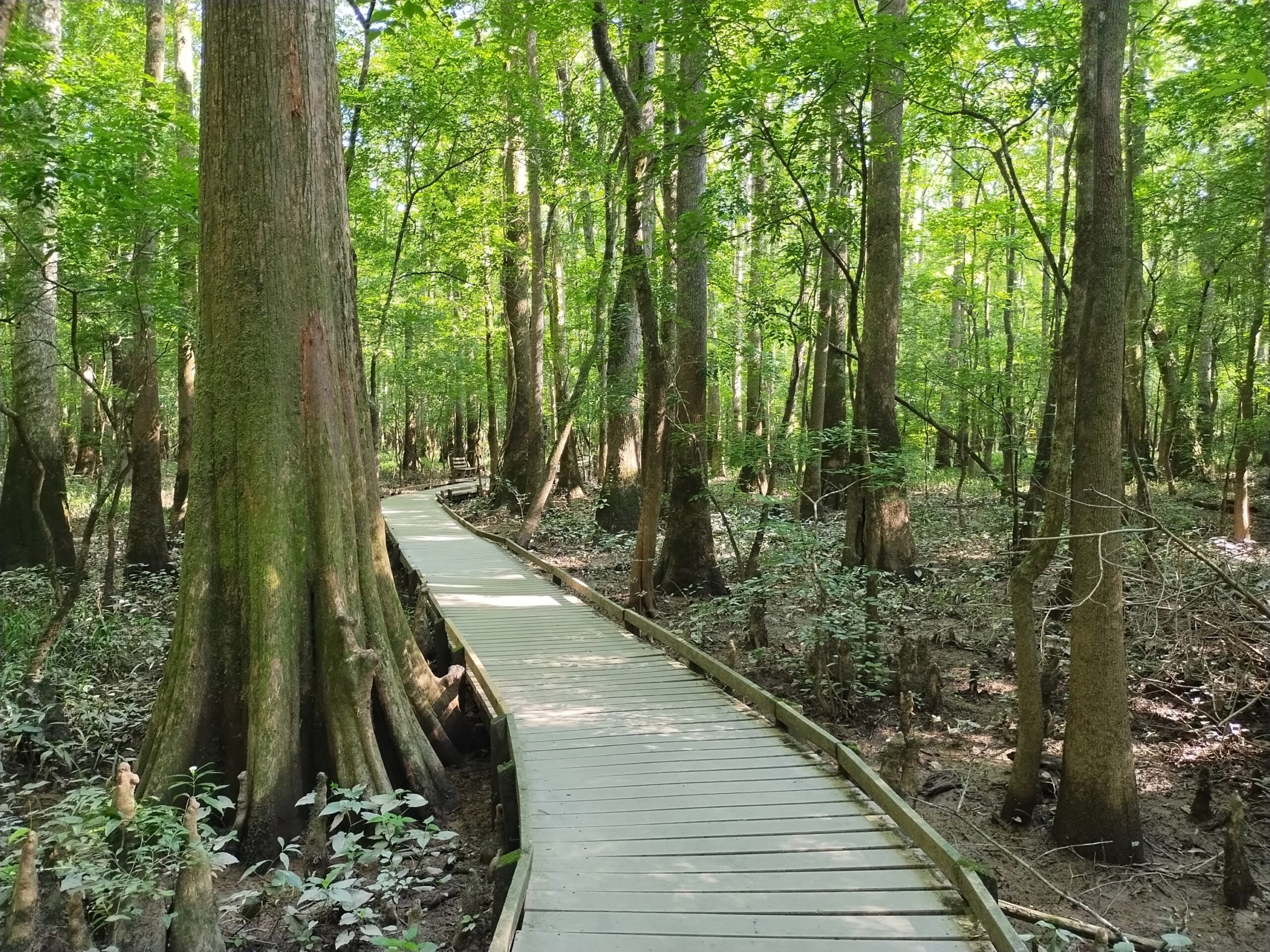
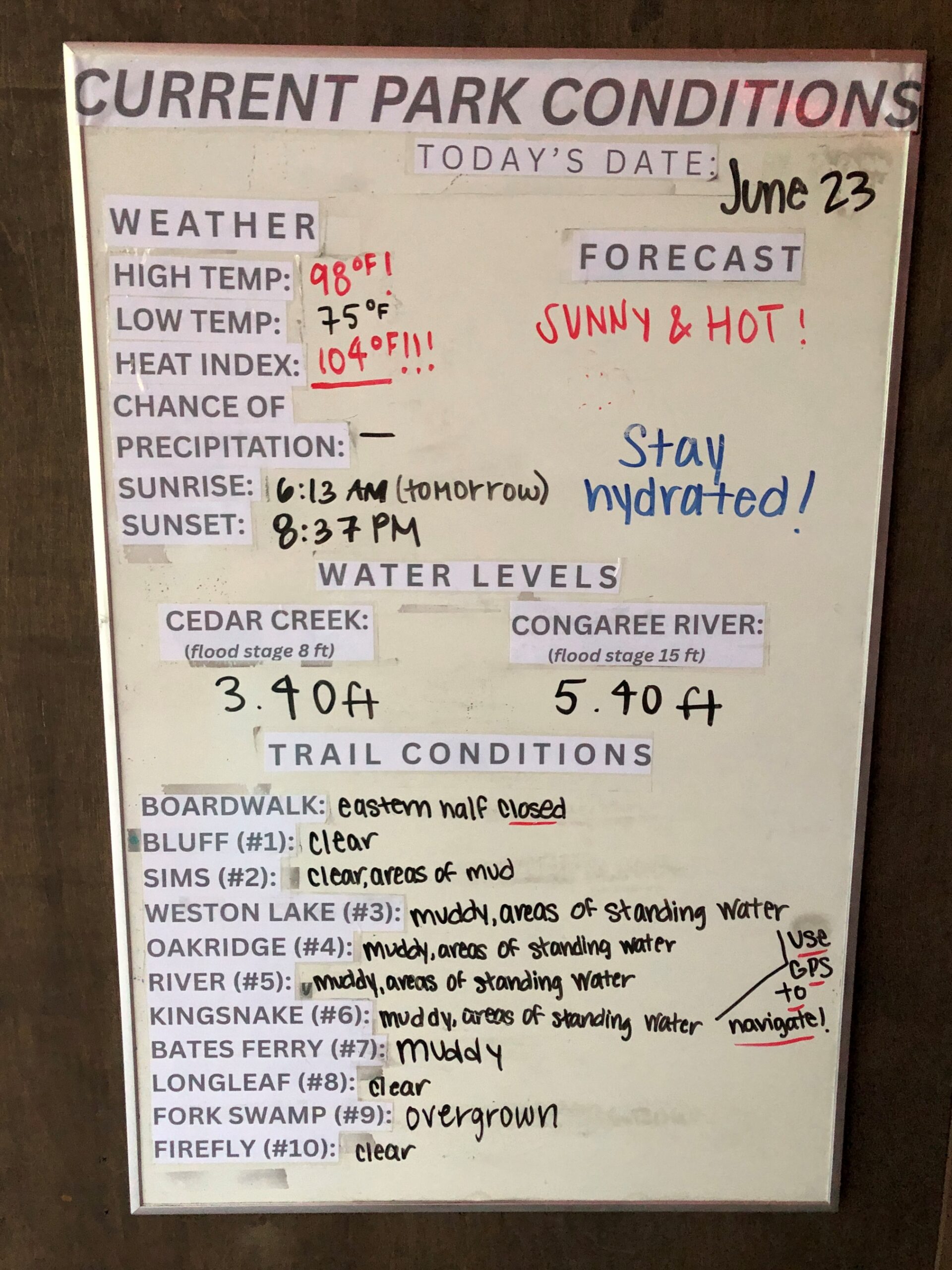
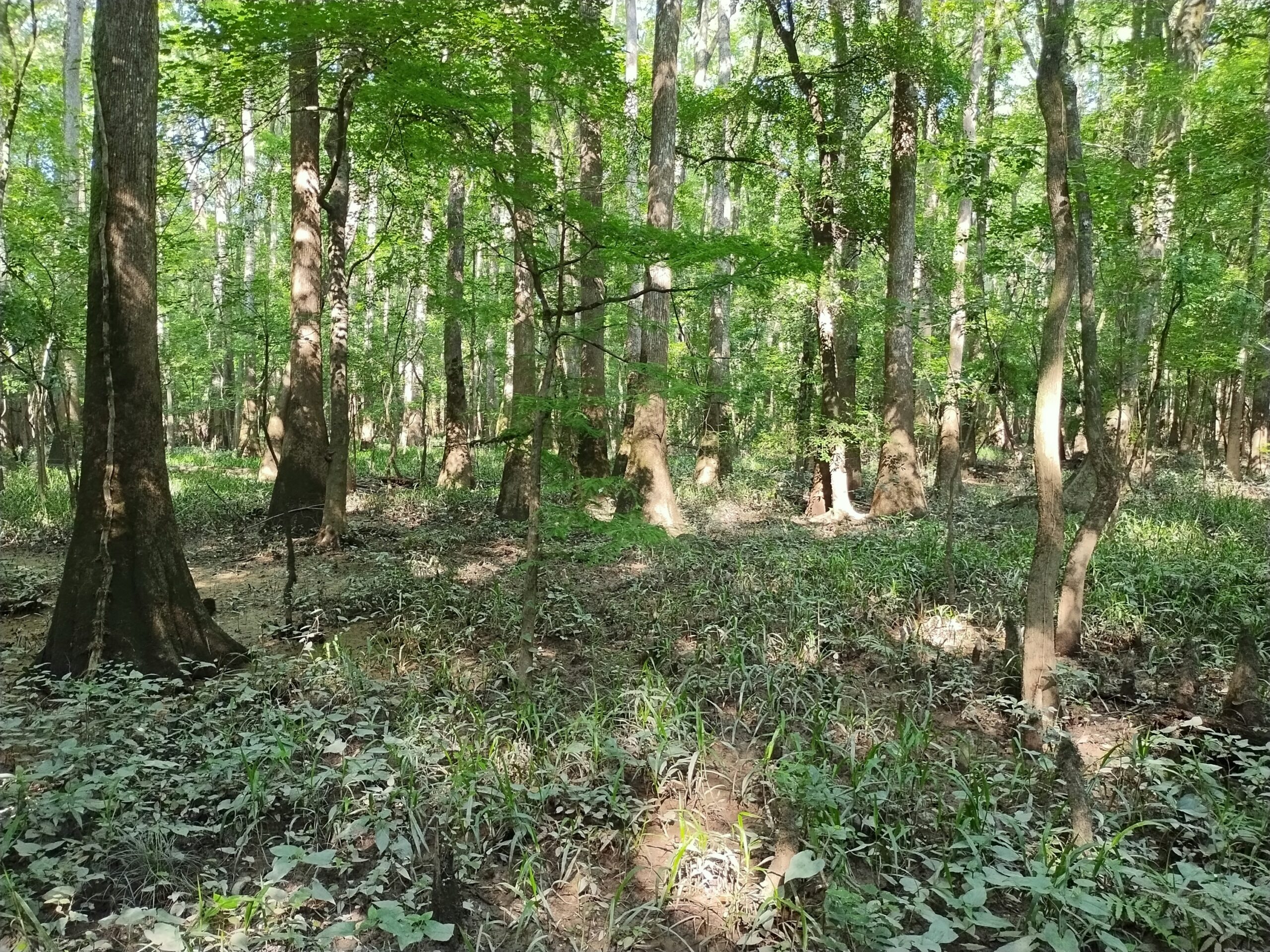
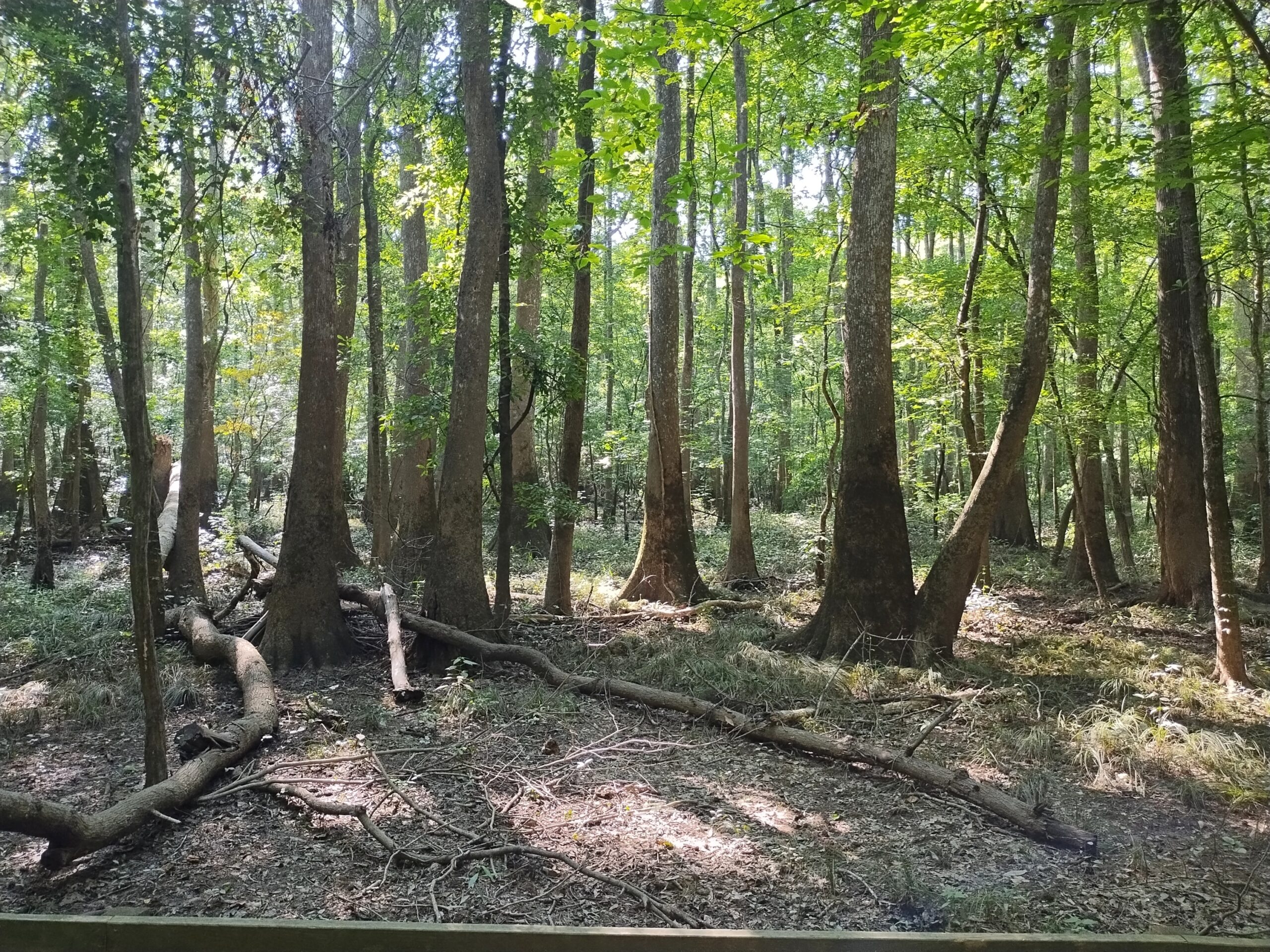
At a hotter time and place, I walked along a boardwalk through a patch of old-growth floodplain forest in the middle of South Carolina. Turns out, that’s a rare kind of landscape, but I didn’t know that at the time.

Congaree National Park

Somewhere on the way, I renamed Congaree National Park, my location at that moment, in my head. I imagined an act of Congress special to do so. The new name: Congaree National Park and Mosquito Preserve.

Congaree National Park

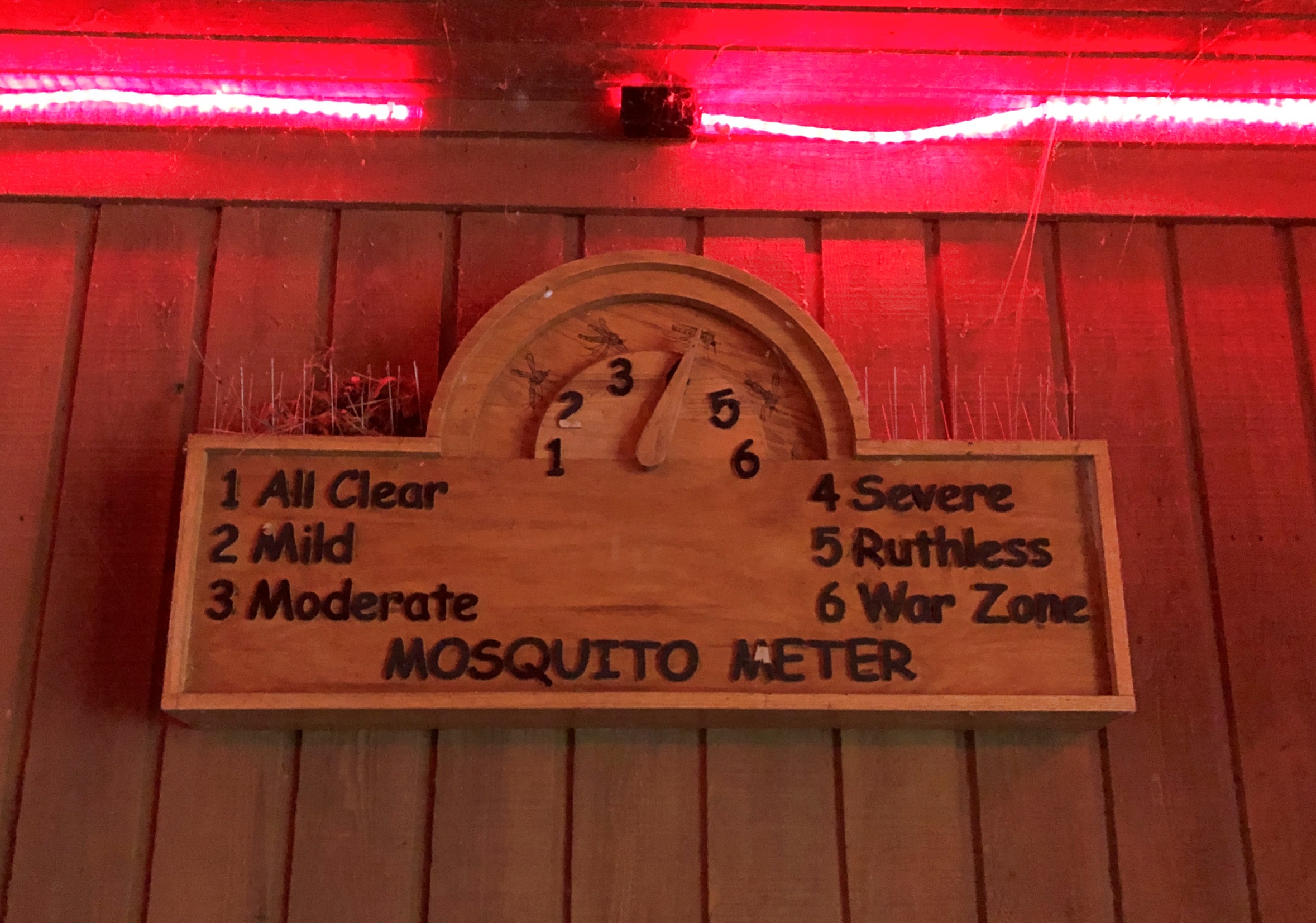
I can’t say I wasn’t warned. This information was on display at the park visitors center.

Congaree NP

I wouldn’t call Congaree a great unknown, but it is true that among the 63 U.S. national parks, it stood as the 51st-most visited in 2024, attracting 242,049 visitors. Considering that no admission is charged, I wonder how the NPS came up with such an exact number. In any case, that’s a remarkably skinny total compared with the millions who go annually to better-known parks, especially considering that the main park entrance is roughly 30 miles from a sizable city, namely Columbia, SC.

Anecdotal evidence points to the same conclusion: no one I’ve told about the park seems to have heard of it. Then again, I don’t know that I ever gave it much thought myself, except to note it a few times over the years on maps of South Carolina, a state I’d scarcely seen before June – among the Lower 48, the last one I visited.

Other national parks have majestic mountains or picturesque glaciers or striking deserts or epic coastlines or an important history of human activity. They have high-profile wildlife and ecosystems unique in the world. Congaree does count as a special place, preserving a tiny fraction of the floodplain forests that used to cover much of the Southeast, but that’s a little hard to appreciate on the ground, especially as the target of its high-profile wildlife, mosquitoes.

Of the former vast stands of Southeastern floodplain forests, the park, at 11,000 acres, represents much of the roughly 0.5 percent that survives, according to the NPS. Most such land lost its trees to build buildings, plank ships and create railroad ties. The land itself was drained for pastures, farms and settlements.

So Congaree NP is essentially a high-quality museum piece of a landscape, surviving the 19th and early 20th centuries due to inaccessibility. After much agitation on the part preservationists, the area became a national monument by act of Congress in 1976, with President Ford’s signature on the bill (and became a national park in 2003). Apparently that kind of story doesn’t fire the tourist imagination.

Congaree NP
Congaree NP

Also, while the boardwalk was an easy walk, most of the rest of the park sounds logistically hard on foot. “The Congaree is a wetland forest, and indeed it seems like water is everywhere,” notes American Forests. “There are very few places in the park where you can travel more than a half-mile in one direction without having to cross a pond, lake, creek, seasonal channel (locally called a gut), slough, wet flat, or muck swamp. It is an aquatic and terrestrial maze that constantly changes. About 10 times a year there really is water everywhere as the Congaree River rises to flood the entire area.”

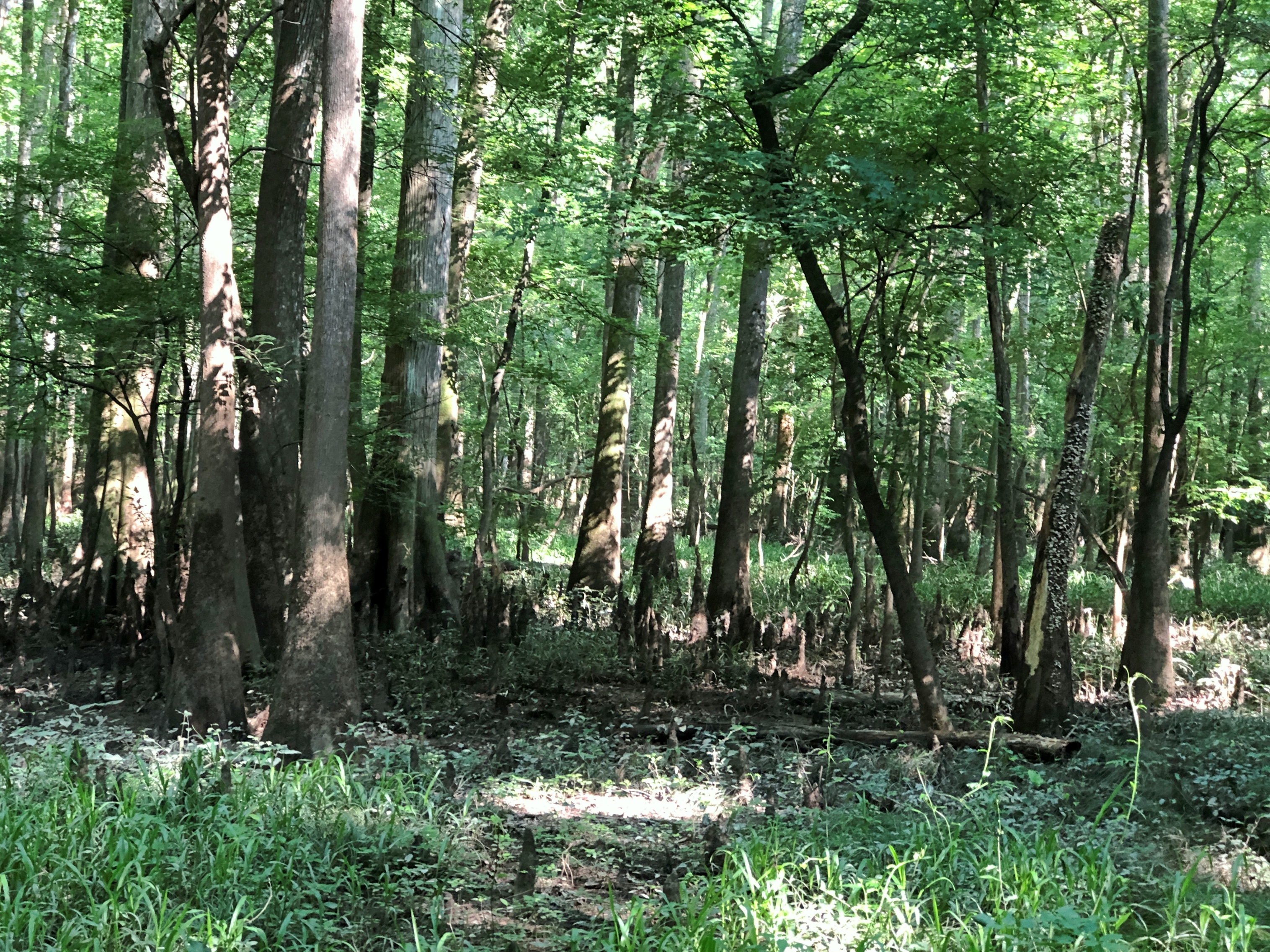
Still, the article lists a large number of tree species that call the park home, including some very tall examples – taller than anywhere else, in some cases.

Congaree NP
Congaree NP

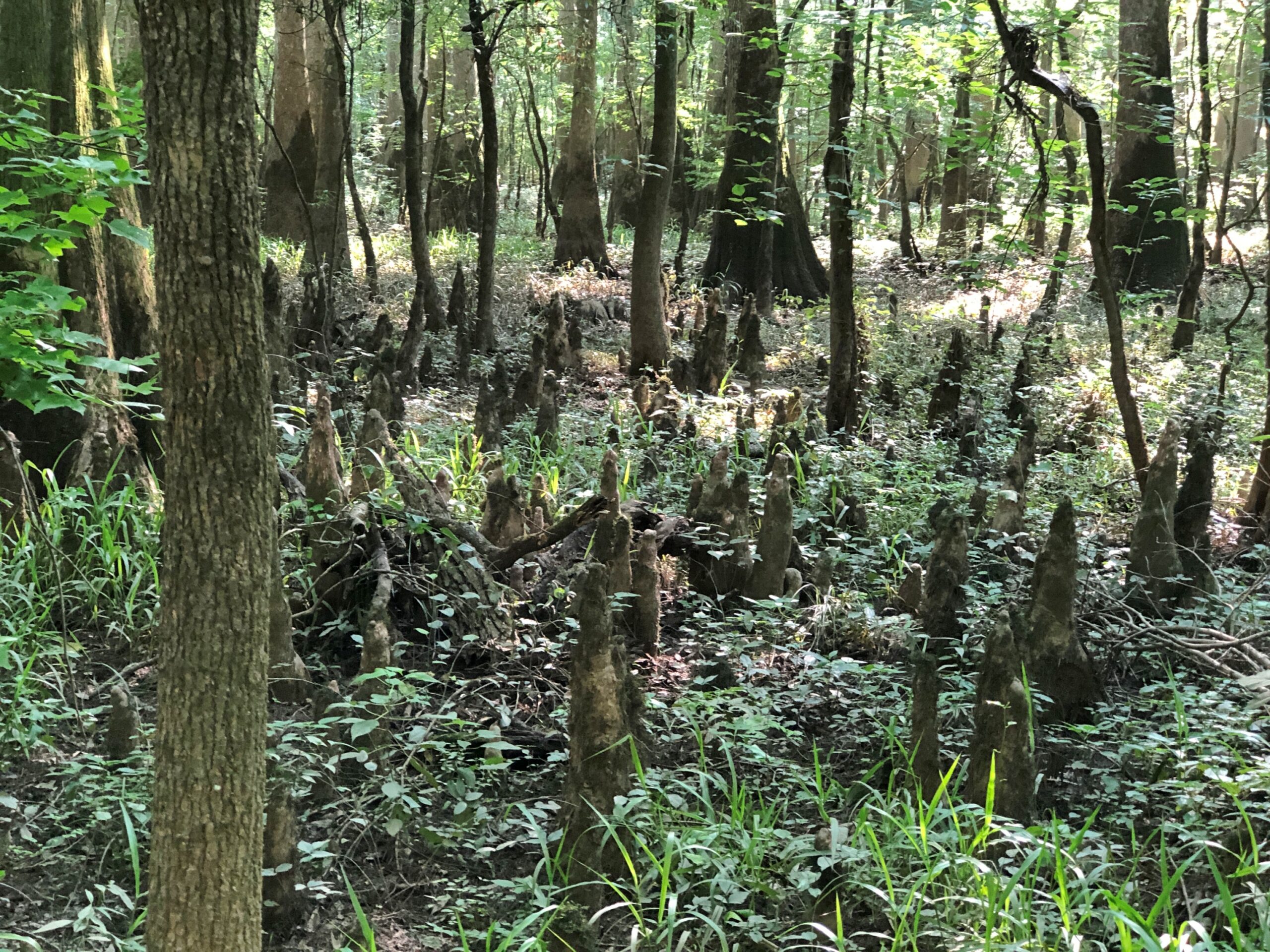
I’m no expert on trees, but I do know cypress when I see them, with their exaltation of “knees,” those knob-like growths.

***

Not long ago, I found out that Dr. Jamison died late last year. That would be Theodore Roosevelt (Ted) Jamison Jr., born 1933, so he made it past 90. I added this message on an obituary site:

I’m sorry to learn about the passing of Dr. Jamison, but glad that he clearly lived a long, interesting life, loved by family and friends. In 1978, he taught a summer school class for a few weeks at Alamo Heights High School in San Antonio. I was 17 that summer and in that class. It might have been a history or political science class – I don’t remember – but in fact, the class was the Wisdom of Ted Jamison. That wisdom was considerable, as he offered his thoughts and observations about the nation and the world, including prescient warnings about attacks on our freedoms. He also shared snippets about his life up to that point. I didn’t know the half of it, but even then I realized he was a remarkable teacher, an assessment I haven’t revised in the near half-century since then. Reading his obituary, I also see what a remarkable human being he was. RIP, Dr. Jamison.

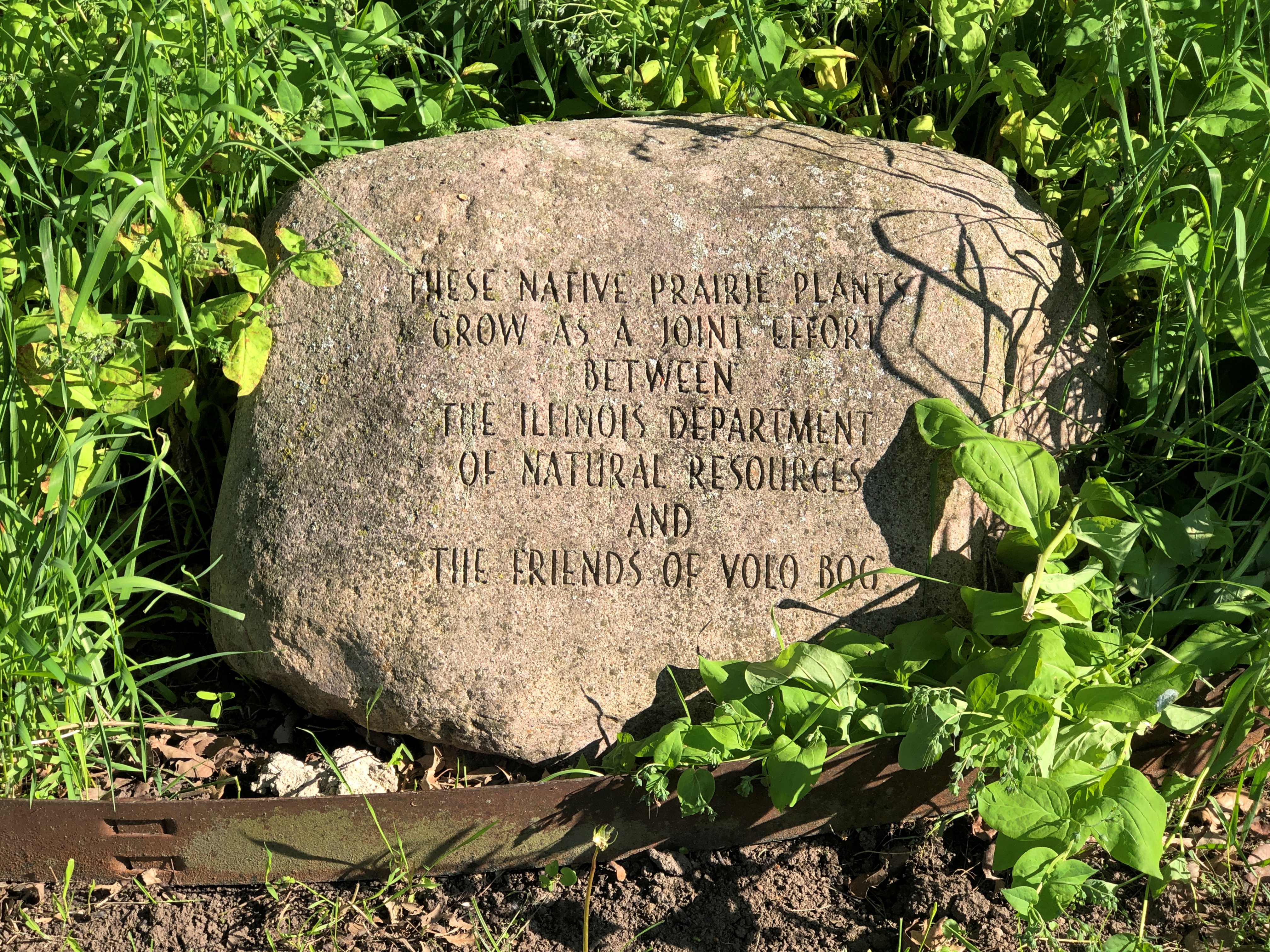
Volo Bog State Natural Area

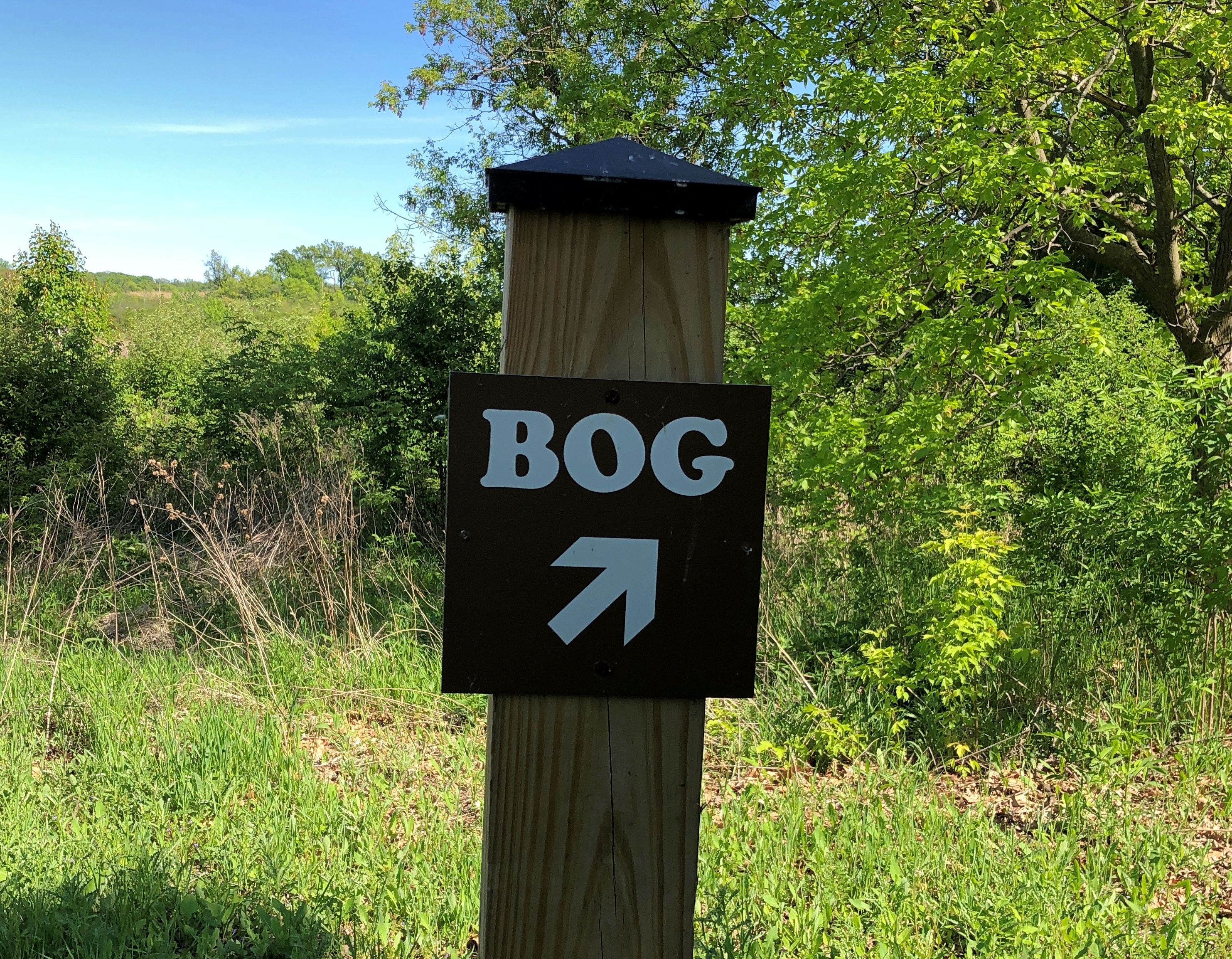
Not a sign that you see very often.Volo Bog

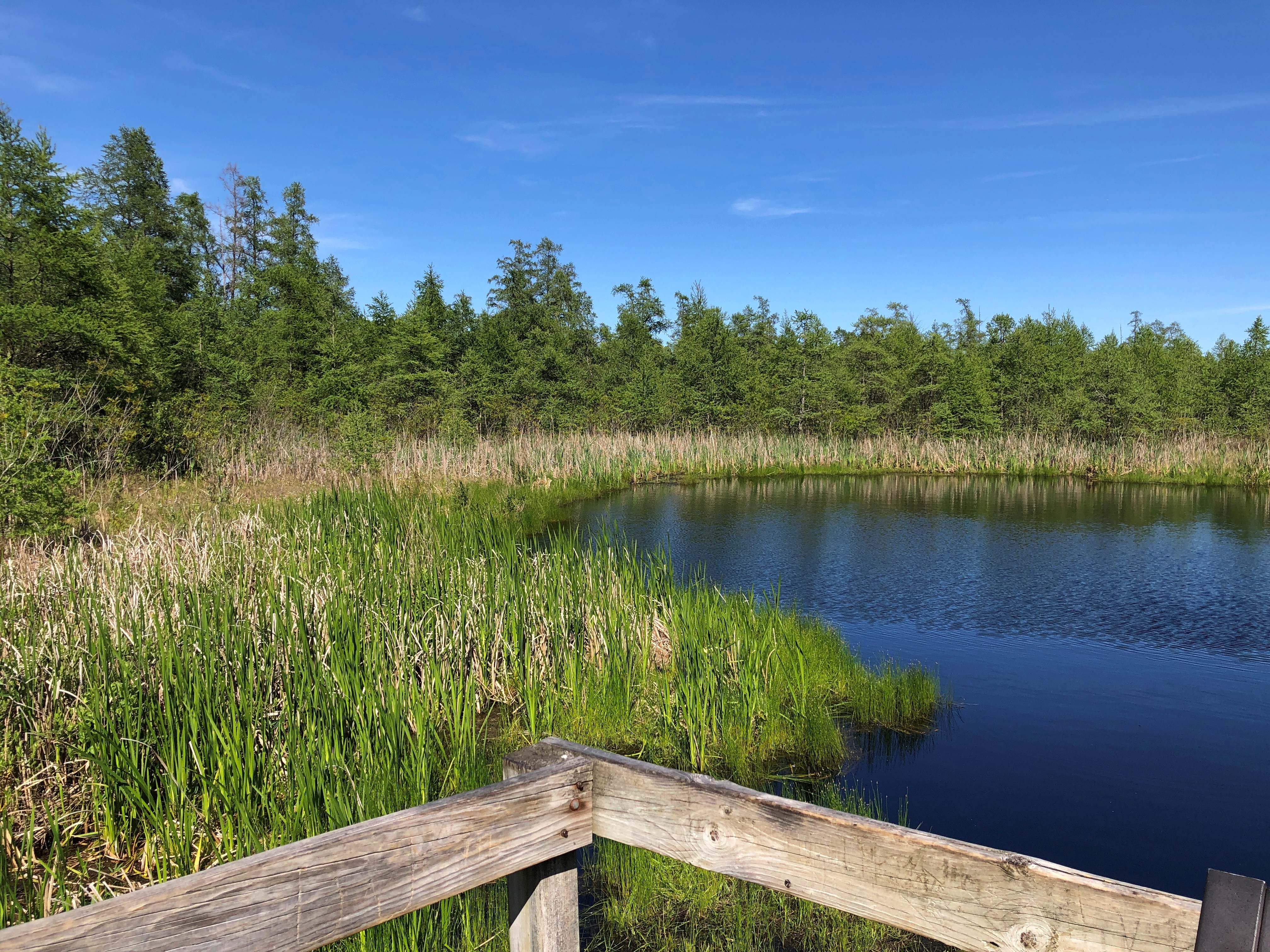
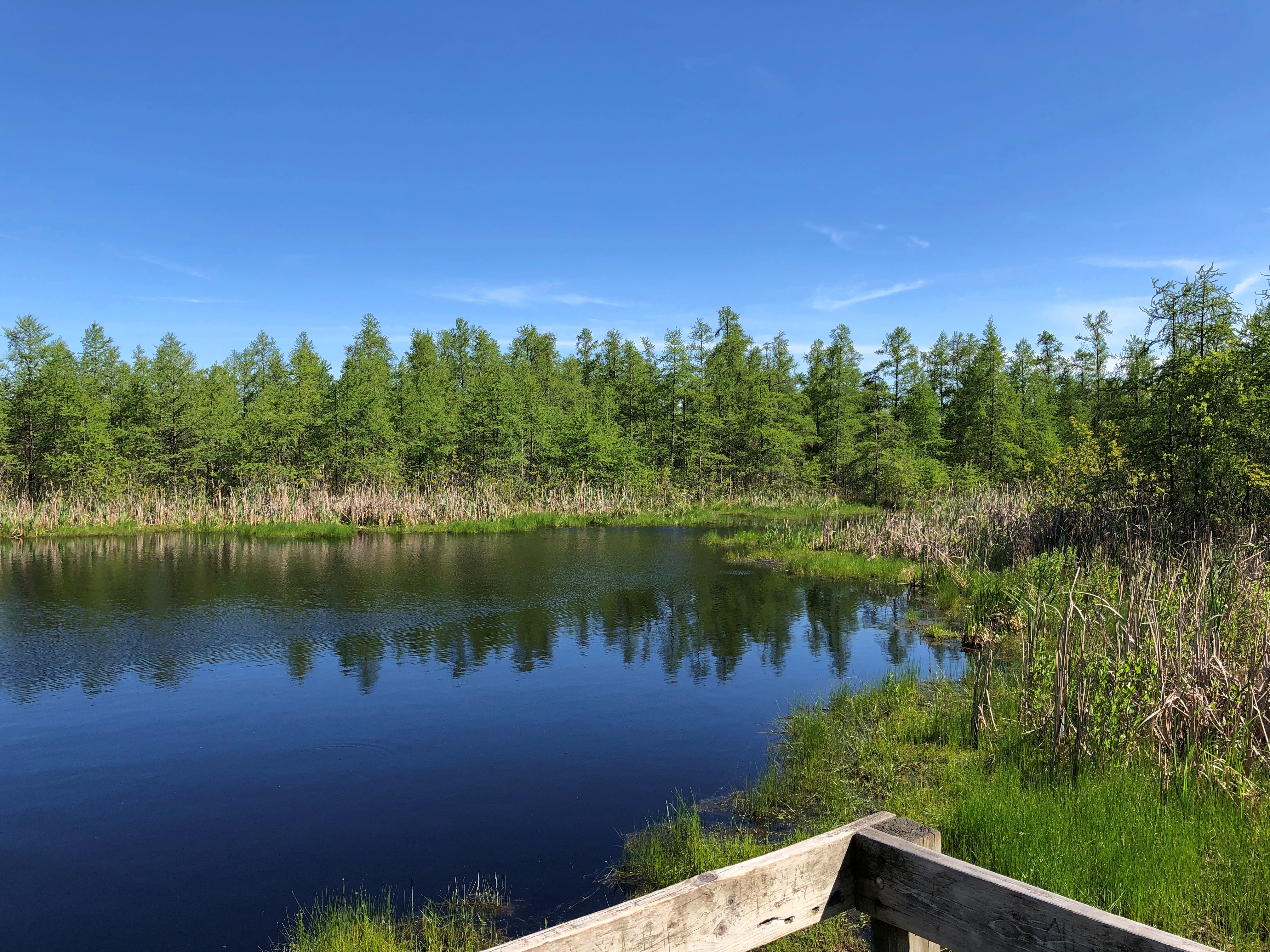
Unless you visit Volo Bog State Natural Area often. It is “the only open-water quaking bog in Illinois,” according to the Illinois DNR, and I’m inclined to believe it, though sad to say my grasp of the scientific difference between a bog, marsh and a swamp is weak. Still, as a pleasant spring day, we figured Sunday was a good time to re-visit the bog, up northwest, about a 45-minute drive.Volo Bog

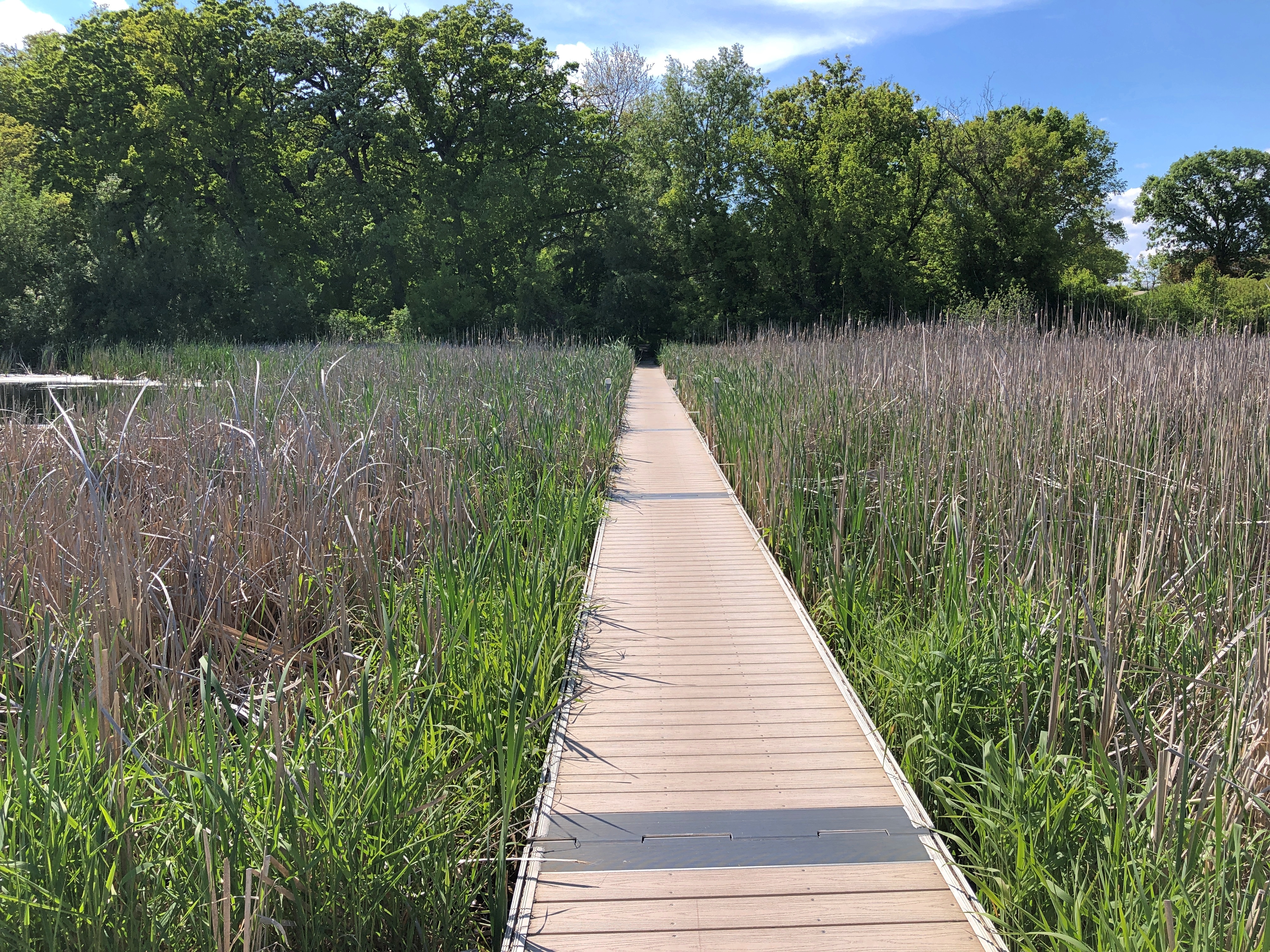
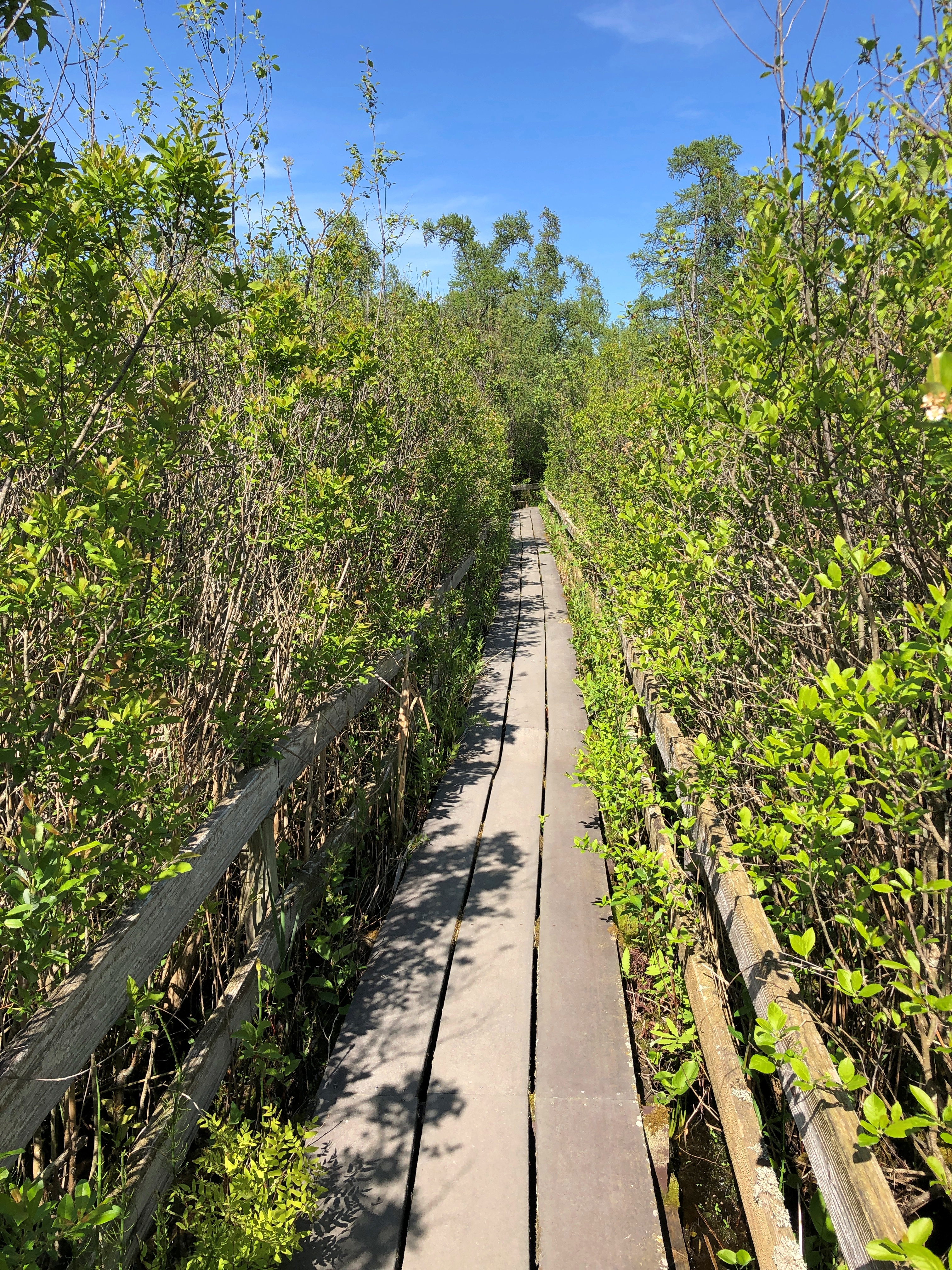
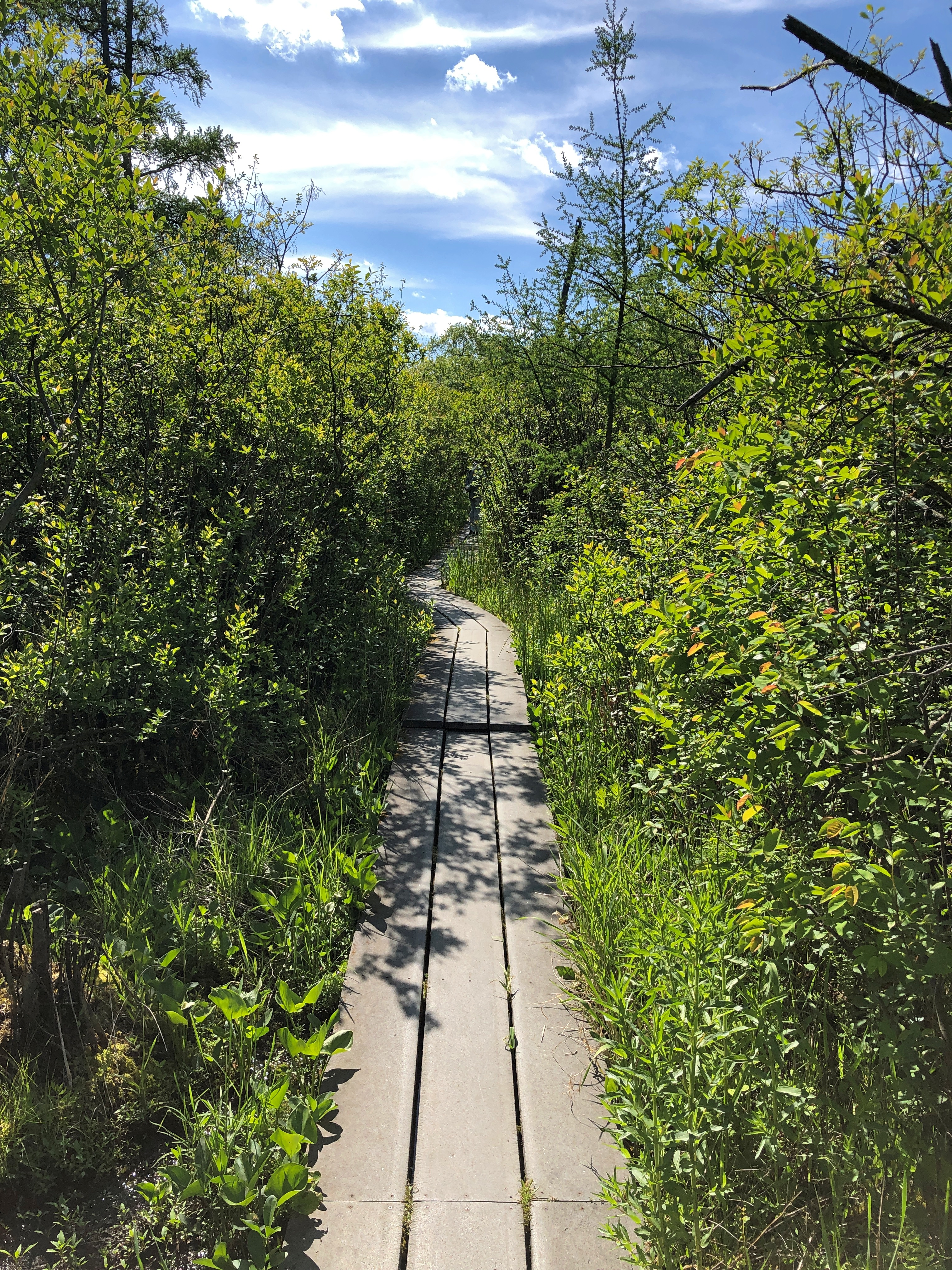
It had been a while. But I can say that the trail still wobbles a bit, which still takes a few minutes’ getting used to.Volo Bog Volo Bog Volo Bog

” ‘It’s moving,’ I heard either Lilly or Rachel say ahead of me, since they were first to reach the trail, which is a boardwalk over the bog,” I wrote in May 2010. “The boardwalk’s wobble is a little unnerving at first, but before long you get used to it. For anyone over about three years old, anyone who is sober anyway, the danger of pitching into the bog is pretty low.”

It’s moist down there. I’d expect no less of a bog. I know that much, anyway.Volo Bog Volo Bog Volo Bog

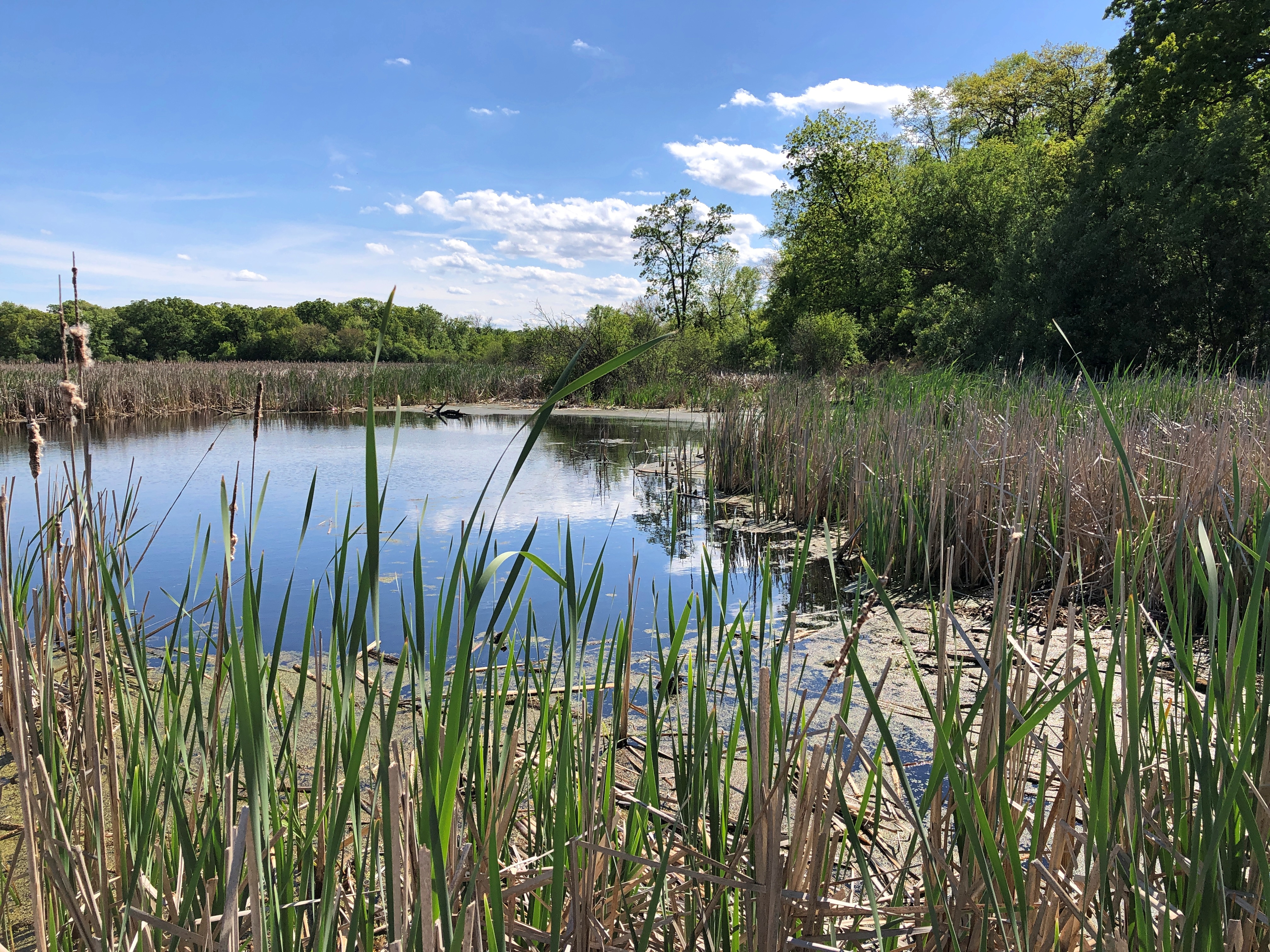
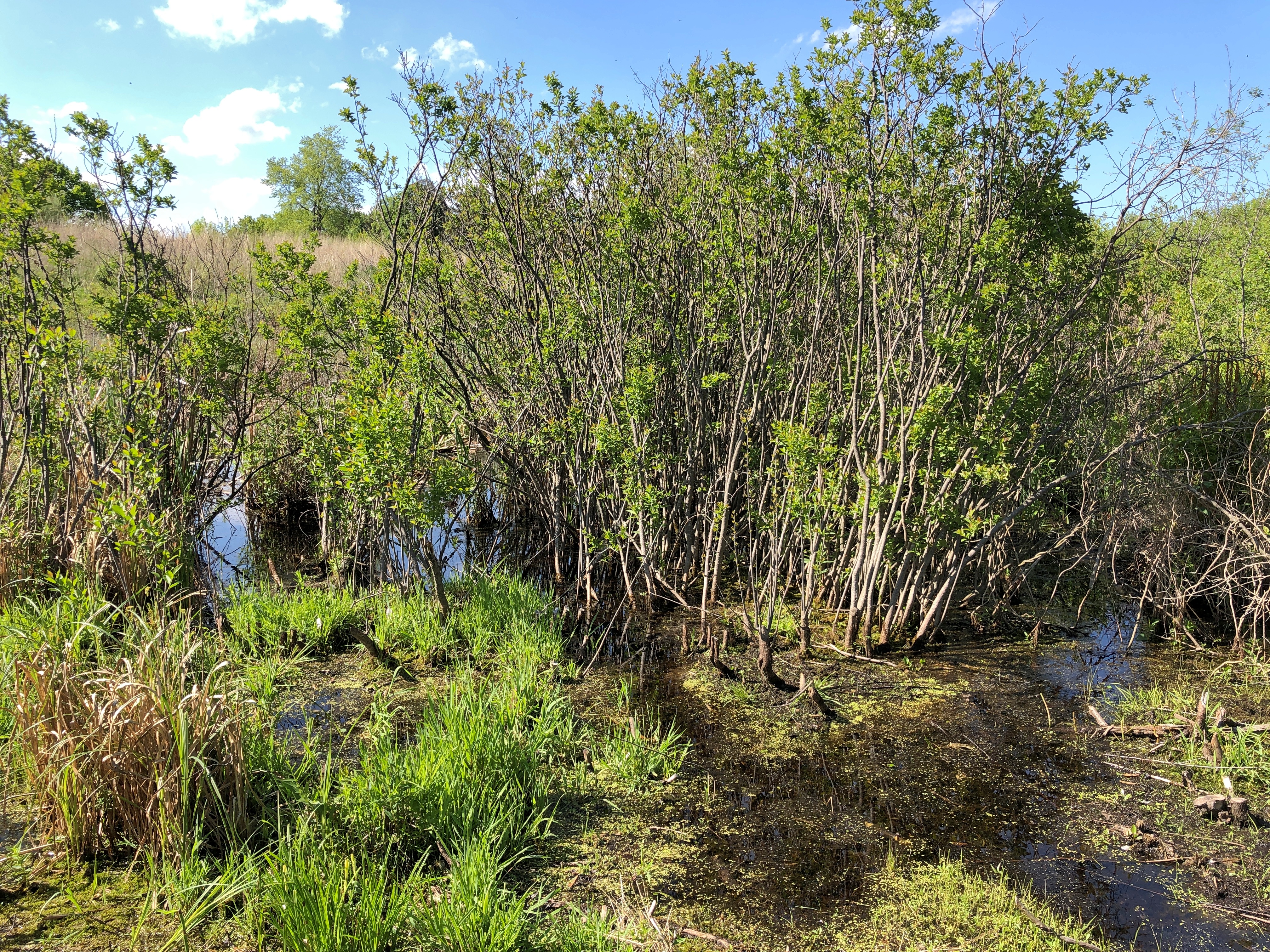
Formed in an ancient glacial kettle hole lake, Volo Bog features a floating mat of sphagnum moss, cattails and sedges surrounding the open pool of water in the center of the bog,” the DNR says. “Further from the open water, the mat thickens enough to even support floating trees!”

The open pool. exuberant  exuberant

The public land at Volo Bog includes more than just the bog. A path loops around the property in parts that are a little less sloshy underfoot.Volo Bog State Natural Area

It takes a while, but when the full flush of spring comes to the North, it’s exuberant.Volo Bog State Natural Area

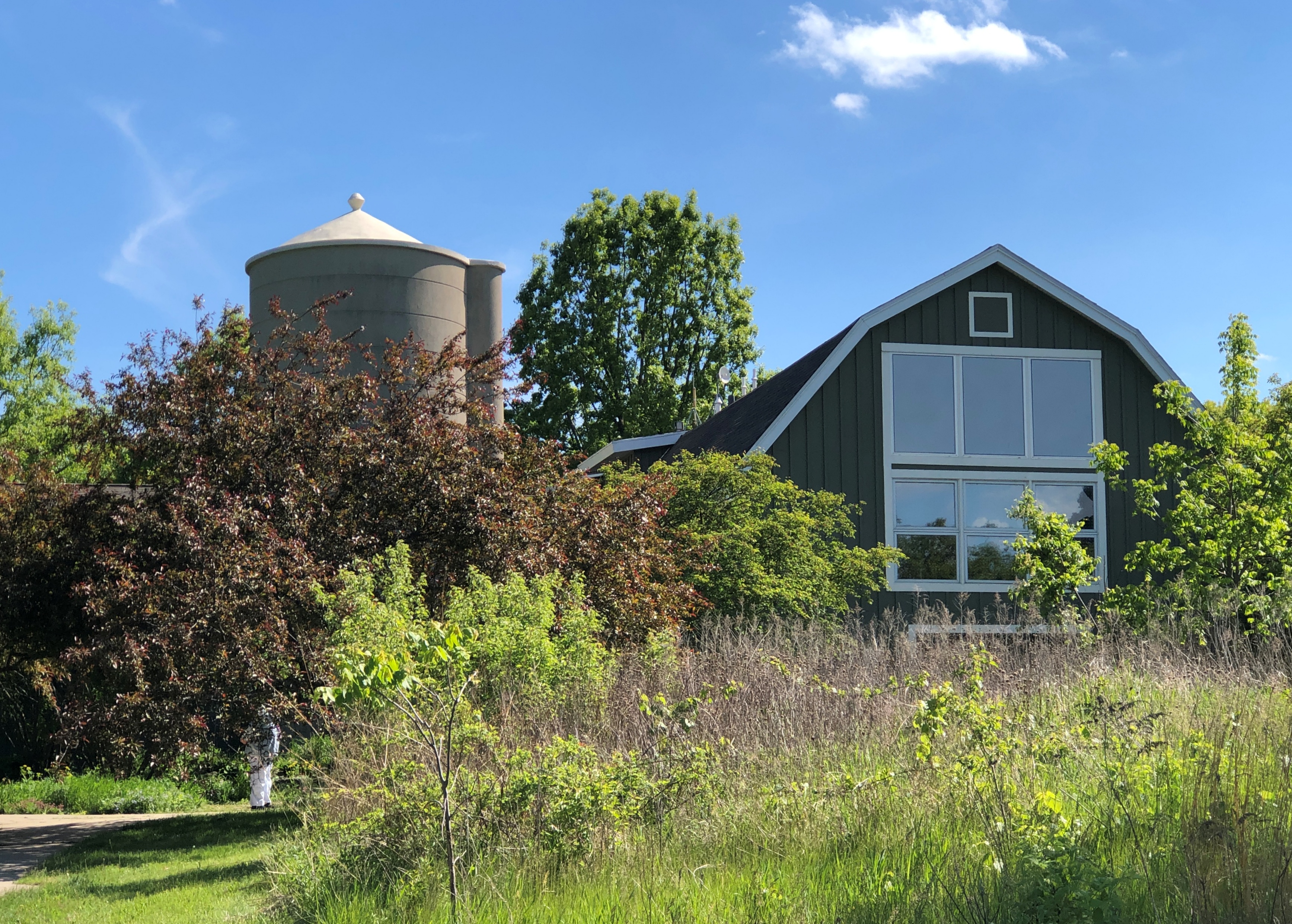
A modest but elegant building, a barn homage, houses the visitor center. Closed.Volo Bog State Natural Area Volo Bog State Natural Area

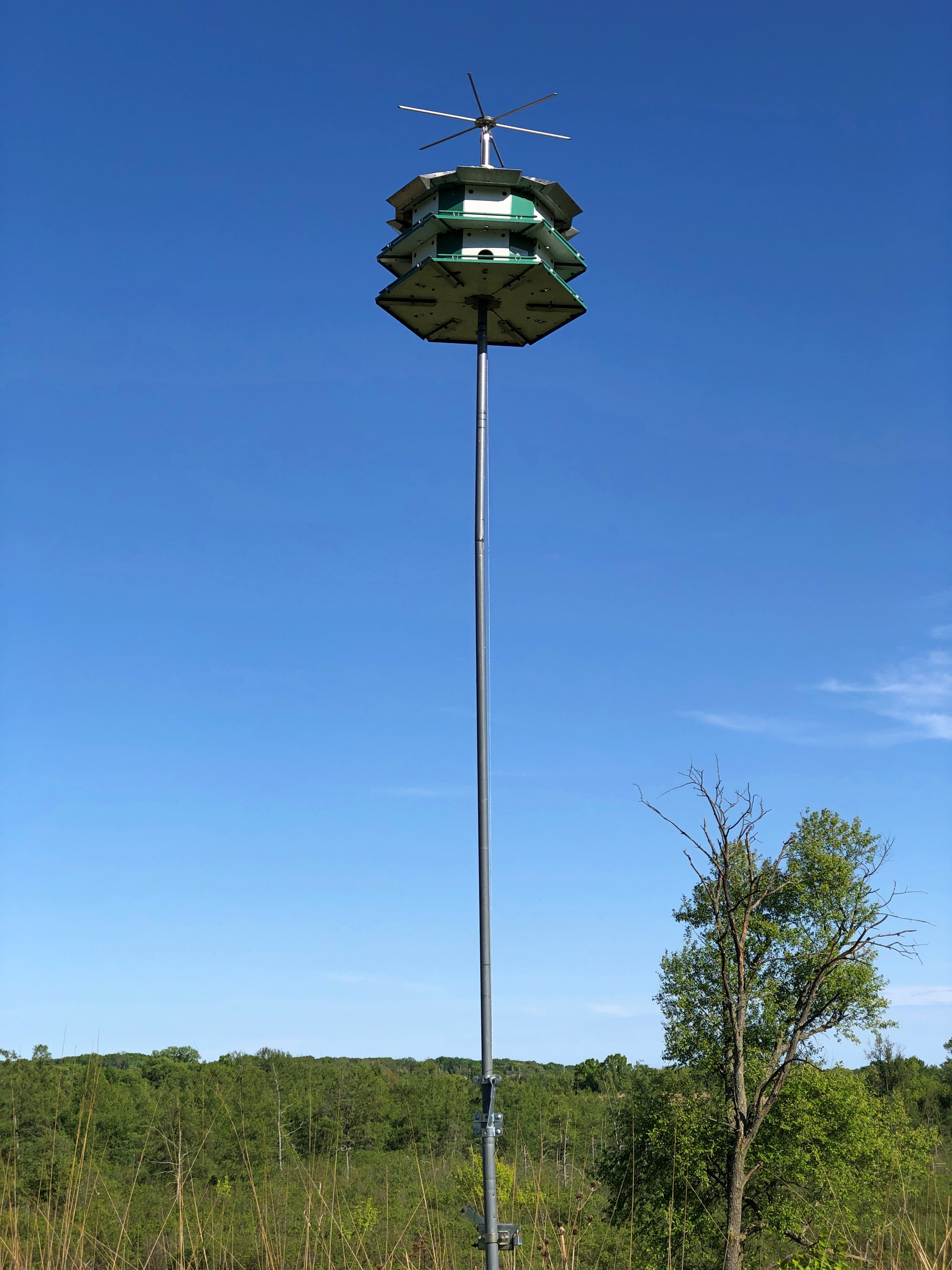
Bird apartments. Or maybe bats.Volo Bog State Natural Area

Tip of the hat (if I had a hat) to the Nature Conservancy, whose actions in the late ’50s preserved the bog. The organization has done the same for 119 million acres of land over six decades, E&E News reports, citing the organization itself.

Graceland Cemetery: The Color

On Sunday Yuriko was at her occasional cake class creating some figgy pudding. That’s what I’m calling it, since fig is the star ingredient, along with cinnamon and nutmeg and other spices. I’m also calling it oishi, Japanese for delicious, a word we use a fair amount.

There is no Spam in the recipe, however. Just as well.

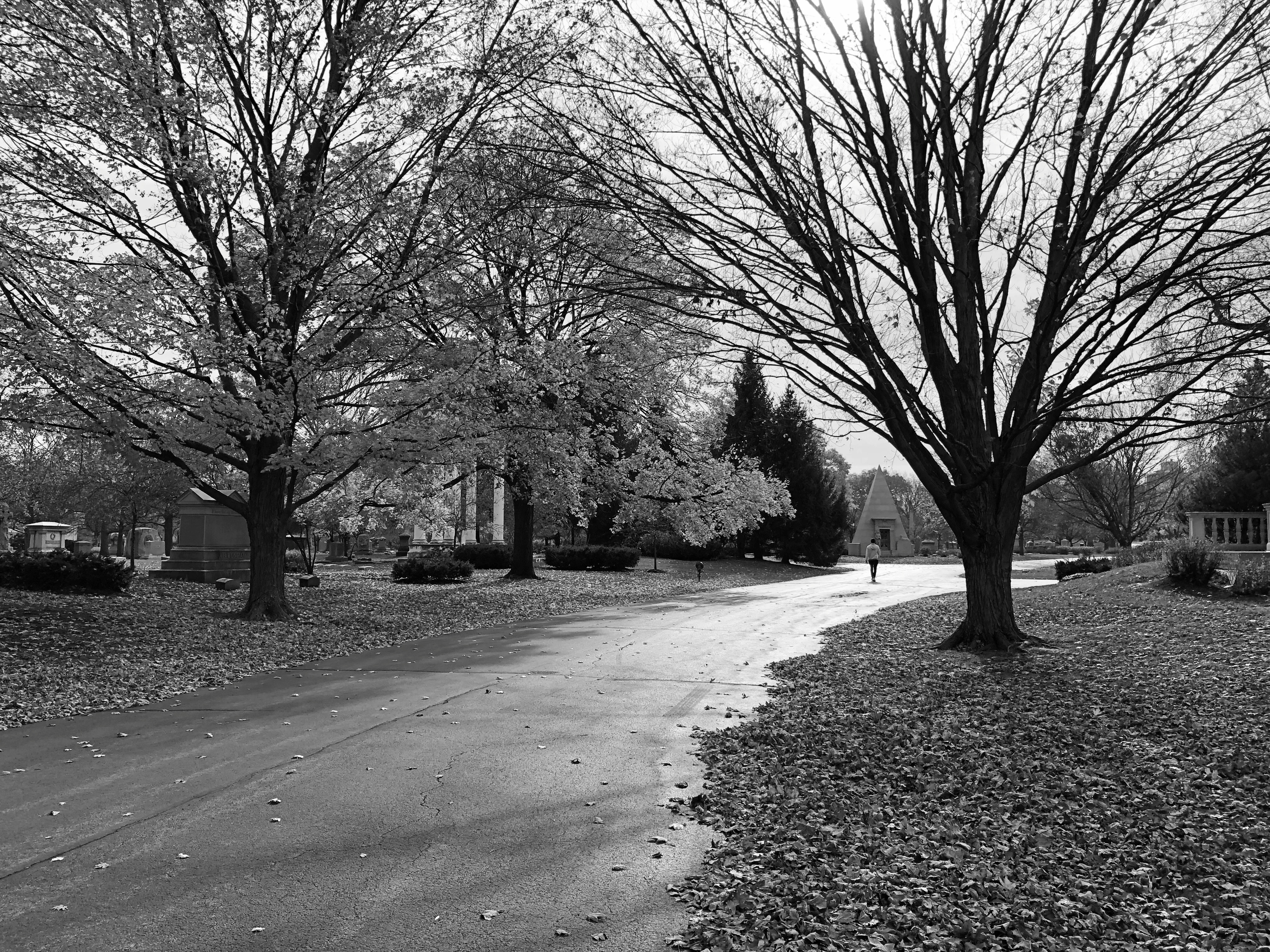
Class is in the city, and I am chauffeur on such days, driving to the Humboldt Park neighborhood. The benefit for me: I get to spend a few hours in Chicago. This time I used the time to visit Graceland Cemetery on the North Side, accessed by bus and then the CTA Red Line.Graceland Cemetery, Chicago

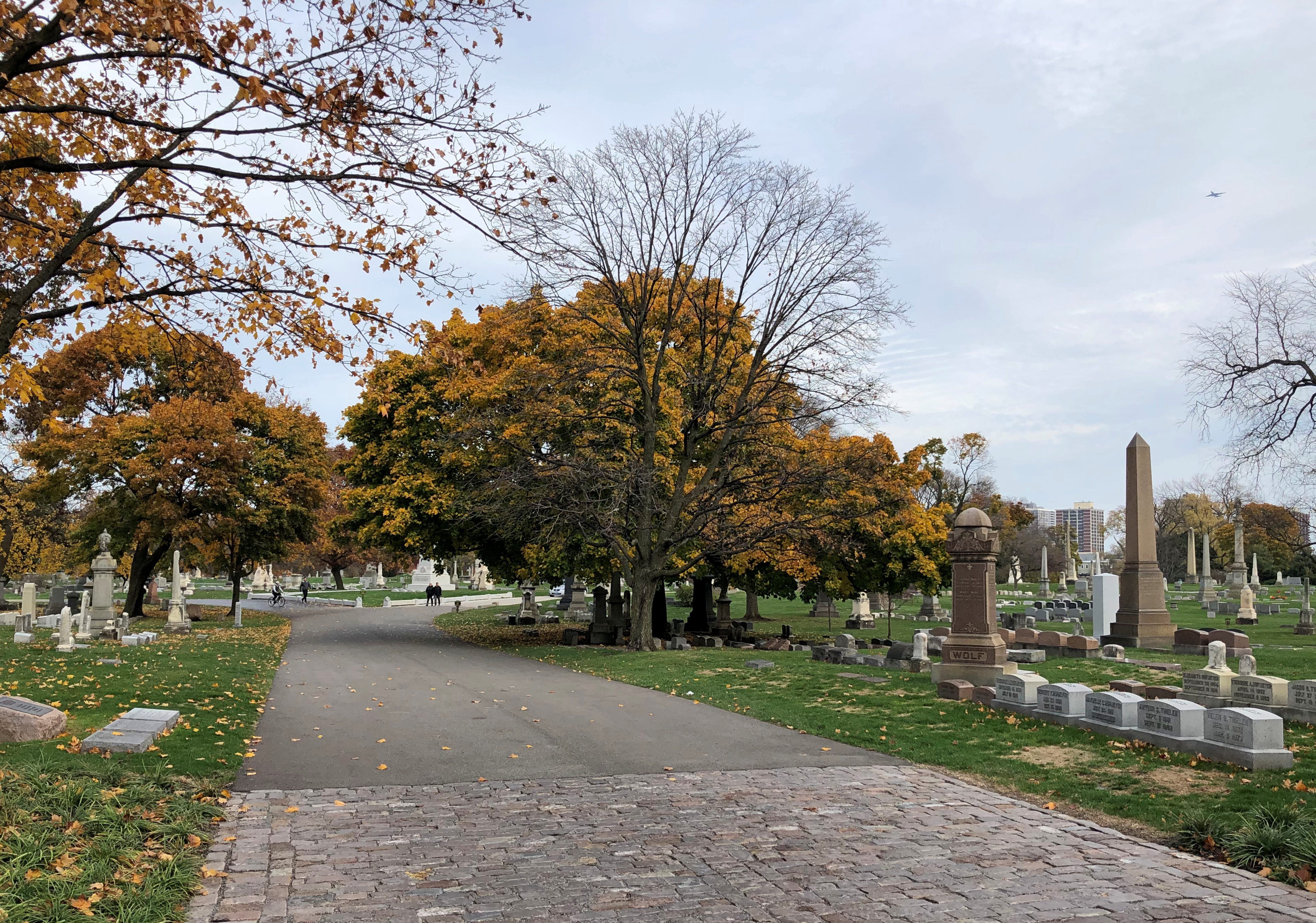
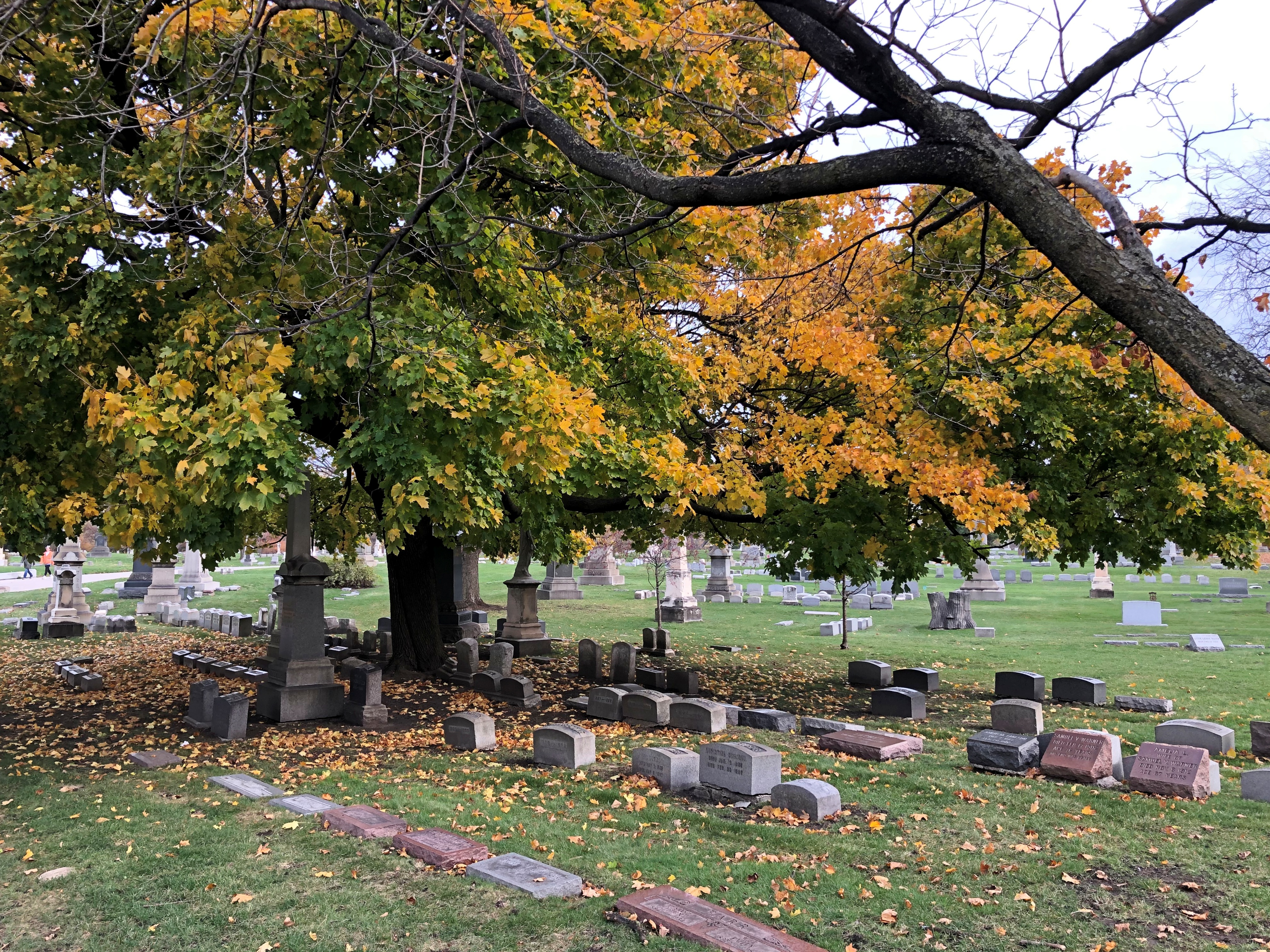
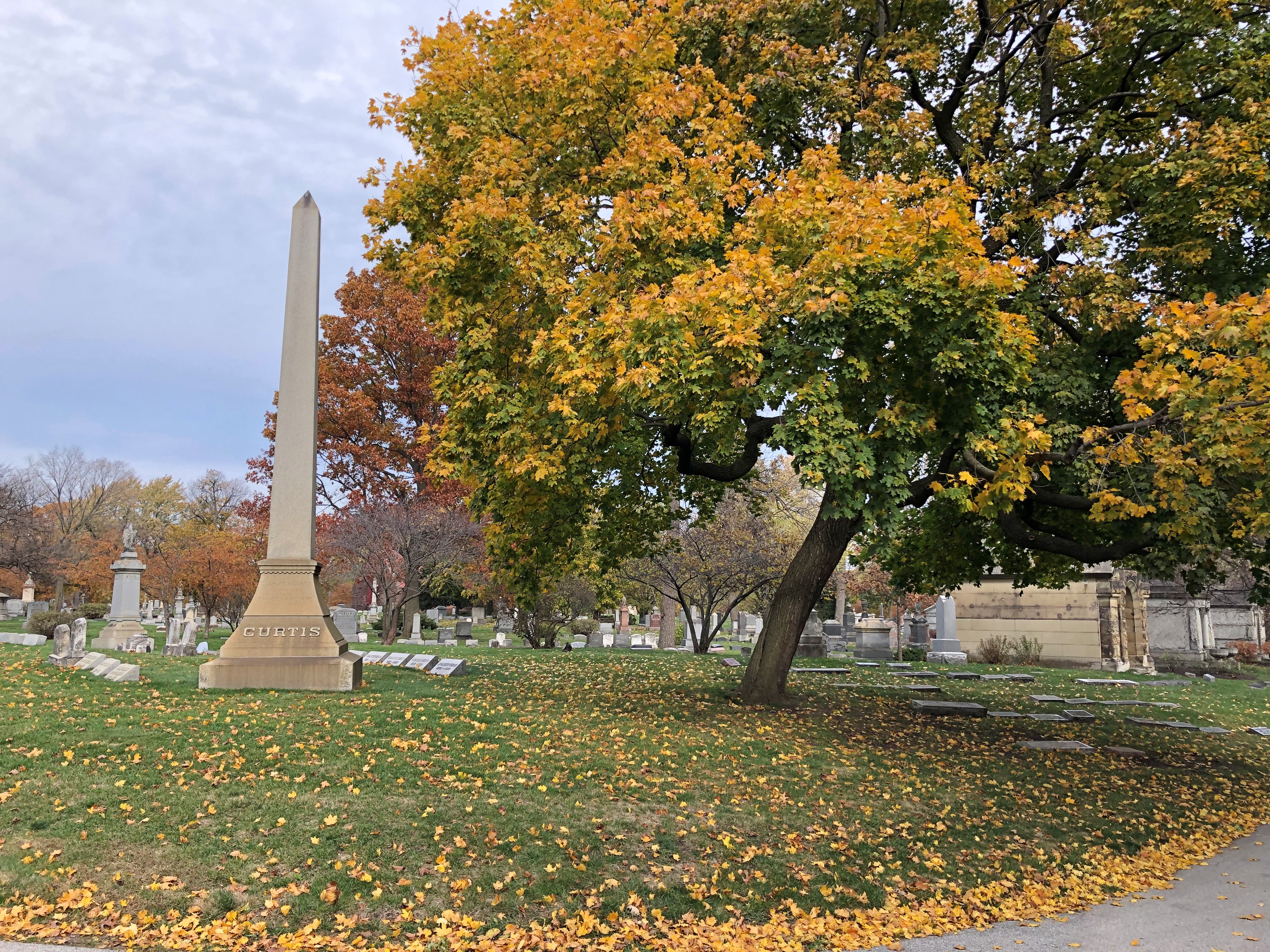
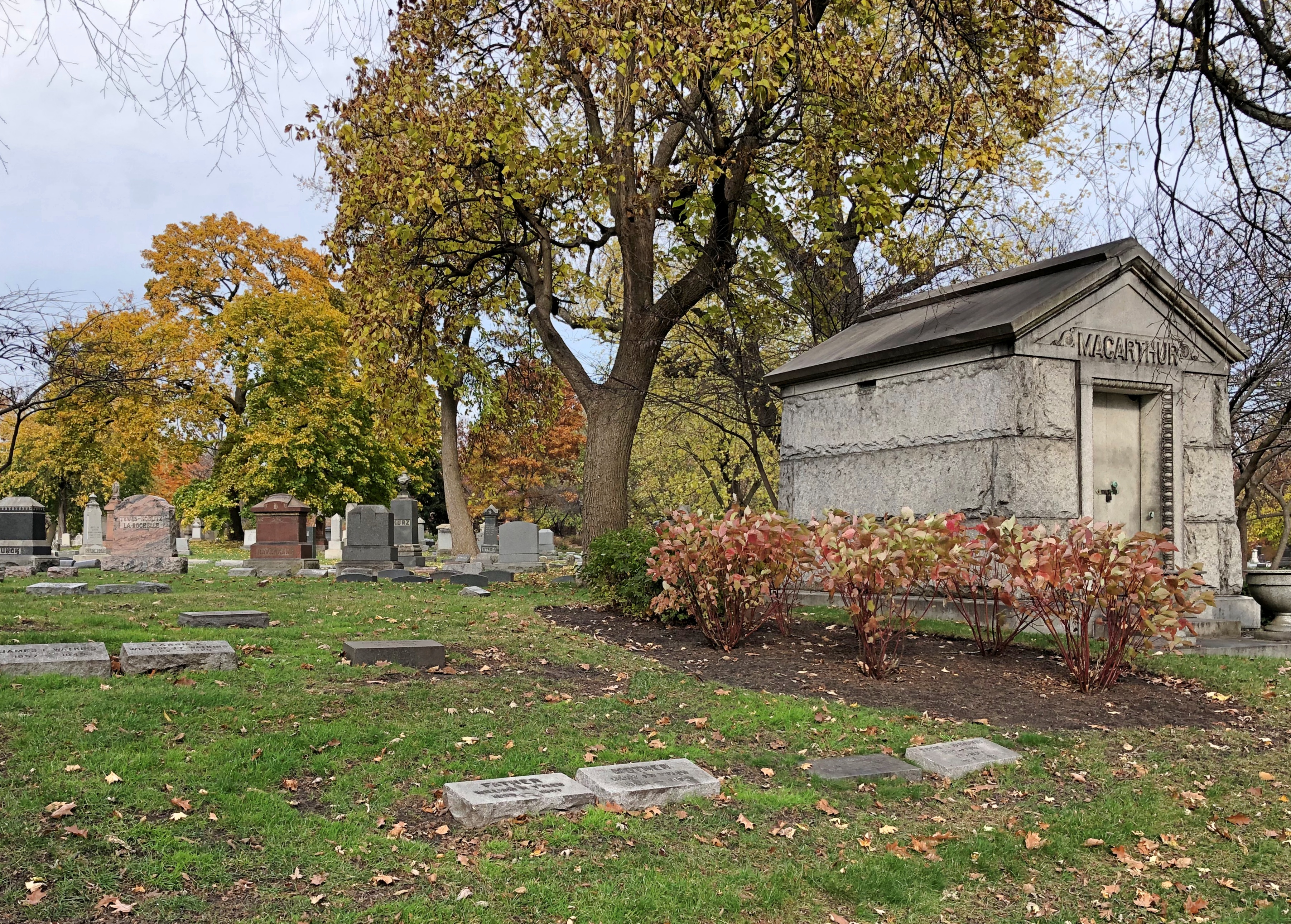
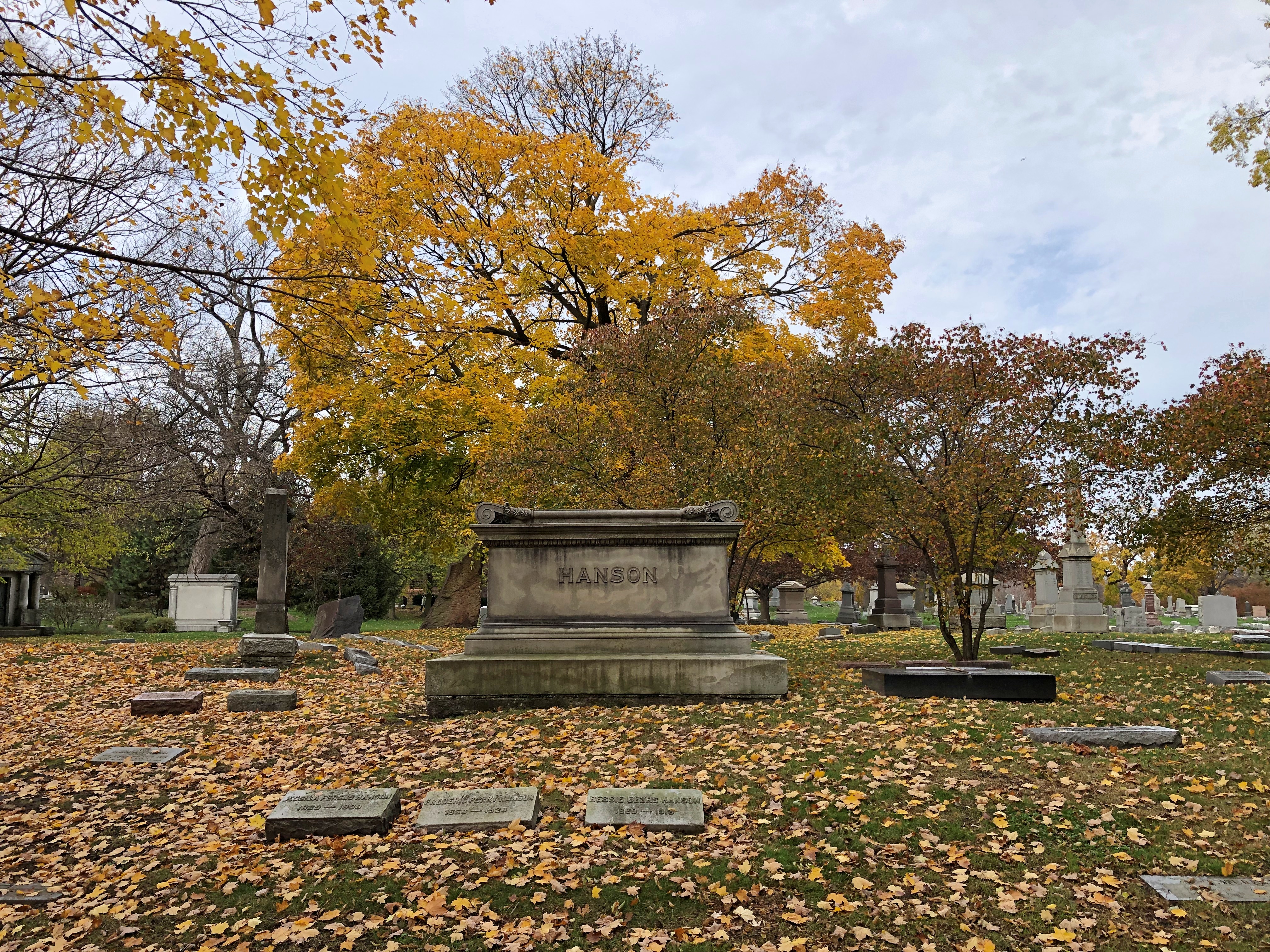
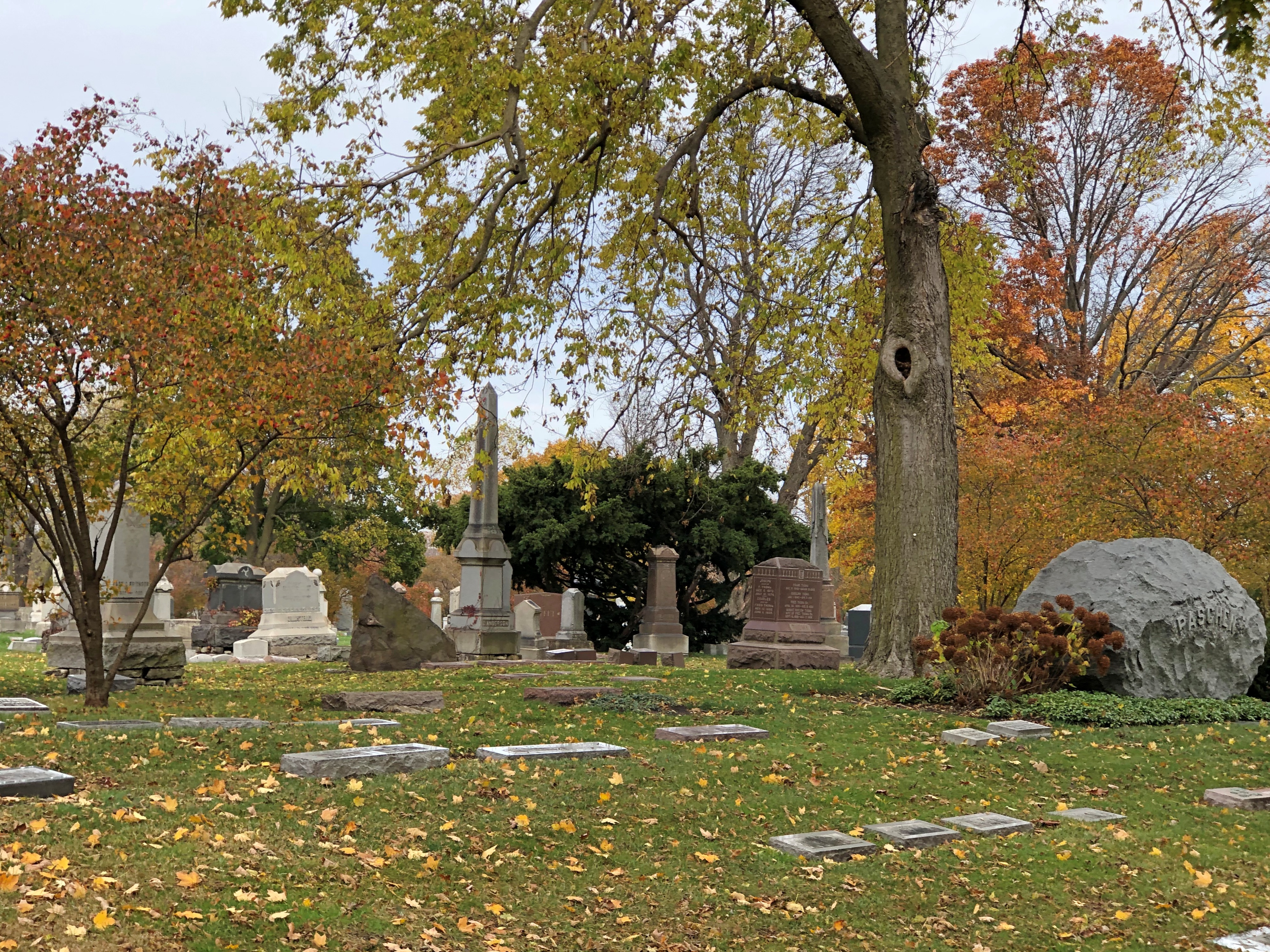
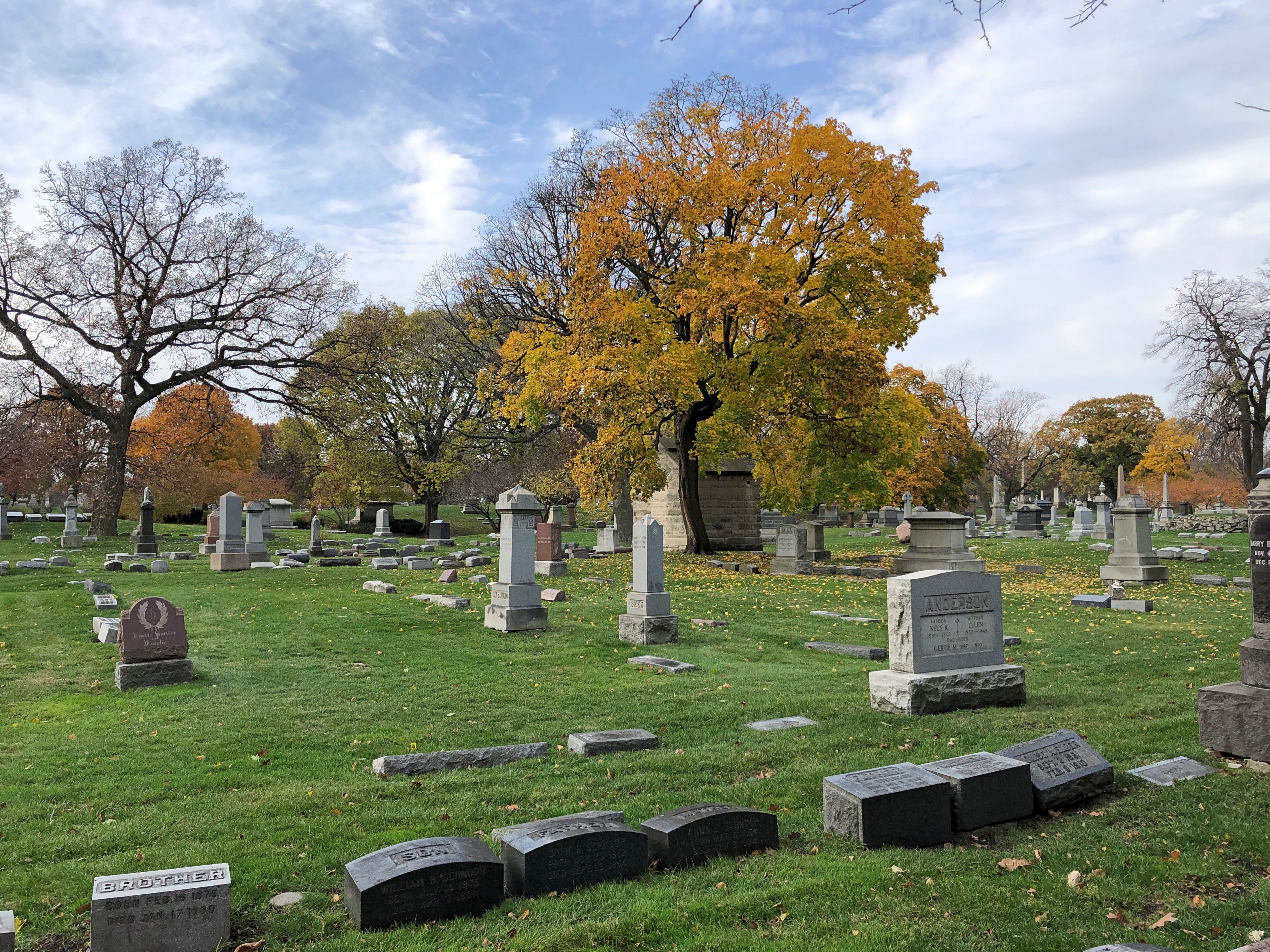
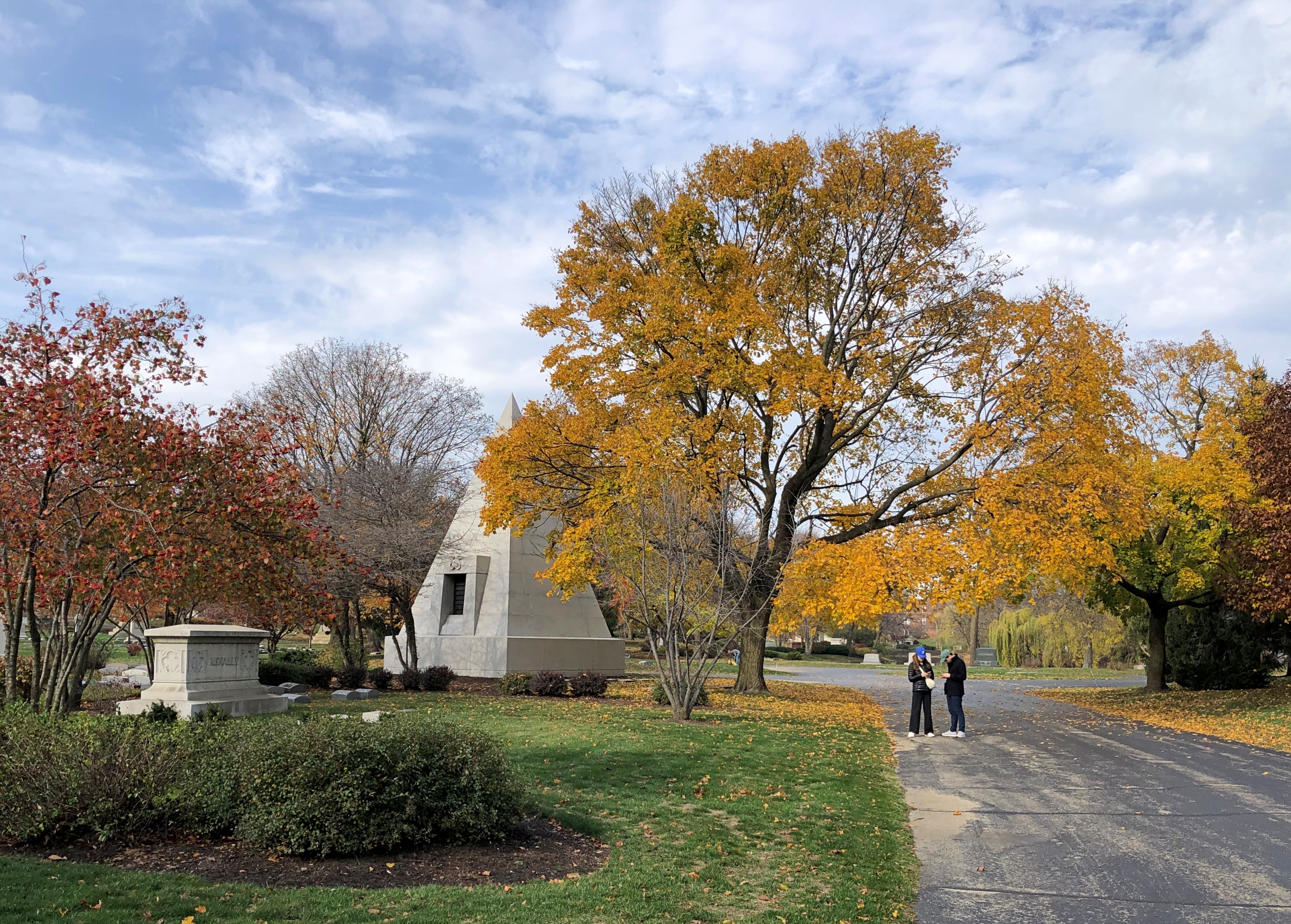
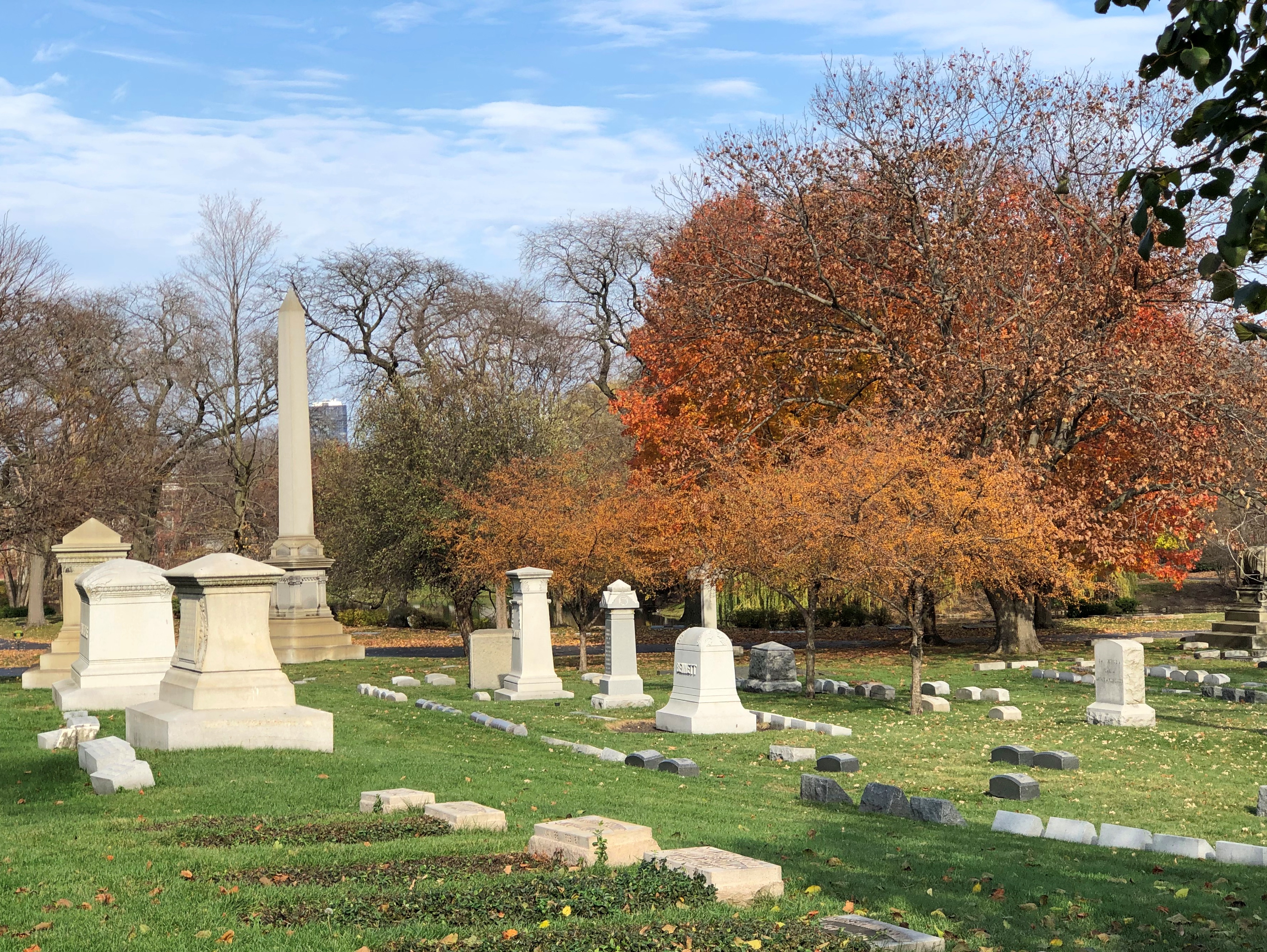
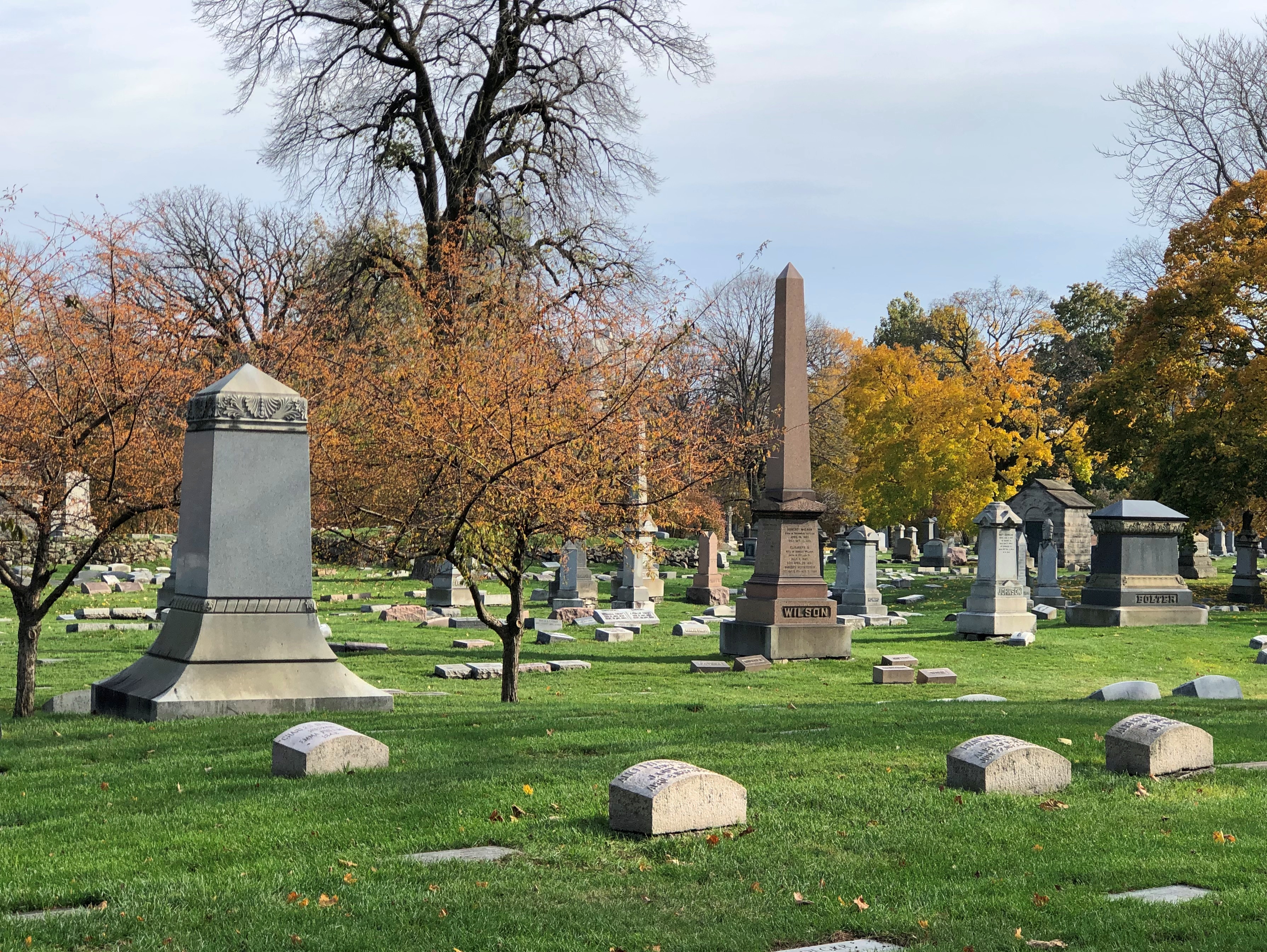
More color than I expected. The leaves are a little late in falling this year.Graceland Cemetery, Chicago Graceland Cemetery, Chicago Graceland Cemetery, Chicago

What can it signify? Natural variation in timing? A hint of climate woes? I can’t claim to be smart enough to know, but I do know that my hour-plus stroll benefited from the unexpected late colors. Graceland is a queen among cemeteries for its beauty, so any season will offer a display worthy of that status. Still, fall is special.
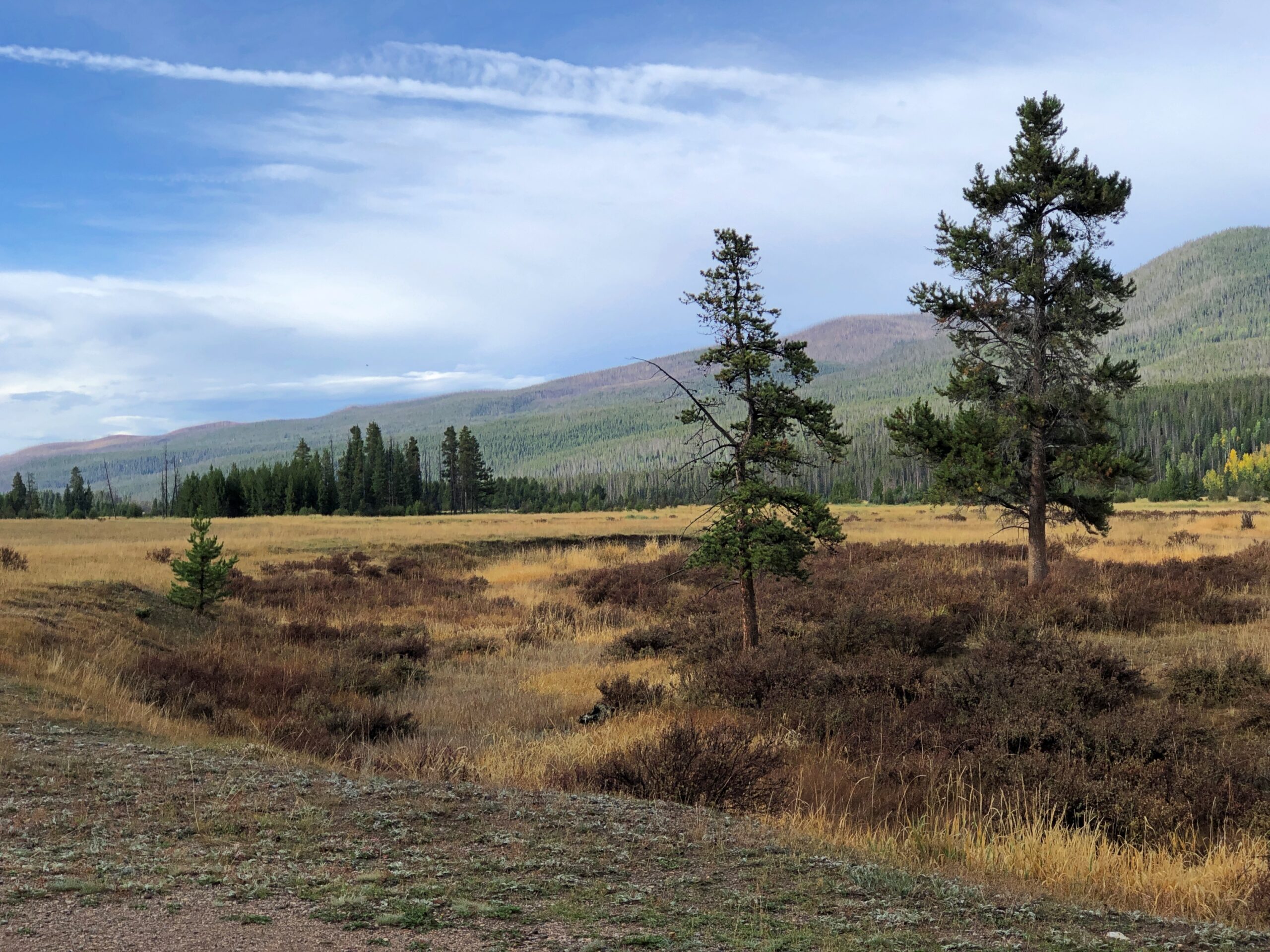
As an arboretum, Graceland has over 2,000 trees and scores of species.Graceland Cemetery, Chicago Graceland Cemetery, Chicago Graceland Cemetery, Chicago

In Chicago, as well as other major cities in America and Europe, cemeteries predated city parks as sites for pastoral strolls and quiet contemplation,” notes Chicago Garden: The Early History.Thomas B. Bryan, a wealthy Chicago businessman and avid horticulturist, was the major force behind the creation of Graceland in 1860. Along with other investors [he] formed the Graceland Cemetery Company.

“Graceland’s location was ideal: readily accessible from Green Bay Road (now Clark Street) and later the Chicago and Evanston Railroad, yet far enough removed from the city to avoid health and sanitation issues. The company chose the high ridge area along what is now Clark Street, which was once an old Indian trail… In the sandy soil here, plants thrive better than in Chicago’s typical clay soil.”Graceland Cemetery, Chicago Graceland Cemetery, Chicago Graceland Cemetery, Chicago Graceland Cemetery, Chicago

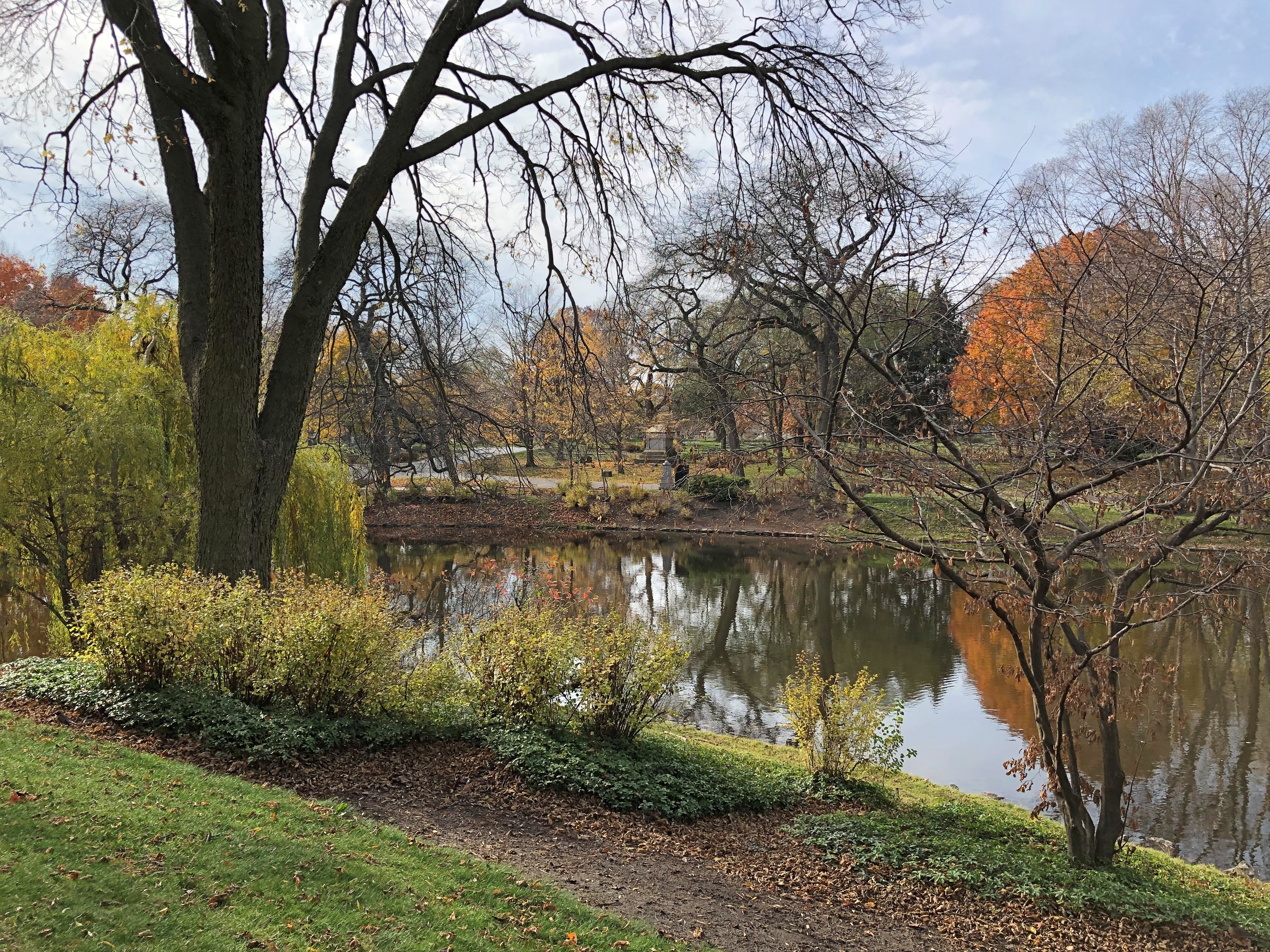
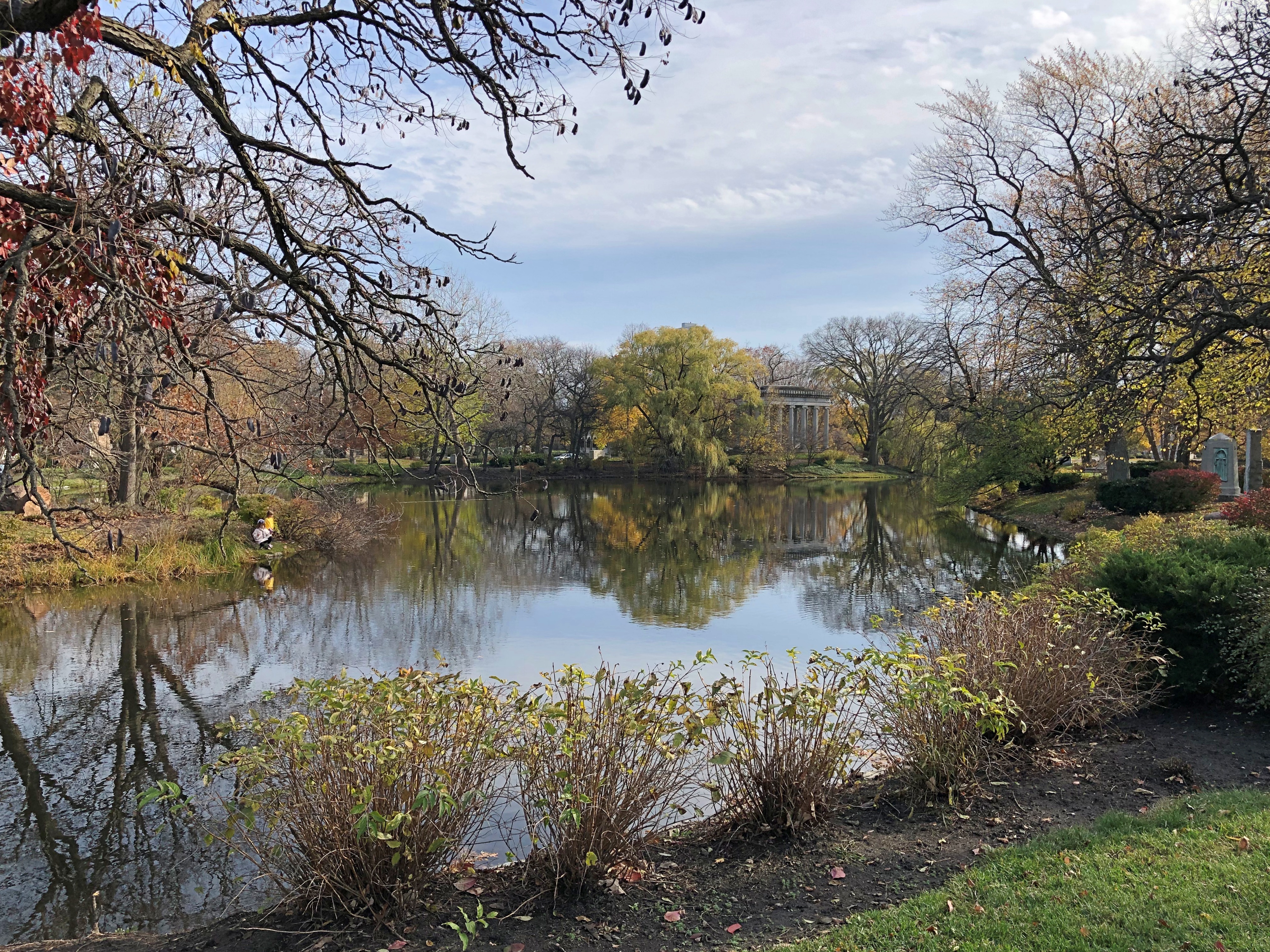
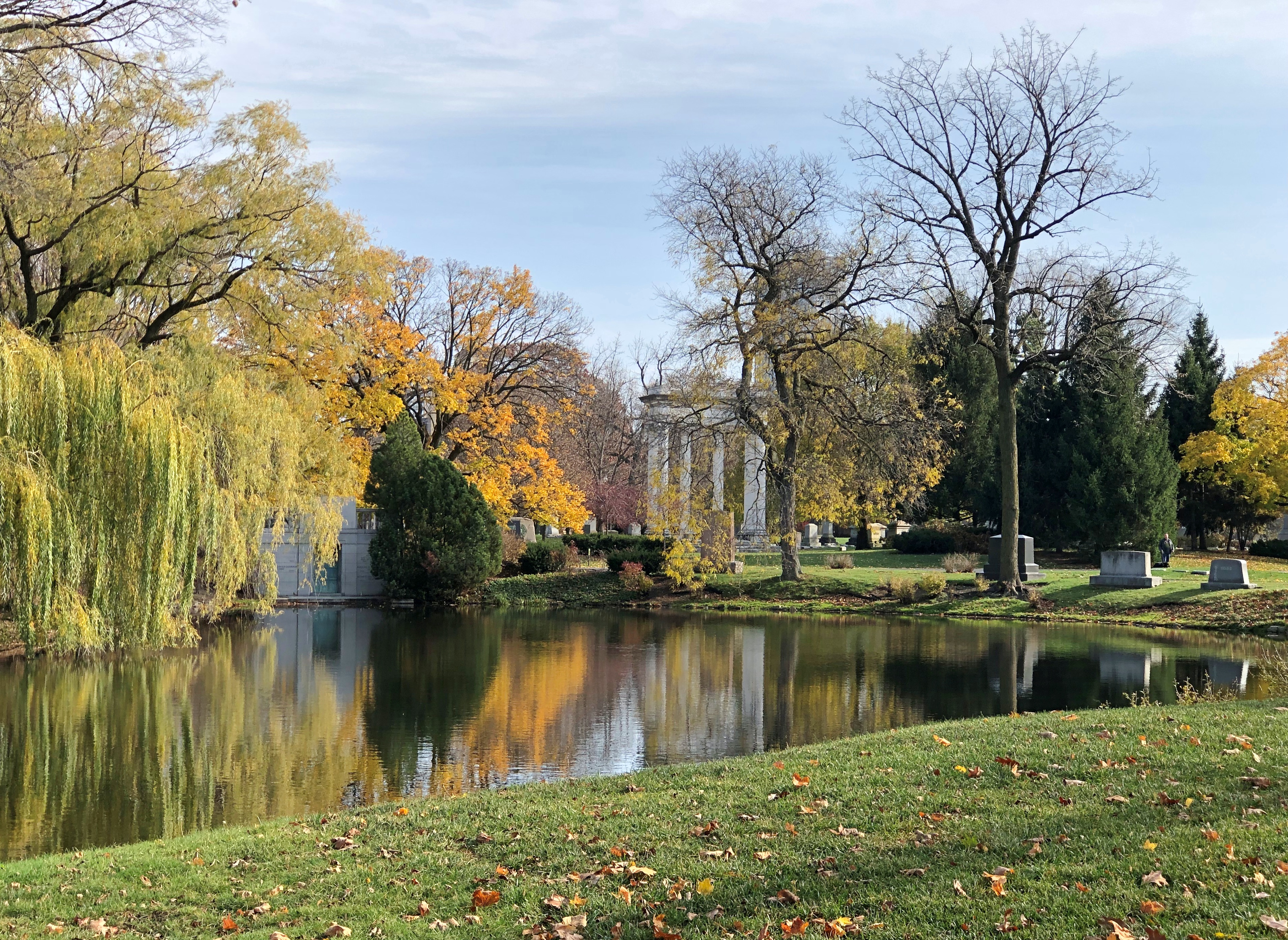
Water views. The map calls it Lake Willowmere.Graceland Cemetery, Chicago Graceland Cemetery, Chicago Graceland Cemetery, Chicago

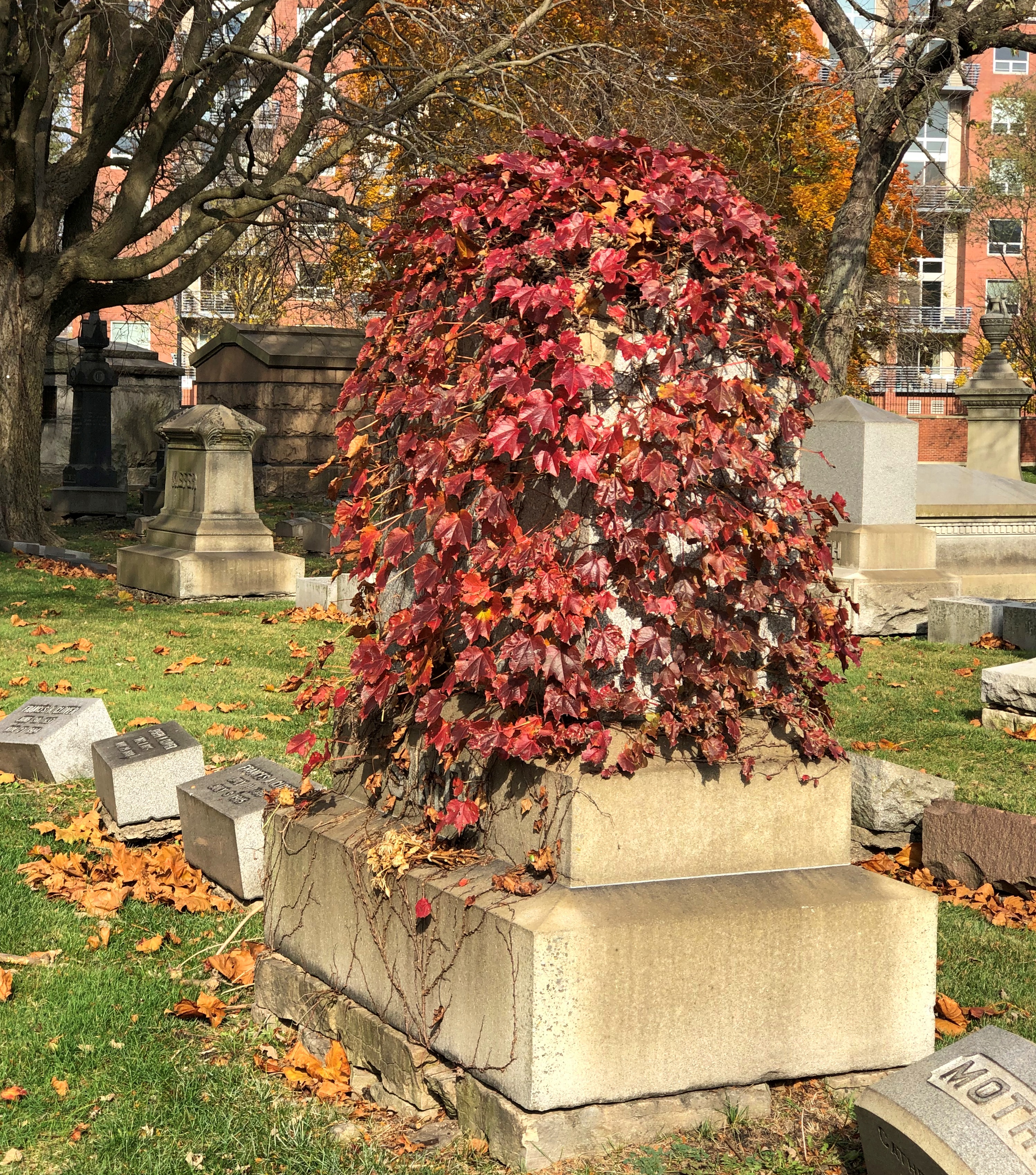
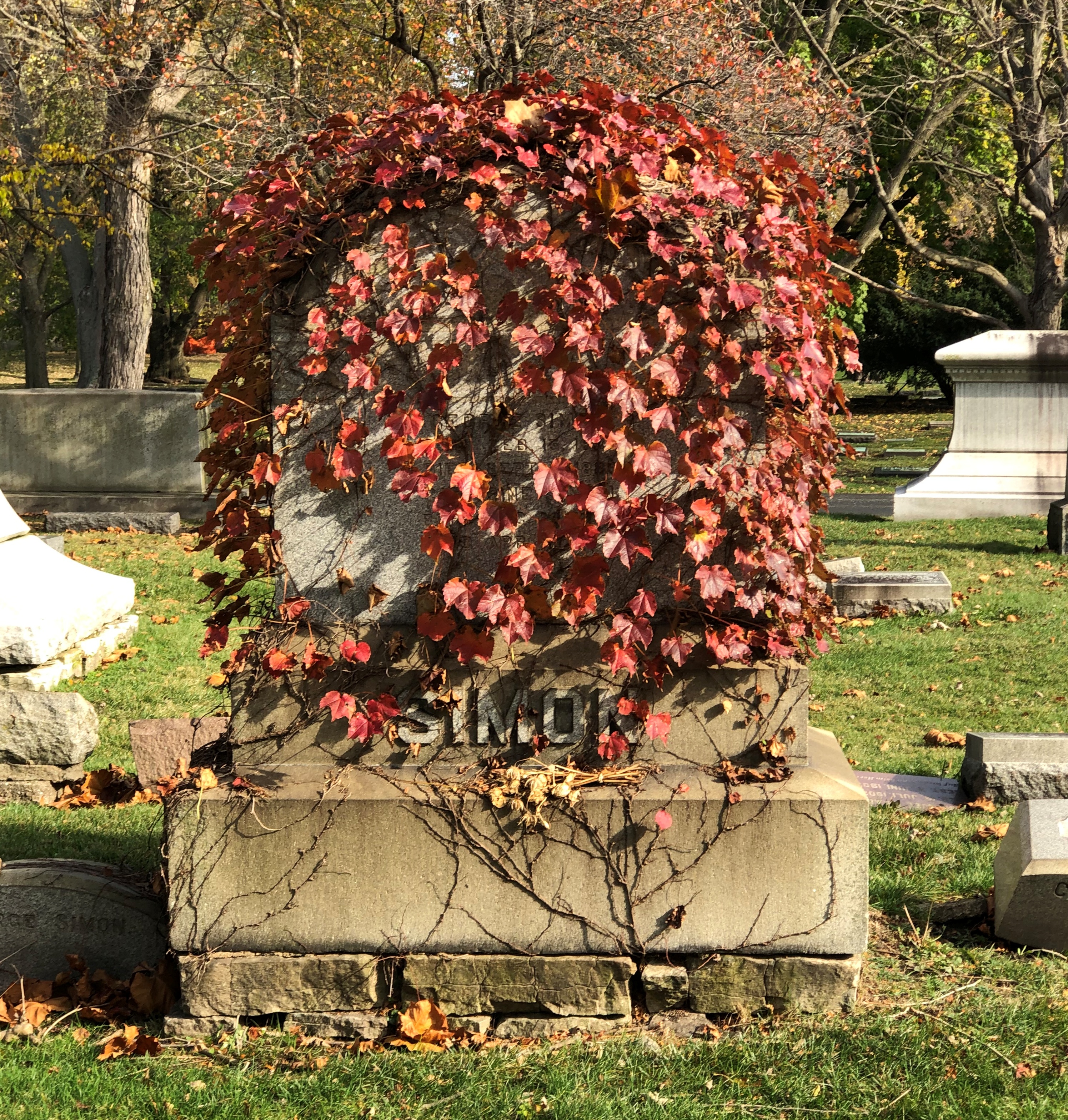
An ivy-covered stone. Graceland Cemetery, Chicago Graceland Cemetery, Chicago

That can’t be an accident of nature, since the standard of lawn care is clearly pretty high at Graceland. Could be the Simons wanted it that way. Or still do. Anyway, the leaves are changing.

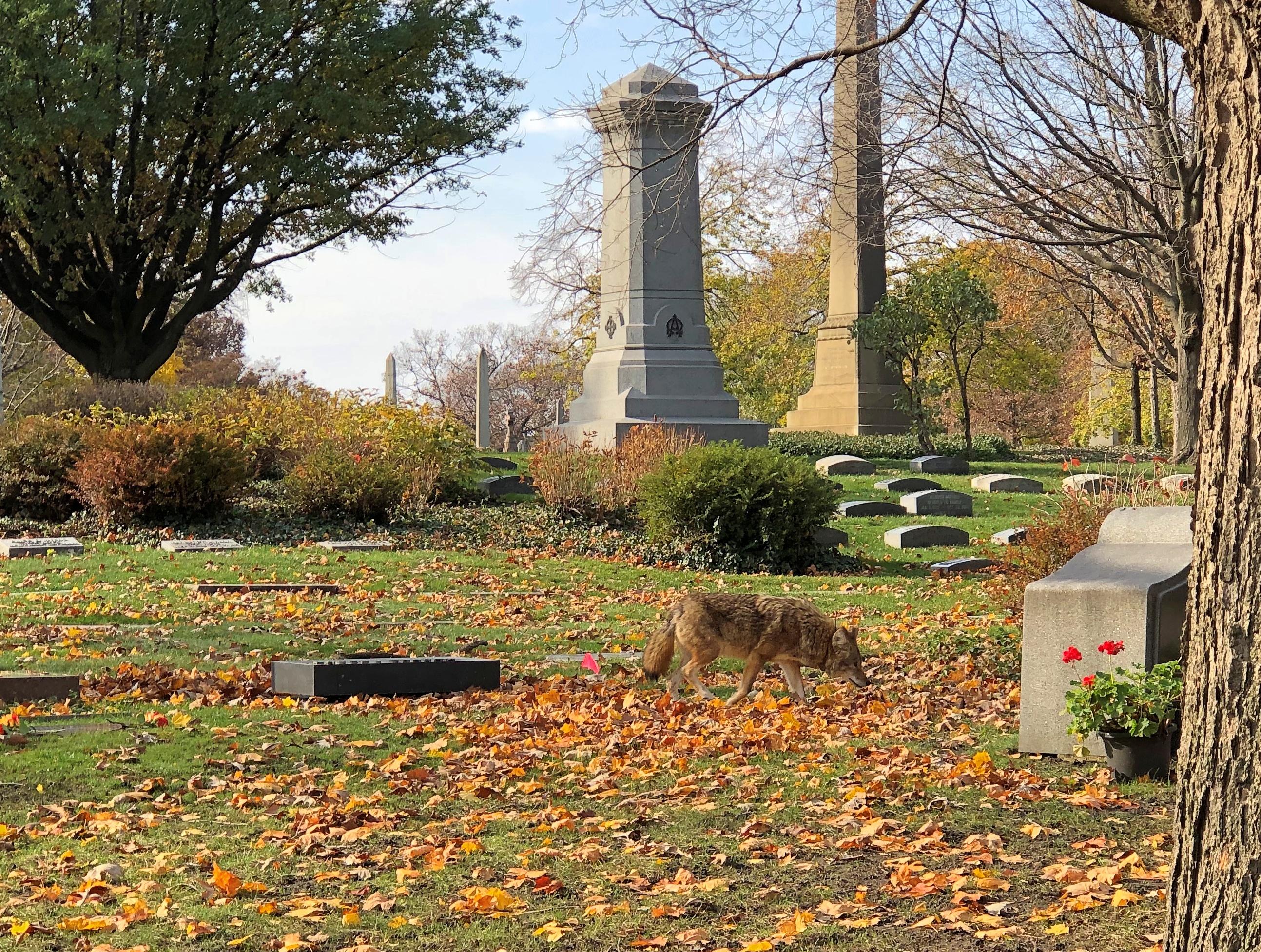
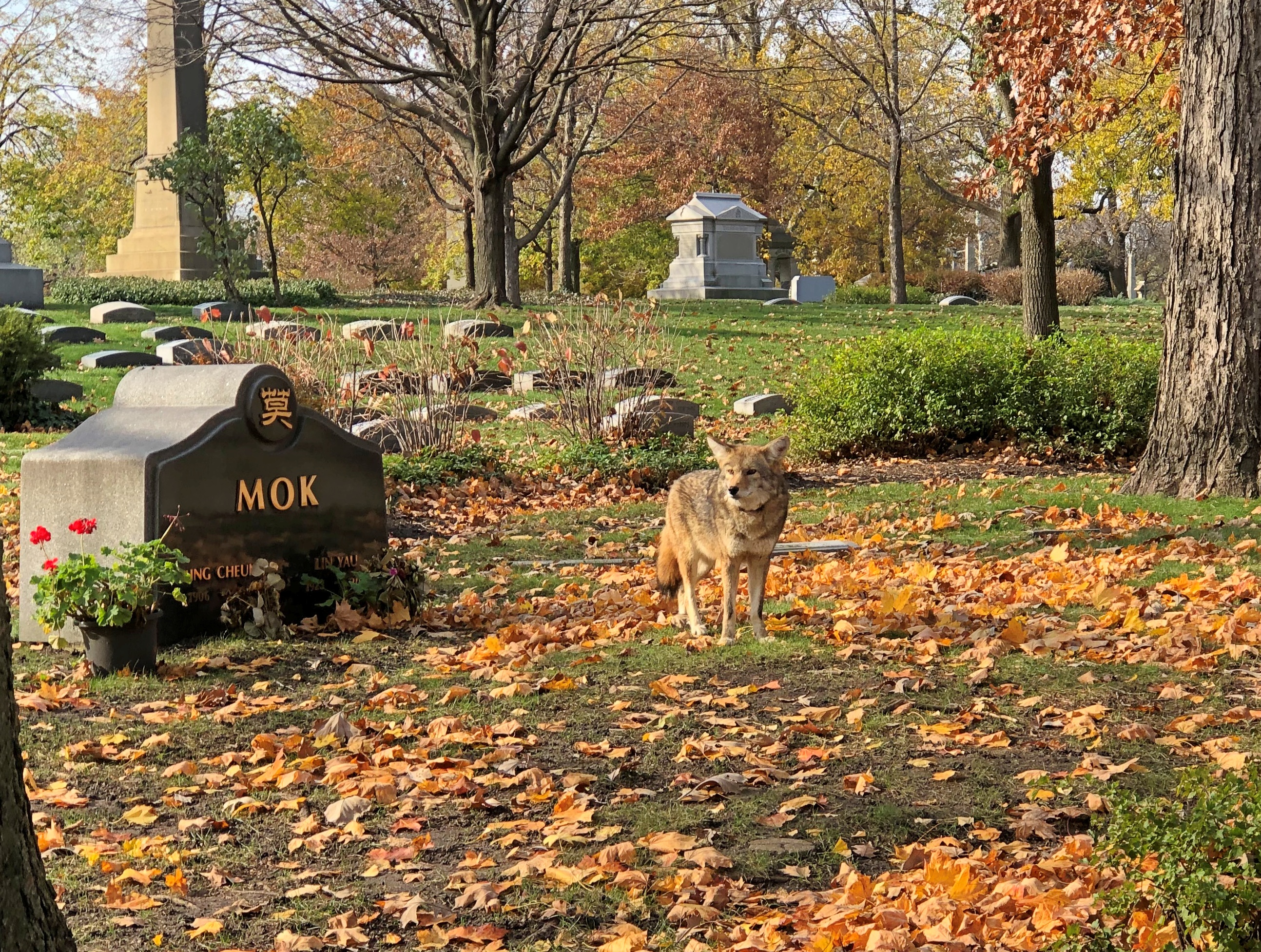
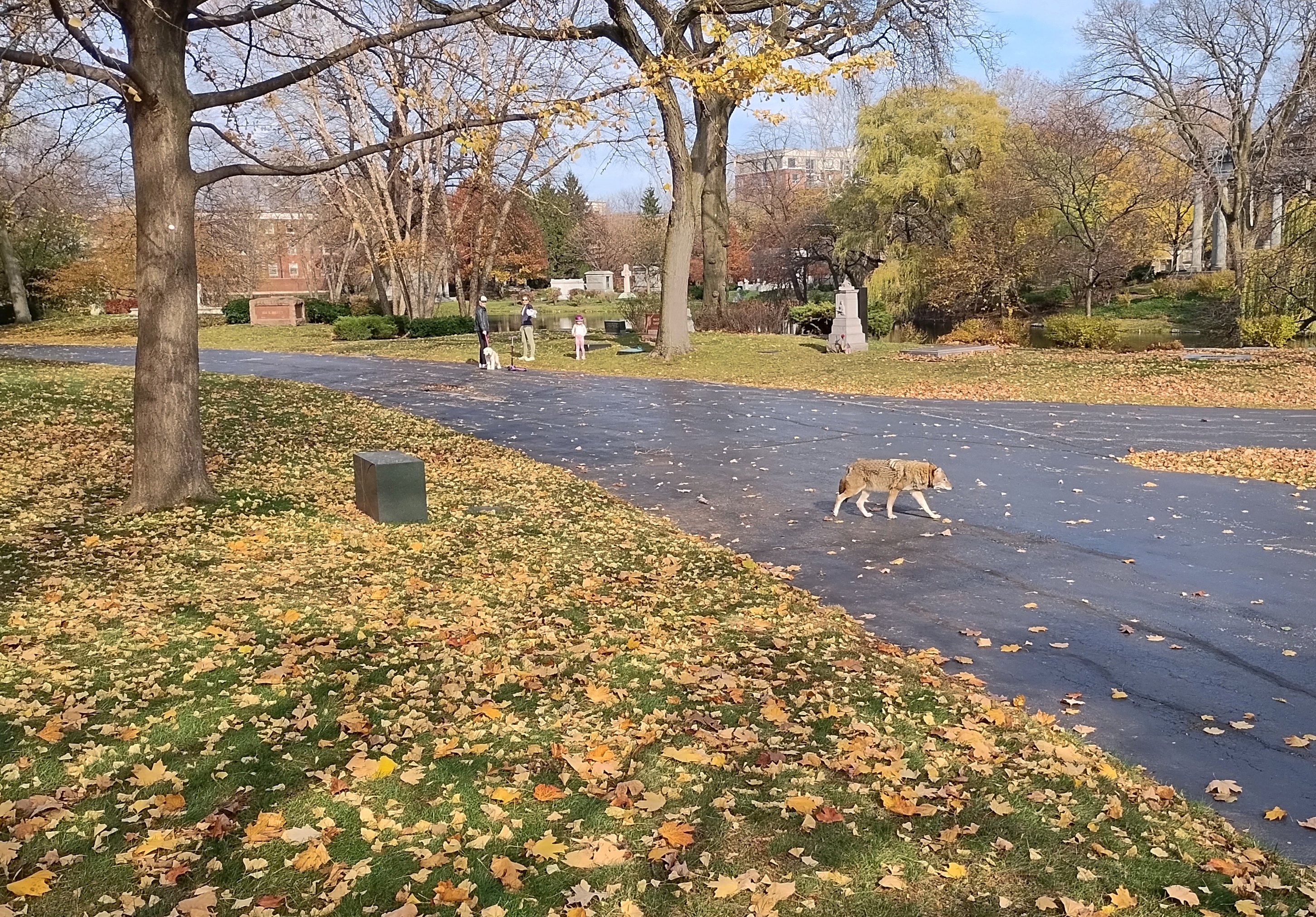
Coyote, looks like. Graceland Cemetery, Chicago

I didn’t get very close, but close enough, and he seemed nonchalant about being around humans. He just wandered on by. Urban Coyote: there’s an animation project in that for someone.

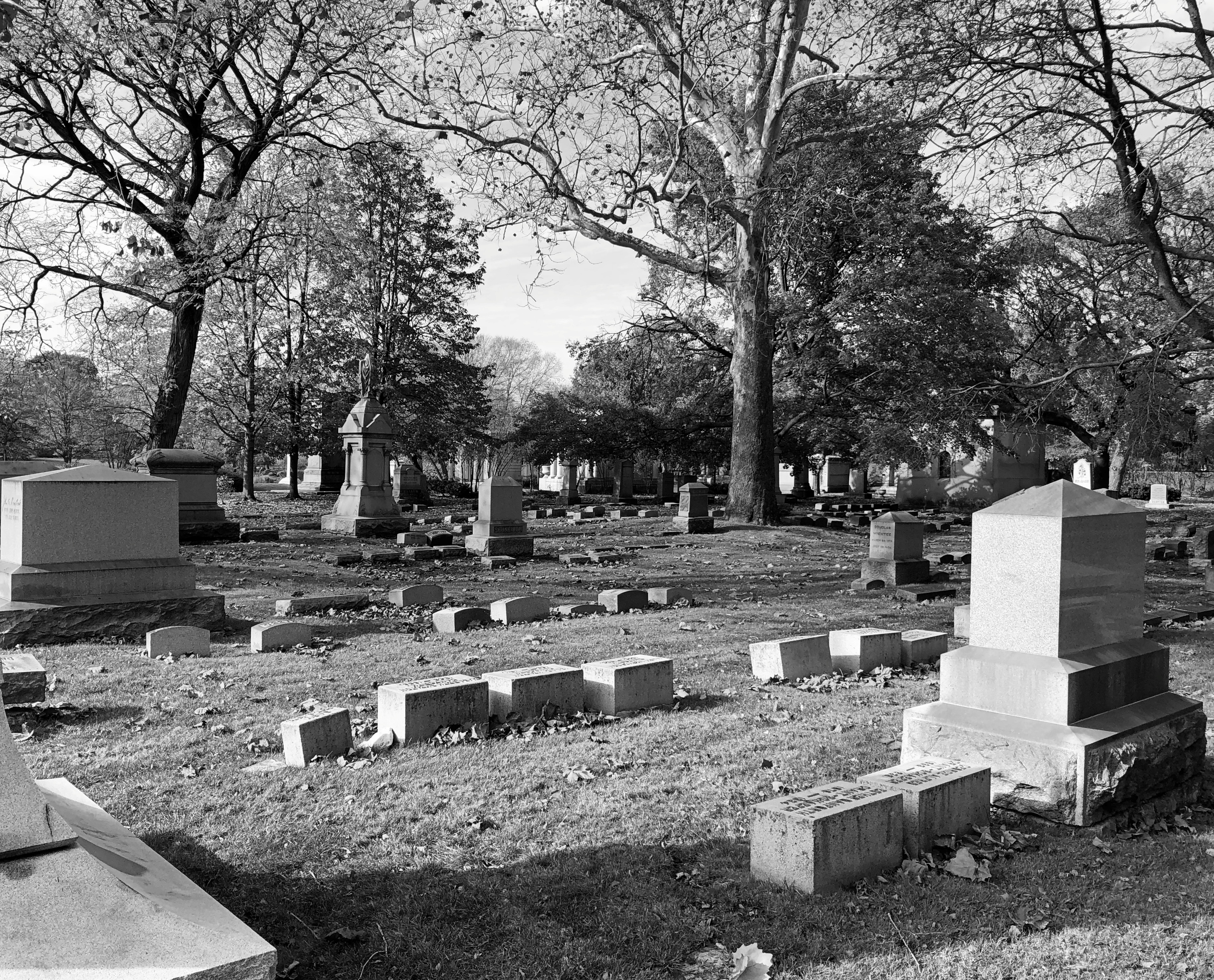
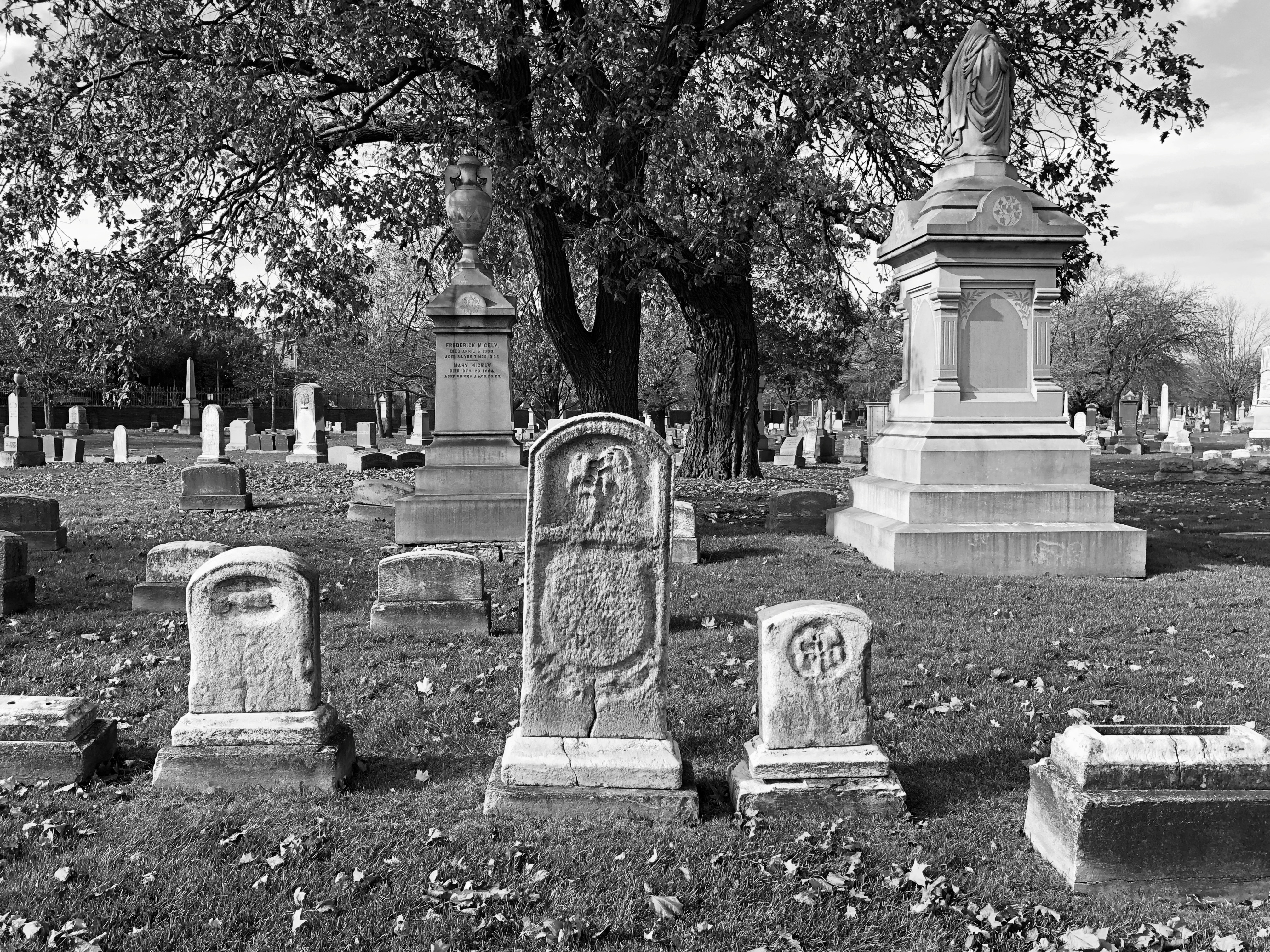
Color is good, of course. So is monochrome.Graceland Cemetery, Chicago Graceland Cemetery, Chicago Graceland Cemetery, Chicago

In our time and place, cemetery tourism isn’t much practiced. At many cemeteries, I’m the only living person around, except maybe for grounds keepers. Graceland stood out from most in that way. I saw maybe two dozen or so other visitors, including bike riders, dog walkers and a handful doing what I was doing: wandering the 121-acre grounds, taking it in.

The Fate of Pumpkins & Mice

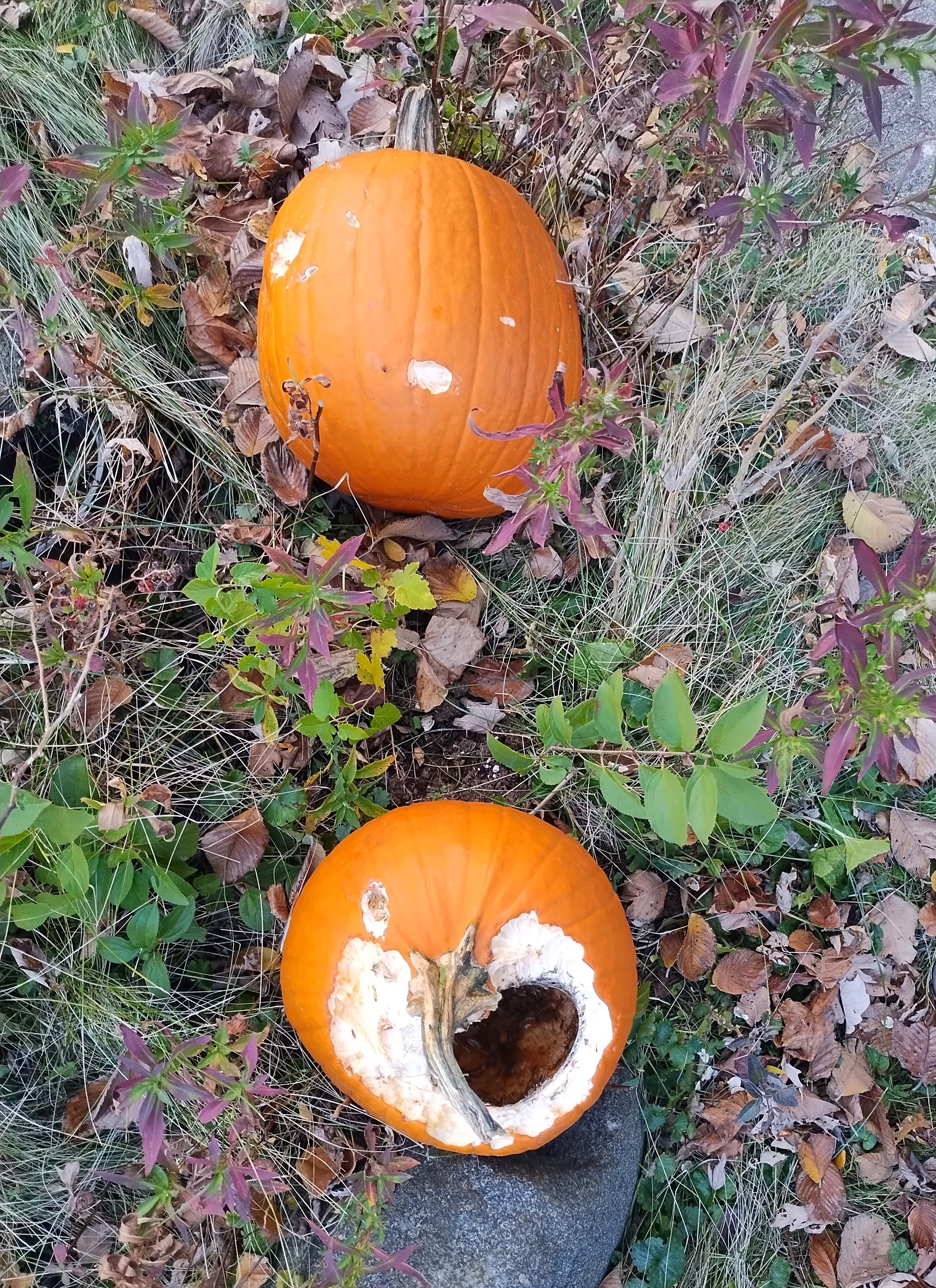
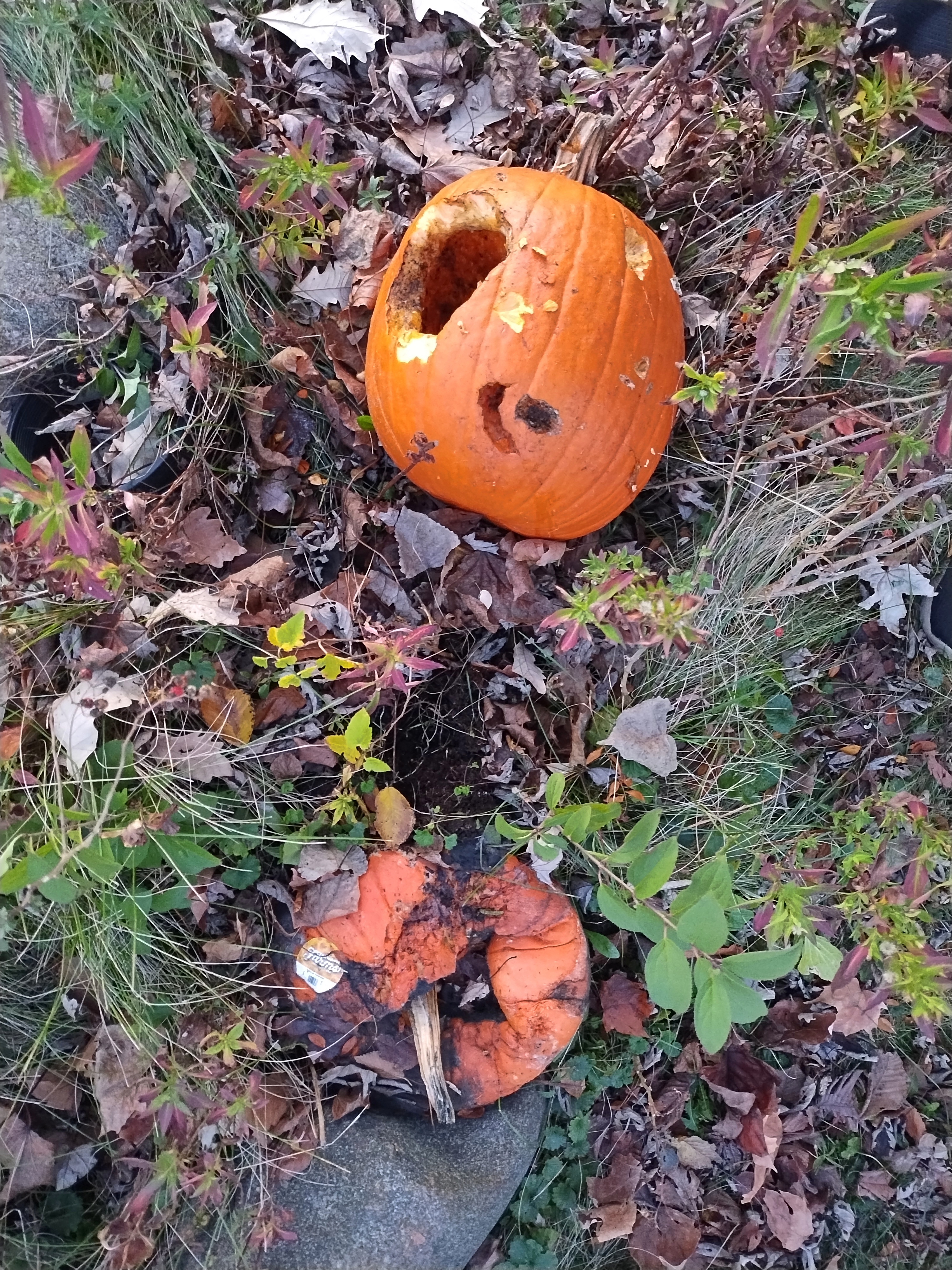
We put a couple of pumpkins out for ornaments last month in our front yard. Visible decay in the not-too-distant-future is their fate, but unseen creatures accelerated things. Squirrels are top of the suspect list.

October 28PUMPKINS

November 8PUMPKINS

With no dog on patrol, squirrels and rabbits and field mice have been having a grand old time this year in our yards. At least, that’s my thinking. The uptick in mouse population means some of their number are raiding the house, which has inspired countermeasures on our part, such as traps. Not catch-and-release PETA-approved milquetoast sorts of traps, but standard instant death via snap.

That and ultrasonic devices that supposedly deter the entrance of rodents in the first place. The battle is ongoing. After a week or so of no activity, we’ve murderized one more mouse each night so far this week. Removing the remains in the morning is a task that falls to me, following traditional gender roles in this case. I can’t call it a pleasant chore, but there is a bit of satisfaction in showing the creatures the literal and metaphoric doors.

Sauble Beach & Goderich, Ontario

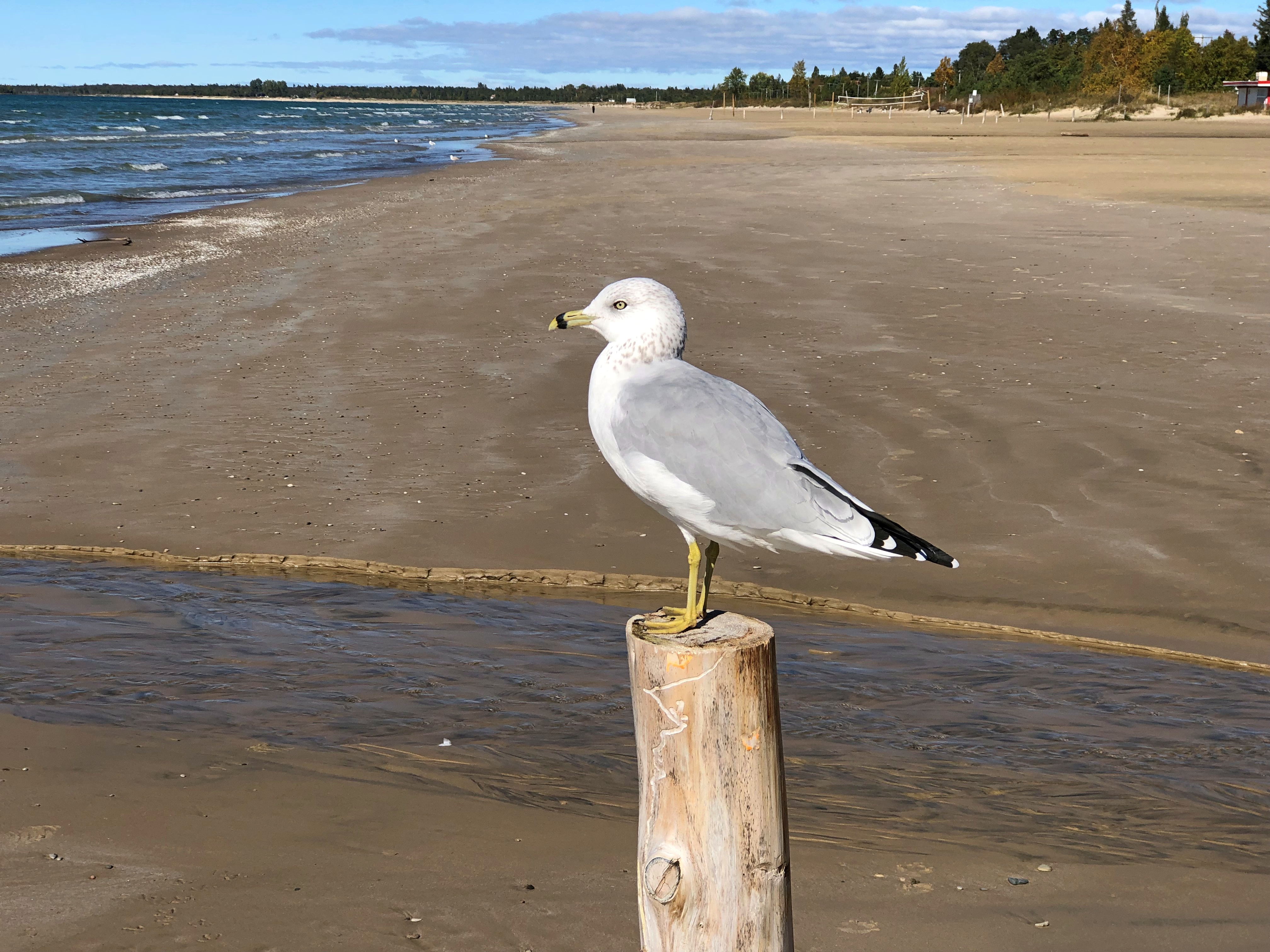
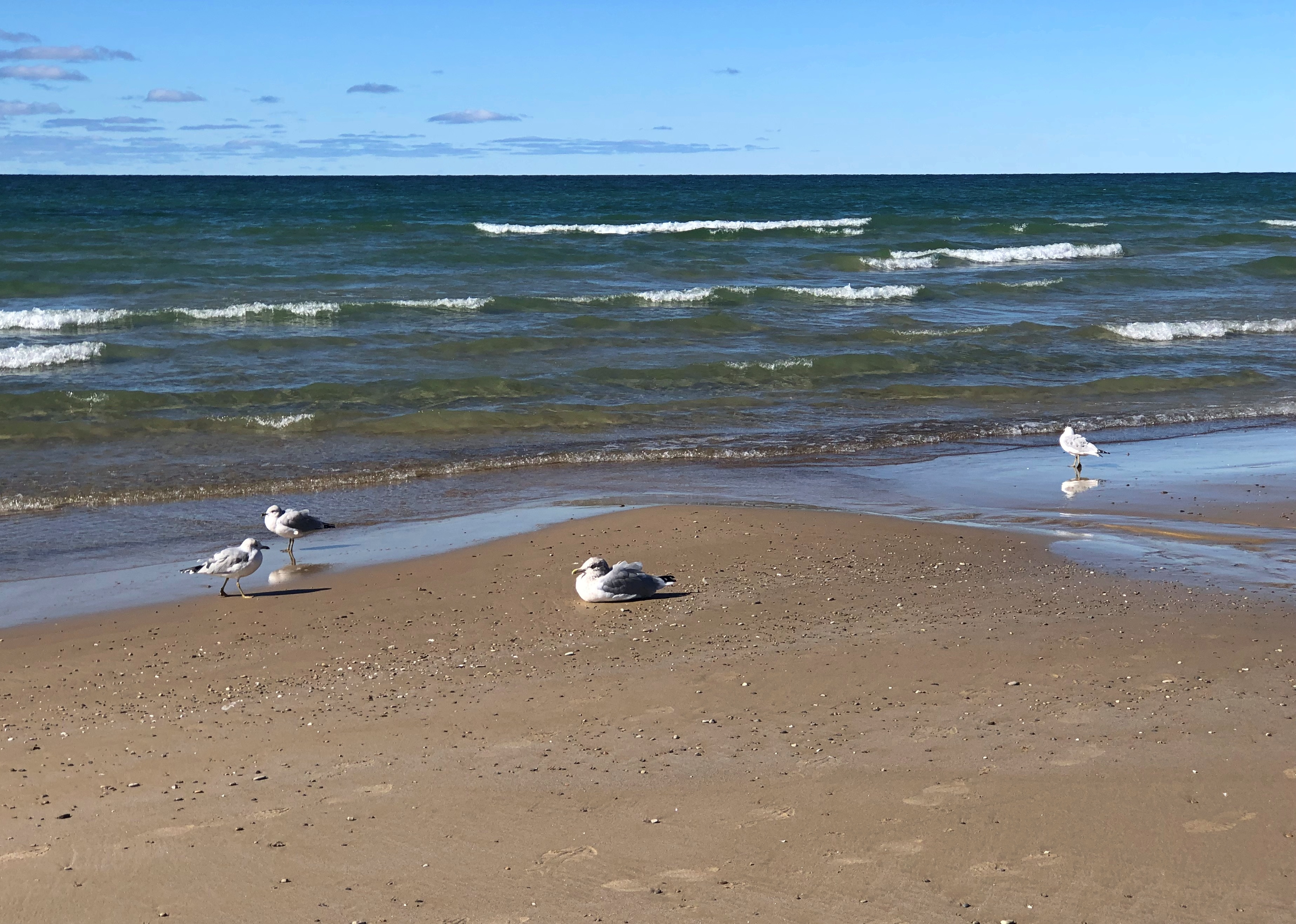
I was a little surprised the seagull allowed me to get this close.Sauble Beach, Ontario

On the other hand, he’s a resident, at least sometimes, of Sauble Beach on Lake Huron. He’s used to people, because people show up in large numbers at Sauble Beach when the sun is hot, and that birdbrain of his is enough of a brain to know that the beach apes are usually harmless. Even better, food always seems to be around them, and they’re pretty careless about dropping some of it.

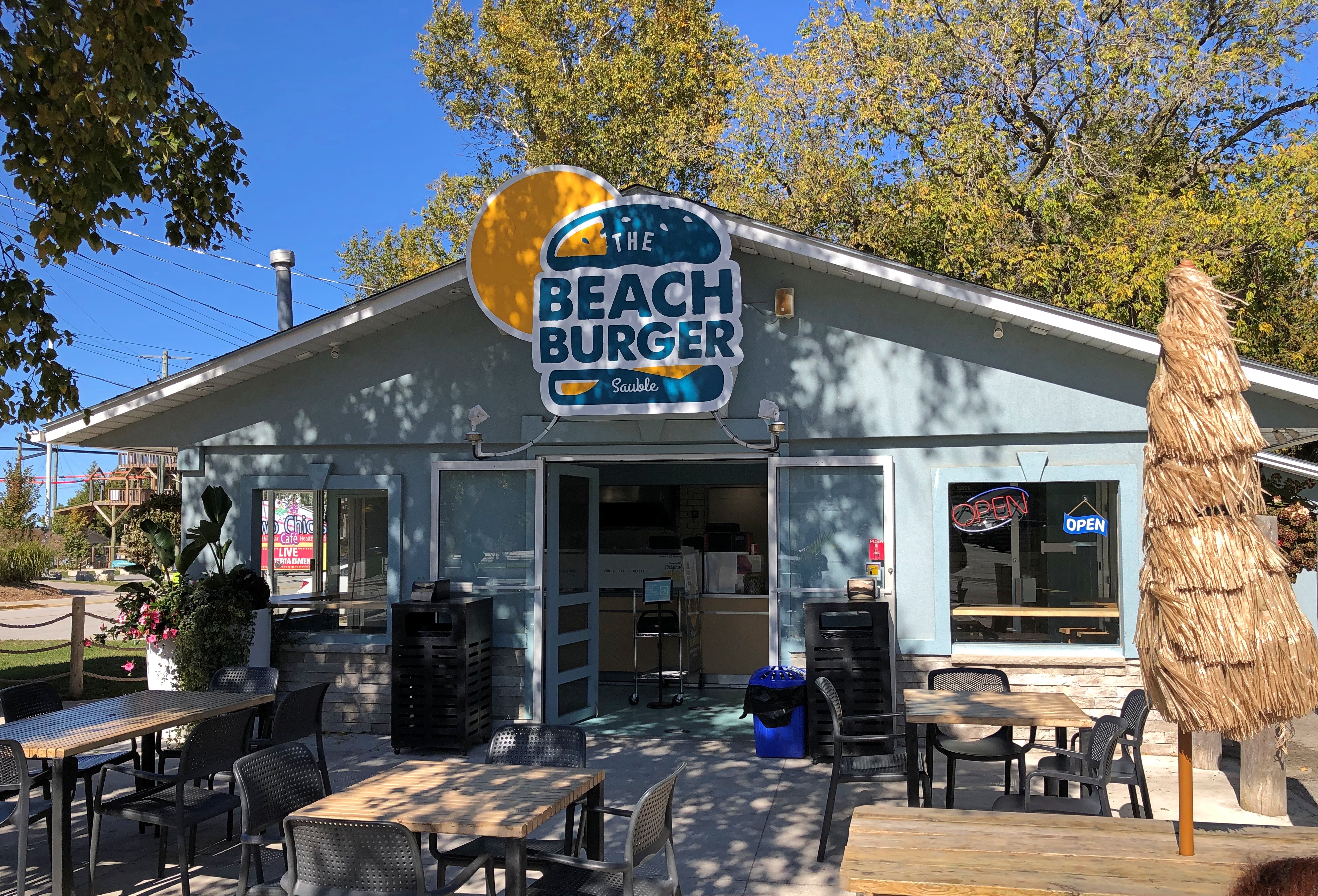
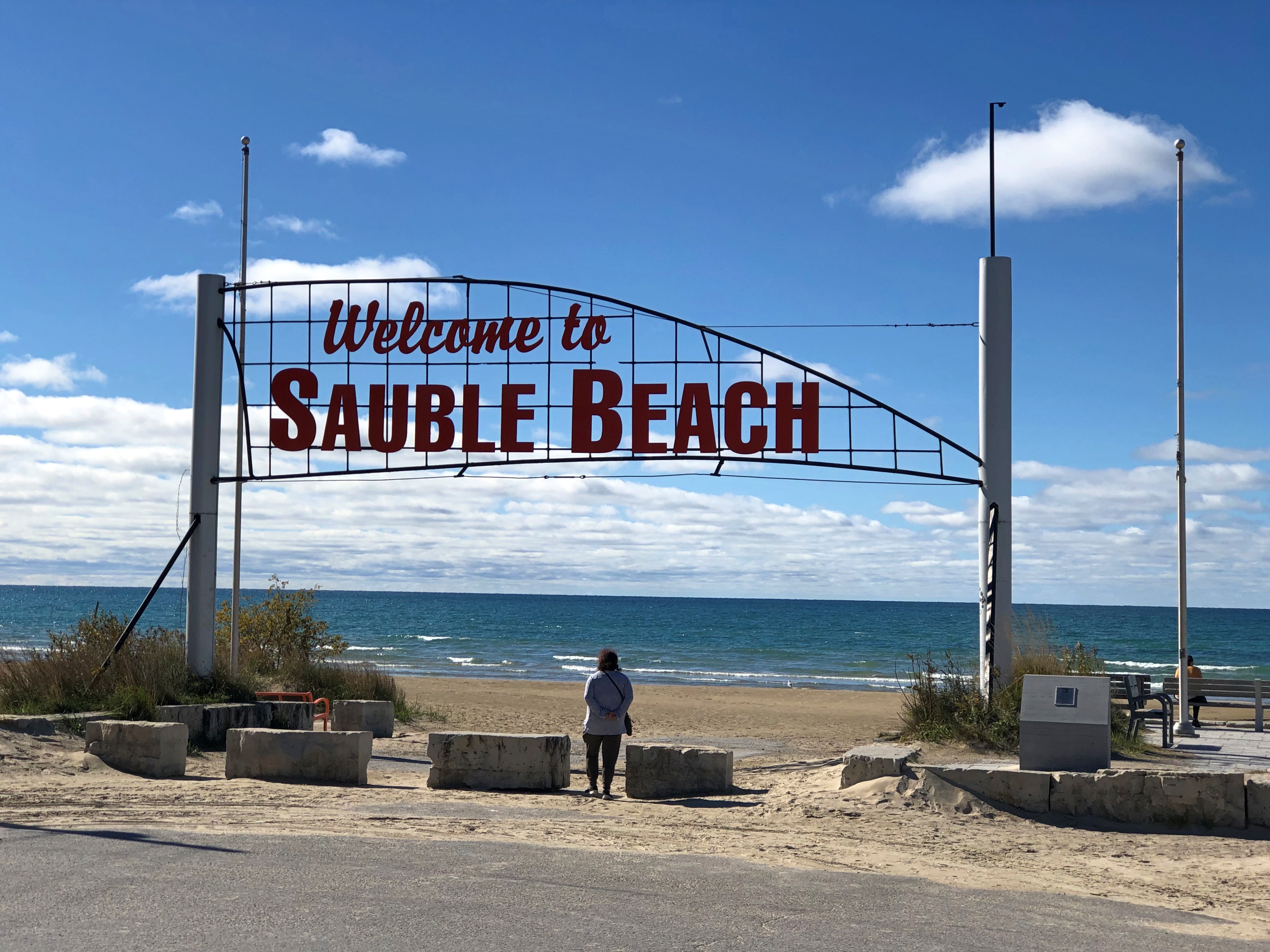
We’d come to Sauble Beach – the unincorporated town of that name and the beach of that name in Ontario – after our easy walk around Sauble Falls PP a few miles (ah, km) to the north. We were looking for lunch. And there it was.Sauble Beach, Ontario

Note the distinct lack of a crowd. Out of frame are two high school boys eating, and they were all the other customers at that moment, toward the end of (2 pm) conventional lunchtime on the Thursday ahead of Canadian Thanksgiving weekend. Other places were already closed for the season, but Beach Burger soldiered on for the trickle of customers still around.

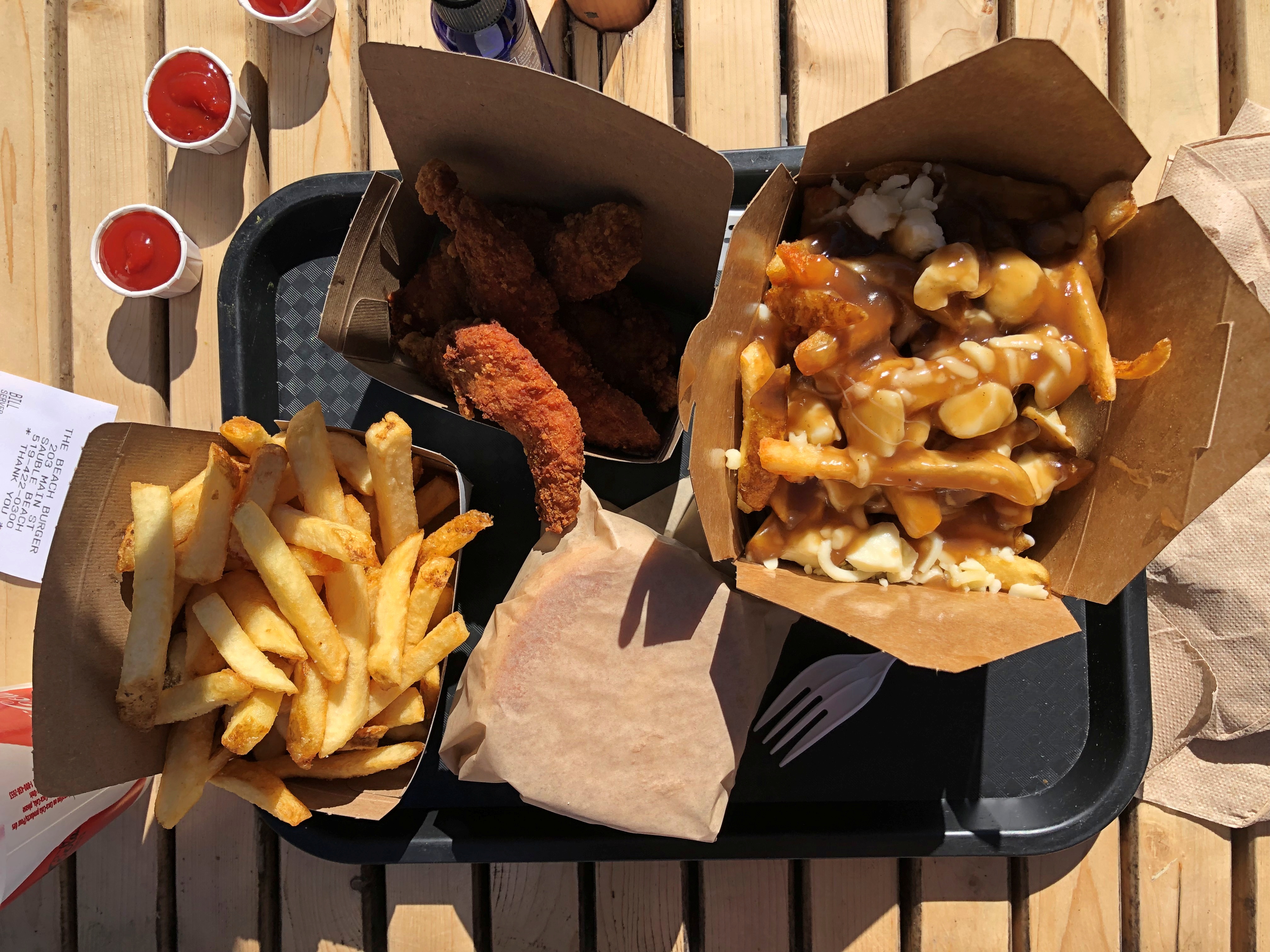
A beach feast.Sauble Beach, Ontario

The concoction on the right, of course, is poutine. It’s not just for Québécois any more. Nor even just for Canadians.

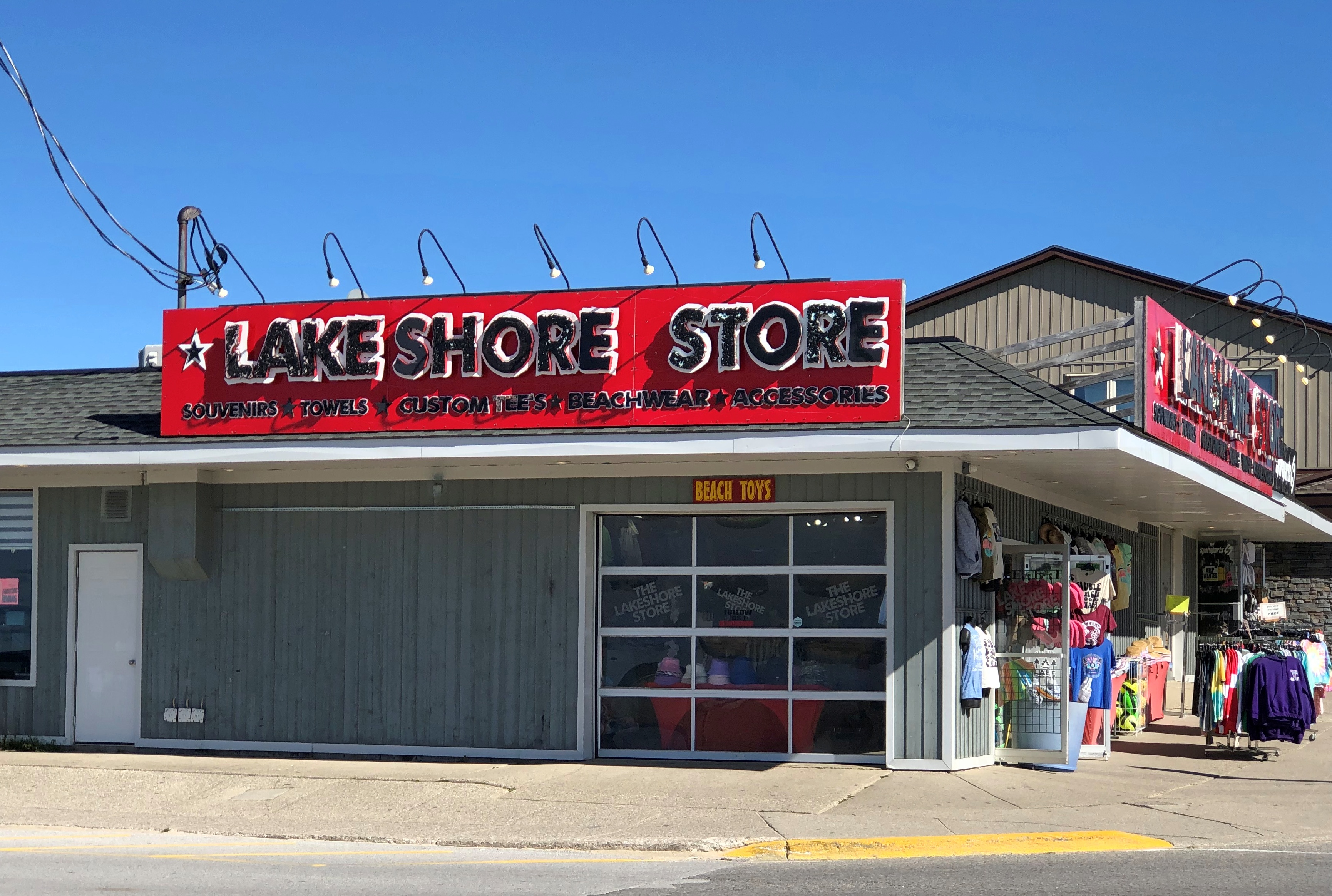
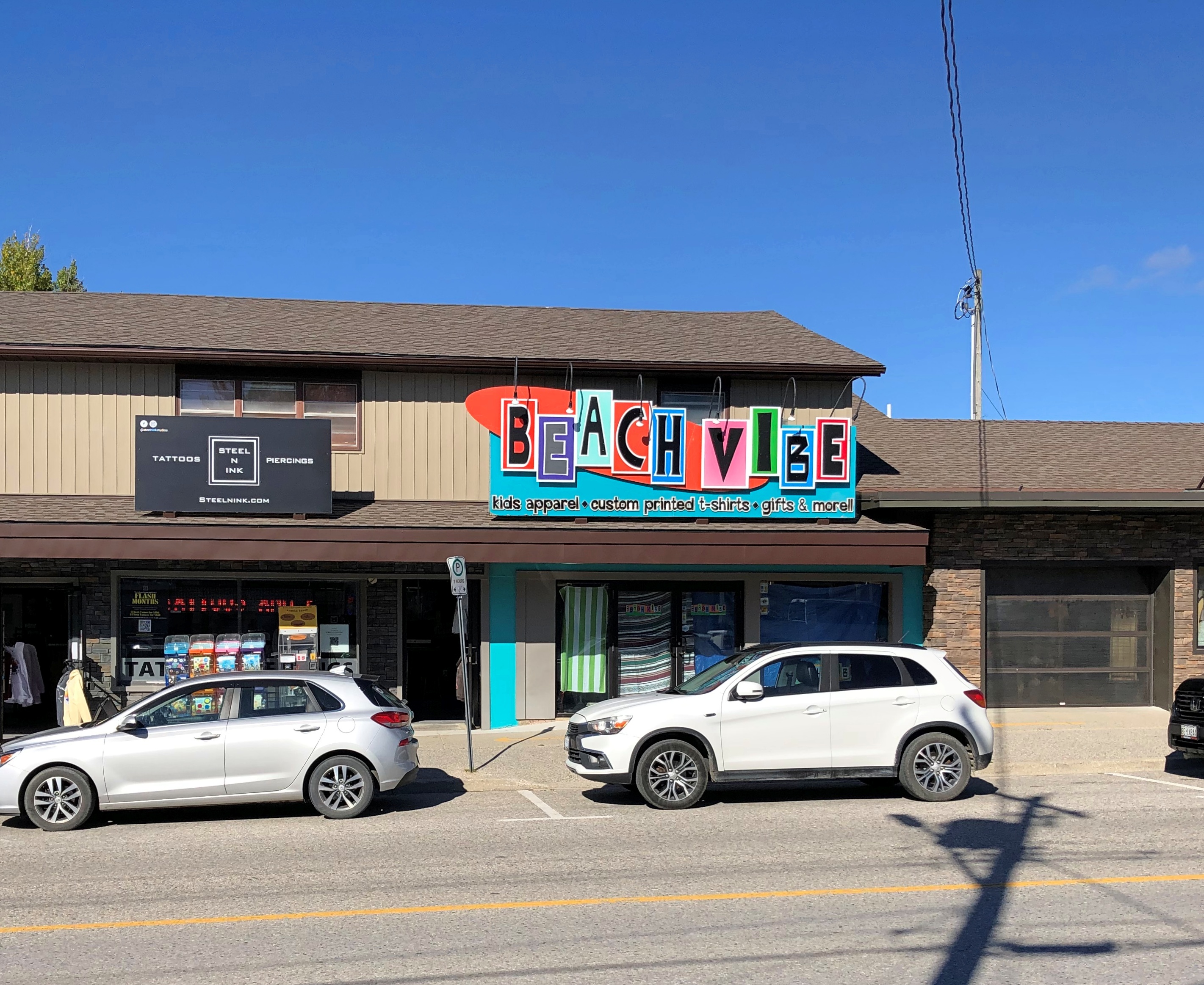
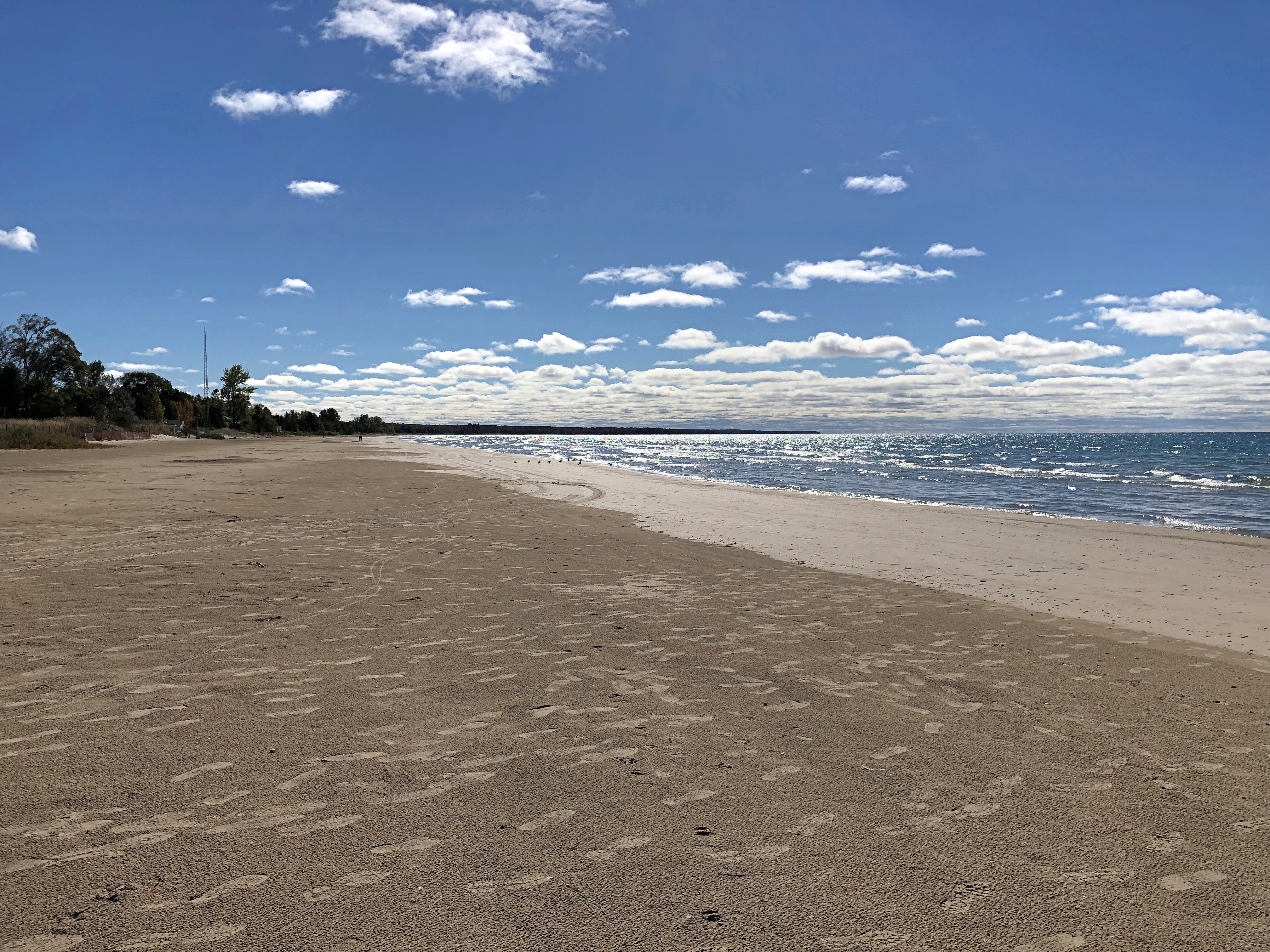
Beach towns have beach businesses.Sauble Beach, Ontario Sauble Beach, Ontario Sauble Beach, Ontario

Which would be pointless without the beach.Sauble Beach, Ontario Sauble Beach, Ontario Sauble Beach, Ontario

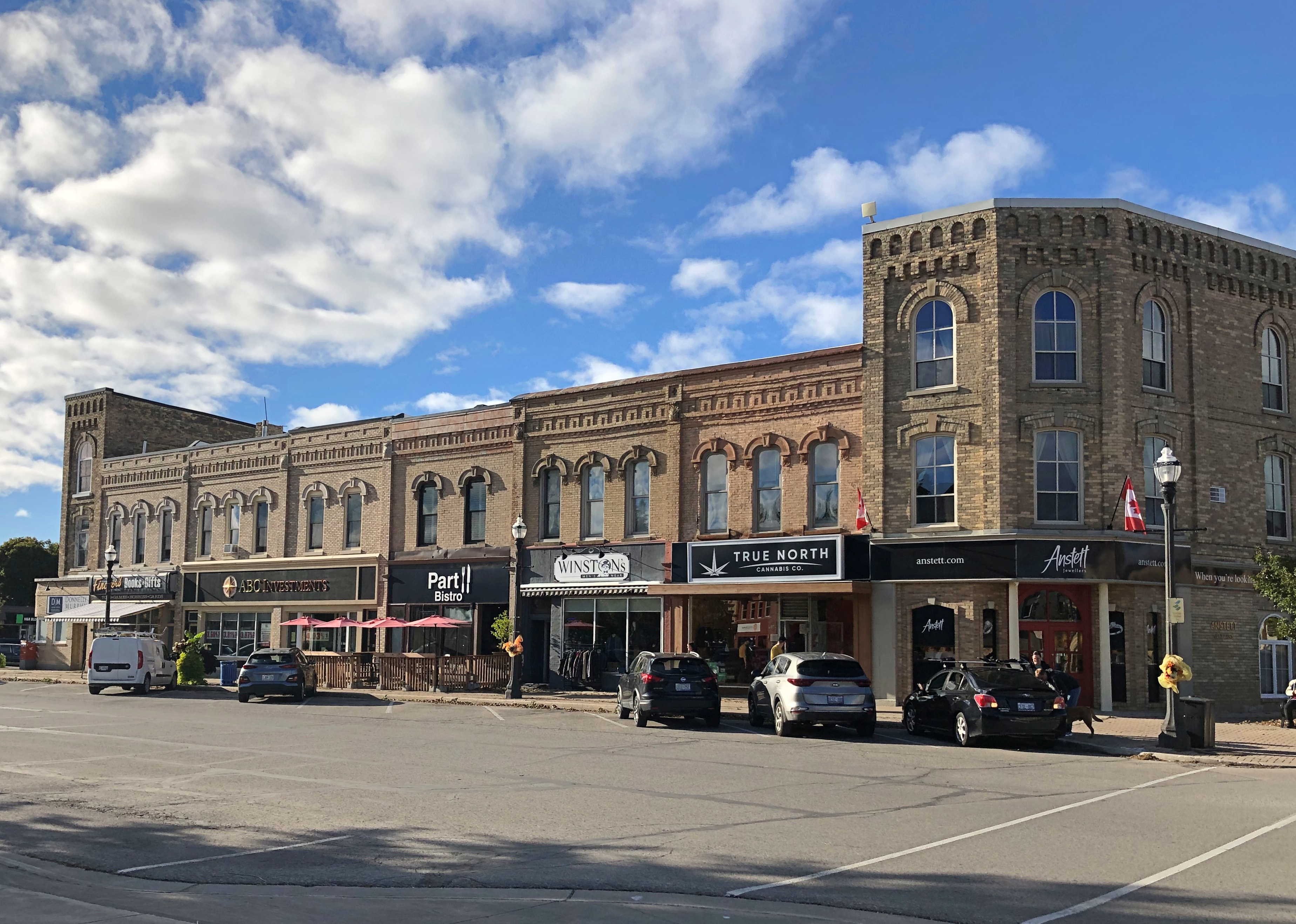
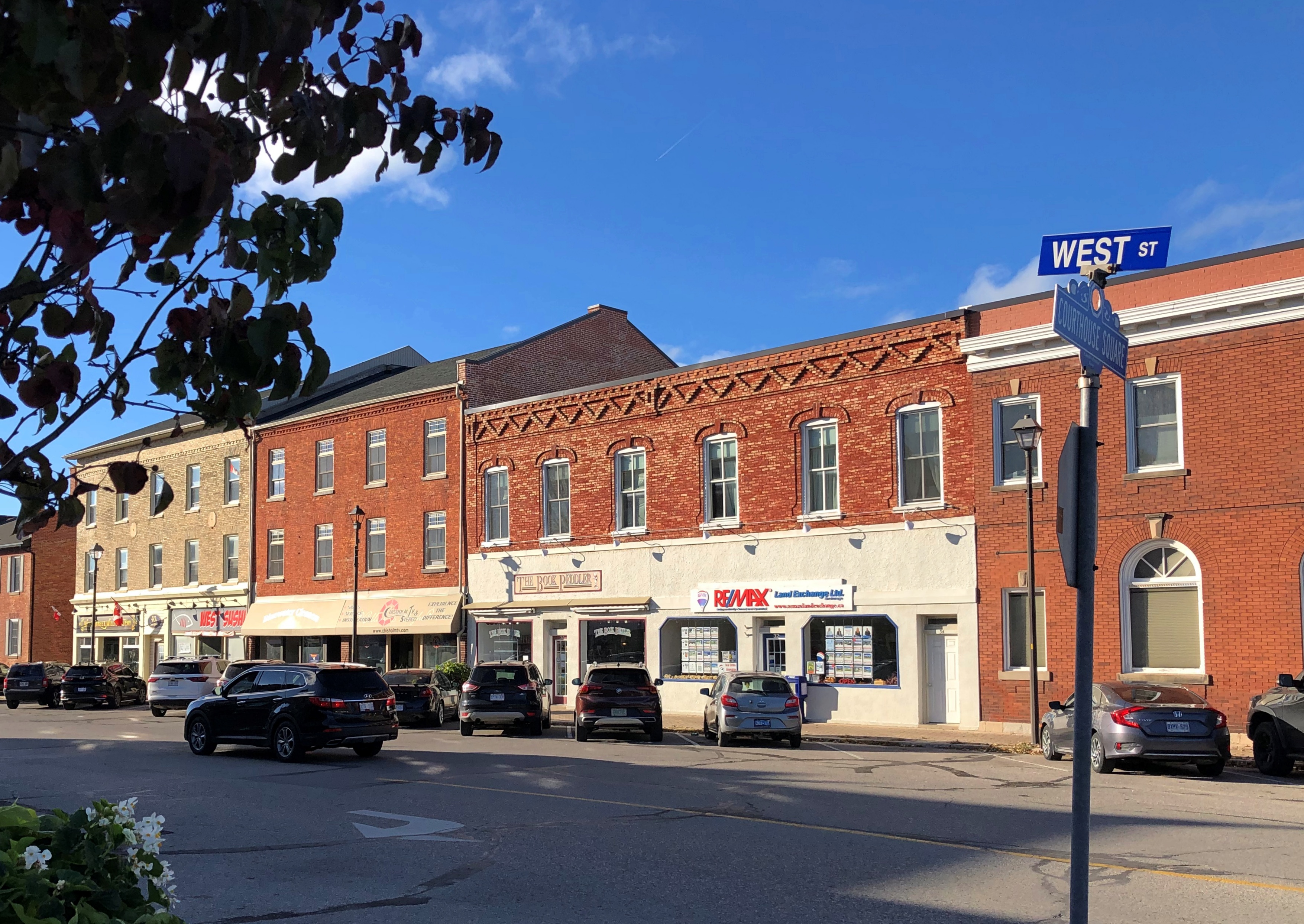
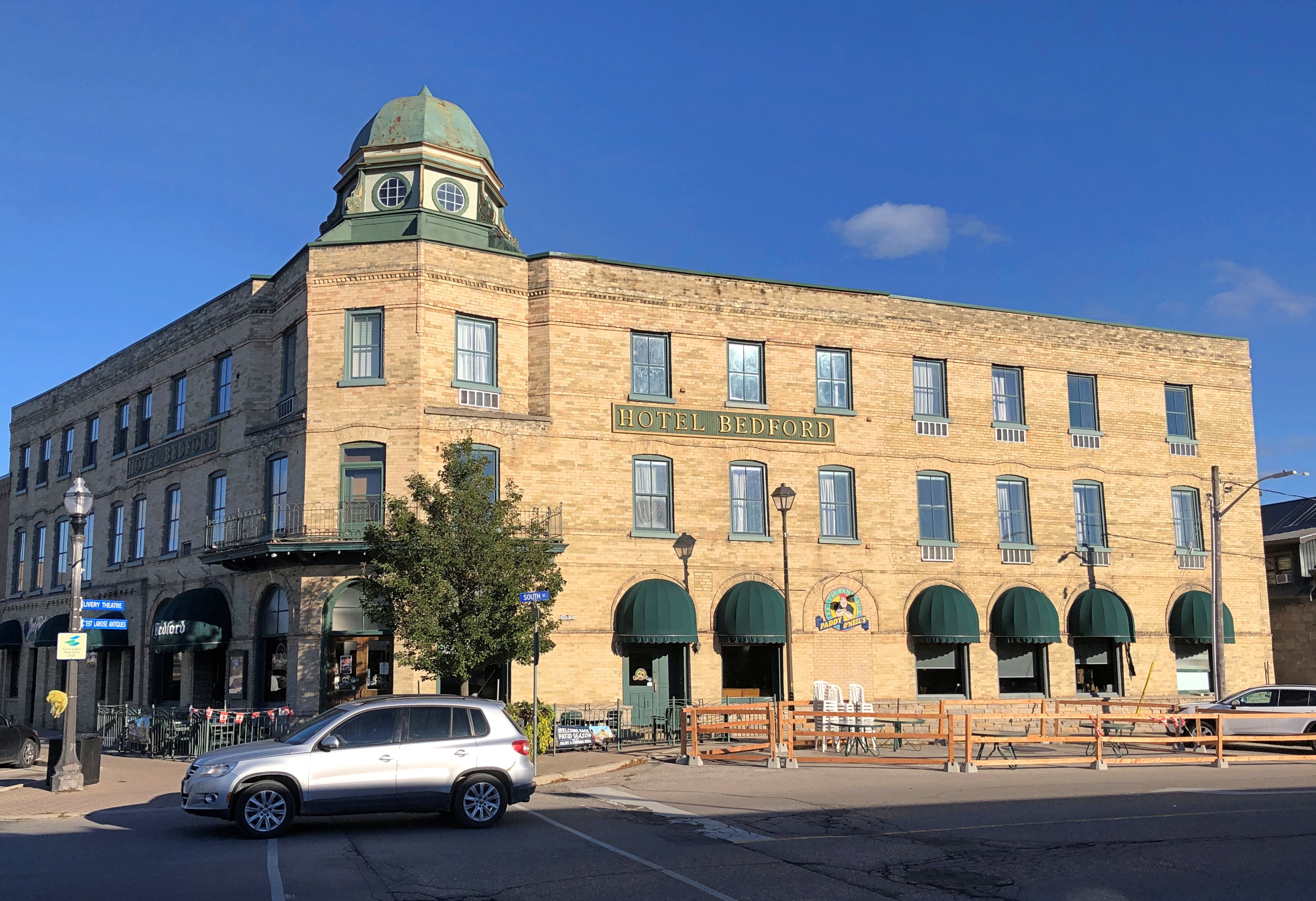
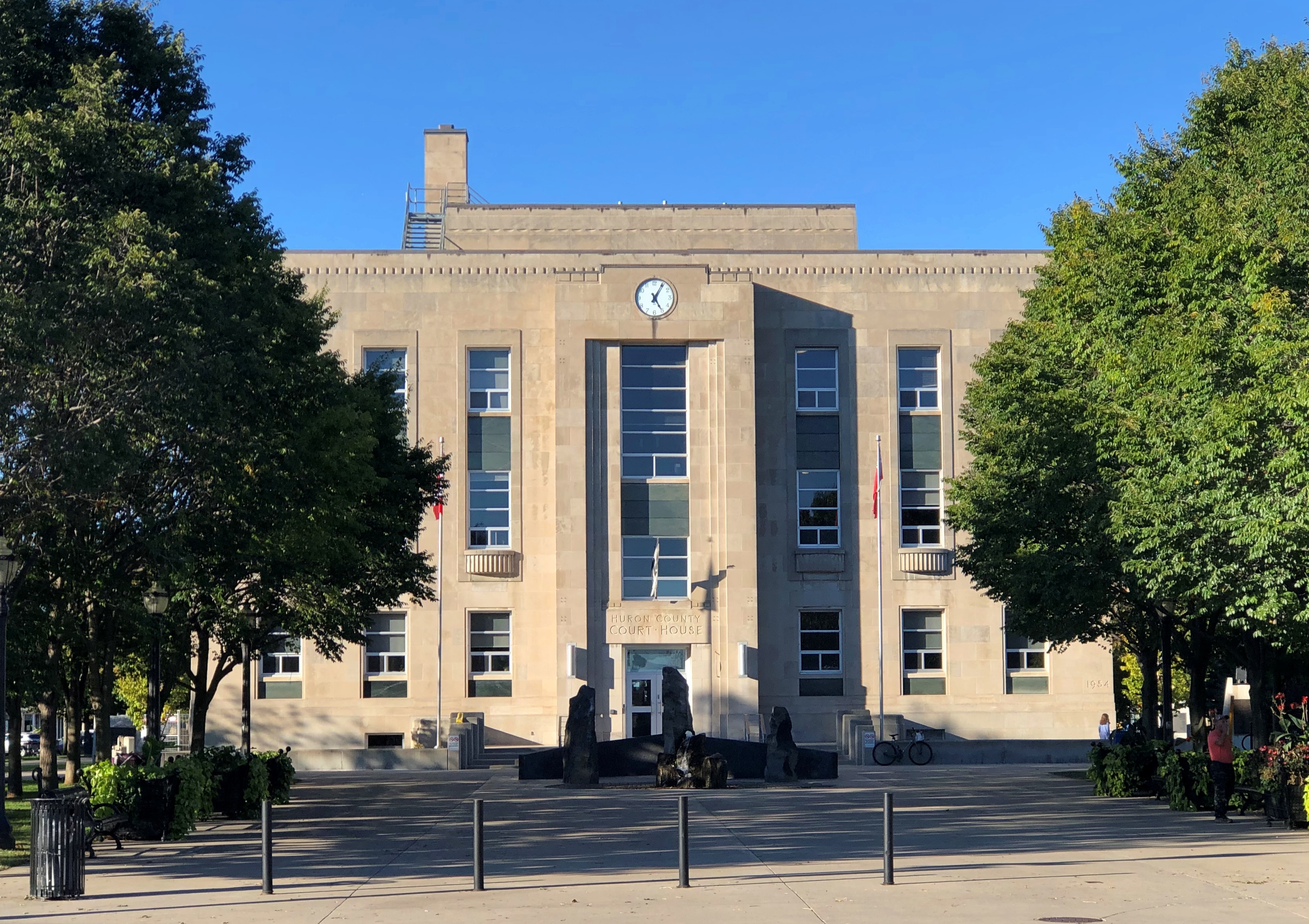
Further down the coast, Goderich bills itself as the Prettiest Town in Canada, at least on the postcards I bought there. I will say that the courthouse square has some fine vintage buildings.Goderich, Ontario Goderich, Ontario Goderich, Ontario

The severe Huron County Courthouse itself, a 1950s replacement for a building that burned down. Goderich, Ontario

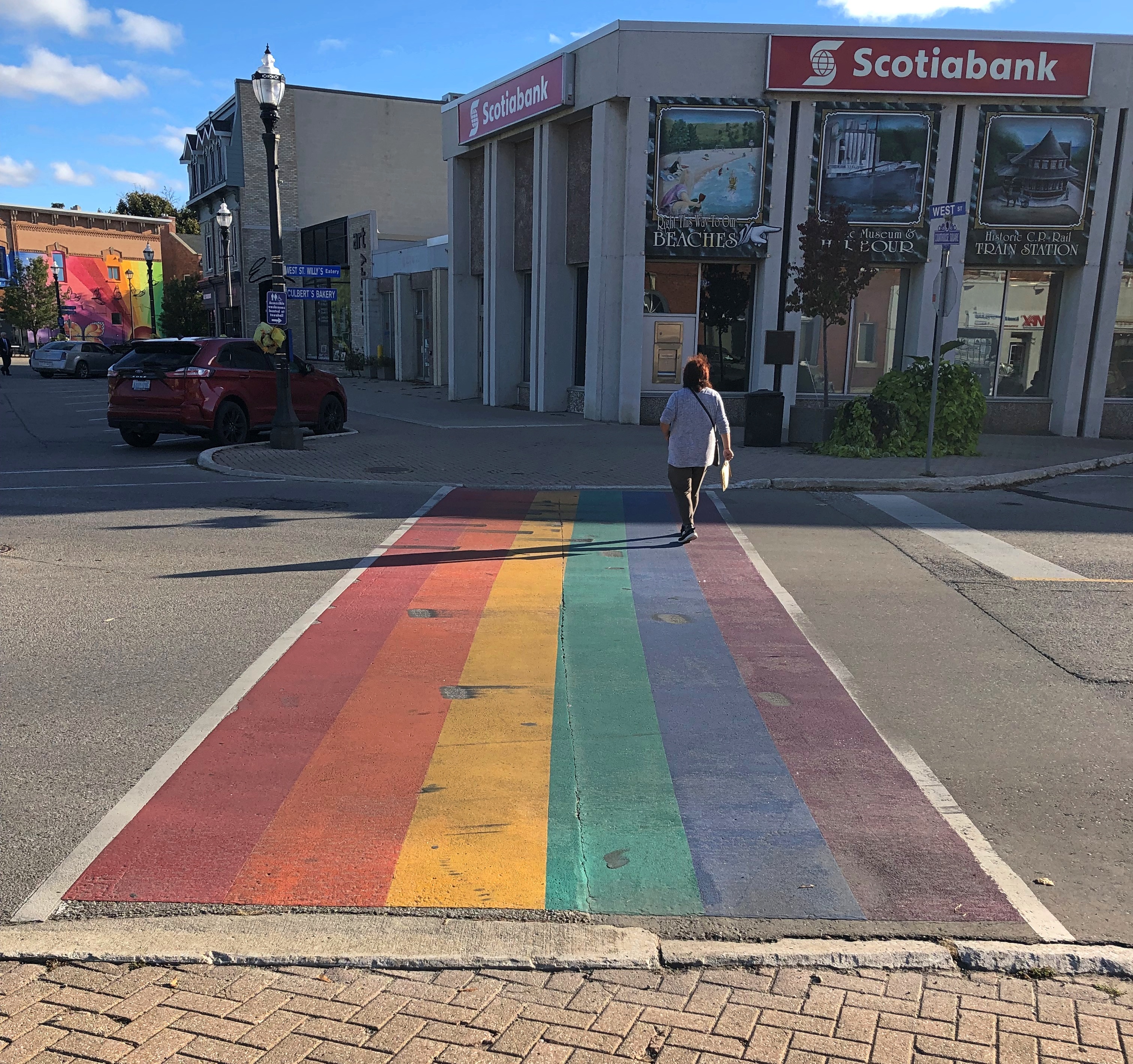
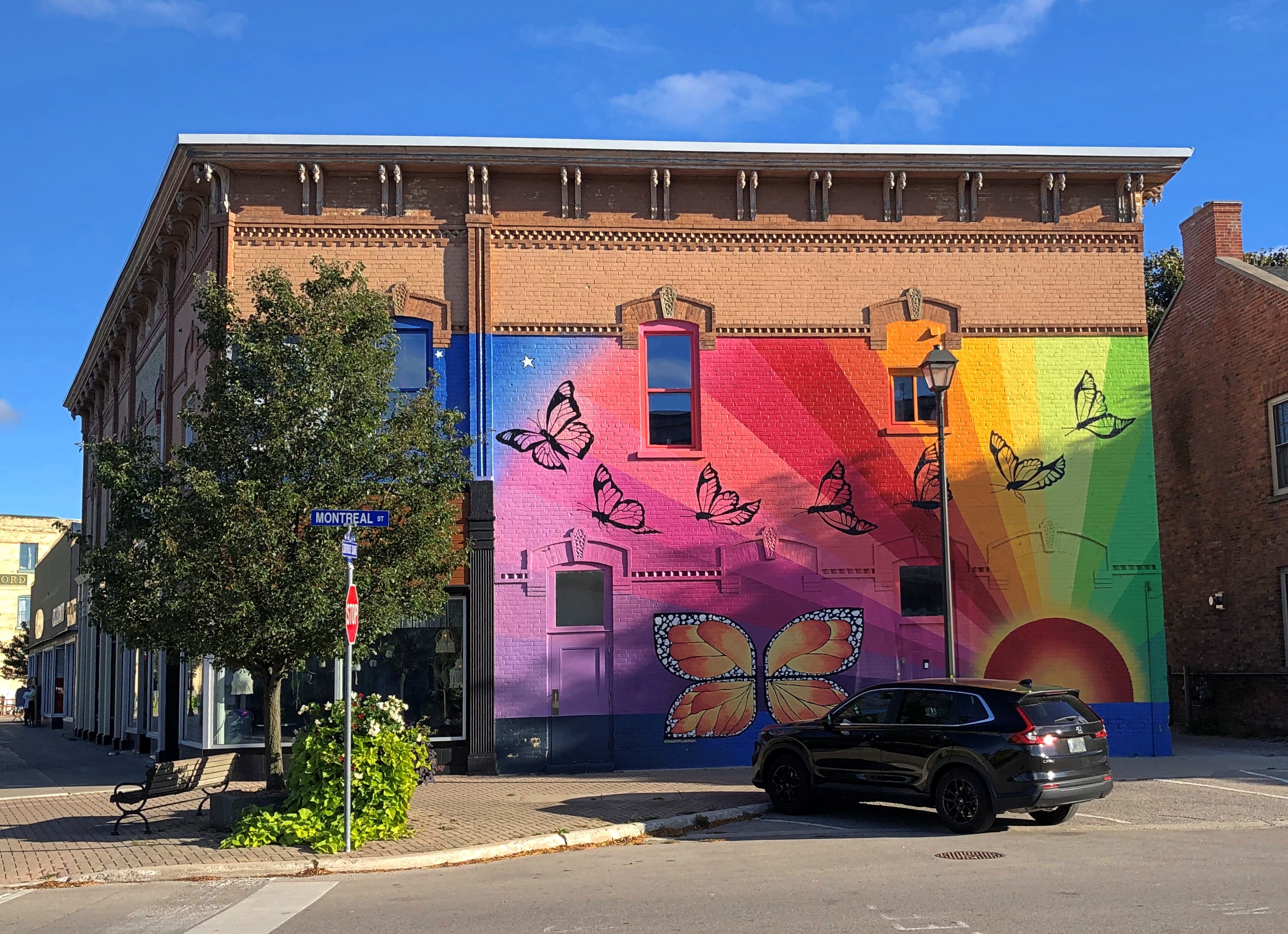
Nicely placed color on the square.Goderich, Ontario Goderich, Ontario

We walked around the square, which was pretty much our entire experience with Goderich that day, except for popping into the just-off-the-square Goderich Branch of the Huron County Library to (1) admire the building and (2) find a restroom. Waiting for Yuriko, I had a short talk with one of the staff, and found out that the building was originally a Carnegie library. The robber baron financed libraries in Canada too. Who knew?
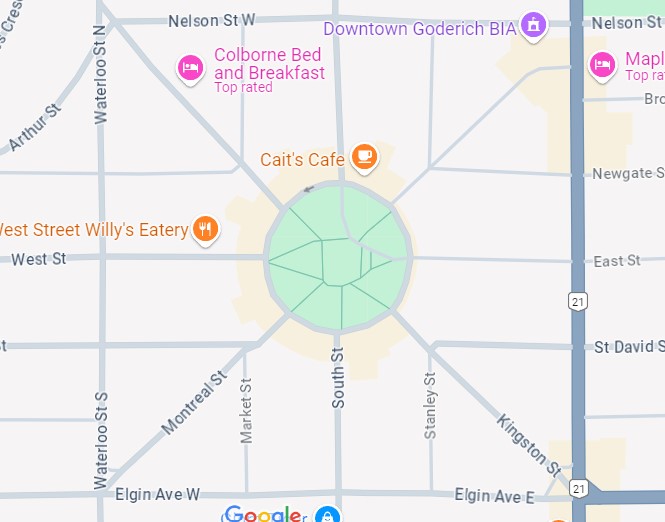
The square isn’t actually a square, but octagonal, with eight commercial blocks and roads radiating out in alignment with the eight points of a compass, according to Paul Ciufo, who wrote an audio guide to the square, as confirmed by Google Maps. Ciufo calls the design “unique in Canada.”

“The plan was chosen by John Galt, Superintendent of the Canada Company, and co-founder of Goderich in 1829,” Ciufo says. “Galt was a polymath — a businessman, world traveler, and friend of the Romantic poets. Galt wrote a biography of Lord Byron, and authored novels second in popularity only to Sir Walter Scott’s. Town planning fascinated Galt, and he yearned for more creative designs than the grid pattern favoured by the Royal Engineers.”

William “Tiger” Dunlop

William “Tiger” Dunlop

Another founder of the town was an even more colorful Scotsman, William “Tiger” Dunlop (d. 1848). The 19th century was quite the time for ambitious men looking to be colorful.

After serving with distinction as a doctor in the War of 1812, “[Dunlop] went… to India where, as a journalist and editor in Calcutta, he took a hand in forcing the relaxation of press censorship,” the Dictionary of Canadian Biography tells us. “His unsuccessful attempt to clear tigers from Sagar Island in the Bay of Bengal, in an effort to turn the place into a tourist resort, provided him with his famous nickname…”

Eventually Dunlop went to Upper Canada, involving himself heavily in efforts to settle the area as an official with the Canada Company.

“The year 1832 saw publication of his guide for emigrants, Statistical sketches of Upper Canada, an event that… helped put him back on public view,” the dictionary continues. “This engaging book, written under the pseudonym A Backwoodsman, mixes some (small) practical advice with much tomfoolery and fully exploits the author’s humorous persona. In his chapter on climate, for example, Dunlop says that Upper Canada ‘may be pronounced the most healthy country under the sun, considering that whisky can be procured for about one shilling sterling per gallon…’

“During the rebellion in Upper Canada in 1837-38, Dunlop raised a militia unit, whose nickname, The Bloody Useless, gives a clue to the important role it played…

“Dunlop is said to have done everything on a grand scale, and this is nowhere more evident than in his drinking. He kept his liquor in a wheeled, wooden cabinet called “The Twelve Apostles.” One bottle he kept full of water: he called it, naturally, ‘Judas.’ His reputation as a maker of punch ‘and other antifogmaticks’ was legendary with the Blackwoodians.”

Antifogmatic. I knew I got out of bed this morning for something; to learn such a fine word.

Bears!

Nosing around the other day, I was a little surprised to find a National Park Service web page called “Deaths in National Parks,” which details mortality in the wider universe of NPS properties, which is about 430 locations, not just the 63 formal national parks. For a six-year period including calendar years 2014 to 2019.

Among other factoids, taken verbatim: motor vehicle crashes, drownings, and falls are the top three leading causes of unintentional deaths in parks, in that order; half of medical deaths (50%) occurred while the individual was engaged in a physical activity (e.g., hiking, biking, swimming); suicides account for 93% of all reported intentional deaths.

People die while hiking and walking, and swimming and boating, in other words, but the number-one risk is driving. The graph for Unintentional Deaths by Cause affirms that auto accidents are indeed number one, but drowning and falls are popular ways to die, too. A very rare way to die, on the other hand – only three times in six years – is “wildlife.” Which could involve an angry bear, but maybe not. Could be a mountain lion or even be a poisonous snake.

Even so, we boldly took our hikes out West, at Glacier NP and later Grand Teton NP, armed with bear spray. So did a lot of other people. The distinctive shape of the can, with the spray nozzle up top, was attached to a lot of people’s belts or, as we did, in an exterior pocket of a backpack. Though attacks are very rare, better to have one, I figured. I don’t want my last thought to be about how statistically unlikely my death is. Bears aren’t known to care about statistics. Rather, I want my last thought to be, There, I just sprayed the bear! Doesn’t seem to be working…

This is quite the rabbit hole. (Bear cave?) Bear encounters used to be a worse problem, at least in Yellowstone NP. The site Bear Aware has an article called “History of Bear Feeding in Yellowstone National Park,” which includes some astonishing information.

“In the 1920s, the National Park Service began actively encouraging bear feeding as a way to attract visitors and generate revenue for the park,” the article explains. “Feeding stations were set up throughout the park, and rangers would even bring food to bears in order to ensure their presence in certain areas.

“As the popularity of bear feeding grew, so did concerns about the impact on the bears and their natural behavior. Bears became increasingly habituated to humans and dependent on handouts, leading to a rise in aggressive behavior and dangerous interactions with park visitors.”

By 1970, the NPS had figured out that decades of feeding bears was a bad idea, and ended the practice.

“Since the 1960s, the recorded number of negative encounters between humans and bears has dropped from 48 to 1 annually,” the article notes. I like that term, “negative encounters.” I suppose just seeing the bears at a distance, and safely moving away, as we did at Glacier, would be a “positive encounter,” or maybe neutral.

But do Yellowstone bears, in as much as they remember their history — maybe more that we realize — recall the days of ranger-sanctioned feeding with warm nostalgia? Stealing picnic baskets was no big deal, the older bears tell the younger ones. Yogi was a role model.