Glacier National Park

“Did you see the weather forecast for today?” the young-faced NPS ranger said to us at the Many Glacier entrance station of Glacier National Park on August 23. Skies were clear that morning and the air had the makings of a warm day, but I confessed that we hadn’t. That was a bit of carelessness, considering that we were planning to take a hike. I think he wanted to tell us that, but thought better of it.

“There might be a thunderstorm this afternoon,” he continued politely. “Or not. Weather’s unpredictable here.”

I thanked him and we went on our way. What to do with that information, anyway? Cower somewhere dry? No. The hike was on.Glacier National Park
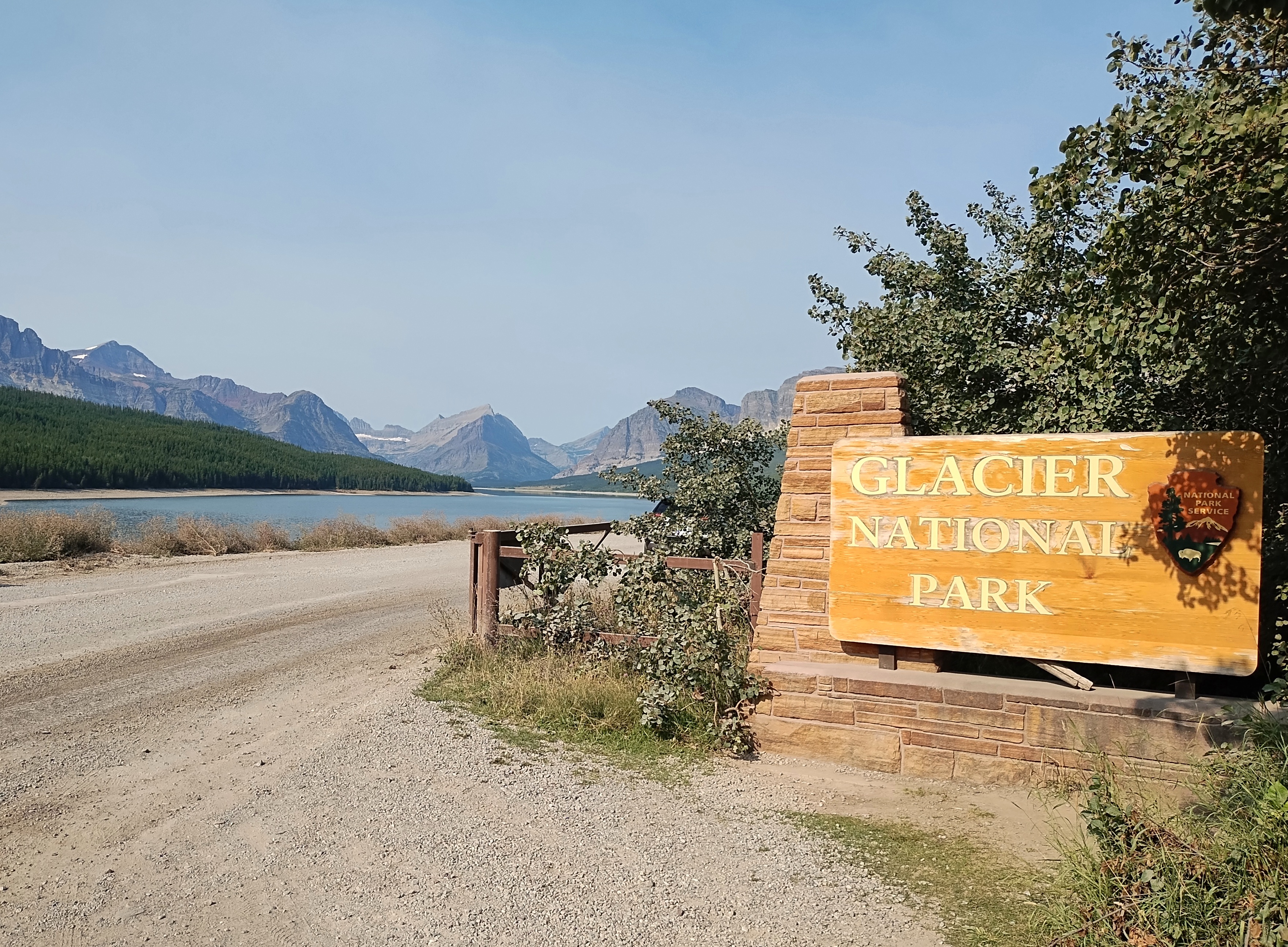
Another way to refer to Glacier is Waterton-Glacier International Peace Park, since the much smaller Waterton Lakes NP, a Parks Canada unit, is just north of Glacier on the other side of the Canadian border. Single park, my foot. You still need a passport to go to Waterton, at least if you drive, and I assume you pay separate admission. Still, the road to Waterton has a cool name: Chief Mountain International Highway (Montana 17 and then Alberta 6).

The part of Glacier NP we first visited was about 20 miles south of the border, and I think the closest we came to Canada on this trip. We had our passports, in case we wanted to go. It’s good to have options. But we didn’t have the energy for the rigmarole of two border crossings.

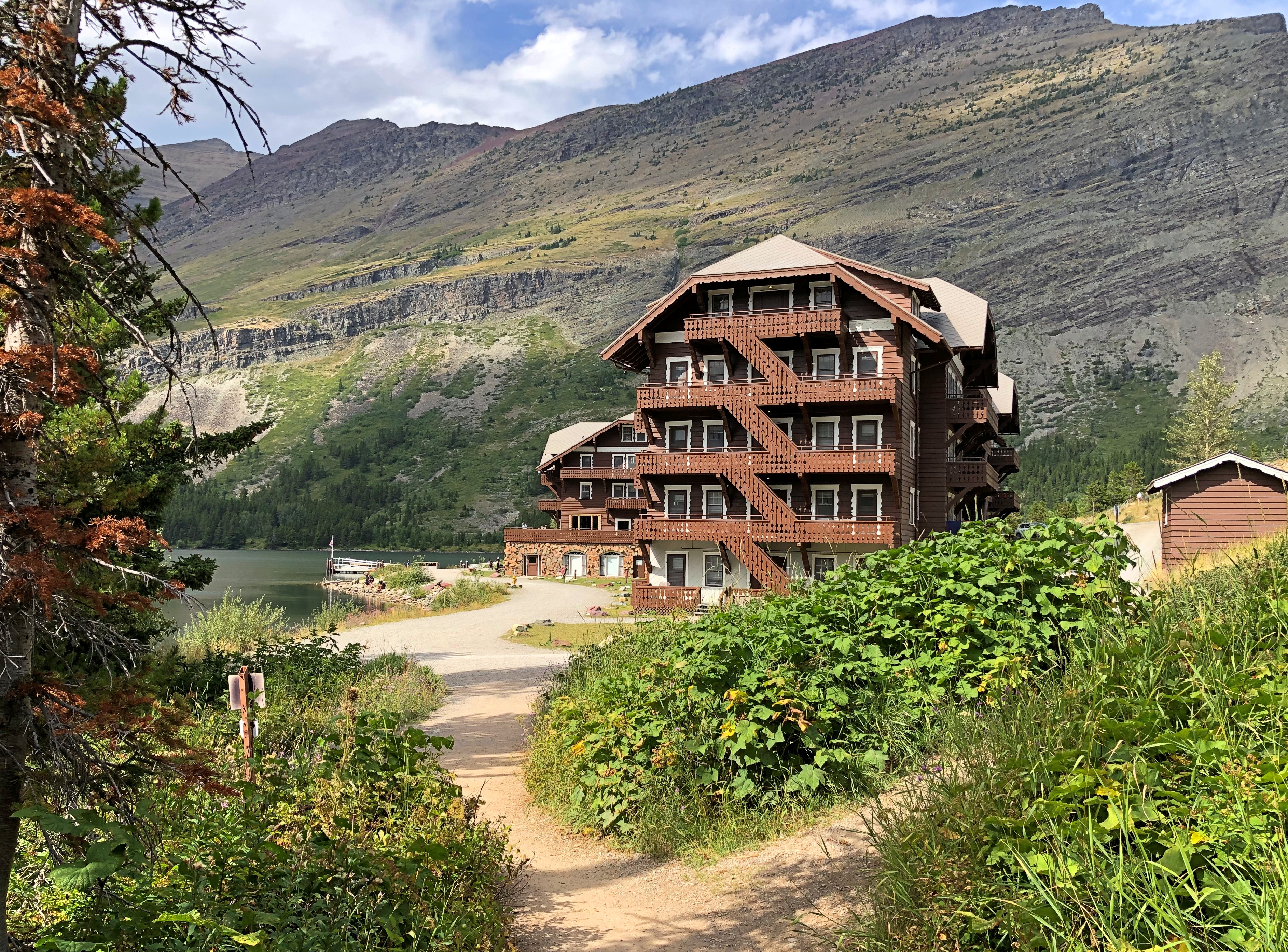
A short drive from the Many Glacier entrance is the Many Glacier Hotel.Glacier National Park
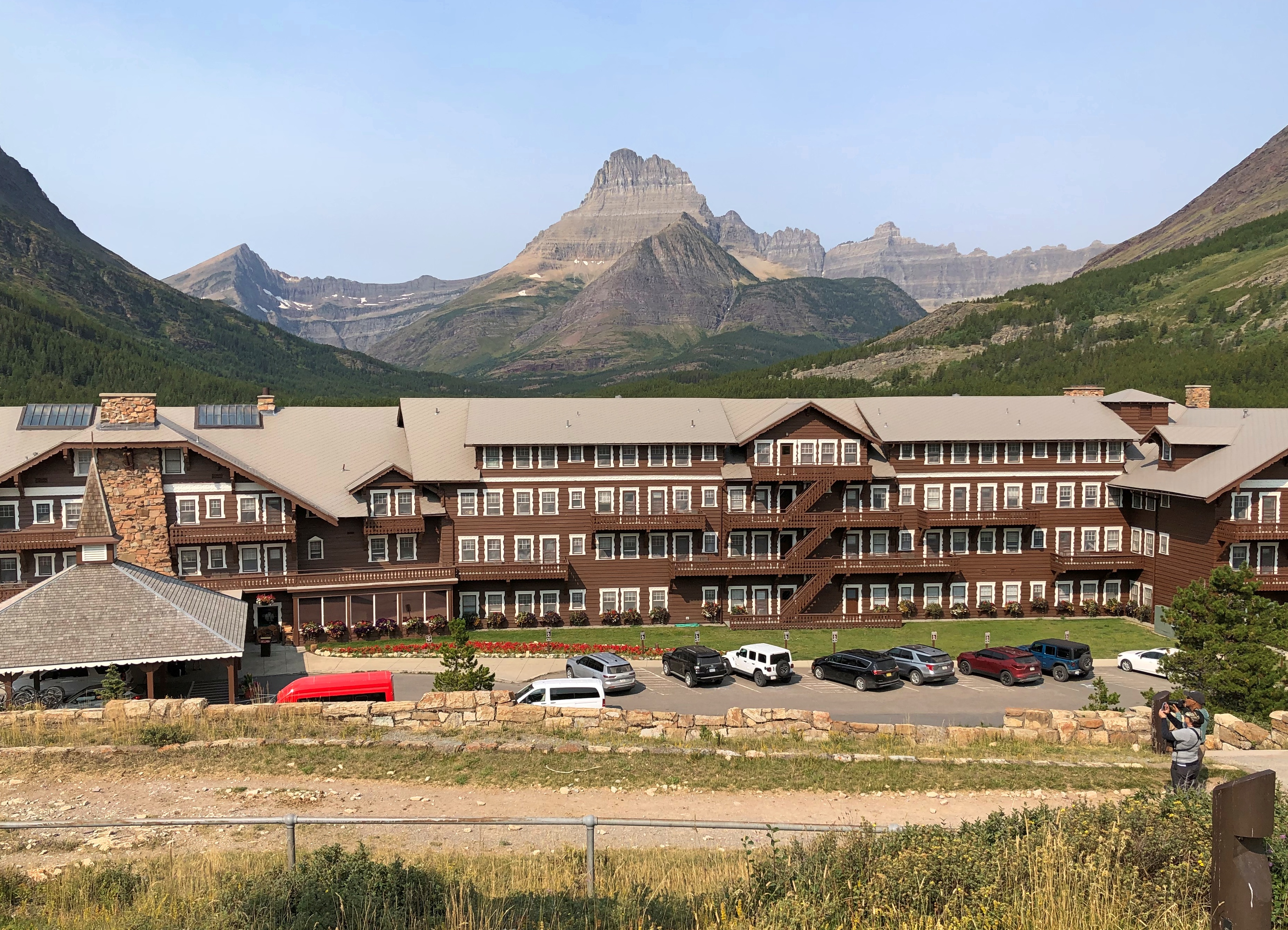
The hotel has views. Looking out on Swiftcurrent Lake.Glacier National Park Glacier National Park
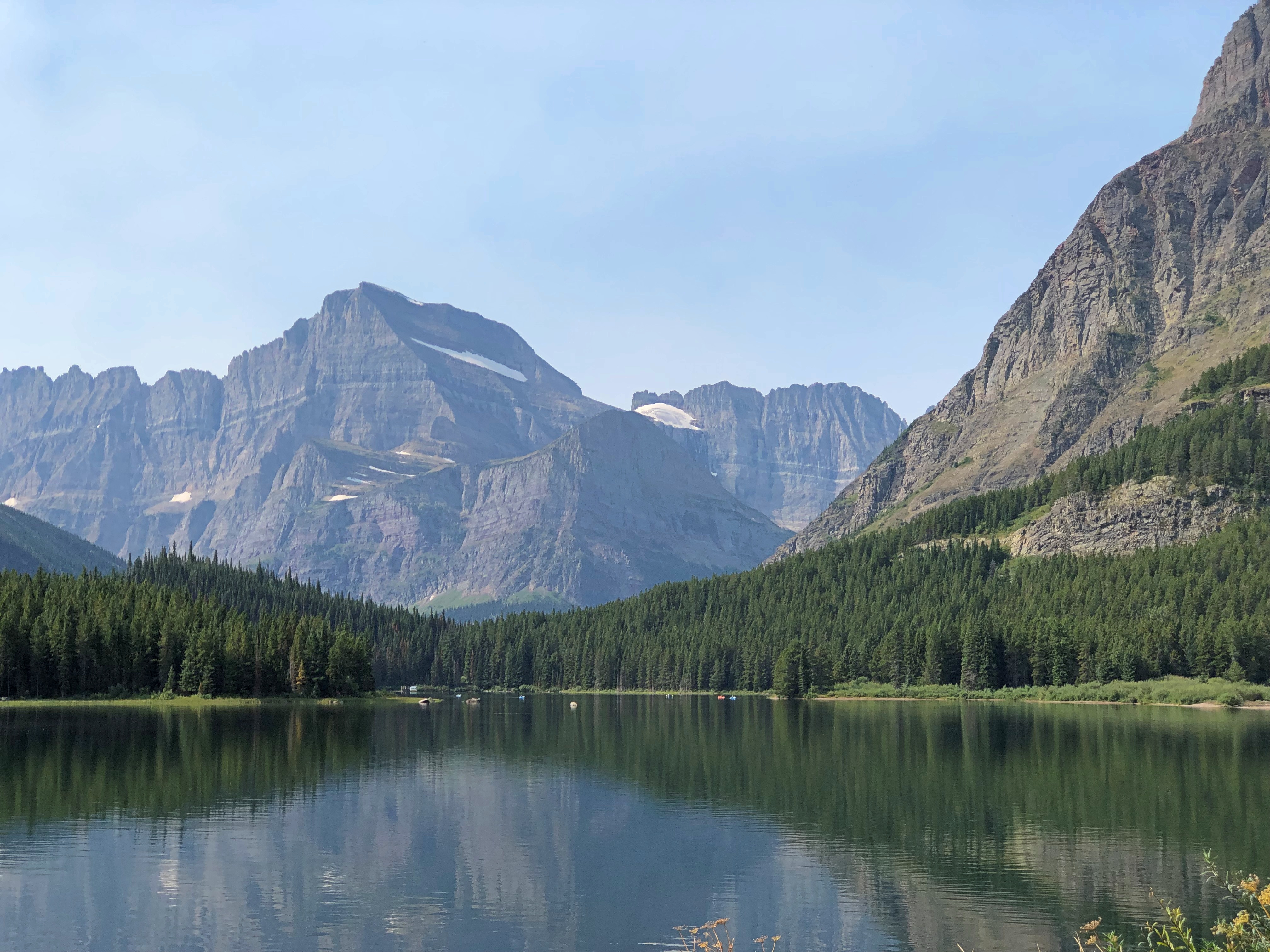
Many Glacier Hotel dates from the 1910s, the handsome sort of place railroads were building at the time. Swiss style, to go with the notion of Glacier NP as the Switzerland of America. These days it is priced as a luxury property, only open in the summer. This year, it closed just this week. During the winter, I suppose, management hires a fellow like Jack Torrance as a caretaker. Well, maybe not quite like him.

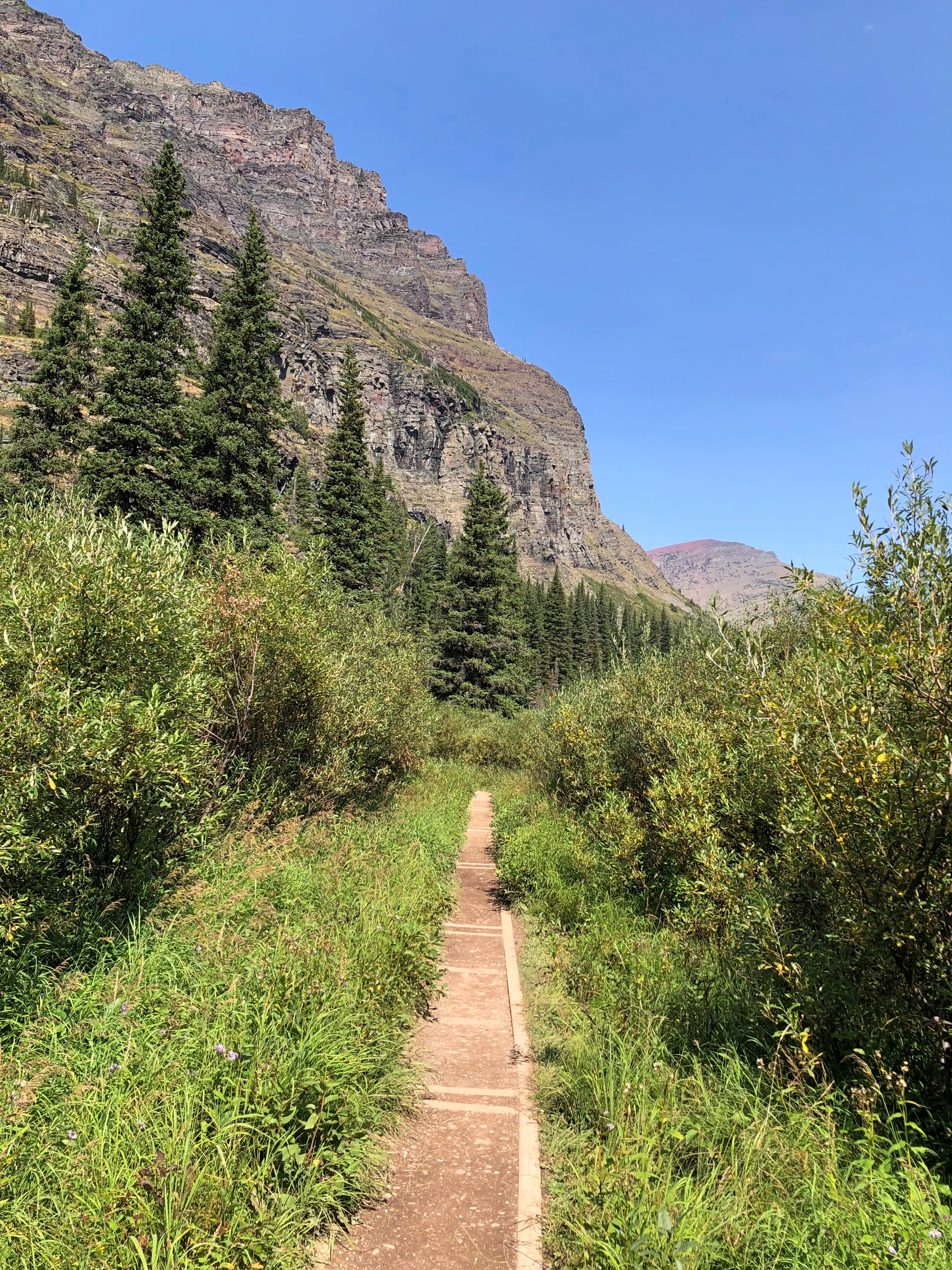
A trail starts the hotel and goes around Swiftcurrent Lake, as well as the adjoining Josephine Lake, making connections with harder trails that lead into the mountains. Packing water, hats, walking sticks, plastic ponchos, and bear spray obtained at a big-box retailer in Helena, we headed off to do a circuit around Josephine Lake. To get there, you hike around the southern edge of Swiftcurrent.Glacier National Park Glacier National Park
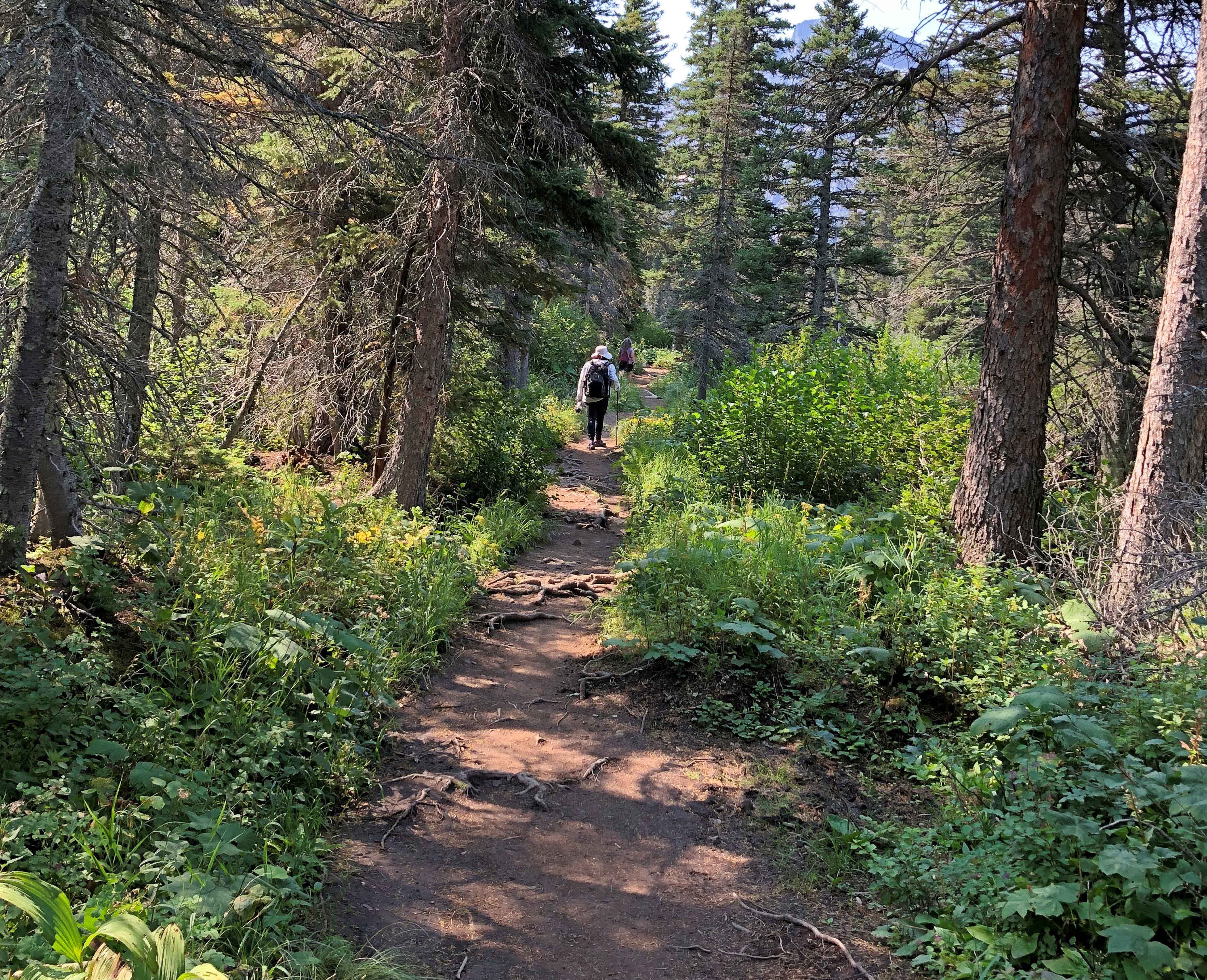
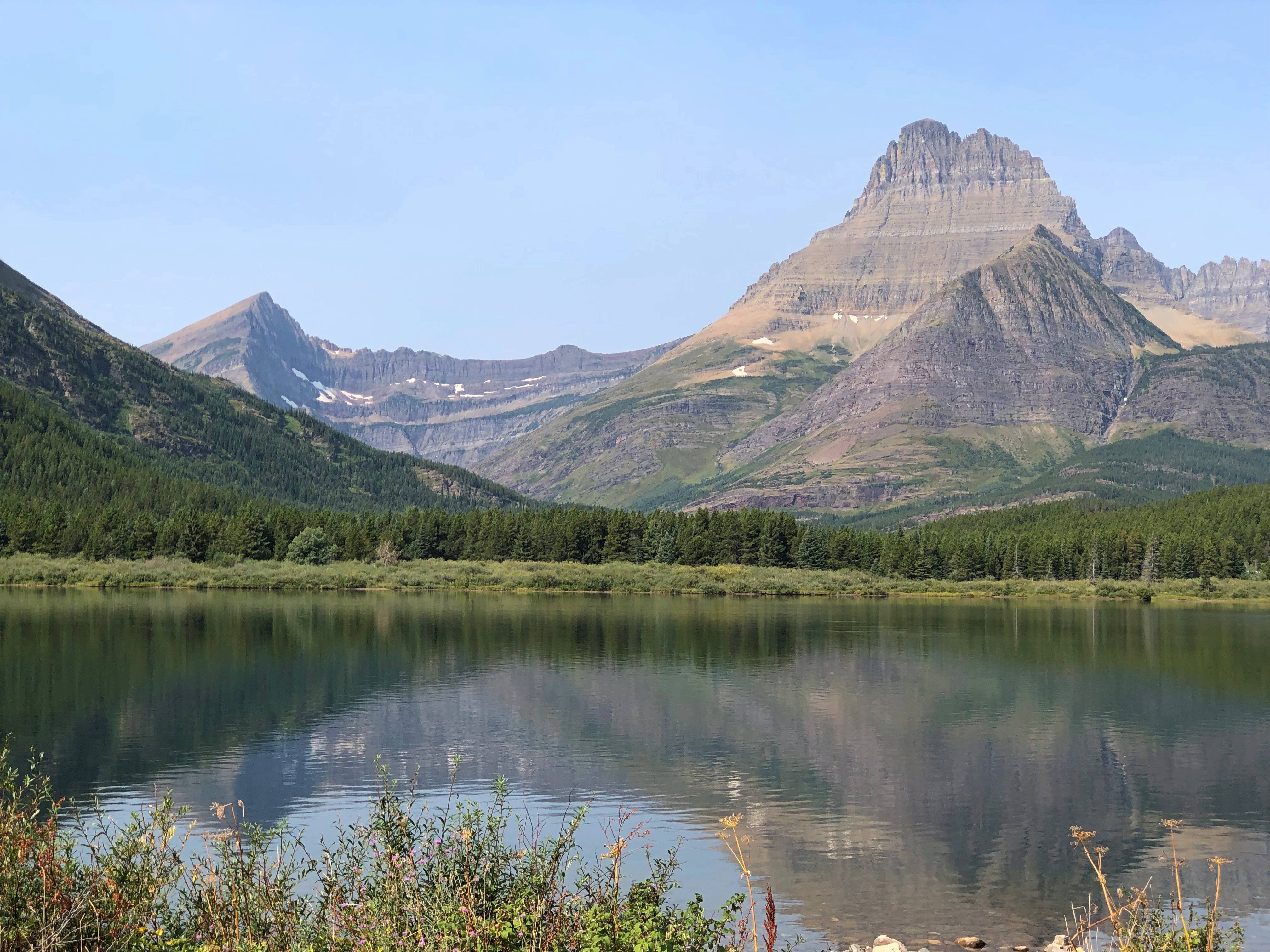
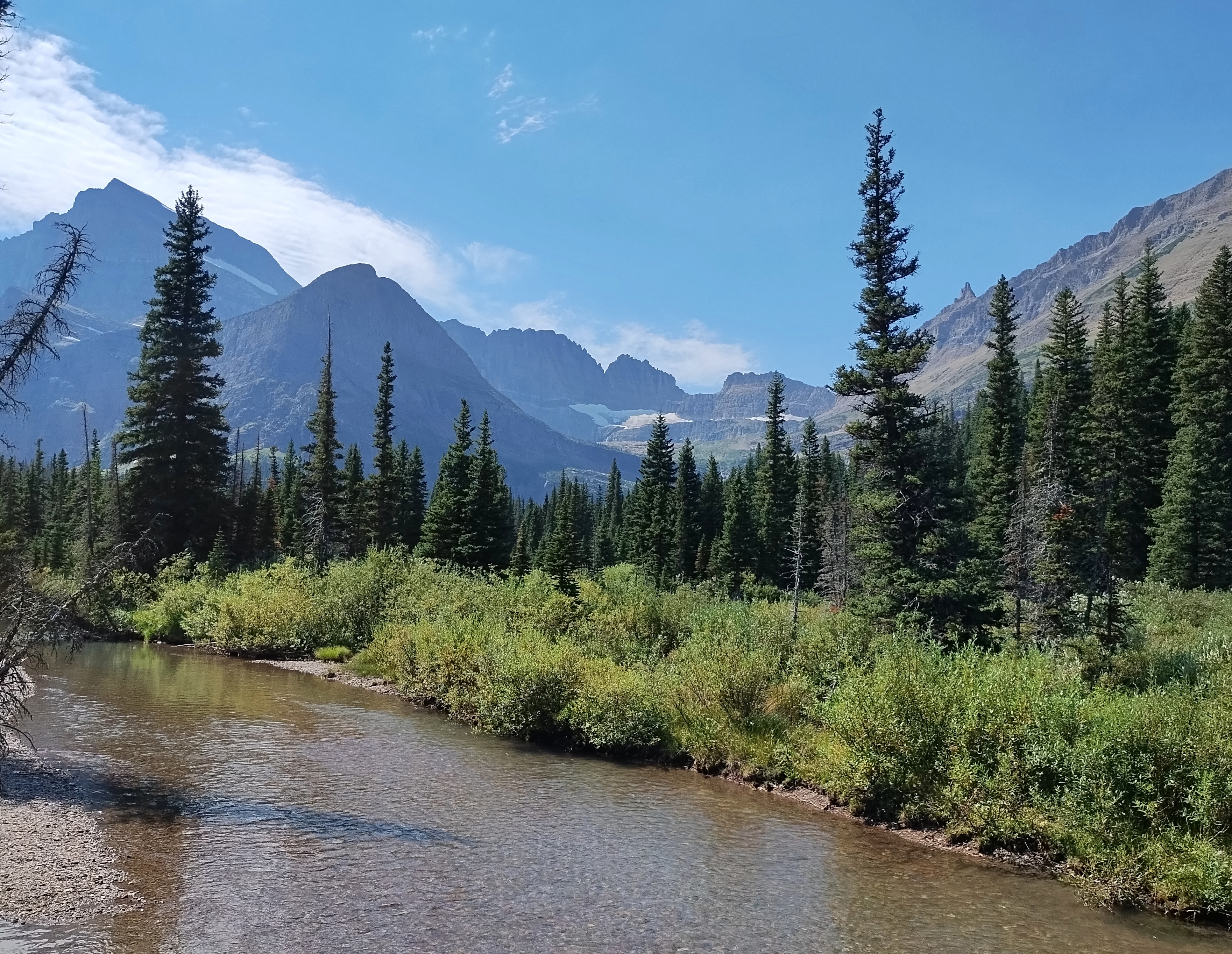
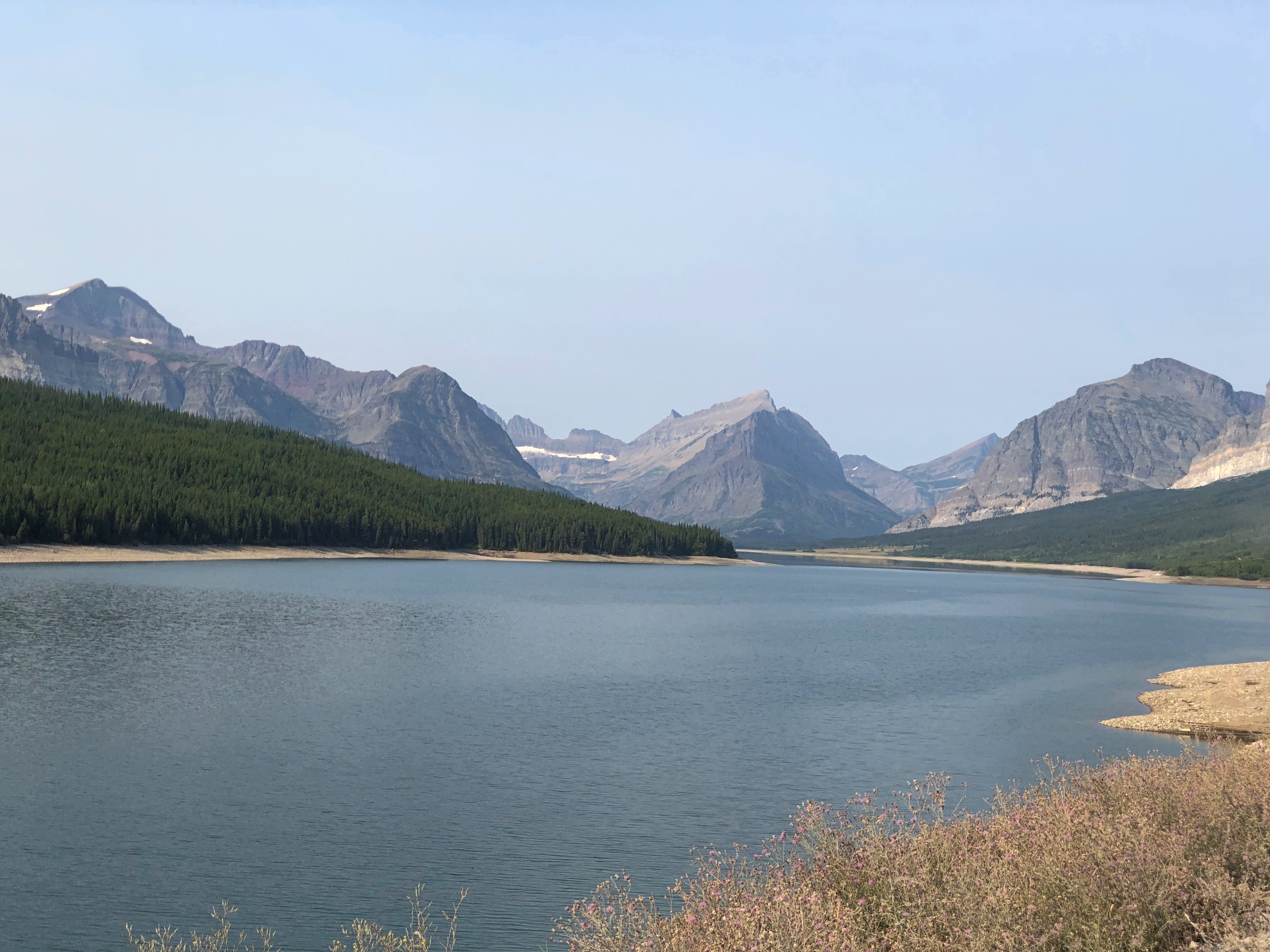
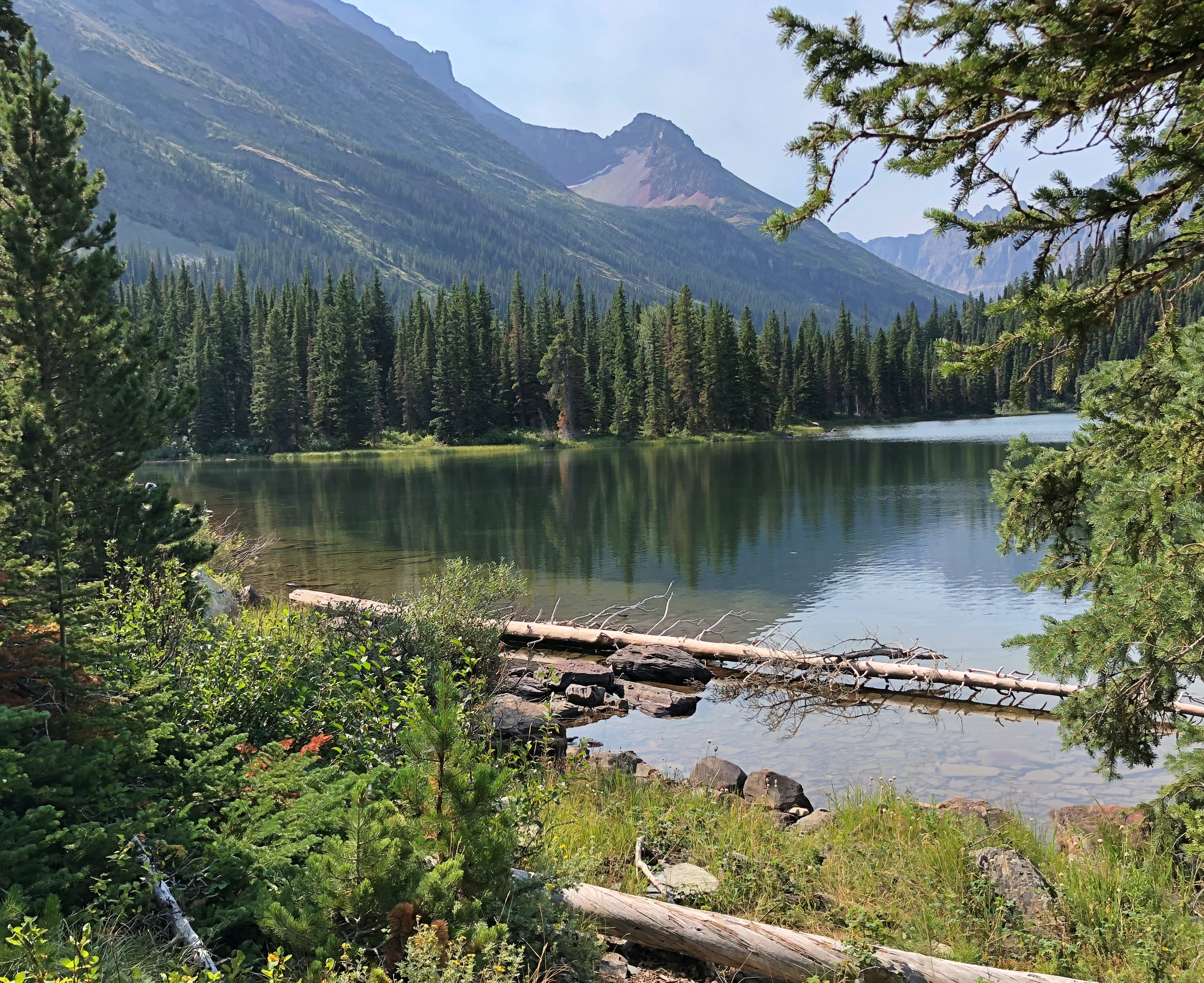
It ended up being about a four-mile walk, with views of the mountains.Glacier National Park Glacier National Park
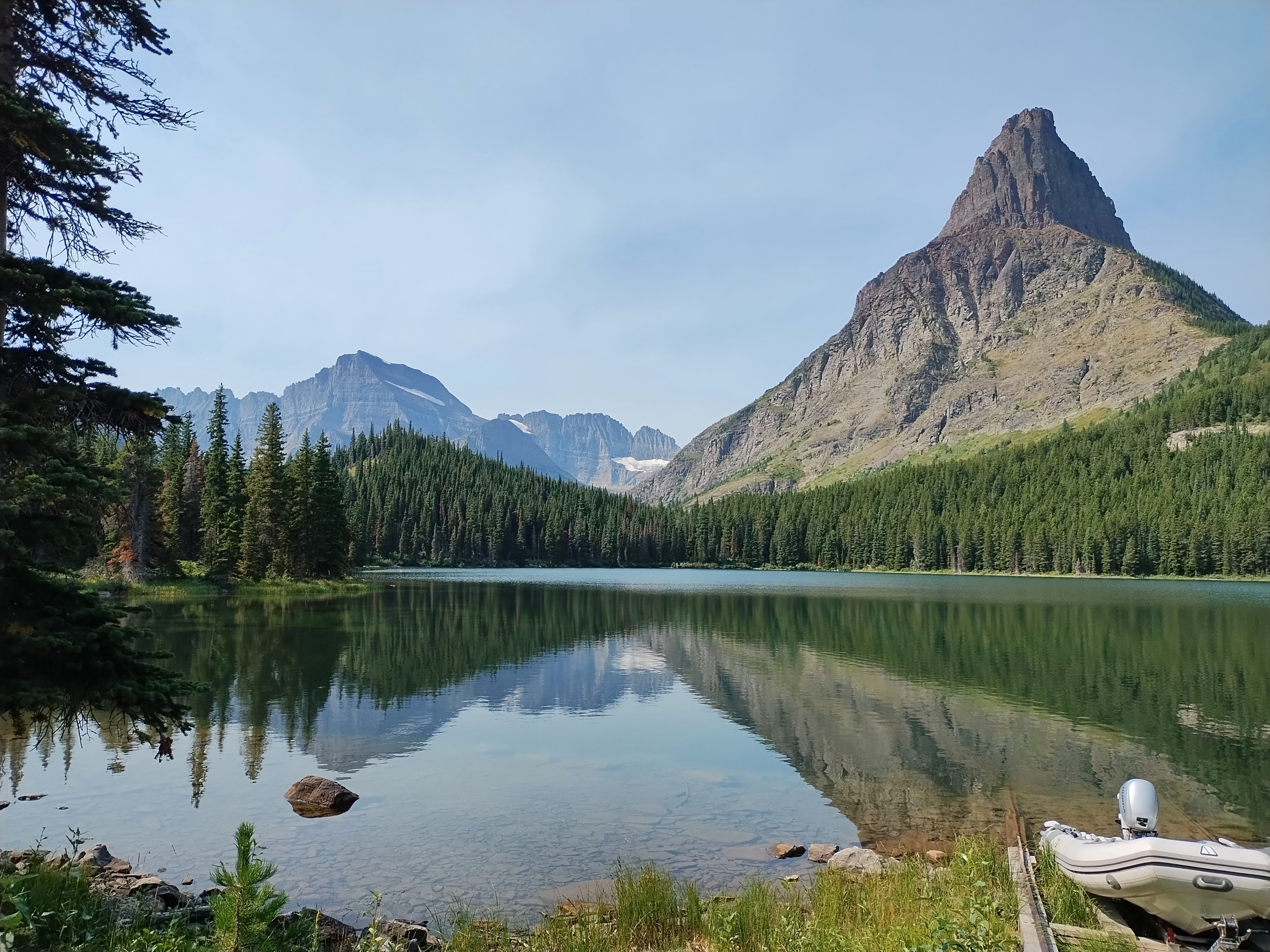
Anyone with a smartphone can now do homages to Ansel Adams. Pretty good ones, too.Glacier National Park
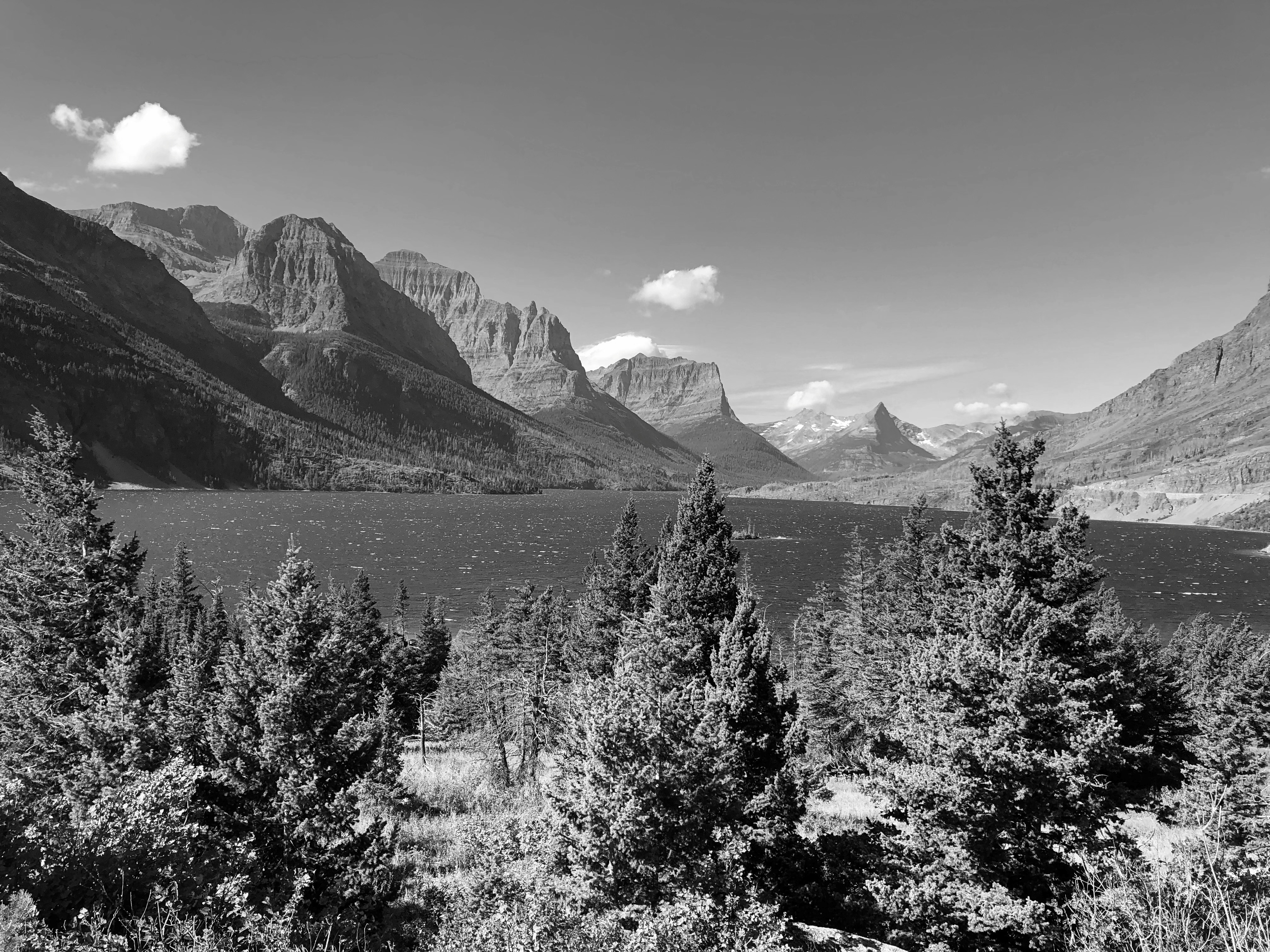
There are still glaciers in Glacier NP, but they are receding. One forecast of their total disappearance is by 2030.Glacier National Park
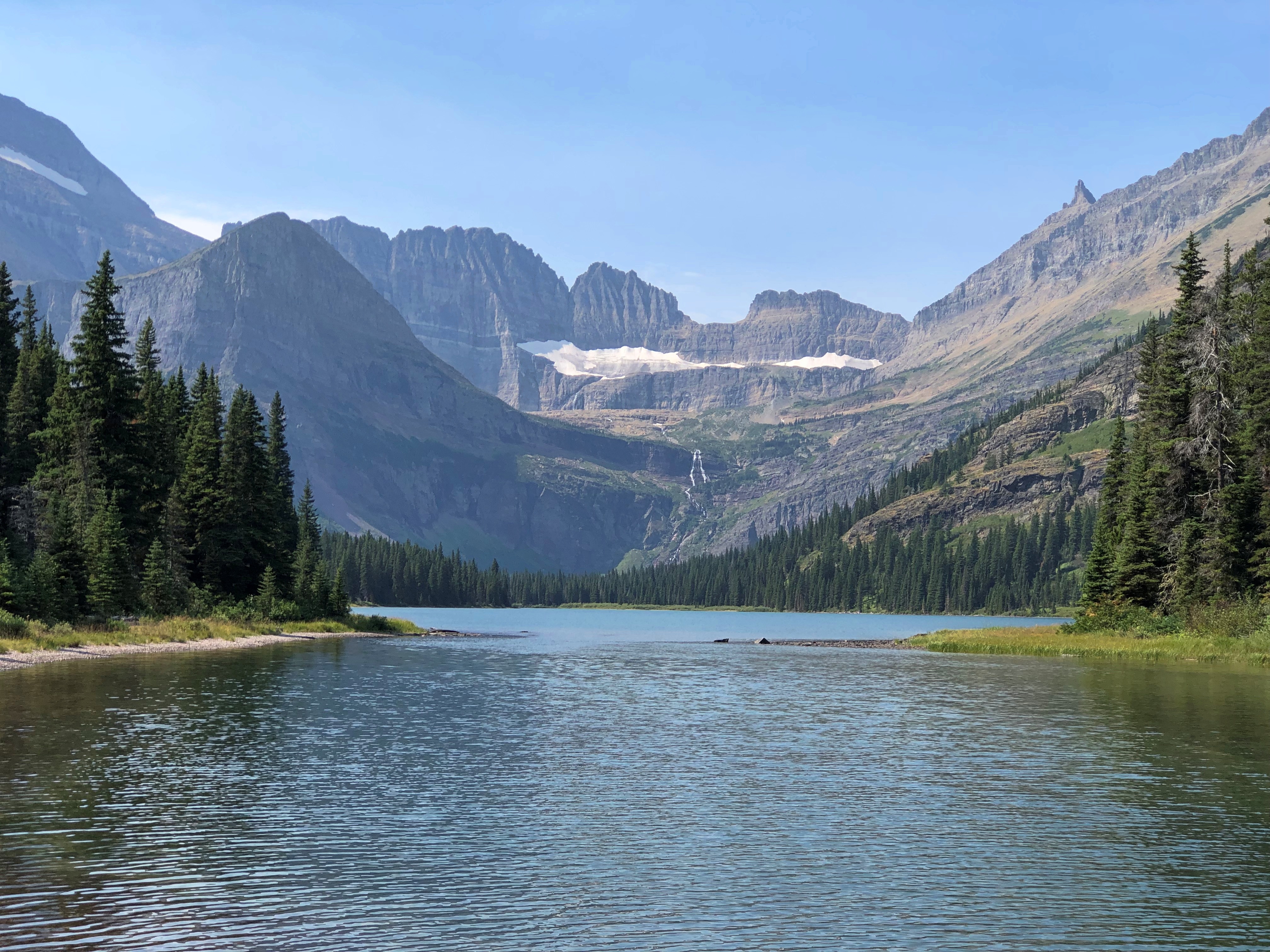
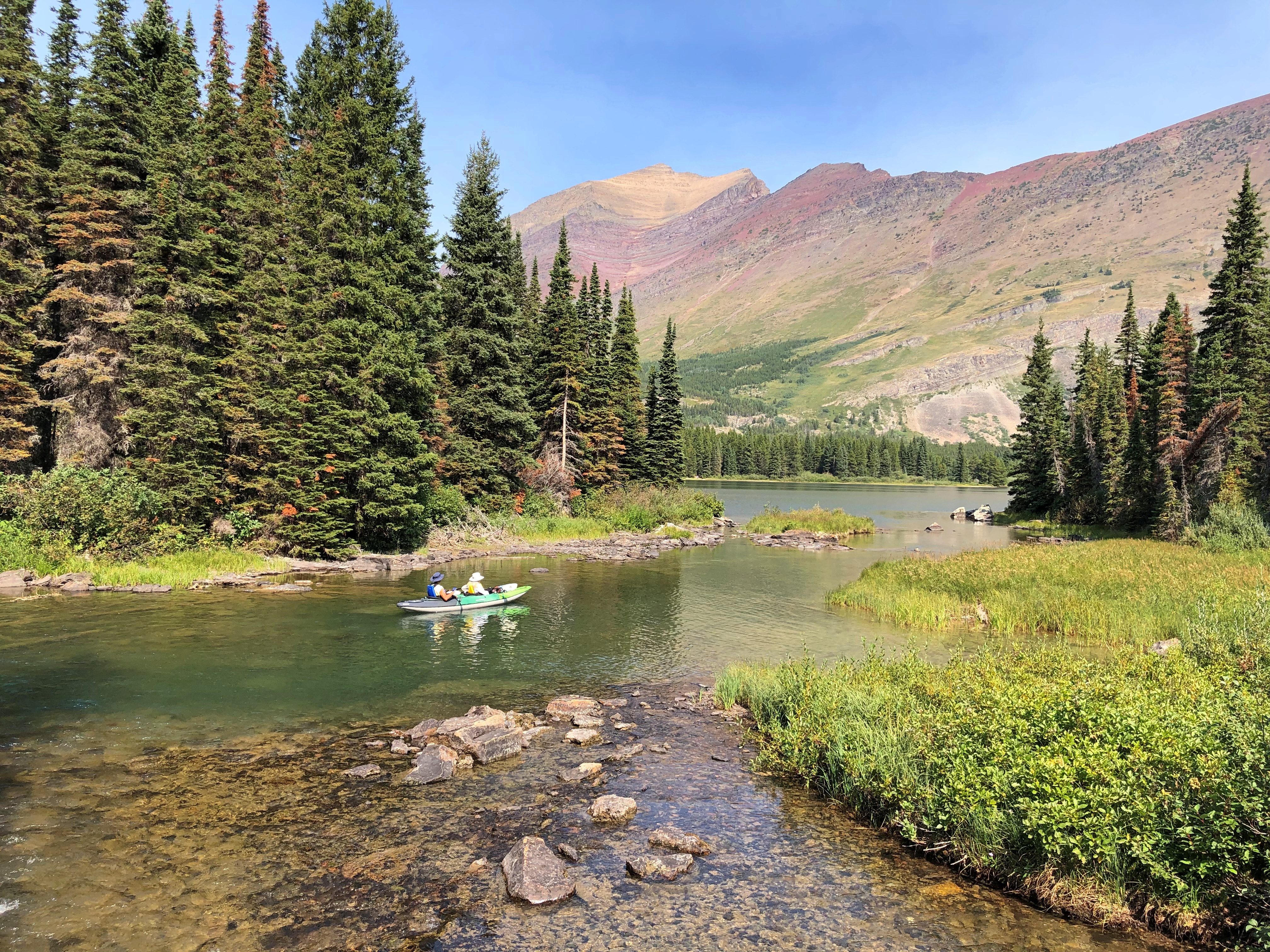
Views of the water.Glacier National Park Glacier National Park Glacier National Park

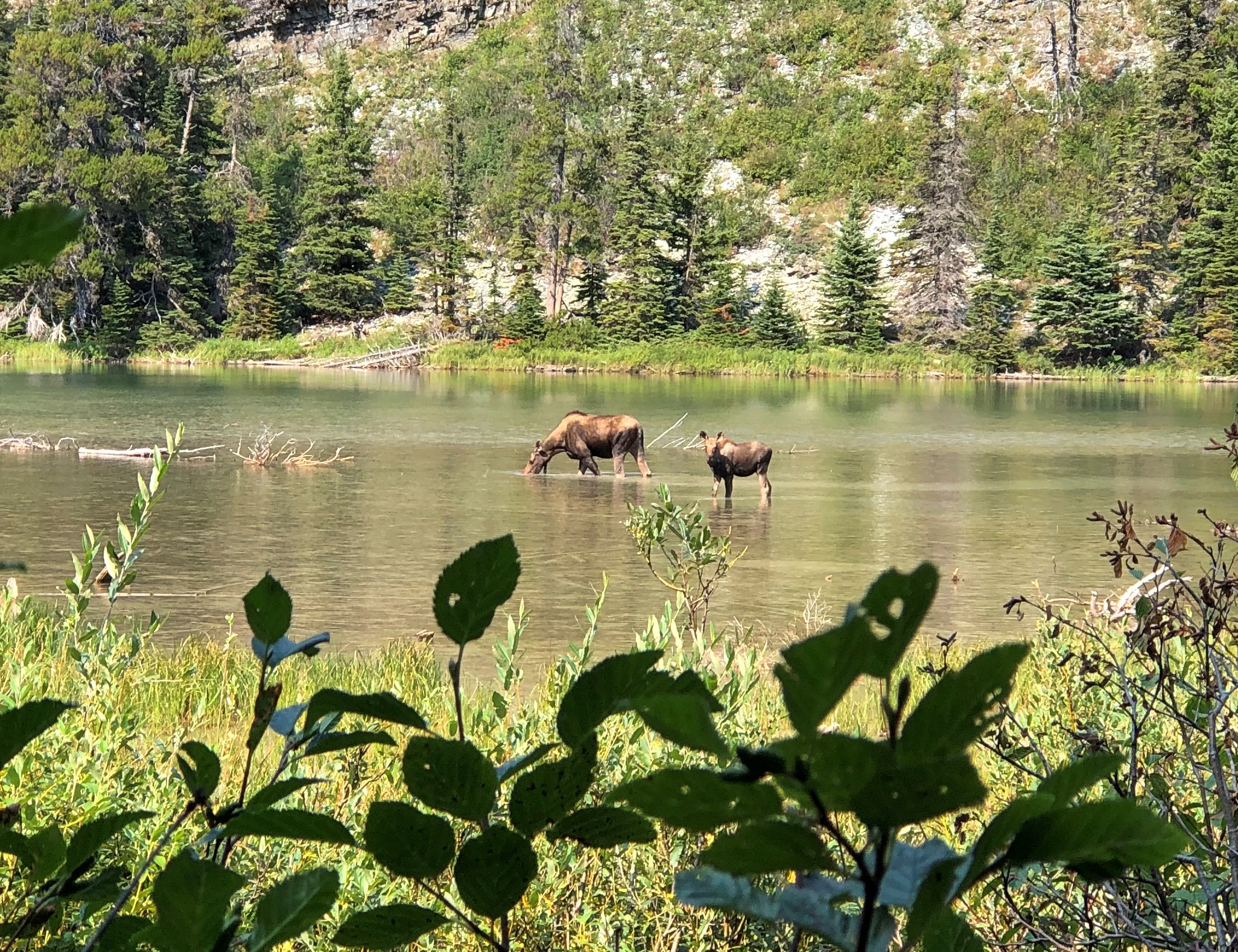
Møøse!A moose bit my sister once

Toward the end of the walk around Lake Josephine, we spotted bears frolicking in the water, too. At just the right distance. That is, pretty far away, especially because it was a mother and two cubs.

Eventually, the trail leads back to the hotel. We were fairly tired by then, so it was a good thing to see.Many Glacier Hotel
After the hike was over, we saw bison.

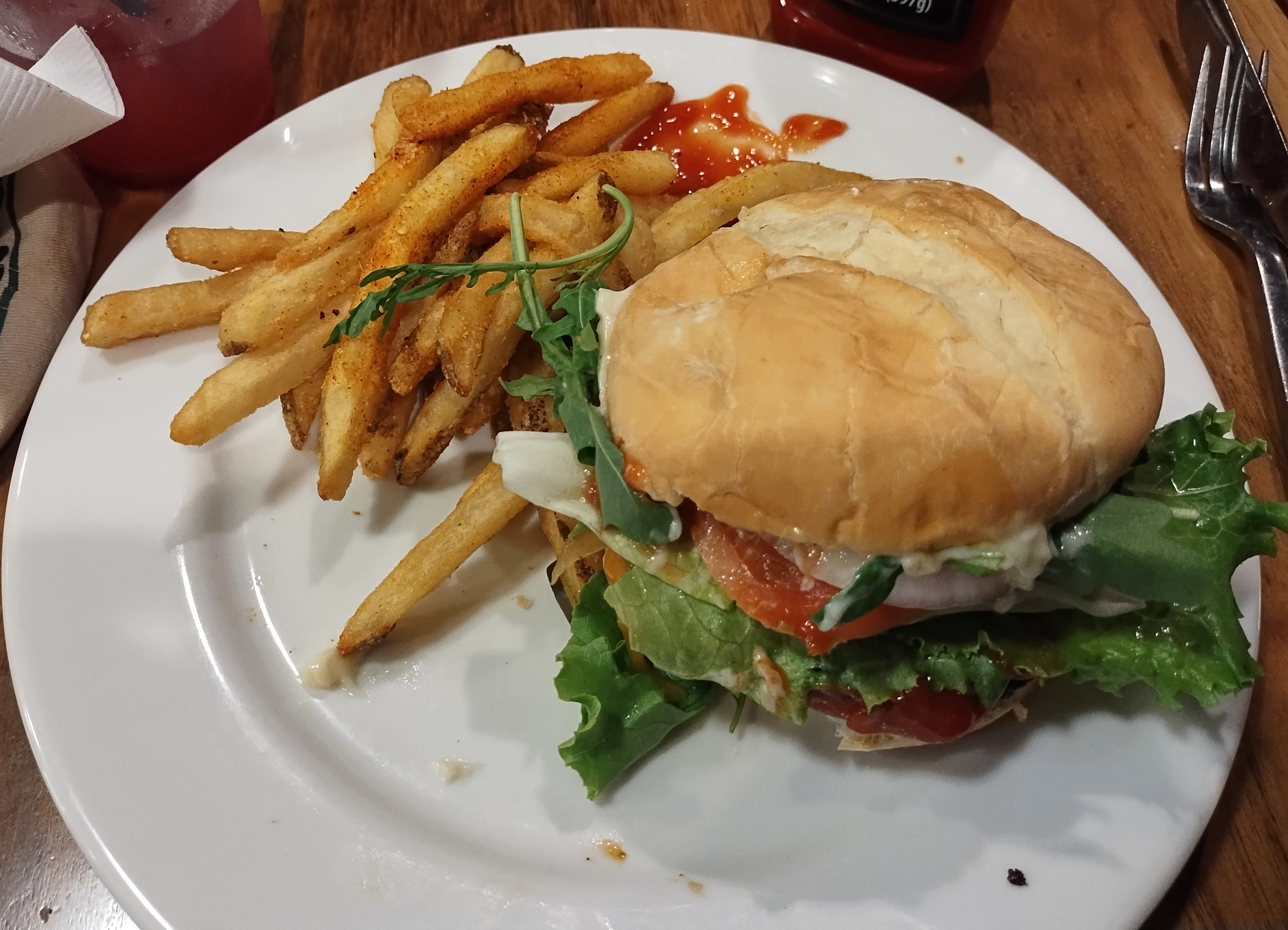
On my plate at one of the hotel restaurants. A nice buffalo burger, if a little expensive. You know what they say about room for all of God’s creatures, except that I didn’t have any mashed potatoes with that meal. Next to the French fries, then.

Remember the weather forecast? During our hike, and the meal afterward, skies were clear and temps warm. We needed those hats and that water. As we were leaving Many Glacier Hotel, however, we noticed dark clouds massing to the north. A moisture invasion from Alberta-British Columbia.

By the time we (almost) got back to our campground outside the St. Mary entrance to the park, the thunderstorm had arrived. Rain and then a few minutes of hail. I pulled over under a tree that offered some protection, but luckily the hailstones weren’t as big as in Wyoming, and didn’t even put any dints in the roof of the car.

Fireworks

July kicked off much like June this year, warmth and sometimes heat alternating with rain, which cools down things for a while. The threat of cicadas so noisy you can’t hear yourself think has not, at least in my little corner of the suburbs, come to much so far. We’re now getting about as much cicada noise as we do every year, focused around dusk, though perhaps beginning a little earlier in the summer than usual; early July instead of mid- or late July.

July 4 was warm and dry. And on a Thursday, which makes a de facto four-day weekend. Just the time to set off fireworks here in Illinois, where all but the most innocuous ‘works are banned. I didn’t set any off myself, but after dark took to the deck to listen to the explosions.

Somewhere not too far away, someone was setting off M-80s or some noisy equivalent every few minutes, it seemed – a little too much of a good thing, I thought, so I moved to the garage, and listened to the bangs and pops and whizzes from there, with the door open and the lights off and the cars parked outside. The surrounding structure dampened the loudest of the fiery hubbub but still allowed me to hear it all.

There was also much less chance of being hit by a shell, in case some wanker out there somewhere was shooting actual firearms. I know that happens in some places here in the USA. I’ll admit that the odds of that seem pretty slim in our suburb, even at the noisiest moments on Independence Day, but even so probably greater than they would have been only a few years ago.

Backyard Bunnies

In hopes of keeping the backyard rabbits from eating our budding tomatoes and other summertime plants, Yuriko has been leaving lettuce and carrots out for them. I’m not sure that will work. For one thing, they don’t seem interested. Bugs Bunny might eat carrots, but actual rabbits not so much.

Was Bugs ever seen eating anything else? I’m hardly the only person to ask that important question, and the answer is yes. I remember some of those listed cartoons, especially “Baseball Bugs” and “Hare We Go,” from which I might have learned the term mess, as in a place to eat. As for why carrots were the nosh of choice for Bugs, that was reportedly inspired by Clark Gable eating a raw carrot in It Happened One Night, a detail I’d forgotten.

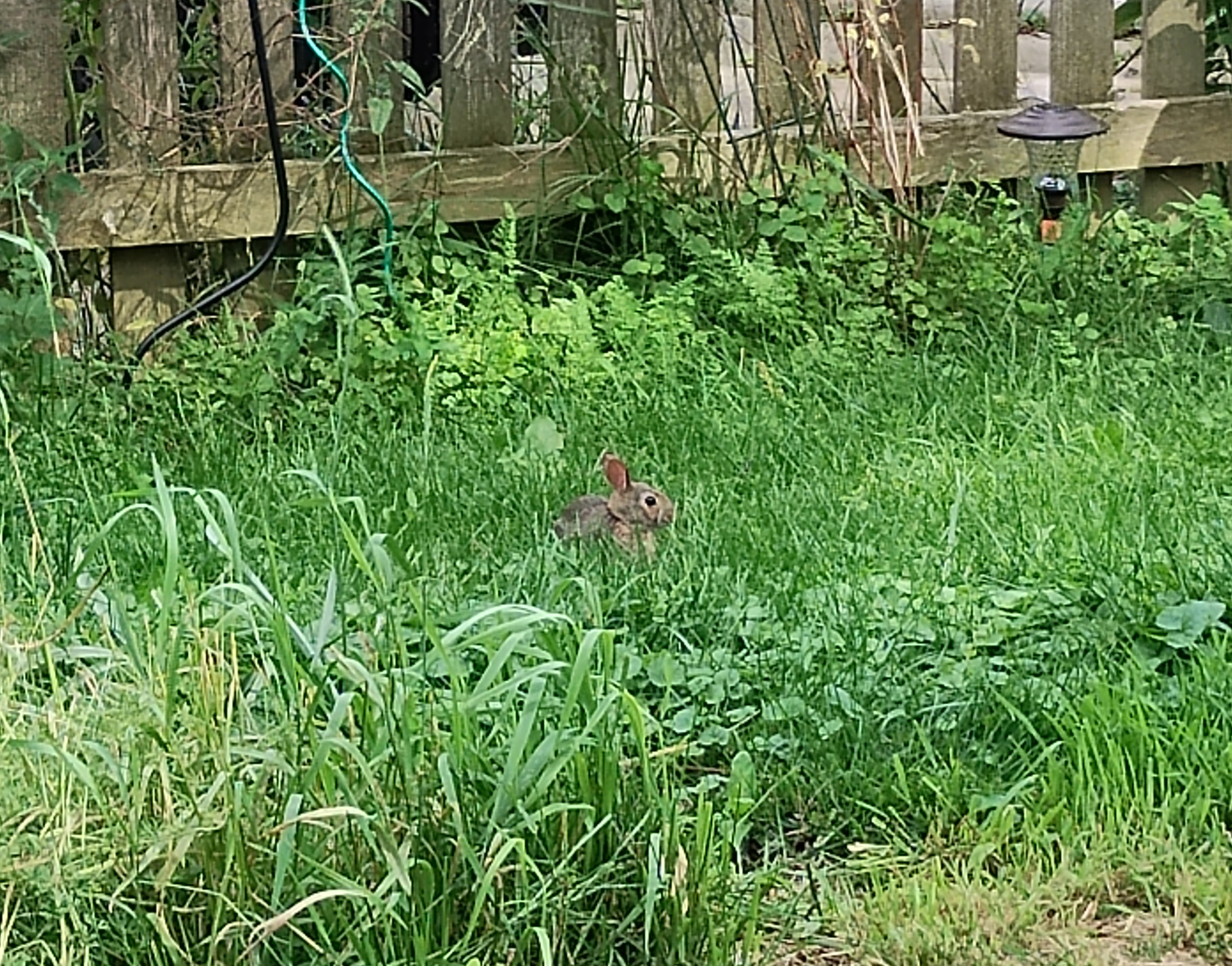
A family of rabbits now occupy the backyard, including a large adult and two or maybe three juveniles, who are often spotted eating grass. They might live under the deck.

It’s hard to get close enough to them to capture an image. Even at a young age, rabbits are wary critters and fleet of foot. I figure they’ve taken to the yard this year, much more than previously, because there is no dog on patrol any more, and somehow they know it.

Squirrels vs. Garage Bottles

The squirrels have been evicted from our garage. Or so it seems. As part of obtaining a new roof for that structure this spring, holes that had allowed squirrels access were plugged. But that wasn’t quite enough, since I spotted one clambering around the shelves before we left town last month. So I bought one of those electronic boxes that emits ultrasonic annoyances for rodent ears, and it has been running ever since. The creatures have made themselves scarce as a result.

They made their own special messes in the garage, of course, including tearing up paper and cardboard — a lot of it — as part of their nesting efforts. Even more annoying to me is that they acted as agents of chaos out in the garage after I spent time last summer cleaning the place up and arraying my bottle collection.

Maybe not “collection,” but the bottles that have accumulated over the years, partly from successive gabfests.

The squirrels broke a few of my bottles by knocking them down to the hard floor, but I’m glad that Monty Python’s Holy Ale and Leninade survived. And my Woop Woop ’04 verdelho, an Australian wine I bought when it was fairly new.

Spring Valley Animal Farm

On Saturday we took a walk on the grounds of Spring Valley, where we find ourselves fairly often. In every season. Less often we make it all the way to the part called Volkening Heritage Farm, a small open-air museum that evokes farms of the late 19th century in this part of Illinois, but we did this time. To visit the pigs, for one thing.

I seem to remember seeing a sign posted at the farm once upon a time, something along the lines of All animals are equal, but some animals are more equal than others.

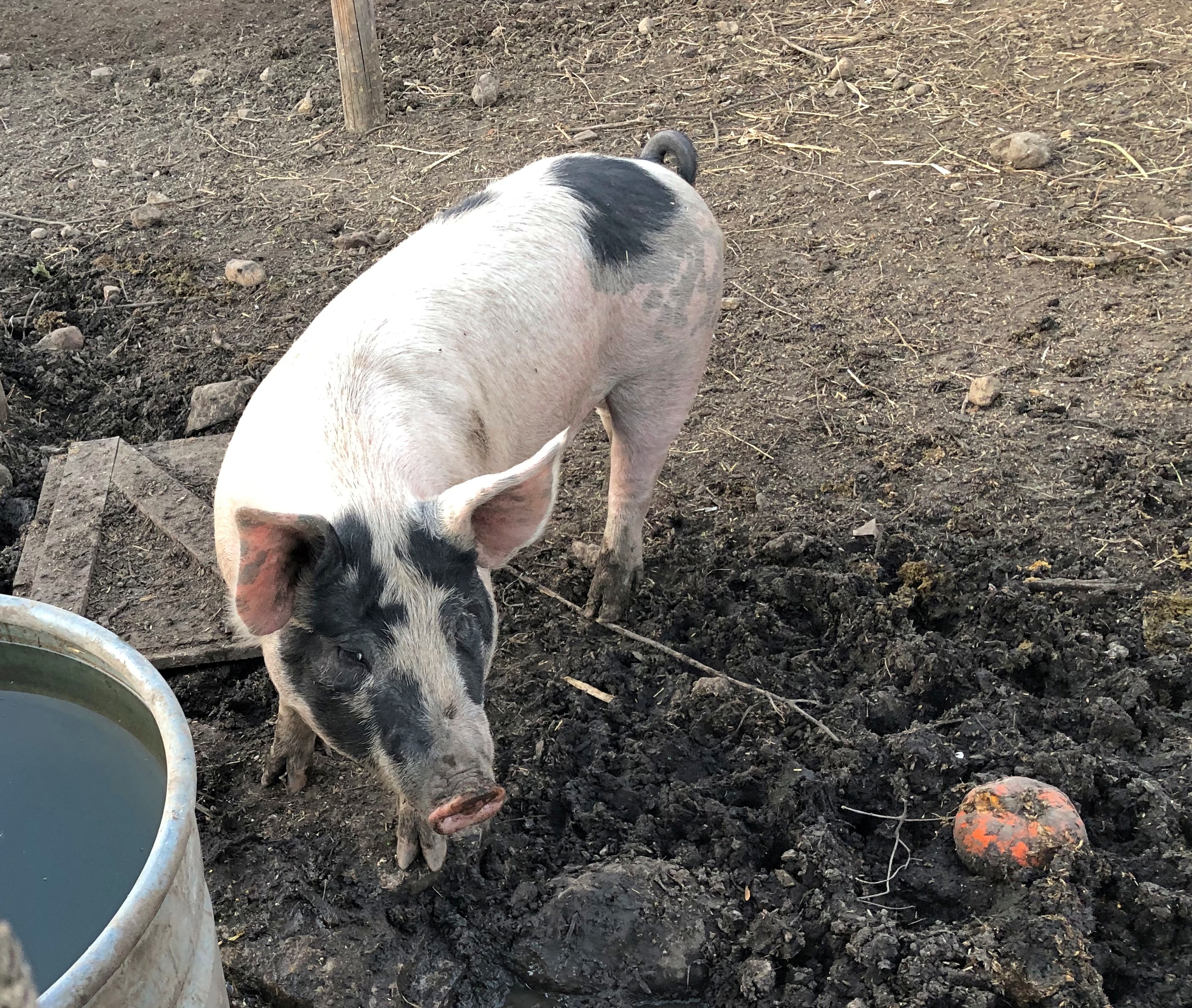
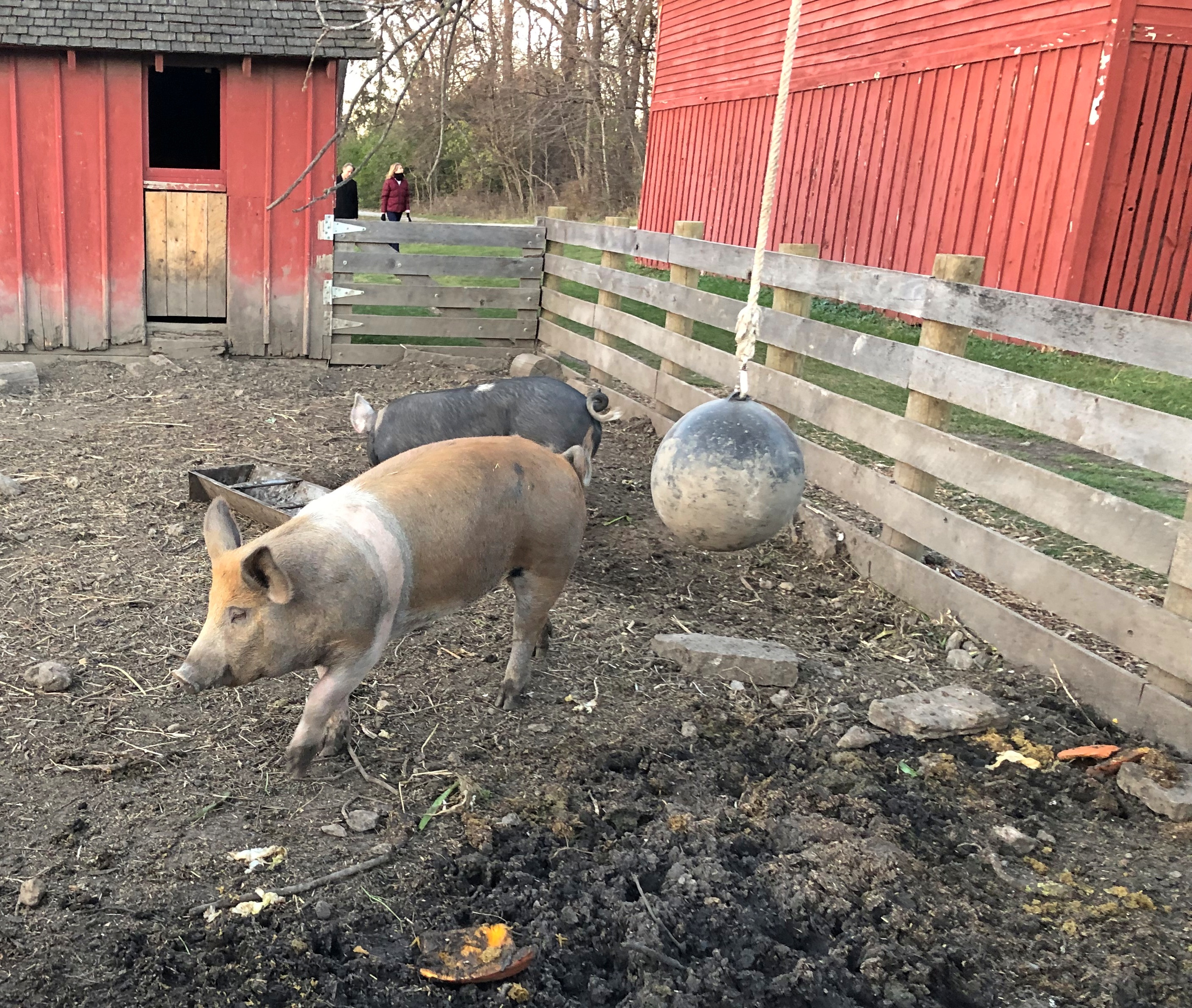
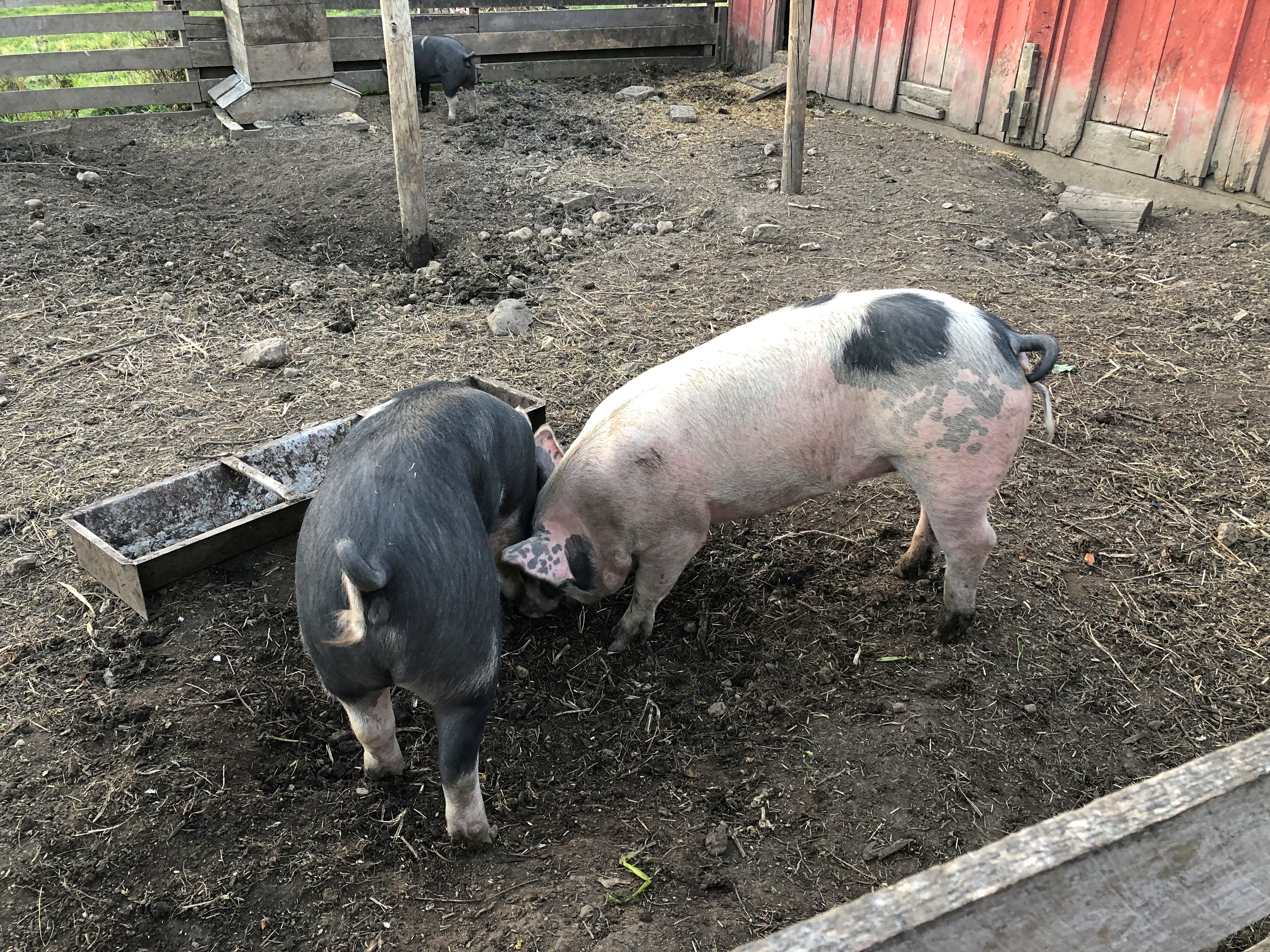
Maybe I’m thinking of somewhere else. Anyway, the pigs were doing what I assume are pig things, mostly rutting around in the dirt, oblivious (again, I assume) to their ultimate fate as meat.

Some of them, at least. The pigs we saw must have survived this year’s “From Hog House to Smokehouse” event, which was earlier this month. I figure it’s only a temporary reprieve.

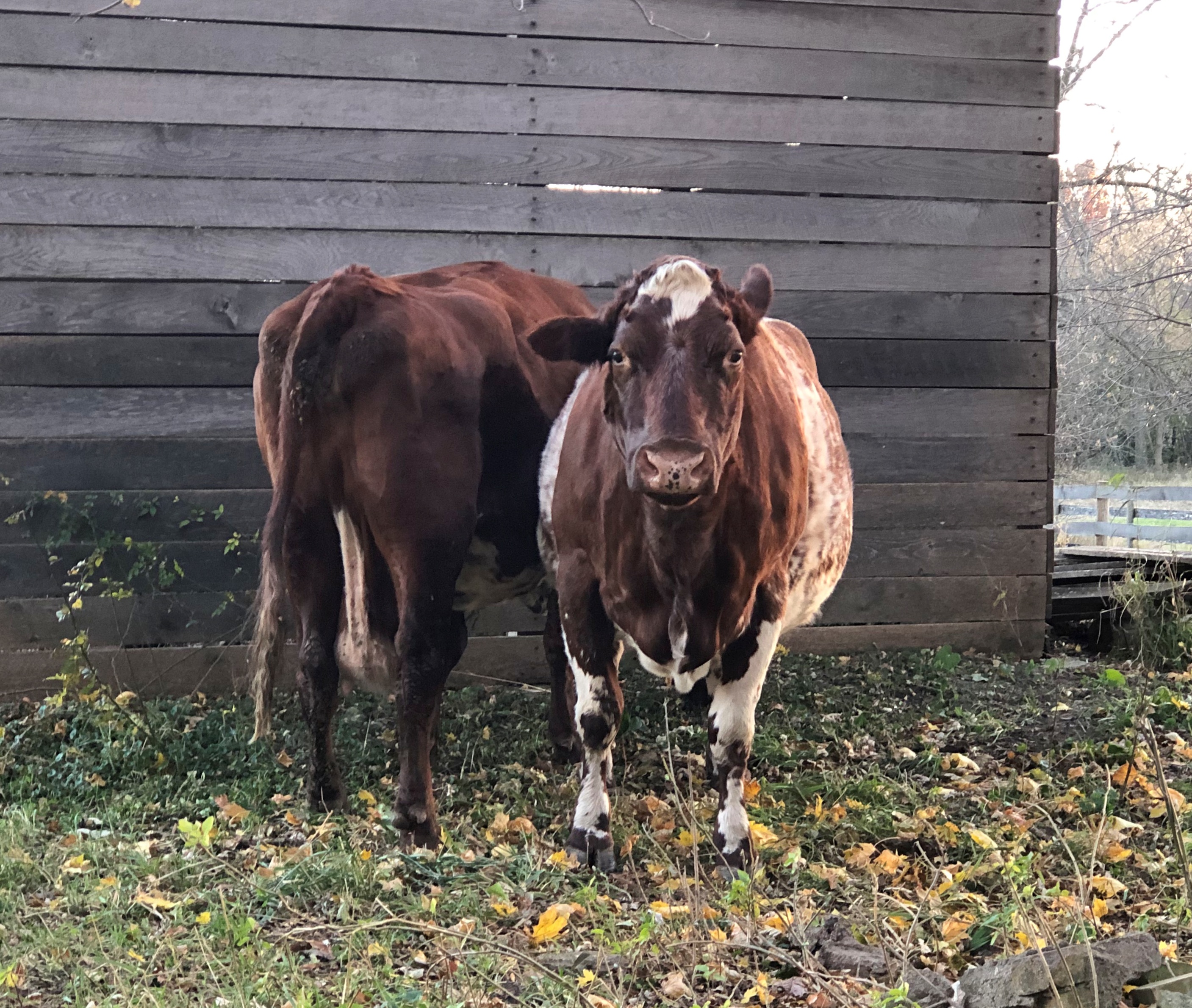
The pigs weren’t the only animals around. A couple of cows made an appearance as well.

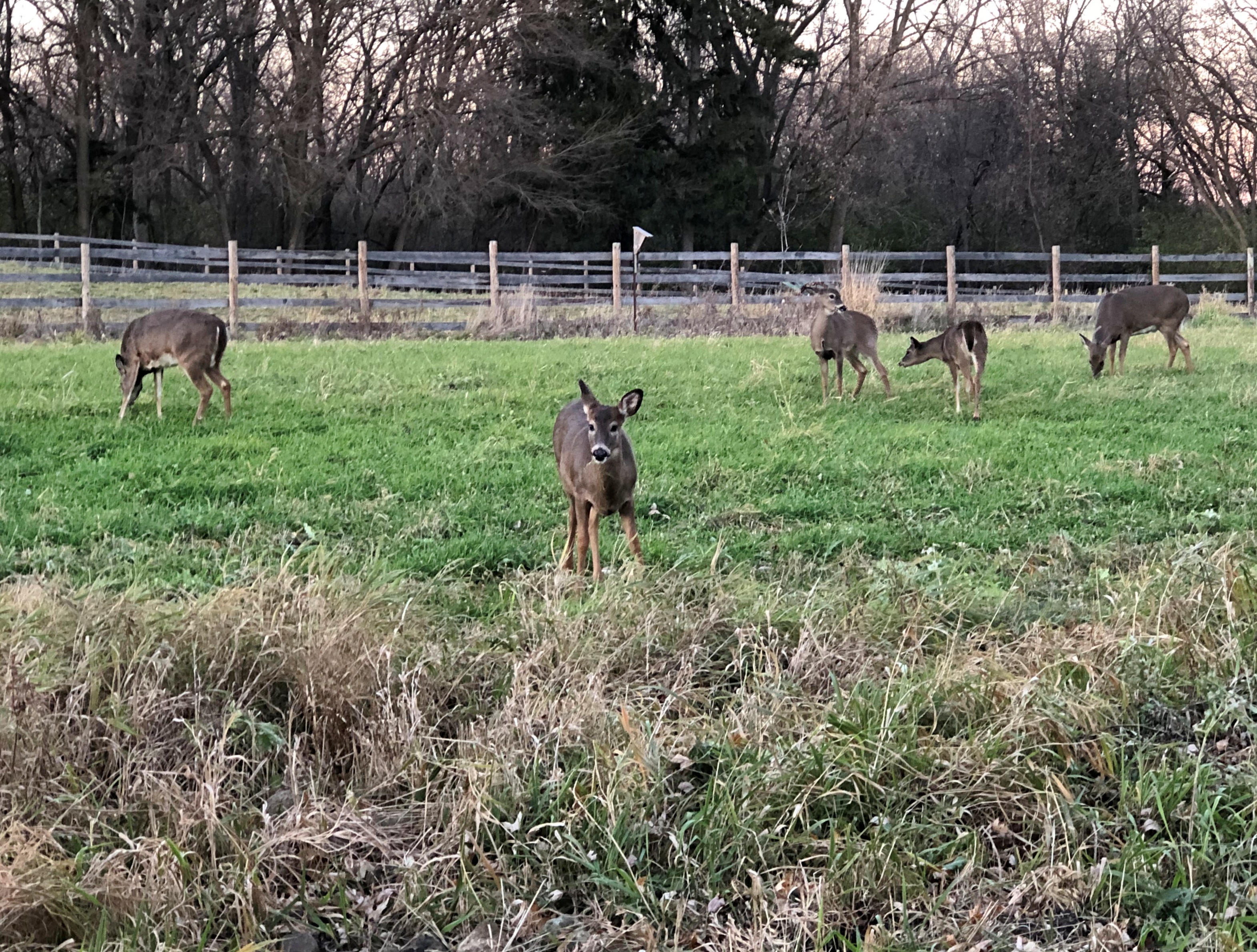
And some deer.

I figure they roam Spring Valley as a whole, and don’t reside on the farm.

Springtime Thursday Musings

Warm again early in the day. Thunderstorms rolled through in the morning and again in the afternoon. Cool air came back late in the day.

Ahead of the rain, we walked the dog around a pond, where a good many red-winged blackbirds flitted around. Hardly our first encounter with them, though there don’t seem to be as many after spring is over.

Moths are back in the house. How did this happen? There’s no lasting victory over moths, looks like. So I put out fresh glue traps, and some dozens have been caught. I still see a few flitting around, and slap them when I can, but I hope they too will either die in the traps, or die mateless and without descendants.

Rabbits are back in numbers too, often in the back yard, but I leave them alone. The dog does too, seemingly not interested in chasing them any more. Such is old age.

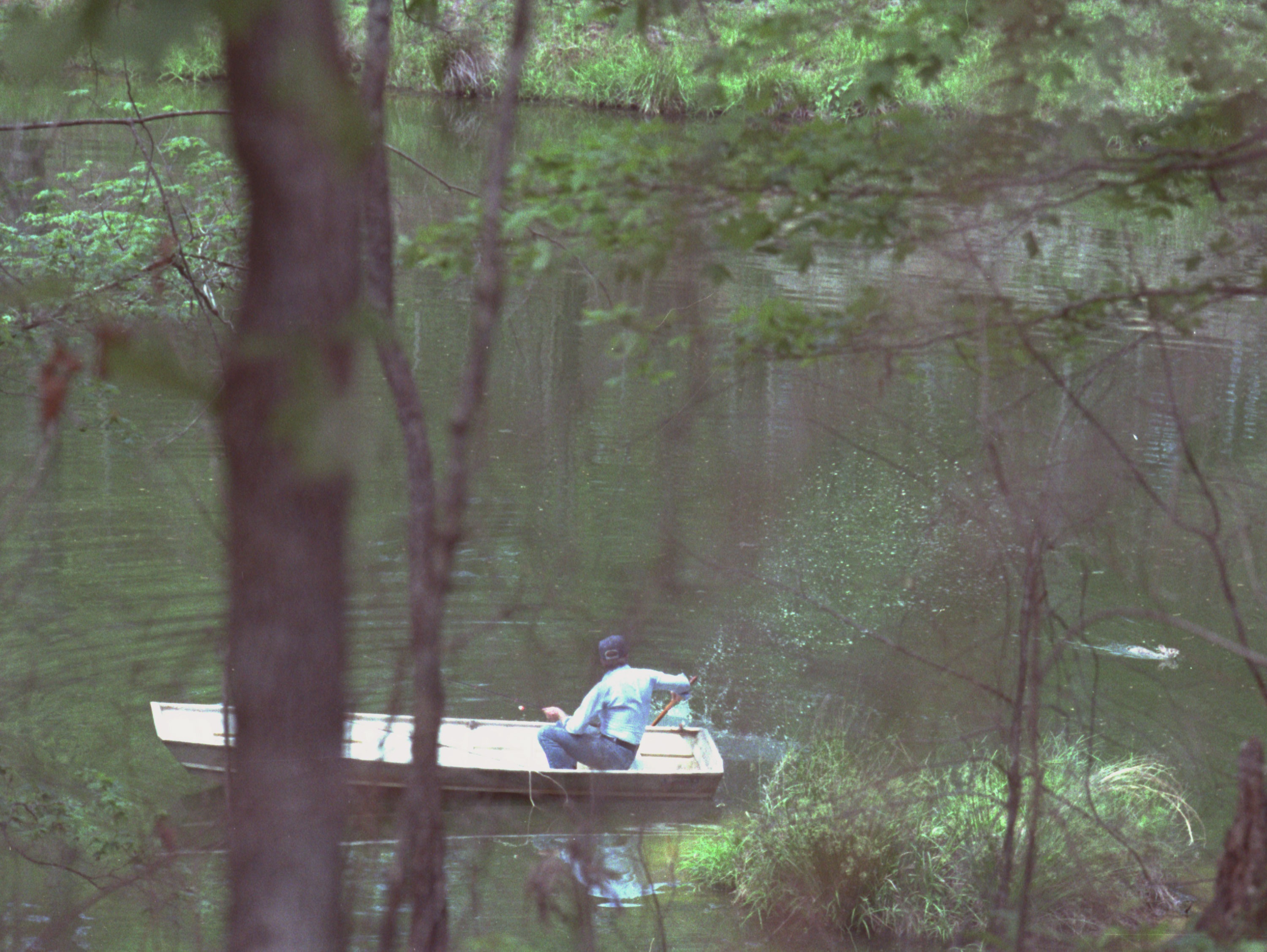
Completely by accident, and speaking of rabbits, I learned that today is the 44th anniversary of a swamp rabbit attacking President Carter’s boat (which wasn’t known till later in 1979). Even better, I learned that the photo of the incident is in the public domain, being the work of a White House photographer. This copy is via the Carter Library, though I don’t remember it being on display there.

With the looming deadline for renting more Netflix DVDs in mind, I watched part of the disk I currently have at home, Judgment at Nuremberg. I don’t remember why I put it in the queue, except that I’d never gotten around to seeing it, and Spencer Tracy and Burt Lancaster are always worth a look.

I didn’t realize that William Shatner was in it until I saw his name in the opening credits. As it happens, he plays a captain. In the U.S. Army, but still a captain.

I also didn’t know that Werner Klemperer played a part, one of the defendants. Naturally, I had a silly thought when he entered the courtroom: Col. Klink was put on trial at Nuremberg? No! His incompetence consistently aided the Allied cause. Call Col. Hogan as a character witness.

I’m reminded of something I once heard about Klemperer on stage: “Kevin D. told me that, during a production of Cabaret at the Chicago Theatre in the late ’80s, Werner Klemperer played [a Jewish merchant not in the movie version], and got the biggest applause of the night. ‘Everyone knew it was because he played Col. Klink,’ Kevin said.”

In the staged revival of Cabaret I saw in 2002, Hal Linden played the same part, and likewise got a vigorous round of applause on his first appearance. For playing Barney Miller, I figure. Such is the power of TV.

Victory Over Moths

Is it too soon to declare victory over moths? I have a superstitious feeling that after I do so, I’ll see a moth flit by here inside our house, as soon as a day or two later. Our victory will prove to be illusory.

Never mind all that. I’m declaring victory over moths — noiseless, shadowy, harmless moths that still represented an insect invasion of my dwelling space. One to be suppressed, which was the consensus of everyone here. Harmless, but annoying all the same.

At no point in your ownership of a house have you seen it all, since there’s always the possibility of another novel expense or pain-in-the-ass nuisance you haven’t experienced before, lurking in unexpected places. In the case of the moths, lurking on walls, if moths can rightly be said to lurk.

That implies a presence of mind I’m not sure moths actually have, but anyway there they were, clinging to higher parts of living room and kitchen walls. Small gray moths had starting making their appearance sometime in the summer. Originally we took them for outdoor moths accidently in the house, but pretty soon their increasing numbers made us re-think that assumption. They were setting up colonies. That meant we had to start some aggressive measures.

I became the main moth assassin. Yuriko swatted some, and so did Ann when she was here, but mostly it fell to me, fly swatter or thick paper weapon in hand (we still have a few paper magazines around, ready to roll). There’s one! Twack! Wait, another — thup! Damn, missed that last one.

Sometimes it would take a few moments to identify them; there are spots on the walls I took for moths and vice versa, especially in the early days of moth suppression.

An aside: our fly swatter goes back to 2008, a souvenir of the Bluegrass Inn in Frankfort, Kentucky. Sturdy blue plastic, it had seen only intermittent use since then, but now its hour had come, and soon started collecting faint grey stains.

I hadn’t swatted so many insects since that day in Ulaanbaatar when I cleared our hotel room of a rich bounty of flies, or the (seemingly) all-night mosquito hunt in my low-rent digs in Pusan.

As house-invading insects go, individual moths are fairly easy to kill. Mosquitoes, and flies that aren’t in their terminal moments bumping up against window glass, are much faster and seem to be paying attention. Moths wait obligingly as you spy their position and prepare the swat. As long as you aim correctly that first time — because if you miss, it will take flight — the moth will immediately become an ex-moth.

Of course, containing an insect infestation with a swatter is a fool’s errand. I soon advanced to a chemical weapon. Raid, in this case, applied to what I believed were strategic locations, and away from where the dog might go. The moth population dropped for a while, and we experienced optimism that the bugs would be vanquished.

The moths had other ideas. Localized infestations were discovered in boxes of dry cereal and one particularly vile node was in a bag of dry dog food. These packages were tossed, contents and all, and replacement boxes and bags were more carefully re-sealed. For a while, fewer moths were seen. But they returned.

With the help of my research assistant Google, I looked into moth infestations. I determined that we had pantry moths, not closet moths. Our bugs didn’t seem interested in our clothes. Naturally, there were suggestions of products to try to deal with them.

So soon I turned to a biological weapon. A successful, inexpensive and easy-to-use biological weapon, one I am happy to mention by name, so successful was it: Maxguard Pantry Moth Traps. Put one together and you’re got a tent-shaped bit of thick paper. On the inside surface, Maxguard provides a sticky surface infused with “extra strength pheromones,” the box promises.

A glue trap for male moths, other words. Or rather (projecting a little more), honey traps. They come, attracted at the prospect of moth nooky, stick and die, forever unable to do their biologic jobs when it comes to reproduction, thus setting the stage for a localized population collapse. That was my hope, anyway, when I set up the four traps that came in the box at various parts of the house in late September, before my latest trip.

Since I’ve been back, a month now, I haven’t seen any moths — except for those many stuck to the glue traps. Dozens of them. Snuffed out of whatever it means to be a moth, by human trickery. We’re pretty good at that. So long, moths. You are not missed.

Small Insects, Big Rocket

A really pleasant evening to start September. I could sit out on the deck in a t-shirt and be quite comfortable late into the evening. These nights will be fewer and fewer in the weeks ahead.

Crickets are signing their little hearts out. Wait, do insects have hearts?

Insect Cop says: “Insects do have hearts, but they look very different to our own. The insect heart is a long, tubular structure that extends down the length of the insect body, and delivers nutrient-rich blood to the organs and tissues.

“Insects also have their own version of blood, called haemolymph. Unlike human blood, insect haemolymph does not carry oxygen and lacks red blood cells.”

Back to posting on September 6. It’s good to take Labor Day seriously and not work. We ought to have two labor days, come to think of it — add May 1 as a springtime holiday.

A public domain shot, lifted from NASA. Photographer: Joel Kowsky.

Hope all goes as planned. Yet I can’t help thinking — how is it so different from the Saturn V? An improvement in any way, after 50 years? Hard to say.

Why orange? Black and white were good enough for the Saturn V, after all. Turns out it’s a weight issue, and with Moon rockets, every ounce counts.

“The orange color comes from insulation that covers the vehicle’s liquid hydrogen and oxygen tanks,” noted an article published by the Planetary Society about seven years ago.

“This is the same reason that the Space Shuttle’s external fuel tank was orange. The first two shuttle flights, STS-1 and STS-2, in 1981, featured tanks painted white to protect the shuttle from ultraviolet light while sitting on the launch pad. But after engineers concluded the protection was unnecessary, the white paint was discarded, freeing up 600 pounds of weight in the process.”

One more thing, NASA. Get a better name for the rocket. Artemis and Orion are good; they go together in history and lore. But Space Launch System? That just doesn’t have the panache of Saturn.

Around Lake Michigan Bits & Pieces

Here’s a set of facts that only I’m likely care about, but I find remarkable anyway.

My recent trip with friends to the UP and back began on July 30 and ended on August 7. Fifteen years earlier, in 2007, I took a trip with my immediate family to the UP and back, from July 30 to August 7. I didn’t know about the coincidence until I read a previous posting of mine. I wish I could say that I’d taken a July-30-to-August-7 trip 15 years before that, in 1992, but no: Singapore and Malaysia was June 29 to July 10 that year (I had to check.)

Both were counterclockwise around Lake Michigan, but such is the richness of worthwhile sights in that part of the country that the two trips touched only at one point: the Mackinac Bridge. And in the fact that we spent time in the UP.

Is it so different now than 15 years ago? Except for maybe better Internet connectivity (I hope so) and maybe a worse opioid problem (I hope not), not a lot seems to have changed.

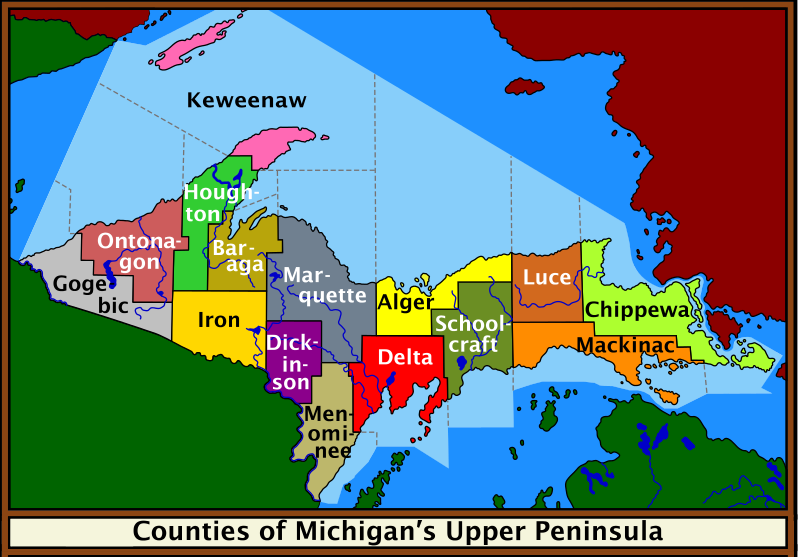
The UP’s population in 2020, per the Census Bureau, was about 301,600, representing a decline from 311,300 in 2010 and 317,200 in 2000. Truth be told, however, the UP’s population has never been more than about 325,600, which it was in 1910. After a swelling in population in the 19th century, especially after the Civil War, numbers have held fairly steady, meaning an increasingly smaller percentage of Michiganders and Americans, for that matter, live in the UP.

A spiffy public domain map.

Of course, the trip started in metro Chicago, and our first destination was BAPS Shri Swaminarayan Mandir Chicago in Bartlett, Illinois. A striking piece of India within short driving distance of home, I once said, and I’m pretty sure my friends agreed with that assessment.

Next: Indiana Dunes National Park. I had in mind we’d walk along a trail I knew, and a beach I liked, but no parking was to be had on a Saturday in summer. We were able to stop at the the Century of Progress Architectural District for a few minutes, and amble down to the beach for a few more from there. They liked that, too, and I’m sure had never heard of that corner of Indiana.

Across the line in Michigan, we went to Redamak’s in New Buffalo. Crowded, but it was then that we collectively decided, though it was unspoken, that good food in a restaurant setting was worth the risk of the BA.5 variant. I’m glad to report that none of us had any Covid-like symptoms during the entire run of the trip.

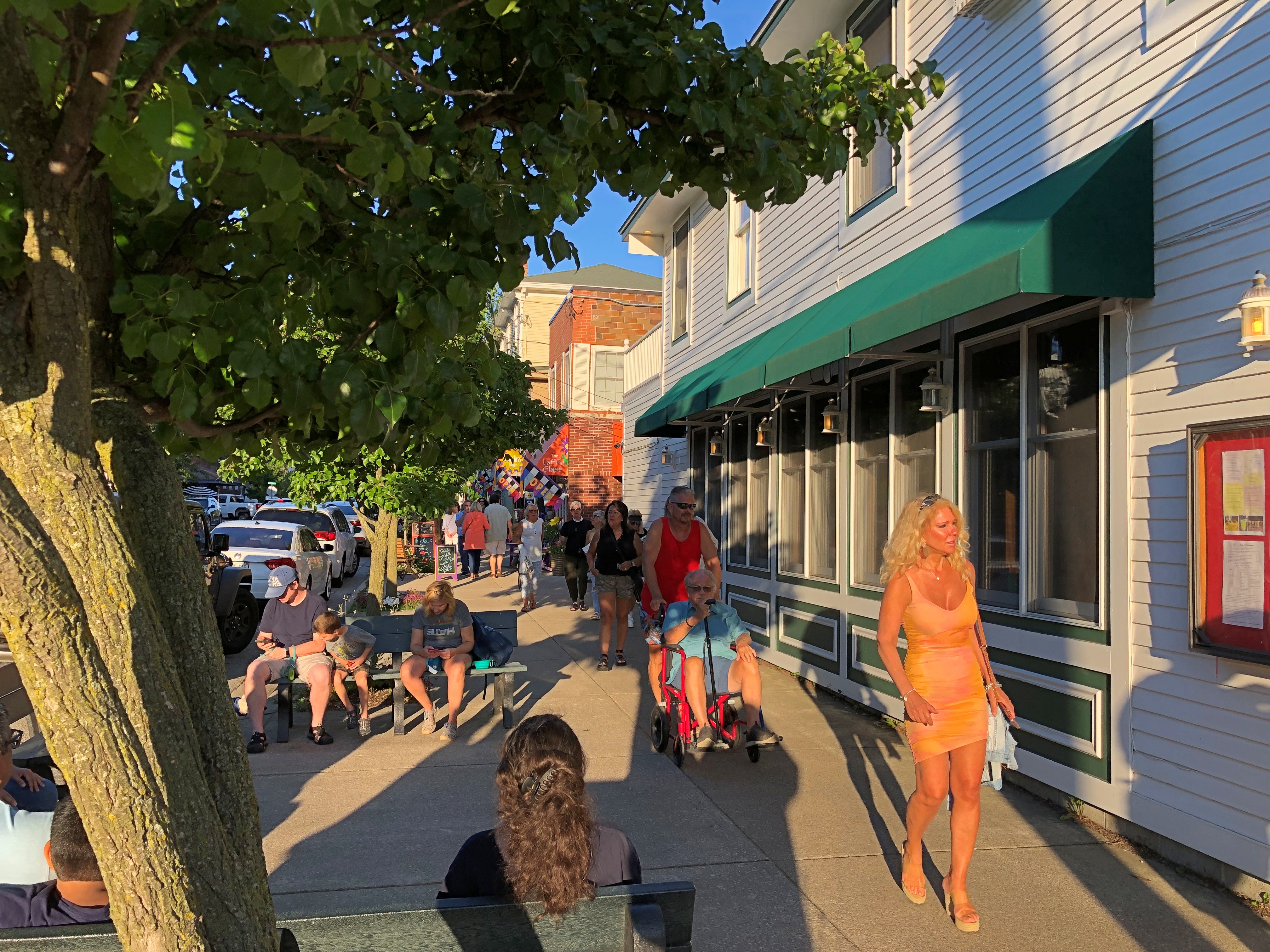
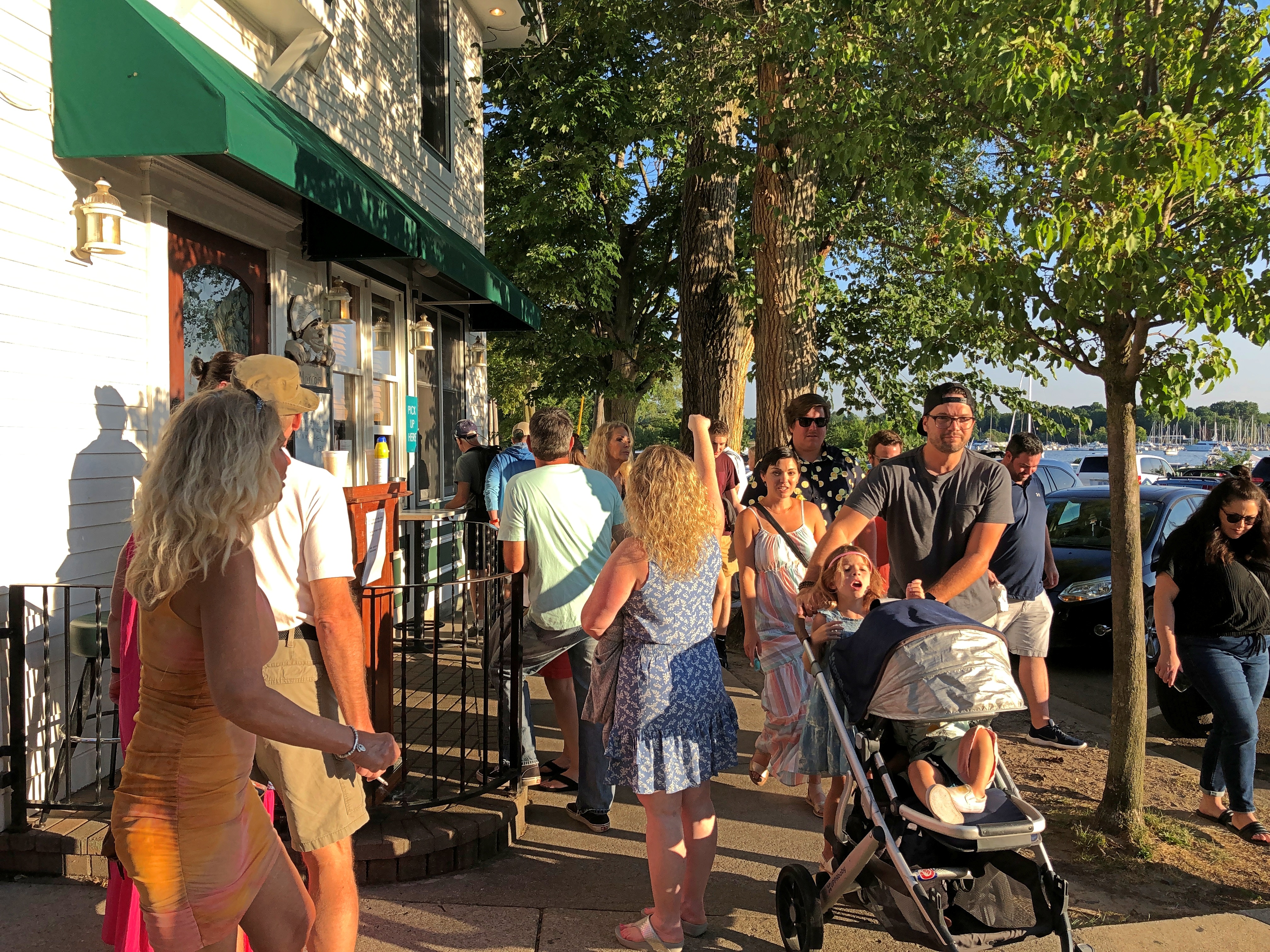
Those were my first-day suggestions. Now my friends had one: Saugatuck, Michigan, which is actually two small towns, the other being named Douglas. I’d seen it on maps, but that was the extent of my awareness. Turns out it’s a popular place on a summer Saturday, too. Especially on the main streets.Saugatuck, Michigan Saugatuck, Michigan Saugatuck, Michigan

Once we found parking, the place got a lot more pleasant. We wandered around, looking at a few shops and buying ice cream for a short sit down.

A small selection of Saugatuck businesses vying for those visitor dollars (no special order): Uncommon Coffee Roasters, Glik’s clothing store, Kilwin’s Chocolate, Sand Bar Saloon, Country Store Antiques, Bella Vita Spa + Suites, Tree of Life Juice, the Owl House (“gifts for the wise and the whimsical”), LUXE Saugatuck, Santa Fe Trading Co., Marie’s Green Apothecary (“all things plant made”), Mother Moon book store, and Amazwi Contemporary Art, just to list only a fraction of the businesses.

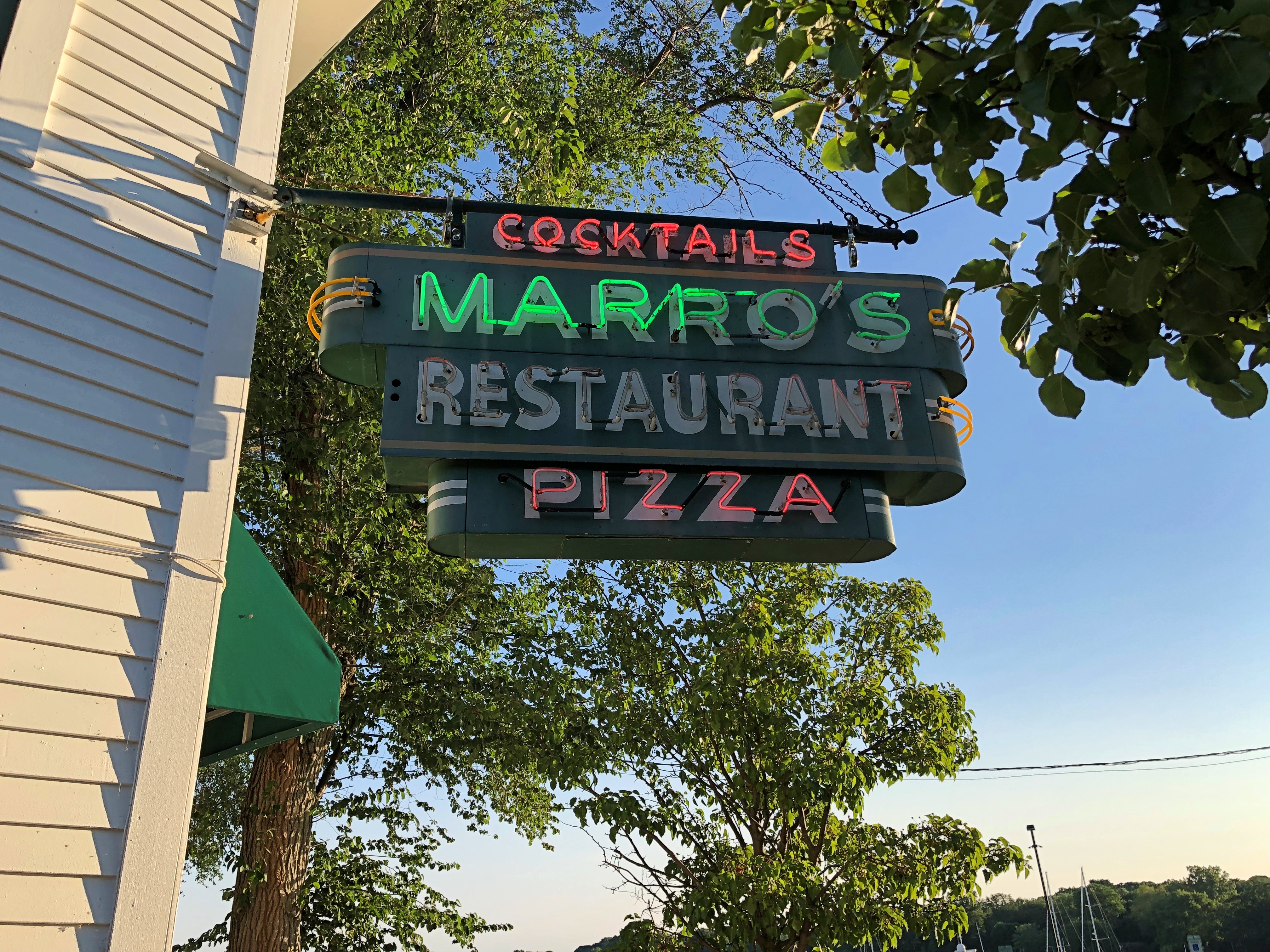
Not a lot of neon, but there was this.Saugatuck, Michigan

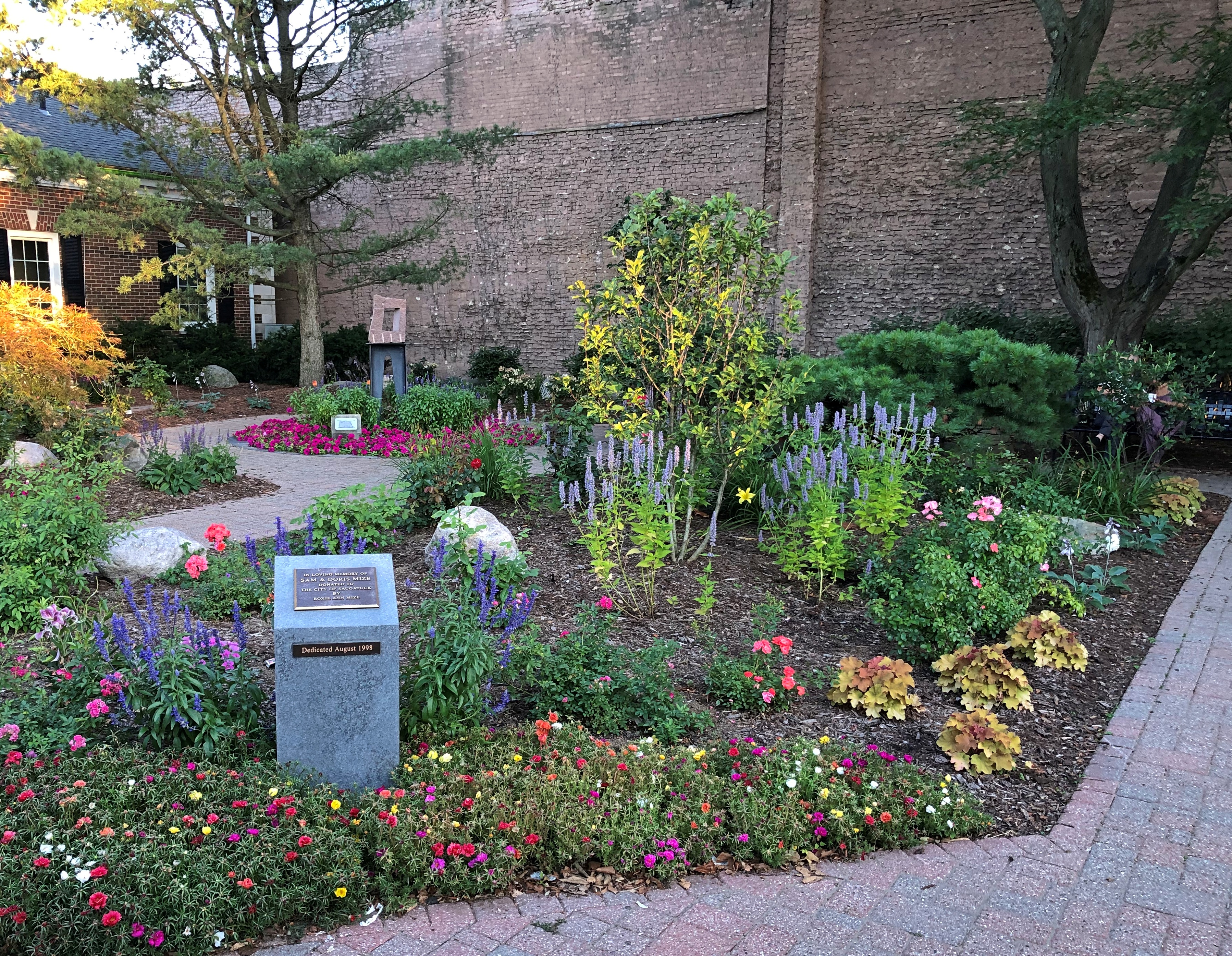
I liked the little public garden. Rose Garden, at least according to Google Maps.Saugatuck, Michigan

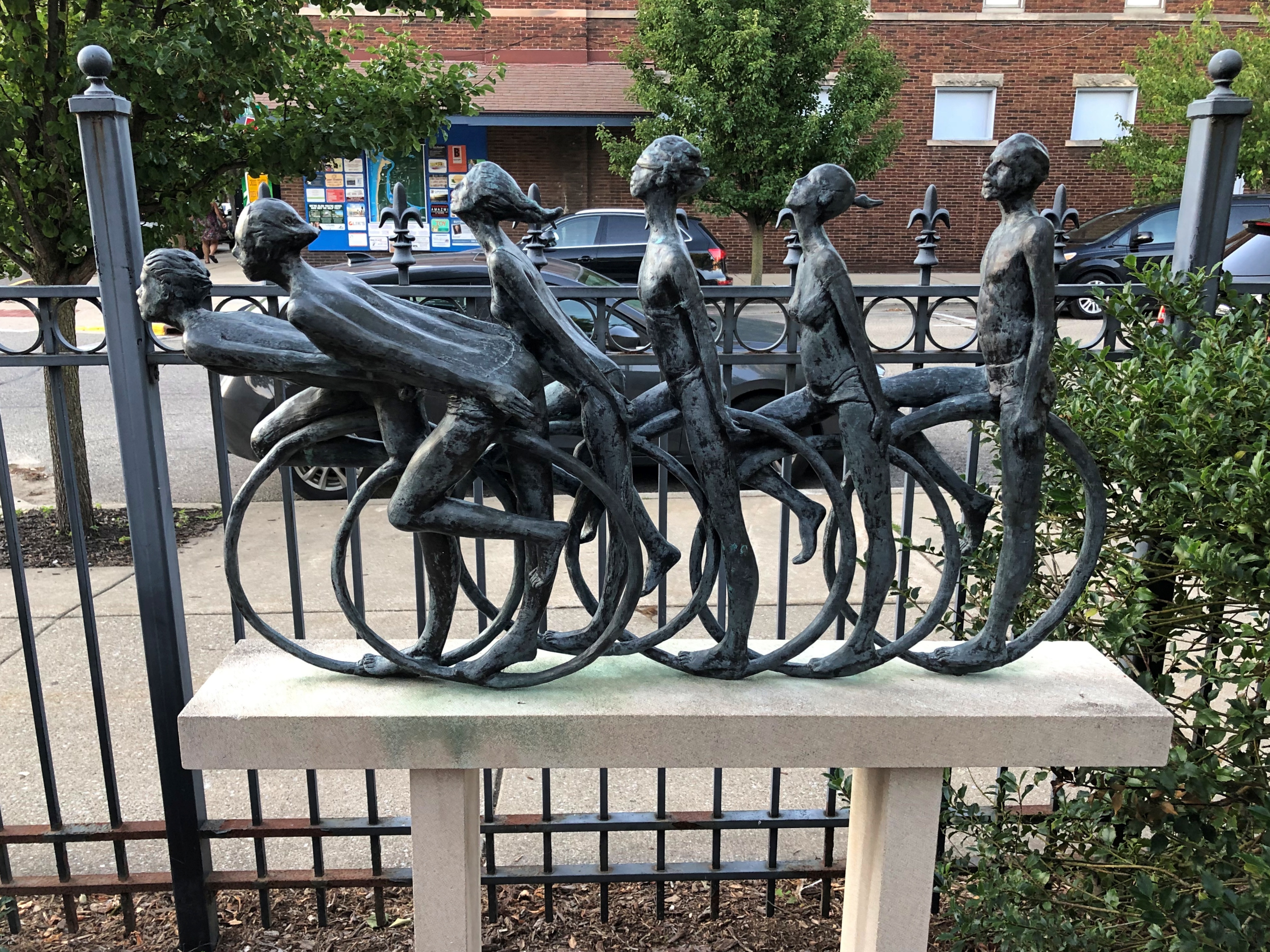
And its sculpture, “Cyclists,” by William Tye (2003).
Saugatuck, Michigan

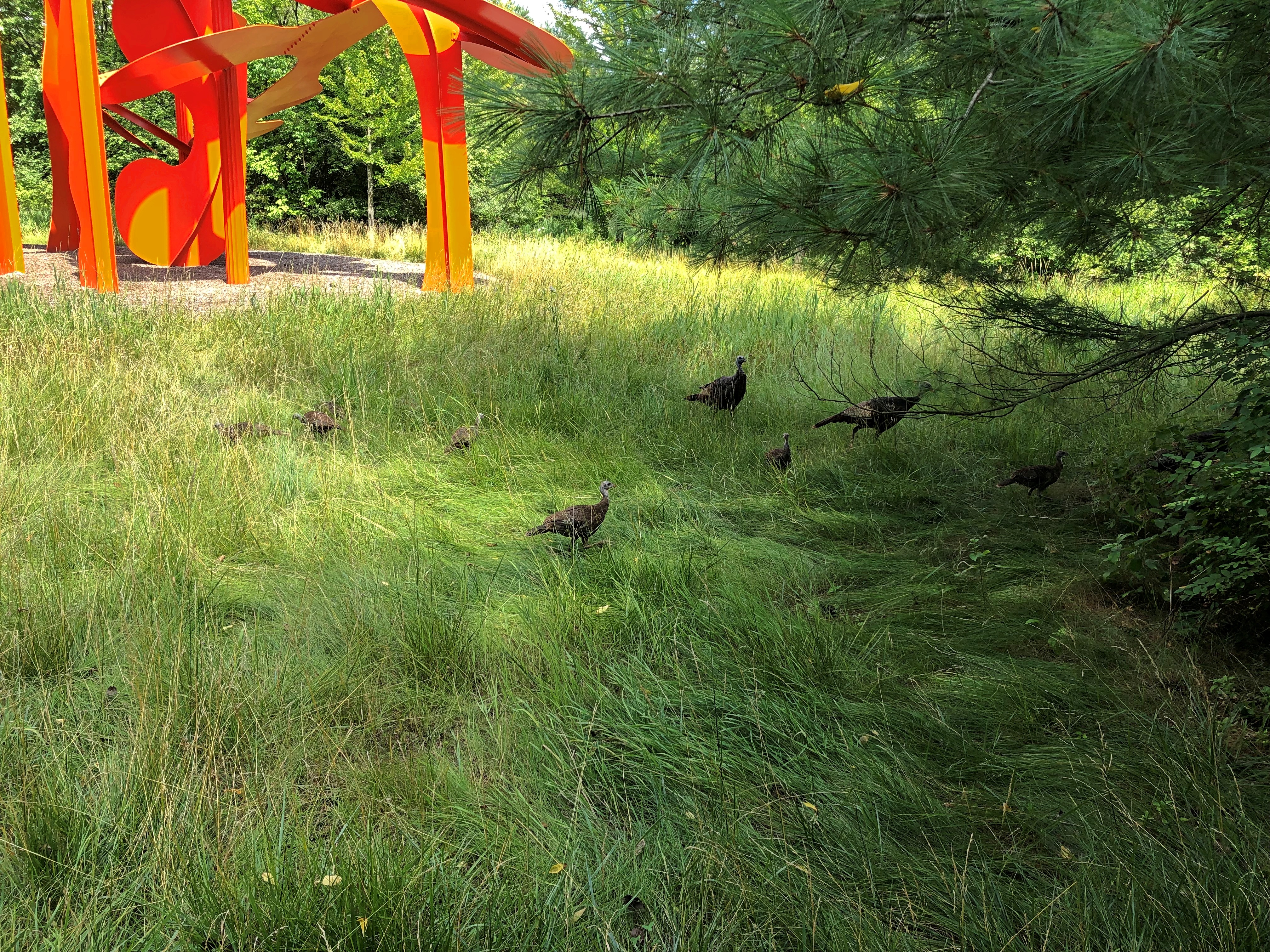
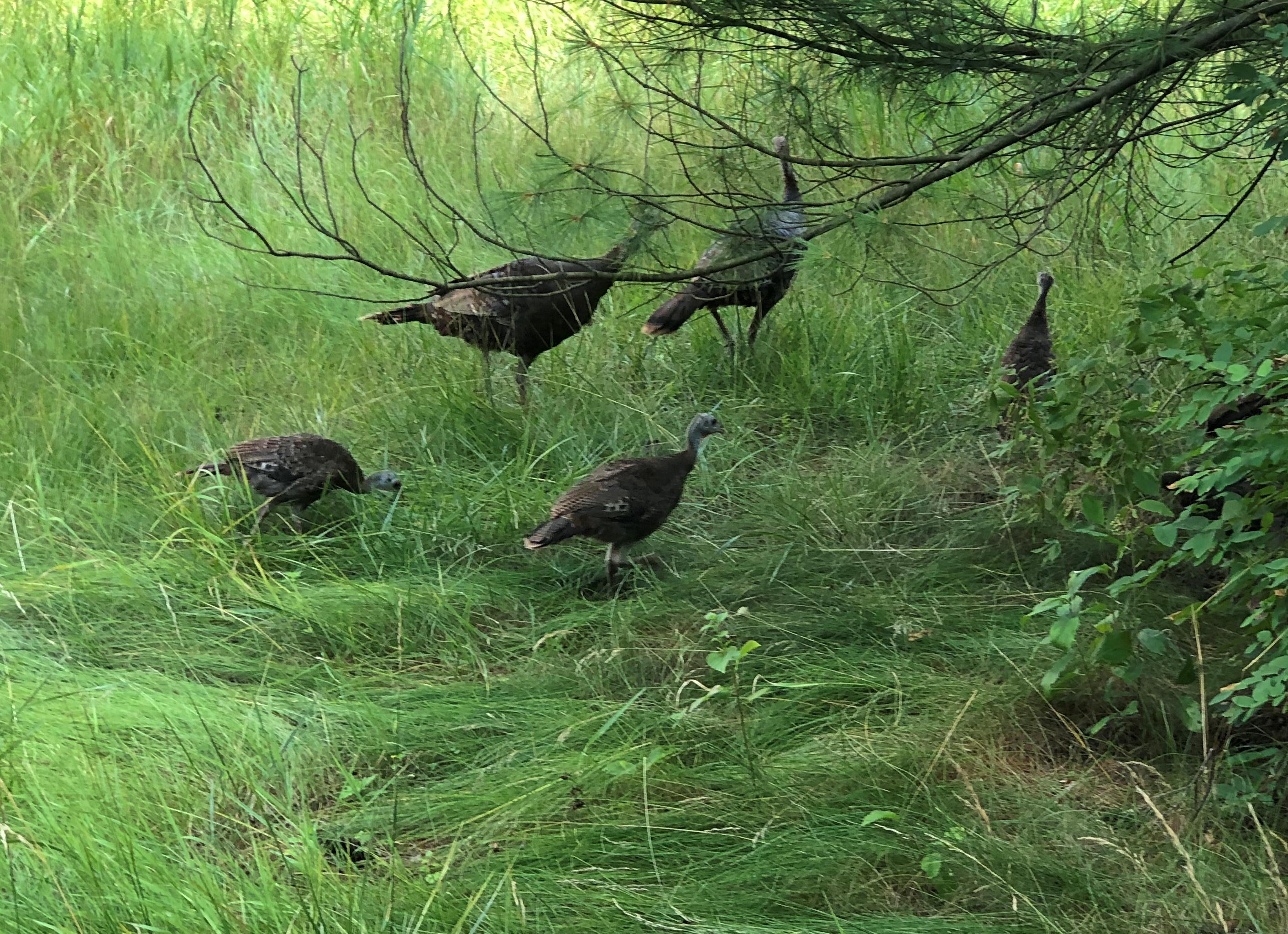
At the Frederik Meijer Park & Sculpture Garden, we encountered a flock of what looked like wild turkeys.Frederik Meijer Sculpture Garden turkeys Frederik Meijer Sculpture Garden turkeys

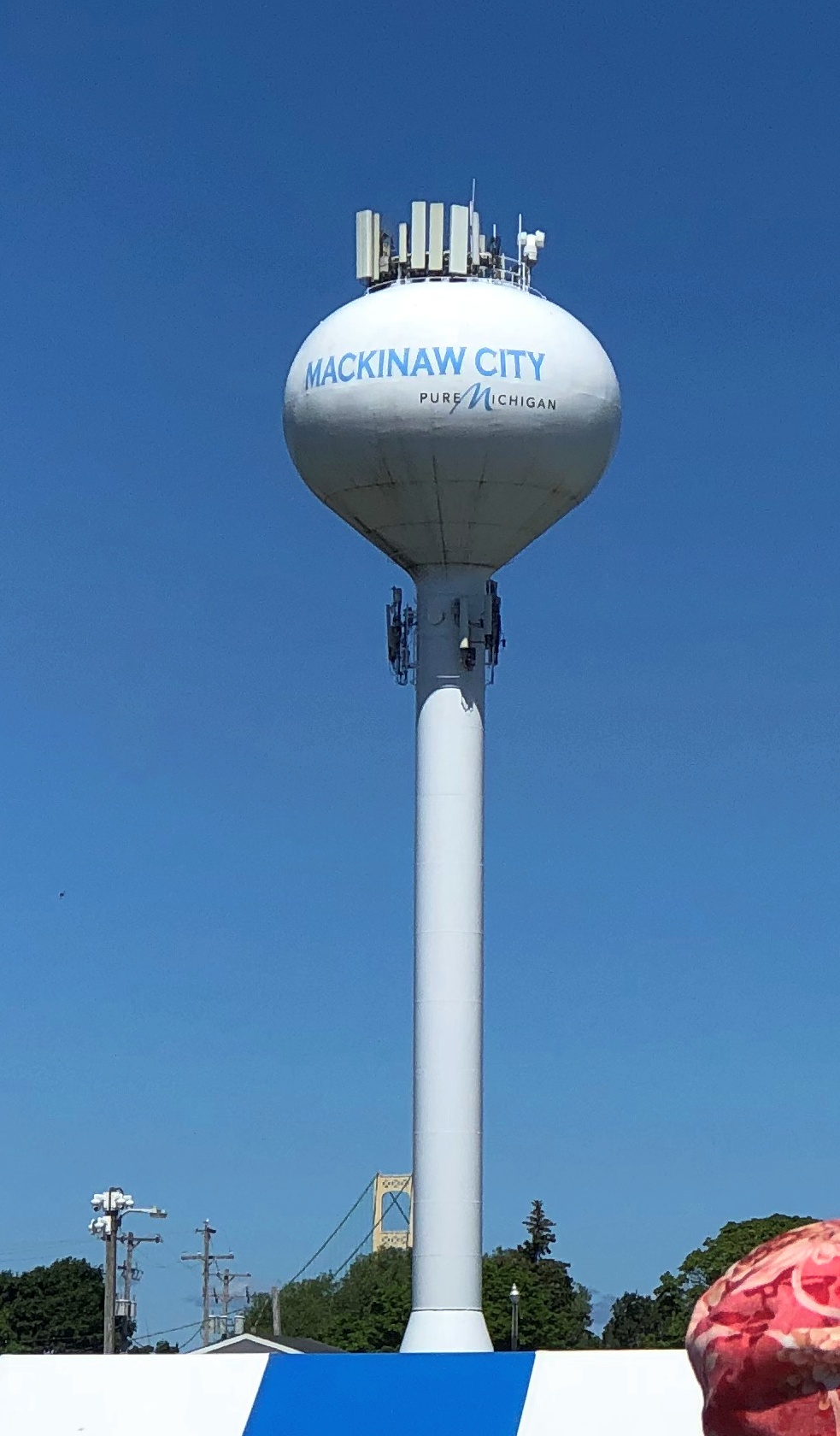
The marina at Mackinaw City, from which boats to Mackinac Island depart, and a highly visible structure nearby.Mackinac City, Michigan Mackinac City, Michigan

You can be sure that we spent that afternoon on Mackinac Island.Mackinac Island

Besides the Mackinac Island Ramble (that’s what I’m calling our walk there), we took a number of other good walks on the trip.

One was at the 390-acre Offield Family Working Forest Reserve, near Harbor Springs, Michigan. Its excellent wayfinding — clear and immediately useful signs and maps — helped us through its mildly labyrinthine paths that curve through a lush forest with no major water features, including parts that had clearly been used as a pine plantation.

Clouds threatened rain but only produced mist in the cool air. Wildflowers might have been a little past peak, but there was a profusion, and a rainy spring and early summer put them in robust clusters of red and blue and gold and white, near and far from our path. Everywhere a damp forest scent, wonderful and off-putting at the same time.

On August 5, our last full day in the UP, we had lunch in the small town of Grand Marais, on the shores of Lake Superior. As tourist towns go, it’s minor league, but all the more pleasant for it. The extent of souvenir stands at the main crossroads was a single enclosed booth, staffed by a young college woman who was maybe a relative of the owner. The selection of postcards was limited, but I got a few.

Right there on the main street of Grand Marais is the Pickle Barrel House. You can’t miss it. We didn’t.

Afterward, we found our way to the eastern reaches of Pictured Rocks National Lakeshore, since the town is considered the eastern gateway to the lakeshore. That end of the lakeshore doesn’t have the pictured rocks, but there’s a lot else.

One trail on lakeshore land took us down to a beach on the south shore of Lake Superior. Sabel Beach, by name. You climb down a couple of hundred stairs to get there, but see the vigorous Sable Falls on the way. The way wasn’t empty, but not nearly the mob city on the southern shore of Lake Michigan or the waterfront at Mackinac Island.

Another lakeshore trail took us along Sable Dunes, which only involved a modest amount of climbing — not nearly as much as the Dune Climb at Sleeping Bear Dunes National Lakeshore — though sometimes the path underfoot was sand without vegetation. On the whole, the dunes support a full collection of the sort of hardy yellow-green grasses and bushes and gnarled trees you see near a beach. For human hikers, the dunes eventually provide a more elevated vista of the lake, which reminded me of the look over Green Bay last year.

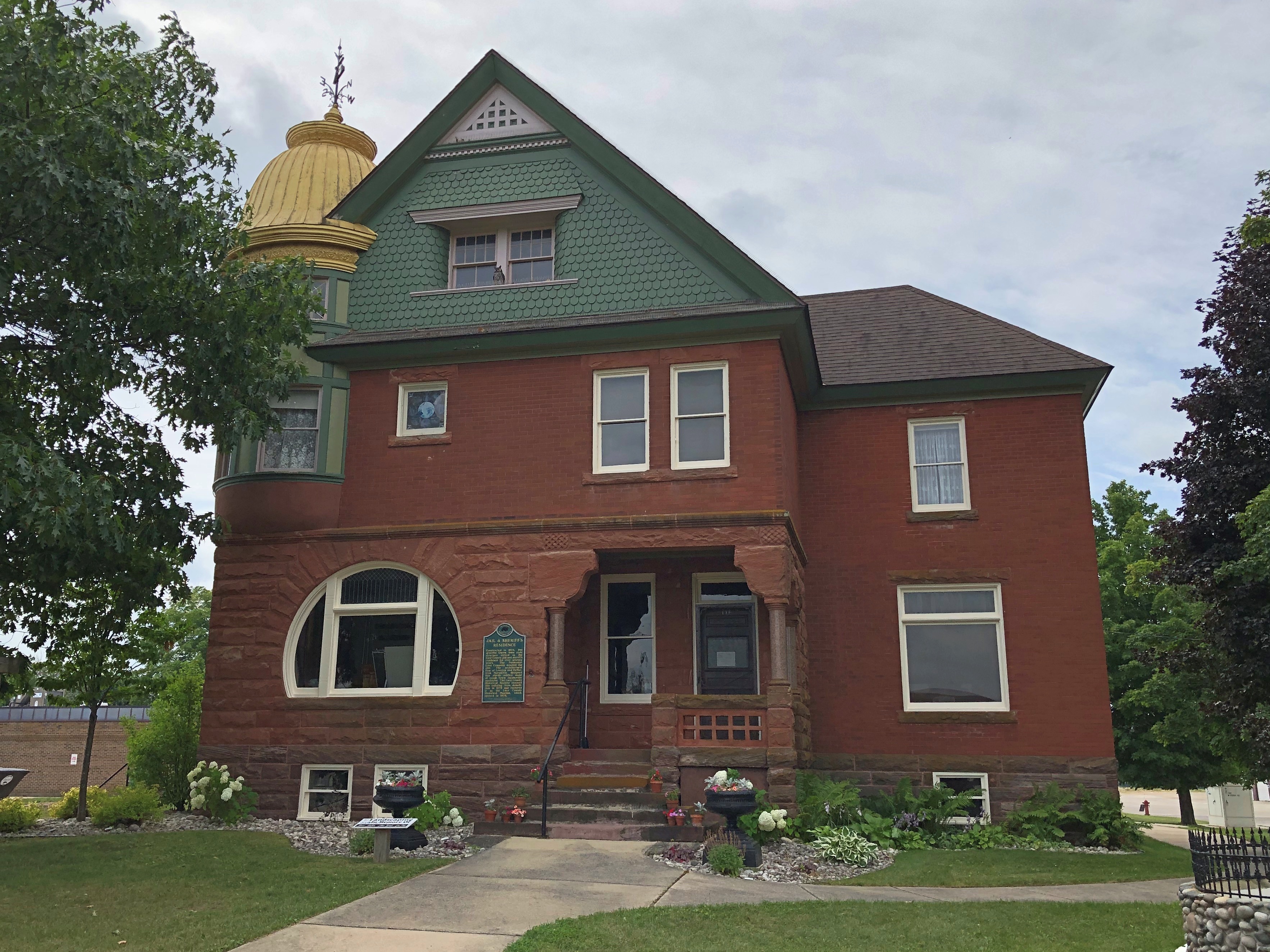
We spent two nights in Newberry, Michigan. Still no more signs of møøse than the last time I was there. I did have the opportunity to take a short walk around town. This is the Luce County Historical Museum (closed at that moment), which was once the county jail and sheriff’s residence. It’s complete with a time capsule on the grounds for the Newberry centennial in 1982. Planned re-opening: 2082. That’s optimism.Newberry, Michigan

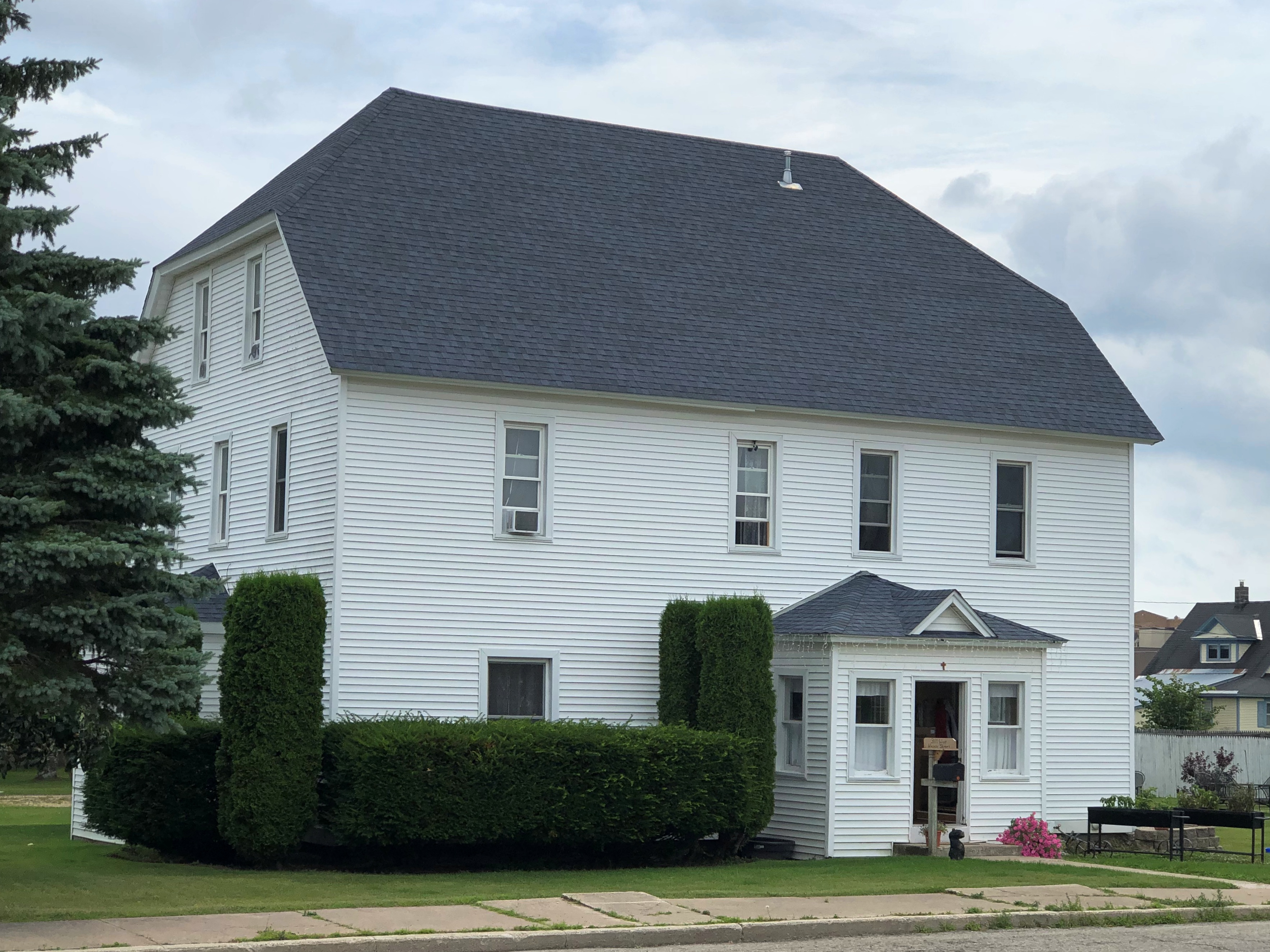
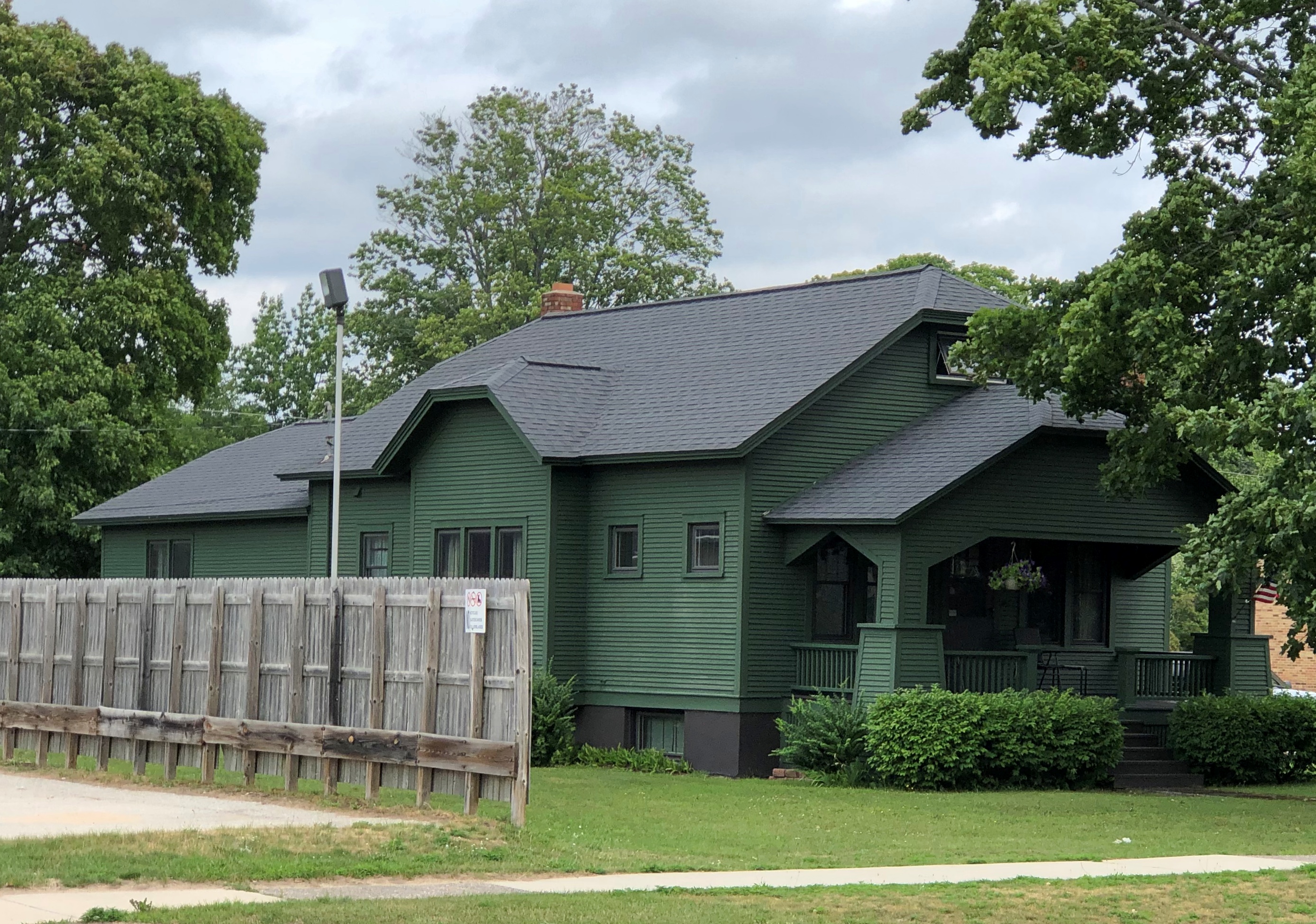
A few other nearby buildings.Newberry, Michigan Newberry, Michigan

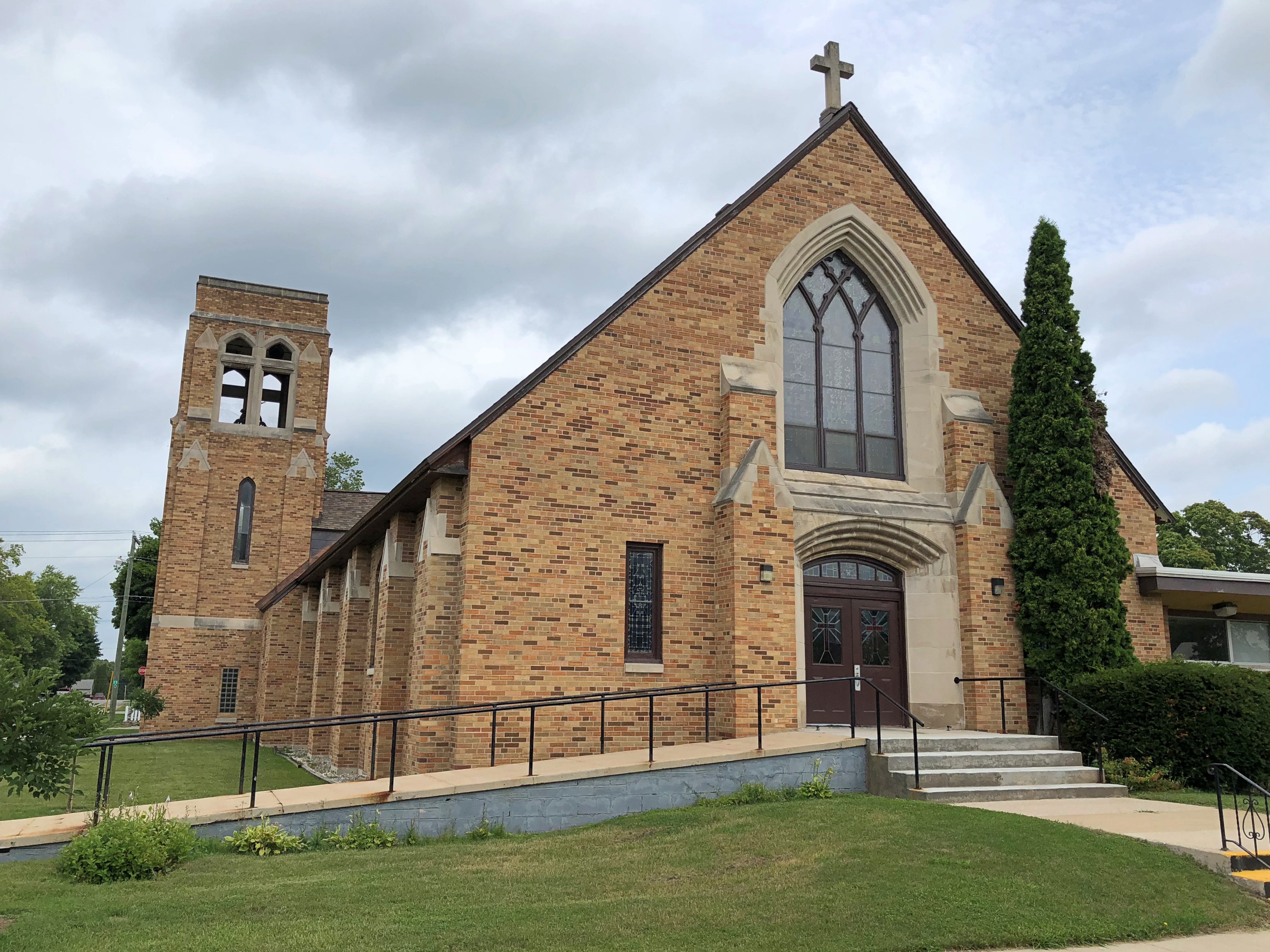
Saint Gregory’s Catholic Church.Saint Gregory's Catholic Church

We encountered rain much of the last day of the trip, August 7, so mostly it was a drive from our lakeside rental near Green Bay (the water feature) in Wisconsin home to the northwest suburbs. We didn’t stop in Milwaukee, though we buzzed through downtown on I-94, which offers a closeup of the skyline.

We did stop at Mars Cheese Castle before we left Wisconsin. How could we not do that?