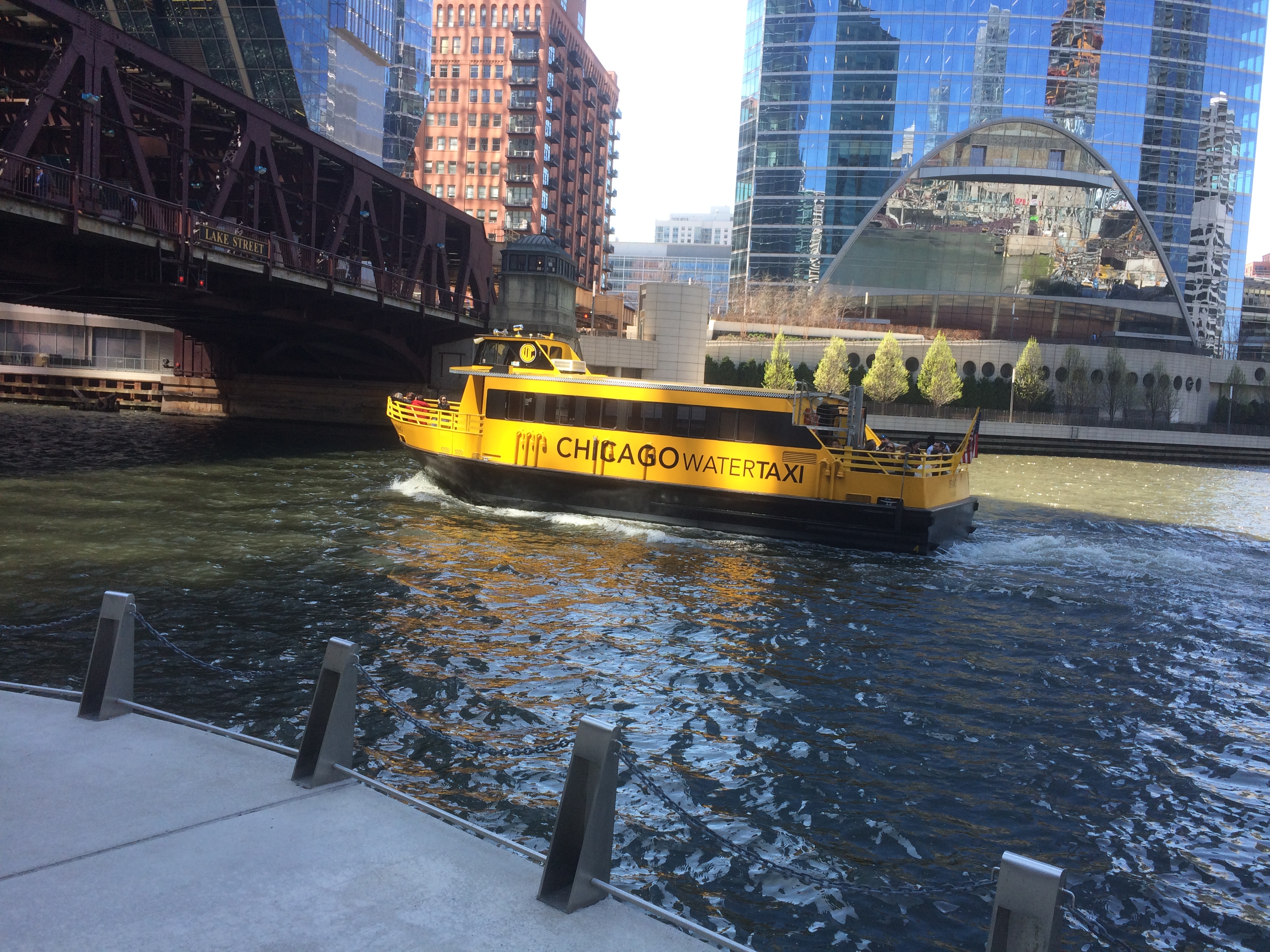
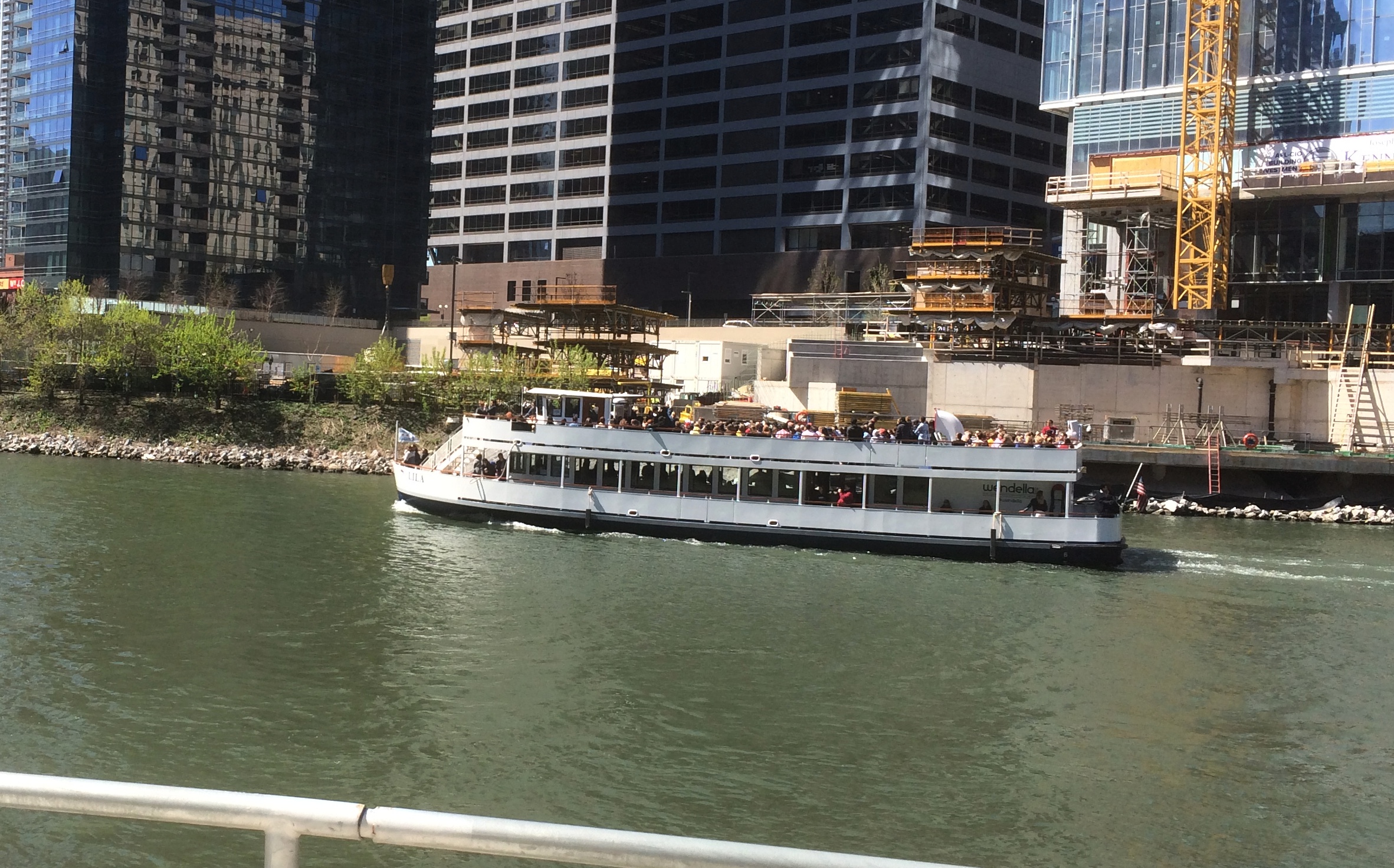
Free Enterprise is a bus operator based in suburban Louisville, though it has offices in metro Chicago. An upmarket charter bus company, from the looks of it.
I see that the bus has a number, but it would be more fun if they had names too. Fitting names. Such as the Adam Smith, the Jeremy Bentham, or the Freidrich Hayek. Or, if naming buses after economists seems a little odd, maybe the Laissez-Faire, the Profit Motive or the Market Economy.
As I’ve mentioned before, I like the idea of wine better than wine itself, which pretty much goes for any intoxicant. One reason to like wine is wine bottles, and one reason to like wine bottles is the label.
Here’s a collection of labels used by Château Mouton Rothschild for more than 70 years. The winery has been hiring an artist a year to create its labels, with some interesting results.
But you don’t have to go all the way to the Médoc to see interesting wine labels. I can do that at a grocery store a few miles away.
This one caught my eye recently. I don’t think Franklin counts as a Federalist. Sure, he supported the ratification of the Constitution, but in terms of participation in politics, Franklin found himself at a major disadvantage by the time the Federalists became a force in U.S. politics. Namely, he was dead.
There are plenty of actual Federalists who could be on a wine label. Famously, Alexander Hamilton or John Adams. Less famously, but more interestingly, DeWitt Clinton, Rufus King or Charles Pinckney. Well, maybe not Pinckney, since he owned a lot of slaves, but King was an abolitionist before it was cool.
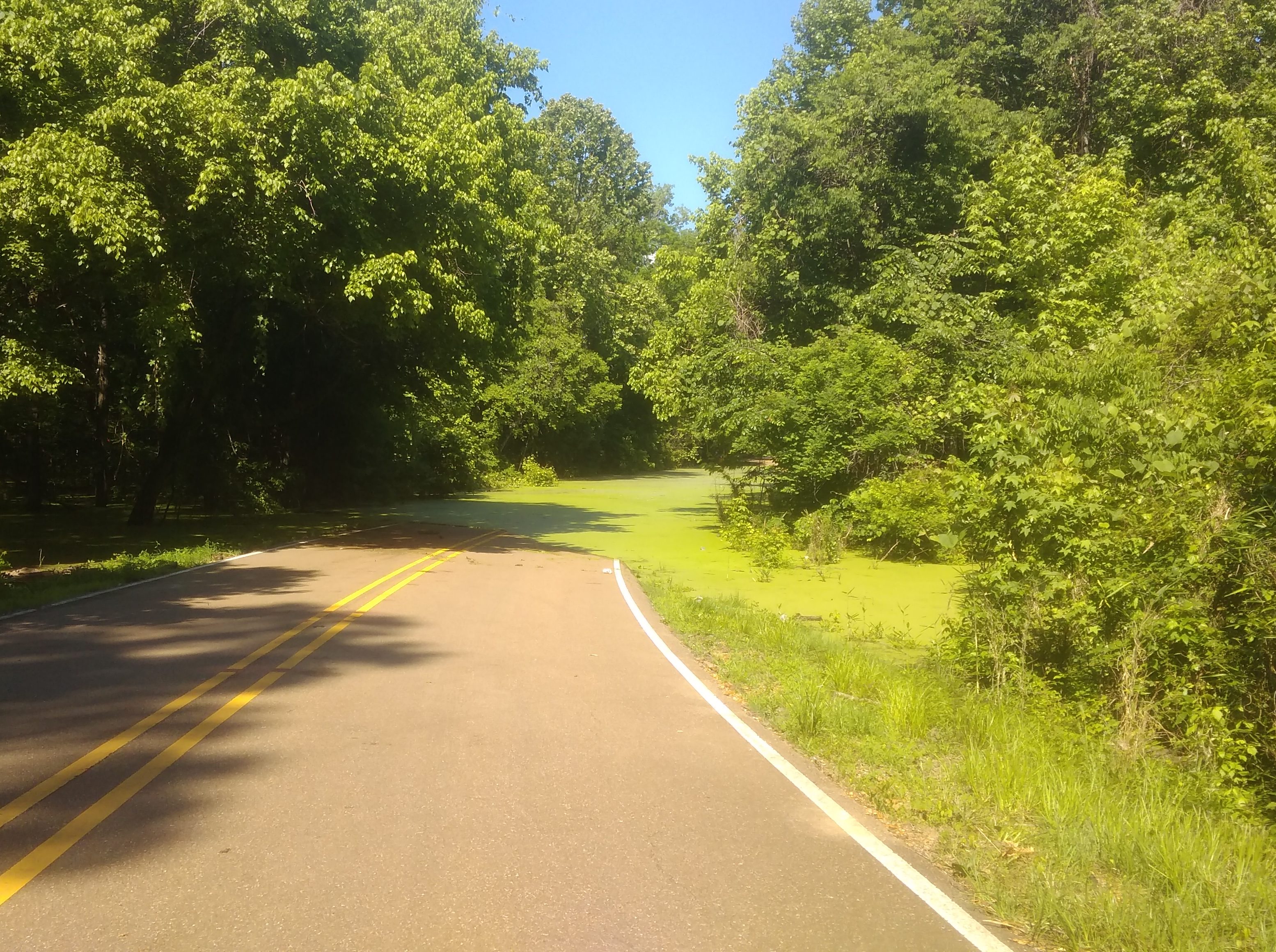
Turns out, the winery did put Hamilton on a different bottle. Along with Washington (he of no faction!) and, incongruously, Lincoln. People might get the wrong idea if you called your product Republican Wine, but there’s always Whig Wine. Lincoln was originally one, after all, and it opens up the possibility of Daniel Webster or Horace Greeley on a bottle.
I saw this and thought: Botero. I couldn’t find any evidence that Botero himself did the Bastardo label, though as Château Mouton Rothschild shows, artists are hired for such work. Shucks, you don’t even have to be a painter to shill for inexpensive wine.
Another artist-created label. By one Victo Ngai, whom I’d never heard of. Raised in Hong Kong and current resident of California. She’s done a number of labels for Prophecy; probably a good gig. Just another one of the things you can learn poking around grocery stores.
March 6 has rolled around again, so of course Remember the Alamo.
During my most recent visit to the Alamo, I also took more than a passing look at the Alamo Cenotaph. Here it is in the context of Alamo Plaza.
Why civic busybodies think the Cenotaph needs to be moved, or Alamo Plaza should be sterilized in the name of History, is unclear to me. I was there on a warm day and Alamo Plaza was alive with people. As a plaza in the here and now should be.
Living urban texture isn’t somehow at odds with proper reverence for the Shrine of Texas Liberty. As I understand the plans for Alamo Plaza, its living urban texture will slowly be strangled. That’s no way to remember the Alamo.
Enough of that. As it stands now, the south face of the Cenotaph — which is 60 feet high — features a figure known as the Spirit of Sacrifice.
Under the figure, text reads: From the fire that burned their bodies rose the eternal spirit of sublime heroic sacrifice which gave birth to an empire state.
On the east and west faces are depictions of the defenders of the Alamo.
I didn’t capture the main inscription, which says:
Erected in memory of the heroes who sacrificed their lives at the Alamo, March 6, 1836, in the defense of Texas. They chose never to surrender nor retreat; these brave hearts, with flag still proudly waving, perished in the flames of immortality that their high sacrifice might lead to the founding of this Texas.
Now I’ve seen everything. An ad for something called “Crop Preserver Deodorant Anti-Chafing Ball Deodorant” popped up on YouTube the other day. Ball deodorant?
The ad is here. It is as ridiculous as you’d expect. So is the price: $20 for 3 fl. oz. Someone is guffawing on the entire route to his financial service provider.
This year, as NASA is eager to point out, marks the 50th anniversary of the first Moon landing. I’m glad to point that out too, but it’s more than just Apollo 11.
Fifty years ago this week, Apollo 9 orbited the Earth, its main mission to test the lunar module. The flight was an unqualified success. Apollo 9 is a special one for me. Odd, considering that Apollo 8’s trailblazing journey to the Moon was so much bolder. It was, and that caught my attention, but it wasn’t until Apollo 9 that my full attention — as much as a near eight-year-old can muster — was on the space program.
By then, I’d realized that something very special was going on. Apollo 9 was part of something big. From then on, I followed all of the missions closely, down to the bittersweet Apollo 17 and its glorious night launch, when I was an older and wiser 11-year-old wishing that the rest of the missions hadn’t been cancelled.
NASA created an Apollo 9 video for the anniversary. The dance of Spider and Gumdrop in orbit. Remarkably, all of the crew are still alive.
It’s pretty rare that you can, as a late middle-aged person, look back on an opinion you had as a child and say, I was right. Something very special indeed was going on.
Looks like plain chocolate, but it’s intense, dark and rich, with a vein of apricot jam running through it and a touch of gold to mark the apex. We enjoyed it thoroughly tonight and will again tomorrow.
The calendar turns to March, winter doesn’t care. Below freezing most of the time in recent days, close to single digits some nights, but at least no ice or snow from the sky. I understand the Northeast is getting blasted now, but the storm bypassed this part of the Midwest. All we have it rims of dirty snow and ice.
A week ago, when I flew from Dallas to Chicago, skies were cold and clear but also windy, at least at Midway. Not windy enough to prevent landing, but the pilot did warn us that the landing might be bumpy.
He wasn’t just whistling Dixie. Besides regular turbulence, the jet shook from side-to-side, not violently, but more than you’d want, even after it had touched down on the runway. When the plane finally came to a stop, spontaneous applause broke out. It was that kind of landing. You know, a good one. We all walked away from it.
I looked at this posting the other day and was surprised to remember that I’ve been watching The Americans for that long — since March 2013. Watched the penultimate episode on Friday night. Wow, it was good.
The last season has been on demand for a while now, but I refuse to gobble them up like little chocolate doughnuts. I take them more like Toblerone, a sweet triangle at a time, back when that confection was hard to find in the United States.
(I remember an irritating guest we had late in college at our house in early ’80s Nashville. His worst offence was snarfing down our entire Toblerone bar when no one was watching.)
TV was meant for weekly installments. That’s in Leviticus, I think. Except maybe Batman during the original run. Commentaries vary.
I understand The Americans finale is a corker, and I believe it, though I don’t know the details. The show’s nothing if not suspenseful. Sorry to see it end.
San Antonio to Dallas is roughly a five-hour drive straight through, provided traffic isn’t gummed up somewhere along I-35, which it will be in Austin, so best to take Texas 130 around that city, even though it costs extra.
Also best to break the trip into smaller segments and take a look around an in-between place or two. My nephew Dees told me that Aquarena Springs, formerly a postwar tourist attraction — trap — of some renown in San Marcos, is a good thing to see. In recent years, Texas State University-San Marcos remade the place as the Meadows Center for Water and the Environment. Glass-bottom boat tours are star attraction now, rather than the “aquamaids” of yore.
Sounded like a diversion of more hours than we were willing to spare, so we skipped it this time. But we did stop in San Marcos.
First for a look at the Hays County Courthouse, which is a fine old building with a statue of John Coffee Hays outside, whom the Handbook of Texas Online calls a “Texas Ranger extraordinary.” South Texas sculptor Jason Scull did the bronze. Not far away is the San Marcos City Cemetery. According to the Heritage Association of San Marcos, the cemetery replaced a smaller boneyard, with burials beginning in 1876. The city took ownership in the 20th century, as it retains today.
Though you climb a small hill at the entrance, most of the cemetery is level. Though not heavily wooded, the cemetery has trees to remind us that late February in central Texas is early spring.
There are some larger stones and some funerary art, but not a lot. As Jay pointed out, ready money in 19th-century San Marcos — when such art was more likely to be erected — was in short supply, at least compared with a place like New York, home of Green-Wood and Woodlawn, or even old Charleston.
Still, there are some more ornate markers, such as the draped obelisk of Z. T. Cliett (1847-1892). Or the stone of Dr. P. C. Woods (1820-1898). A nearby Texas Historical Commission marker says that Dr. Woods came to Texas from Tennessee, as so many did (T for Texas, T for Tennessee). Commanding the 32nd Texas Cavalry Regiment during the war, he patrolled the border with Mexico and the Gulf coast against possible Union attack, and fought in Louisiana, where he “received an arm injury which impaired him for the rest of his life.” That didn’t keep him from being a farmer and doctor in postbellum Texas, however.
Thomas Reuben Fourqurean (1842-1925) (interesting name) had a metal marker to denote his service to the CSA, of the kind that’s easy to find in older Southern cemeteries.
Another marker — local, not state — tells the story of Ann B. Caldwell (1800-65), who was reinterred here in the 1870s from an earlier San Marcos cemetery. In life, she had been among Stephen F. Austin’s colonists and then an early settler in Hays County.
The cemetery’s old enough to include weather-worn stones whose names have been lost to time. Everyone’s stones will eventually disappear in the fullness of deep time, of course. These stones simply have a head start on the others.
If you want to see artful concrete, Tadao Ando is your man. I came to a fuller appreciation of that when we visited the 659 Wrightwood in Chicago late last year. On exhibit at the 659 were images of the Modern Art Museum of Fort Worth, an Ando design that looked pretty artful, too.
As it is.
That’s the back of the structure, or at least the side facing the water feature and a scattering of outdoor sculptures, and sporting the museum’s distinctive Y beams.
The front, or at least the side facing the parking lot and a public street, isn’t quite as distinctive, but it is handsome in a modernist sort of way. Ando’s design is apparent not only in the exterior, but in the smooth concrete walls that form parts of the interior.
The Modern is one of a cluster of art museums in Fort Worth that also includes the Amon Carter Museum of American Art (designed by Philip Johnson) and the Kimbell Art Museum (Louis Kahn and Renzo Piano). The last time I spent a day in Fort Worth, early in 1990, I visited both of those. The Modern didn’t exist then, opening only in 2002.
How best to approach a museum whose collection is as eclectic as the Modern? Wander around and look at things. Some works will be interesting, some less so. I try to wander around upper-end grocery stores with the same attitude in mind, if I have time.
The usual modern suspects were all in evidence at the Modern: Picasso, Lichtenstein, Rothko, Andy Warhol, Jackson Pollack, Josef Albers, Henry Moore and more. Worth seeing, but it’s also good to see interesting works by artists that aren’t quite as well known.
Such as “Ladder for Booker T. Washington” by Martin Puryear (1996), a wooden ladder-like structure fixed to the floor that winds its way upward. It doesn’t merely appear to shrink in size as it rises, it actually does. The surrounding Ando-style concrete walls add to the effect.
For something newer, and more kinetic, there’s “Kind of Blue” by Jenny Holzer (2012), an array of nine LED signs with blue diodes fixed to the floor, emitting blue words that appear to flow along. As far as I could tell, there was no direct reference to the Miles Davis album of that name, but I could easily be wrong.
The video also offers a good look at the tall glass windows that overlook the museum’s shallow water feature — essentially a field of rocks covered by a little water.
Photography is part of the Modern’s collection as well. One wall sported a number of gelatin silver prints of water towers in France, Germany and the U.S. by Bernd and Hilla Becher. How is this tower in Dortmund-Grevel, Germany, anything but a delight?
Near the museum’s front entrance is “Vortex” by Richard Serra (2002), who is best known to us rubes for the notorious “Tilted Arc” in DC. On the other side of the museum, beyond the water feature, we took a look at a familiar figure.
“Conjoined” by Roxy Paine (2007), done in stainless steel. I remember seeing his work at the National Sculpture Garden and, I believe, at the Denver Art Museum, the Frederik Meijer Gardens and Sculpture Park, the Crystal Bridges Museum of American Art, MOMA and the Hirshhorn. Cool. But does lightning strike the Modern piece?
If you know where to go in Texas, you can find yourself face-to-face with these figures. That’s what we did on February 17. About a quarter-mile from the Cao Dai Tay Ninh Temple of Dallas is the Cambodian Buddhist Temple of Dallas, also known as Wat Jetaphon Khemararam.
The area is something of a religious precinct, since also nearby are the Homprakhoon Baptist Church, the Wat Lao Sirimoungkhoun of Dallas, the St. John Neumann Redemptorist Monastery — called the Vietnamese Redemptorist Mission on Google Maps — and, a little further away (but not much), the Potter’s House of Dallas, a megachurch.
The entrance of the Cambodian Buddhist Temple of Dallas is a recently completed temple gate that’s a replica of the gates at Angkor Wat. My pictures of it didn’t turn out, but this article shows it well.
The grounds were open and we were free to wander around. So we did. I was reminded of the various wats I visited in Thailand, though the Cambodian style is a bit different. The grounds featured temple structures.
Along with Buddhas a-plenty. Or rather, Buddharūpa.
Monks live on the grounds. In fact, some of the buildings sport signs in English designating them as monk quarters. I saw one man whom I took for a monk doing some exterior work on one of the temple structures, and as we were about to leave, another man — whom I also took for a monk, though dressed in clothes you might see on anyone in our place and time — asked me if I liked the temple. I told him I did.
A few years ago, I was browsing Google Maps, as one does, and I happened across the Cao Dai Tay Ninh Temple of Dallas. That was intriguing. I wanted to take a look.
Usually when I visit Dallas, I spend time in the northeast part of the city, at about 2 o’clock from downtown. The temple is in the southwest at about 8 o’clock from downtown, so I knew that it might be awhile before I made it down that way.
February 17 turned out to be the day we visited the Cao Dai Tay Ninh Temple of Dallas. This is the entrance. I think. The temple belongs to an overseas branch of the Caodai religion of Vietnam.
“Caodaism is a relatively new, syncretistic, monotheistic religion with strongly political character, established in 1926 in Southern Vietnam…” writes Md. Shaikh Farid. “It draws upon ethical precepts from Confucianism and Buddhism, occult practices from Taoism, theories of karma and rebirth from Buddhism and hierarchical organization from Roman Catholicism…
“This synthesis of elements adapted from other religions into a functioning religious movement manifests itself in such common Caodai practices as priestly celibacy, vegetarianism, seance inquiry and spirit communication, reverence for ancestors and prayers for the dead, fervent proselytism, and sessions of meditative self-cultivation.”
The temple is in a part of the city of that’s mostly devoted to light industrial buildings, mobile homes and undeveloped properties. Presumably, the site was affordable for local Caodai devotees.
I’d never heard of that religion until I made an excursion from Saigon in 1994 to the main Caodaist temple, the Holy See of the religion, in Tay Ninh, Vietnam. Here’s a picture I took of that building.
A more detailed description of the various influences that went into the building is here. An amalgam of Chinese and Indian and other elements, it seems.
The temple in Dallas, from roughly the same angle. The similarities between the Holy See and the Dallas temple were apparent at once, though I’m pretty sure that the Holy See is larger, and some details are different.
The Dallas temple is still a work in progress. This was especially noticeable when we went inside — a side door was open — and noticed construction materials and tools here and there. Though smaller, the Dallas interior also had strong similarities to the one in Tay Ninh. As I understand it, services are at midnight, 6 a.m., noon and 6 p.m. We visited around 3 p.m., so no Caodai worshipers were around in Dallas. The tour in Vietnam was timed to see the noon service, so we saw the worshipers in their various colorful robes, each color with a distinct meaning best known within the religion, though ordinary worshipers are in white.
It’s good to travel to exotic places and see exotic things. Like you can in Dallas.