CDMX

Something I didn’t know until recently: Mexico City, which has more autonomy than it used to, is no longer in the Distrito Federal, which it had been since 1824. Two years ago, the federal government of Mexico signed off on a name change, which the city’s government had wanted, to simply Ciudad de México, abbreviated CDMX.

On Wednesday, December 27, Lilly and I flew to Mexico City, returning on New Year’s Day 2018 — or actually early January 2, since the return flight was late. We stayed at a hotel in the Zona Rosa, just south of Paseo de la Reforma, a major thoroughfare, but also within walking distance of the Roma neighborhood.

We spent our time as dyed-in-the-wool, first-time tourists, seeing impressive places and structures, visiting grand museums, walking along interesting streets, eating a variety of food, taking in as much detail as possible.

Considering that Mexico City is a vast megalopolis — all too apparent from the air as we arrived in the daylight and left at night — we experienced only the slimmest sliver. But an endlessly fascinating sliver.

Adding immeasurably to the trip was the fact that my old friend Tom Jones — known him nearly 45 years — was in Mexico City at the same time. In fact, I’d suggested the trip to him on the phone last summer, when I called him to hear about his experience in seeing the eclipse. He’d been a fair number of other places in Mexico over the years, more than I have, but not Mexico City, so he was open to the suggestion.

So the three of us went a lot of places together in the city. Tom has an impulse for photobombing.
The first place Lilly and I went, not long after we had arrived, was the enormous Zocalo (formally the Plaza de la Constitution), which was packed with holiday revelers enjoying a temporary ice-skating rink and amusement-park slides. We circumambulated the square, said to be the second largest in the world after Red Square, and spent some time inside the vaulting Catedral Metropolitana, which opens onto one side of the Zocalo.

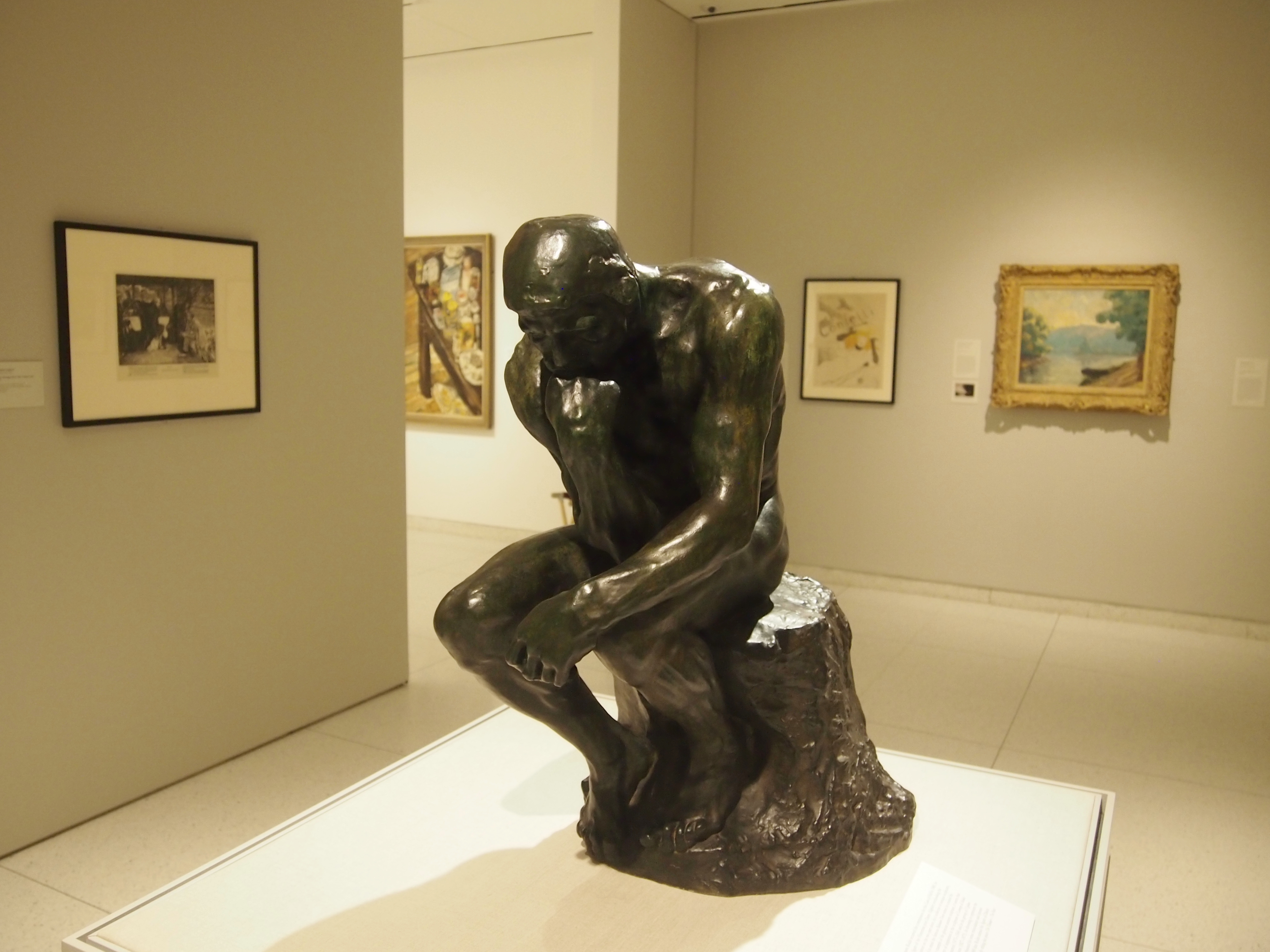
The second day, with Tom joining us, was for large museums in the even larger Bosque de Chapultepec, the city’s equivalent of Central Park: the Castillo de Chapultepec, a grand palace along European lines and now a history museum; and the Museo Nacional de Antropologia, an epic museum devoted to the many and varied cultures of pre-Columbian Mexico (or more precisely, pre-Cortez).

All that makes for tired feet, so the third day was less intense. Even so, we got a good look at a small part of the charming Coyoacan neighborhood, which includes the Museo Frida Kahlo. The lines were too long to visit Frida, but not to get into the Museo Casa Leon Trotsky a few blocks away.

The next day, December 30, was exhausting, but completely worth all the energy and money we spent, because we got to visit the renowned Teotihuacan, which is to the northeast of the city, in the State of Mexico, and climb its pyramids. From there, we went back into the city to see the Basílica de Nuestra Señora de Guadalupe — the Basilica of Our Lady of Guadalupe — a pilgrimage site I’ve been curious about since I encountered The Shrine of Our Lady of Guadalupe, Des Plaines.

And as if that wasn’t enough for a day, we returned to Castillo de Chapultepec on the evening of the 30th, along with four of Tom’s friends from Austin who were also visiting Mexico City, for an outdoor performance by the astonishingly talented dancers, singers and musicians of the Ballet Folklórico de México.

On the last day of 2017, we slept fairly late, but were out and about after noon, for a visit to the Palacio de Belles Artes, a striking building with art exhibits and some astonishing murals, especially the Diego Riveras. More Rivera murals were in the offing at the Palacio National, the last large site we visited.

We were tired on the evening of the 31st, but not too tired to walk a few blocks from our hotel to the Paseo de la Reforma. One of the city’s two main New Year’s celebrations was being held around the Angel de la Independencia, a famed gold-colored statue atop a tall column in the center of a Paseo de la Reforma traffic circle. The event featured live music by well-known (I was told) Mexican bands, a countdown just like at Times Square, except in Spanish, and then fireworks: a bang-up way, literally and figuratively, to start 2018.

Twelve Pictures ’17

Back to posting on January 2, 2018, or so. Like last year, I’m going to wind up the year with a leftover picture from each month. This time, for no special reason, no people, just places and things.

Champaign, Ill., January 2017Charlotte, NC, February 2017

Kankakee, Ill., March 2017

Rockford, Ill., April 2017

Muskogee, Okla., May 2017

Naperville, Ill., June 2017

Barrington Hills, Ill., July 2017

Vincennes, Ind., August 2017

Denver, September 2017Evanston, Ill., October 2017Chicago, November 2017

Birmingham, Ala., December 2017

Merry Christmas and Happy New Year to all.

O Tannenbaum Where Art Thou?

Something I didn’t know before, courtesy of the National Christmas Tree Association: “Christmas Trees were added to the federal agriculture census in 1997, when the responsibility for census shifted from the U.S. Department of Commerce, Bureau of the Census, to the United States Department of Agriculture (USDA), National Agricultural Statistics Service (NASS). The agriculture census is conducted every five years.
The 2012 Census of Agriculture results were released by USDA in May 2014.”

That means that for this year’s census, we’ll have to wait until 2019. Then we’ll know for sure whether there was a Christmas tree shortage this year, as has been reported.

The association says: “Recent price increases are due to a tighter supply of harvestable size Christmas trees. The current tight supply situation results from fewer trees being planted 7 to 10 years ago. This was due to a combination of excess supply at that time and the recession both pushing prices downward, along with some growers exiting the business.”

I will say that all of the Christmas tree lots I’ve visited in recent years are gone. Even the nursery that sells trees not too far from my home has none this year. But it didn’t have too many last year.

So this year I went to a big box store, my last resort when it comes to trees. I was late anyway, only getting around to it on Monday. Even that store only had a few. The price was right, though: about $16 plus tax for something not so different from last year’s. Guess the store was trying to get rid of its remaining inventory.

Back to the census. In 2012, there were 309,356 acres of Christmas tree farms nationwide, down from 446,996 in 2002. That could indeed help account for a paucity of trees this year. The number-one state when it comes to acres of Christmas trees under cultivation? Oregon, at more than 53,600. North Carolina is next at about 40,300 acres and then the state I’d have guessed at number one: Michigan, nearly 38,000 acres.

Wyoming is at the bottom at zero acres. Nevada, North Dakota and Oklahoma are all listed as (D) with no explanation. Maybe the data is incomplete. Remarkably, some 52 acres of Christmas trees were cultivated in Hawaii in 2012.

One more thing. The motto of the National Christmas Tree Association is “It’s Christmas. Keep it real.”

Pre-Christmas Christmas Items

Got a card from old friends Wendy and Ted today.

They do amusing handmade cards every year. I like this year’s, but my favorite, which I don’t have handy, was about Santa having to enter the Witness Protection Program.

Earlier this year, when Christmas wasn’t dead ahead, I acquired this card among a mass of old postcards that I bought from a resale shop that was going out of business. I was sorry to see it go, because the resale cartel — Goodwill, Salvation Army — doesn’t seem to deal in postcards.

Sent in Chicago in 1938.

From Dorothy to Violet May — at least I think that’s Violet, not Violit.

The 2300 block of West Montrose, and I assume the sender meant West Montrose, since east would be in the lake, probably doesn’t look so different nearly 80 years later.

One more thing, not related to Christmas, except this is the time of year when new calendars enter the house.

A desk calendar: The JAL Fleet Calendar 2018. It takes a different approach than yesterday’s fastener-oriented calendar, which was full of verbiage to mark the days. Except for making Sundays red, none of the days on the JAL calendar are distinct from any other — no holidays, nothing.

At 3¼ by 6¼ inches, it’s an unusual size, but I think I’ll use the months as they go by for postcards.

The Global Fastener News Calendar 2018

Just today I got my hands on a copy of the Global Fastener News Calendar for 2018. A year ago, the first time I ever came across such a calendar, I wrote about it at some length. I wouldn’t be so expansive about the calendar this year, but I will hang it on the wall again.

If you’re in the fastener biz, it seems, you can sponsor an entire month. In order, beginning with January 2018, the advertisers of the month are: Nucor, Brighton East, Tortoise Fastener, Star Stainless, Ken Forging, AZ Lifting Hardware, Darling Bolt, XL Screw, inxsql, Unbrako, Rotor Clip, and Lindstrom.

Tortoise Fastener Co. of Denver is my favorite, even if they forgot the hyphen in the slogan: “Stocking a full line of slow moving hex heads.”

The calendar also offers a lot of detailed information about fastener organizations, such as the Canadian Fasteners Institute, the Fastener Industry Coalition, the Industrial Fasteners Institute, the International Fastener Machinery & Suppliers Association, the Metropolitan Fastener Distributors Association, the Mid-Atlantic Fastener Distributors Association, the Mid-West Fastener Association, the National Fastener Distributors Association, the New England Fastener Distributors Association, the North Coast Fastener Association, the Pacific-West Fastener Association, the Southeastern Fastener Association, the Southwestern Fastener Association, Specialty Tools & Fasteners Distributors, Women in the Fastener Industry and Young Fastener Professionals.

And that’s just in North America. Mention is also made of the Association des Distributeurs Francais Specialistes en Elements de Fixation, Deutscher Schraubenverband e.V., the Hong Kong Screw & Fastener Council and the Nederlandse Vereniging van Importeurs can Bevestigingsmaterialen, just to name a few.

A Christmas Carol, Suburban Chicago Version

Metropolis Performing Arts Centre is an excellent mid-sized theater that would fit in anywhere in the city, but it happens to be in suburban Arlington Heights. We went to see a production of A Christmas Carol there on Saturday.

Another nice detail: they produce paper tickets. This was Ann’s.
The soulless ticket cartel might be eager to get rid of paper tickets, but venues ought to be eager to keep them. People keep them, especially if they show was good. They’re cheap long-term bits of marketing.

Ann had never seen A Christmas Carol on stage, and neither had Yuriko. The last time I saw it was also at the Metropolis — almost exactly 10 years ago, when I took Lilly.

This production had everything it needed to have, particularly an actor (Jerry M. Miller) who could handle Scrooge’s dour initial disposition that slowly melts to his inevitable conversion to altruism. A Christmas Carol without that is a limp rag indeed.

Since it’s based on a novella, and not a source play, stage versions are going to differ, as the movies do. There was more singing and dancing in this version than others I’ve seen. Each of the Christmas spirits got a song-and-dance by a troupe, for instance, which was pleasant enough. This version also featured Bob Cratchit as the story’s narrator, which was a little odd.

A couple of important lines were omitted. Lines I think are important, that is. Old Fezziwig, who seemed reasonably prosperous — he had apprentices, after all — but who also knew that life was about more than making money, got none of his lines. He was mentioned in passing by Scrooge, and he got to dance, but that was about it.

“Yo ho, my boys!” said Fezziwig. “No more work to-night. Christmas Eve, Dick. Christmas, Ebenezer. Let’s have the shutters up,” cried old Fezziwig, with a sharp clap of his hands, “before a man can say Jack Robinson.”

When faced with the Spirit of Christmas Yet to Come, Scrooge didn’t ask it a most important question.

“Before I draw nearer to that stone to which you point,” said Scrooge, “answer me one question. Are these the shadows of the things that Will be, or are they shadows of things that May be, only?”

Just quibbles. Now I’ve done my bit to introduce my children to the Dickensian part of Christmas. If you’re going to celebrate the holiday in this post-Victorian world, you should know it.

We Don’t Care, We’re the Phone Company (Or, I Ain’t Afraid of No Phone Cops)

There’s a fair amount of clutter in my mother’s house, which is characteristic of my family, but not at the level of hording. For instance, no one saved all of the phone books that have come to the house over the years. But there was one tucked away in a cabinet that I came across last week.

This one.

The Southwestern Bell Telephone Directory for San Antonio, published in September 1967. With a model of the Tower of the Americas prominent on the cover, rising above a model of HemisFair, which would run during in 1968. When the directory was published, the tower was still under construction.

Why was the directory saved? Maybe as a kind of souvenir of that world’s fair. Or because it was the first phone book we got when we moved to San Antonio, which was in the summer of ’68. Since phone books used to be published annually, we would have gotten a ’67 edition.

The back cover advertises the Bell System Exhibit at the fair with a painting that looks as 1967 as can be.

Those skyride cars are the artist’s fancy. The actual skyride cars, which I remember because they lingered at the site of the fair for years afterward, looked more like these.

Naturally, I had to spend some time looking between the covers. Just turning to any random part of the white pages — people named Green, in this case — you see the following.
Name, address and an alphanumeric for a phone number, though a few of them are all numeric. So I’m not imagining things when I remember being taught as a seven-year-old, after we moved to San Antonio, that our new number began with TA4. At some unremembered moment in the ’70s, that became 824.

I looked up the parents of a few people I knew in high school. Interestingly, none of them yet lived in the houses I would remember them being in, which would be about 10 years later. Also, per custom of the time, only the man of the house was listed.

Something else that’s gone: this is the white page listing for all of the Handy-Andy grocery stores in San Antonio in 1967.
Twenty-eight all together, and there were probably more in smaller towns in South Texas. My grandmother traded — interesting old-fashioned choice of verbs — at the one on 5930 Broadway. The store gave away coffee and little doughnuts. She’d drink some coffee, I’d eat some doughnuts. After moving to town, my family frequented the one at 1955 Nacoghoches all through the ’70s and ’80s.

These days, there are zero Handy-Andy supermarkets. In the struggle for regional grocery dominance, HEB won. The 1955 Nacoghoches location is now an HEB, and probably some of the others are as well. This article tells about the last gasp of Handy-Andy.

On to the yellow pages. Actually, all of the pages are fairly yellow, considering that the book is now more than 50 years old. Anyway, here’s an industry that isn’t what it used to be.
This industry is flourishing as ever. But the terminology has changed.
And there were house ads in the phone book. Direct dialing was a relatively new thing in 1967, I understand. Definitely cheaper than paying human operators, but DDD as a shorthand for it never caught on.
Here’s something for those of us who remember the difference between person-to-person calls and station-to-station calls, which was relevant into the ’70s. I see that the Phone Company (always caps, always) was encouraging station-to-station.
I can only speculate why. Person-to-person calls were more expensive, so you’d think the Phone Company would want people doing that.

But there was a way to game the system, if you only wanted (say) your family to know that you’d arrived somewhere safety. You’d call person-to-person and ask for someone that didn’t exist, or maybe yourself. The person who answered would know it’s you, but say that person you asked for wasn’t there. In that case, there was no charge for the person-to-person call.

I don’t ever remember doing that, but I know people did (and who probably weren’t afraid of the Phone Cops). By contrast, station-to-station was guaranteed revenue for the Phone Company.

Vulcan

While I was in Birmingham earlier this month, I noticed a lot of yard and roadside signs for the upcoming Senatorial election. Every single one was for Doug Jones or, more likely, against Roy Moore. Birmingham tends to be Democratic, and Jones is from Birmingham, but I think there was more to it than that. What I didn’t think was that Jones would win.

The simplest of the signs said: No Moore.

I’m only half-joking when I say that the modern world was invented either by Victorians, or for the 1893 World’s Fair, or for the 1904 World’s Fair, or by ad men in the 1920s. In the case of the massive cast-iron Vulcan overlooking Birmingham, Alabama, the statue was created for the World’s Fair in St. Louis, to tell the world about the city’s core competence in metal.That’s Vulcan atop the stone tower that the WPA built for him in the 1930s. Next, a view from a little further back.

Note the observation deck. You can reach that via stairs inside the tower, or by an elevator in the other tower. We took the elevator. From the deck, which goes all the way around the tower, Vulcan’s backside is close by.Besides Vulcan’s buttocks, we could see Birmingham stretching out in the distance.

There were also views of the surrounding hilly terrain.

For Vulcan, created by immigrant Giuseppe Moretti, the road from the 1904 World’s Fair to the top of Red Mountain in Birmingham wasn’t direct. After the fair, he was painted and displayed at the Alabama State Fairgrounds until the 1930s, when he was moved to Red Mountain and put on the 124-foot pedestal fashioned by the WPA.

Instead of a spear point, which was lost en route home from the fair, he had a lantern in his outstretched hand. It glowed red after a traffic fatality in Birmingham; green when there had been none for a while.

In the early ’70s, the tower was “modernized,” that is, made ugly. By the end of the 1990s, however, the statue was threatening to fall apart — no small matter for something that’s 56 feet high and weighs 100,000 pounds (the head alone weighs 11,000 pounds).

It took a while to raise the funds needed for repairs, but civic pride eventually came through. The statue was revamped by 2004, including restoring the structure and Vulcan’s original coloration, giving the tower back its WPA appearance, and putting a spear point back in the god’s hand.

Sloss Furnaces

Not far from downtown Birmingham is Sloss Furnaces, site of pig iron production from 1882 to 1971.

In our time, Sloss is an enormous forest of iron and steel, besides being a National Historic Landmark, sometime music venue, and site of a metal arts program. The long shed was, in fact, active with metal working while we visited. To see the main part of the site, you walk past the shed through a kind of tunnel.
“In 1871 Southern entrepreneurs founded a new city called Birmingham and began the systematic exploitation of its minerals,” the Sloss Furances web site says. It’s an excellent short history — you don’t always get that at web sites — so I will quote at at length, to go with some pictures.

“One of these men was Colonel James Withers Sloss, a north Alabama merchant and railroad man. Colonel Sloss played an important role in the founding of the city by convincing the L&N Railroad to capitalize completion of the South and North rail line through Jones Valley, the site of the new town.

“In 1880, having helped form the Pratt Coke and Coal Co., which mined and sold Birmingham’s first high-grade coking coal, he founded the Sloss Furnace Co., and two years later ‘blew-in’ the second blast furnace in Birmingham.”

The site these days includes relics towering into the sky.

And entrances into dark cavities.
“Construction of Sloss’s new furnace (City Furnaces) began in June 1881, when ground was broken on a fifty-acre site that had been donated by the Elyton Land Co. Sixty feet high and eighteen feet in diameter, Sloss’s new Whitwell stoves were the first of their type ever built in Birmingham and were comparable to similar equipment used in the North.

“Local observers were proud that much of the machinery used by Sloss’s new furnaces would be of Southern manufacture. It included two blowing engines and ten boilers, thirty feet long and forty-six inches in diameter. In April 1882, the furnaces went into blast. After its first year of operations, the furnace had sold 24,000 tons of iron. At the 1883 Louisville Exposition, the company won a bronze medal for ‘best pig iron.’ ”

“Nothing remains of the original furnace complex. The oldest building on the site dates from 1902 and houses the eight steam-driven ‘blowing-engines’ used to provide air for combustion in the furnaces. The engines themselves date from the period 1900-1902 and are a unique and important collection — engines such as these powered America’s Industrial Revolution. The boilers, installed in 1906 and 1914, produced steam for the site until it closed in 1971.

“Between 1927 and 1931 the plant underwent a concentrated program of mechanization. Most of its major operation equipment — the blast furnaces and the charging and casting machinery — was replaced at this time. In 1927-28, the two furnaces were rebuilt, enlarged, and refitted with mechanical charging equipment, doubling the plant’s production capacity. While the site strongly reflects the changes made from 1927-1931, some of the technology is more current.”

“Despite being dominated by black labor, the industrial workplace was rigidly segregated until the 1960s. Workers at Sloss bathed in separate bath houses, punched separate time clocks, attended separate company picnics. More important was the segregation of jobs.

“The company operated as a hierarchy. At the top there was an all white group of managers, chemists, accountants, and engineers; at the bottom an all black ‘labor gang’ assisted (until its demise in 1928) by the use of convict labor. Sloss utilized the convict leasing system only in its coal mines. As Lewis noted in Sloss Furnaces, ‘….convict labor, mostly black, was an important weapon in the district’s economic warfare with northern manufacturing.’ Slavery had not died but merely been transformed.”

Oak Hill Memorial Cemetery, Birmingham, Alabama

At the Oak Hill Memorial Cemetery in Birmingham on December 2, I saw this modest obelisk. It was a surprise.

The carving is a little worn, but still legible.

G.A.R.
ERECTED
BY
GEO. A. CUSTER
POST NO 1 DEPT OF AL
APRIL 27, 1891

Scattered around the memorial are the graves of former Union soldiers, such as P.J. Crawford of Co. H, 3rd New Hampshire Infantry and Corpl. Chas. M. Robinson of Co. F, 8th Michigan Cavalry.

A surprise, but then again I’m sure a number of former Northern soldiers made their way to Birmingham in the late 19th century, looking for opportunity in the rising industrial city like anyone else. Enough to have a GAR post, and enough for the post to buy a small plot in the cemetery.

The Birmingham Public Library says that “in 1871 the City of Birmingham purchased from the Elyton Land Company 21.5 acres for a city cemetery (later named Oak Hill)… As the first city cemetery, Oak Hill became the resting place for virtually all of the Birmingham pioneers. Although the majority of burials at Oak Hill Cemetery date back before the 1930s, it remains an active cemetery, averaging fifteen burials per year.”

Plenty of other stones are just as old as the GAR ones, and in various states of decay.

The cemetery is marked by mature trees.

And evidence even in early December that it’s still fall in central Alabama.

The cemetery sports some mausoleums, but not many. They were often crumbling.
There are also larger stones, but not that many of those either. As city cemeteries of the late 19th century go, Oak Hill’s fairly restrained in that way.
Oak Hill, like much of Birmingham, has some hilly contour. I think that adds to the aesthetics of a cemetery, especially if there’s a variety of trees and stones.
Other parts are more level.
We didn’t look for anyone in particular, though a number of Birmingham and Alabama notables are buried at Oak Hill. Looking through a list of them, the only one I recognized was Fred Shuttlesworth, who died only in 2011. We didn’t see his grave.

As it happens, Bull Connor — another of the handful of Birminghamians I’ve heard of — is buried at a different large local cemetery, Elmwood. Which is on Martin Luther King Jr. Drive. Heh-heh. Hope that sticks in Bull’s craw.