One Ngultrum Note

This colorful banknote is a 1 ngultrum note issued by the Royal Monetary Authority of Bhutan, Series 2013.

1 ngultrum note

If I ever knew it, and maybe I did, I’d forgotten that the ngultrum — དངུལ་ཀྲམ — is the basic currency of that insular Himalayan state. It divides into 100 chhertum. The ngultrum is pegged at par to the Indian rupee, so these days my note is theoretically worth about 1.5 U.S. cents.

1 ngultrum note

That’s Simtokha Dzong. Wiki tells us that “Simtokha Dzong (‘dzong’ means ‘castle-monastery’), also known as Sangak Zabdhon Phodrang (‘Palace of the Profound Meaning of Secret Mantras’), is a small dzong. It was built in 1629 by Zhabdrung Ngawang Namgyal, who unified Bhutan… An important historical monument and former Buddhist monastery, today it houses one of the premier Dzongkha language learning institutes.”

I didn’t pick up the note in Bhutan. Mostly what I remember hearing about visiting Bhutan in the 1990s was that visas were inordinately expensive. These days, I’ve read, the approach is to require foreigners to spend a certain per diem in country — high for the developing world — and hew pretty closely to their organized tours. Nepal, it ain’t.

RBS One Pound Note

What to do here in the pit of winter, with its cold — though not quite as cold this year as usual — and daylight that passes so quickly? Take a close look at your collection of colorful but essentially worthless banknotes from far-flung nations. Or in one case, a subnational banknote. This one, dated 1978:
Royal Bank of Scotland One Pound Note 1978Not too many subnational territories get their own banknotes, but Scotland does. I might have gotten this in change during my ’83 visit to the UK, which took me close to Scotland compared to where I am most of the time, but not really that close. Or maybe I picked it up in ’88. I suspect that by ’94, most cashiers in England weren’t bothering with £1 notes of any kind.

Royal Bank of Scotland One Pound Note 1983

Scottish notes circulate in the rest of the UK, and will until that day when the Scots, peeved about Brexit, pull the trigger on independence. At which point they might go ahead and use the euro, and wind up like Greece. But that’s all mere conjecture.

For now, three Scottish banks are authorized to issue banknotes: the Bank of Scotland, the Royal Bank of Scotland, and Clydesdale Bank. According to the RBS, it’s been issuing banknotes since 1727 and has an average of £1.5 billion worth of notes in circulation on any given day. It’s also the only one of the three to keep issuing £1 notes.

In October, the RBS issued its first polymer banknote, which was a £5 note. Next will be a £10 note. The one pound probably isn’t worth the trouble.

The Move Up North, 1987

Thirty years ago, I packed up and moved to Chicago. Nothing like moving in late January to make you lose your taste for long-distance moving, but that didn’t stop me from packing up again three years later to move even further, again in the winter. And twice again in the 1990s.

Instead of writing in any detail about the move, I did a schematic in a notebook I used at the time as a diary. I did that occasionally.
Move to Chicago, Jan. 1987The move was fairly straightforward. Load up a rental truck in Nashville, unload at my new apartment in Andersonville in Chicago, take the truck back to Nashville, drive my car and whatever I hadn’t loaded back to Chicago. About 500 miles each way. I guess it was tiresome, but I was young.

Weather wasn’t a factor, except for one incident. While driving the empty truck back to Nashville — and in fact just inside Davidson County — I hit a patch of black ice. For a flash of a terrifying moment, the truck was swaying wildly. But I stayed on the road.

Thursday Residuum

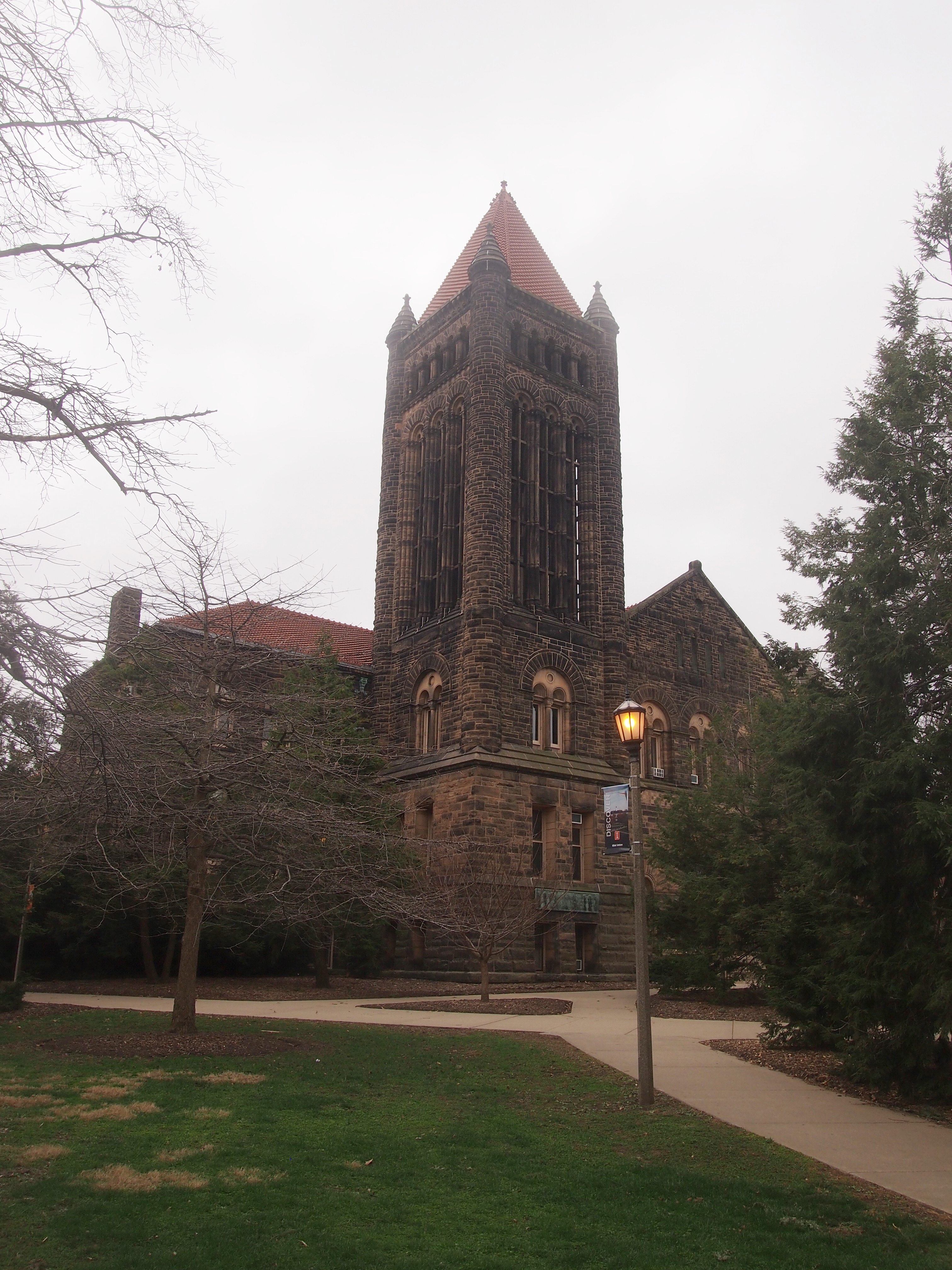
Remarkably rainy January so far. Even when it hasn’t been raining these past weeks or so, the skies have looked pregnant with rain. So it’s been a wet January, not an icy one. That was the case at UIUC, as the last of clinging frozen matter thawed, as it might in a normal northern March.

UIUC January 15, 2017

Blame it on climate change? I’d be tempted, but weather isn’t climate. Besides, there’s a blizzard lurking out there in the near future, or at least heavy snow. Winter will not be denied.

A few days ago, I approached a four-way stop to make a left turn. Directly across the intersection another car arrived to make a left turn. To my left, a third car arrived to make a right turn. We all got there at about the same moment. We all made our respective turns concurrently. Can’t remember when that happened before. Had a fourth car to my right wanted to make a right turn, it would have been truly remarkable, but we had to settle for a three-way synch.

At a World Market last week, I saw bottles of Tito’s Handmade Vodka for sale. I couldn’t ever remember actually seeing any before, as opposed to hearing about it, though I don’t go to a lot of liquor stores.

Last month, I heard Tito himself on the radio, pitching his creation. He didn’t quite sound like his high school self, no one would, but it was him all right. I was pretty sure I hadn’t ever heard advertising for Tito’s beyond sponsorships on public radio (the ad I heard was on a commercial station). Maybe Tito’s needed to up his ad budget in the face of competition.

I’m most of my way through the book River of Doubt, about the Roosevelt-Rondon expedition into the deep Brazilian rainforest. Reading it, you think, how did anyone survive that trip? They faced untreatable diseases, looming starvation, dangerous animals, venomous bugs, an extremely hazardous river, a murderer among their crew, and the potential for Indians to attack at any time and wipe them all out. At one point, a very sick Theodore Roosevelt seriously contemplated overdosing on morphine. Not too end his pain, but to avoid being an impediment to the rest of the expedition. His son Kermit wouldn’t allow it.

Amazing how close TR’s bio came to ending with, “Led expedition down the River of Doubt in Brazil, 1914. Never seen again.”

The Spurlock Museum

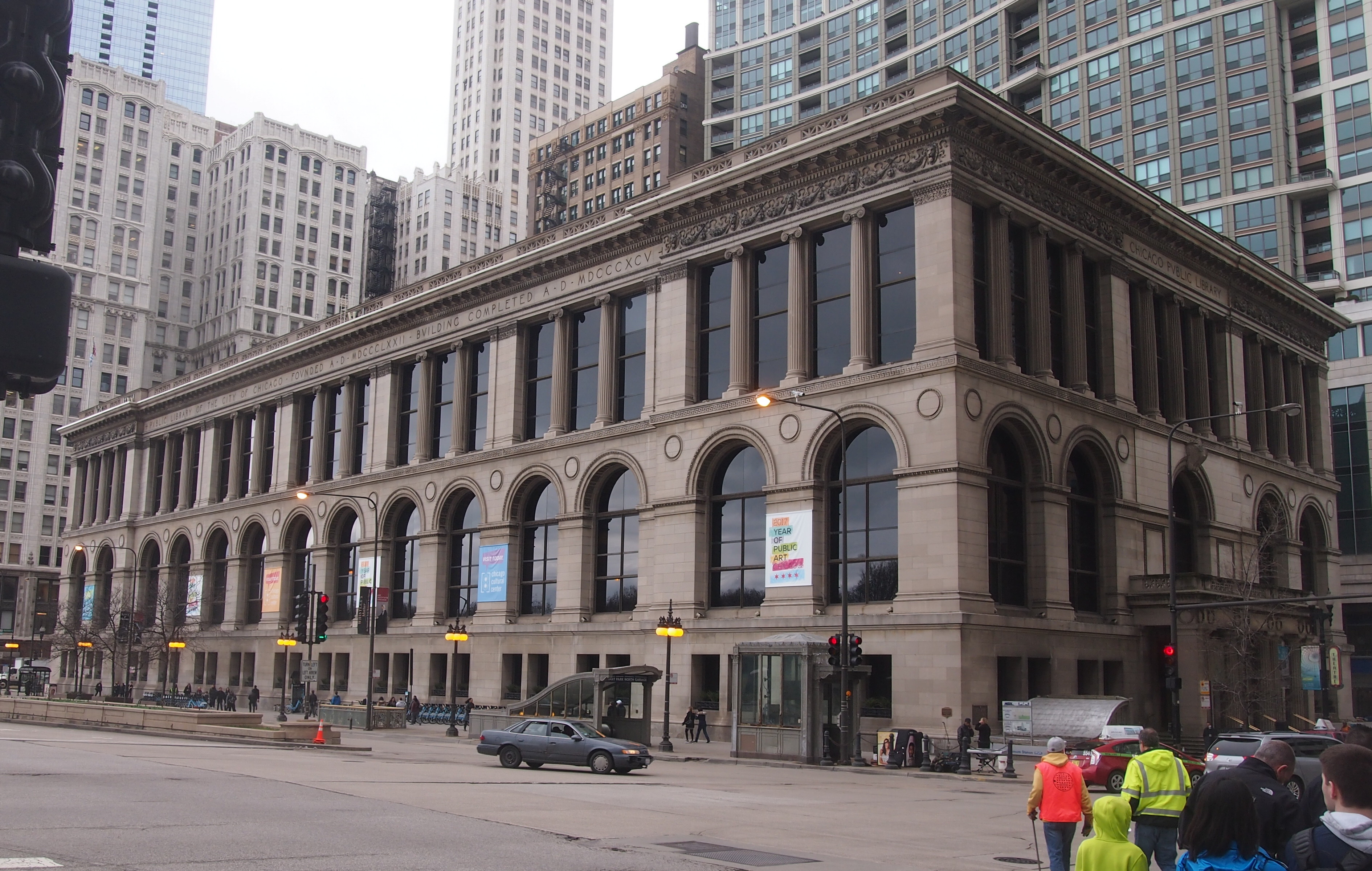
Just before bugging out of town on Sunday afternoon, I stopped at the Spurlock Museum on the UIUC campus. I was surprised to find it open. As opposed to the Krannert Art Museum, the focus of the Spurlock — in full the William R. and Clarice V. Spurlock Museum — is ethnographic. I didn’t want to spend a long time, so I only wandered through the first-floor galleries, one dedicated to the ancient Mediterranean, the other to North and South American Indians.

The Mediterranean room offered reproductions of ancient statues and a wide mix of smaller artifacts. It’s always good to run across Augustus, though maybe he should be painted in bright colors.
Augustus, Spurlock MuseumIt’s a plaster cast of a first-century Roman marble that’s in the Vatican Museum, which itself was a copy of a Roman bronze original, ca. 20 BC, which was lost to time.

Next, Artemis.
Artemis, Spurlock MuseumAgain a plastic cast of a marble Roman copy, ca. 2nd century AD that’s now in the Louvre. Unlike Augustus, she’s wearing sandals. The original Greek bronze, ca. 350 BC by Praxiteles, is also no more.

The Doryphoros.

Spear carrier, Spurlock Museum

That is, the spear carrier. No fig leaf for this fellow. No spear, either, though he could pick one up at any time. The original bronze, ca. 450 BC, is lost (of course, sigh). A 1st century AD marble copy is in the National Museum in Naples.

Now for a different aesthetic.

Diablada costume, Spurlock MuseumAccording to the museum, this Diablada costume was acquired by Isabel Scarborough in Cochabamba, Bolivia; the mask, whip and matracas were acquired by Cynthia LeCount Samane in Oruro, Bolivia, in both cases in the late 2000s.

A drum from Andean Ecuador in the 1970s.

Andean Drum, Spurlock Museum

Canelos Quichua Miniature Pottery Festival Group, by Marta Vargas Dugua, Puyo, Ecuador (2008).
South American figures, Spurlock MuseumUpstairs are exhibits about East Asia, Southeast Asia, Oceania, Europe, Africa, ancient Mesopotamia, and ancient Egypt. Guess I’ll have to drop by again.

UIUC Walkabout, January ’17

The first time I took a walk through the University of Illinois Urbana-Champaign campus, when visiting with Lilly not quite a year ago, we didn’t have much of a plan. On Sunday, I took another walk around UIUC, studying a campus map beforehand. Not exactly a plan, but at least informed guesswork about an interesting route.

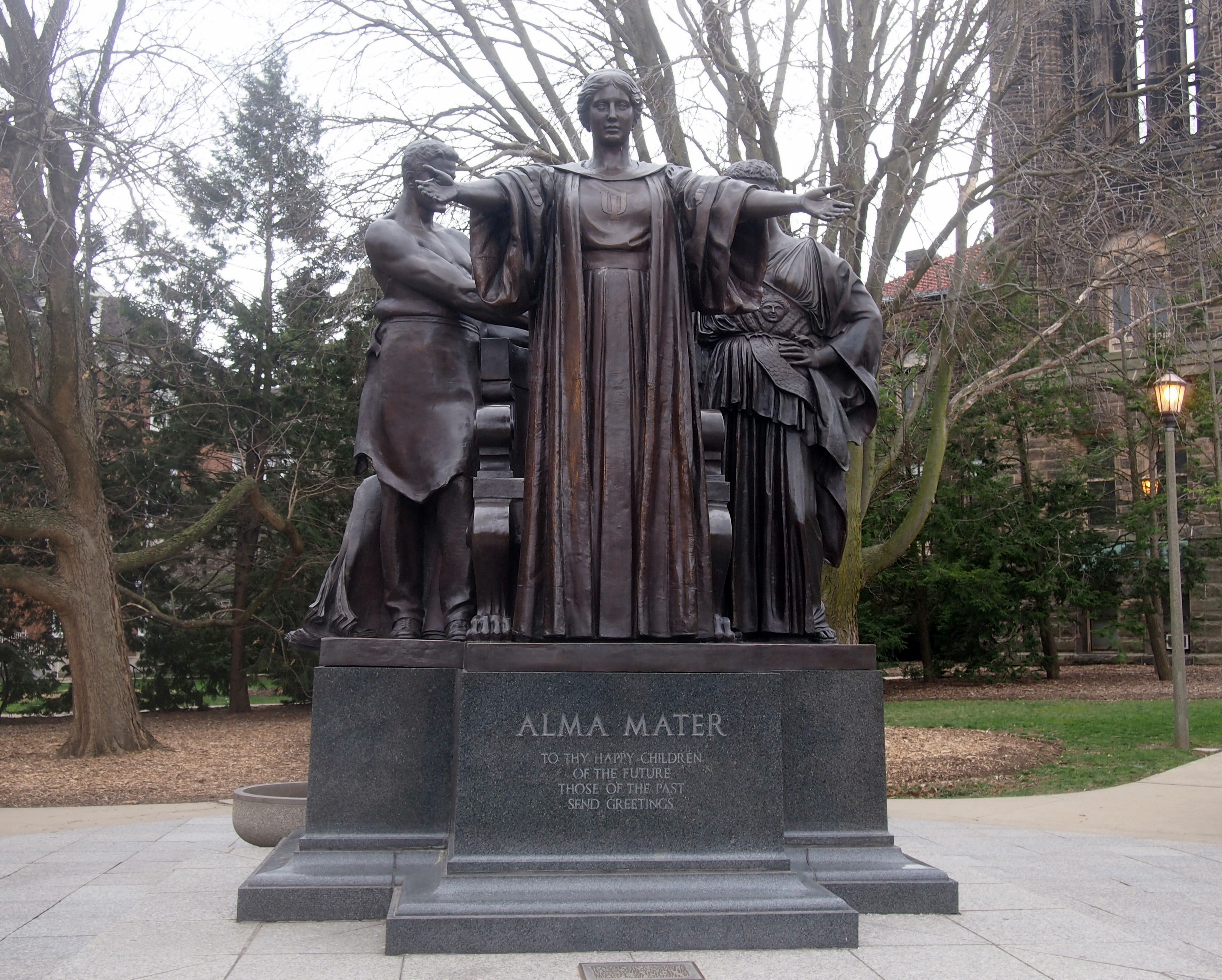
I parked on 6th St. next to the College of Business and near a side street named after sculptor Lorado Taft, a distinguished early alumnus, and headed out from there on foot. I saw more evidence of Taft’s connection to the university elsewhere, though not the well-known “Alma Mater” sculpture (this time).

Nearby was the Architecture Building. Four panels are embedded in the walls of the building, on conspicuous display. Here’s one, featuring Michele Sanmicheli.

Architecture Building panel UIUC“The Architecture building, also known as Architecture and Kindred Subjects, was designed in the Georgian Revival style by Charles A. Platt in 1926-1927,” writes Muriel Scheinman in Explore C-U. “Platt, who also designed ten other buildings on campus including the University Library, David Kinley Hall, and Mumford Hall, embedded four panels with medallion portraits of famous architects on the Architecture building. Michelangelo Buonarroti and Michele San Michele are displayed on the west gates, and Christopher Wren and Inigo Jones are on the east gates. Frank G. Menconi, an architectural sculptor based in New York, designed the panels.”

Back to Lorado Taft. One of his monumental works is the Fountain of Time in Chicago. He had planned a similarly monumental work nearby called the Fountain of Creation, but the project was never realized.

He did complete four figures intended for the Fountain of Creation, however, and now they stand in front of the UIUC main library and behind the Foellinger Auditorium. I wandered by and saw them all. Here’s one of two near the library’s entrance, “A Daughter of Pyrrah.”
A Daughter of Pyrrah, Lorado Taft, UICU“Pyrrha” is how it’s spelled in my go-to reference on the subject, Gods and Mortals in Classical Mythology: A Dictionary (Michael Grant and John Hazel, 1979) and other places. She was part of the husband-and-wife team who survived a worldwide flood and then helped re-create mankind by tossing rocks over their shoulders, which then became people.

Pyrrha had natural-born daughters as well as rock-created ones. It isn’t clear which one Taft was thinking of, at least from reading the plaque.

Here’s the other.
A Daughter of Pyrrha, Lorado Taft, UICUWhatever else, they seem to be in some kind of distress. A collegiate title might be, “I’m not ready for my exam!” A more topical title could be, “The inauguration’s coming soon!”

Not far away, behind the Foellinger Auditorium, are two sons of Duecalion, whom Taft called “Eucalion.” He was the husband in the flood myth.
A Son of Duecalion, Lorado Taft, UICUIf anything, the sons look even more distressed than the daughters.
A Son of Duecalion, Lorado Taft, UIUC

“After a weekend bender” might be a good title for that one.

“Around 1917, [Taft] proposed to the city a pair of huge fountains, one at each end of a strip of public park known as the Midway Plaisance on the Chicago’s South Side,” explains Chicago Outdoor Sculptures. “On the western edge, the Fountain of Time and at the eastern edge would stand the Fountain of Creation. Although the Fountain of Time was completed, The Fountain of Creation was never completed… Taft planned 38 monumental figures and figure groups for the Fountain of Creation. But only four were carved in stone.”

Nearby is the UIUC Observatory. It wasn’t open for inspection, but I liked the outside.

UIUC Observatory Jan. 2017“The University of Illinois Observatory was constructed in 1896,” the university says. “…Though none of the astronomical instruments are being used for professional research today, the observatory still contains a 12” Brashear refractor. The observatory played a key role in the development of astronomy, as it was home to a key innovation in the area of astronomical photometry. The facility has been directed by such noted scientists as Joel Stebbins and Robert H. Baker.”

Looping back, I took in the view from the steps of the Foellinger Auditorium, which is nice even in winter. It encompasses the Illini Union. You wouldn’t know it to look at the building, but part of the financing for its construction came from the WPA.
There’s a bowling alley in there somewhere, among other things. I’ll have to take a closer look inside sometime. Likewise with the Foellinger Auditorium, which was closed on Sunday afternoon.

Mt. Hope Cemetery, Champaign-Urbana

RIP, Gene Cernan. That leaves six of 12 moonwalkers.

I took Lilly and a friend of hers back to UIUC yesterday. It was a good day for popping down to Champaign/Urbana, at least as good as you’re going to get in January, with overcast skies but no ice or snow or much wind, and temps a bit above freezing.

After I dropped them off, I did a little walkabout of my own before returning home. I soon found myself all by myself, at least among the living, at Mt. Hope Cemetery. The cemetery, founded in 1856, is older than the university, and these days is a long stretch of land south of the school, totaling 52 acres between Florida and Pennsylvania avenues.

It’s fairly flat, but then again, this is Illinois.

Mt. Hope Cemetery, Champaign/Urbana

There’s a nice variety of stones and some mature trees, though not quite the arboretum I’ve encountered in other places.

Mt. Hope Cemetery, Champaign/Urbana

Many of the stones date from the 19th century. That is, people whose lives came and went entirely during that century, though there were also a good many early 20th-century burials. I also saw some newer stones as well, such as this curious one.

Mt. Hope Cemetery, Champaign/Urbana

That’s a style I’d never seen before: the grave marker as bench.

Mt. Hope sports some interesting funerary art, including some stone styles you see in a number of places, such as this Woodman’s monument.

Mt. Hope Cemetery, Champaign/Urbana

A few larger monuments, like the obelisk below, dot the landscape, but mostly the stones are more modest. There’s a modern-ish looking building that serves as a mausoleum, but not many of the freestanding family mausoleums you find in other older cemeteries.

Mt. Hope Cemetery, Champaign/Urbana

“Prior to Mt. Hope, locals were buried in the Old Urbana Cemetery (now Leal Park), the Old Jewish Cemetery, or on family farmland,” writes Laura Miller in Explore C-U. “Jesse Burt, a local farmer, recognized that the growing community of Urbana needed a larger and more organized burial ground with scenic walks more in keeping with the park-like cemeteries then popular and contributed land for this purpose…

“Many families moved their ancestors’ graves from the old burial grounds to Mt. Hope. The drives through the cemetery were named after trees. Once, numerous footpaths weaved through the cemetery making it a popular place for walks and picnics; however, this space has been reclaimed over the years for burial lots. After it opened, it became the primary cemetery for burials until 1907, when Woodlawn and Roselawn Cemeteries began operation.”

In the 1890s, veterans and their supporters erected one of the larger monuments in Mt. Hope. “Dedicated,” it says, “to the memory of the defenders of our flag, 1861-1865.”
Mt. Hope Cemetery, Champaign/UrbanaNot long after, the GAR put up a cannon next to the statue.
Mt. Hope Cemetery, Champaign/UrbanaAll in all, a fine graveyard to visit, even when you need a coat. I’ll have to take a look in springtime.

Enjoying the Snows of Yesteryear

Light rain fell early Thursday morning — I heard it during the wee hours — but by morning, the ground was lightly touched by snow. That ultrathin coat of snow lasted until Saturday and then vanished. For now, we’ve got a brown winter.

Not so most Januaries. Such as in mid-January 2012, when I happened to catch Lilly in the back yard enjoying the snow.
Jan 17 12Jan 17 12Jan 17 12I might be wrong, but I don’t think she took that hat off to college.

Divers Content on a Freezing Cold Thursday

Inspired by yesterday’s natterings, I stopped at the library and checked out River of Doubt (2006) by Candice Millard. Subtitled “Theodore Roosevelt’s Darkest Journey,” it’s about TR’s expedition into darkest Amazonia in 1913-14. As the book makes clear from the get-go, the journey nearly killed him. Even he-man action presidents have their limits, after all.

I didn’t know until today that Andrew Sachs died not long ago. There are many clips available of him in fine form as Manuel, such as this one or this one or this one.

I’ve had these glasses for a few years now. Bought them at a garage sale for (I think) a quarter each.

Coke Cans Make of Glass

They were clearly some kind of promotional item from Coca-cola but also McDonald’s, because three of them have McDonald’s arches on the bottom. The interesting thing to me is that they’re precisely the same size and shape as a 12 oz. soft drink can.

While writing about a hotel today, I encountered something in the hotel biz known as a “spiritual menu.” The concept isn’t exactly new, but I’d never heard of it. The following is from the Christian Post in 2008.

“A hotel in Nashville will be the first known in the nation to remove the standard Holy Bible from its rooms and replace it with a ‘spiritual menu’ that includes other religious books… Hotel Preston, a boutique owned by Oregon-based Provenance Hotels, will require guests to call room service to order their religious book of choice…

“The religious book list includes the Book of Mormon, the Qur’an, the Torah, the Tao Te Ching, The Four Noble Truths of Buddhism, Bhagavad Gita (a Hindu text), books on Scientology, as well as the King James and New American Bible versions.” @#$%&! Scientology?

Hm. The Gideons can’t be too happy about being replaced. And the following lyric just doesn’t have the same ring: Rocky Raccoon/Checked into his room/Only to find a spiritual menu.

Presidential Trivia for the Day, 1/11/17

There’s a monograph to be written about U.S. presidents and South America. That’s the kind of thing that comes to mind sometimes for me, but it wasn’t an entirely random thought that popped into my head. (Though I get enough of those, too.)

My friend Kevin sent me an email today about a trivia contest he’d participated in recently. I don’t think he’d mind me reproducing our exchange here. The subject line was: Final Trivia Question Last Night – U.S. Presidents

Kevin: Without looking up the answer, would you have known the answer to this?

“When Eisenhower was in office, Alaska and Hawaii were admitted into the union. Before him, who was the last president to be in office when a new state was admitted into the union?”

Me: That’s an easy one: Wm. Howard Taft, president in 1912 when NM and AZ became states.

Kevin: Where were you last night when we needed you?

I had the states right in my mind and the time frame, but we put Teddy Roosevelt down. Off by one president.

Me: A harder question would be which state entered the union when TR was president? Oklahoma, 1907. 

Here’s another one: which president signed statehood bills for six states?

Kevin: Ya got me. Hayes or Garfield?

If you still lived in Westmont, you could be on our team.

We were doomed anyway. One of the categories was Alice in Wonderland. We got one right out of eight.

We generally do pretty good with the first round, which is a grab bag round. A little bit of everything. Six out of eight with that category.

They also have another grab bag round, but each answer started with the letter “R.” Seven out of eight for that category.

Me: Benjamin Harrison. The story about the Dakotas is that he closed his eyes when he signed their bills — they’d been approved by Congress at the same time — so that no one would know which was first. Others BH states were Montana, Idaho, Washington and Wyoming. No president ever signed so many statehood bills.

Hayes didn’t get any. But he was the father of a department in Paraguay, which is named after him.

Now that’s trivia. Unless you’re from Paraguay.

Kevin: Very interesting. I hope that comes up as a trivia question sometime.

I keep hoping they’ll ask who was president between Grover Cleveland’s two non-consecutive terms? Benjamin Harrrison! That one I know.

I might know more presidential facts than most, but I don’t expect anyone else to know that kind thing. Each to his own trivia. Sports fans would be well to remember that. Then again, sometimes “trivia” is really “facts every educated person should know.”

Can’t remember when I first heard about the Presidente Hayes Department, but it was quite a while ago. Guess the Paraguayans, being from a country that didn’t catch any breaks in the 19th century, were glad to get something from the international arbitration that Hayes oversaw.

Back to the U.S. presidents and South America monograph. There’s certainly enough material. There’s Hayes and Paraguay, of course. There’s also Teddy Roosevelt’s expedition to the Amazon basin (the Roosevelt-Rondon Scientific Expedition of 1913-14) to explore the River of Doubt, known these days as the Rio Roosevelt. And one more that I can think of: the time when Vice President Nixon’s car was attacked and nearly overturned in Caracas in 1958. Sure, he wasn’t president yet, but he would be later, so it counts.