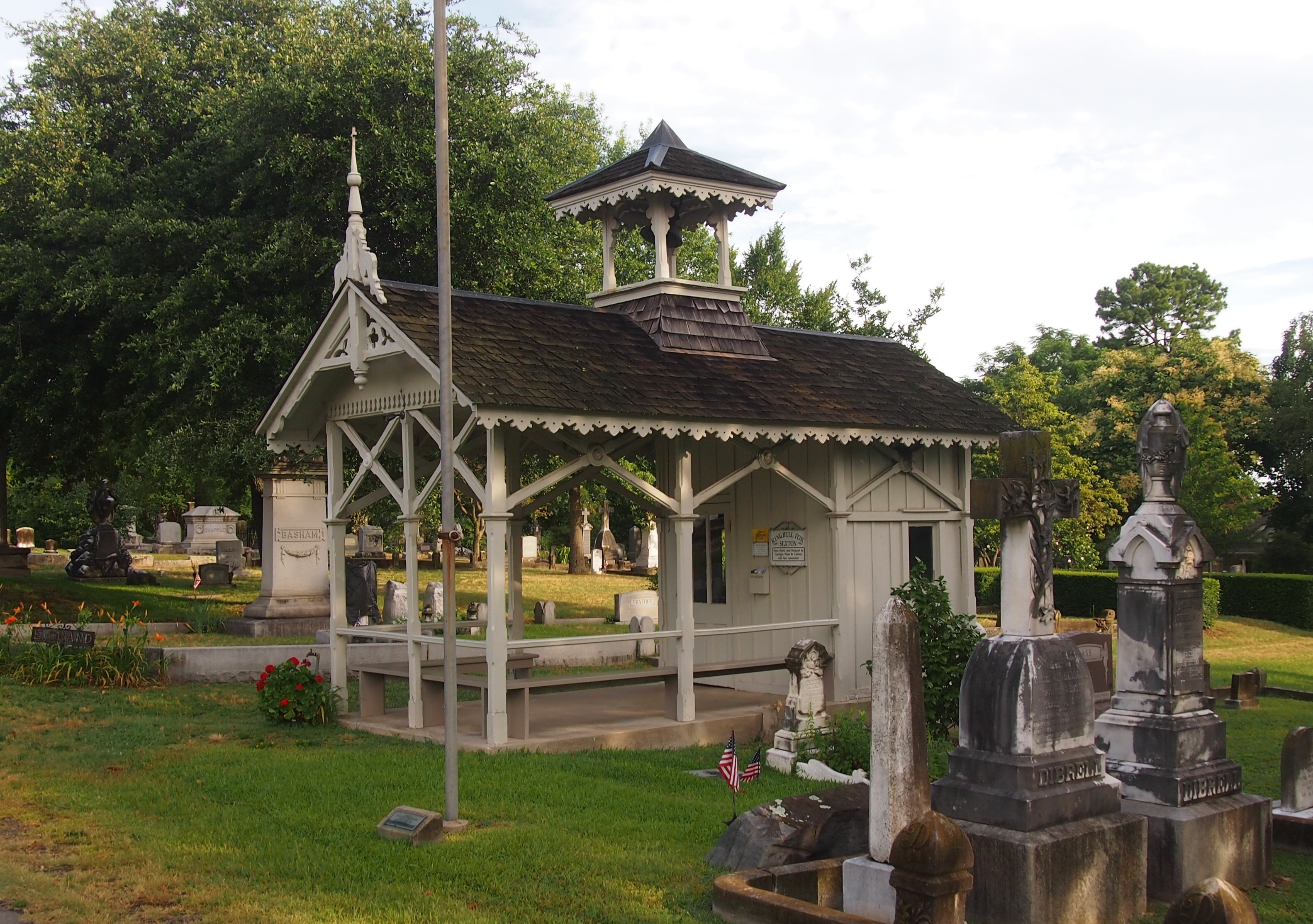
GTT Spring ’16 Leftovers

A good Easter to all. I’ll post again on Easter Monday.

Not long after posting about the moon tower at 41st and Speedway on Monday, I happened across this vintage image of that tower. The handwriting on the photo asserts that it was the first of the Austin moonlight towers.

Tom and I had occasion to visit a trendy, non-chain coffee house in Austin. Tom said it was trendy, anyway. I noticed the quiet. Everyone was focused on a laptop or hand-held device. No one was talking, even though the joint was full. That’s not an exaggeration.

Did Samuel Pepys and John Dryden keep to themselves at the coffee houses they frequented? Did Washington, Jefferson, or Hamilton stay mum at Merchants Coffee House in Philadelphia? Didn’t the beats yak it up at Greenwich Village coffee houses? There ought to be talk at a coffee house, regardless of how advanced communication tech becomes.

As long as I’m in a judgmental mood, the fellow in the seat next to me on my return flight from Texas was using his iPad during most of the trip to watch golf. The very picture of a Millennial, with the full beard and flannel shirt, he sat there and watched people play golf. Playing golf is one thing, but what’s interesting about watching people play golf on an itty-bitty screen for two hours? My judgmental mood recedes with a shrug; it takes all kinds.

On a hill off US 281 not far from Johnson City, Texas, is the Arc de Texas.
Arc de TexasThe structure offers lodging — with a patio and pool in back — and a room to taste local wines, as well as Hill Country views from the roof, available to any passerby during normal business hours.
Arc de Texas viewArc de Texas is part of a larger entity called Lighthouse Hill Ranch, whose acreage offers a number of posh places to stay for the night.

Walking along Main Street in Fredericksburg near the former Nimitz Hotel, you’ll find Fleet Admiral Chester W. Nimitz (1885-1966) in bronze. You have to look on YouTube to find the “Chester Nimitz Oriental Garden Waltz” by the Austin Lounge Lizards.

Adm. Nimitz bronze, Fredericksburg TexasIn the George H.W. Bush gallery of the National Museum of Pacific War, you’ll find a painting of a less-expected figure from the history of naval conflict, though completely fitting, in one of the rooms about the buildup to the war: Marshal-Admiral Marquis Tōgō Heihachirō (1848-1934).
Marshal-Admiral Marquis Tōgō Heihachirō painting National Museum of the Pacific WarAs noted before, Texas is important in marketing goods in Texas. Need more evidence?
Texas eggsThese eggs were obtained at a San Antonio HEB grocery store.

The Oblates in San Antonio

The Missionary Oblates of Mary Immaculate run the Oblate School of Theology on a sizable campus on the North Side of San Antonio, not far from where I grew up, and near some former regular haunts of mine. Even though the campus is on Oblate Dr., and I drove by that street often for years, I had no notion of its existence until this year.

On March 12, another pleasantly warm day, I went with Jay, my nephew Dees and his girlfriend Eden to take a look around the campus. A gilded St. Eugene de Mazenod greets you at the entrance, in front of the handsome Gayle and Tom Benson Theological Center.
Oblate Theological SchoolEugene de Mazenod founded the Oblates in post-revolutionary France 200 years ago. Tom Benson is best known as the billionaire owner of the New Orleans Saints, but anyone living in San Antonio in the last 50 years or so knows him as the owner of Tom Benson Chevrolet. In any case, he gives a lot of money to Catholic causes.

According to the school’s web site, “the Missionary Oblates of Mary Immaculate came to Texas in 1849, at the urgent request of Texas’ first Roman Catholic Bishop, to preach Christ’s message and to serve the People of God, especially the poor and marginalized.

“The Oblate School of Theology was founded in San Antonio in 1903 as the San Antonio Philosophical and Theological Seminary. The School’s initial goal and mission was to educate young men to serve as Oblate missionaries in Texas, New Mexico, Louisiana, Mexico and the Philippines… Today, Oblate School of Theology prepares men for priesthood from many dioceses across the United States and a number of religious communities.”

I have to add that in the early 20th century, the part of San Antonio that’s now home to the Oblates wasn’t part of San Antonio. Assuming they founded their school where it is now — and I haven’t found any information to suggest otherwise — the land the Oblates bought lay in the countryside, with the city to the south. There were no housing developments or highways nearby; all that would come in the 1950s, when the campus and the land around it were annexed by the city, as shown on this interesting growth-of-San Antonio map (which also shows the curious fact that the pre-1940 shape of the city was square).

As nice as it is, we didn’t come just to see the Benson building. Rather, we were intrigued by a grotto on campus patterned after the famed grotto in Lourdes. A full-sized replica, I read, made of concrete.
Oblate School of Theology GrottoThe San Antonio grotto’s been on the site since the early 1940s. In fact, according to its plaque, the Oblates dedicated it on Sunday, December 7, 1941. I’m sure that the date had been picked in advance, and events in the wider world weren’t going to call it off. Then again, maybe the Oblates were up early that morning Central Time, before any ill-tidings came from Hawaii.

Built on top of the grotto, accessible by stairs, is the Tepeyac de San Antonio, dedicated on July 25, 1999, depicting the Virgin of Guadalupe appearing before St. Juan Diego in December 1531. This isn’t the first depiction of that scene that I’ve run across.

Here’s the Virgin.
The Virgin of GuadalupeAnd Juan Diego.
JuanThe Oblate campus also features a chapel, some business offices, places for visiting scholars, a gift shop (no post cards; I’d have bought some saint cards) and a fair amount of public art, such as a freestanding metal structure with a frieze of Oblates on horseback — “The Cavalry of Christ,” who were 19th-century missionaries in South Texas. ‘Ot and sweaty business, no doubt.
Horsemen for ChristA garden behind the Benson building.
A place for Oblates who’ve passed on.
Stations of the Cross in a style I’ve never seen.
Stations of the CrossAnd “missions on a stick.”
There were five of them, depictions of the five Spanish missions in San Antonio. That includes the best known of them, the Alamo.

Denman Estate Park

Last year I was looking at a Google Maps map of San Antonio and noticed an odd green blob tucked away in a neighborhood just northwest of the junction of I-10 and Loop 410, an area not too far from where I grew up, but not within my usual orbits. Higher resolution revealed that it was called Denman Estate Park. What?

“The City of San Antonio purchased 12.52 acres of land from the estate of philanthropist Gilbert Denman Jr. in 2007 at a cost of $2,561,081,” the city’s web site says, with a cost-precision sometimes found in public documents. “An adjacent 7.70 acres were purchased by the University of [the] Incarnate Word. In 2010, Gilbert Denman Jr. Estate Park, 7735 Mockingbird Lane, opened as a jointly used park and a retreat center for UIW.

“Park amenities include a 0.5-mile walking trail, labyrinth, picnic benches and tables, parking, fencing and lighting. It also features a monument hand-built in Gwangju, Korea, by Korean craftsmen and artists who traveled to San Antonio to assemble it. The City and UIW entered into a joint use agreement in which UIW maintains the property and uses the buildings as a retreat center.”

I knew had to take a look at that. I finally did so when I had a few free hours in San Antonio during my most recent visit. I arrived in the early afternoon, parked my car, and found the short path to the park’s small pond, which also has a path all the way around it. The hand-built “monument,” on the banks of the pond, is a striking little structure — especially for being in South Texas — in a nice setting.

Denman Estate Park, San Antonio“Pavilion” is a better word for it in English, and in fact that’s the word a nearby plaque uses.

Denman Estate Park, San Antonio“This pavilion is a replica of the traditional Korean pavilion style of the southern provinces,” the plaque says. “The pavilion, traditionally used as a place of reflection and reception by scholars and gentlemen, embodies the beauty and harmony created by nature and structure.

“It is hoped that this ‘Pavilion of Gwangju’ will offer many opportunities to strengthen the friendly relationship between Gwangju and San Antonio, as well as inspire an in-depth understanding of Korean culture and traditions by the American public.”

A noble sentiment, but I have a feeling K-pop reaches more Americans than other kinds of Korean culture and traditions. The pavilion seems to have been a gift from Gwangju to San Antonio. It isn’t clear whether Gilbert Denman himself had anything to do with its placement, since the structure was dedicated in 2010, six years after his death.

The pond was partly ringed with cypress trees with a vast number of cypress “knees” — the woody bumps that emerge near the base of the trees — a term I just learned.

Denman Estate Park, San AntonioDenman Estate Park, San AntonioElsewhere on the property is the former Denman manse (I assume), which is closed to casual visitors. No doubt the university uses for events and rents it for weddings and the like.

Denman Estate Park, San AntonioNot far from the house is “AMA Maria,” a mermaid sculpture with strategically placed flowing hair, a fish tail, and human legs.

Ama Maria, Denman Estate Park, San AntonioOddly enough, the plaque on the base of the statue also includes its latitude and longitude to six decimal places: LAT. 29.467831  LON. -98.467490. Turns out there are a fair number of these statues in various parts of the world, including three others in Texas. It was something I’d absolutely never heard of before.

A site called mermaidsofearth.com tells us that “the Amaryllis Art for Charity project is placing AMA mermaid statues all over the world, with each mermaid statue uniquely made and customized for its location… The statues are for sale, with about one third of the proceeds dedicated to a charity jointly chosen by the project organizers and the local sponsors.”

It isn’t clear from that whether the statues are for sale in situ or whether they’re bought and put in places like Denham Estate Park. Never mind, there’s one there now. More about it is here.

Finally, who was Gilbert Denman Jr. (1921-2004)? A handy obit published by the Porter-Loring Funeral Home in San Antonio offers a few details about his charmed life, which included being born to a wealthy family and presumably doing well himself as a prominent attorney in San Antonio. Like Robert L.B. Tobin, he was also a notable local philanthropist.

One of his many acts of philanthropy, according to the obit, involved donating “his extensive collection of Greek and Roman artifacts to the San Antonio Museum of Art. The collection, among the finest of its type in the nation, is housed in the Denman Gallery of the Ewing Halsell Wing at the museum.”

The good people of San Antonio are clearly better for his Antiquities collection. I will be better for it, once I get around to visiting the San Antonio Museum of Art again sometime. It’s been a long time since I’ve been there, since the late ’80s at the latest, before the creation of the Denman Gallery in 1990. The big deal exhibit the last time I remember being there was Nelson Rockefeller’s large collection of Latin American folk art, which arrived as a permanent part of the museum’s collection in the mid-80s.

The Moon Tower at Speedway and 41st, Austin

The Cathedral of Junk in Austin isn’t the easiest tourist attraction to see. For completely understandable reasons, since it’s in someone’s back yard, and the householder and creator of the pile, one Vince Hannemann, doesn’t want people just showing up. You have to call first, and hope he picks up to let you make a reservation, which he does only when he feels like it.

How do I know that? When I called, I heard the message on his answering machine, which said all that the likelihood of him answering in person was a “lottery” — and not to bother leaving a message about visiting, since he would not reply. He didn’t say it, but I also got the sense that he really was trying to avoid having the thing take over his life.

So Tom and I didn’t see the Cathedral of Junk on March 5. We did other things, such as walk along Lady Bird Lake. After dinner that night, I expressed my desire to see an Austin moon tower, also known as a moonlight tower. See one again, since I’d seen one at least 30 years ago during a visit. I don’t remember which tower that was, but it might have been the very one he took me to this time around, at the corner of Speedway and 41st in the Hyde Park neighborhood of Austin, to look up at the lighted hexagon in the night sky.

A couple of the six lights were out. What’s up with that, Austin Energy?
Austin Moon Tower, Speedway and 41stThe moon towers have a long and well-known history, at least to Austinites and non-Austinites who care about such oddities. Before modern street lights were developed, there was a late 19th-century vogue for tall towers that illuminated their surroundings at night via carbon arc lights: moonlight towers, or moon towers. When there was no natural moonlight, the hand of man could provide it.

A Machine Age notion if there ever was one. A number of municipalities had them; Detroit reportedly had a lot. The only survivors now are in Austin, which acquired its towers in the 1890s.

Apparently carbon arc lights are very bright, but also high maintenance, so the moon tower lights were replaced with incandescent lights in the early 20th century. Currently there are 17 Austin moon towers, each 165 feet tall. The towers were restored in the early 1990s and a simulation of one figures in Dazed and Confused, a movie I’ve never gotten around to. In this image, a barely visible bilingual sign warns one and all not to be a tower-climbing moron.
Austin Moon Tower, Speedway and 41stI don’t think the towers count as Austin weird, but they are odd. That might make a better slogan: Keep Austin Odd. Just the kind of thing I like to see anyway: unusual, unpretentious, with an interesting back story, and easy to see. Here’s an excellent podcast at the usually excellent 99% Invisible series about the Austin moon towers.

Lady Bird Lake, Austin

Just for grins the other day, I let Google suggest a second word for “Austin.” This is what I got.

Austin and Ally
Austin Butler
Austin Rivers
Austin Mahone
Austin Texas
Austin Powers
Austin Peay
Austin Weather

Austin and Ally is apparently a Disney Channel show that I’ve had the good luck never to have heard of, much less seen. Austin Powers I’ve heard of, but I’m pretty sure I can live the rest of my life and not regret missing all of the movies featuring that character, and Austin Peay is the school. At least the city and the weather are on the list. The others? Eh.

“Austin skyline” should be on the list. Seeing the Austin skyline in 2016 is like seeing a child again after a few years, when you think (or say), “My, how you’ve grown.” Here’s a view of the Austin skyline in early March 2016, seen from the south shore of Lady Bird Lake, which I still think of as Town Lake.
Austin 2016Lady Bird Lake isn’t particularly old, created only in 1960 by the damming of the Colorado River as a means of flood control. It also happens to be a conveniently located public amenity, owned by the public in the form of the City of Austin.

Lady Bird Johnson didn’t want the lake renamed in her honor while she was still alive, even though she’d been instrumental in beautifying the shores of the lake in the 1970s, as well as creating a recreational trail system near the lake. As soon as she’d passed in 2007 (has it been that long ago?), the city renamed the lake. I don’t object to that like I do the “Willis Tower” — Lady Bird clearly deserves the honor — I just thought of it as Town Lake for so long that it’s the first thing that comes to me, recalling earlier walks along its shores, and a canoe ride on it years ago in the company of a high school friend.

March 5, 2016, was an excellent day for a walk along Lady Bird Lake: warm but not too warm, in the presence of other recreational walkers and joggers and cyclists, but not too many.

Austin 2016Being a warm Saturday afternoon, the lake was alive with human-powered boats of various kinds, including some racing shells, and people renting watercraft at lake’s edge.

Austin 2016Tom and I were feeling too middle-aged for that kind of excursion, but we did start our walk on the south shore just west of the Congress Street Bridge. Officially, it’s the Ann W. Richards Congress Avenue Bridge, named for the governor of Texas of that name, though I don’t know if anyone uses the name any more than the Queensboro Bridge is called the Ed Koch Queensboro Bridge.

Congress Avenue Bridge, AustiinNot the most elegant bridge, but it is famed in tourist lore as the home to many, many bats, the majority of which emerge at dusk to fly off to do whatever it is that bats do by night (eat bugs and fight crime, maybe).

Congress Street BridgeI’ve never seen the spectacle myself. Looking up at the underside of the bridge, Tom informed me that the bats probably haven’t returned from wintering in Mexico, but when they’re in residence, they live beneath the road deck in gaps between the concrete structures. Wiki at least asserts that it’s the world’s largest urban bat colony, numbering 750,000 and 1.5 million when the bats are in town, a variation in estimate that points to the natural difficulties of a bat census.

It’s possible to walk all the way around the lake on the Ann and Roy Butler Hike-and-Bike Trail, another name that few probably use. Of course Tom and I did no such thing, but we did go a considerable way, making it past the I-35 Bridge, including a walk over the trail’s Boardwalk, completed only in 2014.

The Trail Foundation tells us that “due to many issues, including private property holdings and topography, there was a 1.1-mile gap in the Trail at Lady Bird Lake, the 10-mile hub in Austin’s hub-and-spoke system of trails. Along this gap, users previously had to divert onto the narrow sidewalk and travel along busy Riverside Drive, crossing 35 busy business entrances and other points of conflict… to travel east or west and use the south side of the Trail.”

Studies were done, votes cast, money raised, plans made, and eventually the metal-railed boardwalk over the lake (but near the shore) was created as a public-private effort. Many good things are done that way. And should be.

Lady Bird LakeLady Bird LakeAustin’s fortunate to have such a fine place to take a stroll.

Pappy Lee O’Daniel

The day after I visited LBJ’s boyhood home, I discovered this tucked away at my mother’s house.

Pappy Lee O'DanielIt’s a campaign card for W. Lee O’Daniel. It’s clear that it dates from his first run for governor of Texas, which was in 1938. Why my mother kept this, I couldn’t say. I don’t remember her ever saying anything about “Pappy” Lee O’Daniel, and in any case she herself never voted for him, since she wasn’t old enough.

On the back are the lyrics to three stanzas of “Beautiful Texas,” a song pretty much lost to time, but written by W. Lee O’Daniel, the singing, flour-making governor of Texas from 1938 (he won the election and re-election two years later) to 1941, when he became a U.S. Senator by being the only person to best LBJ in an election (not counting 1960 primaries). All in all, one of Texas’ more interesting governors.

Beautiful Texas by Pappy Lee O'DanielIf he sounds familiar, it’s because the Coen brothers borrowed the name, an association with flour, and hillbilly music for the governor of Mississippi character played memorably by Charles Durning in O Brother Where Art Thou?

Why? Because they’re the Coen brothers. Presumably they were amused by the idea of a flour-merchant governor with hillbilly music on his side. For a couple of gentlemen from Minnesota, that shows a remarkably granular interest in Texas history, even if they put the fictional Pappy in an alt-universe, Coen brothers-flavored Mississippi.

“Moral fiber? I invented moral fiber! Pappy O’Daniel was displaying rectitude and high-mindedness when that egghead you work for was still messing his drawers!” — the fictional Pappy O’Daniel.

LBJ’s Boyhood Home

Some years ago, I visited the “Texas White House,” that part of the Lyndon B. Johnson National Historical Park where President Johnson used to entertain politicos of various kinds, talk on the phone constantly, and perhaps watch all of the network news programs at the same time, though the picture I’ve seen of him doing that was at the regular White House. The Texas White House is on the LBJ Ranch near Stonewall, Texas, along with a number of other structures.

Not far away, in Johnson City, Texas, is another unit of the National Historic Park, which includes the Johnson’s boyhood home. En route from Austin to San Antonio on March 6 — I didn’t take the most direct way — I stopped at the boyhood home and caught the last tour of the day.
LBJ Boyhood Home“Lyndon Johnson’s family moved from a farm near Stonewall, Texas, to Johnson City (a distance of about fourteen miles) two weeks after his fifth birthday, in September 1913,” the NPS says. “For most of the next twenty-four years, this was their home…

“In February 1937, Lyndon Johnson returned home from Austin to seek the advice of his father — should he run for Congress? It was the first week of March, 1937, when Lyndon Johnson stood on the porch of his boyhood home to announce his candidacy for the U.S. House of Representatives for the Tenth District of the State of Texas.”

We too stood on the porch — me and the two other people on the tour. Our docent was knowledgeable, which is always good to find in out-of-the-way presidential sites. He was able to convey some sense of the Johnson family, and their Hill Country environs, during LBJ’s younger years.

Lyndon might have asked his father for advice, but Samuel Ealy Johnson Jr wasn’t entirely successful as a politician, or as a businessman. This might have been the source of some tension in the household, and perhaps spurred the younger Johnson to think bigger in terms of a political career, though plumbing the motives of historic figures involves speculation. In any case, it was probably important to the future cast of LBJ’s mind that his father entertained other local politicos on that same porch, within earshot of the boy.

The house itself is handsome and fairly spacious, which indicates that the elder Johnson had some financial success. A few of the items currently inside belonged to the Johnson family, but most of them are period pieces. During Johnson’s boyhood, none of the houses in Johnson City were electrified, including their house. That part of Texas was ultimately electrified through the efforts of Congressman Johnson via a Rural Electrification Administration loan.

According to the LBJ Library, he wrote in a 1959 letter, “I think of all the things I have ever done, nothing has ever given me as much satisfaction as bringing power to the Hill Country of Texas.”

The National Museum of the Pacific War

The National Museum of the Pacific War is a complex of structures at a short distance from each other in Fredericksburg, including the restored Nimitz Hotel, which now houses a museum about Adm. Nimitz; the George H.W. Bush Gallery, which focuses on the war in the Pacific; and more: the Veterans’ Memorial Walk, the Plaza of Presidents, the Japanese Garden of Peace, the Pacific War Combat Zone, and the Center for Pacific War Studies.

The Nimitz Hotel building used to include the war exhibits, but now they’re in the much larger (32,500 square feet) Bush Gallery, open since the 1990s, and expanded in 2009. Outside its entrance is the conning tower of the USS Pintado, a submarine that conducted a number of a patrols against the Japanese.
National Museum of the Pacific WarThe museum, organized chronologically beginning before the war and ending at the USS Missouri, is incredibly detailed, and home to a large array of impressive artifacts. That includes some impressively large artifacts, such as a Ko-hyoteki-class midget submarine that participated on the attack on Pearl Harbor, which actually seems pretty large when you stand next to it.
National Museum of the Pacific WarThe pilot of this particular vessel, Ensign Kazuo Sakamaki, survived its beaching and became the war’s first Japanese POW, having failed at suicide. According to the Honolulu Star-Bulletin in 2002, “When the war ended, he returned to Japan deeply committed to pacifism. There, Sakamaki was not warmly received. He wrote an account of his experience, titled The First Prisoner in Japan and I Attacked Pearl Harbor in the United States, and thereafter refused to speak about the war.” (He died in 1999.)

Also on display were a B-25 — as part of a exhibit about the Doolittle Raid — a Japanese N1K “Rex” floatplane, an F4F Wildcat fighter, and a replica of Fat Man, just to name some of the larger items.
Fat ManThe exhibits also included a lot of smaller weapons, tools, posters, uniforms, model ships and airplanes, military equipment, and sundry gear and items associated with the fighting and the people who were behind the front. Plus a lot to read. Campaigns and incidents both well known and obscure were detailed, such as the effort to salvage the ships in Pearl Harbor in the months after the attack, which was often dangerous work. Other Allied efforts weren’t ignored, such as the Australian advance on Buna-Gona, a campaign that incurred a higher rate of casualties than for the Americans at Guadalcanal.

All in all, a splendid museum. But exhausting. If I’d had time on Sunday as I went from Austin to San Antonio, I would have gone back (the tickets are good for 48 hours). It’ll be worth a return someday.

Fredericksburg Stroll & Der Stadt Friedhof

March 4 was sunny and pleasant in Fredericksburg, a settlement dating back to the efforts of German immigrants to Central Texas before the Civil War. A good day for a small town walkabout. As I walked, looking into the Main Street boutiques and wine shops and jewelers (James Avery has a shop there) and bistros and art galleries, it occurred to me that there needs to be a term for a town that partly or mostly lives off of upper middle-class day-tripers, retirees many of them, from near but not-too-near major metros.

Not tourist traps exactly, though there’s an element of that. I’ve been to a few of these towns, such as Galveston and Galena, Ill., and Sturgeon Bay, Wis., and Portsmouth, NH, and now Fredericksburg. Its locational advantage is proximity to Austin and San Antonio, and the town has a pleasant Main Street, a.k.a. Hauptstrasse, sporting a lot of repurposed 19th-century structures, many of historic or architectural interest.

Fredericksburg 2016The building on the left below was once the White Elephant Saloon, dating from 1888, featuring a whitish elephant above the entrance for reasons probably lost to time.
Fredericksburg 2016This was once a hospital.
Fredericksburg 2016I didn’t try for an exhaustive photo record of the many fine buildings in Fredericksburg. These visitors did a much better job of it, including many things I missed.

According to one source at least, St. Mary’s Catholic Church — which is off Fredericksburg’s Main Street by a block — counts as one of Texas’ Painted Churches, most of which are east of San Antonio. Some kind of adoration was ongoing at St. Mary’s, so I was able to drop in to see the lovely interior. Painted, yes, but also featuring stained glass and other objects of beauty.

“Still known as ‘new’ St. Mary’s, the church provides a classic example of Gothic architecture and was consecrated on November 24, 1908,” KLRU tells us. “Its principal architect was Leo Dielmann of San Antonio, with the contractor and builder, Jacob Wagner of Fredericksburg. Built of native stone quarried near the city, the total cost of building and furnishing the church was around $40,000.

“Still fully functional is the original pipe organ built by George Kilgen & Son of St. Louis, Missouri. It was installed in 1906 as a pump organ and has been completely electrified. The beautiful stained glass windows were added around 1914 and 1915.”

Further away from Main Street — and with absolutely no day-trippers or anyone else (alive) around — was the Der Stadt Friedhof, a cemetery established in 1846.
Der Stadt Fredhof Gate, FredericksburgIt’s more interesting than picturesque. For one thing, there are no trees or other large plants to speak of on the grounds, except out at the periphery. There’s a little funerary art, but its presence is fairly muted.

Still, I enjoyed looking around. The further you get from the boundary roads, the newer the stones become. Among the older stones at the edge of the cemetery are a number of graves surrounded by iron fences.
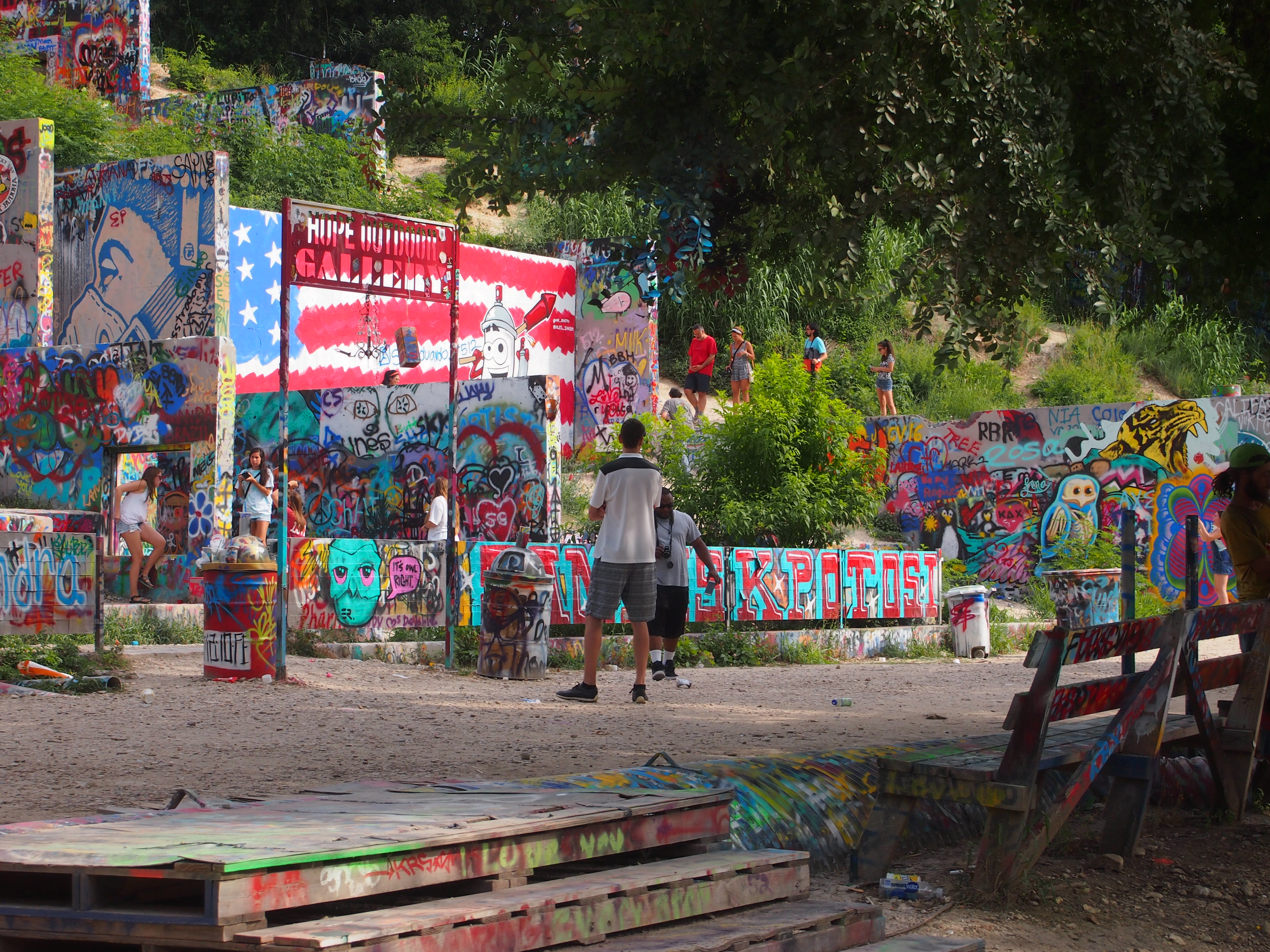
Der Stadt FriedhofDer Stadt FriedhofMany of which are neglected.
Der Stadt FriedhofDer Stadt FriedhofAlmost all of the oldest stones are German, with ethnically appropriate names, such as Durst, Kallenberg, Keidel, Kramer, Lochte, Schmidt, Schuchard, Stein, Weiss, Zincke, usw. Adm. Nimitz’s parents are somewhere in the cemetery, though I didn’t look for them, and the admiral himself is buried at Golden Gate National Cemetery in San Fransisco.

South Texas Flora, Early March

While walking along in Fredricksburg, Texas, on March 4, 2016, I noticed bluebonnets beginning to bloom. Not a sweeping field of bluebonnets, as you see in Hill Country paintings, or occasionally in person, but those emerging from a small green patch ‘tween concrete and asphalt. It was a pleasure to see them all the same.

Up in Illinois, I did see a handful of croci beginning to push out of the earth before I left. But nothing like the early spring flowers of Texas. Such as those emerging from rocky ground.
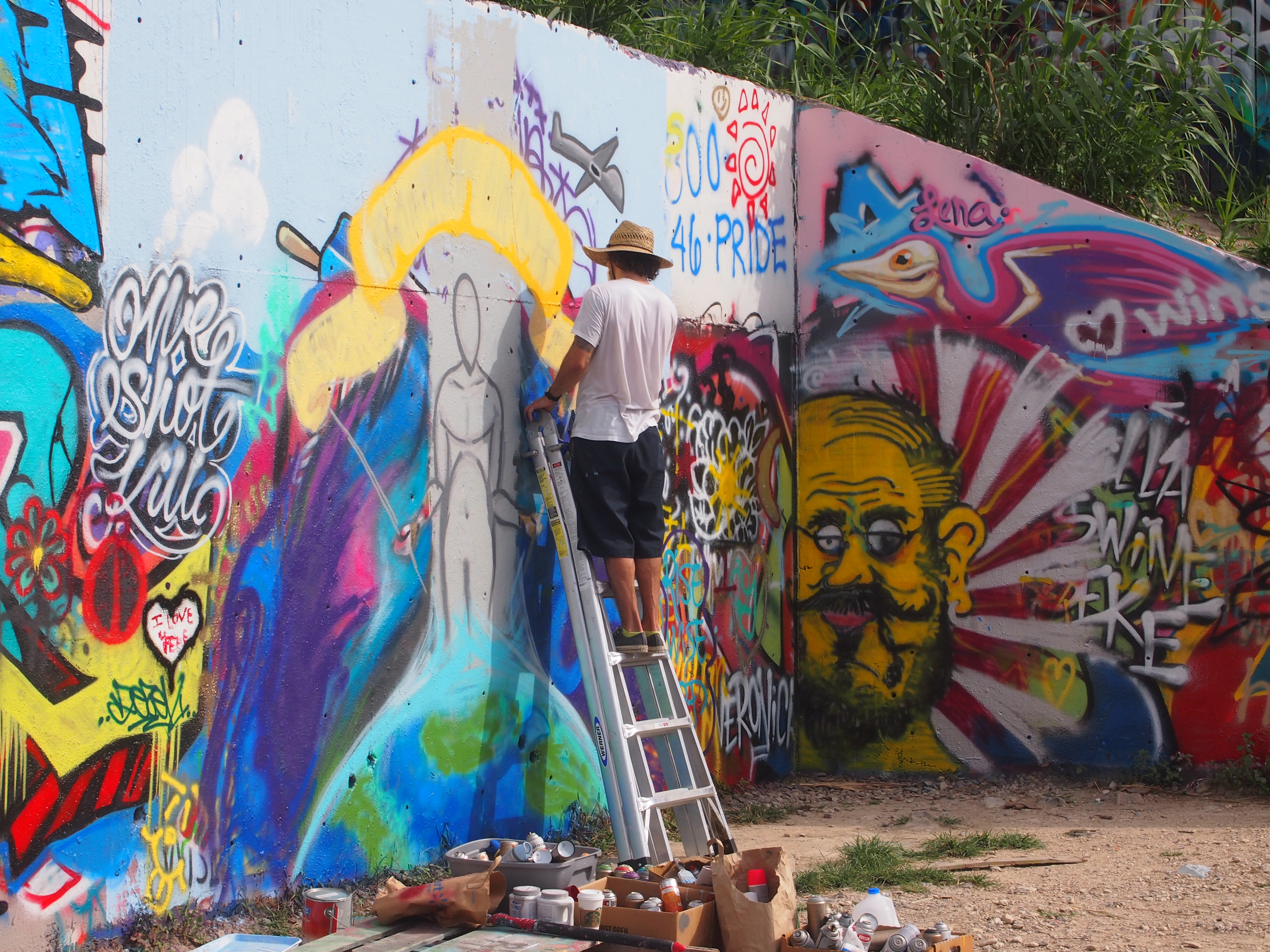
Or on bushes.
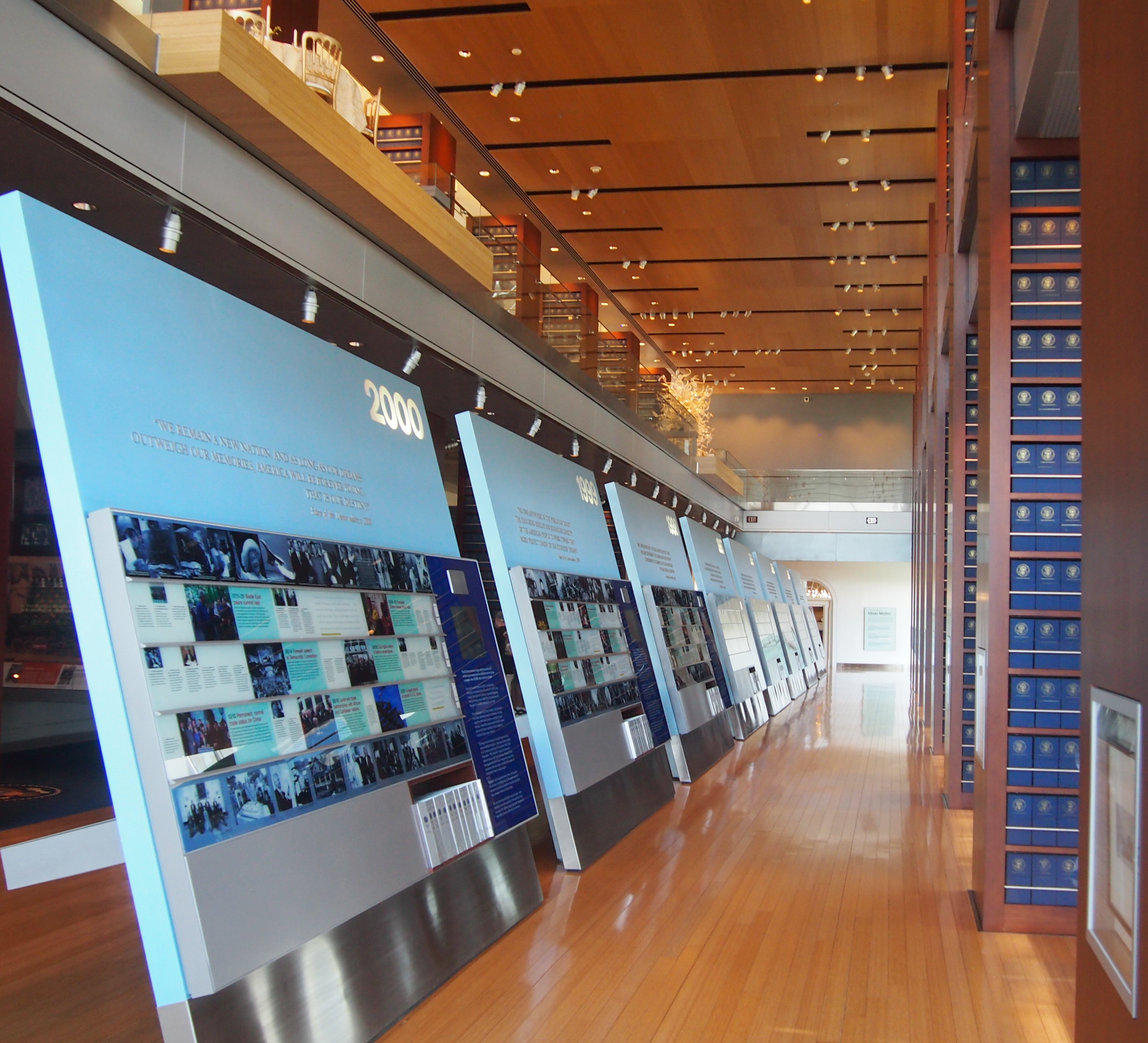
And trees.

Plus the glories of irises, always a favorite, wherever they grow.

What’s the matter,
That this distemper’d messenger of wet,
The many-colour’d Iris, rounds thine eye?