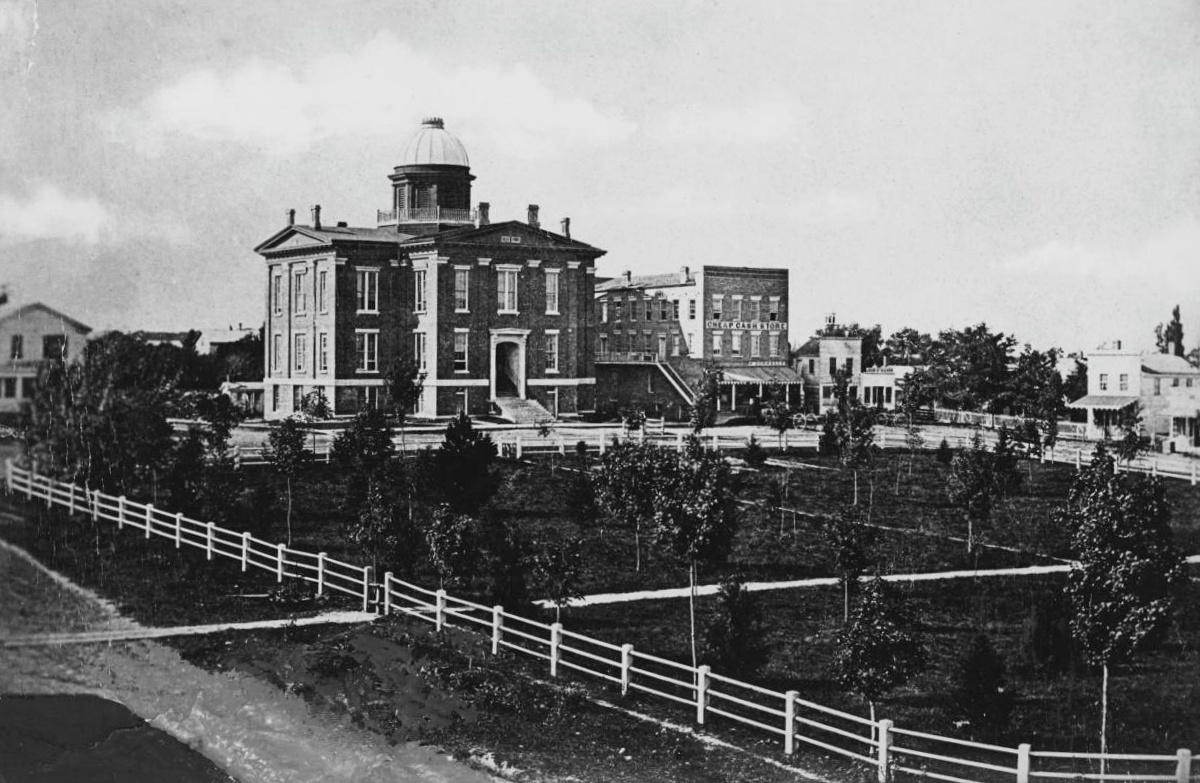
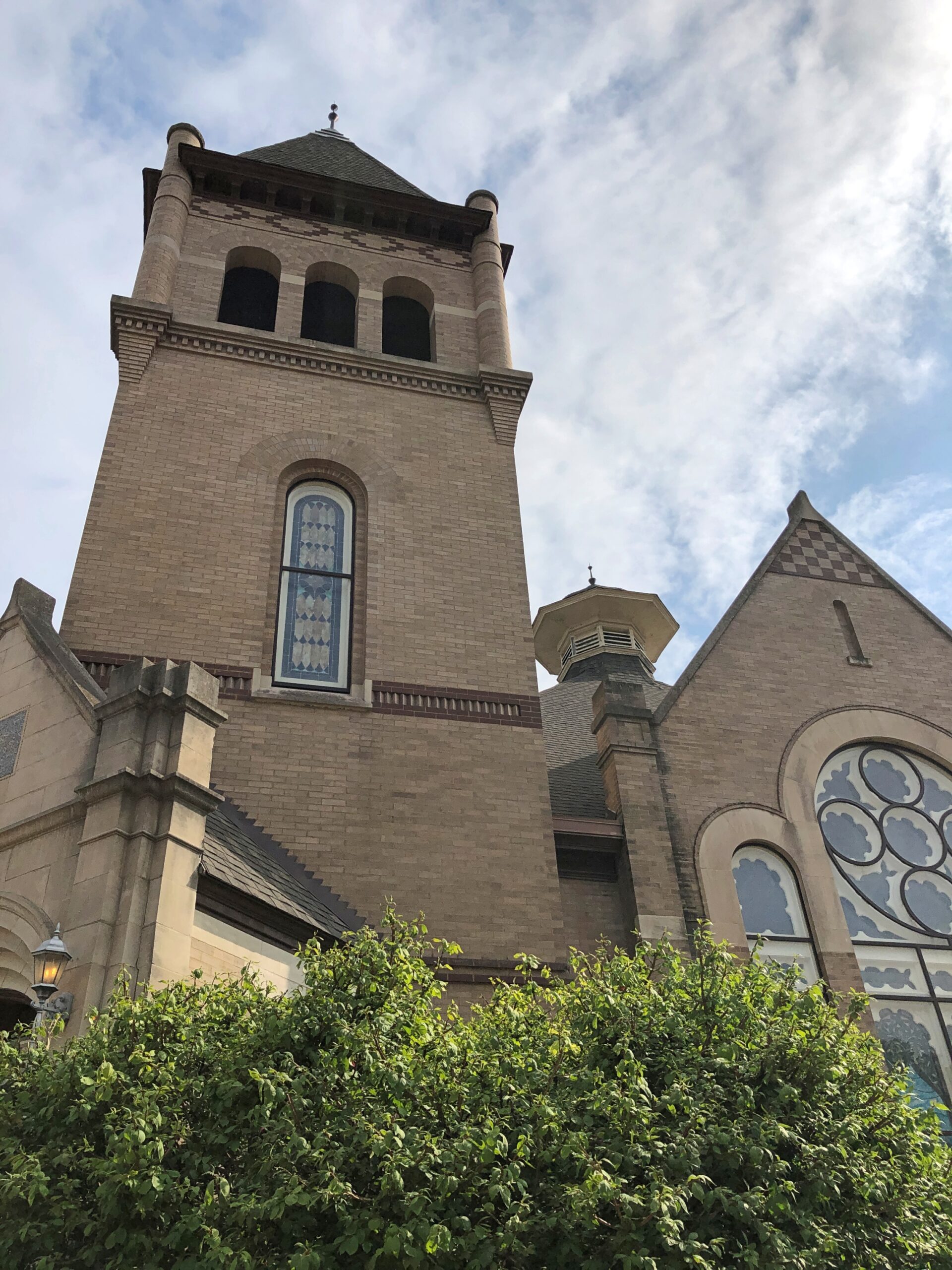
Back in 1858, someone bothered to take a photograph of the spanking-new McHenry County, Illinois, courthouse – and what a bother it must have been, considering the state of camera tech at the time. Then again, it wasn’t like the photographer had to tell the building to be still.
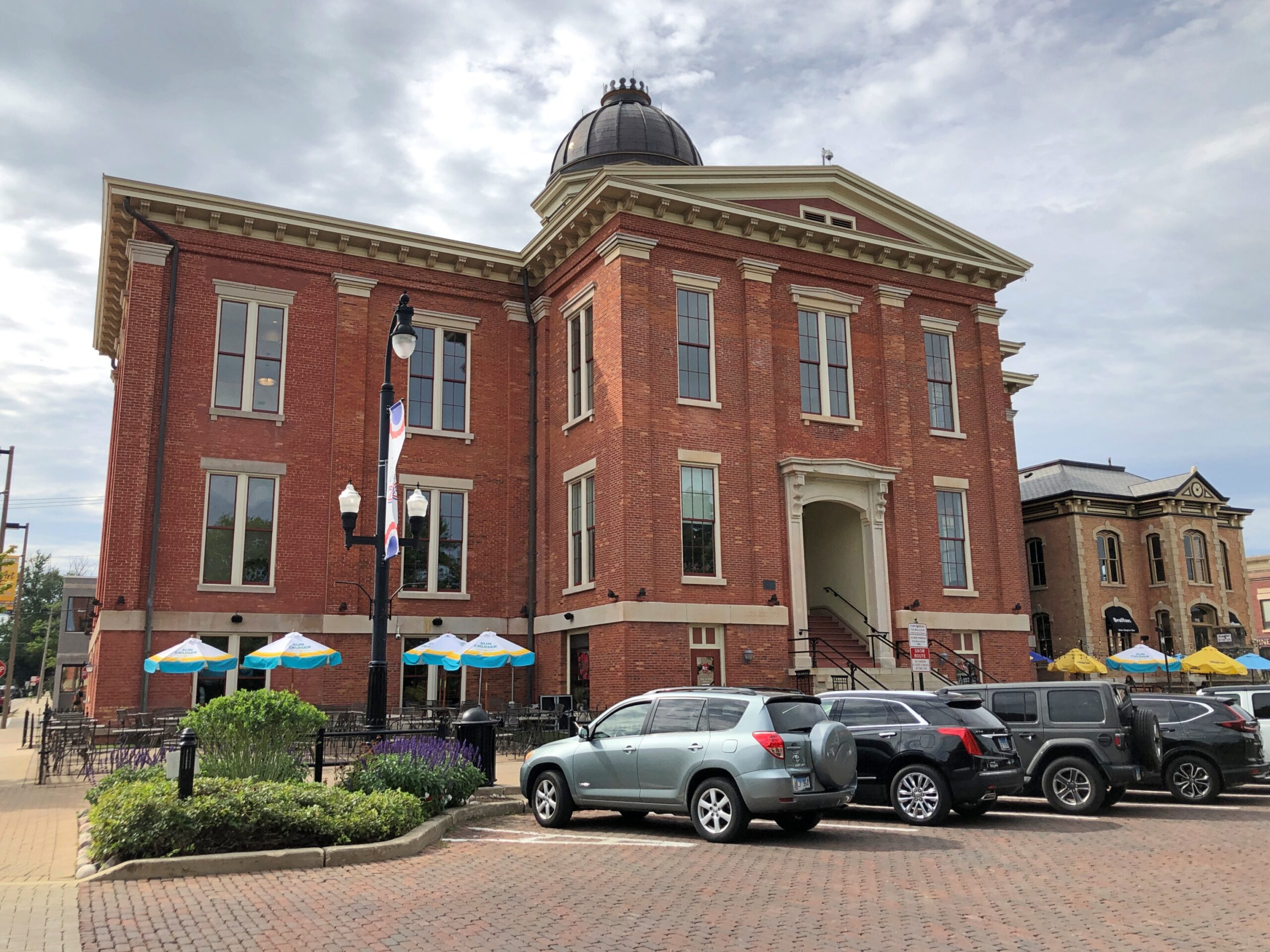
Here in 2026, point and shoot.
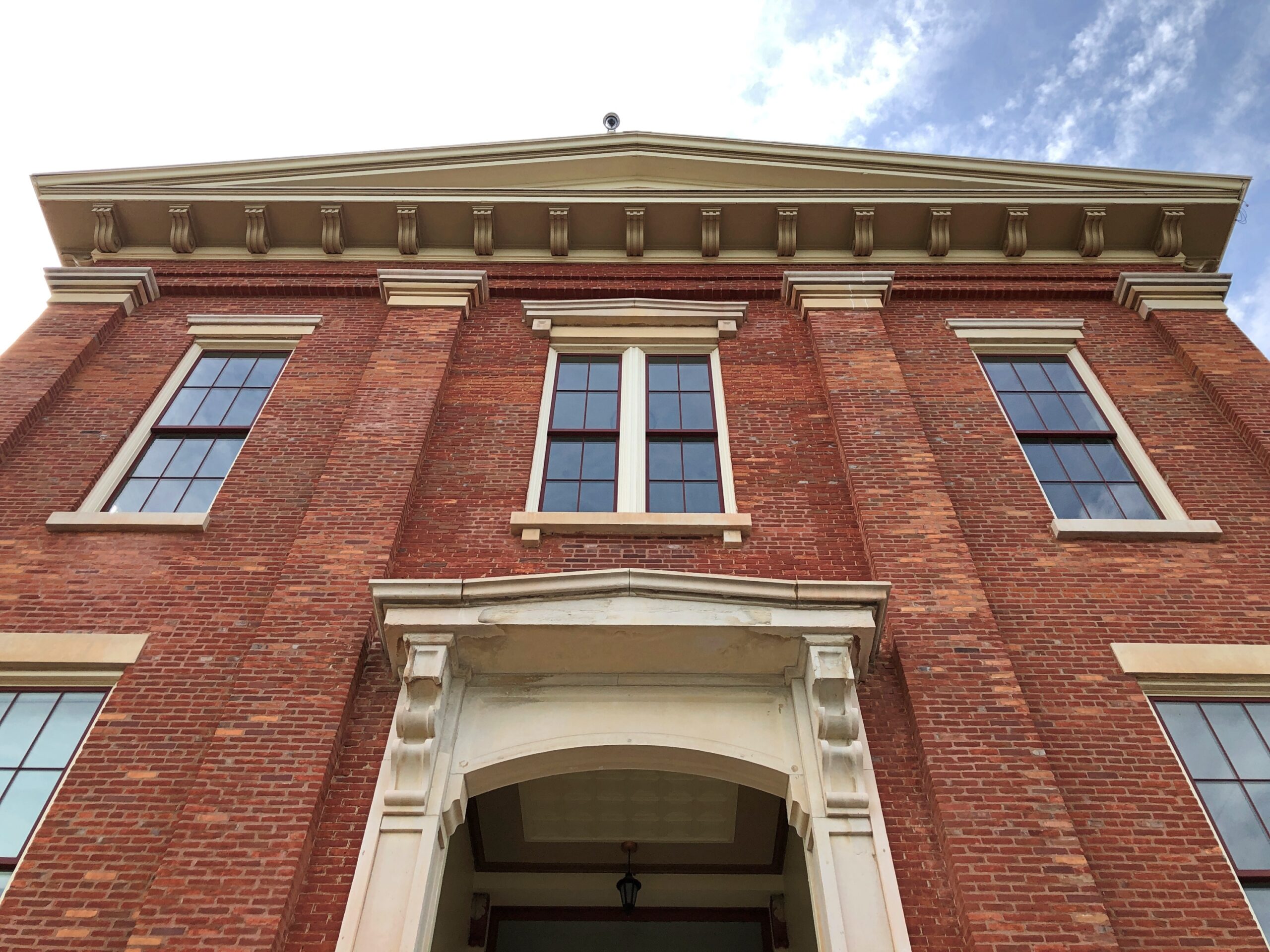
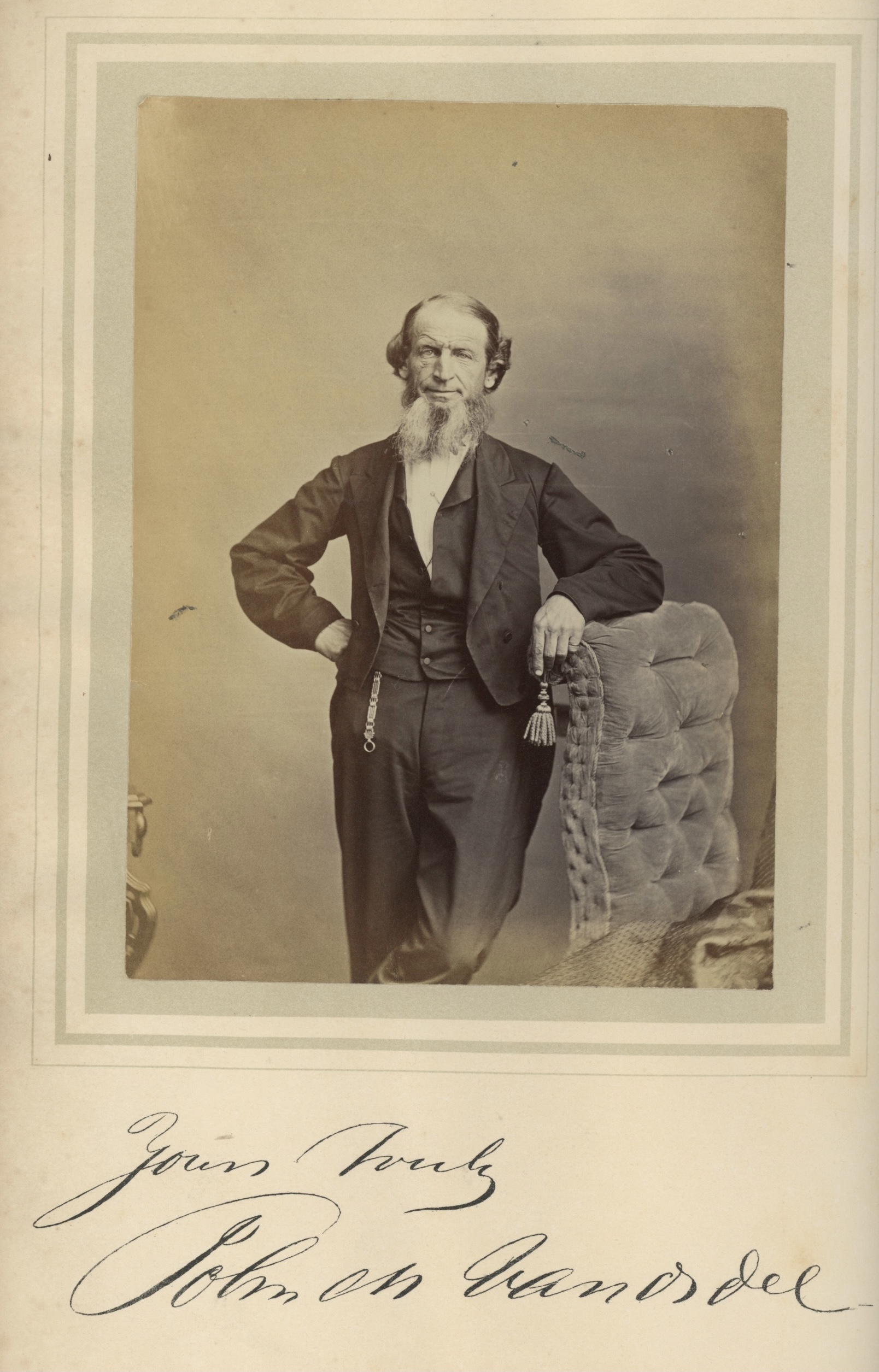
The design of John Mills Van Osdel (d. 1891), described by Wiki as the first Chicago architect. Is that so, I wondered? Whatever I’d read about him – and I did a fair amount of reading about Chicago history when I lived in the city for the first time – had long since evaporated. Biographical Sketches of the Leading Men in Chicago, Photographically Illustrated by John Carbutt (1868) tells the Van Osdel story, and quite a story it is.
The first mayor of Chicago, William Ogden, hired him to build structures in the infant metropolis, and soon Van Osdel was designing them, too. This was back in the days when someone could learn to build buildings from a builder father and later reinvent himself as an autodidact architect, with all sorts of 19th-century ups and downs along the way.
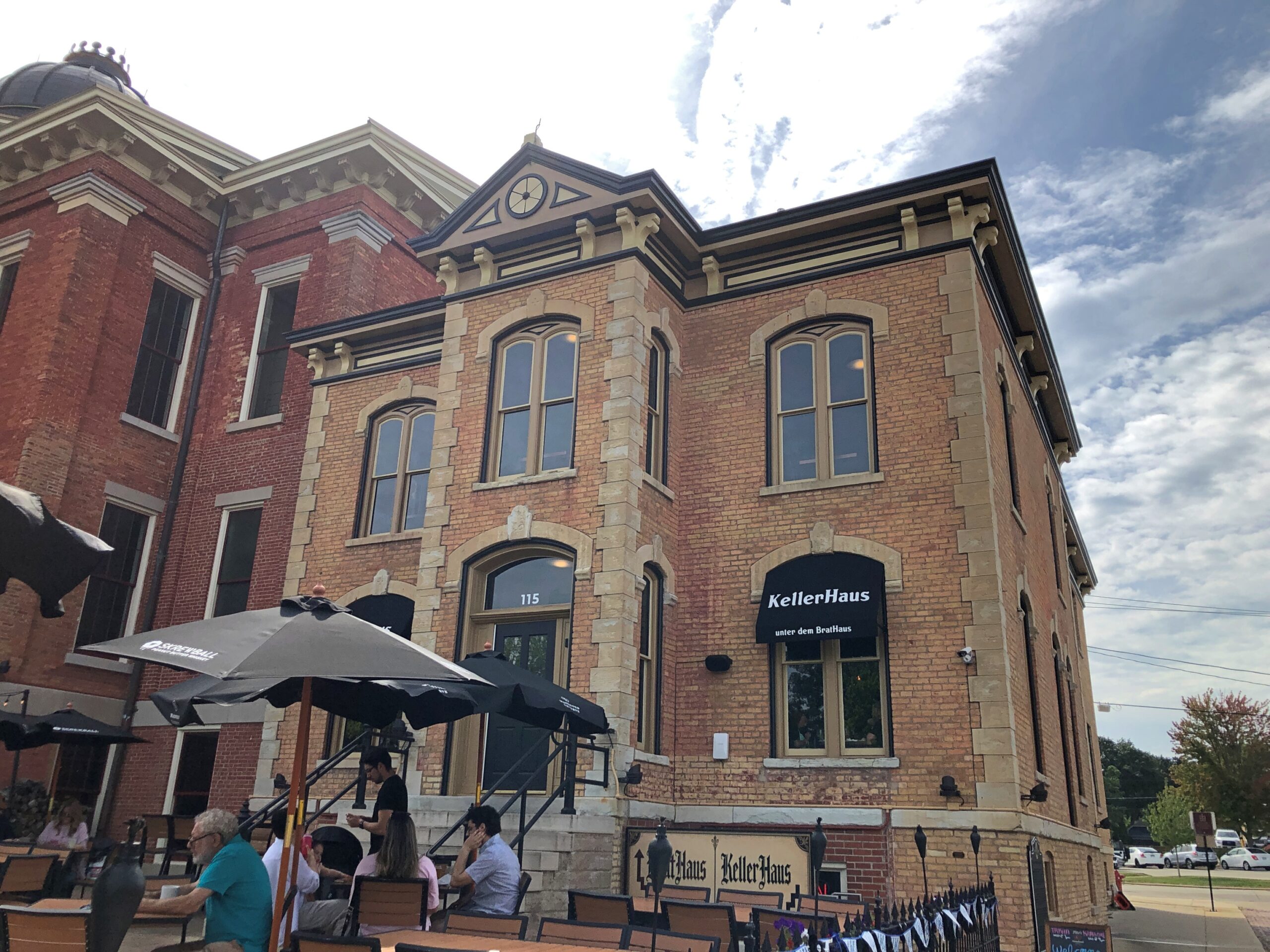
Next door, a smaller building, but also handsome.
Formerly where the McHenry County sheriff lived, with a jail in the basement. Now home to KellerHaus, a local brewery and restaurant.
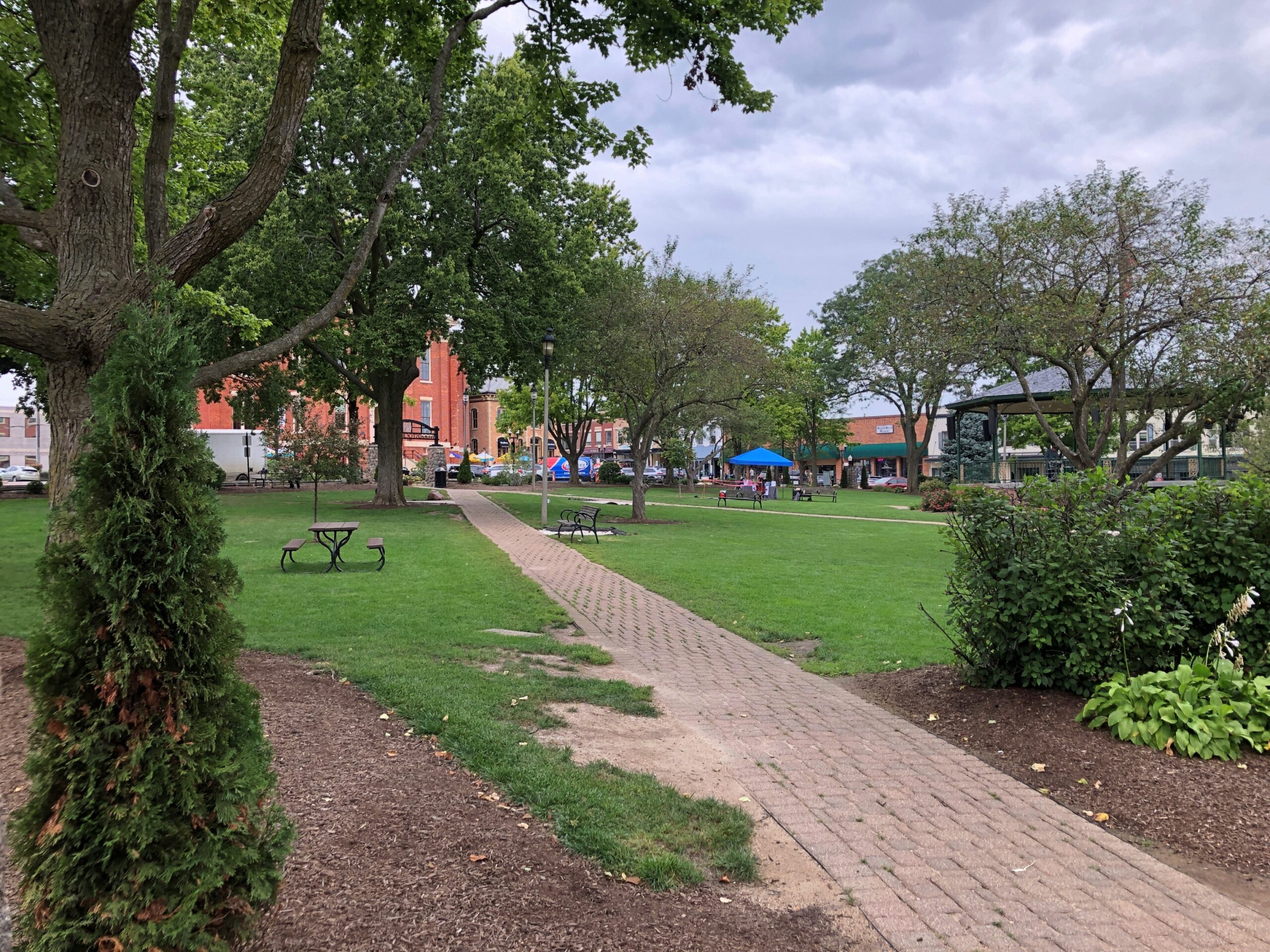
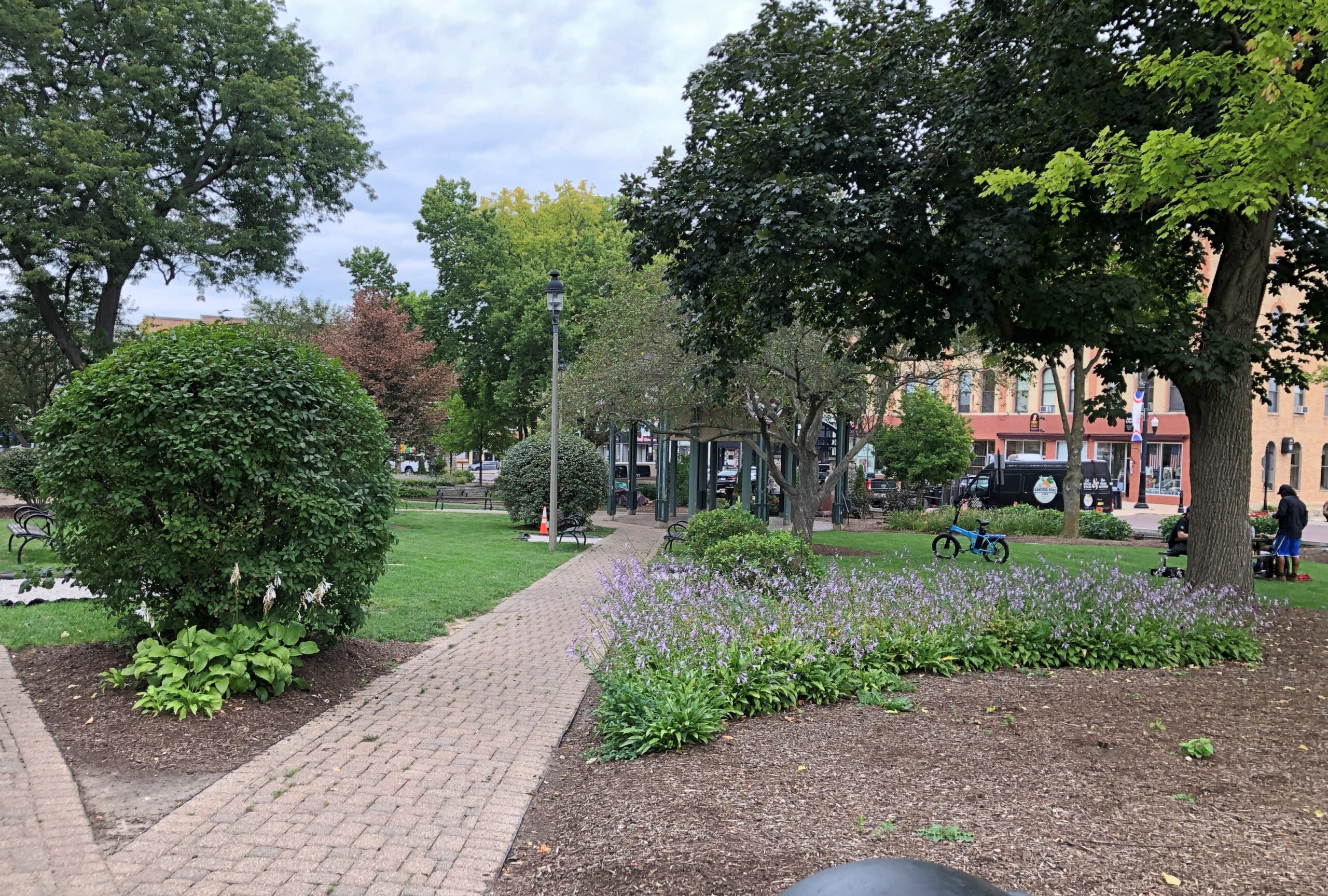
County government moved out of the building more than 50 years ago, to someplace less aesthetic but not too bad. Later, Woodstock Square (my guess would be late 19th century) took its present form, a green crossed by sidewalks.
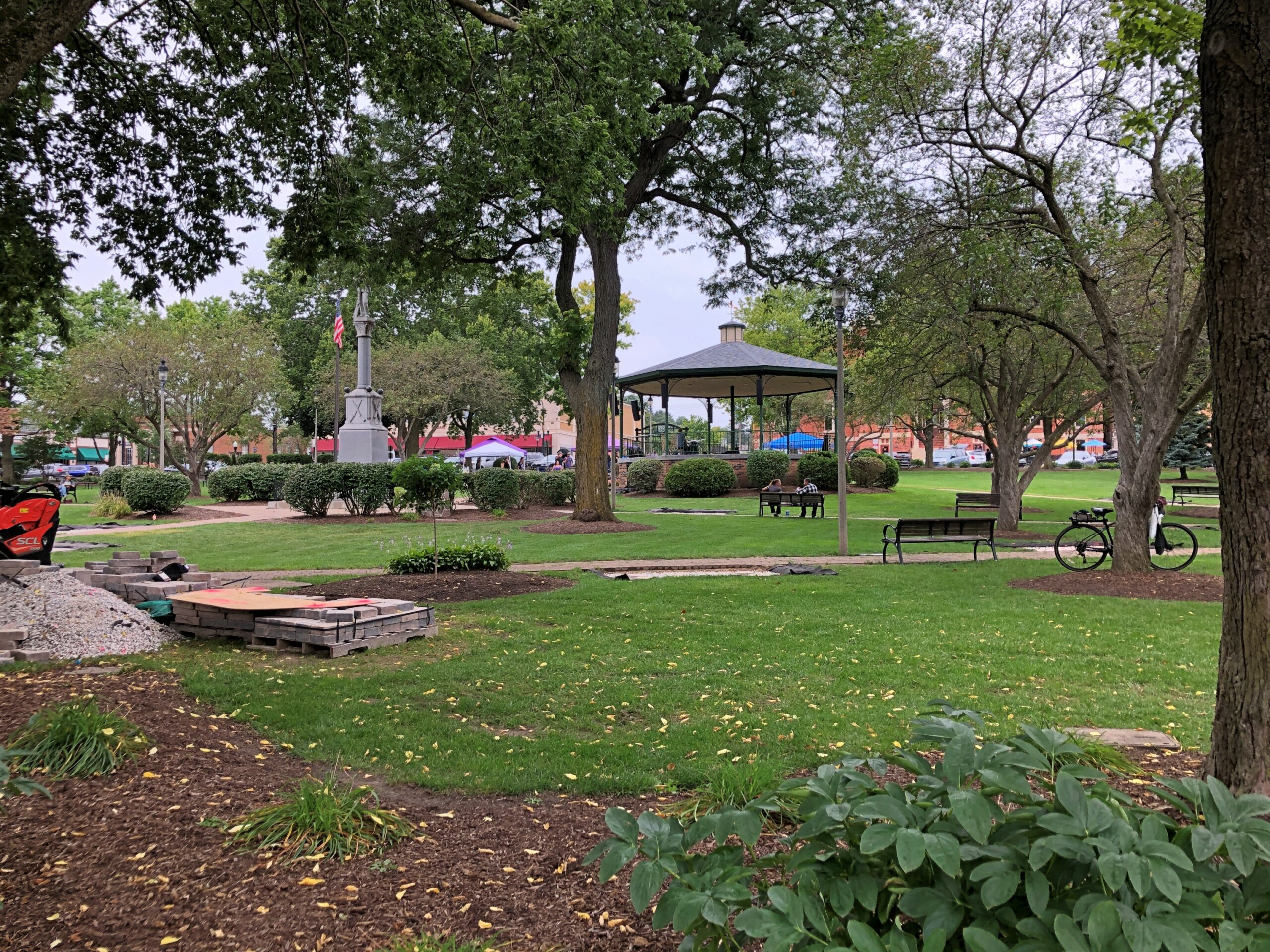
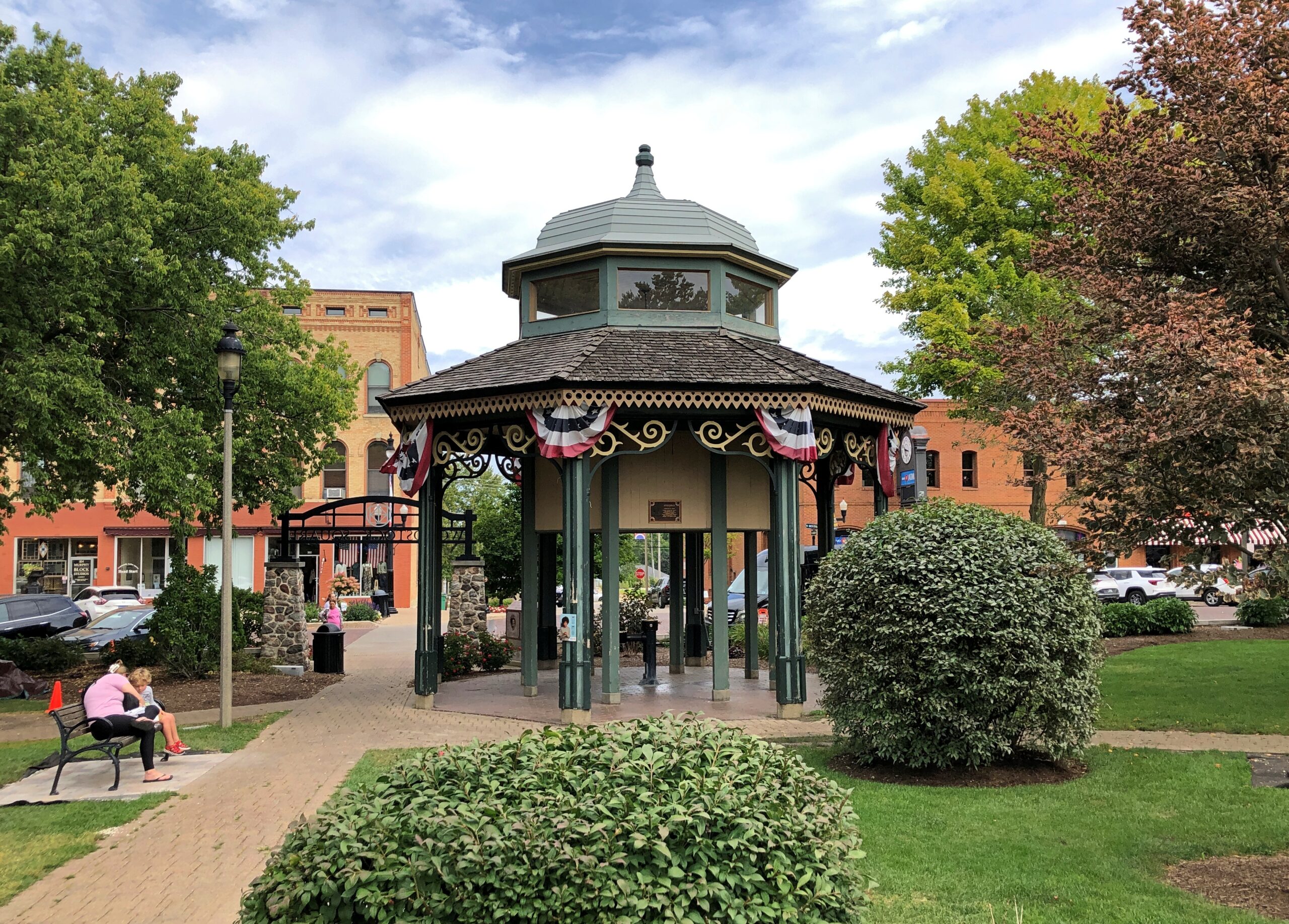
The park is home to a gazebo. And a bandstand. Or two gazebos or two bandstands. Authorities disagree about which is which, and entire academic careers have been staked on determining the difference. Or not, I made that up.
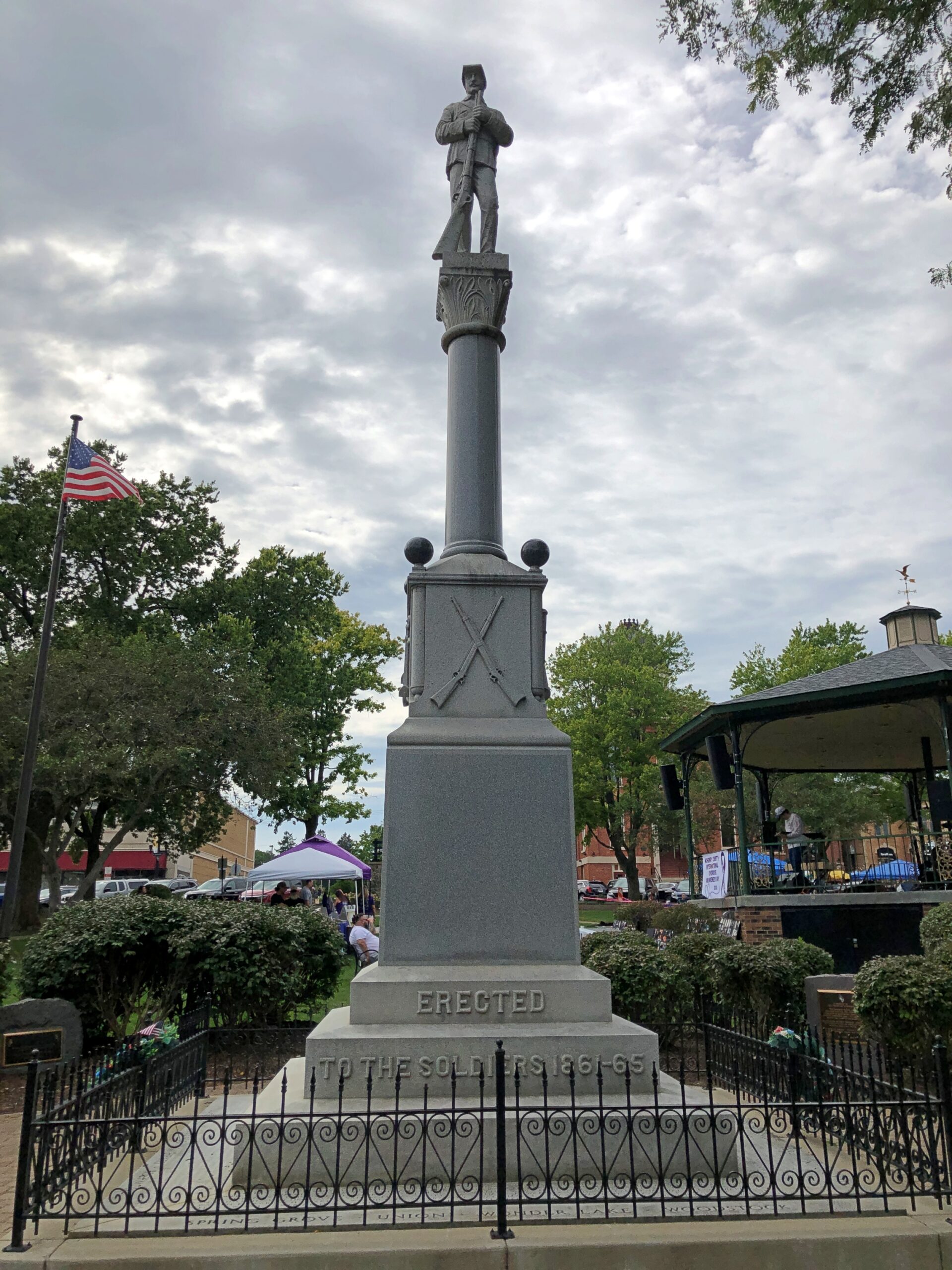
A memorial to the men in blue from McHenry County, erected in the “We’d better get moving on this” year of 1911.
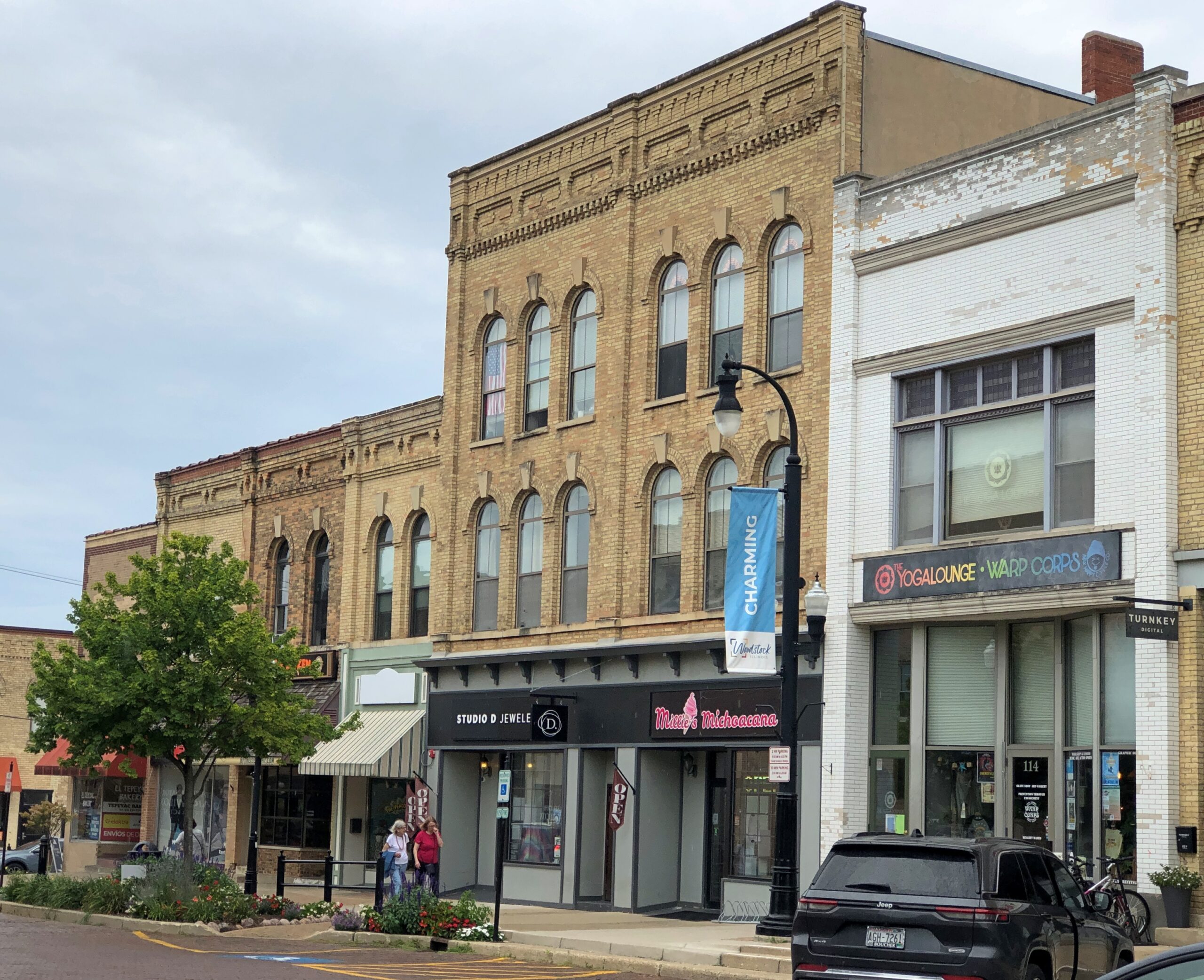
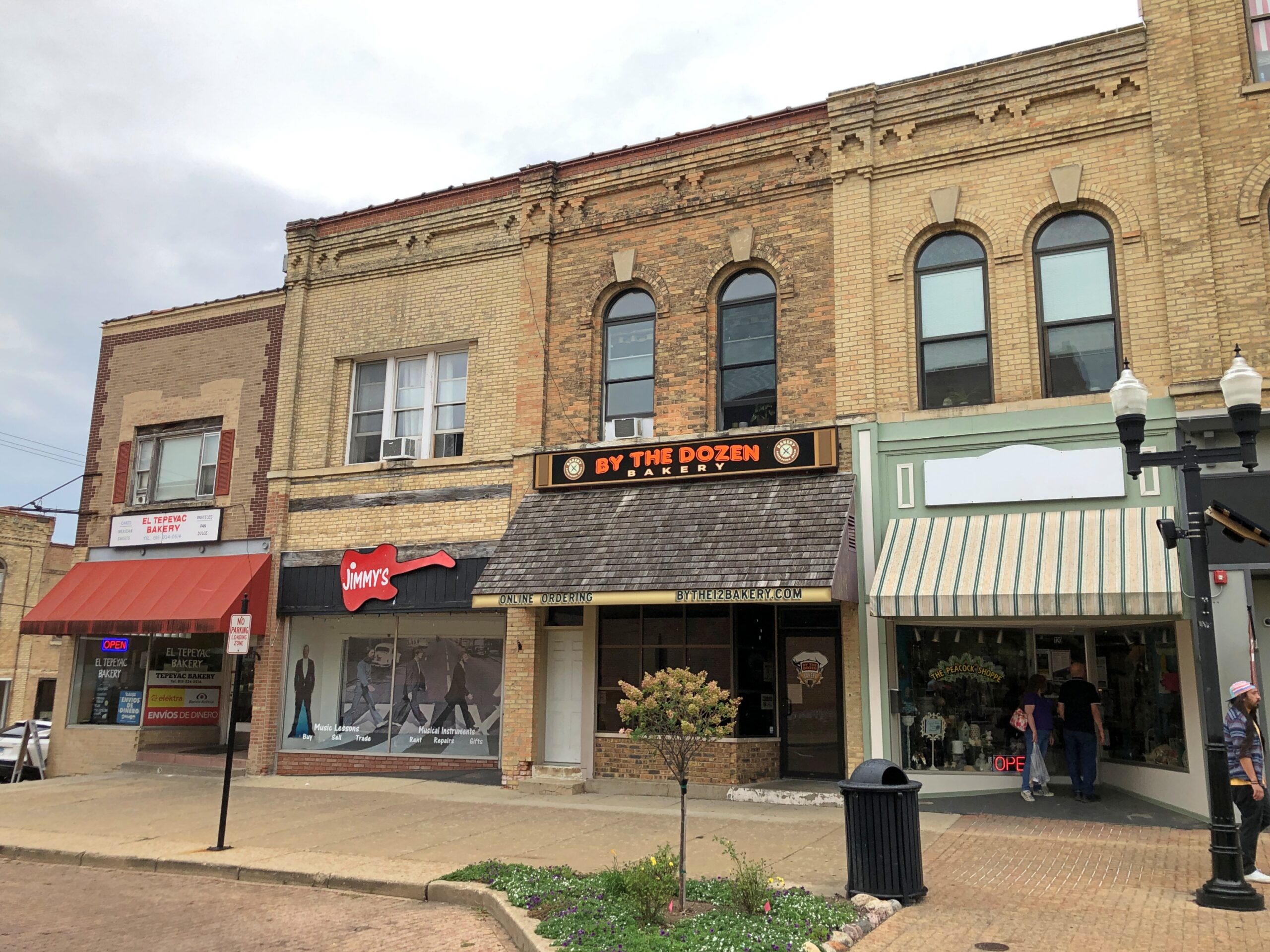
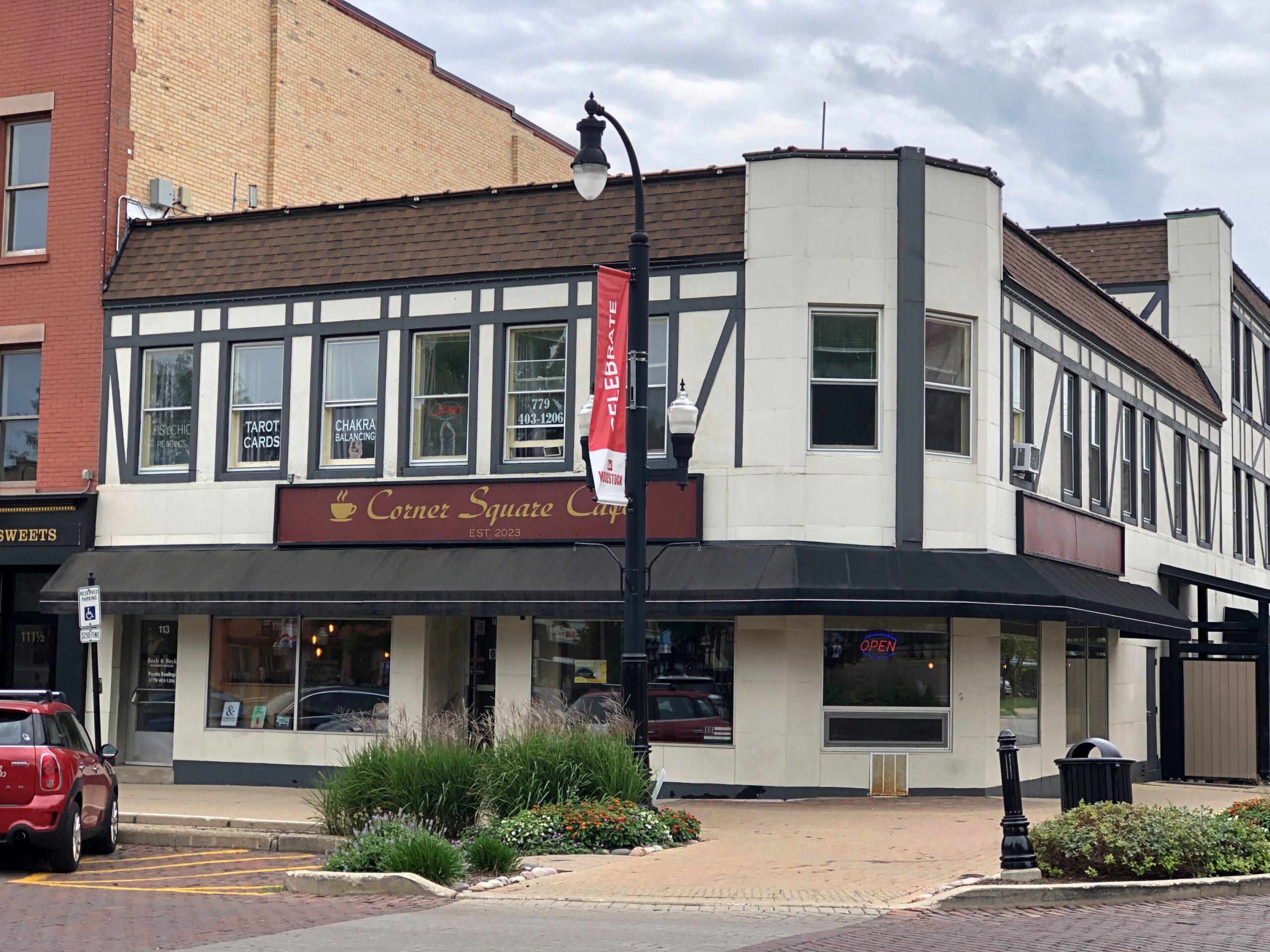
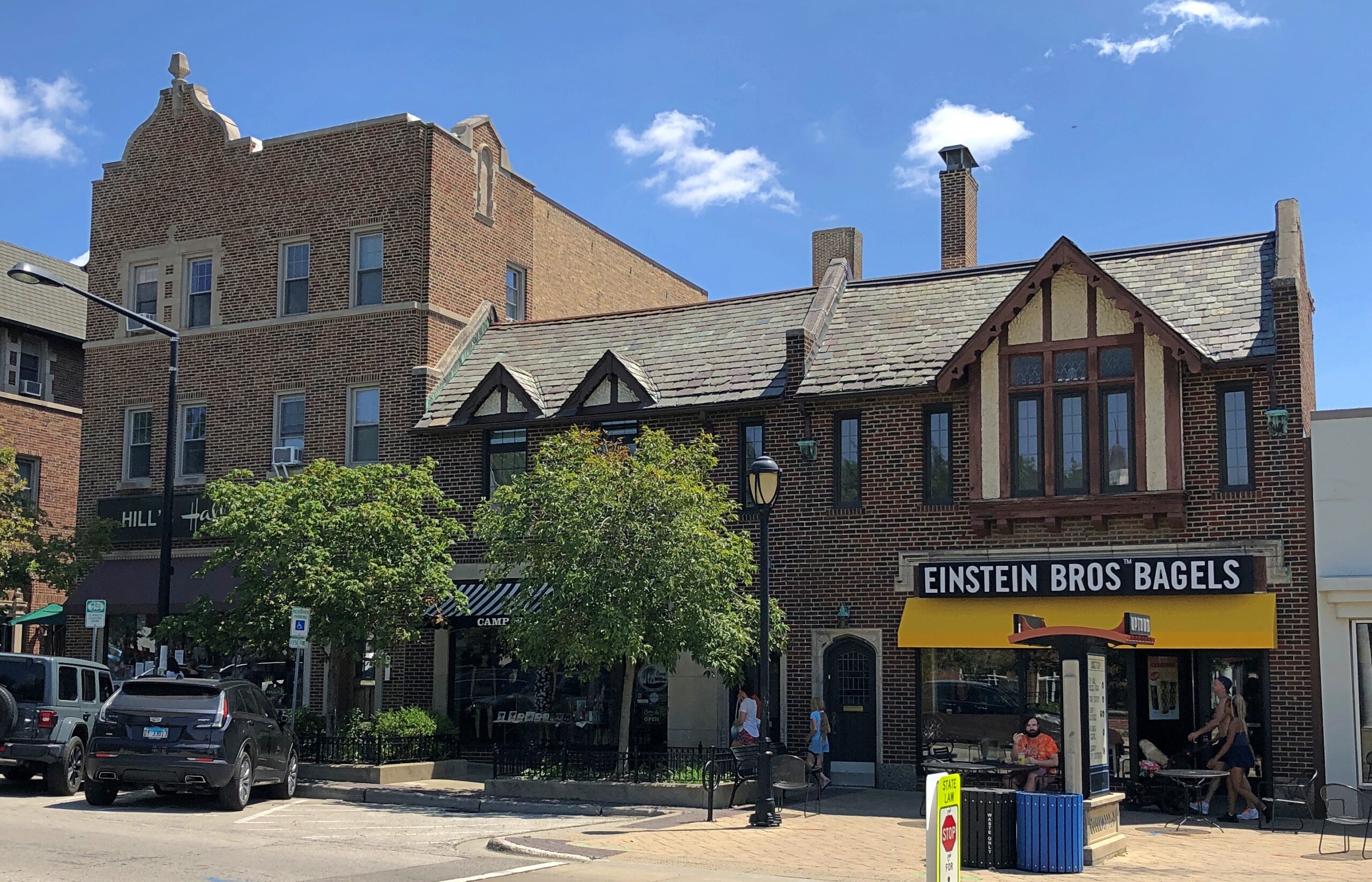
Woodstock Square is ringed – squared – by some handsome commercial structures of pre-Great War vintage, mostly.
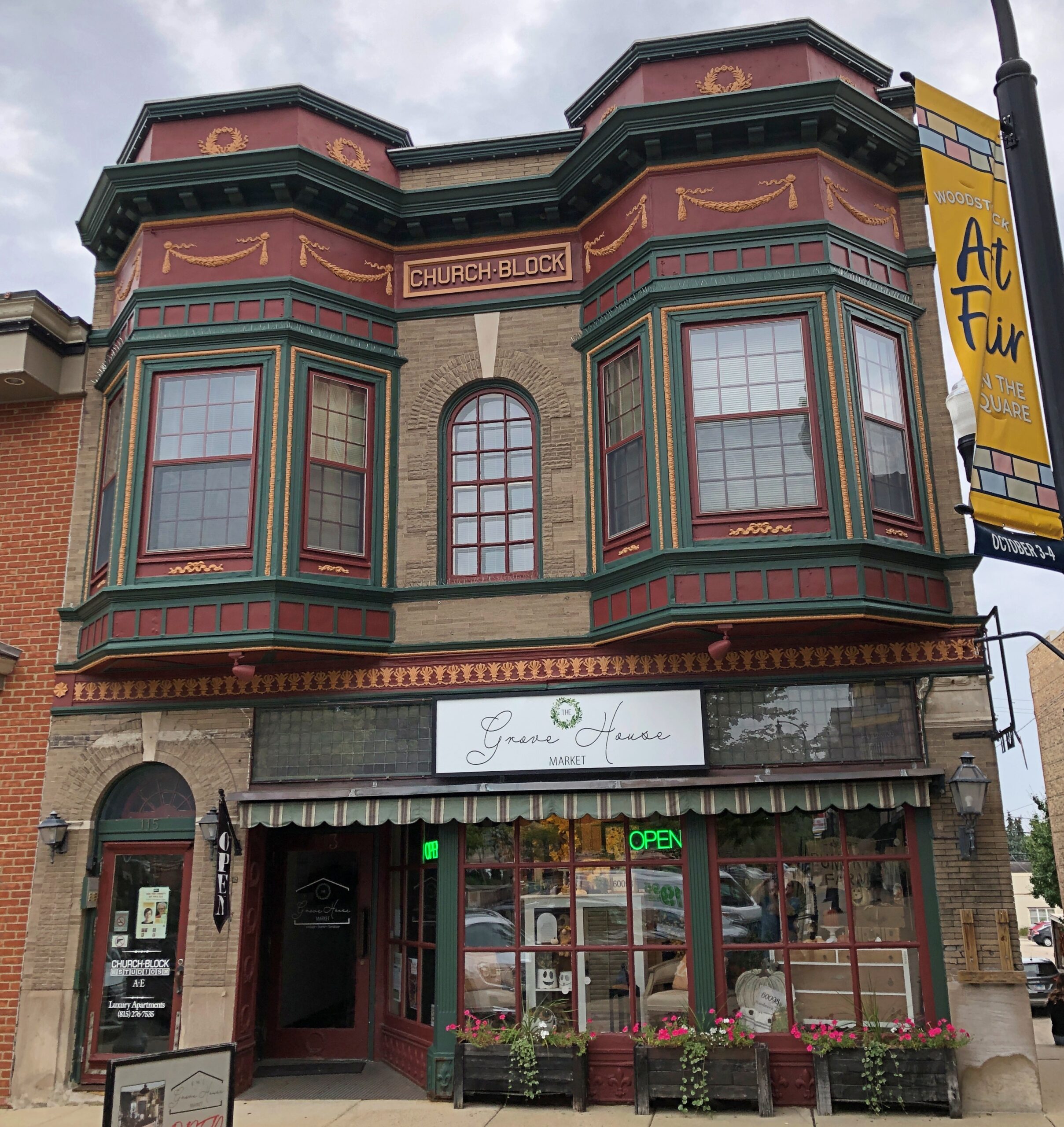
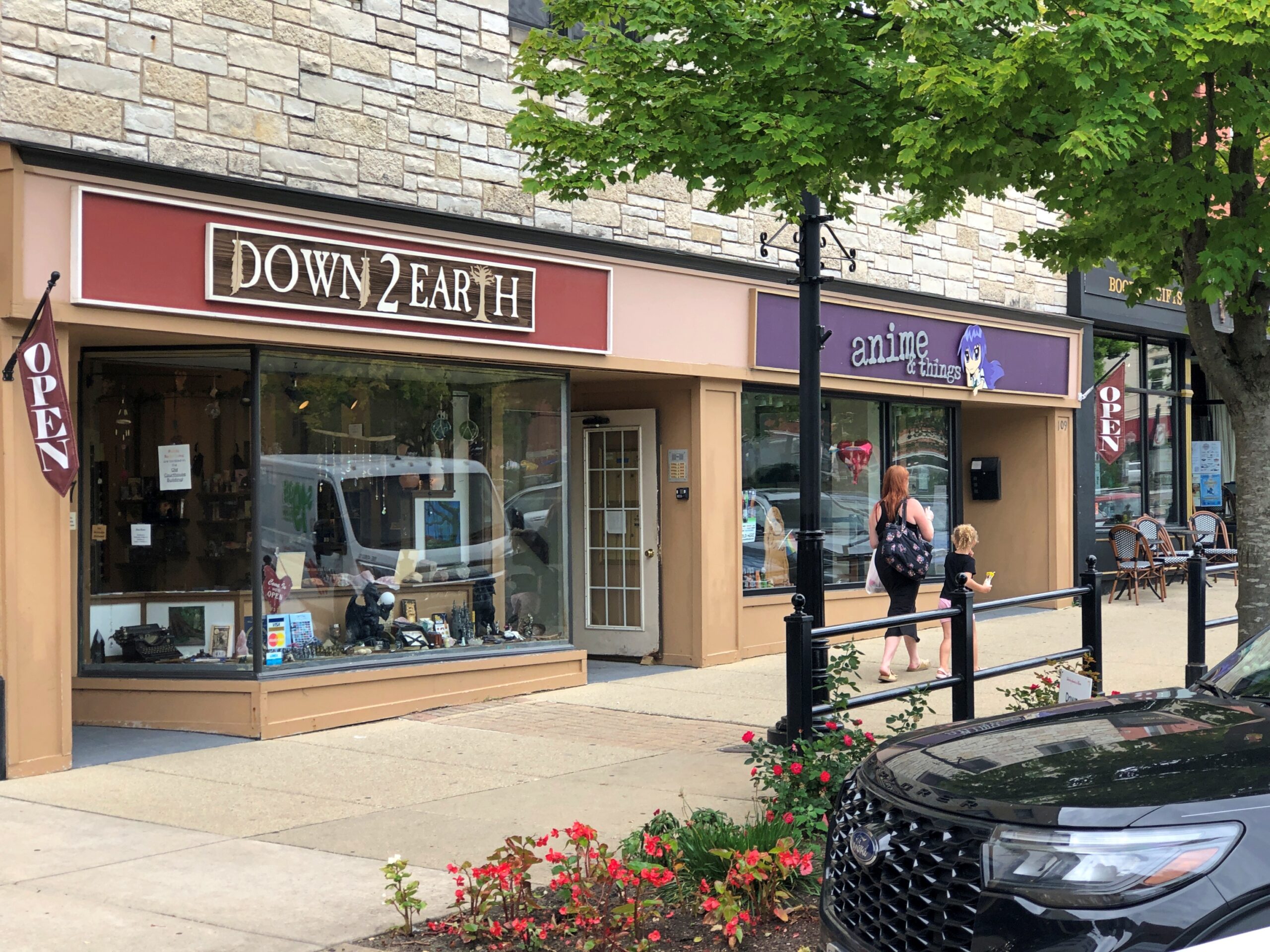
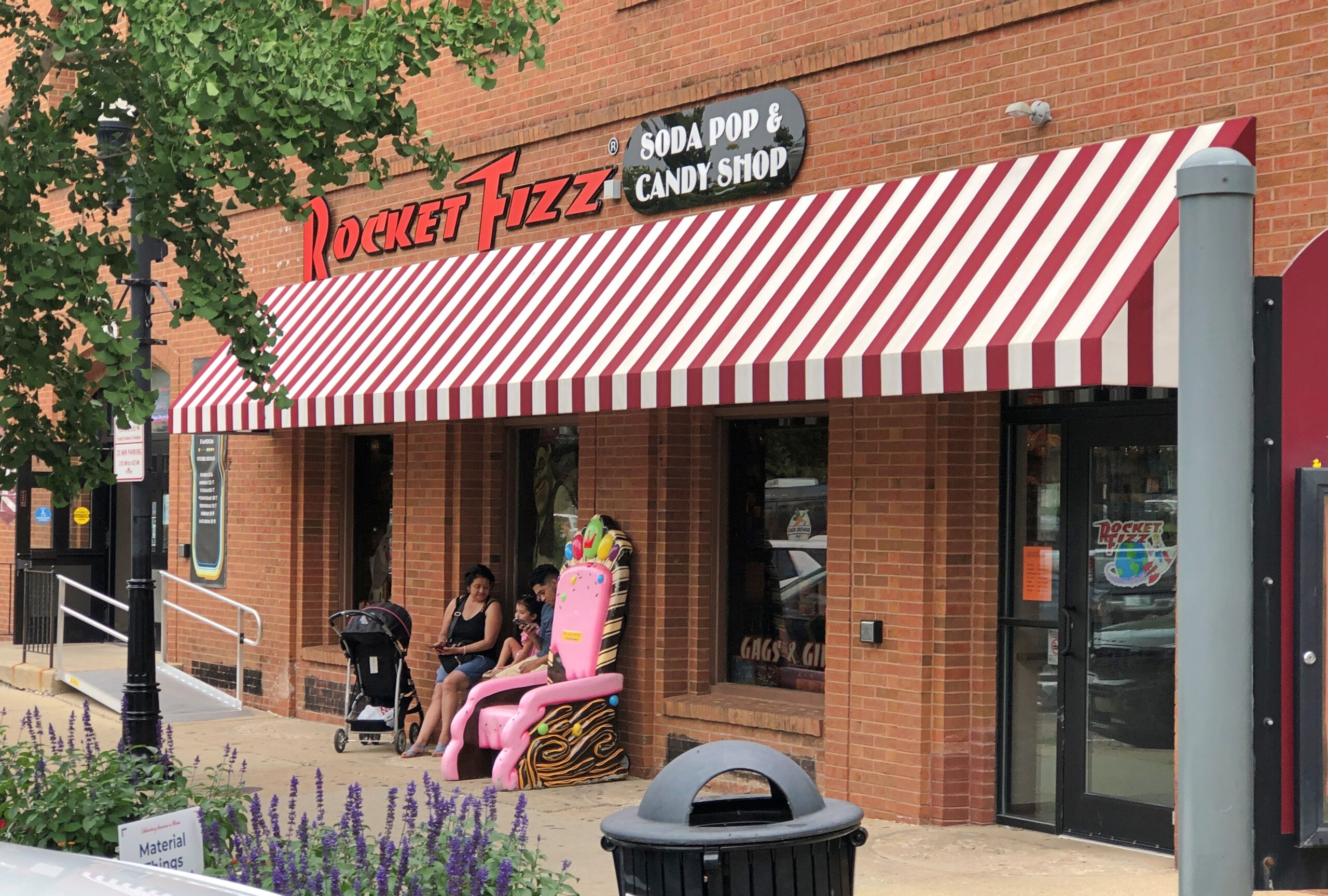
Including a fair amount of boutique-ification.
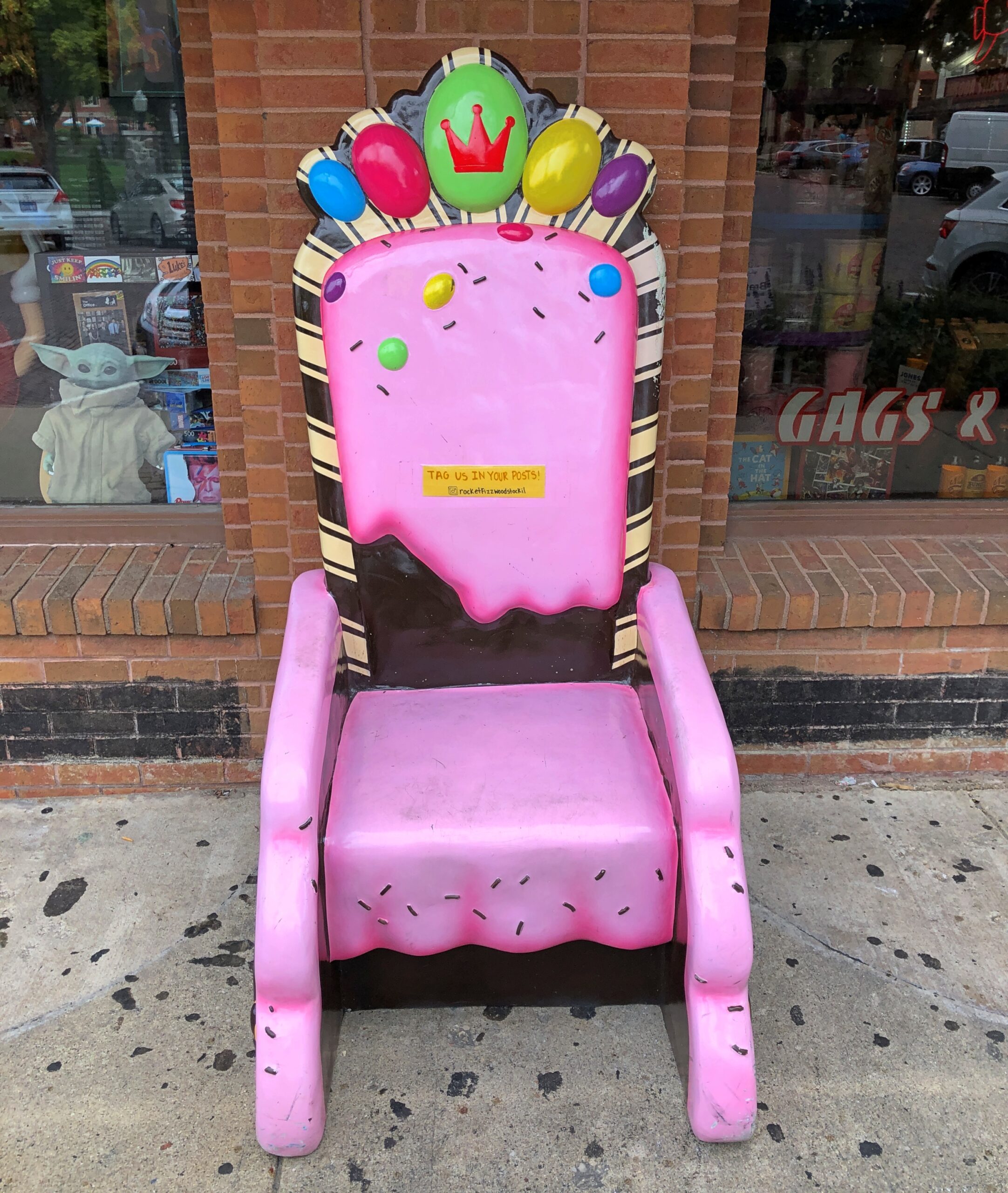
Which makes for some colorful spots.
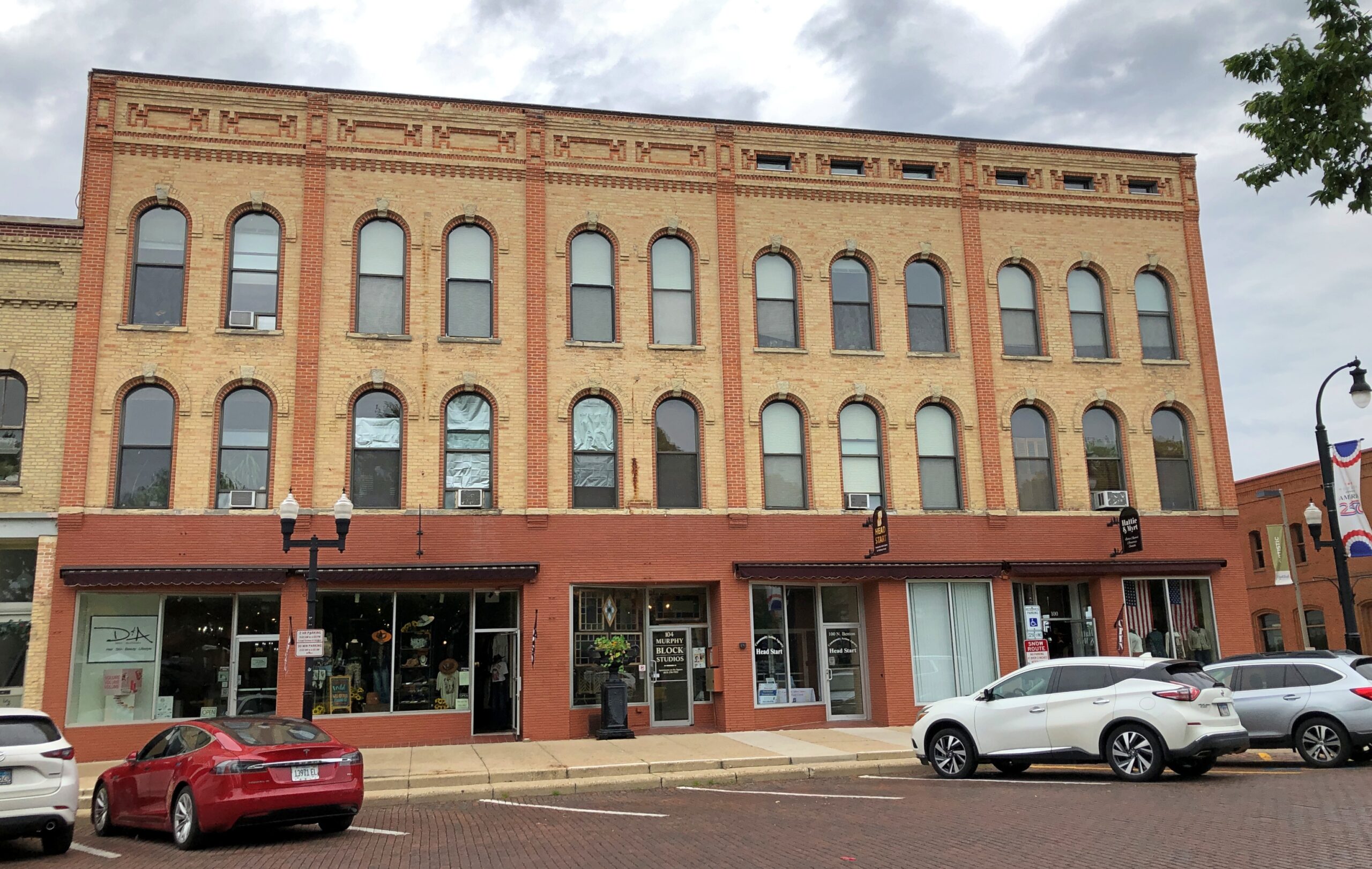
Smaller, but adding just as much to the character of the square.
We had lunch on the square. At a diner along traditional lines, and tastier for it.
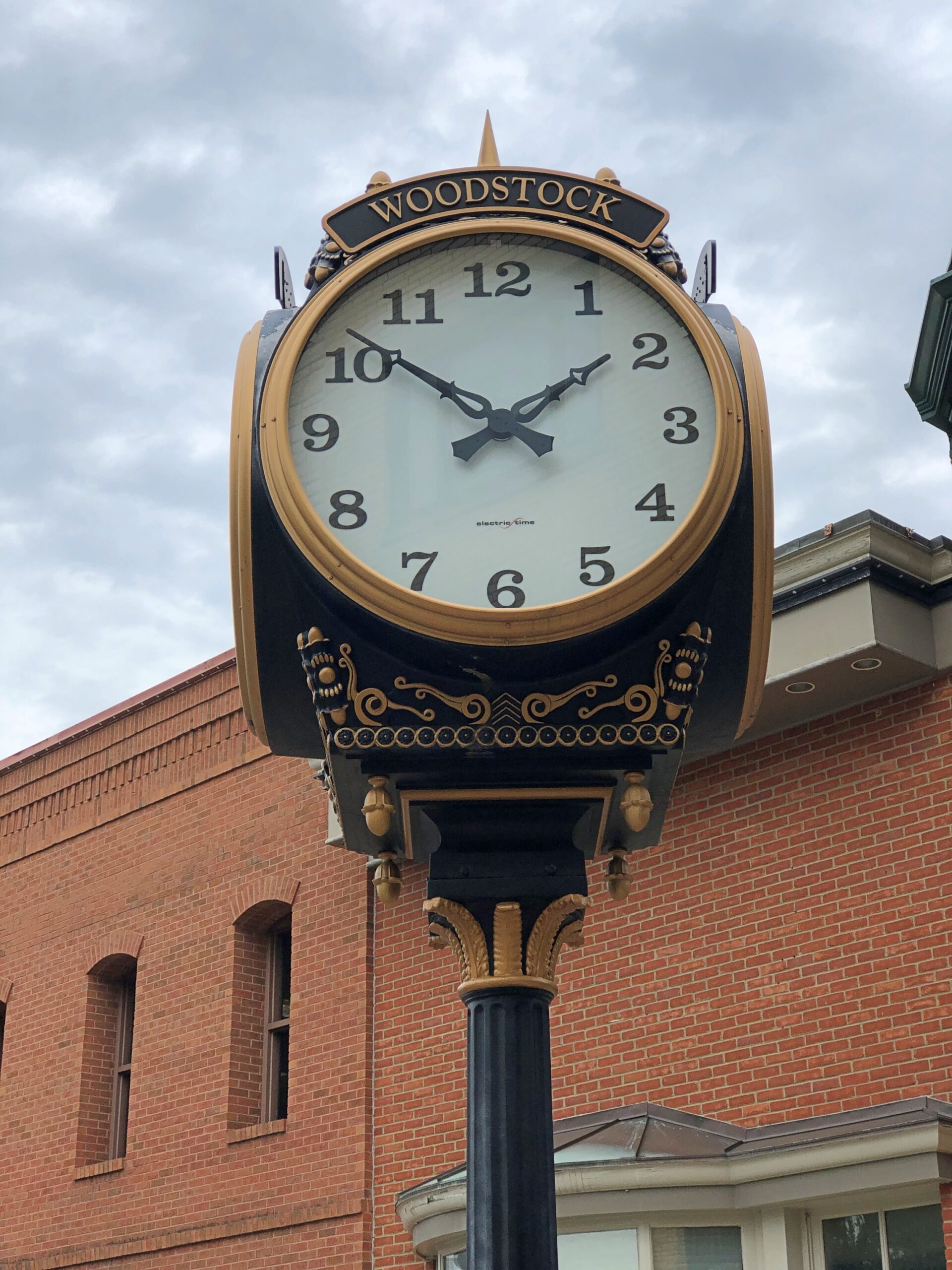
Afterward, the square told us the time.
Note that Bill Murray isn’t trapped in this clock face. Tying in with the movie is only going to go so far.
Thunderstorms rolled through much of the last day of August, but not consistently – the sun would be out for a while, then a new one would rumble through, with heavy downpours for a quarter hour and then gone – as if to remind us who live on the ground that it’s been an intermittently wet summer. Which is going away now. Summer is, that is. We’ll see about the wetness.
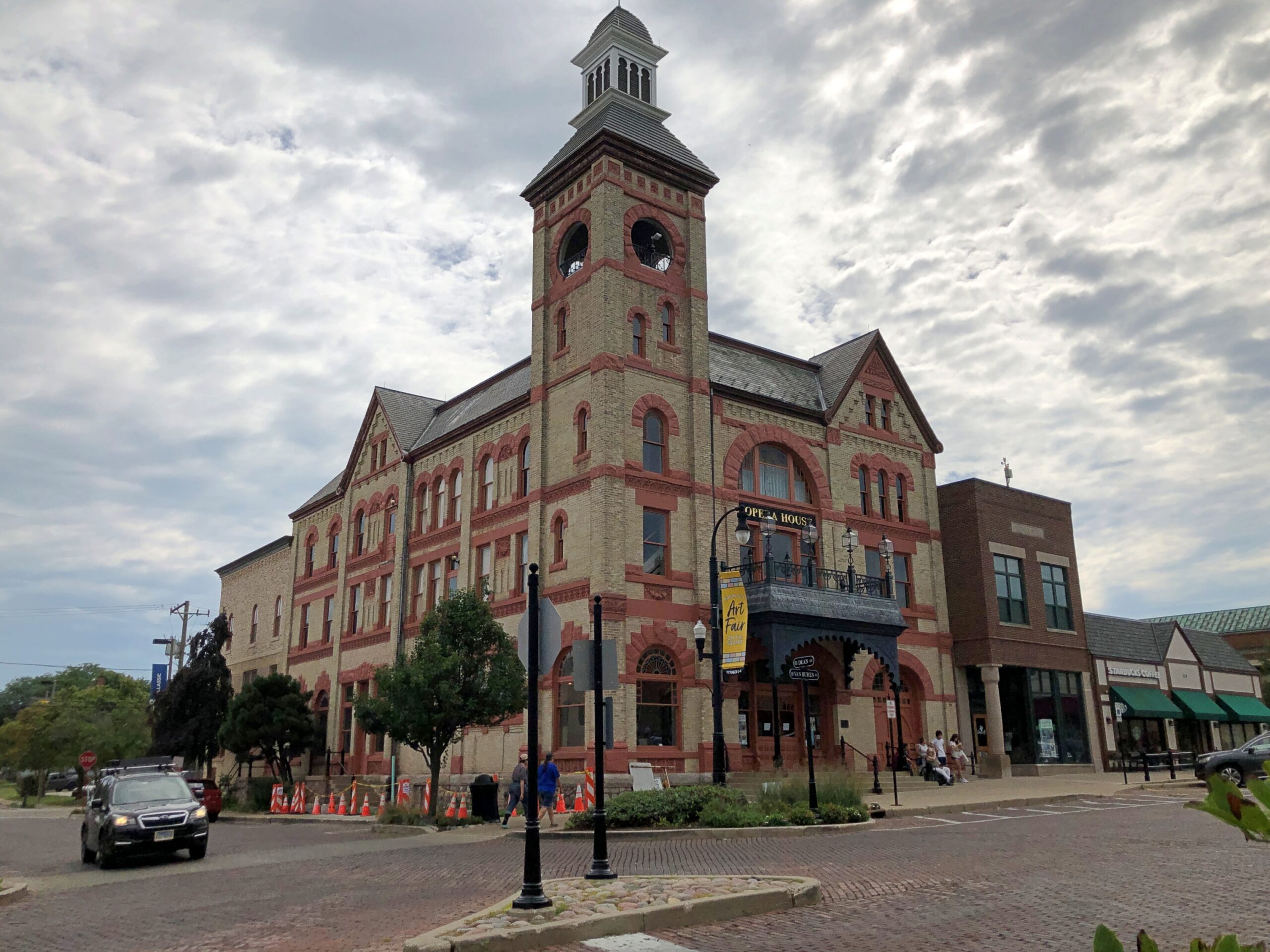
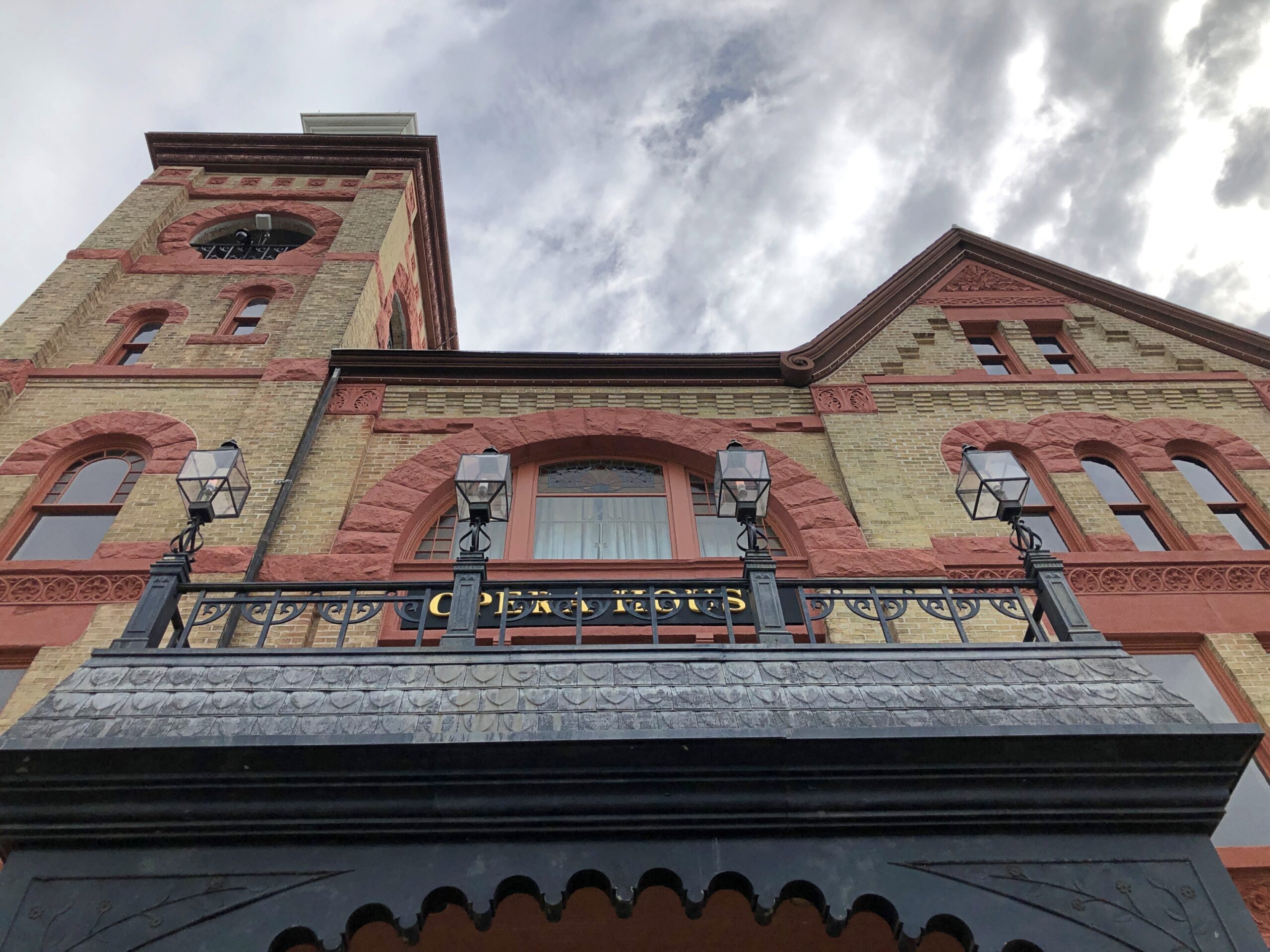
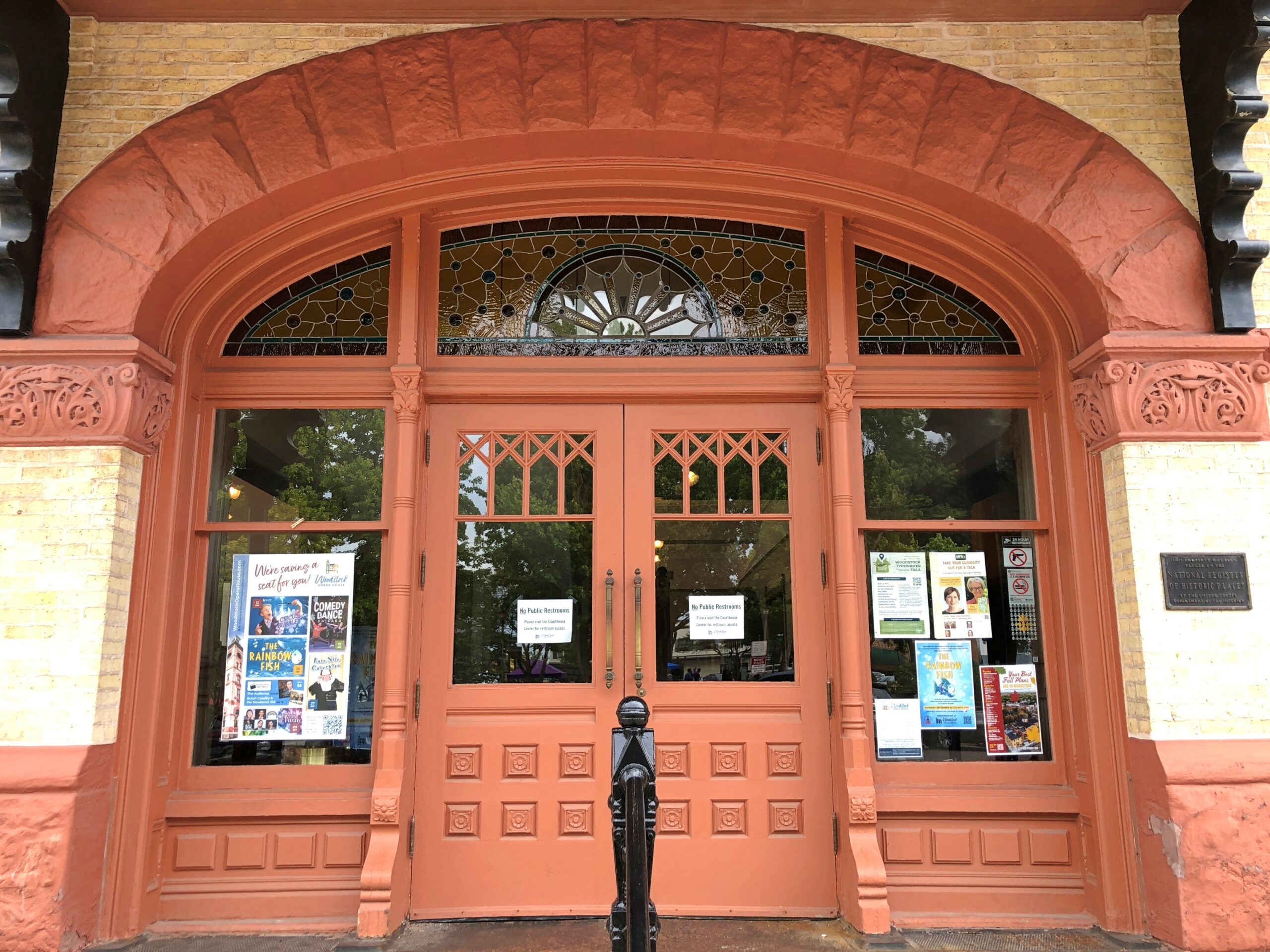
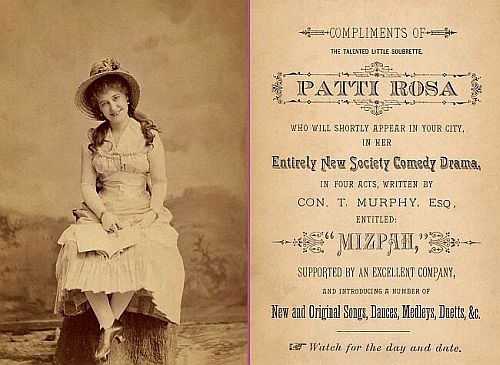
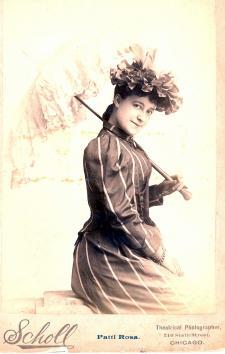
The Woodstock Opera House sent me down a peculiar rabbit hole today. Just who, I wondered, was Patti Rosa? But first, some views of the structure, completed in 1890 and a grand artifact from the period, designed by Elgin architect Smith Hoag, but built by local contractor Simon Brink.
“The year was 1888 and [Woodstock] Alderman WW. Cook made the motion to purchase a lot on the downtown square in Woodstock, which had remained vacant since a fire in 1871,” according to the modern City of Woodstock web site. “Having grown tired of holding council meetings in a local attic, the proposal was to build a City Hall worthy of the town and its citizens. However, when put to a vote the motion came to a tie and it rested on Mayor Merritt Joslyn to cast the deciding vote. Of course he voted in the affirmative…”
“…on September 4, 1890 the grand opening was held with the Patti Rosa Player’s performance of Margery Daw.
“Throughout the next few decades the building functioned as the center of activity for Woodstock and McHenry County. The City offices, library, police and fire department occupied the first floor of the building and the Opera House was contained in the second and third floors. With a capacity of almost 700 movable seats, the Opera House functioned as a public space for a variety of activities including, theatrical events, concerts, weddings, dances, wrestling matches, the annual strawberry festival and graduation commencements to name a few.”
In more recent years, the place has been a venue for live entertainment. I’ve seen a number of performances myself there over the years, such as Al Stewart in 2012.
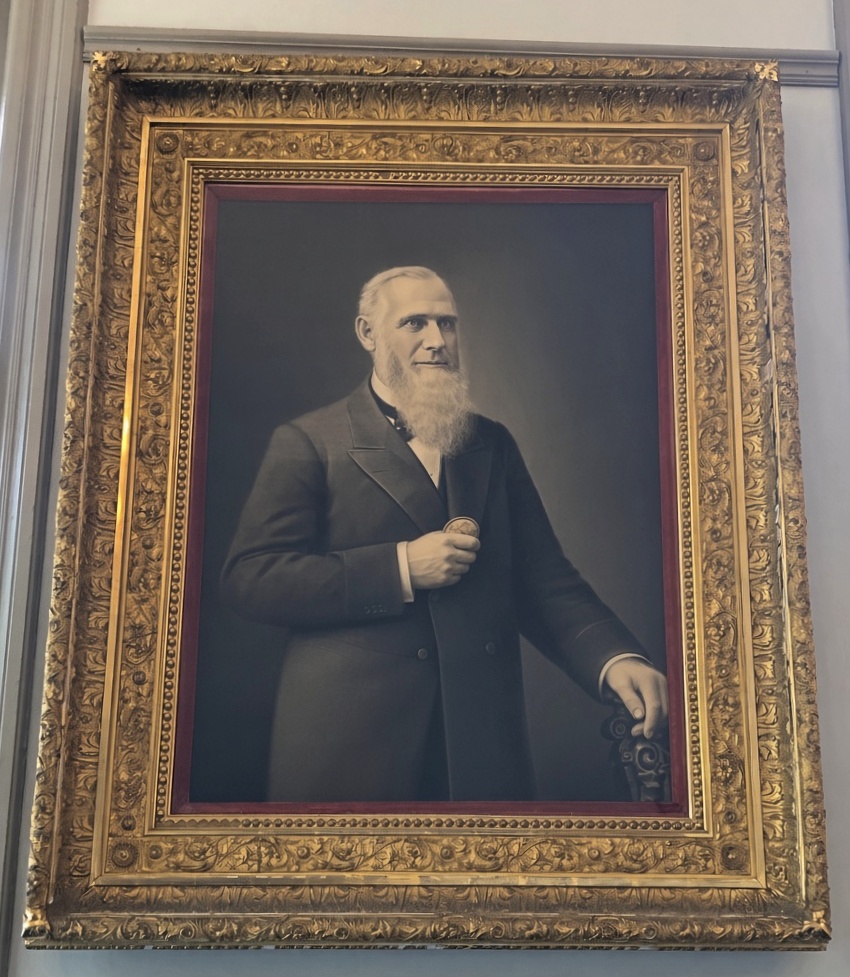
I was glad to see a portrait of Mayor Joslyn in the lobby of the opera house. Without him, it might not exist at all, or in some other, less elegant form. (I removed the glare from the image below.)
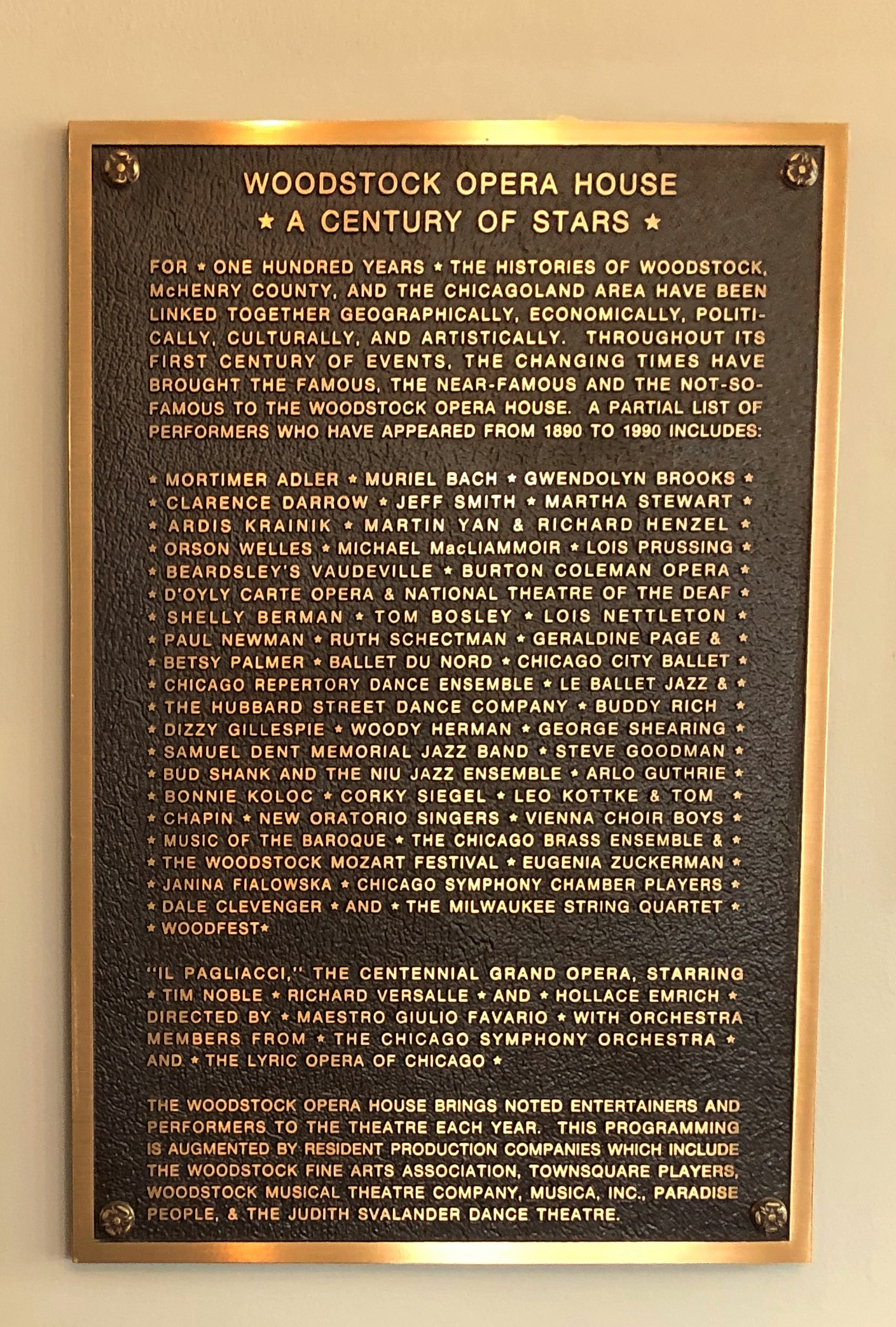
The theater puts its greatest hits on a plaque.
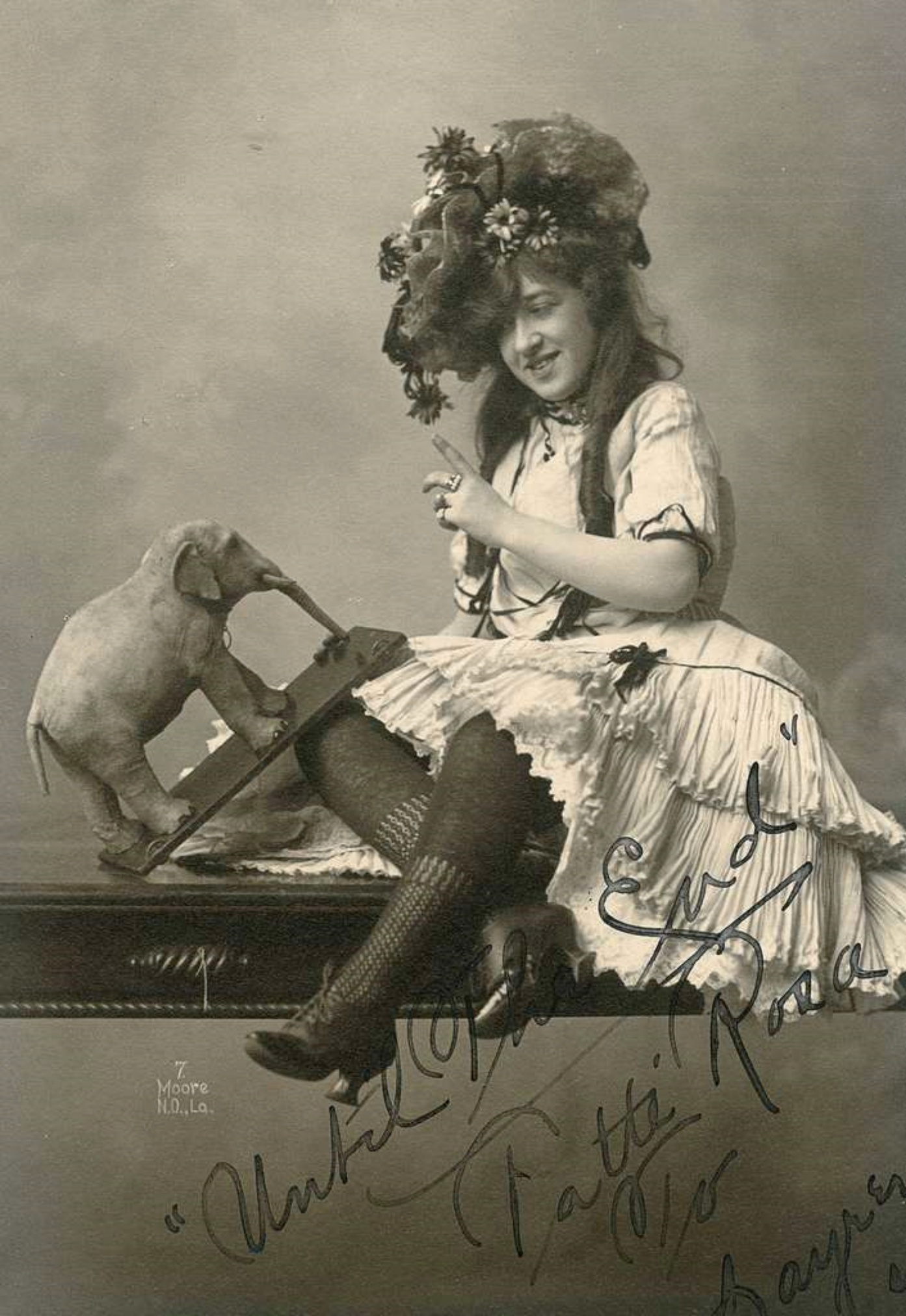
But not Patti Rosa. Who would expect that? First is only first and that was probably by chance. Information about Patti Rosa is slender, at least to a not-rigorous amount of Googling. But there is some, such as a review of one of her shows in London.
Patti Rosa at the Jodrell Theatre, London, January 1889:
Patti Rosa, after much preliminary puffing, and accompanied by a newspaper called the Patti Rosa Illustrated News, of which copies were given away on the first night, has made her appearance at the hitherto unlucky Jodrell. Bob, the hotchpotch she appears in, is not a remarkable work of dramatic art; but it is a filling vehicle for the eccentricities, peculiarities, and whimsicalities of the fair and plump Patti, who sings, dances, coquettes, and banjoes her way into the good graces of a few easily-pleased Americans. In her line of business she is, however, what is called ”clever.”’
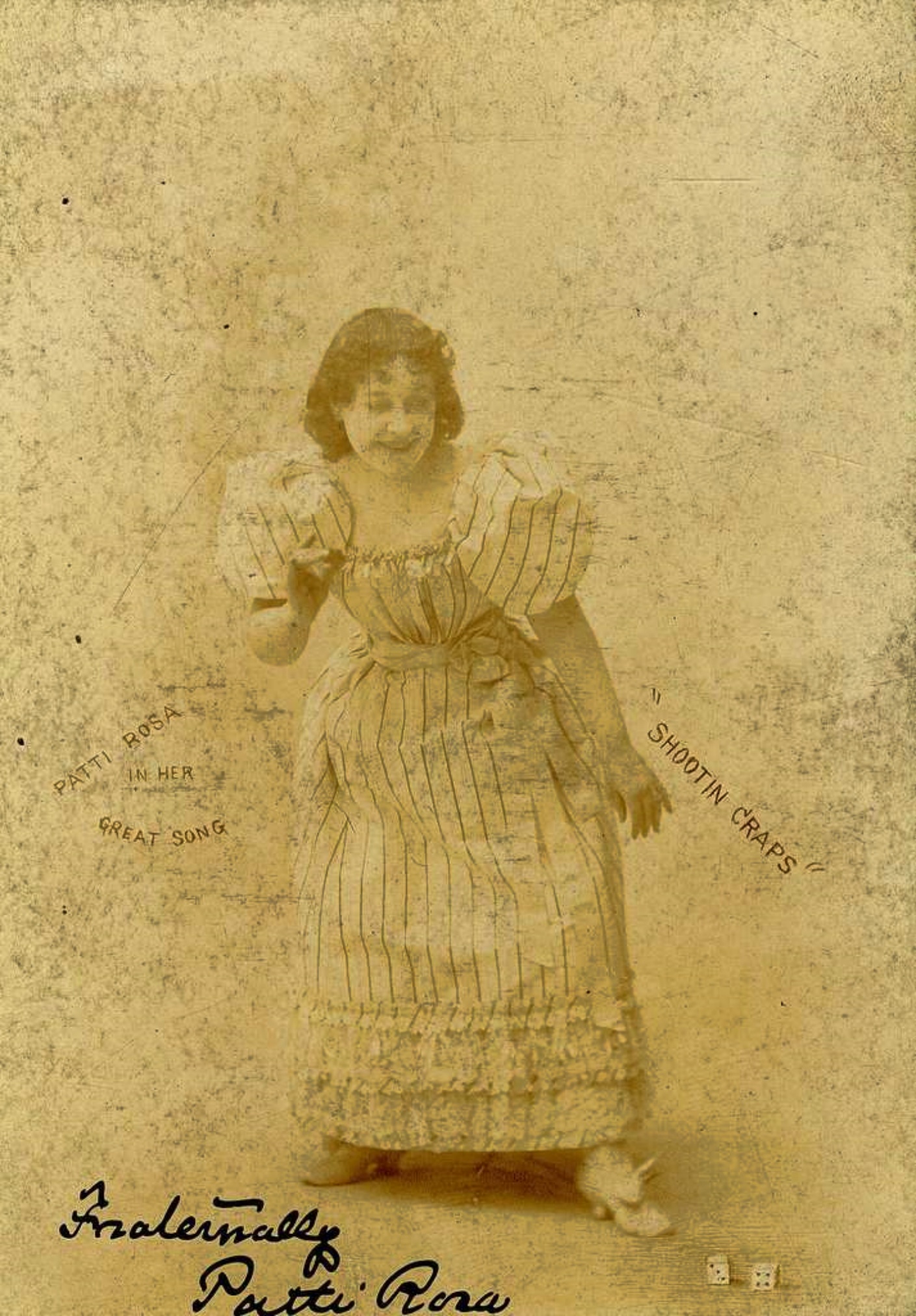
Some images. All public domain, nicked from various places online.
This one, a faded relic in the most literal sense.
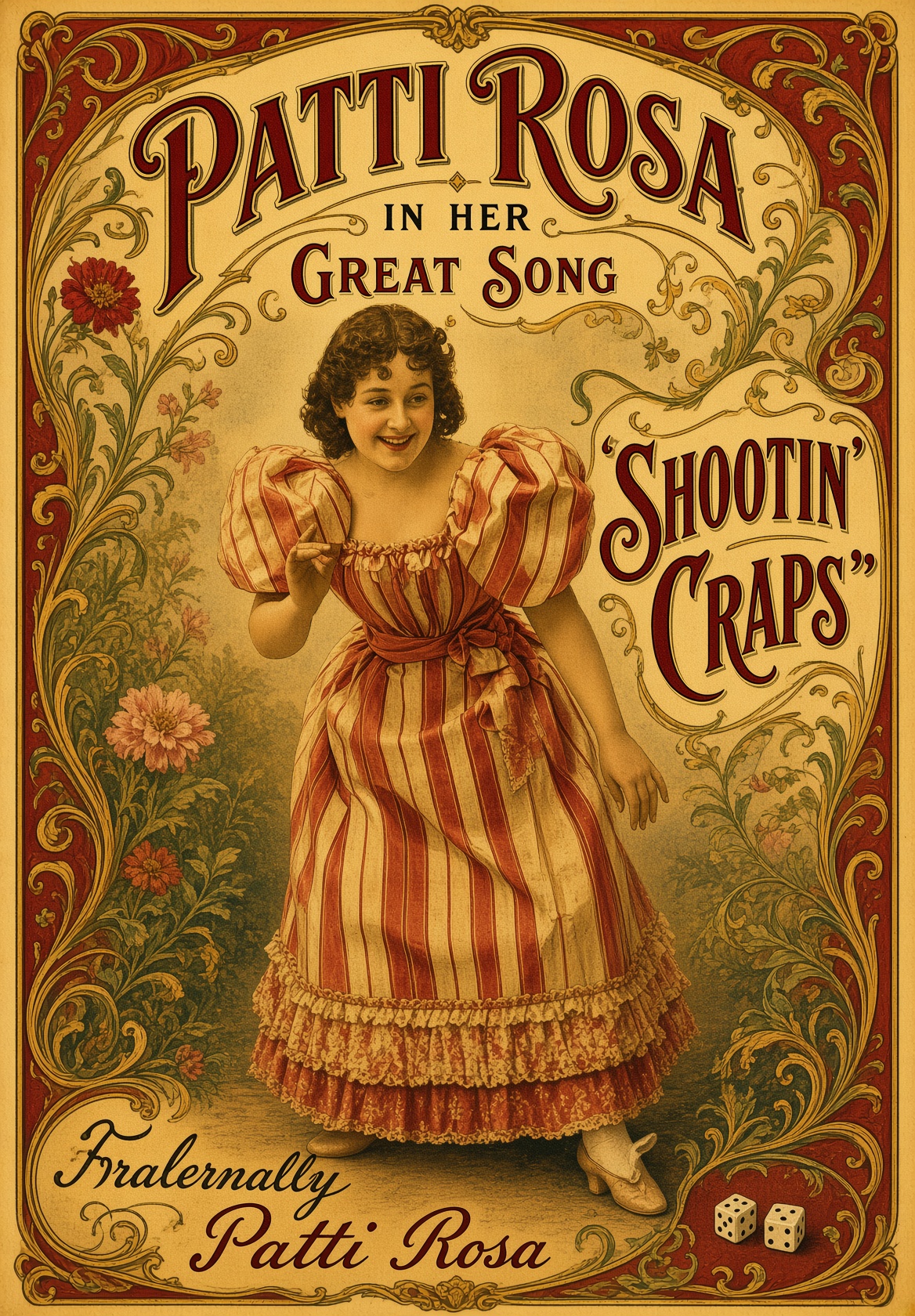
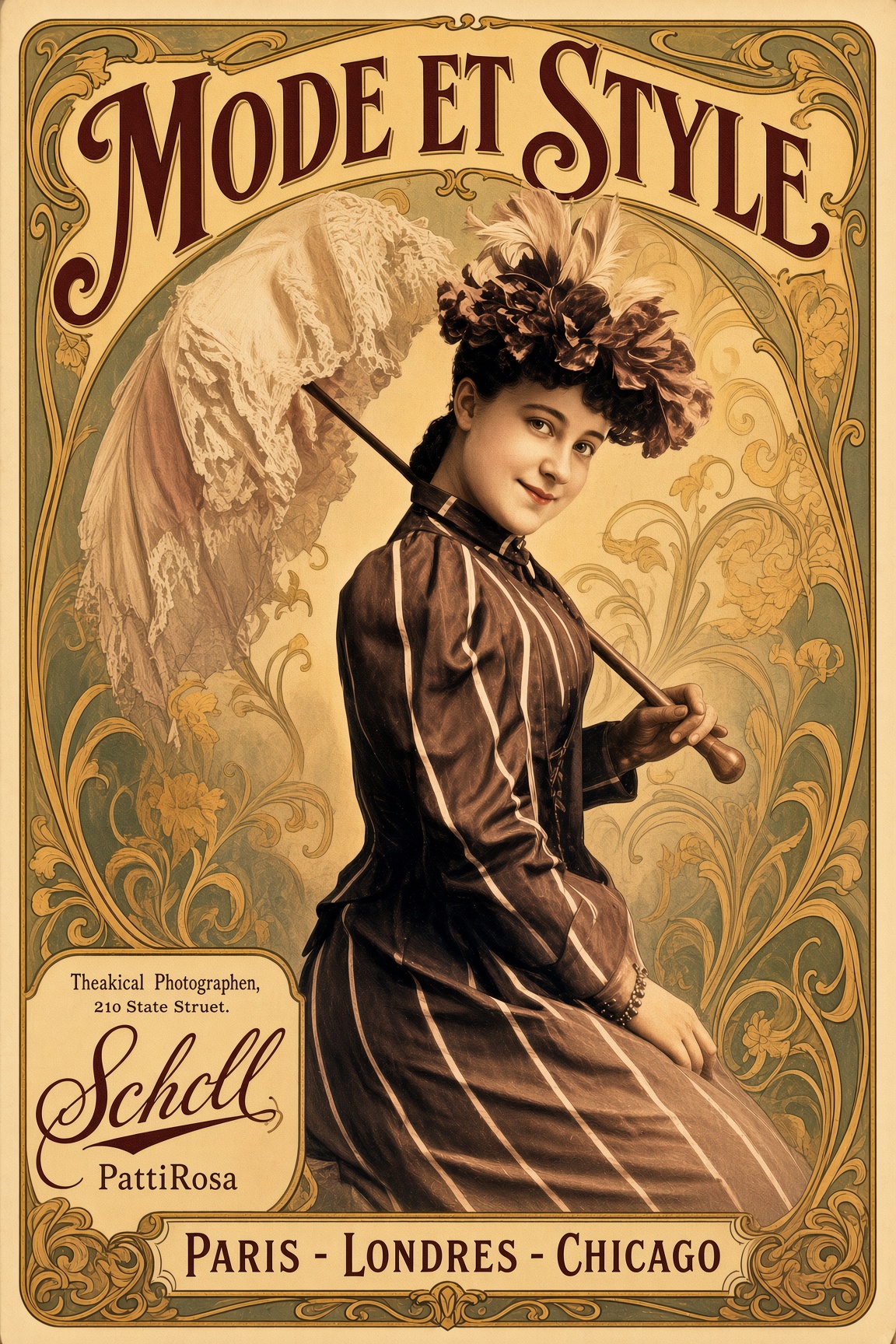
I’ll give it a little revival.
Another fuzzy image of yore.
Looks like a minor hallucination in making this, but I doubt that Patti would have minded.
Patti Rosa’s heyday, and she did seem to have a heyday around the time of Benjamin Harrison’s administration, didn’t last, not even into the 20th century.
‘NEW YORK, Aug 6. Patti Rosa, a well known soubrette, died at St. Francis hospital from the affects [sic] of an operation performed for appendicitis. She was the wife of [the actor manager] John W. Dunne.’ (The Trenton Times, 6 August 1894, p. 8b)
Well, that’s too bad. Otherwise she might have lived long enough to be an equally forgotten silent screen comedienne.
At this point, there are a number of rabbit sub-holes, or maybe informational tunnels, to wander. I decided not to.
Such as what a soubrette is, or was, and how that particular stock character, or in this case, a kind of shtick, faded from common awareness. Or did it morph into something like the manic pixie dream girl? I’m couldn’t say.
Or the play Margery Daw, which was probably a high-jinks version of an equally obscure short story by one Thomas Bailey Aldrich.
Or whether there is a copy of Patti Rosa Illustrated News anywhere in the world, or whether it’s a lost as Genghis Khan’s tomb, except that no one cares.
Or what was it that made the Jodrell Theatre “unlucky”?
Or the song “Shootin’ Craps.” There’s a revival for that song in the right musical hands.
Or the play Mizpah, or its author, one Con. T. Murphy, Esq. Forgotten, and probably with reason.
As mentioned before, Punxsutanwney, Pennsylvania, has gone a long way to let the world know about its groundhog and its celebration of things groundhoggish. Of course, that town isn’t the only place to do so, just the best known. I’ll bet few people south of the U.S.-Canada line know about Wiarton Willie. I didn’t know myself until I passed through Wiarton, Ontario, a couple of years ago, because travel is broadening, you know.
Back in the U.S., there is an up-and-coming town for celebrating groundhogs, and it’s less than an hour’s drive from where I live: Woodstock, Illinois. Yuriko and I made that drive on Saturday and spent a few hours in Woodstock’s pleasant downtown. The town has no history of imported northern European folk customs associated with rodents, but of course director Harold Ramis’ decision to film the many Groundhog Day exteriors in Woodstock did the trick.
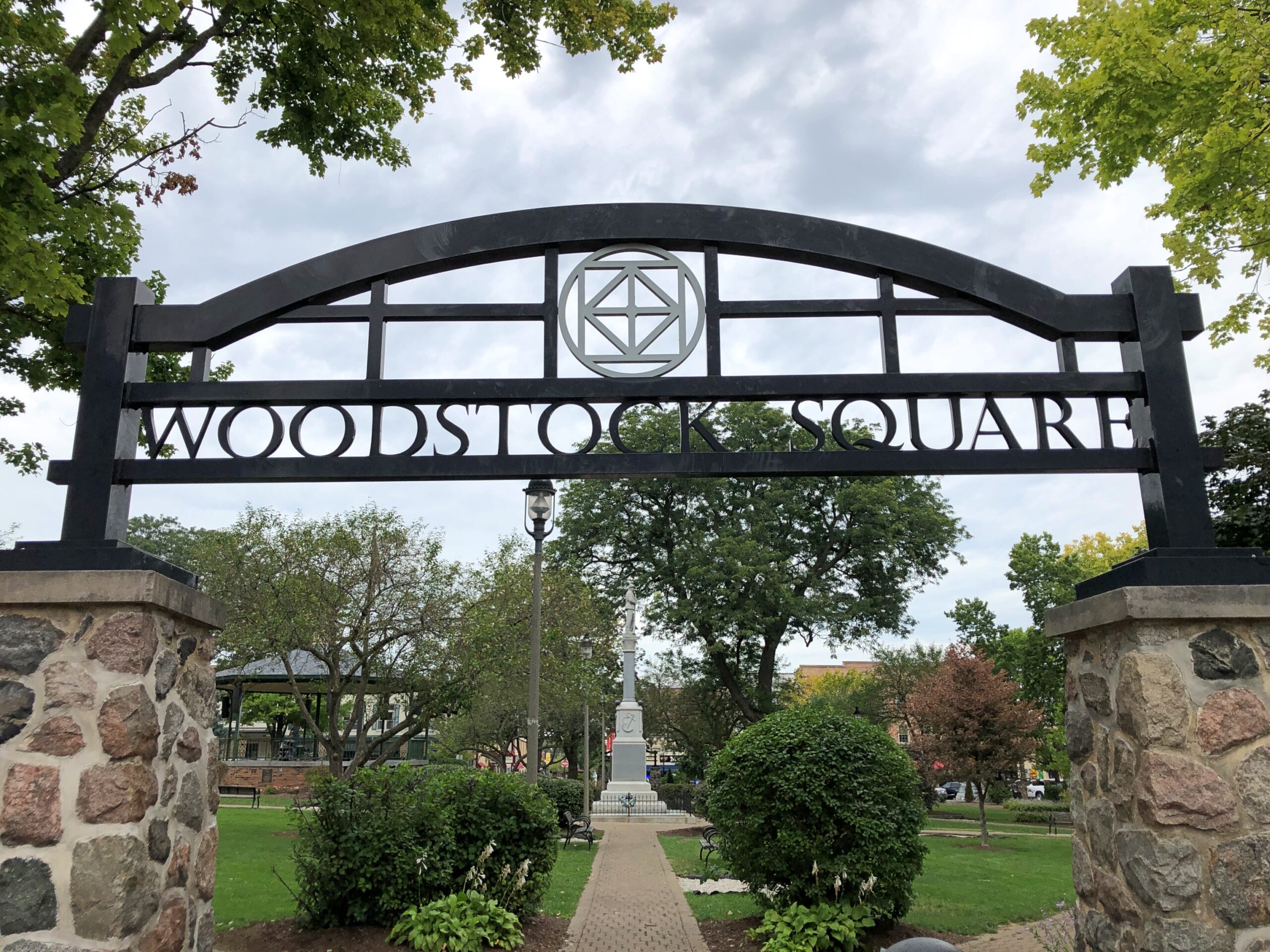
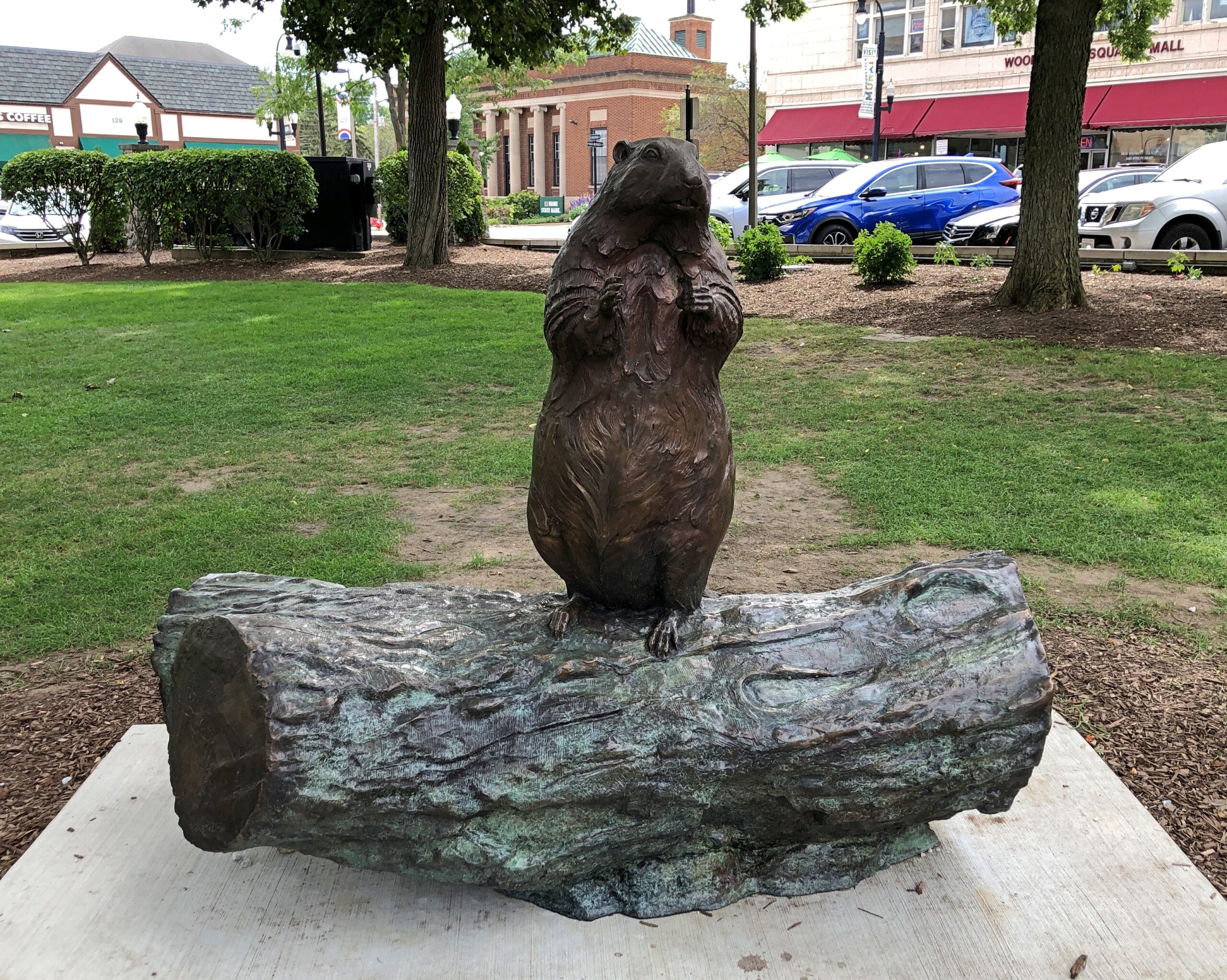
Since I was there last, a new acknowledgment of the movie has been added in Woodstock Square, which is the hub of the historic downtown.
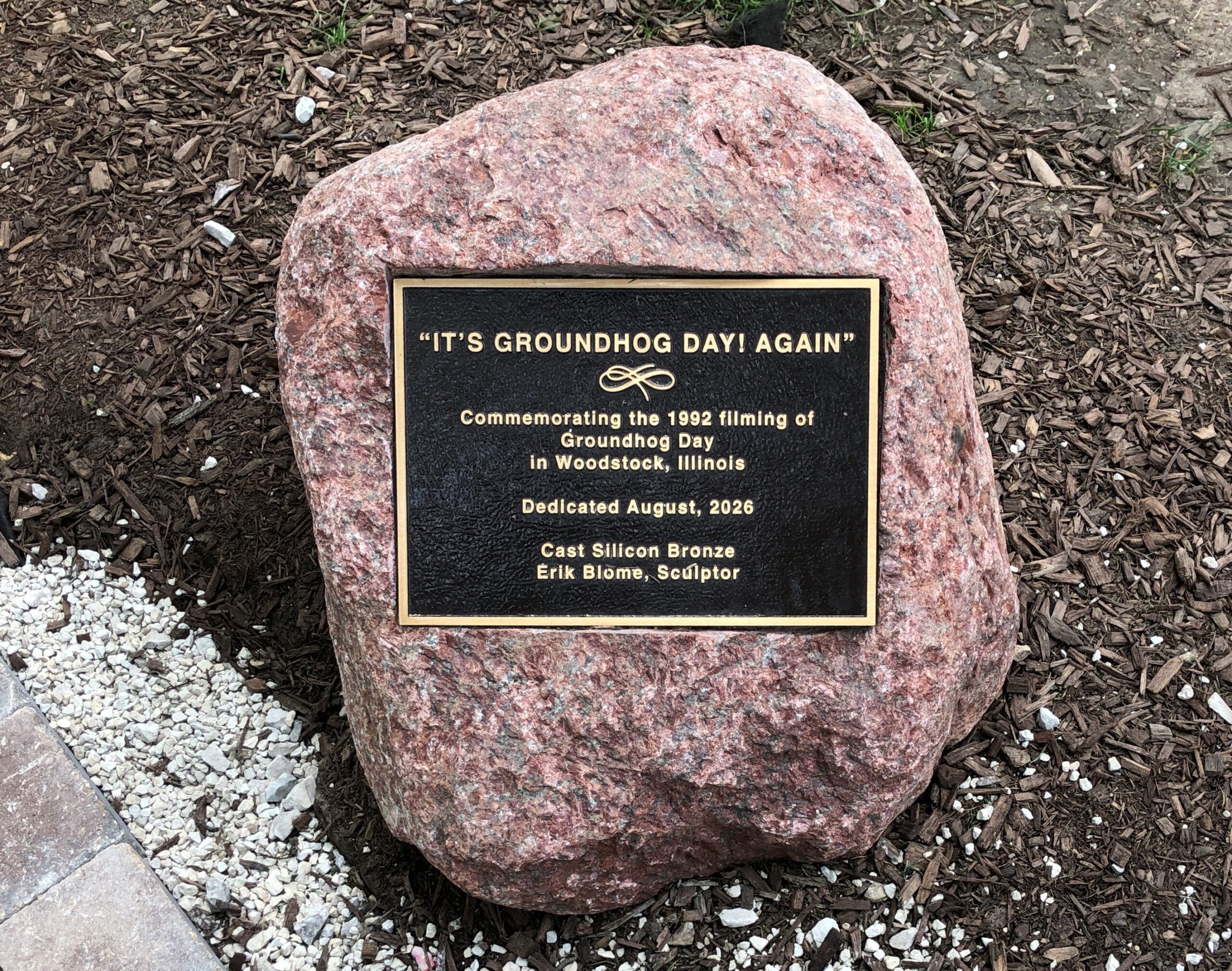
Very new, as in added earlier this month. In fact, on August 2 – six months ahead or behind February 2.
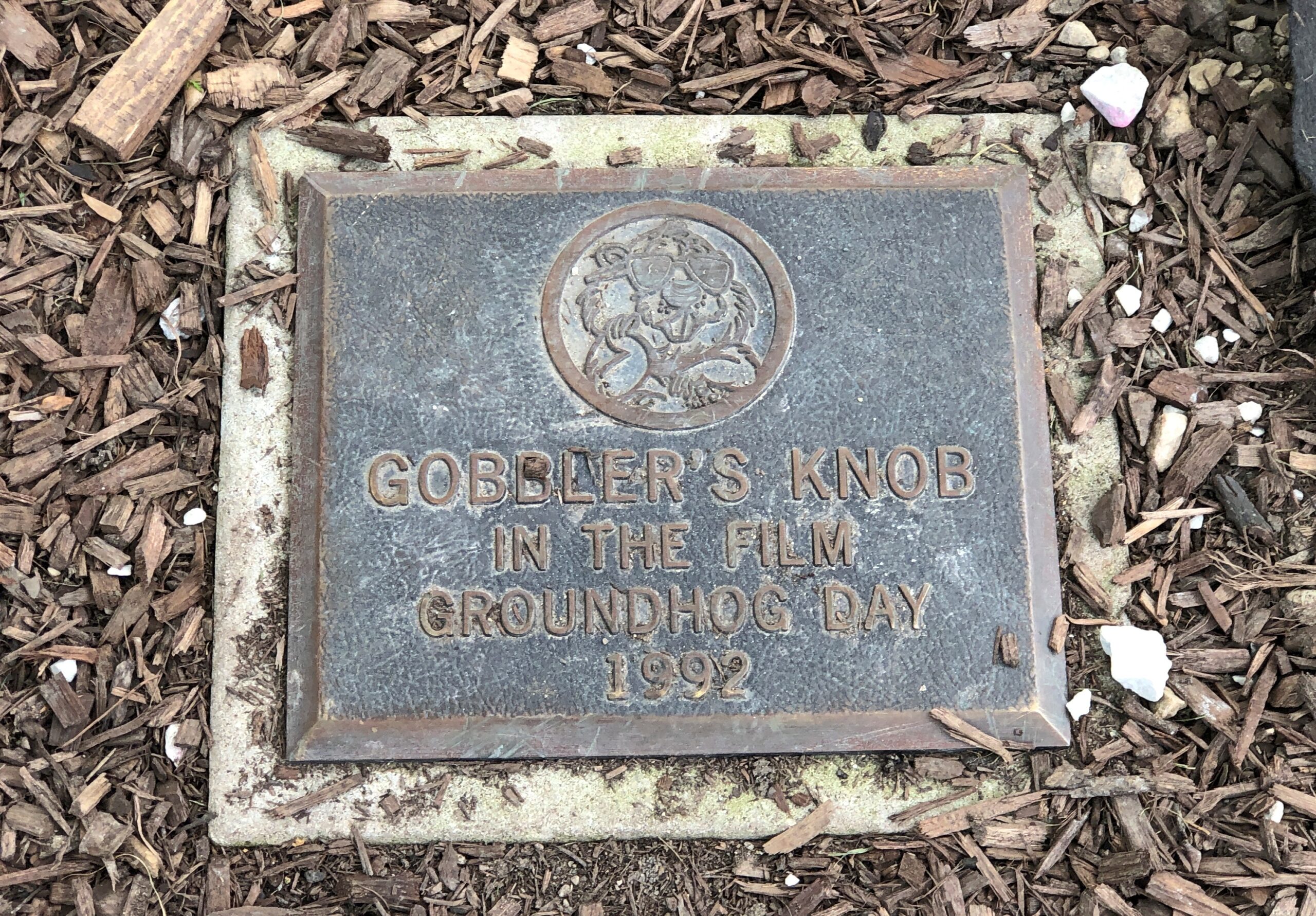
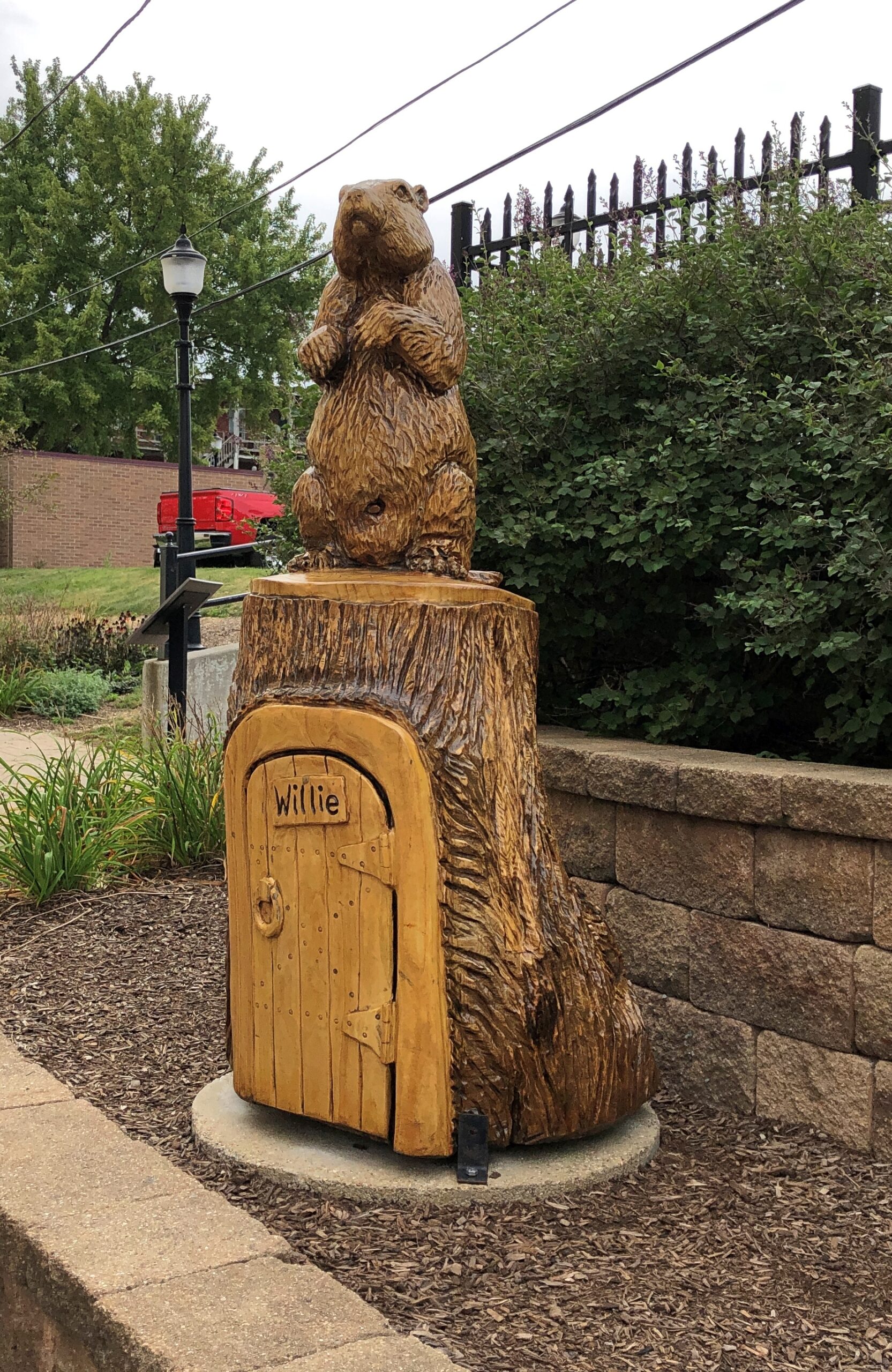
There is a newer plaque, and an older one, near the latest Woodstock Willie statue.
Not far from the square, behind the town movie theater, is an older Willie.
Woodstock has its own groundhog fest, and this is the place from which Willie emerges. I assume that it – cage isn’t the word, maybe temporary pen – is moved to Woodstock Square for the February 2 event, though it’s unlikely I will be at that event to see for myself.
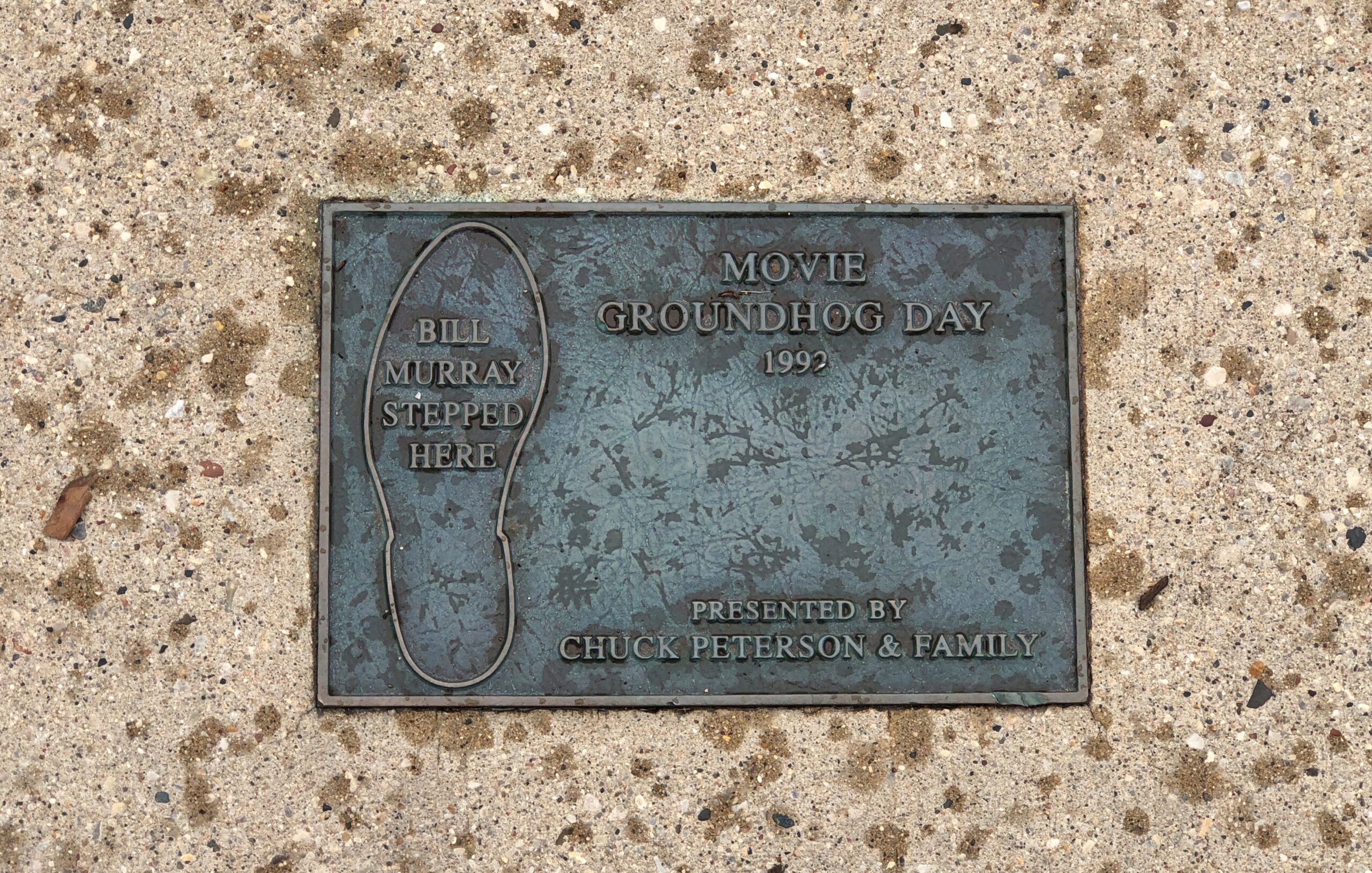
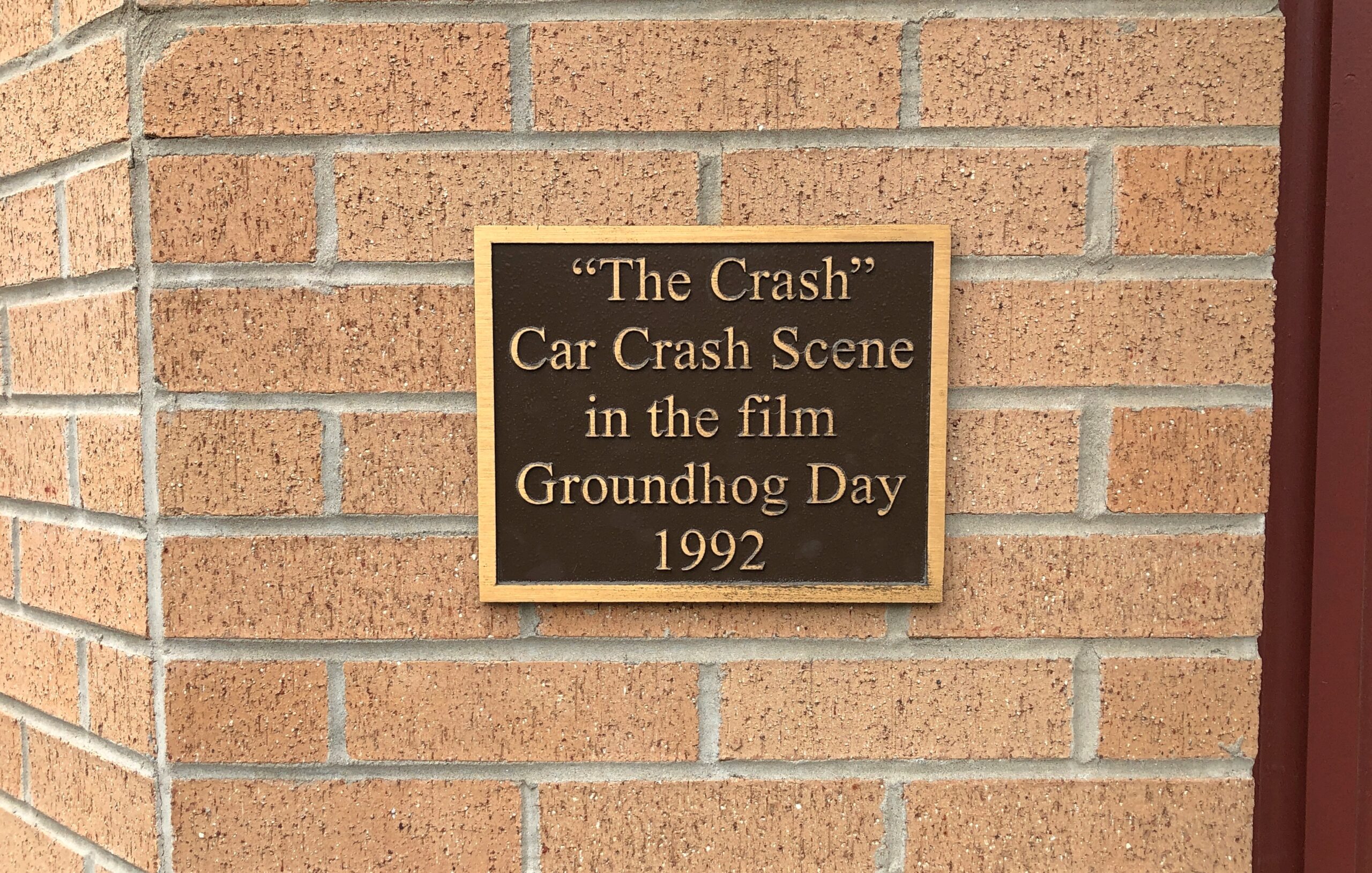
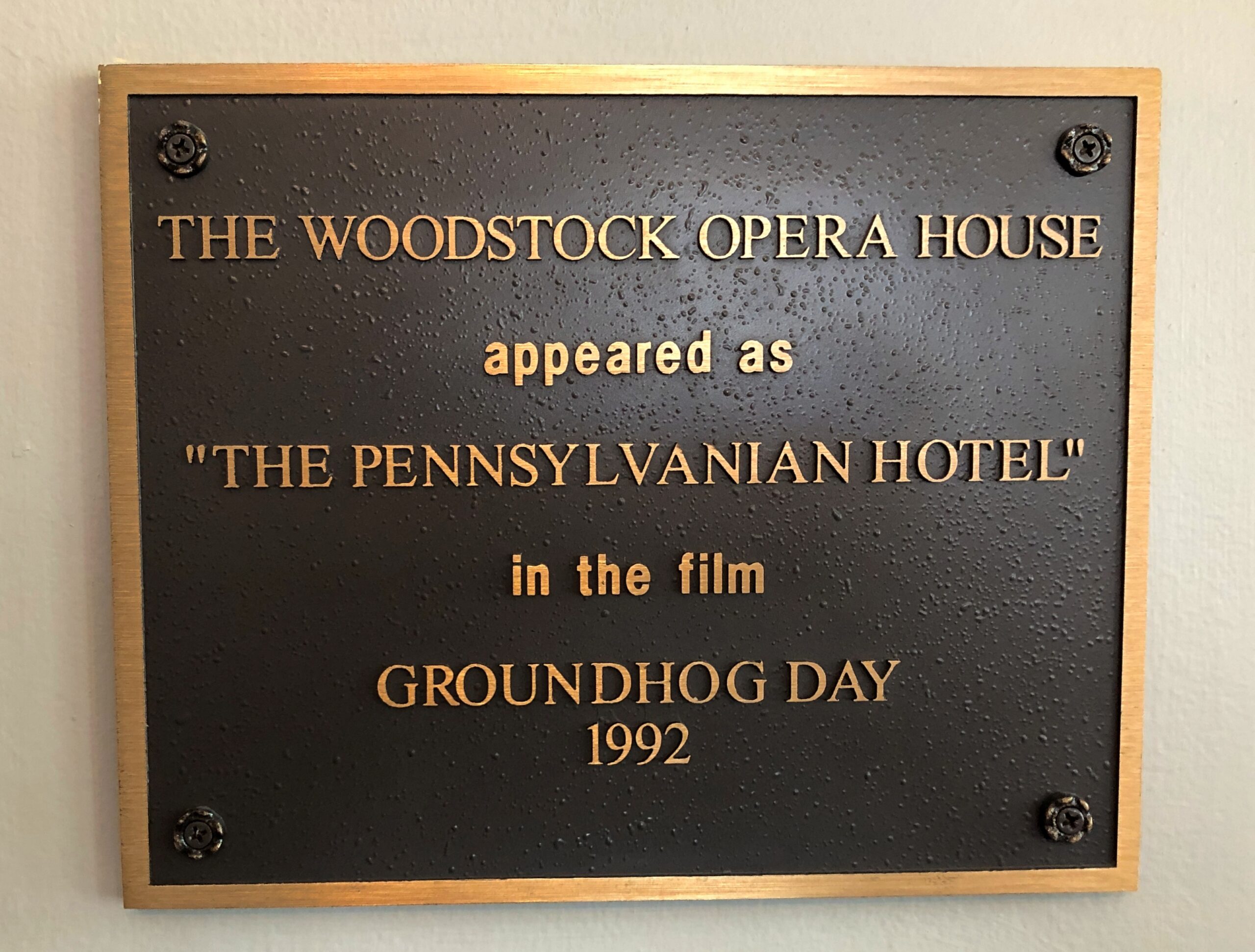
Other local plaques refer to the movie. This one has been in place for quite a while.
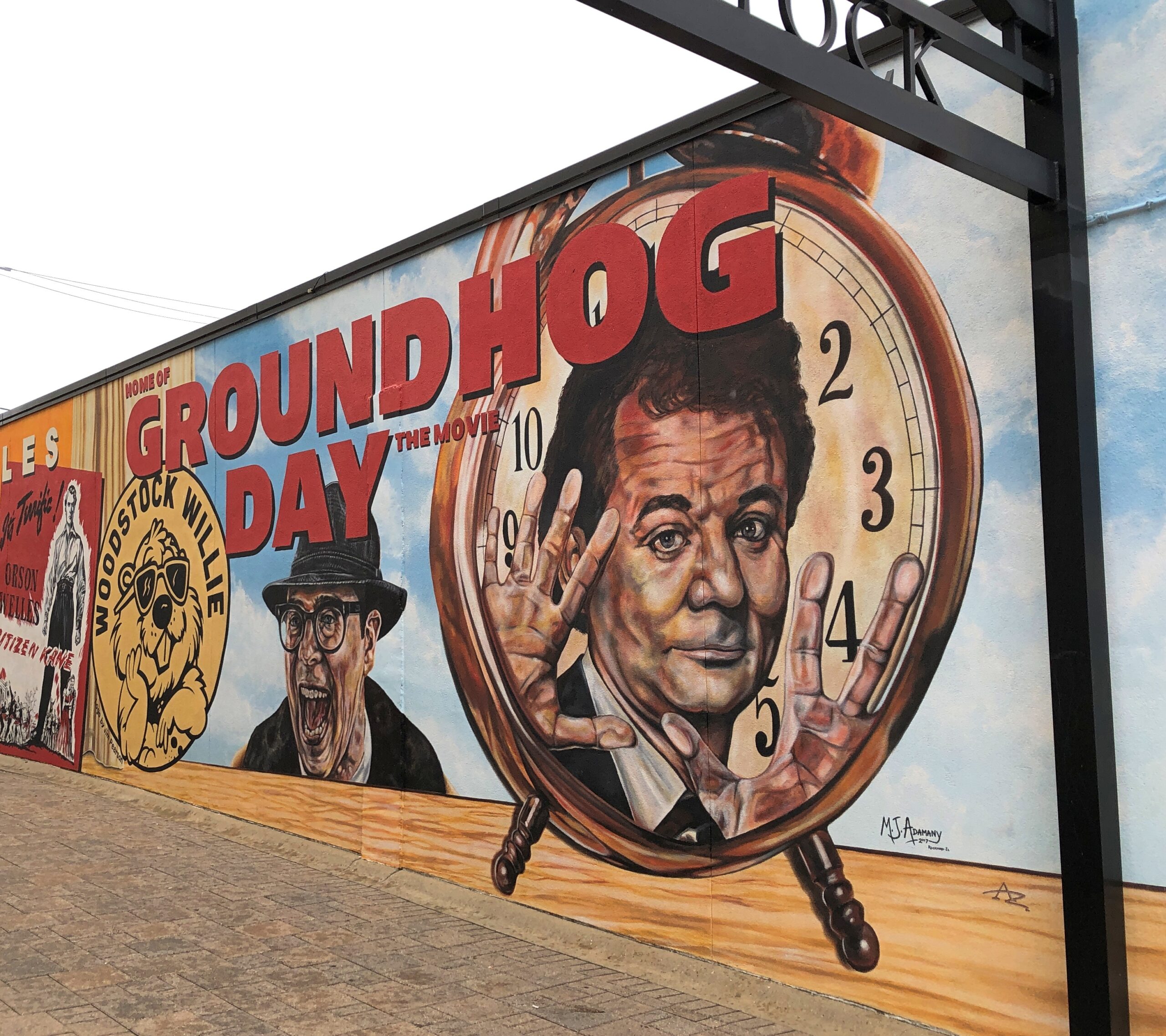
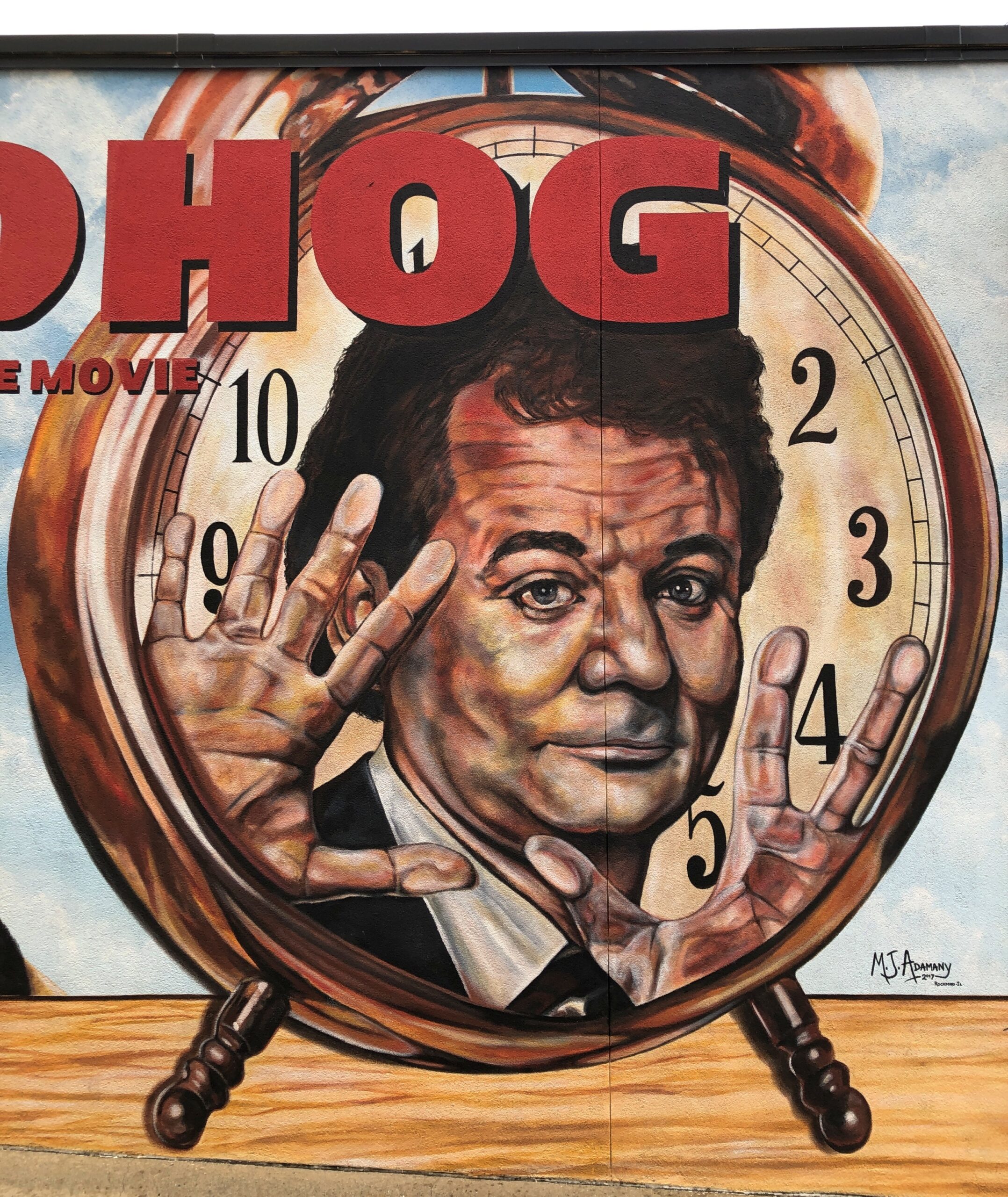
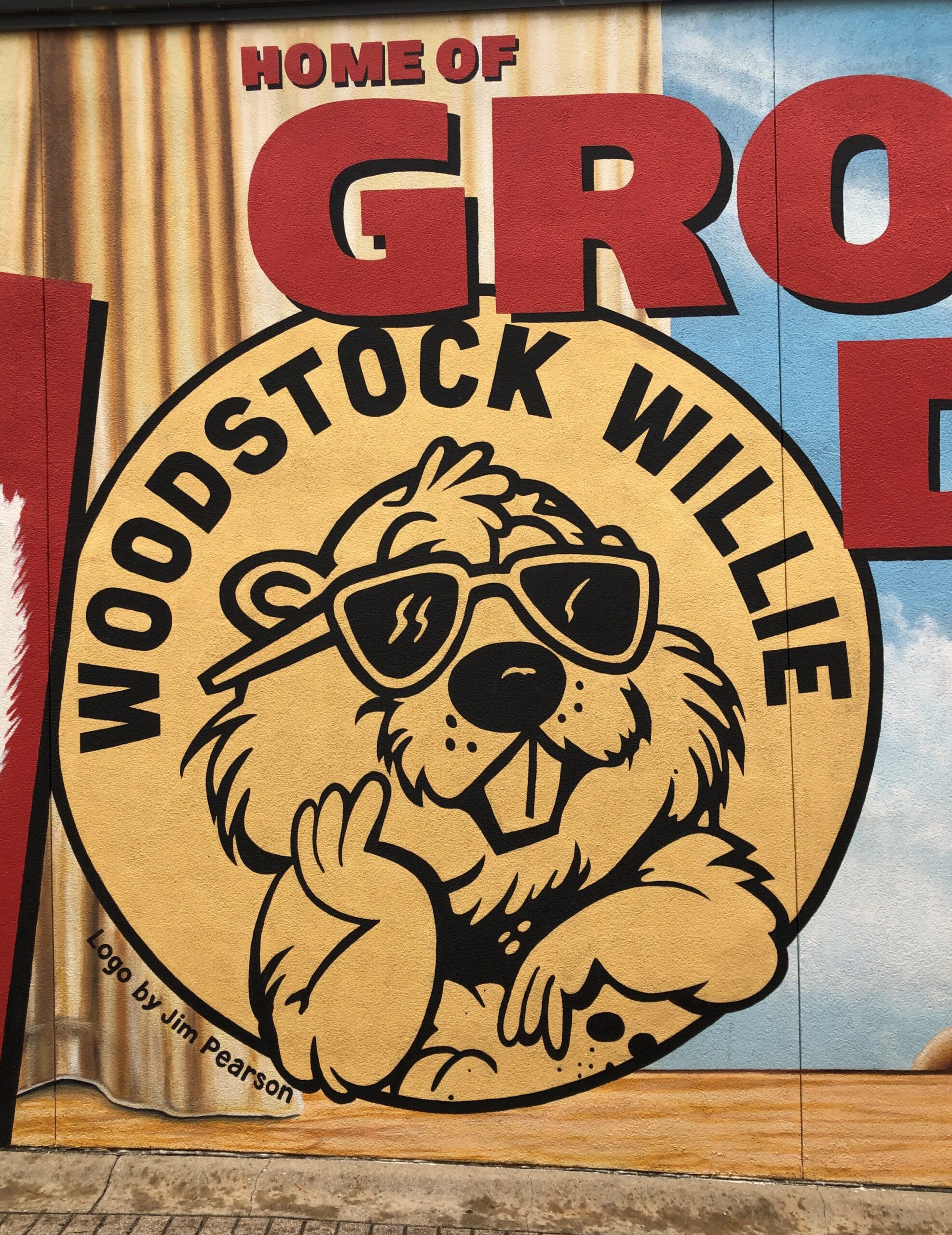
Also near the local movie theater is a Groundhog Day mural, evoking the movie’s promotional materials, and adding Woodstock Willie retroactively.
A good mural, but how is it Ned Ryerson (Stephen Tobolowsky) rates a spot? It is a funny bit and all, but I’d much rather see the fetching Rita Hanson (Andie MacDowell) there.
Most places I go, I take a fair number of photos, because in our time – over the last two decades or so – high-quality photography has become cheap and easy. I took a digital camera on a trip for the first time in 2005 and have ever since, each one making sharper images than the one before, besides an exponential increase in memory. I’d never have the patience to set apertures or figure out film speeds, but point a phone that I use for nothing else? Easy.
Now, suddenly, digital graphic design has became cheap and easy. Is it any good? A lot of AI images look like AI images, the kind of stilted cartoons we all now recognize (well, a lot of us do). But do they have to be?
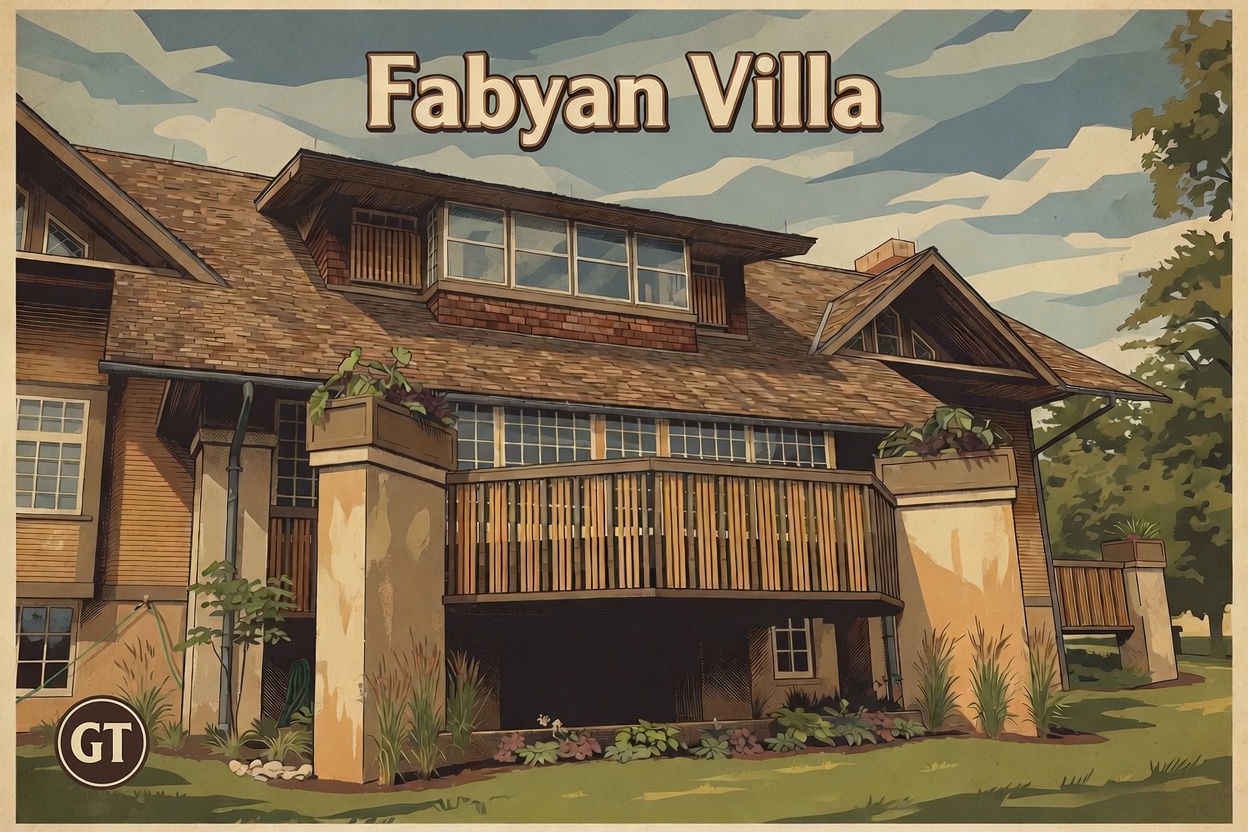
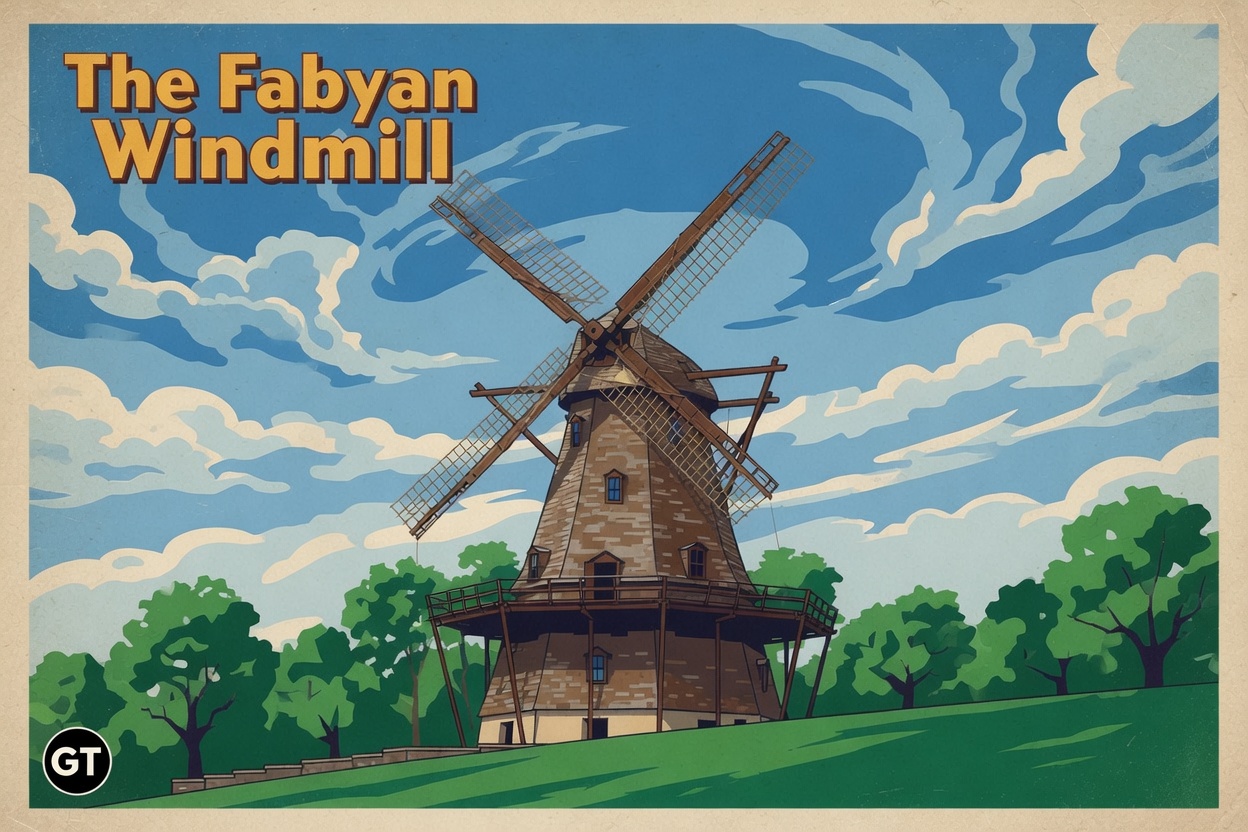
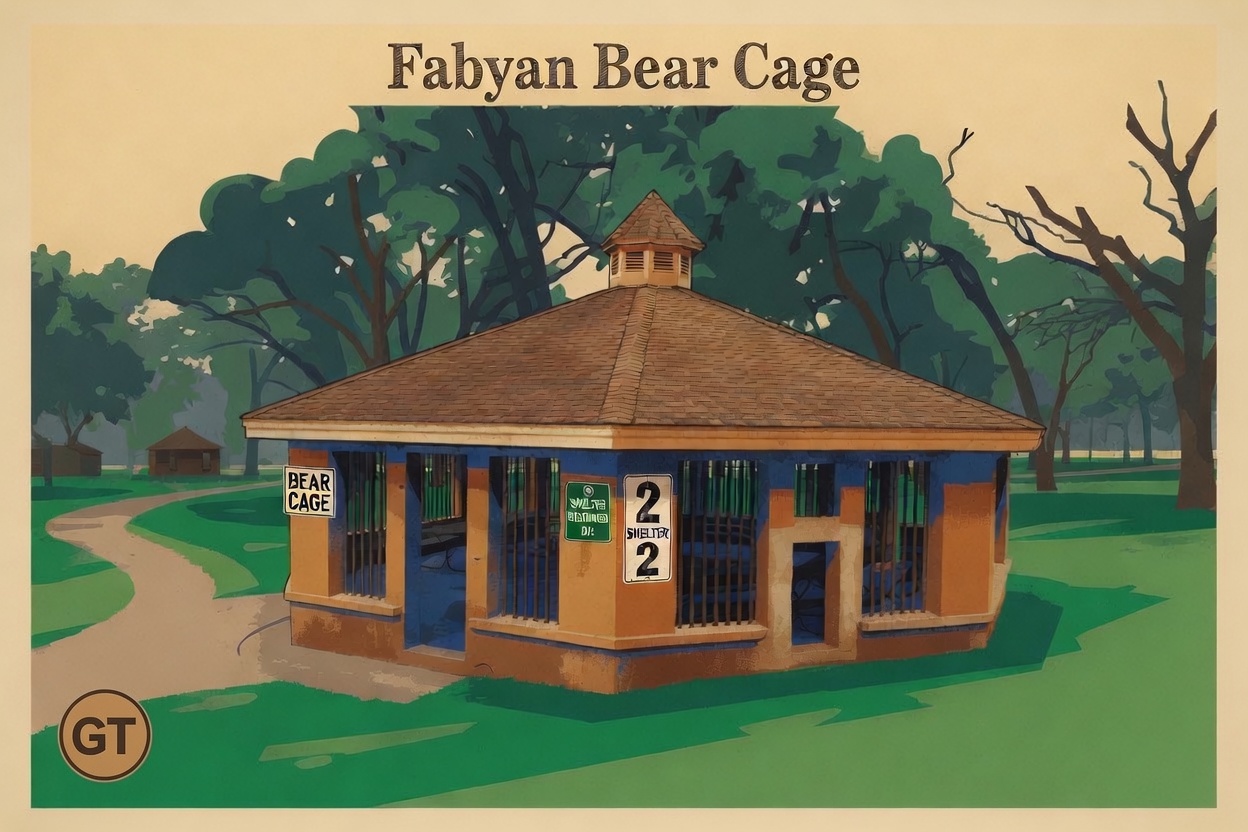
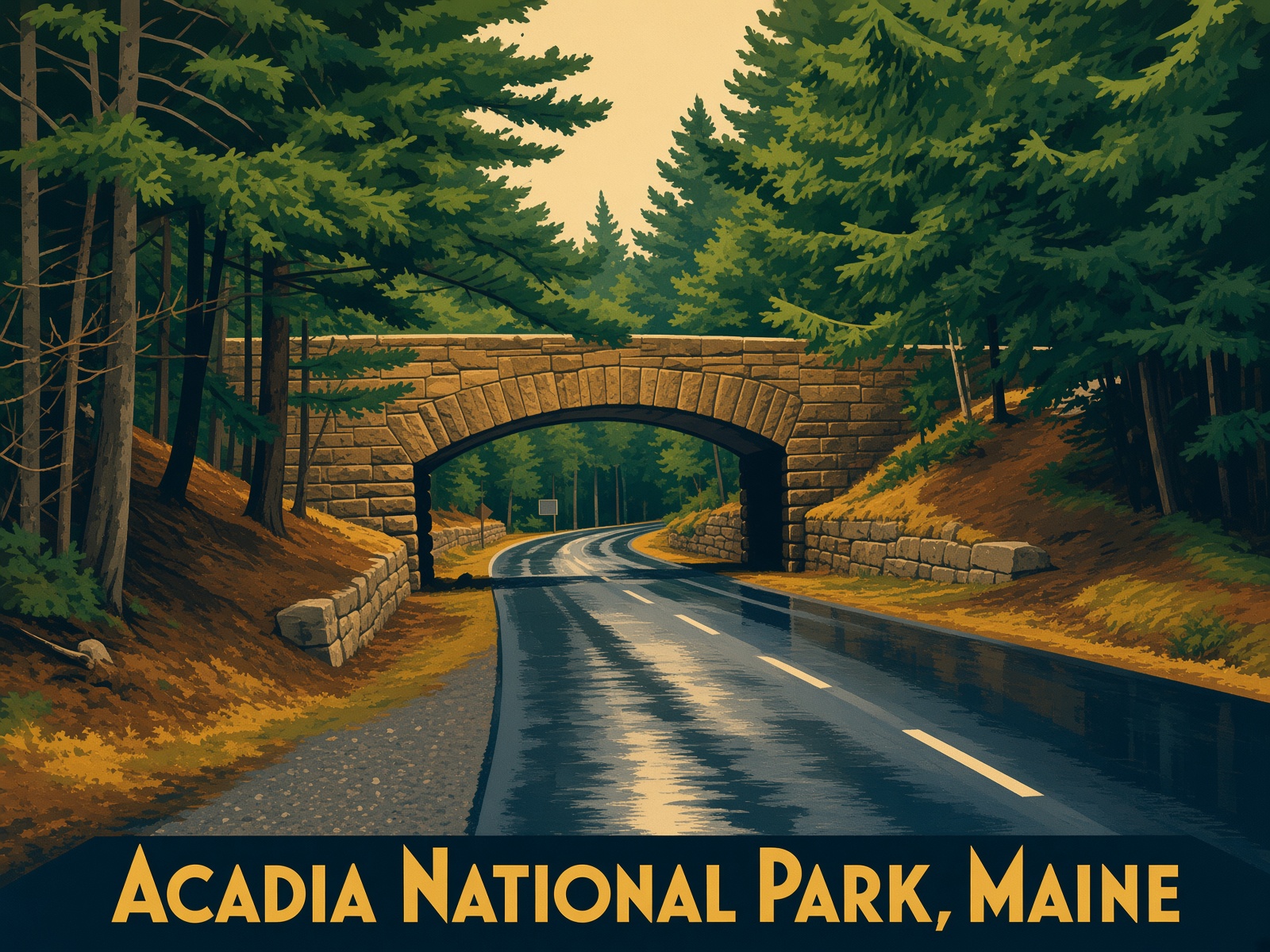
Earlier this summer, we visited Fabyan Forest Preserve in Geneva, Illinois. Later, I cooked up a series of “postcards” – named for the aspect ratio, since they aren’t real cards – using images I took there. There are a number of advantages to this, the main one being I own the copyright to the images, and so derivative works aren’t an issue. The prompts in this case are “WPA style” or something to that effect. Add some text and there you go.
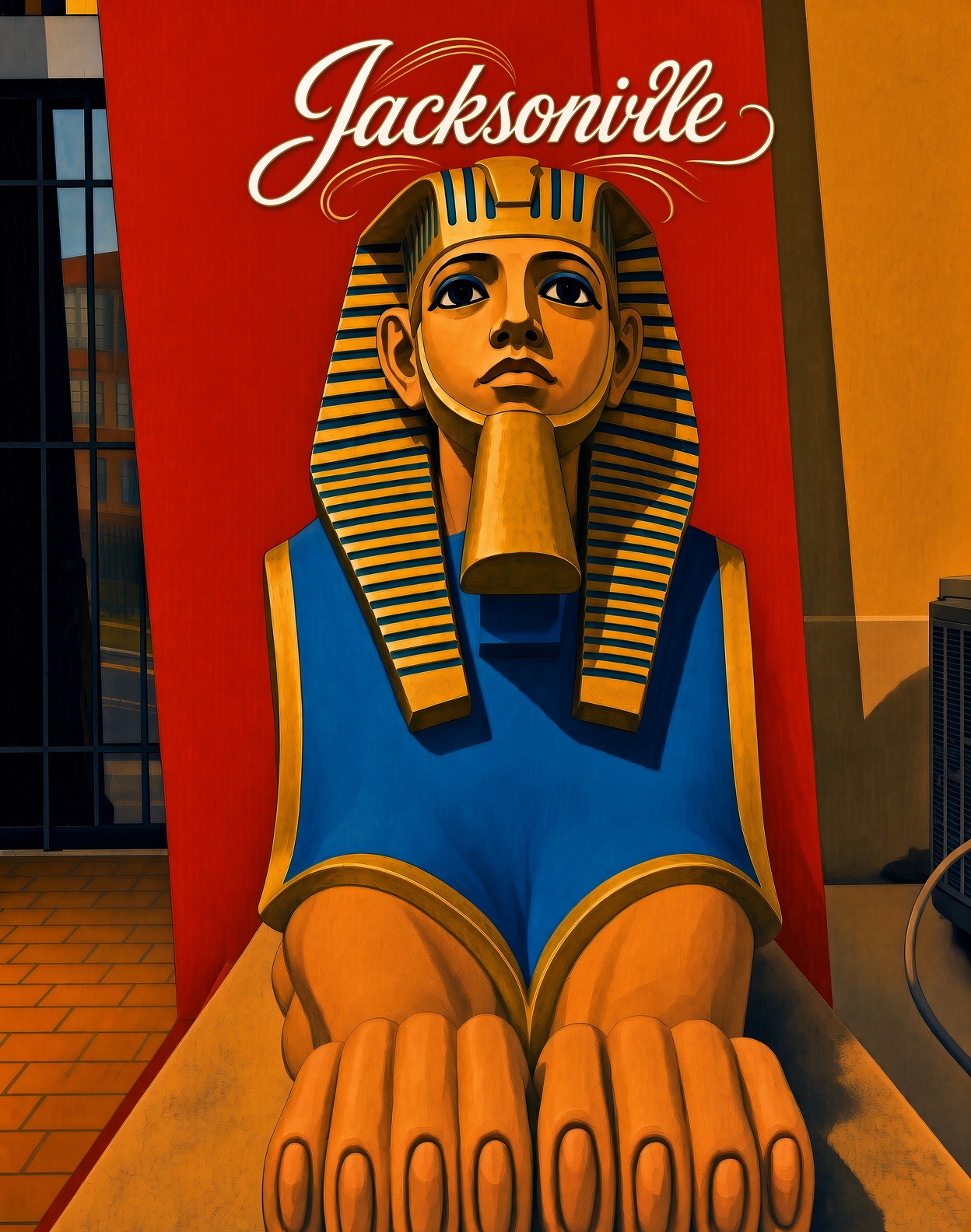
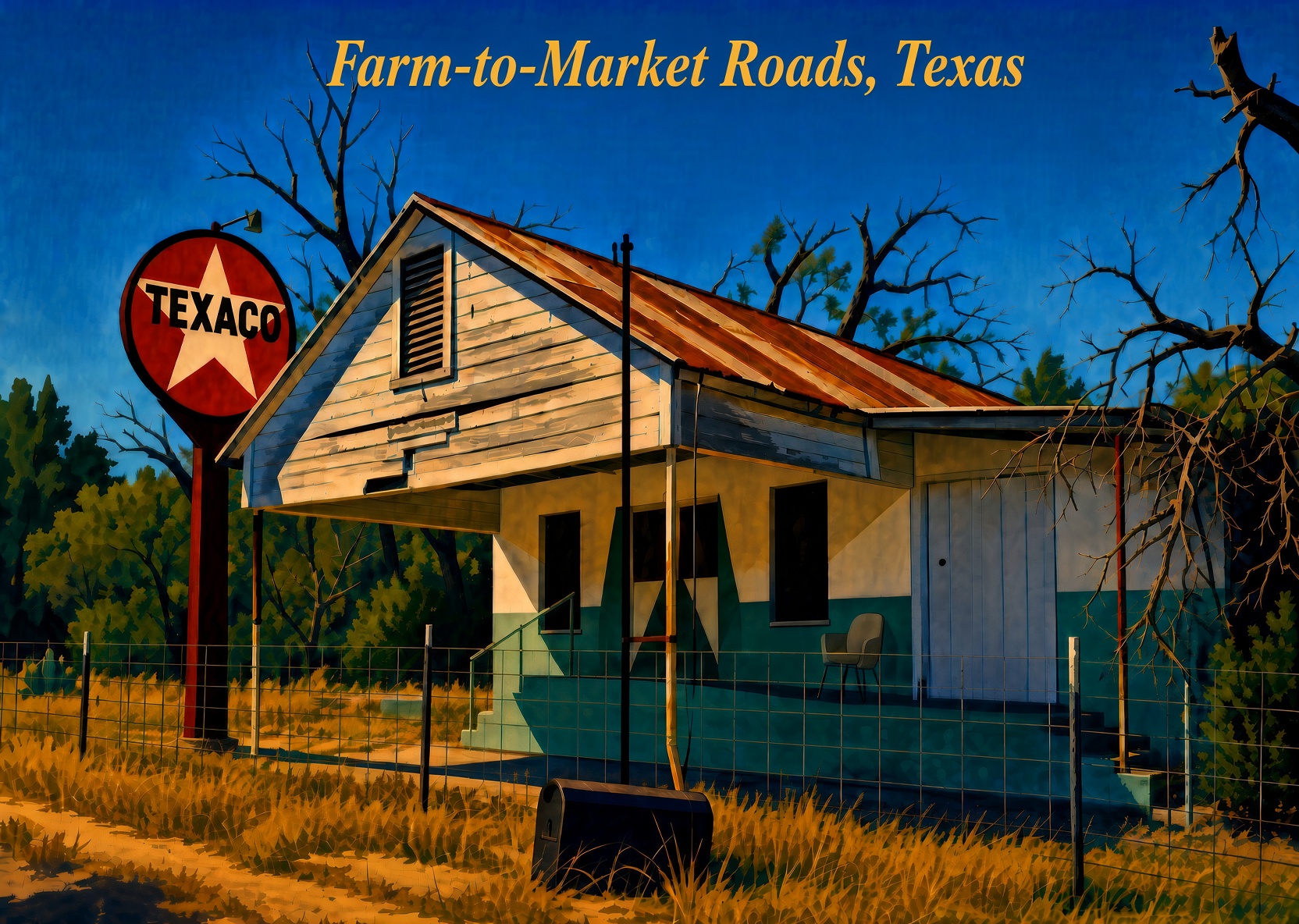
Promotion-type images for other places I’ve been, recently or not. Again, all the underlying images are mine.
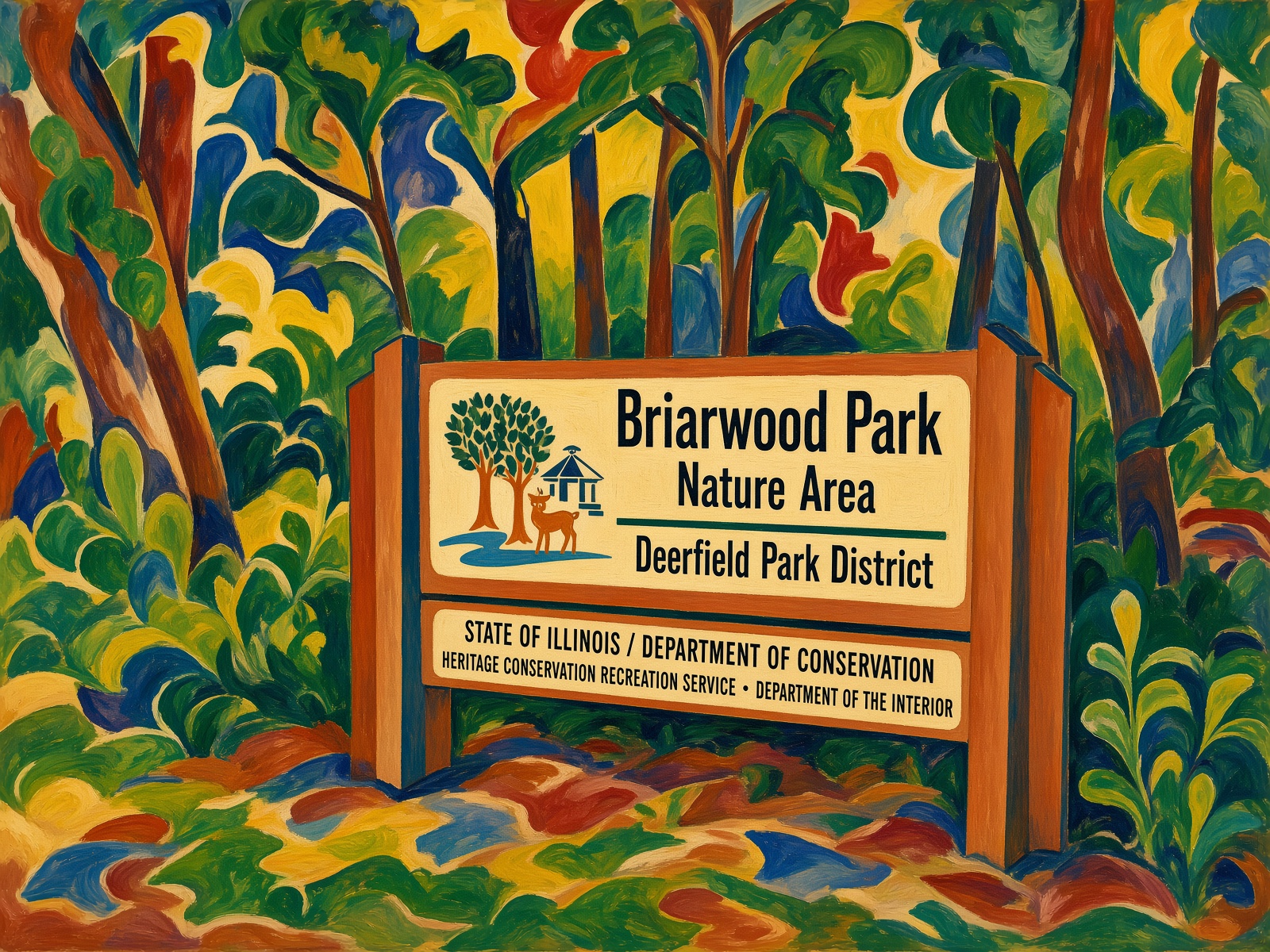
Images for details along the way in Illinois, using a variety of other prompts, exact location not so important.
One more.
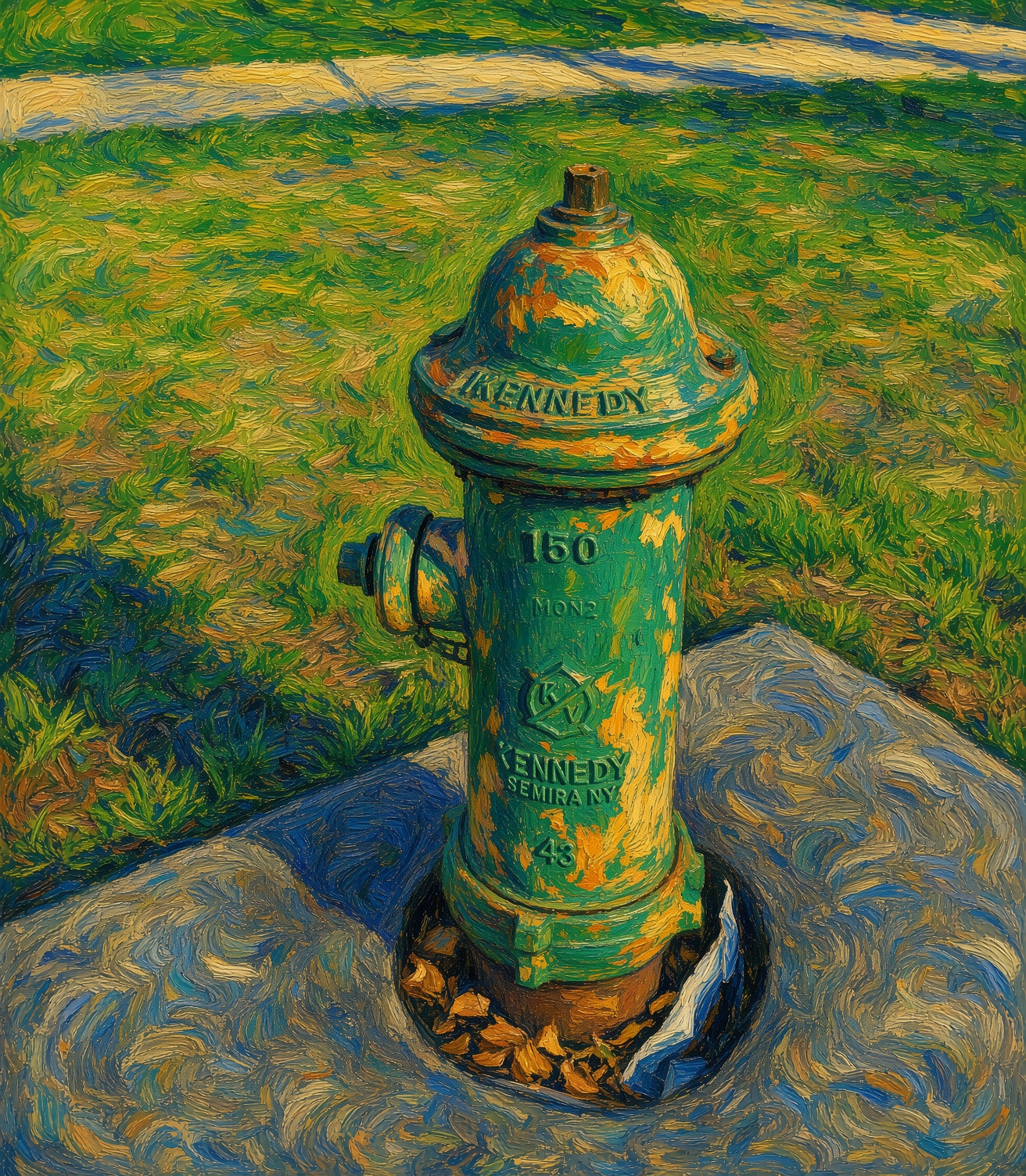
Think of it as the first in a fire hydrant series: Van Gogh Fire Hydrant.
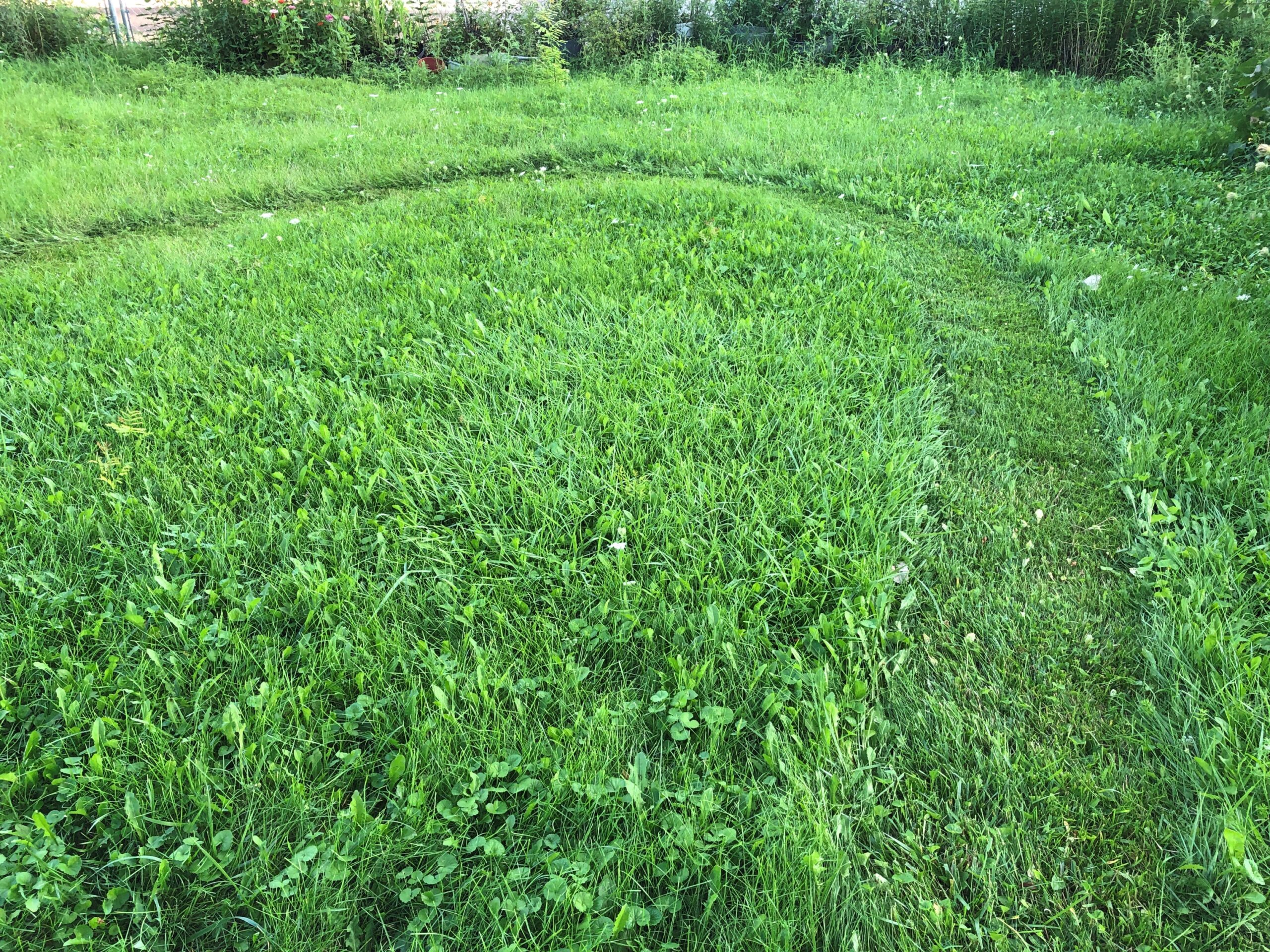
Clear evidence that space aliens visited my back yard: a lawn circle.
Note also that the grass is unusually green for August. Clear evidence that it has been raining a lot around here, or at least it was until early last week.
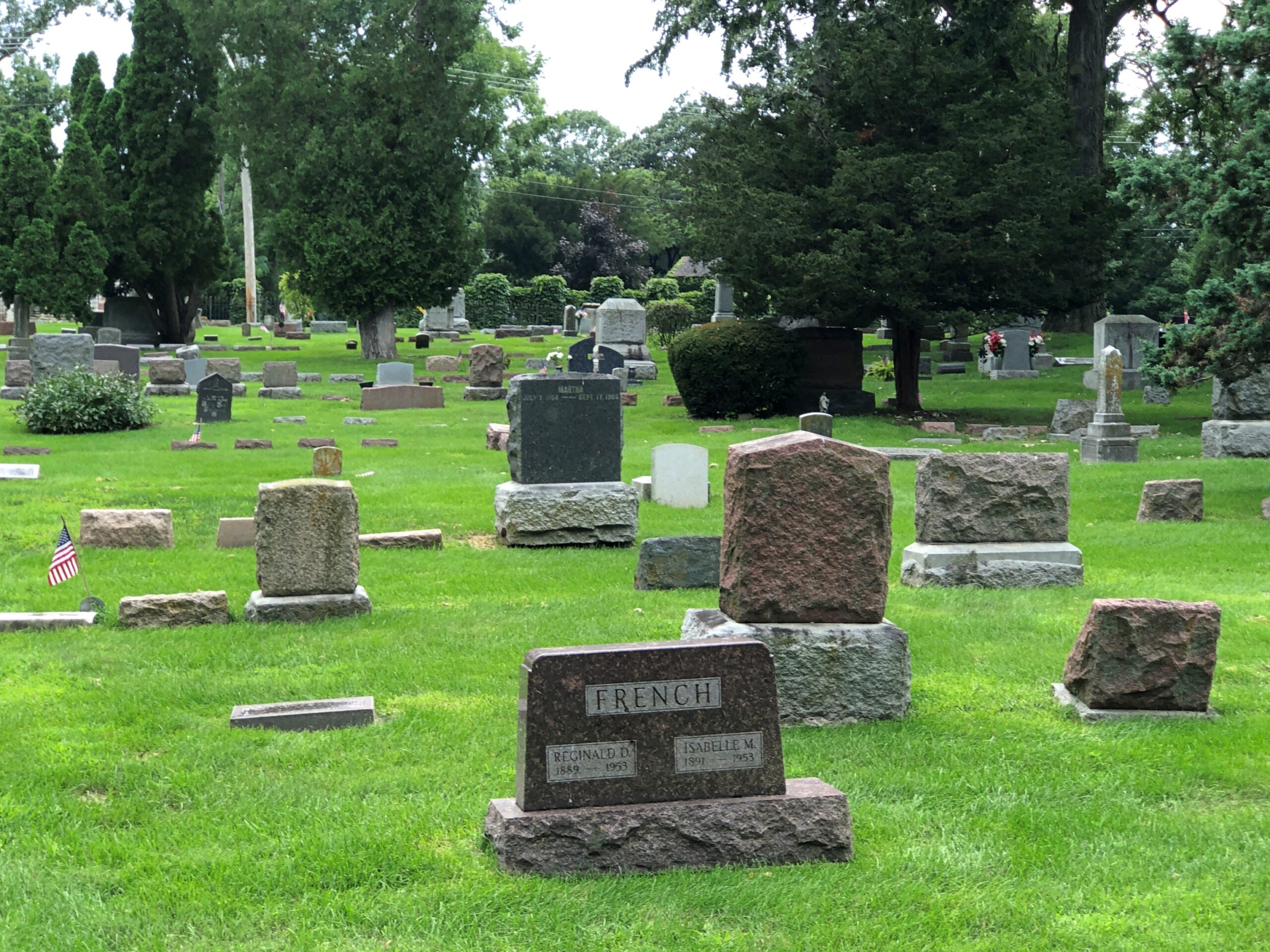
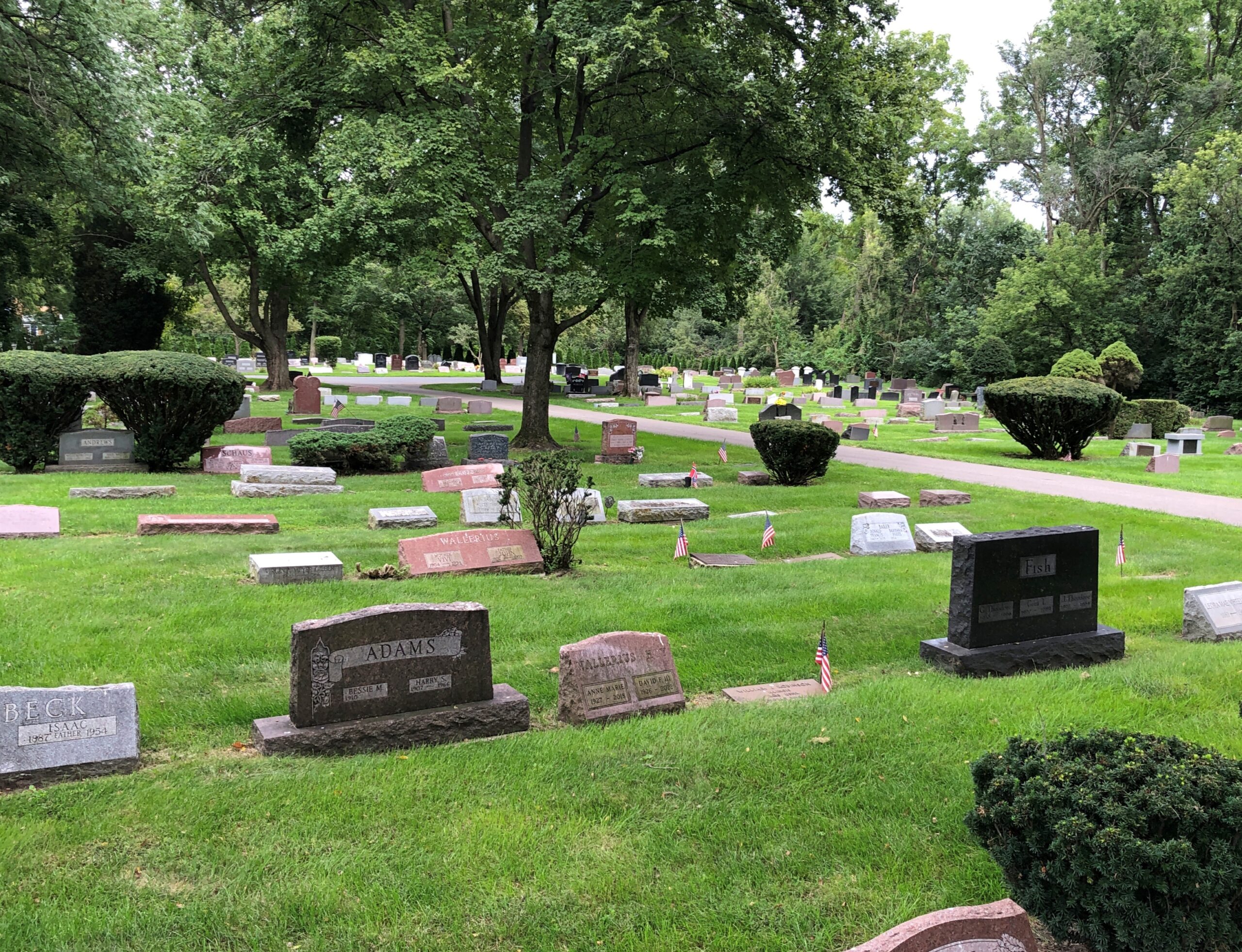
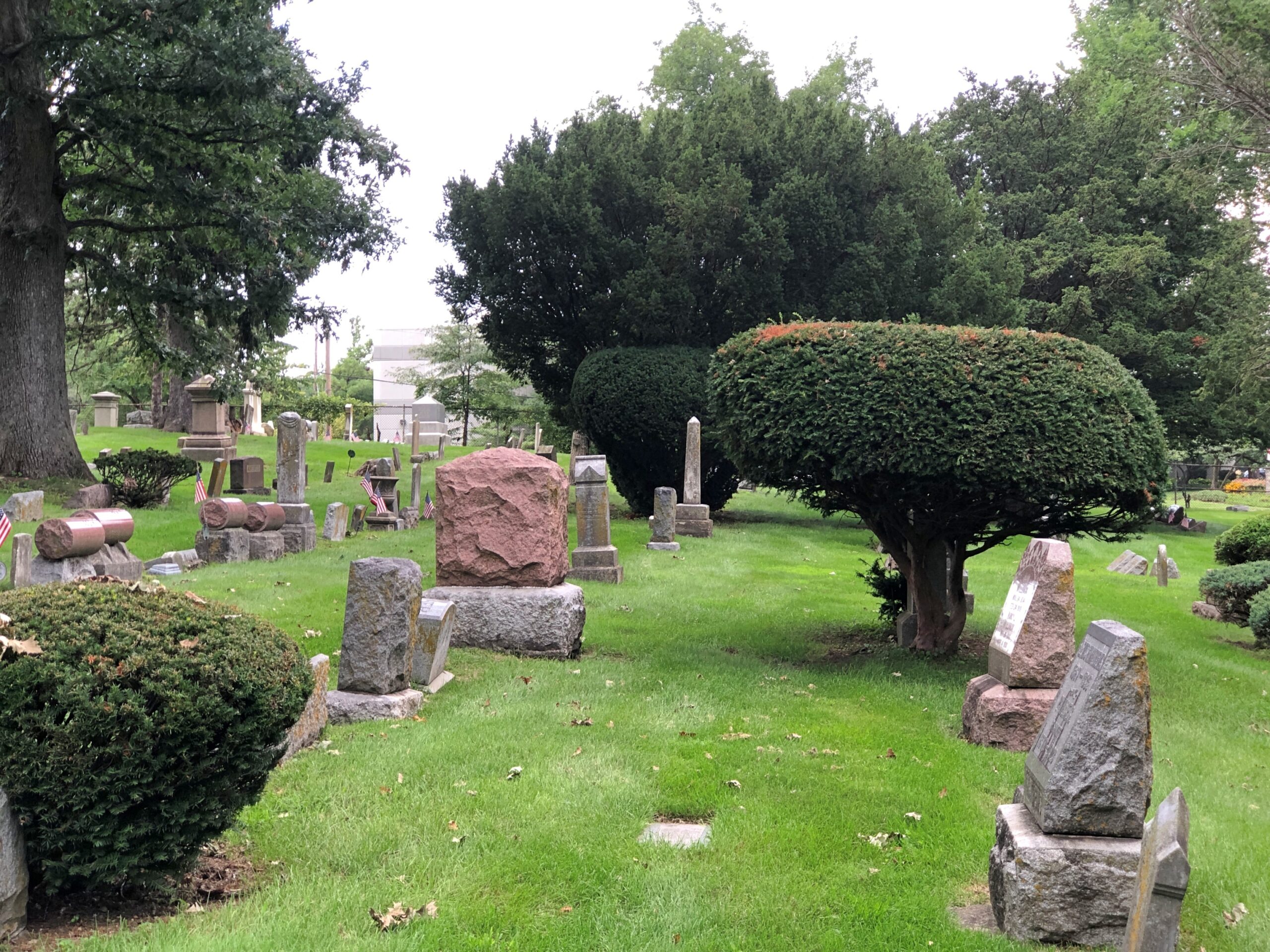
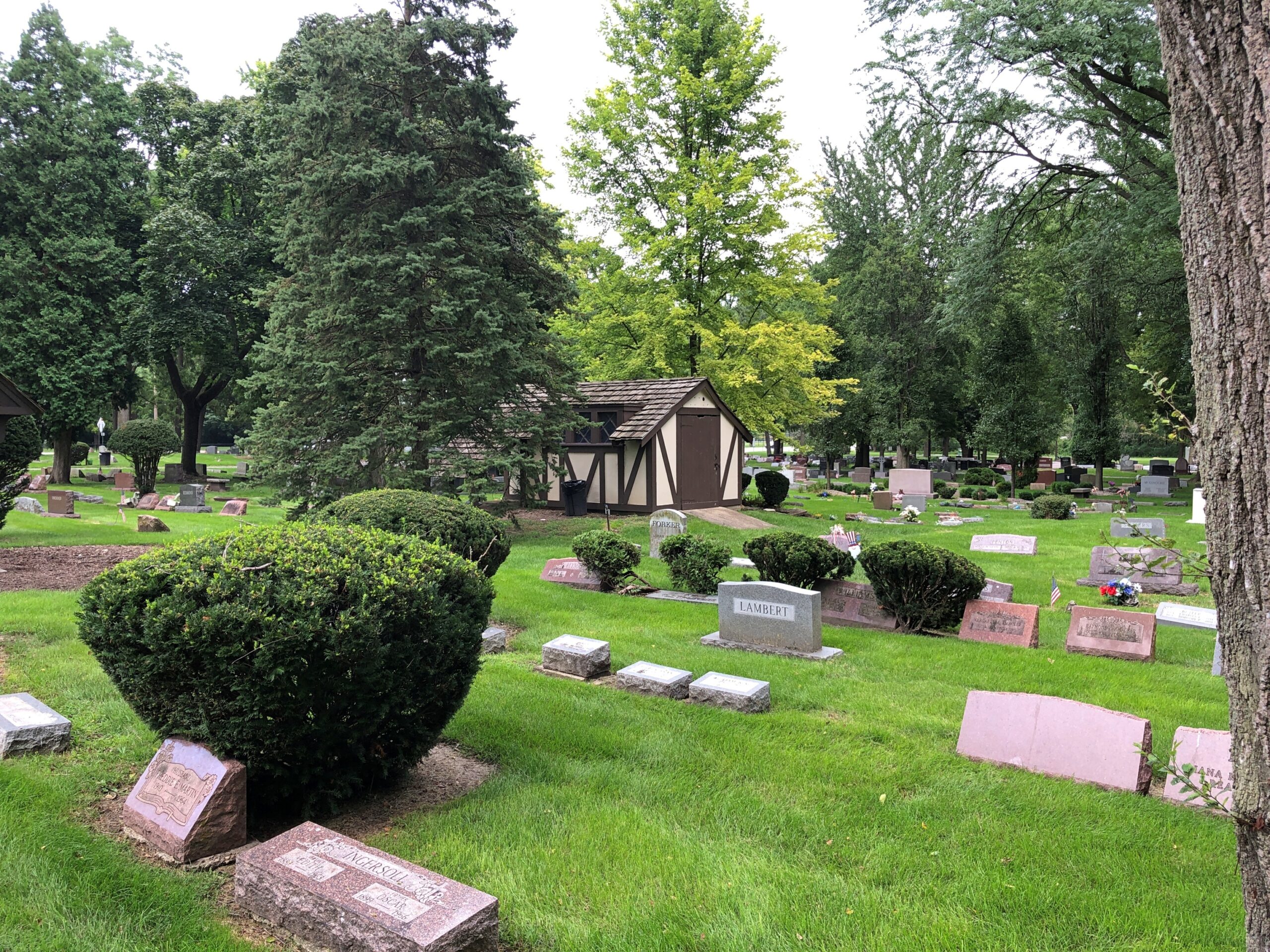
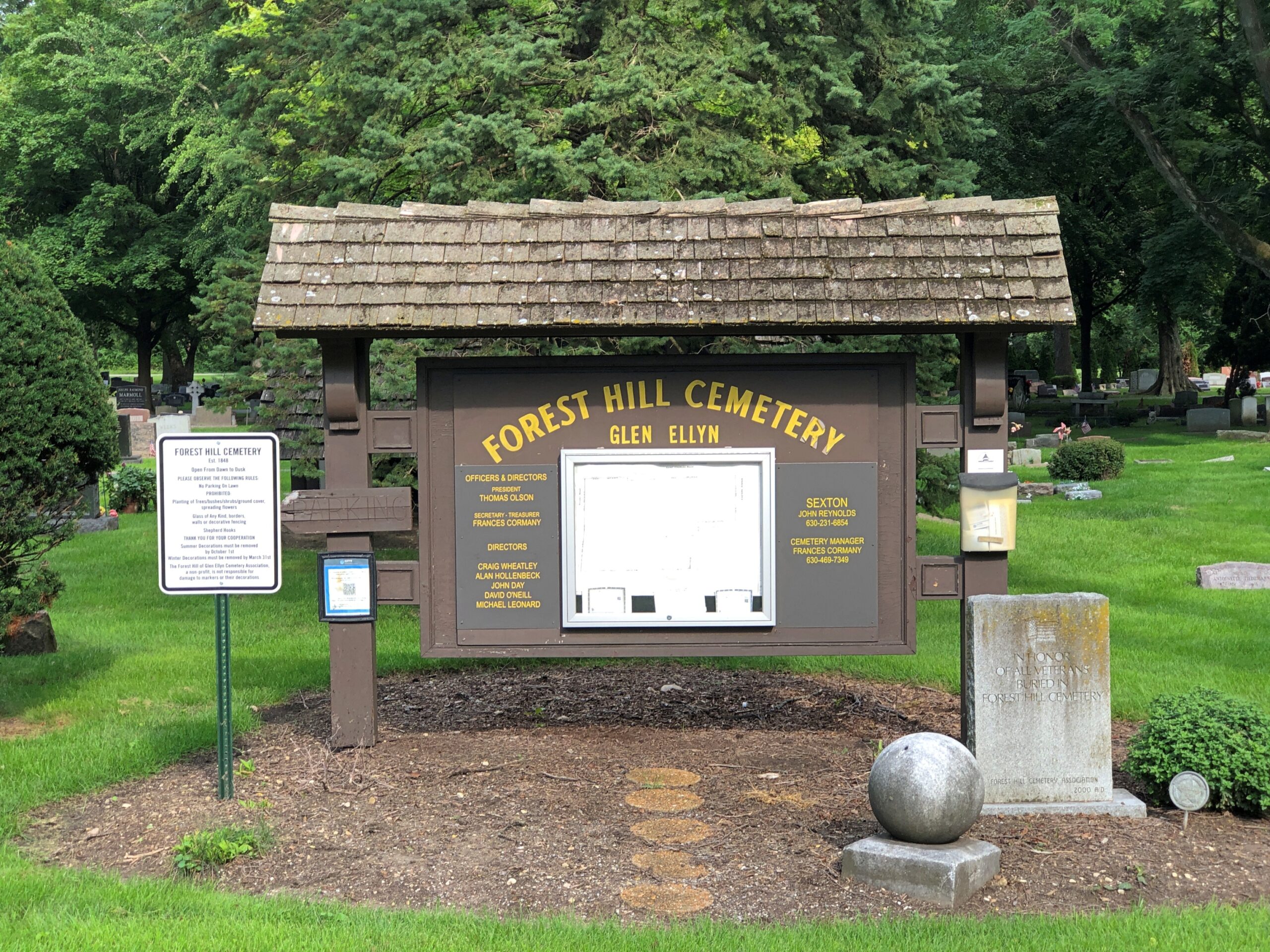
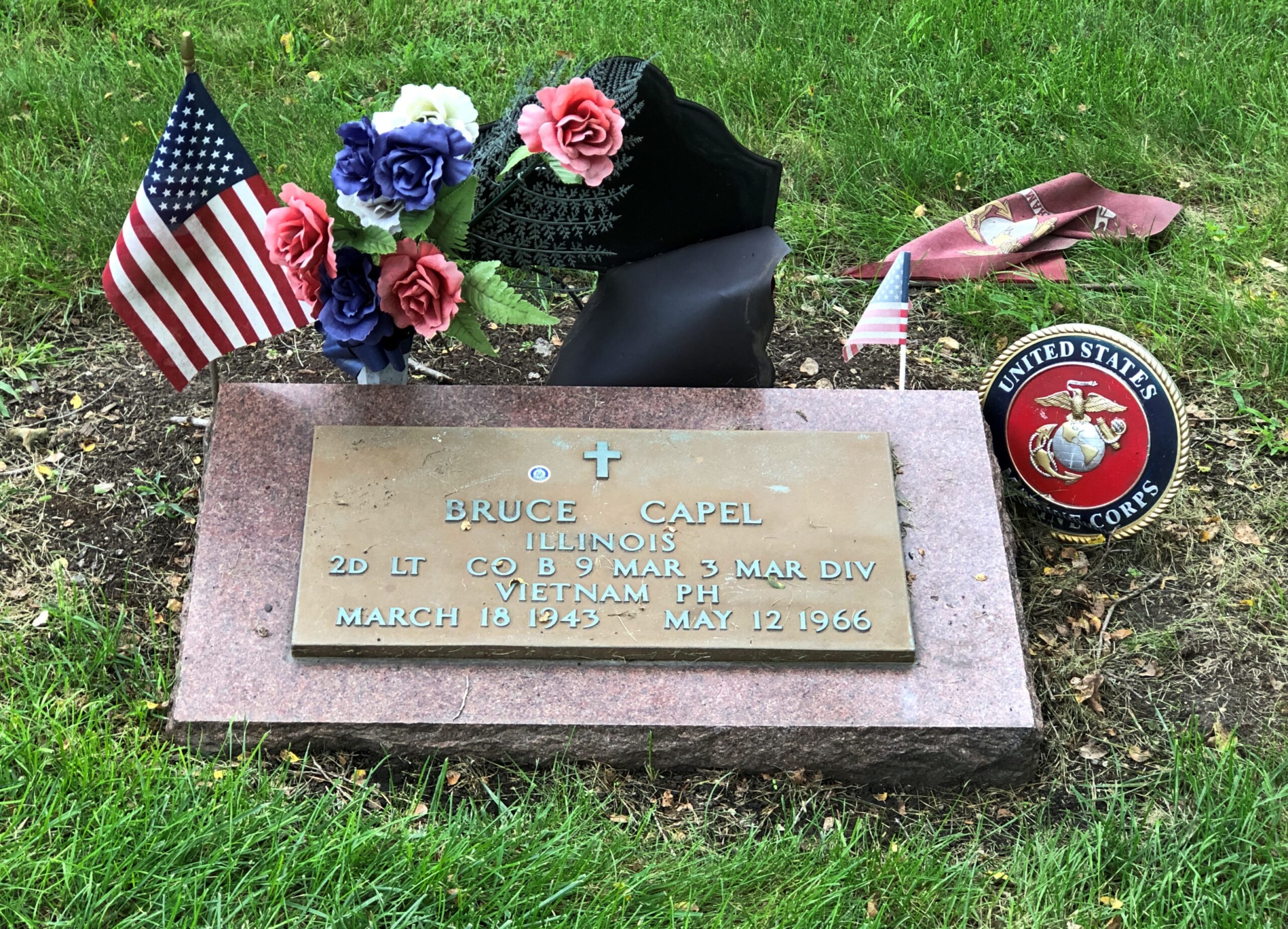
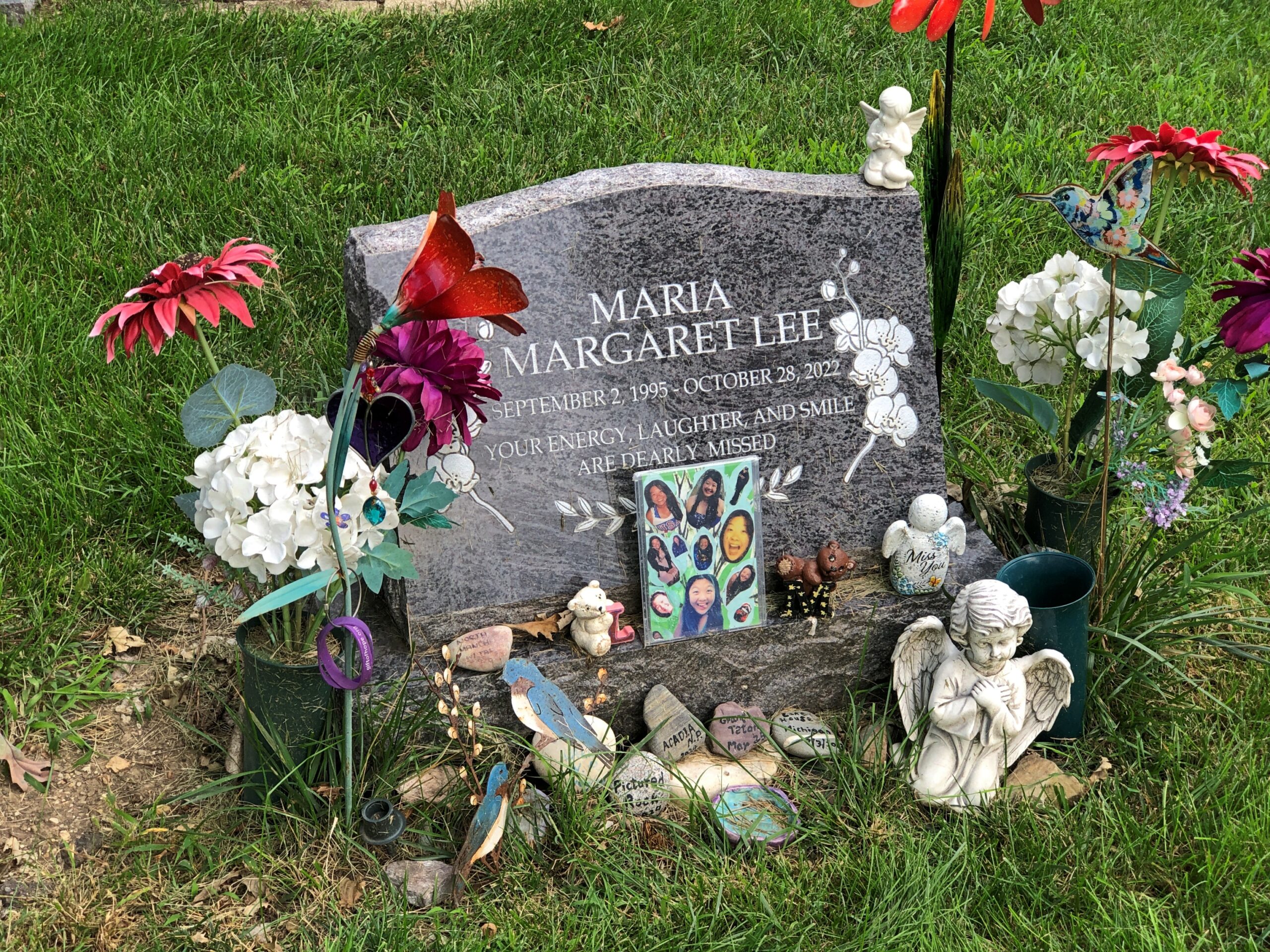
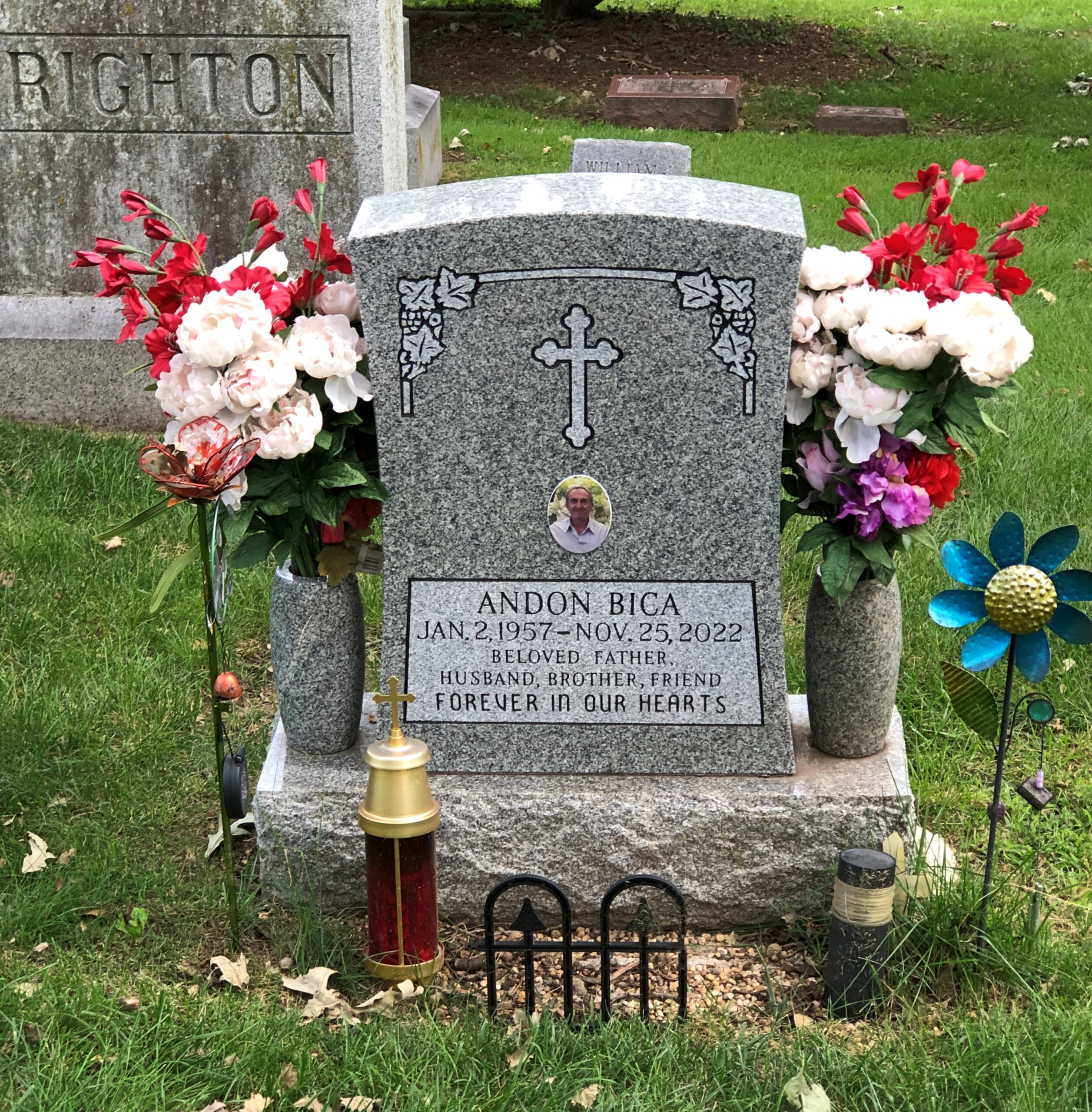
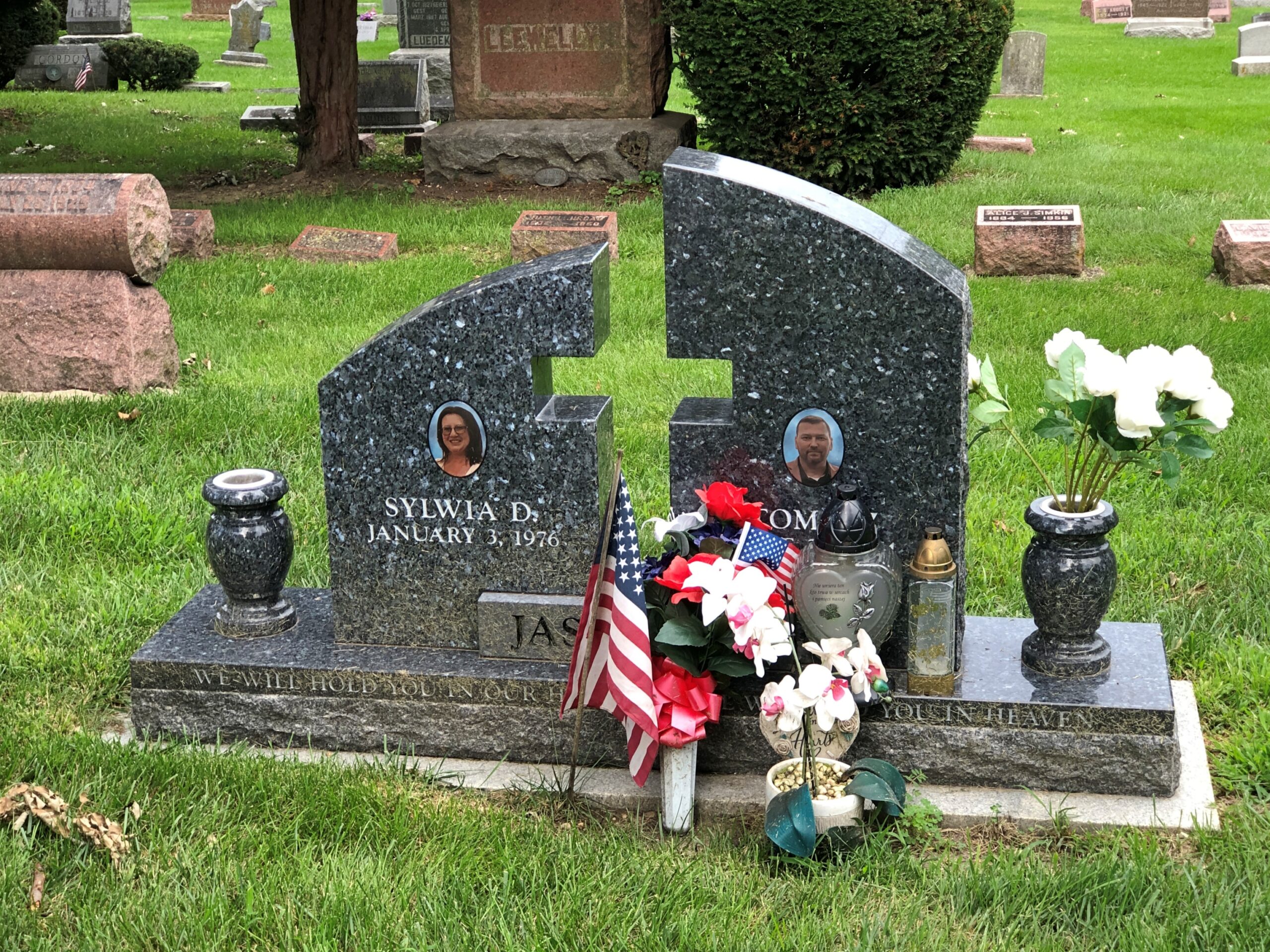
Vibrant green was also in display recently at Forest Hill Cemetery in Glen Ellyn, Illinois, when I stopped by.
Forest Hill has no hills that I could tell, but there are enough trees and bushes to make a small forest.
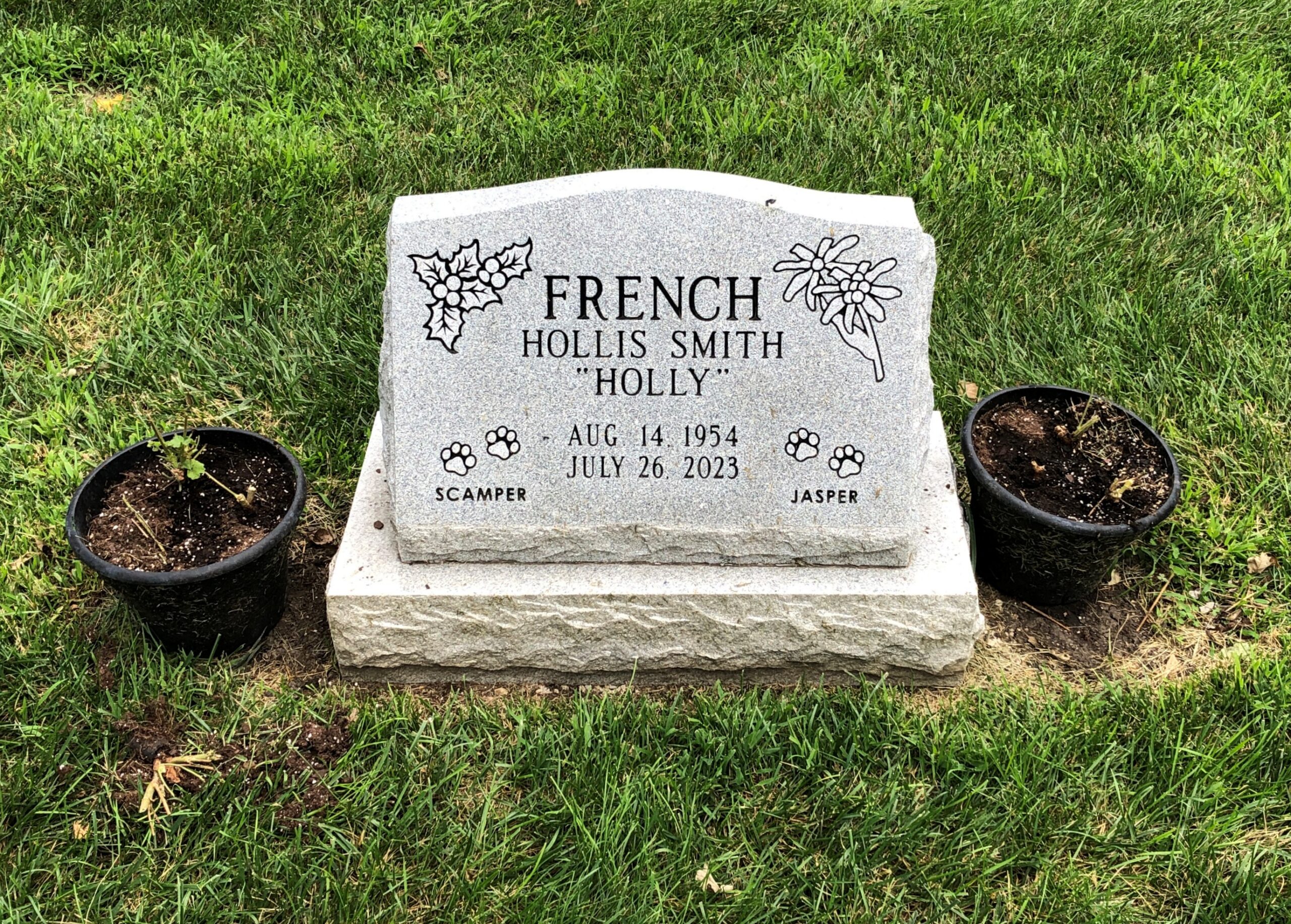
As an active cemetery, there are more recent stones, some of which lushly adorned.
I don’t think Scamper and Jasper are here, except as fond memories.
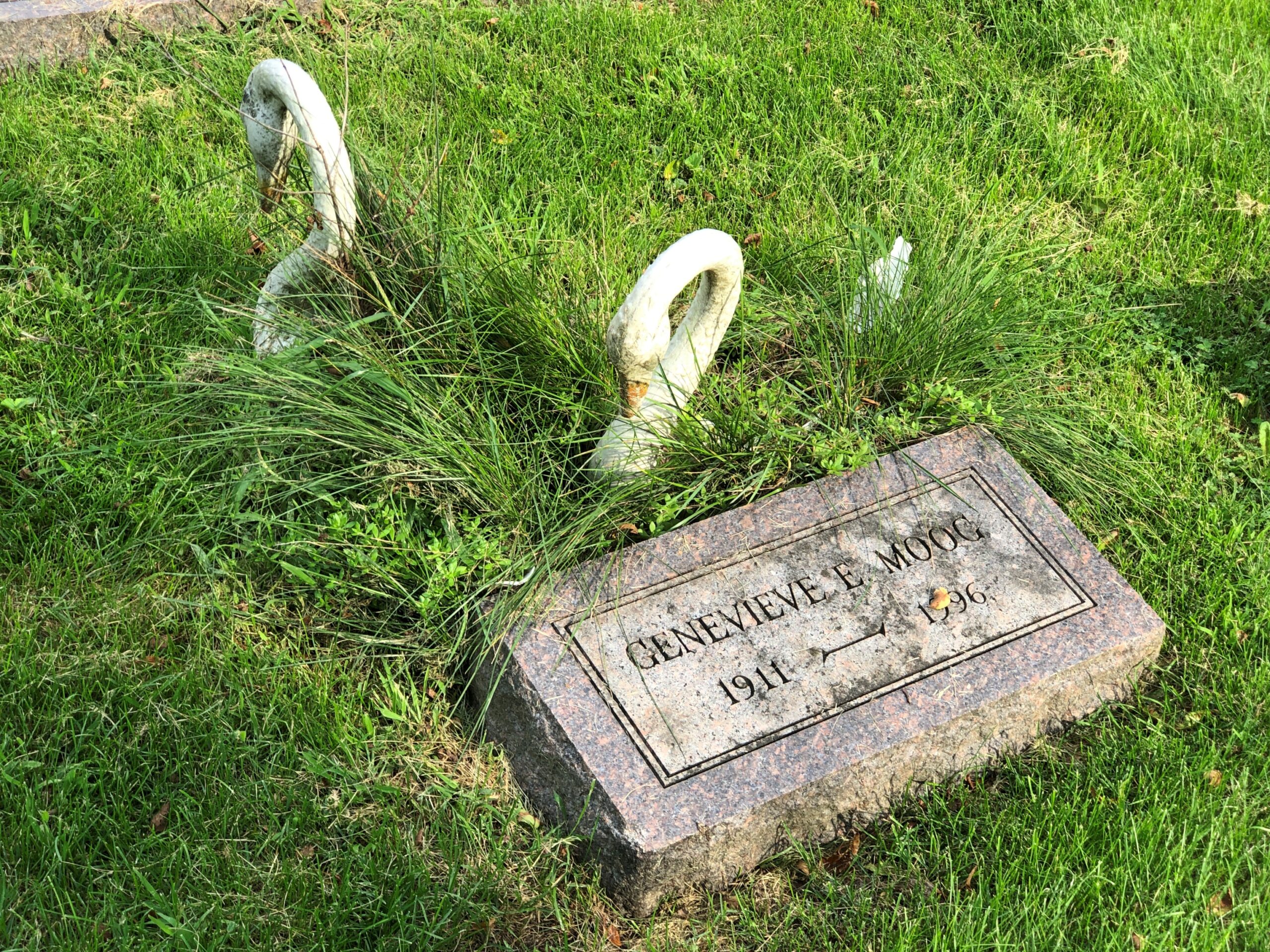
The only memorial I’ve ever seen featuring swans.
Find-a-Grave lists two “famous” permanent residents of Forest Hill, whose stones I didn’t happen to see, but which memorialize a father and son who both died in similar accidents. Namely, race car accidents.
From Find-a-Grave:
Don Vogler (d. 1981):He was killed in a one car accident during warm ups for a United States Auto Club midget car race at the Indianapolis Speedrome. He was pronounced dead at Community Hospital following the accident. Some witnesses said that they saw Vogler clutch his chest before the mishap. His car went out of control and flipped over the track’s outside wall.
Rich Vogler (d. 1990):In the last race of his life, July 21, 1990, during an ESPN Saturday Night Thunder national broadcast, he was killed while leading a sprint car race at the Salem (Indiana) Speedway with a little over a lap remaining. He was posthumously declared the winner. “White Lightning” was reconstructed and has been driven by Steve Butler, Robbie Stanley (who also lost his life in this car) and Johnny Parsons. The car is still racing today.
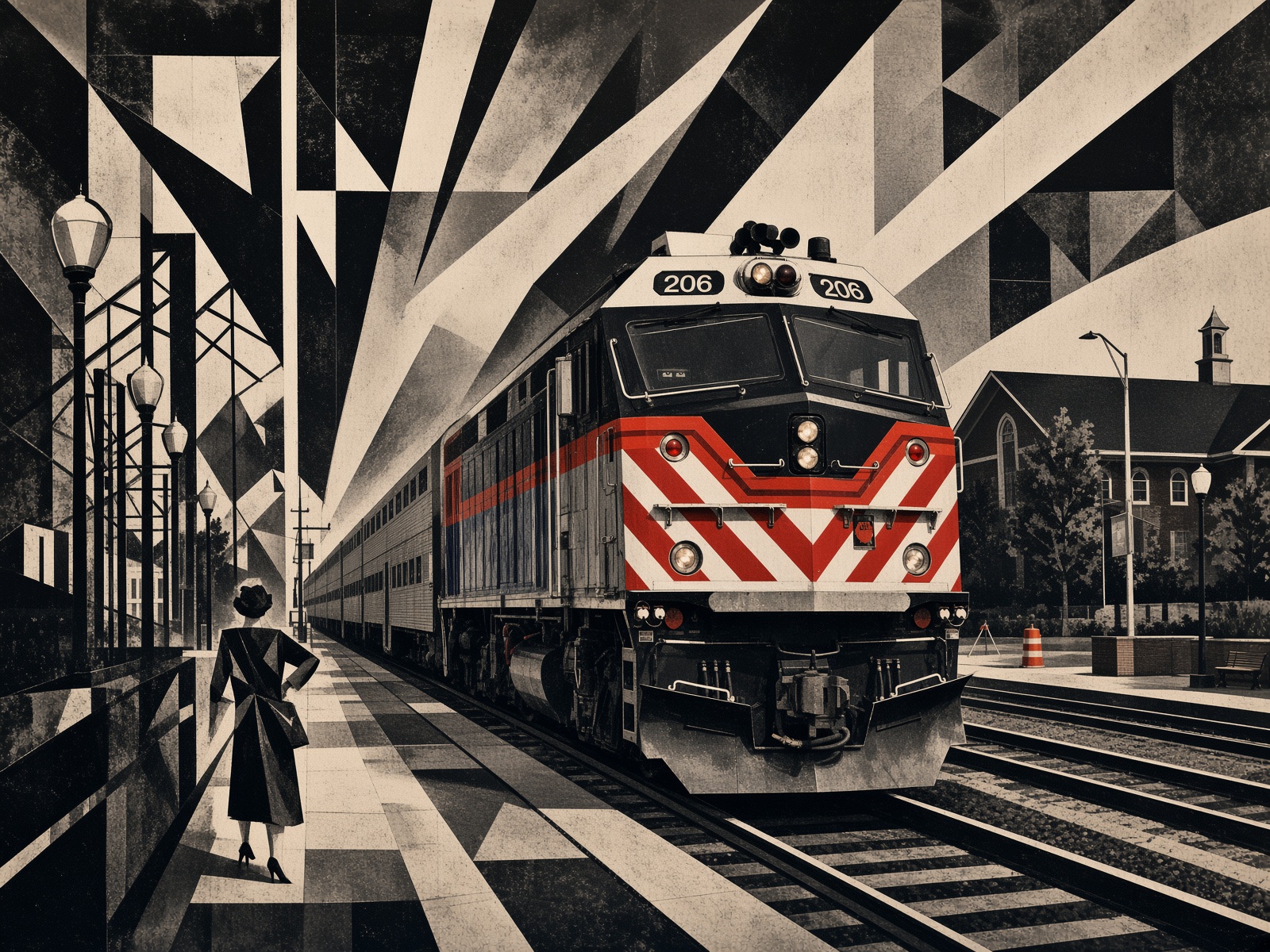
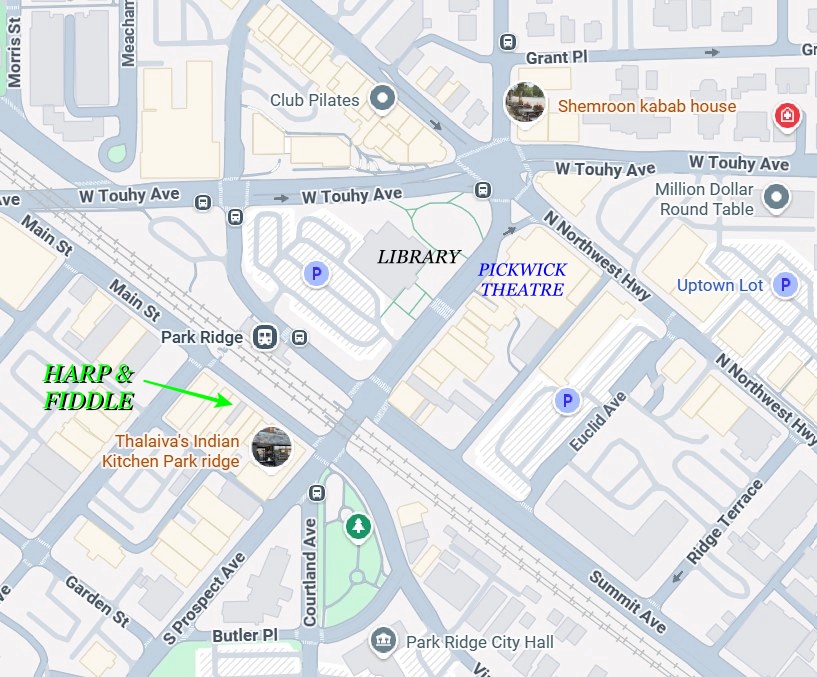
In downtown Park Ridge, Illinois, the Chicagoland grid, which isn’t quite uniform even in the city, breaks down just a little. A cluster of streets, and the commuter rail line, meet at the partial junction of Touhy, the Northwest Highway, Summit and South Prospect Avenues.
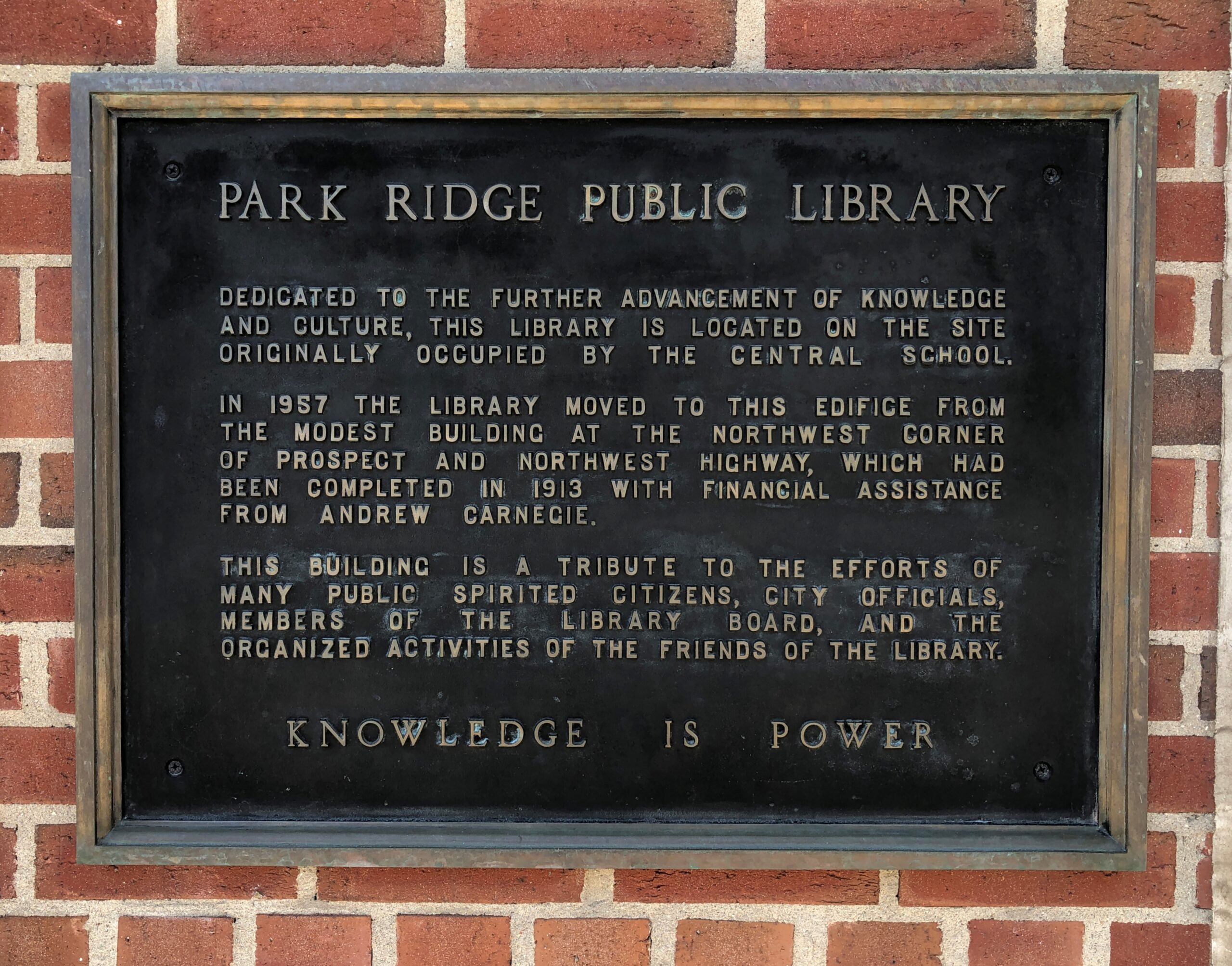
The downtown, which is about 15 miles northwest of the Loop, draws a fair number of visitors on a summer Saturday. Parking was tight, but I managed to shoehorn my car into a space at the library. The library building was dedicated in 1957, back when these kinds of rhetorical flourishes still made their way onto bronze plaques.
Close to the immortal words of Emil Faber, “Knowledge is Good.”
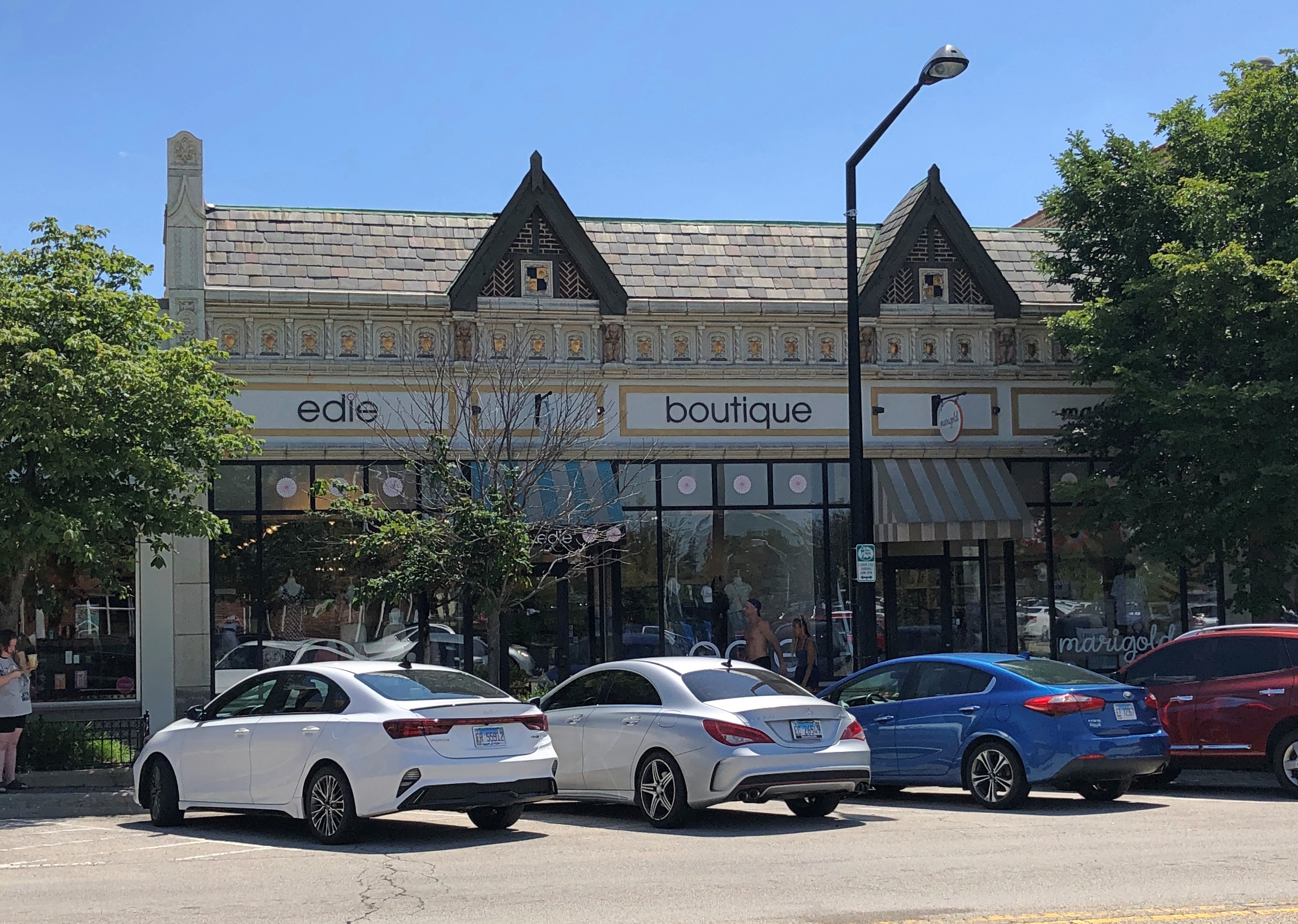
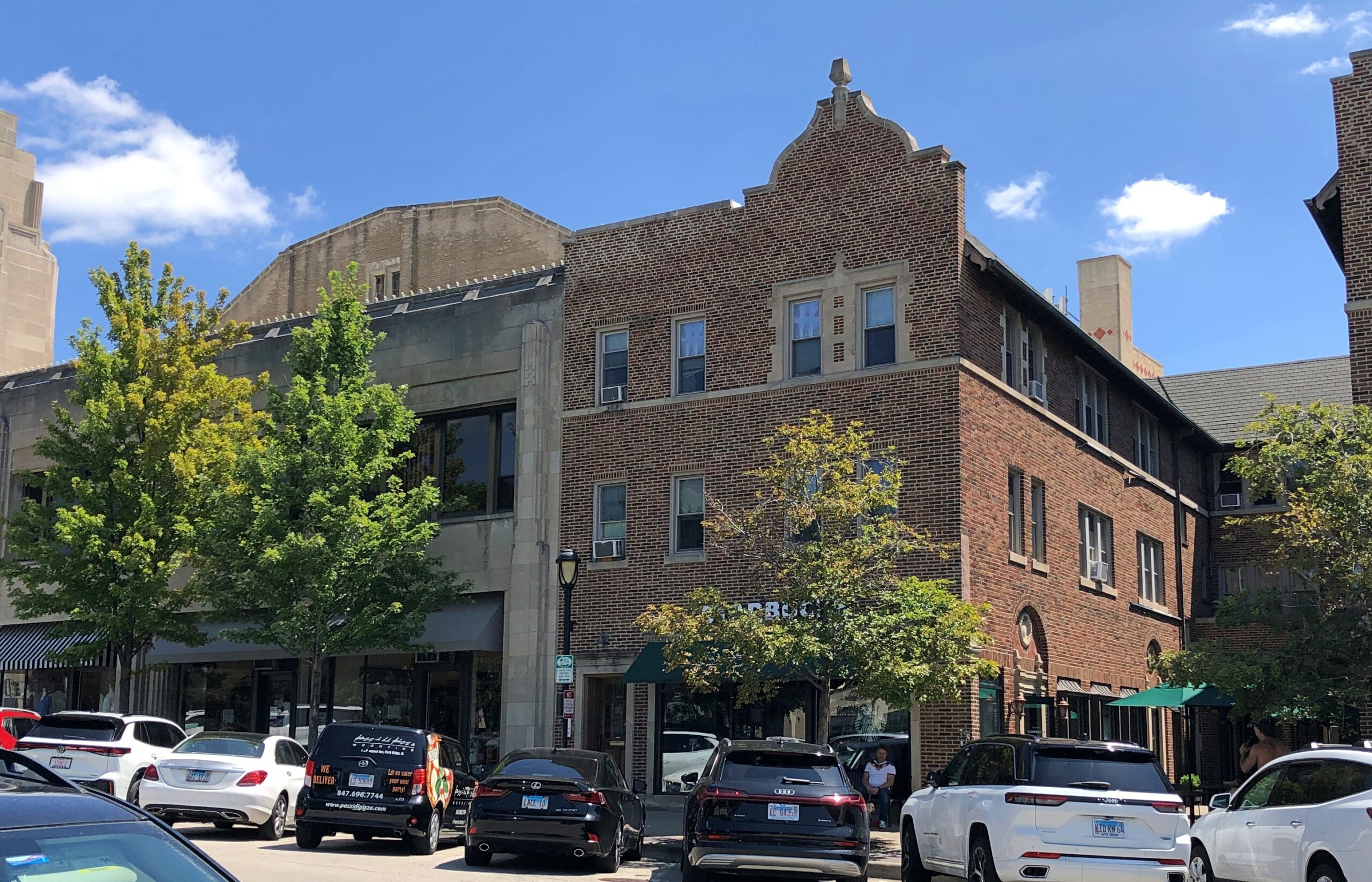
South Prospect has a row of handsome small buildings.
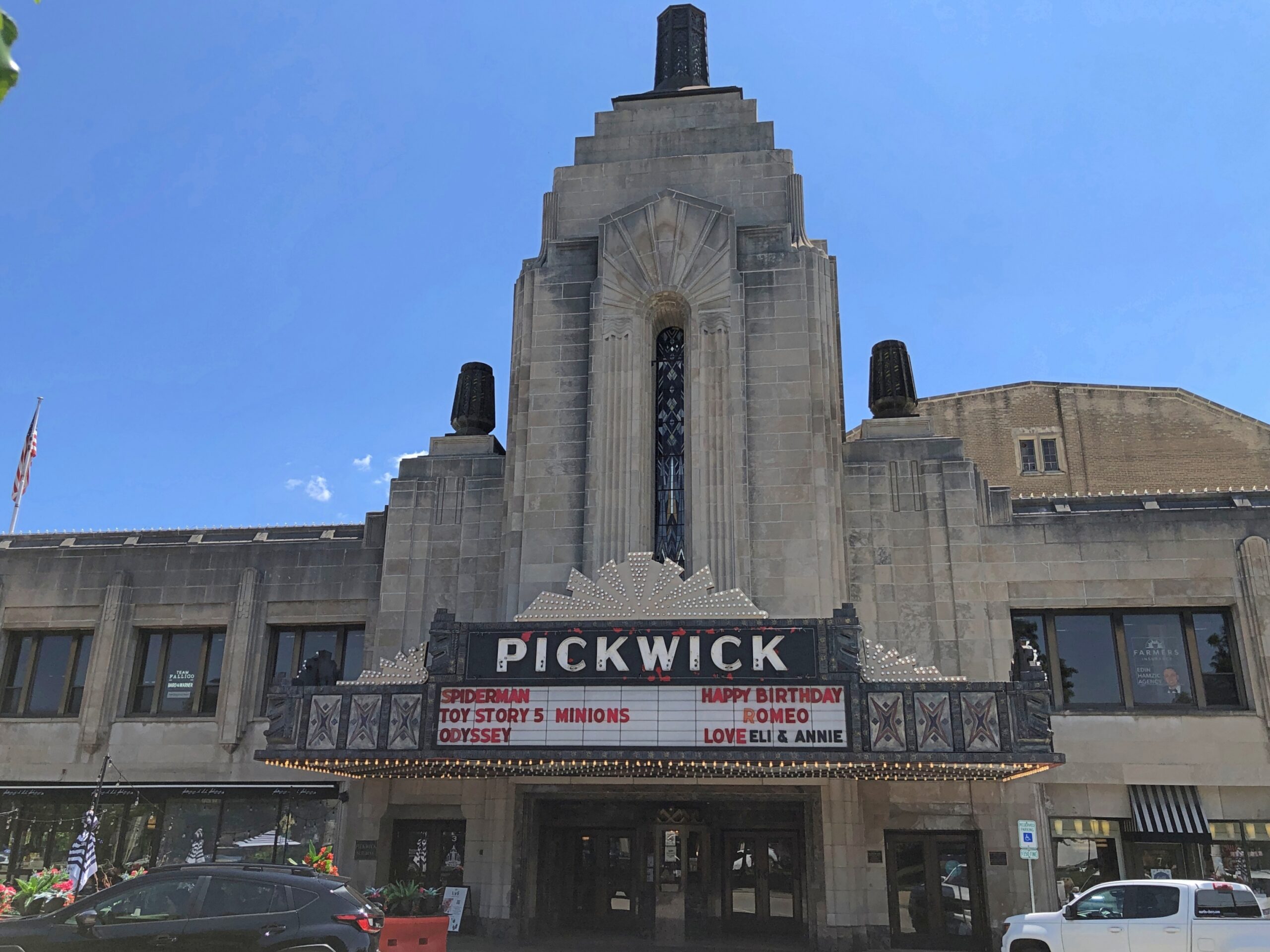
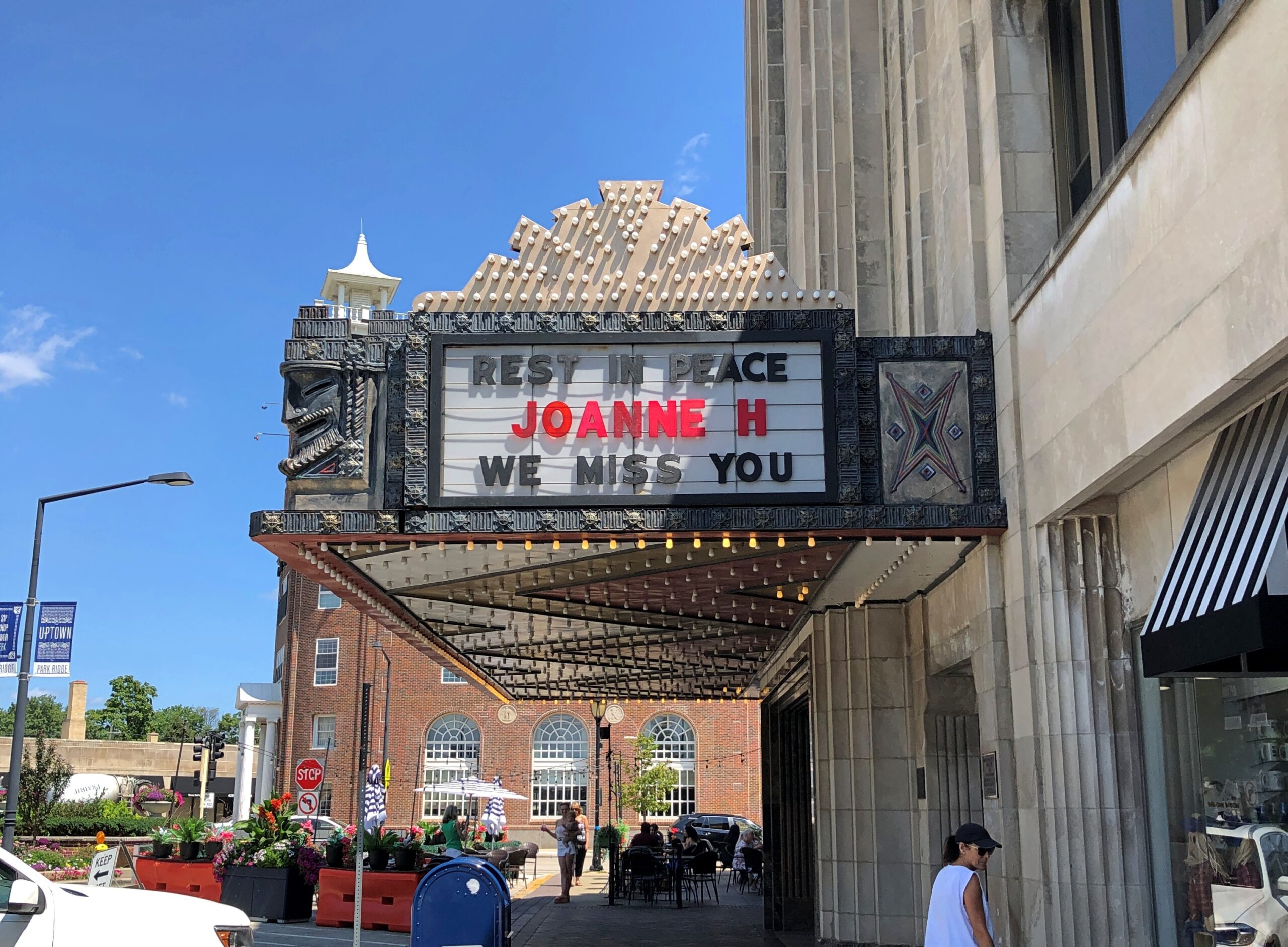
But none to compare with the Pickwick Theatre.
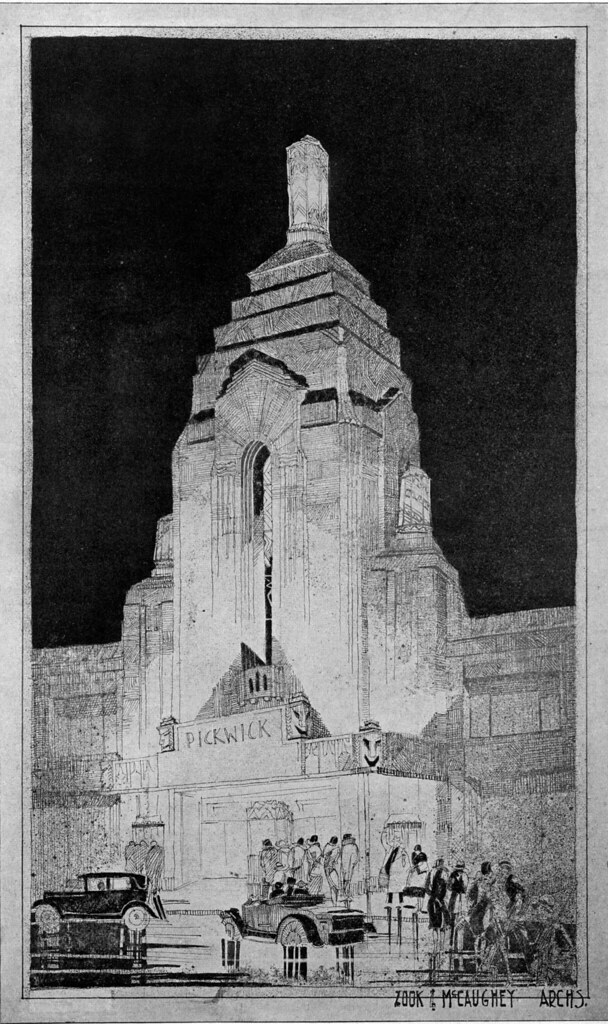
“Designed by the firm of Zook & McCaughey, the 1,500-seat, Pickwick Theatre opened November 26, 1928 with Colleen Moore in Lilac Time plus vaudeville acts on the stage,” Cinema Treasures notes. “It was equipped with a Virtuoso organ which was opened by organist Walter Flandorf.”
In as much as they are known any more, Zook & McCaughey are known for the deco Pickwick. The architects’ rendering, in the public domain, is borrowed from the blog Corridors, which looks to be a real treasure trove of the built environment.
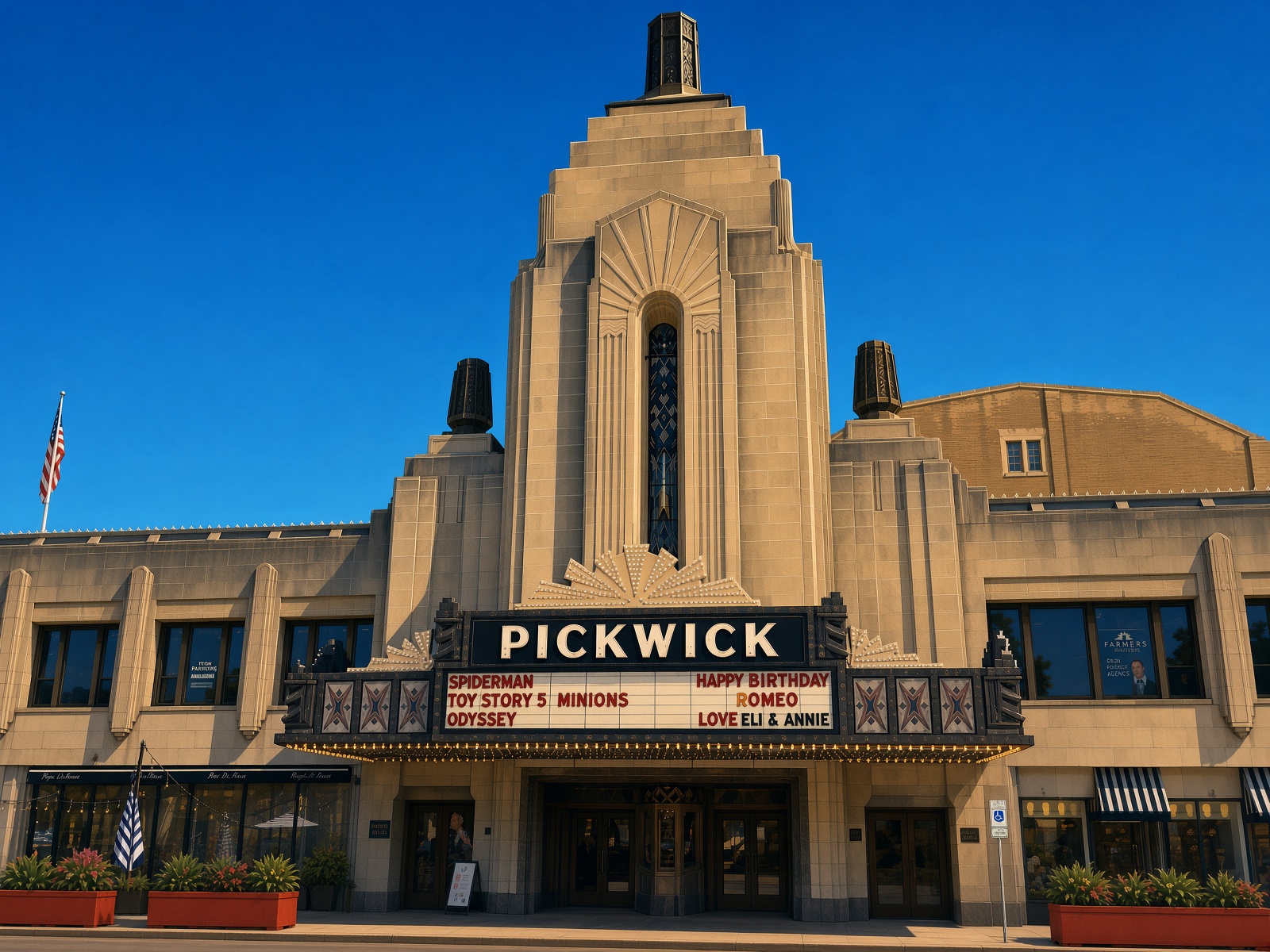
I had somewhere else to be, namely lunch at the Harp & Fiddle across the tracks, or I might have taken in a movie in the historic auditorium, which now seats 1,000, because I never have. But I did have time later to play with one of my images of the Pickwick (the first one, above).
Prompt: Art deco illustration style.
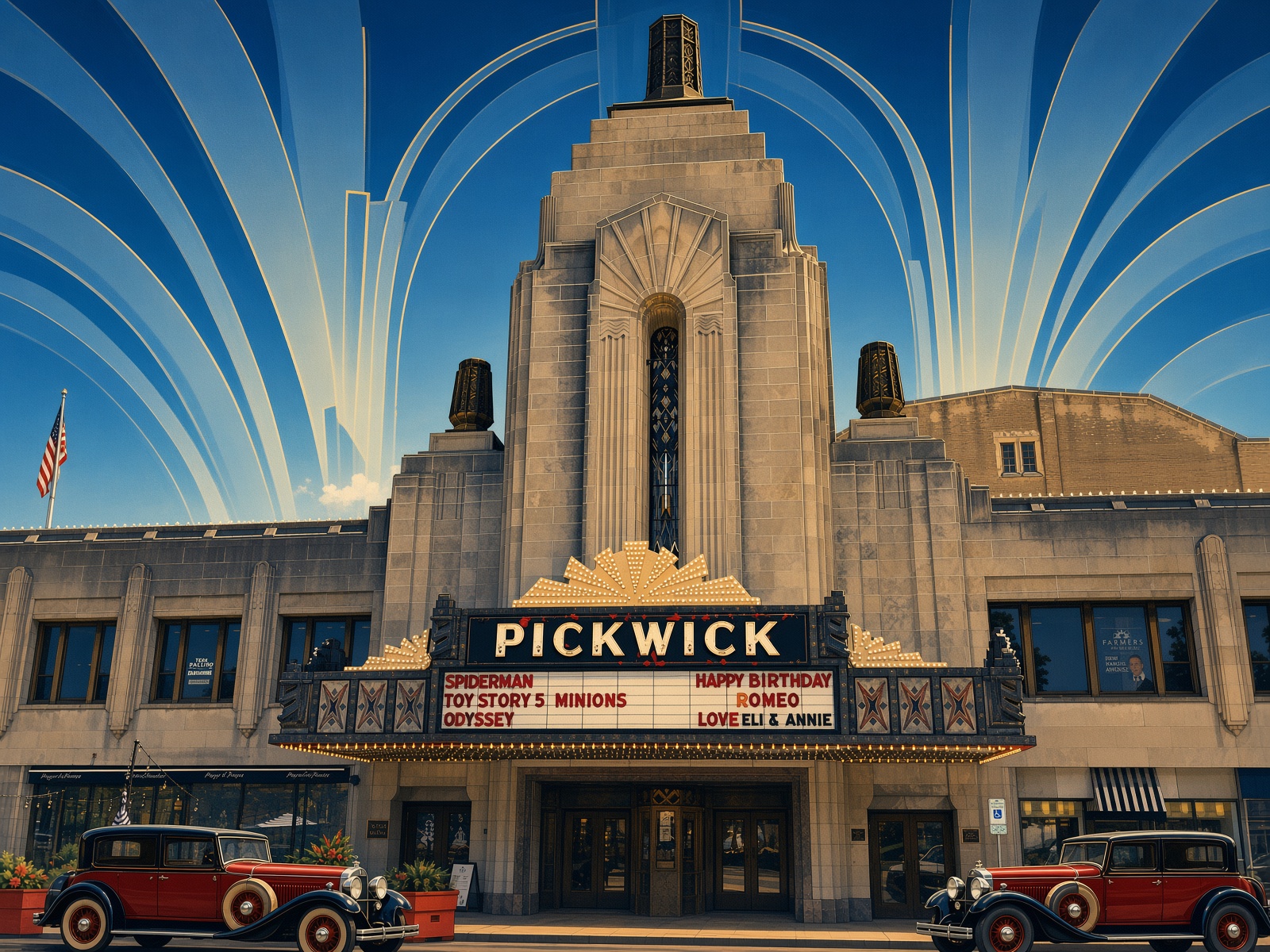
Prompt: 1920s commercial art style.
I like that second one especially. There’s no doubt that it’s AI, but it hews to my goal of not being slop. The cars — a little stilted, but that’s AI for you — are from the 1920s, but the movies are still from the 2020s.
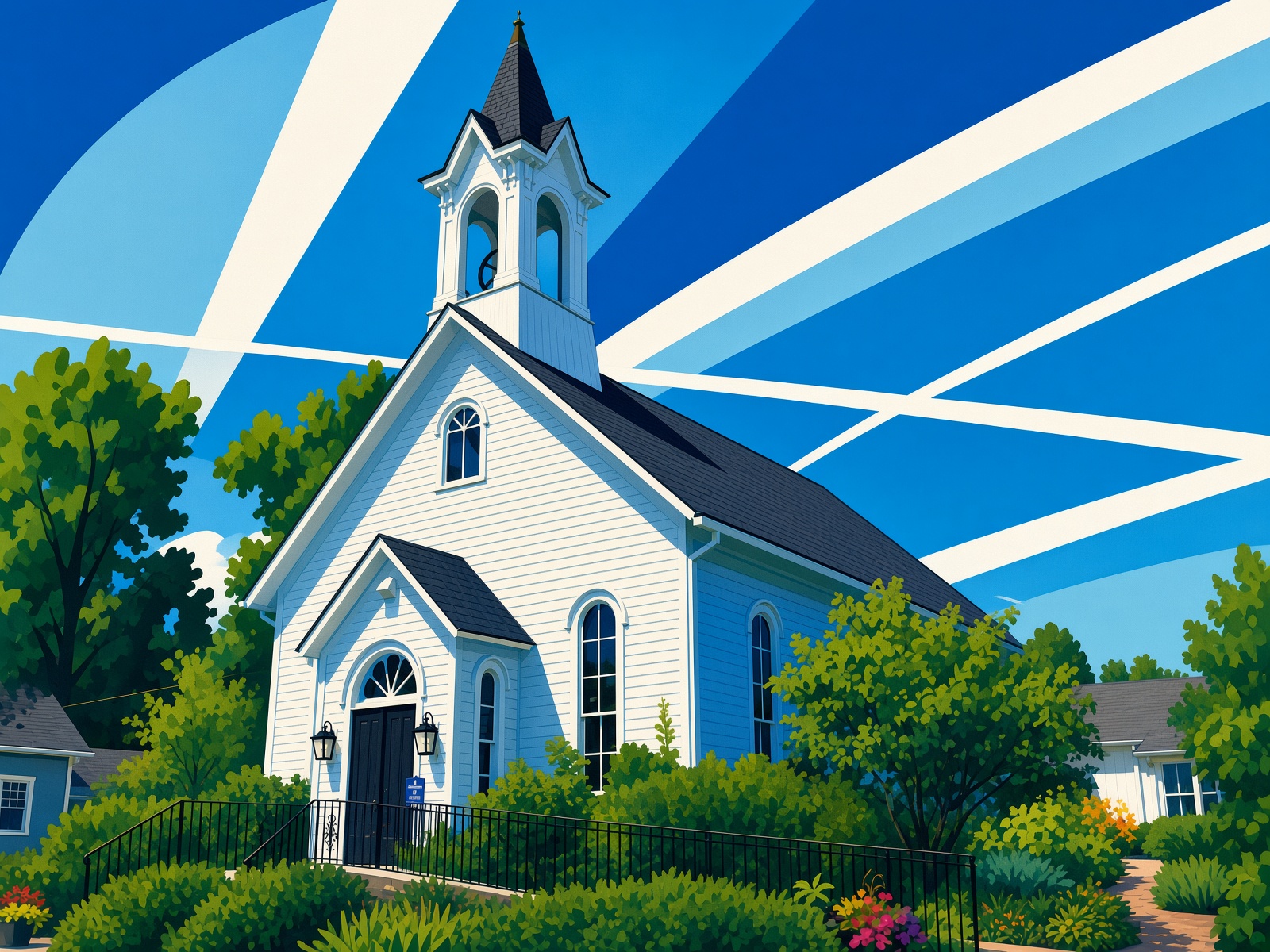
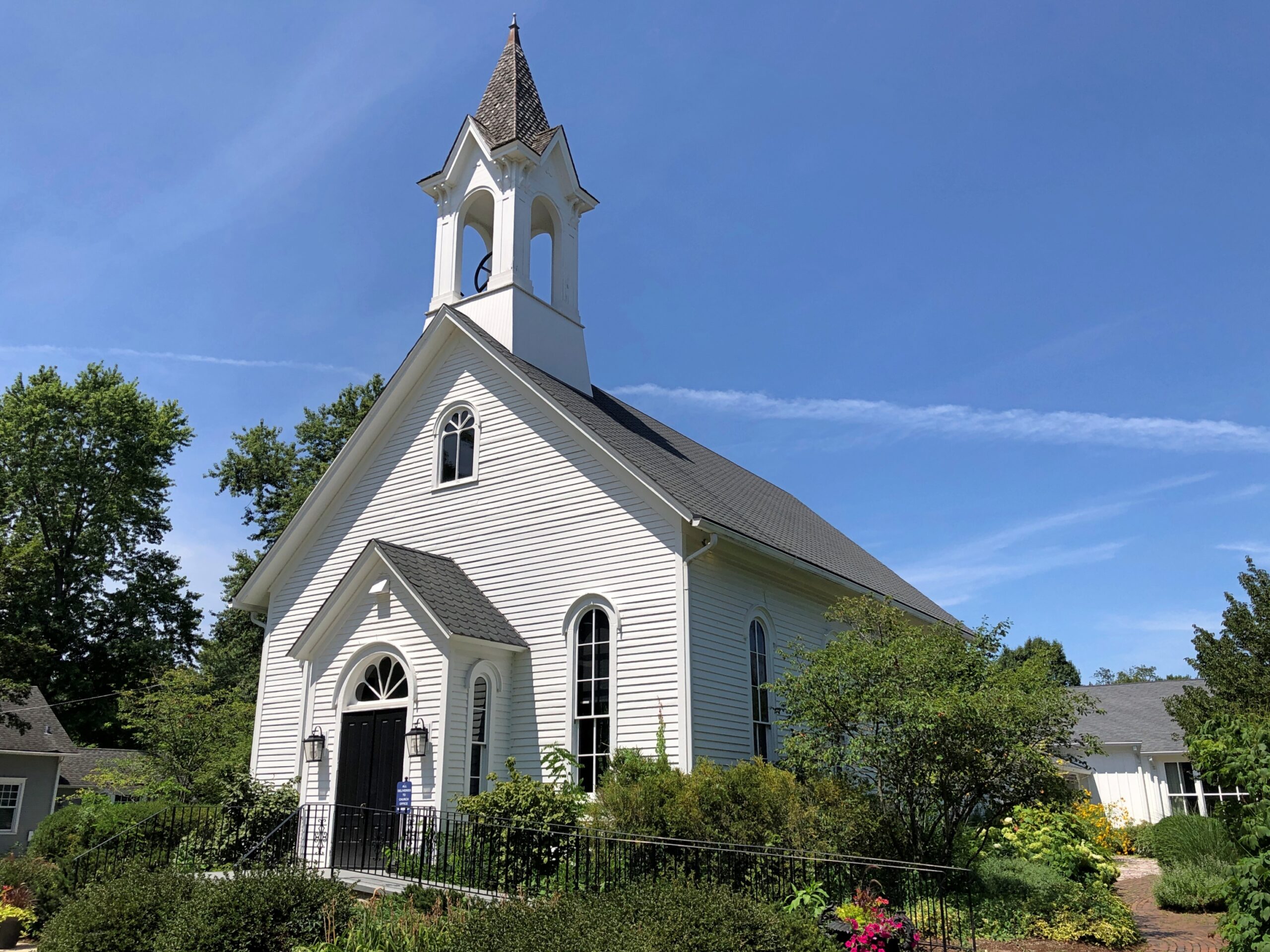
Toward the western end of Army Trail Road here in the suburbs – where the territory is almost exurban – a handsome church caught my attention not long ago. Traffic was sparse, so pulling off the road and then taking a look on foot was a reasonable option.
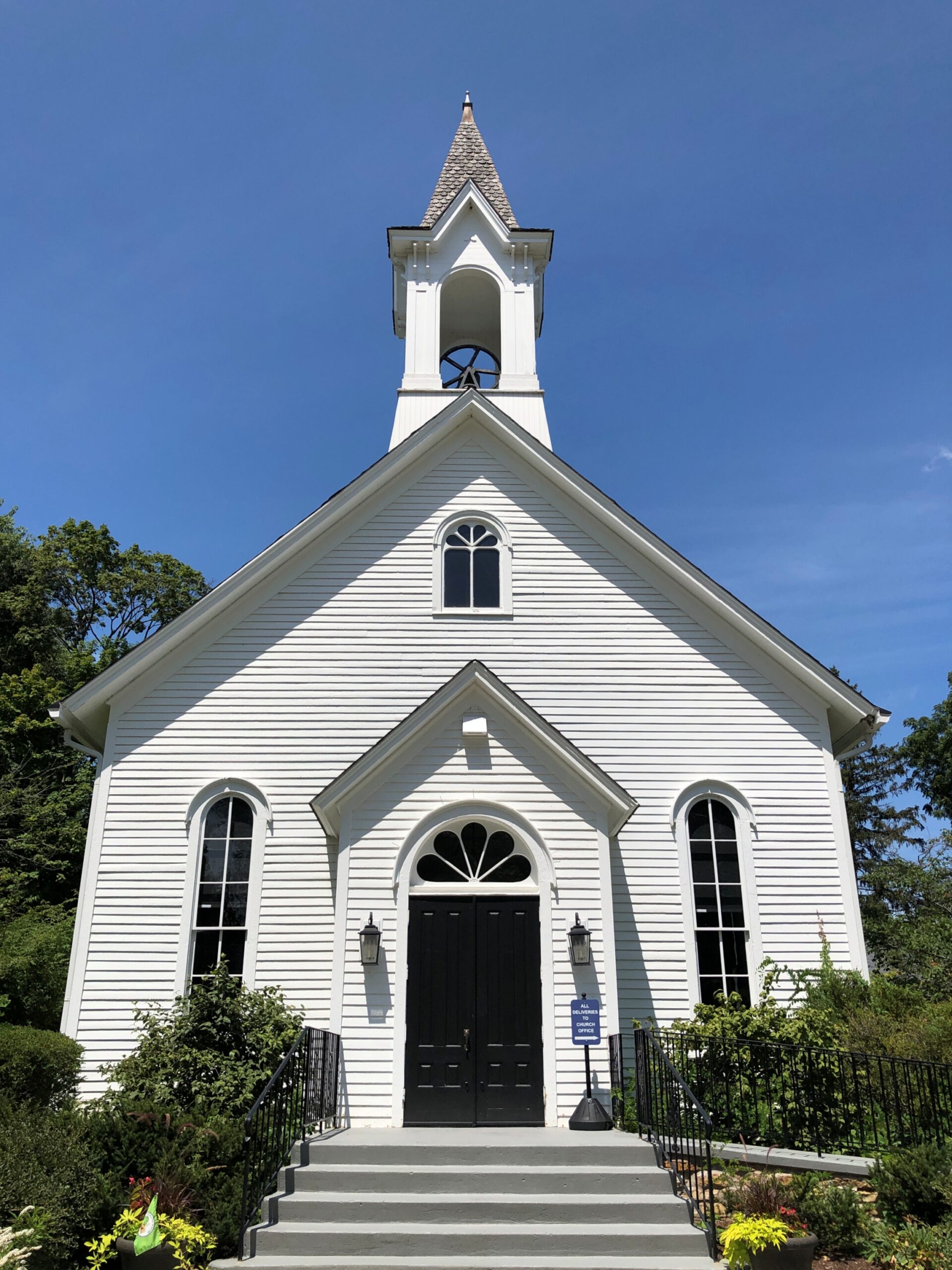
Little Home Church by the Wayside, a United Church of Christ congregation. Closed, unfortunately.
Without realizing it, I’d arrived in Wayne, Illinois. I drive Army Trail Road a lot, but mainly its eastern reaches, an arterial thick with retail in suburbs like Bloomington, Glendale Heights, and Carol Stream. I had a social event to go to late last month, and since it was Saturday, I allowed myself a little extra time to do a spontaneous drive, such as follow Army Trail as far west as it goes, to see what I could see. Such as Wayne, a place I barely knew as a spot on maps.
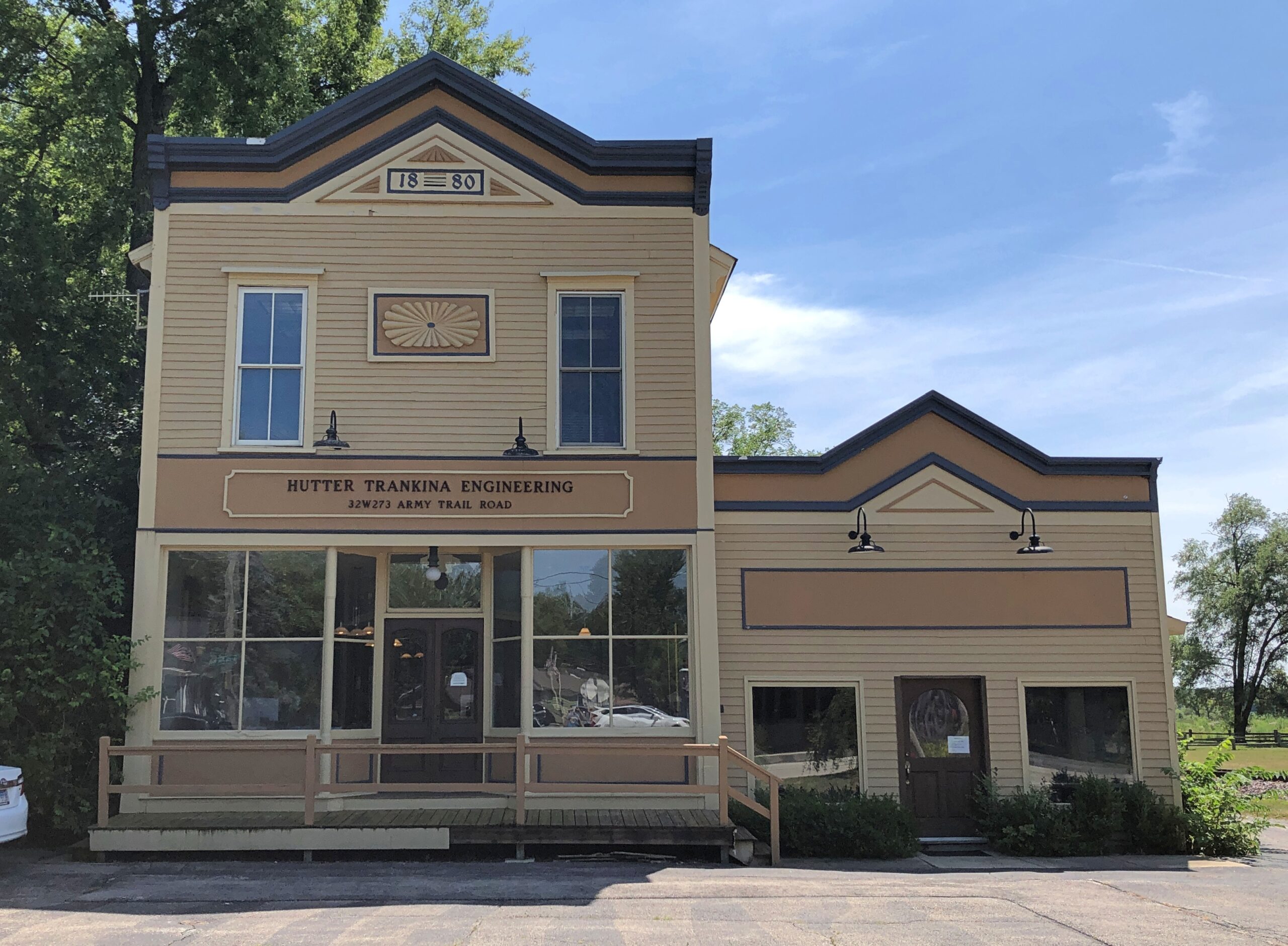
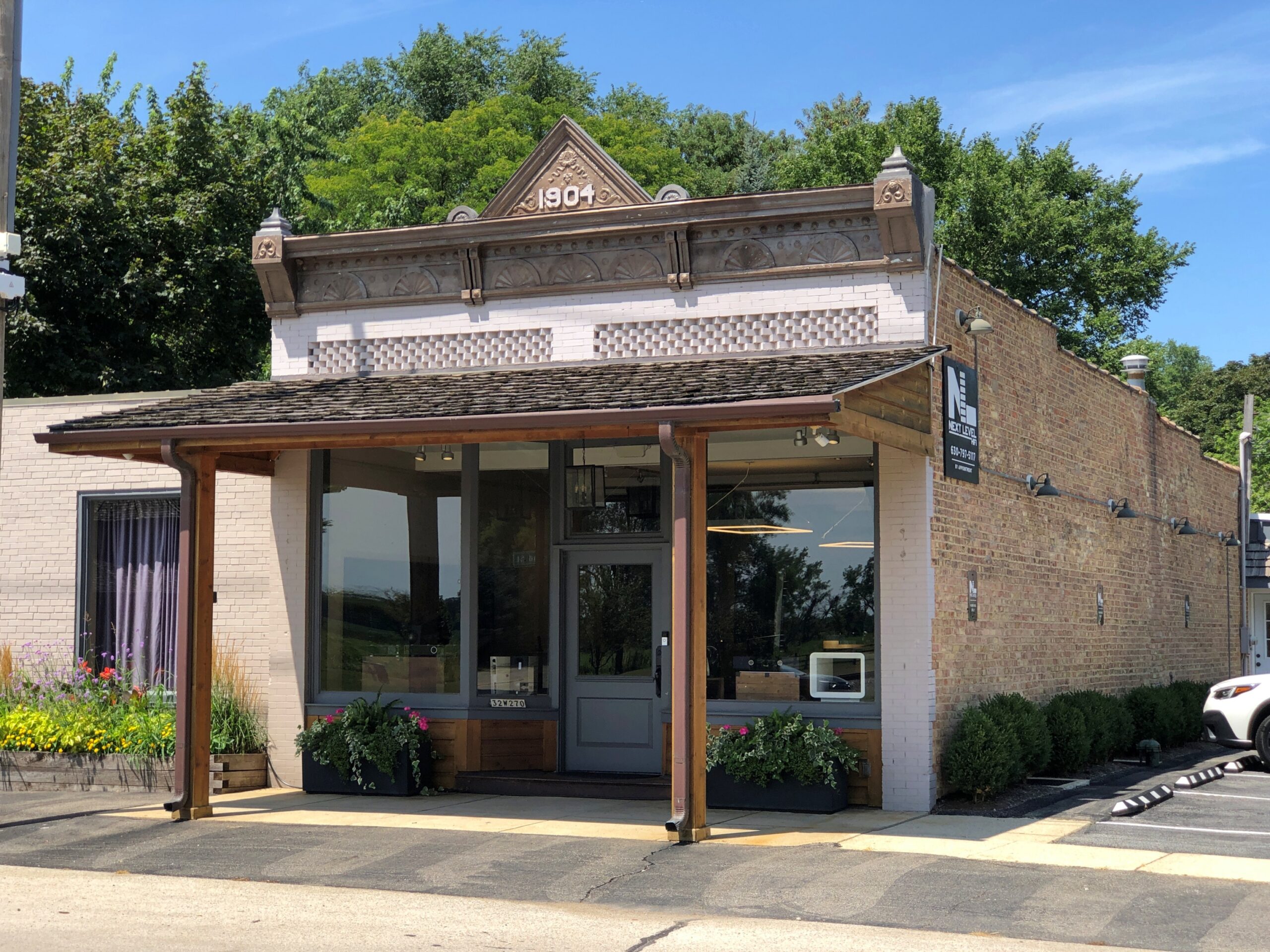
Army Trail passes right through “downtown” Wayne. It isn’t very large, but it has a few good-looking buildings besides the church.
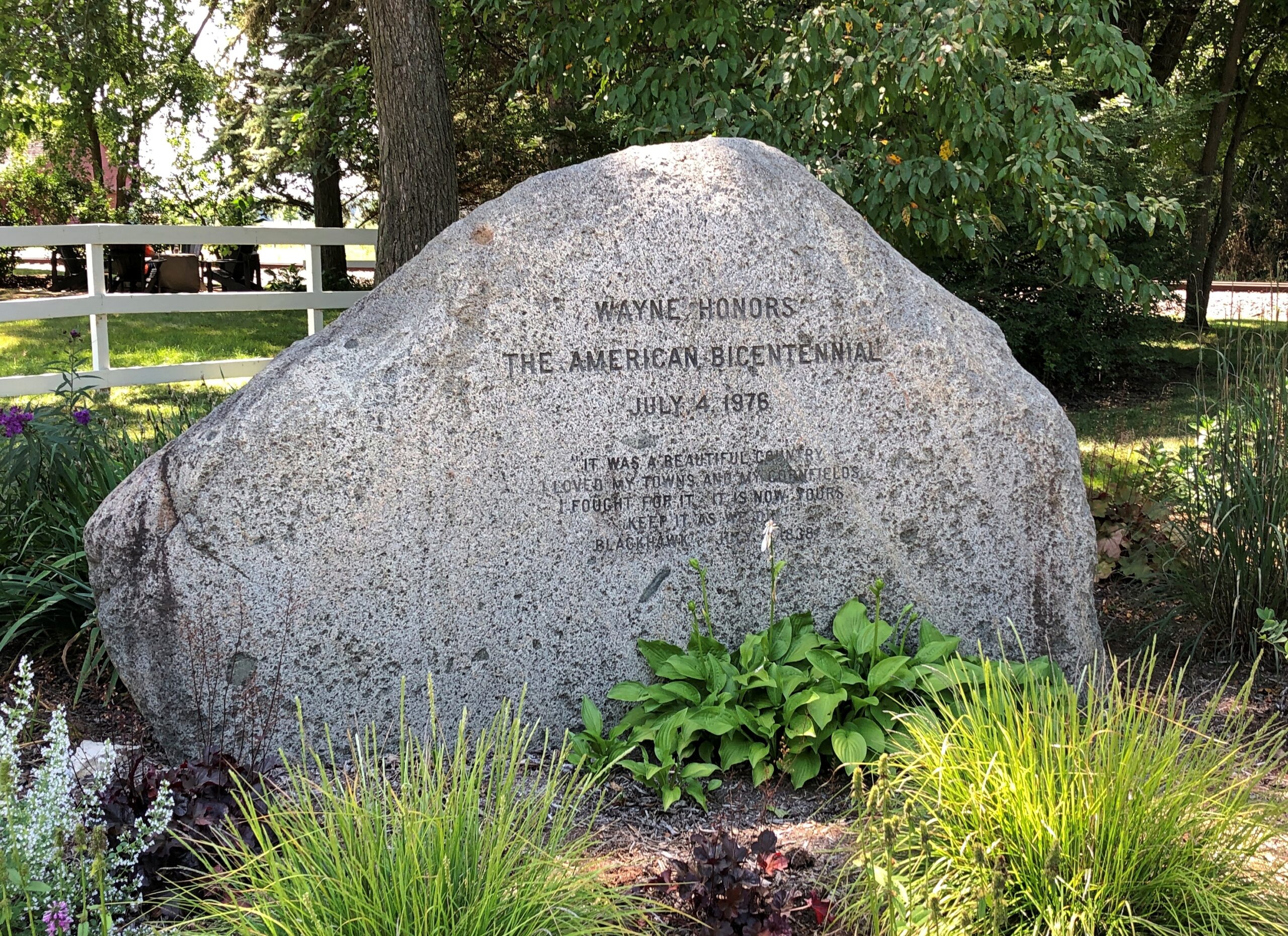
A bicentennial stone.
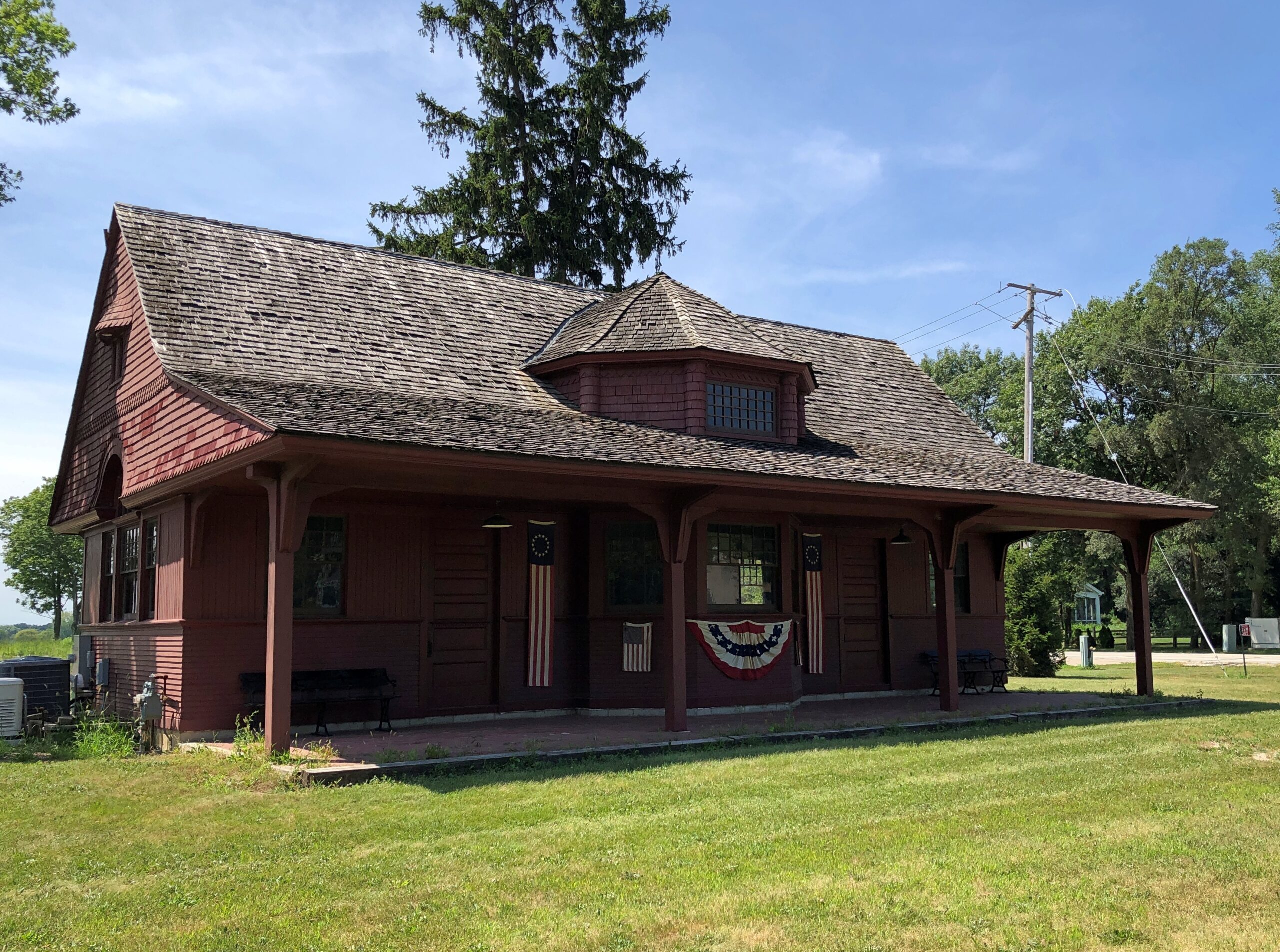
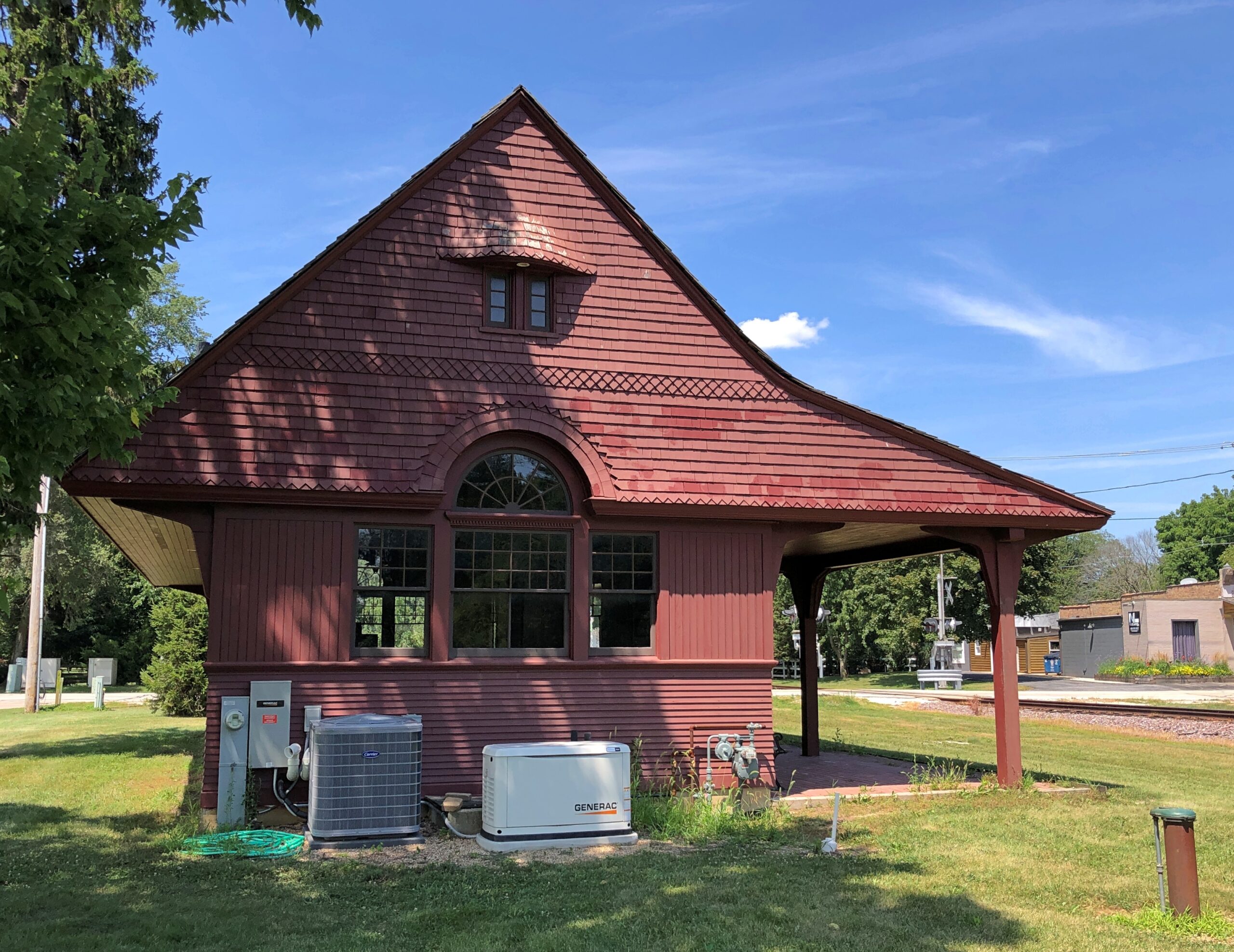
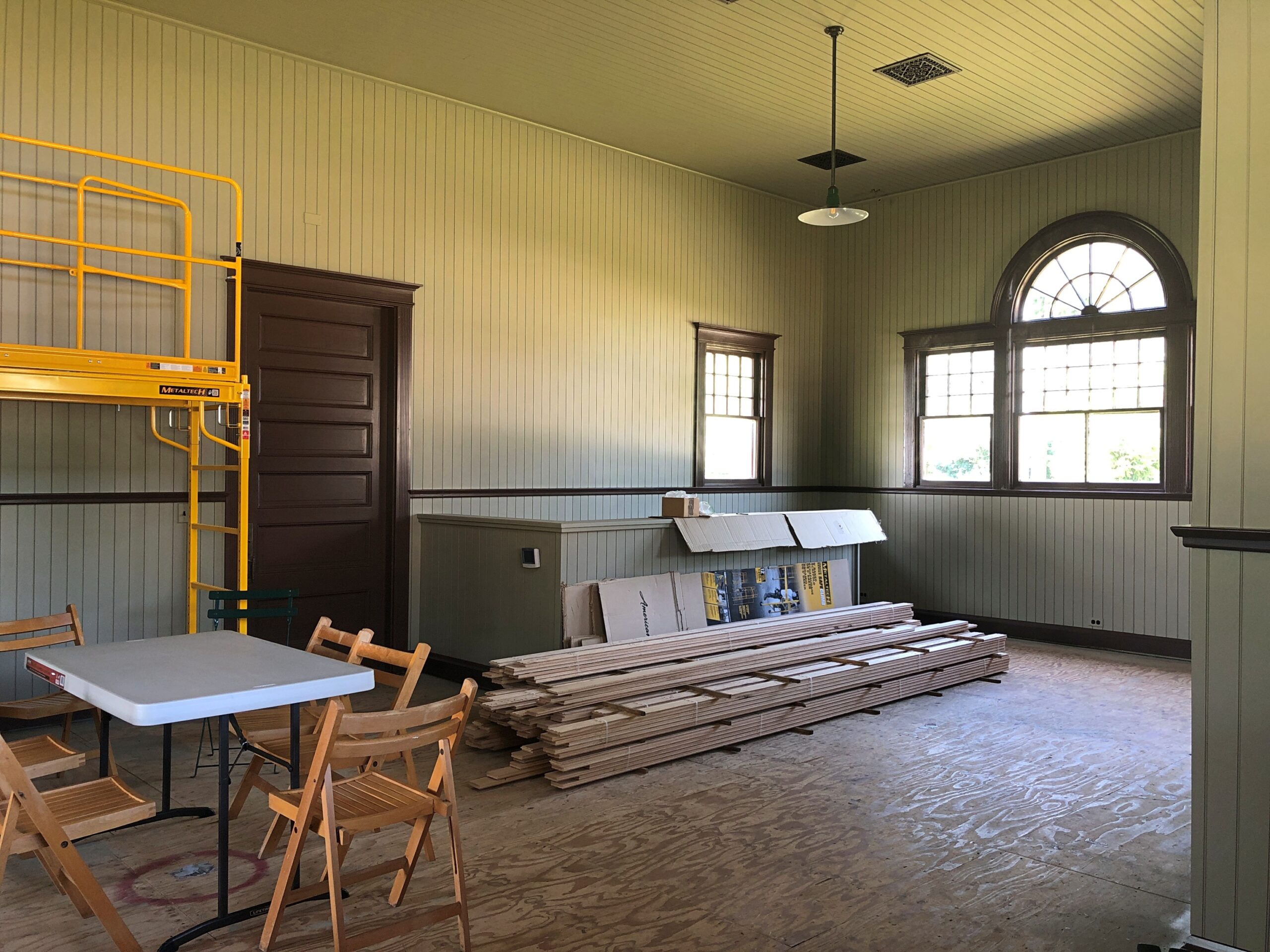
A nonfunctioning, yet well restored, train station. Nonfunctioning in the sense that trains don’t stop there anymore, but apparently events are held at the building. If I were going to throw a hootenanny or a shindig or a hoedown, I might consider renting it.
Provided local codes allow such noisy festivities.
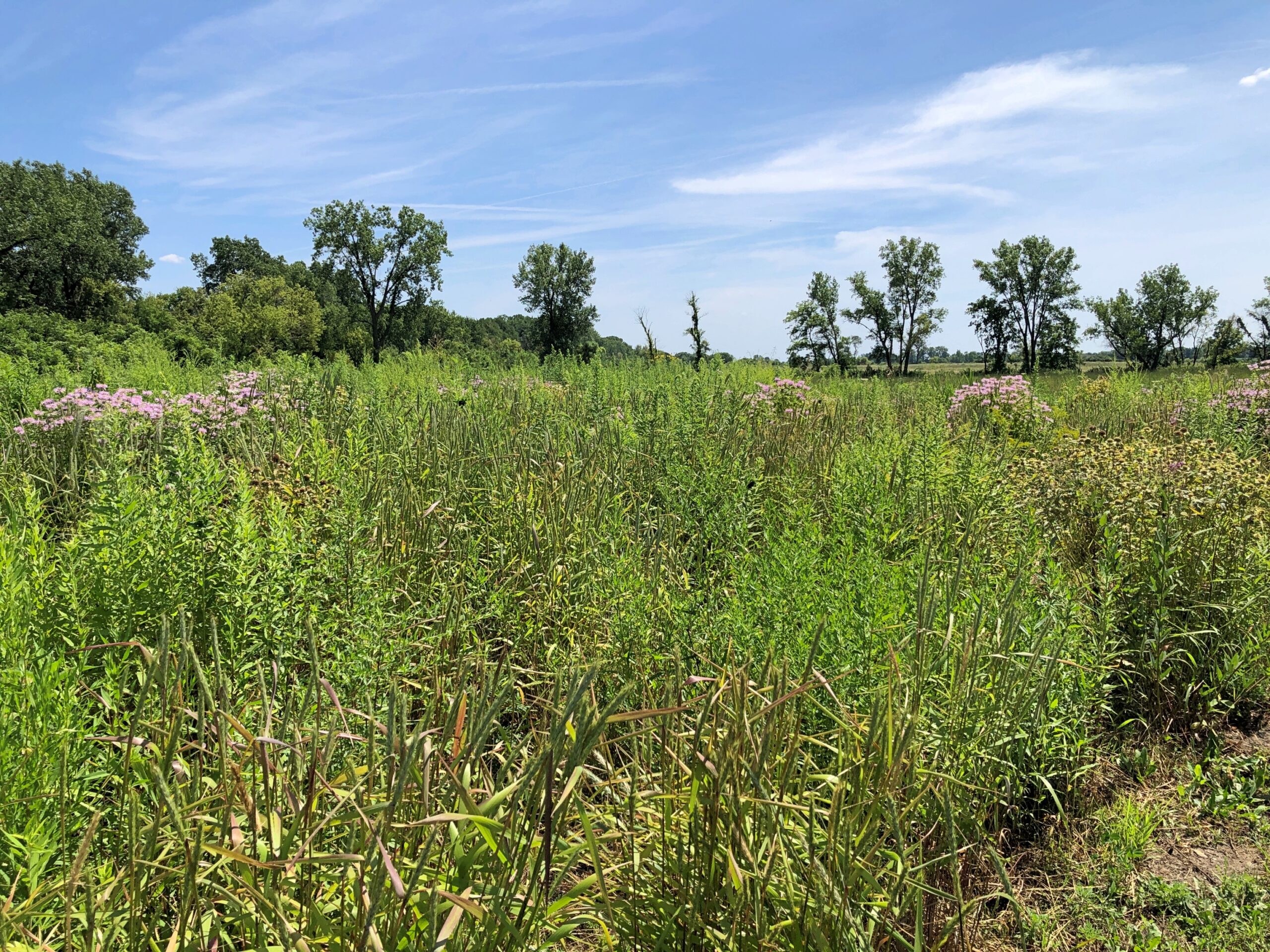
Wayne, I later discovered, is a low-density suburb: a sizable 5.8 square miles with a population of not quite 2,300. As such, I imagine there are a fair number of rules to enforce the quiet and semi-rural character. Zoning keeps lots large, four acres or more, which functions to make the town the province of those who can afford it, but there’s also a lot of open land. Such as the Dunham Forest Preserve.
Open to all, but the day I visited, near it was north of 90 degrees F. and, true to the prairie nature of parts of Illinois, little shade was to be seen. Taking pictures around downtown and the former station was sweaty enough.
We’ve heard of one-horse towns, though the metaphor long ago became fossilized. Wayne, it turns out, is a many-horse town, the legacy of a major horse-breeding operation in the 19th century.
“By 1865, Mark W. Dunham… had begun breeding and selling prize Percheron horses which he originally imported from France,” the Village of Wayne says. “By 1883 he had over 1,300 mares and stallions grazing on 1,700 acres of land known as Oaklawn Farm. His residence, Oaklawn, now popularly known as ‘Dunham Castle,’ was also constructed as part of the farm, and the red brick building which had been the Dunham home (now the Dunham Woods Riding Club) was converted into offices for the farm and guest rooms for visiting horse buyers.
In 1893, Oaklawn Farm was accorded the honor of serving as one of the agricultural displays for the World’s Columbian Exposition in Chicago, and visitors traveled Wayne Road from Wayne Station out to the Broad expanse. The old railroad station still exists and has been returned to its original site in the Village Center. By 1905, Oaklawn Farm produced more Percheron horses for American and European buyers than the next eight establishments combined.”
The market for Percheron work horses isn’t what it used to be, but Wayne’s open spaces and many trails – pretty much invisible when you’re driving through – accommodate a good many horses even now, according to the village: “[Wayne] is one of the few communities in northeastern Illinois that provides and encourages equestrian uses and facilities.”
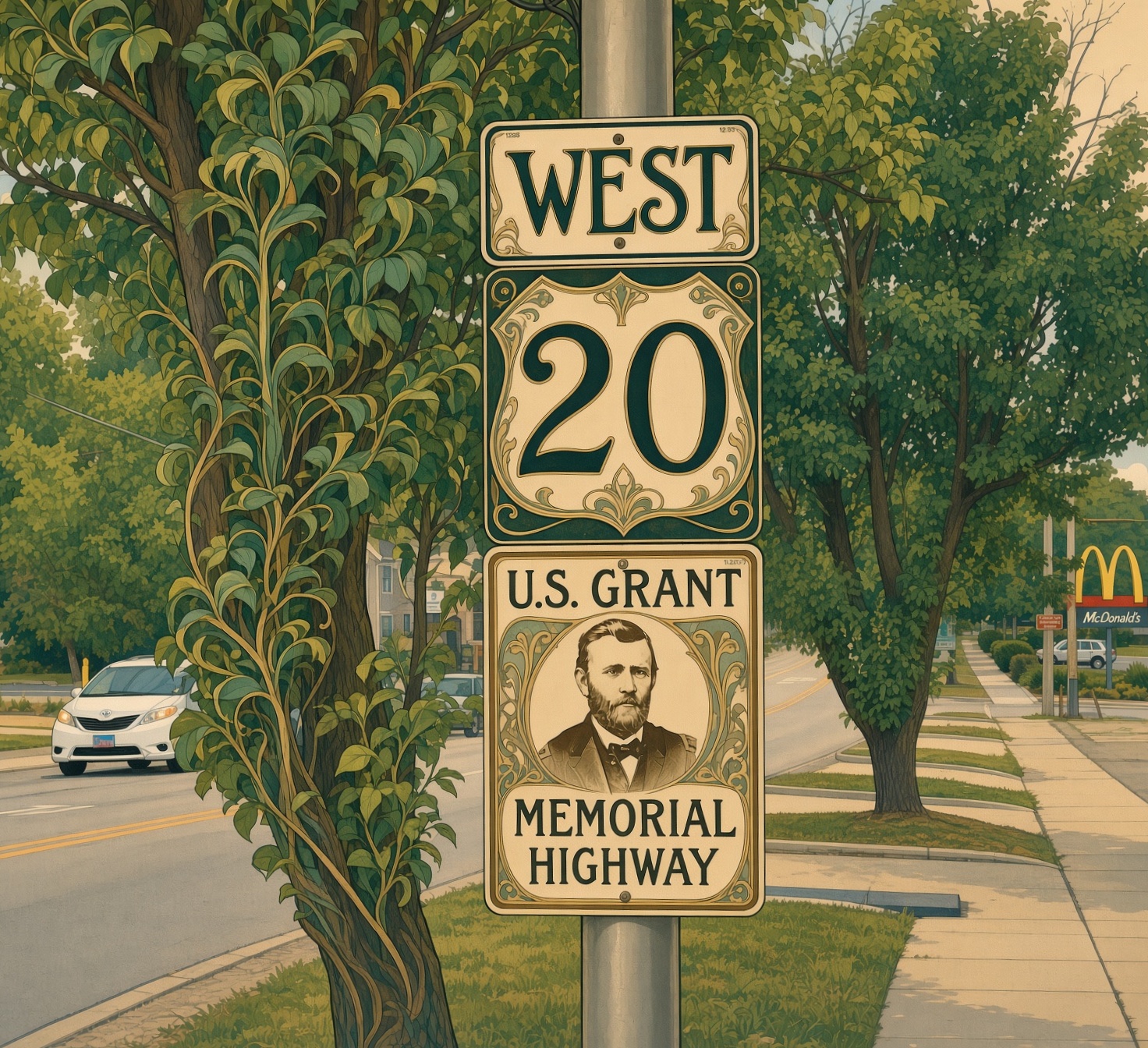
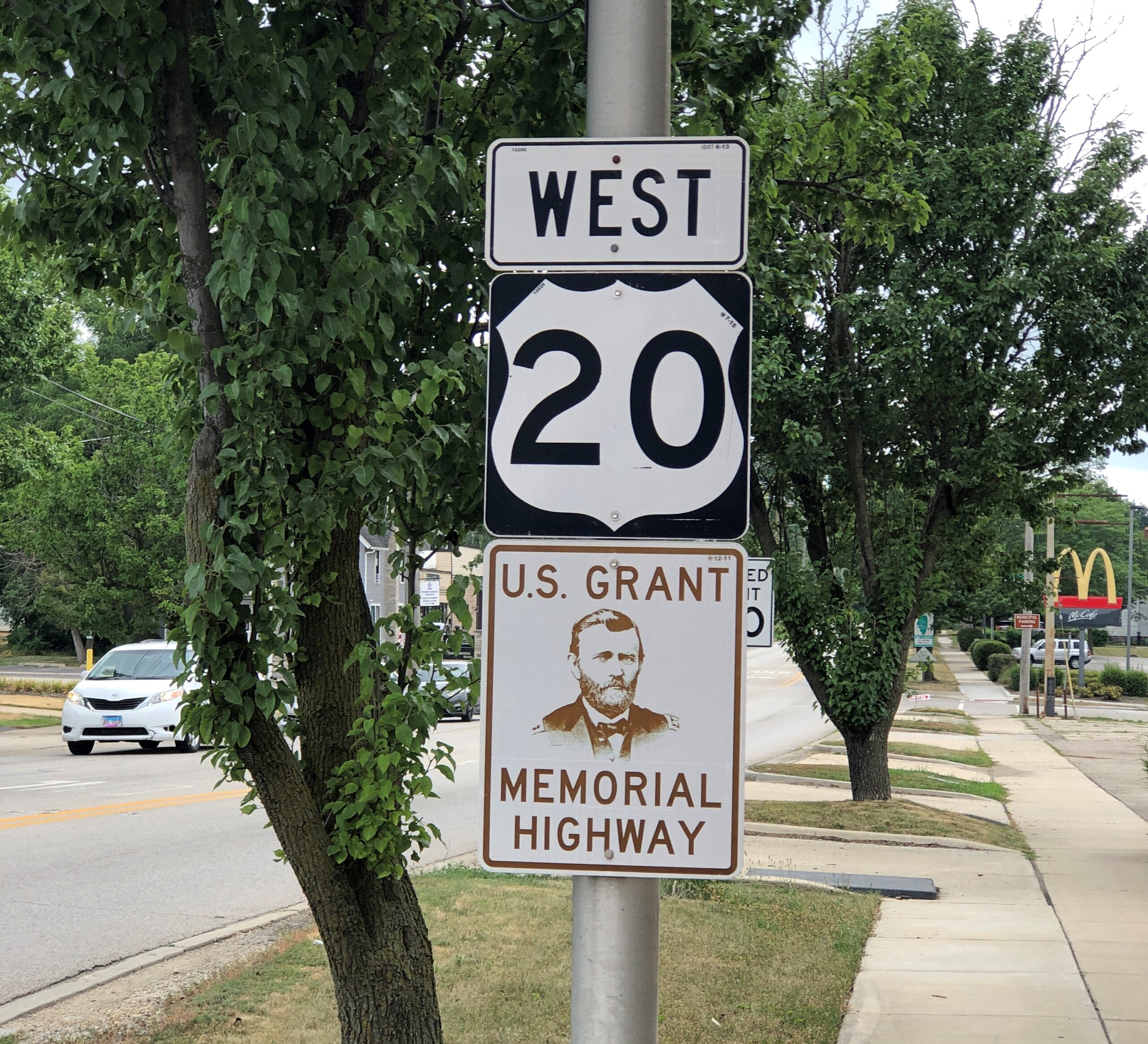
US 20, according to the Federal Highway Administration, is the longest road in the country. That wasn’t the case in 1925 when the US highway system was created; it was number two at that time. Various adjustments afterward (told in highway-nerd detail on the FHA’s Highway History page) made it so by 1963.
“US 20 is 3,365 miles long, according to the 1989 log,” the site notes. “The route begins in Boston at a junction with Massachusetts Route 2 and ends in Newport, Oregon, at a junction with US 101. Because U.S. numbered highways are not designated with[in] National Parks, US 20 is divided into an East Section ending at the eastern entrance to Yellowstone National Park and a West Section beginning at the west entrance to the park.”
In Illinois, the highway is also the General Ulysses S. Grant Memorial Highway.
When time isn’t an issue, US 20 is my preferred route westward toward Rockford and, for an ambitious intrastate drive, Galena. Last month, it was our preferred route most of the way to Union, Illinois, to visit the Illinois RR Museum. On the way back, we stopped briefly in Marengo, which is one of the many towns along those 3,365 miles.
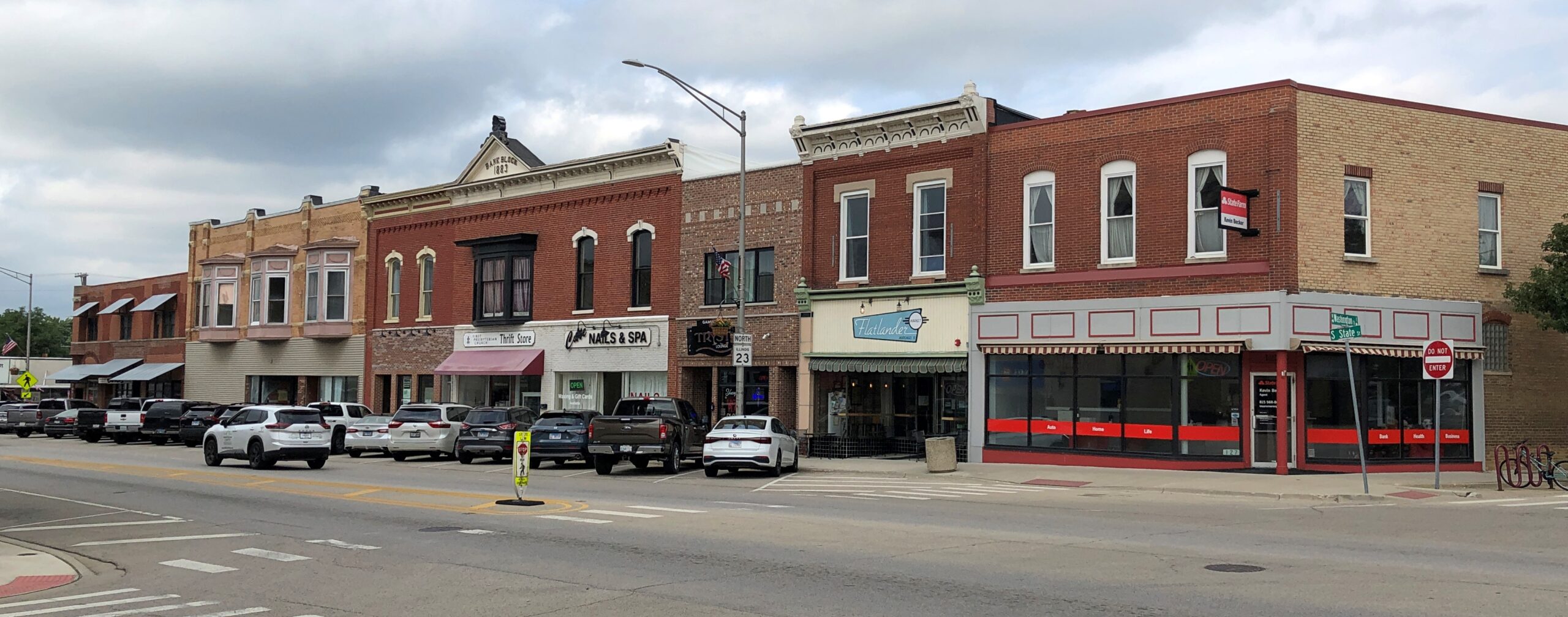
A modest downtown, but at pop. 7,500 or so, it doesn’t need to be anything else.
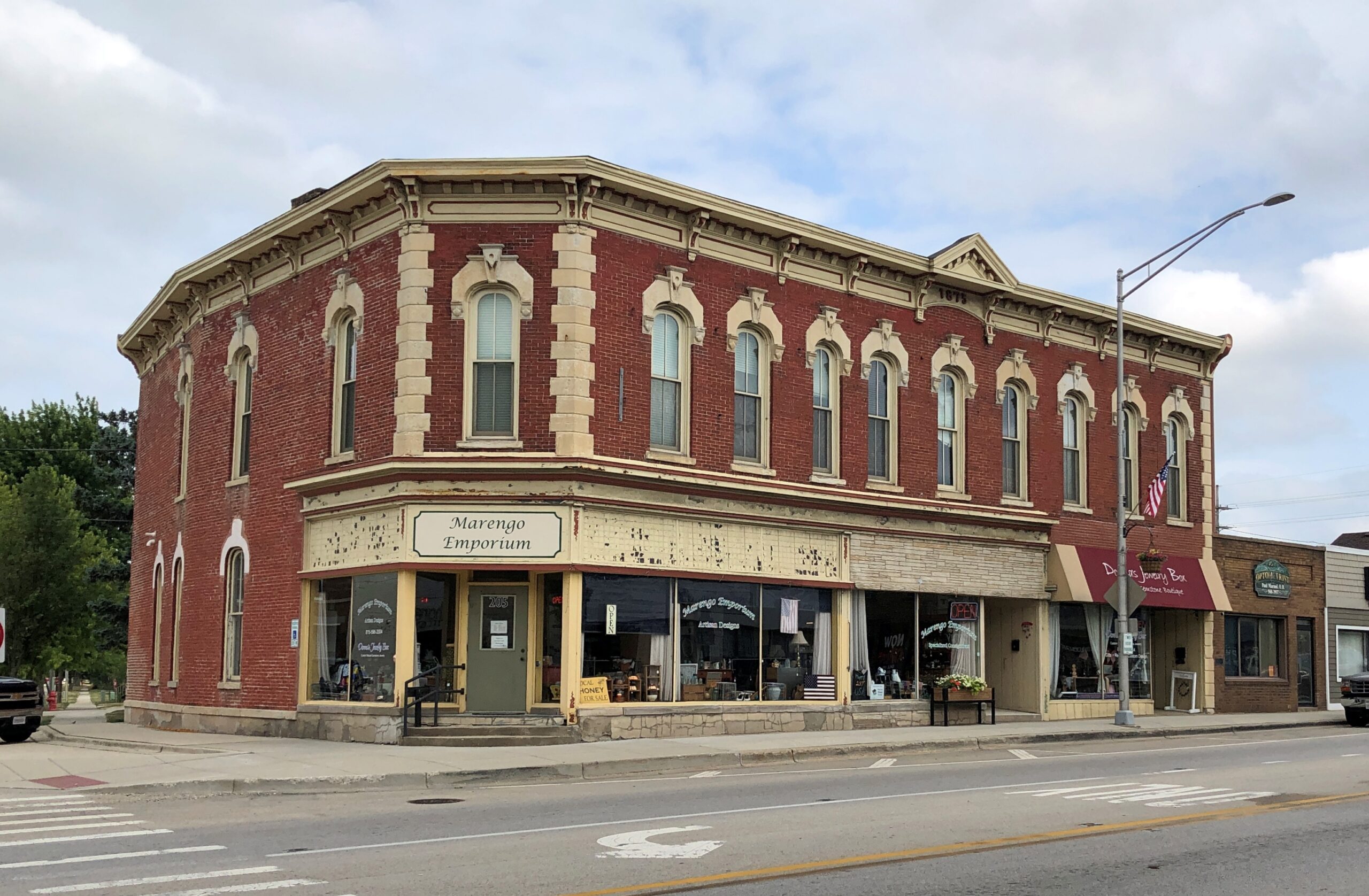
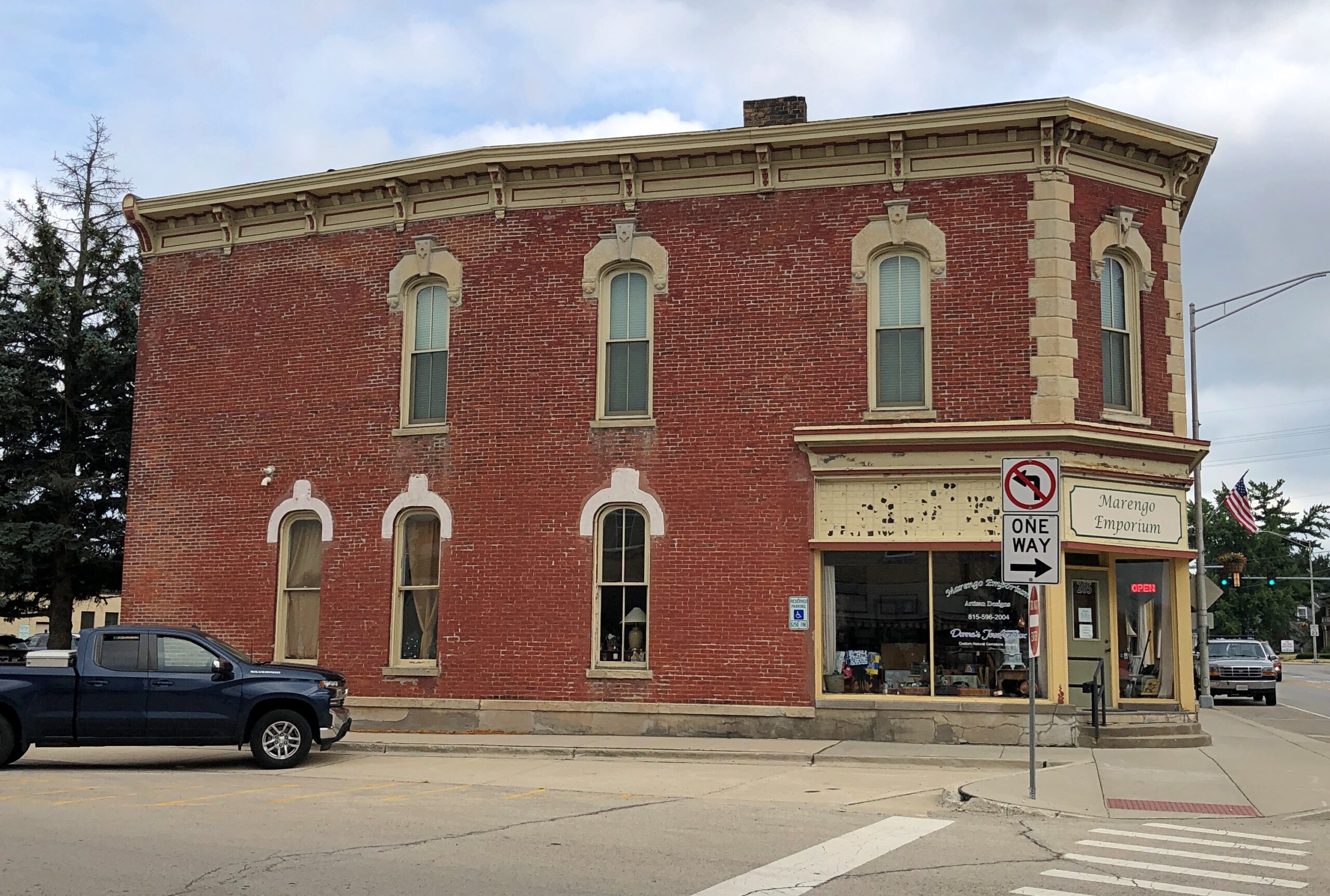
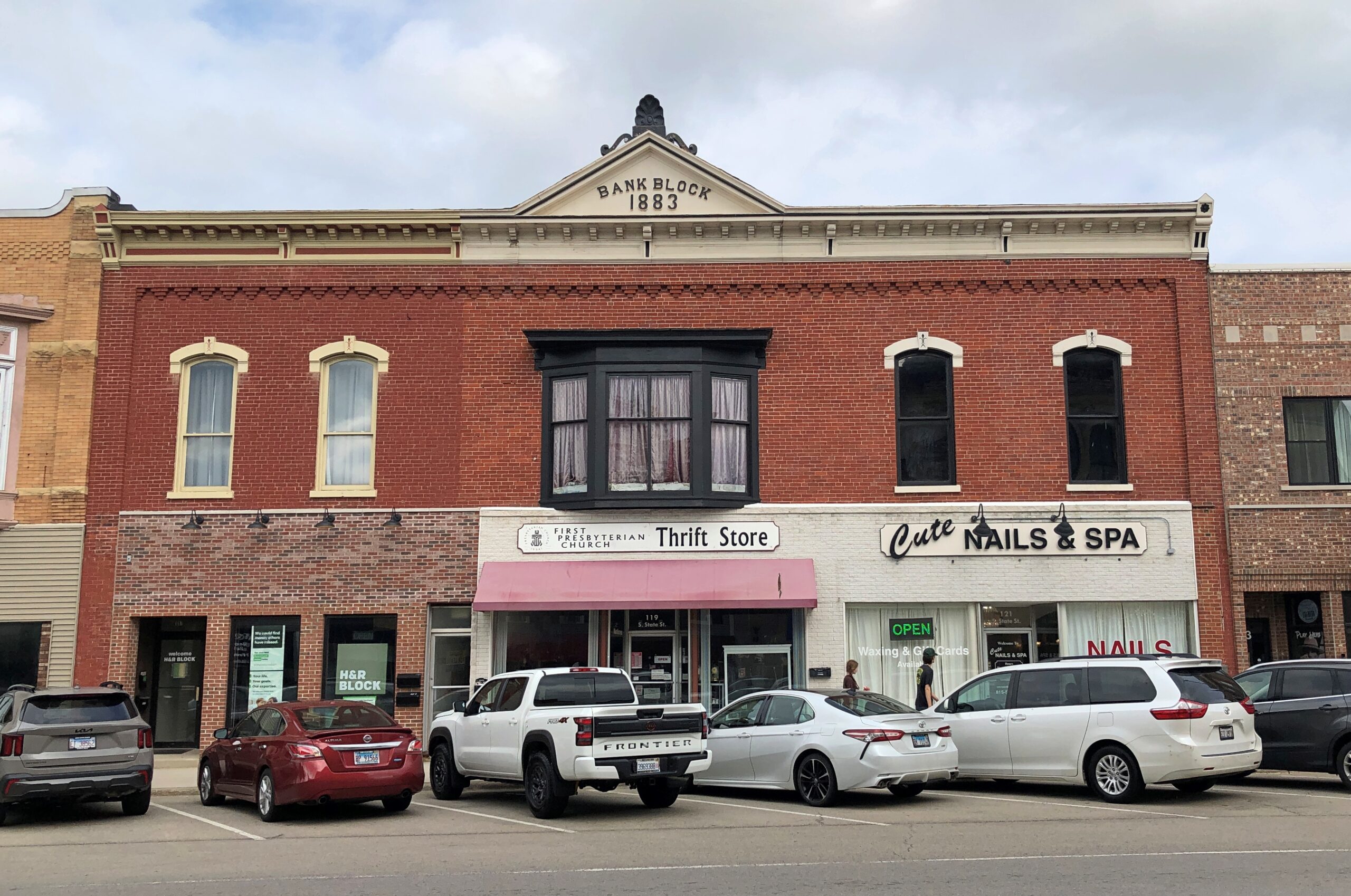
A run of buildings from the late 19th century, along Main St. Such as the current home to the Marengo Emporium, closed that late Saturday afternoon, in spite of what a red neon OPEN sign said.
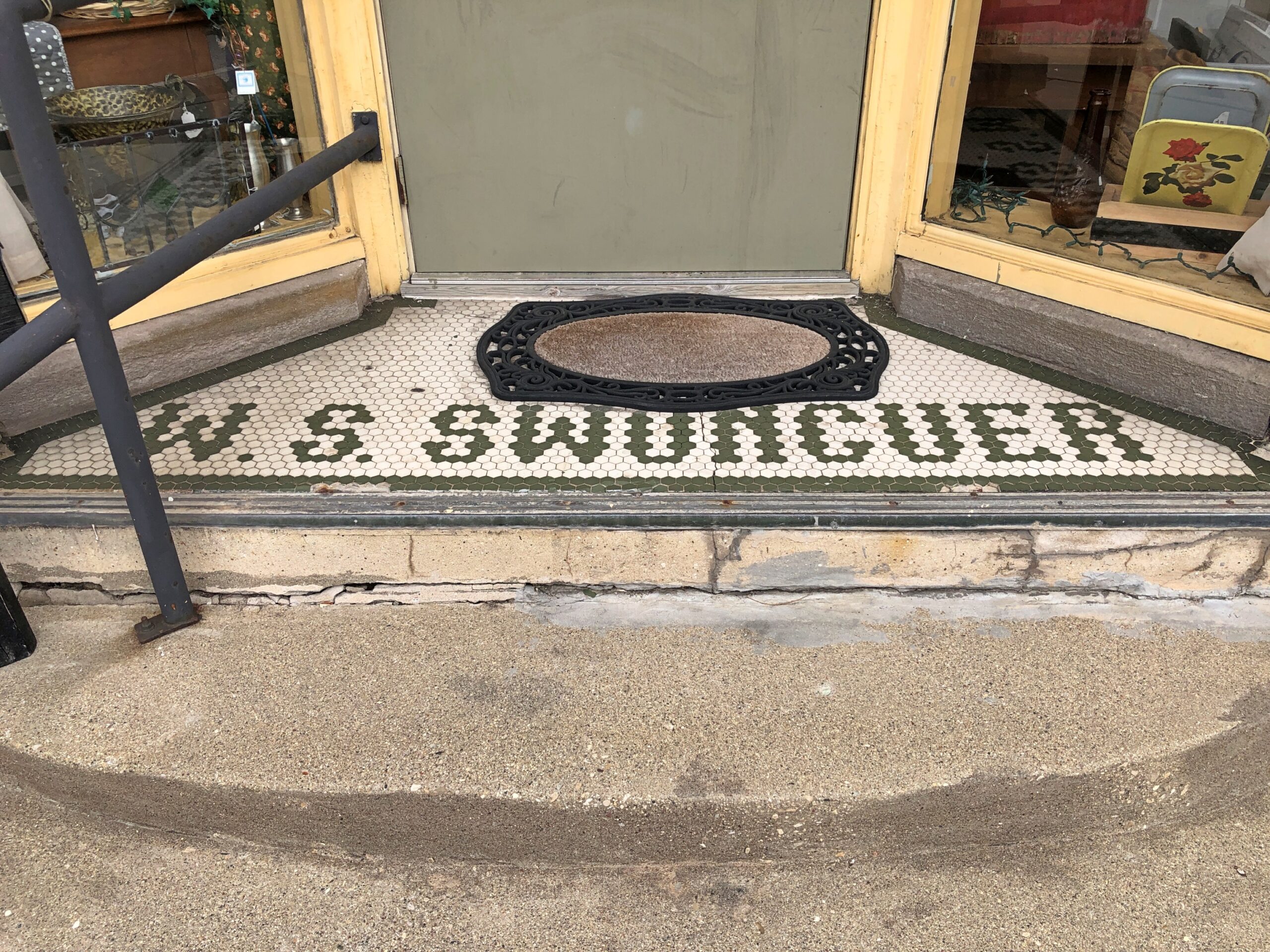
The Marengo Union Chamber of Commerce notes that the building, dating from 1875, housed the first bank in McHenry County in its early years. “In the later years, Swonguer Furniture & Undertakers, Marengo Farm Store, Vidiots, Wholly Smokes and State Street Pub occupied the building but perhaps [it’s] best known for housing the Marie Ann Dress Shop,” the C of C says.
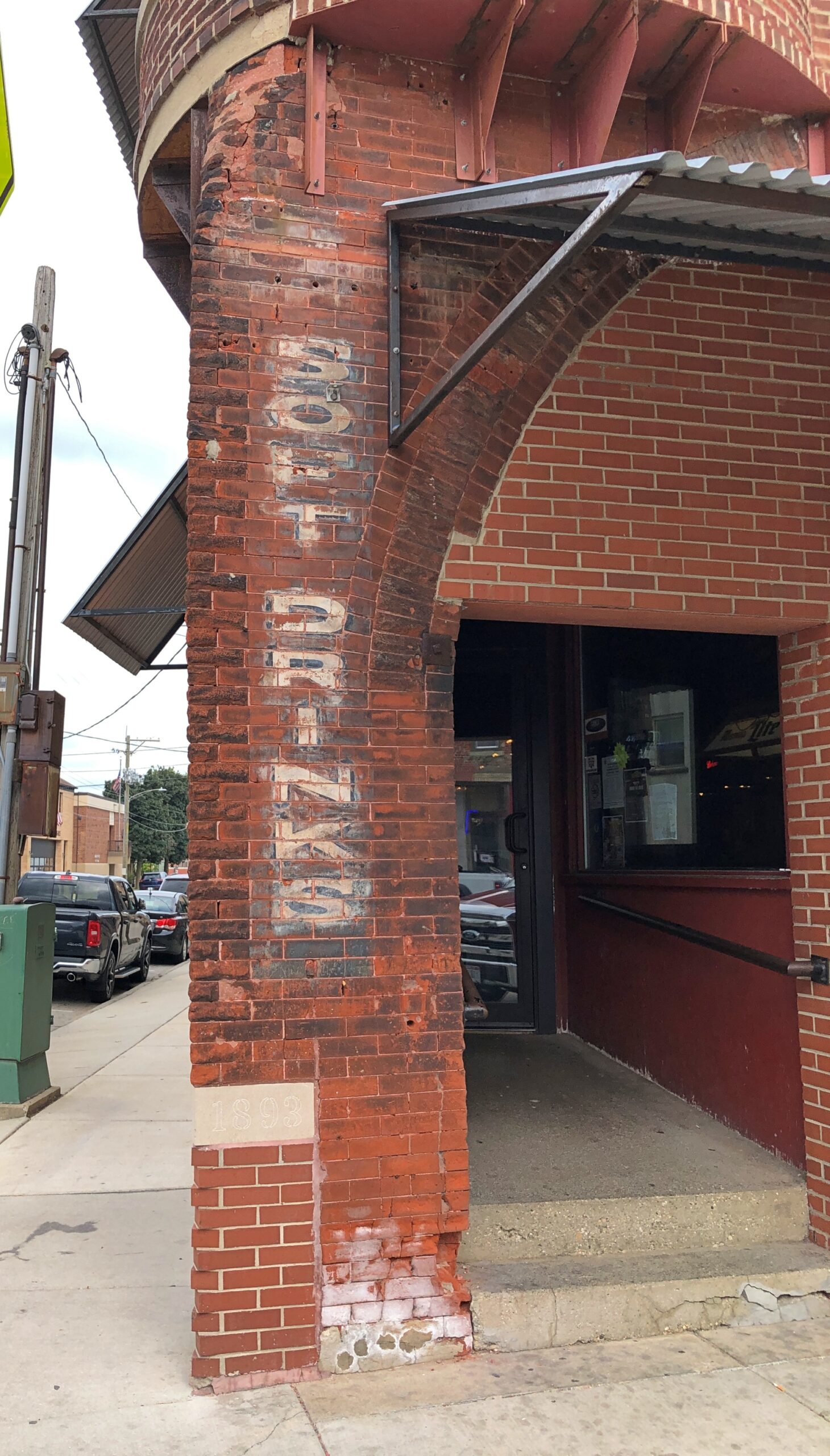
Swonguer Furniture & Undertakers. Not as odd as it might sound and, apparently, a known combination in a number of places more than a century ago. After all, how different is making pine boxes from making pine tables and chairs, at least for a skilled wood worker? Also, it explains this trace of the former furniture and undertaker establishment, in the form of abandoned commercial mosaic text.
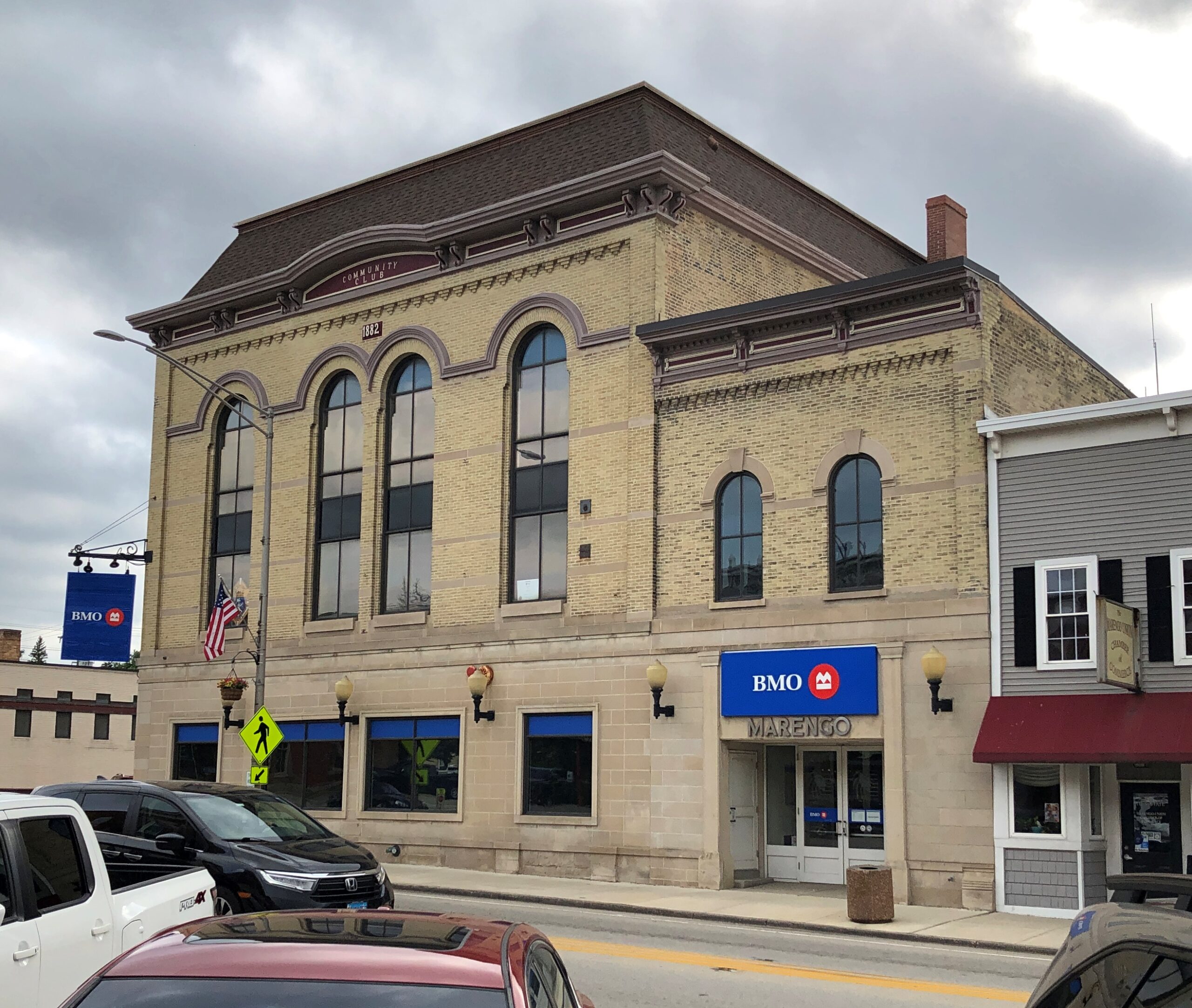
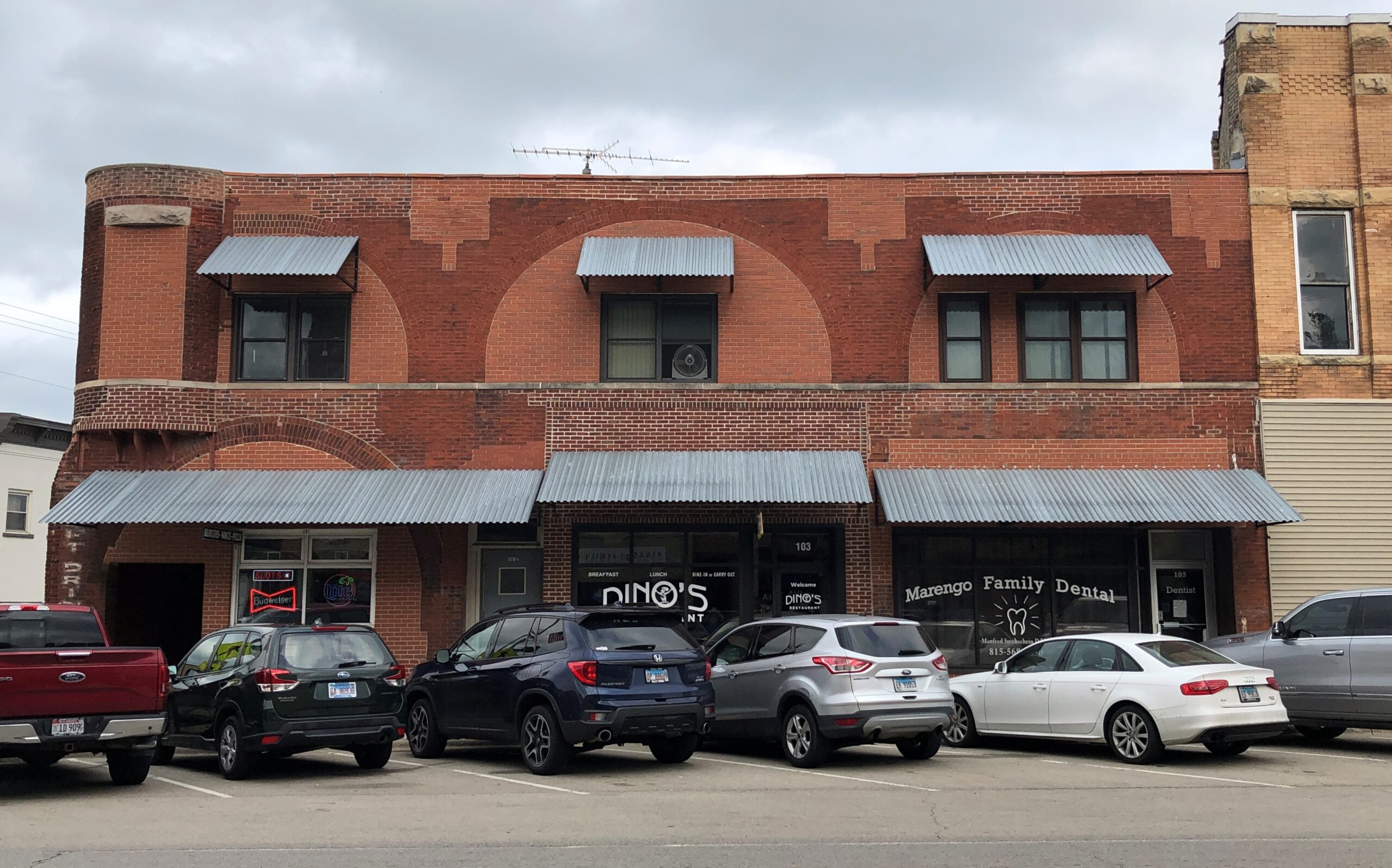
Other buildings on the street.
There’s been a fair amount of re-bricking and other construction over the years on that last one. The building looks like it was assembled Frankenstein-style, though I’m sure it wasn’t. The corrugated metal awnings look a little out of place, but I suppose it was an economical addition. To one side, an unusual ghost sign.
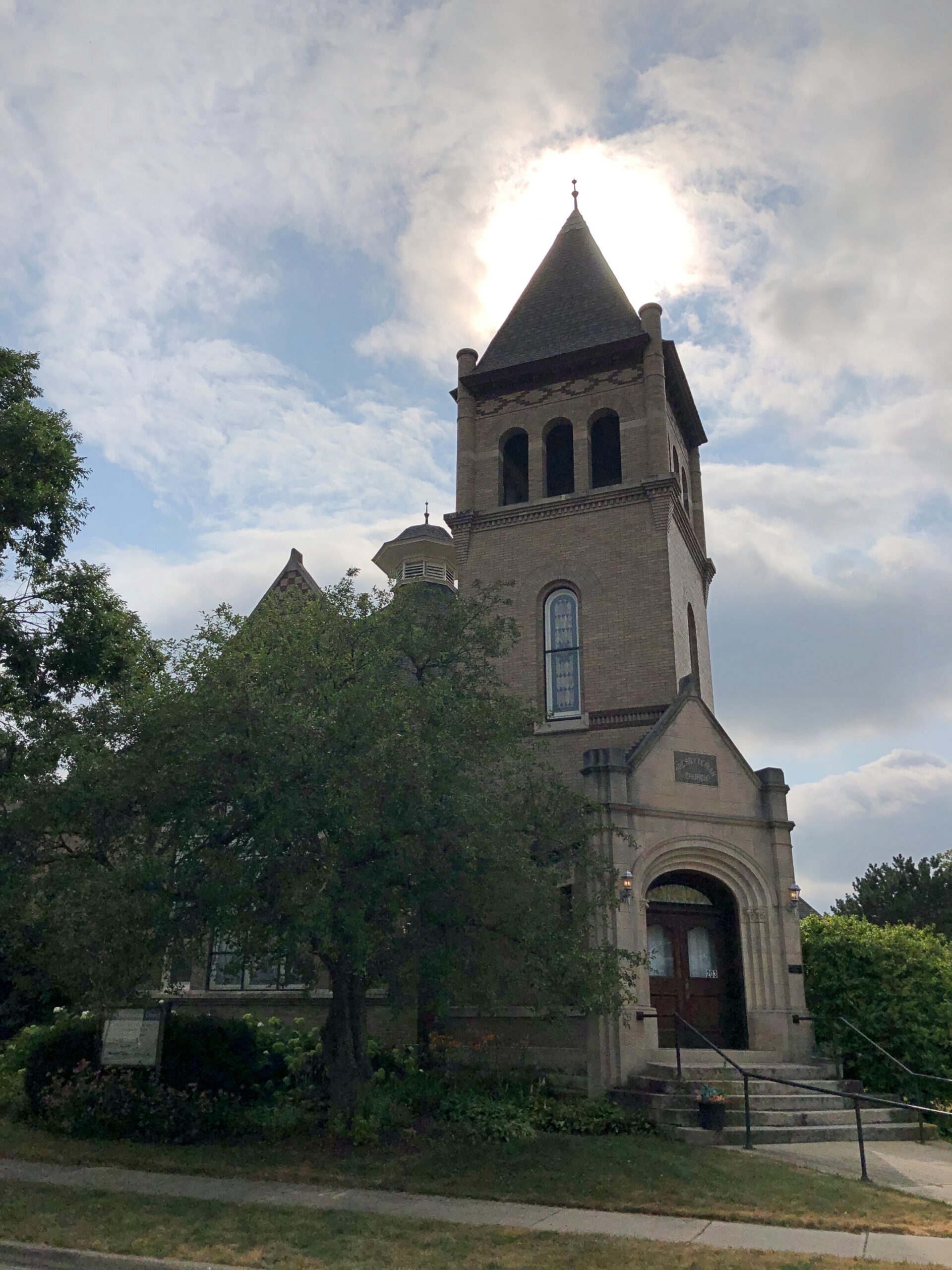
First Presbyterian, a block from Main.
An 1898 rebuilding of a previous church. Naturally McHenry County says: “The architects, Tumbull and Jones of Elgin borrowed elements from various Romantic styles when they designed this church. Foremost is the Moorish-style square bell tower.”
I’ll say. How often does one encounter Moorish-style square bell towers here in the heart of North America? Maybe more often than I know, but I figure no one’s done a census.
Not far from downtown is East St., which takes you to the City of Marengo Cemetery. Cubs pitcher Lundy Lundgren (d. 1934) is buried there; I saw his marker across the street during a previous visit to Marengo. This time, I took a look at the older section of the cemetery.
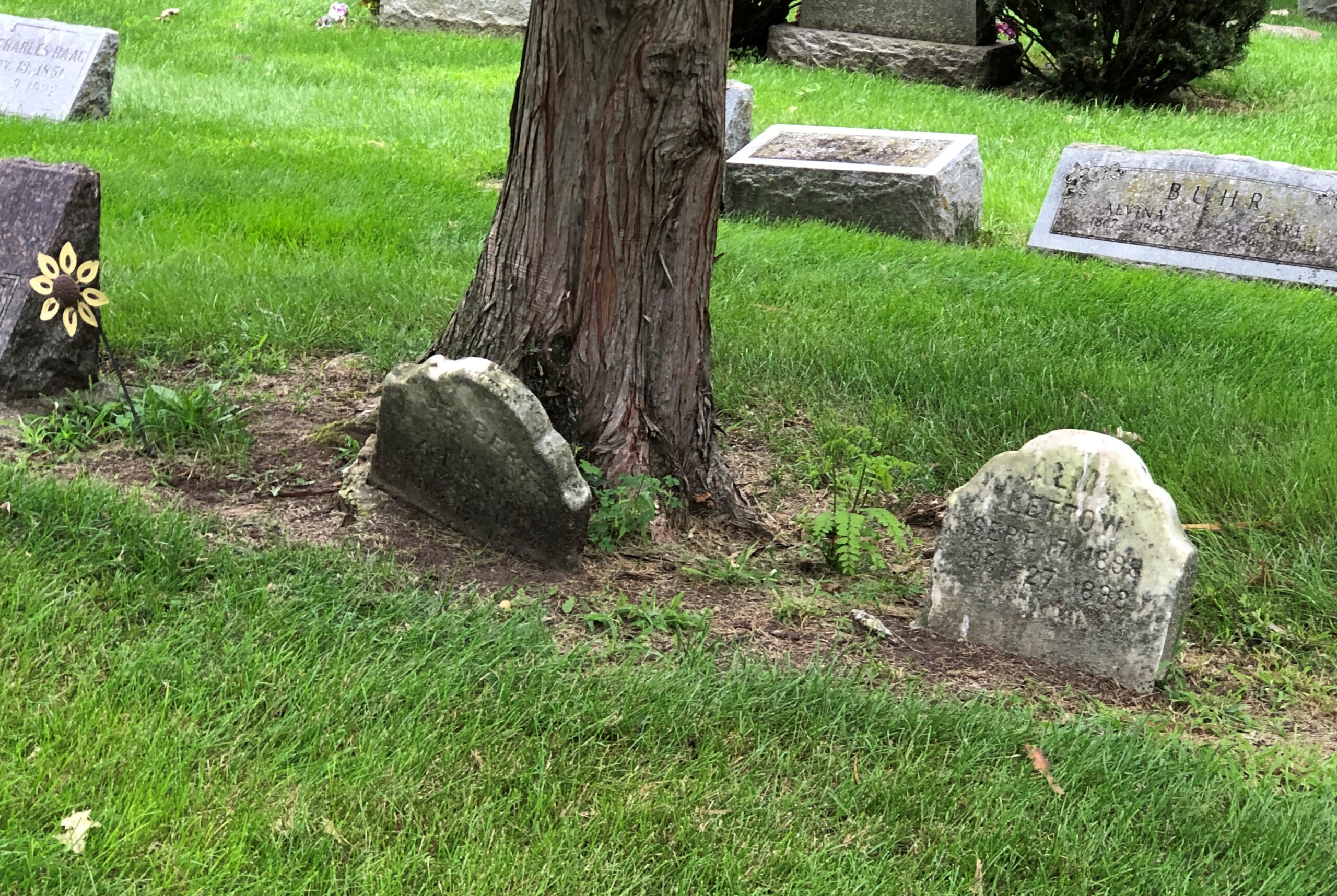
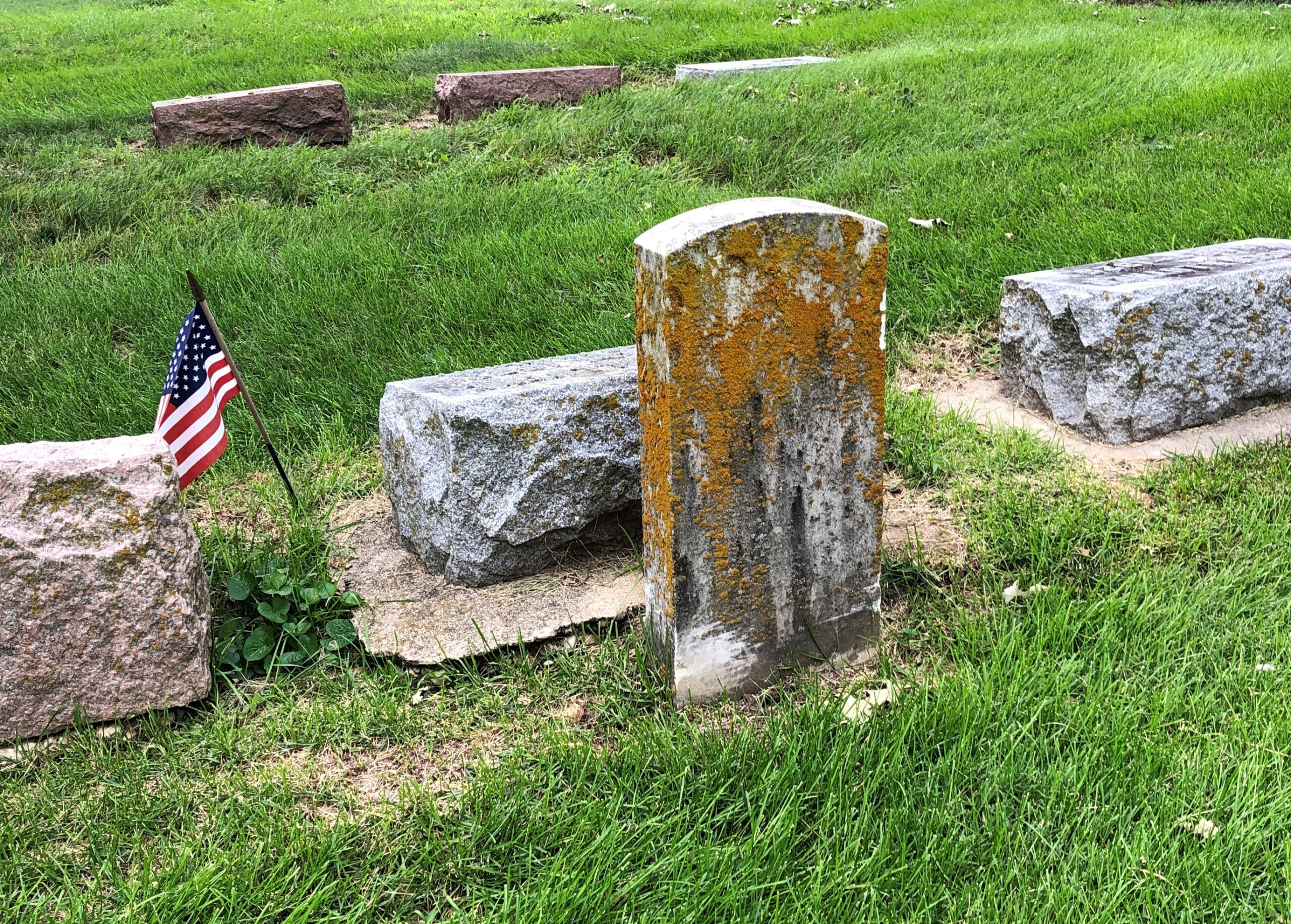
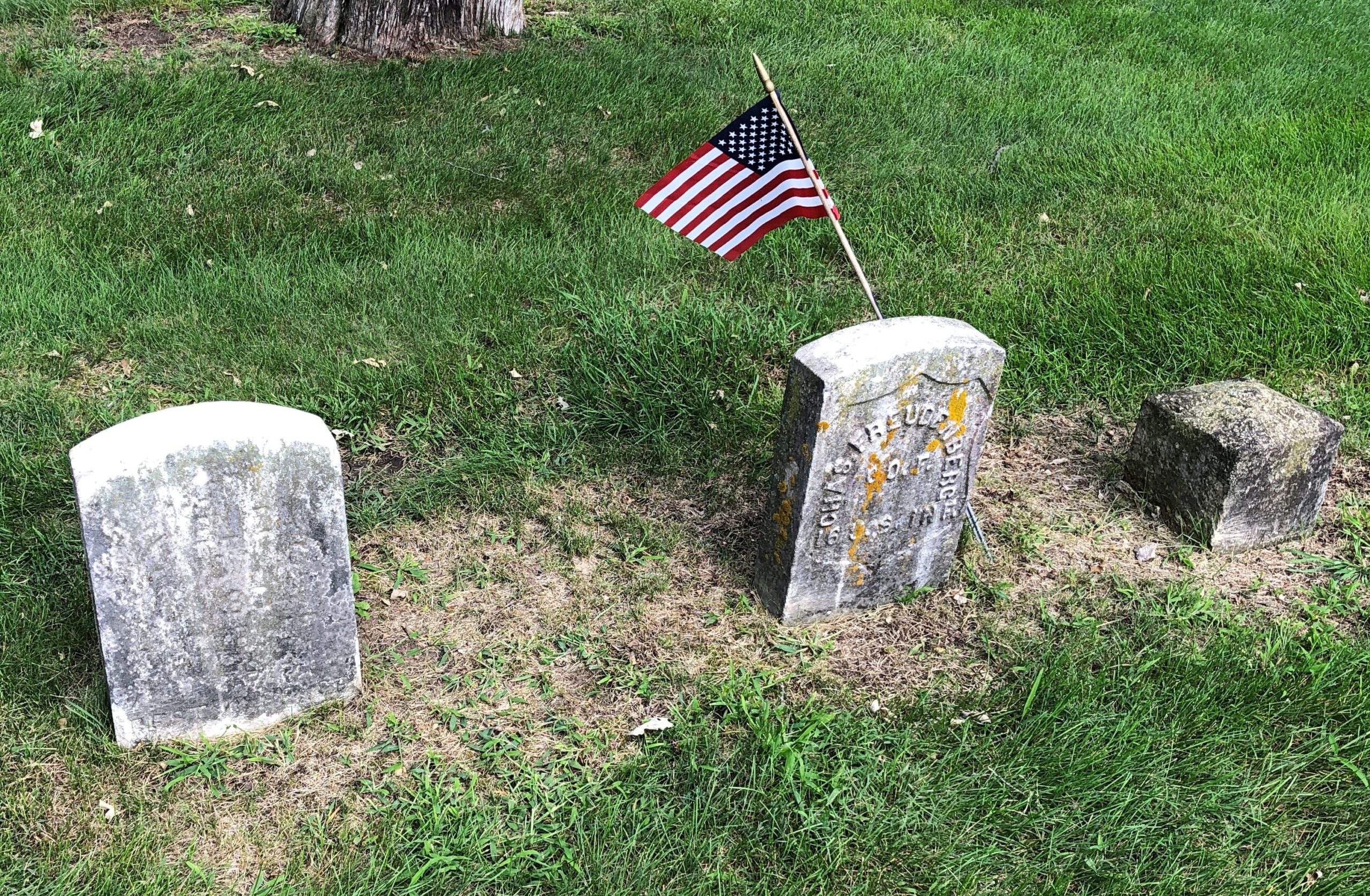
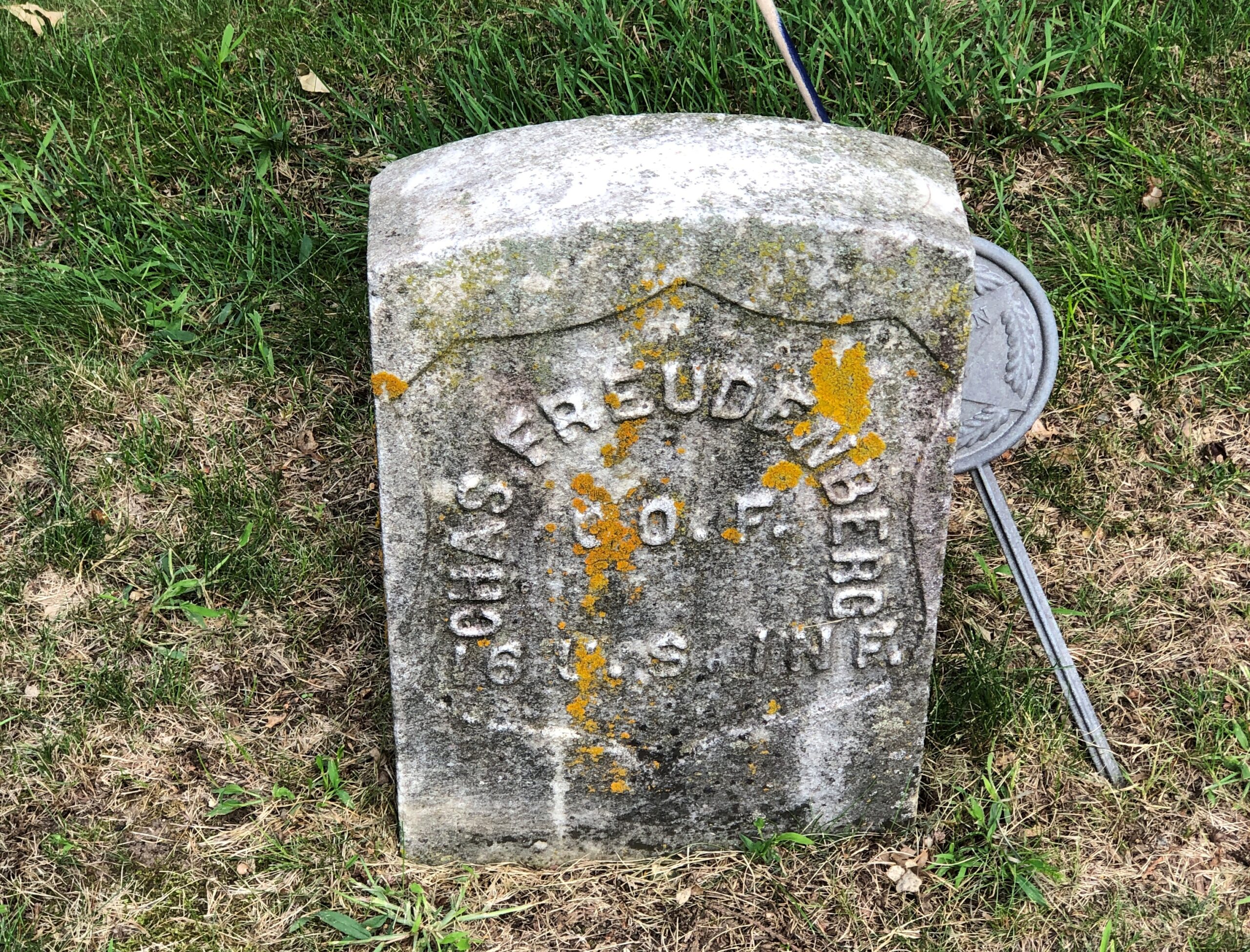
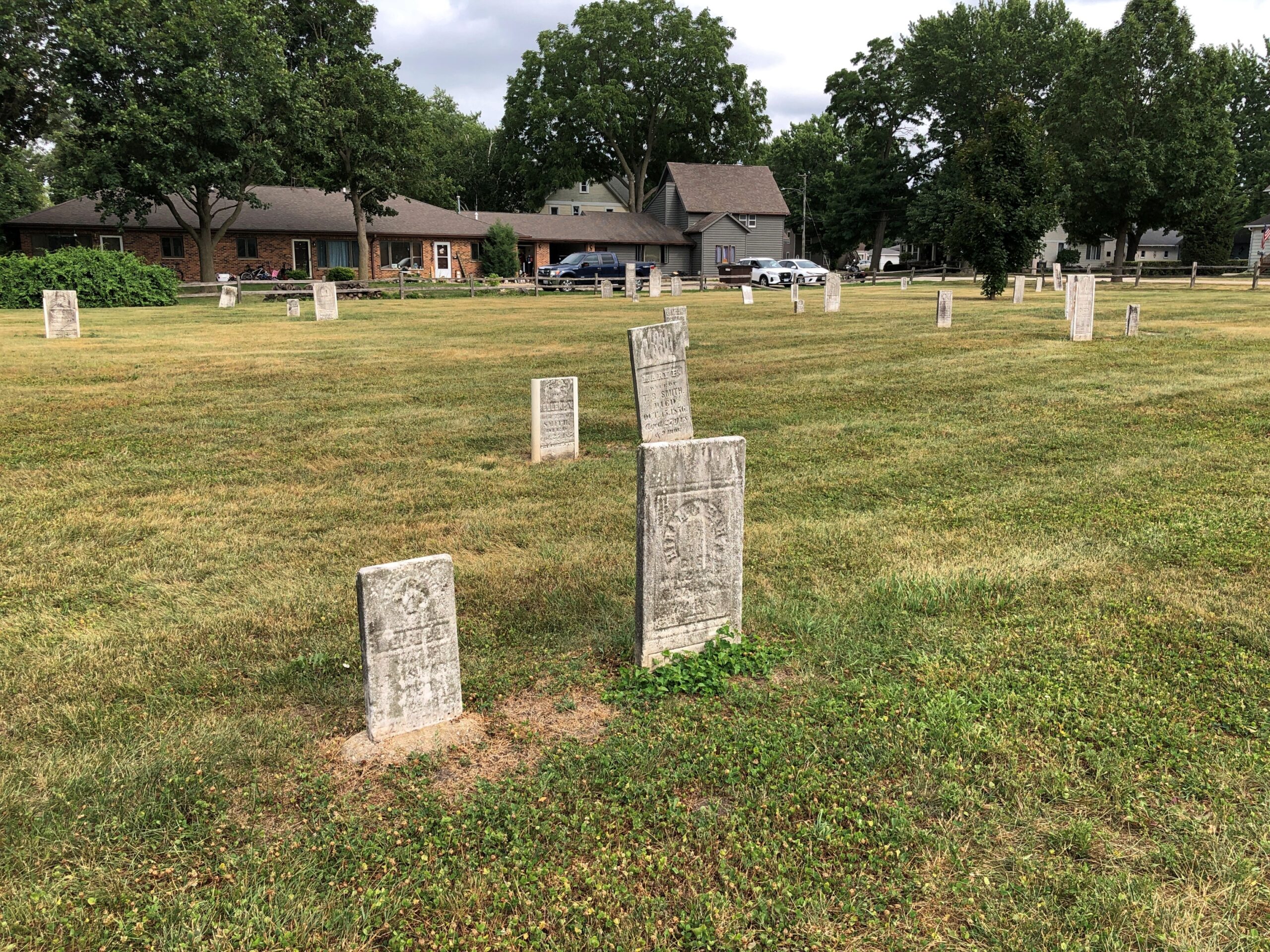
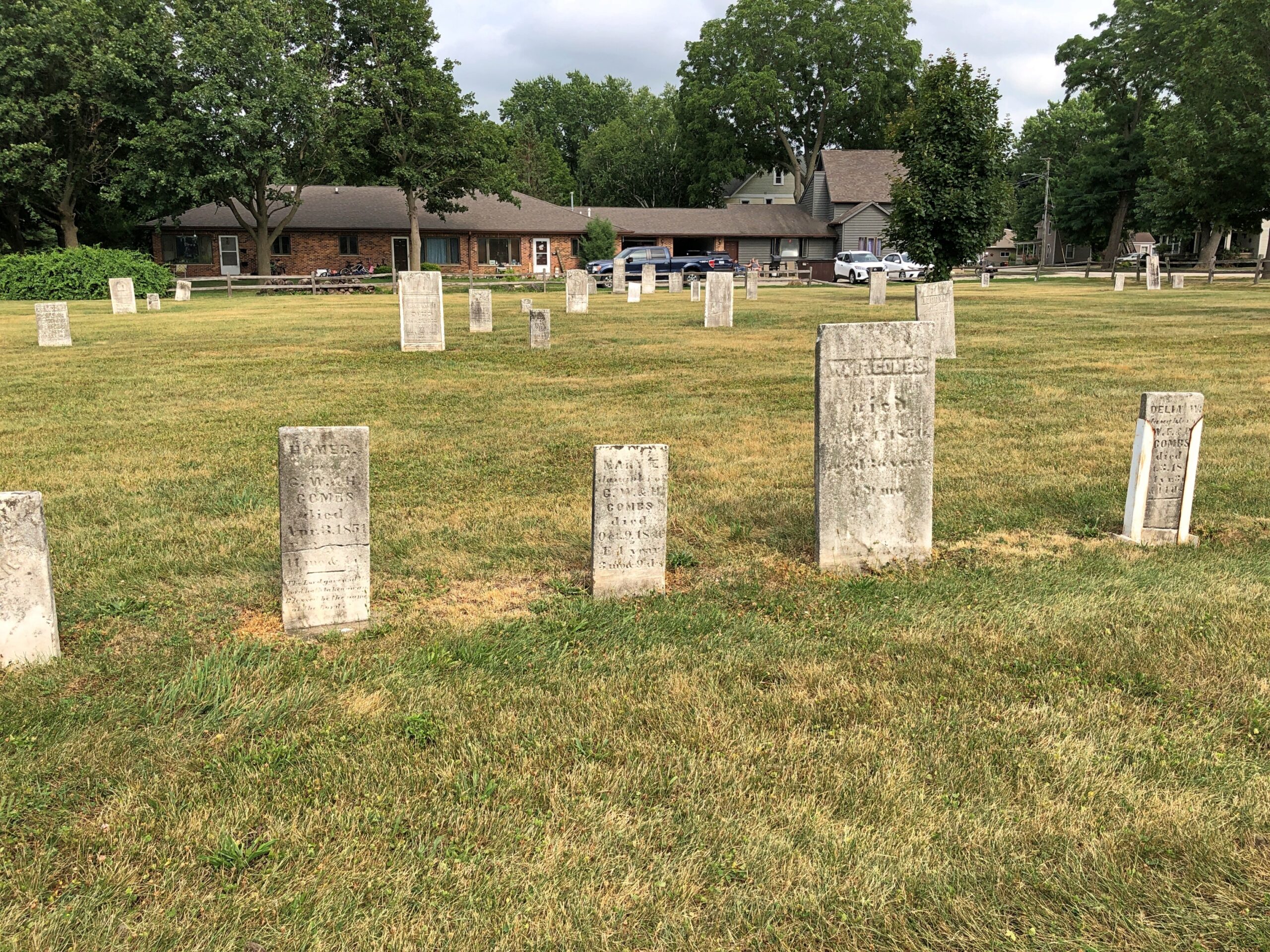
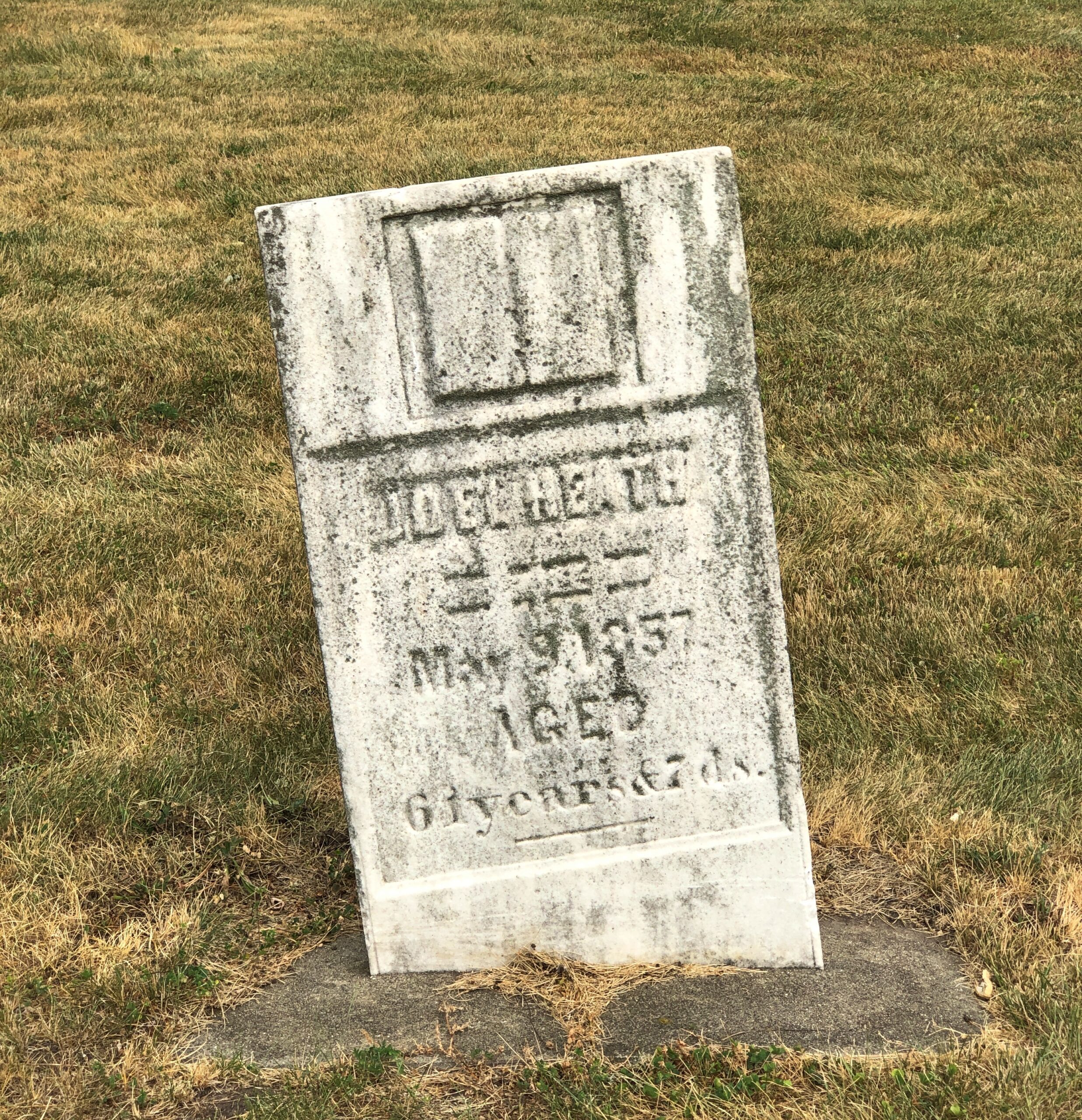
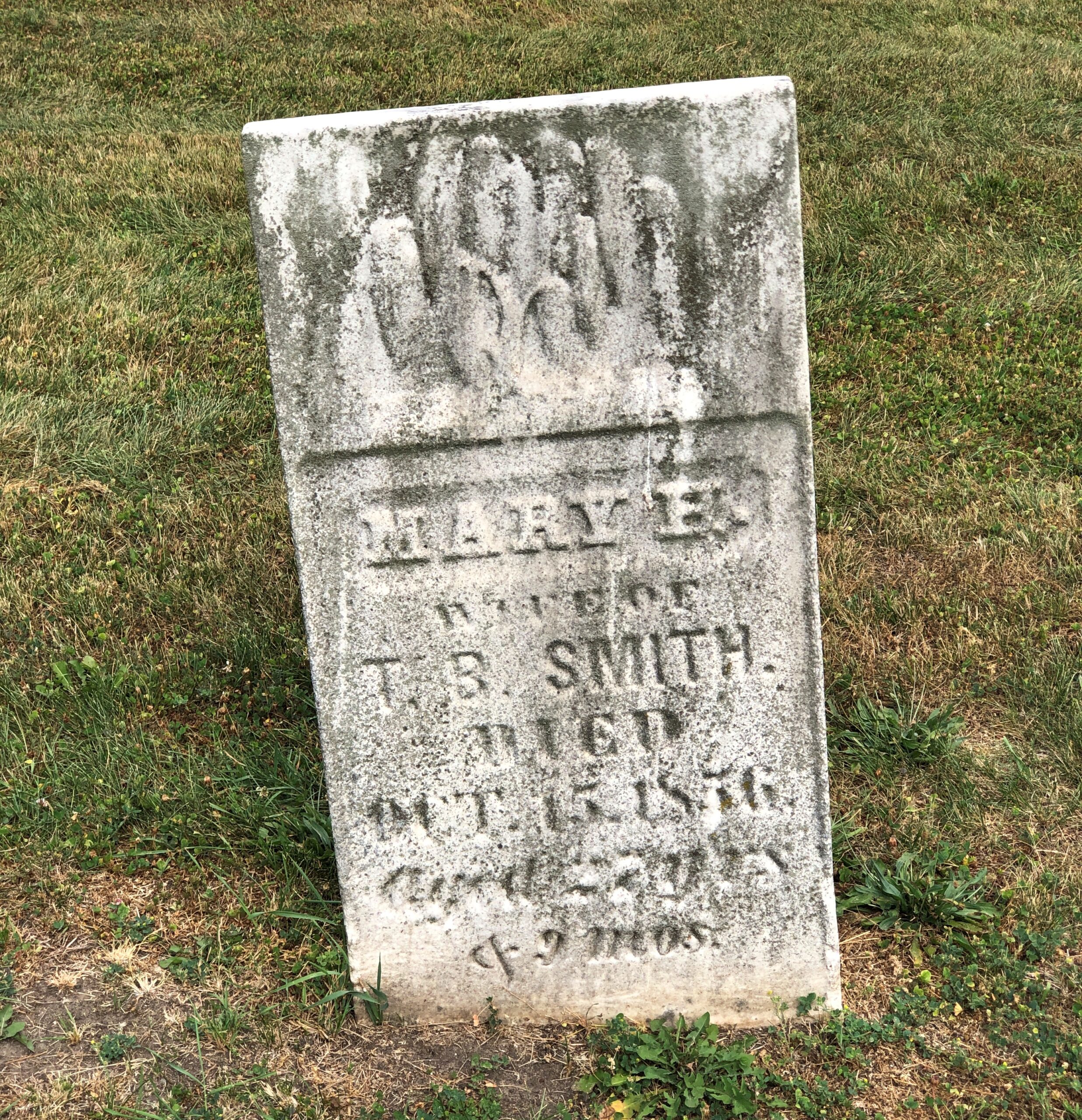
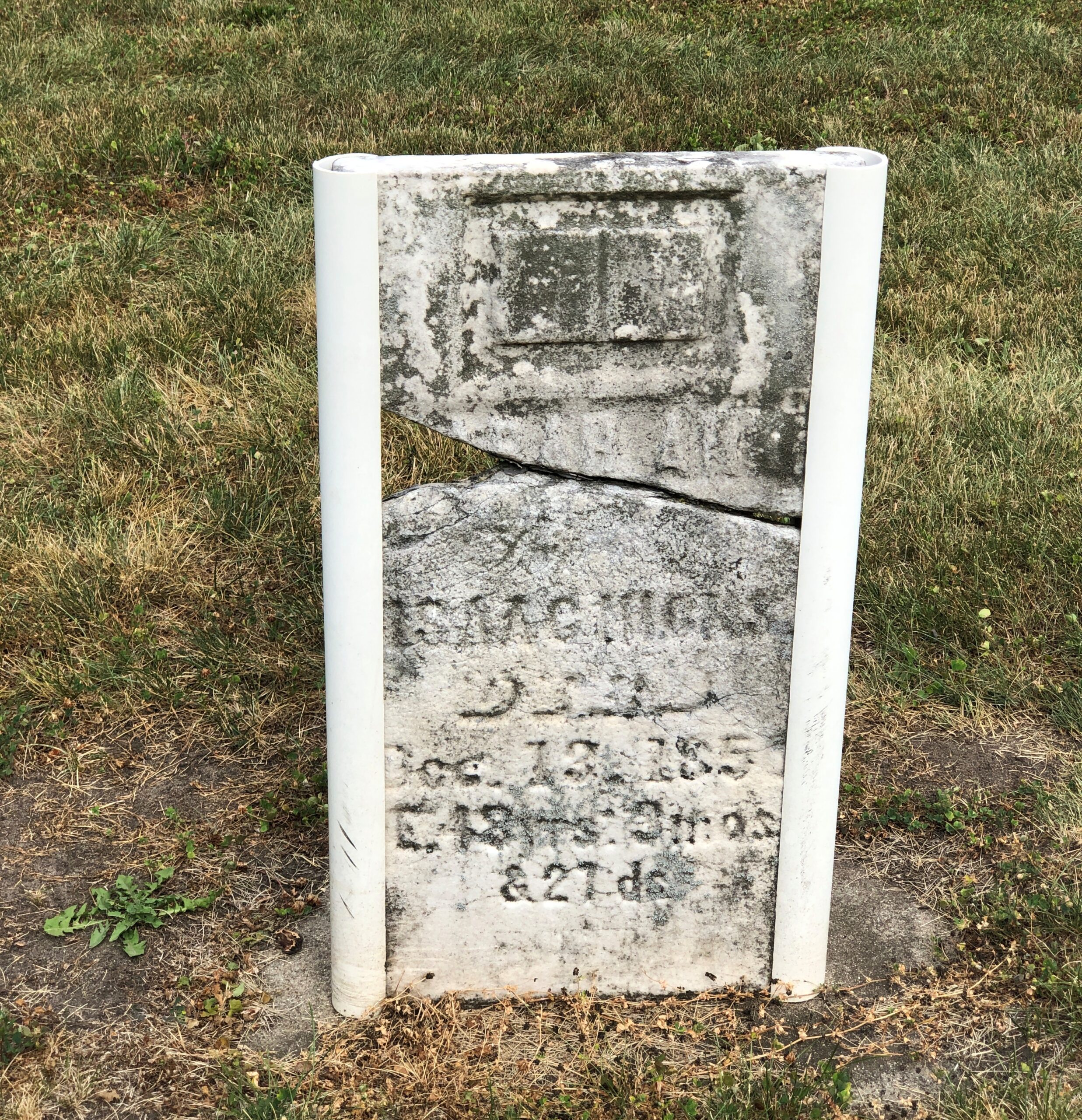
I suspect there are more burials than stones, but in any case, the stones are worn.
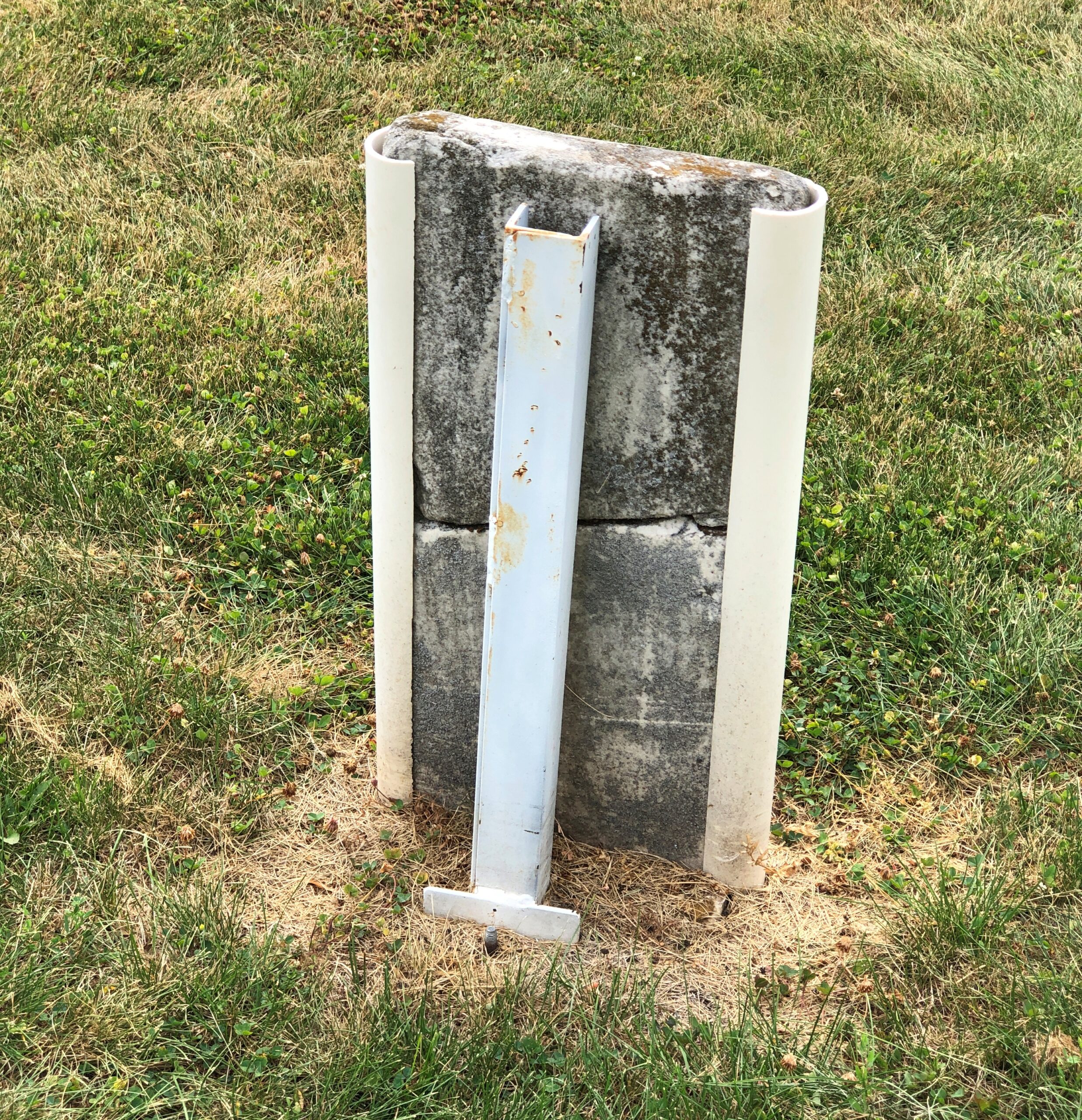
In some cases, propped up by metal structures.
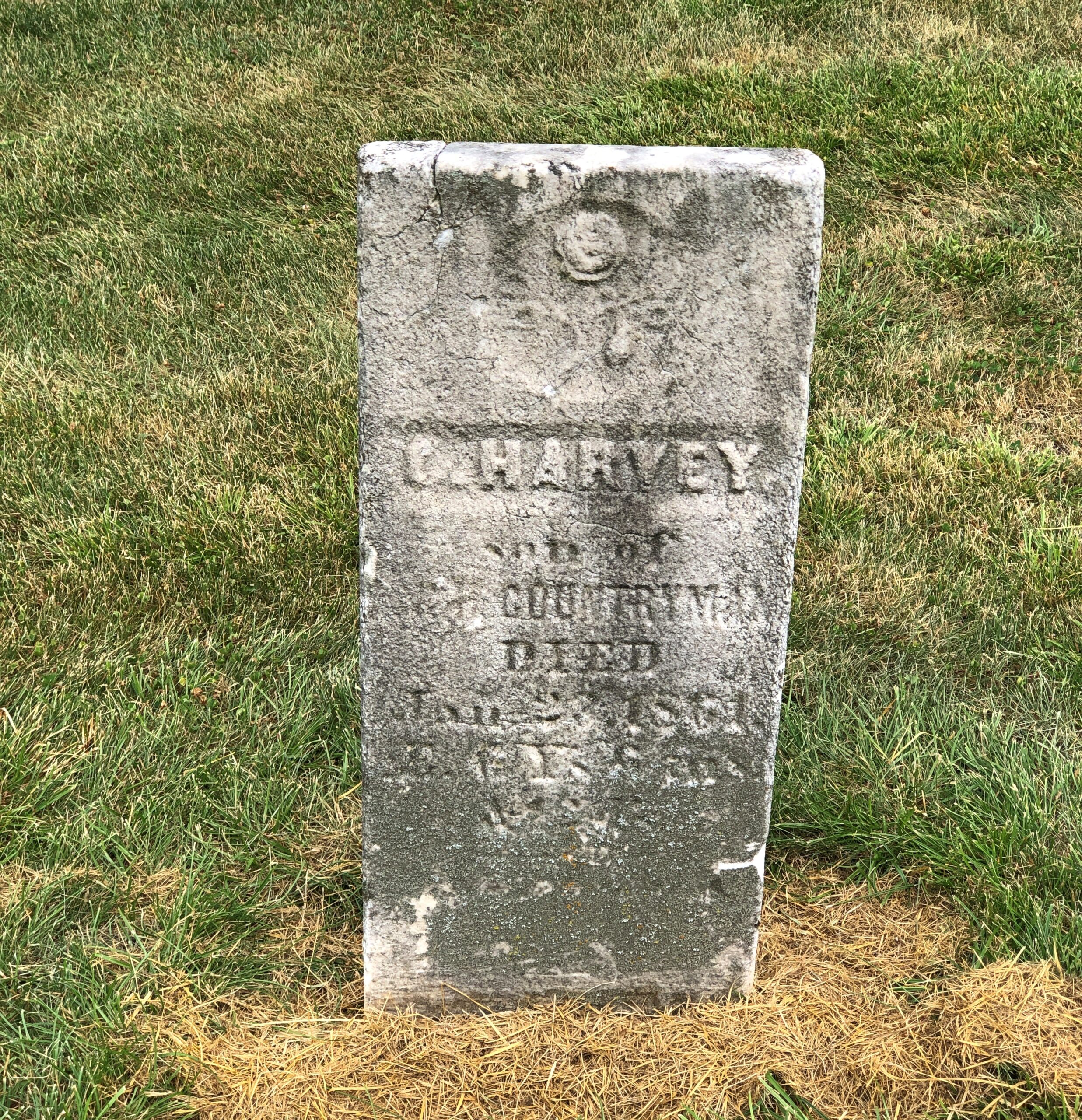
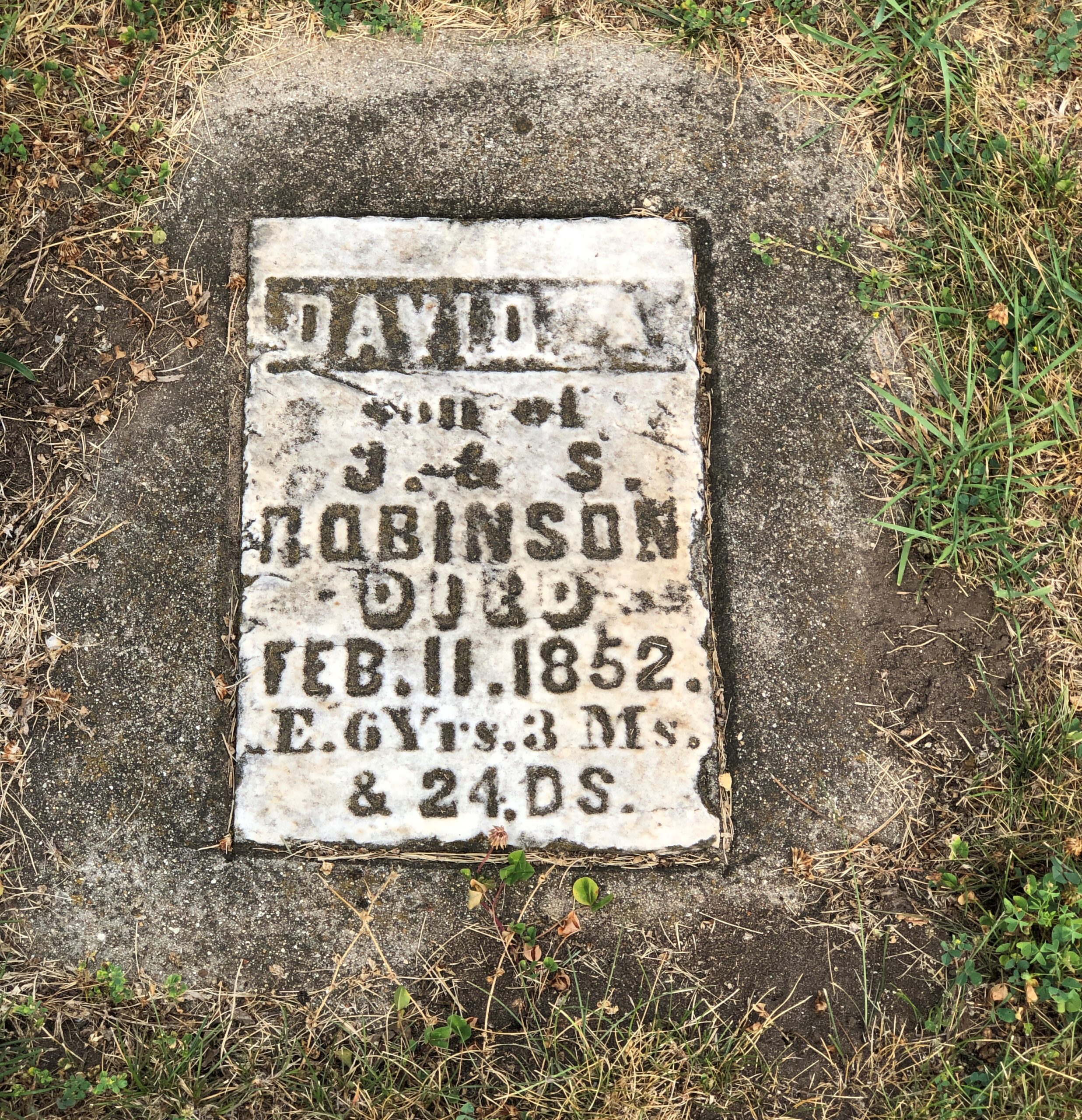
As usual for any cemetery, there are stones that hint at sad stories of extinguished youth.
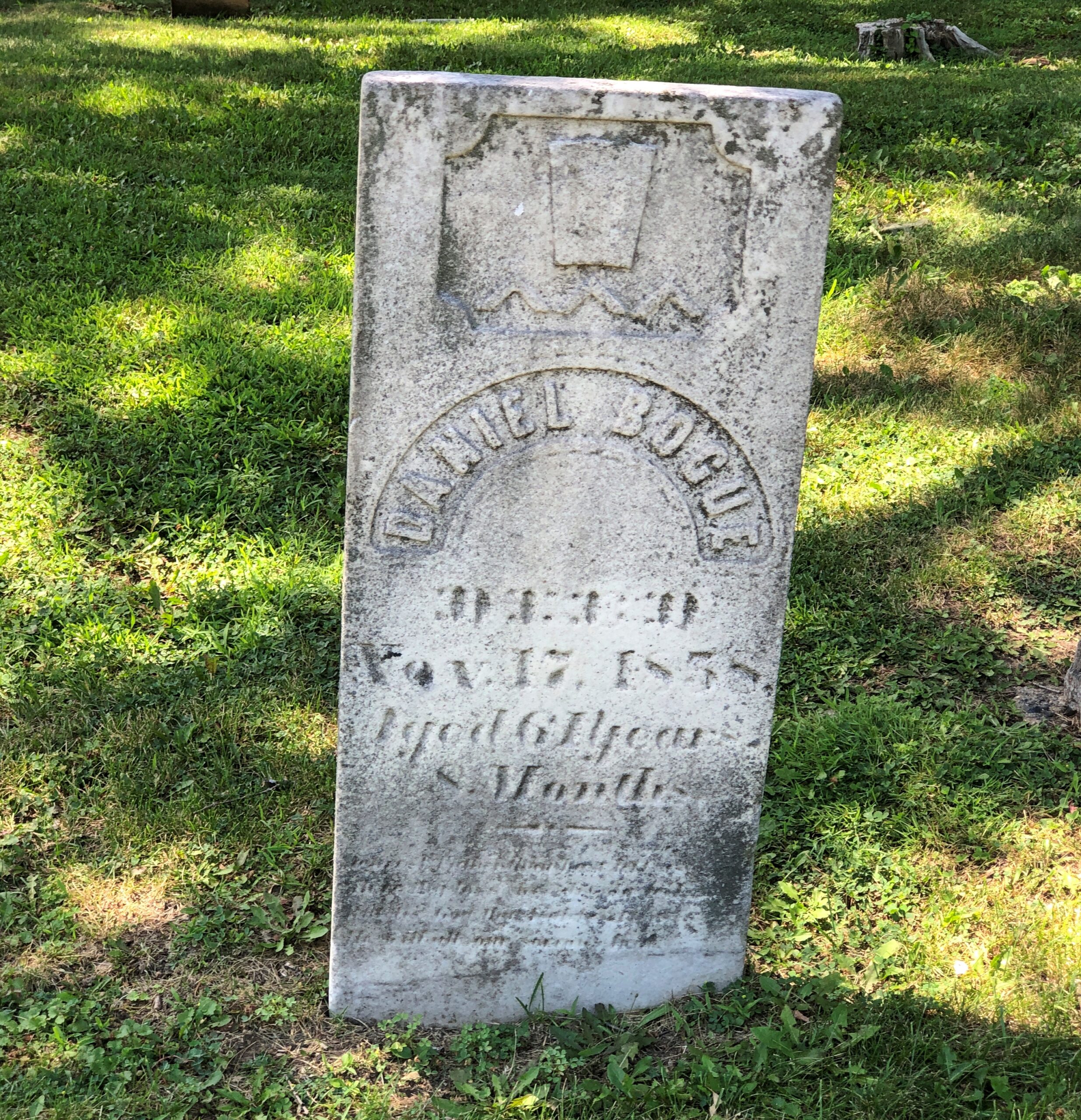
Six years, three months and 24 days. Whatever else you can say about being old — and I’m at that point — you can be sure you aren’t going to die young.
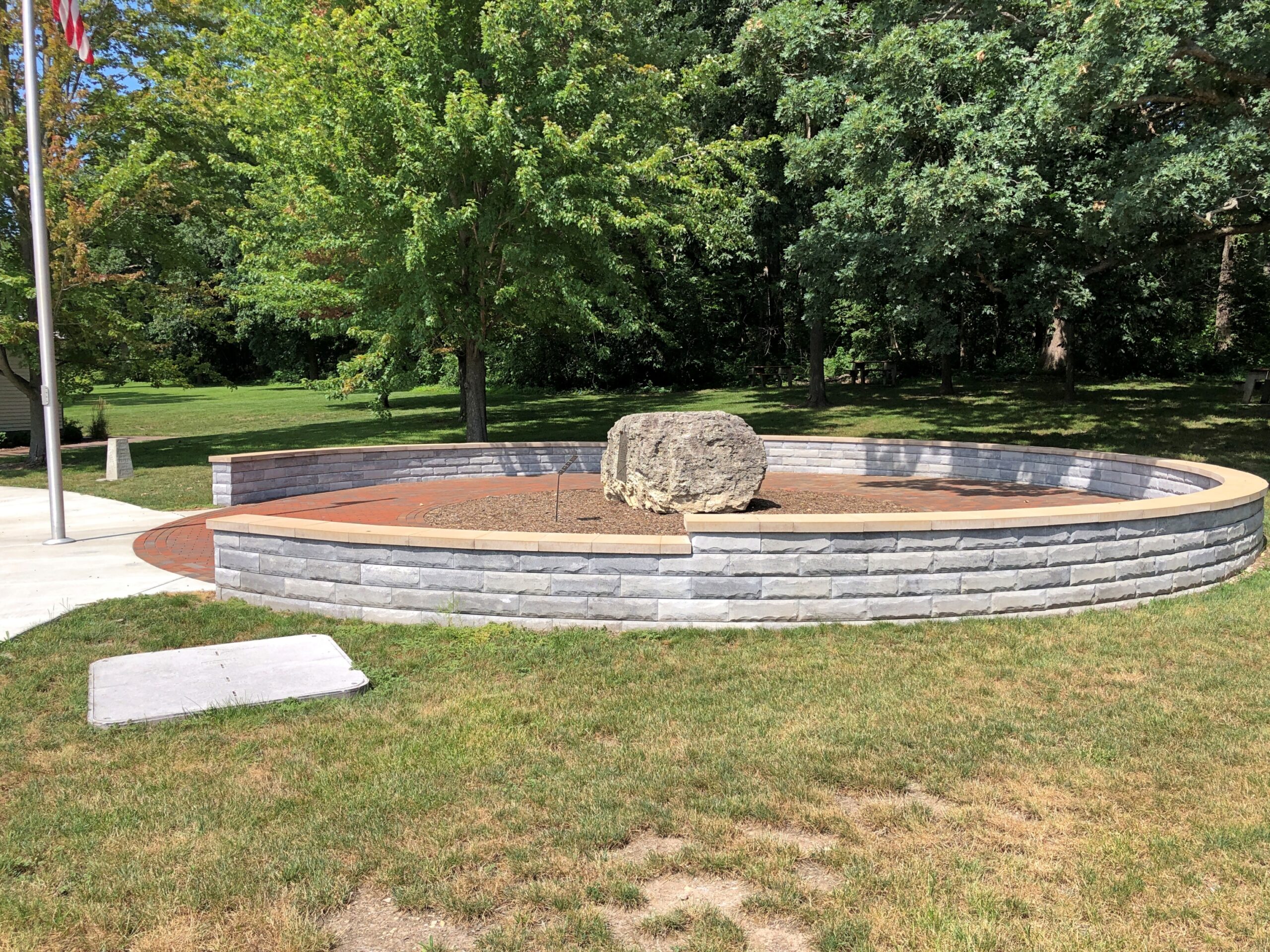
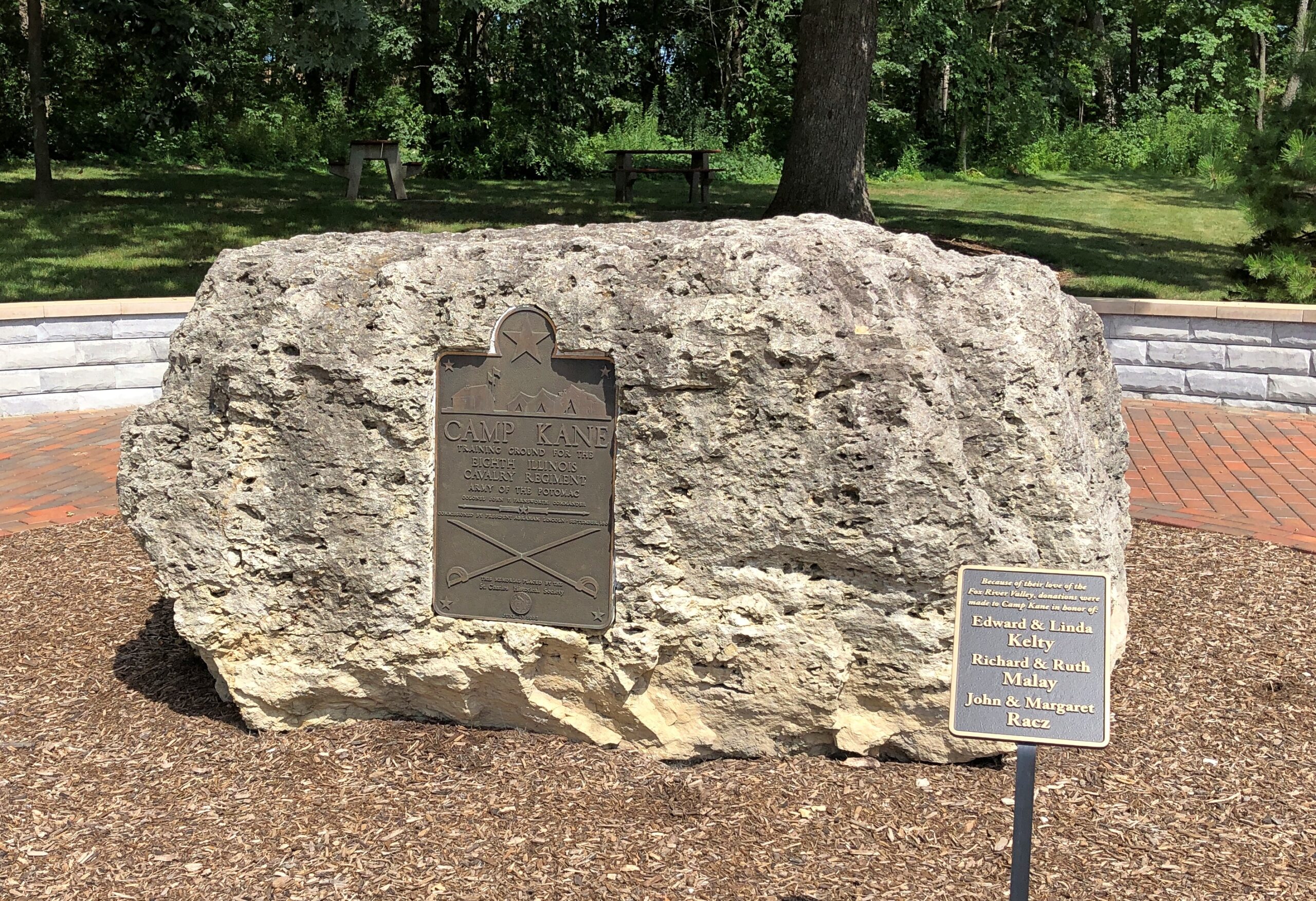
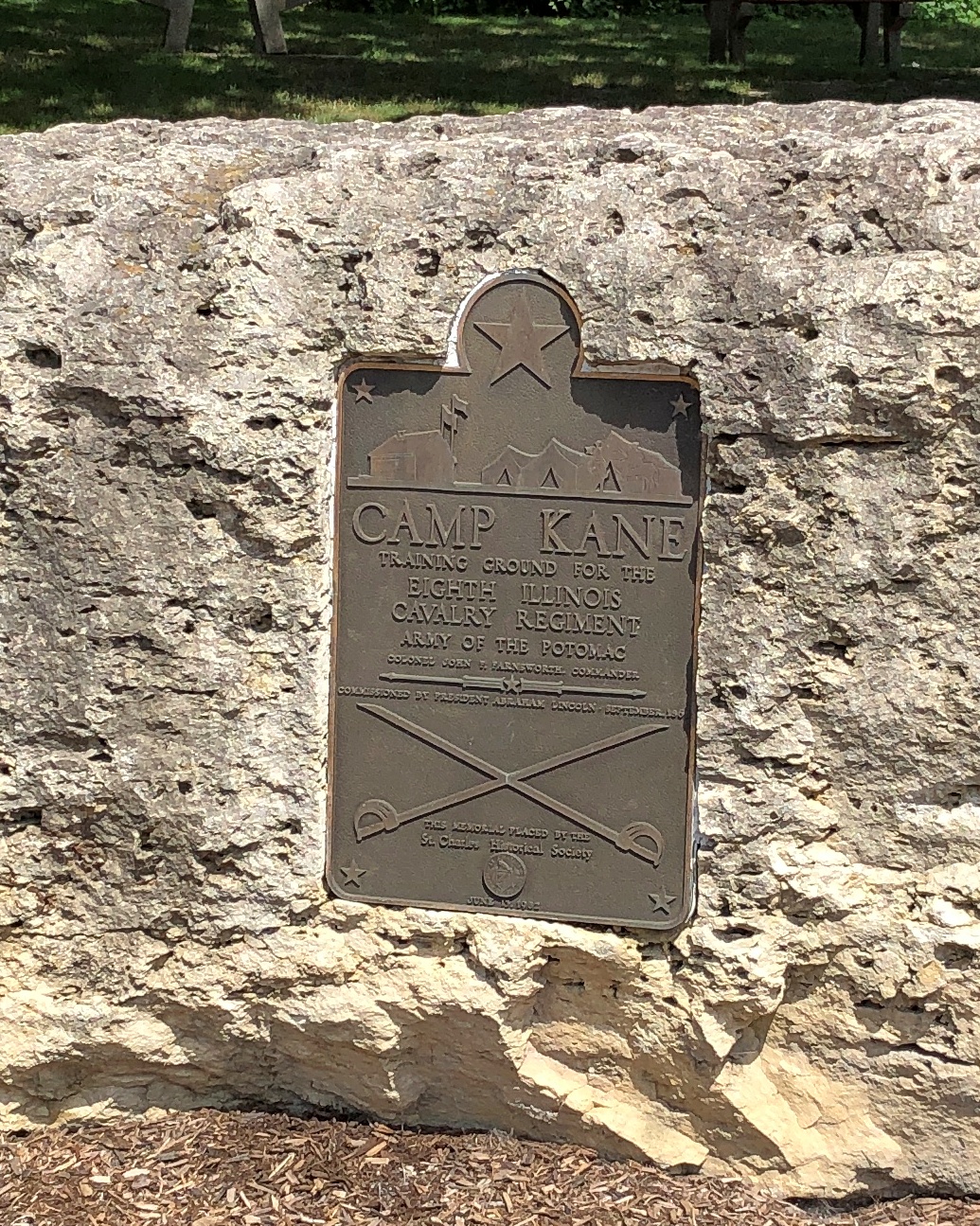
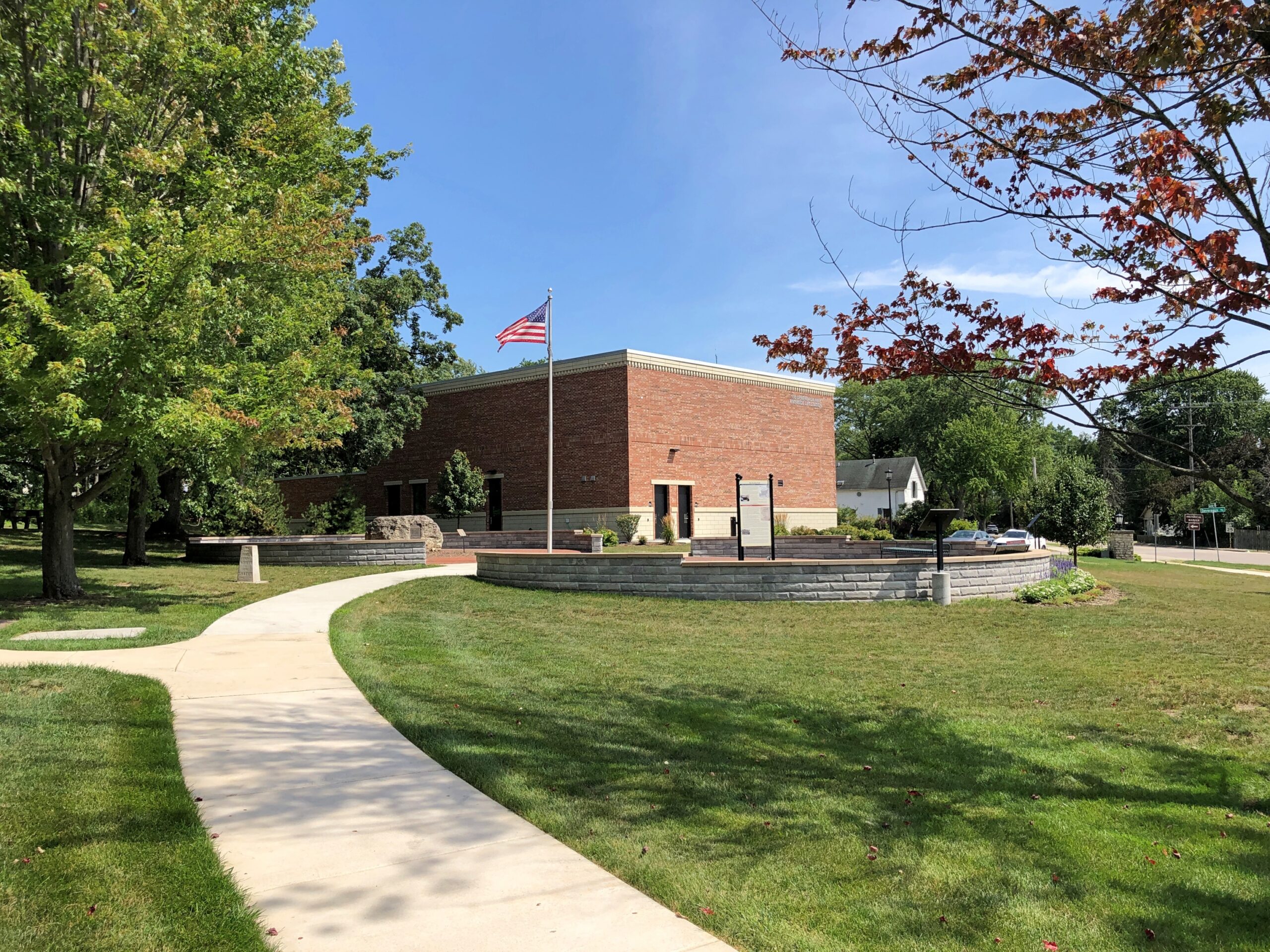
Along the highway Illinois 25 near the Fox River – within sight of the river – is Camp Kane. Or rather, the site of Camp Kane, since it was never intended to be anything but temporary, and in our time, the green space is known as Langum Park in St. Charles. A memorial to the men who gathered at the camp during the Civil War is inside a small stone ring.
In 1861, prominent Kane County resident John Farnsworth (d. 1897) – attorney, Congressman, politico on the ground floor of the Republican Party, ardent abolitionist and friend of Abraham Lincoln – organized the 8th Illinois Cavalry, which trained on land he owned along the Fox River. Camp Kane, it was called.
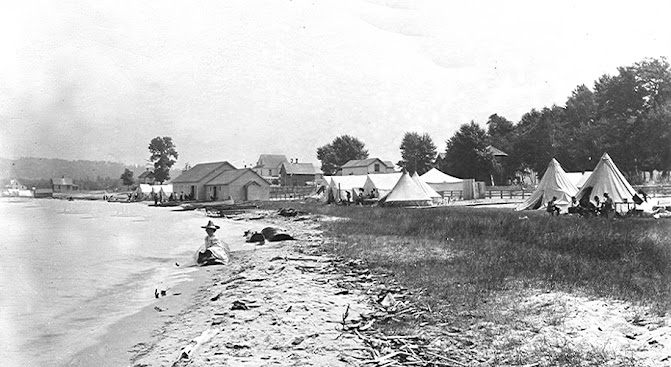
Below, Camp Kane in the day, a public domain image borrowed from the Digital Research Library of Illinois History. The 17th Illinois Cavalry also organized there, fairly late in the war.
For a time, Col. Farnsworth led the 8th, which served through the entire war in the Army of the Potomac. Most notably at Gettysburg, a little after Farnsworth’s command.
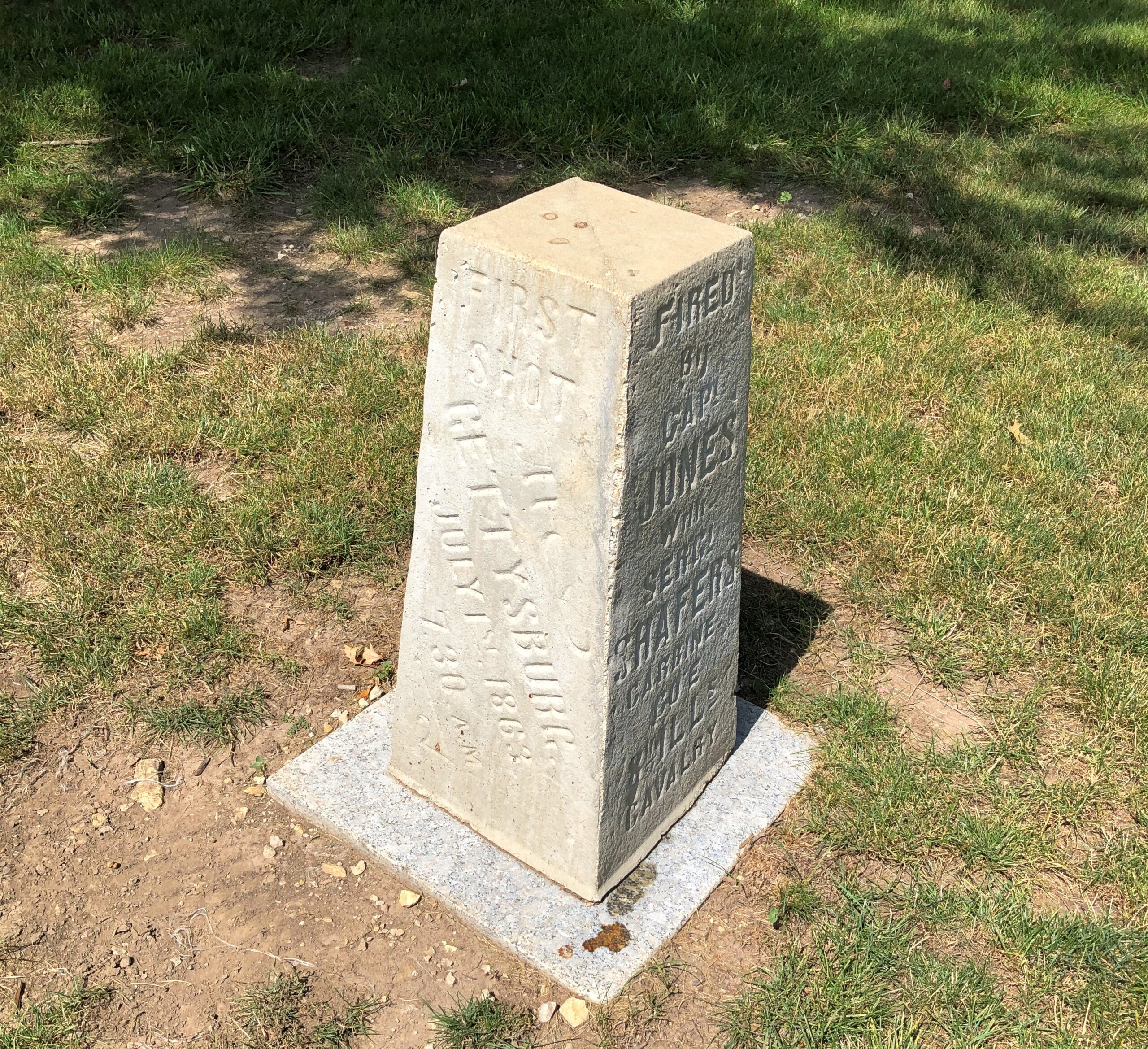
“It was the 8th Illinois Cavalry’s Lt. Marcellus Jones who fired the first shot of the famous battle [Gettysburg],” says the Digital Research Library of Illinois History. “Confederate Colonel John S. Mosby (The Grey Ghost) called the 8th Illinois Cavalry ‘The best cavalry regiment in the Army of the Potomac.’ On a more sorrowful note, the 8th Illinois Cavalry also had the disheartening yet distinguished honor of being the honor guards for Lincoln’s funeral train.”
A stone memorizes that first shot at Gettysburg.
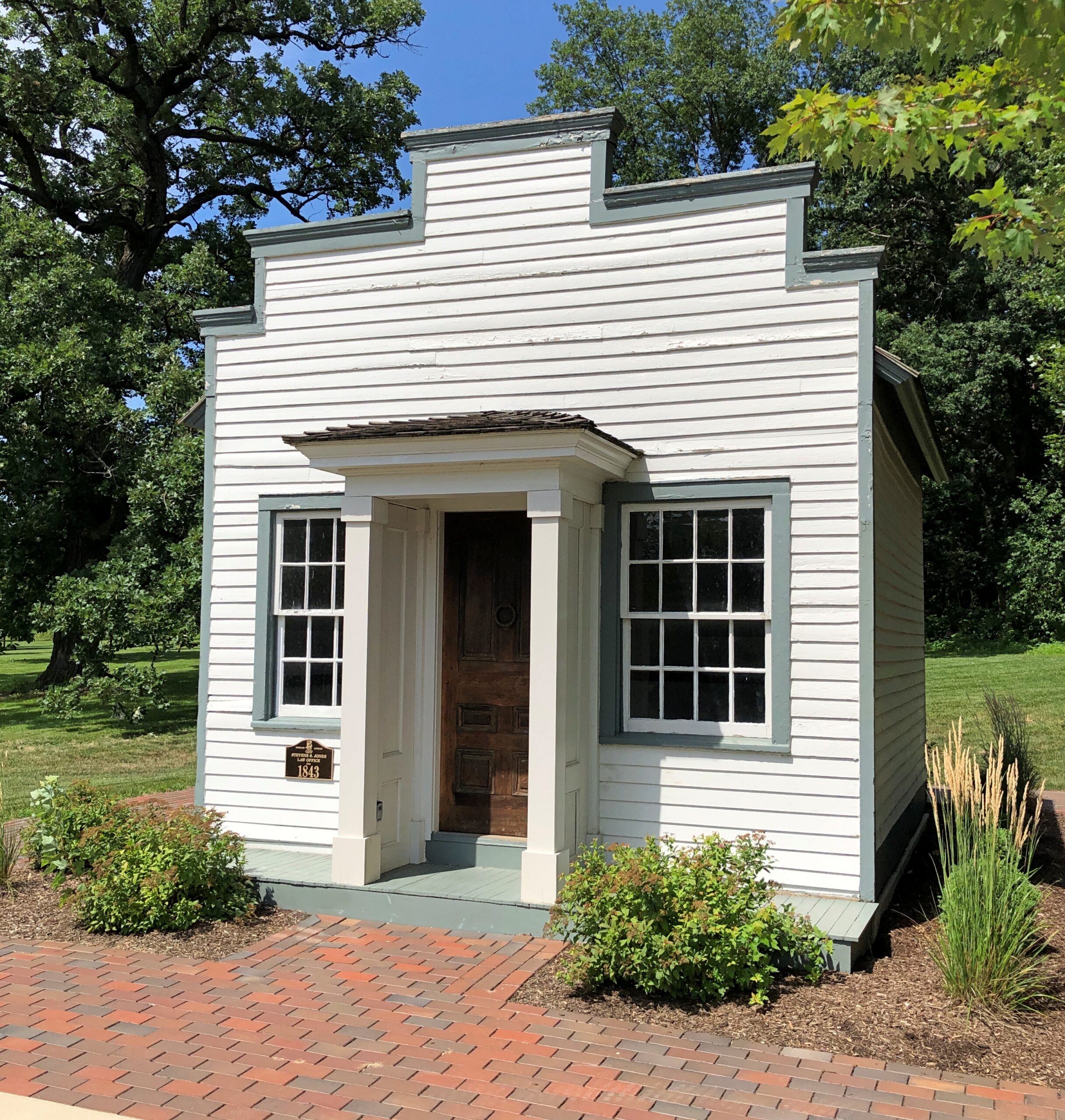
Moved from elsewhere in St. Charles: the law office of Steven S. Jones (d. 1877), built in 1843. But it did have a wartime use: a holding area for deserters.
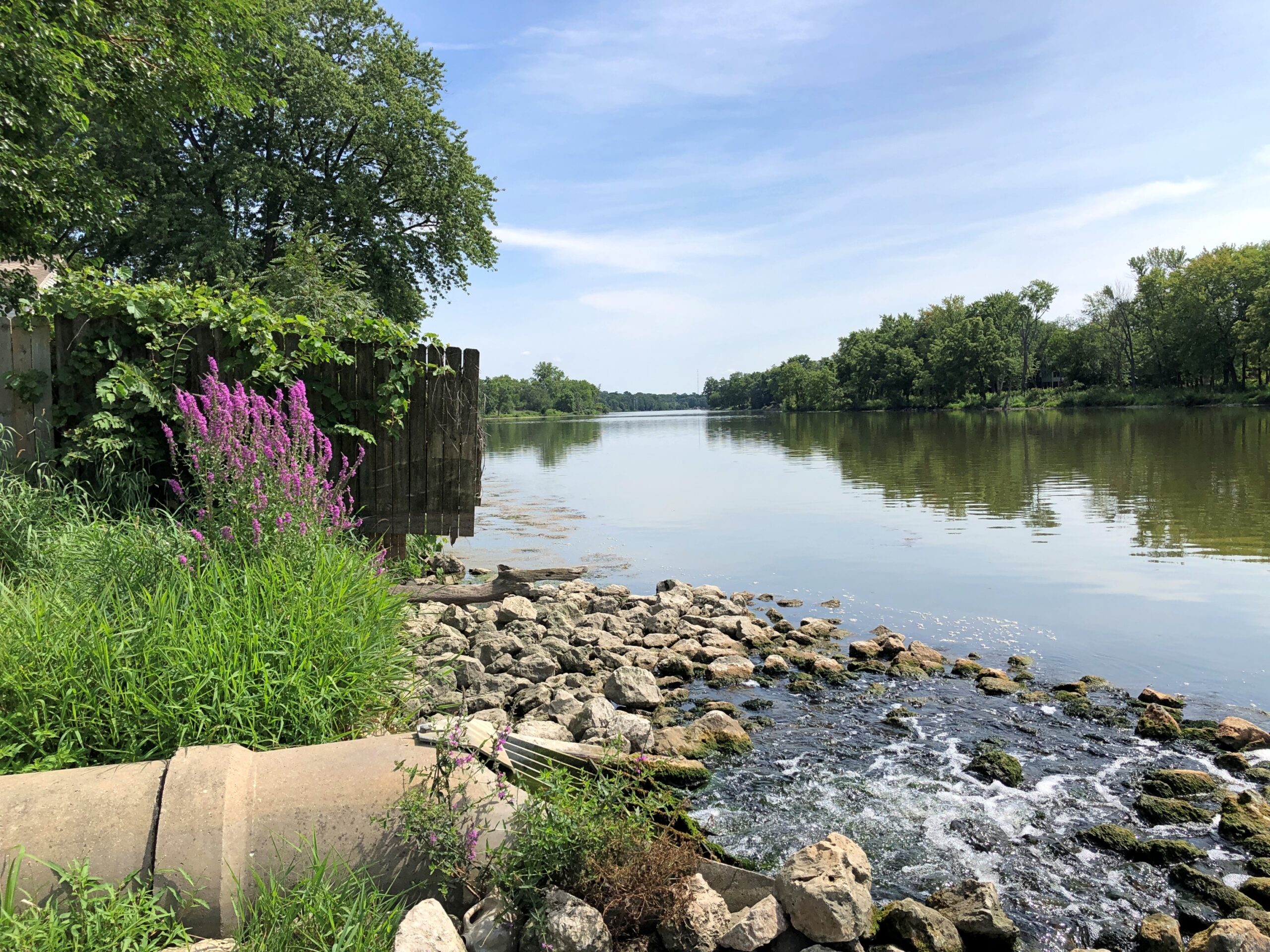
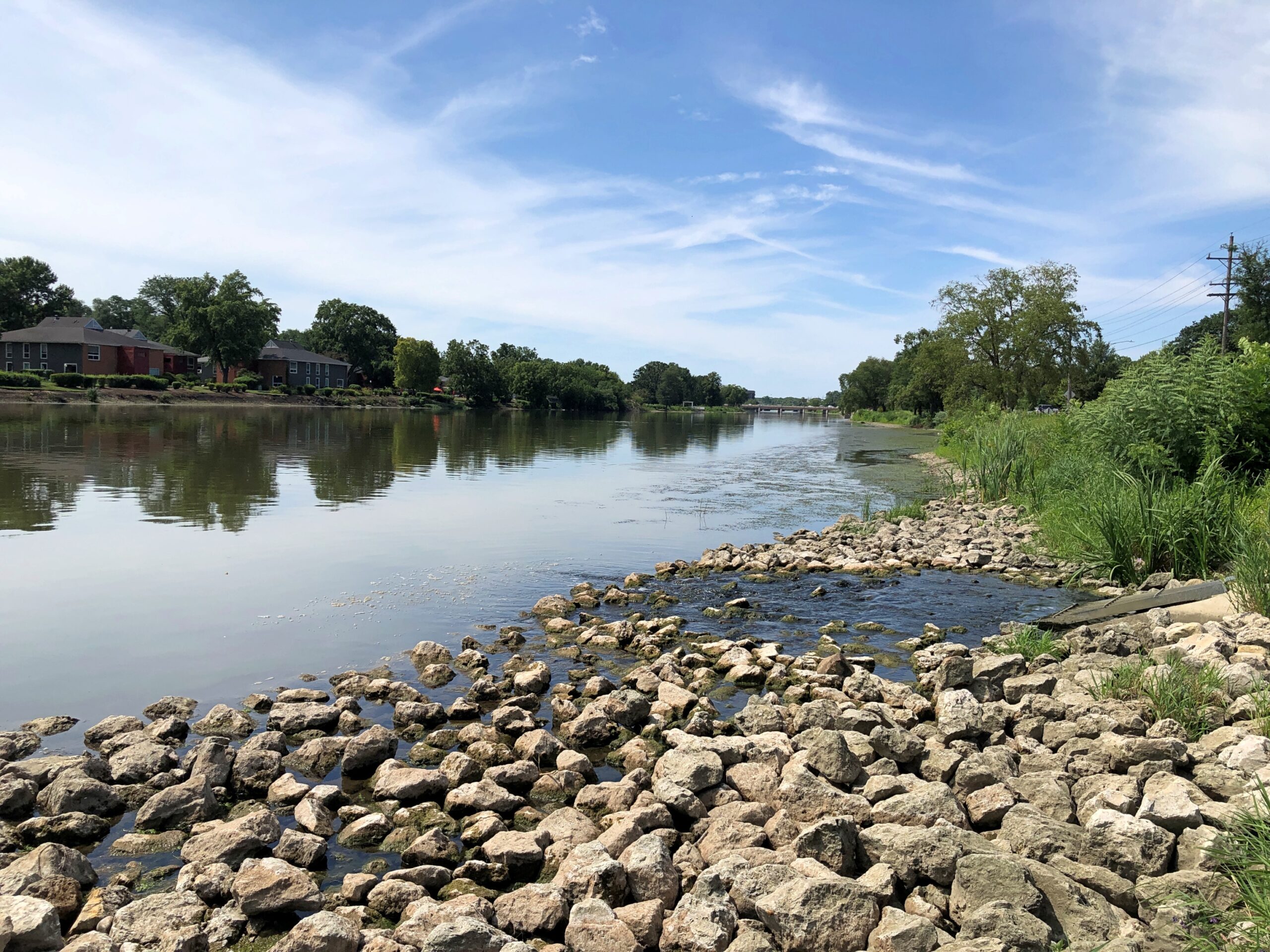
The site, as mentioned, isn’t far from the wide Fox. Cross the road, and you’re there. That pipe, I believe, is a channelized creek, nothing to do with wastewater.
One more thing. This.
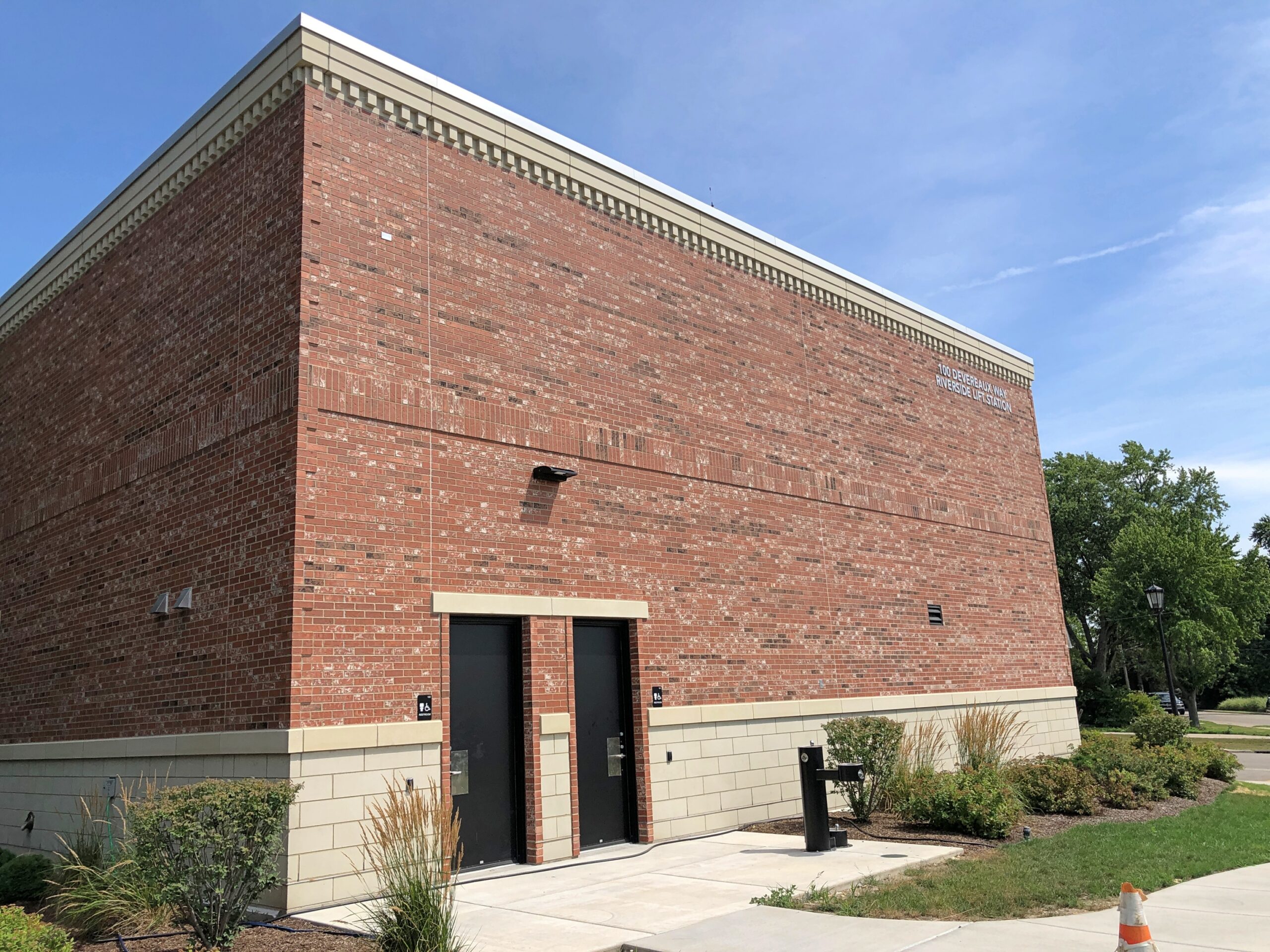
The Riverside Lift Station.
Just the facts:
The lift station, completed in 2024, serves more than half of St. Charles households. It pumps wastewater from the lower reaches of the town slightly uphill to a water reclamation plant.
The $14.8 million project was funded by the IEPA Low-Interest Loan Program.
The new lift station has the capacity to pump 35 million gallons per day. This is an increase of 15.3 million gallons per day compared with the older station it replaced.
Designed by Trotter Associates, with construction by Whittaker Construction & Excavating.
I looked up Trotter. Municipal infrastructure is its specialty, and the company does a lot of it.
There are actual design elements at play in the expanse of brick. What could have been a hulking brick wall, hulking with sameness, instead has some texture for the eye. Nice work. Also, note the two doors in the front wall. Those are public restrooms, so you can add your little bit to the wastewater stream if need be.
***
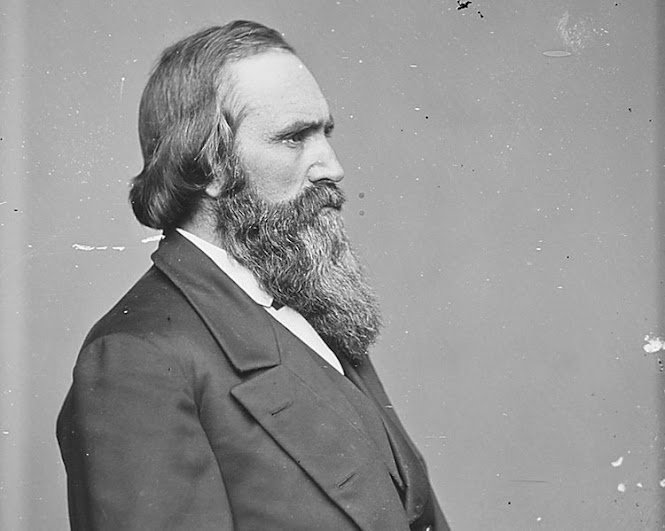
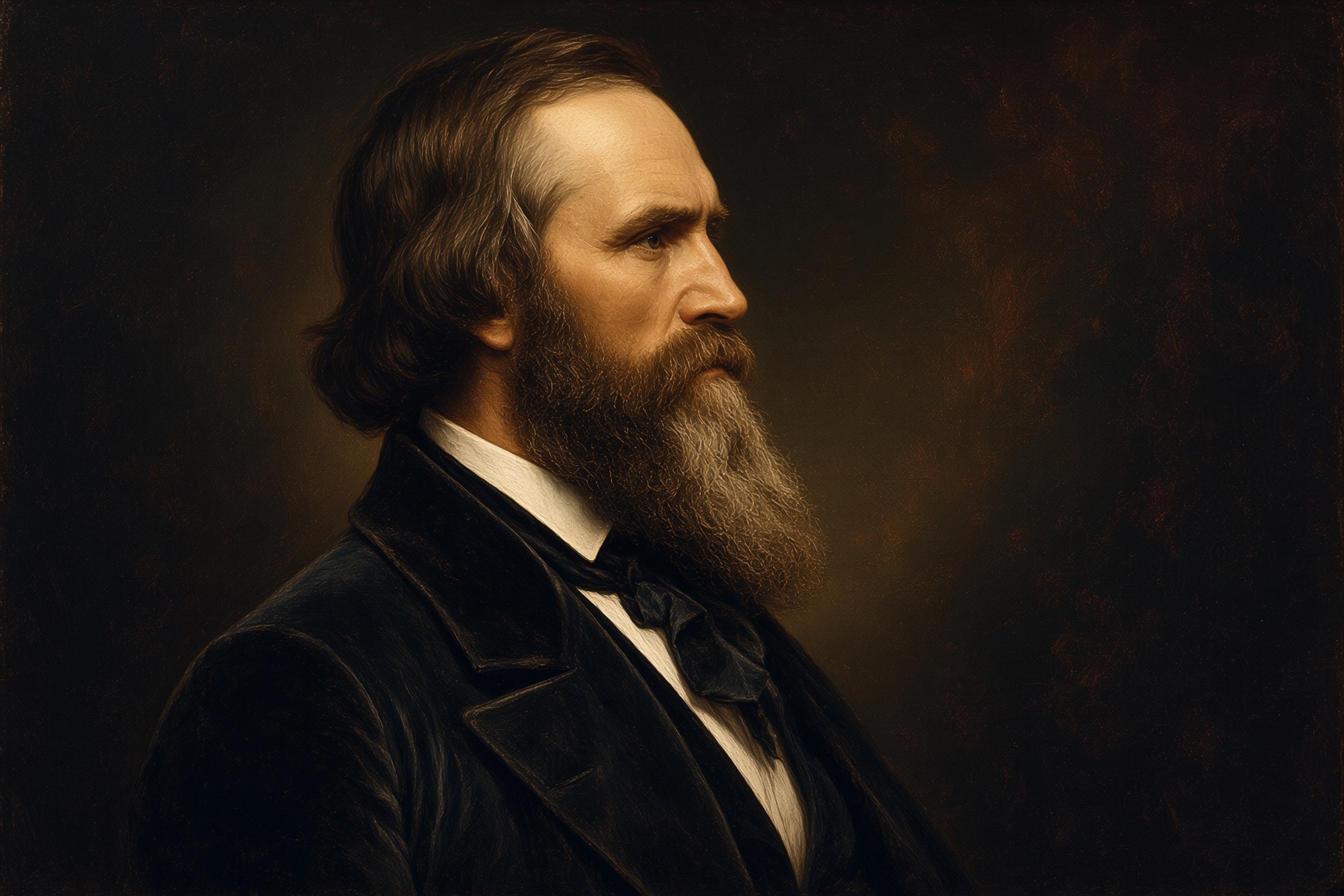
This is John Farnsworth, looking about as 1860s as one graybeard can.
My AI prompt: Dutch Masters Style. Retain the look of the coat and beard.
Striking. Still looking 1860s, but with an enhanced presence, somehow. Maybe it’s the somewhat less gray beard.
One of the more pleasant drives in greater Chicago is along the Fox River. Two state routes parallel the river, Illinois 25 near the east bank and Illinois 31 near the west bank. The roads follow the river especially tightly from St. Charles to Oswego. During a recent drive on Illinois 25, I noticed North Cemetery, one of the six cemeteries in St. Charles (I later read).
“North Cemetery, aptly named for its location in relation to St. Charles, is the resting place for many of the community’s early settlers,” notes the St. Charles History Museum. “It was owned in the latter 1800s by William C. Irwin… Irwin was a cooper or barrel maker by trade. He was also the town funeral director for a number of years. He was probably best noted for developing Irwin’s Block, a collection of commercial buildings, located on W. Main St. between 1st and 2nd Streets. When he died in 1900, he was laid to rest in the cemetery he owned.”
Barrel maker, undertaker and commercial property developer: as always, I’m in awe of the professional flexibility of the 19th century, and just a little envious. I didn’t encounter Mr. Irwin during my short visit, since I never heard of him until later. But North Cemetery has a nice variety of stones, including some clearly from the early days of St. Charles.
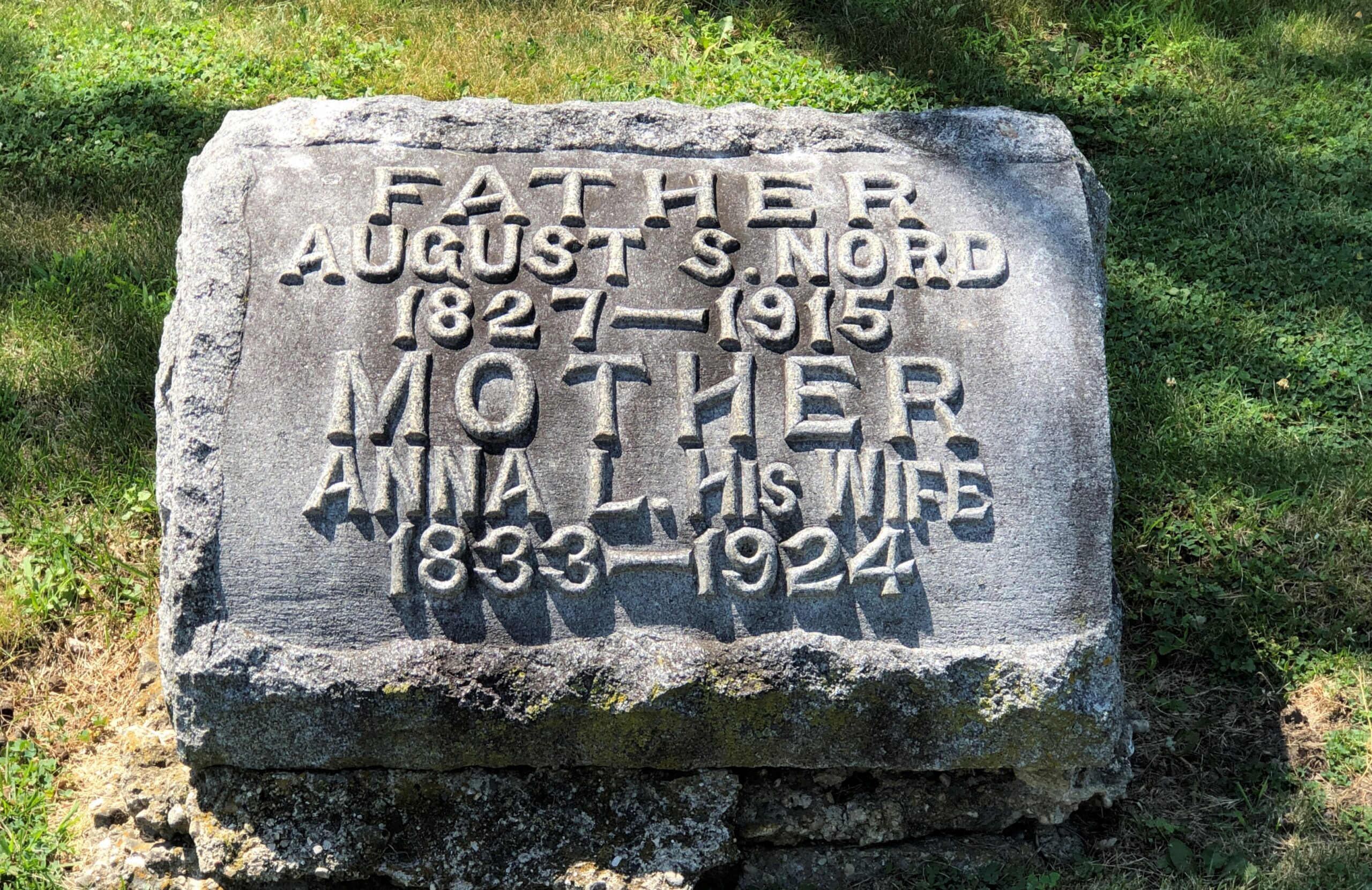
Some very much beaten down by Time.
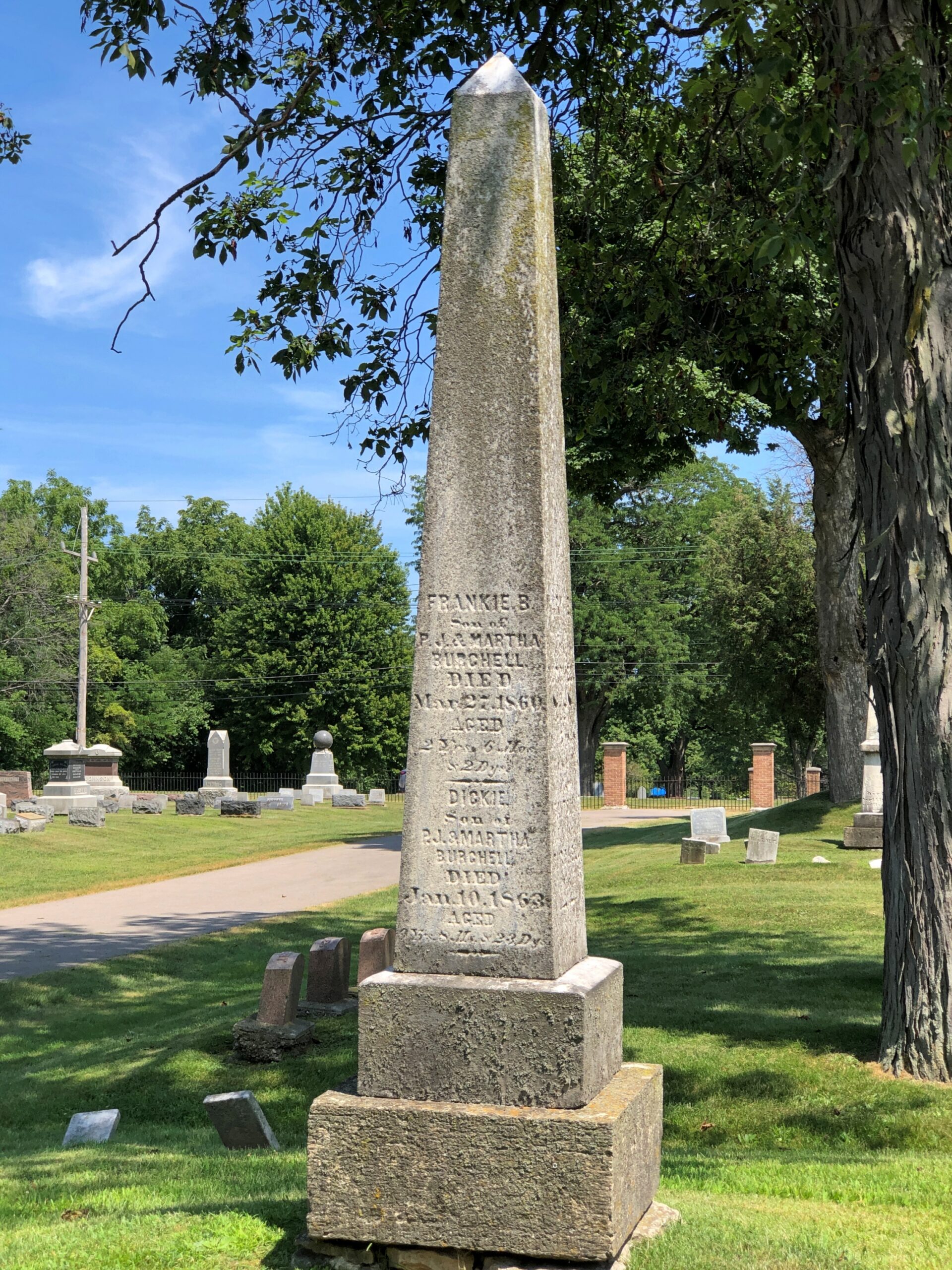
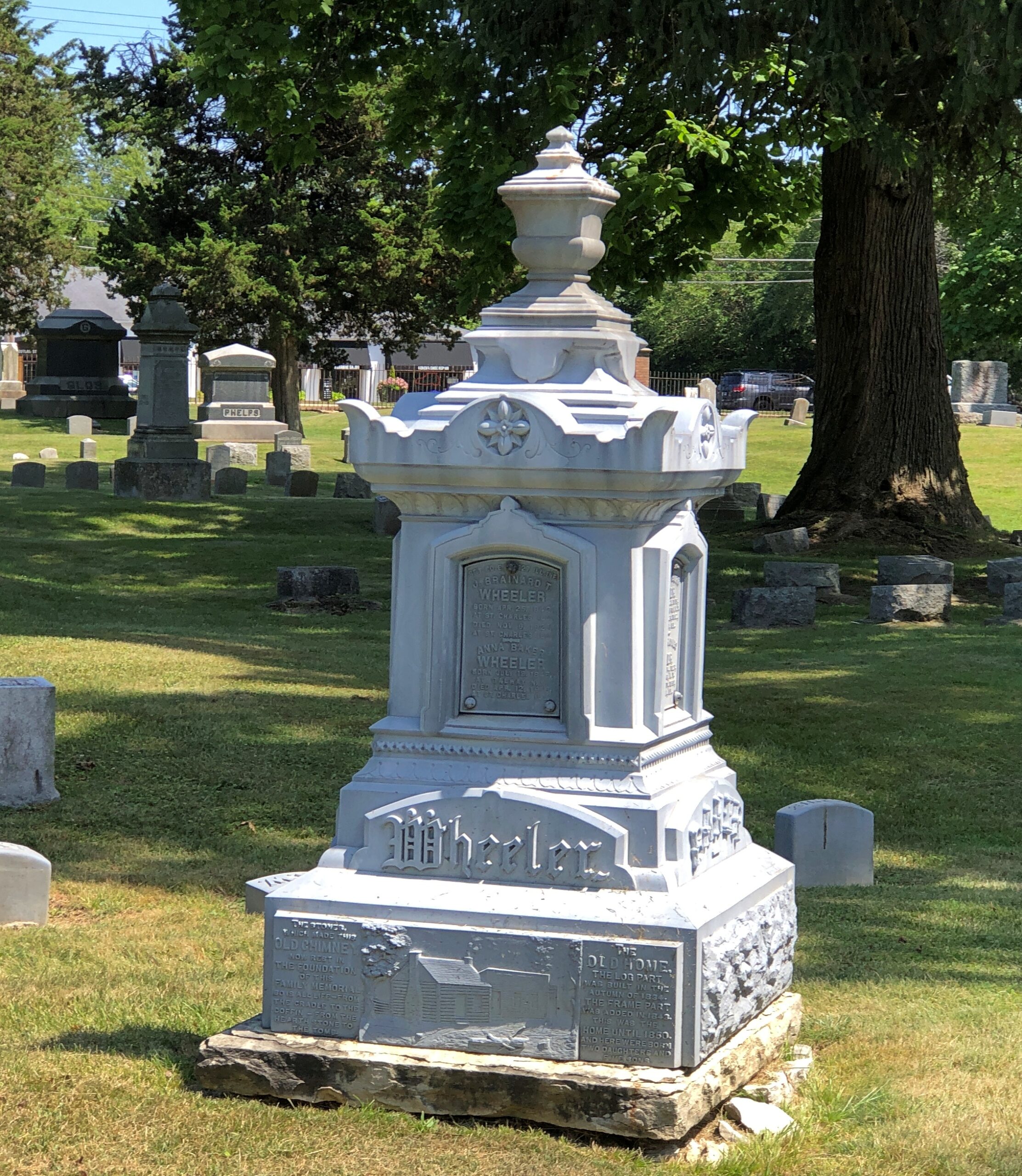
The cemetery is home to a few memorials of some size, but not so many. Before St. Charles became a far suburb, it was an ag village and river town. Prosperous, but even its city fathers were unlikely to have vast stores of wealth.
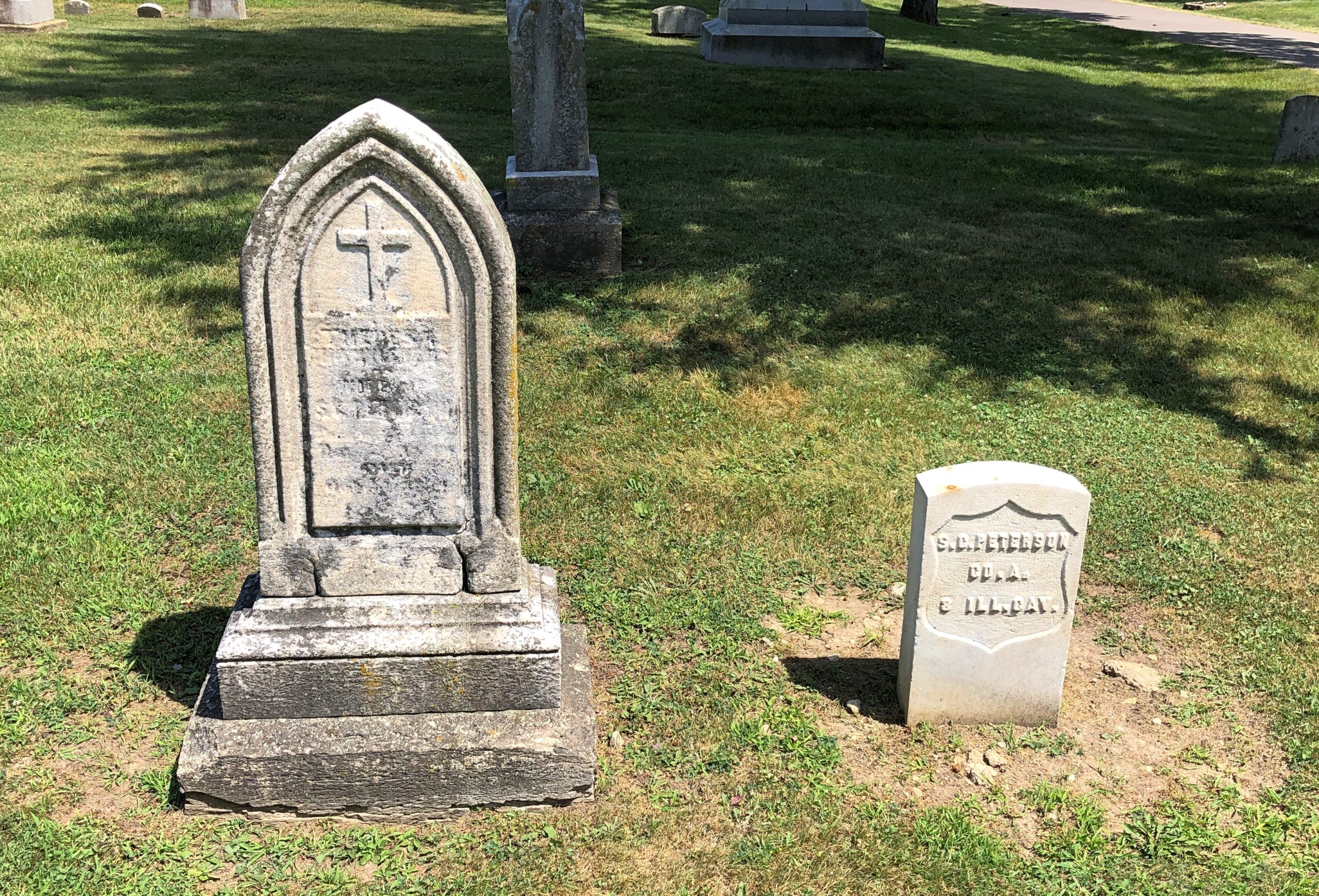
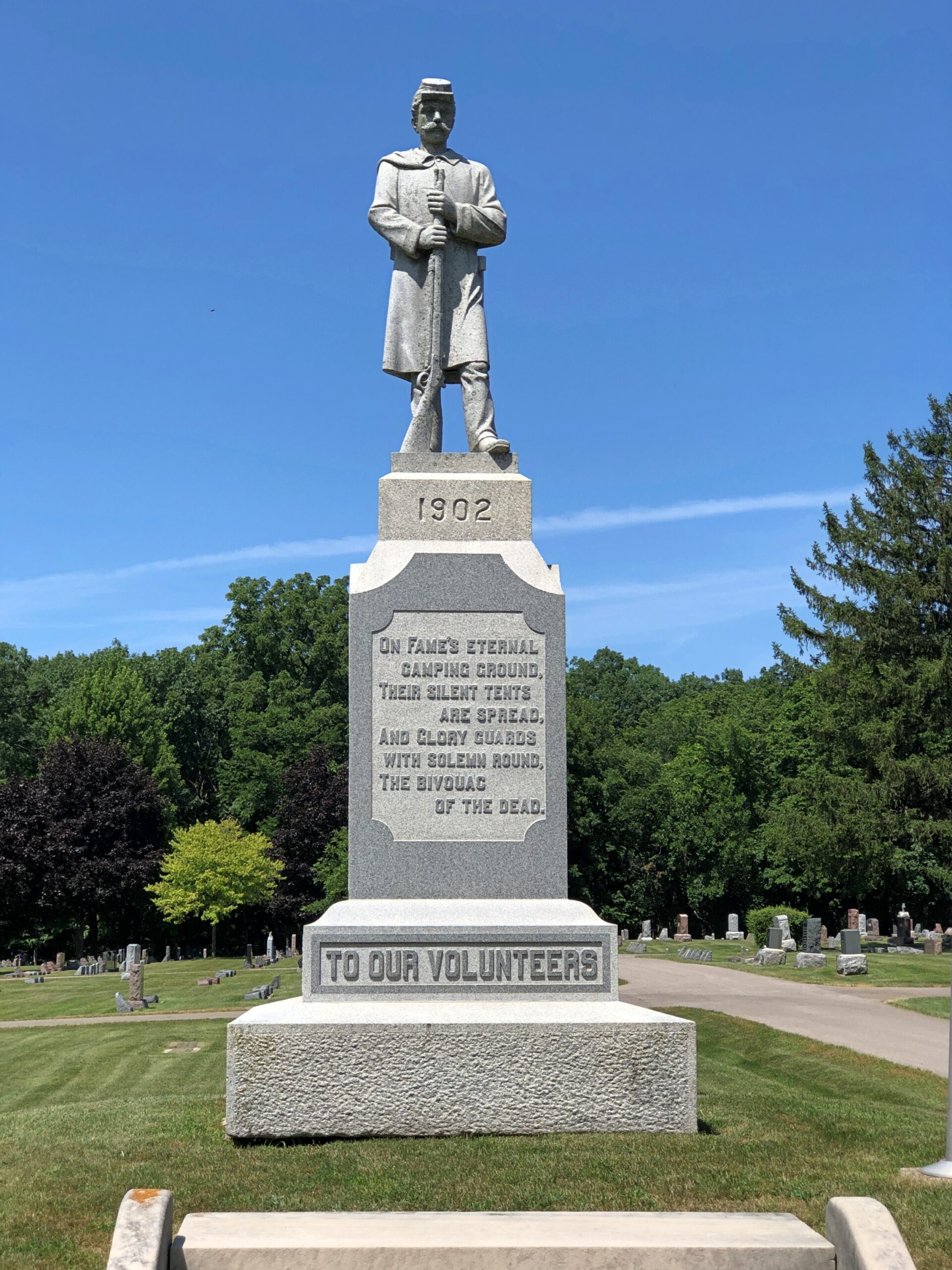
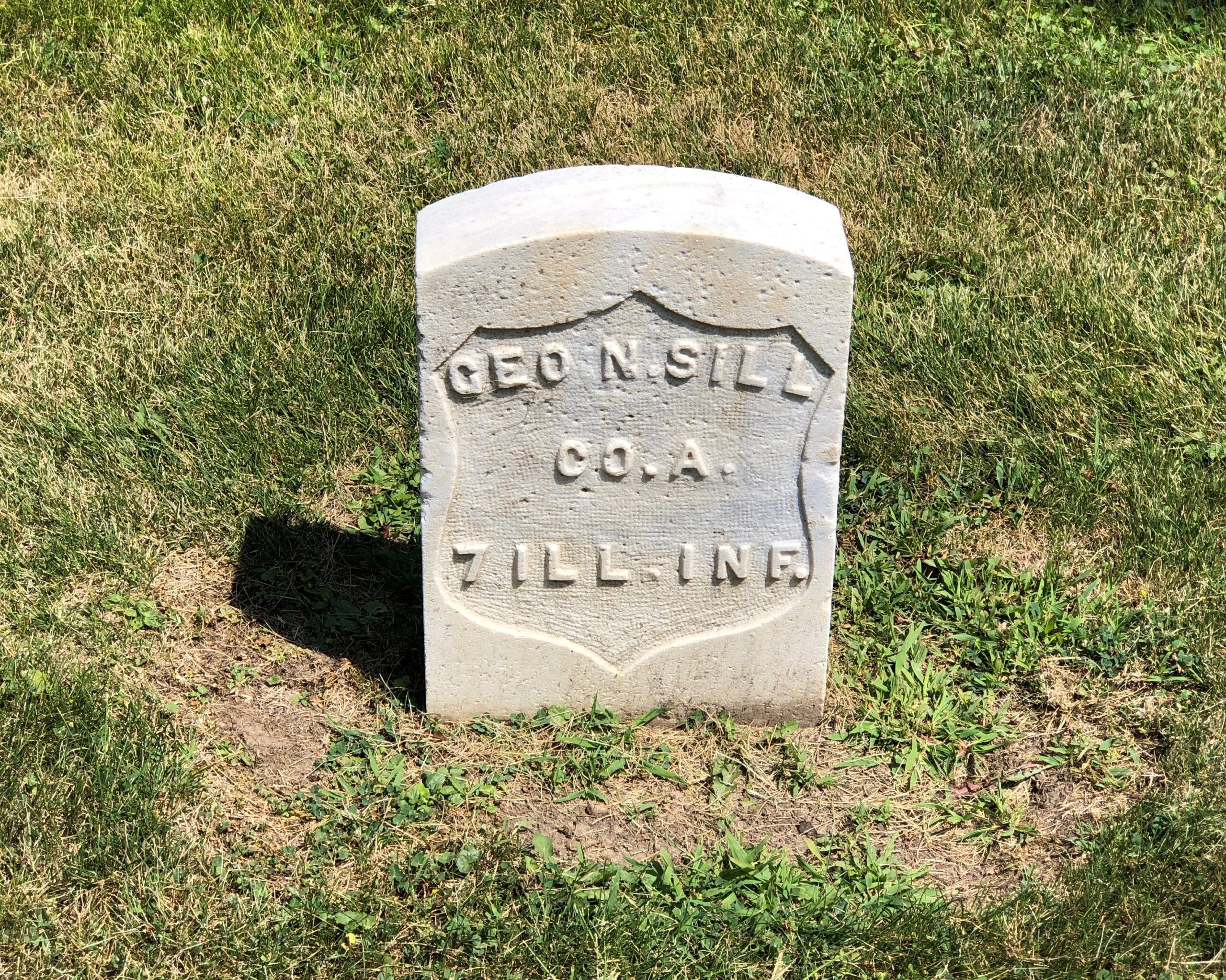
A mail-order memorial for veterans who, by 1902, were starting to disappear.
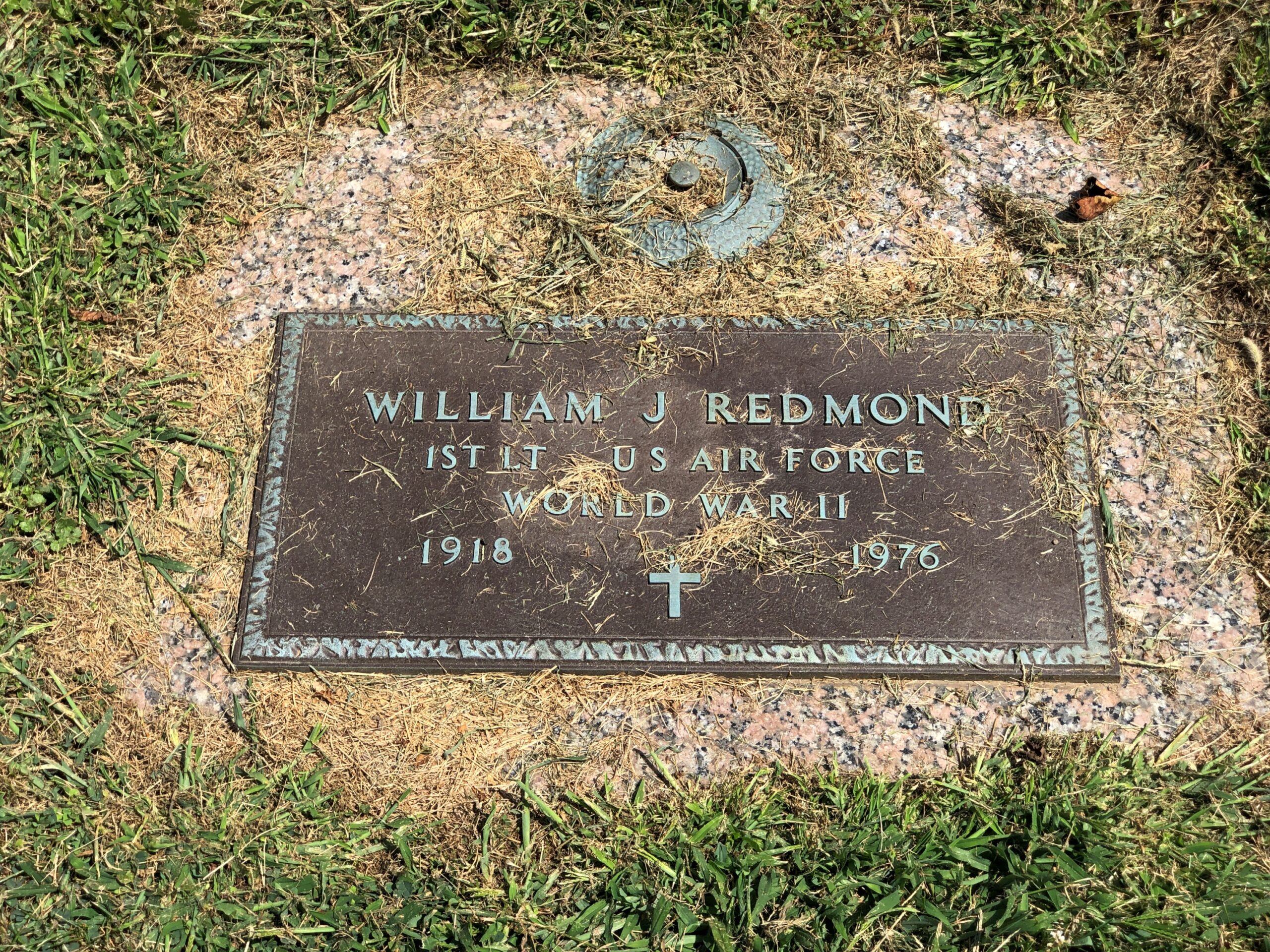
Another veteran. Who wasn’t born yet in 1902. There will always be more wars, though.
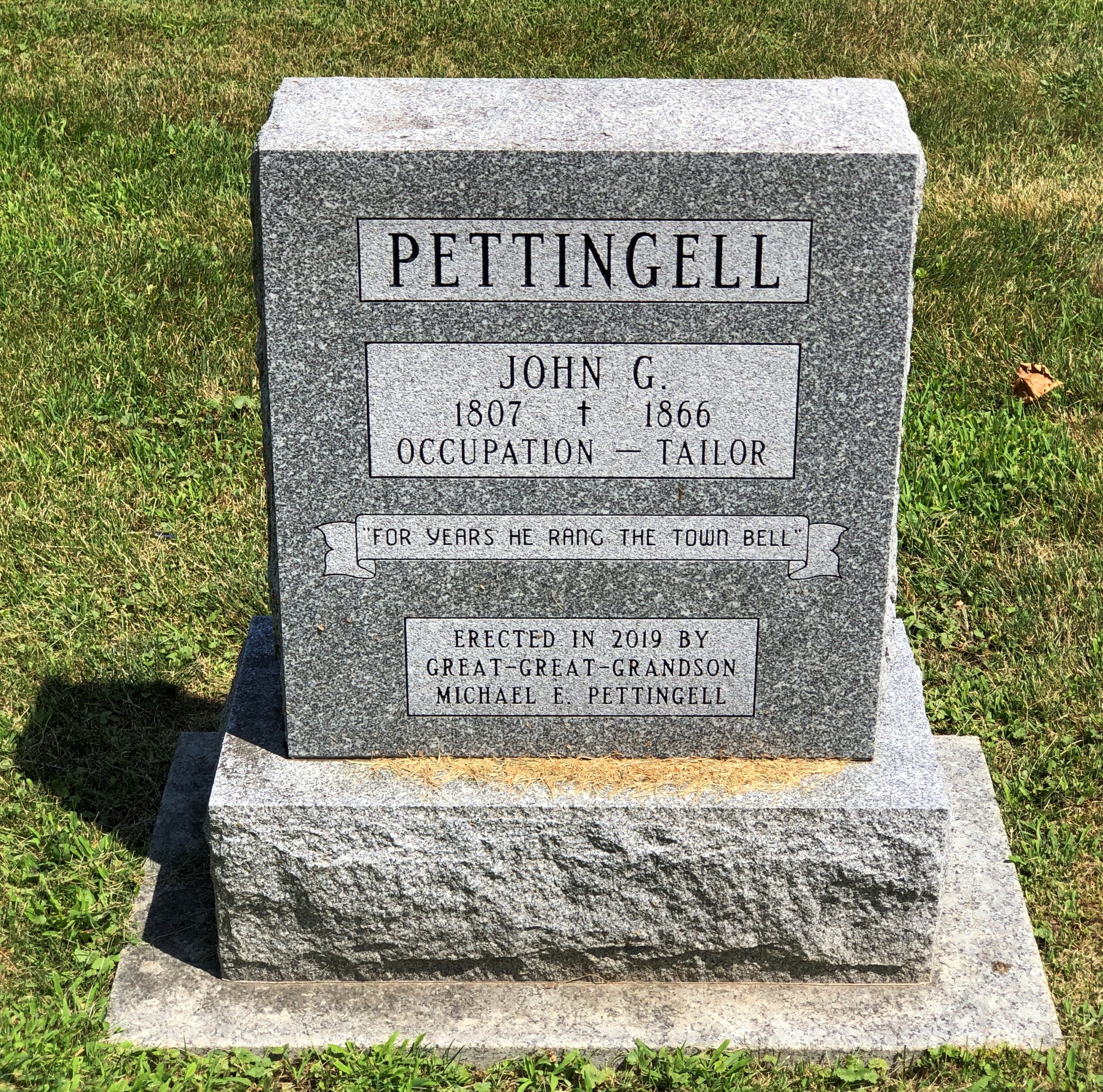
For years he rang the town bell.
A job as gone as Mr. Pettingell himself, who apparently was well enough known to a distant descendent to rate a spanking-new stone more than 150 years after his death.
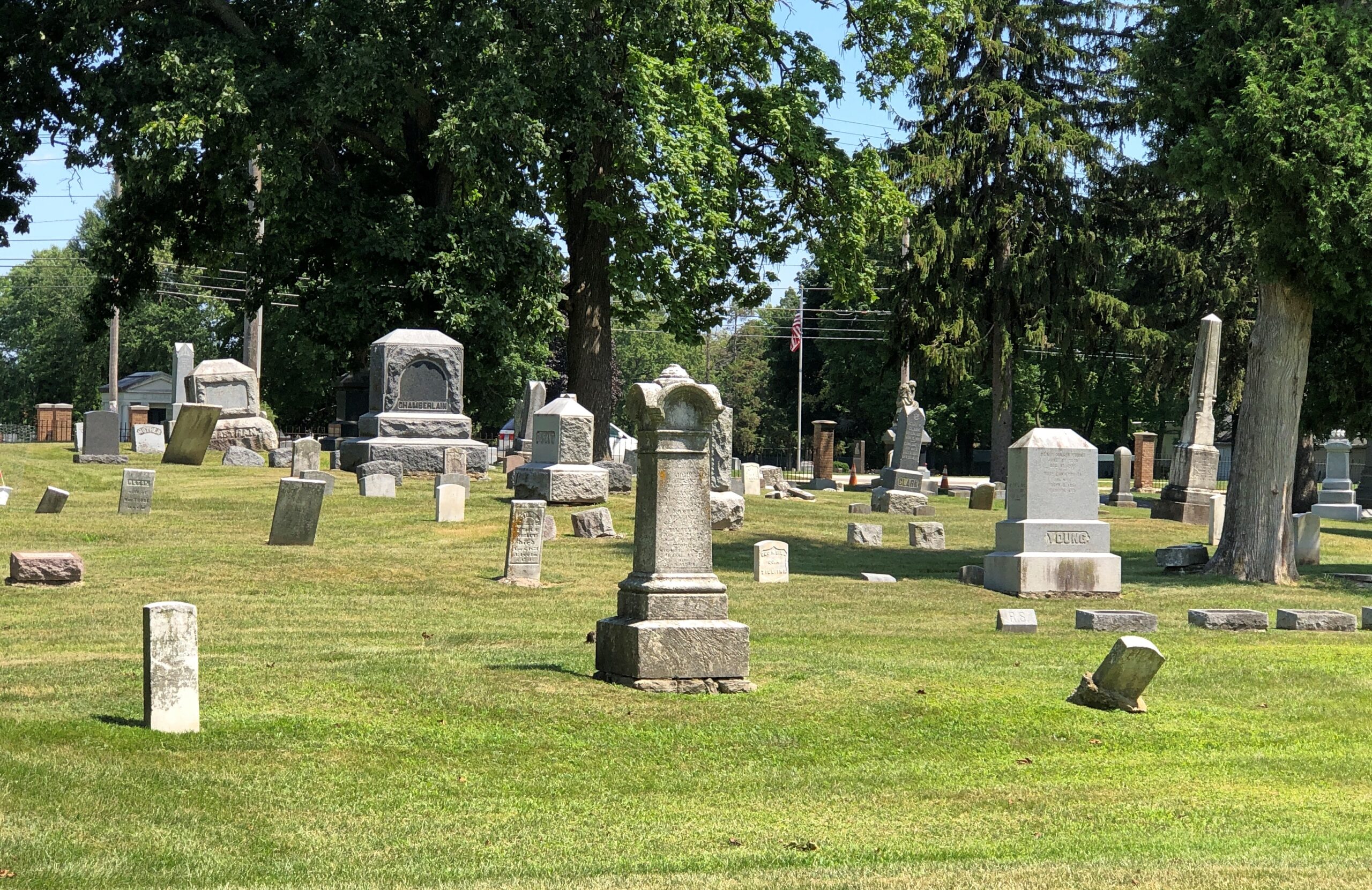
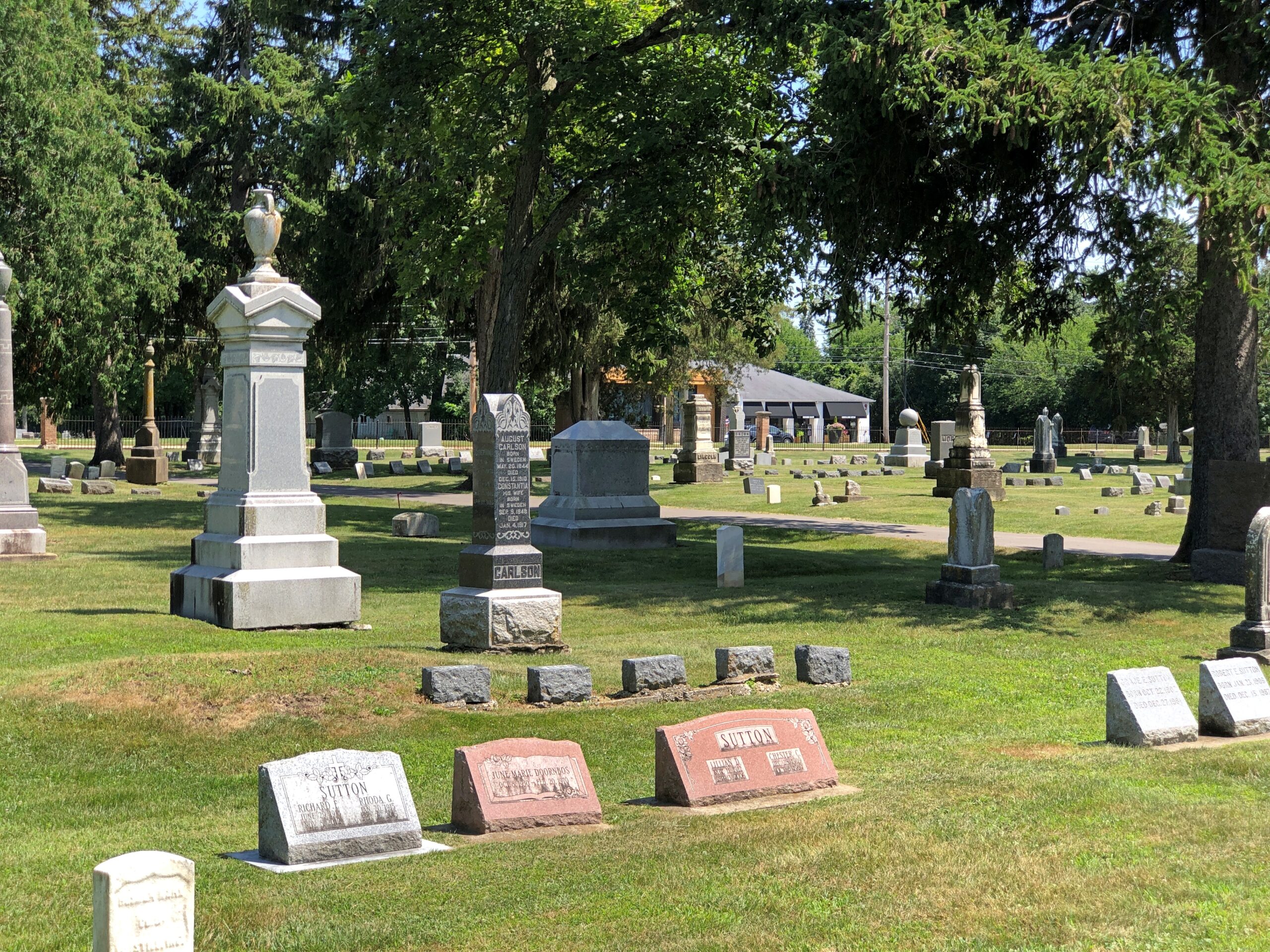
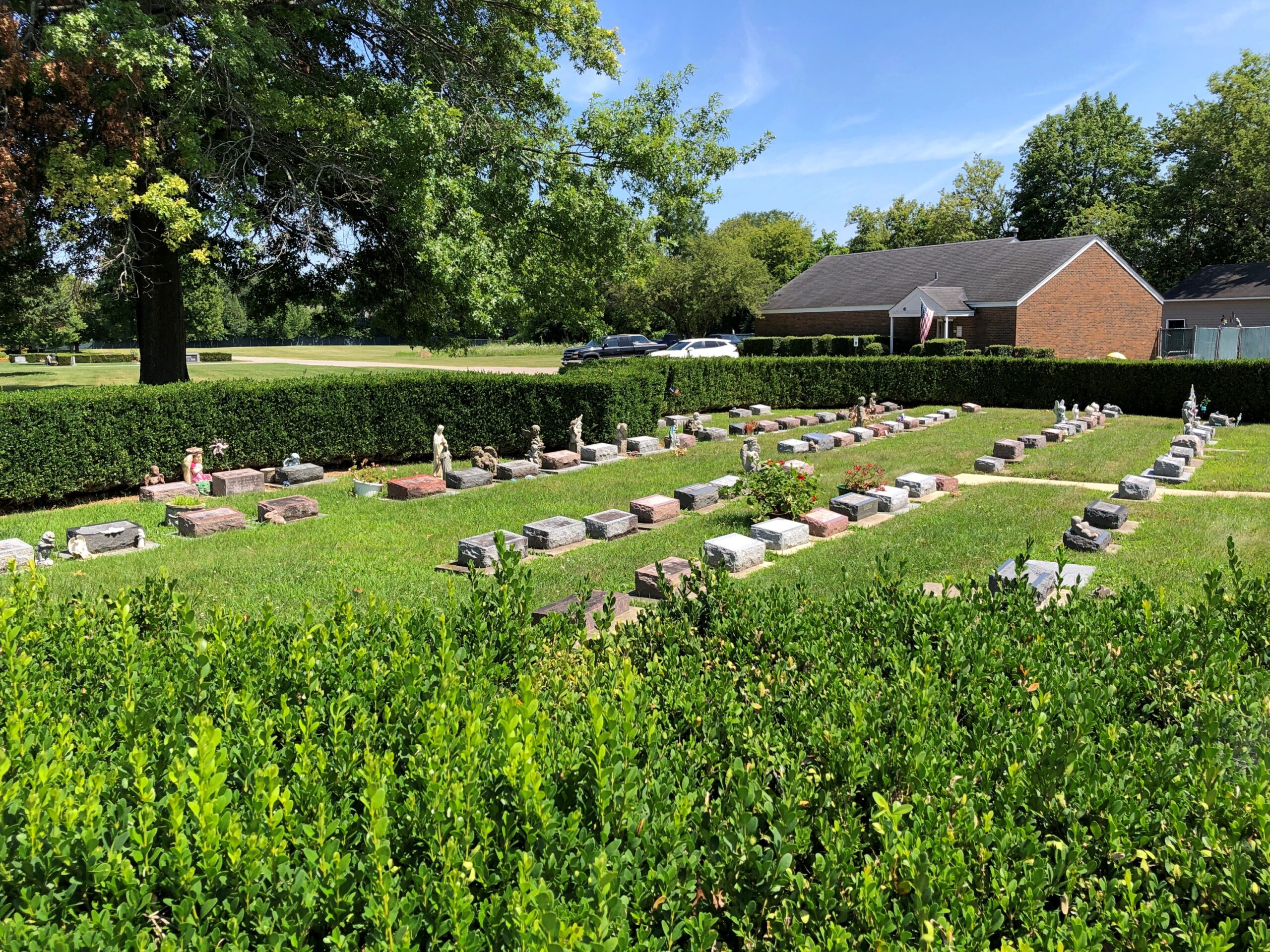
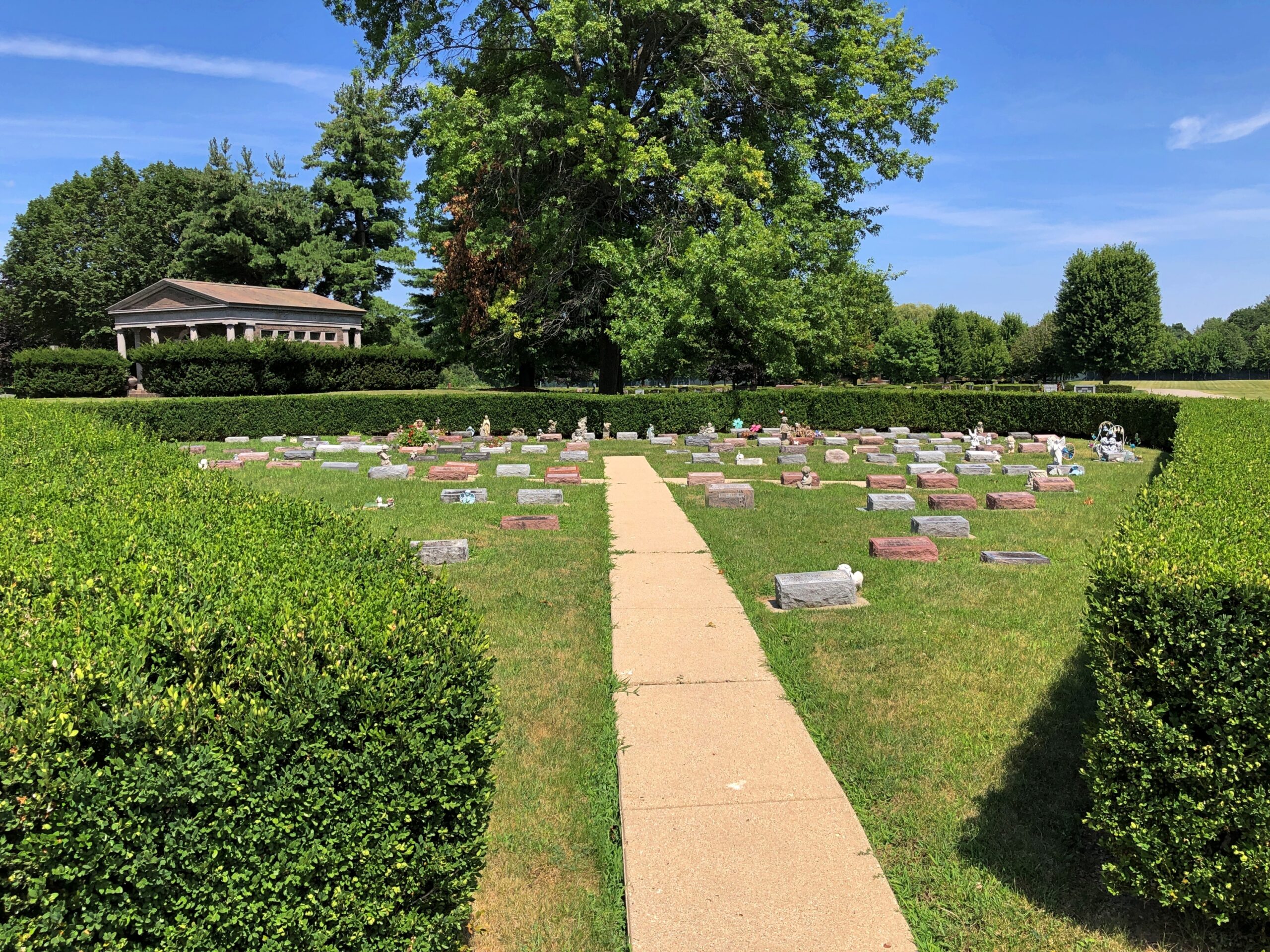
Across Illinois 25 from North Cemetery is another one of the St. Charles cemeteries, Union Cemetery. Mostly newer stones, including a poignant section for children: a patch of ground enclosed by a ring of bushes in the shape of a heart.
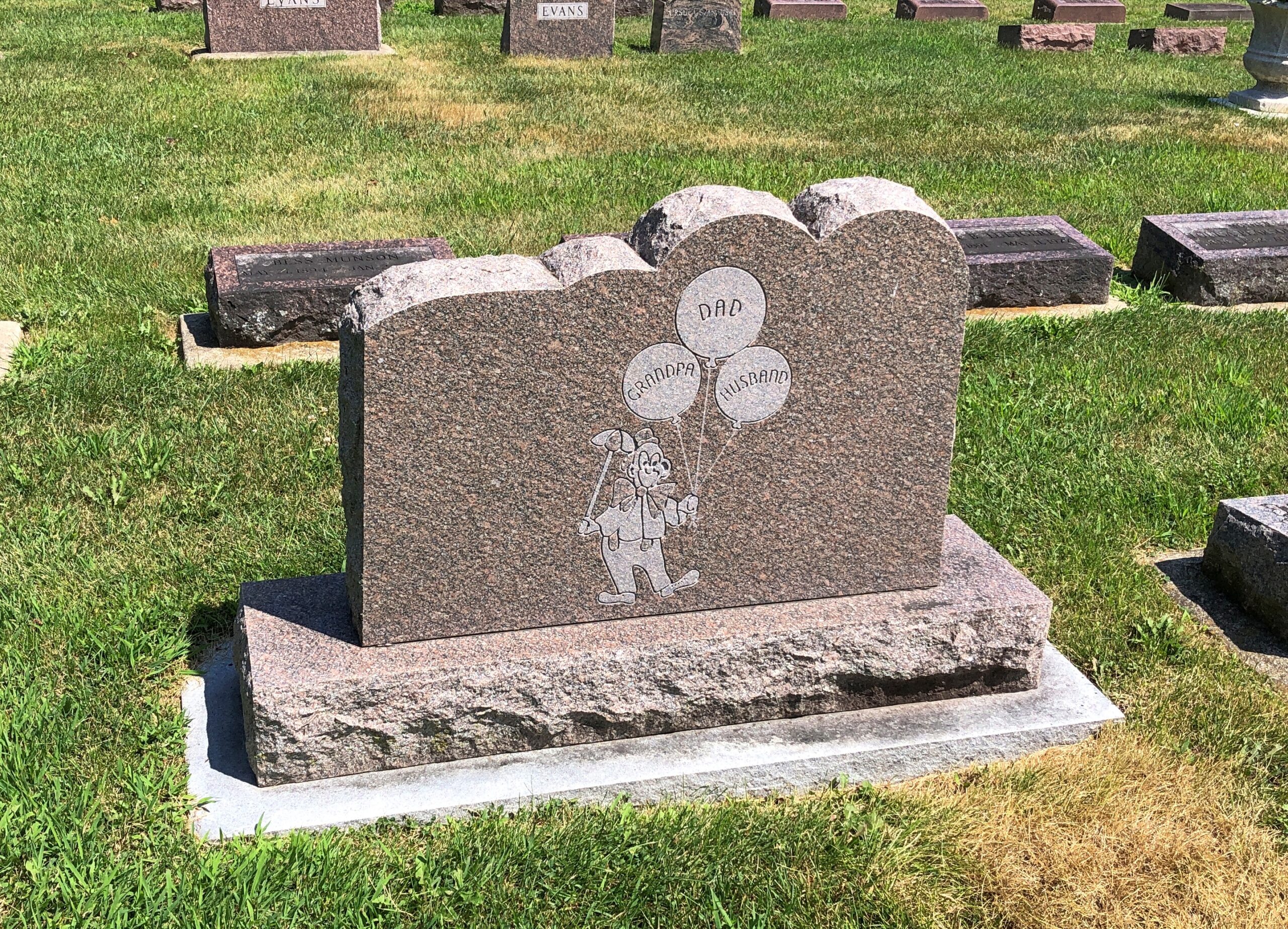
Not far away, this stone. For an adult.
Always something new. I, for one, had never seen a circus monkey on a grave marker.