Back on Tuesday. A holiday’s a holiday, even if it comes in the pit of winter, where we definitely find ourselves. The memory of Sunny Florida gets a little more distant each time I feel the wind in single-digit temps.
In diminutive Key West, you’ve gone a long way after a few blocks. So a long way from Duval Street in that town is Key West Cemetery, which is also at a distance from the ocean — one measured in a few thousand feet. At the cemetery you’ll find a mix of above-ground tombs and standard stones. Styles from Old Florida and later, in other words.
We drove into Old Town Key West our second day rather than take the hotel shuttle, which we had the first day. I was gambling that the local parking information I’d picked up first-hand more than a decade earlier wasn’t obsolete yet, which it could well have been. The town has notoriously tight parking, for obvious reasons.
Two prayers for such a situation.
O Lord, by your grace
Help me find a parking space
…
O Jesus, full of grace
Help me find a parking space
Just the thing, provided you’re sure one of the many attributes of the Almighty is a sense of humor. Parking is perhaps a function of Plastic Jesus? (And I like this version, among the many out there.)
Then again, asking for a parking intercession might only seem to be praying for something trivial. For all we know, parking a certain car in a certain place on a certain day might via the butterfly effect prevent a deadly typhoon somewhere.
Anyway, my strategy worked out and we parked for no charge a stone’s throw – and I mean that almost literally – from Key West Cemetery.
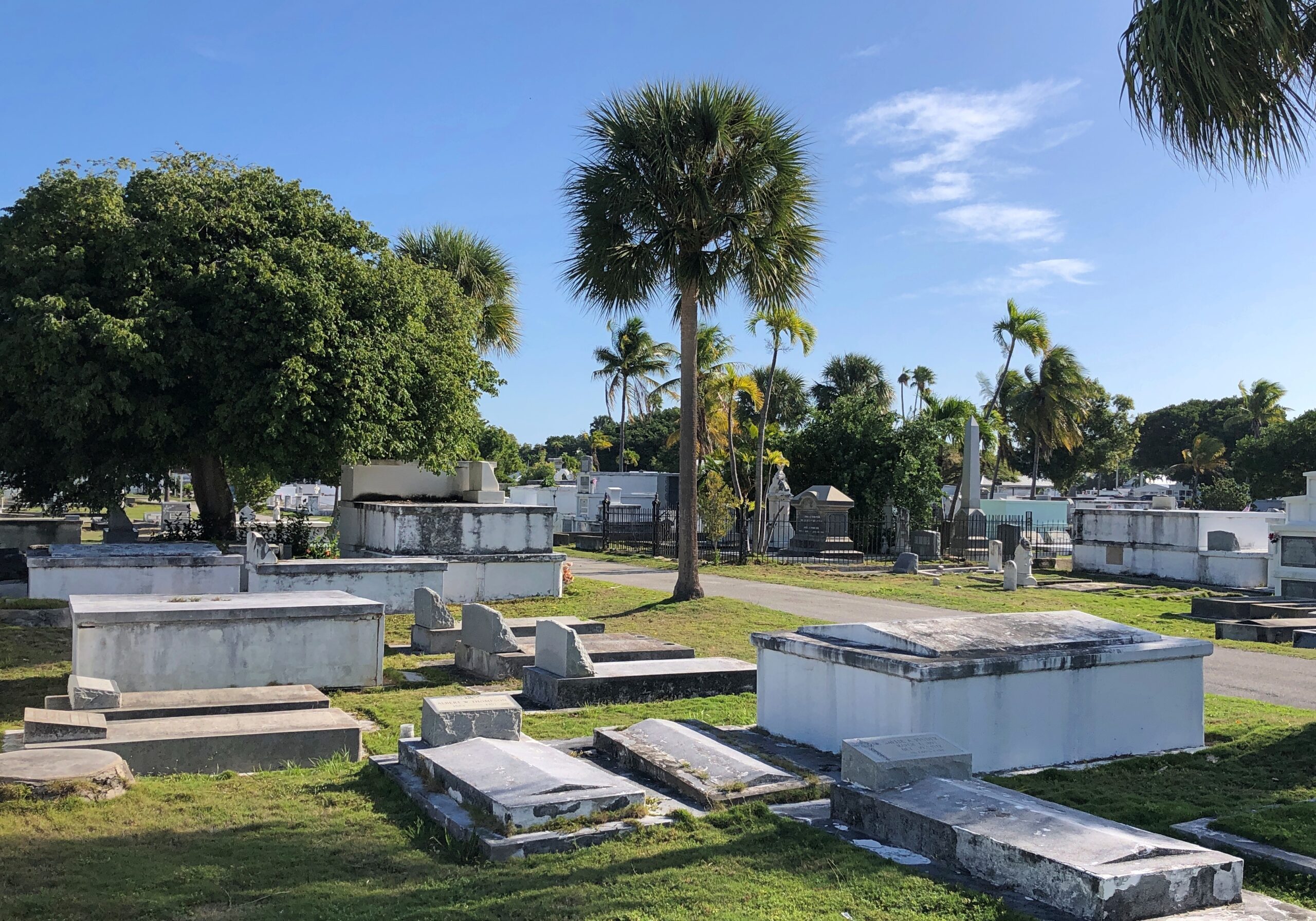
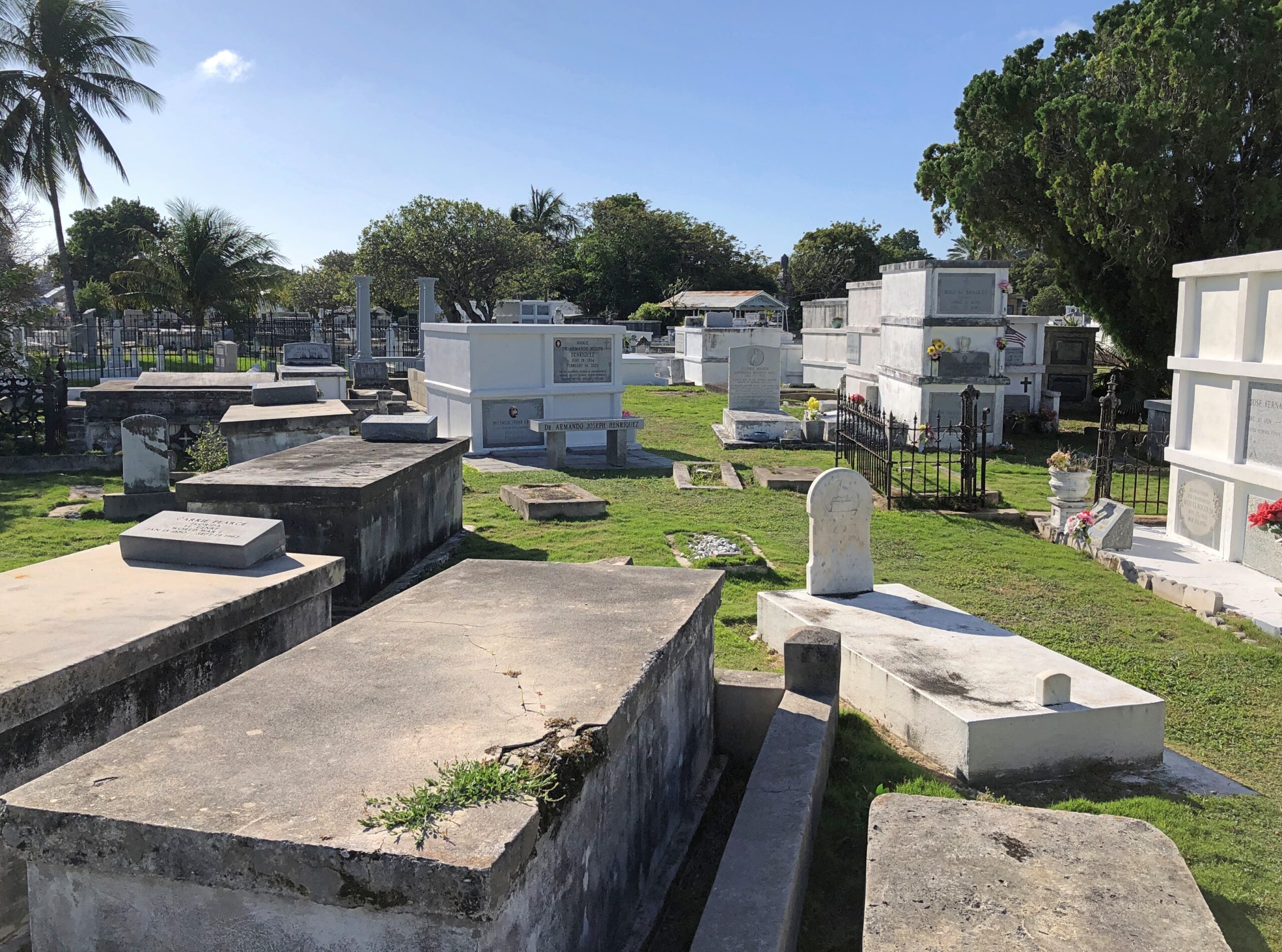
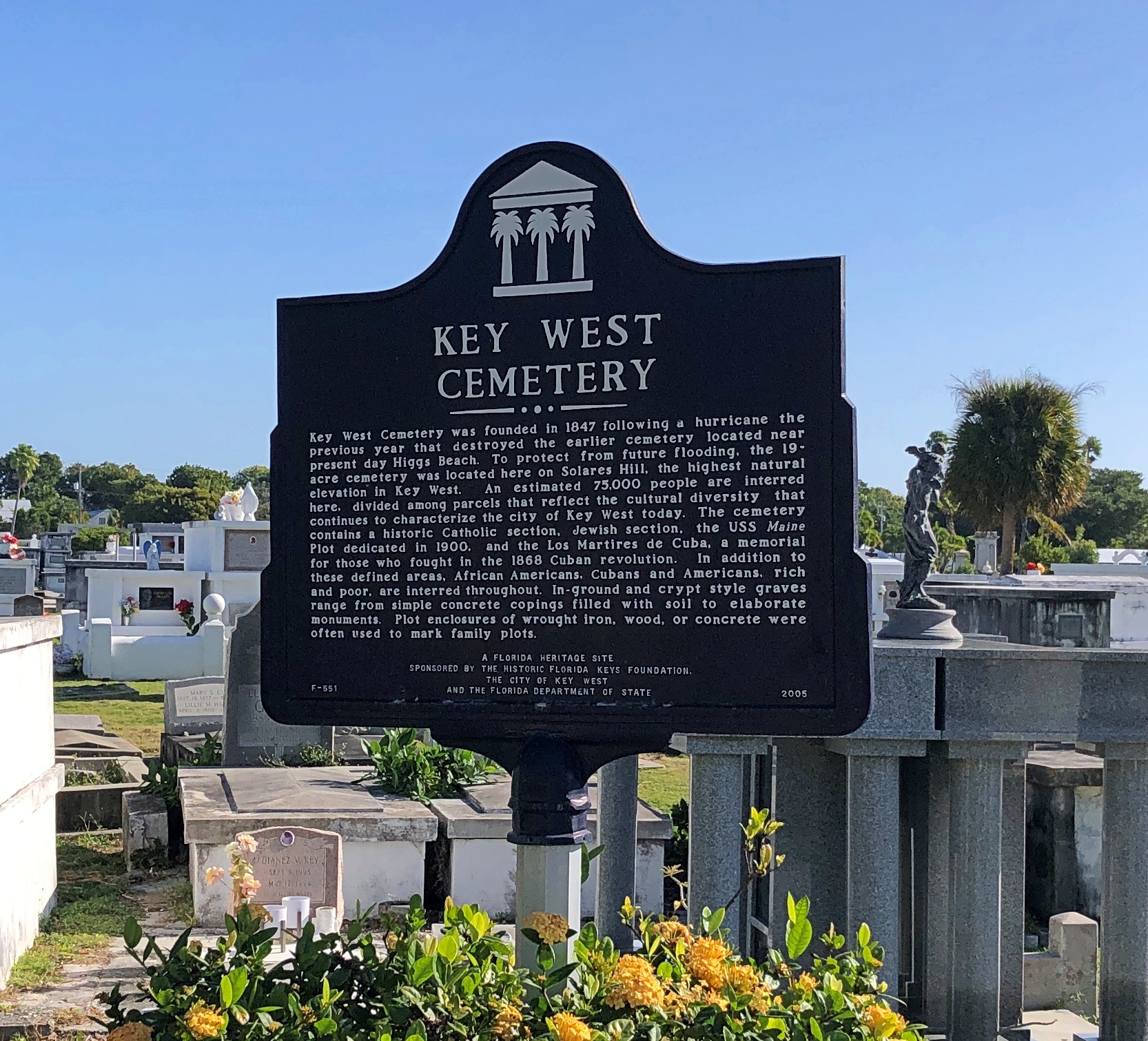
Once upon a time, mid-19th century Key West had a burial ground nearer to the water. A hurricane in 1846 applied a large amount of water and wind to that location in a short time, smashing tombs and markers and returning bodies to the open air. Gruesome to consider, but the incident did inspire Key West city fathers to open a new cemetery on high ground. High for Key West, that is, 16 feet above sea level.
That has worked out. As many as 100,000 permanent residents now rest across 19 acres, roughly three times the living population of the city: all races and stations of life; Protestants, Catholics and Jews; Cuban cigar workers and Bahamian mariners; soldiers, sailors and civilians.
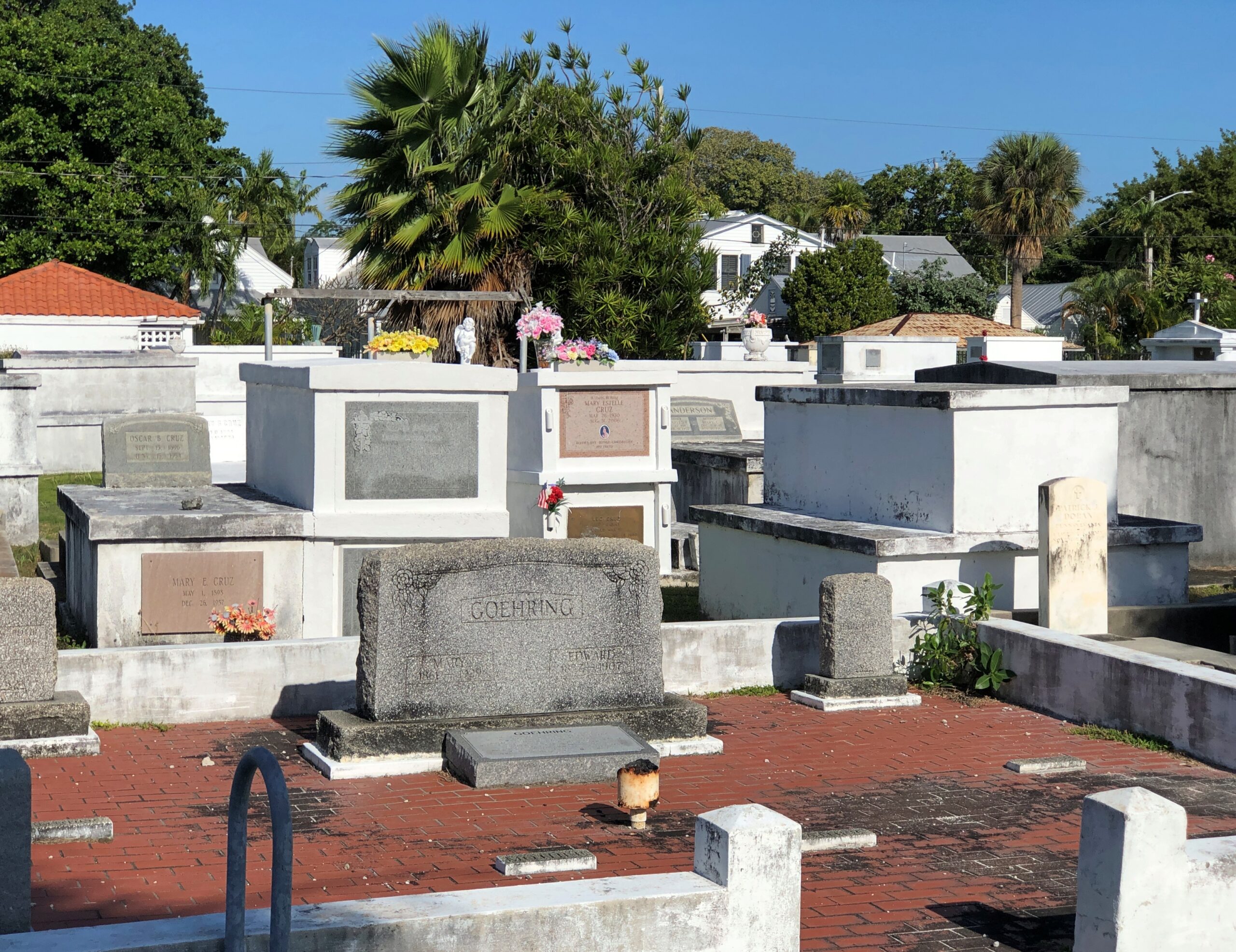
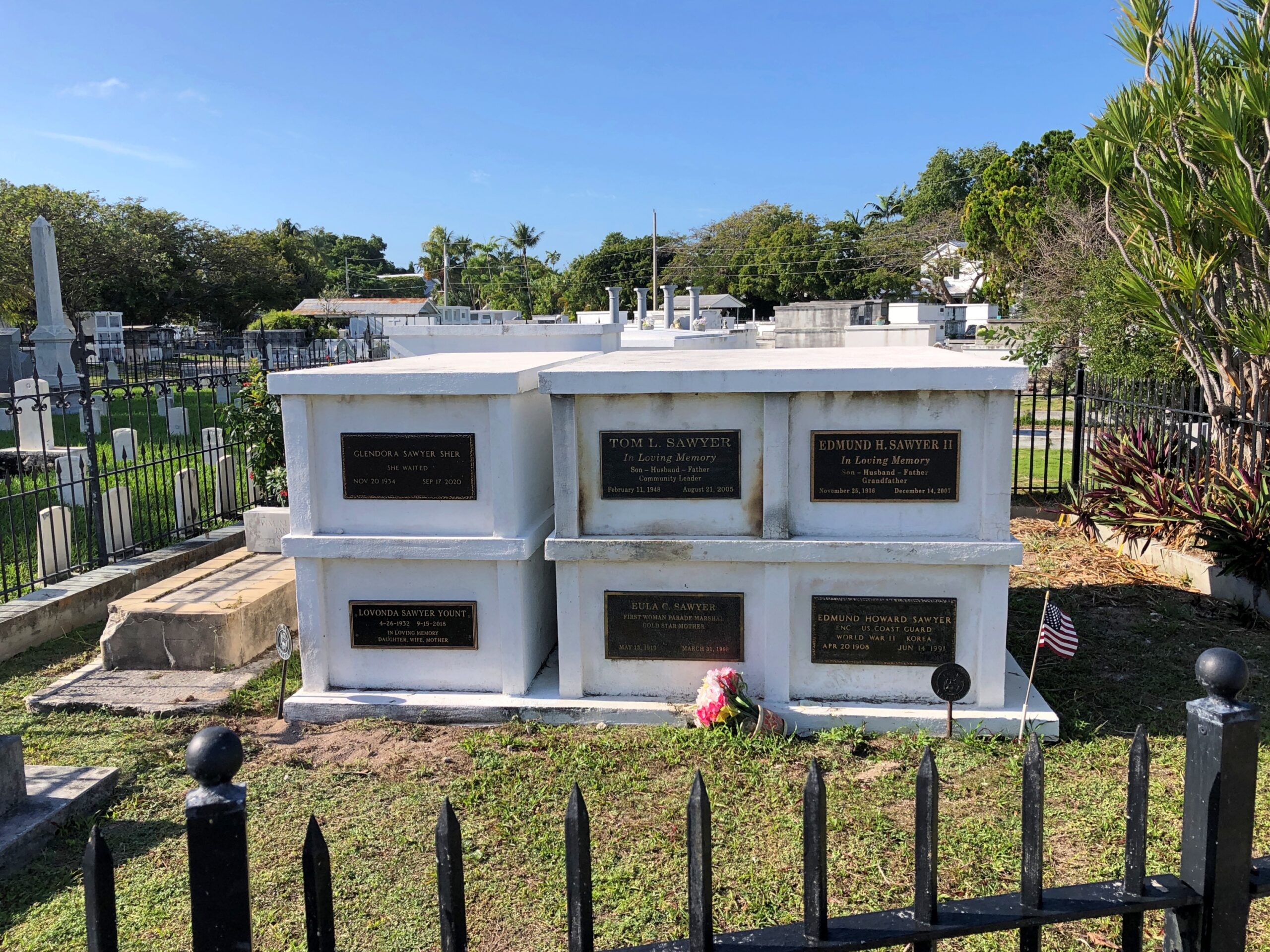
Many sad stories, as usual. Even if we can’t know the details at this distance.
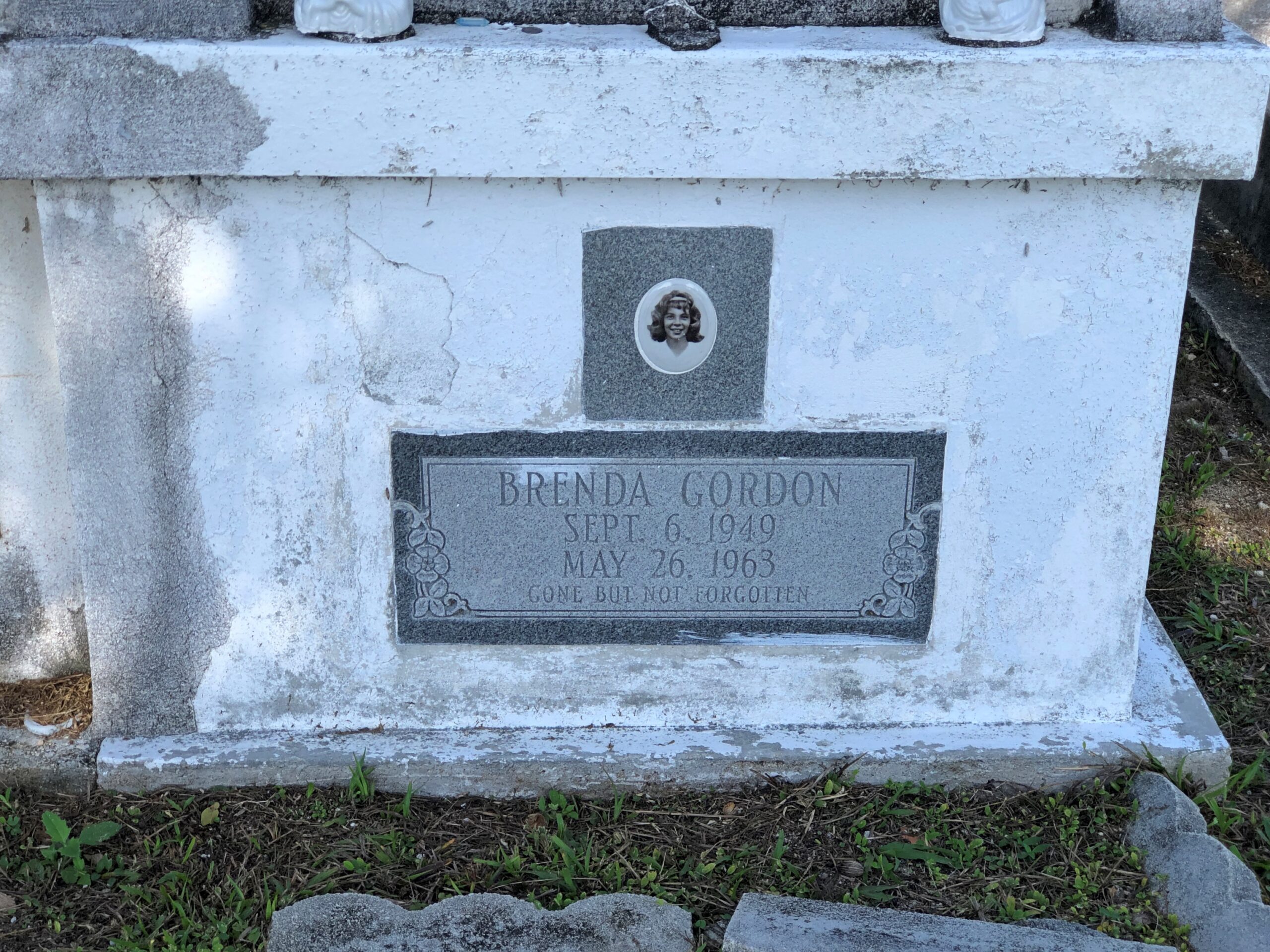
Other residents include one Abraham Sawyer (d. 1939), a dwarf who reportedly refused to be a part of carnivals, instead working for manufacturers to advertise their products. He requested to be buried in a full-sized grave, but since I didn’t read of him until later (today), I didn’t go looking for him.
There is also the story of Elena Hoyos (d. 1931). Read the Find a Grave story, which I promise will be one of the stranger things you’ve read in a while, true or not.
The U.S. Navy Plot is square in the middle of the cemetery.
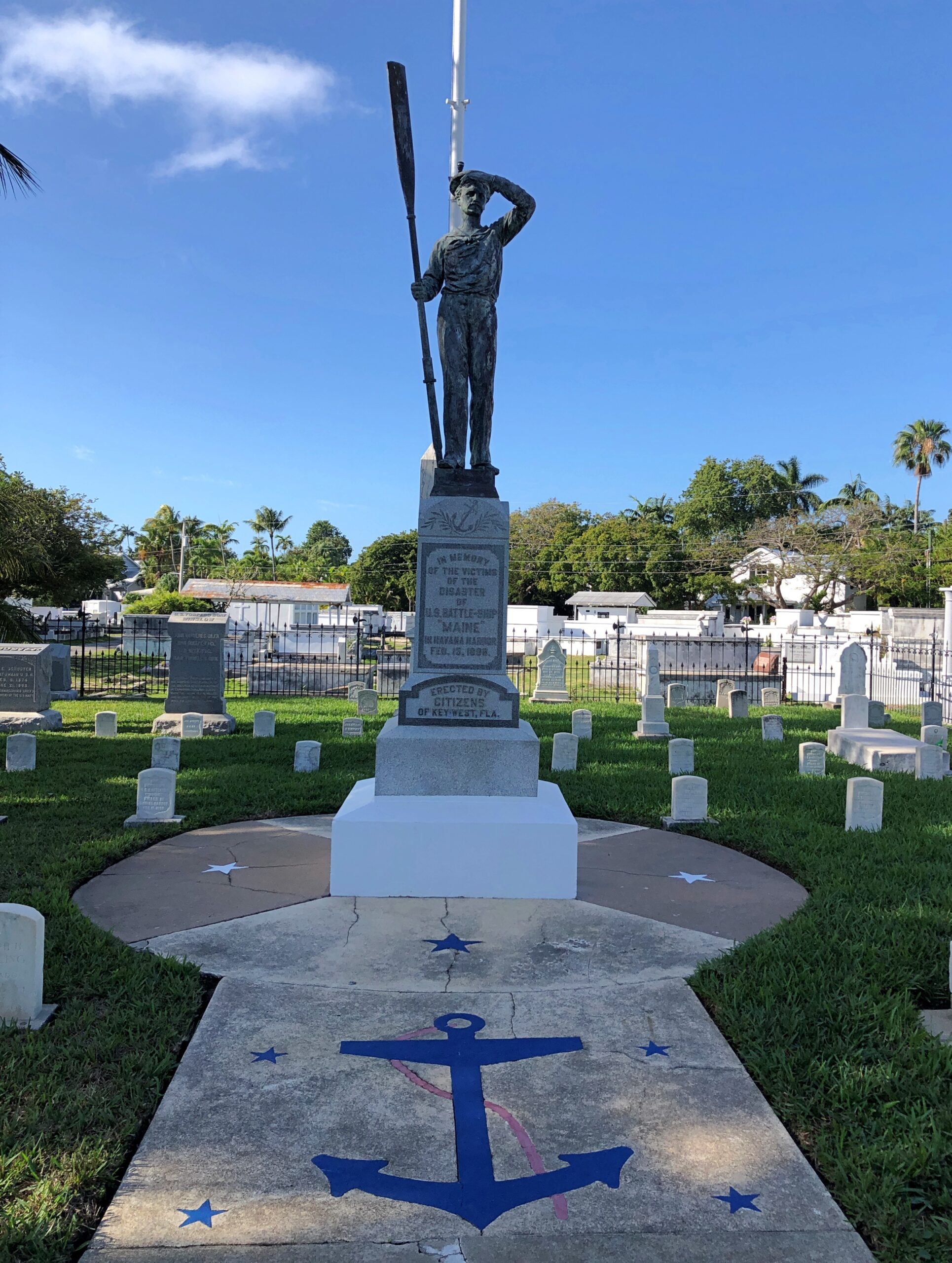
The centerpiece is a memorial to the dead of the Maine. Note the mast behind the sailor statue. That’s from the Maine.
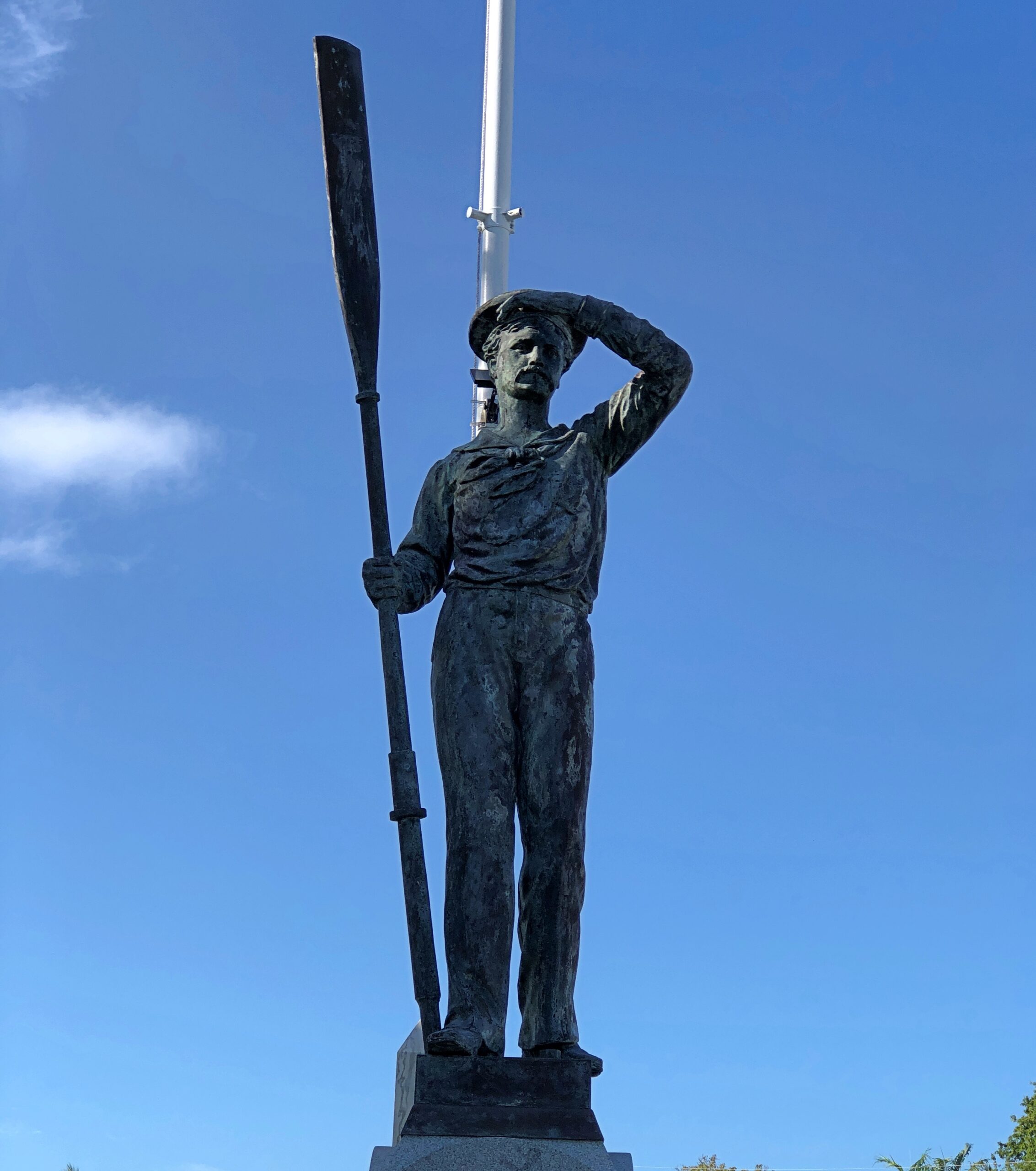
The monument’s granite base says:
IN MEMORY OF THE VICTIMS OF THE DISASTER OF THE U.S. BATTLESHIP ‘MAINE’ IN HAVANA HARBOR FEB. 15, 1898, ERECTED BY THE CITIZENS OF KEY WEST, FLA.
Some of the men who died on the Maine ended up in the Navy Plot: the closest U.S. cemetery when they needed to be interred, and fast. Twenty-four of them, only seven of whom were identified.
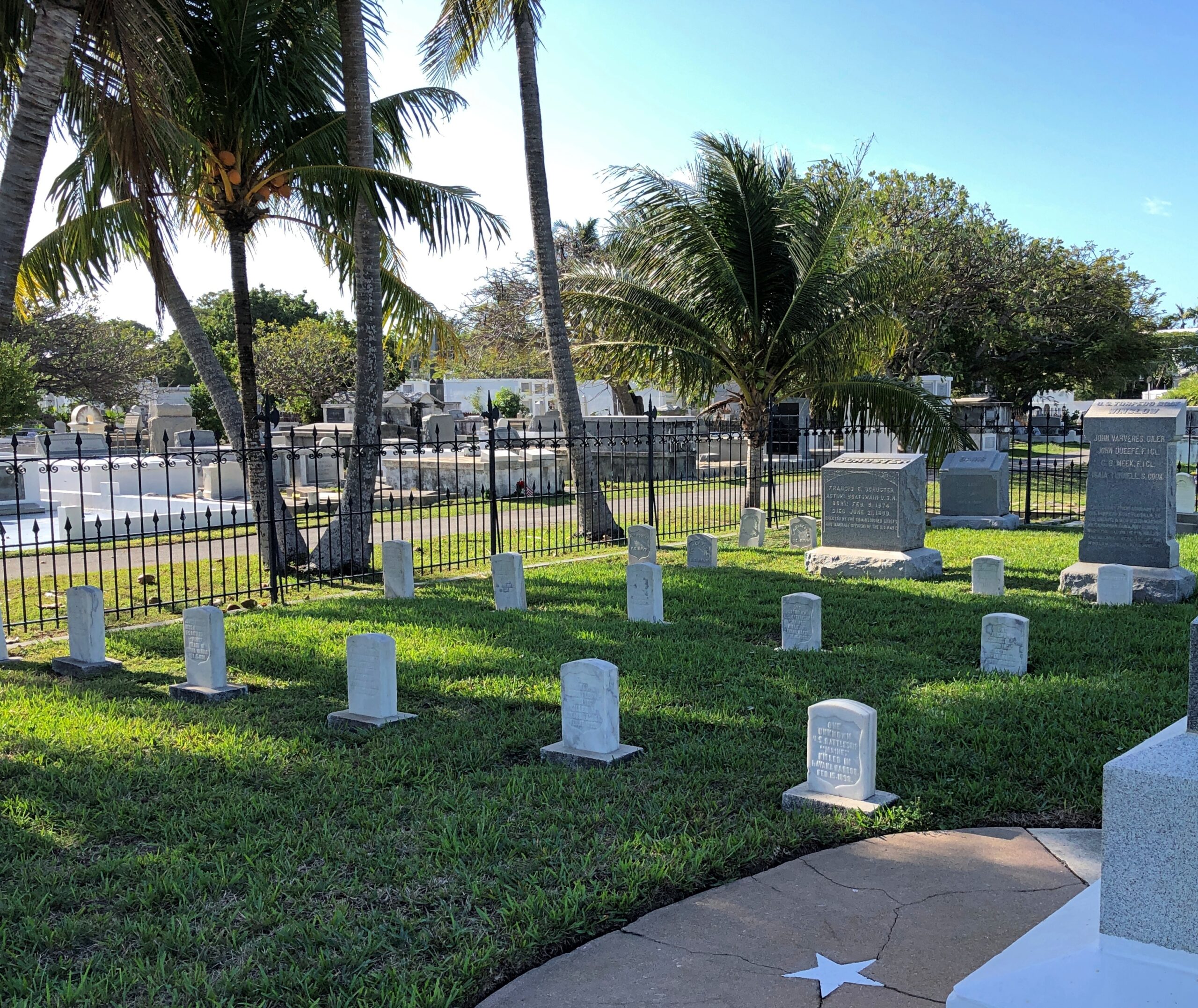
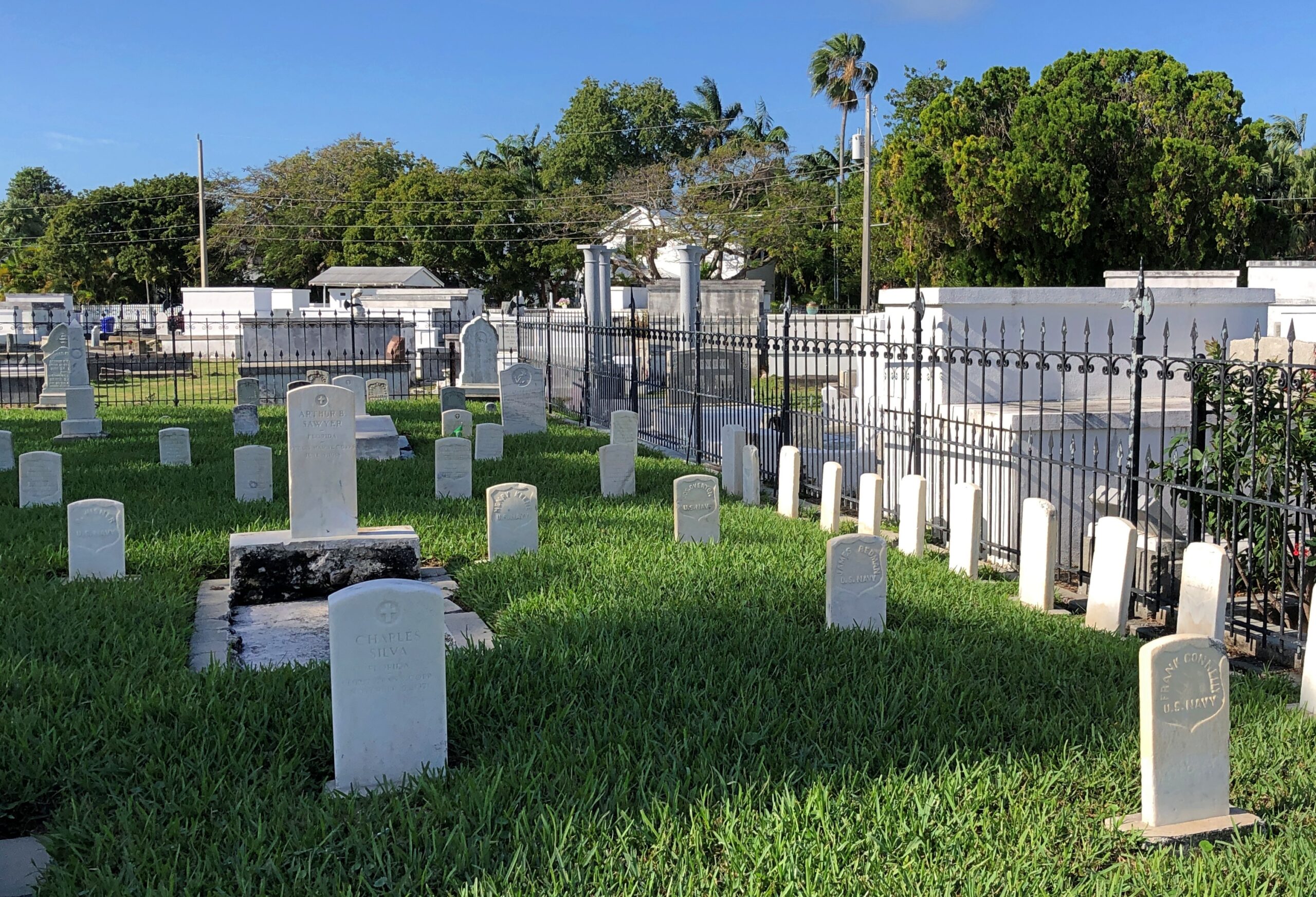
Other sailors repose there as well. Such as Sub-Lieutenant Donald Henry Smith, Royal Navy.
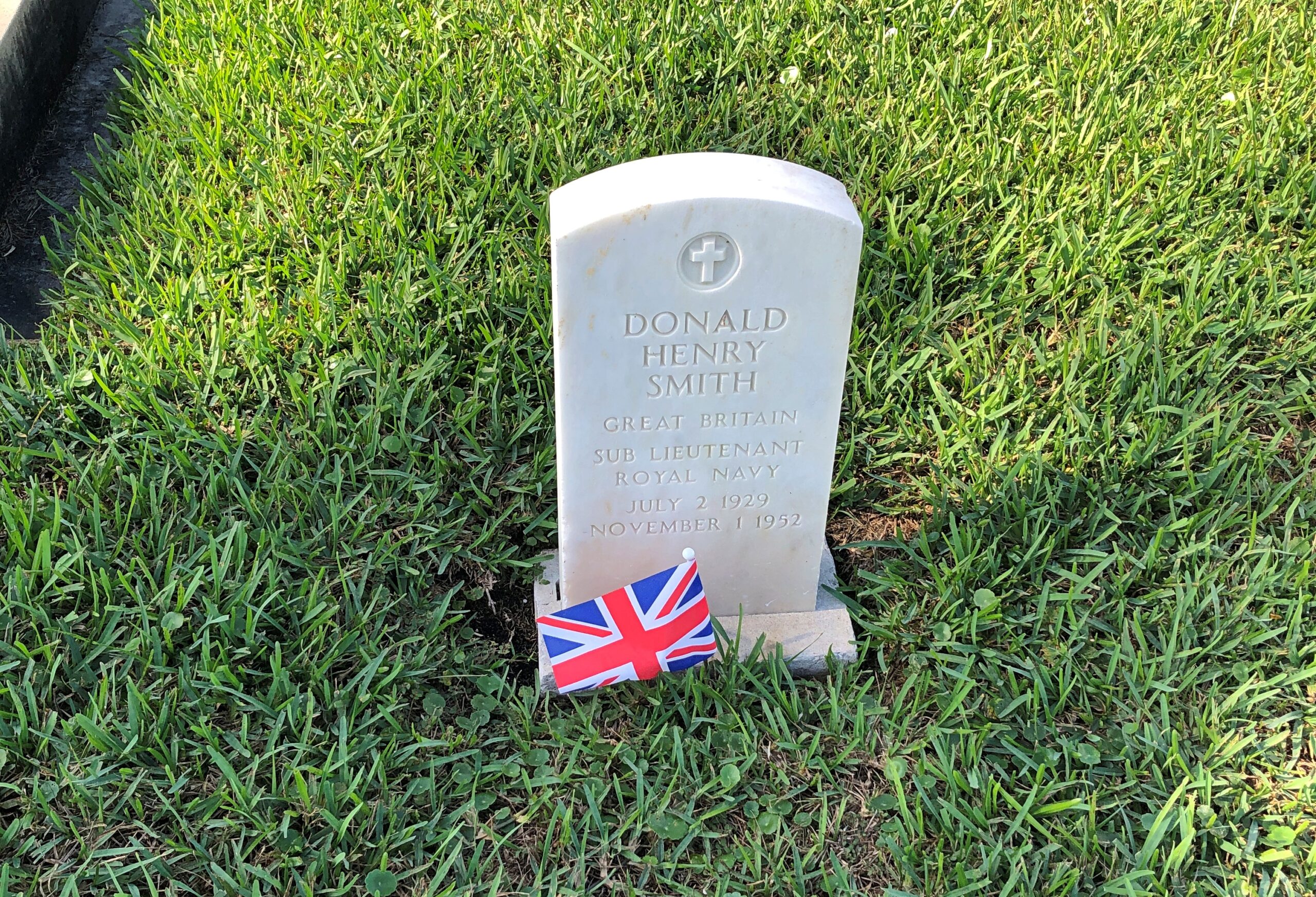
That’s a little odd, but foreign servicemen do sometimes end up in American soil (such as at Vicksburg). I looked around a little, then asked Google AI how Sub-Lieutenant Smith came to be there.
The hive bots said: Donald Henry Smith (1929-1952) is buried in the Key West Cemetery, specifically in the U.S. Navy Plot, likely because he was a young man who died at age 23, possibly serving in the Navy or connected to the naval community, with the plot itself dedicated to fallen sailors, a common burial spot for service members in Key West.
So, navy guys get buried with other navy guys, sometimes. Or maybe because a navy is a navy? Thanks for nothing, AI.
I spotted a Cuban flag and went to investigate.
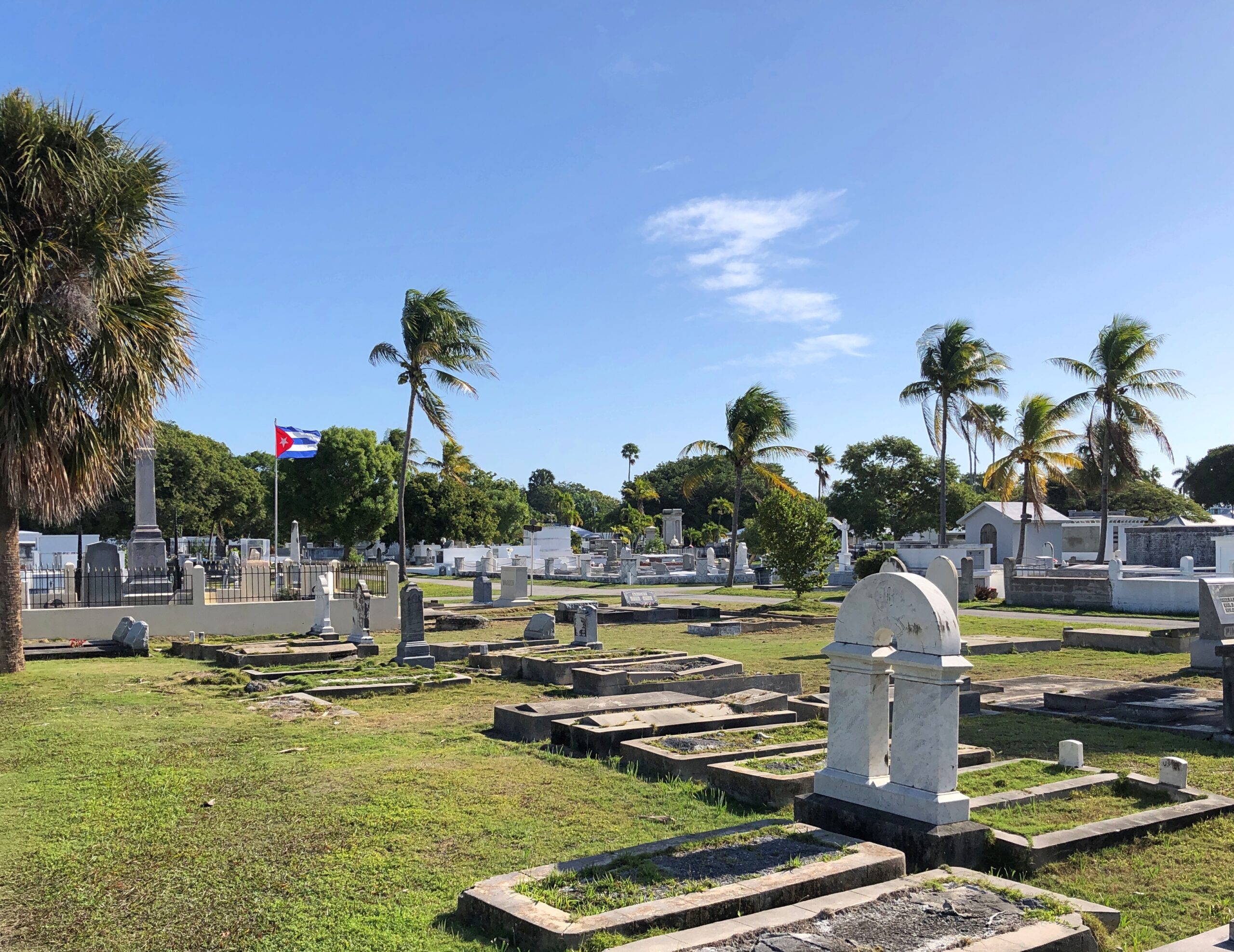
A Los Martires de Cuba.
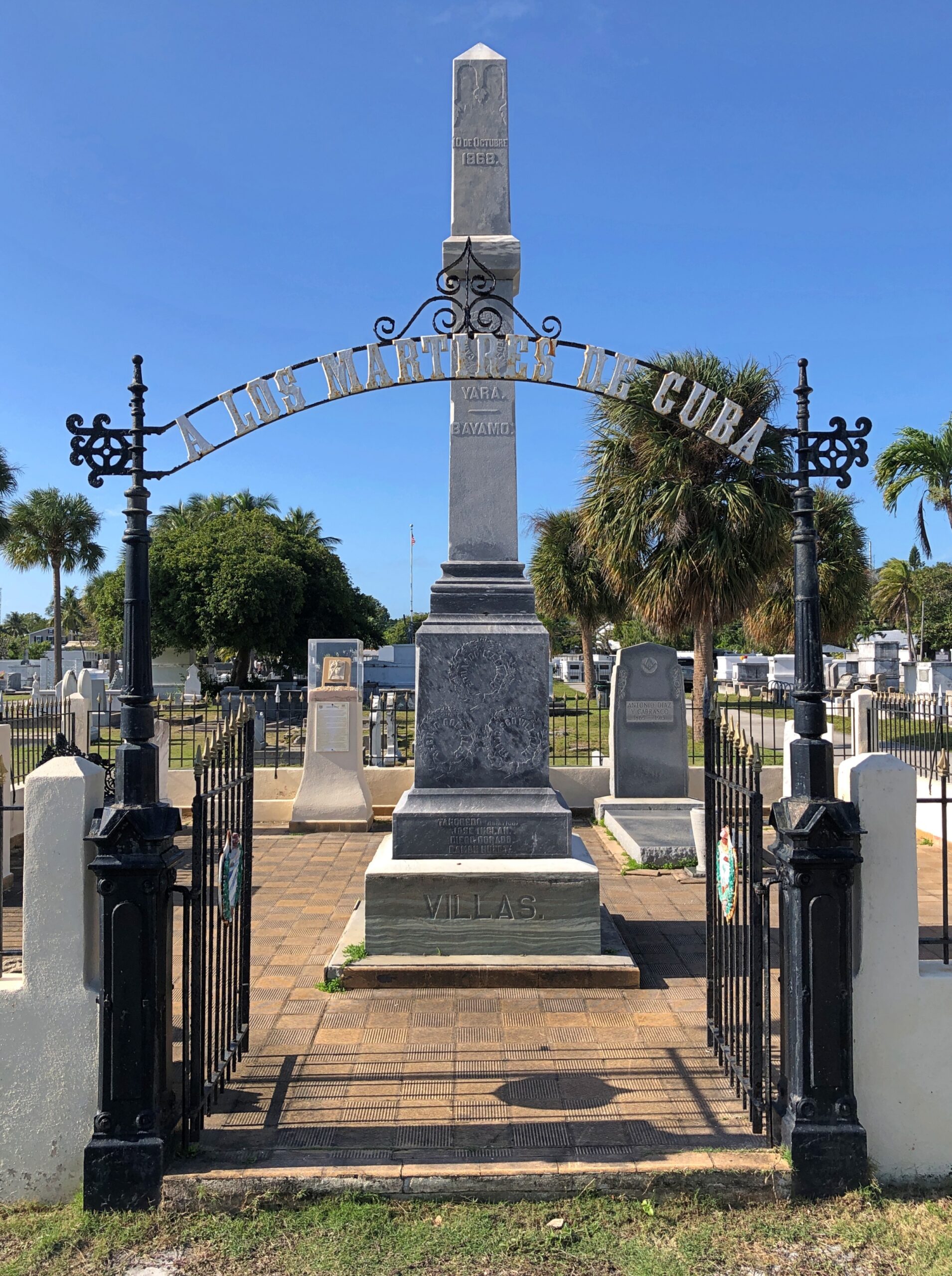
Not all of them are with Jose Marti in Cuba itself. Guess this counts as another of the Little Cubas to be found in warm climes close to the home island.
The cemetery is under the flight path for planes headed for Key West International (EYW).
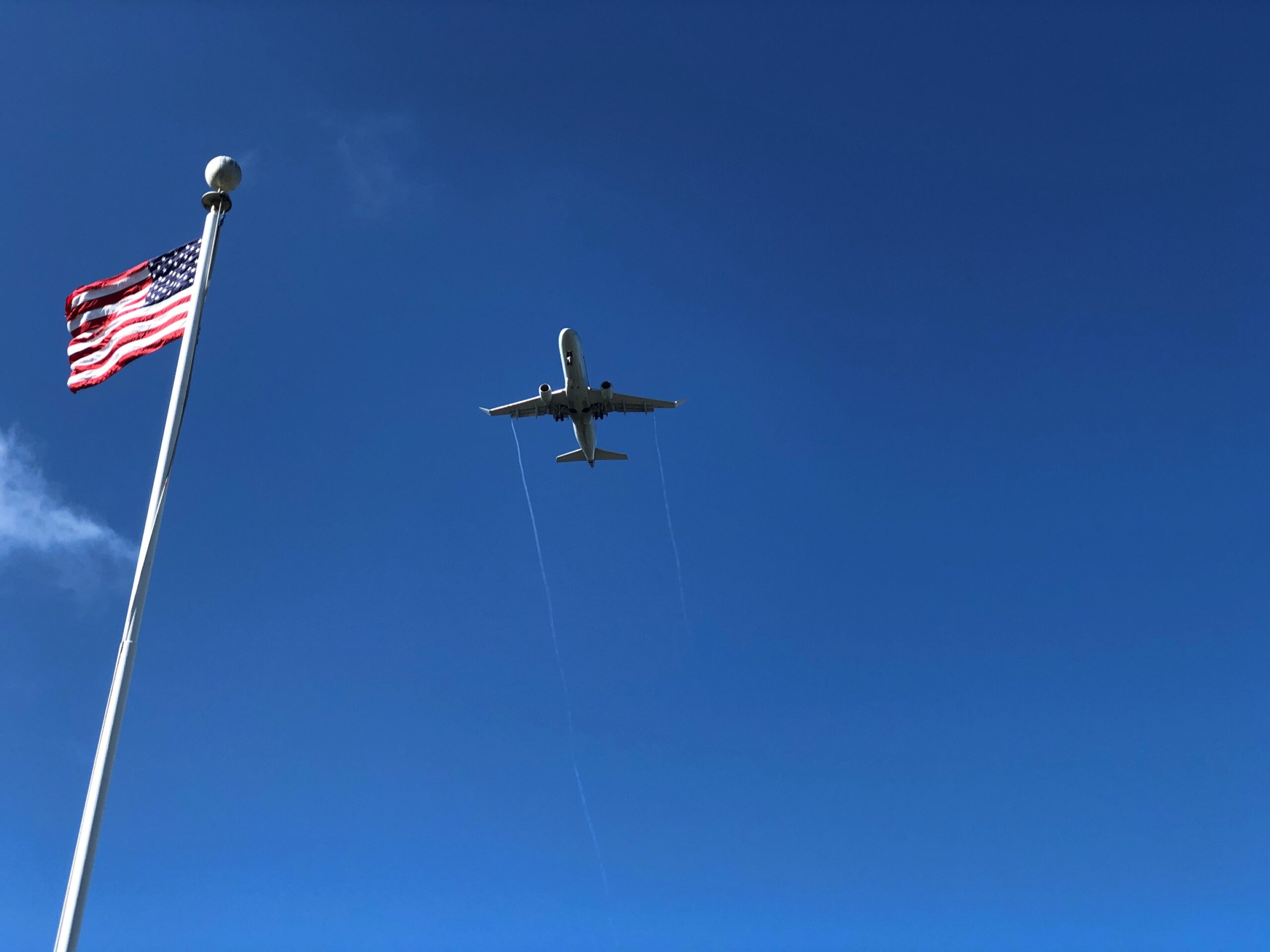
Then again, most of the island must be.