Time for another winter hiatus. Back in the first week of March, which is still winterish in northern Illinois, but at least the snow tends to melt after a few days. Snow was persistent in January this year, a refresh every few days, and temps too low to lose any of it.
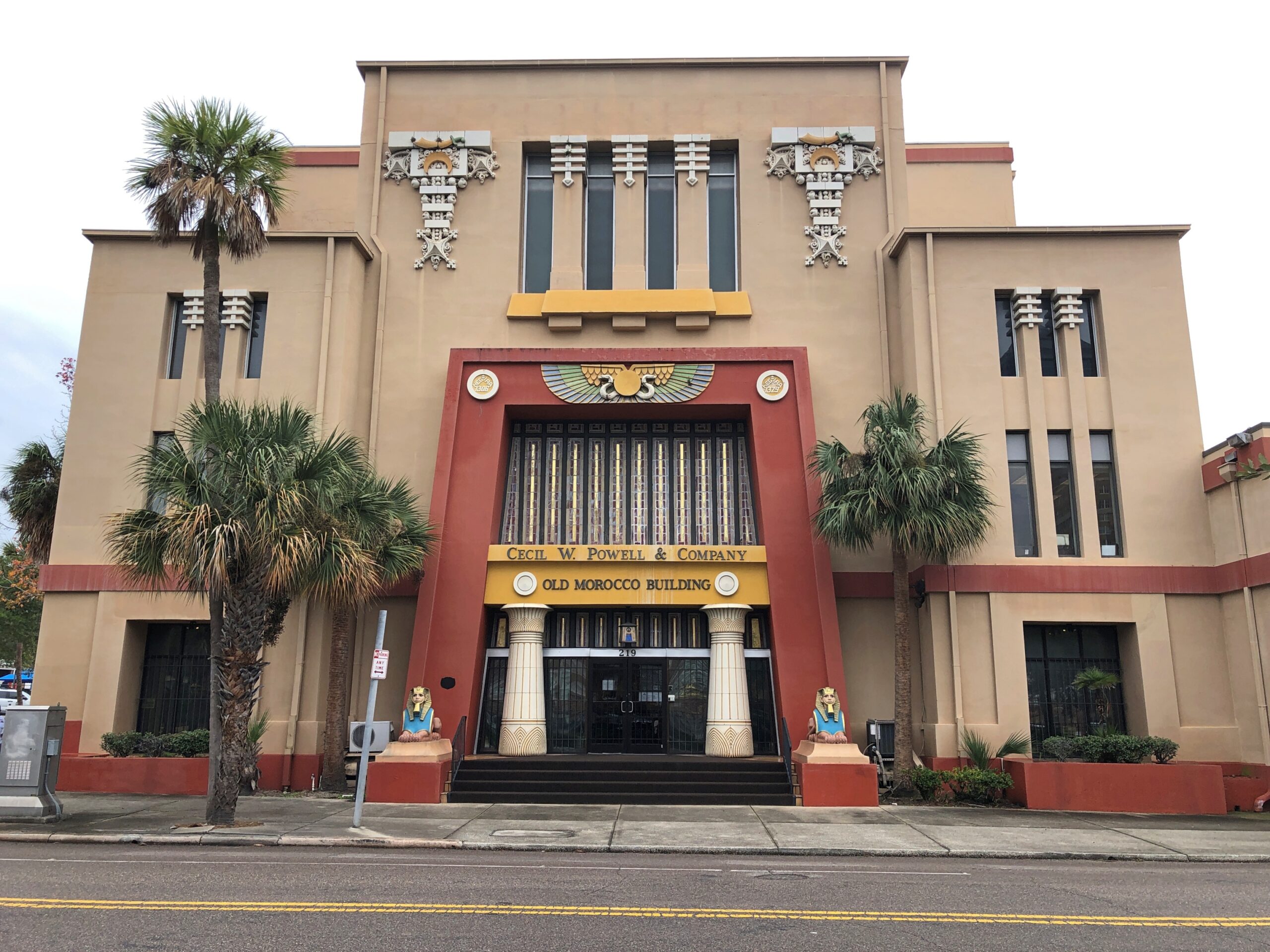
The coolest building in downtown Jacksonville: the Old Morocco Building (a.k.a. the Morocco Temple).
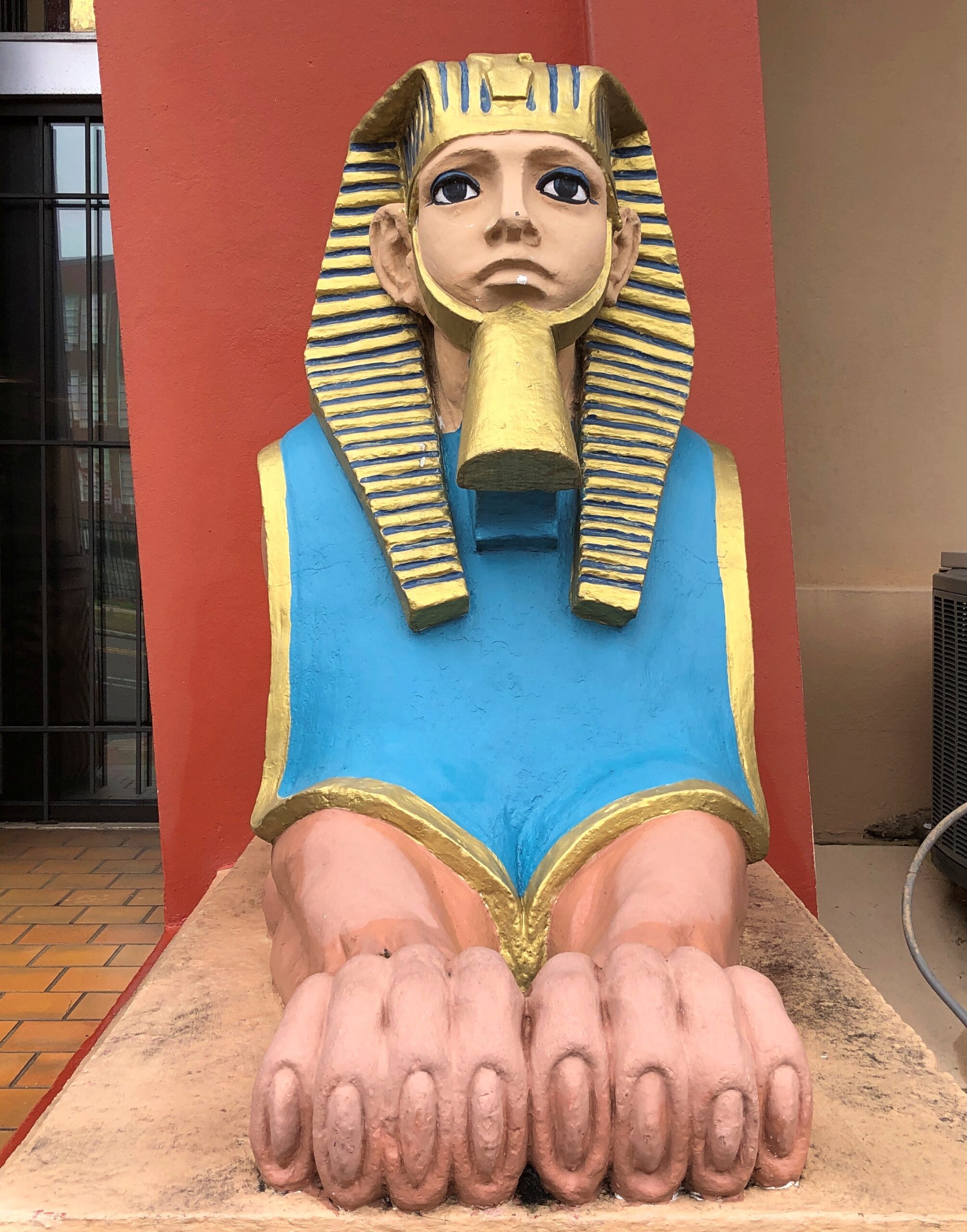
That’s my opinion, formed pretty much instantaneously on December 18, during our wander around downtown. We only spent a few hours in that part of Jacksonville, meaning my exposure was necessarily limited, but I’m sticking with my opinion. After all, what could be cooler than an Egyptian revival-Prairie School structure with sphinx-like guards out front? (And how about them toes?)
“The main facade features Egyptian-style terra-cotta columns with lotus-leaf capitals, tinted art-glass, sphinx-like sculptures, and a terra-cotta sun disk ornament with cobra heads,” notes Prairie School Traveler.
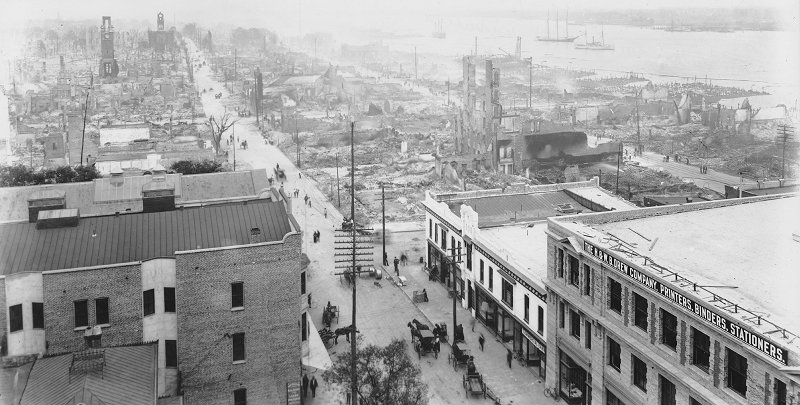
The Shriners – who else? – tapped architect Henry John Klutho to design the building, which was completed in 1911. Klutho had been based in NYC, but after the Great Fire of 1901 in Jacksonville, he came south to participate in the redevelopment of the city. If he did nothing else, the Morocco Temple would be enough. I understand the interior is similarly exotic, though modified after the Shriners moved out in the 1980s, but we didn’t venture in.
The aftermath of the fire. Redevelopment opportunities galore.
We’d come to Jacksonville, two days after leaving Key West, for two reasons. One, to visit old friends. Last year, I managed to visit old friends in Austin, San Antonio, Tokyo, rural Tennessee, coastal North Carolina, central Georgia, Denver, New York, suburban Boston, and finally Jacksonville. An essential ingredient for the year, these visits.
Also, I wanted to visit the generally ignored Jacksonville. A place one doesn’t hear about much. Miami has its Vice and Orlando its Mouse and Key West its Jimmy Buffett. But Jacksonville?
We were advised that parking would not be an issue in downtown Jacksonville, even on a weekday. It wasn’t. We set out to see what we could see.
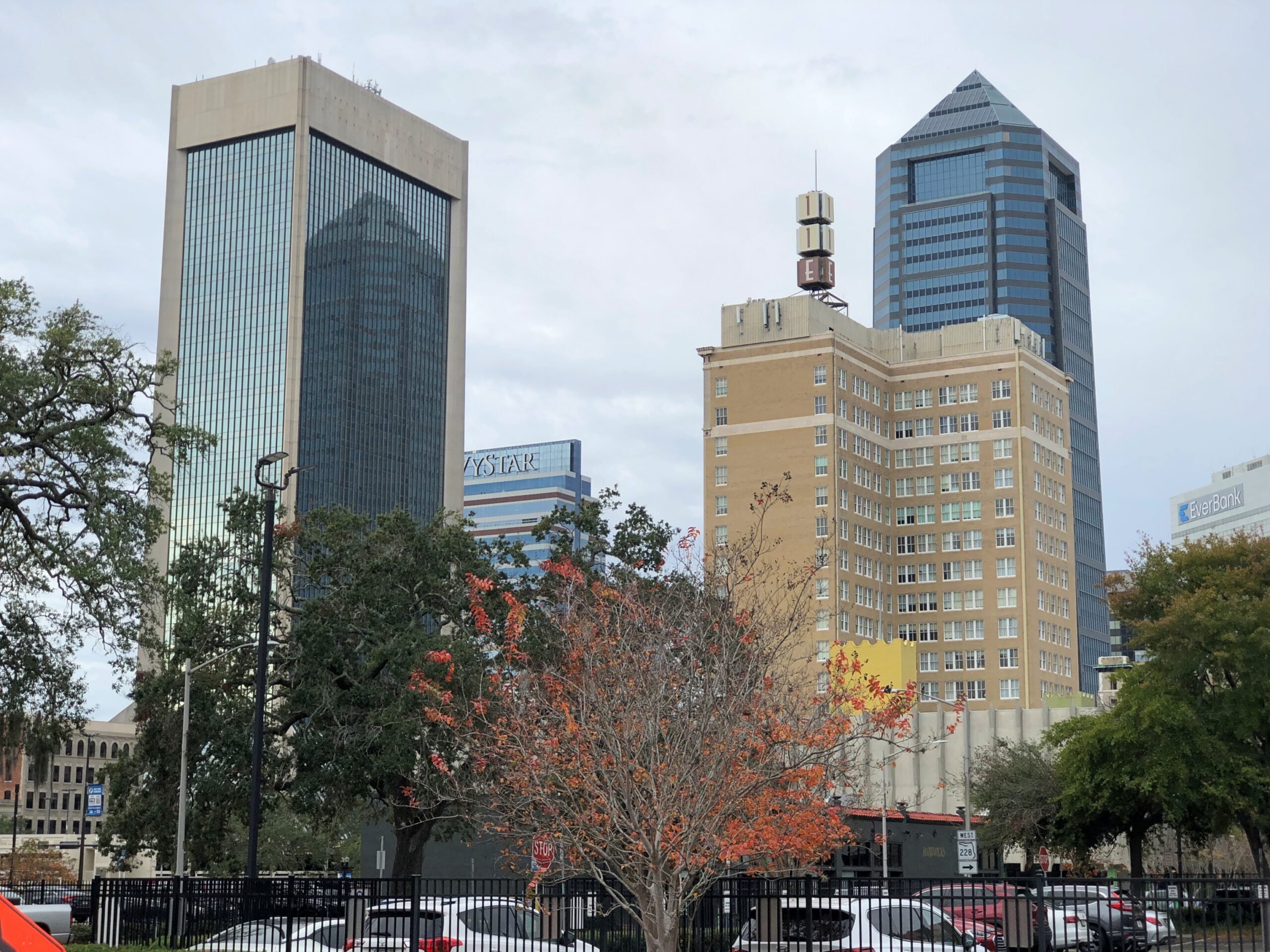
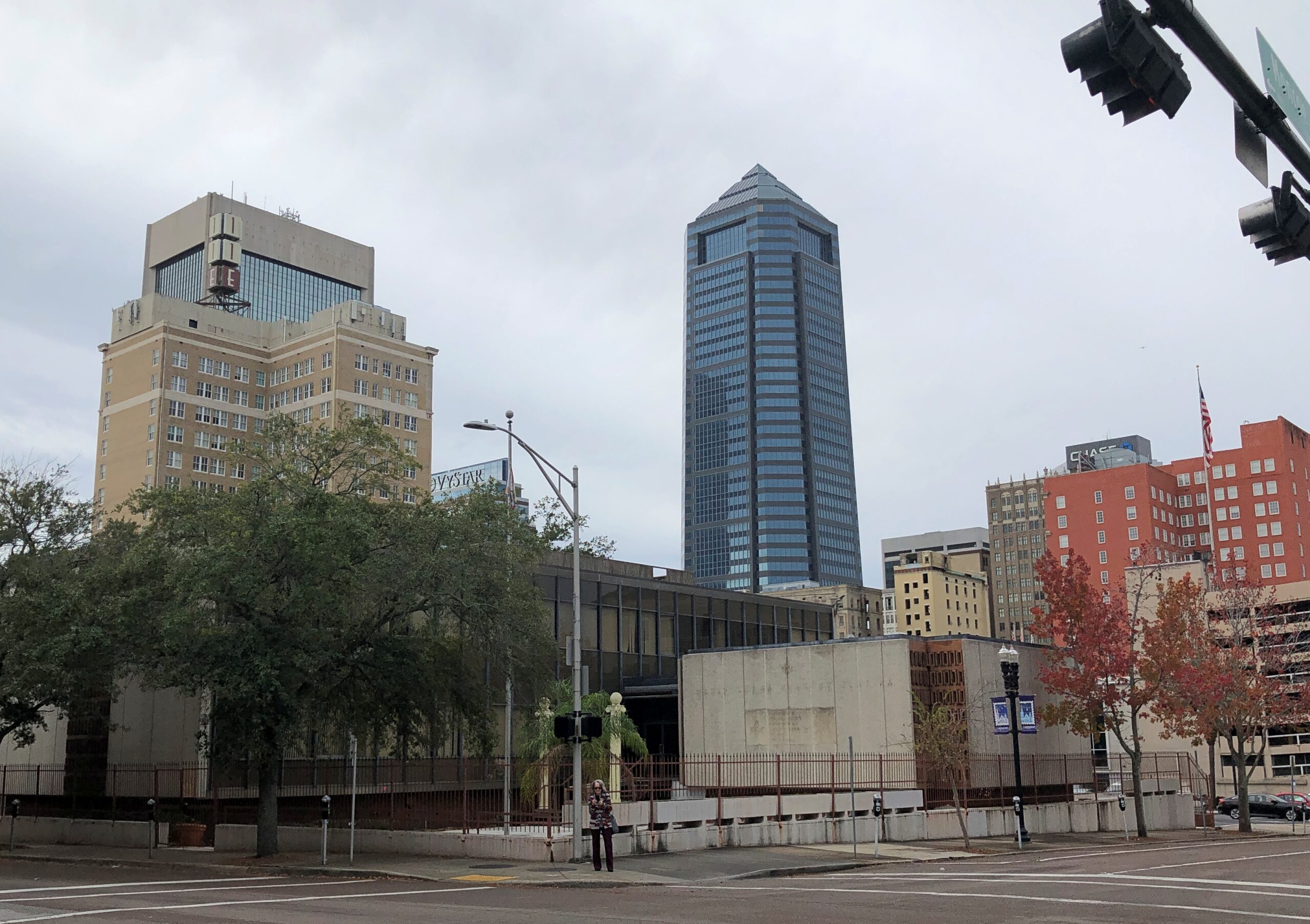
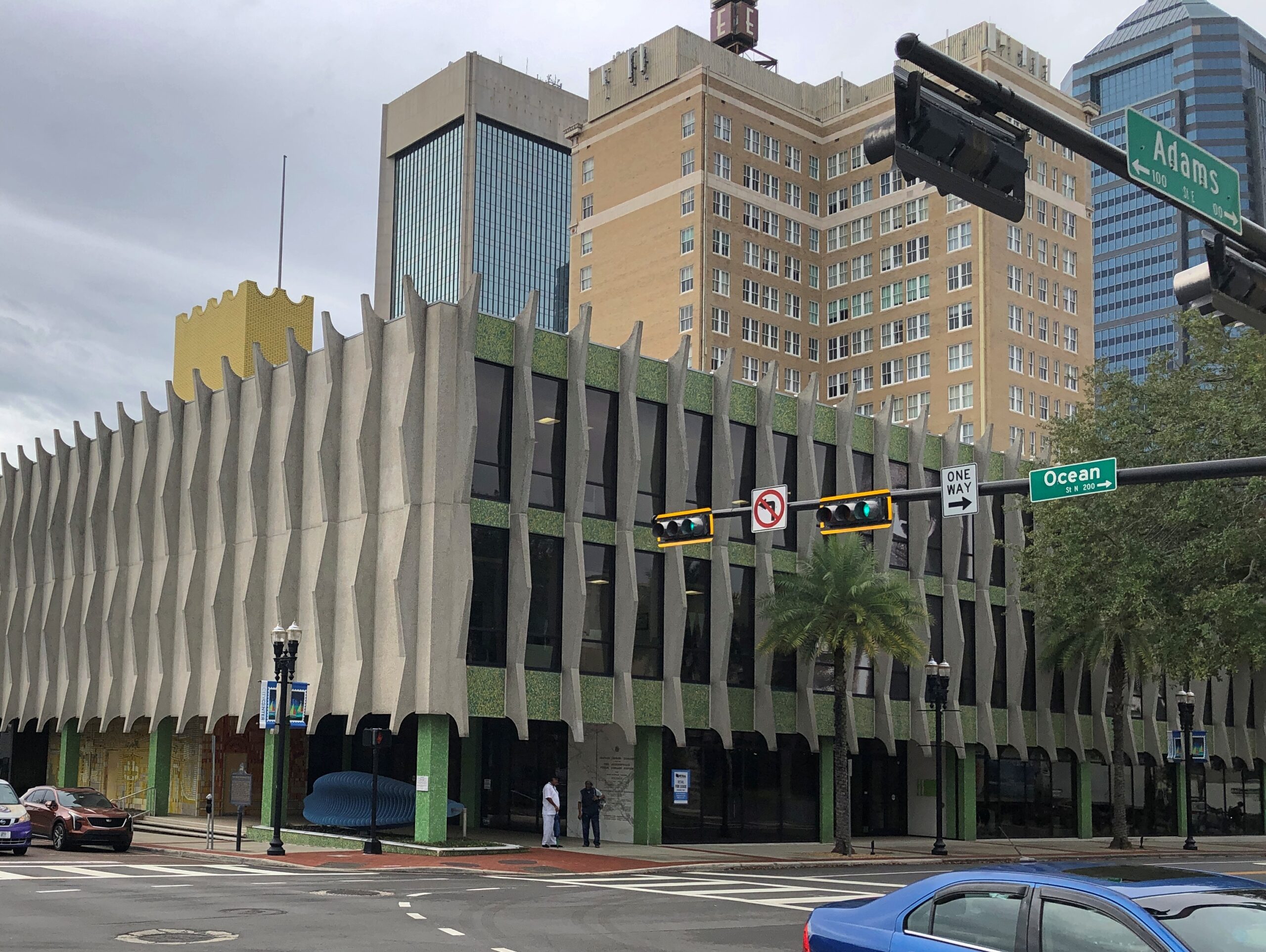
It was almost spooky how empty downtown was. Even the downtown Detroit of recent years is more active.
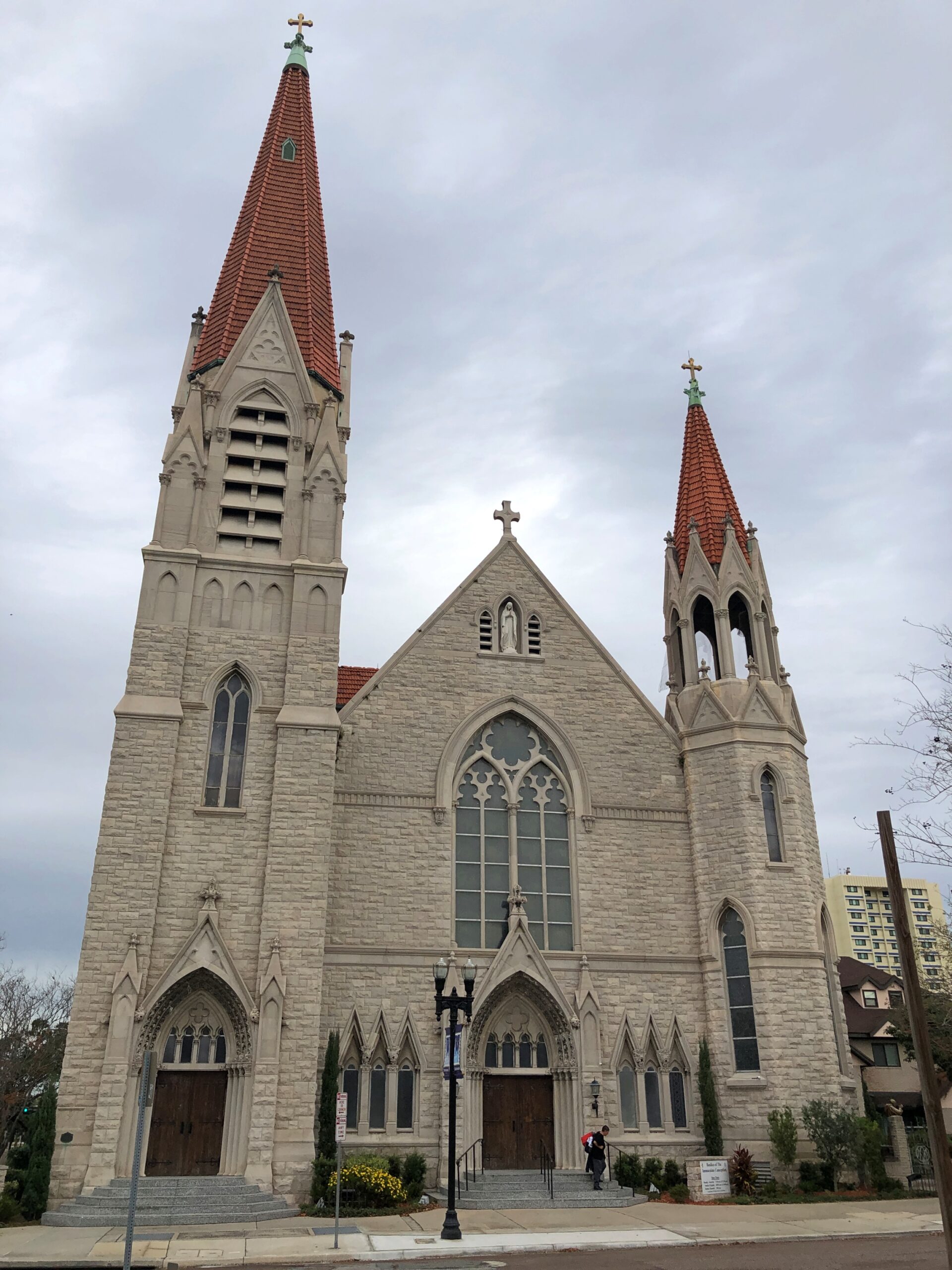
Downtown Jacksonville included some large but closed churches, such as the Basilica of the Immaculate Conception.
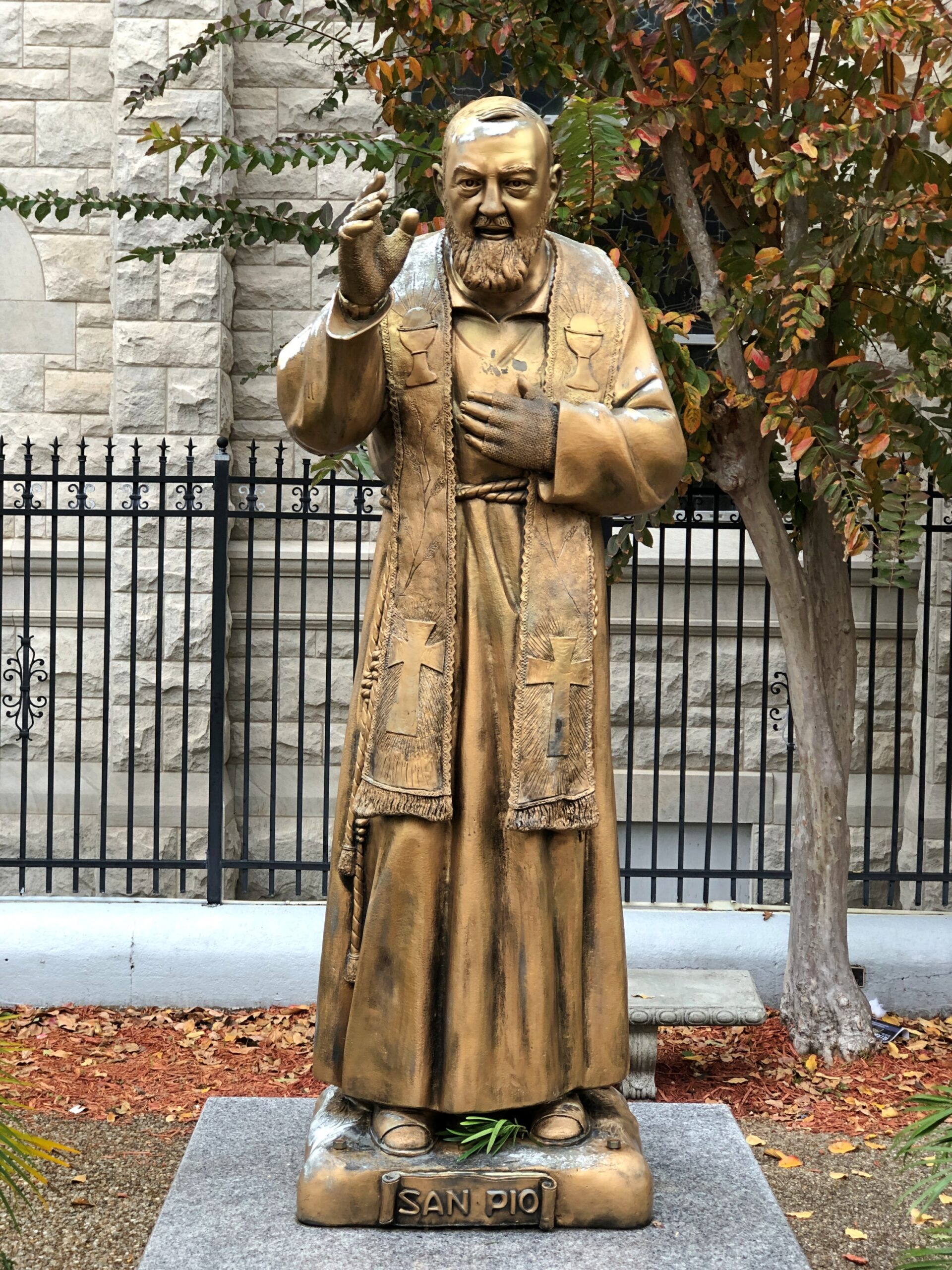
But at least Padre Pio is near the basilica to greet you.
If I’d known what to look for – because I had to look him up later – I’d have noticed the bandages covering both of his wrists. Among other things, St. Pio was known for his stigmata.
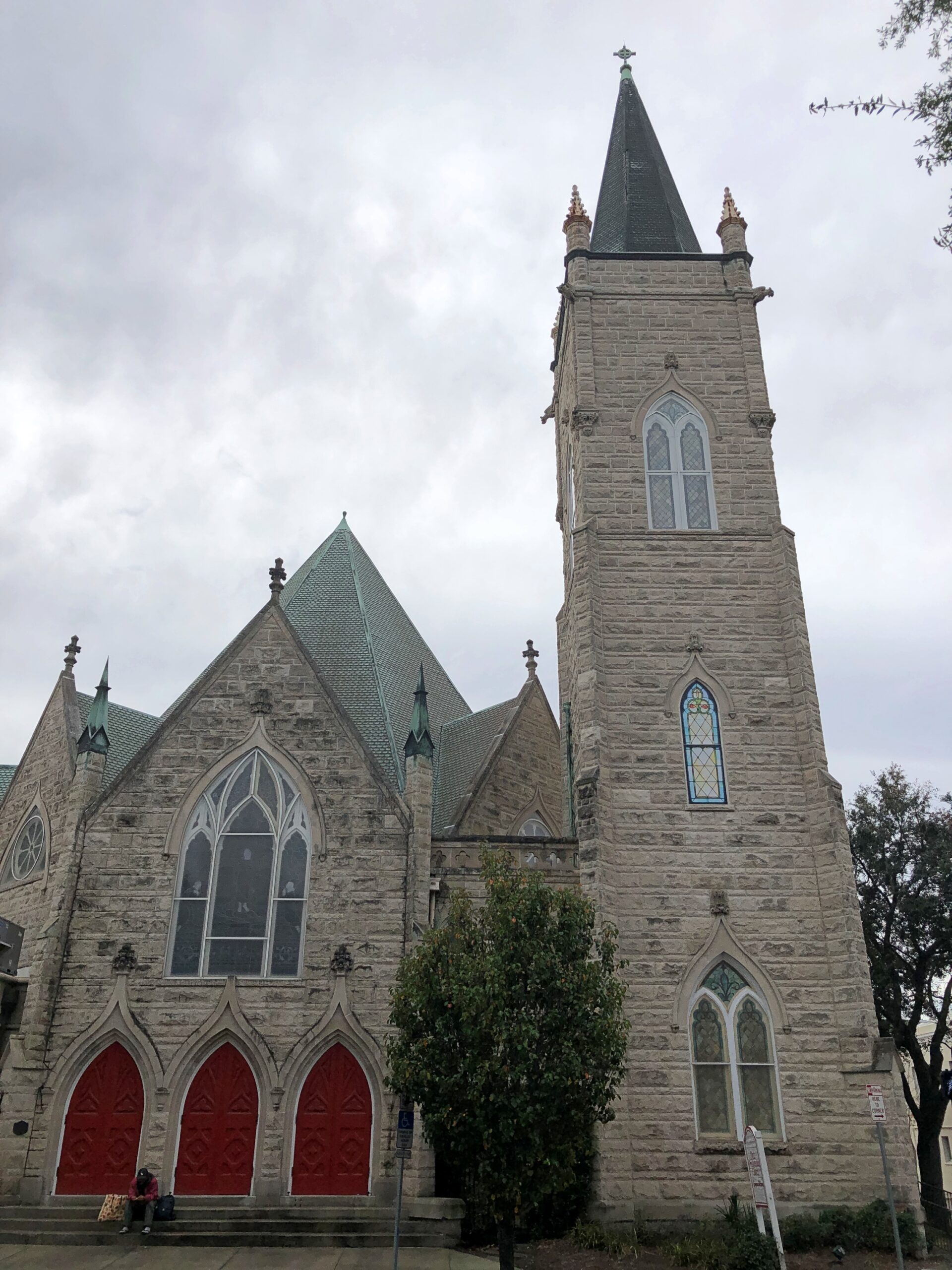
Down the street, also closed: First Presbyterian.
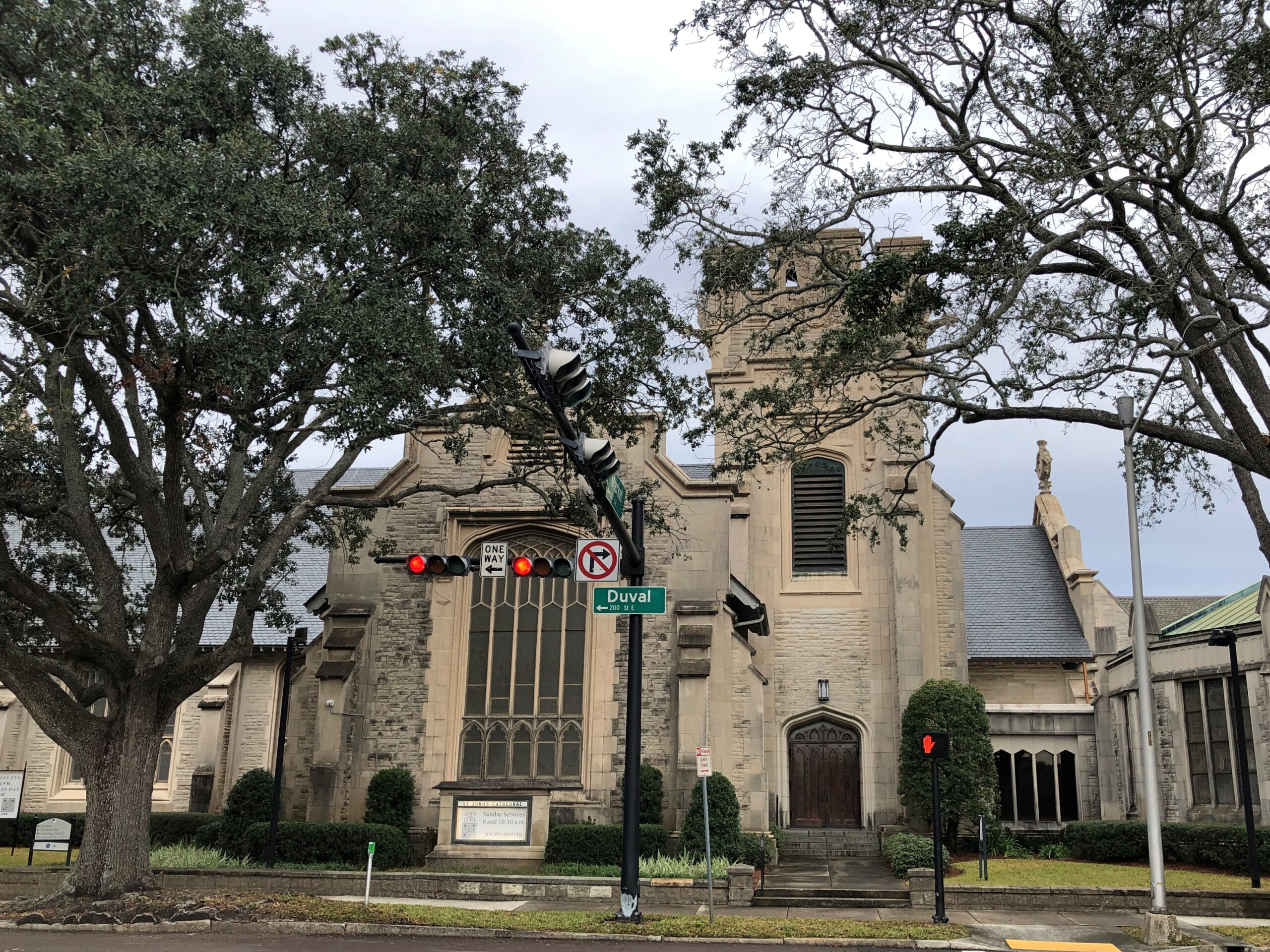
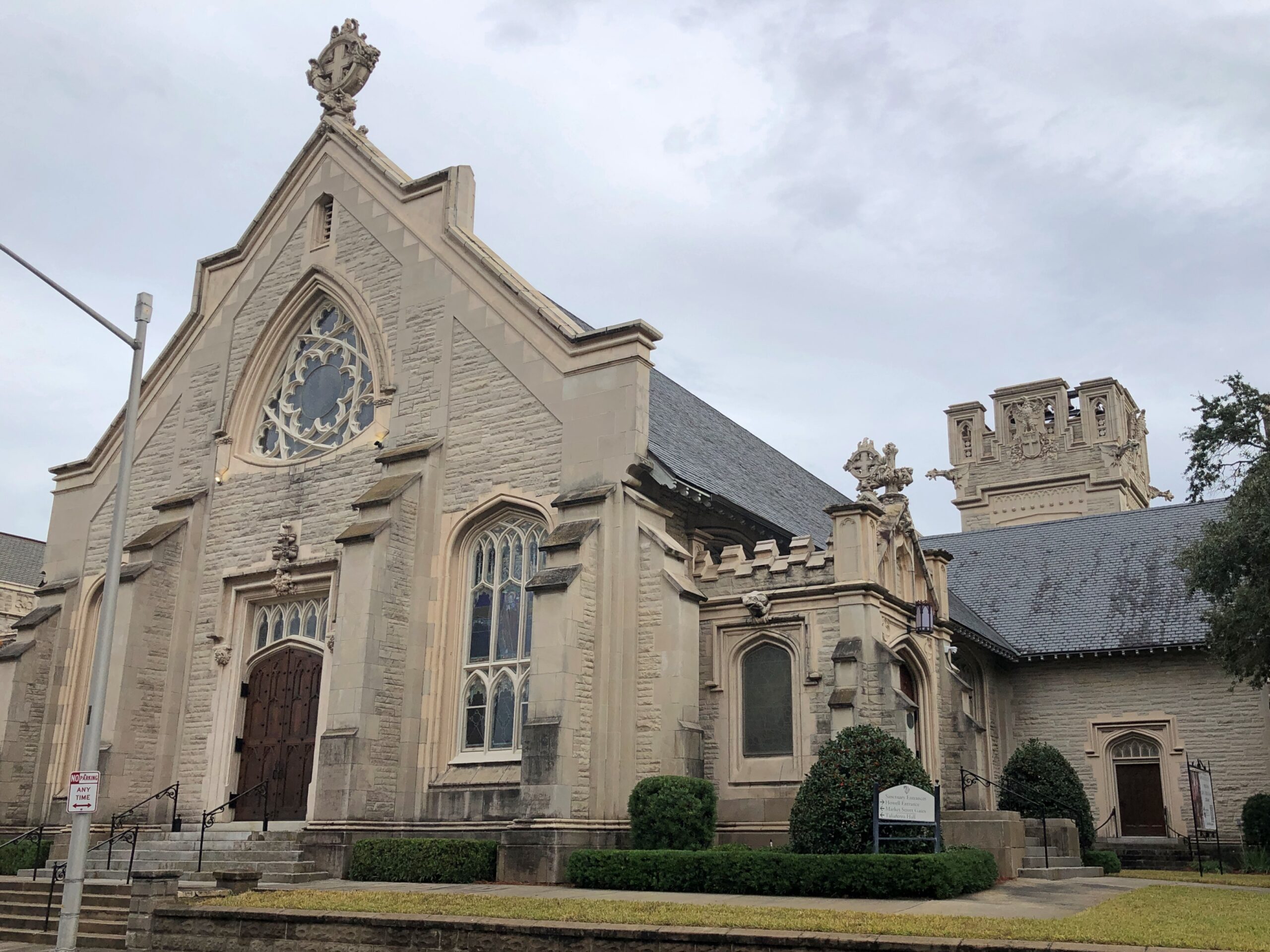
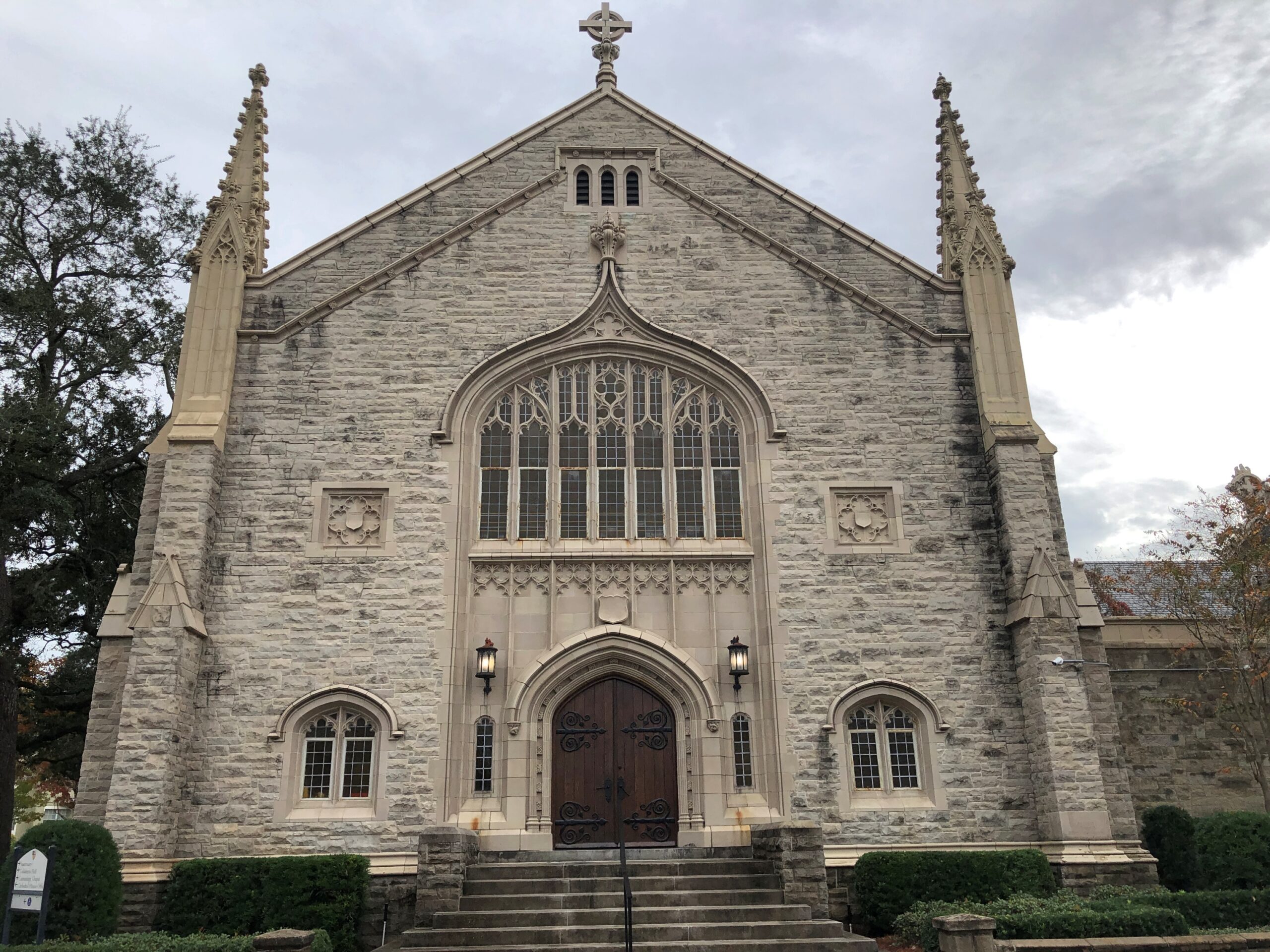
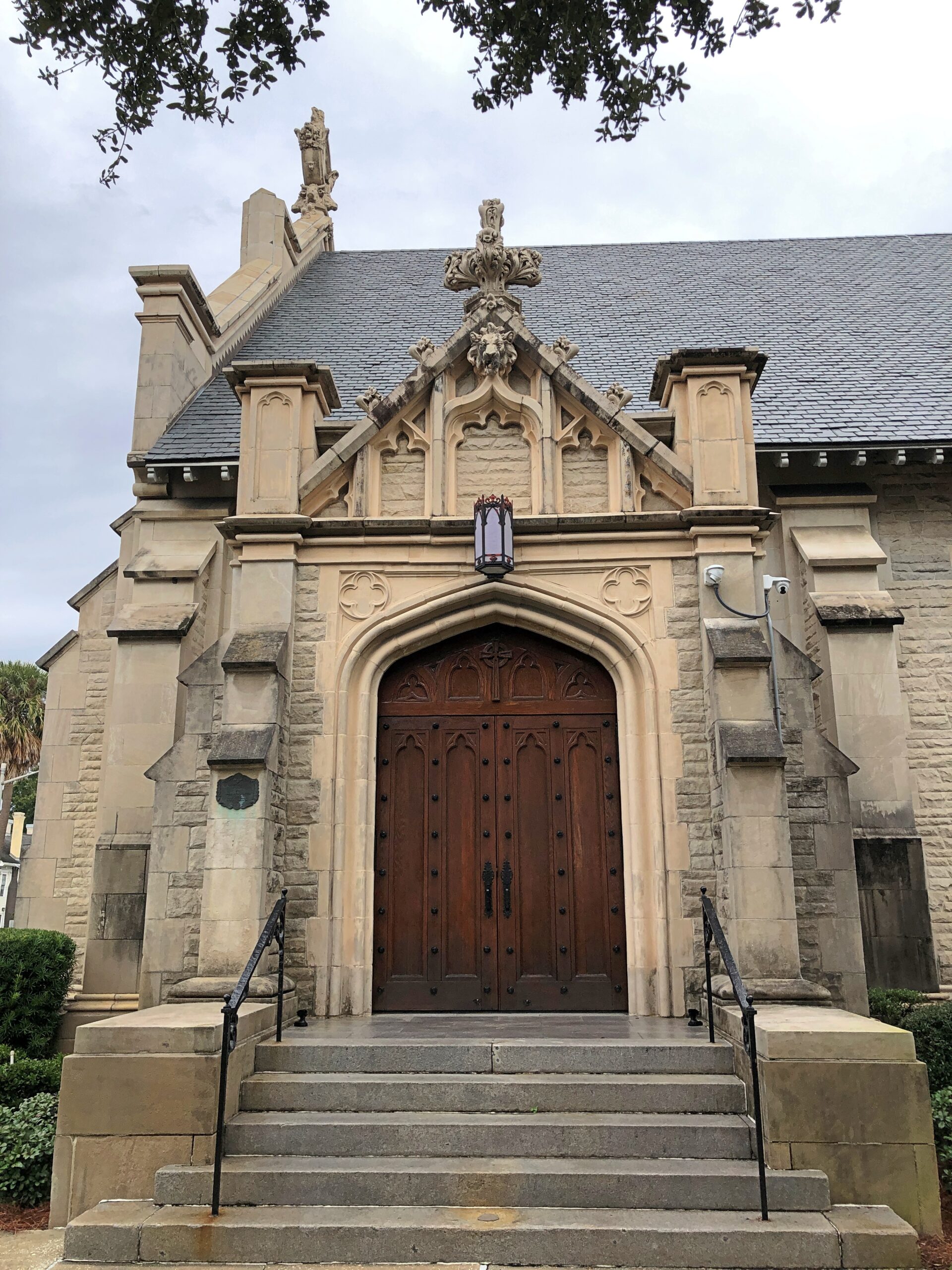
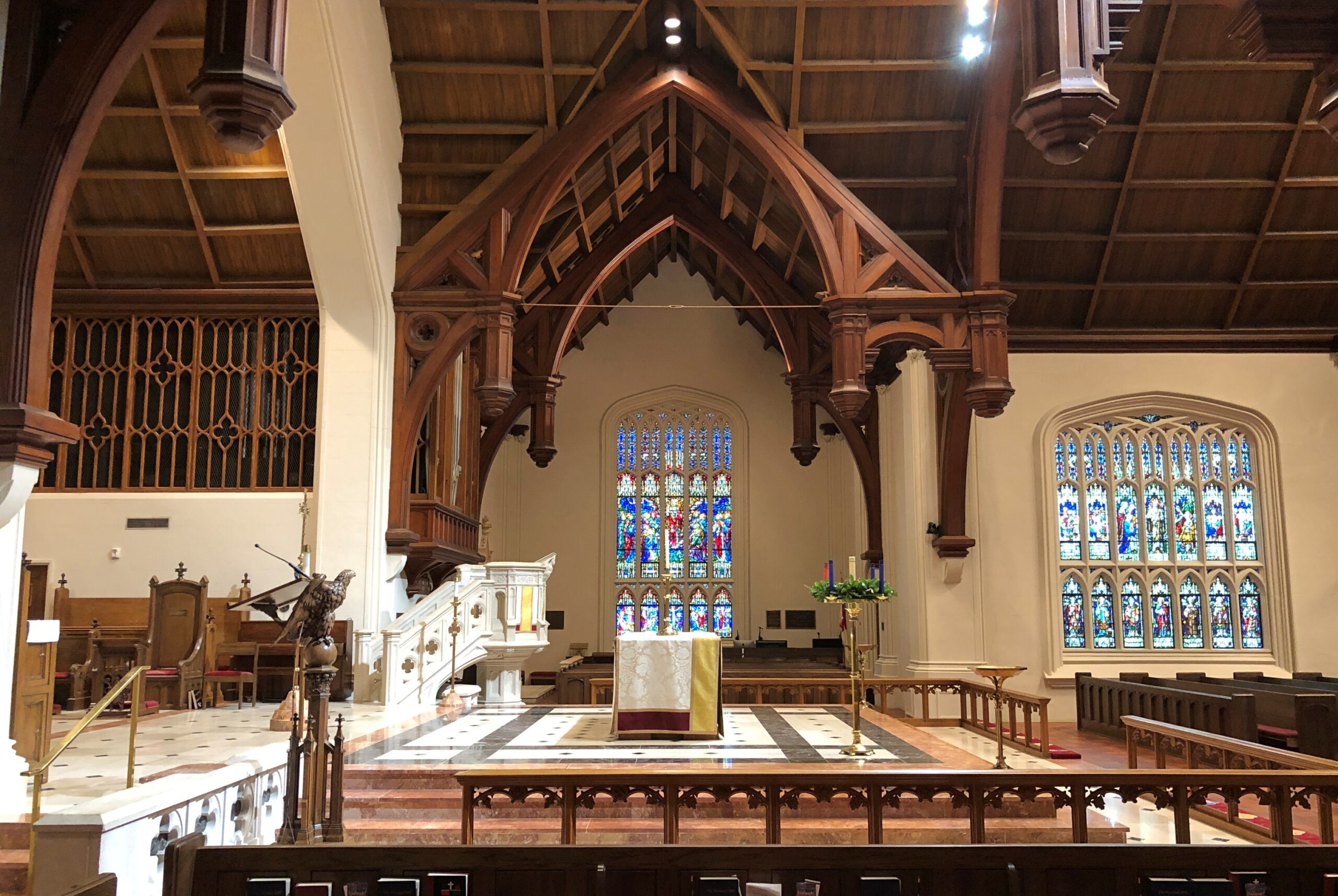
St. John’s Cathedral, Episcopal. At first I assumed it was closed.
This is the third church on the site. An 1840s structure burned down (and sank into the swamp?) in 1862, during one of the times the city changed hands between Union and Confederate. A grander church replaced it after the war but, oops, along came the aforementioned Great Fire of 1901. The current structure dates from 1906, the work of noted church architect Howard Nott Potter.
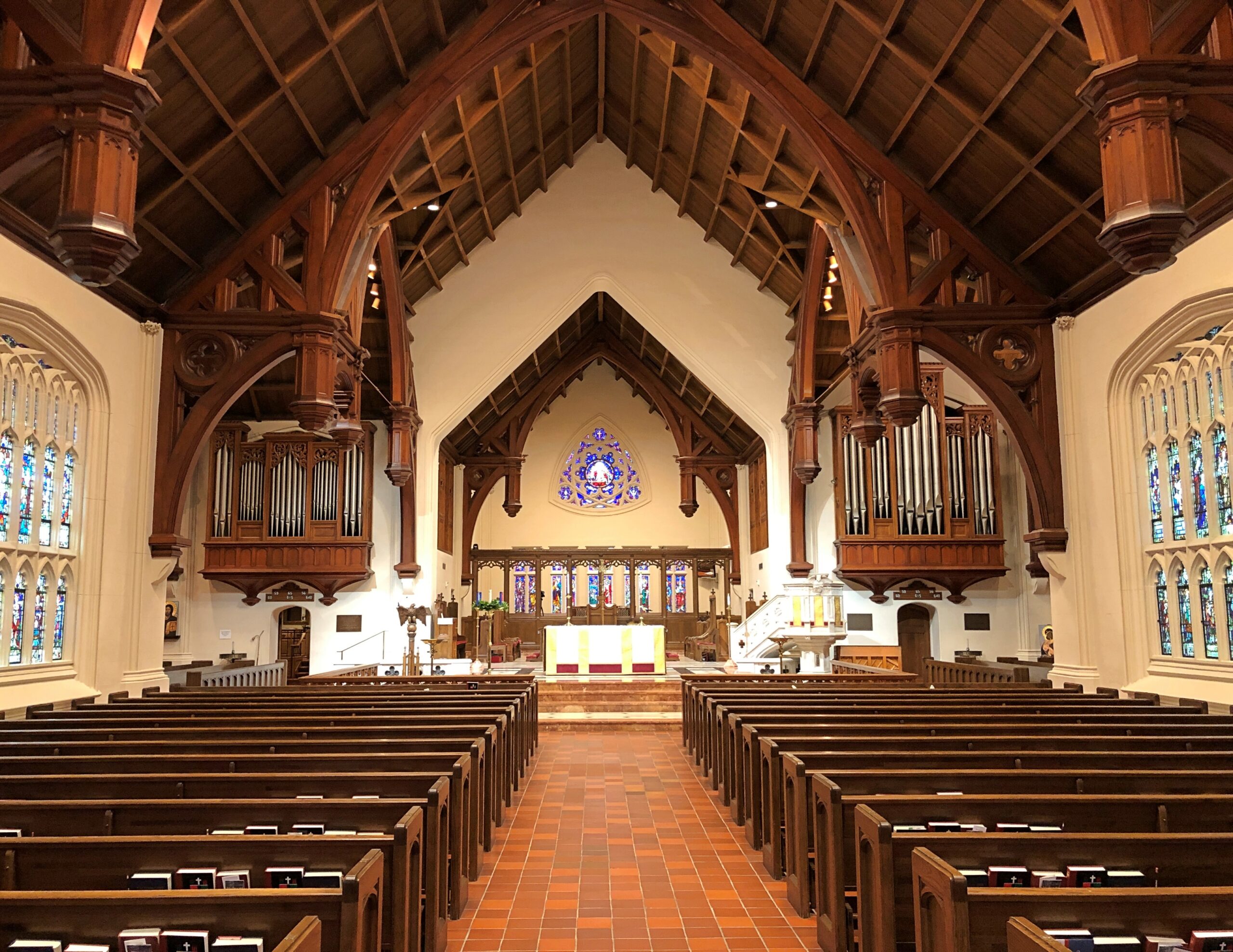
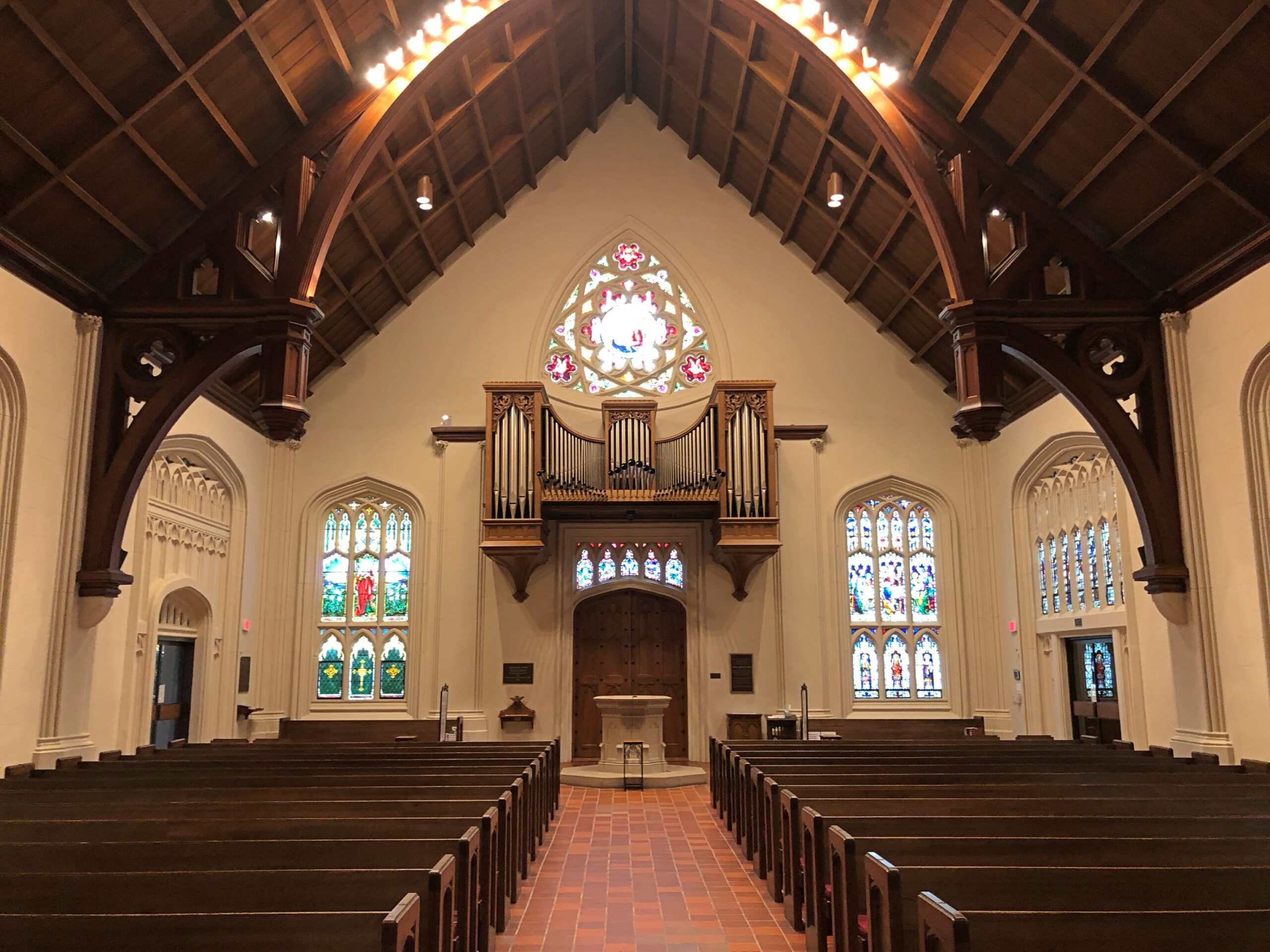
We found a way in, almost hidden around back. We were well rewarded.
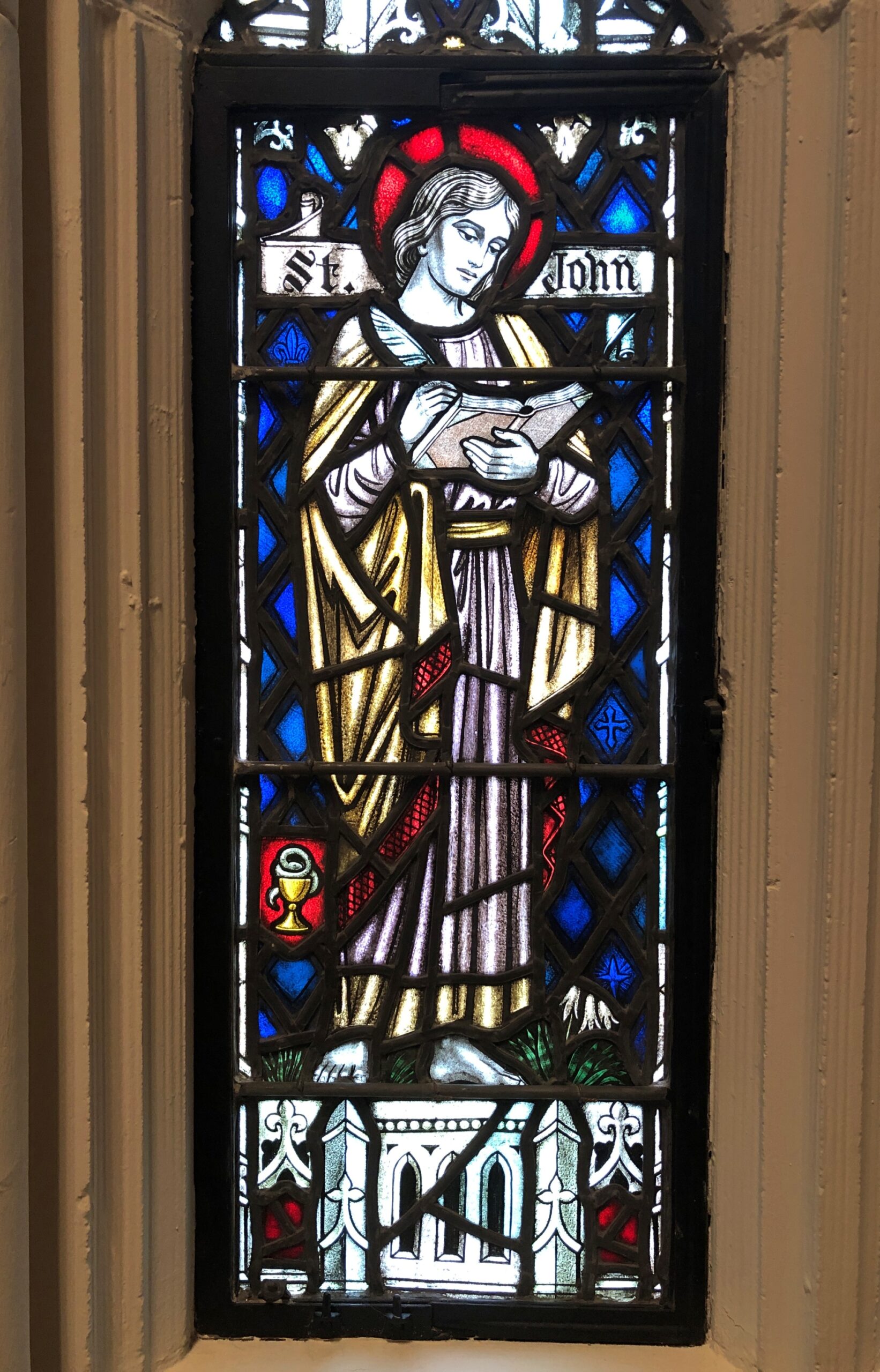
Fine stained glass. St. John makes an appearance, as you’d think.
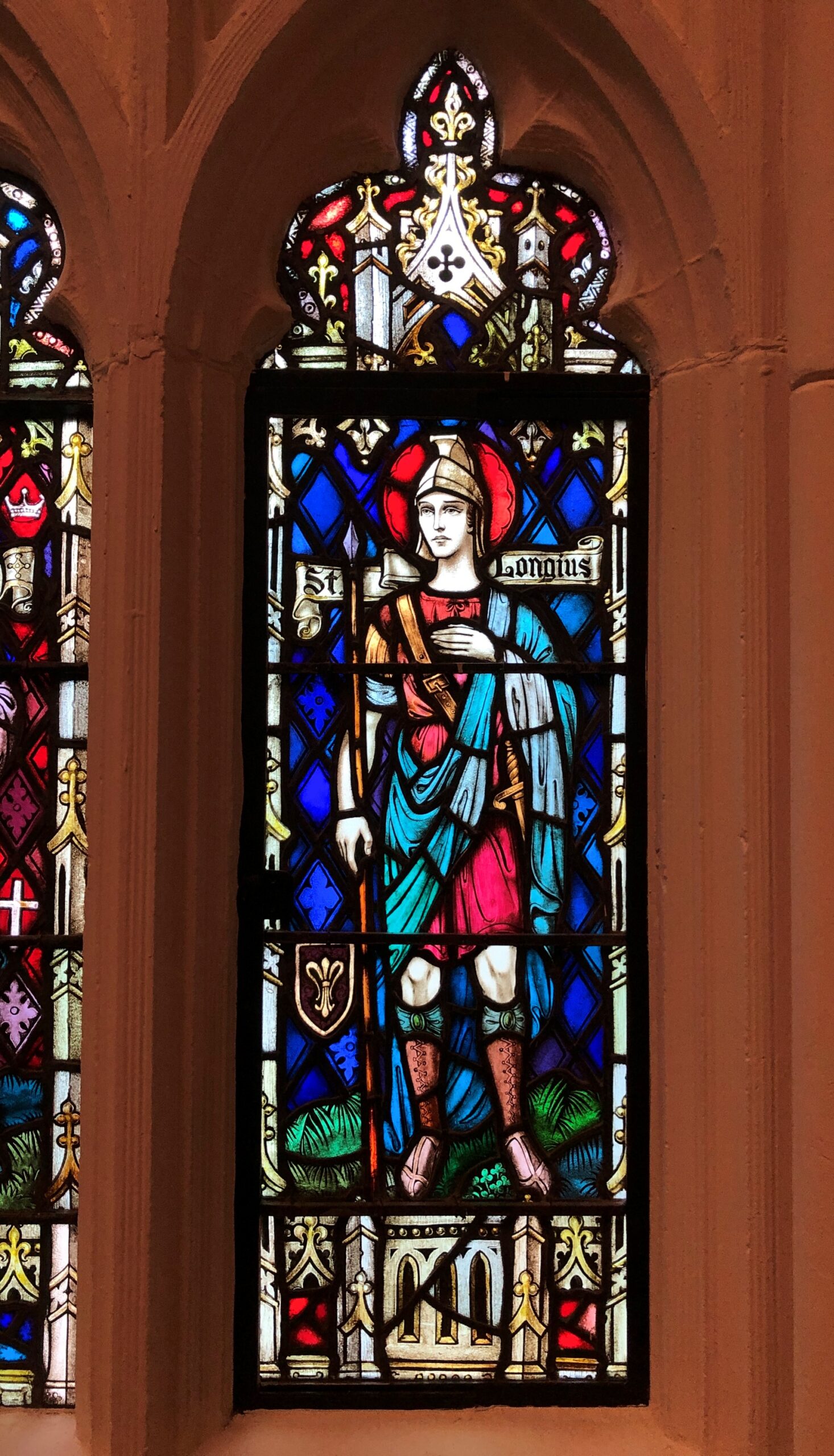
So does St. Longinus.
You might say he had a bit part in during the crucifixion, mentioned in one line exactly (John 19:34) and not even by name. But from such small acorns large bodies of belief grow.
A few days ago, I sent the following email to the curator and historian at the Key West Art & Historical Society, Dr. Cori Convertito:
Dr. Convertito,
I recently visited Key West for another pleasant visit, and came away with a question I haven’t been able to answer, though perhaps I haven’t looked in the right places.
Who is credited with the creation of the Conch Republic flag? I understand that it appeared at the same time as the infamous roadblock and the “secession,” but detail on its creation is lacking. Do you happen to know that?
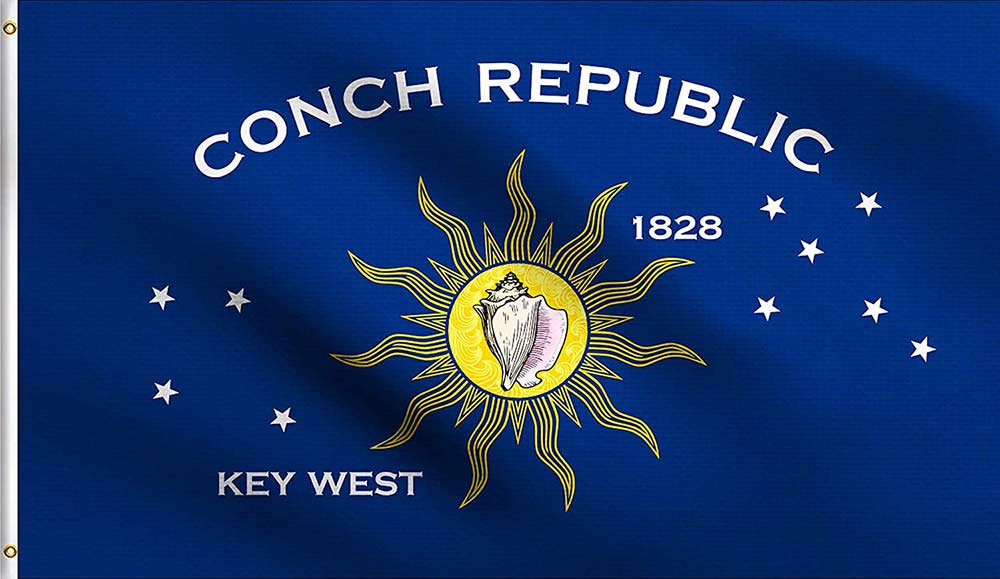
One reason to ask is that it’s a handsome design, though I’m not sure about the star pattern asterisms — is one or another supposed to be the Southern Cross?
Today she answered:
That’s a perceptive question, and a difficult one to answer definitively. The Conch Republic flag emerged alongside the 1982 ‘secession,’ but attribution is complicated by the fact that several individuals have, over the years, laid claim to the original iteration of the artwork, and reliable contemporary documentation is limited. As a result, it’s hard to credit a single creator with certainty.
What is clearer is the intent behind the design elements. In addition to the conch shell and sun, the star groupings are generally understood to represent two navigational asterisms: the Southern Cross and the Northern Cross (Cygnus). Their inclusion appears deliberate, reinforcing Key West’s maritime identity and its symbolic position between hemispheres.
I hope that helps clarify what is known, and what remains unresolved.
So the short answer is, like with a number of historical questions – even ones as recent as this – no one is sure. Good to know. Thanks, Dr. Convertito.
The Overseas Highway, from mainland Florida to Key West, or vice versa, is epic all around: an epic construction project once upon a time, and an epic drive in our time. Through the Upper Keys, the likes of Key Largo and Islamorada, the ocean isn’t usually visible, obscured behind thick development: commercial and residential buildings and omnipresent marinas. But it isn’t long before you’re skipping from key to key, some larger, some smaller, with water widely visible on both sides of the road.
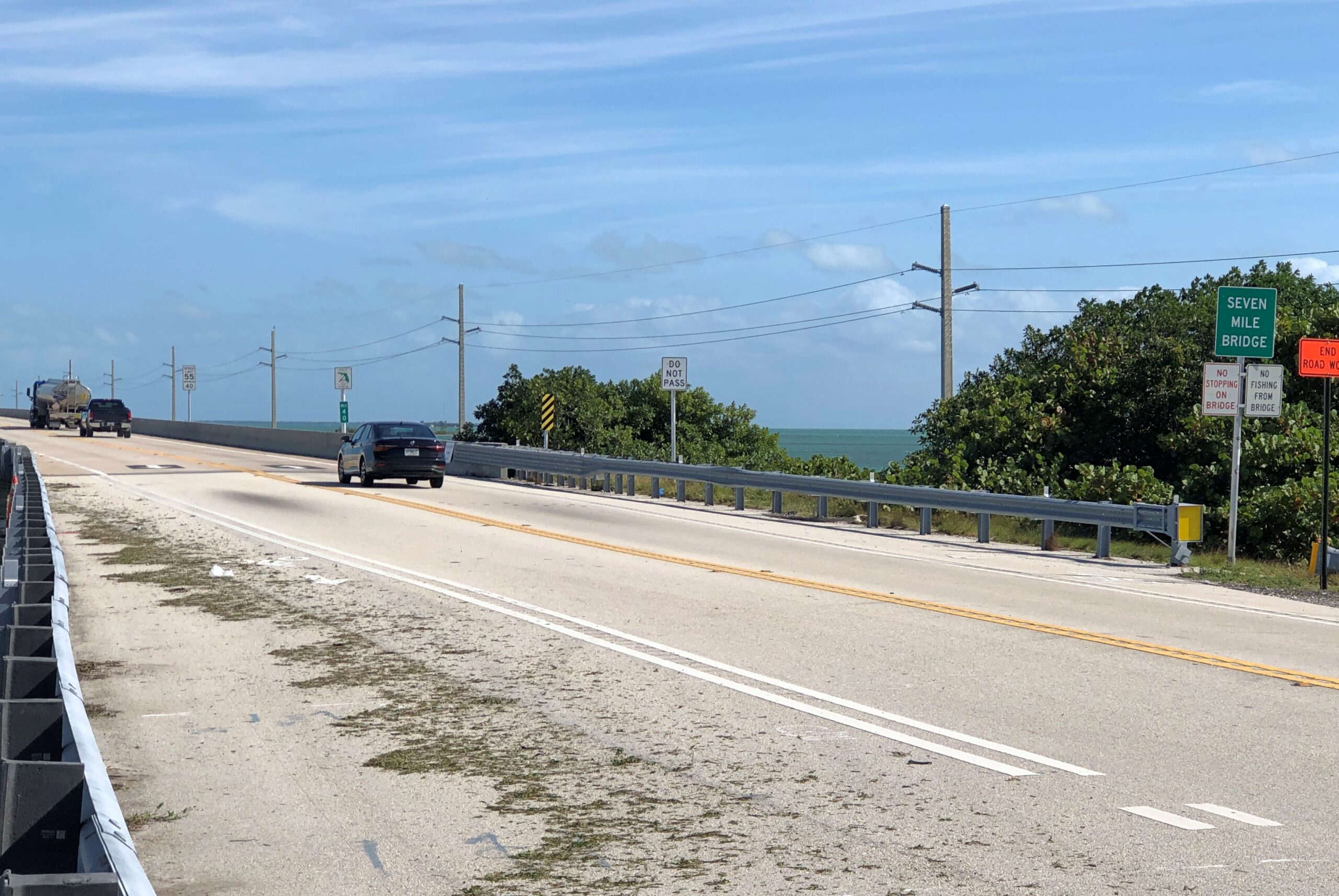
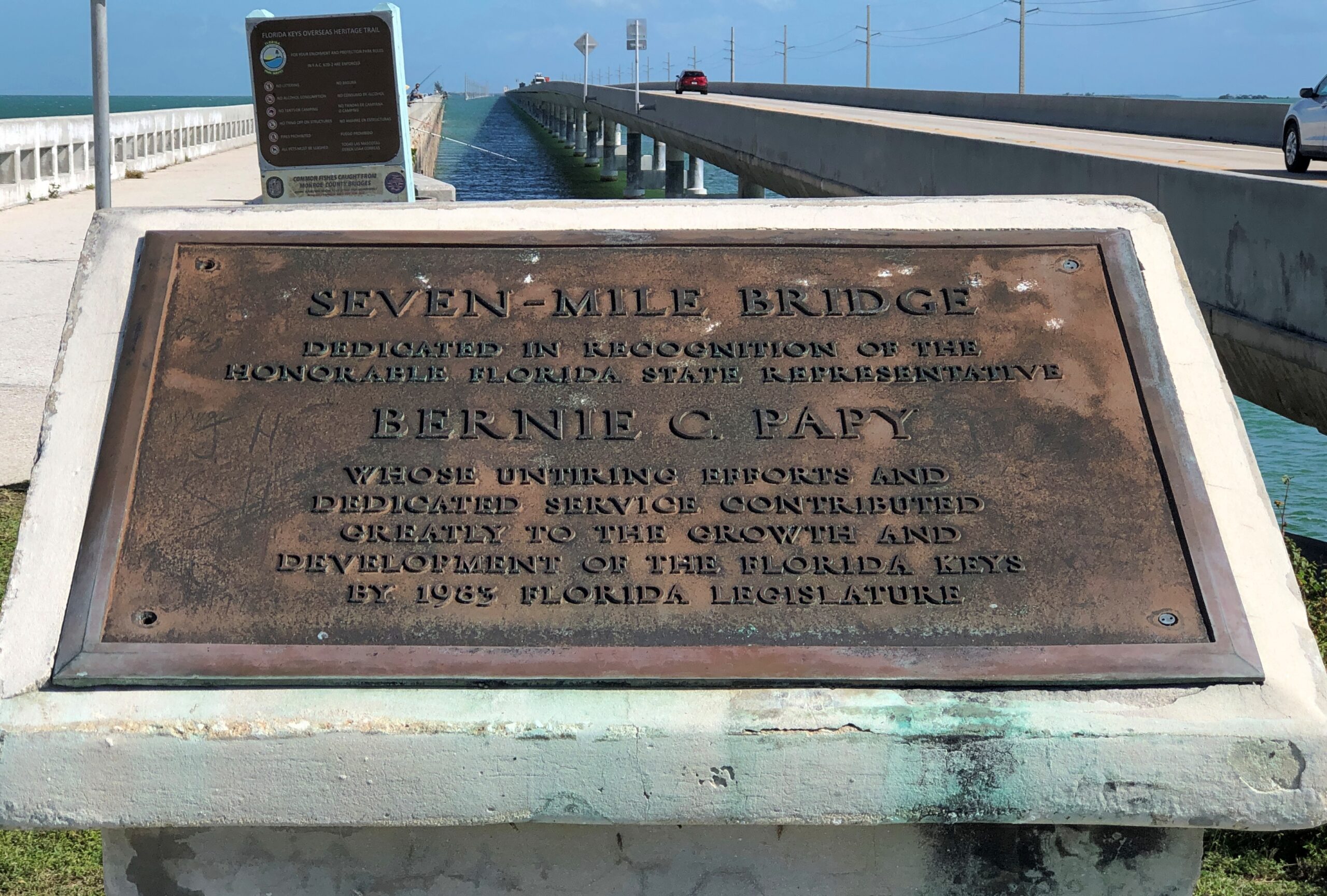
The most epic section of the crossing, as far as I’m concerned: Seven-Mile Bridge.
On an ordinary highway, seven miles isn’t much of a stretch at highway speeds. Listen to one song or another on the radio and you’re practically done with it. Those same minutes have a different quality over the wide water, glinting in the sun and spotted with boats and occasional small keys in the distance. There’s a sense of the mildly impossible. Of course it’s entirely possible, via a feat of 20th-century civil engineering, as is the 100-plus miles of the whole highway. I don’t believe my civil engineer grandfather ever drove the Overseas Highway, but I’ll bet he read about it with considerable satisfaction.
“The original 7 Mile Bridge, also known as the Knights Key-Pigeon Key-Moser Channel-Pacet Channel Bridge, was constructed in the early 1900s as part of Henry Flagler’s ambitious Overseas Railroad project,” notes the Key West Blog. “This railroad connected mainland Florida to Key West, revolutionizing transportation and trade in the region. However, after a devastating hurricane in 1935, the railroad was destroyed, and the bridge was converted into a highway.”
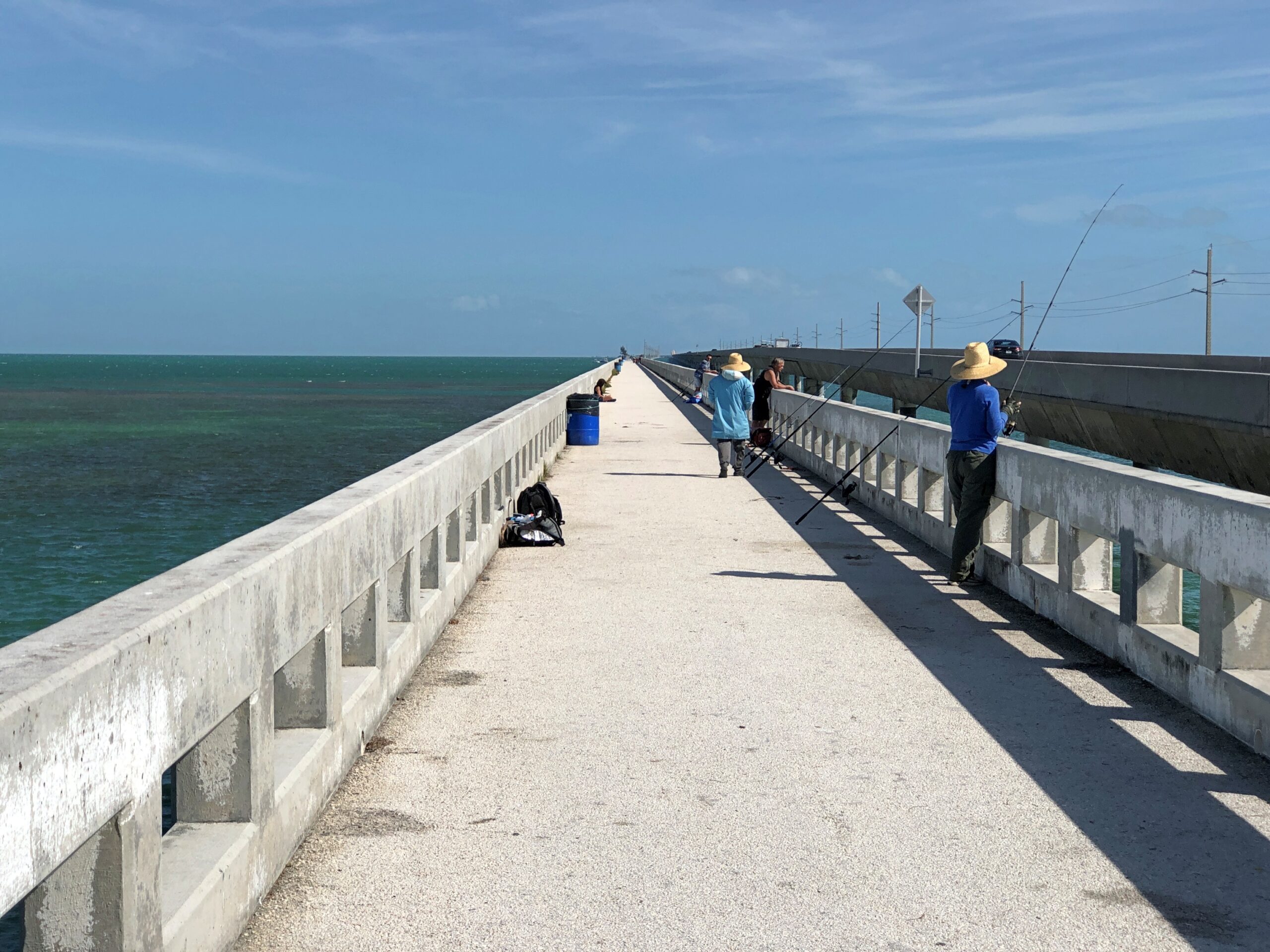
The history is a little more complicated than that, with the current bridge a 1980s work, leaving part of the original as a pedestrian and (especially) a fishing bridge. I’m no sport fisherman, but I understand tarpon, snook, snapper, grouper, bonefish and barracuda swim these waters.
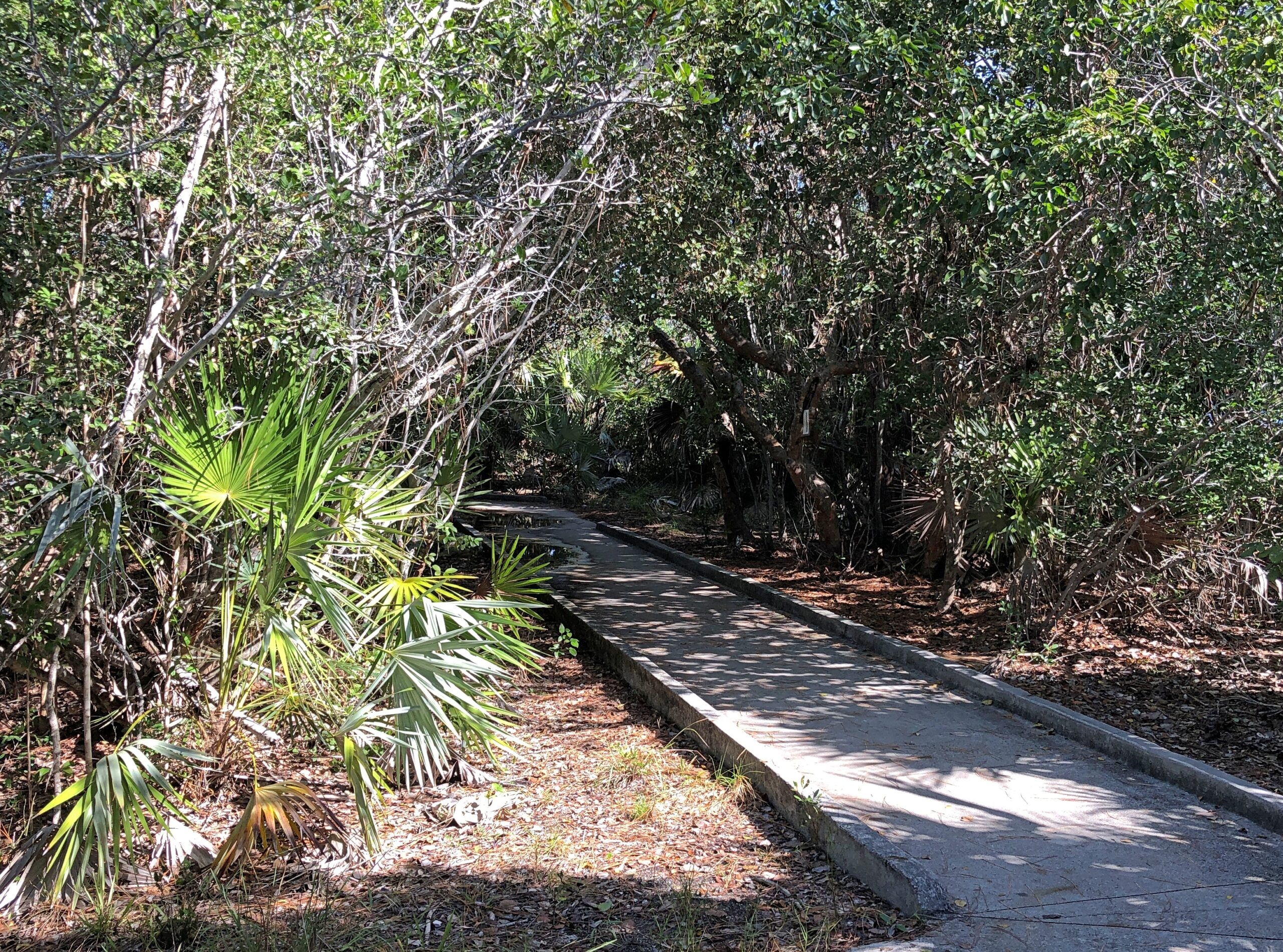
At Big Pine Key, we stopped for a visit to the National Key Deer Refuge, a place focused on giving key deer a place to live, as it says in the name. For human visitors, there is a trail.
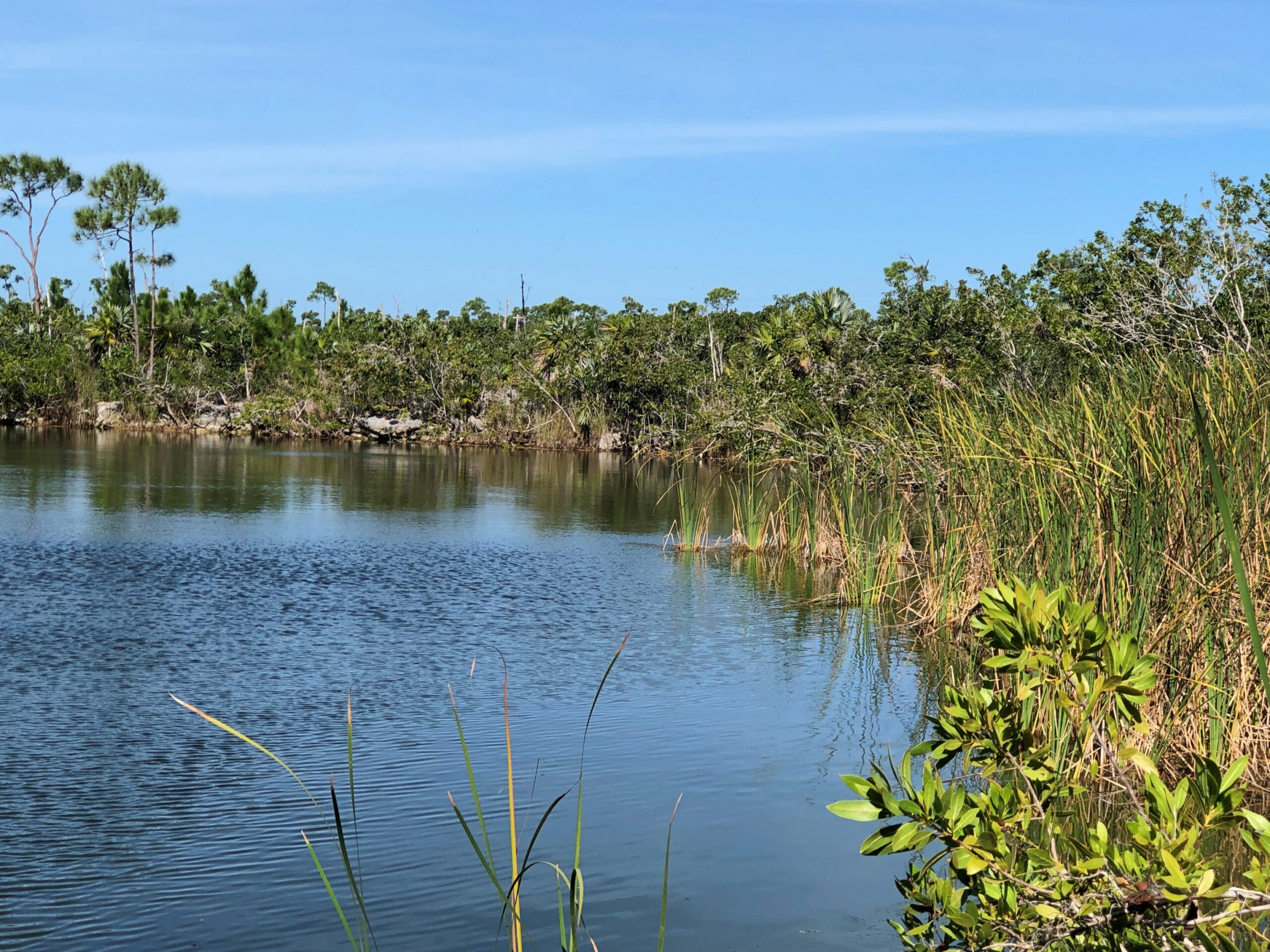
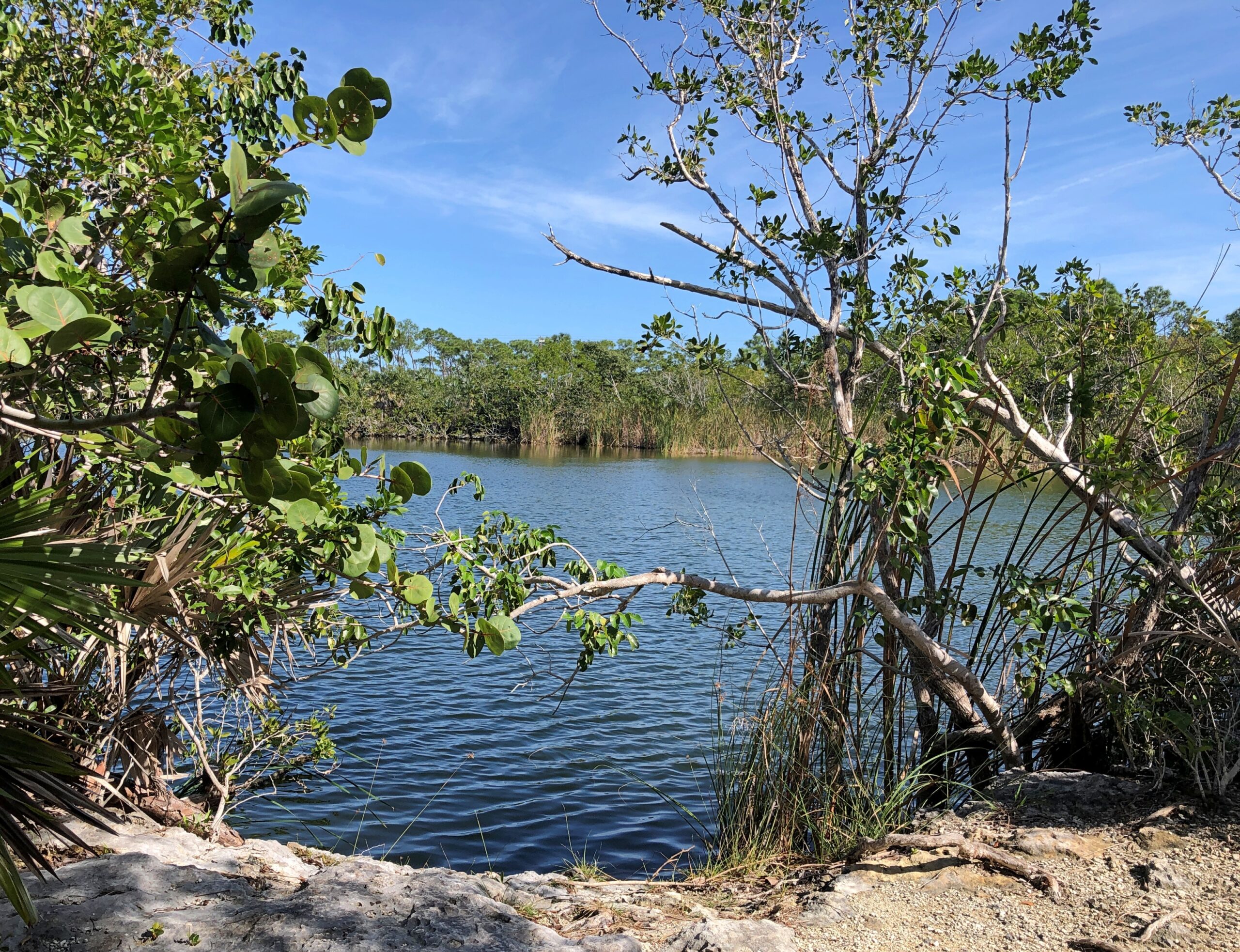
It goes partly around a pond in the refuge. No deer were to be seen.
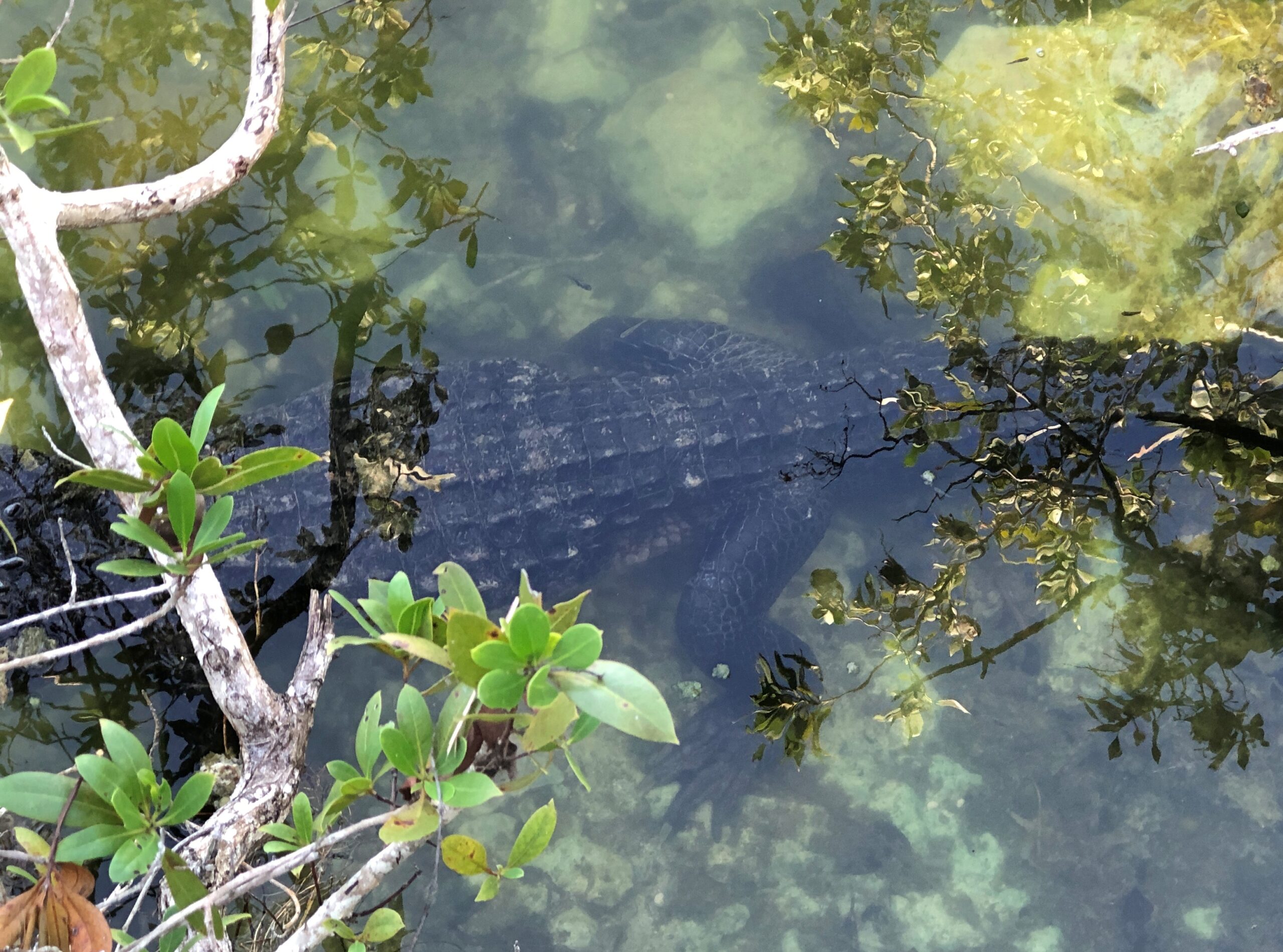
We did spot a gator, however. Or maybe a croc. Hard to tell at this angle. They both live in southern Florida.
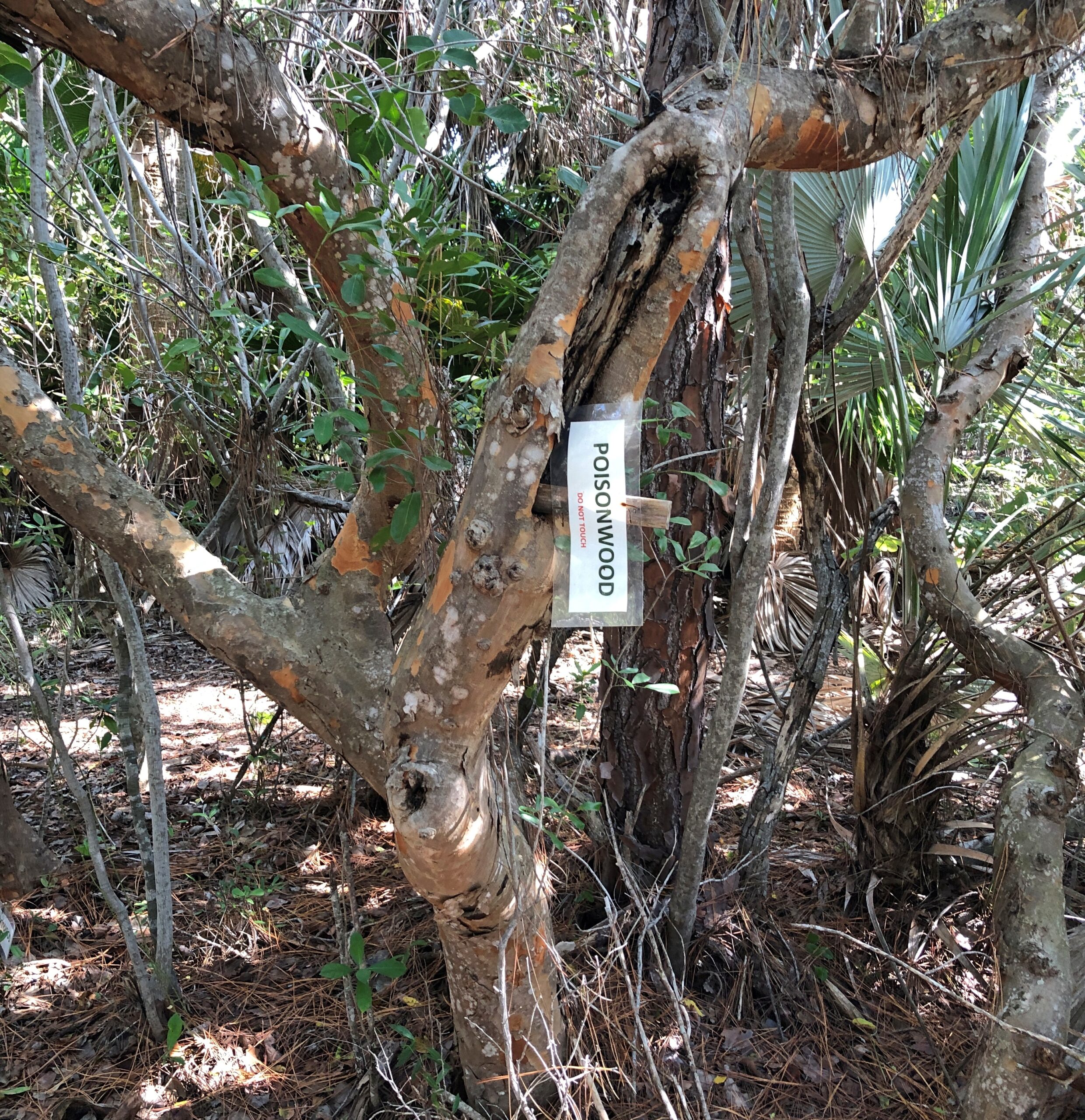
A sign on the trail warns visitors not about reptiles, but a nearby poisonwood tree.
Poisonwood? A native to the Keys. It sounds bad, and it is.
“Metopium Toxiferum [poisonwood] is related to poison oak, poison ivy, and poison sumac,” says the Tree Care Guide. “The tree produces the same irritant, urushiol, which causes an itchy, blistering rash. The oils from Metopium toxiferum cause dermatitis ranging in severity from a light red rash to intense skin blistering. Tea made from Metopium toxiferum leaves and twigs combined with bleach has been used to induce abortions but has also tended to kill the patient.”
Yikes. We took the advice of the sign and didn’t go near it.
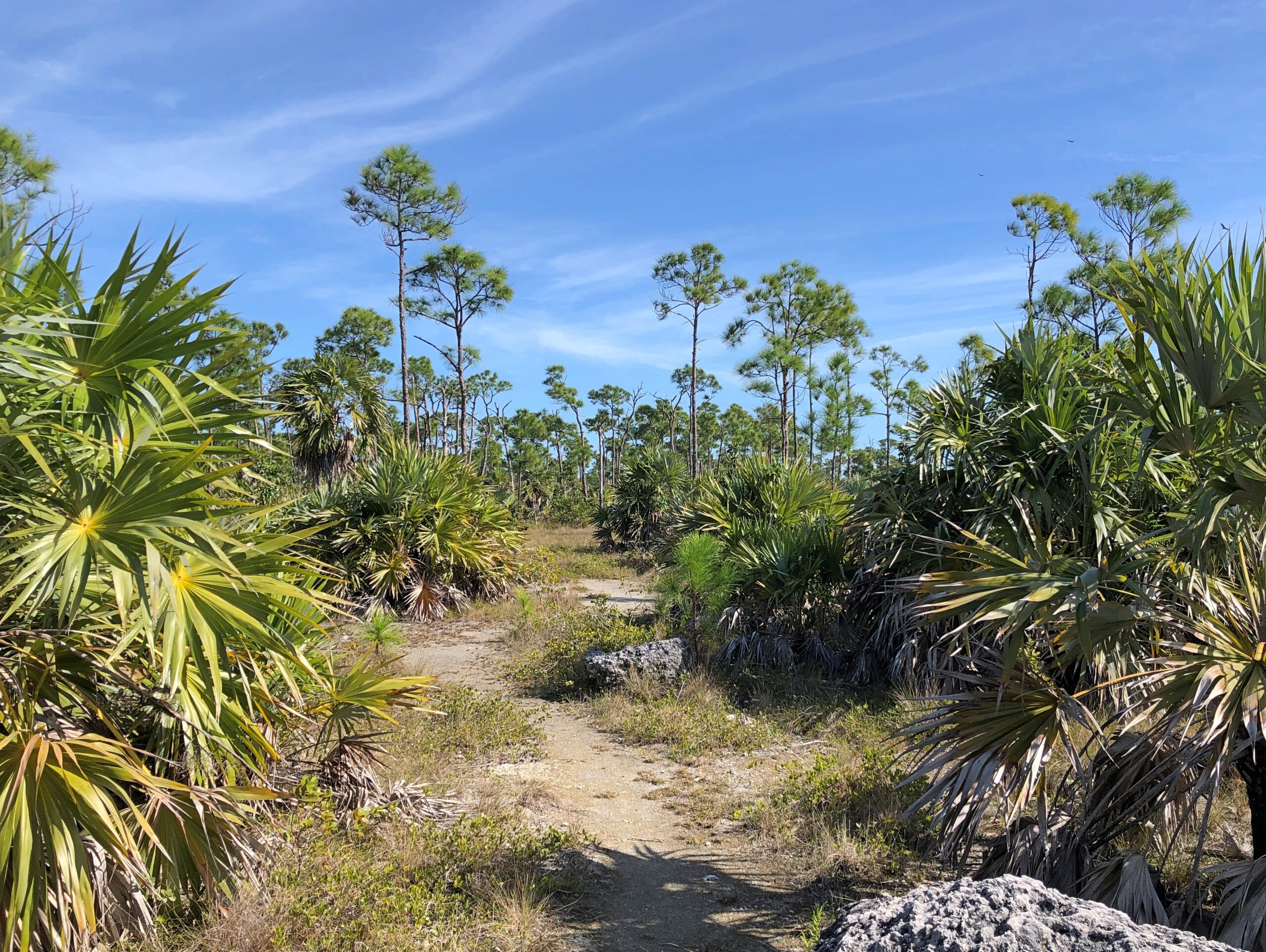
Across the road from the refuge parking lot, some undeveloped key landscape. There couldn’t be that much of that, at least on the keys connected by the highway.
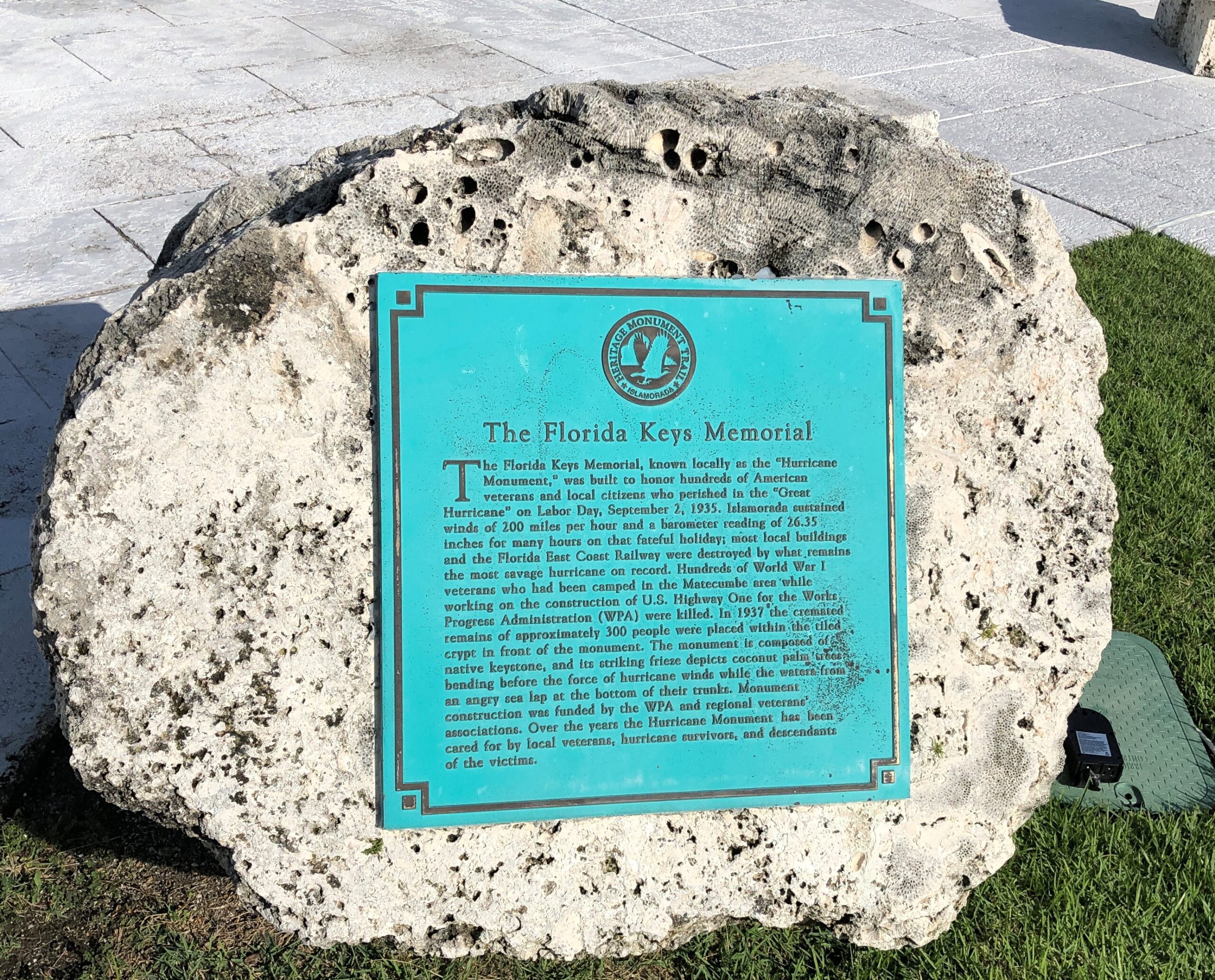
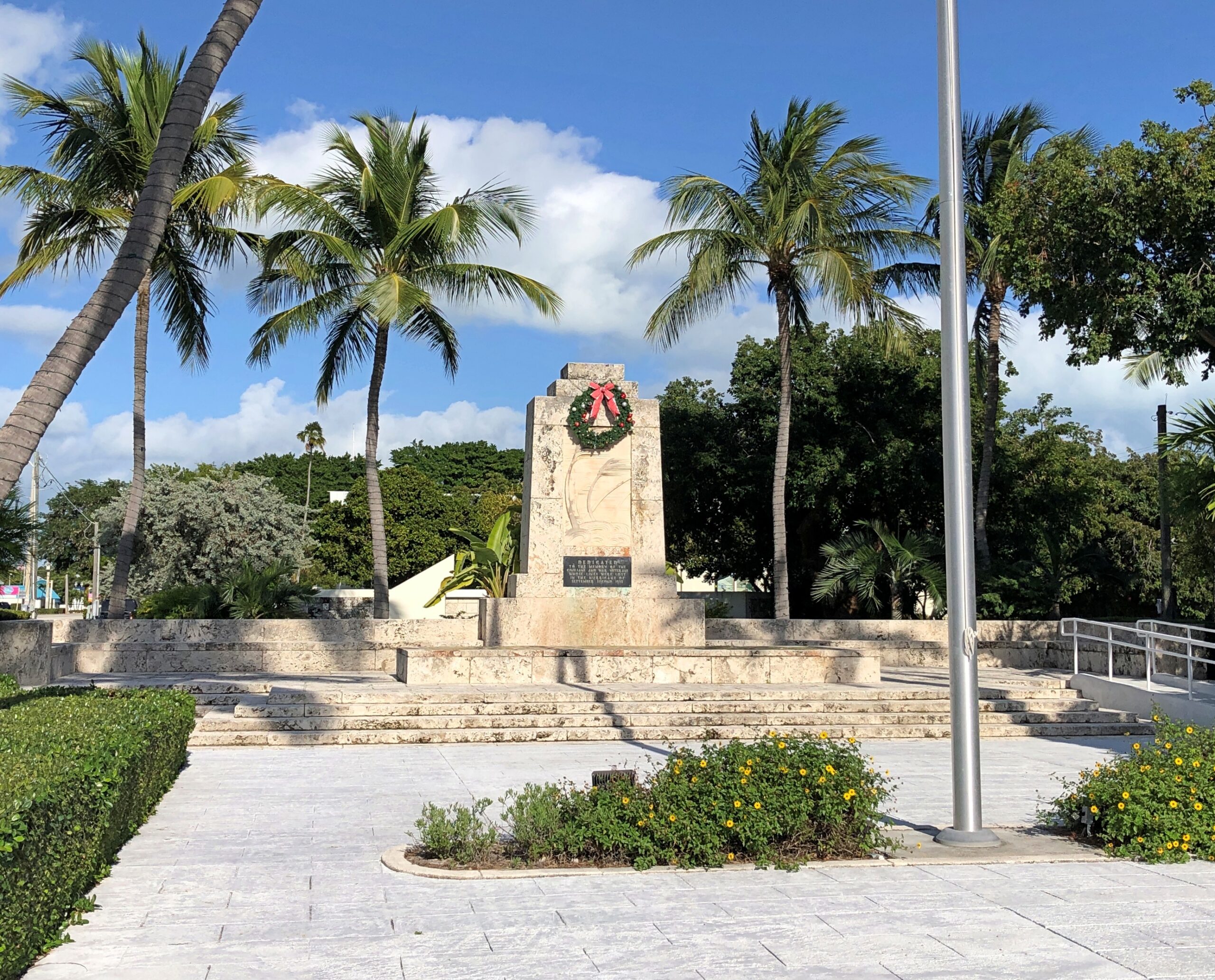
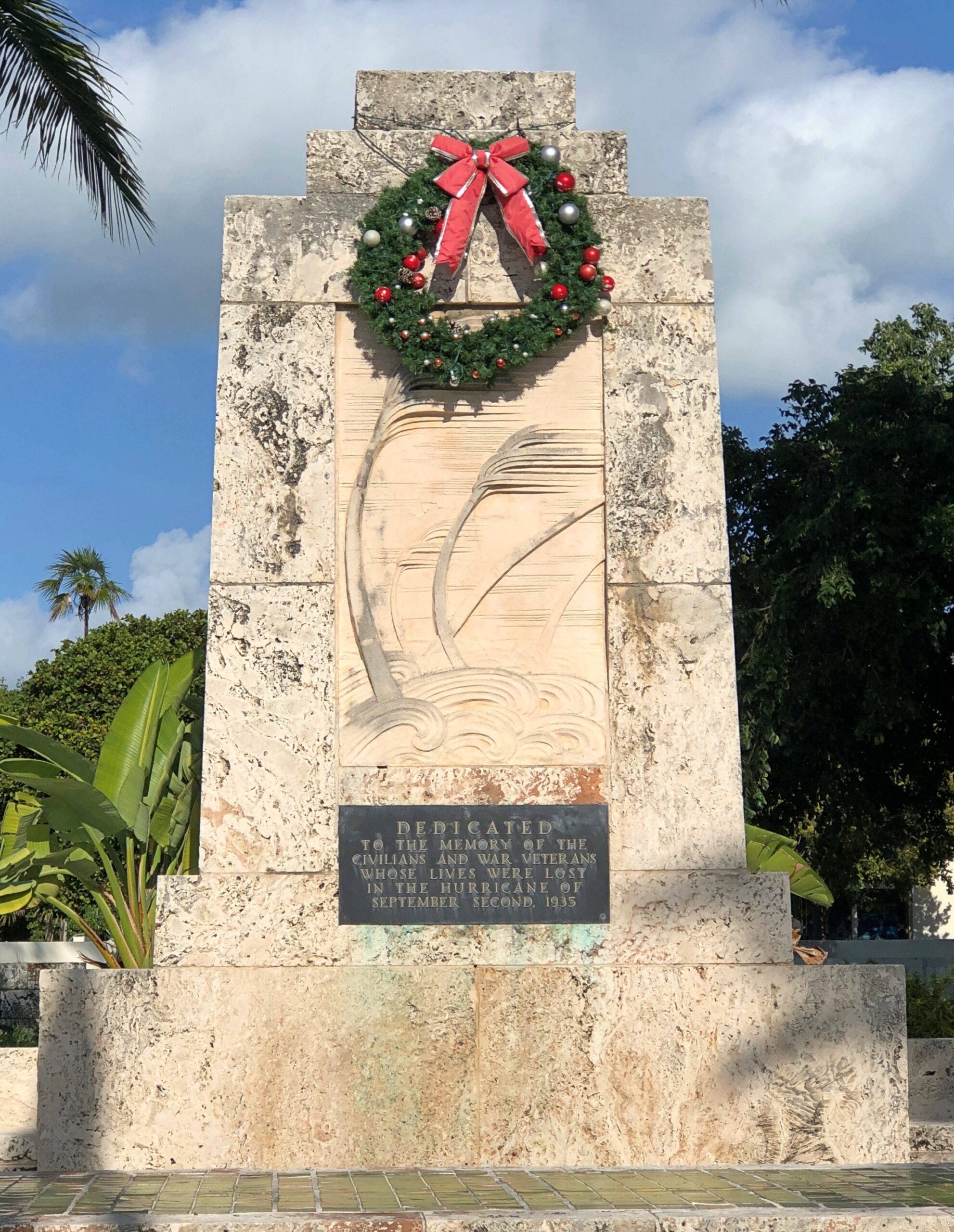
In Islamorada, which is spread across five small keys much closer to the mainland than either Key West or Big Pine Key, we stopped to pay our respects at the memorial to those who died in the 1935 hurricane.
Also in Islamorada, we drove past Betsy the Lobster, but sorry to say, didn’t stop for a closer look. What was I thinking?
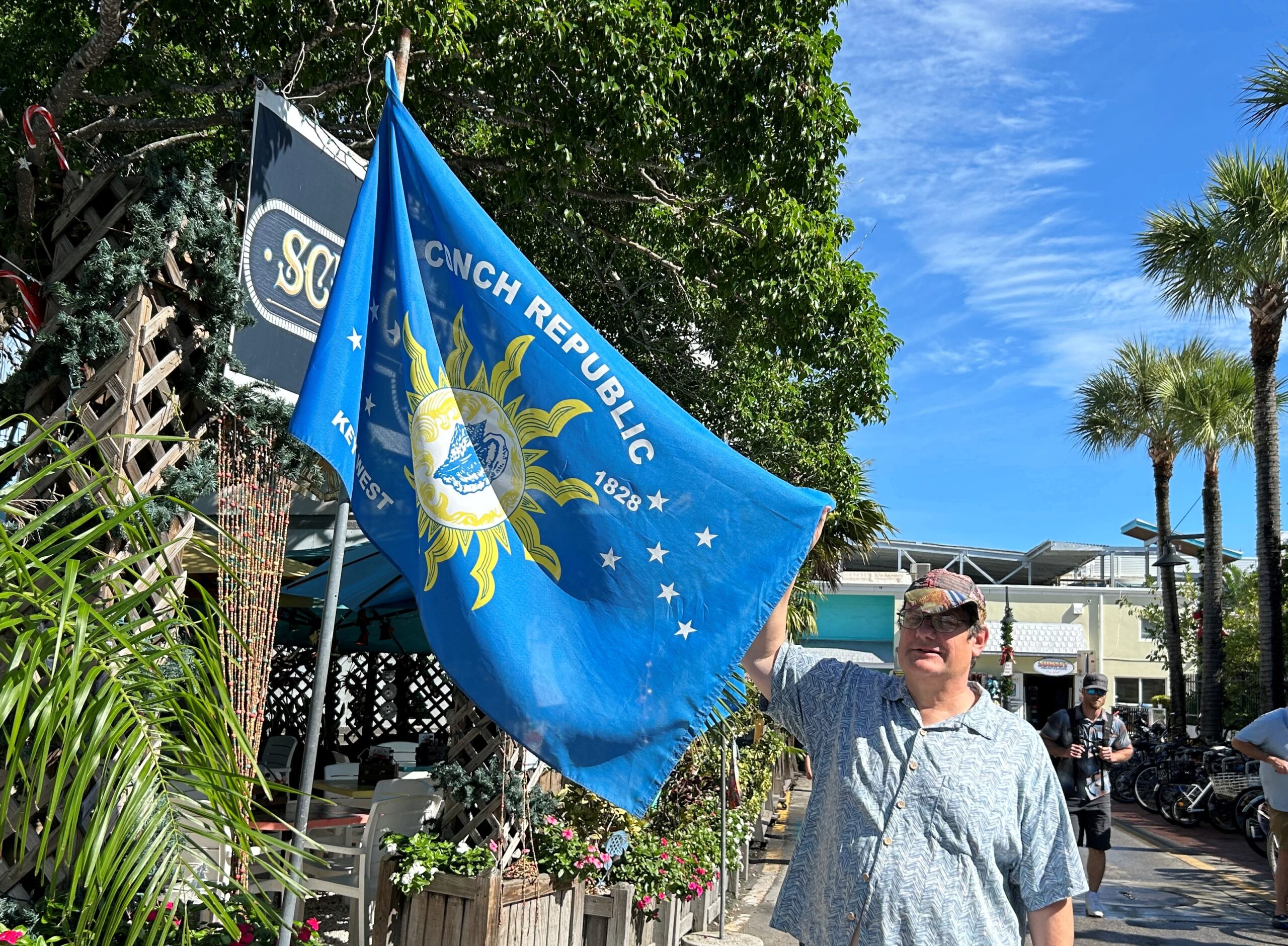
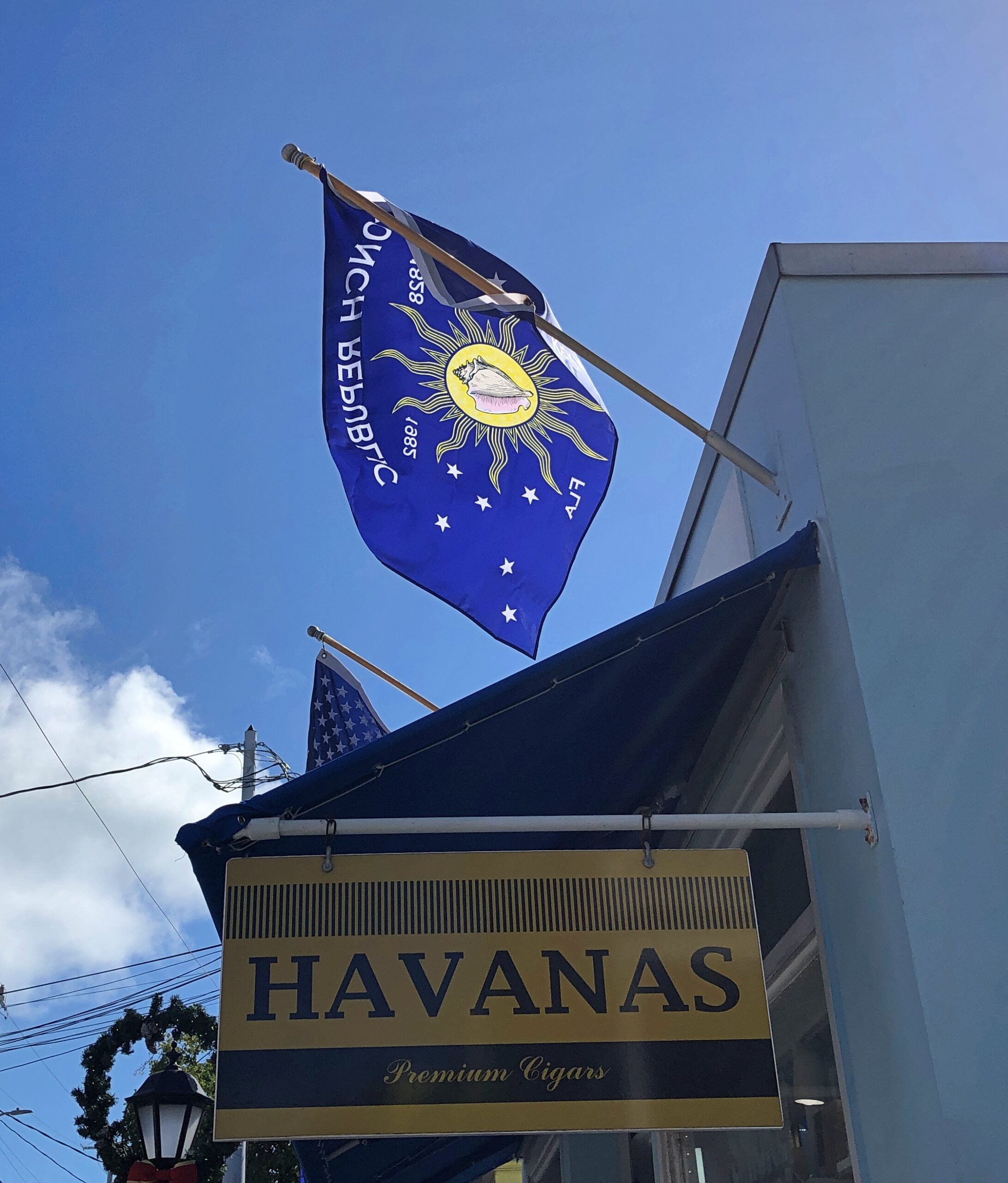
In Key West last month, we noticed the Conch Republic flag displayed in more than a few places.
More about the not-very-serious Conch Republic micronation, created in 1982, is in this Miami Take article. Curiously, the article doesn’t describe how the flag came to be, just that it was simultaneous with the declaration of the CR, which was a kind of protest against a surprise U.S. Border Patrol roadblock on US 1 at the entrance to the Keys. Still, the design works, and it’s something distinctively Key West.
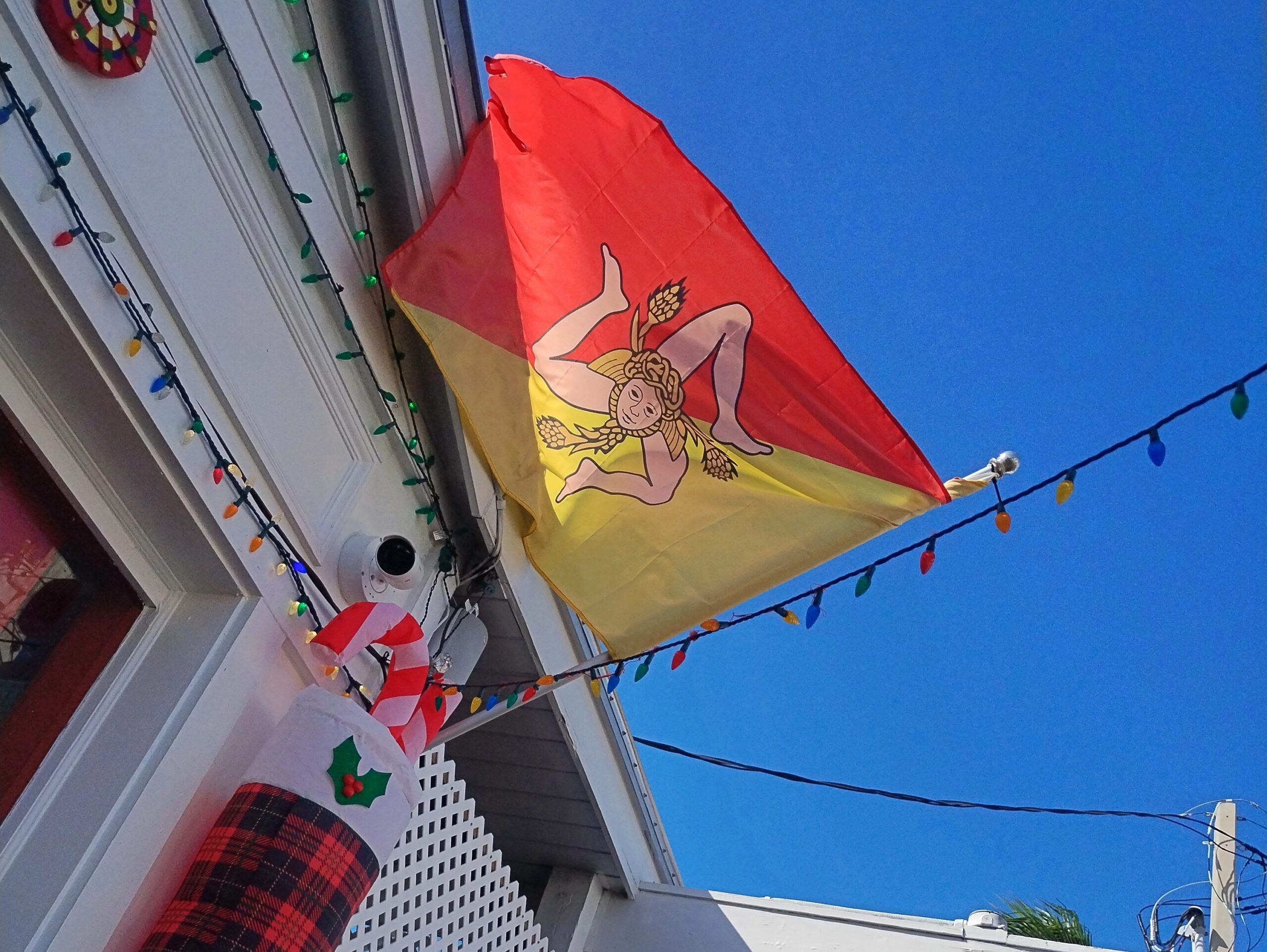
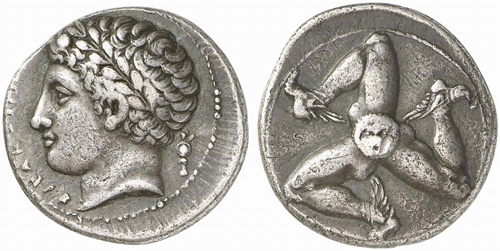
Saw the very distinctive Sicilian flag in Key West, too, just off Duval, over a joint that promised southern Italian food.
The design is not only distinctive, but ancient. This is a silver drachma from Sicily, ca. 300 BC.
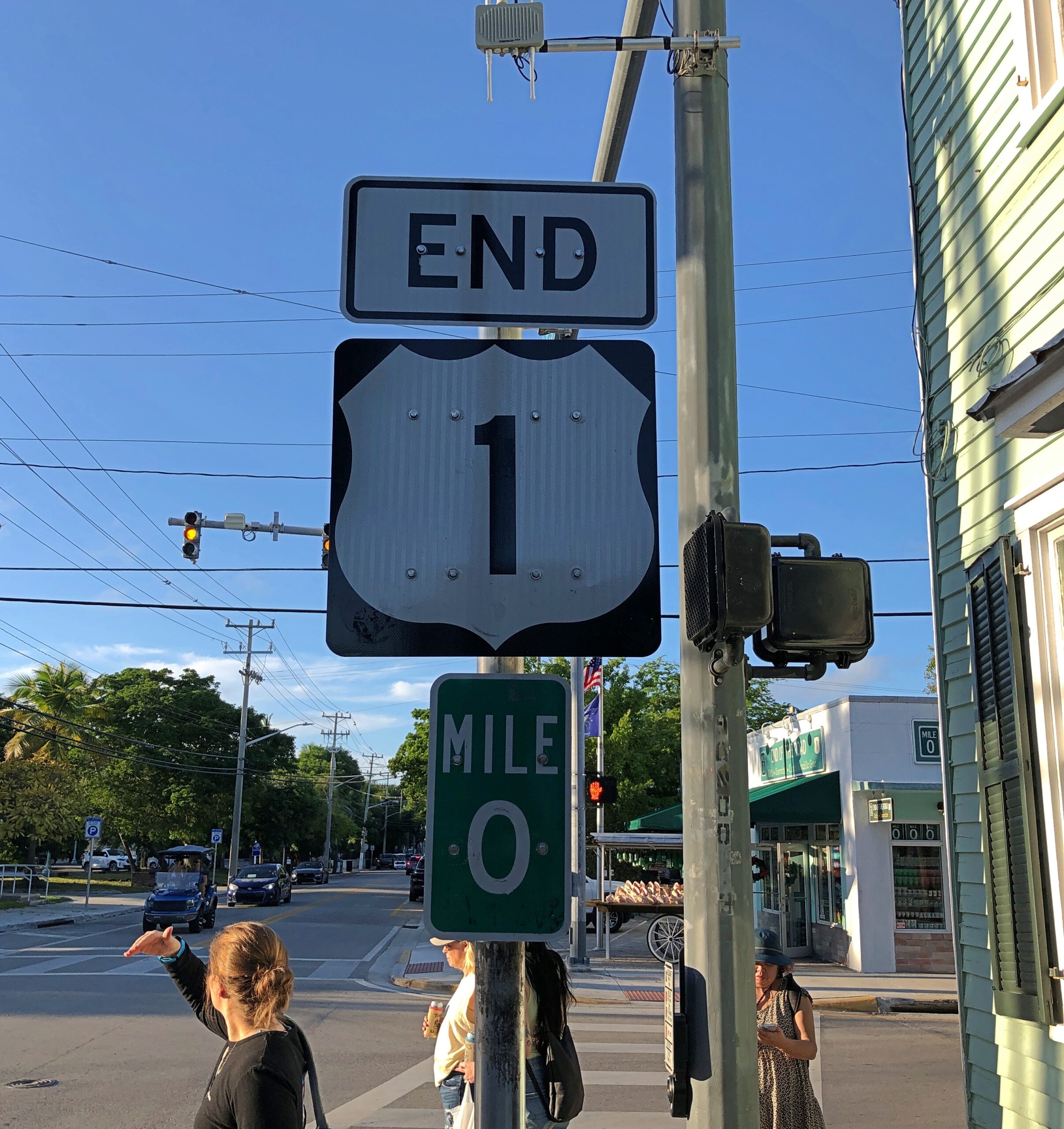
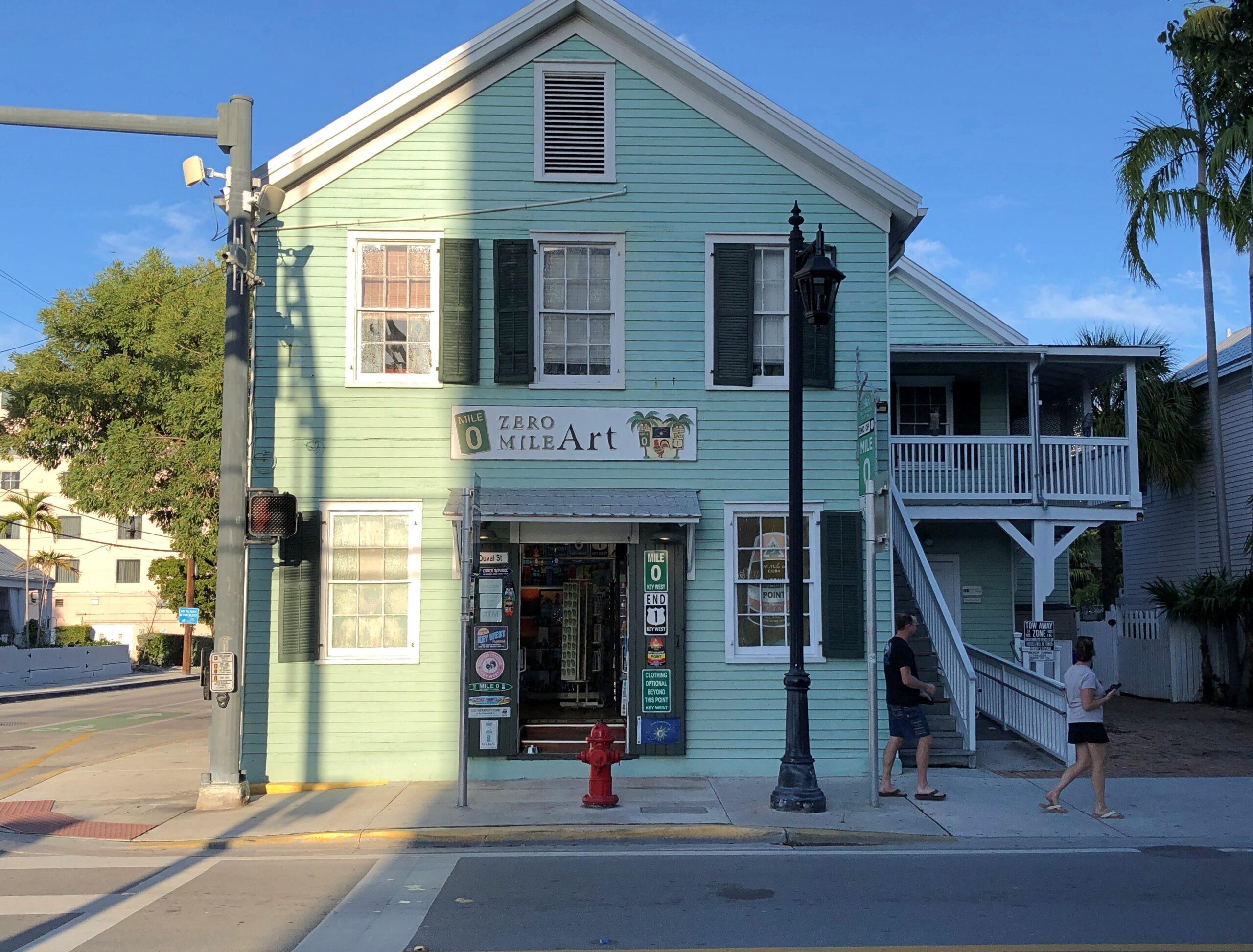
I digress. During one of our Key West walkabouts, we made a point of finding the southern terminus of highway US 1, which is at the intersection of Fleming and Whitehead streets.
A business taking advantage of its unique location. Locational branding, they might say in marketing.
Now that I’ve now seen the southern terminus of US 1, that clearly means I have to see the northern terminus. That happens to be in Fort Kent, Maine, so perhaps a summertime visit. A real epic would be driving the entire 2,369 miles between Key West and Fort Kent on that highway. People drive all of the 2,448-mile Route 66, and it’s not even a real highway anymore. I’ve been gifted, or cursed, with the ability to think up more long trips that I can possibly do.
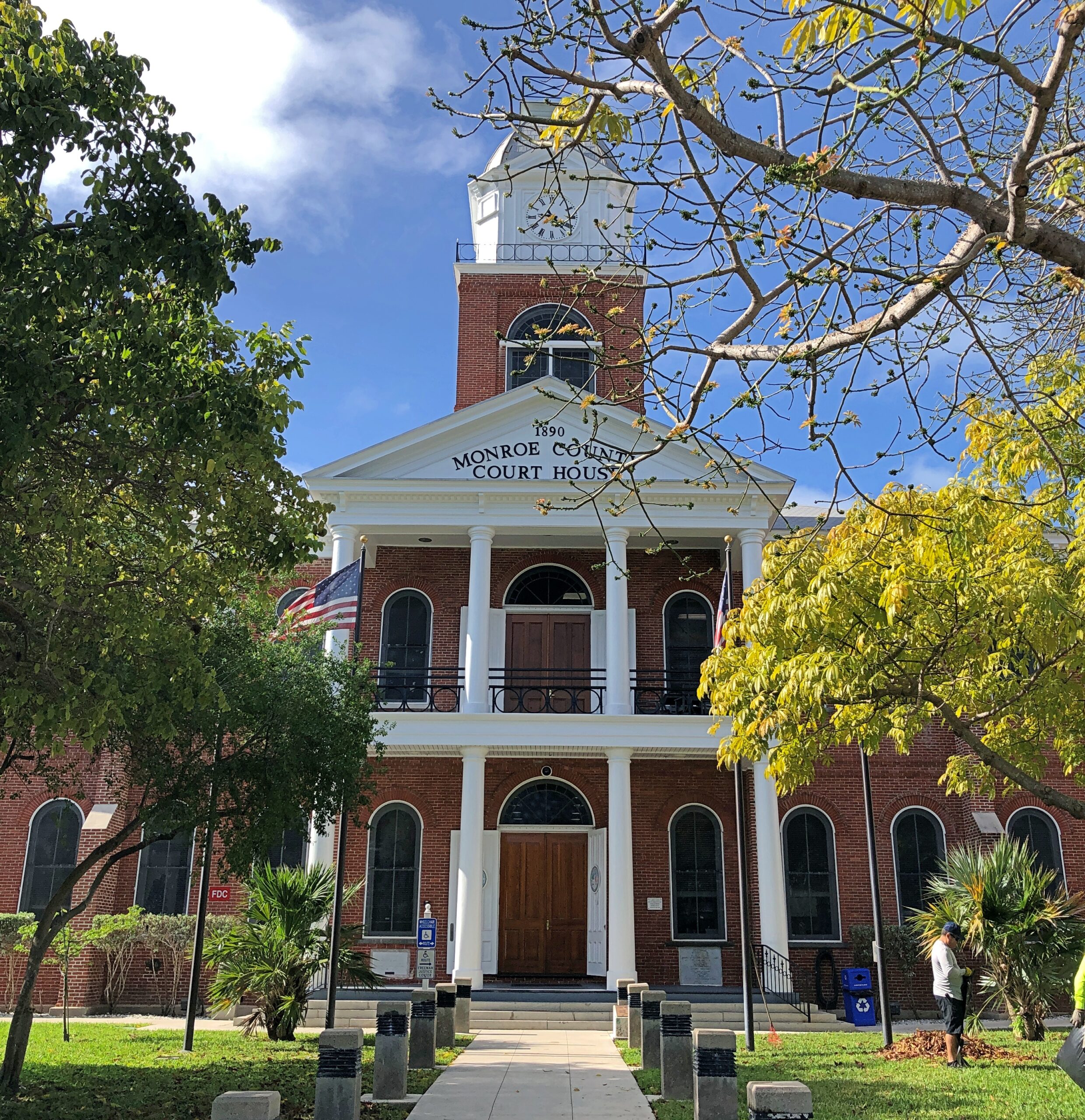
Half a block away from the beginning/end of US 1 is the Monroe County courthouse.
A nearby sign says: The original wooden courthouse was completed in 1823. The county occupied most of the Southern Florida Peninsula. The county seat in Key West currently covers the Florida Keys, and portions of the Everglades National Park. The present red brick courthouse, built in a traditional county courthouse style, was completed in 1890. It features a 100-foot tall clock tower and is an architectural feature that can be observed from almost any part of Key West.
A traditional county courthouse? In the Northeast, yes. Looks like someone used one of those building-moving transit beams in Rocky Horror to transport an entire New England courthouse down to the Keys.
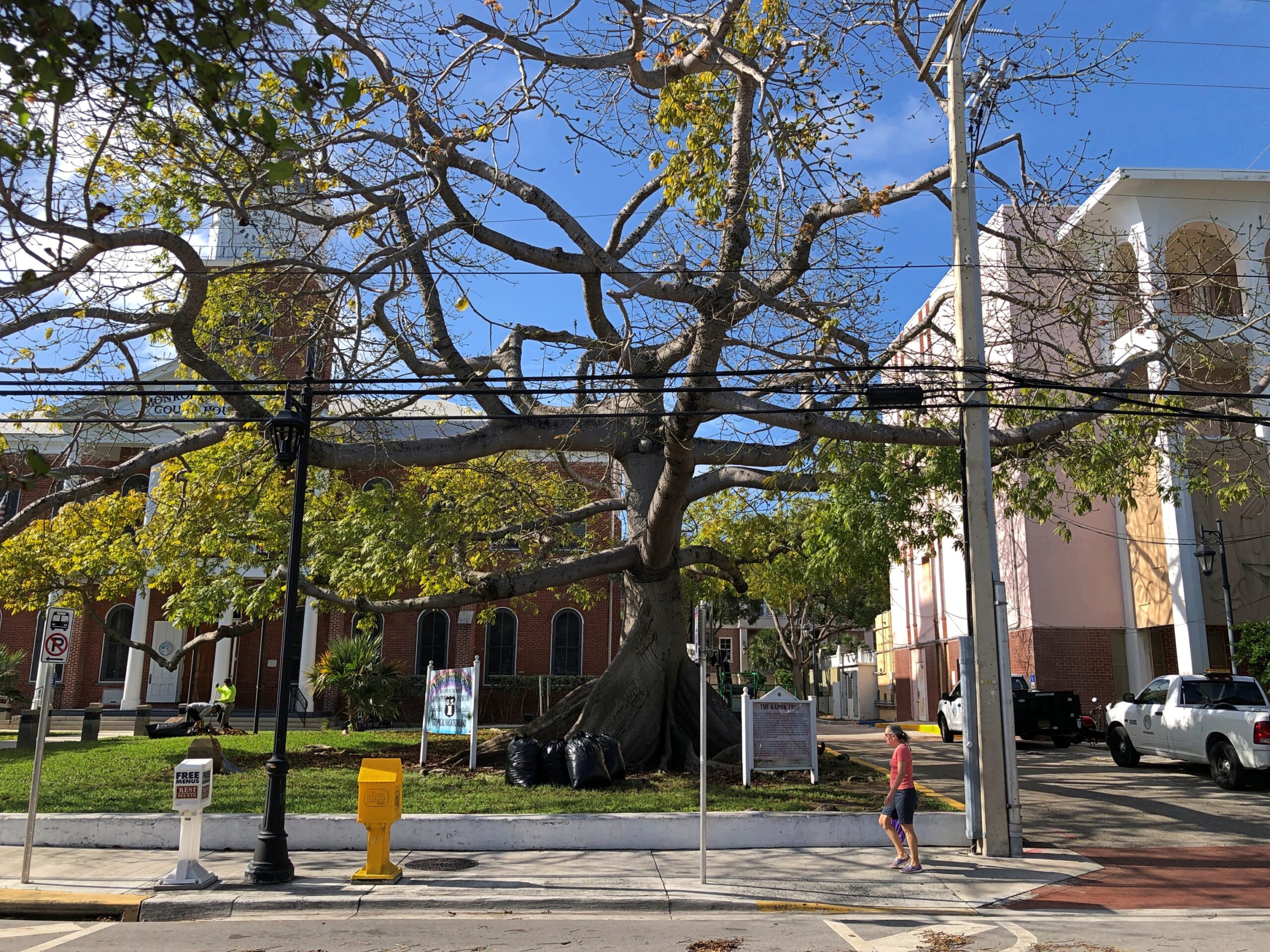
The courthouse grounds comes with this oddity.
At least, odd to me.
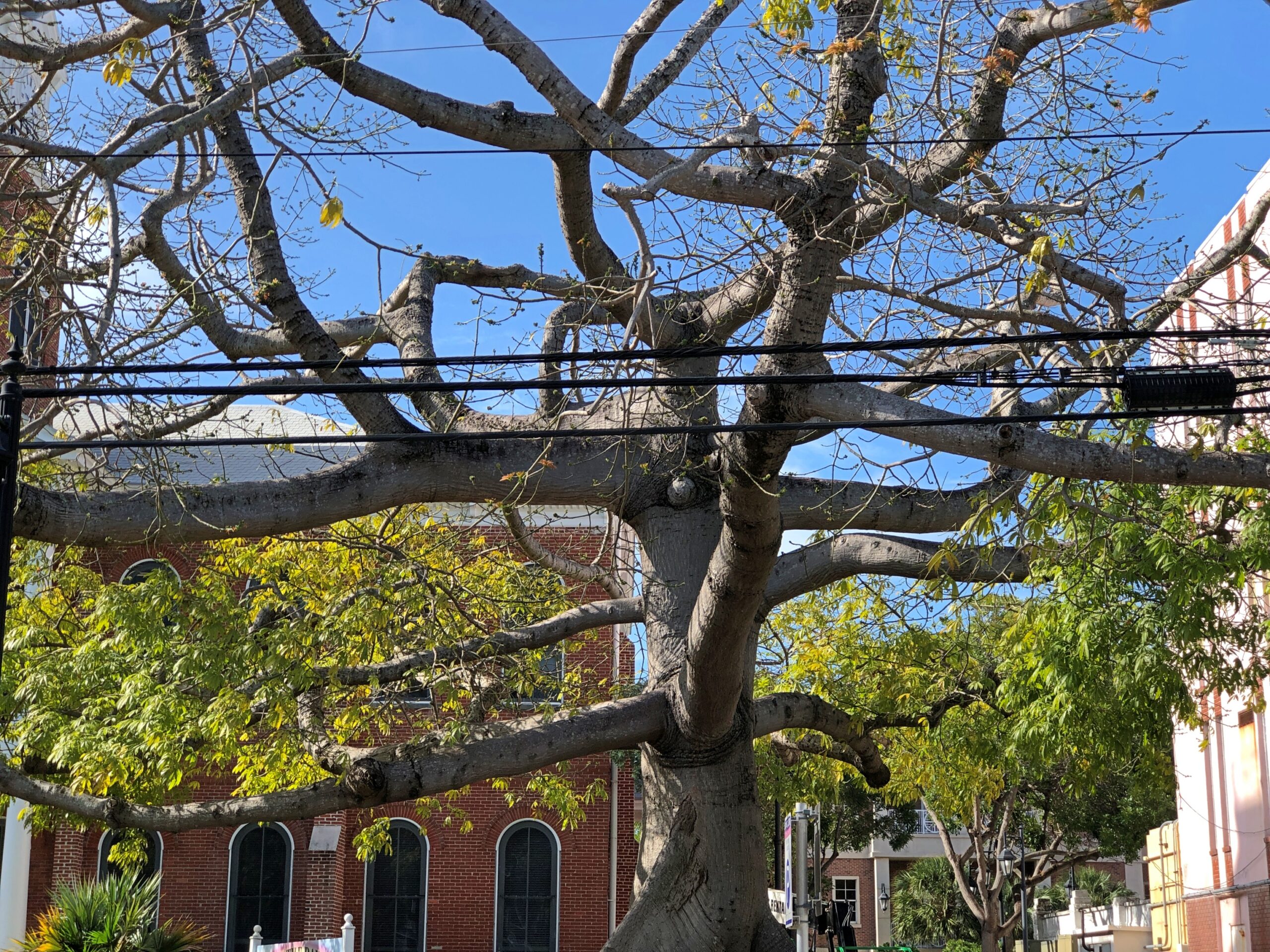
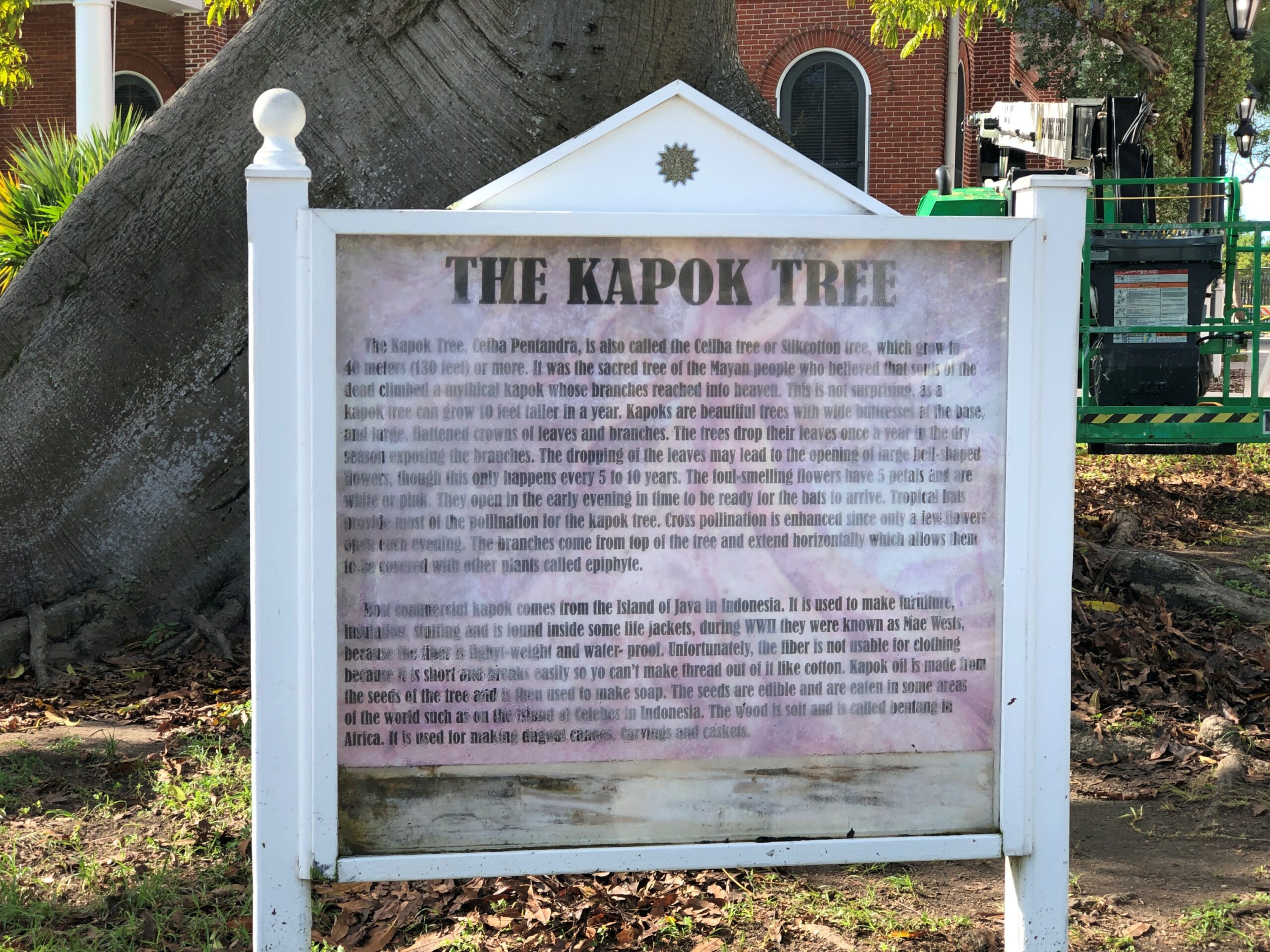
A kapok tree, ceiba pentandra. Odd to more than just me. Enough people that the city put a sign describing kapok trees, next to this example of one. The sign’s a bit worse for wear.
Java cotton is one name for its fiber, which surely evokes distant islands.
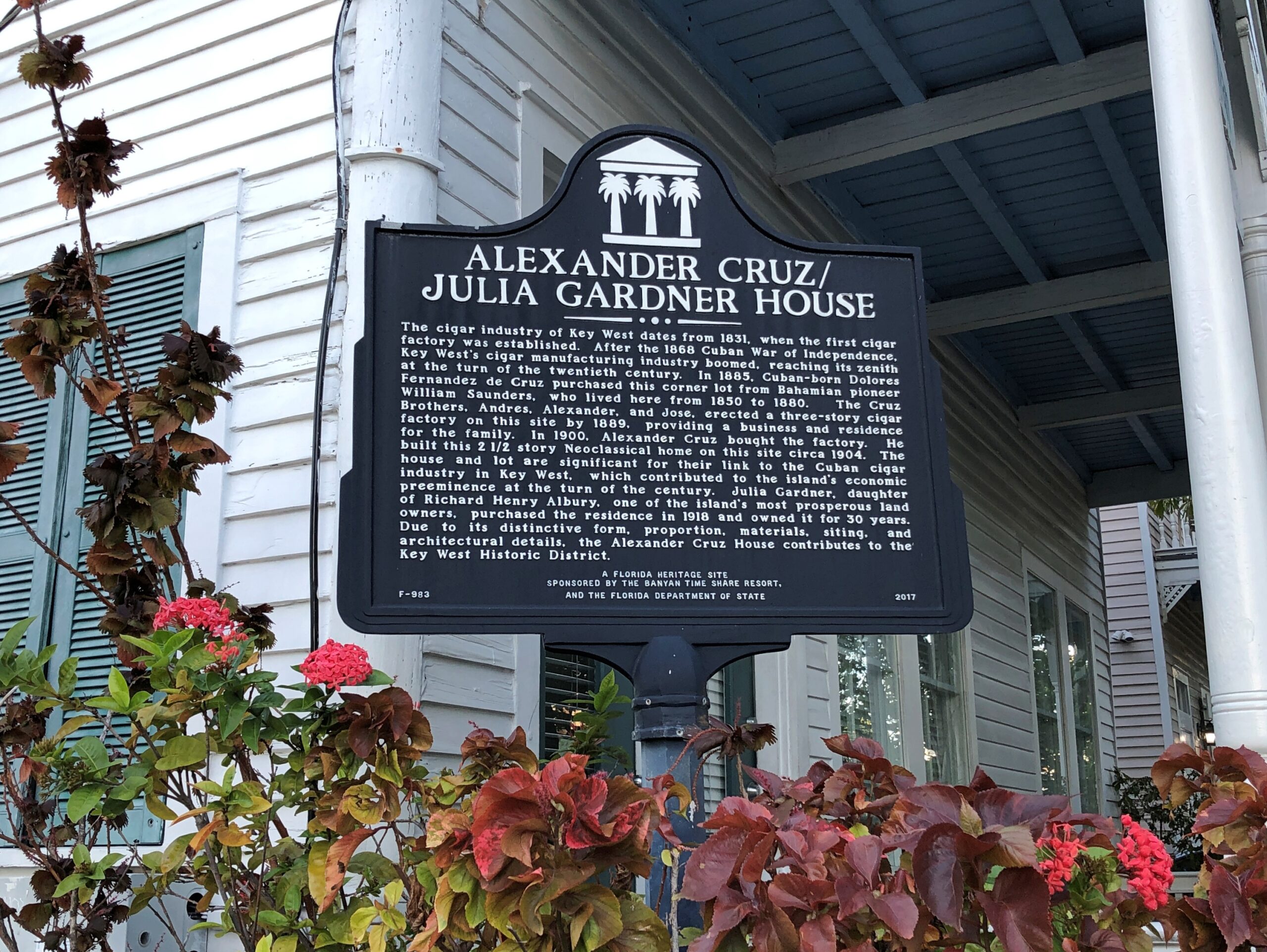
More Key West signs.
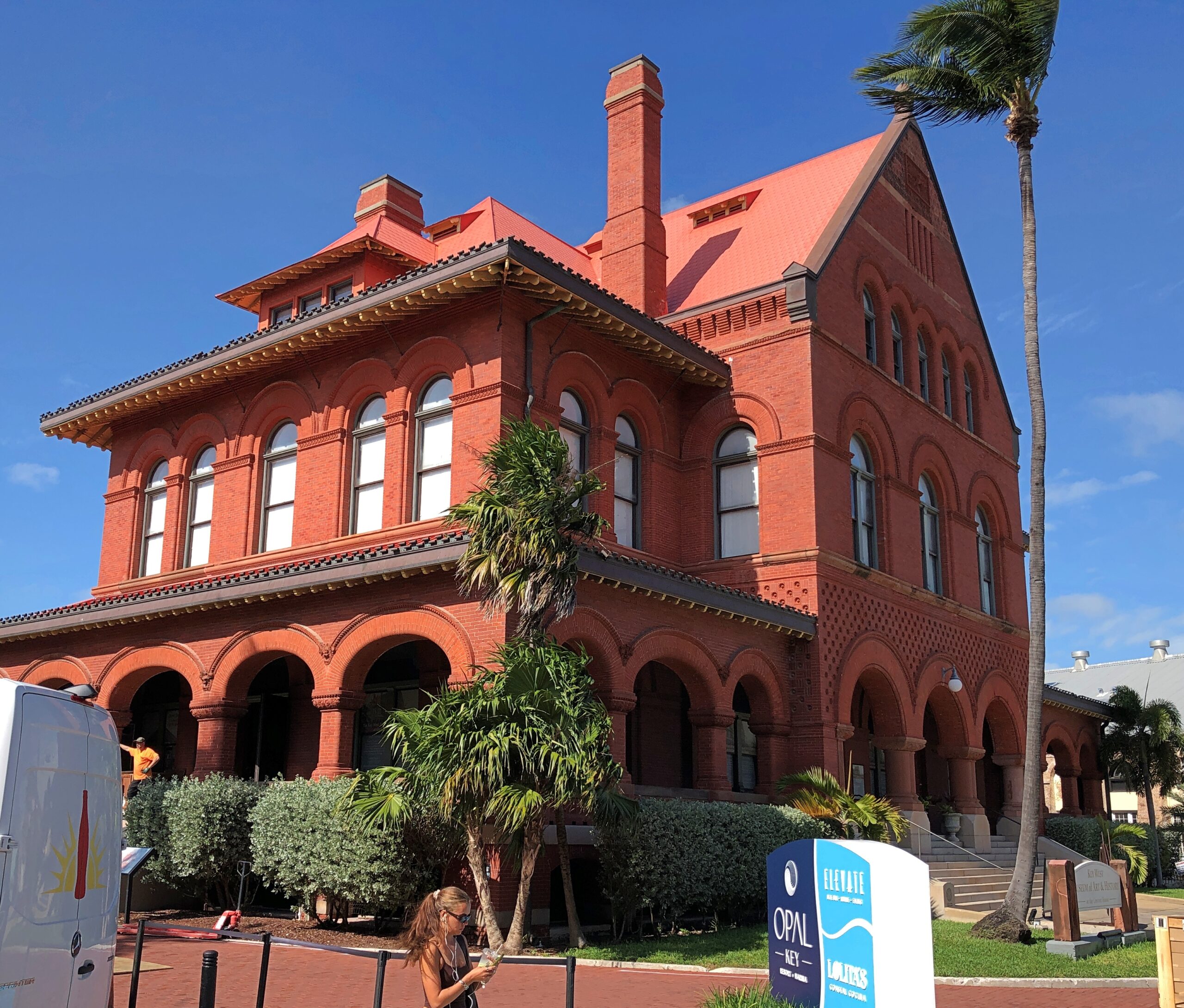
Is this not a handsome building? And looks solid enough to stand in any mere wind.
Formerly the island’s Custom House, Post Office, Federal Courthouse and 7th District Lighthouse Offices. Built – the early 1890s – when architectural beauty wasn’t considered in conflict with the practice of republican government. These days, it’s the Key West Museum of Art & History.
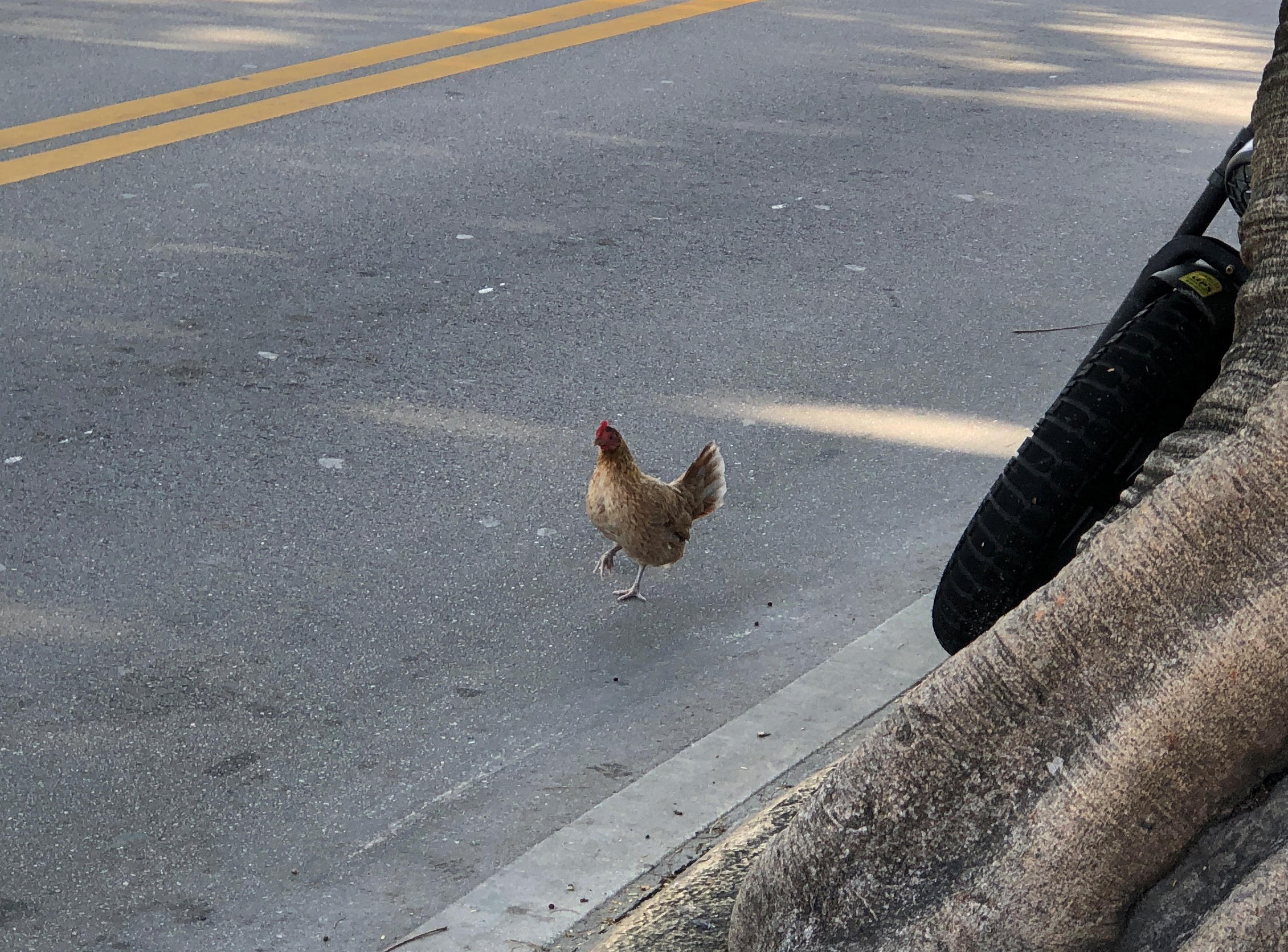
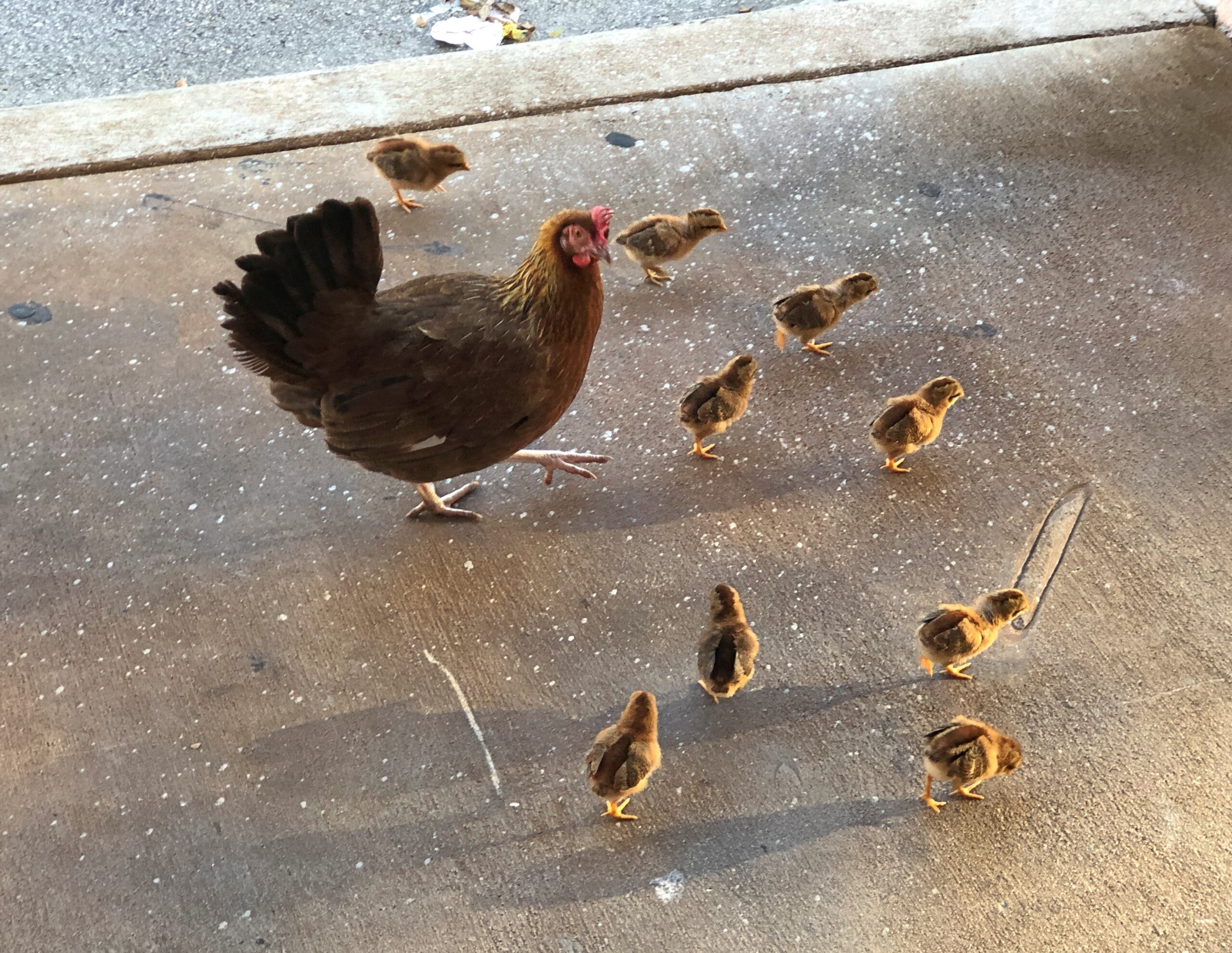
Sure, the chicken has been crossing the road for a long time now, but how often did you actually see it?
Pretty often in Key West, is the answer.
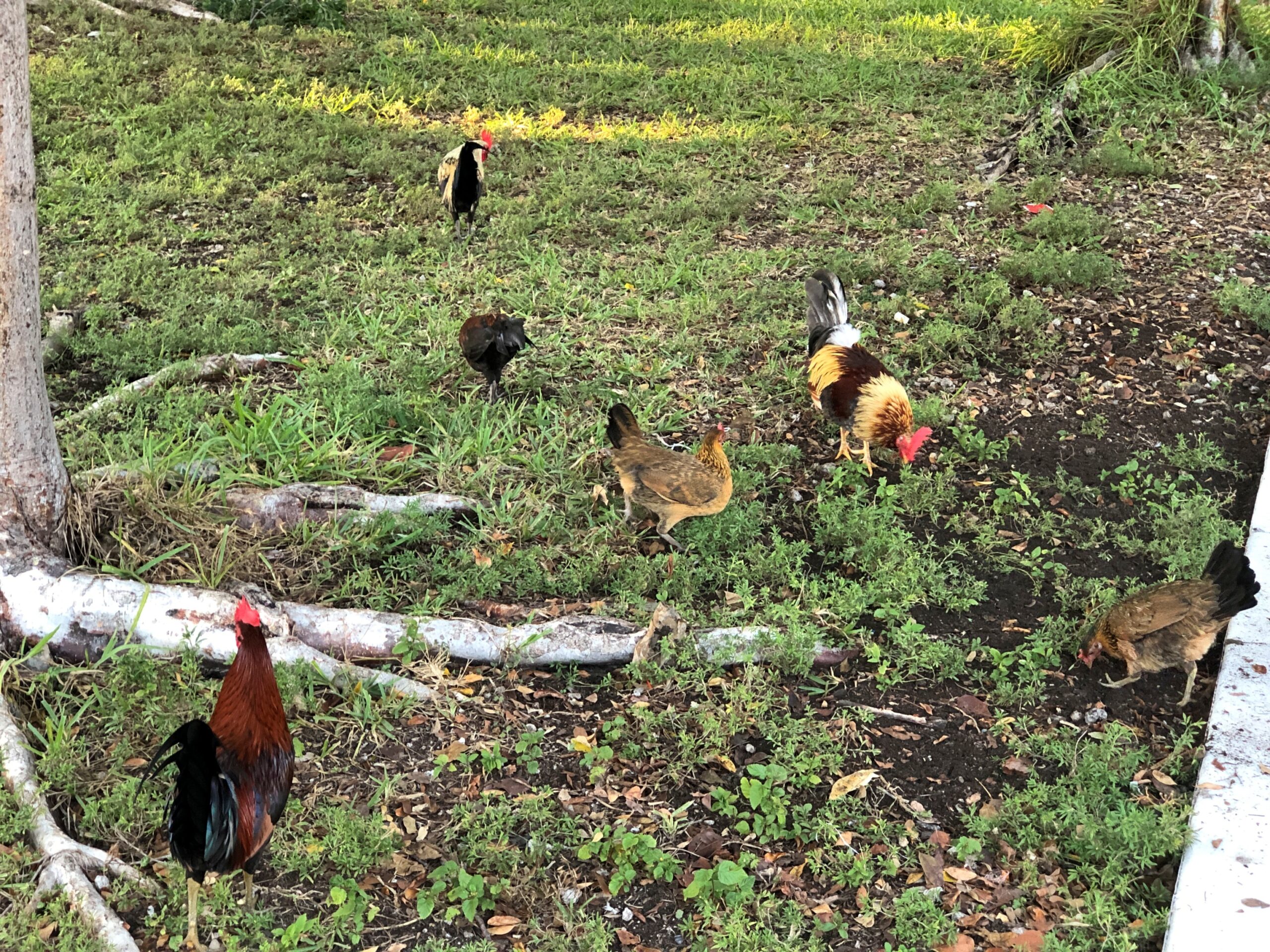
I’m hard pressed to think of any other North American town with footloose chickens. As in, on the streets and sidewalks. Not out in rural areas, but even there you don’t seem to see that many. Then again, the Conch Republic is only tangentially a North American town. North Caribbean is another way to describe it.
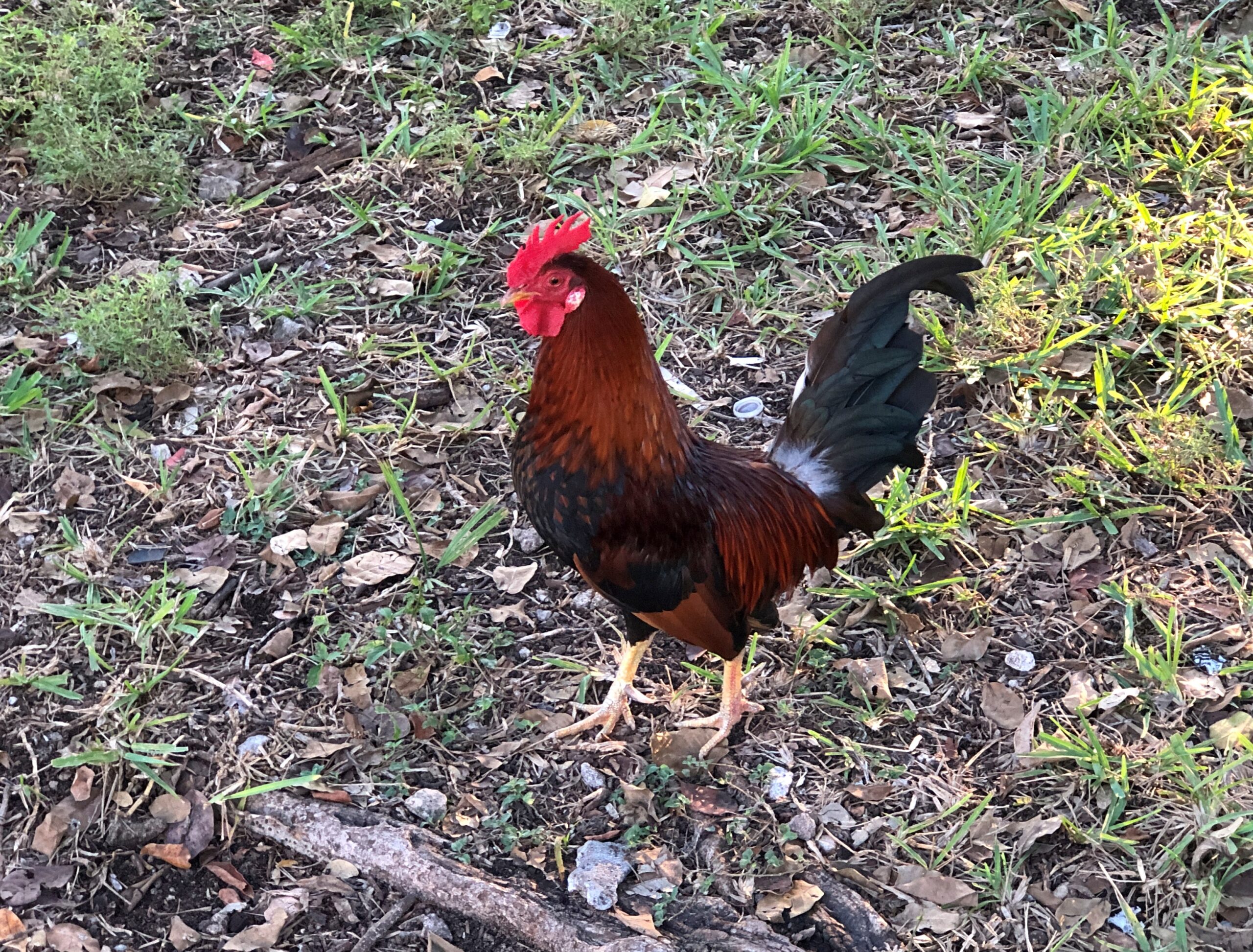
“When people stopped the laborious process of turning live chickens into Sunday dinner many decades ago, some backyard chickens gained their freedom,” notes Florida Rambler. “Other roosters were released when cock-fighting became illegal.”
So, for this rooster, his great- great- however many great-granddaddy was a champion cock, known to betting men from here to Savannah?
They’ve gone on to a career of being local color, these birds, with forays in behaving like pests in people’s yards. They are feral, after all, living in the lushness that is Key West. Was the chicken ever considered for the Conch Republic flag? Probably not; chickens don’t get a lot of respect from people, unless they’re dinner.
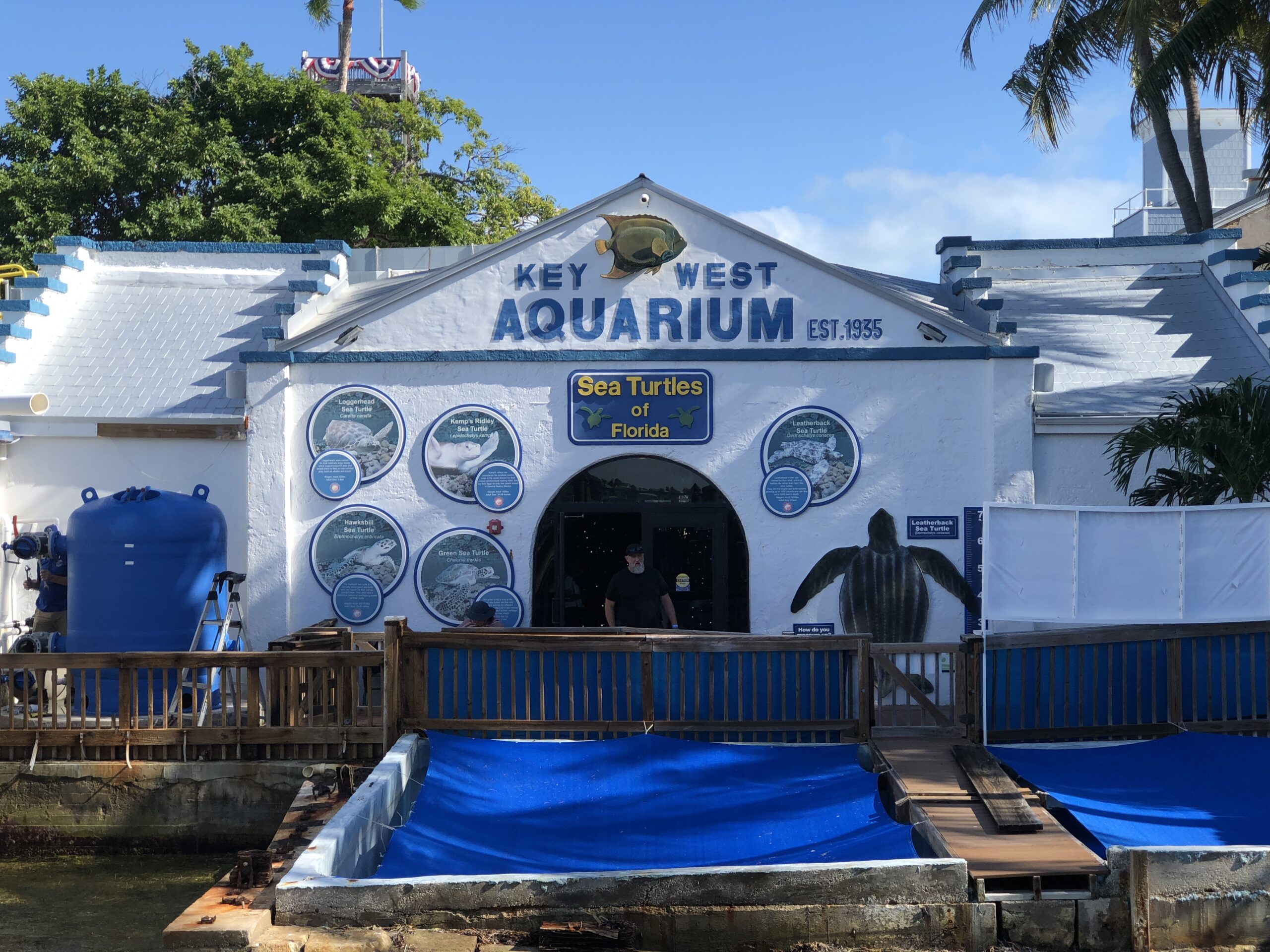
Land meets sea in Key West. For encounters with sea creatures, one can hire a boat and some deep-sea fishing gear and make like Hemingway. We went to the Key West Aquarium instead. A sedate sort of place, a legacy of early 20th-century Key West, when tourists started coming in numbers.
I managed to make one of the employees, or volunteers, laugh a bit. A youngish woman, she took our tickets and said that if we wanted to touch any of the sea creatures – there were a few large tanks with rays and the like, touching allowed – use only two fingers.
“So you’ll still have three, right?” I said.
Most of the aquatic life was in smaller tanks. A nice selection, “home to over 250 specimens of fish, sharks and four of the five species of sea turtles that inhabit the waters of the Florida Keys,” the Aquarium web site says. Also, the place is a more manageable size. Not a big-deal world-class mega-aquarium that takes all day to visit. Not that those can’t be impressive. But we had a good hour as childfree adults at Key West Aquarium, and that was about the right length for a visit.
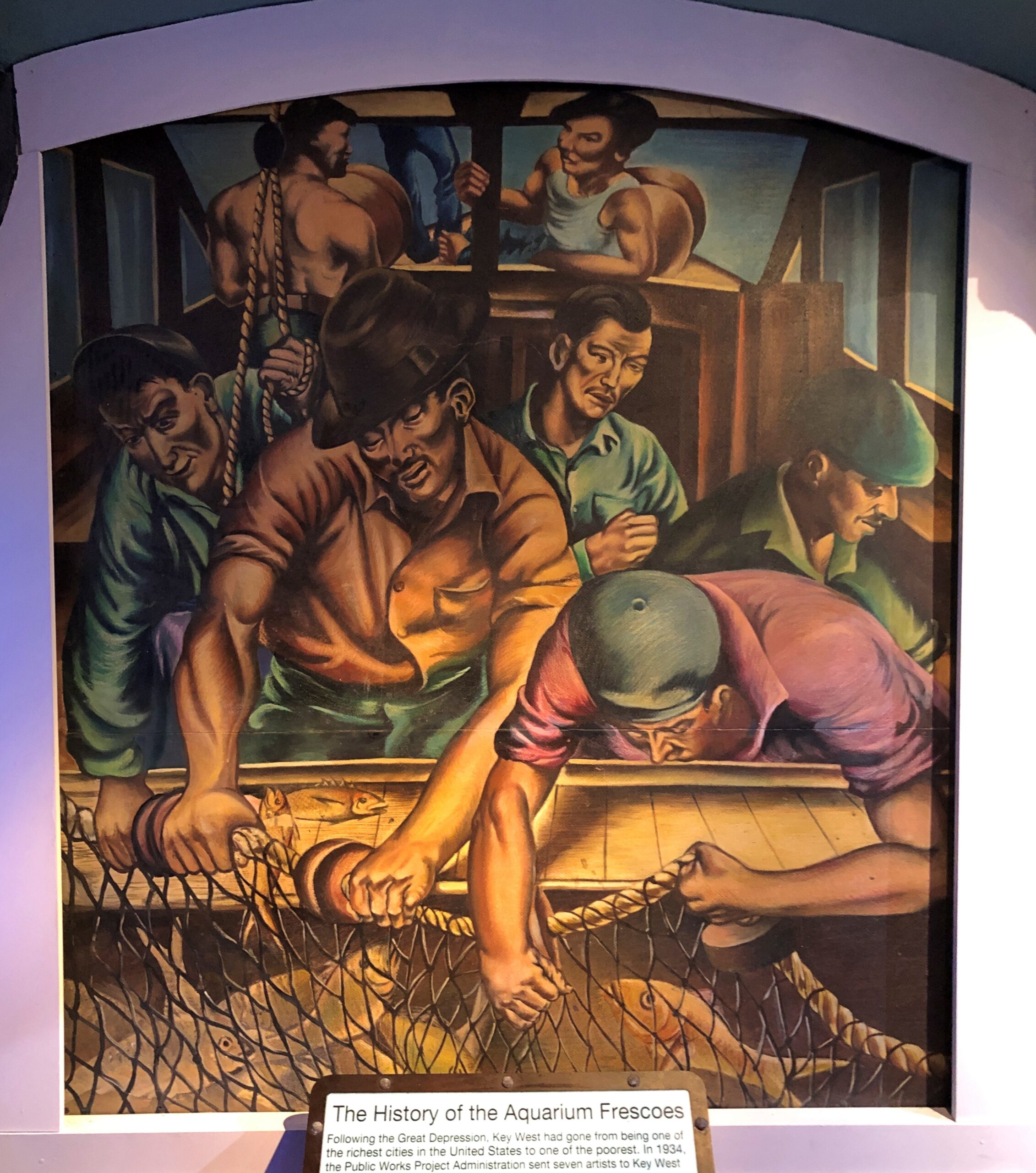
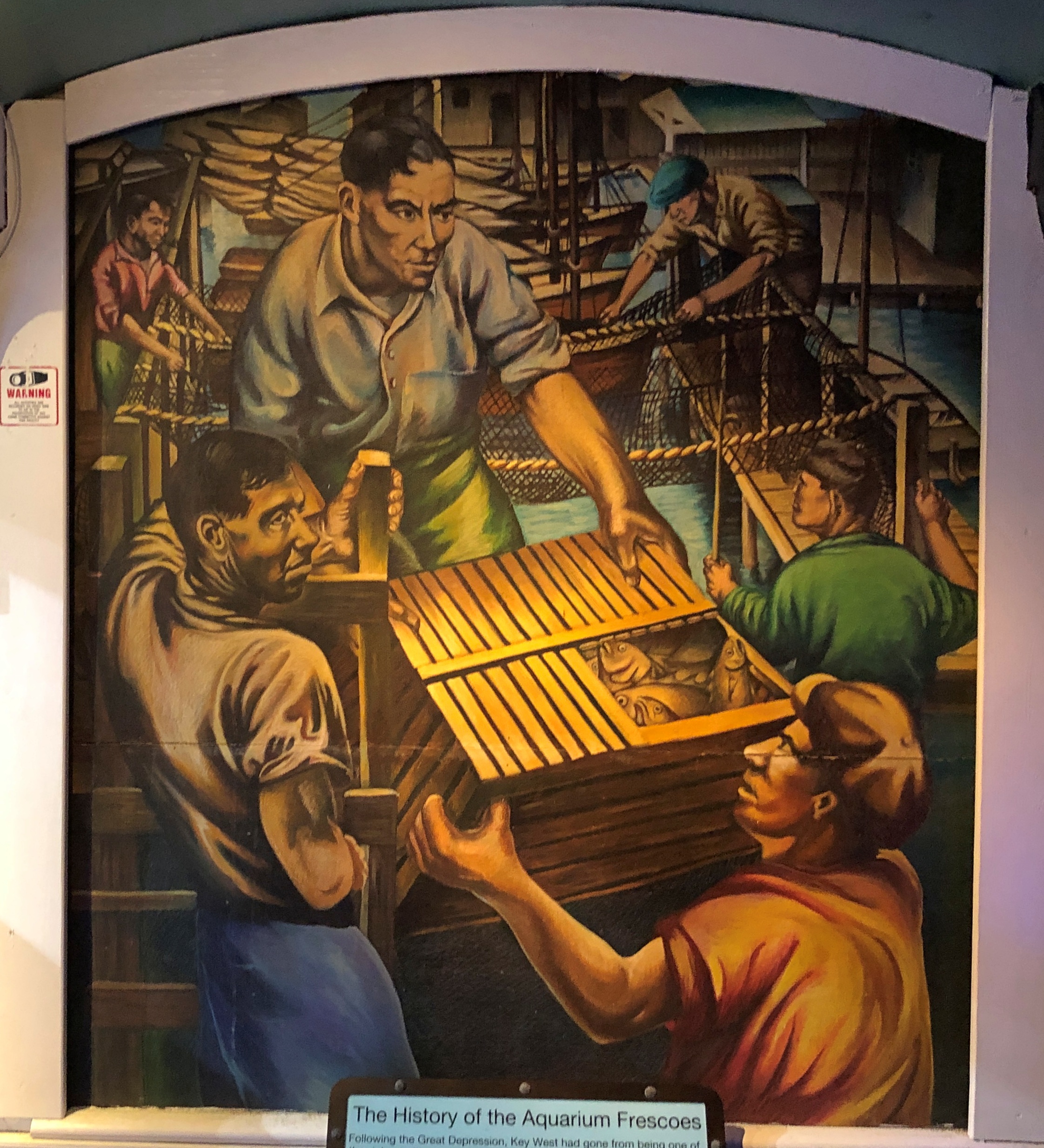
Besides fish, there are fishermen. Depression-era murals of fishermen, that is.
What a pleasant surprise. By the Civil Works Administration, a short-lived predecessor to the WPA. Not the originals, however, which were by an artist named Alfred Crimi (d. 1994). The Living New Deal says they’re more recent replicas.
Come to think of it, Hemingway would have known about the aquarium. Key West isn’t that big a place, and the attraction would have been fairly new when he and Pauline lived mere blocks away. Wonder whether he ever went there.
Of course, we’re used to thinking of the youngish Earnest as a hard drinking, hard fishing sort of guy. Notions that, I believe, Hemingway carefully cultivated. Not only did he create memorable characters for his books, he did for himself as well.
On a whim, I turned to an AI writer available on line, and fed it the following prompt:
Write an account of visiting the Key West Aquarium, in the style of Earnest Hemingway. Three paragraphs is sufficient.
All of 15 seconds later, the machine gave me this.
The aquarium sat low and white against the glare, and the heat lay on the street like a weight. Inside, the air was cooler and smelled of salt and old wood. The tanks were clean and plain, and the fish moved with the calm certainty of things that belong where they are. A tarpon held itself still in the water, strong and watchful, and its eye followed me as if it knew I was only passing through.
I stood by the open pool where they fed the fish, and the water broke suddenly with life. The fish came hard and fast, flashing silver and green, their bodies cutting the surface and falling back again. It was violent in a small way and honest. The men who worked there spoke little, and when they did it was direct, as if there were no reason to waste words on what could be seen.
When I stepped back outside, the sun struck again and the sea wind came down the street. The aquarium stayed behind me, quiet and contained, holding its ordered slice of the ocean. I thought of how the fish swam without doubt, and how good it must be to live so close to what sustains you. Then I walked on, feeling the heat, and the day continued.
I was expecting something from a bad Hemingway writing contest, but no. This is pretty good. Better than that, actually. A little wow moment for me, and the day continued.
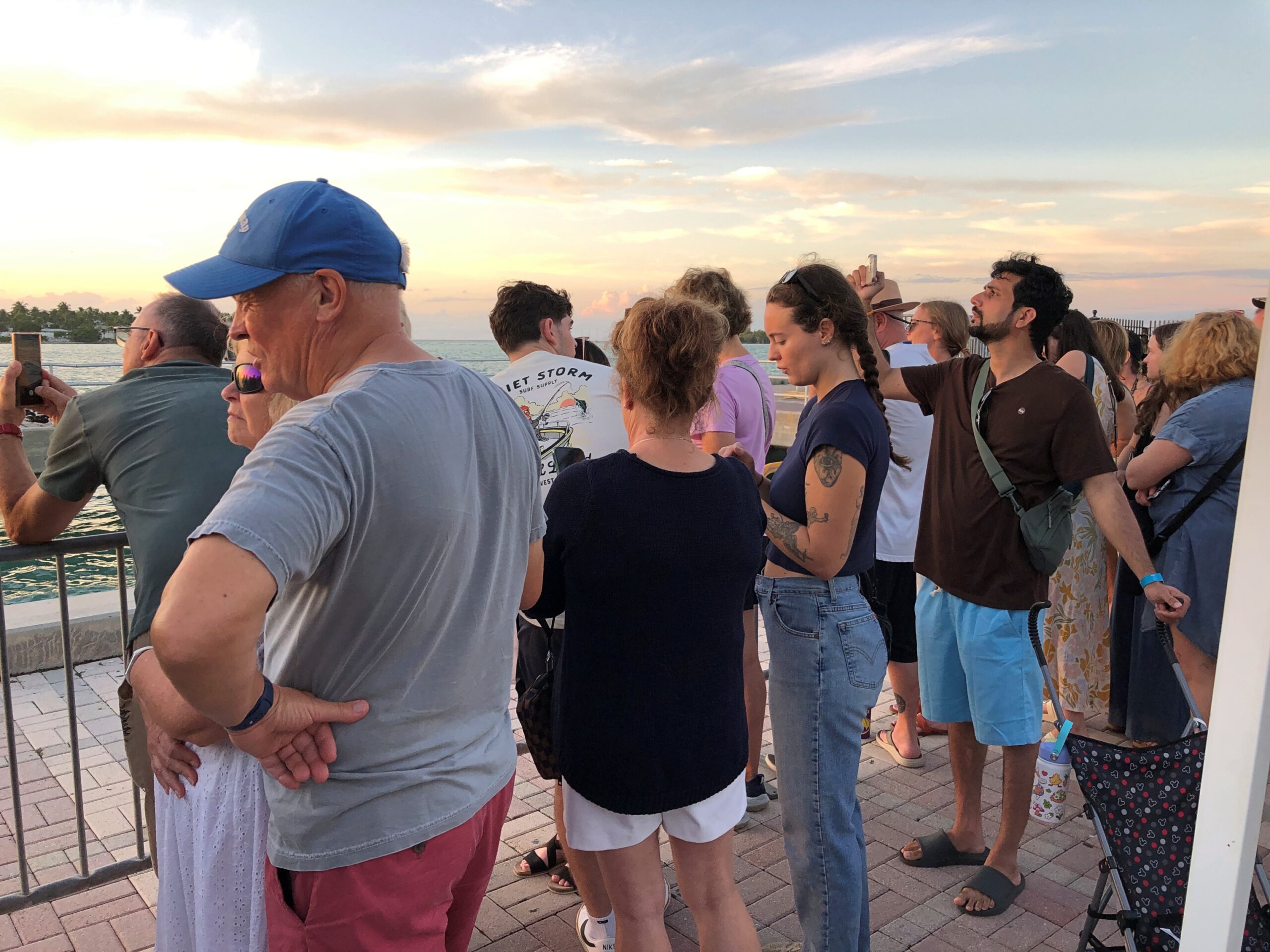
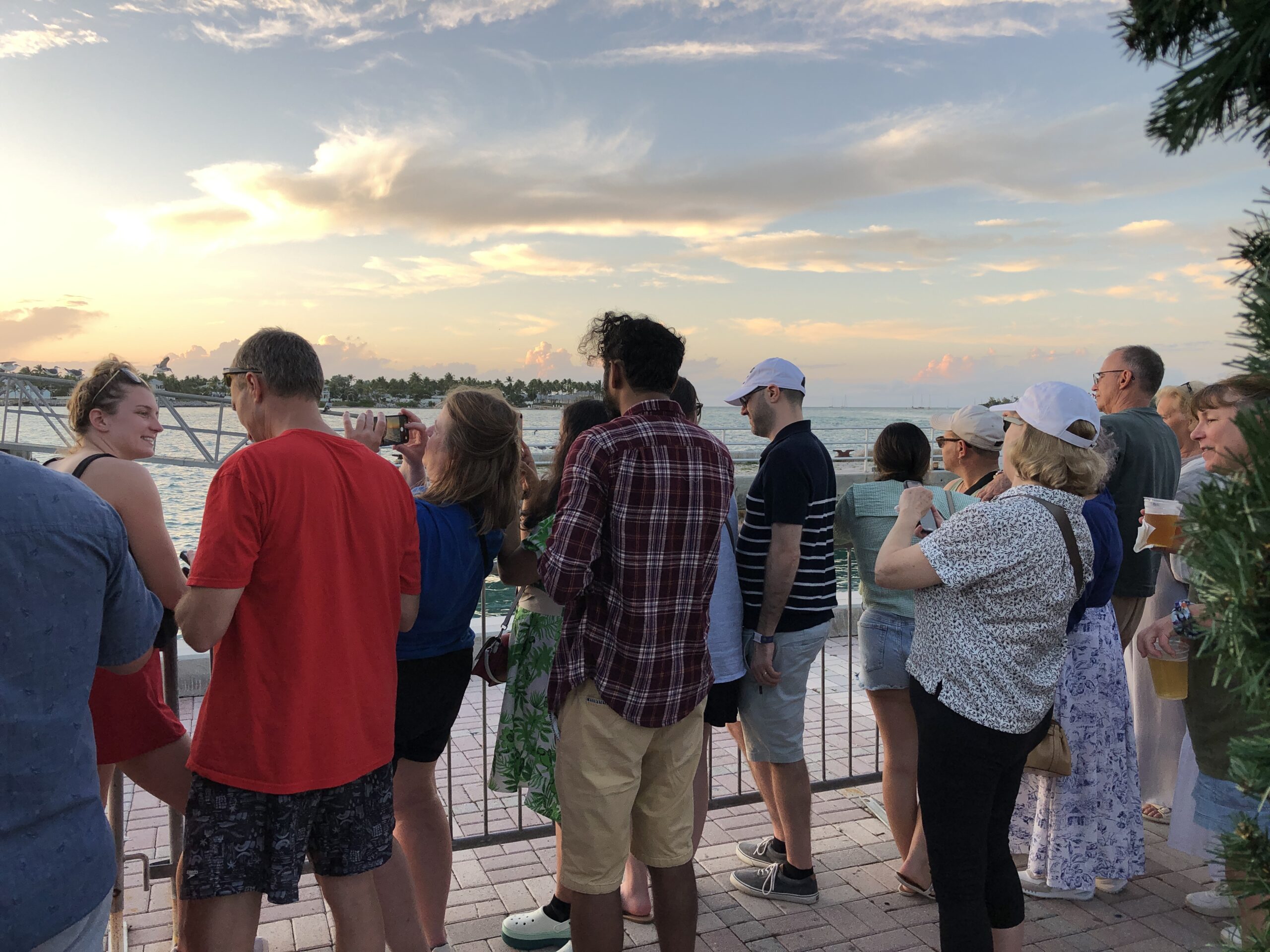
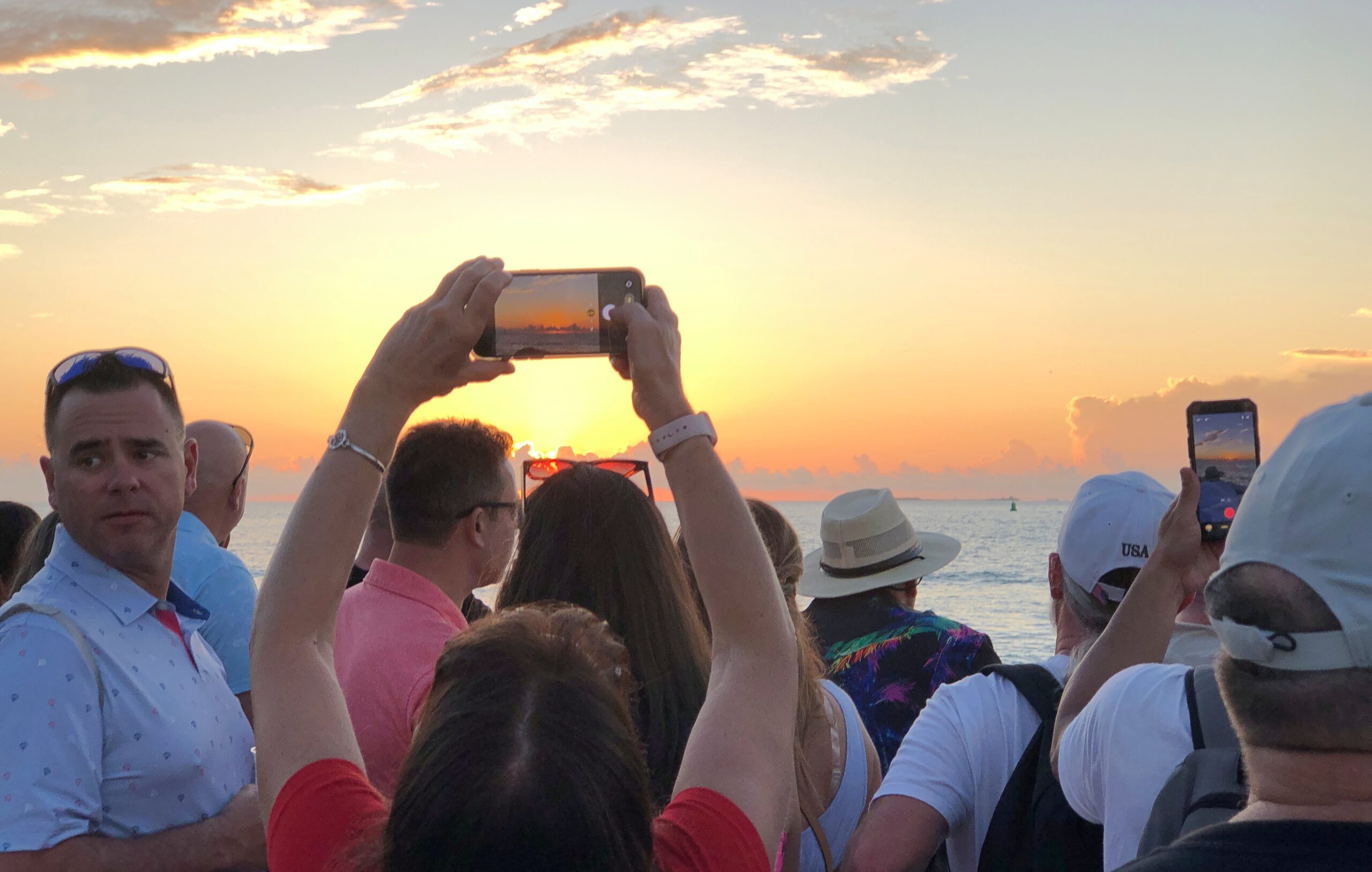
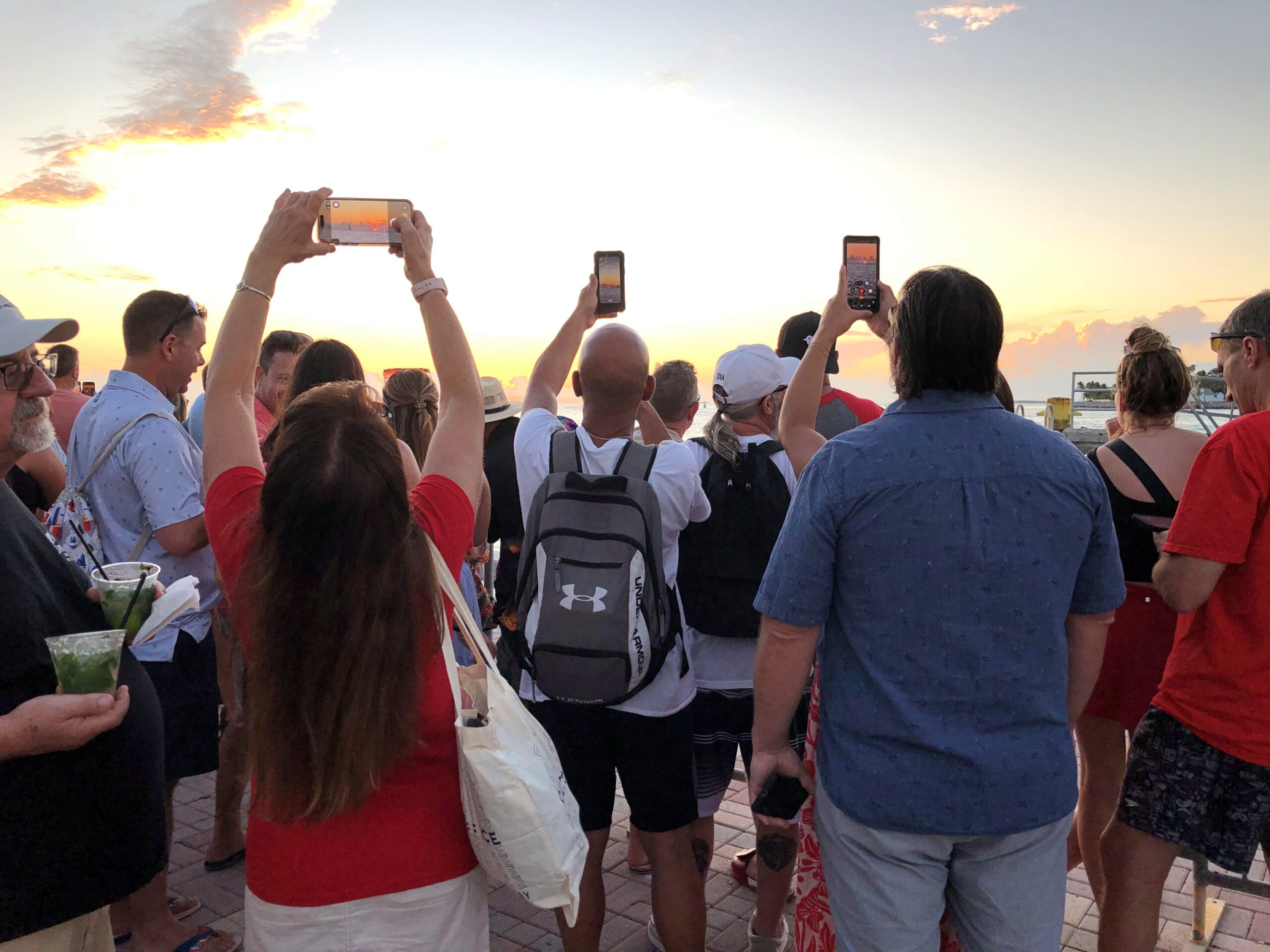
We joined the other Key West tourists, and who knows maybe a few locals, for an spontaneous sunset viewing party. I know if I lived around there, I’d be out at least occasionally, taking in something that never gets old. No organizer at all, just people collecting at the right place at the right time to see the disk of the sun transition from yellow to red and other colors, as it visibly creeps lower toward the horizon. Down the sun went, in its predictable splendor, and then — green.
I’m pretty sure what I saw was an inferior-mirage flash, to use a technical term I learned later. I checked later, finding that one characteristic of such a flash is an oval of light lasting no more than 2 seconds (I’d say it was no more than a single second, if that). They tend to happen when the surface is warmer than overlaying air, and close to sea level.
All that fits for the green flash — a variety of green intense and completely new to me — as the sun set our first day in Key West. The flash came exactly as the top edge of the disk of the sun dipped below the horizon. You have to, I believe, be looking straight at the exact right place at exactly the right moment to see it, as I was, by pure accident. I’d heard about green flashes for a long time, but I’d never seen one. A really long time: I remember them being mentioned during a planetarium show in San Antonio as a kid in the early ’70s.
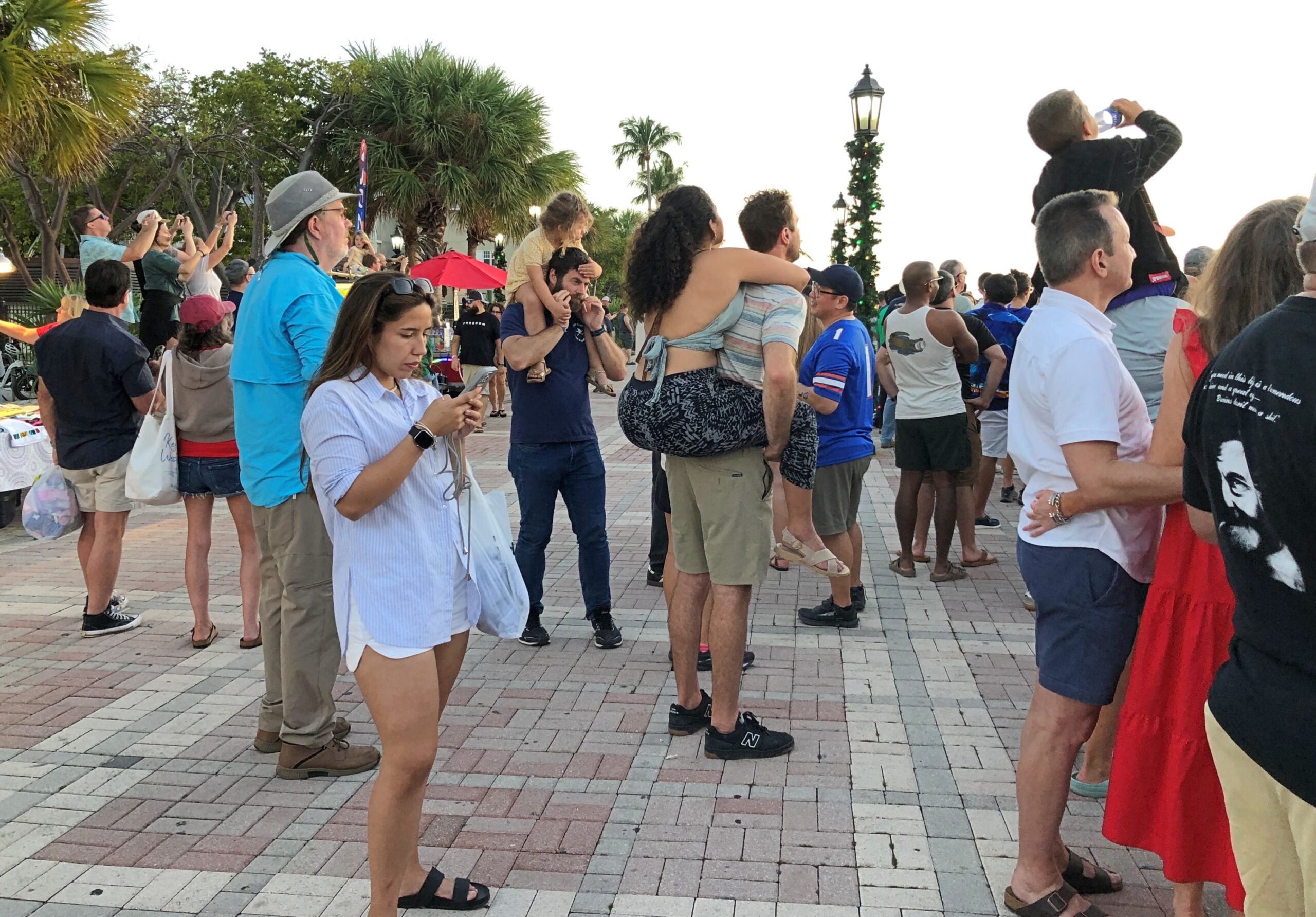
We hadn’t come to Mallory Square to see a green flash or any other meteorological optical phenomena. We hadn’t even come to see the sun go down. We just happened to arrive at Mallory, a large public plaza near the north end of Duval St. and right at the water’s edge, just at the right time, after gadding about that part of Key West.
It’s a mildly festive place around sunset. Also, people are waiting. The sun was not to be hurried.
Lots of people around, not an overwhelming crowd, more of a happy milling of vacation-goers.
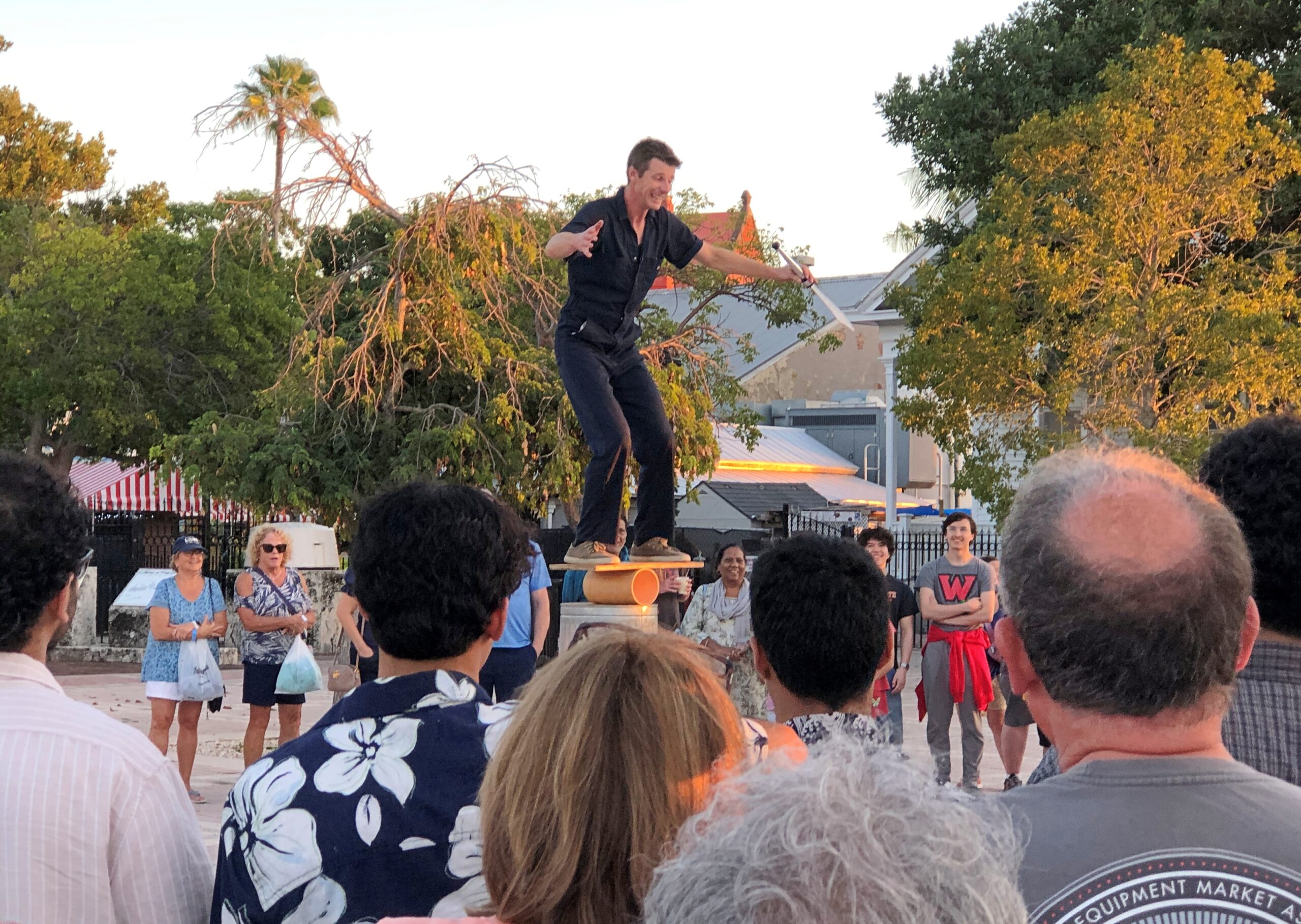
Live entertainment was on hand.
The star attraction, however – make that the solar attraction – was the sunset. Mallory Square has a fine view of the westward horizon, where sea and sky come together like a hazy kiss out on the ocean.
So now I’ve seen a green flash. A total solar eclipse (two, actually), lunar eclipses, the transit of Venus, double rainbows, ground-to-sky lightning, sun- and moondogs, meteors, planets through telescopes including the moons of Jupiter and Saturn, the impressive whisp of the Milky Way in a dark sky, the Southern Cross and the Magellanic Clouds – add a green flash to the list.
But what other cool things to see in the sky that so far have eluded me? The aurora, for one. Aurora borealis would be great, and certainly more doable than aurora australis, but wouldn’t seeing the Southern Lights be a kick? I think I first learned about it in a Carl Barks Scrooge McDuck comic, and never forgot.
Back on Tuesday. A holiday’s a holiday, even if it comes in the pit of winter, where we definitely find ourselves. The memory of Sunny Florida gets a little more distant each time I feel the wind in single-digit temps.
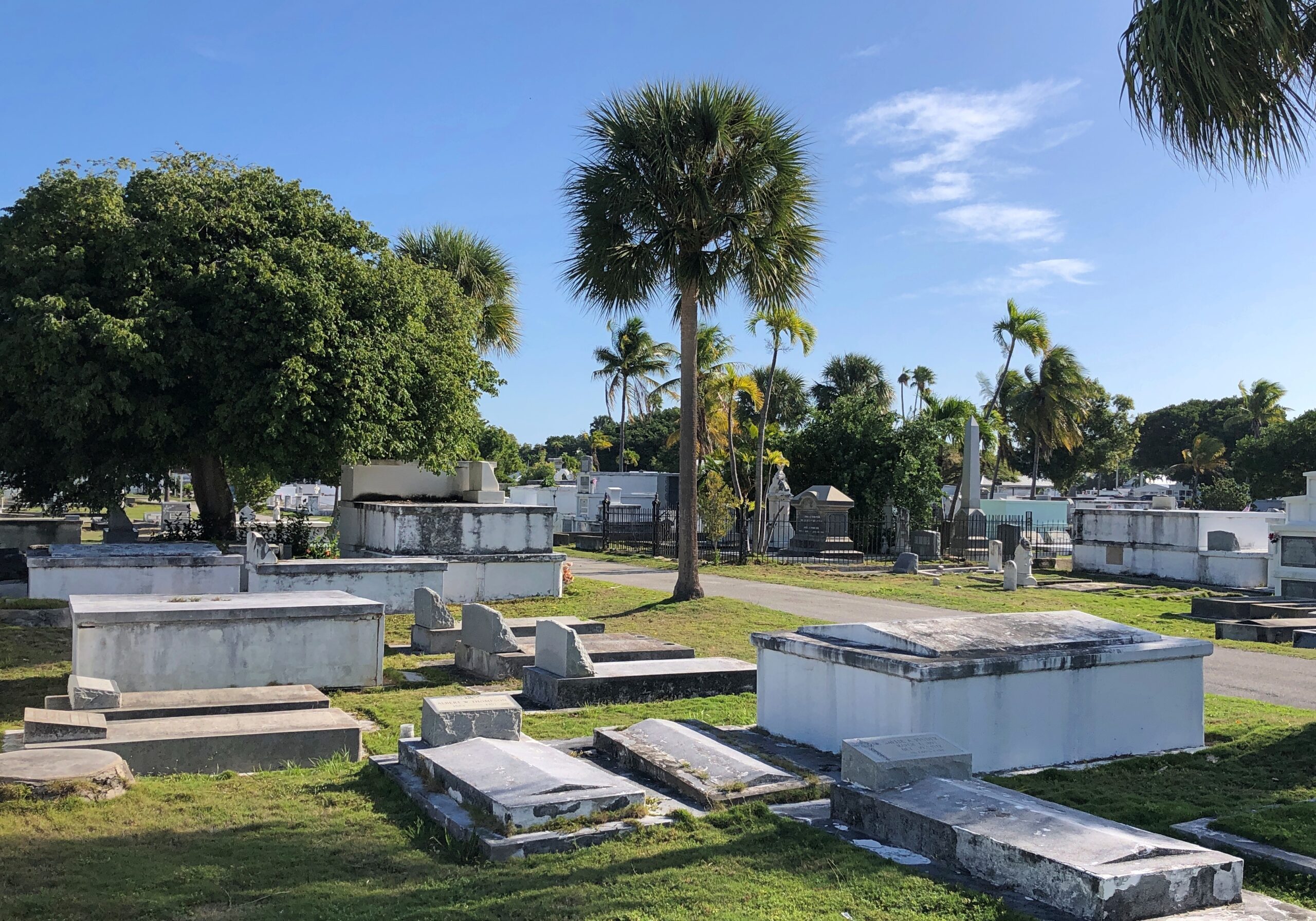
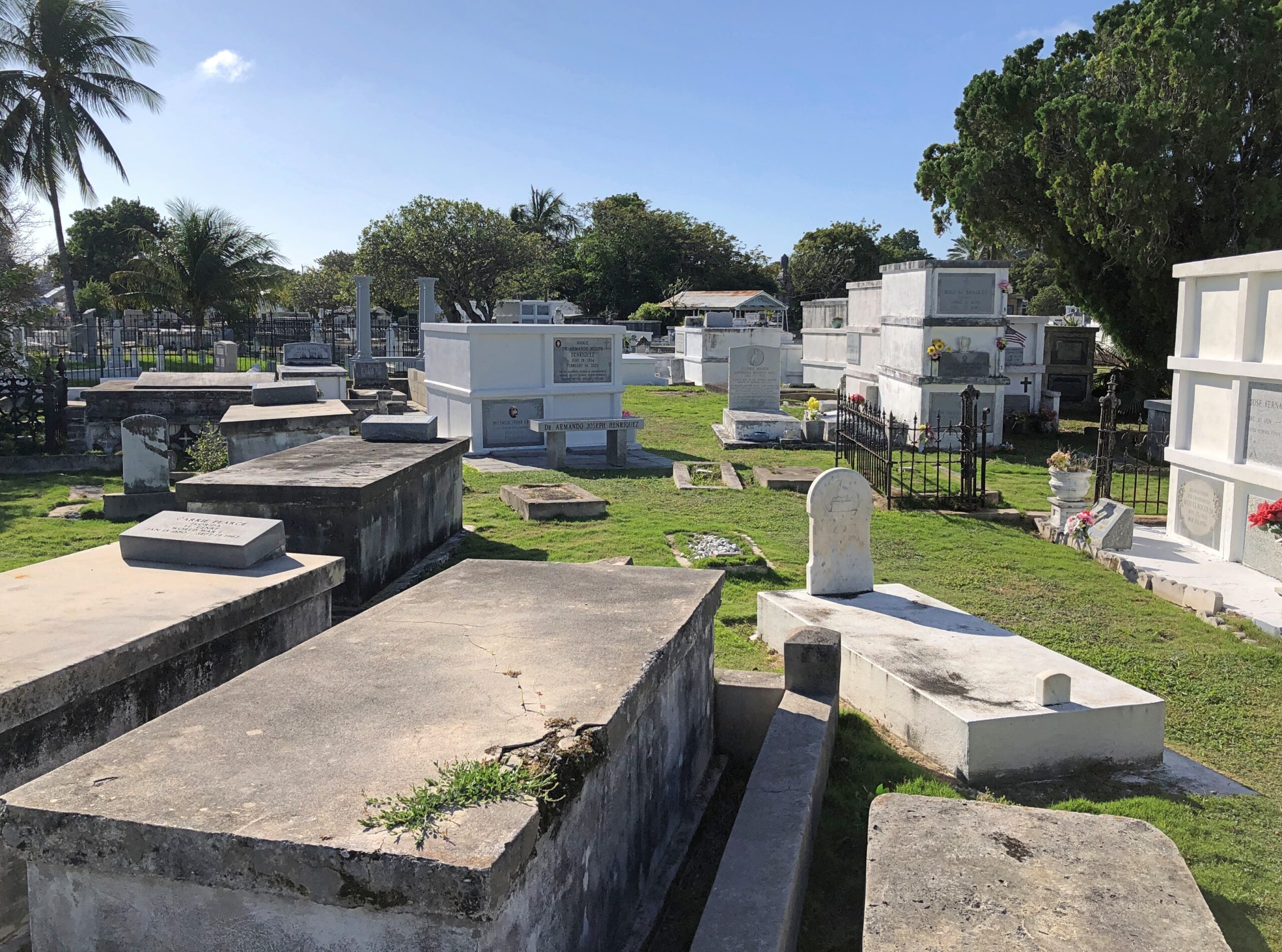
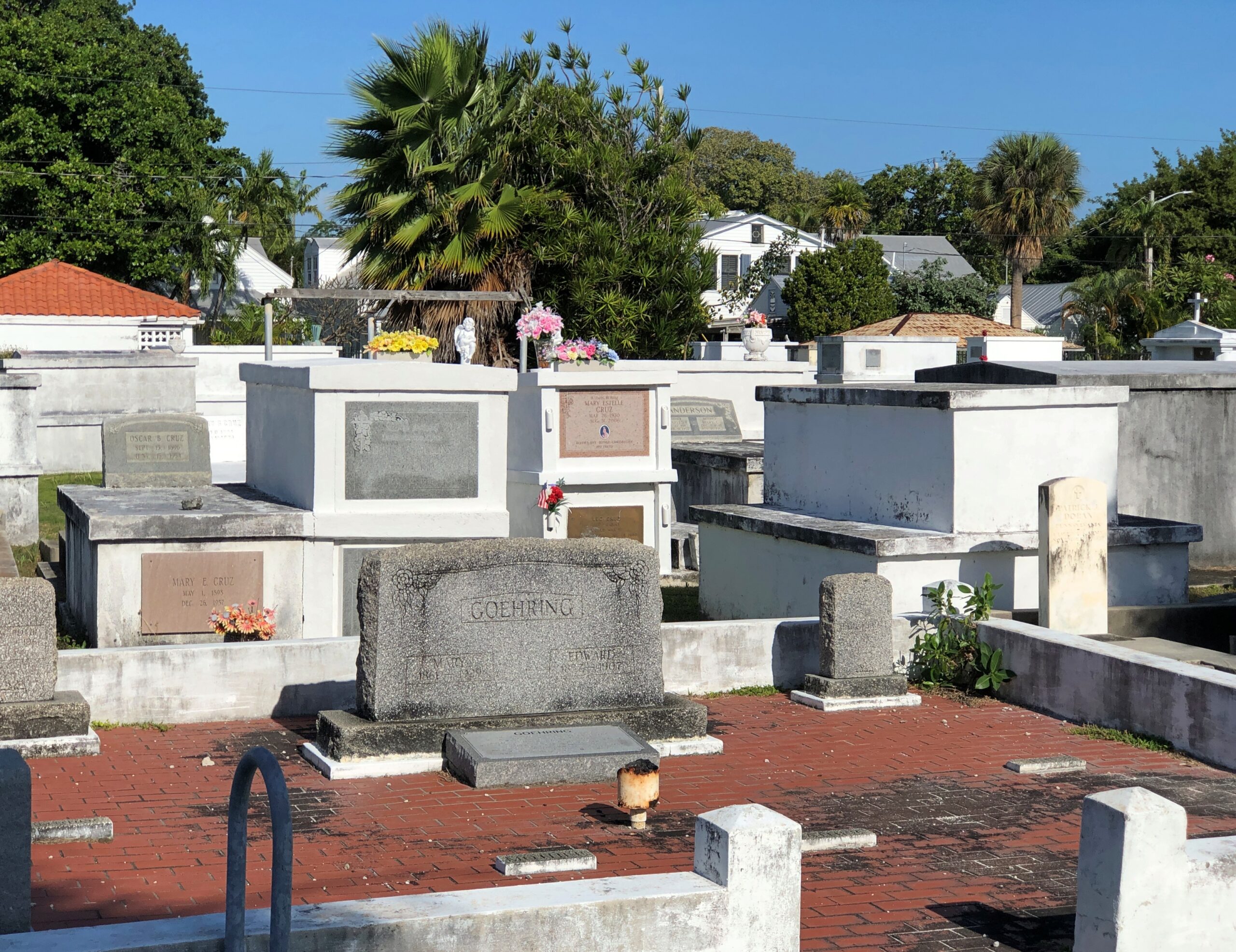
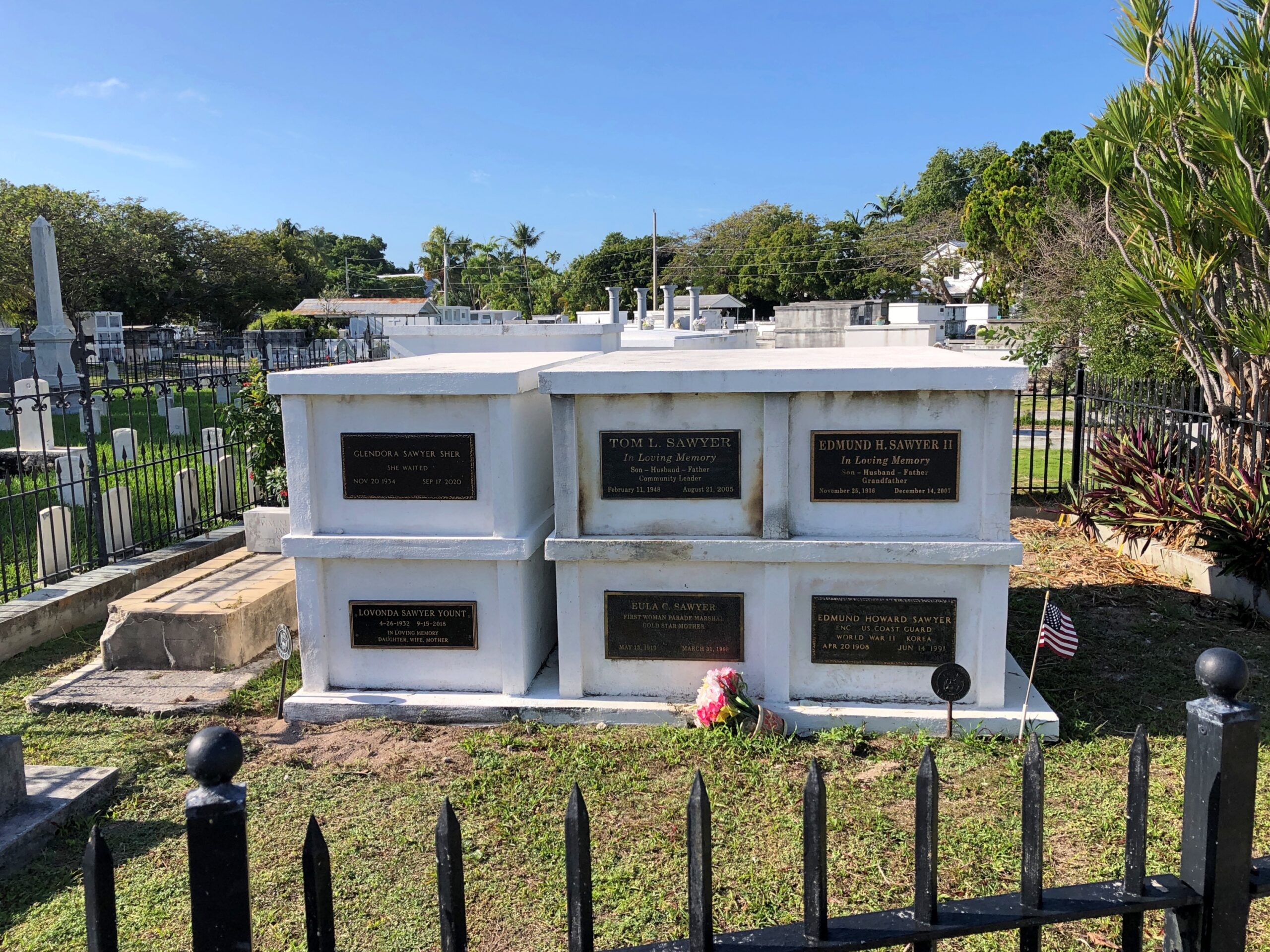
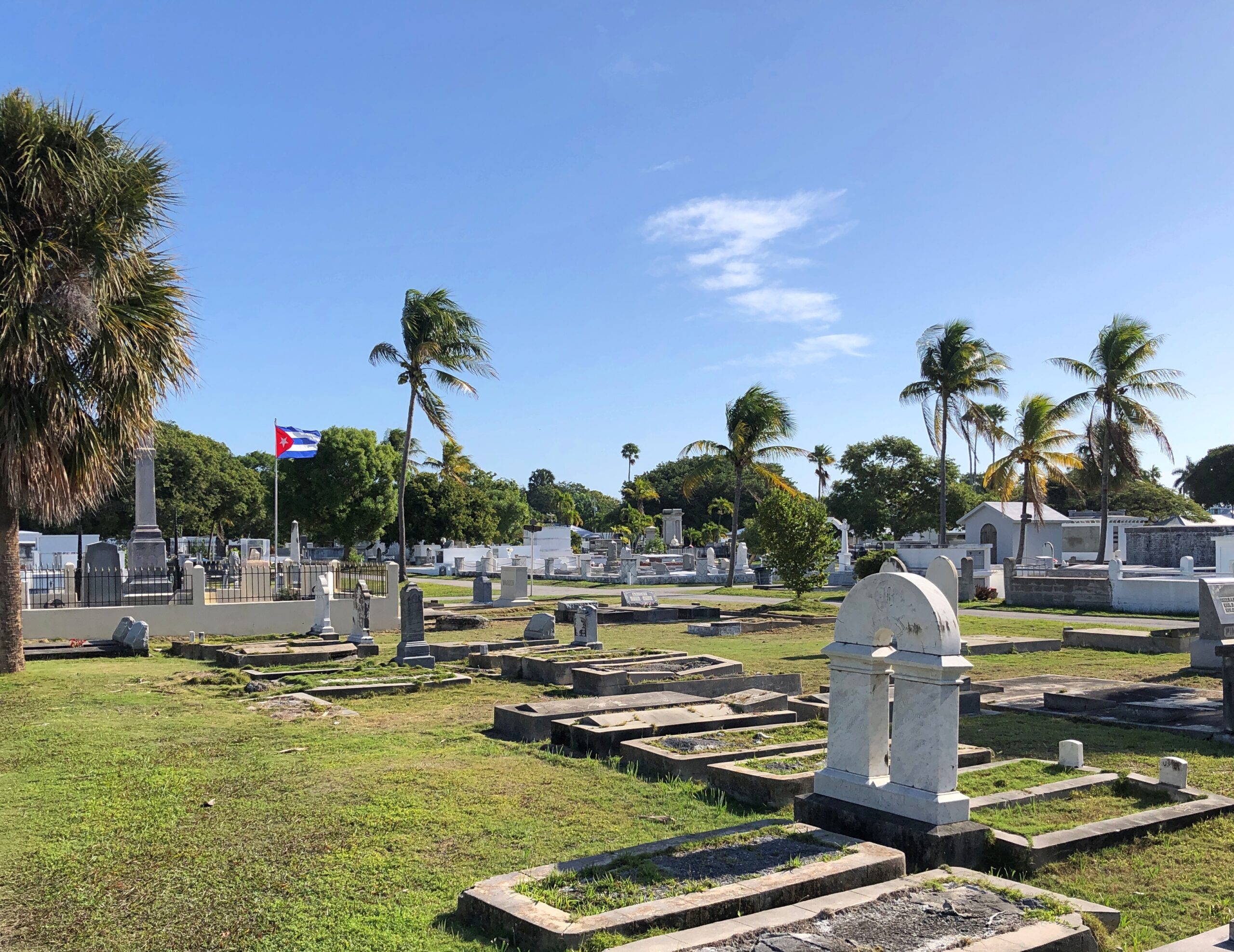
In diminutive Key West, you’ve gone a long way after a few blocks. So a long way from Duval Street in that town is Key West Cemetery, which is also at a distance from the ocean — one measured in a few thousand feet. At the cemetery you’ll find a mix of above-ground tombs and standard stones. Styles from Old Florida and later, in other words.
We drove into Old Town Key West our second day rather than take the hotel shuttle, which we had the first day. I was gambling that the local parking information I’d picked up first-hand more than a decade earlier wasn’t obsolete yet, which it could well have been. The town has notoriously tight parking, for obvious reasons.
Two prayers for such a situation.
O Lord, by your grace
Help me find a parking space
…
O Jesus, full of grace
Help me find a parking space
Just the thing, provided you’re sure one of the many attributes of the Almighty is a sense of humor. Parking is perhaps a function of Plastic Jesus? (And I like this version, among the many out there.)
Then again, asking for a parking intercession might only seem to be praying for something trivial. For all we know, parking a certain car in a certain place on a certain day might via the butterfly effect prevent a deadly typhoon somewhere.
Anyway, my strategy worked out and we parked for no charge a stone’s throw – and I mean that almost literally – from Key West Cemetery.
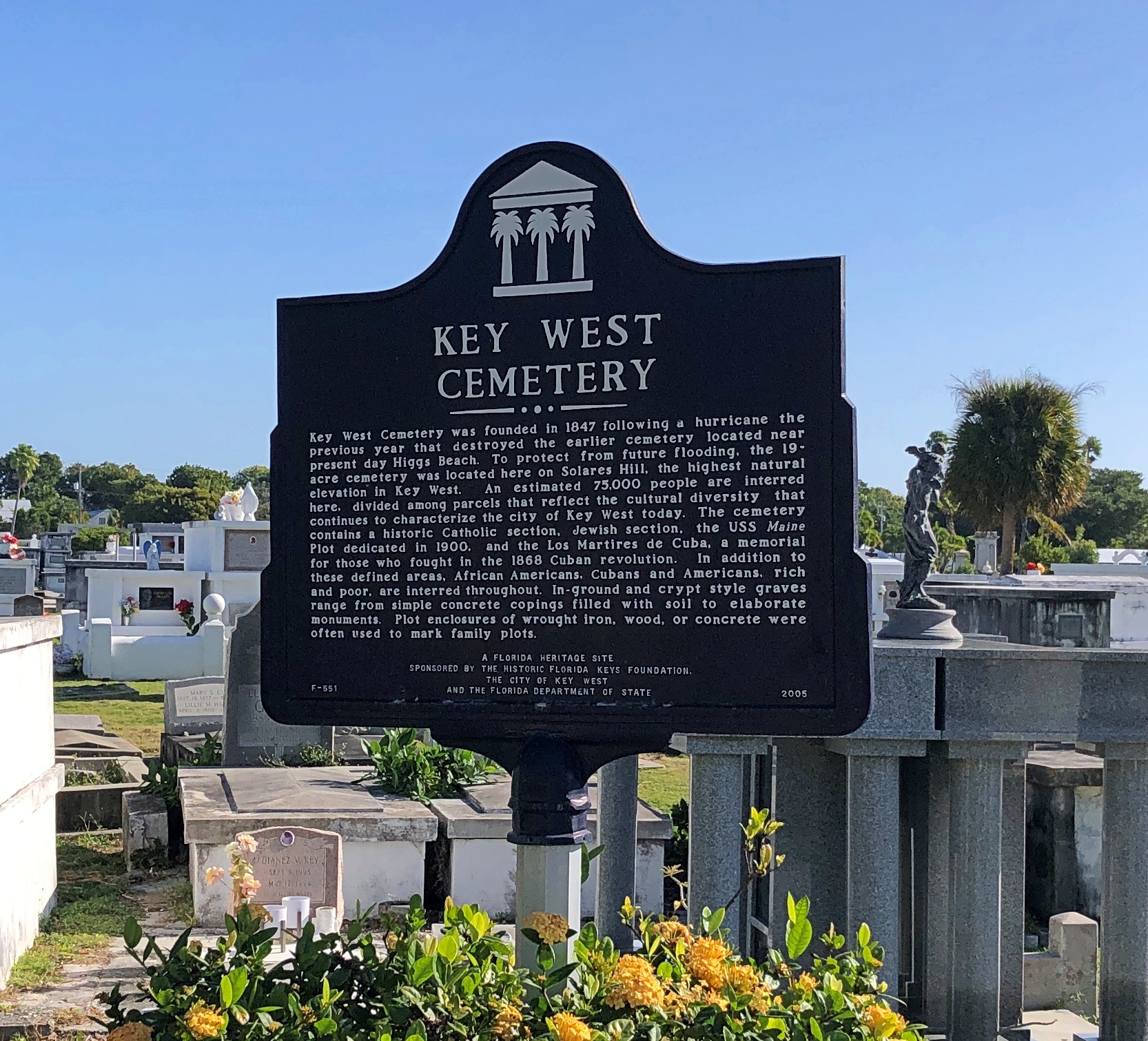
Once upon a time, mid-19th century Key West had a burial ground nearer to the water. A hurricane in 1846 applied a large amount of water and wind to that location in a short time, smashing tombs and markers and returning bodies to the open air. Gruesome to consider, but the incident did inspire Key West city fathers to open a new cemetery on high ground. High for Key West, that is, 16 feet above sea level.
That has worked out. As many as 100,000 permanent residents now rest across 19 acres, roughly three times the living population of the city: all races and stations of life; Protestants, Catholics and Jews; Cuban cigar workers and Bahamian mariners; soldiers, sailors and civilians.
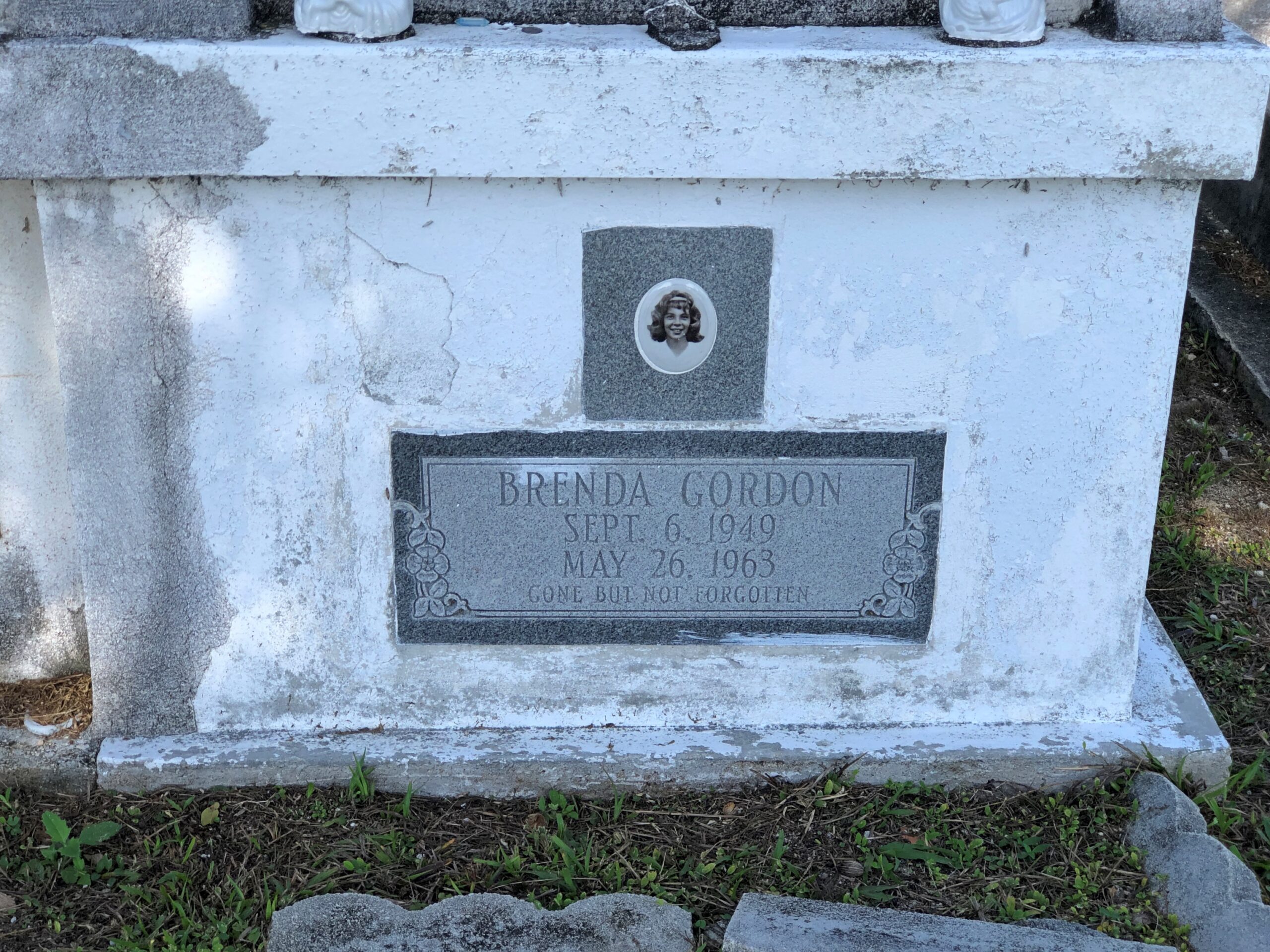
Many sad stories, as usual. Even if we can’t know the details at this distance.
Other residents include one Abraham Sawyer (d. 1939), a dwarf who reportedly refused to be a part of carnivals, instead working for manufacturers to advertise their products. He requested to be buried in a full-sized grave, but since I didn’t read of him until later (today), I didn’t go looking for him.
There is also the story of Elena Hoyos (d. 1931). Read the Find a Grave story, which I promise will be one of the stranger things you’ve read in a while, true or not.
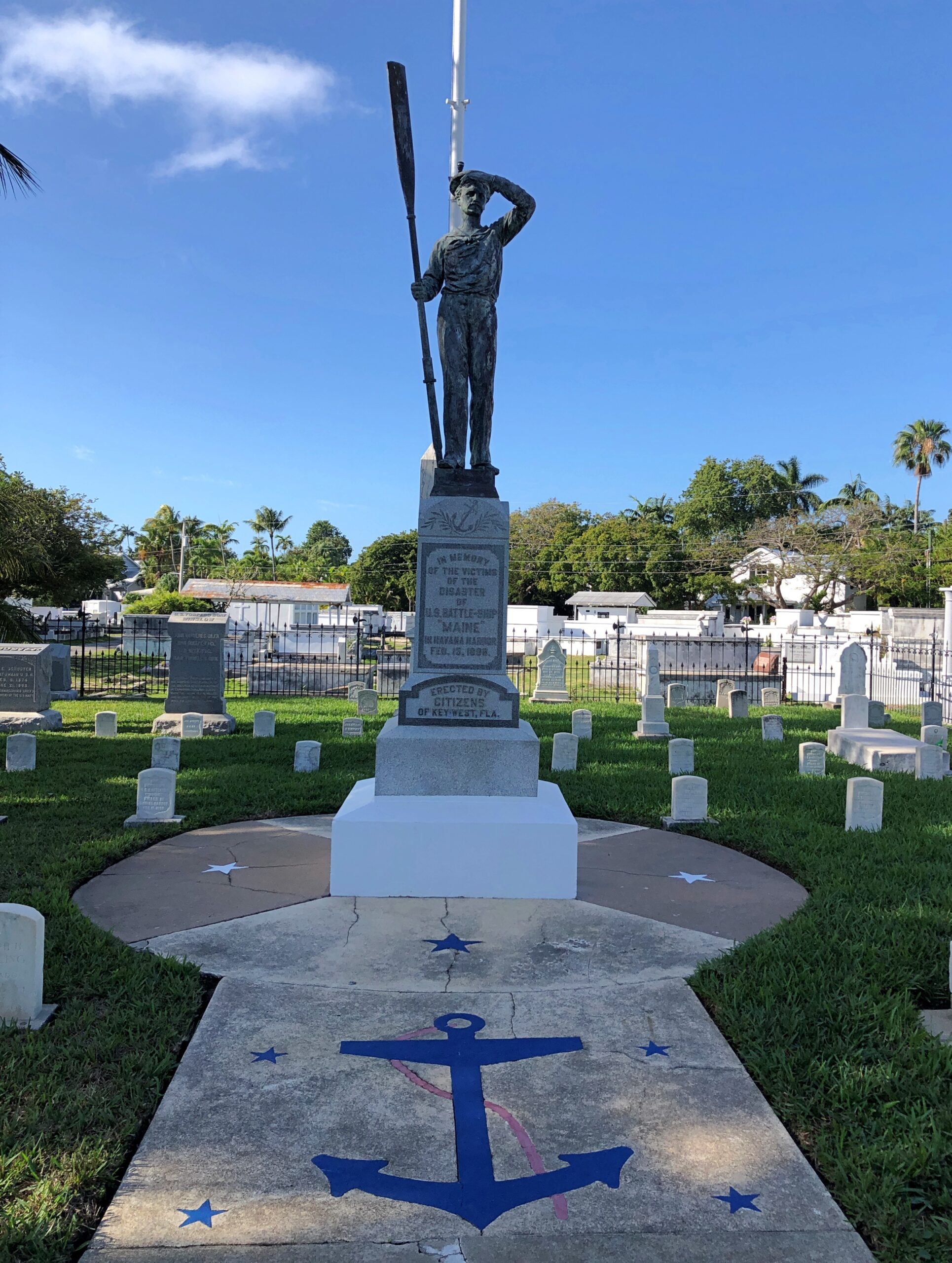
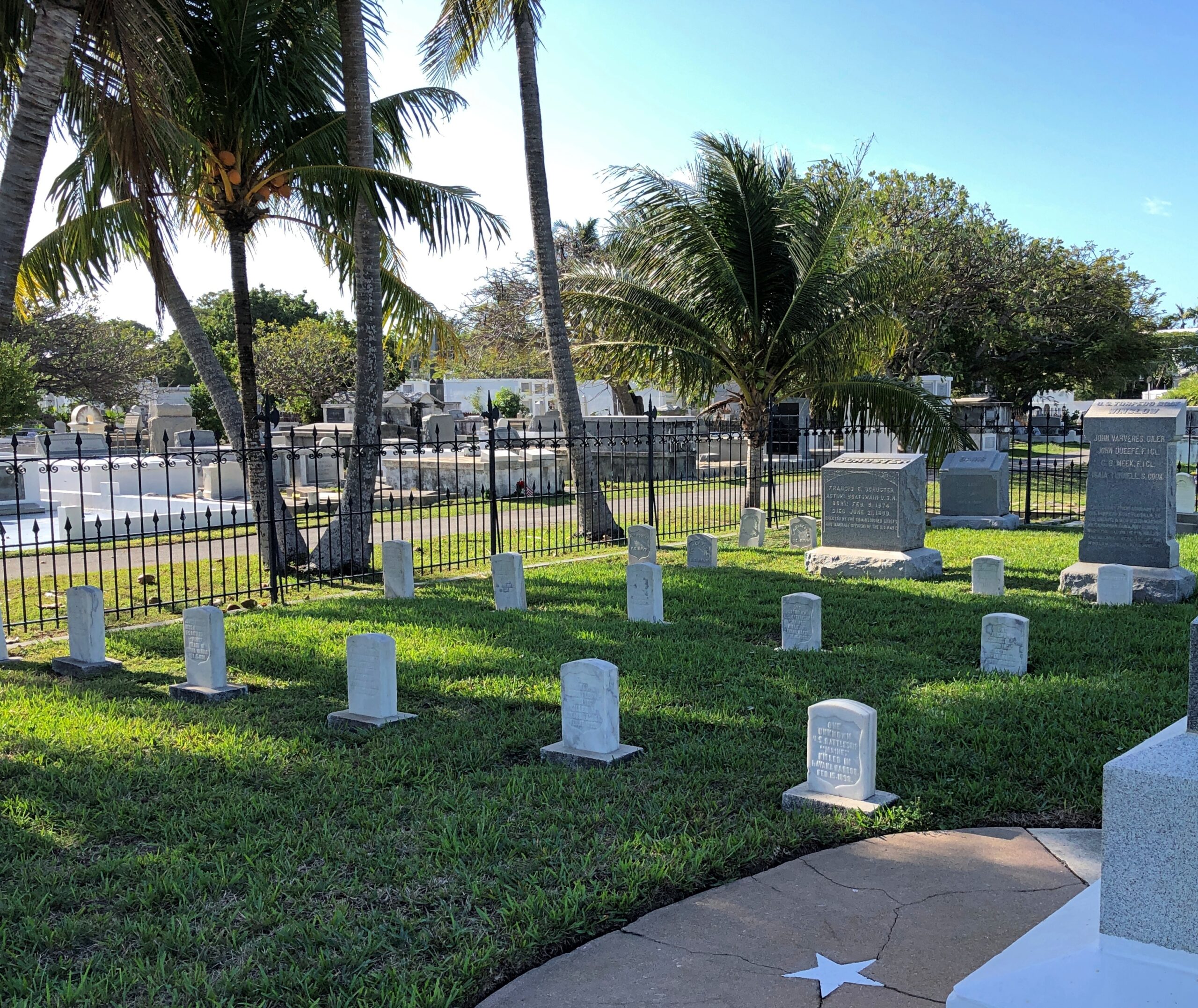
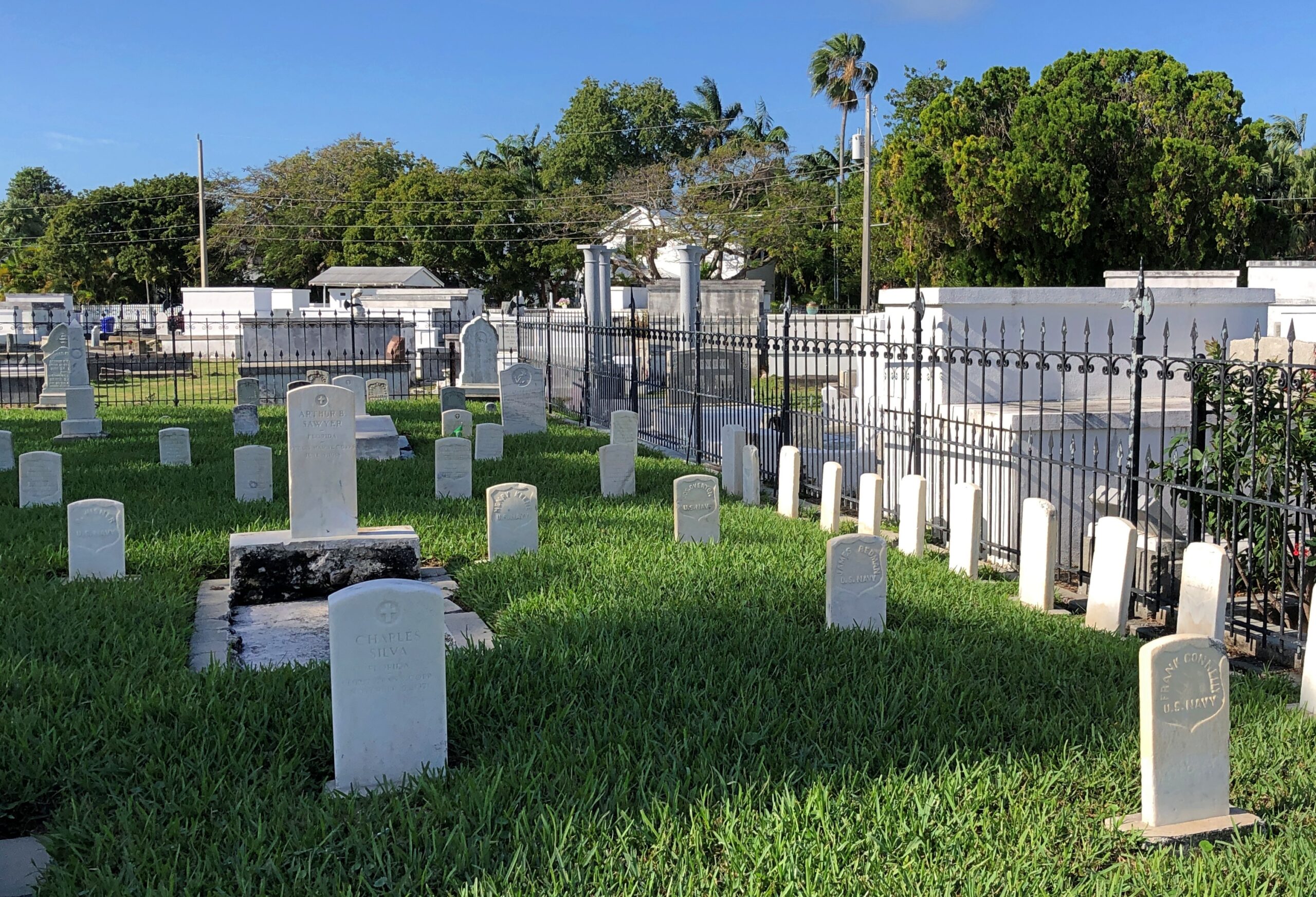
The U.S. Navy Plot is square in the middle of the cemetery.
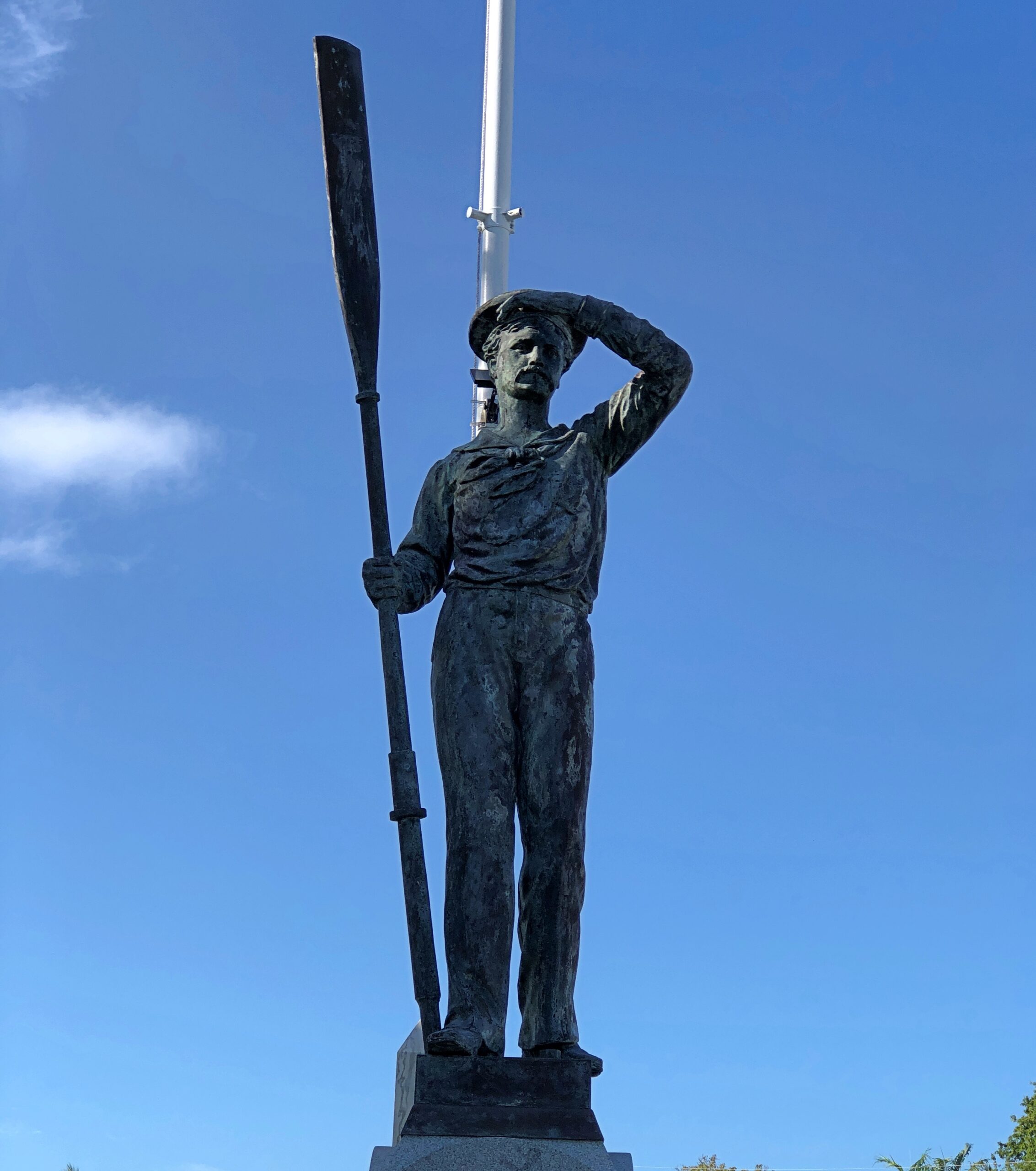
The centerpiece is a memorial to the dead of the Maine. Note the mast behind the sailor statue. That’s from the Maine.
The monument’s granite base says:
IN MEMORY OF THE VICTIMS OF THE DISASTER OF THE U.S. BATTLESHIP ‘MAINE’ IN HAVANA HARBOR FEB. 15, 1898, ERECTED BY THE CITIZENS OF KEY WEST, FLA.
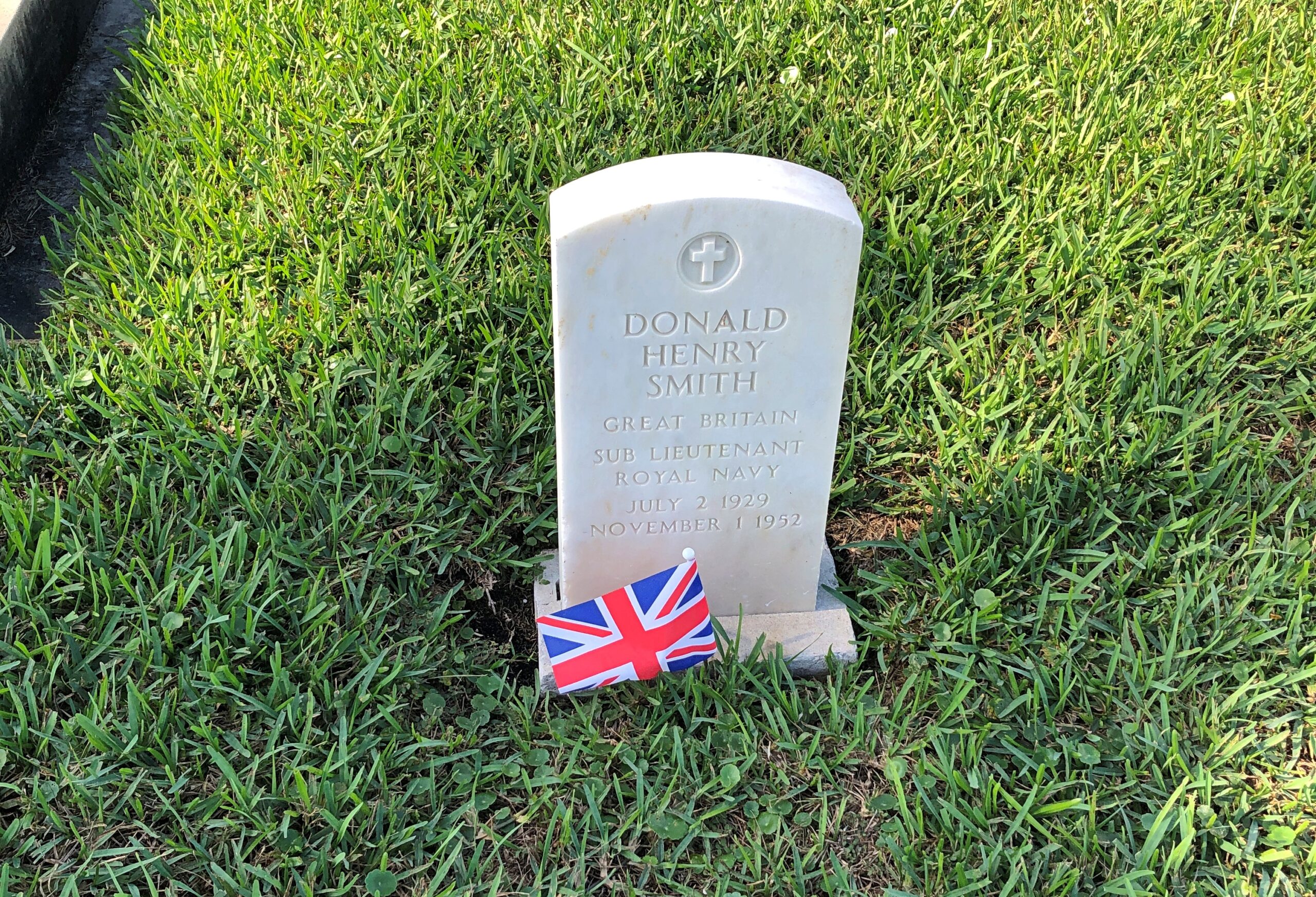
Other sailors repose there as well. Such as Sub-Lieutenant Donald Henry Smith, Royal Navy.
That’s a little odd, but foreign servicemen do sometimes end up in American soil (such as at Vicksburg). I looked around a little, then asked Google AI how Sub-Lieutenant Smith came to be there.
The hive bots said: Donald Henry Smith (1929-1952) is buried in the Key West Cemetery, specifically in the U.S. Navy Plot, likely because he was a young man who died at age 23, possibly serving in the Navy or connected to the naval community, with the plot itself dedicated to fallen sailors, a common burial spot for service members in Key West.
So, navy guys get buried with other navy guys, sometimes. Or maybe because a navy is a navy? Thanks for nothing, AI.
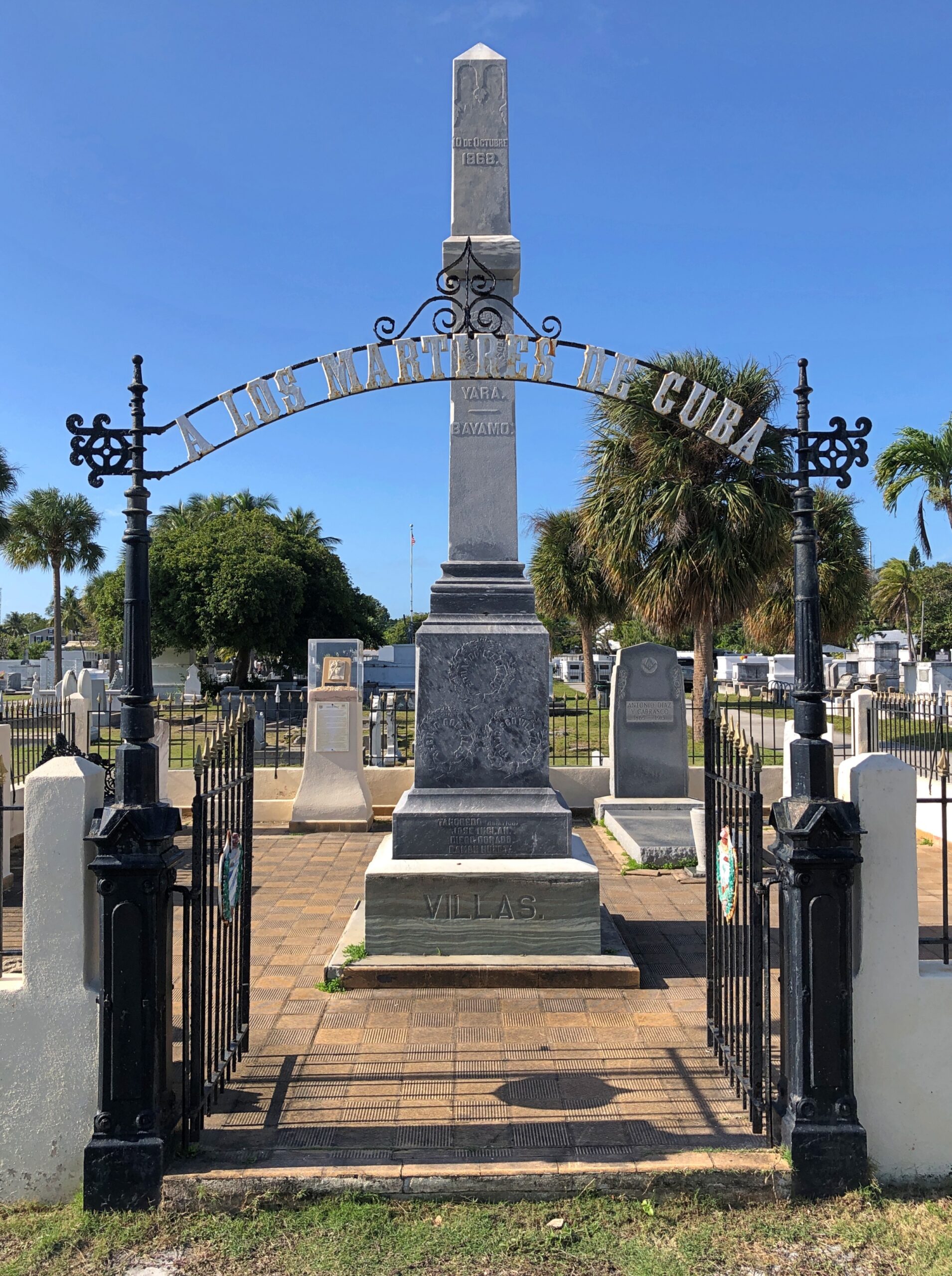
I spotted a Cuban flag and went to investigate.
A Los Martires de Cuba.
Not all of them are with Jose Marti in Cuba itself. Guess this counts as another of the Little Cubas to be found in warm climes close to the home island.
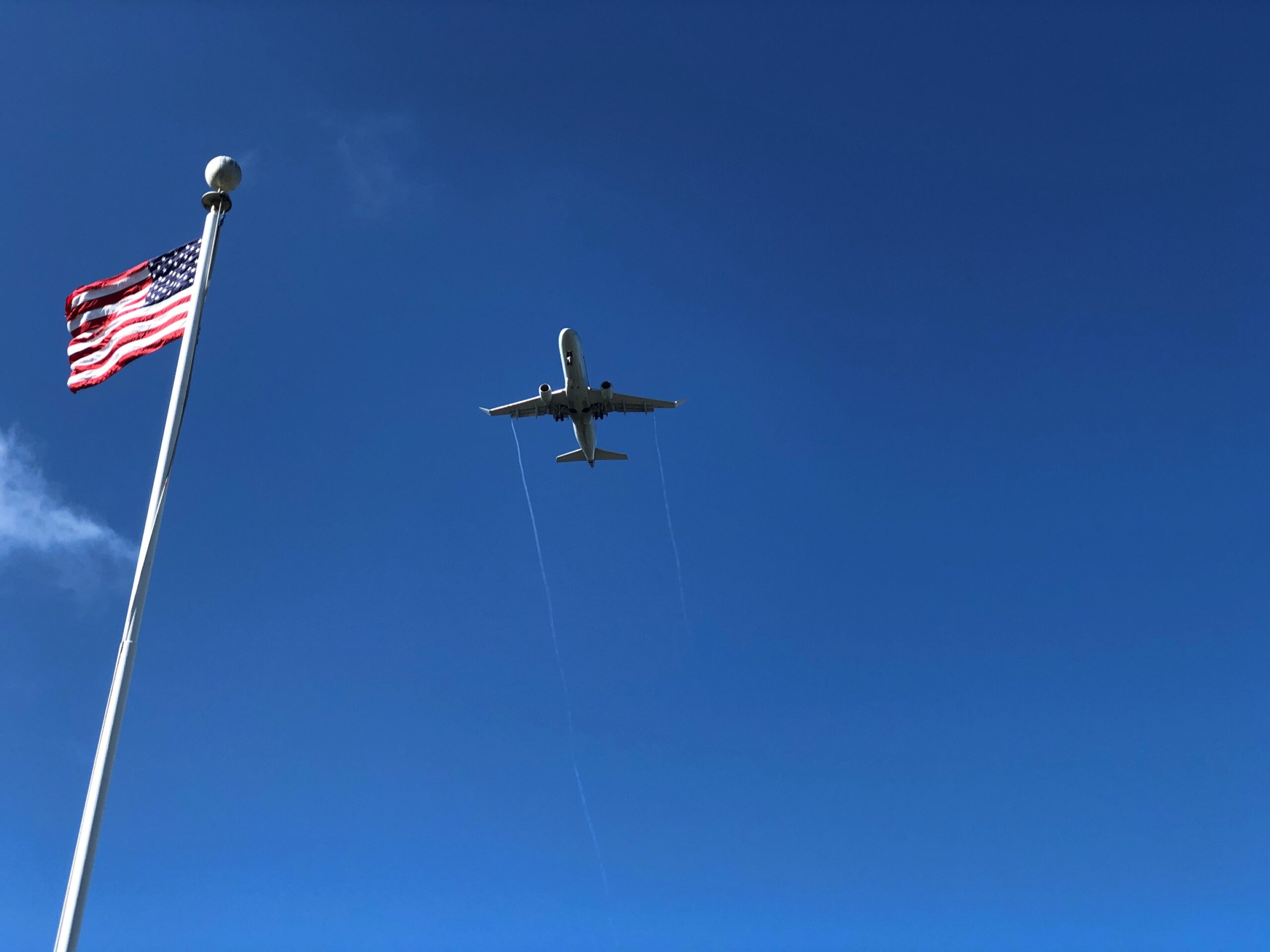
The cemetery is under the flight path for planes headed for Key West International (EYW).
Nightmarish human faces weren’t invented by demented AI, but have long been with us. Case in point.
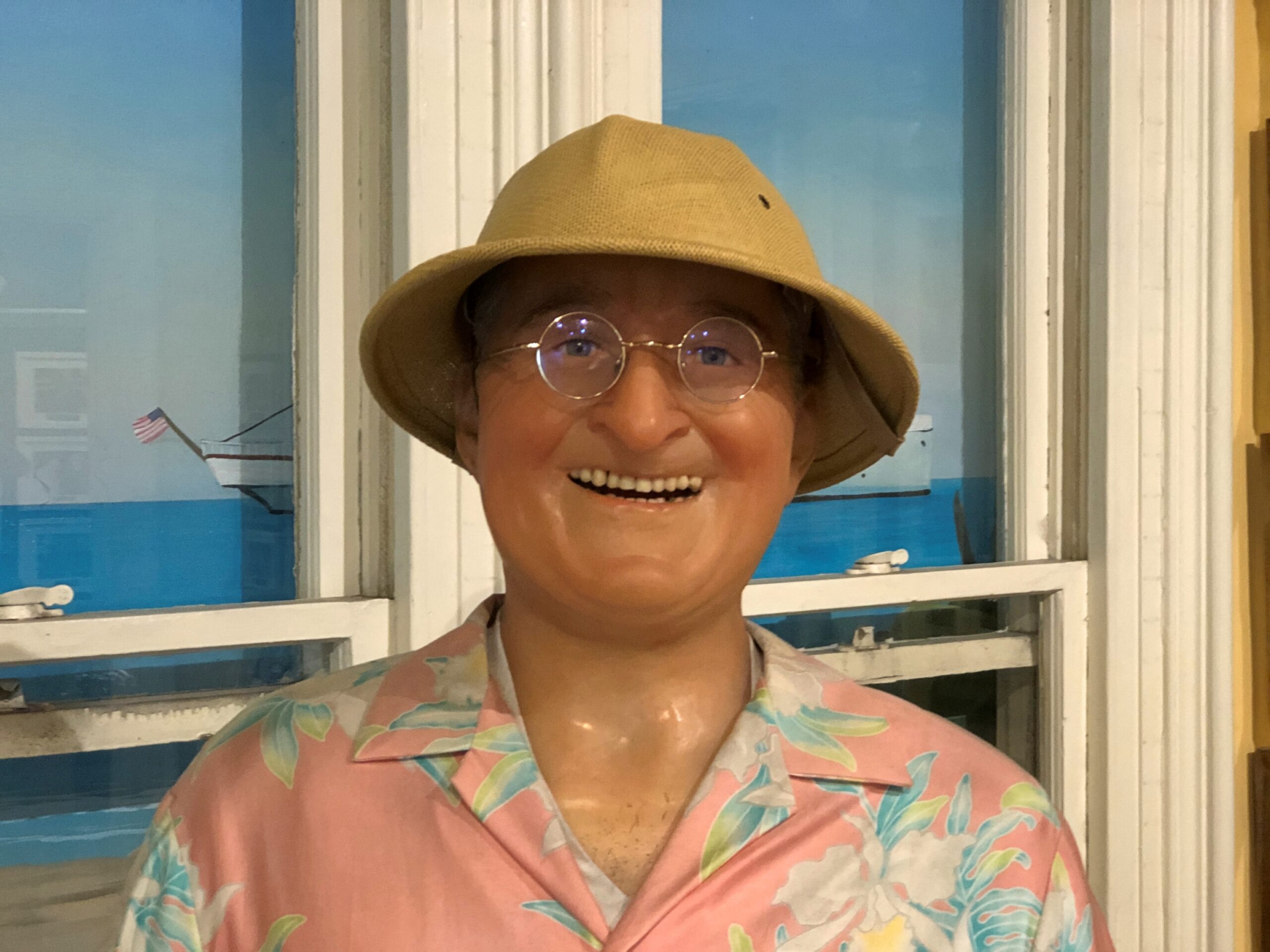
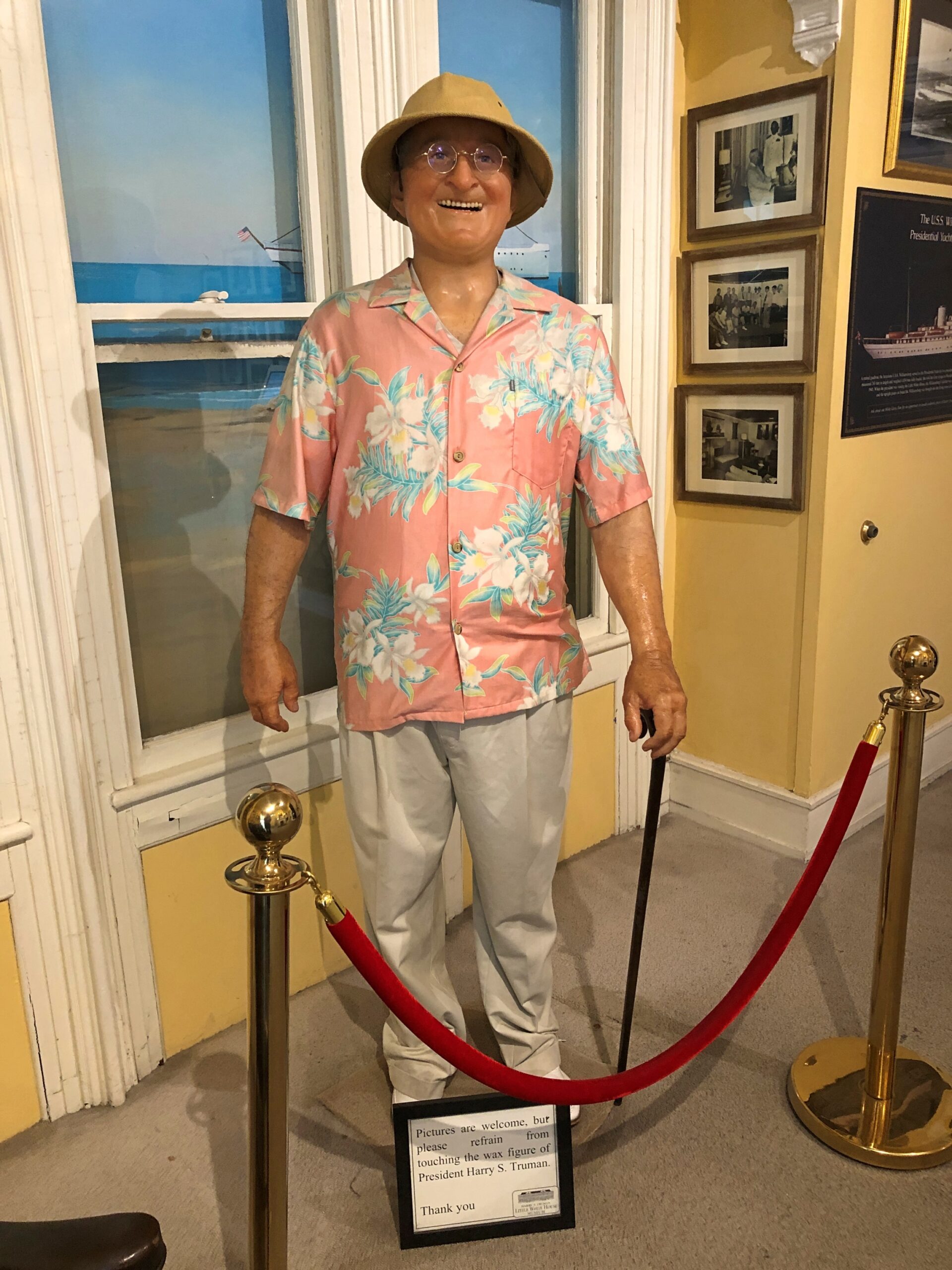
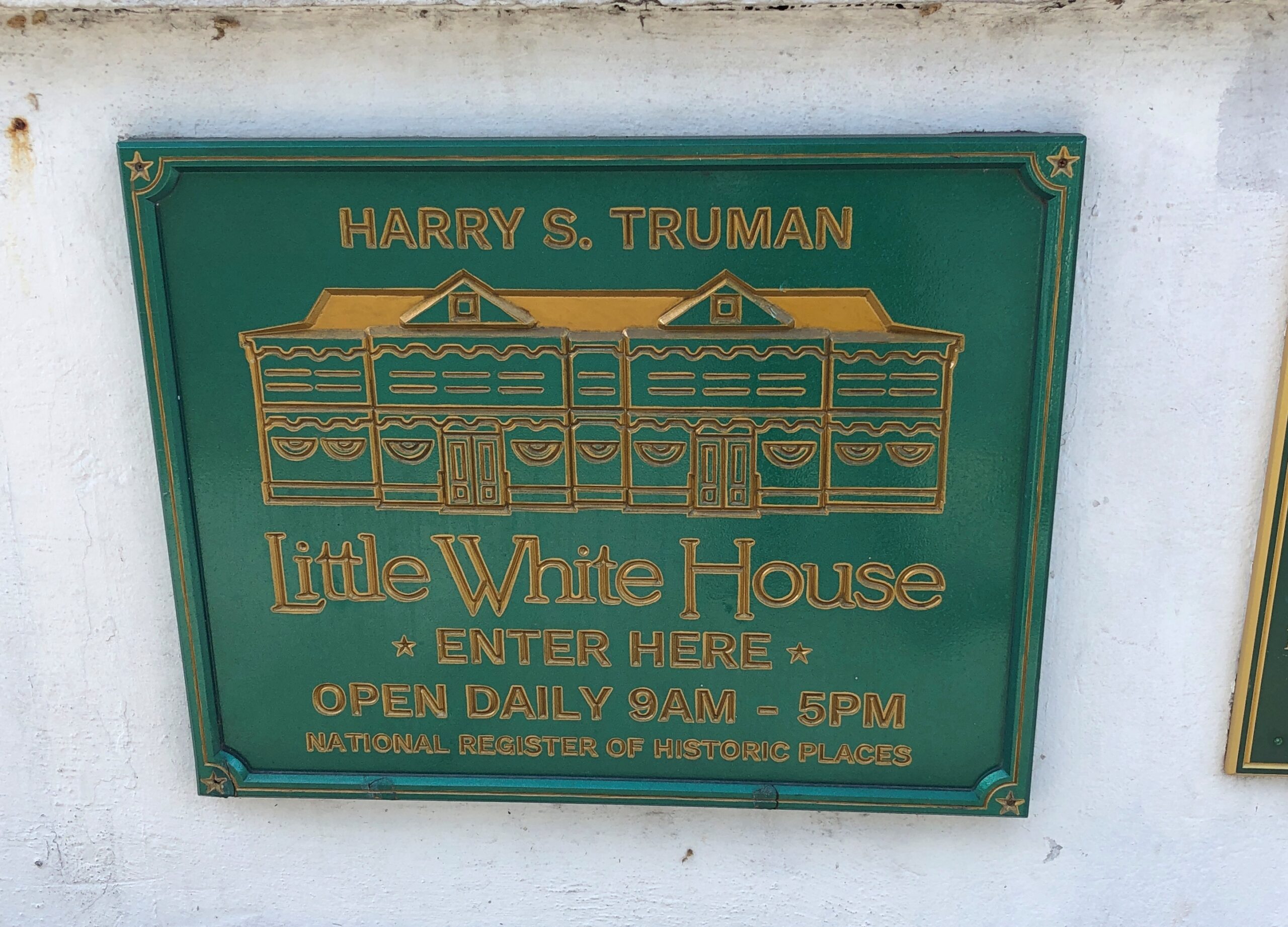
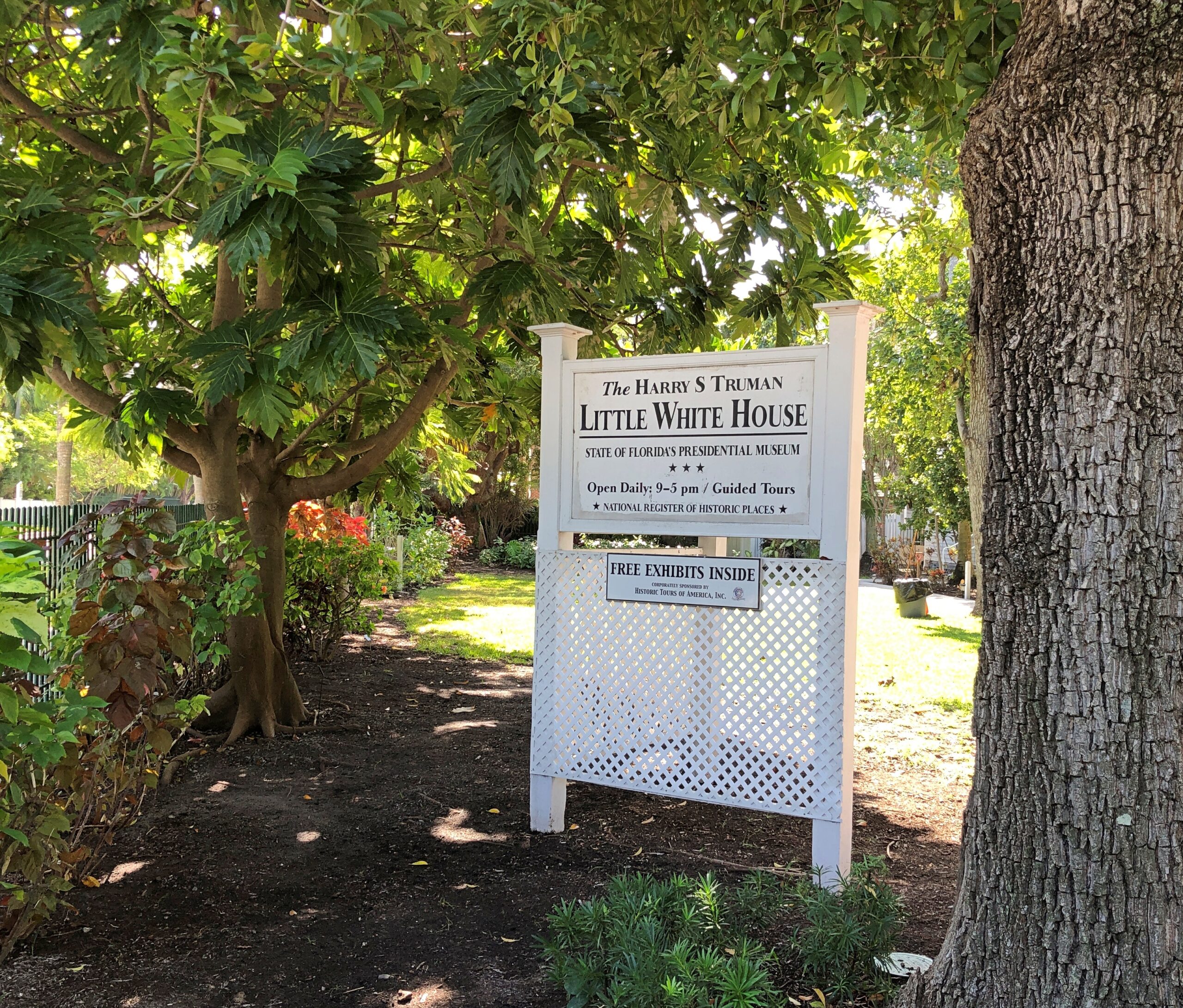
There’s Harry Truman in there somewhere. This particular wax dummy watches patrons in the small gift shop at the Harry S. Truman Little White House, which we toured on our second day in Key West.
The property belongs to the state of Florida these days, but of course was once a federal facility. Specifically, used by the Navy as officers’ quarters for the base at Key West. Truman took a cotton to the island early in his presidency, and visited often, and this is where the Navy put him up. He came to relax and play cards and fish and drink, naturally, but also to be president somewhere besides Washington in winter, since by the 1940s communication tech could facilitate such a thing.
The museum has been restored to its appearance in the late 1940s, and damned if it isn’t like walking into my grandparents’ time, entering an ordinary sort of American house of the period. The president might have stayed there, but Harry and Bess weren’t the sorts who went in for the latest expensive styles, but rather the sort of things available at a department store or via mail order: couches with some color but not too much, wooden coffee and end tables, mid-century lamps, etc.
Except, that is, for the handsome custom-make card table. That wasn’t available from Montgomery Ward.
“The poker table was a gift to Truman in 1949 by three civilian contractors working in the U.S. Naval Station cabinet shop,” says Wood Shop News. “The table is a marvel of craftsmanship and one of the most popular pieces at the Key West facility. Measuring 58” in diameter and 28” high, according to Little White House executive director Bob Wolz, it is based on a poker table that was used on the U.S.S. Williamsburg presidential yacht. The piece is made of mahogany with built-in chip holders and ashtrays crafted from recycled brass shell casings. A solid tabletop can be used to cover the poker table to turn into a dining space.”
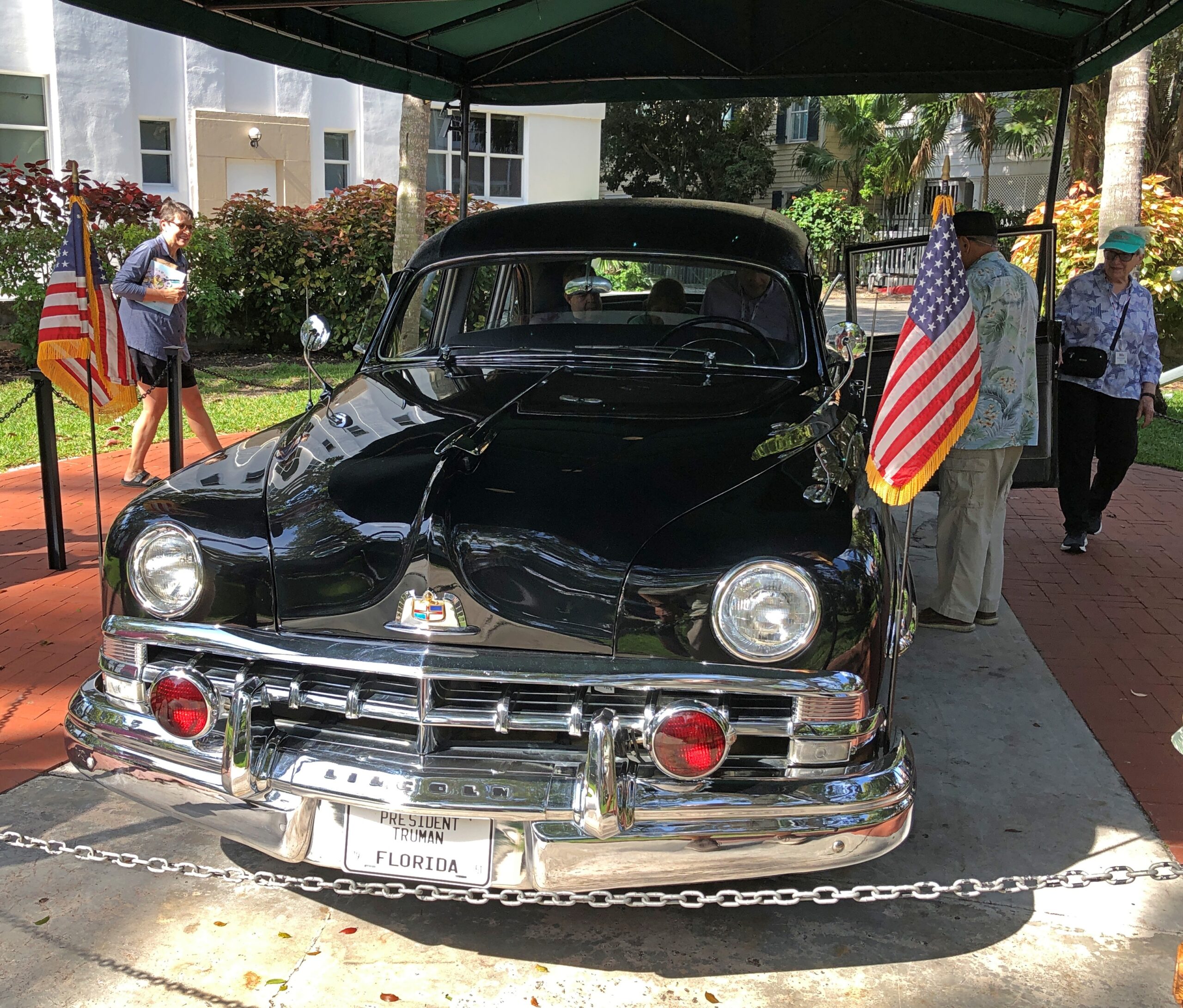
The limo parked on the grounds of the Little White House wasn’t standard mid-America either.
A nearby sign says that it is a 1950 Lincoln Cosmopolitan Presidential Limousine. One of nine that the Truman administration used, since in those days presidential vehicles weren’t transported by air, as they are now, so the government had them stationed in various parts of the country, ready to use.
The car is a museum piece, but no mere museum piece, since I understand that the current owner, the Key West Harry S. Truman Foundation, rents it under specific conditions. Namely, you pay some large fee, and are driven around Key West for a while. I learned this when we saw an elderly couple get in the back seat, followed by a uniformed driver, and off they went.
One more thing about the Little White House: the grounds are a small arboretum.
Flora includes well-known varieties, such as avocado, coconut, date palm, mahogany and mango, plus less-than-household names, such as Fiji fan palm, soapberry tree, and my own favorite name, gumbo limbo, whose “wood, though soft, was used in the past to carve carousel horses,” the museum tells us.
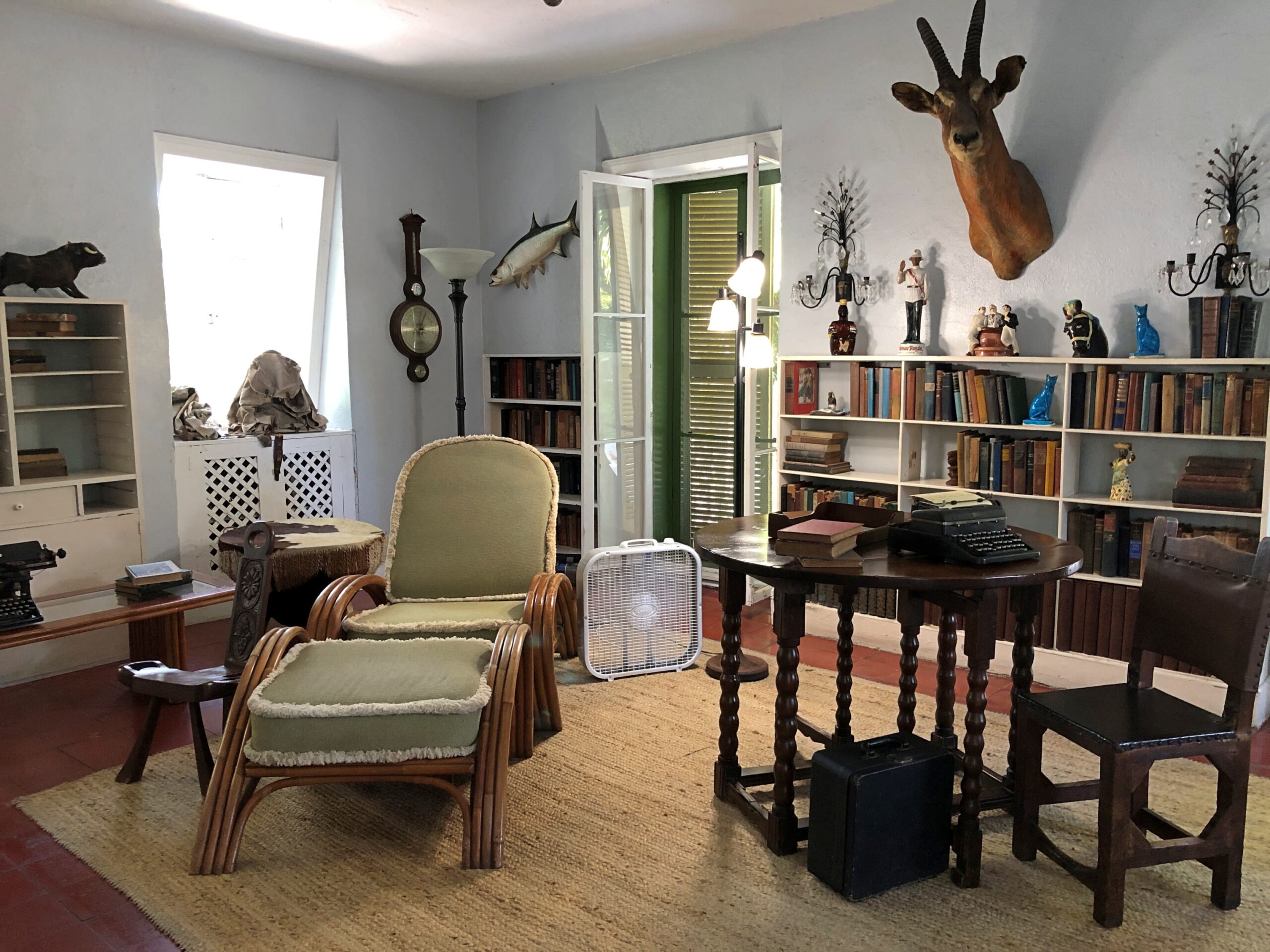
“How many of you came because you’ve read some of his books?” our guide at the Earnest Hemingway House in Key West asked our small group. We’d paid our entrance fee, waited outside the house for a few minutes, then started on the tour. I was in that group. Most of his books, in my case.
“OK, some of you. How about because someone else dragged you here?”
A few more hands went up. I don’t think he was taking a survey, exactly, just kicking off the tour in an interesting way.
“What about to see the cats?” Hands went up. Some laughter.
Yuriko came for the cats, mostly, though she told me Hemingway is a writer than isn’t hard to read in the original English. We’d come to Hemingway House after our Duval Street stroll. It was about as pleasant a day as possible for such a walk. Everything is a short distance in Key West, so we arrived after a short walk.
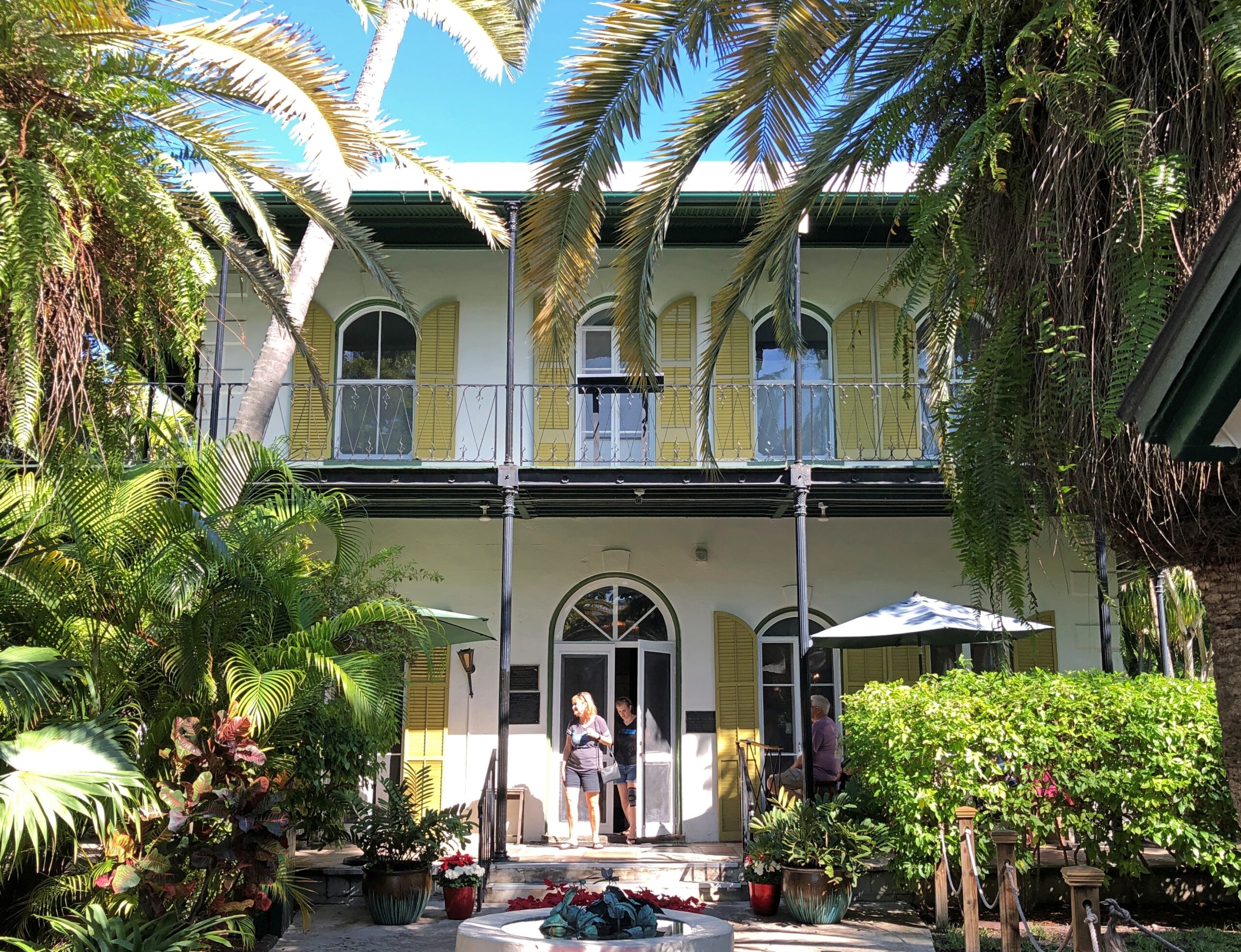
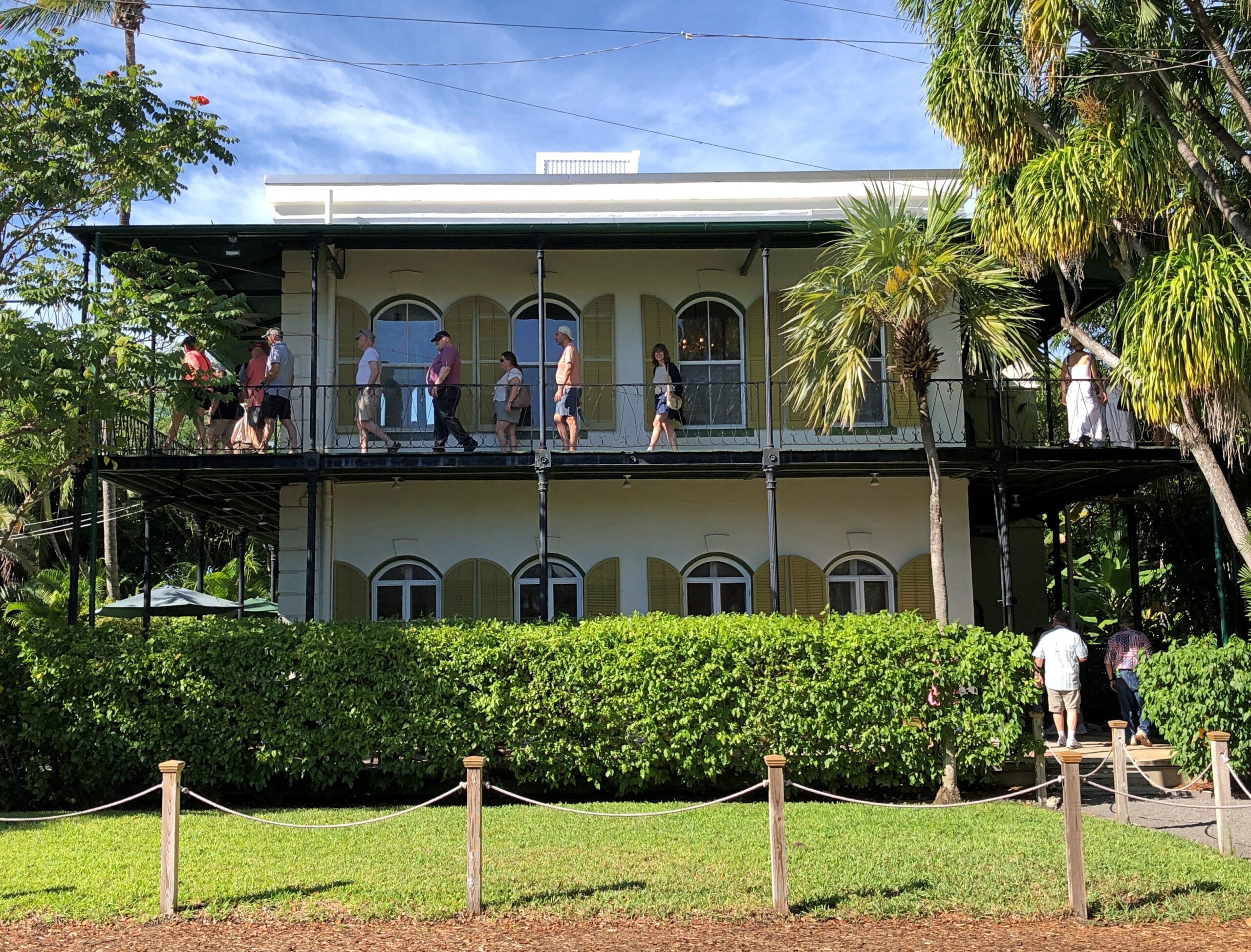
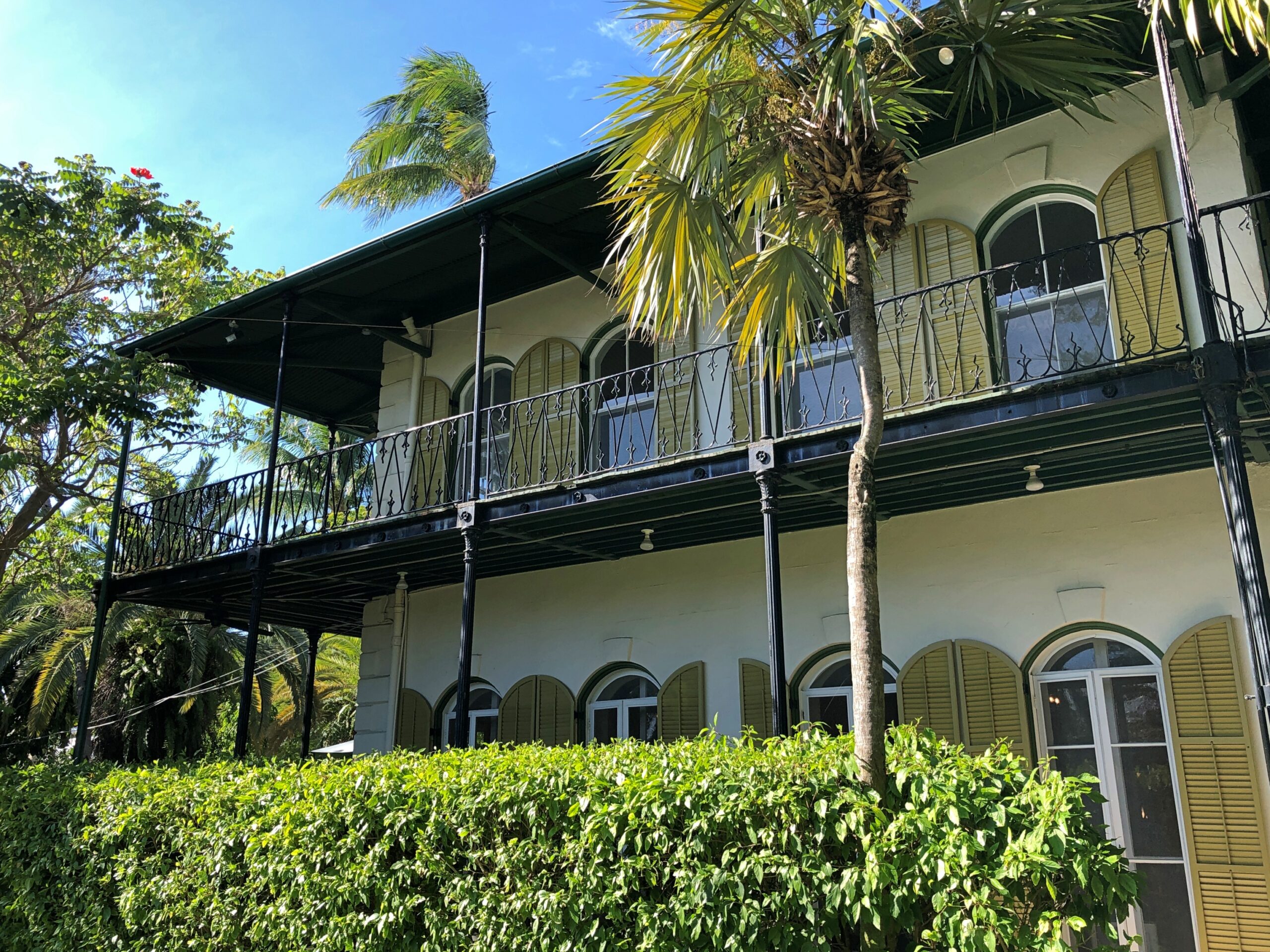
The house is a block off Duval, on as high a spot as Key West provides, and in the shadow of a lighthouse about a block away. The grounds are lush, the house itself a handsome two-story legacy of one of the 19th-century Key West booms. One Asa Tift, a Key West wrecker, completed the house in 1851.
Tift was one of the more successful wreckers, looks like: a man who led small boats out from Key West to the nearby hazardous reefs when ships foundered there. Wreckers were eager for valuable salvage from these vessels, and if the Hemingway House is any indication, the rough-and-tumble of salvage — and you know the process was dangerous, full of natural hazards, but especially other violence-prone wreckers out for the same prize — nevertheless produced at least few men of means in isolated, pestilential Key West.
Emphasis on pestilential. Just ask Asa Tift, whose sizable family, for whom the house was built, were carried away in that all too common 19th-century way, by communicable disease.
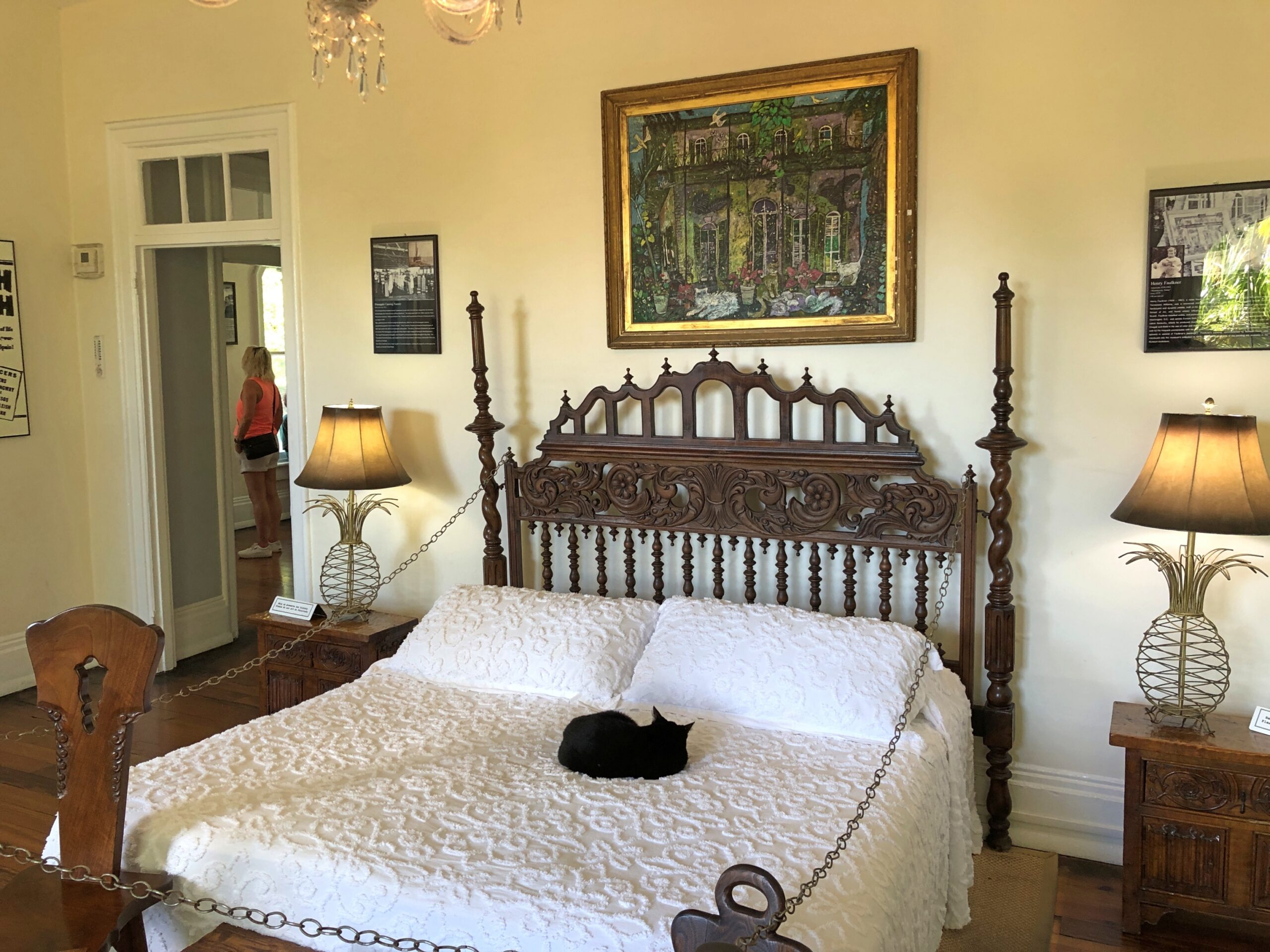
The Hemingways showed up some decades after old man Tift died, acquiring and renovating the property using her family’s money. They did what they did, and these days the house is a museum to their presence.
No one lives there anymore. No hefty, dark-mustachioed man staggers home from Sloppy Joe’s bar good and drunk and flops to bed there, or goes to the upstairs office-studio and bangs out famed literature during sober periods, or argues with his wealthy wife under the sub-tropical shade trees – quarrels whose root seemed to be Hemingway’s roving eye, with a dash of alcoholic irresponsibility added to the mix.
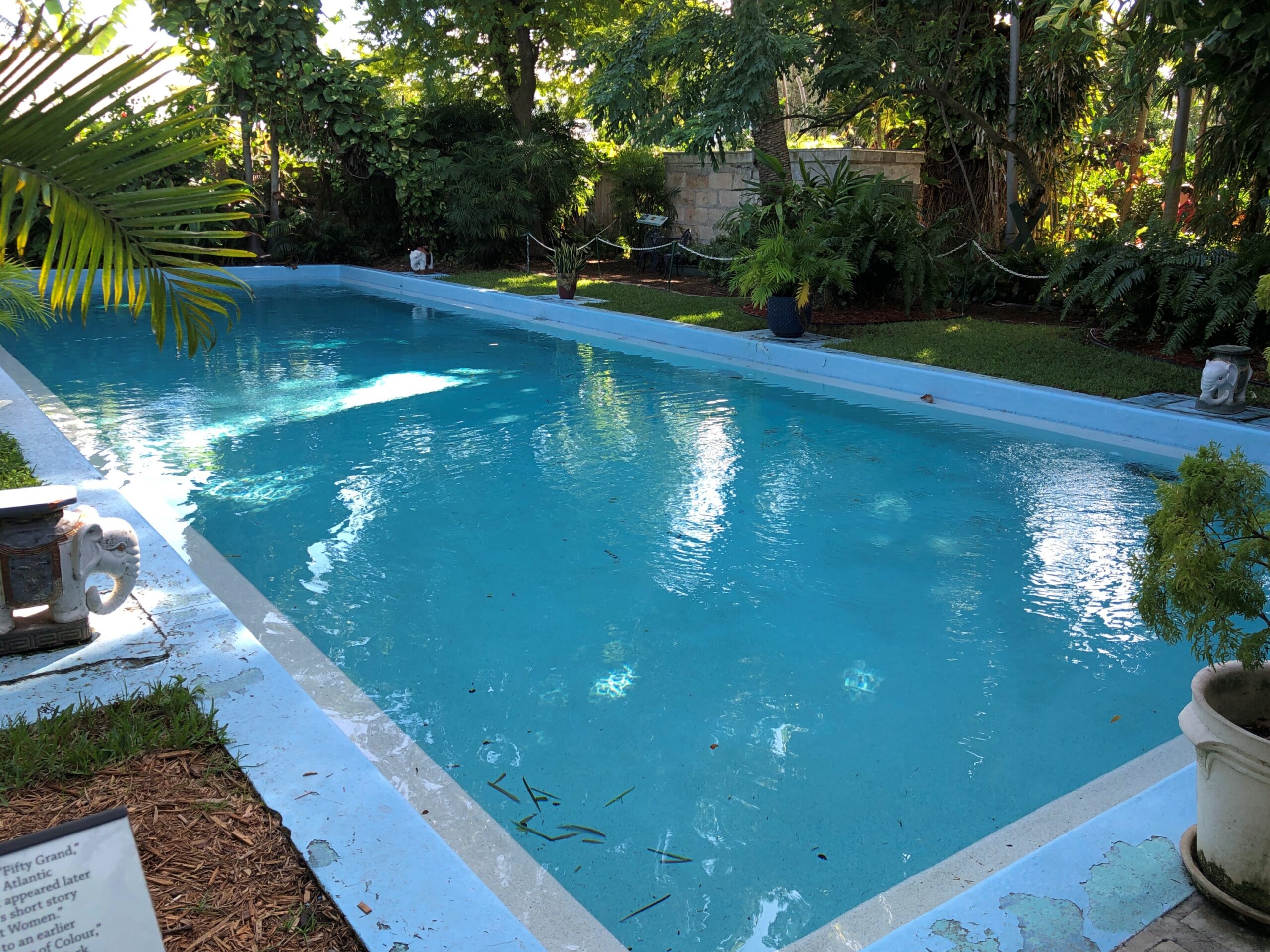
The pool was an addition by his wife, Pauline Pfeiffer, which caused consternation for Earnest. Something about taking the place of his informal boxing ring on the same site, done while the author was out gallivanting somewhere. Terrific writer he might have been, and I certainly admire his talent for gallivanting, but he also seems to have been a touchy bastard.
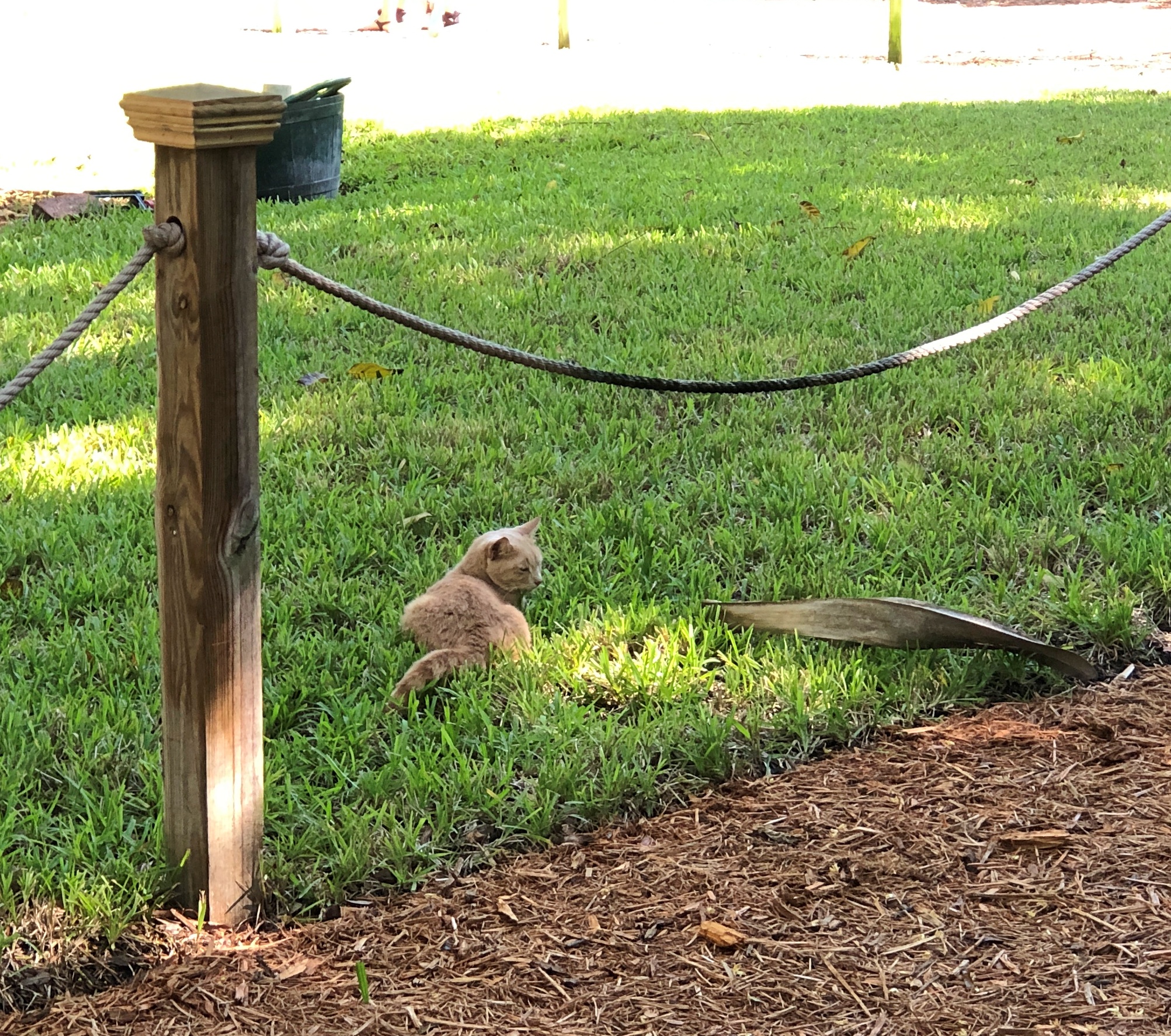
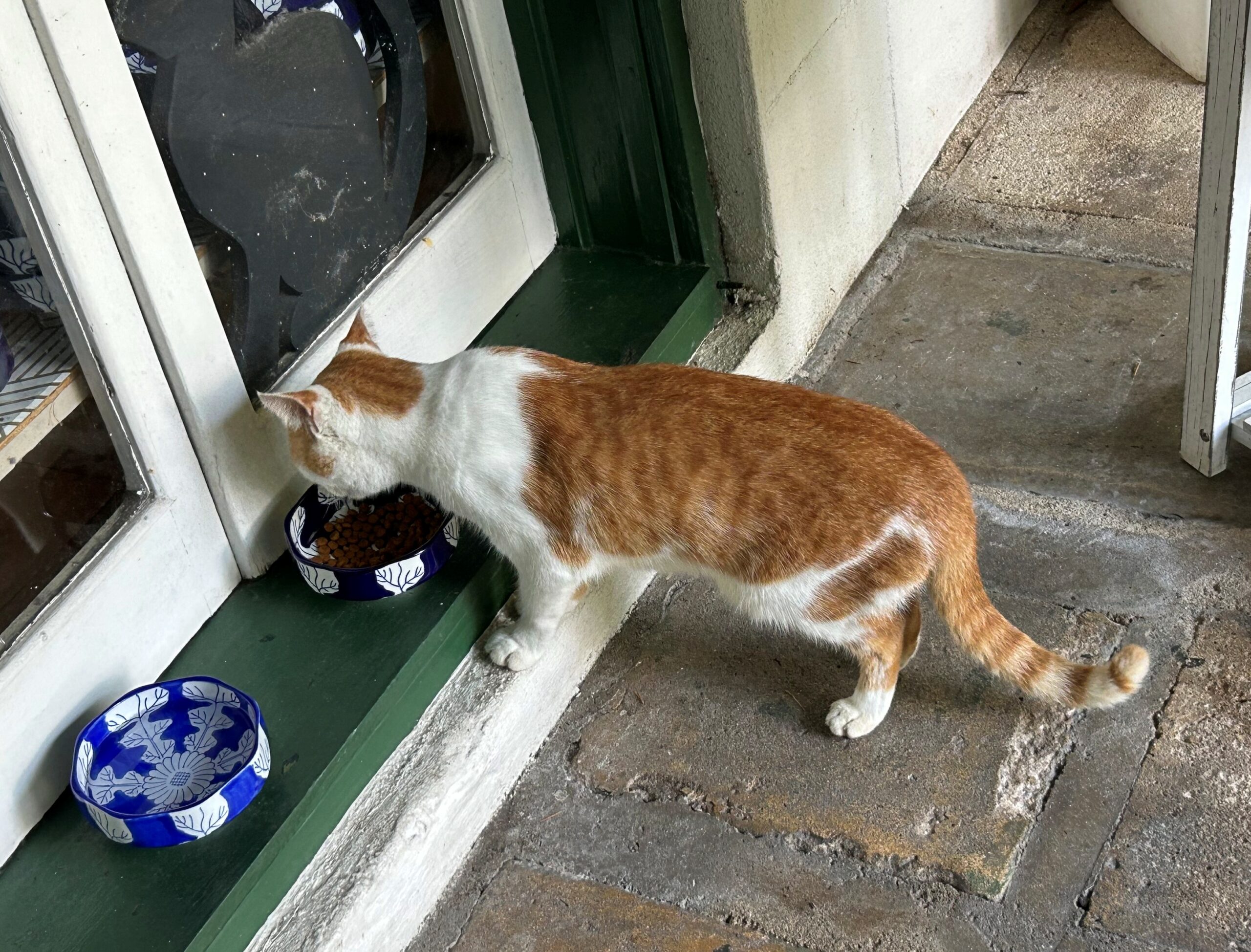
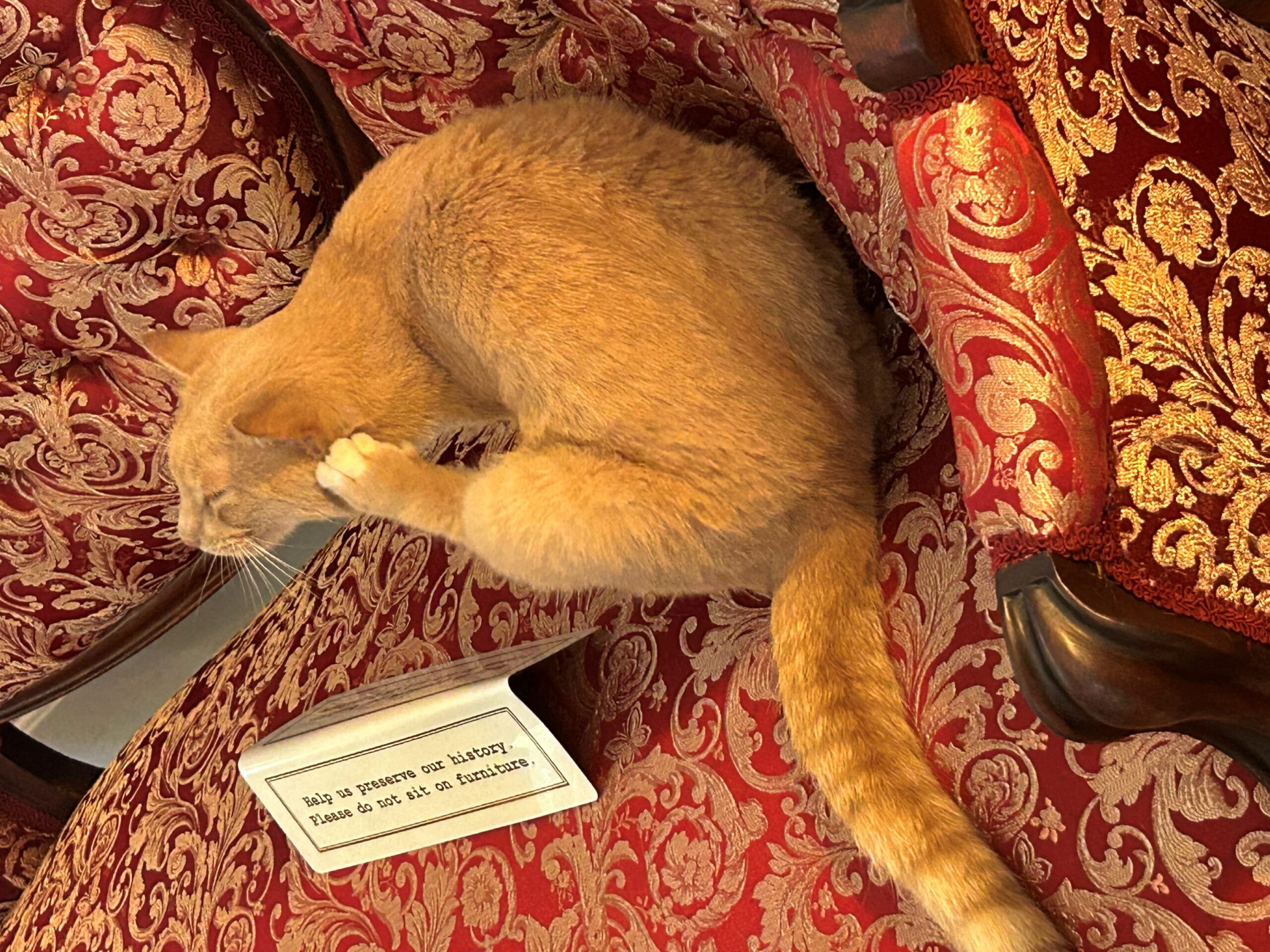
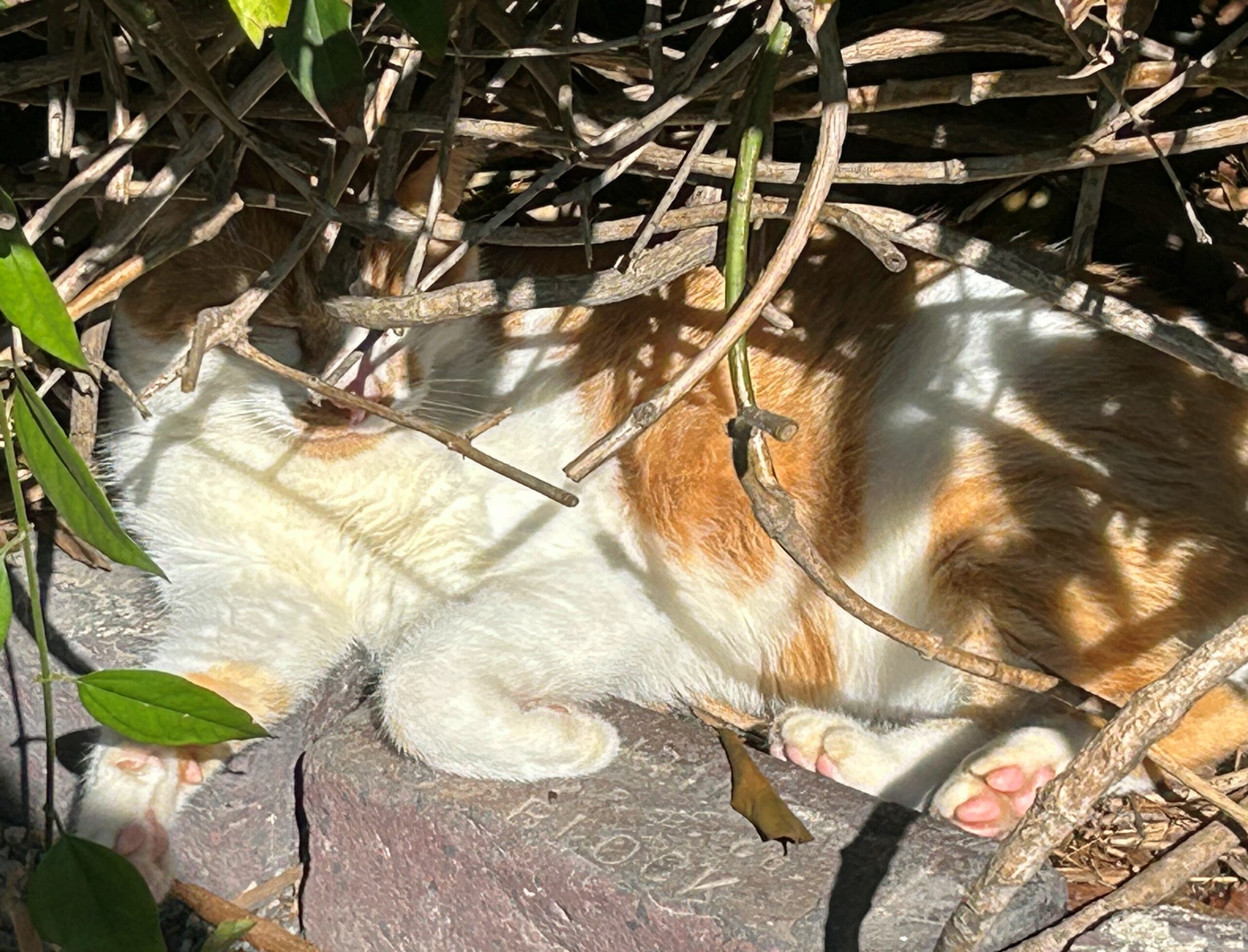
Tourists and staff come and go, but in our time, only cats live at 1301 Whitehead St., a property enclosed by sturdy brick walls. Said the be the descendants of Hemingway’s son’s six-toe cat, the herd is large. Our guide told us how many, though I can’t remember the exact number now. In the range of dozens, beyond the dreams of even the most thoroughgoing cat ladies.
They are everywhere.
I mean everywhere, except maybe the pool.
My favorite story about the house doesn’t involve cats. The guide didn’t tell it this time, but I heard it before. By the mid-1930s, Hemingway was already a Famous Author, and without even telling him, the local chamber-of-commerce or the like put the house on a pamphlet given to tourists, as one of the local sights. Inevitably, people started showing up at odd and inconvenient hours, or entered expecting a tour. The brick wall all the way around the house is a legacy of that situation.
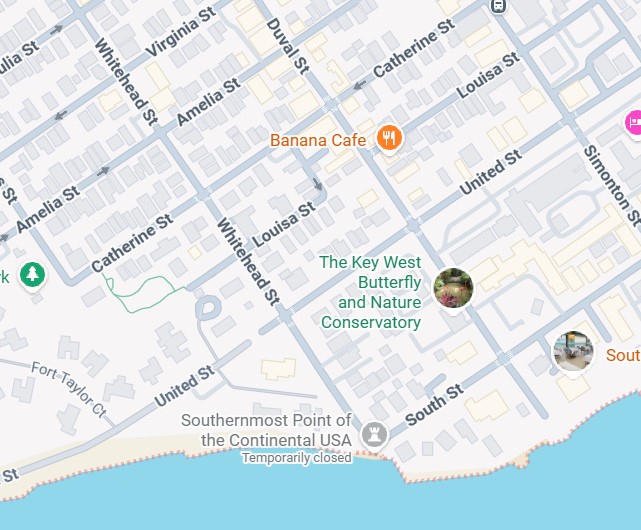
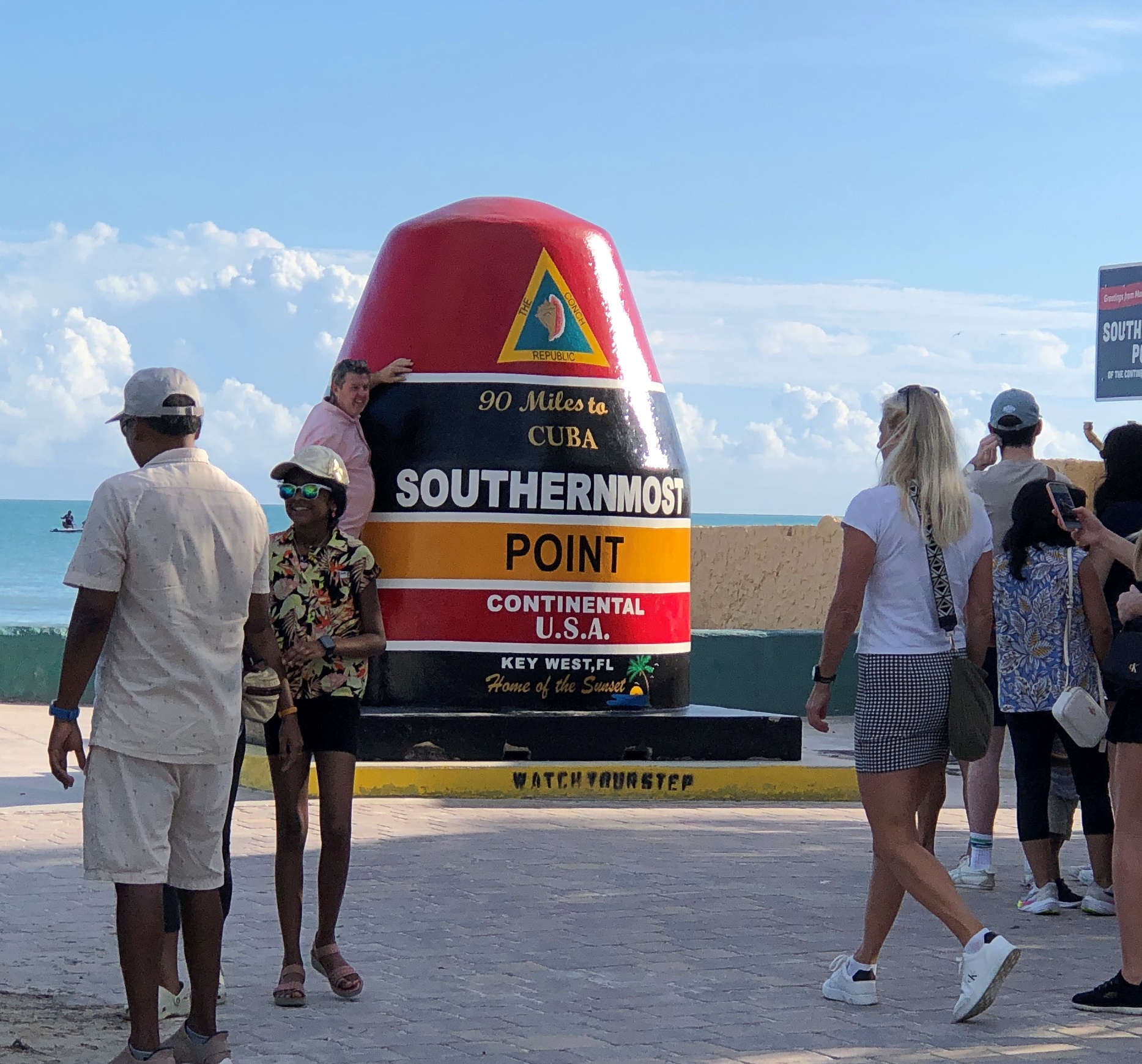
Note that “Southernmost Point of the Continental USA” is marked “temporarily closed.” That wasn’t going to deter me from a look if possible, so we headed down Whitehead St. from the Hemingway House. About a block from the site – a painted concrete buoy-shaped structure; I’d seen pictures – the area was closed and torn up for construction, and sure enough, the Southernmost Point was inaccessible.
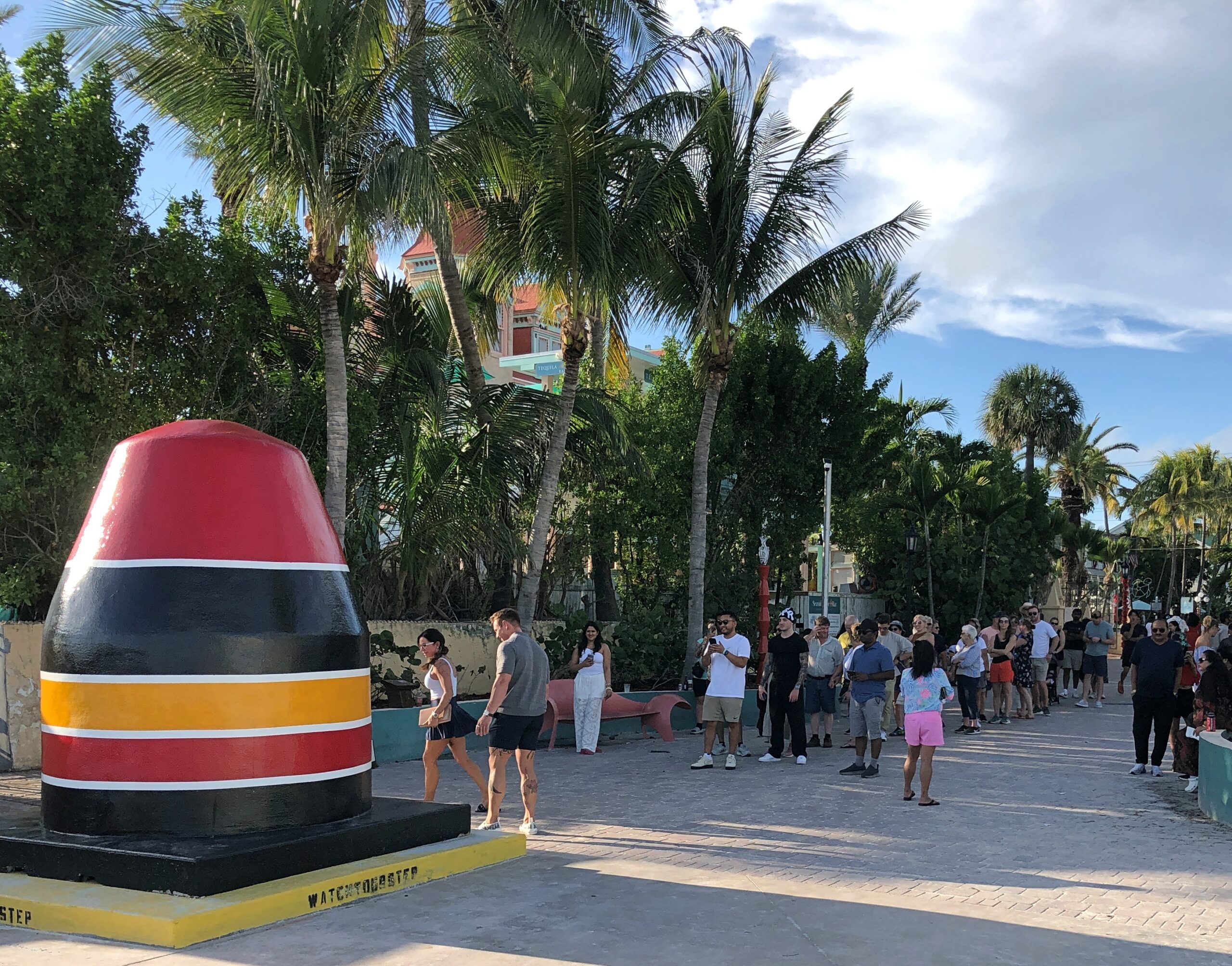
A little construction wasn’t going to prevent Key West from allowing the Southernmost Point to serve its only purpose, however. That is, attract tourists. So with a little lateral thinking, and in this case literally so, the city installed a duplicate buoy a block away on the coast, at the Gulf of Mexico end of Duval.
It draws a crowd.
Give the people what they want: an inaccurate but fun geographical marker. In fact, there was a line to take one’s picture with the buoy, as the many visitors to Key West have been doing since 1983.
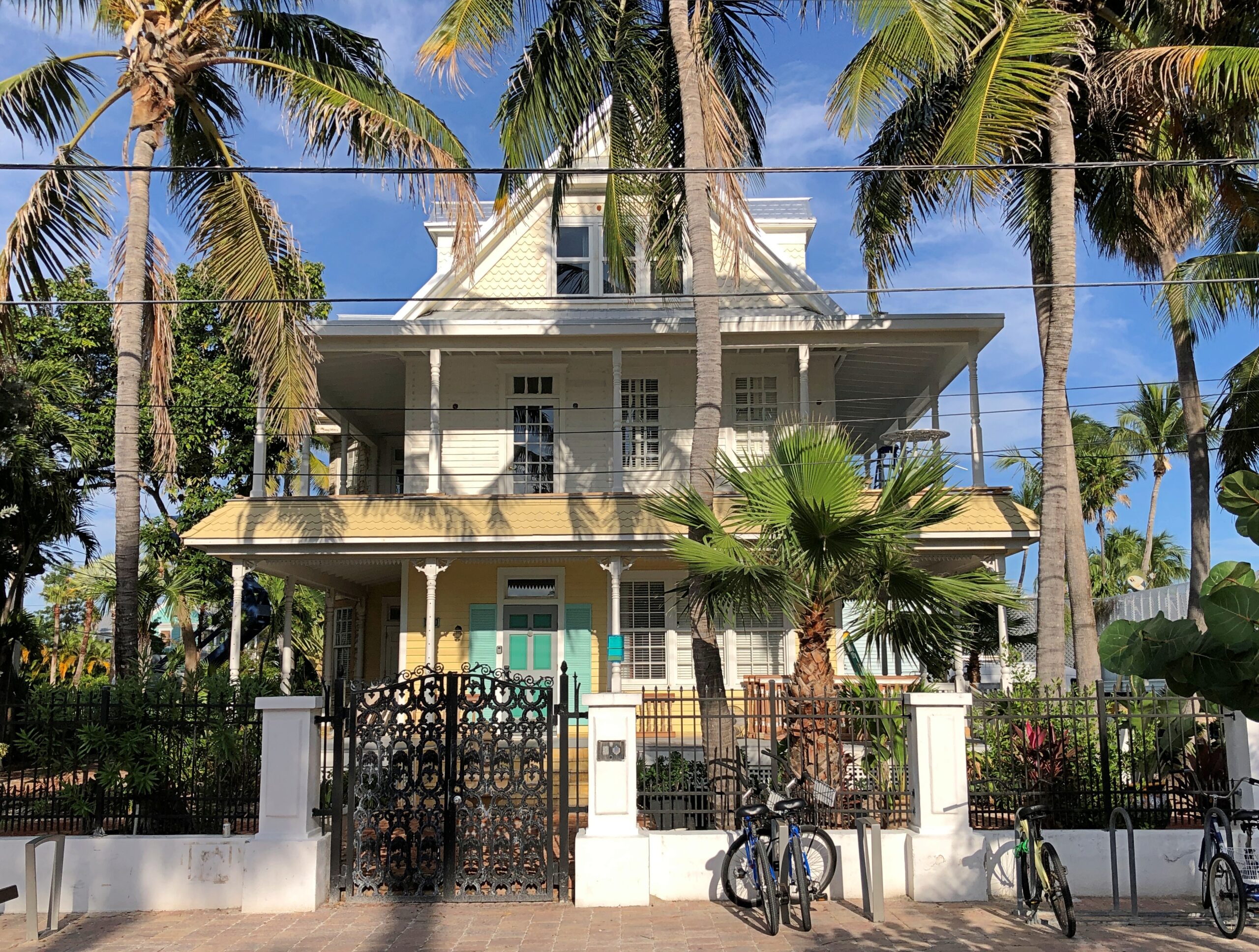
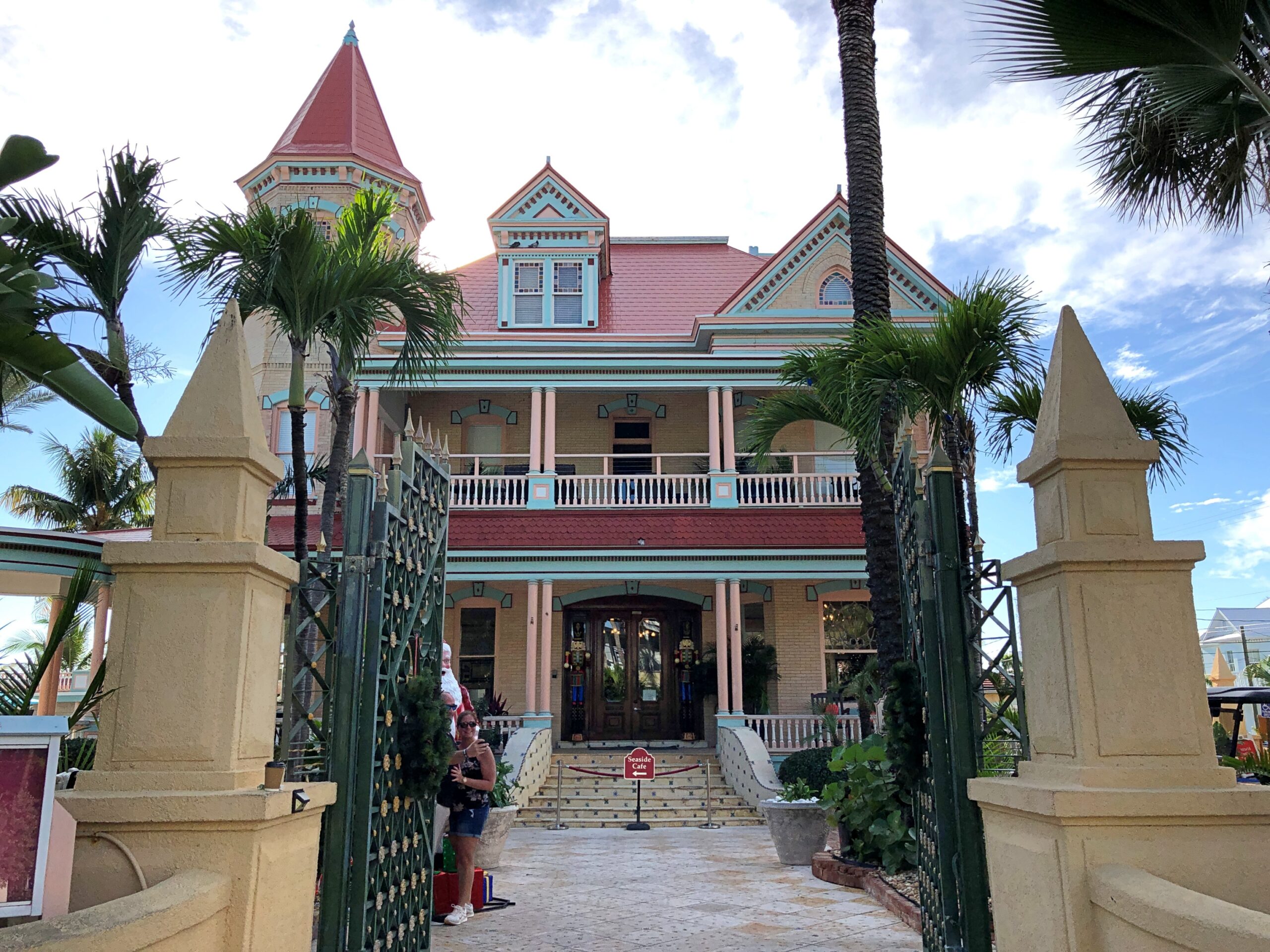
This iteration of the buoy finds itself in a high-toned neighborhood.
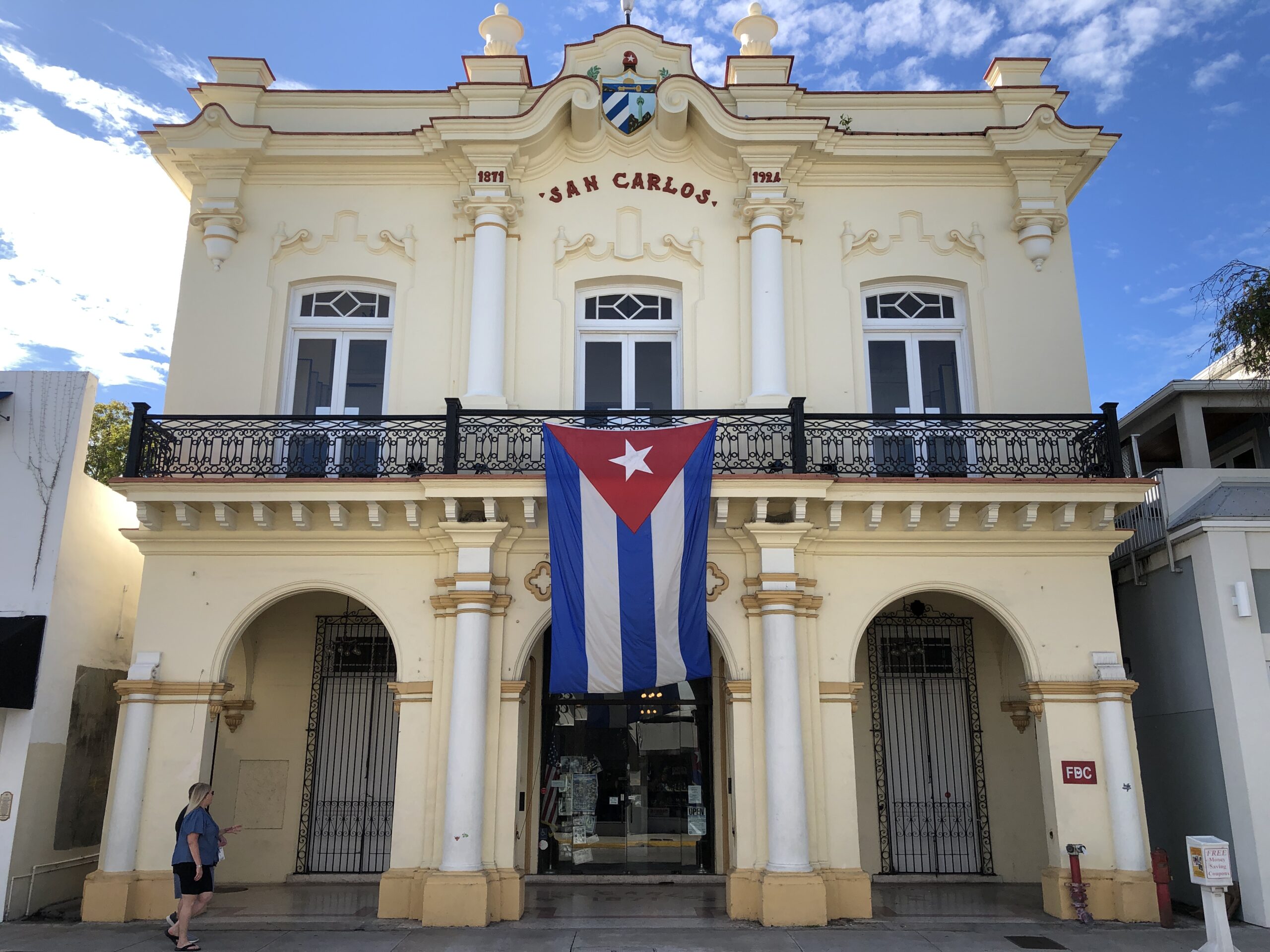
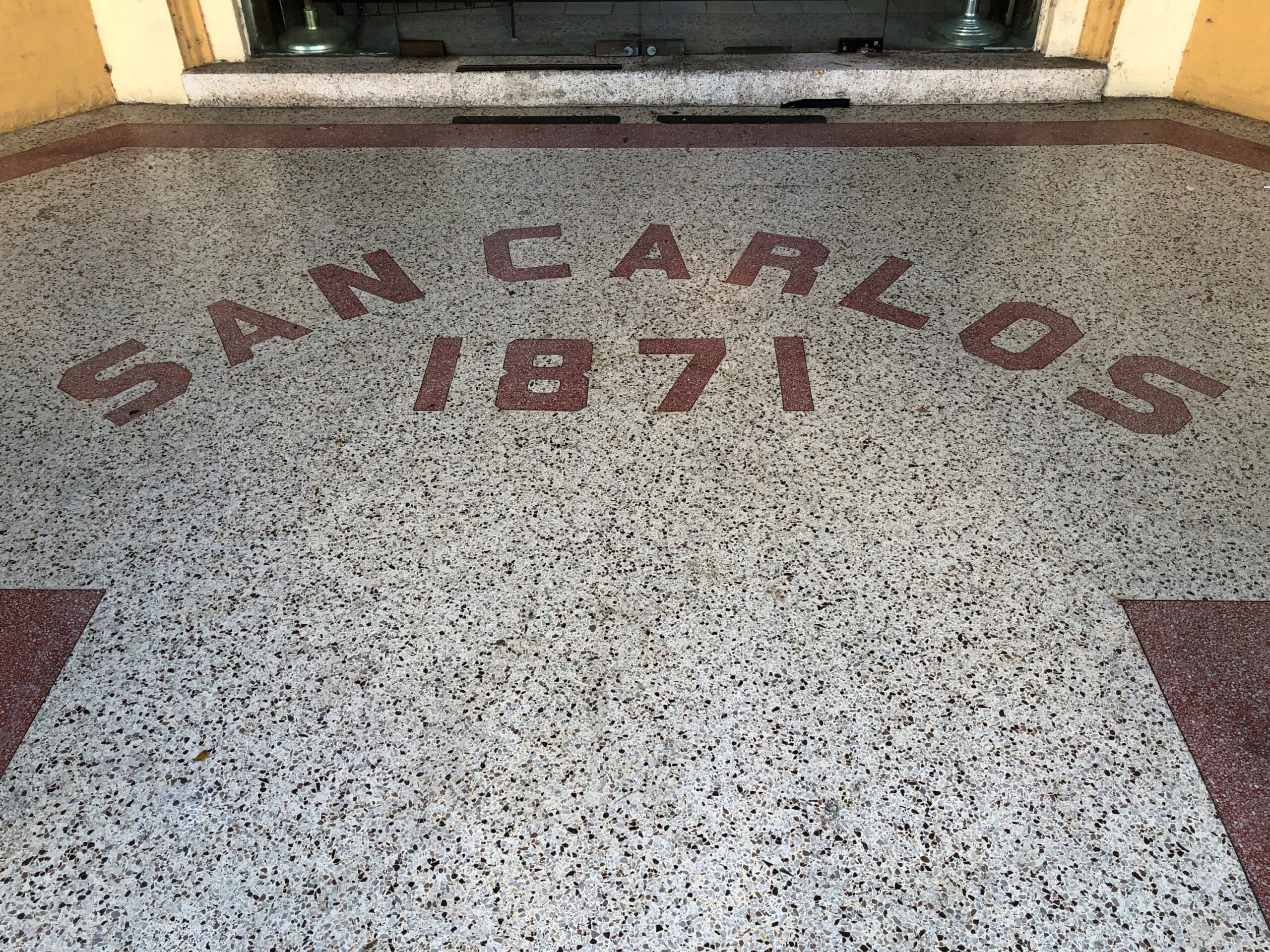
I understand that a later paint job added “90 miles to Cuba” on the buoy. As the crow flies or the Mariel boatlift lifts. A nod to the island with long-standing ties to Key West, especially in the days of Cuban cigars, cigar factories in the town, and Cuban organizations, such as San Carlos, which happens to stand even now on Duval, a few blocks — short island blocks — from the Southernmost Point.
Former school for the Cuban population, along with a stint as a Cuban consulate, and longstanding meeting place for those keen on kicking Spain out of Cuba during the heady 1890s. These days, the island-handsome building is a museum, free to wander around, with (in our case) a spontaneous five-minute introduction on the spot by the volunteer, a woman roughly my vintage, who sat behind a temporary table near the entrance.
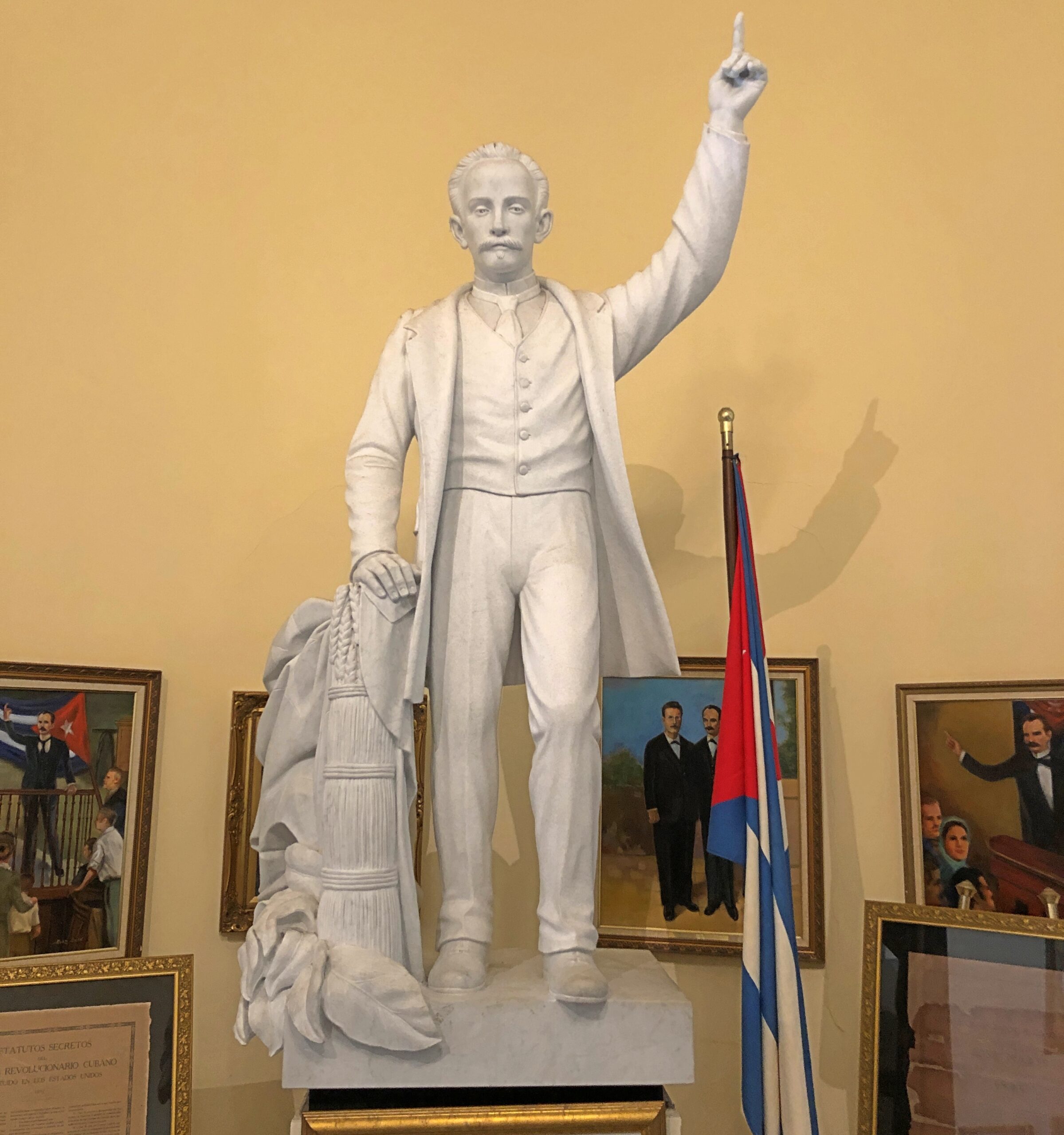
Jose Marti is remembered in various spots in the museum.
As well he should be. He spent some time in Key West, gave speeches, and brought the cigar workers around to the cause. San Carlos was the place to do so in town, which happened to be a hotbed of anti-Spanish feeling – San Carlos and the town itself. Nice museum, but almost no one from busy Duval was there. Maybe the nonprofit that owns the building can set up a bar and serve overpriced Cuba libres to cruise ship visitors.