Years ago, when we visited the Spam Museum in Austin, Minnesota, I noted with satisfaction that Monty Python’s Spam Sketch was playing on demand in one of the exhibit rooms. I understand the museum has moved to a different location in Austin since then, but I hope they still play the sketch.
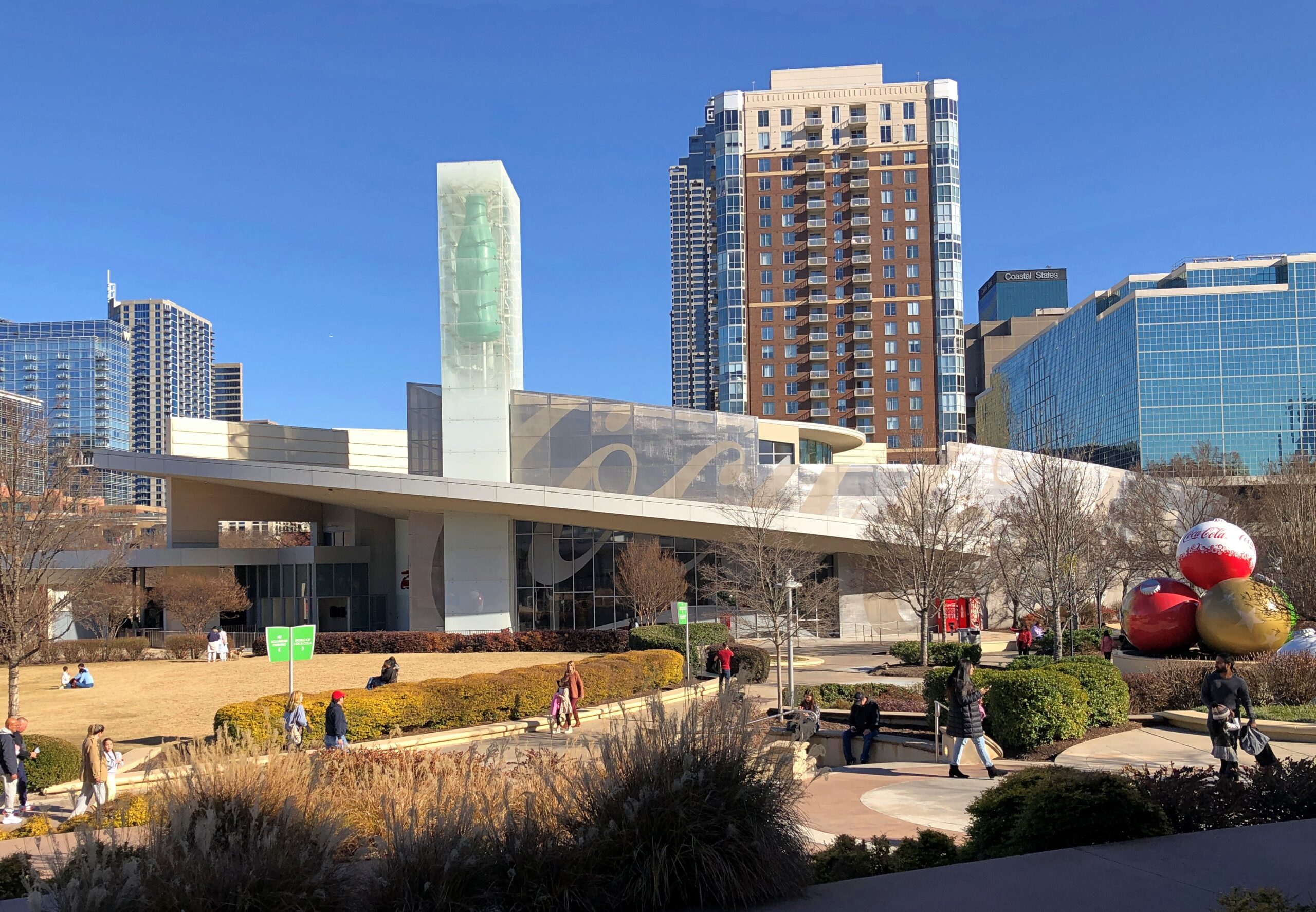
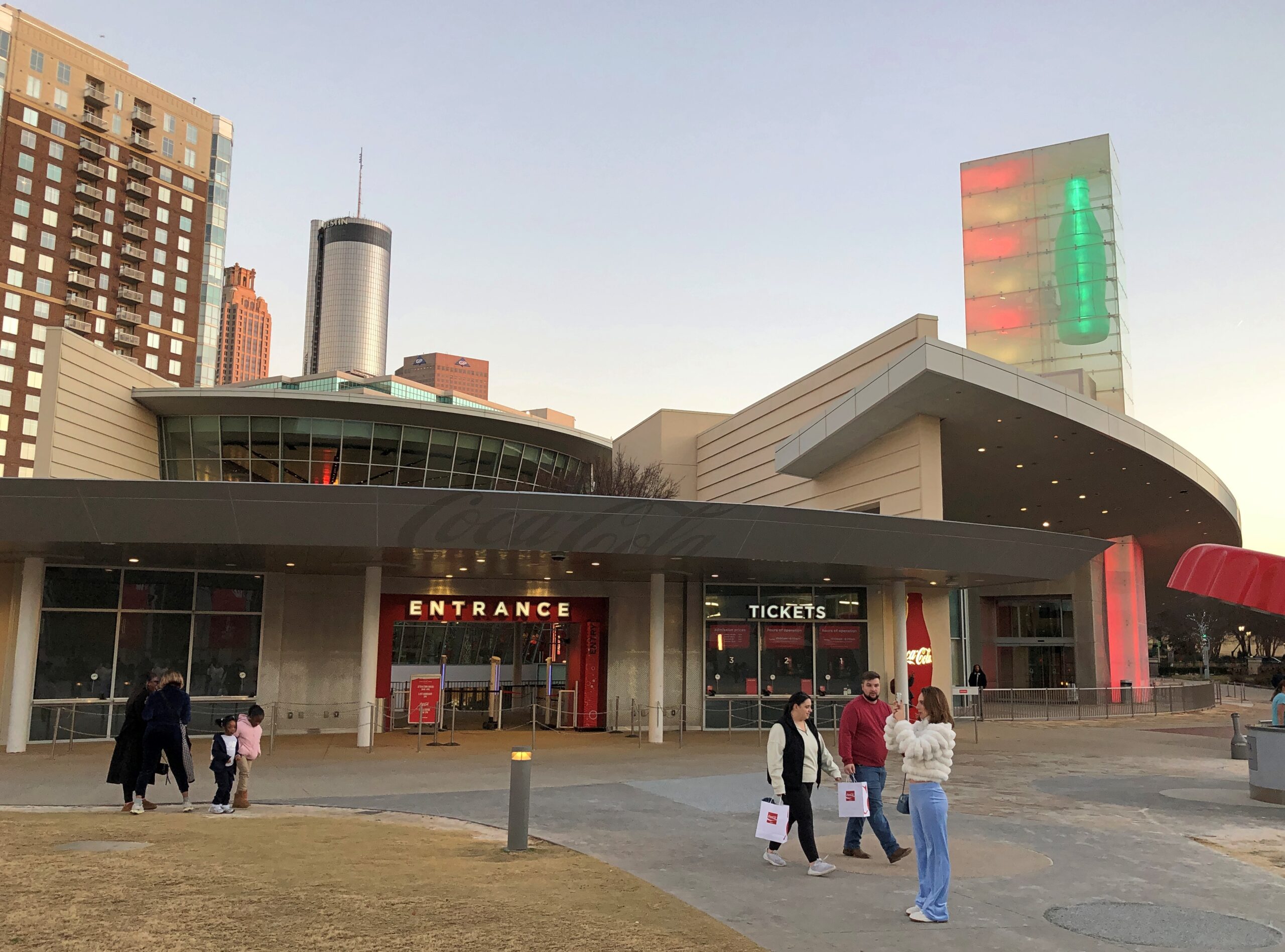
As far as I noticed, there was no clip of One, Two, Three playing at the World of Coca-Cola in Atlanta last month. The scene I’d pick is the back-and-forth about Soviet scientists’ efforts to replicate Coca-Cola without its famously secret formula: “Even the Albanians wouldn’t drink it.”
I’d have this clip playing, too.
Or even the jingle scene from The Coca-Cola Kid. Nice jingle.
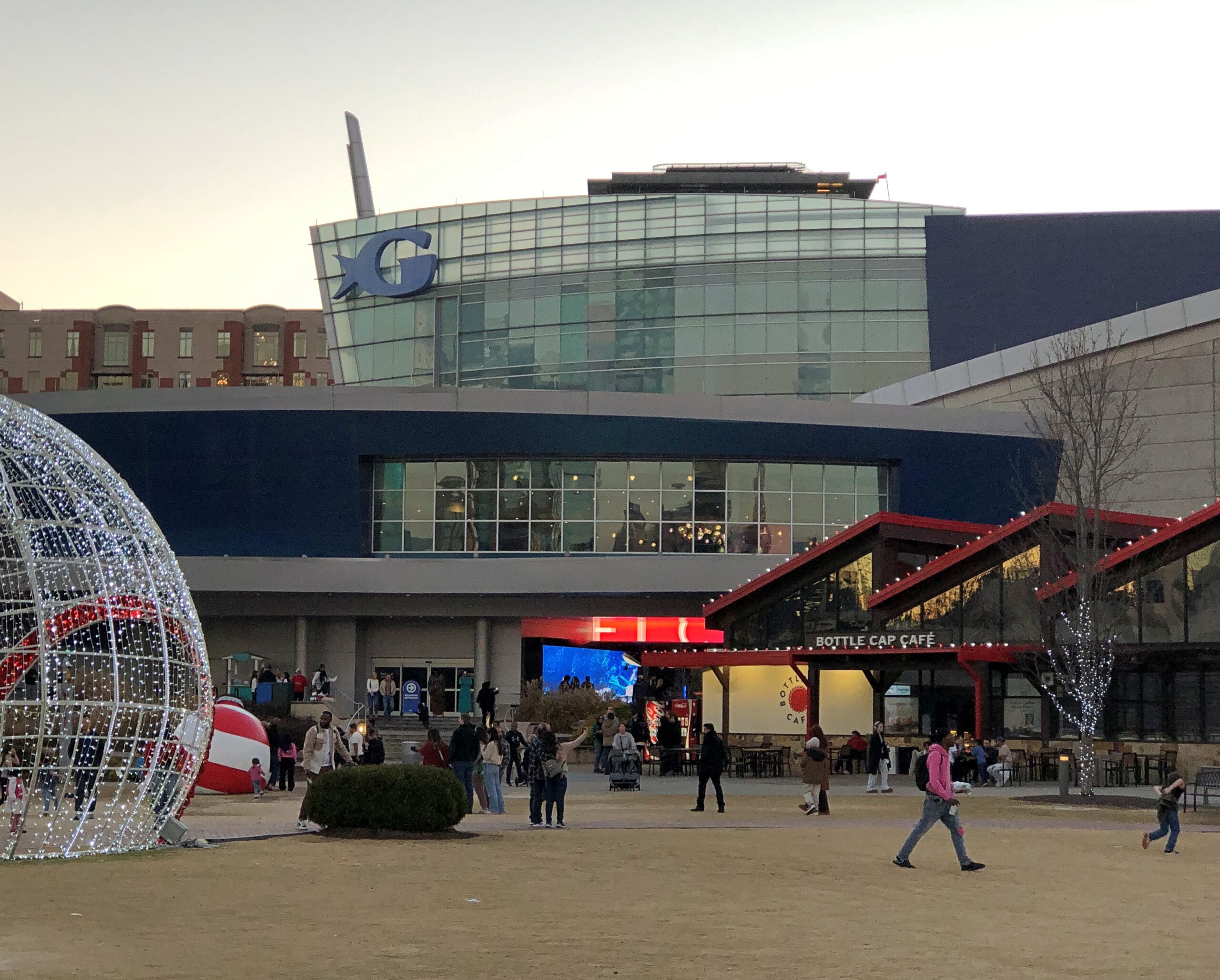
The World of Coca-Cola shares a plaza with the Georgia Aquarium. Pemberton Plaza, named for the doctor who invented a particularly successful “brain tonic,” back in the days when enterprising doctors and druggists did that sort of thing. Interestingly, the museum doesn’t play up Lt. Col. John Pemberton’s military service for the CSA, or his morphine addiction, which drove him to experiment with a new wonder drug, cocaine, to kick his habit. That didn’t work out, but he did leave a lasting soft drink legacy.
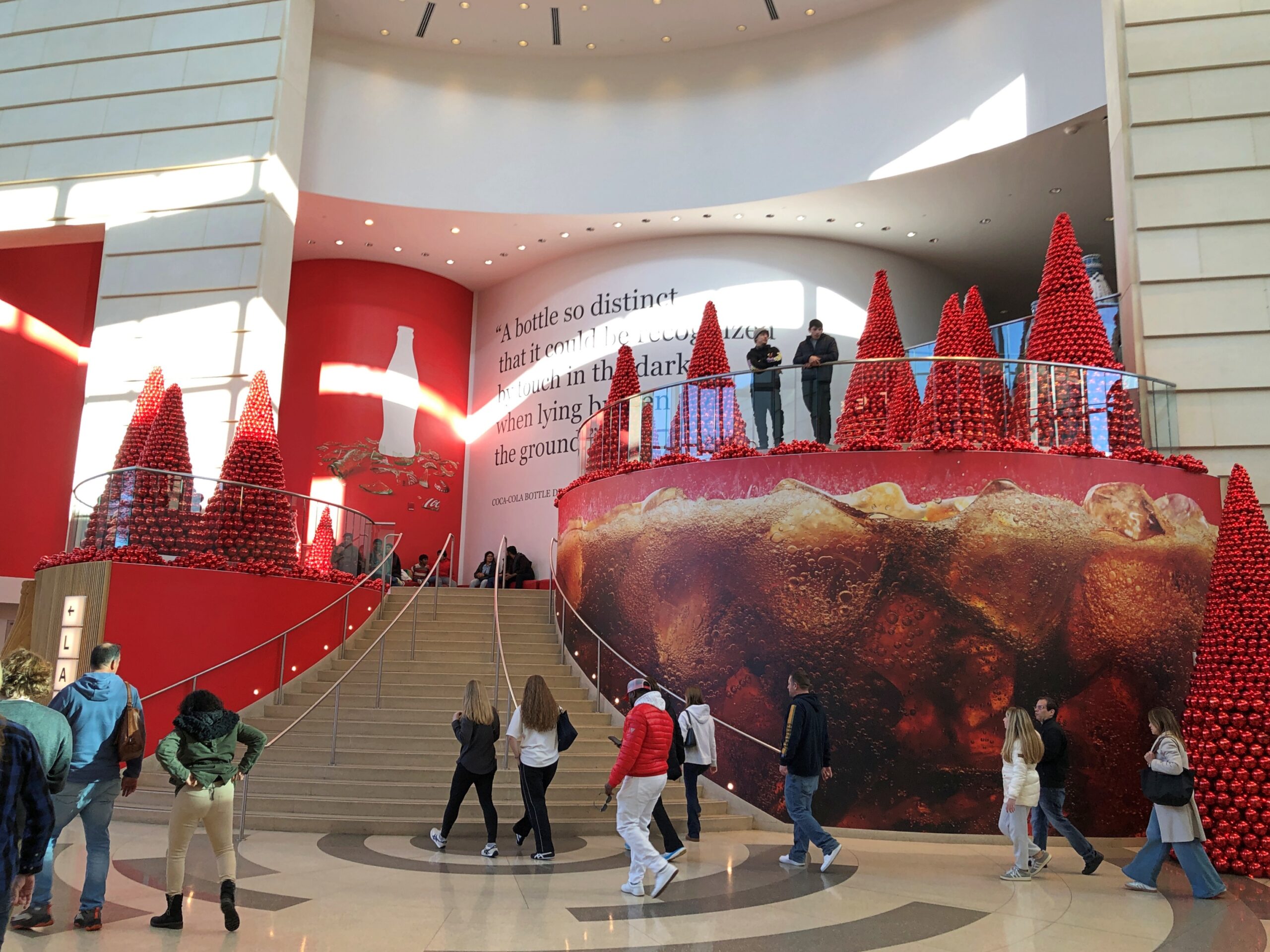
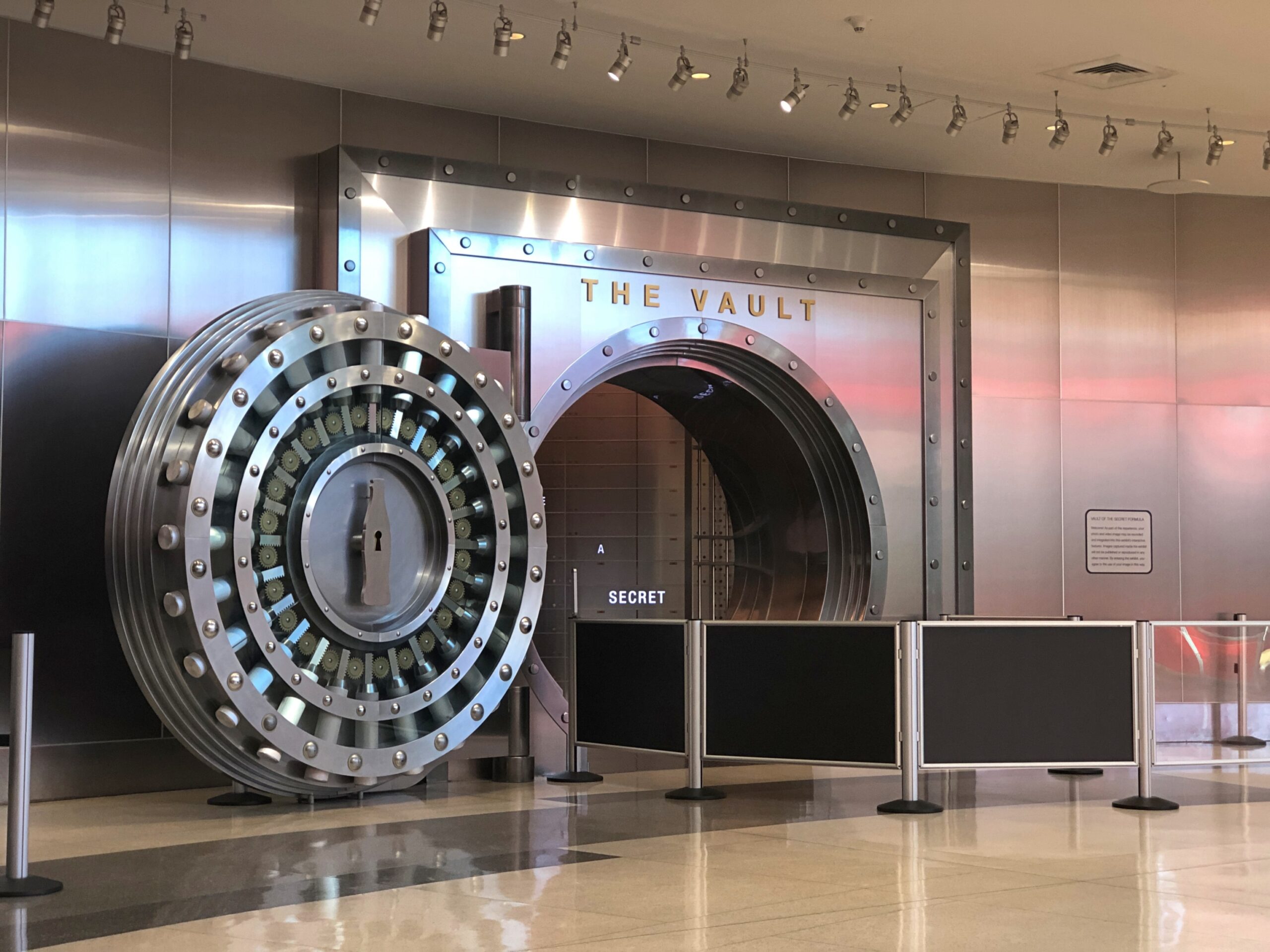
As a museum, the place includes a number of interactive exhibits and activities, starting at the Coca-Cola Theater with a six-minute commercial. I mean, a short history of Coke. You can also see the vault where the secret formula supposedly resides —
— check out various smells associated with the cola-making process, “explore Coca-Cola’s iconic influence on art, music, fashion, sports, and entertainment,” and “engage with interactive displays and AI magic that bring Coca-Cola’s legacy to life in new, unforgettable ways,” the museum explains. You can even, if you register – maybe with some app? – stand in line to have your picture taken with a person in a polar bear suit.
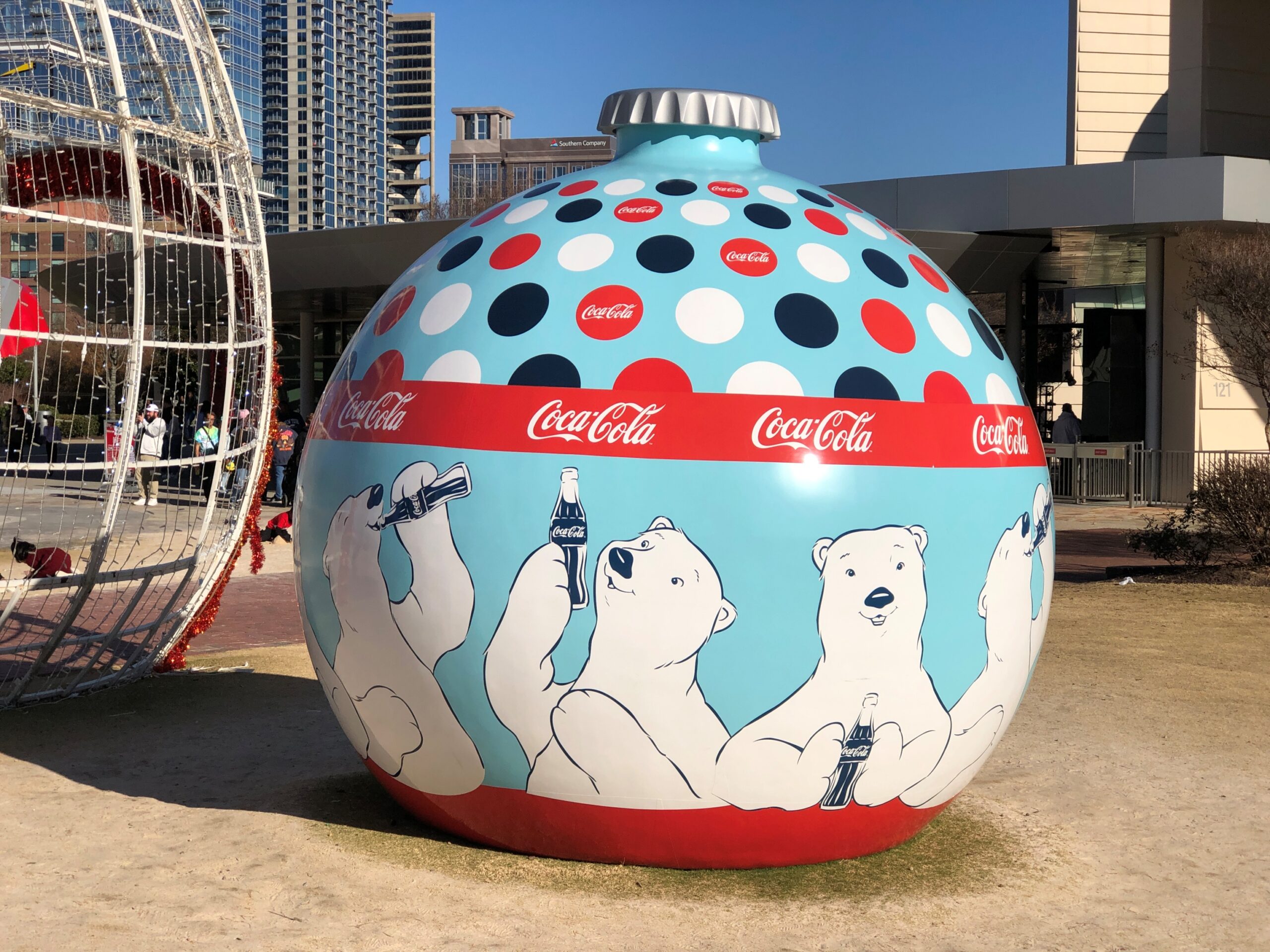
“The Coca-Cola Polar Bear… became truly iconic in 1993 with the launch of the ‘Always Coca-Cola’ campaign. In the famous ‘Northern Lights’ commercial, created by Ken Stewart, animated bears gather to watch the aurora borealis while enjoying Coca-Cola — a scene that brought the Polar Bear to life and captured the hearts of viewers worldwide,” the museum notes.
Does it rise to the level of icon? Somehow the Coca-Cola Polar Bear had made only a faint impression on either of us, so we took a pass on it. Also, there was a line. And it cost extra? Always with the revenue streams. But I did enjoy the more standard sort of museum exhibits on offer at World of Coca-Cola.
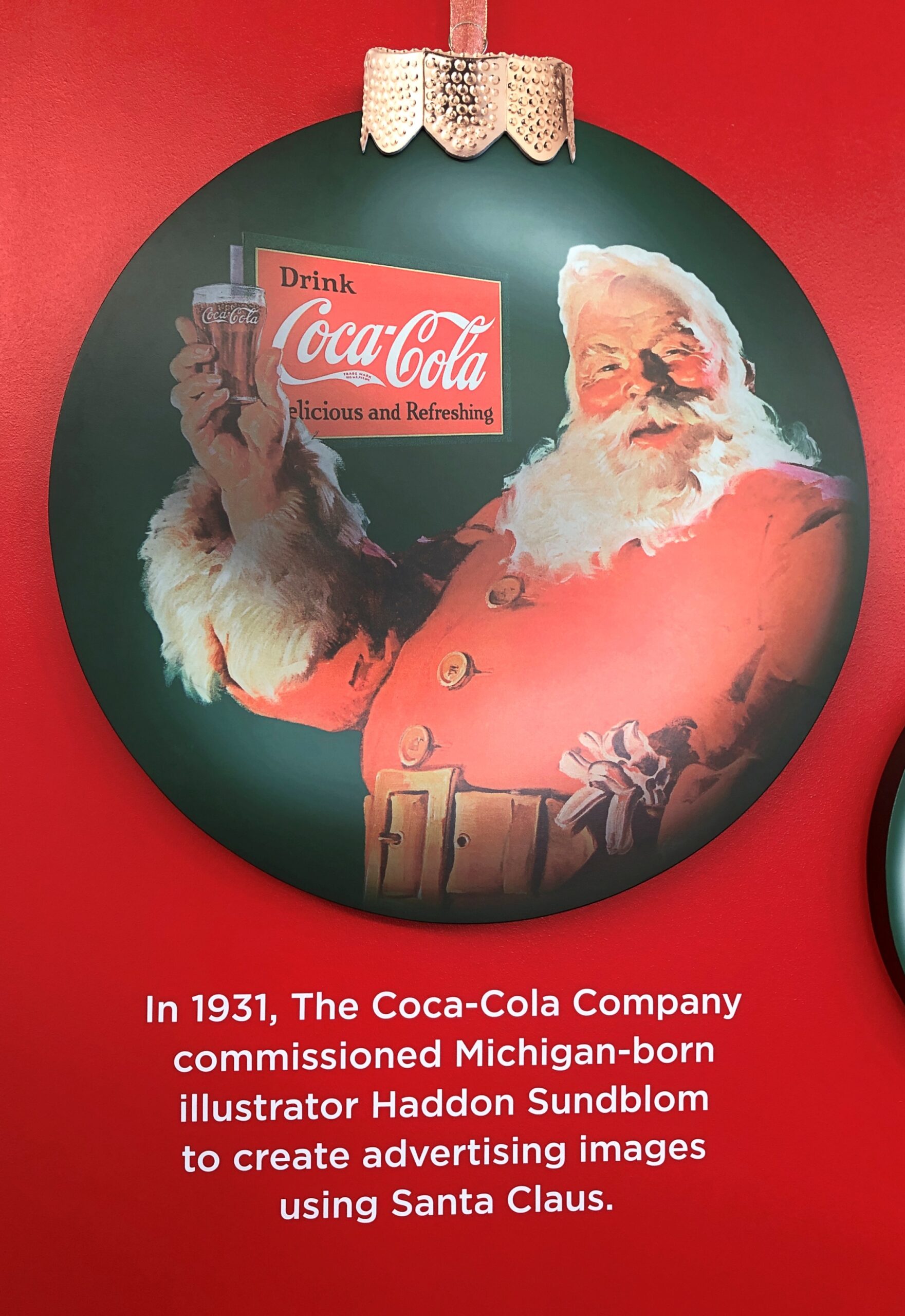
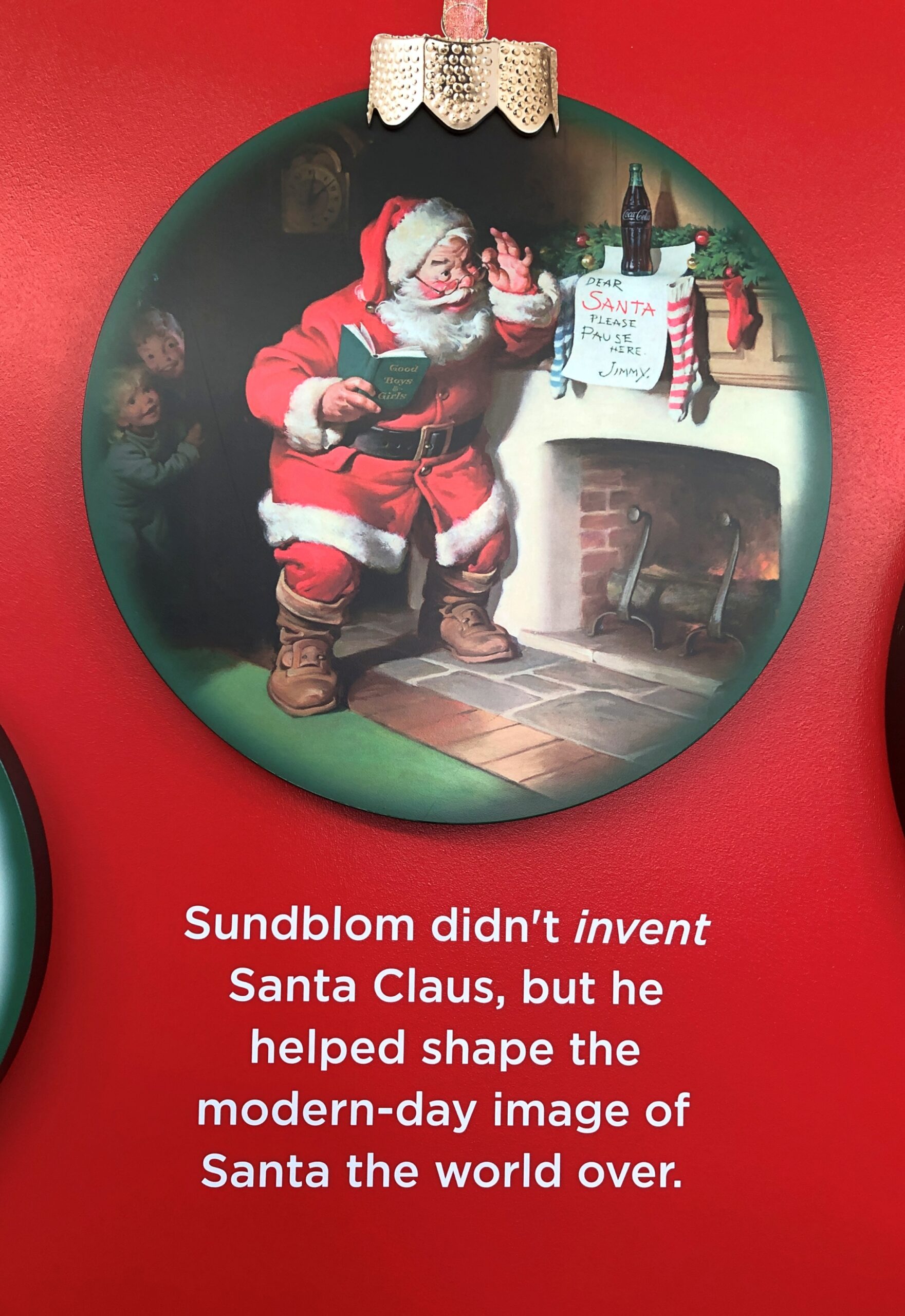
A seasonal observation.
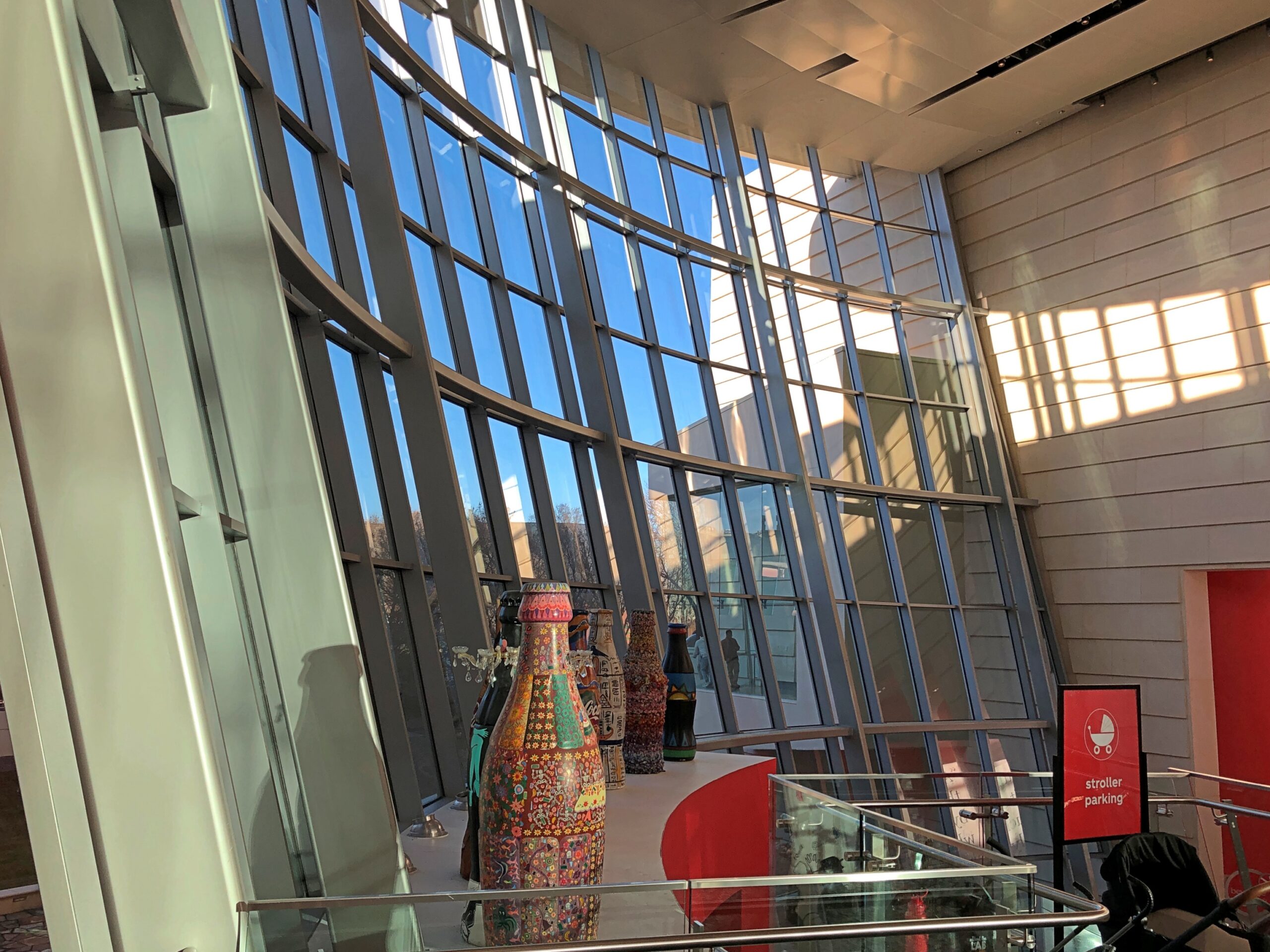
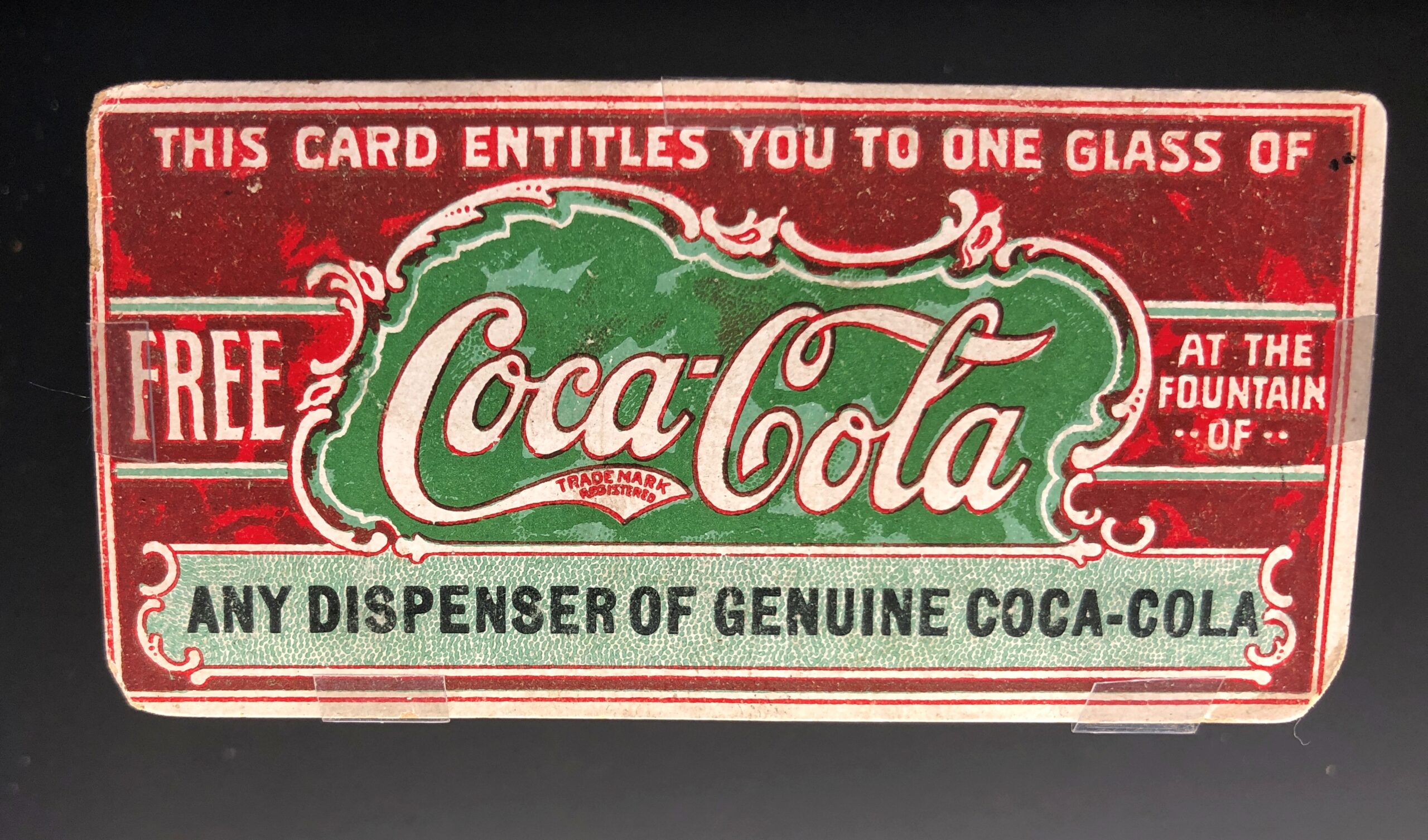
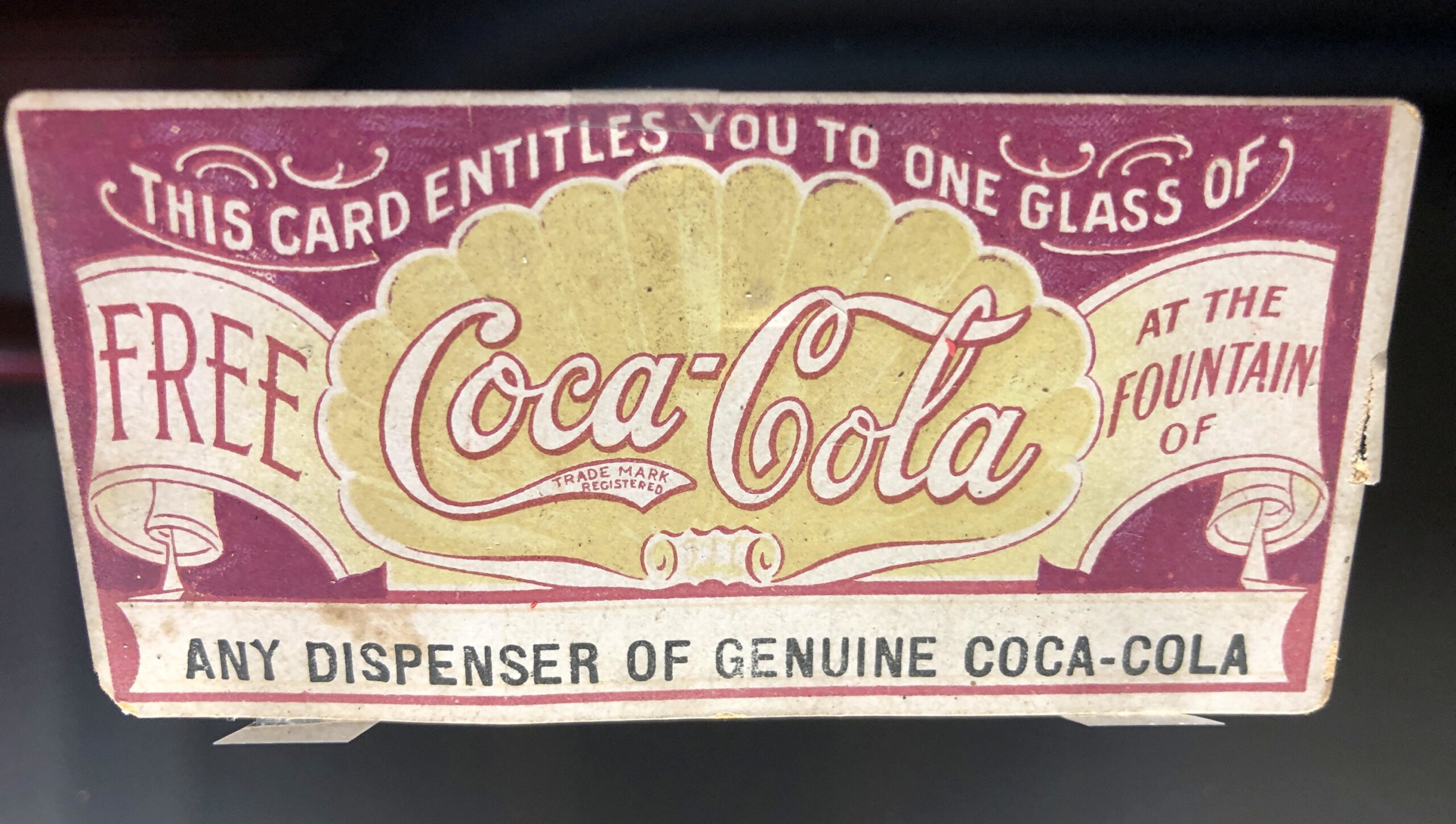
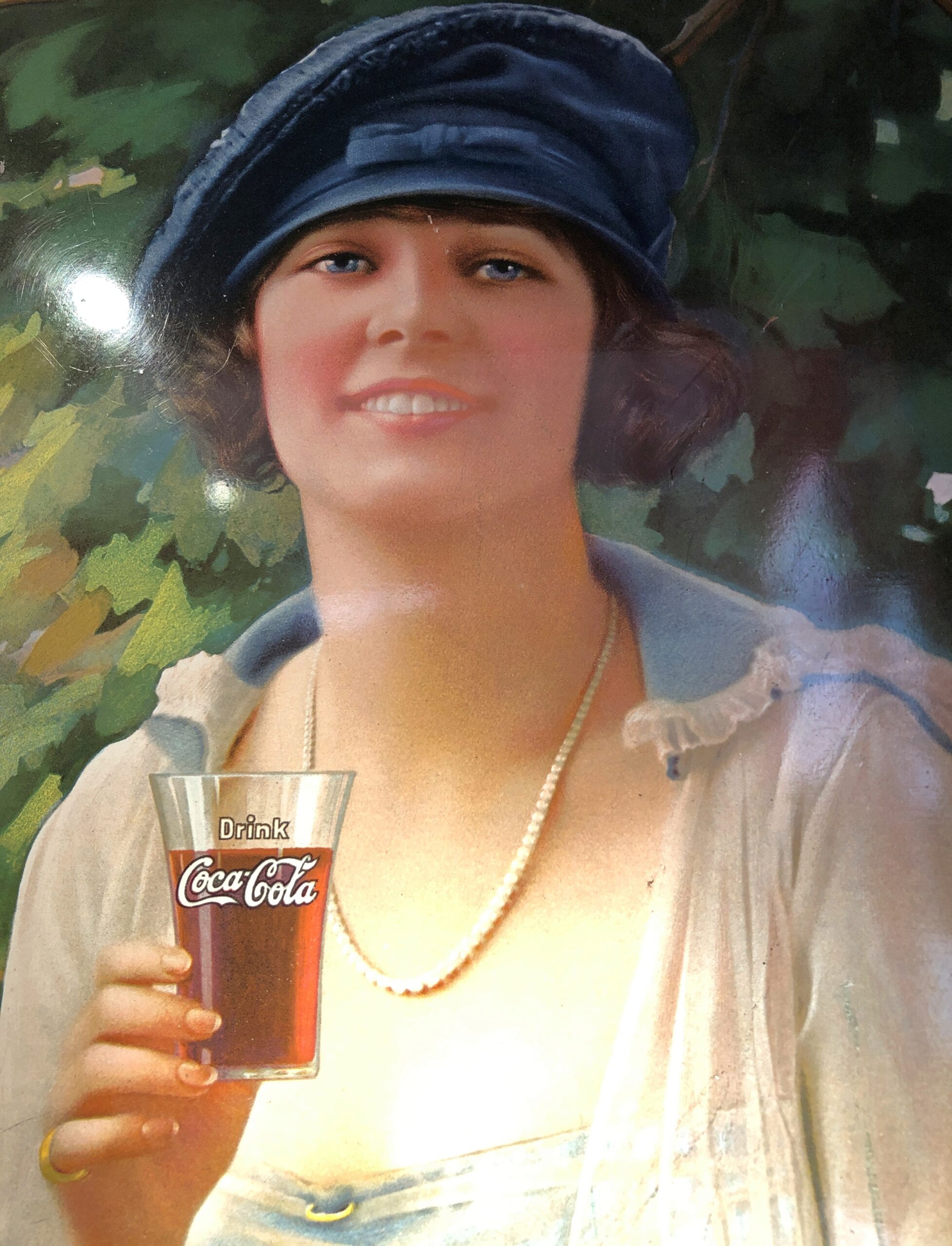
Artifacts from long ago.
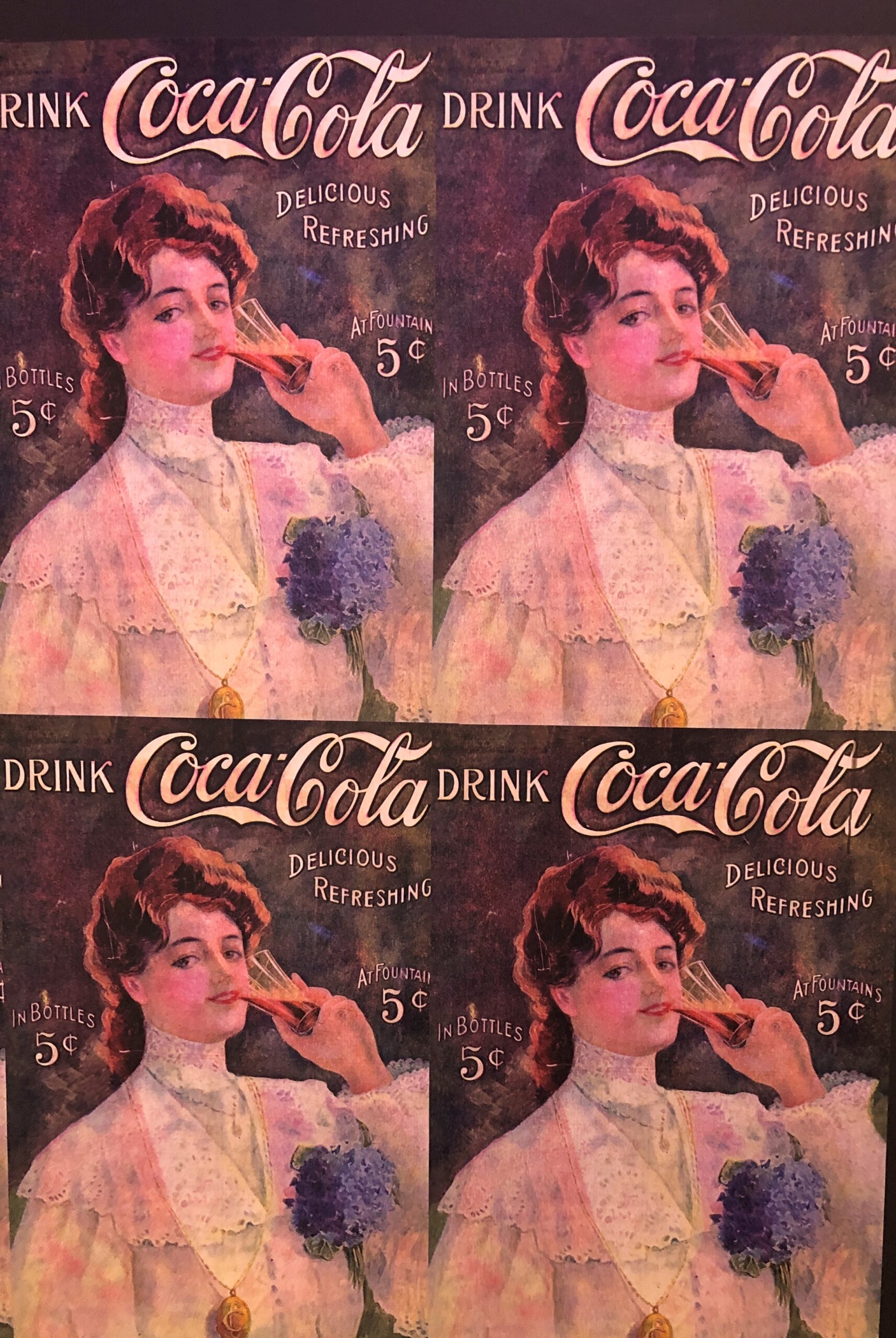
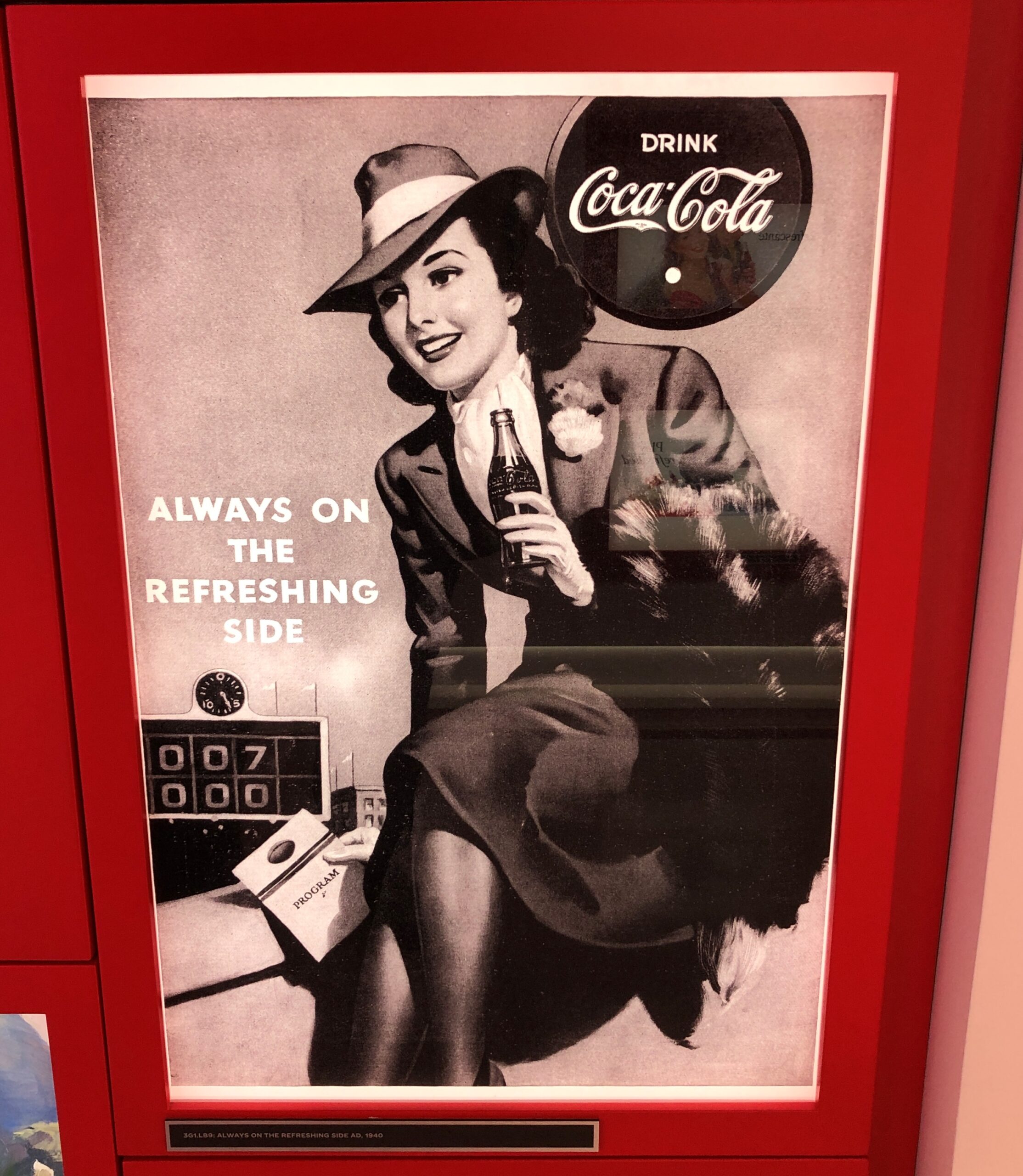
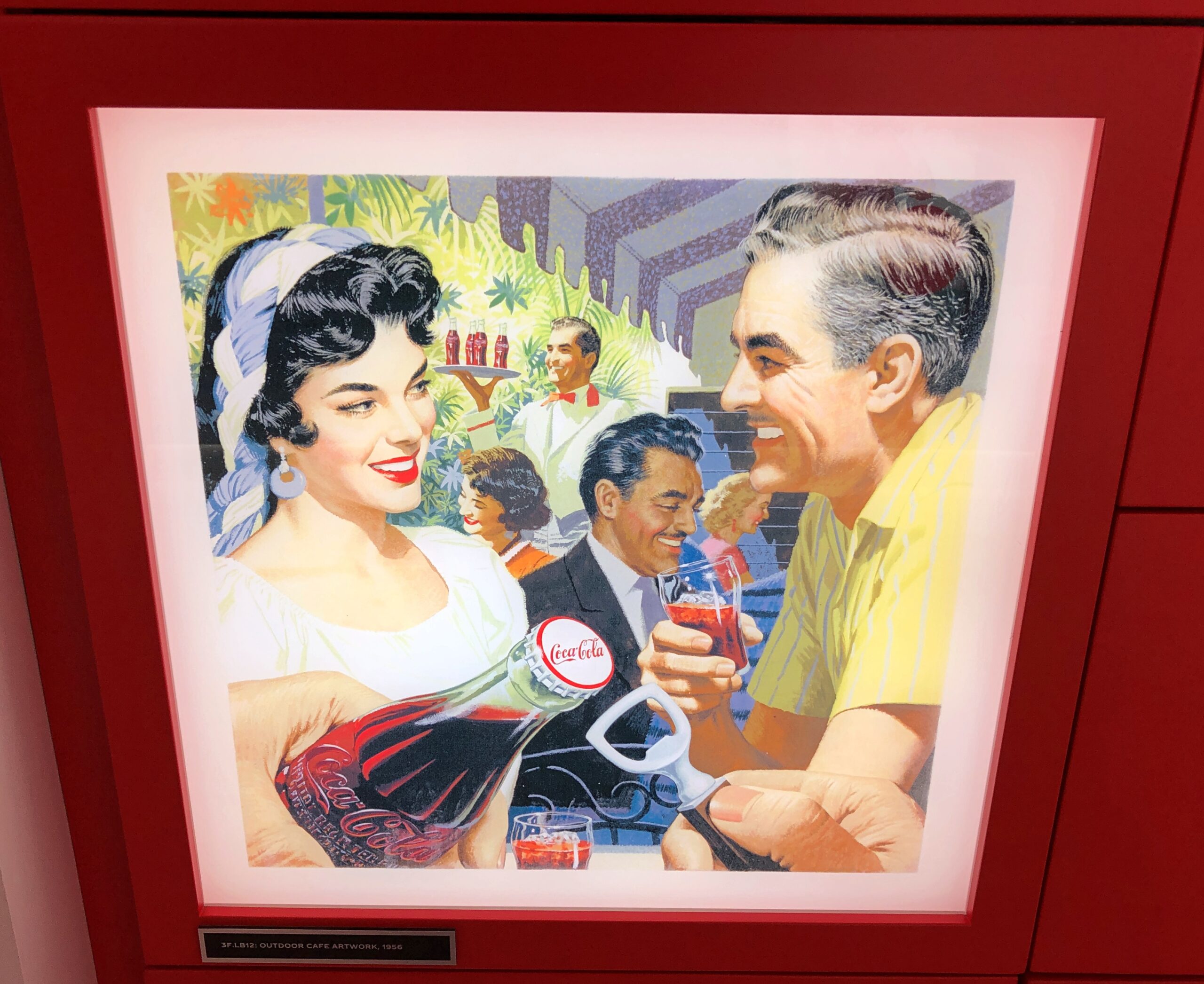
Ads from long ago.
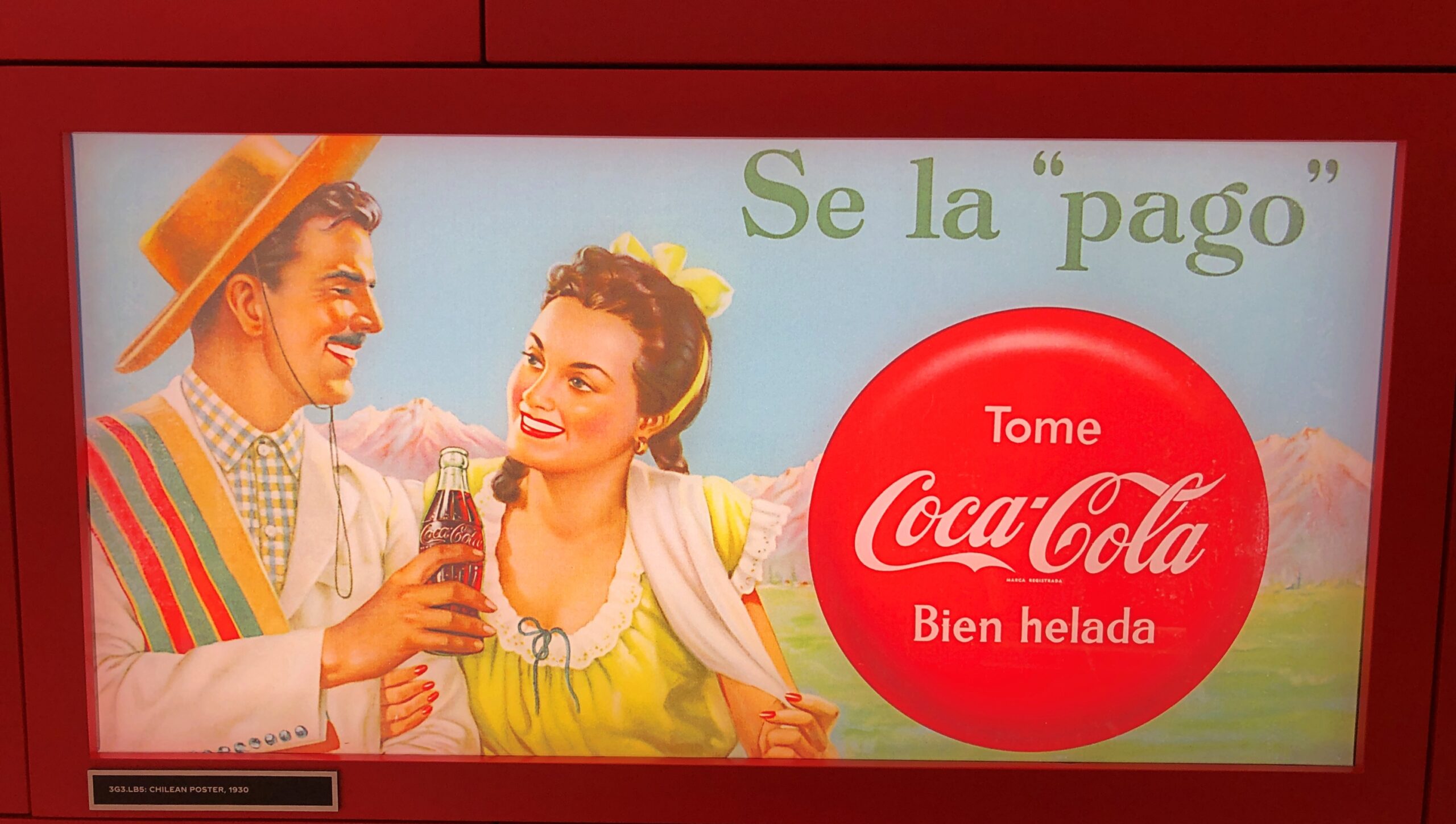
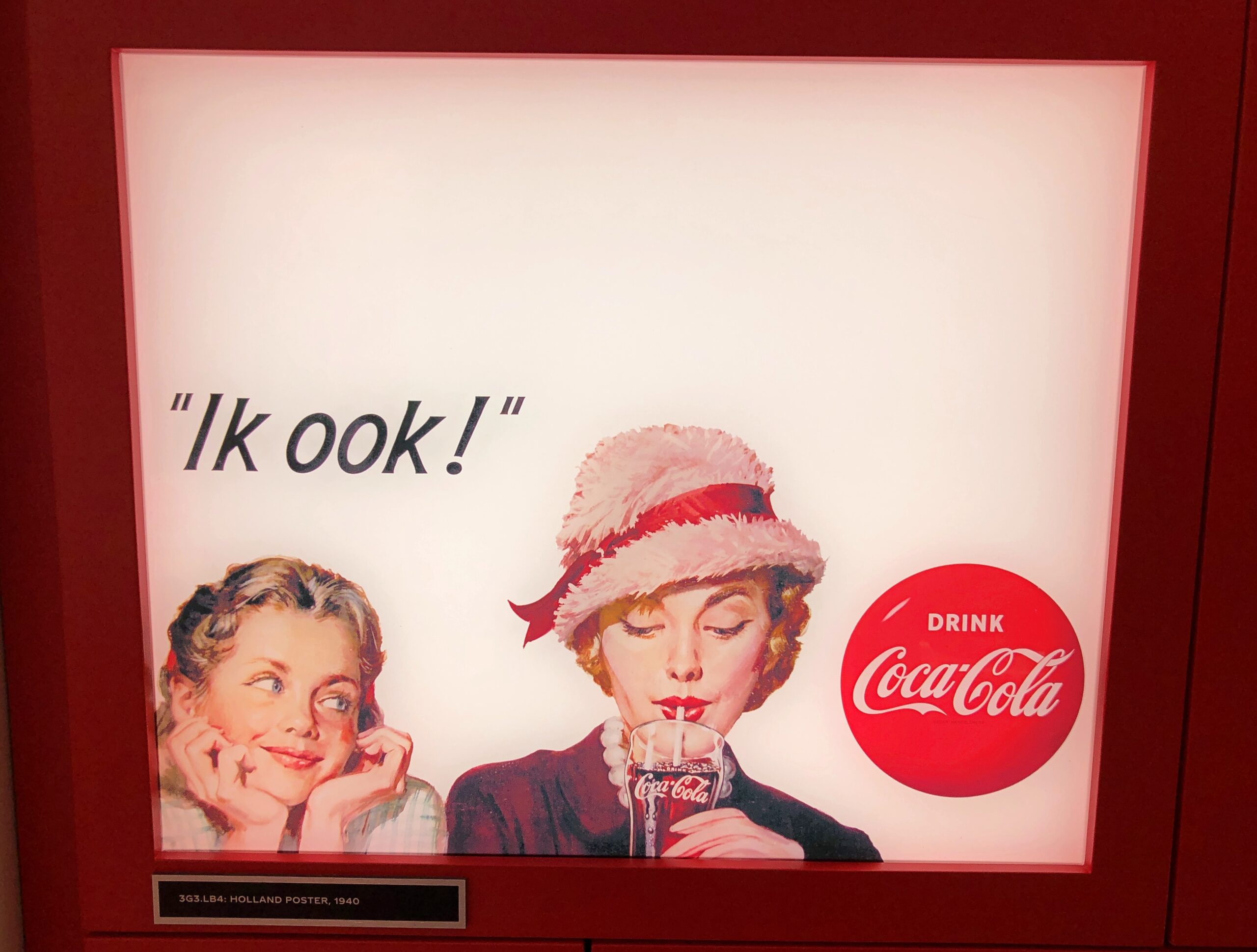
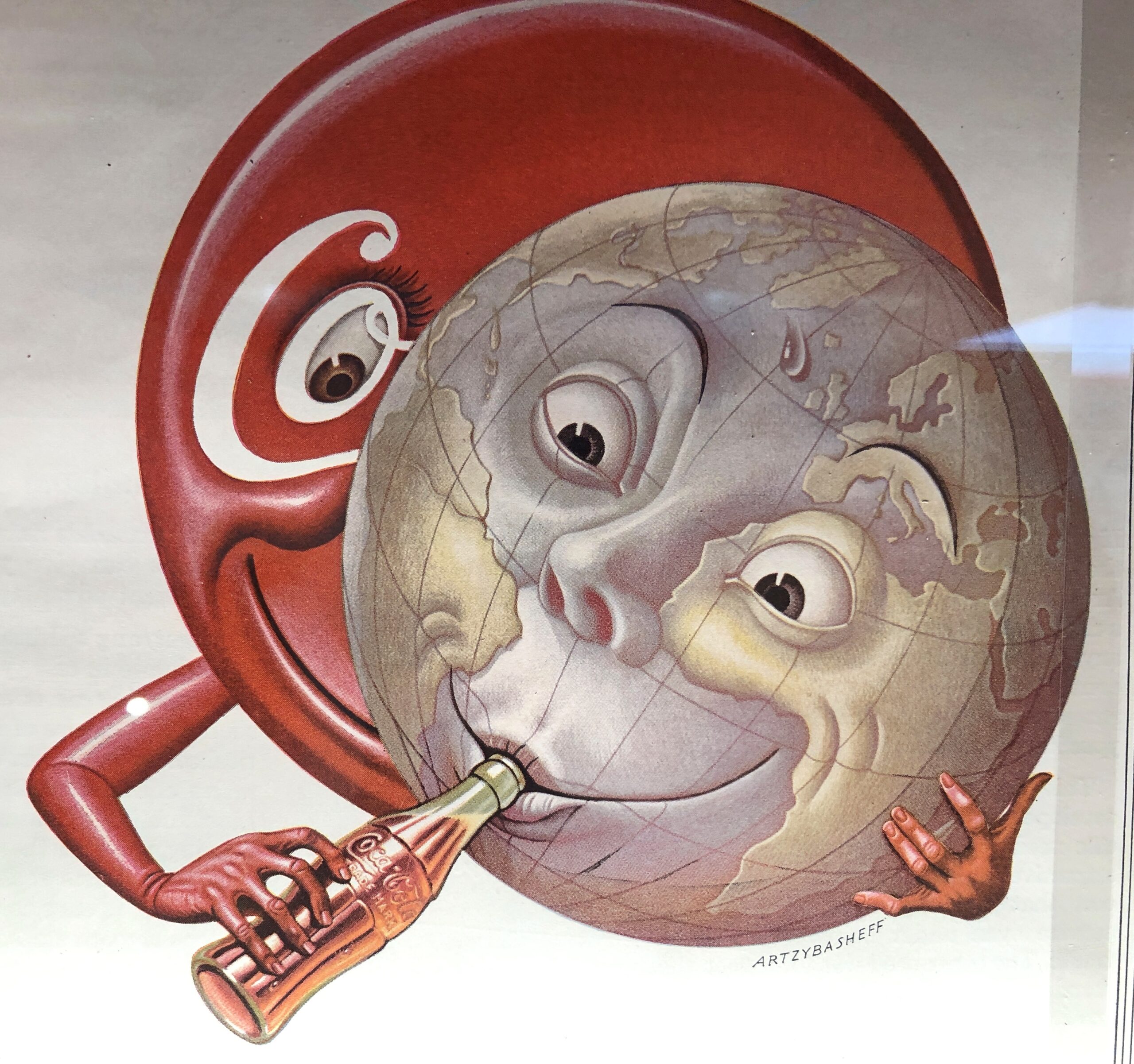
And from distant places.
I seem to remember a similar political cartoon of featuring the Earth being nursed back to health after the ravages of WWII, but I can’t quite place it.
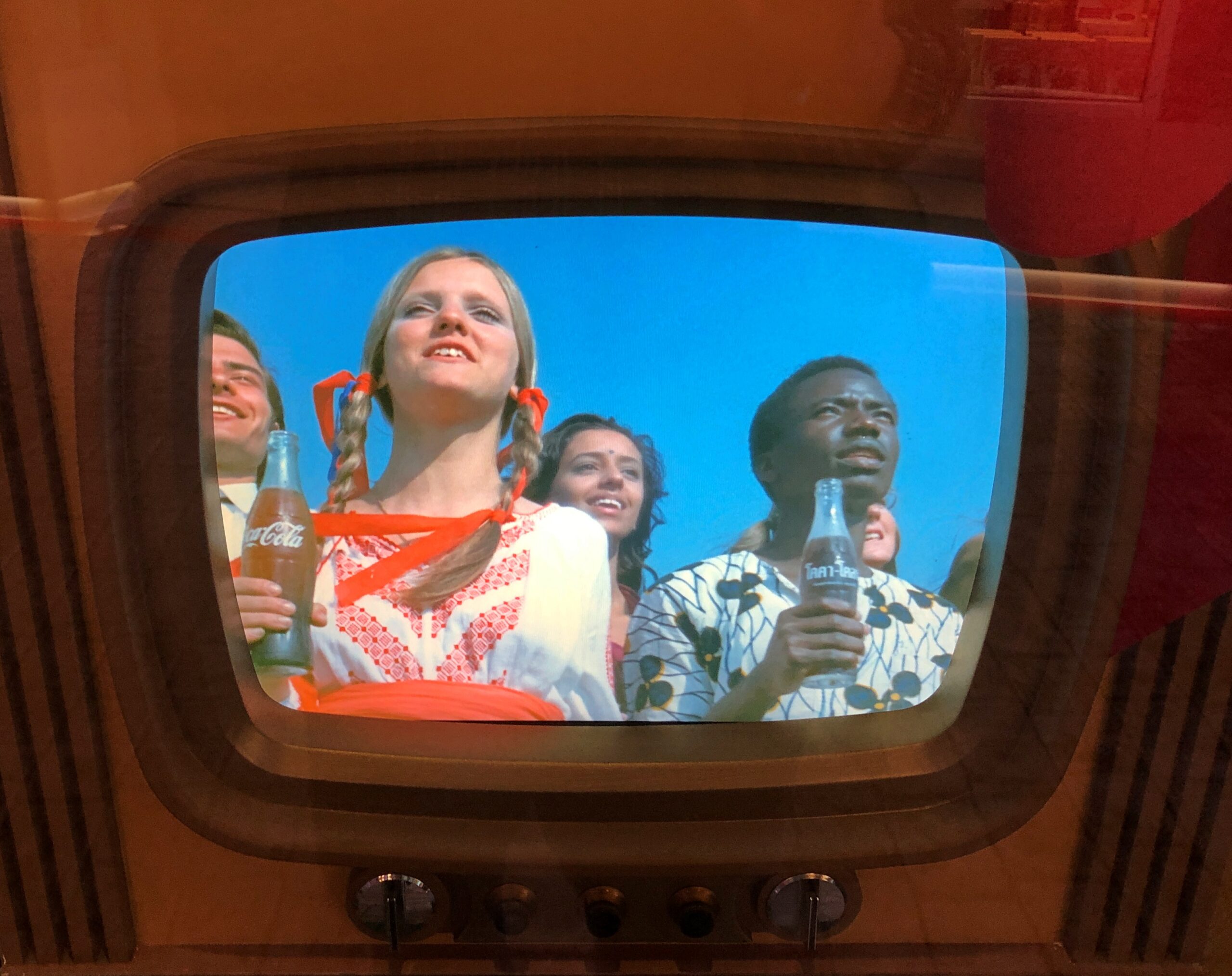
There were video clips, including of course the “Hilltop” commercial. That, I remember. Many people old enough do too, which naturally gave the final moment of Mad Men its punch.
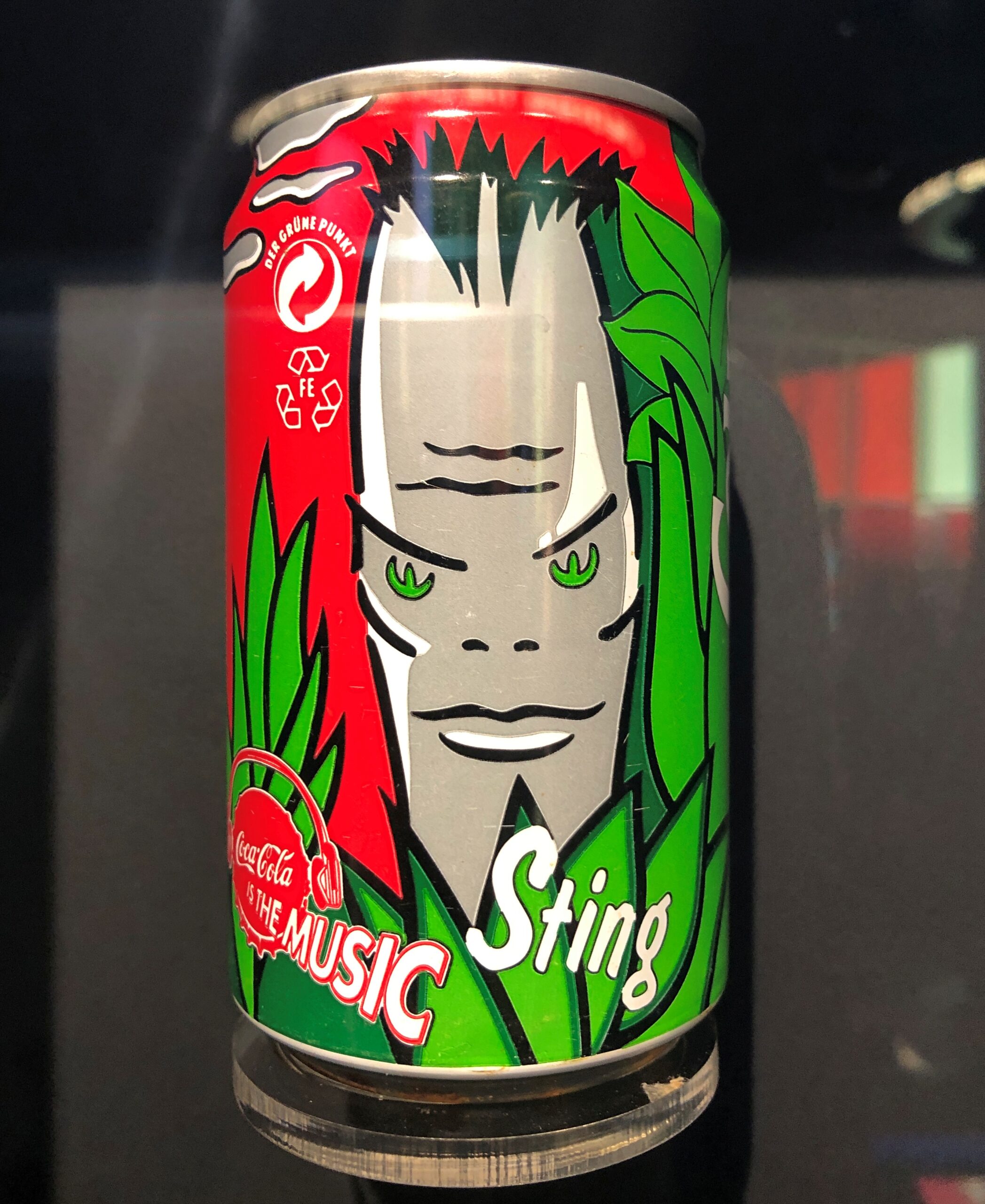
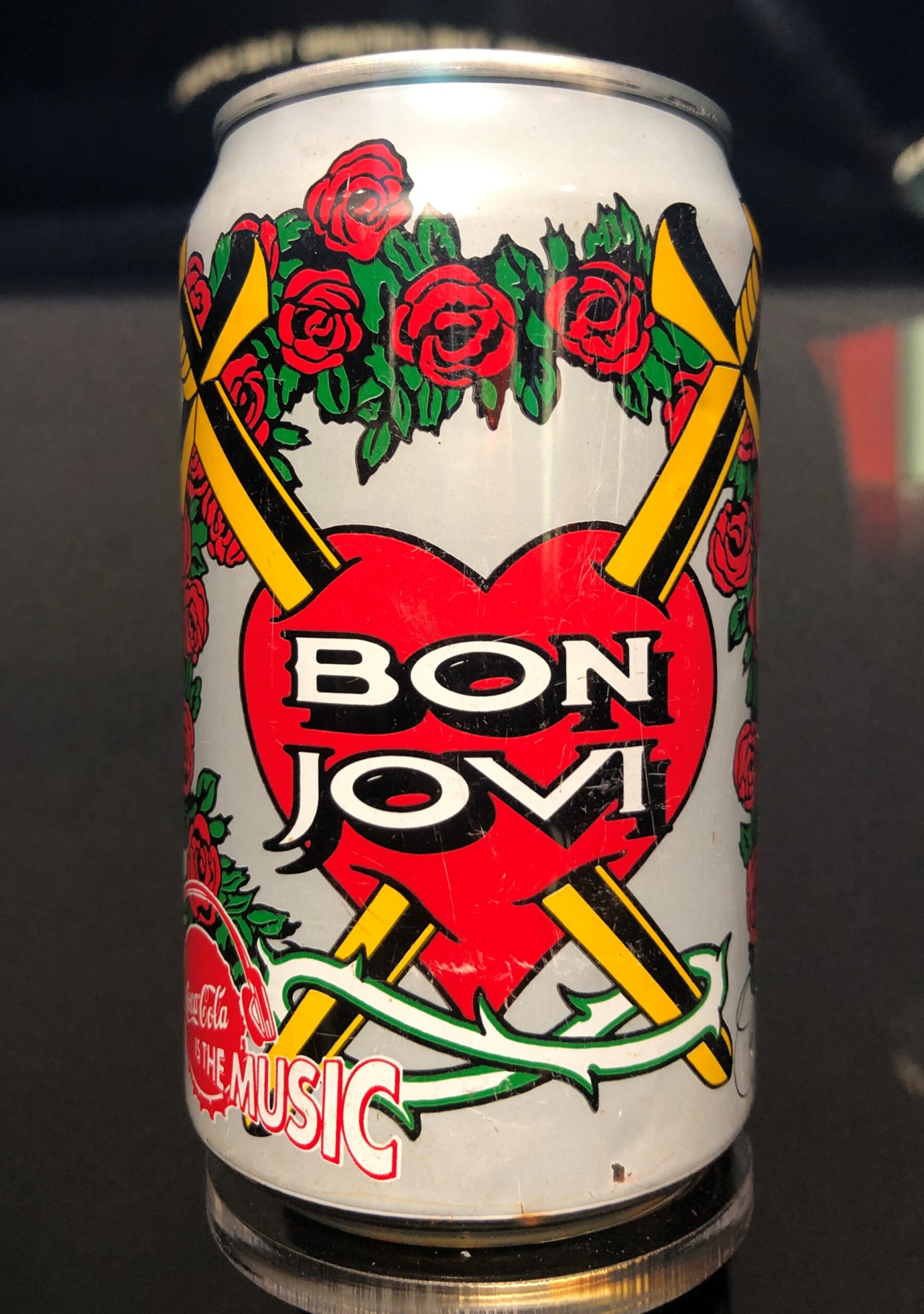
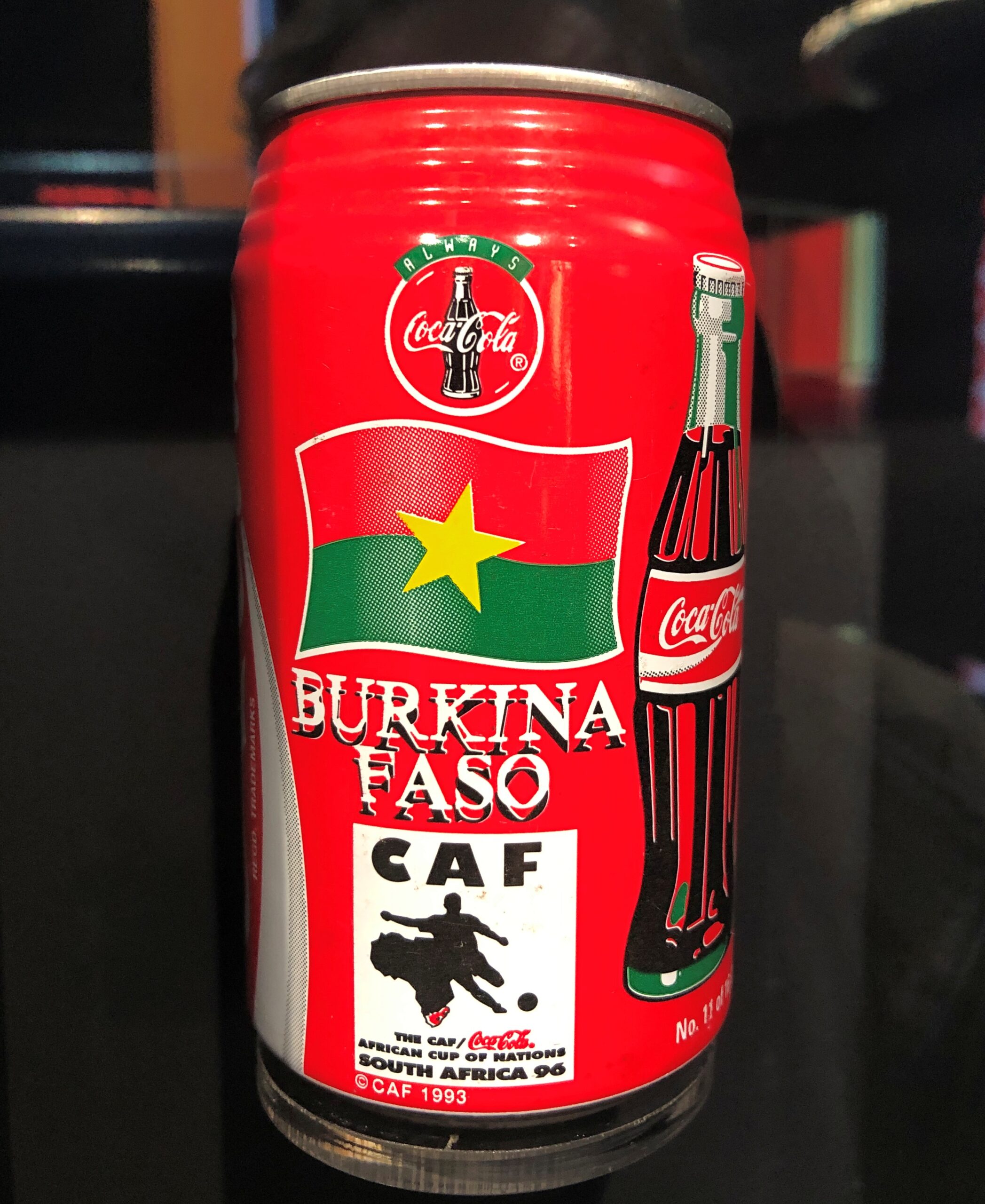
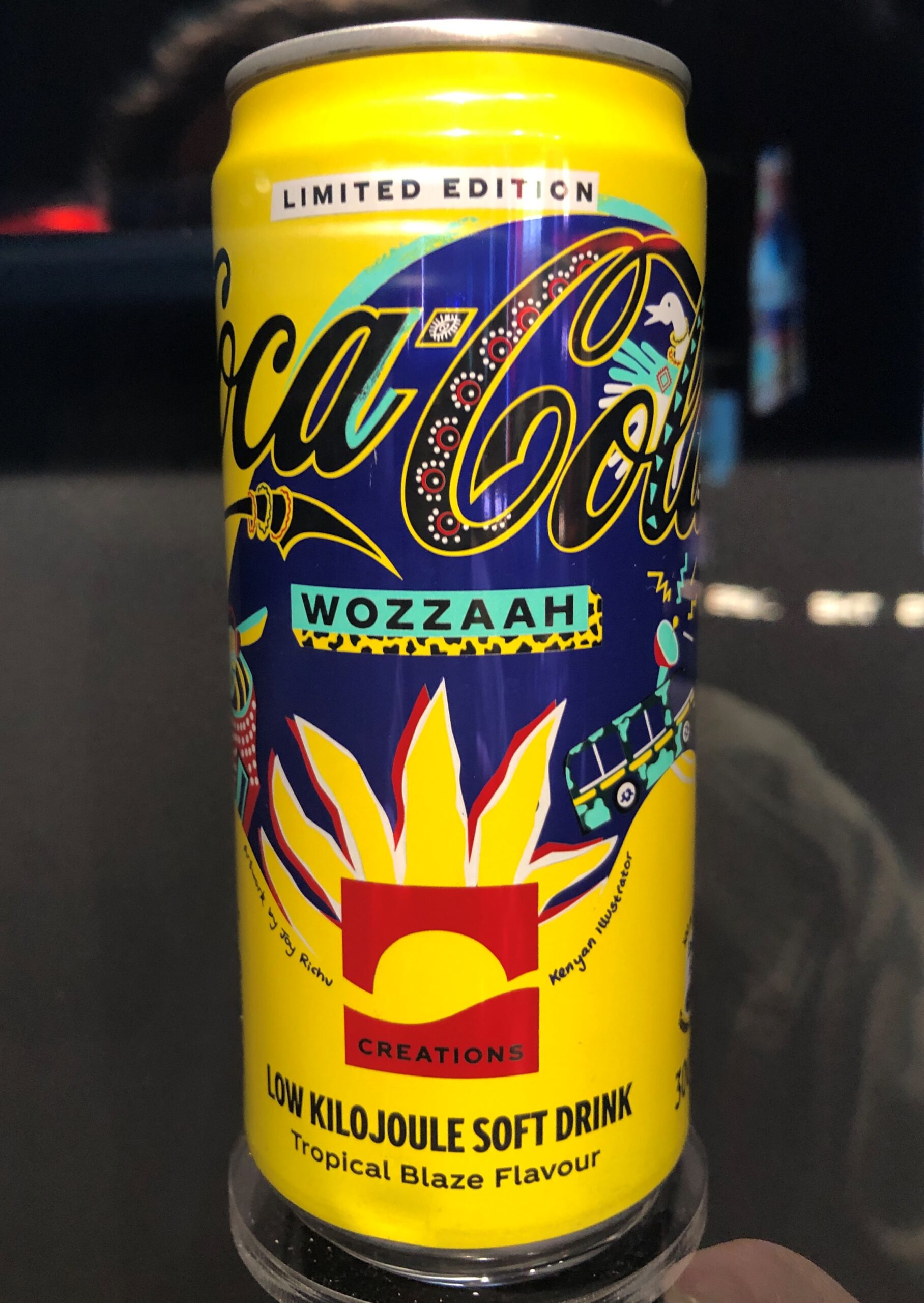
The museum also featured Coke product cans and bottles of various kinds (but not a collection of caps that I saw), many more than you see in everyday grocery stores. For instance, Sting and Bon Jovi had their own cans at one point, as part of a musician series.
Cans from around the world.
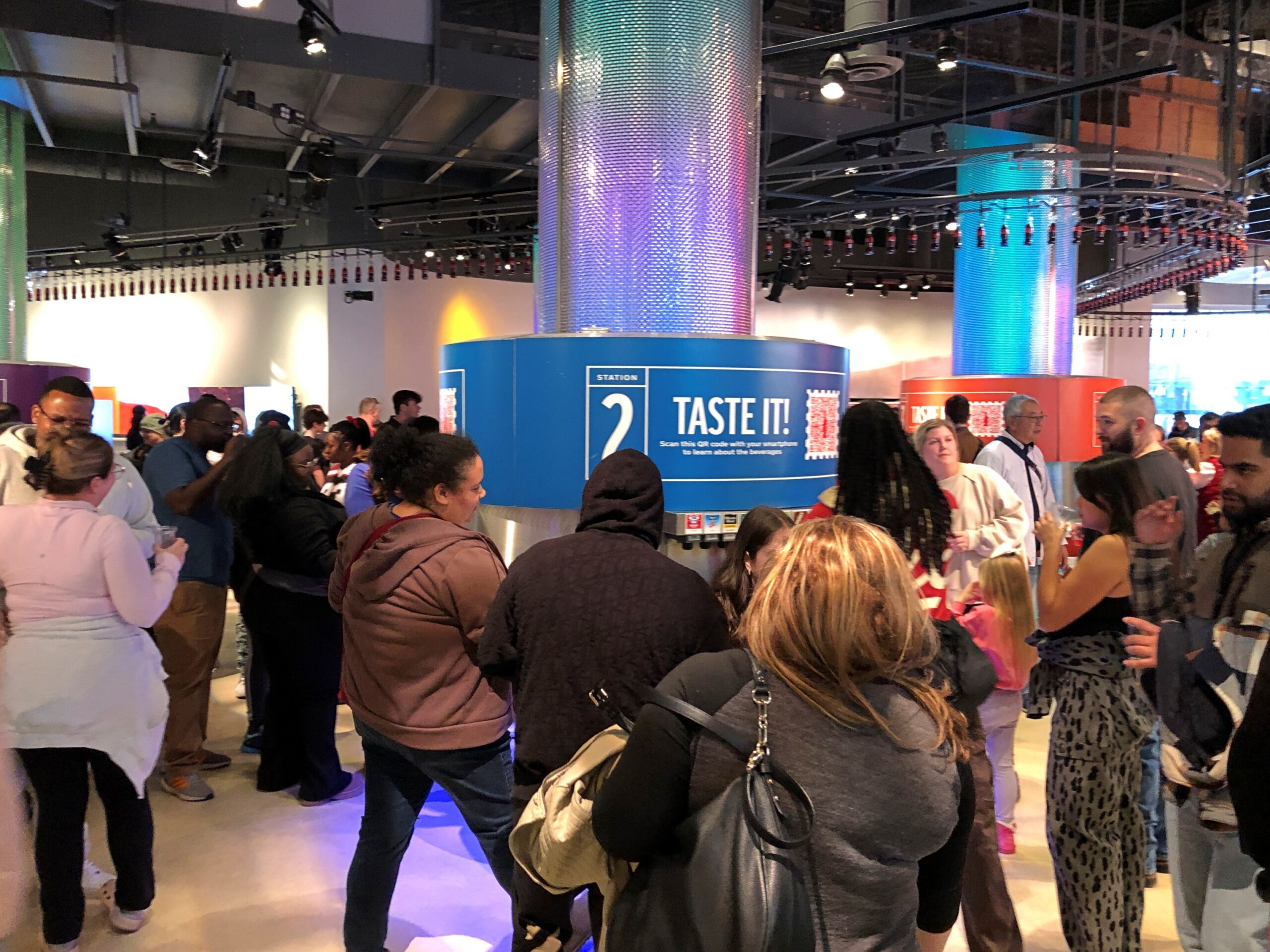
A very crowded room includes soda and water dispensers that allow visitors to sample Coca-Cola products from around the world. We went to town trying the various concoctions, as did a lot of people, and eventually I found my favorite: Bonbon Anglais, a wonderful fruit drink from Madagascar.
The web site Madagasikara tells us: La boisson gazeuse Bonbon Anglais est fabriquée à Madagascar, un pays reconnu pour ses produits naturels et son savoir-faire artisanal. I would expect no less.
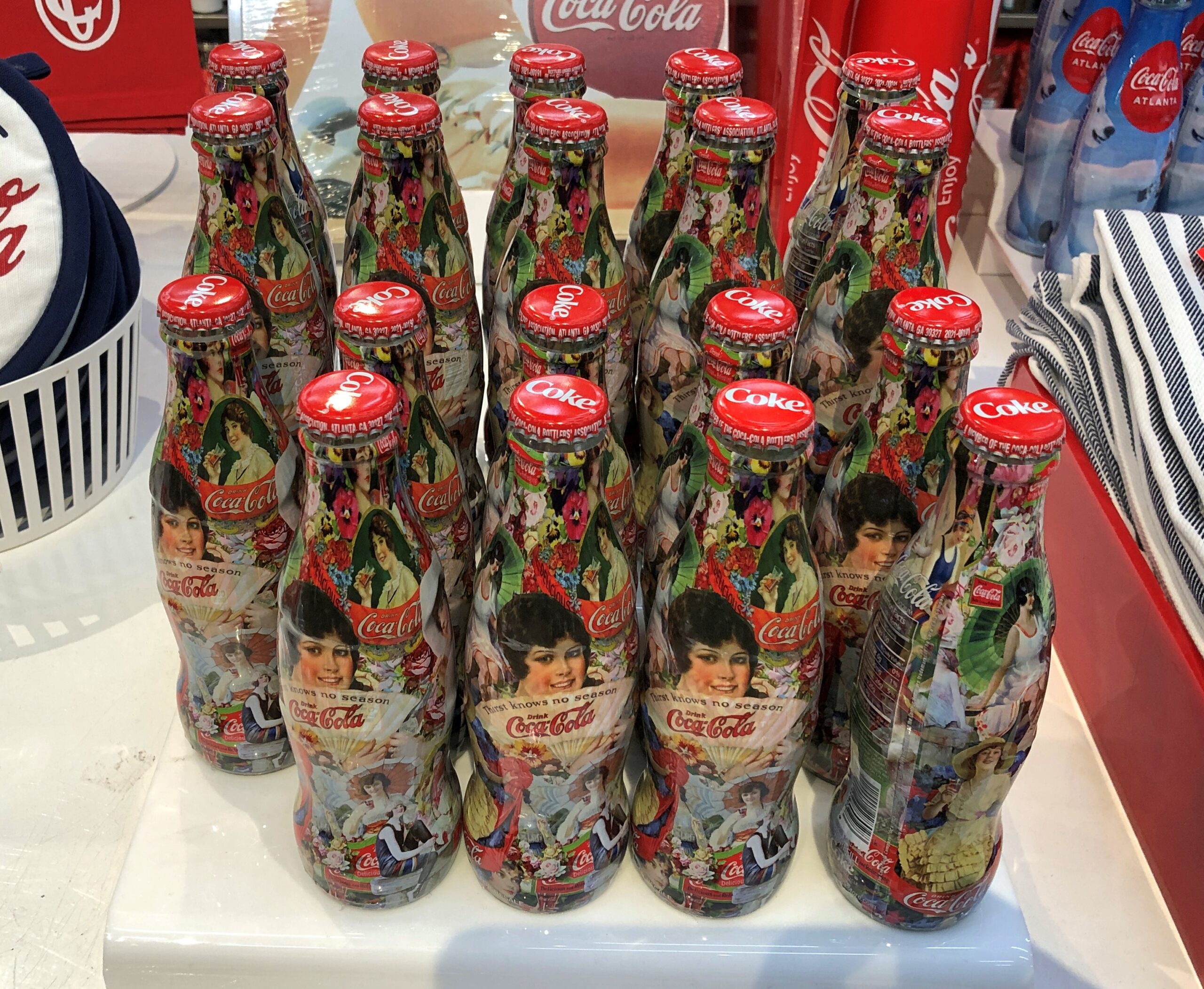
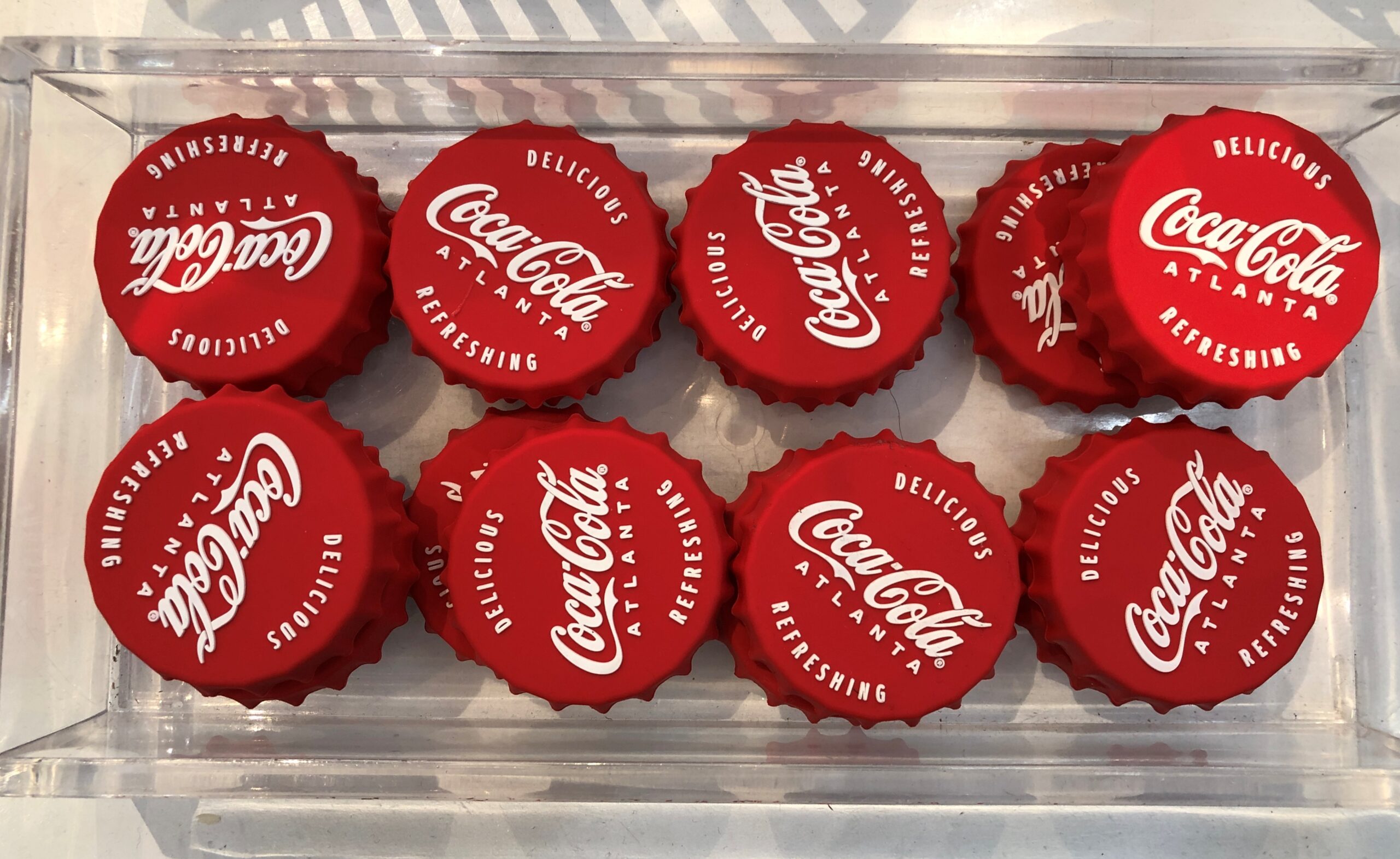
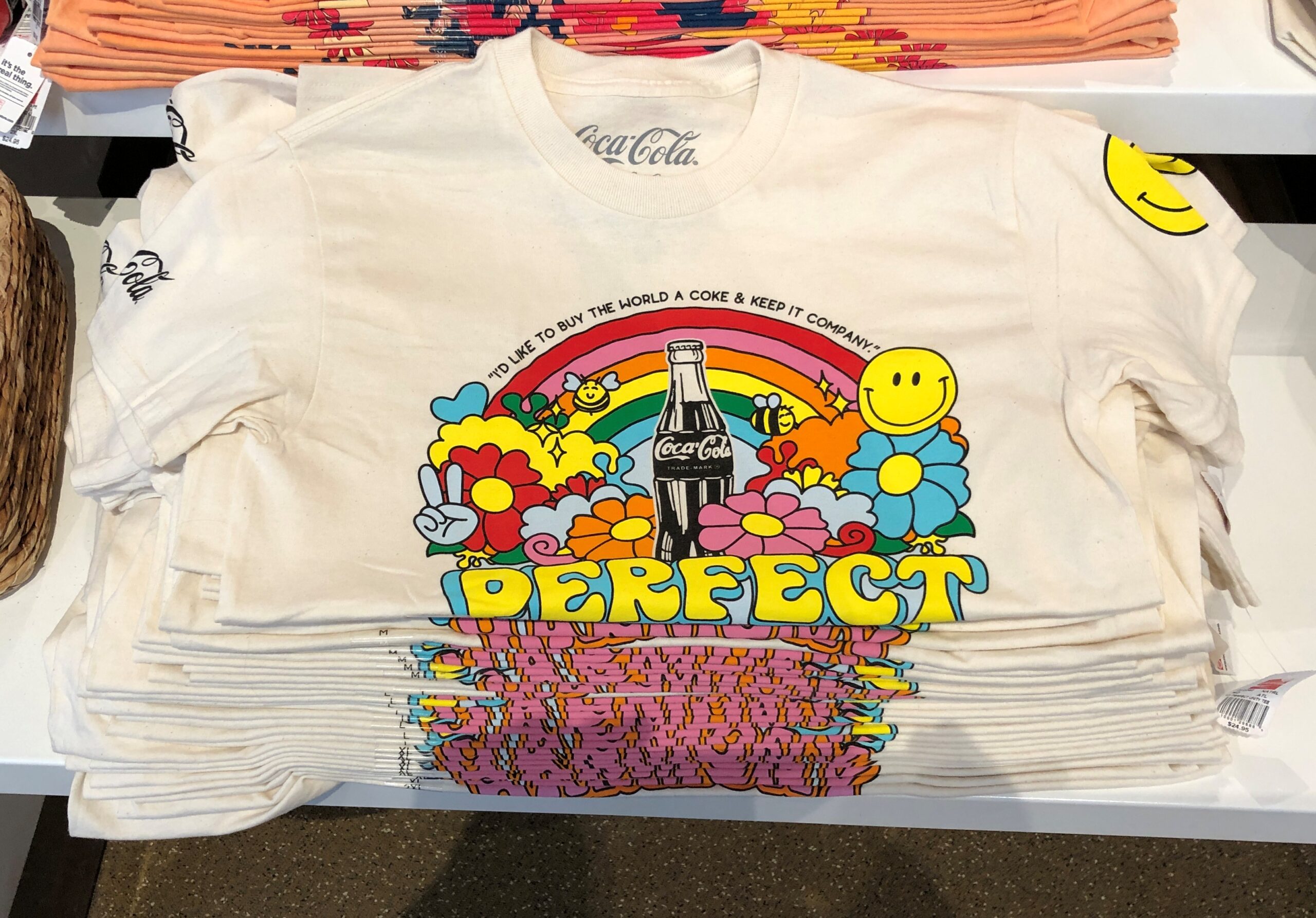
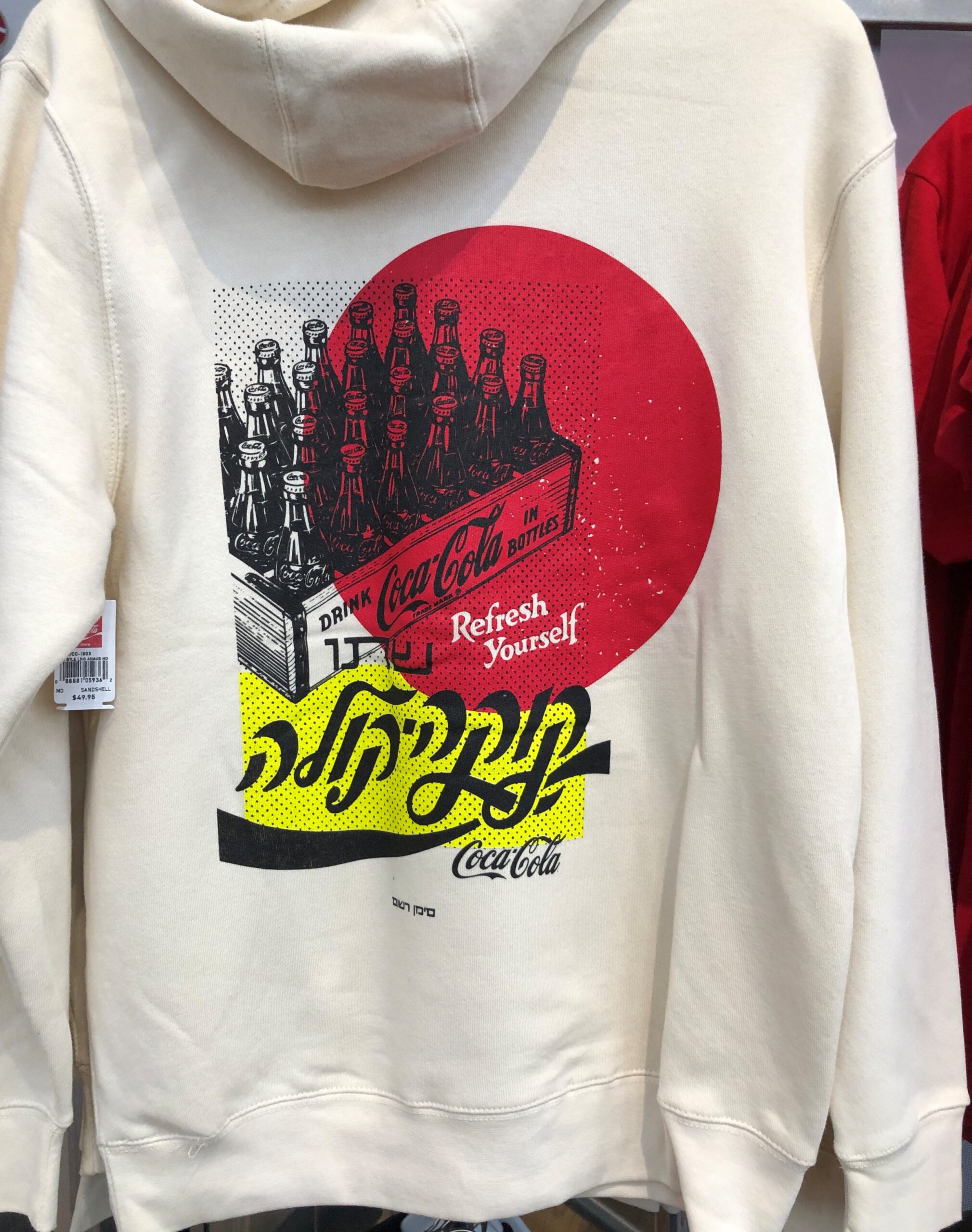
The gift shop was crowded, too. I took pics but bought no Coke merch. (I might have bought a postcard, but found none.)
To my way of thinking, the Coca-Cola Co. should pay me – even a little – to advertise its products on my person. Also, while I’m on that particular hobby horse, the World of Coca-Cola shouldn’t charge admission, especially not as much as a standard museum.
I ran the numbers, and World of Coca-Cola admission costs more than twice as much as admission to the Taj Mahal. Sure, Georgia isn’t Uttar Pradesh, but it’s galling that you’re paying at all, just to be marketed to. Obviously Middle America disagrees with me – and Yuriko didn’t mind paying for both of us – so that idea will just have to be a quixotic hobby horse of mine.
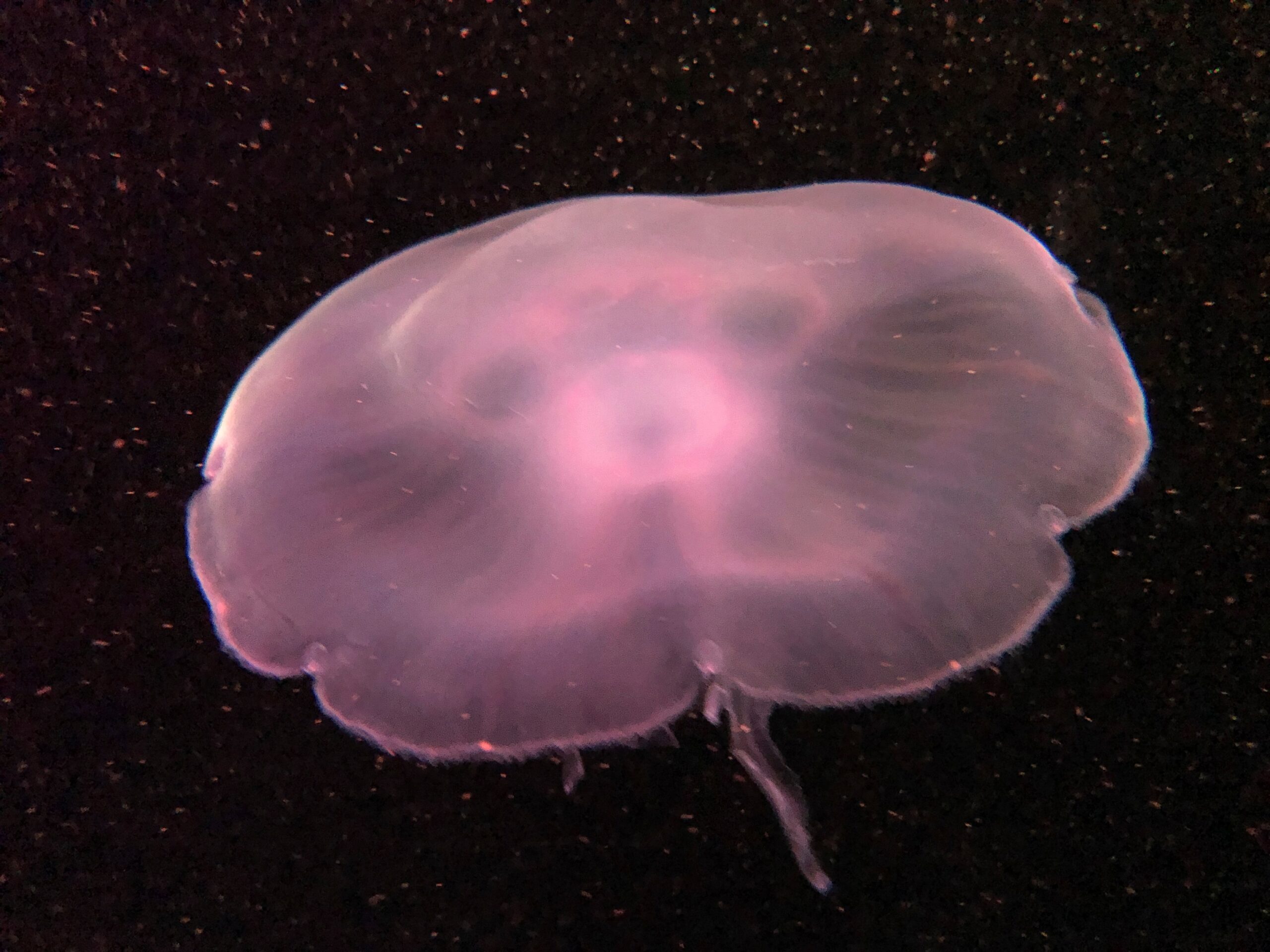
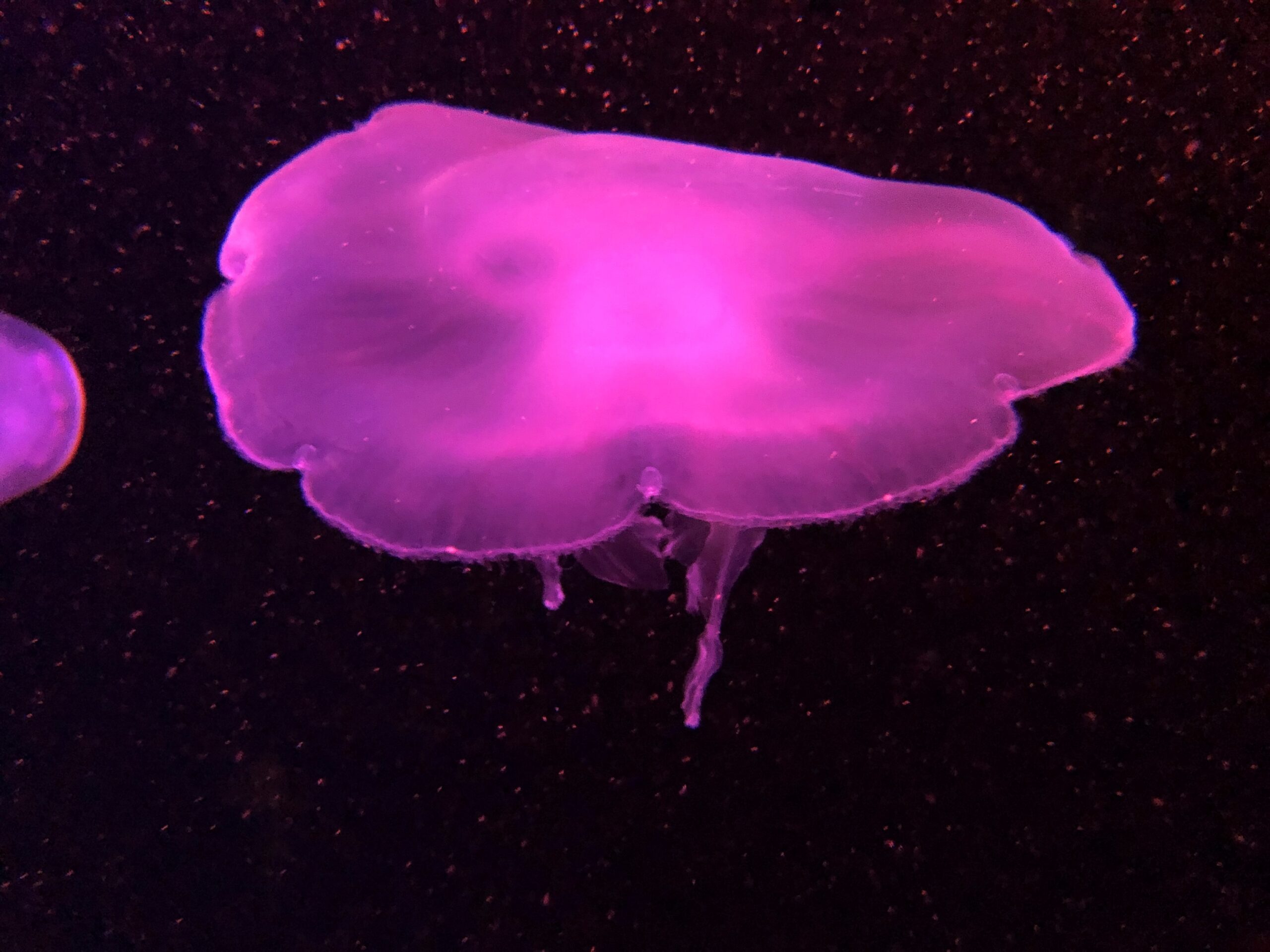
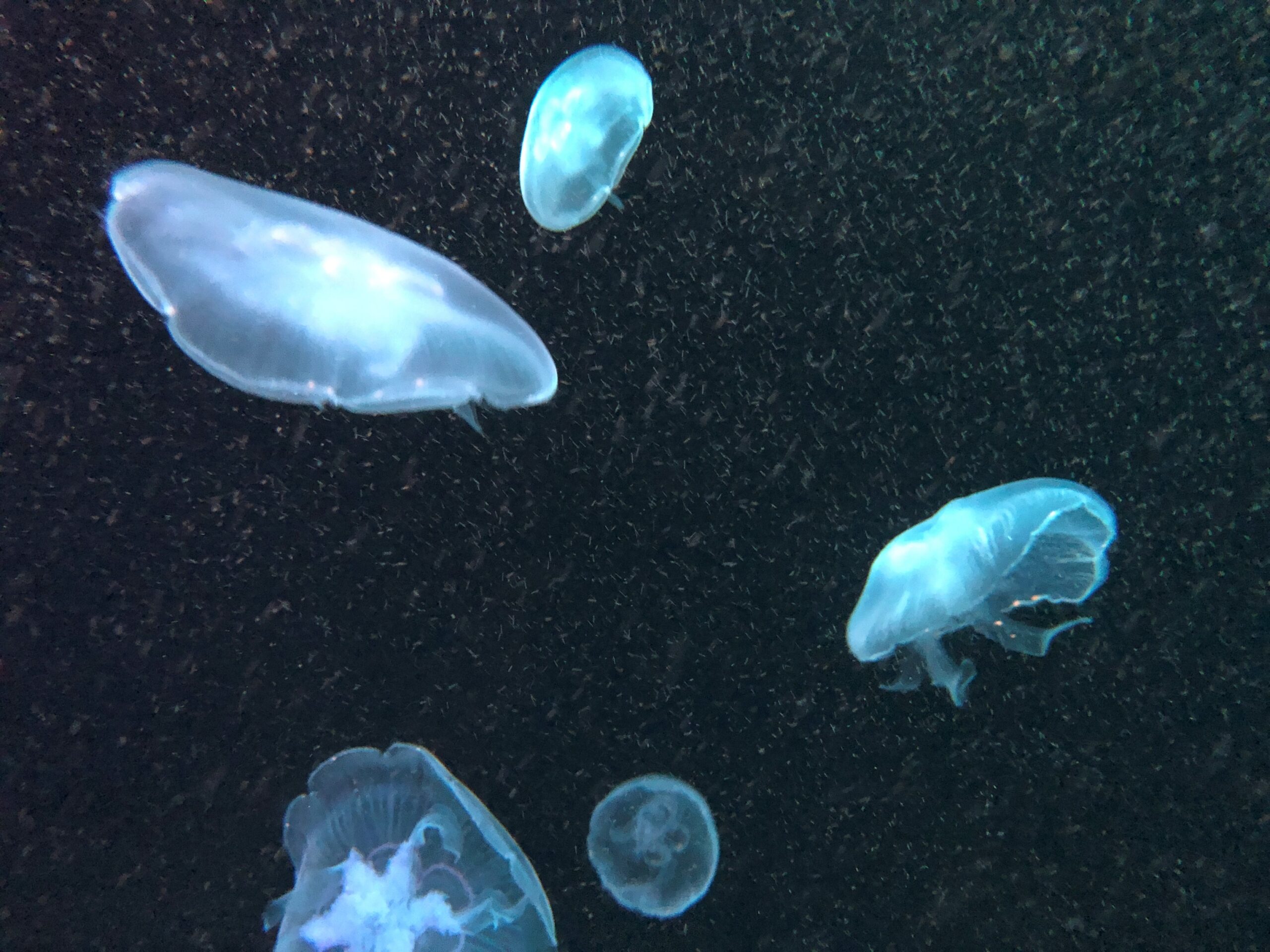
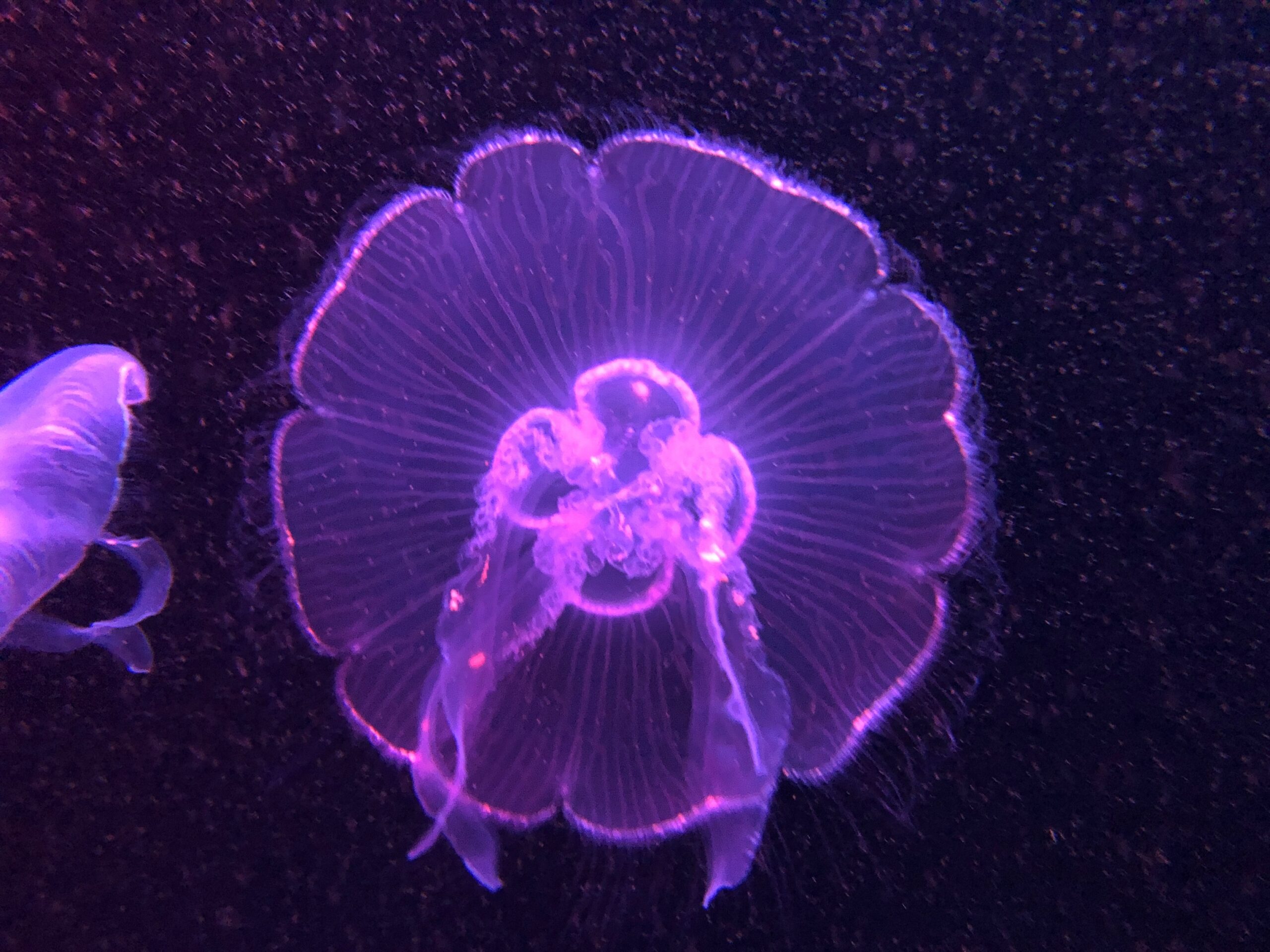
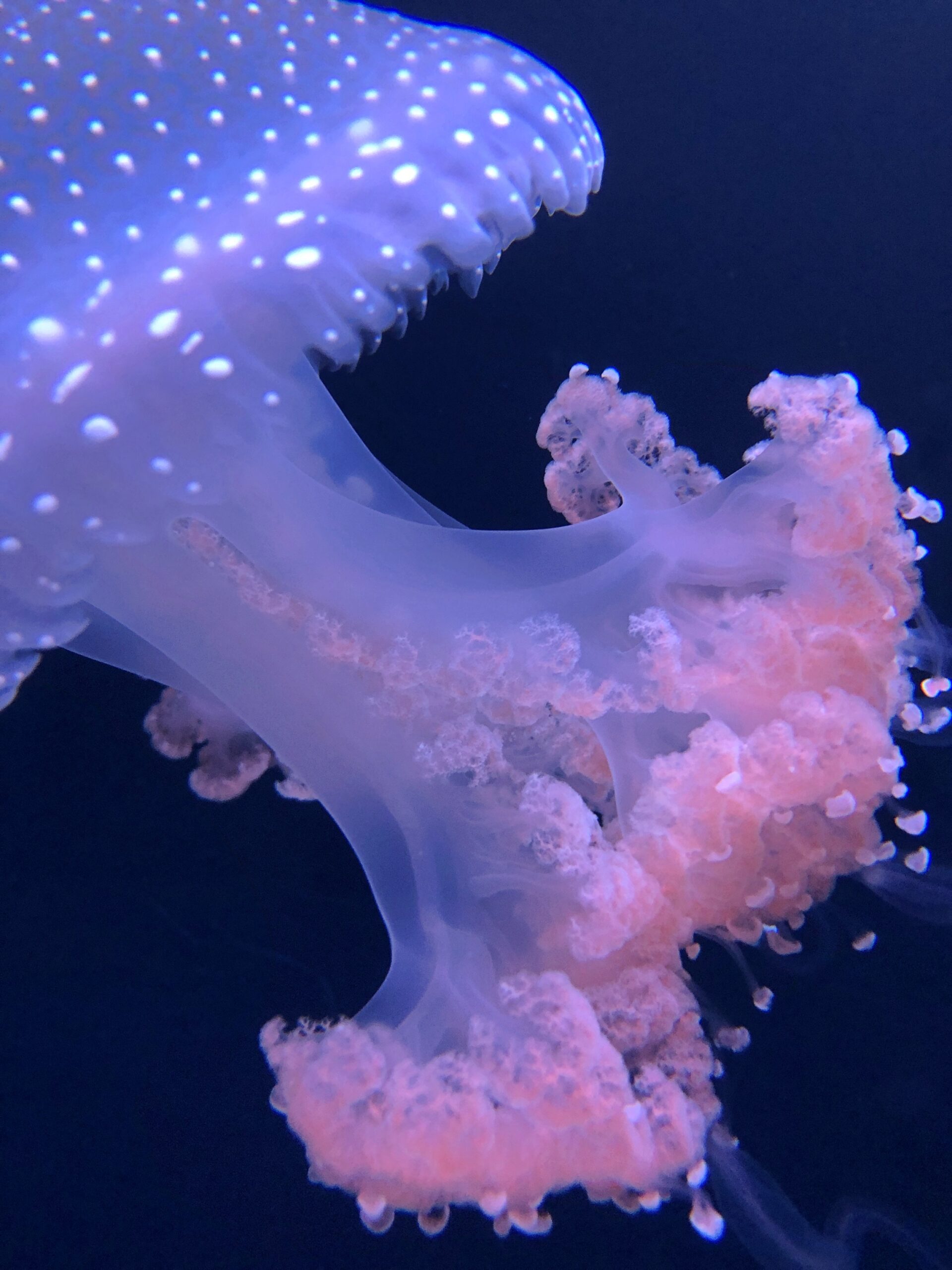
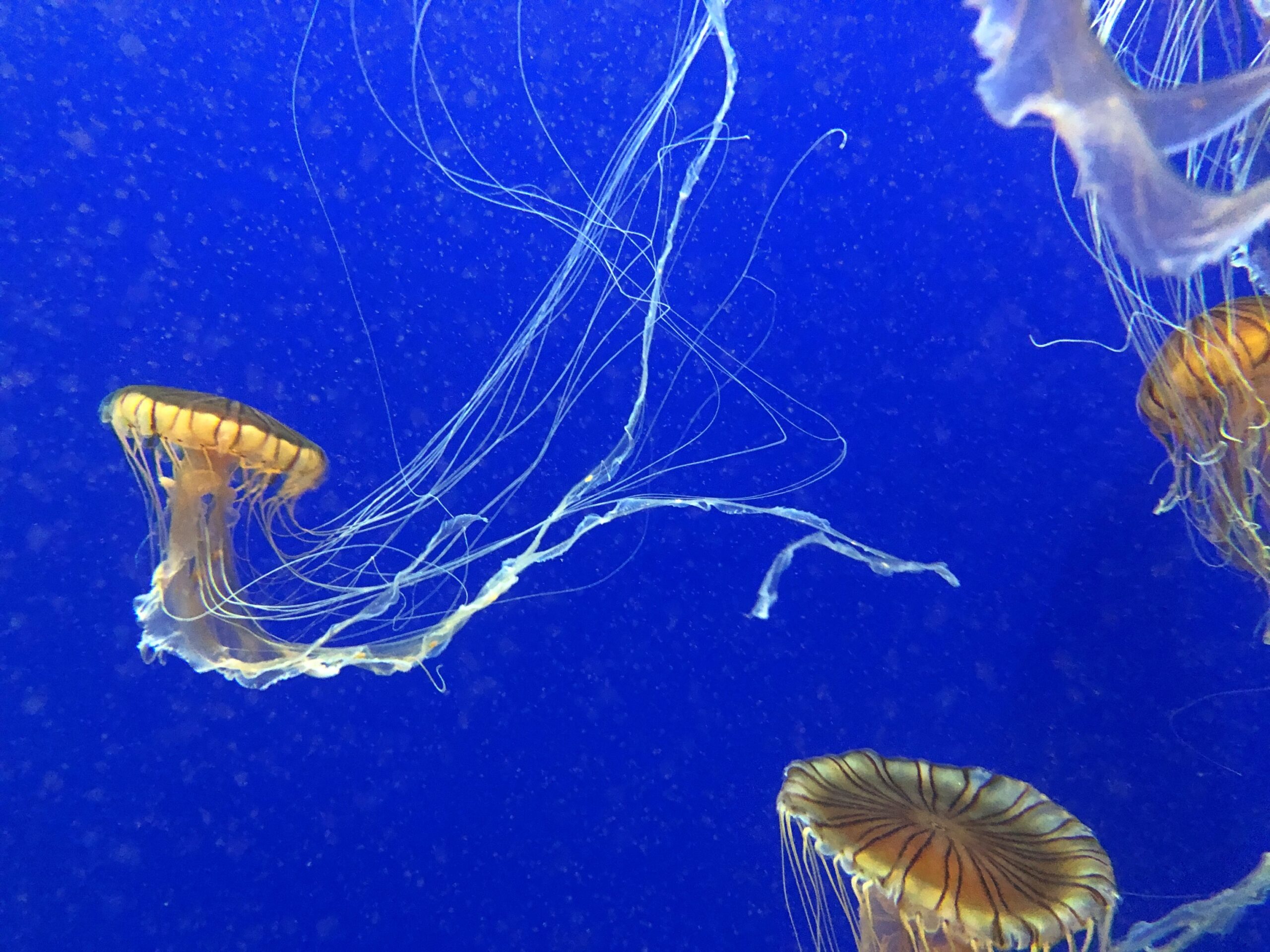
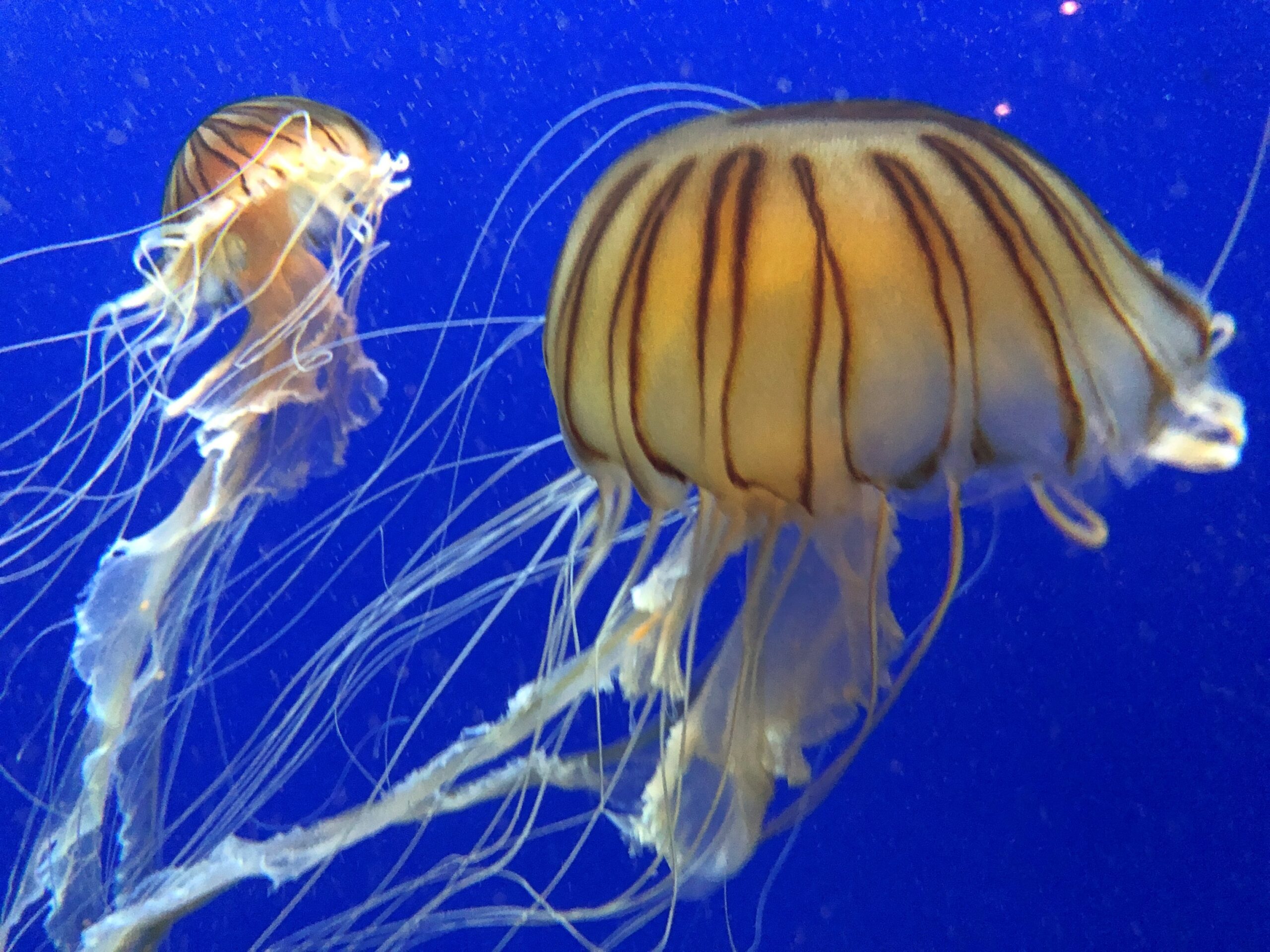
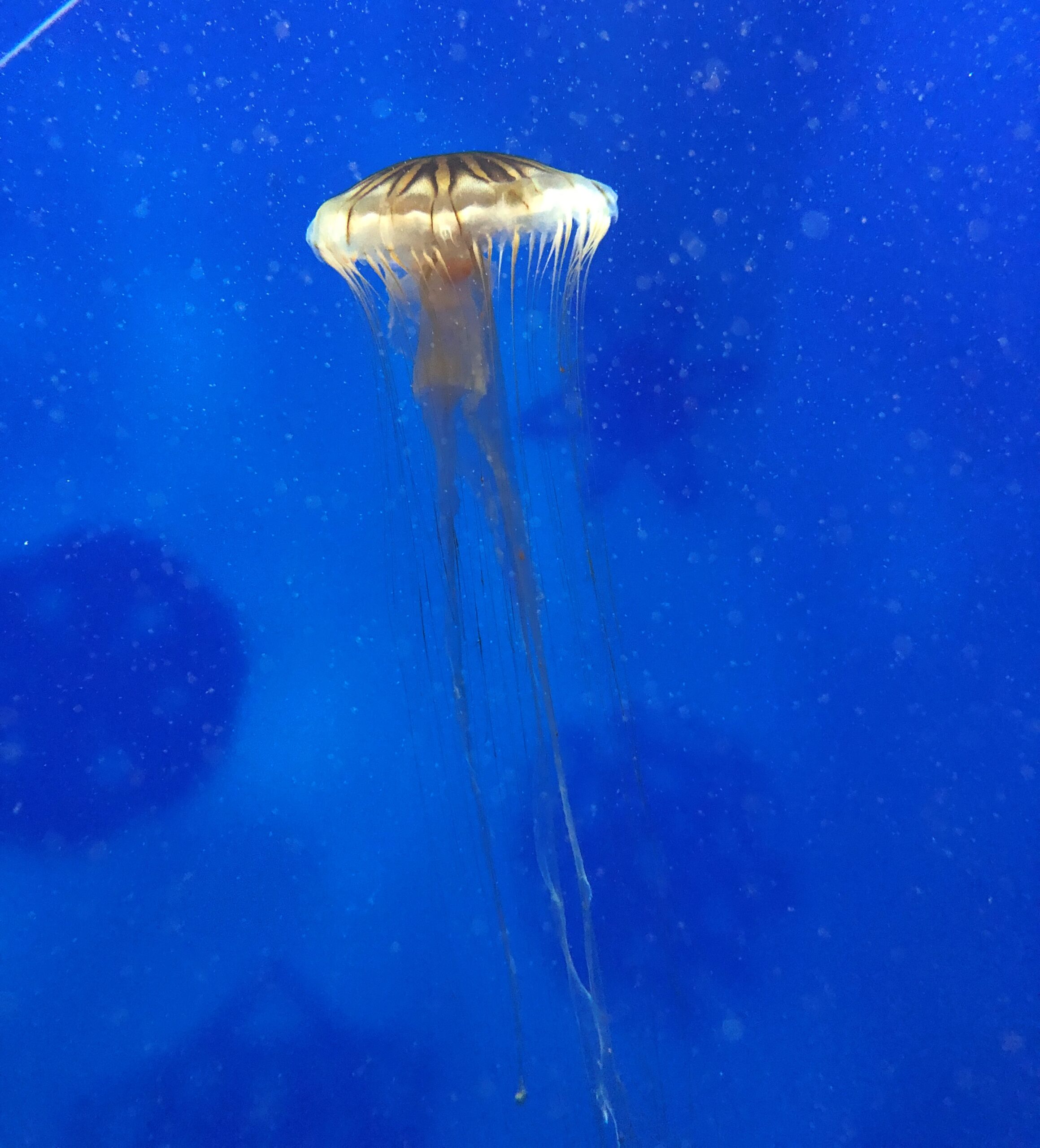
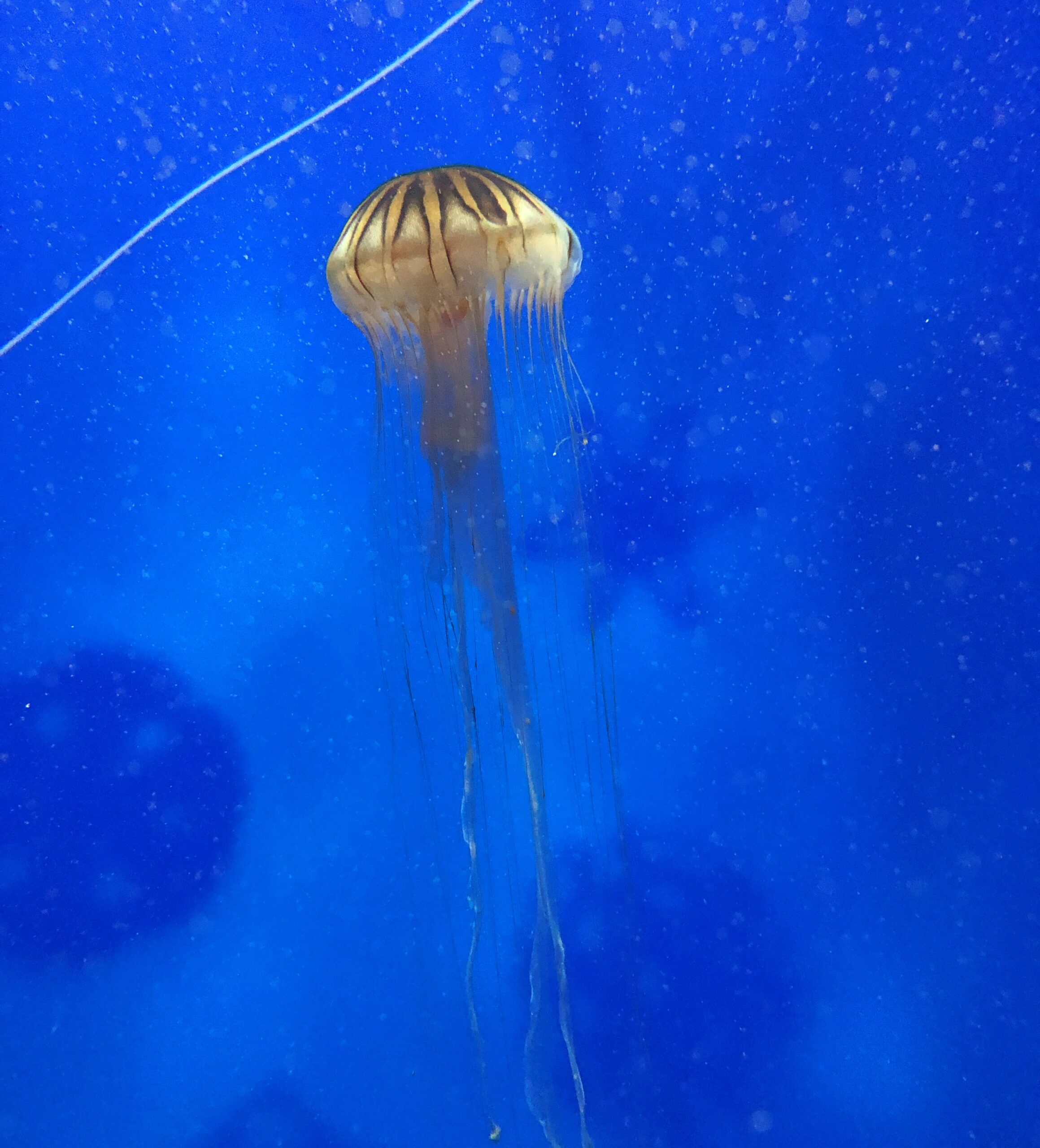
I’m always glad to spend some time peering into a tank where the moon jellies drift, but also somehow contract their entire selves to glide along in deep quiet.
We’d come to the Georgia Aquarium, which keeps company in downtown Atlanta with the World of Coca-Cola, the National Center for Civil and Human Rights, and a large parking deck on about 20 acres of a plaza known on maps as Pemberton Place. To its south is Baker St. and Centennial Olympic Park; to the north, Ivan Allen Jr. Blvd. and a massive substation behind walls. For just an instant I thought that was Irwin Allen Jr. Blvd., and was disappointed to realize otherwise.
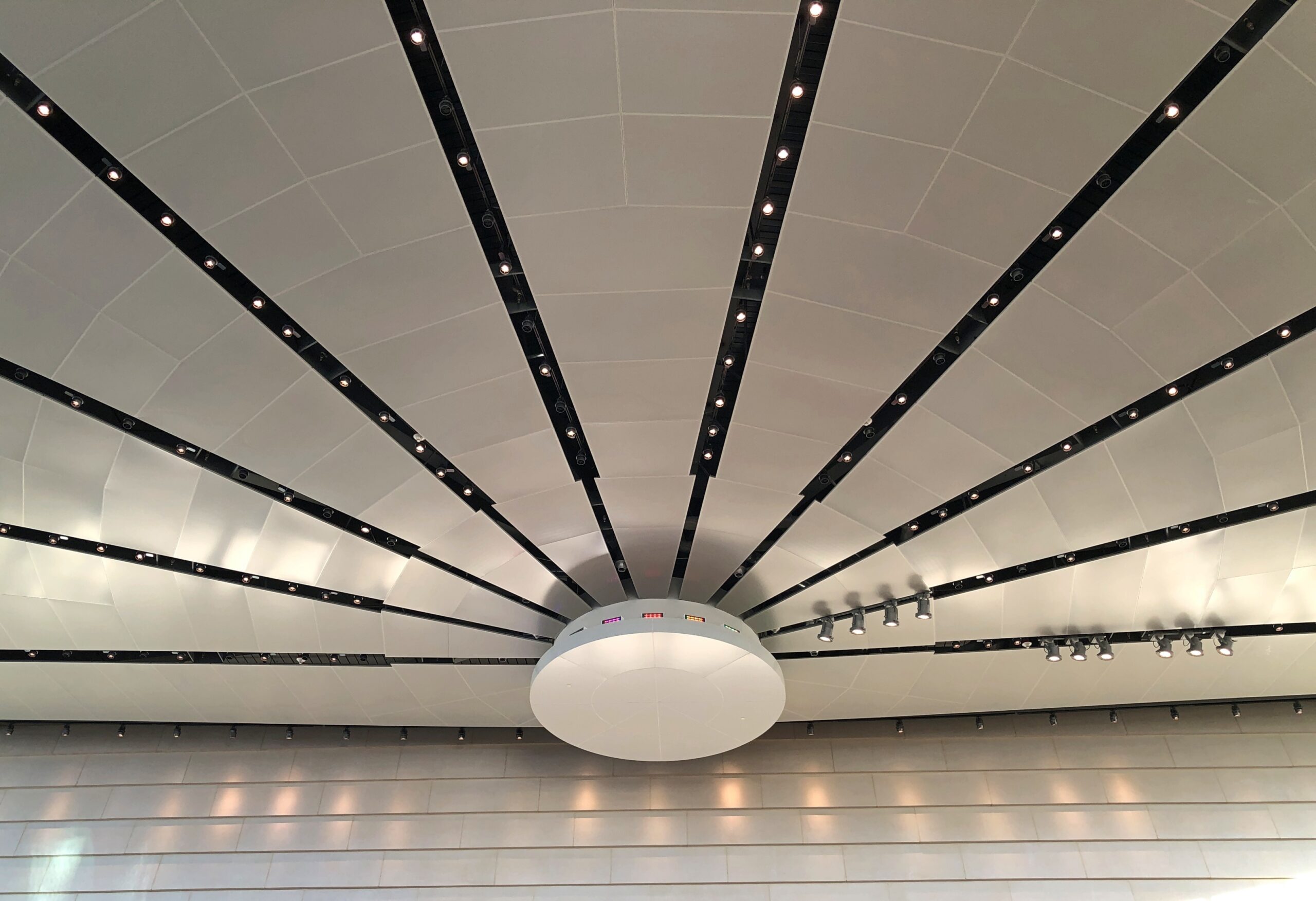
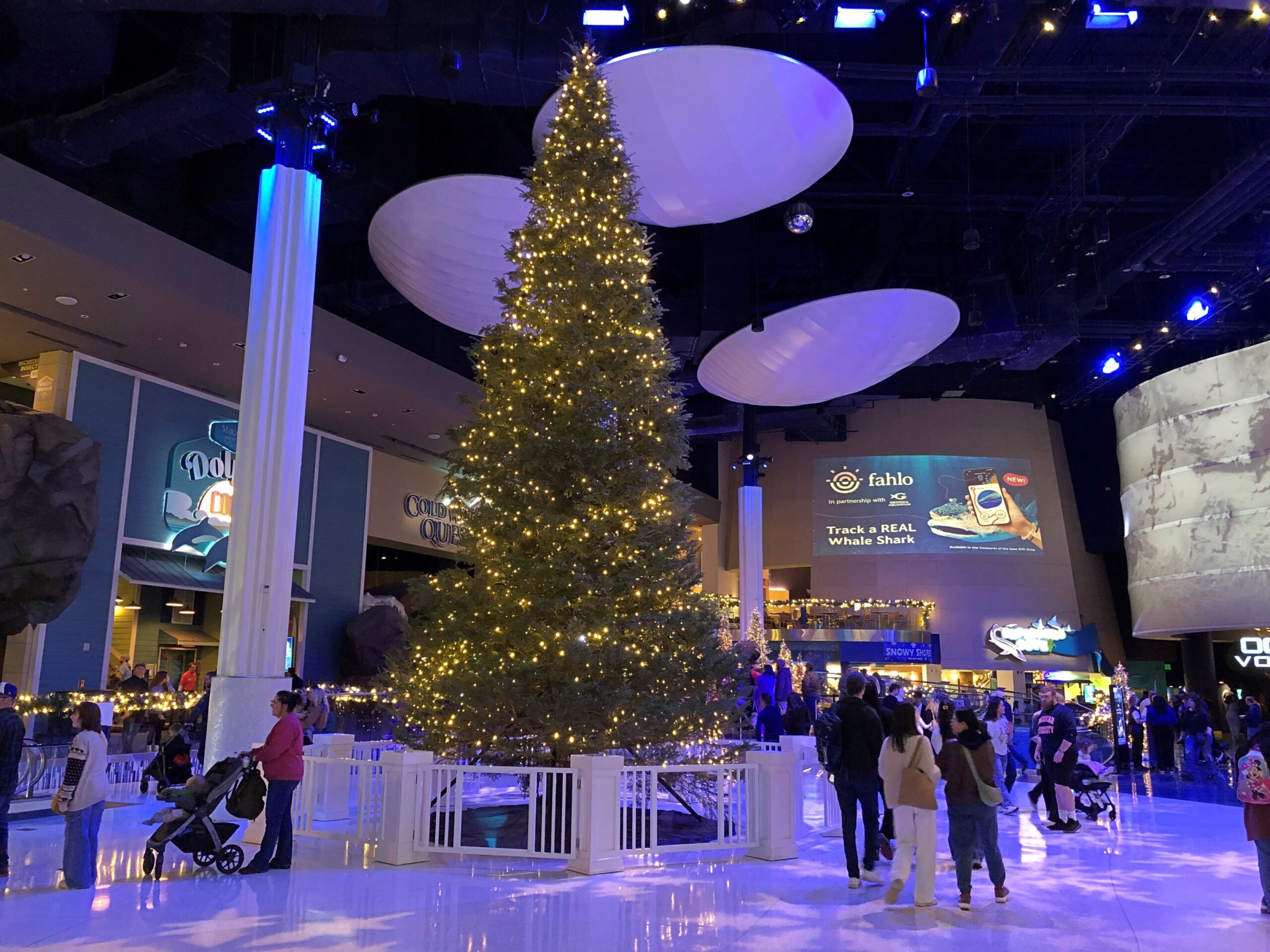
At 11 million gallons – which is apparently how major public aquariums are measured – the Georgia Aquarium is listed on Wiki as the sixth largest in the world and the largest in the United States, and I believe it. The structure is hub-and-spoke, with an enormous, vaulting hall with sizable exhibit spaces radiating from that hall: Tropical Diver, Ocean Voyager, Explorers Cove, Cold Water Quest, Southern Company River Scout, Dolphin Coast, Truist Pier 225 and Aquanaut Adventure.
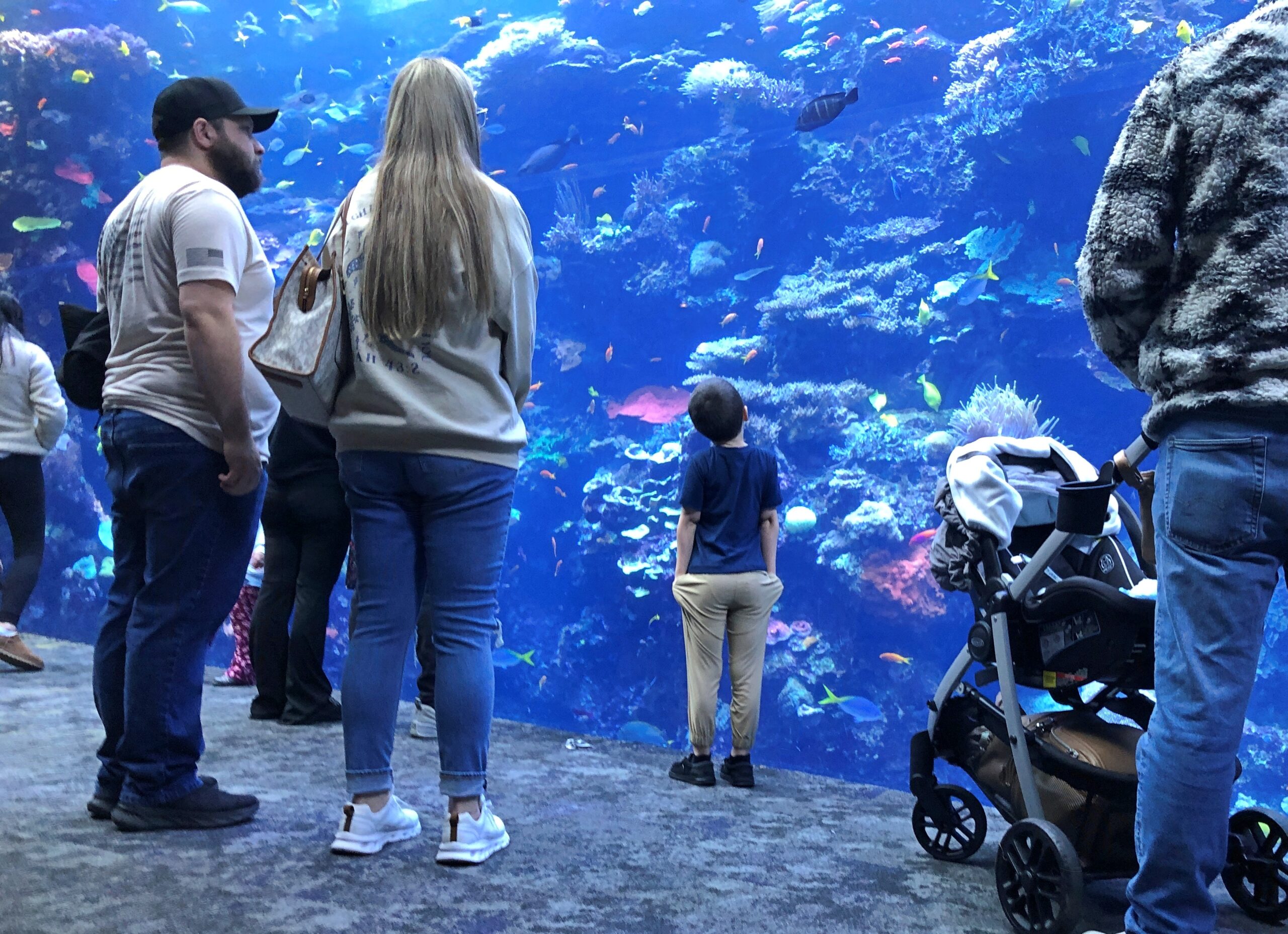
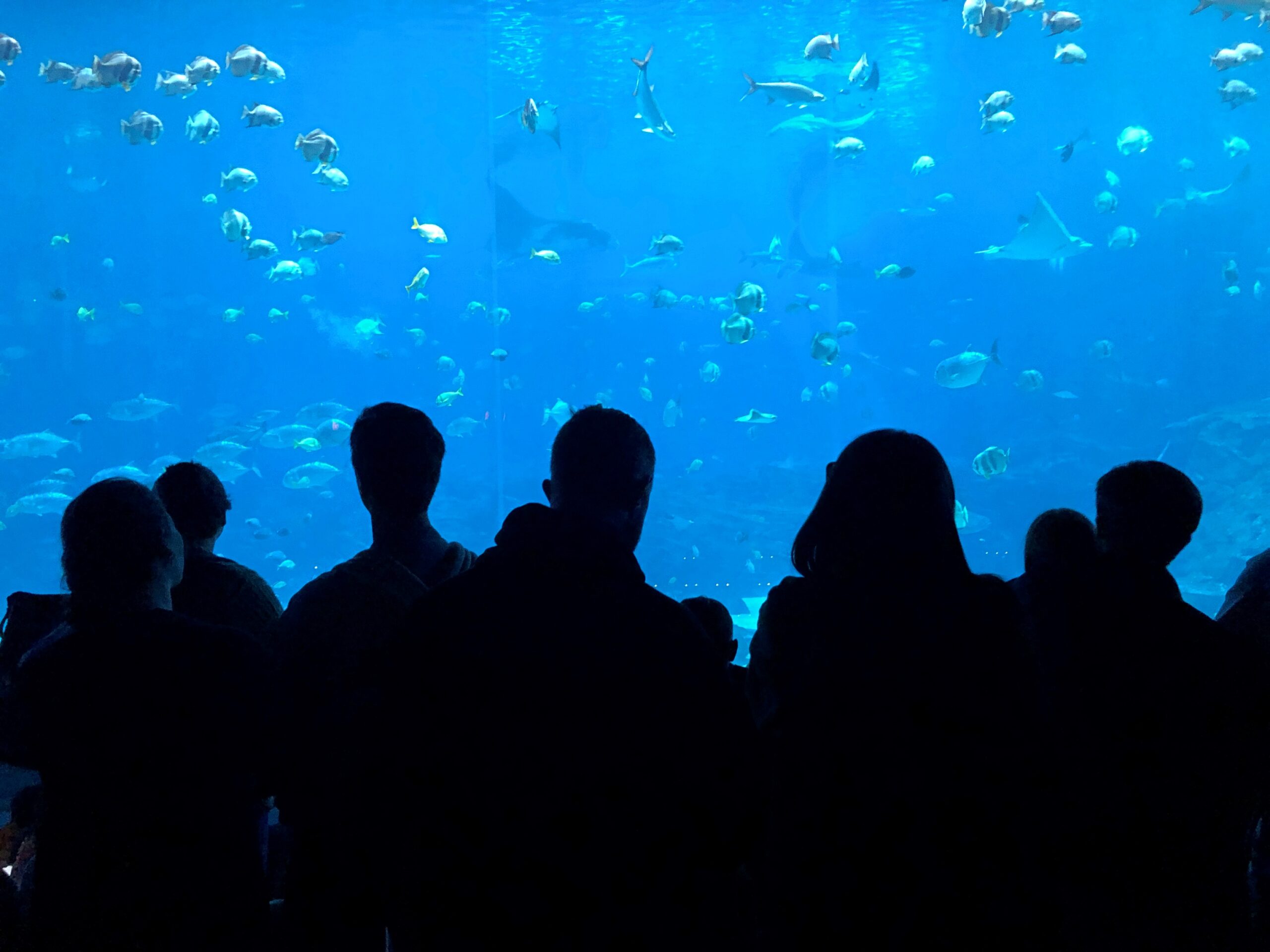
Five days before Christmas, much of the human population of Atlanta was there, gawking at the sea and land creatures. We did our own gawking.
The invertebrate collection included much more than moon jellies. There were other kinds of jellyfish, too, looking like the sort of thing that if you see on the beach in Australia (or anywhere), you’d better not to touch.
They puff along.
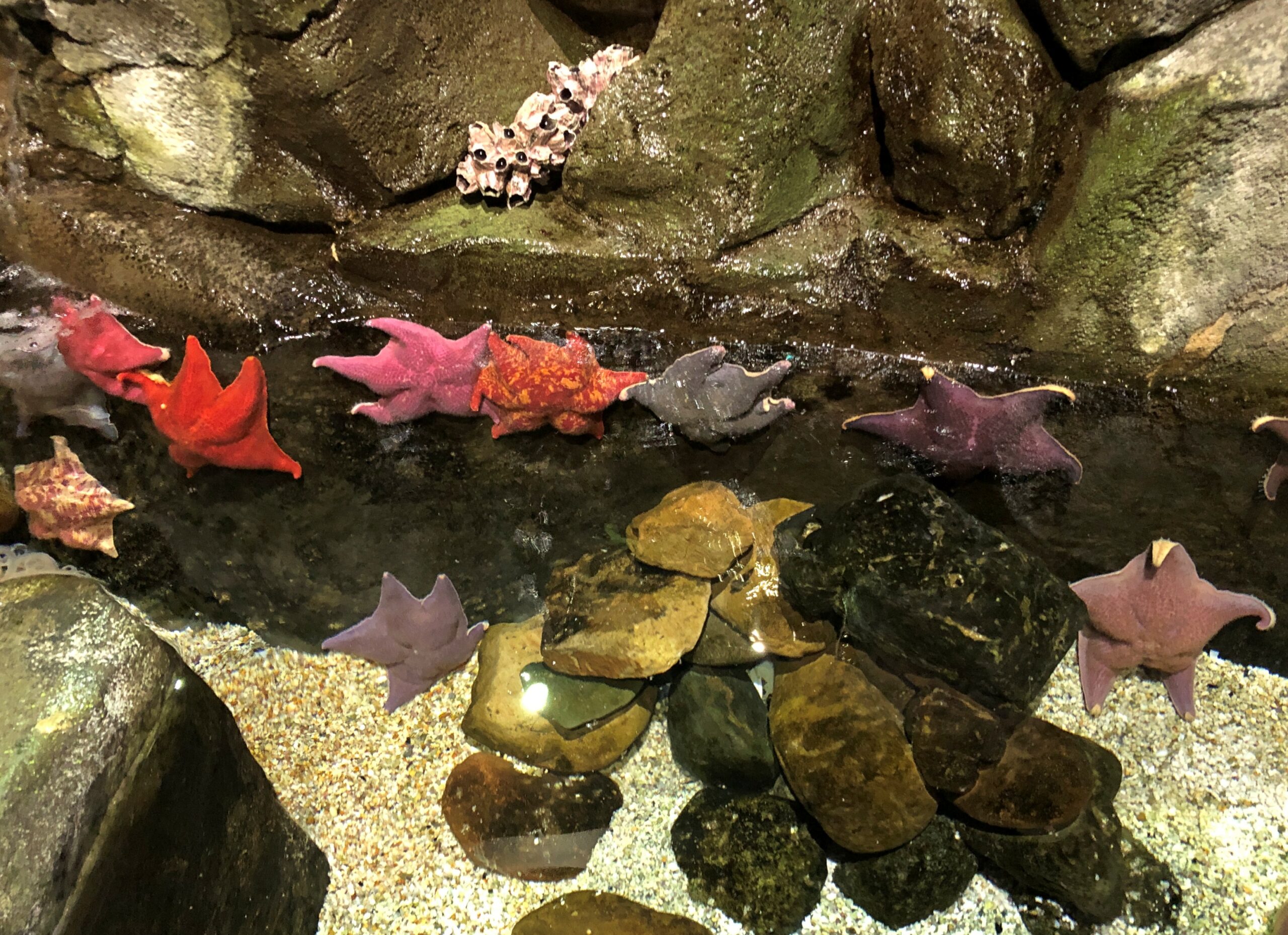
Other invertebrates. Such as the inspiration for Patrick Star.
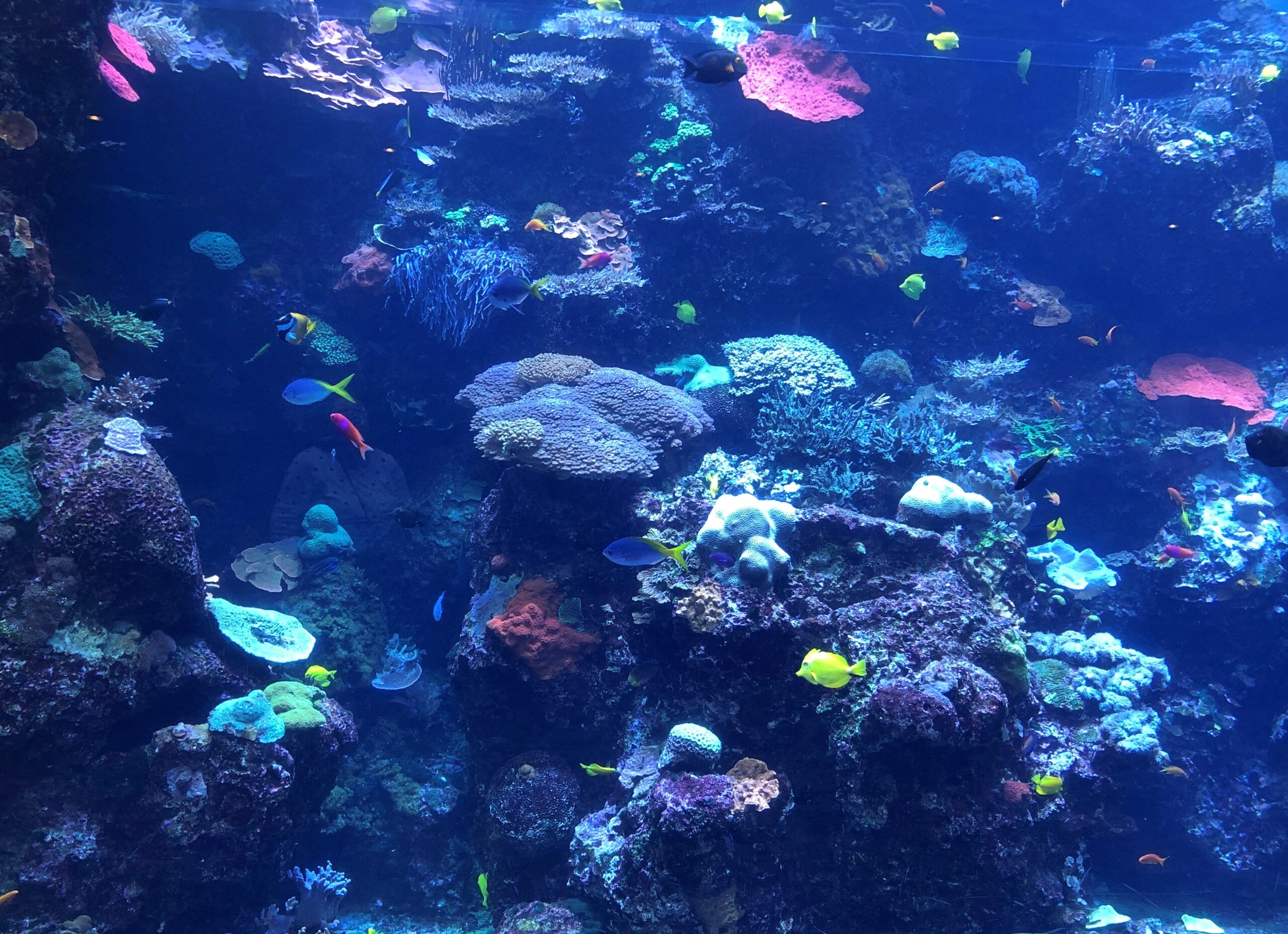
And of course, fish. Many, many fish.
Including the inspiration for Nemo.
Small creatures can be intriguing or even enchanting, but what really packs ’em in are the likes of whale sharks, the largest fish species know to science, and one of the aquarium’s signature attractions. There’s no shortage of other kinds of sharks as well, it always being Shark Week at the facility: tiger sharks, silvertip sharks, blacktip reef sharks, and great hammerhead sharks.
More from the sea: Manta rays, goliath groupers, green sea turtles, Japanese spider crabs and weedy sea dragons. Freshwater creatures include, but are hardly limited to, Asian small-clawed otters; black spot piranhas — just how many kinds of piranhas are there, anyway? — snapping turtles; banded archerfish; discus fish; and shovelnose sturgeon.
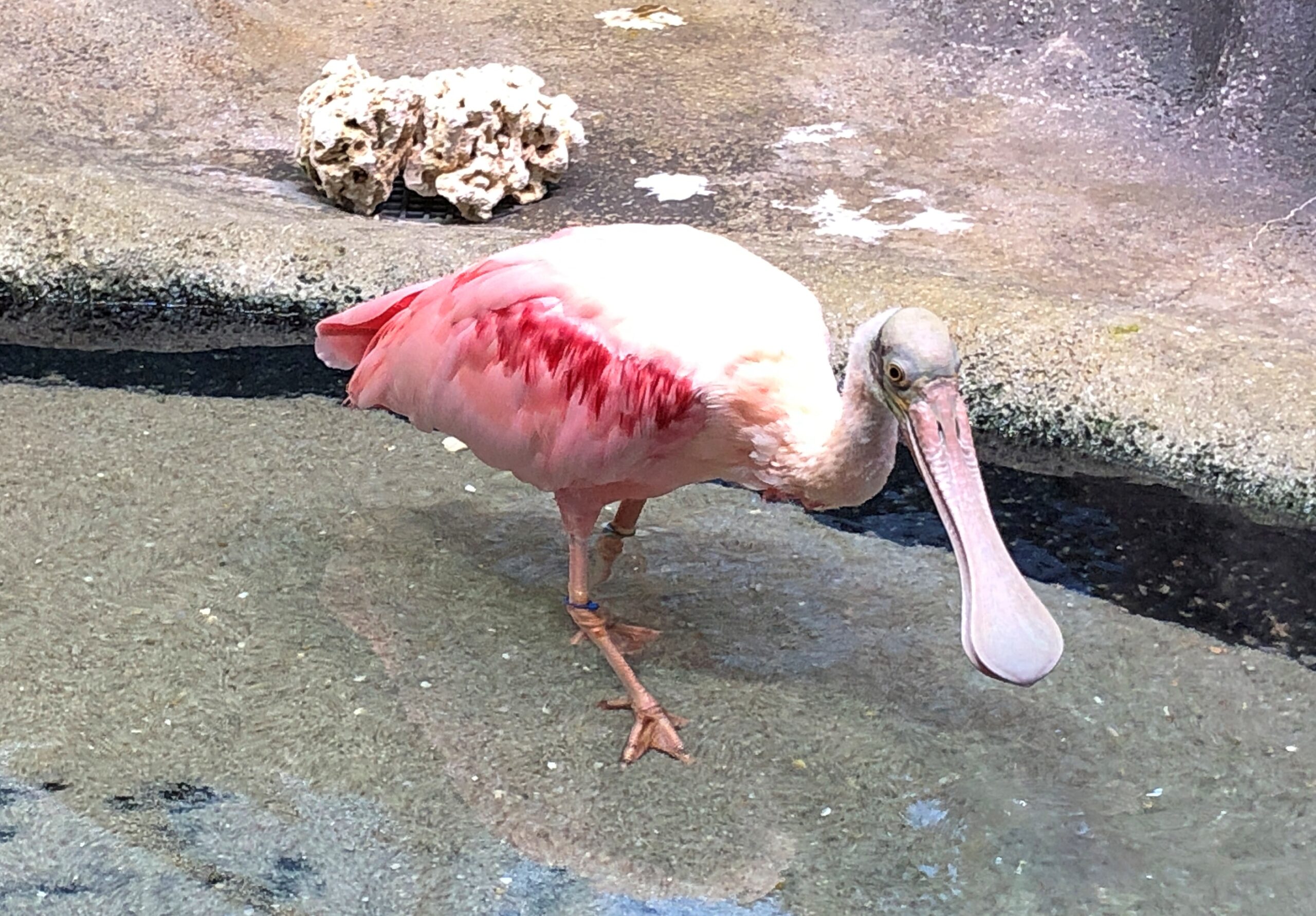
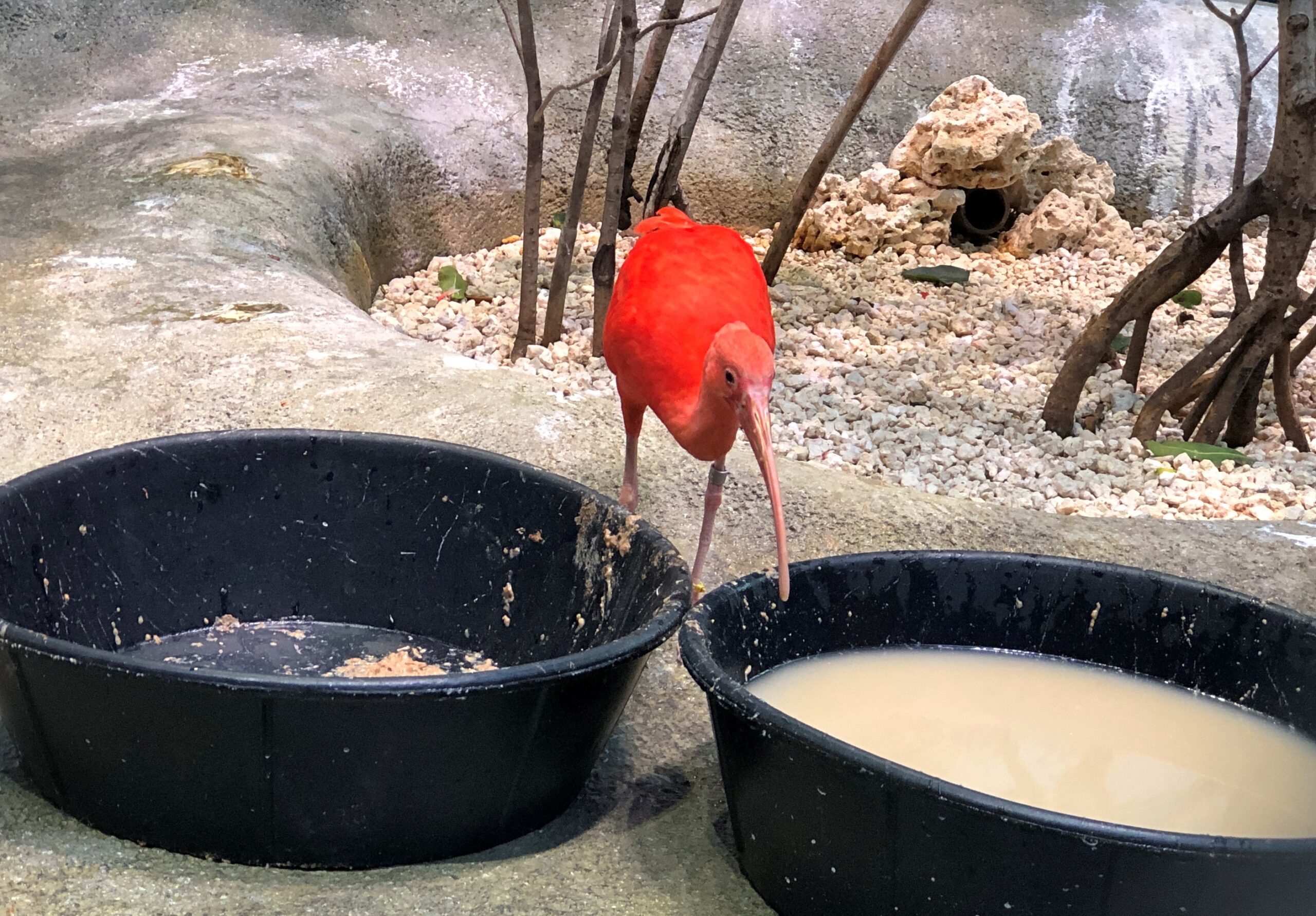
A few birds are on hand, such as spoonbills and ibises. Ones that subsist on fish, in other words.
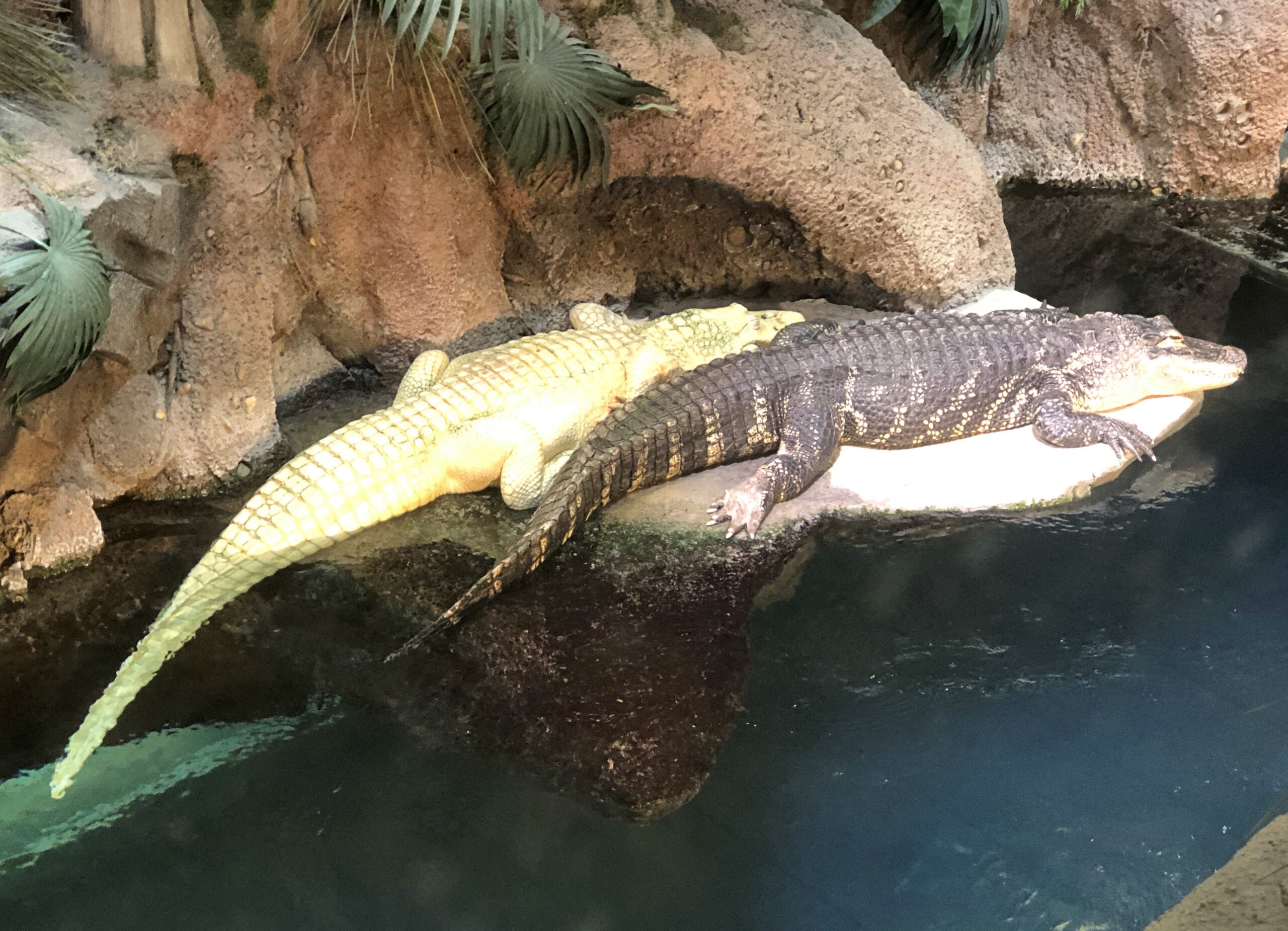
In case we hadn’t had enough gators in Florida, the aquarium had a few Georgia gators, including a rare albino. I take it Georgia gators were the inspiration for Albert in Pogo.
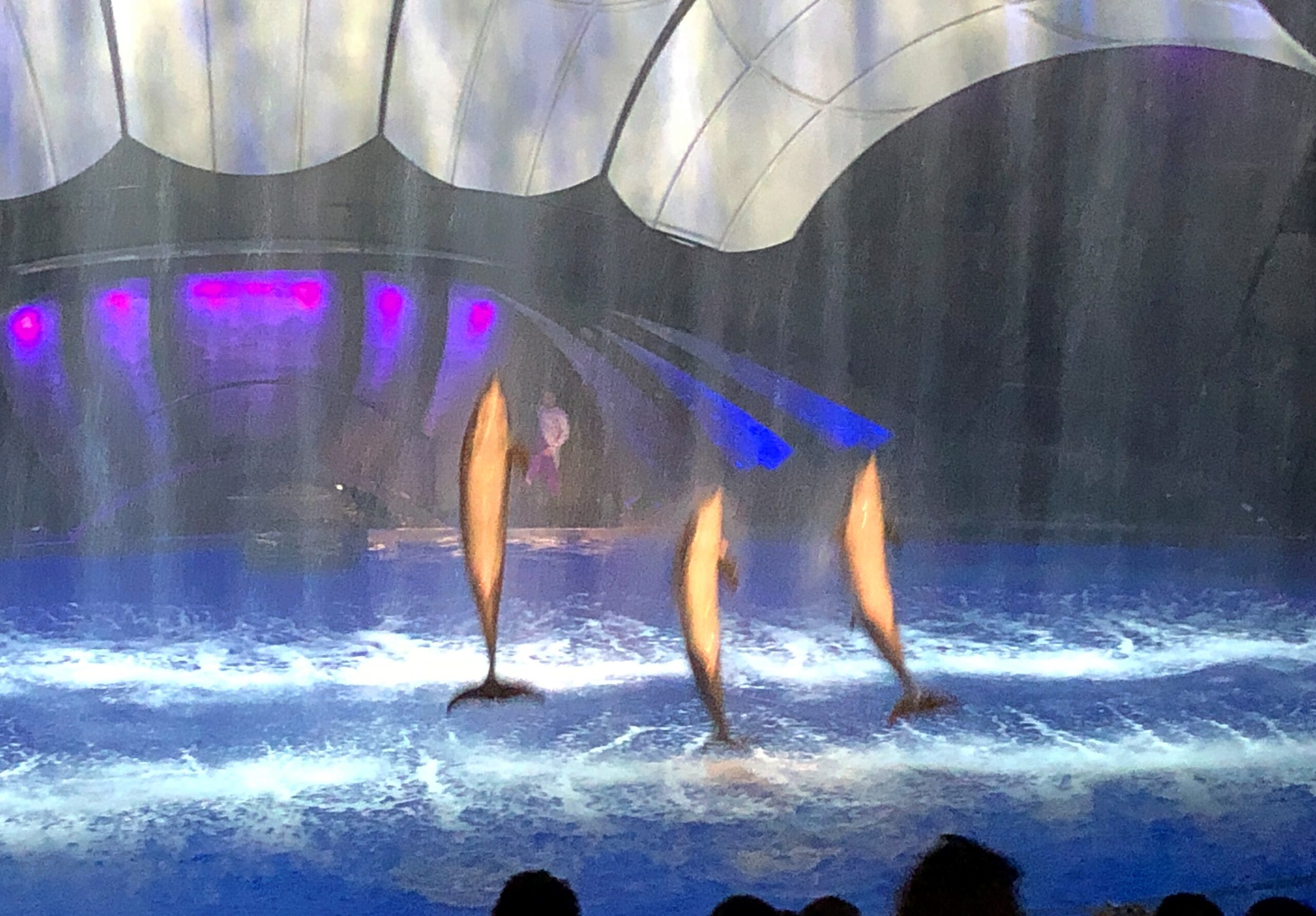
We saw the dolphin show. My still camera wasn’t the best for capturing the action, and there was a lot of jumping and splashing, but squint and the second shot looks like an impressionist work featuring a line of mid-air dolphins.
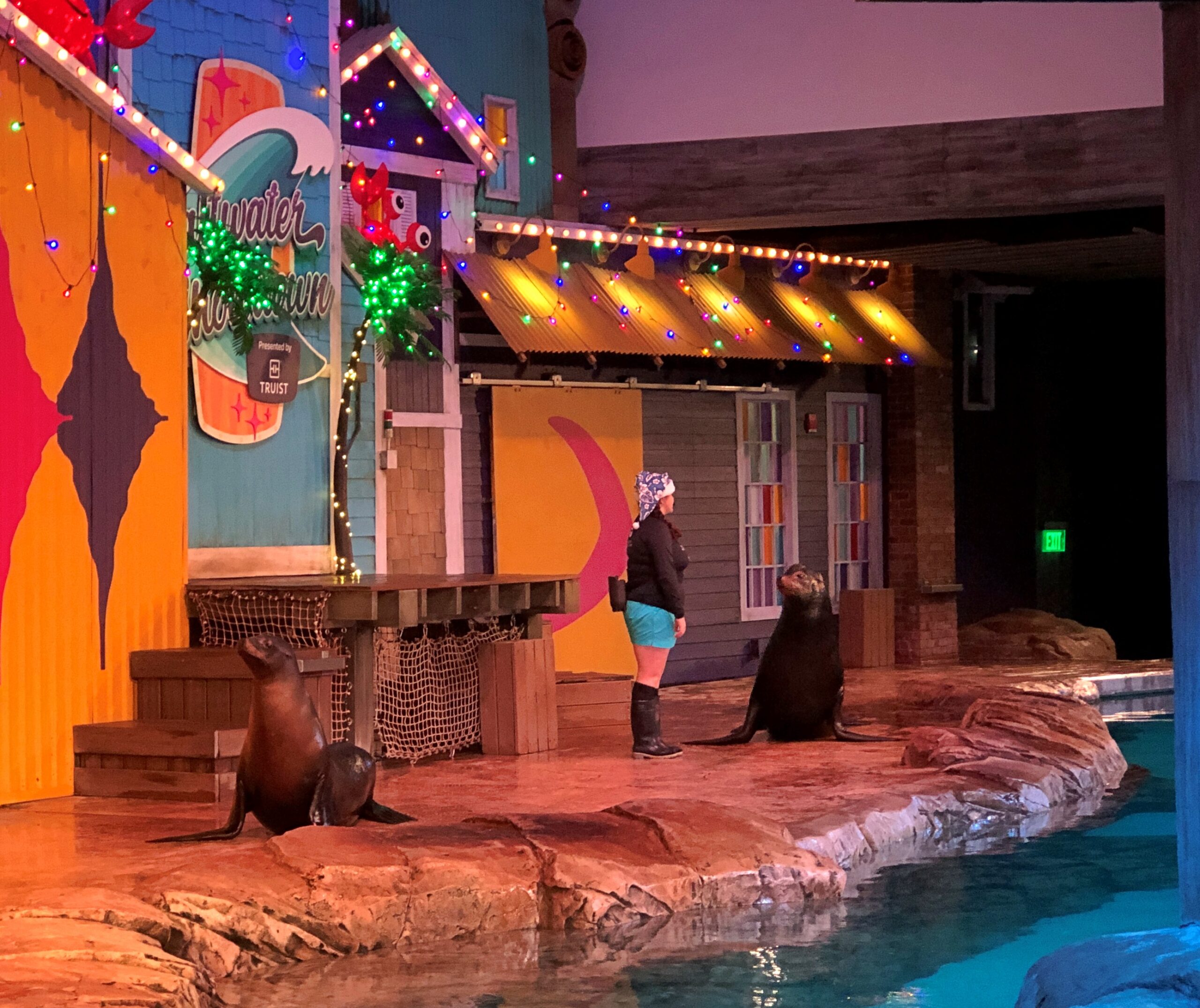
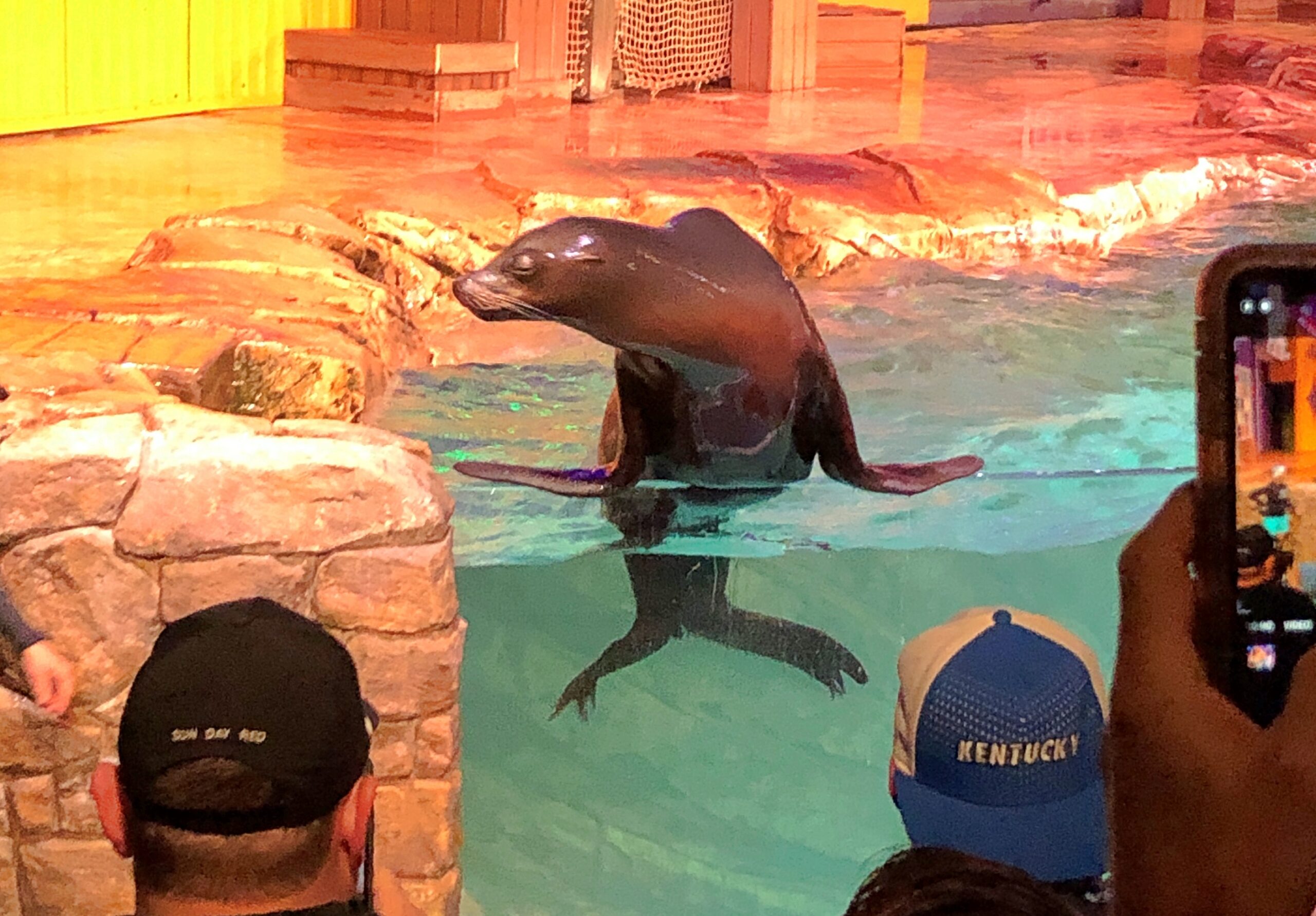
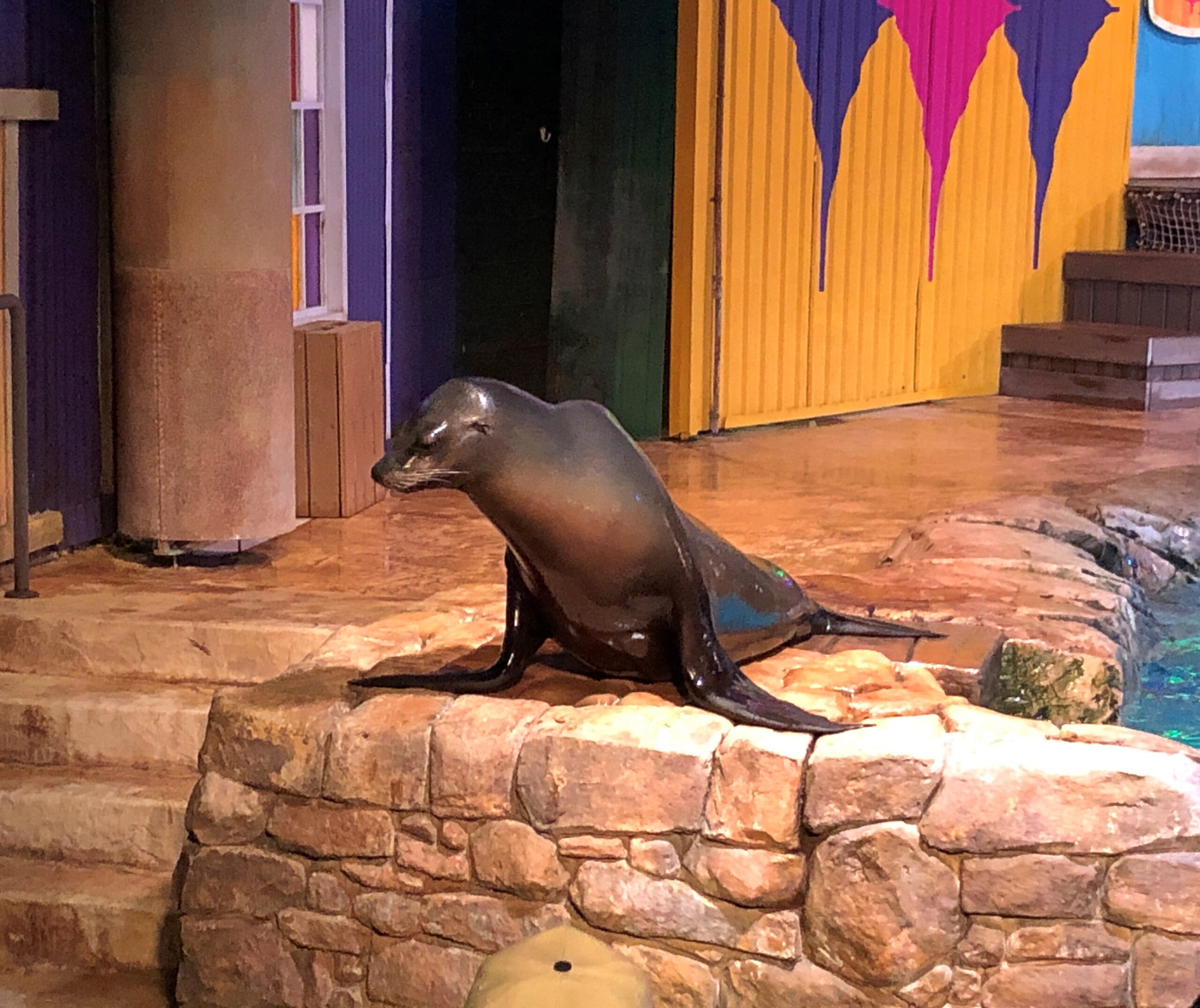
A separate show features seals and sea lions, doing seal and sea lion things for fish rewards.
About half as many people crowded into the aquarium would have made for a better experience, but I can’t begrudge the Georgia Aquarium its massive popularity, since it delivers the aquatic goods. Better a crowd than too few people. They’re out seeing real things. Often better, I believe, to see some part of the physical world than an electronic simulacrum.
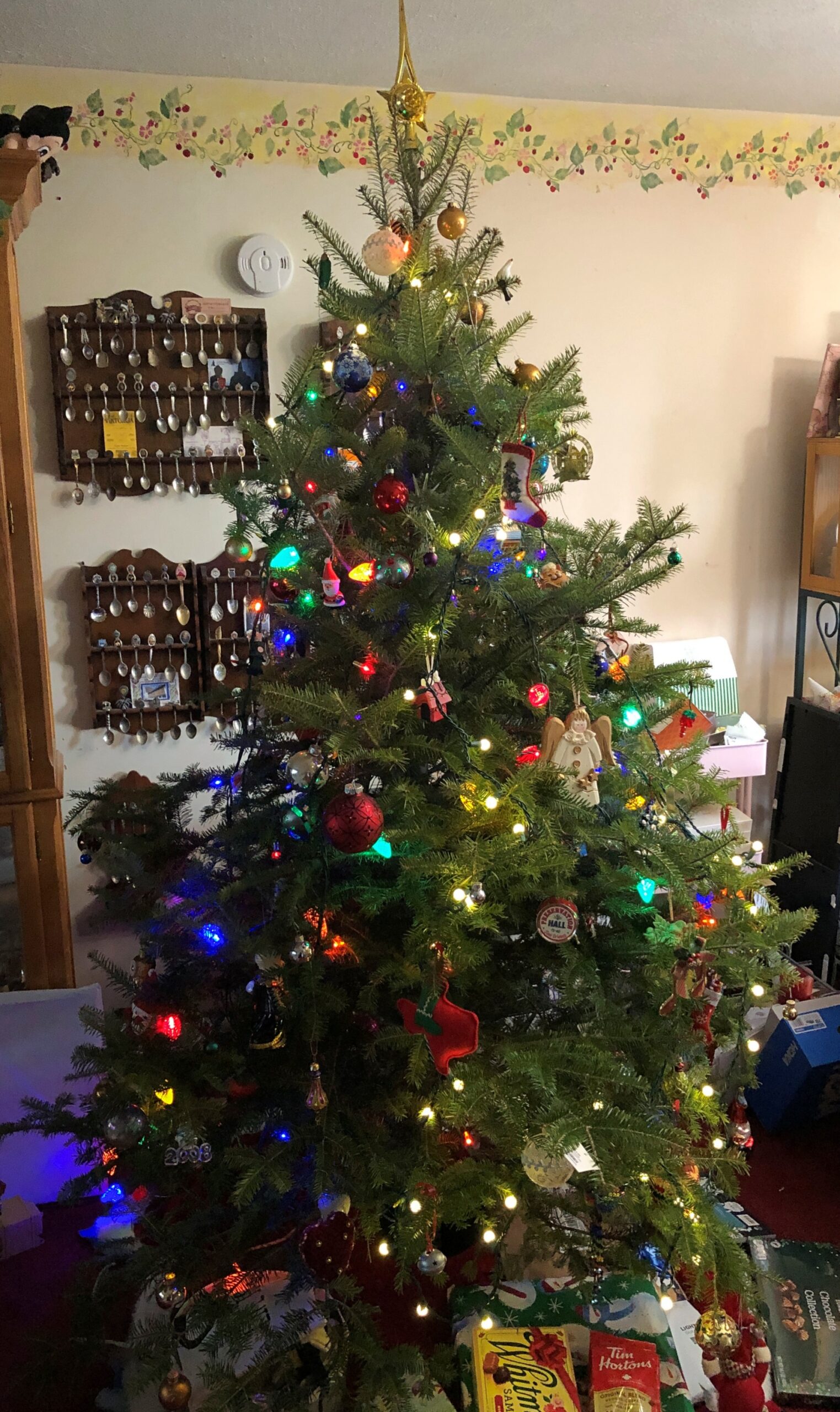
Decorating for Christmas this year meant a rapid set-up. We spent a fair number of hours on the 23rd making the living room ready for a tree – moving clutter, mostly. On Christmas Eve, I brought the tree in from the garage, and Ann mostly decorated it. Finishing touches, by me, were in progress even on the morning of Christmas Day, but since that moment in the life of our family doesn’t involve an early-morning rush downstairs by children anticipating Santa’s bounty any more, that was doable.
Ann did a fine job of decorating, in the style of our family: fill up the tree with a wide variety of glowing and glinting objects accumulated across the decades.
We got a late start on decorating for Christmas, though when I think about, decorating after the Solstice discourages the sort of front-loading of Christmas that a lot of people complain about, but which they do anyway.
We had a good reason for the late start: a drive to Florida and back, beginning on December 4 and ending on the 22nd. Not just to Florida, but as far as you can go in that state, at least by car, namely to Key West and back. Early to mid-December seemed like a good time to do such a thing, after any traveling people do for Thanksgiving but before the worst of the Christmas-New Year’s rush. A short shoulder season in other words, but a good one, with room rates not quite subject to surge pricing, and crowds thick in some high-volume tourist destinations, but not impossible.
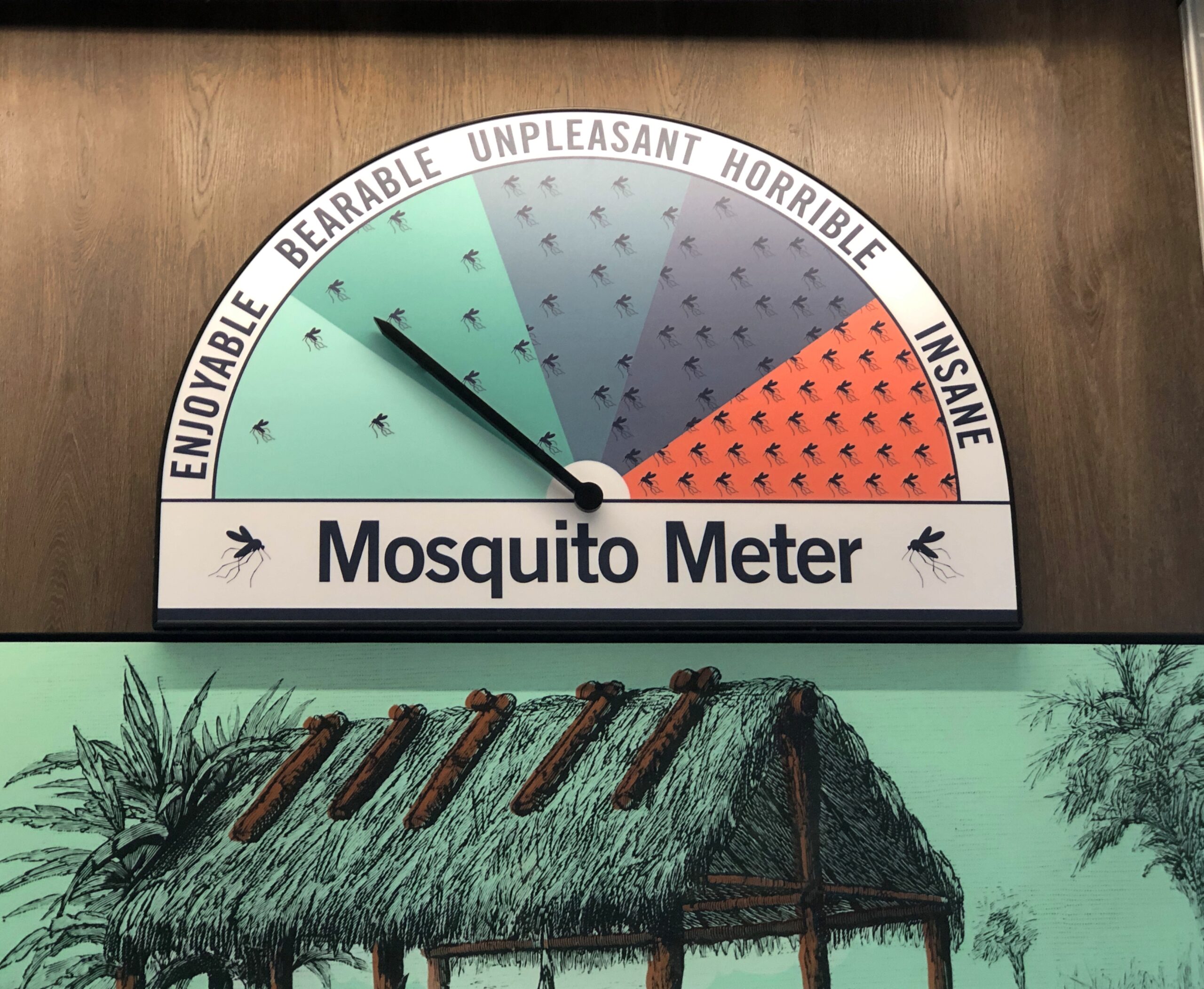
Also, Florida has few mosquitoes this time of year. Not no mosquitoes, as we found out one day in the southern reaches of the peninsula, just a “bearable” number.
Sometime earlier this year, I got the idea that I wanted to take four long drives after turning 64. Four for 64, you could say. Doing so by the end of 2025 wasn’t part of the idea, but that’s how things worked out. The drive to Florida and back, by way of such places as Indianapolis, Louisville, Chattanooga and Atlanta, totaled 3,682 miles. For all four trips since June, the total is about 14,300 miles.
That could be made to sound impressive, but in fact American men my age average more than that every year, about 15,000 miles, at least according to this source, which cites US DOT data. Younger men drive even more annually. Most of that is commuting, however. My commuting mileage by car has been exactly zero this year, and while I drive locally to stores and such, it couldn’t be more than a few thousand miles. So it seems clear that, as an American man, it was my duty to get out and drive.
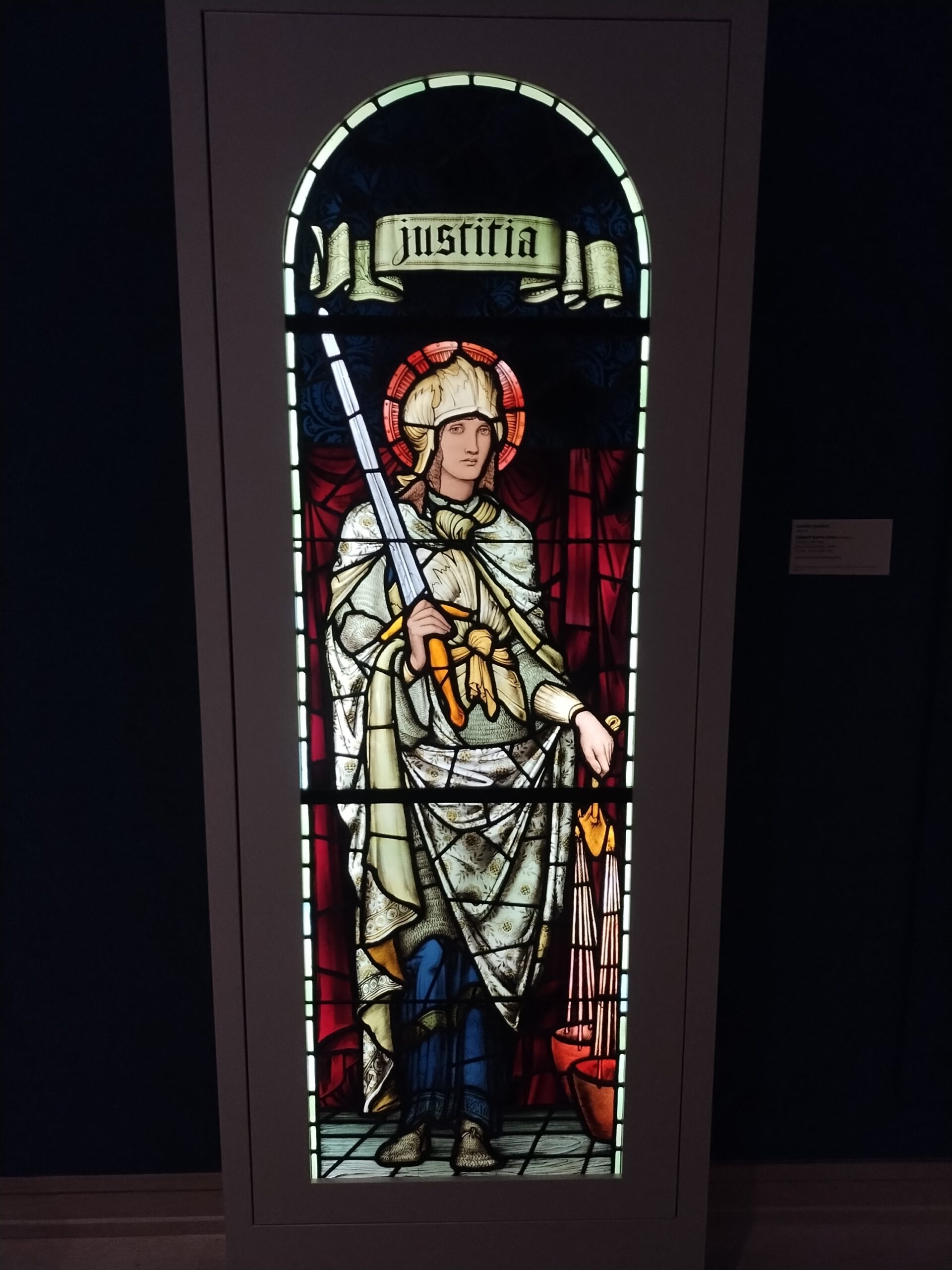
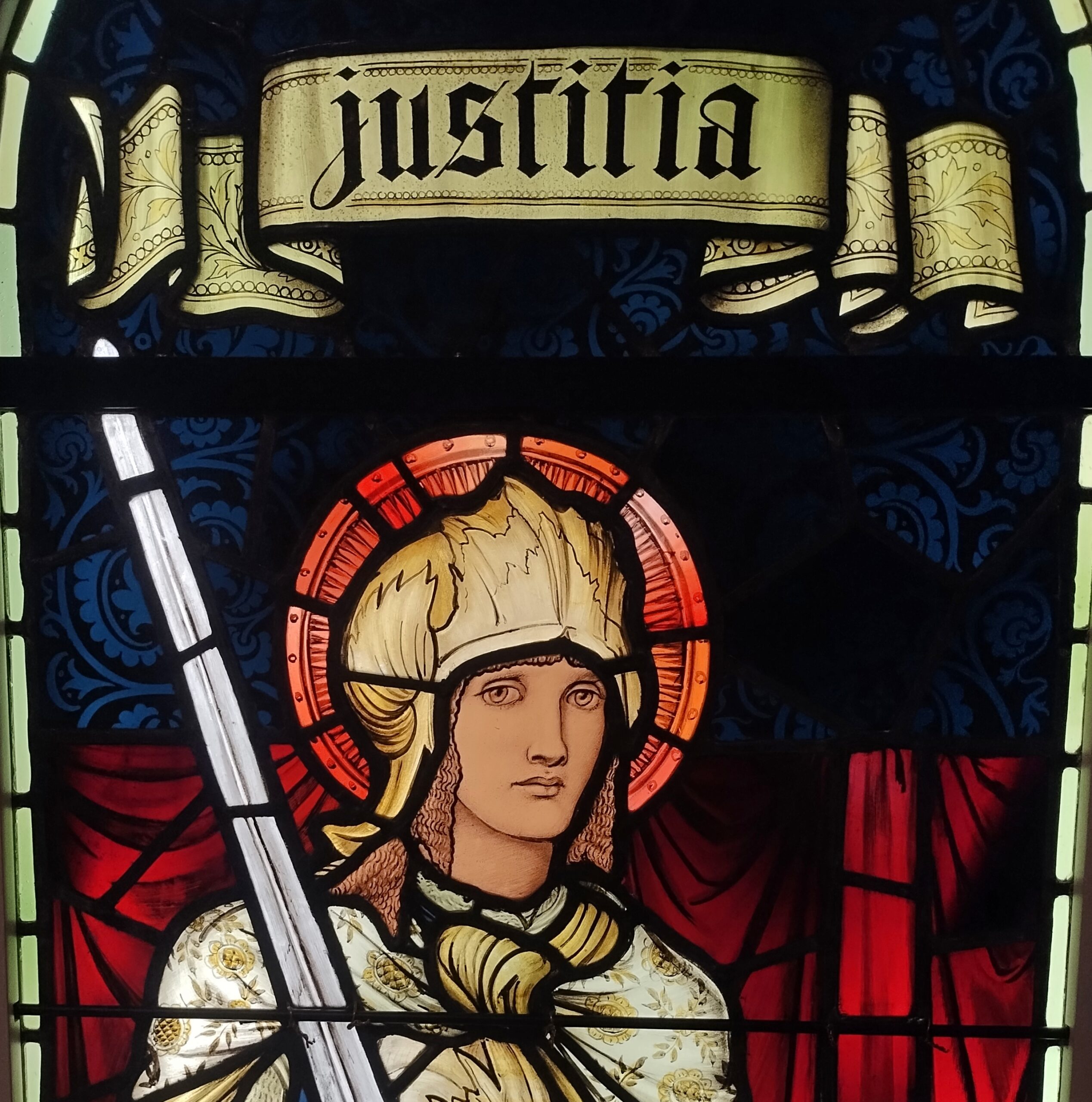
When we headed south in early December, snow covered the ground all the way past Indianapolis, where we stopped for a few hours at the Indianapolis Museum of Art, which is part of a larger campus called Newfields – and better examined in summer, I think. But the museum is a good one, with a solid collection, especially 19th-century American and European works. Such as “Justitia,” a Morris & Co. work from the 1890s.
After overnighting south of Louisville, we diverted from I-65 and took smaller roads through southern Kentucky and into Tennessee to a holler in Jackson County, where we were the guests of dear friends. Tennessee musicians from those parts — some professional, others skilled amateurs — gathered on the the evening of Saturday the 6th, for one of the periodic jams in our friends’ barn, which houses no animals these days, but a small stage and some sound equipment and a fair number of folding chairs. A joyful jam it was. Food was potluck. I like to think we went to a hootenanny.
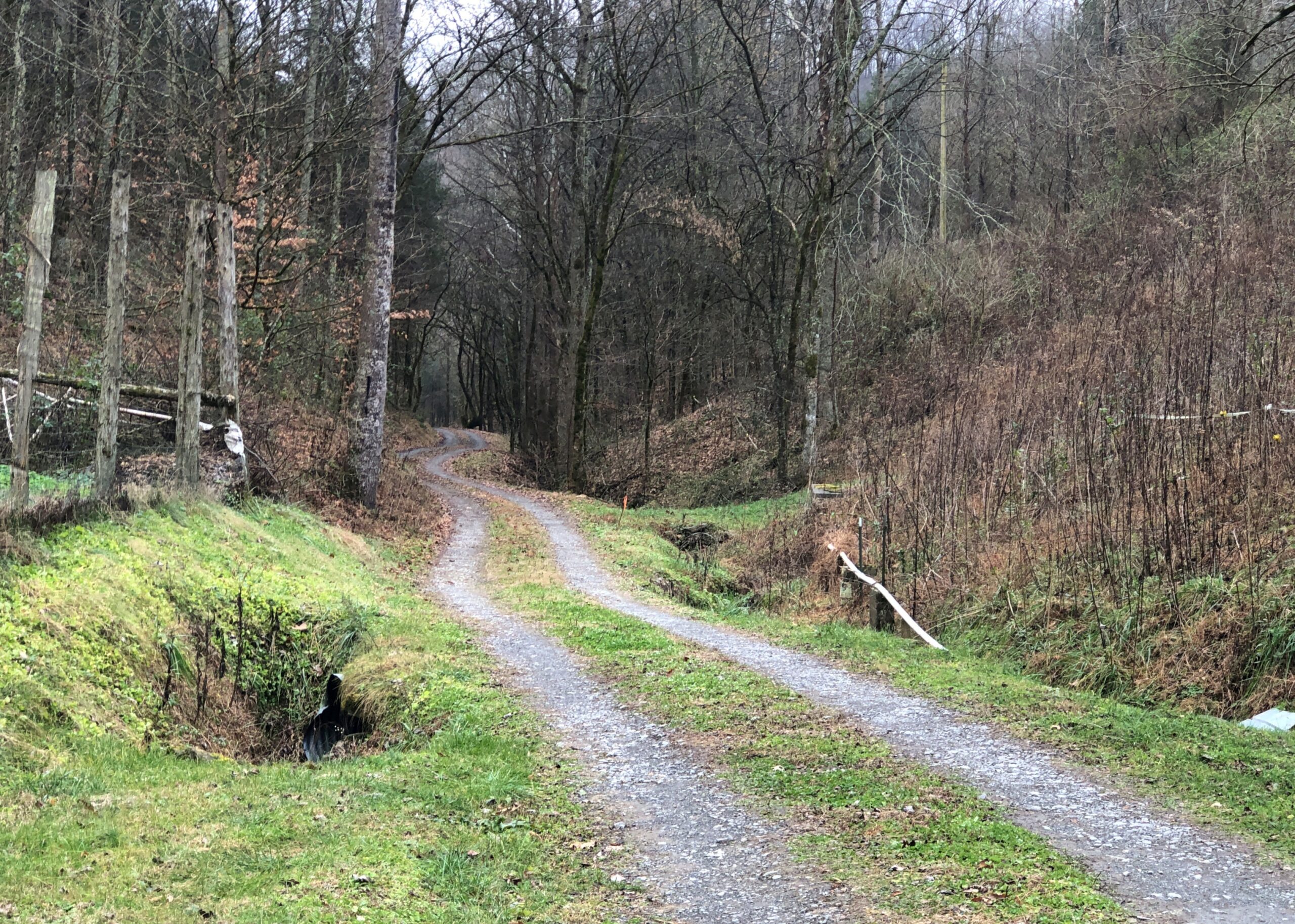
The road through the holler. By this point, no snow. We were trading cold for warmth. That was one of the goals of the trip. Maybe the main one.
From there it was mostly a straight shot down through Georgia on I-75 to Florida, and eventually US 27 to Orlando by way of non-coastal Florida places like Gainesville, Ocala and Lady Lake, a string of settlement less agricultural and less pastoral now than ever, more like an endless outer suburb. Heavy traffic is an invasive species in this part of Florida, surely as pythons are in damper parts of the state. Not just masses of cars and trucks, either, but also golf carts. We passed close enough to The Villages to see billboards advertising legal representation in the event of golf cart accidents. Carts, I’ve heard, provide transport in great numbers in that sprawl of a settlement.
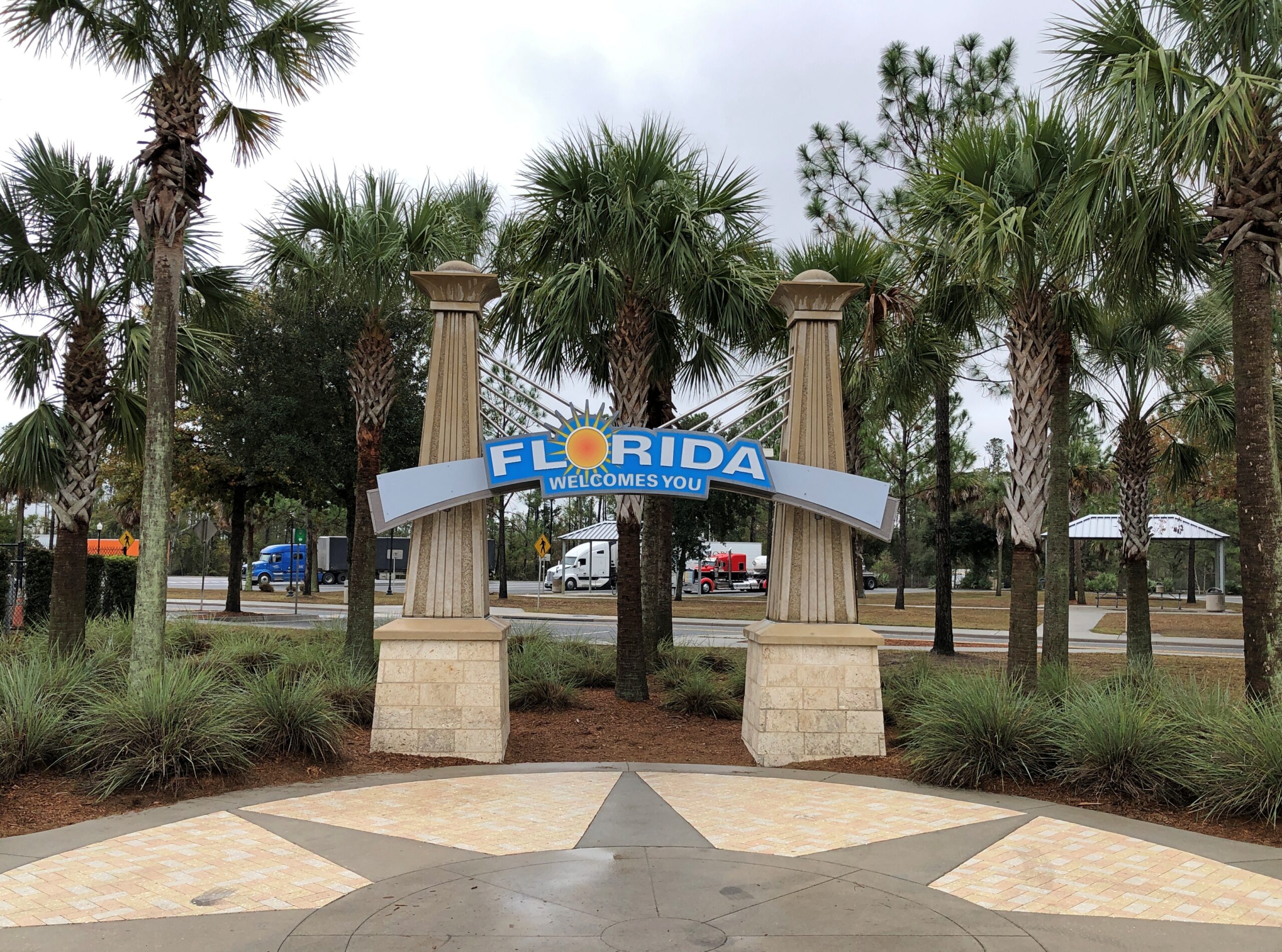
The drive to and in Florida involved the usual North American mix of large and small roads, smooth and ragged, grid-like and irregular, though Florida cities tended toward the irregular (except for Key West), and as crowded as can be and as empty as can be. Snow lined the way up north, thinning out the further south we went, giving way to brown landscapes and bare trees. Then we came into greenery – evergreens and palms and even deciduous species turning color. We crossed mighty bridges over mighty rivers, small culverts over alligator haunts, and the string of bridges that make up the civil engineering marvel known as the Overseas Highway (US 1). We crossed barely acknowledged borders and signs at the Florida visitor center on I-75 proclaiming The Free State of Florida.
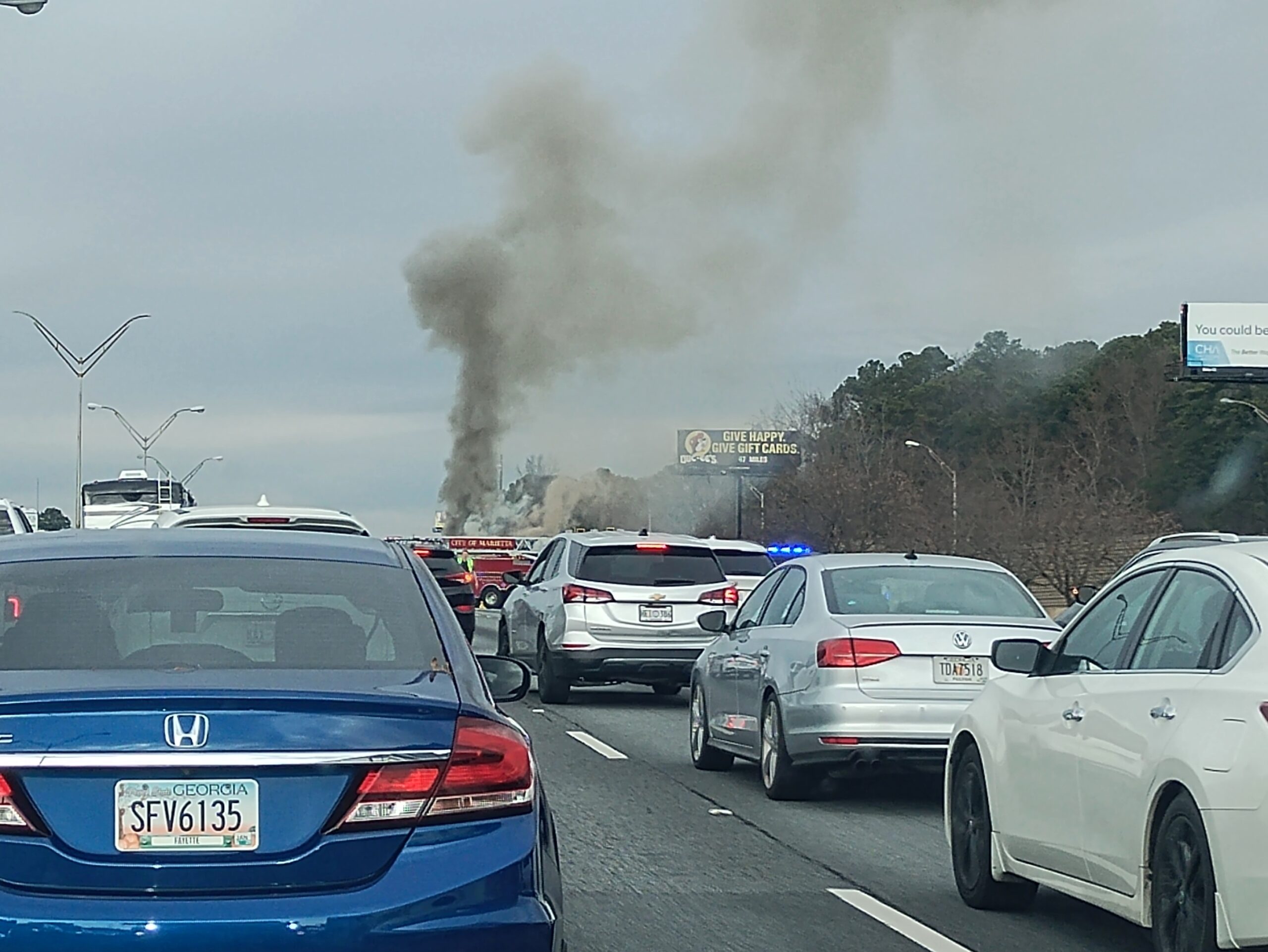
Florida Man was out and about, weaving in and out of high-speed traffic, pushing 100 and pretty sure that physics doesn’t apply to him, though I have to admit that Florida isn’t different from any other state in that way. Traffic stopped cold more than once: for a banged up, upside-down SUV; for a raging RV fire, attended by a half-dozen firemen; for a serious two- or maybe three-car wreck on the other side of a divided highway; for construction, usually without any workers in sight; and once for no reason that we could tell at all.
In Orlando, we spent all December 9 at Universal Epic Universe, a theme park that only opened in May. Ann flew in the day before we went to the park and flew home the day afterward, taking advantage of the low prices that discount airlines offer to high-volume places in a shoulder season, if you take no bags and buy nothing to eat or drink at sky-high prices, literally and figuratively. A small bag of hers had been stowed in our car for the visit.
A theme park is one thing, but I wanted a look at Orlando, at least a sliver of it, the next day. Ann’s flight was fairly late that day, so we were able to spend part of it in posh Winter Park, including a tour boat ride through the town’s small lakes, lush with greenery and expensive houses on their banks, and connected by canals.
A drive that included the stretch of US 41 that passes through the Everglades took us to Homestead, Florida, and the mid-century charms of The Floridian motel. A day in Everglades NP followed, including an airboat tour and a drive to the coast at Florida Bay. The next day, before leaving Homestead for a drive in the rain across the Overseas Highway to Key West and while the sun still shined, we toured the Coral Castle, a one-man construction project using 1,000 tons of oolite to make walls, carvings, stone furniture, and a castle tower.
Key West was a two-day, three-night mid-December ramble on the busy and less busy streets of Old Town, including humans but also chickens, taking in the likes of the Hemingway House, the Little White House, Mallory Square, the San Carlos Institute, the Key West Aquarium, and the Key West Cemetery. Also, tourist shops, boutiques and the building where Pan-Am was founded. We ate and drank, though as our wont, nothing alcoholic. Key West was decked out for the holidays but not over the top. We walked and walked some more. It felt like a couple of pleasant summer days.
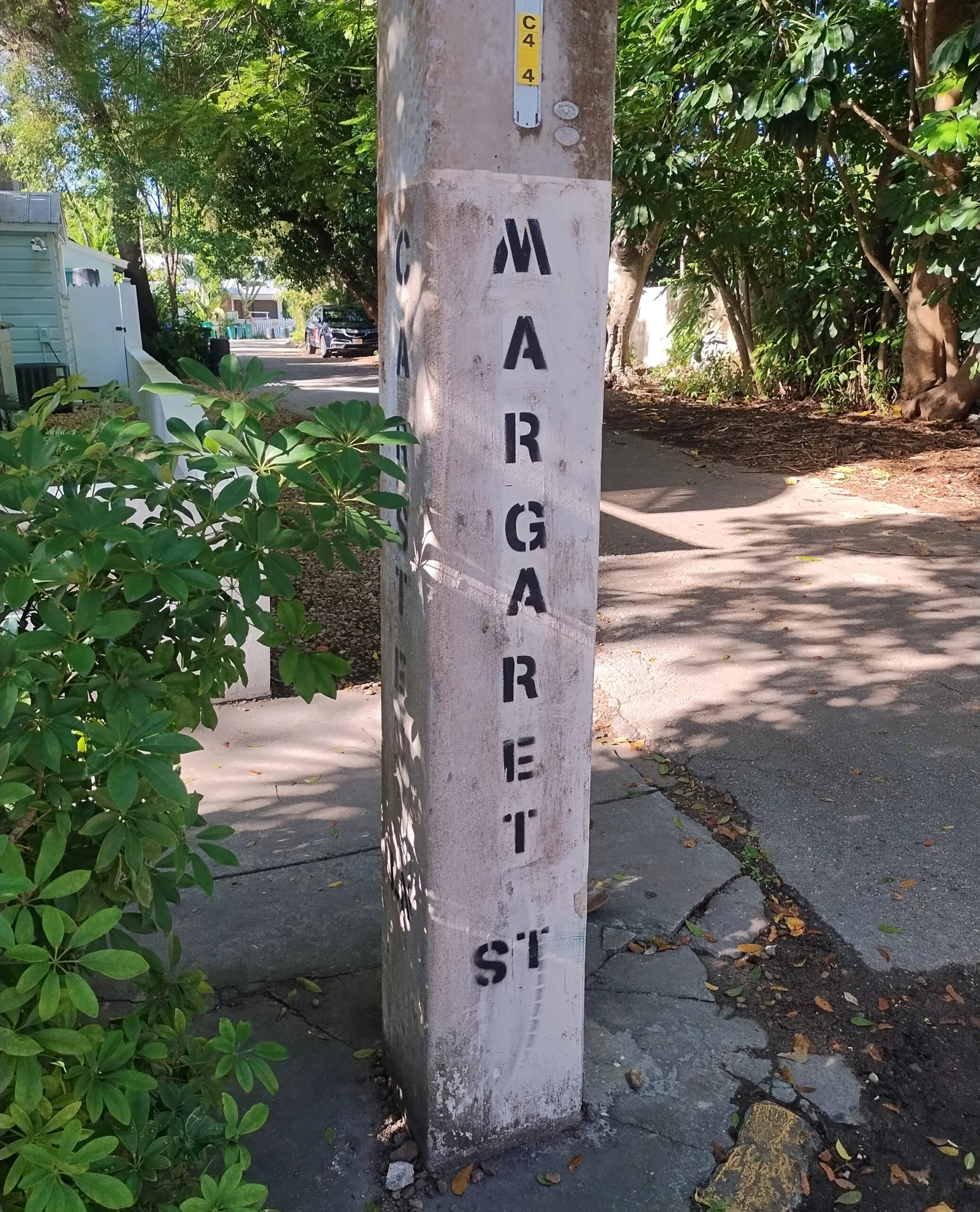
From my 2014 visit, I knew that on the back streets near the little-visited cemetery, parking was possible on an otherwise cramped island. So it was. On Margaret Street, within sight of the cemetery.
The return drive took us up the eastern coast of Florida, but avoiding the worst traffic in Miami-Dade by taking Florida’s Turnpike. By December 17, we’d arrived in Orange Park, a large suburb of Jacksonville, for a stay with two other dear friends, former Austinites now in northern Florida. Part of the next day was in and near downtown Jacksonville, one of the larger U.S. cities I’d never visited before (I believe San Jose is now the largest on that list). During our downtown stroll, we encountered the coolest building in Jacksonville and certainly one of the coolest in Florida.
We quit Florida on the 19th, but weren’t quite done with the trip. Yuriko had never been to Atlanta and wanted to go. Though I’d been however many times since 1982, I was happy to oblige, so we spent two nights and a day there, using the day to see the astonishing Georgia Aquarium and the impressive but somewhat overpriced World of Coca-Cola.
The last legs of the trip were long drives: Atlanta to Elizabethtown, Kentucky; and from there to home the next day. I wasn’t about to let them be completely dull drives, so we stopped on the second-to-last day in Chattanooga, to see the conveniently located, blocks-from-the-highway Chattanooga Choo-Choo redevelopment. On the last day of the trip, we stopped in Jeffersonville, Indiana, and walked across the Big Four Bridge, a former RR bridge across the wide Ohio, now serving pedestrians and bicyclists.
Home and then — Christmas, when things slow down for a week or so. Good timing.
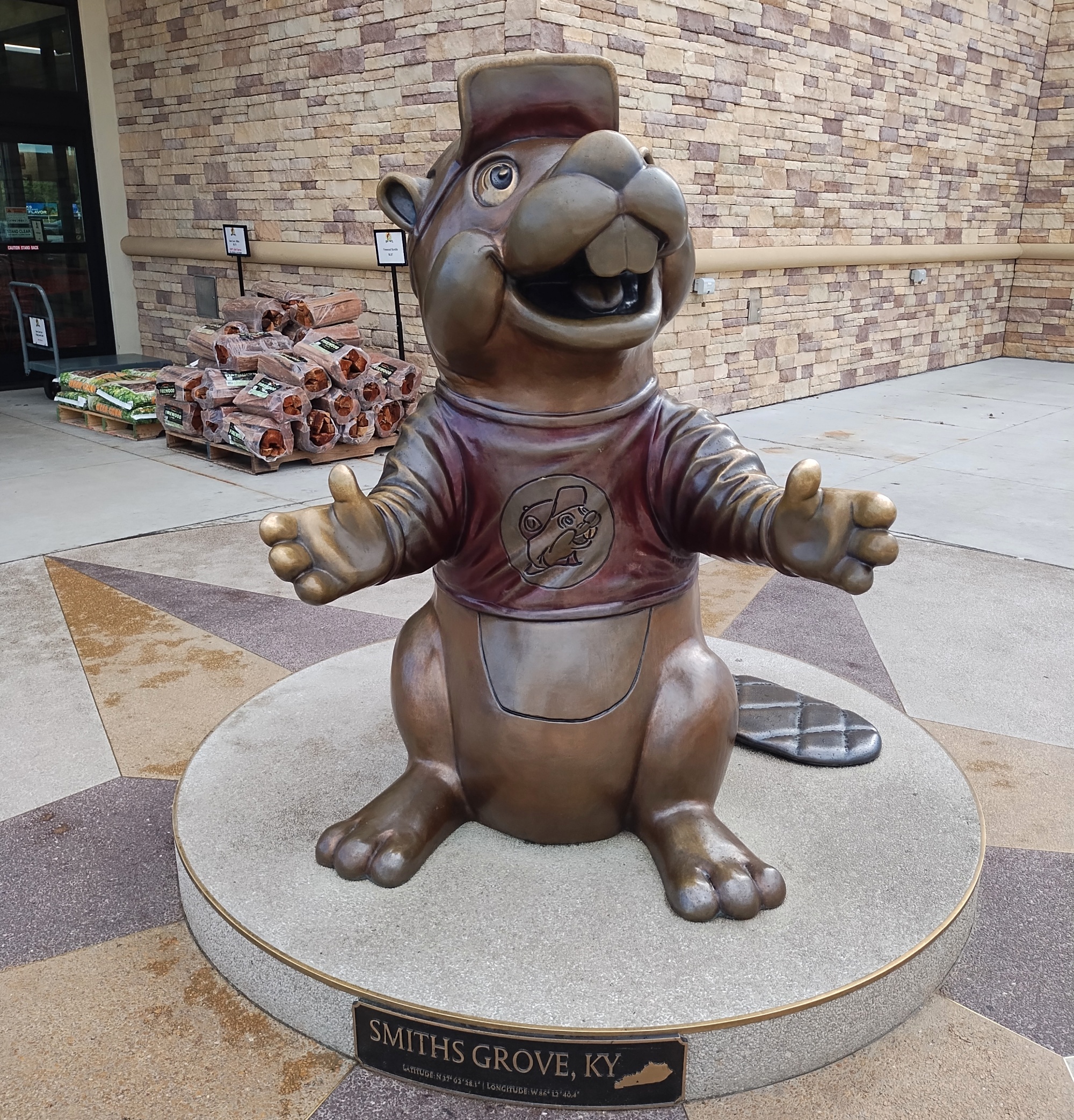
The Buc-ee’s imperium marches on. On my way to Tennessee that first day, I stopped at the location near Smiths Grove, Kentucky, to visit its gleaming facilities. Business was reasonably brisk that Monday, but nothing like the bedlam on the Sunday, nearly two weeks later (on the trip’s last day), when I stopped on the way back home at the same place, for the same reason.
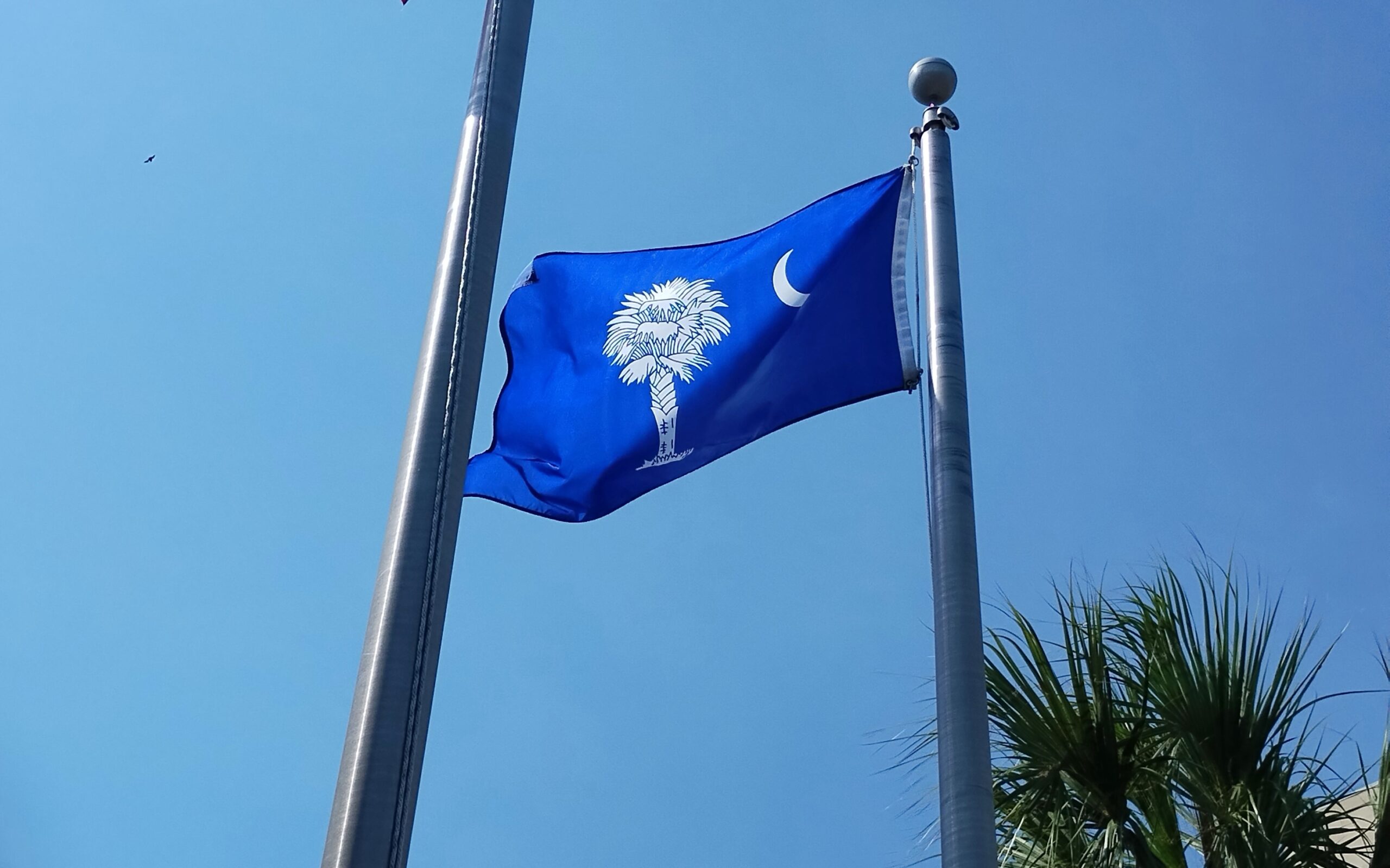
South Carolina
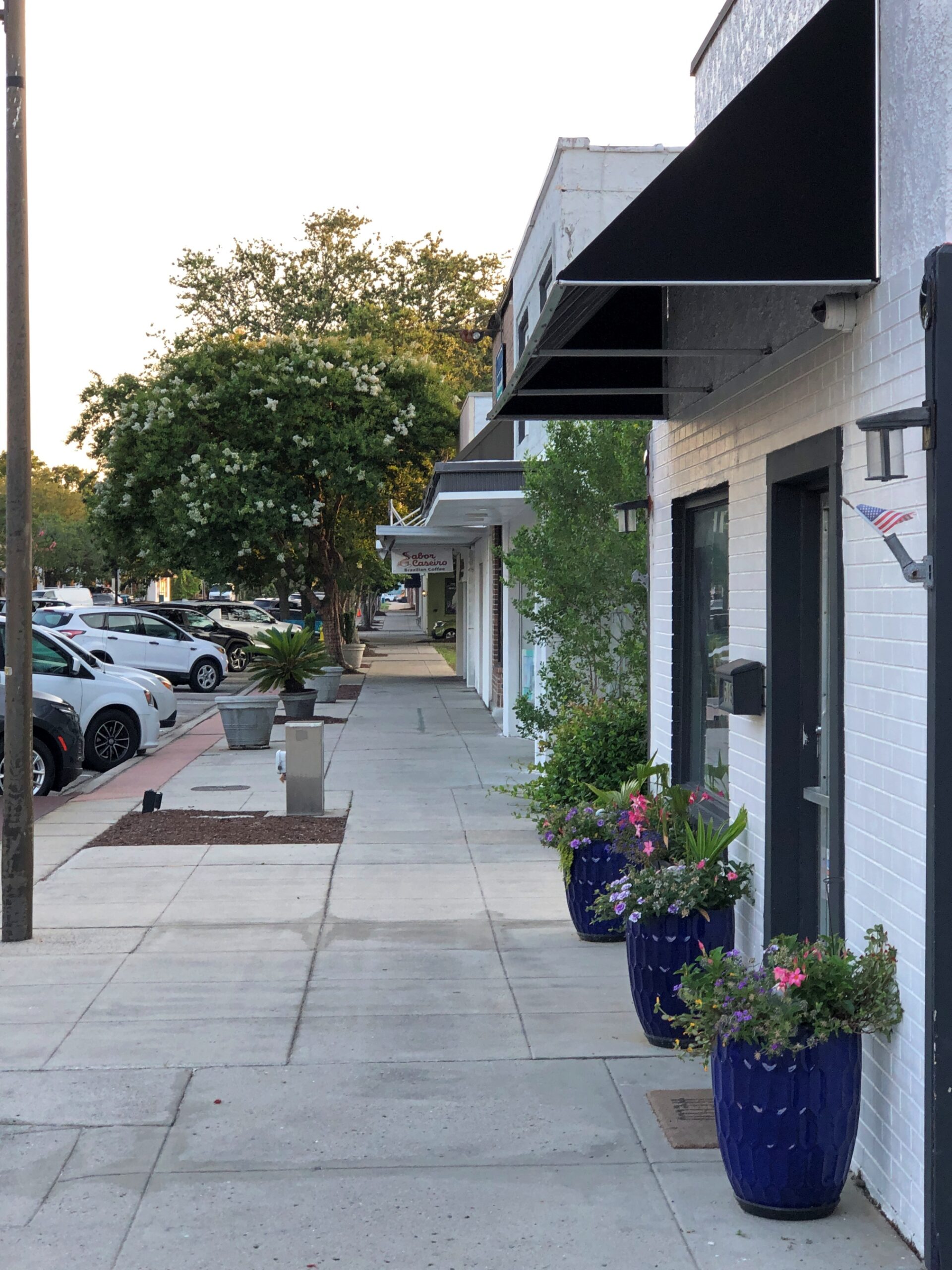
Had a pleasant walk down a non-tourist street on a Sunday in Myrtle Beach. Not a lot going on. The late afternoon light had a nice glow.
Myrtle Beach International Airport used to be Myrtle Beach Air Force Base, which began as Myrtle Beach General Bombing and Gunnery Range in 1942 for use by the U.S. Army Air Corps. It closed in 1993.
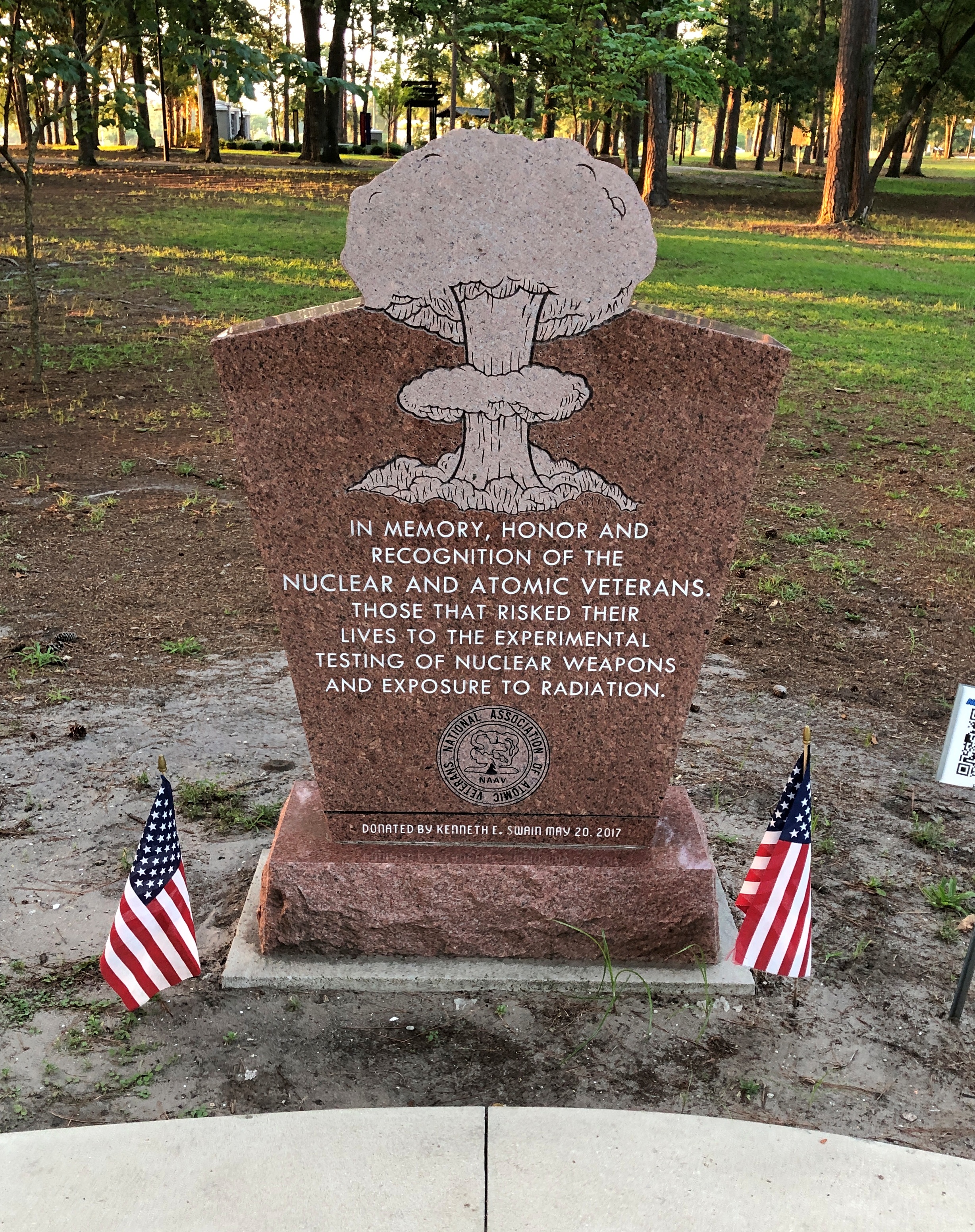
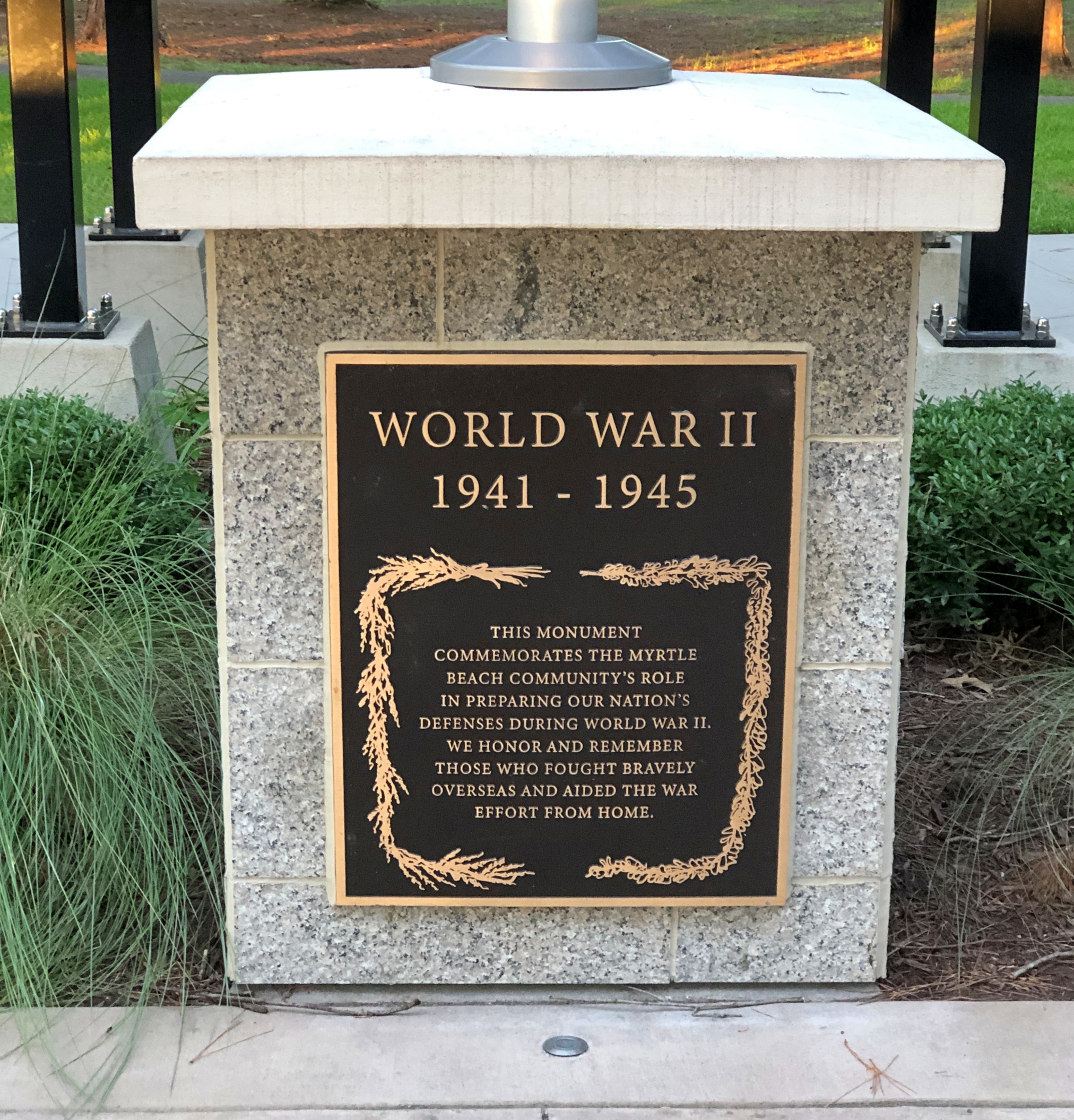
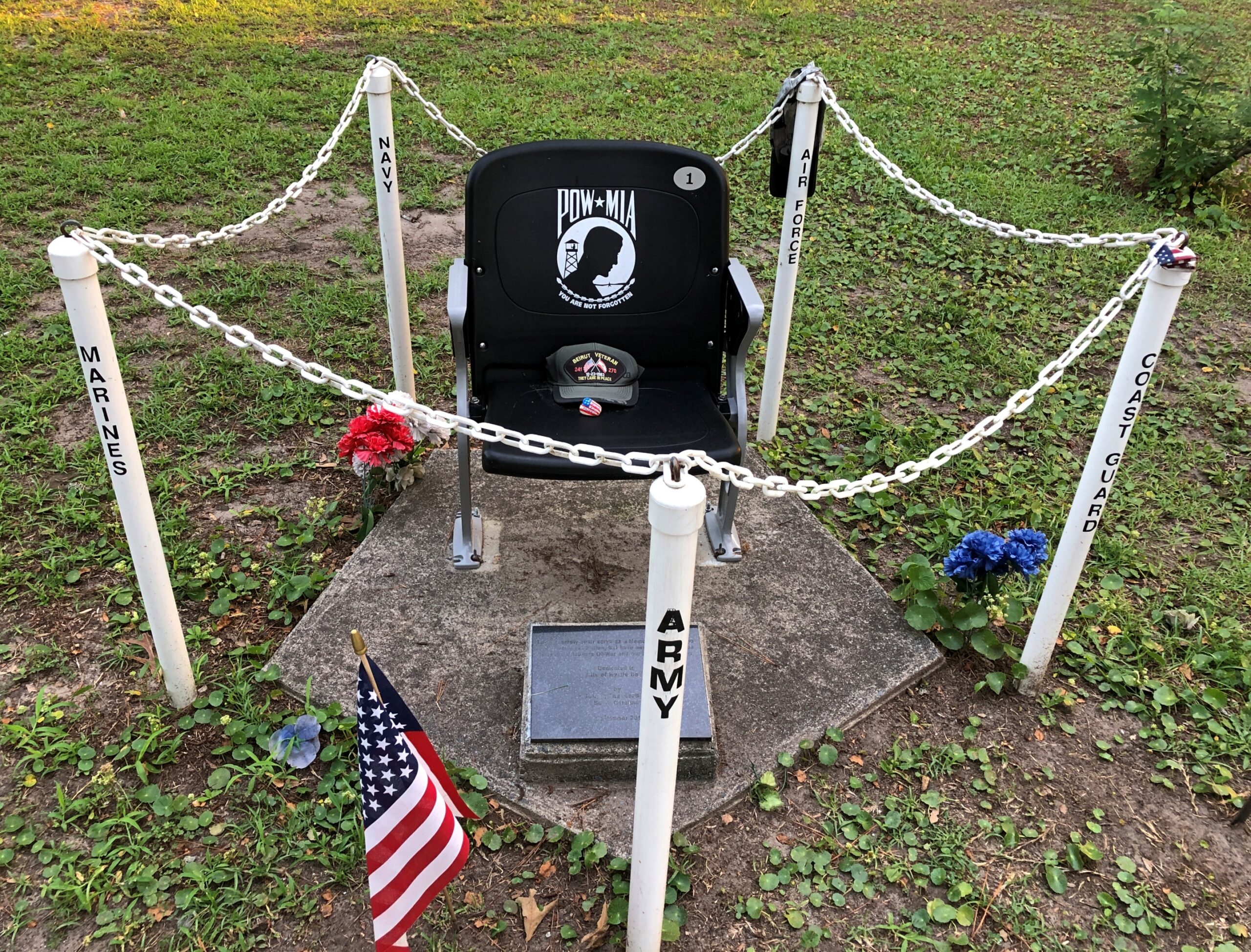
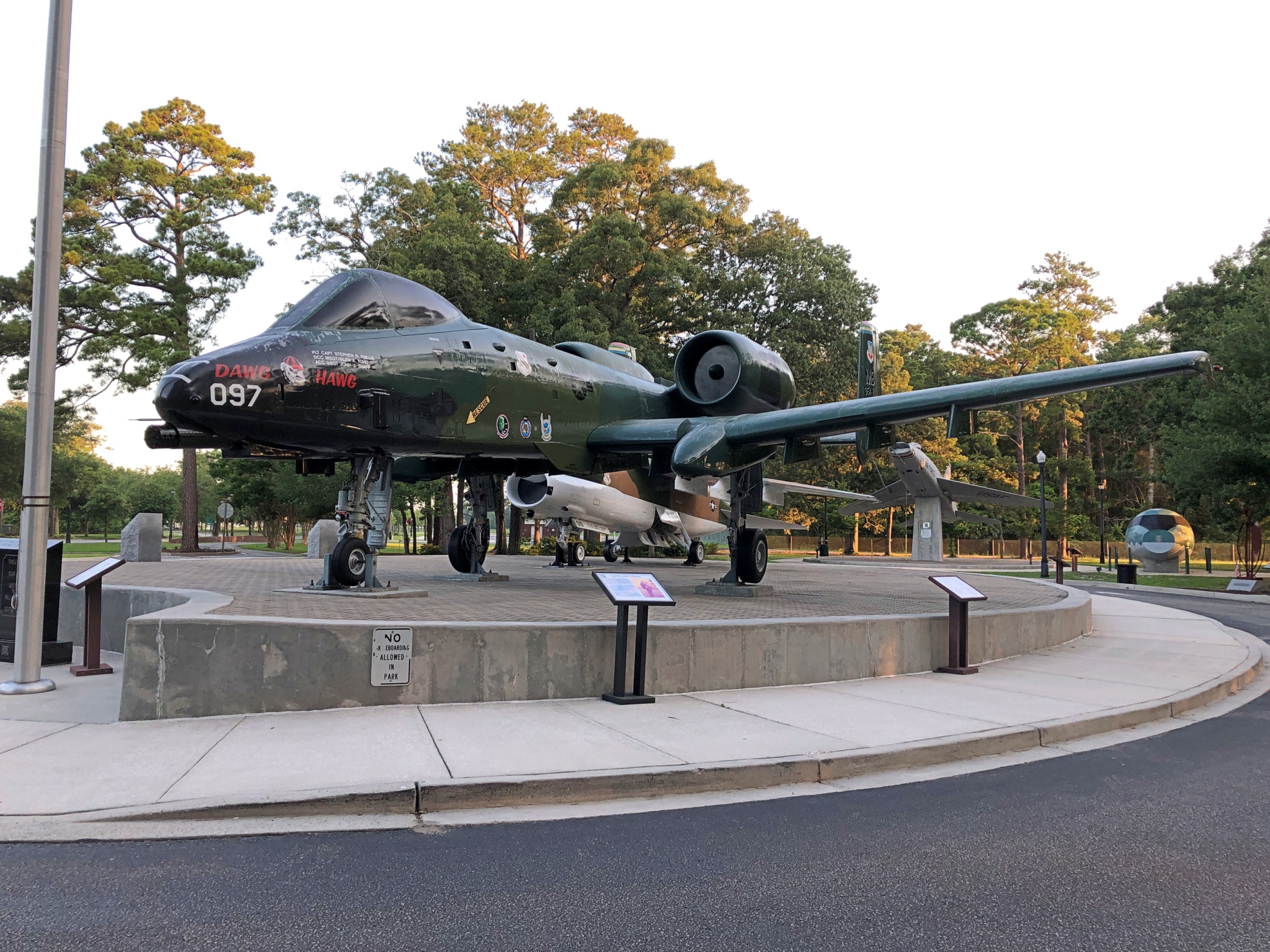
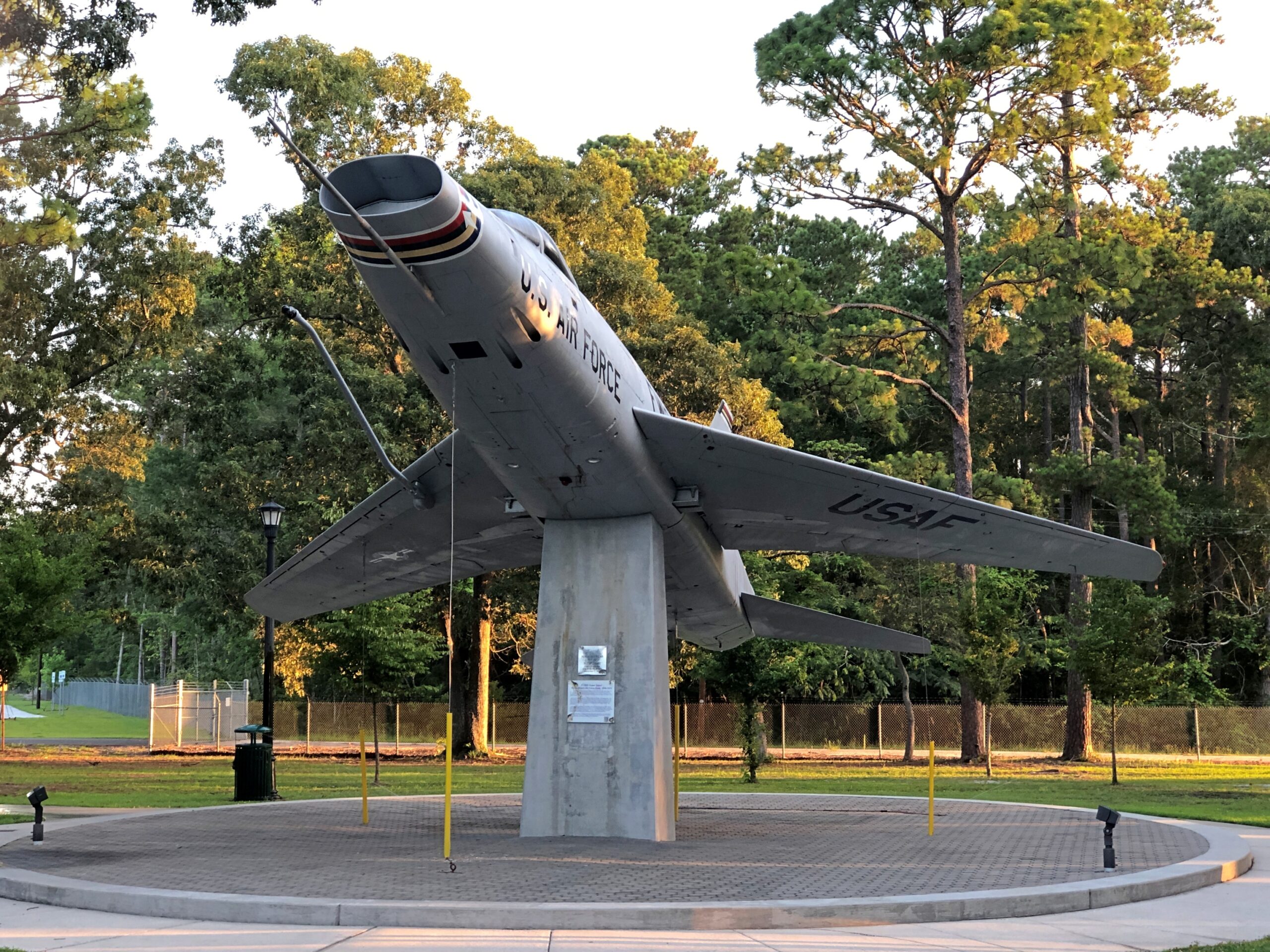
One legacy of the base is a cluster of military memorials near the perimeter of the airport – at a place called Warbird Park, which is fully accessible to casual visitors – that includes something you don’t see all the time.
It is one memorial among many.
As well as some of the aircraft that used the air base.
Found at a MB beach shop among the clothes and beach equipment. Nothing says Myrtle Beach better than skulls, no?
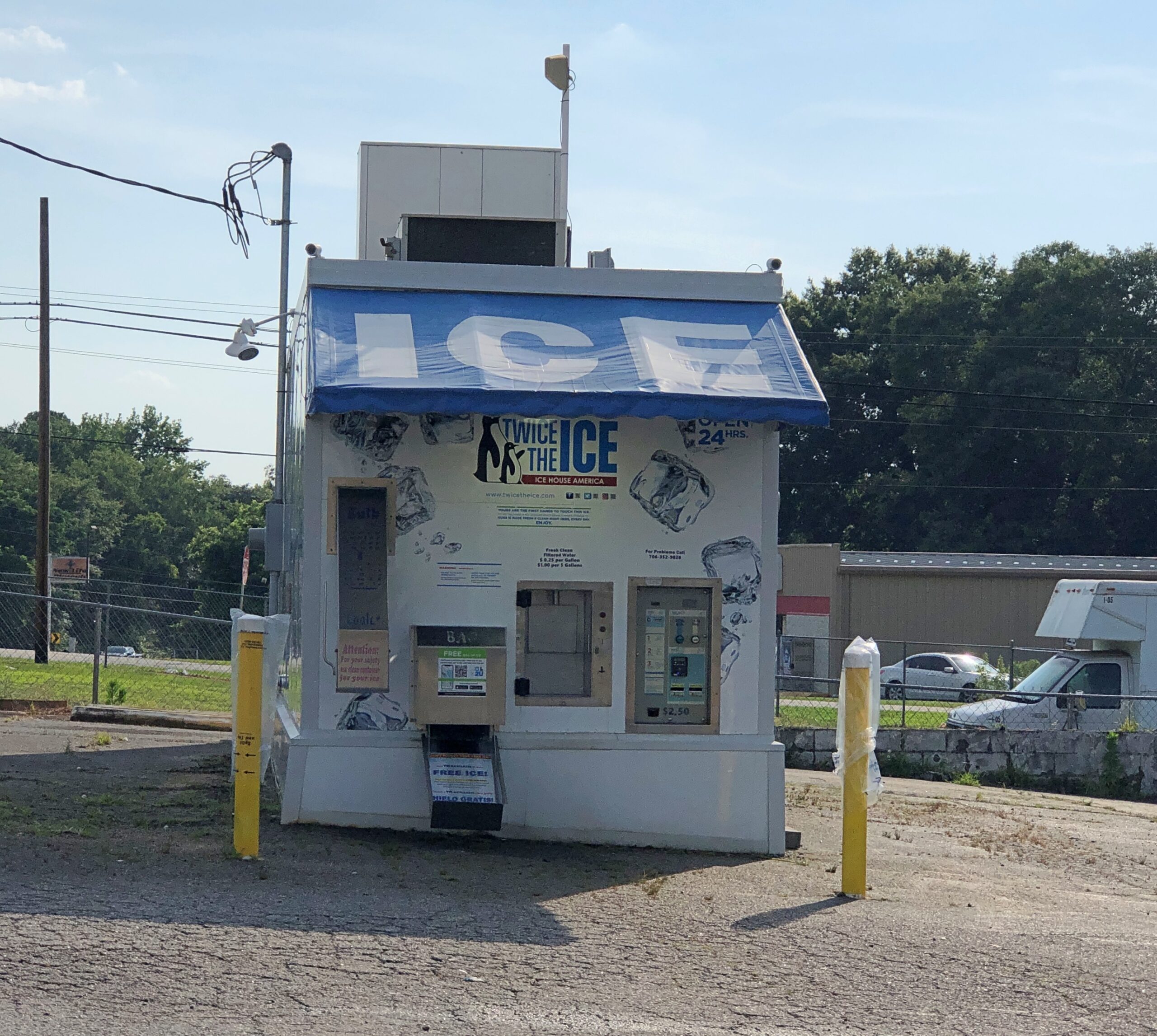
An automated, Fotomat-style ice store in north Georgia. They’re not as common up north, with the closest of this brand to me (I checked) in Aurora, Illinois.
Twice the Ice is the brand name. Quick facts: there are about 3,300 Twice the Ice locations so far in the United States and elsewhere – water and ice “vending machines,” according to one page on the company web site. Another page on the same site puts it at over 4,000 locations, which just means part of the site isn’t being updated. Whatever the exact number, there are a lot, and most if not all are franchised, representing about 1,000 franchisees.
It’s automation we call all get behind. I don’t think the machines are putting ice handlers and baggers at local gas stations and grocery stores out of work, since who holds that specific job?
So far as I know, “Ice is Civilization” is not the company motto. But it could be. It was said with such conviction by Allie Fox in The Mosquito Coast.
Of course, by the end of the book and movie both, he was howl-at-the-moon mad. So maybe some other slogan. Then again, that line is one of the few things – besides the fact that Allie Fox goes nuts chasing Utopia – that I remember from either the book or the movie after about 35 years. So it’s pretty memorable.
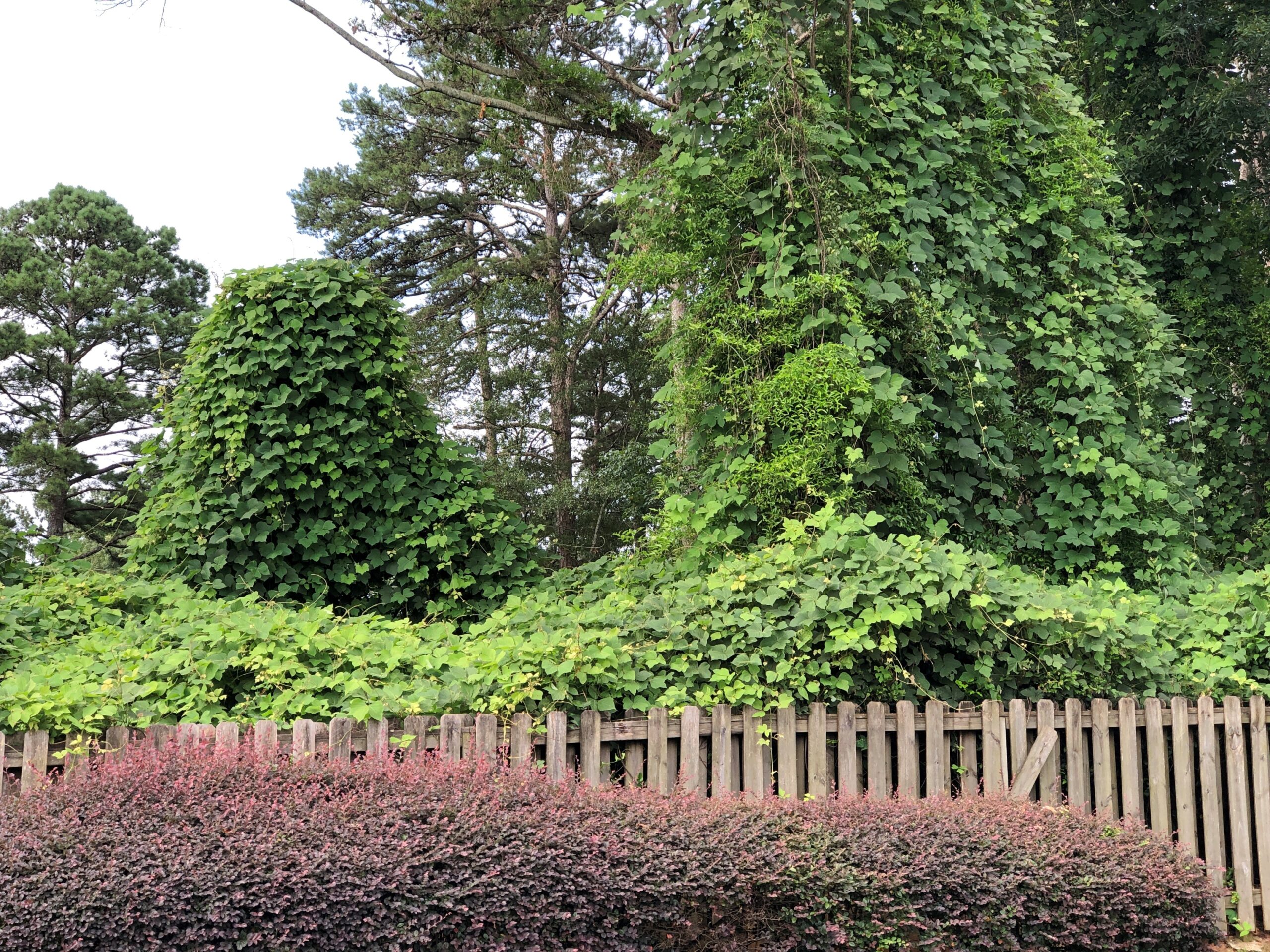
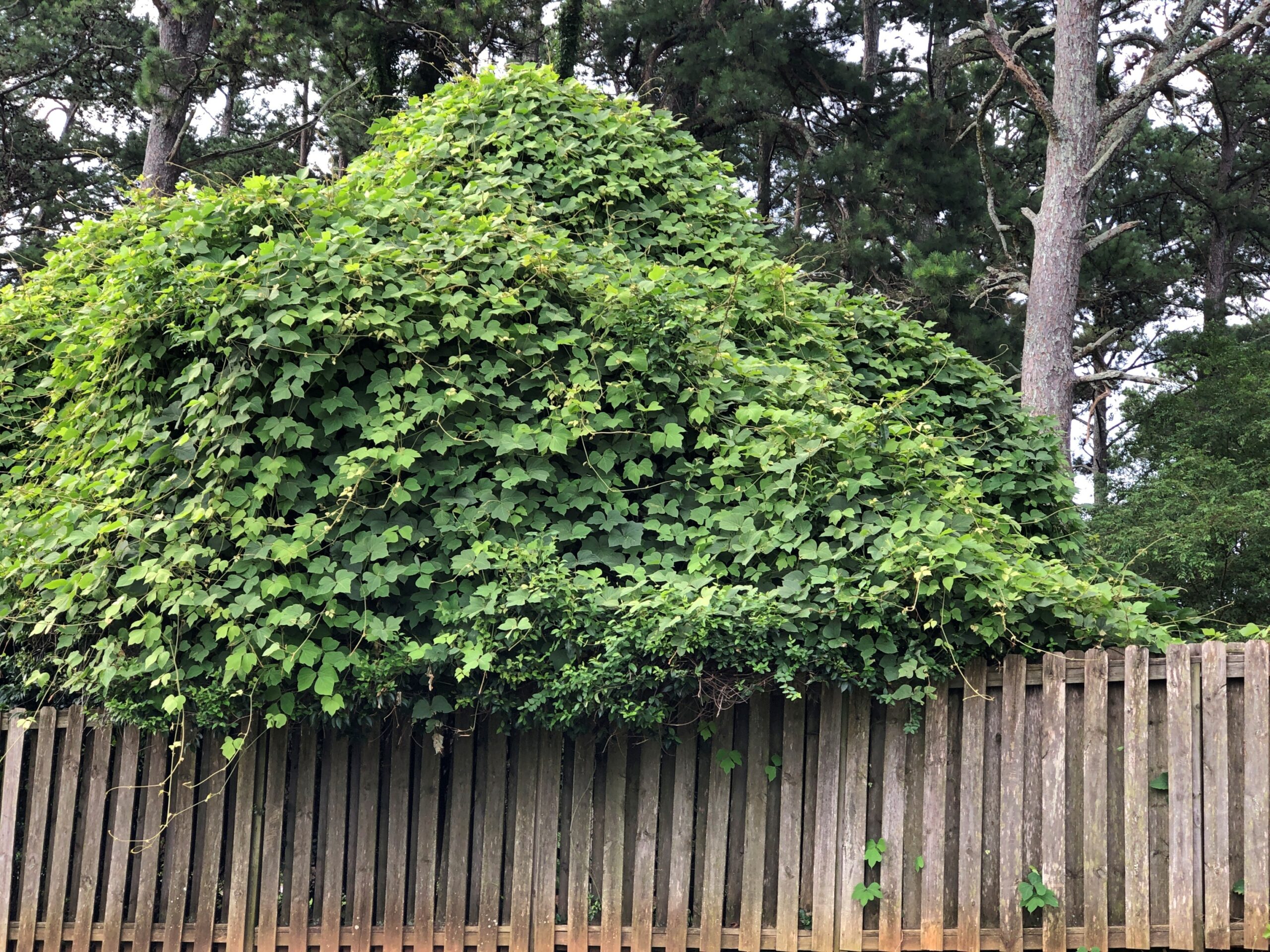
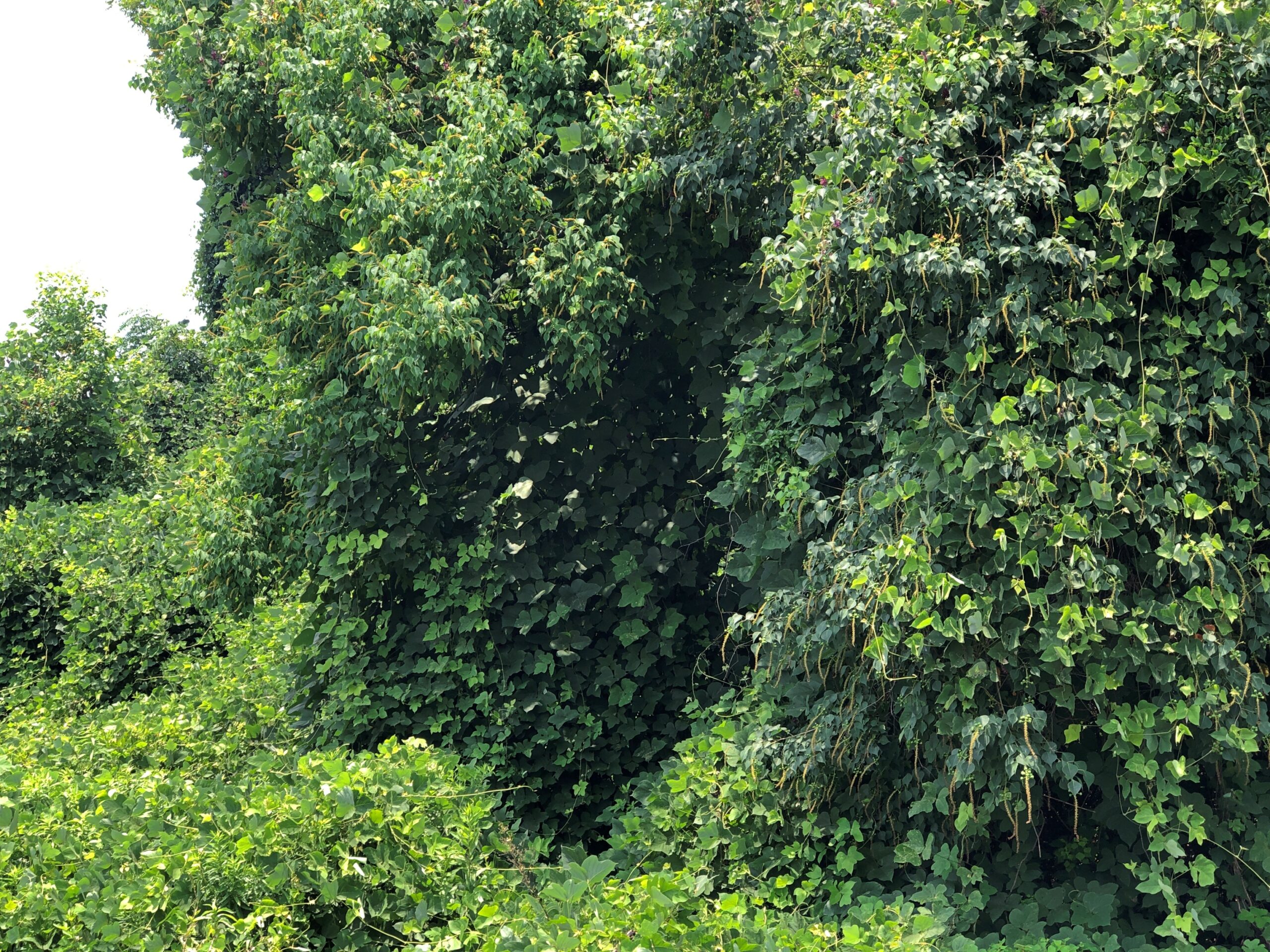
After gassing up at a station in north Georgia, I parked away from the pumps near the edge of the property to fiddle with my phone for a few minutes. Just outside the car window, kudzu lurked.
Which got closer.
And closer. Man, it grows fast.
Not really, but I did see all that kudzu at the edge of the gas station property. Kudzu. Who hasn’t seen the walls of it down South?
“In news media and scientific accounts and on some government websites, kudzu is typically said to cover seven million to nine million acres across the United States,” Smithsonian magazine reported in 2015. “But scientists reassessing kudzu’s spread have found that it’s nothing like that. In the latest careful sampling, the U.S. Forest Service reports that kudzu occupies, to some degree, about 227,000 acres of forestland, an area about the size of a small county and about one-sixth the size of Atlanta.
“That’s about one-tenth of 1 percent of the South’s 200 million acres of forest. By way of comparison, the same report estimates that Asian privet had invaded some 3.2 million acres — 14 times kudzu’s territory. Invasive roses had covered more than three times as much forestland as kudzu.”
Yet kudzu is regarded as a particularly intractable invasive species. How is that? It grows well in highly visible places. Such as next to a gas station parking lot. Smithsonian notes: “Those roadside plantings — isolated from grazing, impractical to manage, their shoots shimmying up the trunks of second-growth trees — looked like monsters.”
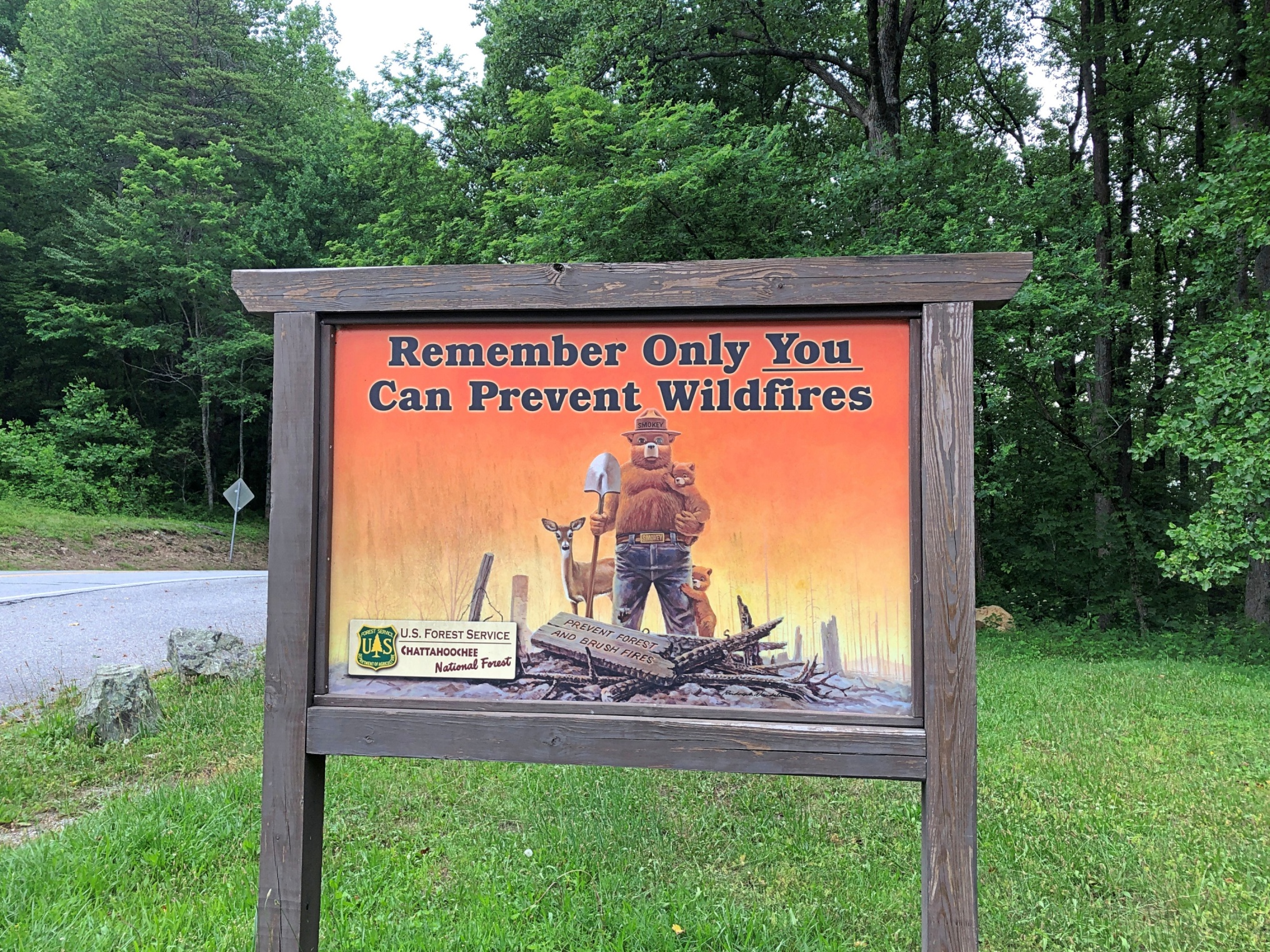
Along Georgia 60 in Chattahoochee NF, Smokey Bear is still at his job.
One thing leads to another online, and Smokey eventually lead me to “Smokey the Bear Sutra.” Only takes a few minutes to read, and it’s a trip. Just like the song “Elvis is Everywhere,” there’s a founding document of a religion in the distant future, one that asserts that humans should never have given up worshiping bears.
I’m no Guy Fieri, but I don’t really need to be to find road food. Besides, he has a staff. I just have Google Maps and my experience and instincts, which sometimes fail me, but more often guide me to cheap, local and delicious. That and word-of-mouth recommendations have led me to a lot of tasty dishes over the years.
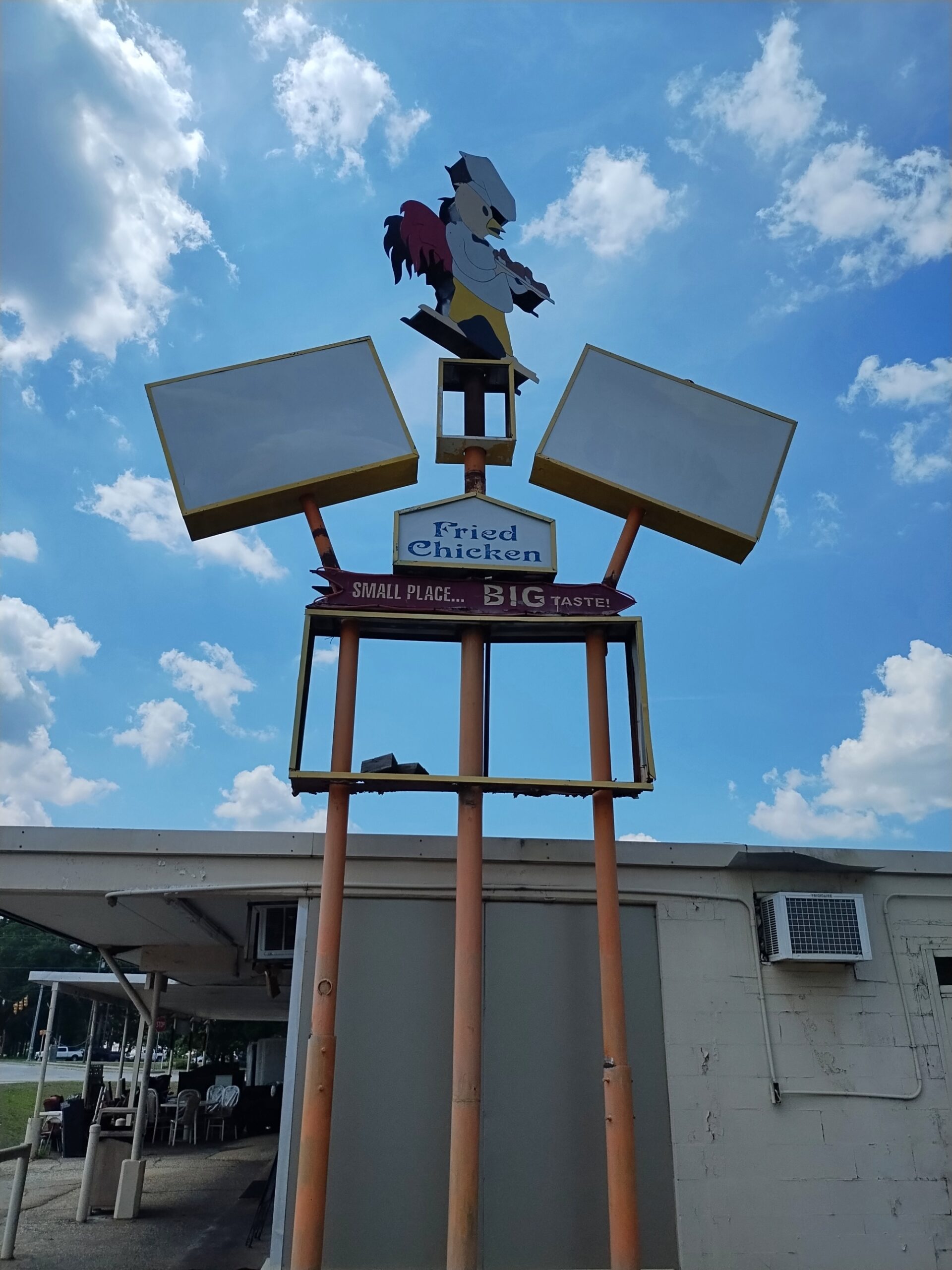
On my recent Southern jaunt, I arrived in Sumter, SC, around lunchtime, and found my way to Korner Shack II. Not that you could tell the name from the sign over the cinder block shack.
I’d happened on a Southern chicken joint, true to that tradition, take out only, and during the few minutes I waited for my order as people came and went — for it was a popular place — I noted I was the palest customer. I ordered a box of chicken livers and fries that I ate partly in a nearby park, and partly in my room that evening. Mildly spiced and well fried, the boxed livers reminded me of the satisfying livers that a Chicago-area Harold’s Chicken would serve. Korner Shack sold me one of the best meals of the trip.
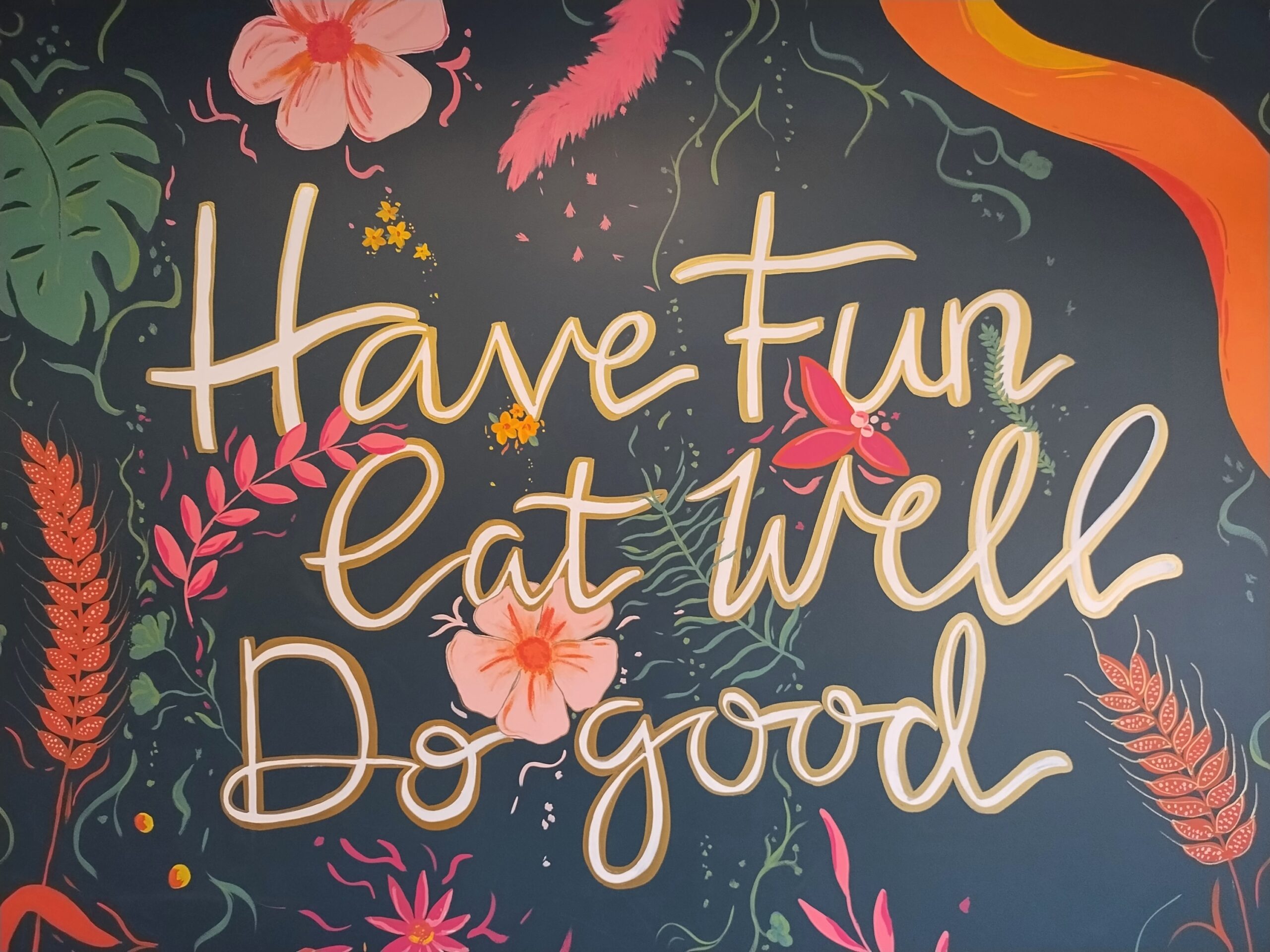
Back in Myrtle Beach, Yuriko and I breakfasted one morning at Winna’s Kitchen, who offers patrons some sunny advice on the wall.
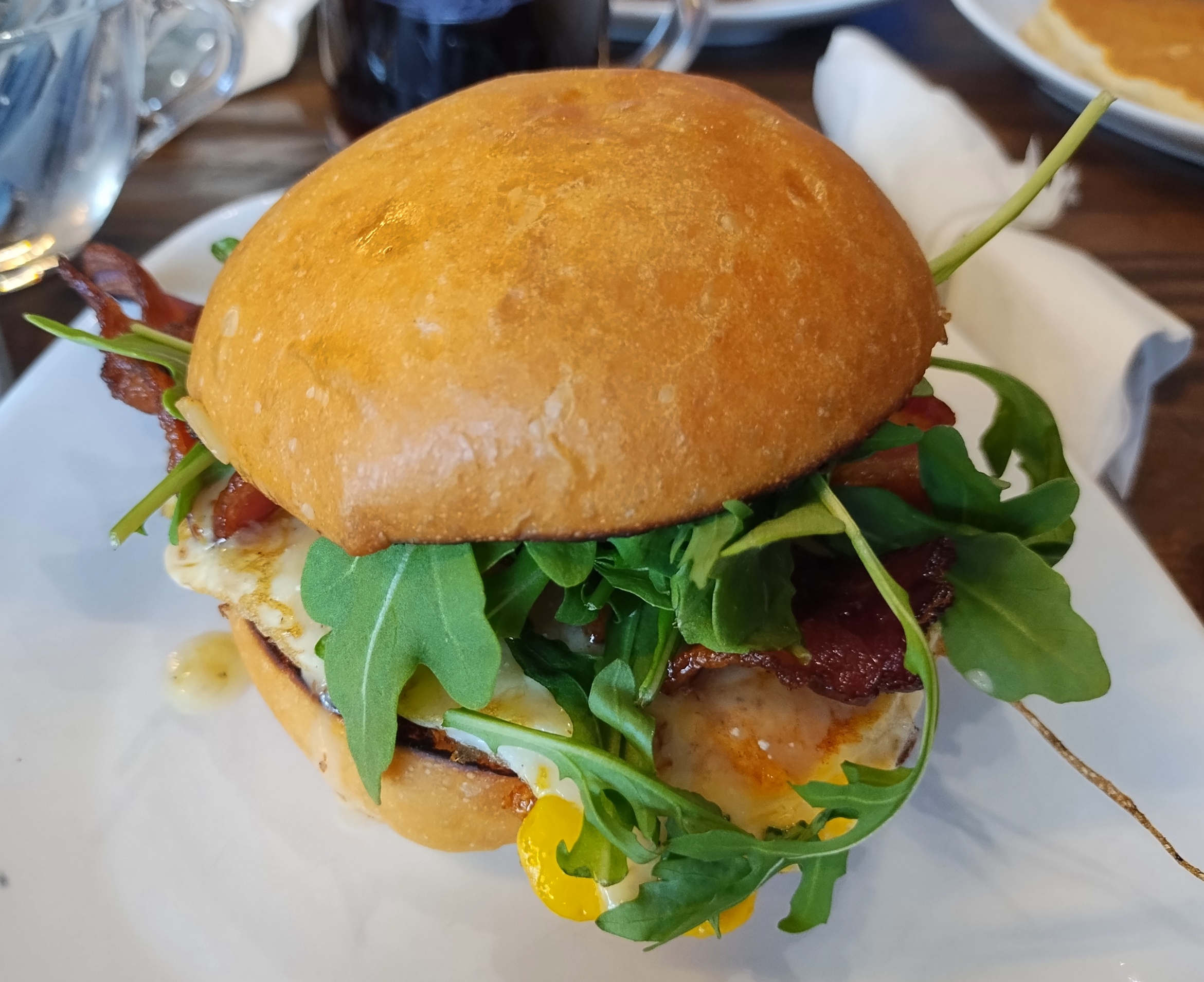
That, and really good food. I had the Whistler – “crispy sausage or bacon, sharp coastal cheddar, a fried egg & lemony-dressed arugula on a homemade bun,” the menu said. With a side of grits.
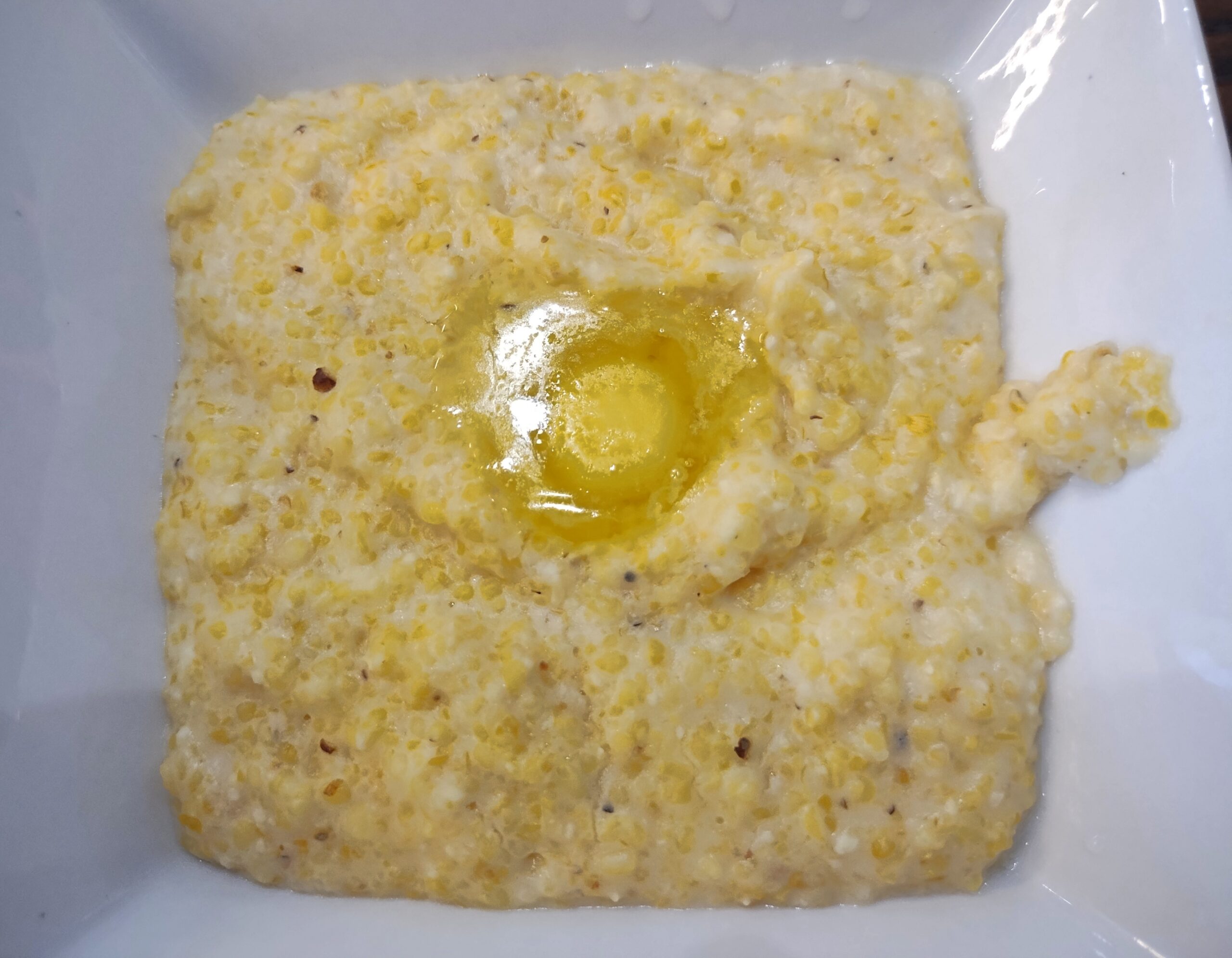
Superb. Even the buttery grits. At home I usually douse my grits with honey, but butter will do. Experience has taught me that restaurants aren’t always good with grits, but when they are, they can be really good. Winna’s served up some of those really good grits, complementing its really good breakfast sando, though not quite as memorable as the cheese grits I enjoyed at a place in Mexico Beach, Florida, that I believe was washed away by a hurricane some years after I visited in the 2000s.
Also in Myrtle Beach: seafood in bulk.
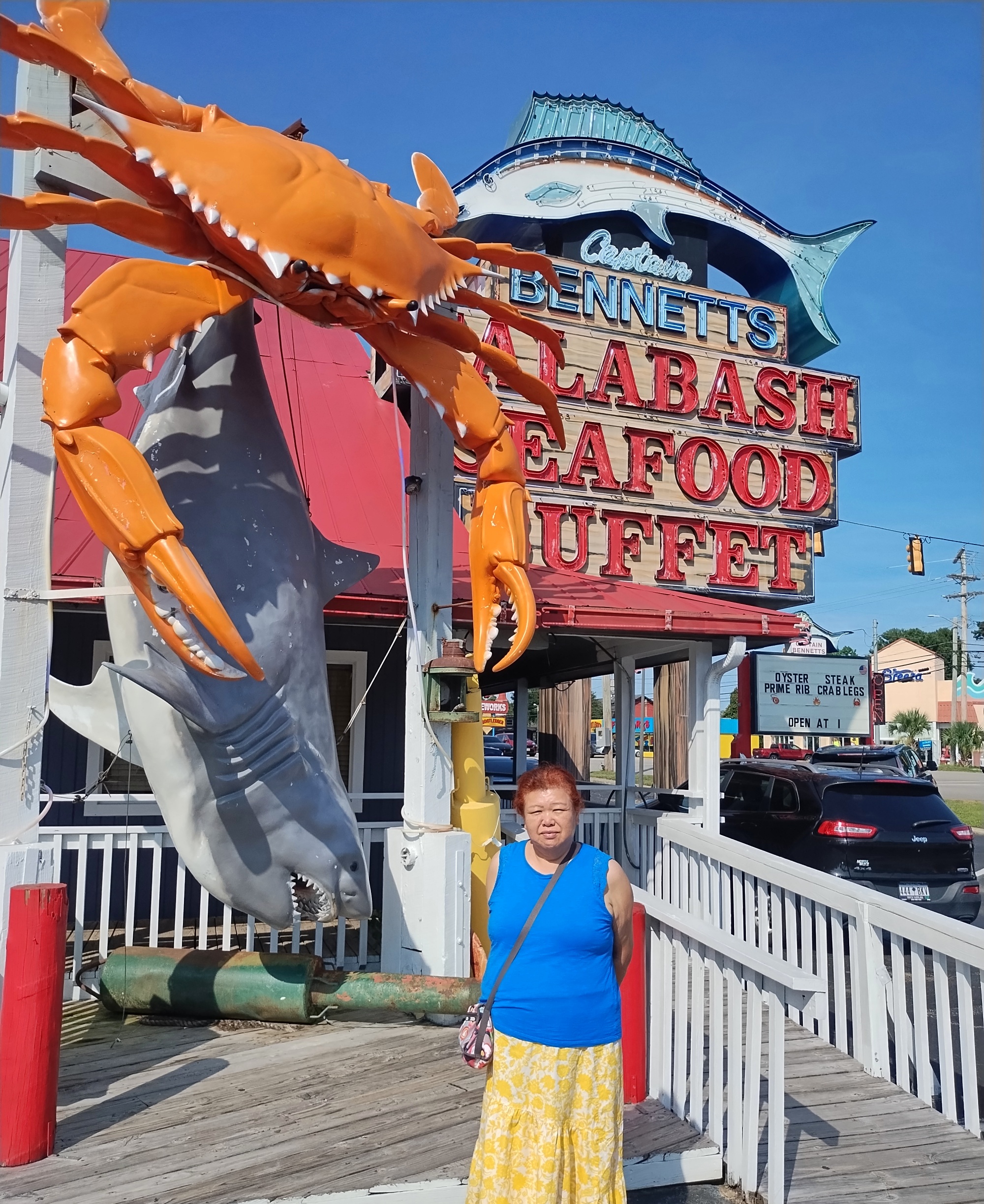
Not the best I’ve ever had, and a little expensive, but satisfying – especially Yuriko’s desire for seafood during a visit anywhere near the sea, true to her Japanese upbringing.
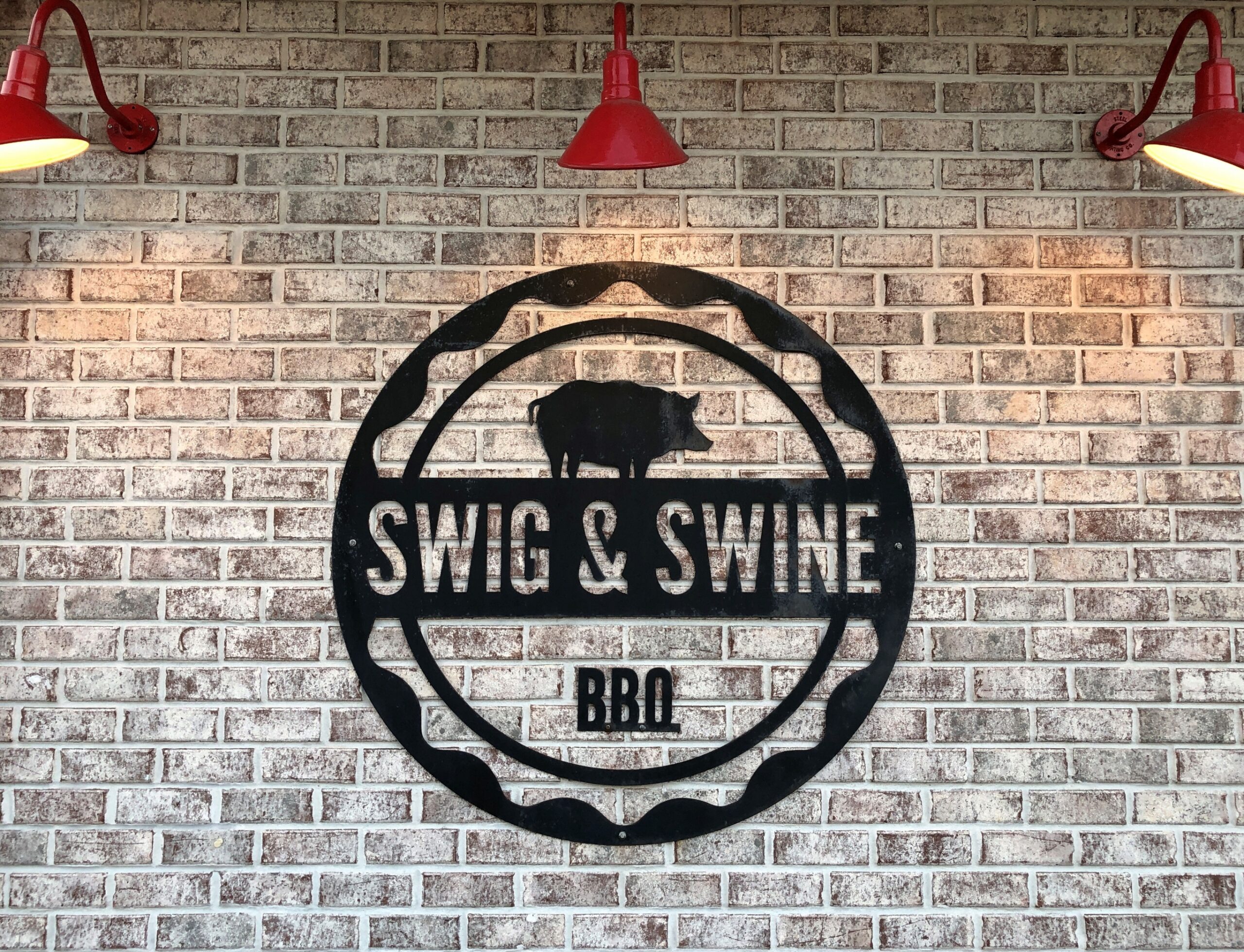
Didn’t have barbecue in MB, but I liked this sign.
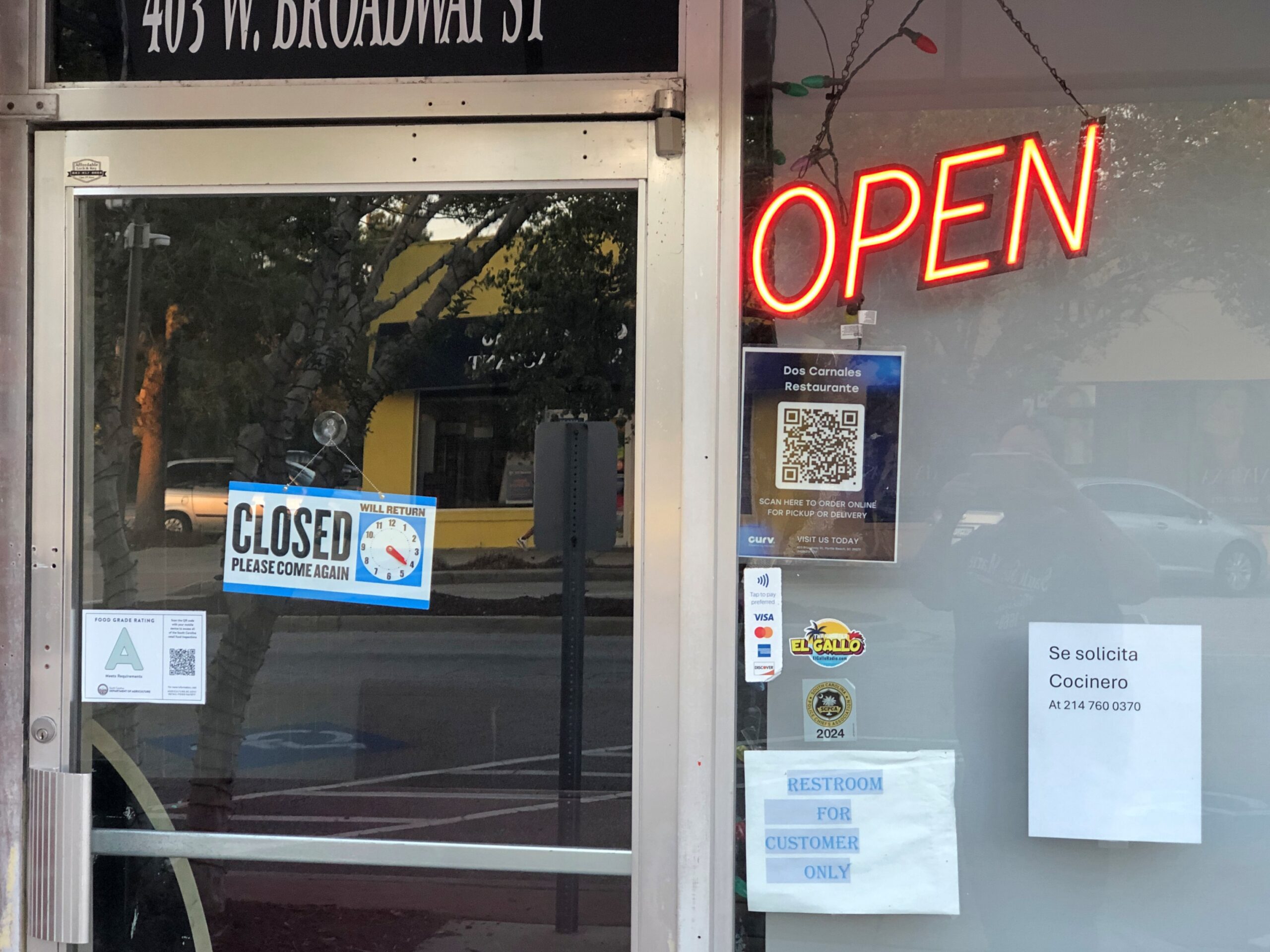
Didn’t eat here either. Call it Schrödinger’s restaurant.
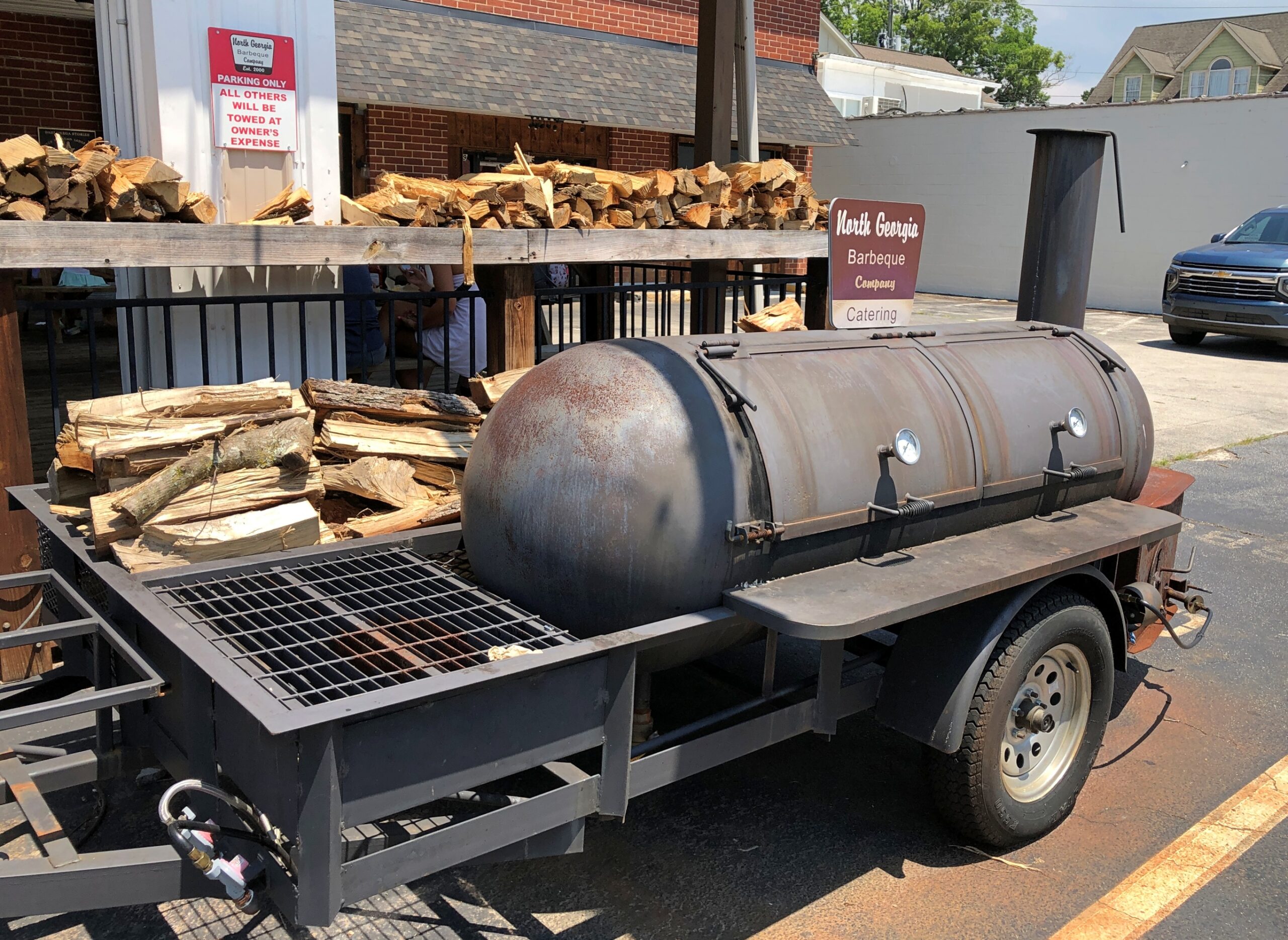
I found barbecue in Georgia. Specifically, Dahlonega. North Georgia Barbecue Co. is a stone’s throw from the Gold Museum and its best advertisement is out front of the restaurant. Good eats inside.
While it’s well and good to support local joints, I’m not a snob when it comes to fast food on the road. Otherwise, how would I know the joy of Mos Burger or have experience with how different cultures interpret something as distinctively American as fast food?
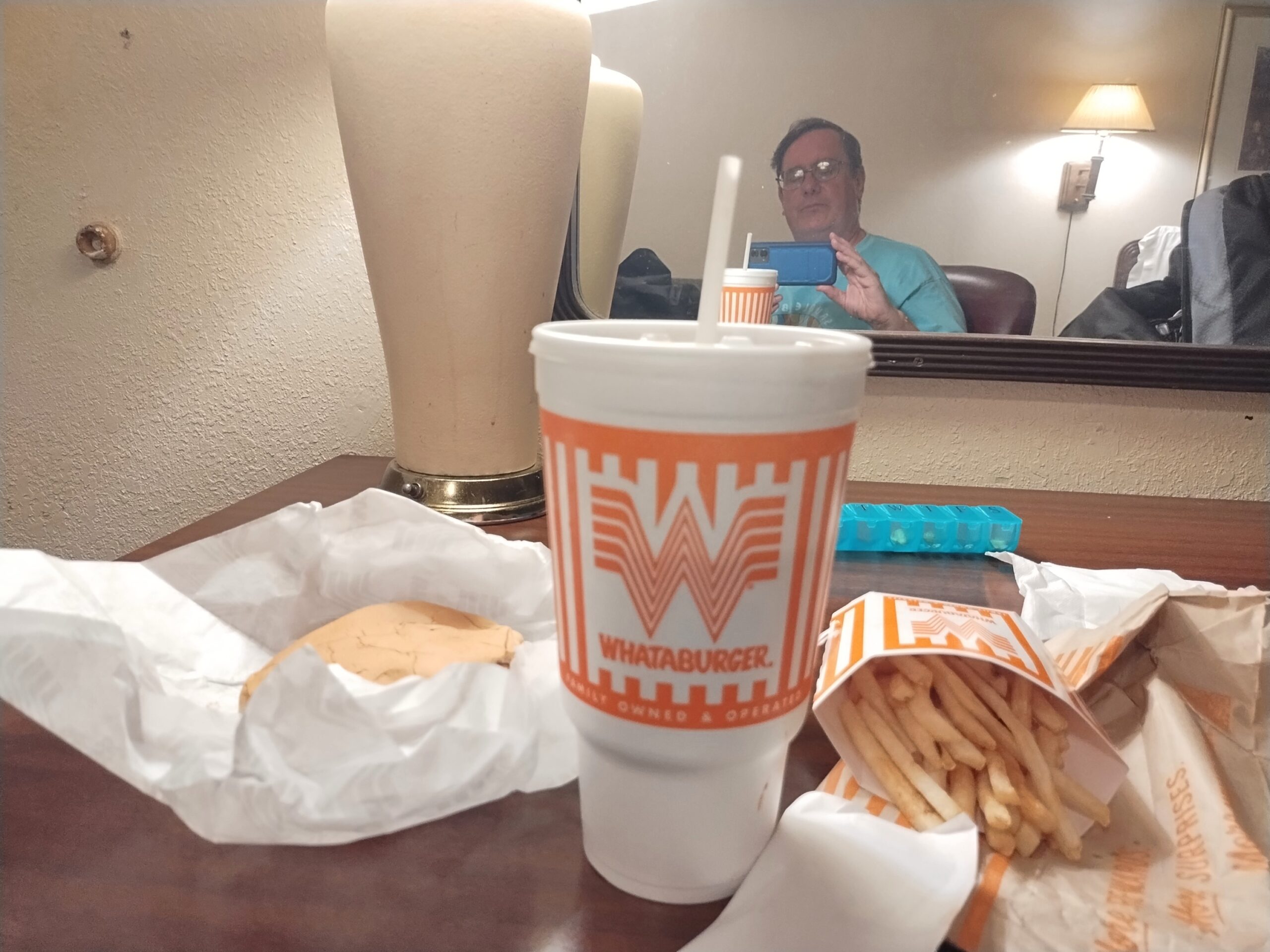
Not long after arriving in Athens, Ga., I spotted a place I associate with Texas. I took a drive-thru order back to the room.
I checked, and the large majority of Whataburger locations are indeed in Texas, but there are others in 16 other states, including 35 in Georgia.
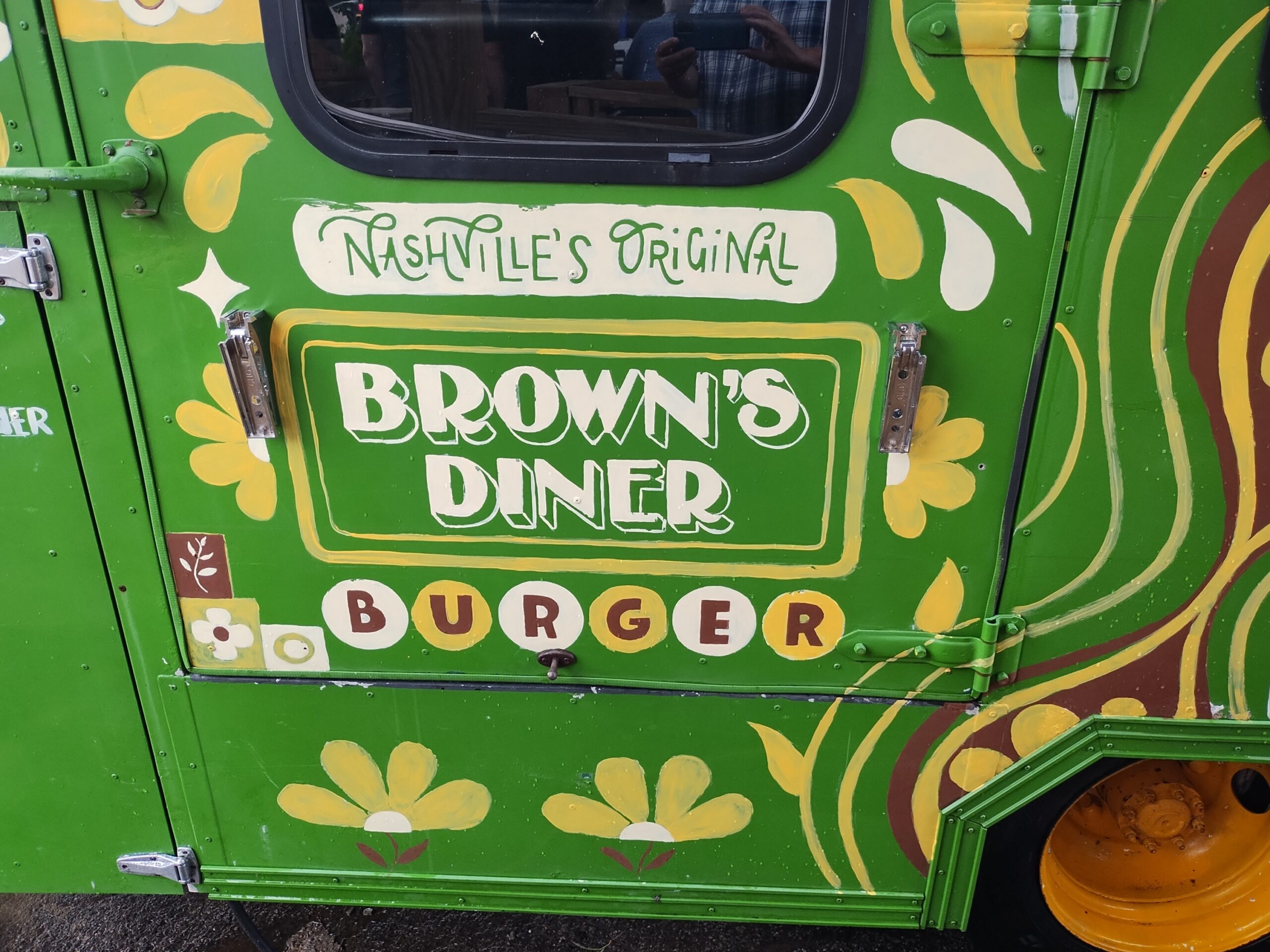
Finally, an old friend among Nashville places: Brown’s Diner.
My friends Stephanie and Wendall treated me to a wonderful homemade meal at their house, so later I treated them to a meal at Brown’s, deep in the heart of Nashville. It is a storied place nearly 100 years old, though expanded since I knew it. I enjoyed a fair number of burgers at Brown’s in the 1980s, but not since, and was a little surprised that it has survived to the present, but glad. I had a Brown’s burger and it all came back to me; and I understood the joint’s longevity.
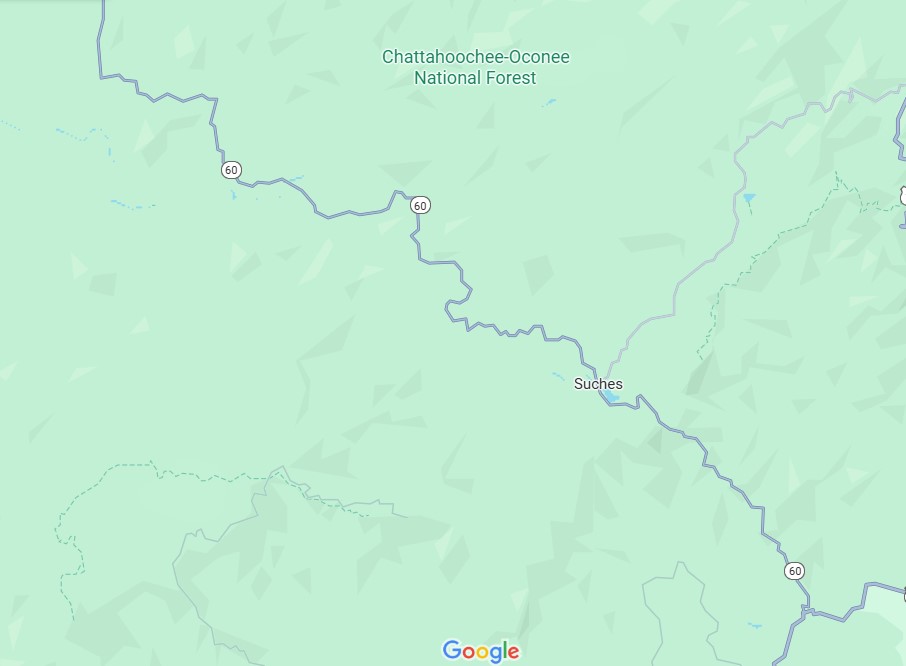
Clear skies, little traffic, good curves. I recommend driving on the two-lane Georgia 60 highway through the Chattahoochee National Forest under those conditions as certified car commercial driving. Considering all the hours of your life spent stewing in a traffic jam, it’s the kind of driving that makes you forget all of them.
Wish there had been a song on the radio to add to the driving experience — there was little but static — but that would just be icing on the cake anyway. Actually, not even that: it would be a little whip cream on a cake that already has some fine icing. To torture that analogy a little further, the cake would be the sedimentary rock lifted and cracked and shaped by whatever else rocks do over millions of years, topped by the biomass – that is, an Appalachian forest.
The history of humans in the Chattahoochee is incredibly dark and eventful. A textbook case of raping the land, only somewhat recovered in our time, partly through the efforts of the can-do CCC.
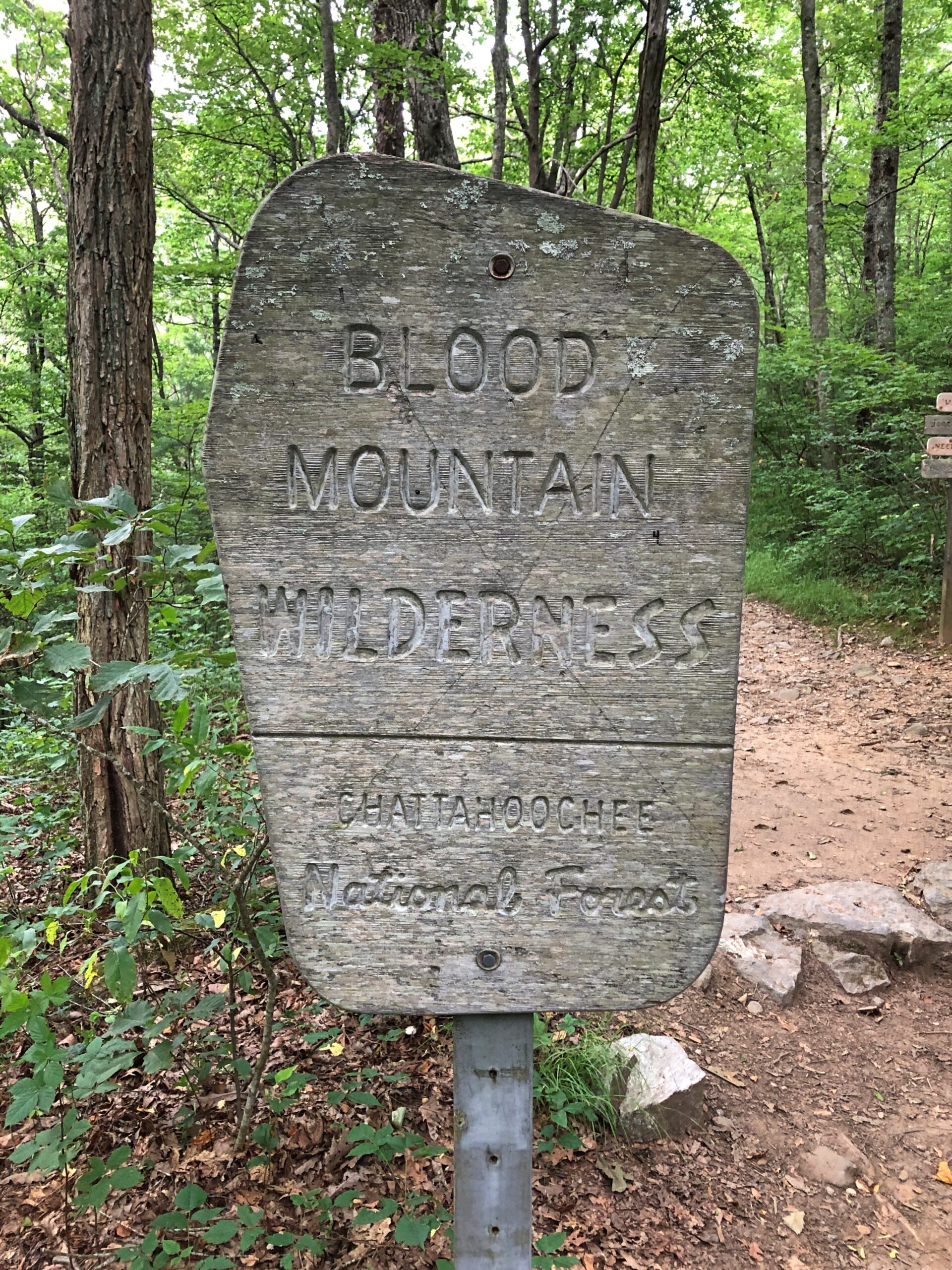
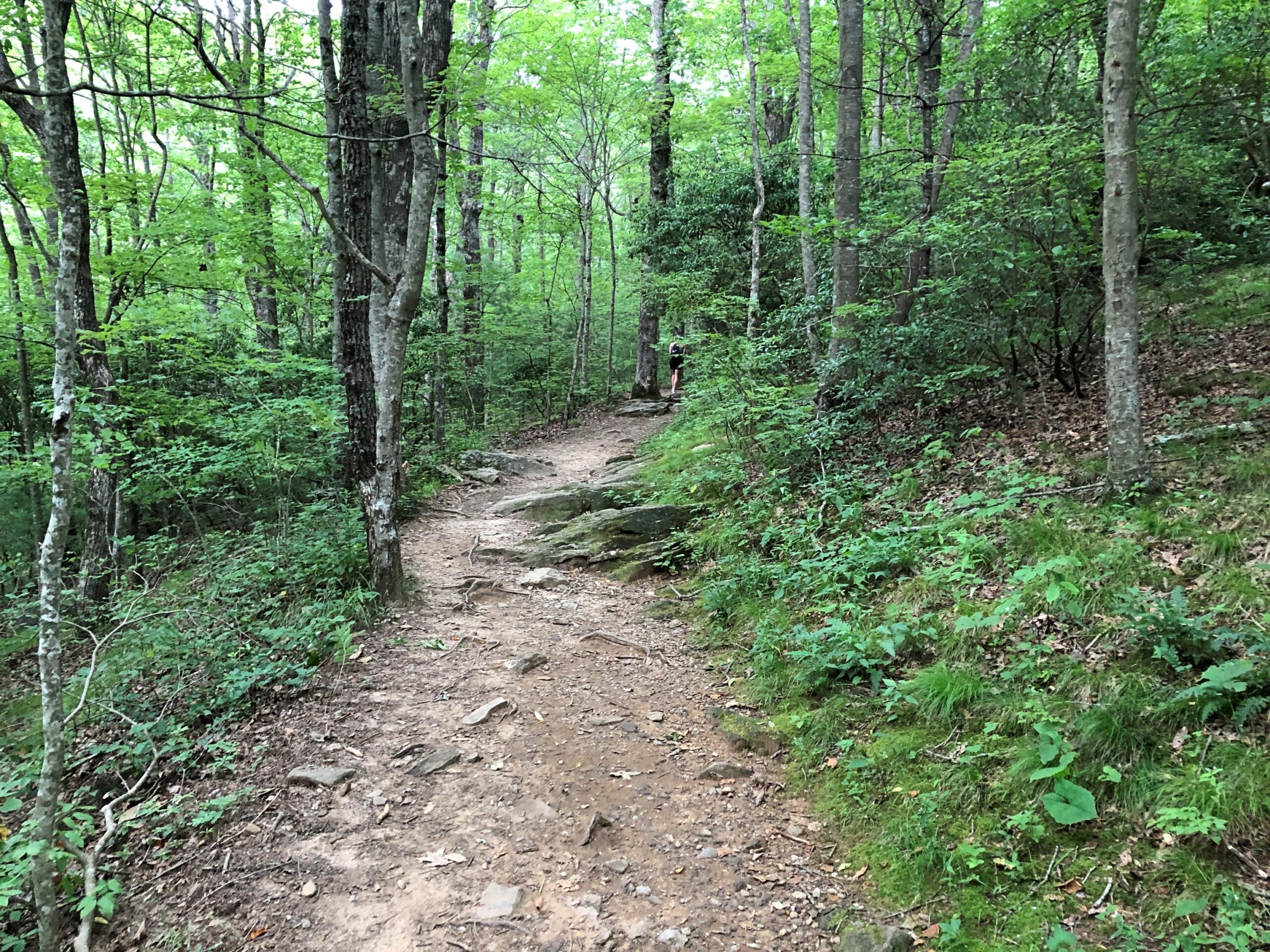
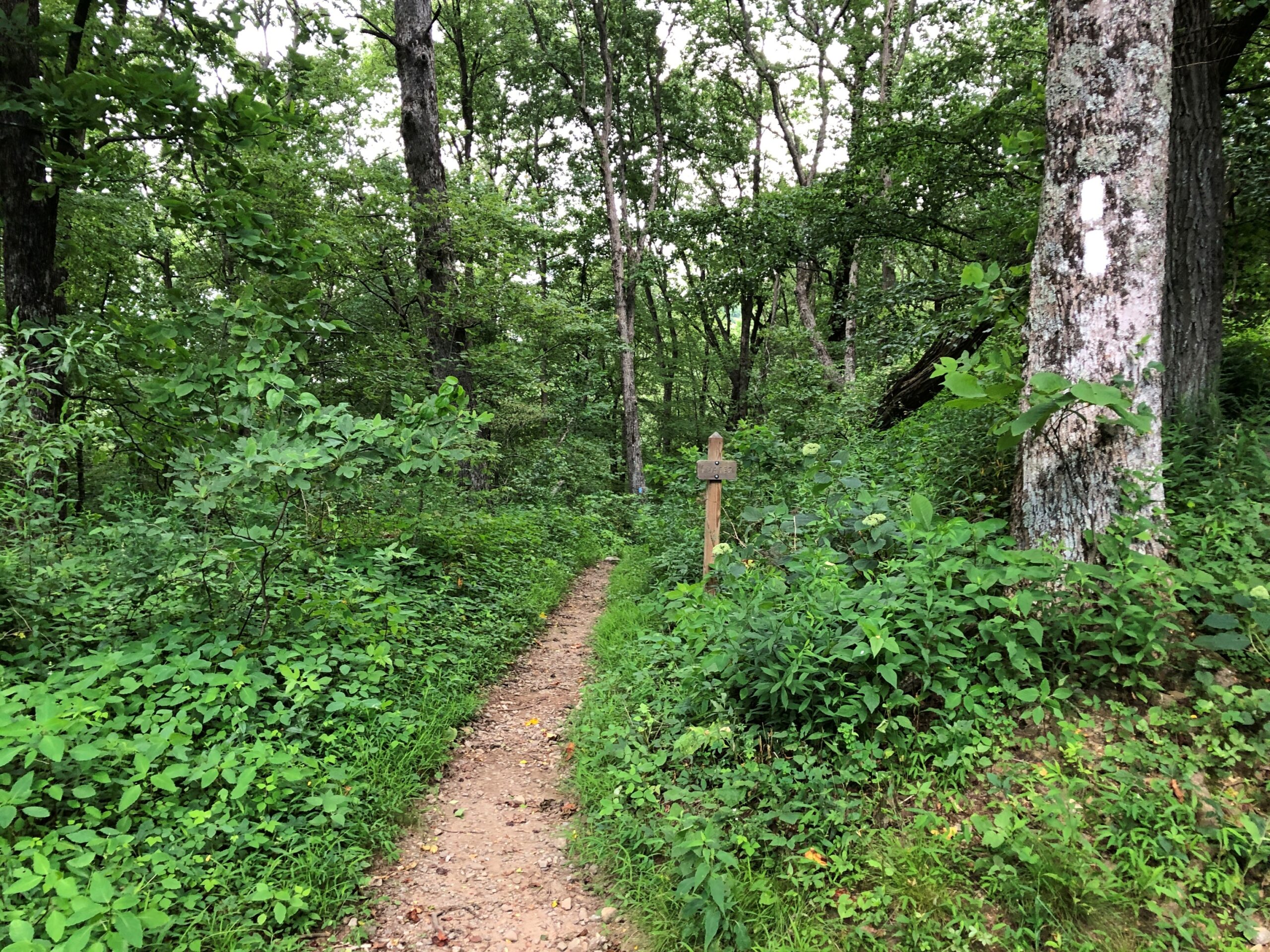
Besides the road itself, the works of man are fairly thin on the ground, literally. There is a hamlet called Suches (pop. 548), but not much else. The region has recovered enough to offer a trail through the Blood Mountain Wilderness, which crosses the highway at one point, where there is a small parking lot.
I wasn’t equipped for a hike, so I walked only a half-mile or so in, and then back. I don’t remember having to swat a single mosquito, which ups the quality of a walk right there.
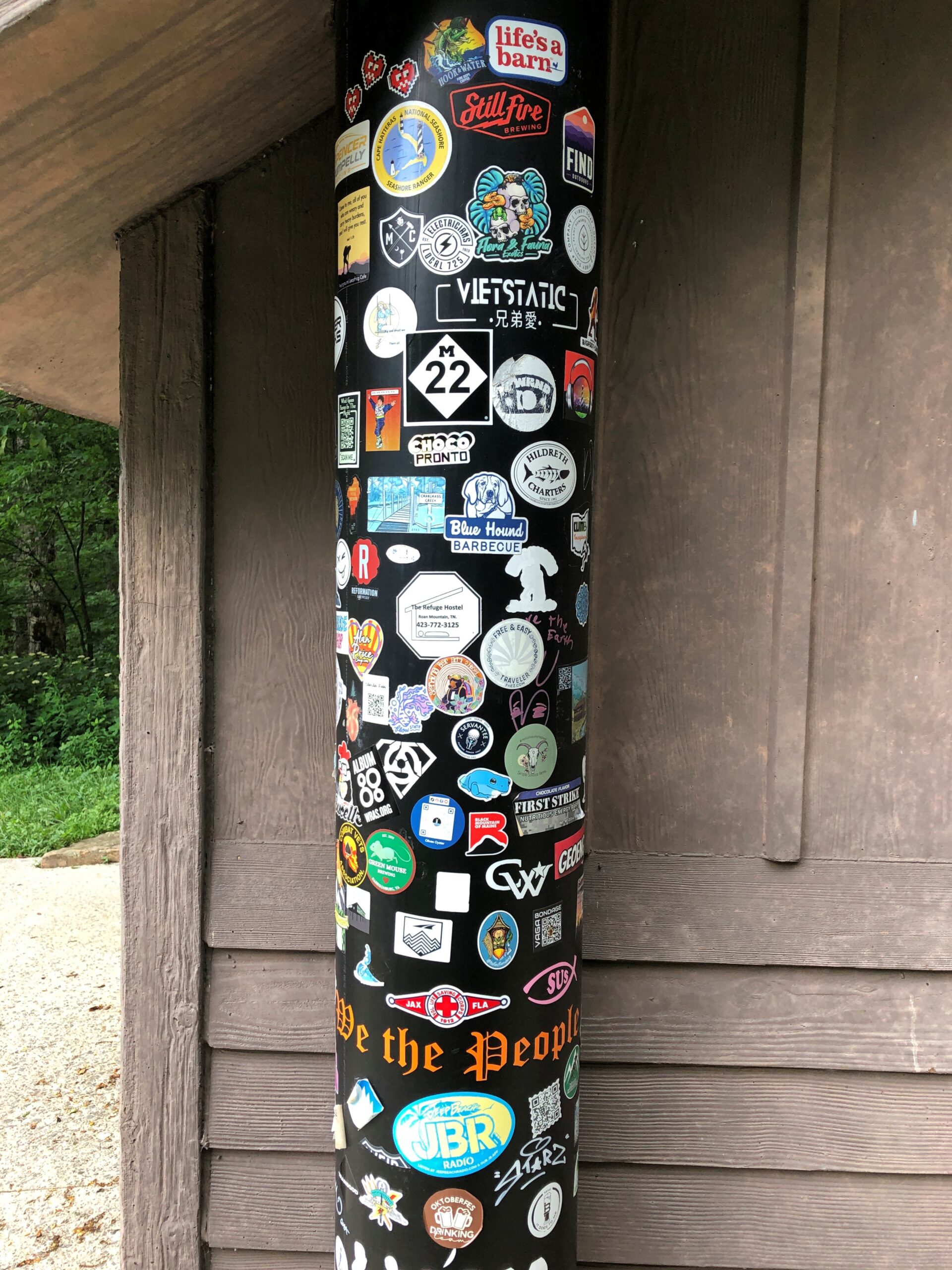
Next to the parking lot are pit toilets. Attached to the structure is a pipe, many times stickered by passersby. I didn’t see a Buc-ee’s sticker, but there could be one appearing anytime now. Good to see M-22 up in Michigan represented: that’s another fine stretch of car commercial driving.
Blood Mountain. There’s a Southern Gothic horror name for you. Or less seriously, the setting of a Scooby-Doo episode, one in which Shaggy, when he learns the name of the place, says “Zoinks! B-B-Blood Mountain?!?”
When pondering the immortal deeds of President Millard Fillmore, as one should occasionally, his signature on the Coinage Act of 1853 is worth a thought. The law, signed weeks before he left office, adjusted the silver content of most U.S. coinage, but also created the $3 gold piece. When that hoary old cliché about the queerness of a $3 bill is trotted out, I’d guess that most people don’t know that there was actually such a denomination. It was a gold coin rather than paper, made from 1854 to 1889, though few were minted most of those years.
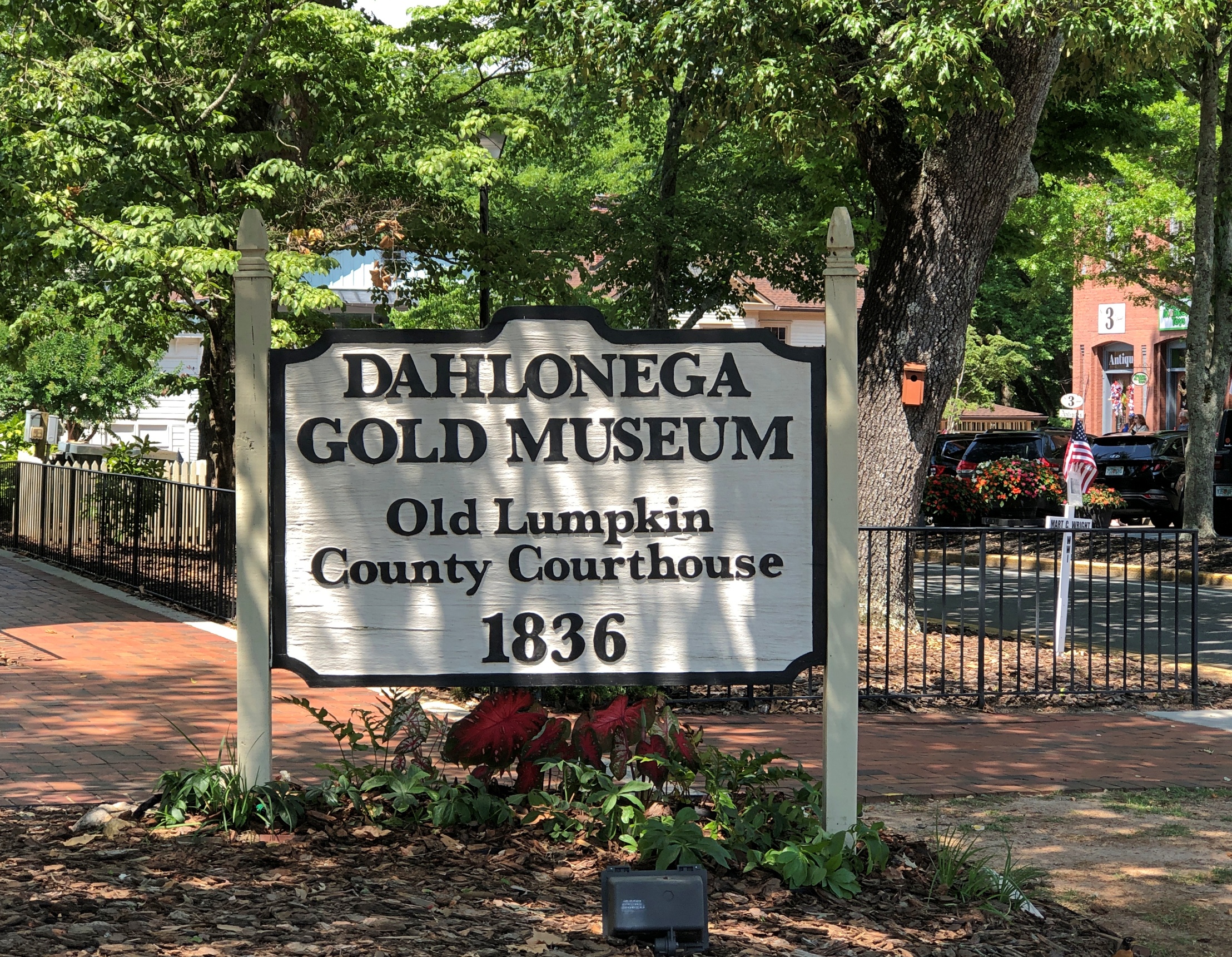
I already knew about $3 gold pieces before I arrived at the Dahlonega Gold Museum in late June on my way to Tennessee, but if I hadn’t, I could have learned about them there. Dahlonega, Georgia, used to be home to a branch mint where they were made. Only gold coins were made at Dahlonega, including that odd duck of a denomination for exactly one year (1854), but also gold dollars, quarter eagles and half eagles until 1861. No eagles or double eagles, however.
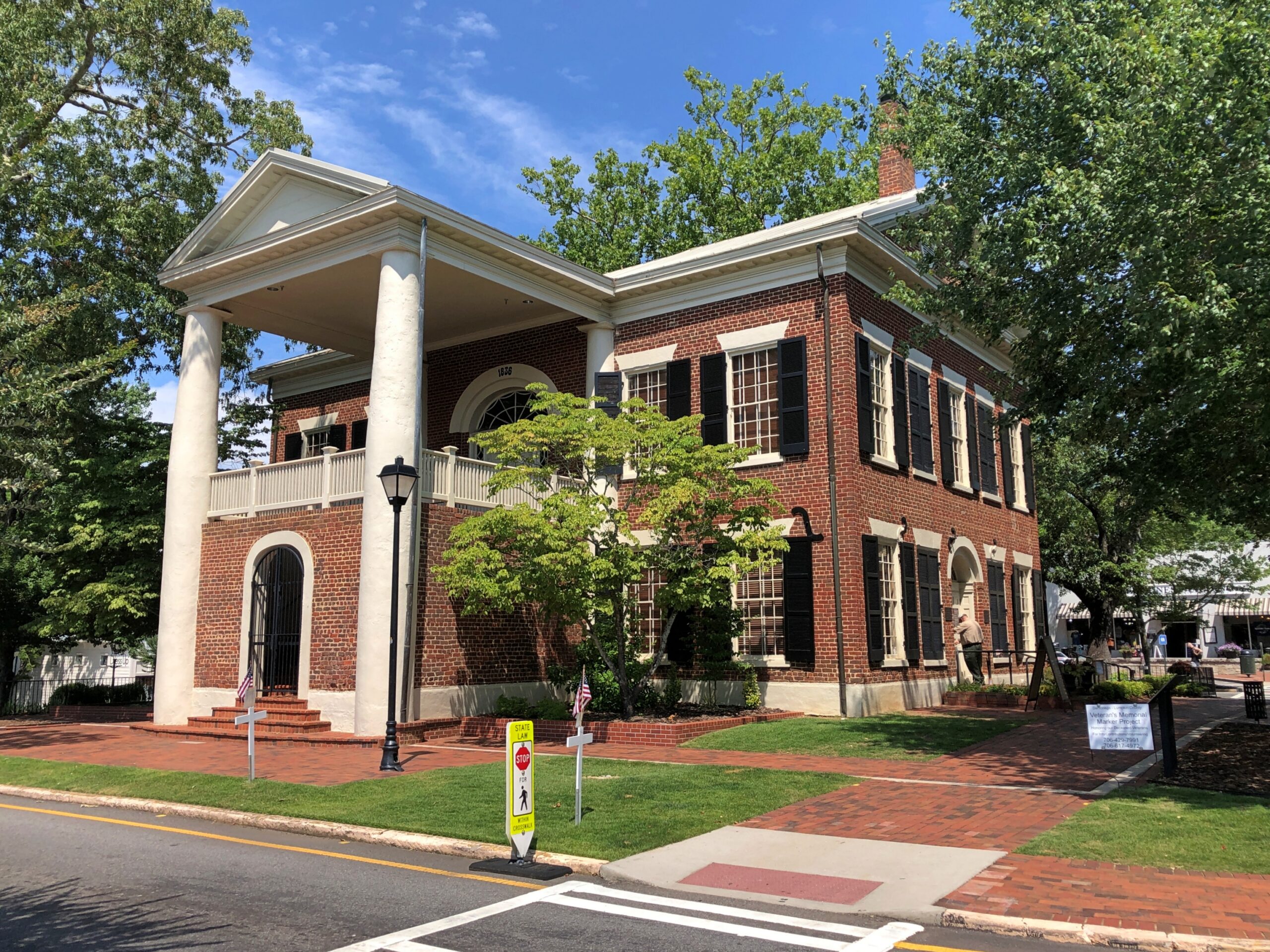
The history of gold coinage at the Dahlonega Mint wasn’t that long. Congress authorized a branch mint there (and in Charlotte, NC, and New Orleans) in 1835, and coin production started at Dahlonega in 1838. The north Georgia gold rush beginning in the late 1820s justified such a move. The Civil War resulted in the closure of the mint, which never reopened afterward, and not too much later, the mint building in Dahlonega burned down. The modern museum is in the former Lumpkin County Courthouse and tells the story of gold in the area.
The museum has exhibits about the mint, but also the gold rush, including information about the discovery and mining of the metal, some antique equipment, and a nod to the Cherokee on whose land the gold was discovered — the rush helped precipitate the Indian Removal Act — as well as the slaves and free labor that worked the streams and hills looking for gold. There was also, behind thick glass, a complete collection of Dahlonega gold coins, mint mark “D,” long before Denver got that letter for its coins.
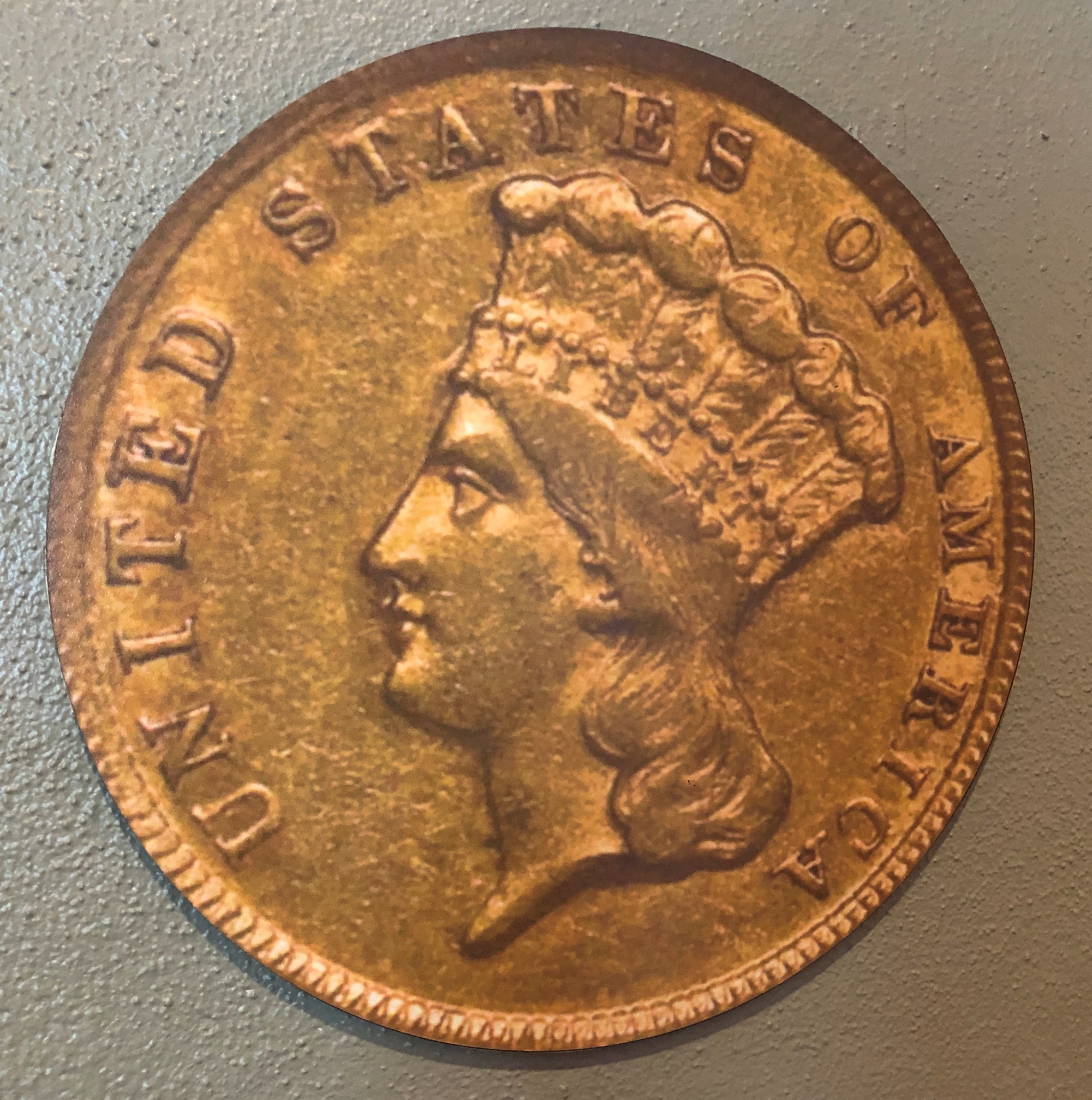
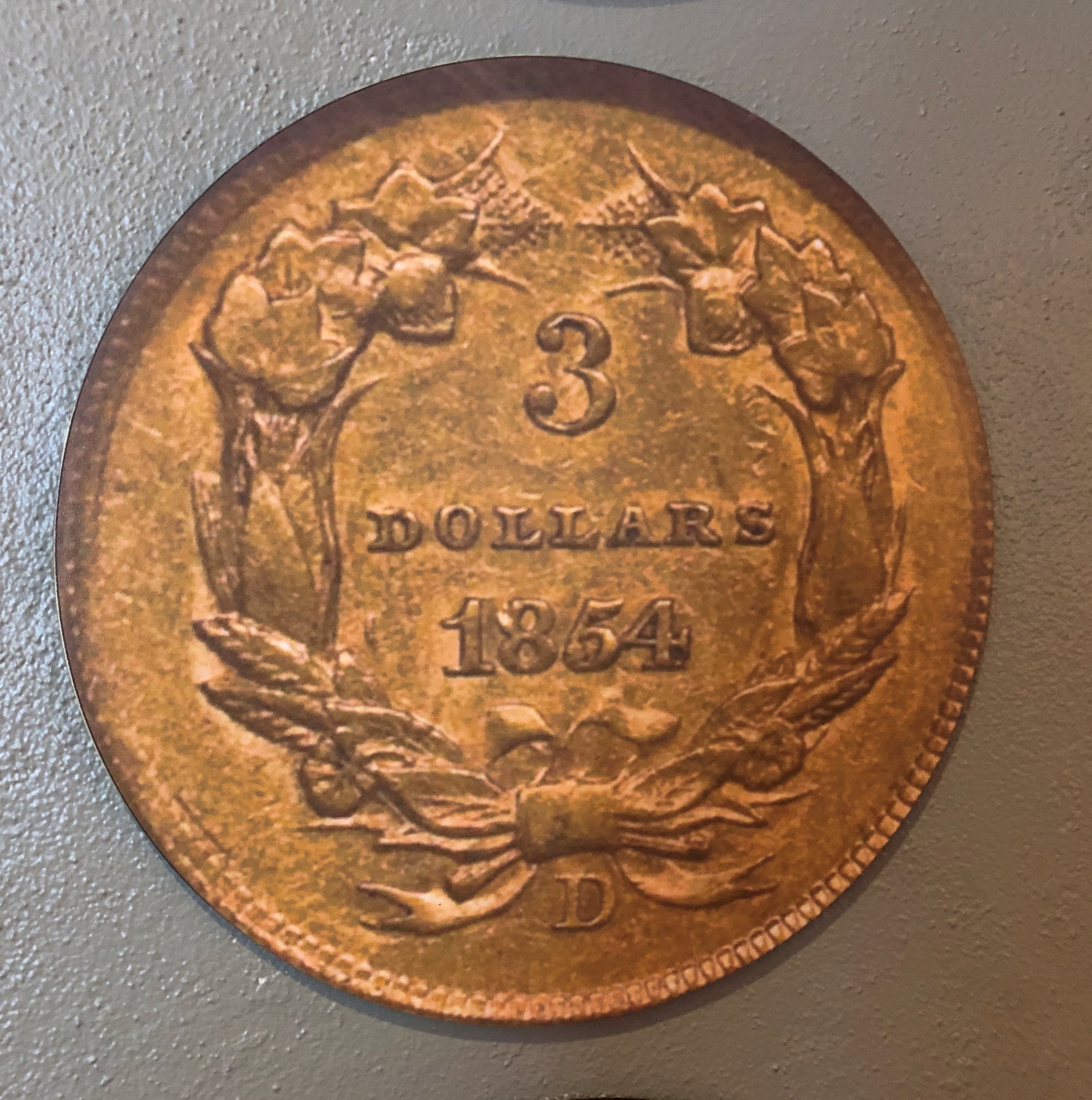
The protective glass made photographing the actual coins problematic, but the museum thoughtfully provided enlarged images of a few of the coins in its display, including the $3 piece.
Like the 20 cent piece or the Susan B. Anthony dollar, the $3 gold piece wasn’t popular when new. Too easily confused with the quarter eagle would be my guess, though their designs are very different. But they are popular among collectors now, and quite valuable. As a result, alas, I’m unlikely ever to own one. In the most extreme case, an 1870-S $3 piece, the only example known to exist, sold at auction in 2023 for more than $5.5 million.
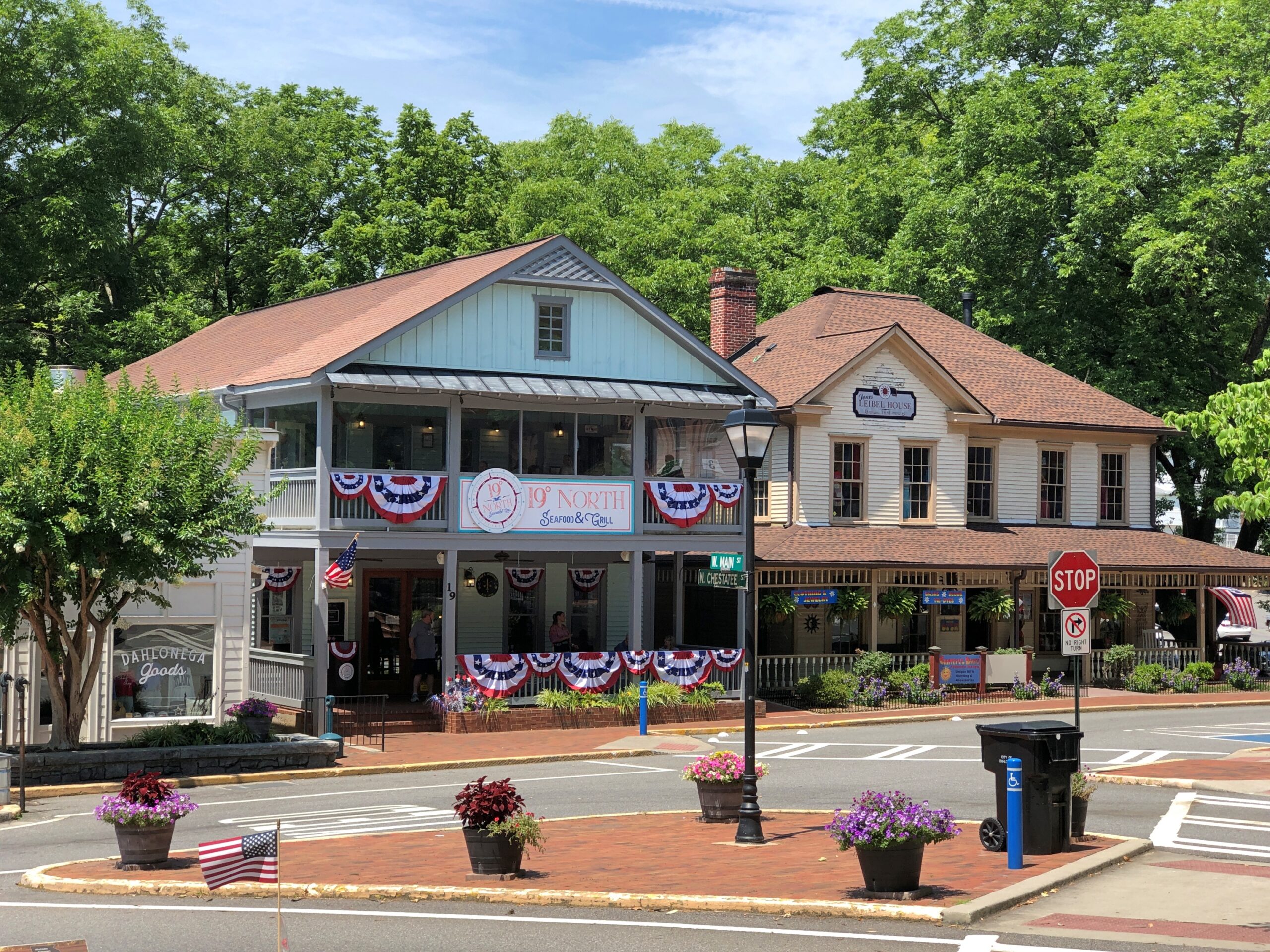
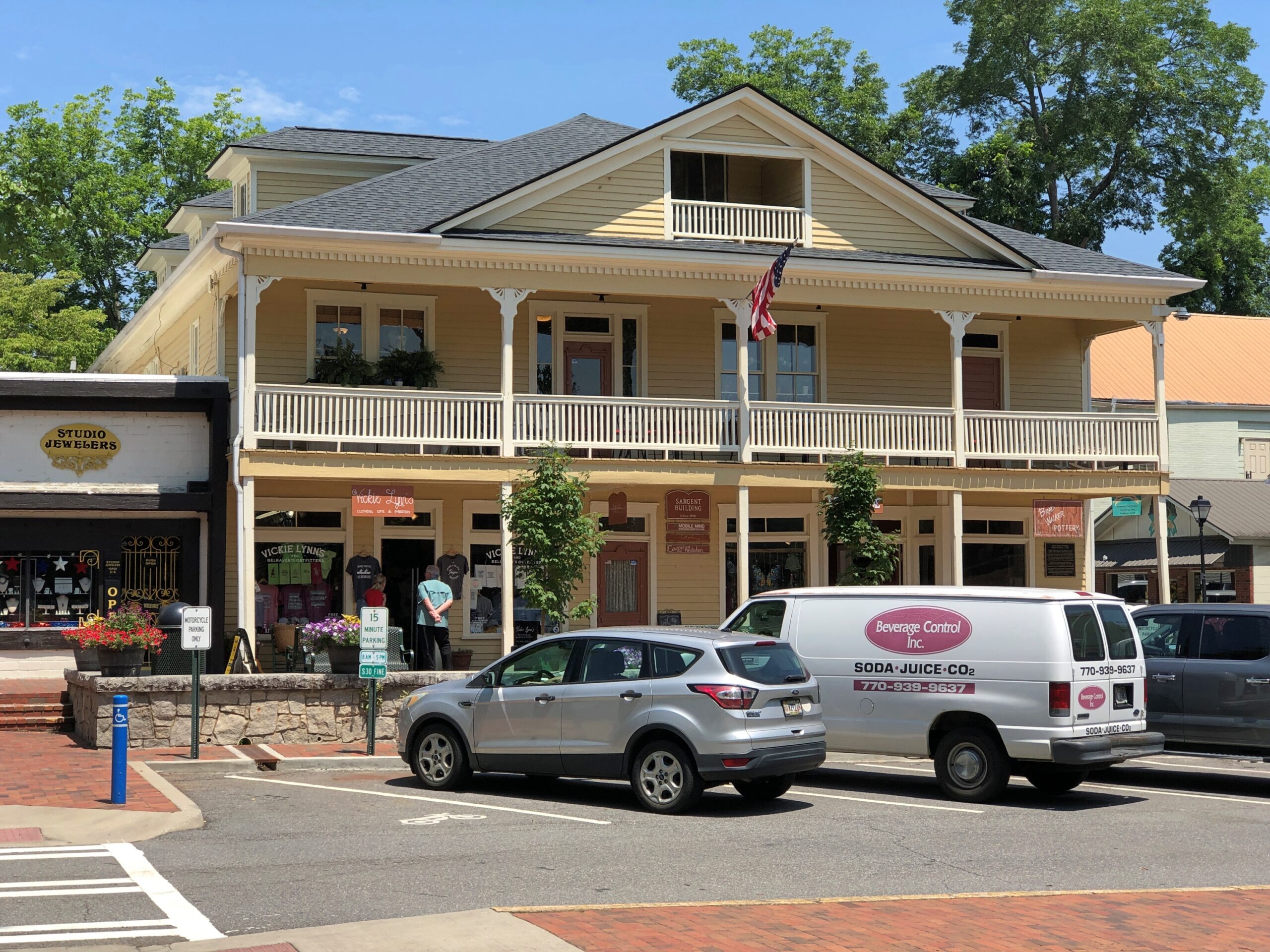
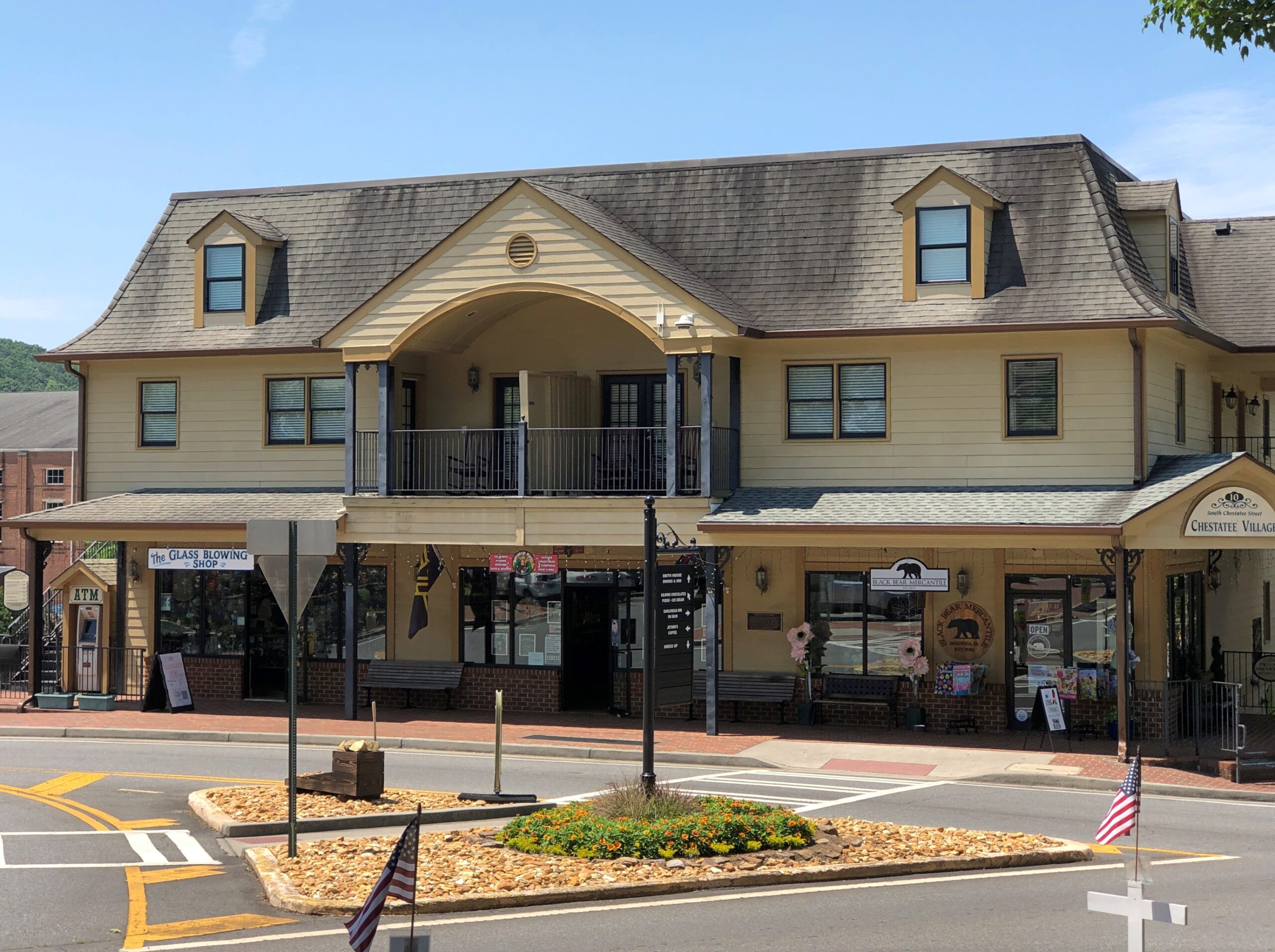
As for Dahlonega, its downtown has the handsome look of a day-trip destination from Atlanta and a lot of suitable businesses. On the former county courthouse square, you can find the likes of Gustavo’s Scratch Kitchen, Vintage Musical Instruments, Dahlonega Tasting Room, The Glass Blowing Shop, Studio Jewelers, Lynn’s Gifts, Country Cottage (also gifts), Local Pup pet store, 19° Seafood & Grill, Paul Thomas Chocolates, Dahlonega Goods and Dress Up Dahlonega.
A blazing hot day might not have been the best time for a visit, so the square wasn’t especially crowded. I only spent enough time on foot to get from a parking lot a block away to the museum, and then took a walk around the building under the shade of the trees on the grounds. For a hot summer day, not a bad walkabout. Certainly worth the effort to see some Dahlonega gold.
Now I can say I’ve been to Athens. The one in Georgia, that is, spending two nights. But most of that day in late June, I was elsewhere in Georgia – the part that Sherman burned – visiting two different old friends, one in the morning, the other the afternoon, so my time in Athens was fairly limited. The neighborhood near the university looked interesting, as college towns often are, so with any luck I’ll be back sometime for a closer look.
But I did spend enough time in town to happen across the aforementioned two-story concrete chicken and egg. It was another example of serendipity on the road. The reason involved traffic patterns in the western part of Athens. My motel was off a fairly busy major road, the Atlanta Highway, meaning that entering the property headed west – away from Athens – meant turning across two intense lanes of traffic without a clearly marked turning lane or a light.
So more than once, I headed west to the next major intersection, made a right, and then turned around to head back east on the Atlanta Highway so I could make a right turn into the motel. One time late in the afternoon, I decided to drive just a little further down that turning road – Cleveland Road – to see what I could see, and was soon rewarded with the concrete chicken.
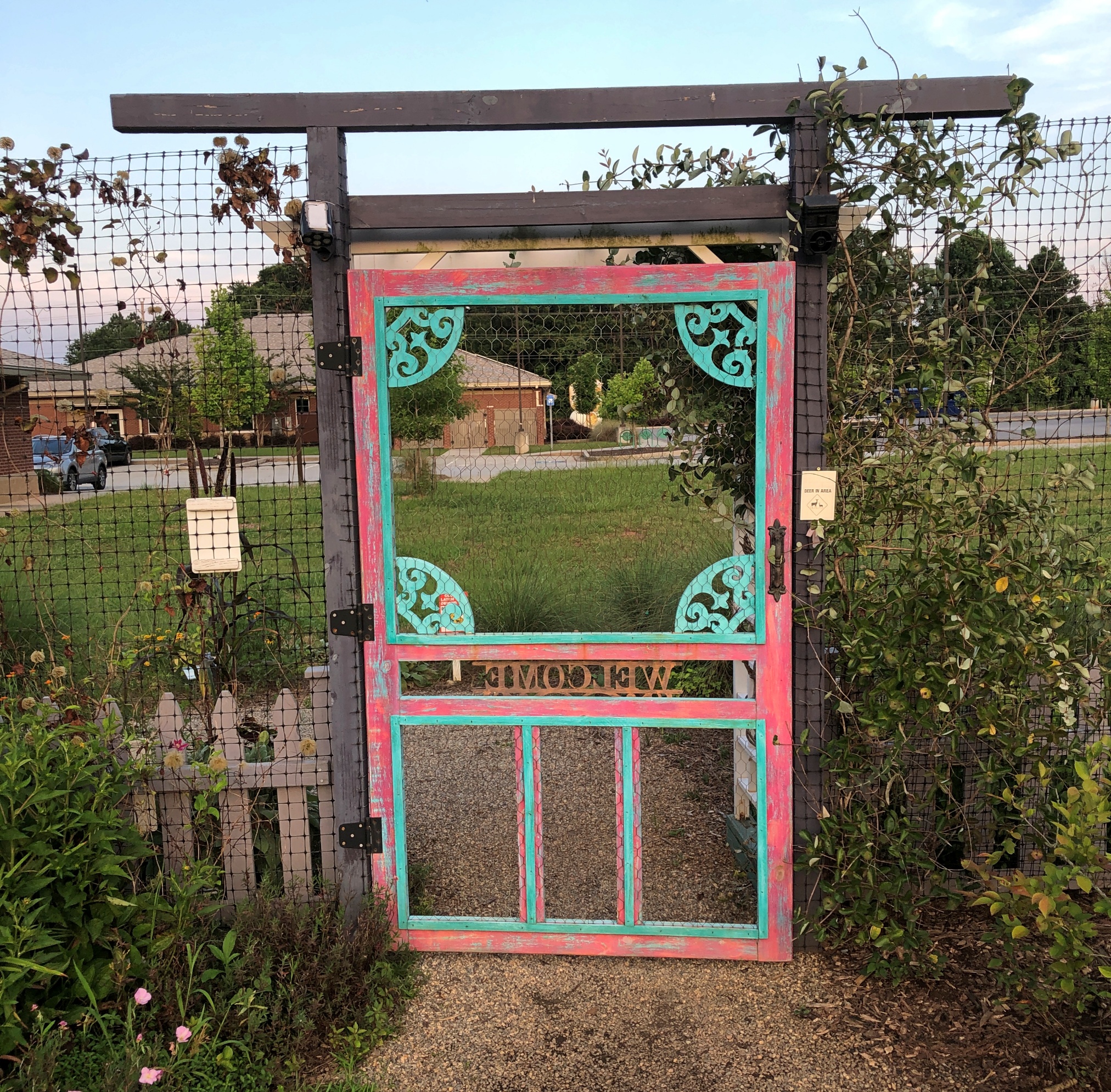
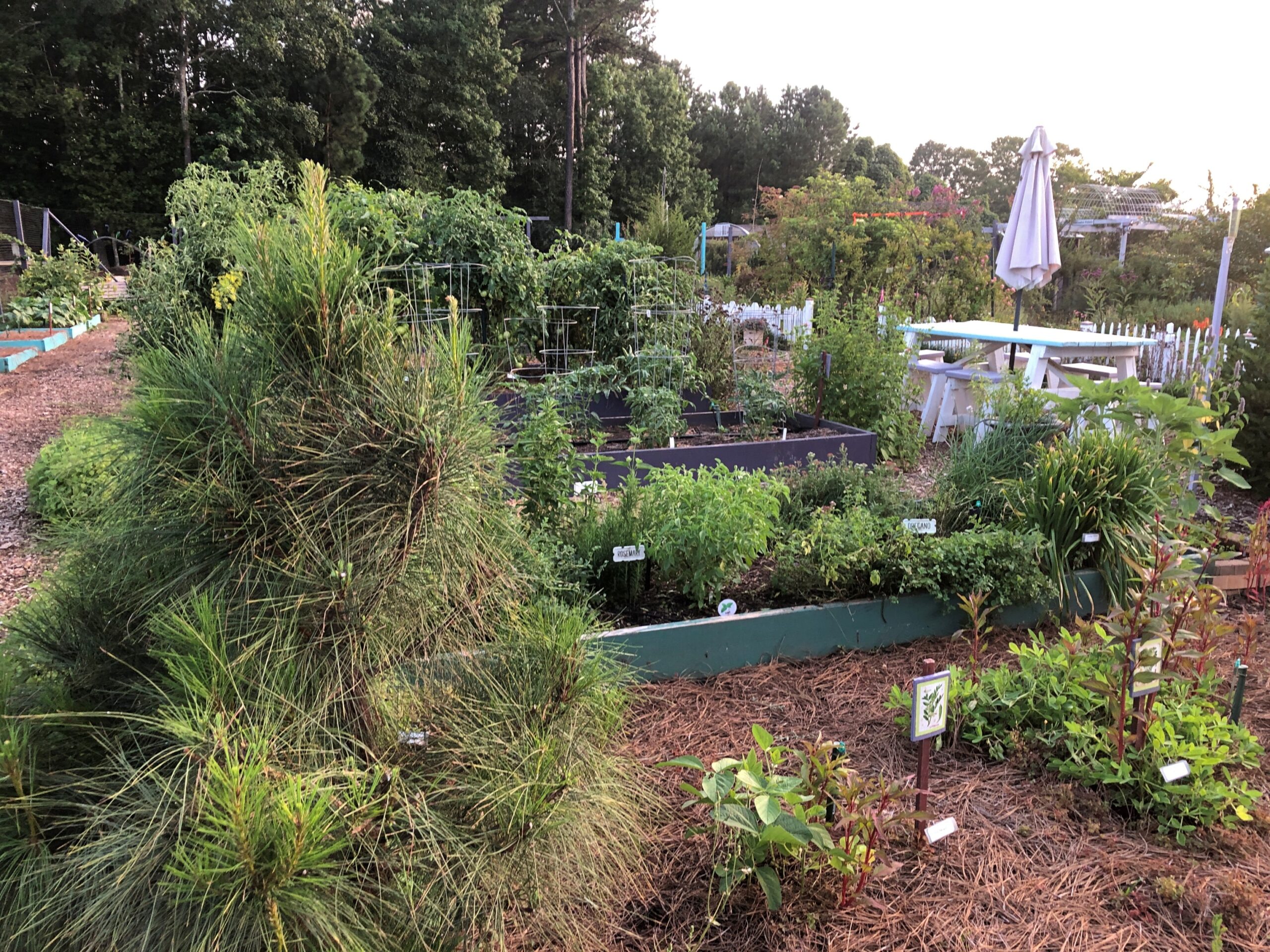
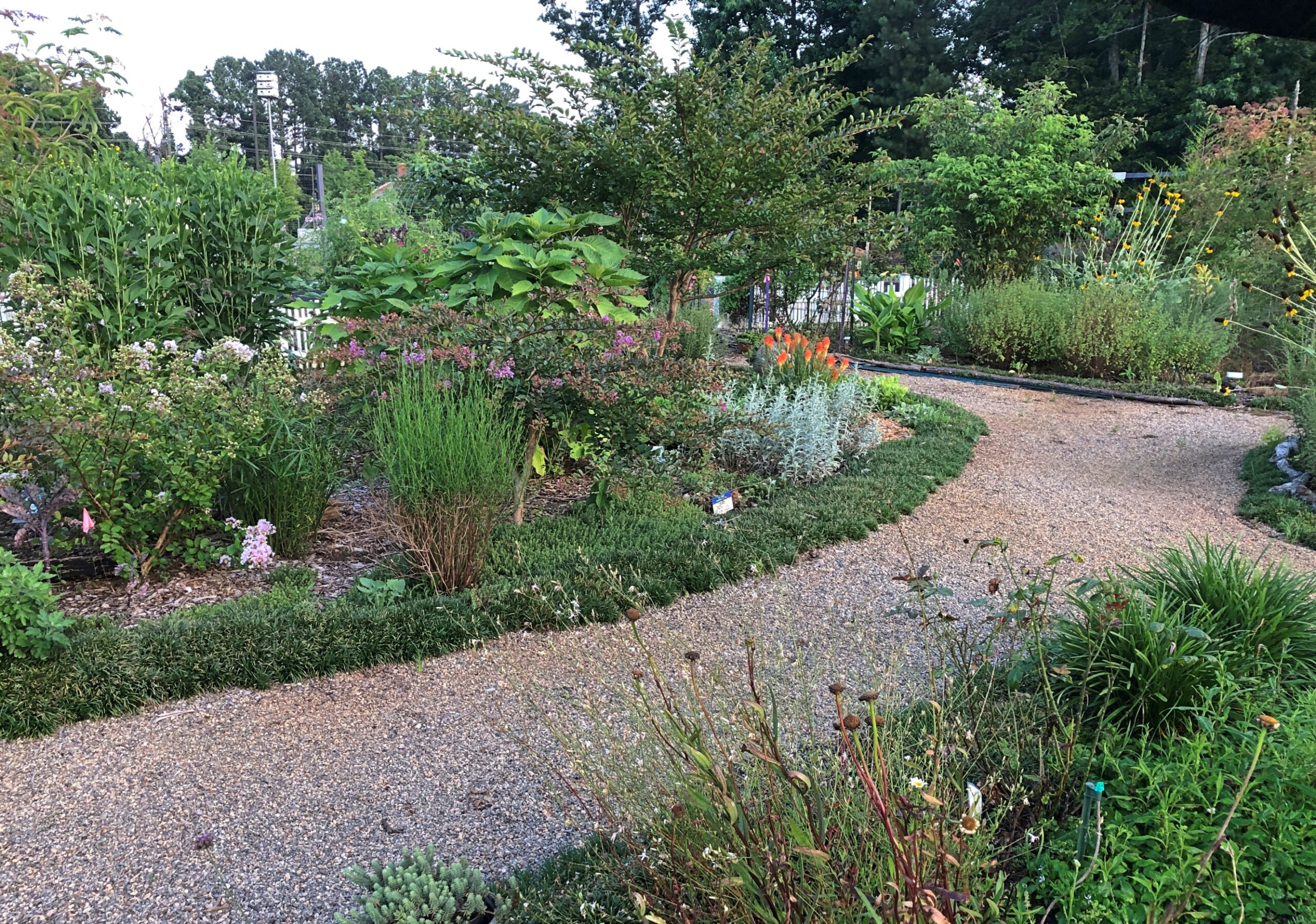
But that wasn’t all. Behind the building that houses the University of Georgia Extension Athens-Clarke County is a sizable garden. The sun was nearly down, so heat was less of an issue. I spent some time looking around. No one else was there.
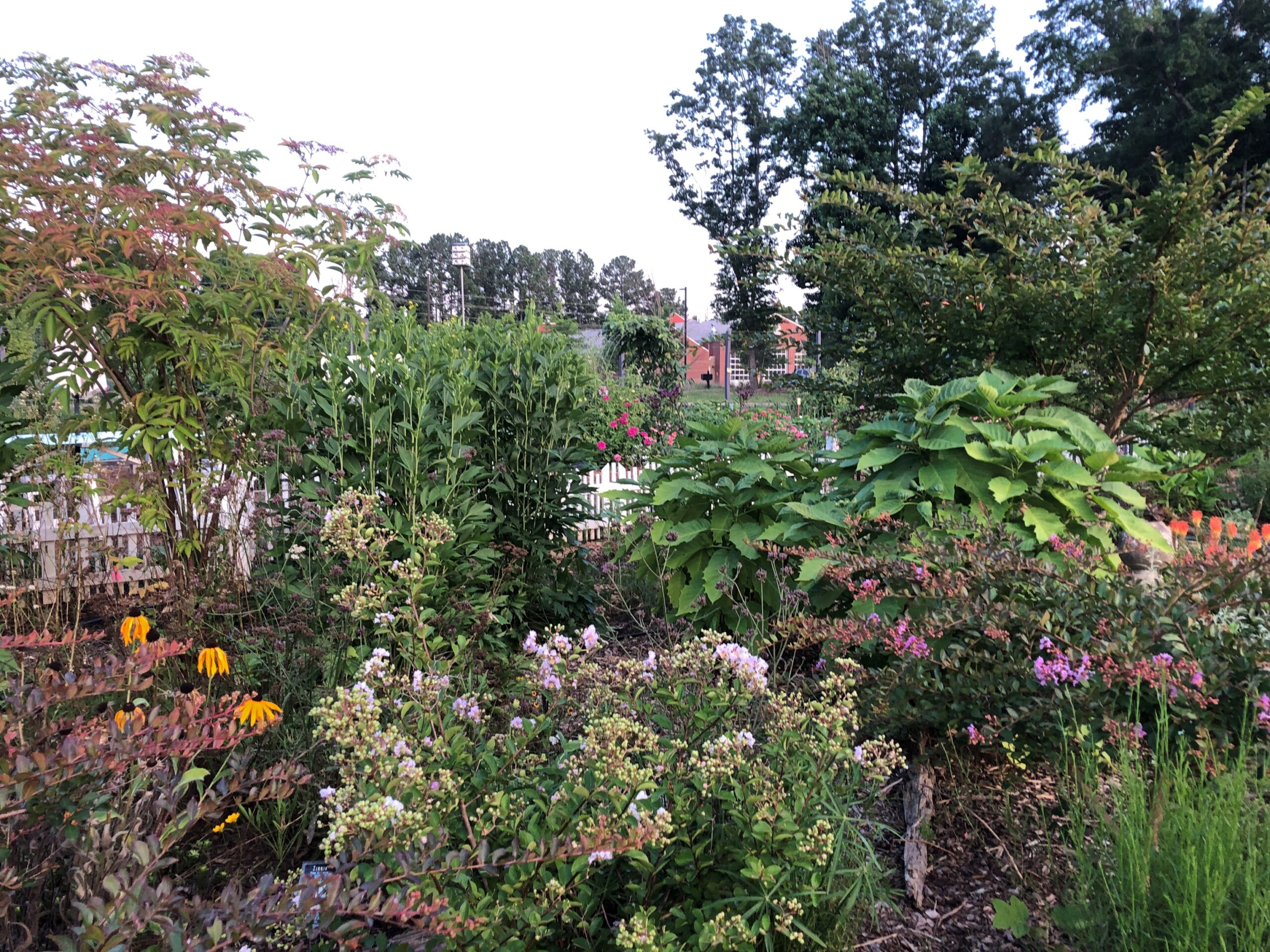
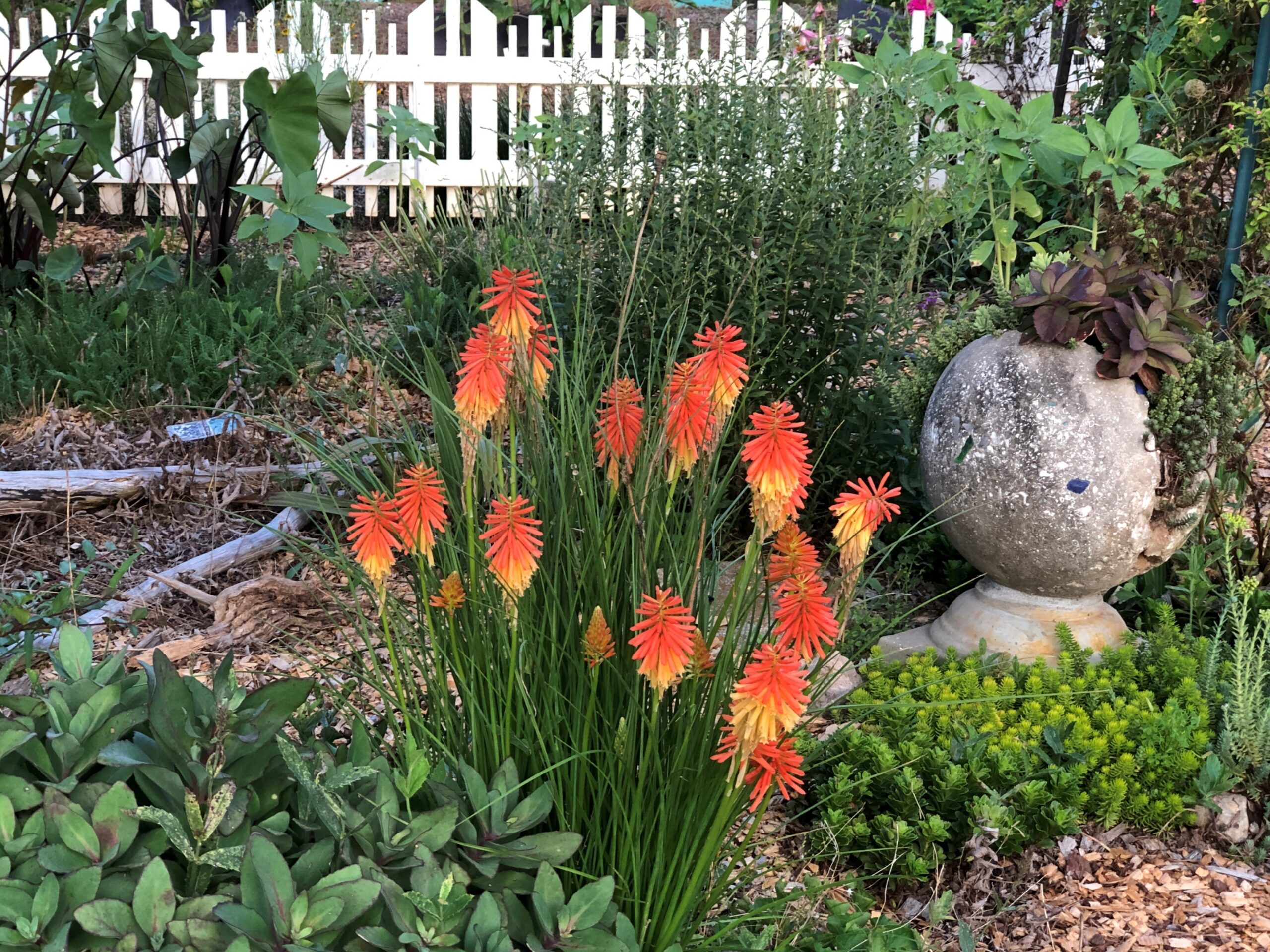
It’s a 17-acre lush garden, including a wide variety of edible plants.
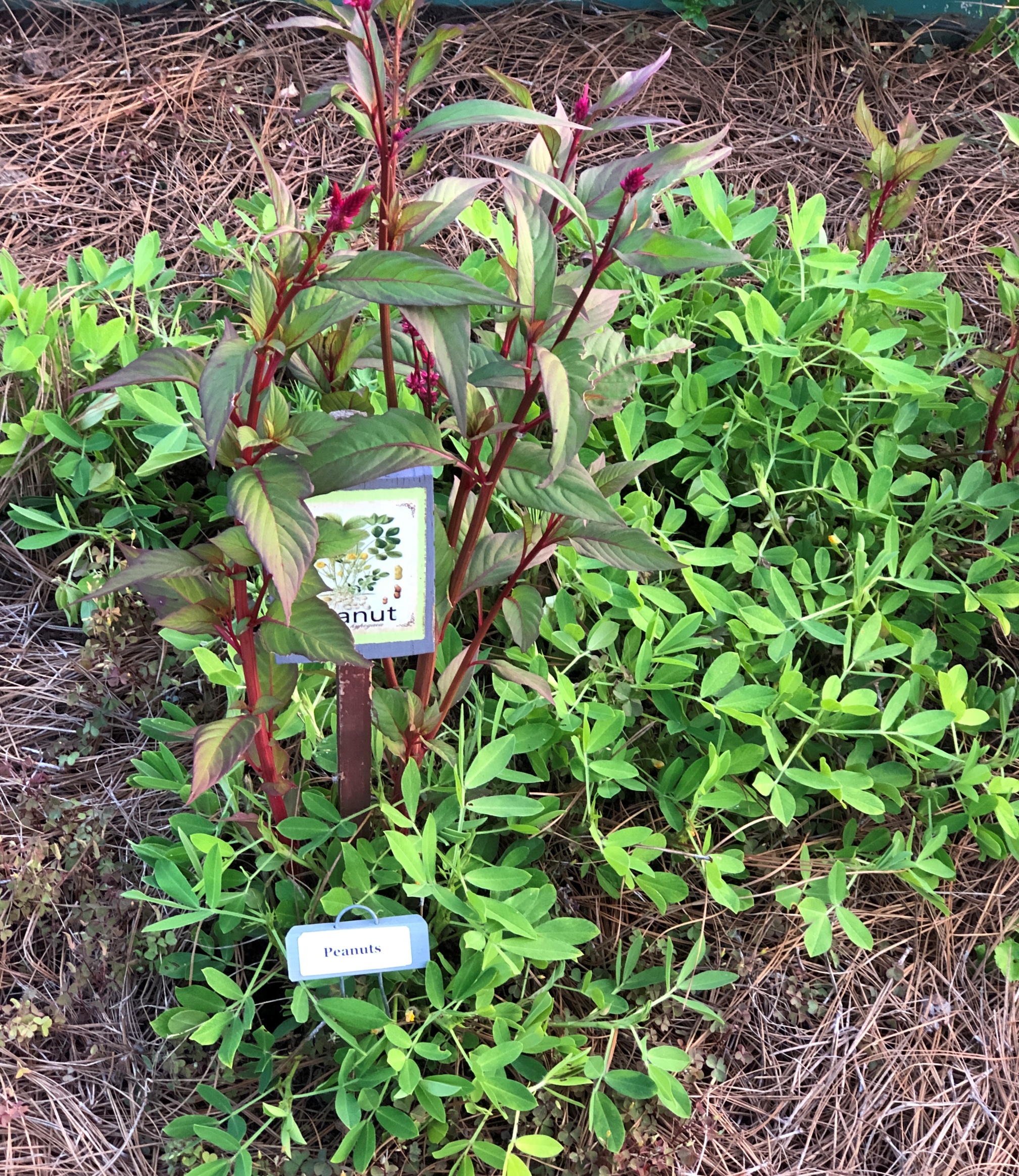
What would a Georgia garden be without peanuts?
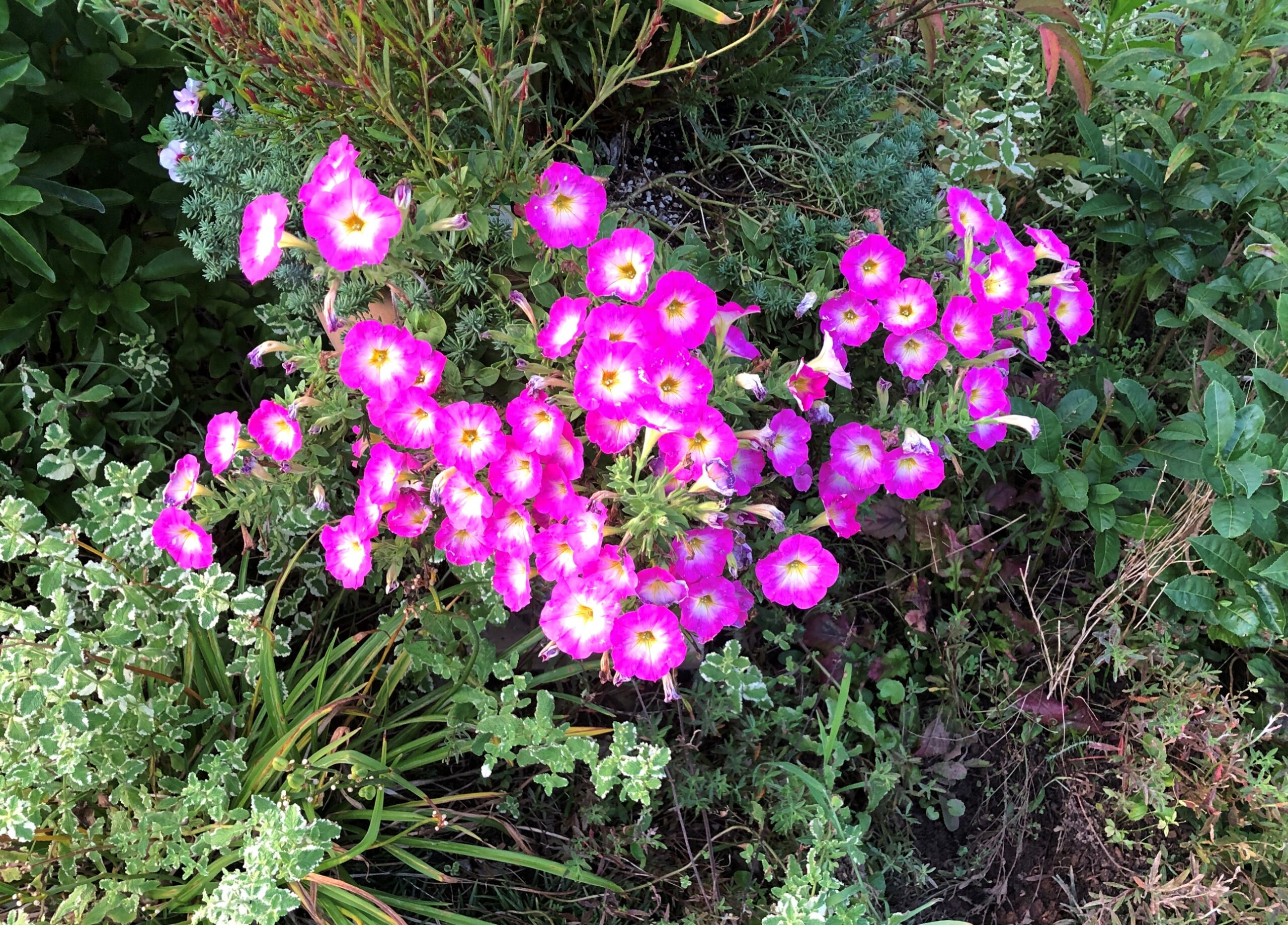
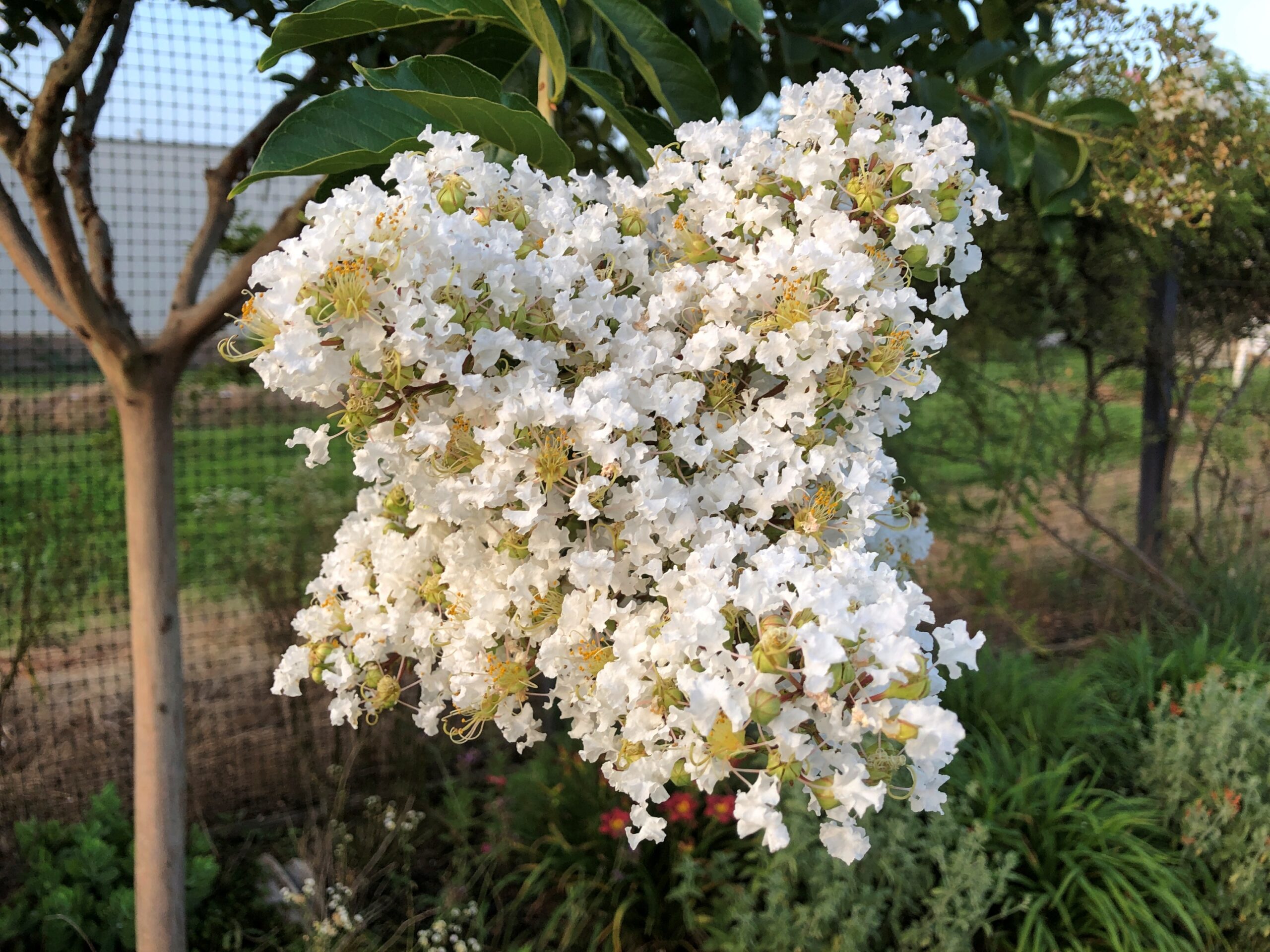
Plus a lot of flowers.
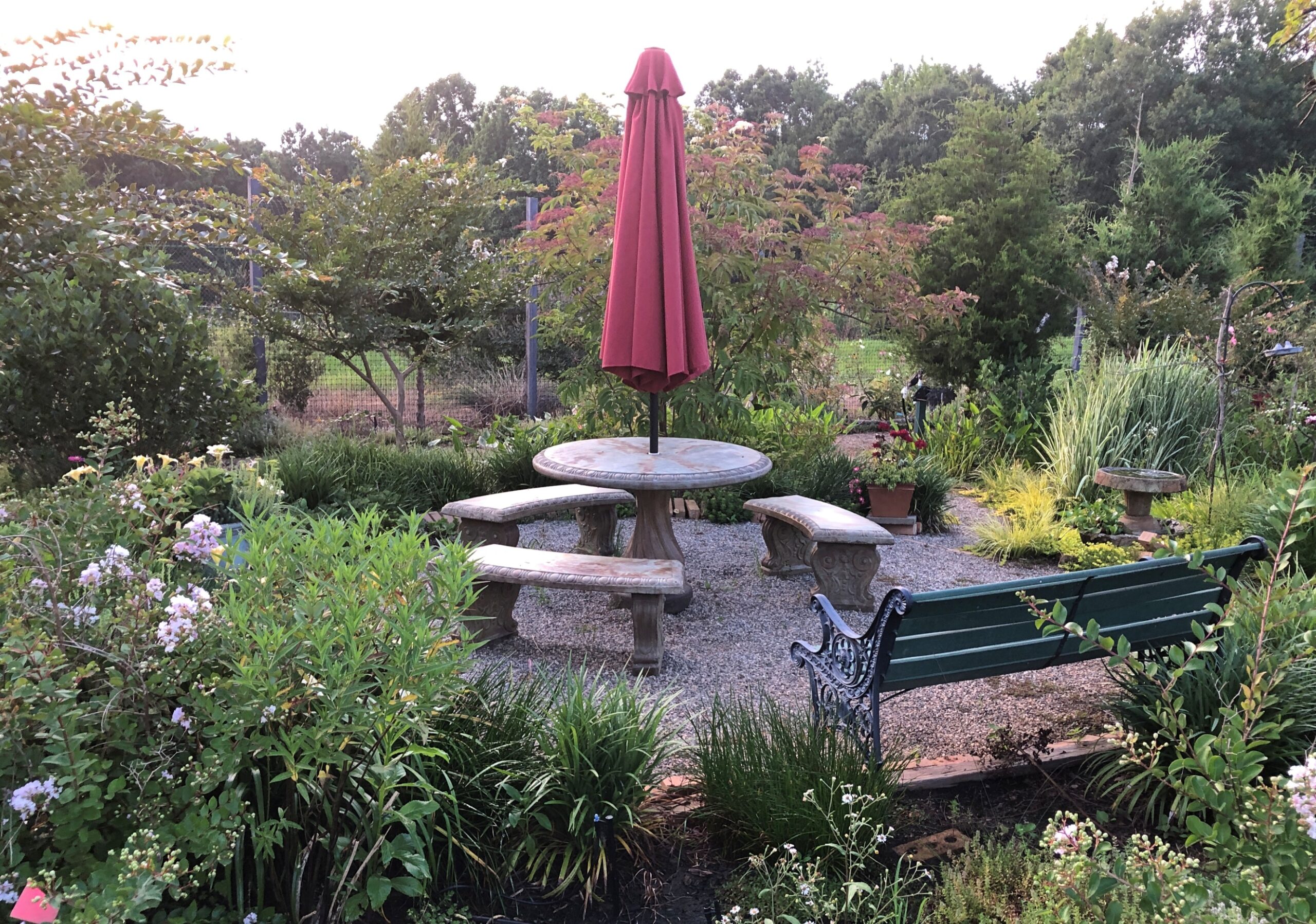
Even a few places to relax.
Wonderful spot. The lesson here: if you see a giant chicken statue by the road, investigate further.
In the heat of midday back in late June, en route to Athens, Ga., I arrived at the Georgia Welcome Center on I-20, a sizable structure just inside the state, and did what I needed to do. Returning to my car, I wondered whether I should drive into Augusta, only a few miles off the Interstate at that point. Specifically to downtown, to see what I could see, even at 90+° F. or so.
Would it be worth the short detour? At that moment, the lyrics of a song of my youth came to mind, as the only mention of Augusta I know in popular music.
I beg your pardon, mama, what did you say?
My mind was drifted off on Martinique Bay
It’s not that I’m not interested, you see
Augusta, Georgia is just no place to be.
The song was “An American Dream” by the Nitty Gritty Dirt Band (a.k.a. the Dirt Band) – with backing vocals by Linda Ronstadt, no less – which reached No. 13 on the Billboard Hot 100 after its release in late 1979, and probably annoyed Augusta’s city fathers and other local boosters. But all that was nearly a half century ago, so I expect any annoyance is long gone as the tune has slipped into obscurity.
The song merely came to mind then, as songs often do, and didn’t affect my decision – which was to go. Do a flyby, in my idiosyncratic nomenclature for such a visit. That is, pass through a place, but a little more than merely driving through. If I see anything interesting during a flyby, I’ll stop for a short look. (So not only is my nomenclature eccentric, it isn’t really accurate. Who cares.)
Sure enough, I spotted something worth stopping for.
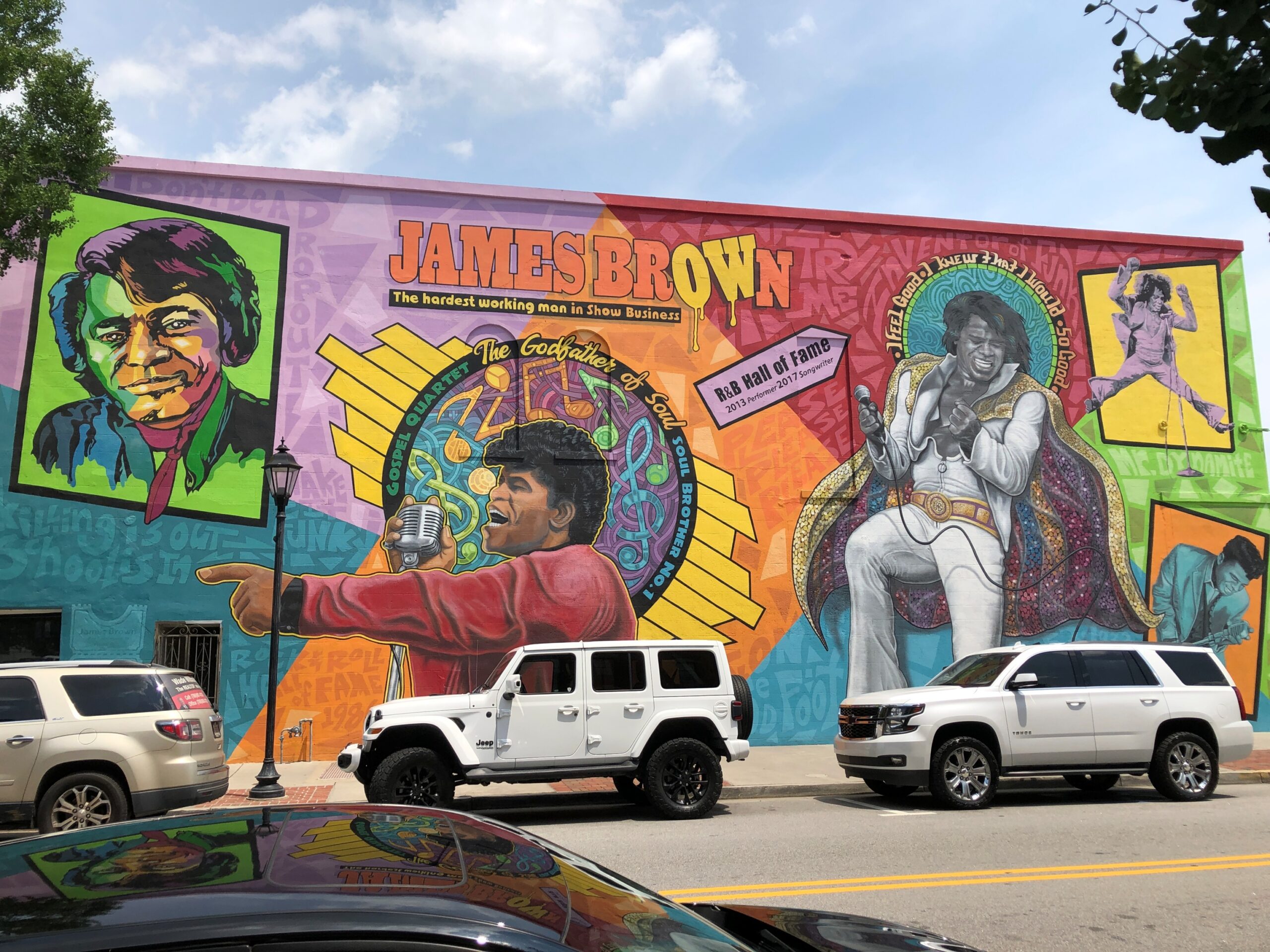
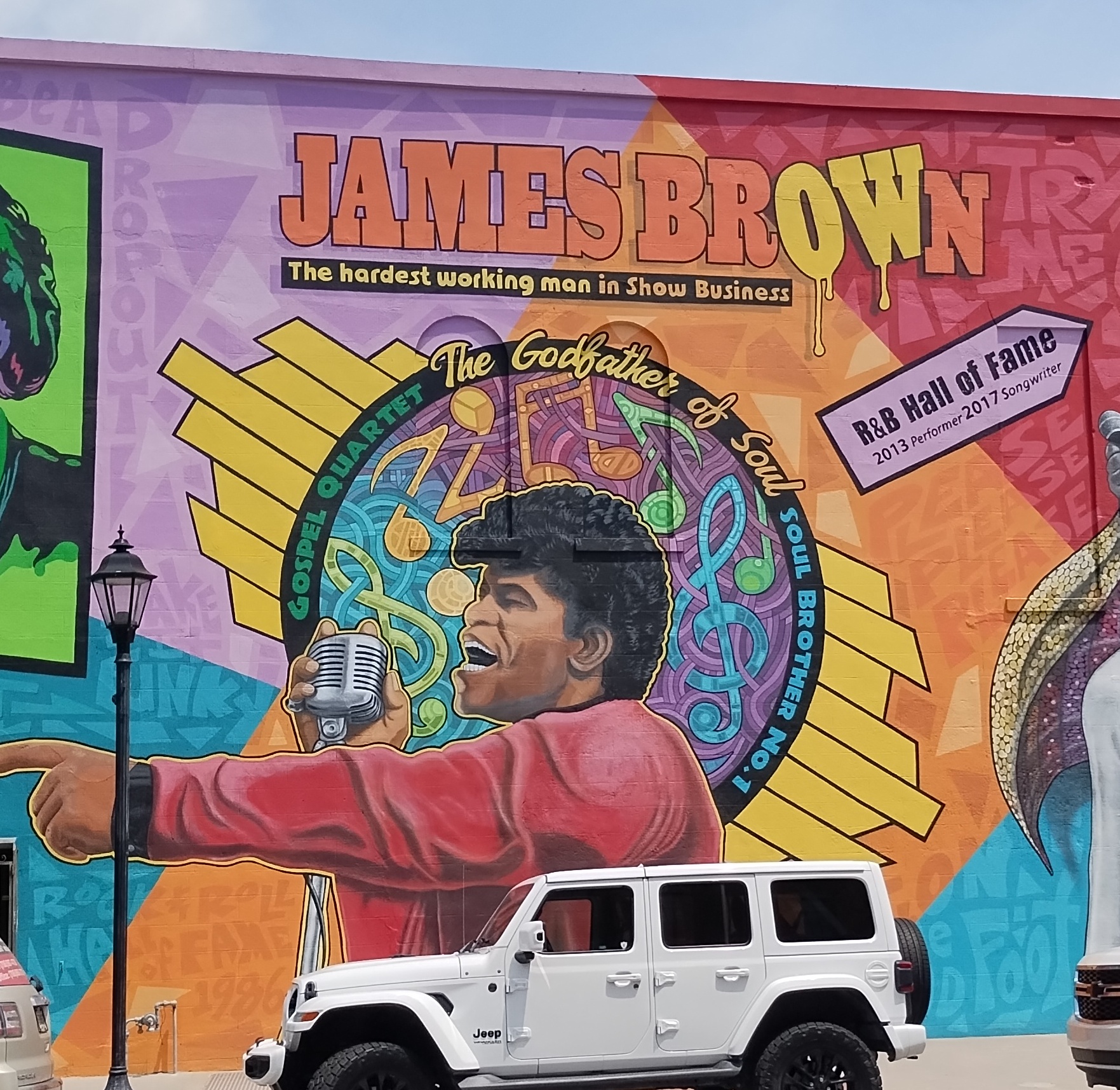
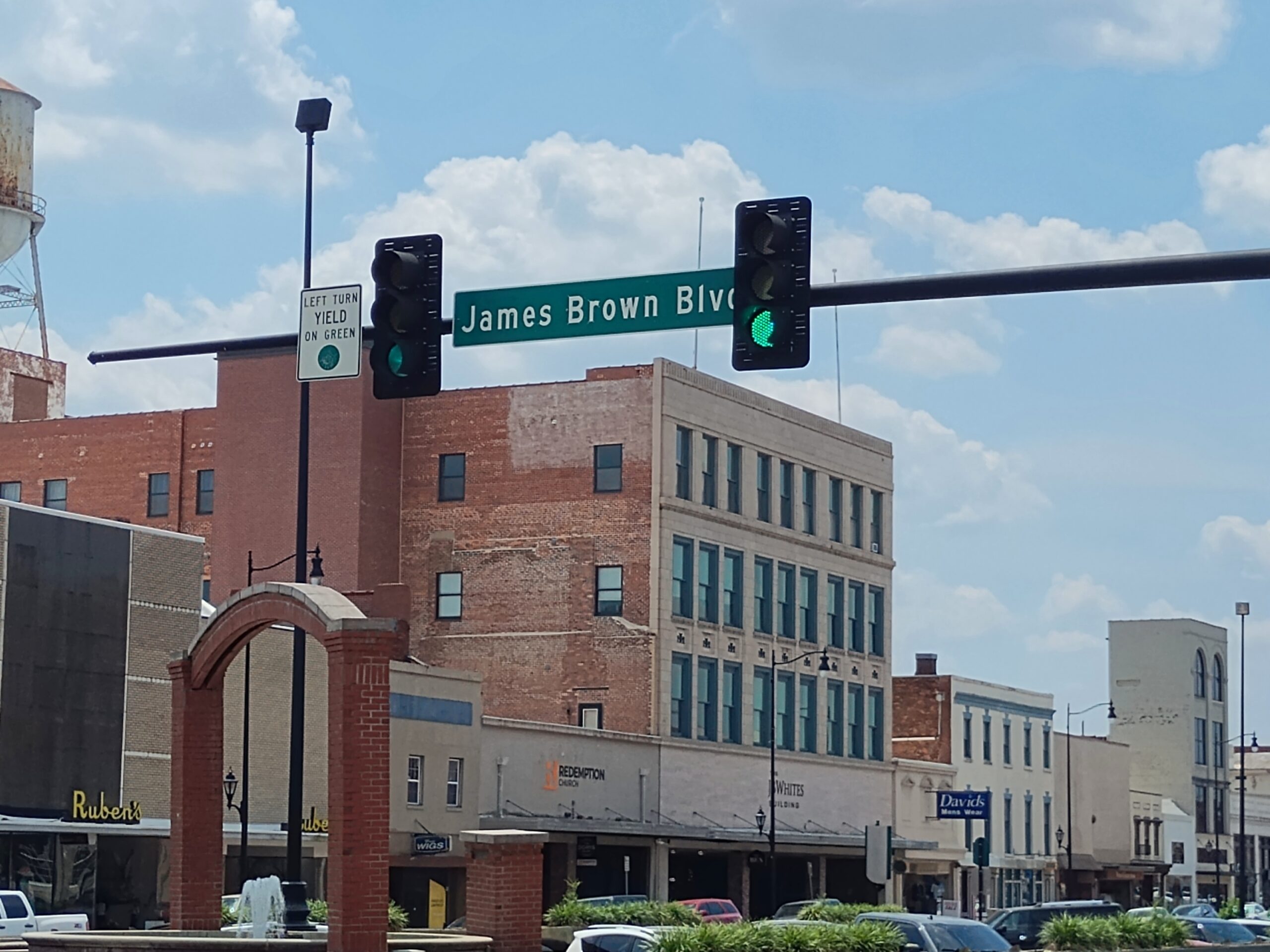
A mural at the intersection of James Brown Blvd. and Broad St., completed in 2020 by an artist named Cole Phail. Though born in South Carolina, Brown grew up in Augusta, a fact I previously didn’t know.
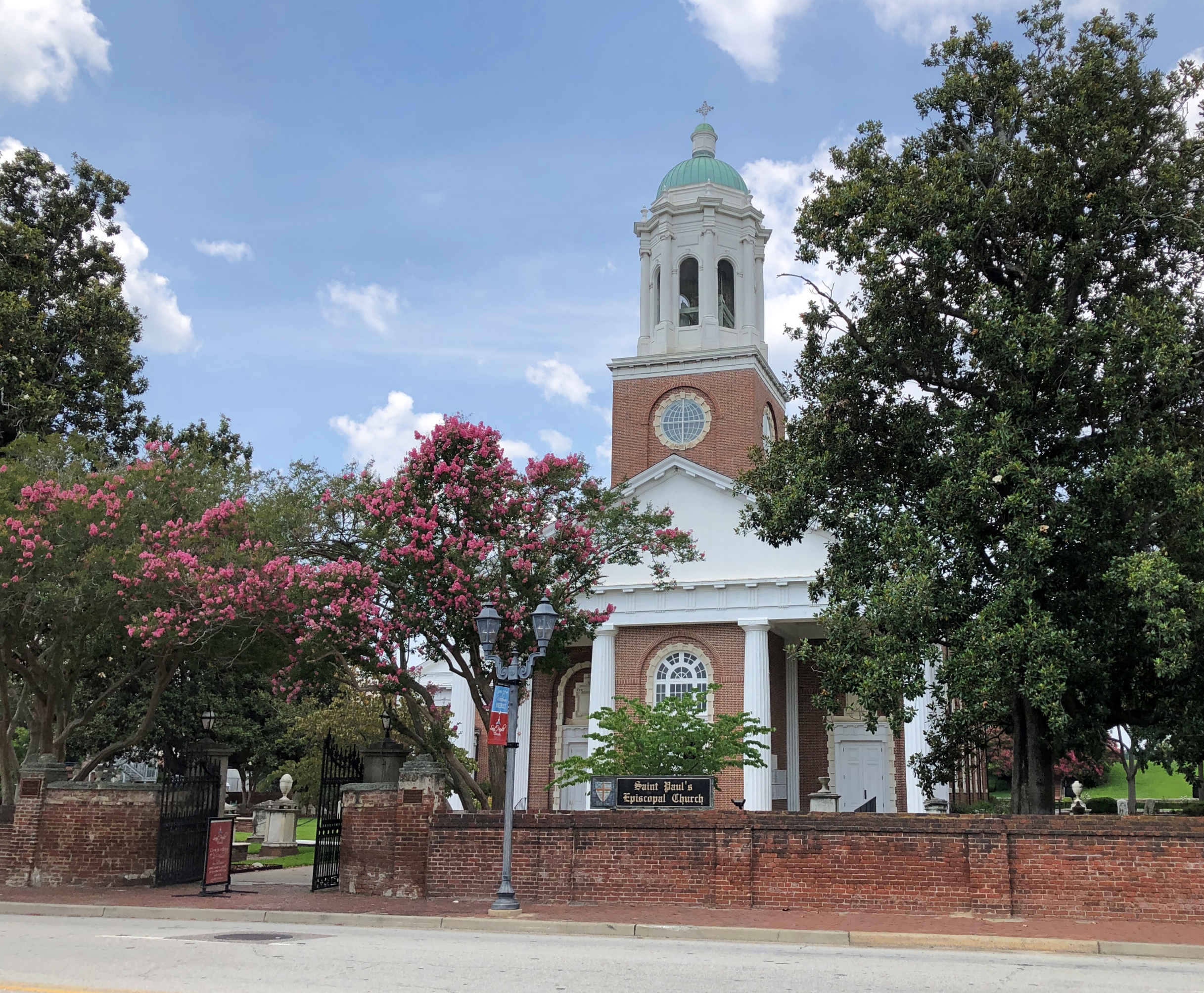
Later I learned that there’s a bronze of the Godfather of Soul not far away on Broad, but I didn’t look around enough to spot it, considering the heat dome, which seemed to be bearing down on me personally at that moment. So I looked at the mural, got back in my car, and blasted the AC. A few blocks away, as I was driving along, I saw an open church. I had to stop for that, too.
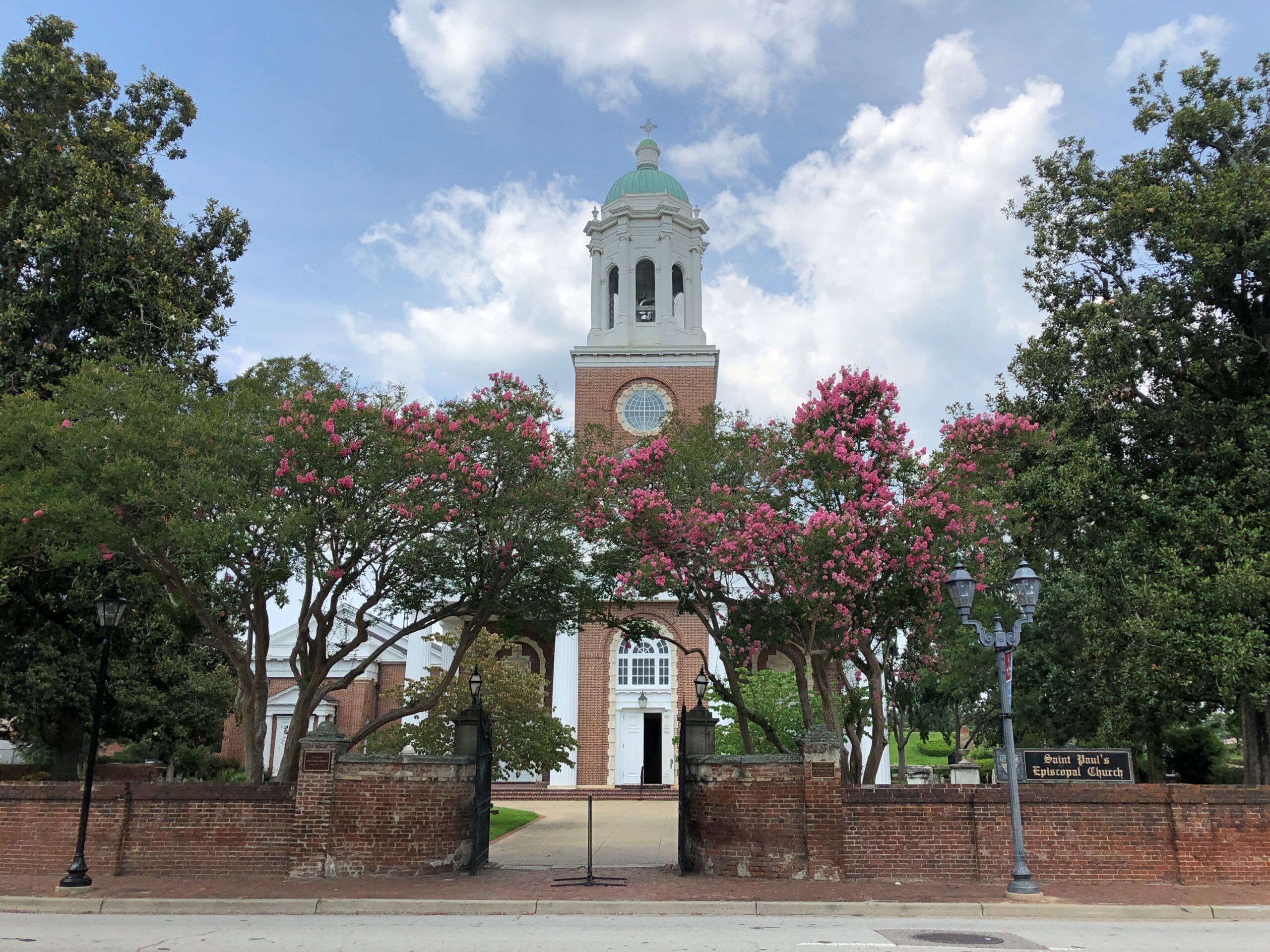
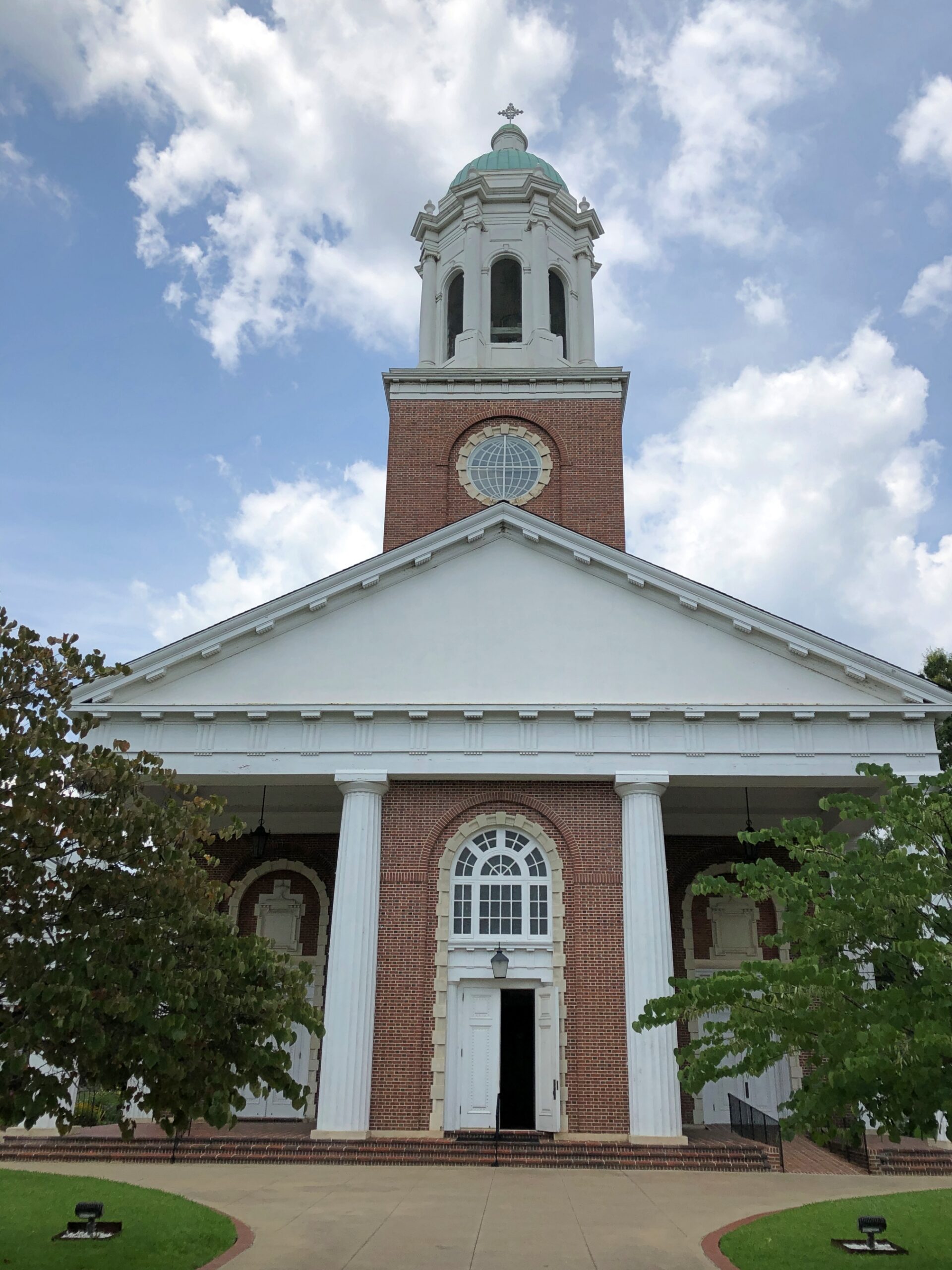
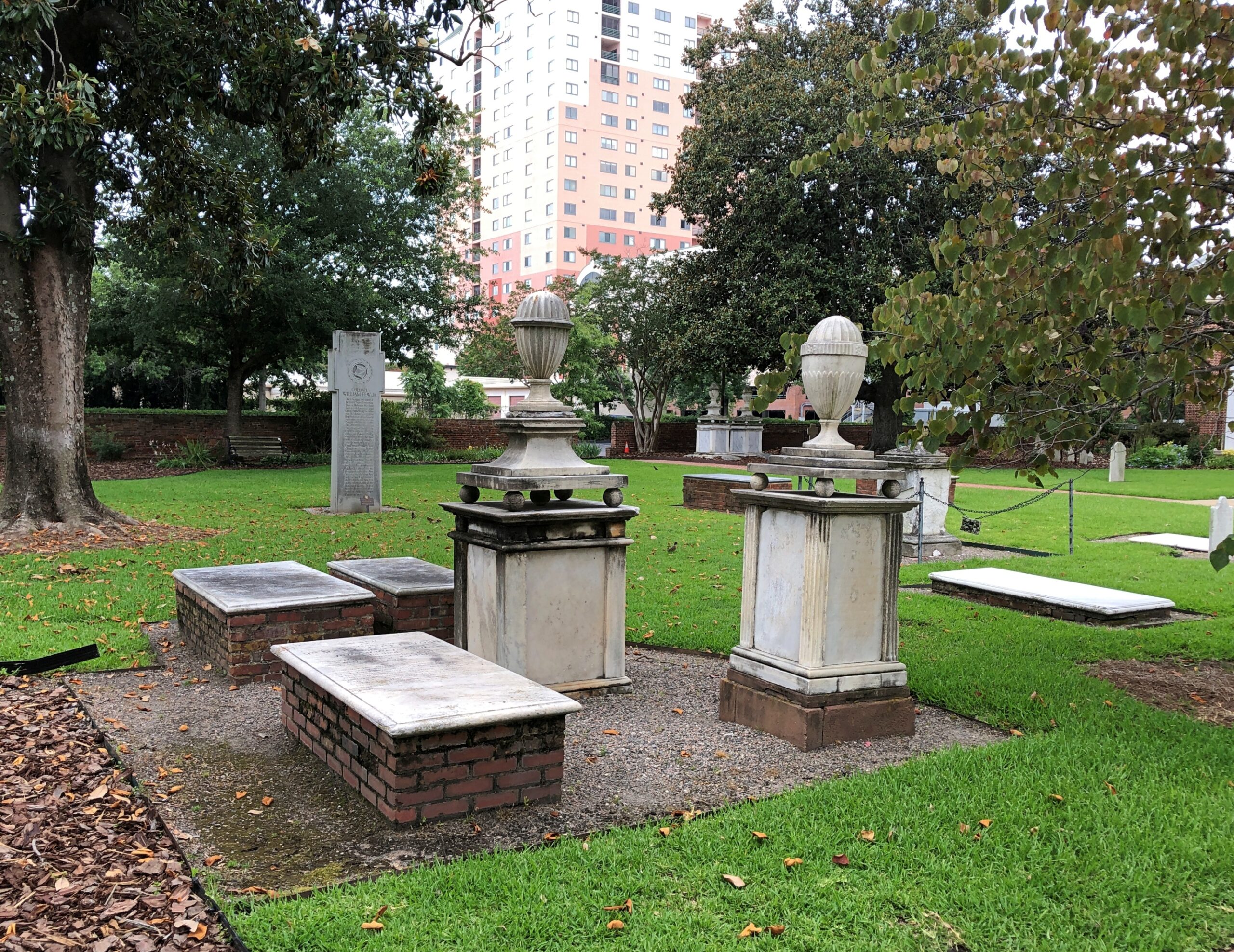
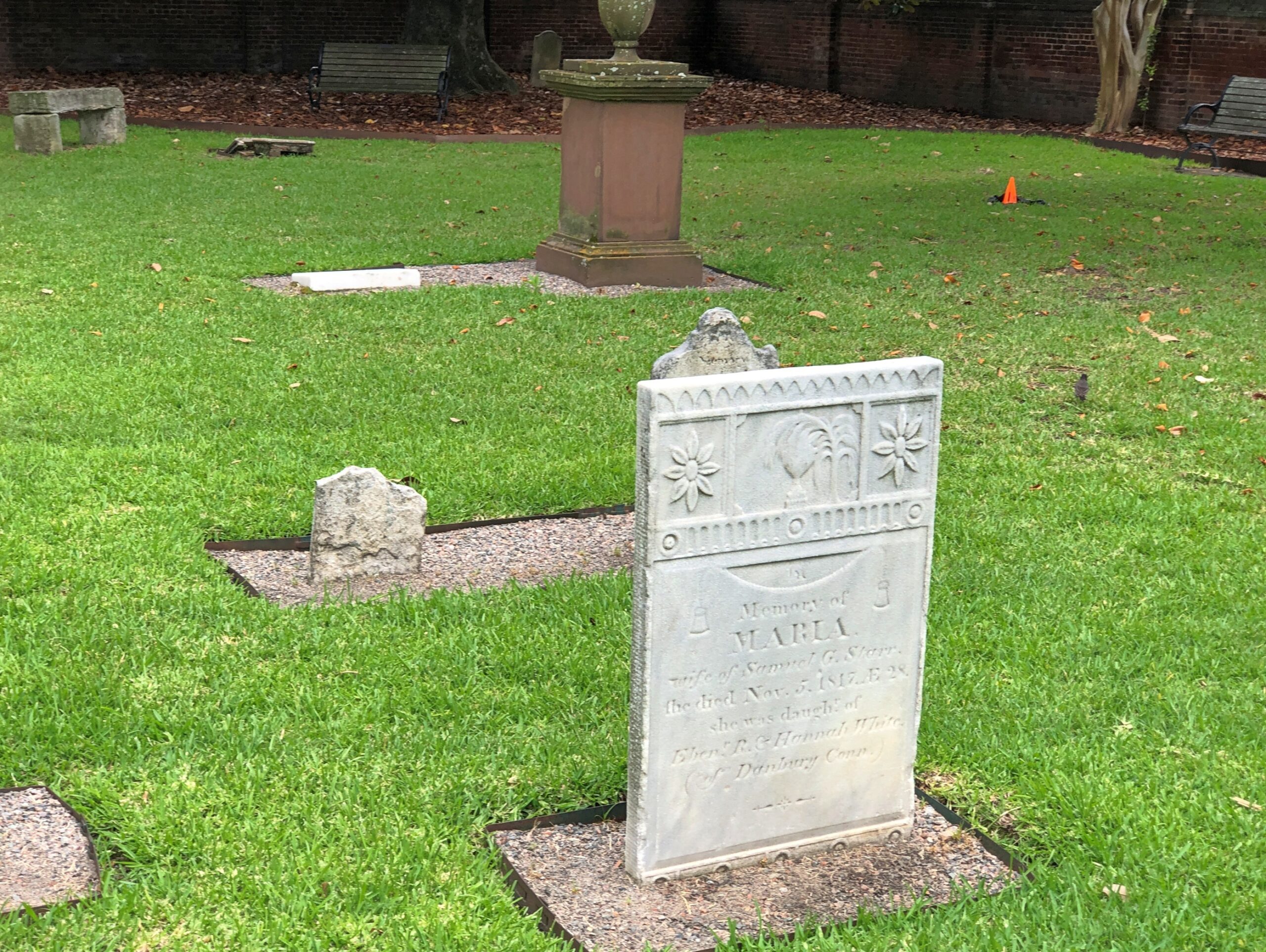
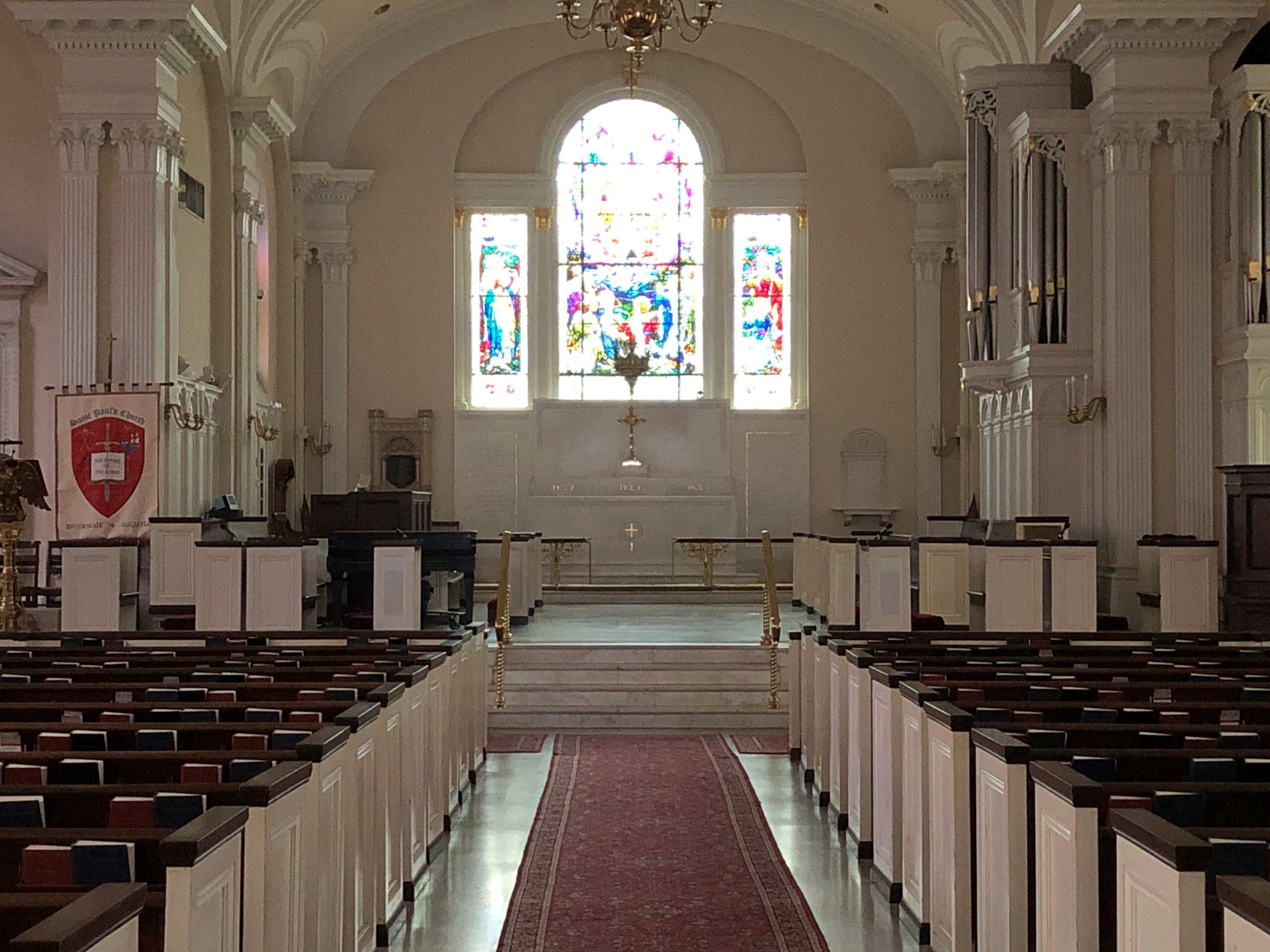
St. Paul’s Episcopal. Not only a church building, but a church graveyard as well.
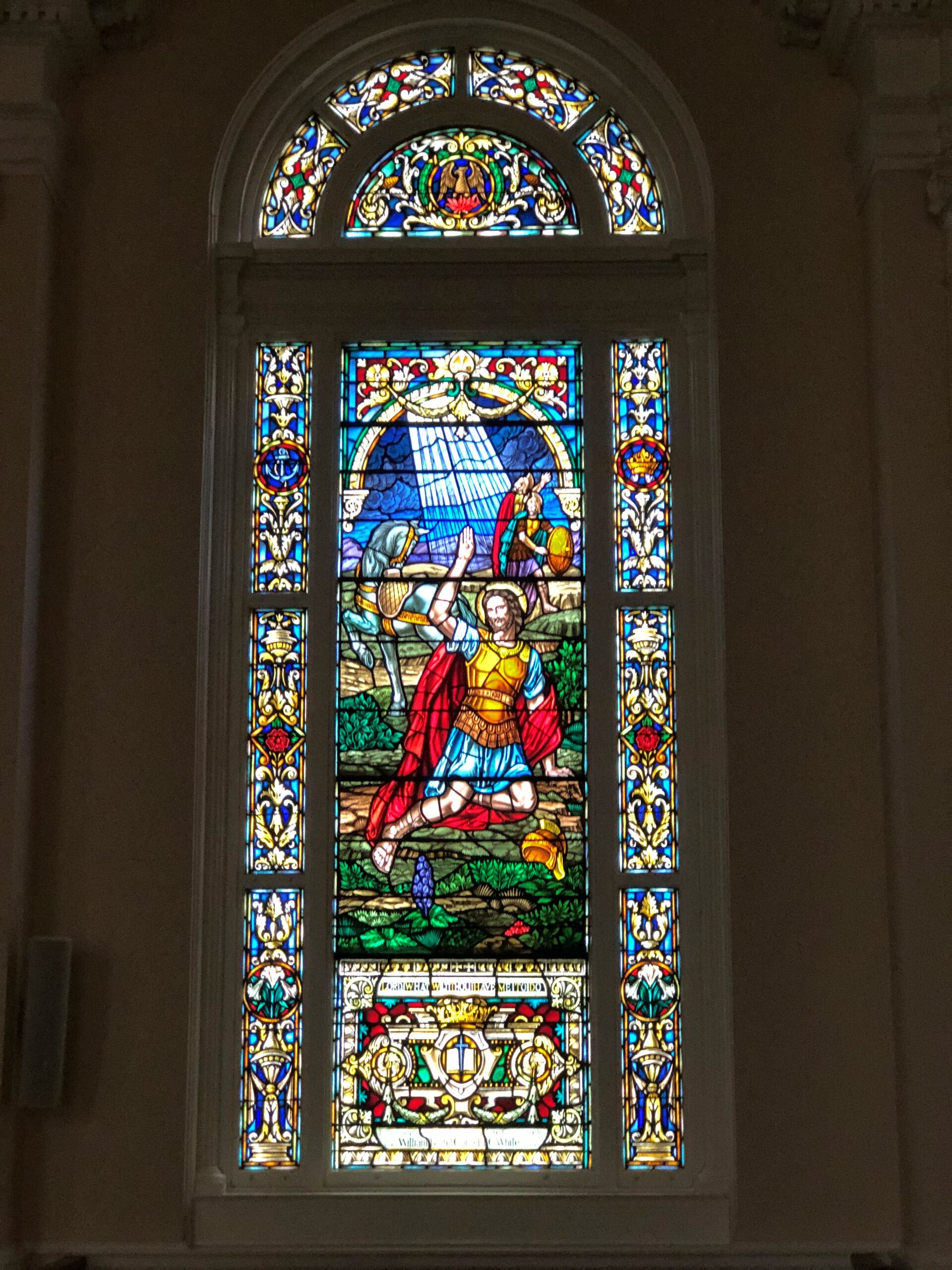
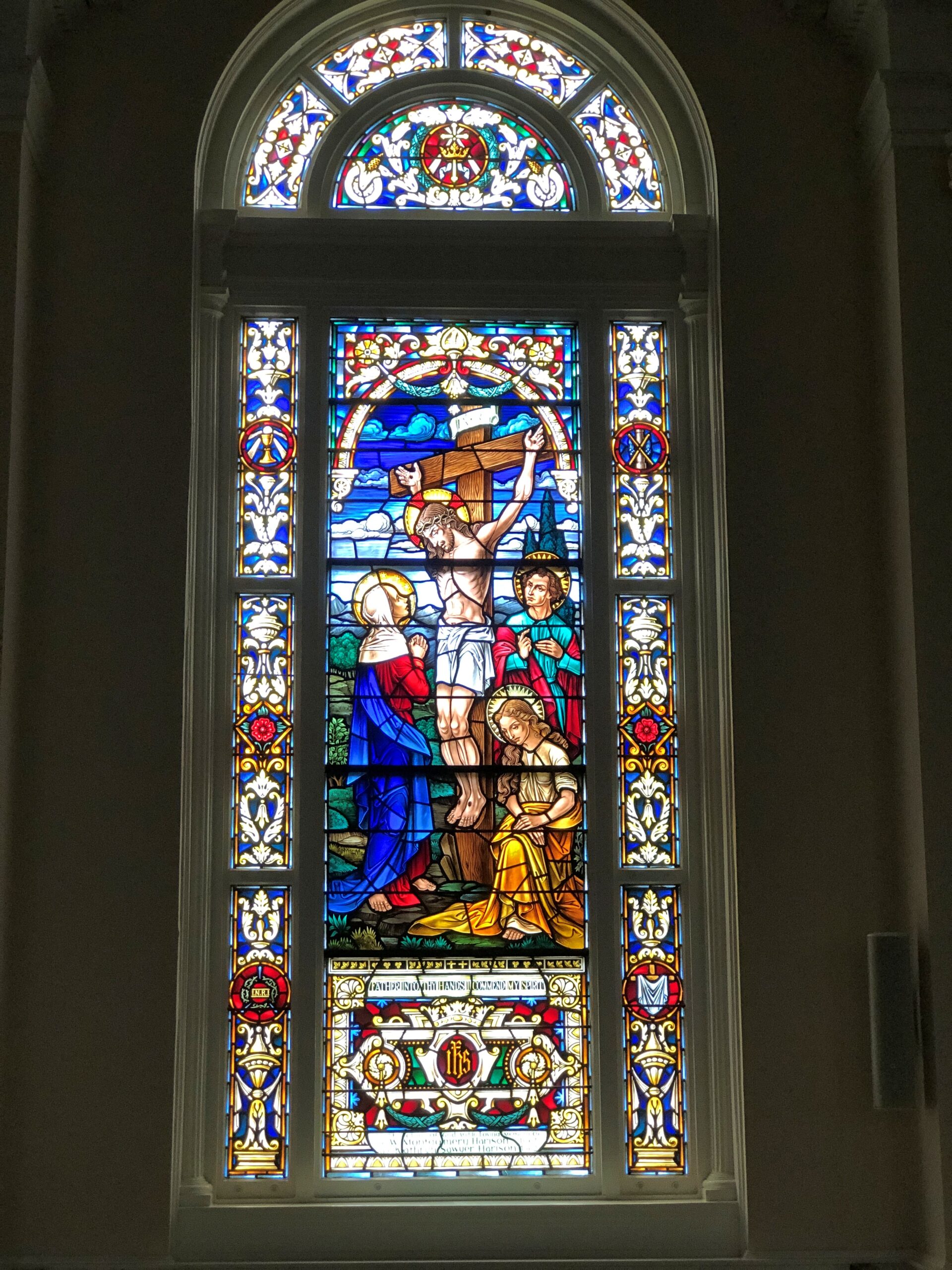
Inside, some fine stained glass.
“Four buildings on this site have been destroyed,” the church web site says. (Sank into the swamp? Burned down, fell over, then sank into the swamp? Speaking of 50-year-old references.)
“Our present church, built in 1919, was designed as a larger copy of the 1820 church lost in Augusta’s Great Fire of 1916. Among the furnishings saved from the fire is the original baptismal font brought from England in 1751, now located in the narthex.
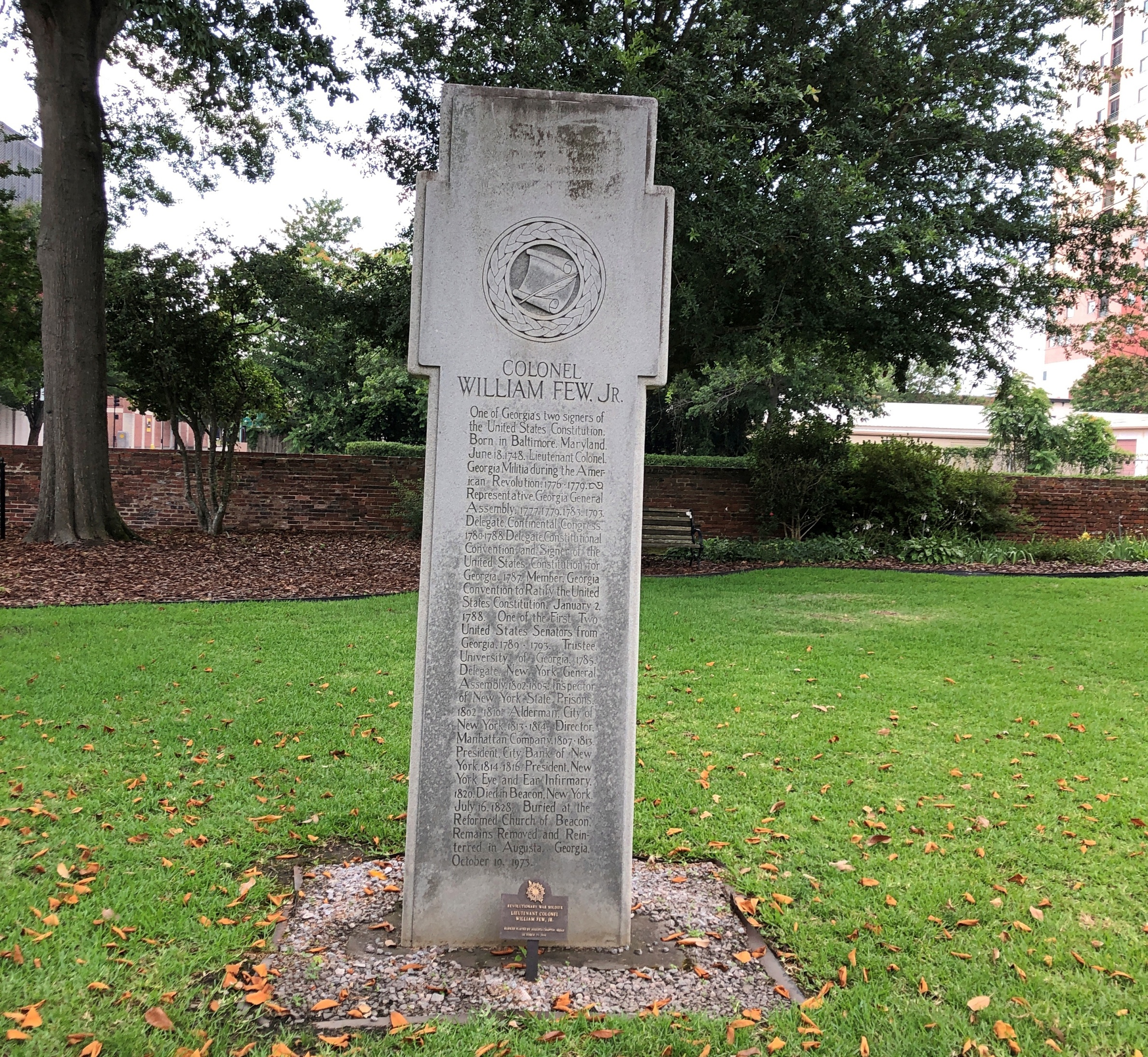
“History buffs will find the church yard fascinating. Many undocumented graves lie beneath the ground, but others are marked, including that of Col. William Few, a signer of the United States Constitution, whose portrait hangs in the narthex…”
Missed the painting. But I did see Col. Few’s stone.
A busy fellow, both before and after the Revolution, including attendance at the Constitutional Convention in 1787, and a stint as one of Georgia’s first Senators under the Constitution. His capsule bio at the Biographical Dictionary of the U.S. Congress mentions all that, except leaving out the fact – detailed by the stone I saw – that he was reinterred at his current location in 1973.
Also, no word on whether he knew Button Gwinnett, everyone’s favorite early Georgia politico. He must have. Gwinnett might have had a similar career had he not ended up on the wrong end of a dueling pistol in ’77.
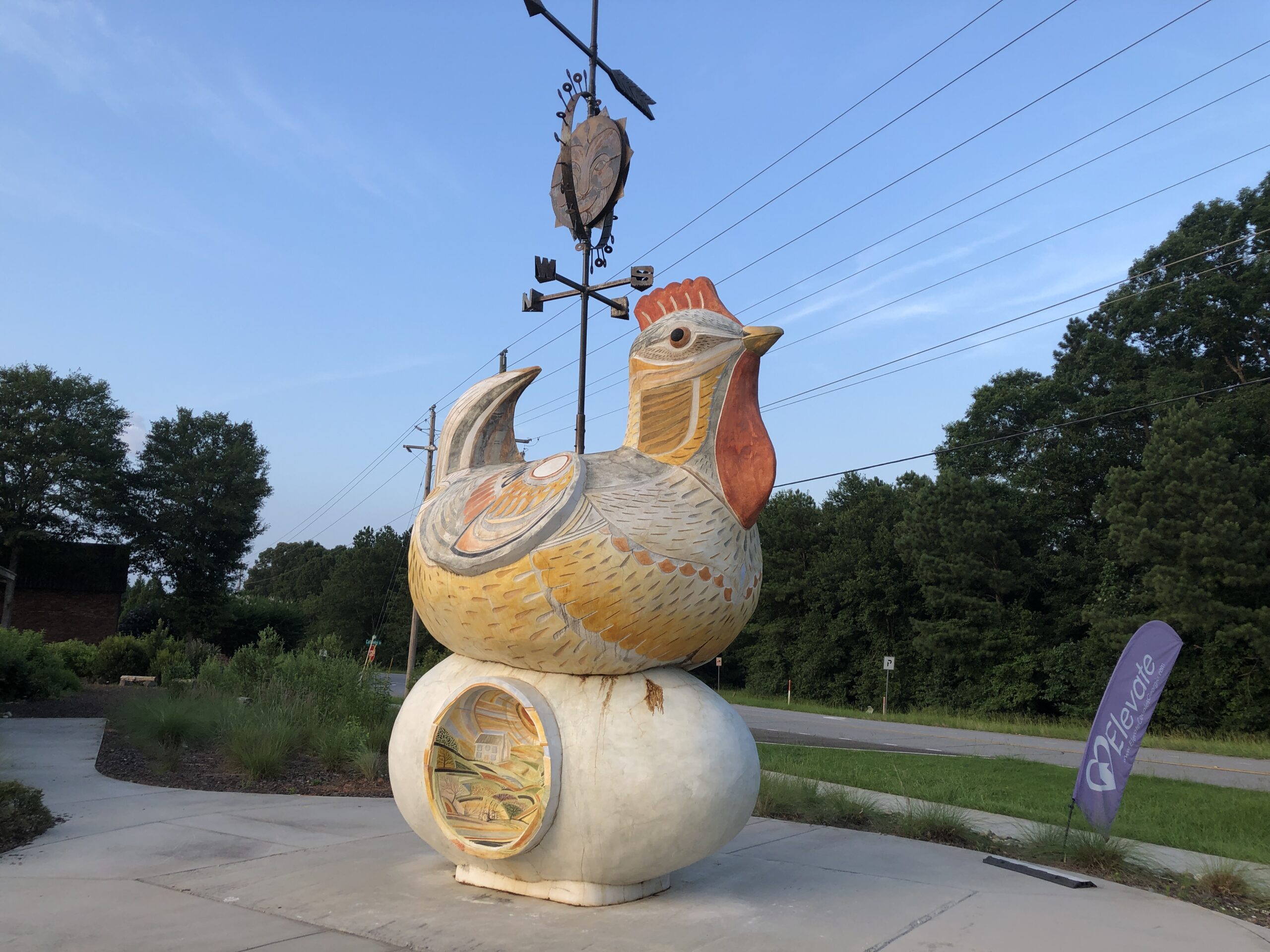
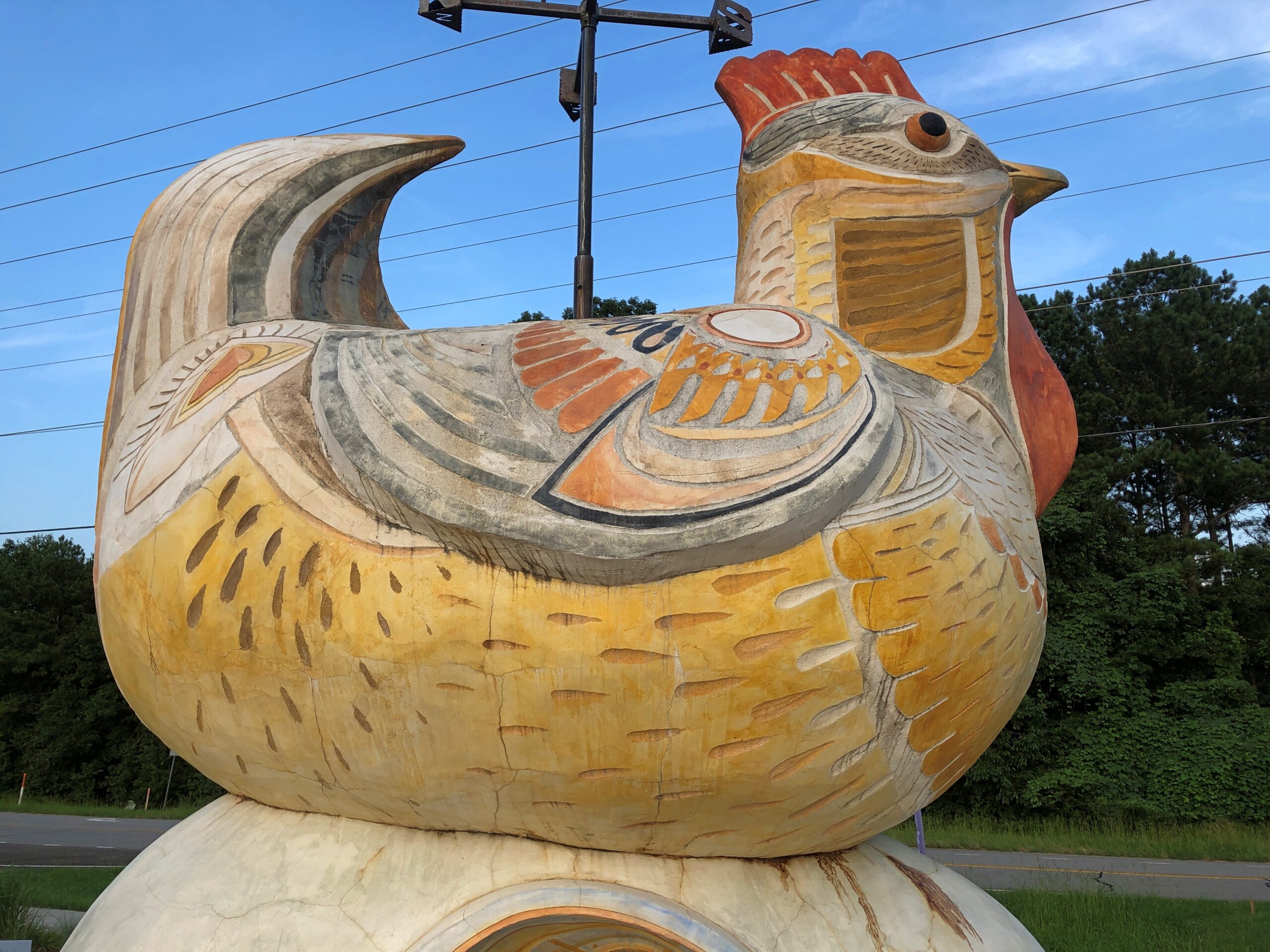
Sometimes you’re driving along, minding your own business because your business at that moment is driving, and you see a two-story chicken near the road. Three stories if you count the iron weather vane perched atop the bird.
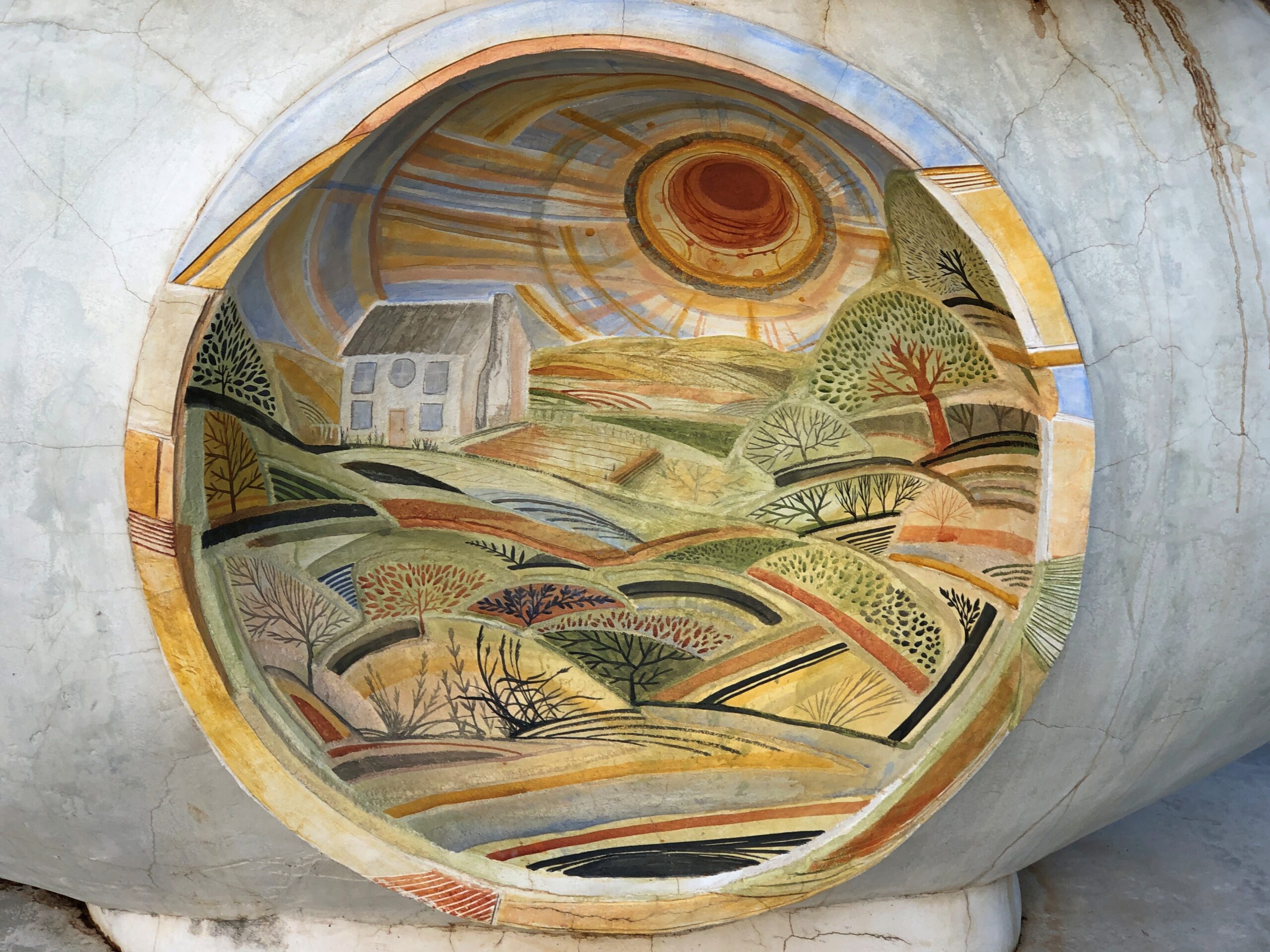
I had to stop to see that. More precisely, it’s a concrete chicken on a concrete egg, settling the question of which came first (the concrete did). The chicken, and the egg, are on property owned by the University of Georgia, used for the Athens-Clarke County Extension in Athens. Erected in 2022. More about the work, “Origins,” is here. All ag extensions should have just a little whimsy.
The chicken appeared roughly in the middle of the 3,285 miles I drove between June 16 and June 29, taking a lasso-shaped path from the Midwest across the Southeast, all the way to the ocean at Myrtle Beach, South Carolina: through Indiana, Kentucky, Tennessee, North Carolina, South Carolina, and Georgia, and back through Tennessee, Kentucky and Indiana.
The concrete hen took the cake for novelty, but along the way I saw a memorial to a mostly forgotten incident in the War of 1812, went into a mirrored tower built for a world’s fair, chanced on the spot where the mostly forgotten diplomat who brought the poinsettia to the U.S. is buried, and braved the tourist sprawl that is Mrytle Beach. I heard stories of Blackbeard while near the coast, near his hideouts. I strolled the genteel downtown of the second-oldest town in North Carolina, passing the notable spot where Pepsi-Cola was invented. We visited a three-story souvenir shop that has stood the test of time in Myrtle Beach, which I’m happy to report sells not just postcards, but vintage local postcards, at popular prices. One evening we wandered past sculptures and colored lights among the Spanish moss in South Carolina. For a moment I beheld a complete set of the U.S. gold coins minted in Dahlonega, Georgia.
I drove by houses, farms and fields, past small businesses open and defunct, and junkyards and billboards — an industry that would collapse without ambulance chasers, I believe — and factories and water towers and municipal buildings. That is to say, structures and greenery of all manor of use and upkeep, an inexhaustible variety of human and natural landscapes. Homogenization my foot. Except, of course, every burg with a zip code also has at least one dollar store.
We – my machine and I and sometimes Yuriko, who flew to Myrtle Beach to meet me for a weekend – experienced an incredibly lush Southeast not long after a rainy spring, on big roads and small, straight and curvy, all the while defying the heat. I heard it enough on the radio: a “heat dome” had settled over the eastern United States. It persisted from the first day in Indiana to the last day in Indiana, though it had moderated a bit by then. Temps were in the 90s most days, but nothing that’s going to faze a Texan with an air conditioned vehicle and bottled water.
We did adjust our schedule to mostly be out in the morning or evening, except at Myrtle Beach, where a walk in the heat that made me feel my age and maybe then some. A less hot but more humid walk in a mostly forgotten national park in South Carolina saw flights of mosquitoes barreling down on me. A few of them penetrated my DEET coverage.
I saw and did all that and much more, but that was only the bronze and silver of the trip. The gold was visiting old friends.
That was actually the priority this time around. Before the trip, one of the friends I planned to visit asked me via text: “What’s your trip about?”
My text answer: “Visit old friends, see new things & take long drives.”
In Nashville, Stephanie and Wendall.
In North Carolina, Dan and Pam. She had enough sense not to wander around in the heat with us.
In rural Tennessee, Margaret and Dave.
Separately in Georgia, Layne and Stuart. I was glad to see them all, and I think they were all glad to see me. Known most of ’em since the 1980s, and we had a time — then and now.