Ed Leedskalnin, Noted Latvian Eccentric

Where does eccentricity come to flourish? America, you could argue. Even more specifically, Florida. That might be too much of a generalization, and these might not be the best of times (or the worst) for American eccentricity, but the example I have in mind actually reaches back a century or so: Ed Leedskalnin, immigrant from Latvia who single-handedly built the Coral Castle in Homestead, Florida.

The story goes that his fiancée left him at the altar back in Latvia and that Leedskalnin, born into a family of stonemasons, built the place to remind himself of his lost love once he’d settled in Florida. Since he lived and worked alone, an undergrowth of lore grew around his creation, some stories more ridiculous than others.

Actually, he called it the Rock Gate, and started building it in the 1920s in Florida City, not far away. Considering that some of the oolite limestone structures weigh some tons, one of the amazing parts of the story – just one among many – is that Leedskalnin decided to move them in the late 1930s to their current location on US 1. After that, he added more structures, and the whole thing stands today as a somewhat overpriced tourist attraction, but also a monument to eccentric, determined monomania, the kind that leaves behind a place to gawk at.

I was willing to pay. We took the tour, which is the only way to legally visit inside Coral Castle’s stone walls, just before we left Homestead for the Keys.

“The castle contains many wonders including a sundial, a stone rocking chair, a 500-pound heart-shaped stone table (a ‘Valentine’ for his lost love), and a 9-ton gate made to spin with just a light touch,” Atlas Obsura notes. “Ed was secretive, working on the castle mostly at night, and keeping to a policy of letting no one see his working methods. This led to much speculation that Ledeskalnin used some magical or ancient power to move the giant stones.”
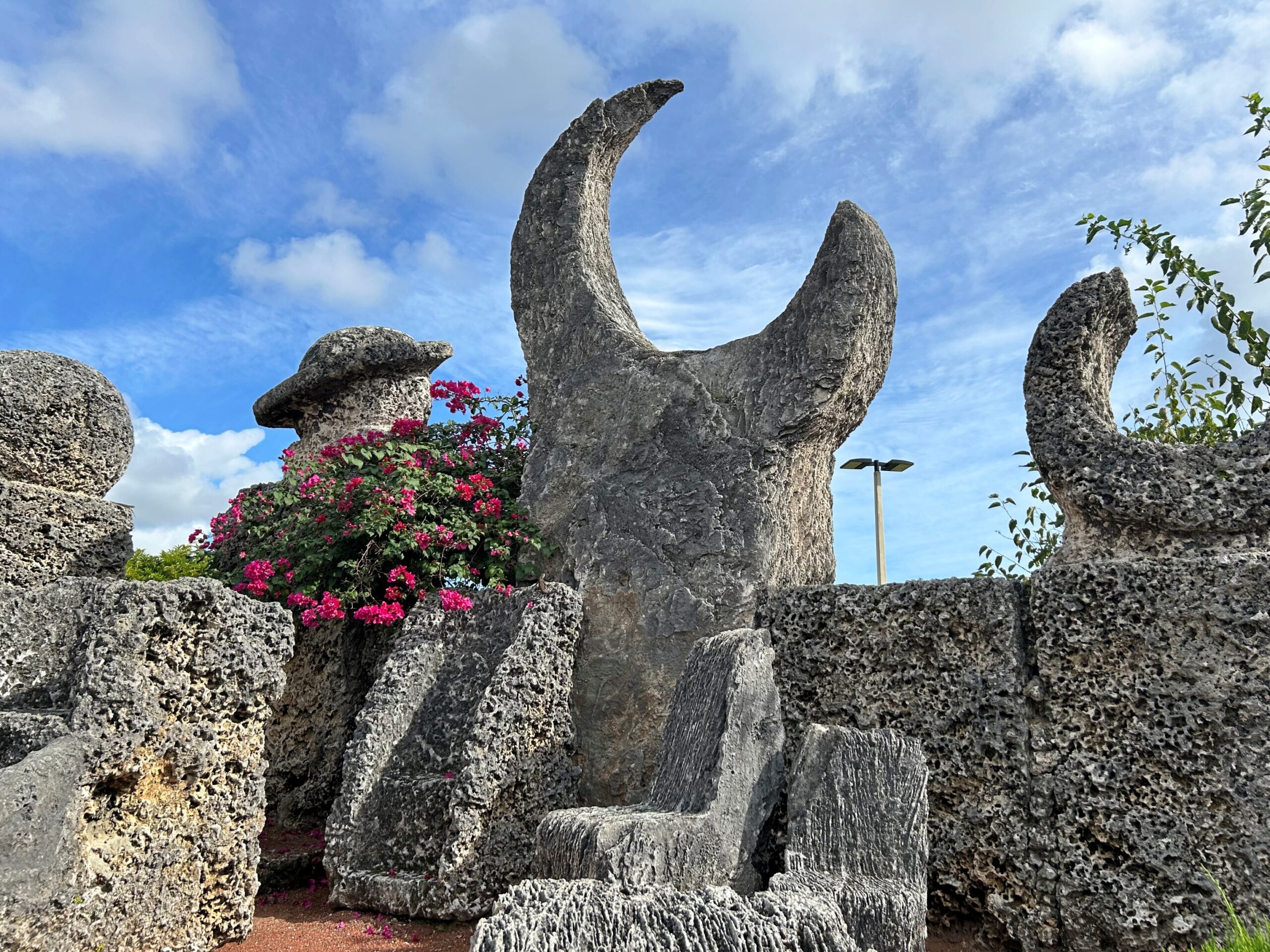
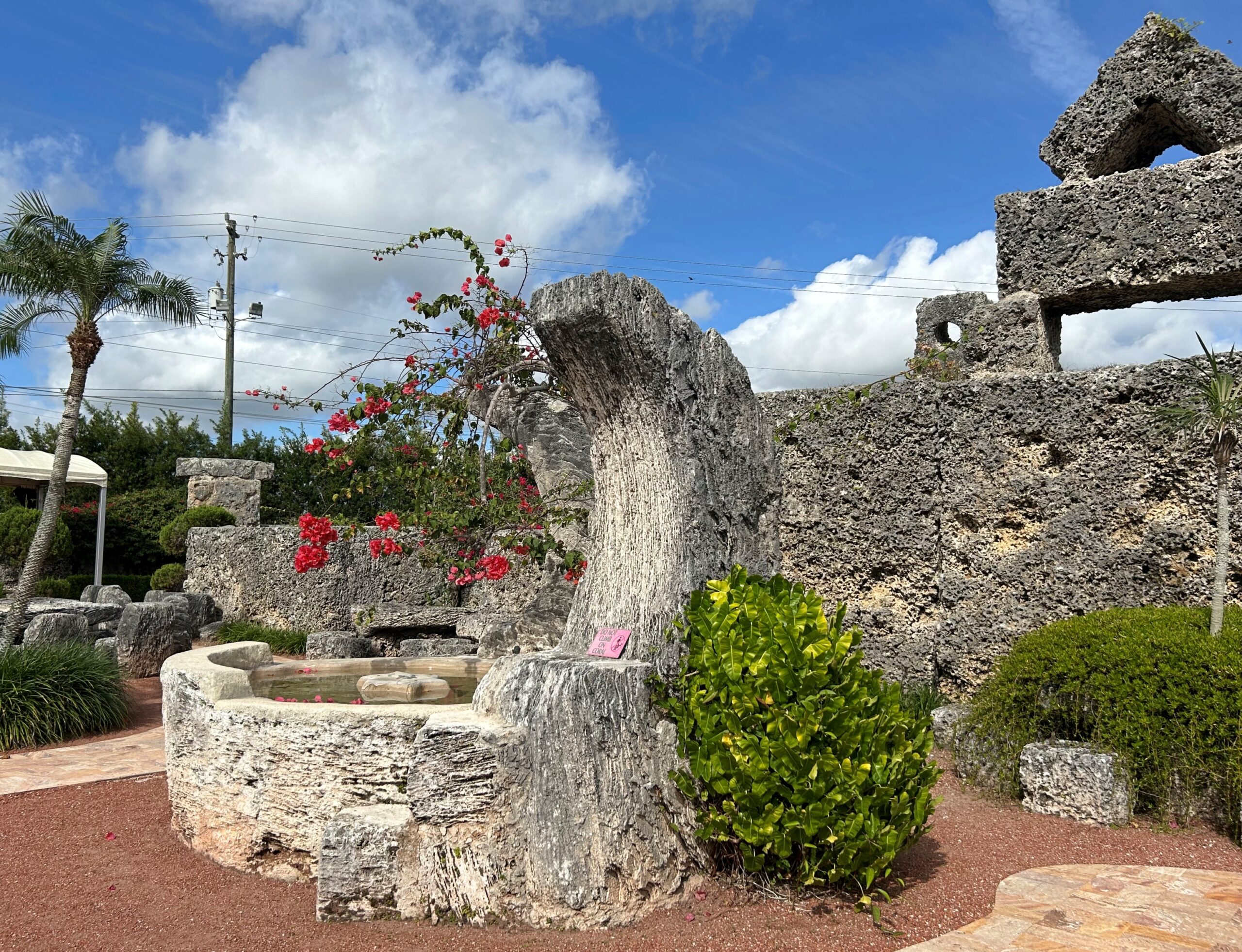
Magical power, eh?
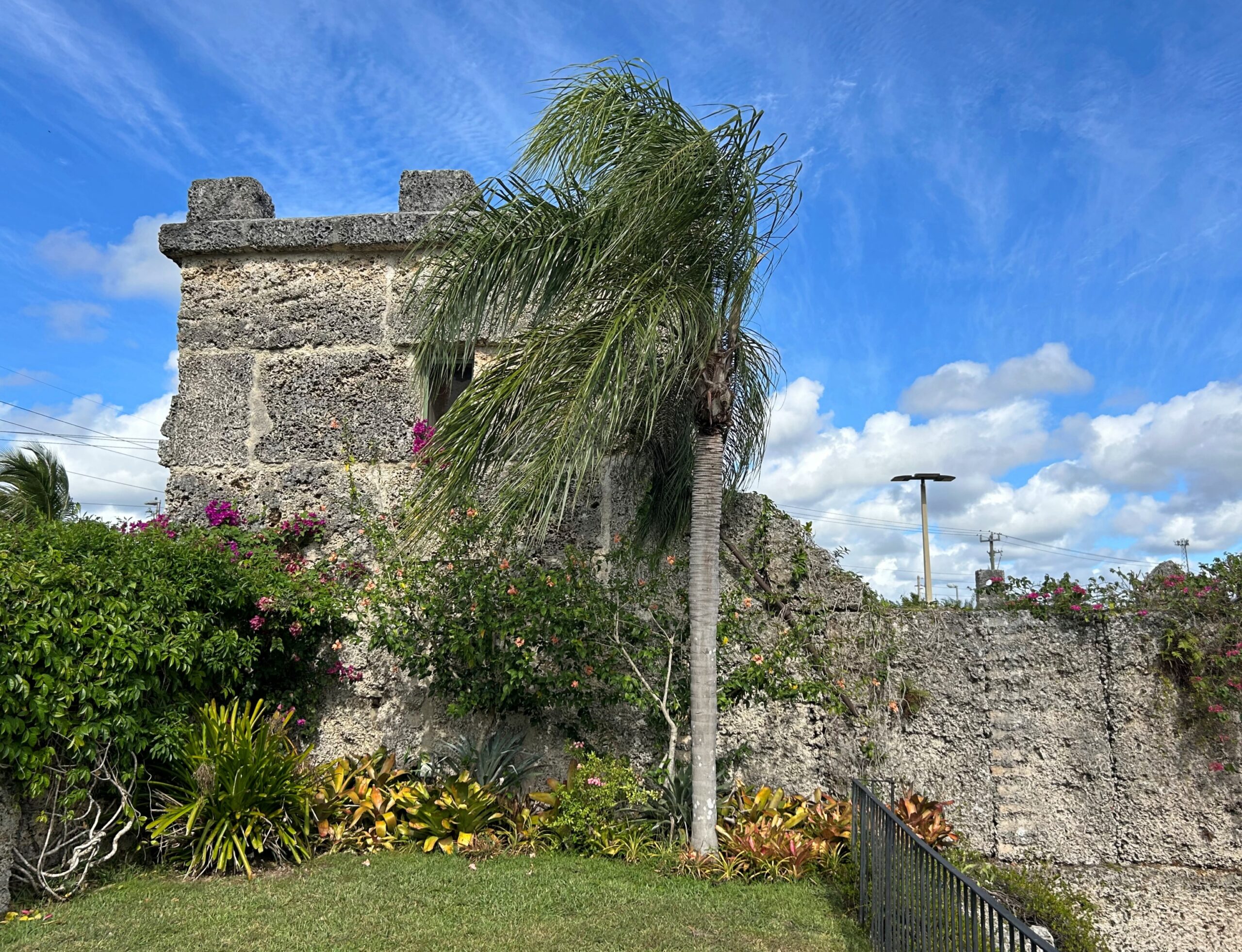
As a more detailed article published by the Skeptics Society points out, Ledeskalnin clearly knew the “principles of levers and fulcra.” I’ll go along with that. If anything, that’s more of an achievement than using magical powers. For all I know about levers and fulcra, it might as well be magic.

And what of Latvia? Our tour group was about 10 people, including a young couple who said they were from Latvia when the guide asked where everyone was from. This answer didn’t surprise him. Apparently they weren’t the first.

Toward the end of the tour, I asked the Latvian man if Ledeskalnin was known in his home country after all these years, and for something so odd (not quite how I phrased it). Oh yes, he said. Maybe not famous, exactly, but people had heard of him (not quite how he phrased it), enough that a steady trickle of Letts come to see his creation while in distant Florida.
Jana Seta Tallinn

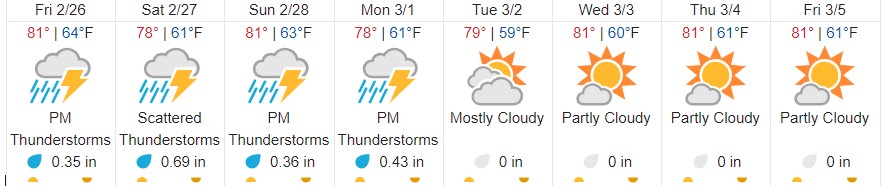
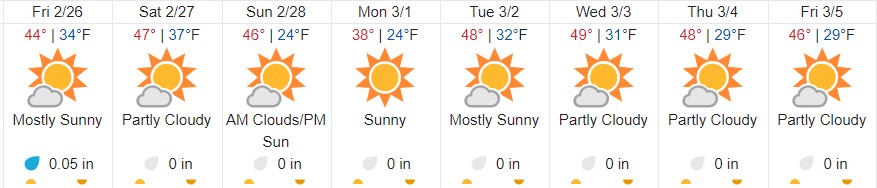
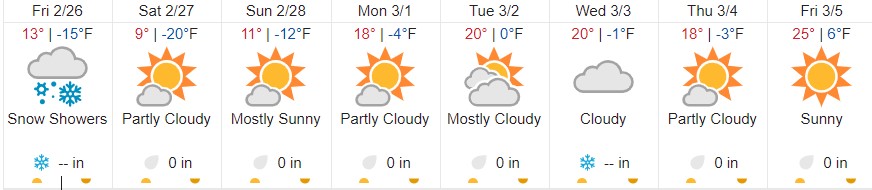
This looks like a promising way to ease into proto-spring. Or, as you notice the crunch of snow under your feet give way to squishing sounds, the Mud Season.

That’s just the near-term weather forecast for where I live, and thus a very narrow focus. I am glad — for any number of reasons, including Siberian weather — I don’t live in Irkutsk. The days ahead for that place:

Which pretty much looks like here during February until a few days ago, except we had more snow. Another difference is that I expect the rest of the spring is going be much colder in Irkutsk than here.

Then again, for year-round pleasant weather, I hear the place you want to be is Medellín:

That does look pleasant, just keep a sweater around for the evening. Reminds me of Mexico City in December, except there wasn’t a bit of rain.

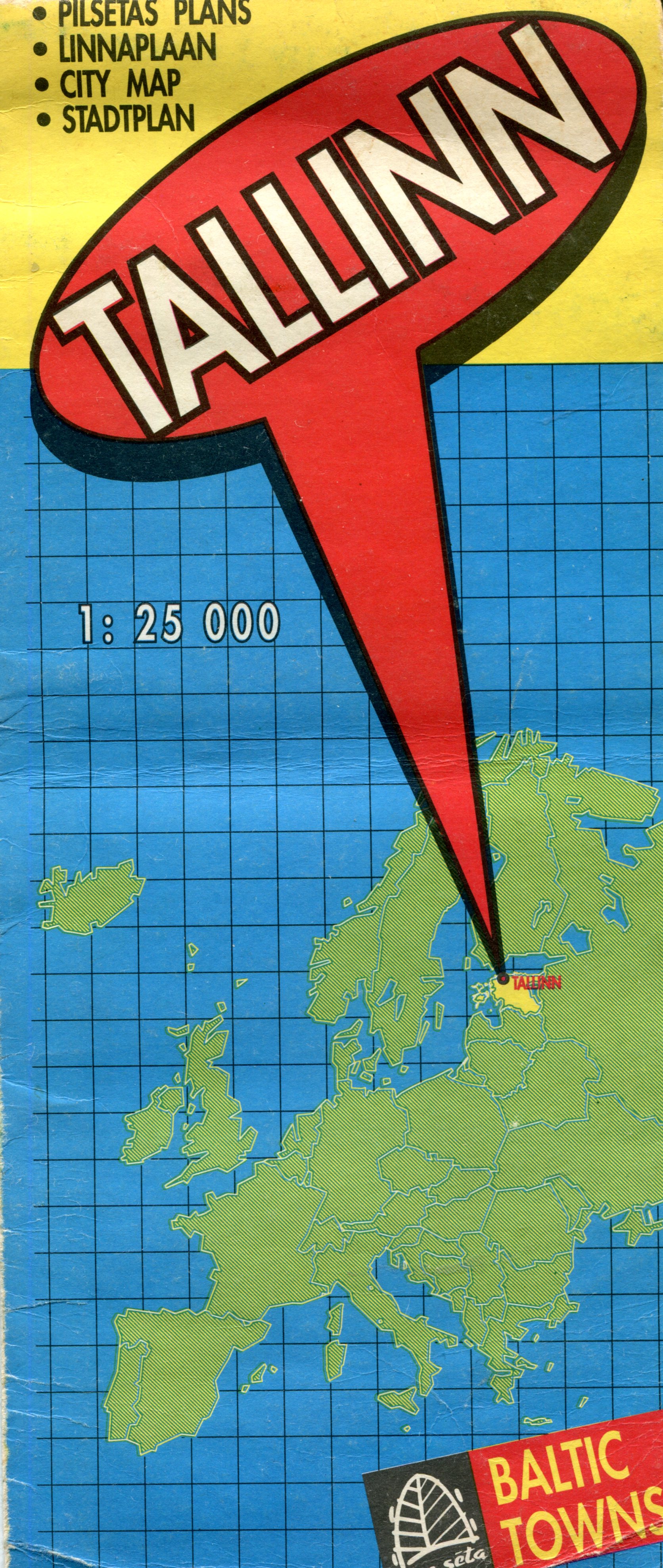
One more map (for now): Tallinn. Nice town, Tallinn, at least in 1994, and I expect it’s done well for itself in the generation since casting off the Soviet yoke.

The map front is simple enough, and reminds everyone where Estonia is in the greater scheme of Europe. Guess some people need to be reminded of that kind of thing.

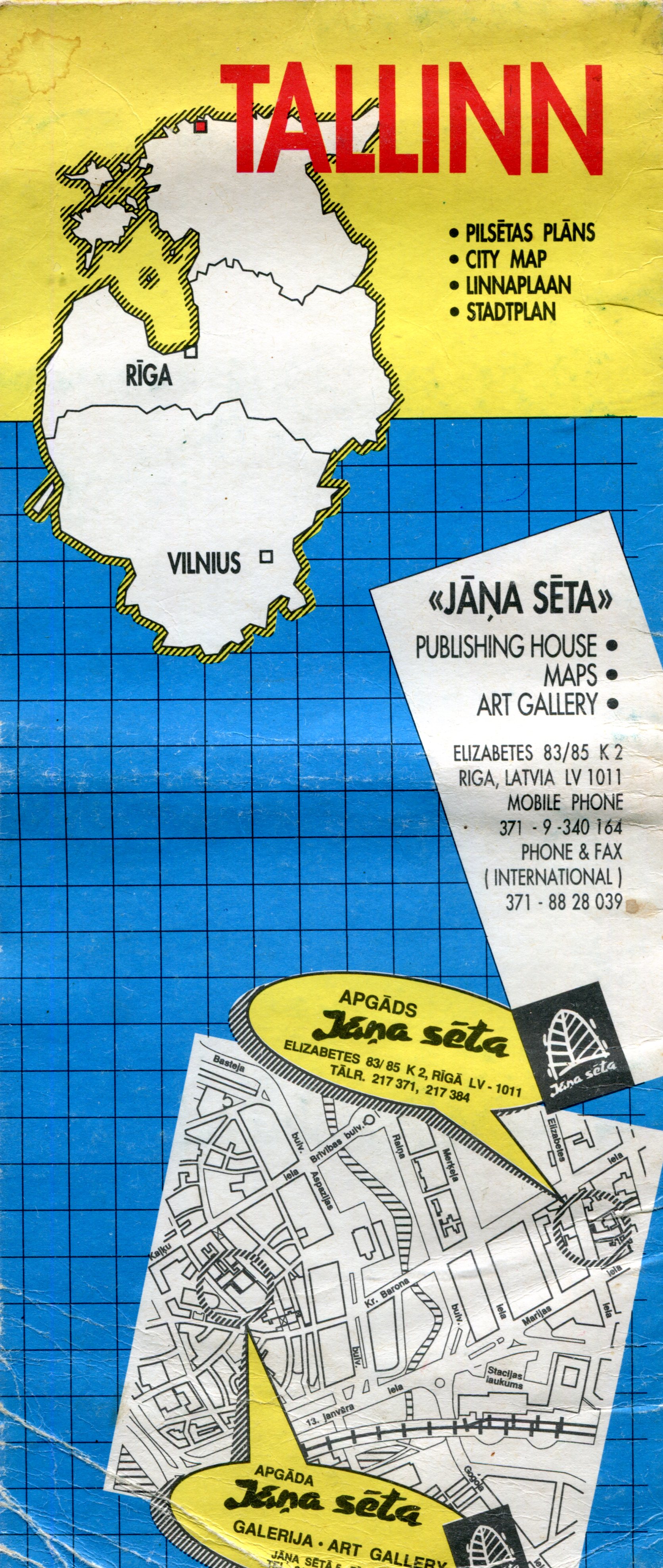
The map is the product of Jana Seta, “publishing house, maps and art gallery” in Riga. I’m happy to report that it’s still around, and has a web site that tells me that the company had just started business the same year we visited Riga, which was just after we were in Tallinn. Unfortunately, we didn’t visit the map store.

“We started on the 19th of April 1994 when the specialized map and travel literature outlet — Jana Seta Map shop — opened its doors to the first customers in the newly renovated Berg’s Bazaar building in Riga,” the site says. “At that time it was the first and only specialized map shop in the Baltics.

“Together with the constant in-going and out-going tourism development in Latvia, our shop has grown to become one of the leading map shops in the whole of Eastern Europe. Many trips around Latvia and abroad have started at the shelves of our map and tourism literature.

“The former USSR army general staff topographic map and city plans (published 1949-1991) have a special place in our assortment.” Hm.

One side of the map is a wider view of the city, while the other has a detailed map of the historic center, plus an index and advertisements for the kinds of things that tourists and business travelers might want, mostly in English. Looks like Jana Seta was quick to pick up the ways of private enterprise. The map key and other information are in English, Russian and (I assume) Latvian.

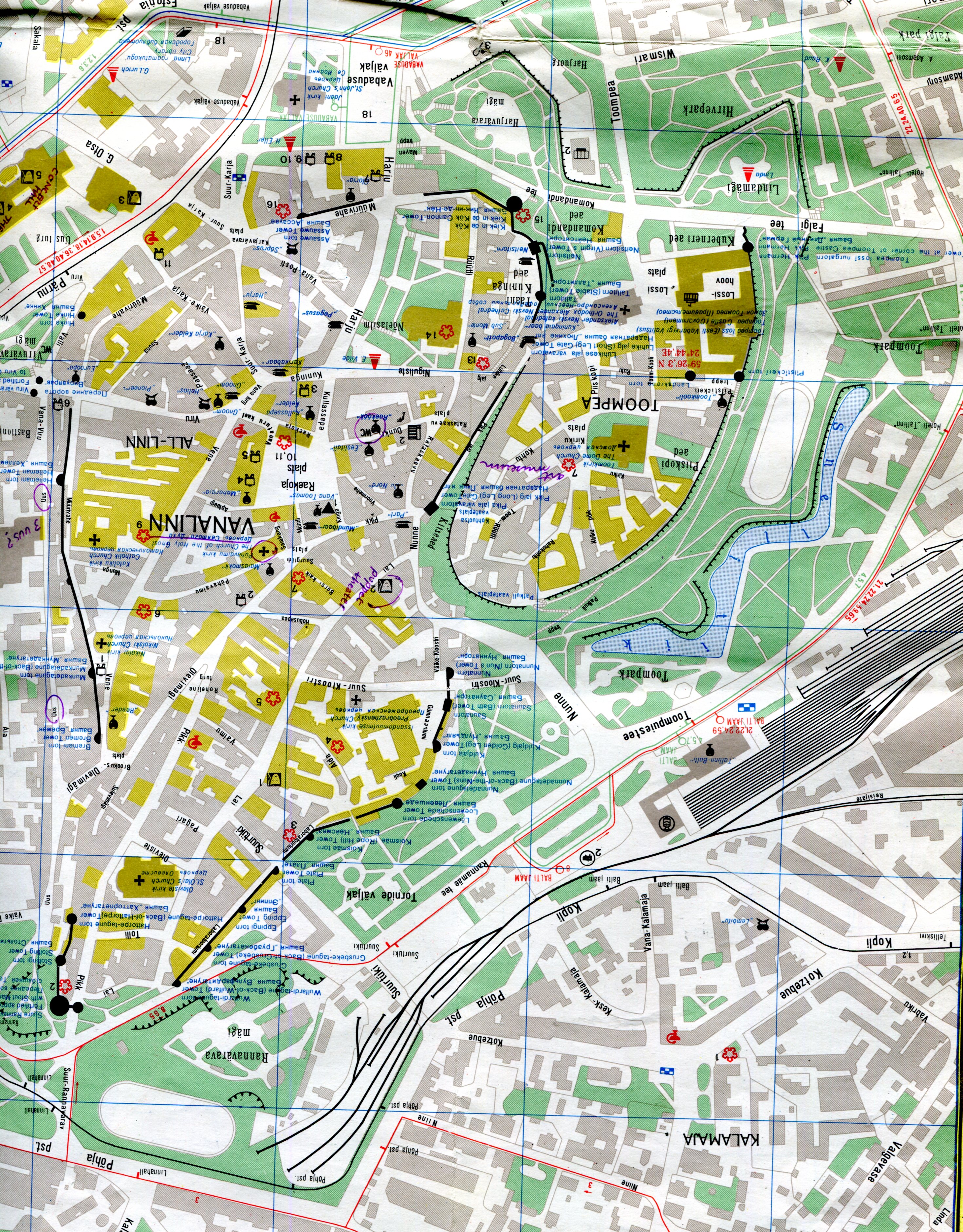
This is the inset for the historic center of Tallinn.

A fine old place to visit, though we stayed in cheaper accommodations out from the center, in a Soviet-era block of flats, and rode the convenient trolley into the old town. I see that I marked a few places of interest in purple ink, including one I labeled “puppet theater.” As much as I’d like to say that we went to a puppet theater in Tallinn, I’m afraid we didn’t.

“The Historic Centre (Old Town) of Tallinn is an exceptionally complete and well-preserved medieval northern European trading city on the coast of the Baltic Sea,” says UNESCO, which put it on the World Heritage list in 1997. “The city developed as a significant centre of the Hanseatic League during the major period of activity of this great trading organization in the 13th-16th centuries.

“The upper town (Toompea) with the castle and the cathedral has always been the administrative centre of the country, whereas the lower town preserves to a remarkable extent the medieval urban fabric of narrow winding streets, many of which retain their medieval names, and fine public and burgher buildings, including town wall, Town Hall, pharmacy, churches, monasteries, merchants’ and craftsmen’ guilds, and the domestic architecture of the merchants’ houses, which have survived to a remarkable degree. The distribution of building plots survives virtually intact from the 13th-14th centuries.”

One more thing I learned just now from Jana Seta’s site: “Mars has three craters named for places in Latvia: Auce, Rauna and Talsi. Now you know.”