GTT ’26, With a Small Side of NM

Never cared much for the term snowbird, with its connotations of getting up every morning to play golf during winter in some arid place, or spending the evenings with members of your cohort in some gated community, maybe drinking but definitely grousing about the state of the world. Still, considering that in the winter of 25/26, I’ve spent two out of the last three months – the hard winter months, up Illinois way – in warmer places, it would be churlish to cast shade on fellow old people who happen to enjoy golf or grousing.

On the other hand, I’m not about to claim snowbird as descriptive for myself. I just happen to be able to take long trips during the cold months (along with my laptop, for work). In December, Florida. In February, Texas.

Back on February 3, I got on a plane and flew to Austin. I flew home from Dallas on March 3. In between, I spent time – and Yuriko joined me for a while – traversing the state of Texas, going so far west at one point that we ended up in New Mexico. By traversing, I mean long drives, in a rental car part of the time, and in my brother Jay’s car as well, a blue Subaru known as the Blubaru.

I drove from Austin east to Houston, mostly on US 290; from Houston to Nacogdoches, mostly on US 59; then to Dallas on various state highways, such as Texas 21 and 19; and from Dallas to San Angelo to Marathon, Texas, on US 67 and on the grandly remote US 385, which will also take you to the desert reaches of the Big Bend.

From Marathon, Texas, across to Carlsbad, NM, our route took us along US 90, then Texas 56, then US 62/180. Later, US 62/180 took us from Carlsbad part way back to Dallas — to Sweetwater, Texas — but mostly we went on the faster but less interesting I-20. Dallas to San Antonio was partly I-35, but also US 281, which takes you around the perma-gridlock that is Austin.

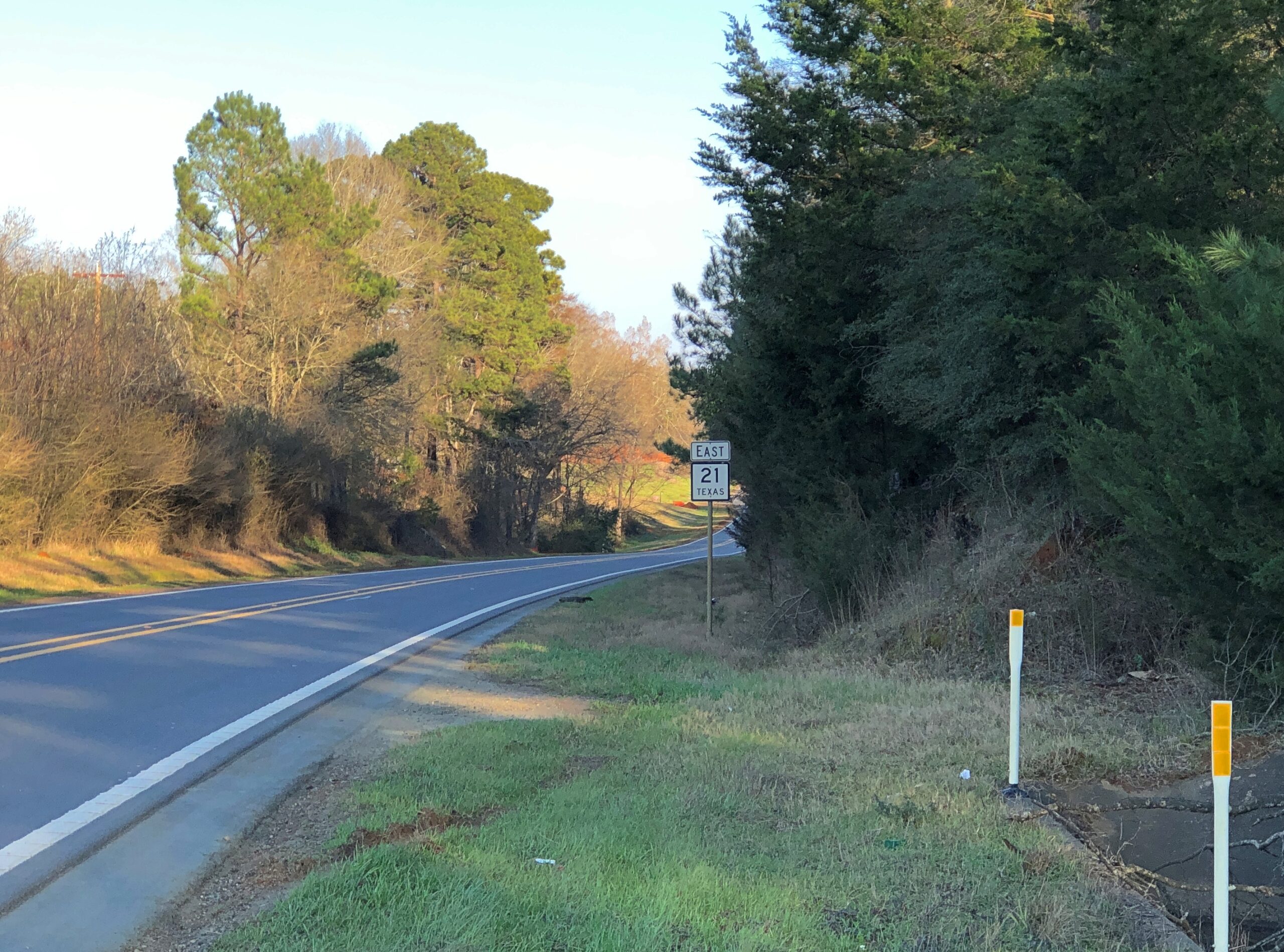
Of all those, the road between Nacogdoches and San Augustine on a day trip, Texas 21 heading east, winding through greenish (for February) rolling hills, was a favorite.
The towns listed above were just the places I spent the night, alone or with Yuriko or with my brothers. In between were such places as Bastrop, these days a day-trip from Austin, with the requisite boutiques and restaurants; Huntsville, home of Sam Houston and memorials to the first president of Texas; San Augustine, rival with Nacogdoches in claiming to be the oldest town in Texas; Stephenville and Ballinger, geographically about as deep in the heart of Texas as you can be; the West Texas art town of Marfa and the way station of Van Horn; a string of oil patch towns such as Hobbs, NM, and Seminole, Lamesa, Snyder, and Sweetwater, back in Texas. Later, traversing north to south and back again, I stopped in Hillsboro and Belton, along the I-35 axis; and Lockhart, which has claimed for itself barbecue capital of the state.

Along the way, oddities were encountered. Otherwise, why drive on smaller roads?

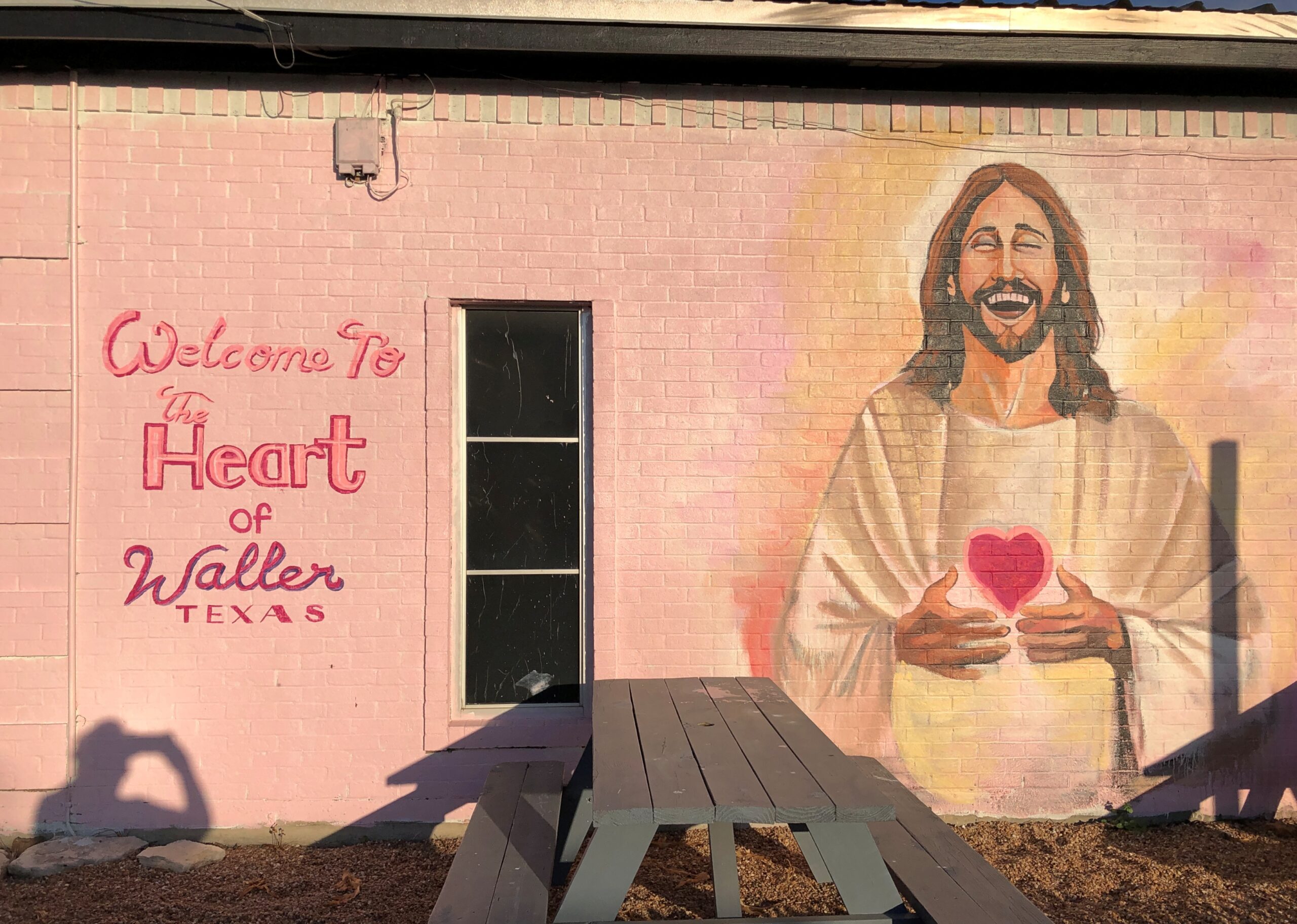
Such as an ice cream shop in Waller, Texas.

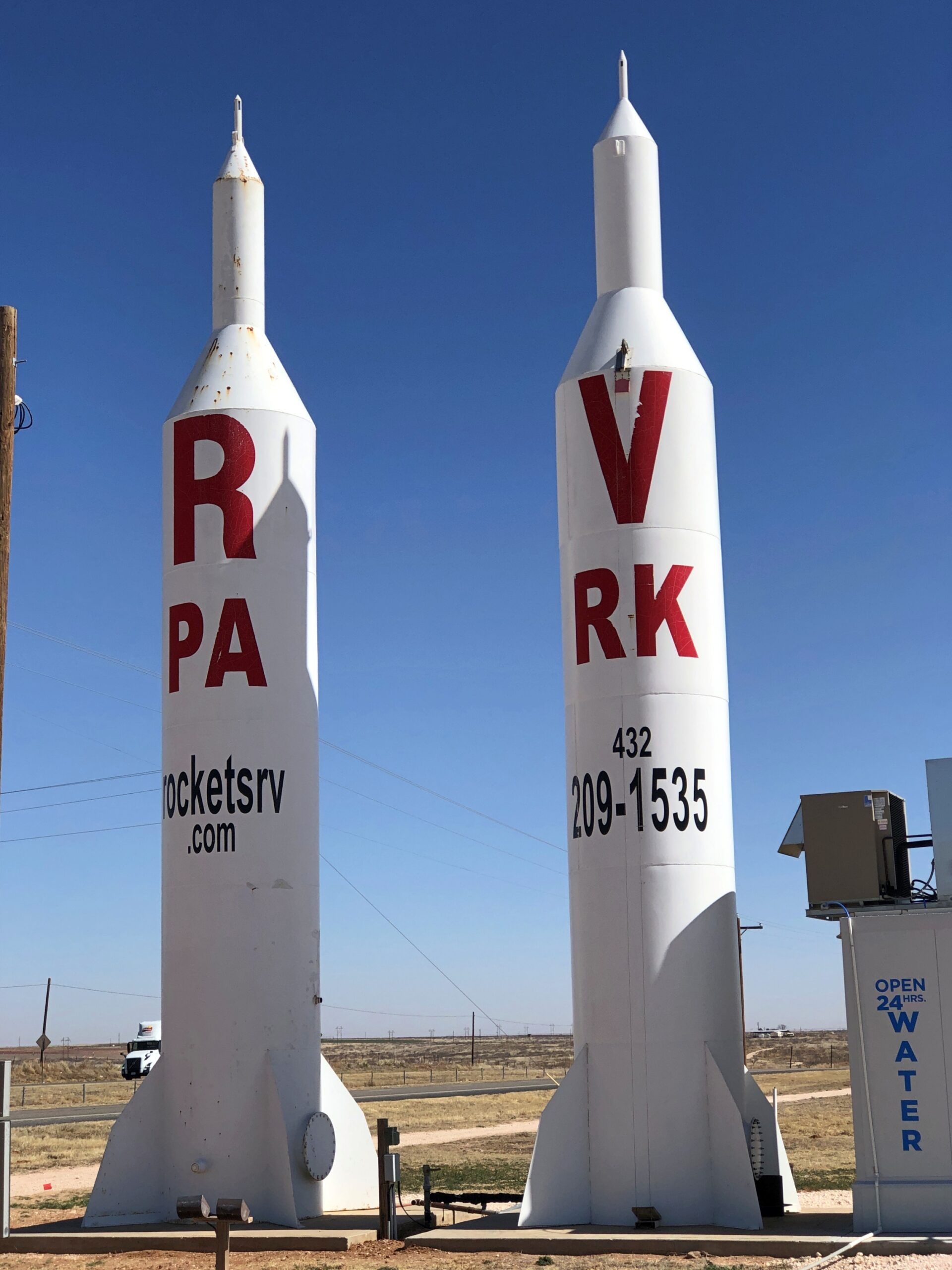
Or a highly visible ad for Rockets RV Park in Gaines County, Texas, not far east of the border with New Mexico.
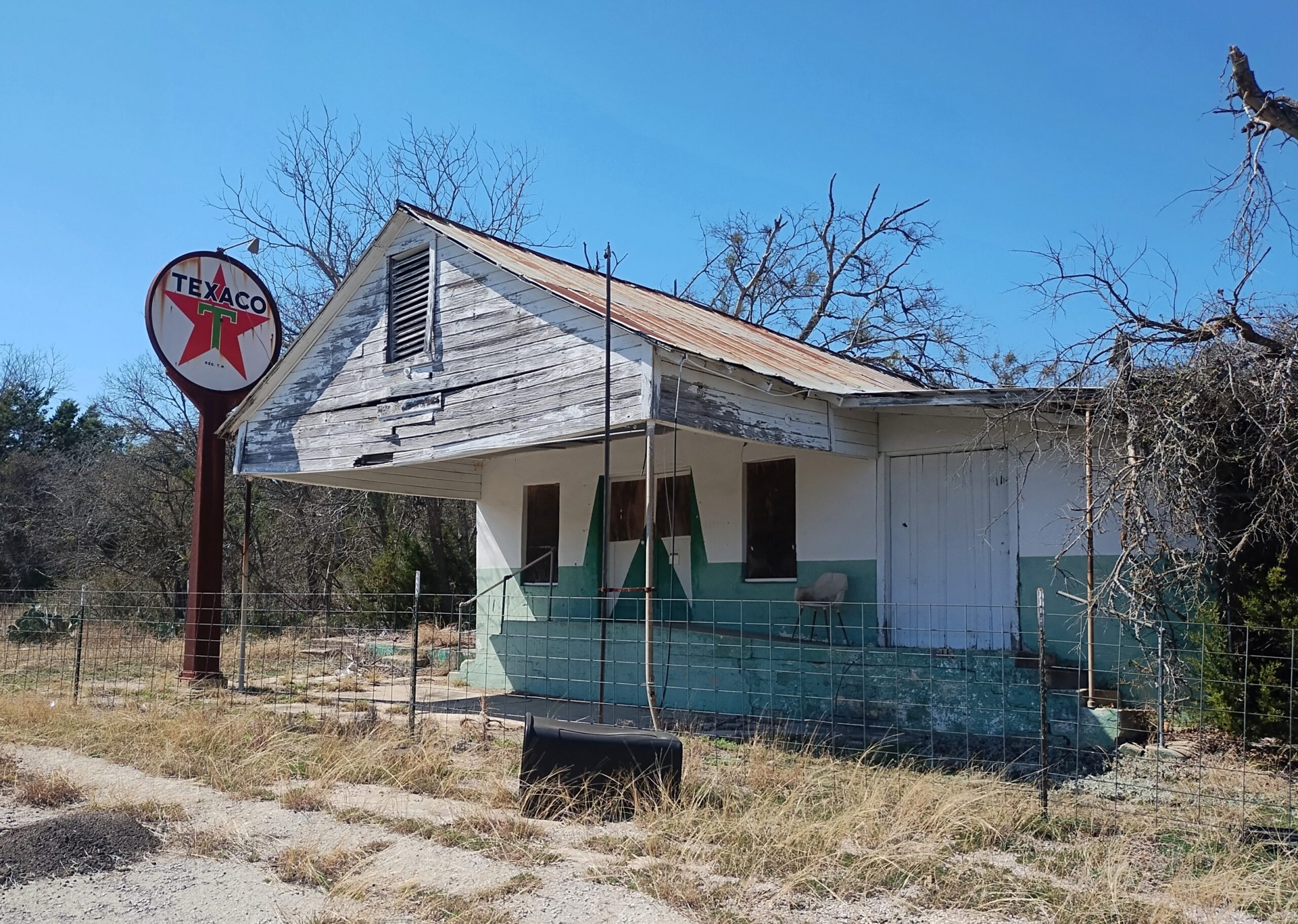
A former Texaco station on an obscure Texas highway (Farm-to-Market 1690).
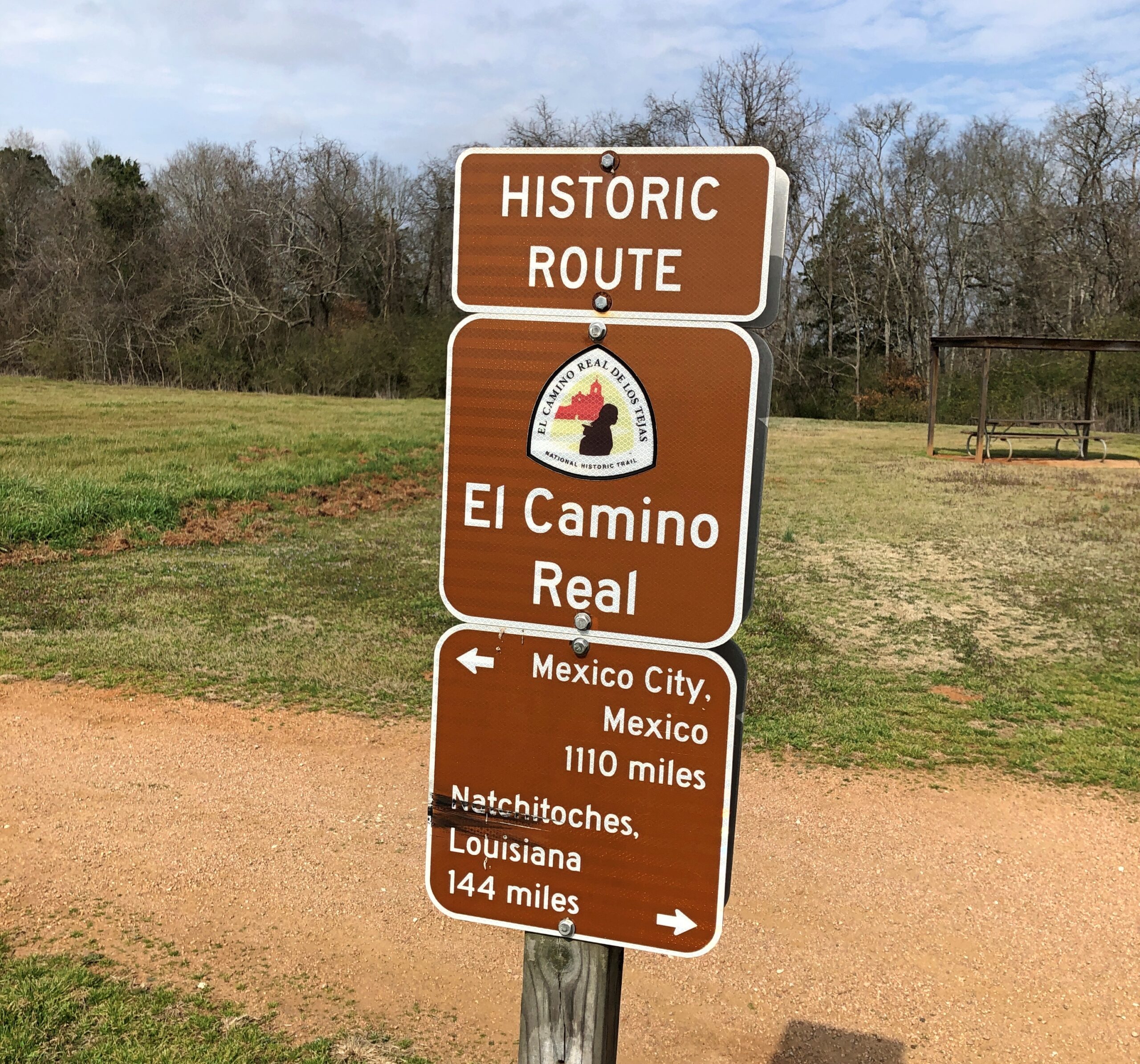
Had various encounters with the historic El Camino Real, whose various tendrils crossed a large slice of the future state of Texas, once upon a time.
Yuriko and I visited Big Bend National Park, Guadalupe Mountains National Park and Carlsbad Caverns National Park. I saw the National Museum of Funeral History in the city of Houston and the museum devoted to Houston (the man) in Huntsville. Also, Roadside America in Hillsboro, an eccentric collection of American commercial art, complete with a personal tour by the proprietor, and the outdoor art at the Chinati Foundation in Marfa, that is, brutalist concrete structures in the brutal desert environment. I became acquainted with the splendid Glenwood Cemetery in Houston and the smaller and more ragged, but no less interesting city cemeteries in Huntsville and Nacogdoches. I stopped and looked at about a dozen county courthouses, of which Texas has many.

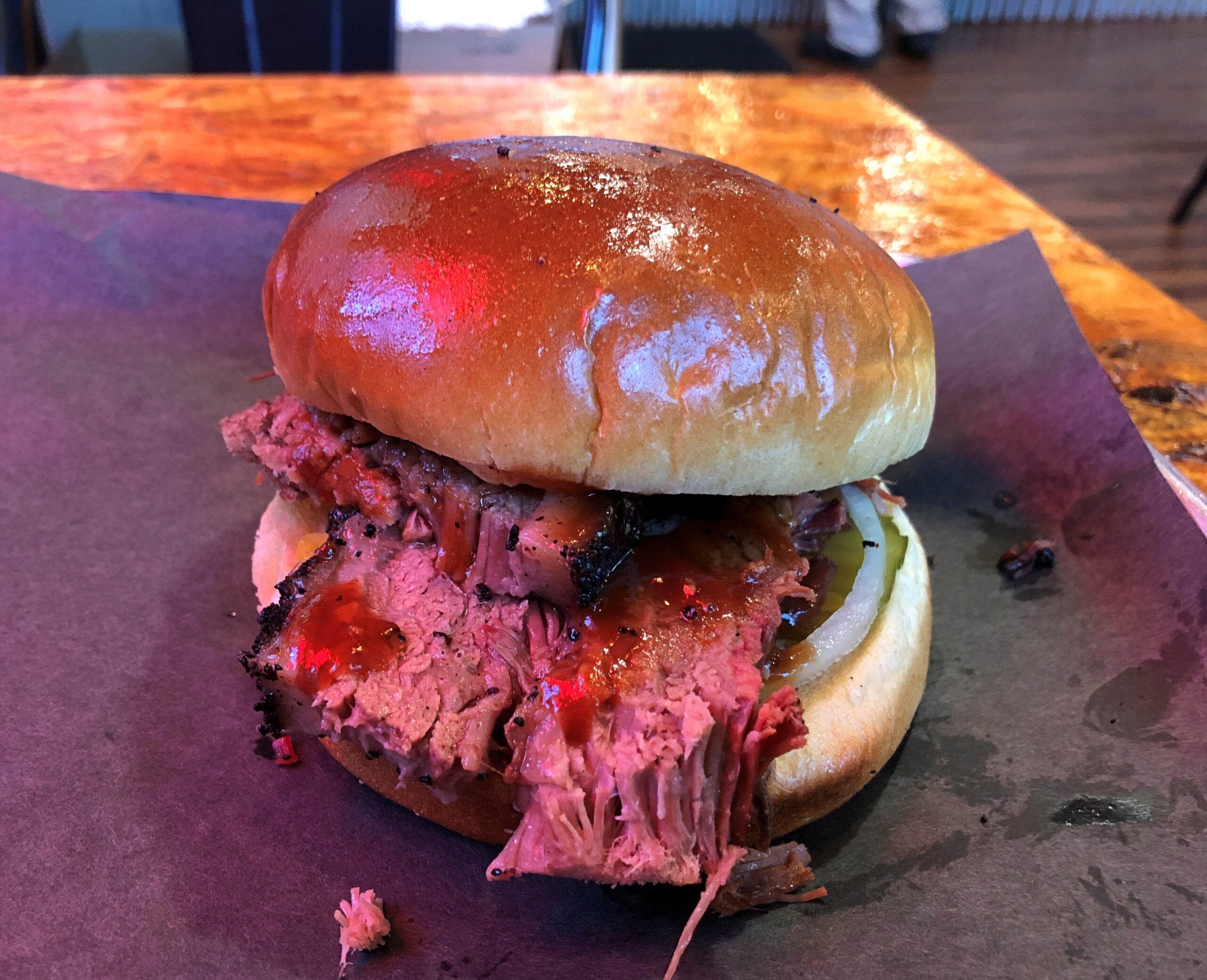
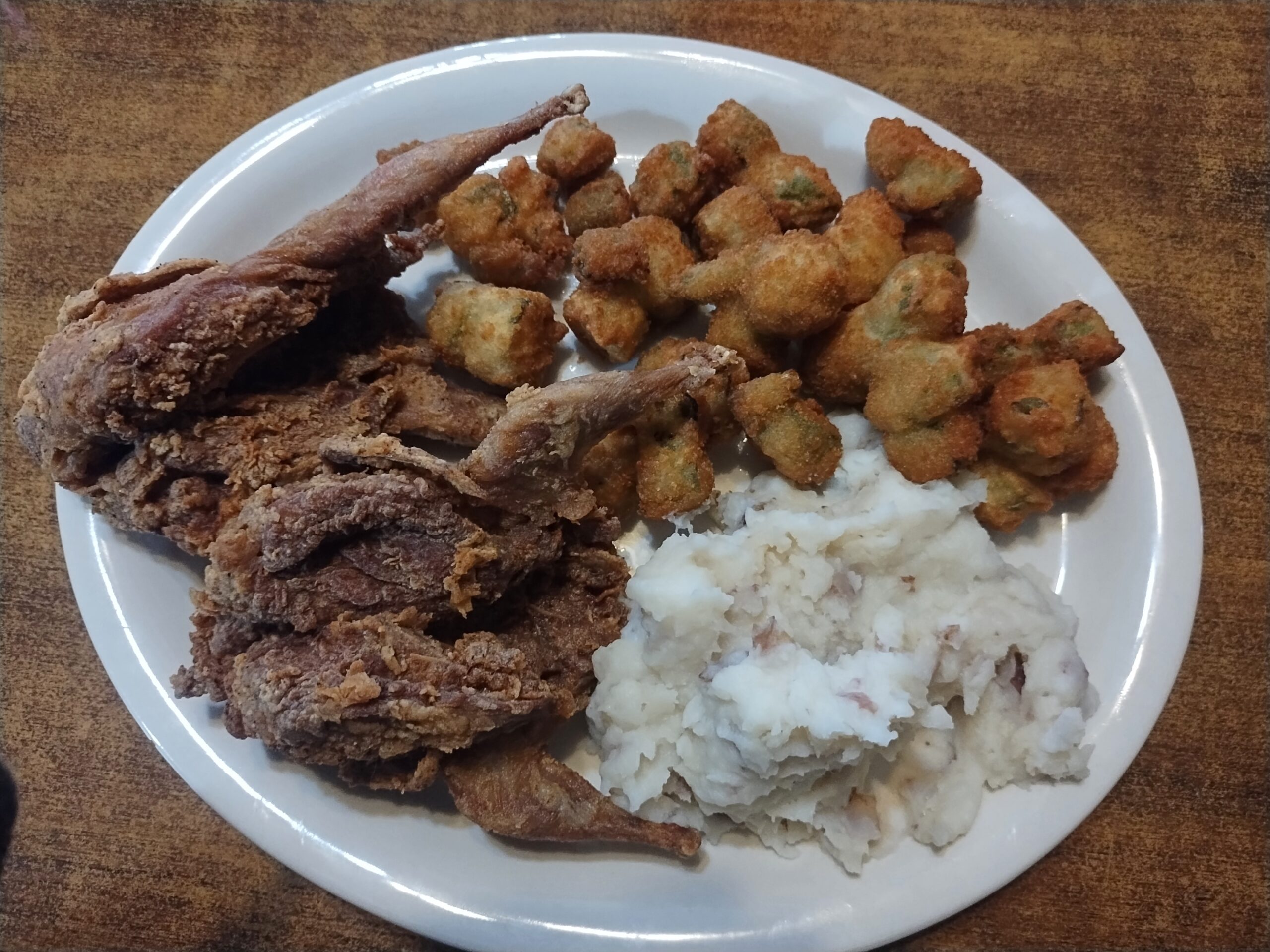
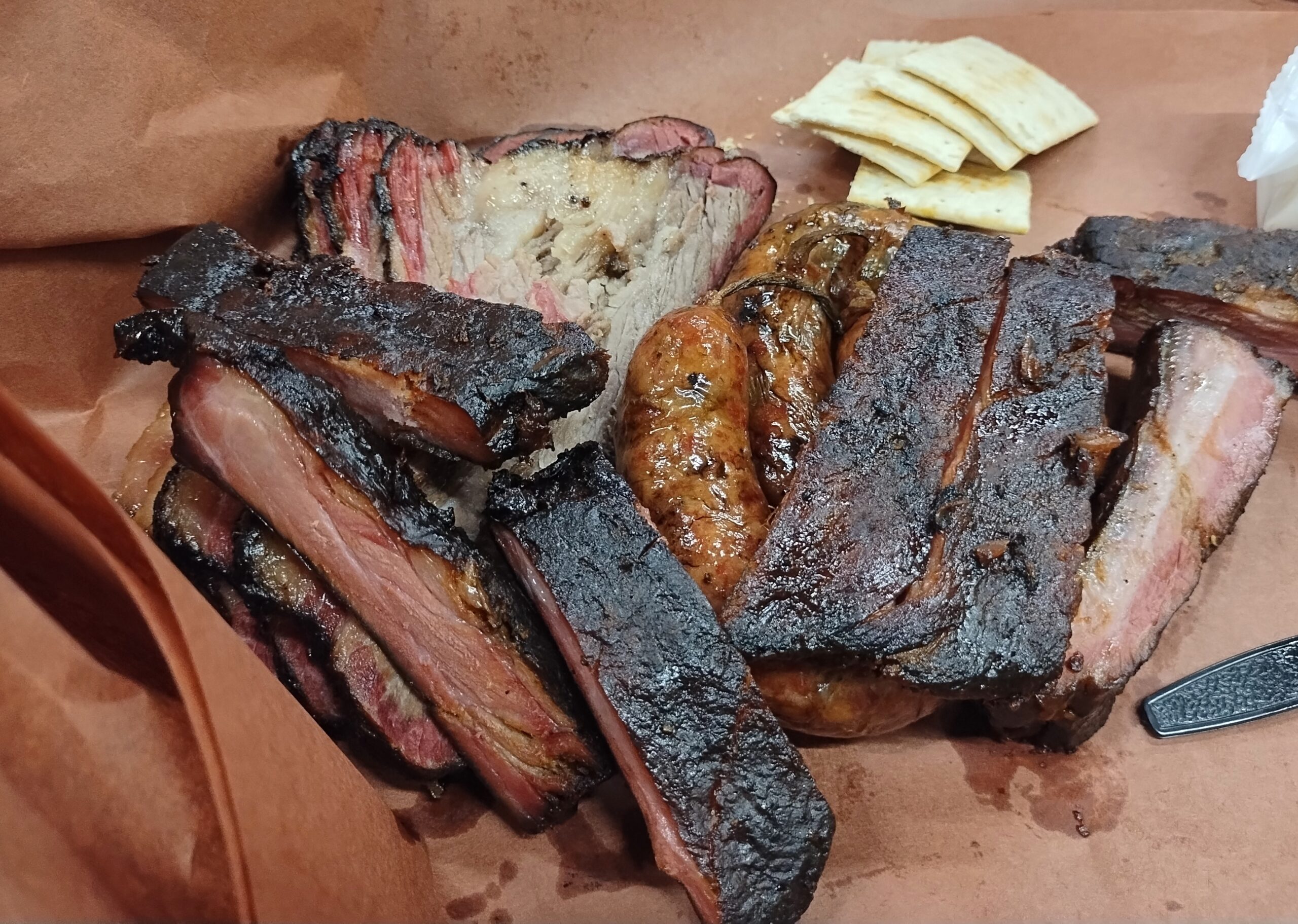
We ate a lot of meat along the way. As one does in Texas.

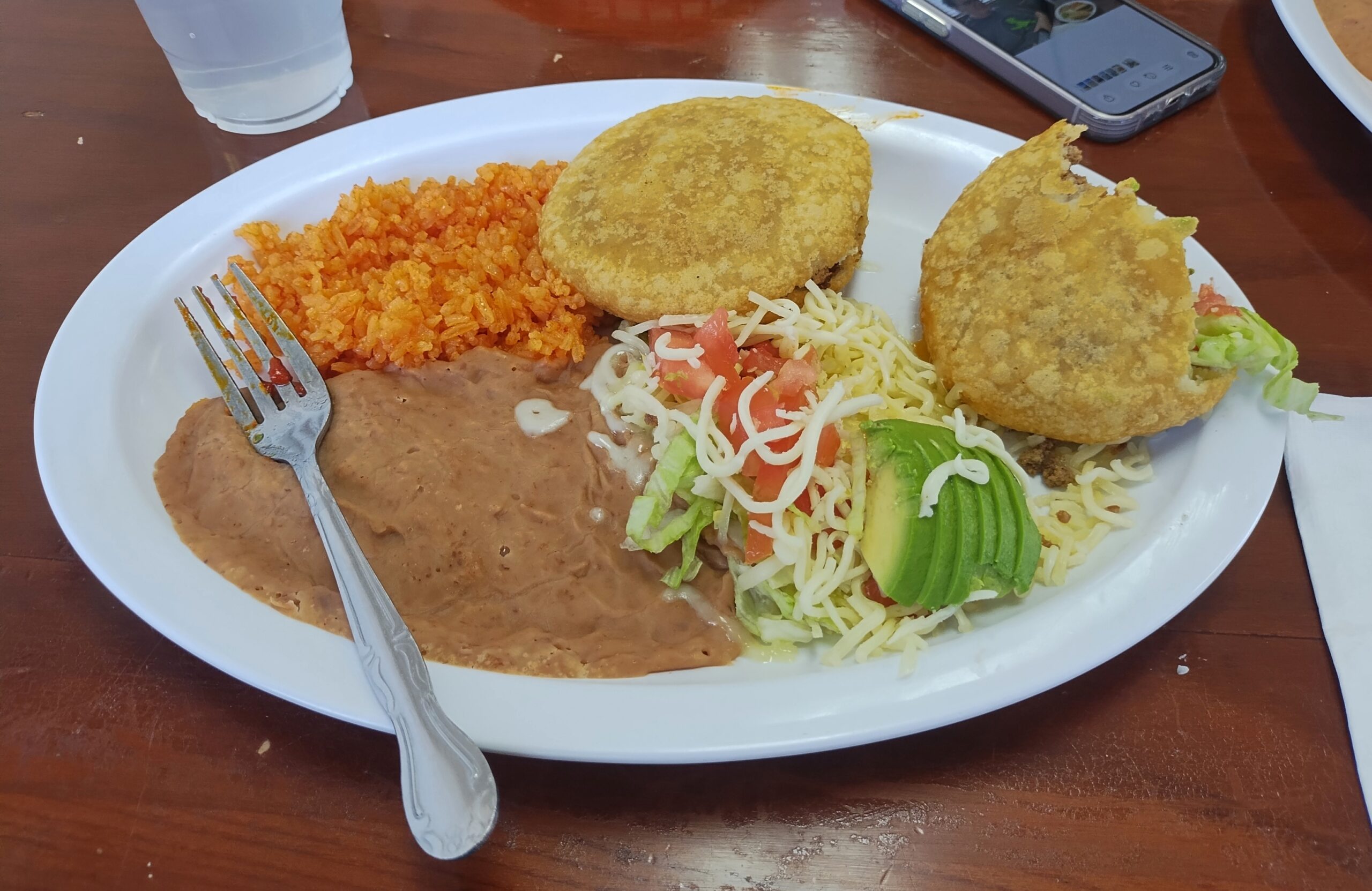
Also, Mexican food.
Eat like that and you’d better do some walking, and I did: various places in Austin and Houston and Dallas, in all three national parks, around downtowns and courthouse squares in a number of small towns, and a handful of local parks.

All that was good, but of course best of all, I had time to visit friends and relatives, of whom there are many in Texas: Tom and Nancy in Austin, Kirk and Lisa in Nacogdoches, another Tom and Steve and Ron and Greg and Judith in San Antonio, to list the friends; both brothers, two out of three nephews and their wives and all four of their children, to list relatives, along with the mother of one nephew’s wife (niece-in-law sounds peculiar, but that fits too). Also, I met for the first time two good friends of Tom’s, and one of Kirk and Lisa’s granddaughters.

I’d set out to do four long drives when I was 64, but this makes five. Guess I’m an overachiever about driving, anyway.
The Key West Green Flash

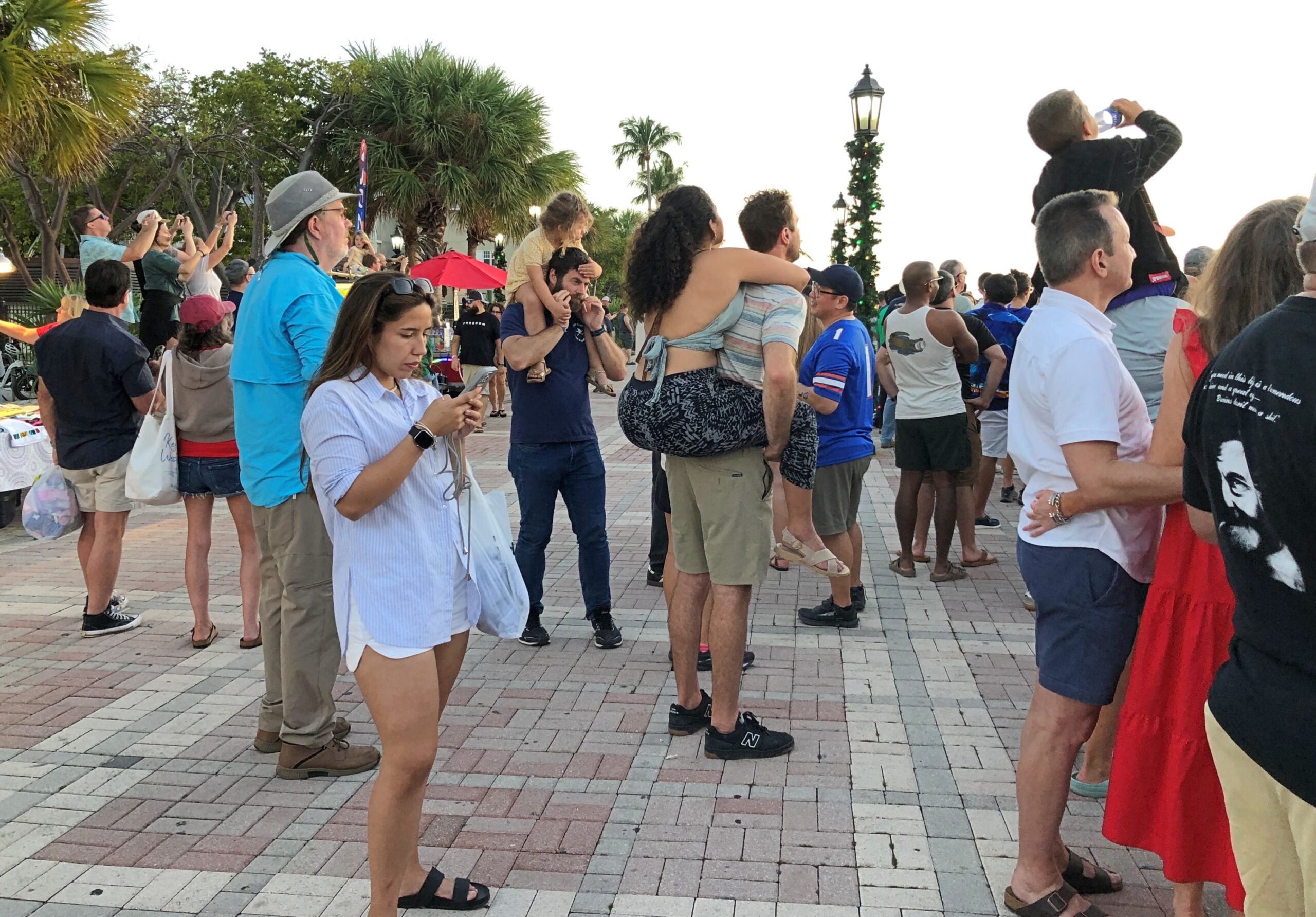
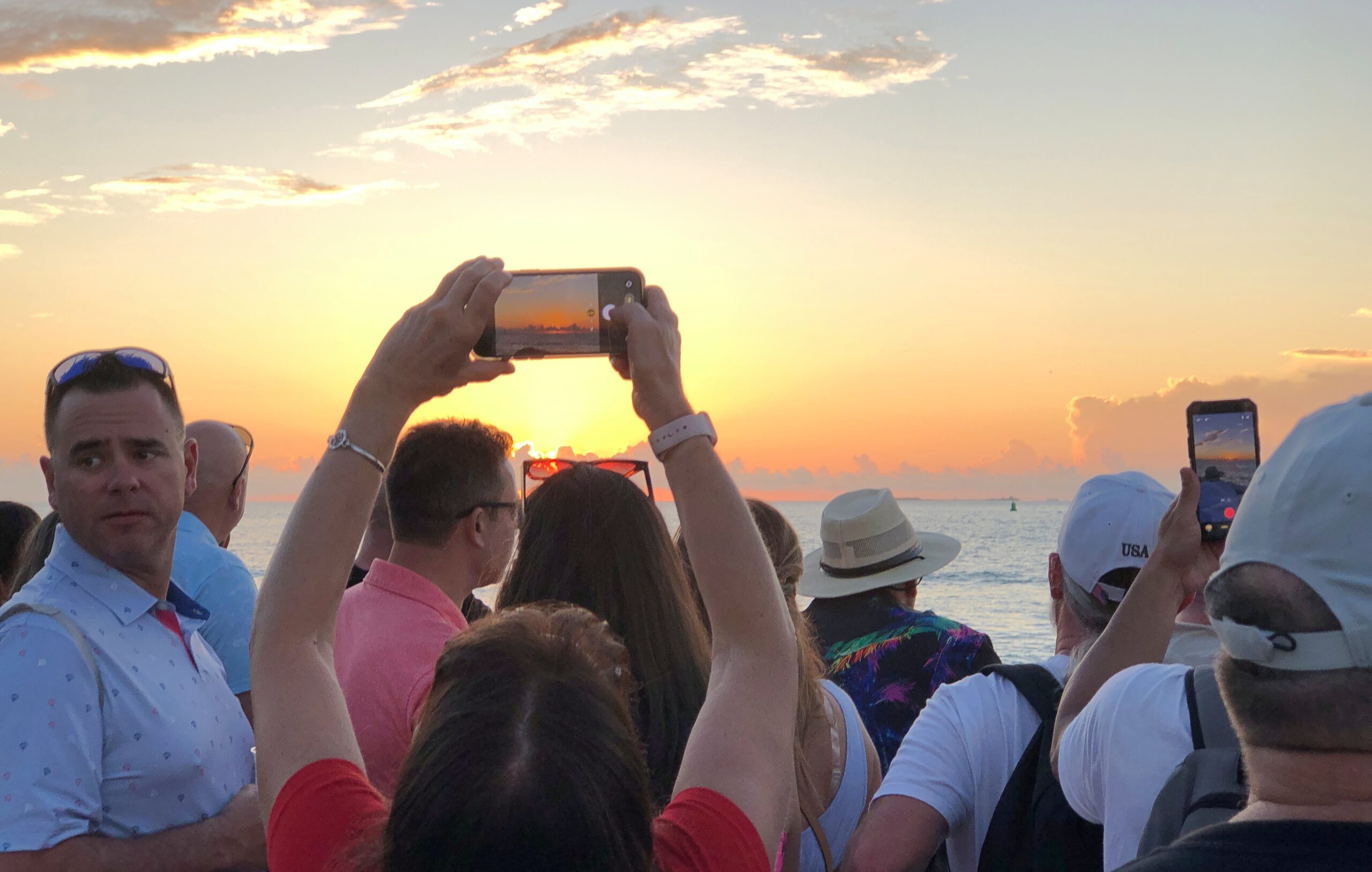
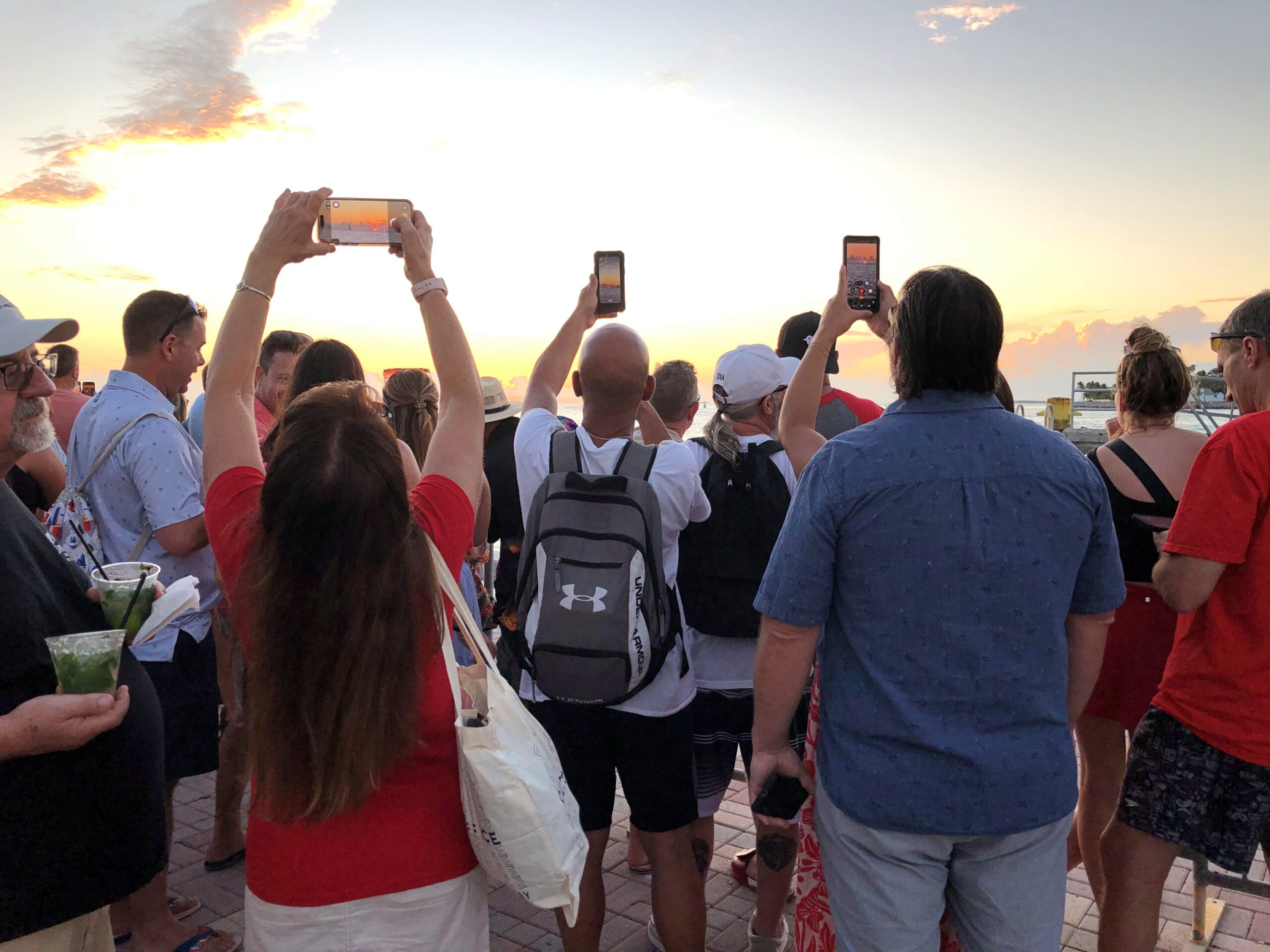
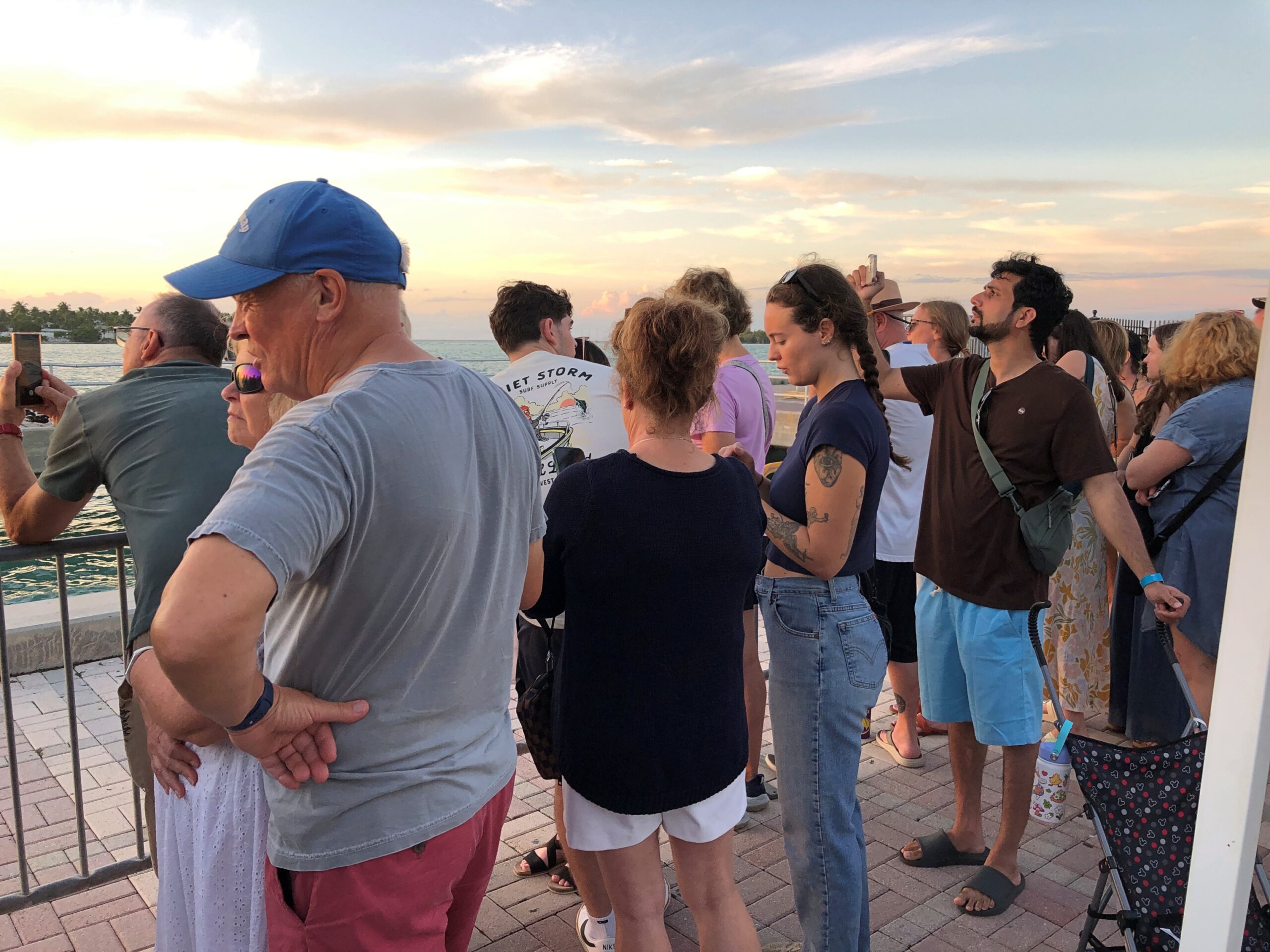
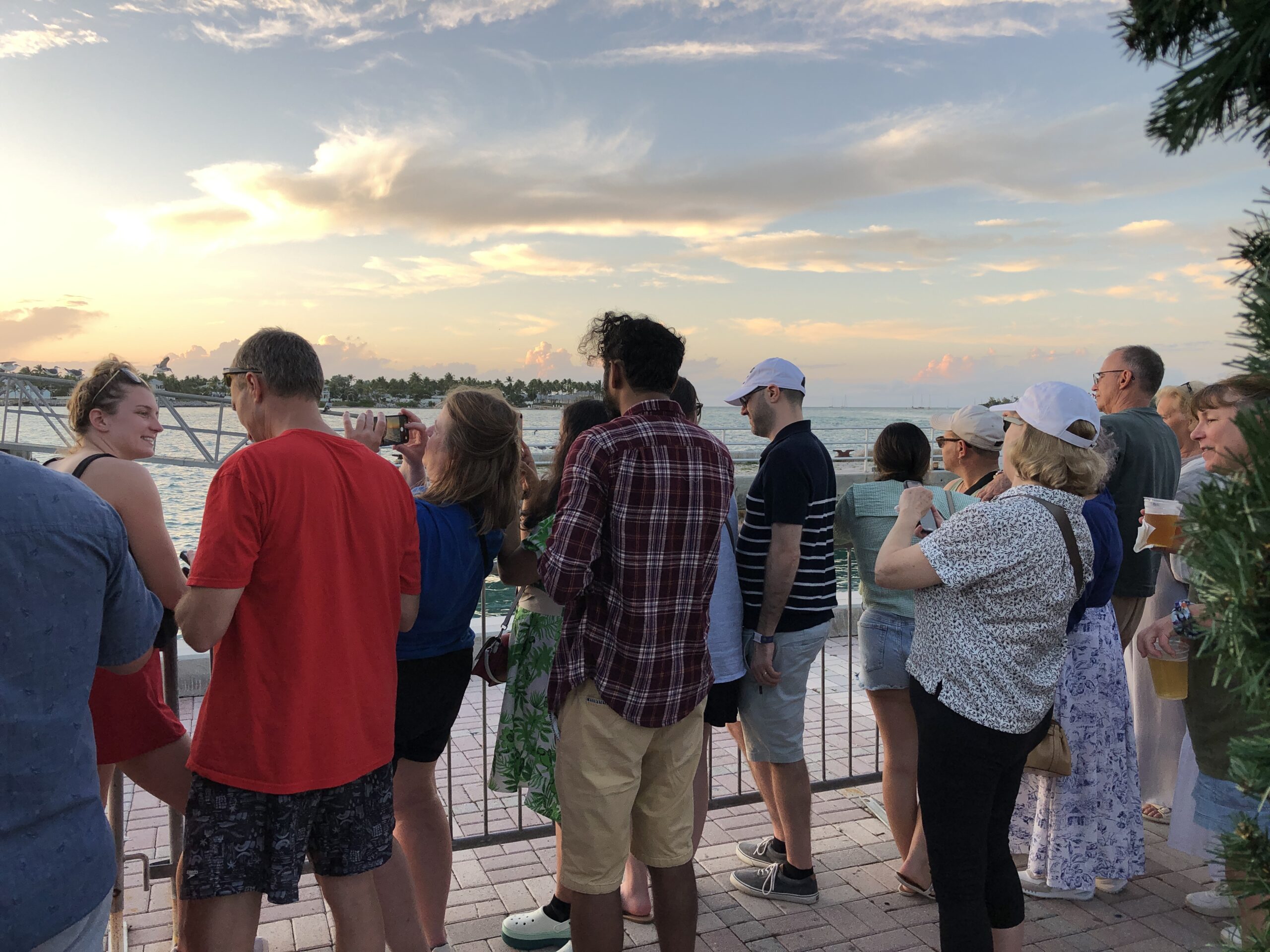
We joined the other Key West tourists, and who knows maybe a few locals, for an spontaneous sunset viewing party. I know if I lived around there, I’d be out at least occasionally, taking in something that never gets old. No organizer at all, just people collecting at the right place at the right time to see the disk of the sun transition from yellow to red and other colors, as it visibly creeps lower toward the horizon. Down the sun went, in its predictable splendor, and then — green.

I’m pretty sure what I saw was an inferior-mirage flash, to use a technical term I learned later. I checked later, finding that one characteristic of such a flash is an oval of light lasting no more than 2 seconds (I’d say it was no more than a single second, if that). They tend to happen when the surface is warmer than overlaying air, and close to sea level.

All that fits for the green flash — a variety of green intense and completely new to me — as the sun set our first day in Key West. The flash came exactly as the top edge of the disk of the sun dipped below the horizon. You have to, I believe, be looking straight at the exact right place at exactly the right moment to see it, as I was, by pure accident. I’d heard about green flashes for a long time, but I’d never seen one. A really long time: I remember them being mentioned during a planetarium show in San Antonio as a kid in the early ’70s.

We hadn’t come to Mallory Square to see a green flash or any other meteorological optical phenomena. We hadn’t even come to see the sun go down. We just happened to arrive at Mallory, a large public plaza near the north end of Duval St. and right at the water’s edge, just at the right time, after gadding about that part of Key West.

It’s a mildly festive place around sunset. Also, people are waiting. The sun was not to be hurried.

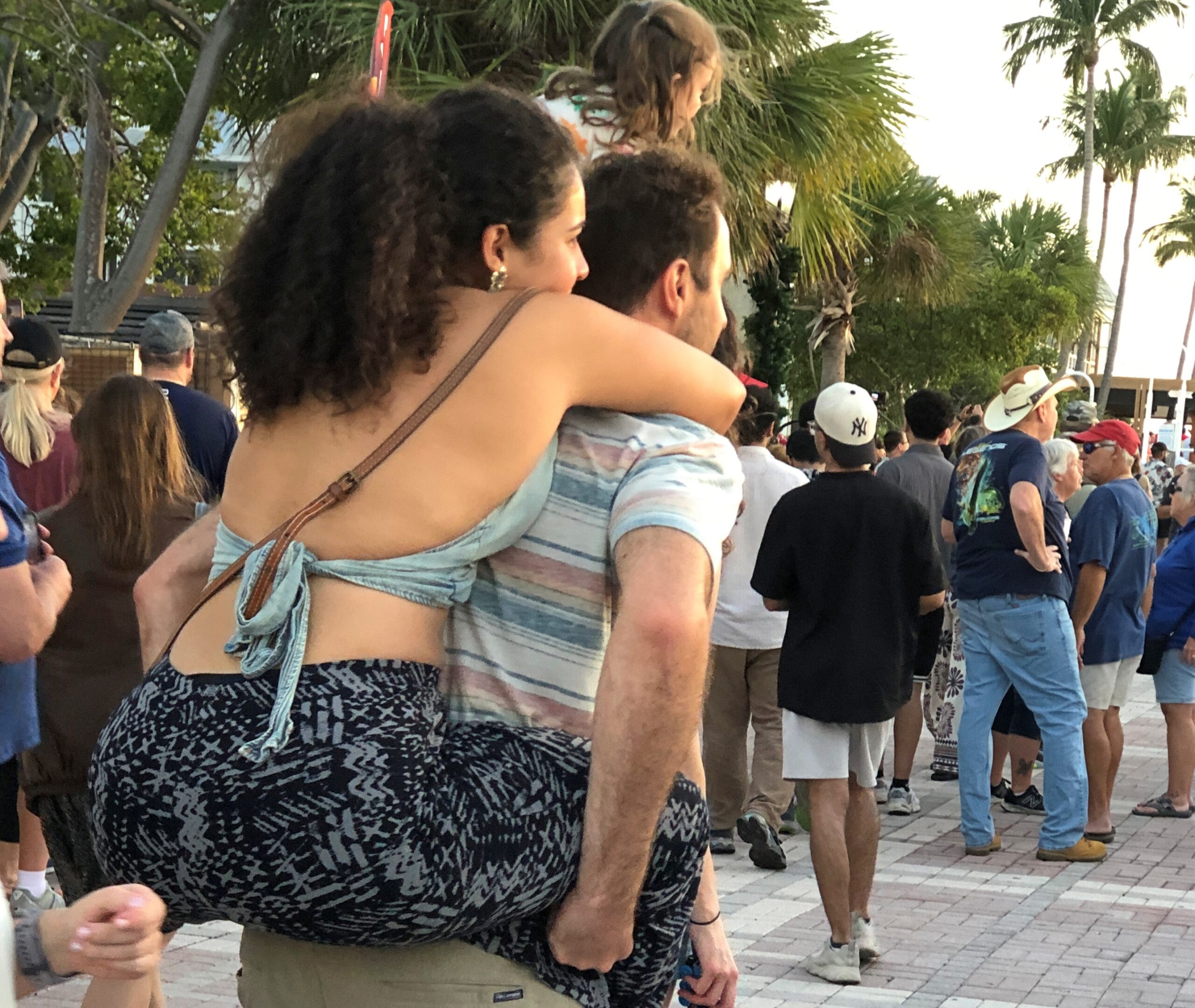
Lots of people around, not an overwhelming crowd, more of a happy milling of vacation-goers.

Key West Mallory Square

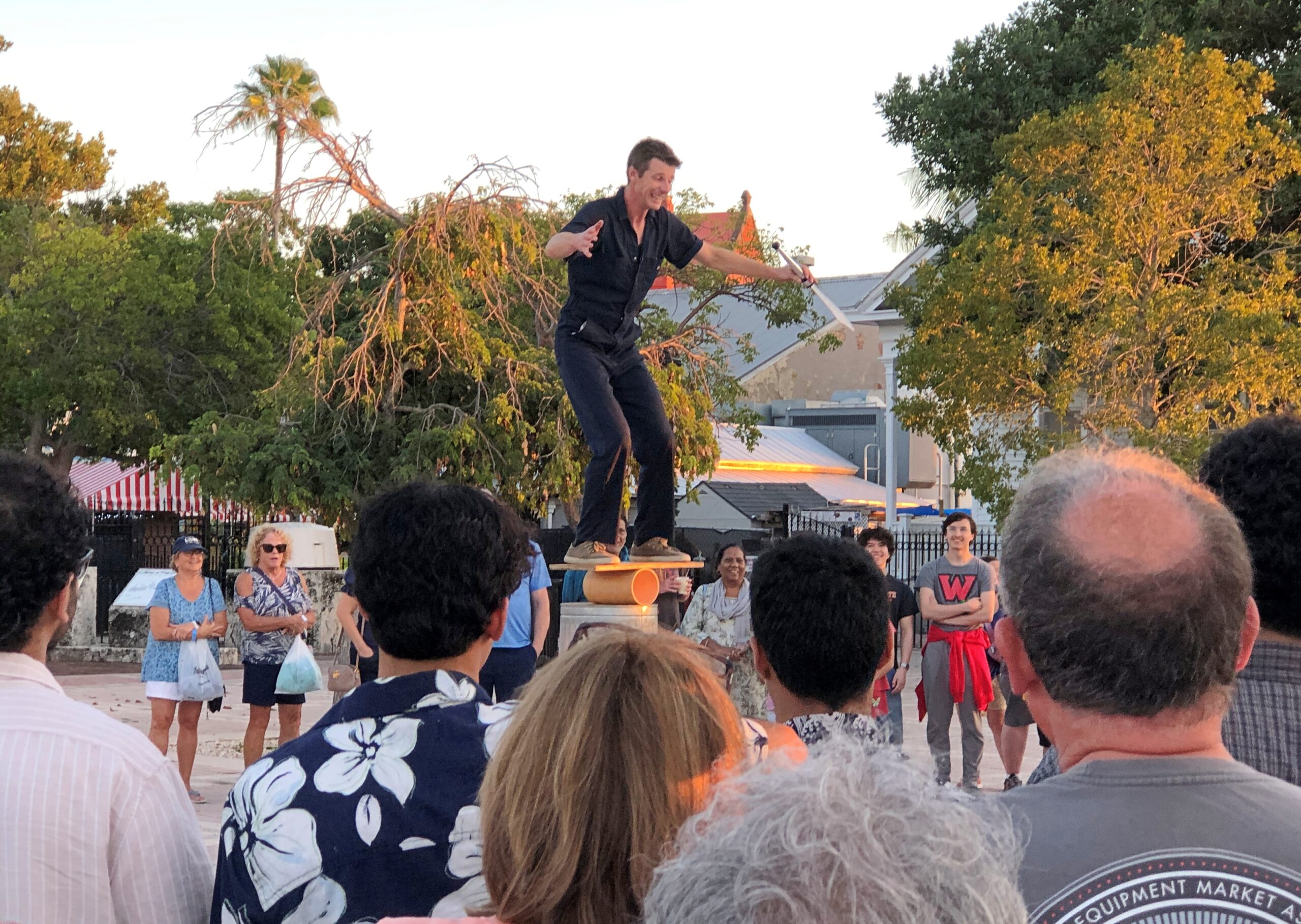
Live entertainment was on hand.

The star attraction, however – make that the solar attraction – was the sunset. Mallory Square has a fine view of the westward horizon, where sea and sky come together like a hazy kiss out on the ocean.

Sunset Mallory Square

So now I’ve seen a green flash. A total solar eclipse (two, actually), lunar eclipses, the transit of Venus, double rainbows, ground-to-sky lightning, sun- and moondogs, meteors, planets through telescopes including the moons of Jupiter and Saturn, the impressive whisp of the Milky Way in a dark sky, the Southern Cross and the Magellanic Clouds – add a green flash to the list.

But what other cool things to see in the sky that so far have eluded me? The aurora, for one. Aurora borealis would be great, and certainly more doable than aurora australis, but wouldn’t seeing the Southern Lights be a kick? I think I first learned about it in a Carl Barks Scrooge McDuck comic, and never forgot.

Prospect Park Ramble ’25

Put this in the Those Were Different Times file: “In the early evening, I made it to the beginning of the National Association of Real Estate Editors convention. I mentioned to some colleagues of mine, who happened to be Manhattanites, that I’d spent part of the afternoon in Prospect Park — you know, in Brooklyn. Judging by their reaction, I might as well have said that I’d popped over to Outer Mongolia for a quick visit.”

I wrote that my June 2002 visit to New York included, as mentioned, time in Prospect Park. It is every bit a great park as Central Park, and I knew I wanted to return someday for a longer walk. After lunch in Chinatown in Manhattan on October 19, that’s what Yuriko and I decided to do. We took the subway to the Prospect Park station on the east side of the park, and began our wander.

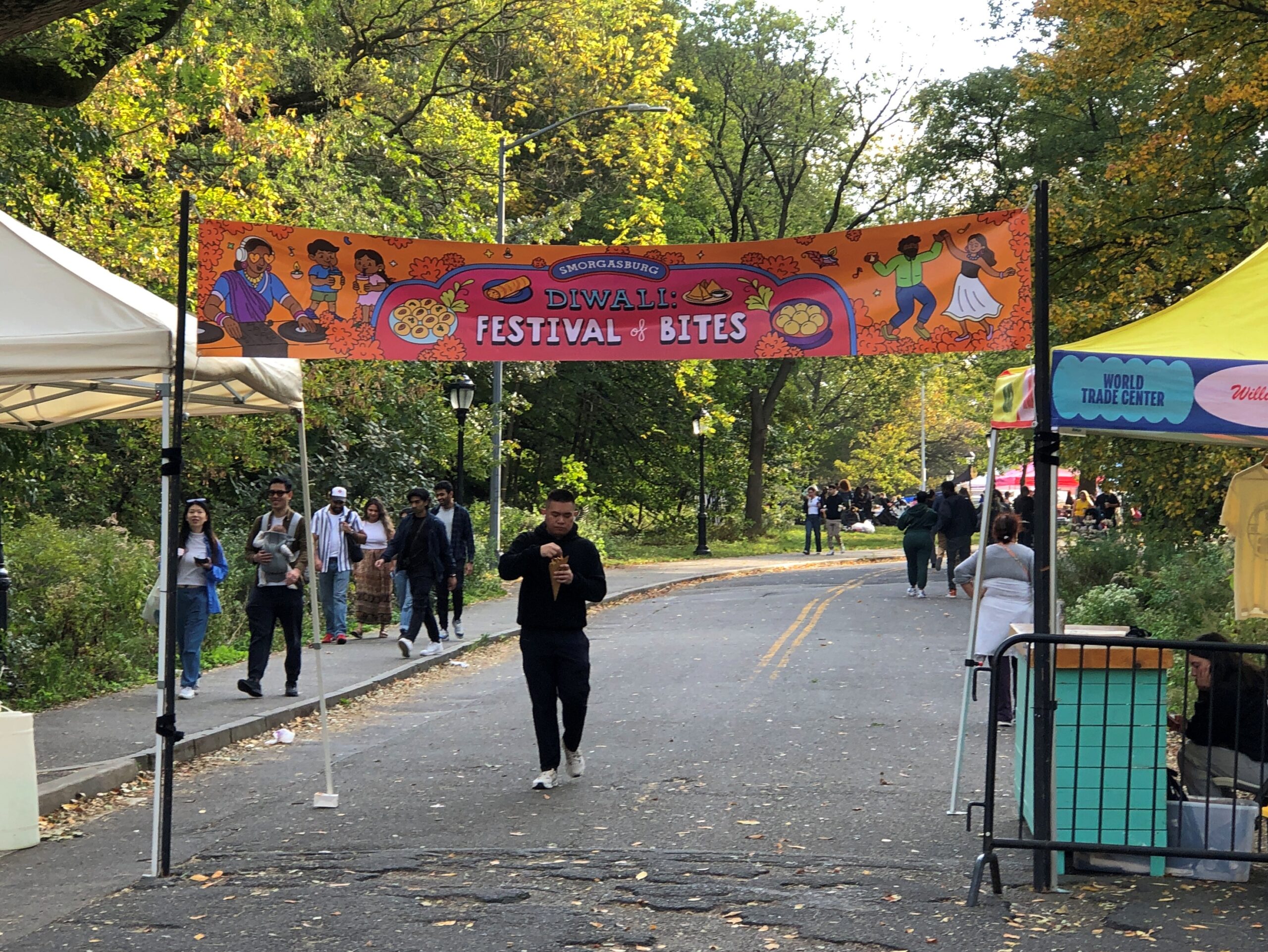
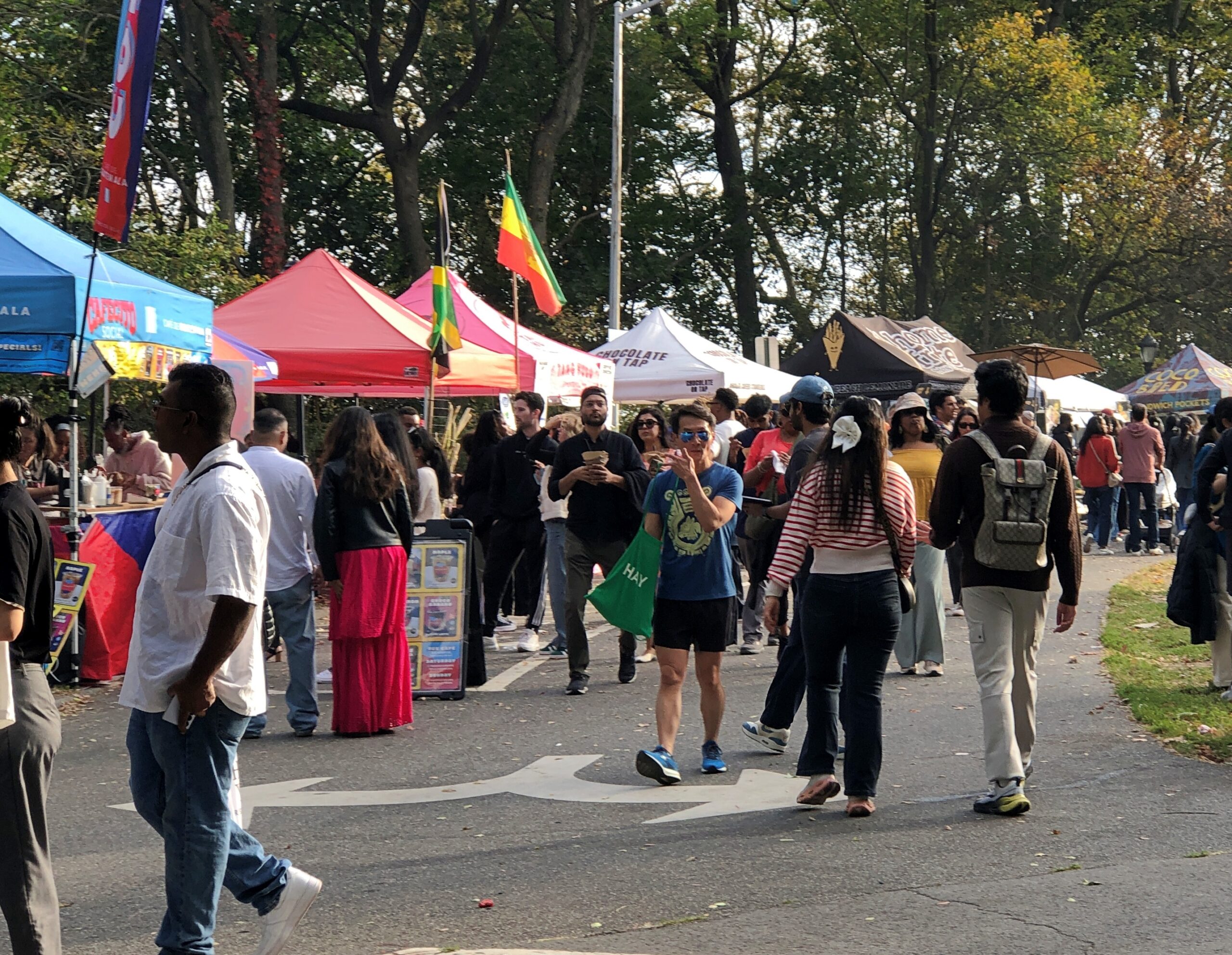
Near that entrance was the Diwali Festival of Bites.

Despite the name, the food tents had a large international variety for sale, not just Indian food. Not important for us anyway, since we’d just eaten.

Prospect Park Oct 2025

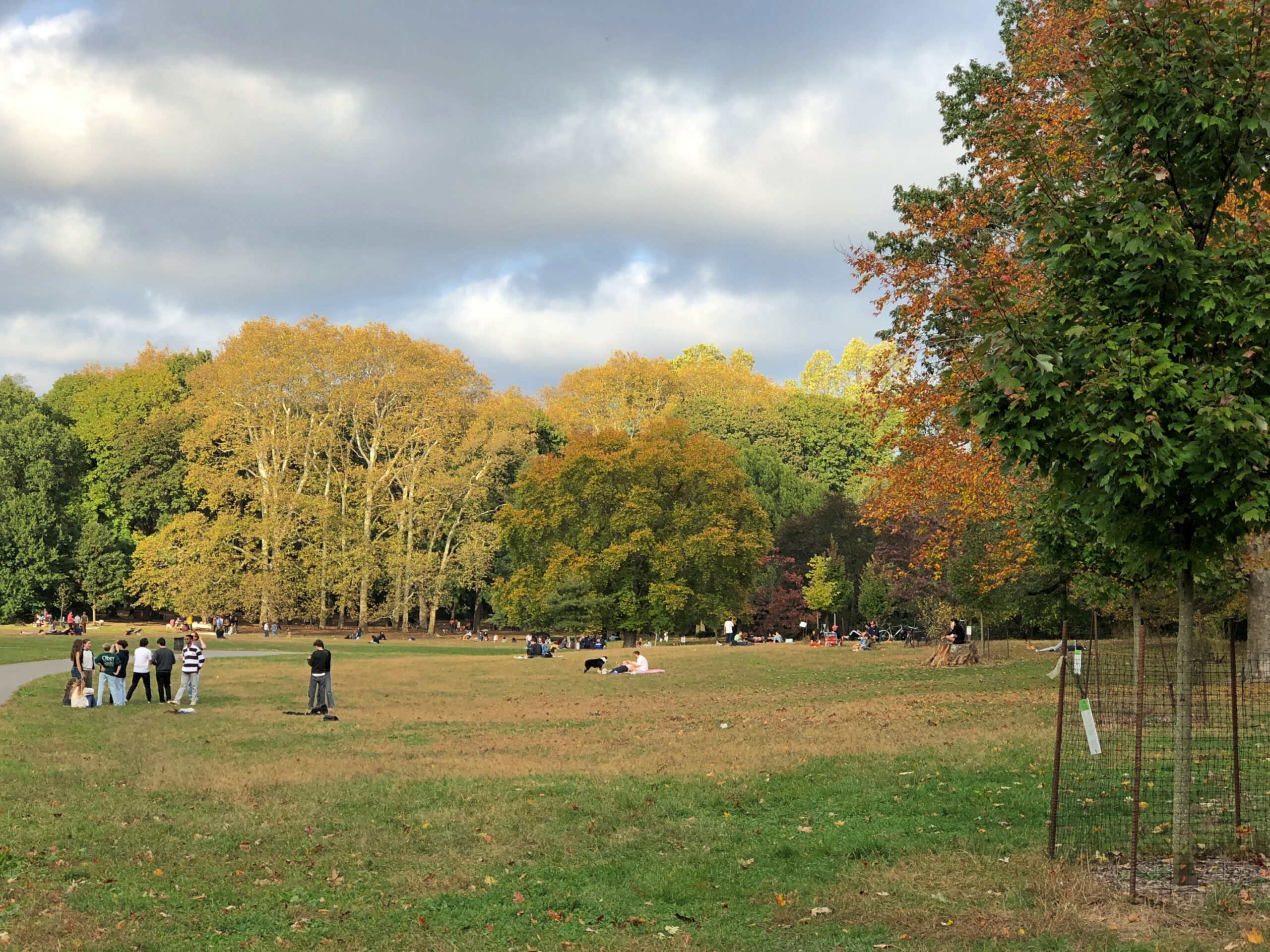
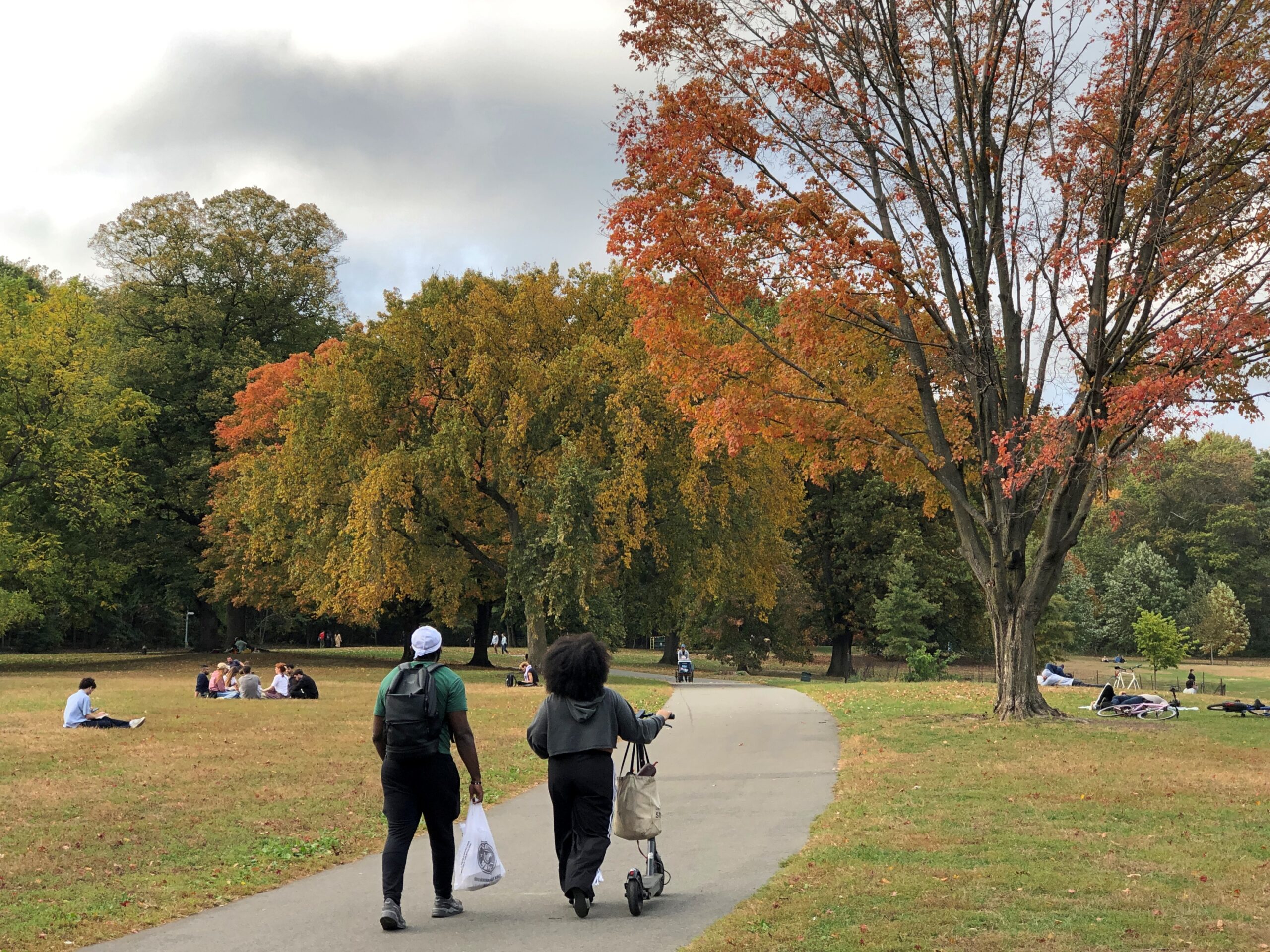
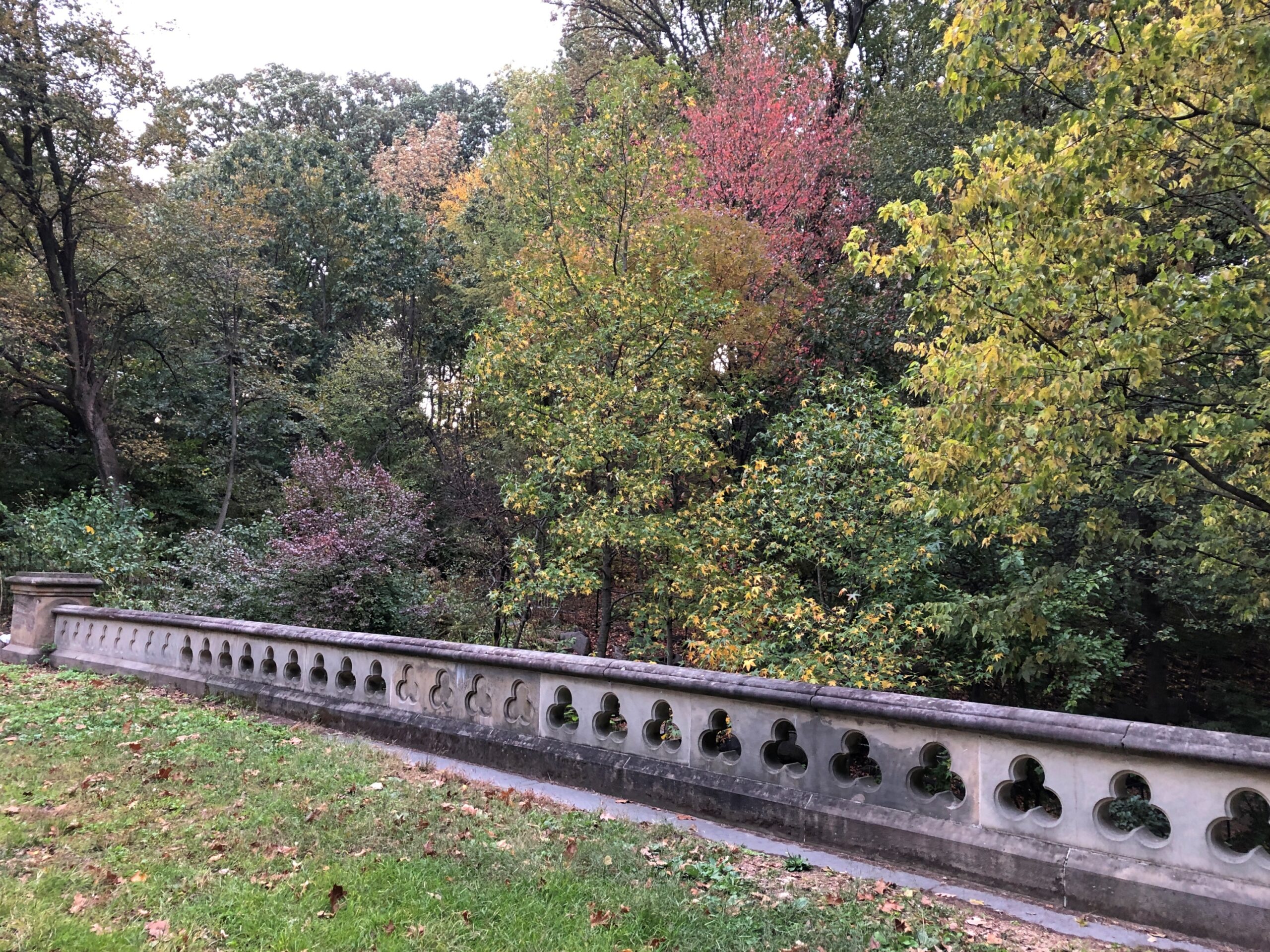
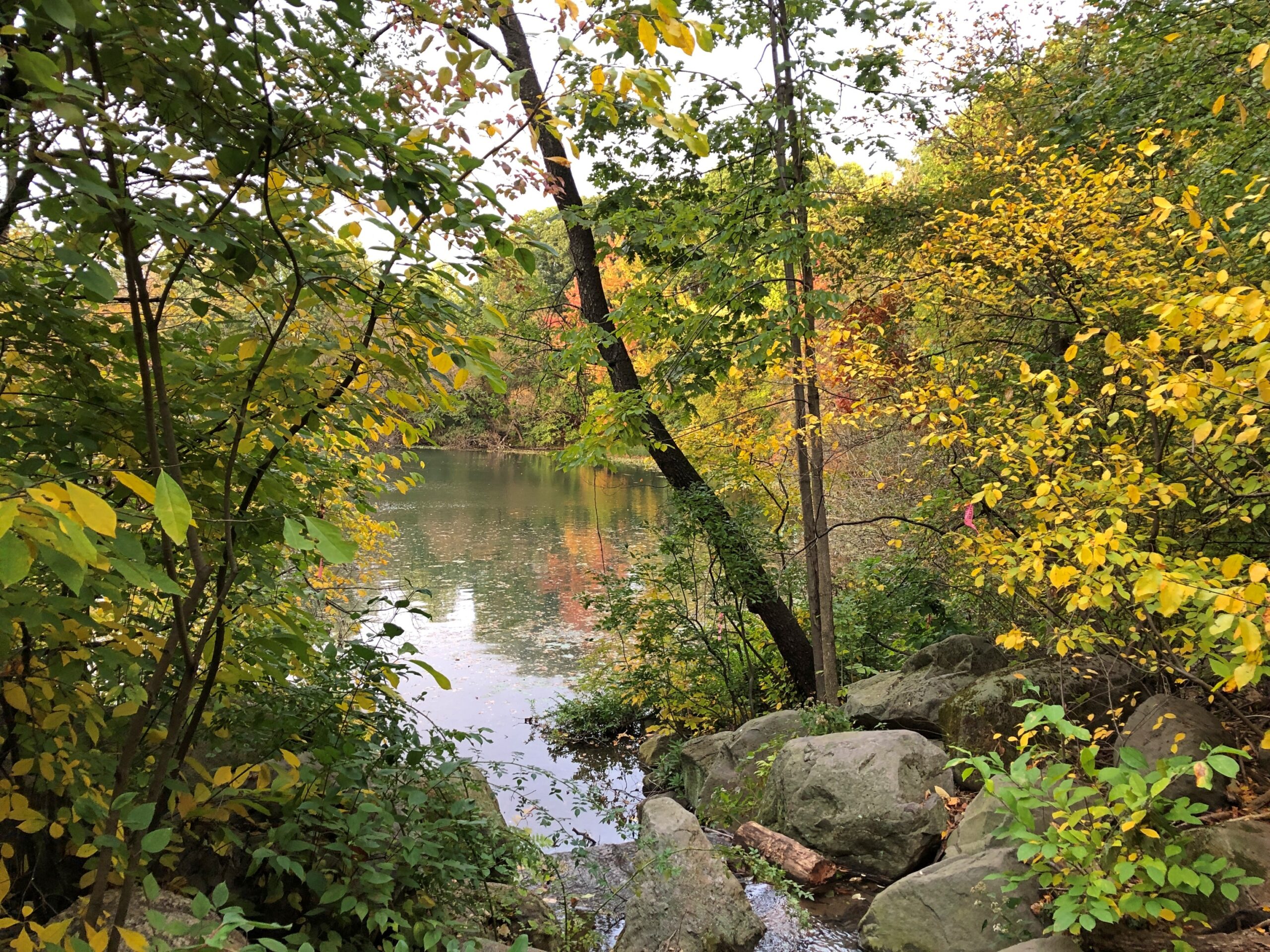
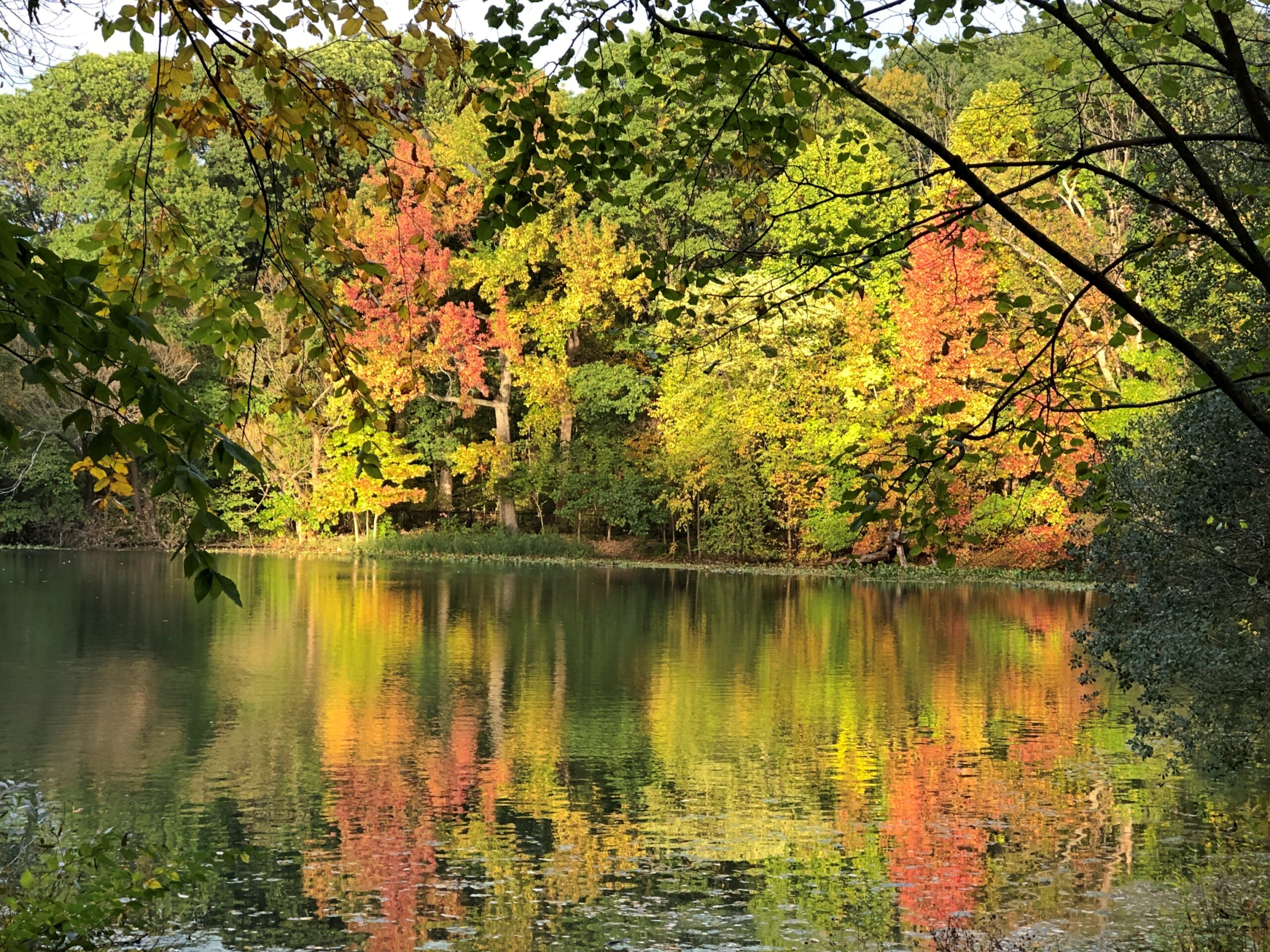
We headed deeper into the park. Maybe it was a matter of species choice, but there seemed to be more coloration than in Central Park the day before.

Prospect Park Oct 2025

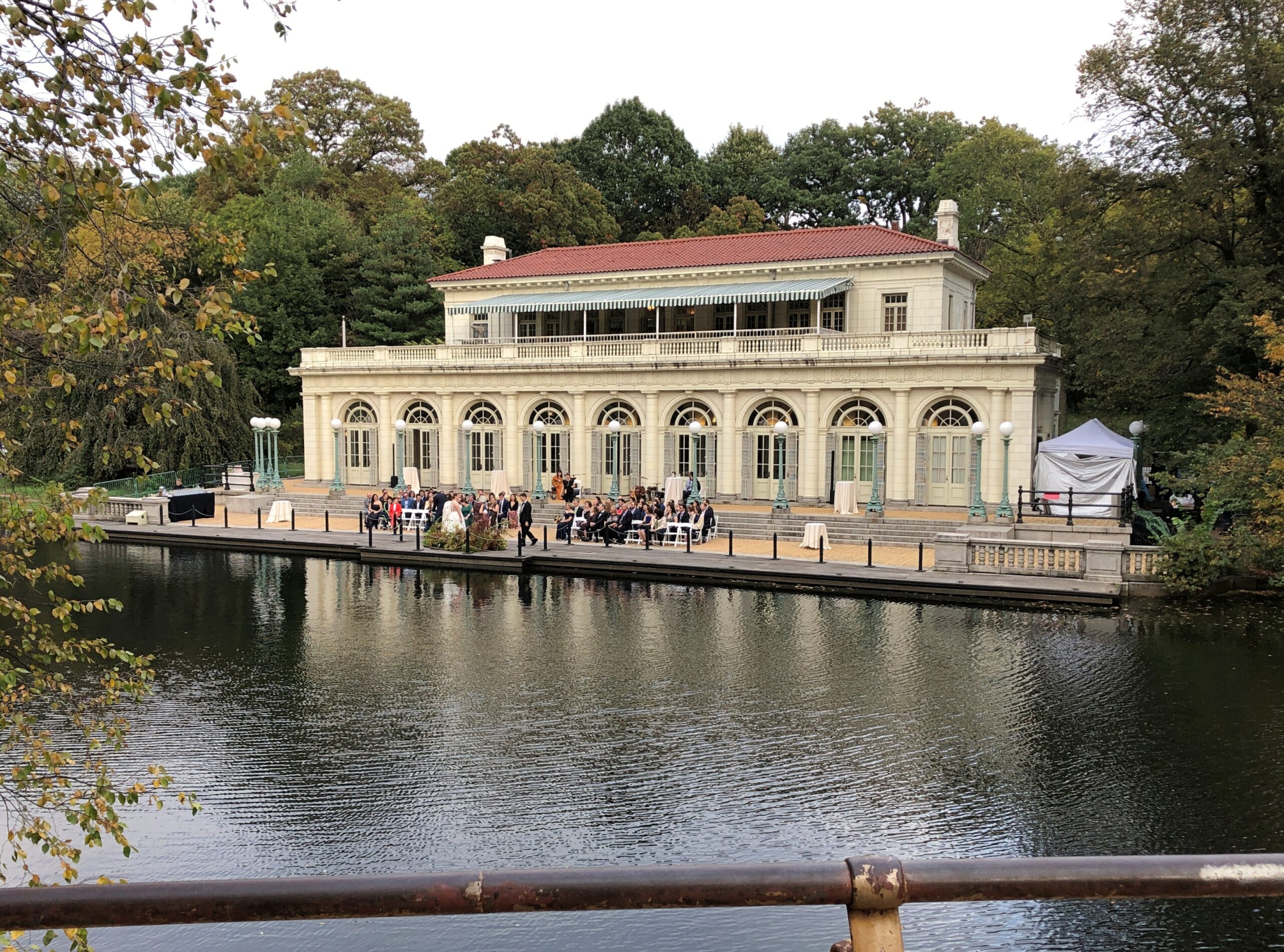
The handsome Prospect Park Boathouse.

Prospect Park Oct 2025

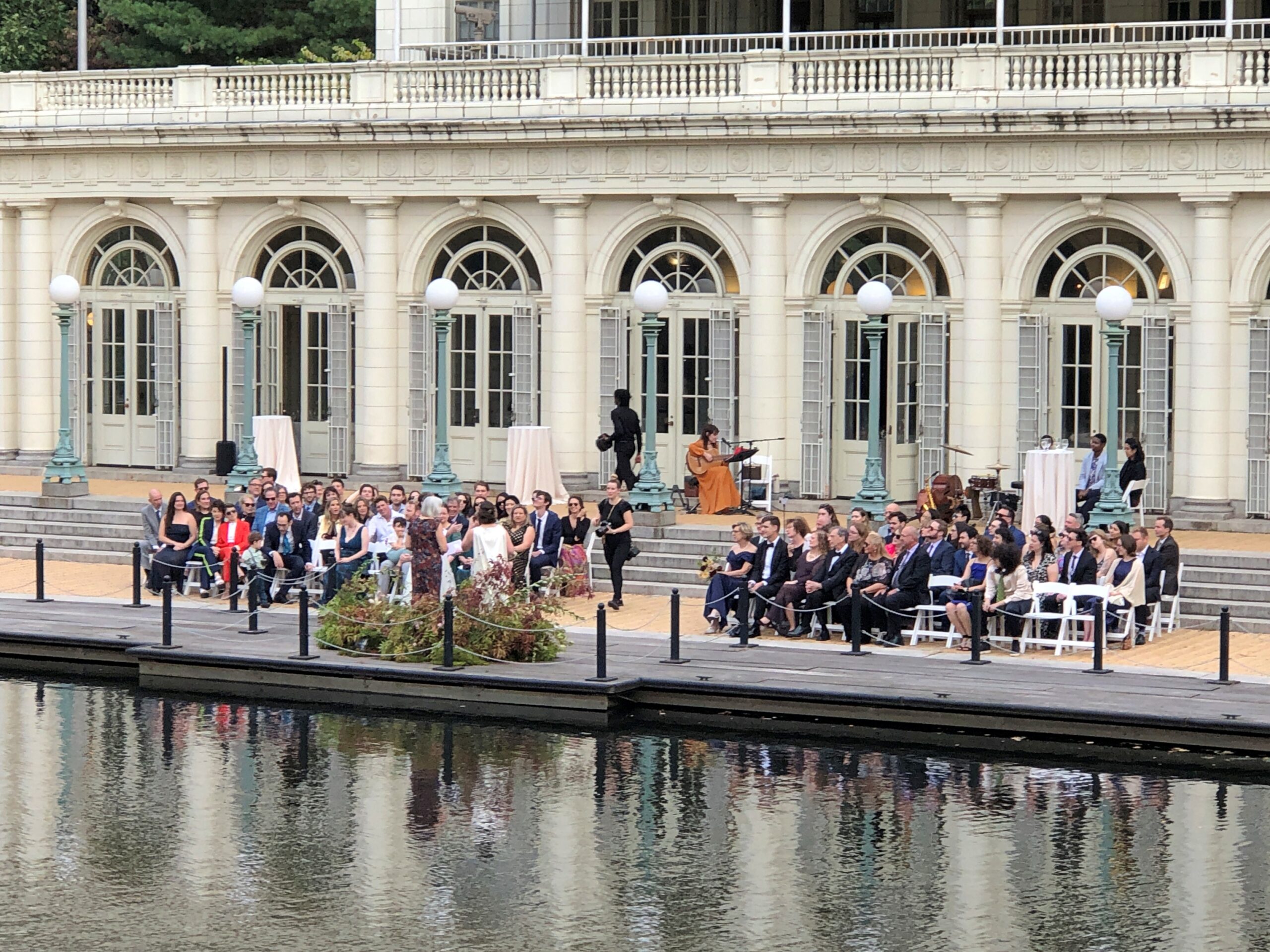
A popular setting for weddings, and in fact one was taking place when we visited. Two women were exchanging vows.

Prospect Park Oct 2025

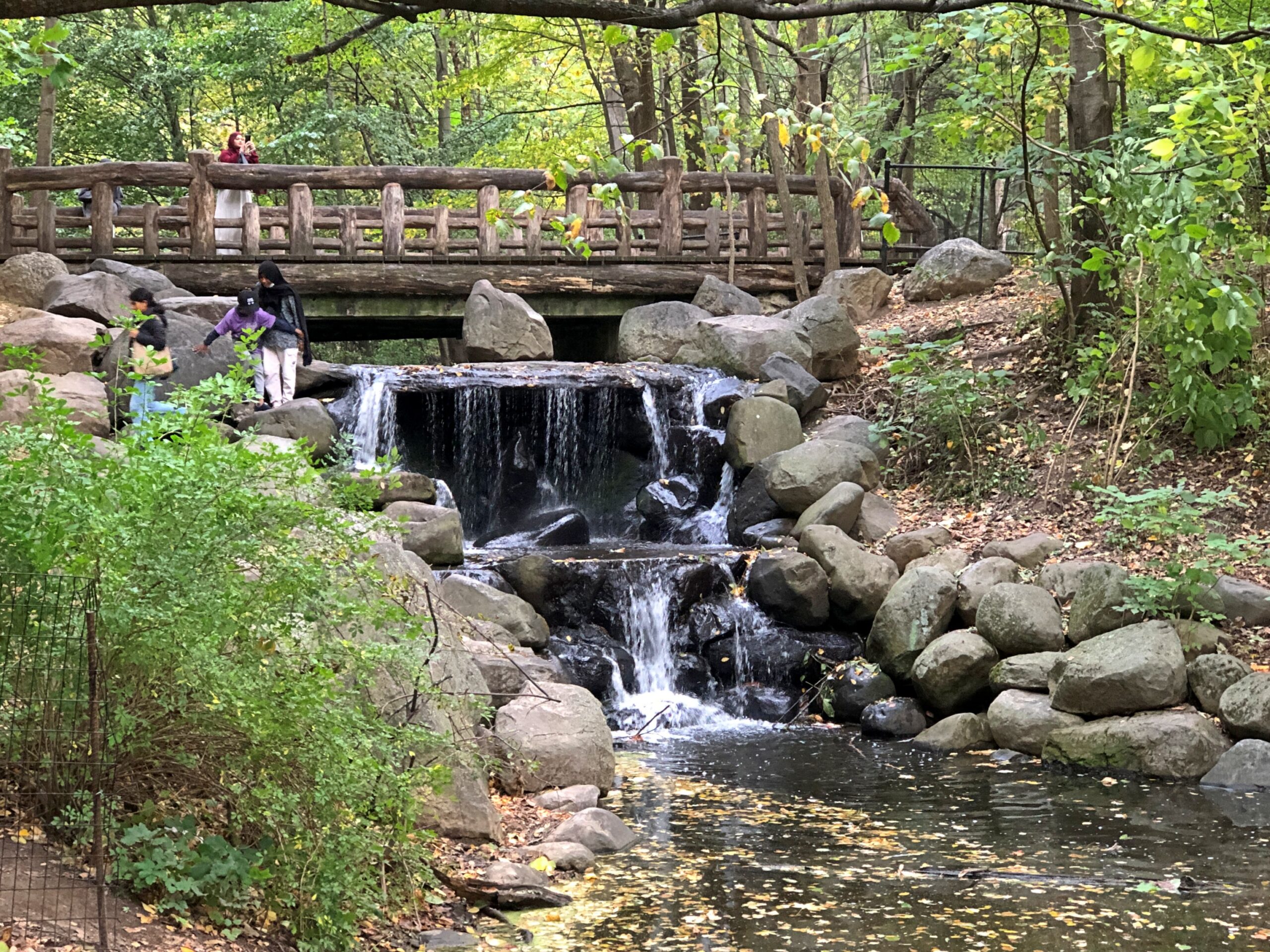
The Prospect Park Waterfall.

Prospect Park Oct 2025

Not a vast torrent, but a pleasant gurgling. It is a slice of the park’s interior waterways. Prospect Park’s watercourse is a beautiful collection of waterfalls, pools, streams and a 60-acre Lake, and is one of the shining achievements of Park designers Olmsted and Vaux’s design, says the Prospect Park Alliance.

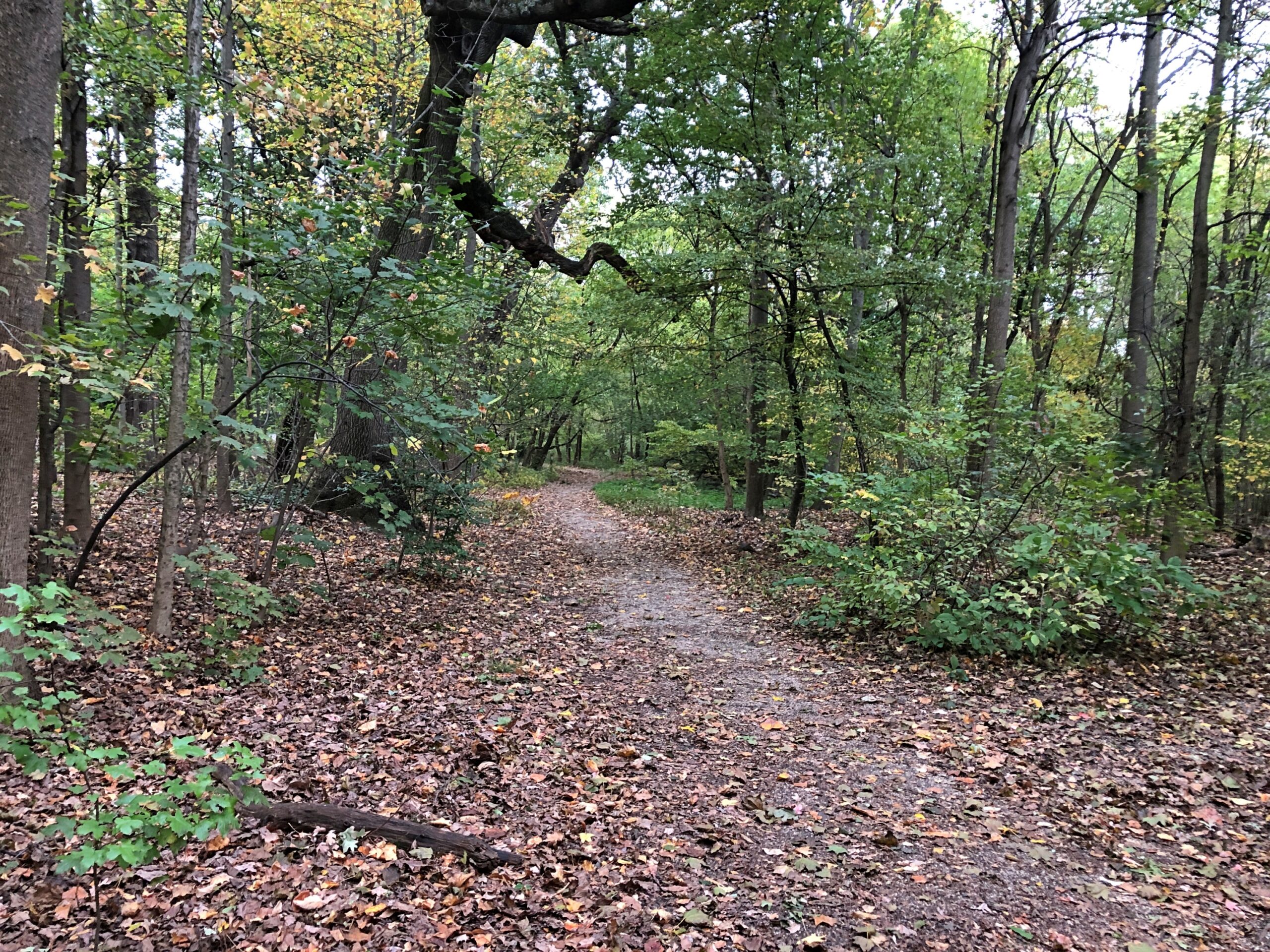
The deeper in, the fewer people.

Prospect Park Oct 2025

So few, sometimes, to almost make you forget you’re in a metro surrounded by about 20 million people.

Prospect Park Oct 2025

But not for long.

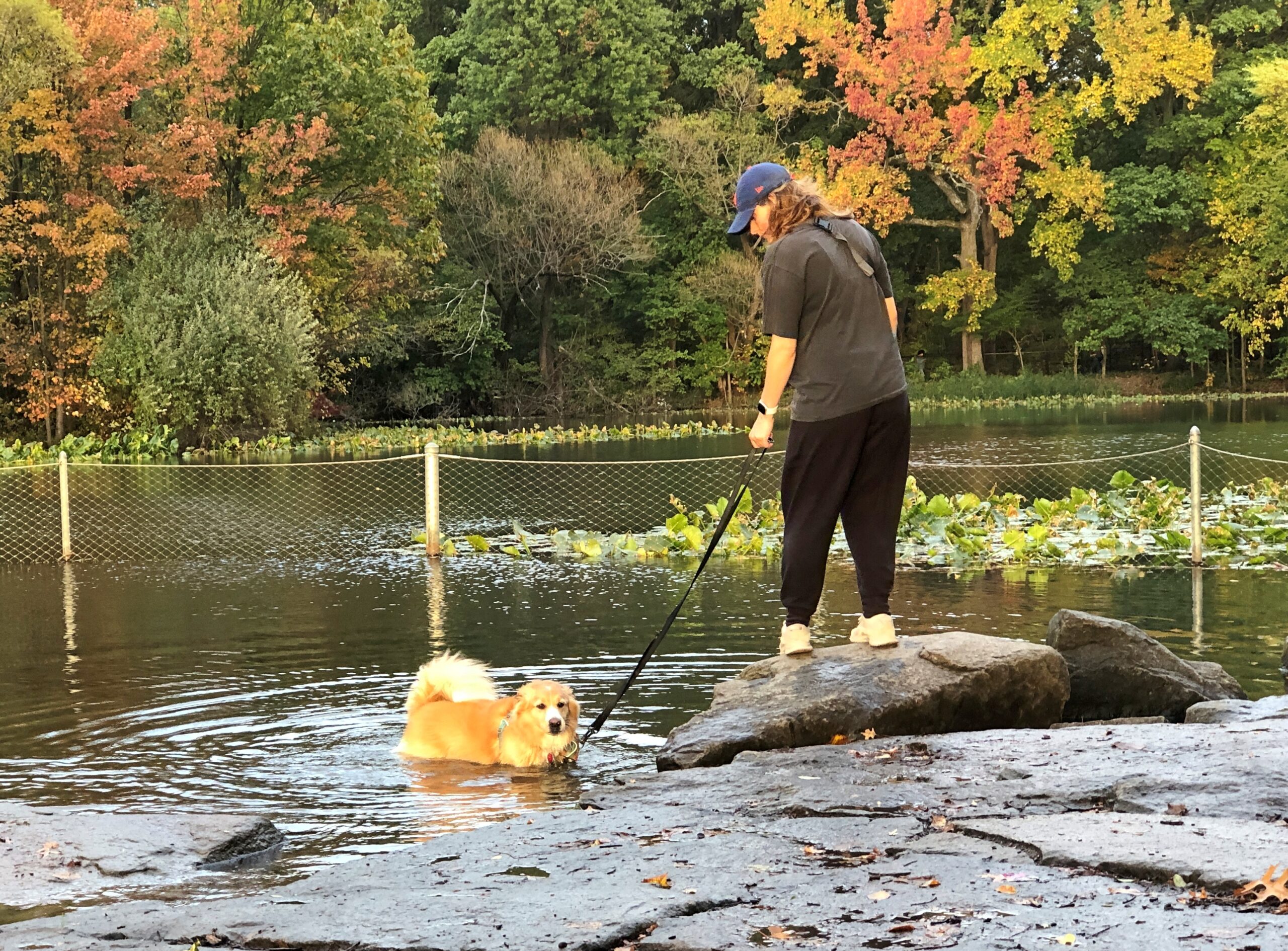
Dog walkers and their tethered dogs roamed the park in numbers. Some come to the Prospect Park Dog Beach.

Prospect Park Oct 2025

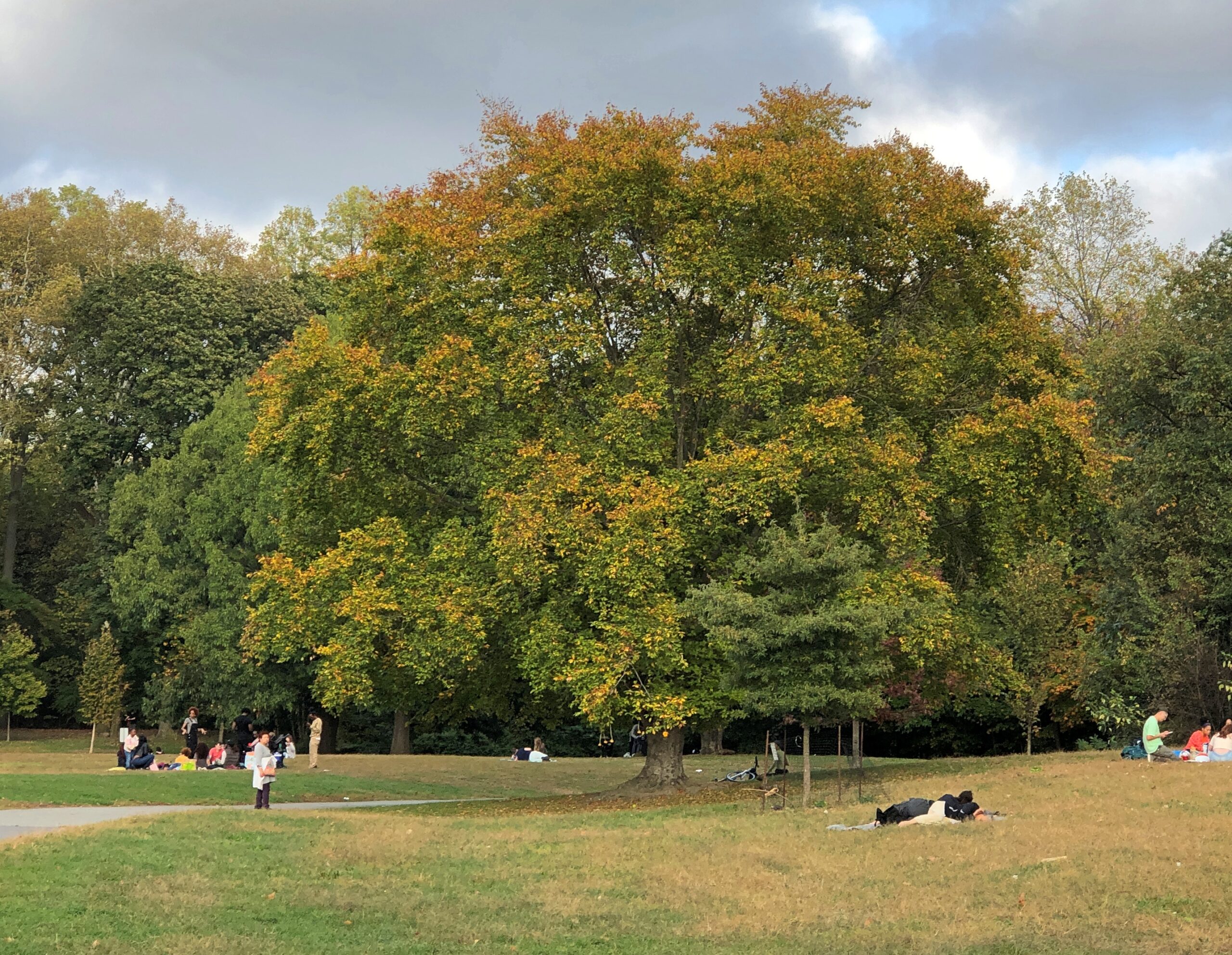
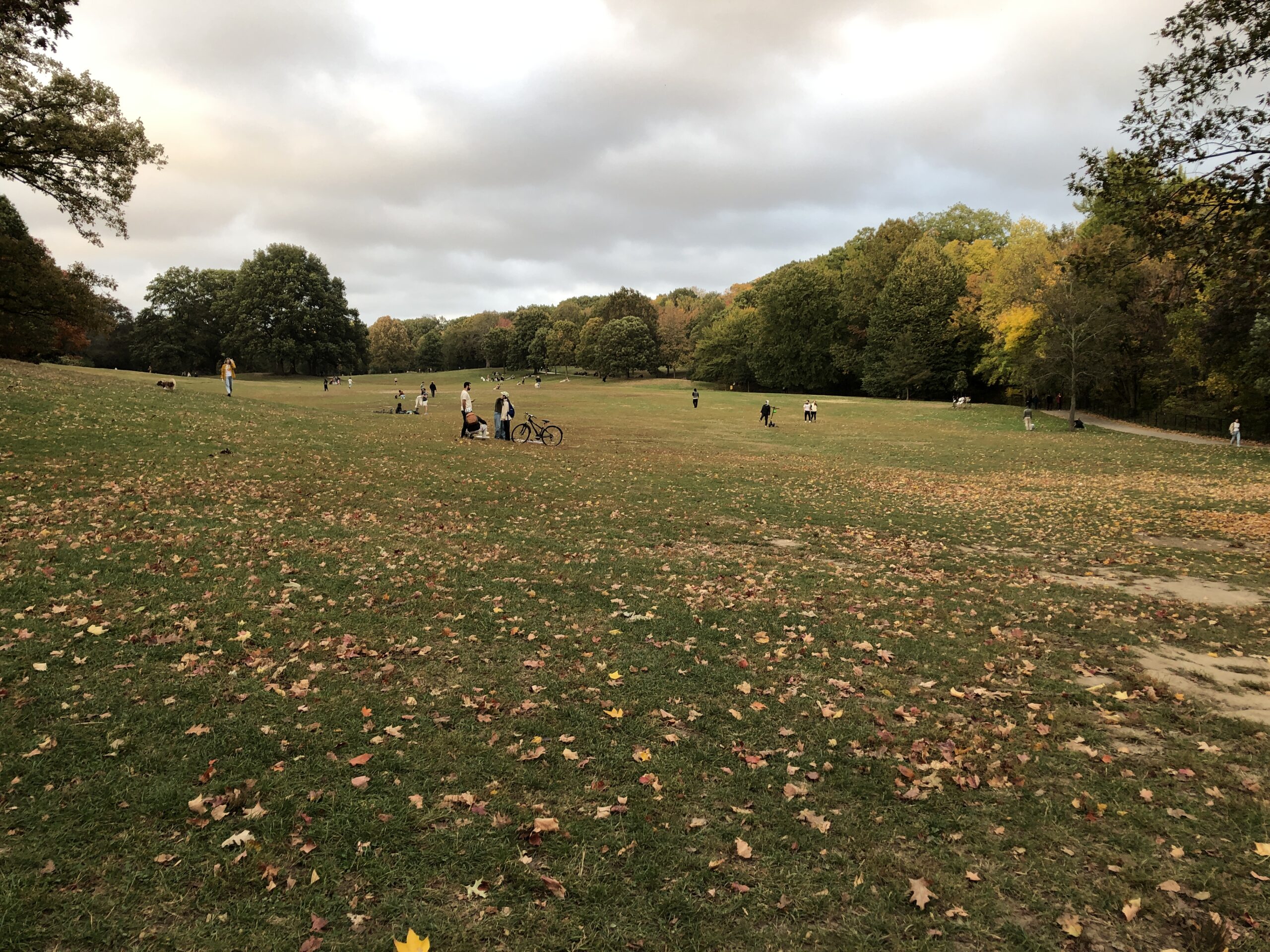
I wasn’t exactly sure where I’d been in 2002, but near the northern edge of the park, we came across what was probably the field, the sort of mildly rolling terrain, open short grassland ringed by wooded areas, that exists throughout the park. A summer Saturday in these fields draws a crowd, but a generally cheerful one, playing volleyball, attending to grills, picnicking, throwing frisbees or just lying around. An autumn Sunday is a little less active.

Fall has a more scattered vibe, but no less congenial than summer to the thinned our crowd.

Across the Brooklyn Bridge ’25

On May 24, 1983, I flew from San Antonio to New York City, since in those days the way to get to Europe was via NY. I remember only one thing about that flight, which I assume took me to LaGuardia. As we made our final approach, the plane banked over the East River and I happened to be on the correct side, in a window seat, for a terrific view of the Brooklyn Bridge.

The captain might have even mentioned the bridge, because it so happened that the Brooklyn Bridge was celebrating its centennial that very day. A hundred years earlier, on May 24, 1883, the bridge had opened with great festivities, including attendance by President Chester Arthur and NY Gov. Grover Cleveland.

I’d never seen the bridge with my own eyes before then, either, since my brief layover in the city a year earlier mostly involved time at the Port Authority Bus Terminal. Yet I recognized the bridge at once, from TV and movies. Such as the time, in one movie, when Tarzan (Johnny Weissmuller, accept no substitutes) went the Brooklyn Bridge, did a Brodie off of it, and of course survived, unlike some real divers.

One day in August ’83, having returned to New York and with more time on my hands, I decided to cross the Brooklyn Bridge on foot toward Brooklyn, to facilitate my first-ever visit to that borough. Except for that fact that it was blazing hot, it was a good idea. The bridge itself is a work of industrial beauty and the views are great.

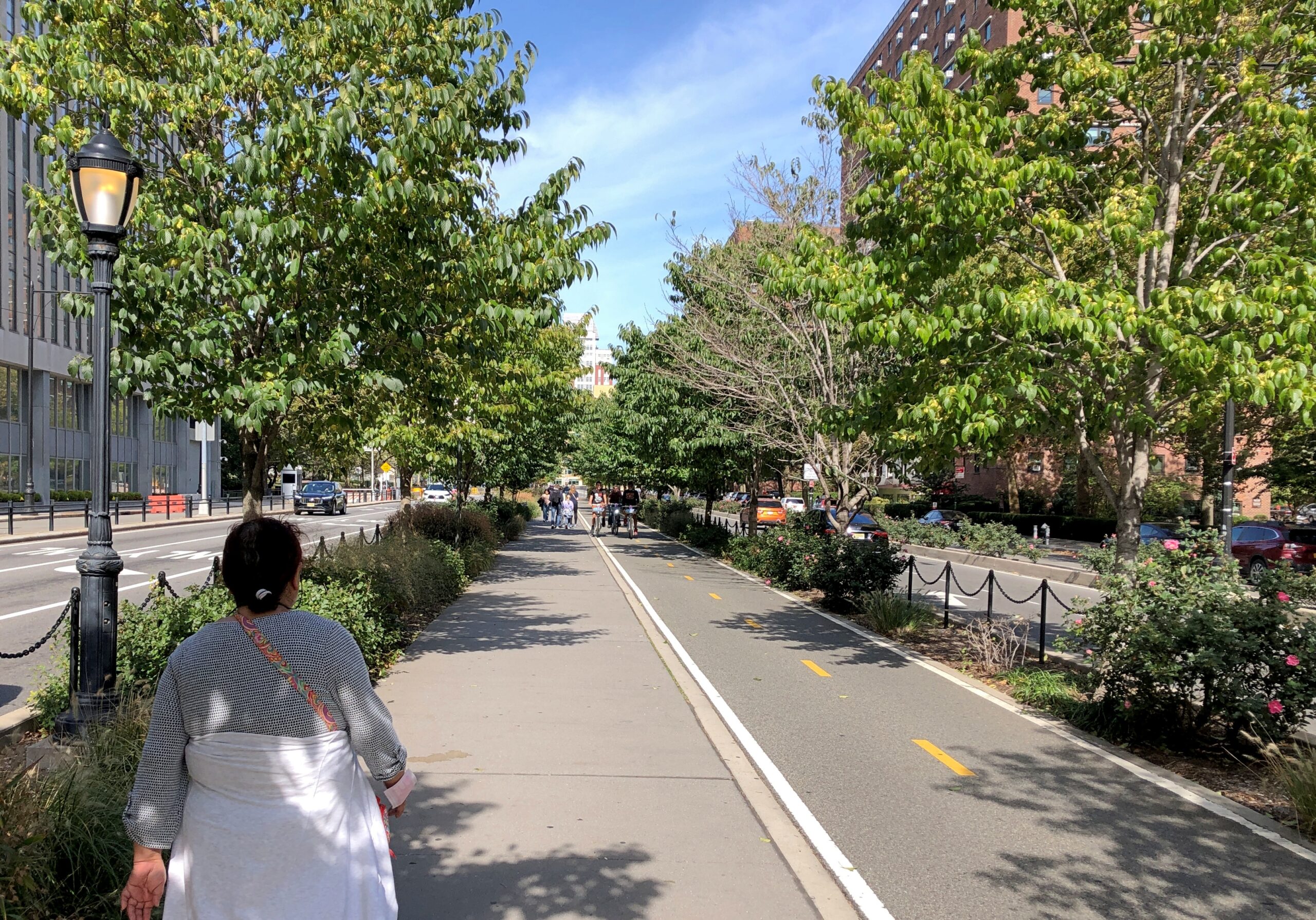
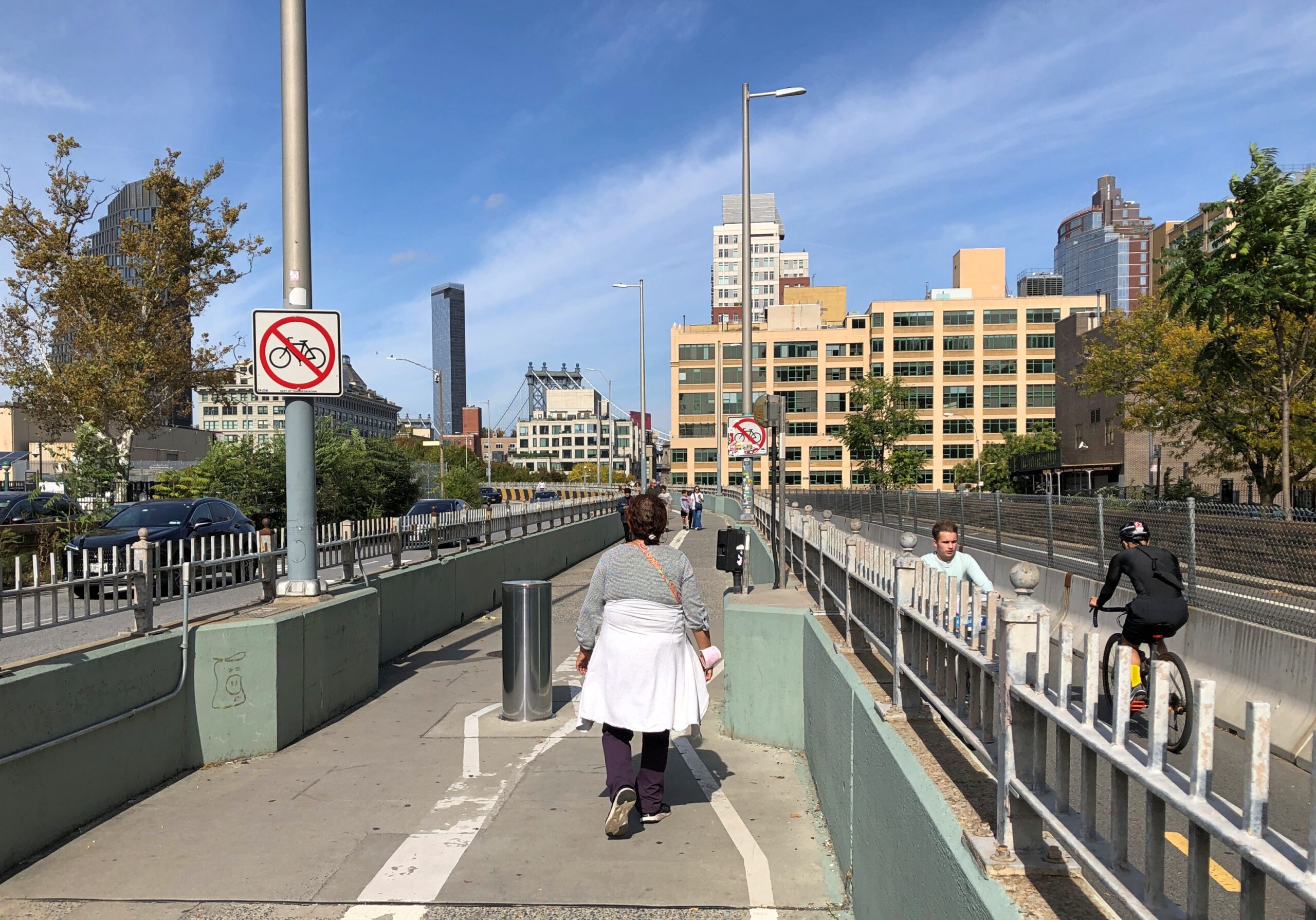
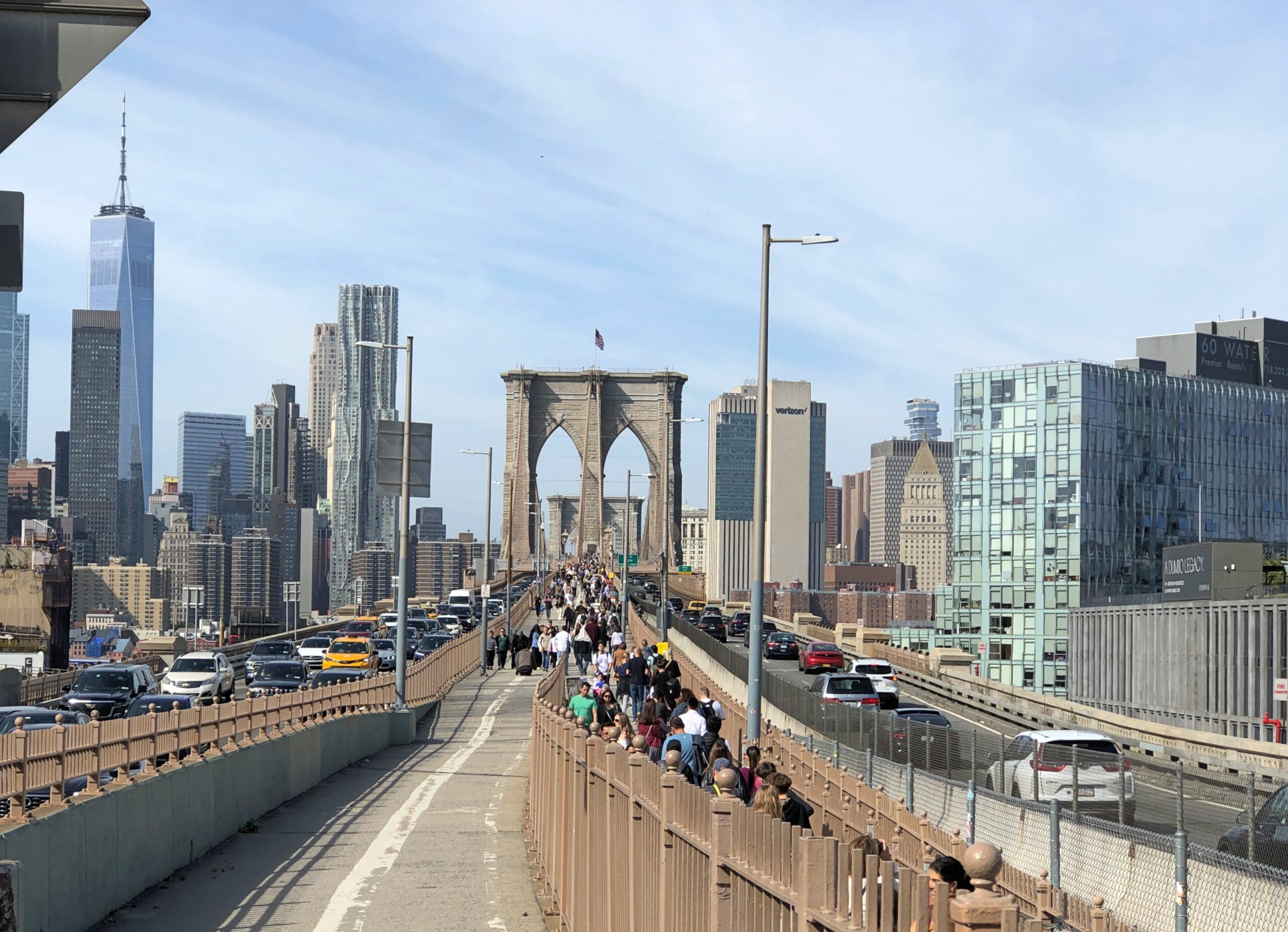
After leaving Fort Greene Park, Yuriko expressed the idea that she wanted to see the Brooklyn Bridge — which she hadn’t up close — and I couldn’t begrudge her a visit, especially since we weren’t far away. We walked from Myrtle Ave. to Flatbush Ave. (actually the “Flatbush Avenue Extension”) to Tillary St., where you can find the entrance to the Brooklyn Bridge Promenade. At that point, it’s both pedestrians and bicyclists.
Brooklyn Bridge 2025

I didn’t realize at first that the promenade leads directly to crossing the bridge, though it takes about 20 minutes to get there. I imagined, at first, that it would lead to Dumbo and a view below the bridge. An excellent spot, which I most recently visited in 2014.

Soon I realized that we were headed for the bridge itself. Not only that, I saw that pedestrians were soon separated from bicyclists, beginning fairly far away from the bridge.

Brooklyn Bridge 2025

What an amazingly good idea, only done in 2021. Considering the crowds that the Brooklyn Bridge attracts, it probably should have been done years ago.

We walked from Tillary St., but the more popular Brooklyn-side pedestrian entrance is stairs at Washington Street and Prospect Street, seen below.

Brooklyn Bridge 2025

I didn’t remember the bridge being that crowded my first time, though at a remove of 40+ years, the details are a little hard to remember. It was hot, and probably a weekday, so that might have thinned out the pedestrian traffic.

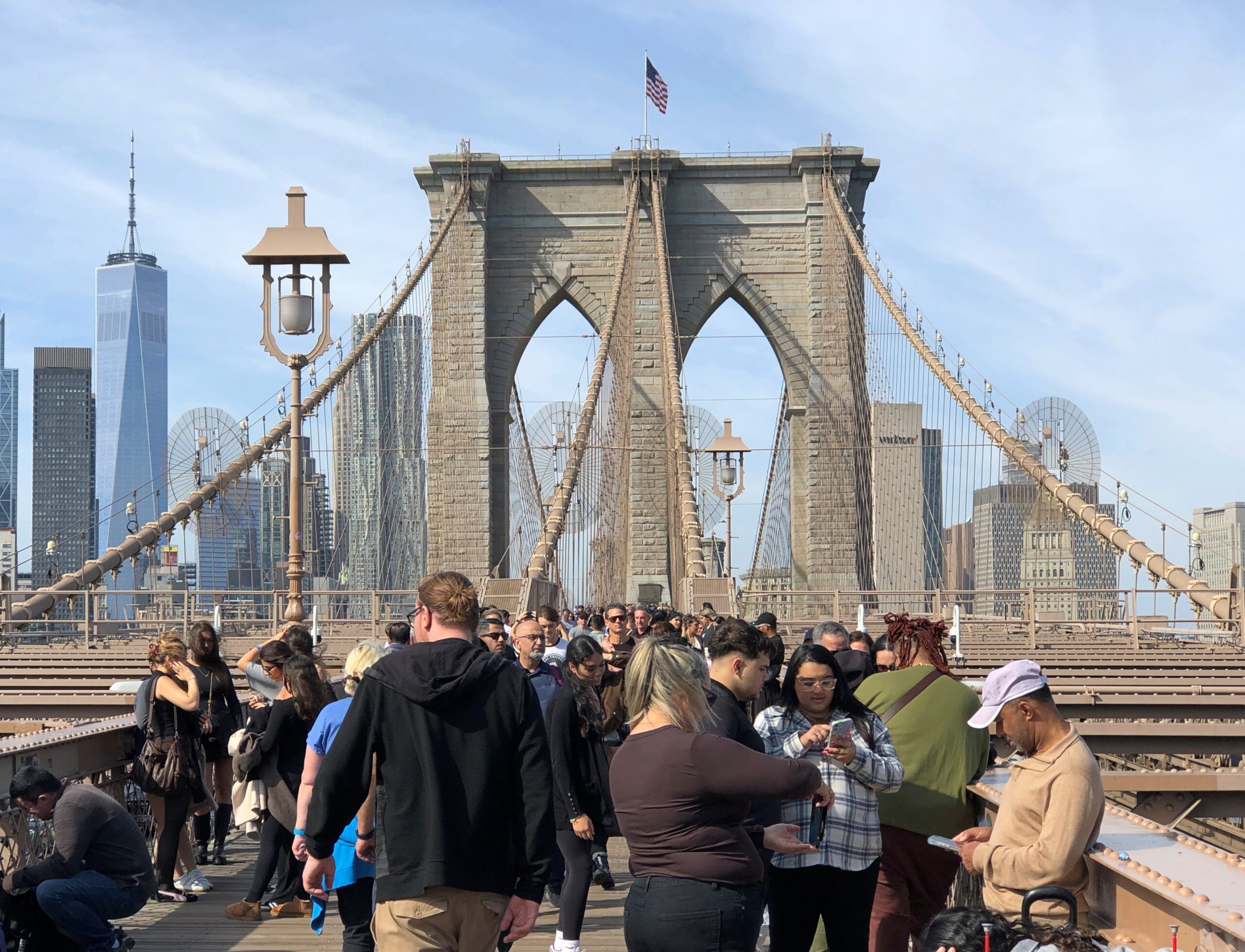
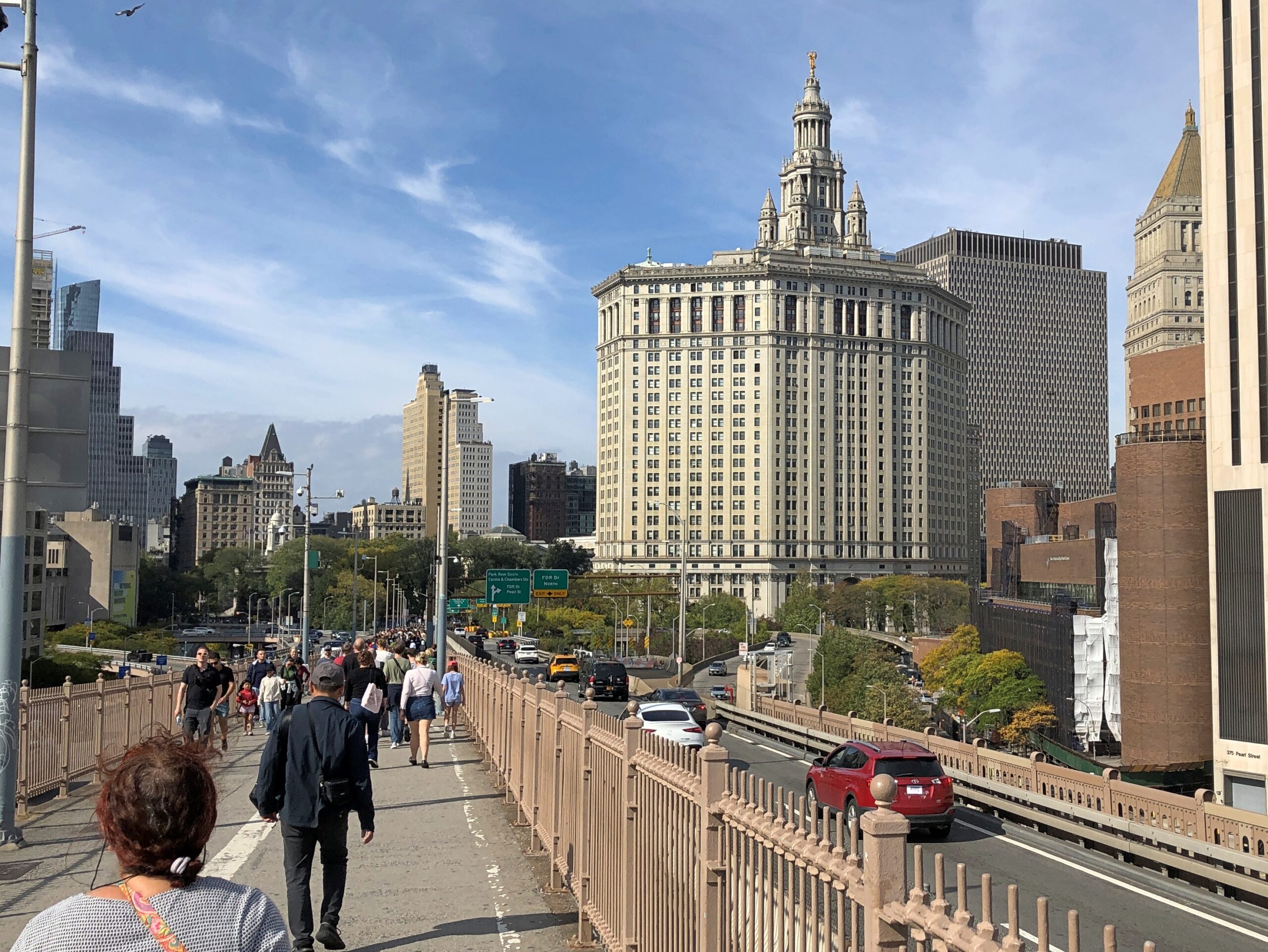
That wasn’t the case on a pleasant October Sunday. New Yorkers and tourists were out in force.
Brooklyn Bridge 2025

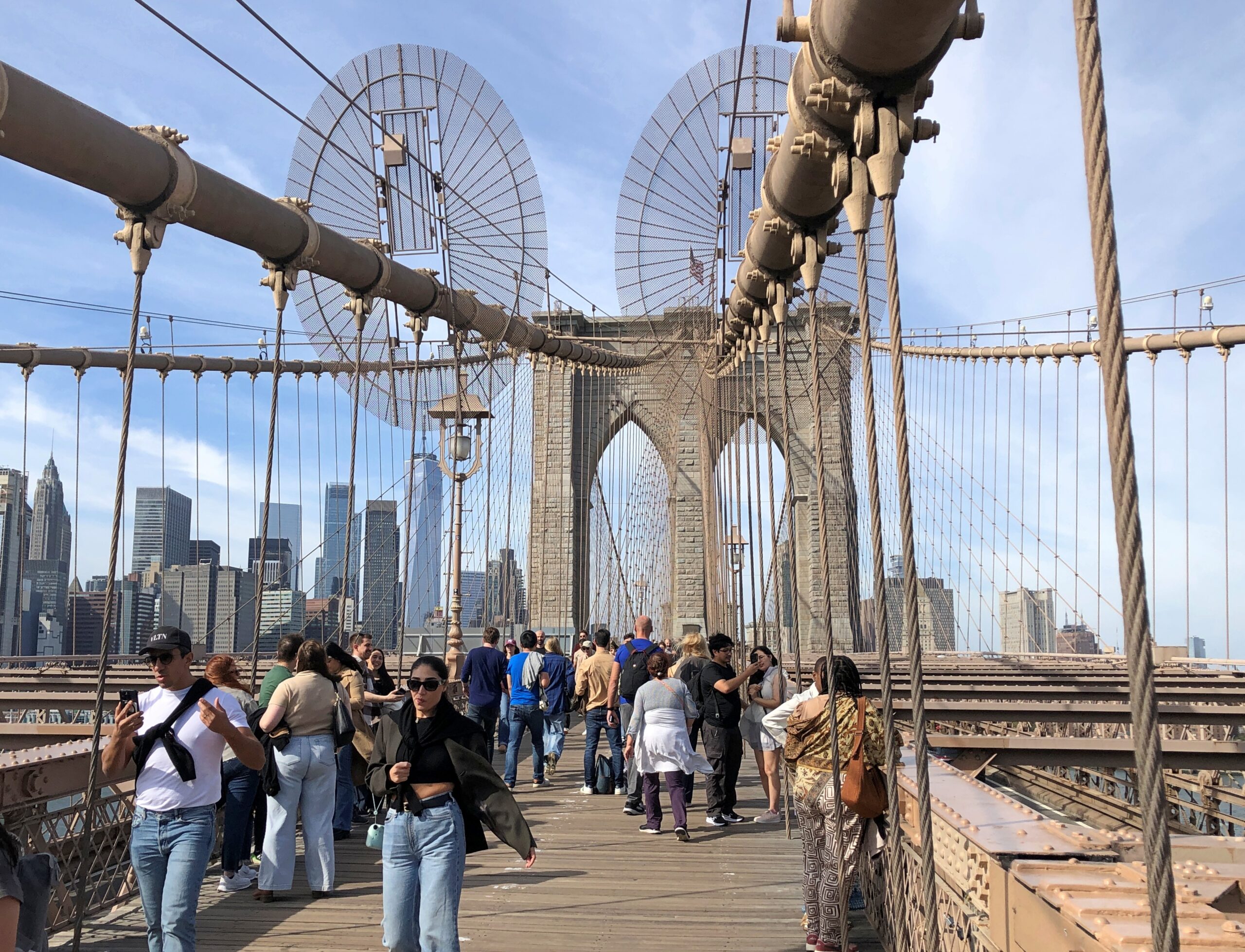
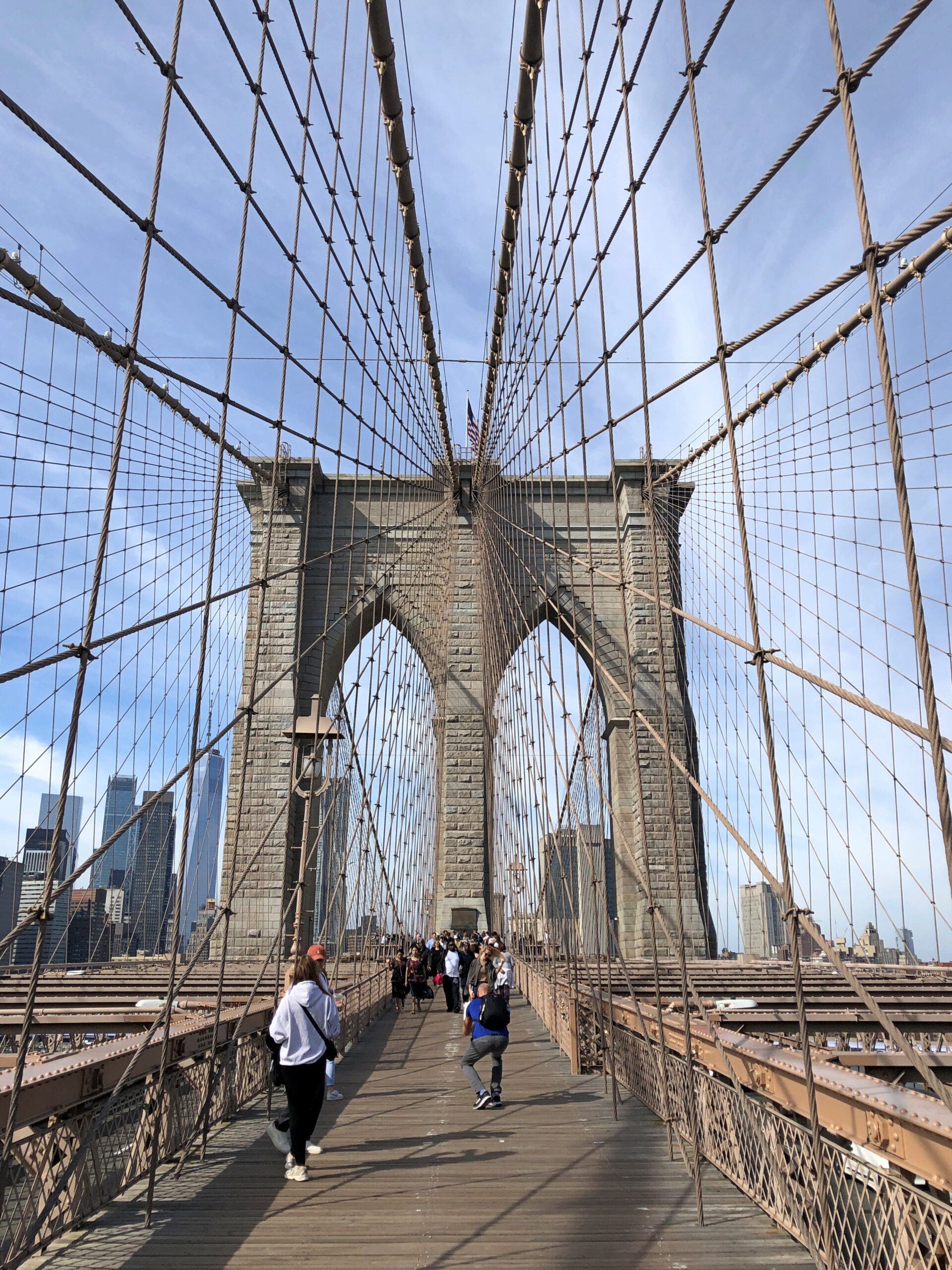
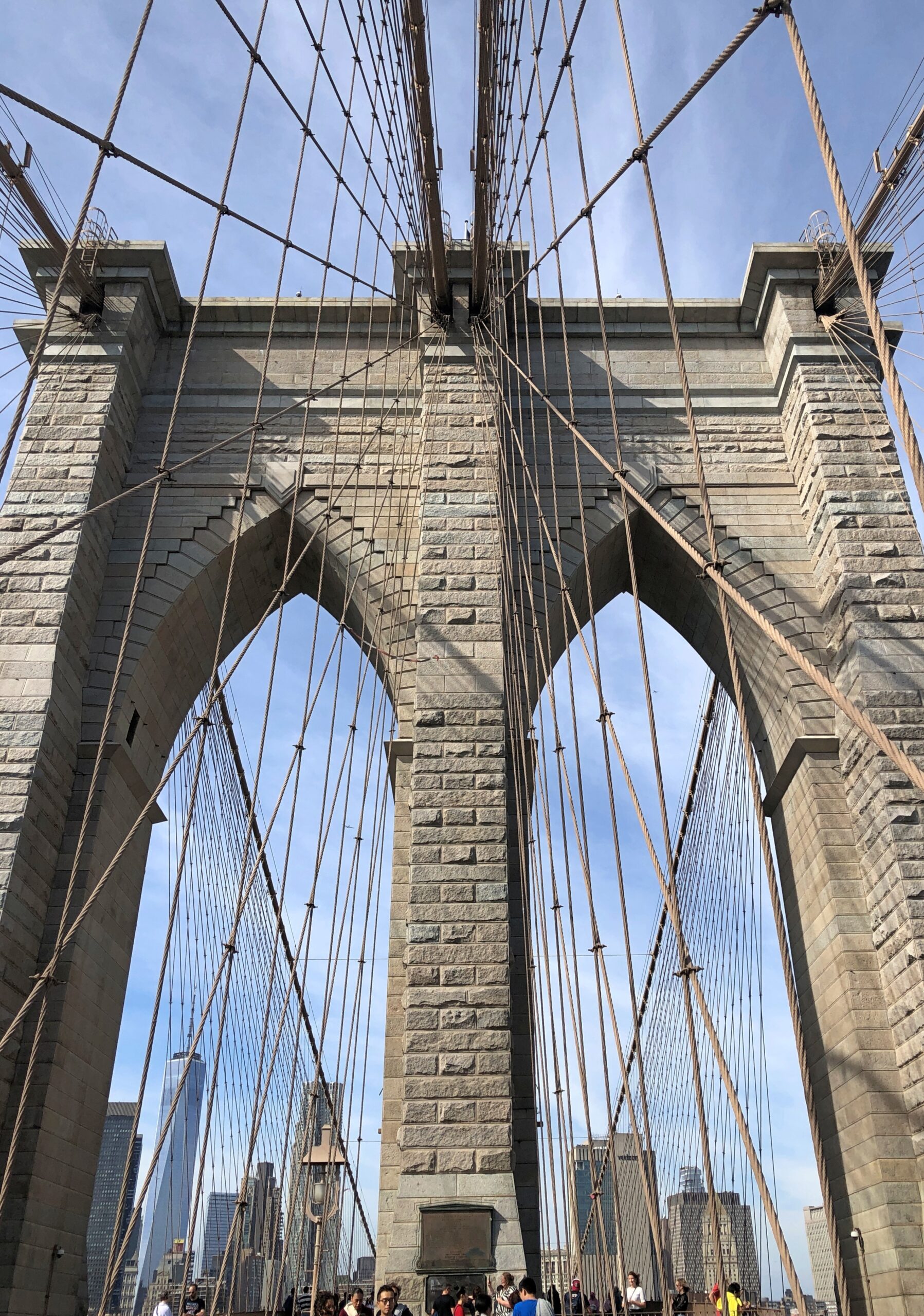
Mostly the bridge holds its crowds well. From the many wooden planks, you still get a closeup of the web-like intricacies and gray hulking towers created by the Roeblings and thousands of workmen.

Brooklyn Bridge 2025

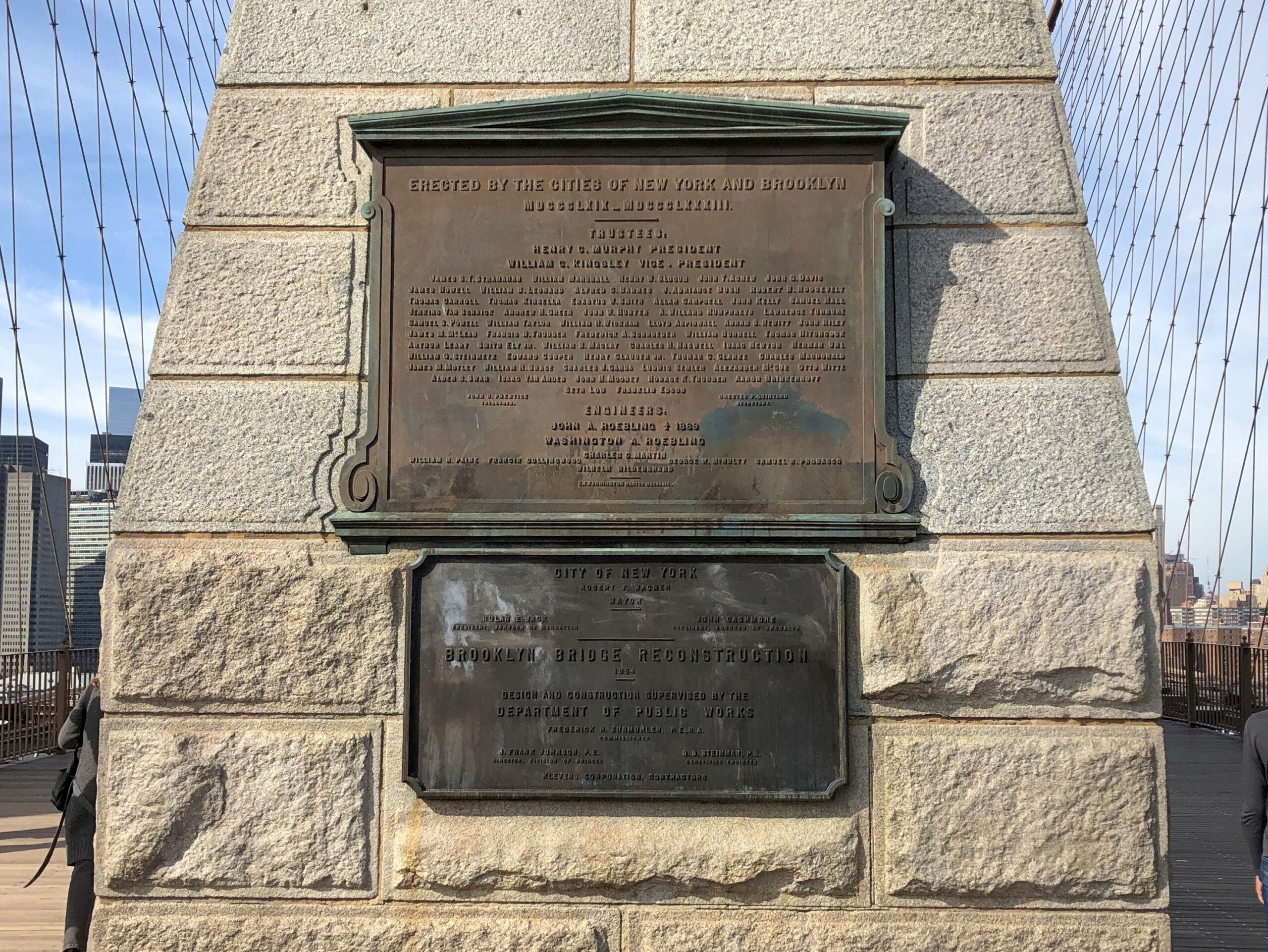
Credits.

Brooklyn Bridge 2025

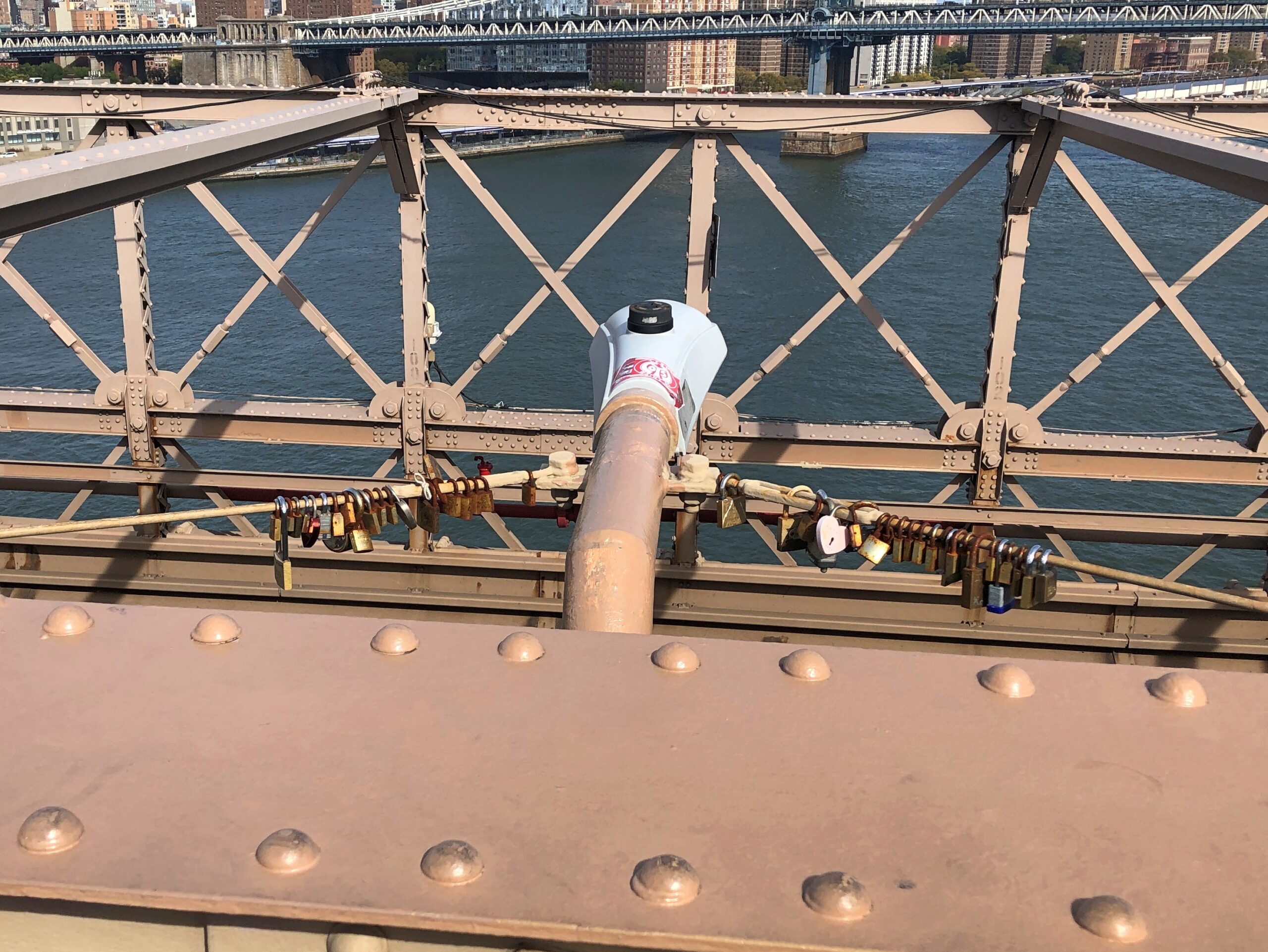
Love locks. I understand the city frowns on their attachment to critical infrastructure. That doesn’t change a thing.

Brooklyn Bridge 2025

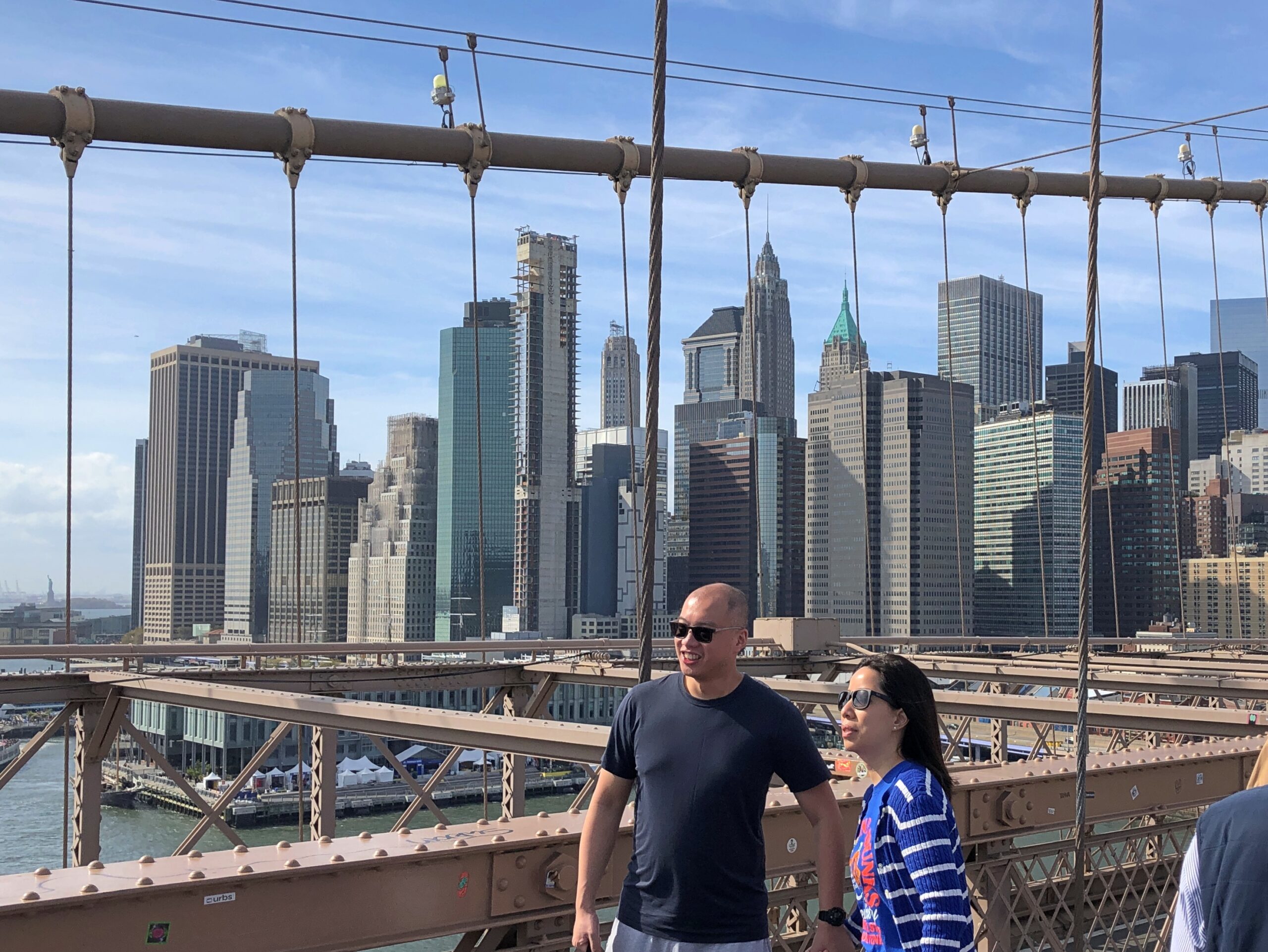
Provided you pay attention that there isn’t someone walking right behind you, it’s easy enough to stop to take in the famed views of Manhattan.

Brooklyn Bridge 2025

Soon enough you’re approaching Manhattan.

Brooklyn Bridge 2025

Yuriko had fulfilled her wish to walk the bridge, and it occurred to me that not only have I walked across the Brooklyn Bridge twice, I’ve done it once each way. Guess I need to visit San Francisco again and walk across to (near) Sausalito, then take a bus back, which would be the reverse of 1990. Or for that matter, visit the Ohio Bridge in Cincinnati again (another Roebling work), though I don’t remember which way I crossed it. Or visit the Roebling Museum. Ah, so many bridges to cross.
Fort Greene Park

On the morning of October 19, Fort Greene Park in Brooklyn was still pretty green.

Fort Greene Park

Of course, the 30-acre park was named for the talented Revolutionary War general, not for the hues of its 50-plus species of trees, very many of which seemed to be ginkgoes. Whatever the coloration, the park proved to be a nice place for a stroll that day, offering a more manageable size than either Central Park the day before, or Prospect Park would later that day (as great as those two are).

My idea for attending Open House New York was Manhattan on Saturday, Brooklyn on Sunday, planning that took us – by this time, just the two of us – to Atlantic Terminal by way of the LIRR on Sunday morning. From there, Fort Greene Park is a short walk, though once you get there, it’s something of a hustle to climb the park’s central hill. A fort had been on the site, active during the Revolution and again for the War of 1812, for a reason.

As a park, Fort Greene came of age at roughly the same time as the idea of municipal parks themselves, that is during the mid-19th century, with some agitation on the part of Walt Whitman – editor of the Brooklyn Eagle in the late 1840s – helping facilitate its creation.

In 1857, Whitman wrote about the place, known at the time as Washington Park: This beautiful ground is now covered with rich verdure, and is one of the pleasantest resorts anywhere around. On its lofty tops you feel the breeze, and from them behold one of the finest views in the world. Most of the trees are yet too young to cast much shade, but they are growing finely.

We recollect there was a very obstinate and indignant opposition to the securing of these noble grounds, some twelve years since, when the project was mooted before the Common Council and the public. It was argued that Brooklyn was not rich enough to stand the expense of purchase; and that it would be better to let the “old fort” be dug away, and blocked up with buildings.

Fortunately these counsels did not prevail. A more far-sighted policy… carried the day.

Is there any one left of those who so furiously opposed Washington Park, who is not now glad that his opposition did not succeed?

I’m also glad there’s a park, though leaving the ruins of the fort might have been an interesting approach to creating one. As Whitman would surely have appreciated, 21st-century Brooklynites were out in numbers (but not crowds) to enjoy the park on a warmish fall day, walking their dogs and turning their kids loose to play. A scattering of other people had come for Open House.

The green space and trees were only the first layer. Come 1867, Frederick Law Olmsted and Calvert Vaux applied their considerable talents into making Fort Greene into their vision of an urban park, a small-scale version of Central Park or Prospect Park. That’s reason enough to visit.

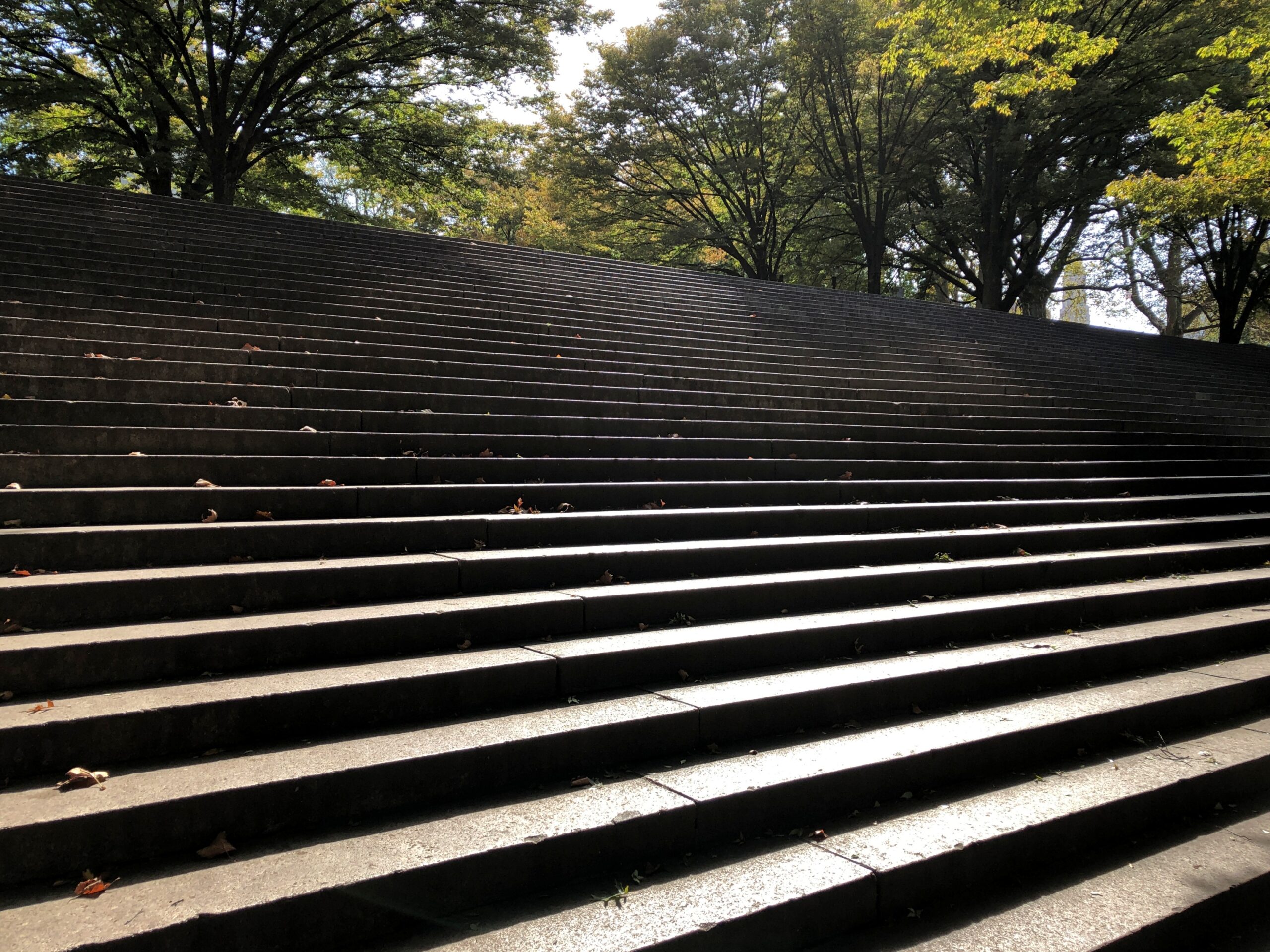
One of their additions: grand outdoor stairs.

Fort Greene Park

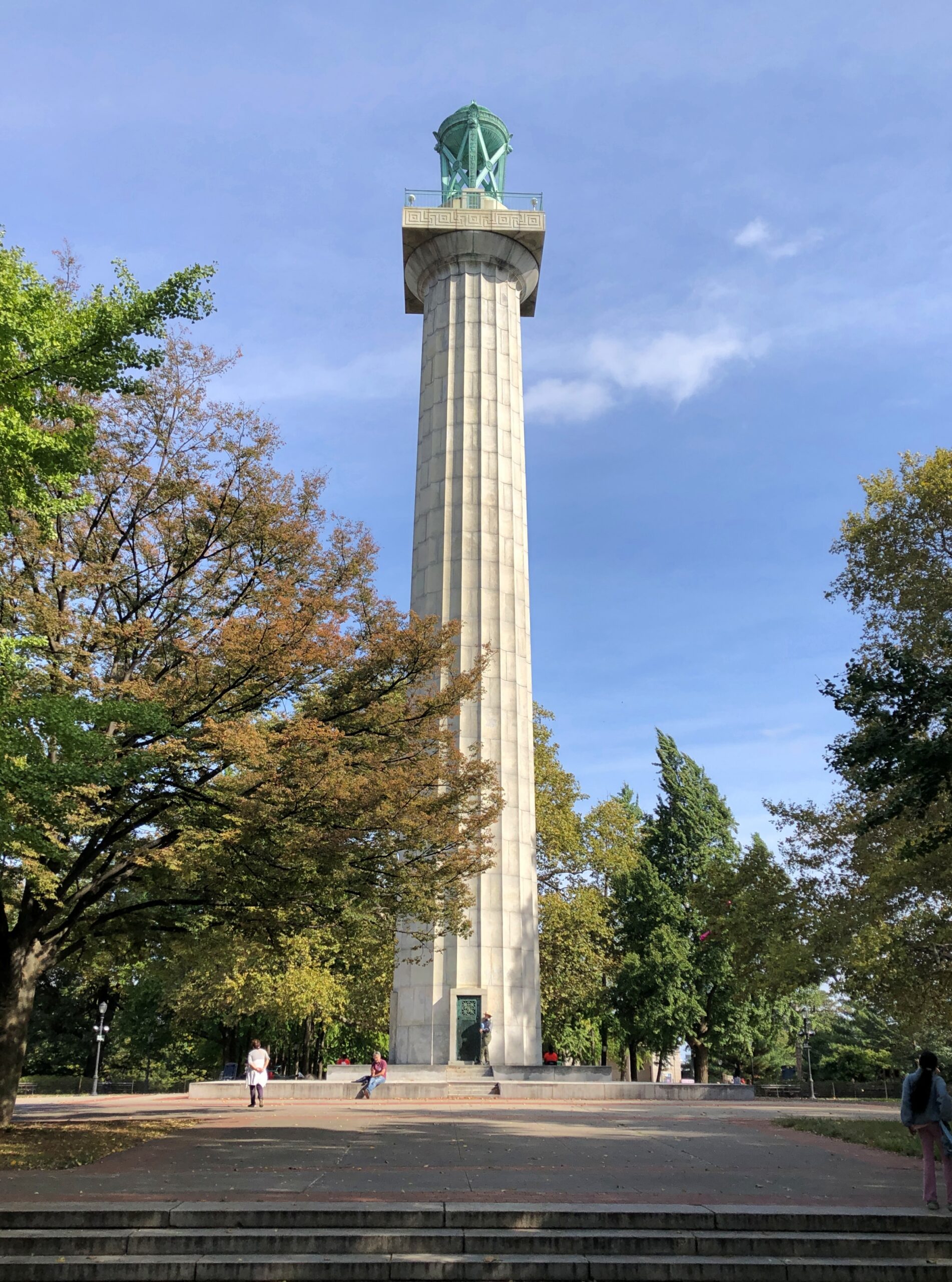
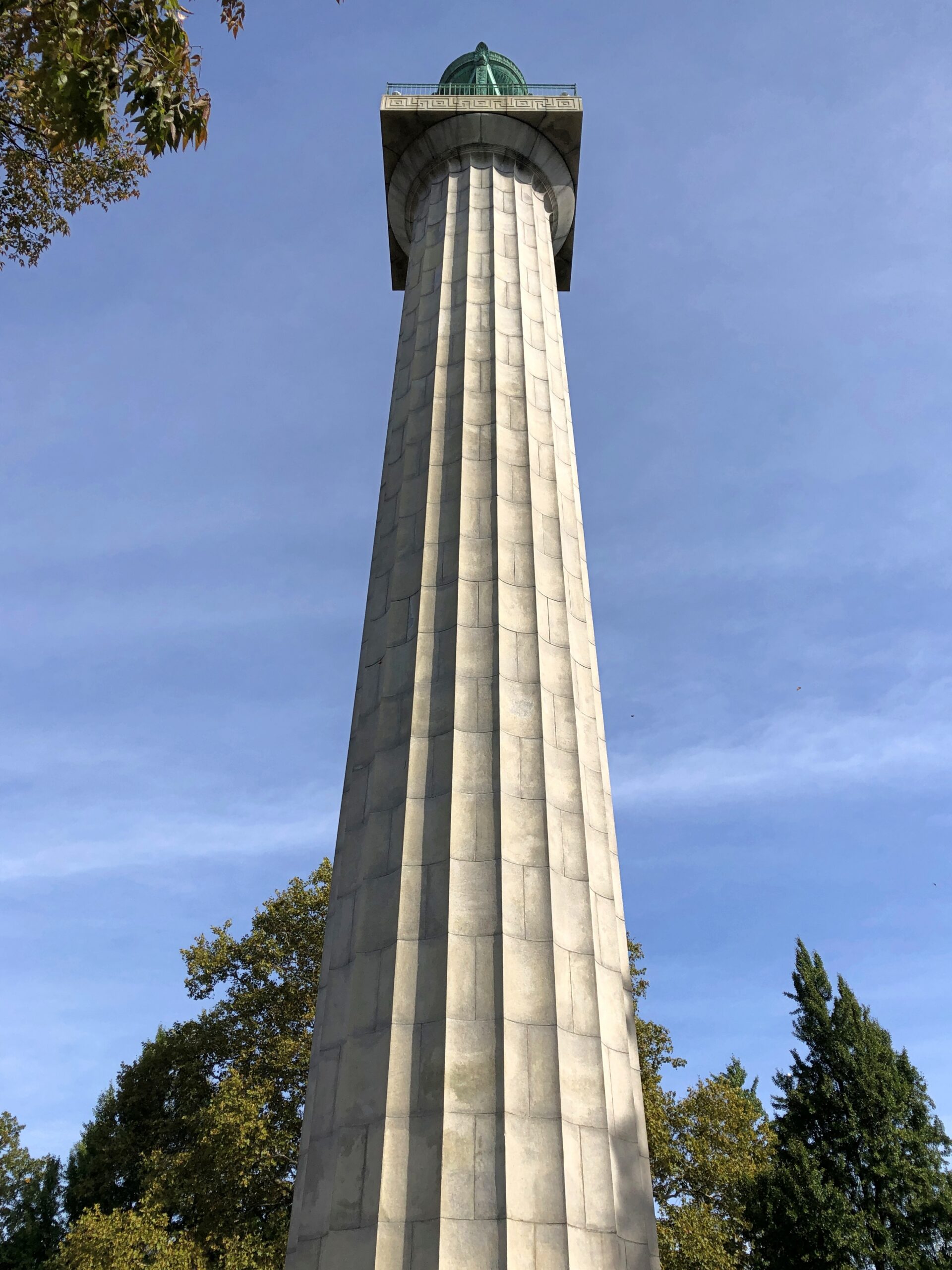
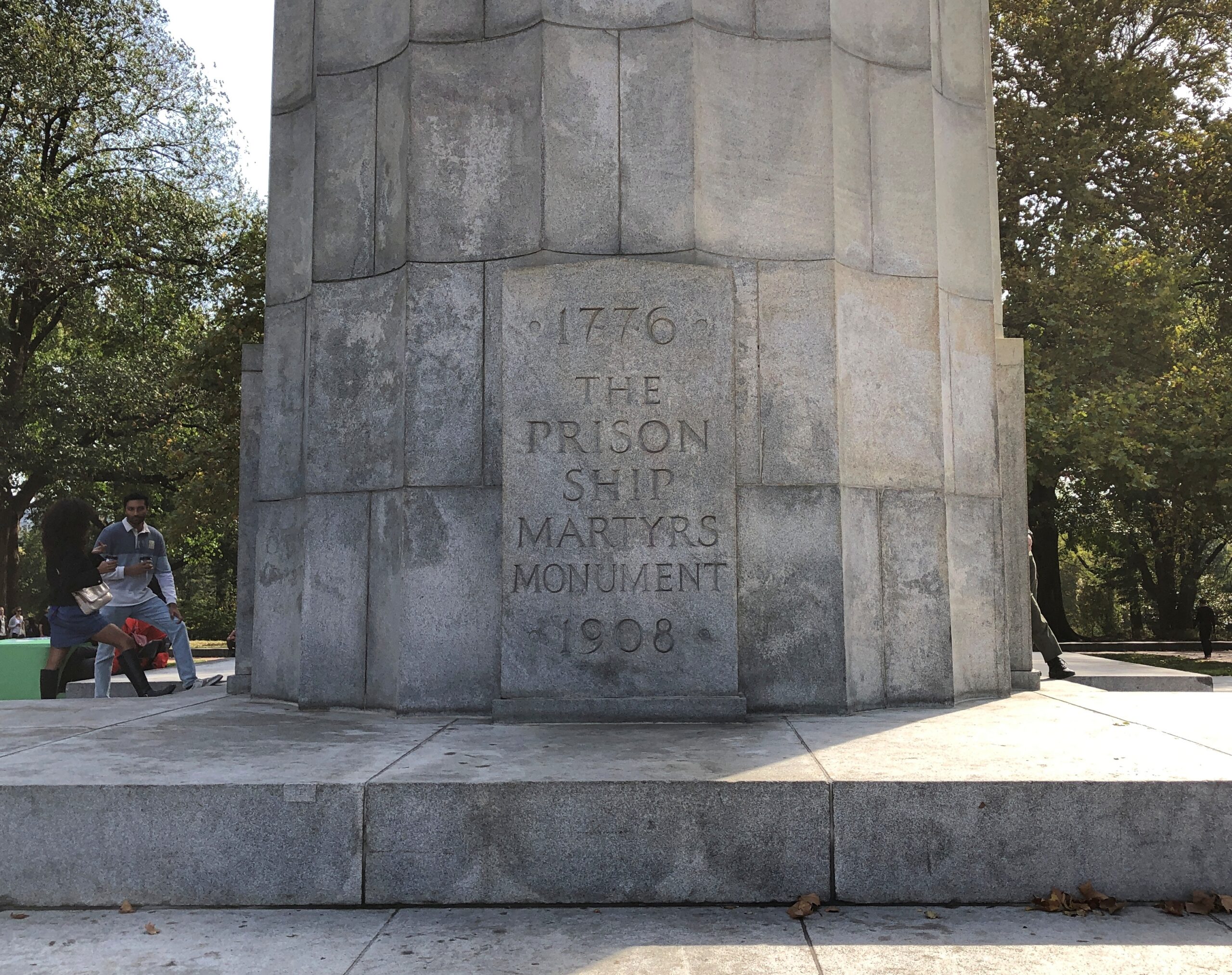
It wasn’t until 1908 that those stairs led to the Prison Ship Martyrs Monument, memorializing the more than 11,500 POWs who died in wretched conditions aboard British prison ships during the Revolution.

Fort Greene Park
Fort Greene Park
Fort Greene Park

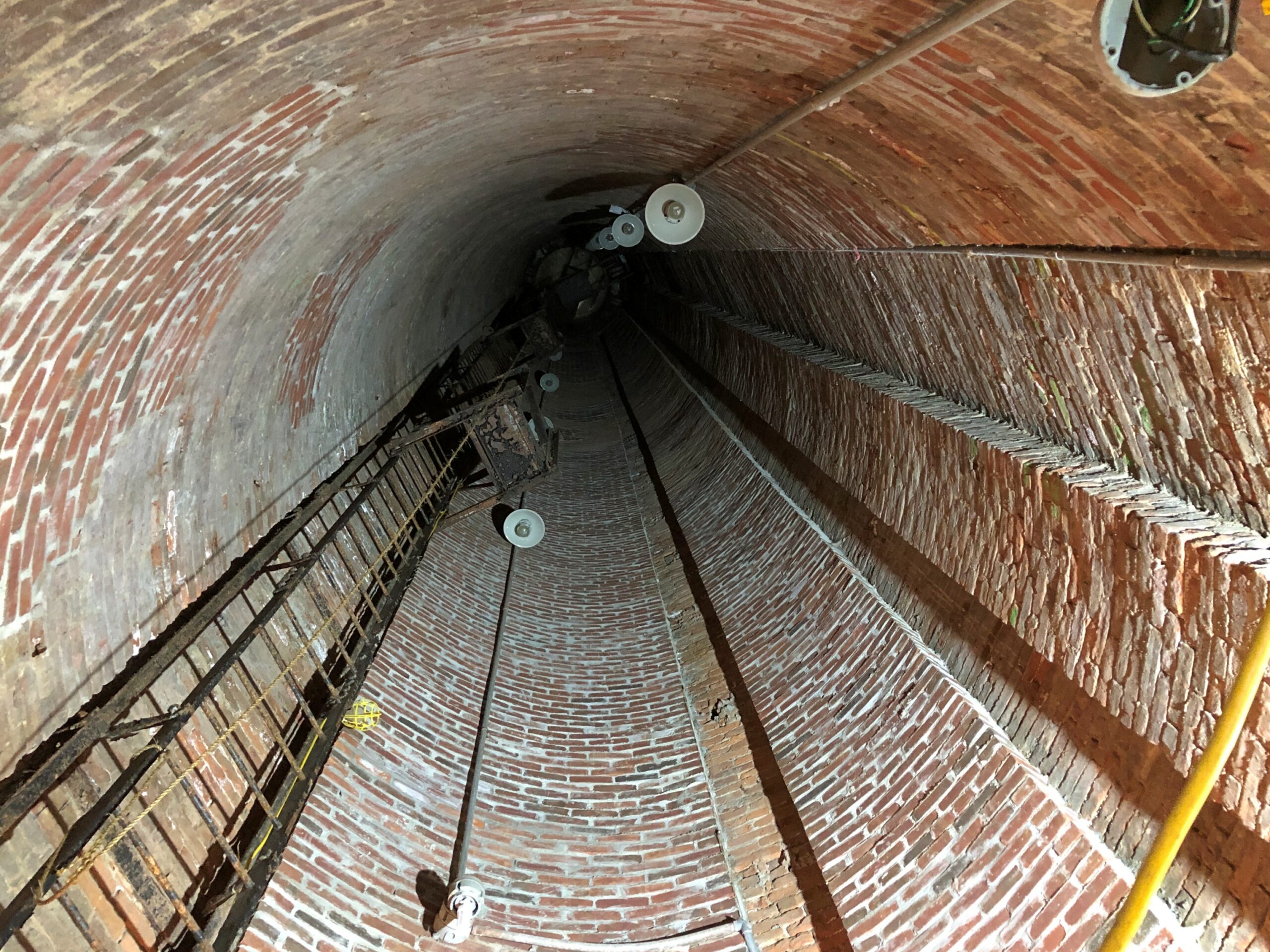
The column isn’t usually open, but Fort Greene Park was an Open House site, so we were able to go inside after waiting in line a short time. I was expecting stairs inside. But there was just a rusty iron ladder, which the park ranger who led us into the column called “scary.” I agree.

Fort Greene Park

There had been a spiral staircase in the memorial’s early days, but it is long gone. I wasn’t in a stair-climbing mood at that moment anyway, so for me it was just as well. If the city ever comes up with the scratch, there might be stairs again, the ranger said.

Fort Greene Park

She also told us about the formation of the park, the long delay in setting up the memorial, and the tomb on the grounds that holds bones of some of the prisoners. The tomb isn’t open to the public.

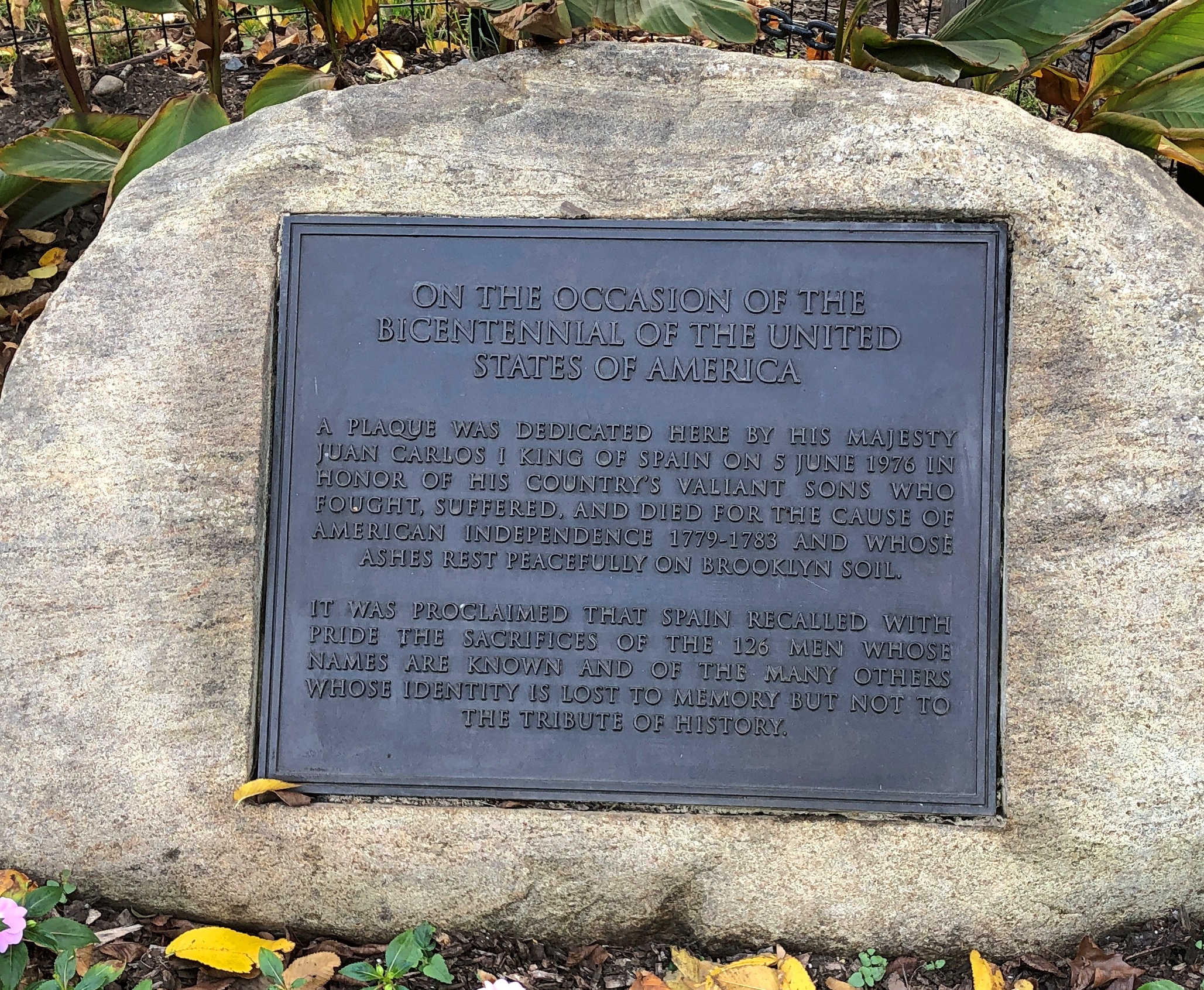
A newer memorial, plaque-on-rock style and in place almost 50 years now, was dedicated by a young King Juan Carlos in memory of the Spaniards who fought for American independence.

Fort Greene Park

French assistance to the nascent United States was mentioned prominently in school but not, that I remember, Spanish efforts, which were nothing to sneeze at. Maybe by 1898, Spaniards who gave the matter any thought considered the U.S. a pack of ingrates, but such is geopolitics. By 1976 and later, it was high time to acknowledge the likes of Bernardo de Gálvez and his men, and I was glad to find out that Pensacola still celebrates Gálvez Day (May 8).

Central Park Ramble ’25 (Strawberry Fields For Now)

Kids came in some numbers for Halloween here in the northwest suburbs yesterday, but I didn’t keep an exact count this year. The day was cool but not cold, without a hint of rain, so that might have encouraged turnout, like for voting. One time a passel of kids showed up, maybe a dozen or so, all under 10, with a smaller passel of parents off near the sidewalk.

We were giving away full-sized candy bars until they ran out, and the passel squealed with delight at receiving the various Hersey products. Even now, the costumes are a blur, maybe because I didn’t recognize a lot of the characters. Ones that I might have known weren’t familiar either. I asked the parents of a very small boy — ah, first-timers — what he was supposed to be. His shirt pattern reminded me of TMNT, but it was Hulk, they told me. “Hulk smash,” they said. “Hulk smash, all right,” I agreed.

All of the Halloween traffic, except for a handful of older kids, came before dark. My not-so-inner curmudgeon reacts: in my day, we trick-or-treated after dark, risking bodily injury on the streets, and we liked it.

But I am glad to report that the older kids – junior high and even high school – are far fewer than they were, say, 20 years ago. So it’s back to the way it should be. For older people, there are always such seasonal events as the Greenwich Village Halloween Parade. To this day, the ’06 iteration of that parade remains the only time I’ve encountered the band KISS live – they were the grand marshals (RIP, Ace Frehley). We also encountered Space Ghost then, or at least a fellow who was adamant about his Space Ghost identity.

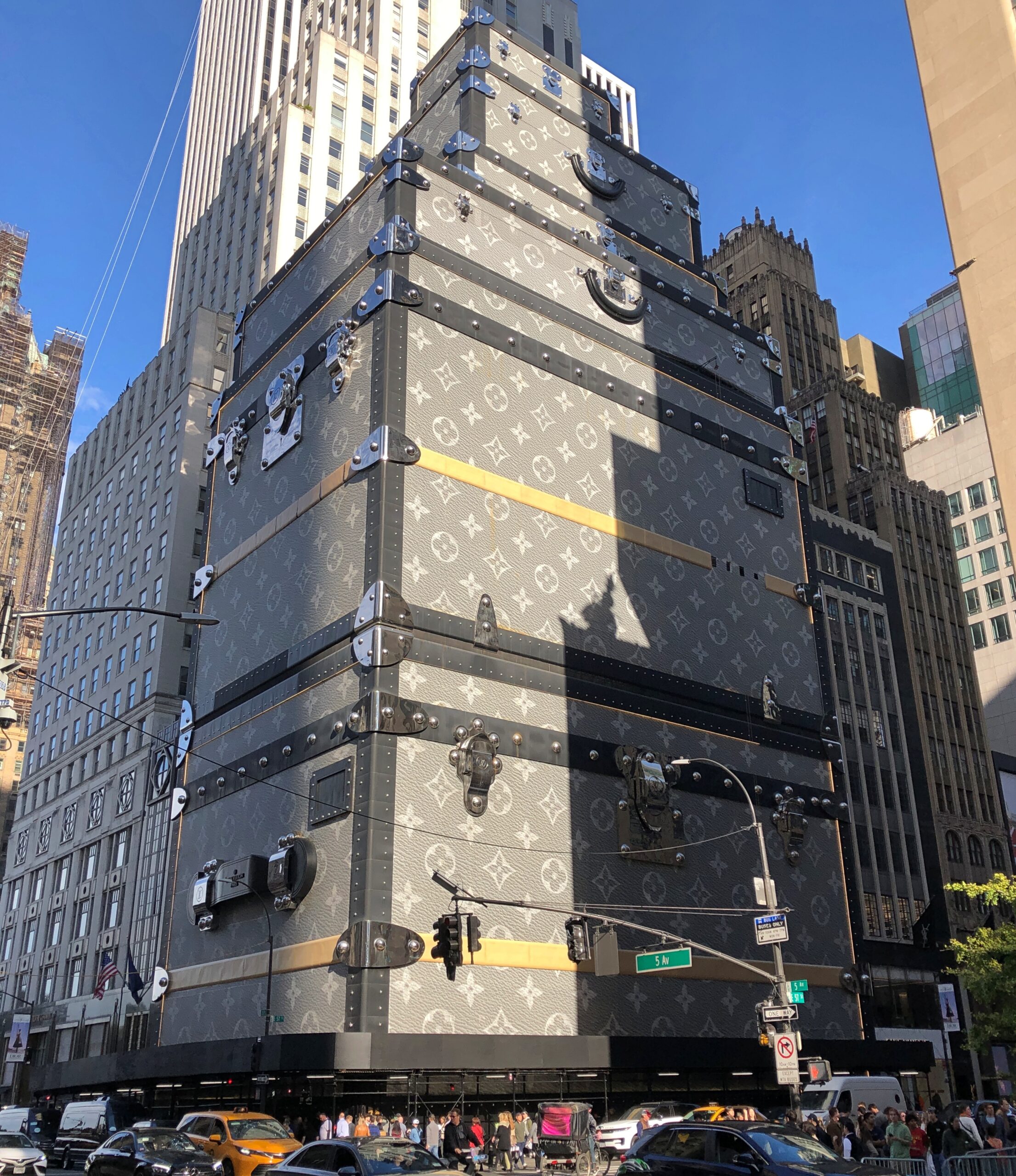
Near Central Park on Fifth Ave. is 1 East 57th Street. We walked by last month.

Louis V 2025

A few years ago, luxe retailer LVMH Moët Hennessy Louis Vuitton added a faux facade to its NY flagship store there on the avenue, one that evokes its signature luggage trunks in a highly visible way. Redevelopment plans for the building behind the trunks were unveiled not long ago, so I suspect the trunk-appearance doesn’t have much longer to look down on Billionaire’s Row and its strato-priced residential properties (whose high rents and sale prices don’t necessarily guarantee high-quality construction, apparently).

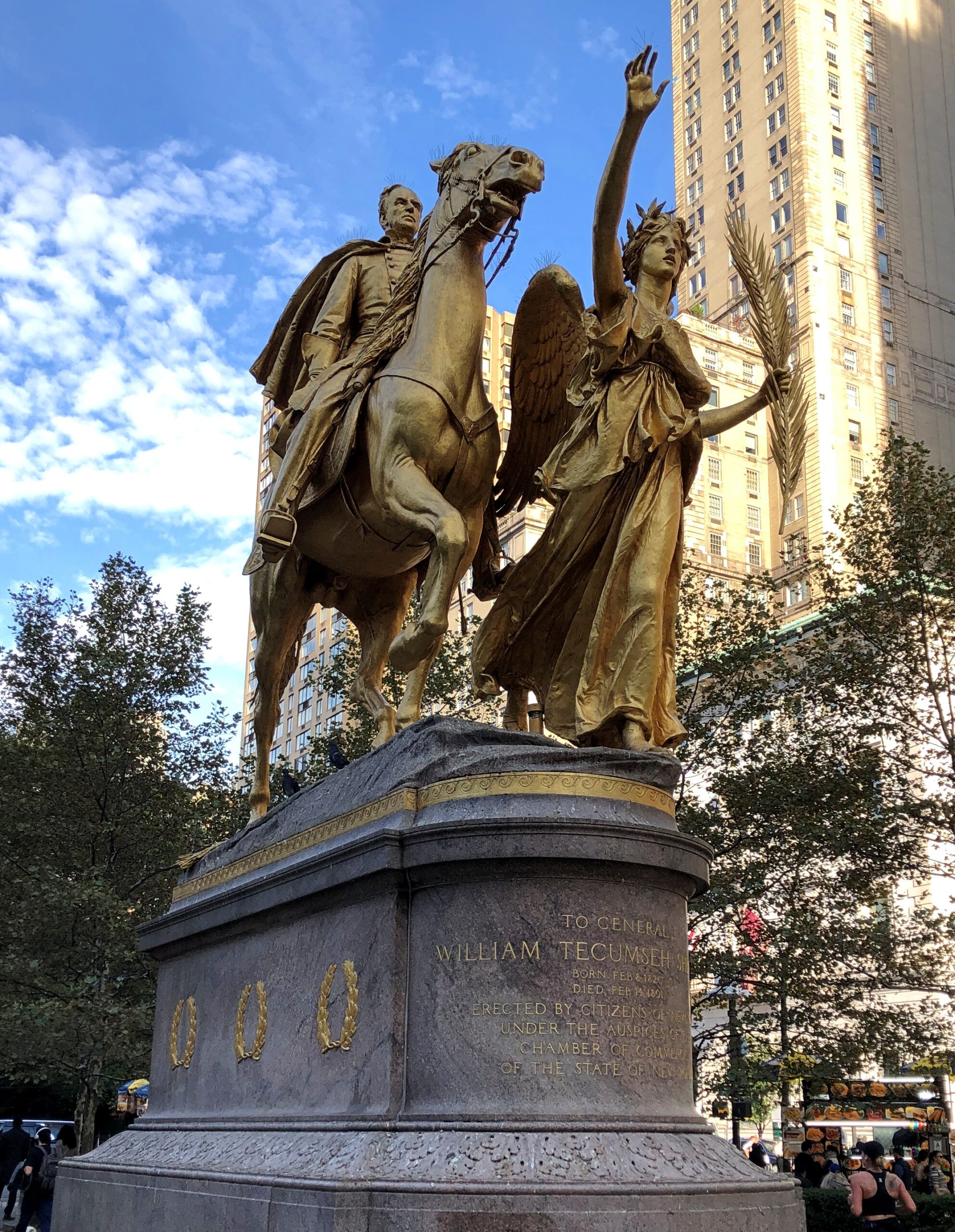
As we neared Central Park, we spent a little time at Augustus Saint-Gaudens’ statue of William Tecumseh Sherman (dedicated 1903) in Grand Army Plaza. Life’s too short not to look at some Saint-Gaudens from time to time.

Grand Army Plaza

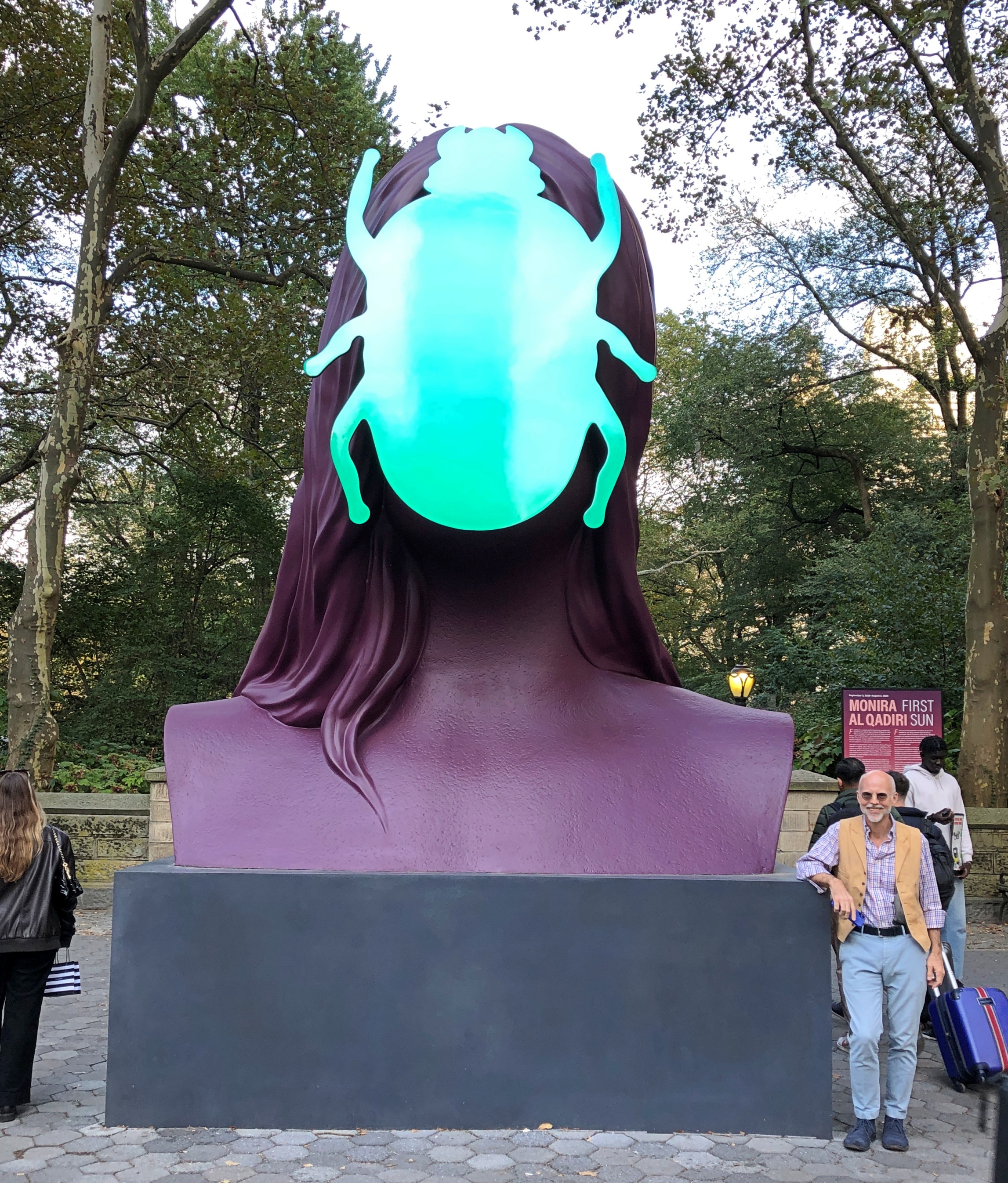
Not far away, something a little newer.

“First Sun,” a painted aluminum sculpture of a human-scarab figure by Senegalese artist Monira Al Qadiri, and slated to be in place until the end of next summer.


“First Sun,” a painted aluminum sculpture of a human-scarab figure by Senegalese artist Monira Al Qadiri, and slated to be in place until the end of next summer.

Visible from near the statues is the storied Plaza Hotel and an Apple Store, which is open 24 hours, Google Maps tells me. Storied in a different way.

I’m glad the Plaza acknowledges its fictional role in The Great Gatsby by featuring a lavish-beyond-the-dreams of Croesus Gatsby Suite. Of course. A smart hotel operator isn’t going to waste an opportunity like that. In this case, Fairmont Hotels and Resorts, a Canadian company, managing for owner Katara Hospitality – the large hotelier owned by the Qatari government. In the 21st century so far, the Plaza has been owned by an Israeli company and then an Indian one before Katara bought it. There’s something oddly American about an ownership trajectory like that.

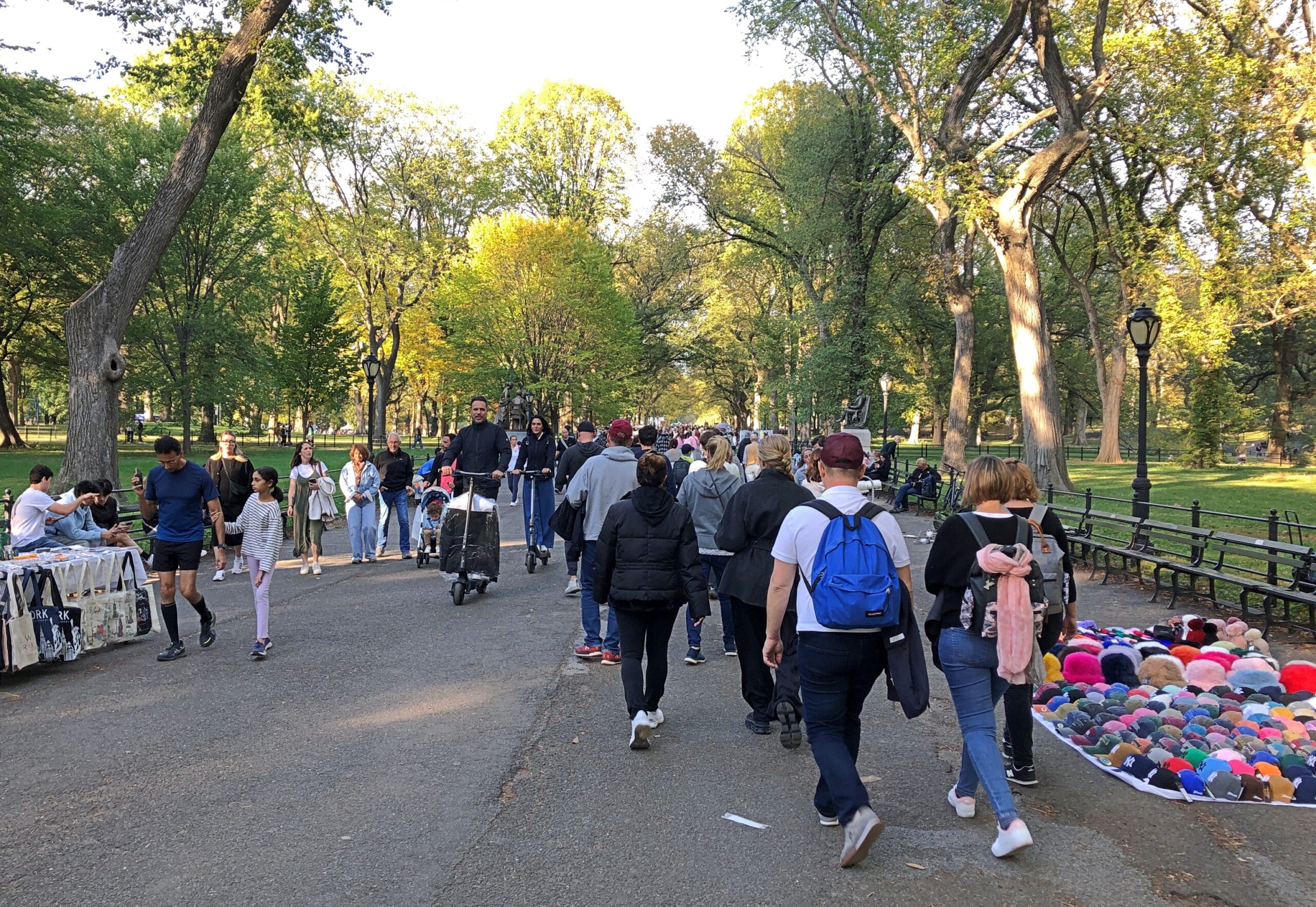
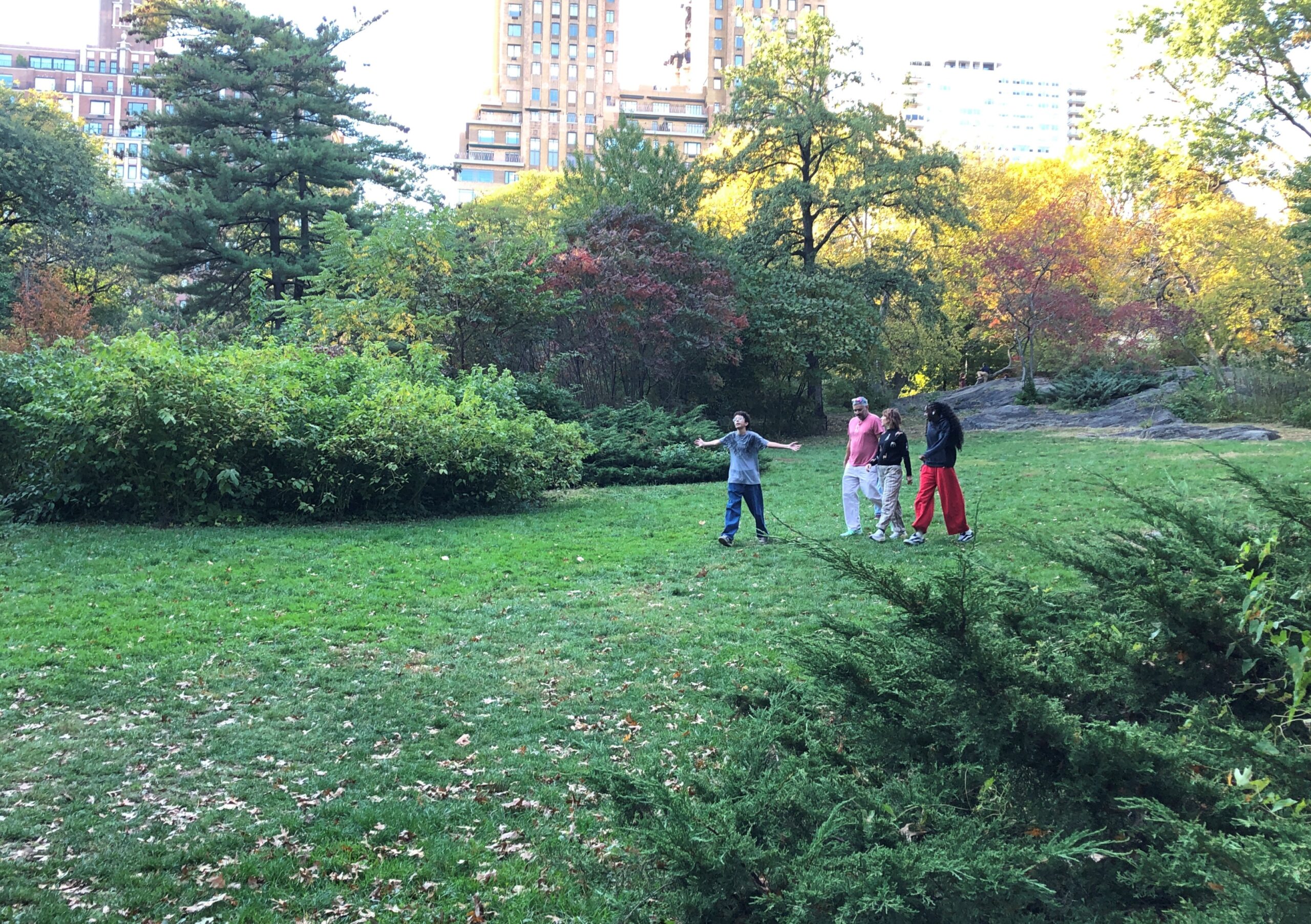
We – Robert, Geof, Yuriko and I – charted ourselves a simple walking path through some of the southern reaches of Central Park. Manhattanites and visitors to the borough were out in Saturday-afternoon force. Saturday, in the park/I think it was the 18th of October. No, that doesn’t scan. A fair number of pitch-a-blanket cap and souvenir salesmen were out, too, but not nearly as many buskers as a great city park like Central Park should attract.

Central Park Oct 2025

There’s an editorial right there: why America needs more buskers, and why some American cities need to chill when it comes to suppressing buskers. Europeans might not be right about everything, but about allowing buskers? Yes.

The leaves weren’t at peak just yet, with the greens still hanging on more than not. I don’t remember which visit to Central Park it was, but one time I wandered the park during peak coloration, whipped into even greater yellow-and-red glory by a brisk October wind. Temporary clouds of leaves came and went, even as the wind shook more leaves from their branches. Color, but also motion.

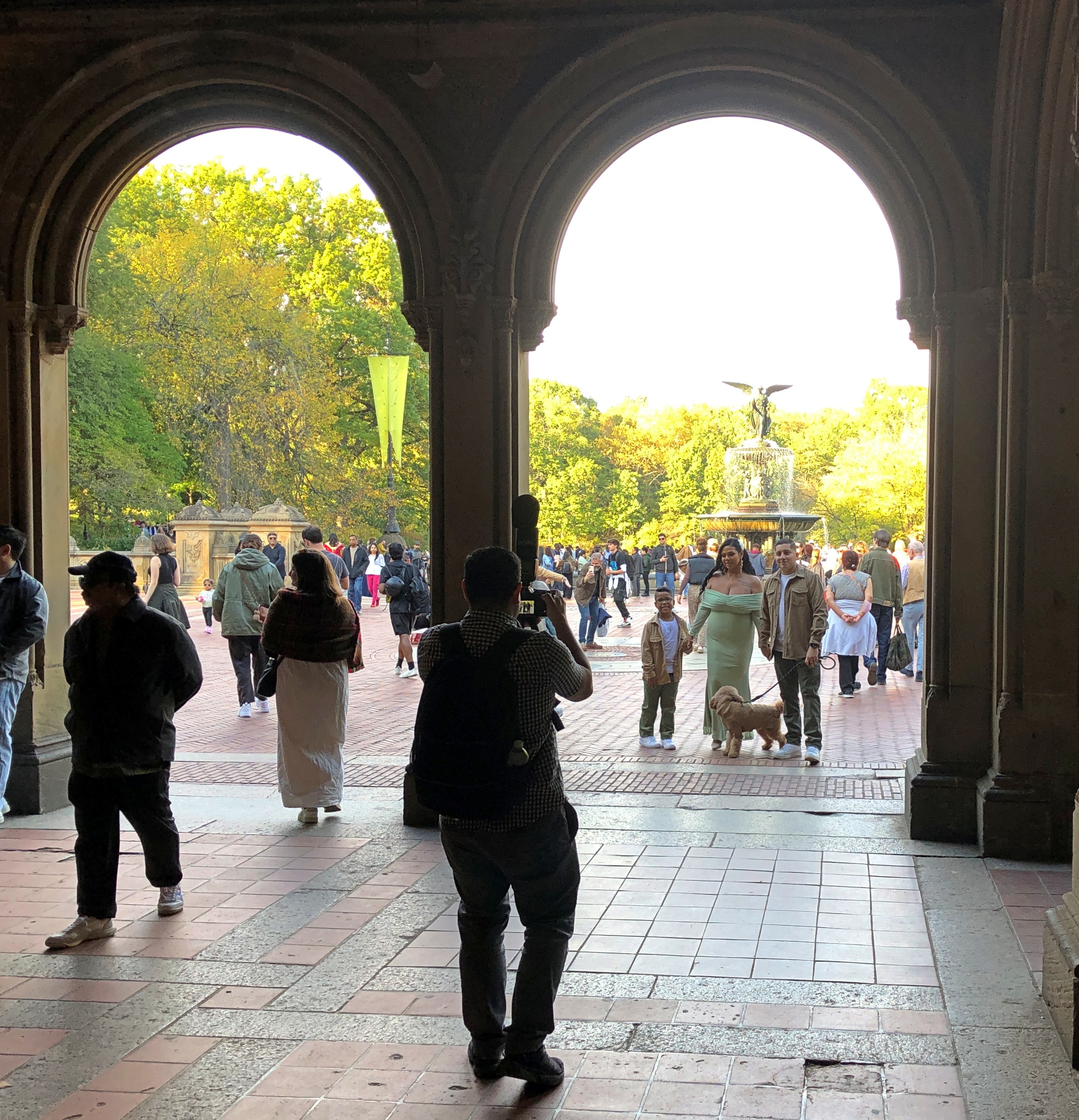
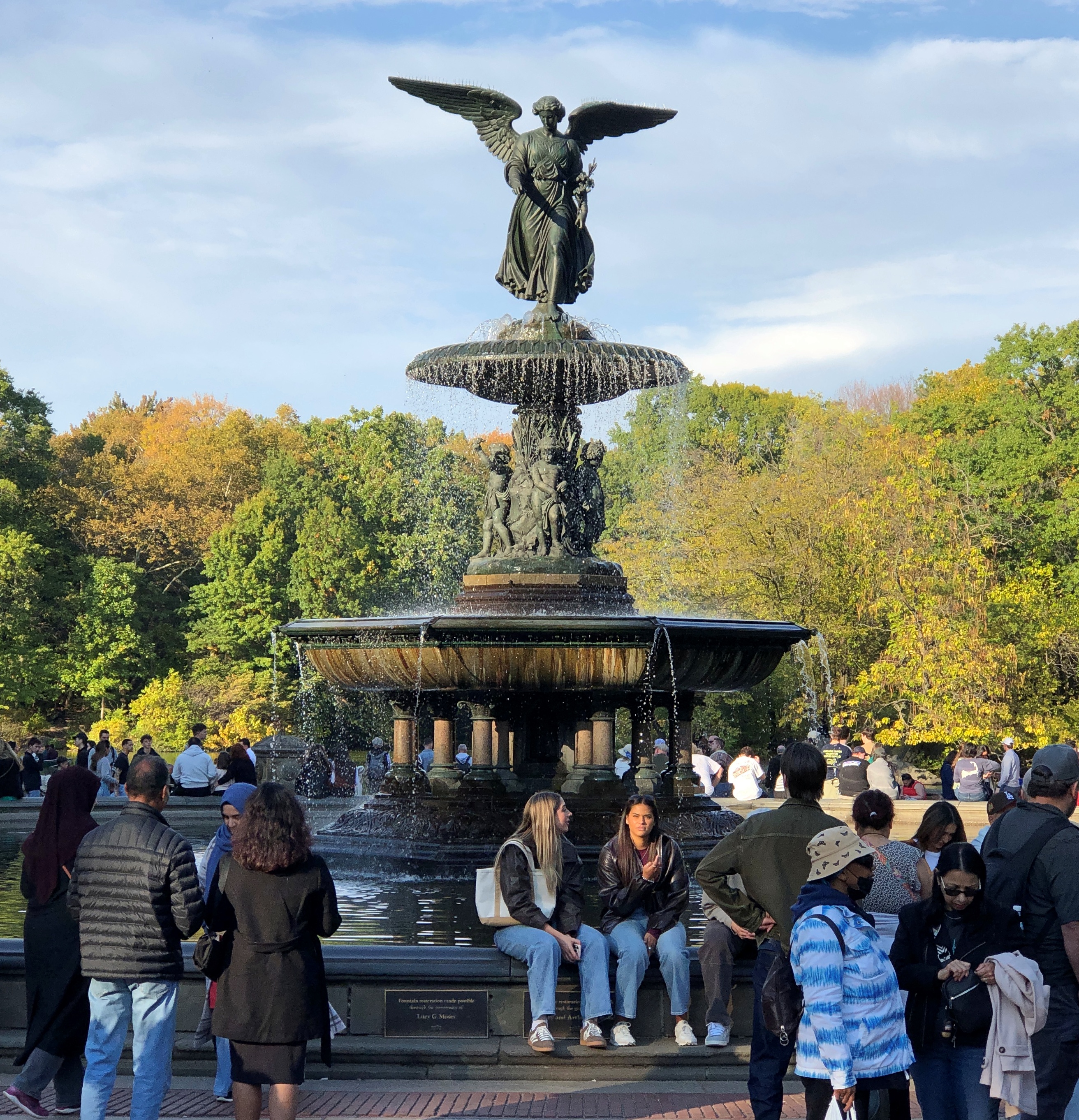
Eventually, we came to The Lake by way of Bethesda Terrace and Fountain.

Central Park Oct 2025

But not all the way across The Lake to The Ramble, whose Wiki description drily states that “historically, it has been frequented for both birdwatching and cruising,” with hyperlinks articles about both of those activities. What about cruising birdwatchers? There’s a Broadway musical in that concept somewhere.

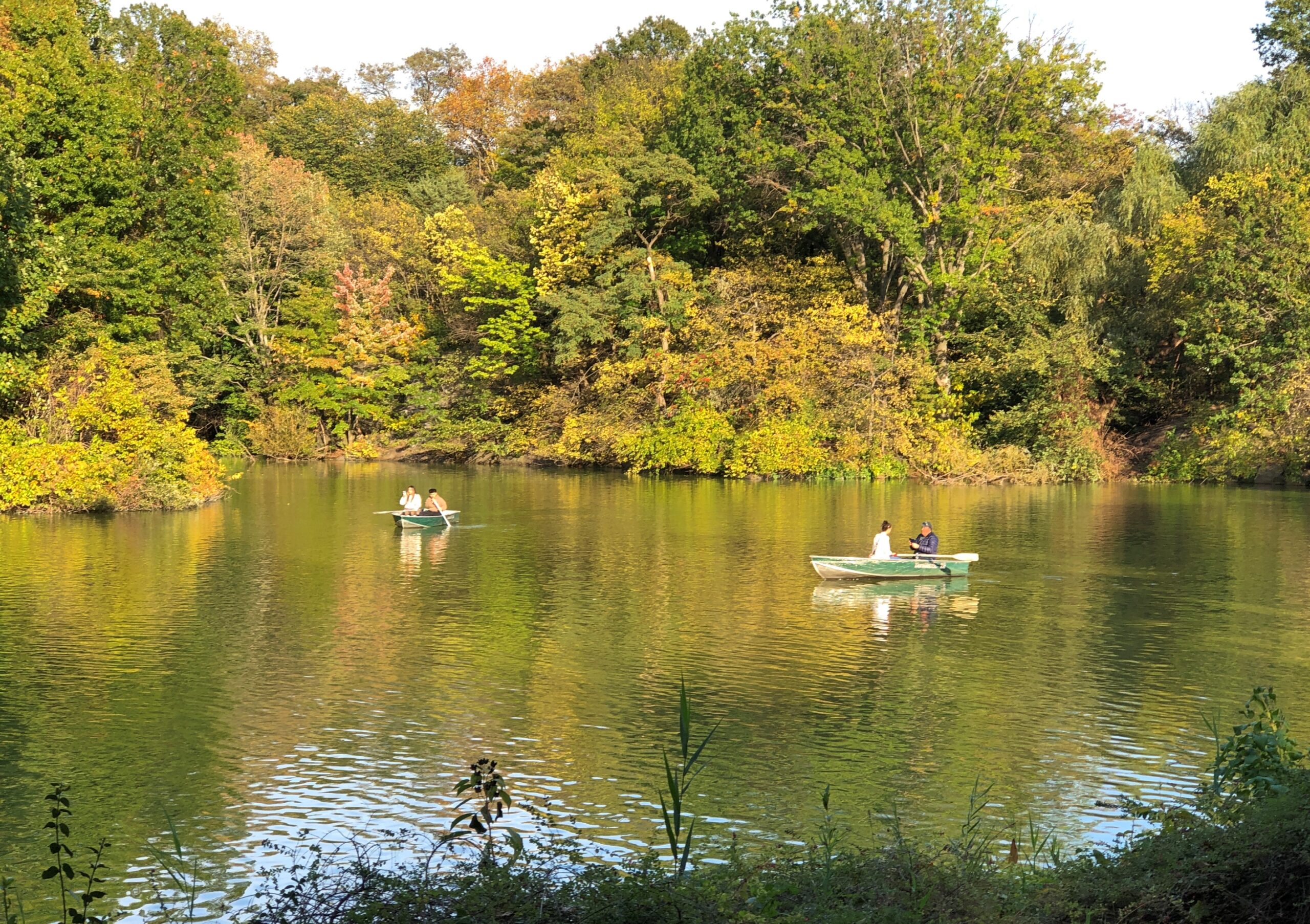
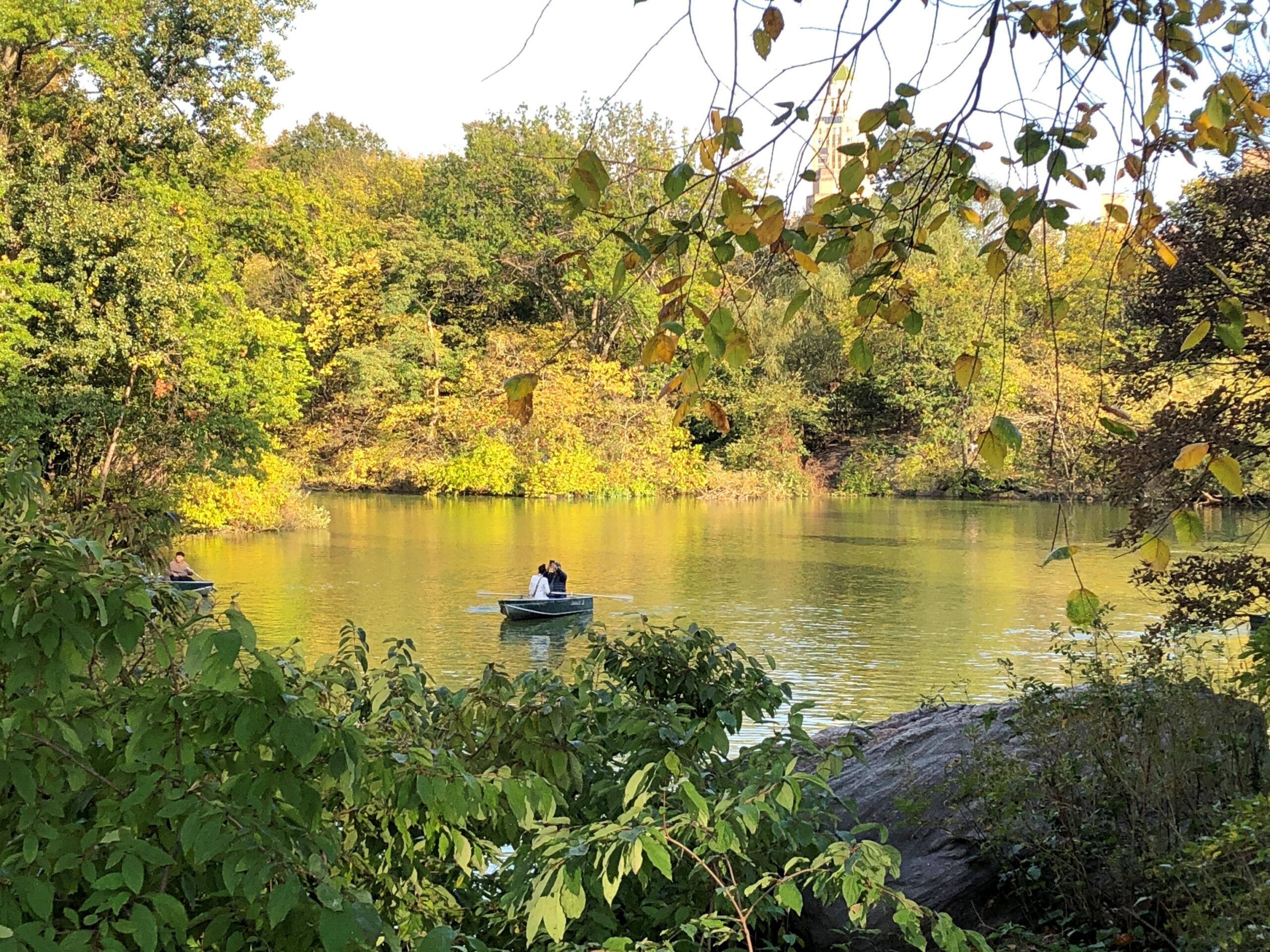
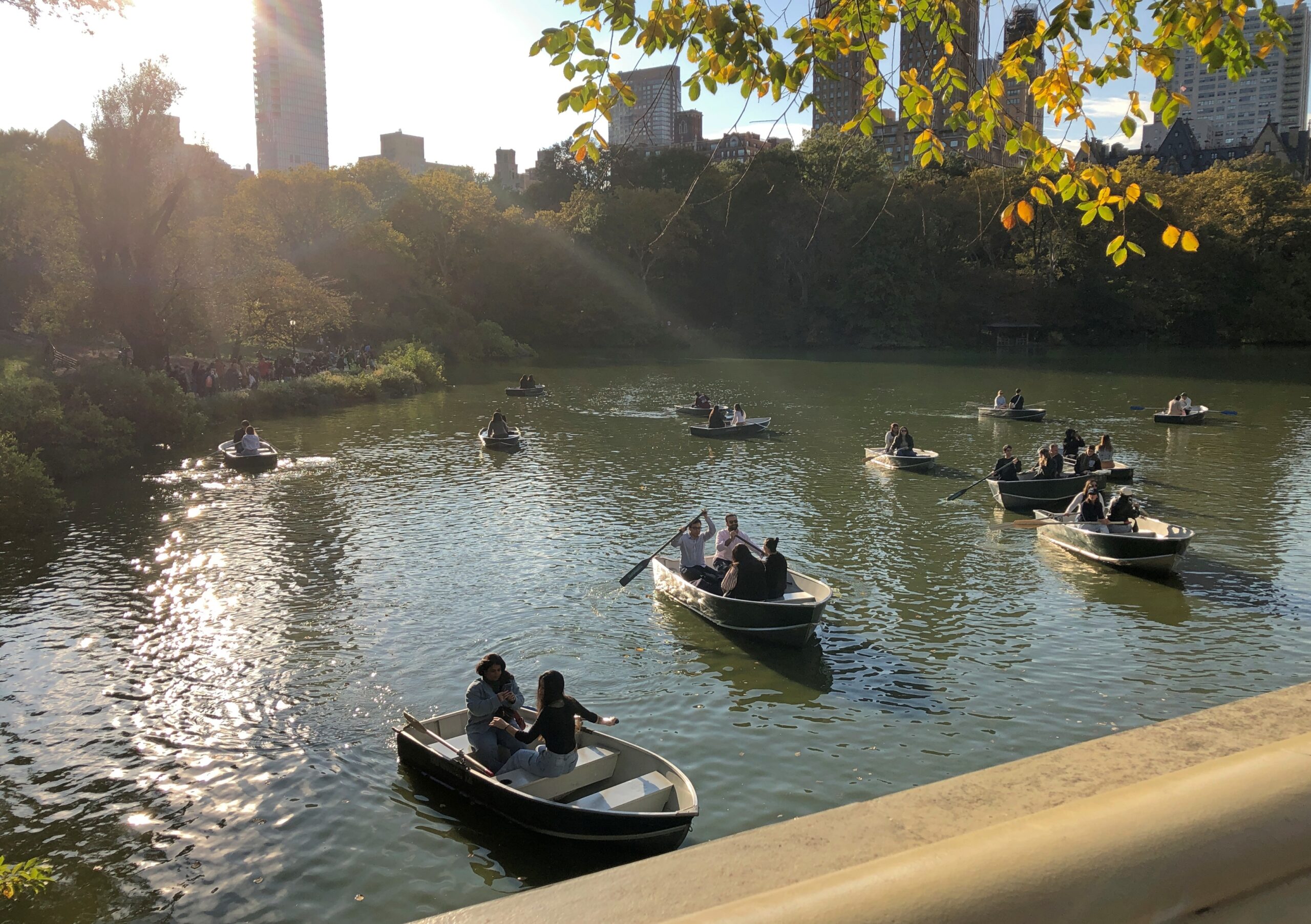
The Lake was clearly a good time and place for casual boating.

Central Park Oct 2025

The view from the Bow Bridge.

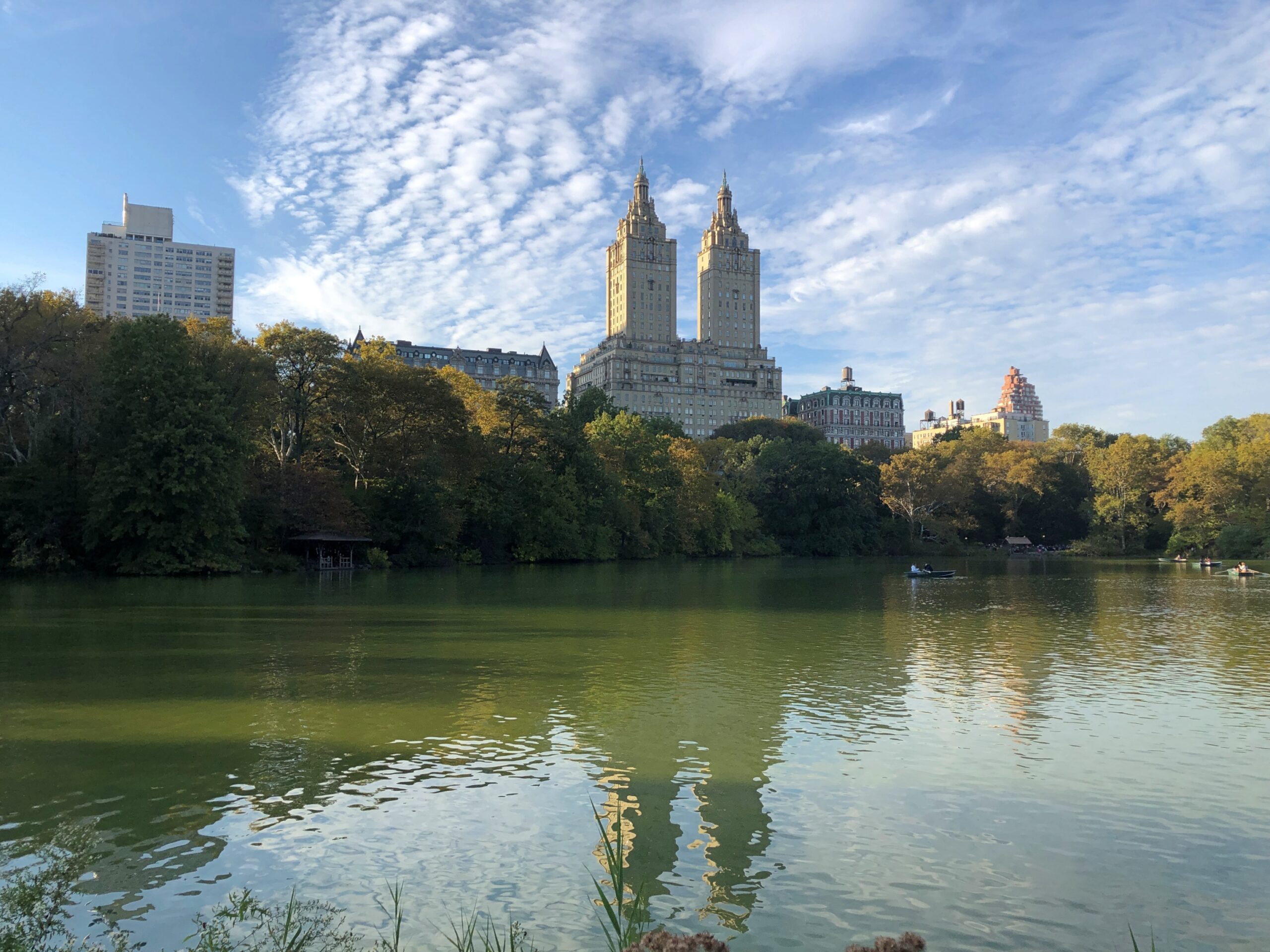
An Upper West Side backdrop.

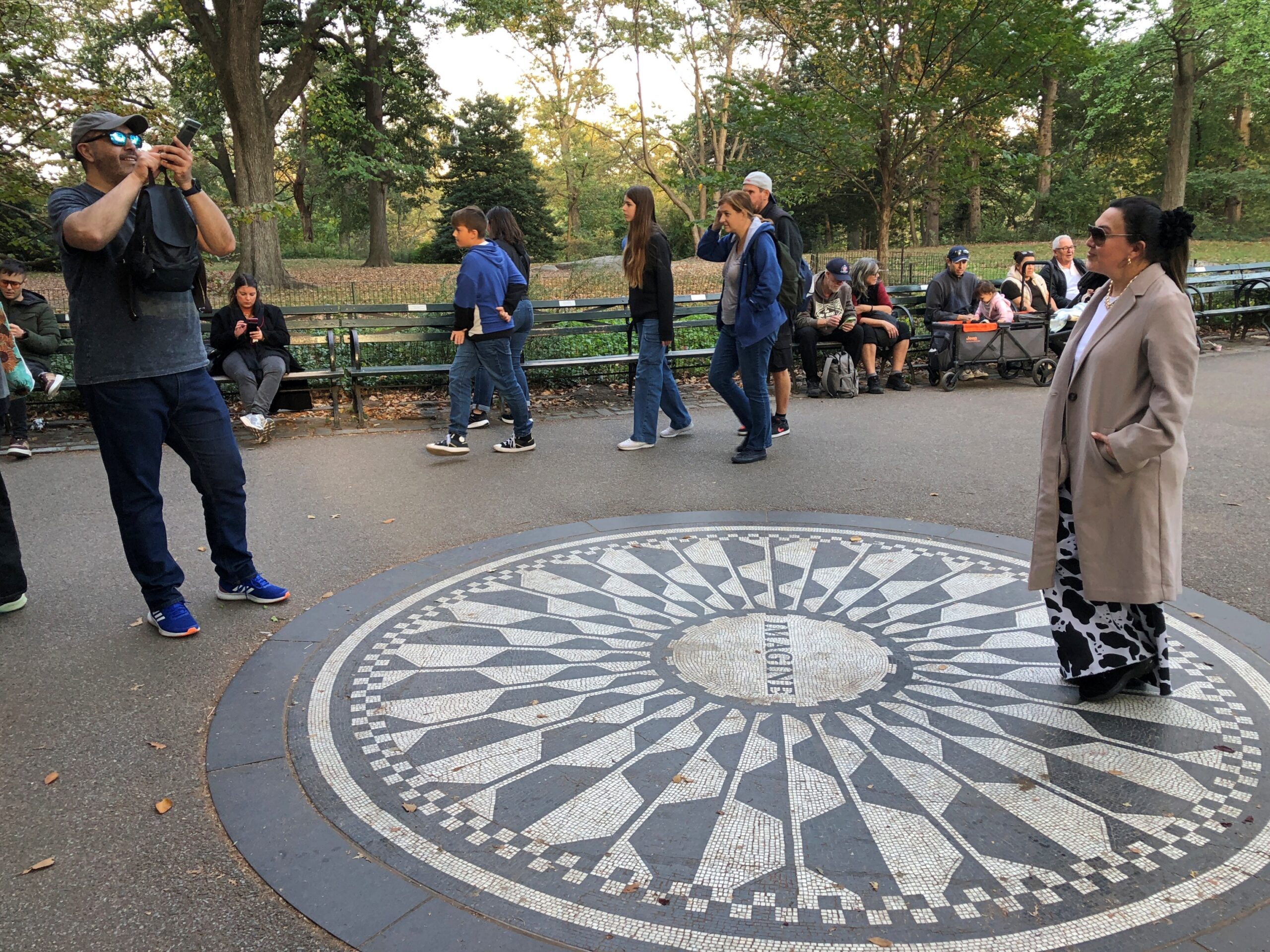
In that part of Central Park, it’s hard to miss Strawberry Fields. There is a fairly empty section.

Central Park Oct 2025

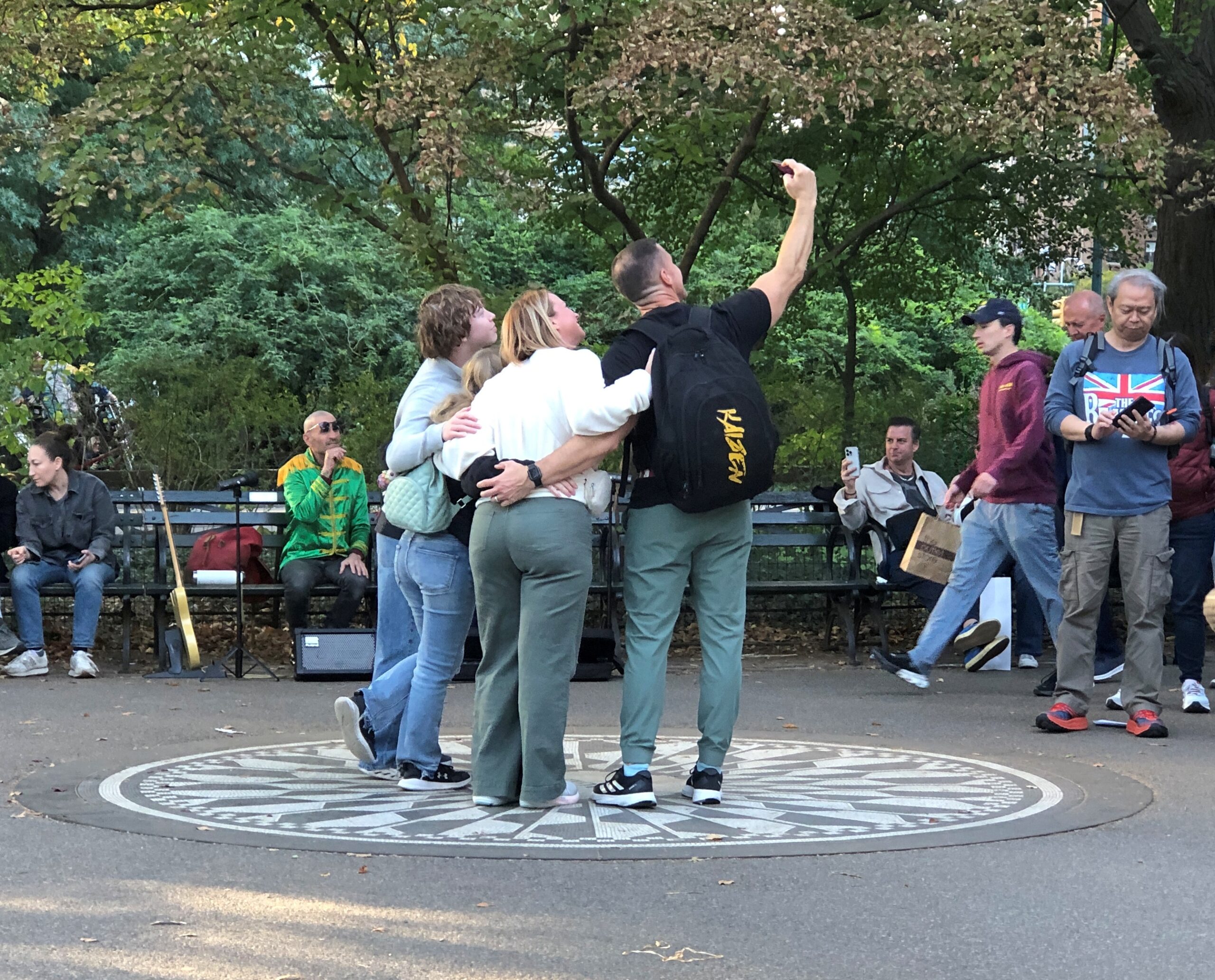
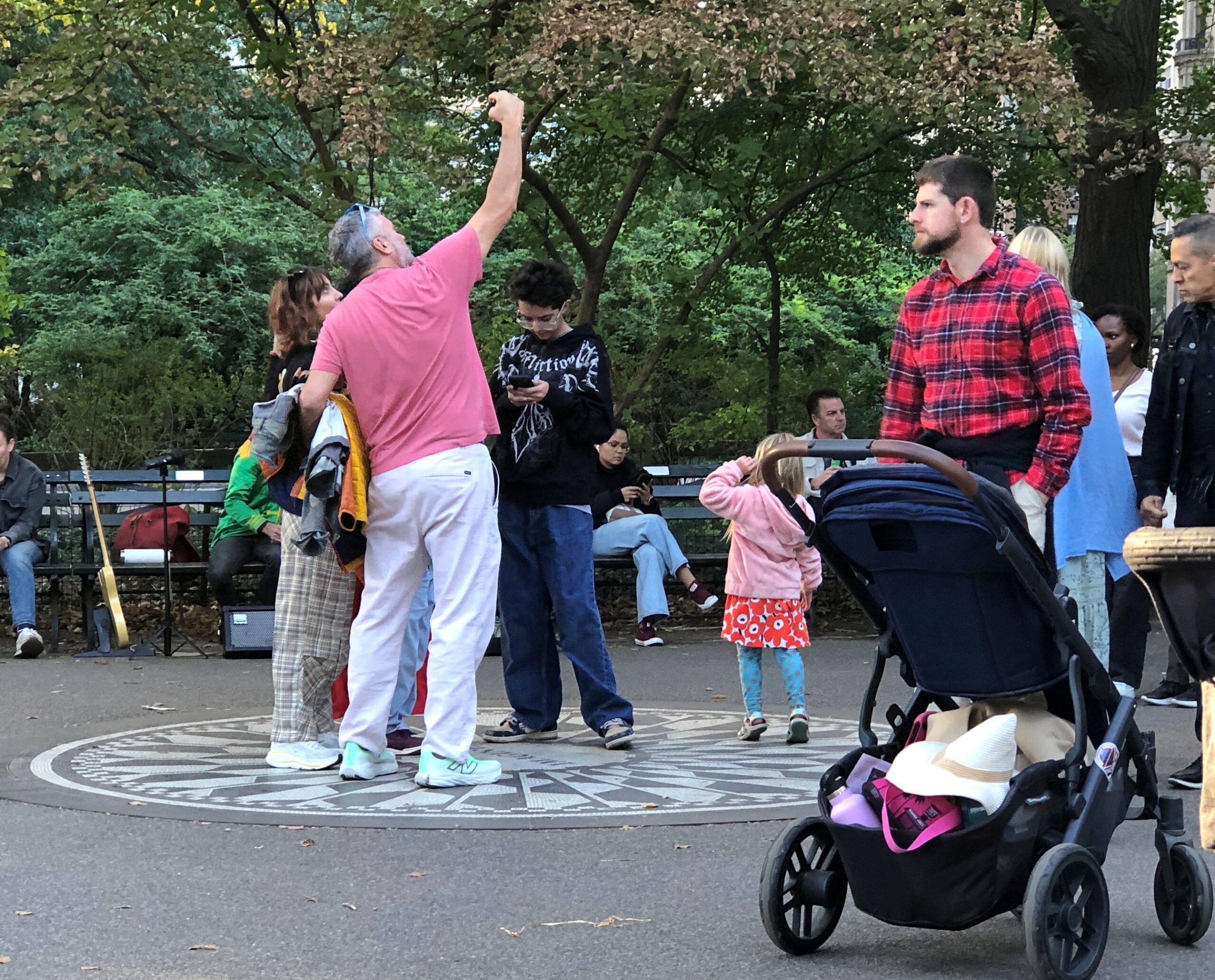
That’s not the case when you get to the Imagine memorial. Among the visitors, a guitarist was noodling out one of the more famous Lennon-McCartney tunes, but I forget which. One of the usual ones. Not “Dr. Robert,” say, or “Happiness is a Warm Gun.” So that was one busker anyway, since I think he had a guitar case open in front of him. All you need is love, sure, but bills are bills.

Central Park Oct 2025 - Imagine

Gone these 45 years and still packing ‘em in. Good for you, Mr. Lennon. In another 45 years? It would be interesting to know, and I sure I won’t.

Central Park Oct 2025 - Imagine

I’m afraid the history of memorials doesn’t bode well for the longevity of any memorial, even the kind that people line up to pose with. I didn’t know the man, but I suspect somehow that the thought of fading into obscurity wouldn’t have bothered John Lennon.

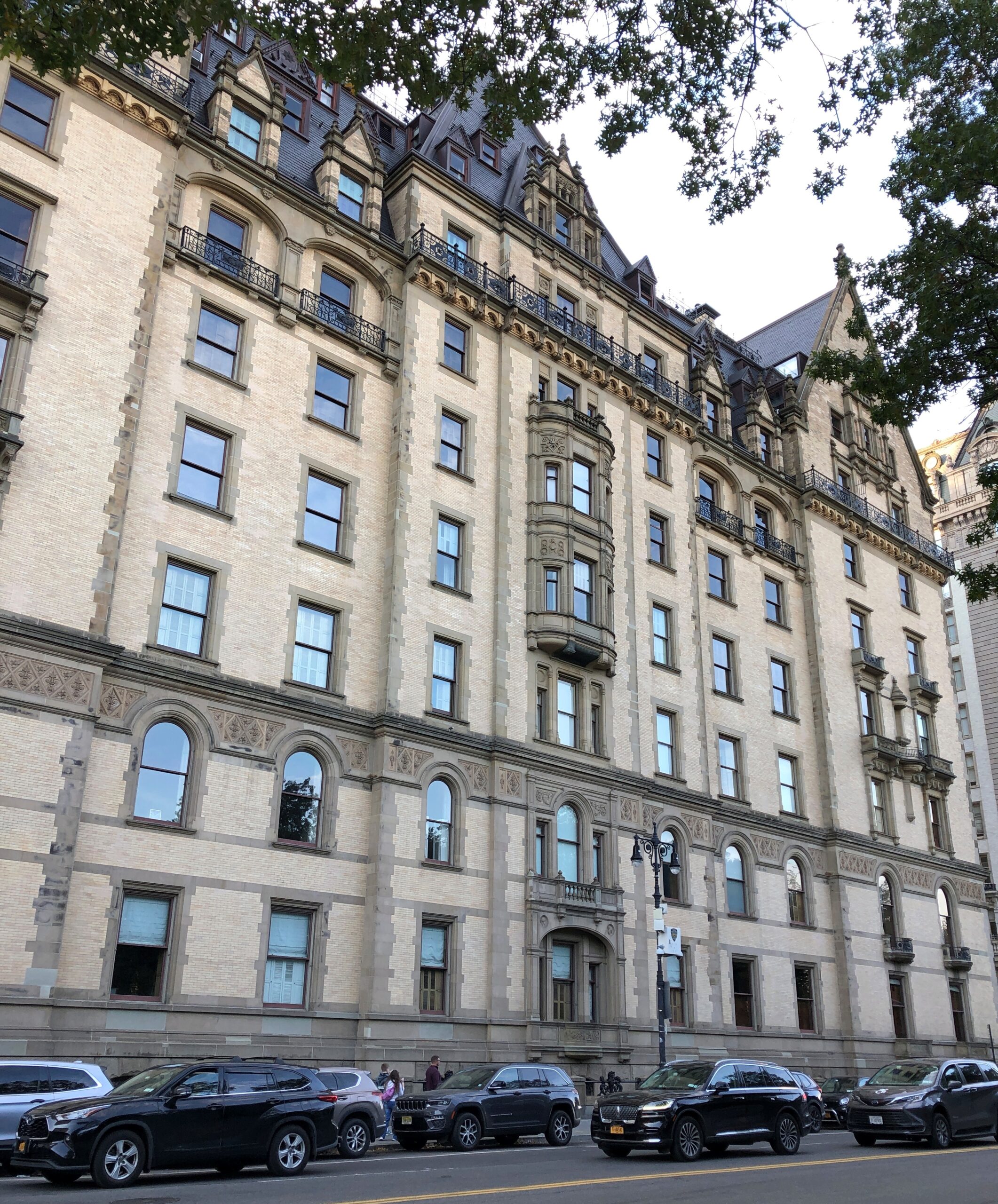
At that point, you emerge from the park and are practically face-to-face with the Dakota.

Dakota, Manhattan

We headed east to a subway station, and happened to walk by the entrance of the Dakota. In its grim way, it’s a kind of memorial too. The signs make it known with no uncertainty that no one unauthorized is getting in.

Southern Tier Fall Crossing

Drive out from Erie, Pa., headed northeast, and soon you have a decision to make: I-90, which becomes the New York State Thruway, or I-86, which does not. Besides costing more money, the NYST went places I didn’t want to go (this time): greater Buffalo, Rochester, Syracuse, Utica and into Albany, a route I drove as long ago as 1991 on my way to Boston.

By contrast, I-86 passes through much smaller places, winding through the hilly Allegheny Plateau, a way I had not been before. High time to do so, I thought. The road is also New York 17, with signs along the way identifying it as the Southern Tier Expressway. “Southern Tier” is the southernmost counties in upstate New York, which apparently is a longstanding regional term.

That’s a good-looking sign, and serves as a nod to the Seneca, who hold land in this part of the state. A Seneca artist named Carson Waterman did the design. For some miles before and after the town of Salamanca, which is part of the Seneca holdings, standard green highway signs include both English and Seneca.

One of the larger places on the Southern Tier Expressway is Jamestown, which I know from the song. It’s a game I occasionally play with my friends: Did You Know There’s A Song About…? and then I name something like rural electrification in Australia or the Versailles conference. In this case, the song is “Maddox Table” and it’s about labor organizing in Jamestown, hometown of the band 10,000 Maniacs. The town isn’t specifically mentioned in the lyrics, but Bemis Point is. Even before the Internet, I could look that up, and note that it’s a local recreation destination on Chautauqua Lake.

Chautauqua Lake is in Chautauqua County, the westernmost bump on the map of New York state. Ah, storied Chautauqua, which brings to mind the outdoor exhortations of men in full suits and women in long dresses, regardless of how hot it was. There’s another streaming service series for you: Chautauqua, set in the raucous 1890s. Could be a comedy or a Gritty Drama.

I wanted to reach my destination, Binghamton, NY, before too late, so I didn’t linger near the lake. But I did stop at the rest area on Chautauqua Lake, which is large, and contains multitudes of structures along its shores, and probably many more people in the summer. One of the more scenic rest areas of the trip, it turned out.

Southern Tier NY
Southern Tier NY

So was the next rest area, not far from Corning. A few hours to devote to the glass museum in that town would be well spent, I think.

Southern Tier NY
Southern Tier NY

After an uneventful night in Binghamton – the kind I prefer on the road – I set out for greater NYC, by way of the highway New York 17, the “future I-86” according to my maps, and then the highways New York 30 and 28.

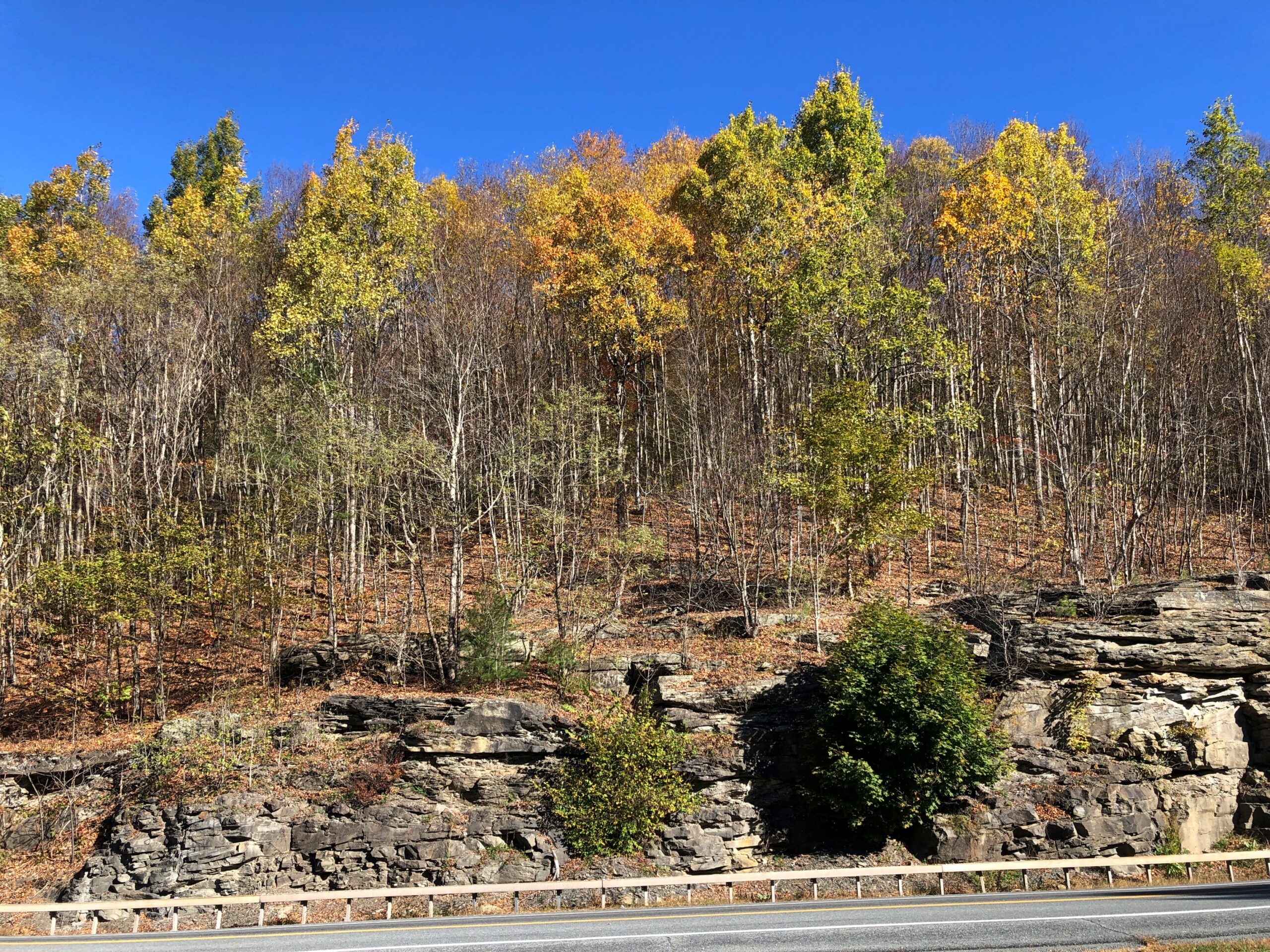
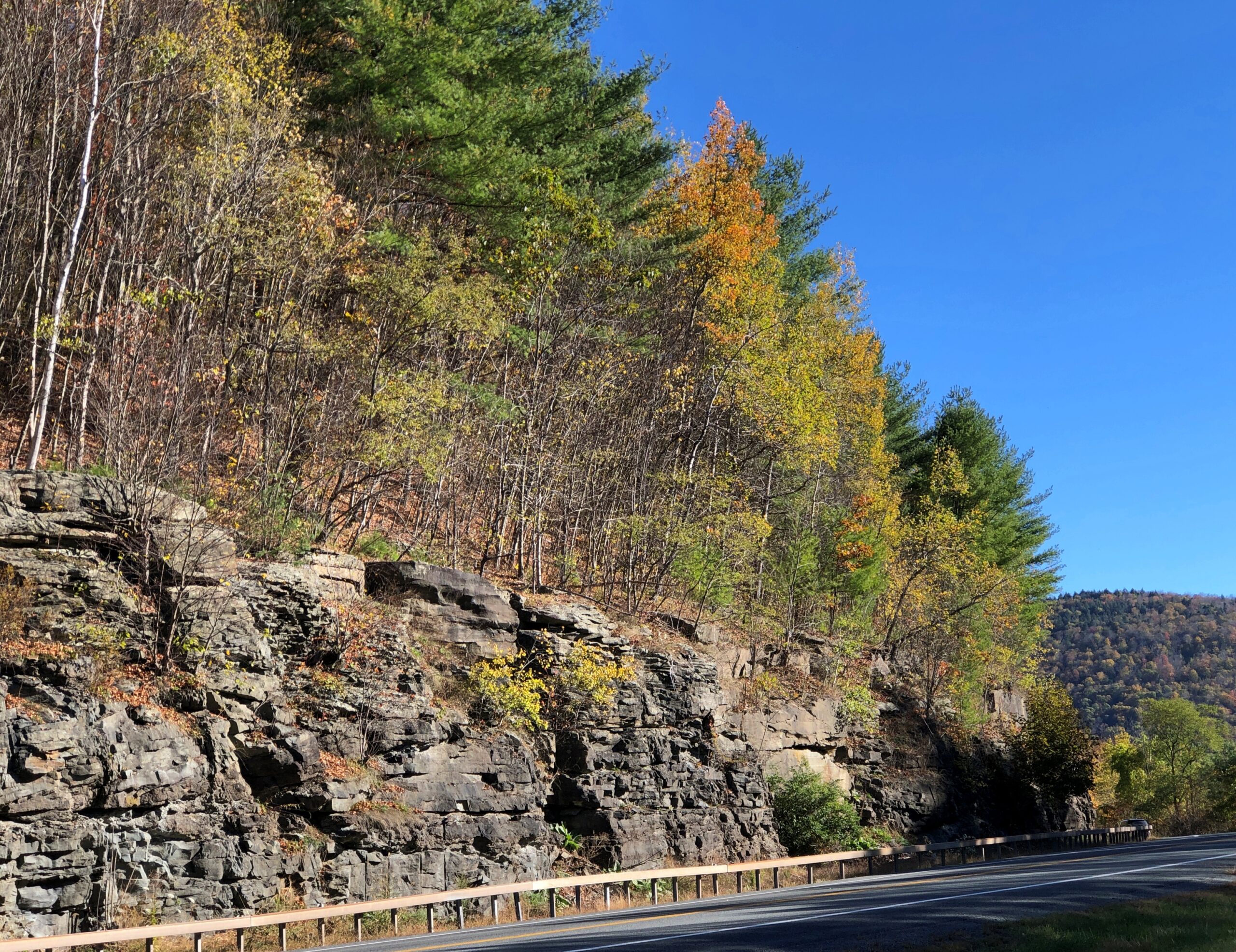
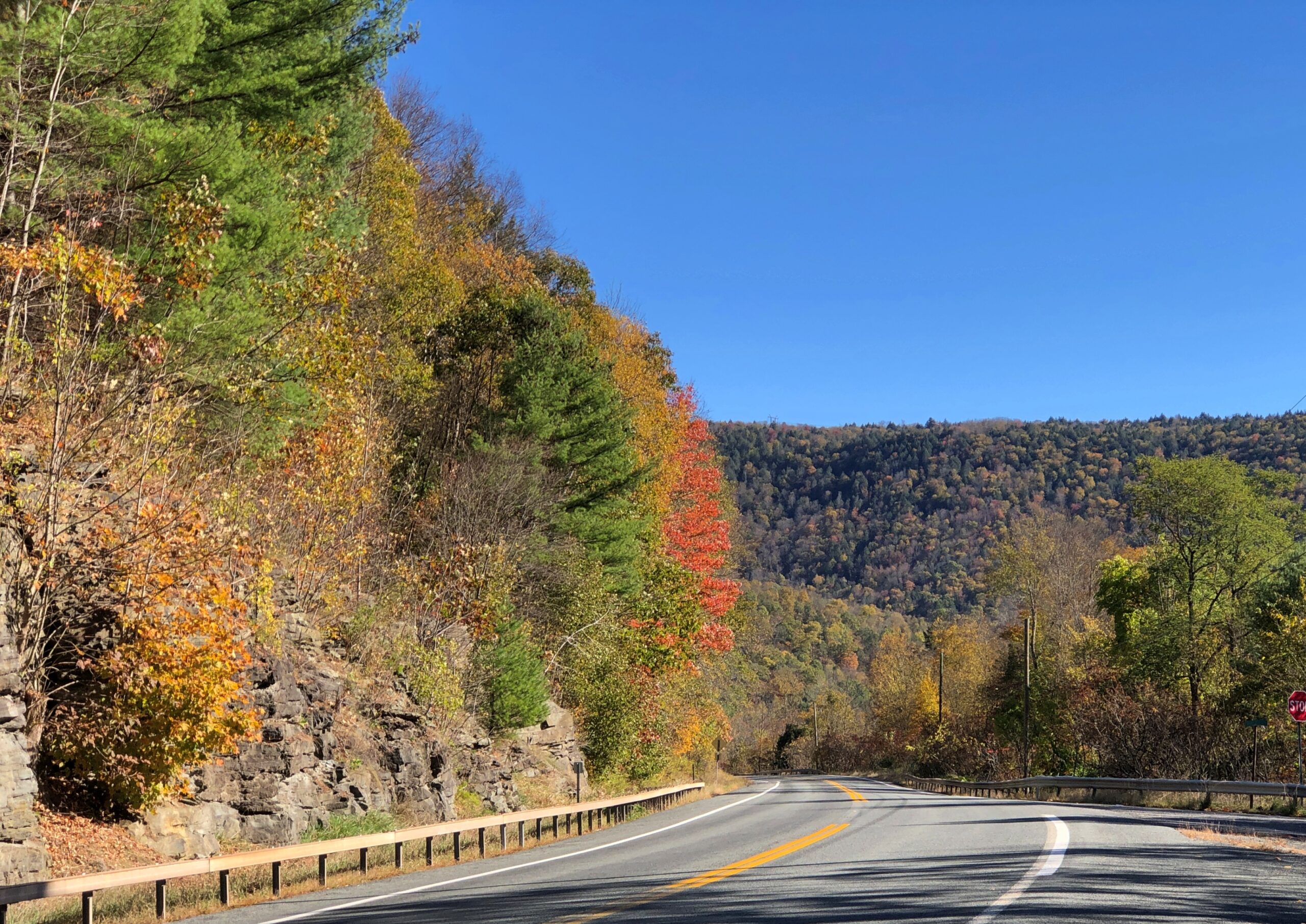
NY 30 skirts the edge of Catskill Park. Last time I was in the Catskills was during the Clinton administration, back when the Concord Hotel and Resort was still clinging to existence, so it’s been a while, and I’d never been in the colorful and nearly empty western edge of the park in October. That emptiness made all the difference in the car commercial driving I enjoyed.

Southern Tier NY
Southern Tier NY
Southern Tier NY

During all the driving over the next week or so after NY 30, empty roads would not be part of my reality.

The Brandenburg Gate

To mark the spring equinox, winter pulled hard in the tug o’ war between it and spring, with snow falling overnight. By day, spring pulled back, melting most of the snow.

The weather during almost all of our trip turned out better than expected. Japan was dry and fairly chilly some days, but not others, even up north in Tokyo. As for north-central India, February is a good time to visit: slightly cool at night, warm or very warm during the day, and no rain at all, much like the days we spent in Mexico City. Later in the year, I understand, heat begins to oppress the region and soon the monsoon comes. In Dubai: consistently warm, almost hot in the afternoons, but never unbearable desert heat, which will come soon enough as well.

Germany and the Czech Republic were a pleasant surprise, mostly. During the first few days, temps were cool but not cold. The warmish Saturday Jay and I went to Museumsinsel, Berliners were out in numbers, sitting and lying around on the green space next to the Berliner Dom. Only toward the end of our visit did it get as cold as we’d expected, just above freezing, and there was light rain the day we returned to Berlin from Prague, and a little more the cold morning we left.

The day I got back to northern Illinois was warm and pleasant, until it wasn’t. That tug o’ war in action.

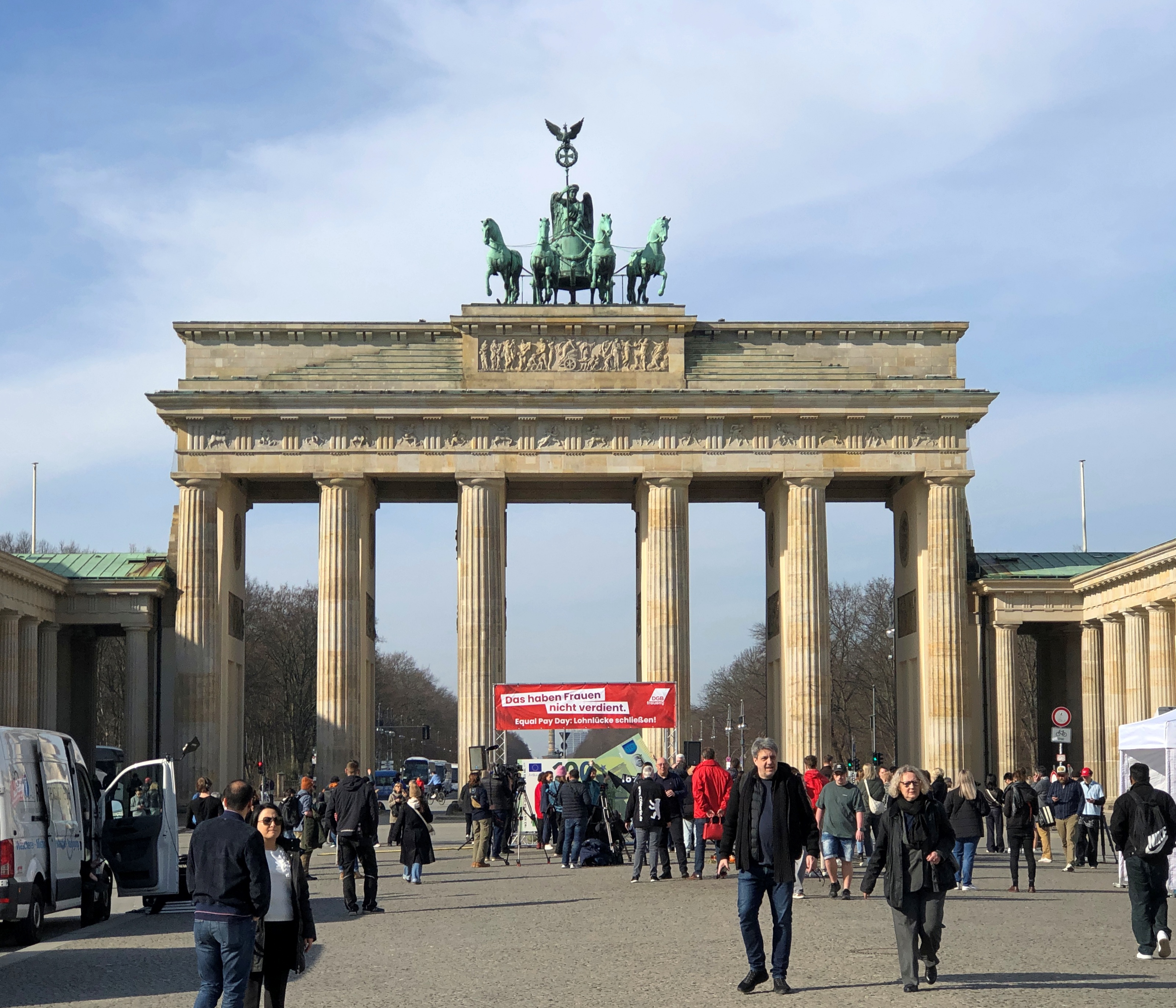
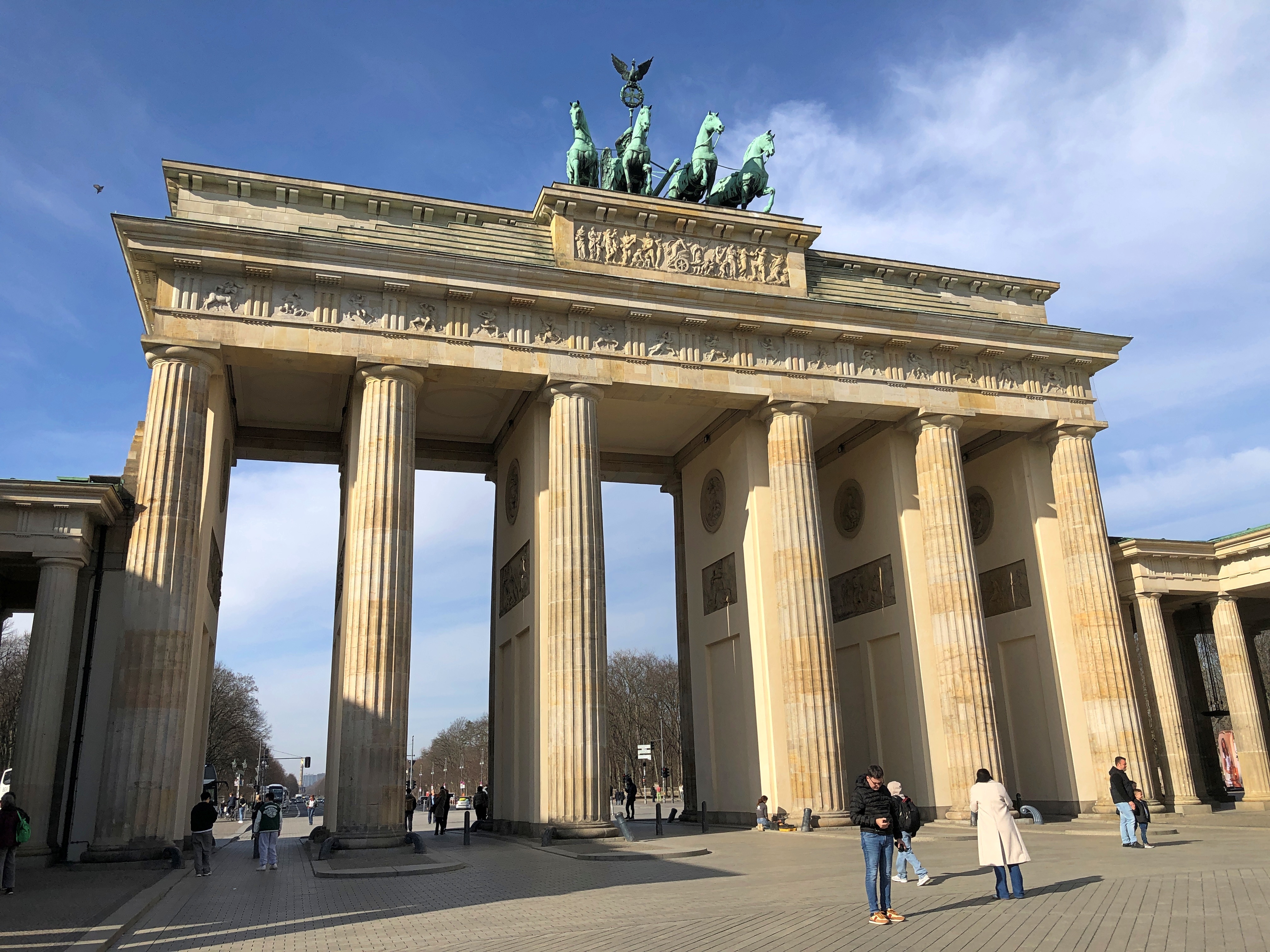
The very first thing I wanted to see in Berlin this time around was the Brandenburg Gate (Brandenburger Tor). I’d seen it before, of course, but let’s say the circumstances were a little different. On July 8, 1983, I wrote, a little confusingly:

The gallery [National Gallery] wasn’t that large, which was a virtue, and later we headed for the Reichstag to catch a bus. En route we passed as close to the Brandenburg Gate as you can without getting shot at.

I suppose I meant that we walked from the western National Gallery just south of the Tiergarten – not the National Gallery building in the east, since we didn’t visit East Berlin until the next day – to the Reichstag building, then a museum, to catch a bus westward, toward our hostel. Such a walk would take you within sight of the Brandenburg Gate, but not next to it, since the gate was in the east, behind the Wall.

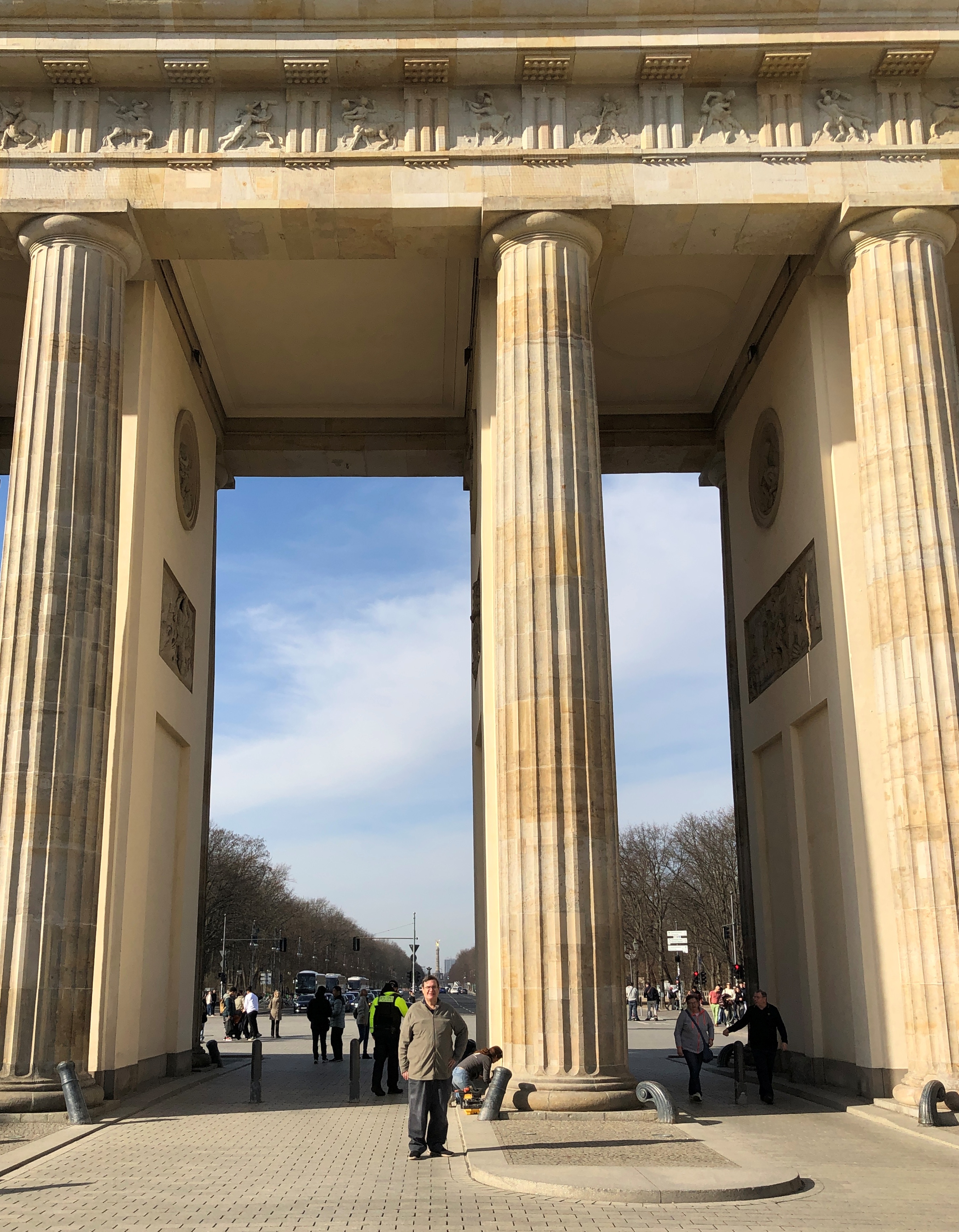
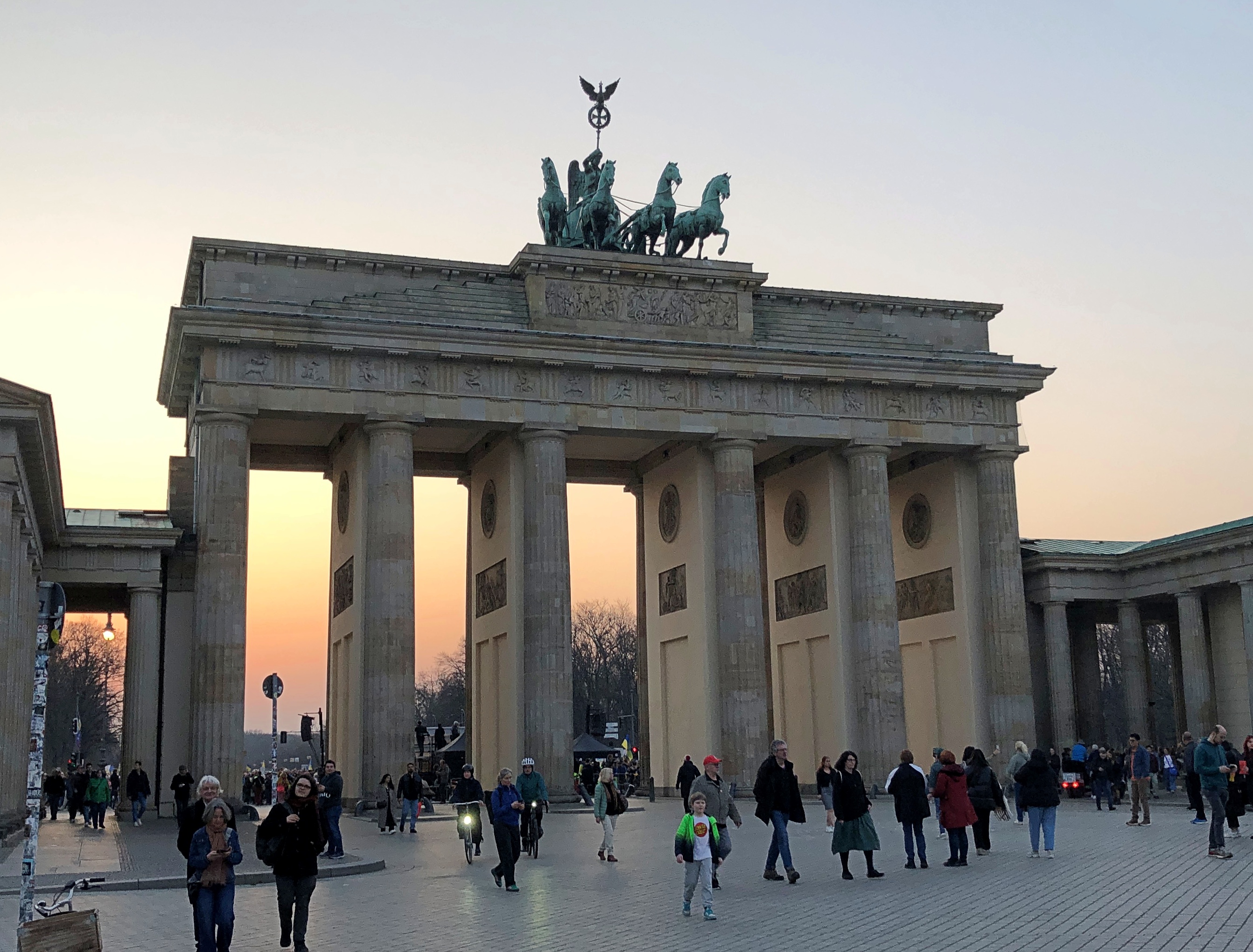
These days, one can stroll right up to the Brandenburg Gate and pass under it. A lot of people do. Jay and I did on March 7.Brandenburg Gate 2025 Brandenburg Gate 2025 Brandenburg Gate 2025

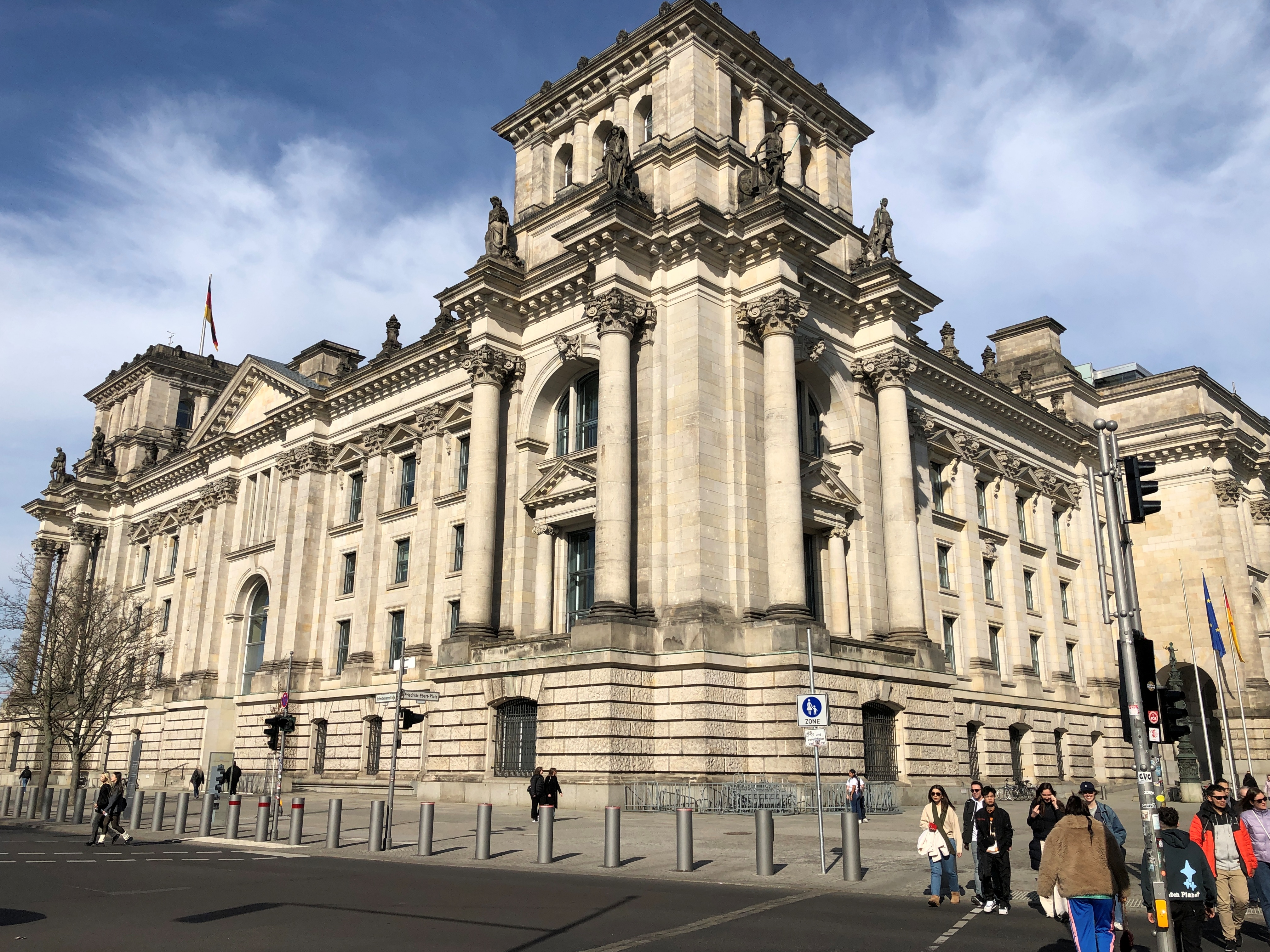
Pass through going west, and pretty soon you’re within sight of the Reichstag building.Reichstag 2025

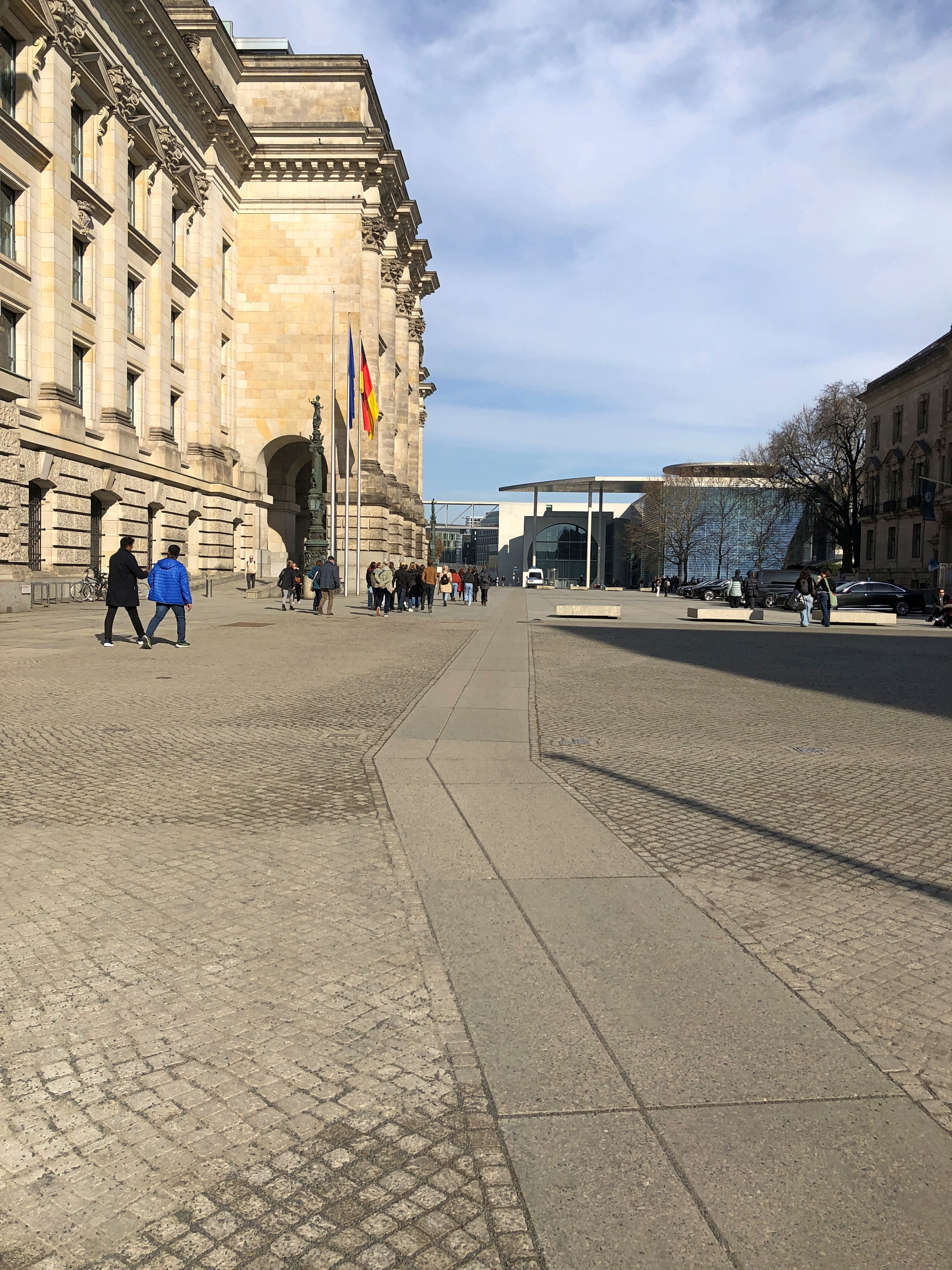
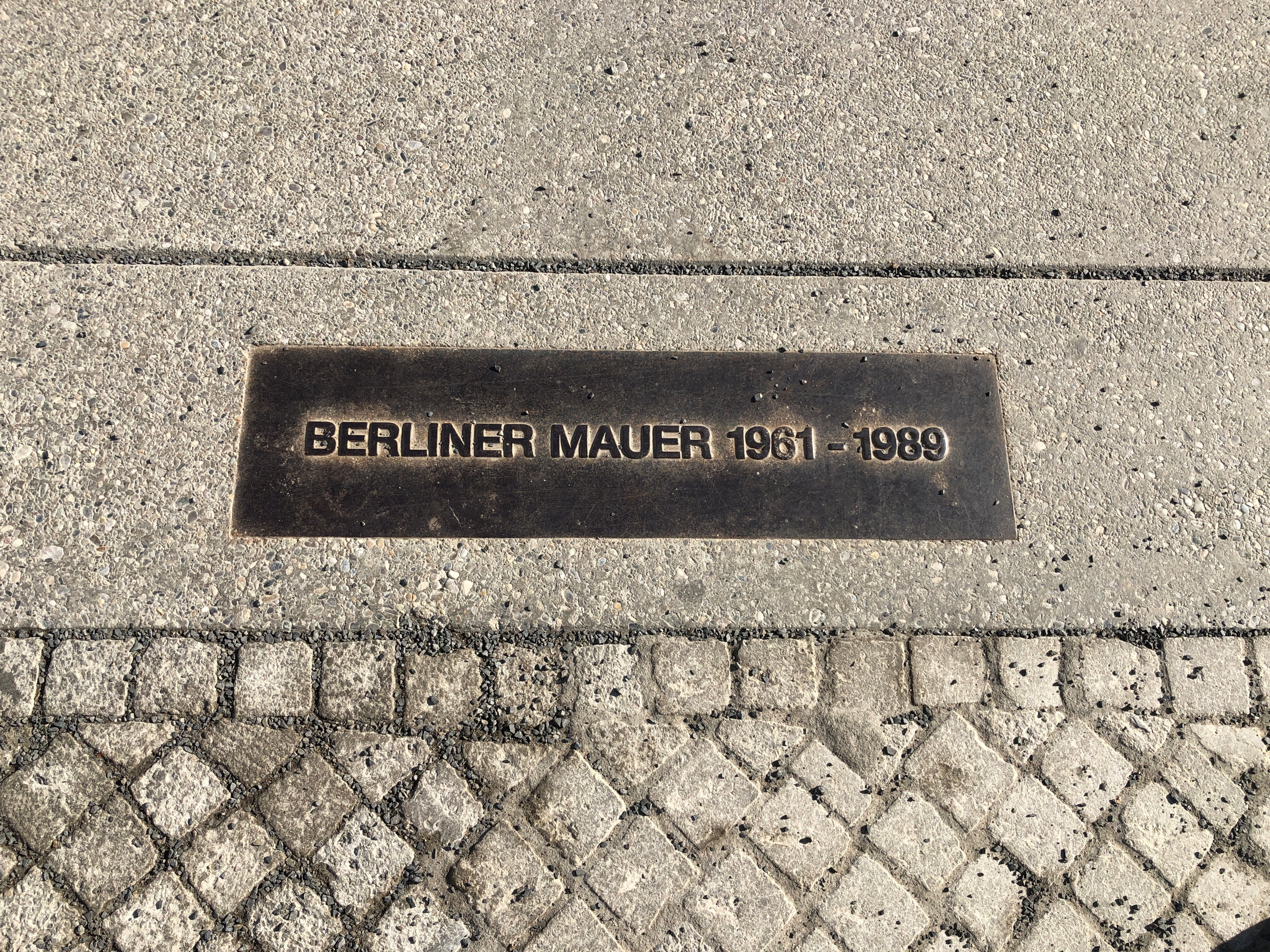
The ghost of the Berlin Wall runs through the platz behind the Reichstag.Site of Berlin Wall Site of Berlin Wall

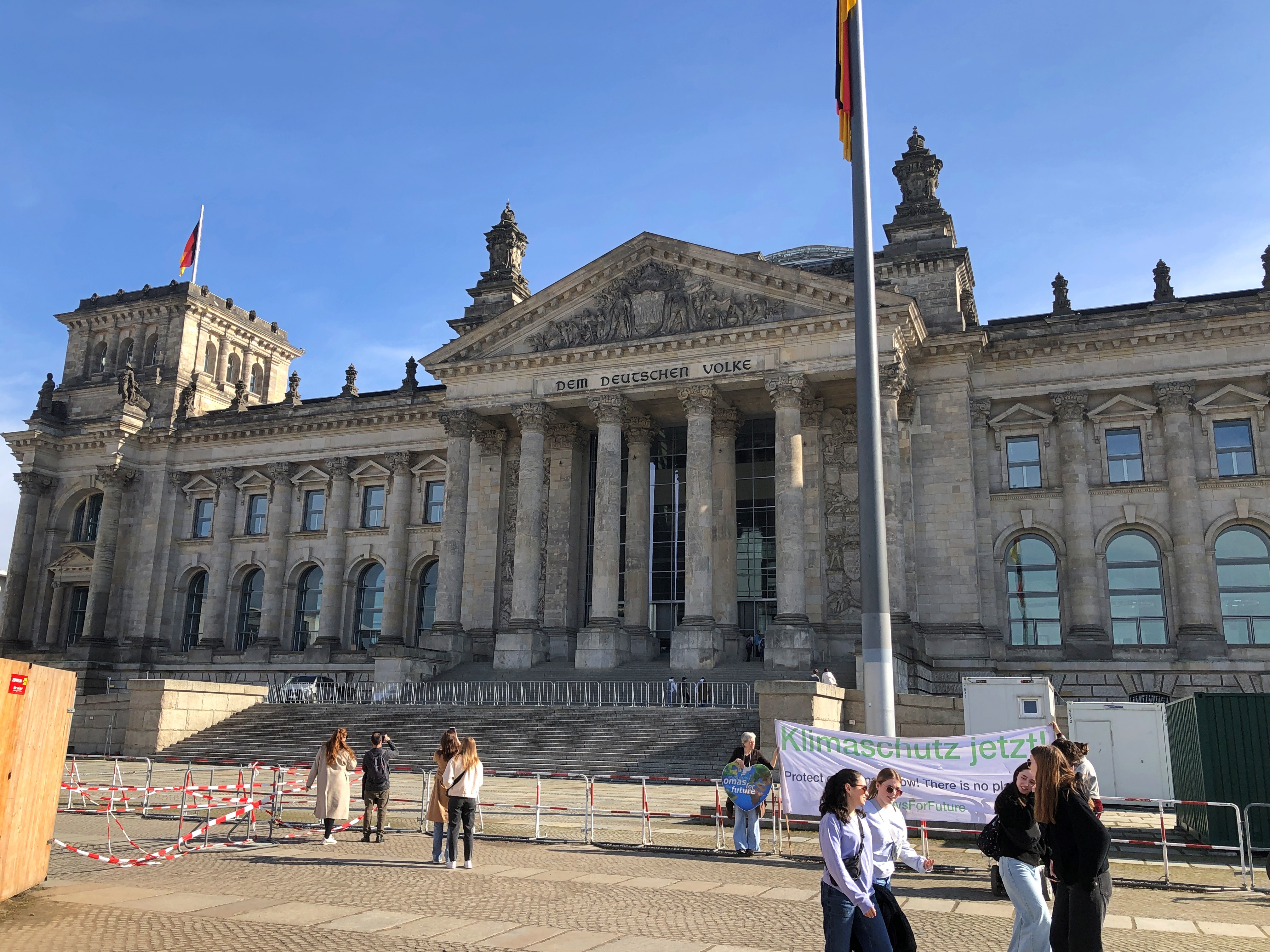
The front of the Reichstag building.Reichstag building 2025

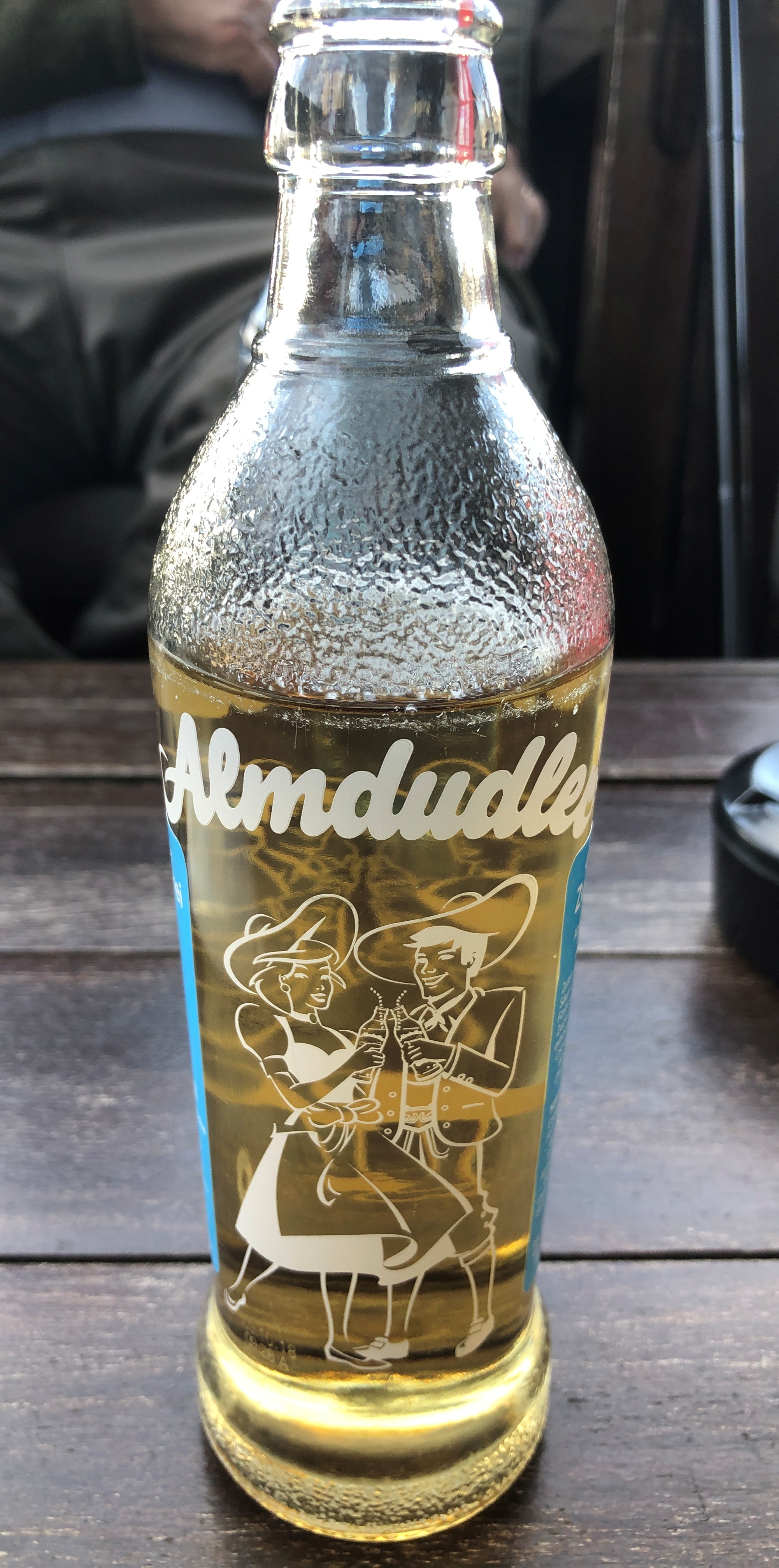
Unlike 40 years ago, when you could wander in and see a few rooms, going in these days involved timed tickets and other rigmarole, so we didn’t bother. Instead we repaired to a small establishment a short ways into the Tiergarten for refreshments. In my case, a soft drink I’d never heard of before, though I could have encountered it in its place of origin, Vienna. Not bad.

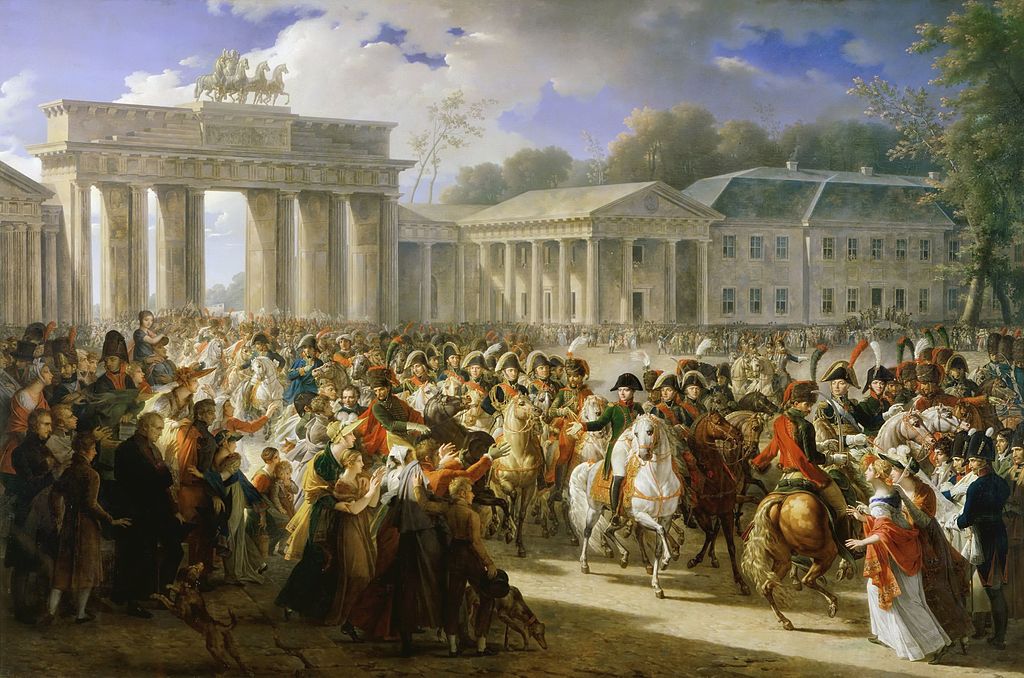
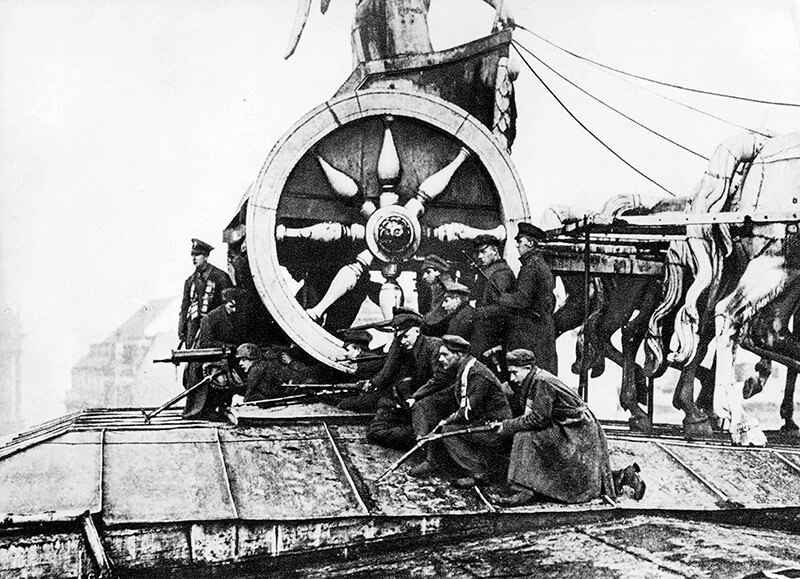
The Brandenburg Gate has been the site of a goodly share of history since Friedrich Wilhelm II had it built, such as Napoleon parading through (and swiping part of it), soldiers posted atop during the Spartacist uprising, and President Kennedy not really calling himself a jelly doughnut nearby.

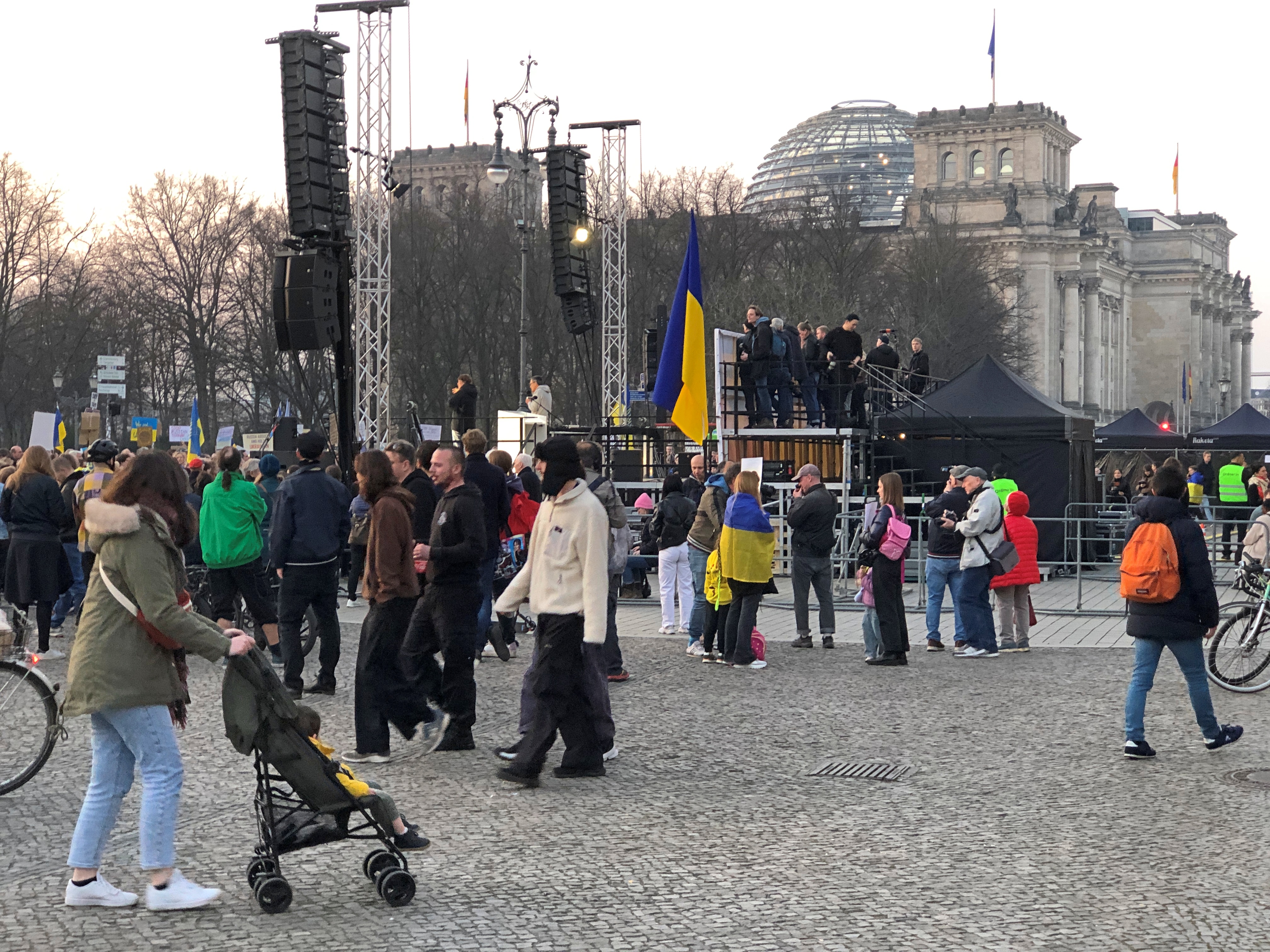
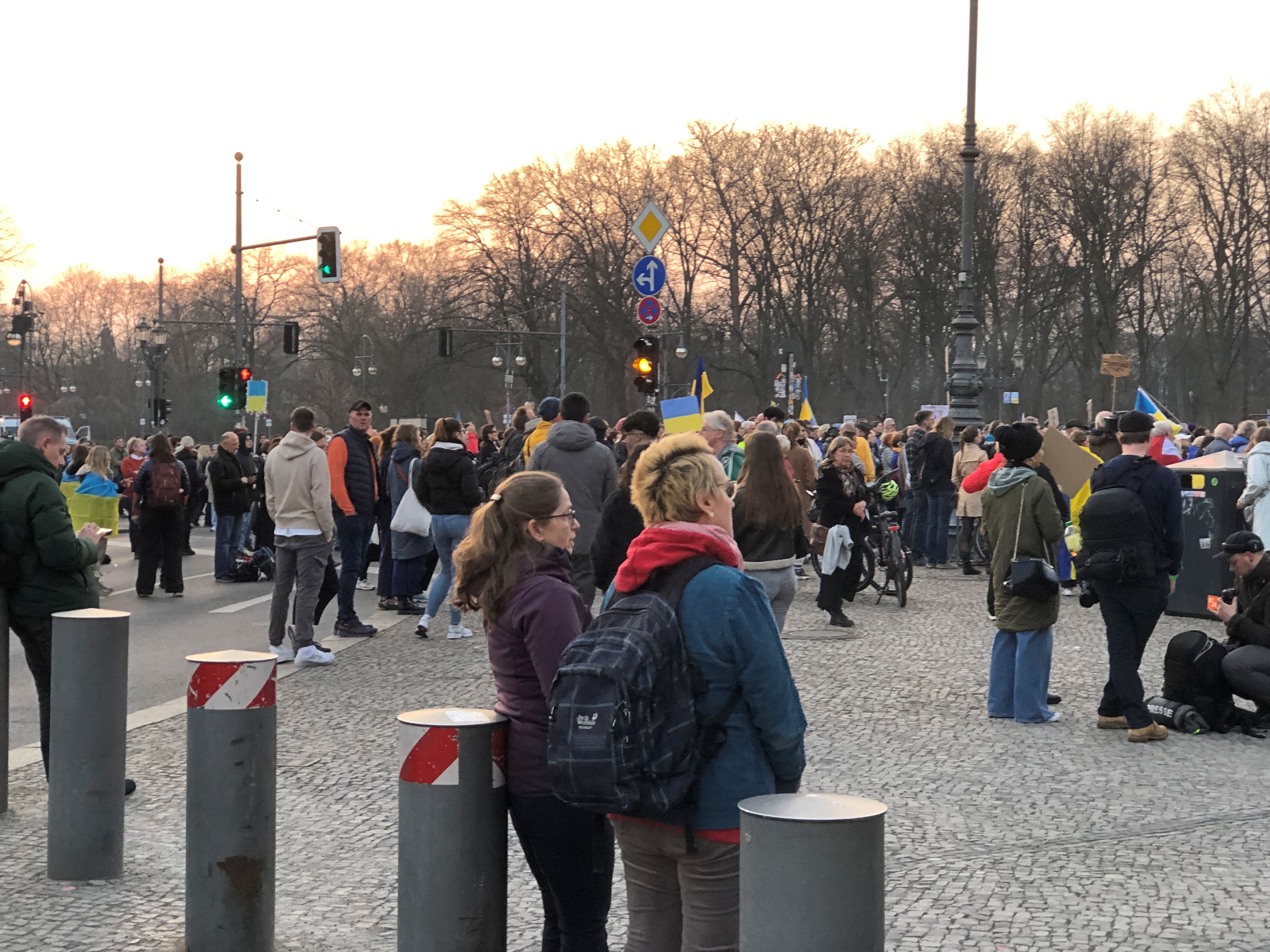
Events continue. Late afternoon on the 9th, we saw one ourselves, a rally to the west of the gate, voicing German support for Ukraine.Brandenburg Gate 2025 Brandenburg Gate 2025

The gate was catching the setting sun about then.Brandenburg Gate 2025

Nice. Glad to make it to post-reunification Berlin.

Summer Lunch

As forecast, the week kicked off warm, but not too warm, and sunny, but not too sunny. Out latest bill from ComEd suggests a cooler summer so far: average temps for July of 74.1° F., which I assume means both day and night averaged. Last year, the average was 77.1° F. The latest bill was higher despite that, because for various reasons we’ve kept the AC at a lower temp this summer.

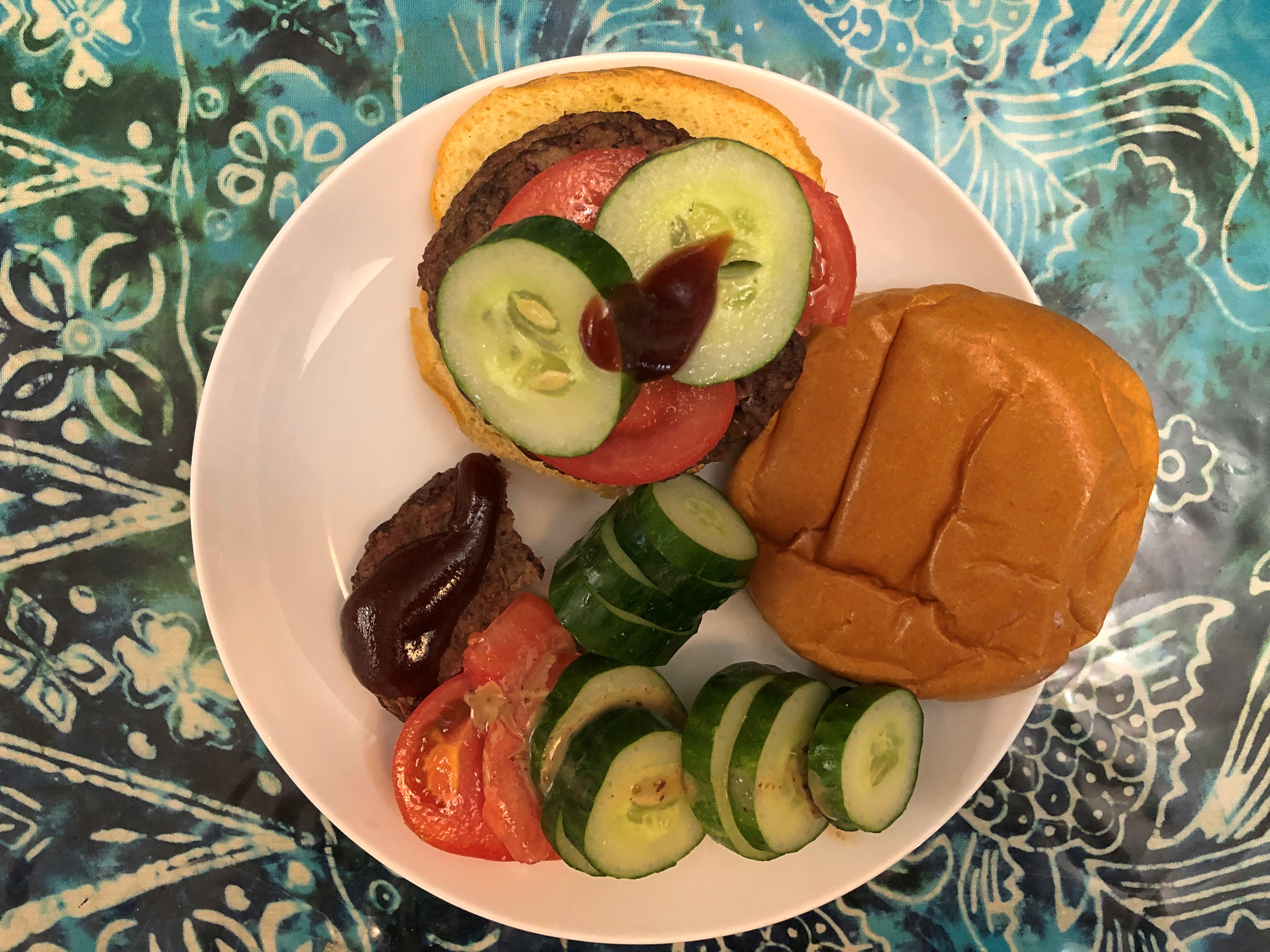
Another benefit of summer, if you attend to a garden.

The meat and bread, we bought. The tomatoes and cucumbers, we grew.

Thursday Updates &c.

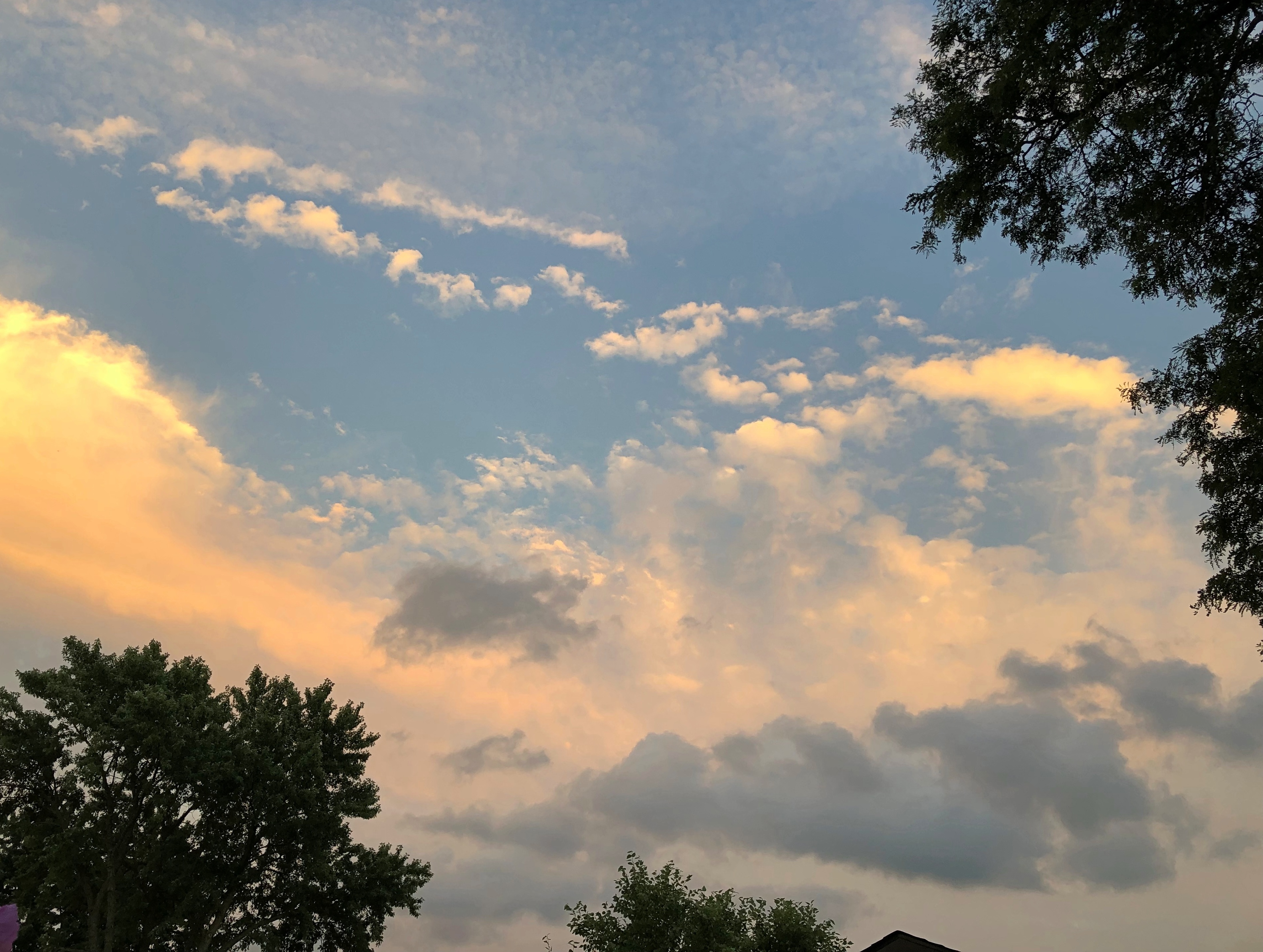
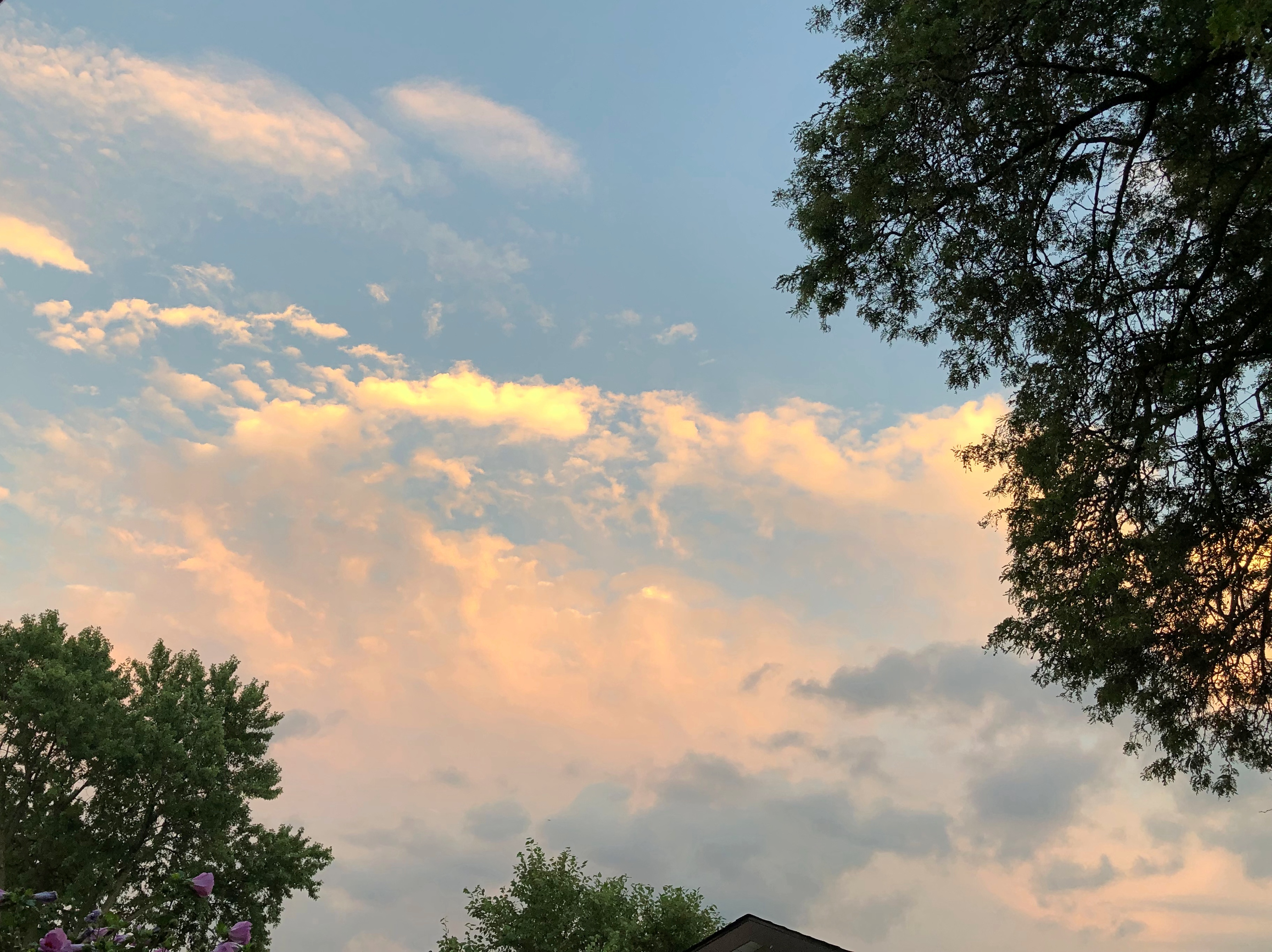
Cerulean days. Thursday dusk on the deck.

It’s come to my attention that Jim Varney did occasionally perform live with Gonzo Theatre. At least, the Tennessean posted an image of him doing stand-up at the Municipal Auditorium in downtown Nashville on November 14, 1982, describing him as a member of the troupe. So maybe he was sometimes; but not specifically on the night we went, and he isn’t in the publicity shot I have in my possession. A Tennessean article about Gonzo Theatre from the year before doesn’t mention him either.

Argh, we could have seen Varney live but, being ignorant young’uns, we didn’t know about the show. Bet he was a hoot and a half.

We were out and about the evening NBC broadcast the Olympic Parade of Nations nearly two weeks ago, so we didn’t see that. Since then, I haven’t felt much like following the Games. But occasionally I look at the medal counts. I see that the UK has 57 and France 56 thus far. Is that the count that the French really care about? No hope to best China or the U.S. (or even Australia), but maybe they’ll top the limeys.

What do the French call the British when they’re in a derogatory mood, anyway? One source says rostbifs.

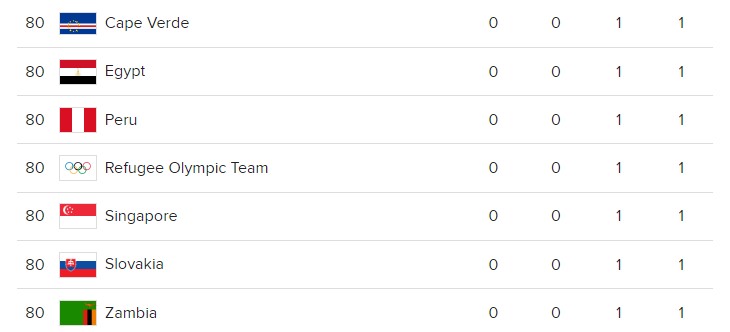
I also checked the nations that so far have a single bronze. They are:

Including one for the Refugee Olympic Team. How about that.

“Boxer Cindy Ngamba became the first-ever Refugee Olympic Team athlete to win a medal this week, giving the team its first piece of hardware since its creation nearly a decade ago,” NPR reports.

“Ngamba was born in the Central African country of Cameroon and moved to Bolton, England, at age 11, according to her official biography. She took up soccer at a local youth club, where she discovered boxing by chance at age 15.

Ngamba, who is gay, cannot return to Cameroon, where same-sex sexual relations are punishable by up to five years in prison… Ngamba qualified for the Refugee Olympic Team earlier this year, becoming the first boxer to do so.”

Good for her. Hope she gets to stay in the UK.