Half Day Forest Preserve & Captain Daniel Wright Woods Forest Preserve

The weather over the weekend was brilliant, a cluster of warm, mostly clear days, an echo of this year’s golden summer. Today too, but it will end tomorrow evening with storms and cold air behind them.

Here in northern Illinois, summer 2020 offered mostly warm, mostly clear days that stretched into months, with just enough rain to keep the intense green of a wet spring still green as the summer wore on.

Such a fine summer, if you were lucky enough to enjoy it, came as if to soothe over the nervous energy and dread the near future emanating from the wider world, though I’m fairly sure the weather takes no interest in our concerns. Birds don’t either, but somehow they were singing just a little more cheerfully over the weekend. What’s up with that, eh?

This is how to give a presidential concession speech.

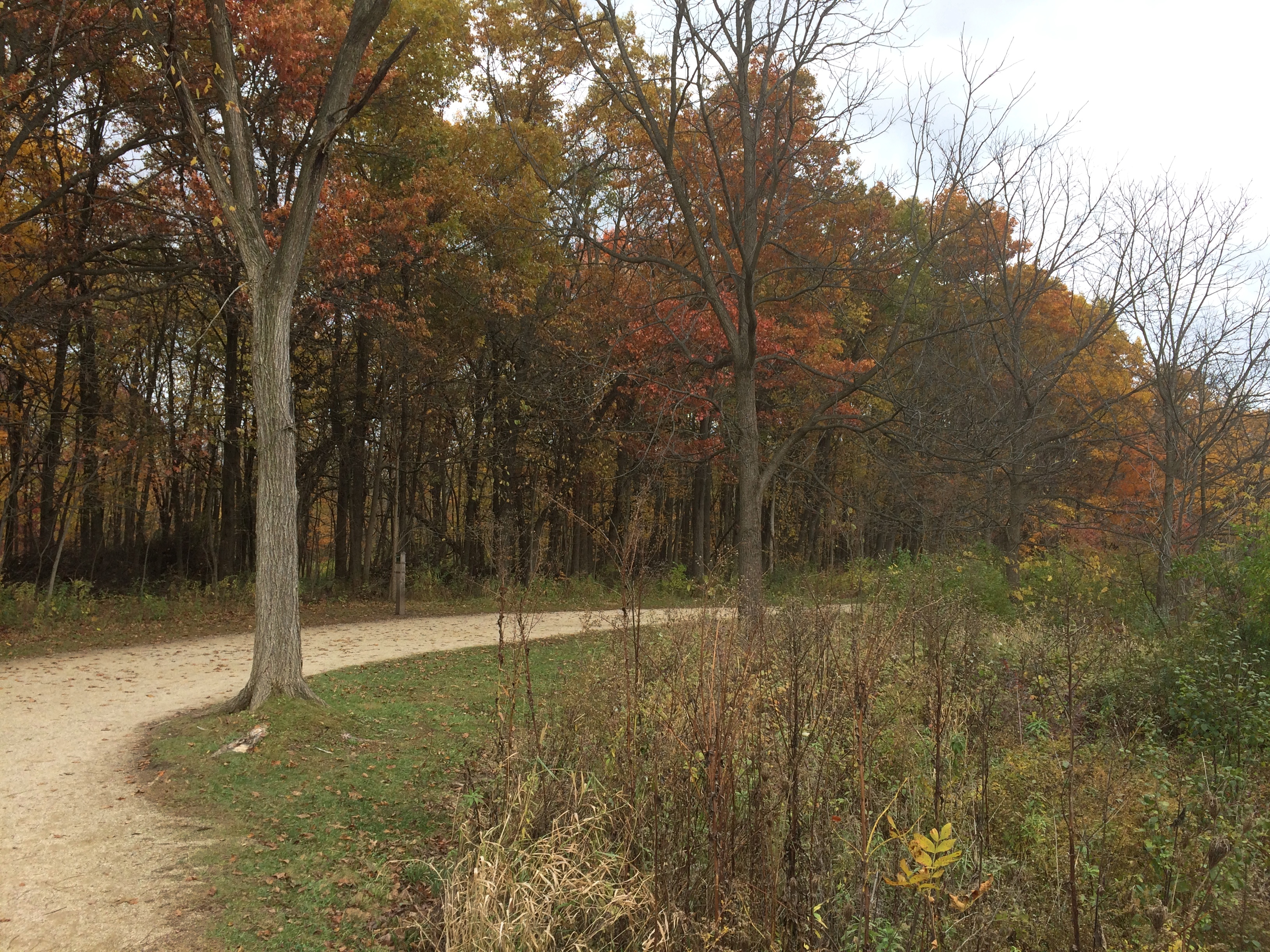
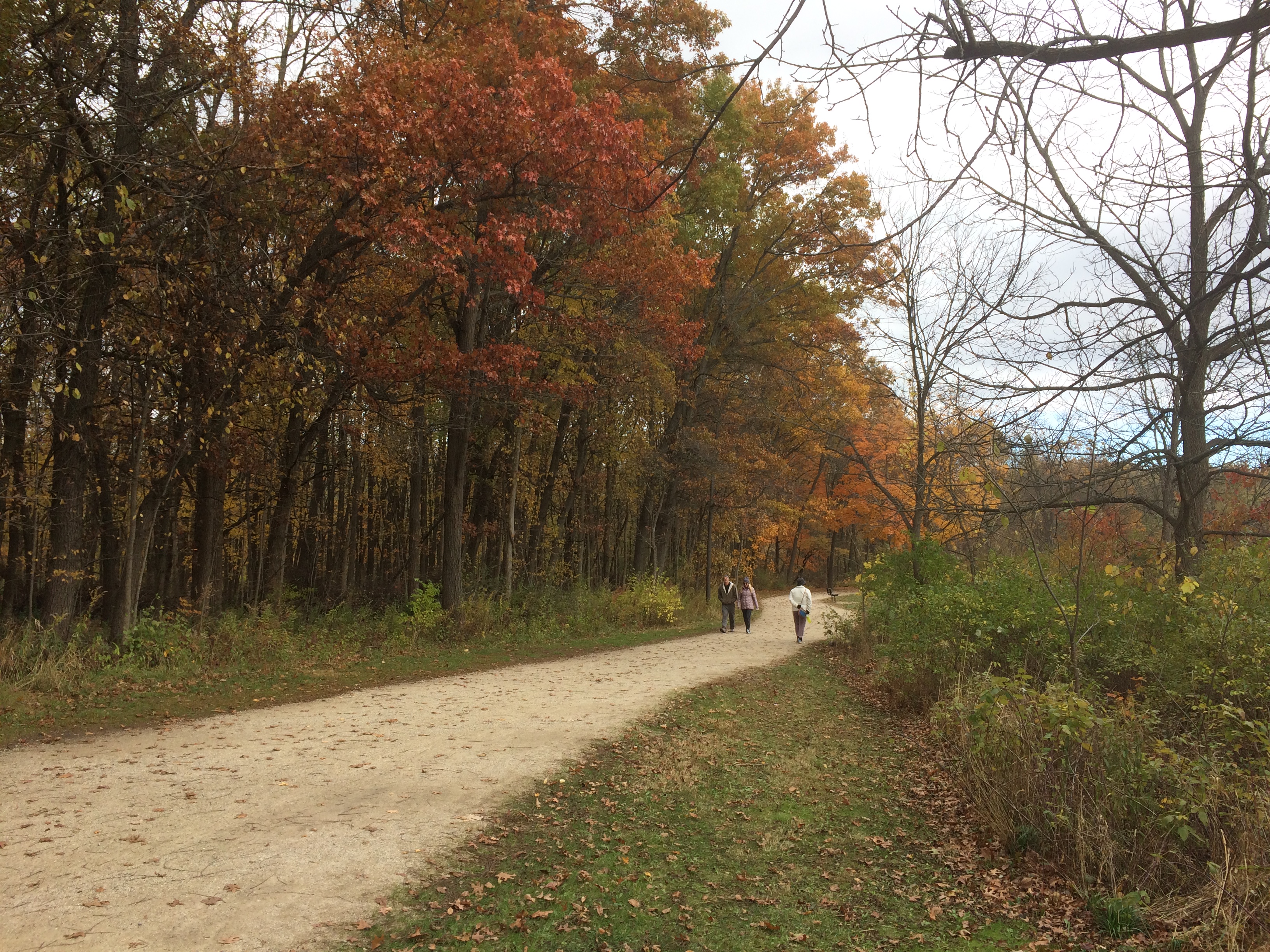
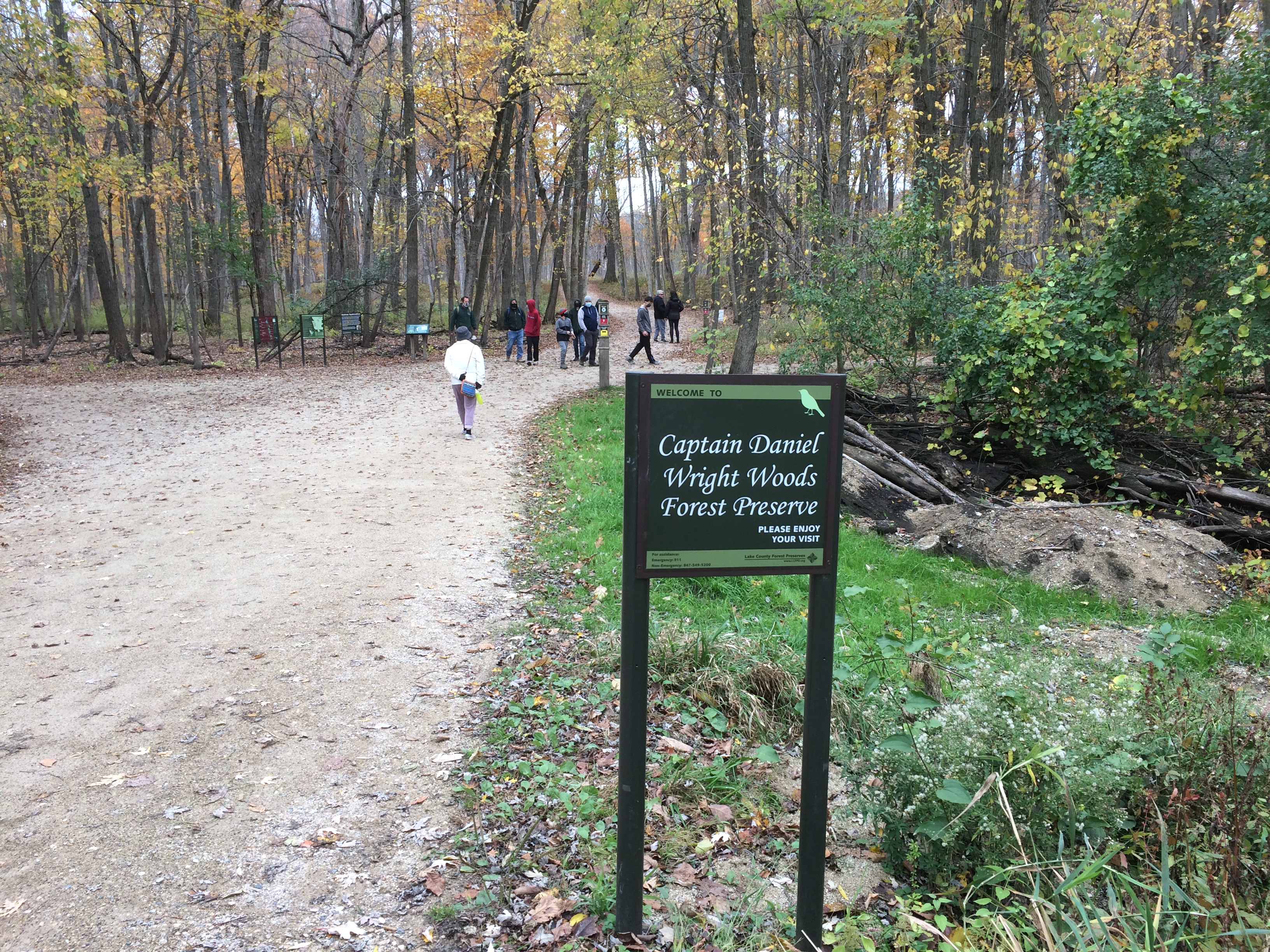
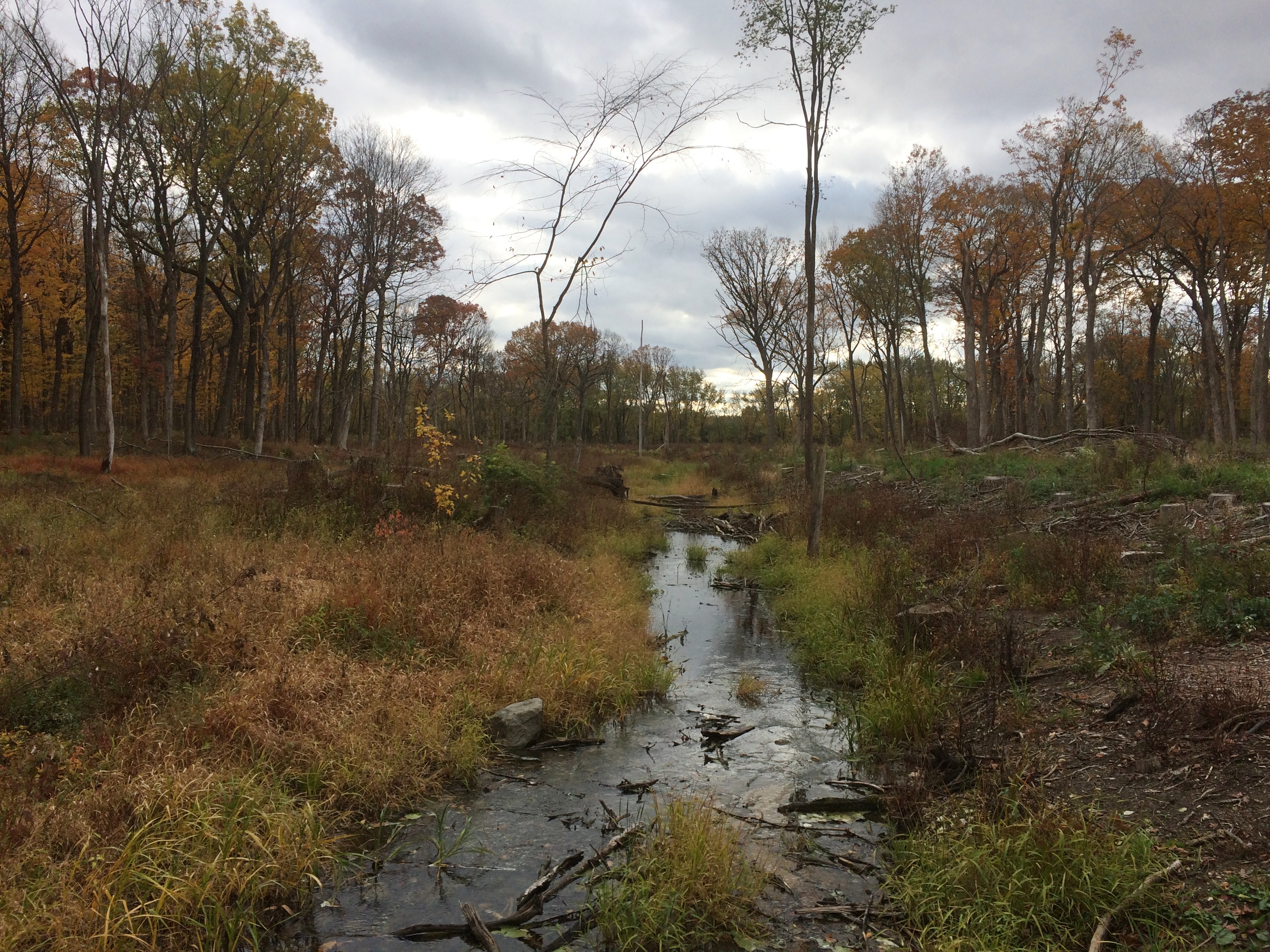
Two weekends ago, temps were cooler but not bad. Certainly high enough for a walk in a new forest preserve. New to us, and actually two adjoining forest preserves: Half Day FP and Captain Daniel Wright Woods FP.
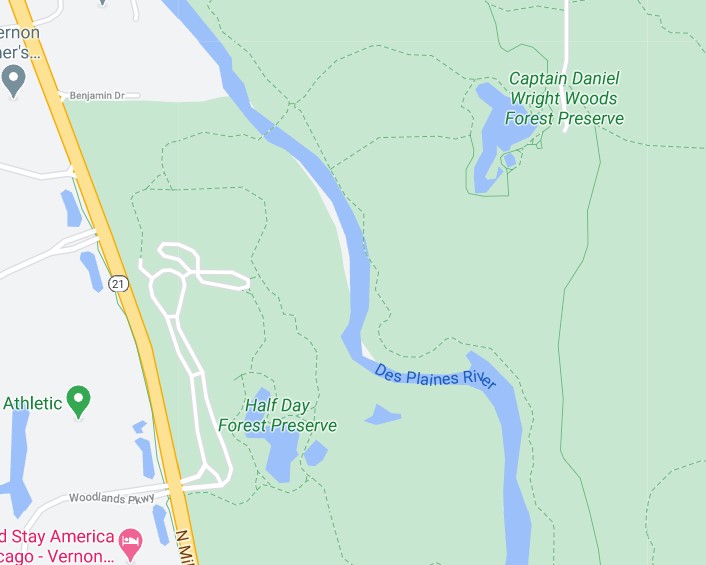
The preserves are in Lake County. We started at the Half Day parking lot near a small lake, walked to the small lake in Captain Daniel Wright Woods, and came back the way we came.Half Day FP and Captain Daniel Wright Woods FP
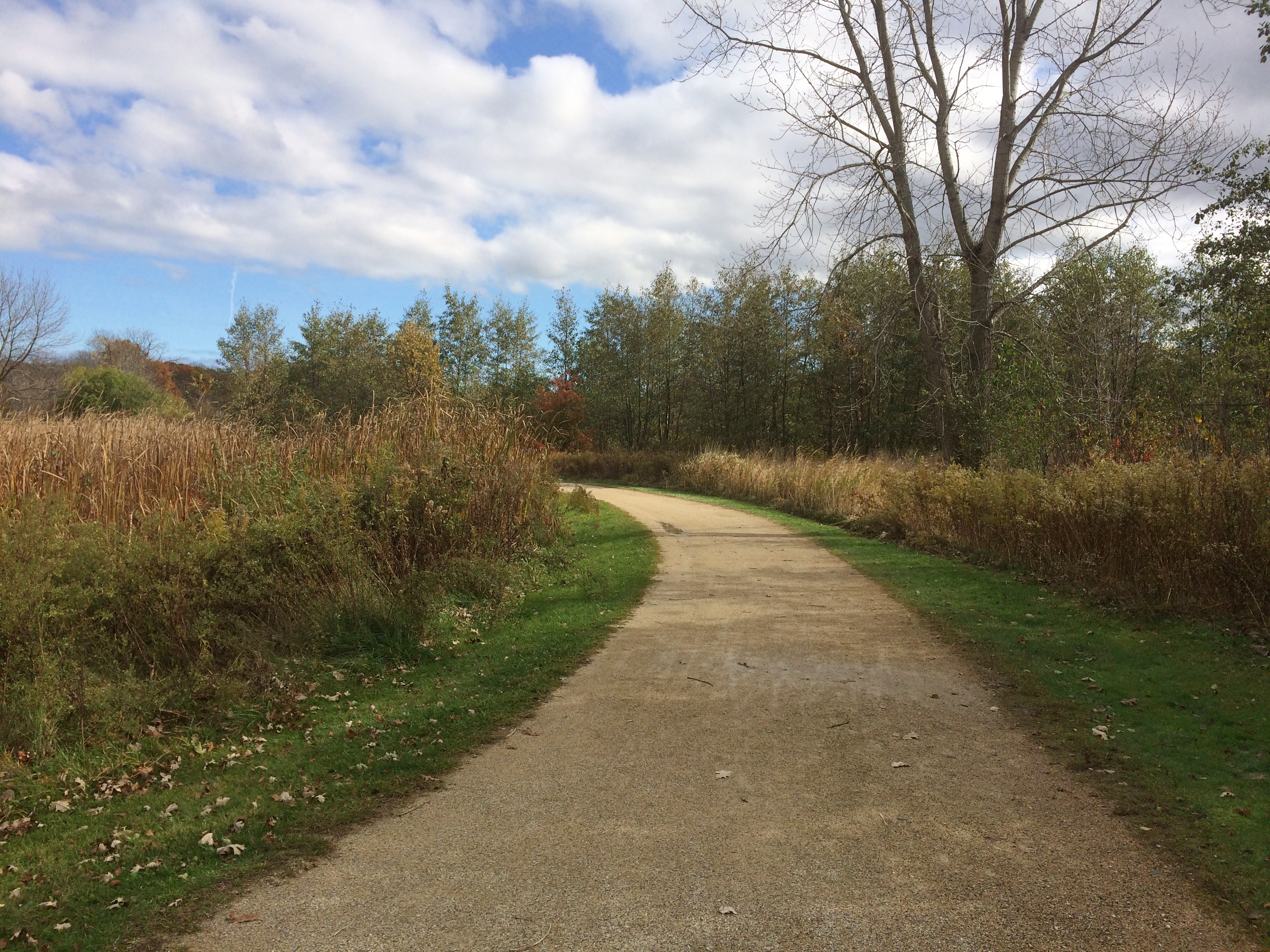
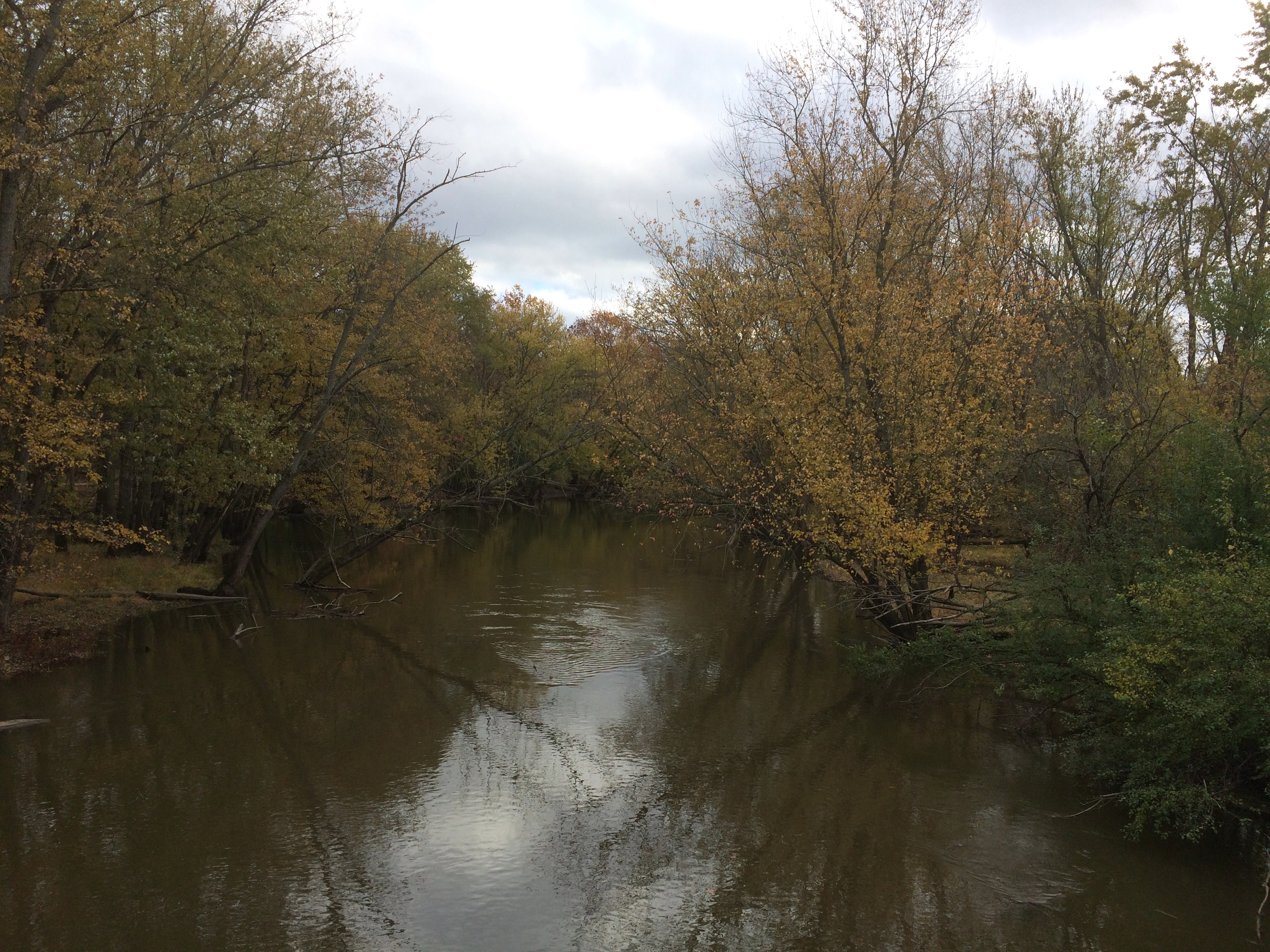
Half Day FP and Captain Daniel Wright Woods FPHalf Day FP and Captain Daniel Wright Woods FPExcept for seeing a sign along the trail, we wouldn’t have known where one forest preserve began and the other ended, which was more-or-less at the Des Plaines River. First we had to cross that river.Half Day FP and Captain Daniel Wright Woods FP
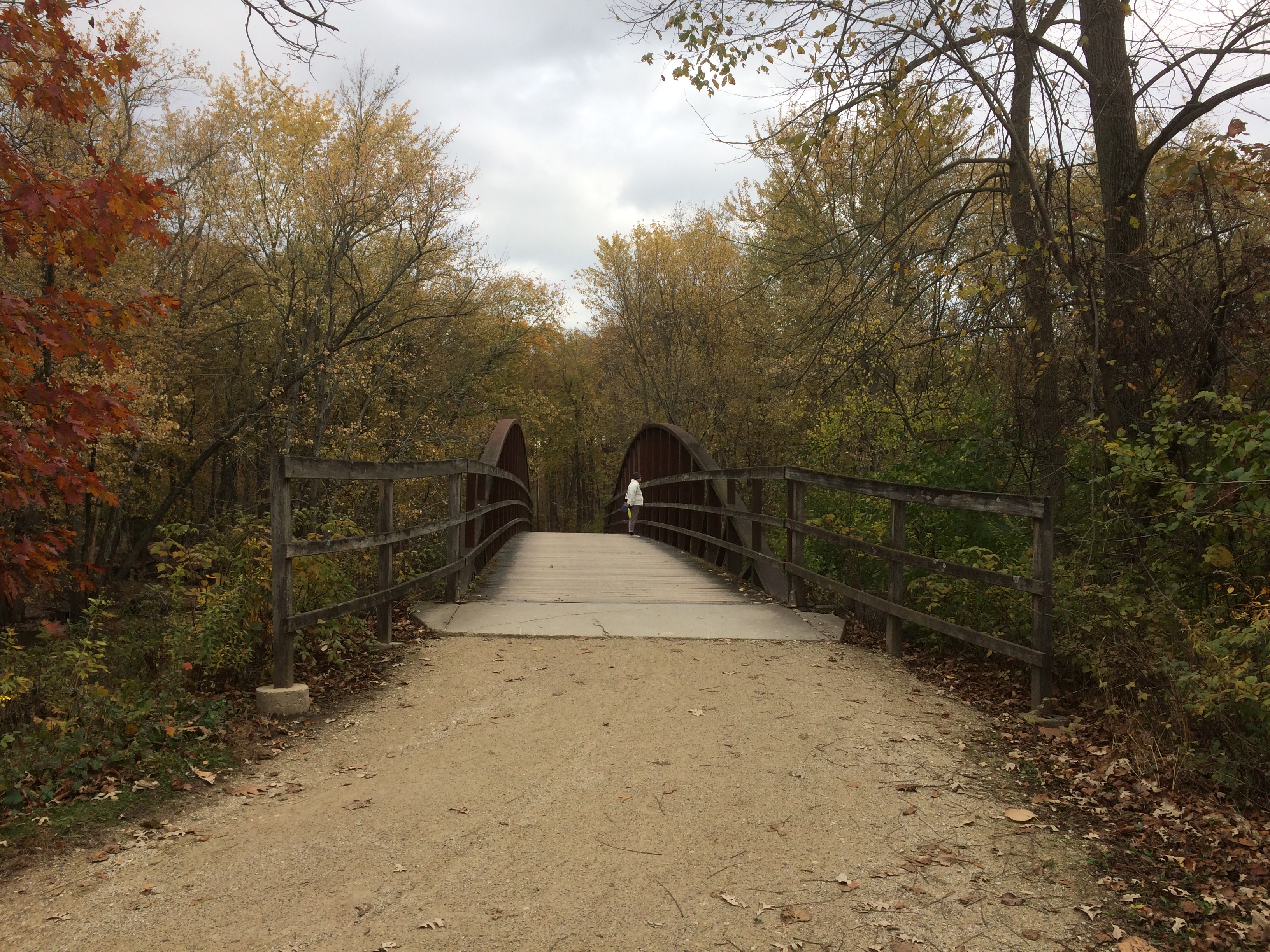
Half Day FP and Captain Daniel Wright Woods FPHalf Day FP and Captain Daniel Wright Woods FPI can’t see a name like that and not look it up later. Captain Daniel Wright, a veteran of the War of 1812, later became noted as the first white settler in Lake County.
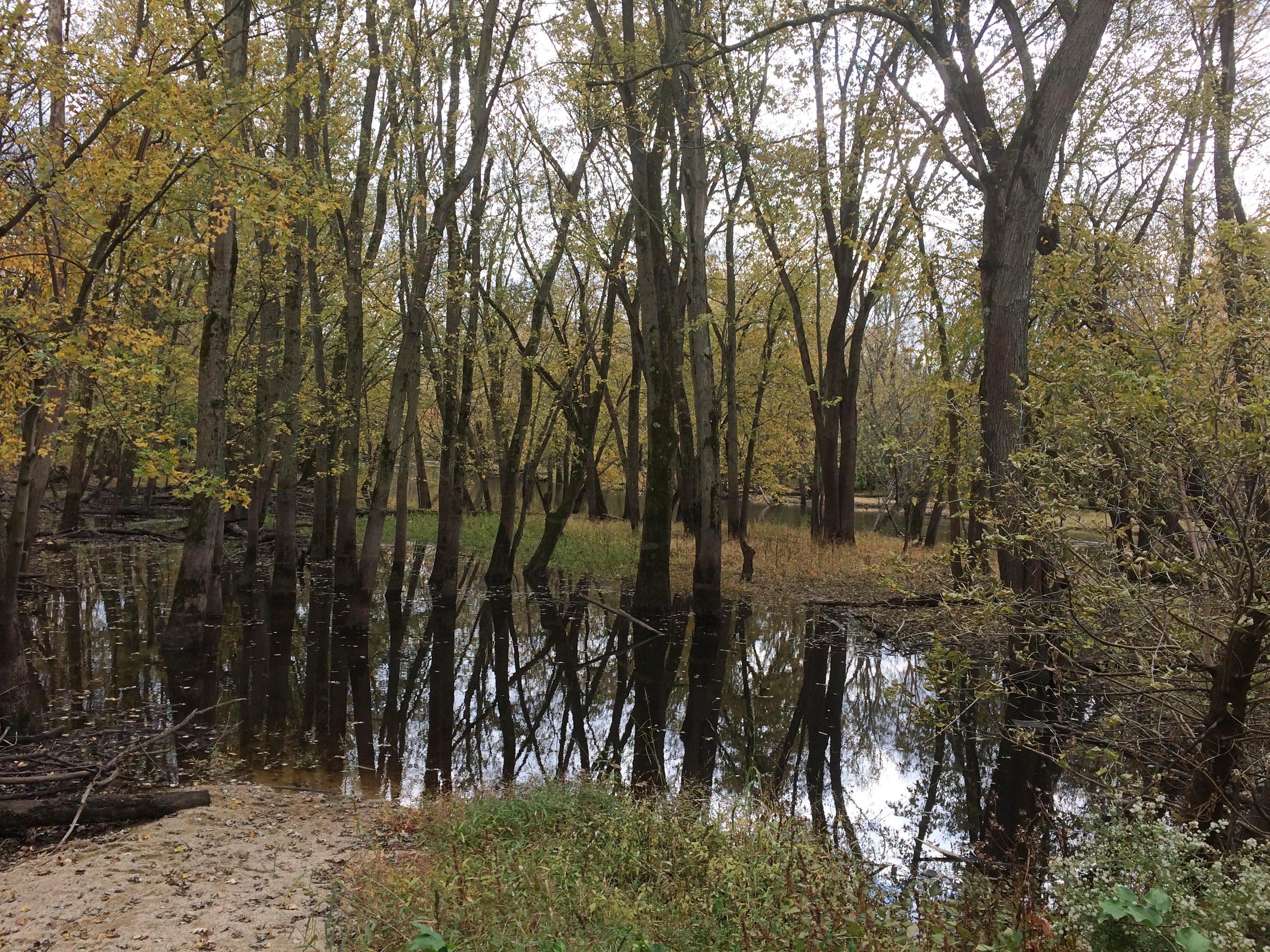
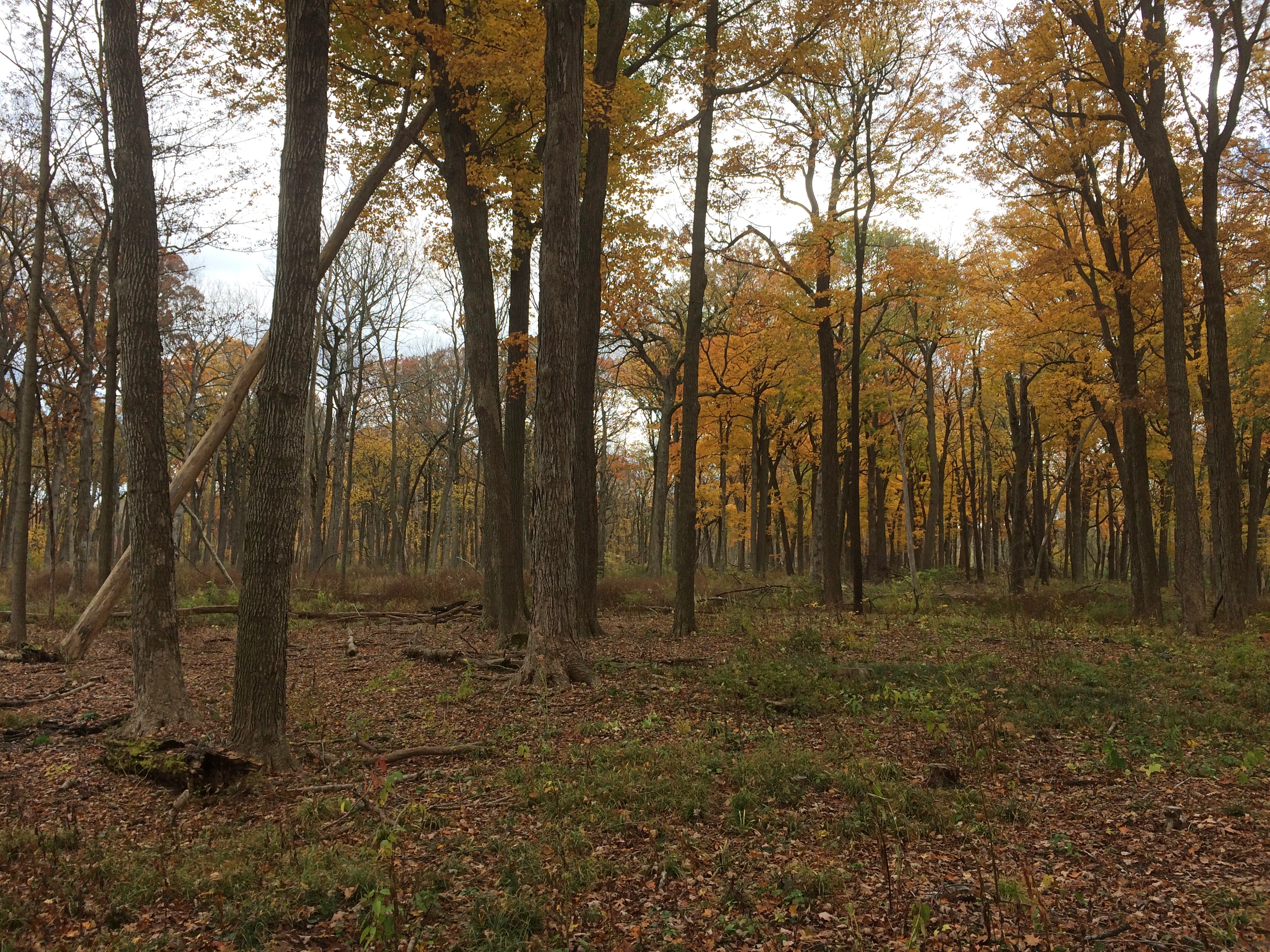
Half Day FP and Captain Daniel Wright Woods FP

Half Day FP and Captain Daniel Wright Woods FPHalf Day FP and Captain Daniel Wright Woods FPFind-A-Gave has more. “Capt. Wright was active as a farmer and a cooper,” the site says. “He built his cabin when he was in his mid-fifties and in spite of the hardships associated with pioneer life, he lived to be ninety-five years old and is buried in the Vernon Cemetery in Half Day. A stone memorial was erected in his memory on his old farm on the east side of Milwaukee Avenue.”

Something else to look for next time I come this way.
Thursday Dross

After a cold second half of October, temps have trended warmer in early November. So much so that I had lunch on our deck today, and expect to tomorrow as well. It can’t last. But it’s nice to sit out there and forget about the national hubbub — which I can’t do during my working hours, as paying attention to it as part of my job.

Here’s an article about the House of Tomorrow at Indiana Dunes NP, which we saw last month. A good short read, except for one thing: no date on it, which is a pet peeve of mine. It’s obviously not that old, since it refers to the recent designation of the national park, but you shouldn’t have to rely on internal evidence to date an article.

When I posted about Pounds Hollow Recreation Area a while ago, I forgot to include the short falling leaves video. Here it is.

We’re past peak here in northern Illinois, but some of the trees are still ablaze, and some still wilted yellow-green. Sitting out on the deck was pleasant enough today, except when a leaf-blower kicked to life noisily not far away. Will future generations ponder that leaf blowers were ever a thing? Hope so. As far as leaves go, let ’em stay where they fall on your lawn. They’re nutrition for next year’s grass.

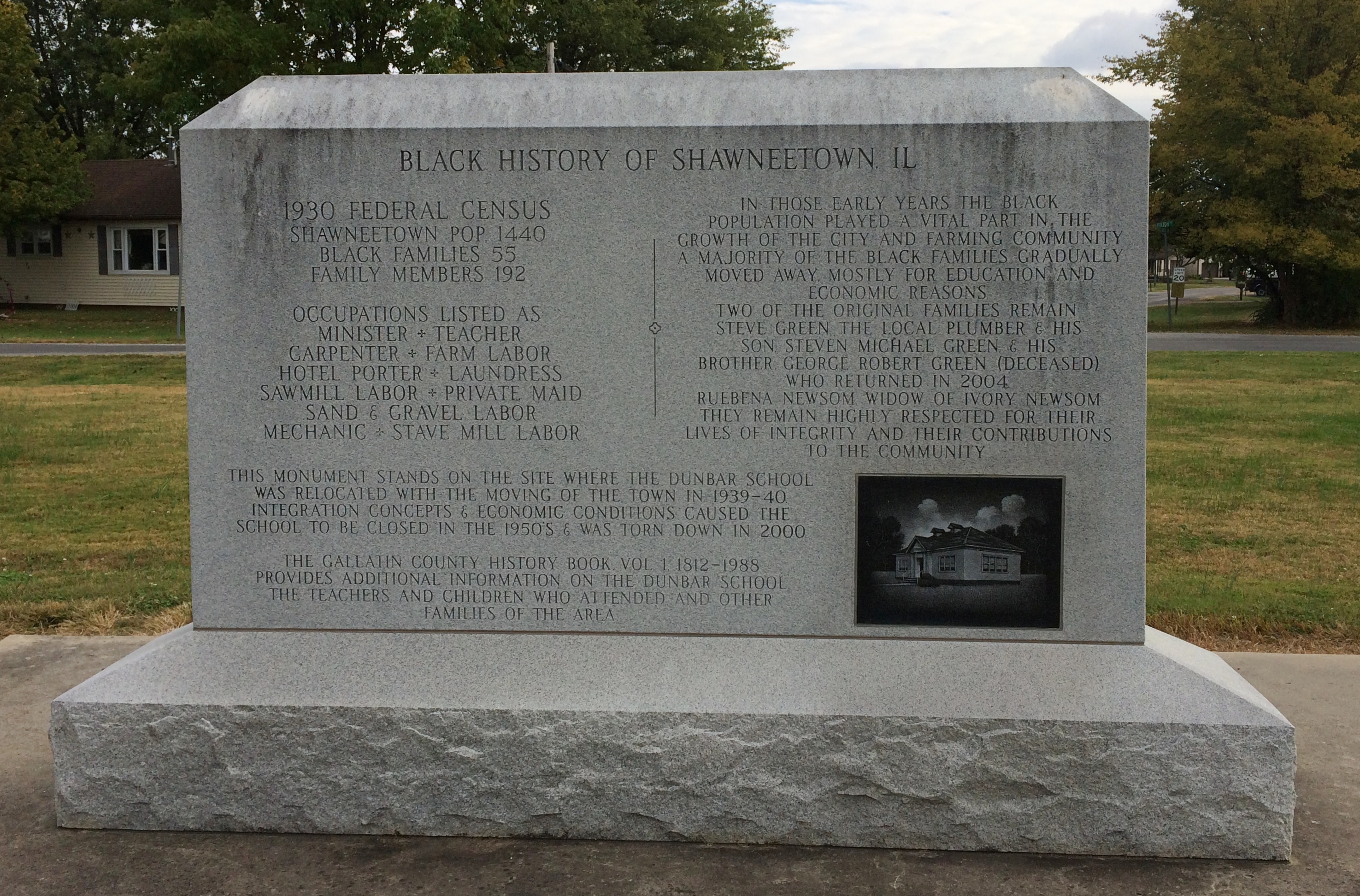
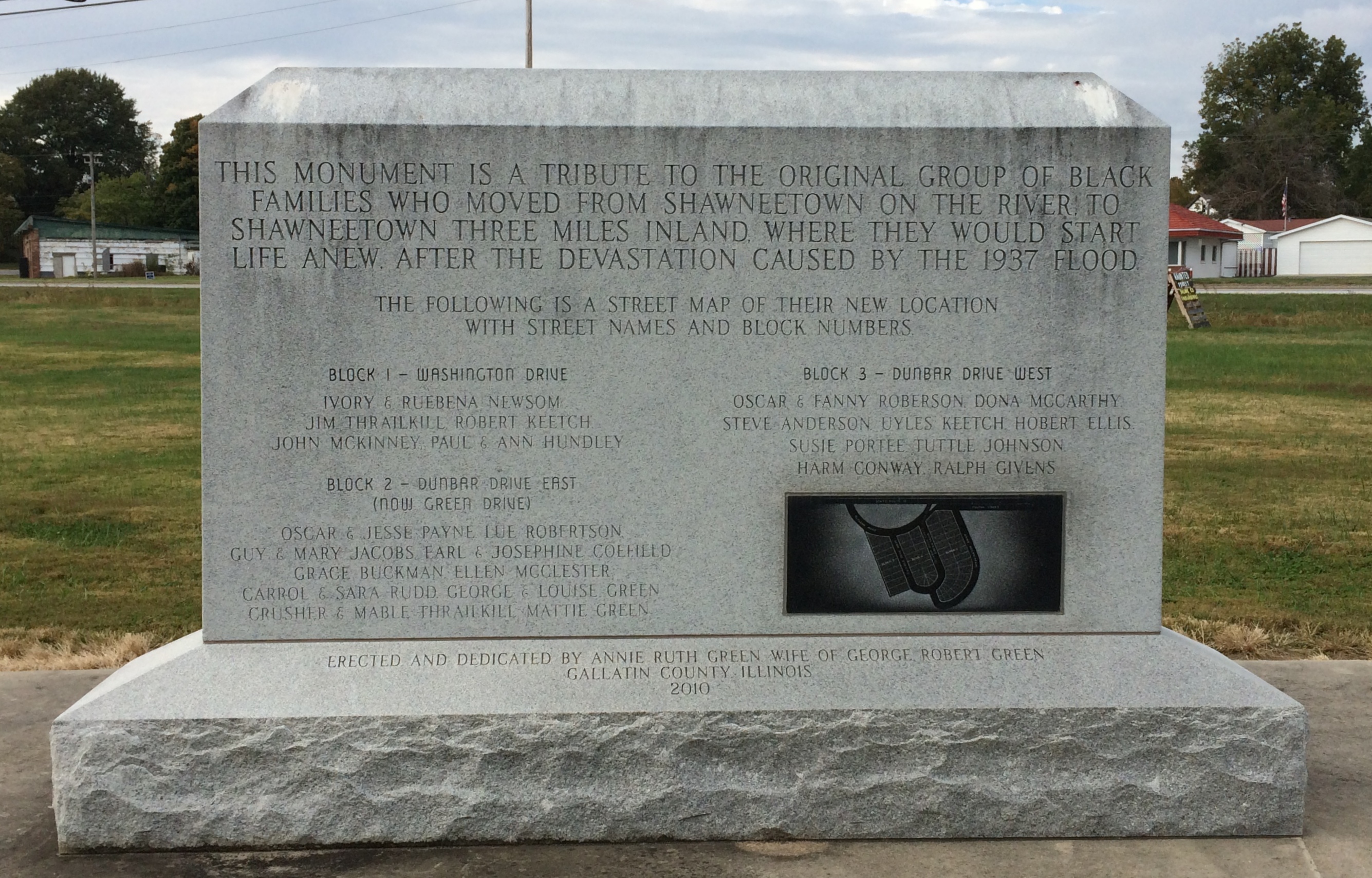
In Shawneetown, Illinois, the new town that is, you can see a memorial erected about 10 years ago. The wave of such memorials, I believe, will continue into the 21st century.
Shawneetown Illinois black family memorialIt’s a tribute to the original group of black families who moved from Shawneetown on the river to Shawneetown three miles inland, where they would start life anew, after the devastation caused by the 1937 flood.

It includes a map of the nearby neighborhood and all the names of the black residents who lived there. The other side has a more general black history of Shawneetown, noting that a segregation-era school stood on the site of the memorial, presumably for the black neighborhood’s children, but it doesn’t say that. The school closed in the 1950s.

Shawneetown Illinois black family memorialAll a little wordy, but not as prolix as the Norwegian Settlers State Memorial.

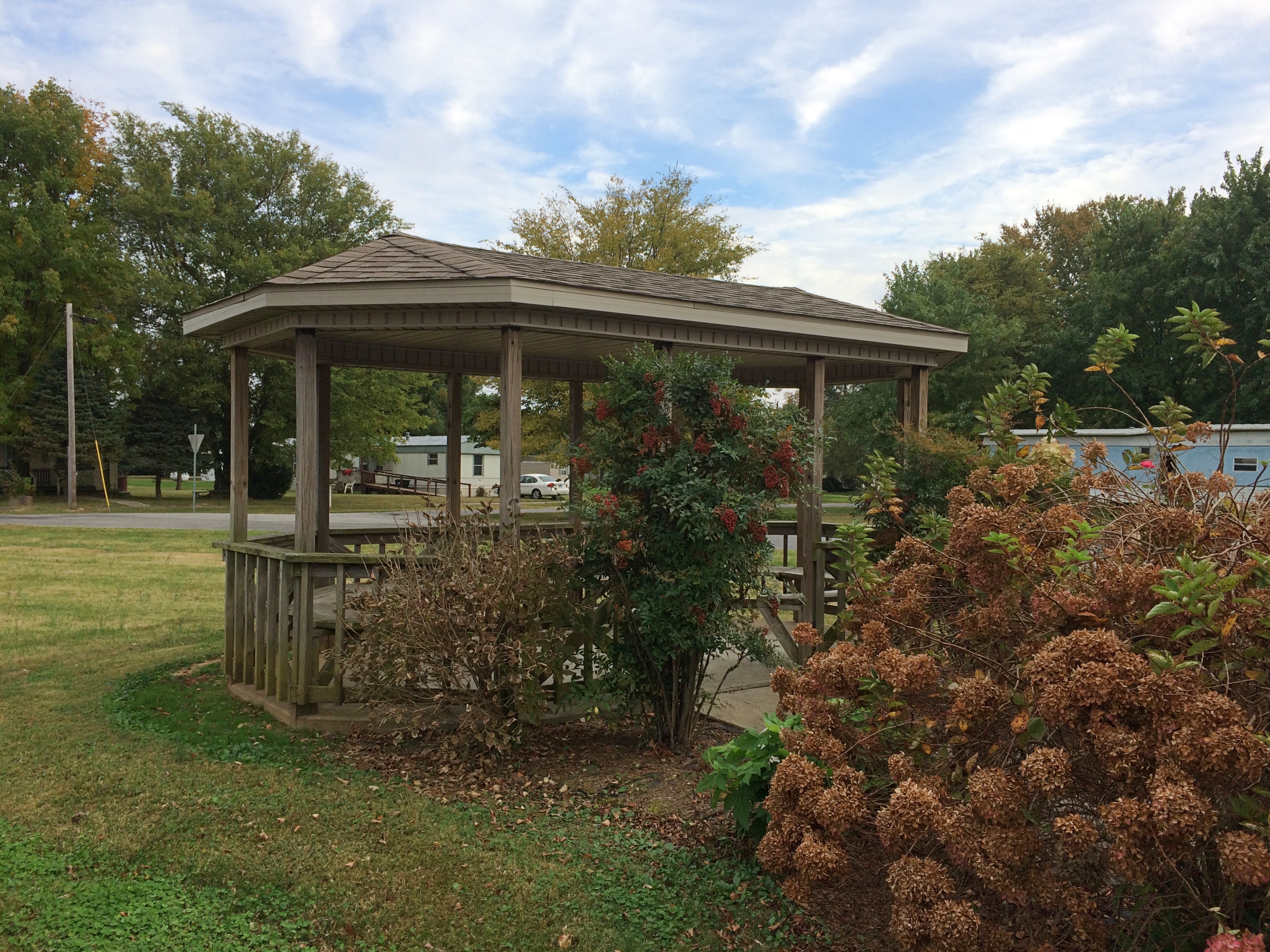
Near the memorial is a rectangular gazebo. Without corners. Or is it really a gazebo?
Shawneetown ILWhen Ann and I saw the abandoned Texaco station in Old Shawneetown, I asked her if she’d ever heard the Texaco jingle. I hadn’t thought about it in years, but the point of jungles is to bury themselves deep, so it’s coded in my synapses somewhere.

Most Americans my age would know what I meant, but considering that Men Who Wear Texaco Stars are long gone, I didn’t expect her to know. She didn’t.

Later, I showed it to her on YouTube, where it’s a standalone video (and also the grist for truly stupid local TV news).

That made me a little curious myself. When did that jingle first air? As it turns out, 1962, as a snappier tune compared with, for example, what the singing Men With Texaco Stars did for Milton Berle 10 years earlier. The jingle was also incorporated into later Texaco songs, such as this one sung by Ethel Merman.

As jingles go, “You Can Trust Your Car” is memorable indeed. The story of the copywriter (and composer) who came up with it, one Roy Eaton, is even more remarkable. Aside from being a talented concert pianist, he was the first black creative at a major ad agency, joining Young & Rubicam in 1955 and later working for many years at Benton & Bowles, before founding his own company. He’s still alive at 90.

So memorable that it was the basis for an anachronism in a 1977 episode of M*A*S*H (see the trivia section at the bottom of the page).

The Ricki Lee Jones song “Last Chance Texaco” (1979) includes an example of a reference — to the jingle — that was perfectly understandable when the work was new, and perfectly mystifying to later generations.

Your last chance
To trust the man with the star
You’ve found the last chance Texaco

One more Texaco fact: John W. “Bet A Million” Gates was an early investor in the ancestor company of Texaco.

Fall Break (Breaktober)

A return to gloriously warm days, at least for now, after a cold snap early in the month. Yesterday and today I took breakfast and lunch on the deck. Also, when I could get away from work, I just sat around out there and let my skin manufacture vitamin D.

Back to posting on October 18 or so. No lengthy trips for this fall break; such is the circumstance of the times. I have some sweet memories of October trips of the past, such as last year in Virginia or Philadelphia in 2016 or, going back a lot further, Hida-Takayama in 1991 or New England in 1989.

Watch one thing on YouTube out of idle curiosity, such as a “10” list — the 10 Greatest European Elevators of All Time, for example — and the bots will offer you heaps of other eccentric, vaguely related videos. Such as 10 Shocking Secrets from Leave It To Beaver, which appeared as a suggestion not long ago. (I won’t link to it, but it is real, unlike my first example.)

How many shocking secrets from Leave It To Beaver do I need to know? One would be more than enough, I think. What’s shocking is that anyone would care to know more.

RIP, Eddie Van Halen. Not that I ever bought any of his records or was even much of a fan. Still, occasionally Van Halen was just the thing. A nostalgic portal back to 1978 in this case, and I’m surprised the drummer didn’t explode in that video. Certainly Van Halen the man had hair in his heyday. Also, he named his son Wolfgang. Makes me smile.

The obit cited above is at a site called u discovermusic. It’s run by a record company, so I suspect ulterior commercial motives, but even so it’s pretty interesting. Like this list: quite a compilation.

Temporarily Mediterranean

For a few weeks now, we’ve enjoyed a Mediterranean-like climate here in northern Illinois, at least the warm and dry summers. Sometimes hot, but usually just warm, and usually dry, though we’ve had occasional showers.

We’ve had more at-home meals al fresco this year than any time I can remember. It can’t last. But at least it will for the next week or so.
Till then, it’s a mild balm for the worldwide pervasive melancholy, if you happen to be around here.

Thursday Clouds &c

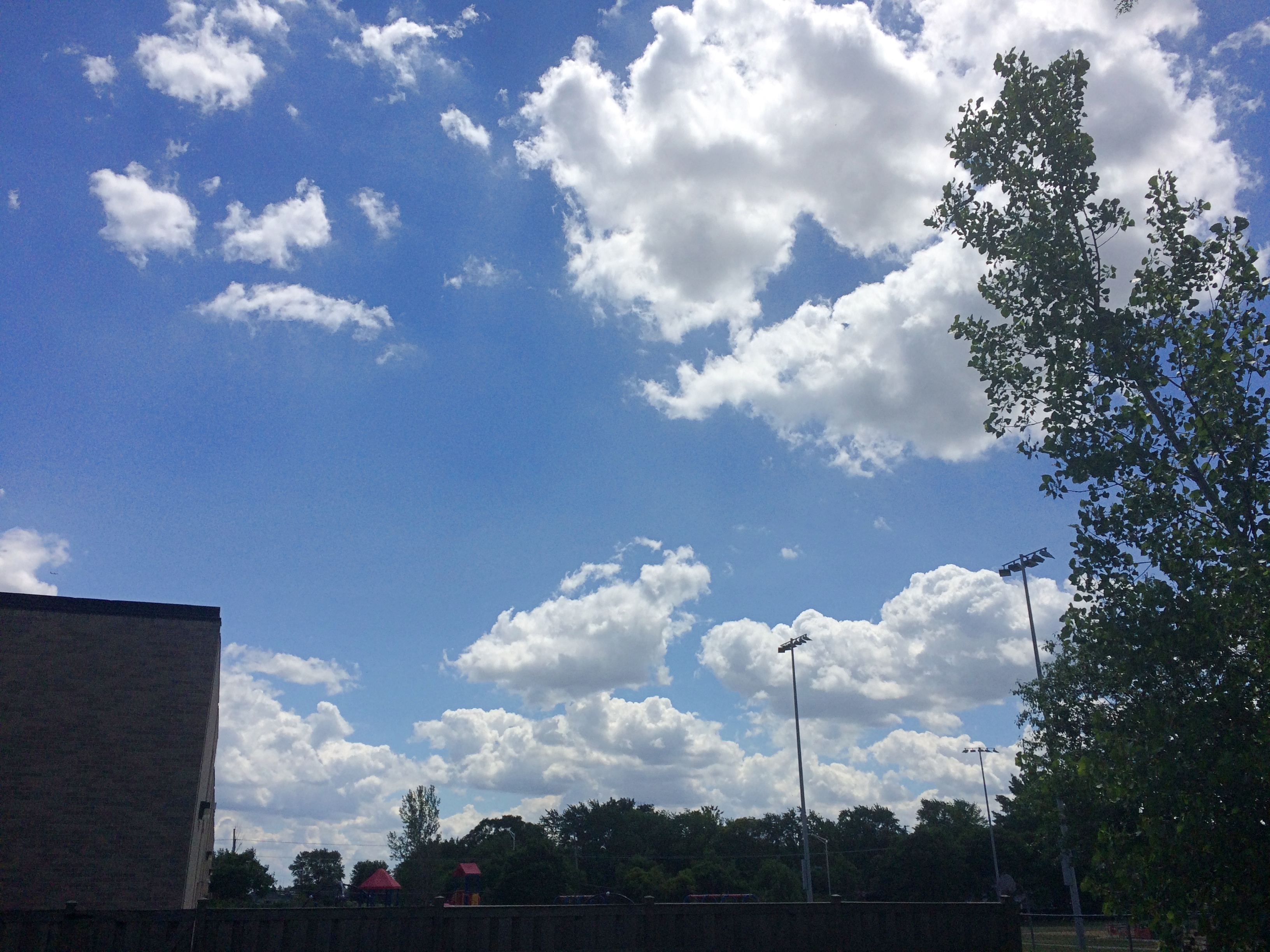
Warm day with plenty of cumulus clouds.

Wet spring has transitioned to a dryish summer so far, though we’ve had a few rainy moments lately. The day we were at Devil’s Lake SP, scattered thunderstorms were predicted, and maybe somebody got some, but we only experienced a little rain driving home that afternoon.

Made an unusual find at Devil’s Lake last week: a visitor guide that’s actually worth a damn. Though no writer names are given, Capital Newspapers in Baraboo published it for the Wisconsin Department of Natural Resources, so it might have been a staff effort. That is, people who have some skill in writing.

So it has practical information — such as how to rent a boat or picnic shelter, activity schedules (clearly published before the pandemic), safety tips, and some well-done maps — but also readable information about the park, such as about the effigy mounds in the park (we didn’t see those), the threat of the dread emerald ash borer, a history of rock quarries in the area, and plans for a new interpretive center.

Also, a short item about the name of the lake. The Winnebago (Ho-Chunk) name is rendered as Ta-wa-cun-chuk-dah or Da-wa-kah-char-gra, which “was translated in its most sensational form (for that era) as Devil’s Lake,” the article notes. It could have been Spirit Lake, Sacred Lake or Holy Lake.

That era being the 19th century, when “reporters produced superlative accounts of Devil’s Lake and reproduced legends (sometimes manufactured) to match… By 1872… the Green County Republican newspaper reported, ‘Had the lake been christened by any other name, it would not have attracted so many people.’ ”

Just another example of Victorian marketing, in other words.

Nothing if not variety: the movies we’ve watched lately have included a selection of musicals, all so different in form and content that I wonder at the elasticity of the term musical. They include Chicago, The Rocky Horror Picture Show, Rocketman, and High School Musical 2.

As a sort of fictionalized musical biopic, the colorfully entertaining Rocketman at least made me appreciate just how ubiquitous Elton John was on the radio of my youth. I already knew that, of course, but hadn’t given it any thought in a long time. Also, it inspired me to look up a few clips of the musician himself, illustrating his piano virtuosity.

As for High School Musical 2, the girls are fond of that 2007 movie as part of their relatively recent childhood. I agreed to watch it all the way through, which I never had. The Mouse clearly put time and money into the thing, and the tunes and choreography were accomplished enough, so I didn’t mind watching. But without a sentimental attachment, its resemblance to a fully realized musical is that of a taxidermied animal to a living one.

May Showers Bring June Mosquitoes. Actually, They Don’t Wait Till June

More rain today. The ground is soggy, the grass is high and mosquitoes are breeding. Full spring, you might call it, except it wasn’t quite warm today. The heater kicked in this morning, an accompaniment to the hard-working sump pump.

Here’s a measure, just a single metric, of the state the country’s in: AAA, which usually forecasts domestic travel volume for the major summer holidays, isn’t doing so for the Memorial Day weekend.

“For the first time in 20 years, AAA will not issue a Memorial Day travel forecast, as the accuracy of the economic data used to create the forecast has been undermined by COVID-19,” its release says. “The annual forecast – which estimates the number of people traveling over the holiday weekend – will return next year.”

Hope so. Interesting choice of verbs, “undermined.” That perfidious virus.

As recently as February, I’d toyed with the idea of going somewhere for Memorial Day, since I’m always toying with those kinds of ideas. Soon, events put paid to them, which never even rose to the level of plans. We’ll be among those staying home over the weekend.

At least it’ll be warm and…

Oh, well. Any healthy day is good enough. That’s always true, but we usually disregard it.

Hail!

Yesterday evening, rain was forecast possible and clouds rolled along.

Temps were a pleasant 70 F. or so. I sat on the deck and waited for the rain. Mostly I saw cloud-to-cloud lightning a few miles away to the south, which has a fascination all its own. It was never near enough to drive me inside, and not much rain came either by dark.

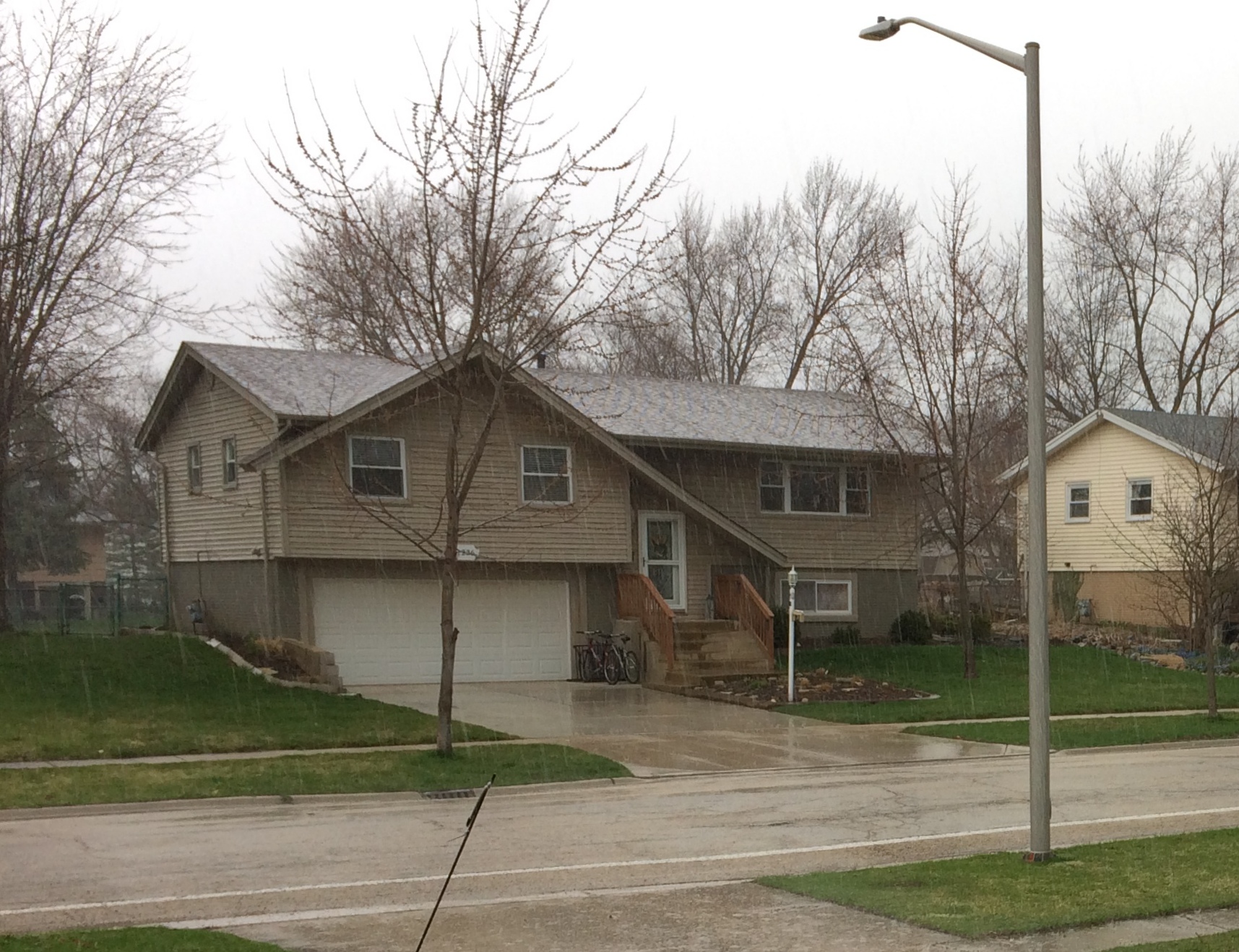
Today was a different story. Just before 5 p.m., heavy rain started to fall. With some hail. Luckily not too large, but enough to make a tink! sound when it hit a metal yard ornament in our front yard. Hail, or at least its streaks, is visible against the backdrop of a neighbor’s house.

When I was 11 or 12, golfball-sized hail fell as I watched from our kitchen window. The ice slammed into the yard and bounced every which way. It was over in two minutes. A minute? Not long, but impressive. I collected a few and kept them in the freezer until they merged with the other frost. It was Texas hail. You know, bigger like everything else.

Quieter Spring, But Not Silent

For the first time this year, since sometime in October probably, I sat out on the deck and ate lunch. Conditions weren’t perfect for it, but good enough at about 12:30 this afternoon under partly cloud skies. When the sun came out from behind occasional clouds and there was no wind, the deck was a pleasant place to be for a few minutes, lunch or not.

Out in the yard, the dog lolled in the greening grass a time or two. Rabbits have been spotted, though not by the dog today. Early hatching insects can be seen here and there, and early flowers are well established. Birds are noisy in their quest for food and to make baby birds. The only thing missing from the usual early spring sounds are those from the playground behind the house.

Southern Indiana at the End of the 2010s

A new decade is underway, and don’t let nitpickers tell you otherwise. At midnight as 2020 began — the beginning of the 2020s — I stepped outside for a listen, as I do most years. Pop-pop-pop went the fireworks in the freezing air.

If you know where to look in southern Indiana, about 50 miles southwest of Indianapolis, you’ll find yourself standing near a Tibetan stupa. I did that myself ahead of the New Year.
Tibetan Mongolian Buddhist Cultural CenterWe wanted to take a trip between Christmas and New Year’s, but nowhere too far or expensive. In that case, weather is the main variable. A blizzard, or even heavy snow or subzero temps, would have kept us home. But post-Christmas forecasts called for mild temps until December 30 throughout our part of the Midwest.

So on December 27, we drove to southern Indiana by way of Lafayette and Indianapolis, stopping in the former but not the latter. We arrived in Lafayette just in time to visit the Haan Mansion Museum of Indiana Art, and take a look at the sculpture garden and nature walk behind it.

That evening we arrived in Bloomington, Indiana, where we spent the next three nights. Bloomington is home of the largest branch of Indiana University, one boasting nearly 50,000 students and the Kinsey Institute besides. But just after Christmas, the place is practically deserted. A ghost university.

On December 28, we spent much of the morning at the Tibetan Mongolian Buddhist Cultural Center, which is out on the edge of Bloomington. We saw the stupas and the prayer wheels and flags and the Kumbum Chamtse Ling Monastery. We also happened to be there in time to see a fire puja ceremony.

We spent most of the afternoon that day in rural Brown County at the T.C. Steele State Historic Site, hilltop home and studio of the landscape painter of that name in the early 20th century. We also popped over to Nashville, Indiana, where we’d been in 2002. Instead of artwork, we bought lunch there this time.

The day was good for walking around outside — nearly 60 degrees F. and cloudy, but no rain. About as pleasant as you’re going to get in late December. The next day was nearly as warm, but rain fell on and off all day, sometimes heavily.

A good day for indoor sites. On the morning of the 29th, we headed south, deep into the rolling hills of southern Indiana, to visit the striking West Baden Springs Hotel, a grand hotel of the past revived only in recent years, along with its former rival and current sister property, the French Lick Springs Hotel, one-time home of Pluto Water.

After a lunch stop in Paoli, Indiana, we went to Marengo Cave, a limestone show cave under the small town of Marengo, and spent more than an hour among the stalagmites and -tites and flowstone. Near the cave’s entrance, a bonus site: a 19th-century Hoosier cemetery, whose weather-beaten stores were picturesquely wet with the most recent weather.

The 30th proved to be cold, though not quite cold enough for snow or ice. We drove home in the morning, stopping only for gas and rest stops. Strong winds blew. Sometimes strong enough to push the car slightly to the side. I white-knuckled the steering wheel a few times as a result.

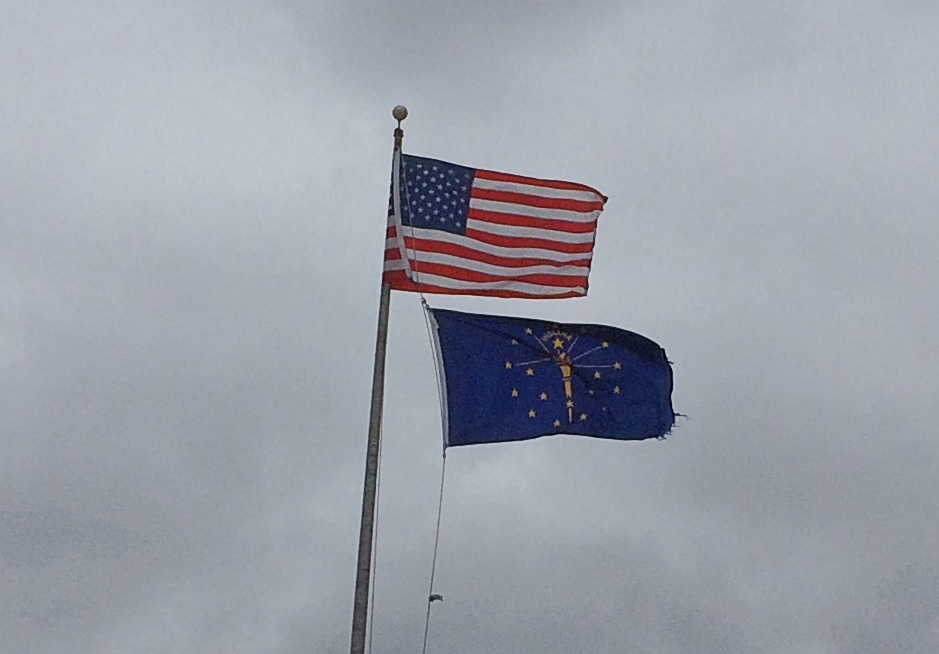
Indiana flag

The wind gusts also captured flags and pulled them straight. Here is Indiana’s flag at a rest stop. Better than those with a state seal slapped on: a golden torch and 19 stars, to symbolize Hoosier enlightenment and the state’s place as 19th to join the union.

Thursday Scraps

Declining summer is a touch melancholy, but it has its charms. Such as soft cricketsong by night.

Late July and early August were drier than the wet weeks of late spring and early summer, but we did get some rain this week, mostly the non-thundering, gentle sort. Earlier this week, I stood outside under the eave over my back door, and heard water flowing vigorously.

Not something you necessarily want to hear near your roof. Soon I figured it out, to my relief. The dry spell had completely dried the gutters out, so that the new water flowed much more freely. That was the sound: rainwater as it coursed through the gutters on its way to the downspout.

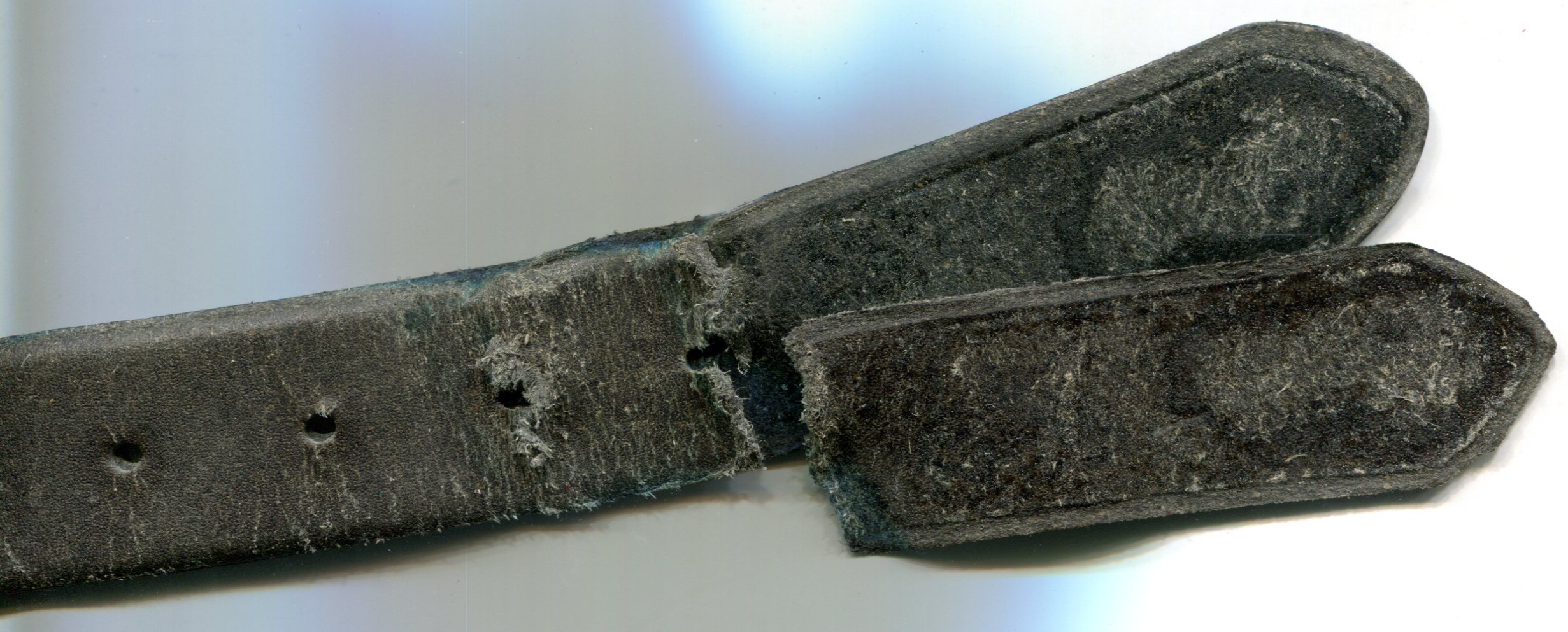
Something I’ve noticed in recent years: when you buy an inexpensive men’s belt, you don’t get a decent belt that lasts a few years, though a little worn at the end. You get cheap crap.

That’s the latest belt of mine to fall apart. There’s an industry for you to disrupt, Mr. Millennial looking for the main chance. Make decent belts. Probably someone’s doing that. Decent, maybe, but also priced five times an ordinary belt.

Recently I finished Everybody Behaves Badly,  subtitled “The True Story Behind Hemingway’s Masterpiece The Sun Also Rises,” by Leslie M.M. Blume (2016). Well written and full of interesting anecdotes. I knew Sun was a roman à clef but I didn’t know much detail or just how lightly Hemingway fictionalized some of the events, much to the embarrassment of the people who went to Spain with him in the summer of ’25.

Some tidbits: in an early draft of the novel, one of Brett’s brief affairs was said to be with an American named Tom who kept polo ponies. Possibly an allusion to the character Tom Buchanan in The Great Gatsby. Didn’t make the final cut.

Robert Cohn was based on Harold Loeb, an unflattering portrait that shadowed Loeb the rest of his life. Loeb and Hemingway didn’t quite come to blows in Pamplona, however, unlike their characters. They were angry enough at each other to fight, but apparently thought better of it.

Not long after the book came out, Hemingway left his first wife for the woman who would become his second. As part of the divorce, he agreed to give wife #1 Hadley Richardson the royalties from Sun, which would have been considerable. Then again, in marrying wife #2 Pauline Pfeiffer, he was marrying into money.

Now I want to read something different than that milieu. So I picked up a book of Eudora Welty short stories.