Southern Loop Leftovers: SC & GA

Early in the recent trip.
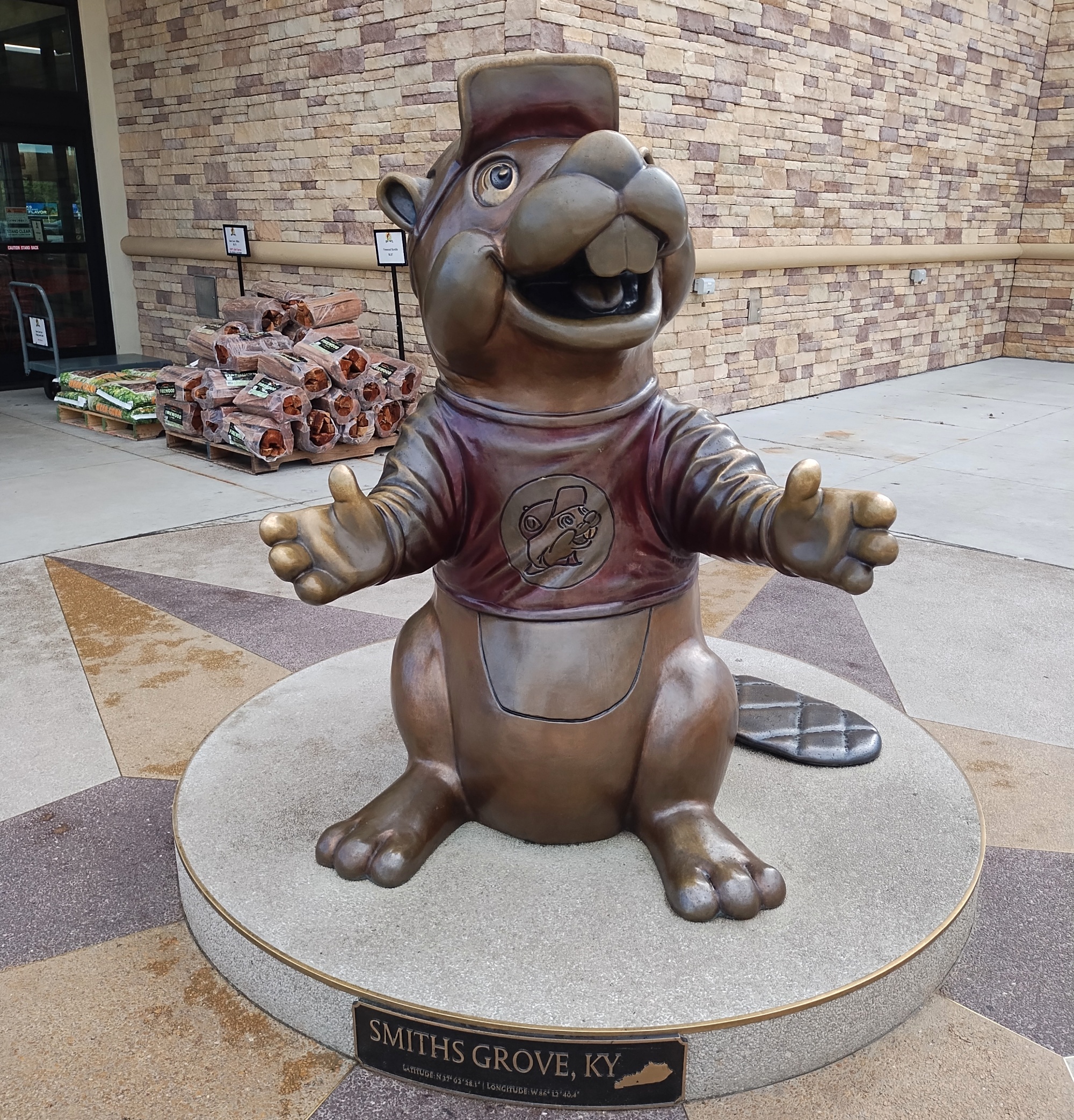
The Buc-ee’s imperium marches on. On my way to Tennessee that first day, I stopped at the location near Smiths Grove, Kentucky, to visit its gleaming facilities. Business was reasonably brisk that Monday, but nothing like the bedlam on the Sunday, nearly two weeks later (on the trip’s last day), when I stopped on the way back home at the same place, for the same reason.

South Carolina
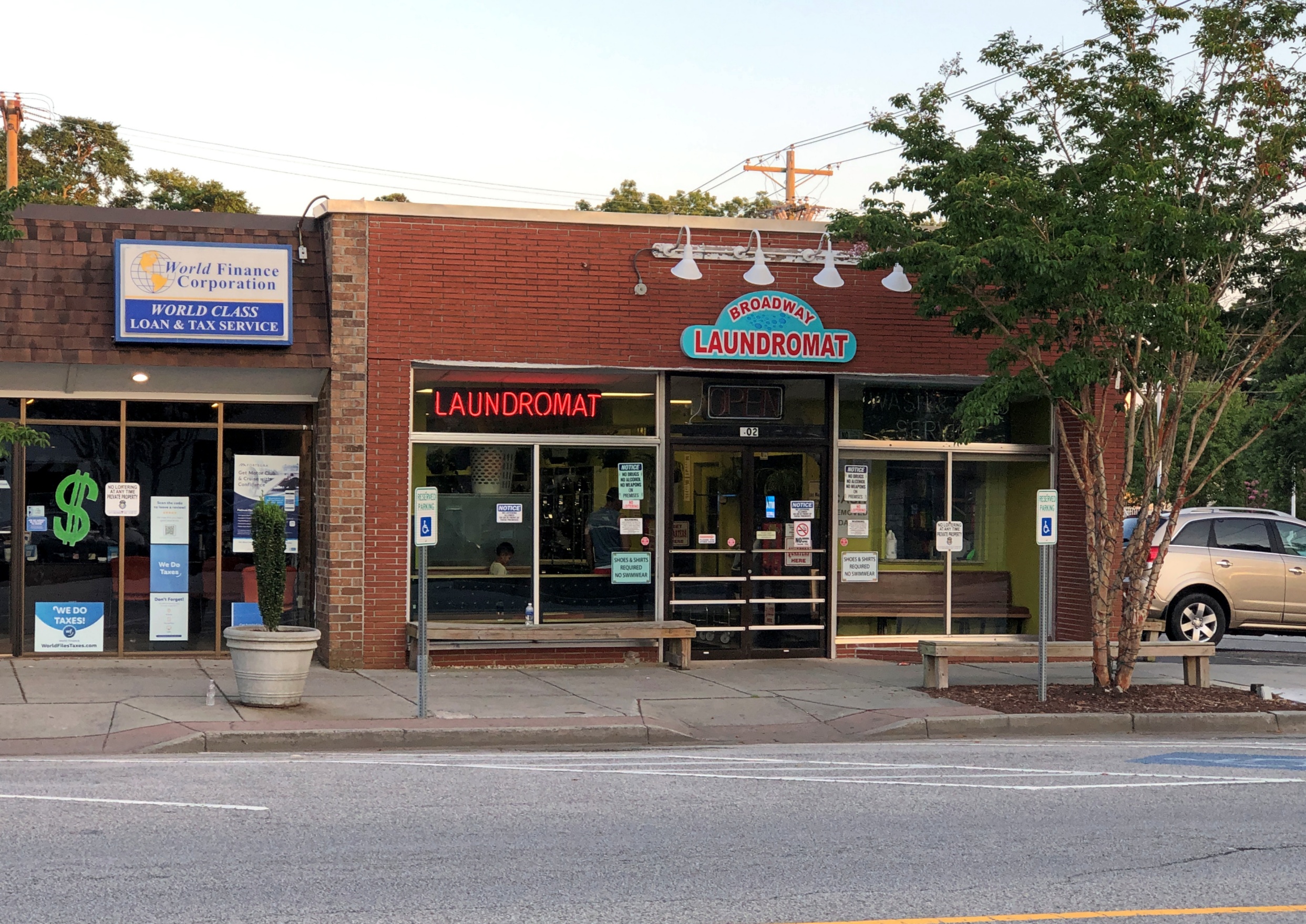
Had a pleasant walk down a non-tourist street on a Sunday in Myrtle Beach. Not a lot going on. The late afternoon light had a nice glow.
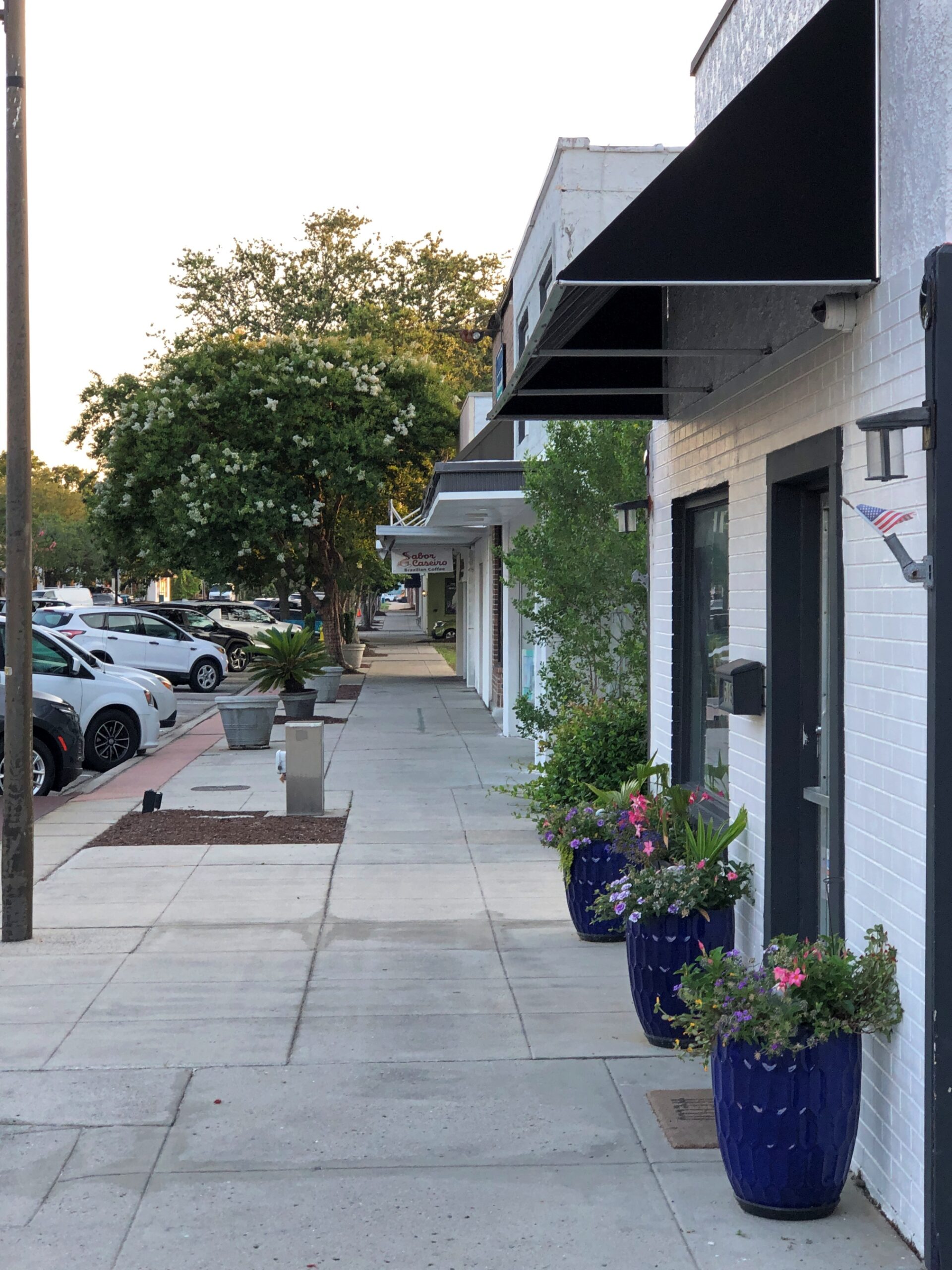
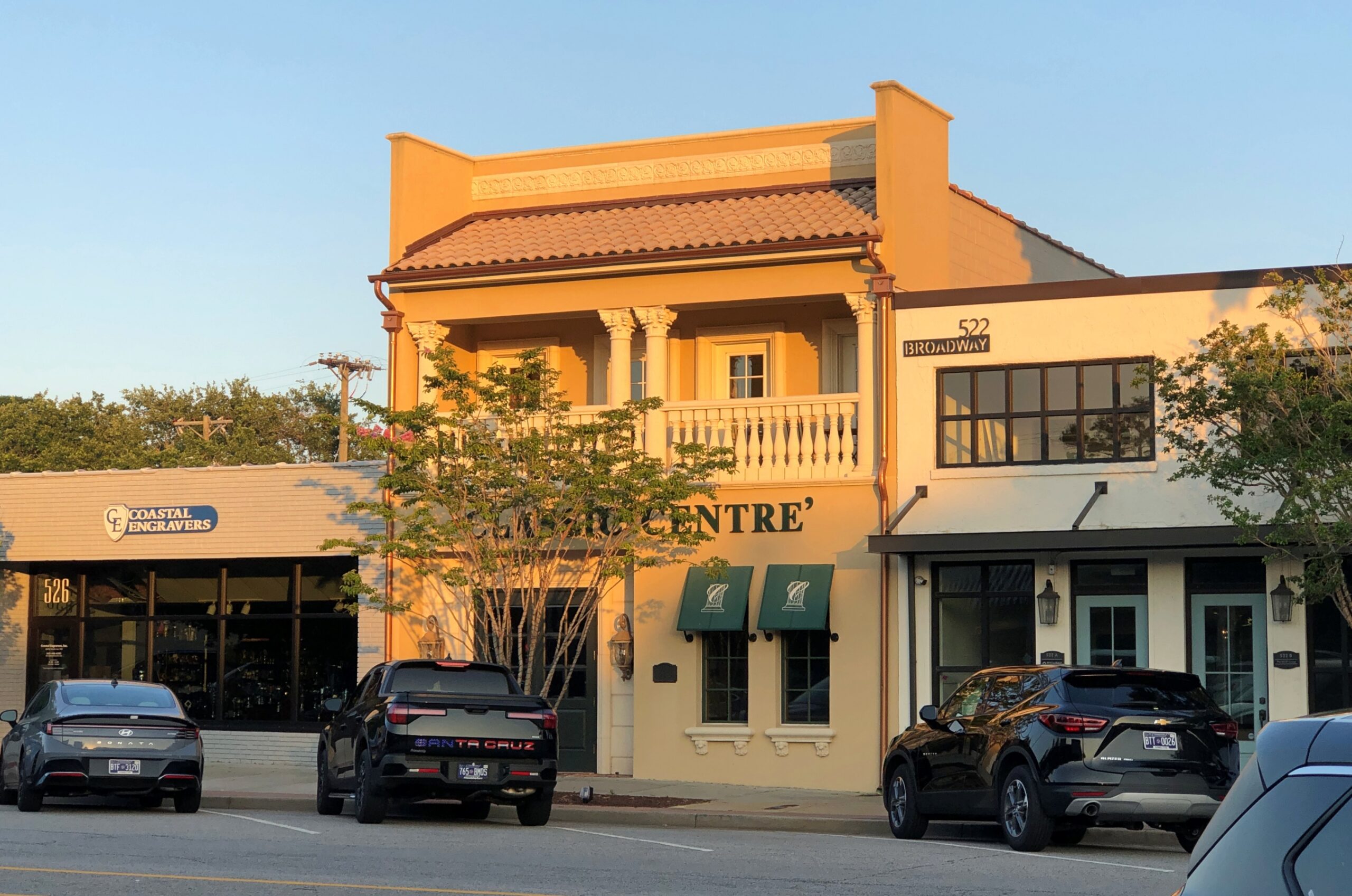
Myrtle Beach, SC
Myrtle Beach

Myrtle Beach International Airport used to be Myrtle Beach Air Force Base, which began as Myrtle Beach General Bombing and Gunnery Range in 1942 for use by the U.S. Army Air Corps. It closed in 1993.

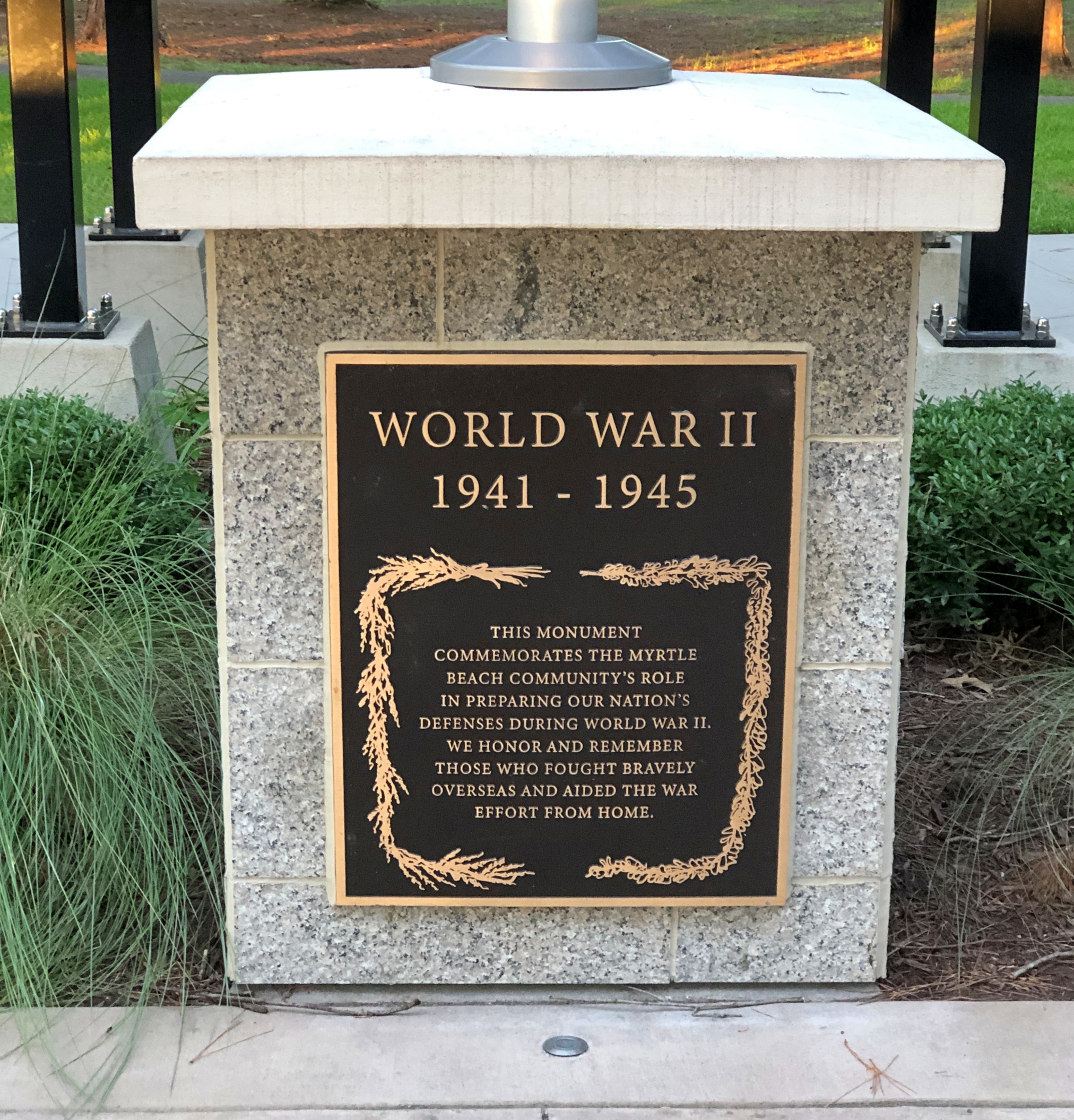
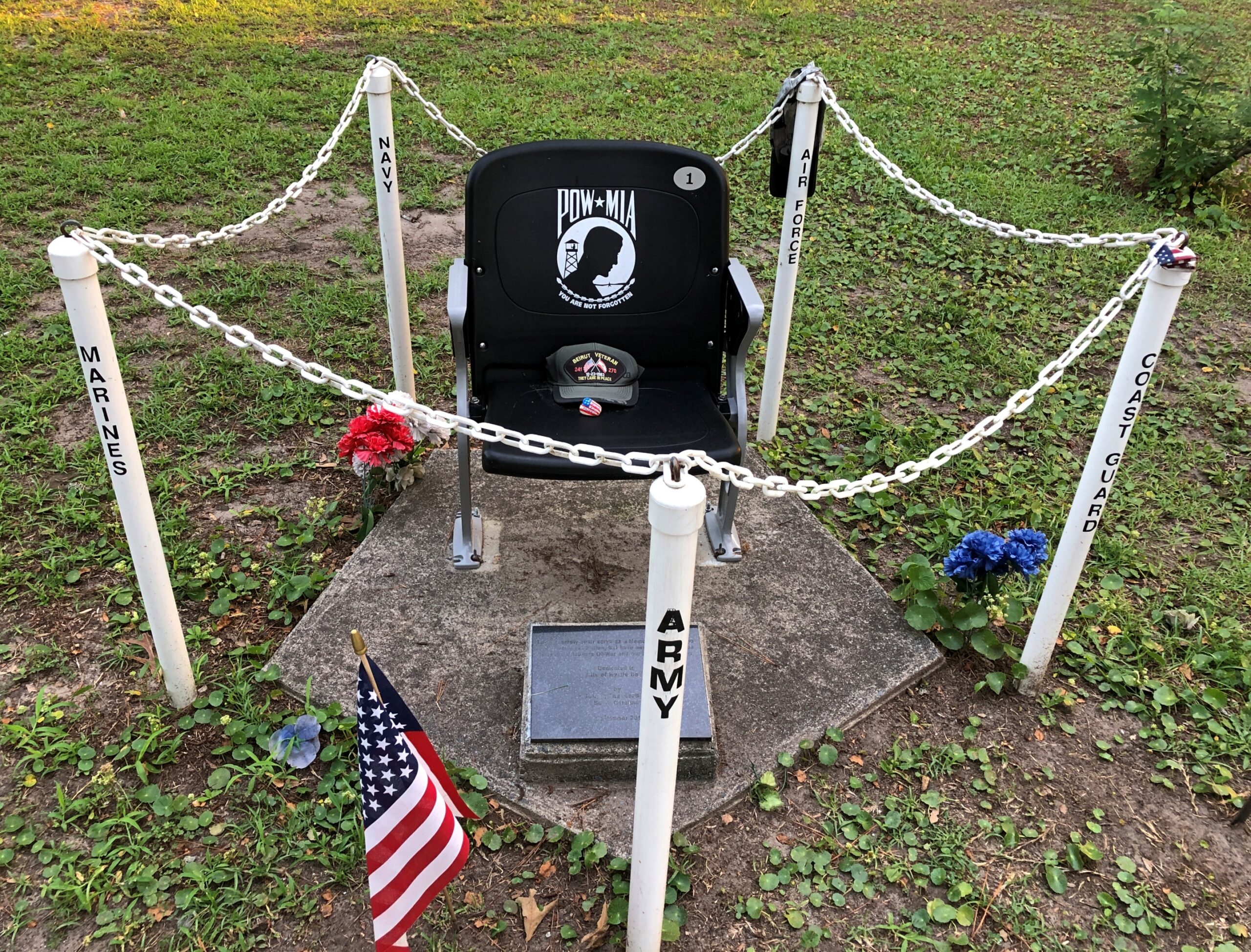
One legacy of the base is a cluster of military memorials near the perimeter of the airport – at a place called Warbird Park, which is fully accessible to casual visitors – that includes something you don’t see all the time.
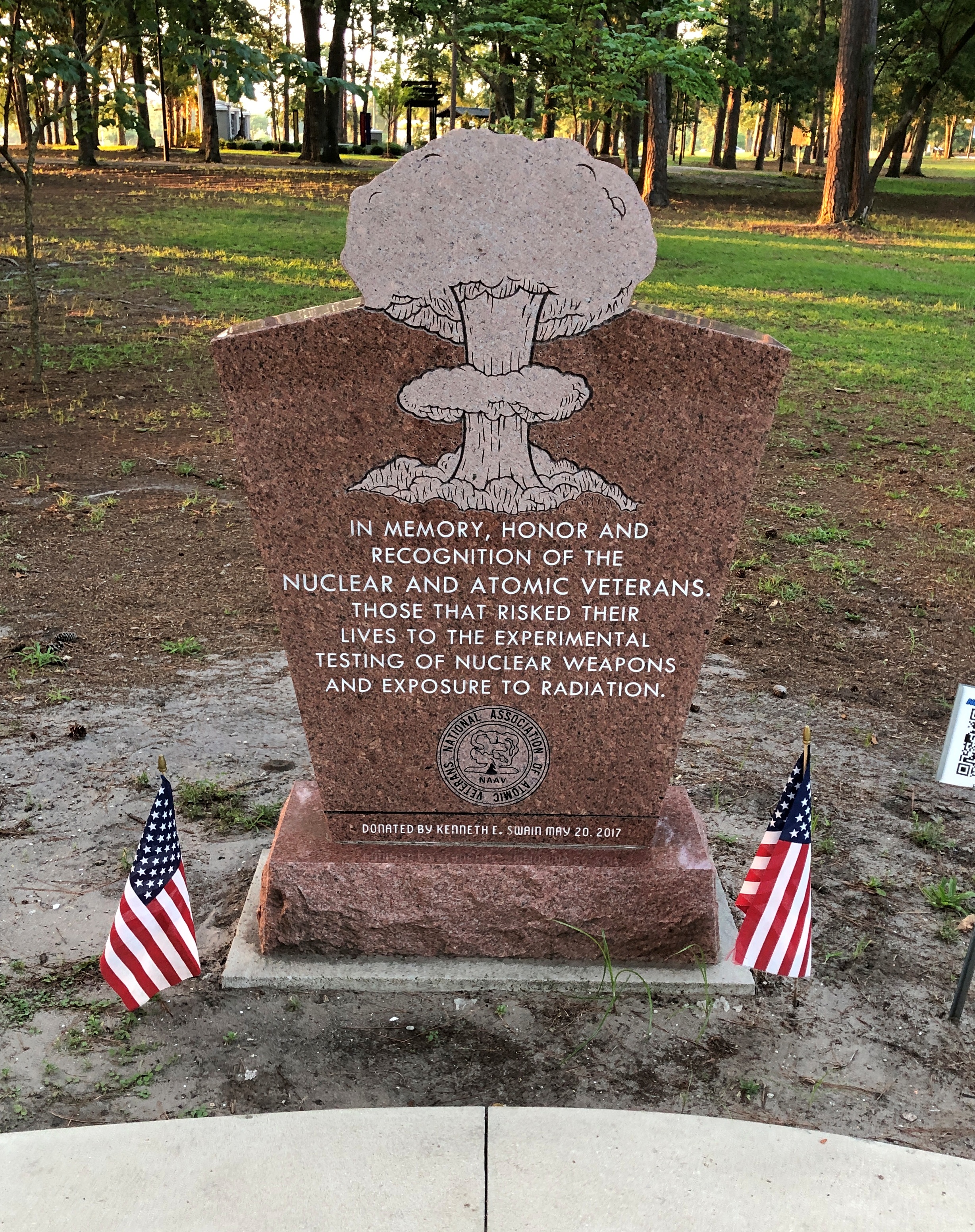
Atomic Veterans

It is one memorial among many.

Myrtle Beach
Myrtle Beach

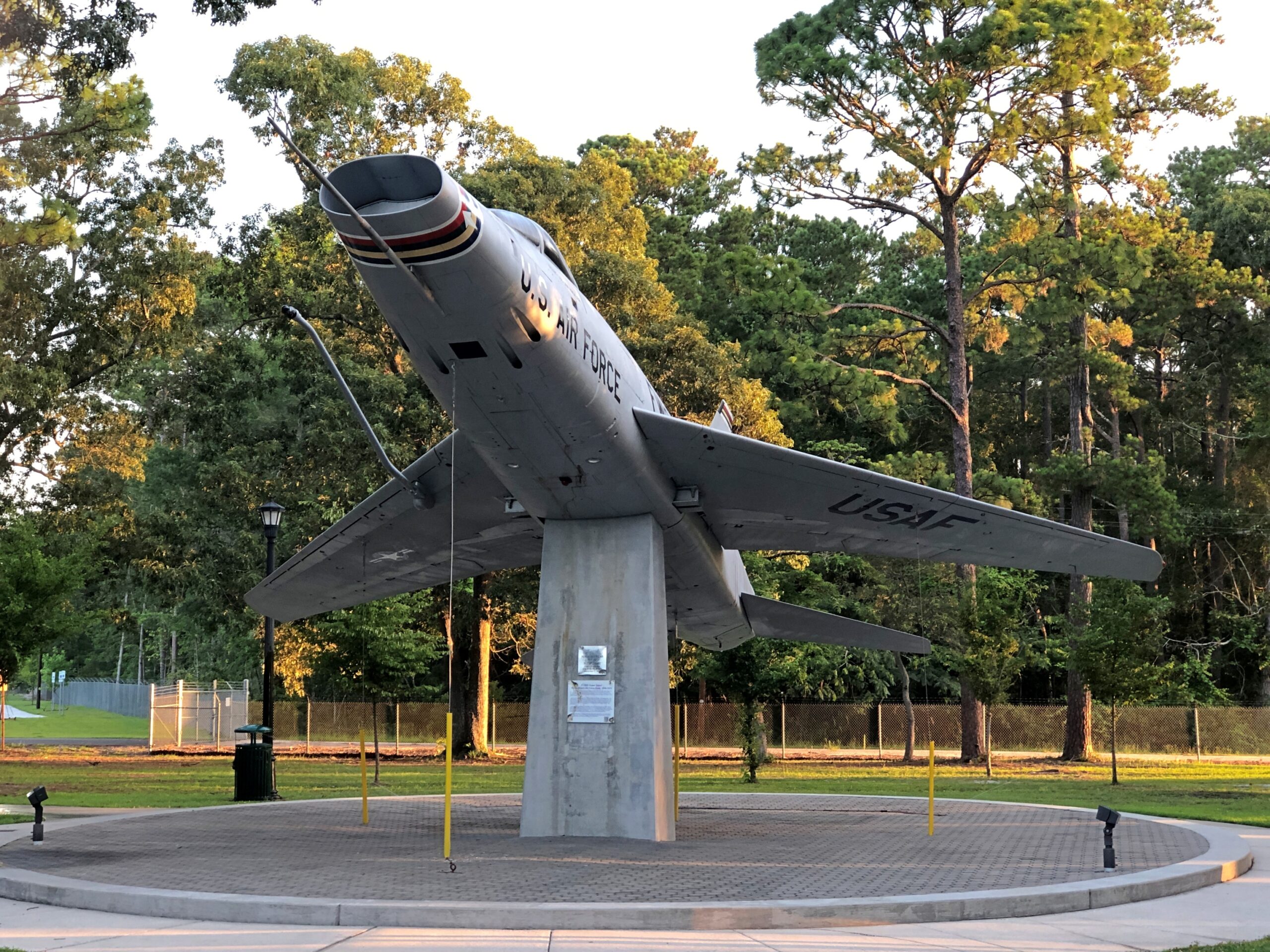
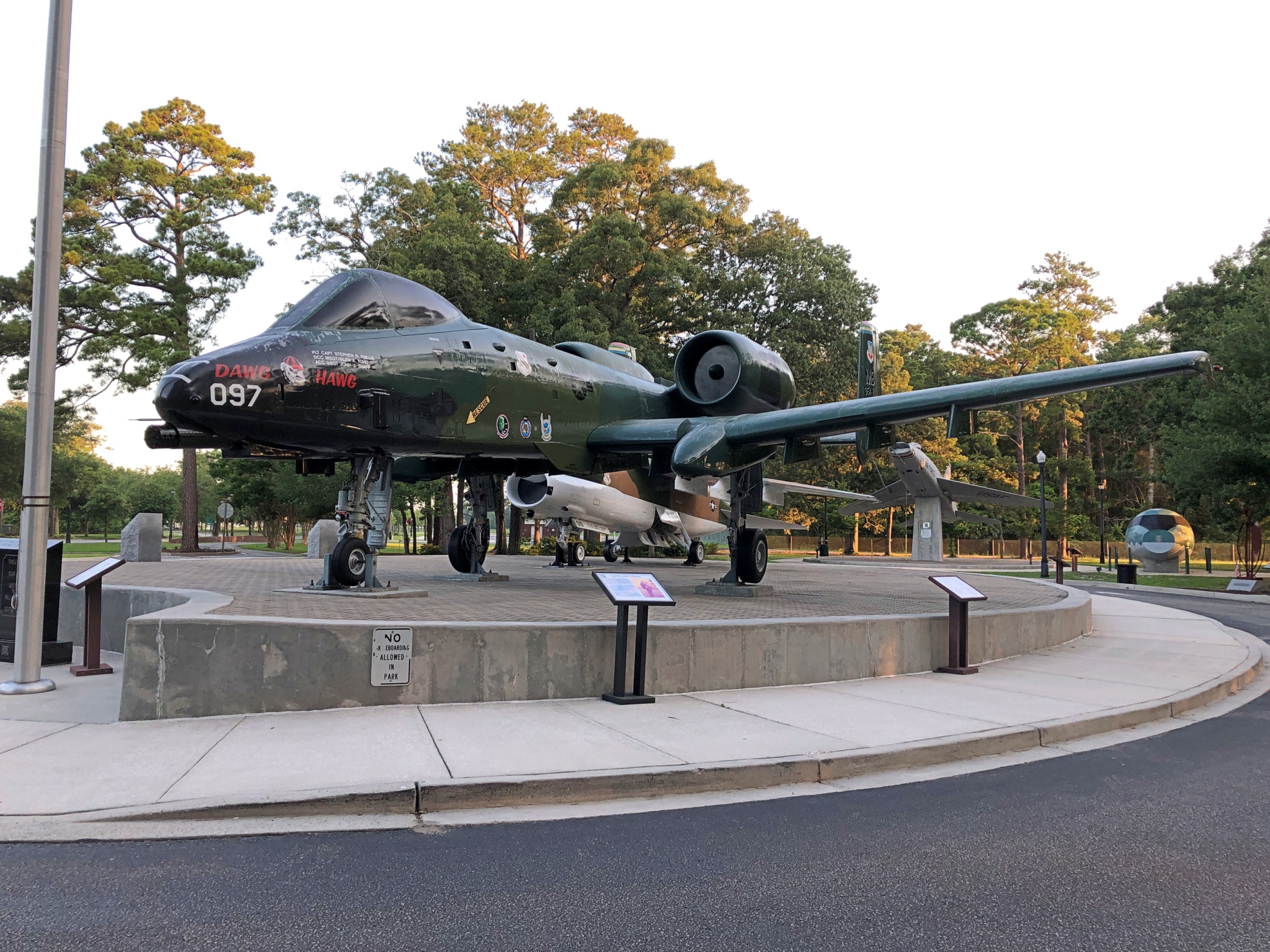
As well as some of the aircraft that used the air base.
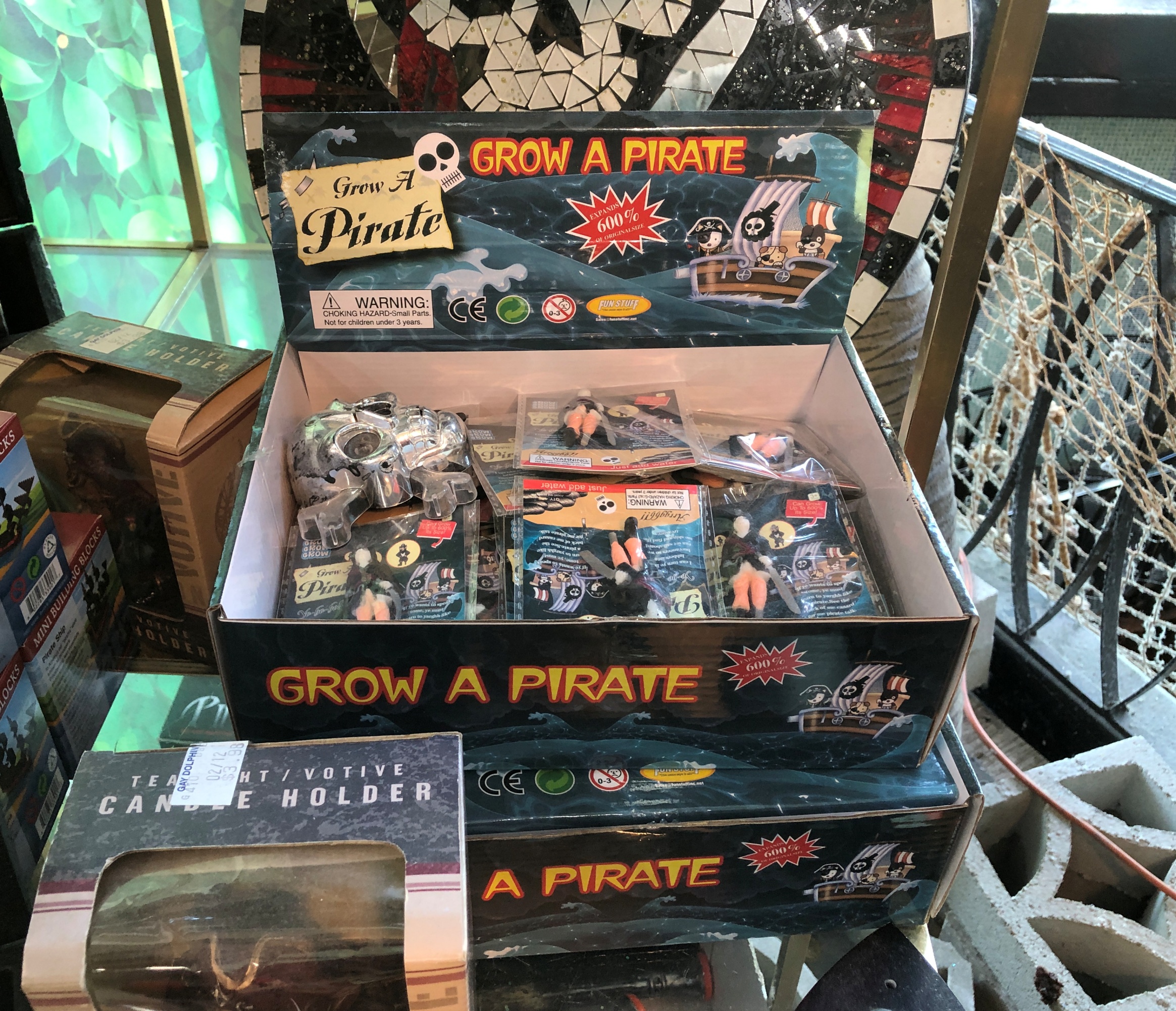
Found at a MB beach shop among the clothes and beach equipment. Nothing says Myrtle Beach better than skulls, no?

There was more. Much more.

Shithead on glass

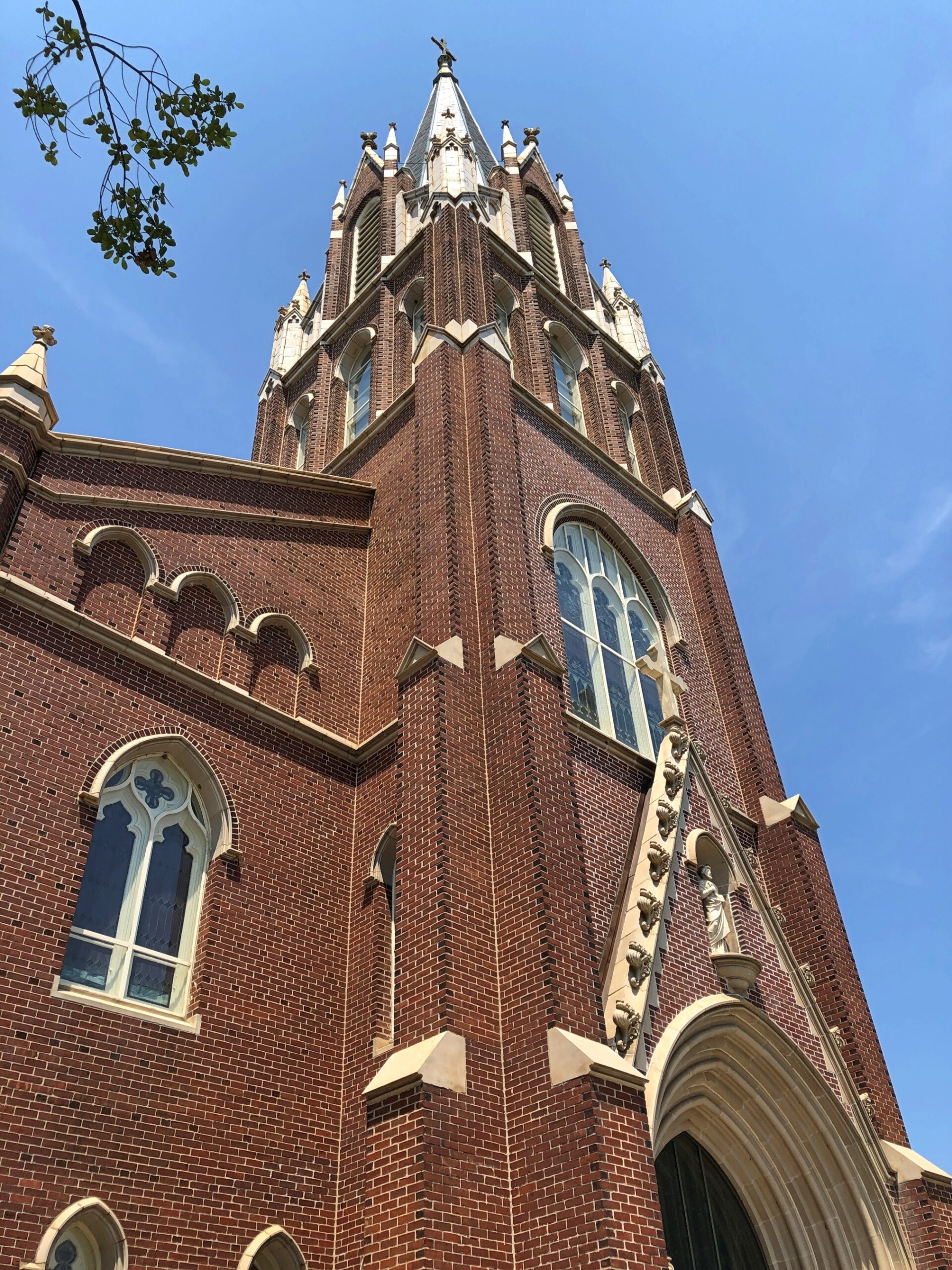
In Columbia, the Basilica of St. Peter.
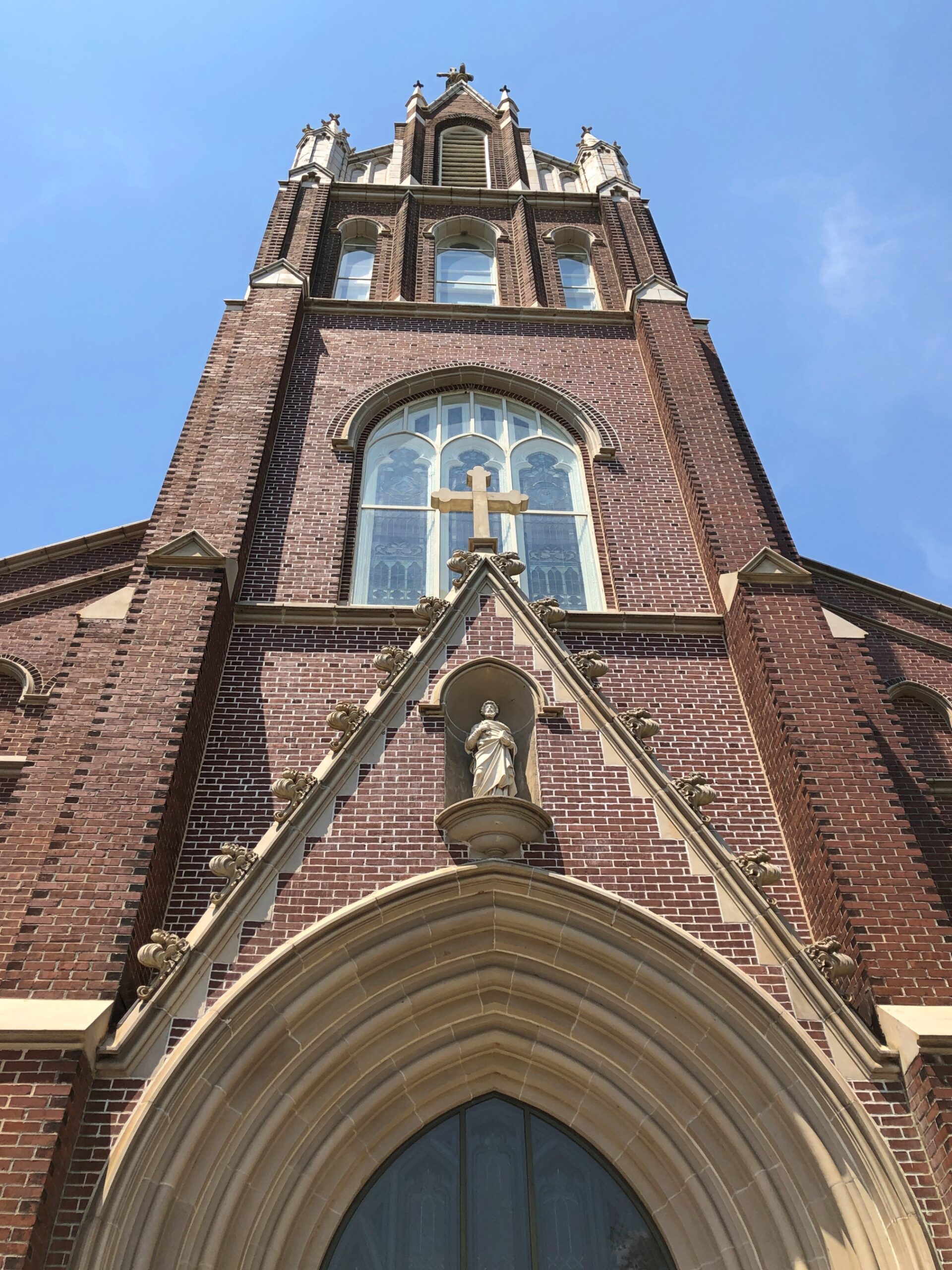
Basilica of St Peter, Columbia

Mass was in progress in its impressive interior, so only a glimpse.

Georgia
An automated, Fotomat-style ice store in north Georgia. They’re not as common up north, with the closest of this brand to me (I checked) in Aurora, Illinois.
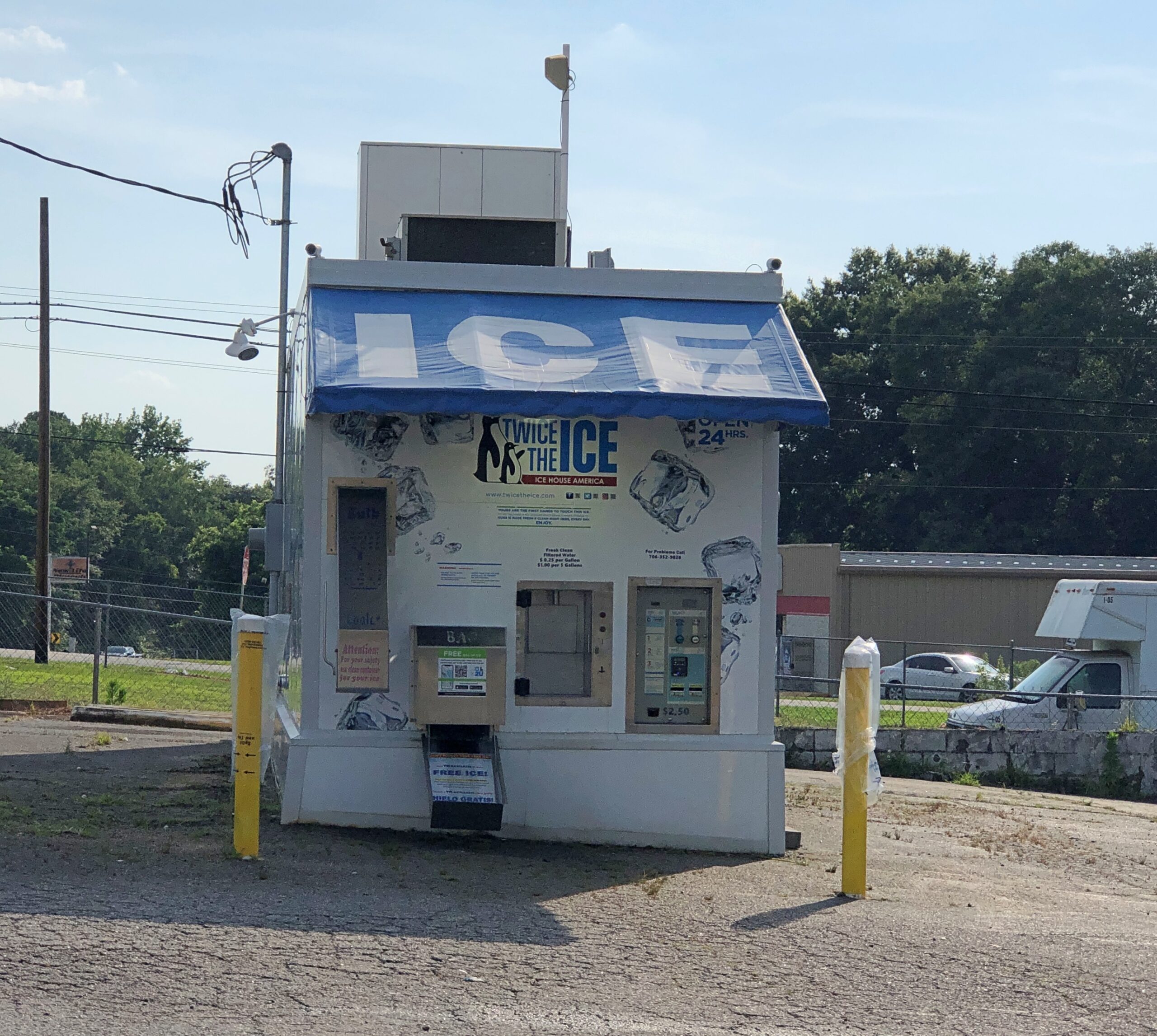
Ice

Twice the Ice is the brand name. Quick facts: there are about 3,300 Twice the Ice locations so far in the United States and elsewhere – water and ice “vending machines,” according to one page on the company web site. Another page on the same site puts it at over 4,000 locations, which just means part of the site isn’t being updated. Whatever the exact number, there are a lot, and most if not all are franchised, representing about 1,000 franchisees.

It’s automation we call all get behind. I don’t think the machines are putting ice handlers and baggers at local gas stations and grocery stores out of work, since who holds that specific job?

So far as I know, “Ice is Civilization” is not the company motto. But it could be. It was said with such conviction by Allie Fox in The Mosquito Coast.

Of course, by the end of the book and movie both, he was howl-at-the-moon mad. So maybe some other slogan. Then again, that line is one of the few things – besides the fact that Allie Fox goes nuts chasing Utopia – that I remember from either the book or the movie after about 35 years. So it’s pretty memorable.

After gassing up at a station in north Georgia, I parked away from the pumps near the edge of the property to fiddle with my phone for a few minutes. Just outside the car window, kudzu lurked.
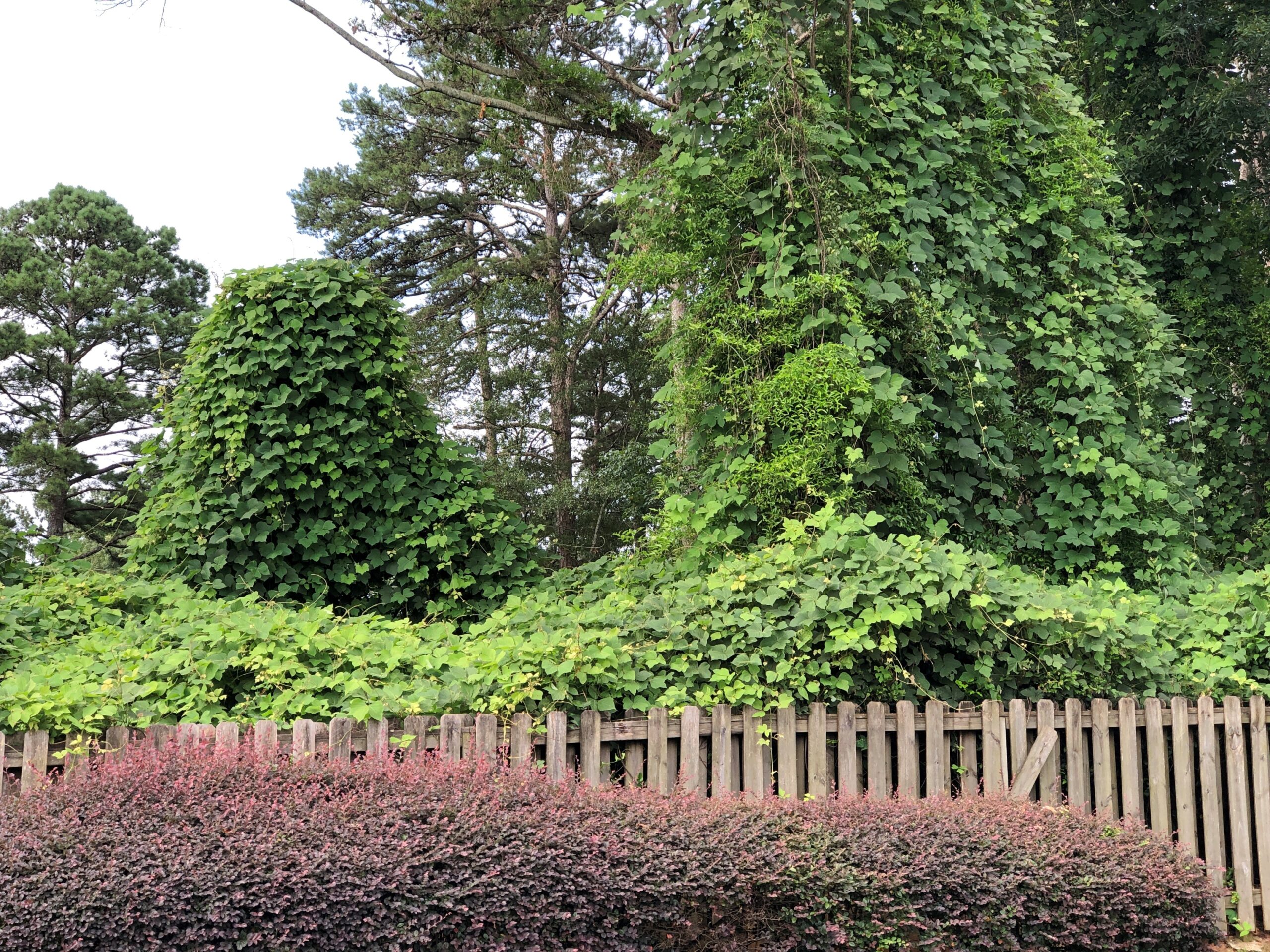
Which got closer.
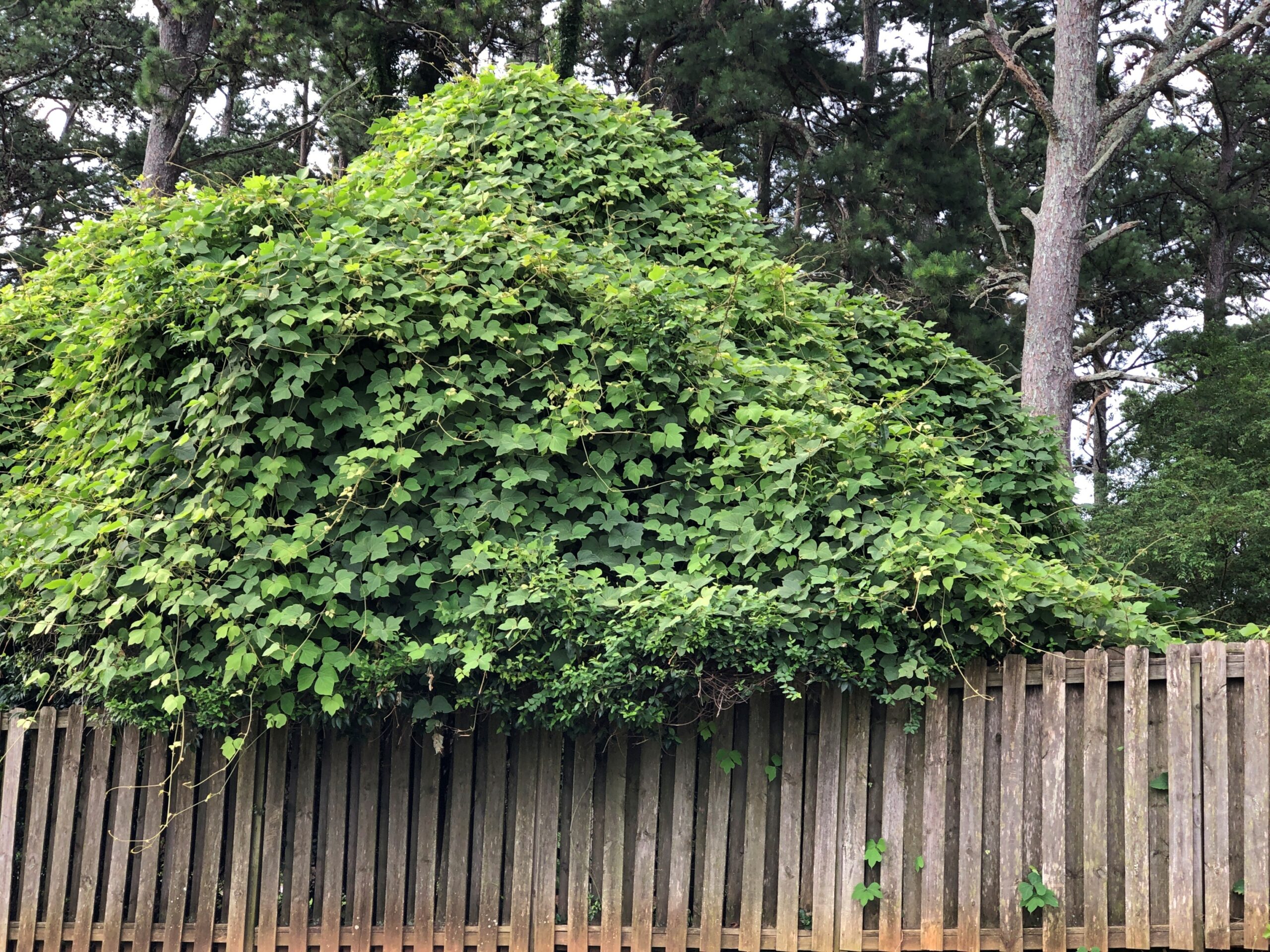
And closer. Man, it grows fast.
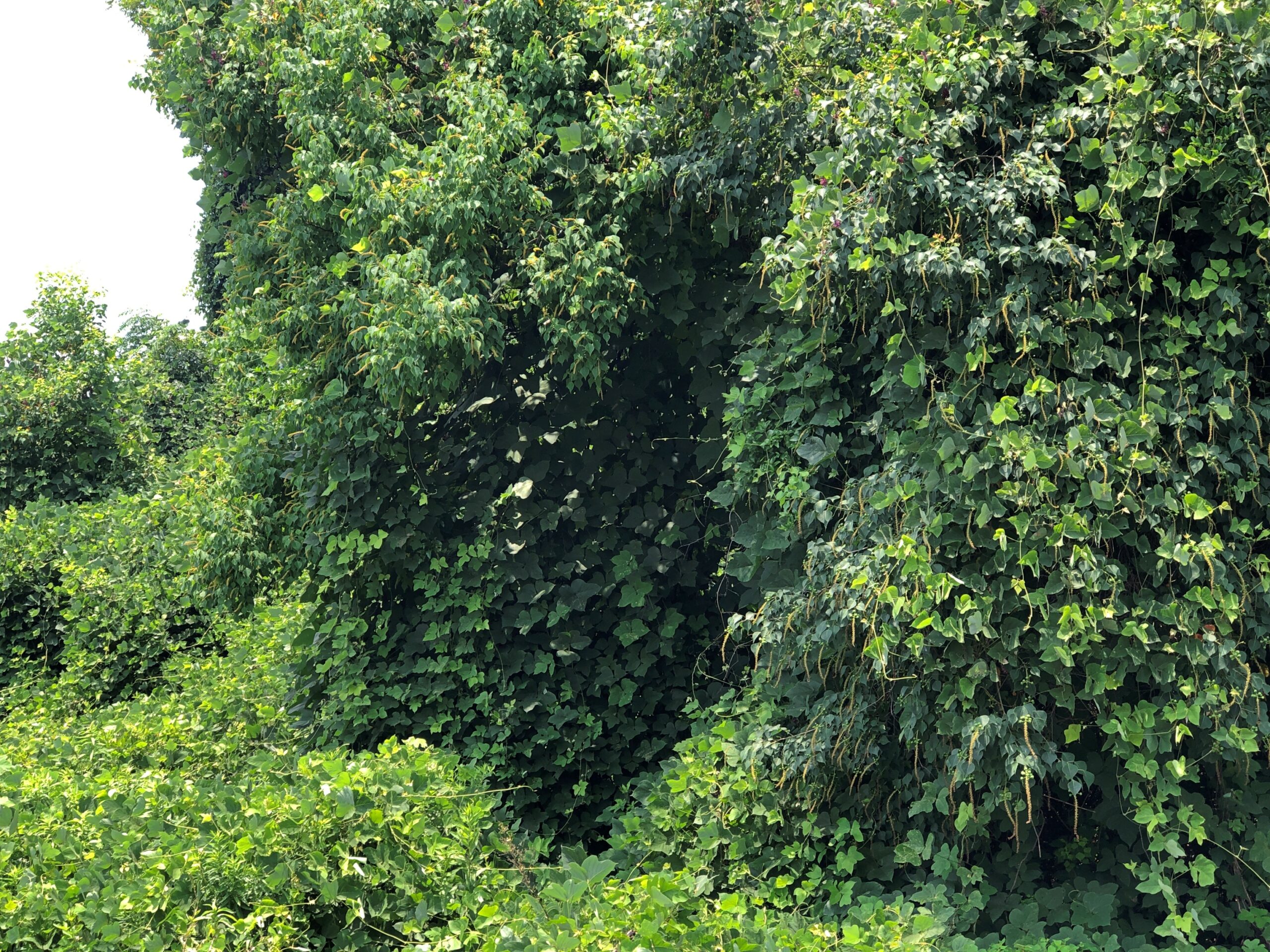
Not really, but I did see all that kudzu at the edge of the gas station property. Kudzu. Who hasn’t seen the walls of it down South?

“In news media and scientific accounts and on some government websites, kudzu is typically said to cover seven million to nine million acres across the United States,” Smithsonian magazine reported in 2015. “But scientists reassessing kudzu’s spread have found that it’s nothing like that. In the latest careful sampling, the U.S. Forest Service reports that kudzu occupies, to some degree, about 227,000 acres of forestland, an area about the size of a small county and about one-sixth the size of Atlanta.

“That’s about one-tenth of 1 percent of the South’s 200 million acres of forest. By way of comparison, the same report estimates that Asian privet had invaded some 3.2 million acres — 14 times kudzu’s territory. Invasive roses had covered more than three times as much forestland as kudzu.”

Yet kudzu is regarded as a particularly intractable invasive species. How is that? It grows well in highly visible places. Such as next to a gas station parking lot. Smithsonian notes: “Those roadside plantings — isolated from grazing, impractical to manage, their shoots shimmying up the trunks of second-growth trees — looked like monsters.”

Along Georgia 60 in Chattahoochee NF, Smokey Bear is still at his job.
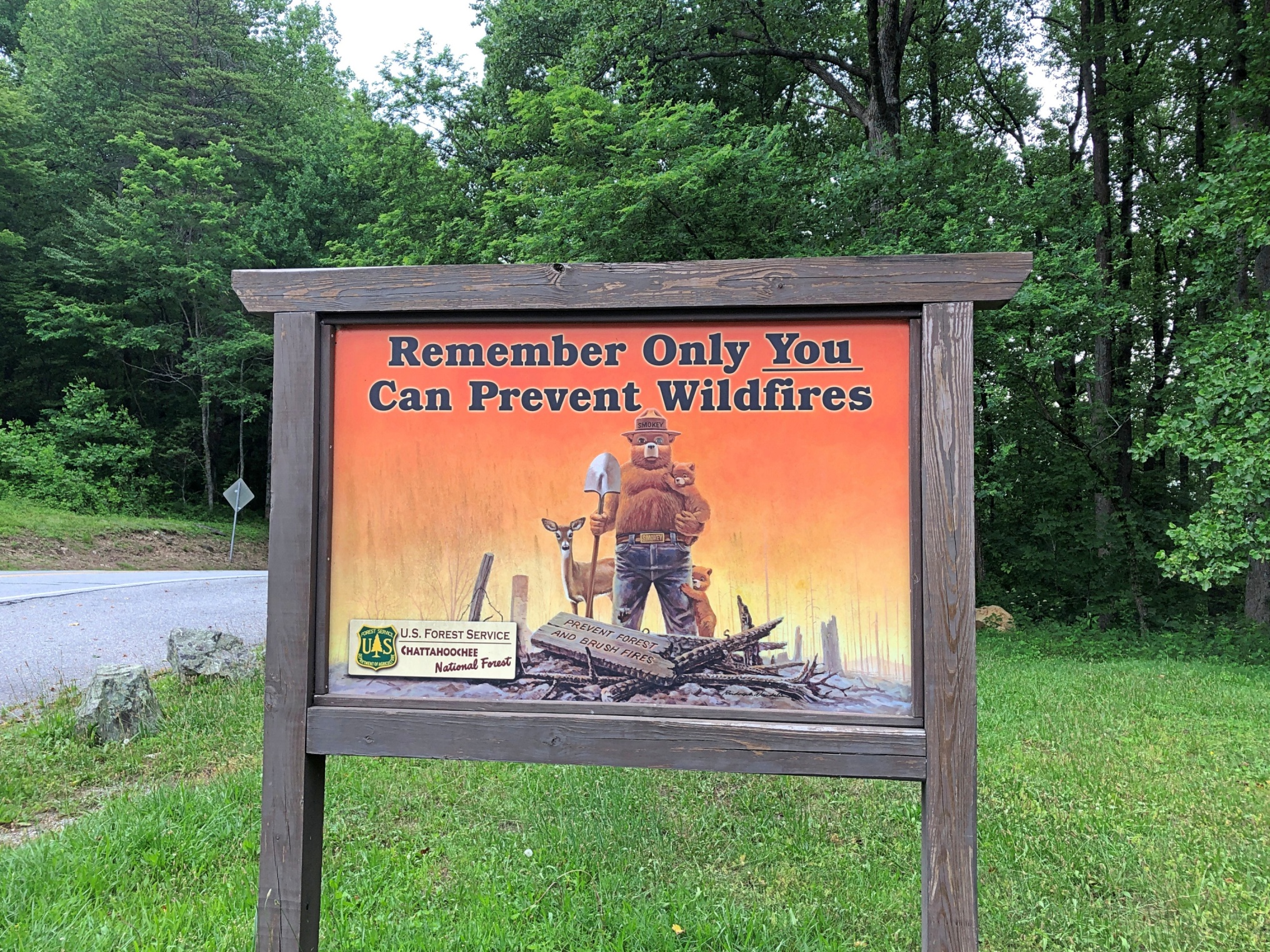
One thing leads to another online, and Smokey eventually lead me to “Smokey the Bear Sutra.” Only takes a few minutes to read, and it’s a trip. Just like the song “Elvis is Everywhere,” there’s a founding document of a religion in the distant future, one that asserts that humans should never have given up worshiping bears.
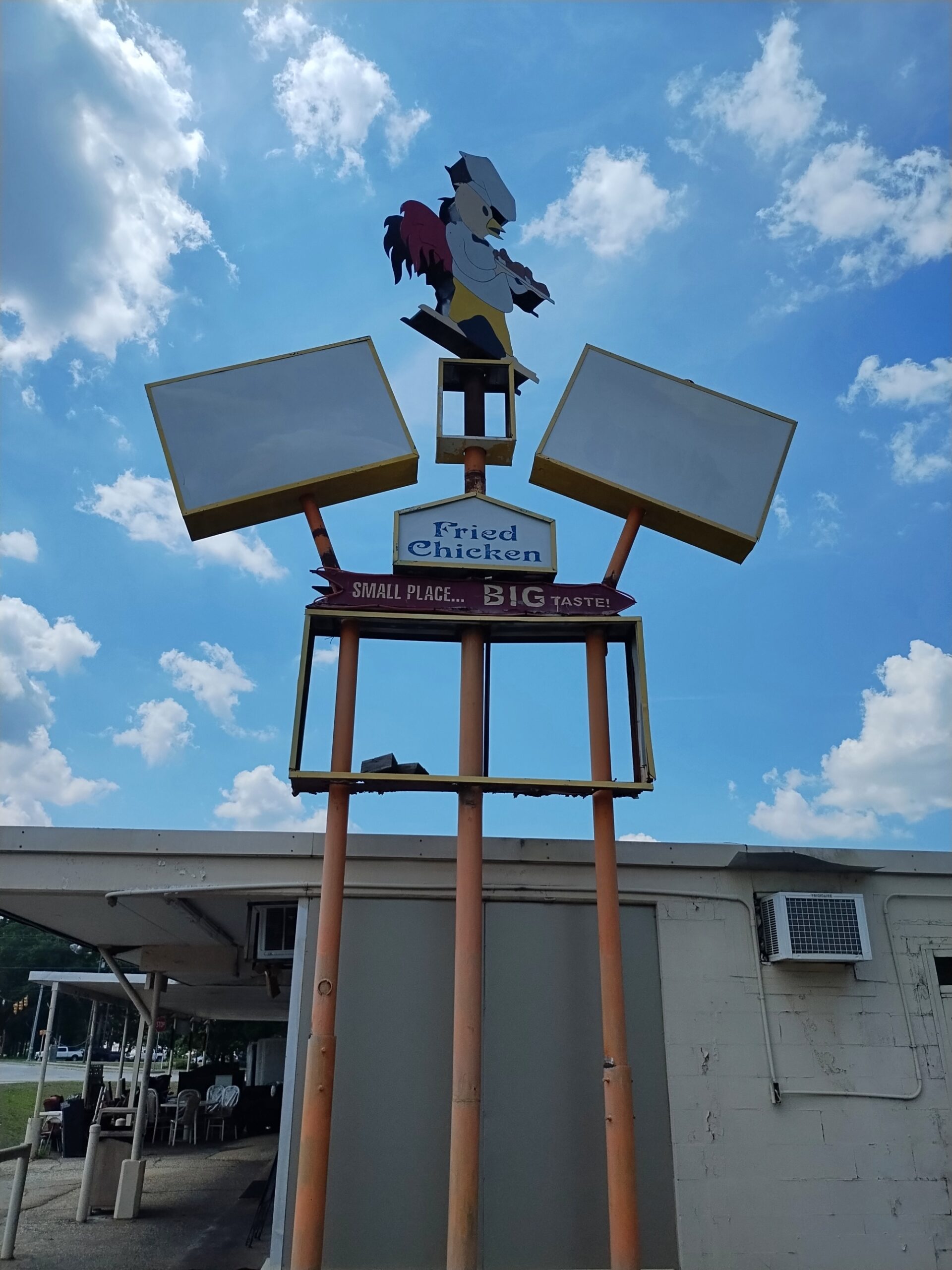
Southern Road Food ’25

I’m no Guy Fieri, but I don’t really need to be to find road food. Besides, he has a staff. I just have Google Maps and my experience and instincts, which sometimes fail me, but more often guide me to cheap, local and delicious. That and word-of-mouth recommendations have led me to a lot of tasty dishes over the years.
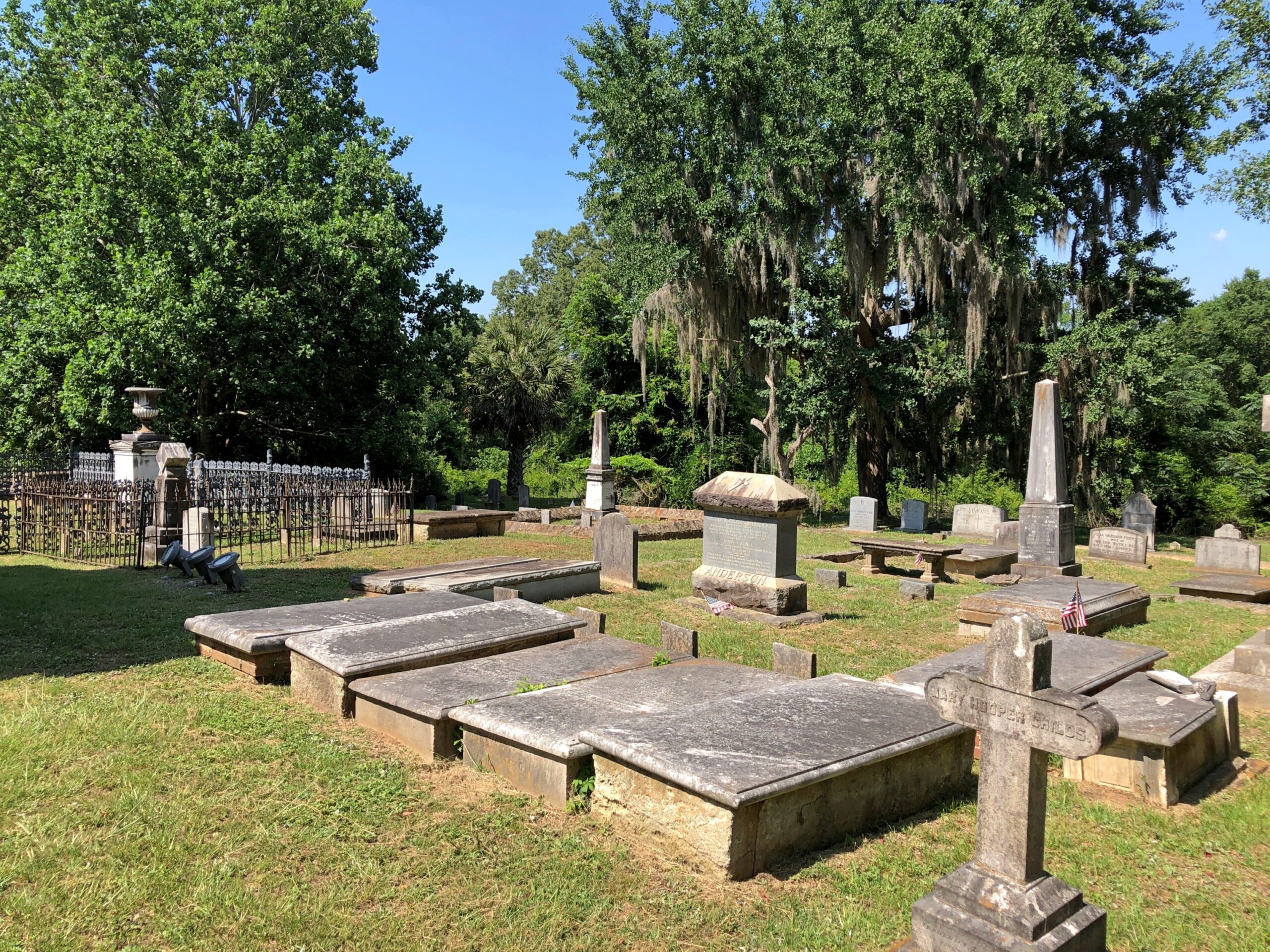
On my recent Southern jaunt, I arrived in Sumter, SC, around lunchtime, and found my way to Korner Shack II. Not that you could tell the name from the sign over the cinder block shack.

I’d happened on a Southern chicken joint, true to that tradition, take out only, and during the few minutes I waited for my order as people came and went — for it was a popular place — I noted I was the palest customer. I ordered a box of chicken livers and fries that I ate partly in a nearby park, and partly in my room that evening. Mildly spiced and well fried, the boxed livers reminded me of the satisfying livers that a Chicago-area Harold’s Chicken would serve. Korner Shack sold me one of the best meals of the trip.

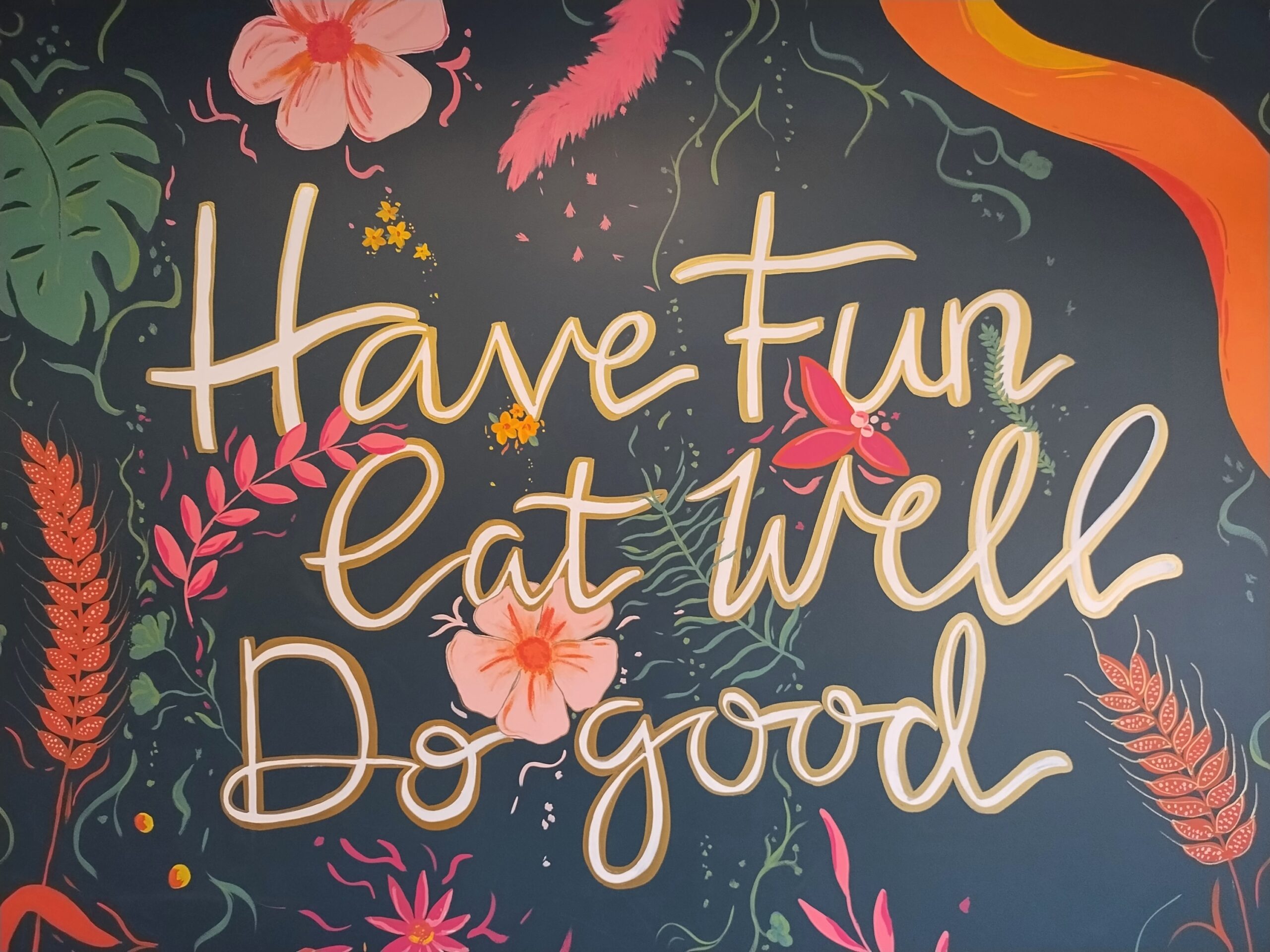
Back in Myrtle Beach, Yuriko and I breakfasted one morning at Winna’s Kitchen, who offers patrons some sunny advice on the wall.

Winna's Kitchen

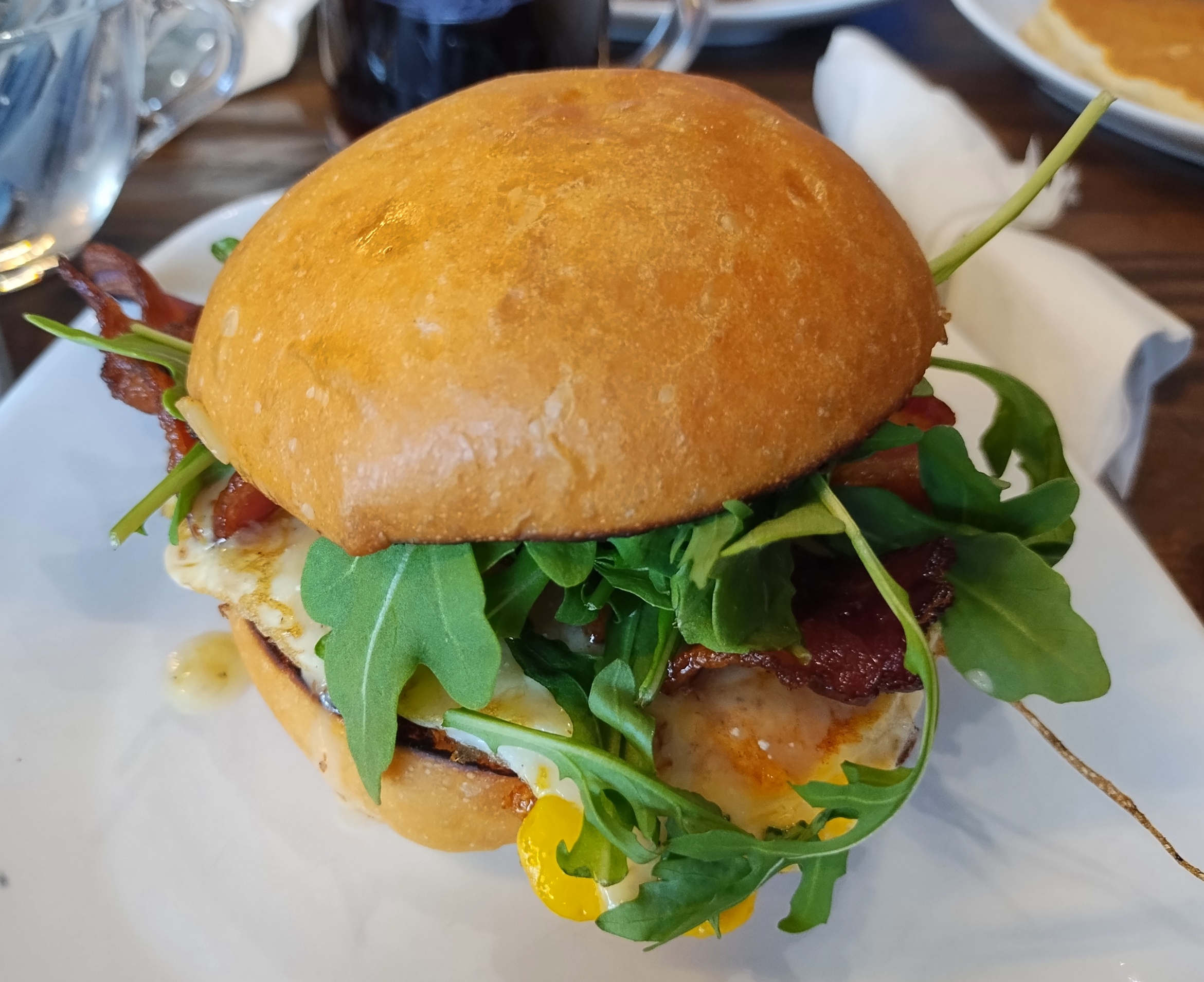
That, and really good food. I had the Whistler – “crispy sausage or bacon, sharp coastal cheddar, a fried egg & lemony-dressed arugula on a homemade bun,” the menu said. With a side of grits.

Winna's Kitchen
Winna's Kitchen

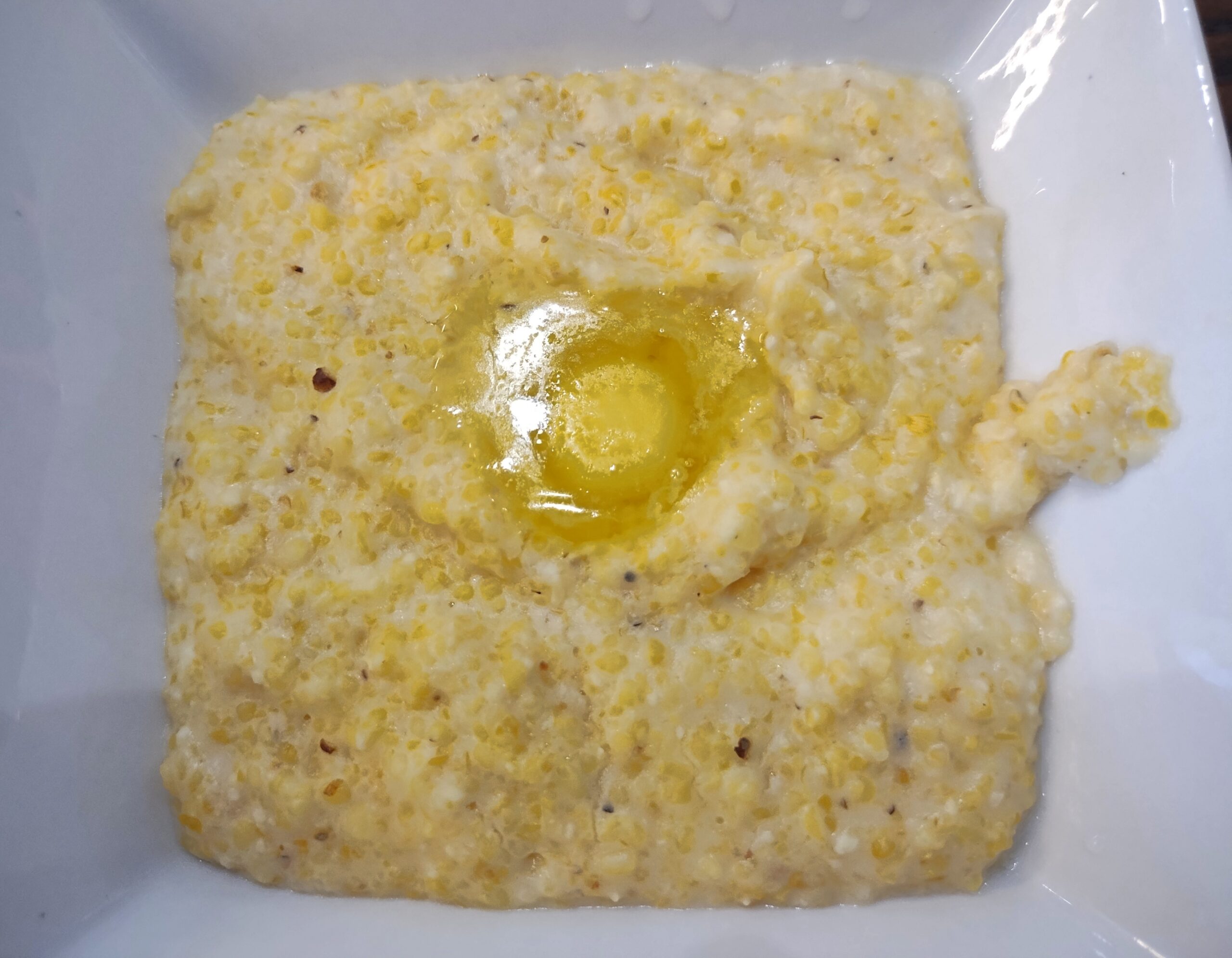
Superb. Even the buttery grits. At home I usually douse my grits with honey, but butter will do. Experience has taught me that restaurants aren’t always good with grits, but when they are, they can be really good. Winna’s served up some of those really good grits, complementing its really good breakfast sando, though not quite as memorable as the cheese grits I enjoyed at a place in Mexico Beach, Florida, that I believe was washed away by a hurricane some years after I visited in the 2000s.

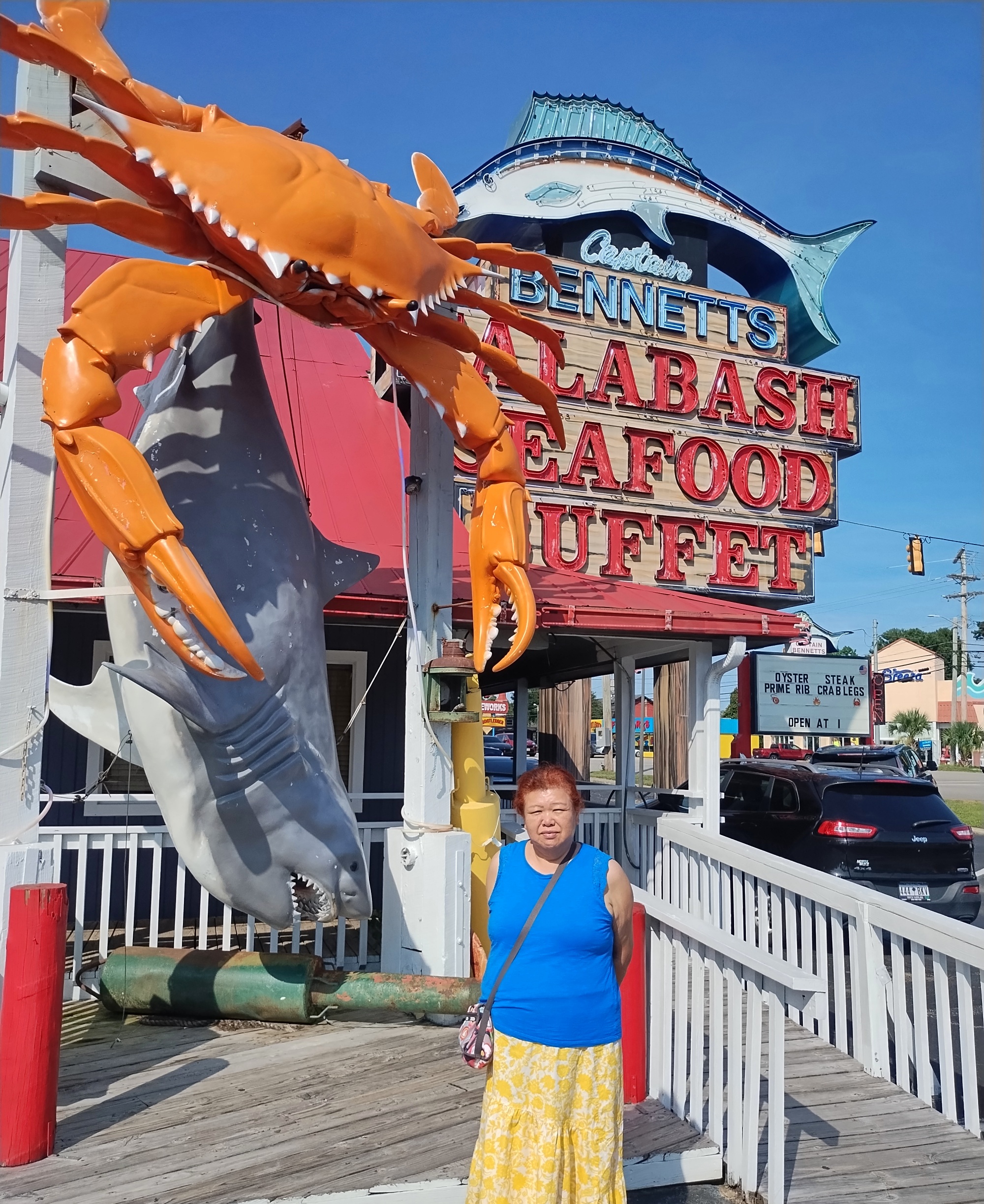
Also in Myrtle Beach: seafood in bulk.

Myrtle Beach

Not the best I’ve ever had, and a little expensive, but satisfying – especially Yuriko’s desire for seafood during a visit anywhere near the sea, true to her Japanese upbringing.

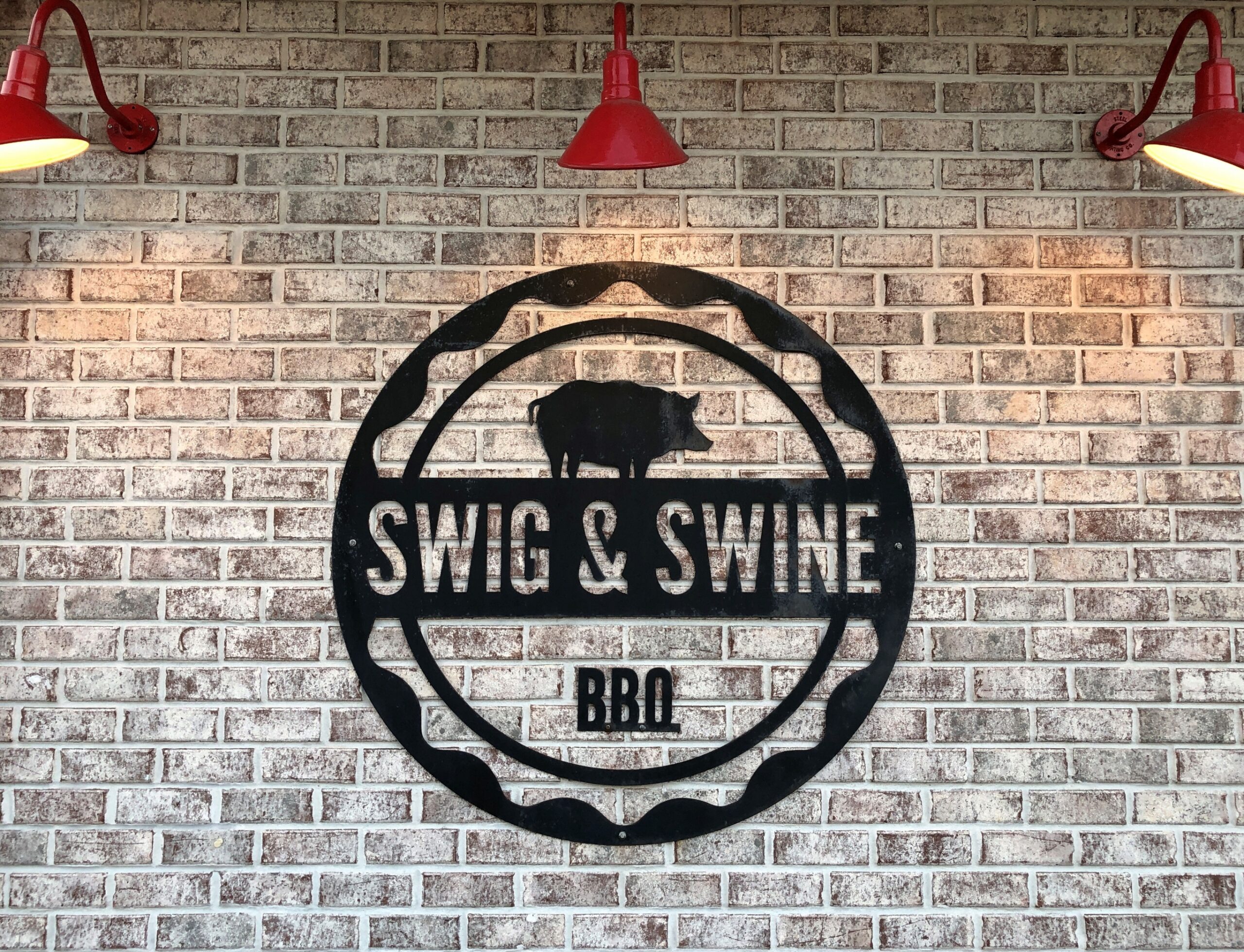
Didn’t have barbecue in MB, but I liked this sign.

Didn’t eat here either. Call it Schrödinger’s restaurant.

Myrtle Beach

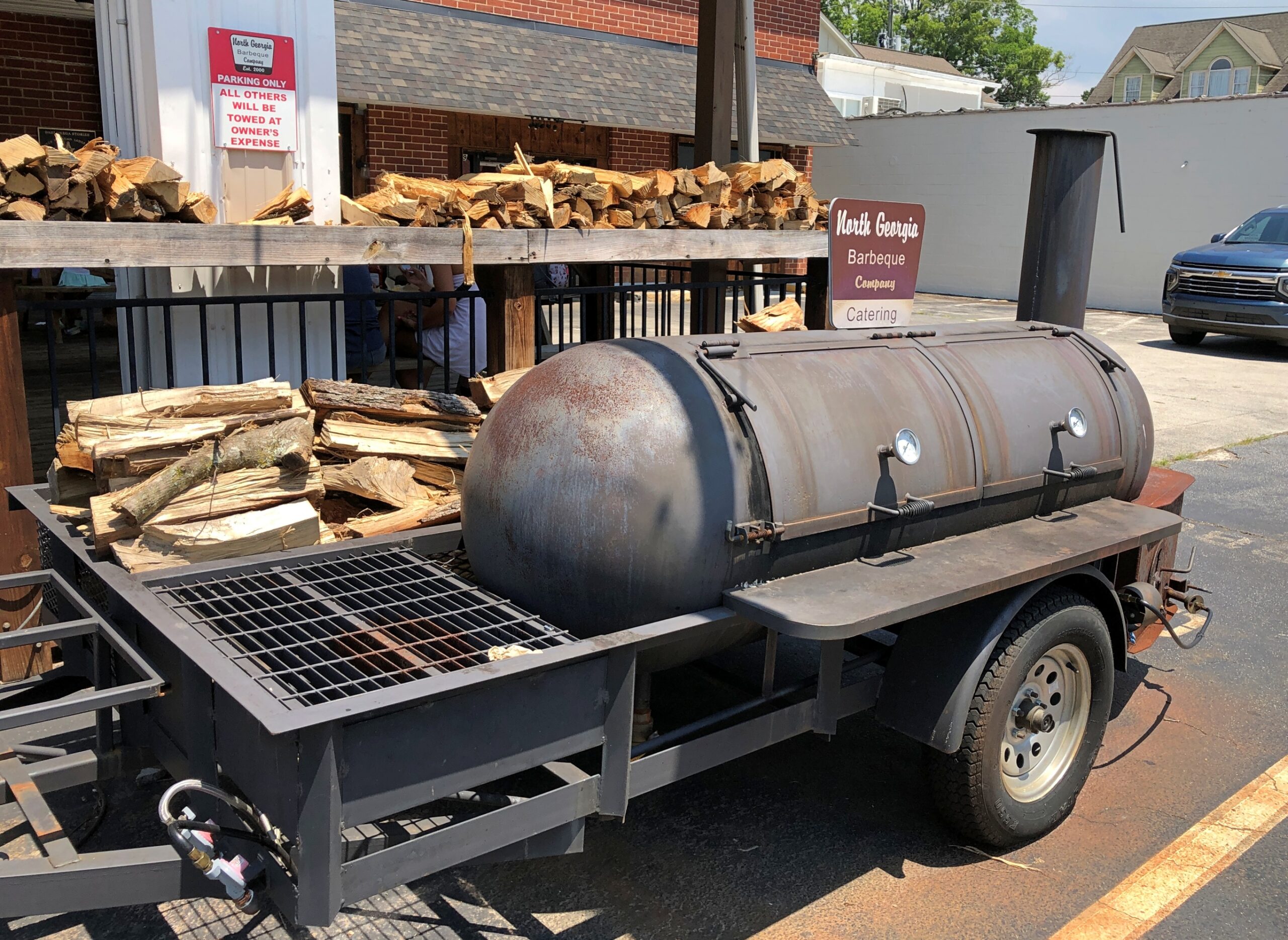
I found barbecue in Georgia. Specifically, Dahlonega. North Georgia Barbecue Co. is a stone’s throw from the Gold Museum and its best advertisement is out front of the restaurant. Good eats inside.

While it’s well and good to support local joints, I’m not a snob when it comes to fast food on the road. Otherwise, how would I know the joy of Mos Burger or have experience with how different cultures interpret something as distinctively American as fast food?

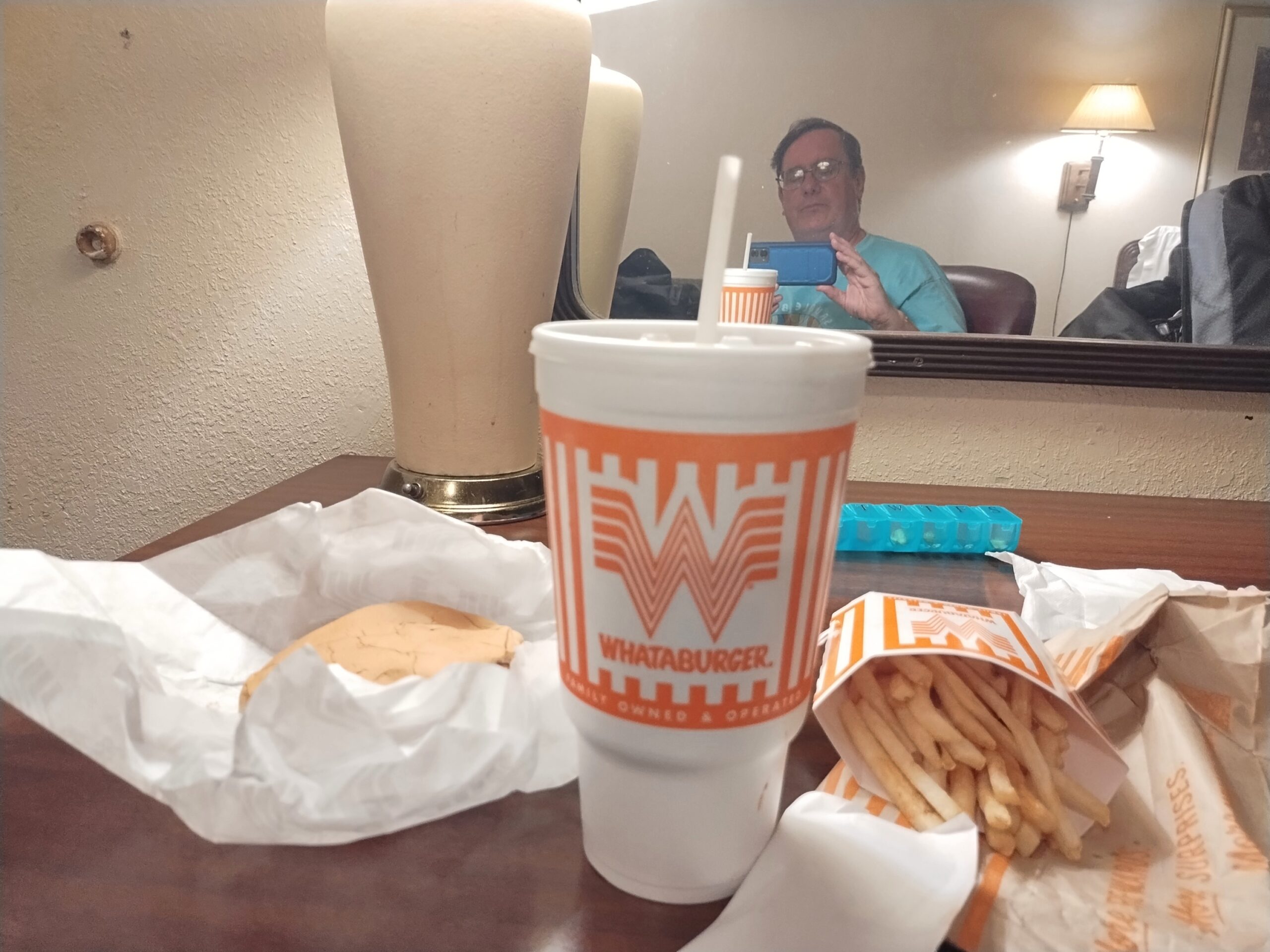
Not long after arriving in Athens, Ga., I spotted a place I associate with Texas. I took a drive-thru order back to the room.

Whataburger

I checked, and the large majority of Whataburger locations are indeed in Texas, but there are others in 16 other states, including 35 in Georgia.

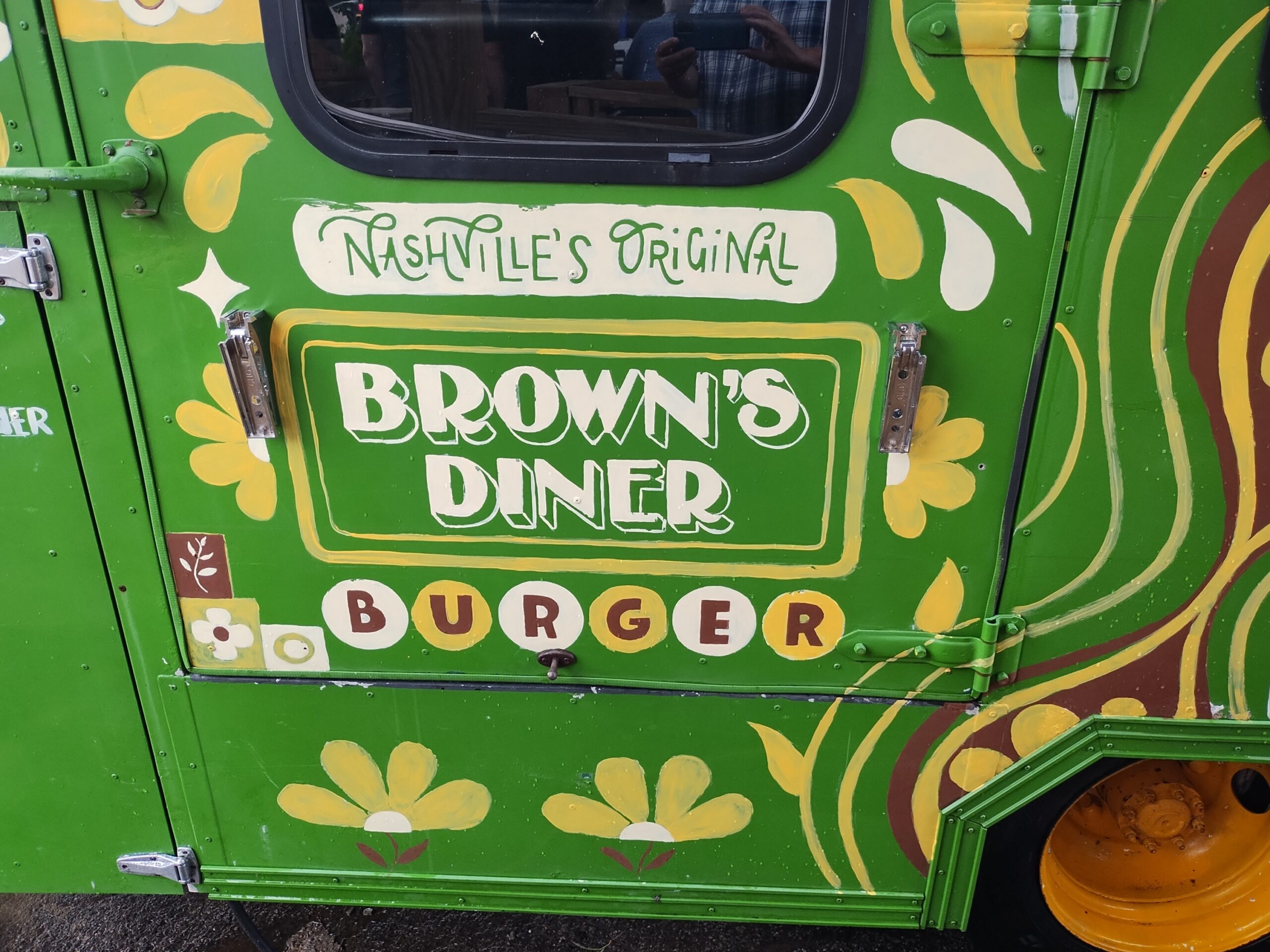
Finally, an old friend among Nashville places: Brown’s Diner.

Brown's Diner

My friends Stephanie and Wendall treated me to a wonderful homemade meal at their house, so later I treated them to a meal at Brown’s, deep in the heart of Nashville. It is a storied place nearly 100 years old, though expanded since I knew it. I enjoyed a fair number of burgers at Brown’s in the 1980s, but not since, and was a little surprised that it has survived to the present, but glad. I had a Brown’s burger and it all came back to me; and I understood the joint’s longevity.

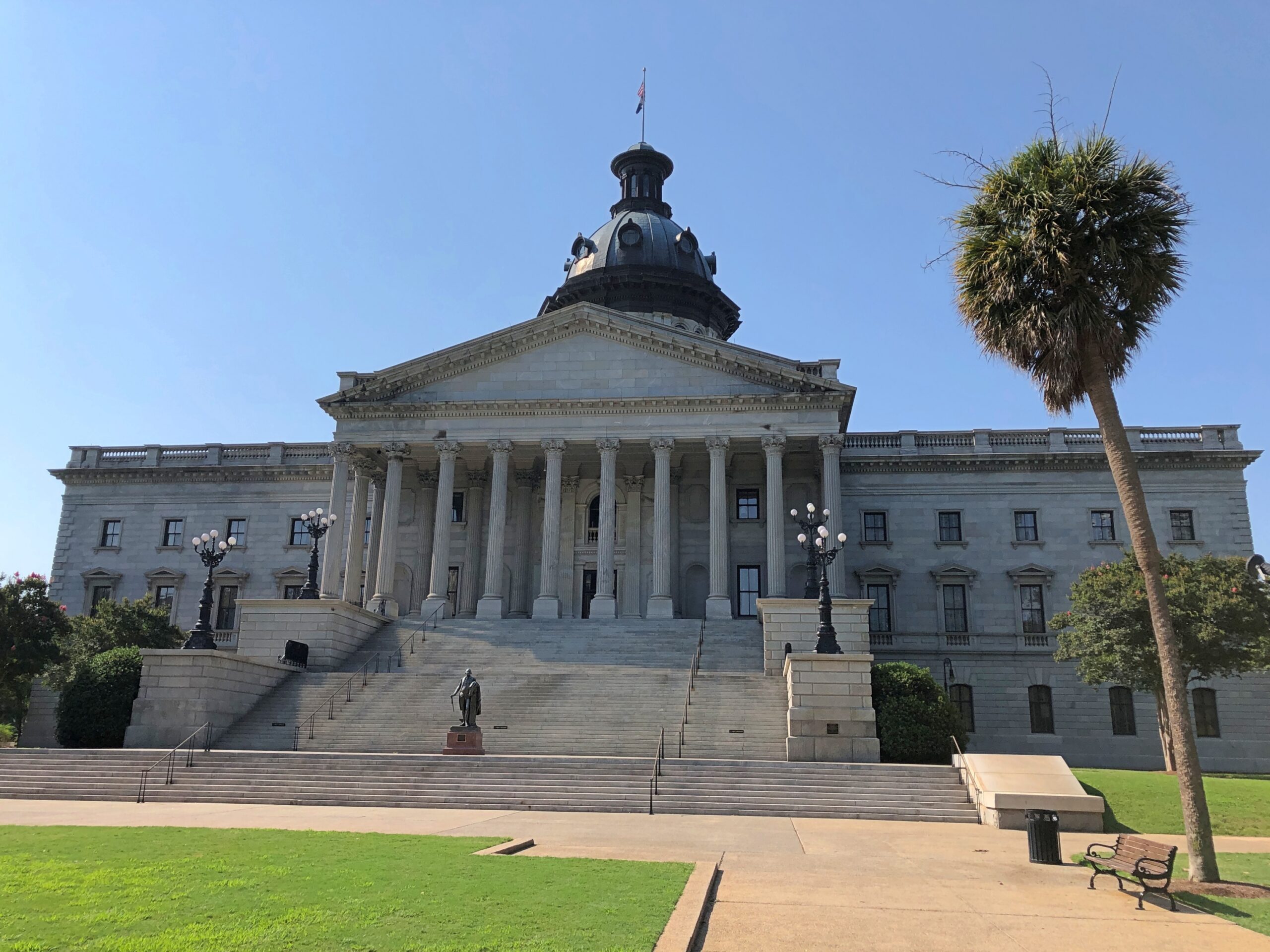
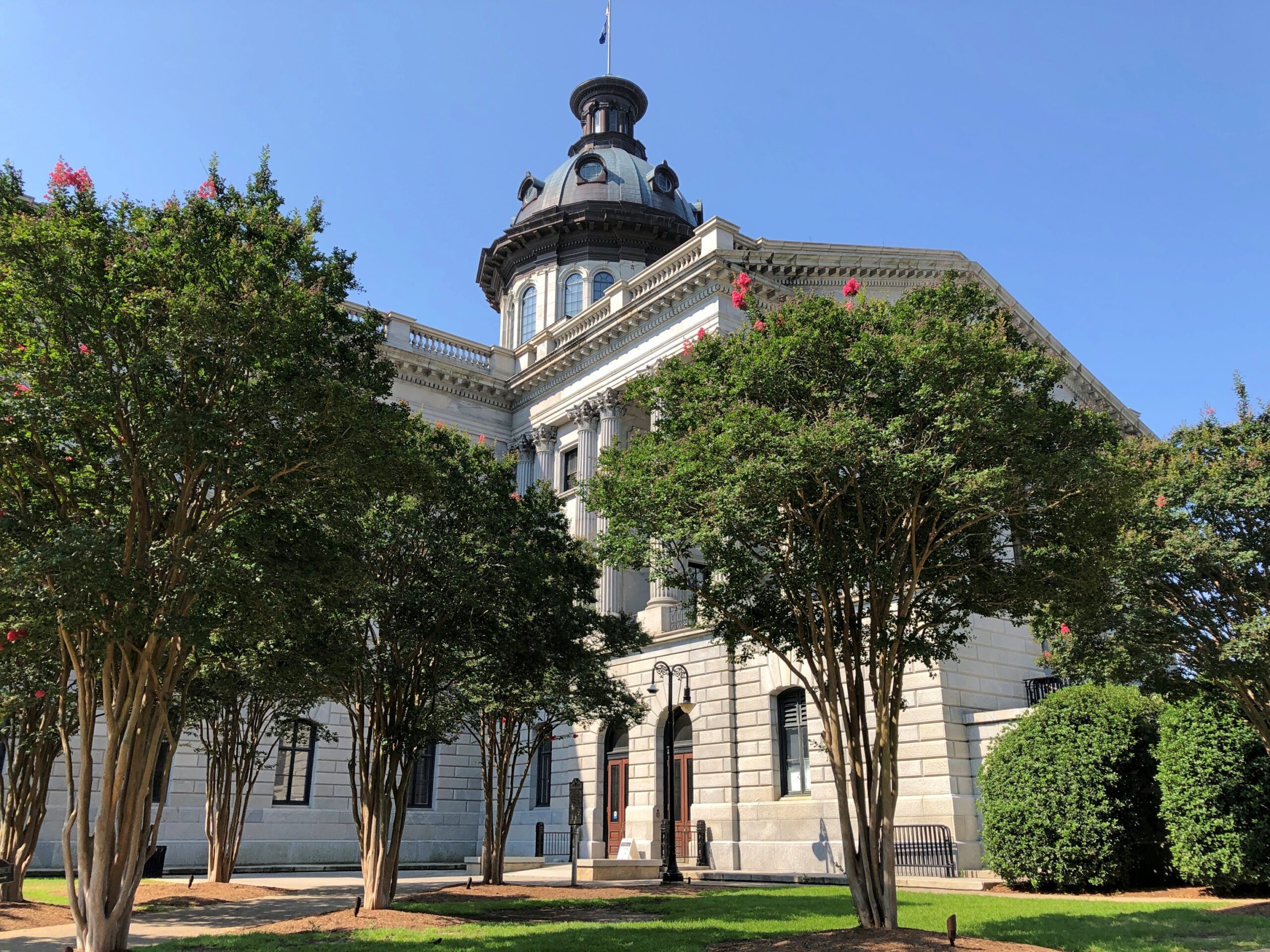
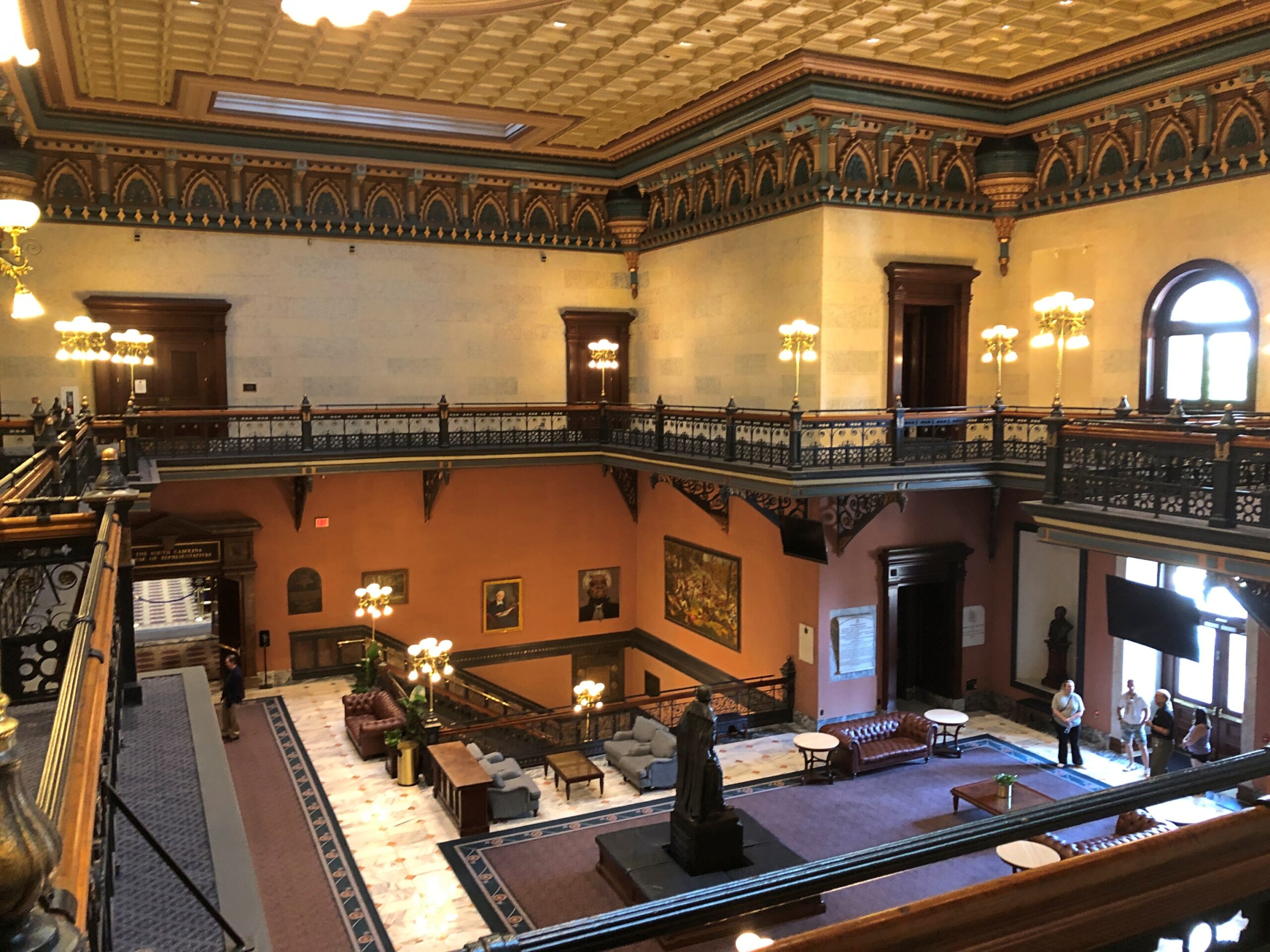
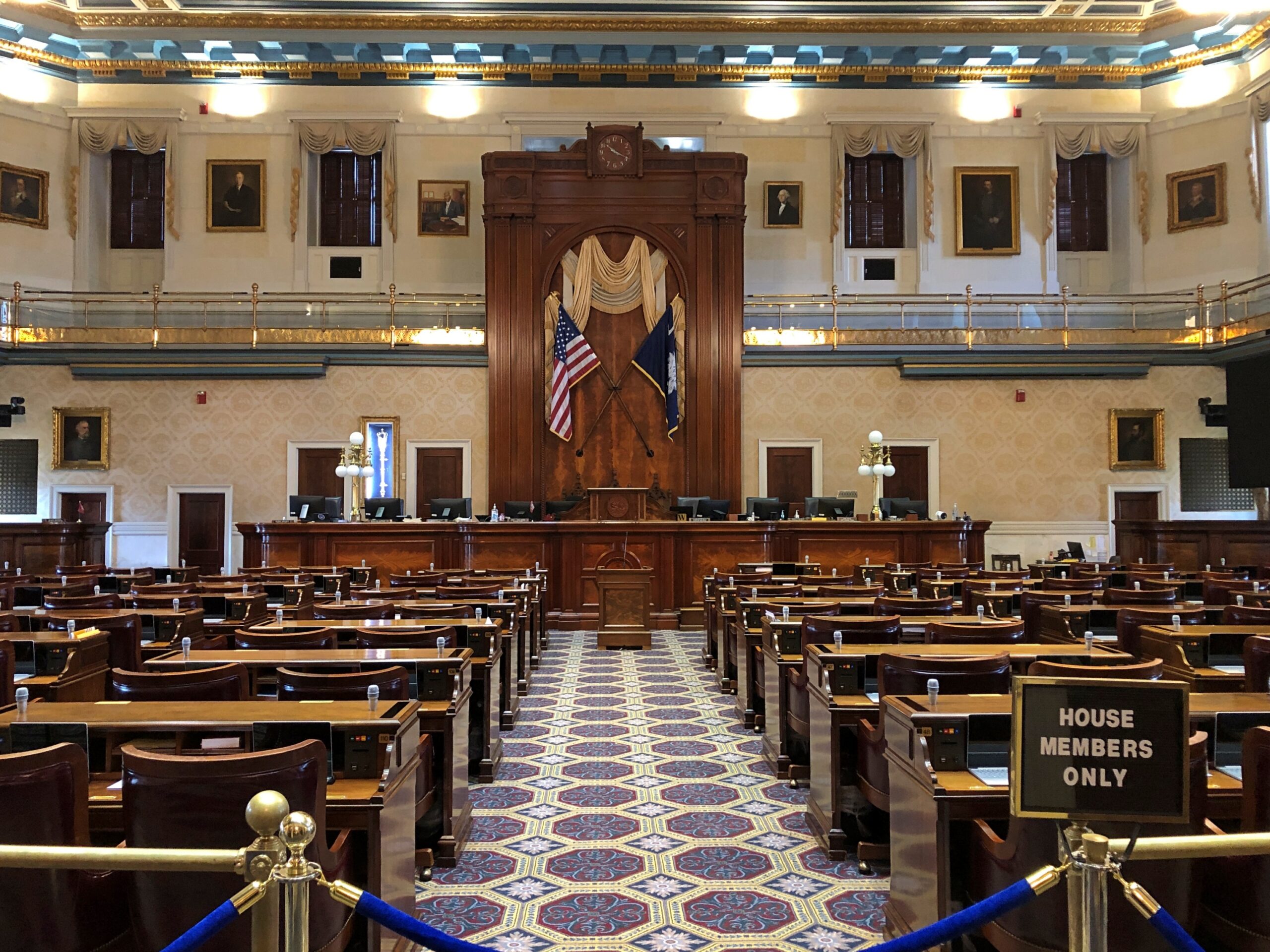
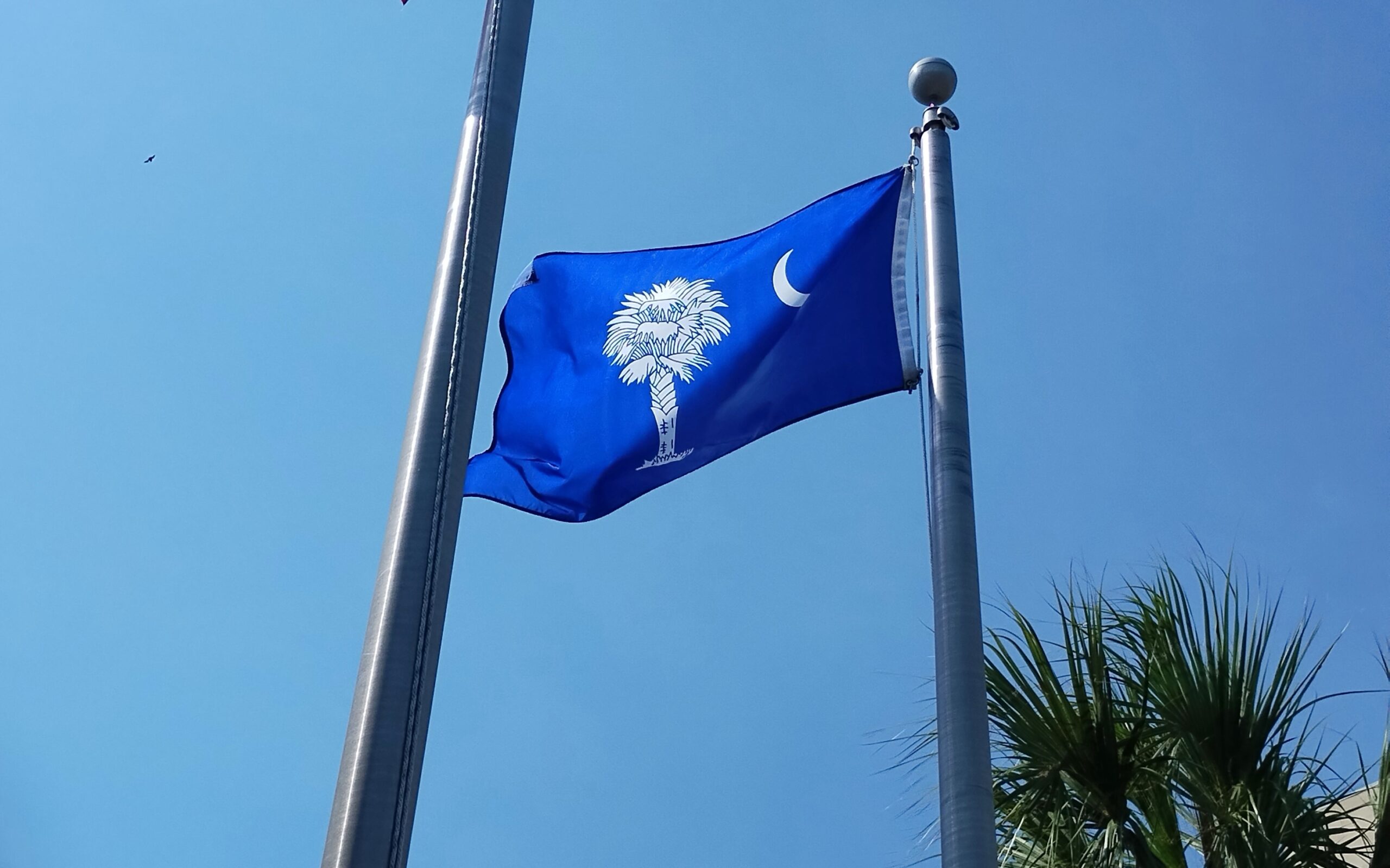
The South Carolina State House

Columbia, SC, is centrally located in its state, the result of a post-Revolutionary (1786) decision by the new state legislature to move from Charleston to somewhere more central, namely the area around the confluence of the Saluda and Broad Rivers, which merge at Columbia to form the Congaree River. The South Carolina State House is now centrally located in that centrally located city, and on the way back west from Myrtle Beach, I decided it was high time I saw it.

SC State House
SC State House

Washington stands in front. Work on the building started in the 1850s from a design by John Rudolph Niernsee (d. 1885), but what with one thing and another – the burning of Columbia in 1865, for instance – finishing the capitol took more than 50 years, and indeed its final design work was overseen by Niernsee’s son, Frank, and other architects.

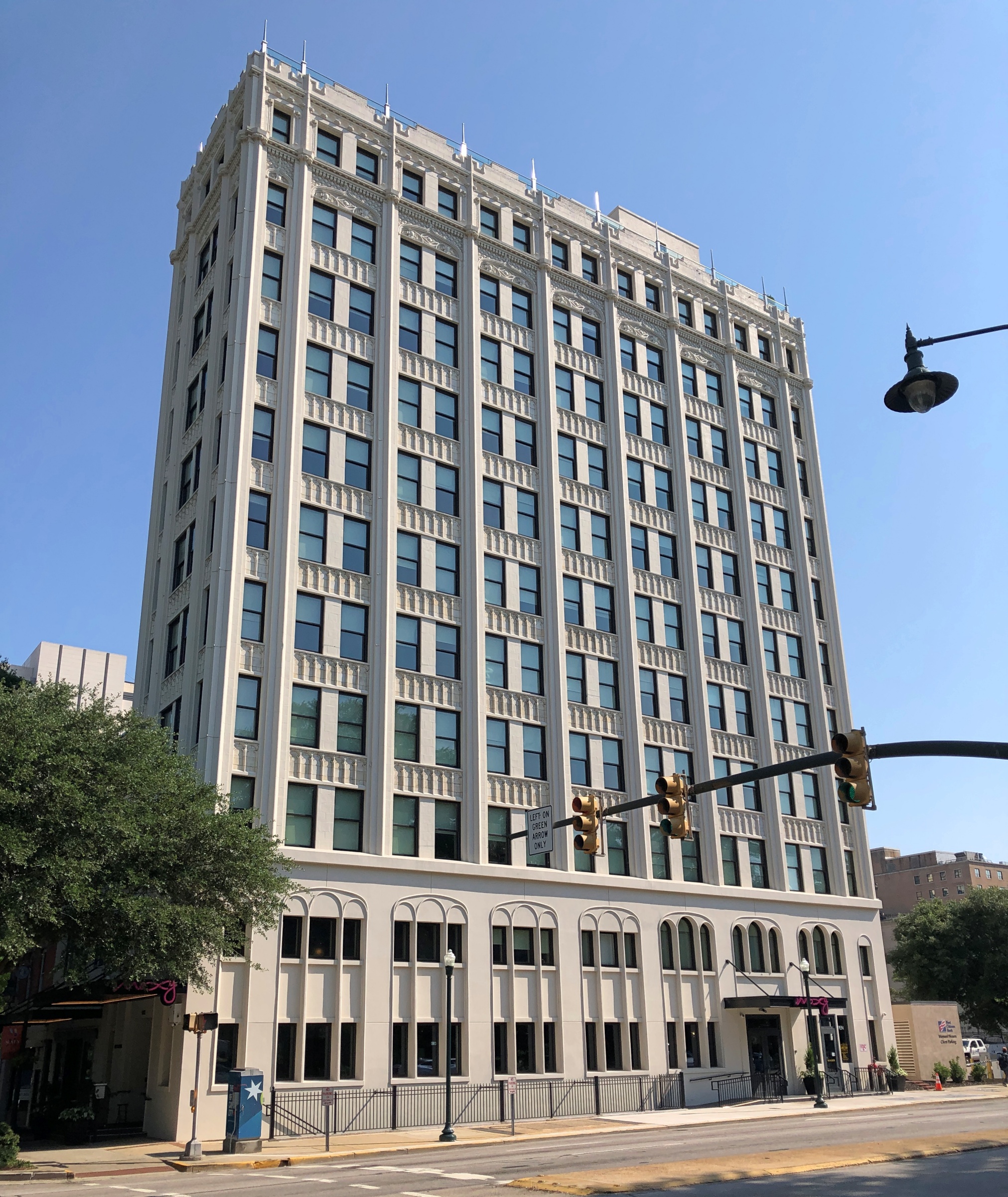
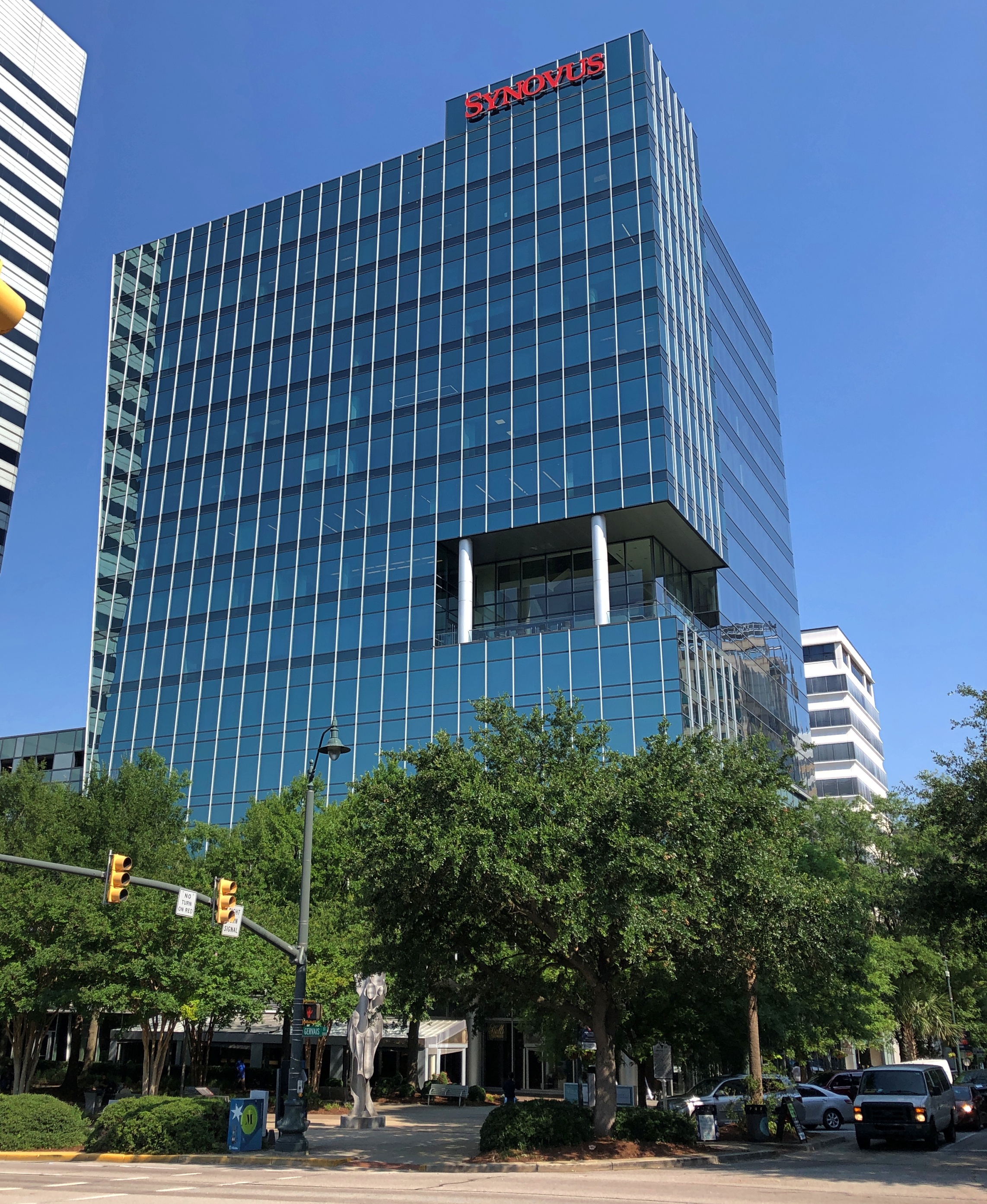
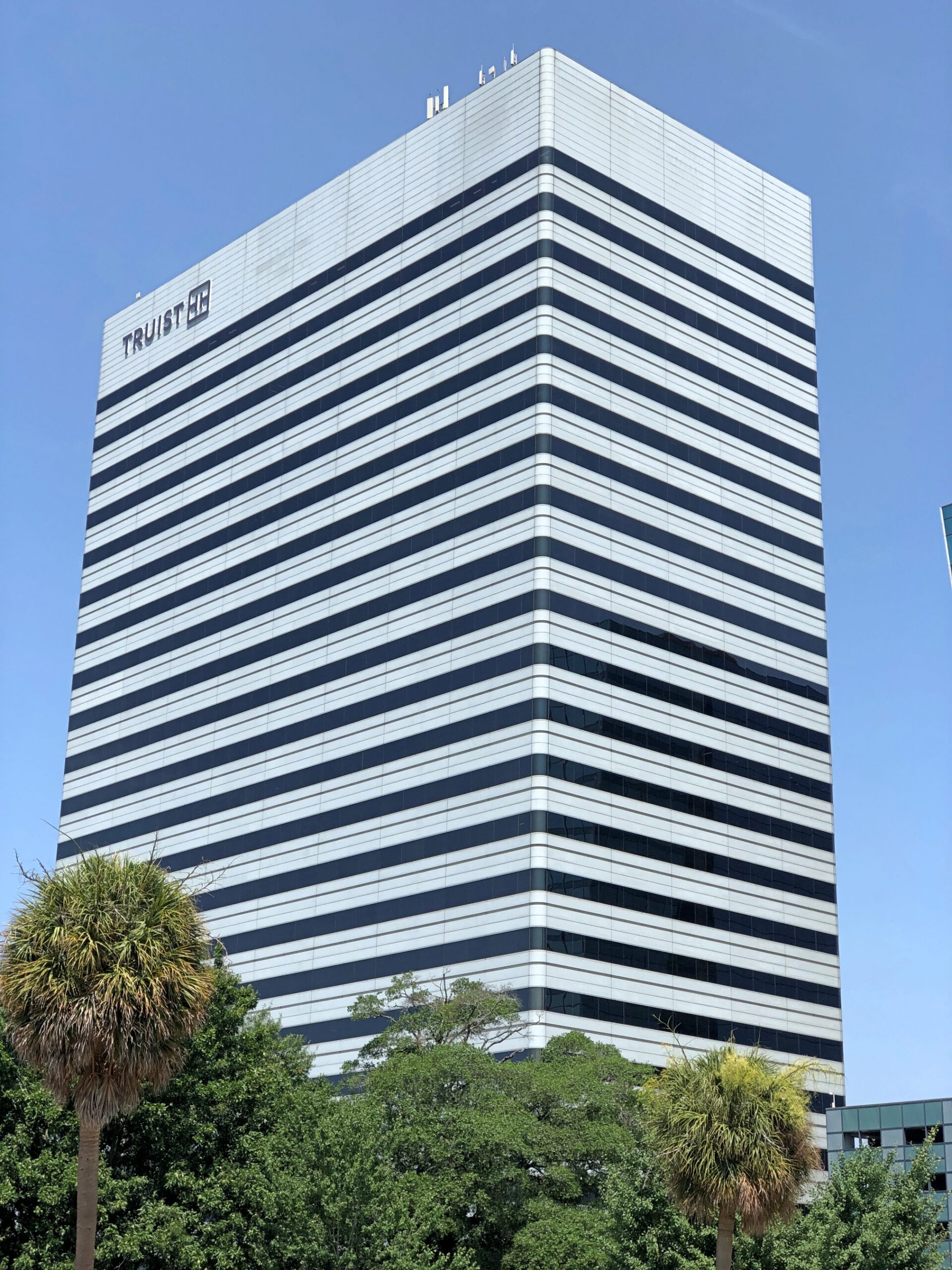
Other downtown structures tower nearby, but the capitol is set back fairly far, as capitols tend to be.

Downtown Columbia SC

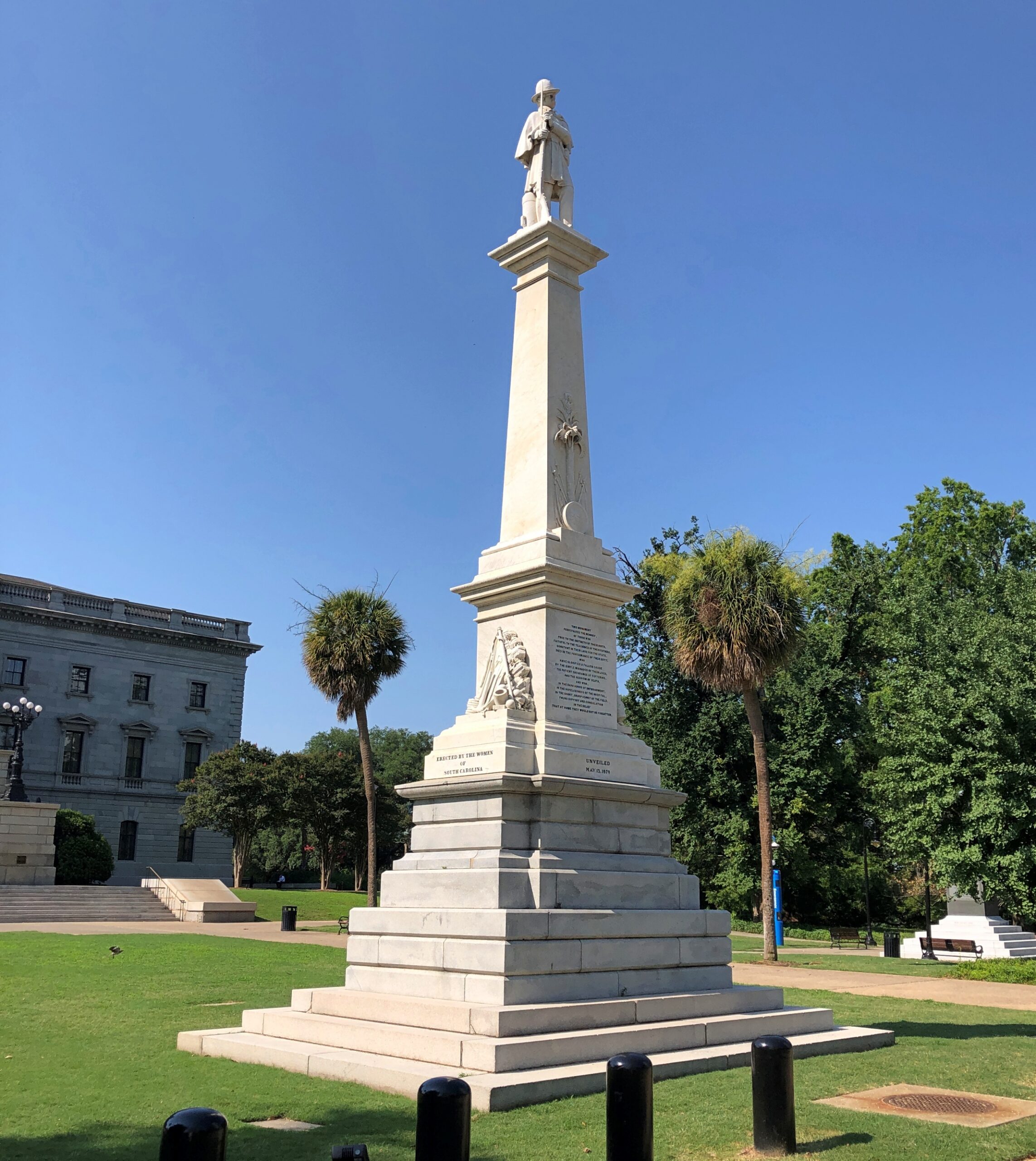
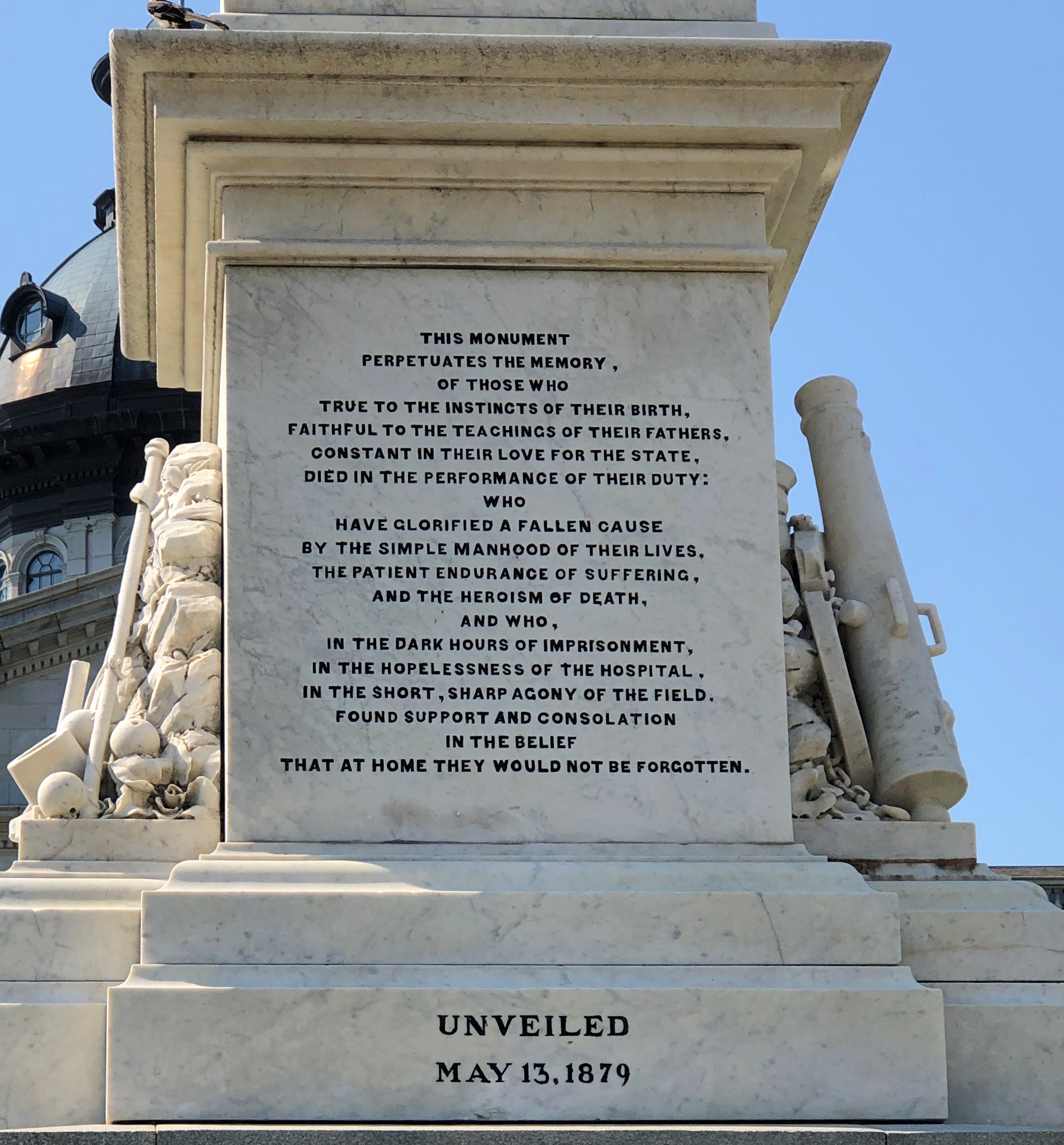
The memorial to the Confederate dead is prominently placed in front of the capitol.

SC State House
SC State House

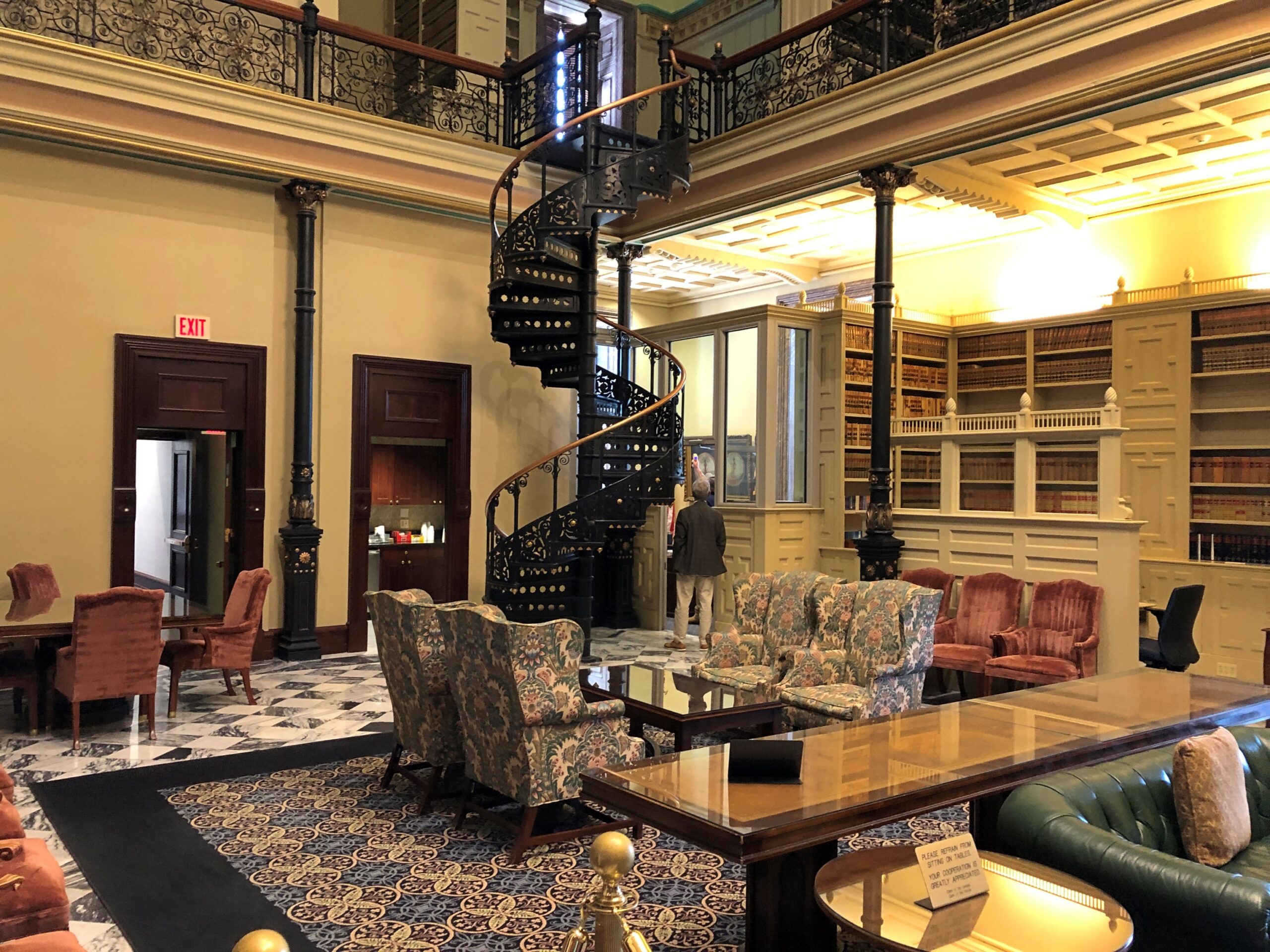
Plenty of other memorials stand on the grounds, such as a unique one honoring the Palmetto Regiment of Volunteers of South Carolina, memorializing SC participants in the war with Mexico, but I saw few, since the heat of the day encouraged me to head inside. There I found a resplendent interior indeed.

Including the capitol library.

SC State House

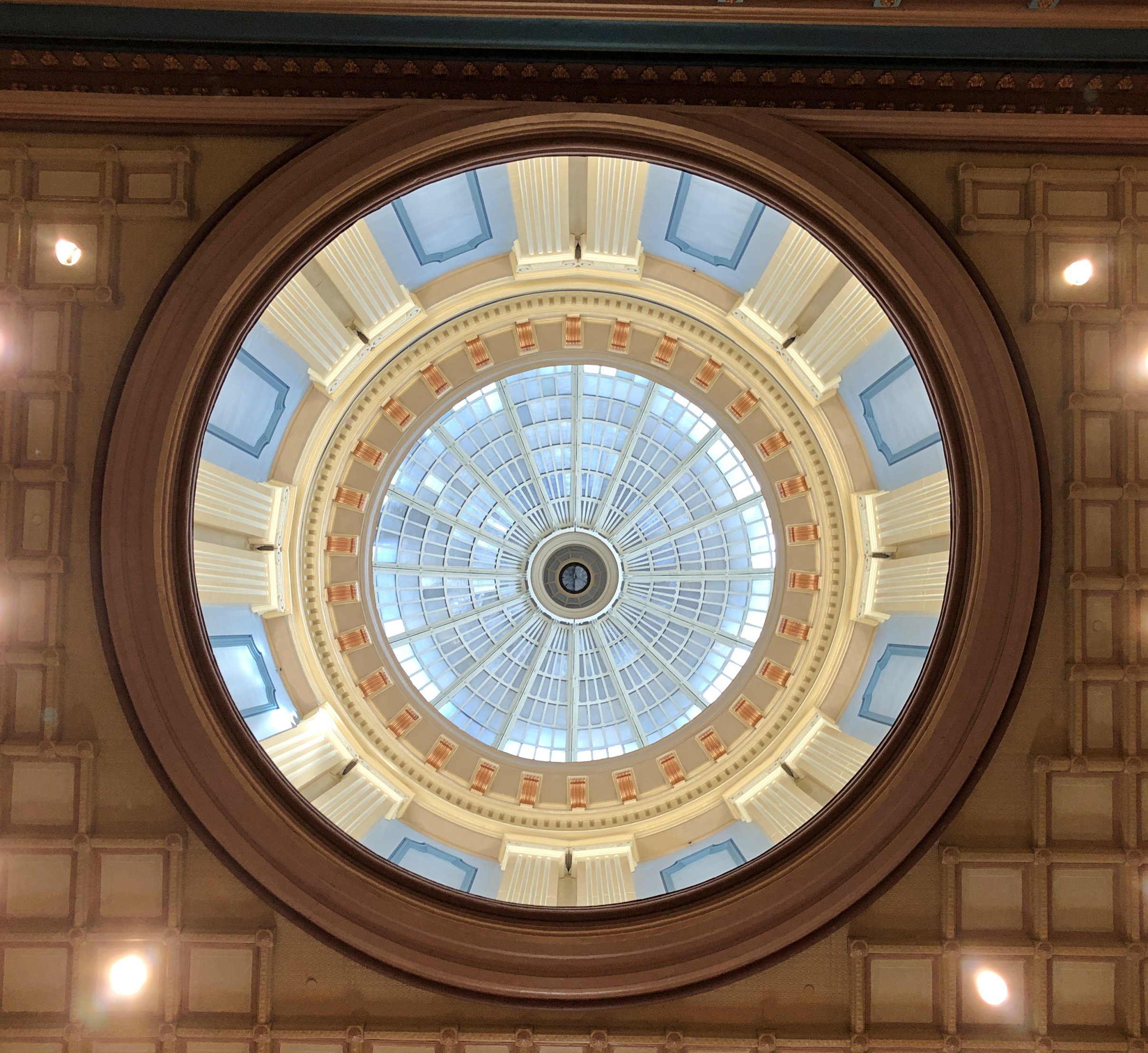
The interior of the dome.

SC State House

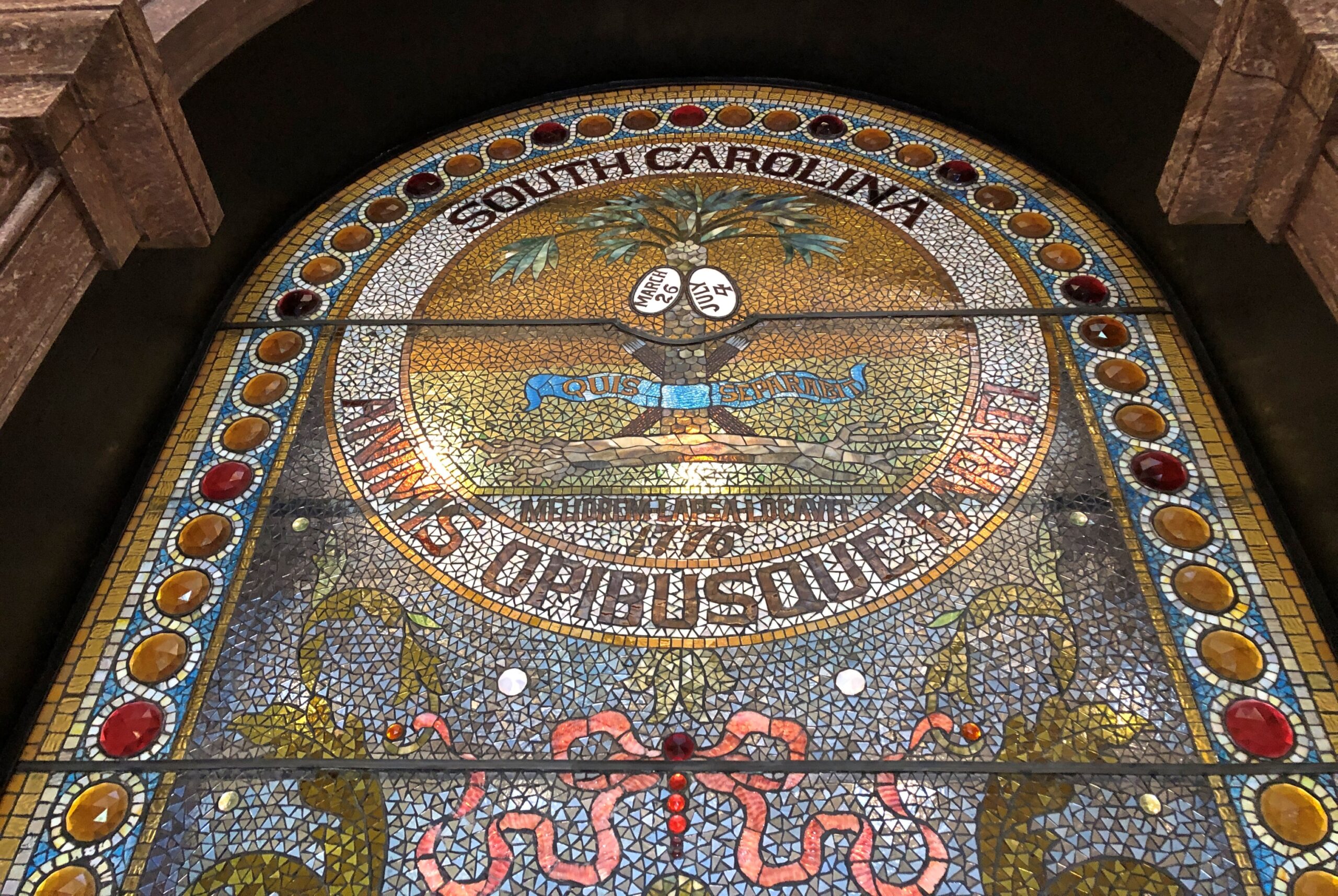
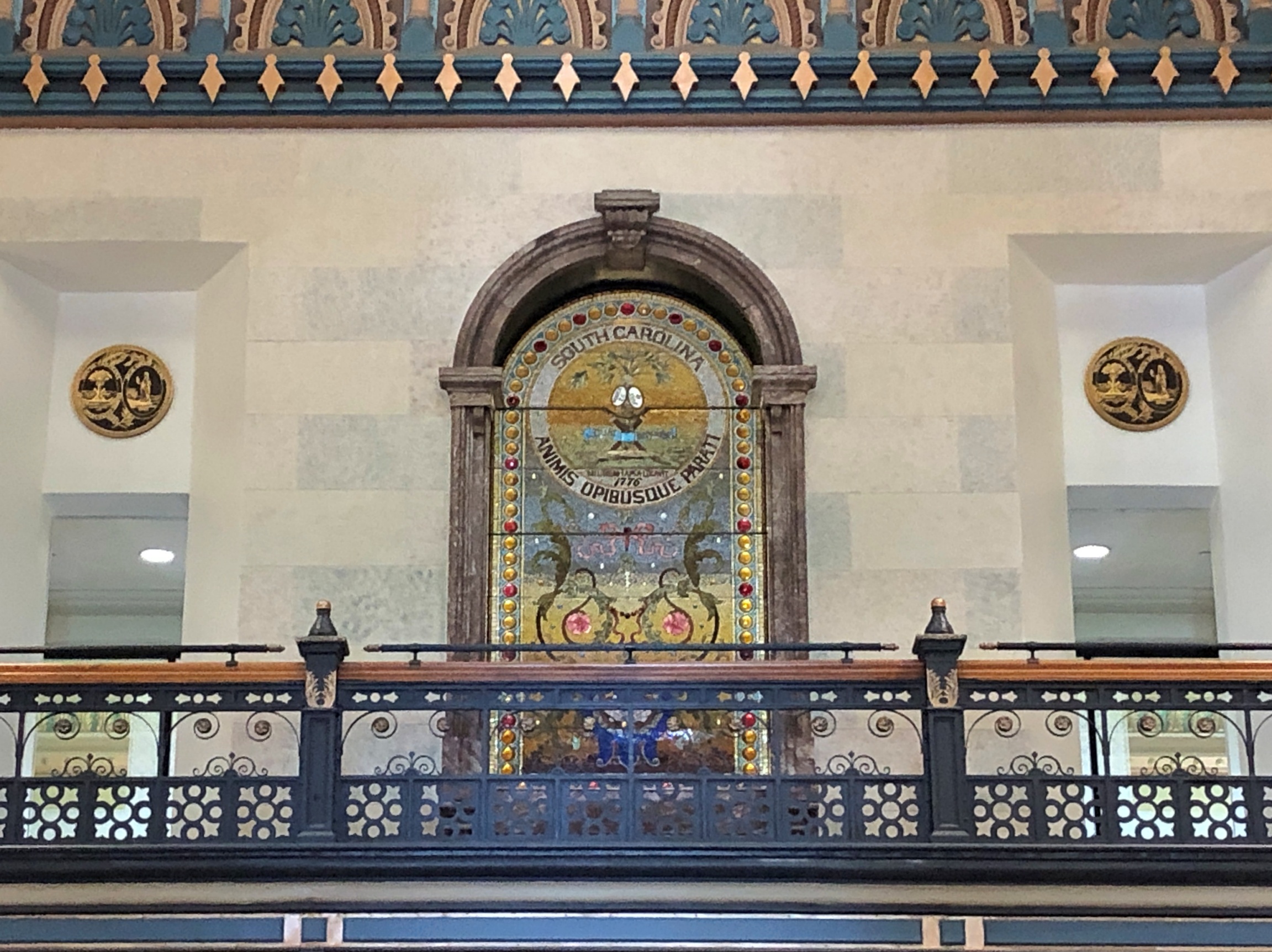
Other unique-to-South Carolina detail.

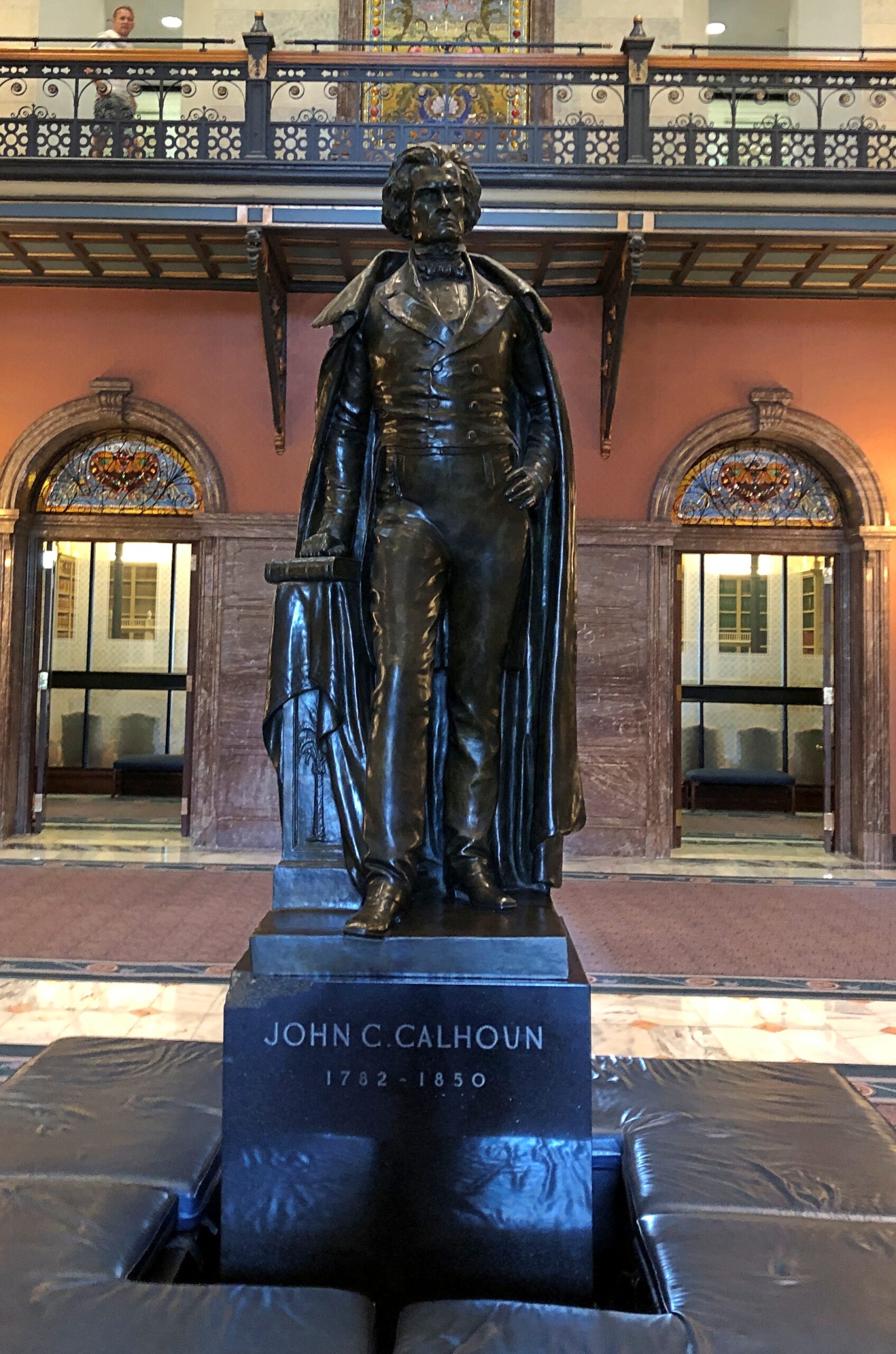
John C. Calhoun rates a prominent bronze in the rotunda and a painted portrait in the Senate chamber. His likeness went down in Charleston, I understand, but not at the capitol just yet.

SC State House

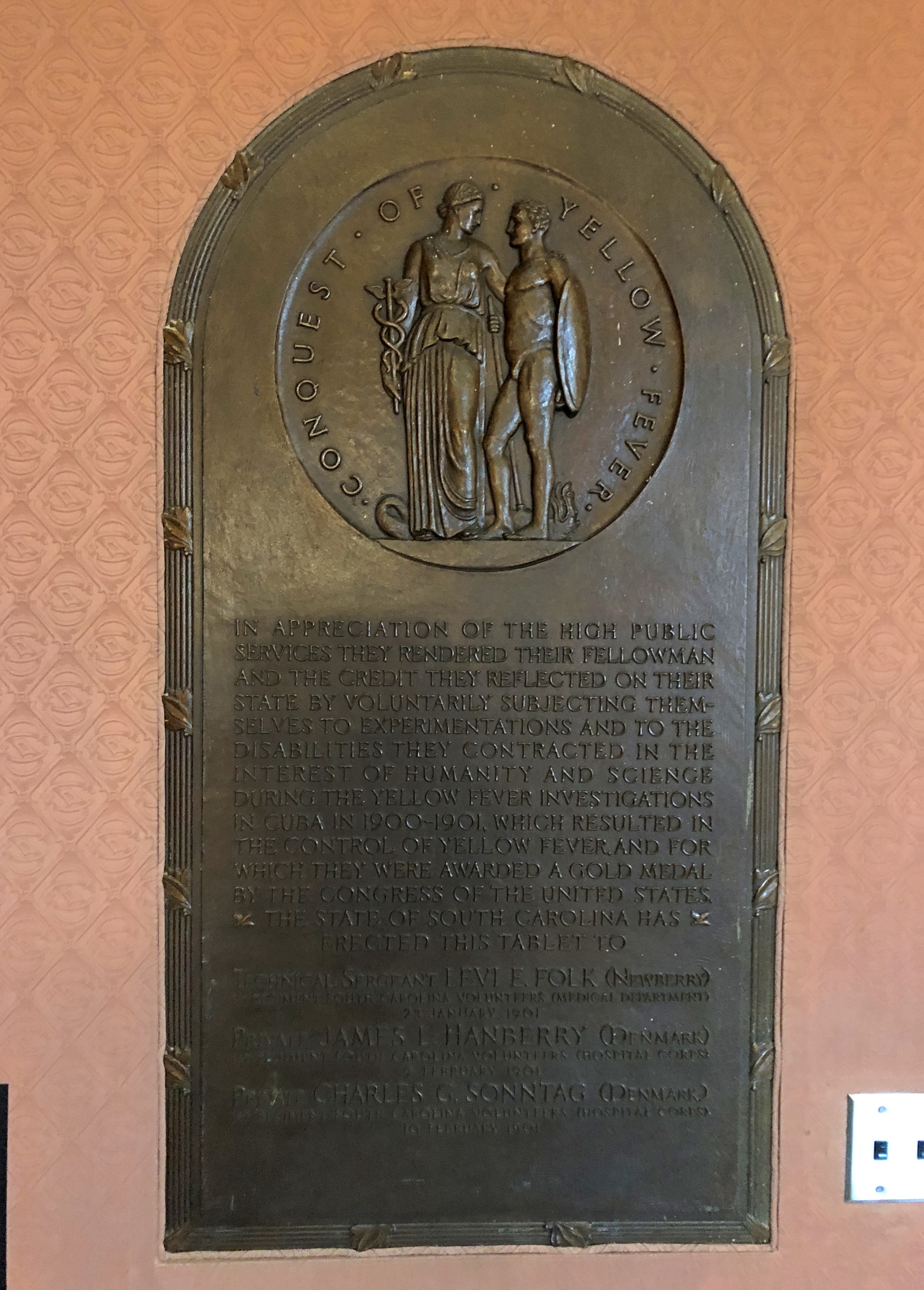
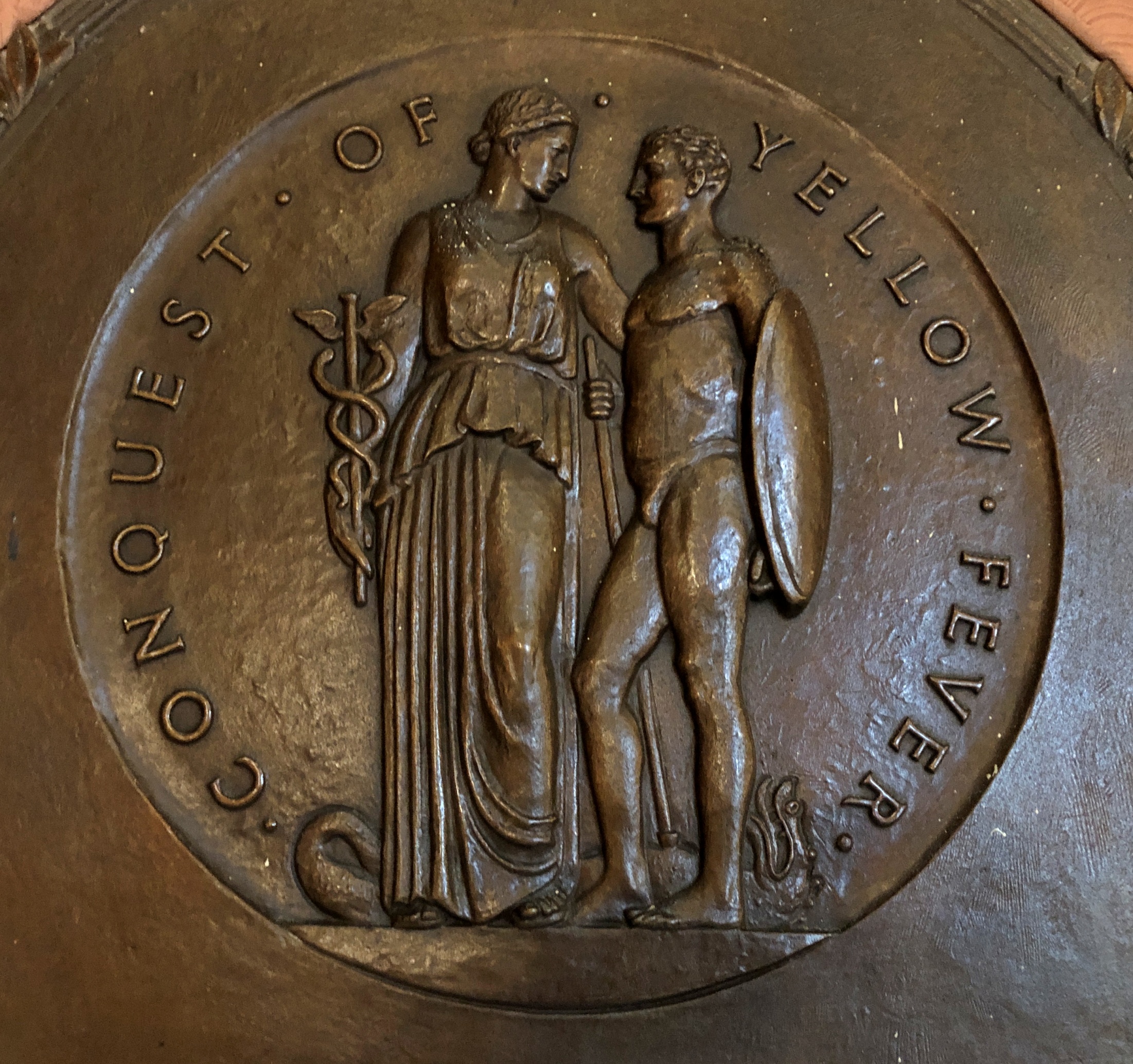
An unusual memorial hints at the state’s awful experience with yellow fever in pre-modern times.

SC State House

It’s hard to read, but the plaque memorializes three U.S. soldiers from South Carolina, TS Levi E. Folk and Privates James L. Hanberry and Charles G. Sonntag. They were among the 30 or so soldiers who volunteered to be bitten by yellow fever-infected mosquitoes in the famed (used to be famed, anyway) experiments conducted by Maj. Walter Reed in 1900-01 in Cuba that once and for all proved mosquitoes to be the vectors.

SC State House

Before the 20th century, yellow fever plagued South Carolina relentlessly. The Encyclopedia of South Carolina on the disease: “Yellow fever, like falciparum malaria, was introduced into South Carolina as a result of the African slave trade. The first major epidemic struck Charleston in 1699, killing about fifteen percent of the population, including many officials. At least five and perhaps as many as eight major epidemics occurred between 1706 and 1748. The disease was probably present in several other years as well. For several decades after 1748 no large epidemics occurred, although it appeared sporadically in some years. Between the 1790s and 1850s Charleston hosted numerous epidemics.”
Glad all that is over here in North America. Unless it isn’t.

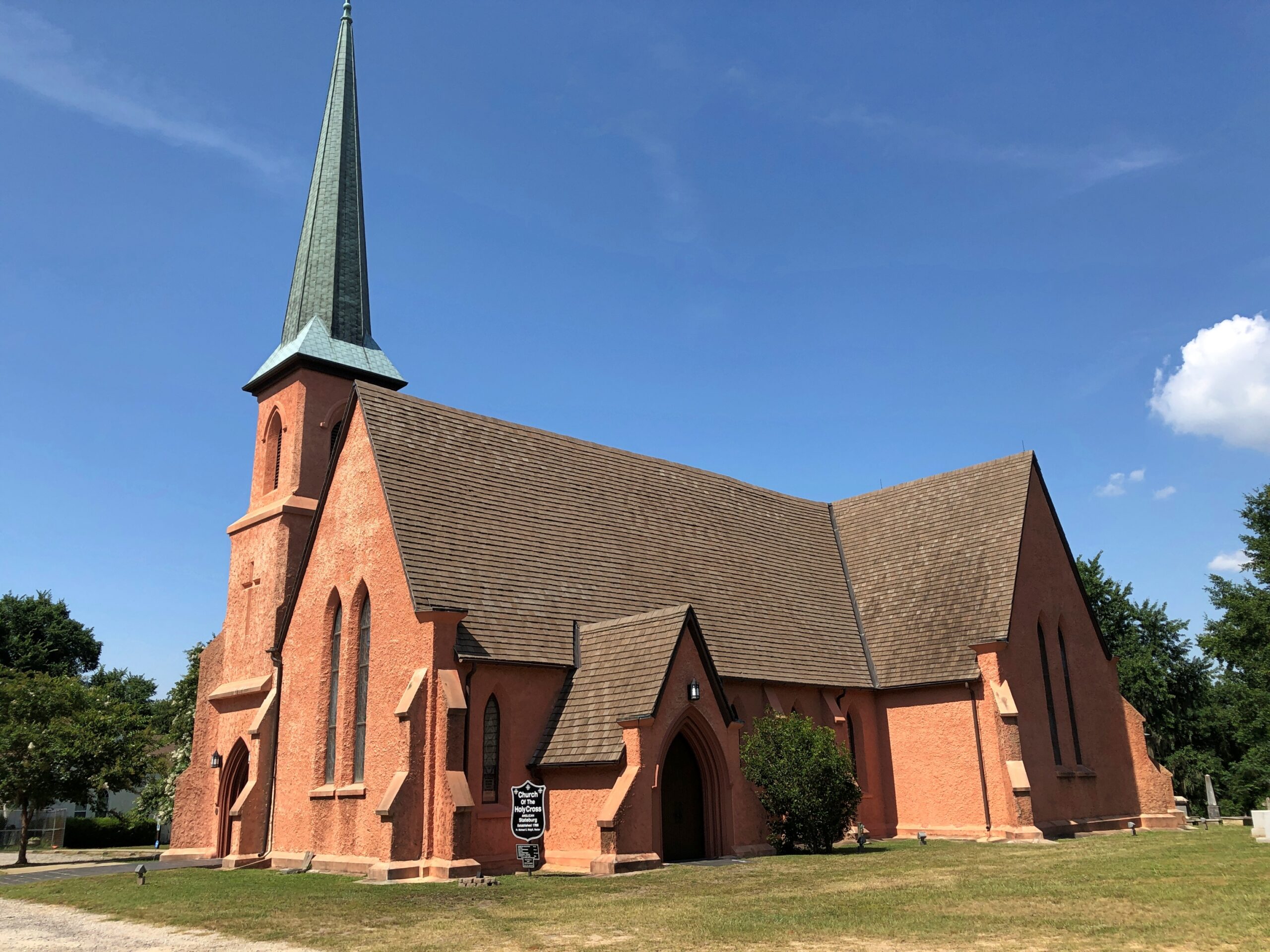
Church of the Holy Cross, Stateburg, SC

Before I take a long drive, I spend time with one or more of my highway atlases sketching a route – Rand McNally, National Geographic or Michelin. Sometimes I refer to highway department folding maps as well. Google Maps has its place, an important one, but it’s no substitute for the big-picture sweep of a paper map.

For the trip to the Carolinas earlier this summer, an atlas map made it easy to see the best way to cut across the state from Myrtle Beach to Columbia, where I planned to spend a night: US 378. As Wiki puts it, “the highway has a lengthy concurrency with US 76 between Columbia and Sumter and serves as a major route between the Midlands and the Myrtle Beach area.”

That is, from the flat damp lands along the coast through pines and the sites of long-ago rice plantations, on to modern crop lands, small sandy wooded rises, and into suburban Columbia. Small towns dot the route: Conway, Gresham, Hannah, Lake City, Turbeville, and Sumter, which is actually a small city (pop. about 43,800).

Not far west of Sumter on US 378, I noticed a point-of-interest sign suggesting a right turn. I don’t remember the exact wording, but the gist that I picked up instantly was historic church. My kind of sight, in other words. After only a few minutes on the side road (South Carolina 261, a.k.a. N. Kings Hwy.), a church and churchyard cemetery appeared.


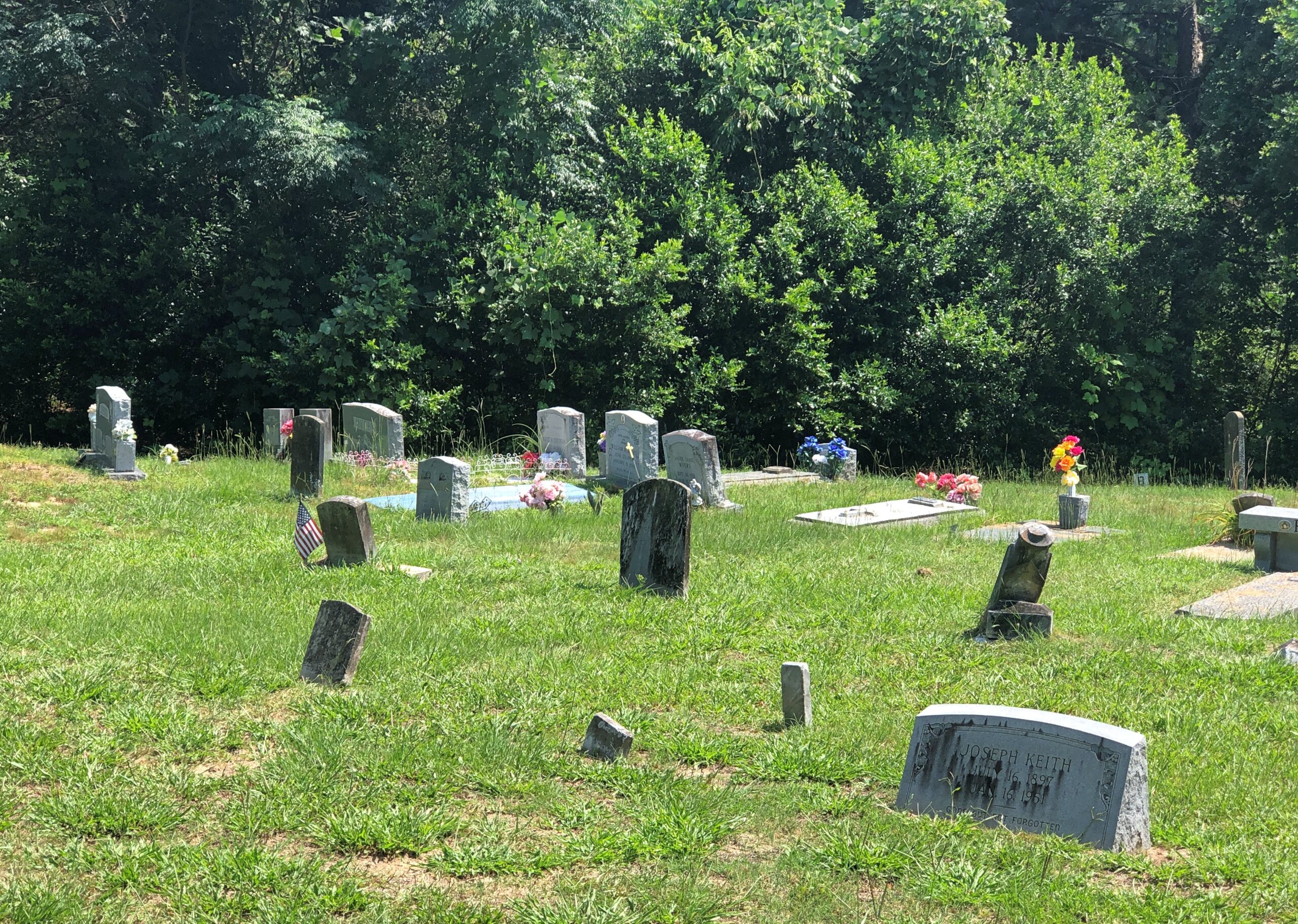
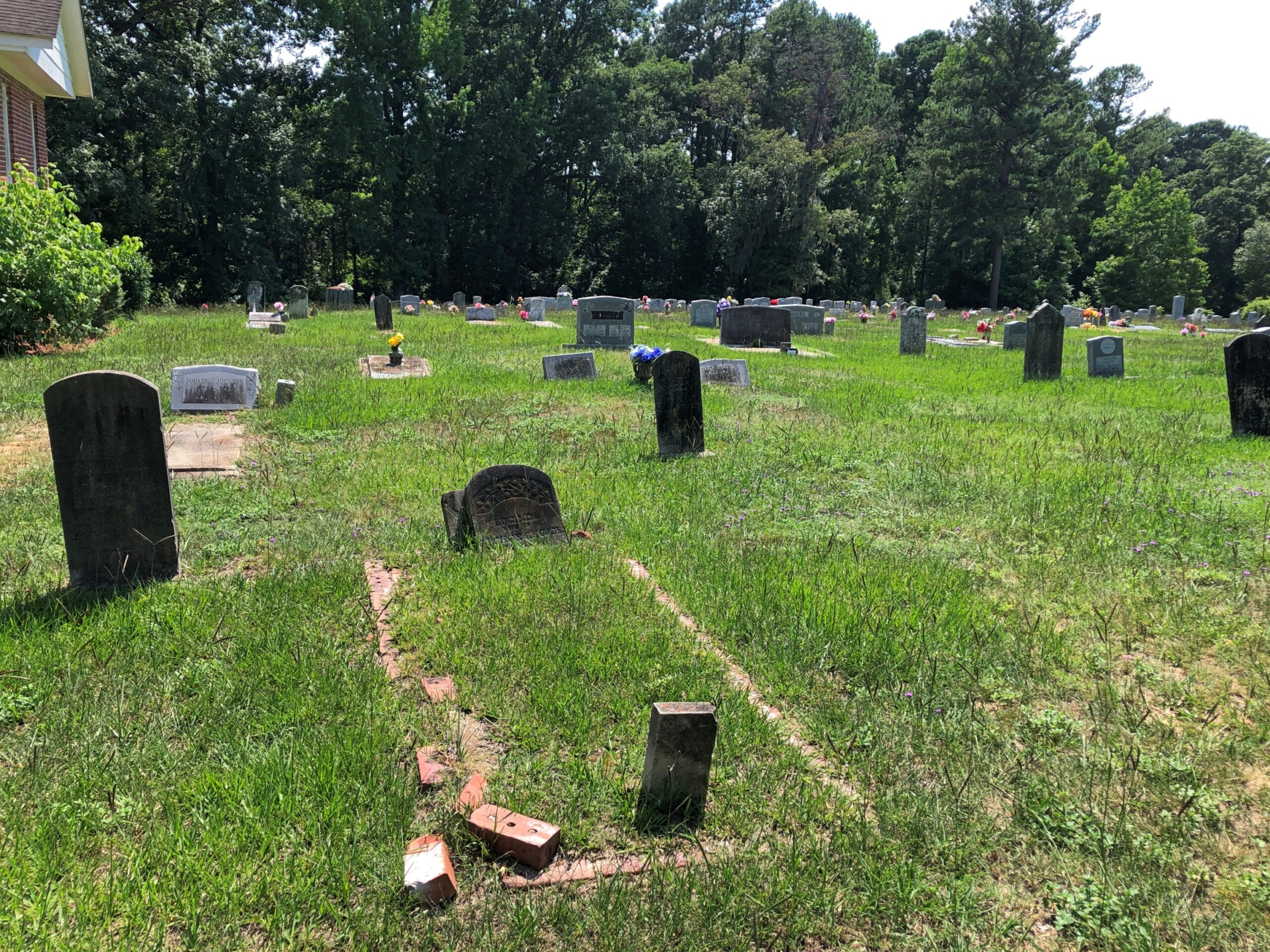
This turned out to be the Wayman Chapel of the AME Church, which has its own graveyard.

Wayman Chapel, AME SC

A good many AME churches are named Wayman, after Bishop Alexander W. Wayman. Surely the place is historic in its own right, including as part of the wider history of the AME, but it wasn’t what I was looking for. I continued on, and without realizing it, had entered the High Hills of Santee, which sounds like an all around interesting place.

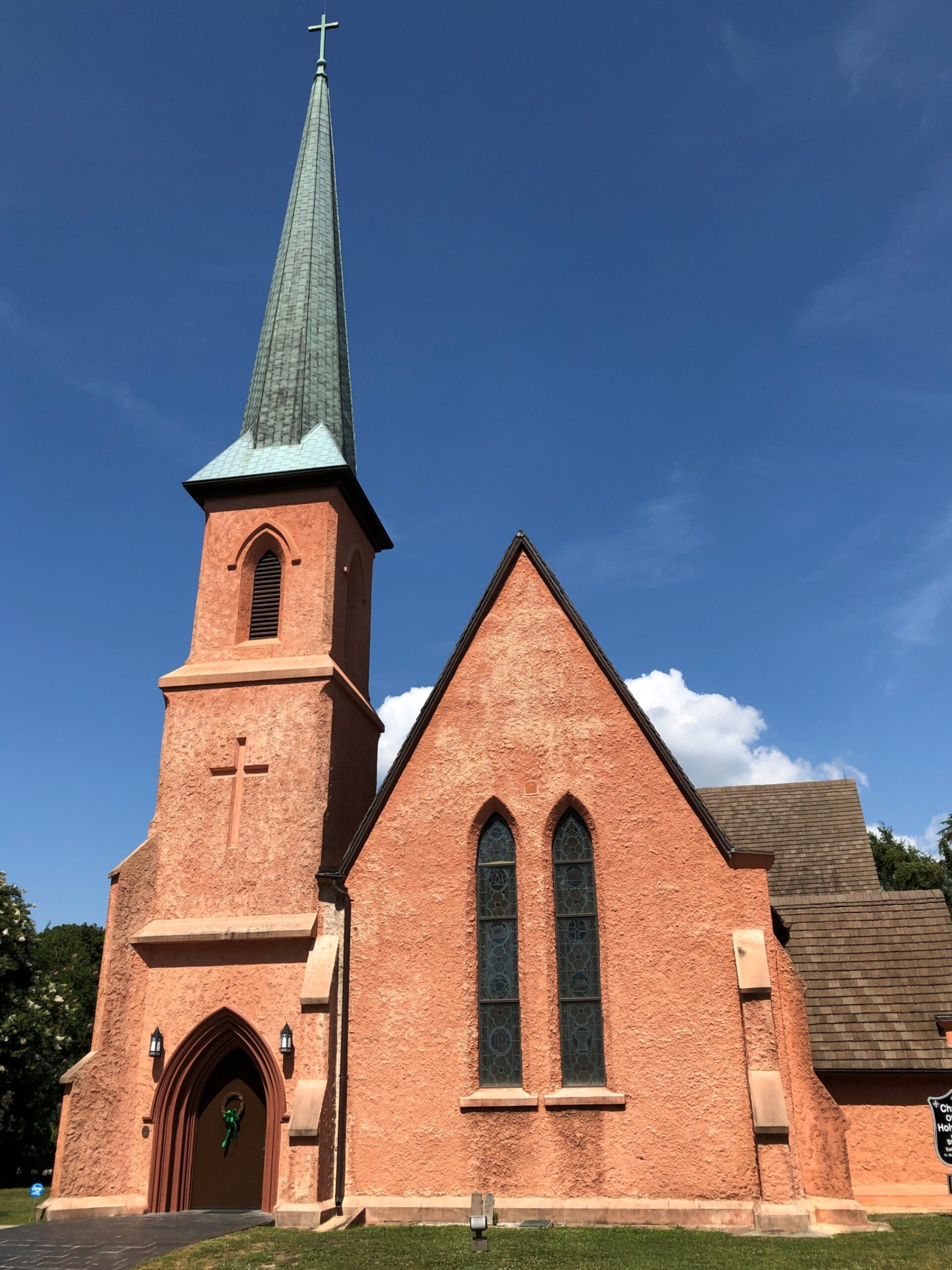
Had I realized that, I might have gone a little further down N. Kings Hwy., but serendipity on the road will only take you so far. In this case, not much further down the road, to the Church of the Holy Cross.

Church of the Holy Cross, SC

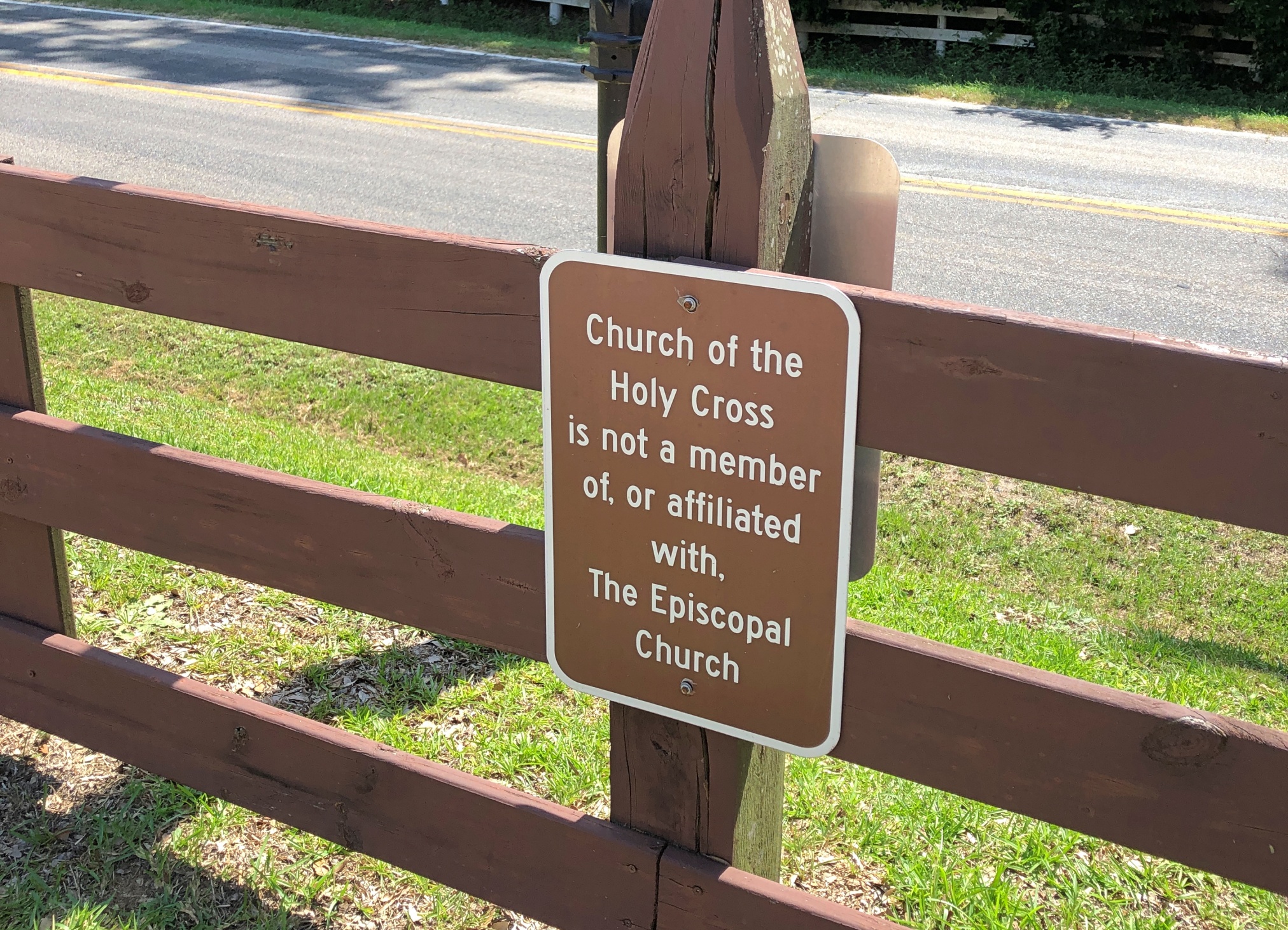
The church has a Stateburg address, but isn’t in town. For well over a century, it was an Episcopal church, but the current congregation wants one and all to know that it isn’t any more. A simple sign, but enough to carry a whiff of schism.

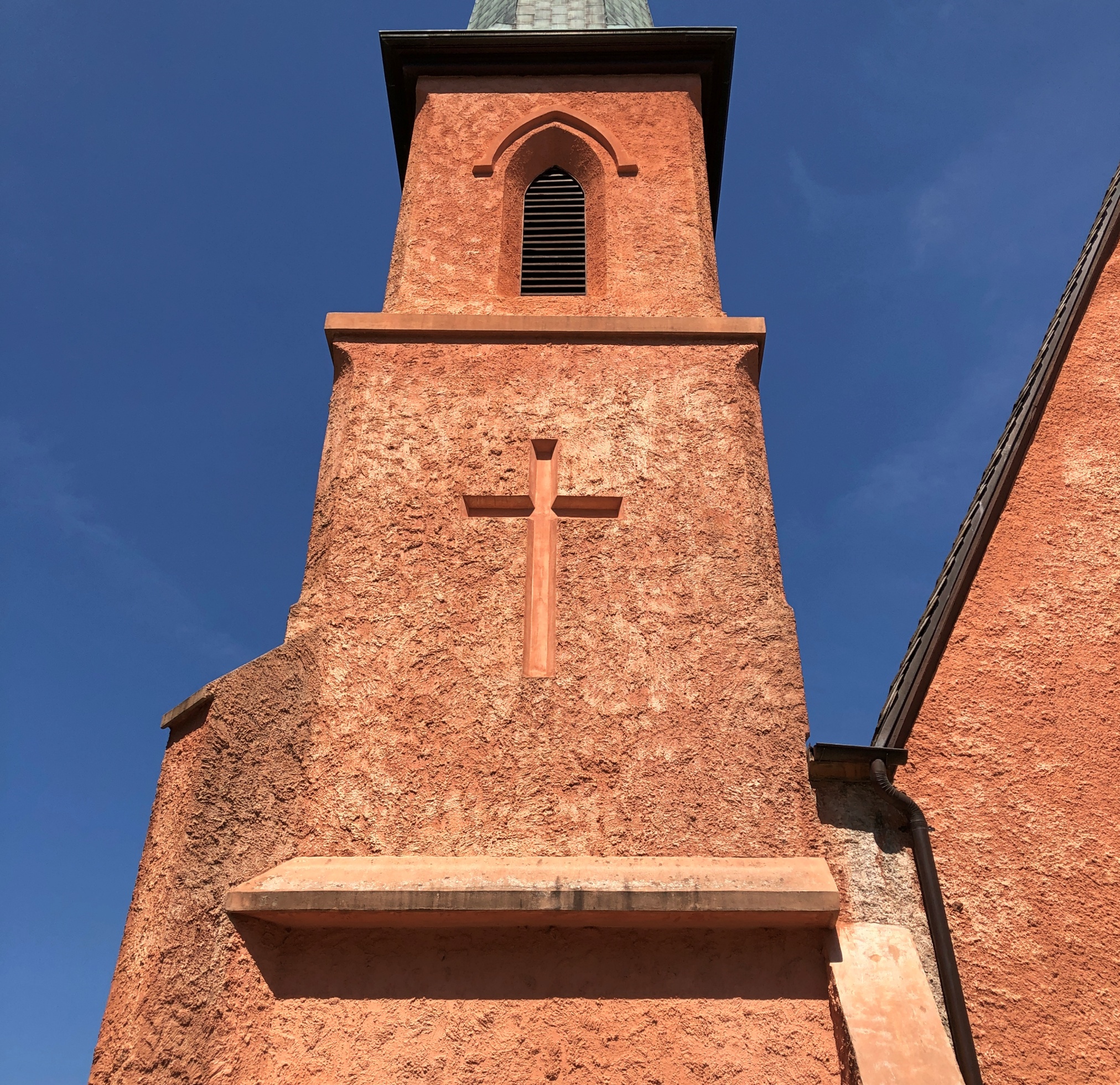
The design work was by Edward C. Jones, a busy architect, including designs at Magnolia Cemetery in Charleston. Not brick or the like, but rammed earth. I can’t say that I’d seen a rammed earth church before. It was completed in 1852.

Church of the Holy Cross

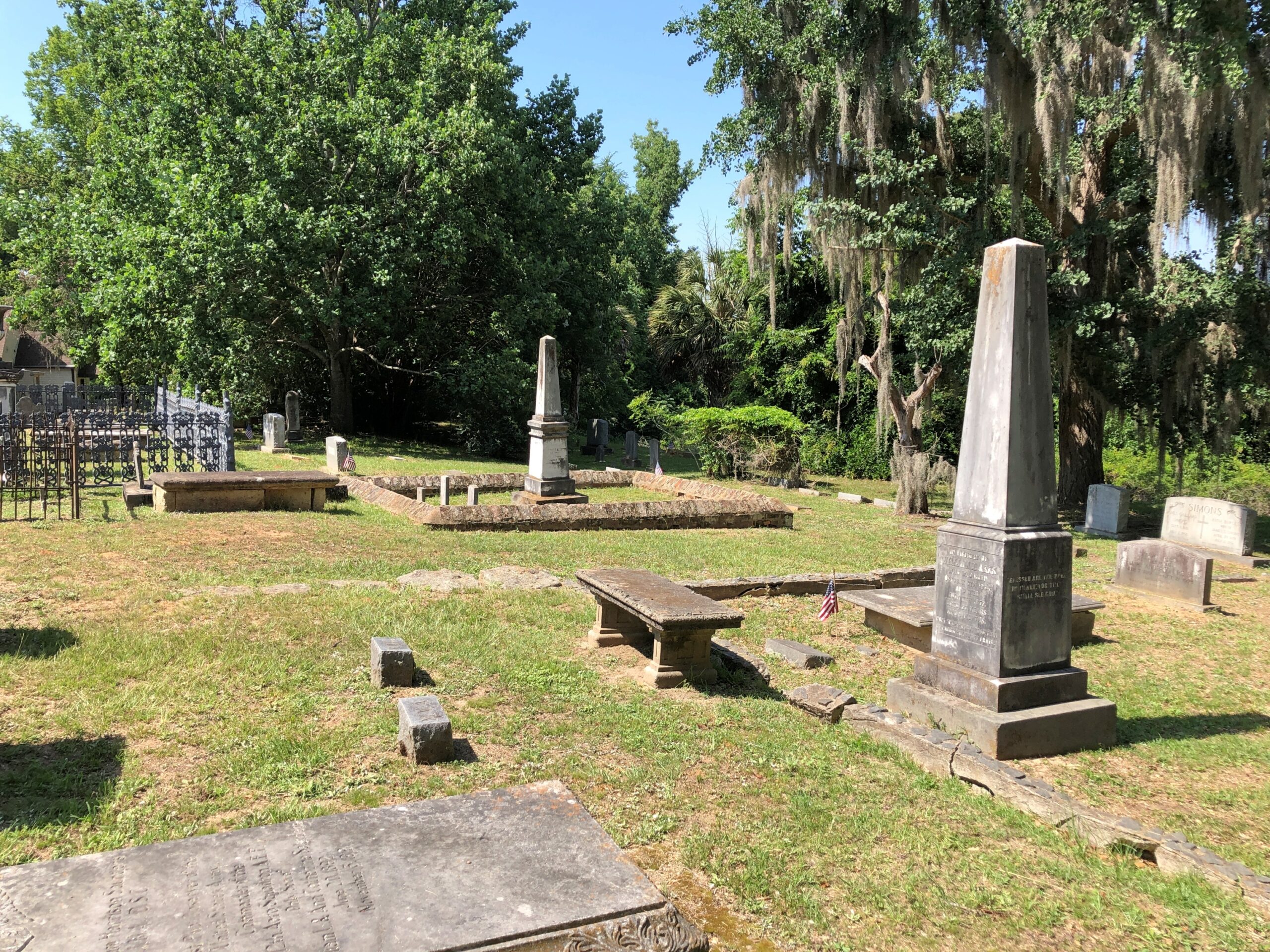
Extending some distance behind the church, which was closed, is a handsome cemetery.

Church of the Holy Cross, SC

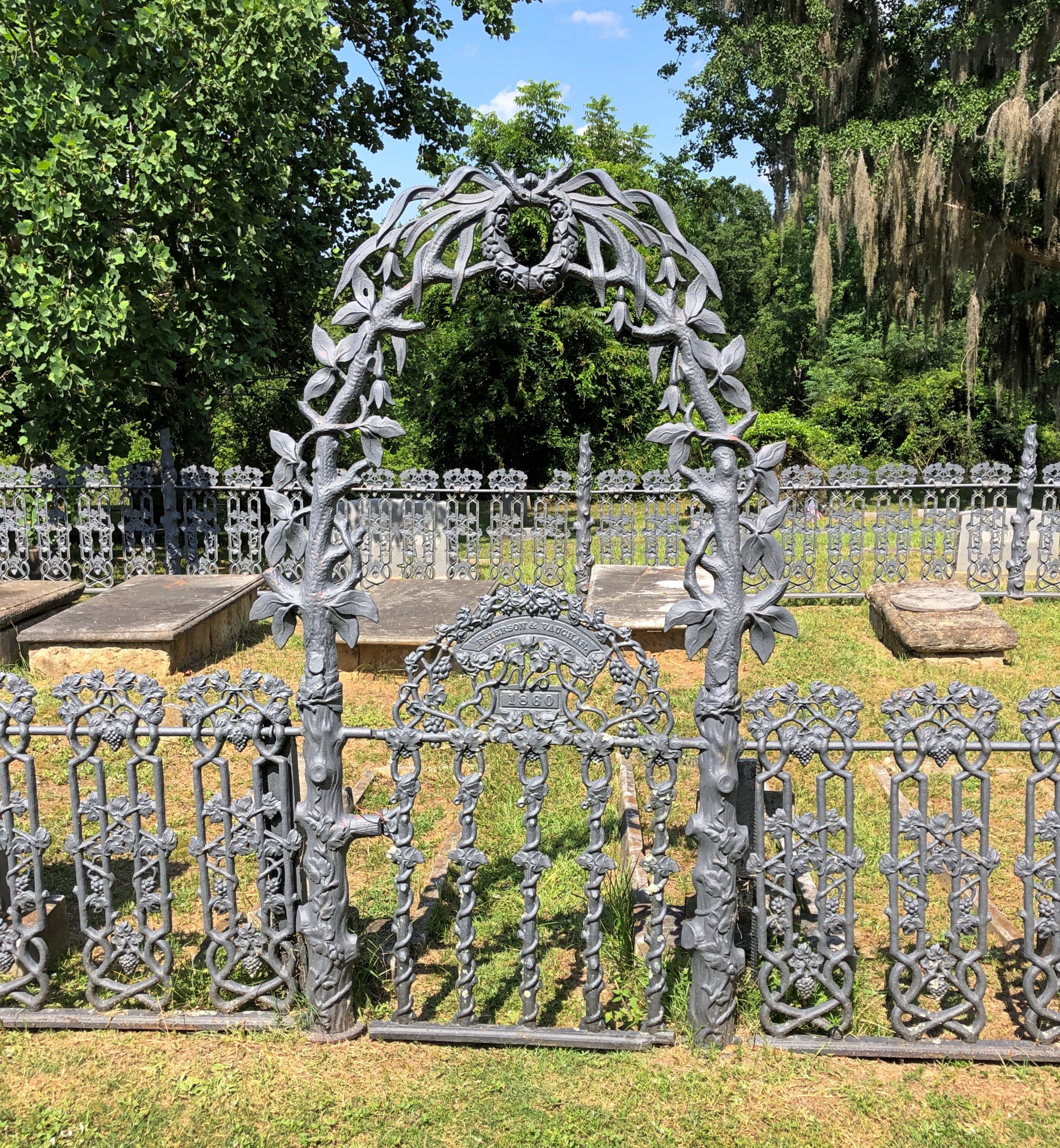
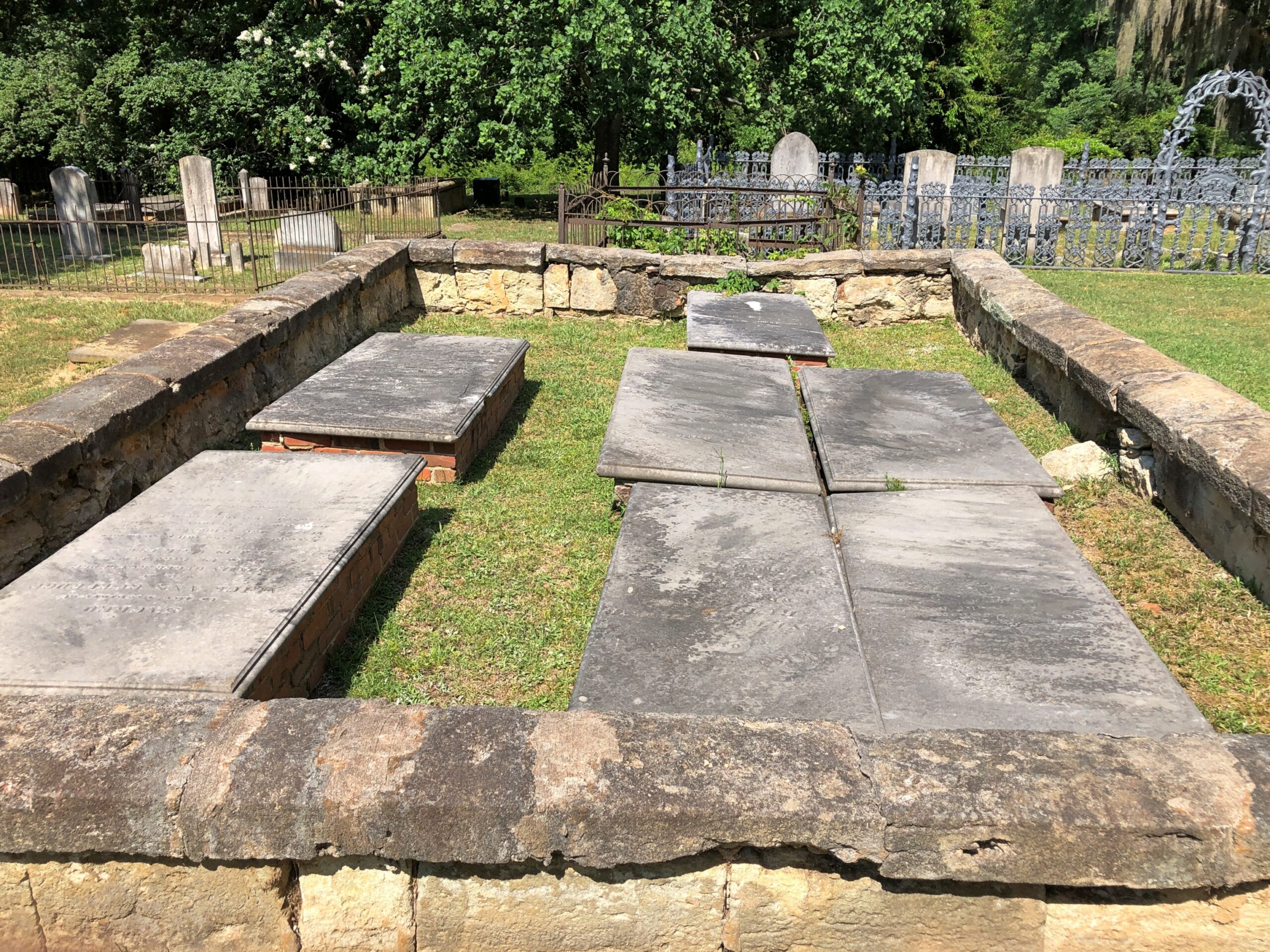
Impressive ironwork and crumbling masonry. What’s not to like?

Church of the Holy Cross, SC

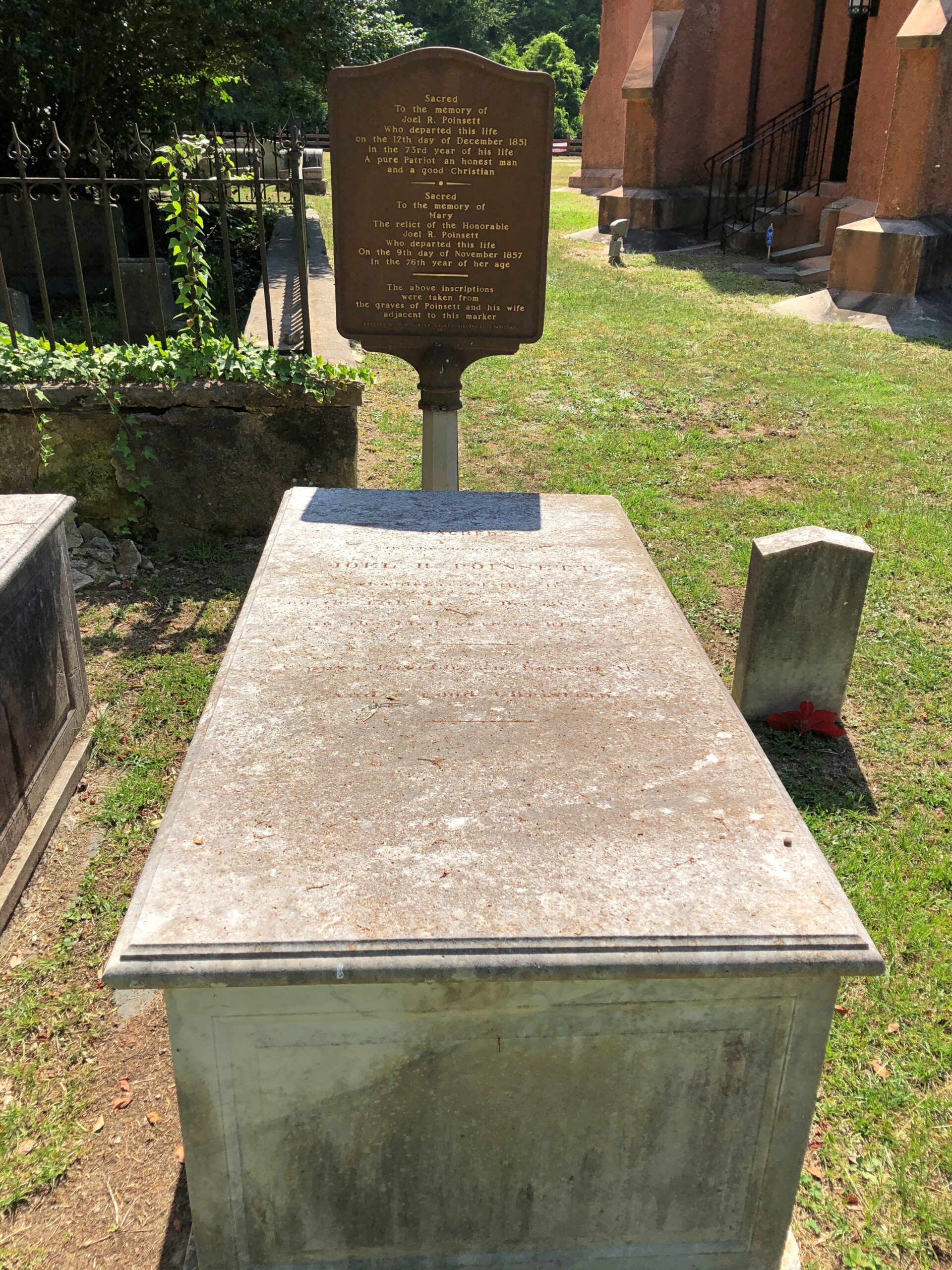
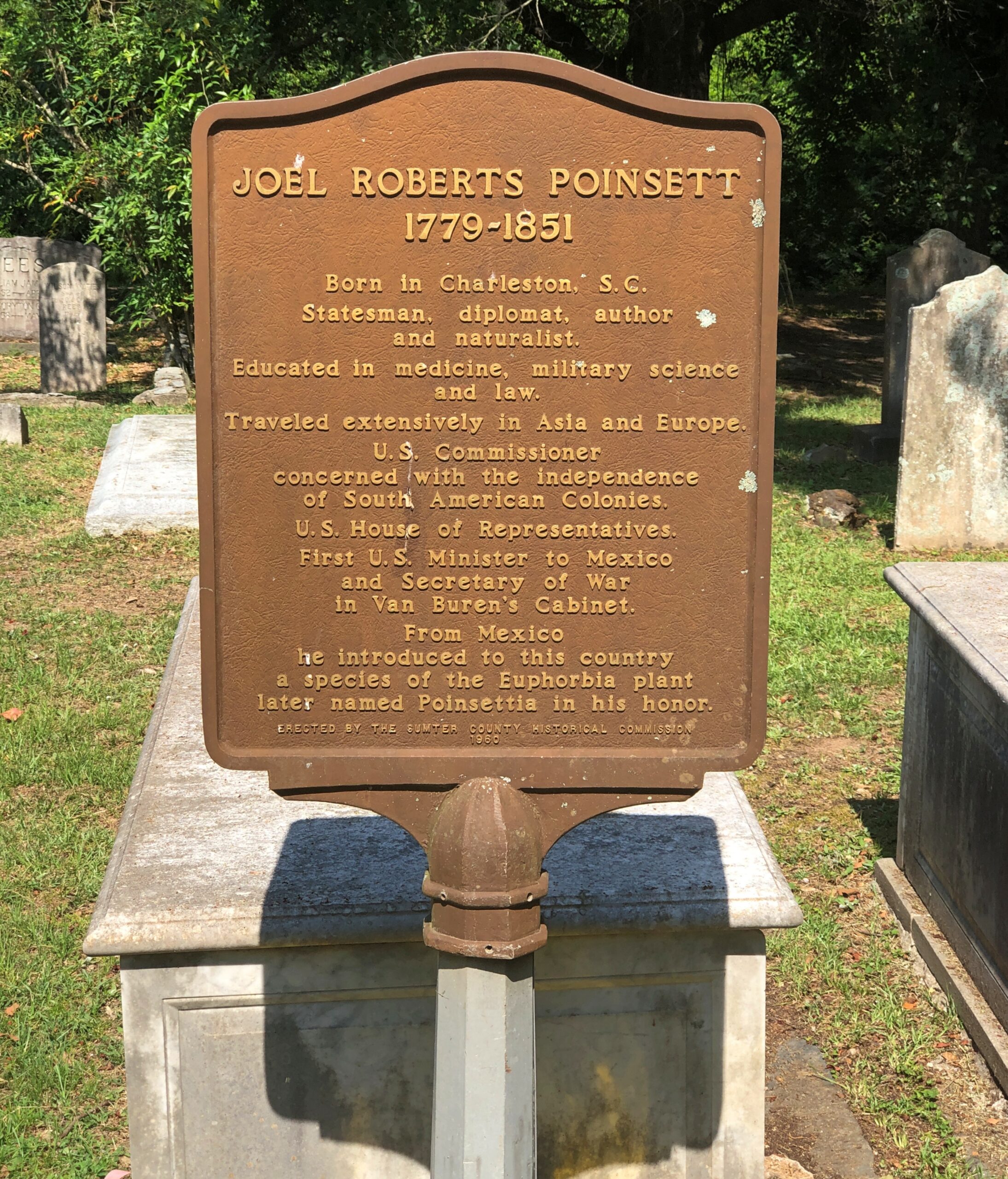
Another layer of serendipity: not only had I chanced across the church and the graveyard, but someone I’d heard of: Joel R. Poinsett, whose career was astonishingly varied, for good and ill, even for the freewheeling 19th century.

Church of the Holy Cross, SC

Almost everyone else has heard of him too, except they don’t know it, since of course the poinsettia is named for him. A casual search shows that were was a quixotic bubble of interest in the idea of re-naming the flower around the holidays in 2023, but not since, with such headlines as: “Poinsettia by any other name? Try ‘cuetlaxochitl’ or ‘Nochebuena’ “ (Jacksonville Journal-Courier).

Cuetlaxochitl? Names do shift over time, for unpredictable reasons, but I’m not betting on that one entering common usage anytime soon.

Congaree National Park

Yesterday rain came again to this rainy summer, and had the happy effect of turning the temps down outside today to wrap up July – pleasant 70s F. even at the noonday peak. Northern summers have much to recommend them.

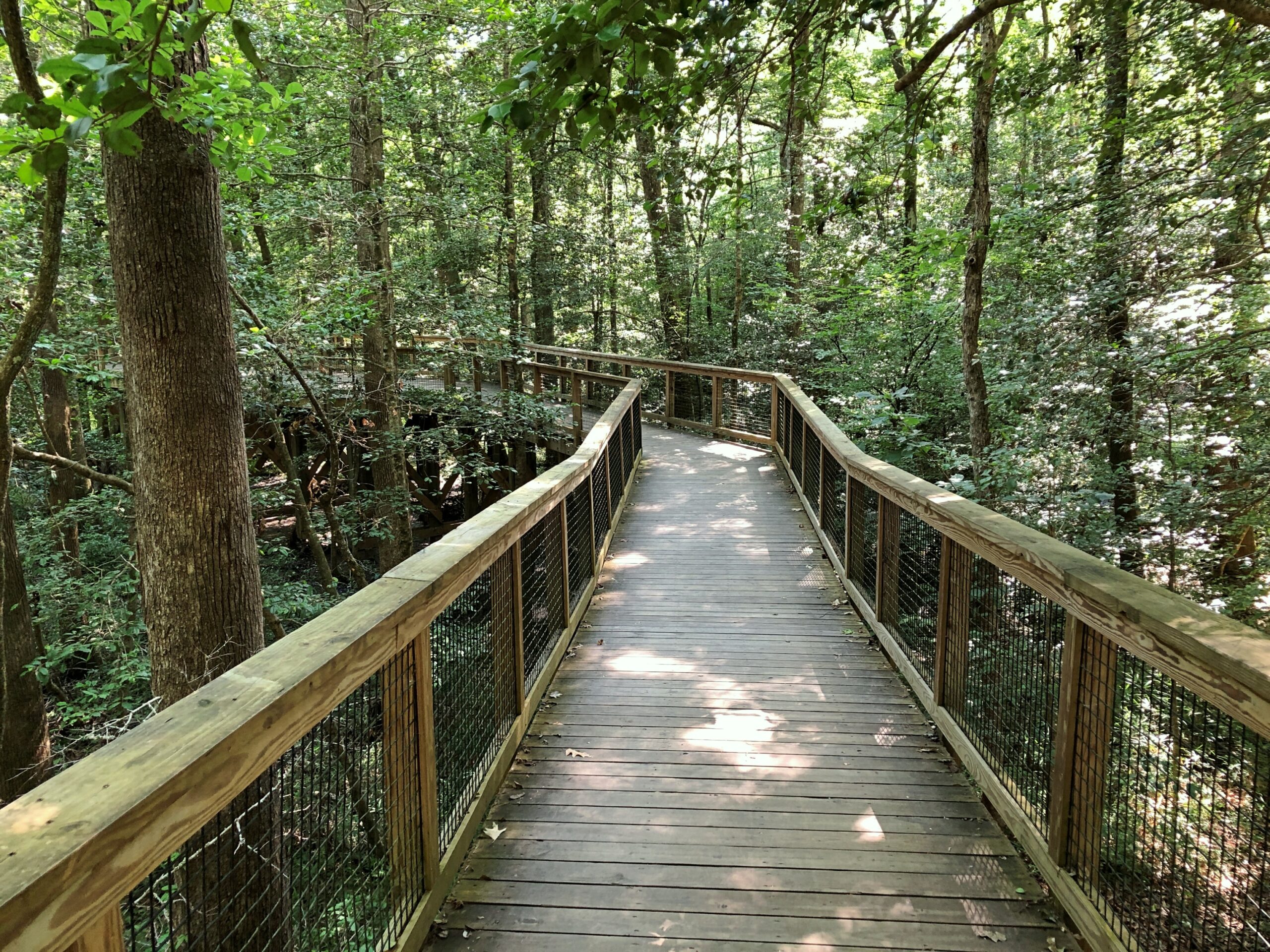
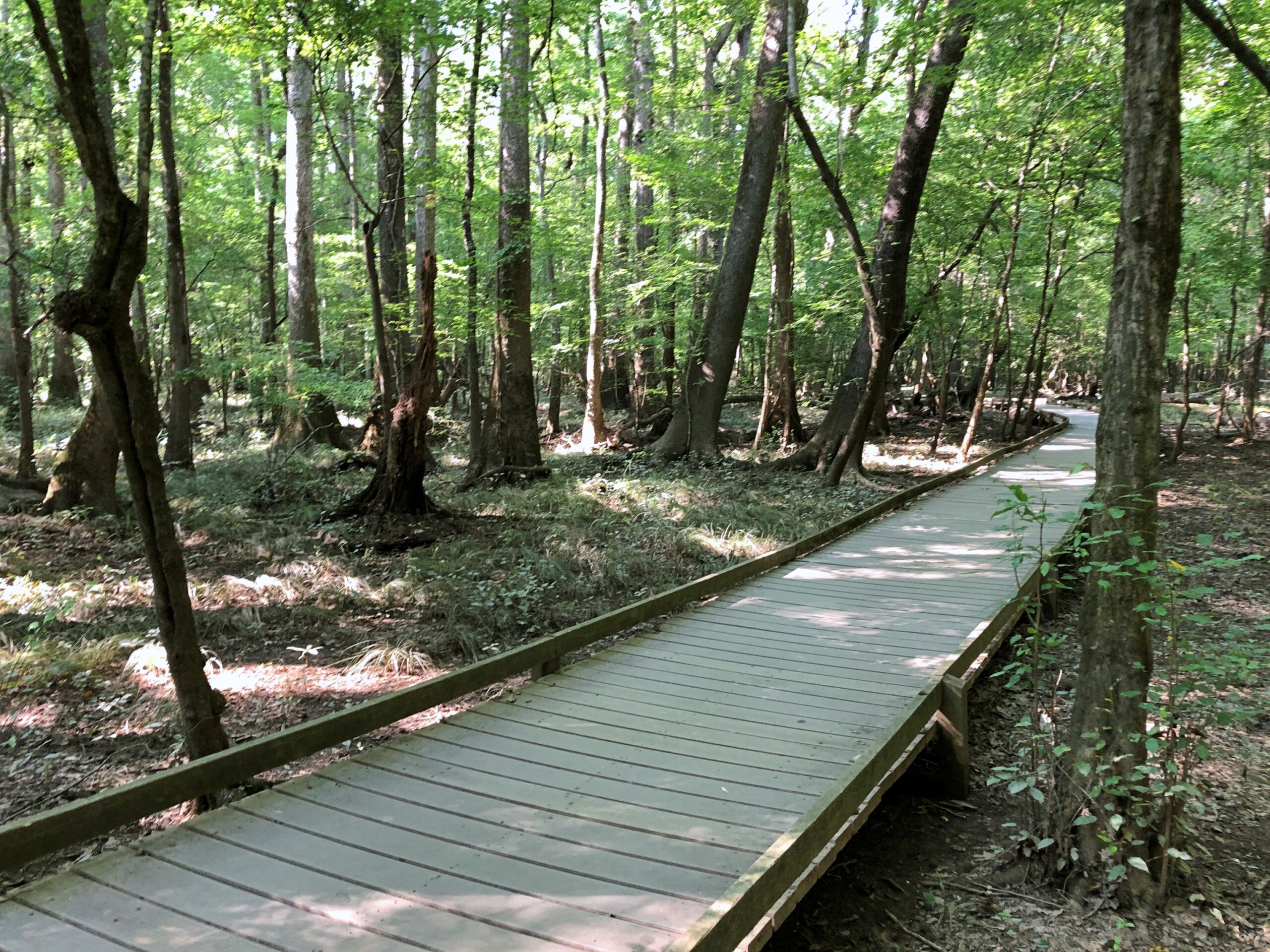
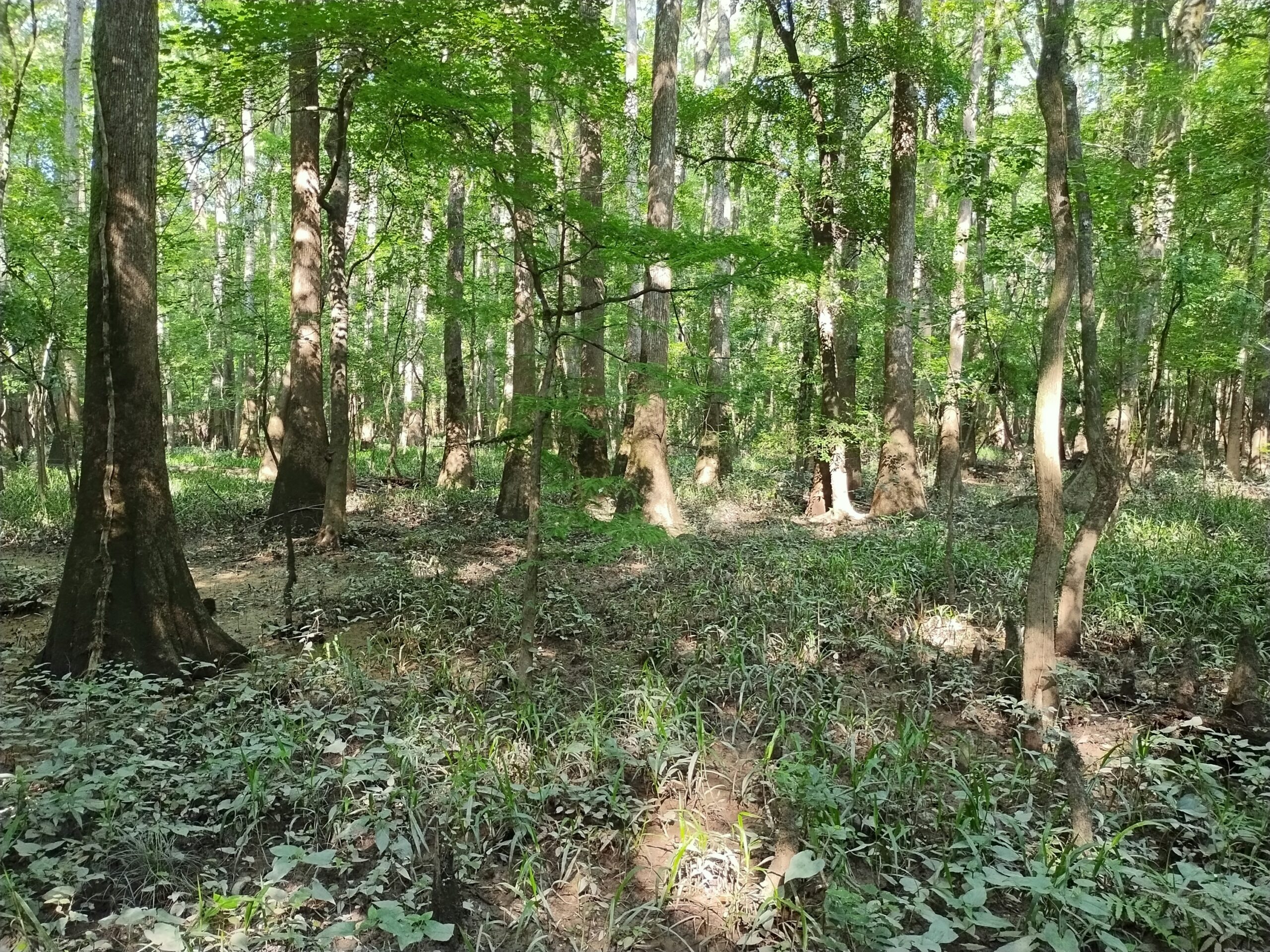
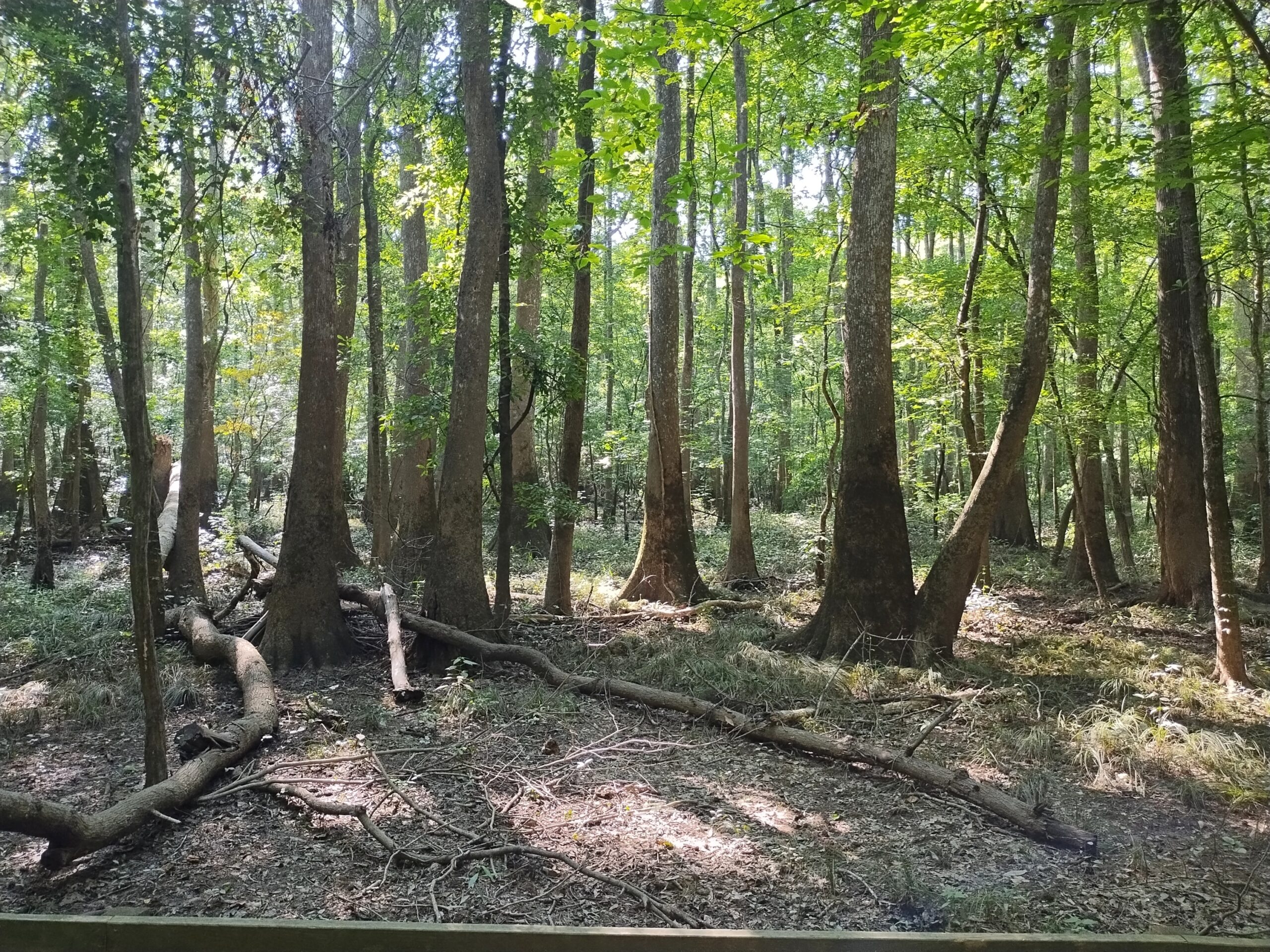
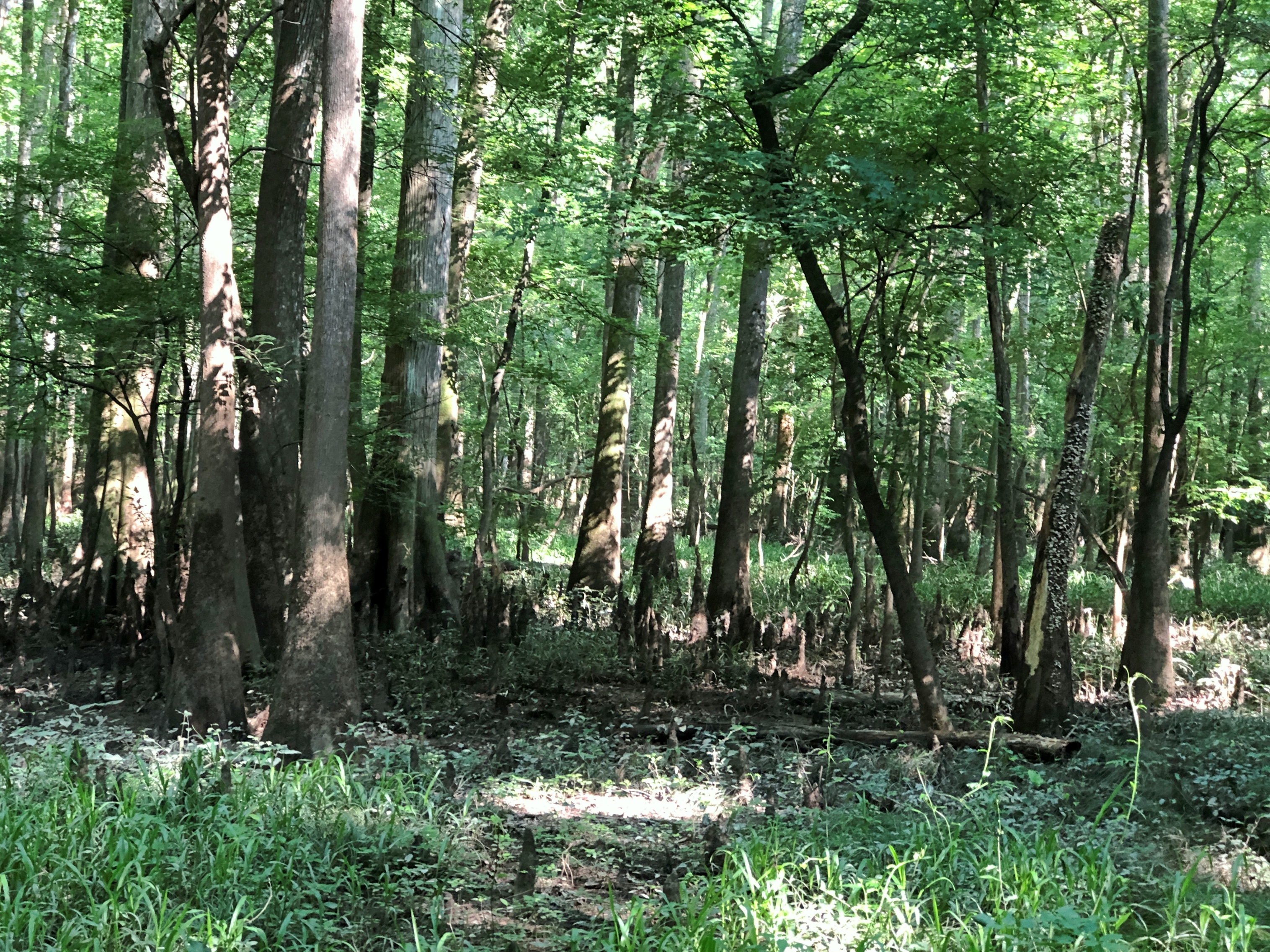
At a hotter time and place, I walked along a boardwalk through a patch of old-growth floodplain forest in the middle of South Carolina. Turns out, that’s a rare kind of landscape, but I didn’t know that at the time.

Congaree National Park

Somewhere on the way, I renamed Congaree National Park, my location at that moment, in my head. I imagined an act of Congress special to do so. The new name: Congaree National Park and Mosquito Preserve.

Congaree National Park

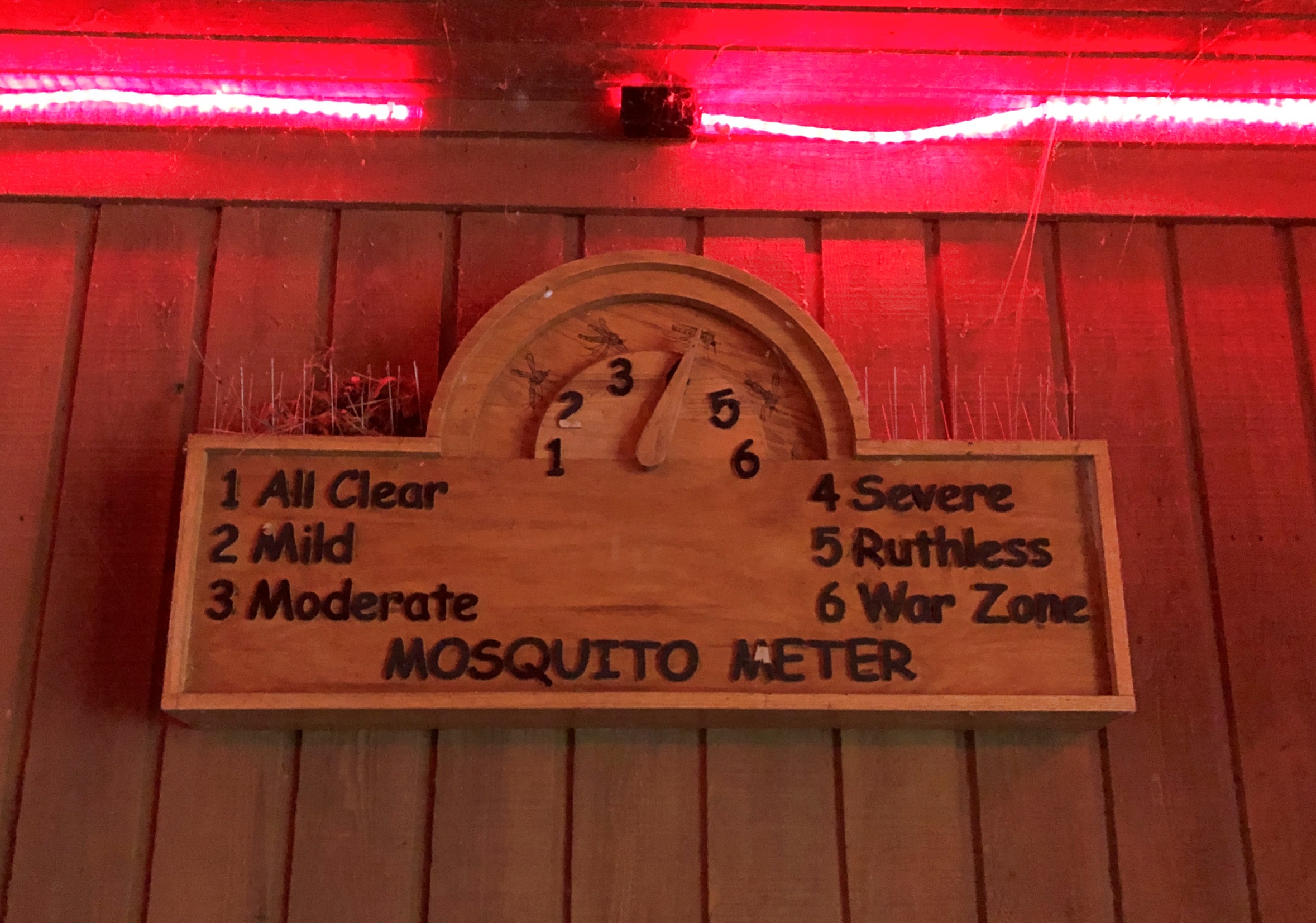
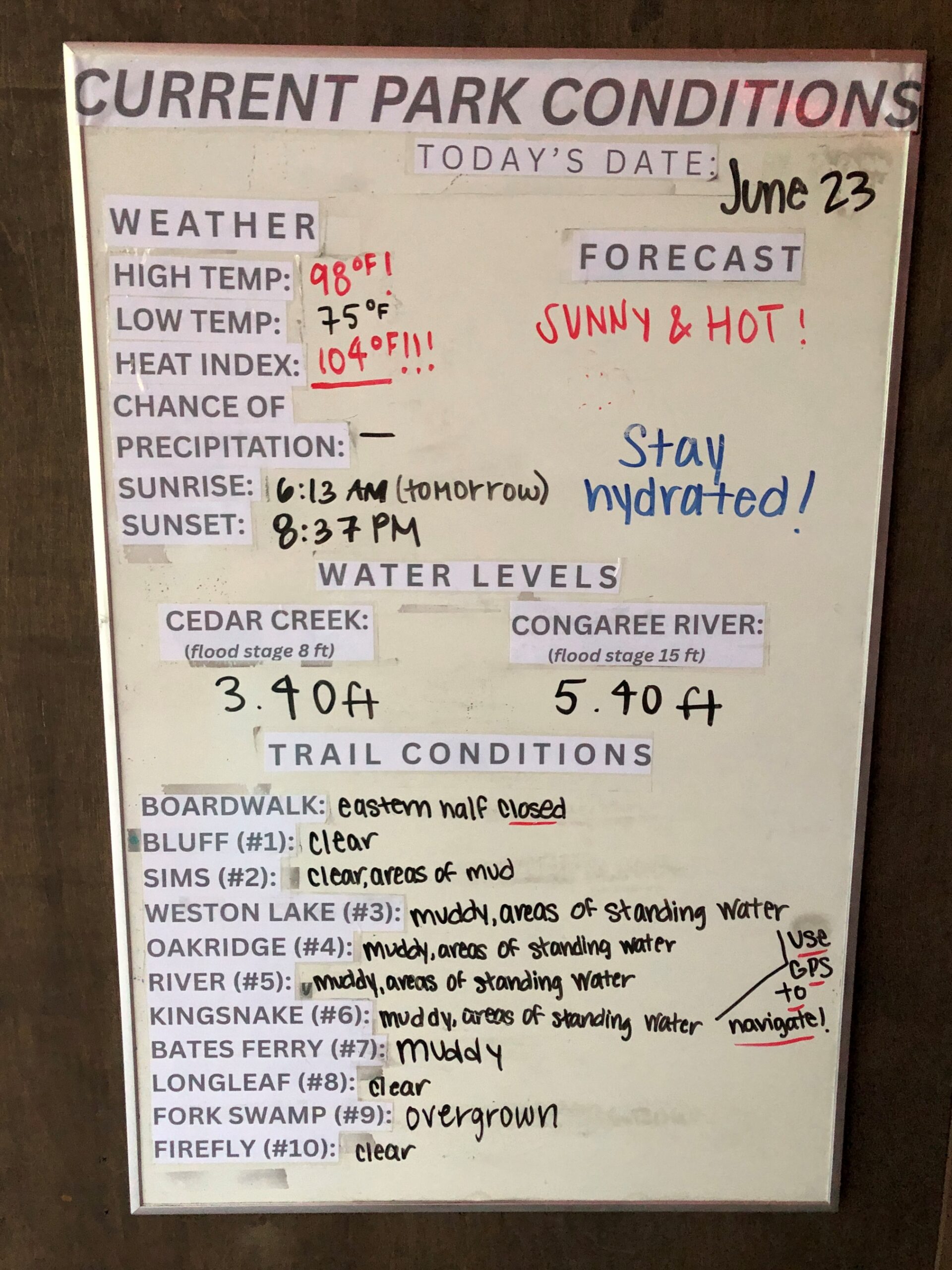
I can’t say I wasn’t warned. This information was on display at the park visitors center.

Congaree NP

I wouldn’t call Congaree a great unknown, but it is true that among the 63 U.S. national parks, it stood as the 51st-most visited in 2024, attracting 242,049 visitors. Considering that no admission is charged, I wonder how the NPS came up with such an exact number. In any case, that’s a remarkably skinny total compared with the millions who go annually to better-known parks, especially considering that the main park entrance is roughly 30 miles from a sizable city, namely Columbia, SC.
Anecdotal evidence points to the same conclusion: no one I’ve told about the park seems to have heard of it. Then again, I don’t know that I ever gave it much thought myself, except to note it a few times over the years on maps of South Carolina, a state I’d scarcely seen before June – among the Lower 48, the last one I visited.

Other national parks have majestic mountains or picturesque glaciers or striking deserts or epic coastlines or an important history of human activity. They have high-profile wildlife and ecosystems unique in the world. Congaree does count as a special place, preserving a tiny fraction of the floodplain forests that used to cover much of the Southeast, but that’s a little hard to appreciate on the ground, especially as the target of its high-profile wildlife, mosquitoes.
Of the former vast stands of Southeastern floodplain forests, the park, at 11,000 acres, represents much of the roughly 0.5 percent that survives, according to the NPS. Most such land lost its trees to build buildings, plank ships and create railroad ties. The land itself was drained for pastures, farms and settlements.
So Congaree NP is essentially a high-quality museum piece of a landscape, surviving the 19th and early 20th centuries due to inaccessibility. After much agitation on the part preservationists, the area became a national monument by act of Congress in 1976, with President Ford’s signature on the bill (and became a national park in 2003). Apparently that kind of story doesn’t fire the tourist imagination.

Congaree NP
Congaree NP

Also, while the boardwalk was an easy walk, most of the rest of the park sounds logistically hard on foot. “The Congaree is a wetland forest, and indeed it seems like water is everywhere,” notes American Forests. “There are very few places in the park where you can travel more than a half-mile in one direction without having to cross a pond, lake, creek, seasonal channel (locally called a gut), slough, wet flat, or muck swamp. It is an aquatic and terrestrial maze that constantly changes. About 10 times a year there really is water everywhere as the Congaree River rises to flood the entire area.”

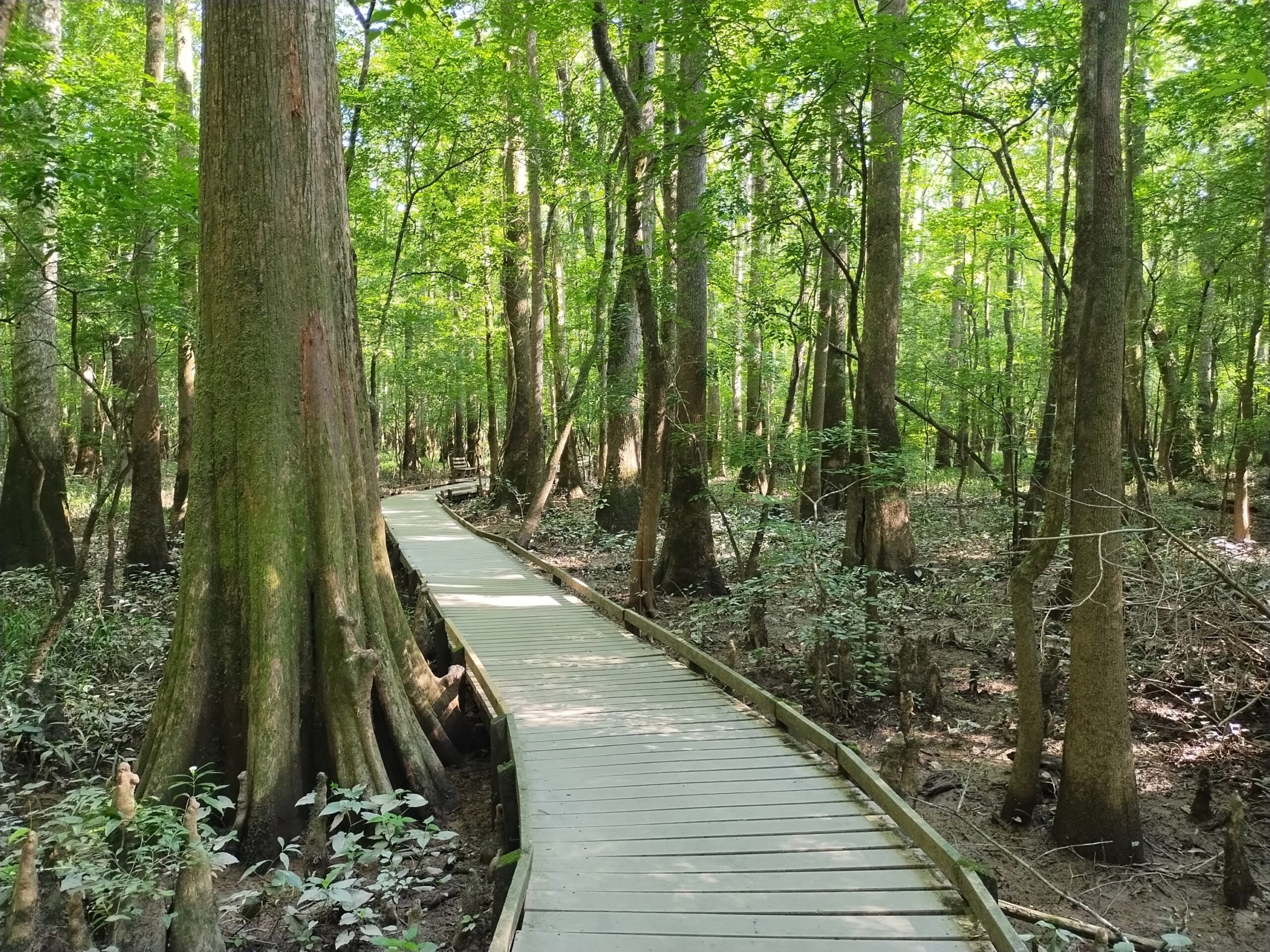
Still, the article lists a large number of tree species that call the park home, including some very tall examples – taller than anywhere else, in some cases.

Congaree NP
Congaree NP

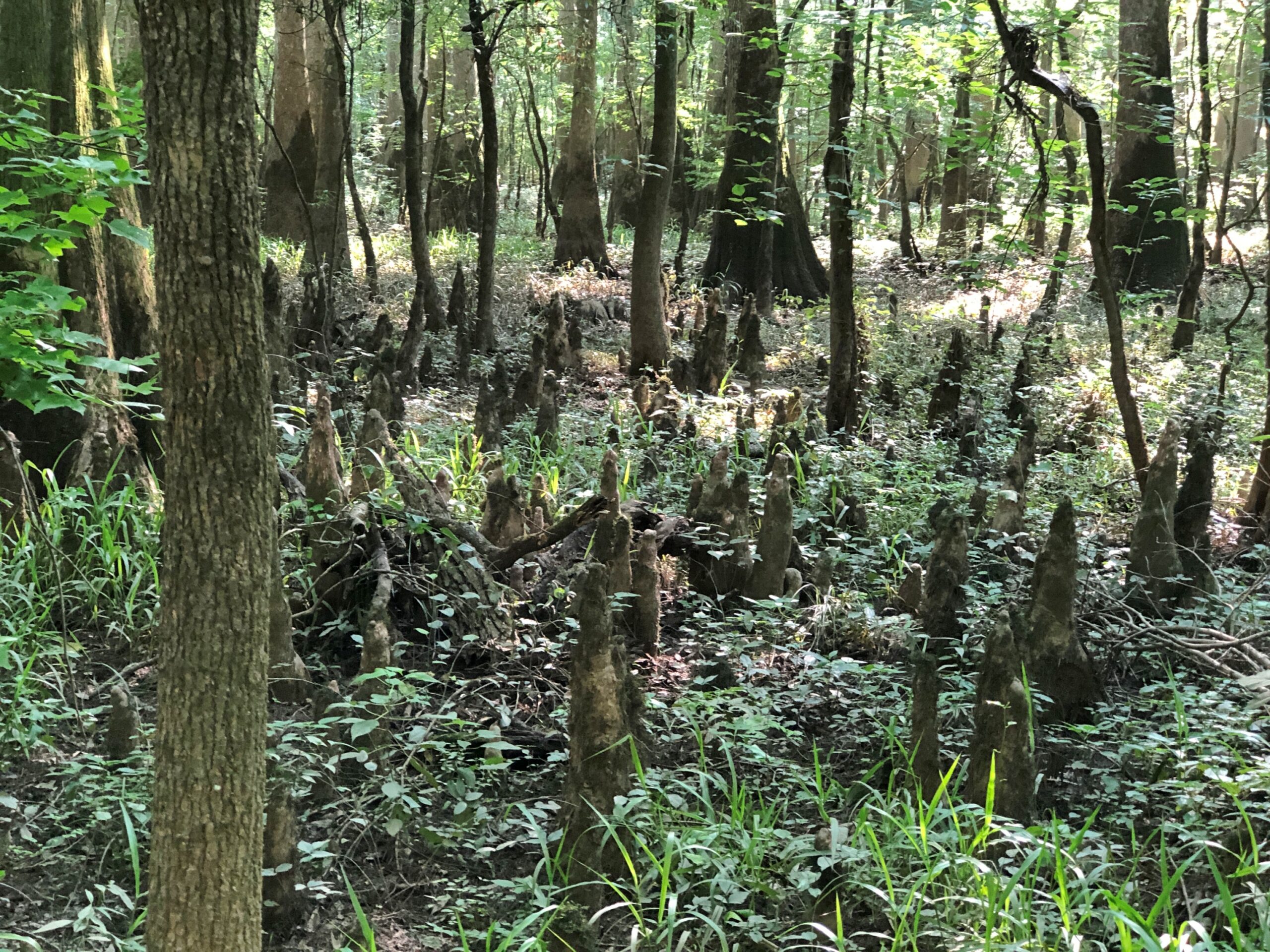
I’m no expert on trees, but I do know cypress when I see them, with their exaltation of “knees,” those knob-like growths.

***

Not long ago, I found out that Dr. Jamison died late last year. That would be Theodore Roosevelt (Ted) Jamison Jr., born 1933, so he made it past 90. I added this message on an obituary site:

I’m sorry to learn about the passing of Dr. Jamison, but glad that he clearly lived a long, interesting life, loved by family and friends. In 1978, he taught a summer school class for a few weeks at Alamo Heights High School in San Antonio. I was 17 that summer and in that class. It might have been a history or political science class – I don’t remember – but in fact, the class was the Wisdom of Ted Jamison. That wisdom was considerable, as he offered his thoughts and observations about the nation and the world, including prescient warnings about attacks on our freedoms. He also shared snippets about his life up to that point. I didn’t know the half of it, but even then I realized he was a remarkable teacher, an assessment I haven’t revised in the near half-century since then. Reading his obituary, I also see what a remarkable human being he was. RIP, Dr. Jamison.

Conway, South Carolina

The day was on, the heat was on, and I was on the road again. I’d driven out to Myrtle Beach from Illinois. Now I planned to drive back.

First stop, not far: Conway, South Carolina, much smaller than Myrtle Beach, yet the seat of Horry County. I’d assume that arrangement goes back to the time when the county’s focus was on Conway, a center of turpentine production, not Myrtle Beach, which was a wasteland dotted with wax myrtles.

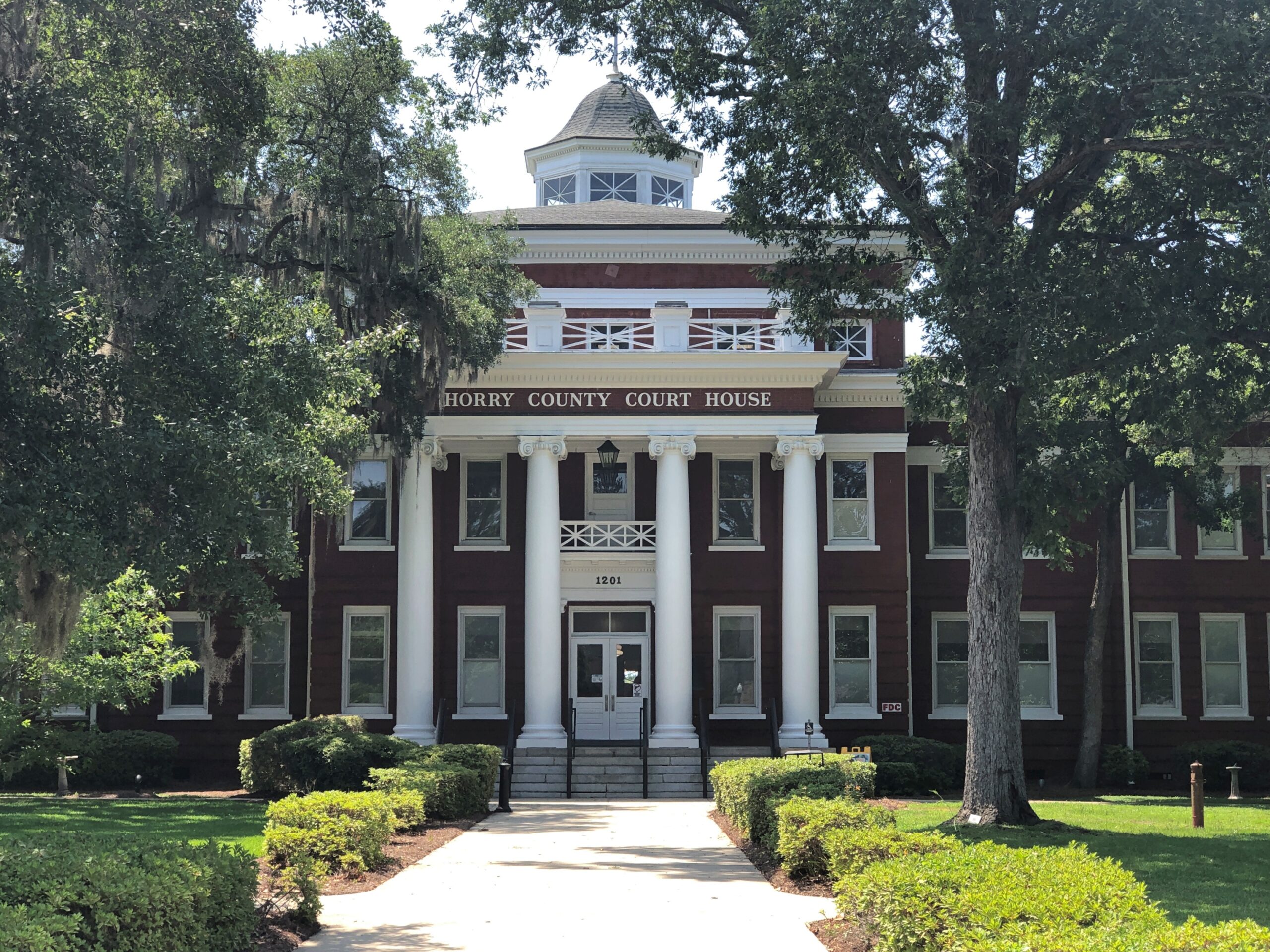
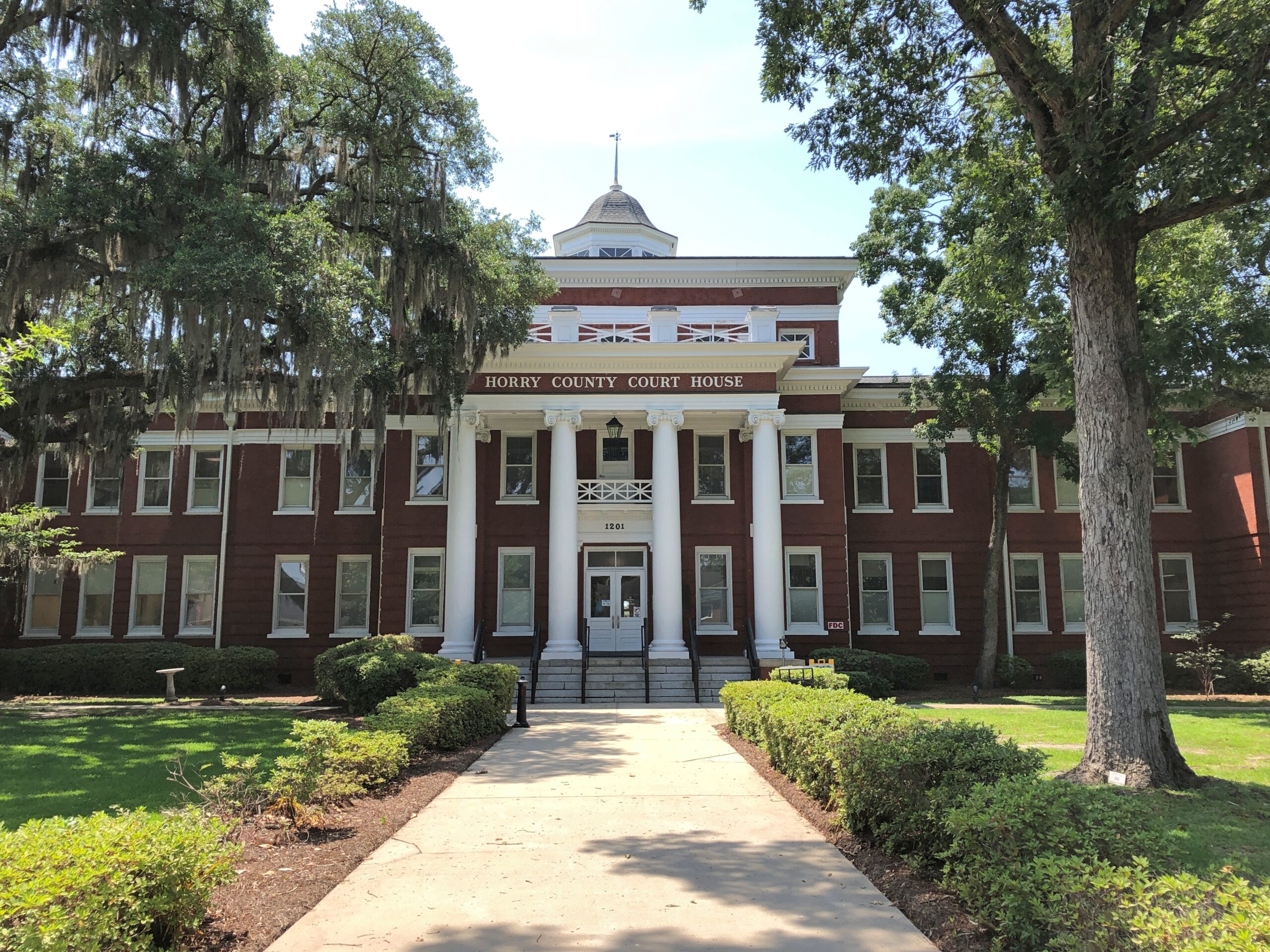
Nothing like a handsome county courthouse.

Conway, SC

In the ragged diamond shape that is South Carolina, Horry is the easternmost tip. At the time of the Civil War and immediately afterwards, Horry was the poorest county in the state, an almost literal backwater isolated by the Pee Dee Swamp on the west and south. Now the county is one of South Carolina’s most prosperous.

The transformation is a story of railroads and a turpentine boom, followed by a tobacco boom, followed by a tourism boom. Along the way, new prosperity meant a new courthouse, finished in 1908.

Not long after, in the 1920s, the courthouse was the scene of another of those trials of the century mostly forgotten after a century, namely the Bigham trial, “in which Edmund Bigham — a member of a prominent, controversial Florence County family — was tried for the murder of five family members, including his brother Smiley Bigham, who was a state senator,” South Carolina History Trail says.

“Crowds packed the courtroom daily and the trial attracted newspaper reporters from as far away as New York City. One potential witness was murdered, another died of a heart attack while testifying, and some locals believed that the defendant somehow made the nearby Waccamaw River overflow its banks. The courtroom drama ended when the defendant suddenly accepted a guilty plea.”

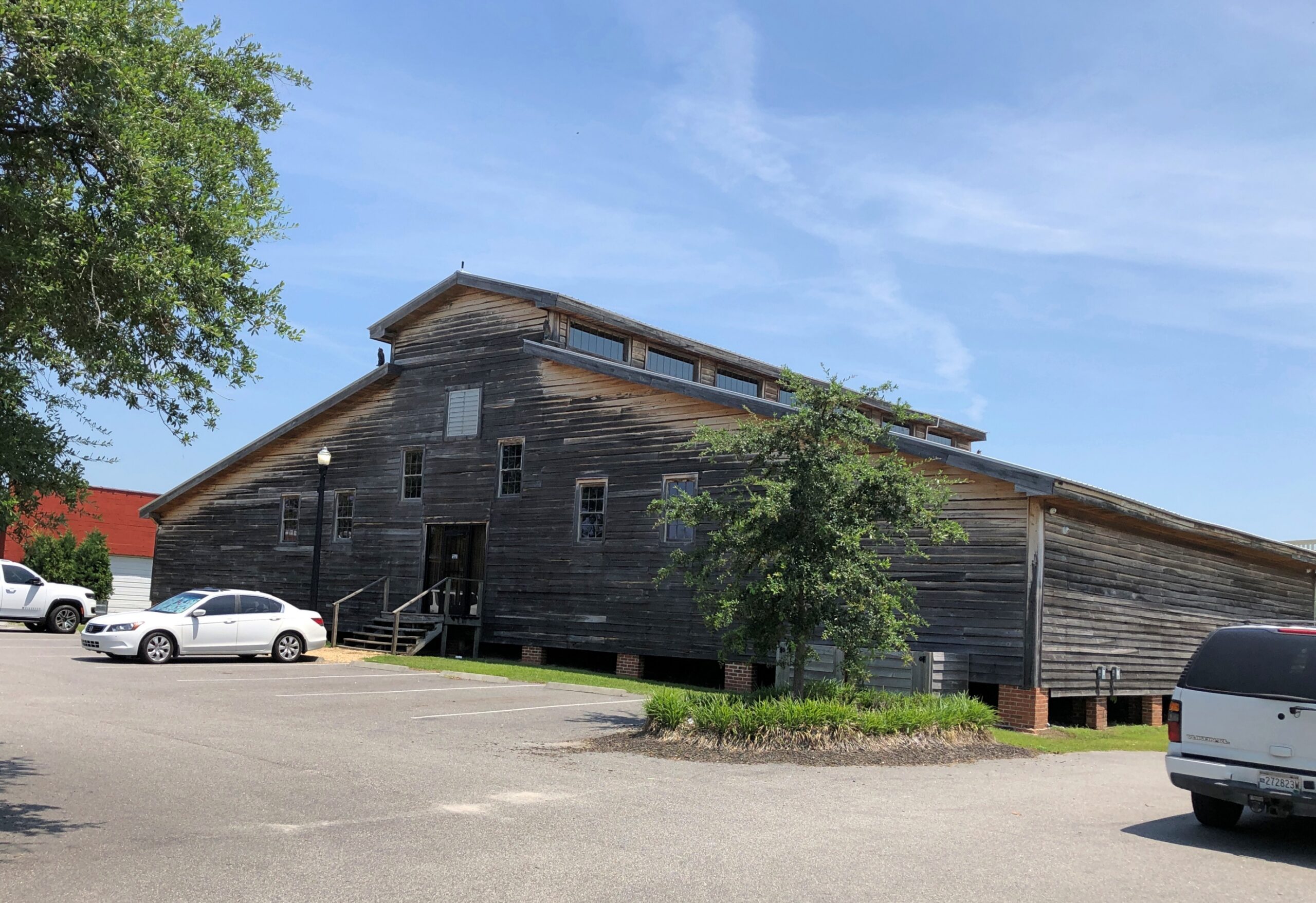
Not far from the courthouse, because nothing is very far from anything else, is an enormous wooden warehouse. This is the back.

Conway, SC

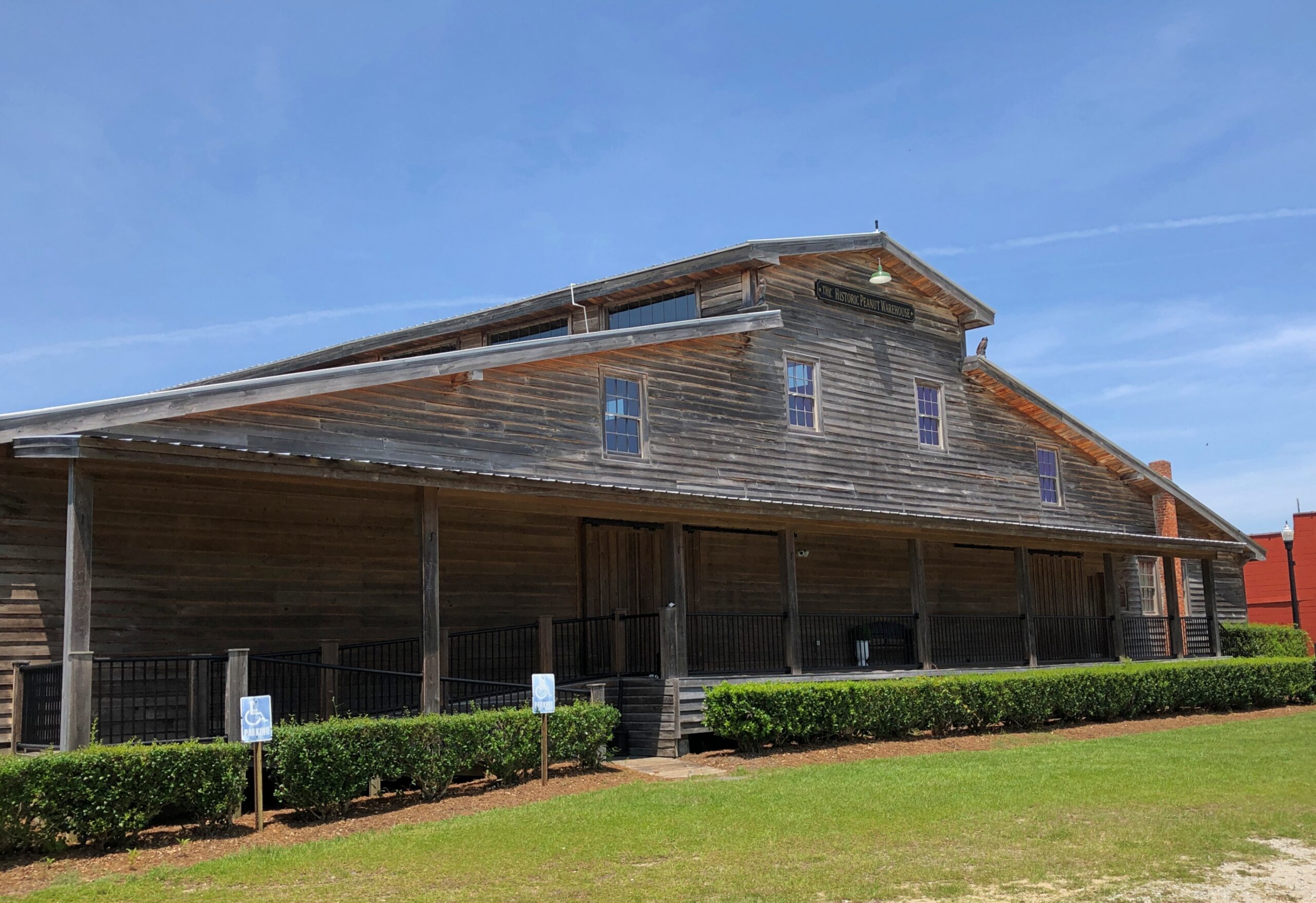
Round to the front.

Conway, SC

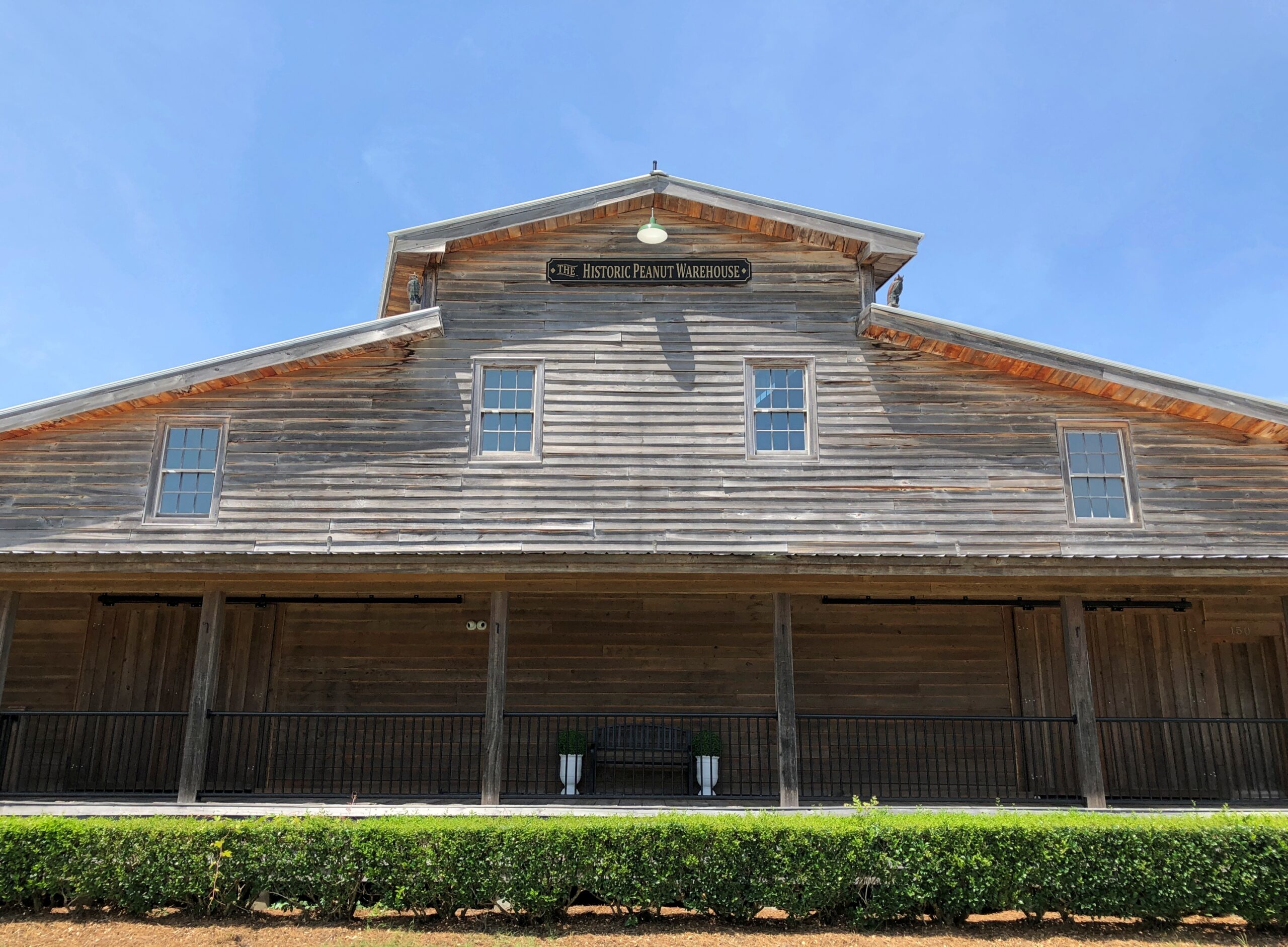
Historic Peanut Warehouse. Historic tips us off that no goober peas have been stored there in some time, and the like-new wood means restoration in the not-so-distant past.

Anyway, I should have known peanuts had something to do with the wooden giant.

Conway, SC

When new in 1900, the warehouse held peanuts, but after some years that gave way to decades of tobacco storage. In our time, you can hold an event there, and I’d bet its lifeblood is weddings.

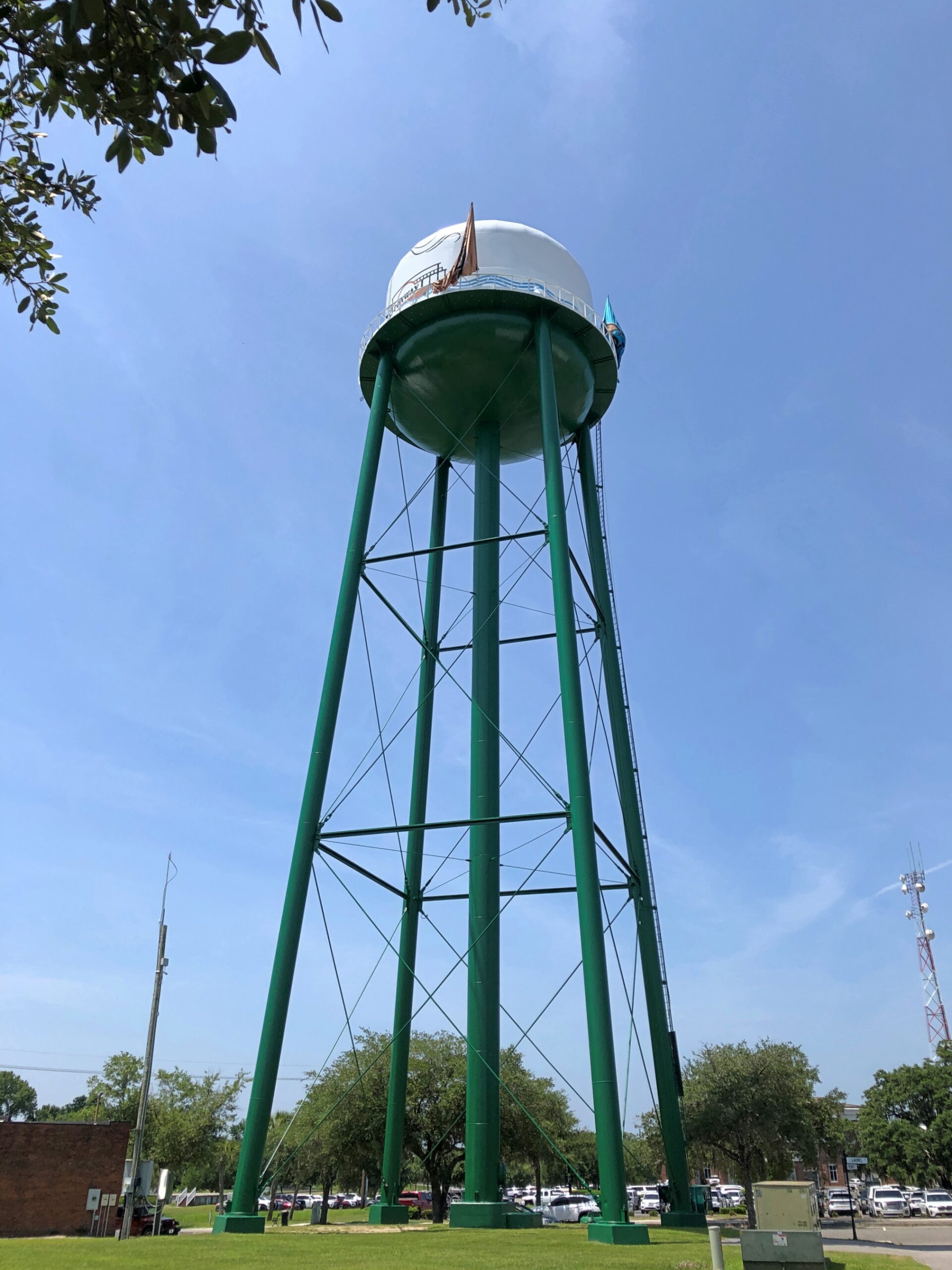
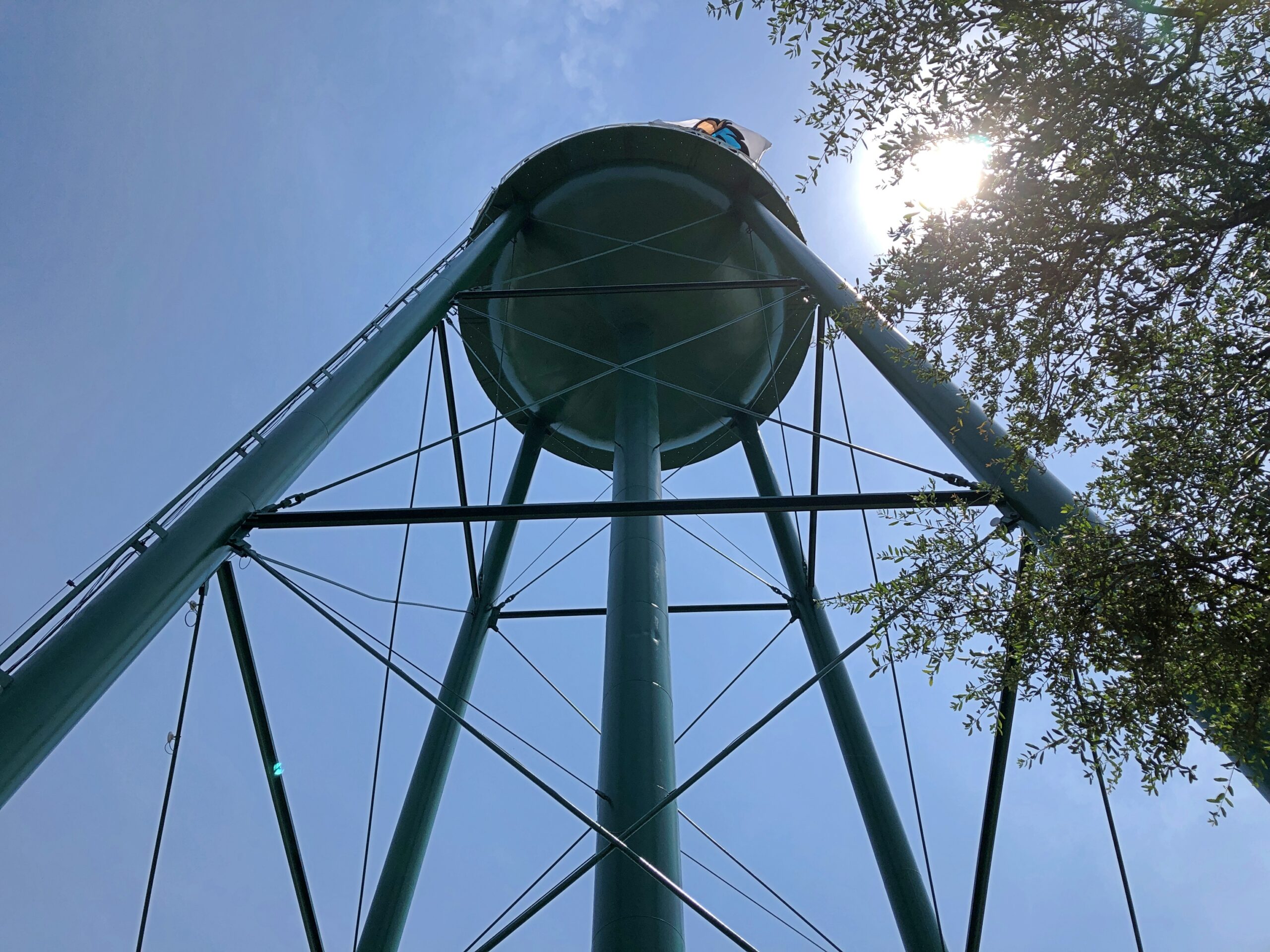
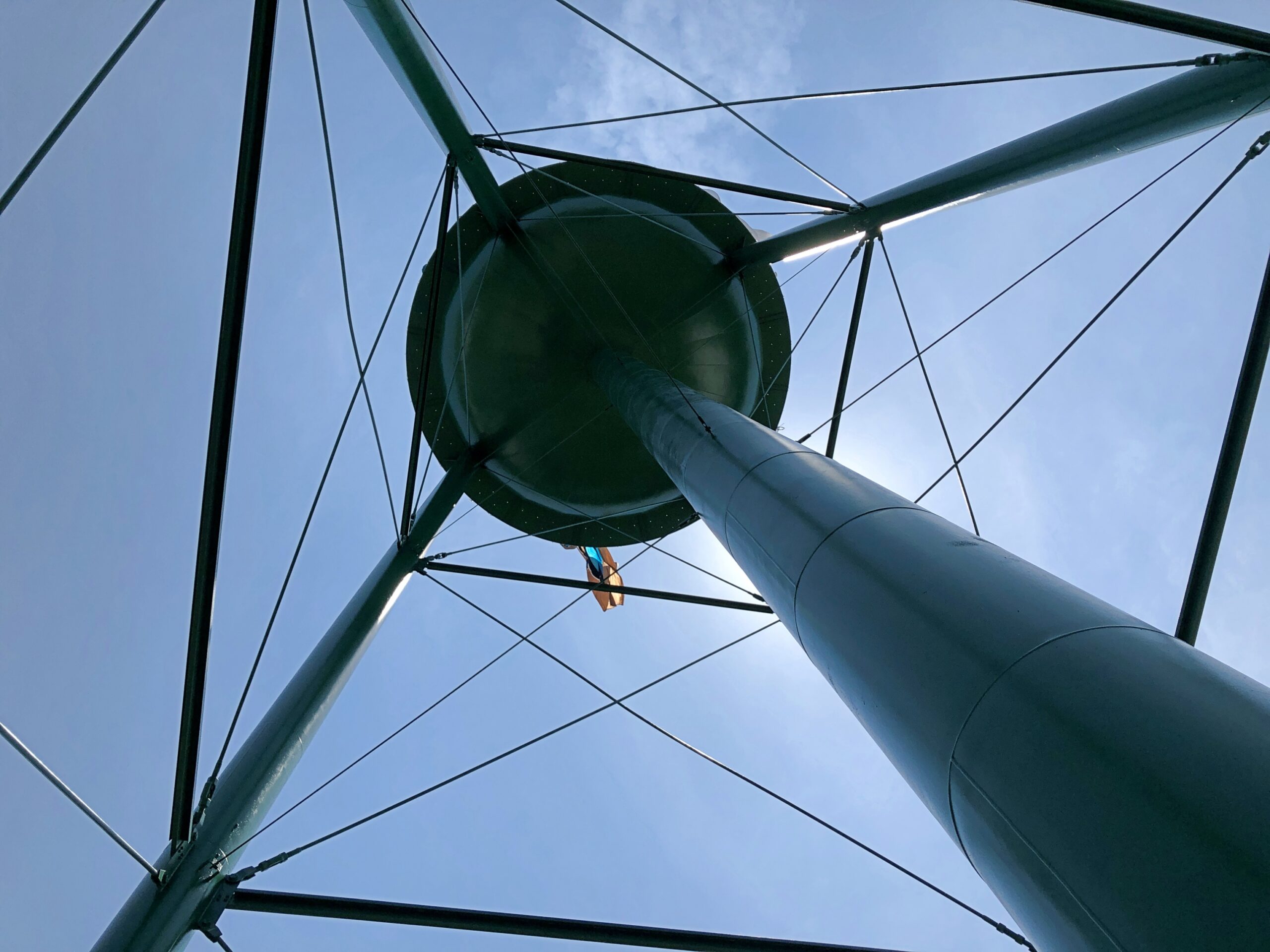
Other parts of Conway beckoned, such as a walkway along the Waccamaw River. The prospect of heat exhaustion or at least a headache put me off such an idea. But the heat didn’t mean I couldn’t admire the artful green-and-white local water tower.

Conway, SC

As a small child visiting my grandma in Alamo Heights, Texas, I admired the local water tower, silver-gray with a distinct cap atop it, and easily visible from her house. I’ve been looking at water towers ever since. (This article says the tower’s nickname was Tin Man, but I never heard anyone call it that, and my own personal name for it, which became family argot, was “Squeaky.”)

Near the water tower.

Conway, SC

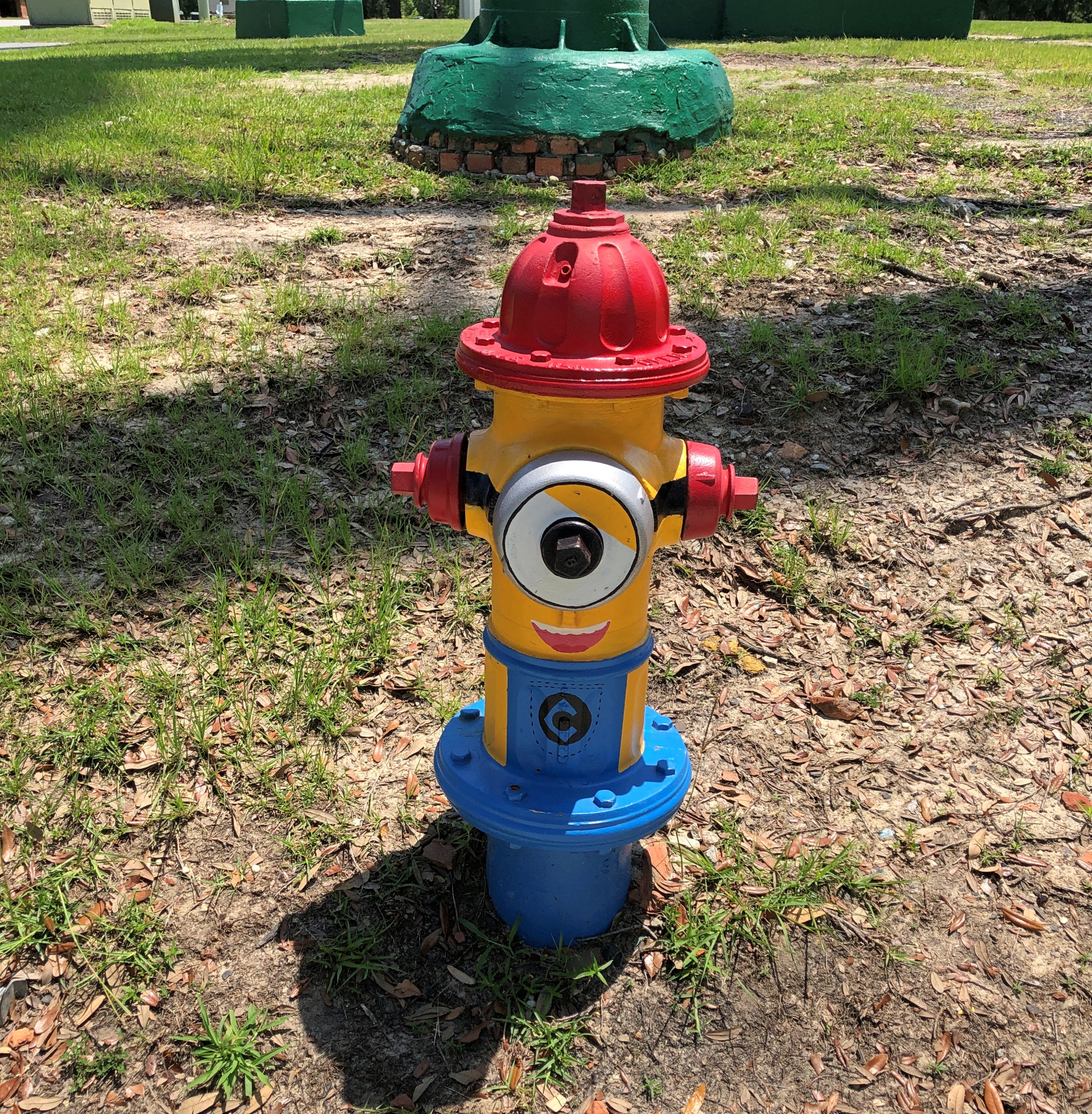
A bit of municipal whimsy. We could all use a little more of that. But not too much.

Brookgreen Gardens by Night

The June heat dome was a deal breaker in Myrtle Beach when it came to daytime outdoor activities, except for our short stroll to Pier 14 and the beach below. A visit to a place like Brookgreen Gardens, which is actually south of town not far from the coast at Murrells Inlet, wasn’t going to happen during the onslaught of the daytime sun.

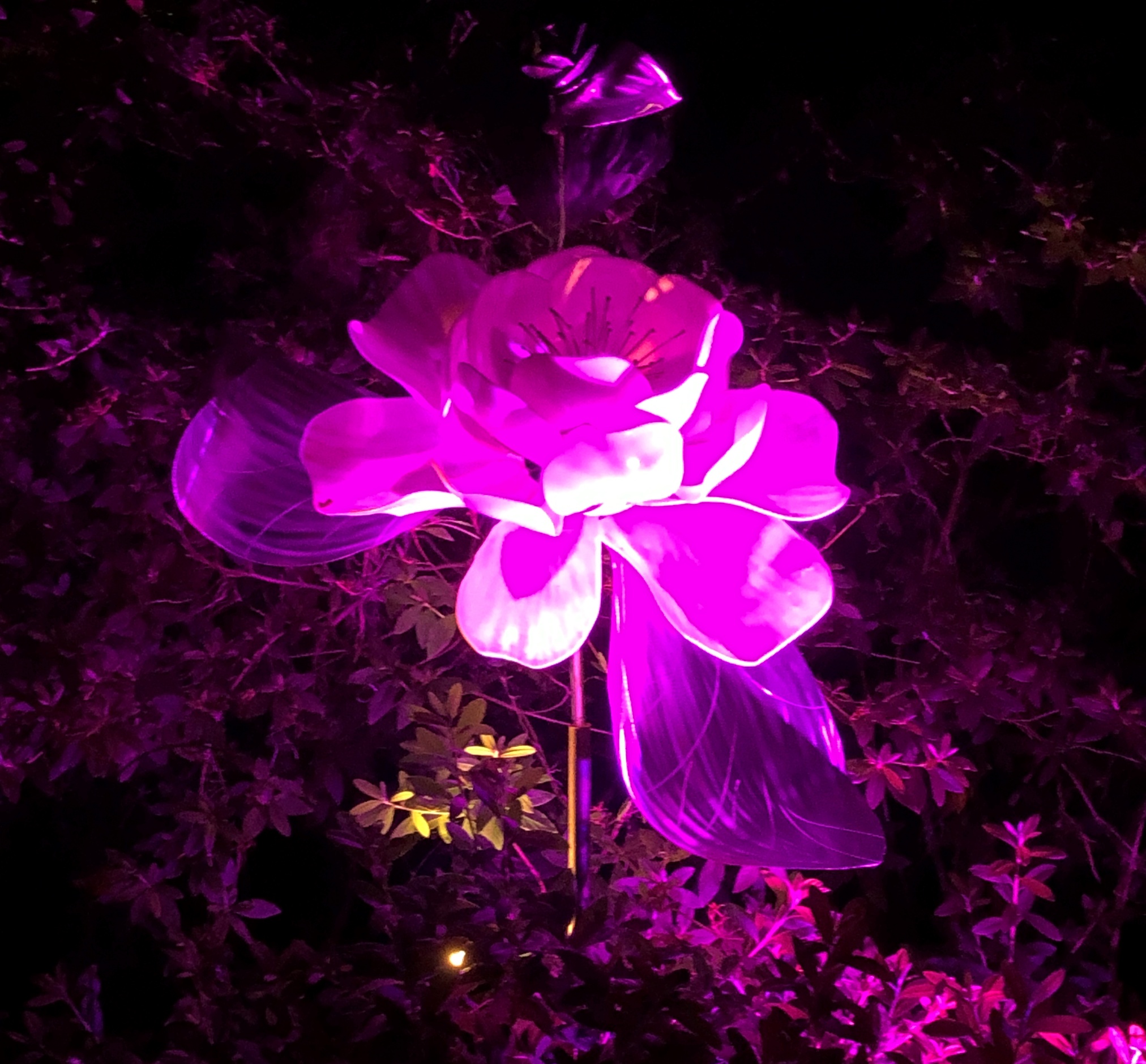
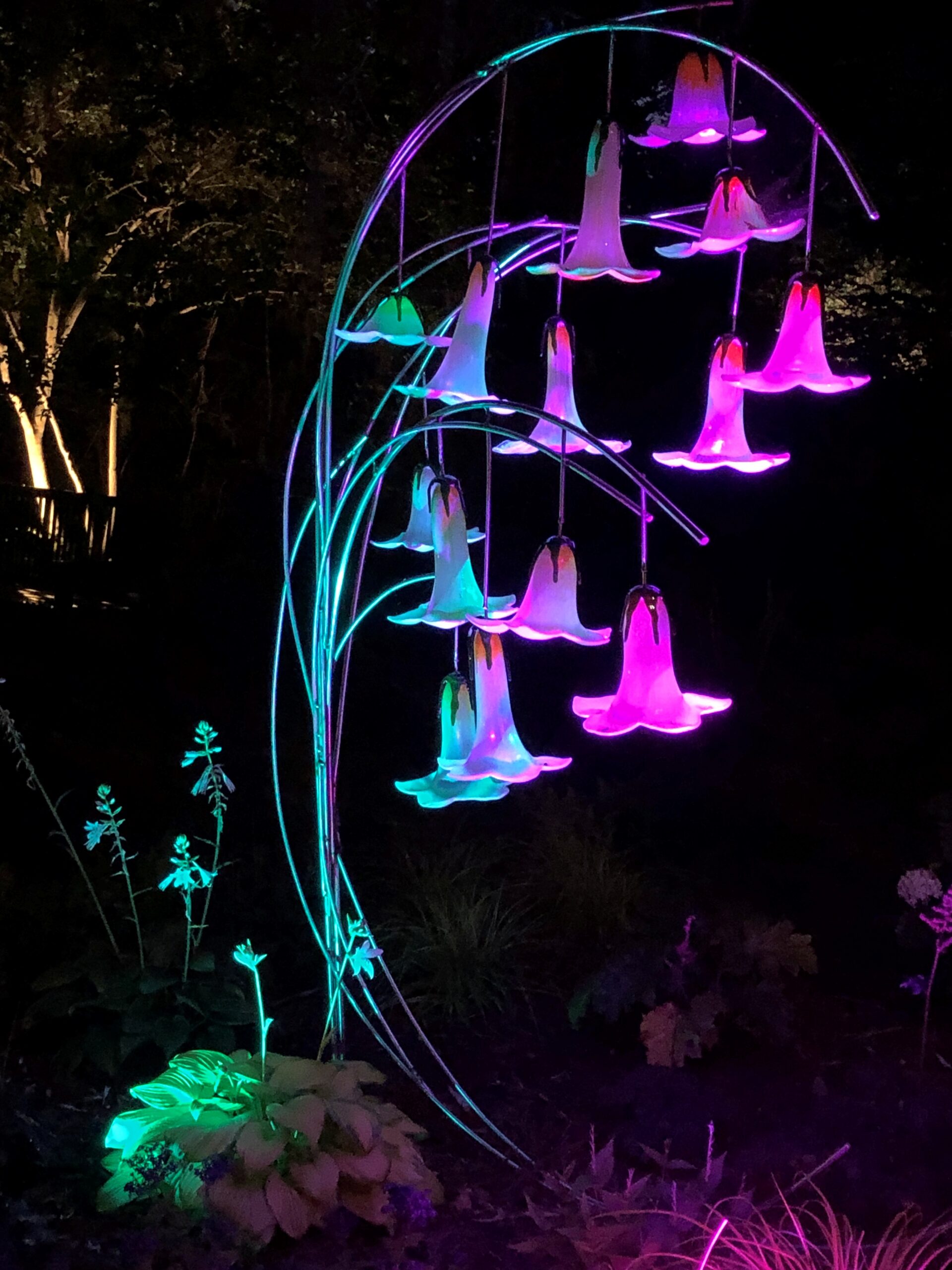
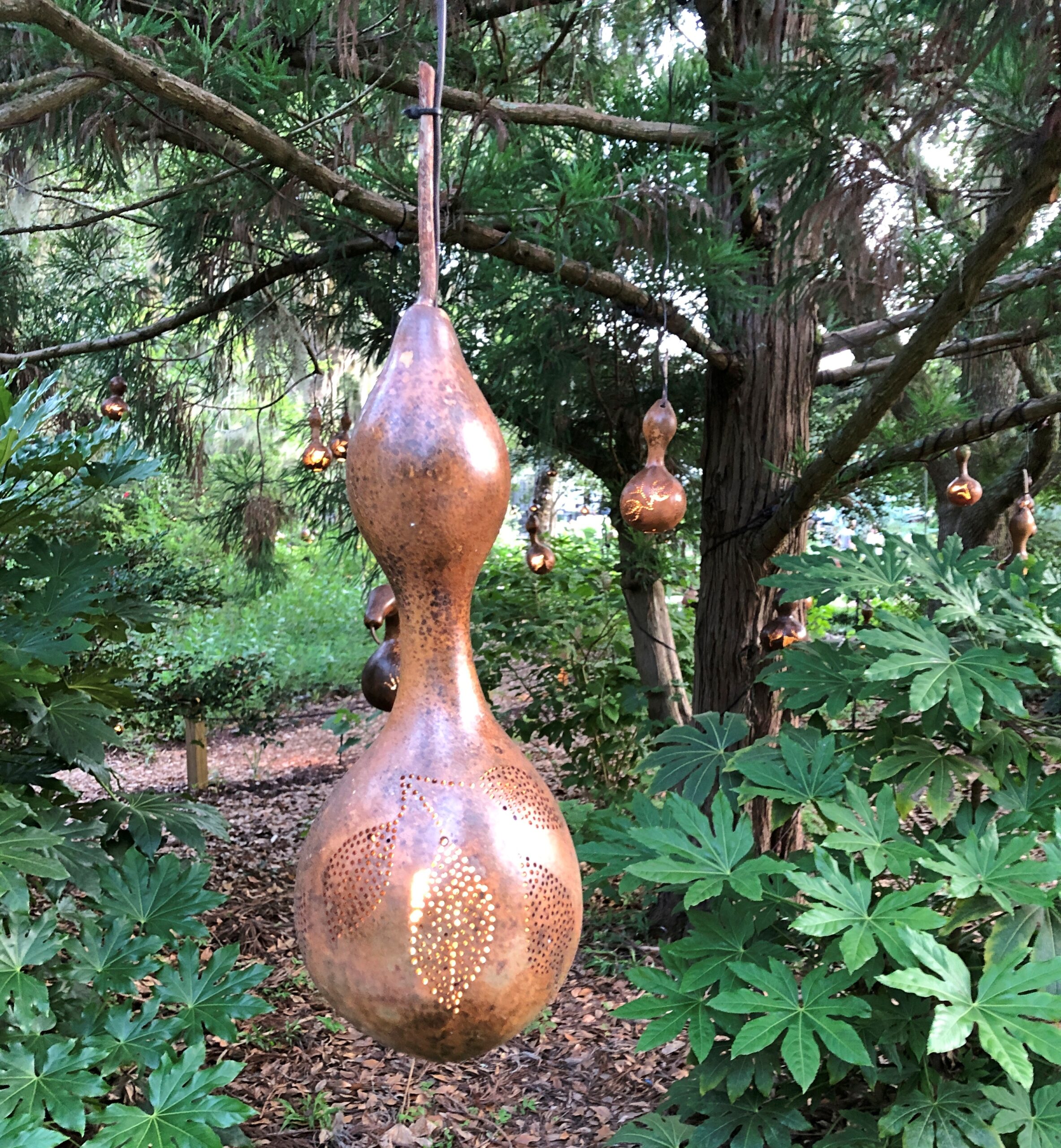
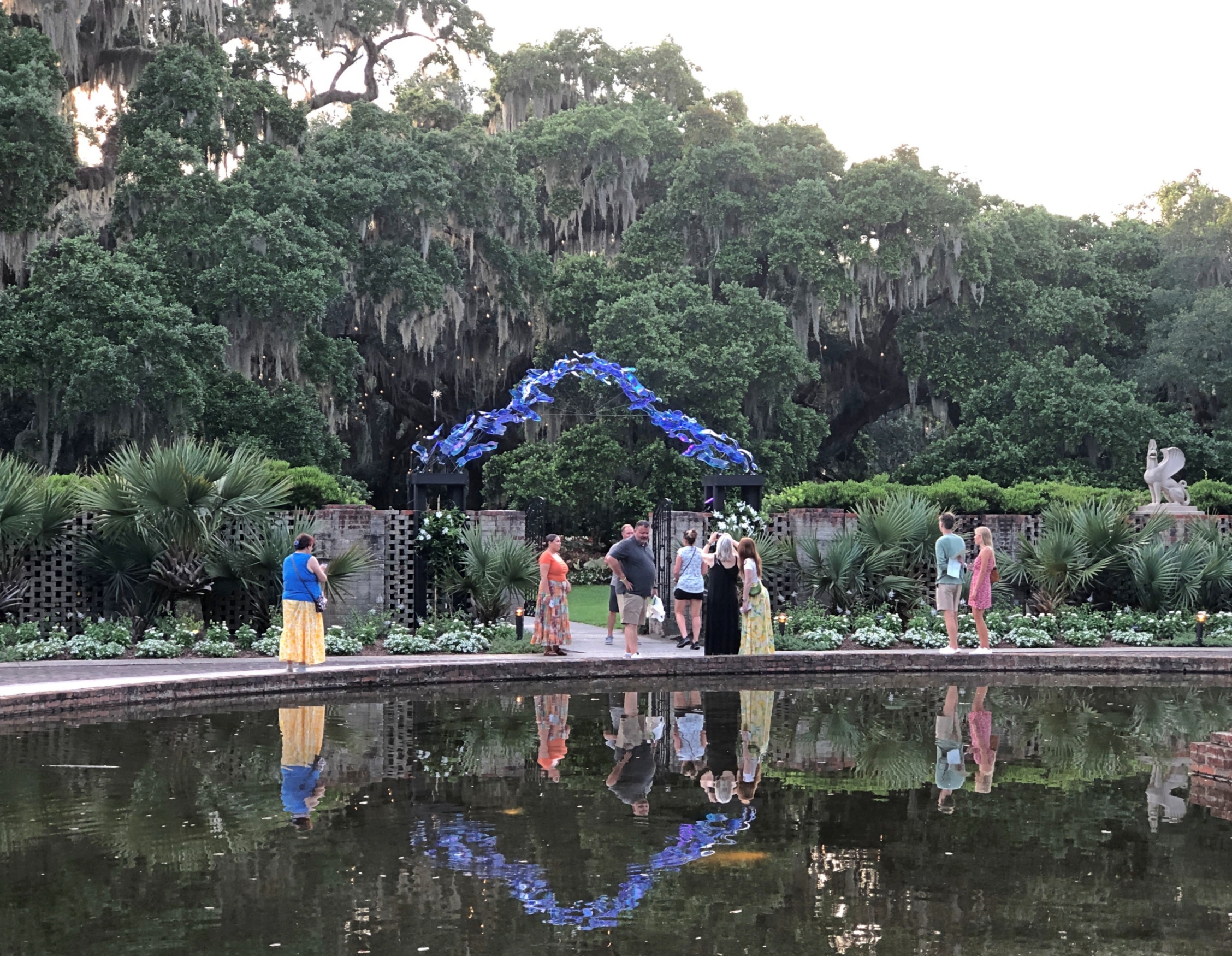
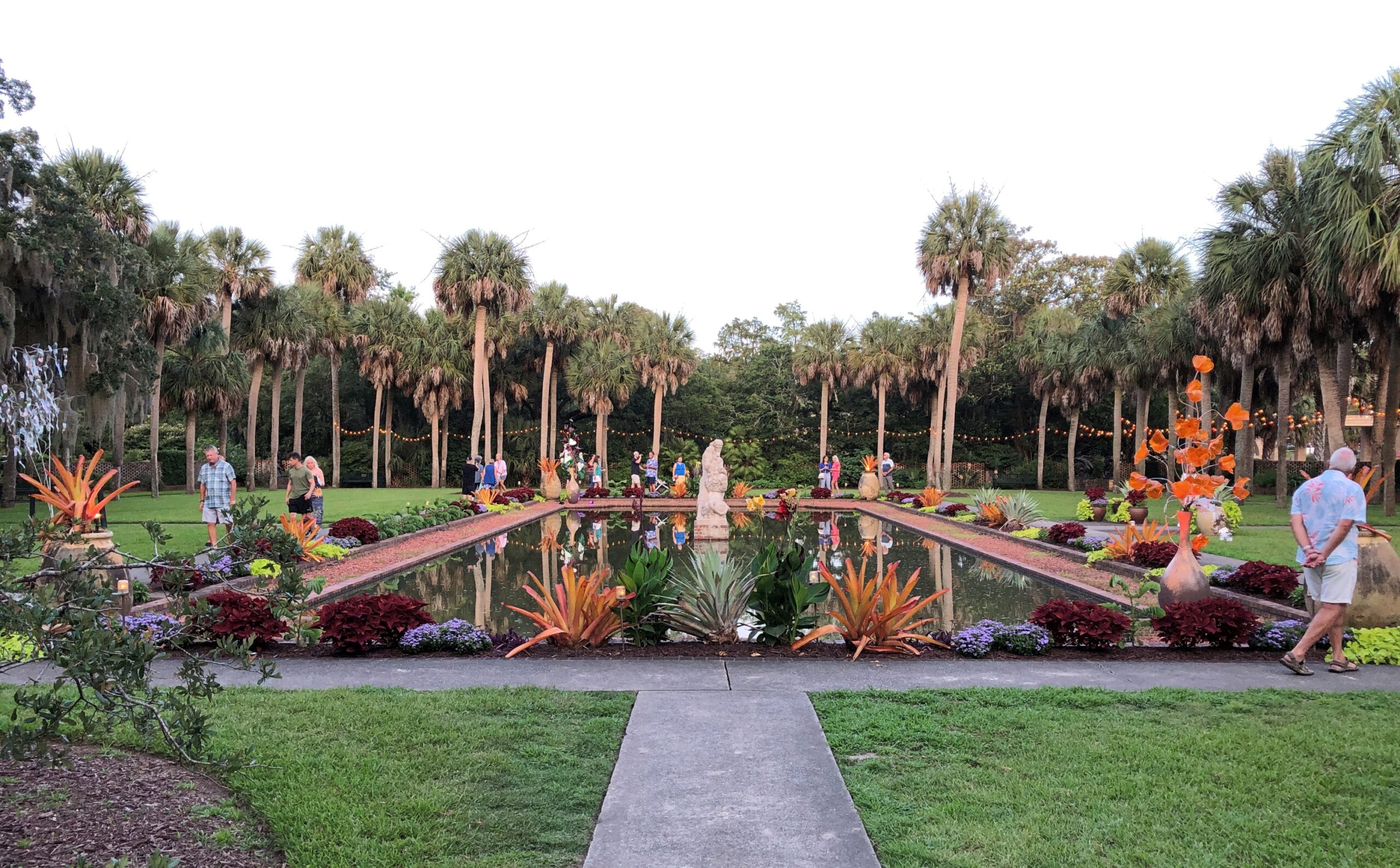
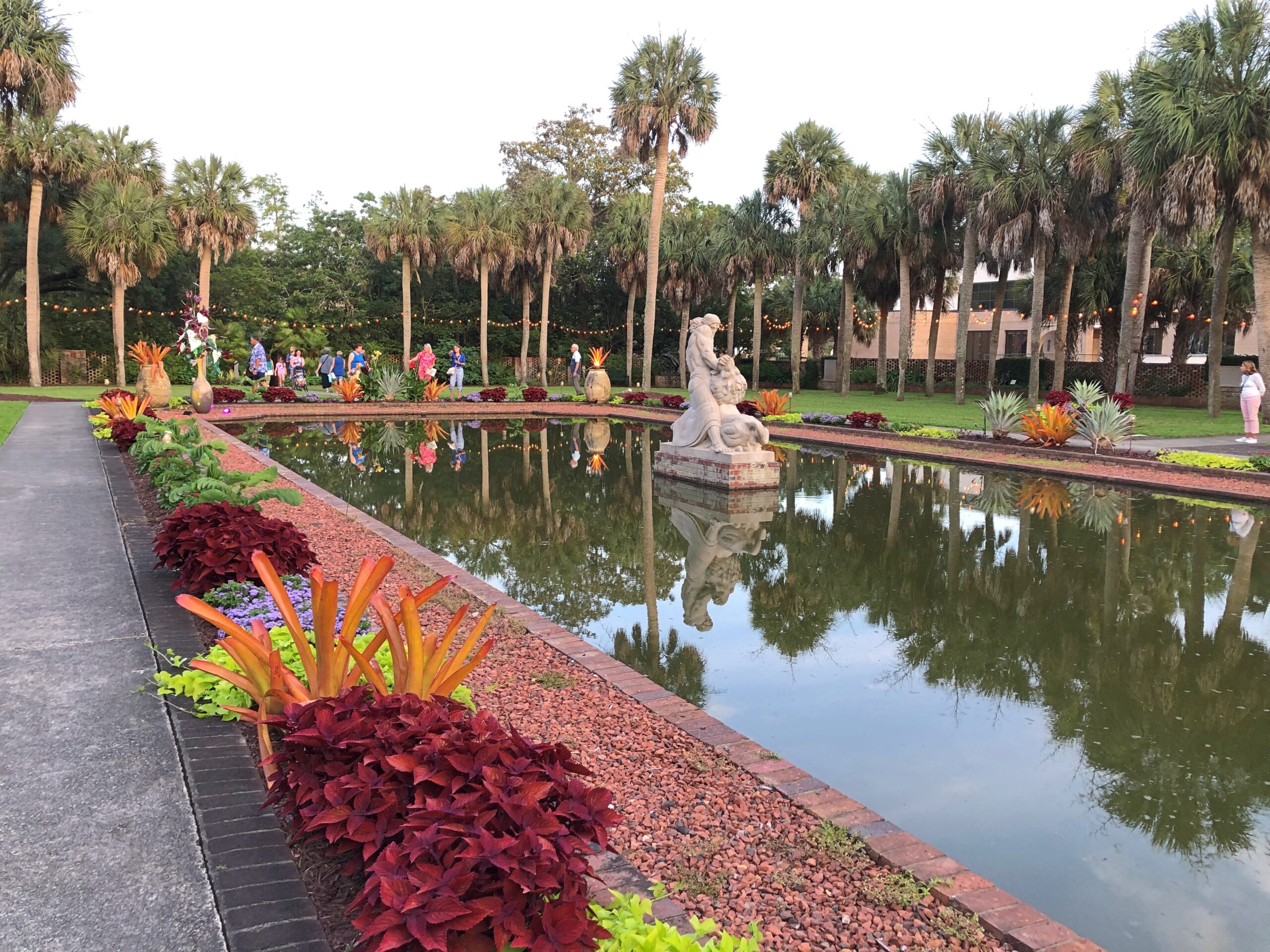
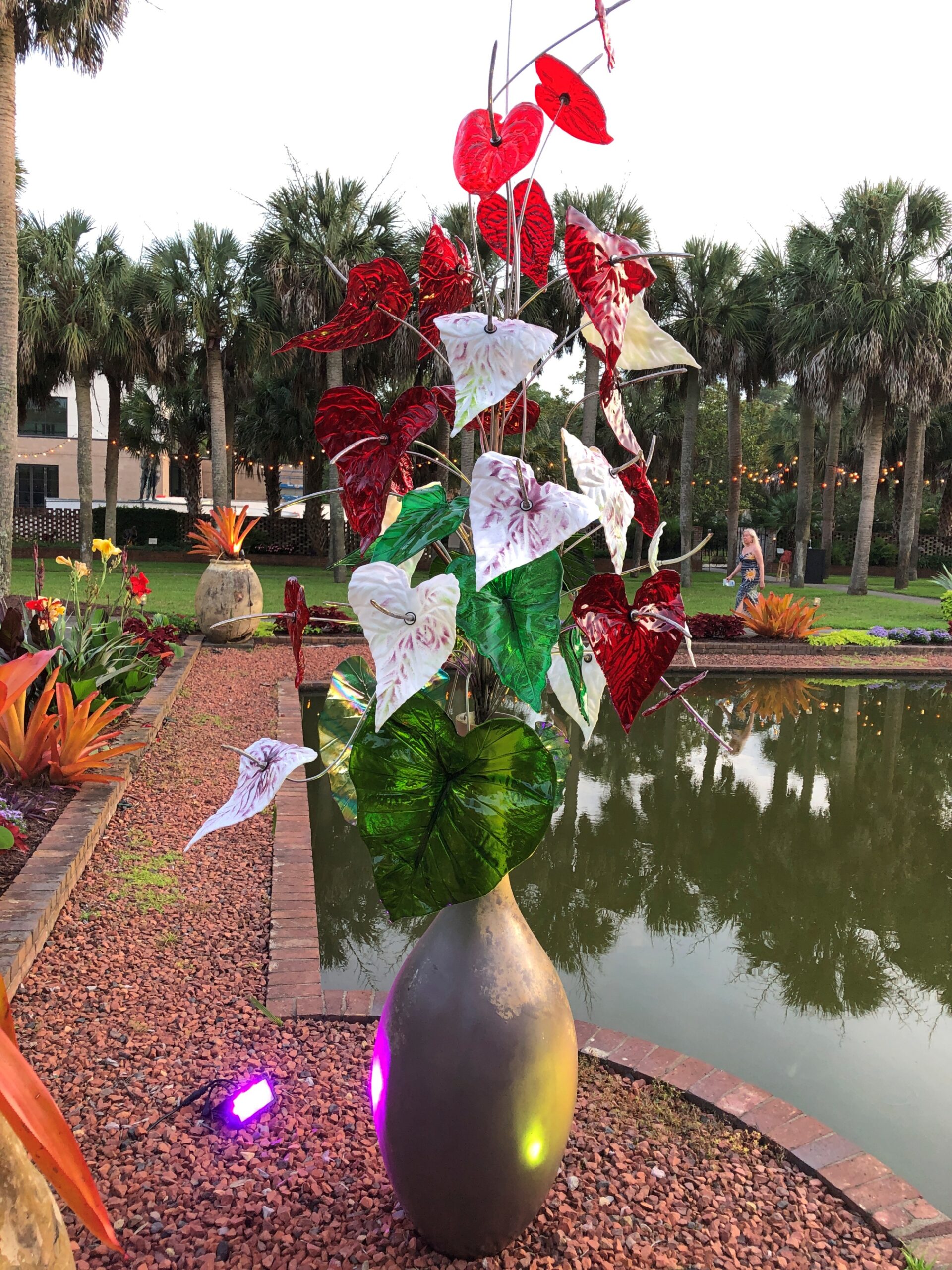
But I found out that on some days in the summer, part of Brookgreen is open well into the evening, offering cooler temps – and still sauna-like humidity – with light displays. That was doable, and so we went on the Saturday evening we were in town.

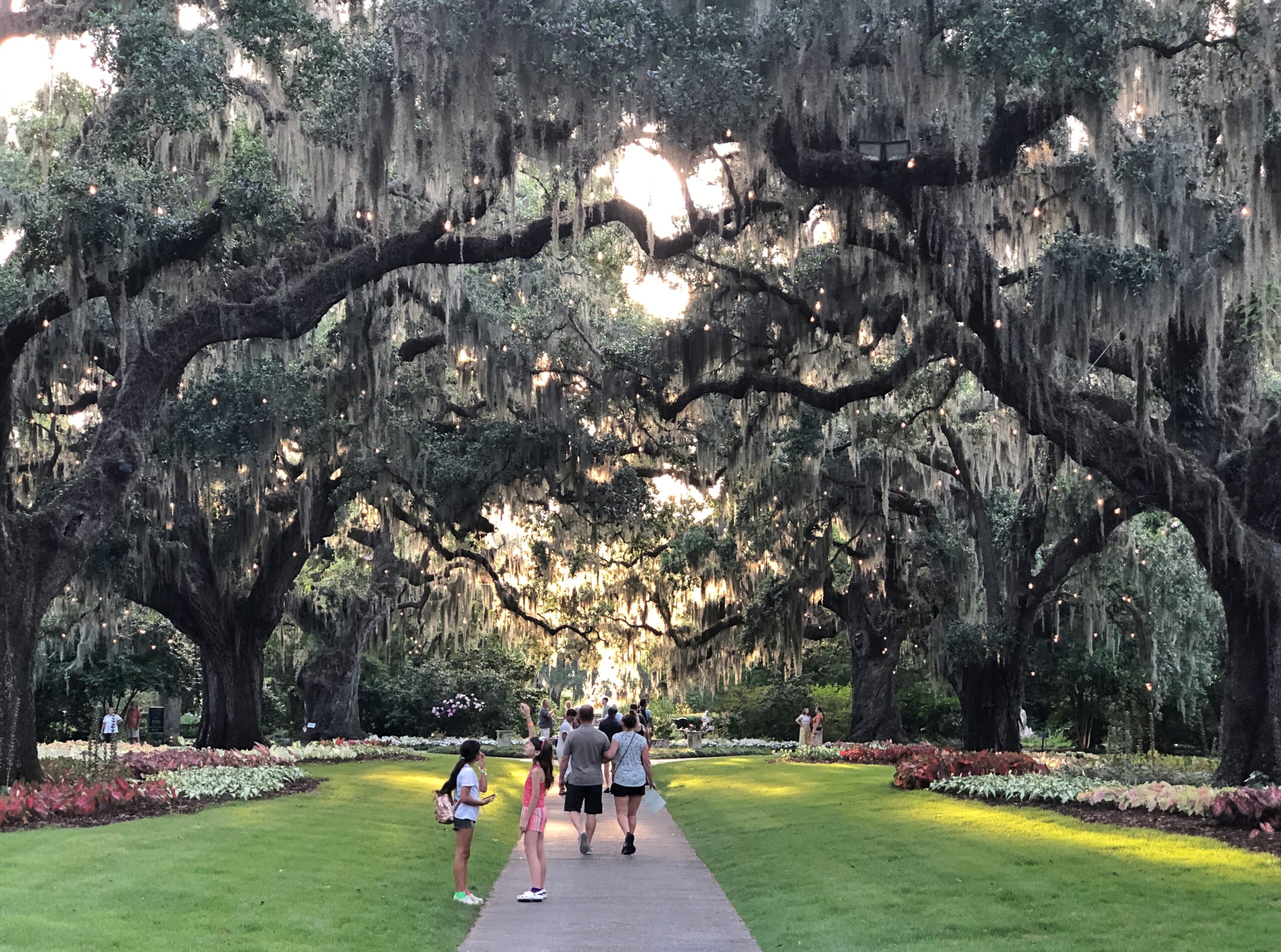
The grand Spanish moss promenade by day.

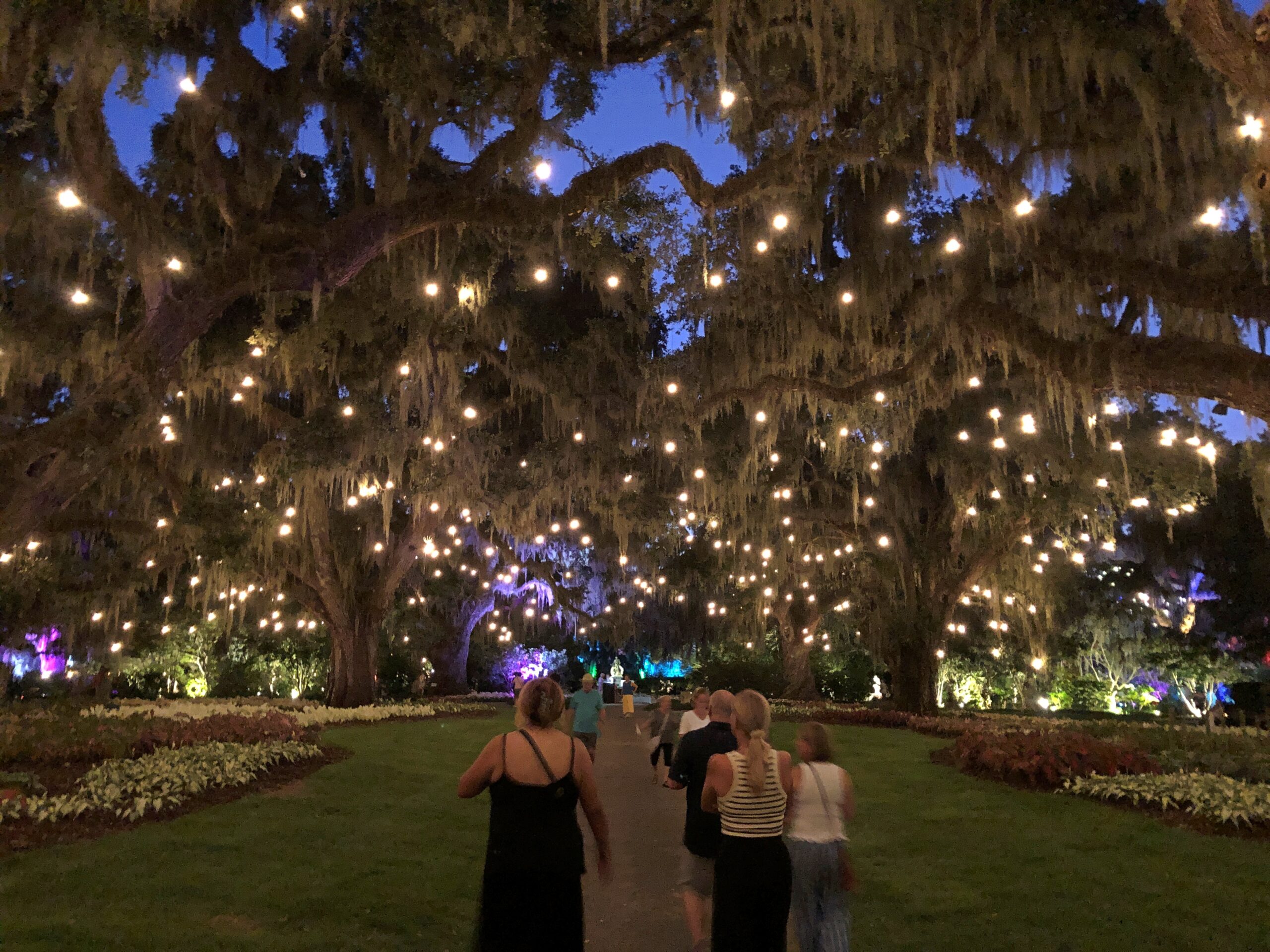
Lights up after dark.

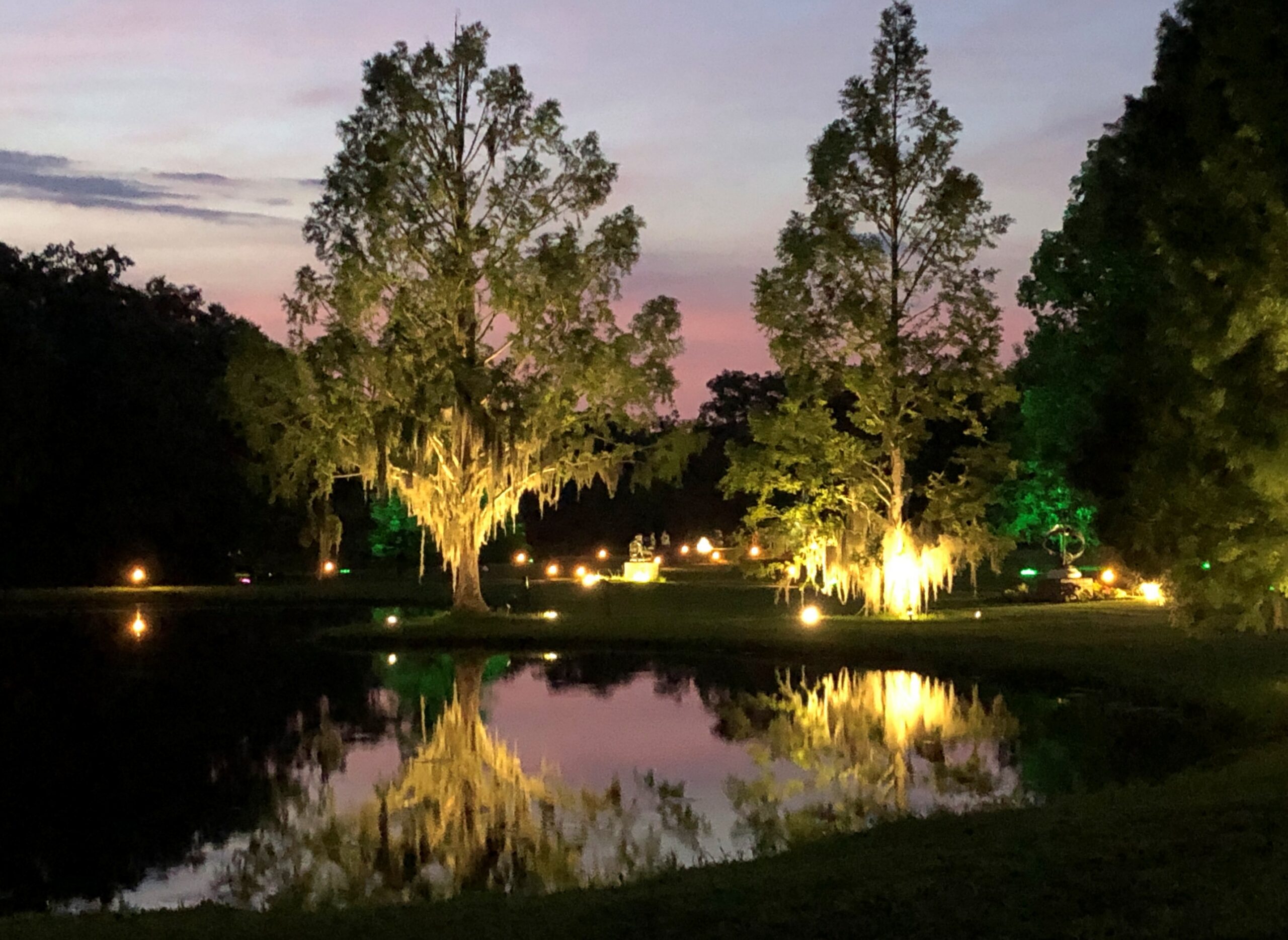
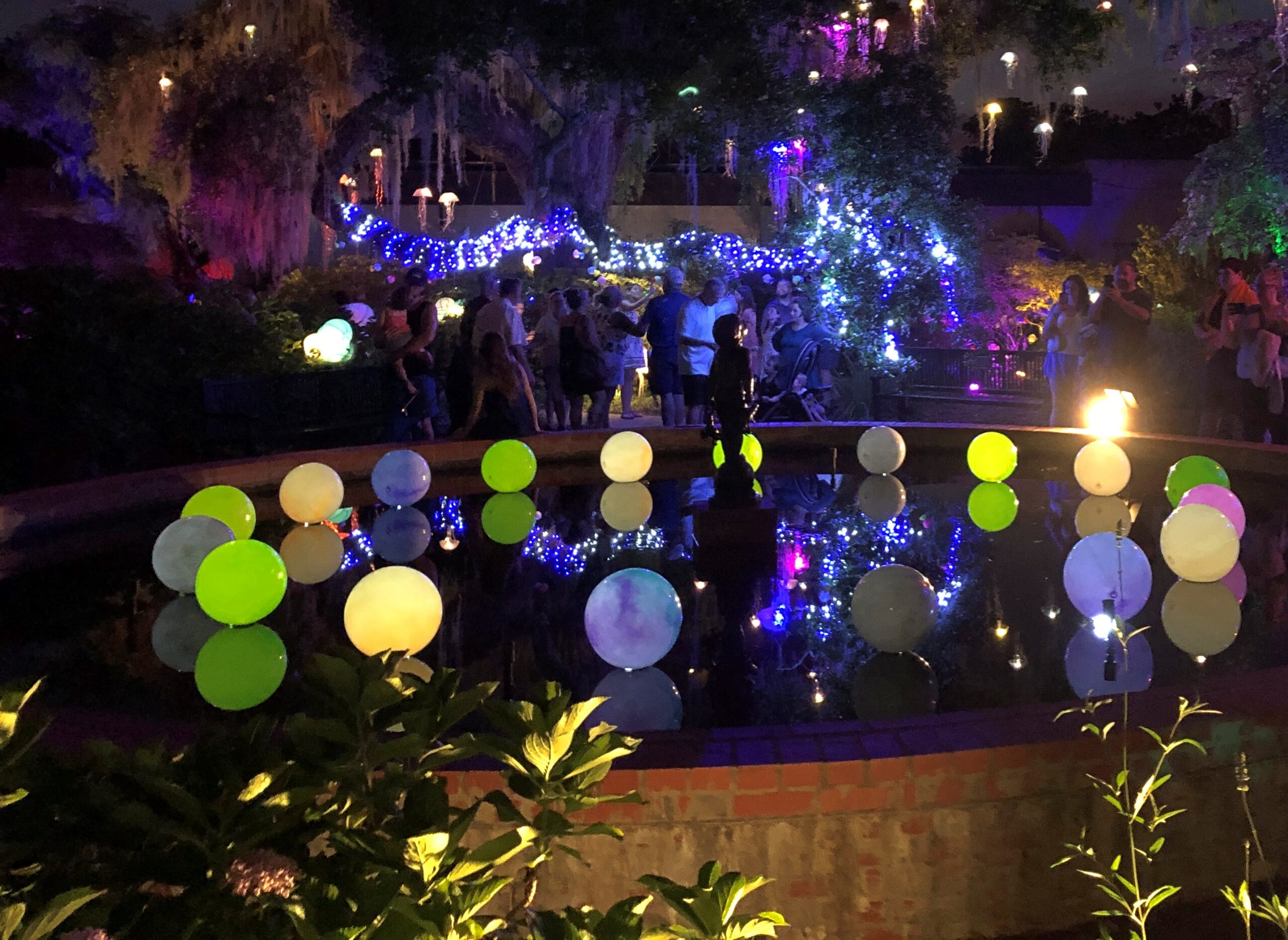
The garden calls it Summer Light: Art by Night.

Brookgreen Garden
Brookgreen Garden

Other botanic gardens have similar light shows, such as one every year by the Chicago Botanic Garden that we’ve been to a few times. But that’s in winter. Summer’s just as good a time, better in some ways, with no worries about blizzards or subzero temps, even if the nighttime is shorter.

Brookgreen GardenBrookgreen Garden

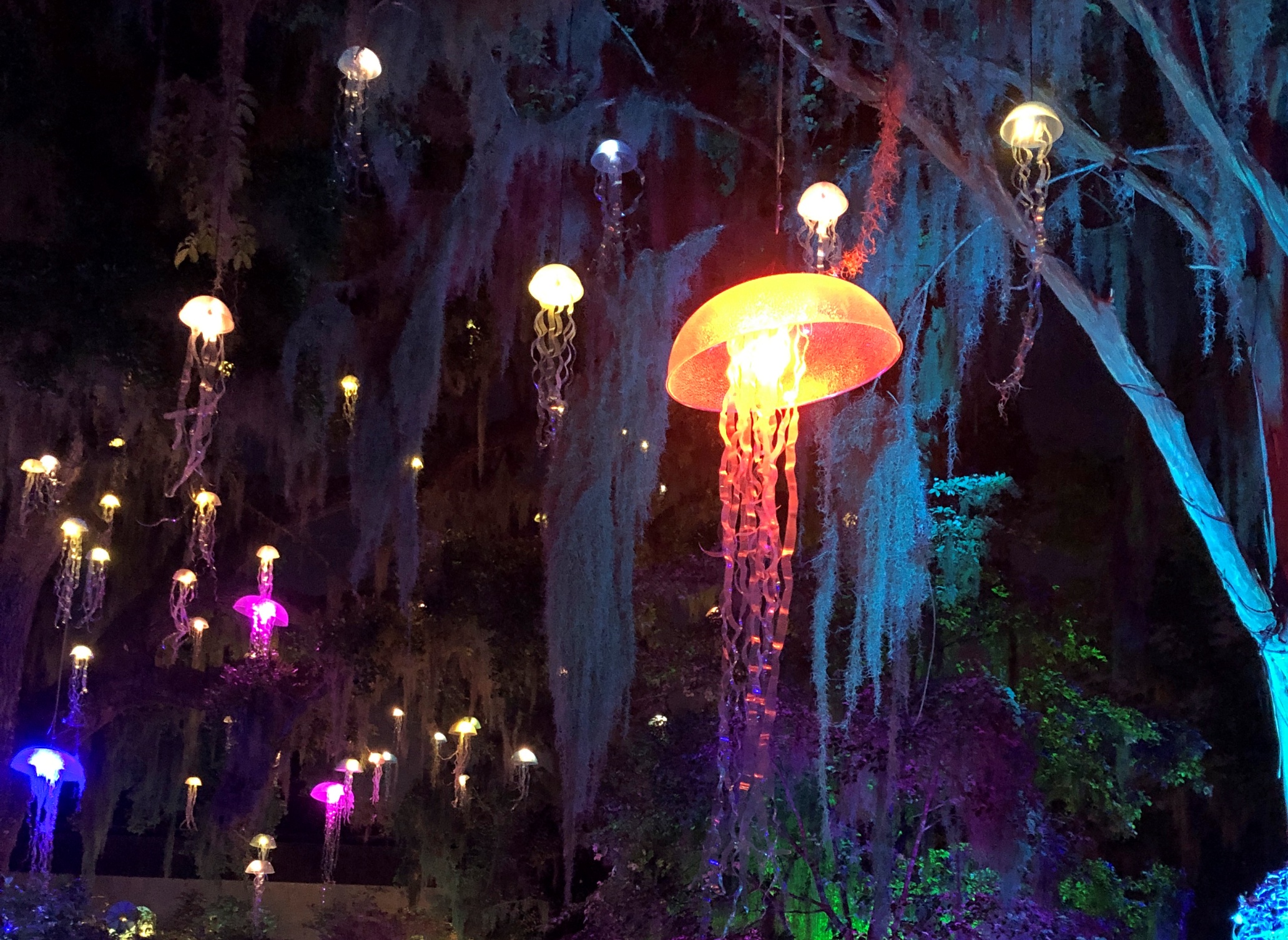
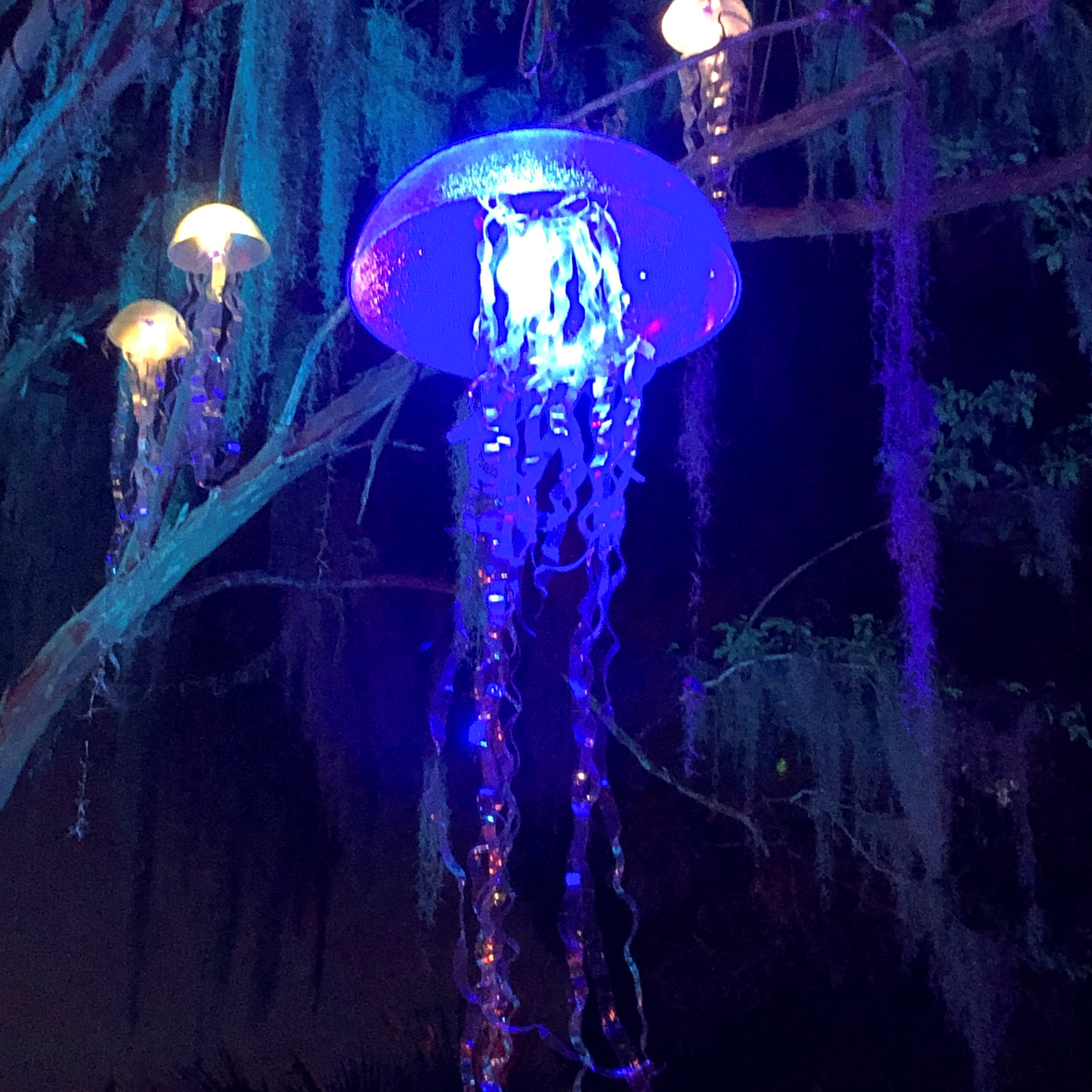
These glowing jellies were in the Children’s Garden.

Too good just for kiddie-winkies, if you asked me.

Brookgreen Gardens by Day

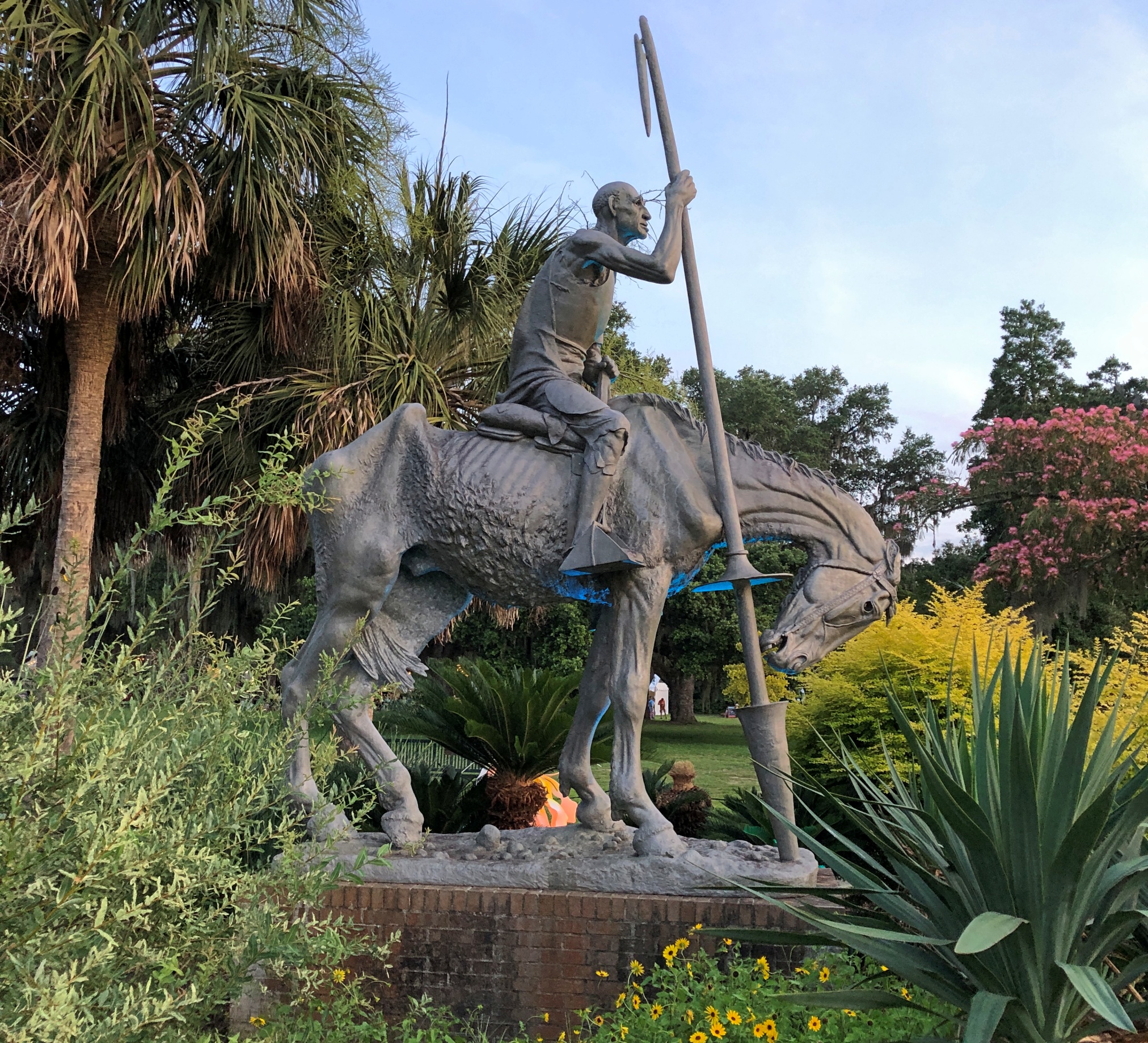
How does the saying go? Wherever there is Don Quixote –

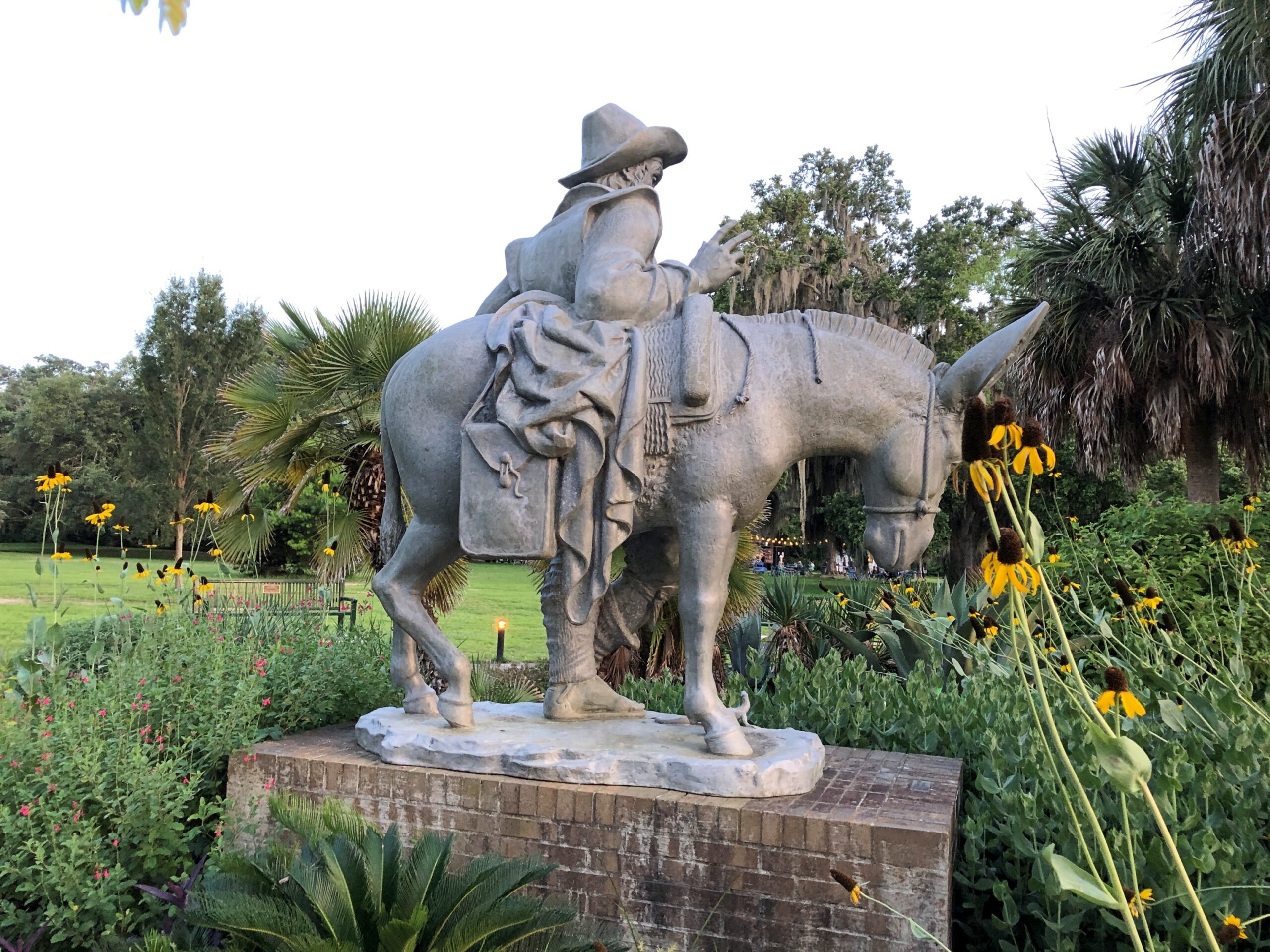
– there is Sancho Panza.

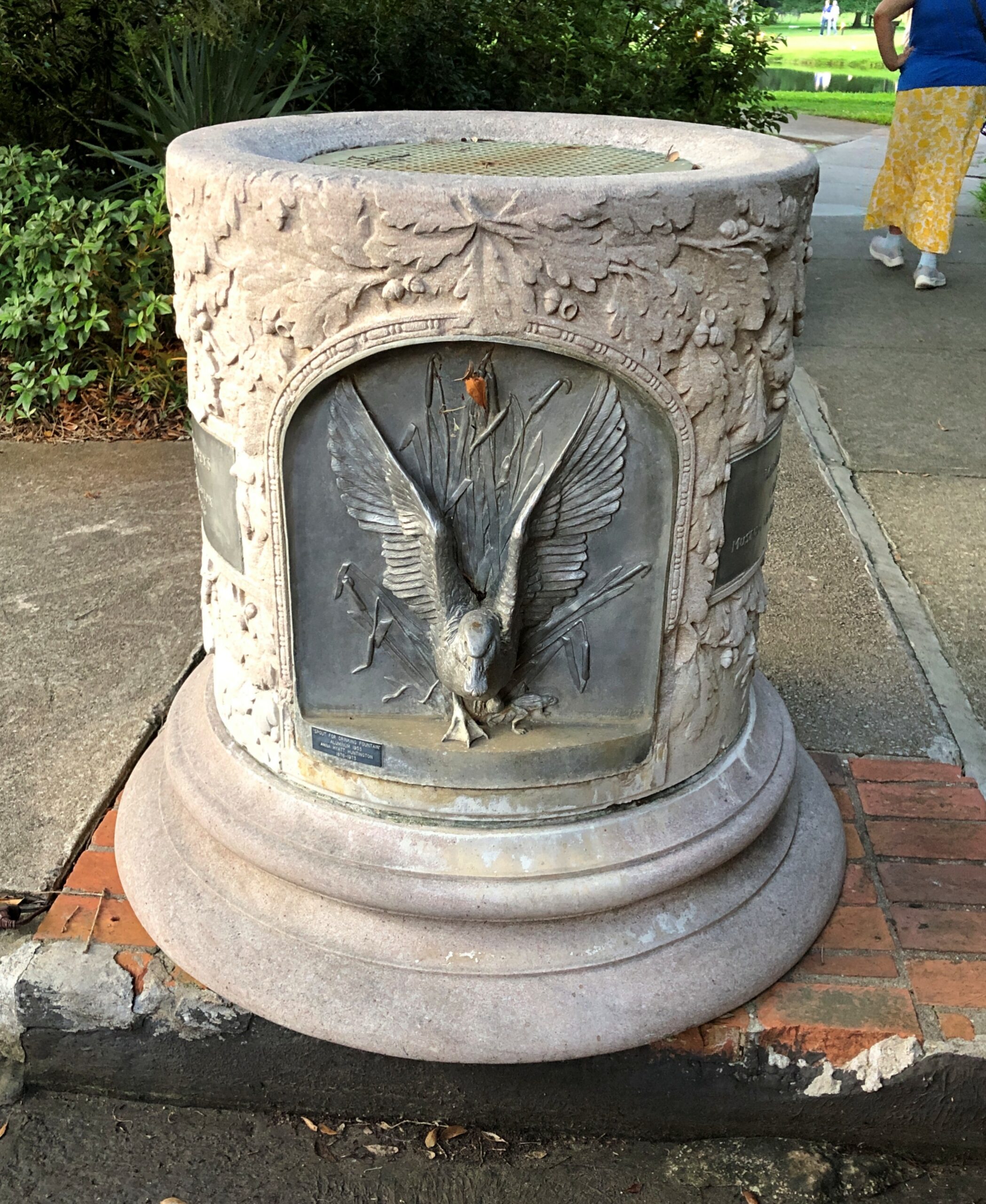
No one says that as far as I know. But you could. Anna Hyatt Huntington (d. 1973) created “Don Quixote” in 1947, and eventually Carl Paul Jennewein (d. 1978) did the companion “Sancho Panza” in 1971, apparently at Huntington’s request. You can find the famed literary pair in aluminum among many other artworks at Brookgreen Gardens in South Carolina – over 2,000 works by 430 artists, according to the garden. We arrived late in the afternoon of the 21st, dodging most of that day’s heat by timing it that way.

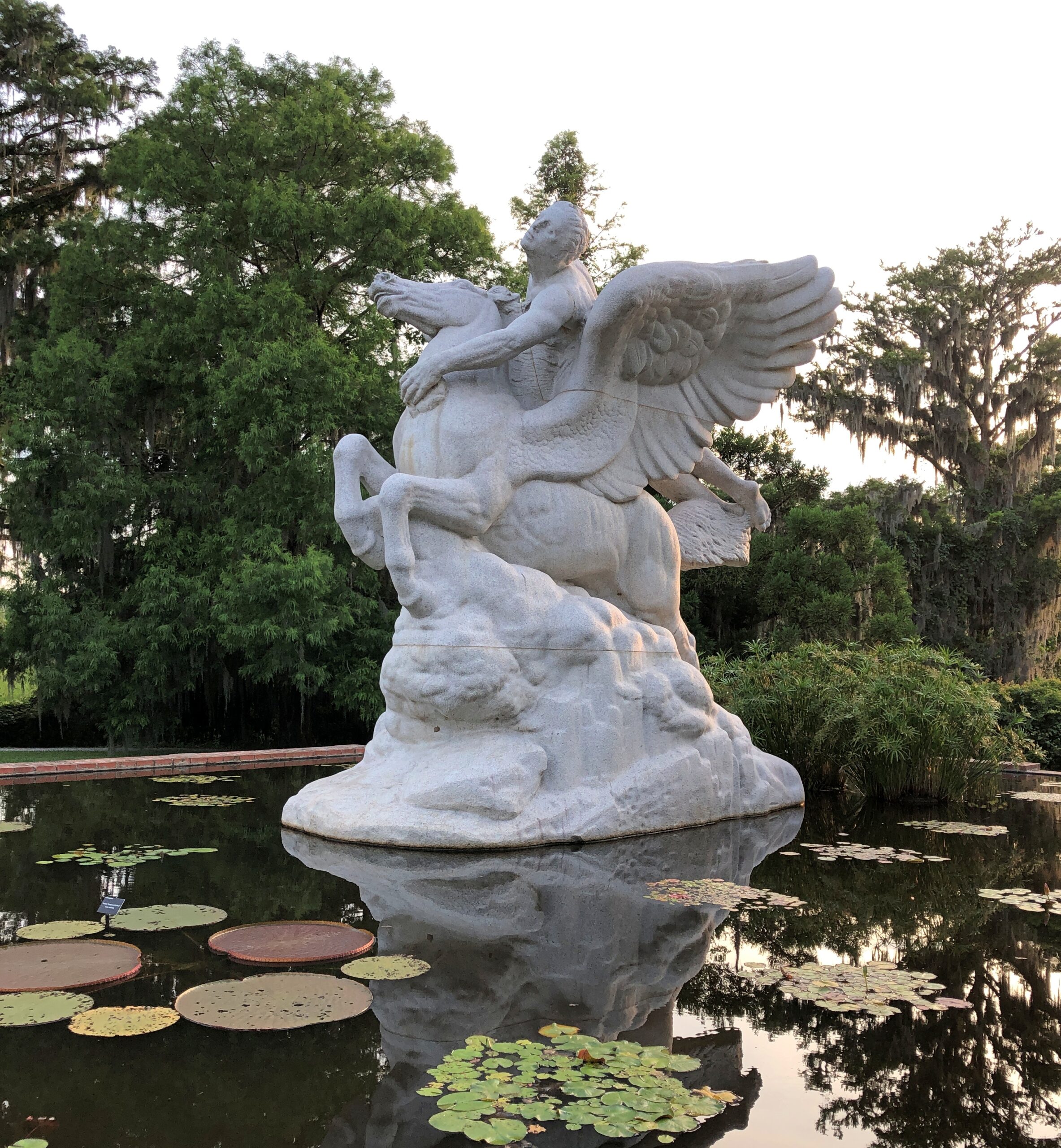
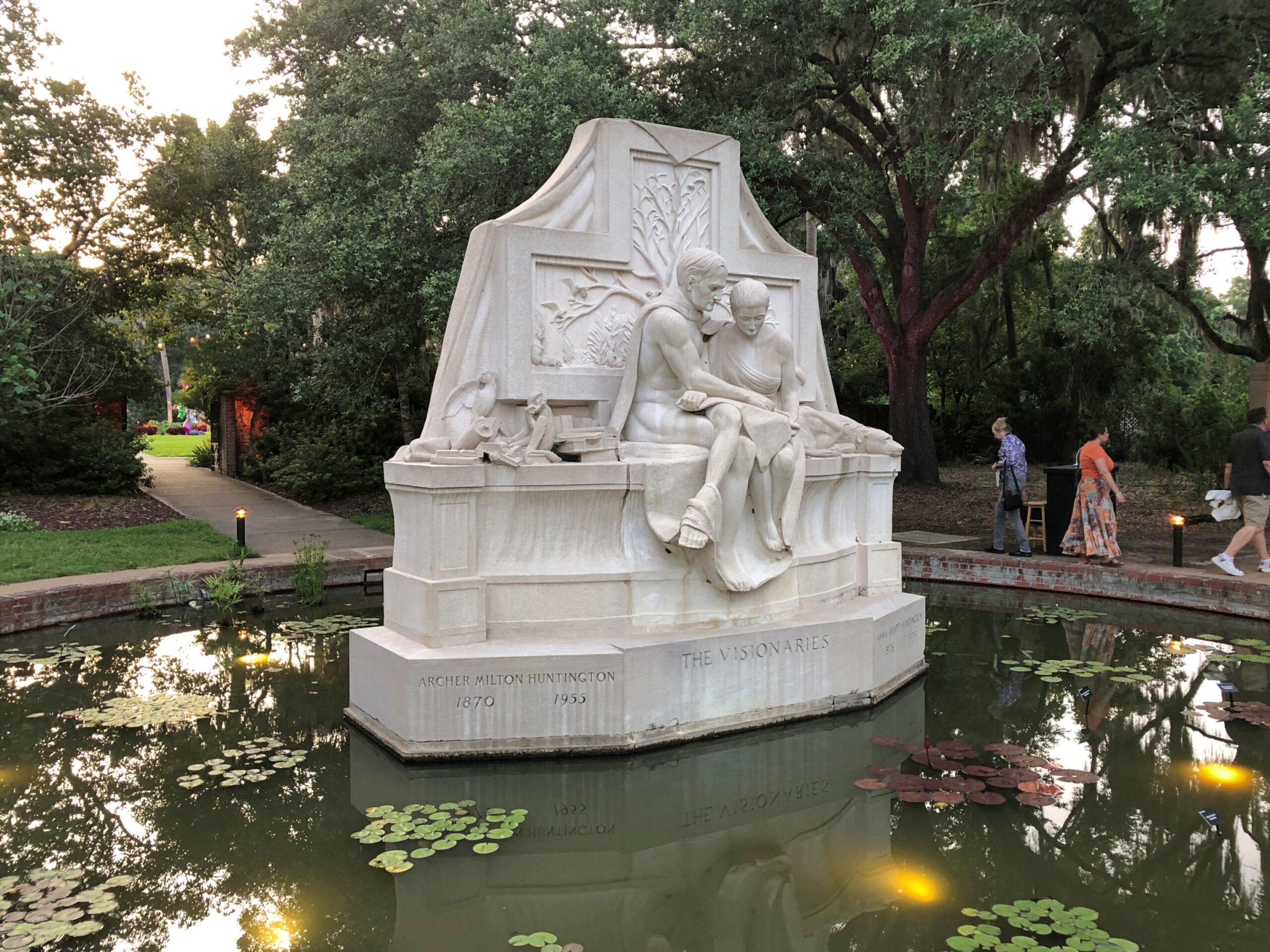
Some works are larger than the Cervantes characters.
Archer Milton Huntington (d. 1955) isn’t entombed in that artwork, as much as it looks like it. He’s in a mausoleum in the Bronx befitting a very wealthy man, so this one just honors him. Along with his wife Anna, a successful artist in her own right, railroad heir and scholar Archer acquired the land and planned the gardens.
Others works aren’t as large, or as conventional.
The sculpture garden, formally known as Archer & Anna Hyatt Huntington Sculpture Garden, is only part of Brookgreen Gardens. Spanning 9,100 acres, the grounds also count as a botanical garden, and there is a zoo and wilderness areas, all teased out of the swampland, rice fields, woods and beaches that marked the site before the 20th century. Some historic sites still exist on the land, especially relating to the rice plantations that used to be there.

“From its inception [in 1931], Brookgreen had a three-pronged purpose: first, to collect, exhibit, and preserve American figurative sculpture; second, to collect, exhibit, and preserve the plants of the Southeast; and third, to collect, exhibit, and preserve the animals of the Southeast,” the garden’s web site explains.

Paths wind through the lush landscapes.

And under towering oaks bearded with Spanish moss.

And along fine water features.

Brookgreen Garden
Brookgreen Garden

As sculpture gardens go, the place is top drawer.

Myrtle Beach: Grand Strand & Pier 14

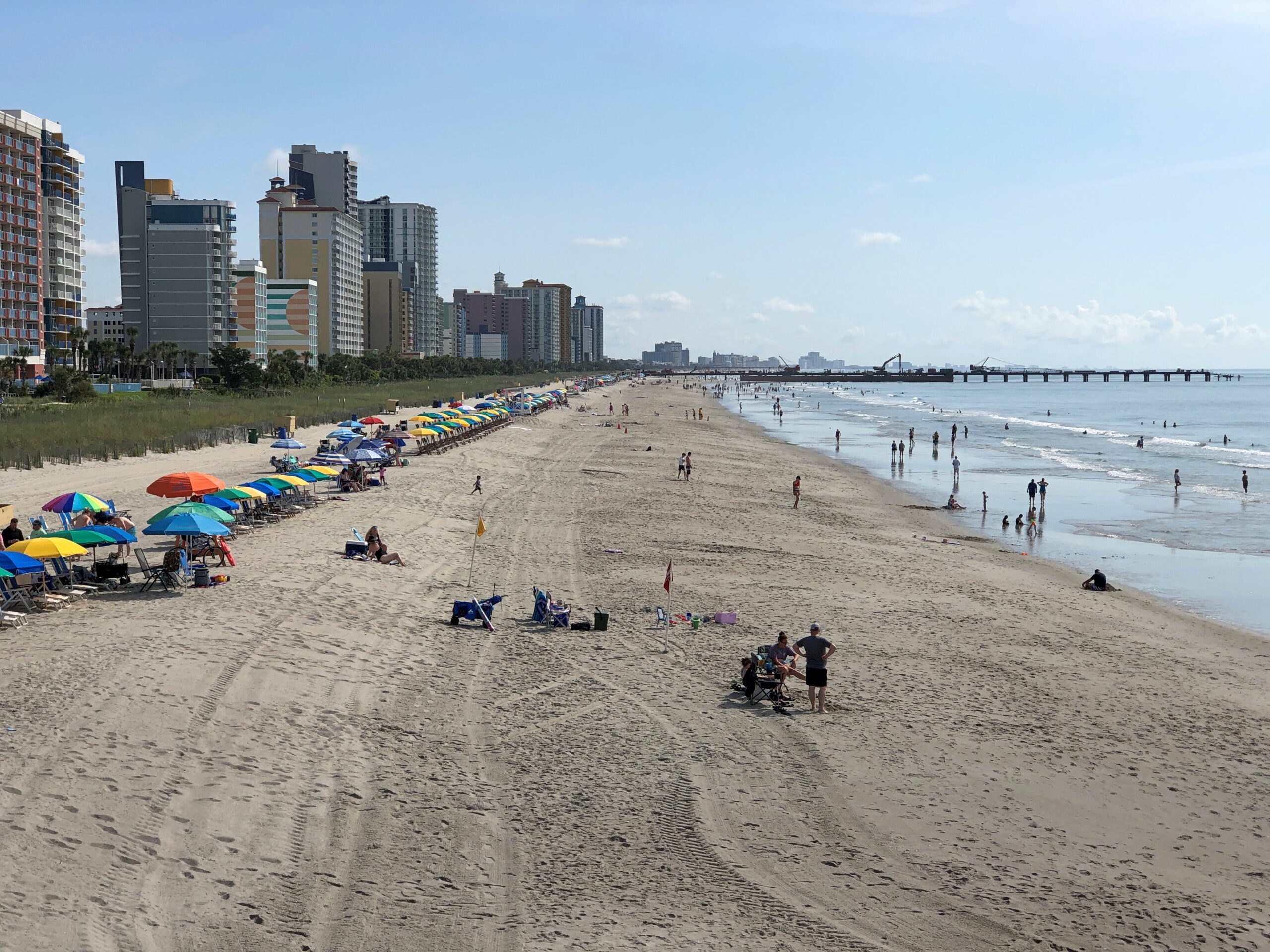
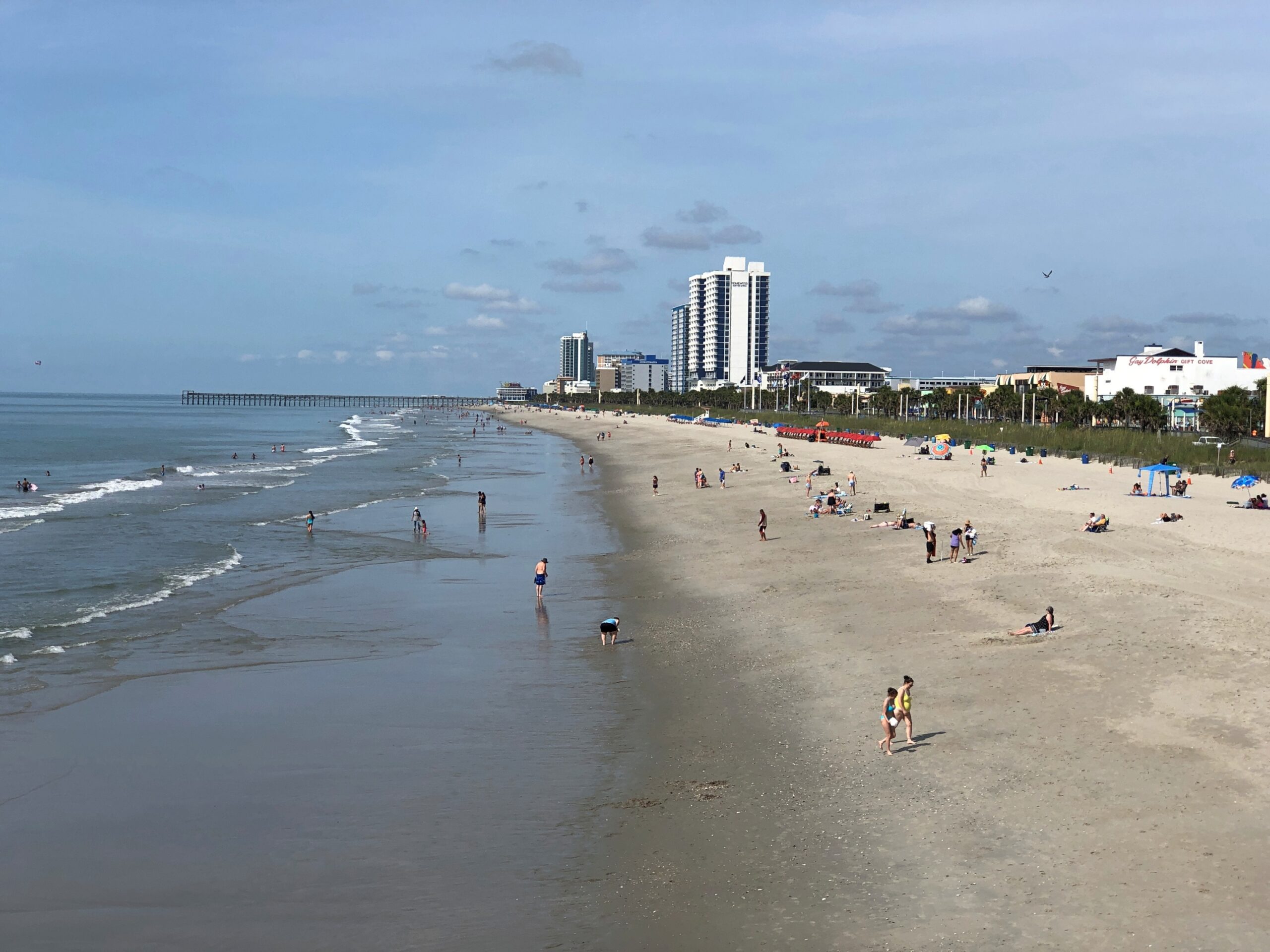
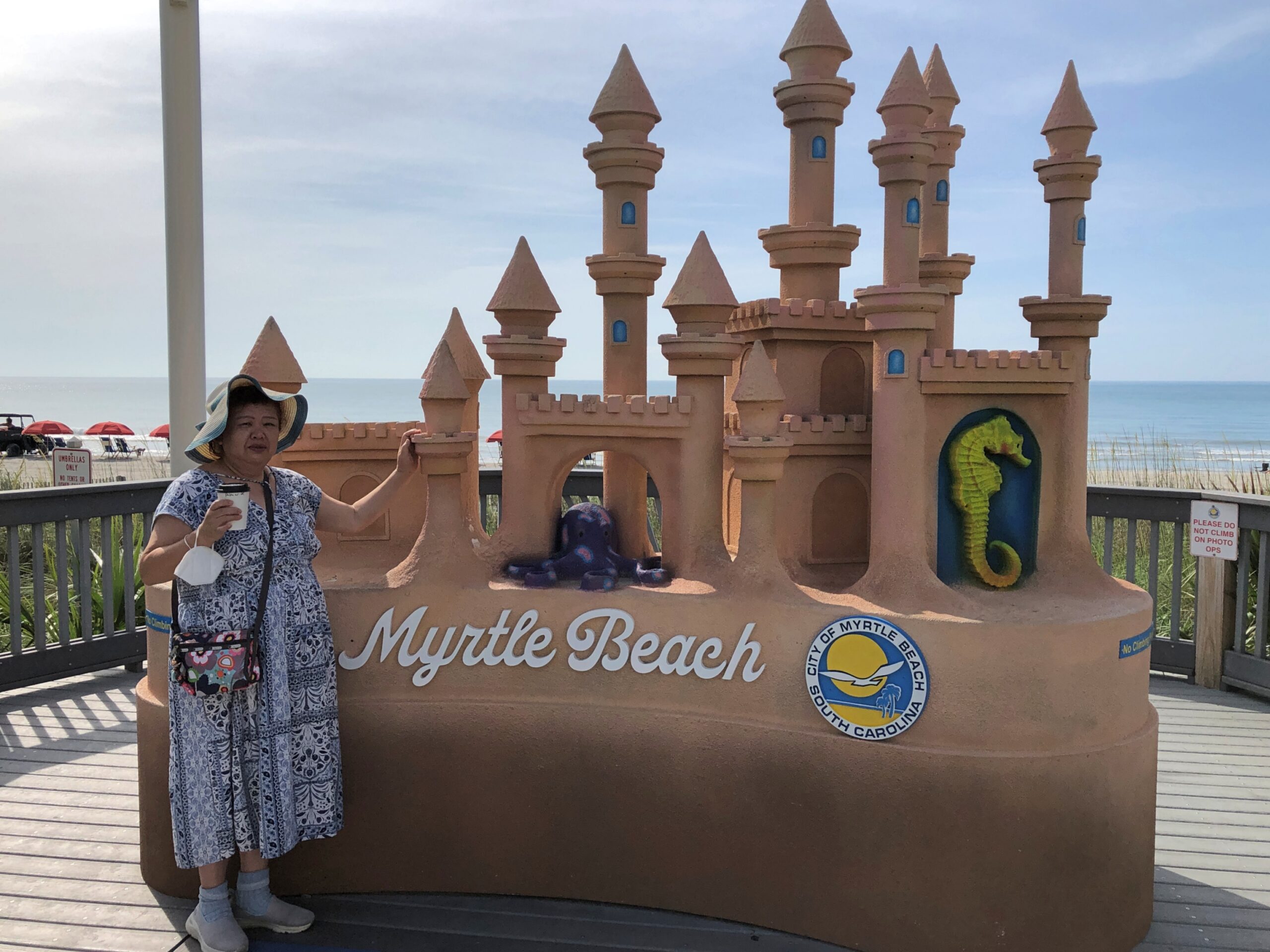
The Grand Strand, it’s called. That would be the wide beach that stretches along the Carolina coast for 60 miles or so, including greater Myrtle Beach. Grand indeed.

Myrtle Beach, SC June 2025

Sounds like a name a newspaperman might invent. A news moniker. That is, a newspaperman back when they pounded print on their typewriters, and so it was, in the late 1940s.

The beach as a leisure destination, or at least the seaside, goes back a little further. No doubt the Romans had some equivalent, but modern beachgoing is just another thing bequeathed to us by the Victorians and their railroads.

Myrtle Beach the beach is more of a creature of the early 20th century, I understand – the dream of a turpentine baron of the late 19th century, one Franklin G. Burroughs (d. 1897), whose original fortune came from the sap-rich pines of the area. His real estate vision wasn’t as grand as that of Florida railroad tycoon Henry Flagler, but the idea was similar: build railroads to the coasts and persuade people to take leisure trips using those lines and, at the end of the lines, using tourist infrastructure that you’ve conveniently provided. Burroughs’ sons were up to the task, opening a rail-serviced hotel by the shore in 1901. Ultimately the rest of Myrtle Beach rose out of that placement on the Grand Strand, a stretch that had long been considered wasteland. Reportedly Burroughs’ widow named the town for its common flora.

I got a kick out of learning that the corporate descendant of Burroughs’ company, now known as Burroughs & Chapin, is a real estate developer active even now in the Carolinas and Georgia, largely building retail space.

It was a fairly hot walk from the boardwalk to the beach itself.

Myrtle Beach, SC June 2025

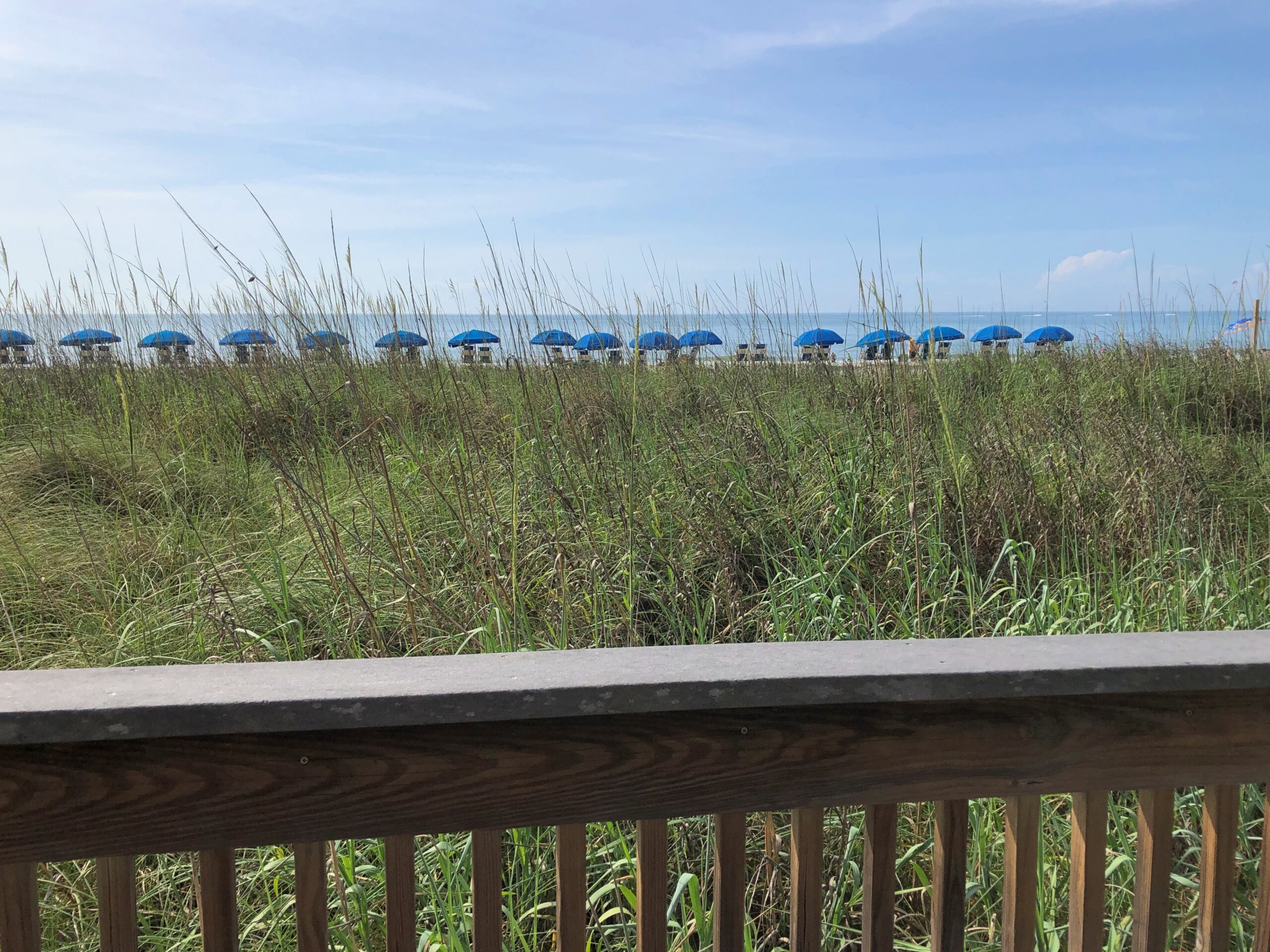
A row of fixed blue beach umbrellas waits for users.

Myrtle Beach, SC June 2025

And waits. Somebody must use them sometime, but close inspection revealed no one was. Even closer inspection revealed the charge for renting the umbrella and (I believe) two beach chairs with it is $50 a day. Way to price something out of the market, beach umbrella dudes (the city?).

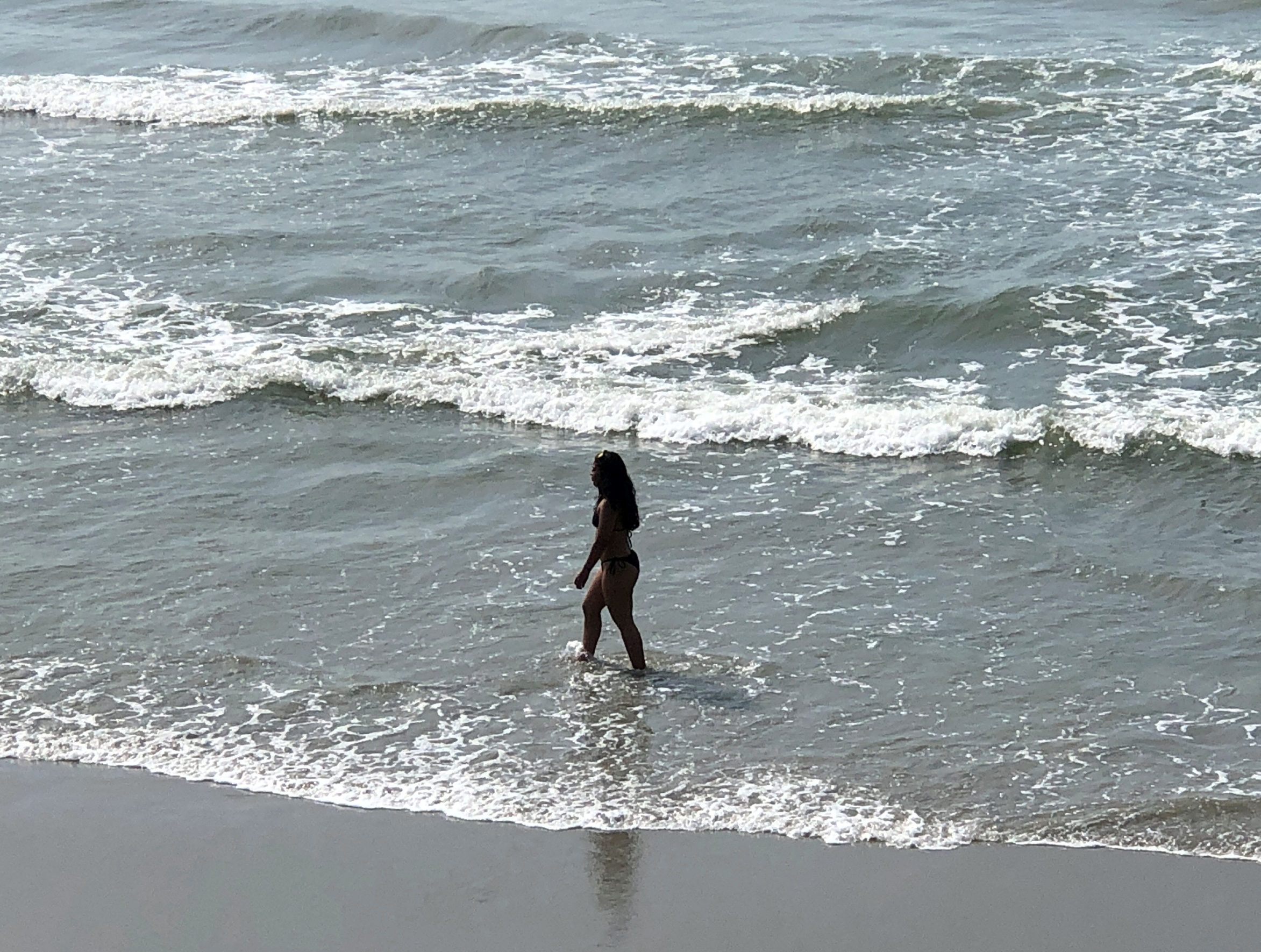
The beach wasn’t particularly busy anyway. It had a lot of sun, which people seem to like, but just a little much in the way of blazing heat. Still, a few people ventured into the smooth waves.

We did too, briefly. Ahh.

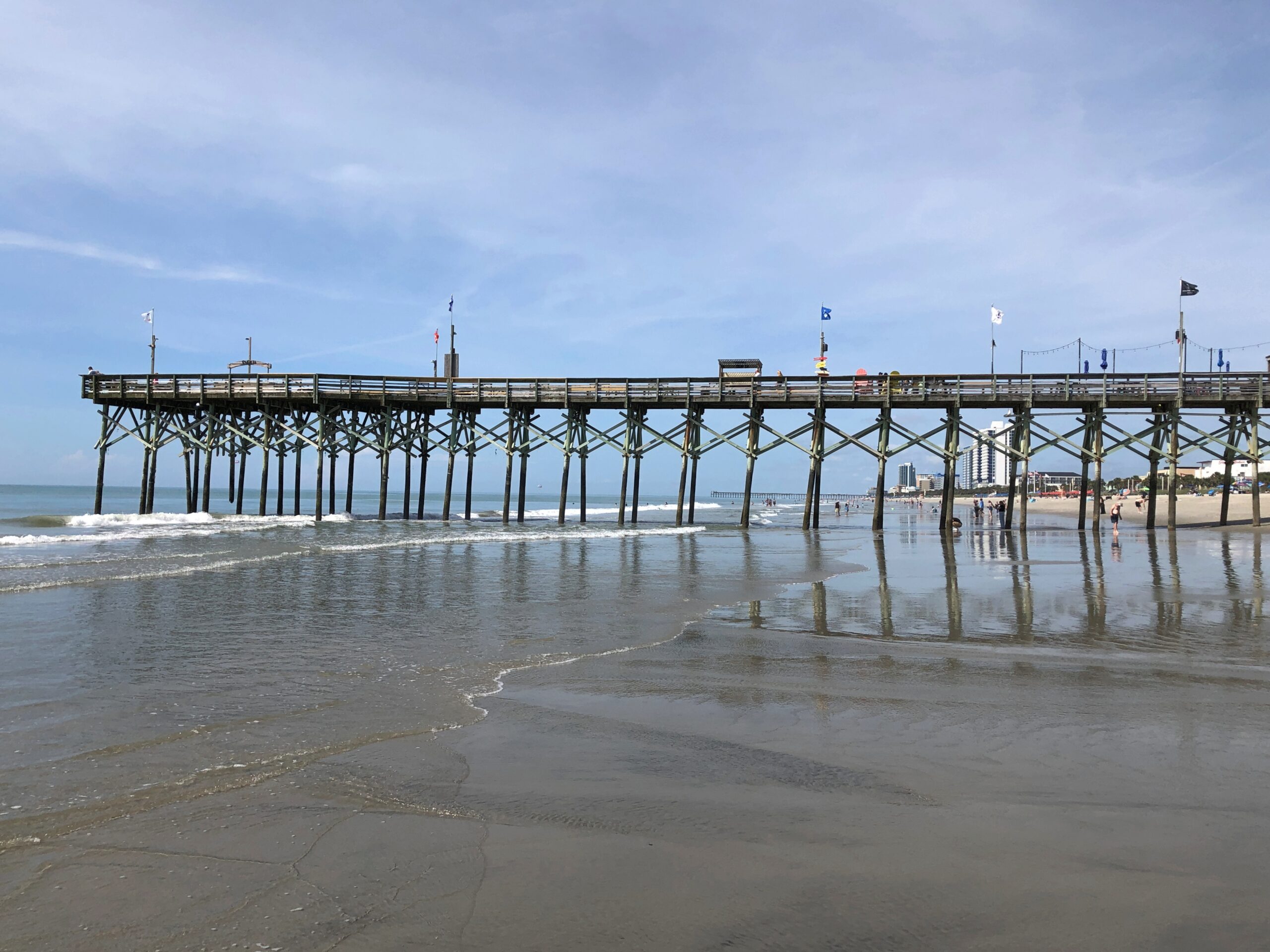
Jutting out into the ocean, as piers do, is Pier 14.

Myrtle Beach, SC June 2025 Pier 14

It’s been a fishing pier a long time, despite some serious damage during Hurricane Hugo in 1989, and on the landward end it is home to a decent-looking seafood restaurant. The pier might be a Myrtle Beach institution, but ownership doesn’t seem inclined to gouge leisure fisherfolk, charging only $7 to fish from the pier, and $2 for a second pole (limit two poles). A look around the pier is $1, which you get back in the form of a discount on a purchase from the gift shop, which of course also sells fishing gear. A lesser businessman would gouge on the entrance fee (and no discount) for fisherfolk and tourists, and make them less amenable to spending money at the pier’s store.

“Why 14?” I asked the fellow behind the counter, a big-bearded, capped and Myrtle Beach t-shirted man thick in the middle and thick in middle age, who might have been the owner. For a second it looked like he’d never heard such an odd question, but I had noticed only two other piers, one off fairly far off to the north and the other off to the south. Had there been other piers, lost to storms or urban renewal? Not how I’d have phrased the question, but what I was thinking. I’d seen the like, stubs of ruined piers, in New York.

“No, it’s after 14th Street,” he said, maybe thinking about that obvious thing for the first time in years, and then he pointed out that the pier is actually closer to 13th Street, but who would want Pier 13? We’ve all seen buildings conspicuously missing their 13th floor. Or missing that name, since even if you called it the 14th floor, it would be the 13th. Wasn’t that a Twilight Zone plot element? An unlucky 14th floor, that is. Maybe not. Could have been.

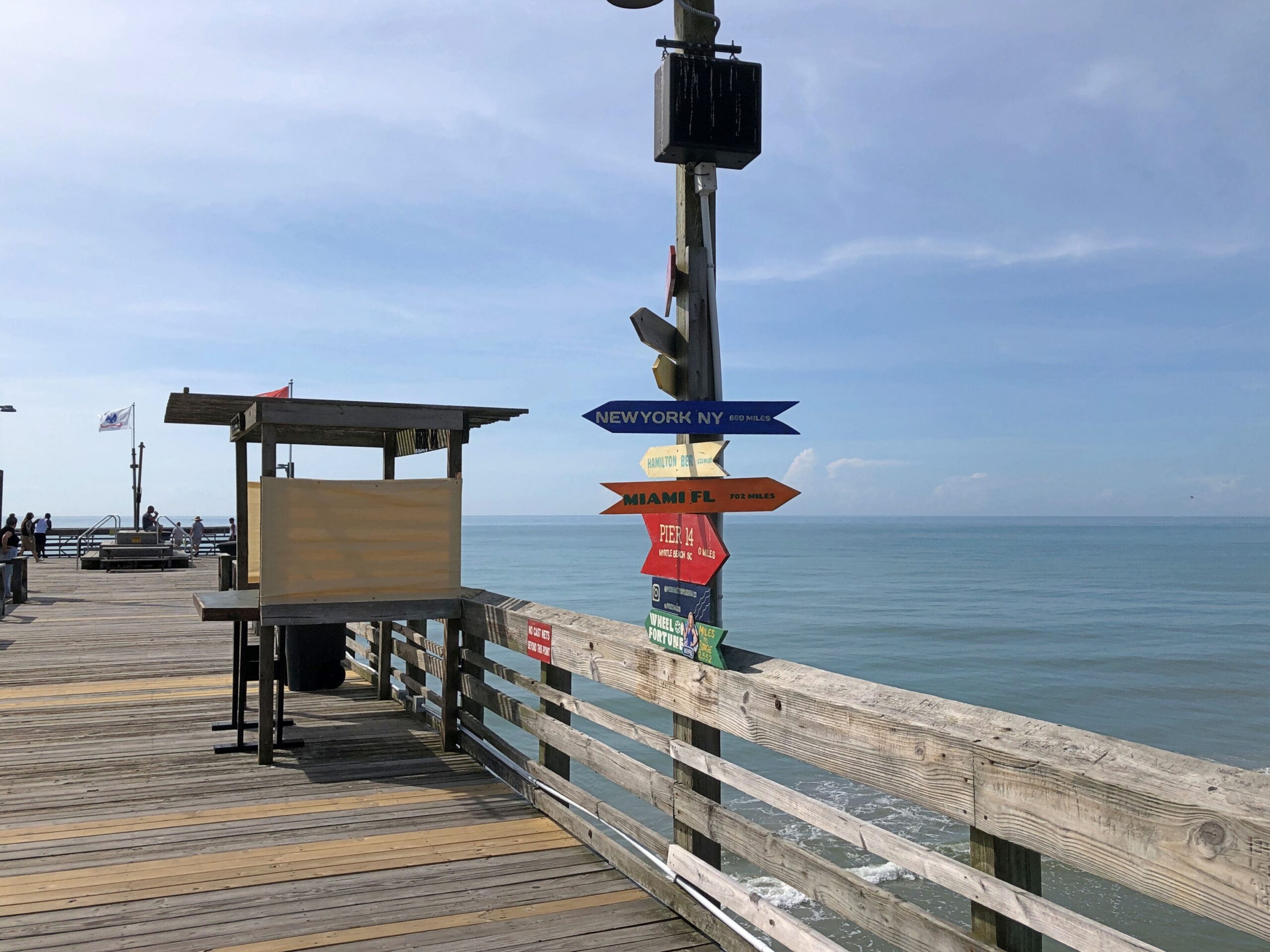
We paid our dollars and out on the hot pier we went.

Myrtle Beach, SC June 2025 Pier 14

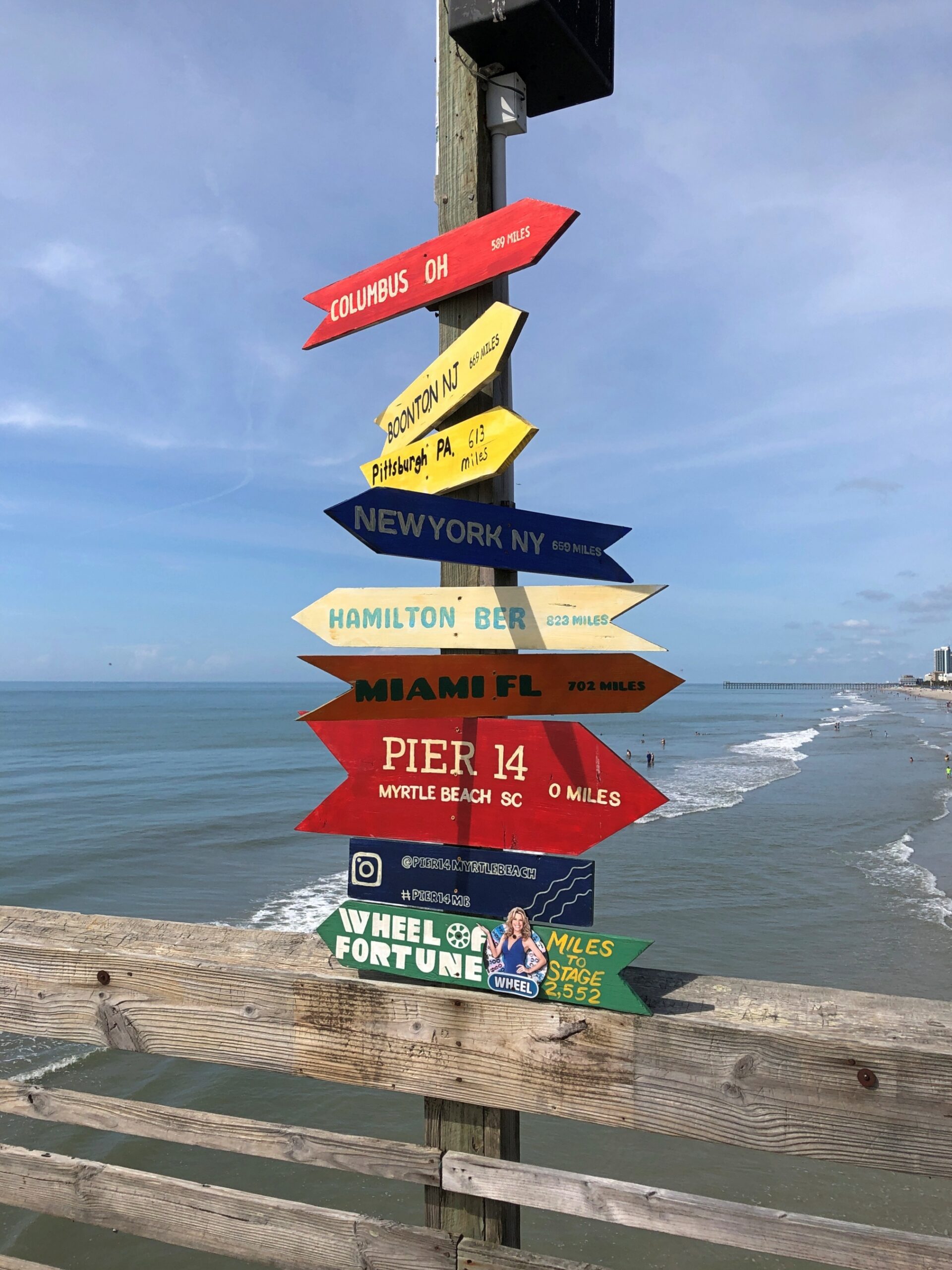
Wheel of Fortune?

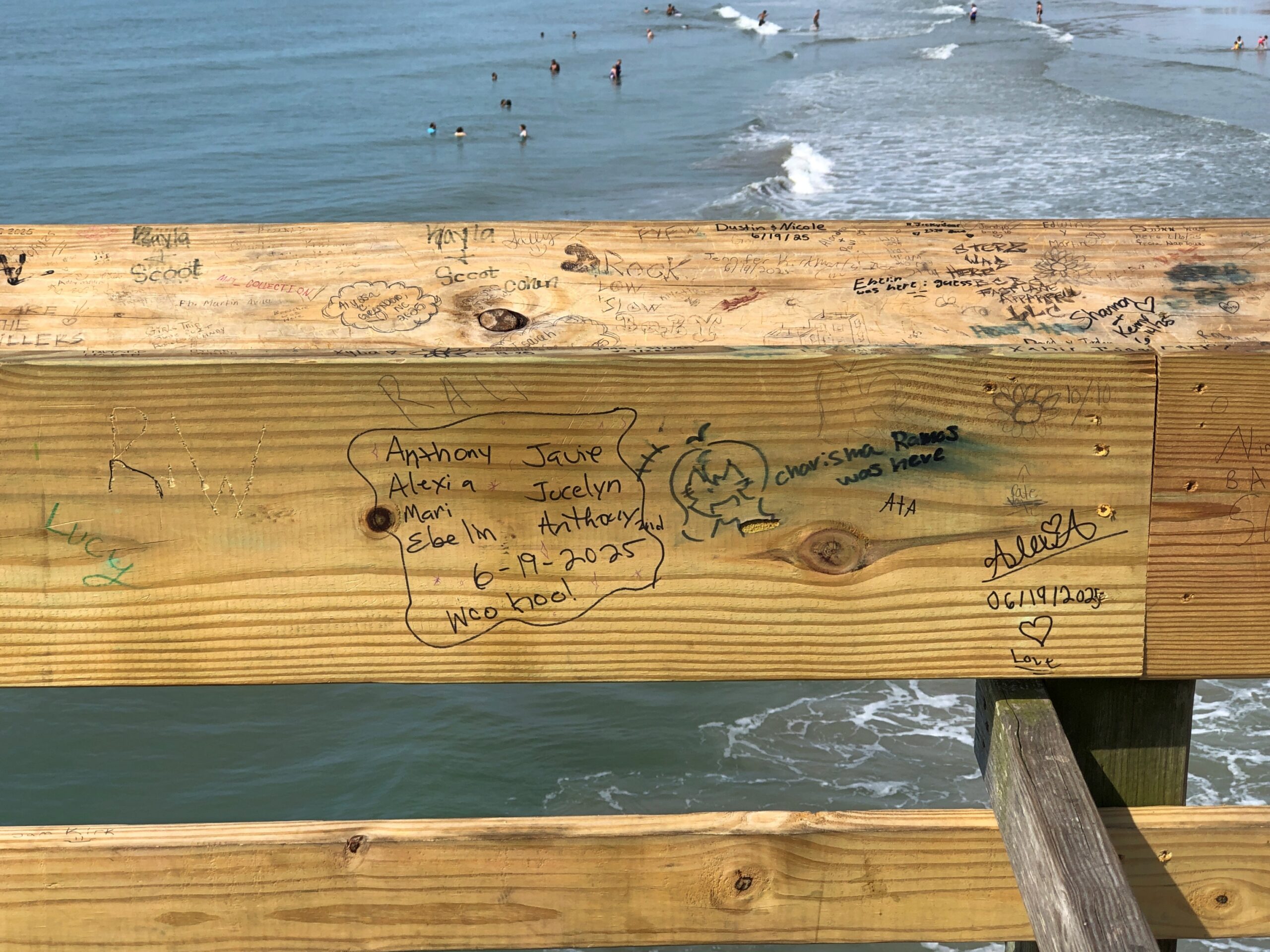
New wood, new graffiti.

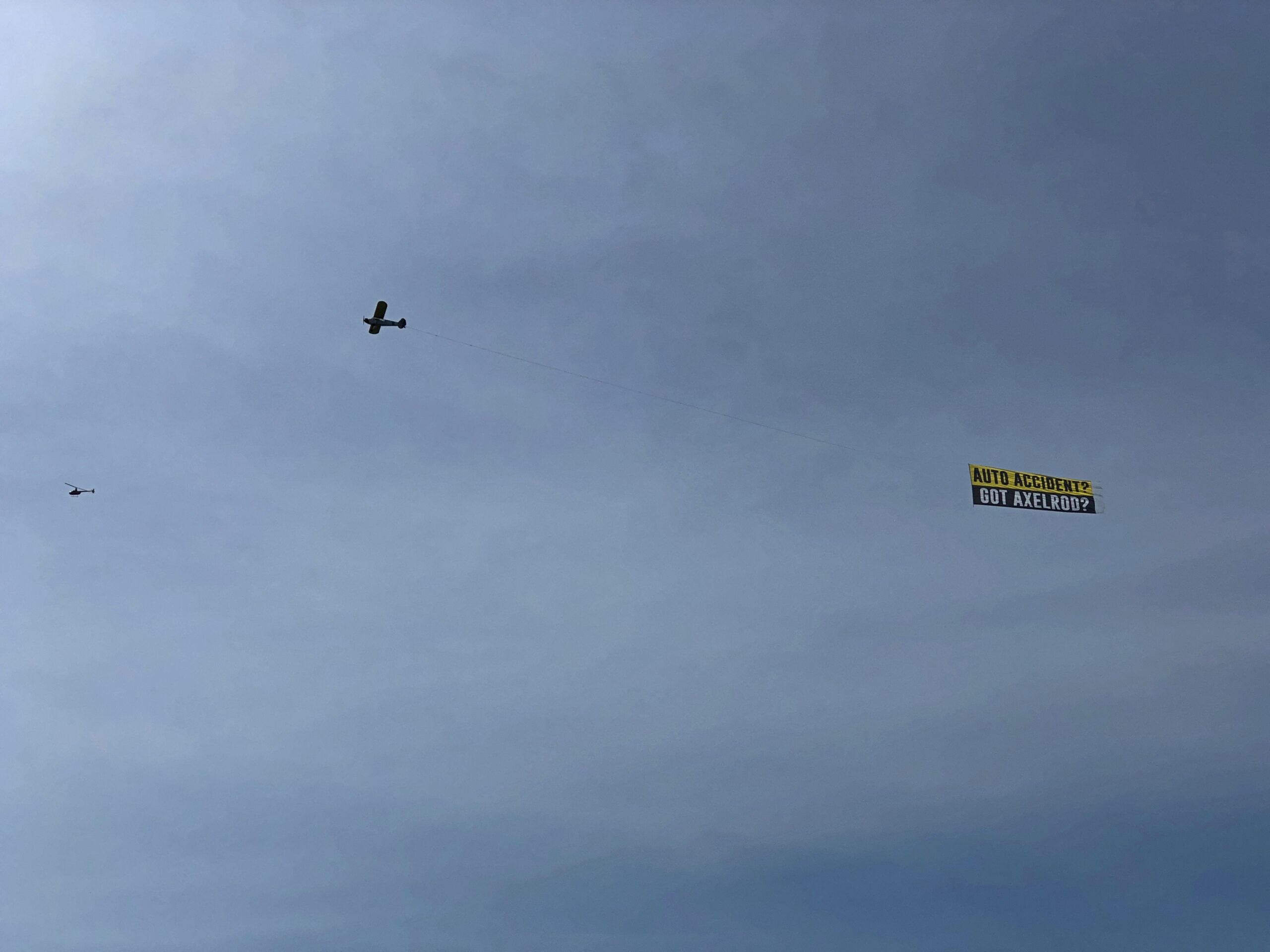
Nice views from both the pier and the beach. Including occasional aircraft.

That would be Axelrod & Associates. Good thing we didn’t need him or his ilk during our SC visit.

Myrtle Beach: The Boardwalk & The Gay Dolphin

My spring break trip in March 1981 with Neal and Stuart involved time on the Outer Banks of North Carolina, and we planned to cross into South Carolina for a visit to Myrtle Beach. But because of the ferry schedule between islands, we spent a memorable night on Ocracoke Is., and determined that there was no time for Myrtle Beach. We made it as far as Wilmington, NC.

I thought of that on my drive between New Bern and Myrtle Beach last month, which was mostly, but not entirely, on US 17. Just another example of how I think: When I miss a planned destination for some reason or other, something doesn’t quite sit right until I go there eventually. At 44 years and some months, the lag between planning to go to Myrtle Beach and realizing that visit was unusually long, but in any case I finally made it on June 20, 2025, a Friday, and I stayed until the following Monday. Yuriko joined me those days.

Crossing into SC on US 17, you first encounter North Myrtle Beach, which seemed every bit as developed and tourist-oriented as Myrtle Beach itself, replete with restaurants and motels and retailers, including a wide variety of beach retailers whose large-letter marquees made bold and nearly worthless promises about low prices.

North MB is also where I started noticing the area’s miniature golf courses. Or, as the industry seems to call it, mini golf, because there is such a thing as the American Mini Golf Alliance and the US ProMiniGolf Association (pro?). Then again, a simple search also turns up the World Minigolf Sport Federation and Miniature Golf Association of America, along with the Professional Putters Association (professional?). There’s clearly a lot I don’t know about miniature golf.

In North MB, you drive by Hawaiian Village Mini Golf, Hawaiian Rumble (home of the Mini Golf Masters tournament), Mayday Golf, Professor Hacker’s Dinosaur Adventure and Professor Hacker’s Lost Treasure Golf, among others. In Myrtle Beach proper, among others, there’s Broadway Grand Prix, Captain Hook’s Adventure Golf, Jungle Safari Mini Golf, Jurassic Mini Golf, Popstroke, Red Dragon Cove Adventure Golf, Aloha Mini Golf, and one that was truly hard to miss, Mt. Atanticus Minotaur Golf.

Visit Myrtle Beach says there are over 30 mini golf courses in the area, their faux oddities rising near major thoroughfares – artificial landforms, cartoonish pirate ships, weird sea creatures and so many dinosaurs, at least in my memory. Had daytime temps been anything less than 90° F. or so, we might have picked one and putted some balls around for a lark. Or, failing that, I might have spend time on sidewalks outside their fences, taking pictures. There’s a coffee table book in all the Myrtle Beach mini golf spectacle, or at least an extensive Flickr page.

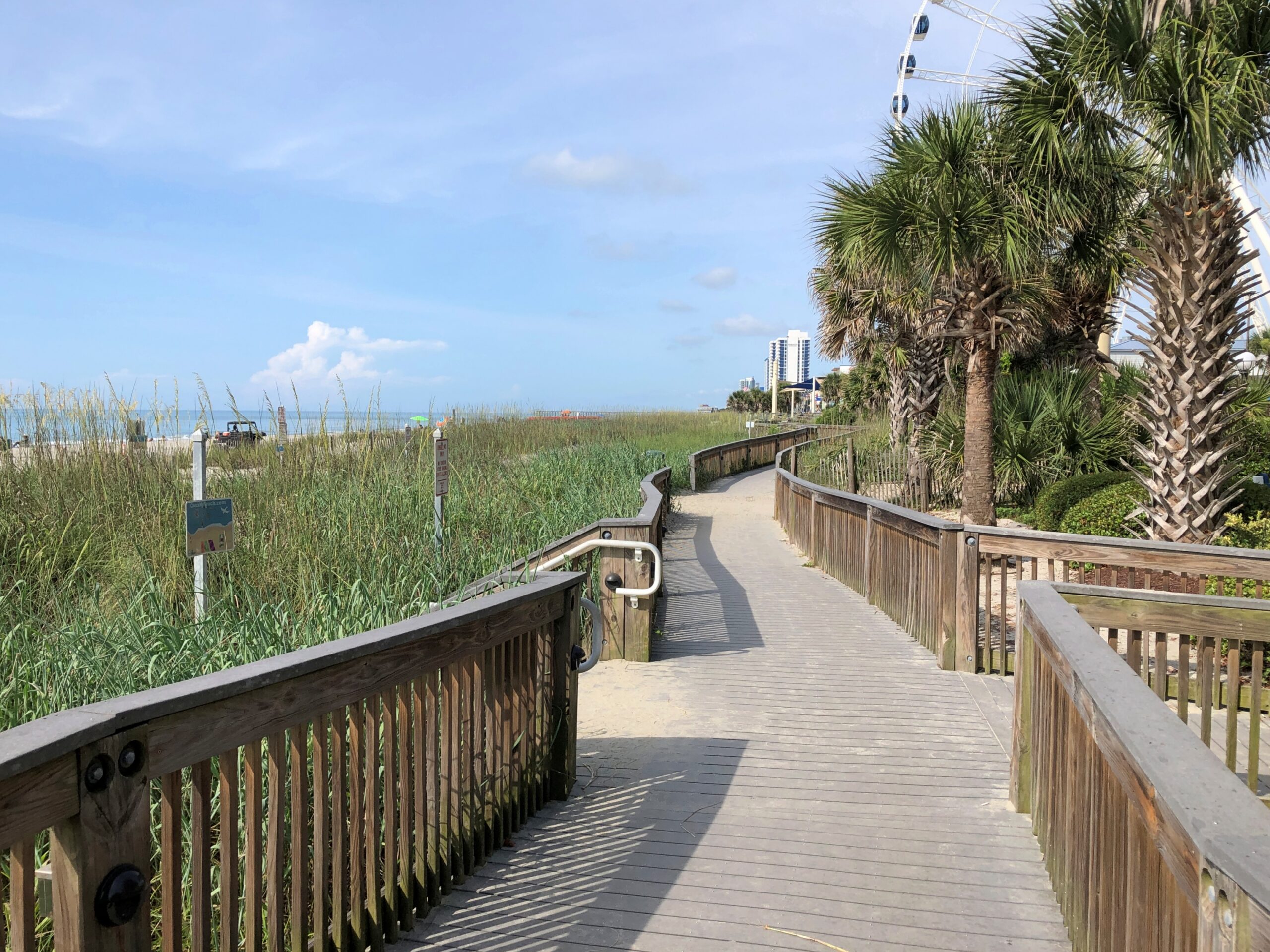
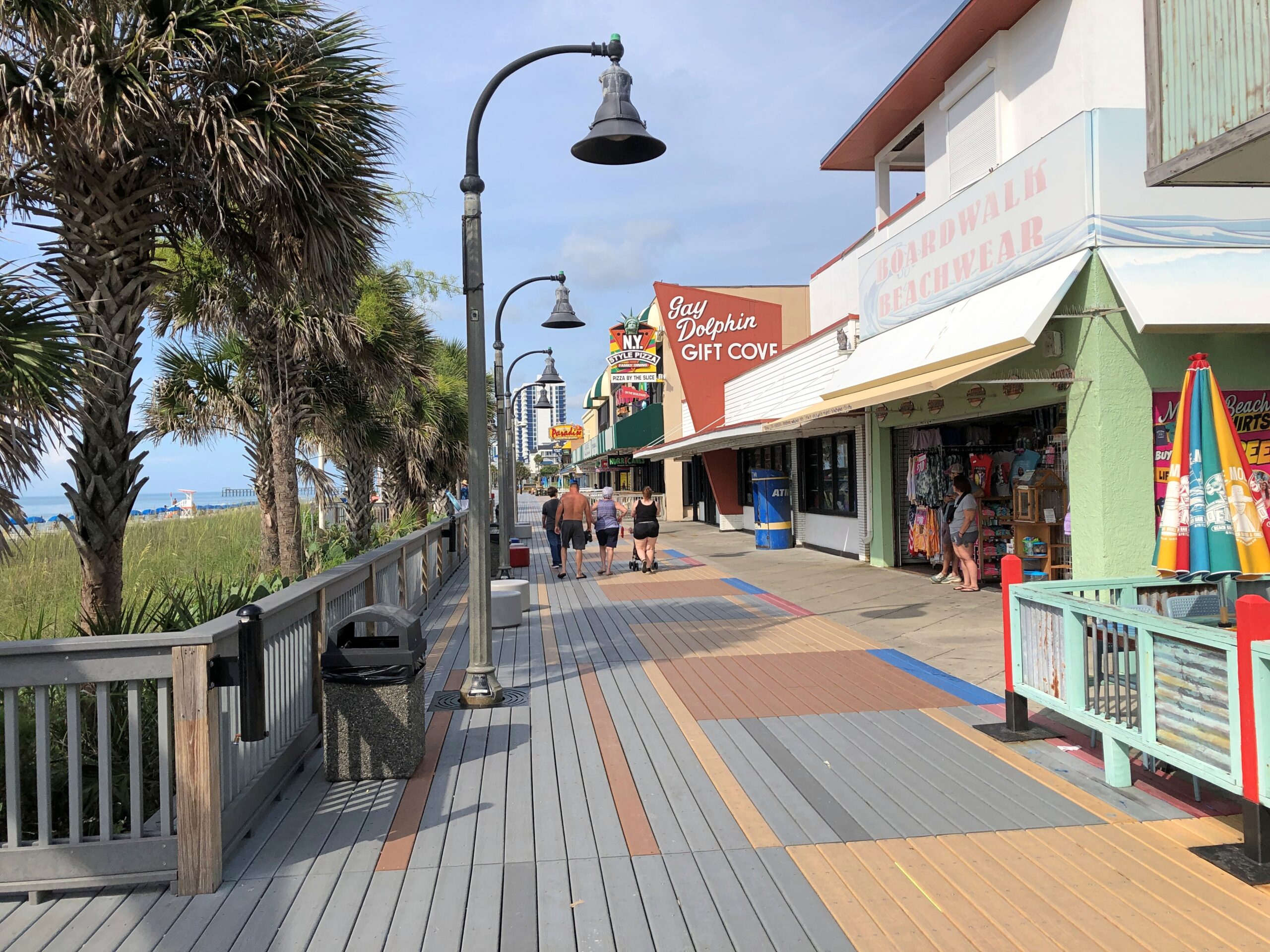
We decided instead to spend our limited amount of daytime outdoor time at Myrtle Beach’s actual beach, which is bordered by a boardwalk.

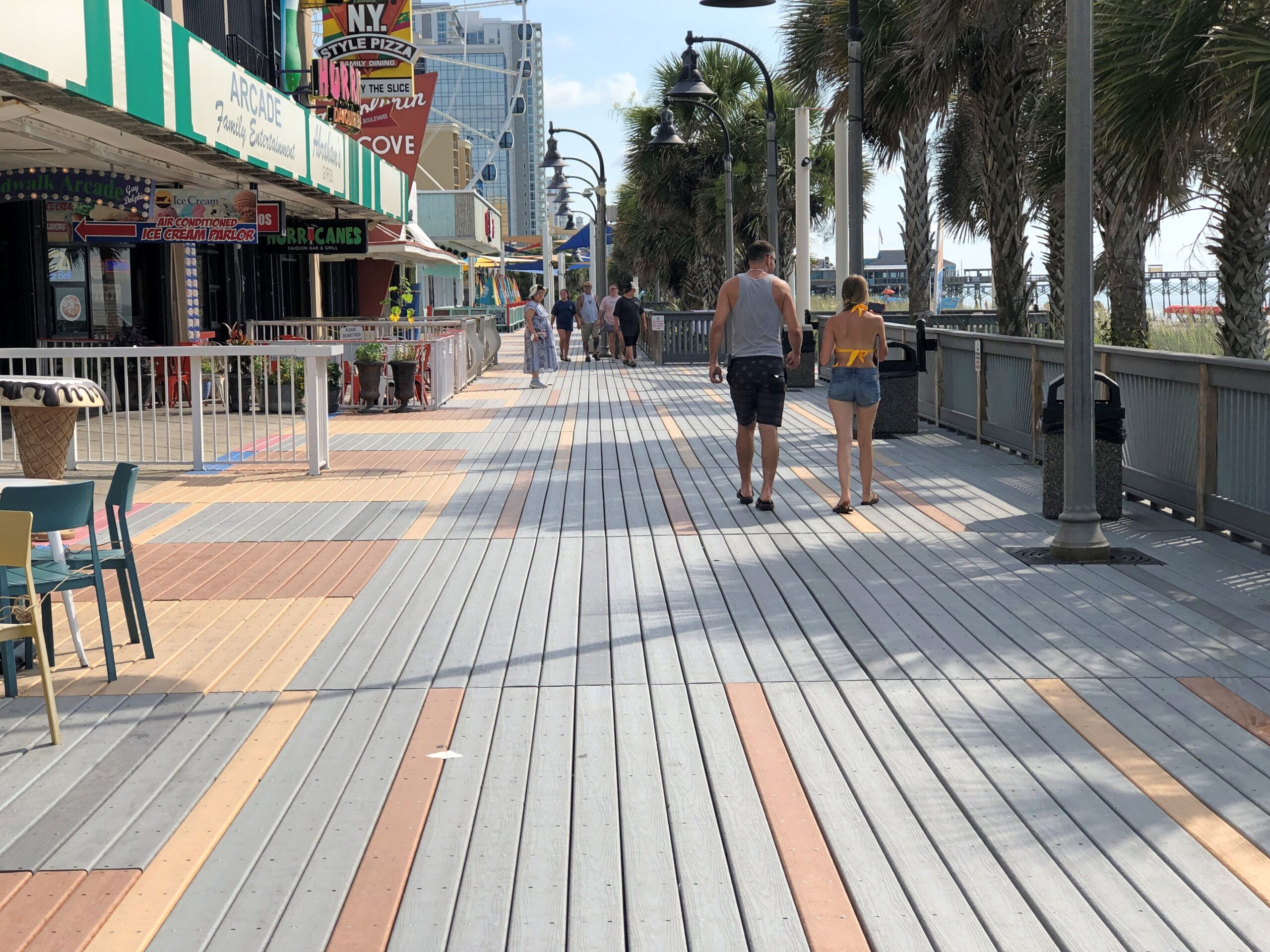
Myrtle Beach boardwalk

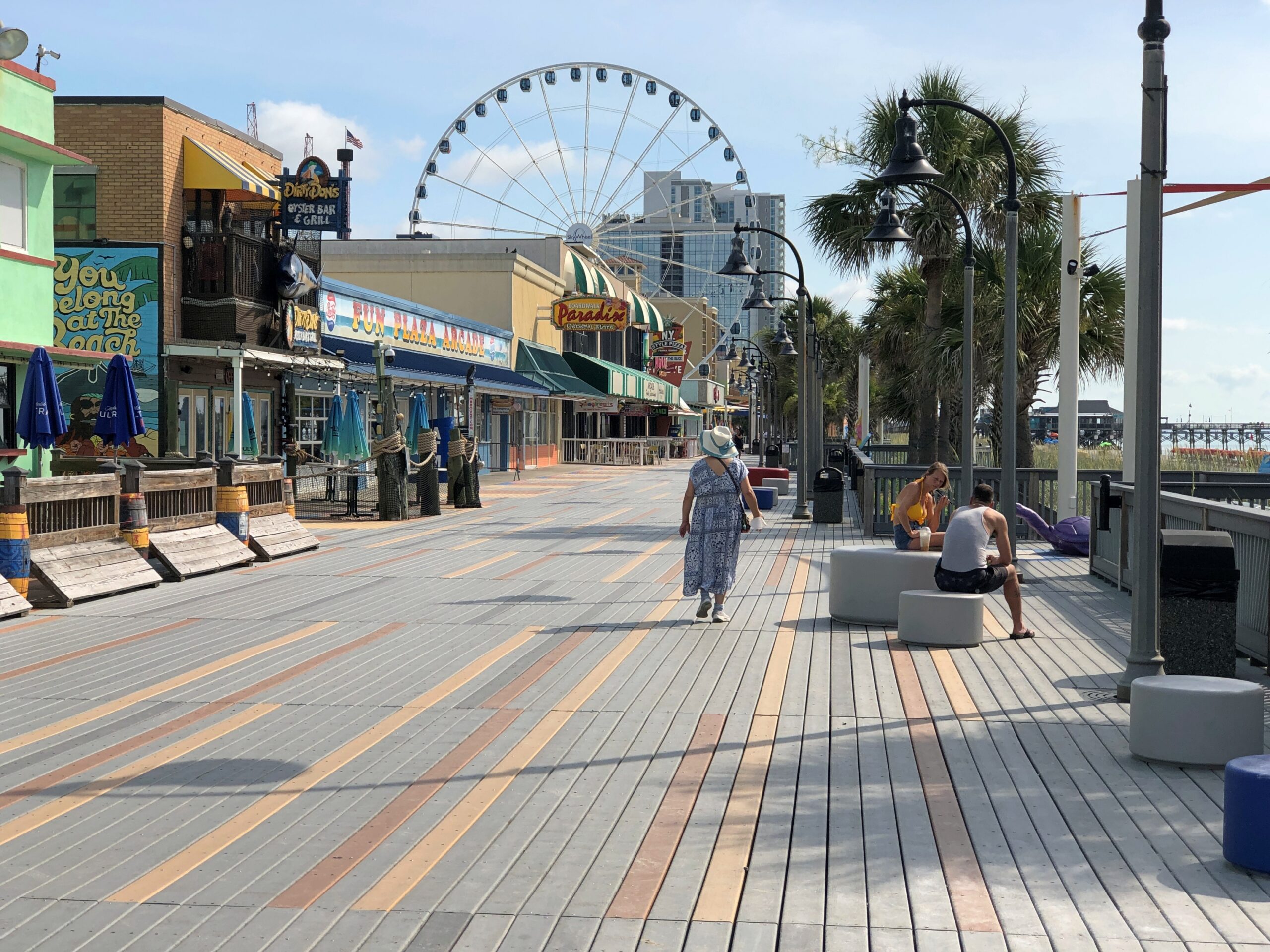
Late that Sunday morning in June, the boardwalk wasn’t particularly busy. Could have been the heat dome. I figure the place is hopping around spring break time, or the month after Thanksgiving, for instance.

Myrtle Beach boardwalk

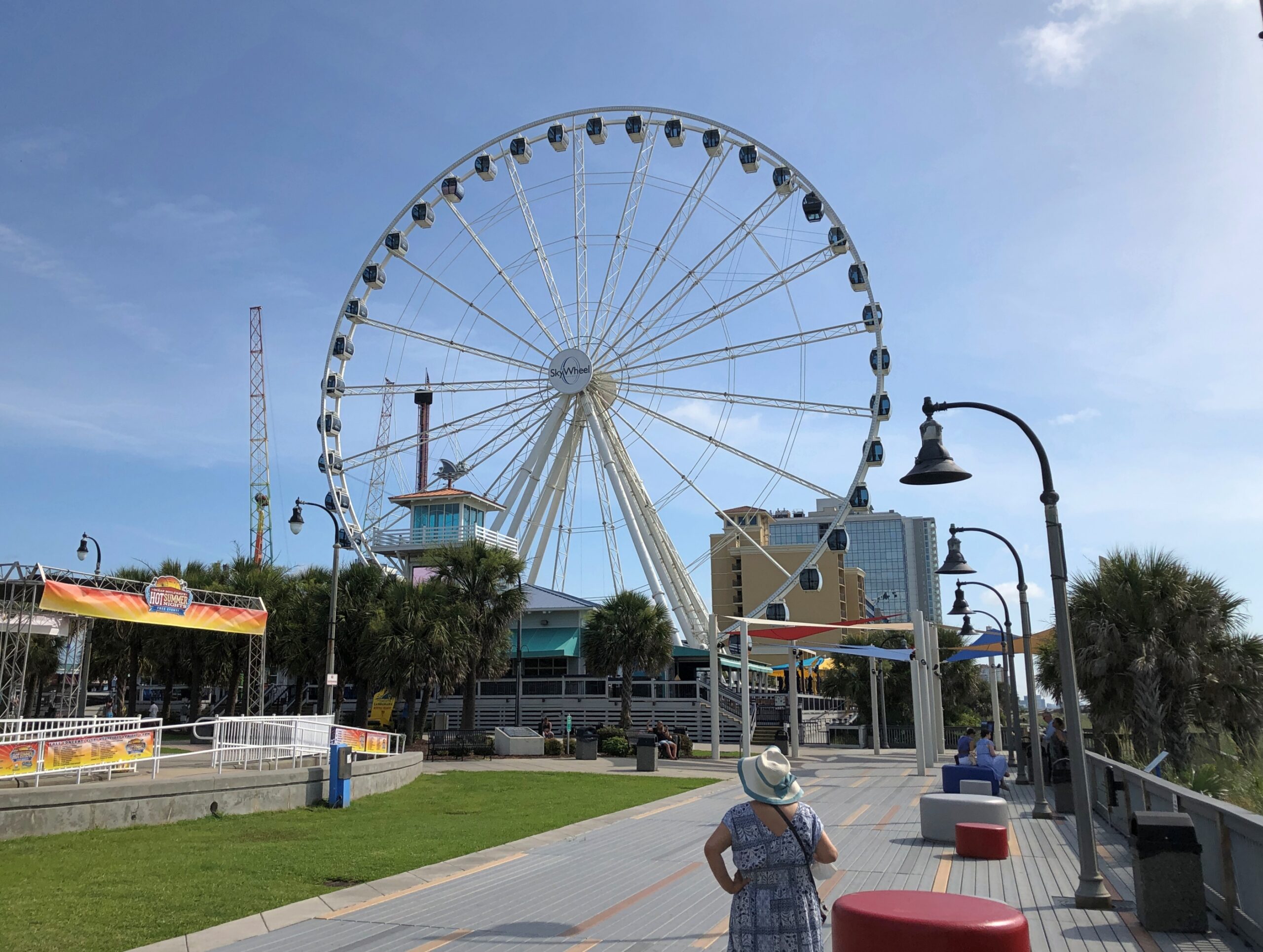
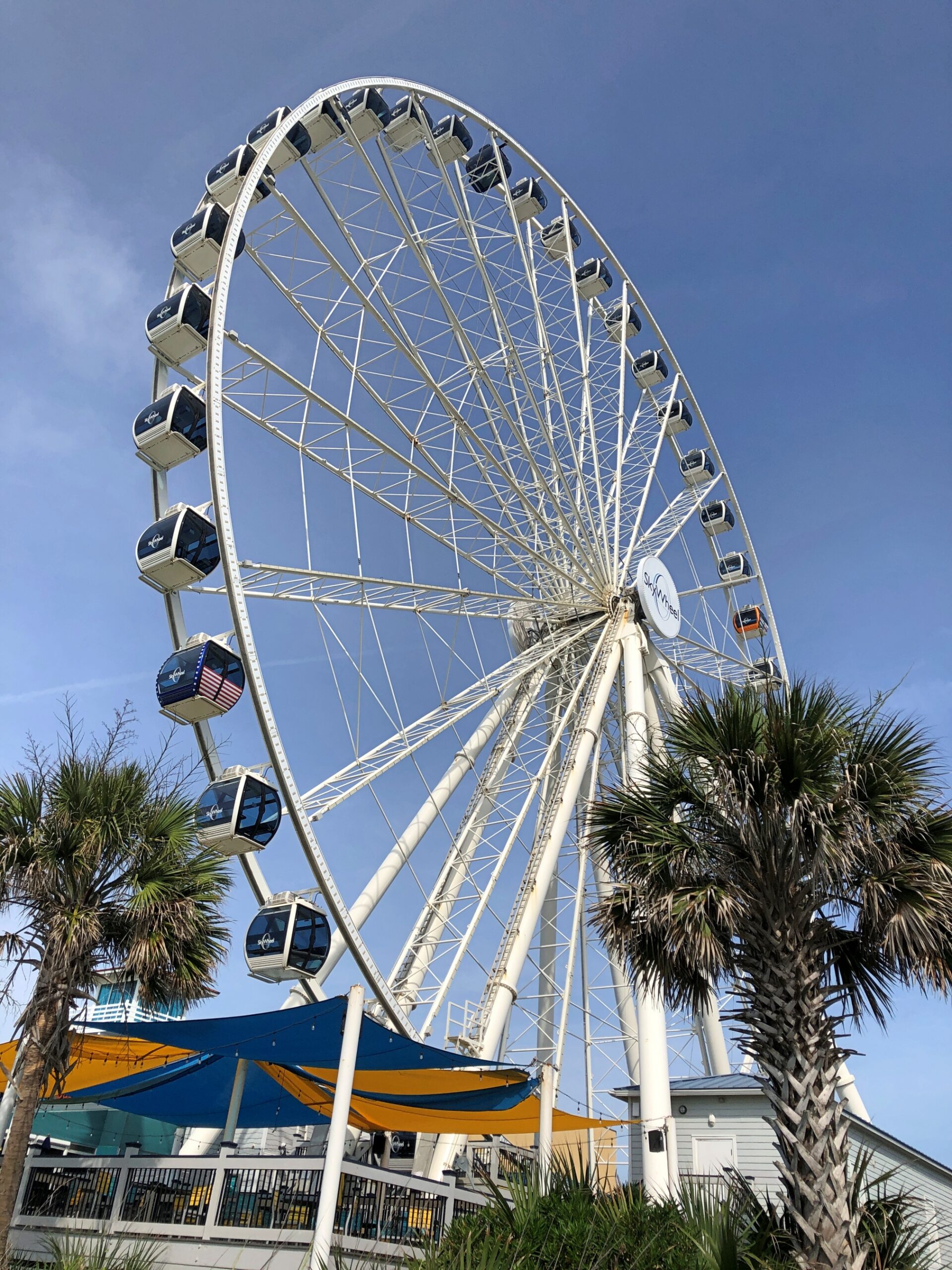
Any boardwalk with its salt is going to include a Ferris wheel in the vicinity. Officially, it’s the SkyWheel Myrtle Beach.

myRTLE beach
myRTLE beach

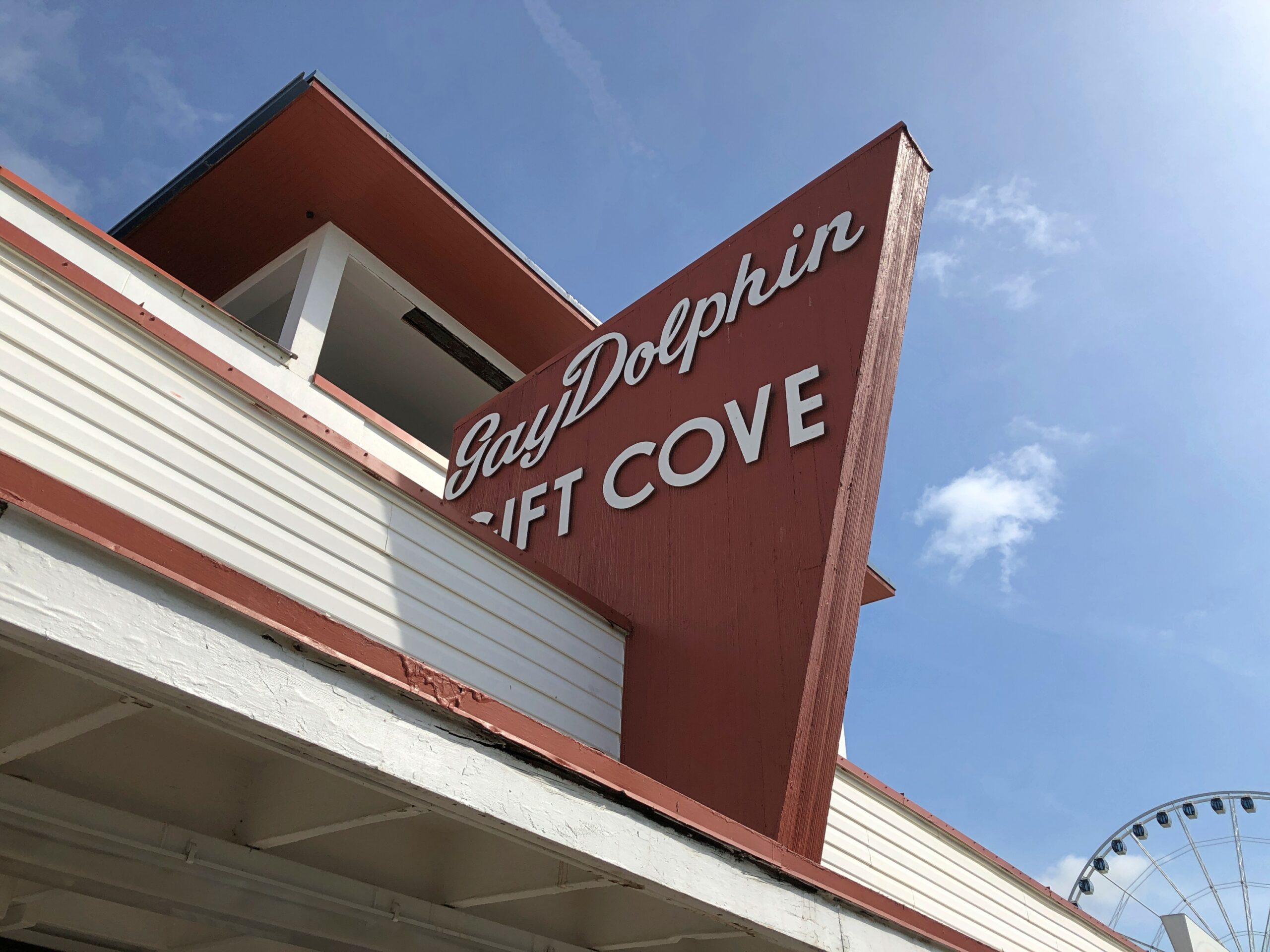
We decided that the $40+ for the two of us on the wheel would be better spent on lunch. It was, at tourist prices at a restaurant-bar open to the boardwalk, but not completely sky high. Then we found our way to the Gay Dolphin Gift Cove, whose fame preceded it. That is, I read about it online before the trip.

Gay Dolphin
Gay Dolphin

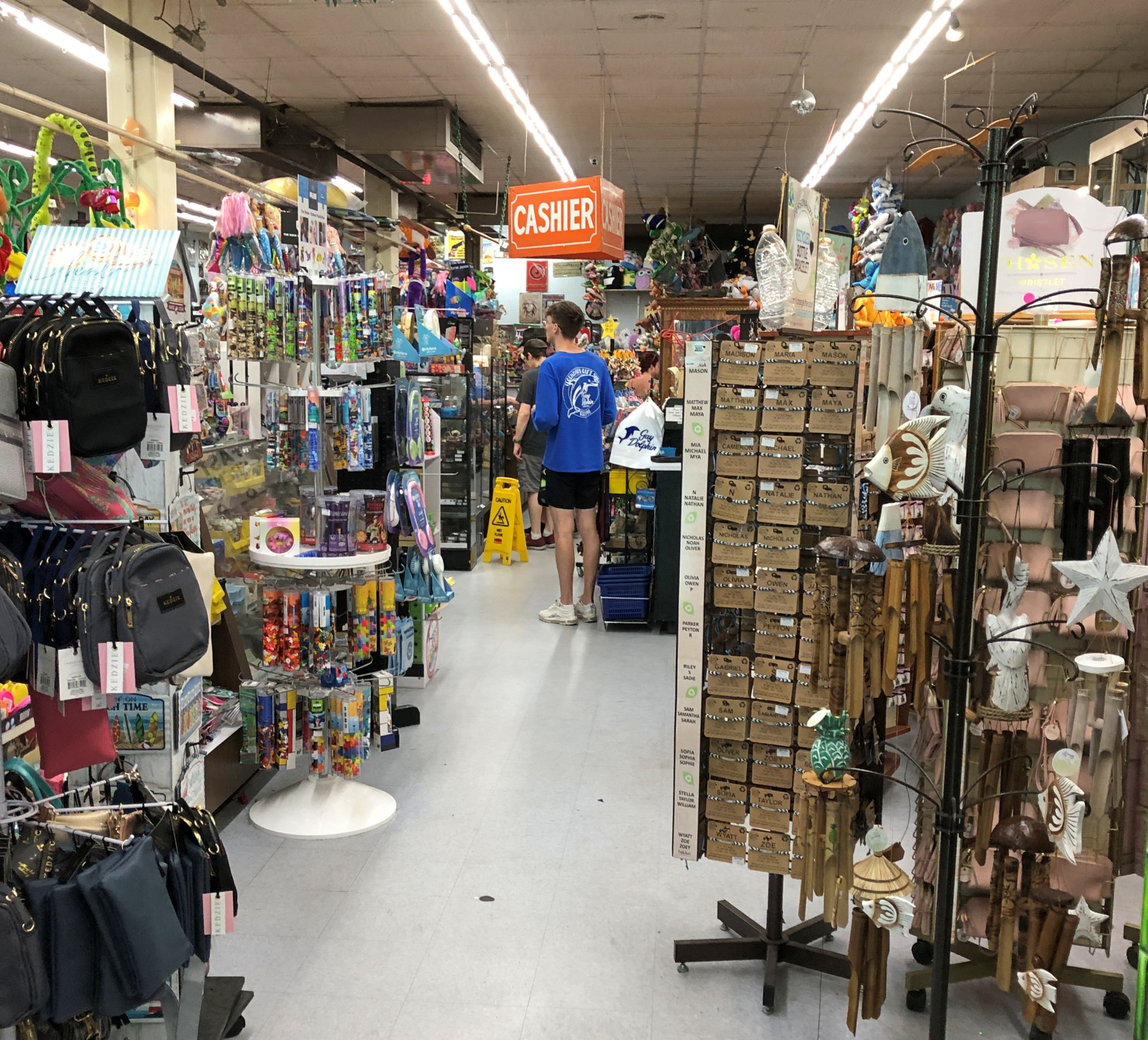
As a souvenir emporium, four stories stocked with gewgaws and gimcracks, the Gay Dolphin doesn’t disappoint. A store of that name has been on this site since 1946, though Hurricane Hazel destroyed the original in 1954, along with much of the rest of Myrtle Beach.

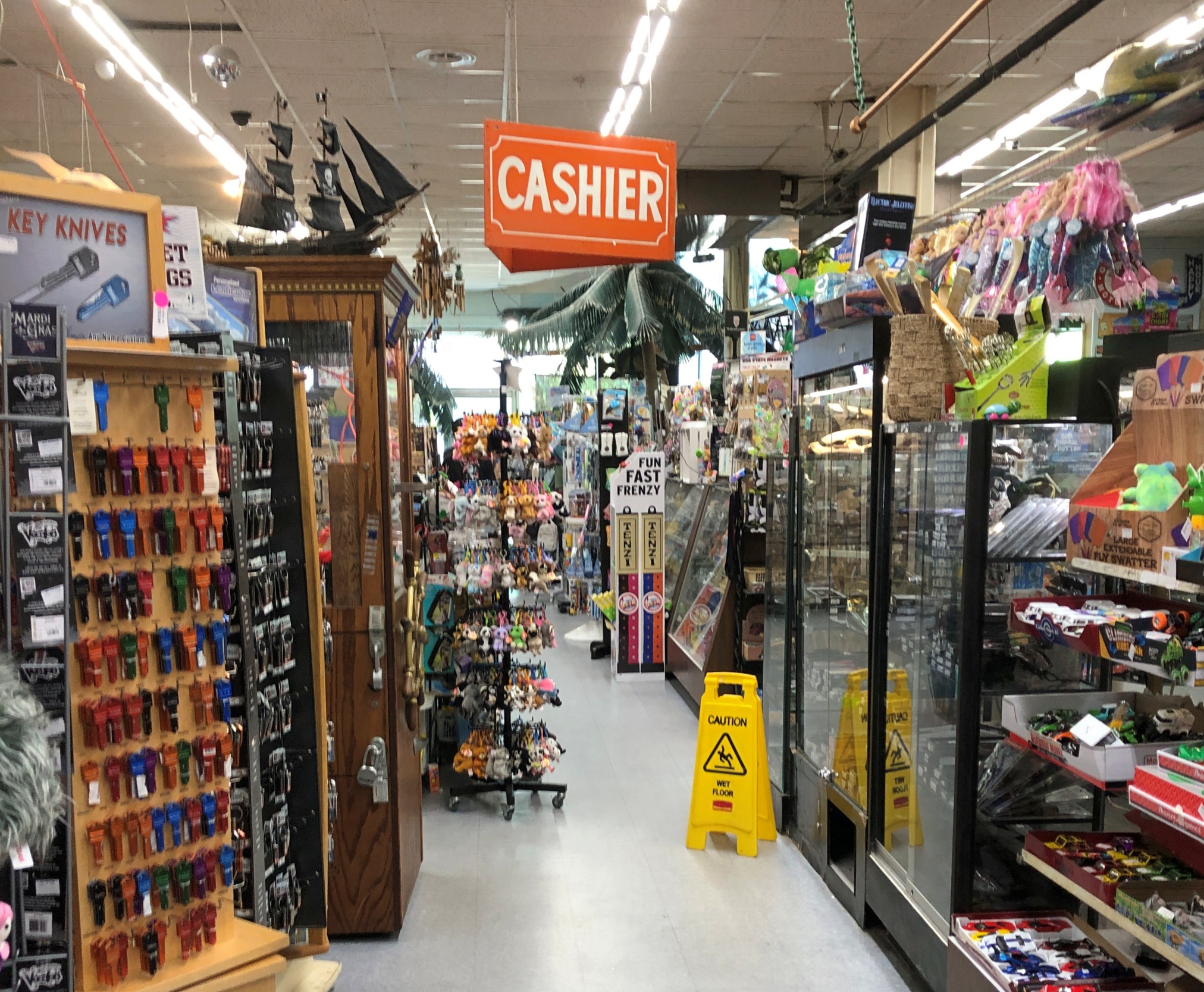
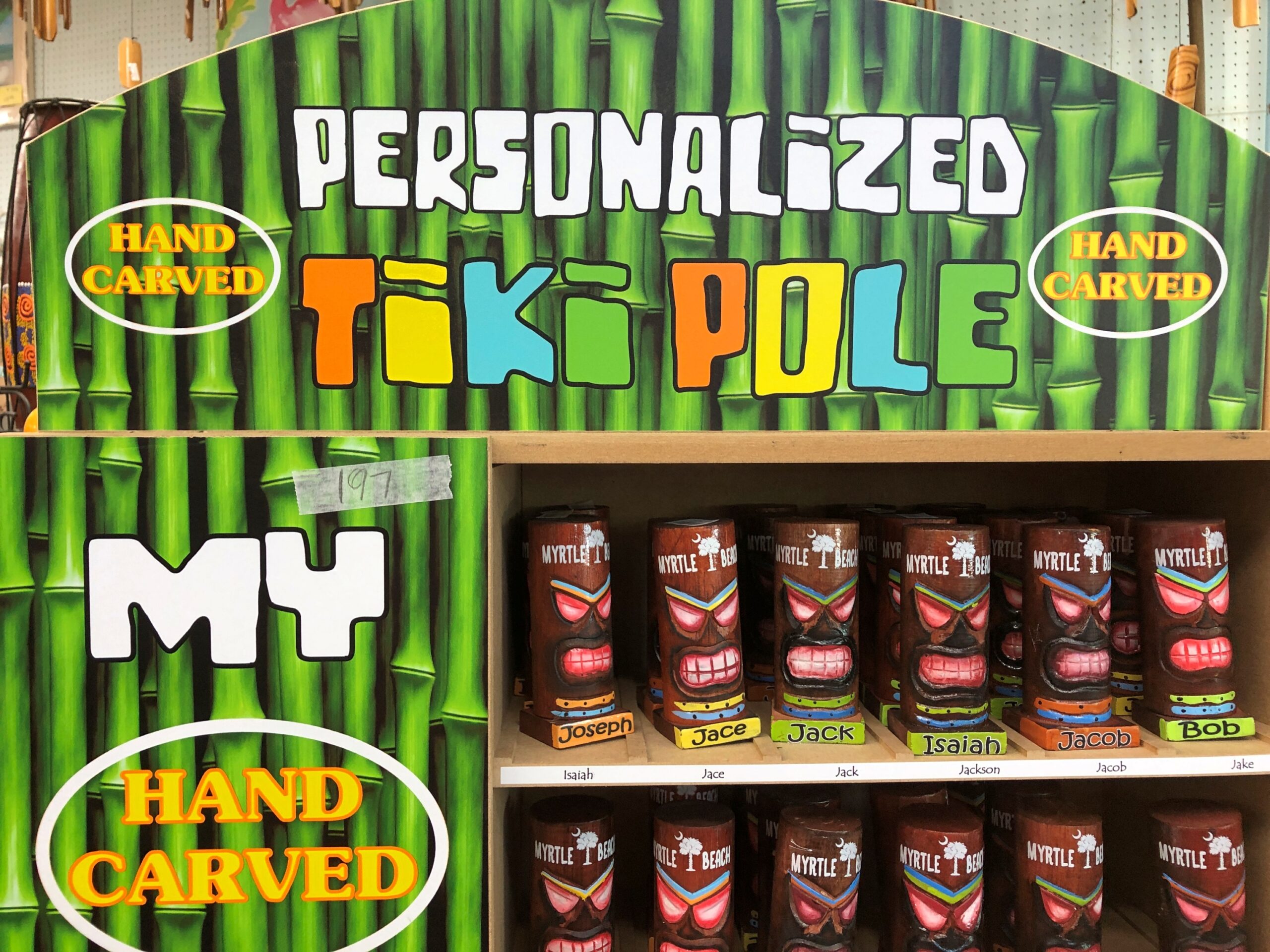
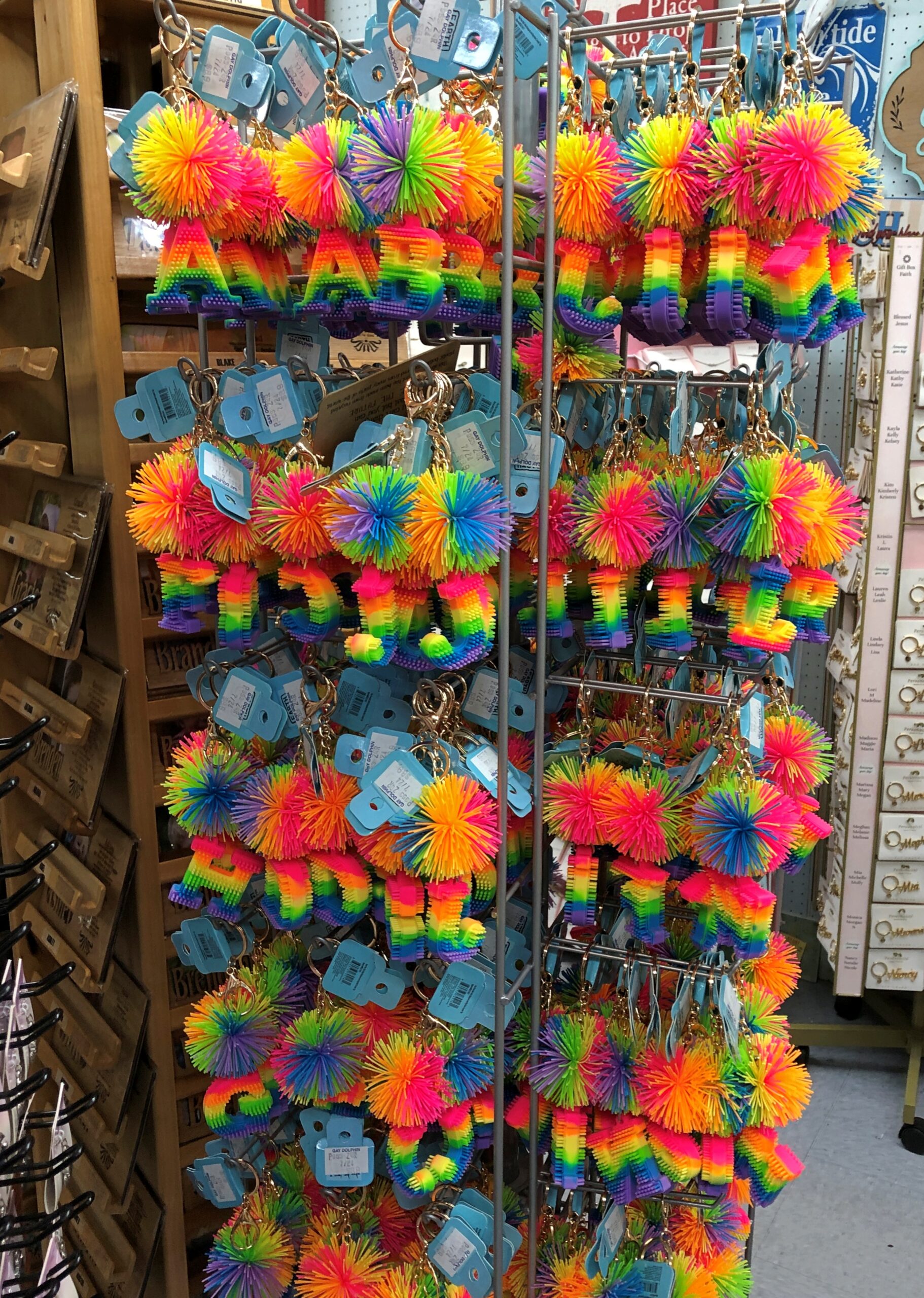
Things I never imagined would be for sale, or even exist, are for sale there.

Gay Dolphin
Gay Dolphin

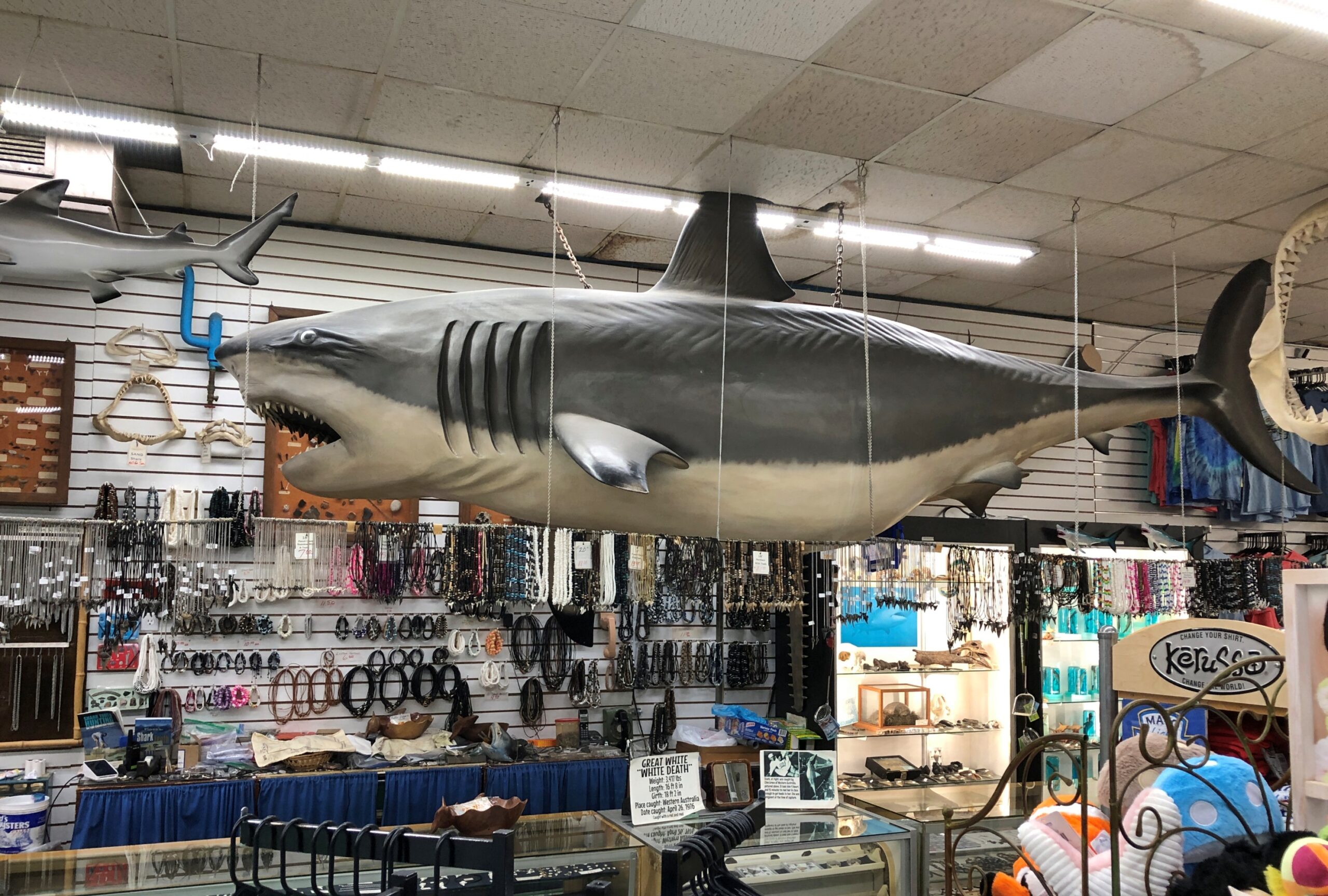
Not just small items, either, but sizable ones. Maybe this shark is for sale. It must be, just at a price I’d never want to pay.

Gay Dolphin

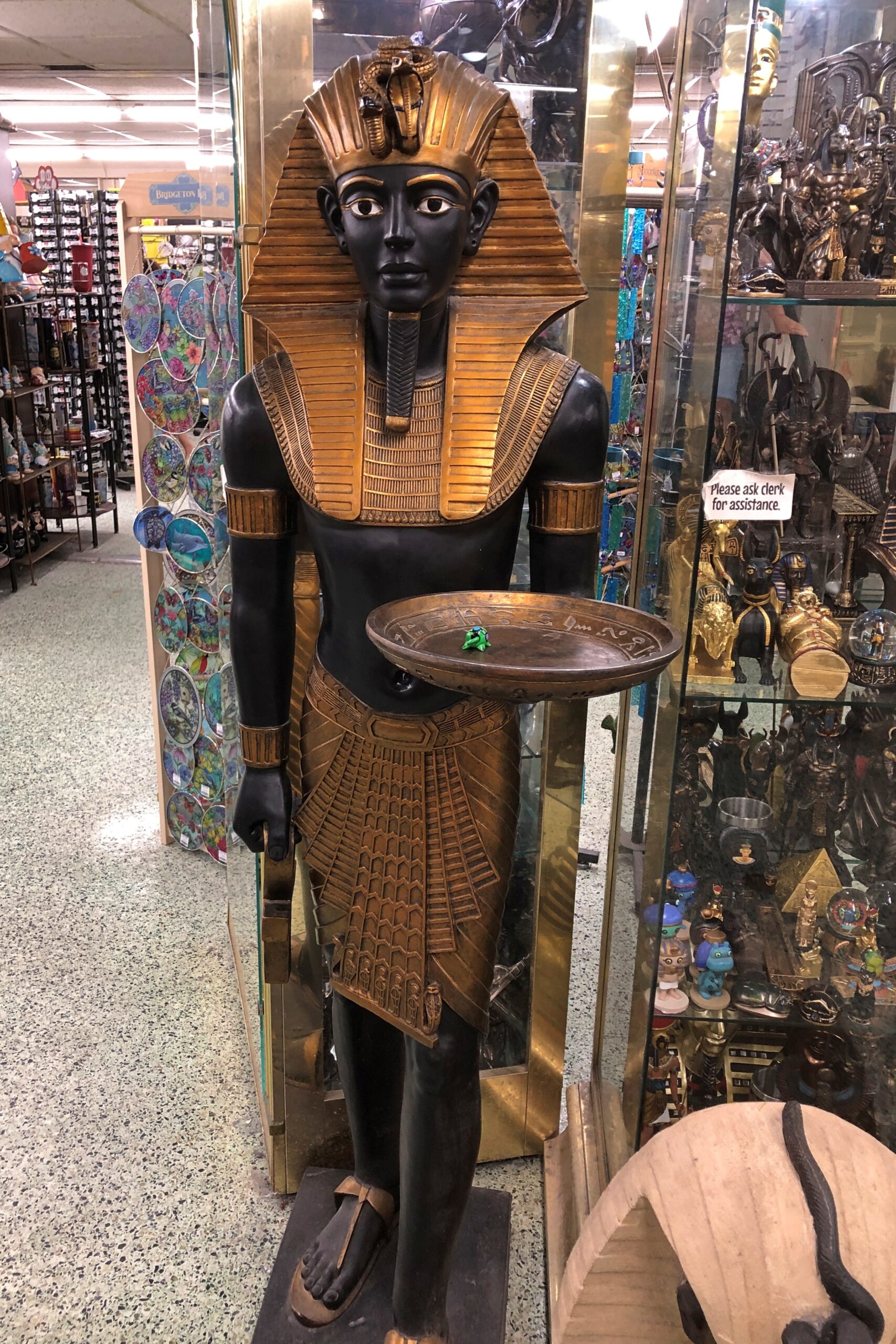
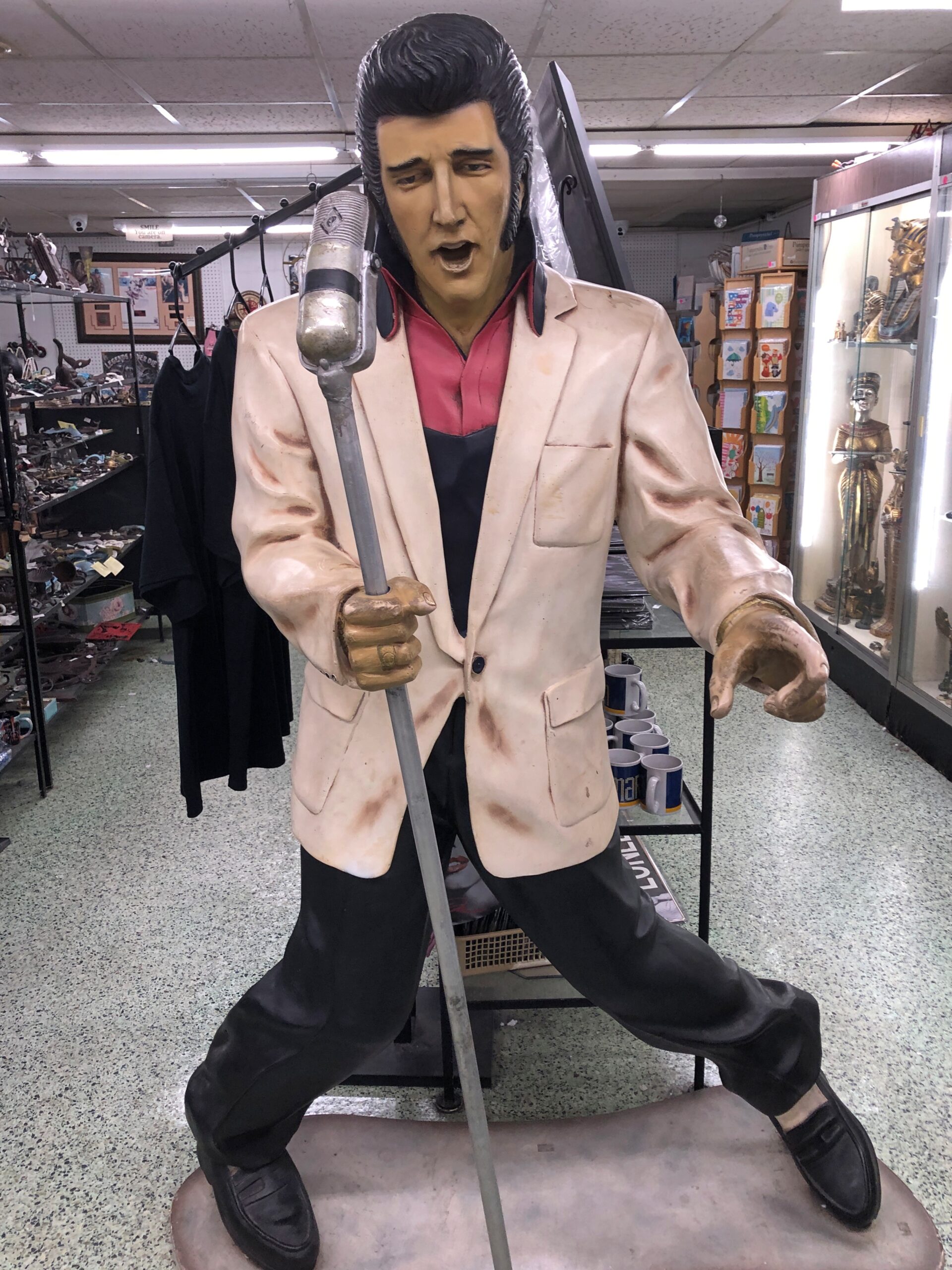
Same for these figures.

Gay Dolphin
Gay Dolphin
Gay Dolphin

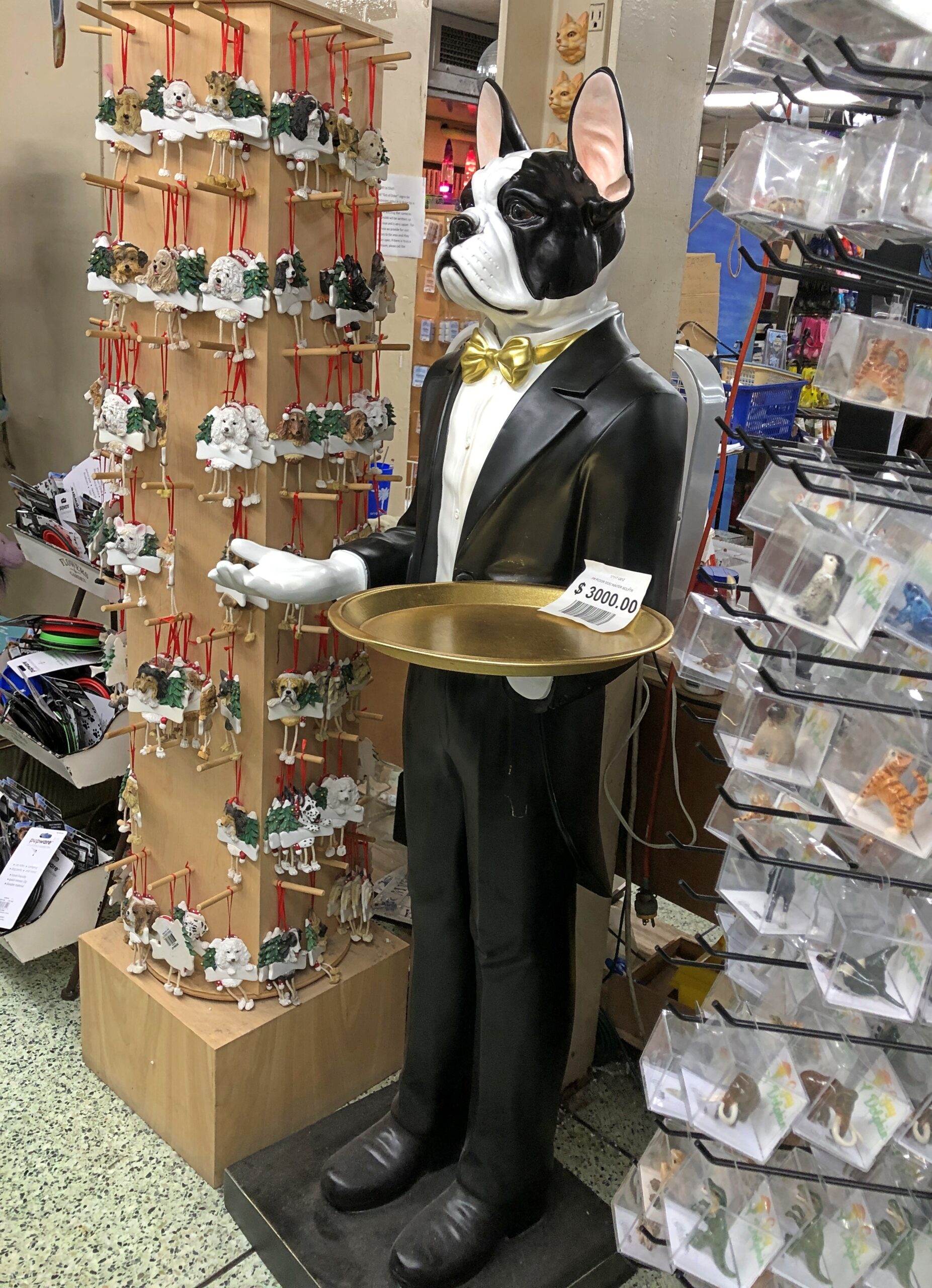
Looks like the list price for the man-dog in formal wear is $3,000. So yes, more than I’d care to pay. We weren’t much in the market for souvenirs anyway, but I will say this for the Gay Dolphin: it had a large rack of postcards. New cards, but also vintage, mid-century cards for all of 50 cents each. I bought a bunch. Good for you, Gay Dolphin.