Billy Goat Tavern & Grill ’23

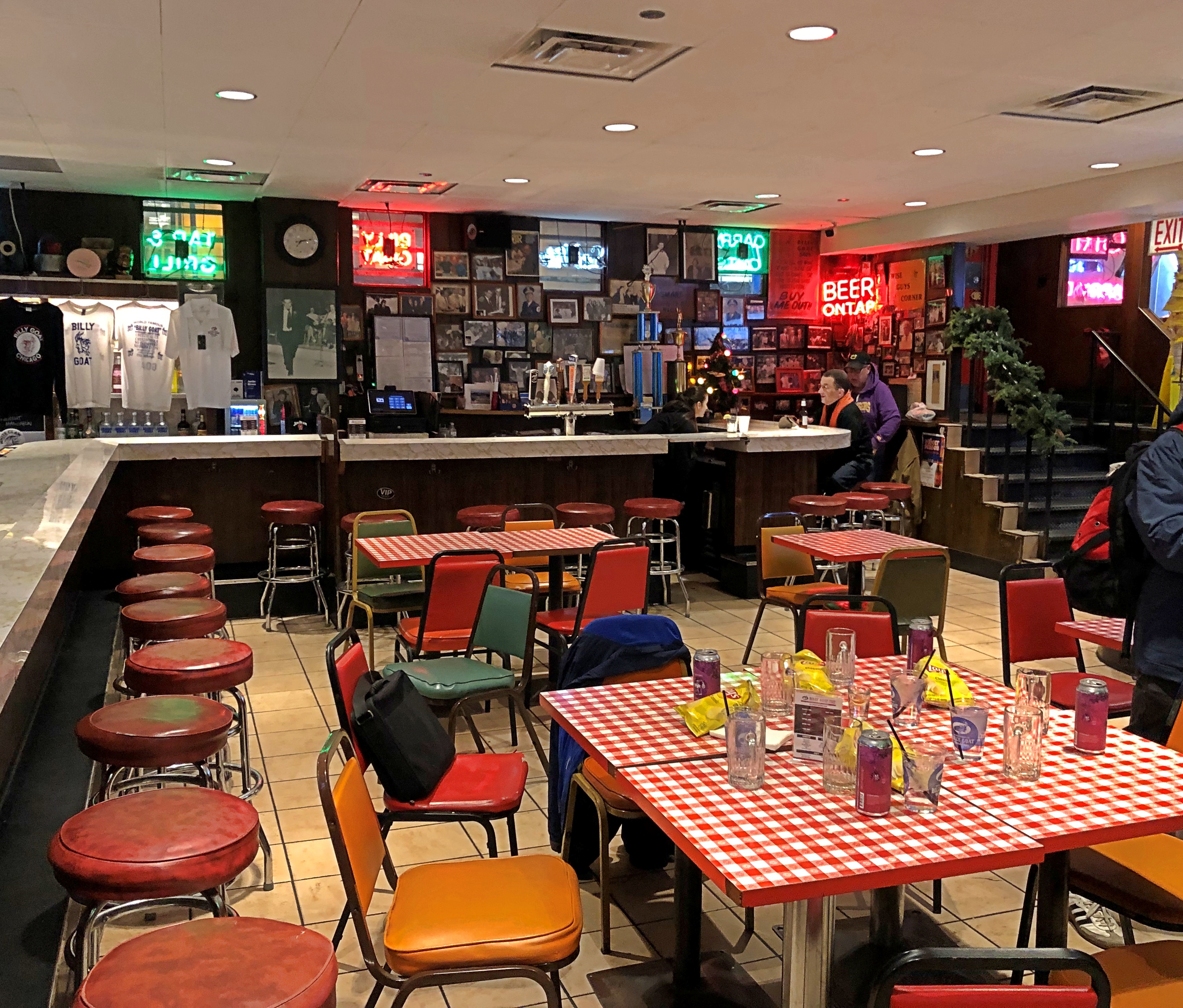
I can’t say whether Billy Goat Tavern & Grill looks exactly the same as it did in the ’80s, but it sure felt the same on Monday night. The walls of photos, neon, beer taps, rows of bottles, knickknacks and basic restaurant tables and chairs, and plenty of worn red bar stools. The vibe is Chicago tavern clutter, comfortable as an old shirt.Billy Goat Tavern Billy Goat Tavern
Now that I think about it, I had the most Greek experience I’ve ever had at the Billy Goat, having never yet made it to Greece. Shortly before the 1988 presidential election, the Dukakis campaign staged a campaign parade on Michigan Avenue, and after work I went to watch, on a spontaneous quasi-date with a fetching Greek-American woman I knew. Was it a torchlight parade? In my memory, there were torches, but probably no: that seems like a 19th-century thing.

We were within feet of the candidate as he walked by, his expression a little stiff and discouraged. Later we repaired to the Billy Goat, which was wall-to-wall packed, including many Greek Americans – wearing the colors of the Greek flag, some of them — with everybody feasting on cheeseburgers and beer, the place alive with talk, and the clank of spatulas on the grill, and the hissing burgers and onion air, and the clouds of cigarette smoke still common in bars and restaurants.

I’m pretty sure the workers called out Cheezborger! Cheezborger! in those days, which might be an example of life imitating art, or more likely, life and art reinforcing either other.

Rumor was that Dukakis himself would make an appearance, and well he should have, but he never did. He should have shown up in his tank helmet, shaking hands and mugging for cameras. Rather than be embarrassed by it, he should have leaned into it, but no.

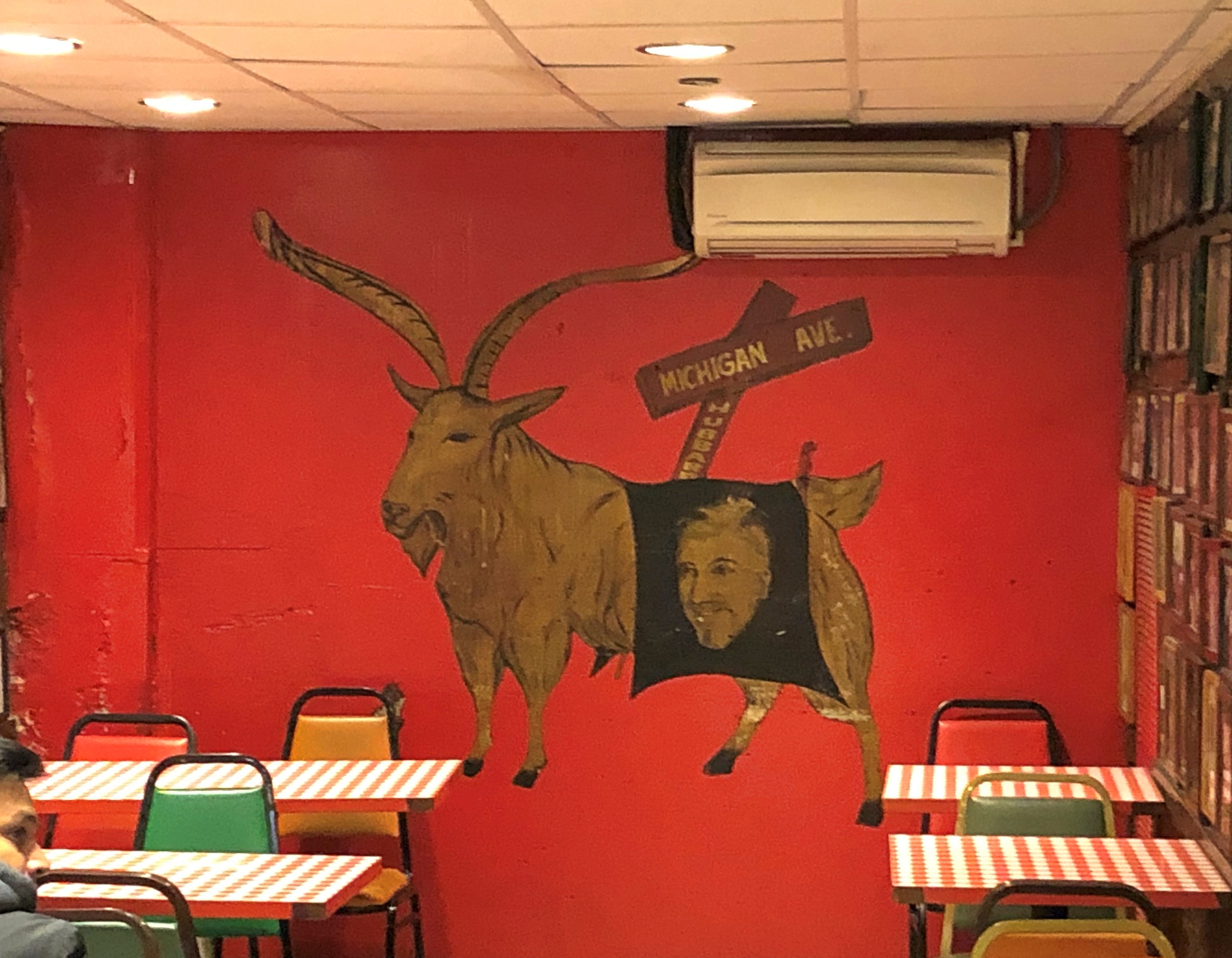
Back here in the 21st century, there are reminders of goats at Billy Goat. How could it be otherwise?Billy Goat Tavern
You can see a wall of bylines at Billy Goat. Once upon a time, both major Chicago newspaper buildings were within easy walking distance, even in winter, so newspapermen hung out there.Billy Goat Tavern
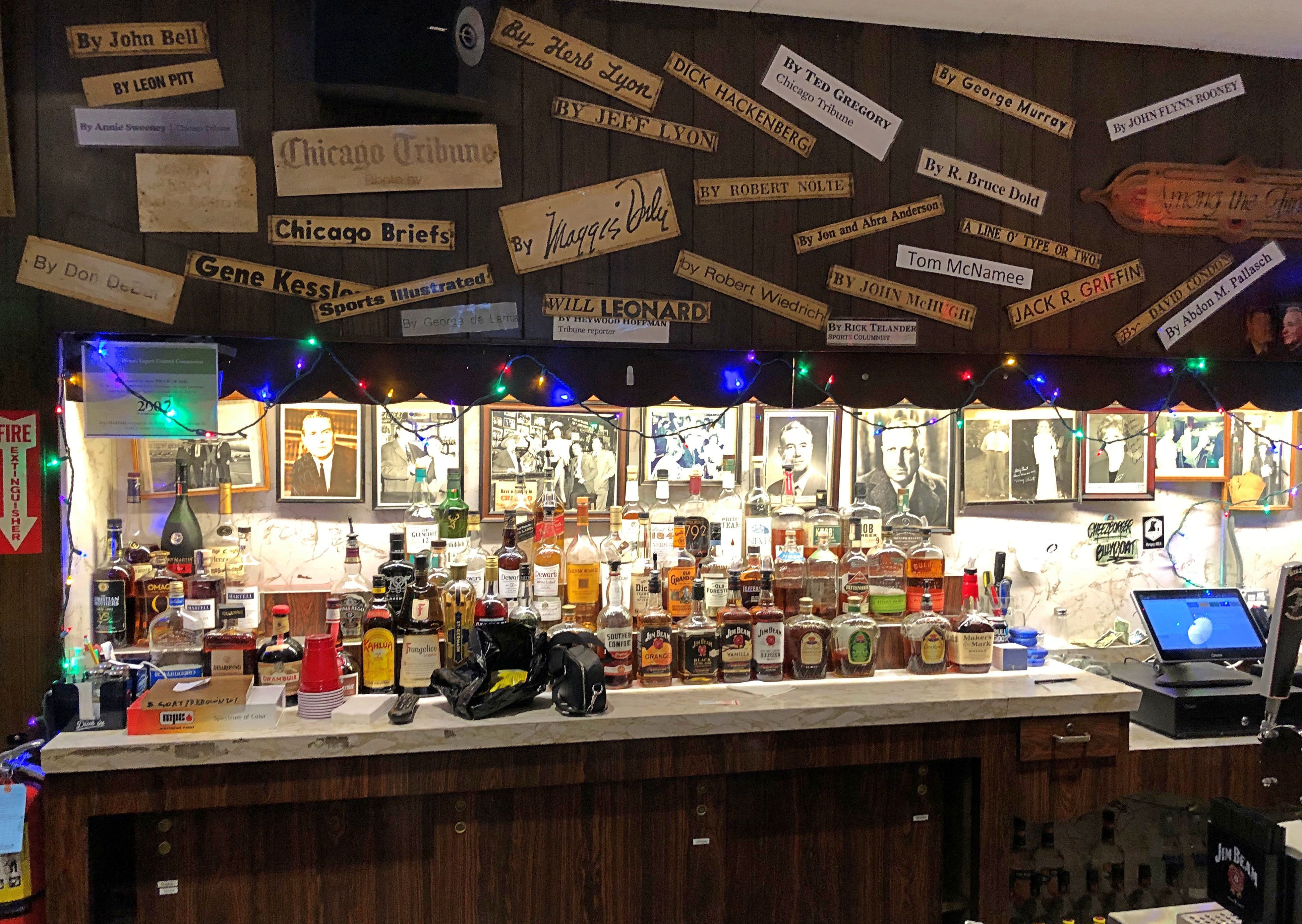
Best known was Royko, who worked the place into his column from time to time. From there, the place went on to wider notice, sort of.

I expect the number of journalists is fairly low these days, outnumbered by other kinds of downtown residents and workers, plus tourists. On Monday night at least, no one called out when you ordered your cheeseburgers; they just went to work at it.

Except for the vegan in our group – she was a good sport about it — we had cheeseburgers and chips and beer. What else? In theory, a few other things are on the menu, but we didn’t test it. No fries, either.Billy Goat Tavern
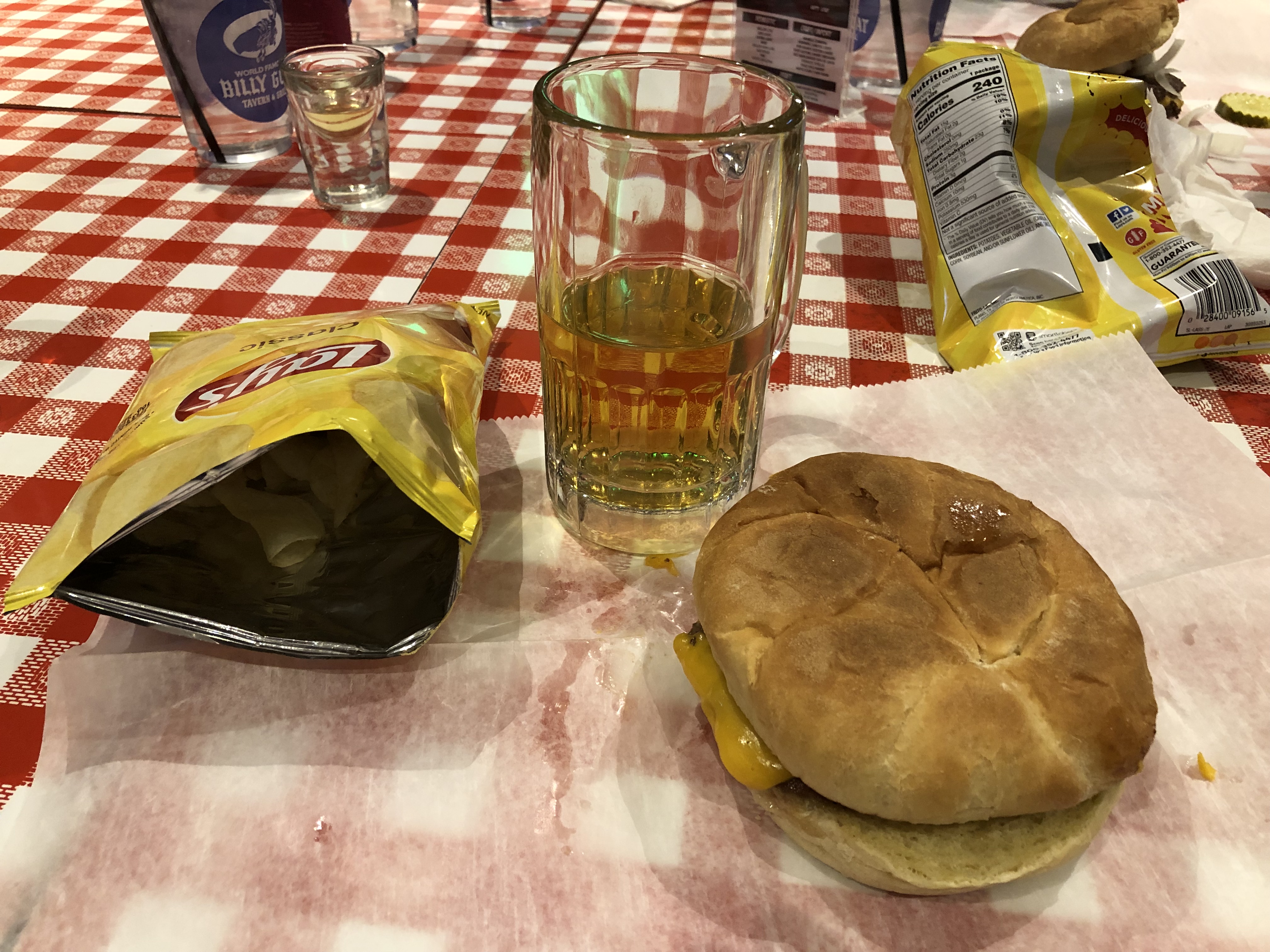
We also sipped from a single glass of Malört. It’s a Chicago thing to do.

Around the corner from the entrance of the Billy Goat, directly facing Lower Michigan Ave. and just north of the Chicago River., is a mural and a tavern sign.Billy Goat Tavern
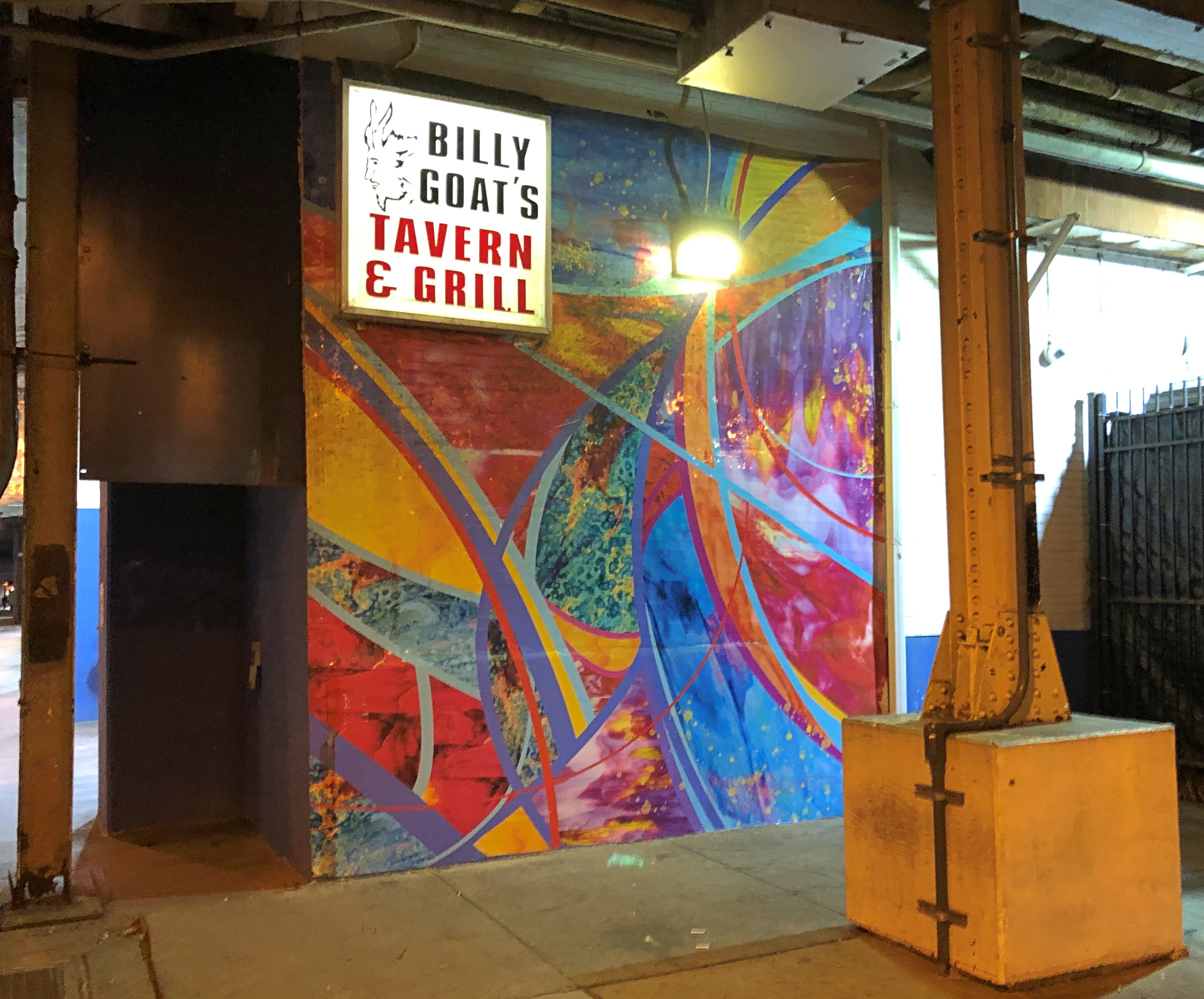
The mural is a work by Andy Bellomo, “a self-taught artist who began her creative interest as a young teen studying the color, light, shapes, and lines of traditional stained glass in churches,” according to the the Magnificent Mile Association, as part of a number of murals known as Undercurrent (at least to the Mag Mile Assn.).

It’s been there about a year, which would account for me never noticing it before. Haven’t been down to Lower Michigan Ave. in a some years, but I can assure the world that it’s still the hard urban space it’s always been.

There’s more of the Undercurrent mural on the other side of the tavern’s entrance, not captured in the below image.
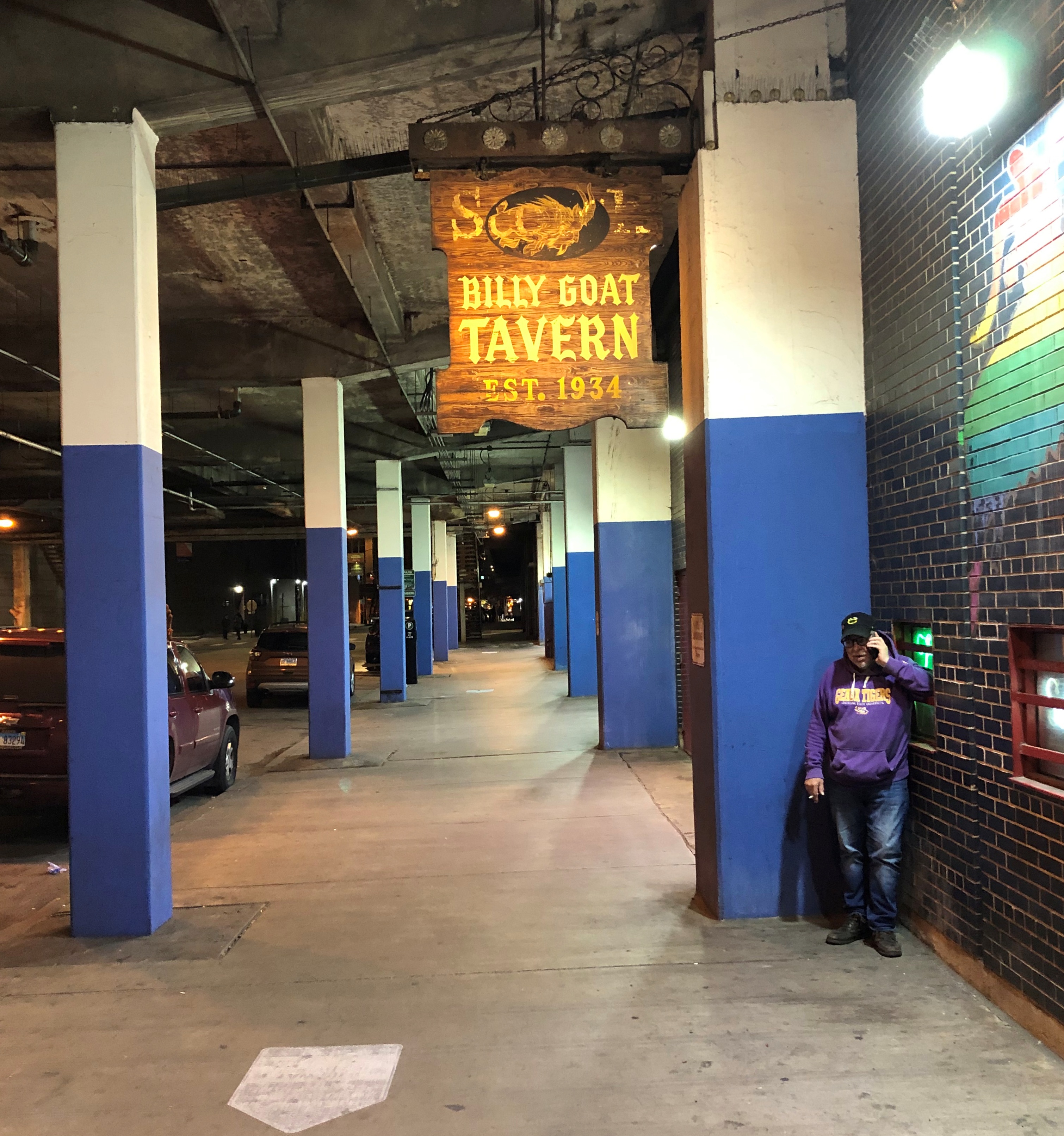
But I did capture, without realizing it, part of a different mural, one that’s been there for decades, by an artist mostly lost to time in Chicago, even though his heyday was only about 50 years ago. It’s on the extreme right edge of the image: a rainbow goat.

“Many people ask about the rainbow goats painted on the walls outside of The Goat,” notes the tavern web site. “They were painted in 1970 by Sachio Yamashita, known as Sachi… Billy [Sianis, original owner of the tavern] made a deal with Sachi. Every day after Sachi and his helpers finish their work, beer and borgers are free! Unfortunately Billy Goat Sianis passed away on October 22, 1970 just days before the paintings were complete.”

I might have noticed the goats before, but didn’t give them much thought. I didn’t notice them this time, or I’d have taken a full image, since how many rainbow goats could there be in the world? On walls, that is.

Chicago Christkindlmarket ’23

I made a point of watching the tribute to Norman Lear that was simulcast – now that’s a aging concept – on several networks this evening, at 8 Eastern/7 Central. Mostly, I was curious to see what they would do. Turned out to be about 15 seconds of a picture of him (maybe taken in the late 20th century), his name and birth and death year, indicating quite a lifespan. That was it. I wonder how many people who saw the spot knew who he was. Network audiences skew old, but even that demographic is more likely to remember his shows than him.

But he was well enough known to inspire a torrent of virtual print, so I won’t add to it, except to say too bad Hot L Baltimore didn’t last, while Good Times did. Nobody’s perfect. RIP, Mr. Lear.

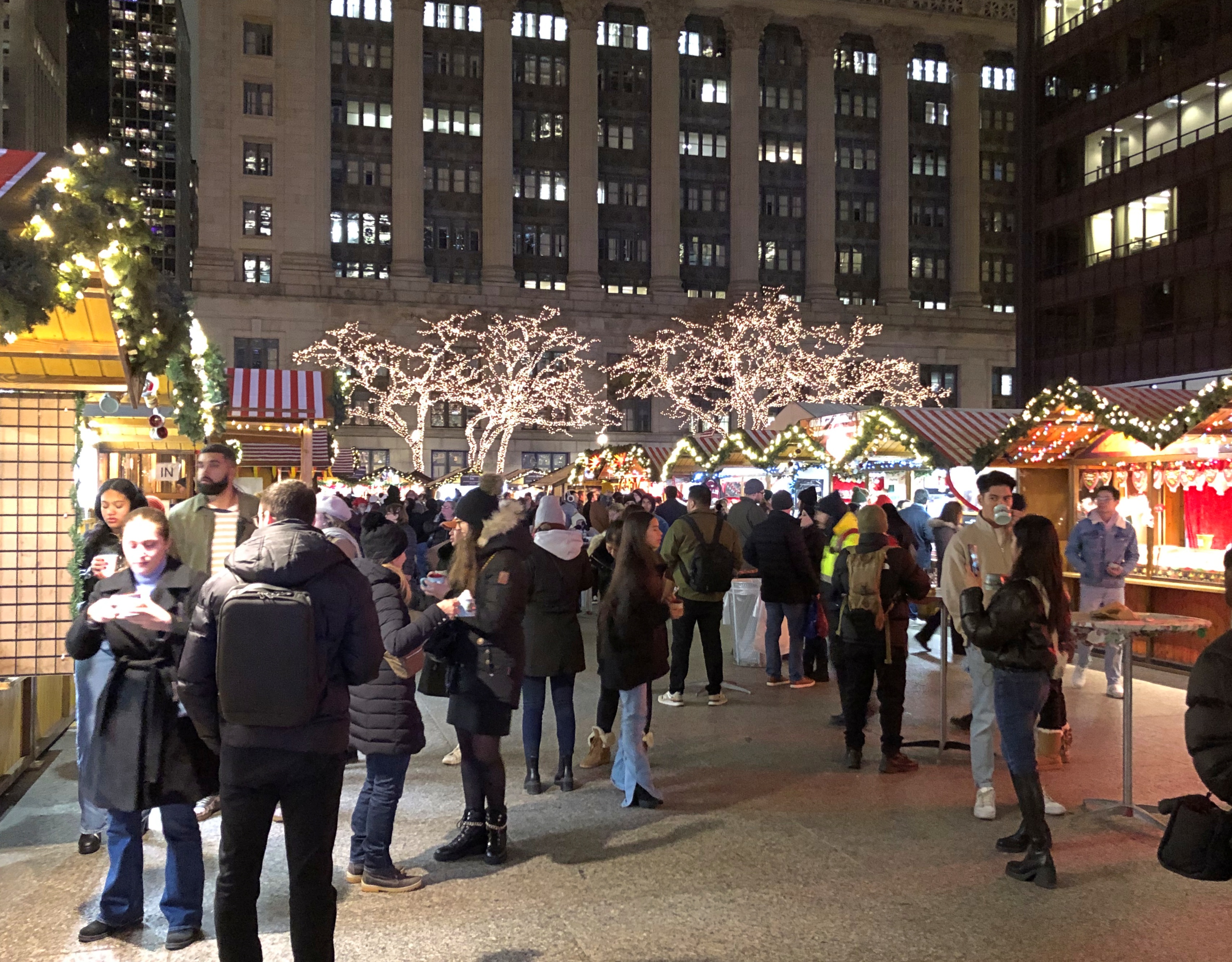
Extremely crowded Chicago Christkindlmarkets of years past – mob city, as my mother used to say, not referring to gangsters – must have pushed any notion of visiting it on Monday right out of my head. But when I ambled over to the Thompson Center, I saw the market. Might as well drop in, see if the crowd was thinner. It was. A more manageable Monday in mob city. Just enough to be lively.

First, pass by the eternal flame on Daley Plaza. Dedicated since 1972 to all U.S. veterans of any kind.Chicago Christkinlmarket 2023

Still there. Well, it is eternal. That’s not meant in a literal sense, of course, on past the heat death of the Universe, but as long as humanly possible. The upshot for the flame is that people will maintain it until its honorees have disappeared from common memory. I hope that’s some centuries at least, but who knows.

As I said, lively. It isn’t really crowded unless it’s tricky to navigate through people.Chicago Christkinlmarket 2023

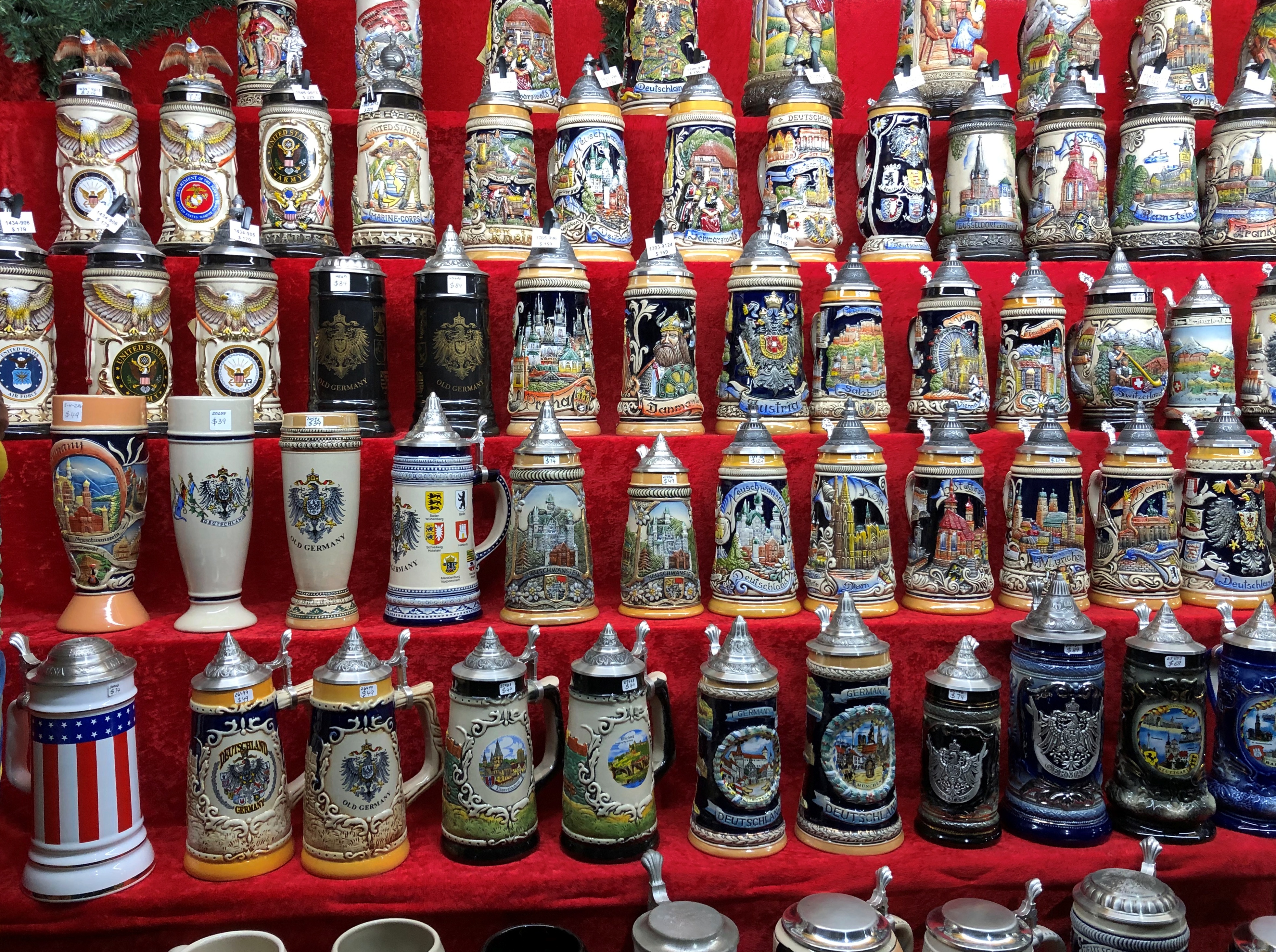
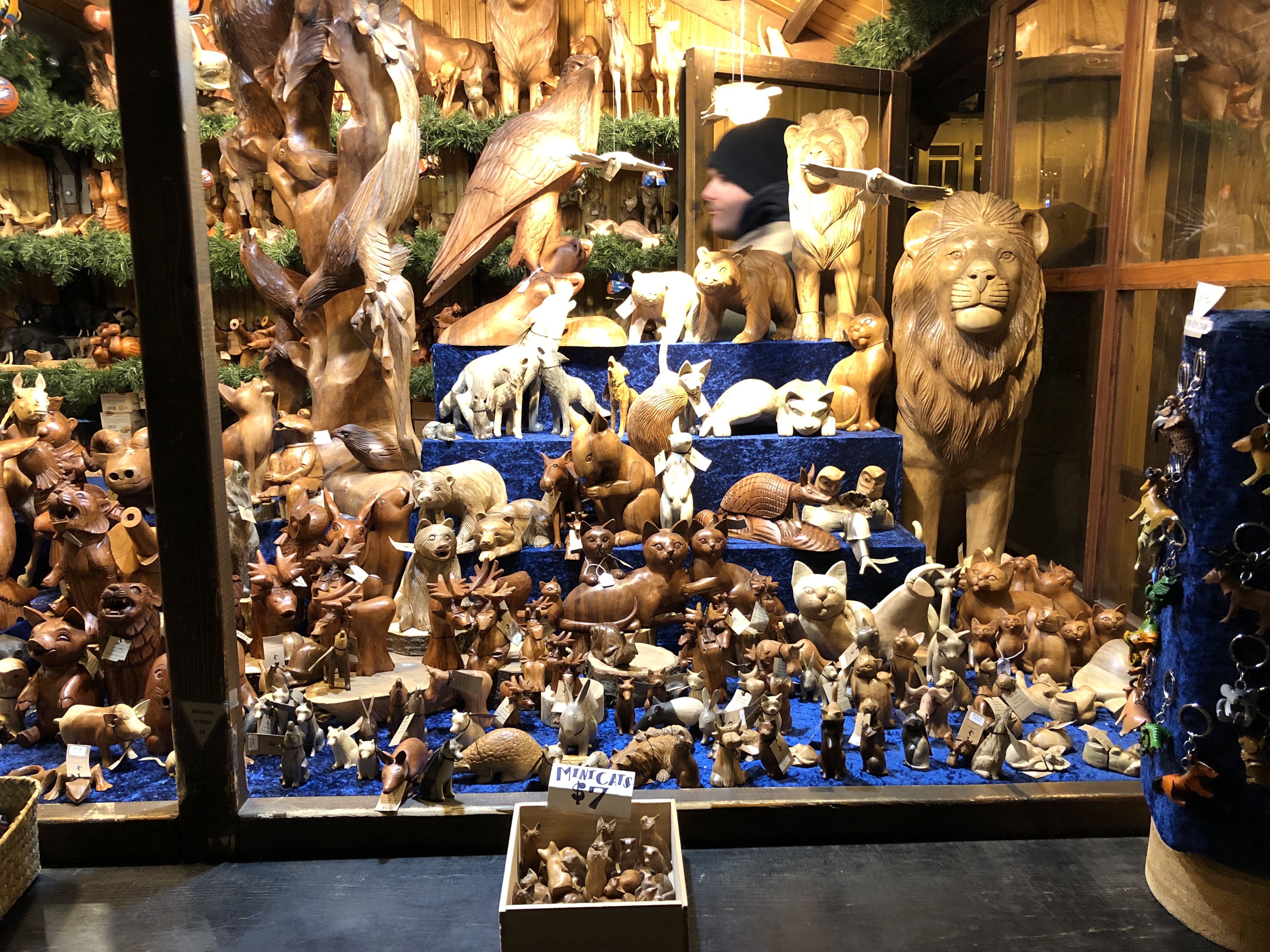
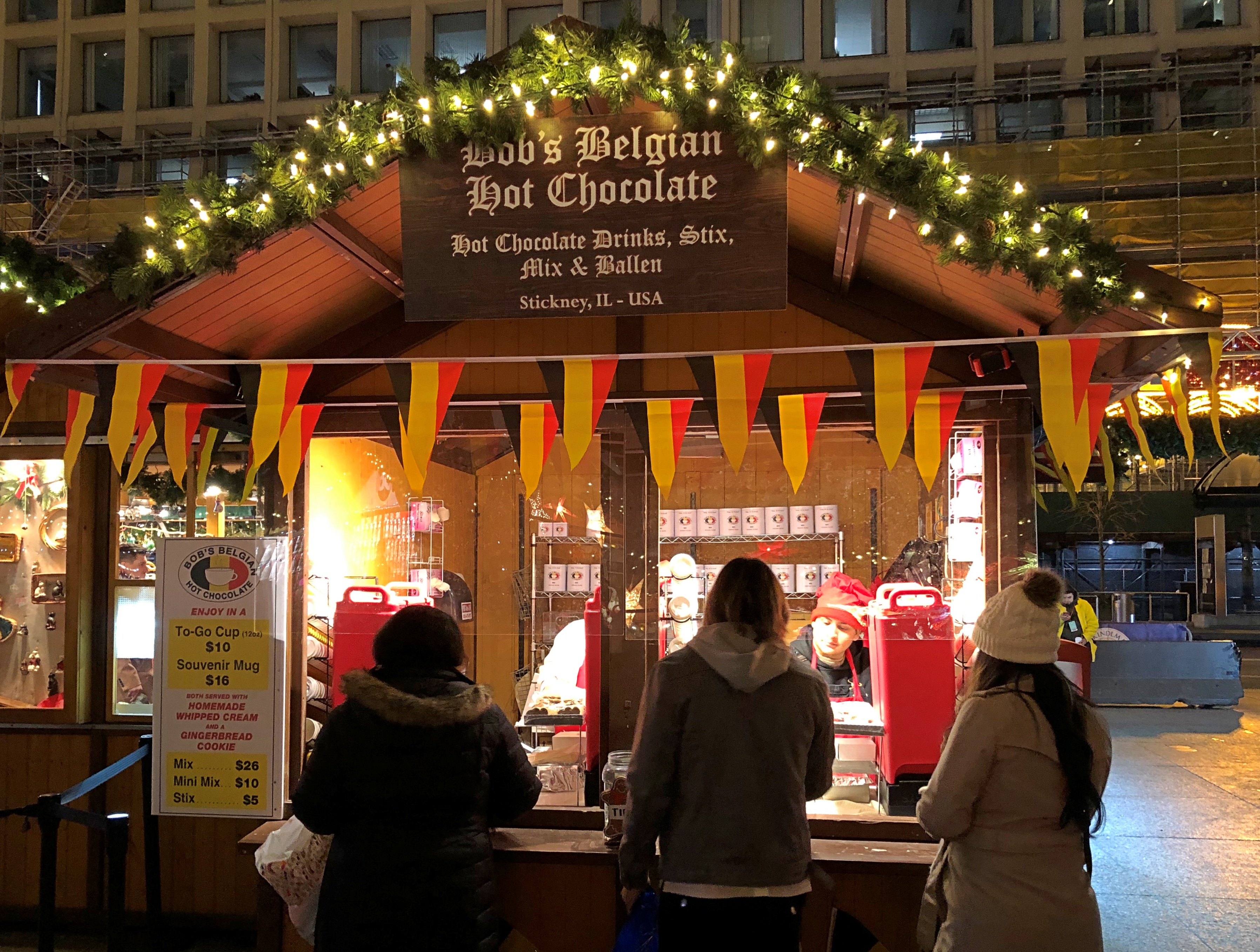
The stalls are more crowded.Chicago Christkinlmarket 2023 Chicago Christkinlmarket 2023 Chicago Christkinlmarket 2023

Everything in that lower pic is eccentric shapes of chocolate, and pretty much the only place I was tempted to buy anything. The economic model at the market is the same as I described a few years ago: “priced in euros at a lousy exchange rate, with an extra 50 percent tacked on for good measure.”

Paper stars.Chicago Christkinlmarket 2023

Locally themed ornaments, and pickles. Who doesn’t like Christmas pickles?Chicago Christkinlmarket 2023 Chicago Christkinlmarket 2023

Eats.Chicago Christkinlmarket 2023

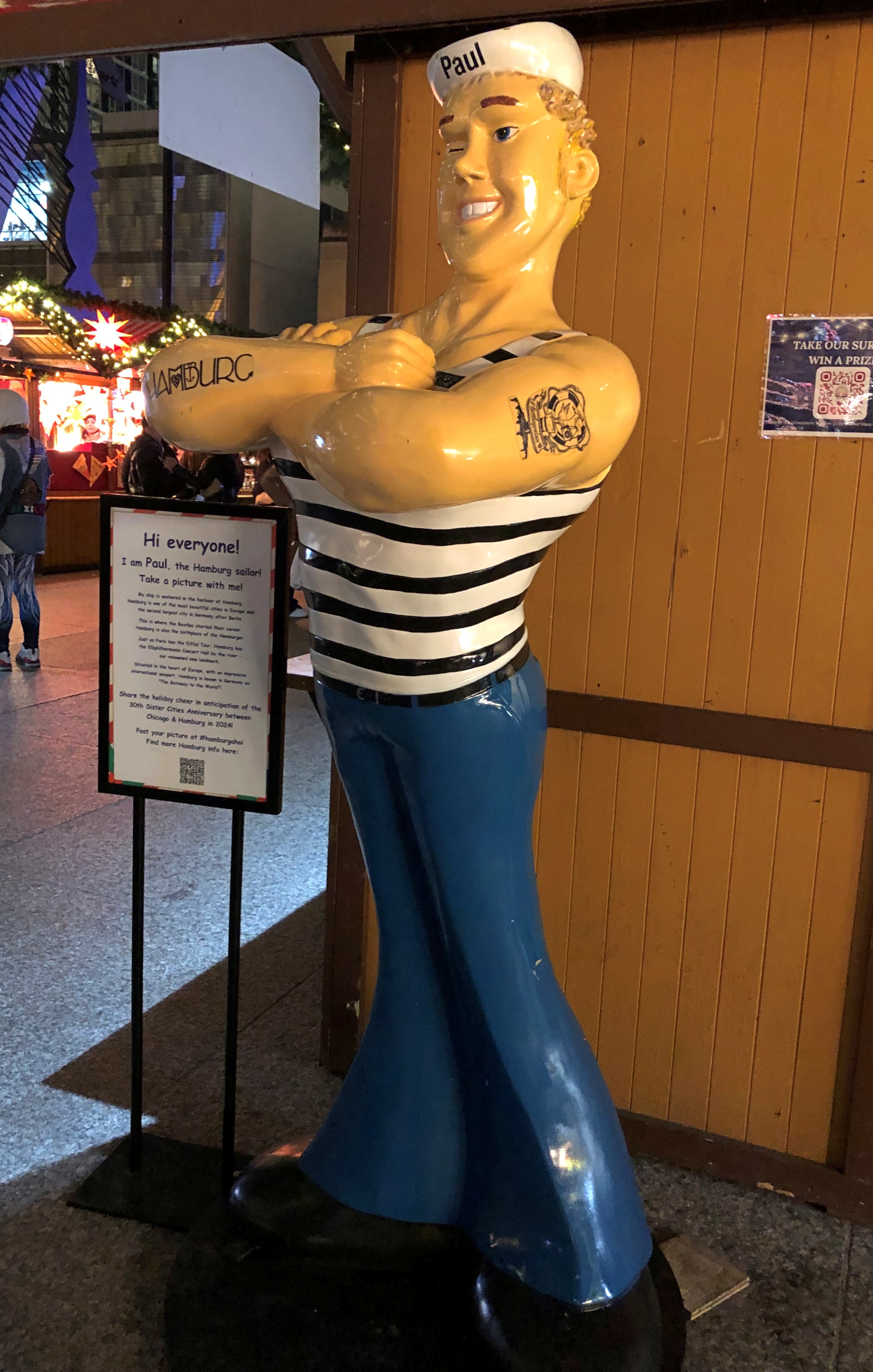
And Paul.Chicago Christkinlmarket 2023

His sign says, “Hi, everyone! I am Paul, the Hamburg sailor! Take a picture with me!’

Paul, huh? Are the Hamburgers having a spot of fun with that? St. Pauli is a red light district in Hamburg, after all, and while Paul here might look clean-cut, on leave I bet he’s out for beir and bumsen. Or maybe he’s a more modern sailor, and while visiting Chicago slips off to North Halsted Street sometimes.

I Don’t Need No Talking Pictures

From the Department of Not My Beat, excerpts from a PR pitch that arrived in my inbox recently:

While the Covid-19 pandemic has officially ended, the male loneliness epidemic in the U.S. persists… AB, Founder and Executive Coach of CD, knows this struggle all too well. He was the “Mayor of the Friend Zone”… Over the span of a decade, he immersed himself in the art and psychology of male-female connection, meeting countless women all over the world while training with the most elite dating and attraction coaches…

AB is available to speak on the male loneliness epidemic, how to find success on dating online and IRL, trending news stories, and the following topics:

Logic is the Death of Romance: Many of CD’s clients come from analytical fields (doctors, engineers, software developers). CD helps them get in touch with their inner emotions that attract women — more Captain Kirk than Mr. Spock…

My eyes are a little sore, having rolled them so much reading that pitch. Or maybe that’s just a lack of empathy on my part.

Nah. Still, anyone can call him- or herself a “dating coach.” I don’t think there’s a specific NAICS code for that. (I had to check: probably 812990, “all other personal services.”) Moreover, how does one get to be an elite dating coach? Is there a series of tests, like for actuaries? Doubt it. Do dating coaches have trouble keeping a straight face when they meet each other? Could be.

Interesting to note: the Kirk-Spock yin-yang is so completely woven into the culture that no elaboration is required. But I will say that Spock got lucky a few times, too. I seem to remember a dalliance with a high-placed Romulan, though it was a ruse, and a hot woman in a cold cave. Also, as evidenced in “Elaan of Troyius,” an episode that Ann and I watched just last weekend, not even an alien space babe with love potion tears could pry Jim Kirk away from his one true love, the Enterprise.

The sorry state of romance, if that’s really the case, reminds me of an entertaining video I happened across earlier this year, one made for the song “Silent Movie” by Little Violet, using artfully edited clips from the movie The Artist (2011).

After seeing the video a few times, I was inspired to finally get around to watching the movie on DVD, which I enjoyed a lot. The leads, especially French actor Jean Dujardin, nailed it, as was widely acknowledged. Take him back in time 100 years and he could have been a silent movie idol.

As for the video, it manages to loosely tell a rather different story than the movie did, and listening to the song without the video isn’t as good an experience. The British label Freshly Squeezed calls Little Violet a “retro pop piano-playing chanteuse and band.”

The Little Violet lead singer is one Cherie Gears, which AMV Music – a music booking agency based in Newcastle, England – describes as a “Yorkshire Wedding Singer Pianist.” Quite the voice.

September 13, 1975

A curiosity in my personal chronology: I remember what I was doing from 10 pm to 11 pm Central on Saturday, September 13, 1975. I was 14 and the start of high school was just a few weeks behind me, but that wasn’t so important that evening. During that hour, I was parked in front of our living room television, a black-and-white set because my mother didn’t convert to color until it was impossible to buy black-and-white. That didn’t bother me a bit.

Because the Internet never ceases to amaze, it took me only a few seconds to find the local TV schedule for San Antonio that day, to confirm what I already knew: the 10 pm slot on Channel 12, which was the ABC affiliate, was given over the Space: 1999. Not just any episode of that show – sold to U.S. markets in syndication, so not in prime time – but the first episode, “Breakaway.”

As the most expensive British television program up until that time, the show got quite a buildup, so it was no accident I tuned in. Martin Landau and Barbara Bain, as I recall, had plugged it on The Tonight Show not long before. (That too is online, at least as difficult-to-hear audio.)

So I watched that evening, and every week for a short time afterward. The physics of the premise — the Moon blown out of orbit and traveling the stars — was like something out of the Irwin Allen playbook, but even so the show started with some promise. As time passed, however, its essential dopiness became all too clear.

I think of this when I recall that I saw the first episode of Saturday Night Live on October 11, 1975. Or rather, the last two-thirds of it, switching channels after Space: 1999 was over at 11 Central. My reaction was, What is this? Then I think I remembered that a live comedy show had been slotted for that time, as it had been promoted as well. Within a few weeks, I didn’t bother with Space: 1999 any more, and took up SNL, as many of my peers did.

Despite its failure as science fiction, Space: 1999 did have one thing going for it, something I occasionally still enjoy. Namely, the kick-ass introduction.

Visually, it teases with quick-cuts of the episode ahead, as well as reminders of how the hapless residents of Moonbase Alpha got into their situation, and a sequence that fixed the fictional events of September 13, 1999 in one’s mind (and, lots of crashing space ships!). Aurally, there’s a rousing blend of orchestral passages, jazz and a funky electric guitar by British composer Barry Gray (d. 1984) that had early ’70s all over it.

The Demise of Cousin Oscar

Unlike Wednesday morning’s thunder but no rain, Thursday morning provided rain but no thunder. At least, none that I was awake for. Not a lot of rain, but enough to kick off a cool cloudy day.

Not long ago I watched an episode of All in the Family on a whim, as the series is available on one of the streaming services I pay for. I was curious to take a look at the program, so famed in its time, with my older eyes – older now than any of the characters.

I didn’t watch it every week back in its heyday, except maybe during the fall of ’73, when CBS had its remarkable Saturday line up: All in the Family, MASH, Mary Tyler Moore, Bob Newhart and Carol Burnett.

As I was 12 that year, Saturdays weren’t yet for social occasions; that would come later, sometimes causing me to forego television I would have enjoyed, such as a number of episodes of the original-cast SNL. It was years before I saw the Killer Christmas Tree sketch, for instance.

The All in the Family episode I watched recently, “The Saga of Cousin Oscar,” originally aired on September 18, 1971, as the first episode of the second season. Even though the show had found its footing by then – All in the Family became No. 1 that season, probably as a result of word-of-mouth that summer — I’m fairly certain I’d never seen “Cousin Oscar” before. As a 10-year-old, I wasn’t paying attention to that kind of word-of-mouth.

As a start for a season, the episode was a good one. It was actually funny at times. The main reason, I believe, is that there was very little in the way of discussions, or arguments, about the issues of the day, except maybe a comment by Mike complaining about the funeral industry. That’s often the case with comedy, and especially this show: the lower the level of tendentiousness, the funnier it is.
The titular character Oscar, a ne’er-do-well cousin of Archie’s, was described in the first act, but not seen, as he was reportedly sleeping late upstairs. Why he had no other place to go at that moment wasn’t entirely clear, but it was clear that Archie considered him a moocher and planned to kick him out. Commercial break.

I was entirely sure I knew what would happen next. I’ve seen enough sitcoms in my life.

Sure enough, like the luckless guest in “The Kipper and the Corpse,” Oscar checked out sometime that morning. Now the Bunkers had to deal with that, including a series of long-distance calls to other relatives, trying the raise money for Oscar’s funeral, which Archie doesn’t want to pay for. I’m not giving much away when I note that in the end, he’s stuck with the bill, though it’s played as him reluctantly doing the right thing.

A lot of sitcoms could have done that story. I could imagine a cousin of Fred Sanford’s doing the same. Plautus could have done the story too. Maybe he did, and the scroll waiting to be discovered at some buried site in the Near East.

Some observations.

Archie was incredibly bossy, which I suppose fits, but more remarkably everyone else goes along with it, including Mike.

One forgets what an involved process long-distance calls used to be.

Edith, of course, had more sense than Archie, and more empathy too, a pattern that persisted throughout the series. Plautus could have done that as well.

No one even mentioned the possibility of cremating Oscar, a cheaper option. I know it wasn’t as common then, but it did happen. Or, for that matter, having Oscar buried in a potter’s field at county expense (Mike’s suggestion) and then holding an inexpensive memorial service. It was either all or nothing when it came to a funeral.

This was before residential sets were often depicted as more expensive than the characters could afford (viz., Friends). I marveled that there was supposed to be enough room upstairs for Oscar to have his own bed to die in.

In terms of sets, the show had a remarkable economy: the living room and the kitchen. I can only remember a handful of times the upstairs was seen, including one memorable moment when Archie got on Mike’s case – nonpolitically, mostly demented – about the right way to put on socks and shoes.

The show could have used more material like that.

Rotary Botanical Gardens, Janesville

Time for another summer break. Good to take those when you can. Back to posting around August 6. Or maybe the 7th. Not good to structure summer too much.

Didn’t get around to seeing either Oppenheimer or Barbie lately, though I’m much more likely to watch the former in a theater. I actually read The Making of the Atomic Bomb (1987) back when it was fairly new, and before that (’83) took an undergraduate seminar on the Manhattan Project, which involved much interesting reading, of course, and watching an excellent documentary, The Day After Trinity (1981), all of which inspired awe and dread.

As for Barbie dolls, I share the indifference that most men feel – though I suppose if there are men who like My Little Pony, there must be secret Barbie admirers as well, and not just out of solidarity with Ken. Ann, on the other hand, has a sentimental attachment to the dolls, even nostalgic feelings, whatever that can mean at 20. So she went on the movie’s opening night, helping it set its high box office. She reported enjoying it.

I did get around, yesterday, to finishing The Marvelous Mrs. Maisel. Well worth watching, though uneven to the end. The arc of Midge and Susie and Joel formed the core sympathetic heart of the show, to good effect. The older characters – Abe and Rose and Moishe and Shirley – pretty much went off the rails in the later seasons, which was too bad. Old people are just a hoot, eh?

Still, Abe did have a few touching moments toward the end of the last season, especially at dinner in the company of other old men, with mortality as the unnamed character at the table. My favorite minor character was Lenny Bruce, and his appearance in the last episode was a heart breaker, with addiction the unnamed character joining him. The drug that killed the real Mr. Bruce in 1966 was reportedly morphine, which strikes me as a little old-fashioned for the 1960s, but the comedian always did things differently.

Last Sunday I stopped at the Kansasville Wisconsin Veterans Memorial Wayside Park again for a quick look at the adjacent cornfield.

Much higher than a month ago. It’s a little hard to tell from the Drought Monitor, but I think that part of Wisconsin is on the border of moderate and severe drought. The corn looks healthy enough to this non-farmer, however. Northern Illinois/southern Wisconsin’s gotten some rain lately, including a storm that blew through yesterday around noon.

The last place we went in Janesville early this month was the Rotary Botanical Gardens. Saw it on an electronic map, looked it up, decided to go. That’s the way to find places in our time.

We were well rewarded for the effort. How often do you see golden Hakone grass (Hakonechloa macra) pushing through a pile of small boulders?Rotary Botanical Gardens

That flow of grass was part of one of the Rotary Botanical Gardens’ centerpieces, its Japanese garden. Good to find those in the heart of North America.Rotary Botanic Gardens Rotary Botanic Gardens Rotary Botanic Gardens Rotary Botanic Gardens

Complete with the styles of bridges that tend to be in Japanese gardens, across a large pond.Rotary Botanic Gardens Rotary Botanic Gardens Rotary Botanic Gardens

I don’t believe for a minute that evil spirits are too cowardly or disoriented to cross a crooked bridge; or rather, I don’t believe that belief is the origin of the design. I believe it is aesthetics for the sake of aesthetics.

The Rotary is a large place. Besides the Japanese Garden, it includes (among other sections) an English Cottage Garden; an Italian Garden; French Formal Rose Garden; Scottish Garden; Alpine Garden; a Shade Garden; a Sunken Garden; Fern & Moss Garden; and seasonal displays.Rotary Botanic Gardens Rotary Botanic Gardens Rotary Botanic Gardens

Bursting blossoms rise from the grounds. Or so it seems.Rotary Botanic Gardens Rotary Botanic Gardens

Along with arrays of other glorious summer blooms.Rotary Botanic Gardens Rotary Botanic Gardens Rotary Botanic Gardens Rotary Botanic Gardens

Curious name, Rotary. Do Rotarians have anything to do with the Rotary Botanic Gardens? Yes, they do.

The garden opened in 1991, occupying “the site of an abandoned sand and gravel quarry on Palmer Drive,” the garden’s web site says. “In 1988, the original site between Lions Beach and Kiwanis Pond was covered with debris and used as storage for the Parks Department and a BMX bicycle racetrack.

“The Gardens’ founder and original visionary, retired orthodontist Dr. Robert Yahr [d. 2021], approached the two Rotary Clubs in Janesville and inquired about their interest in developing a botanical garden for the community to enjoy.”

That they did. Nice work, Dr. Yahr.

Springtime Thursday Musings

Warm again early in the day. Thunderstorms rolled through in the morning and again in the afternoon. Cool air came back late in the day.

Ahead of the rain, we walked the dog around a pond, where a good many red-winged blackbirds flitted around. Hardly our first encounter with them, though there don’t seem to be as many after spring is over.

Moths are back in the house. How did this happen? There’s no lasting victory over moths, looks like. So I put out fresh glue traps, and some dozens have been caught. I still see a few flitting around, and slap them when I can, but I hope they too will either die in the traps, or die mateless and without descendants.

Rabbits are back in numbers too, often in the back yard, but I leave them alone. The dog does too, seemingly not interested in chasing them any more. Such is old age.

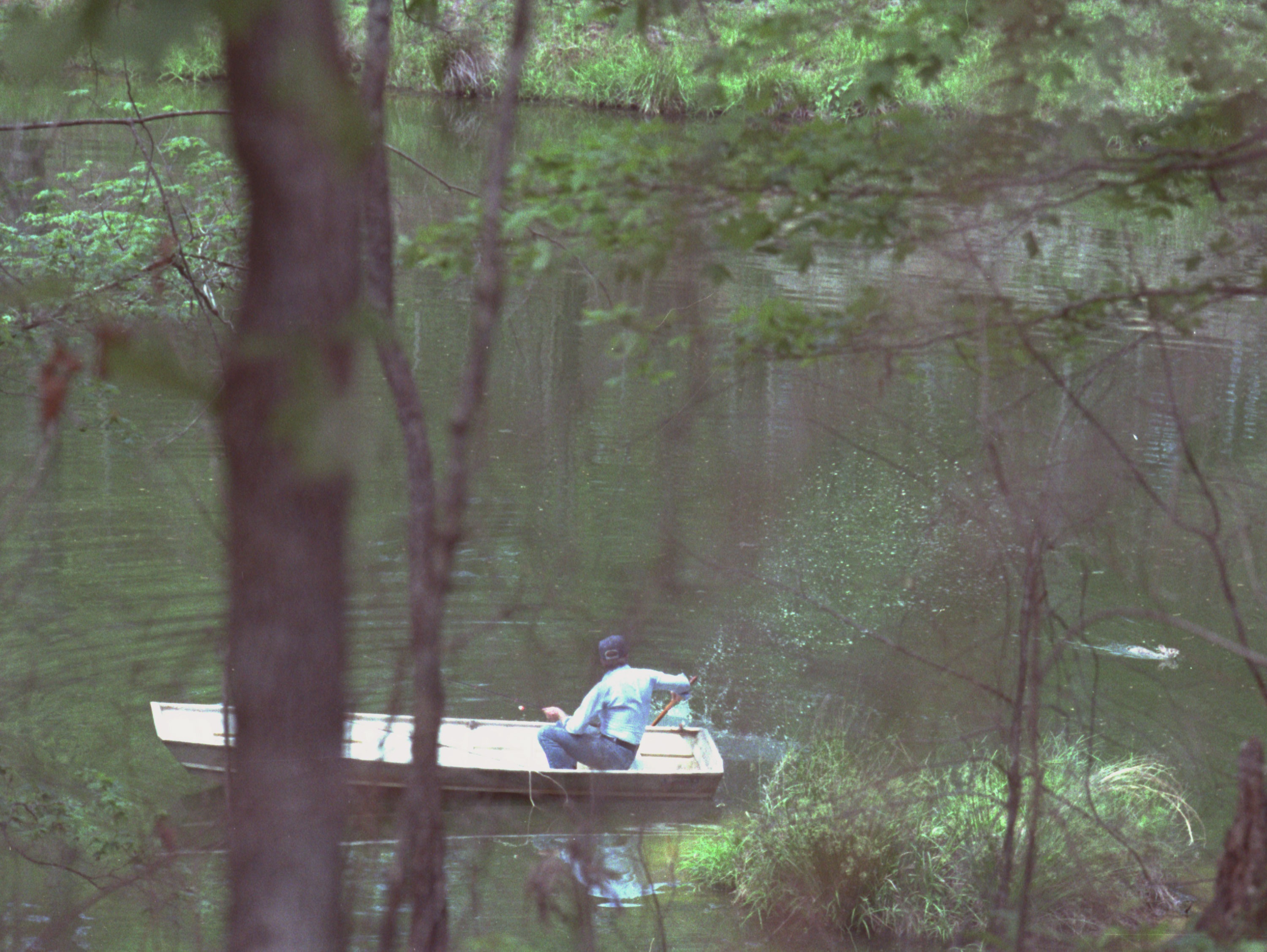
Completely by accident, and speaking of rabbits, I learned that today is the 44th anniversary of a swamp rabbit attacking President Carter’s boat (which wasn’t known till later in 1979). Even better, I learned that the photo of the incident is in the public domain, being the work of a White House photographer. This copy is via the Carter Library, though I don’t remember it being on display there.

With the looming deadline for renting more Netflix DVDs in mind, I watched part of the disk I currently have at home, Judgment at Nuremberg. I don’t remember why I put it in the queue, except that I’d never gotten around to seeing it, and Spencer Tracy and Burt Lancaster are always worth a look.

I didn’t realize that William Shatner was in it until I saw his name in the opening credits. As it happens, he plays a captain. In the U.S. Army, but still a captain.

I also didn’t know that Werner Klemperer played a part, one of the defendants. Naturally, I had a silly thought when he entered the courtroom: Col. Klink was put on trial at Nuremberg? No! His incompetence consistently aided the Allied cause. Call Col. Hogan as a character witness.

I’m reminded of something I once heard about Klemperer on stage: “Kevin D. told me that, during a production of Cabaret at the Chicago Theatre in the late ’80s, Werner Klemperer played [a Jewish merchant not in the movie version], and got the biggest applause of the night. ‘Everyone knew it was because he played Col. Klink,’ Kevin said.”

In the staged revival of Cabaret I saw in 2002, Hal Linden played the same part, and likewise got a vigorous round of applause on his first appearance. For playing Barney Miller, I figure. Such is the power of TV.

Adios, Netflix Disks

No more rental DVDs from Netflix? The bastards. Actually, that’s me just grumbling about change. I’ve been thinking of canceling for a while now, and there’s no use in getting overwrought about entertainment anyway. The operative word in fanboy is boy, after all.

Inertia has been a factor in preventing my cancellation, but so has the notion that streaming doesn’t have some of the more obscure movies and TV shows that are on DVD. Just a hunch, since I’ve never done any actual research on the matter, except look at a few articles like this.
I took a look at the list of my total rentals, which is a subpage of my account. Netflix doesn’t forget. Not until September, at least, when the FAQ section says such lists will be wiped. How many all together? Six hundred and sixty-three disks over 18 years, or nearly 37 each year. So three a month. Considering that sometimes more than one person has watched each disk, I suppose I’ve gotten my money’s worth.

If I’d really wanted to get my money’s worth, I would have quit about six or seven years ago, when rentals had dropped to maybe once a month or so. There were far more in the early years, when (for obvious reasons) titles like SpongeBob SquarePants, Barbie Mermaidia and Drake & Josh appeared in the queue. Obtaining kids’ entertainment was one of the reasons we signed up in the first place, along with finding Japanese titles, though as the years passed, demand in the household for each waned as everyone sought out other sources.
I’ve been active across the years as well, ordering such titles as (in rough order) The Alamo (2004), Ocean’s Twelve, Animal Crackers, Pee-wee’s Playhouse, The Lavender Hill Mob, Chocolat, The Man in the White Suit, Allo ‘Allo, Howl’s Moving Castle, The Blue and the Gray (miniseries)The Bridge on the River Kwai, Inserts, Rome, the rebooted Battlestar Galactica, The Great Race, A Night to Remember, That ’70s Show, Downfall, From the Earth to the Moon, Northern Exposure, The Cat’s Meow, The Battle of Algiers, Jeeves and Wooster, NewsRadio, Ripping Yarns, Bend It Like Beckham, The Flight of the Phoenix (1965), Mad Men (the seasons before I started watching them as broadcast), John Adams, Them!, Firefly, The Steel Helmet, Red Sun, SCTV, Fall of Eagles, Homicide: Life on the Streets, Life on Mars (UK), Slings & Arrows, Fargo (TV series), Bicycle Thieves, In Bruges, Closely Watched Trains, The Office (UK), The Umbrellas of Cherbourg, Alexander Nevsky, The Phenix City Story, The Artist, The Lost City of Z and The Pride of the Yankees. Just to name a few.
Just looking at the complete list stirs some nostalgia. More than, say, a list of my earlier rentals at Blockbuster or Hollywood Videos would, if such a thing existed (in the digital bowels of the NSA, perhaps?). The end of Netflix disks could be the end of renting physical media, which for me goes back to – 1989? I was a late adopter of VHS, as you can tell. Having no TV or VCR in ’80s, until I had a girlfriend who did, had that effect.

Go back much further and renting wasn’t an option anyway. I finished college 40 years ago next month. I’m glad that at no point in high school or college did any of my friends or I ever say, “Let’s go rent a video.”

Antiques of Naperville

Back on July 5, since of course the stretch from Canada Day to Independence Day at the very least ought to be a row of holidays.

At a shop called Antiques of Naperville, which is tucked away on a side street in that suburb’s downtown, there is a sign that says:

Take All The Photos You Want
Please
Tag Us @Antiques of Naperville
#shopdoggibson #brownbarnantiques

Sure thing. This doesn’t count as a tag, but it is a mention. I took the place up on its offer of no-limits photography, because there was so much stuff around. Interesting stuff. That’s all I ask of an antique store. Not every shop allows pictures, but is that not a mistake in this age of social media?

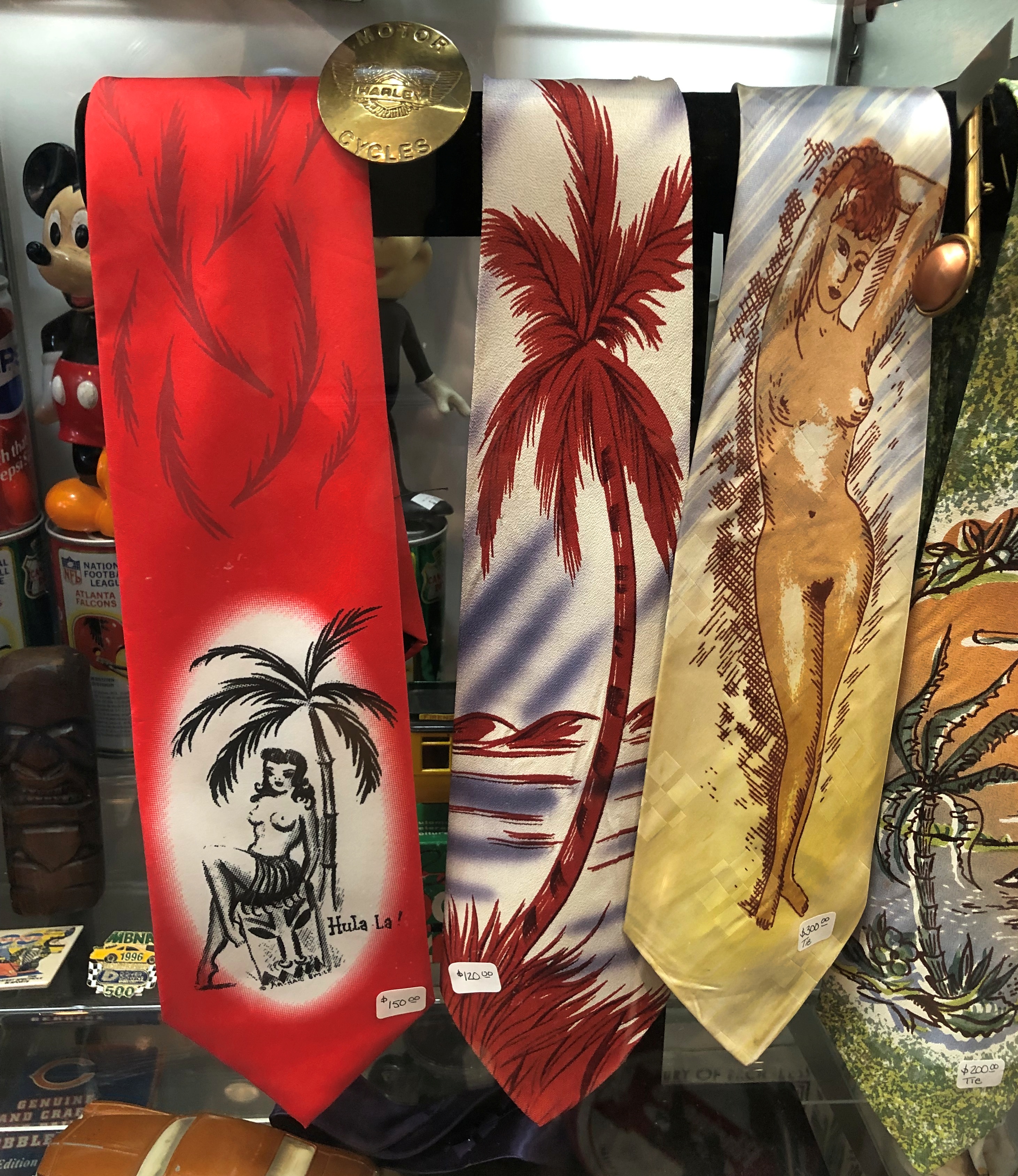
This was the place I found the Charley Weaver bartender doll, previously posted. Nearby him were these ties — and somehow they’re in the same bric-a-brac milieu as ol’ Charley.Antiques of Naperville

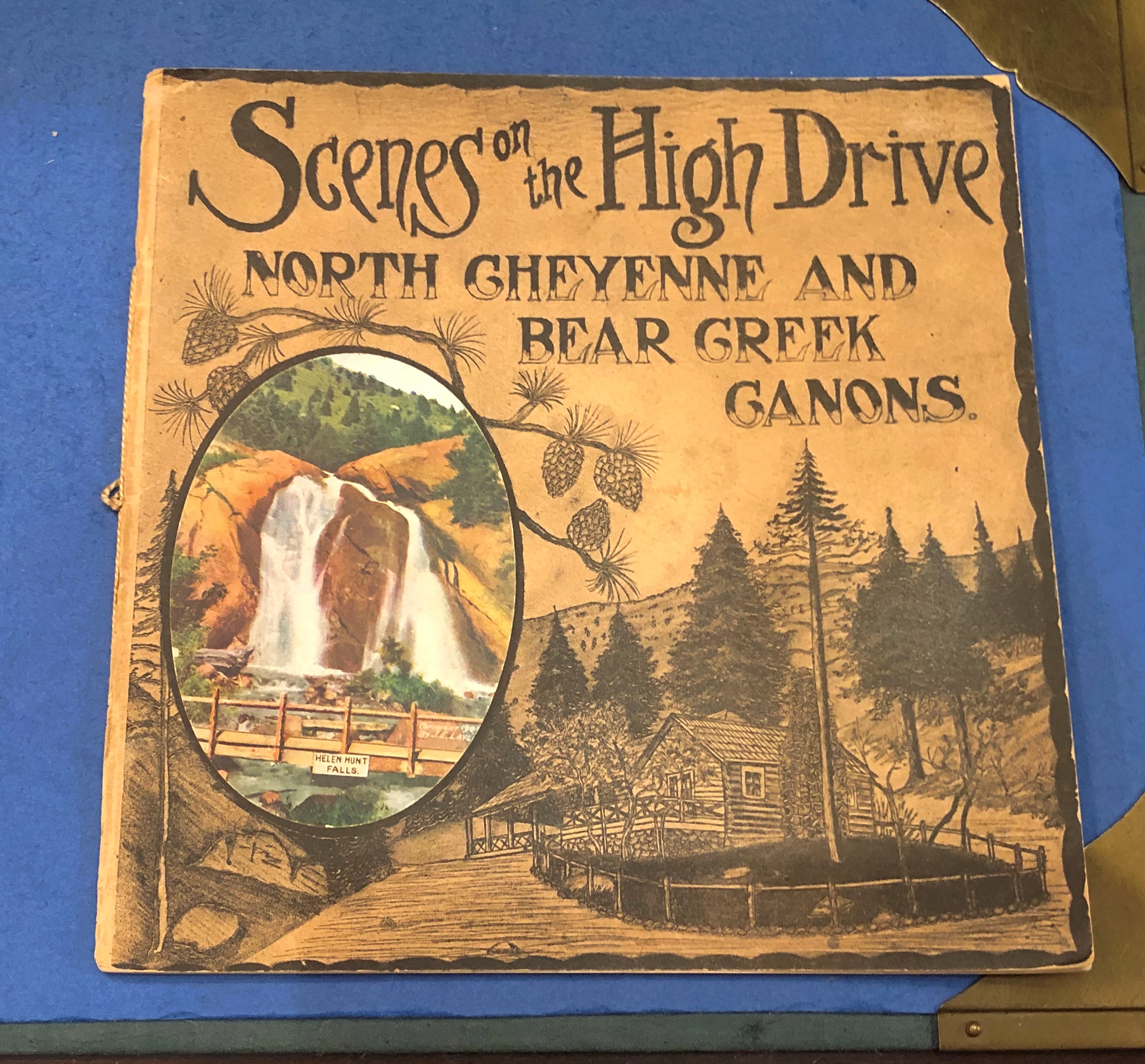
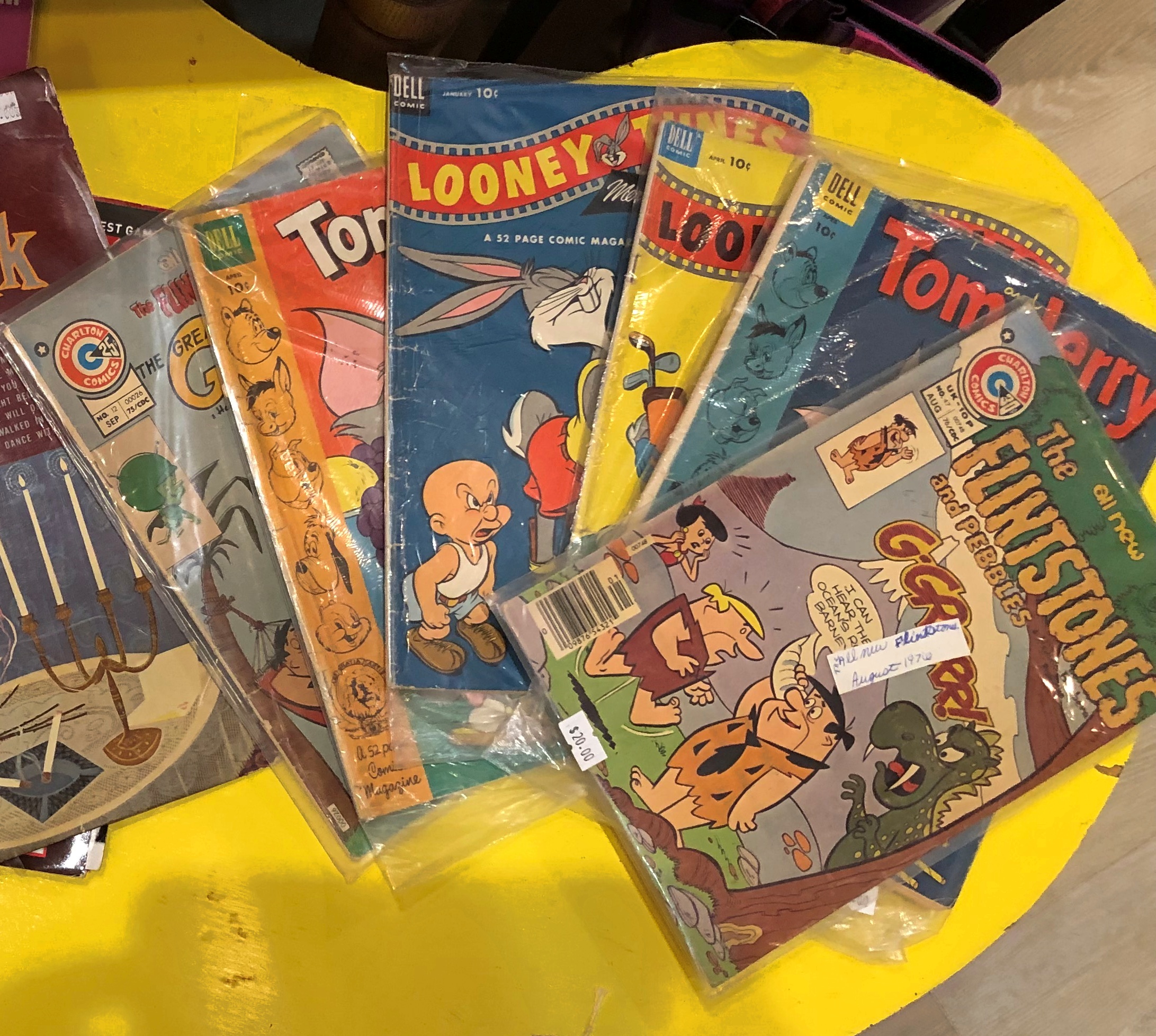
Divers reading material.Antiques of Naperville Antiques of Naperville

Dell. We always had many more Gold Key comics than Dell, but there were a few around the house.

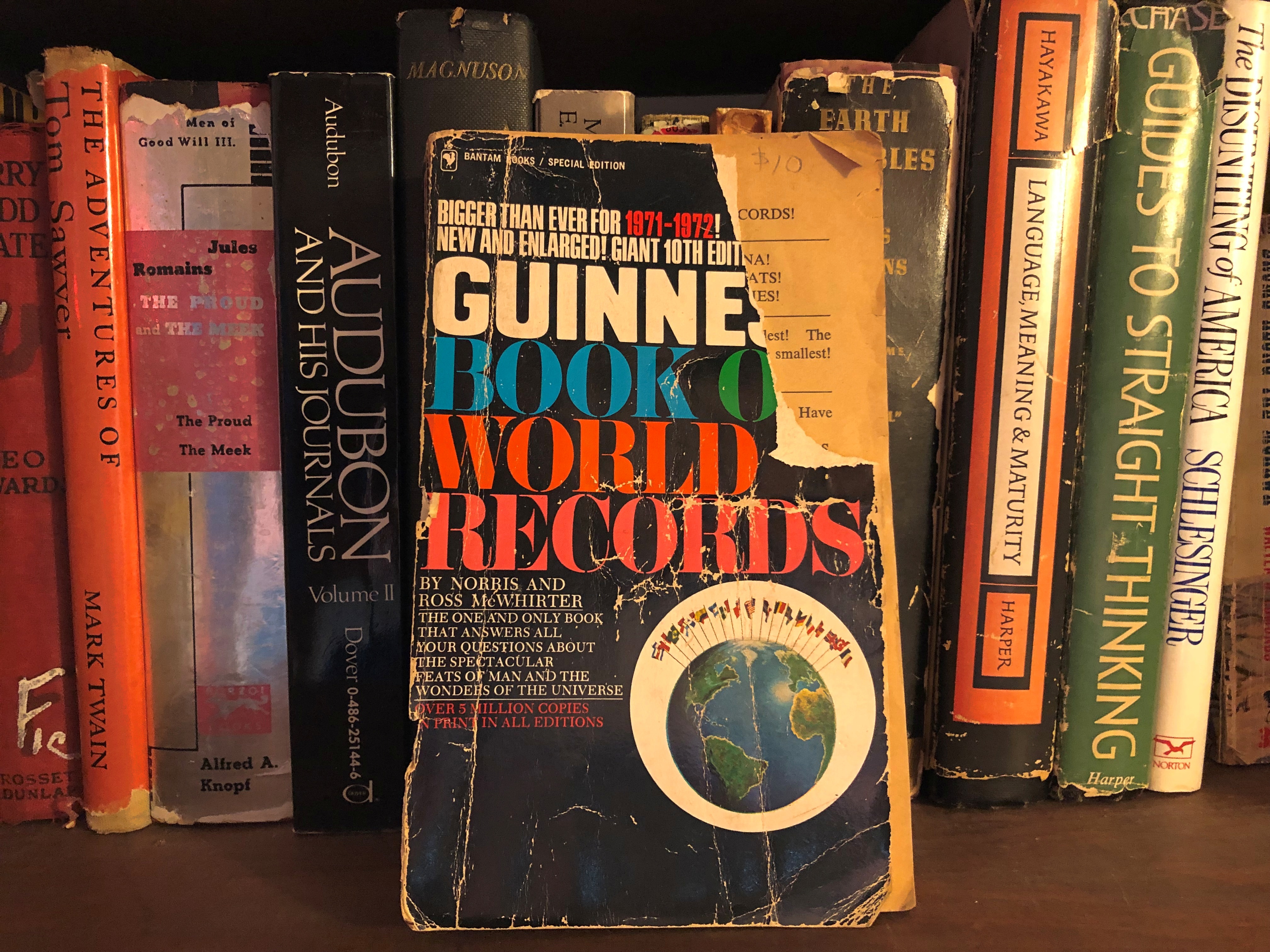
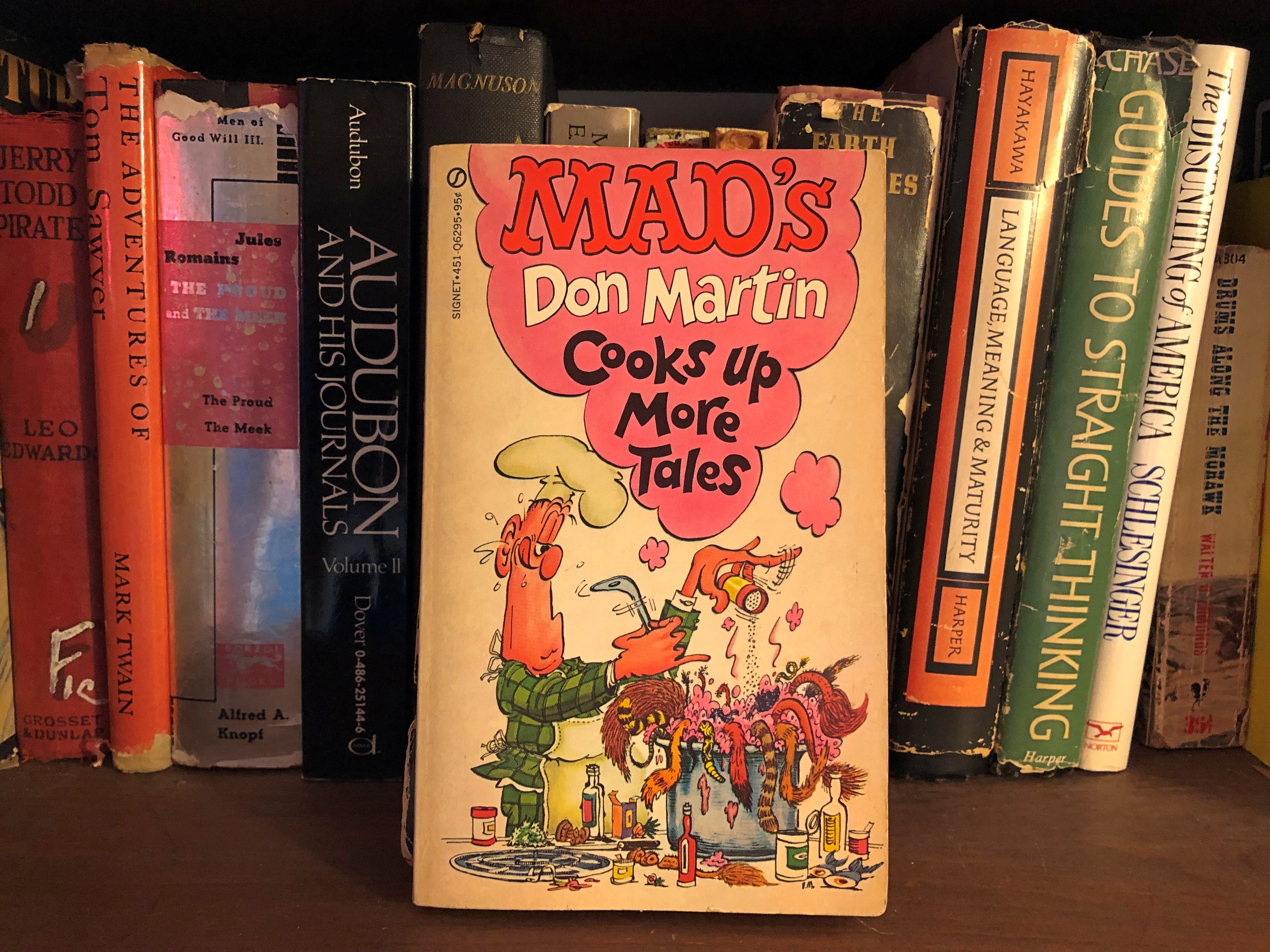
Paperbacks. Not that old. We had this book when I was young and I read it. And the next one.Antiques of Naperville

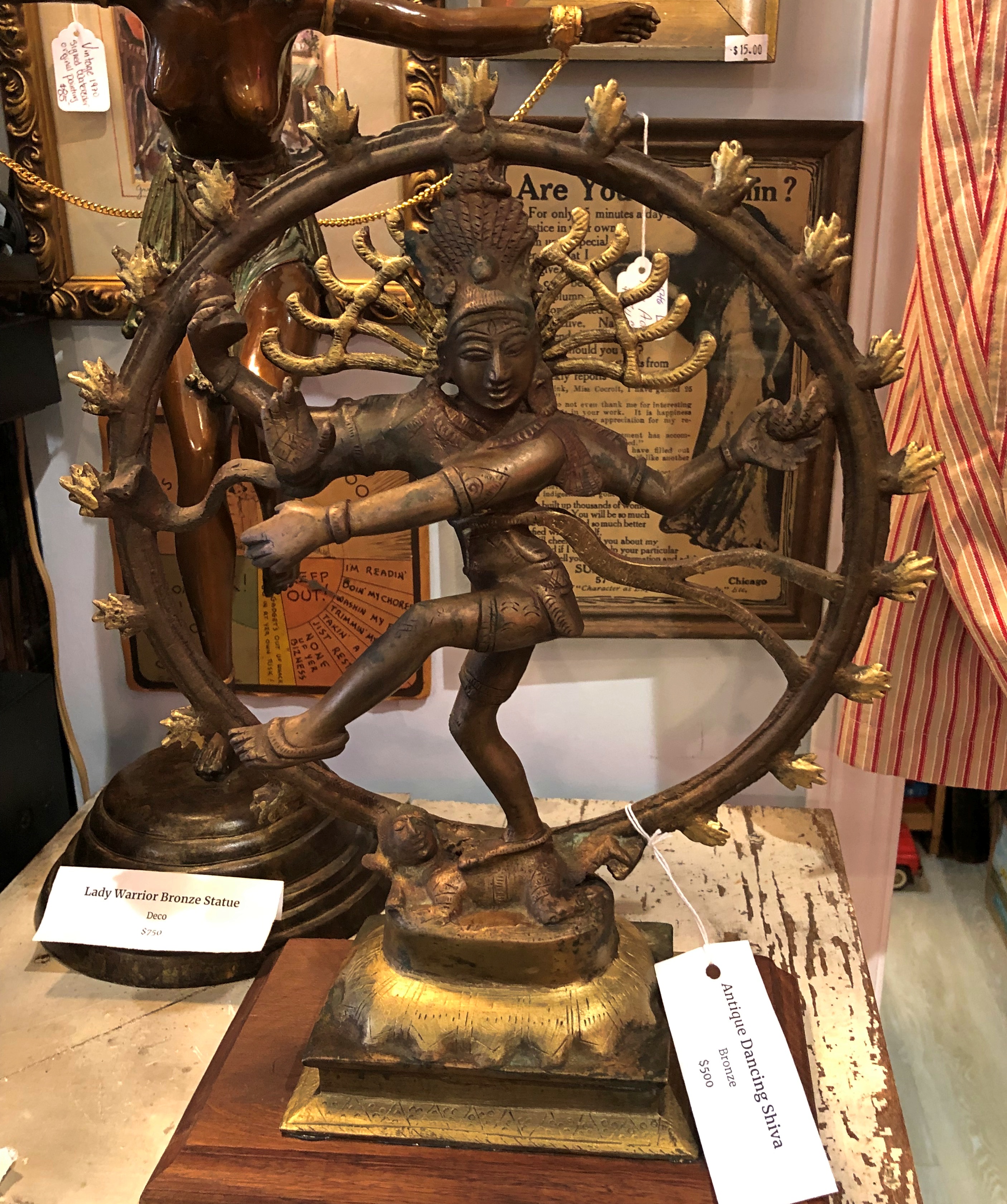
Something we didn’t have: Shiva.Antiques of Naperville

Shiva is the Destroyer, and it occurs to me that destruction doesn’t have to be dramatic and fast, does it? Sometimes — often? — usually? — destruction is gradual, happening off in a quiet corner or nook, but inexorable all the same. Such as for the objects in an antique shop, for instance.

Characters more friendly than Shiva.Antiques of Naperville
Antiques of Naperville

I have to say it: Very interesting, but stoopid. You bet your sweet bippy.

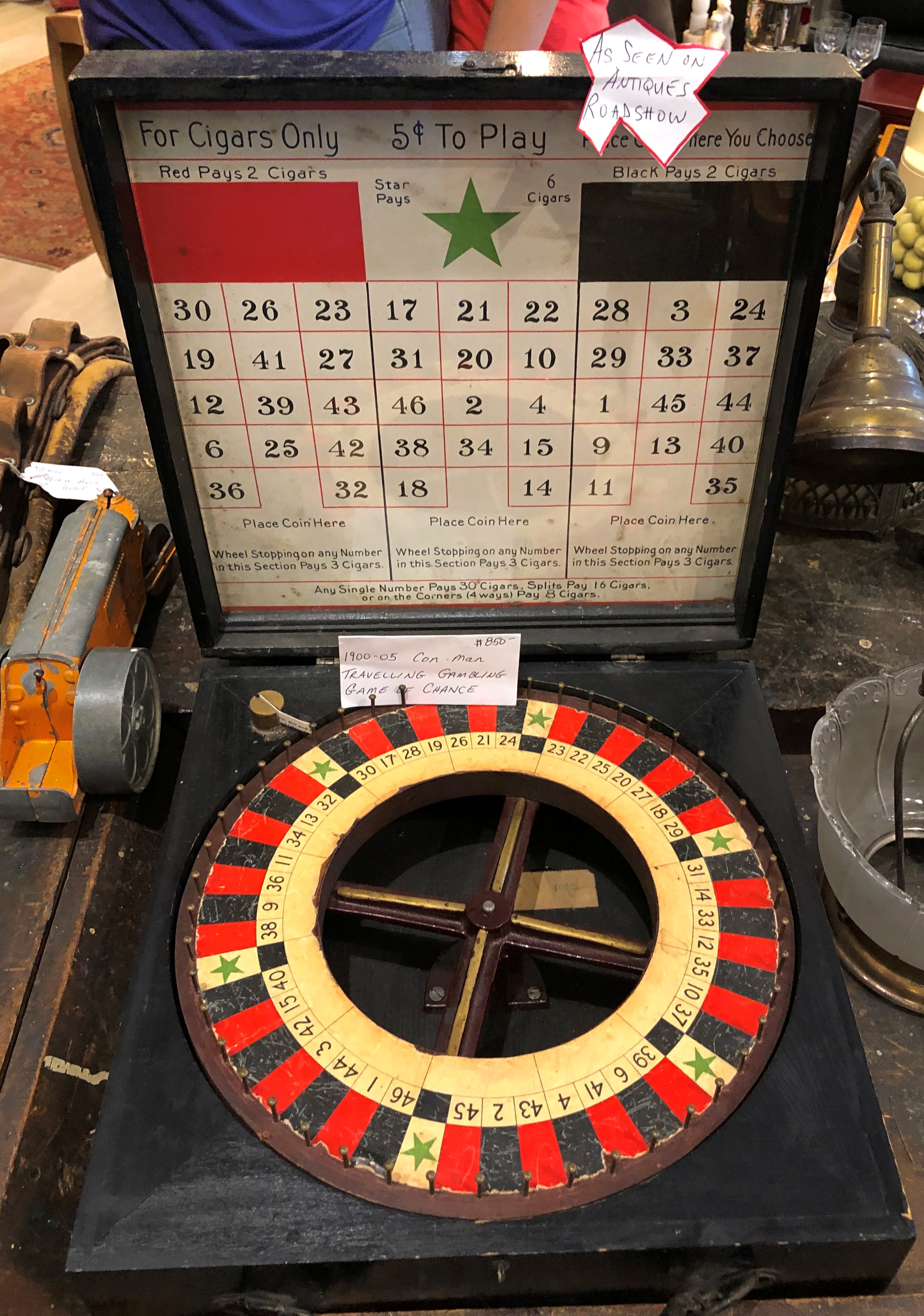
“As seen on Antiques Roadshow.” This very thing, or just one like it?
Antiques of Naperville

A traveling game of chance, its sign said, used by con men. No doubt.

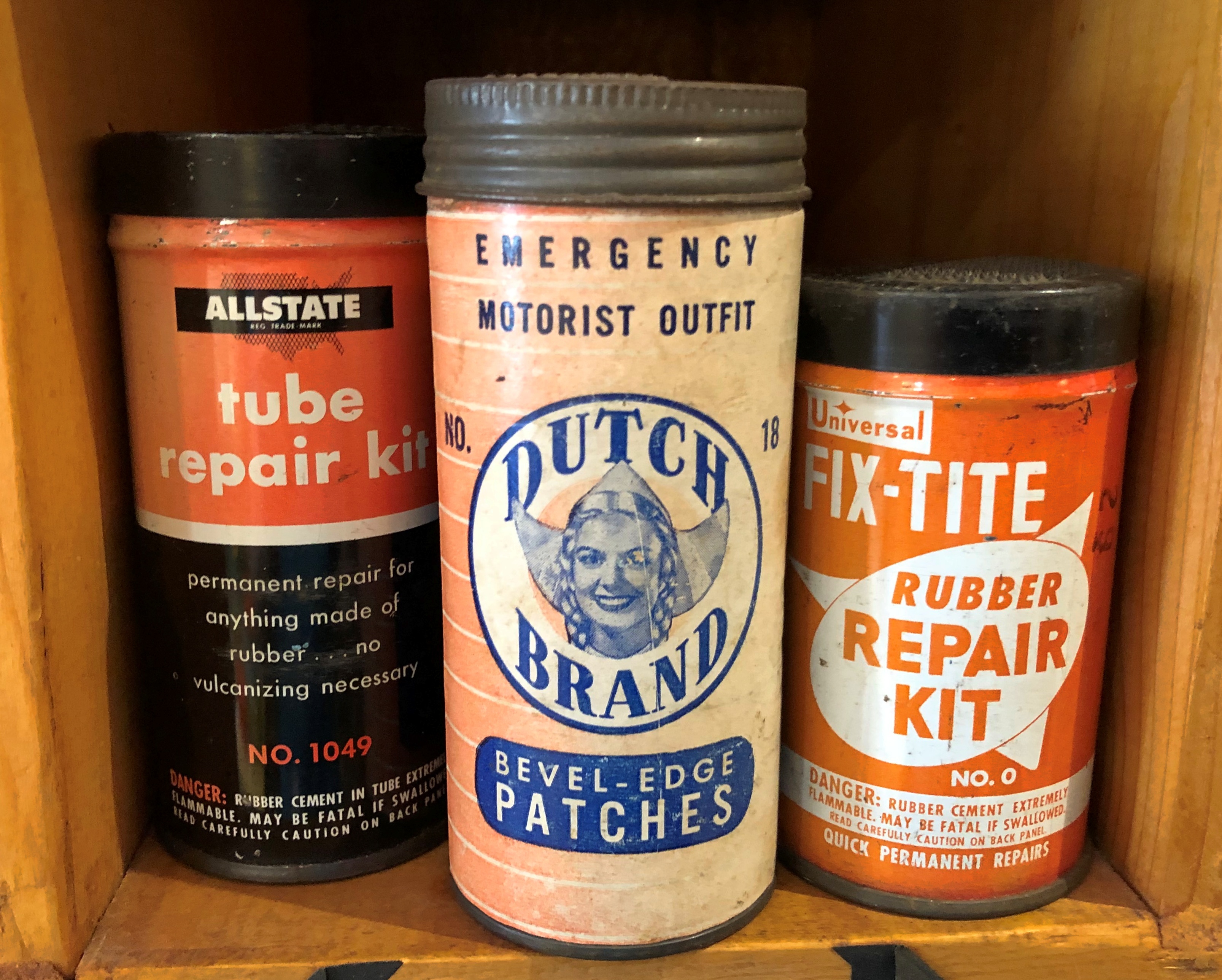
Items no longer needed by drivers, fortunately.Antiques of Naperville

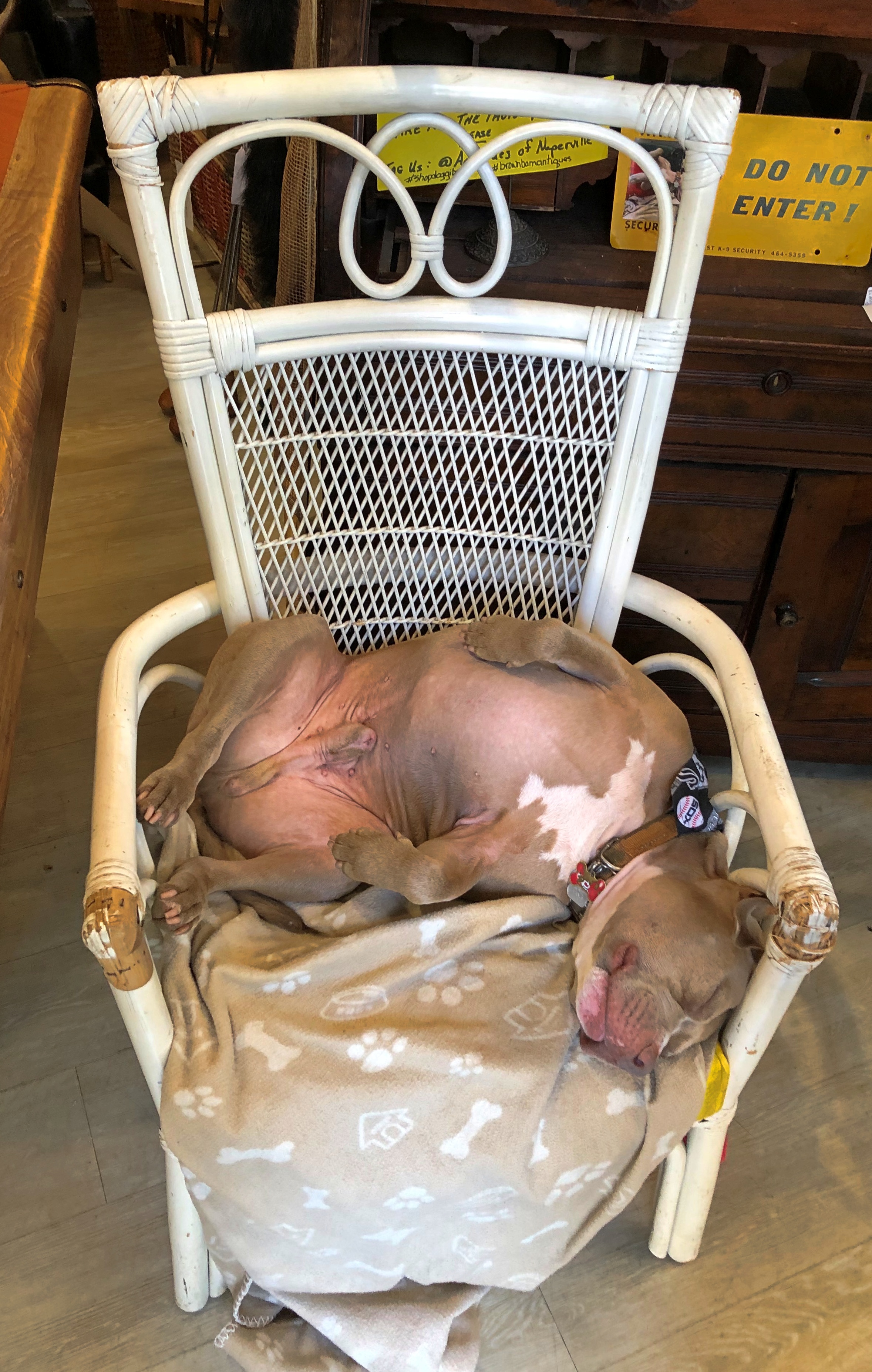
Yuriko pointed out the inhabitant of a chair in the shop.You bet your sweet bippy

For a moment I thought it was a doll or cushion of some kind, but then one of the dog’s paws twitched. It was a living dog. Probably the most inert dog I’ve ever seen, and a lot of dogs are inert a lot of the time. This dog paid no attention to any of the people shuffling through the shop, and barely acknowledged it when Yuriko petted him.

Thursday Grab Box

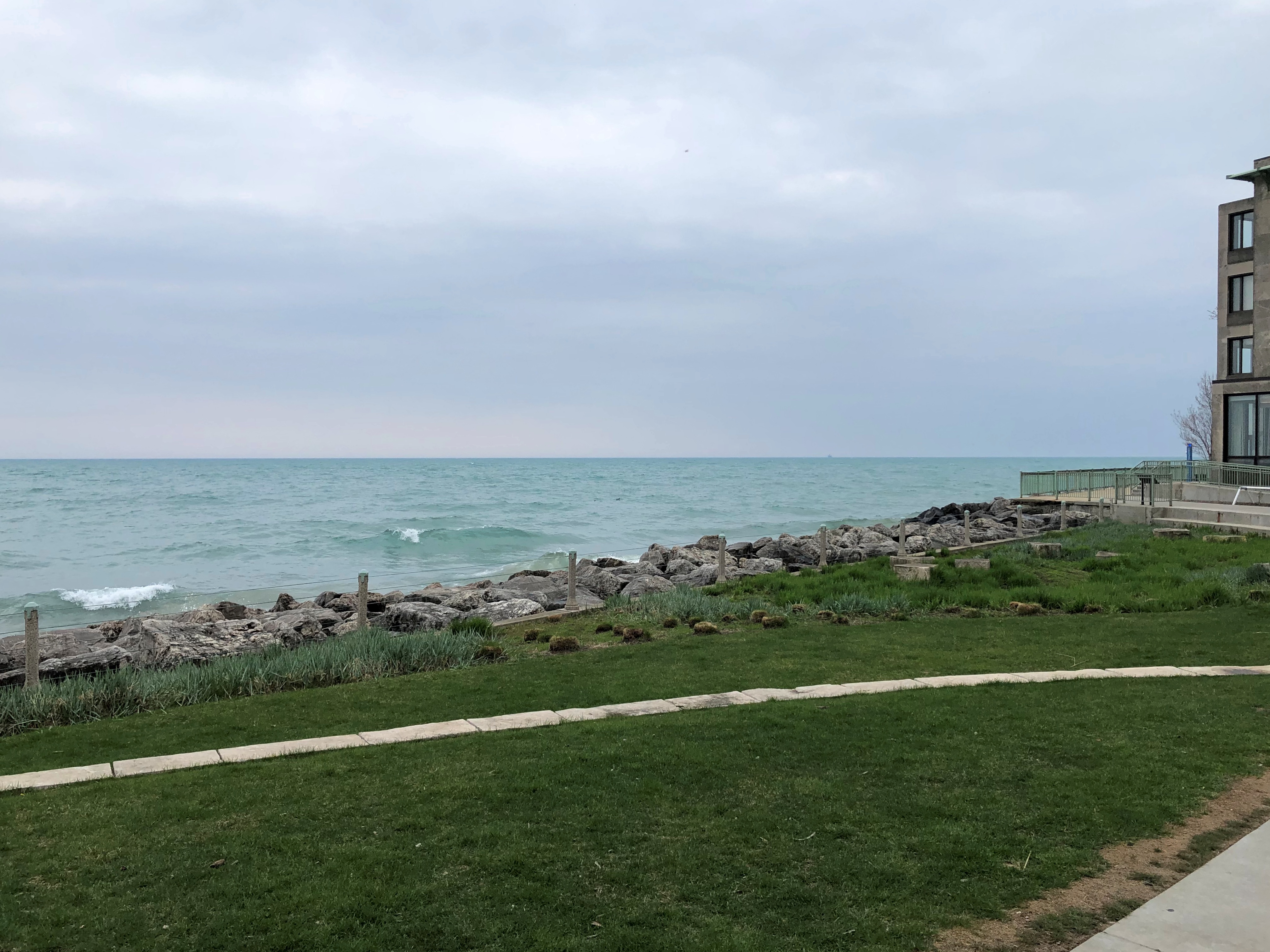
Lake Michigan was active but not stormy on Saturday. Views from Loyola.Lake Michigan 2022 Lake Michigan 2022

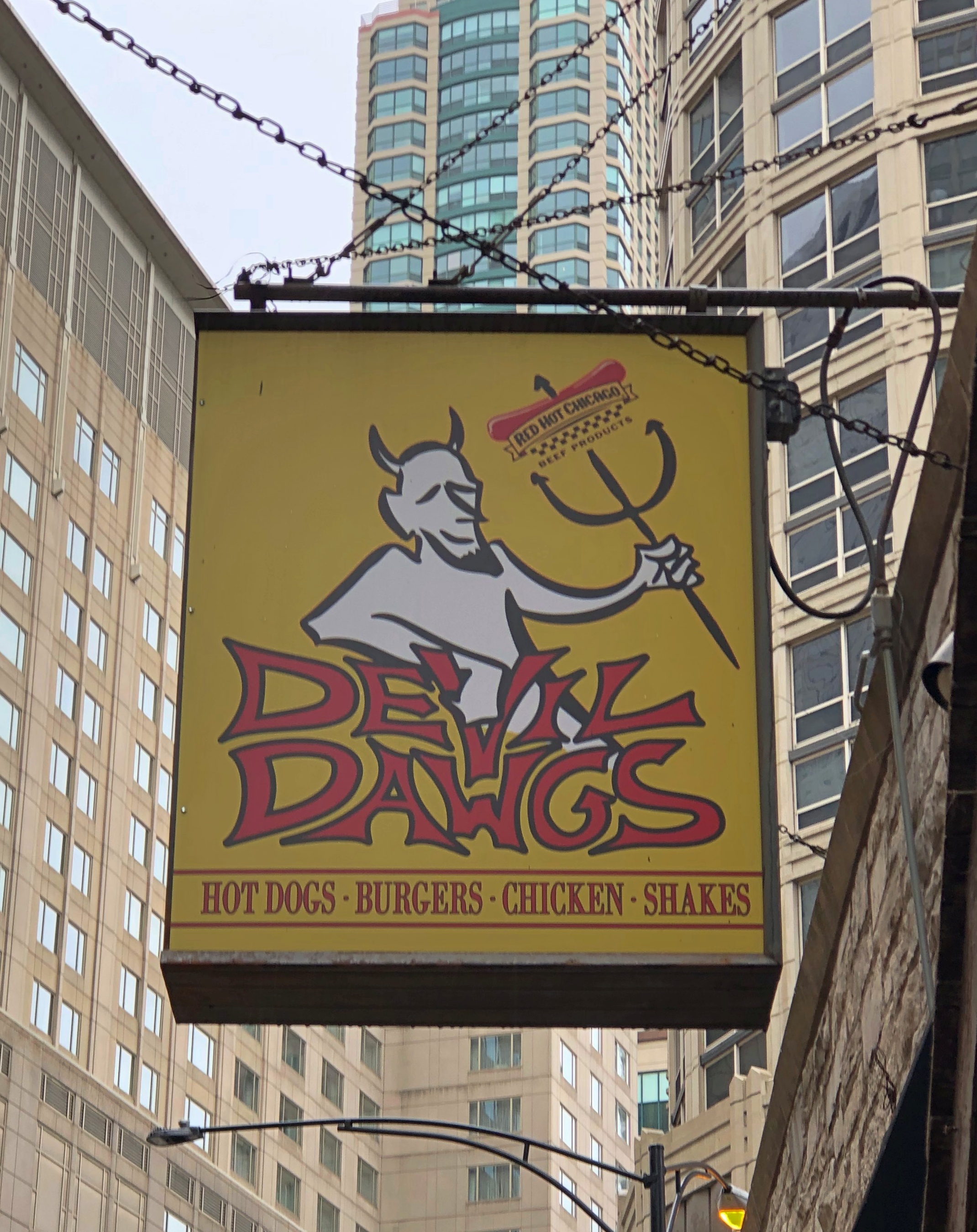
There’s a coffee-table book in this: chain-hung Chicago signs.
Devil Dawgs Chicago

High-res images, of course. Can go on the same coffee table with Austin neon.

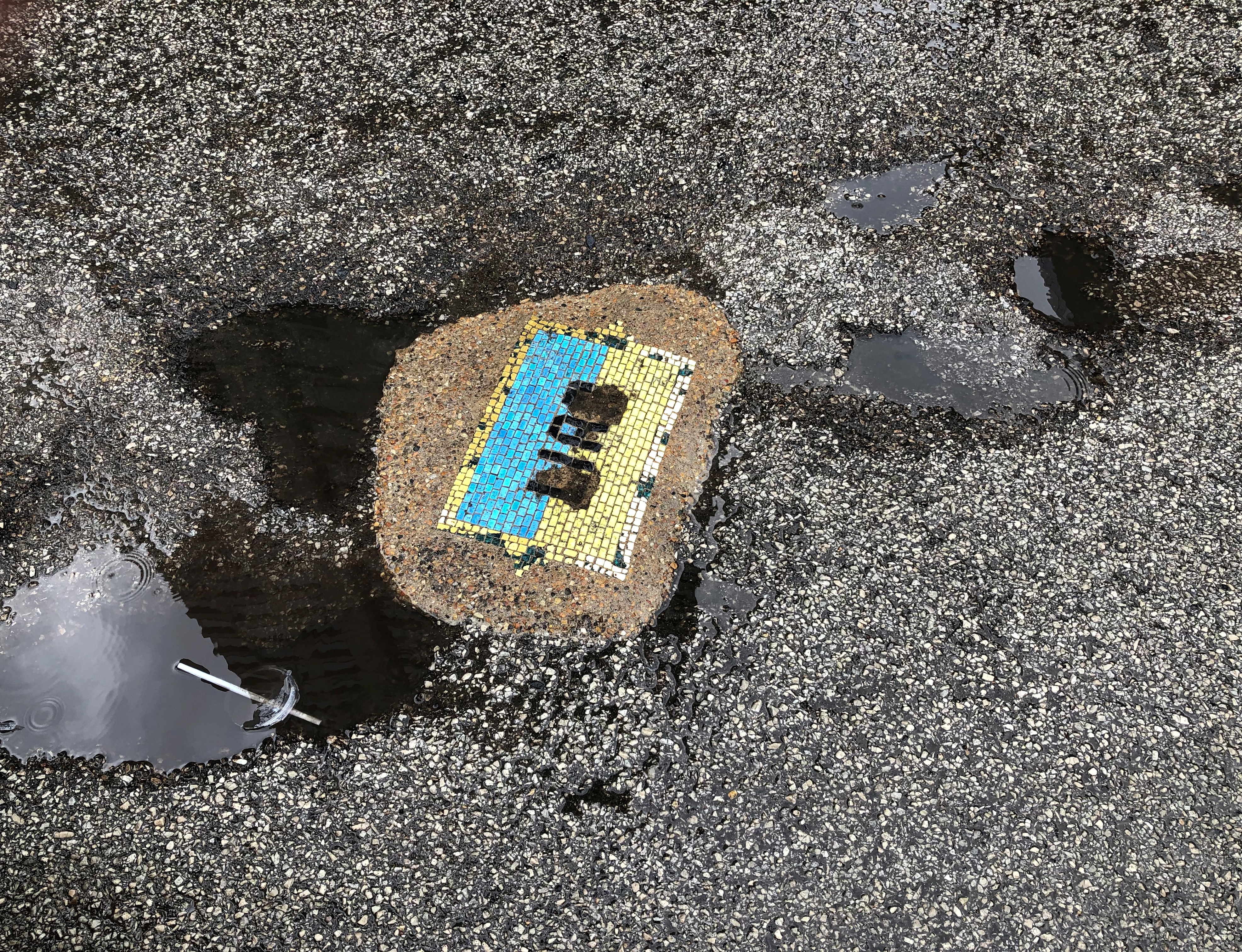
Also Chicago. Specifically, on the street. Make that in the street: a Toynbee tile-like embedment doing its part to remind us of the beleaguered Ukrainians.

Recently I started reading Illegal Tender, subtitled “Gold, Greed and the Mystery if the Lost 1933 Double Eagle,” by David Tripp (2004). A remainder table find some years ago; nice hardback. As it says, the book tells the intriguing (to me) story of the 1933 Double Eagle, which tends to make lists of the world’s most valuable coins, along with the likes of the Brasher Doubloon, the 1804 Bust Dollar and the 1913 Liberty Nickel. Coins so special that their names are capitalized.

On that particular list, I hadn’t heard of the 723 Umayyad Caliphate Gold Dinar, but wow, what a name, with images of ancient treasure in distant lands woven right into the words. The 1913 Liberty Nickel was the MacGuffin in an episode of the original Hawaii 5-0. Namely, “The $100,000 Nickel,” which first aired on December 11, 1973.

“A rare 1913 Liberty Head nickel, one of only five ever made, is to be auctioned at a coin show held at the Ilikai Hotel,” says the imdb entry on the episode. “European master criminal Eric Damien gets con artist and sleight-of-hand expert Arnie Price freed from jail so that he can switch a cleverly-made fake with the original before the auction. But things do not go as planned, as Price, fearing capture, tries to dispose of the nickel in a news rack, and the chase is on to recover the nickel before anyone else finds it.”

Naturally, McGarrett and his men recover the nickel. I don’t remember that specifically, even though I saw that episode either that day or on repeat, but that’s a safe assumption for the denouement. I do remember that I’d heard of the nickel before, probably in a Coins or Coinage article.

I think the episode at least partly inspired one of the Super 8 movies I made with friends David and Steve in junior high, The $300,000 Dime, which I think involved Swiss operative Hans Lan foiling the theft of the titular dime. Sadly, this and the other Hans Lan story, The Assassin, plus the SF non-epic Teedees of Titan and a couple of others whose names I’ve forgotten, are lost as the Hanging Gardens of Babylon, except that no one cares.