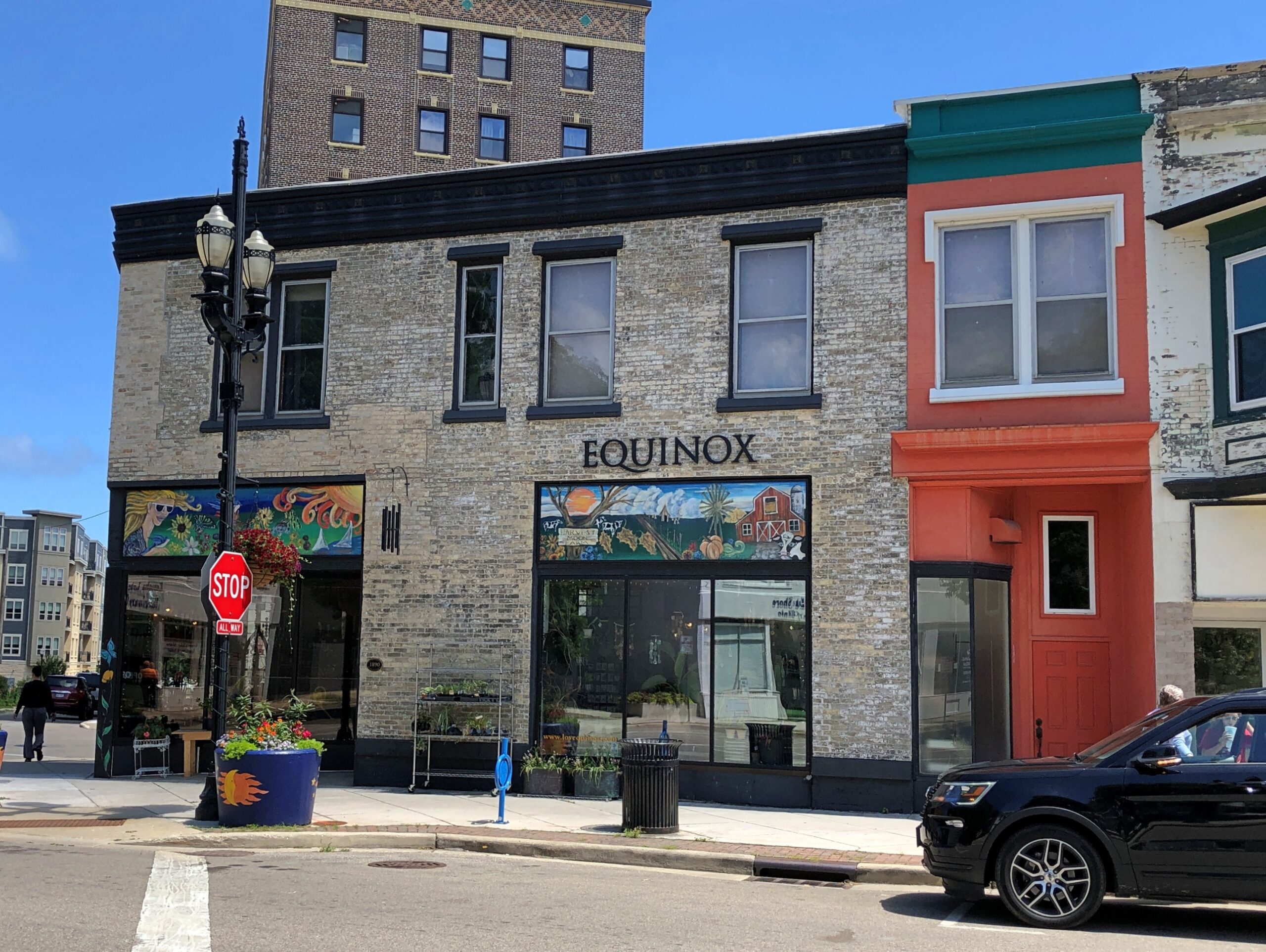
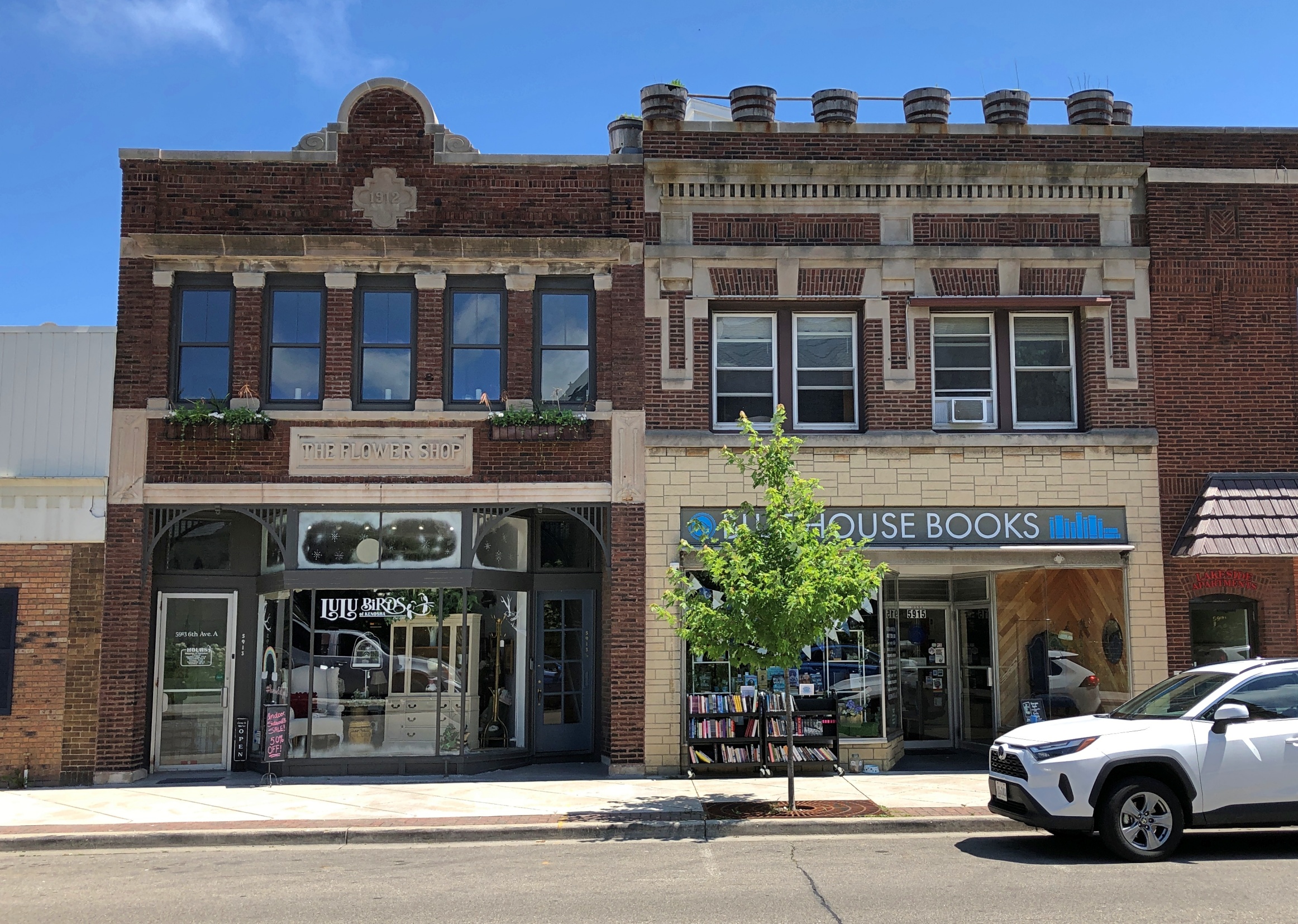
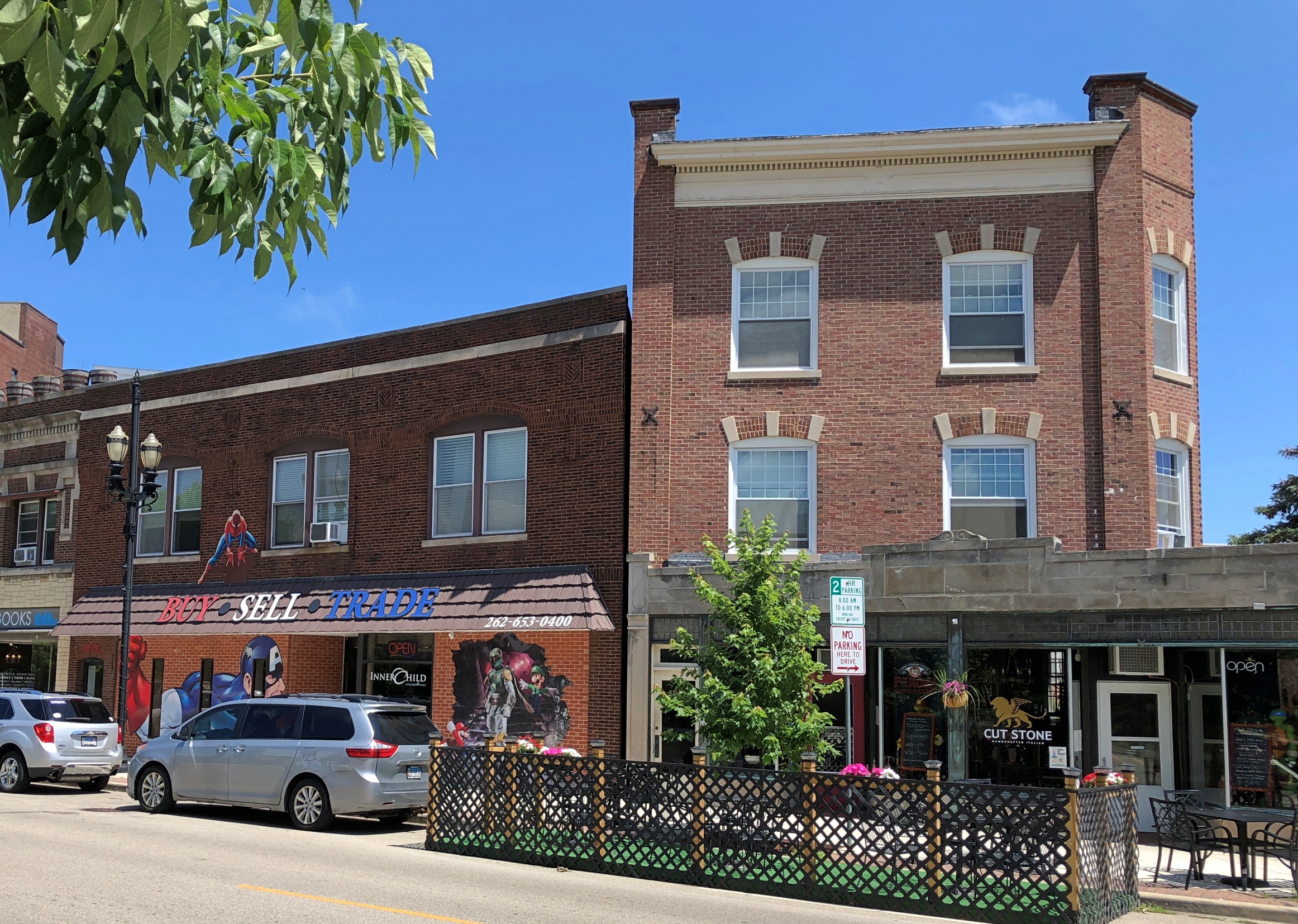
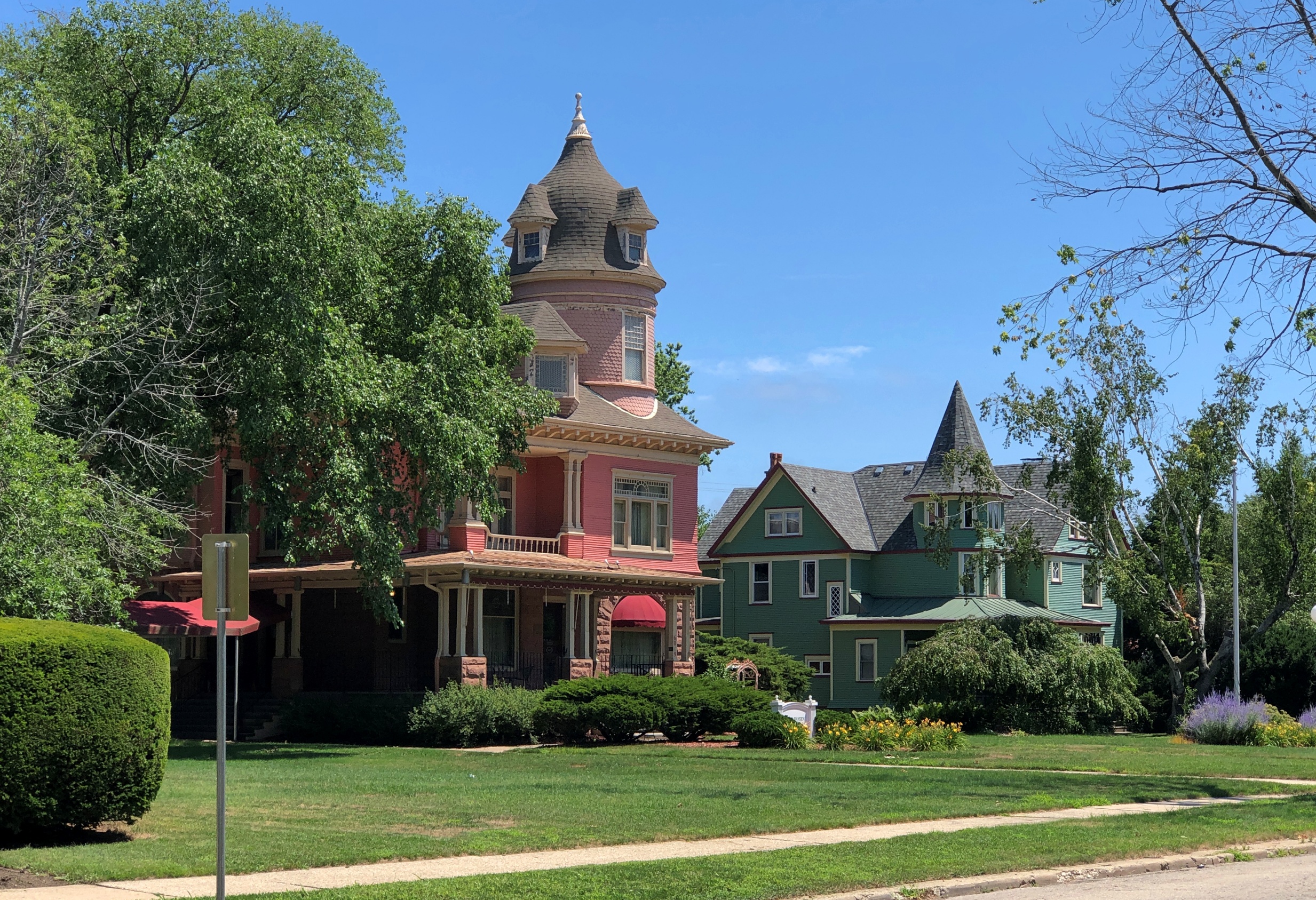
Elkhorn, Wisconsin

Labor Day weekend again? How does summer vanish so quickly? Back to posting on September 2.

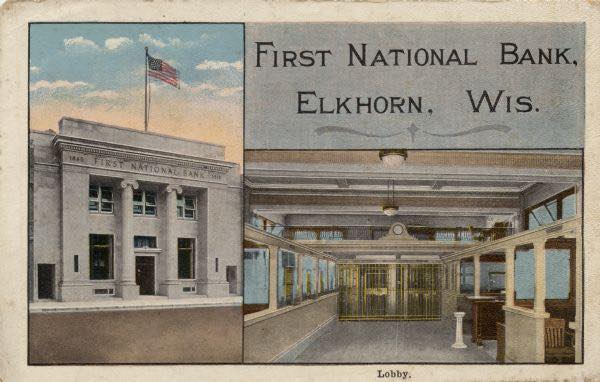
Once upon a time, one of the many First National Banks of the world stood in downtown Elkhorn, Wisconsin, complete with a sturdy bank interior common at the time. As seen in a postcard from the early 20th century.
Go looking for the bank these days, and this is what you find.
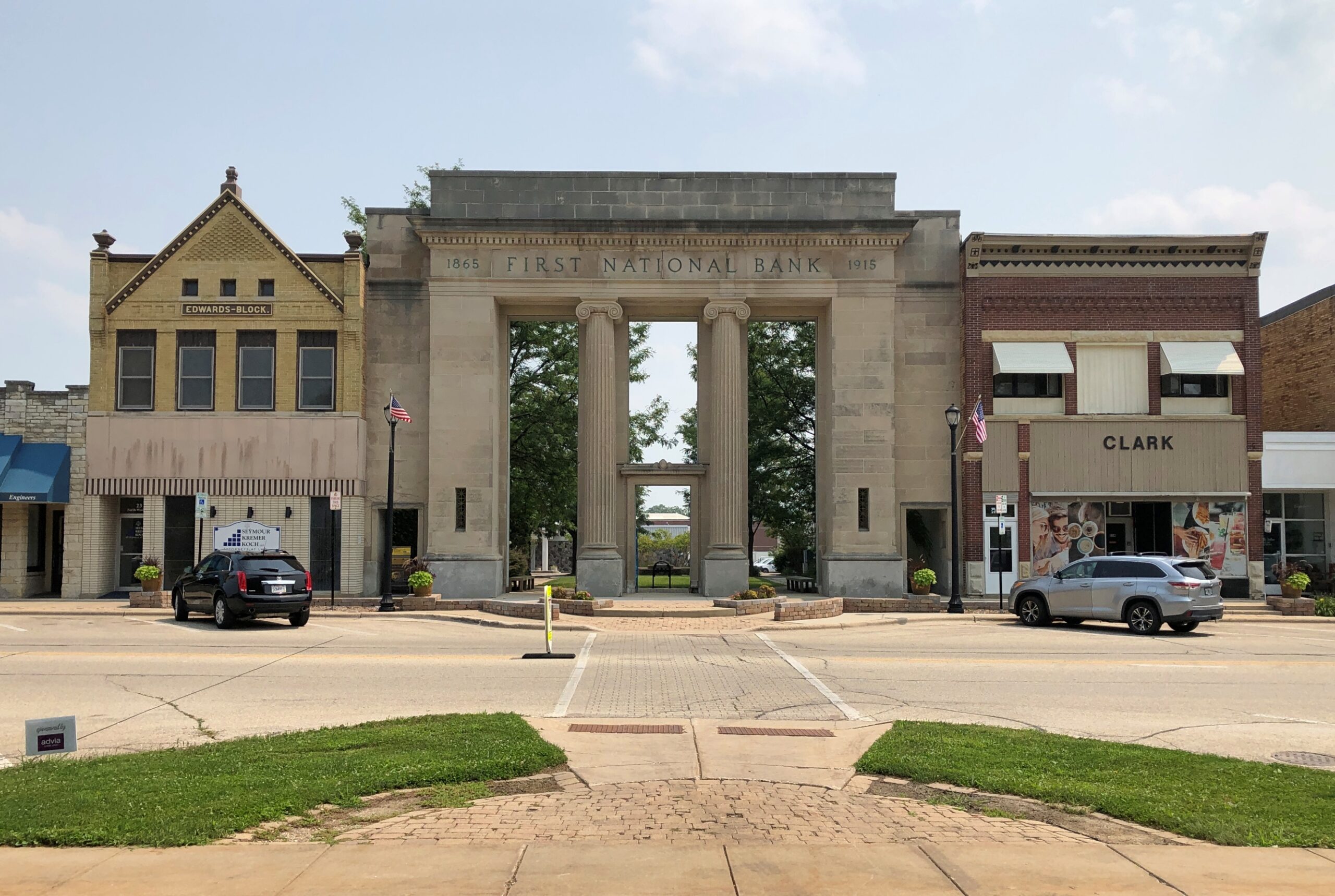
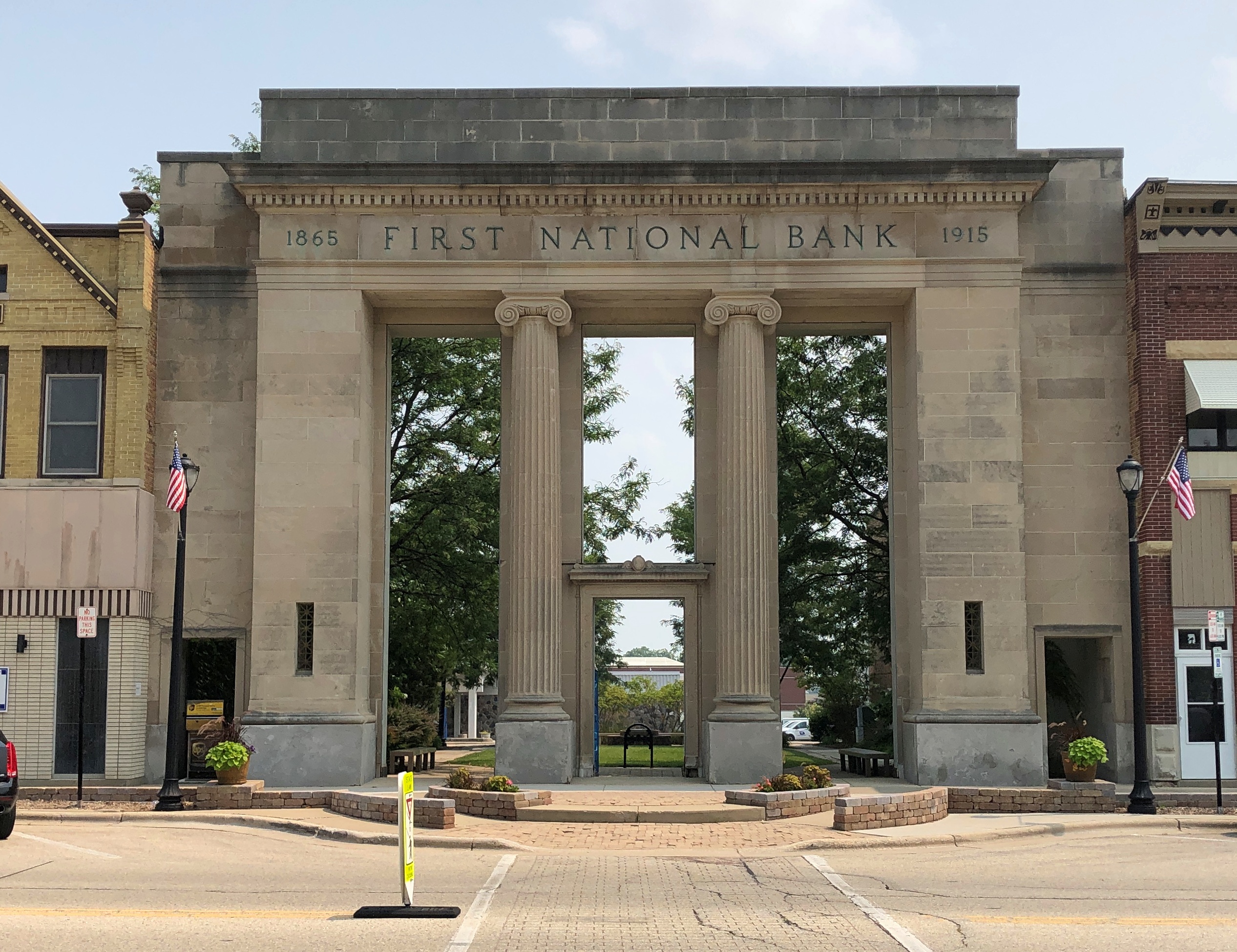
Elkhorn, Wisconsin
Elkhorn, Wisconsin

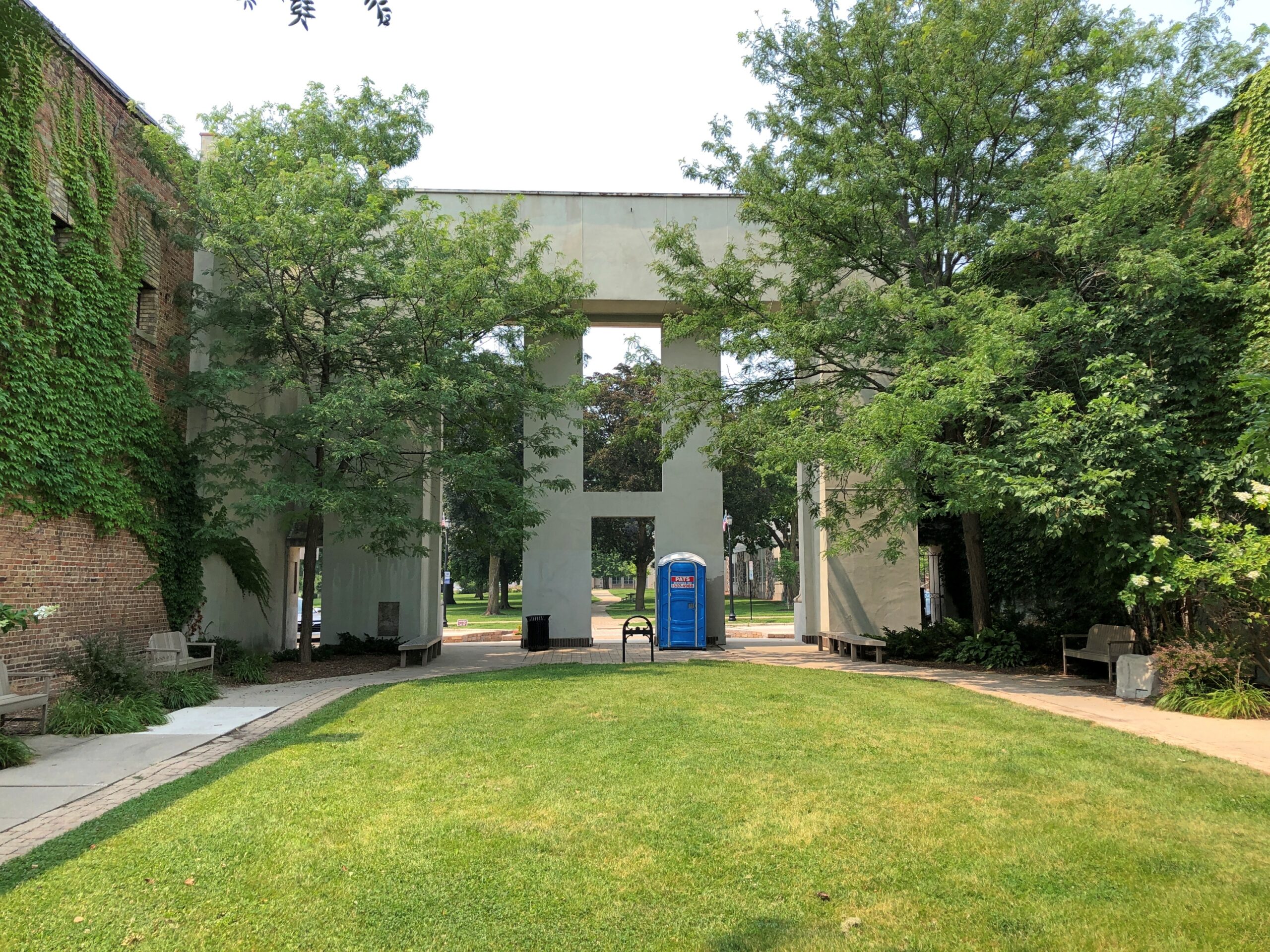
Once a bank, now a pocket park. The view from the inside, looking back at the facade.
Elkhorn, Wisconsin

There were no signs to indicate how the park came to be. A less imaginative act would simply have been to raze the old building in its entirety and leave a weedy gap in the downtown streetscape, hoping for redevelopment that might never come.

Inside the park is a sundial, dedicated to the memory of one Eidola Renner (d. 1983) of the Elkhorn Garden Club. Ah, garden clubs. The term makes me think of Khigh Dhiegh.
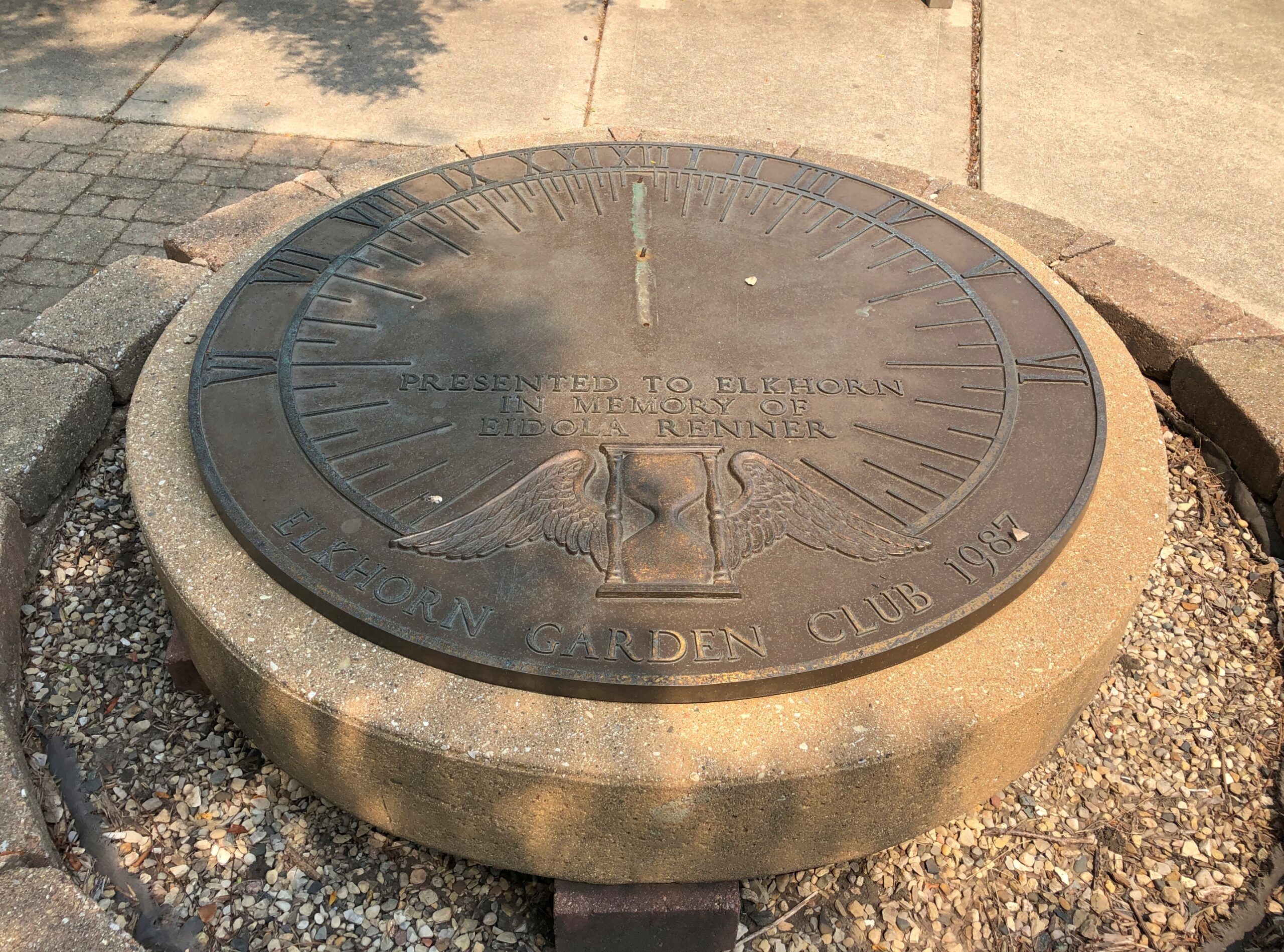
Elkhorn, Wisconsin

This must be her. The sundial – whose gnomon is missing, so it can’t function for telling time – has been there since 1987, so I assume the park has been there at least that long, if not longer.

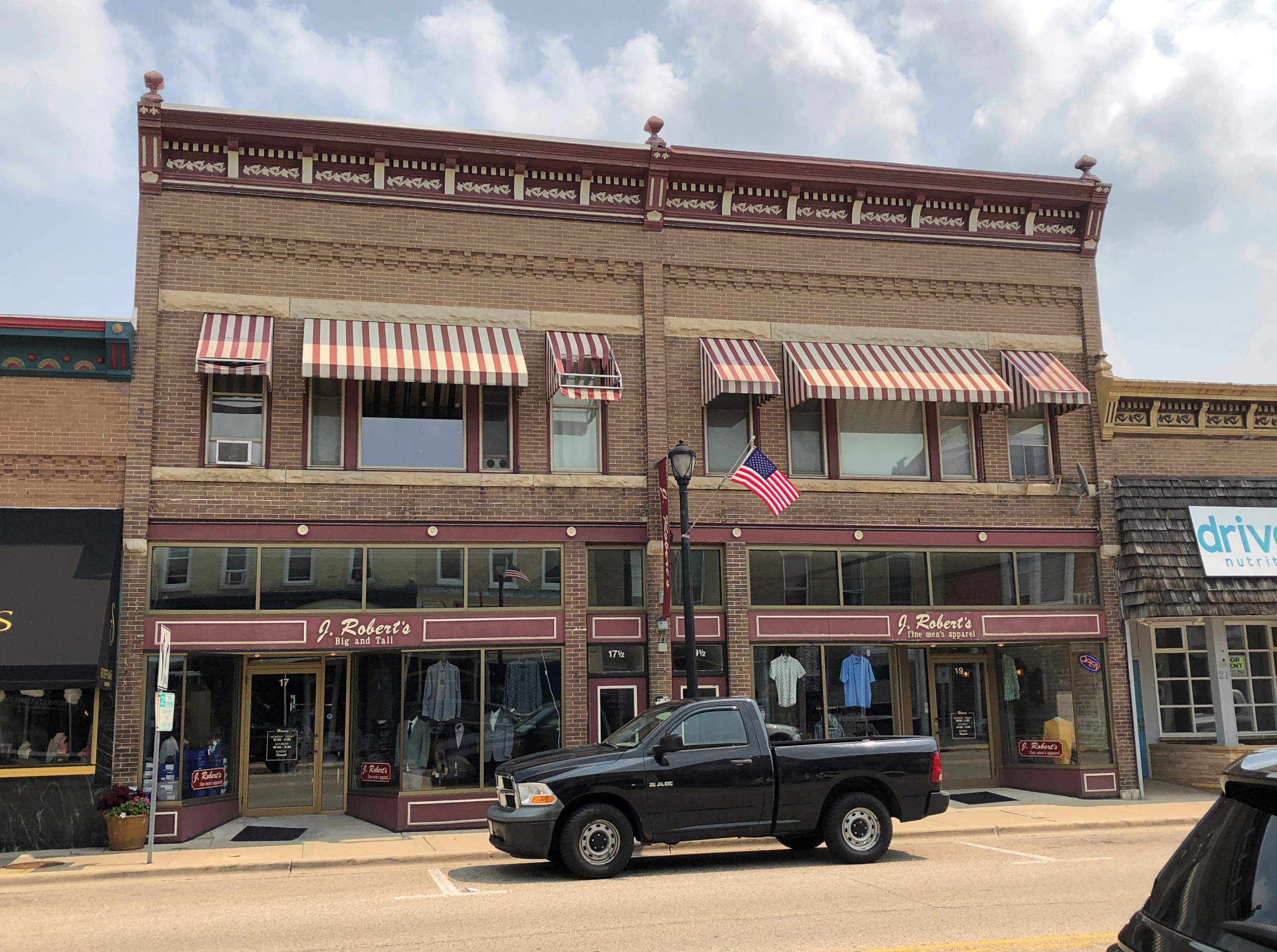
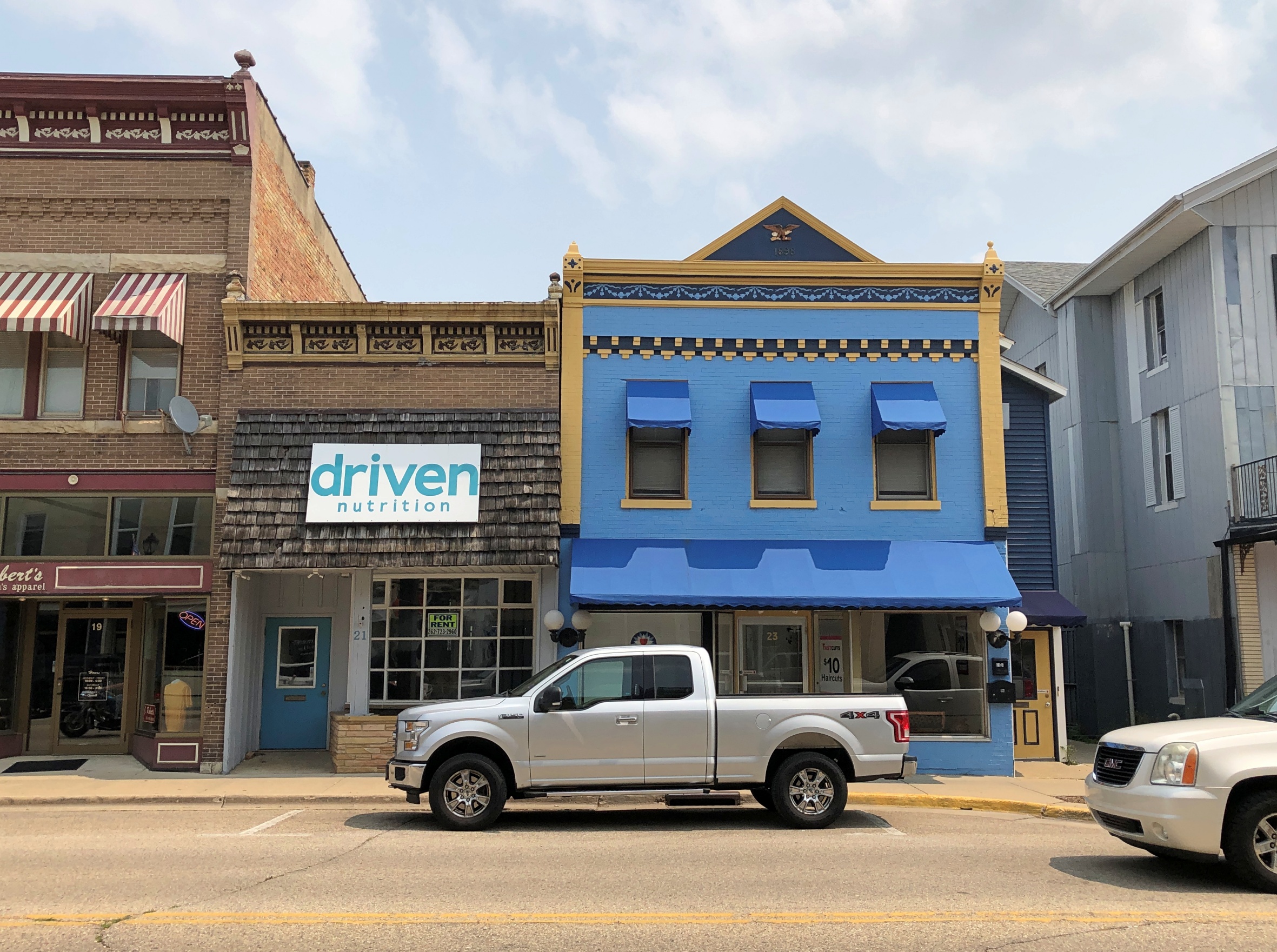
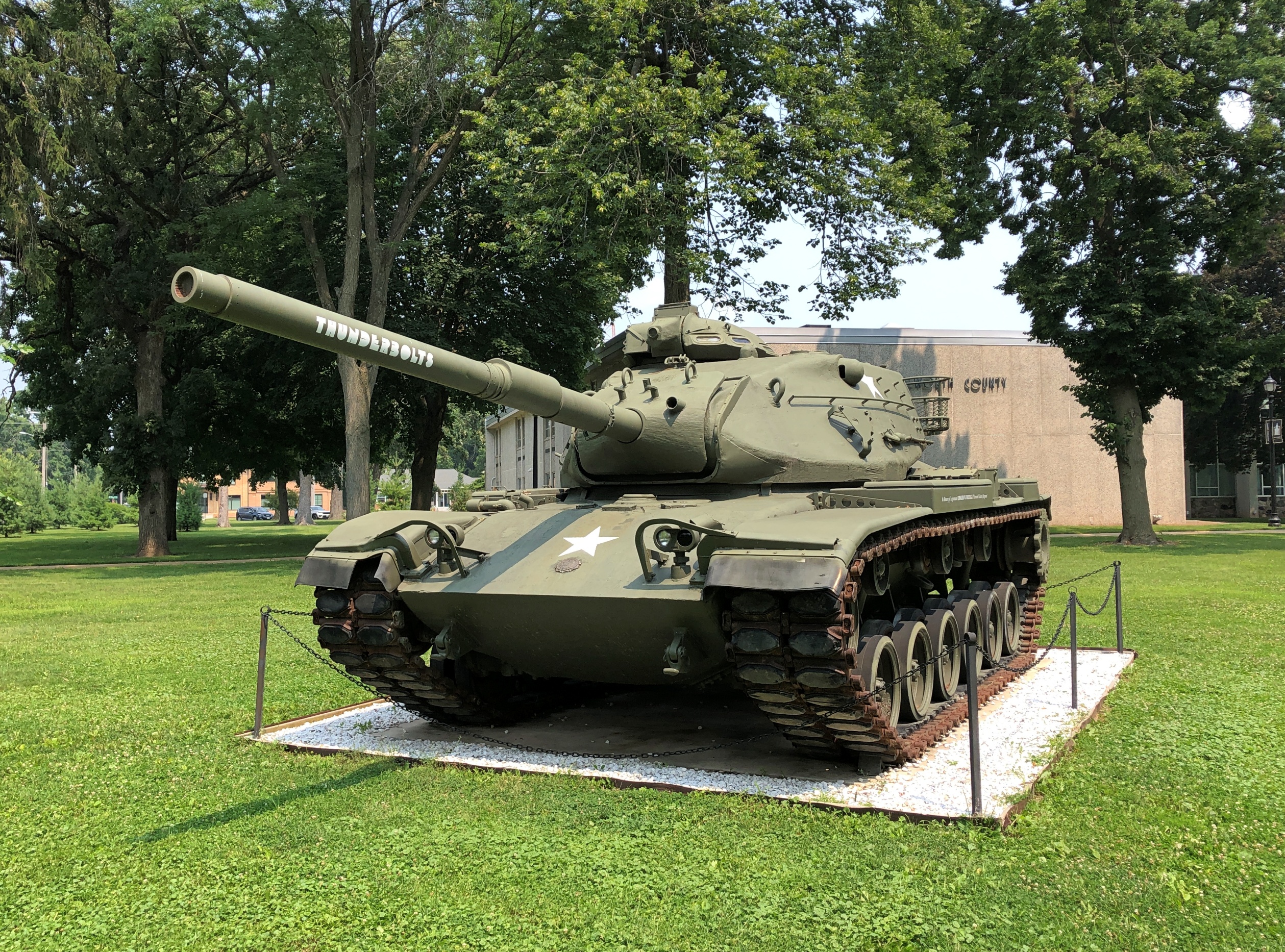
I arrived in Elkhorn on a warm day in early August, traveling by myself in southeastern Wisconsin. It wasn’t too hot for a stroll around the town’s municipal square, home to a “government center,” a mid-century box, but not the storied old courthouse that should be there.

There was a tank. How many tanks are loose in Wisconsin?
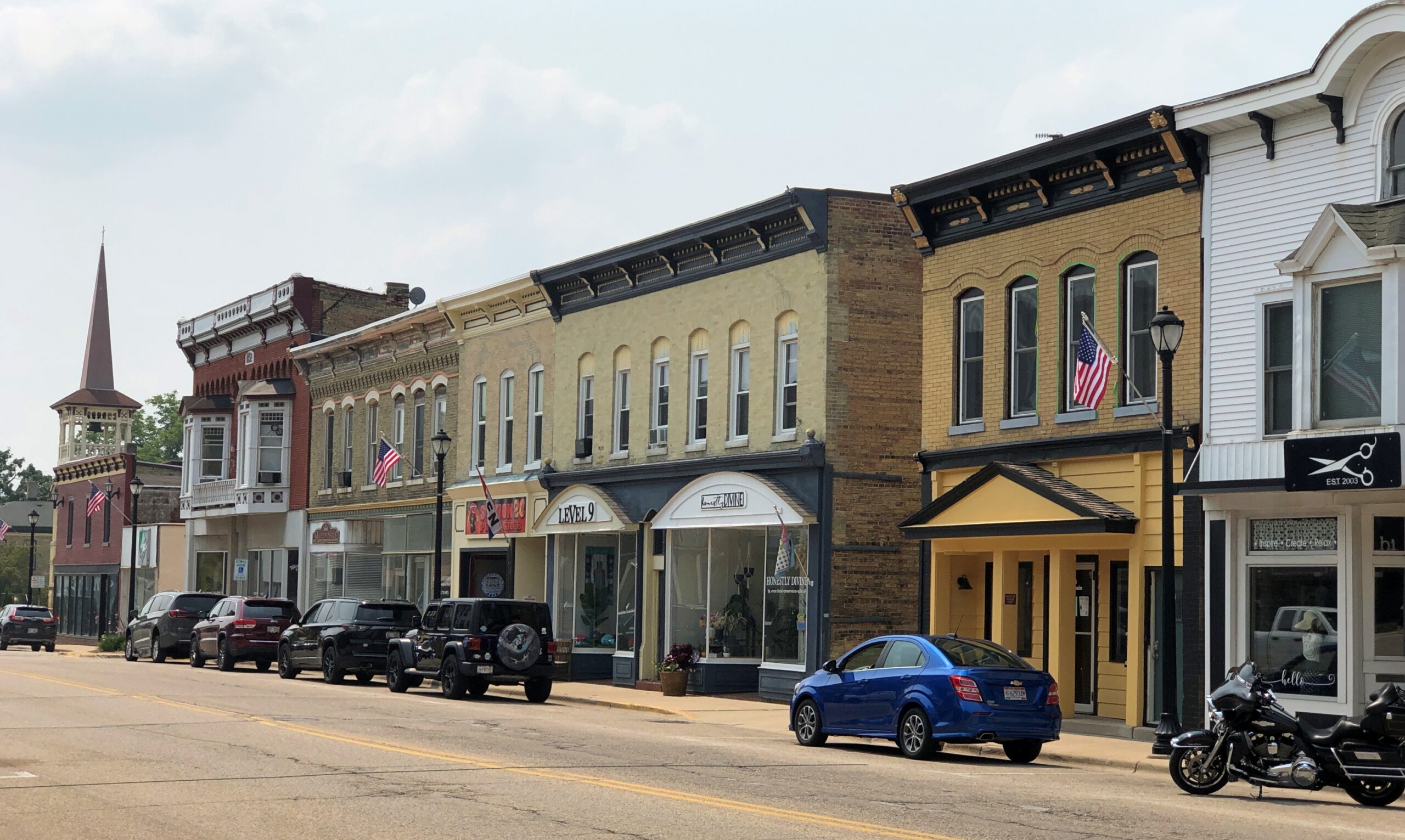
Well-tended buildings near the square.
Elkhorn, Wisconsin
Elkhorn, Wisconsin

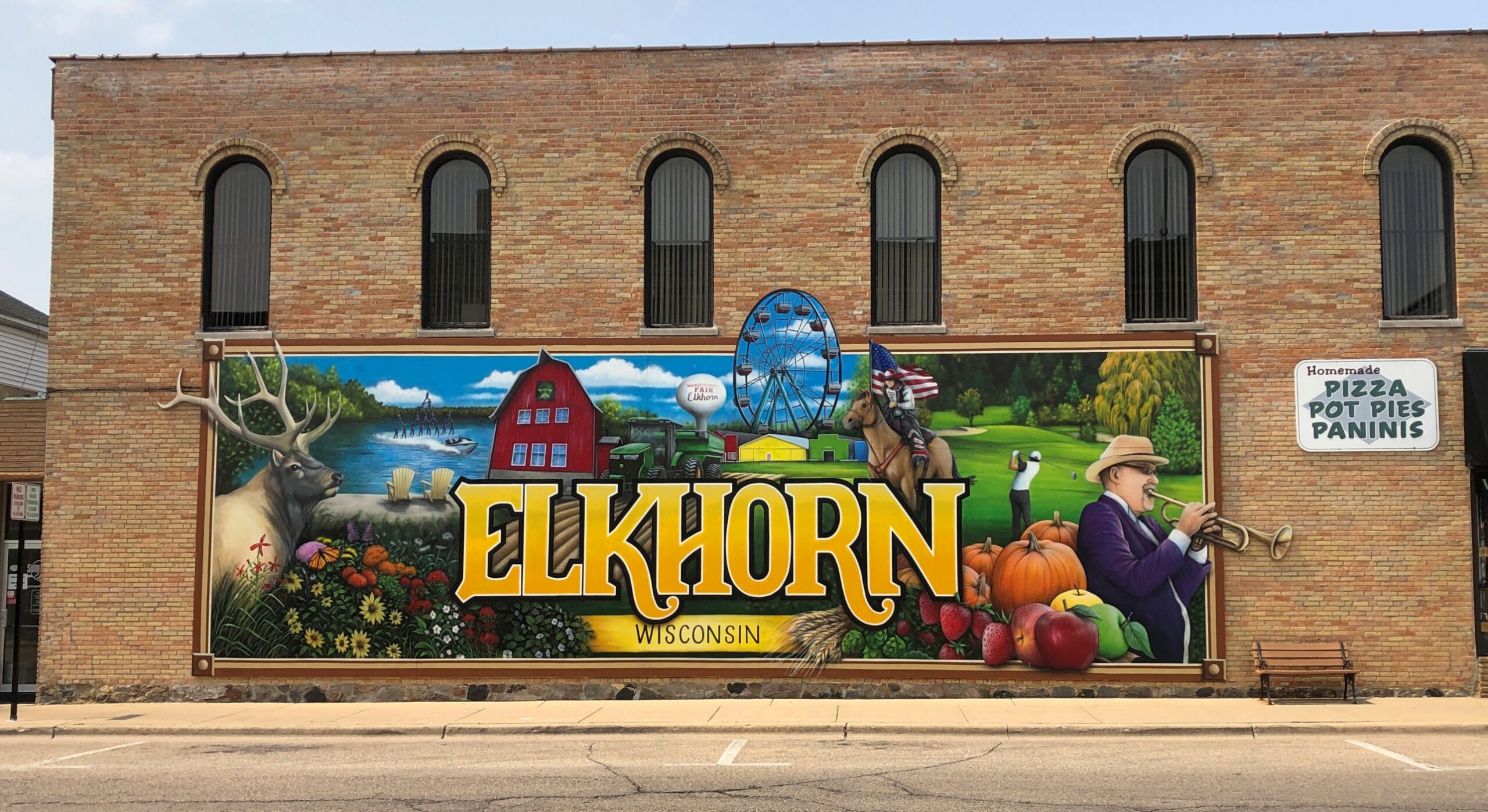
Every town has one of these, it seems.
What is that?
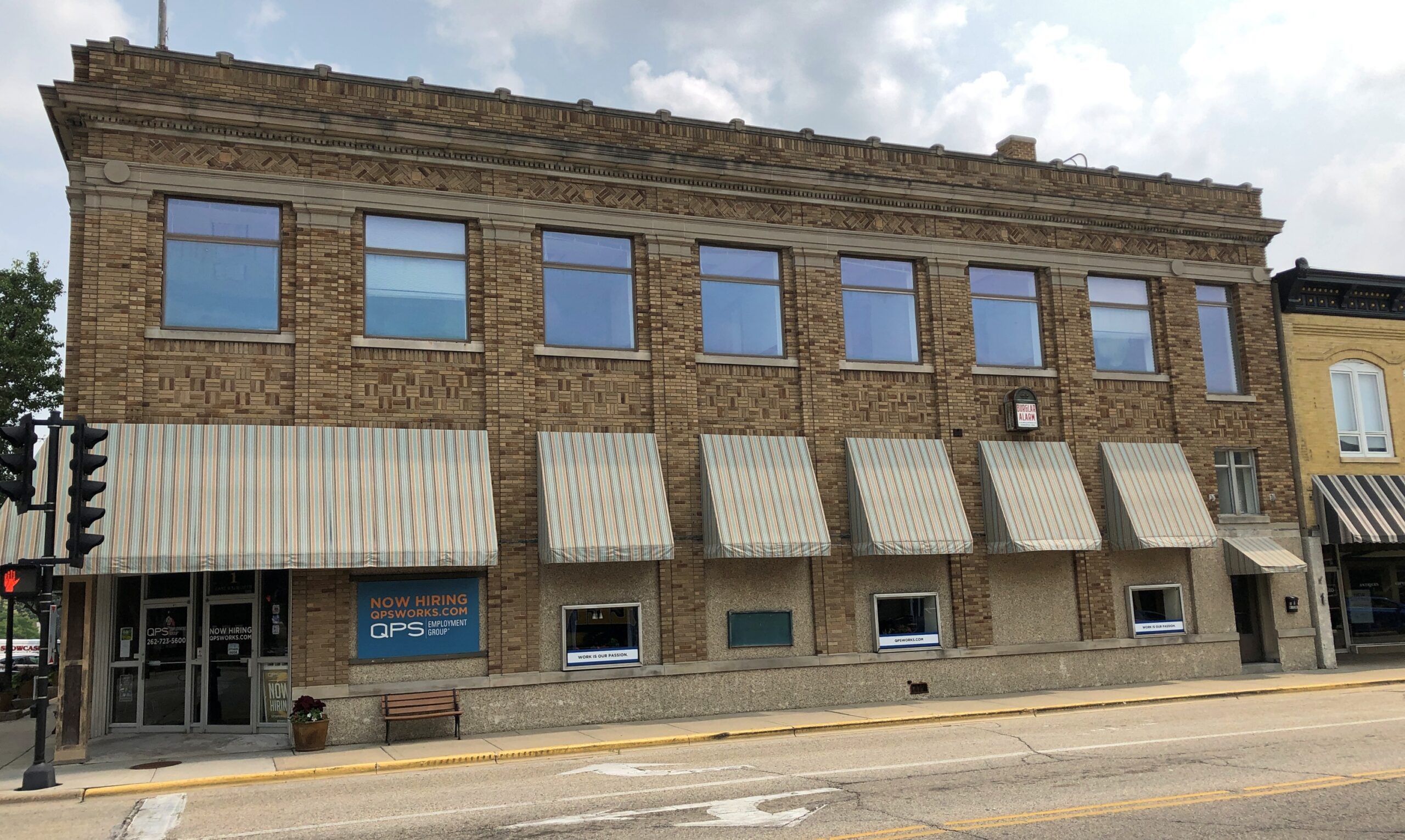
Elkhorn, Wisconsin

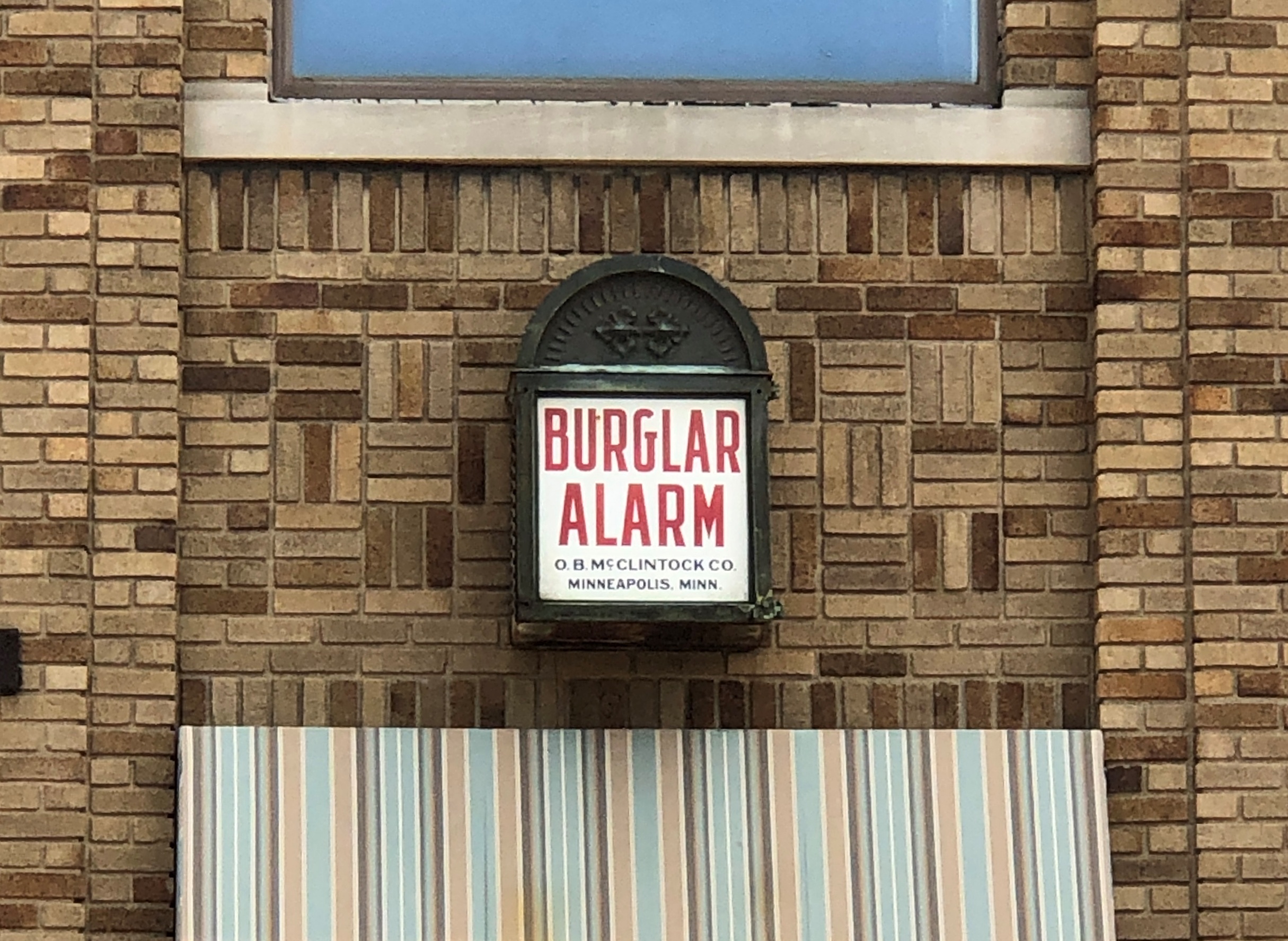
Public notice of an antique alarm system, that’s what.
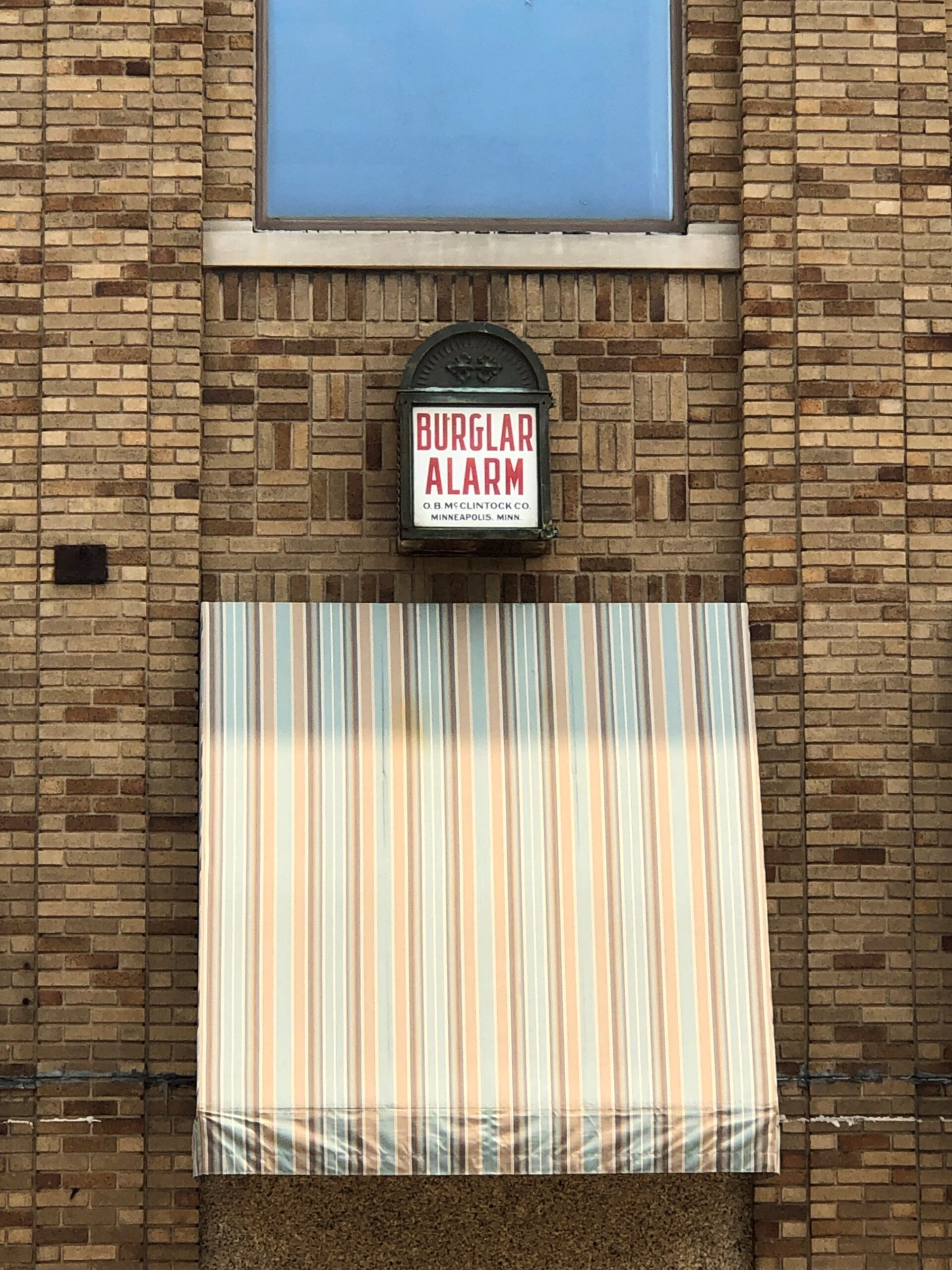
Not the first one I’ve seen. This one was made by the O.B. McClintock Co. of Minneapolis. “In 1901 O.B. McClintock came to Minneapolis and founded the American Bank Protection Company, which produced burglar alarm systems,” explains a site called Lavilo. “After his resignation in 1908, he opened the O.B. McClintock Company to ‘manufacture electrical chime and clock systems,’ which he sold to financial institutions all across the United States.”

Banks began telling the public the time quite a while ago (McClintock surely wasn’t the first). I’m of course old enough to remember dialing time and temperature, though I can’t remember which financial institution sponsored the service in ’70s San Antonio.

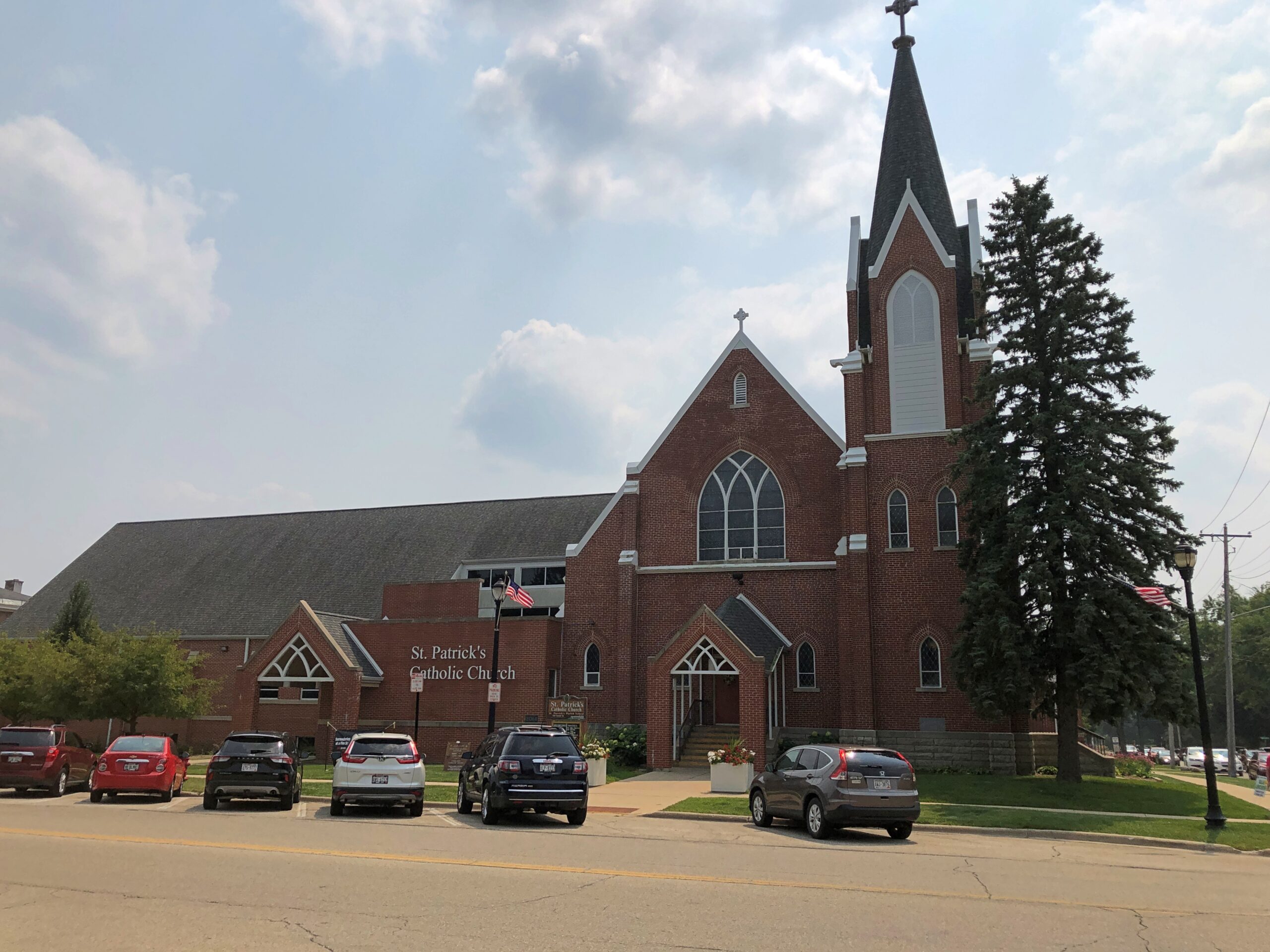
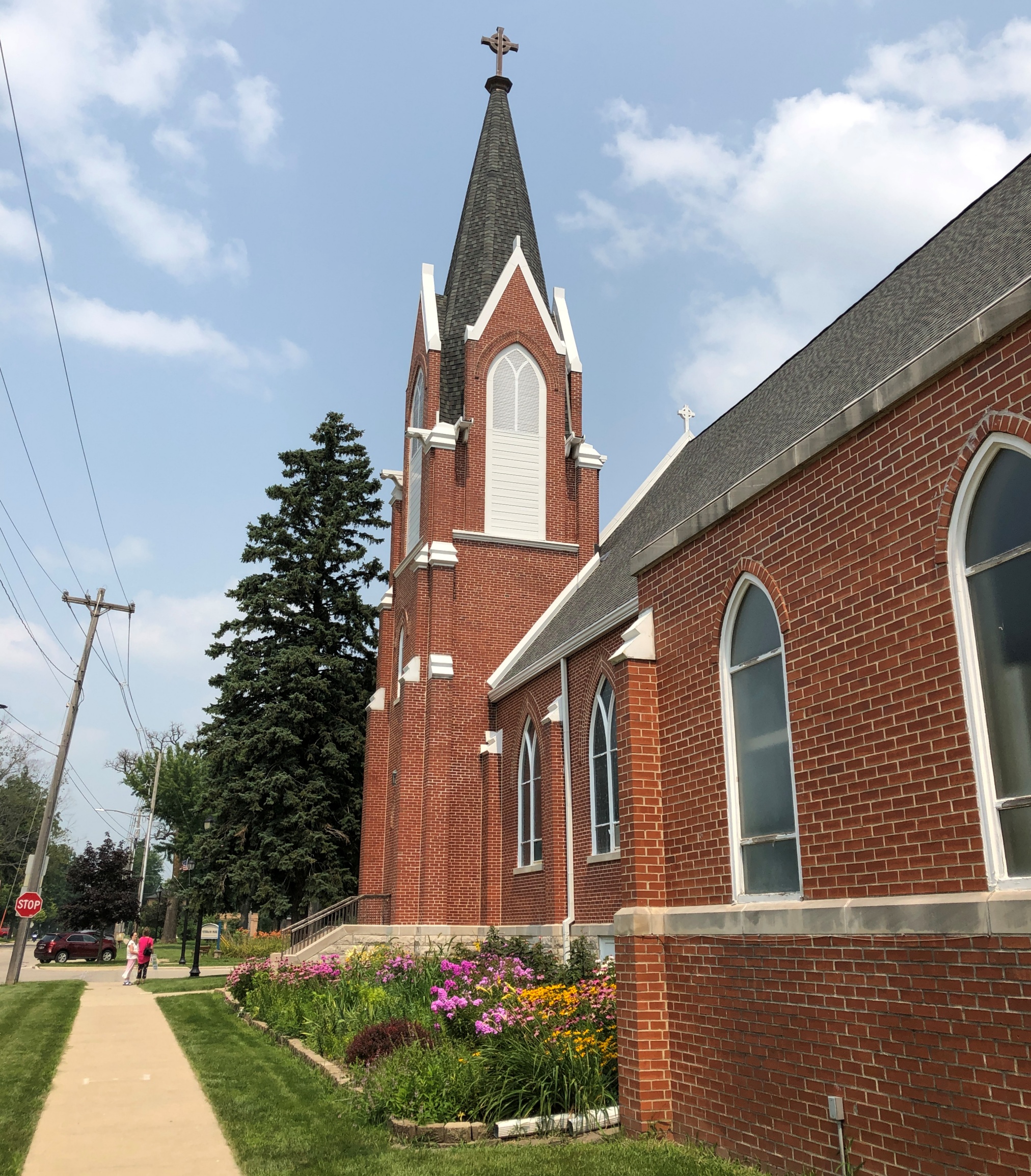
Elkhorn has a fine selection of downtown churches as well. Such as the First Congregational United Church of Christ.
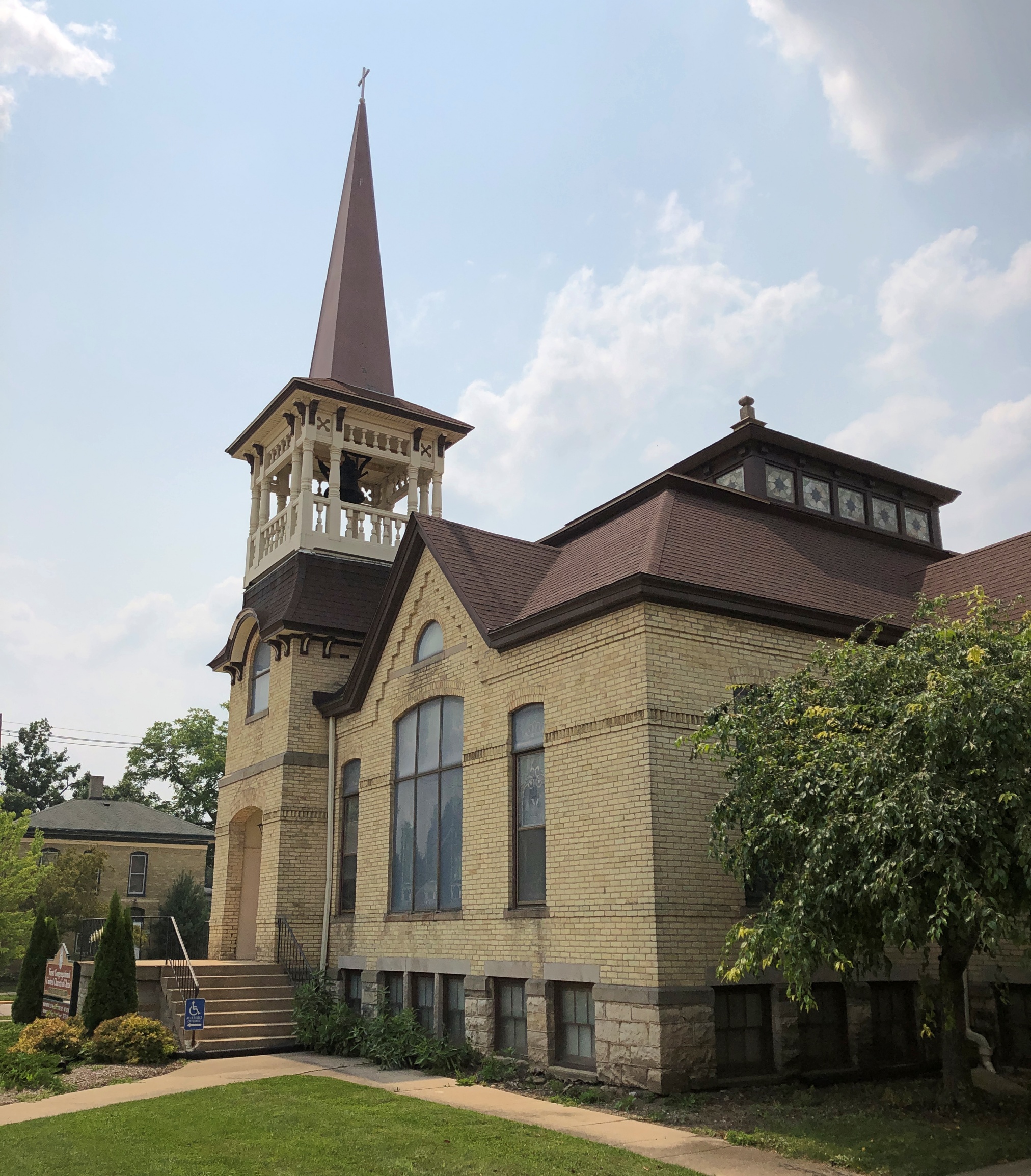
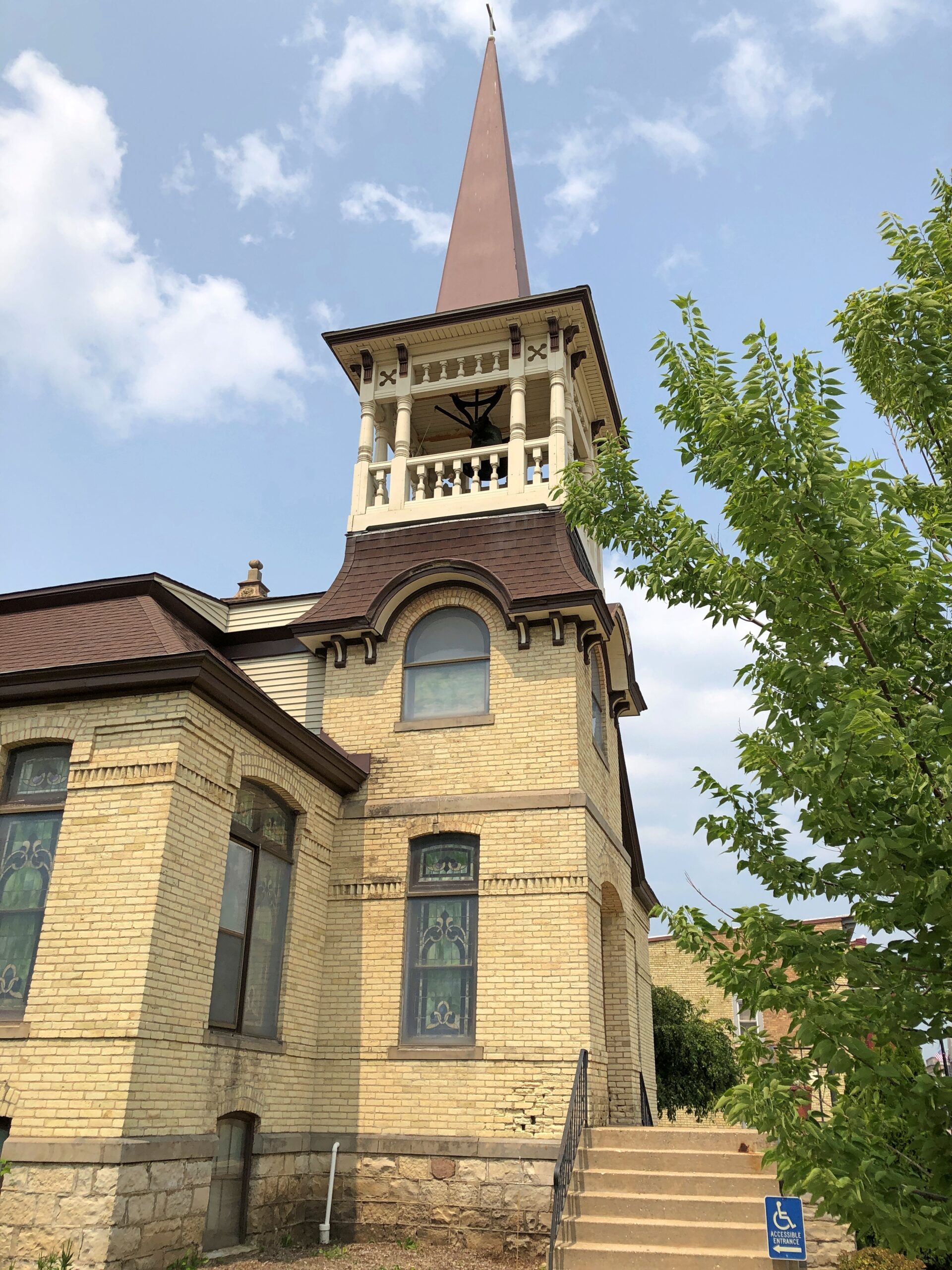
Elkhorn, Wisconsin
Elkhorn, Wisconsin

St. Patrick’s Catholic Church.

Elkhorn, Wisconsin
Elkhorn, Wisconsin

St. John in the Wilderness Episcopal Church.
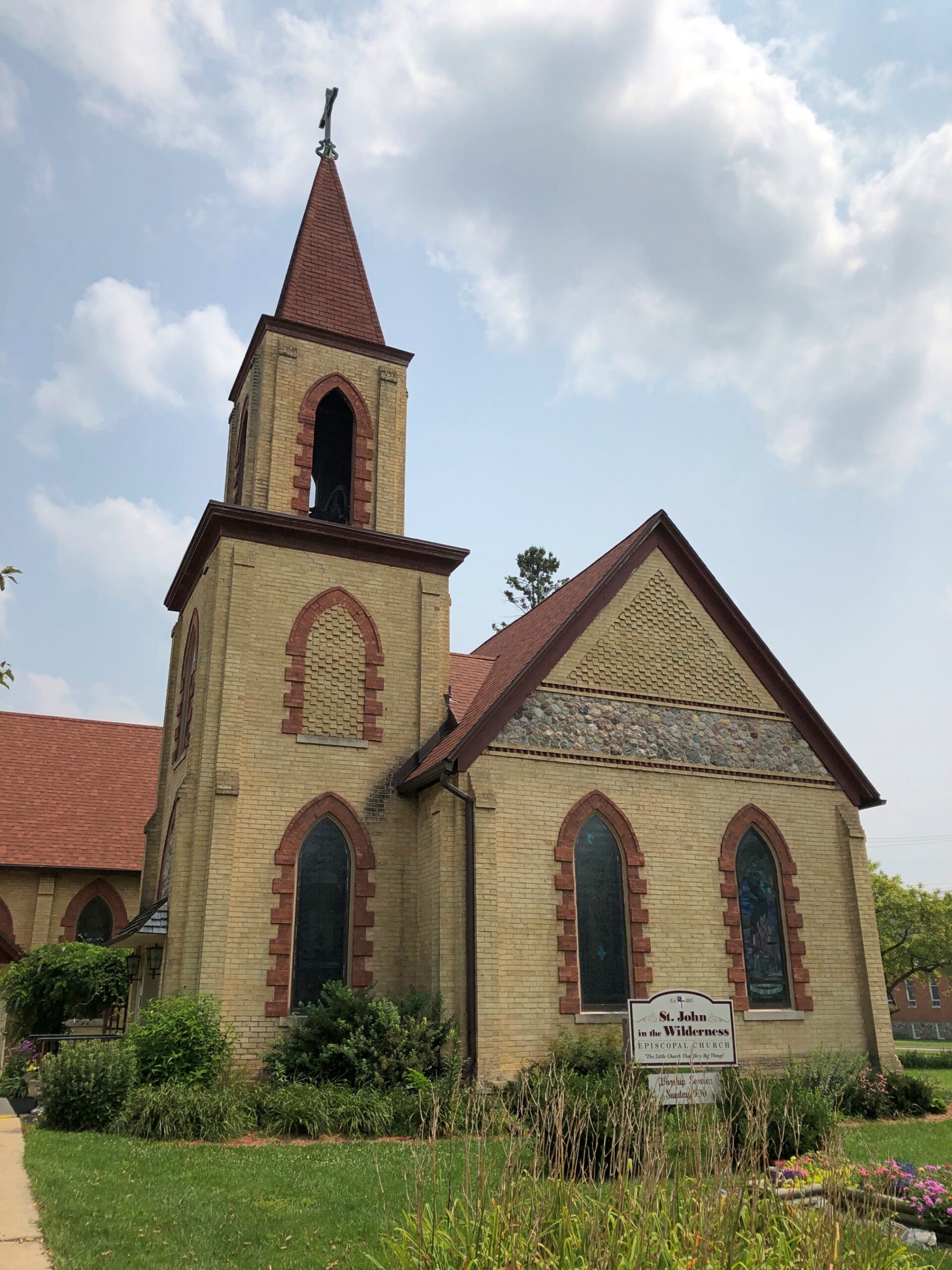
Elkhorn, Wisconsin

Founded in 1841, back in Wisconsin Territory days, so “wilderness” was probably apt at the time.
Kenosha Walkabout, Featuring Franks’ Diner & Simmons Memorial Library

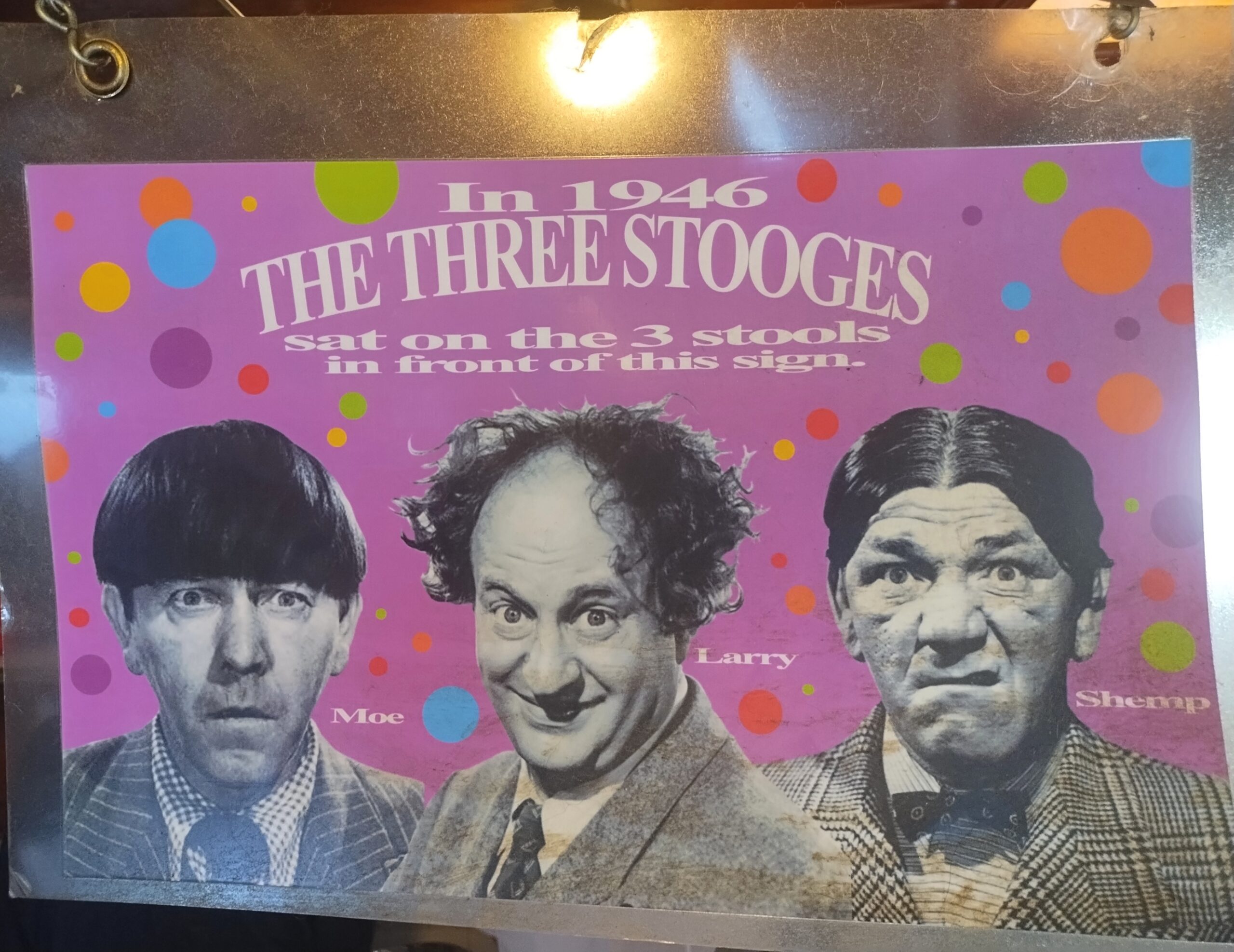
Always good to see their beaming faces.

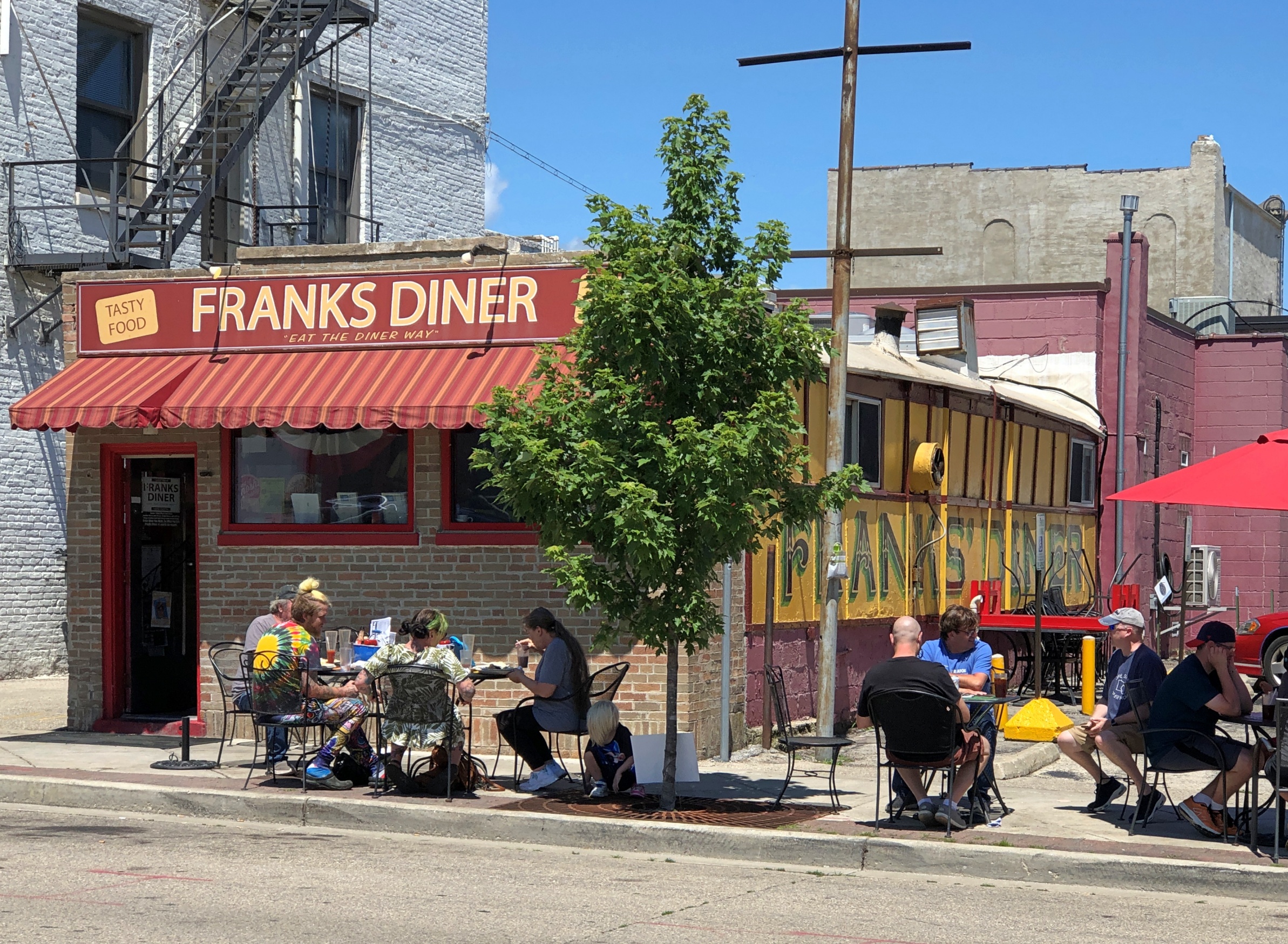
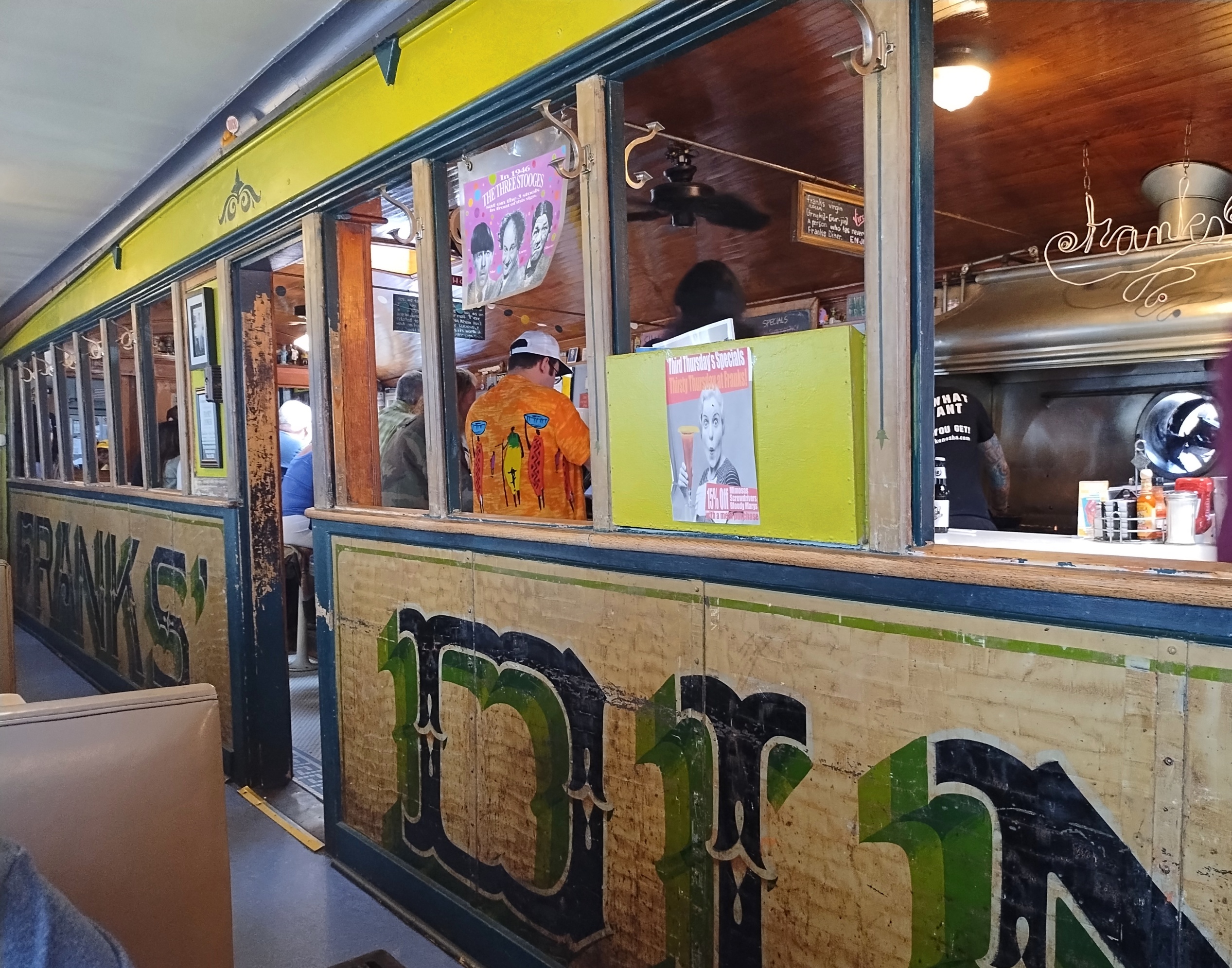
The poster is on a window at Franks’ Diner, formerly an exterior window, but with an expansion of the diner many years ago, now facing the added section, where Ann and I had lunch on a late July Friday. Kenosha, home of Franks’, was another stop in our recent rambles around southeastern Wisconsin.

Finding Franks’ Diner was no serendipity. We’d been there, back in 2012. The Stooges, back in 1946. I’ll bet they were playing the nearby Kenosha Theater, which is still standing, but in need of restoration.

Not only is the 99-year-old Franks’ still there, it’s still dishing up dandy diner fare at popular prices. Back then, I wrote:

The place had that diner smell: eggs and meats and hash browns and coffee. It also had that diner sound: the murmur of conversation, workers calling to each other, silverware scraping plates, metal clinking metal, the hiss of the griddle.

It was packed. A row of people sat at the counter, while others were at booths in the small room added to the counter room. A line of people waited for their seats in a long row behind the people at the counter.

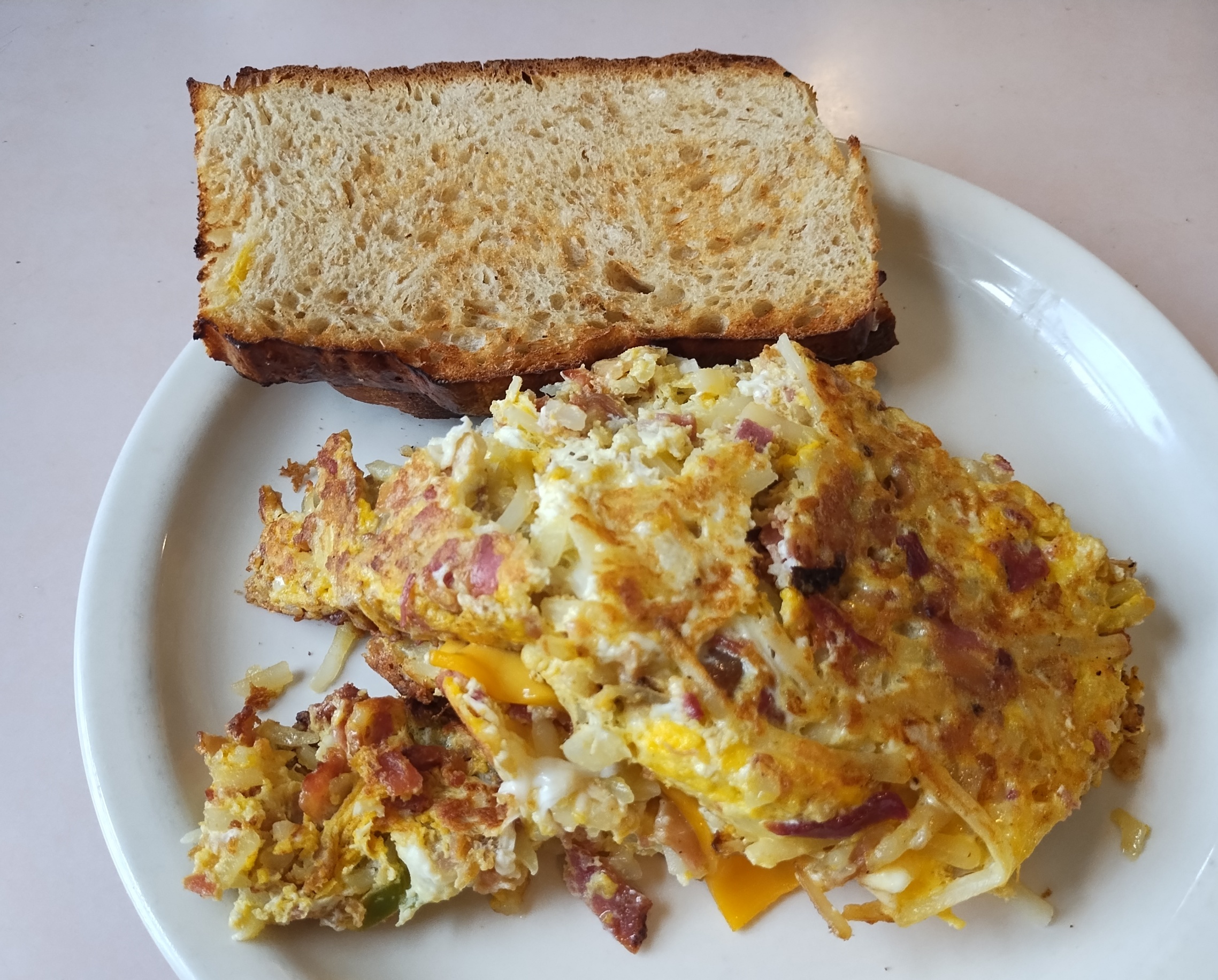
That’s exactly the same as our July visit, except that people waited outside, since it was summer instead of winter and (of course) prices were higher. Once seated, I had the Garbage Plate. I’d skipped it last time, and I wasn’t about to miss it this time around.

2012: The star of the show is its Garbage Plate, a concoction of hash-brown potatoes, eggs, green peppers, onions, jalapeños (if you want them), and a choice of three or fewer meats (or including no meat). The thing is seriously large. The standard Garbage Plate has five eggs.

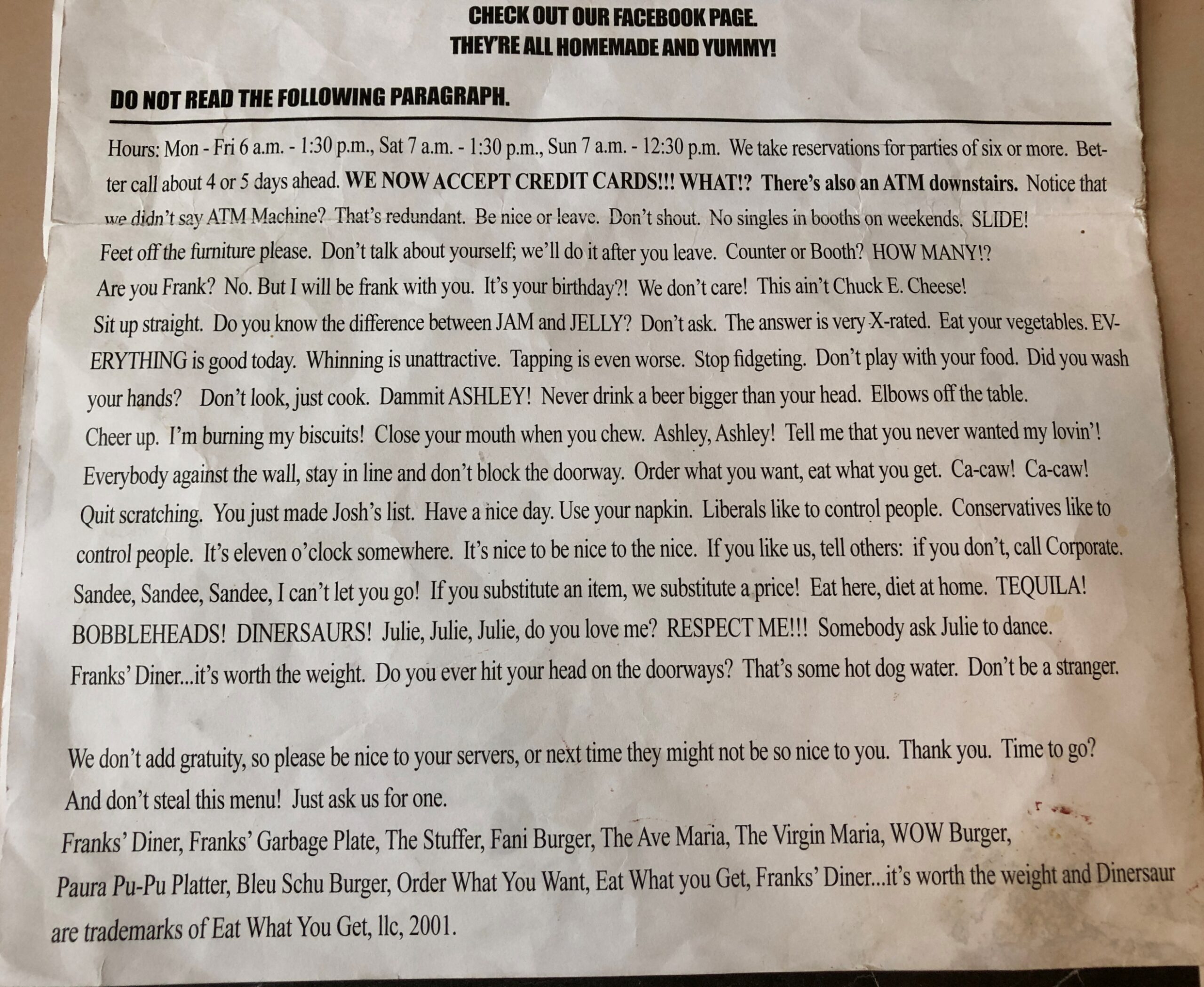
The restaurant also supplies some reading material.

After lunch, we went a few blocks away and parked the car in the shade of large trees in Library Park. Ann waited in the car with the windows down – it was very warm, but not too warm for a few minutes of that – while I wandered around the immediate area, including a couple of streets of storefront retail in vintage structures.

Houses across the street from where we parked.

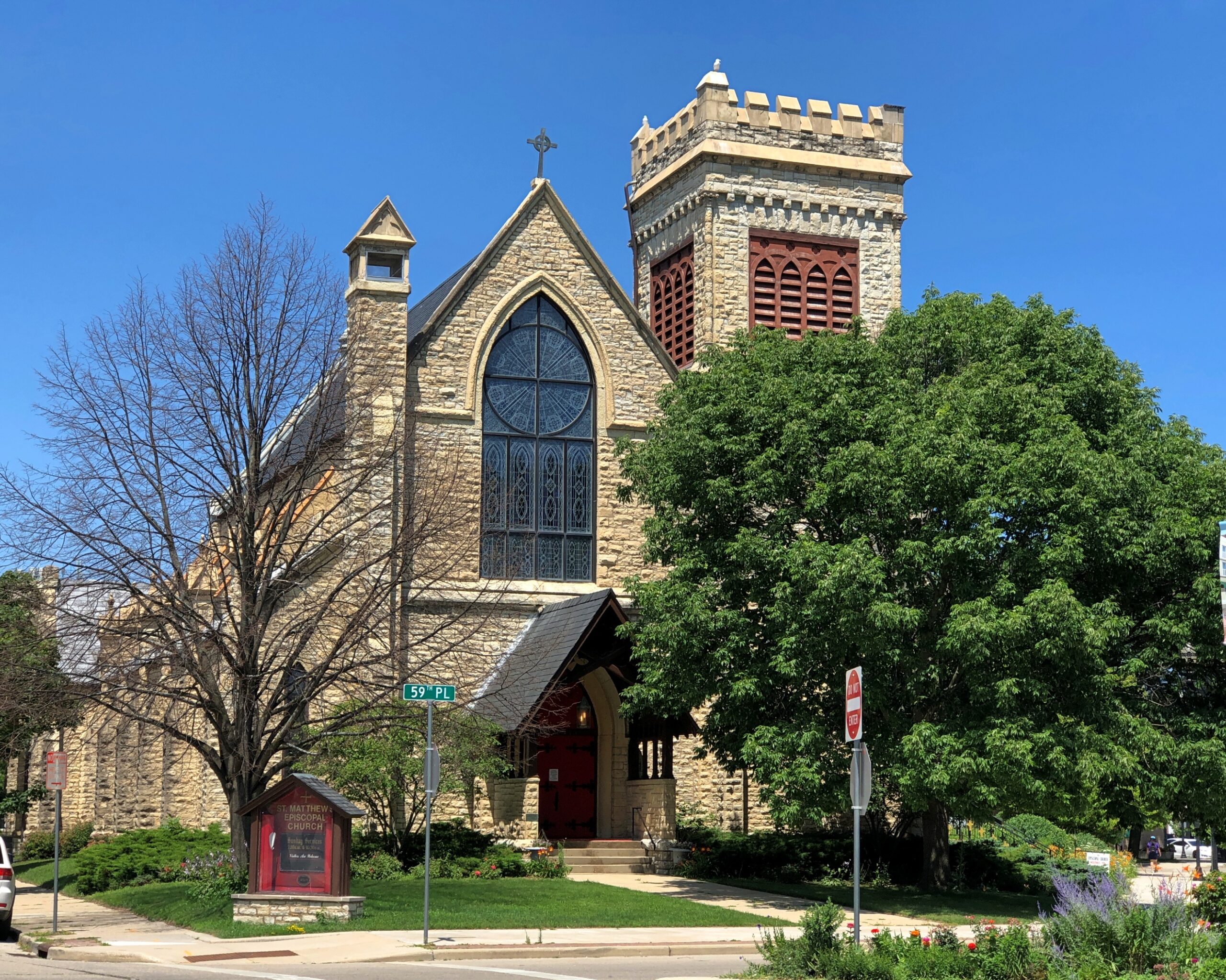
The nearby St. Matthews Episcopal Church.

Kenosha

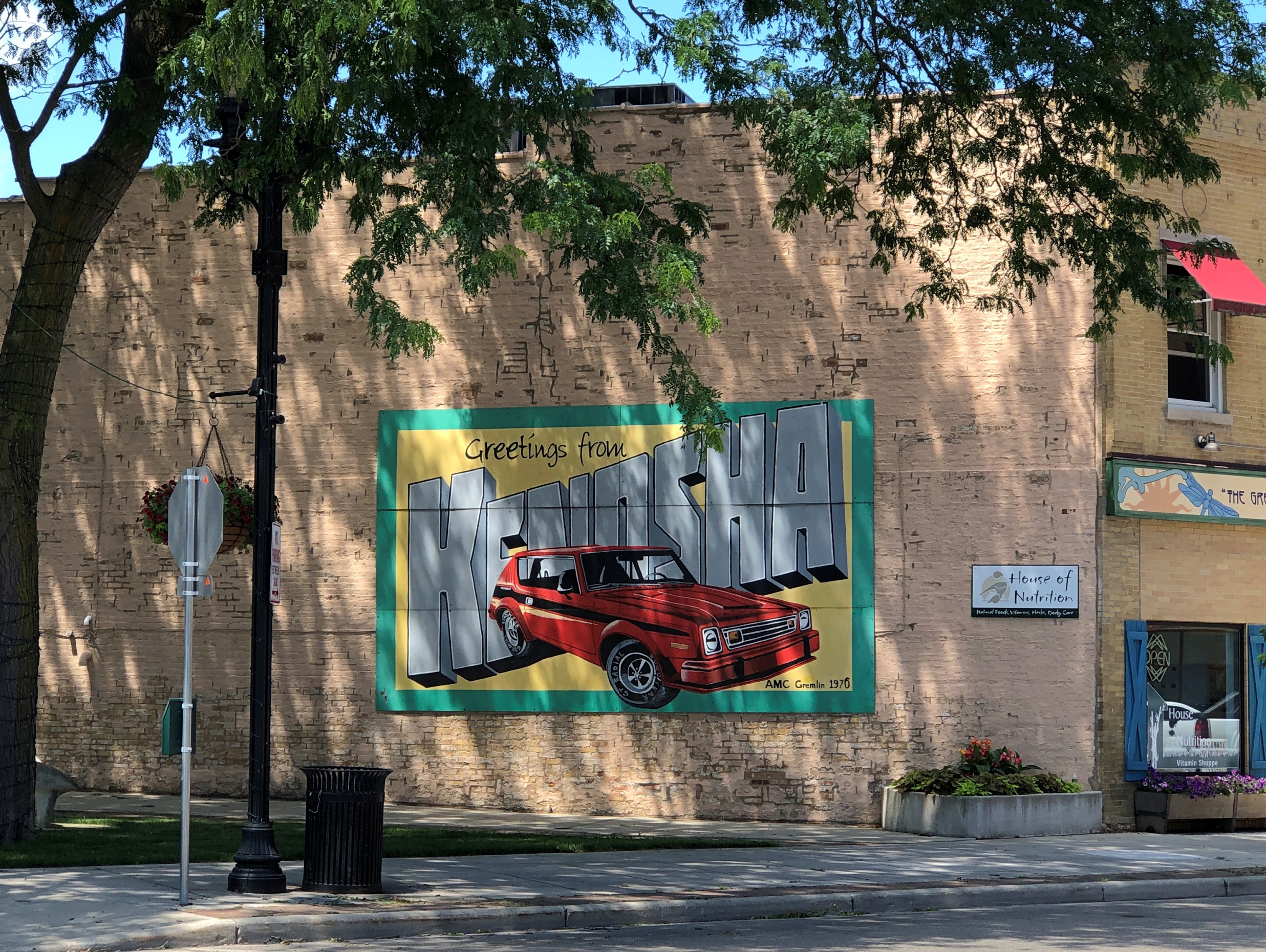
The inevitable welcome mural. The 1970 Gremlin is an unusual touch. But they were made in Kenosha, so not that unusual.

Kenosha

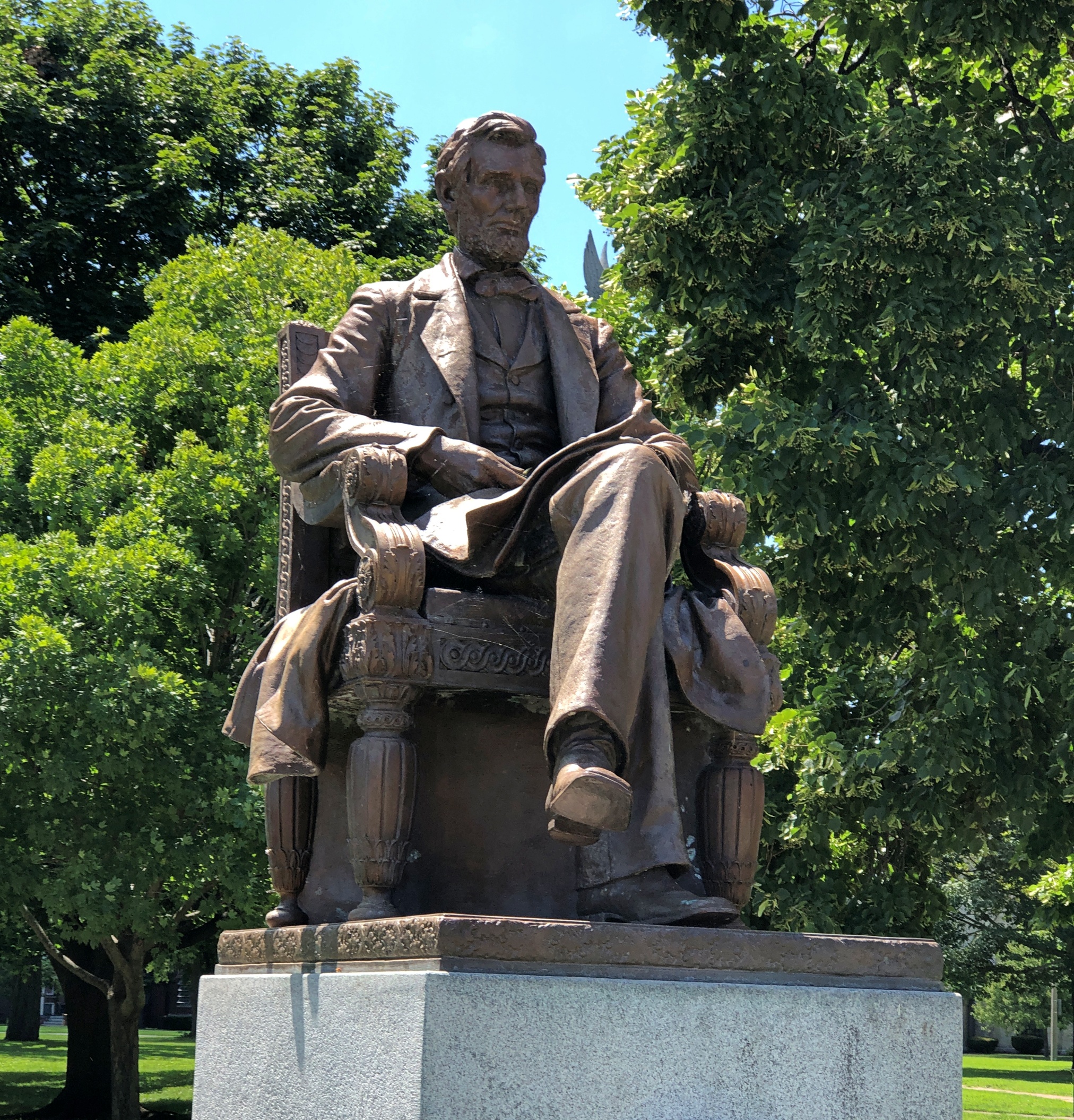
At the edge of the park, a seated Lincoln. Sculptor Charles Niehaus (d. 1935) did the work. Just one of many that he did all over the place. The president has been sitting there since 1909, centennial of his birth, with restoration work done in more recent decades.

Kenosha

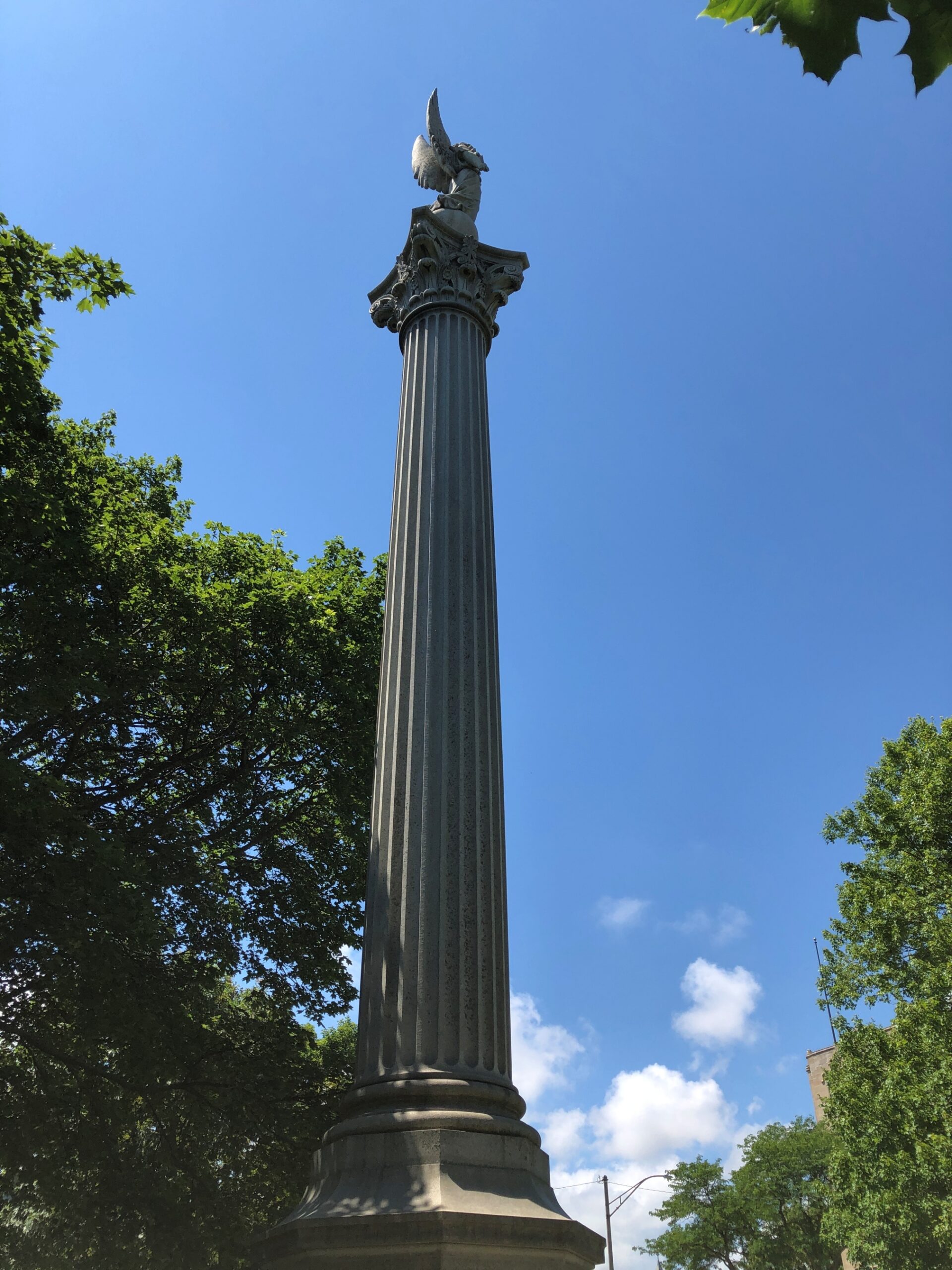
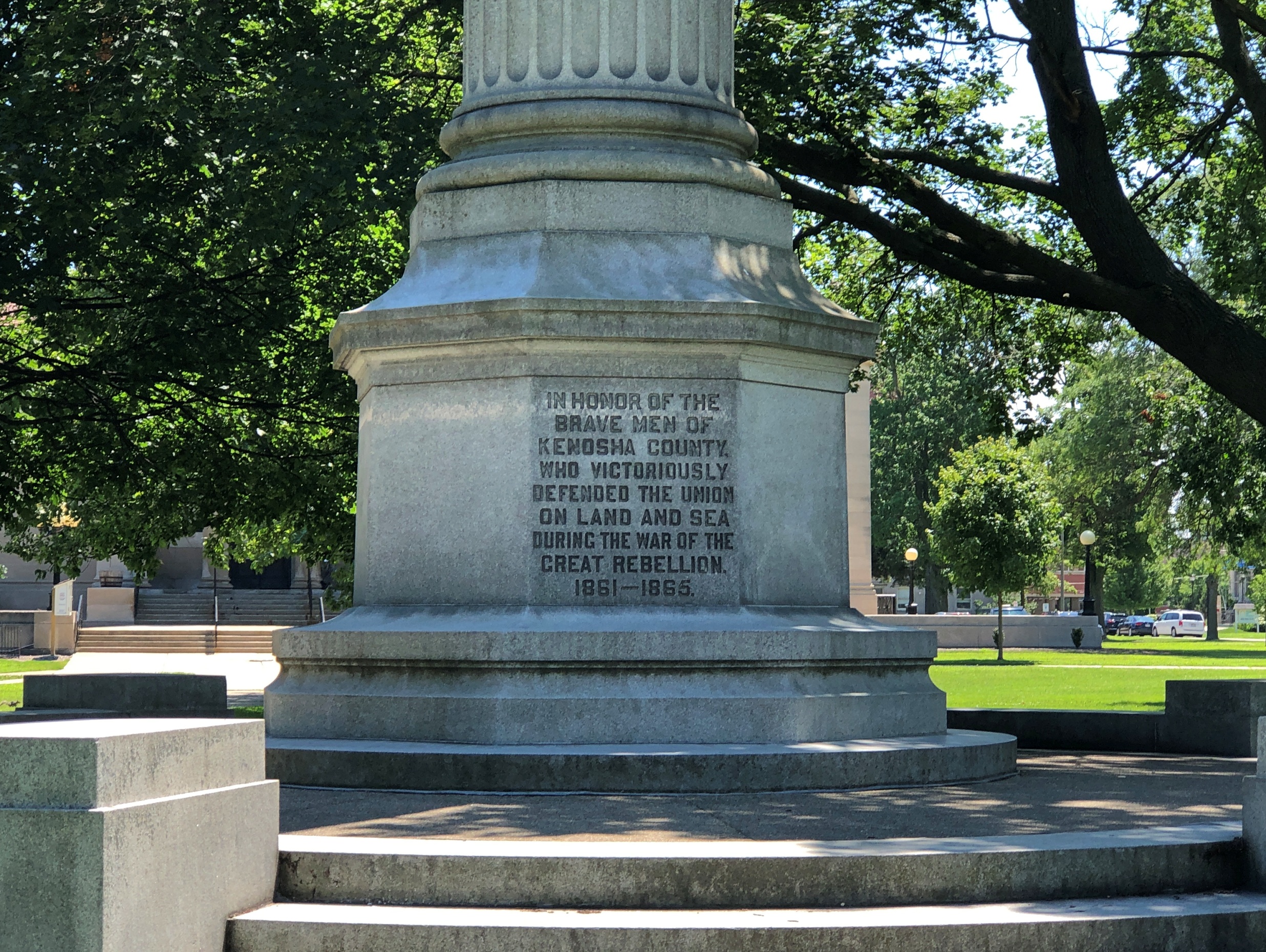
Nearby in the park, Kenosha’s Civil War memorial, called “Winged Victory” on electronic maps, a name that gets right to the point.

Kenosha

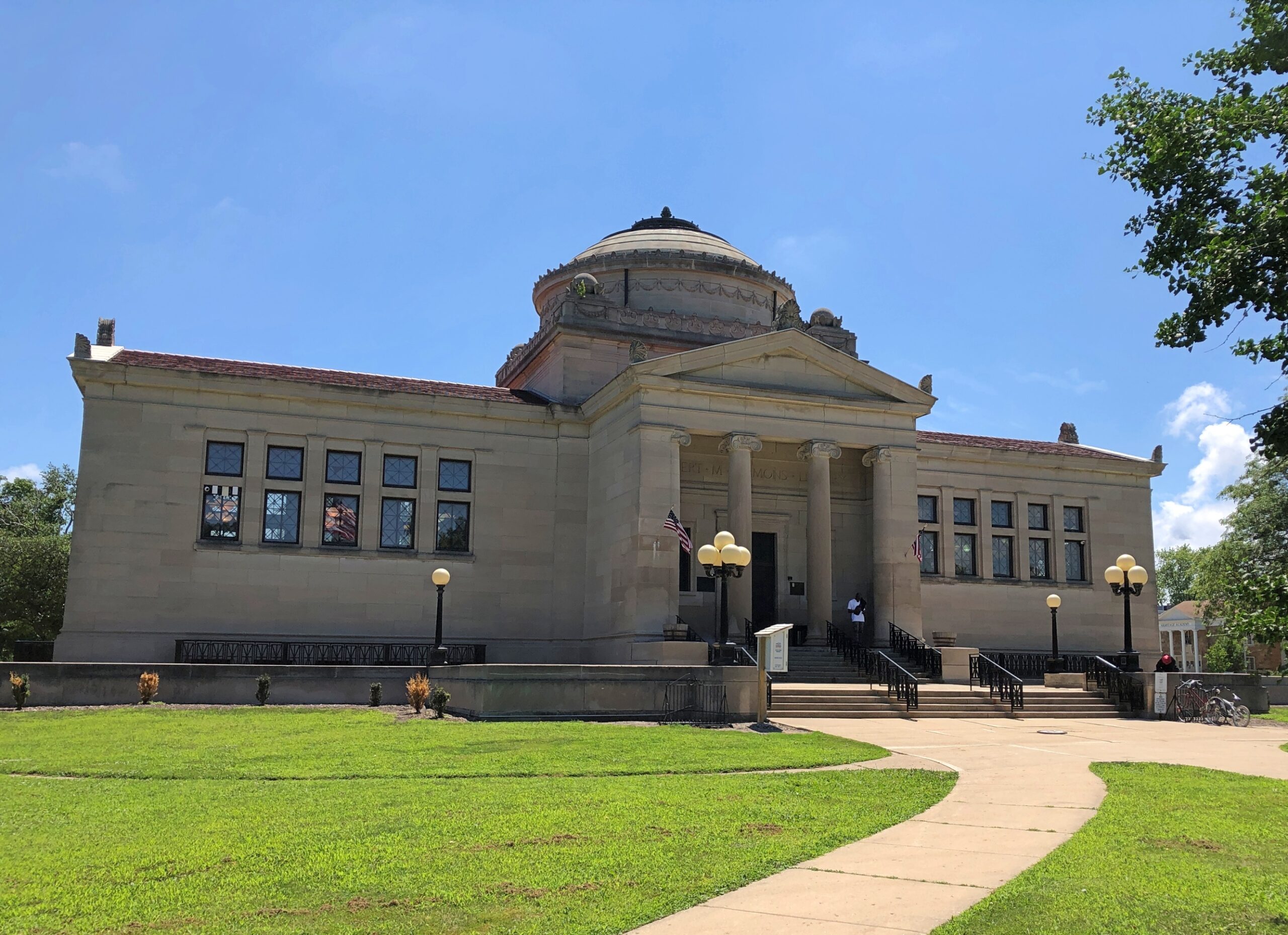
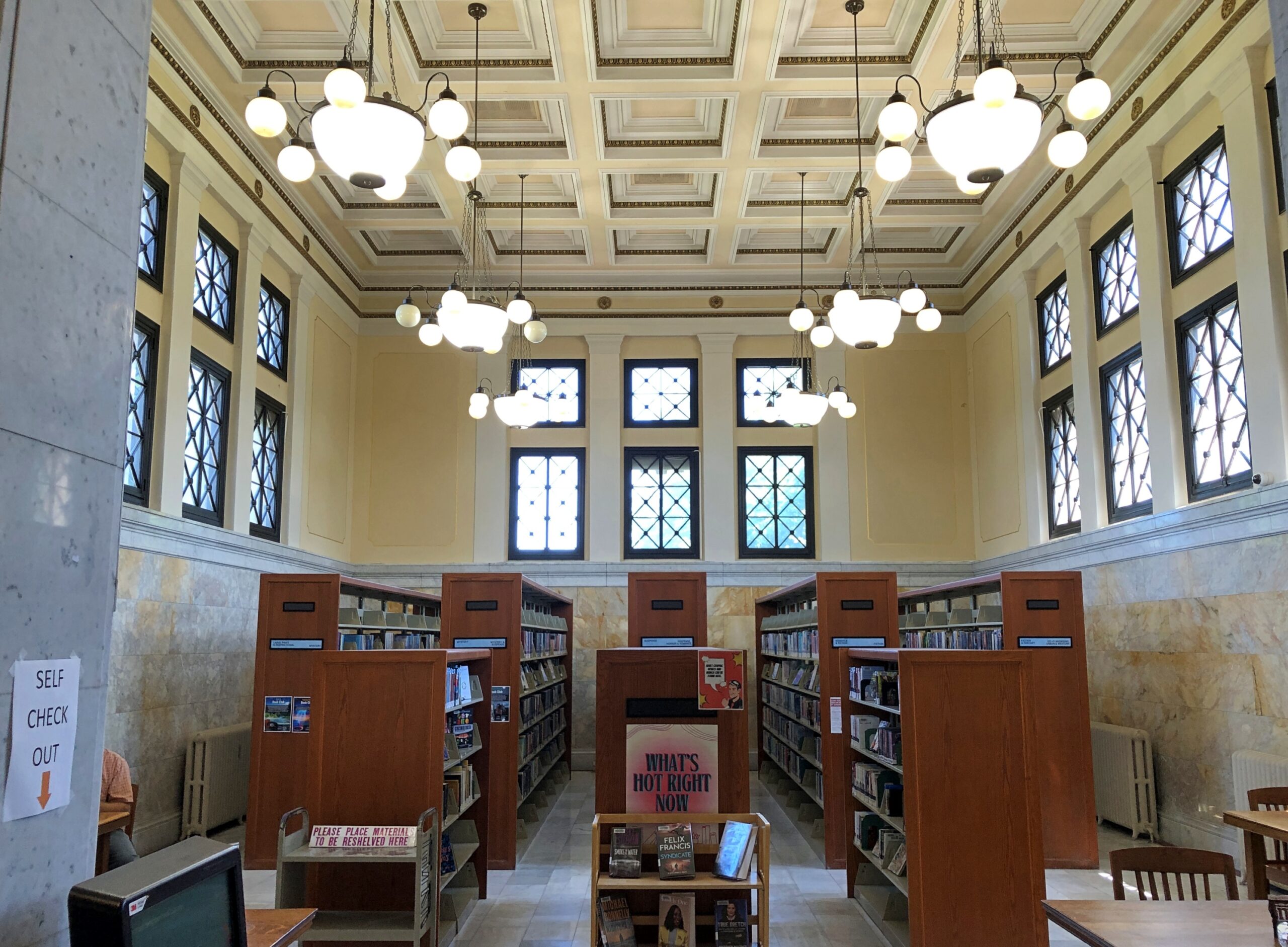
It’s Library Park because of the Gilbert M. Simmons Memorial Library, a branch of the Kenosha Public Library system, dominating its side of the park. It has a little more heft than most municipal branch libraries.

Kenosha

When it opened in 1900, the building formed Kenosha’s main library. Daniel Burnham designed it.

Kenosha

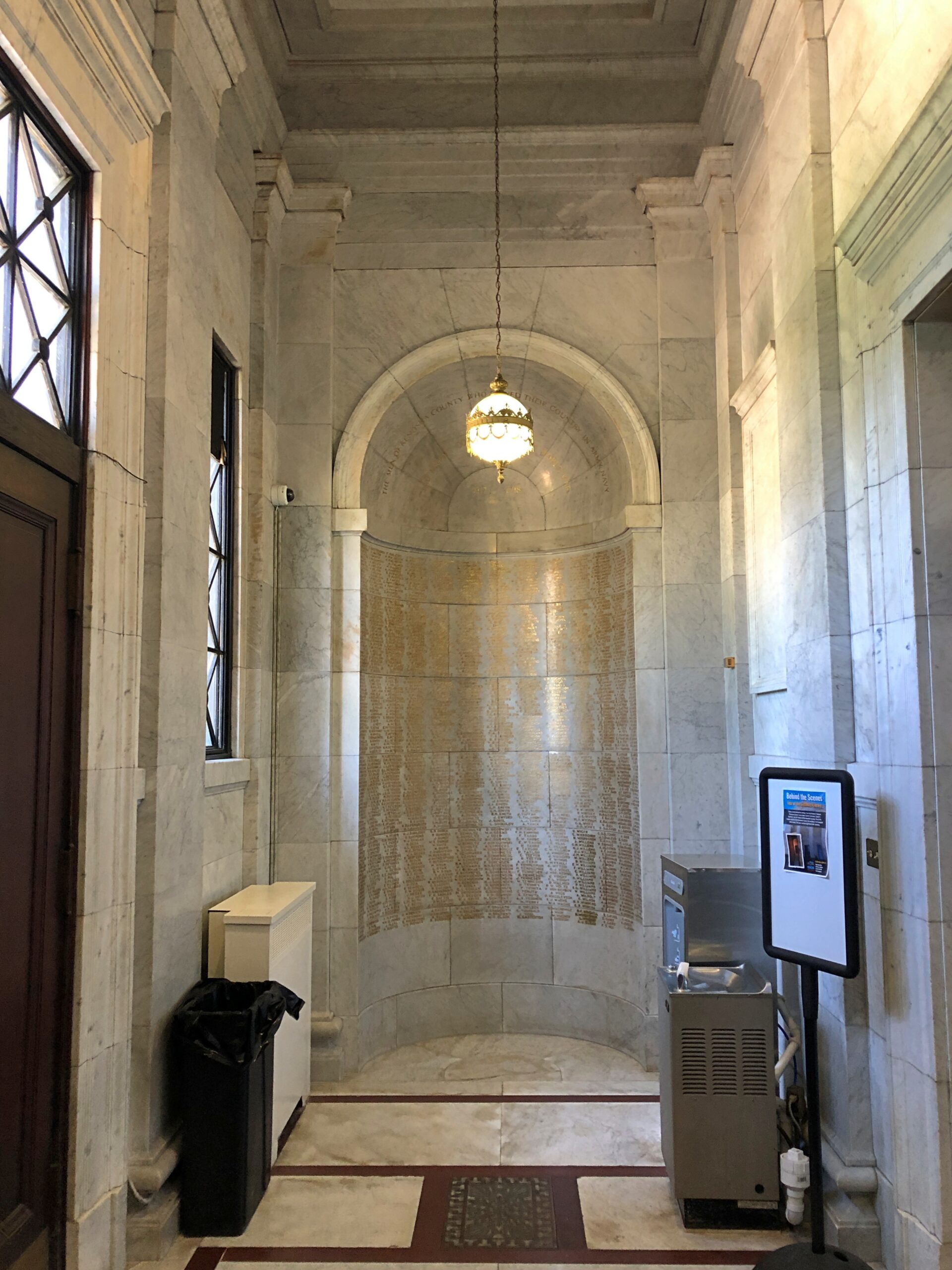
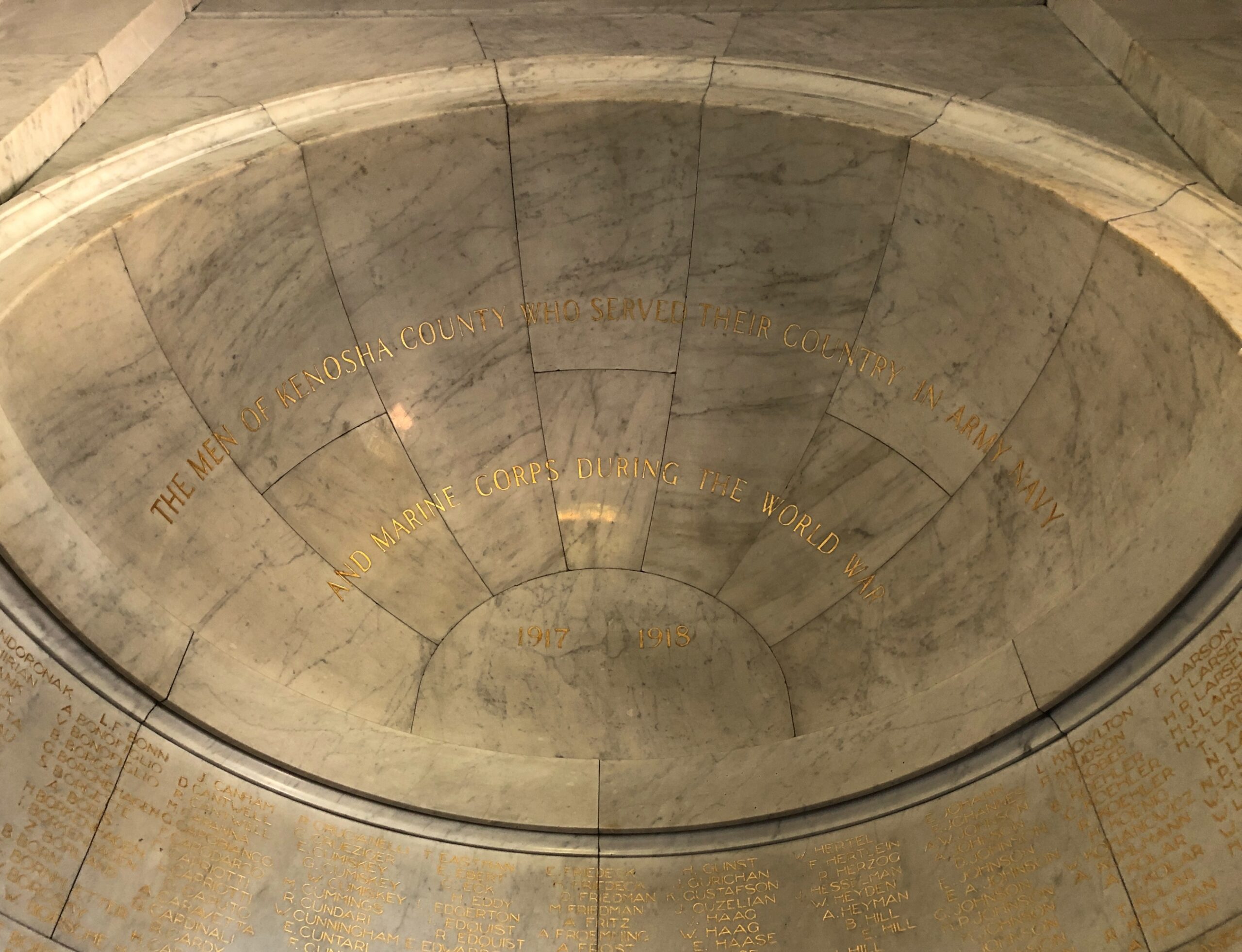
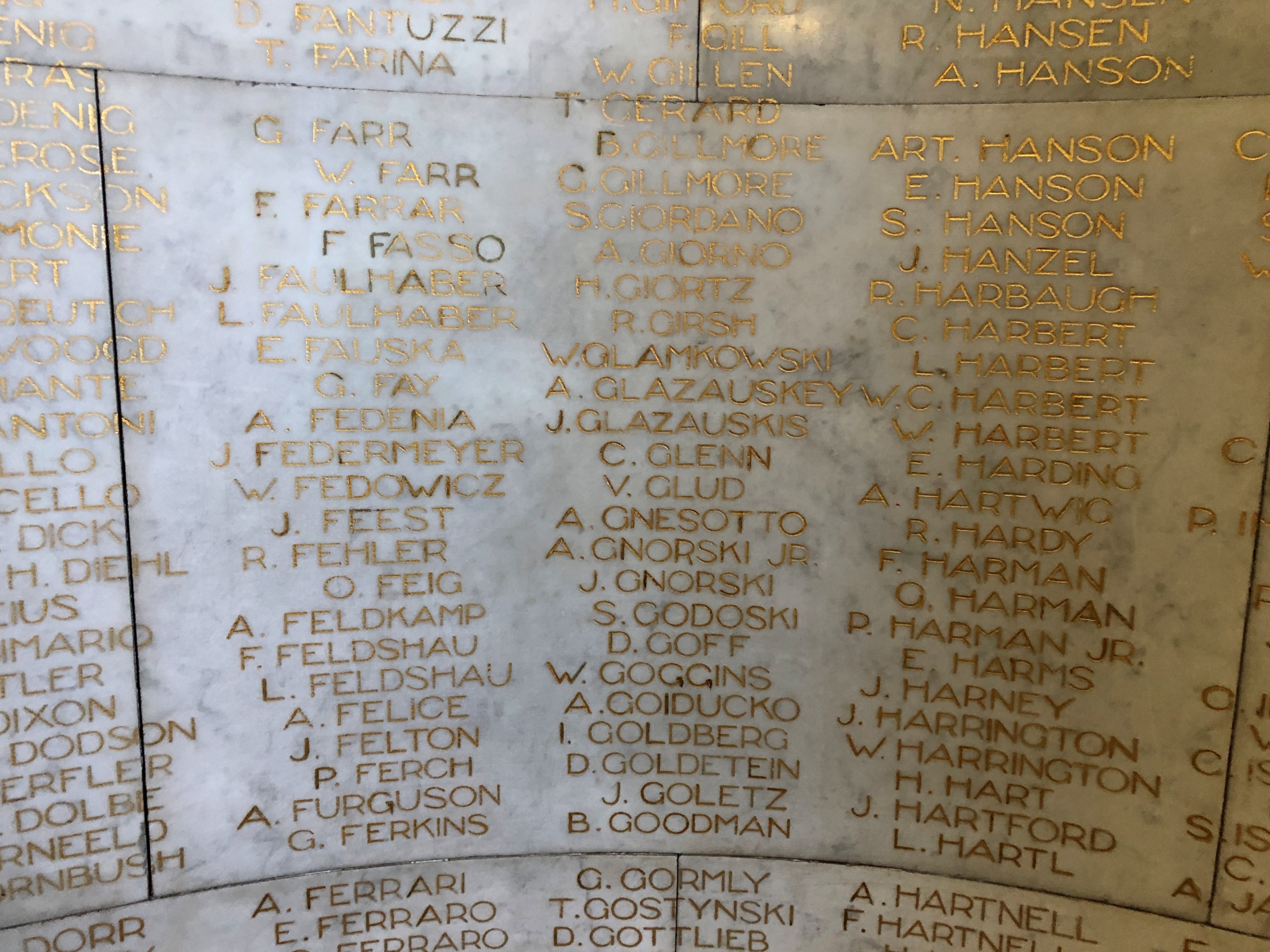
The Civil War veterans have their memorial outside. Great War vets are honored inside the library.

Kenosha
Kenosha
Kenosha

We’d happened on the Library Park Historic District, surrounding Library Park. The park itself goes back to the early years of Kenosha, when the land was a New England–style town commons. Forty-two properties, built from 1843 to 1930, form the district. A diner and an historic district: just the thing for a warm summer day stroll.

More Waukesha

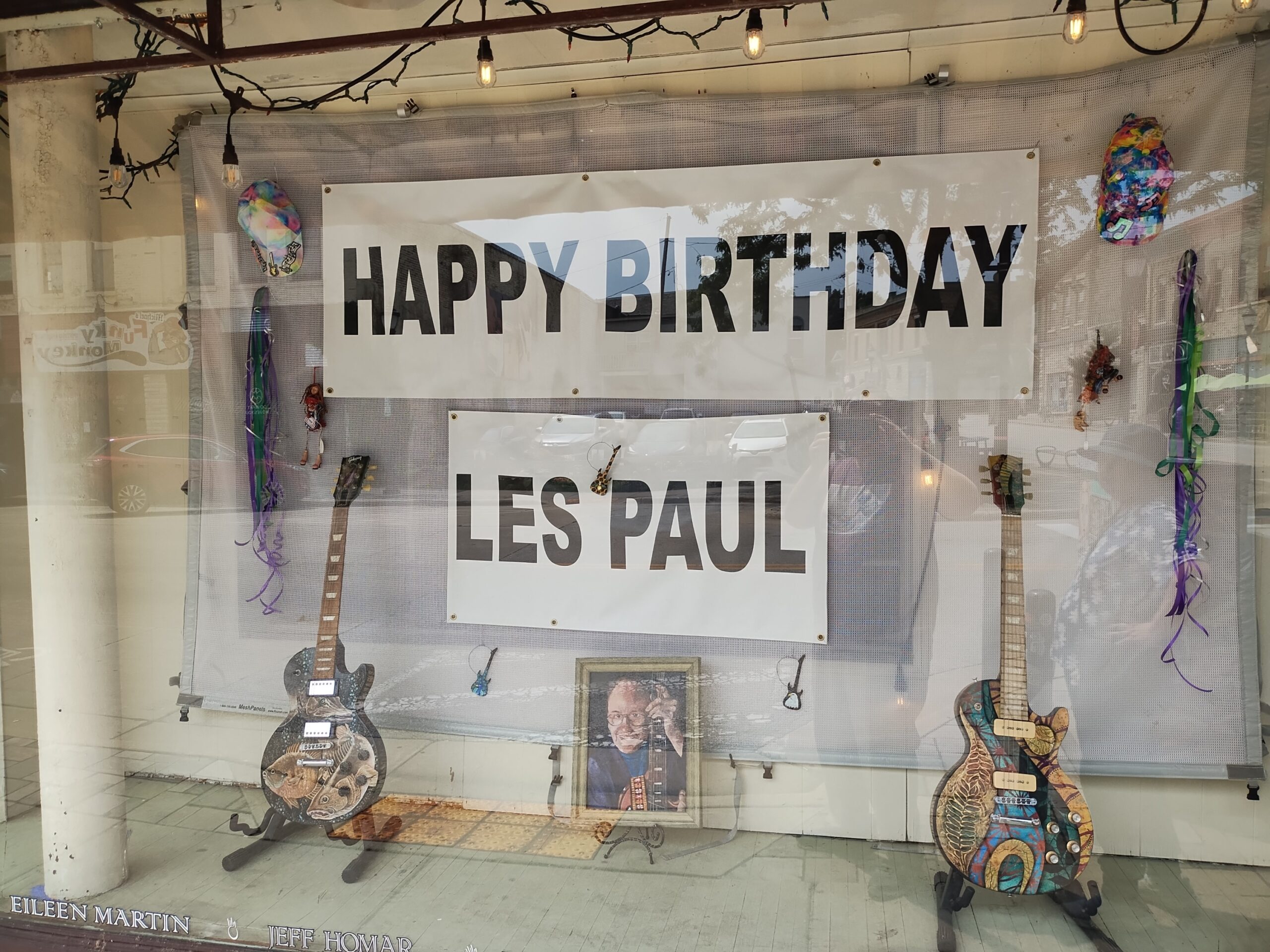
Something I didn’t know about Waukesha, Wisconsin, before we went there last month: that Les Paul (b. 1915) grew up around there. Waukesha certainly hasn’t forgotten.

Waukesha, Wisconsin

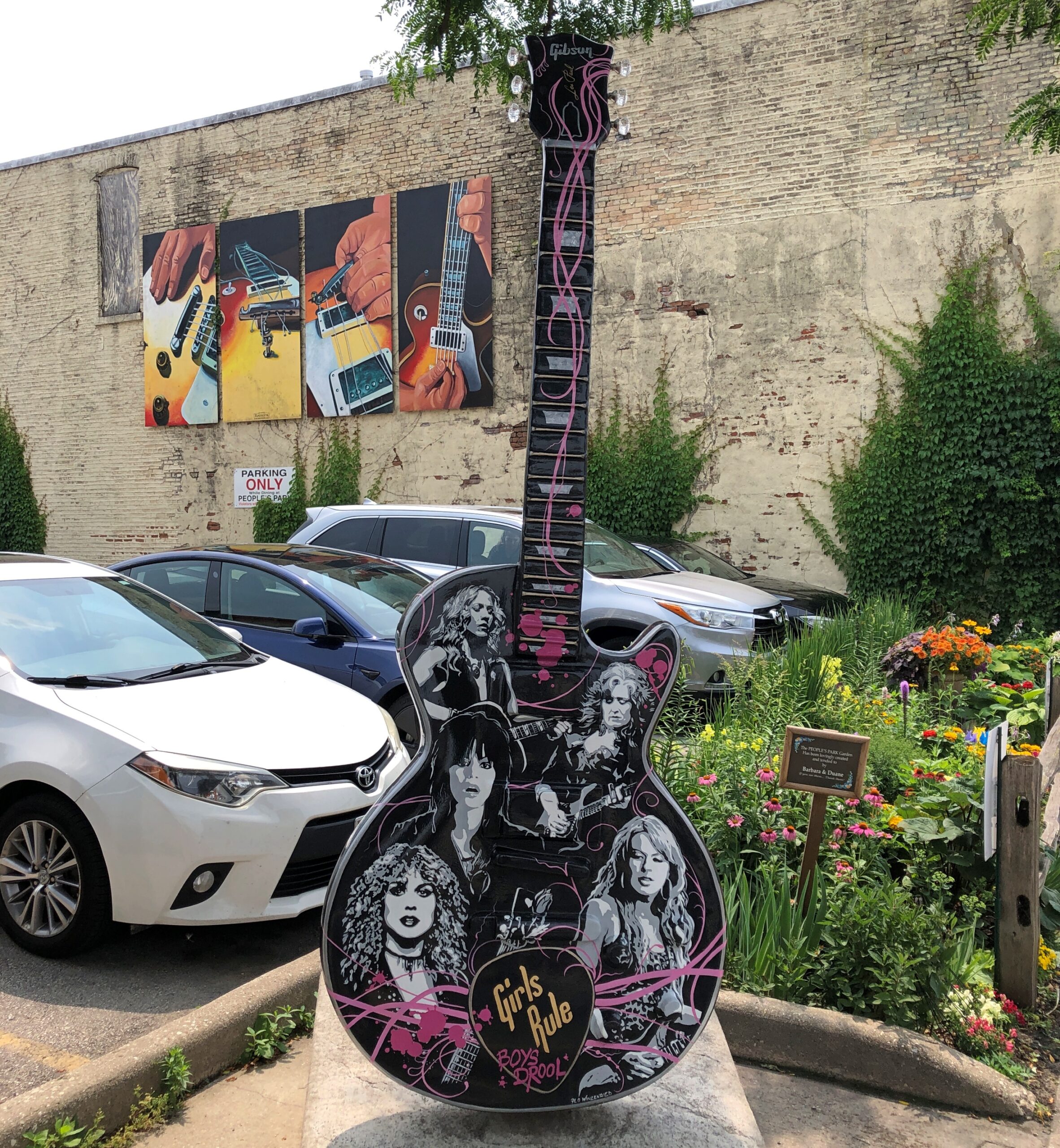
A recent sign, since his birthday is in early June. Waukesha is a “GuitarTown,” because of its association with the famed musician and music technologist. Apparently there is more than one GuitarTown, since Gibson Guitars doles out the moniker, or at least used to.

“Waukesha was named a Gibson GuitarTown in 2012 and 2013, two years in a row, to honor the birth and resting place of electric guitar legend Les Paul,” The Freeman reports. “Other GuitarTowns include Austin, Nashville and London.”

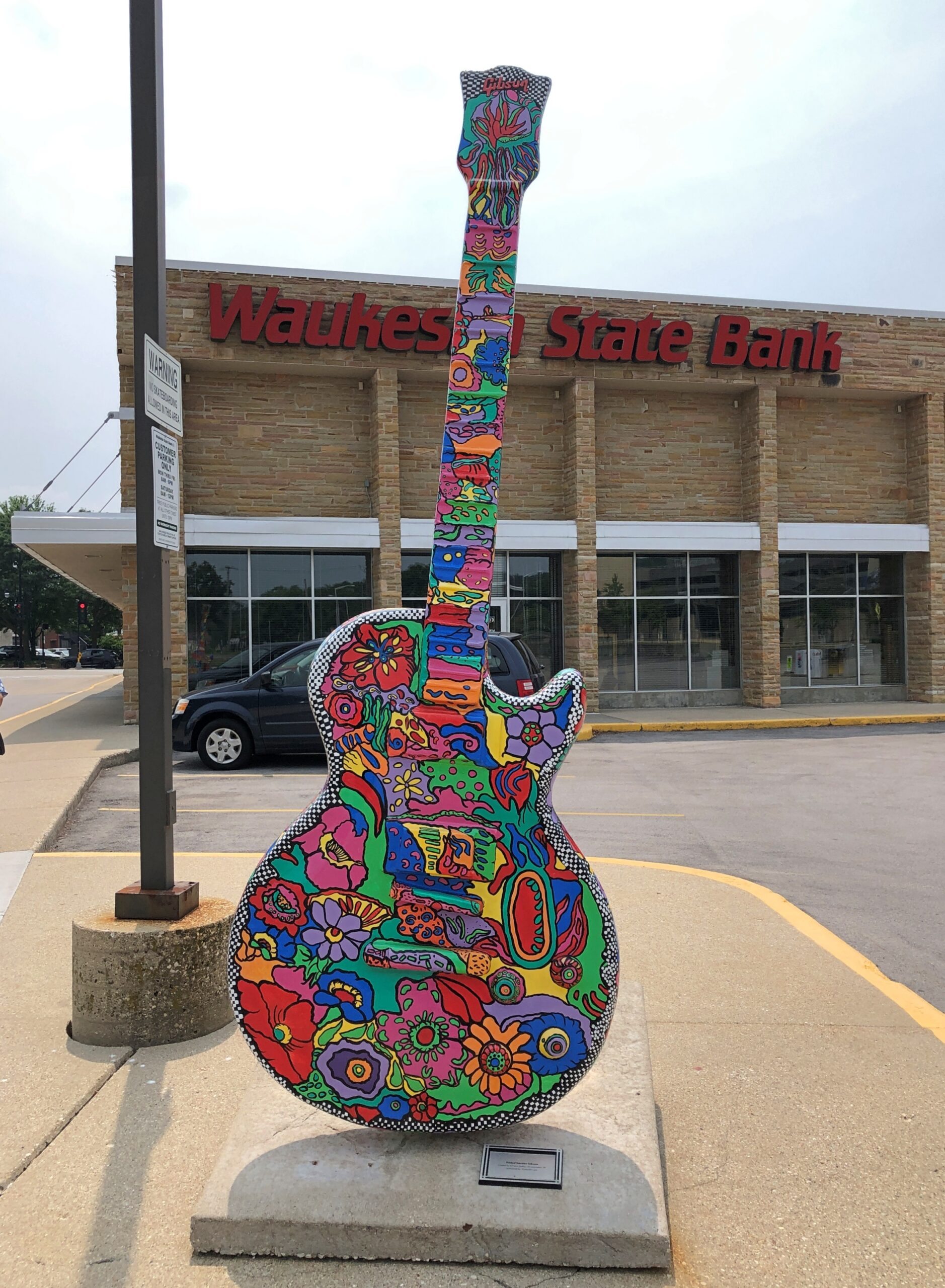
As GuitarTown, Waukesha has 15 guitar statues in public places, each 10 feet tall and designed by local artists. Elsewhere in town, you can find Les Paul Middle School, Les Paul Parkway, the Les Paul Performance Center, and the Les Paul gravesite monument. Missed that, alas. Maybe some other time. But we did drive on his parkway. And see a few of the giant guitars.
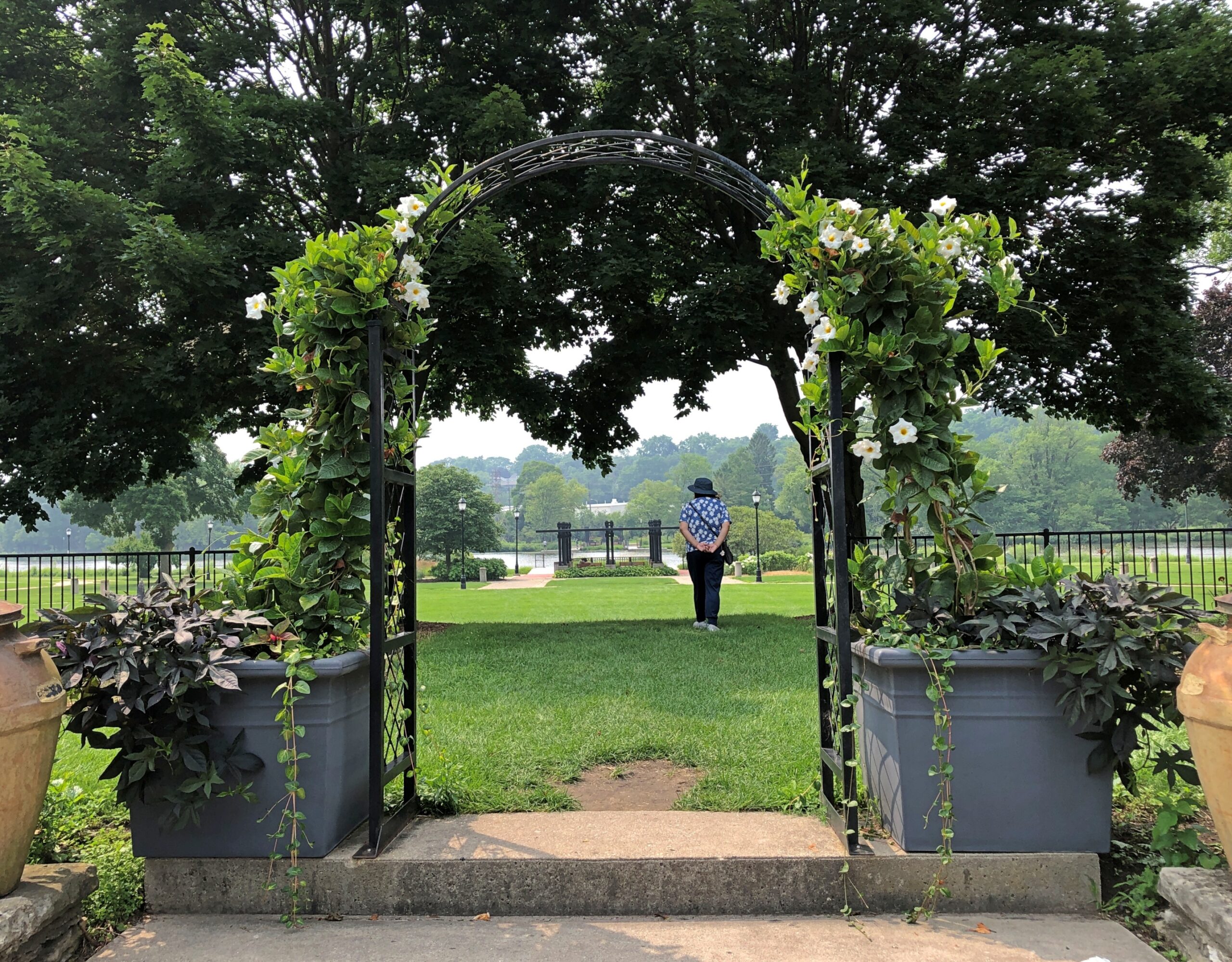
Waukesha, Wisconsin
Waukesha, Wisconsin

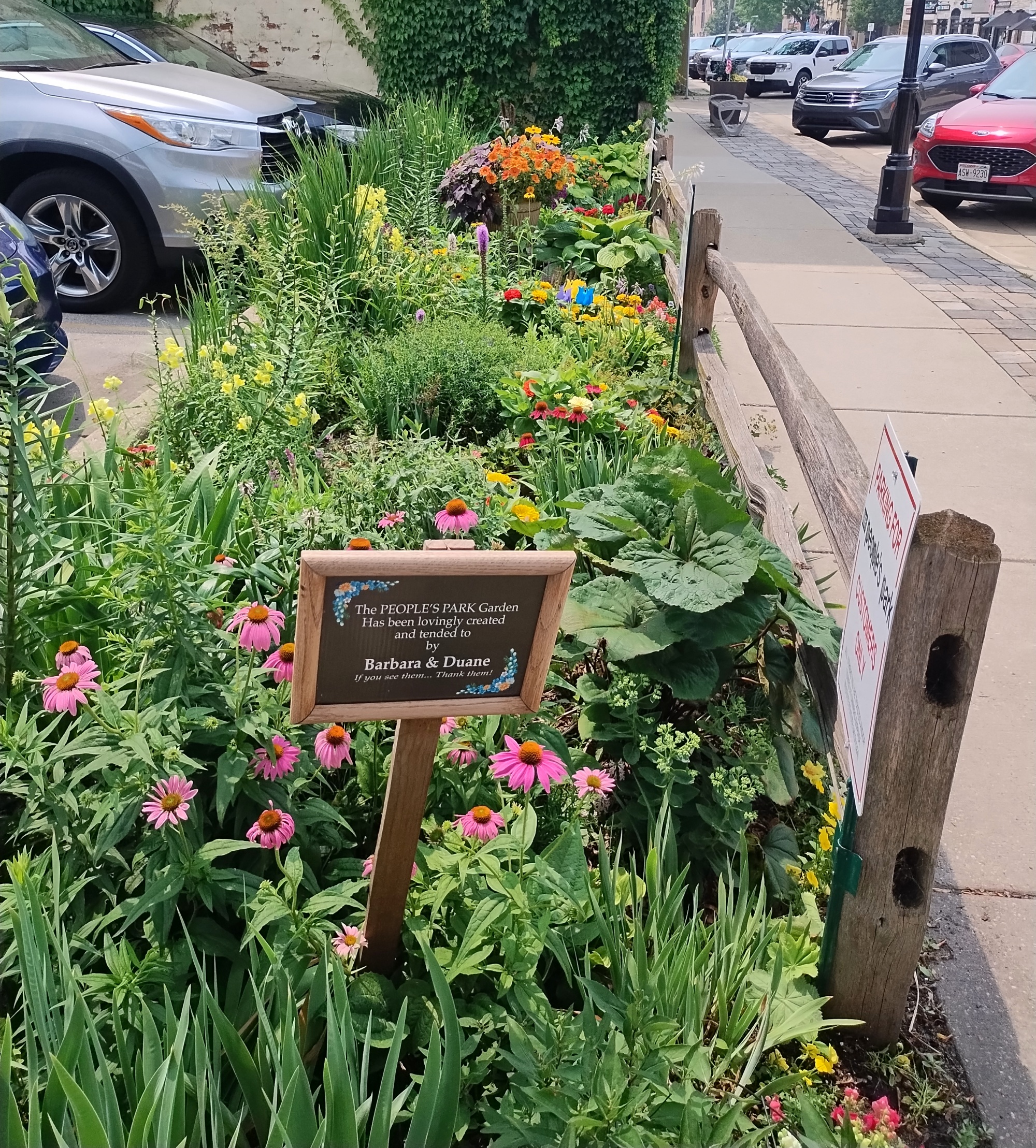
Next to that particular guitar, a small garden is wedged between the sidewalk and a parking lot. The PEOPLE’S PARK Garden, says the sign.

Waukesha, Wisconsin

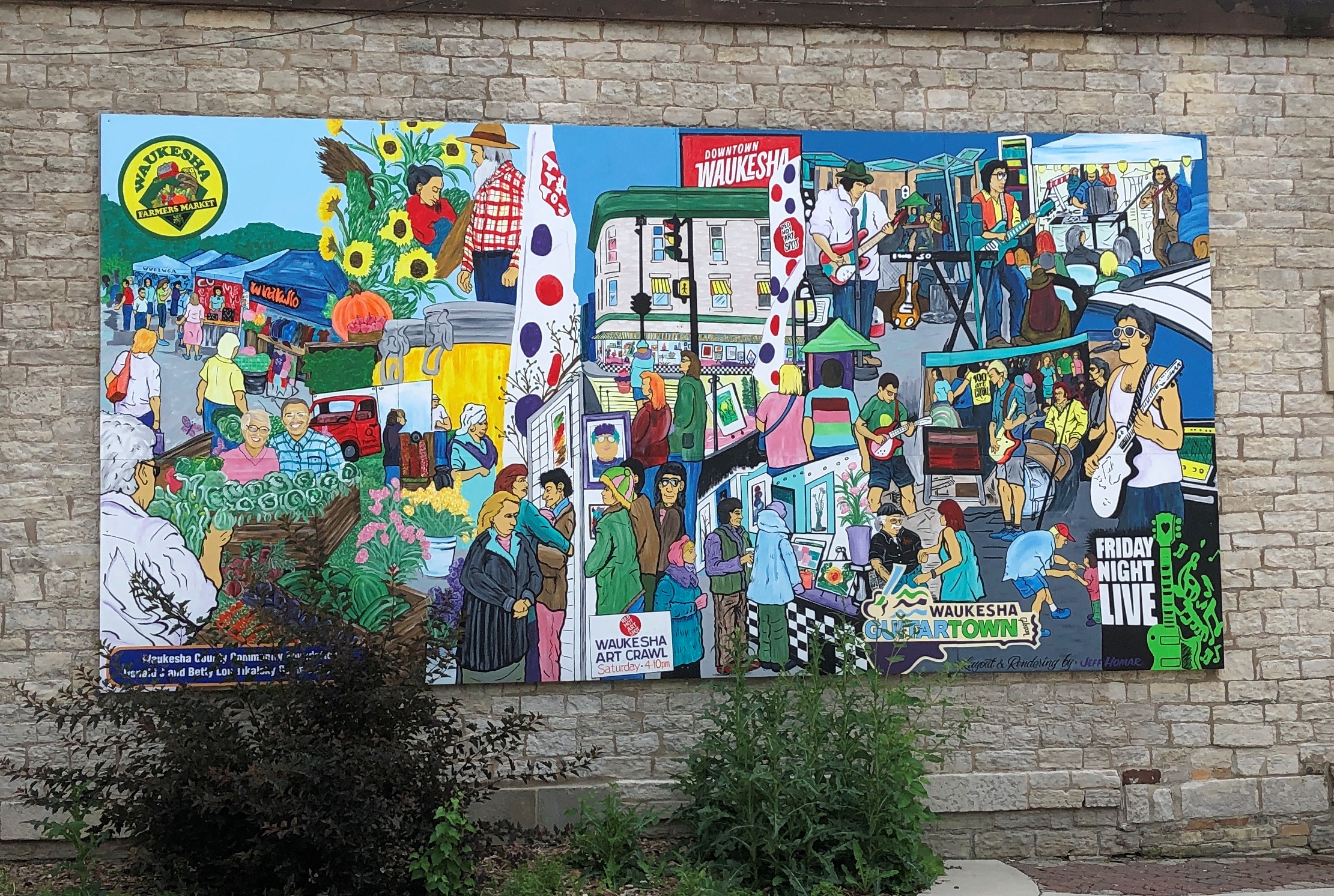
The Wall Dogs also came to town and painted 13 murals. I assume this is one of them.

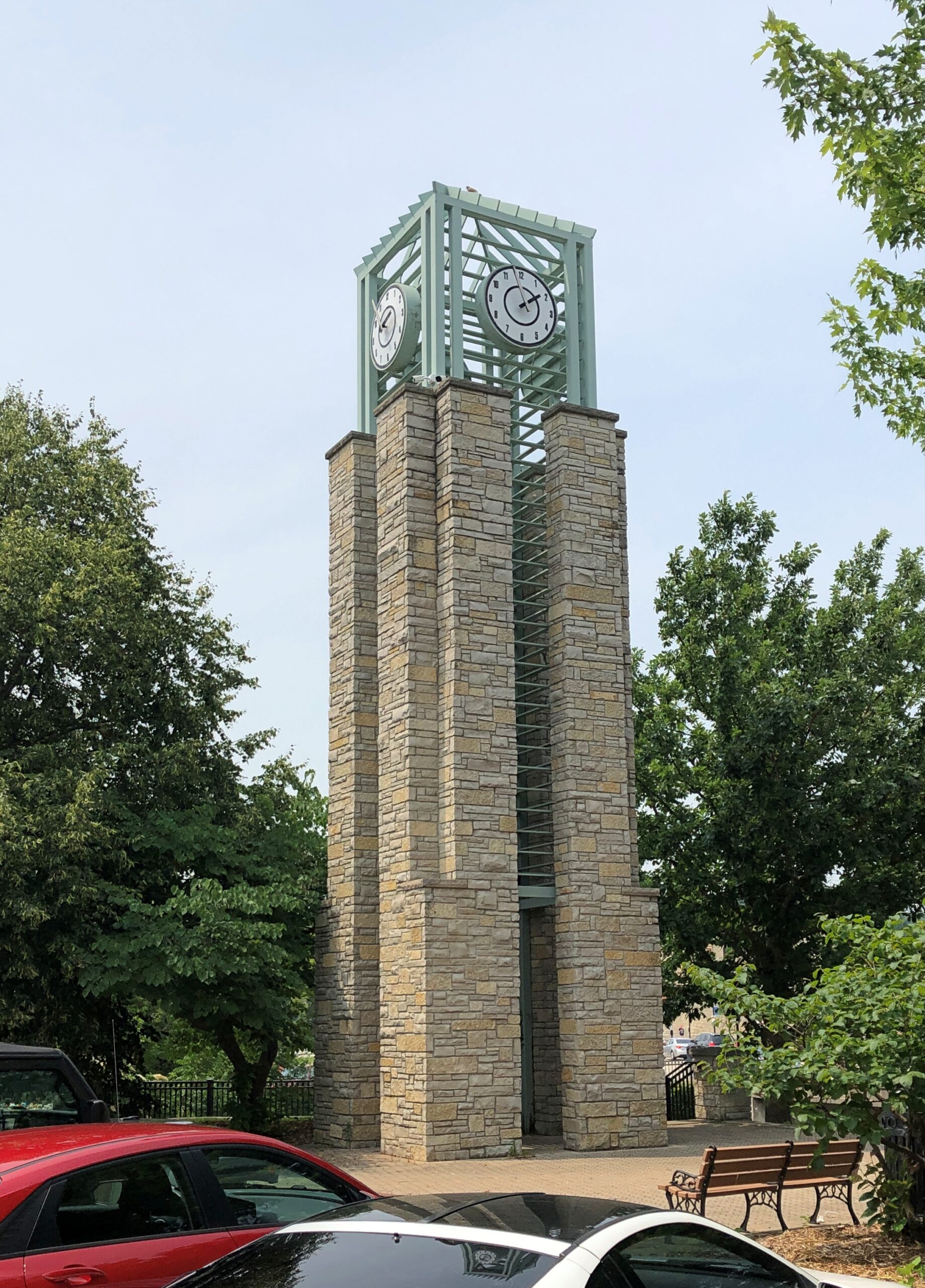
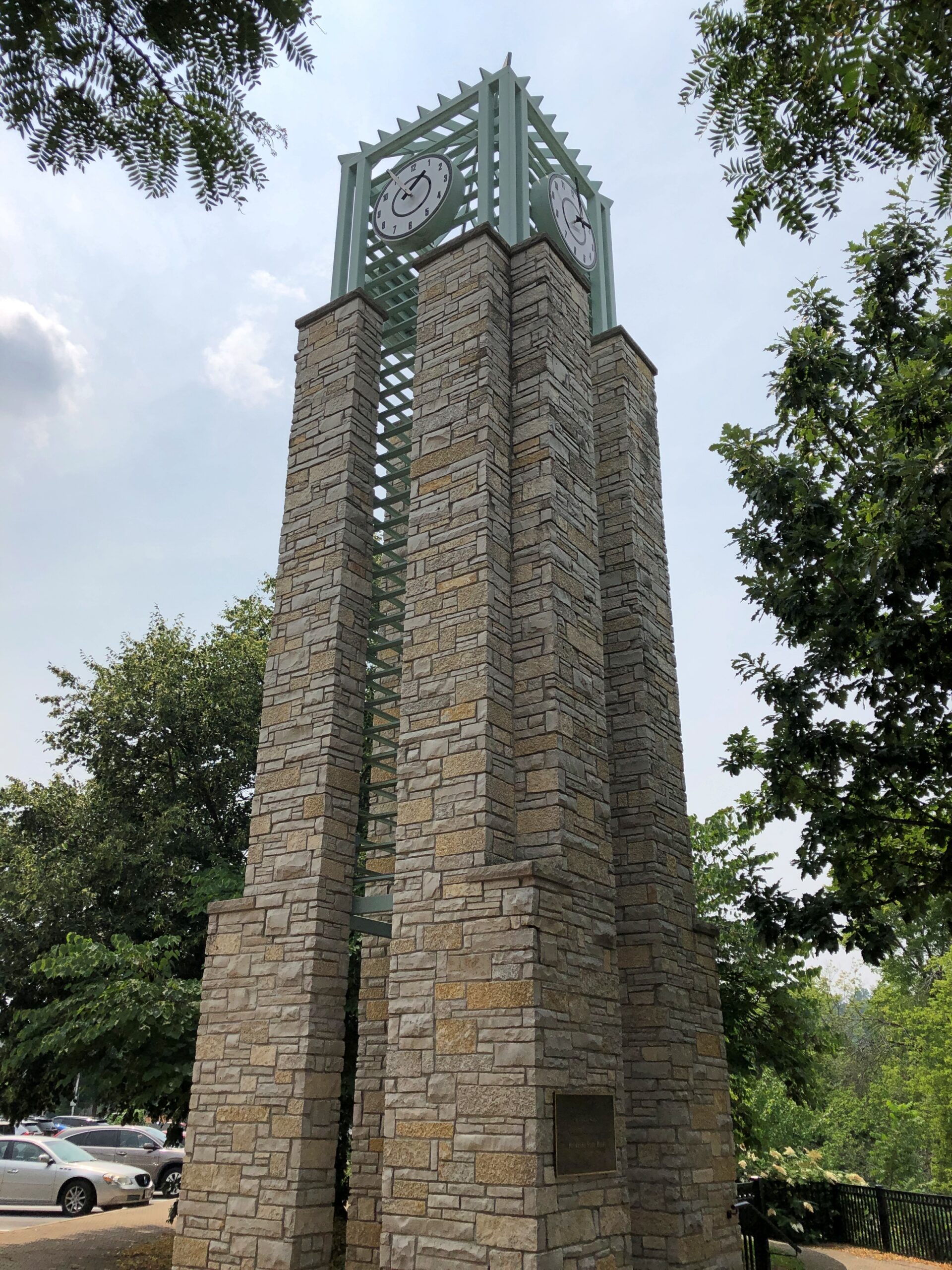
Across a parking lot from that mural rises Waukesha’s impressive stone clocktower.

clock tower waukesha

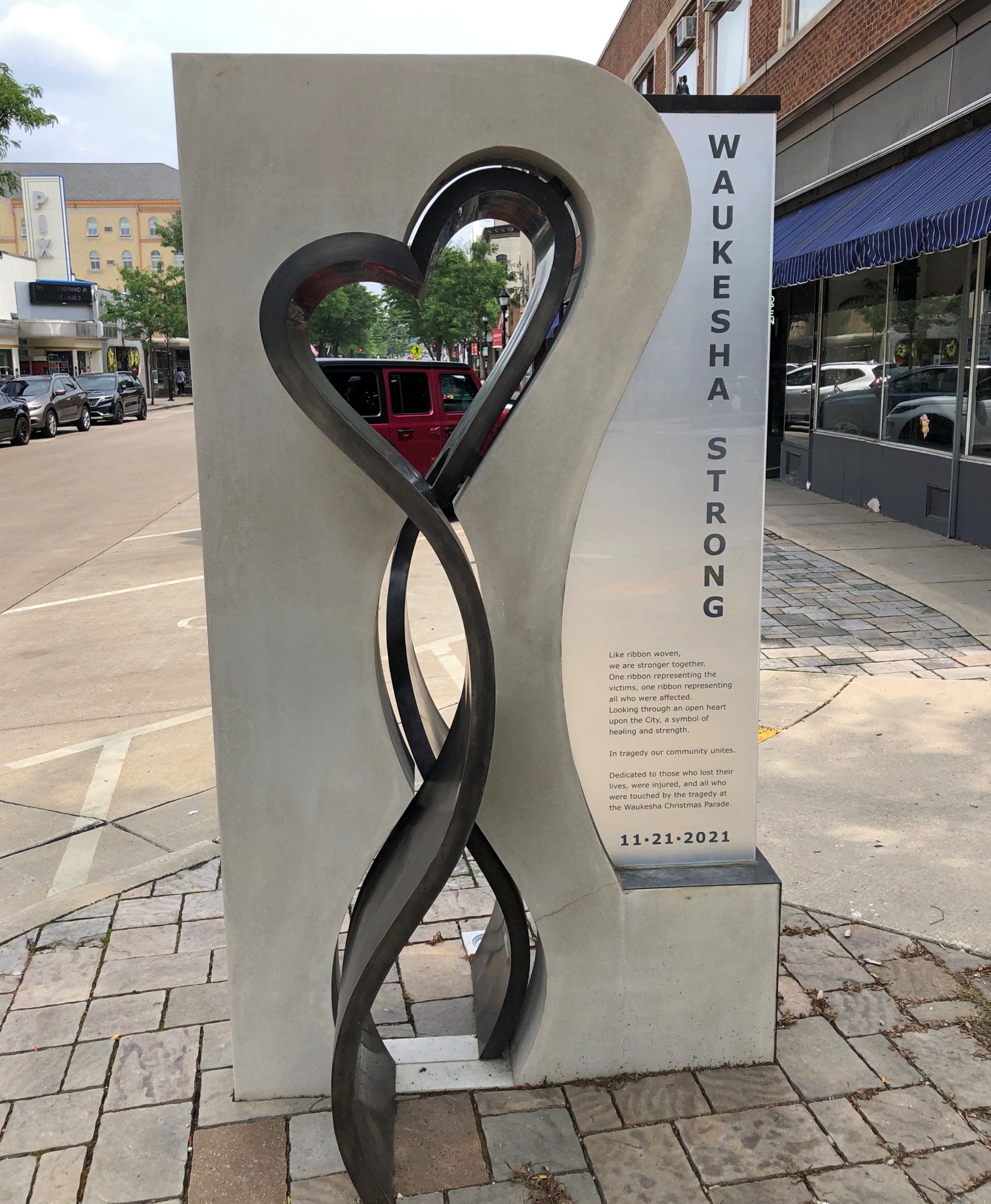
On Main Street, a memorial.

Waukesha, Wisconsin

Outrages by homicidal wankers are so common that I had to refresh my memory about that particular one, in late 2021. Then I remembered. The only good thing I can report is that the wanker, who went double wanker at his trial by asserting sovereign citizen nonsense, is now a permanent resident of a tightly locked state facility.

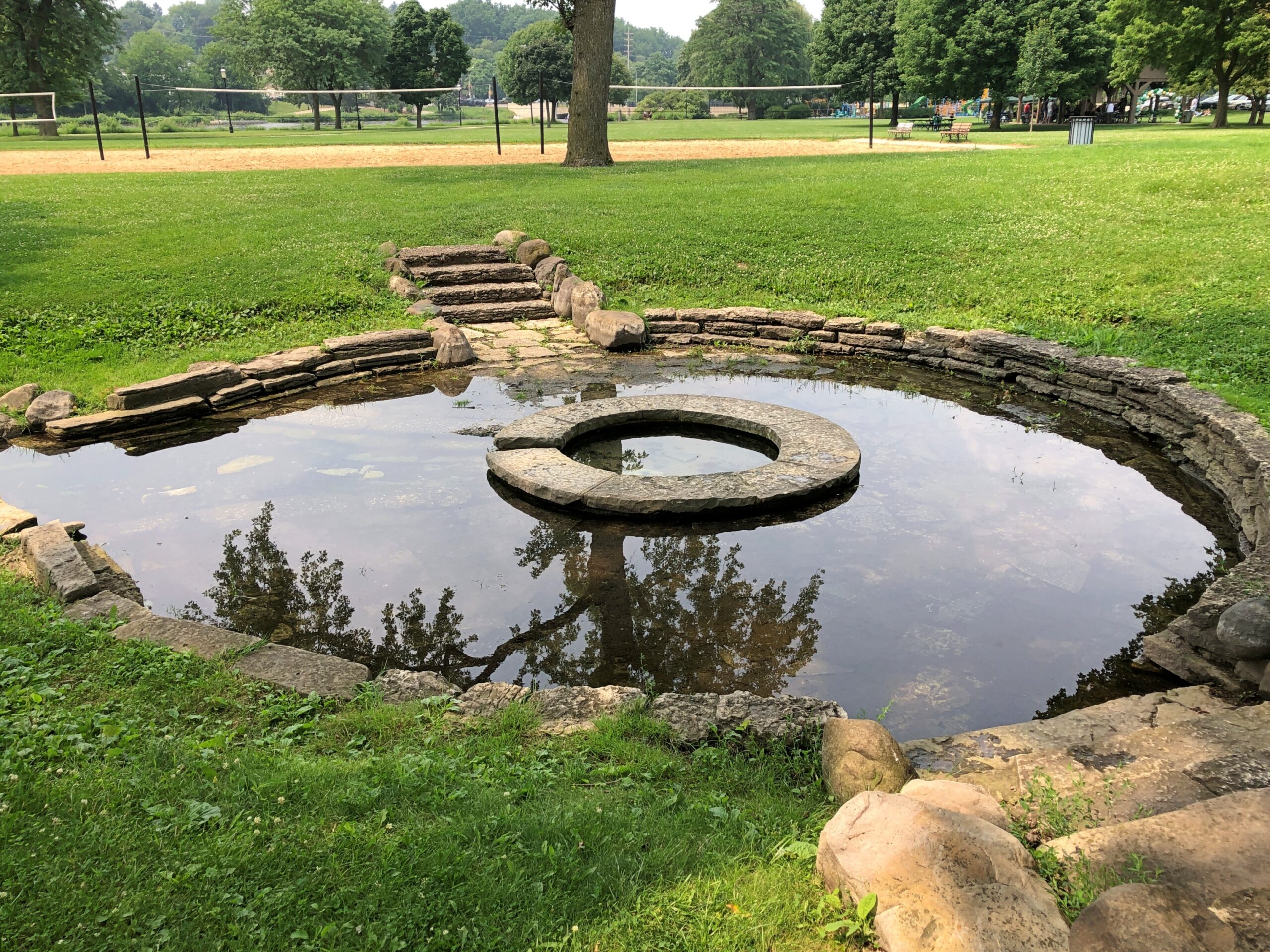
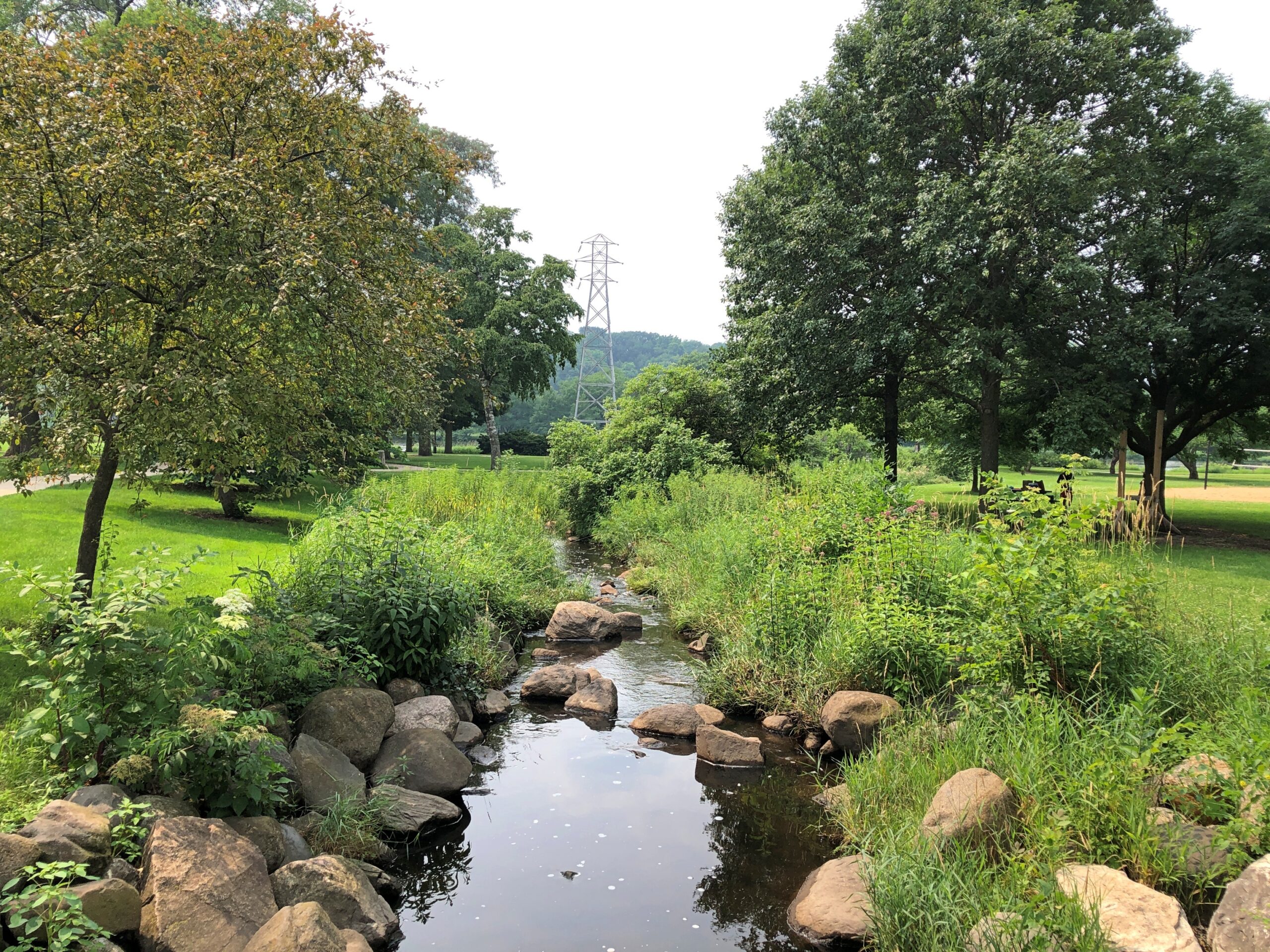
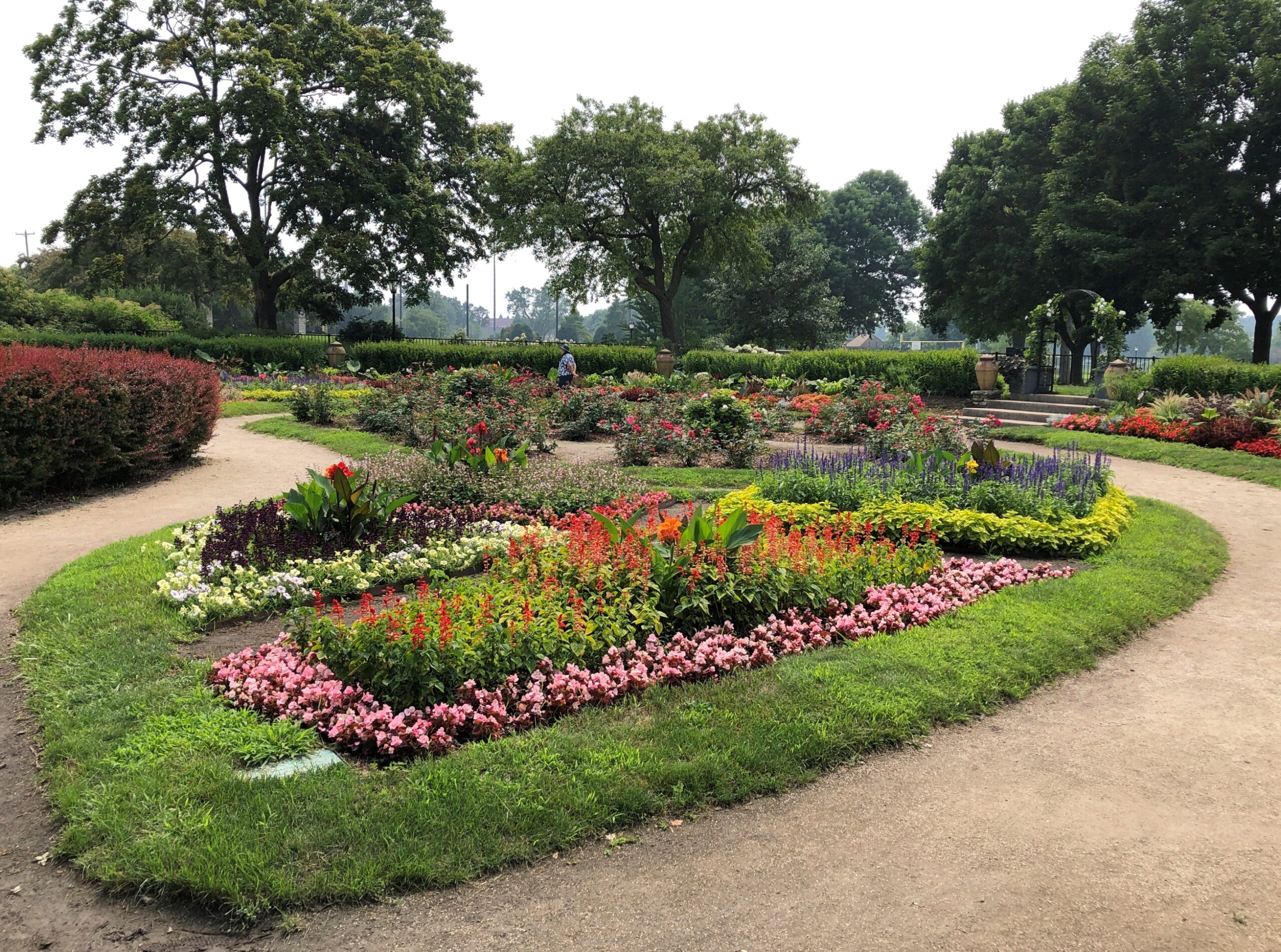
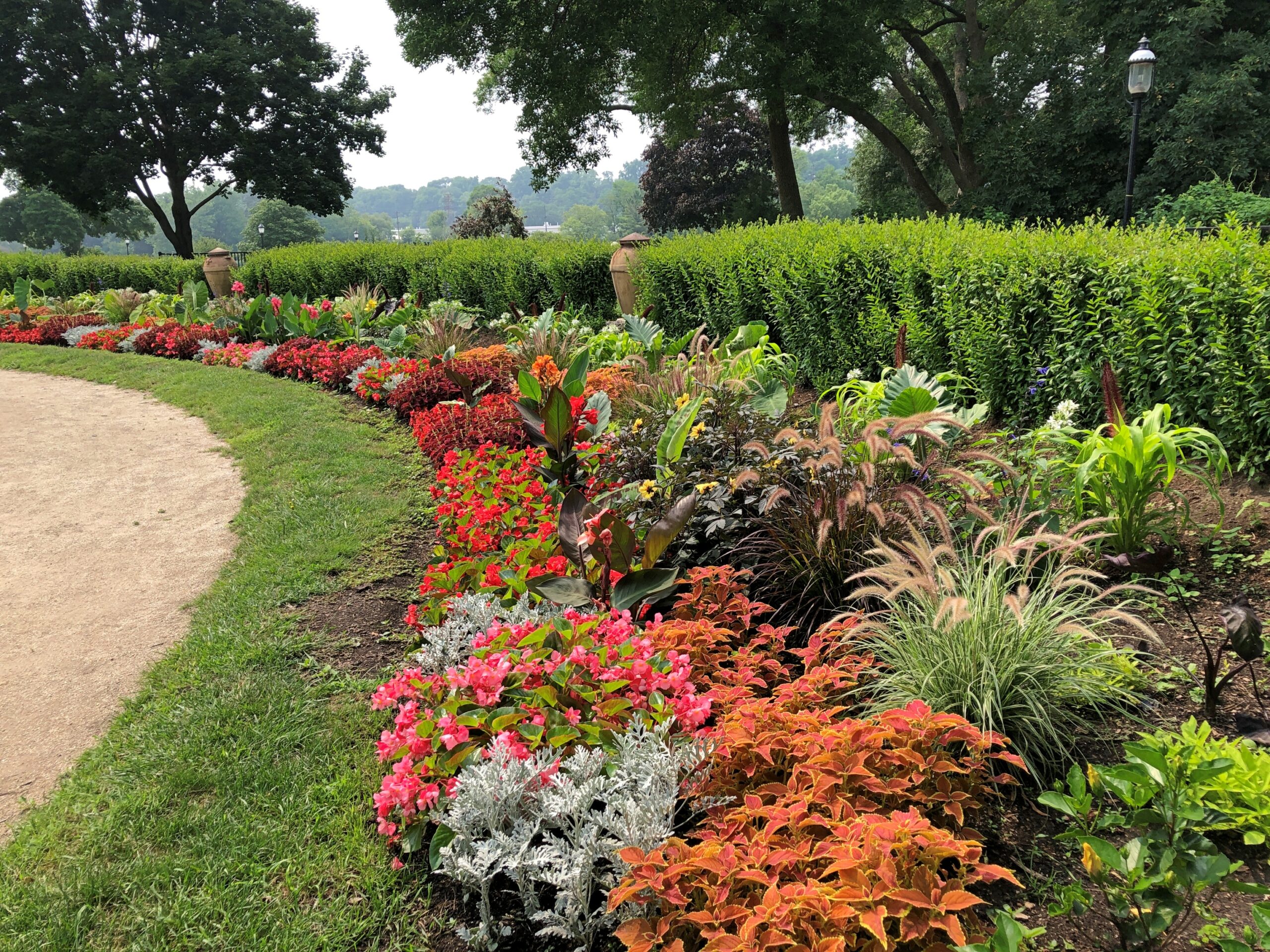
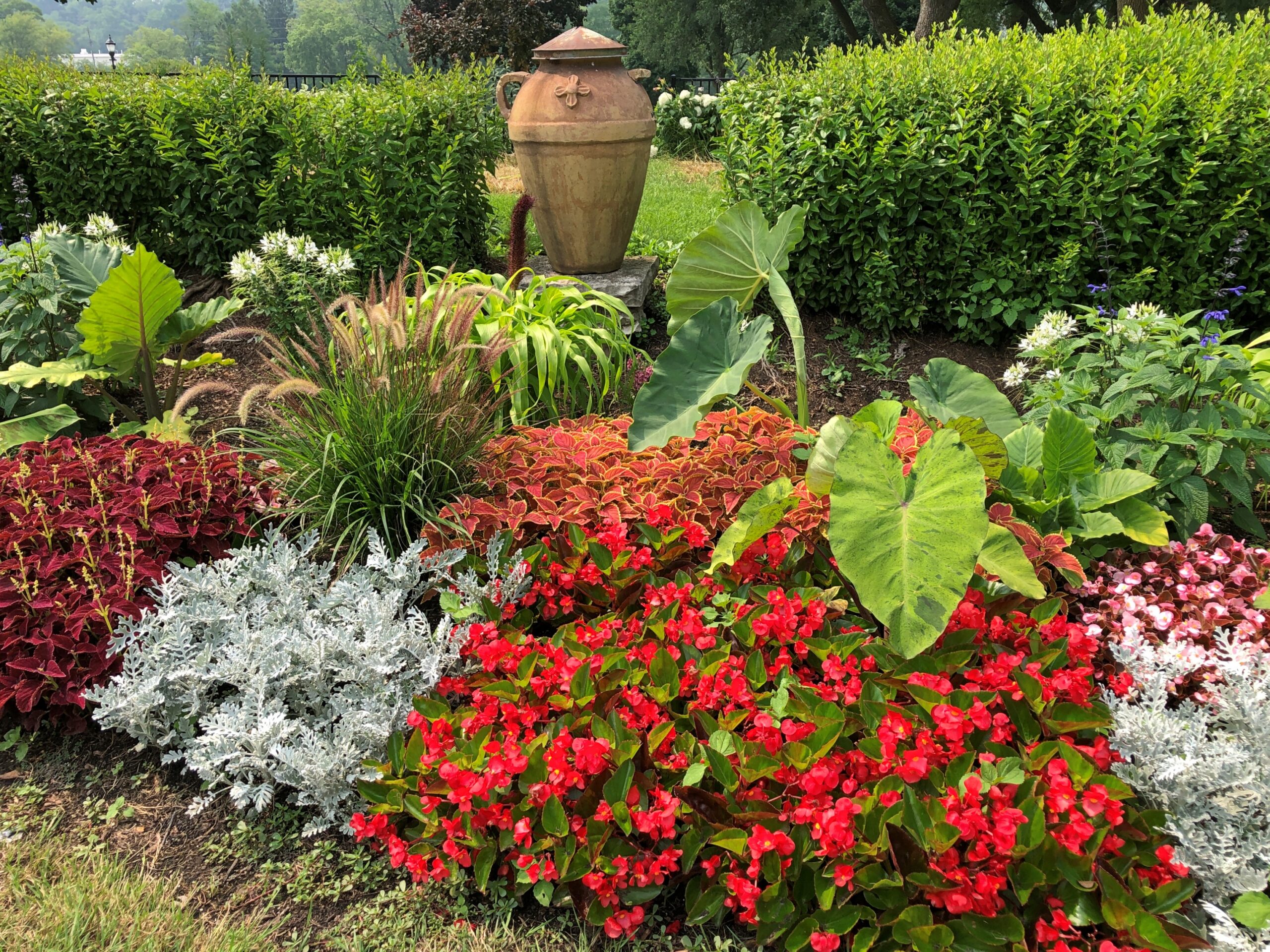
Upriver a half mile or so from downtown is the sizable riverside Frame Park.

Including the Frame Park Formal Gardens.

Waukesha, Wisconsin
Waukesha, Wisconsin
Waukesha, Wisconsin
Waukesha, Wisconsin

I hope the park and its garden weren’t damaged too much by the raging Fox, since it is flat most of the way from the garden to the river.

Waukesha, Wisconsin

The Fox is large at this point. Not something you want to see described as “angry.”

Fox River, Waukesha

After being relatively wet, August in northern Illinois has turned relatively cool to end its days. A few days ago, we took a walk at the unusually green (for August) Spring Valley here in the northwest suburbs.

Spring Valley

August flowers, Illinois edition.

Spring Valley
Spring Valley

Earlier this month, an enormous rainstorm blew through southern Wisconsin, doing damage in Milwaukee and elsewhere, including Waukesha County. Too much water too fast, and not nearly enough space in the Fox River channel that runs through the city and county of Waukesha. In the city, the river made a raging, dangerous rise not far from the picturesque downtown. If that area had flooded, that would have been in the news cycle for a little while anyway, but it looks like most of the damage was in more rural parts of the county. Regardless, it represents a lot of property damage.

“In Menomonee Falls, a crew was spotted pulling a car out of a massive sinkhole,” local TV News reported. “The once-raging waters this weekend washed away the road in an industrial area on Campbell Drive, leaving just a cliff. In the crater, the car had been trapped. The driver was fine. Inside the sinkhole, drainage pipes seemed to be tossed around like Lincoln Logs.”

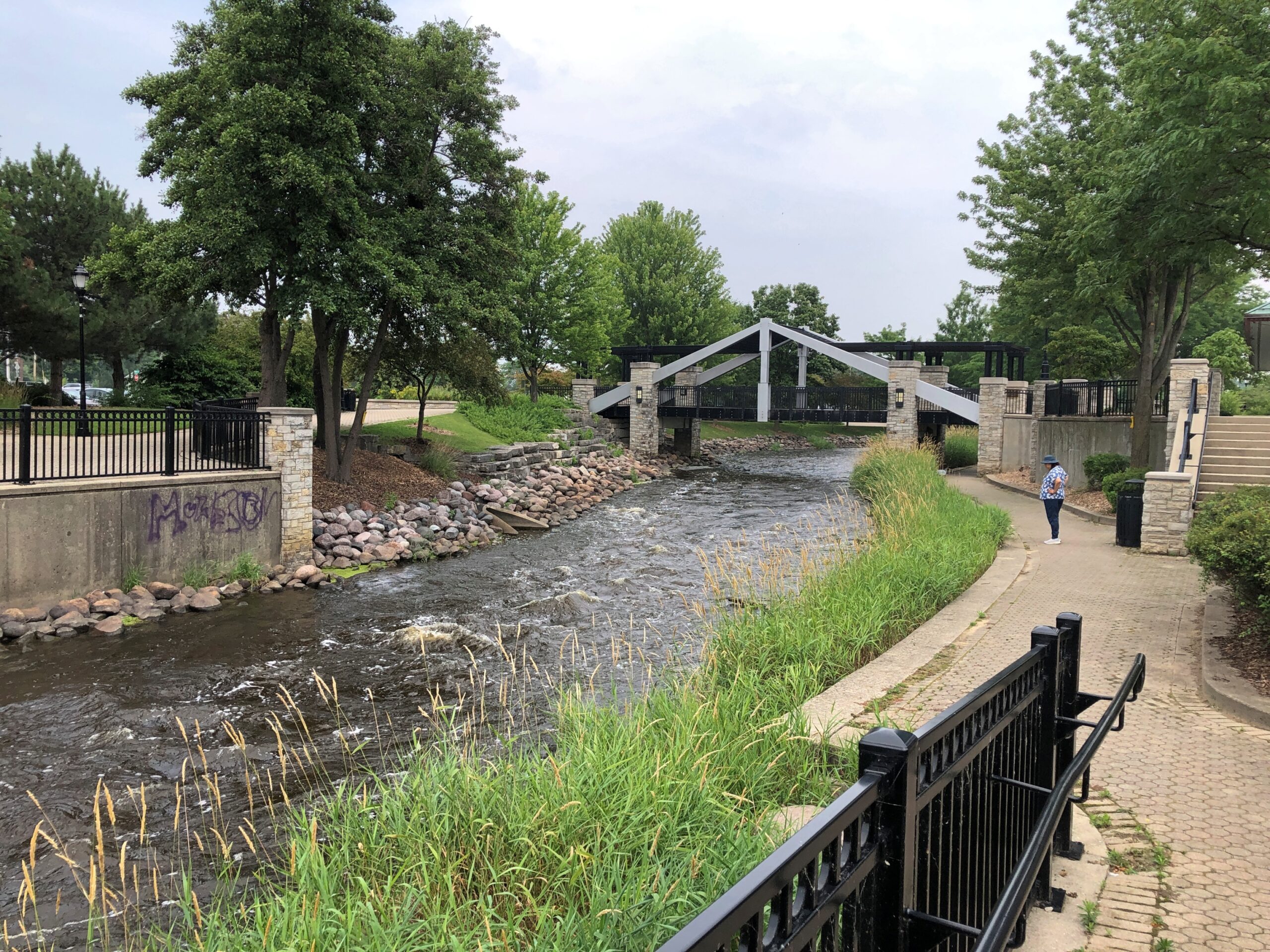
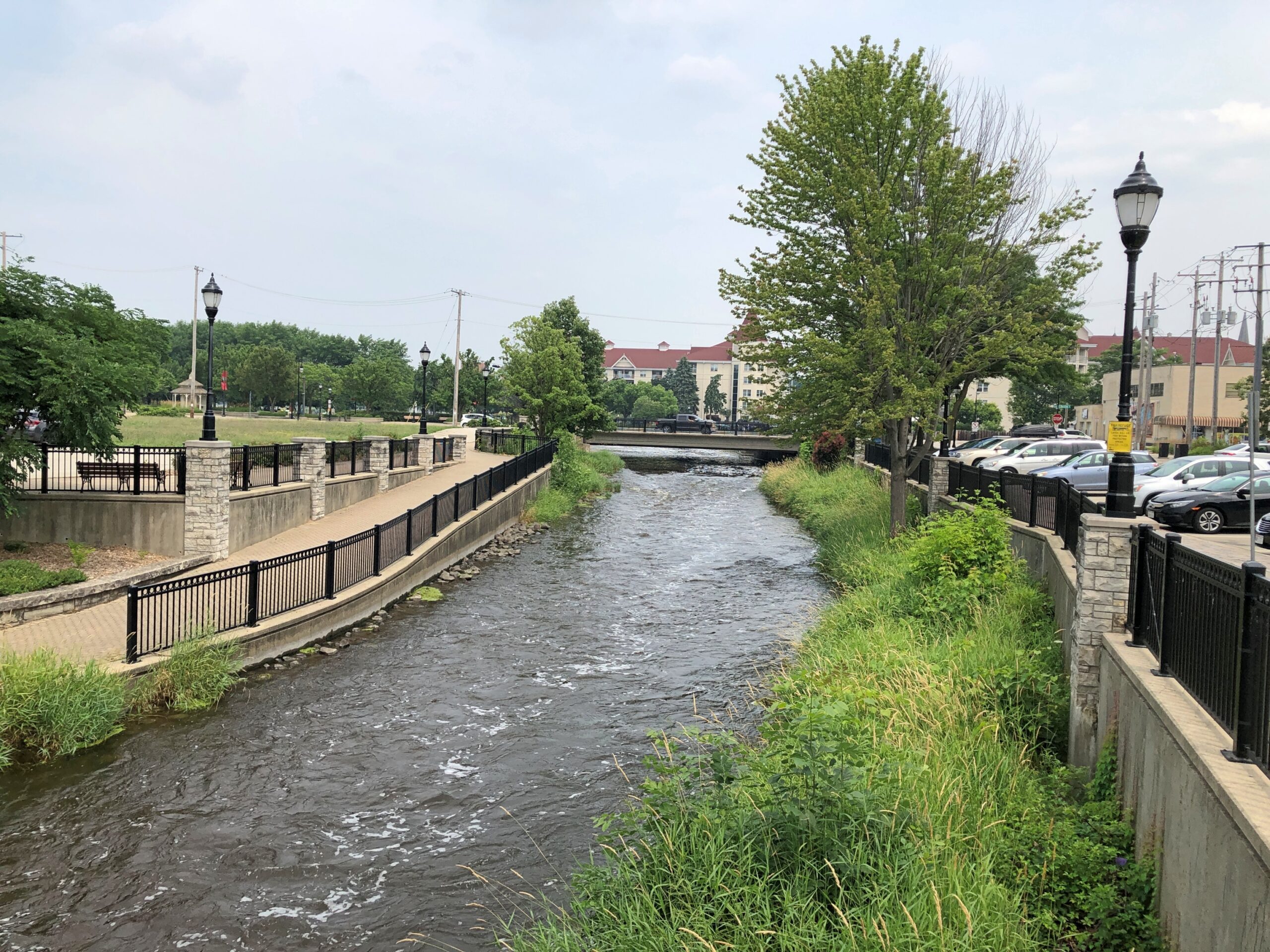
About two weeks earlier, on a nearly hot, clear day, we took a walk along the Fox, accessed a block or so away from downtown’s main streets. The river was flowing vigorously, but without a hint of the rampage to come (and why would there be?). This is the same Fox River that runs west of metro Chicago and to the Illinois River, and not the one that runs into Green Bay. Just to keep things interesting, there are apparently two other Fox Rivers in Illinois as well.

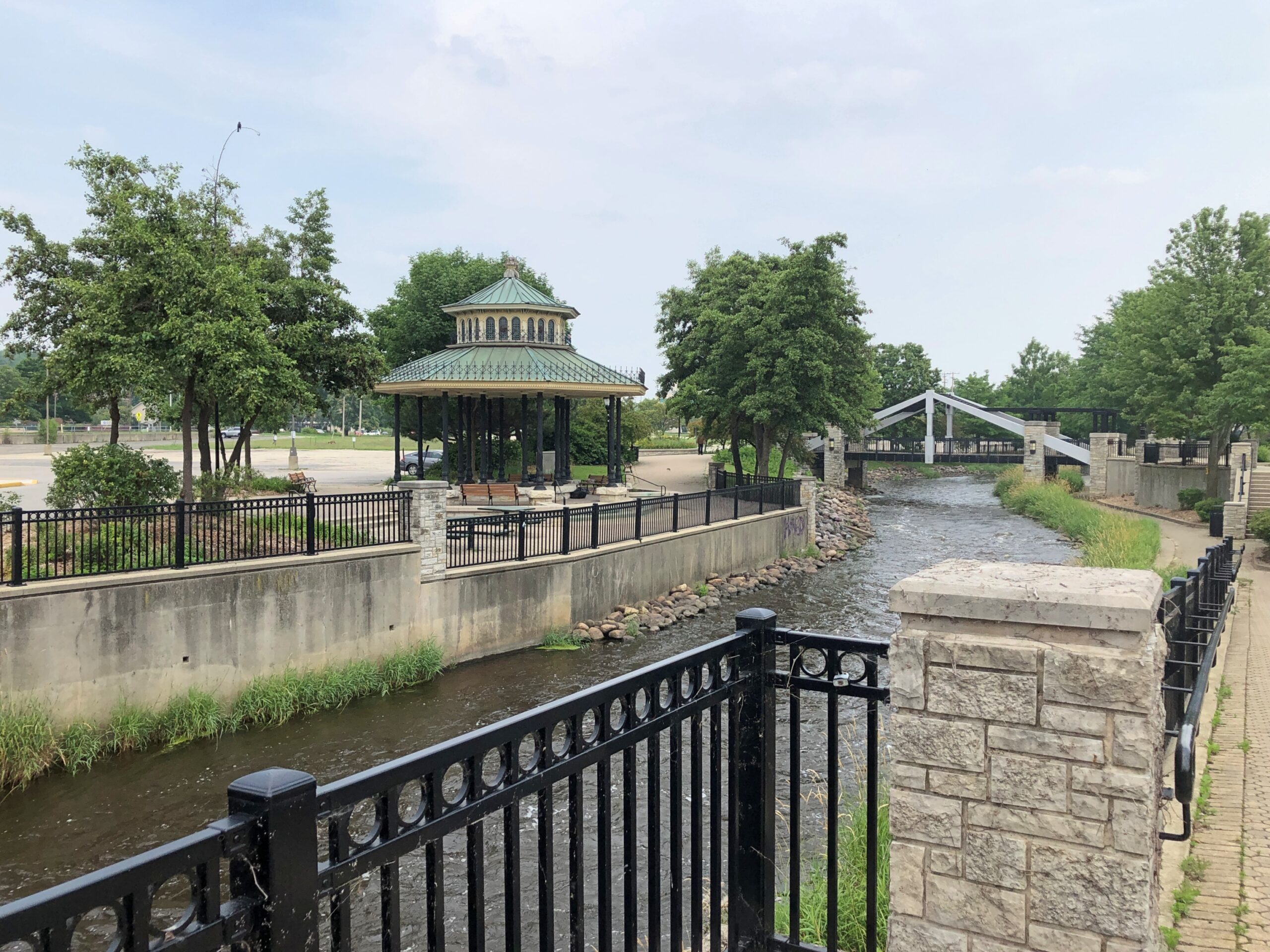
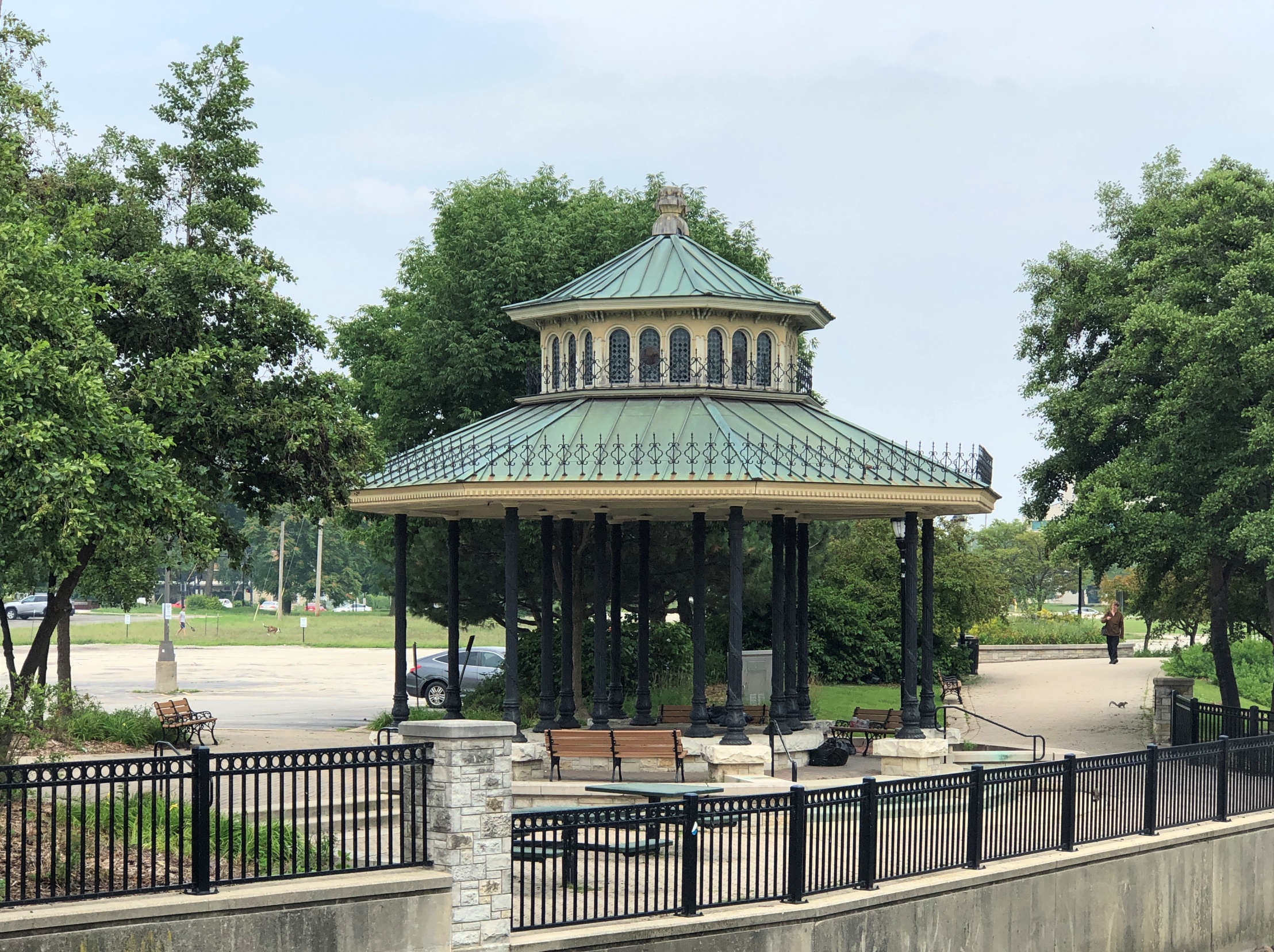
Across the way, a gazebo.

Fox River, Waukesha

Every town over 5,000 has to have a gazebo, according to Wisconsin law. Wisconsin is almost alone in its gazebo mandates, with most other states having repealed theirs in the 1960s and ’70s – though some counties in other states still mandate the structures.

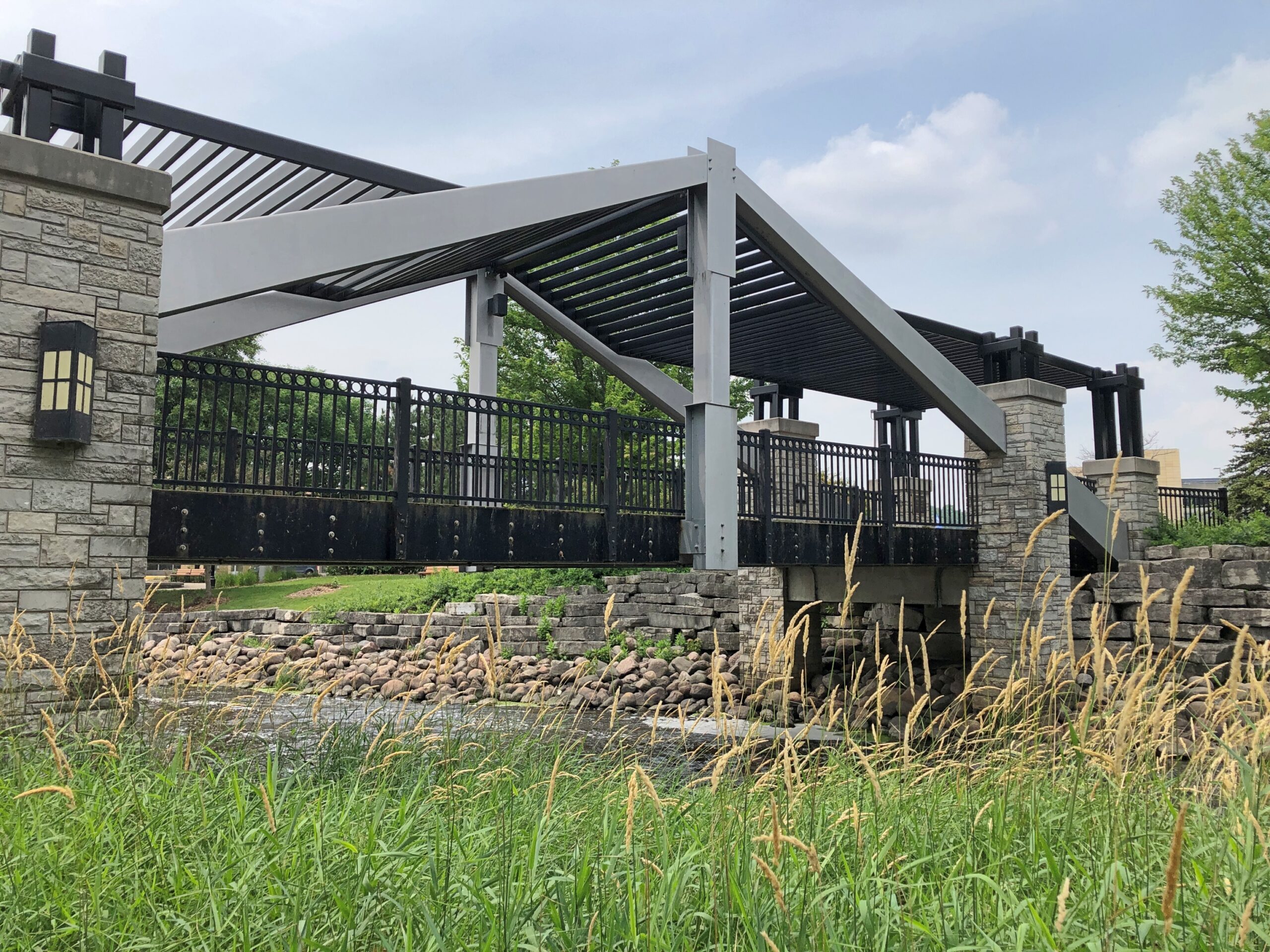
An artful pedestrian bridge.

Fox River, Waukesha
Fox River, Waukesha

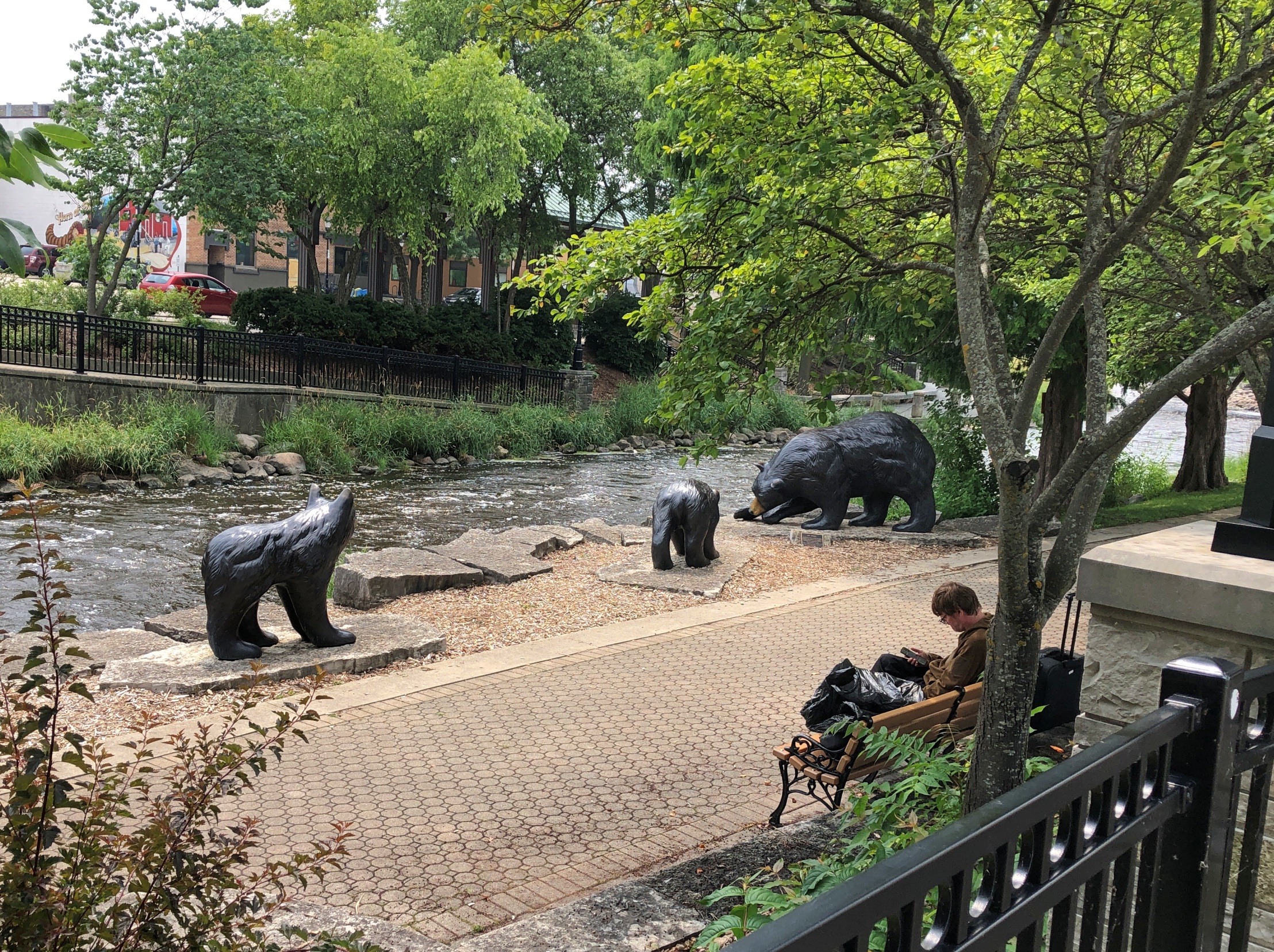
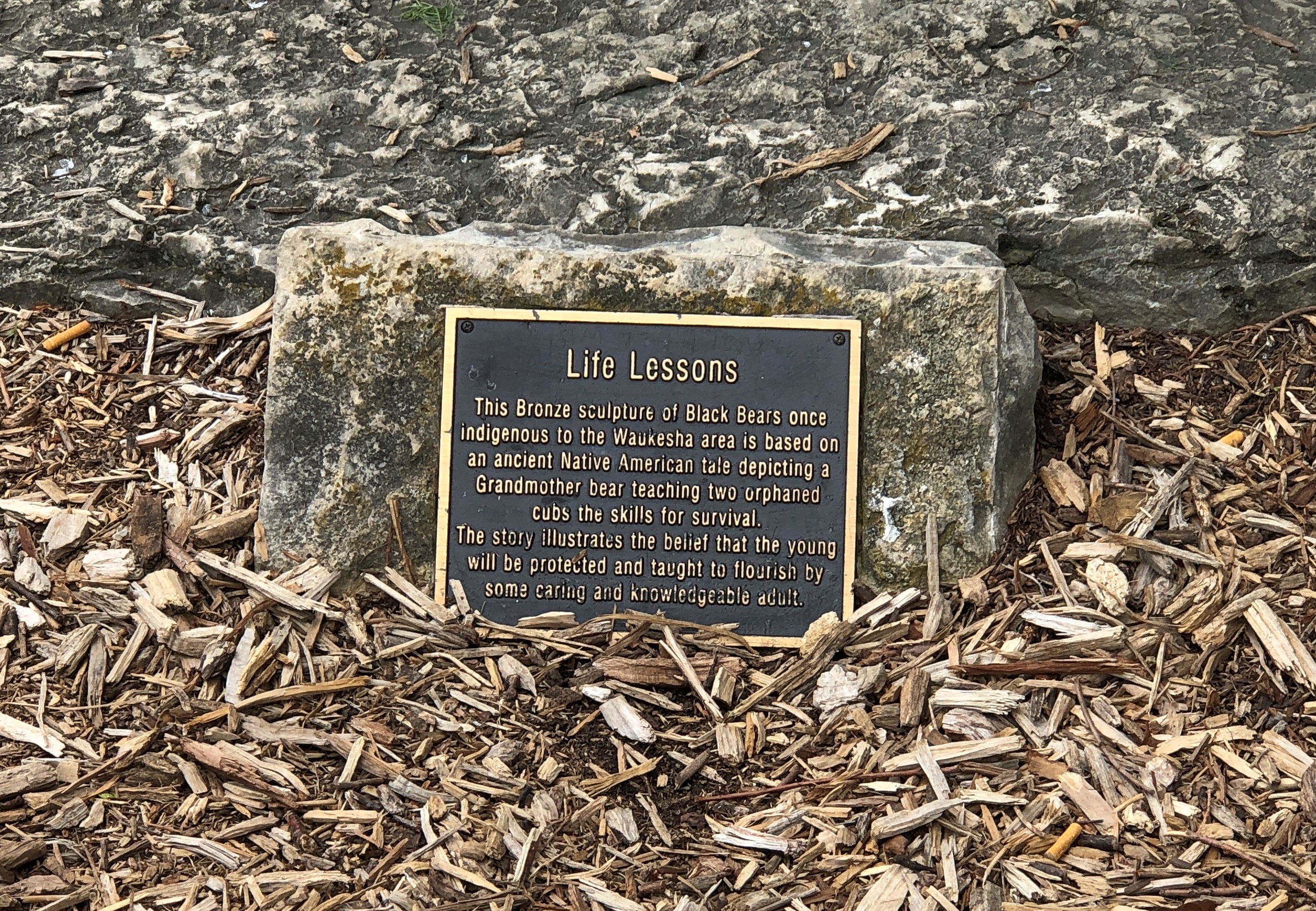
More river, and also bears. Bronze bears.

Fox River, Waukesha

Hope the river didn’t take them away, but I’d think the figures would be anchored pretty well.

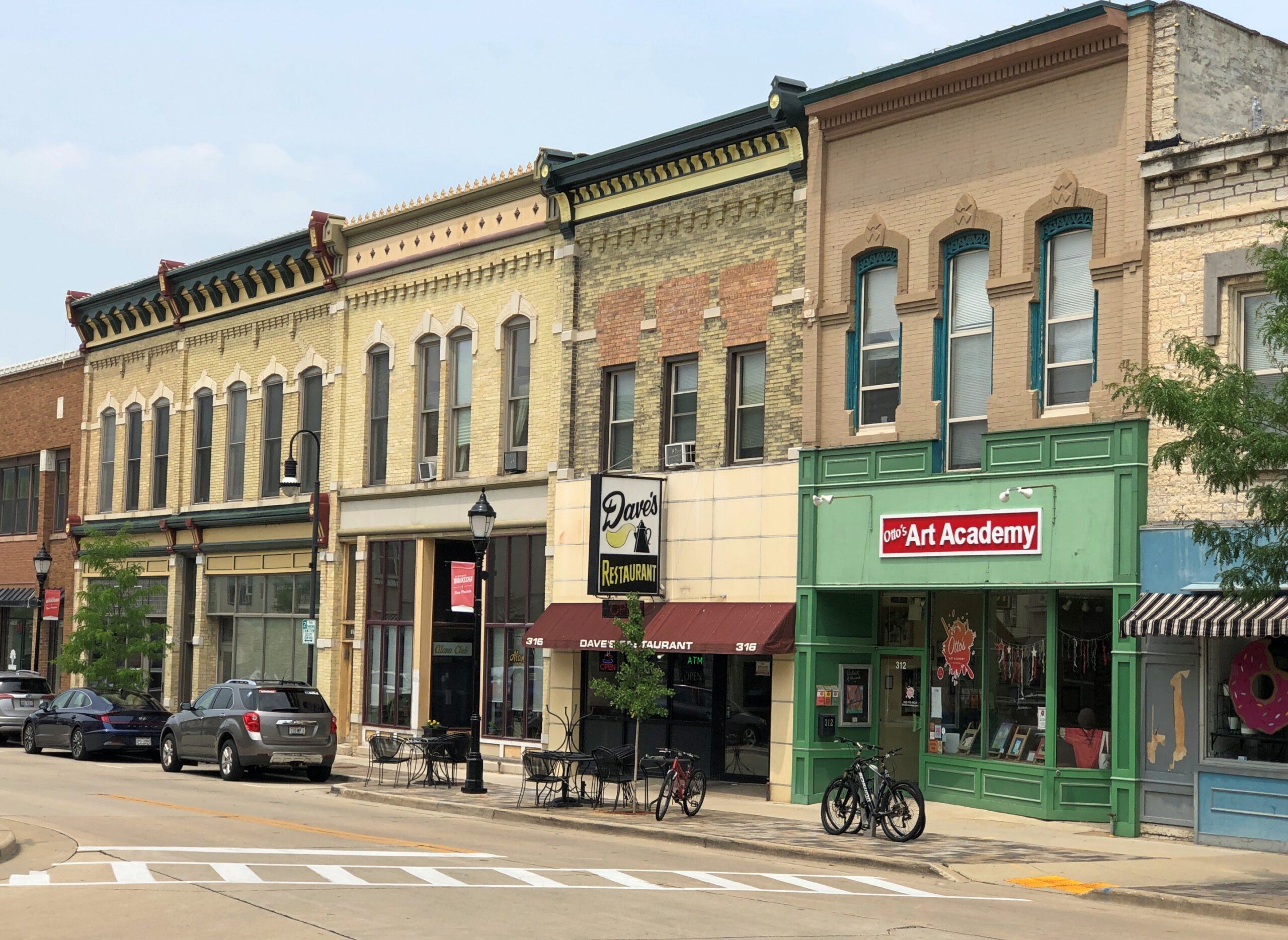
Downtown Waukesha

The other day I wondered how long it would take to count a million dollars’ worth of nickels and dimes a million times. That’s one of the dream images from “Minnie the Moocher.” Not just a dream, but an opium dream. After all, no sooner does Minnie learn to kick the gong around, does a vivid dream of wealth begin, all shiny and metallic, ending with:

She had a million dollars worth of nickels and dimes

And sat around and counted them all a million times

Let’s say half the dollar value is nickels, half dimes. That would be 5 million dimes and 10 million nickels. So 15 million individual coins. Let’s also say it takes a second to count each, just to keep it simple. That would be 15 million seconds, or 0.475 years (roughly, I shaved off a few places). Counting them a million times would thus be (roughly) 475,000 years.

Of course, if it’s an opium dream, the niceties of time and such don’t apply. Still, it sounds like a hellish task of a Sisyphean kind. But maybe it would be a heavenly task, if you have no sense of the passage of time.
I didn’t sit down to figure all that out until I was at my desk, but the question came out of nowhere during a short interstate drive just before the end of July, up in the southeast corner of Wisconsin. One destination that day, a Sunday, was downtown Waukesha, an outer suburb of Milwaukee, but a place with a distinct history of its own, where people came to take the waters once upon a time.
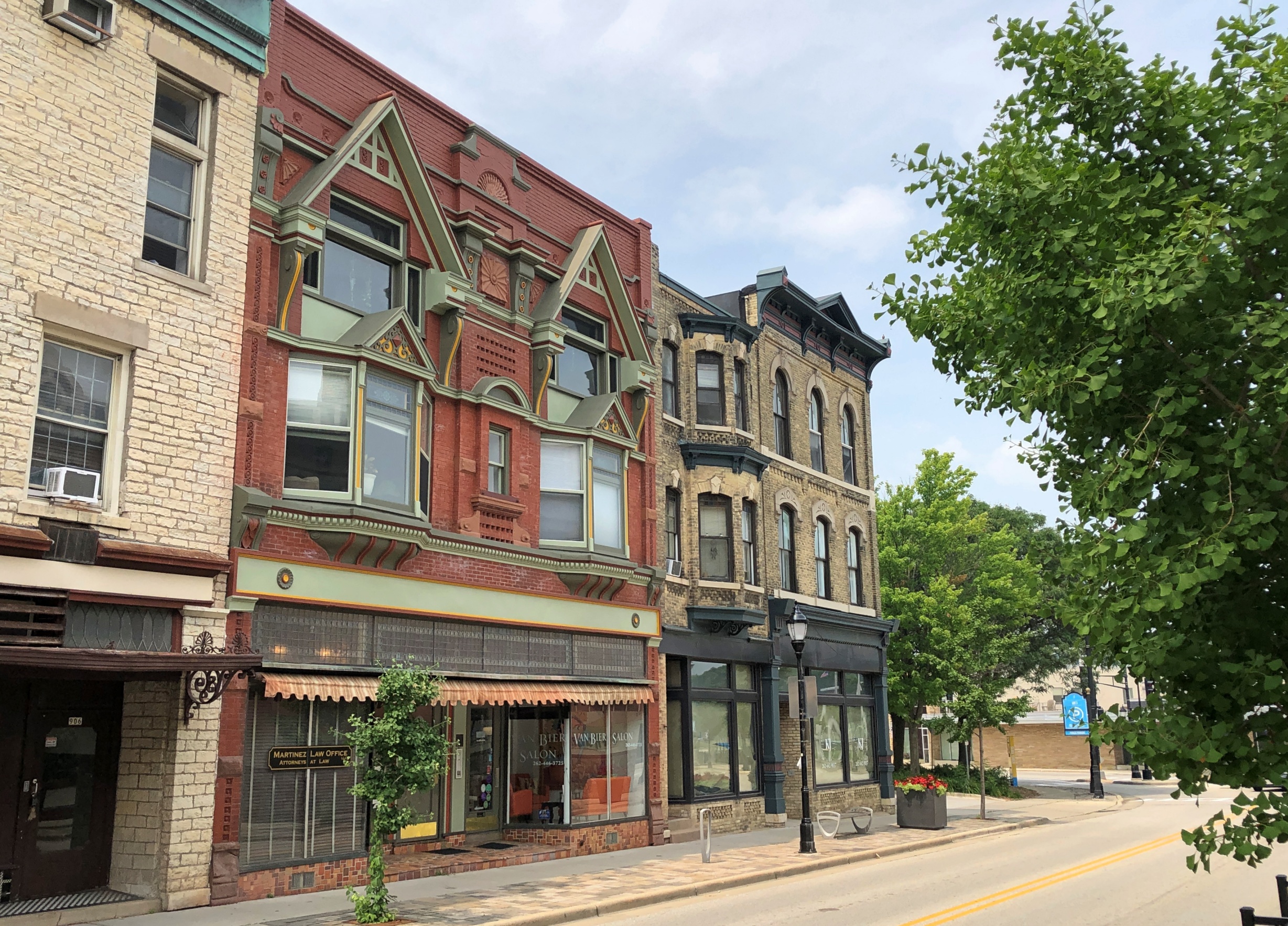
We spent some time near the five-pointed intersection of Main, Broadway and Grand, focal point of a handsome streetscape.

Waukesha, Wisconsin
Waukesha, Wisconsin

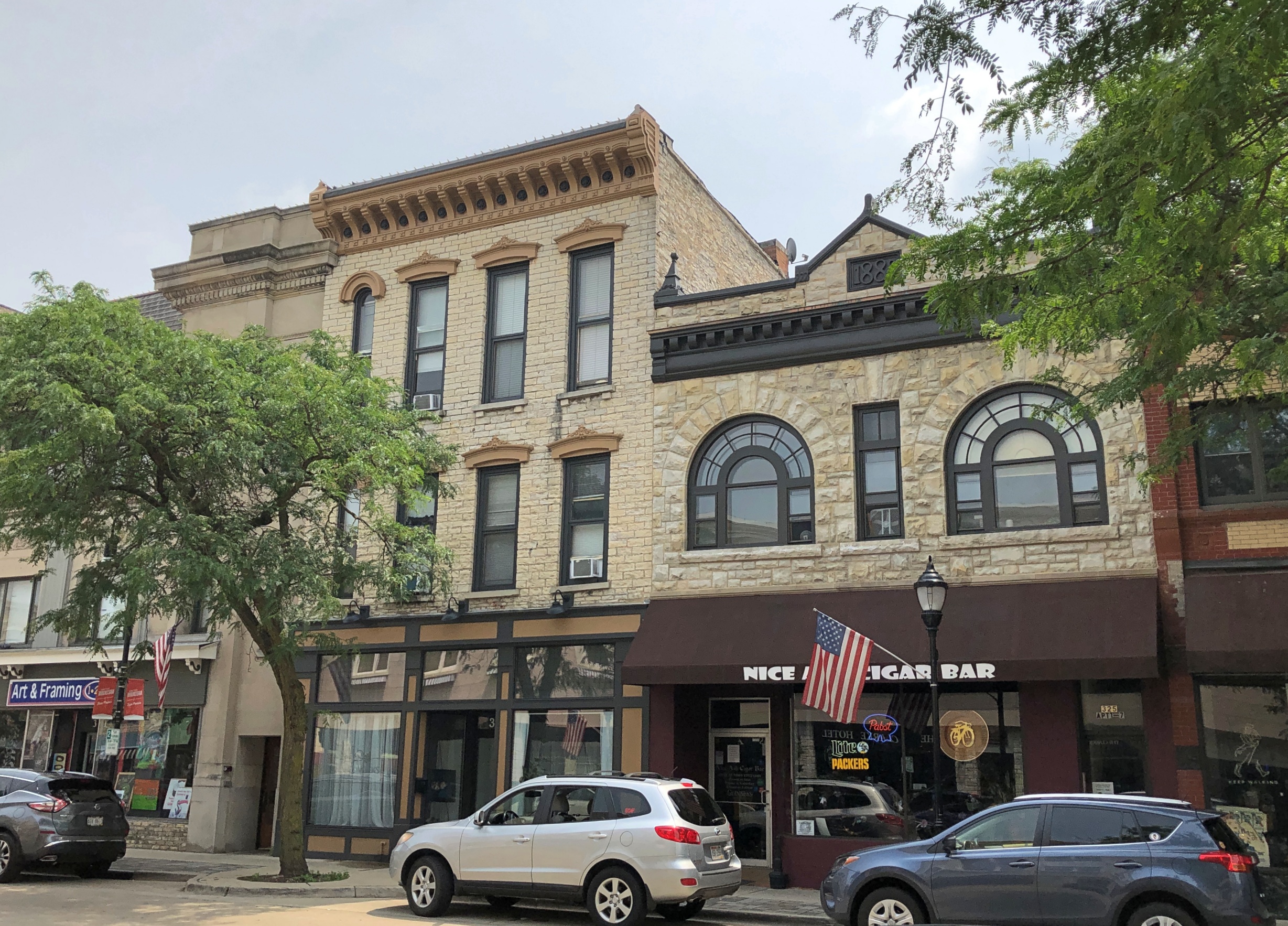
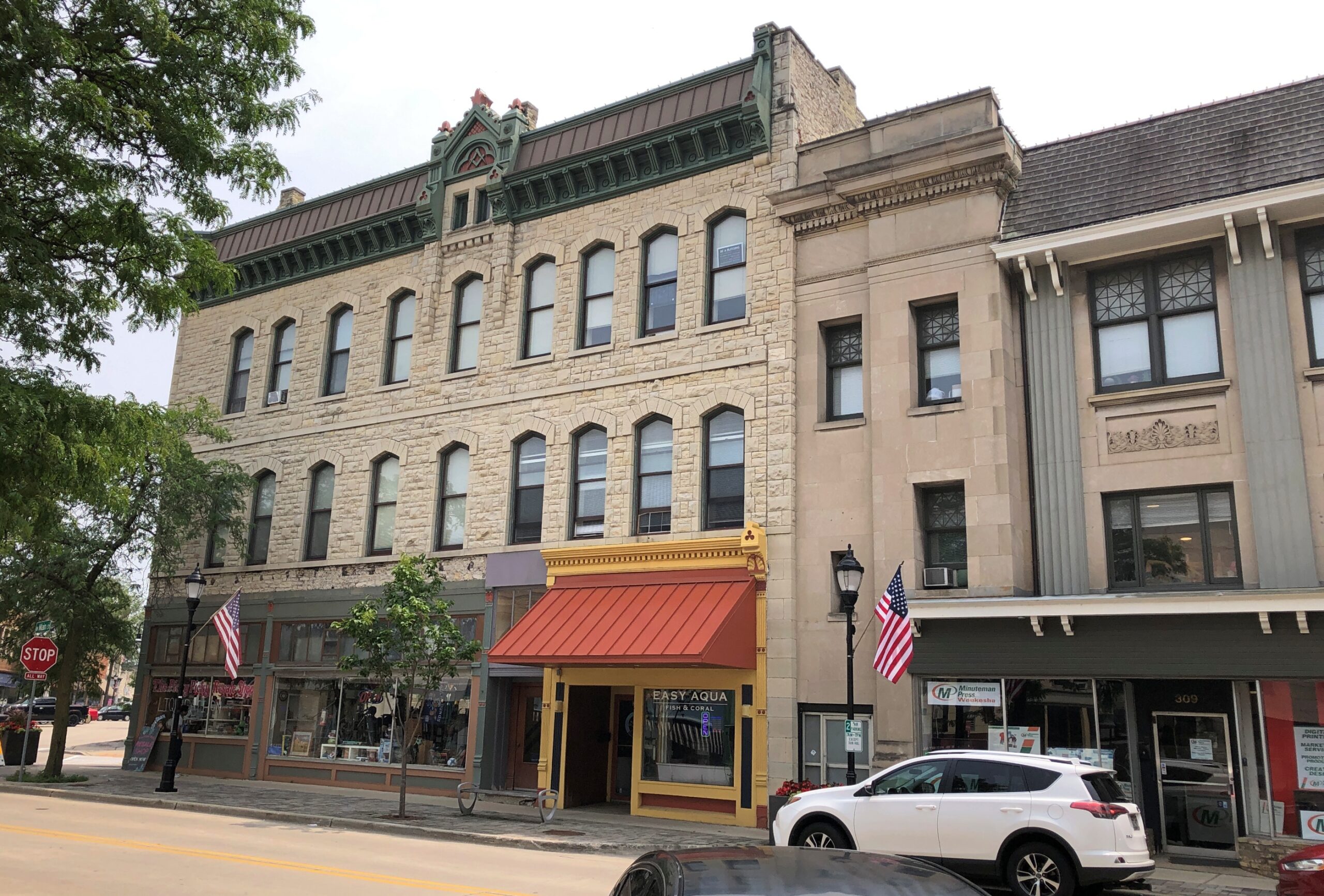
Now this is a set of buildings.

Waukesha, Wisconsin

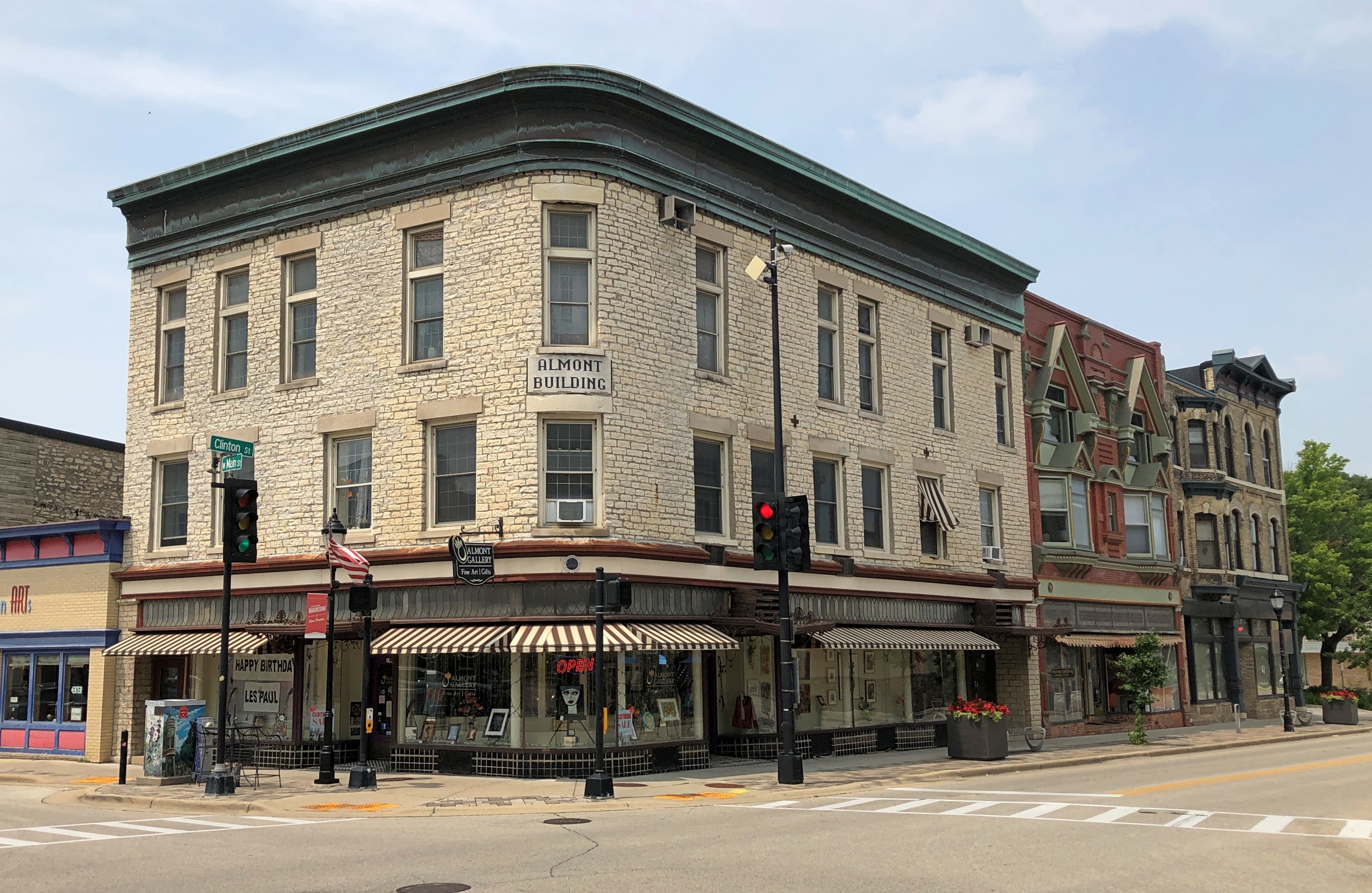
The Almont Building, whose original name was the Robinson Block.

“The core of the downtown, prior to 1856, consisted of freestanding wooden frame buildings, but a new era began after a massive fire nearly destroyed this northern section of Main Street,” the Waukesha County Historical Society & Museum says. “The Robinson Block was built in 1857 with fireproofing in mind and is the first Five Points building to use Waukesha limestone.”

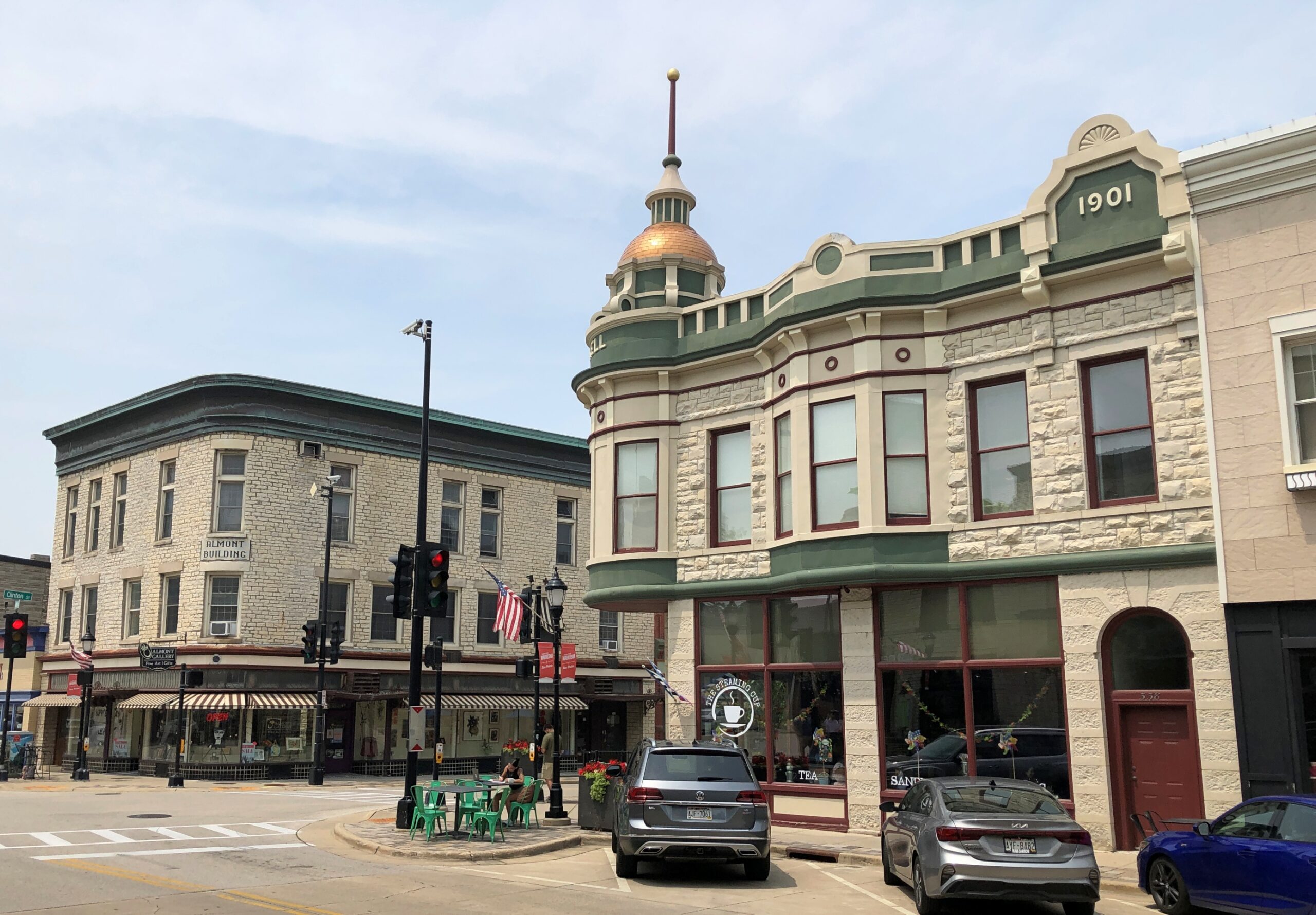
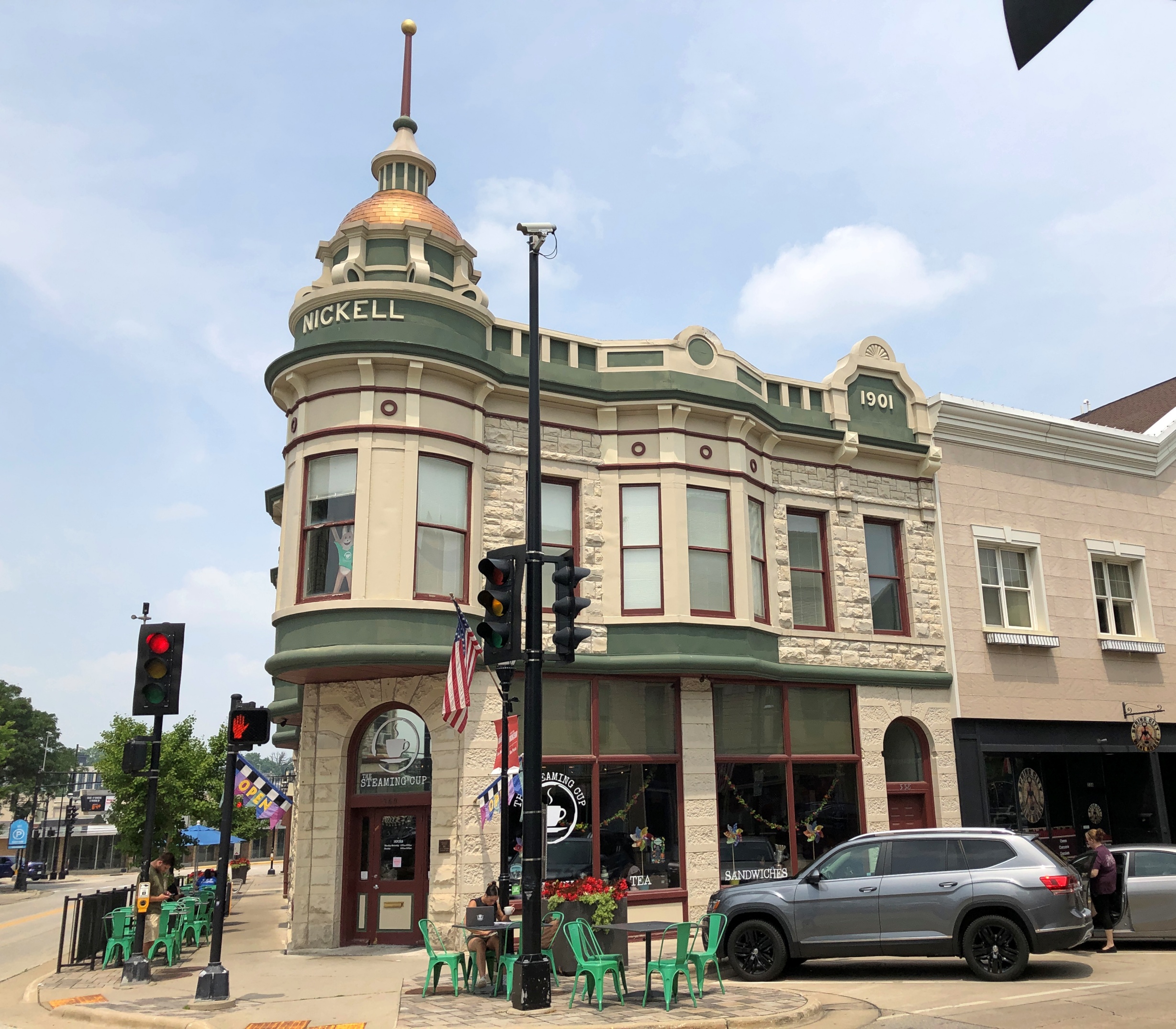
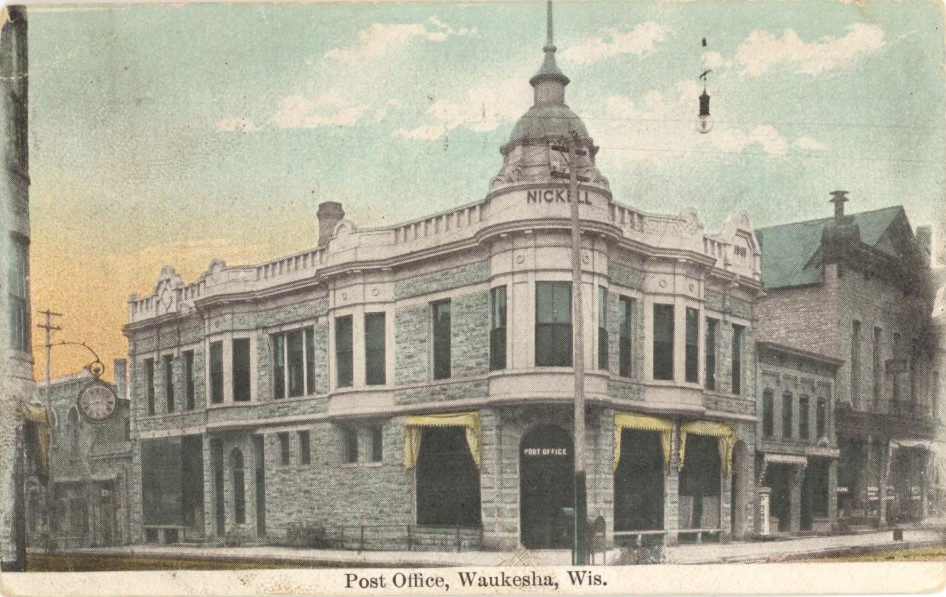
The Nickell Building, as it looked recently, and long ago.

“Built by Addison J. Nickell, local businessman and jeweler, the first floor housed the U.S. Post Office from 1902-1914,” notes the WCHS&M. “The work of Waukesha architect C.C. Anderson, this Queen Anne displays a projecting oriel and corner turret capped by a domed roof: both are covered by pressed metal.”

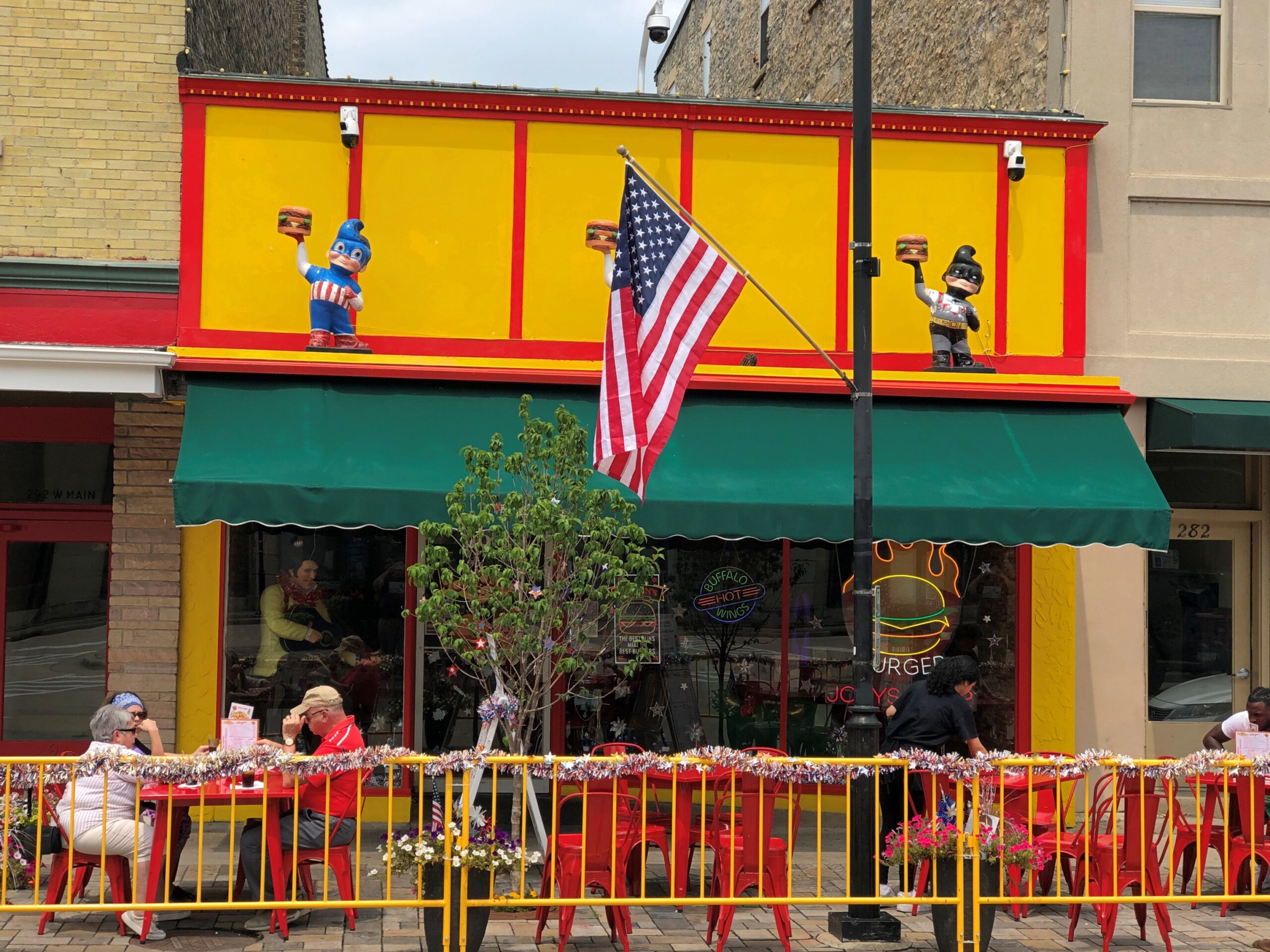
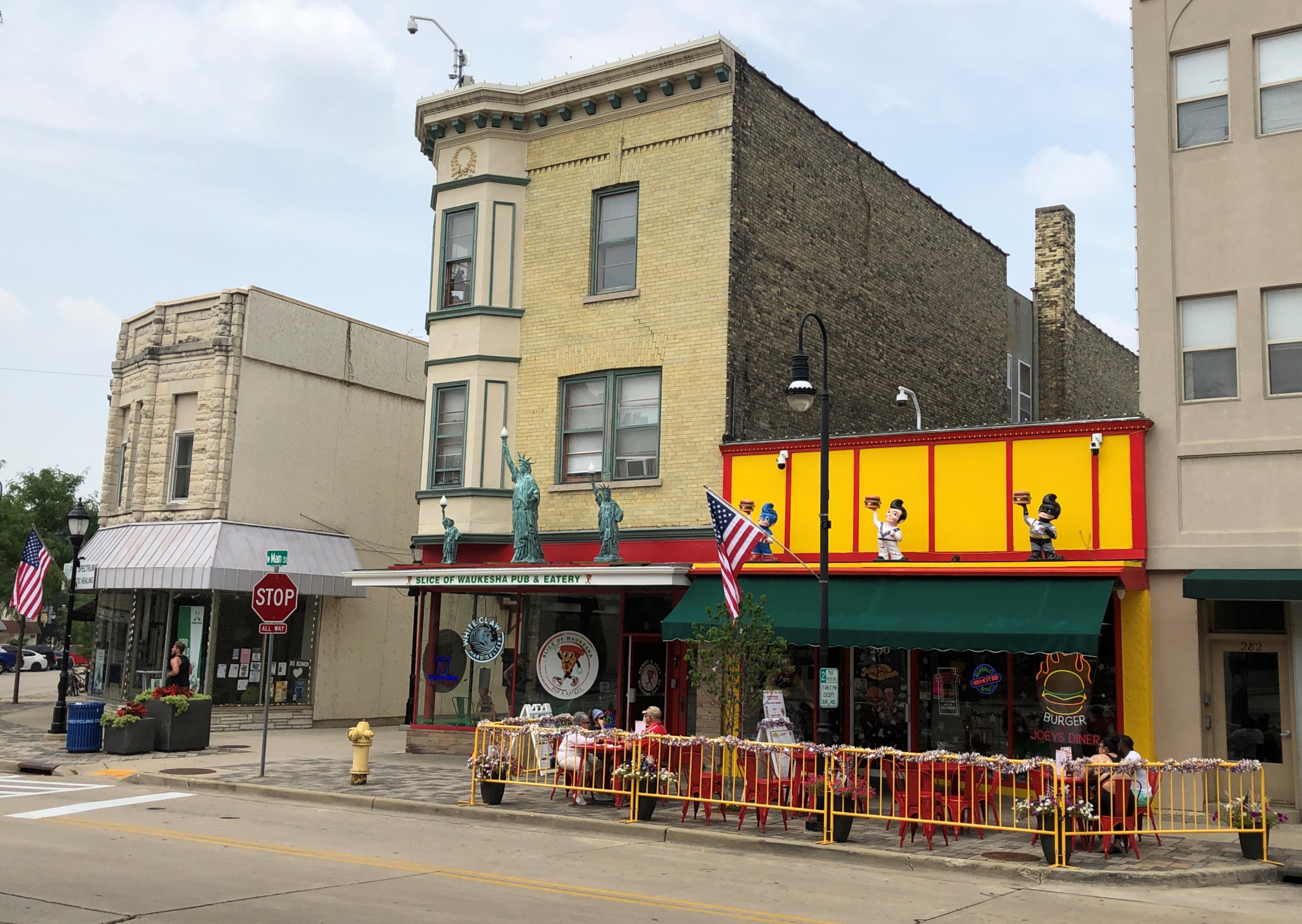
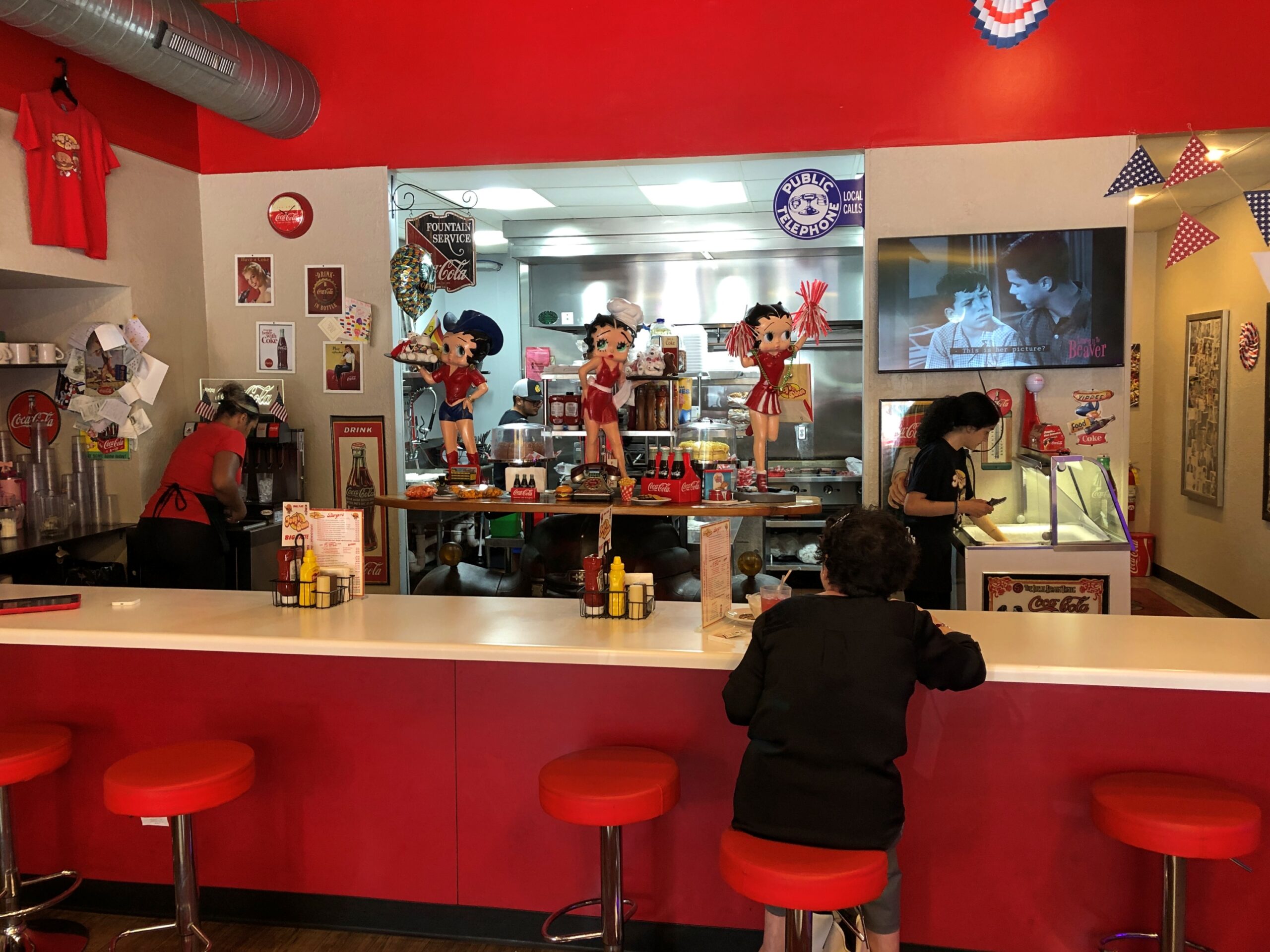
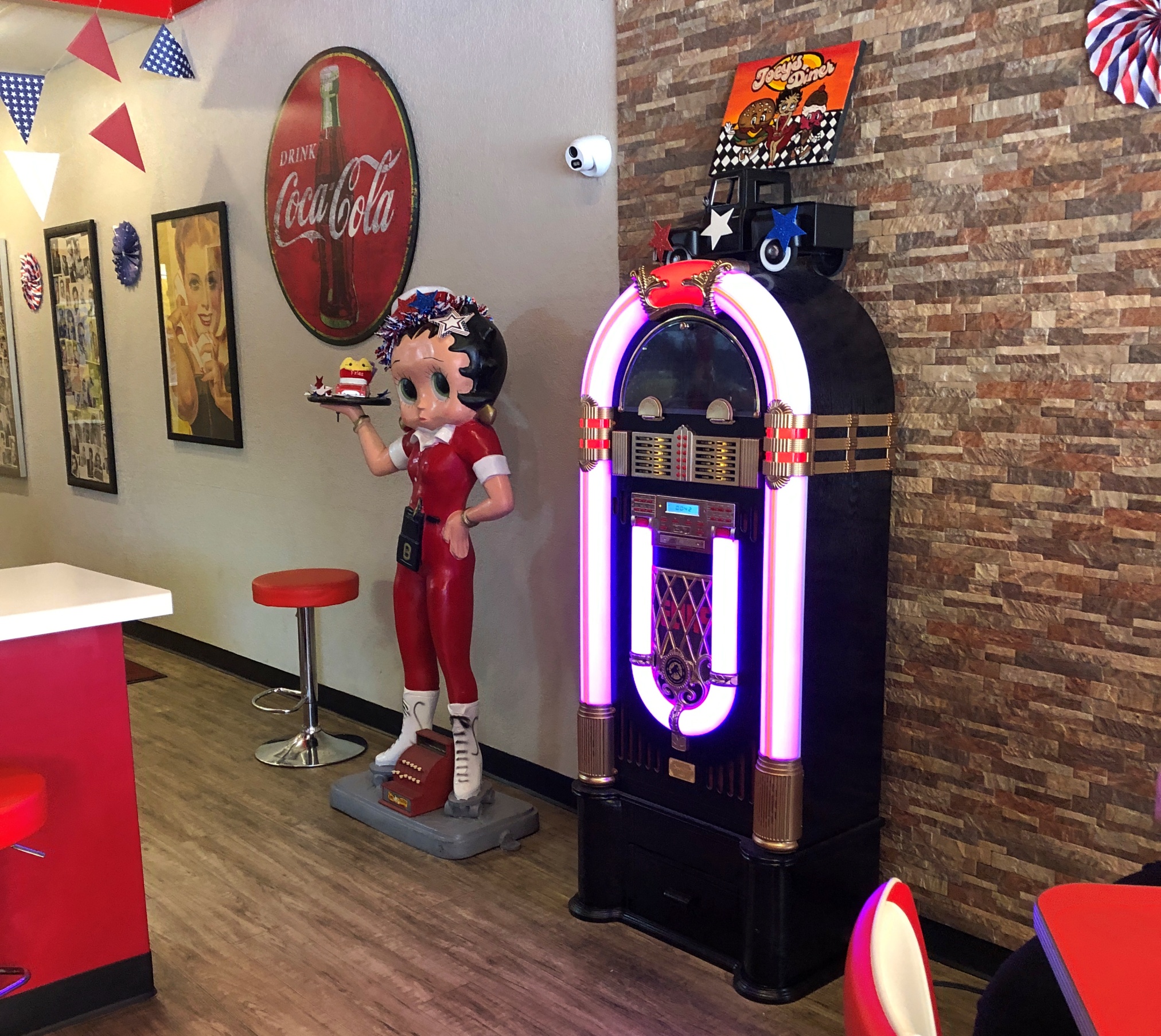
Being mid-day, one bit of business to take care of: lunch. We soon found the friendly joint called Joey’s Diner.

Joey likes Betty.

Joey’s is next to an Italian restaurant, similarly casual, that I think was owned by the same fellow. He was everywhere at once all the time — running a restaurant is nothing if not busy, and he seemed to be running two — but toward the end of our meal, asked how it was. I answered enthusiastically to the positive about my simple but also delicious hamburger. He responded by giving us a slice of chocolate cake, on the house. Thanks, Joey.

The street has other (many other) examples of places found here and nowhere else.

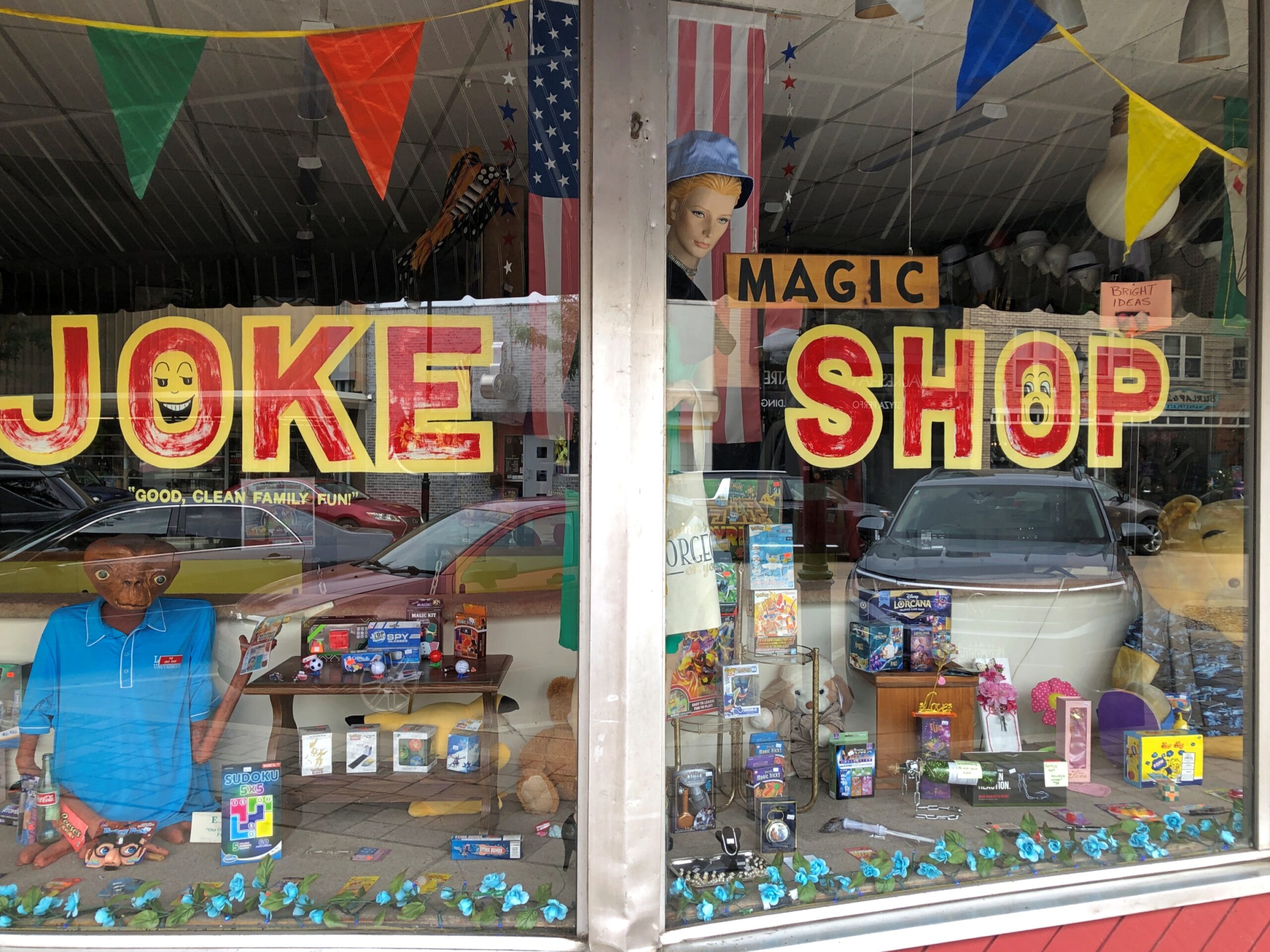
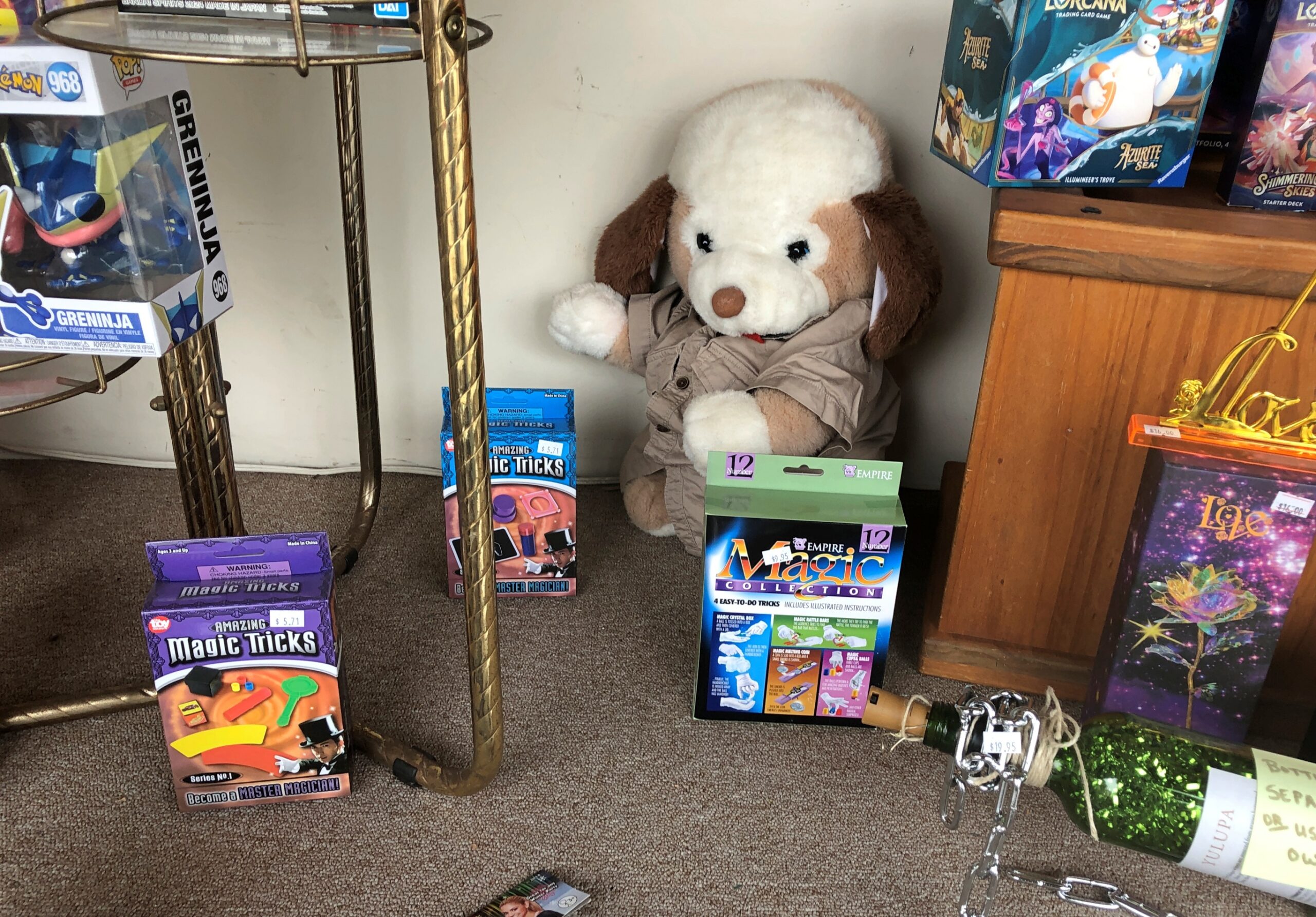
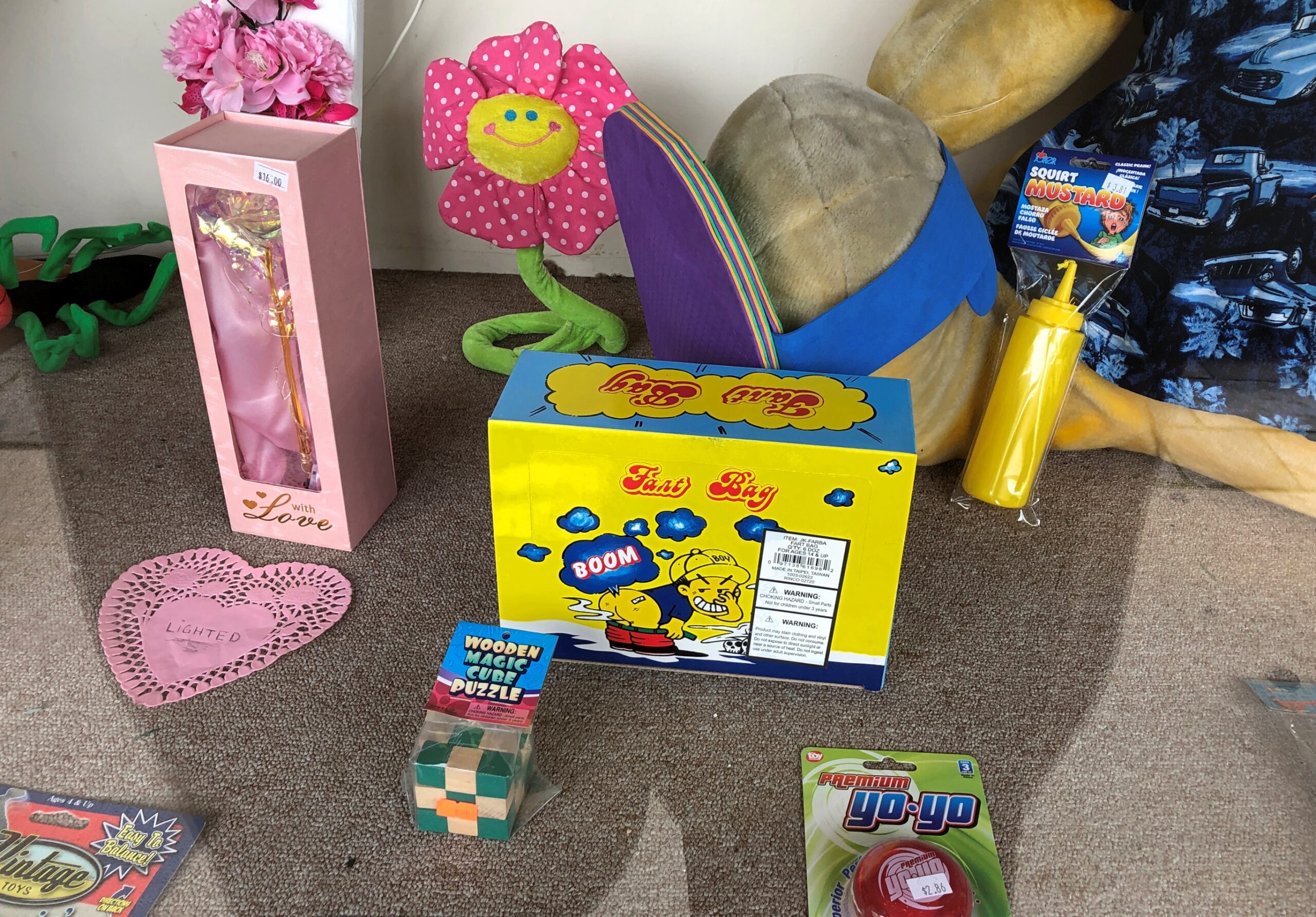
Been a while since I’d seen a joke shop. Closed.

Waukesha, Wisconsin
Waukesha, Wisconsin

The last one might have been Uncle Fun in Chicago, which closed some years ago. Too bad about that, but at least Jest For Fun Joke Shop, which has been at this Waukesha location more than 40 years, is keeping the retail tradition alive.

Montezuma, Indiana

Just how many places in the United States are named after the Aztec emperor Moctezuma II, or as it’s spelled everywhere in América del Norte, Montezuma? Turning to the USGS, I find an answer: a lot. The survey lists 83 U.S. place names using the word Montezuma. There are cities, towns and populated places; water features like streams, creeks and bays; summits, peaks, ridges and a slough and a cliff and a cut-off; a county in Colorado and a mining district in Nevada; and much more. Included was the one we visited a few Sundays ago, Montezuma: Indiana.

I was looking at a fine paper map, a guide to the county’s covered bridges and the routes necessary to see them, and I saw on it the town of Montezuma. With the name like that, who wouldn’t want to go for a look? Then I found that it had its own historic bridge, but not a covered one. So we made our way west from Rockville along the likes of Strawberry Road and US 36 to Montezuma.

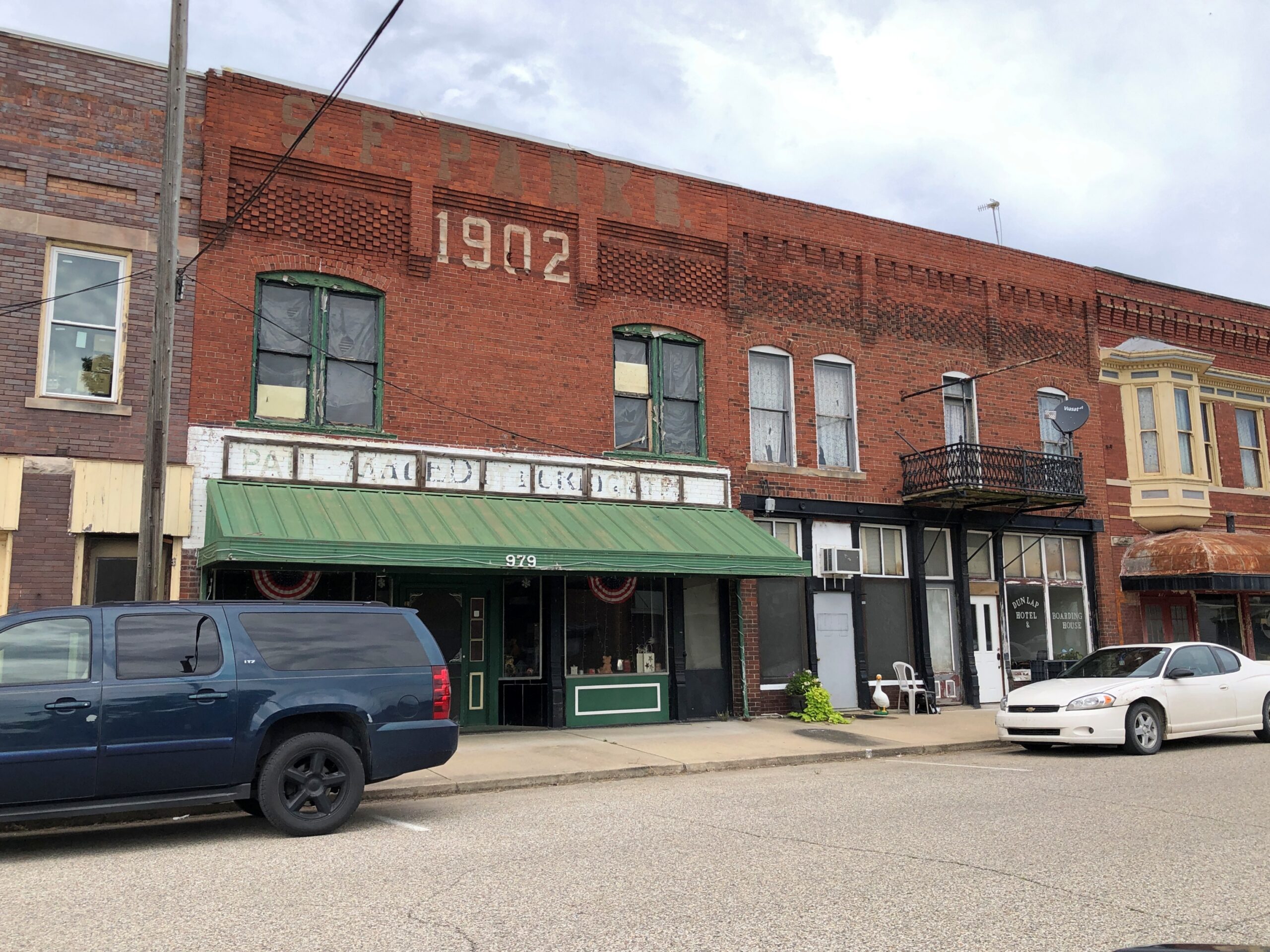
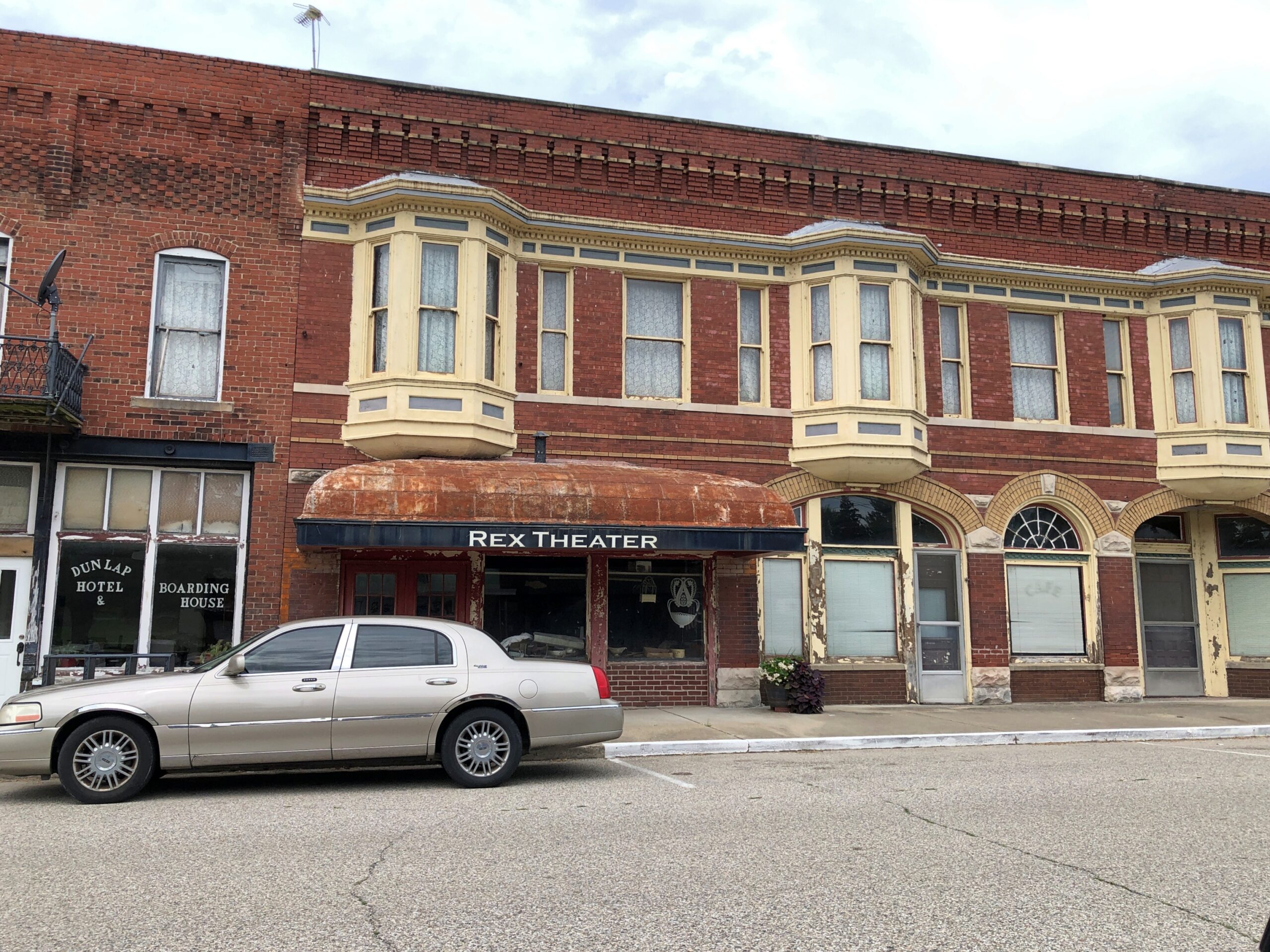
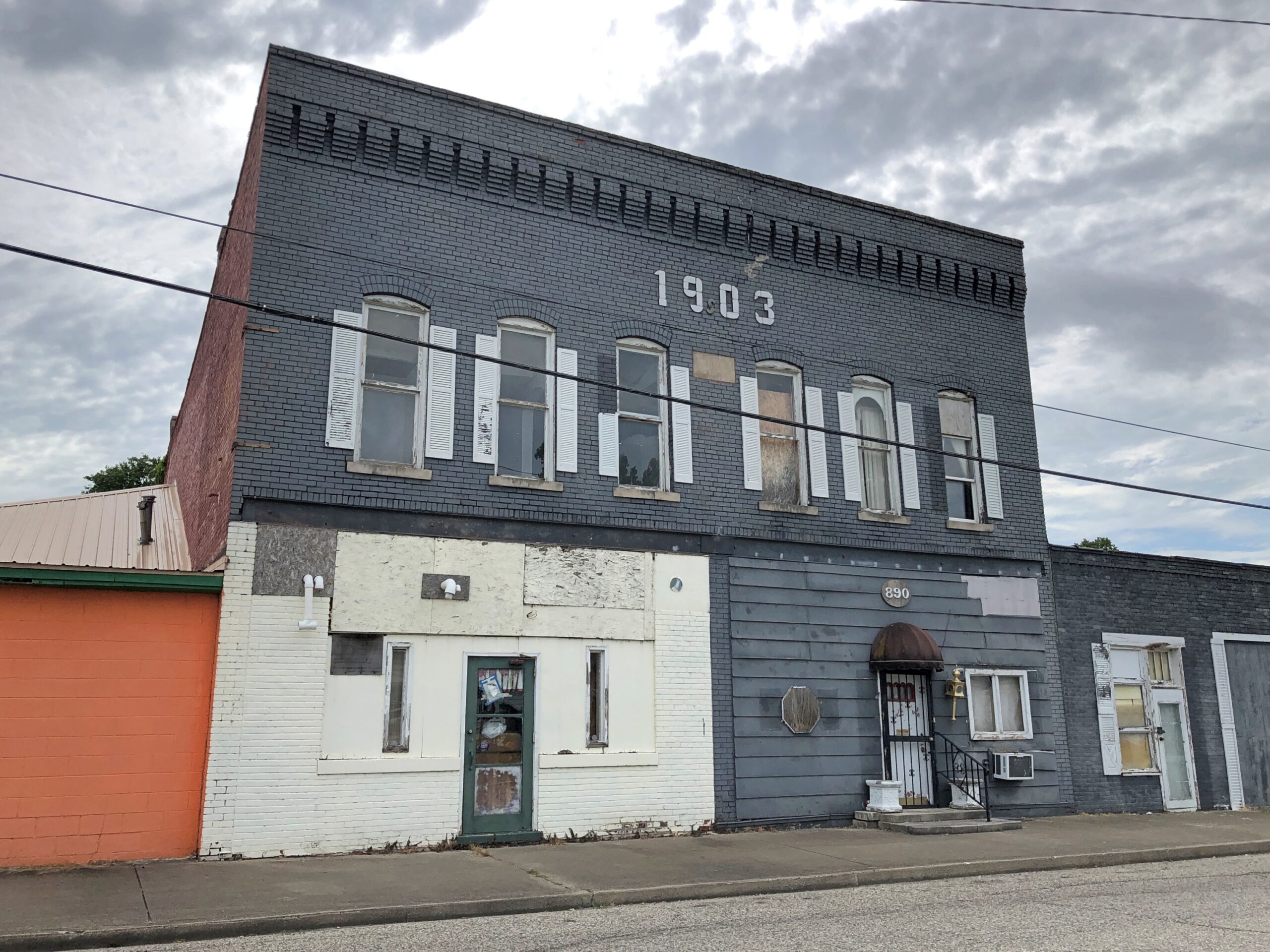
The town (pop. 1,000 or so) is at the western edge of Parke County, along the east bank of the Wabash River. It doesn’t look like downtown, deserted on a hot Sunday, has been discovered by tourists or hipsters yet.

Montezuma, Indiana
Montezuma, Indiana
Montezuma, Indiana
Montezuma, Indiana

Full of intriguing detail, these buildings, but none more than a sign for a hotel and boarding house. Along the classic model – people living in rooms upstairs, taking most meals in a room next to a kitchen? Or is it an SRO hotel (rare enough) with a vending machine in the lobby?

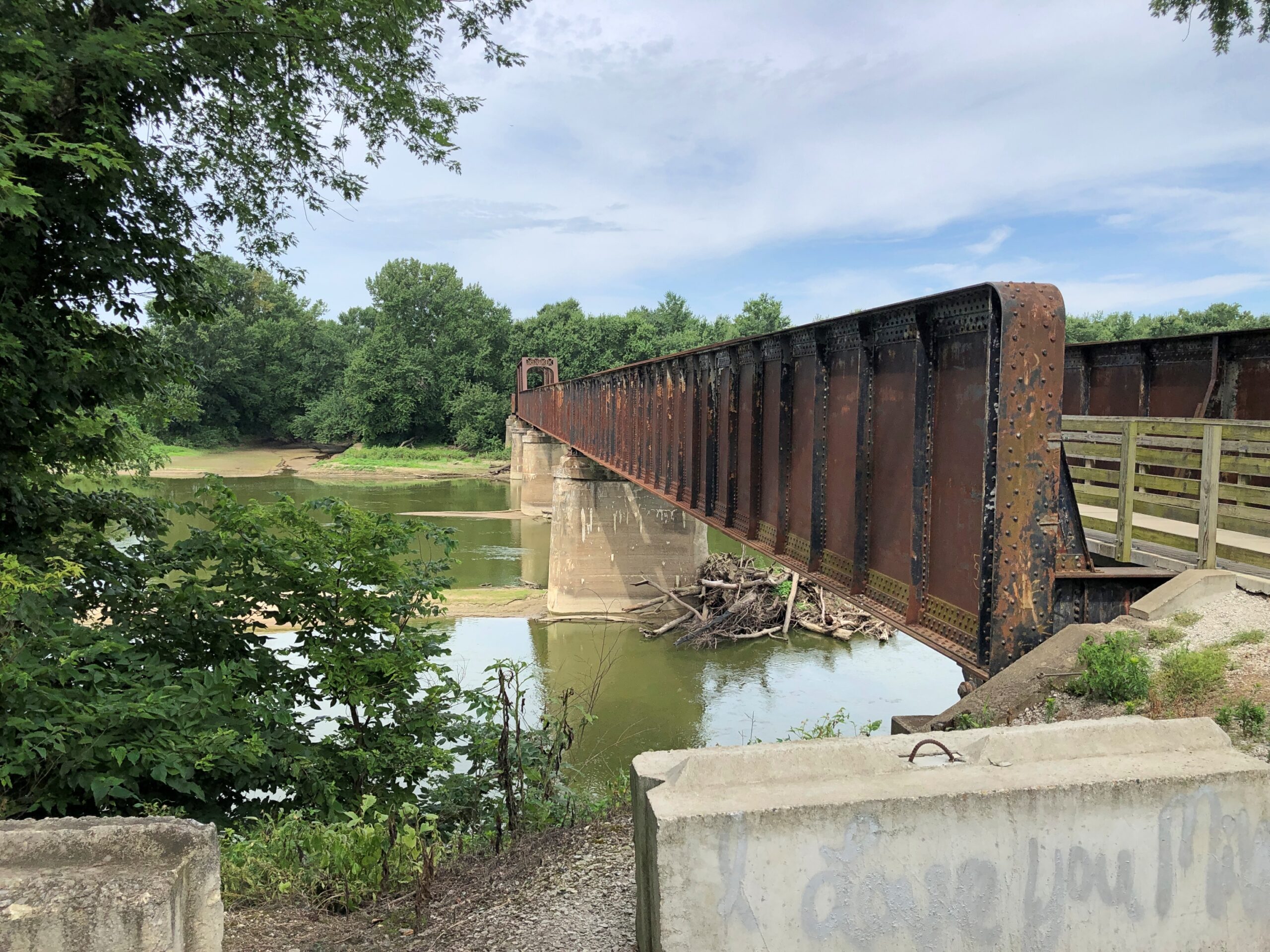
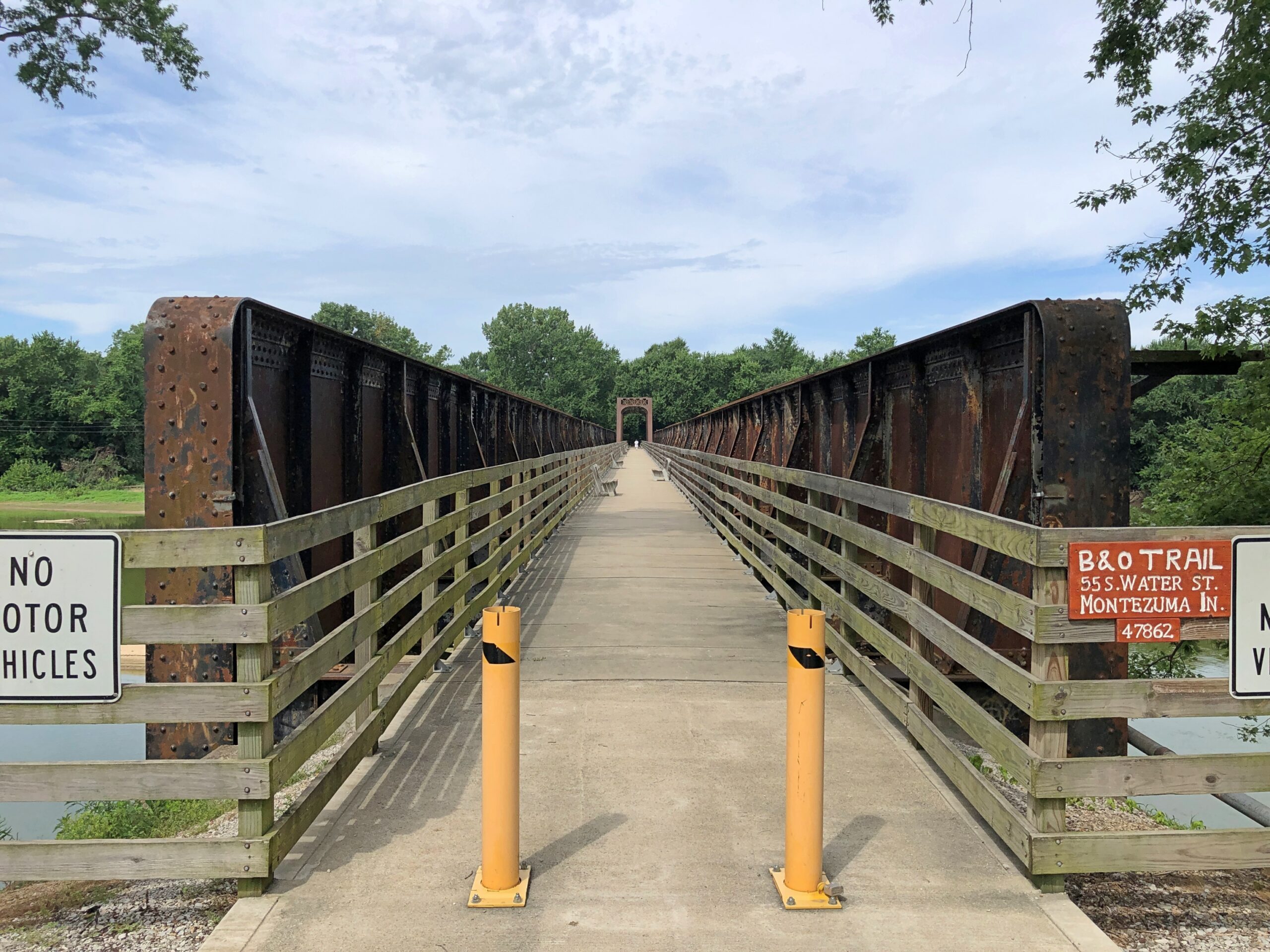
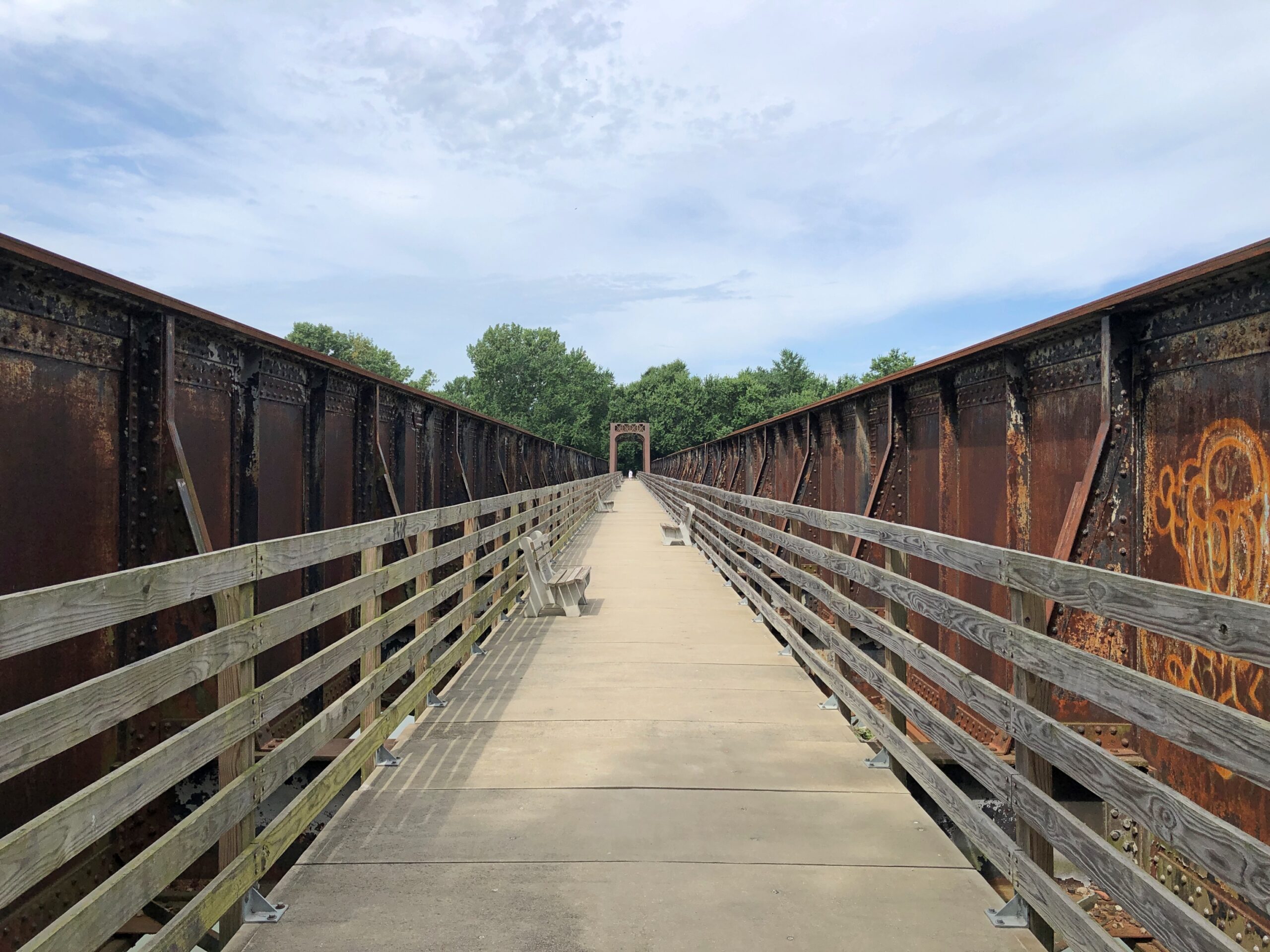
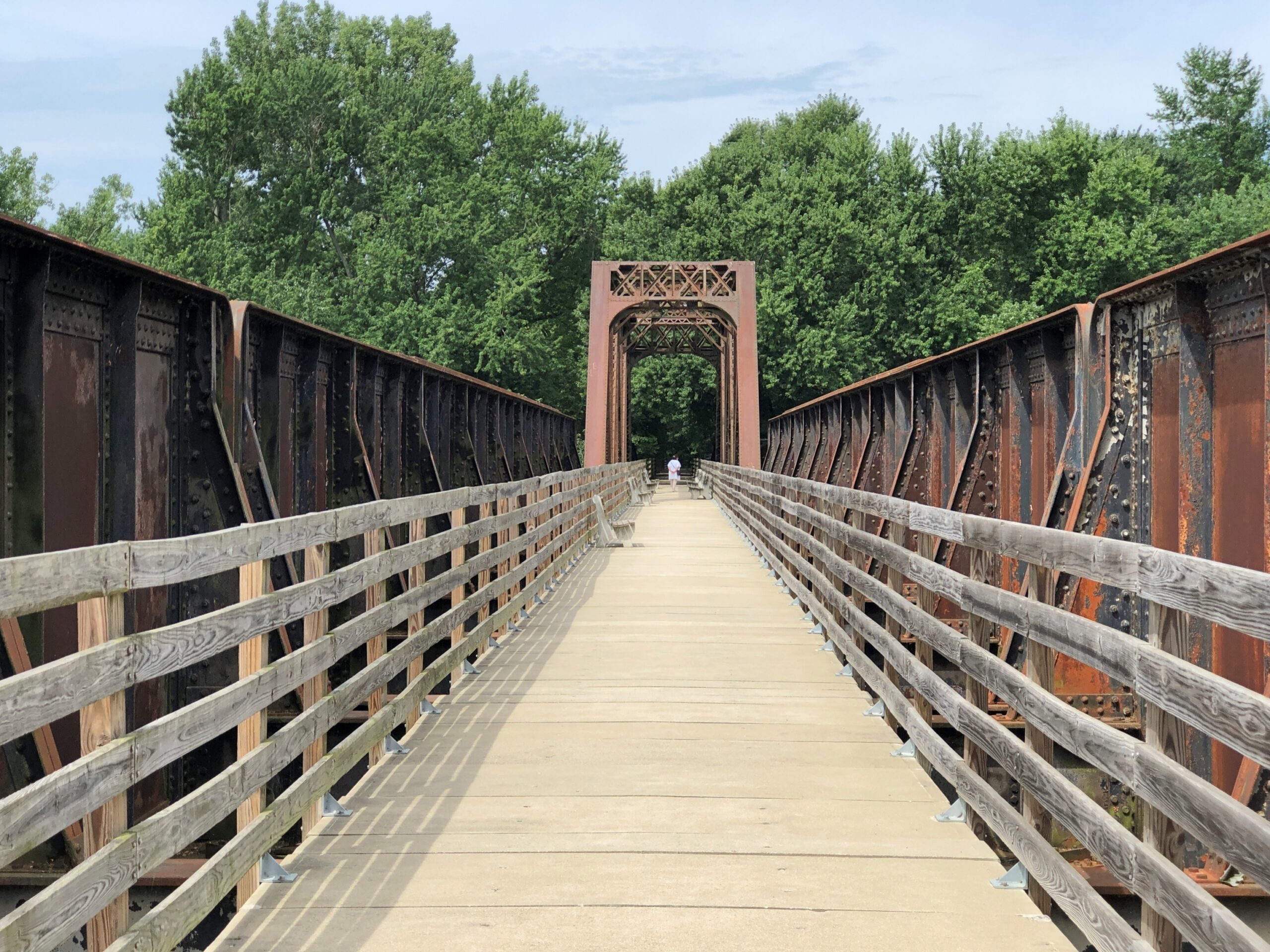
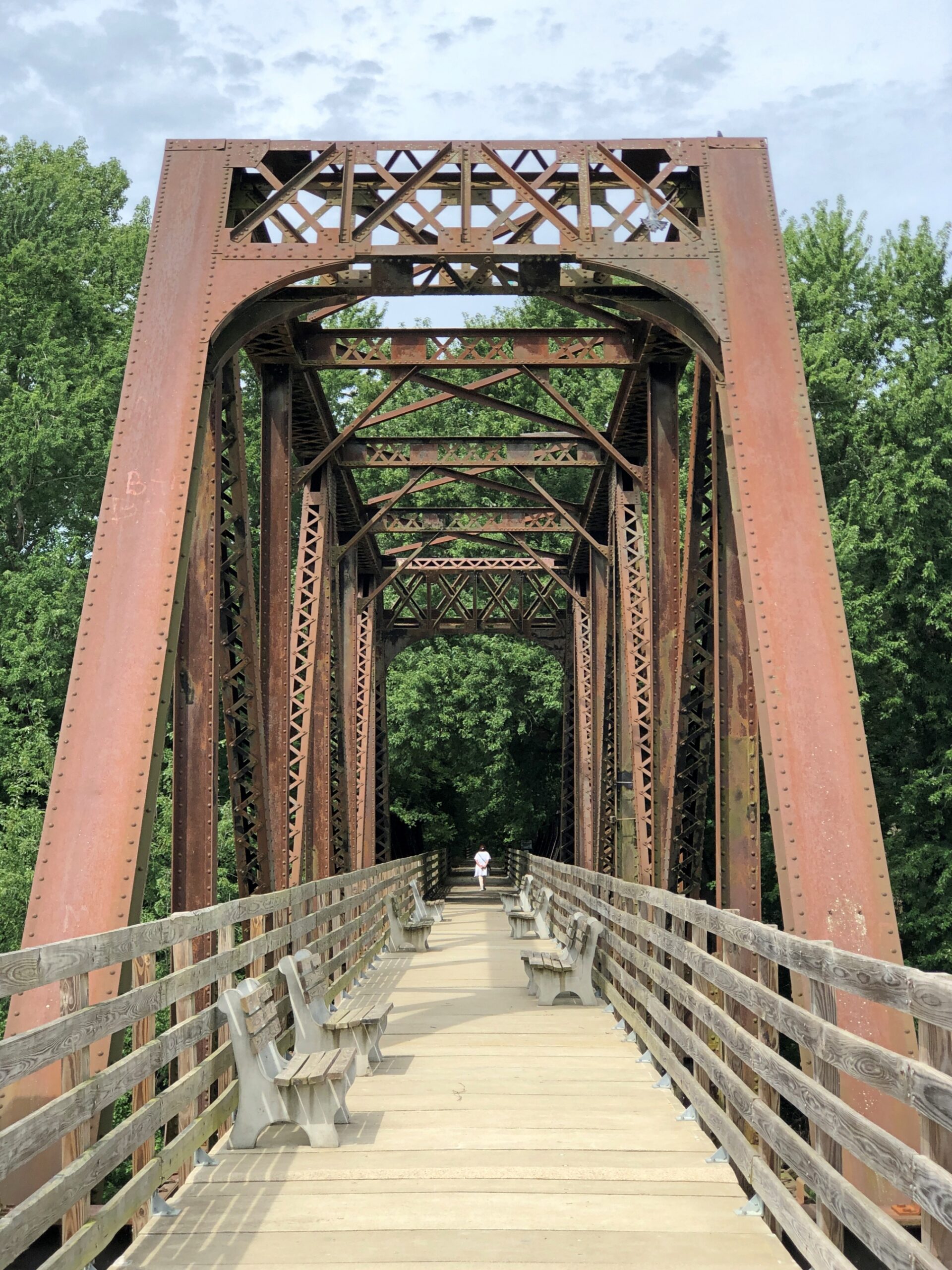
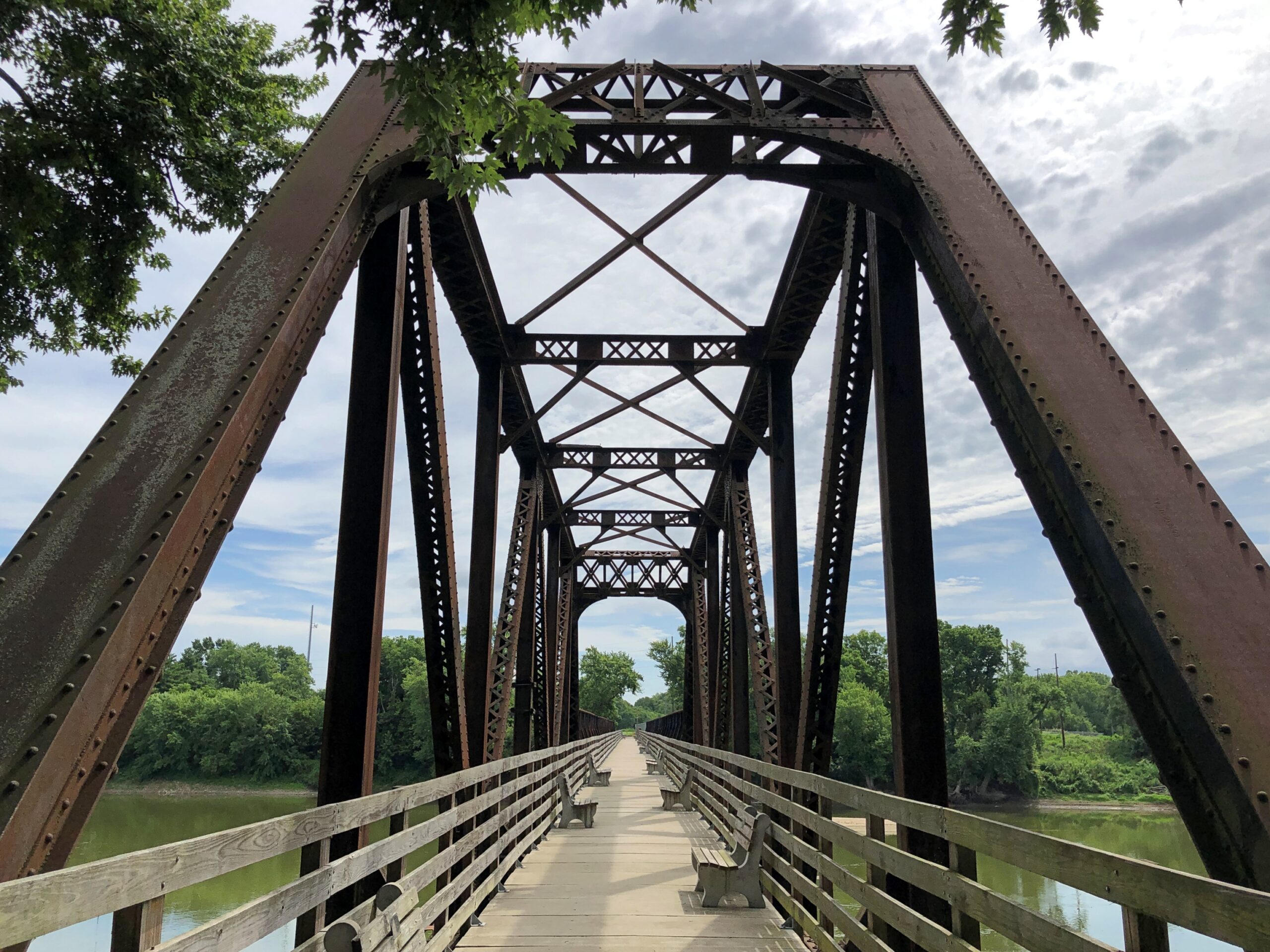
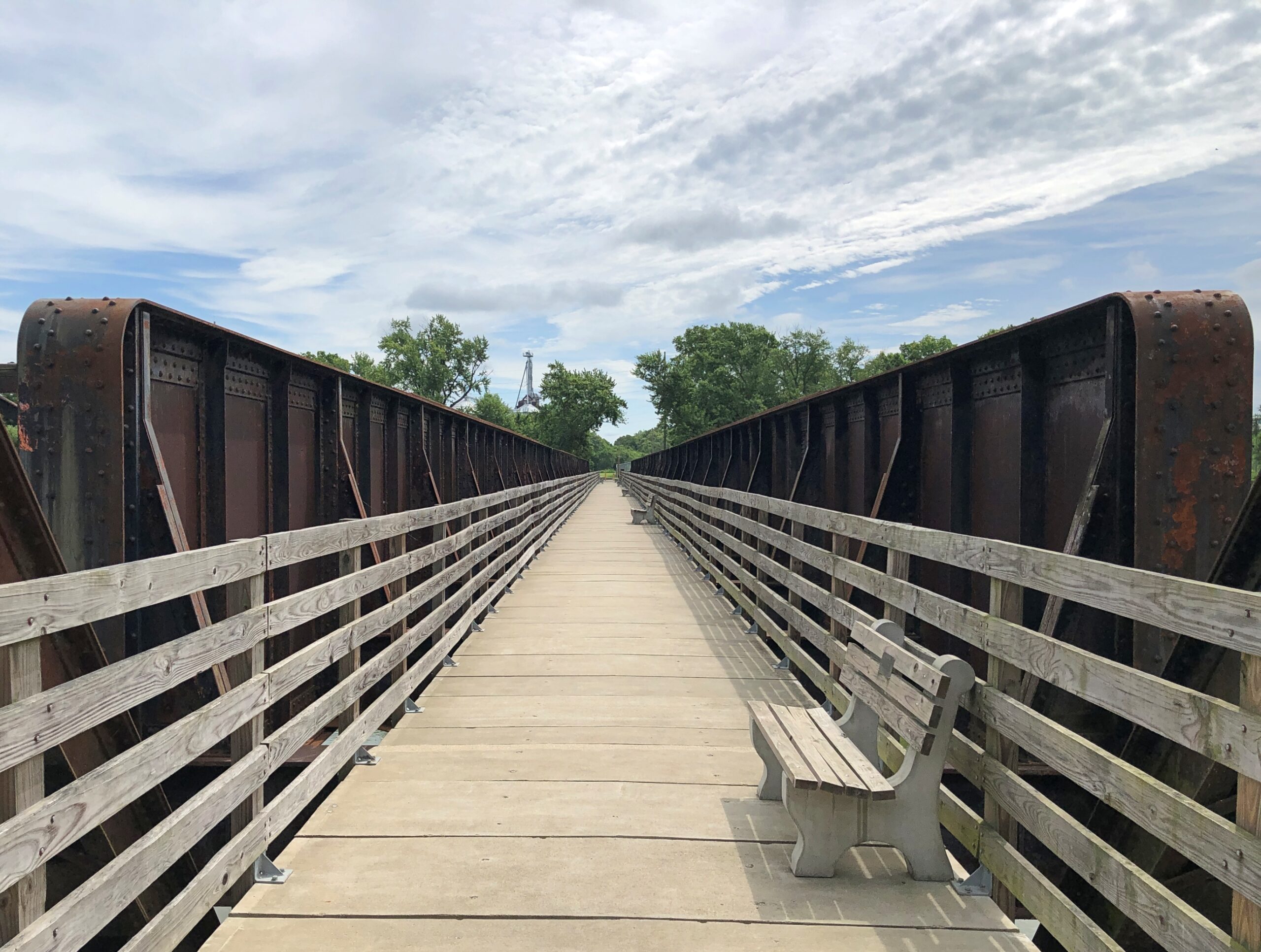
On the southern edge of town is a former B&O Railroad bridge, now a pedestrian and bicycle crossing.

Crossing the Wabash River from Montezuma takes you to Vermillion County, Indiana, which hugs the left bank of the Wabash for a long way.

Montezuma, Indiana B&O Bridge

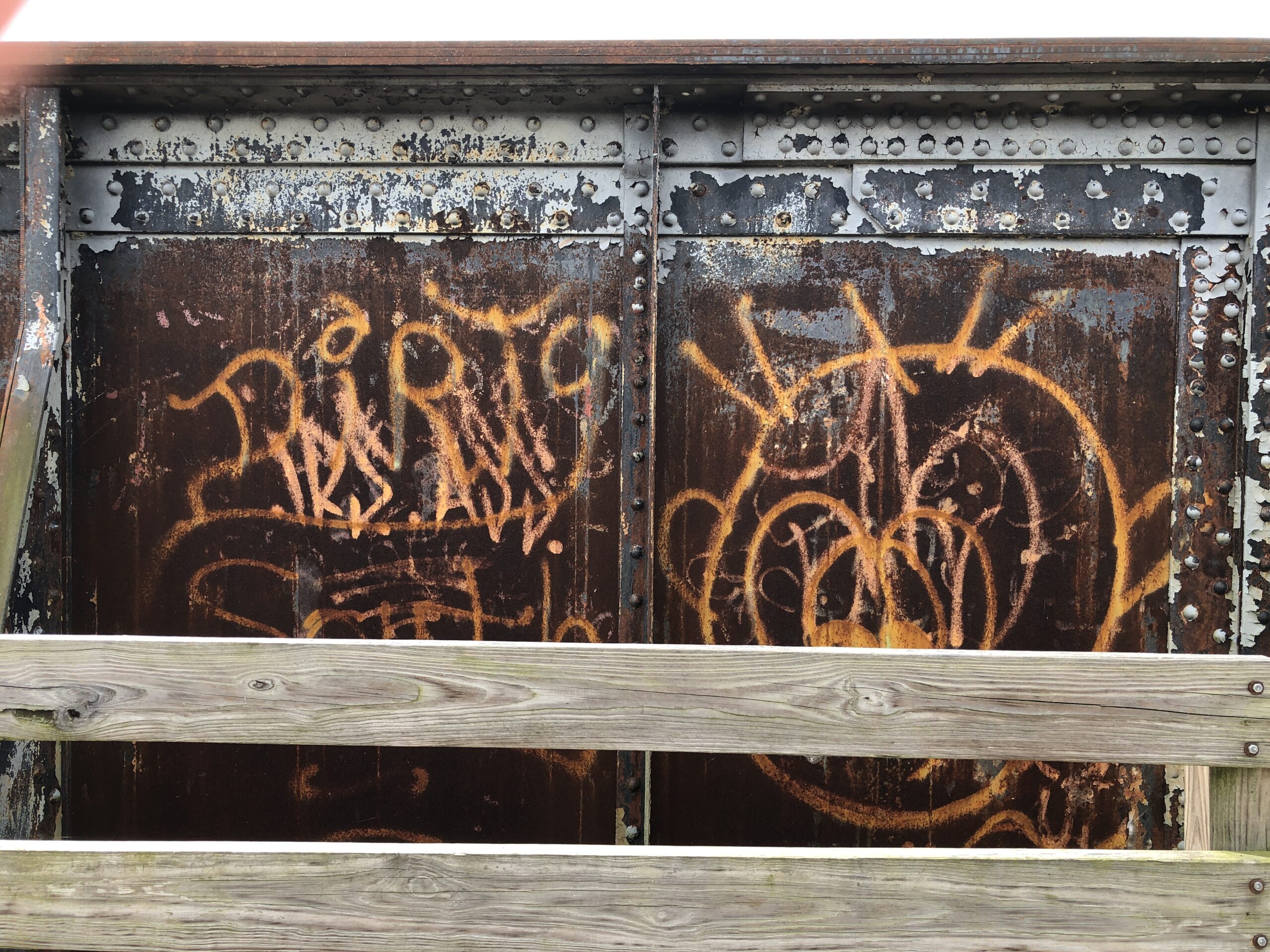
Graffiti on iron. Daring, or foolhardy, since there’s a gap — between the edge of the walking bridge and the iron support features of the bridge — large enough for a careless graffiti artist to take a quick plunge to the river below.

B&O RR Bridge

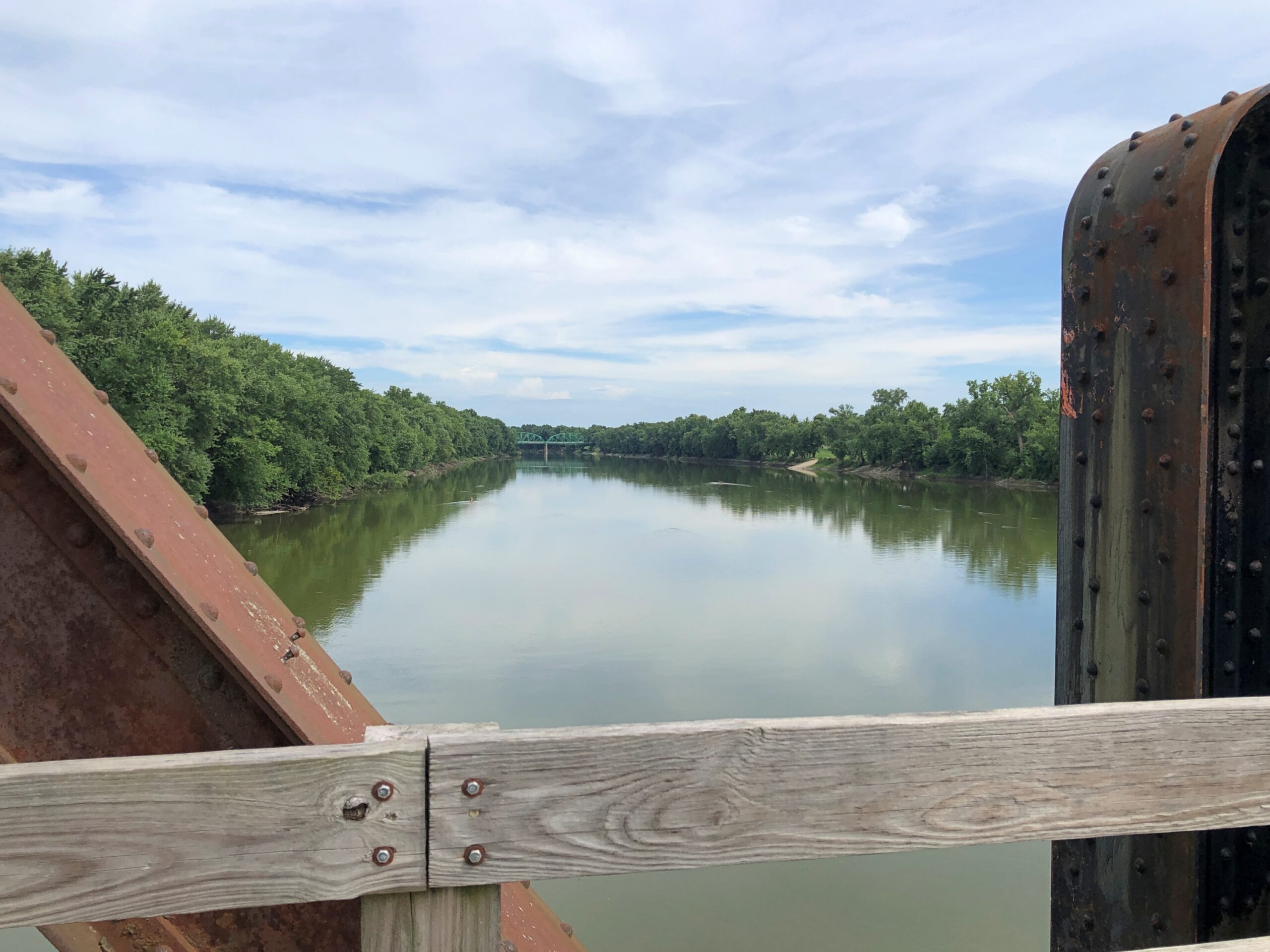
Looking out to the river.

B&O RR Bridge
B&O RR Bridge

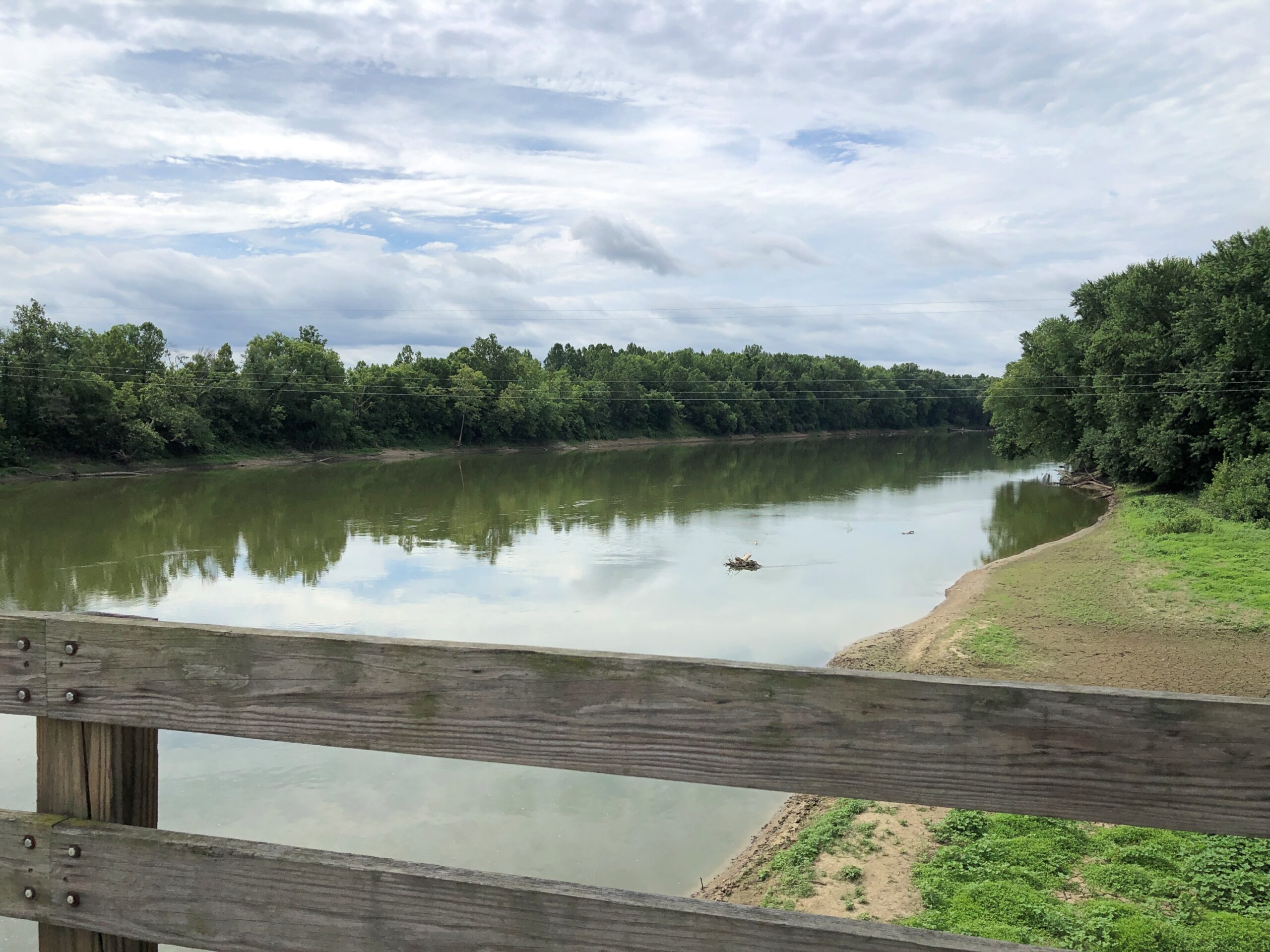
Looking back at Montezuma.

B&O RR Bridge

The B&O is as storied a railroad in North America as you can get – a pioneering commercial line sprouting from Baltimore into the Midwestern interior, eventually. Host in 1828 to Charles Carroll of Carrollton, the only surviving signer of the Declaration of Independence, at the railroad’s groundbreaking ceremony. Critical infrastructure for the Union war effort some decades later. Powerful regional RR in the Gilded Age. Famed as one of the four Monopoly RRs.

Billie Creek Village

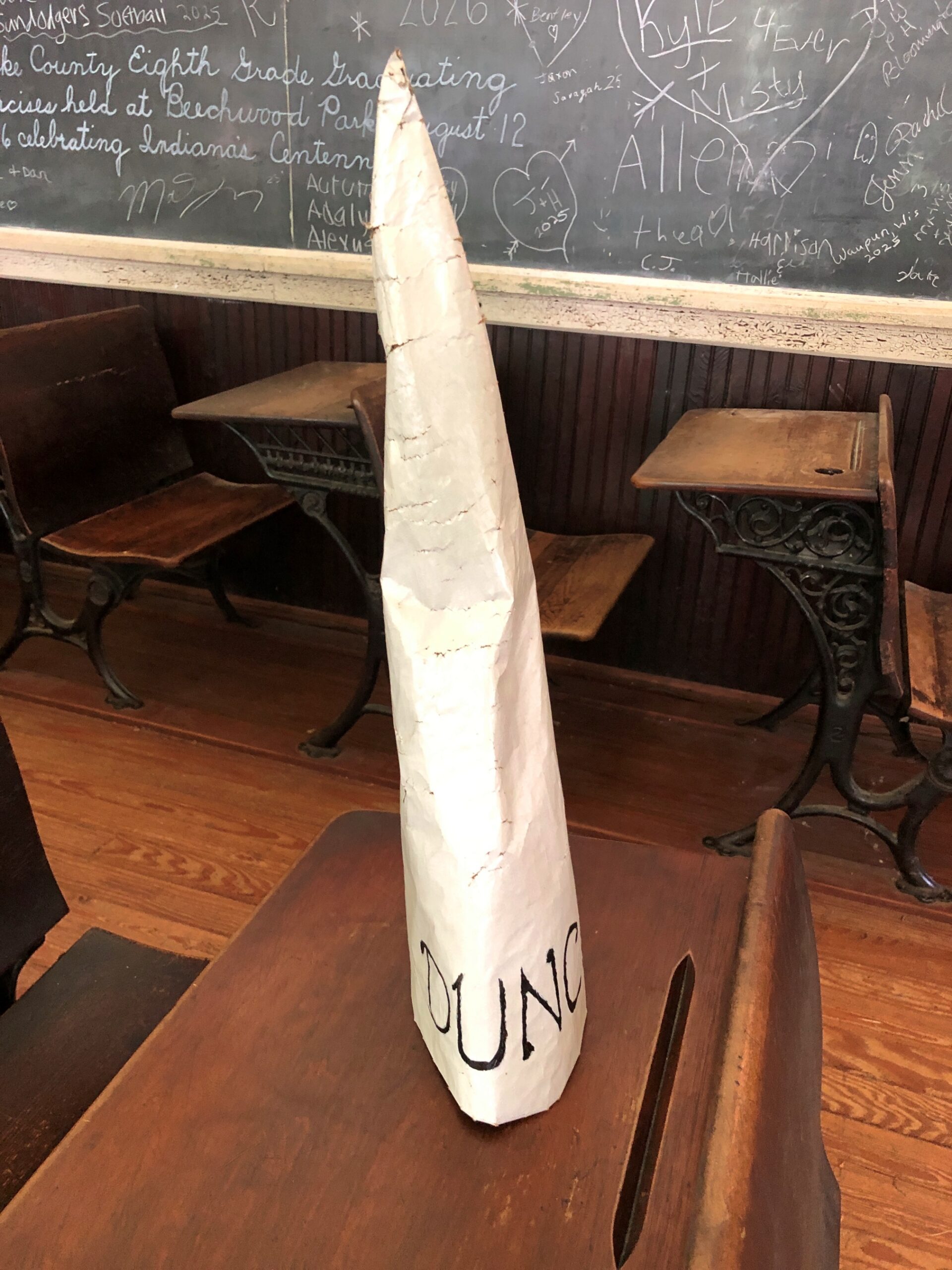
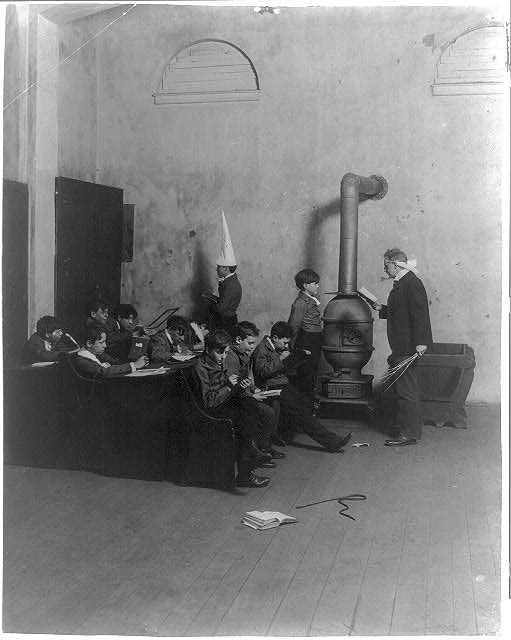
I don’t know whether it was a relic or a replica, but there it was, something we’ve all heard about, seen in drawings and as the stuff of metaphors: a dunce cap. I’d never actually seen one before that I remember, not as a physical object.

Billie Creek Village

That is why you (I) visit such places as the open air museum Billie Creek Village in Parke County, Indiana. To be mildly surprised. Such as the time I encountered a can of White Star brand tomatoes with a hammer and sickle on it, or a Papua New Guinea battle shield sporting the Phantom, just to name two among many such little surprises.

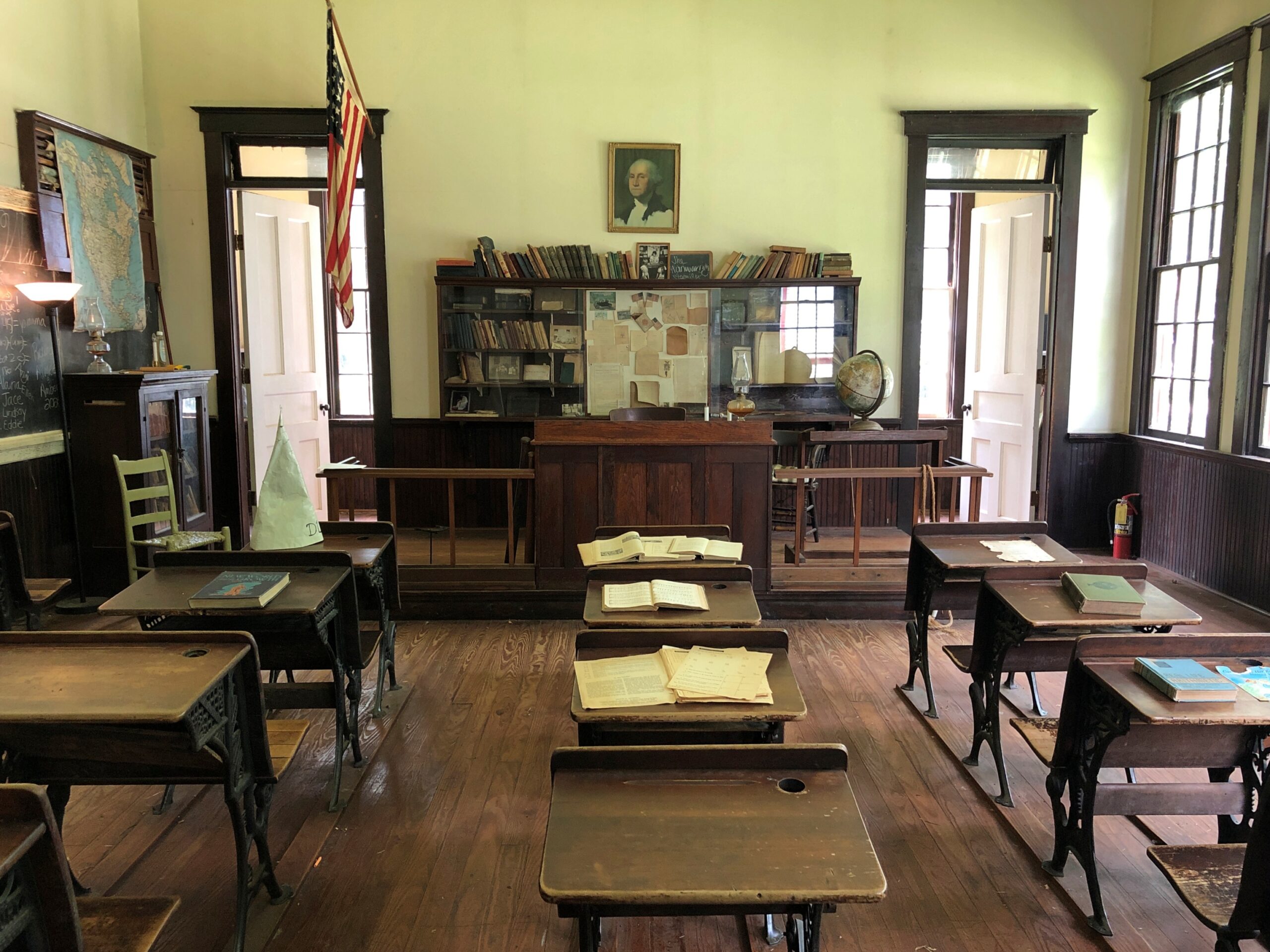
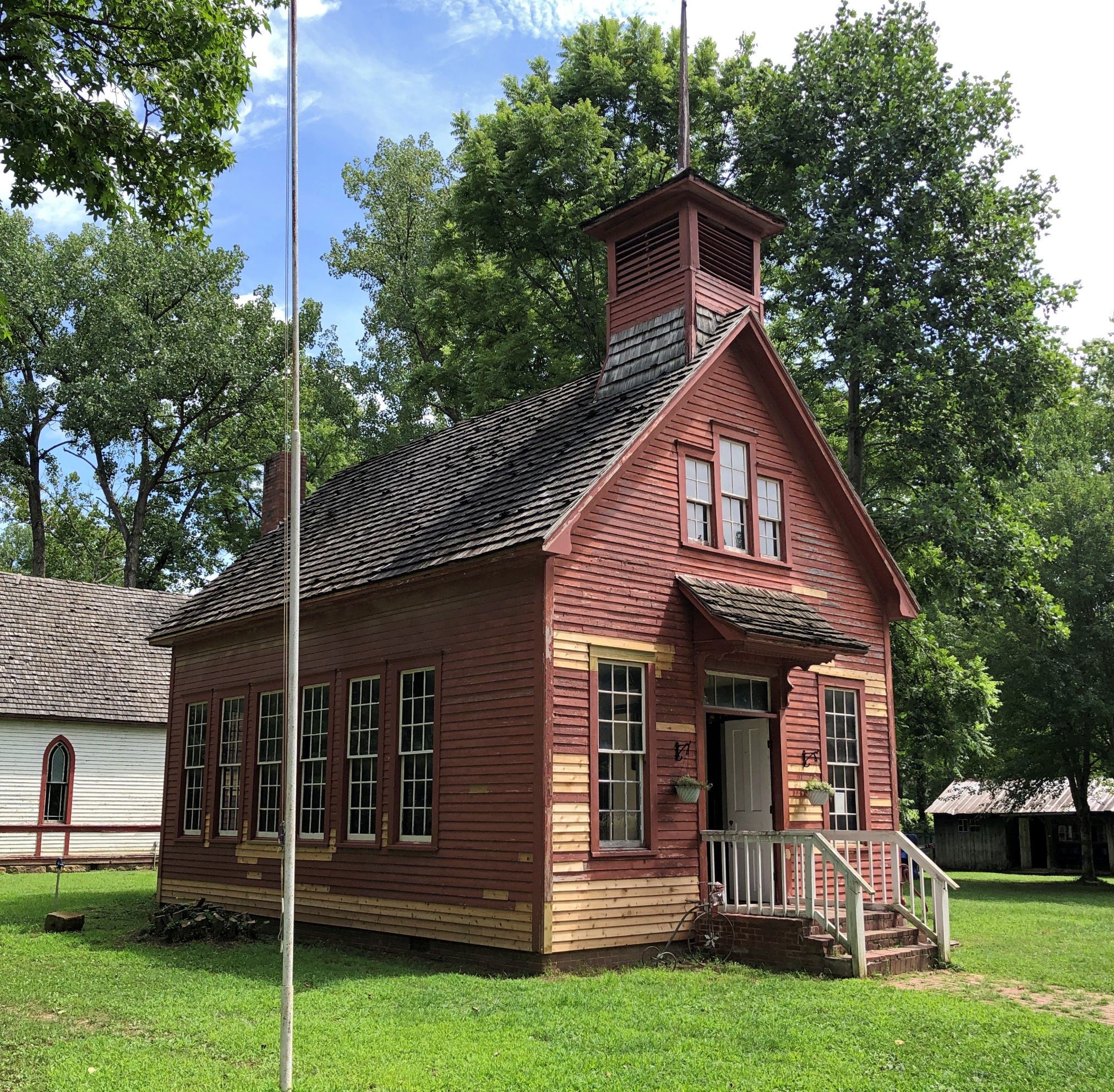
The dunce cap was on one of the desks at Billie Creek’s one-room school house, used until the early 20th century, as usual for that kind of school.

Good old dunce caps. Sure, they go against the grain of modern thinking, antiquated as a one-room school, but we all can remember a few goofballs from our school days who deserved one, can’t we? As seen in a pic from the Library of Congress, dated ca. 1905, but with no information about where it might have been. Just a small school in the years before self-esteem was discovered.

The old school house at Billie Creek is one of 38 historic structures relocated from various parts of Parke County, Indiana, to about 70 acres west of Rockville on US 36. Originally opened in 1969, the place has had a series of owners and been through periods of abandonment, but since 2022 has been under management that seems to know what its doing.

That’s my thinking, anyway, since its refreshing informality perfectly suits the place. You go, you park your car, you wander in. No irritating timed tickets, no gouging entrance fee, no expensive yet mindless luxury goods and experiences that could be pretty much anywhere. Yet there is an economic model: Billie Village hosts events – one was going on when we visited around mid-day on a Sunday – and some of the buildings are also shops, and do sell luxury goods, in the sense that such handcrafts aren’t found in modern grocery or drug stores.

We supported the place by buying a few things, including (yes!) postcards. A few dozen other people were doing so by attending the event. I watched part of some sort of award ceremony as it happened at the village gazebo, and even asked one of the bystanders about what was going on, but couldn’t quite get the gist of it. The meeting seemed to be one of those Society of Creative Anachronism sorts of things, though not that specifically. Attendees wore fantasy- and history-adjacent costumes, mostly with that homemade vibe. One of those outings for adults who didn’t get enough playing pretend when they were kids, I guess. All well and good.

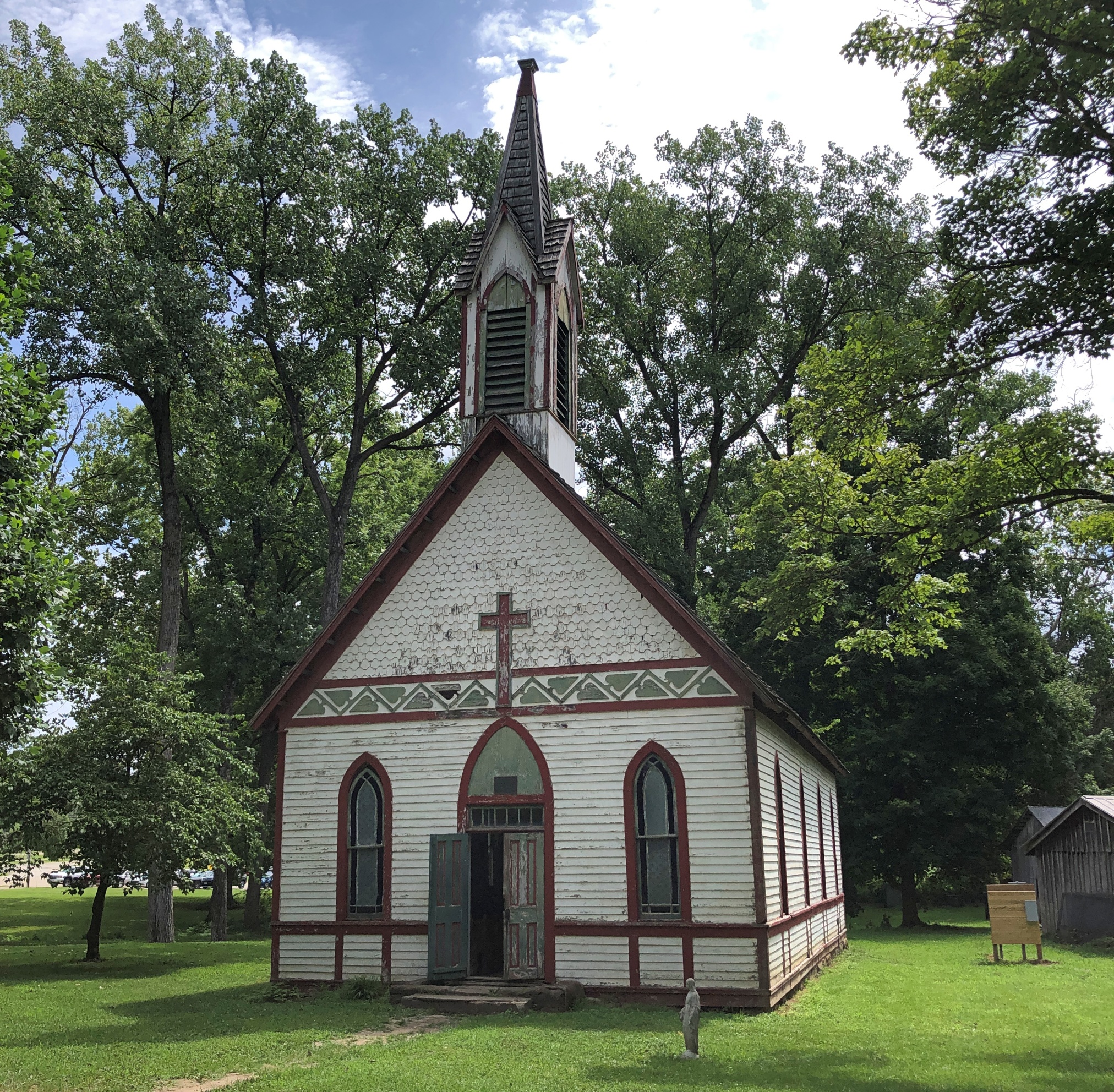
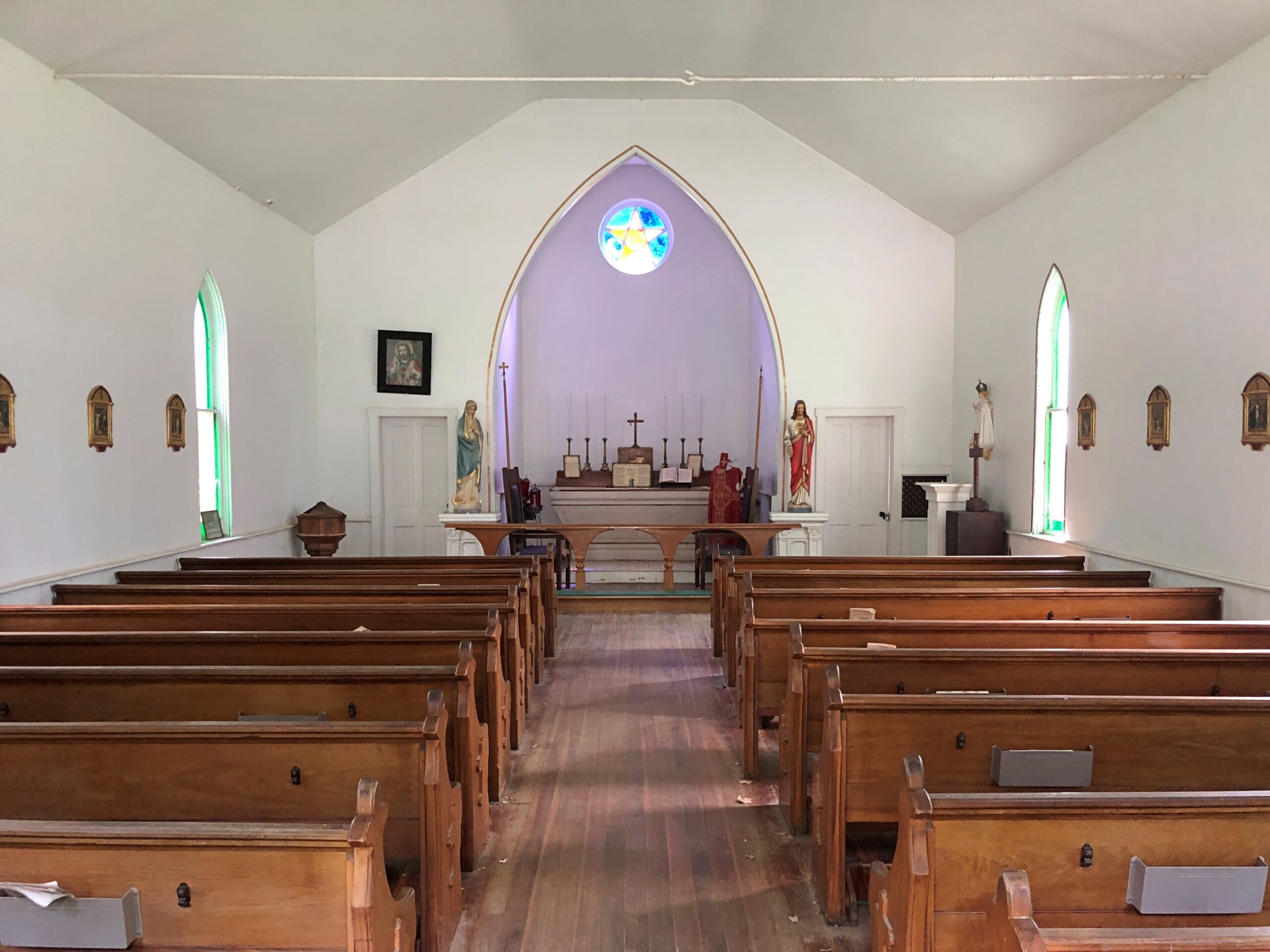
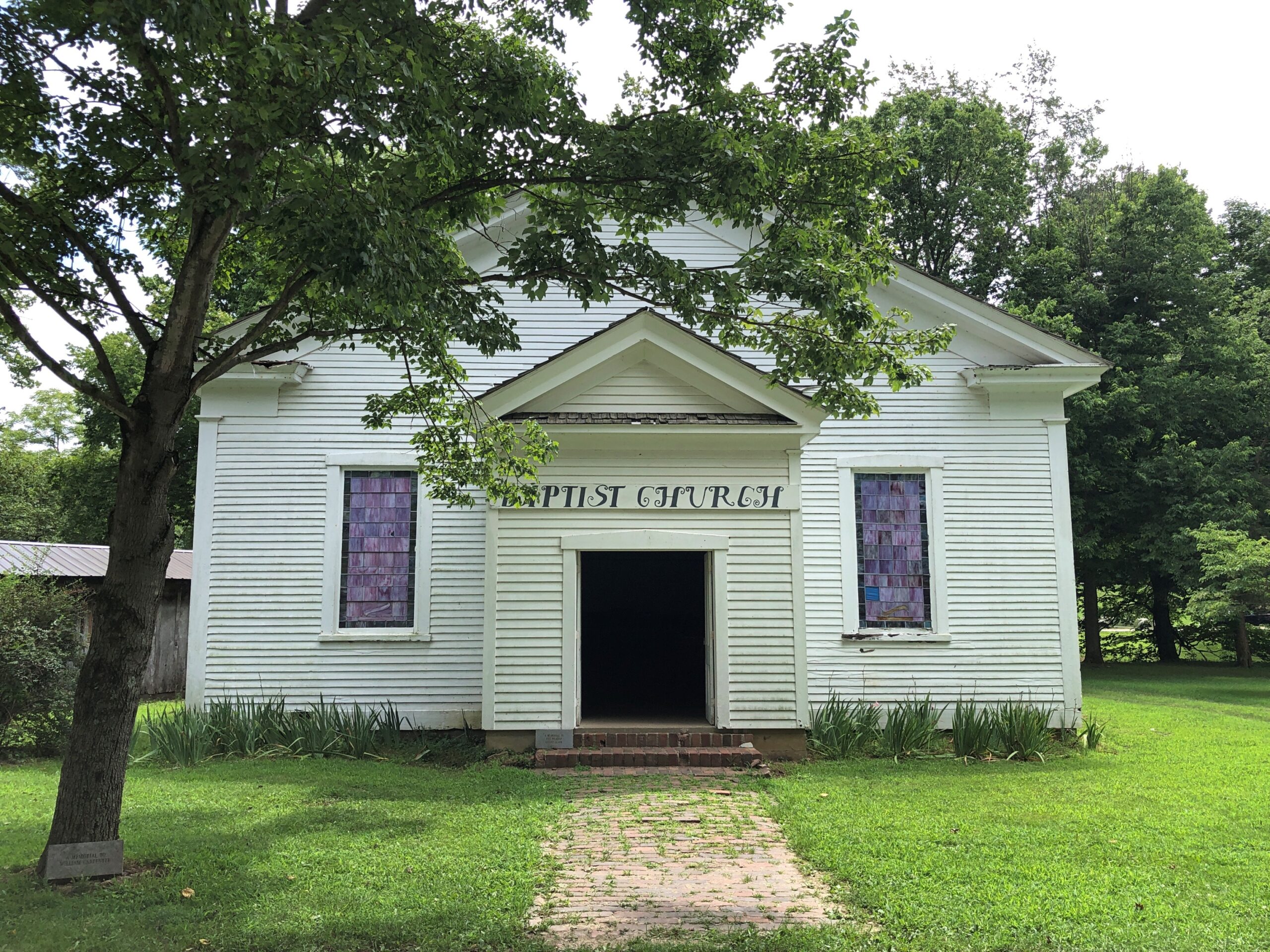
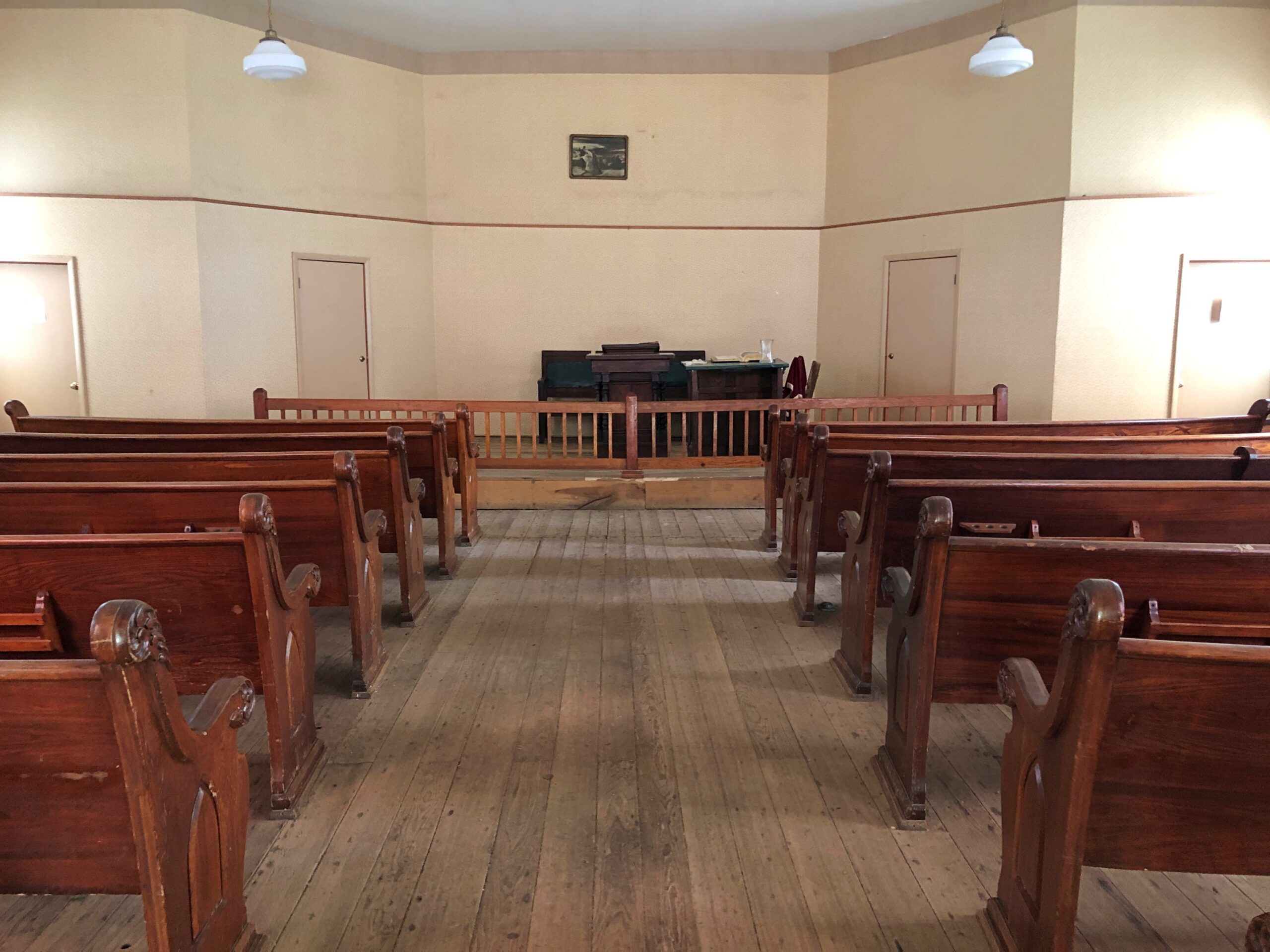
I hope that economic model keeps the place open, because one recipe for a good couple of hours on a hot weekend in July is visiting curious old buildings. Such as a couple of relocated churches.

One Catholic.

The other Baptist.

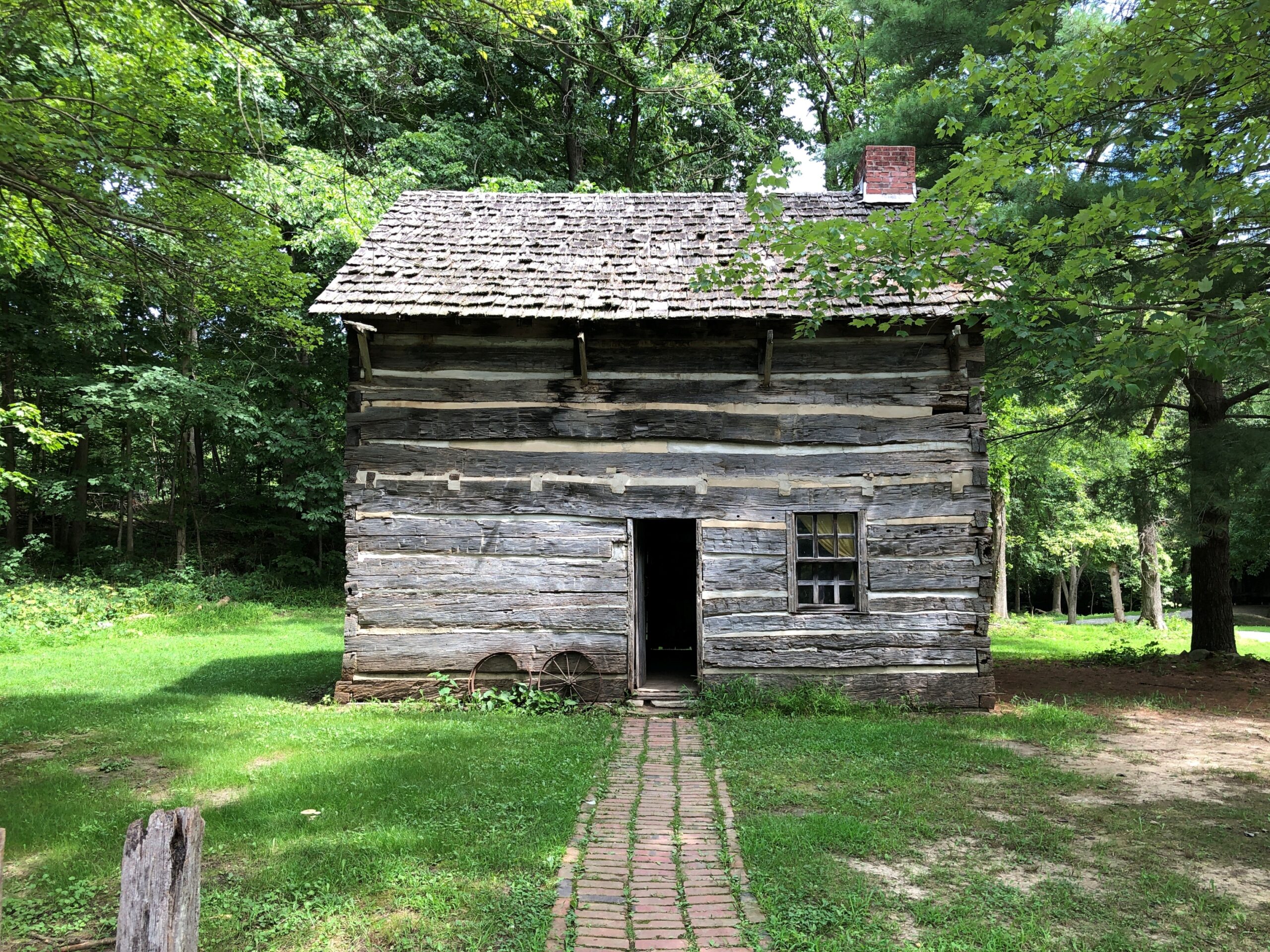
An early Parke County cabin.

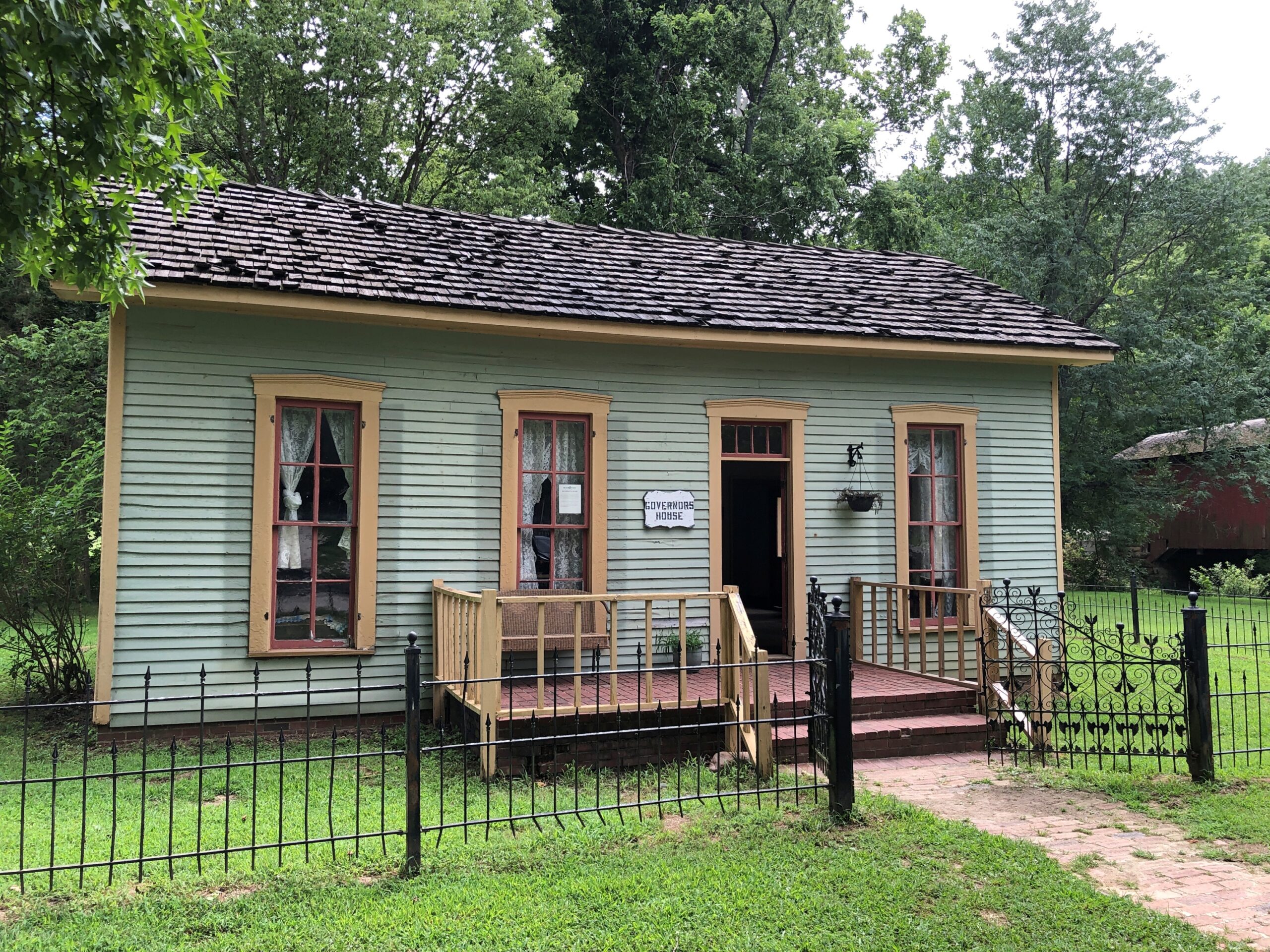
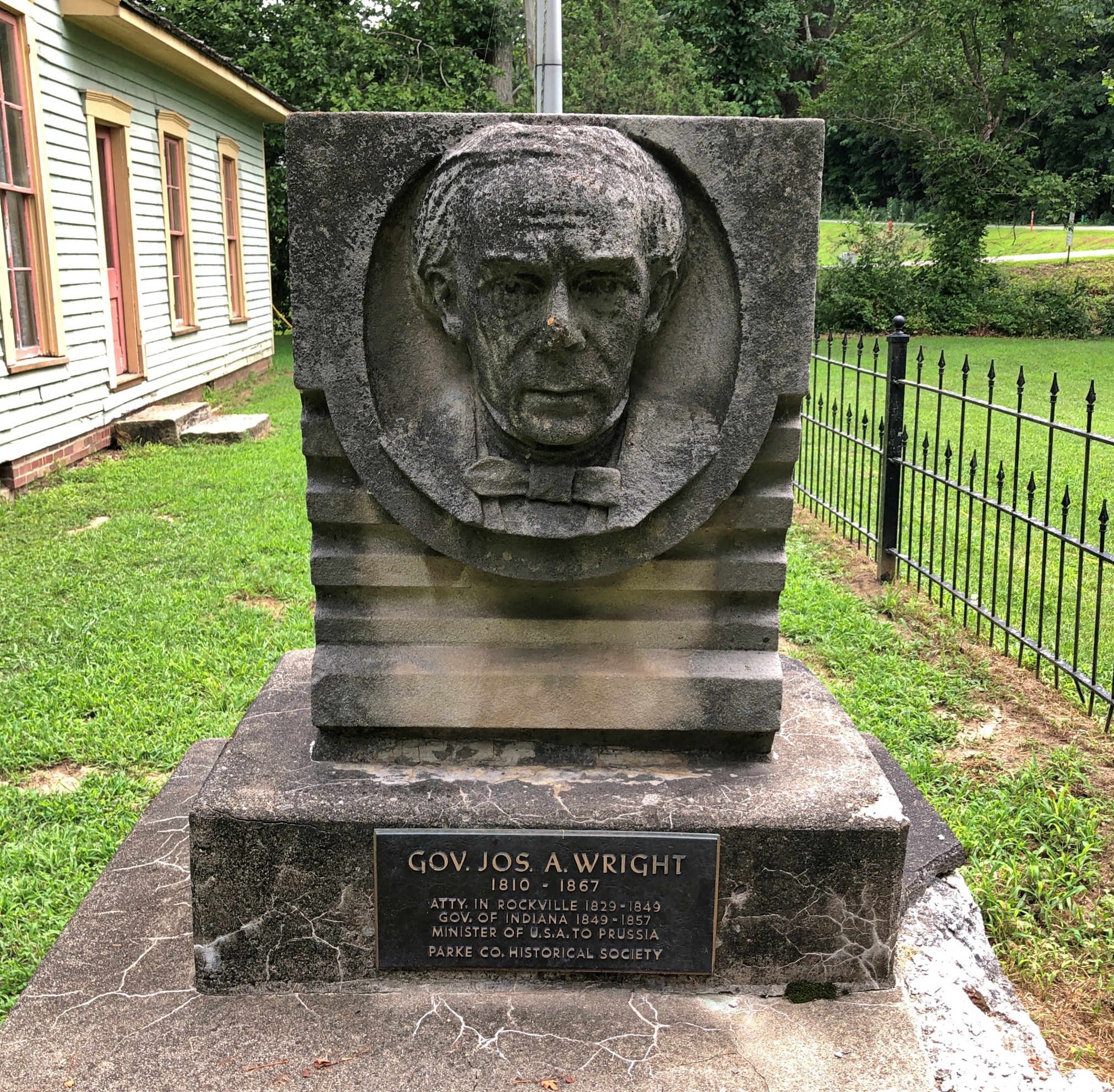
The home of an Indiana governor, one Joseph A. Wright (d. 1867), in office 1849-57. A Rockville native son.

Here he is, just outside his house, in dour Hoosier mode.

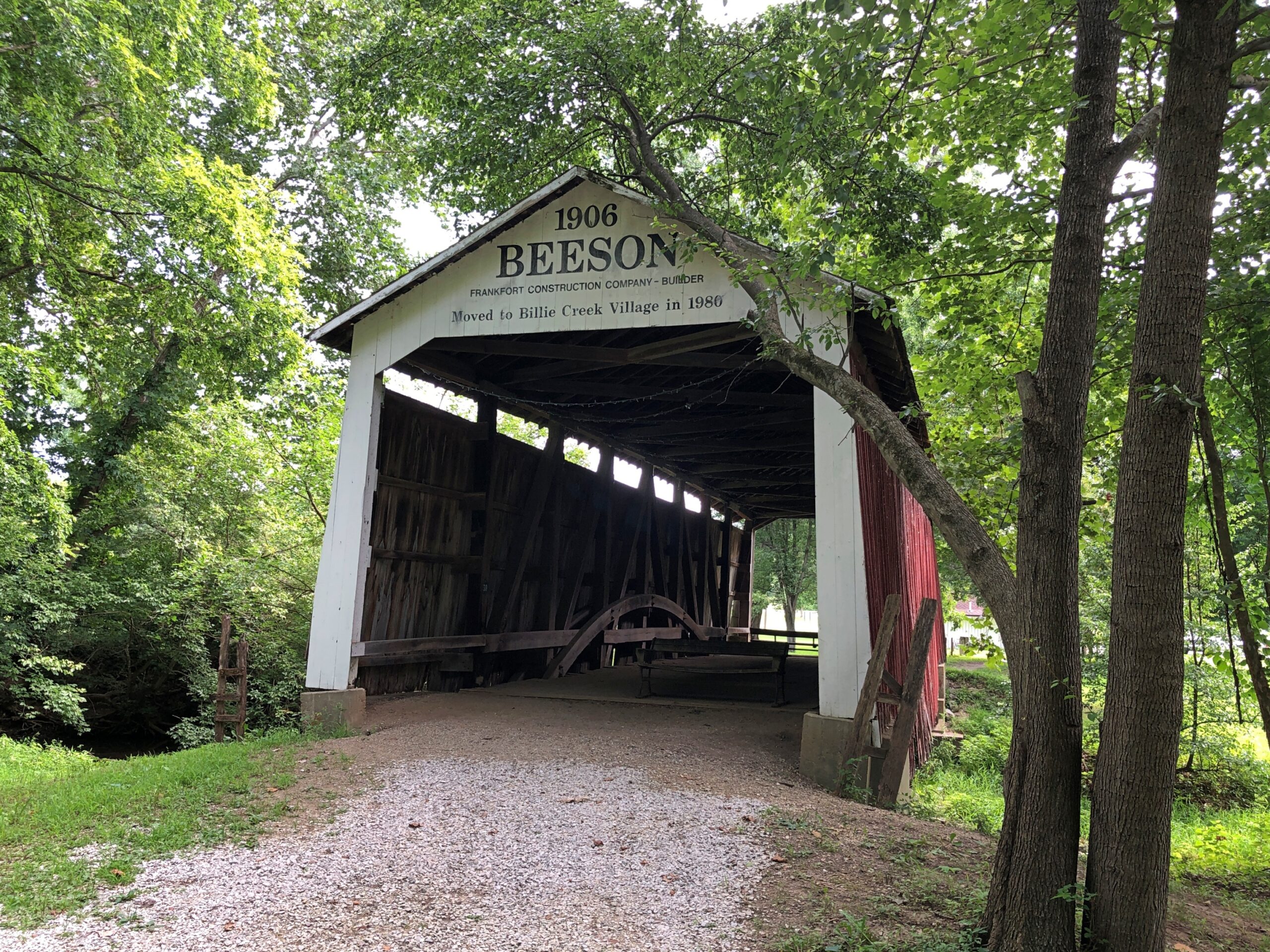
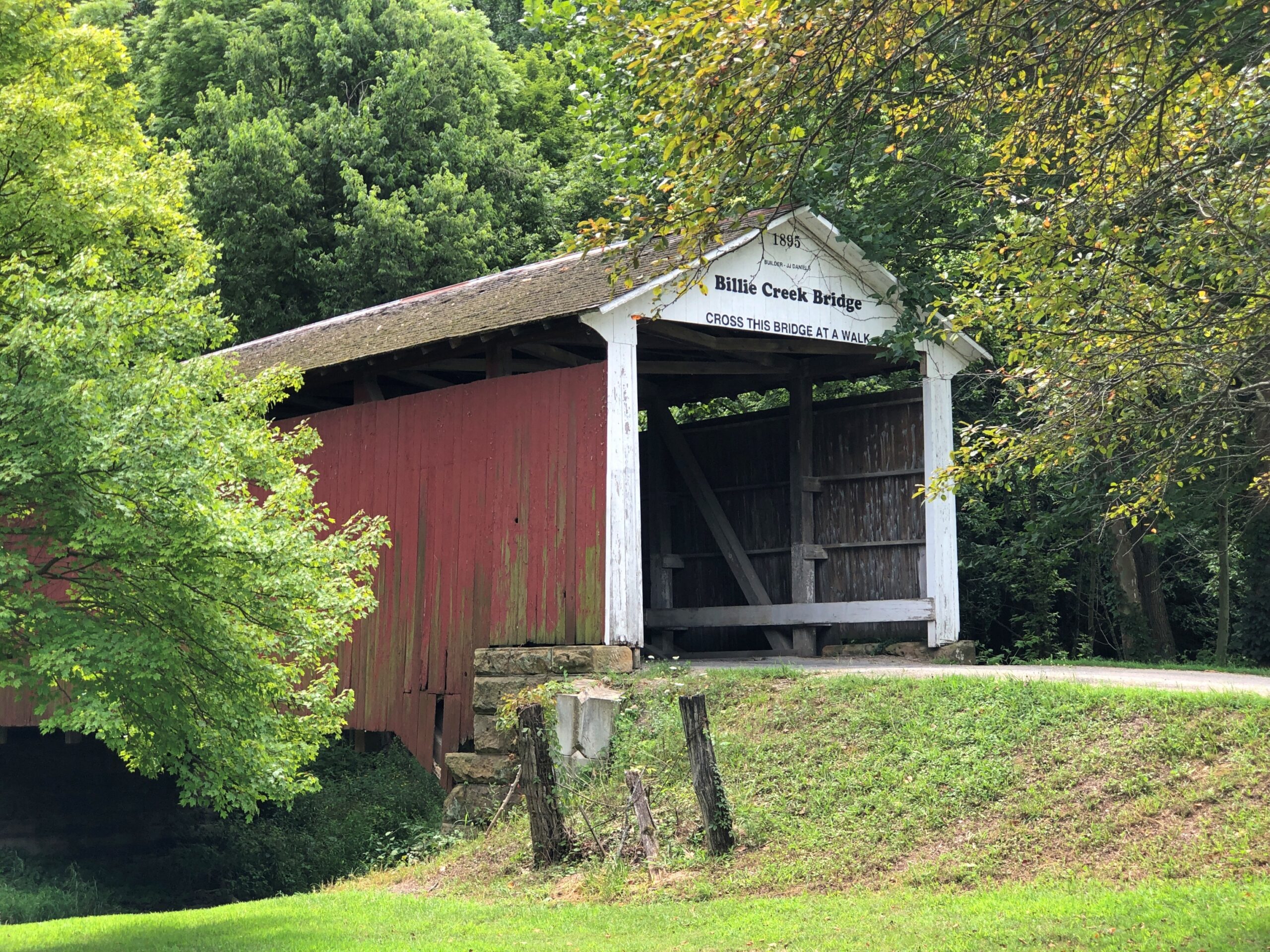
As the Covered Bridge Capital of the Galaxy (or some slogan like that for Parke County), it’s no surprise that covered bridges can also been seen at Billie Creek.

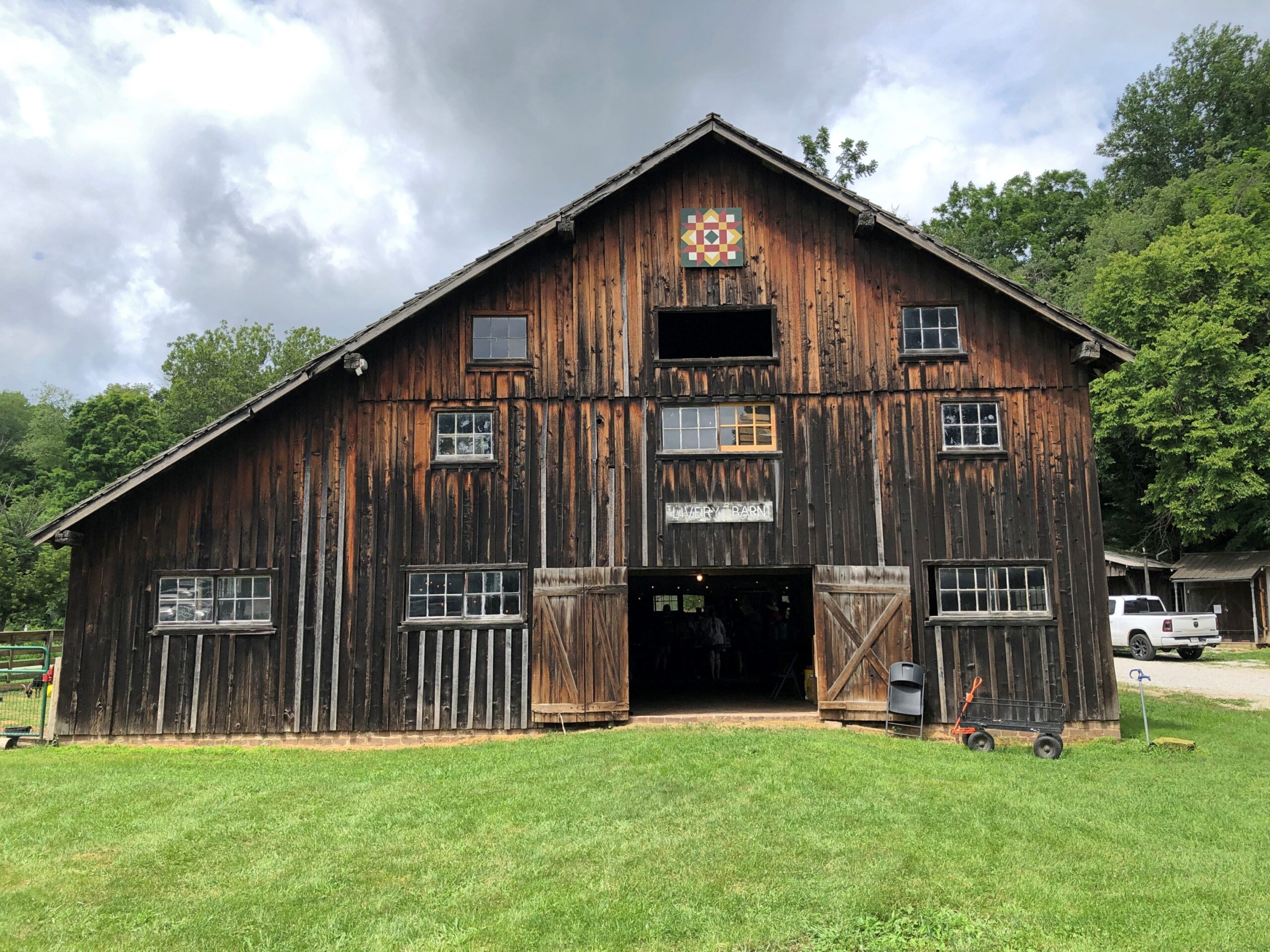
A barn, weathered yet handsome.
Craft goods were for sale inside. So were books by a local author who was there, hawking them. He told me about the books, some sort of fantasy series, and I was curious enough about them to listen to him, but not enough to buy one, which I think left him a bit miffed. Such is the writer’s lot.


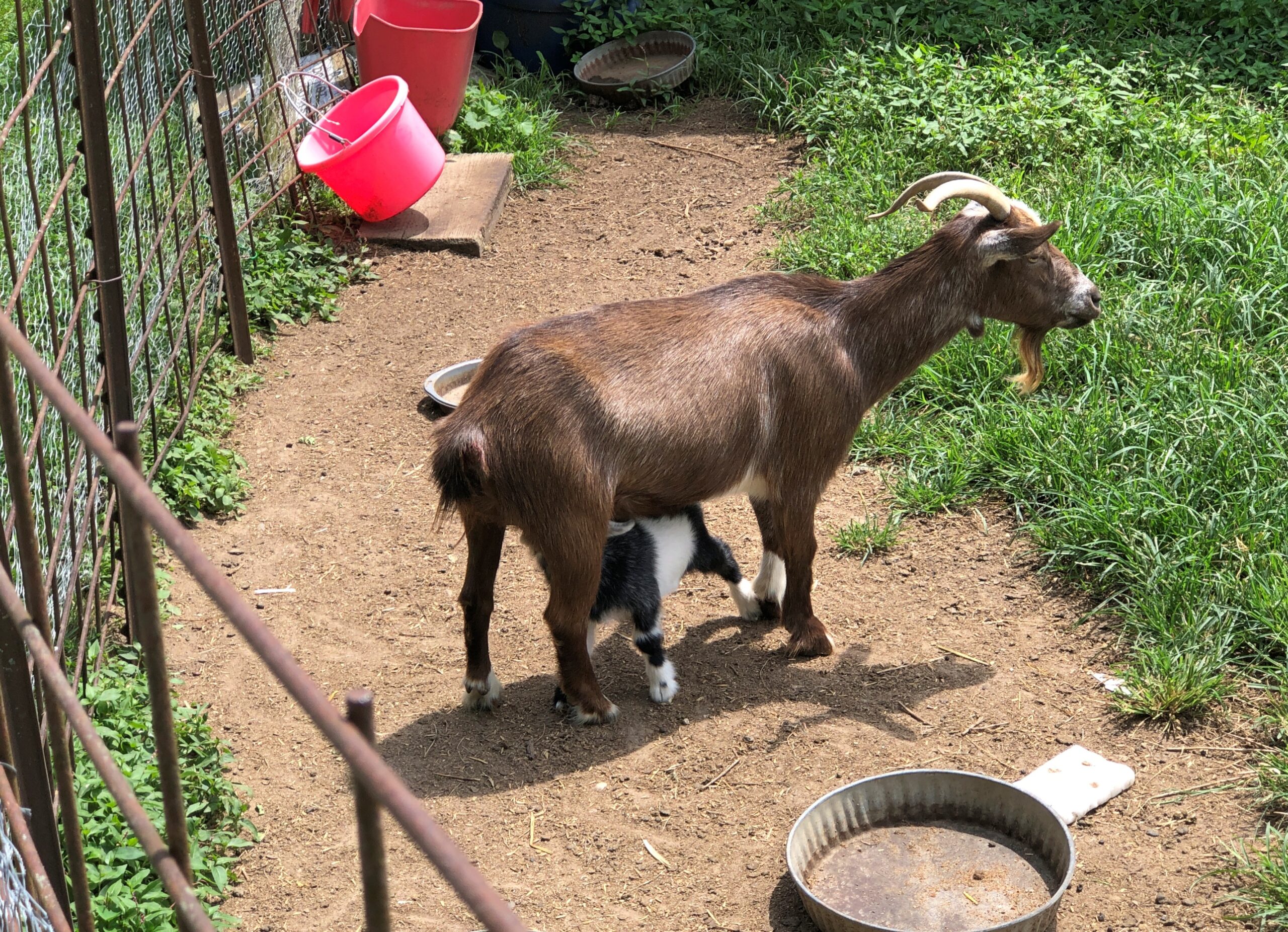
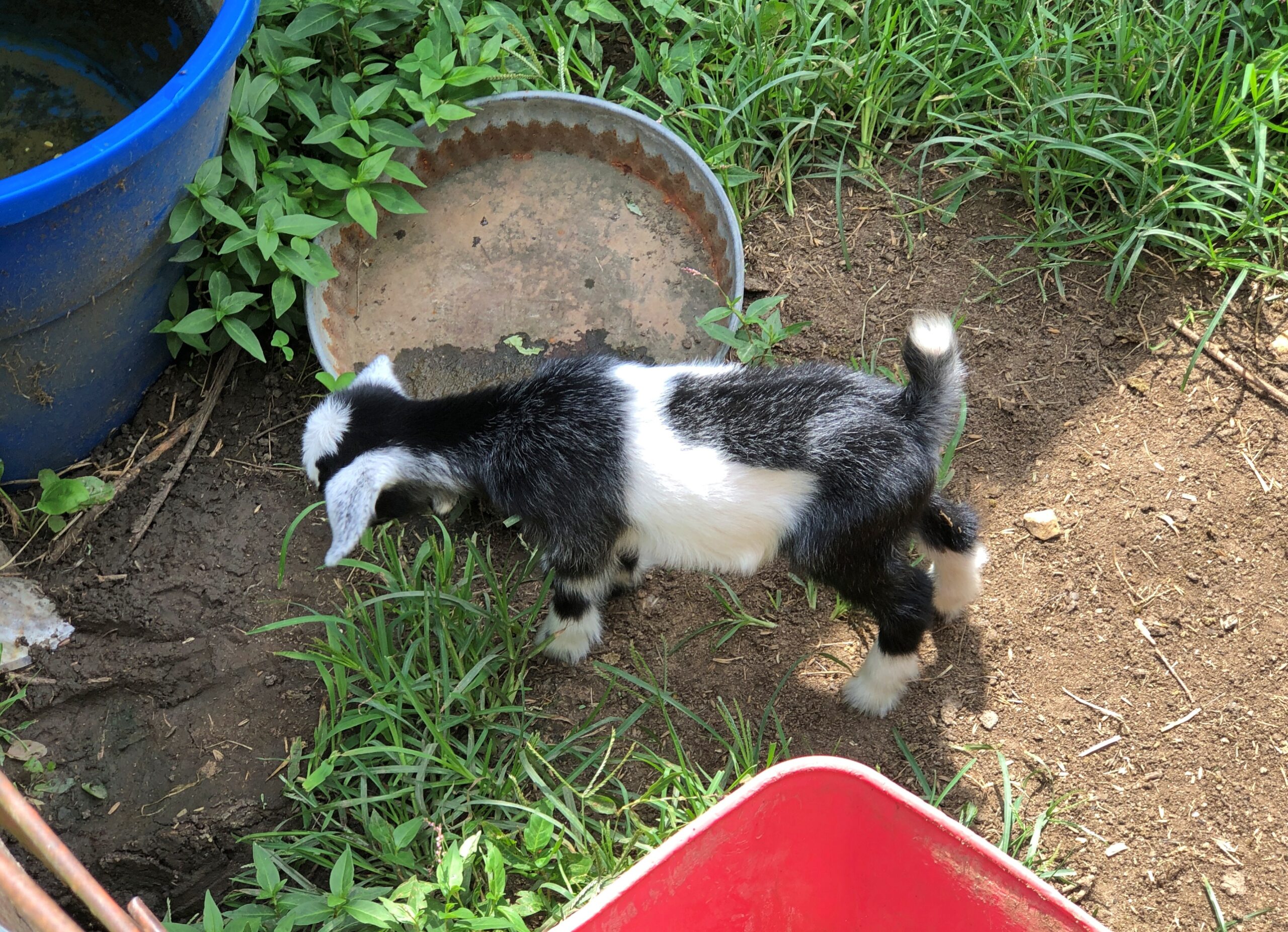
Behind the barn, goats.

Goat, Billie Creek Village

I wasn’t able to test the notion that goats eat tin cans. But I already knew the answer: it’s a ridiculous myth, as this item in Goat Owner tells us.

Rockville, Indiana

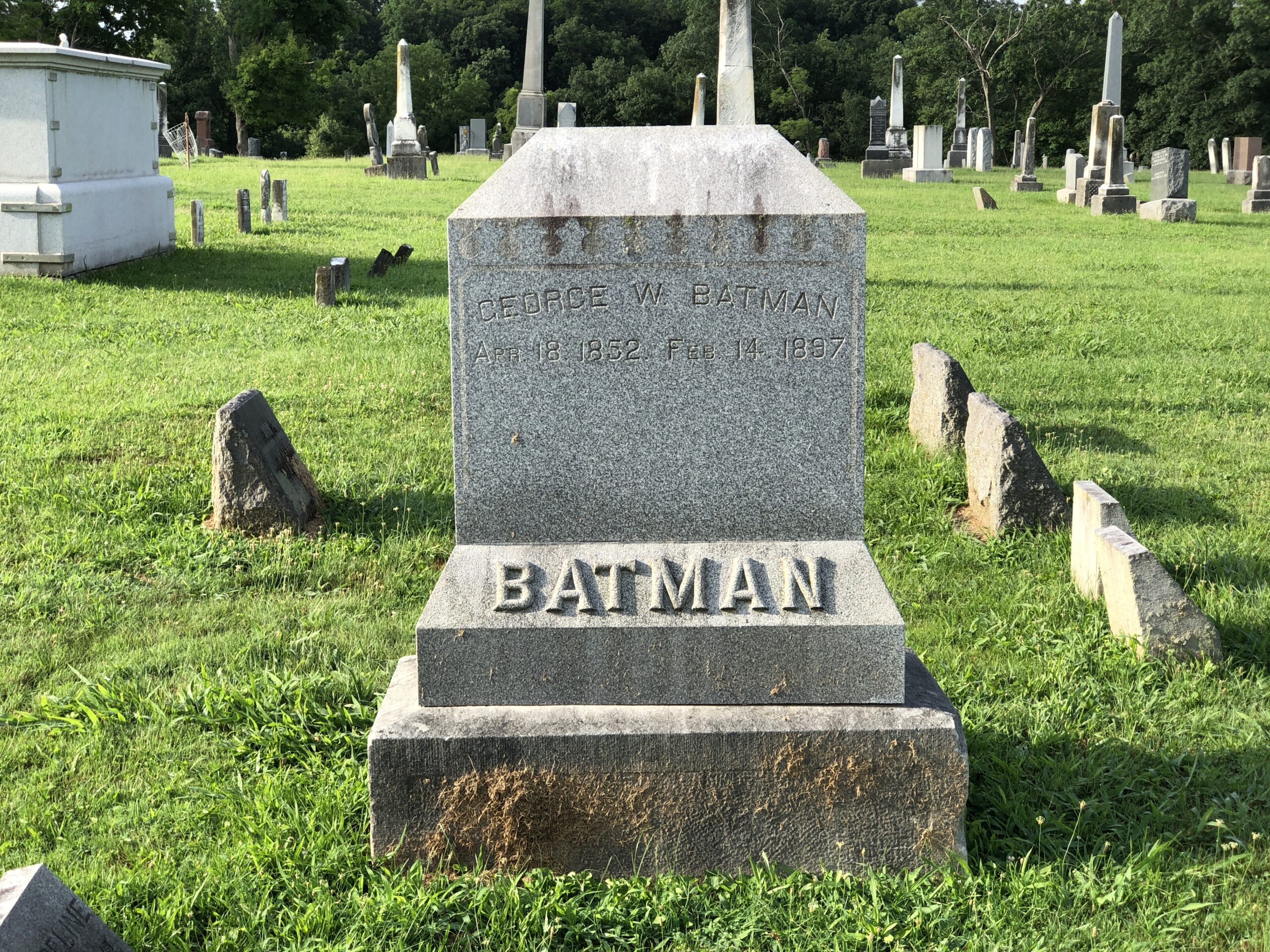
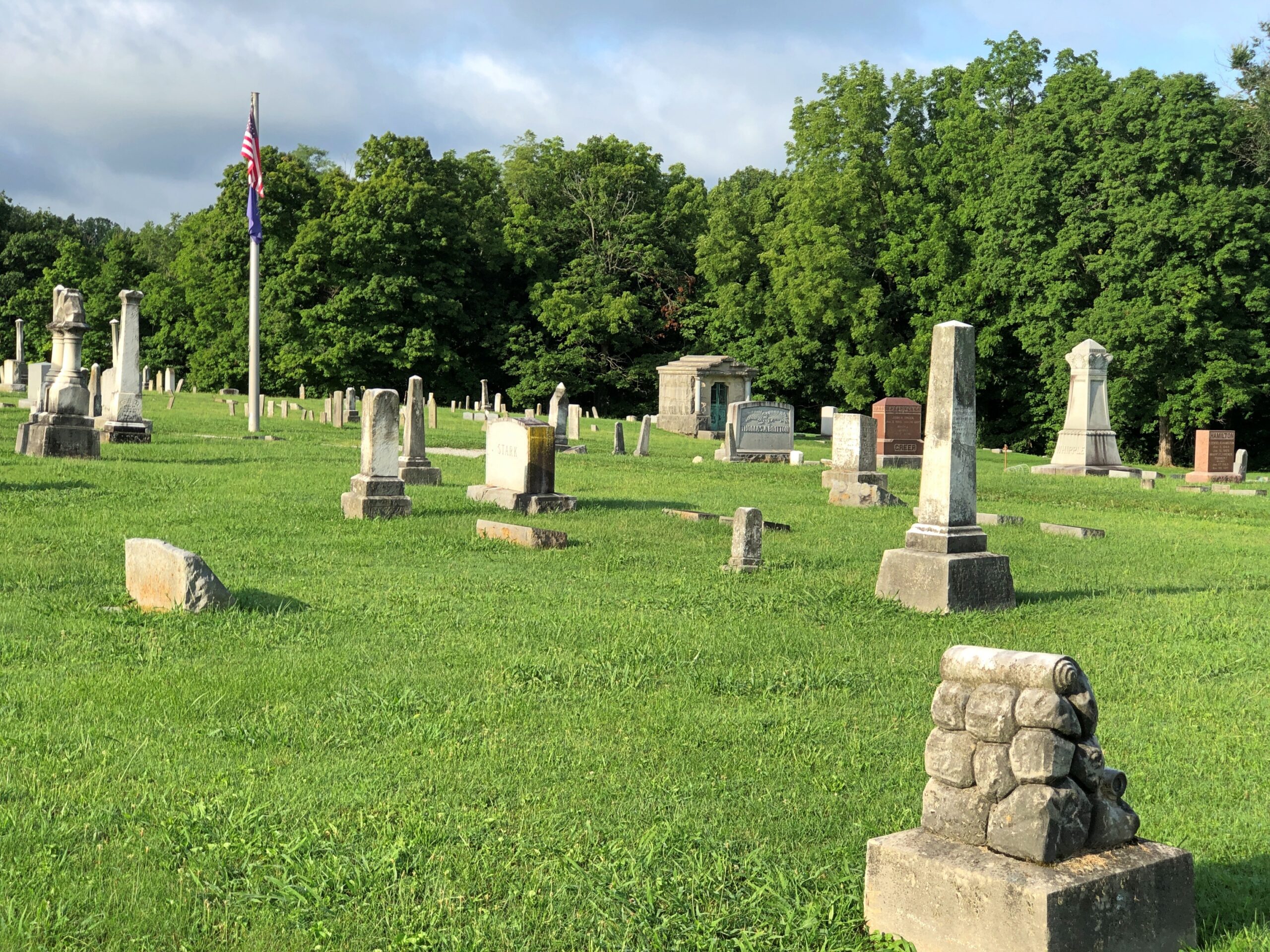
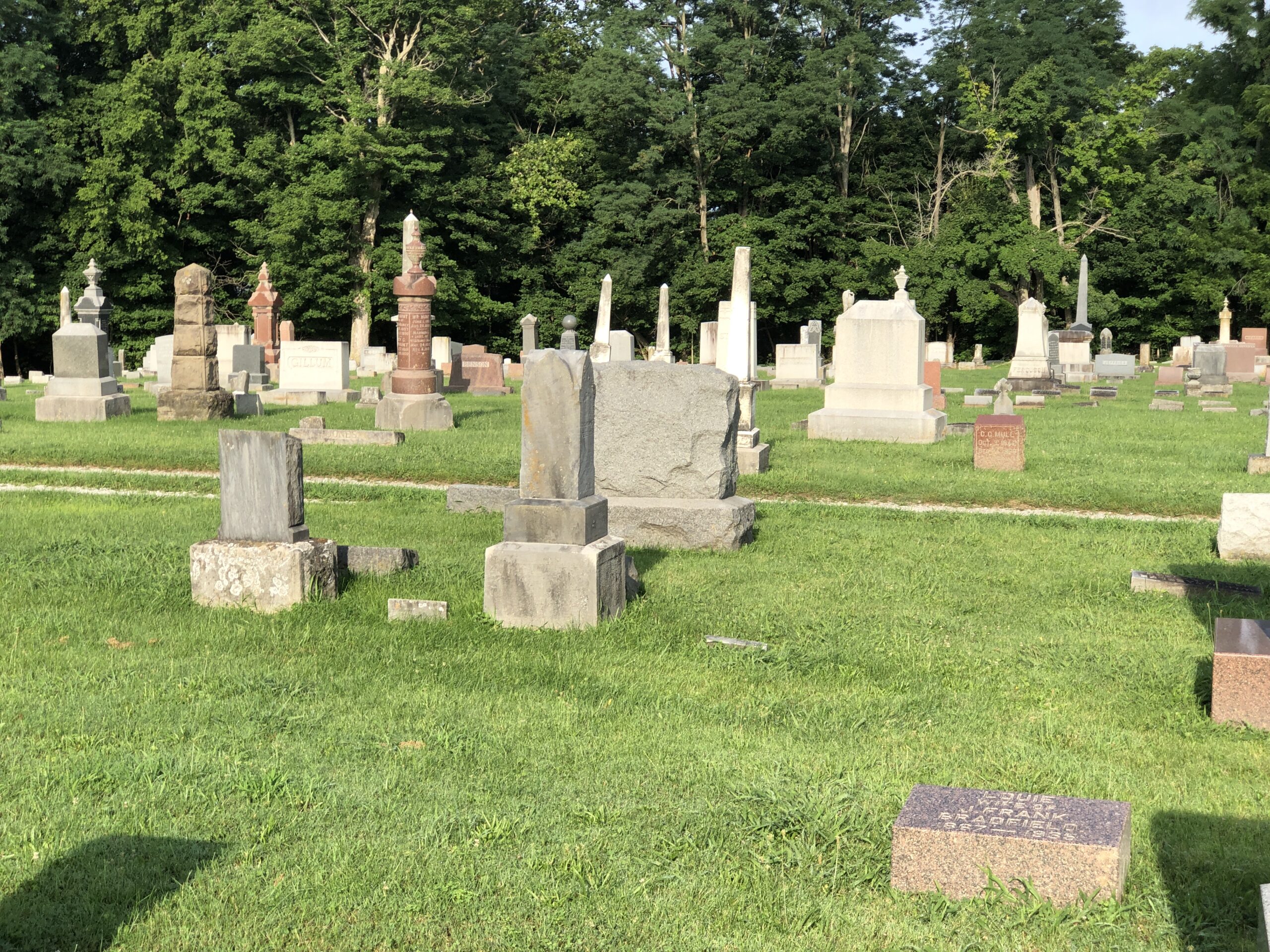
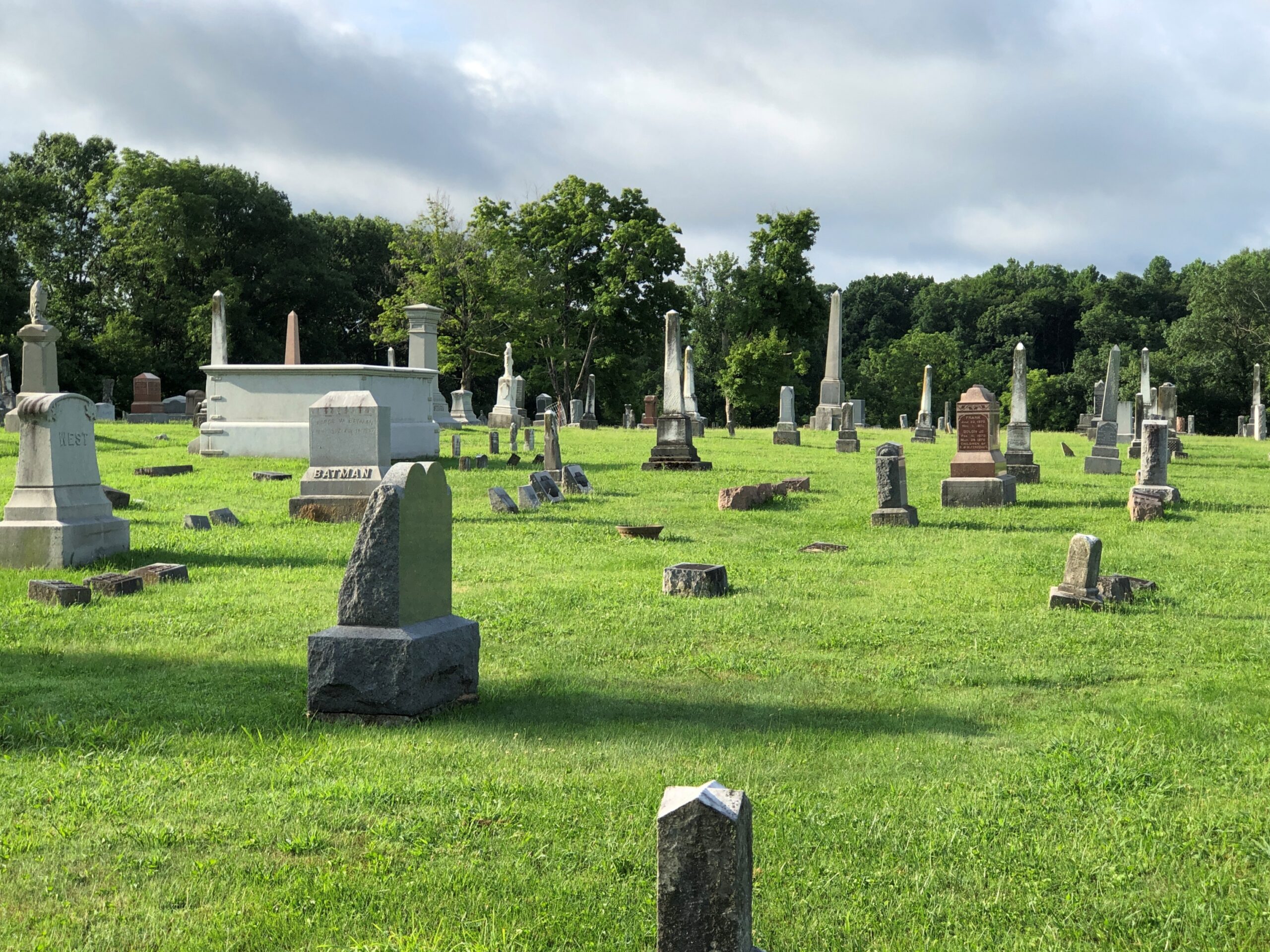
Now I’ve seen it: the grave of Batman.

George W. Batman, that is, who died in 1897, so he never lived to see his surname put to the other uses we all know so well. Variants of his name include Bateman, Battman and Baitman, meaning that Batman really isn’t that odd. Except it does look odd on that large stone, but only because of recent conditioning by a particularly successful fictional character. George W. happens to repose at Rockville Cemetery in Rockville, Indiana, and I happened to visit early one Sunday morning in late July.

Rockville Indiana Cemetery

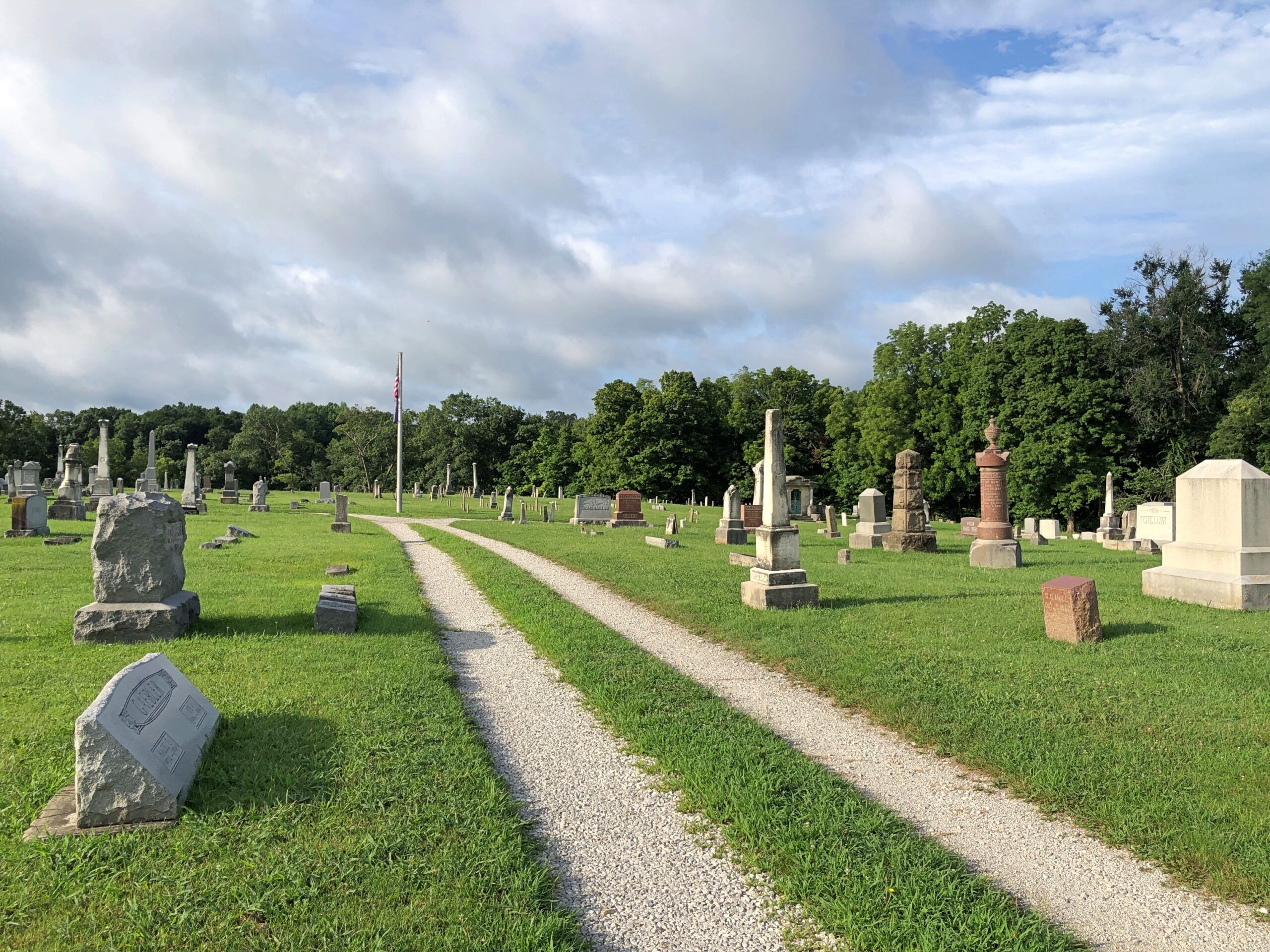
A pleasant graveyard, founded in 1824 — same year as the town itself — and well marked by upright stones, but not overly landscaped.

Rockville Indiana Cemetery

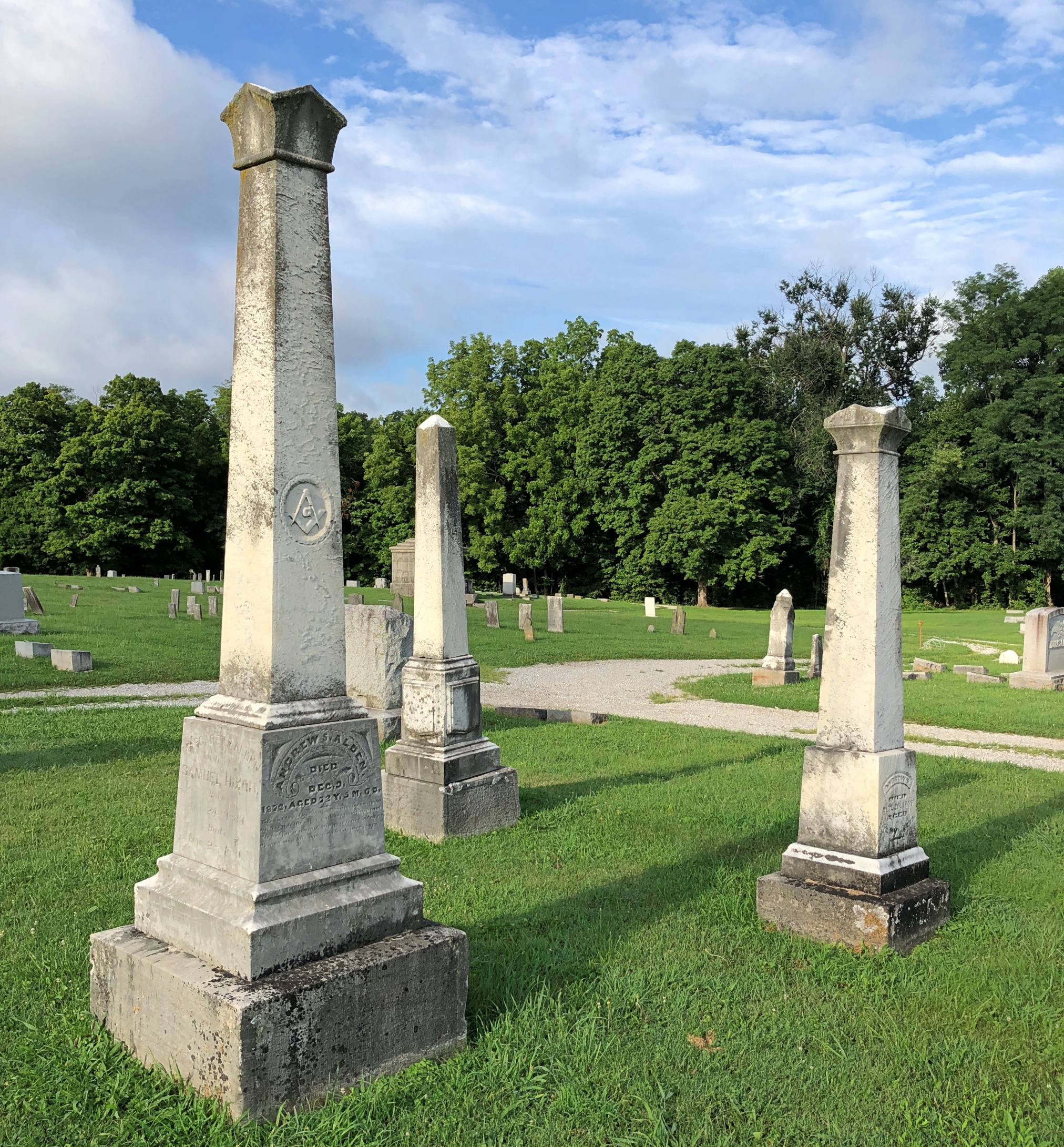
A few memorials reach upward, but not that far.

Rockville Indiana Cemetery

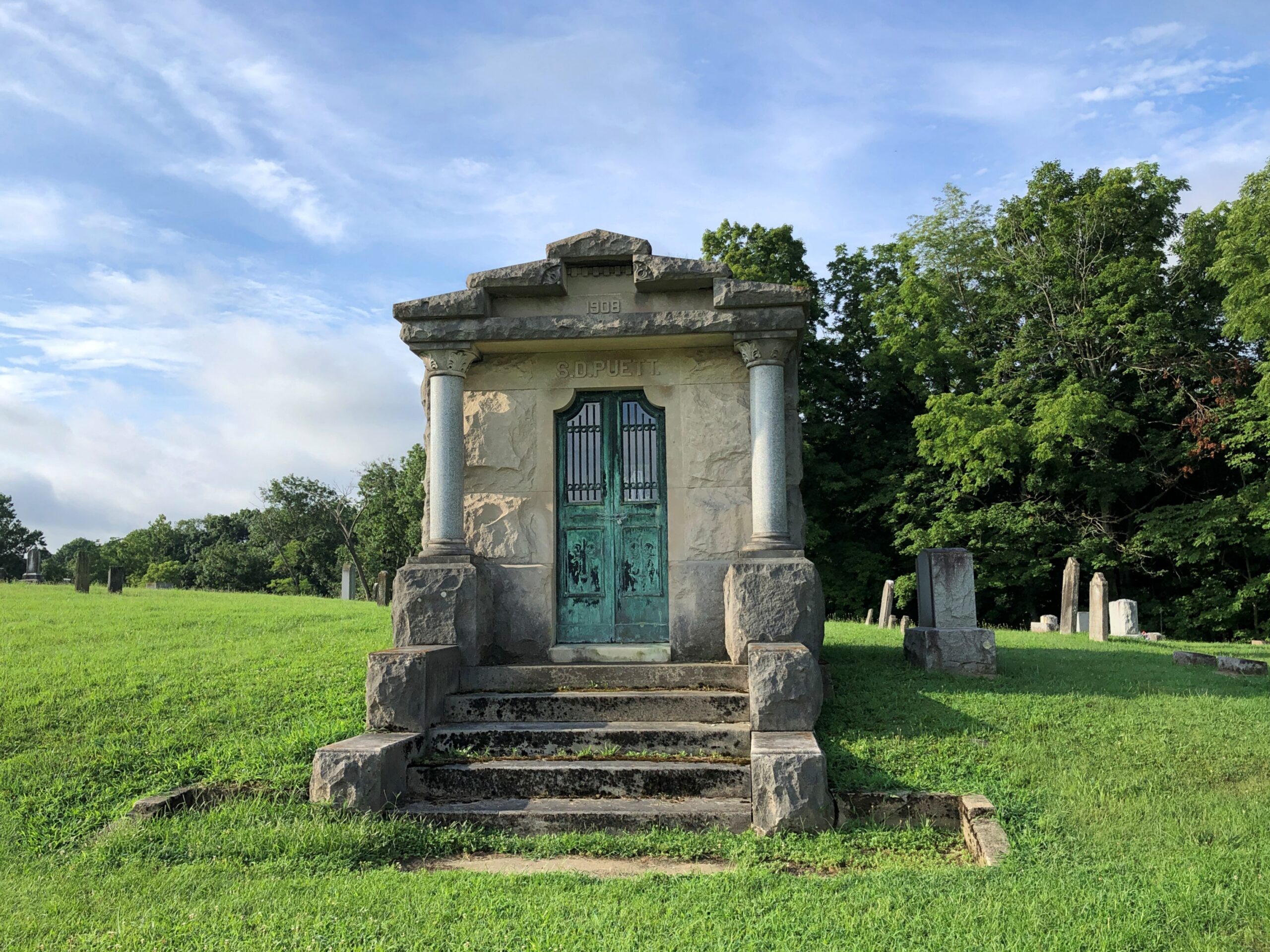
A few mausoleums denote formerly big fish in the small pond that is Rockville, seat of Parke County.

Rockville Indiana Cemetery

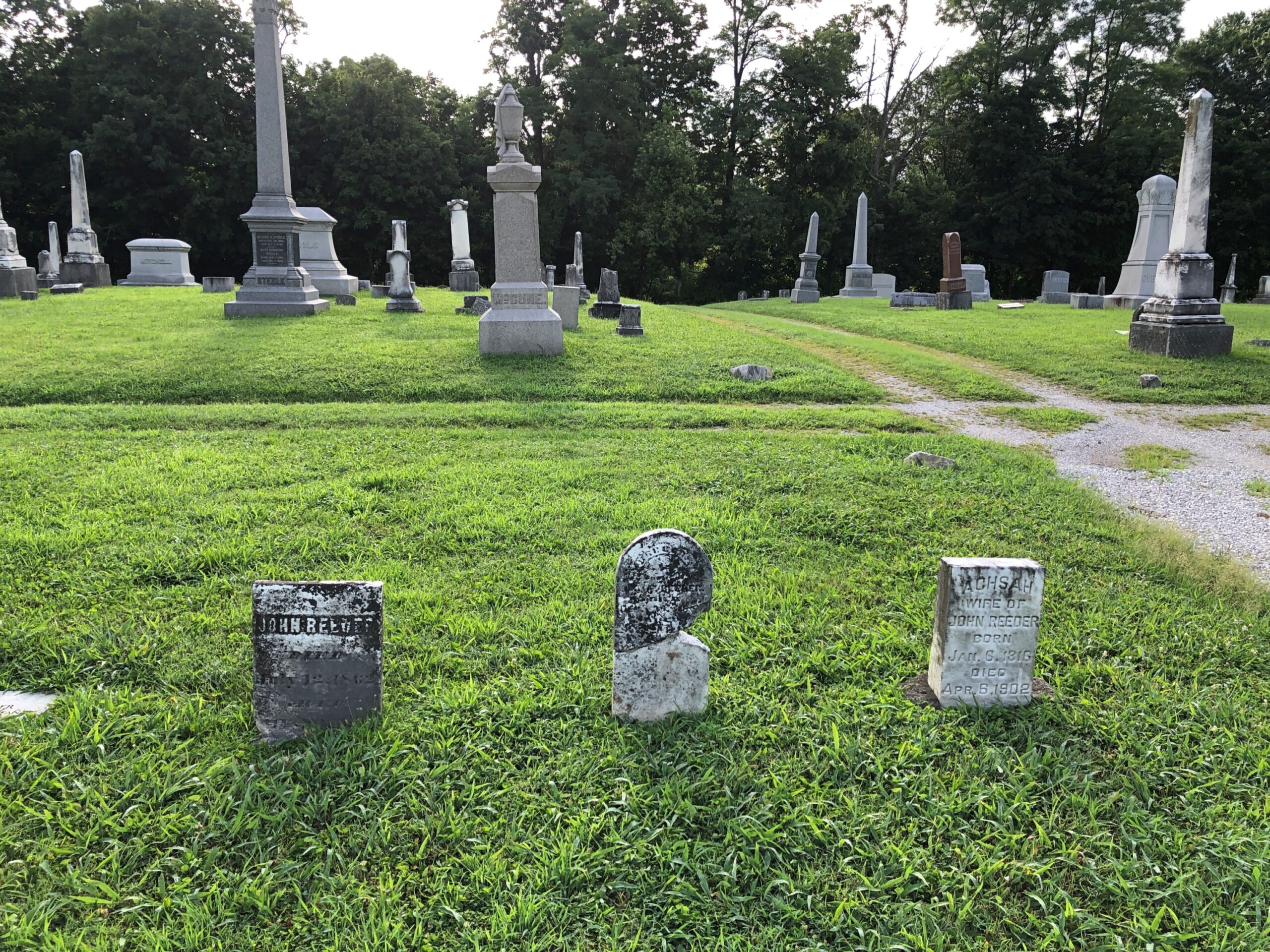
Mostly modest stones populate the cemetery, presumably for regular folks of the past.

Rockville Indiana Cemetery

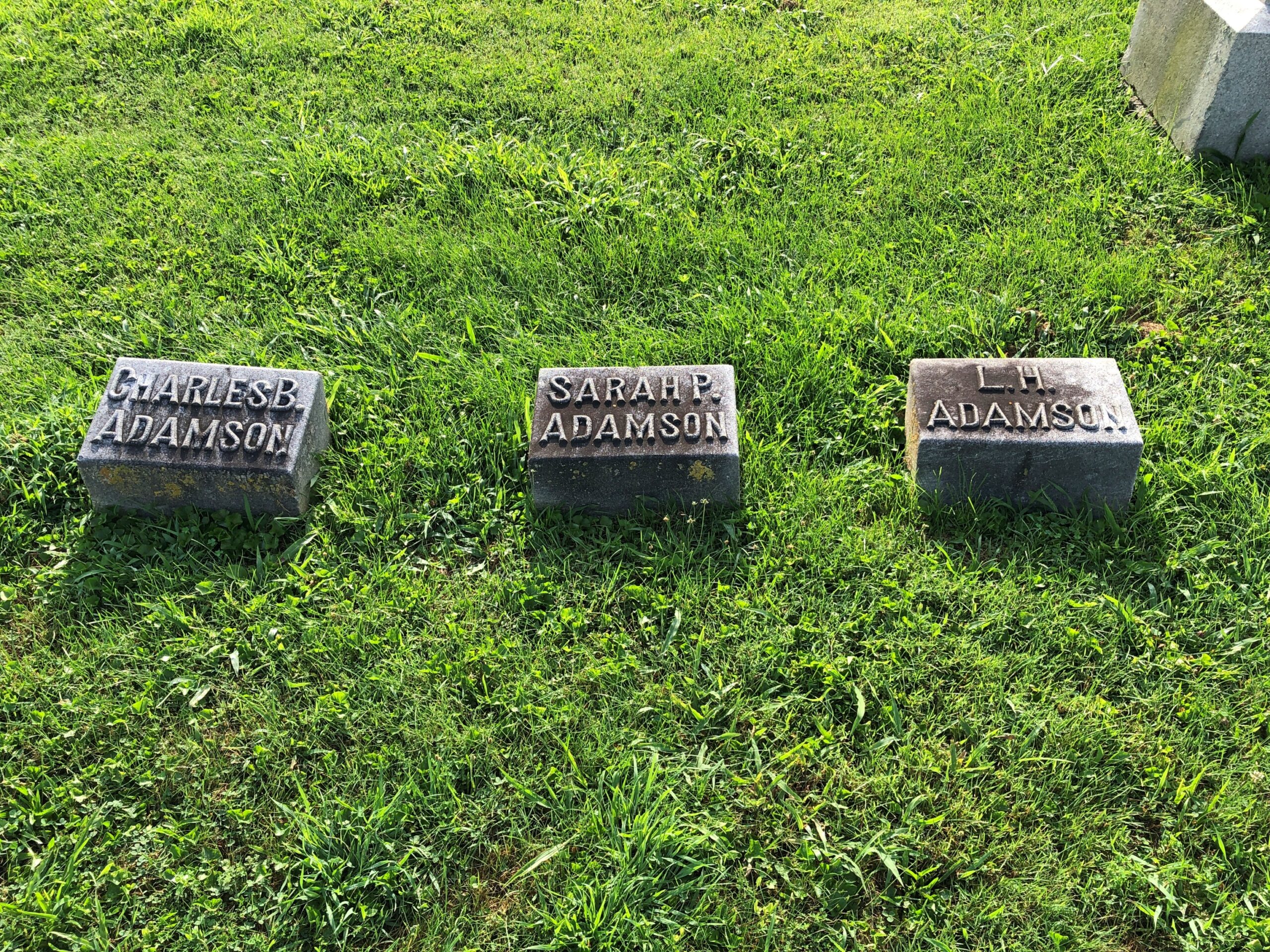
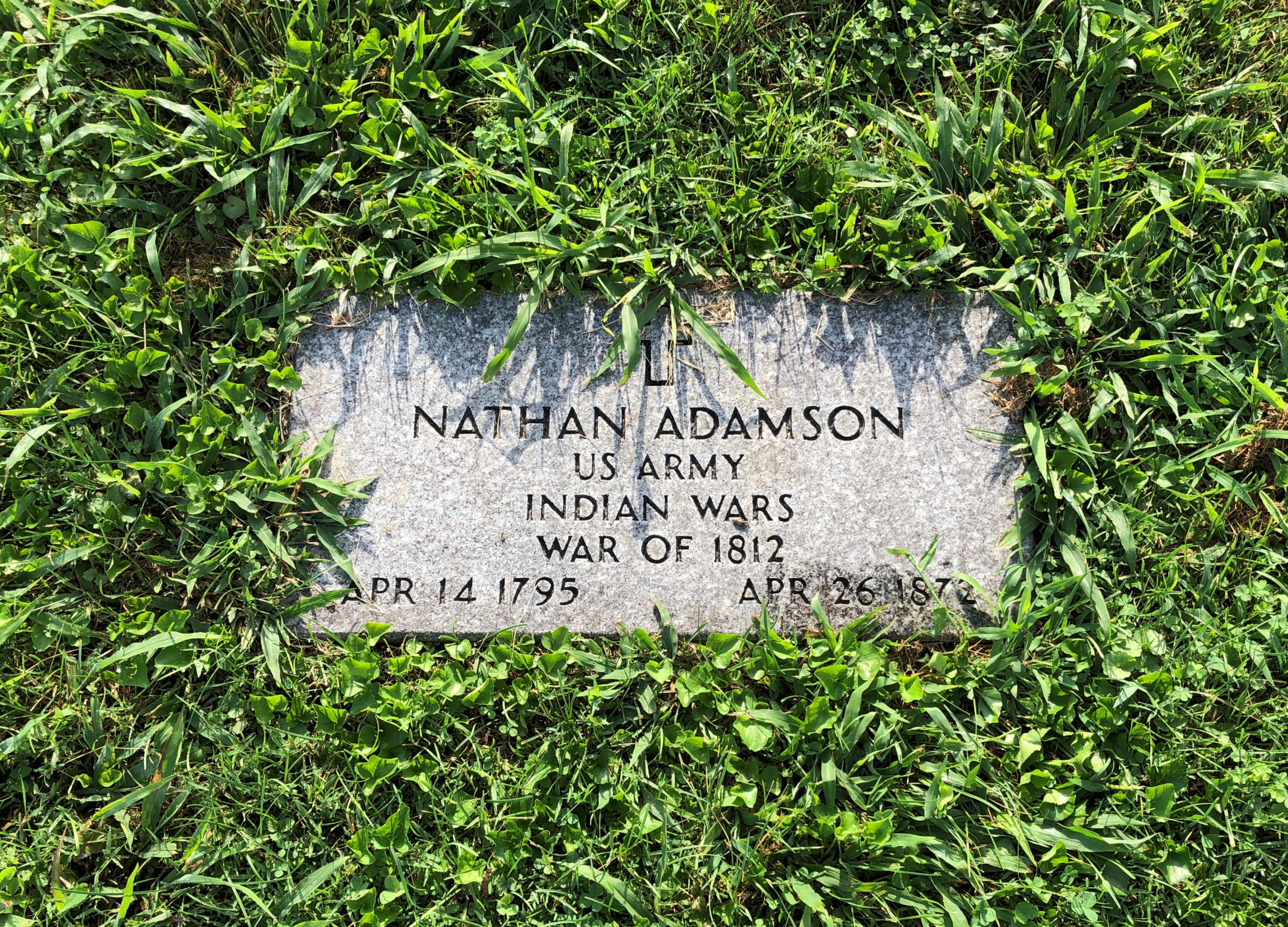
It isn’t too often that you see veterans of the War of 1812 (but not never).

Numerically speaking, there just weren’t that many compared to later, greater wars, and probably many of their graves aren’t marked as such. Nathan was near the other Adamsons, and indeed two of them (per Find-A-Grave) are his children.

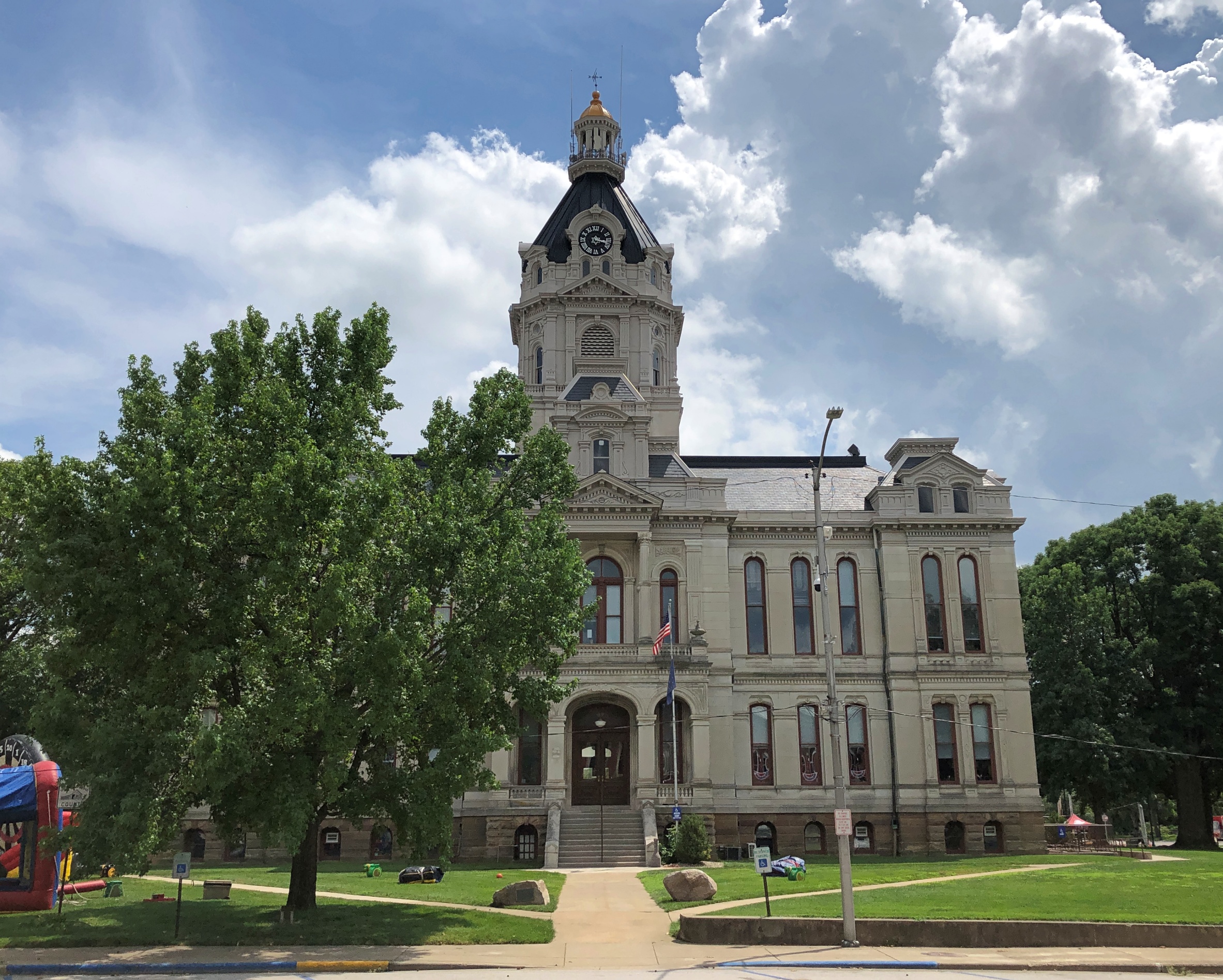
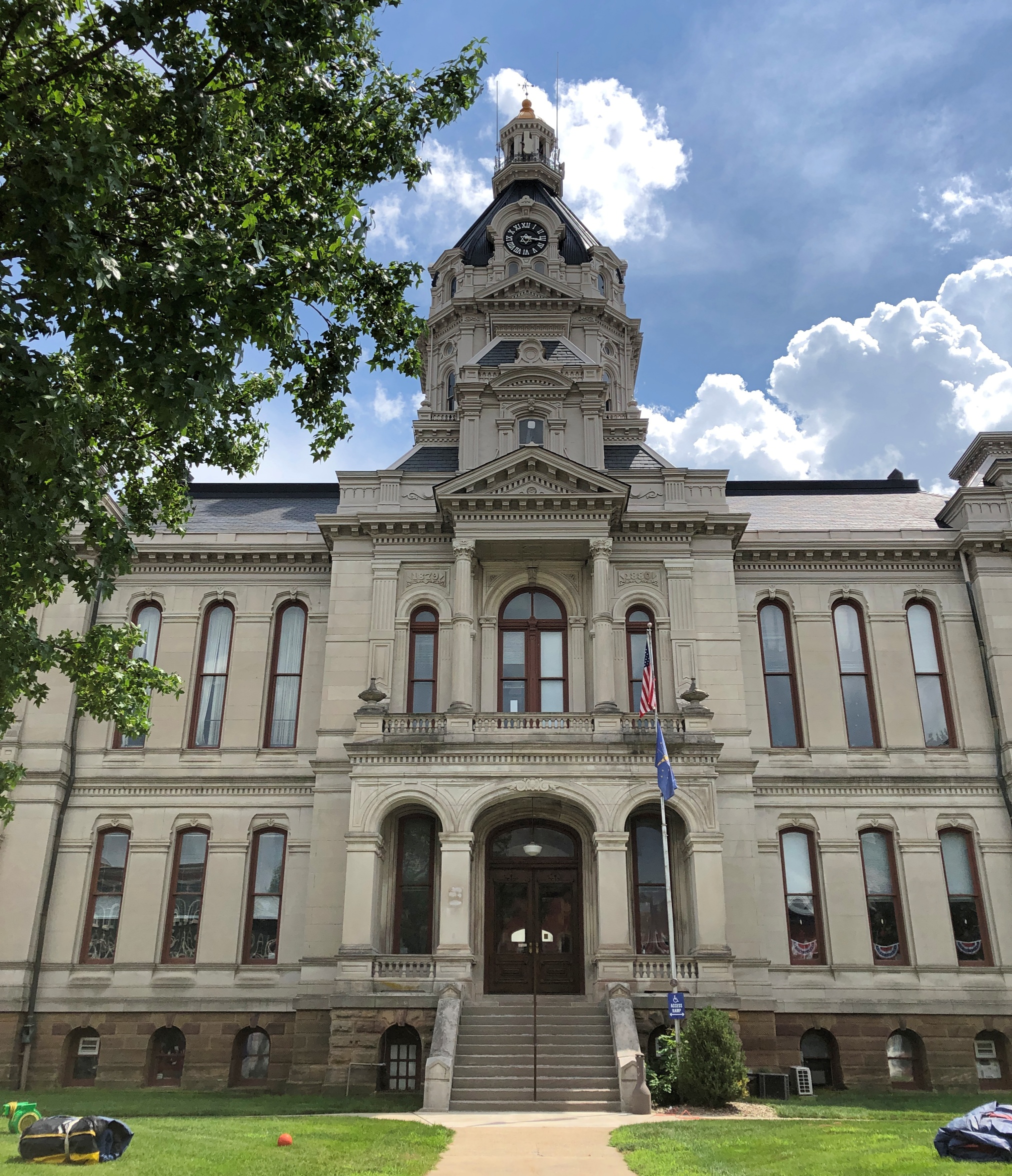
Not too many blocks from the cemetery is the Parke County Courthouse. We encountered it on Saturday afternoon, soon after arriving in Rockville (pop. about 2,600), when temps were about as high as they would be that day. Sweaty 90s.
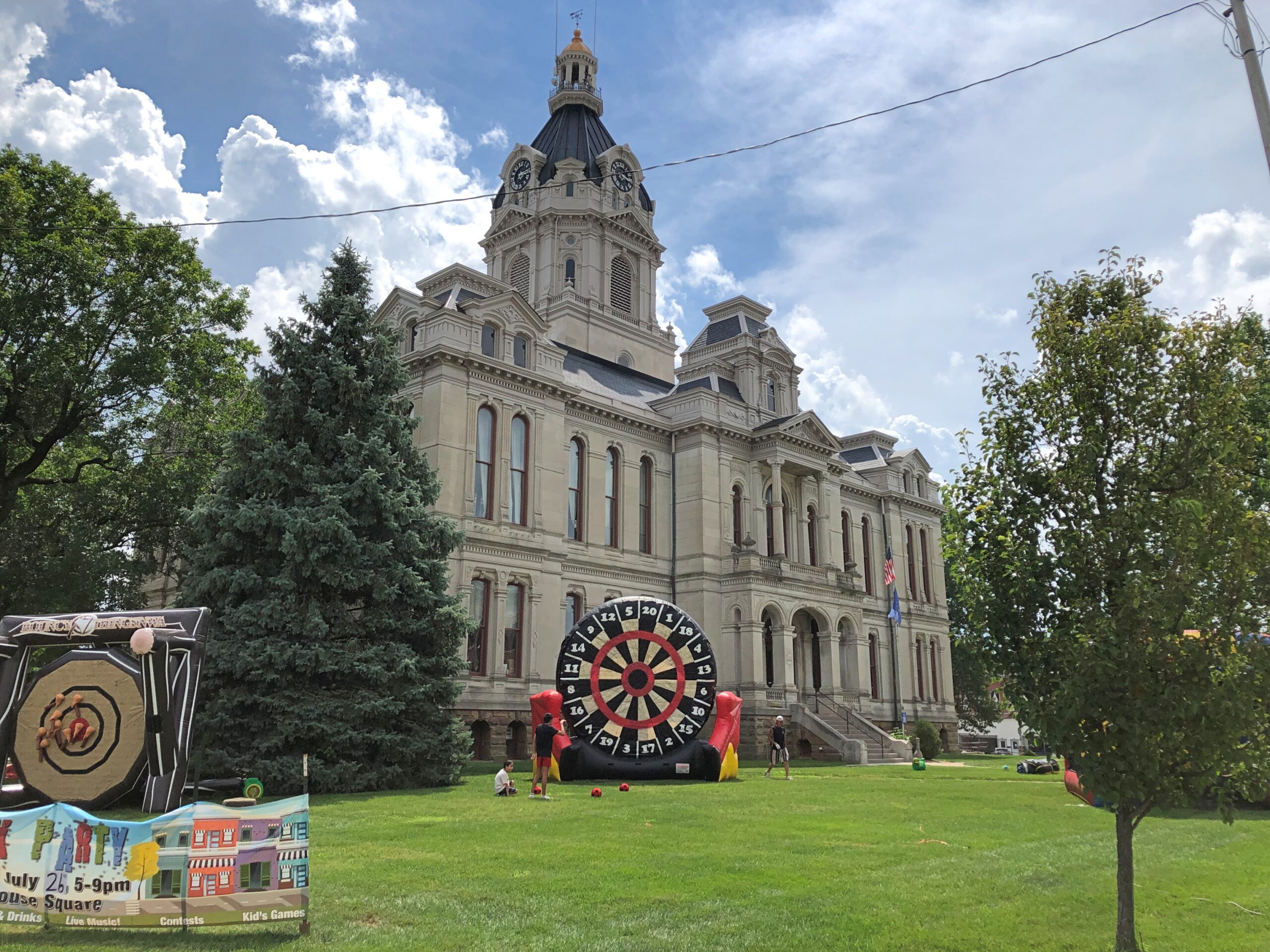
The courthouse is a grand Second Empire pile with some Beaux Arts added to the mix, completed in 1882, during the golden age of U.S. courthouses. Designed by T.J. and Brentwood Tolan, a father and son team. They did a lot of courthouses.

Parke County Courthouse

The giant dartboard isn’t something you see too often on courthouse grounds. Could it be the Dartboard of Justice? That’s how sentencing is done for crimes that call for one to 20 years in the jug; a toss by the judge, or the jury foreman.

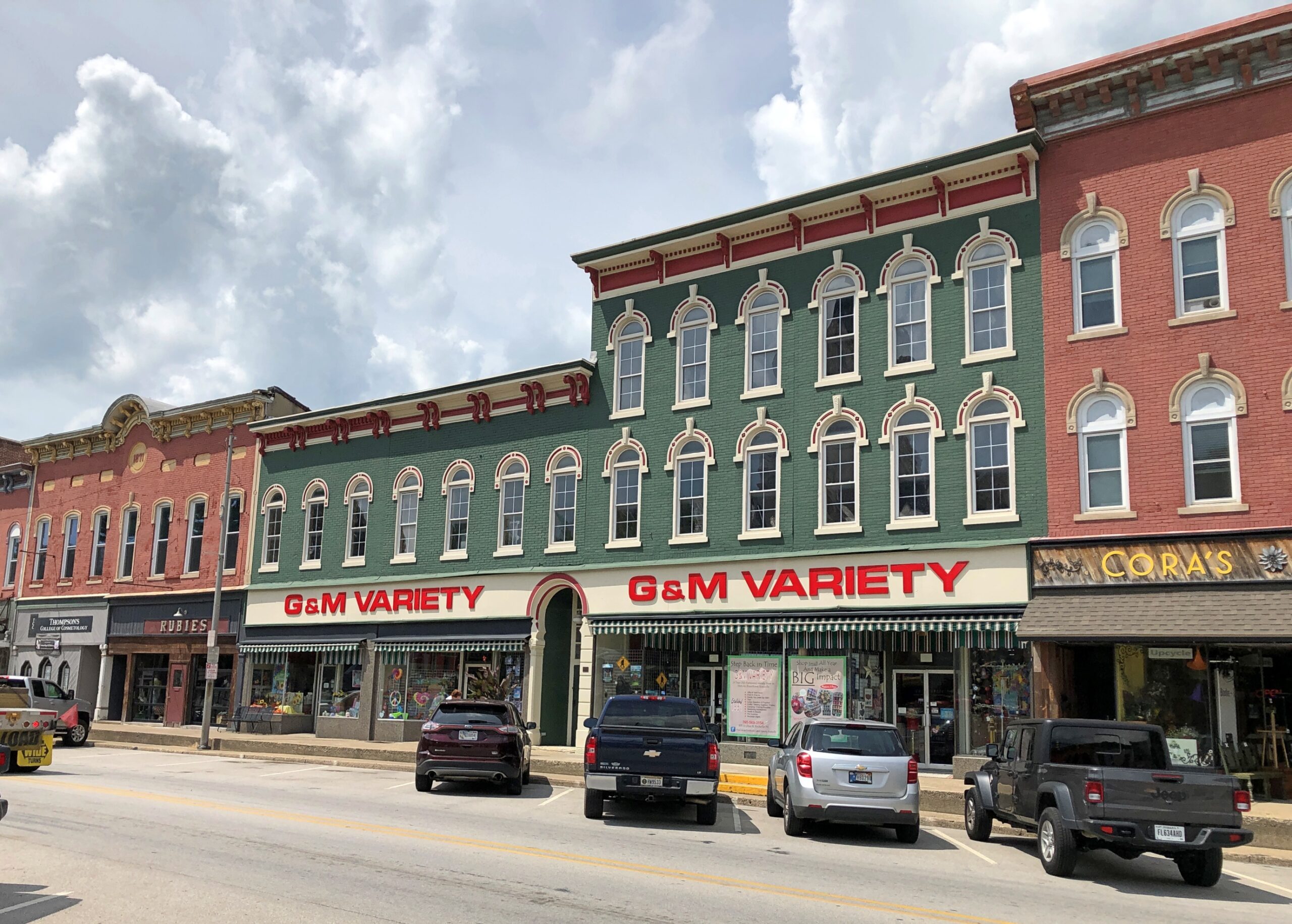
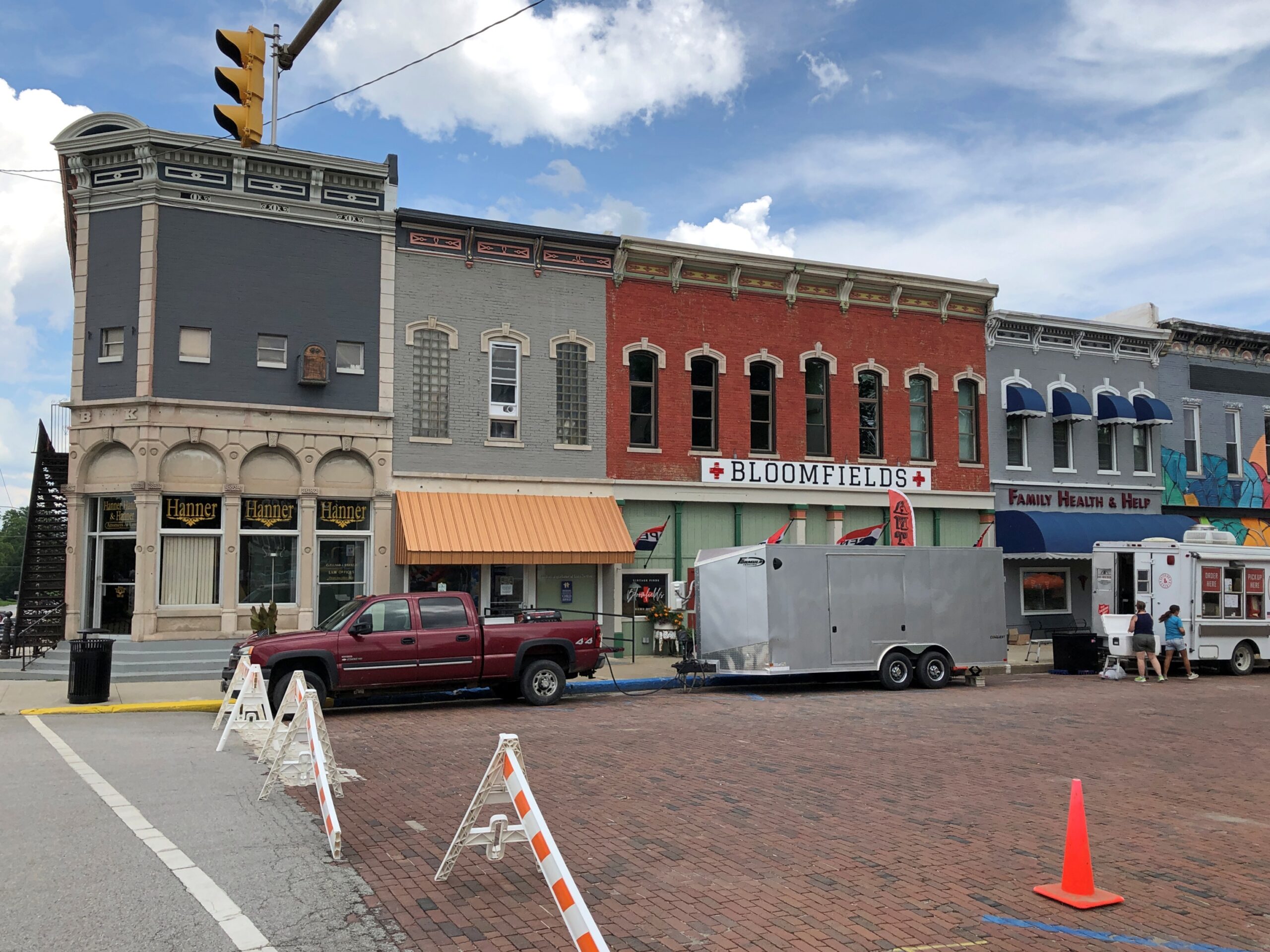
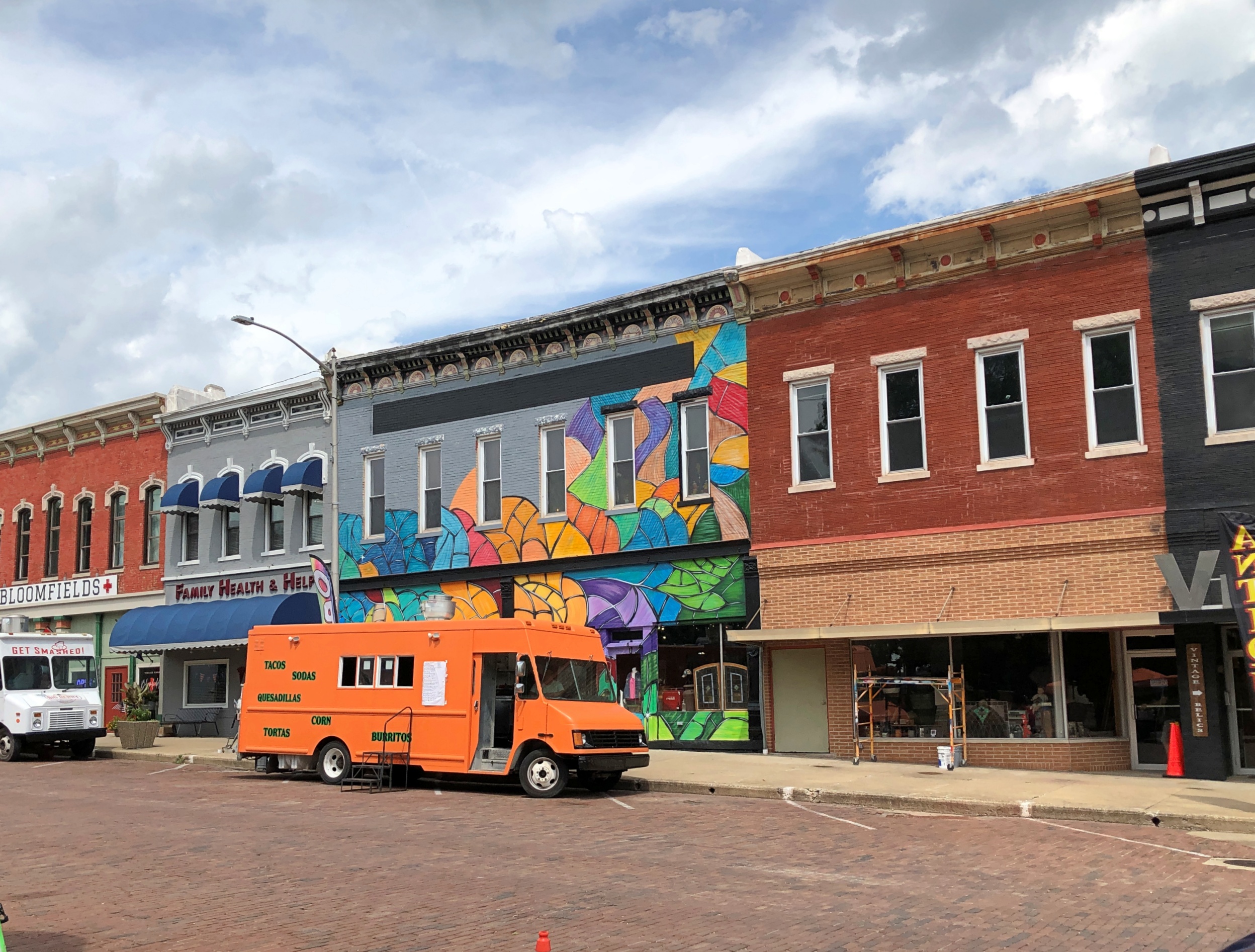
No, a small street festival was being set up at that moment, though not up and running yet. It was too hot for that anyway. But not for a quick look at some of the buildings ringing the courthouse, most in good shape and mostly tenanted.

G&M Variety has the soul of a five-and-dime, but a more accurate classification these days would be a five-and-ten dollar store: a step above a dollar store, the love child of a convenience store and a standard grocery store, with a souvenir shop added to the mix. Roaming around its aisles was pleasant, for a look at the sometimes unusual merchandise, and the AC.

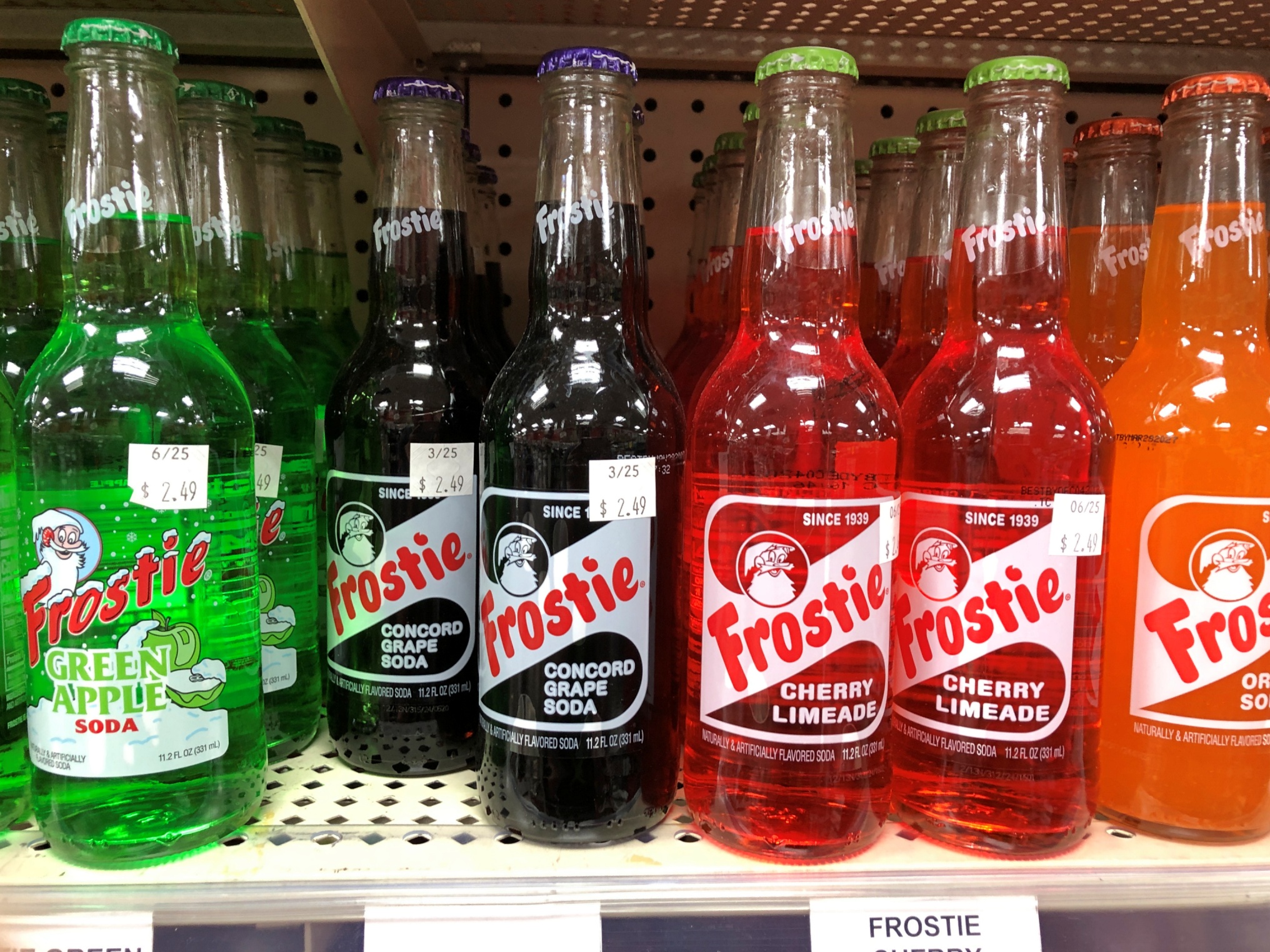
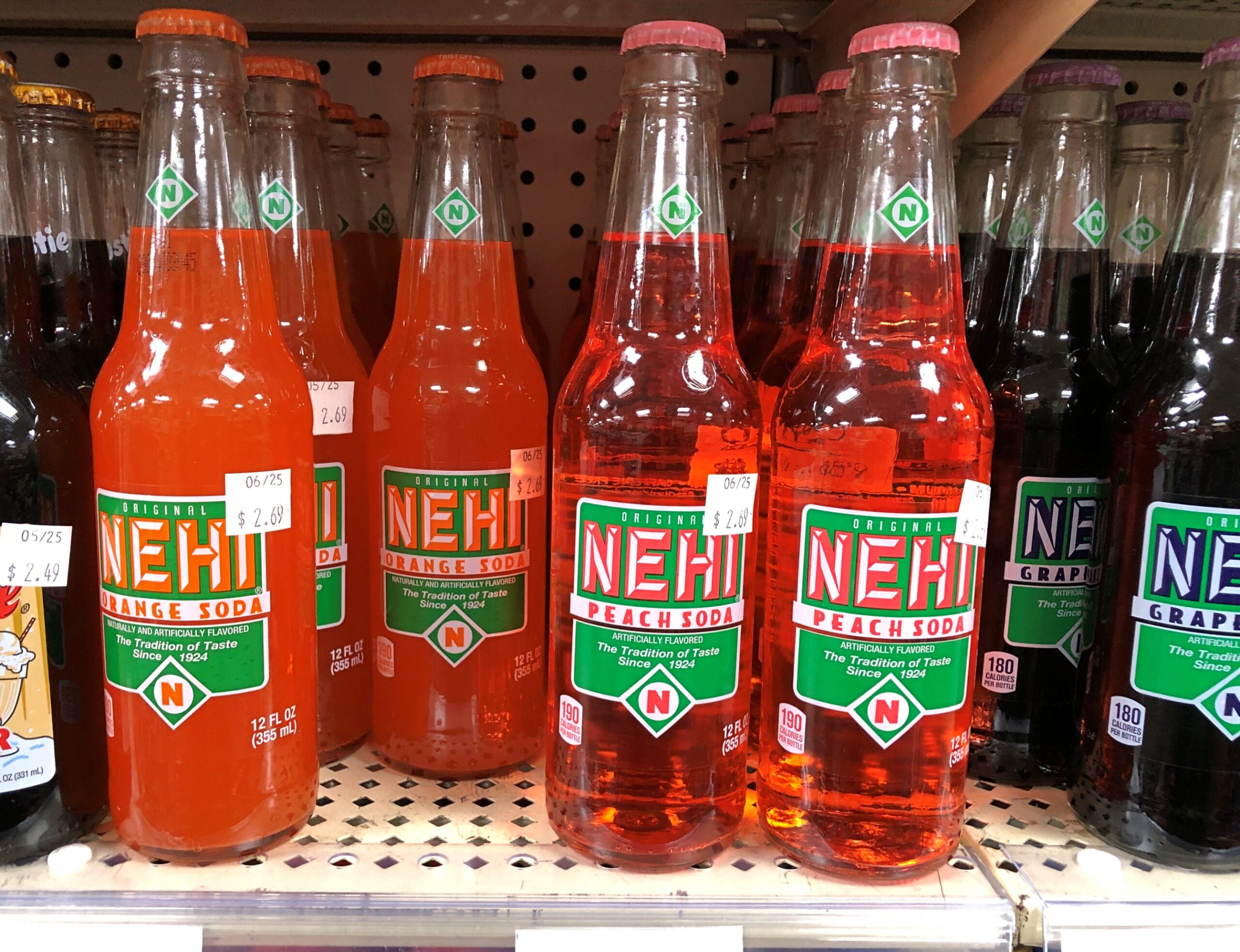
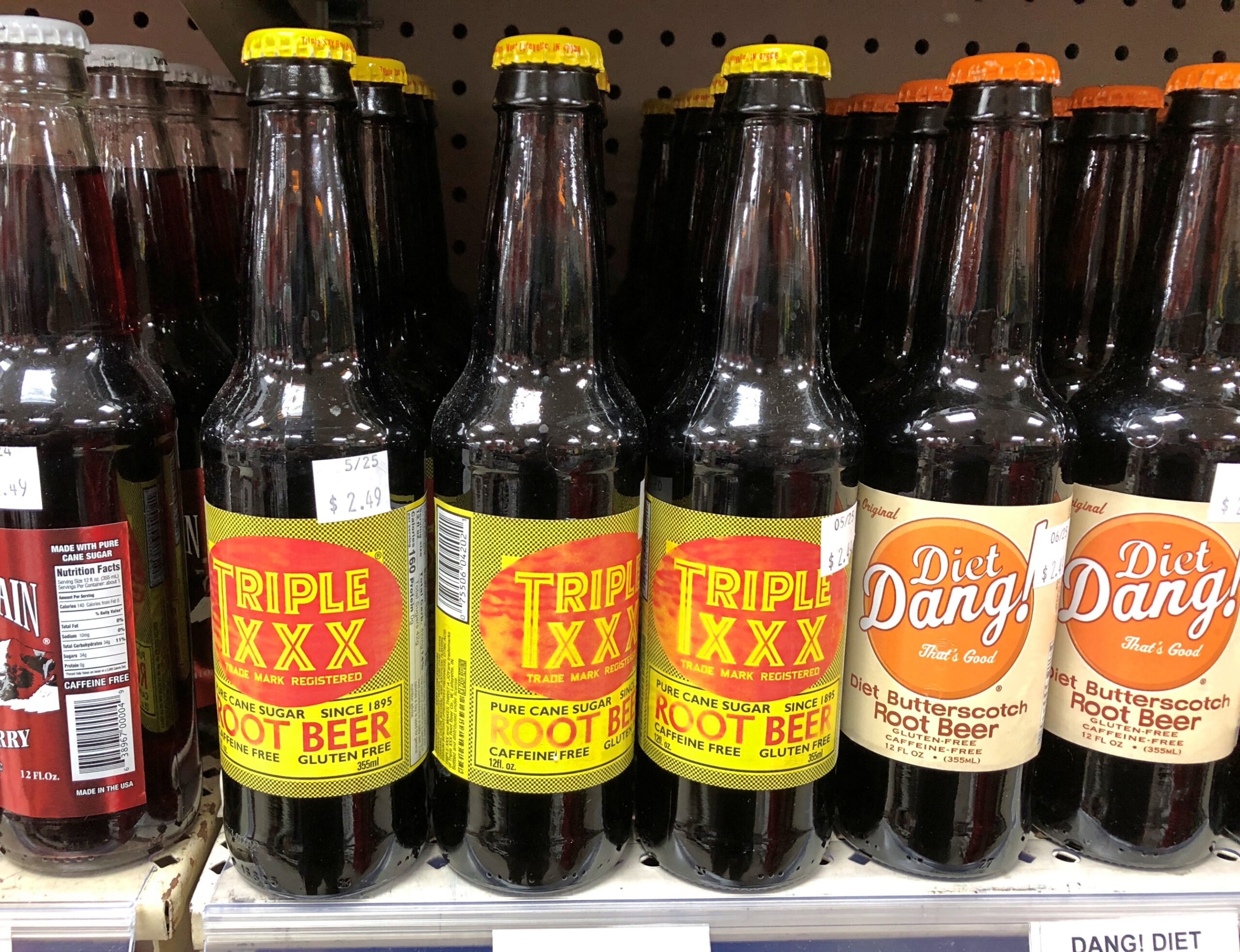
Drinks on sale that made me recollect sodas from my mid-60s childhood.

Frostie! Nehi! Triple XXX! Dang? We didn’t have Dang. Butterscotch root beer?

Pangs of nostalgia weren’t enough for me to spend $2.49 for an ordinary-sized soda, though I was a little thirsty.

More courthouse square.

Parke County Courthouse Square

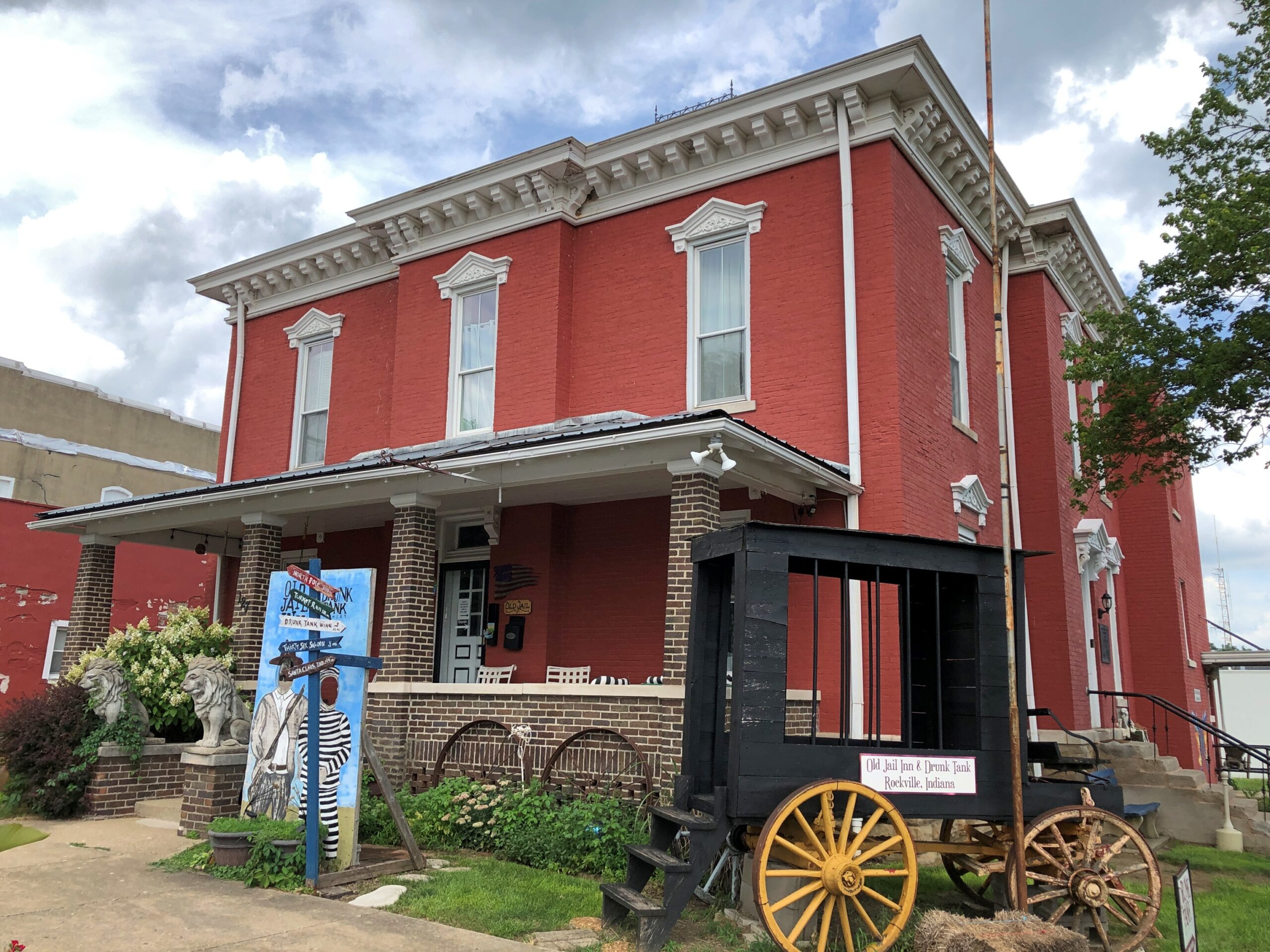
The Old Jail Inn & Drunk Tank, now a B&B.

Parke County Courthouse Square

I returned to the square on Sunday morning, after the cemetery, for a further look when it wasn’t so hot.

Parke County Courthouse Square

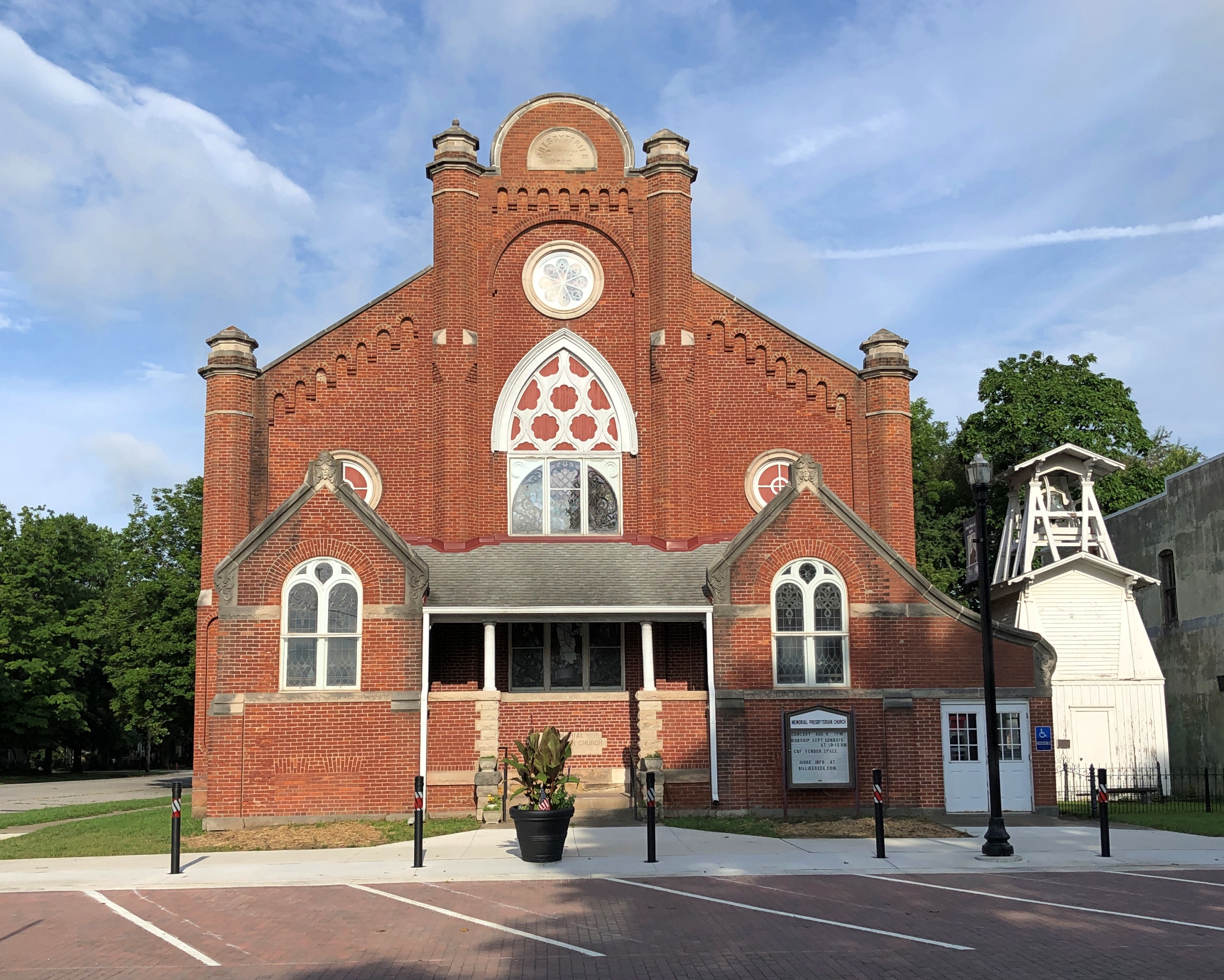
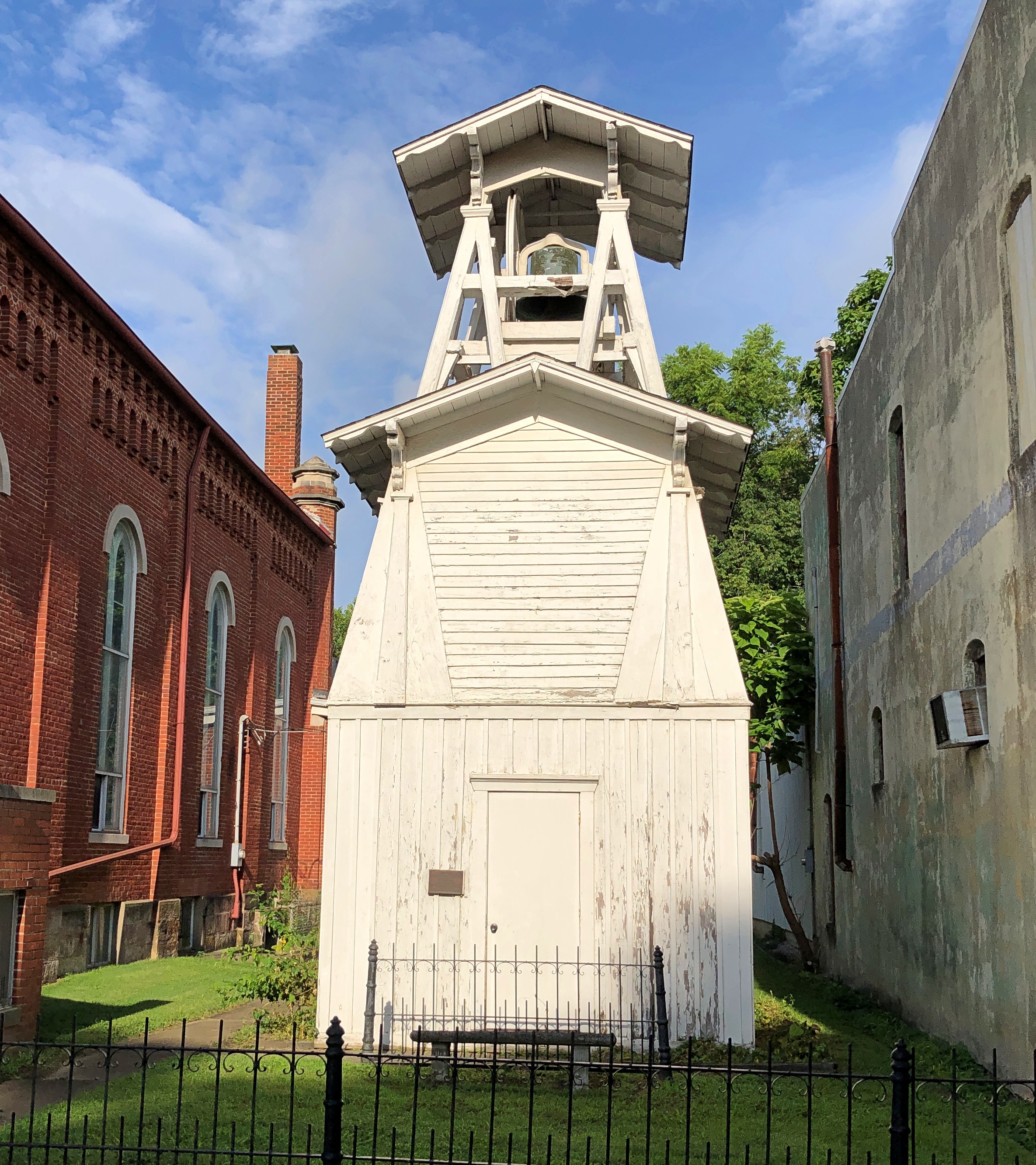
Memorial Presbyterian Church and its freestanding bell tower.

Parke County Courthouse Square

It isn’t a Presbyterian church any more — its cross conspicuous in its absence — though a Presbyterian congregation meets there sometimes. These days it counts as an event space, with music performances, recitals, meetings, and other gatherings there, according to Billie Creek Village, more about which later.

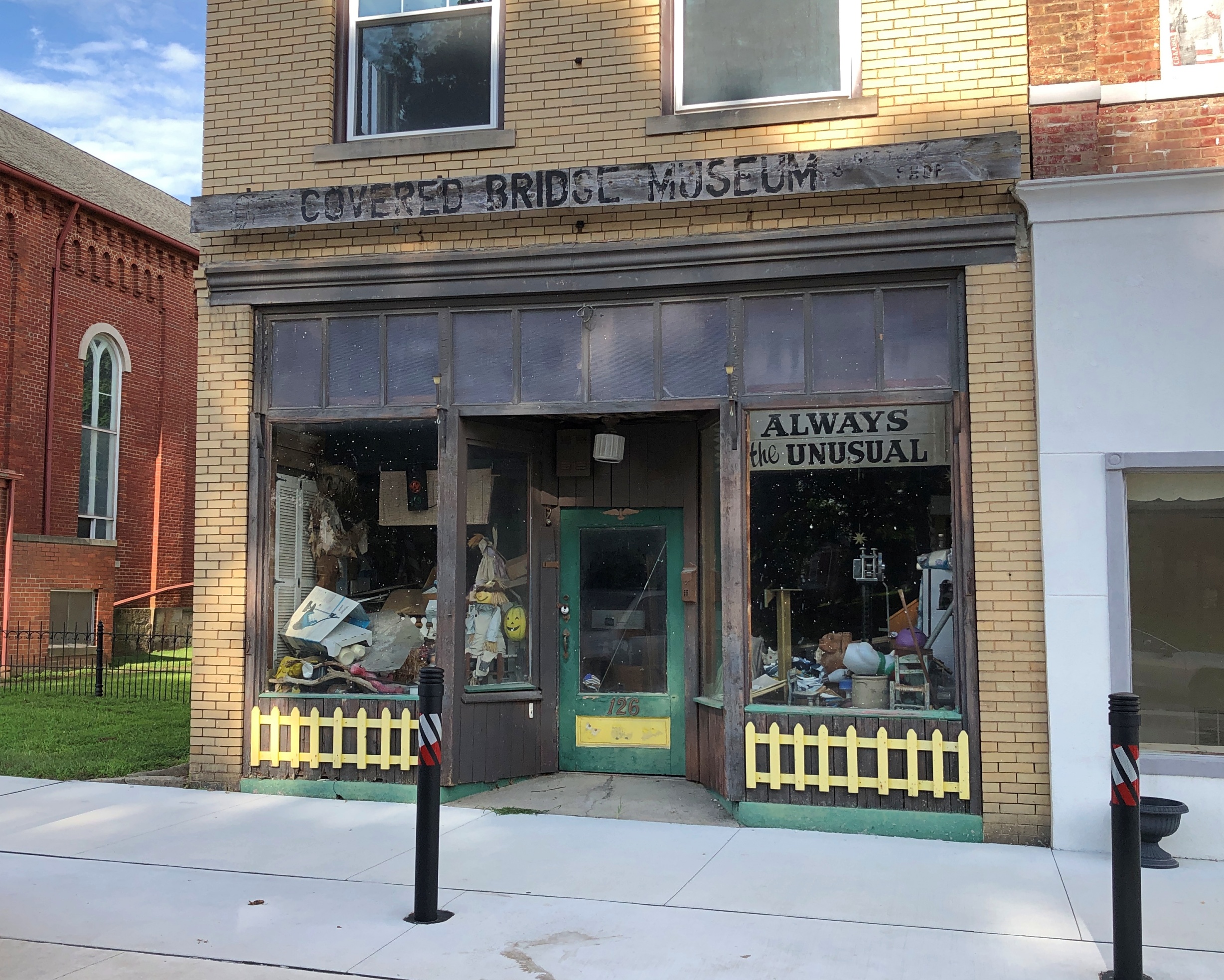
Next to the former church.

Museum? I’m a little skeptical.

Parke County Dash: Klong

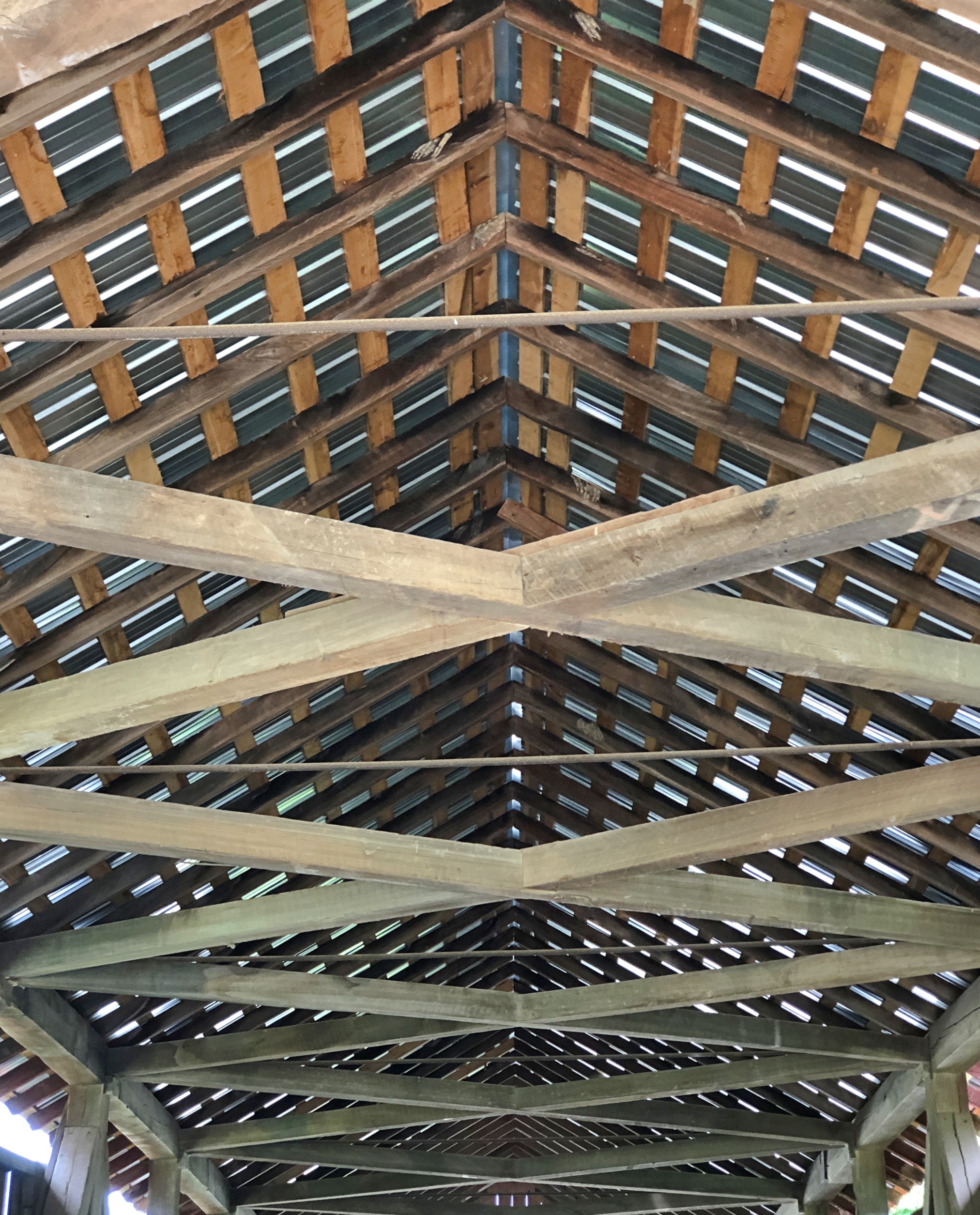
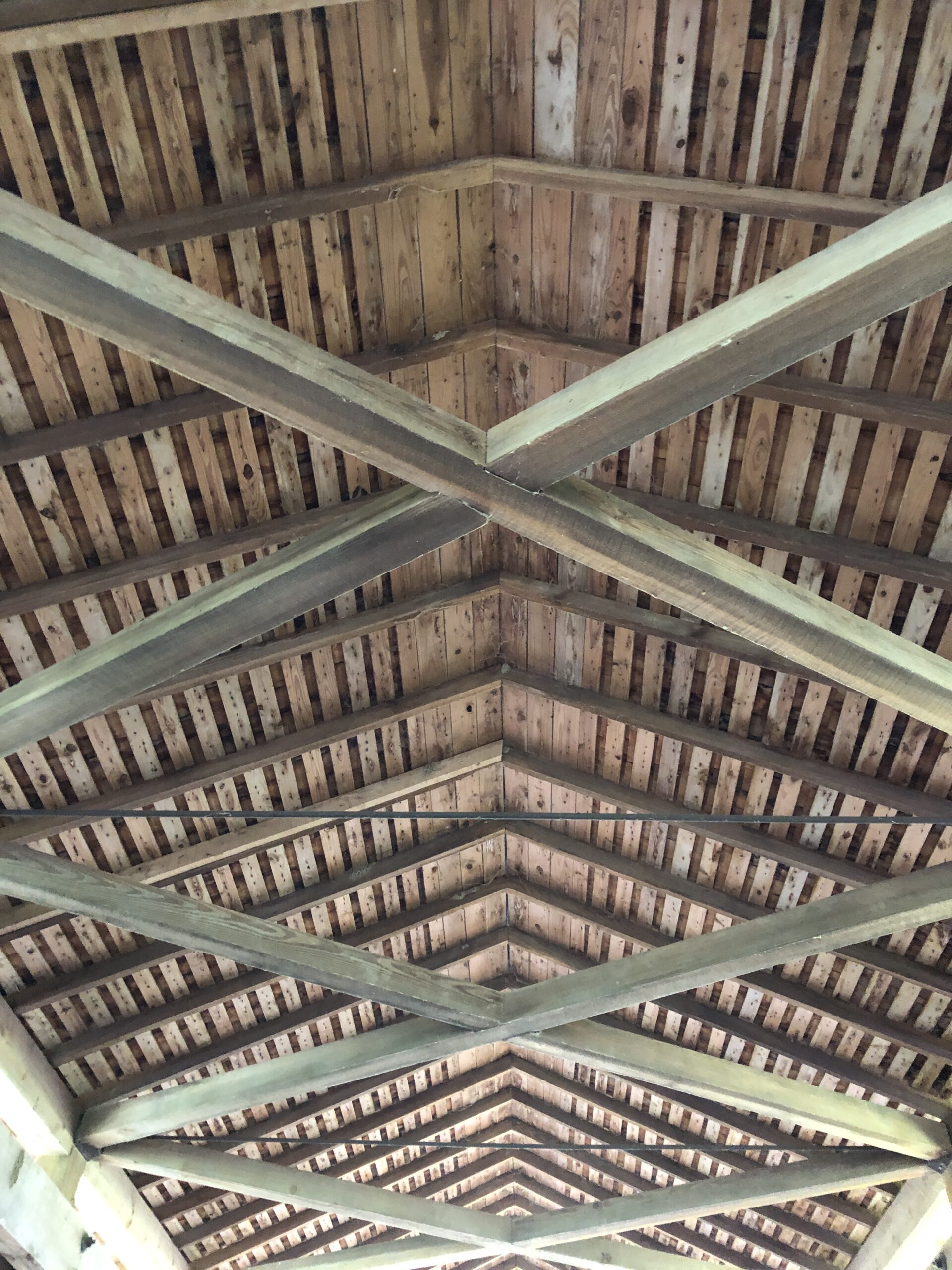
It’s one thing to admire the artistry of a Parke County, Indiana, wooden bridge standing at its entrance, or below near the edge of the creek. Another to wander in and surround yourself with all that wood, from roof –

Parke County, Indiana bridges

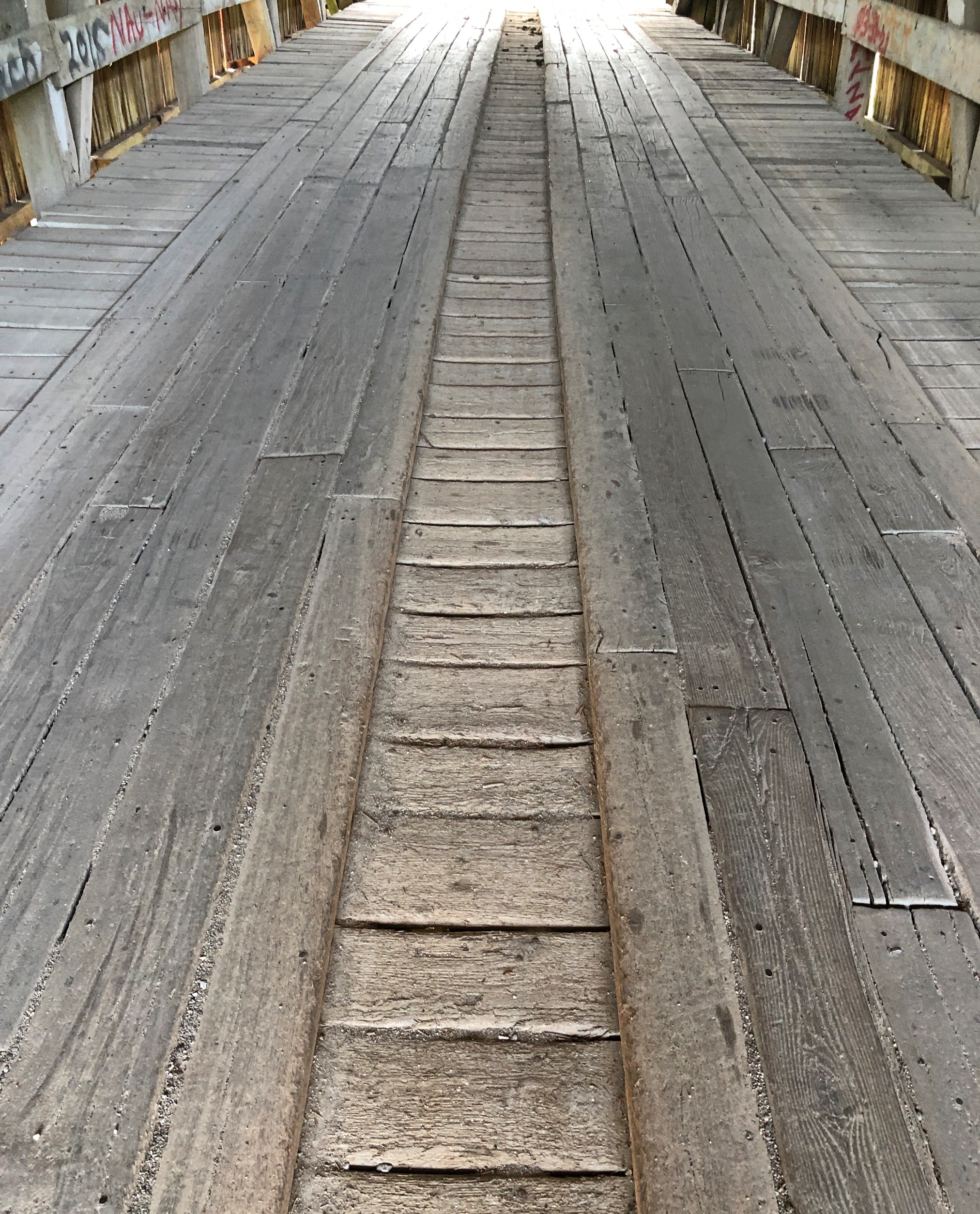
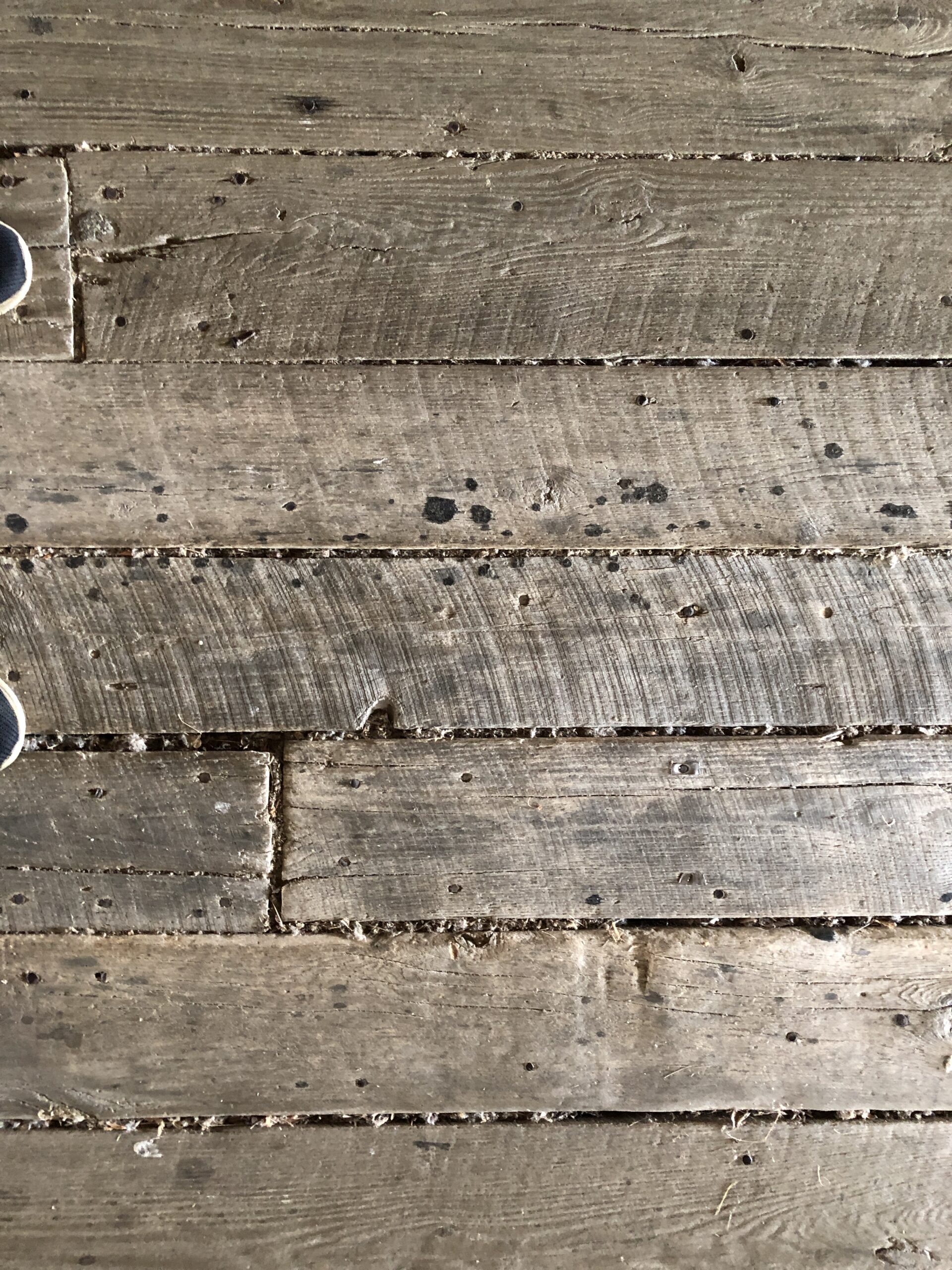
– to floor.

Parke County, Indiana bridges

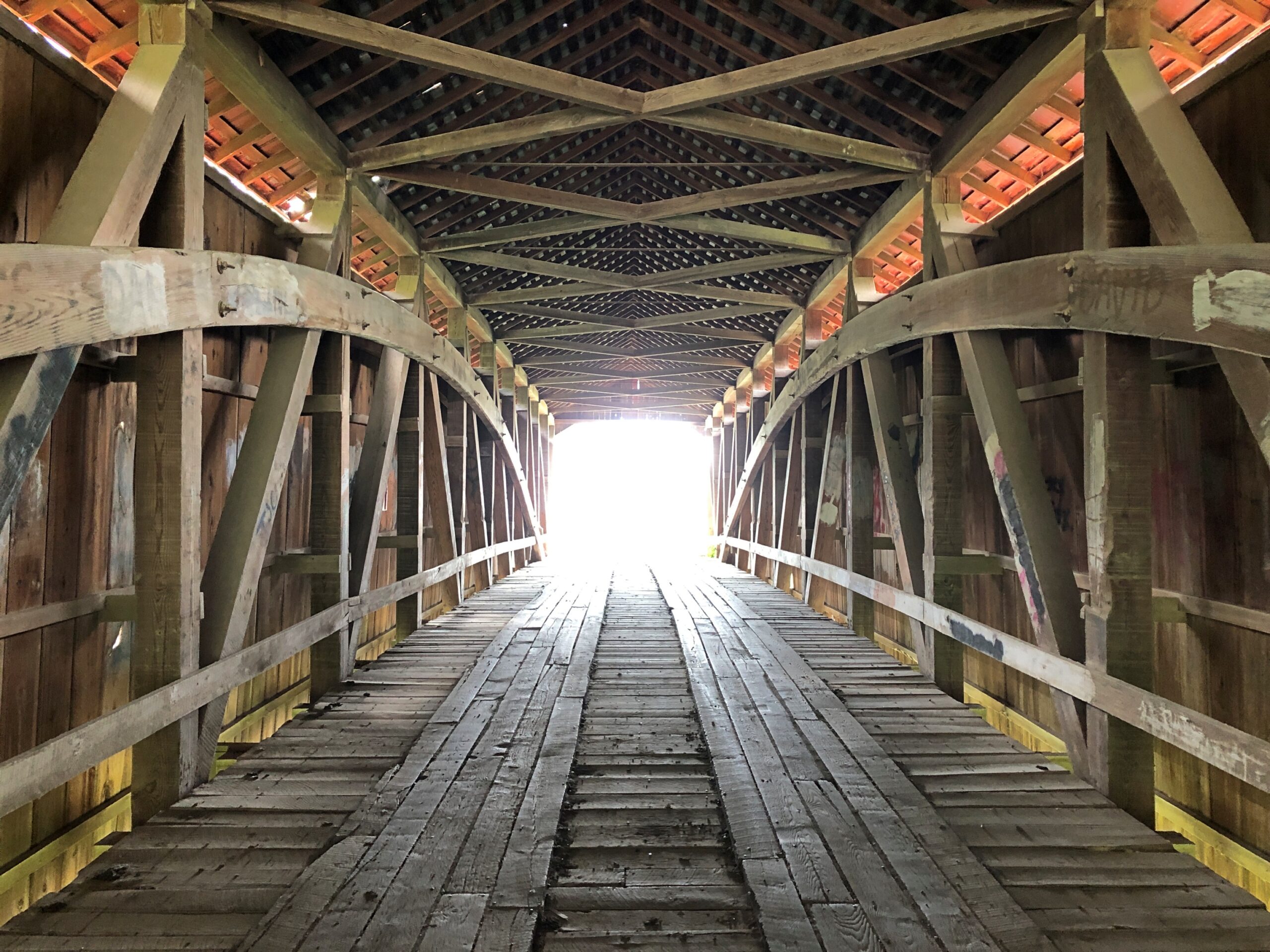
Your eyes spend a few seconds being useless as they adjust, the boards creak and the wood doesn’t exactly smell strongly one way or the other, as it might have when the bridge was new, but even now there’s a faint woody odor, maybe more enhanced after a rain. No recent rain for us, just plodding over dry boards cut well over a century ago.

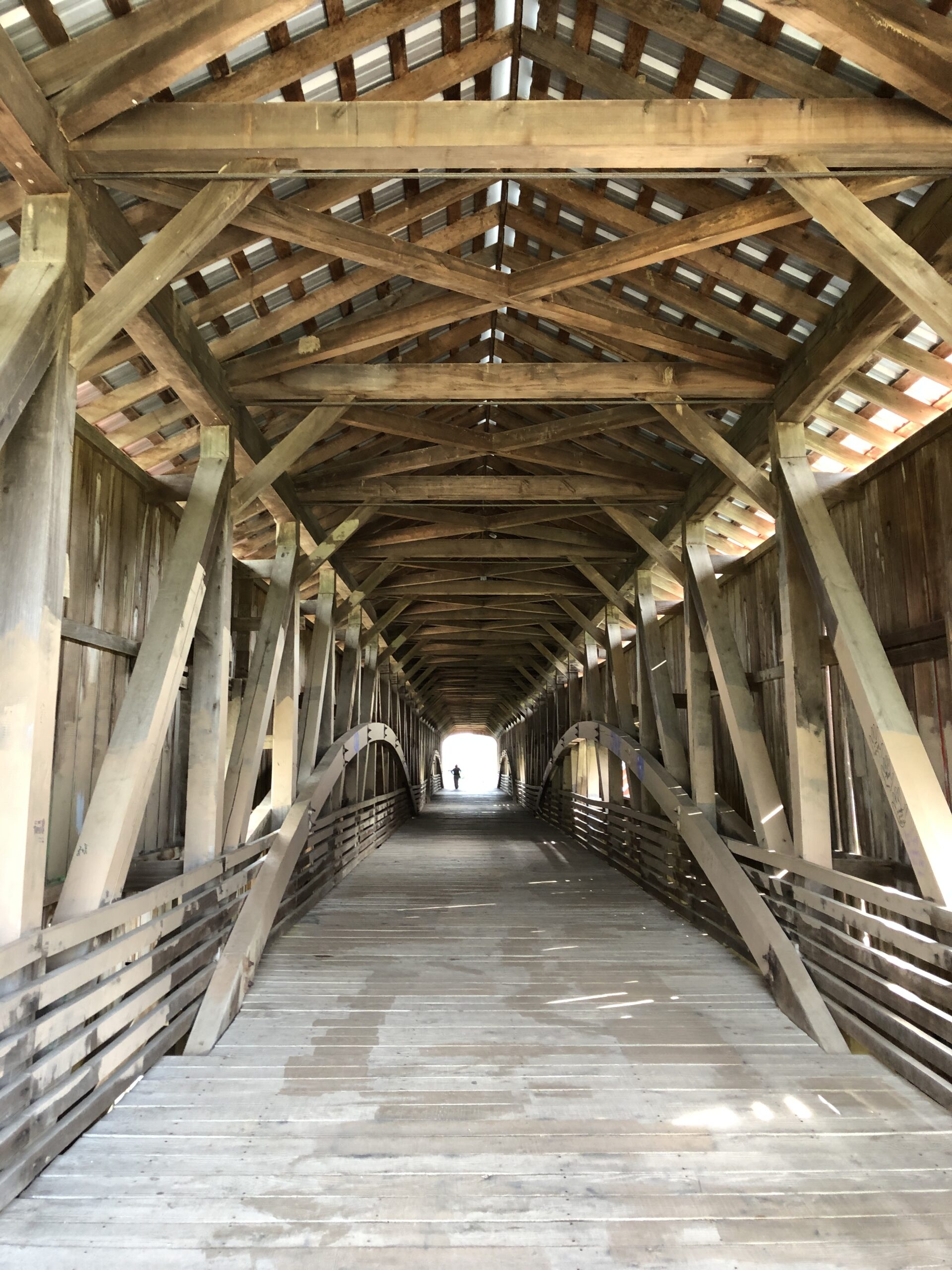
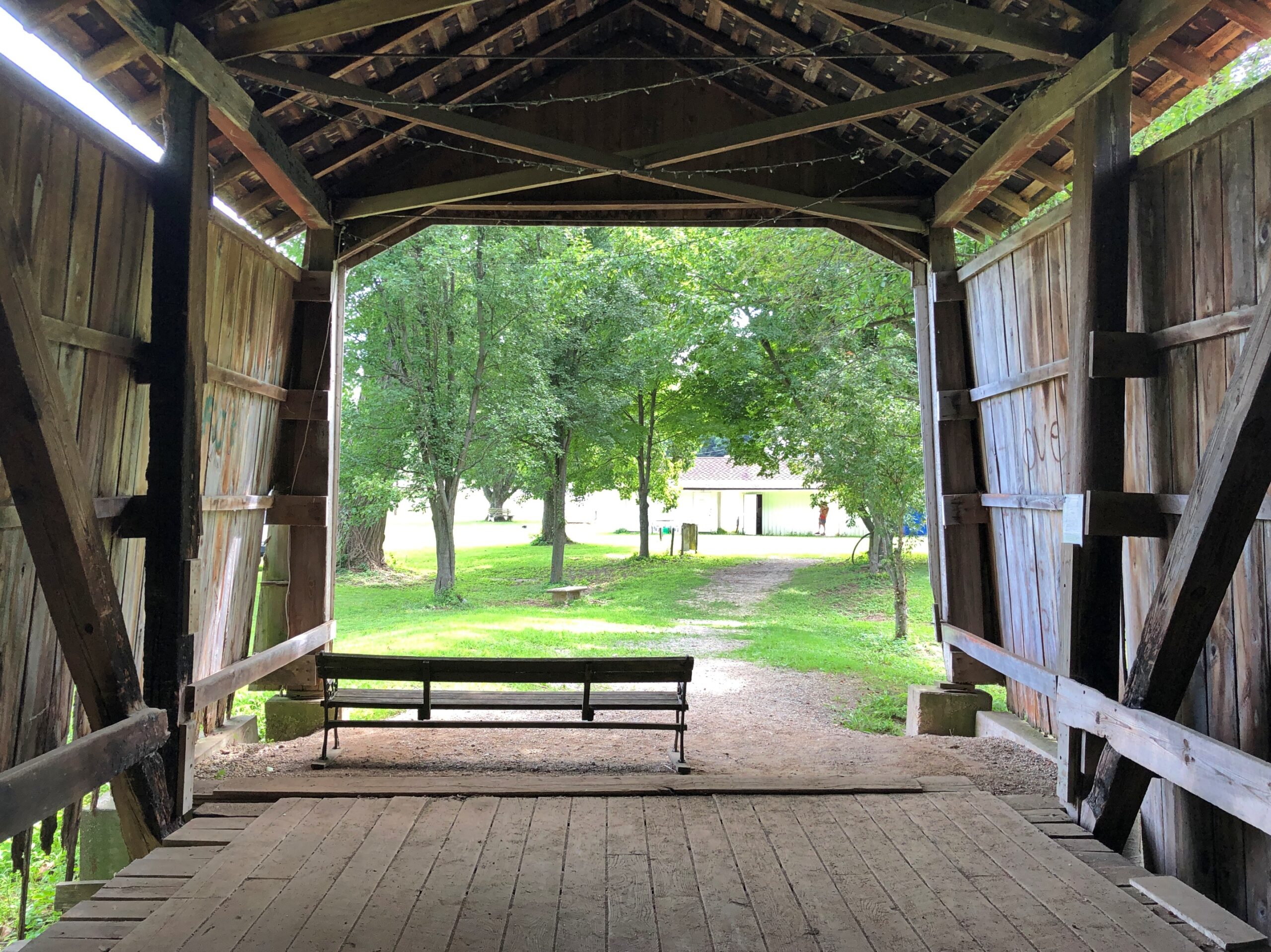
Being summer, there was a distinct contrast between the brightness outside and the shadows inside a covered bridge. My camera doesn’t interpret the light pouring from the other side of the bridge in quite the way my eyes did. Even so, the camera captured that distinct contrast in its own digital-image way.

Parke County, Indiana bridges

Except for those times its image was closer to the eyes’.

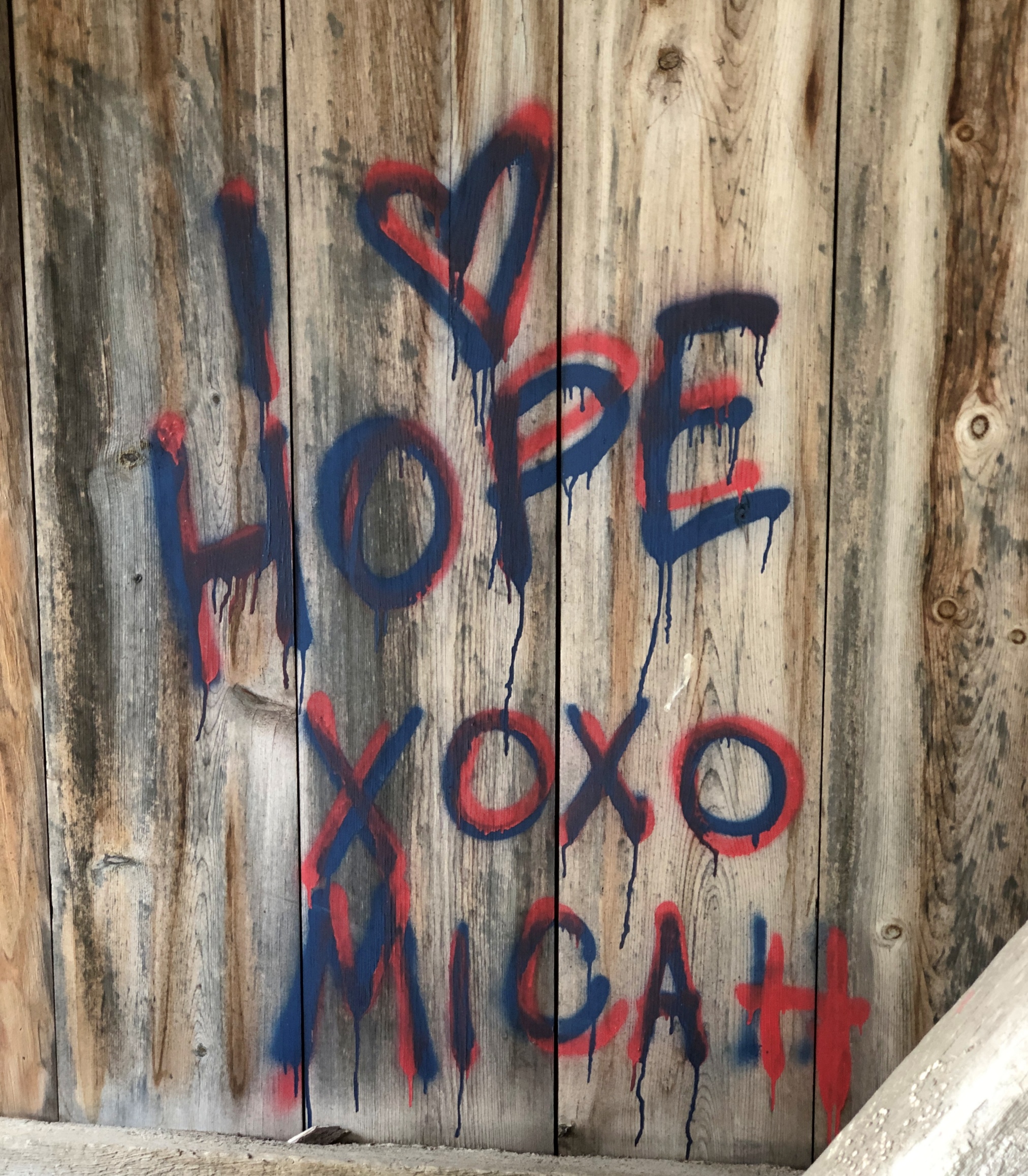
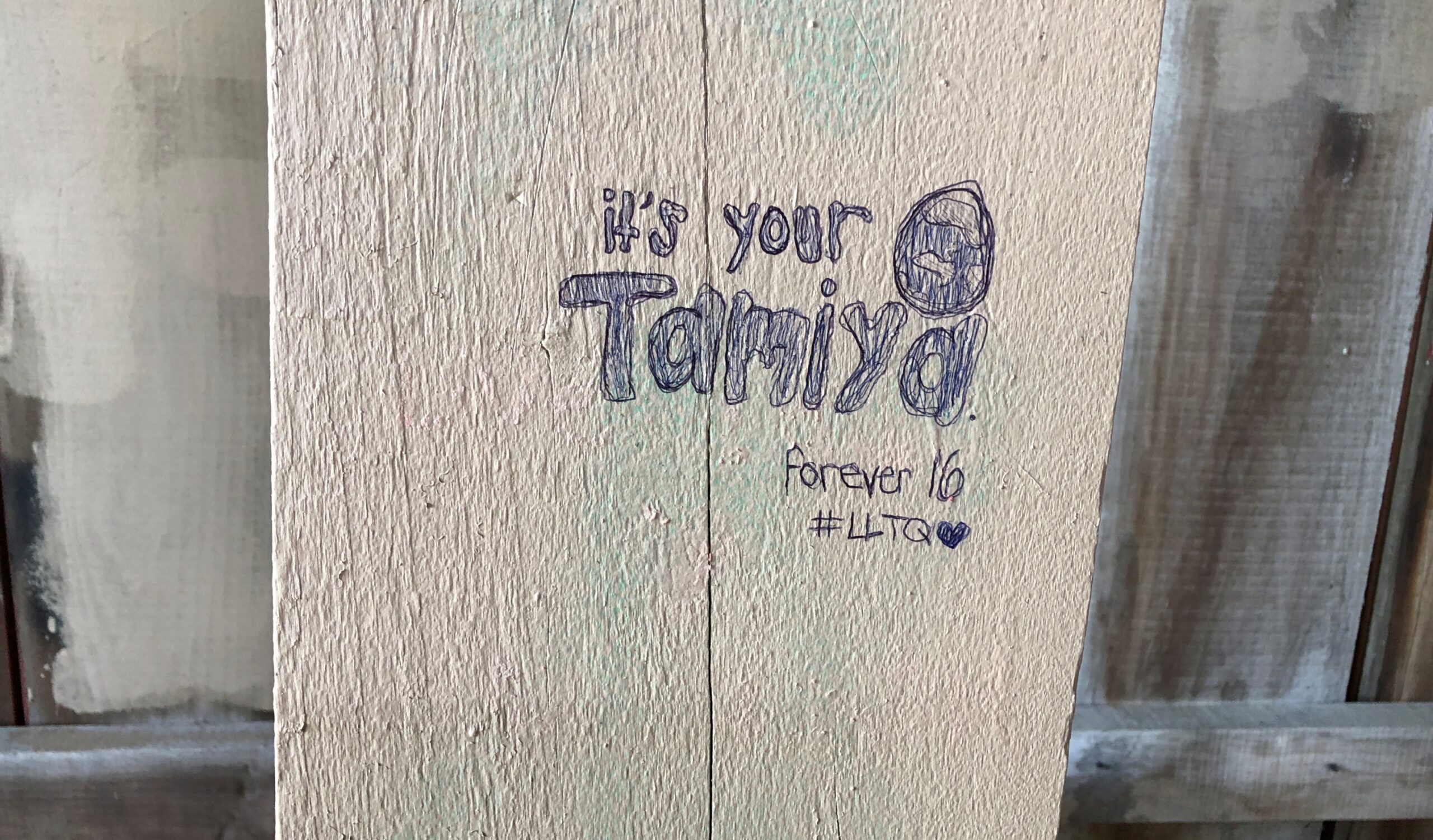
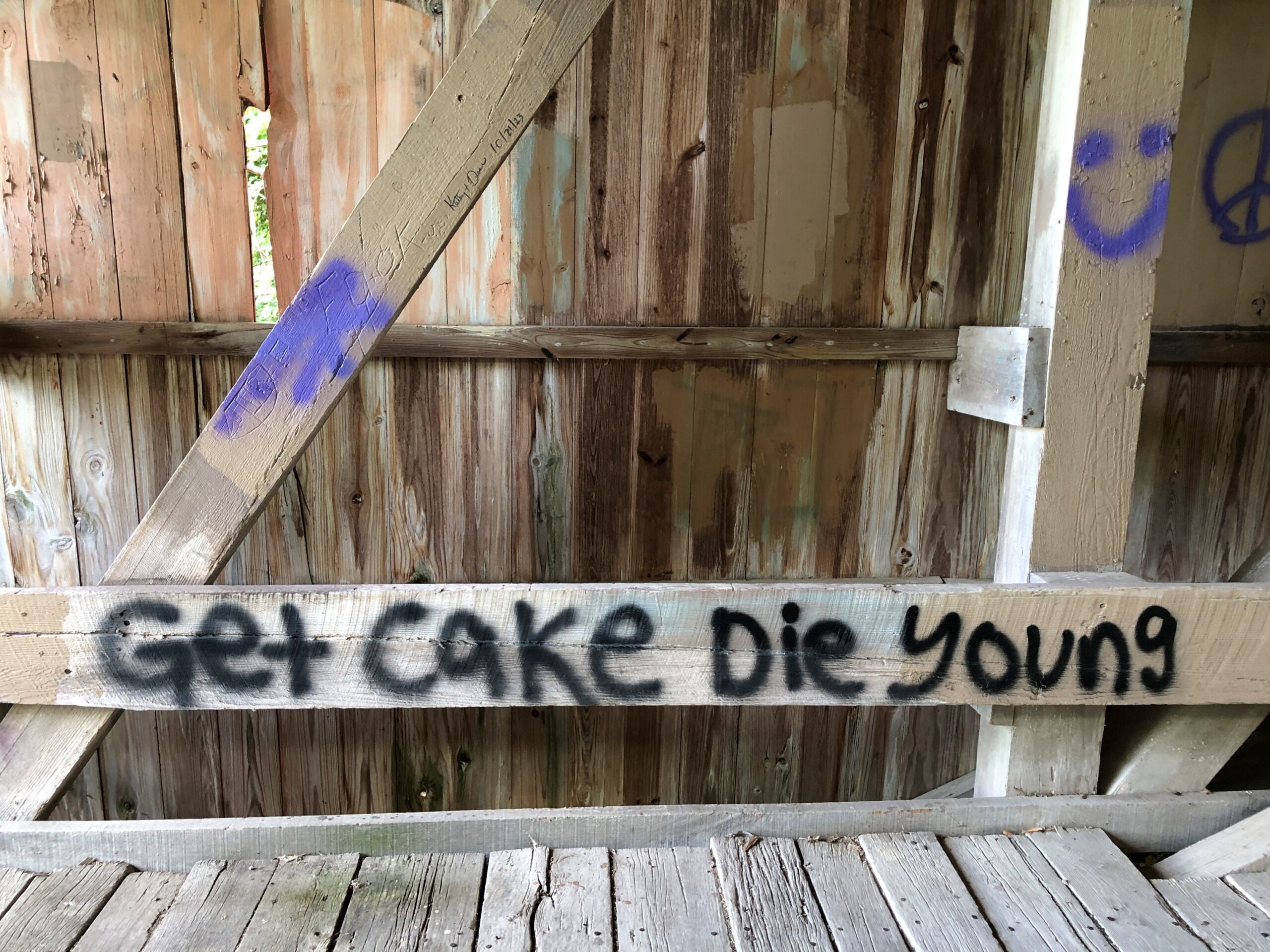
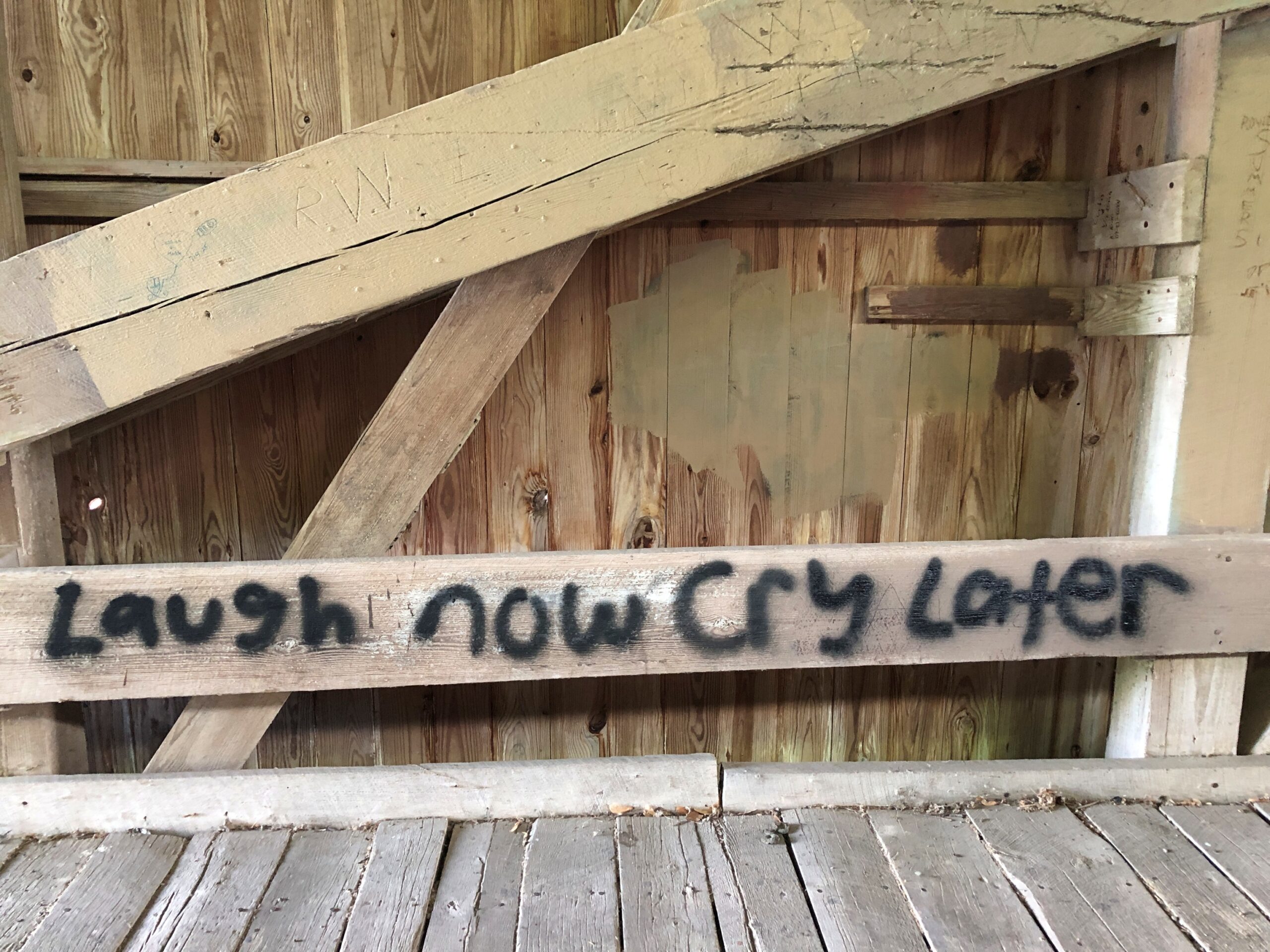
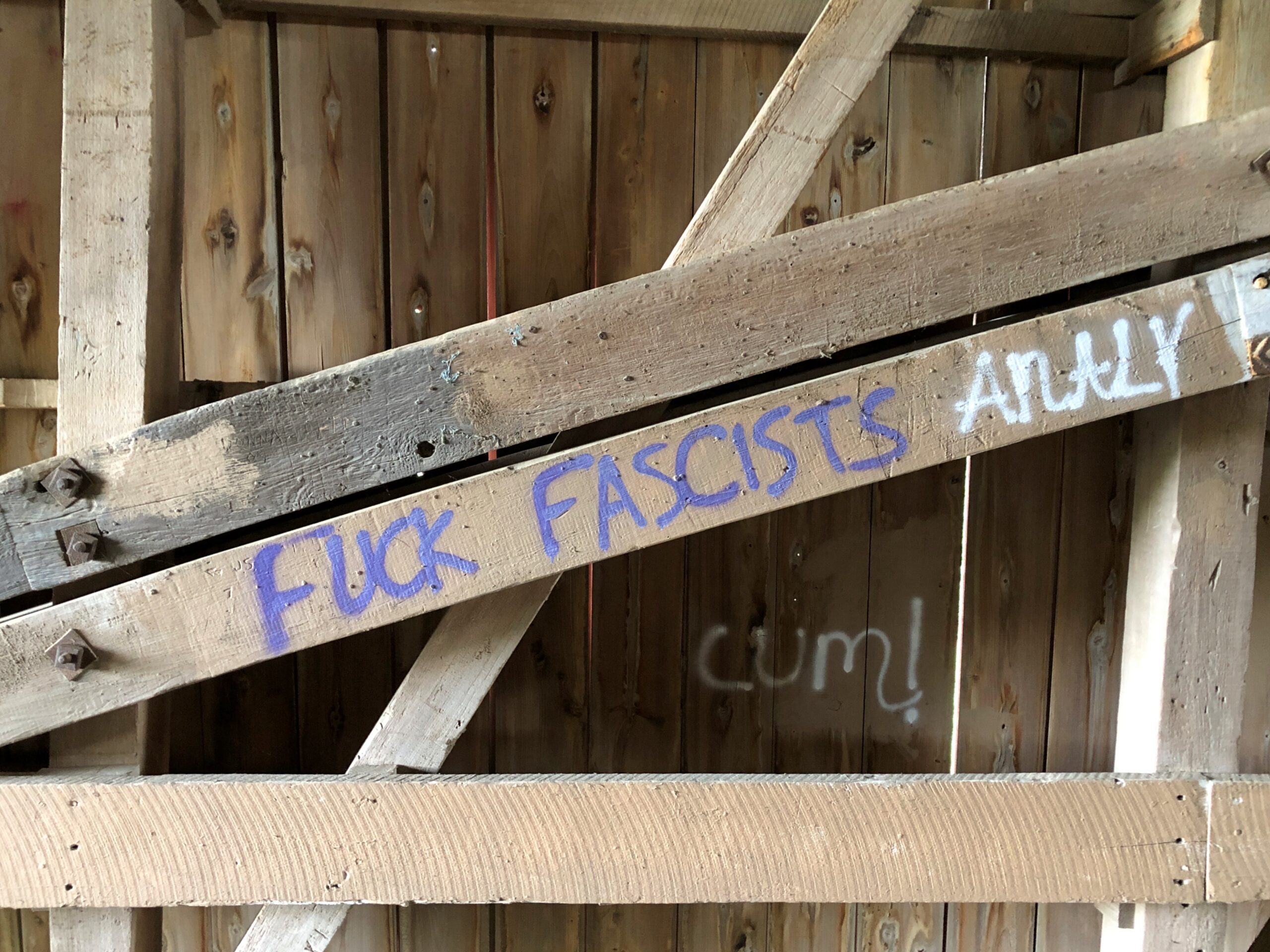
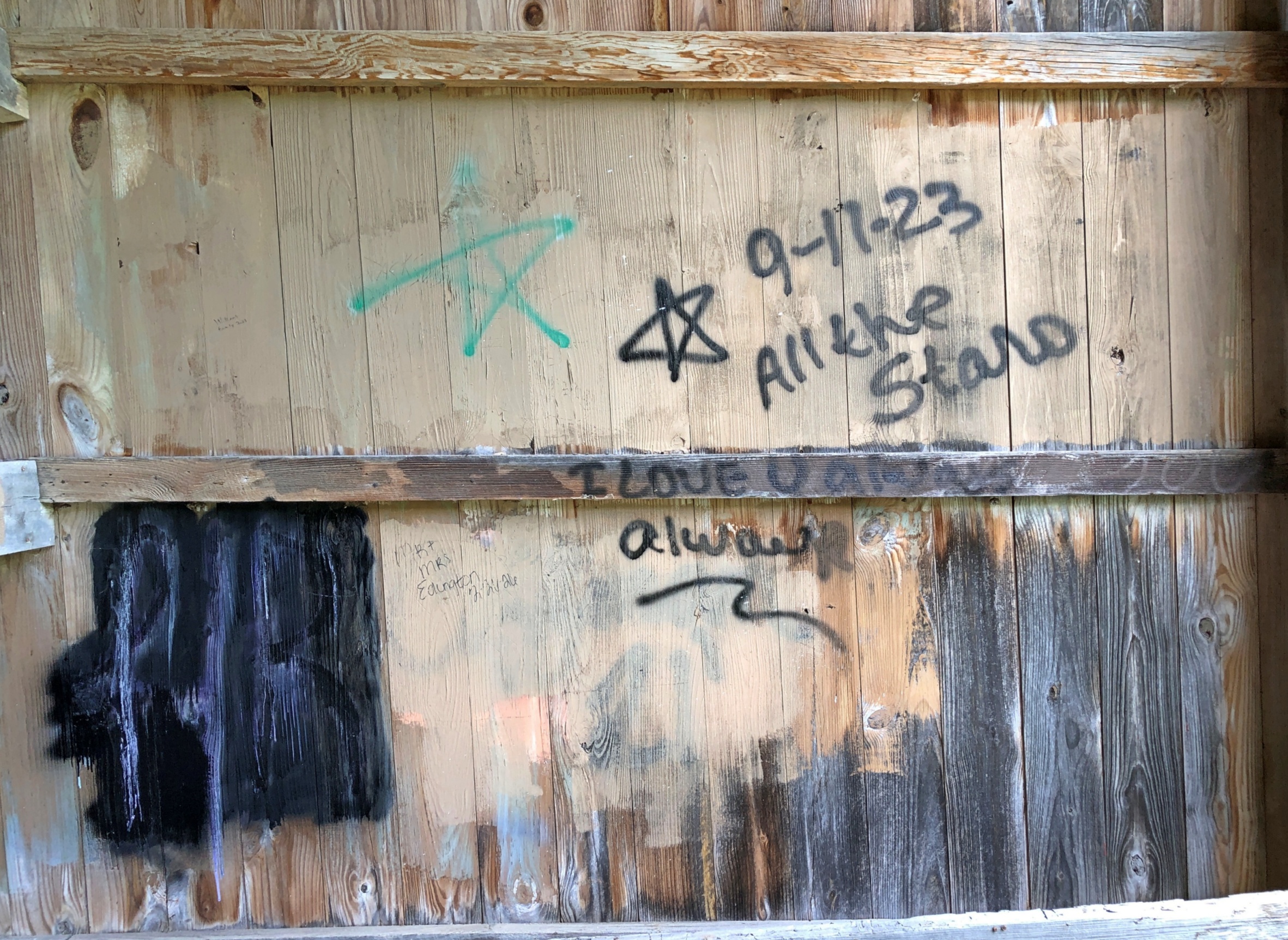
Also inside the bridges: graffiti, of course. The oldest extant covered bridge in Parke County reportedly dates from 1856. I imagine the oldest graffito – what would they use, chalk? – dates from ca. 1856.

Parke County, Indiana bridges

The usual collection of declarations of love, puerile insults, political statements, enigmatic phrases and random nonsense.

Parke County, Indiana bridges

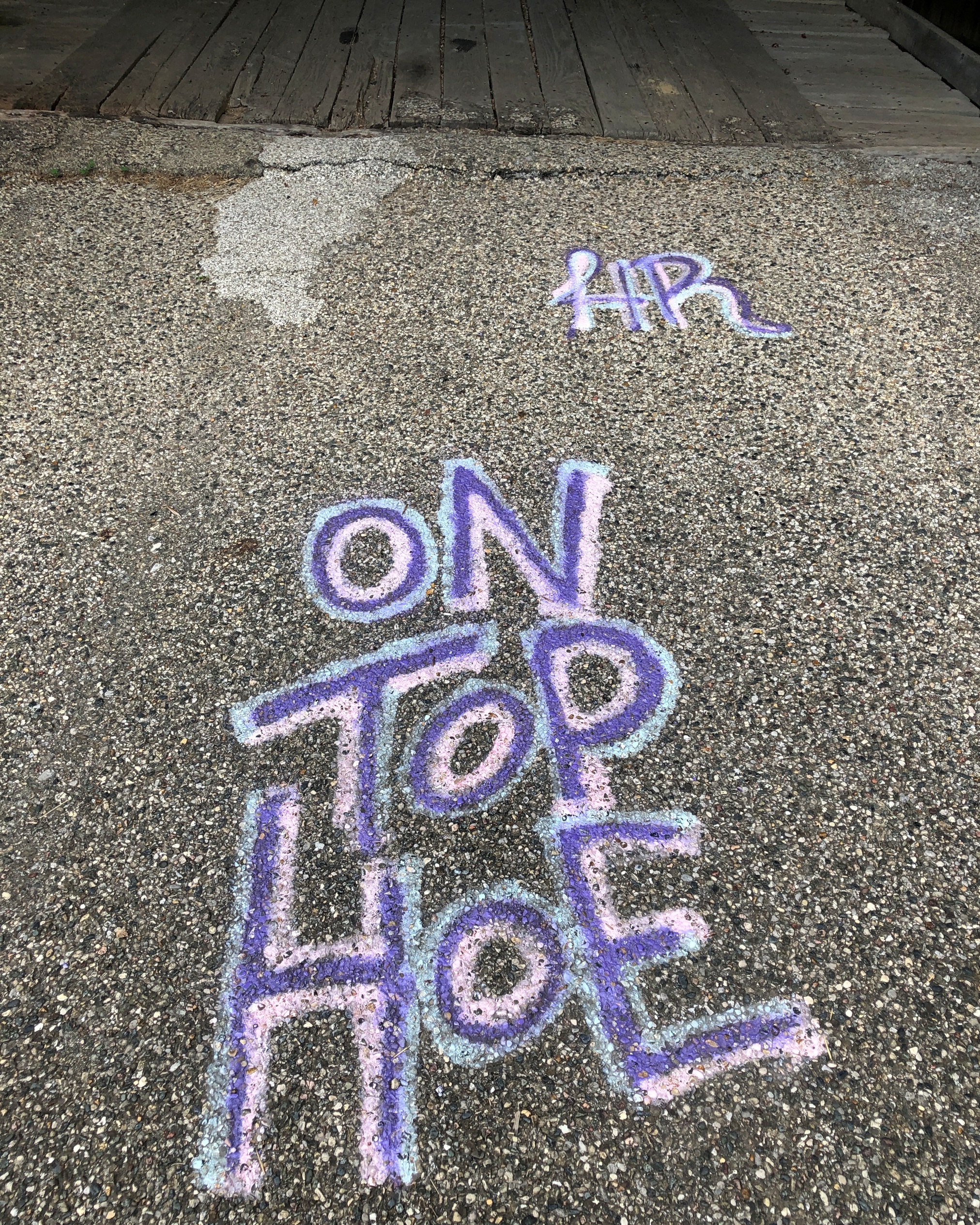
And the whack-a-mole efforts to suppress it.

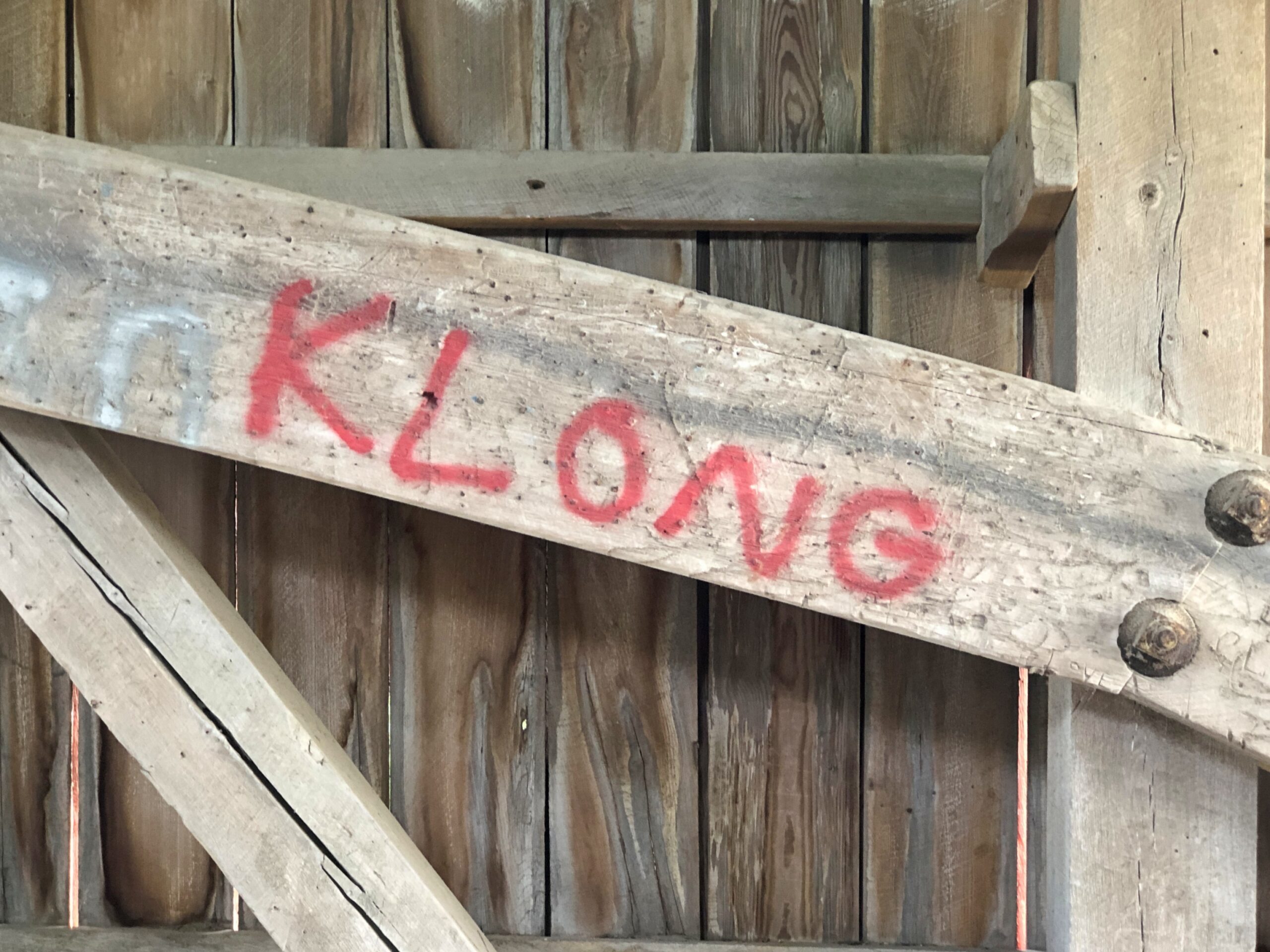
Klong. That’s my favorite from this round of graffiti spotting. An idiosyncratic item.

A dictionary meaning is canal in Thai. An alternate spelling of that, anyway. Or a Swedish homegoods retailer – reminds me of Ikea, but clearly more upmarket. Hard to know the mind of a graffitist, but I’ll bet it’s neither of those.

Parke County Dash: Bridges

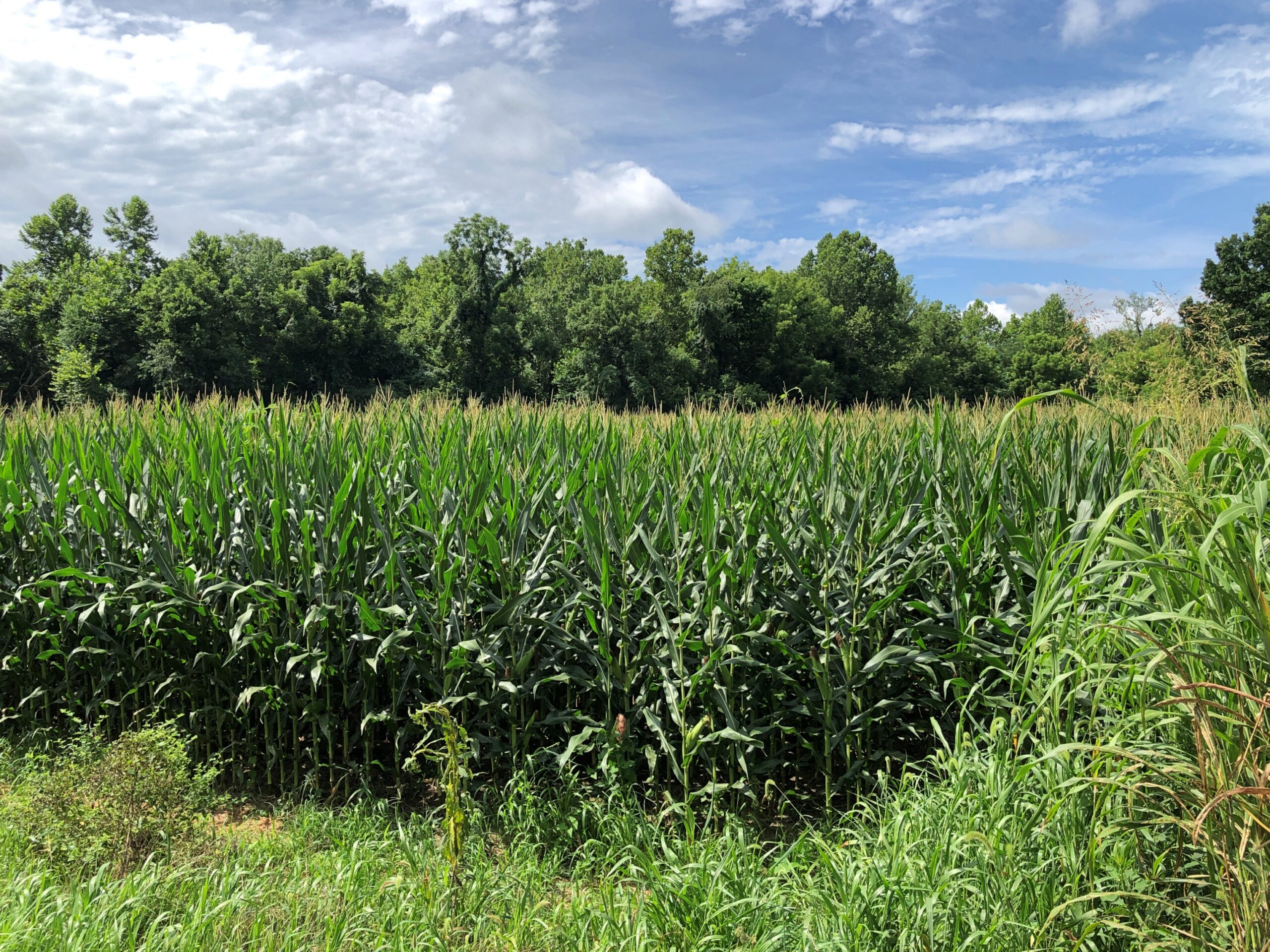
Even though you see enough corn driving through the Midwest, it’s still a little hard to imagine 5.1 million acres of corn (or anything else). Yet that’s how much corn – maize, Zea mays – was planted in Indiana alone in 2024, according to the Indiana Corn Marketing Council, with 5.05 million acres harvested. Even after being in the thick of a summer crop, the thought of that much boggles the mind.

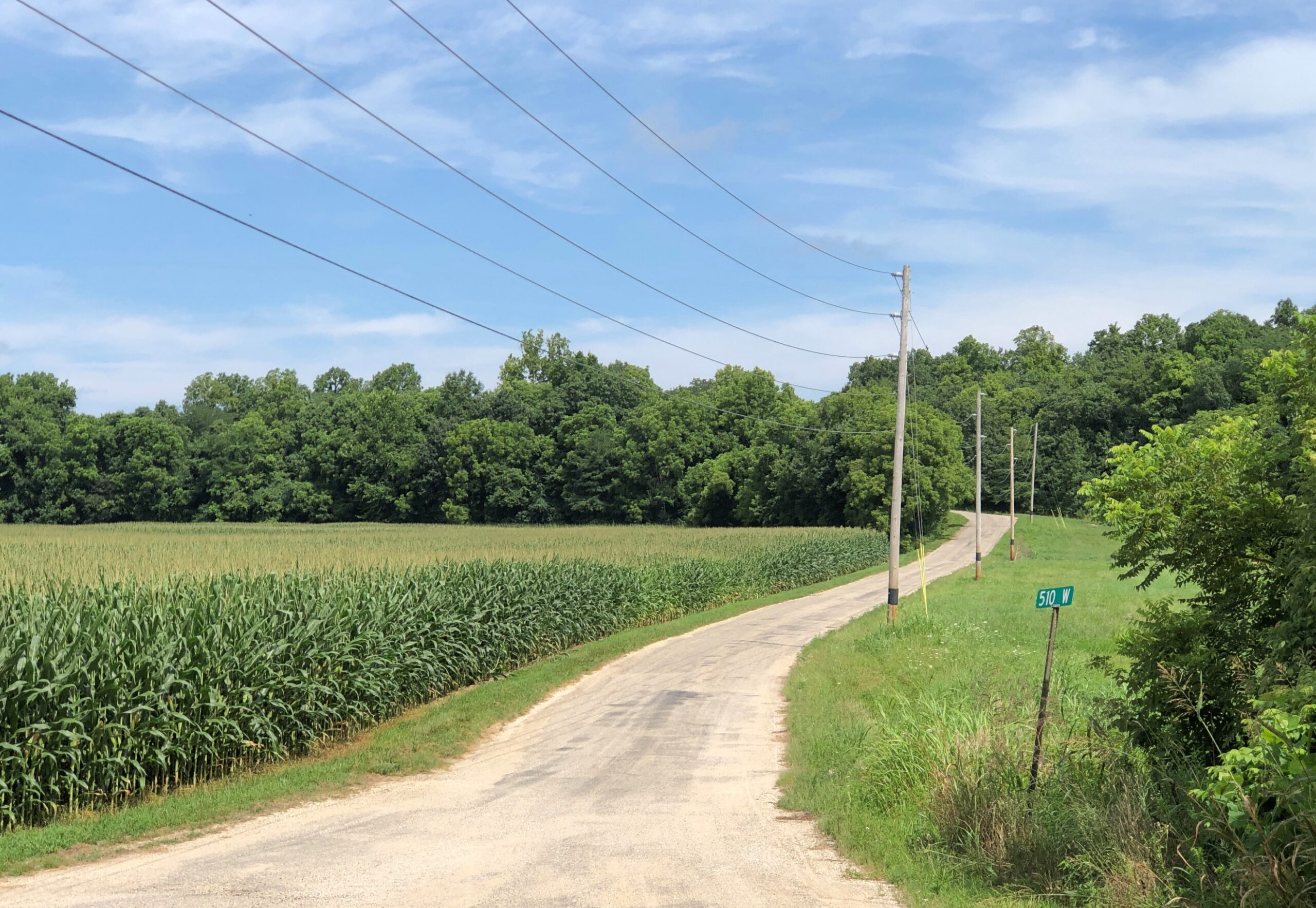
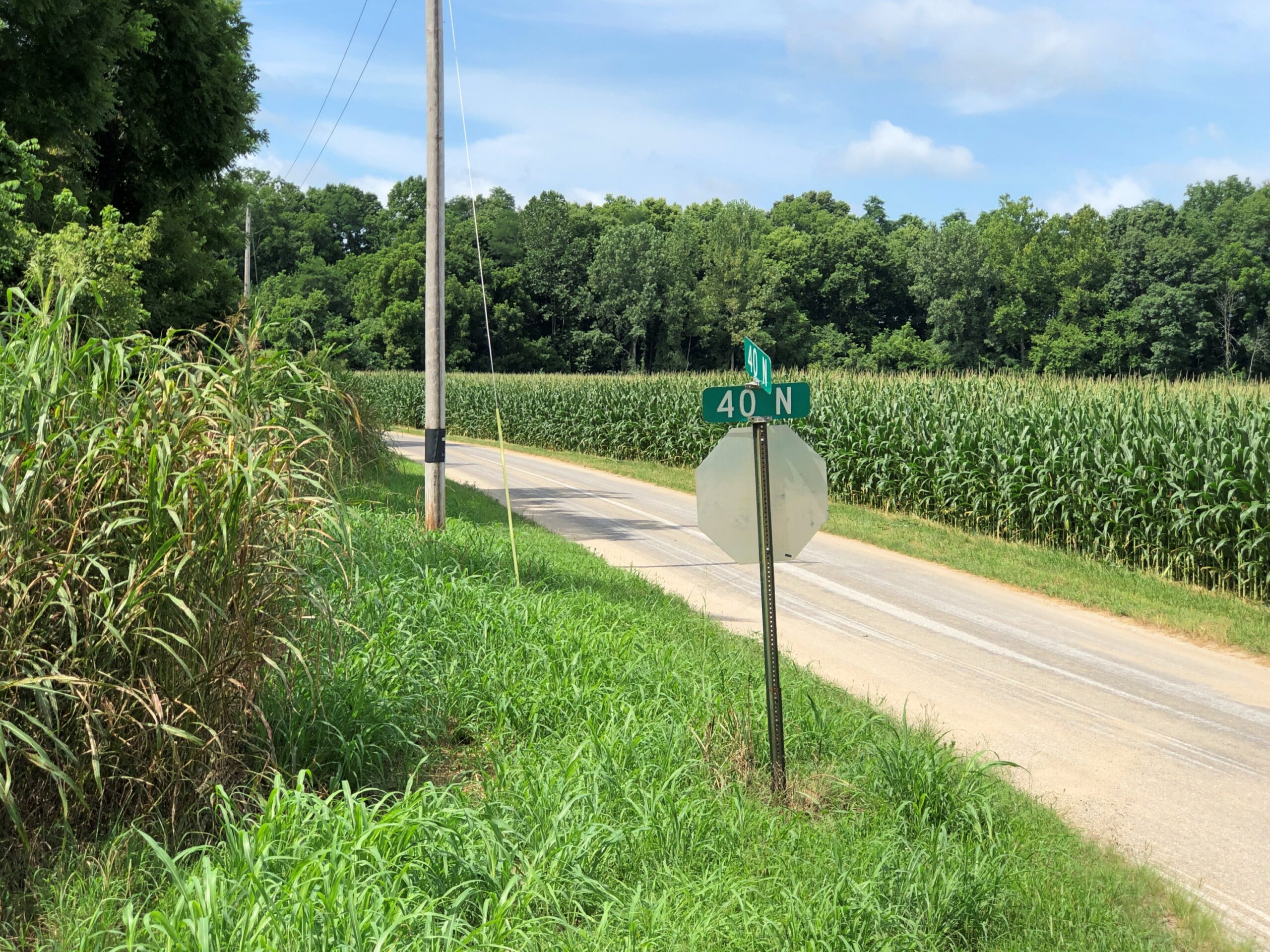
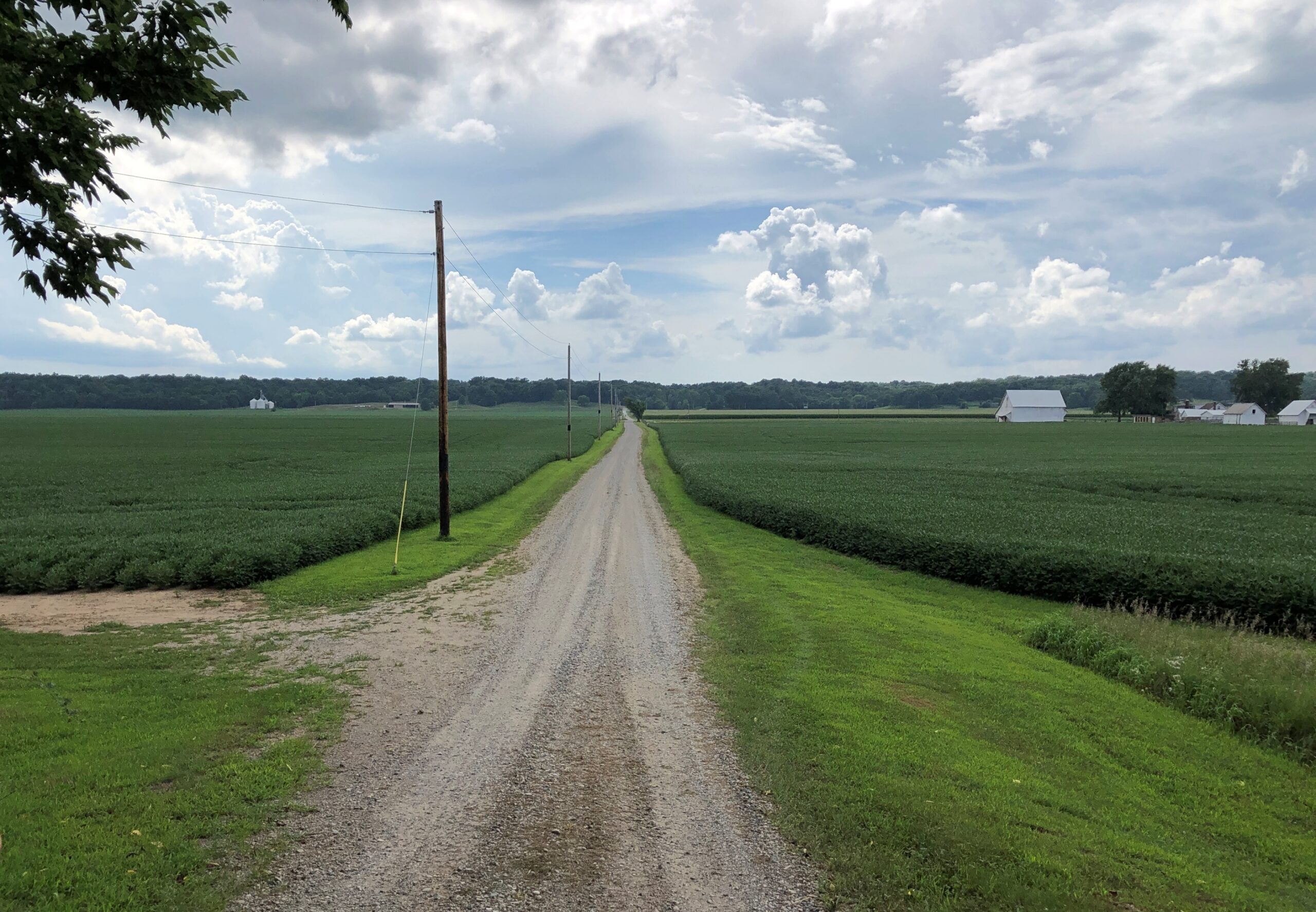
We didn’t go to Parke County, Indiana, in late July to admire the corn, though I did take a moment to make a few higher-than-an-elephant’s-eye corn pictures. You don’t have to go nearly that far to find corn. We came for the covered bridges, spending a Saturday night in the county seat of Rockville, Indiana, and out looking for bridges on Saturday afternoon and Sunday morning. To get to them, you have to take to the small roads crisscrossing the area, some paved, some not, but all pretty high quality.

Parke County, Indiana

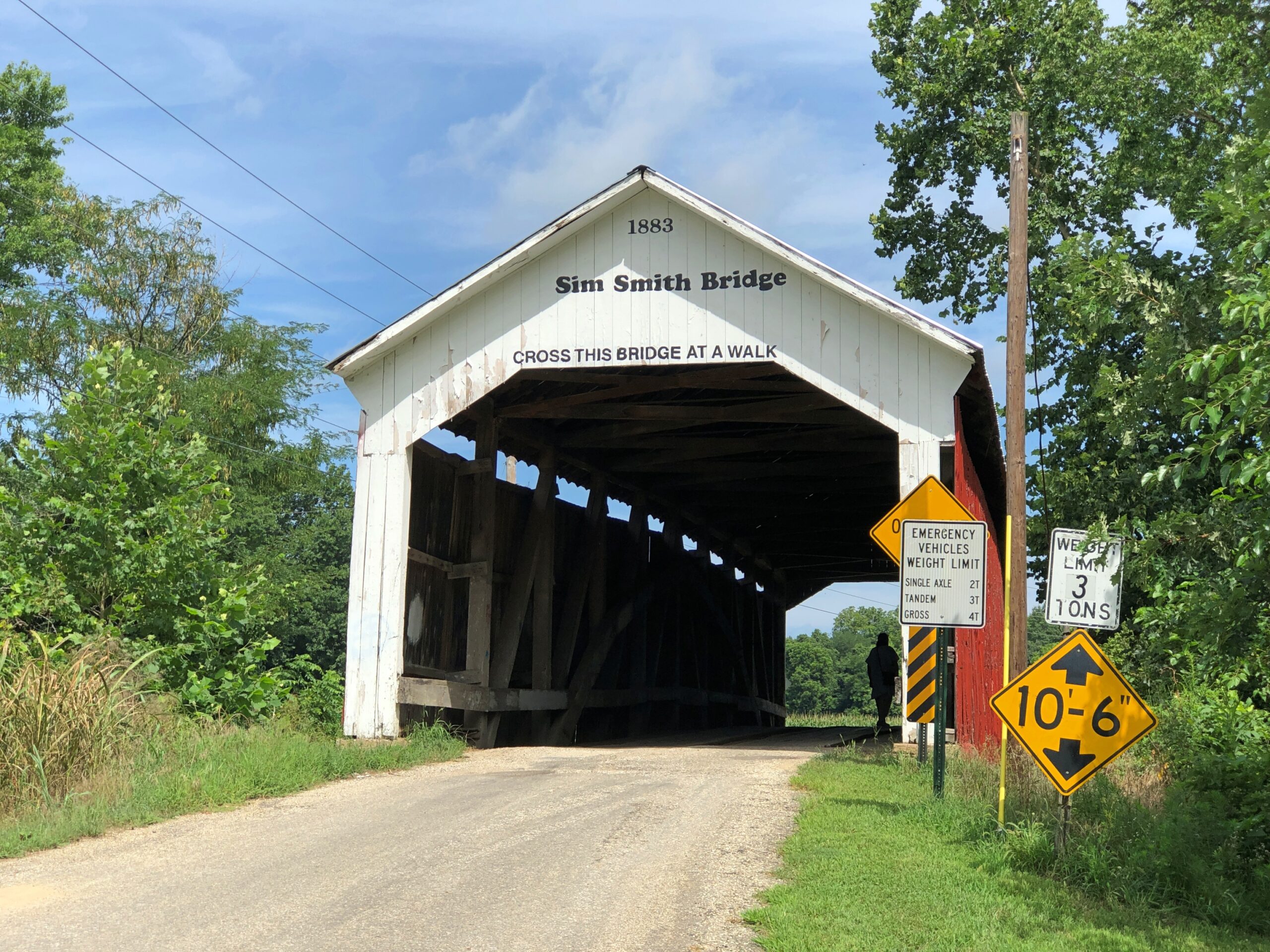
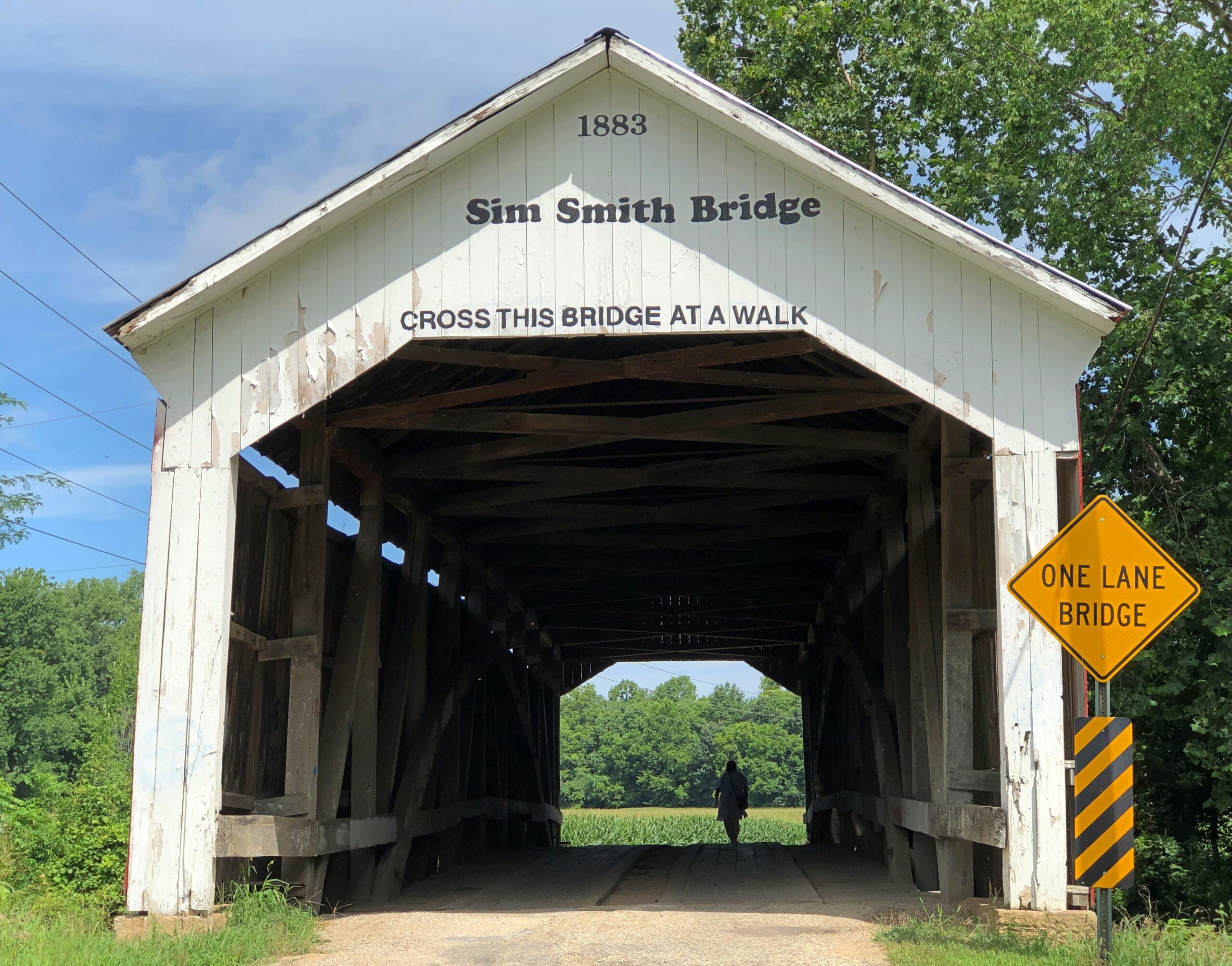
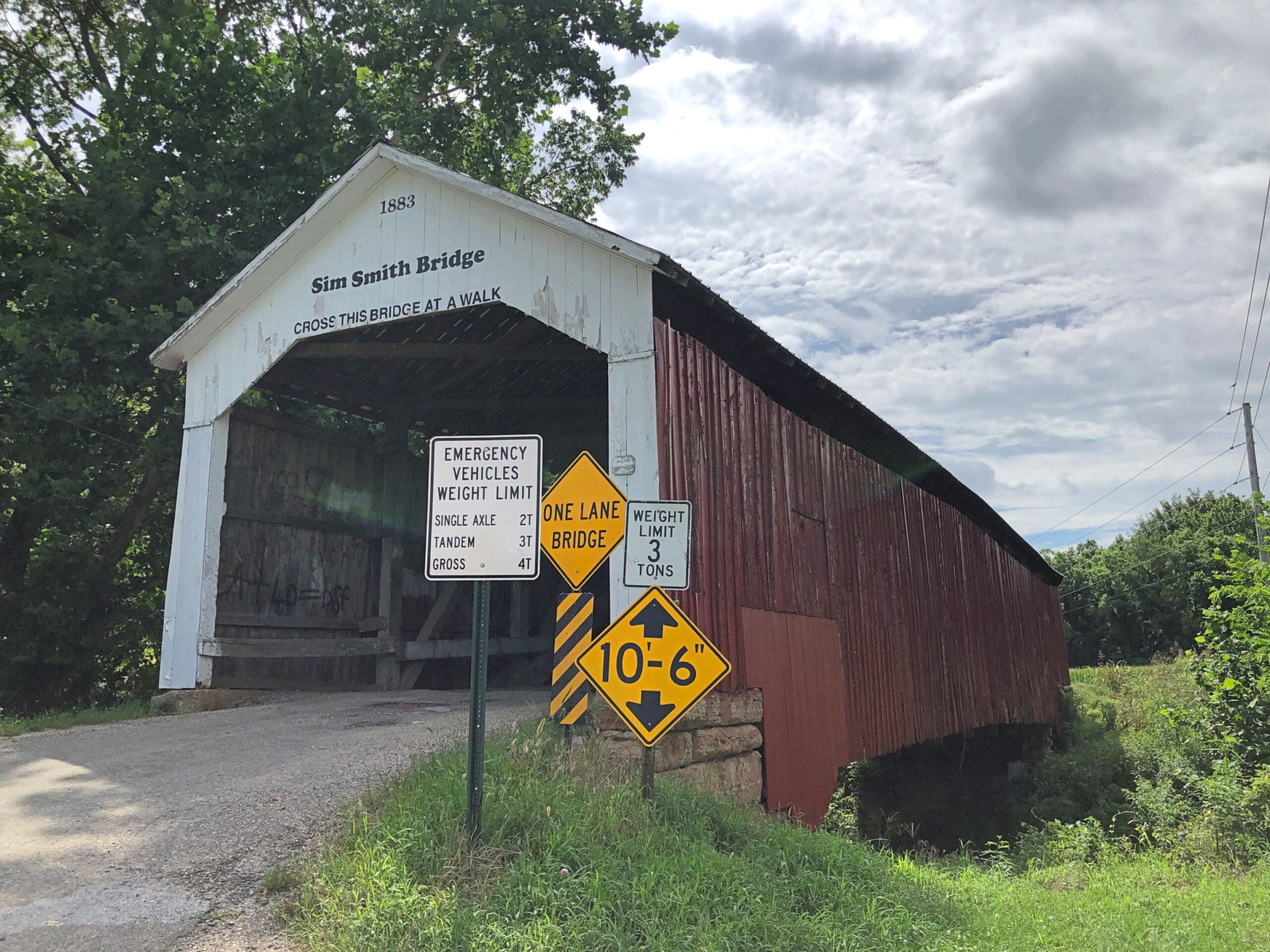
Roads lead to bridges, such as Sim Smith Bridge, vintage 1883, which crosses Leatherwood Creek. “Locally, this bridge has the reputation as haunted,” says a guide map I picked up. Uh-huh.

Parke County, Indiana

West-central Indiana is well-watered, a welter of creeks feeding the Wabash River. Covered wooden bridges cross many of them, each of more than a century old. Cedar is the main material. I’d guess being well-watered was good for the farmers here in the late 19th century, except for one thing: they complicated shipping one’s crop to buyers, either to animal feed processors or human-food makers. So, bridges.

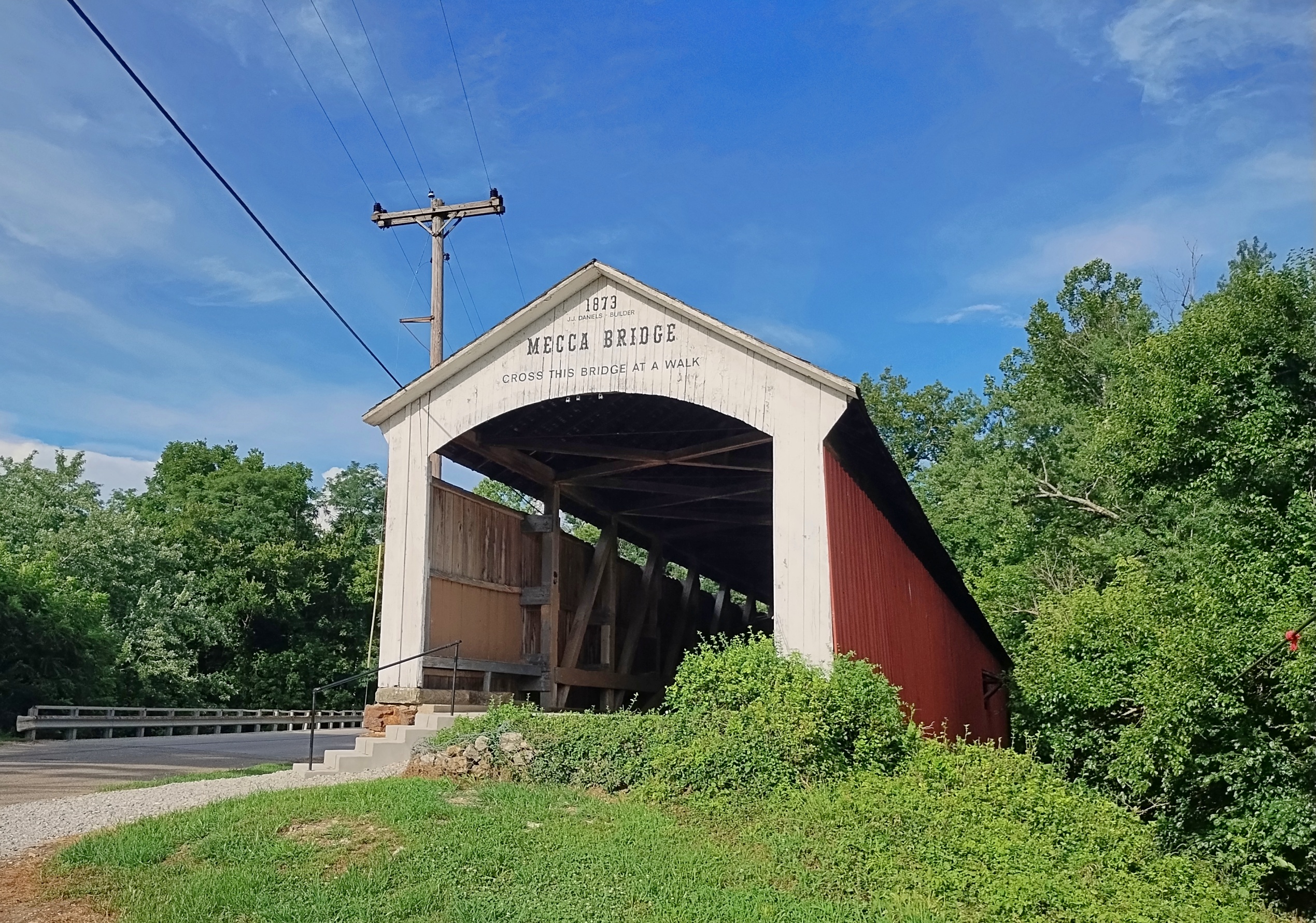
Mecca Bridge, near Mecca, Indiana, across the Big Raccoon Creek. 1873.

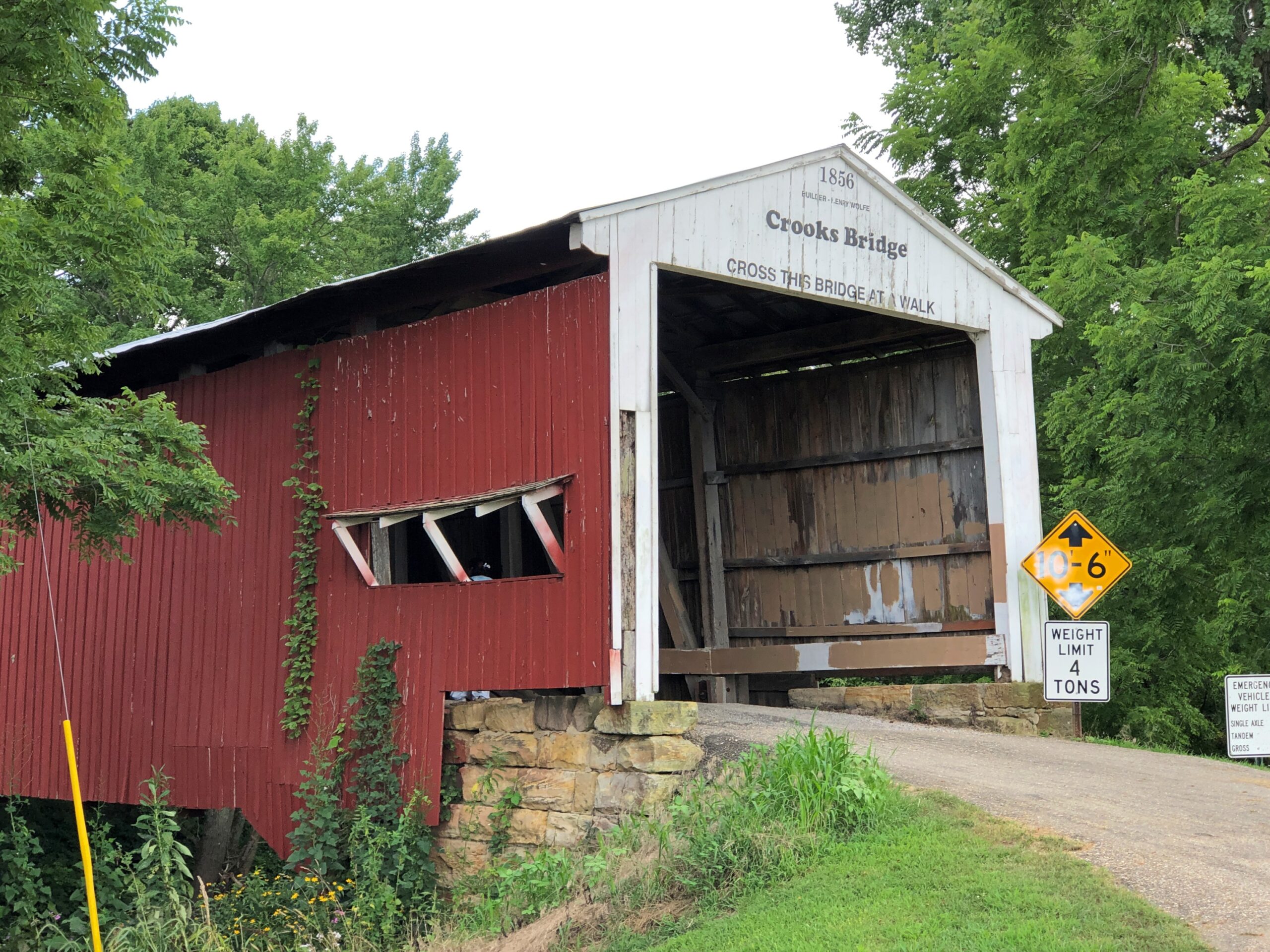
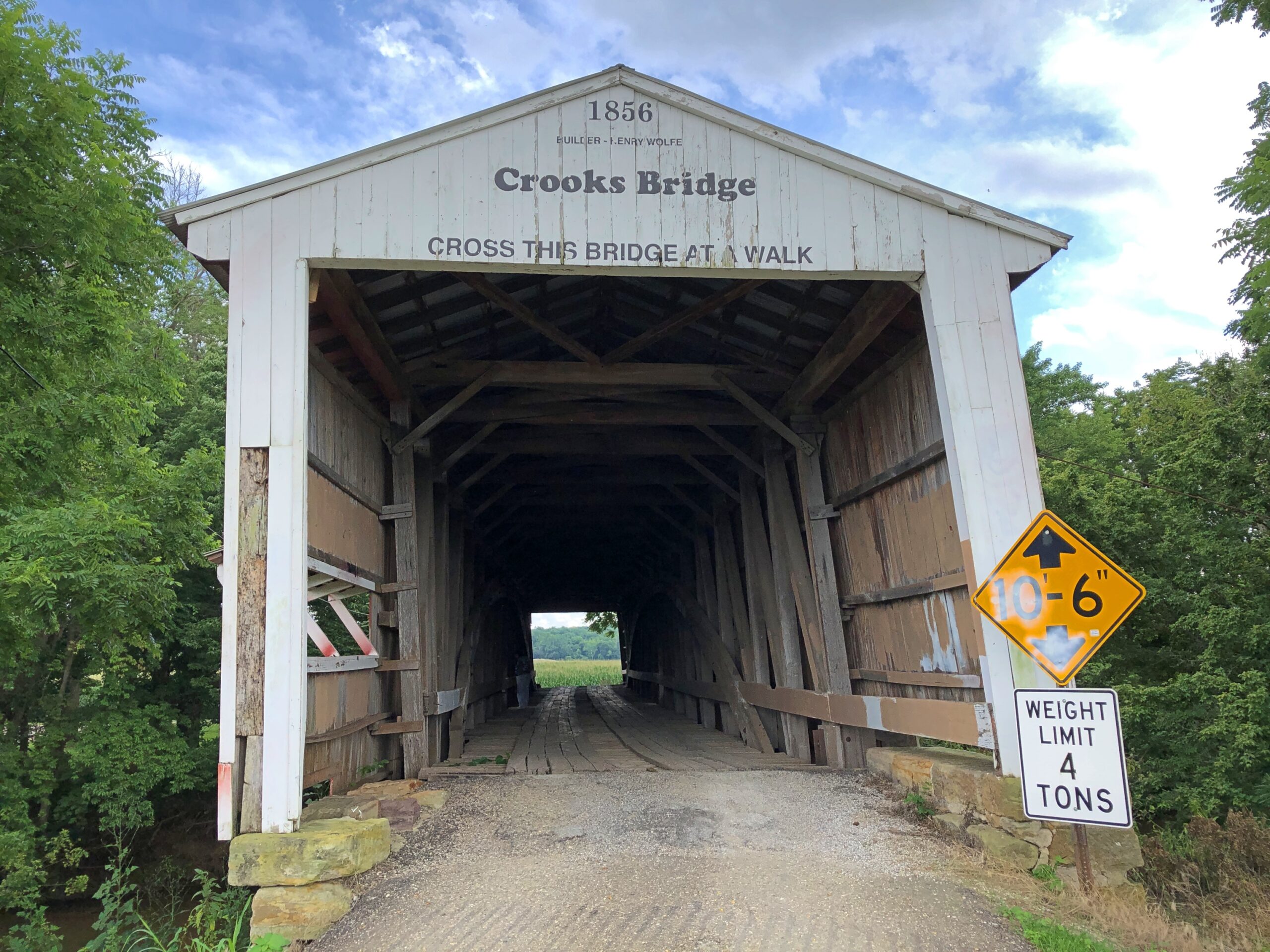
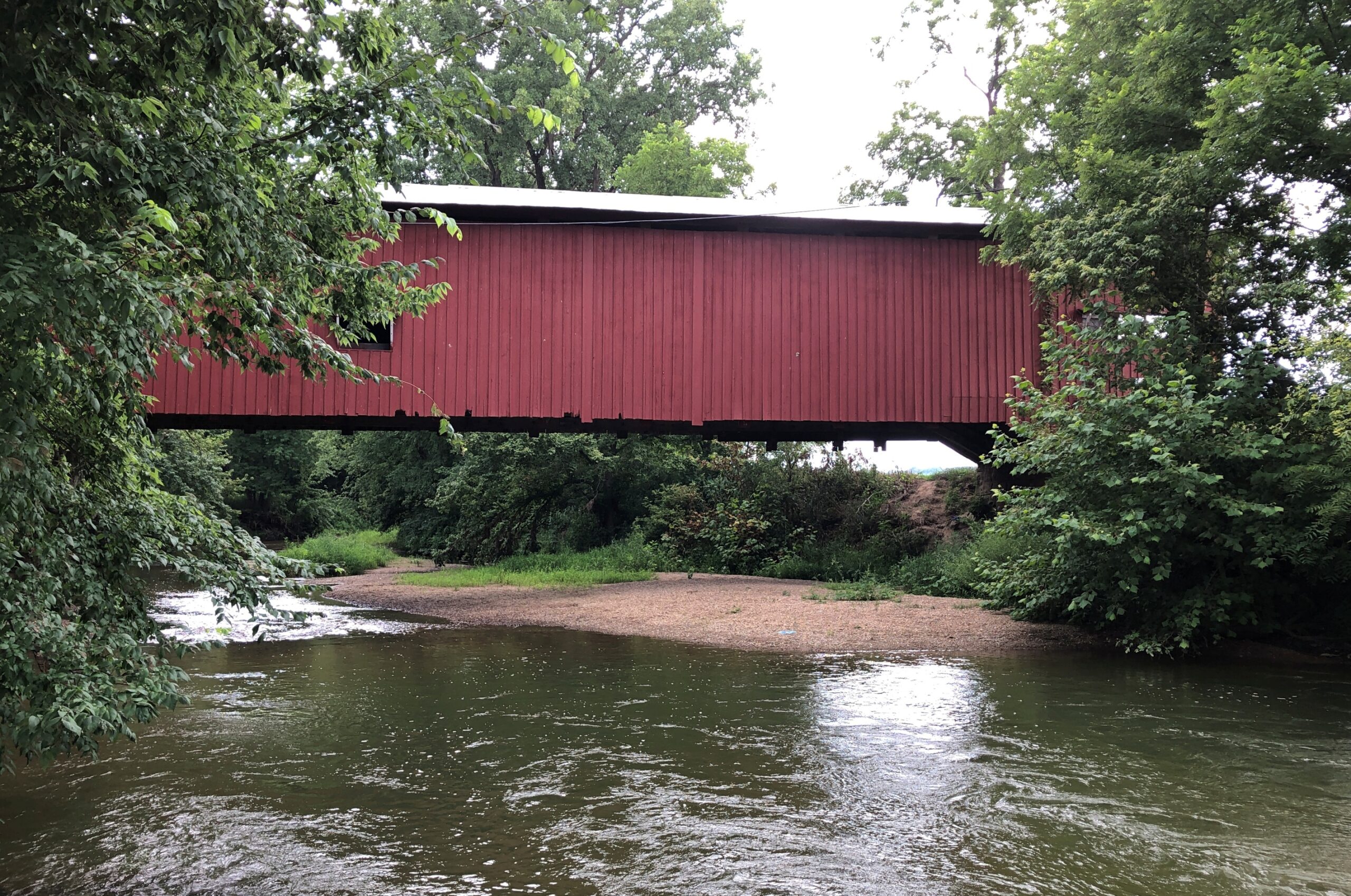
Crooks Bridge, across Little Raccoon Creek. Competed in 1856.

Parke County, Indiana

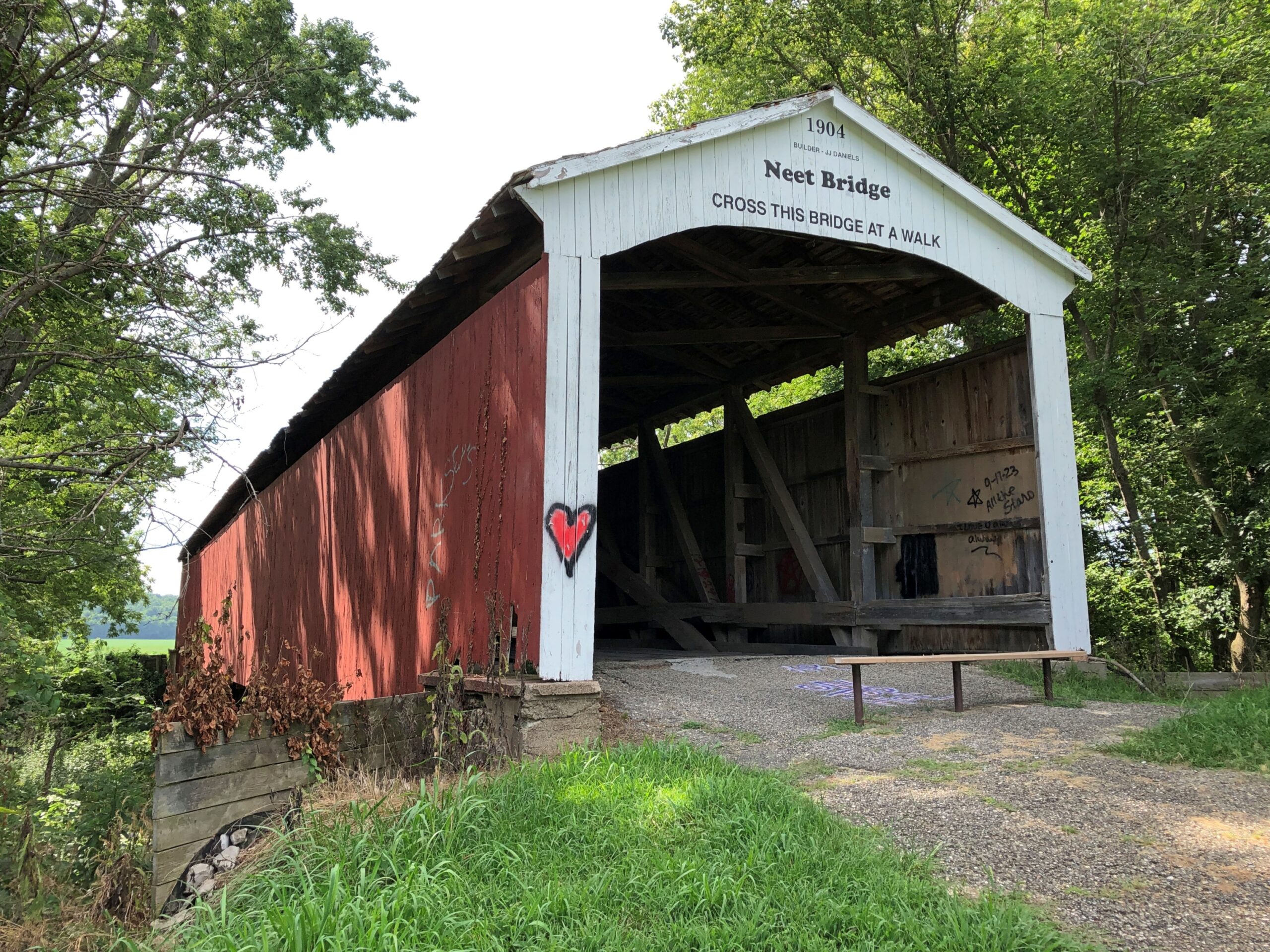
Neet Bridge, 1904, also across Little Raccoon Creek.

Local organizations count 31 historic bridges in Parke County, each with a name and known origin. Local organizations promote historic bridge tourism, as well they should, including a give-away paper guide (Parke County Guide) that other guides should aspire to, so detailed and useful is it. But I can also report that even on a summer weekend, when it was hot but not dangerously so, or especially humid, overtourism hasn’t spoiled the place. Most of the time, at the half-dozen or so bridges we visited on a weekend, we were alone. Even the bridges that still carried auto traffic had little, so that walking across each on foot was never an issue.

An carpenter (and lawyer) named J.A. Britton (d. 1929) built many of the bridges in Parke County in the late 19th and early 20th centuries, presumably as the organizer of a small construction crew, but also with the sort of hands-on approach that had him laboring alongside the other men. I like to think so, anyway, but whatever the arrangement, bridge building was his business, and he built them to last. Some are still vehicle bridges. Others are pedestrian bridges. Most are in situ, with a few moved to parks or other places.

Parke County was enough of a market for a few decades that J.A. Britton had a competitor, J.J. Daniels, who left behind some structures as well, such as the Neet and Mecca bridges.

Most of the Parke County bridges are Burr Arch Truss bridges, following a design that combines a truss and an arch, invented by a bridge builder back east in the early 19th century, one Theodore Burr. Seems like the design works really well for this kind of bridge.

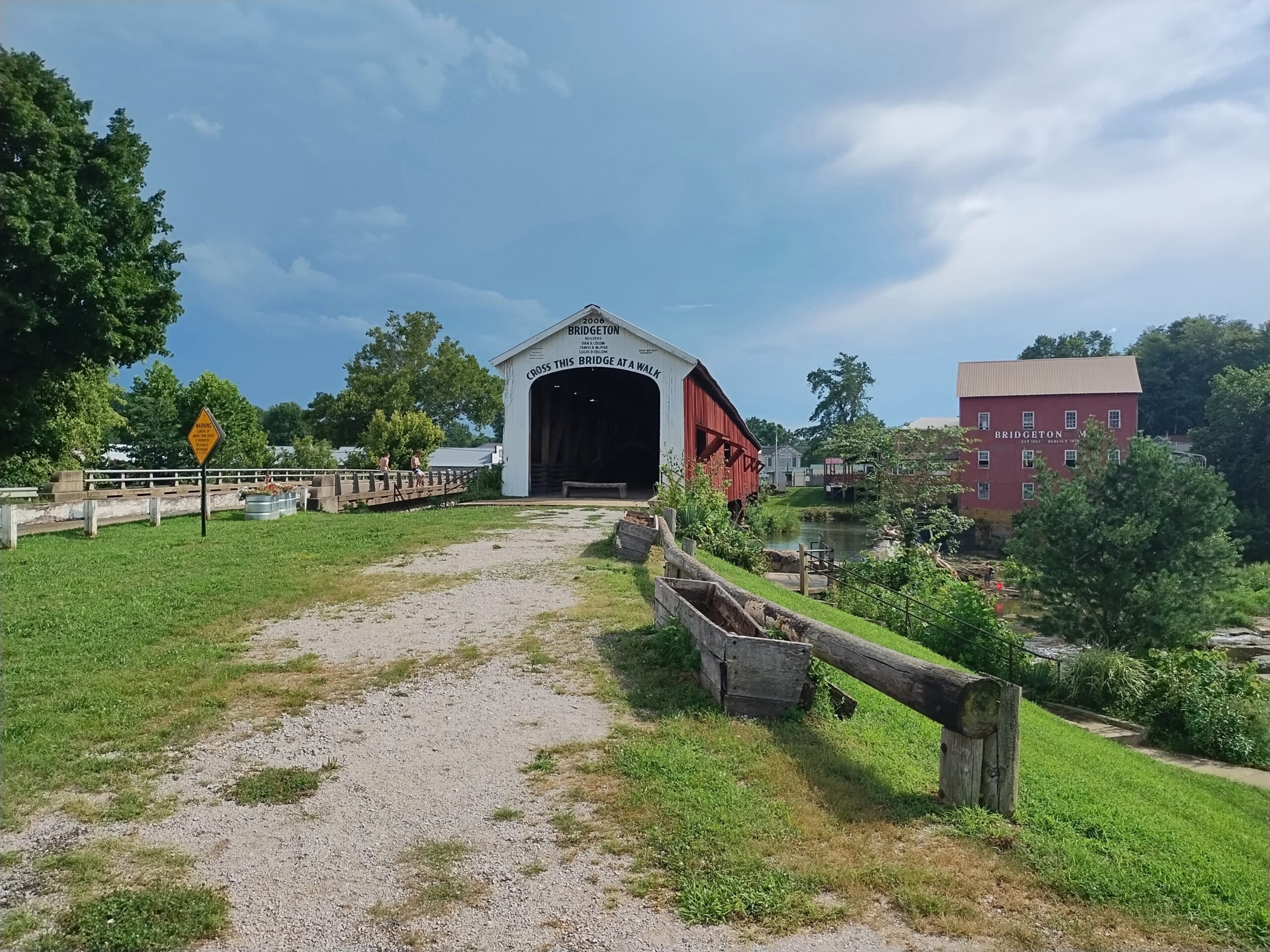
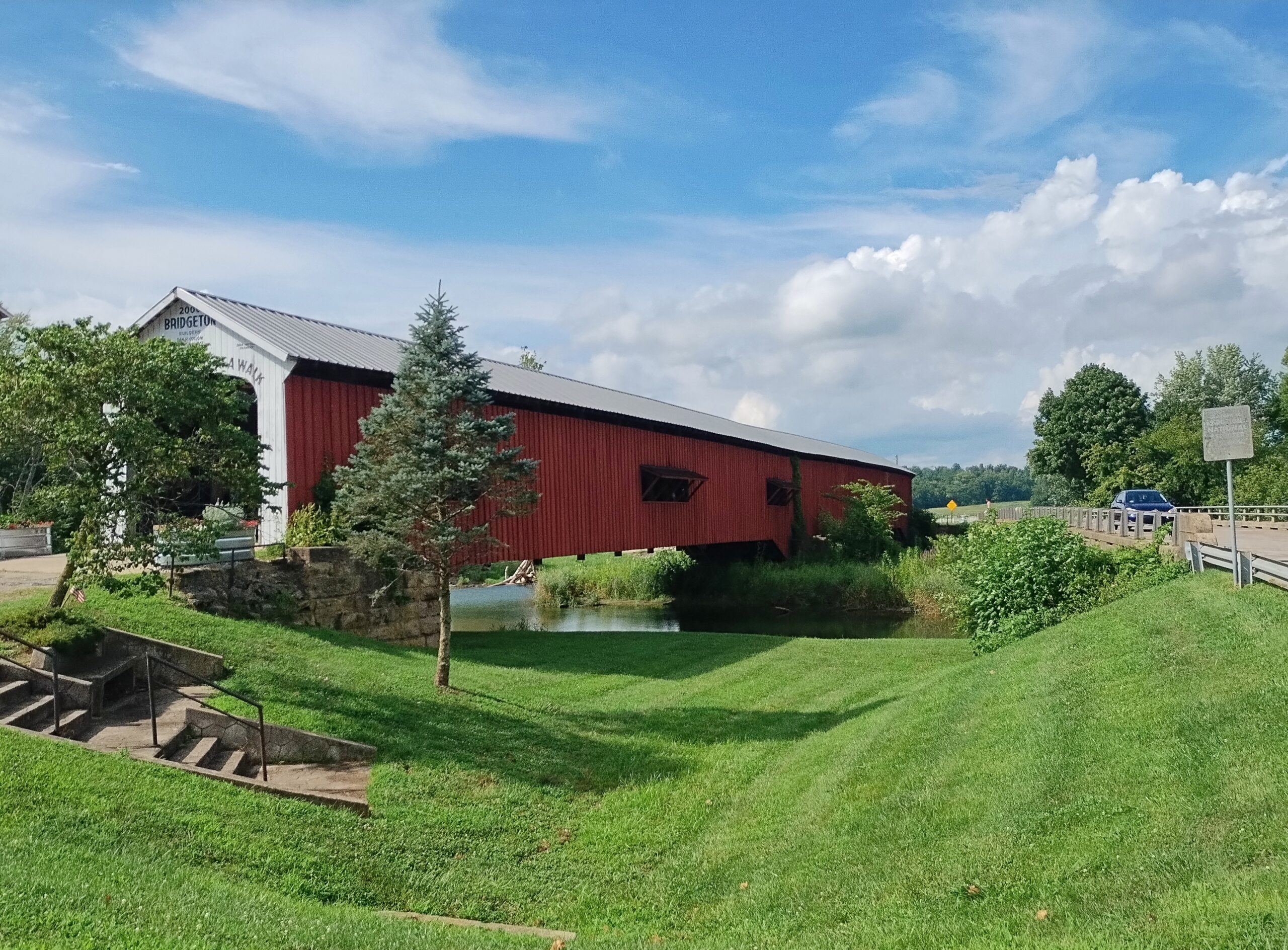
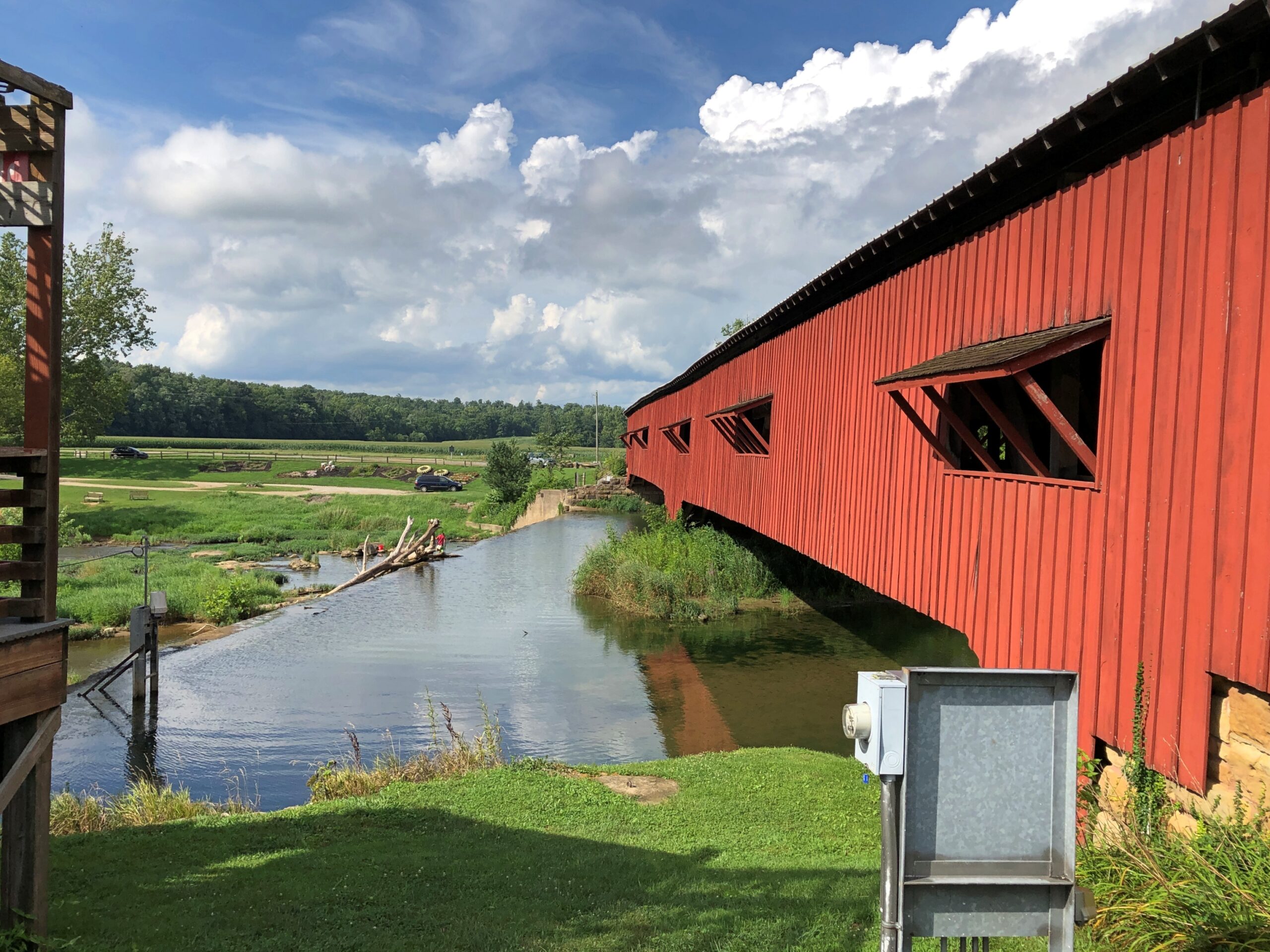
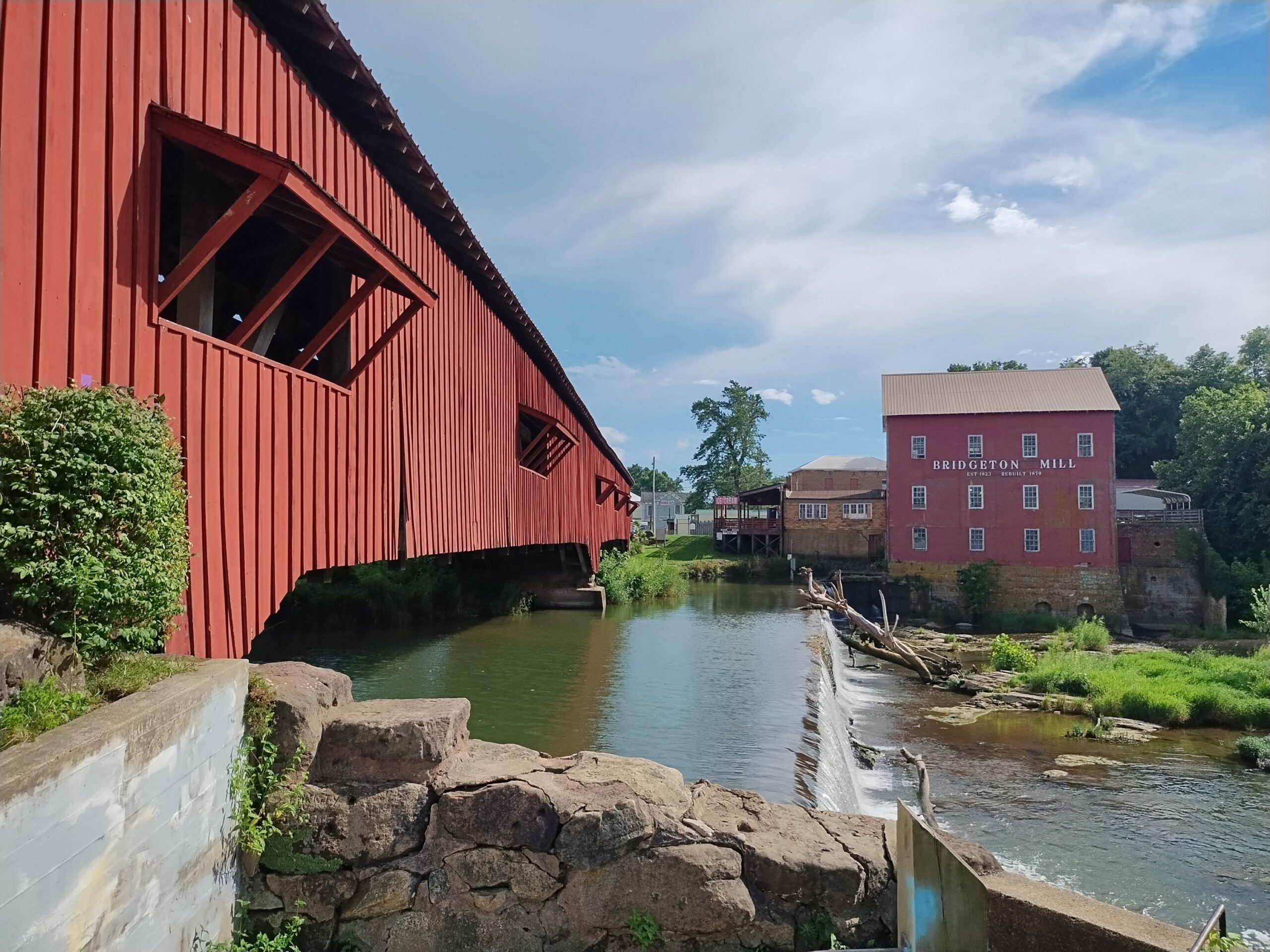
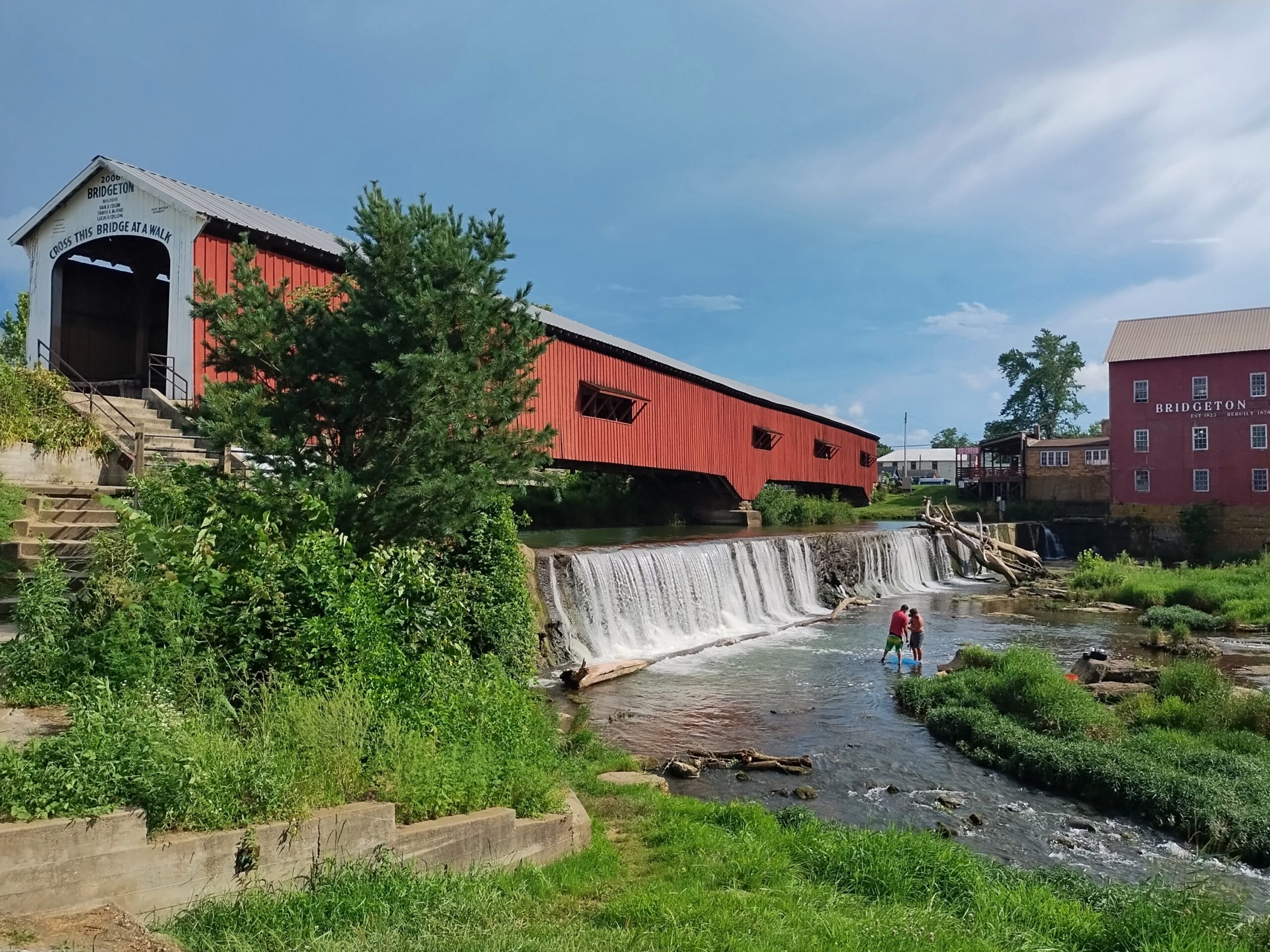
Not all the bridges are out in the corn-planted countryside. Bridgeton Bridge, crossing Big Raccoon Creek, is in the small town of Bridgeton, Indiana, which includes a former mill rising over the creek, now retail. Unlike the others we saw, it dates from 2006, a faithful replica of an earlier bridge destroyed by wanker arsonists.

Over a waterfall, for that extra picturesqueness.

Parke County, Indiana

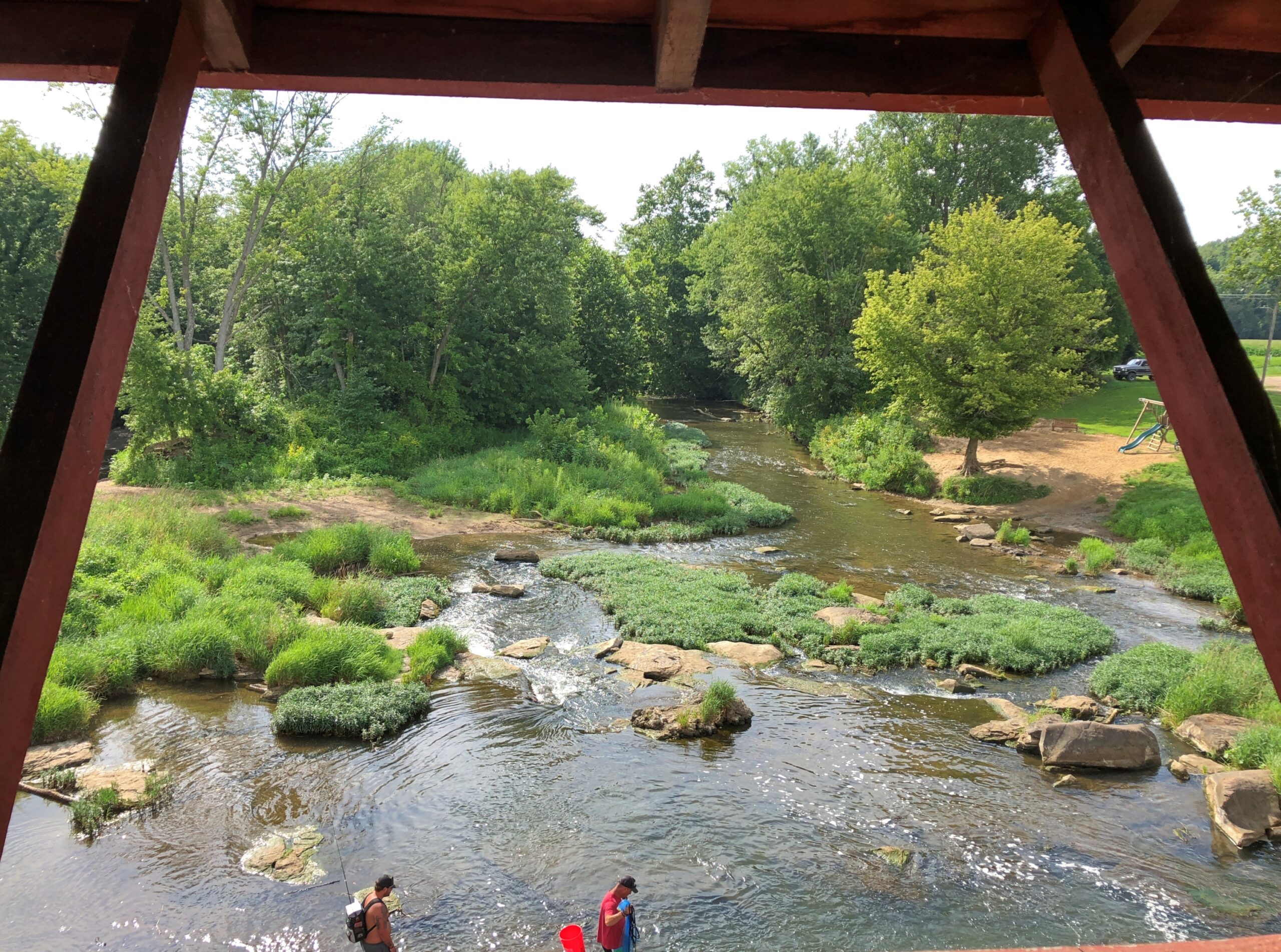
The view from the bridge.

Parke County, Indiana

The creek below was deep enough to allow teenagers, some boys but also at least one girl, to jump off the modern vehicle bridge next to the wooden bridge as a matter of fun, not grievous injury, because while we were around, we saw and heard them doing so. Good to see kids out having fun that didn’t involve small electronic boxes, by gar.