The Midsummer Carnival Shaft

Time for an autumn break. Back to posting around October 20, if all goes according to plan.

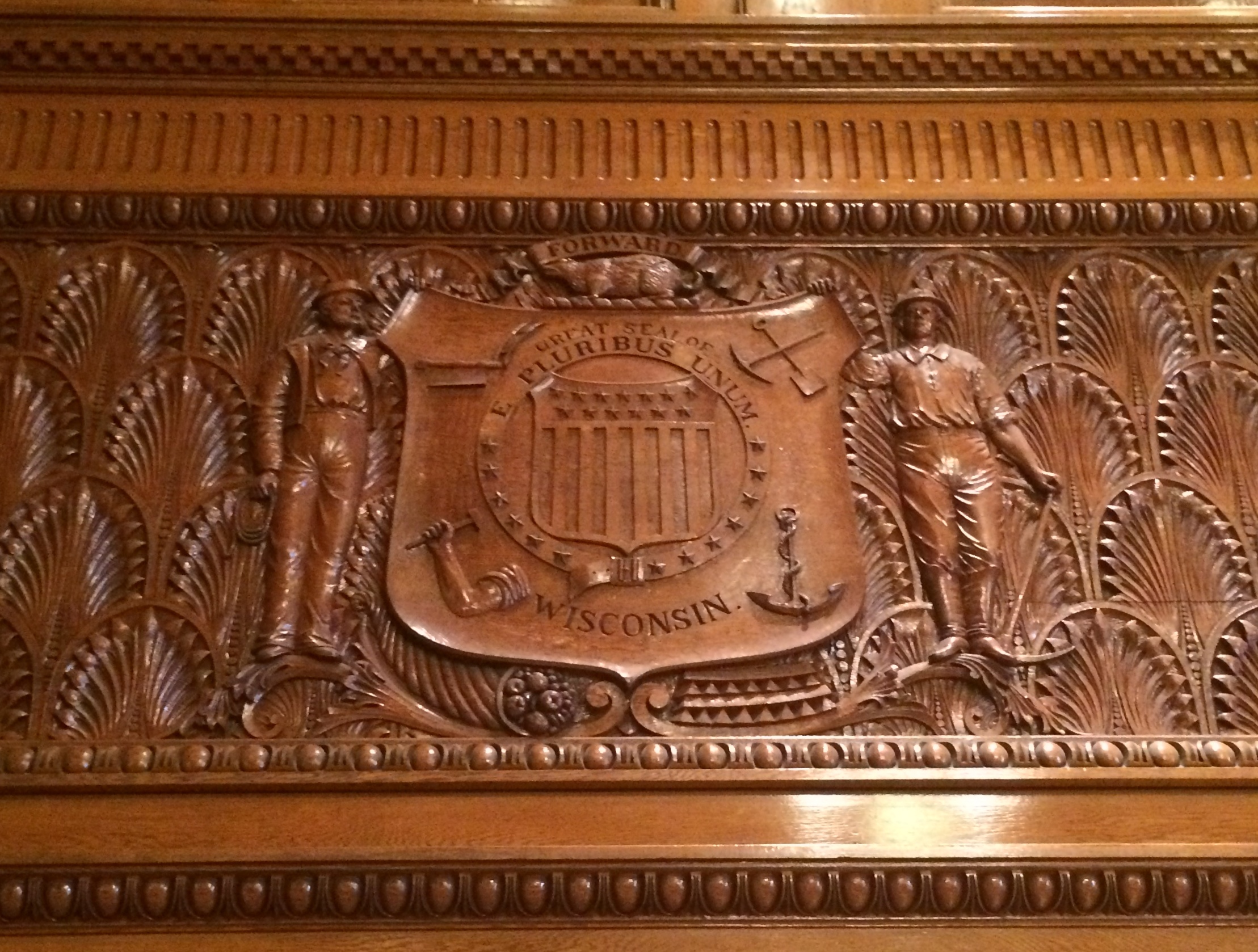
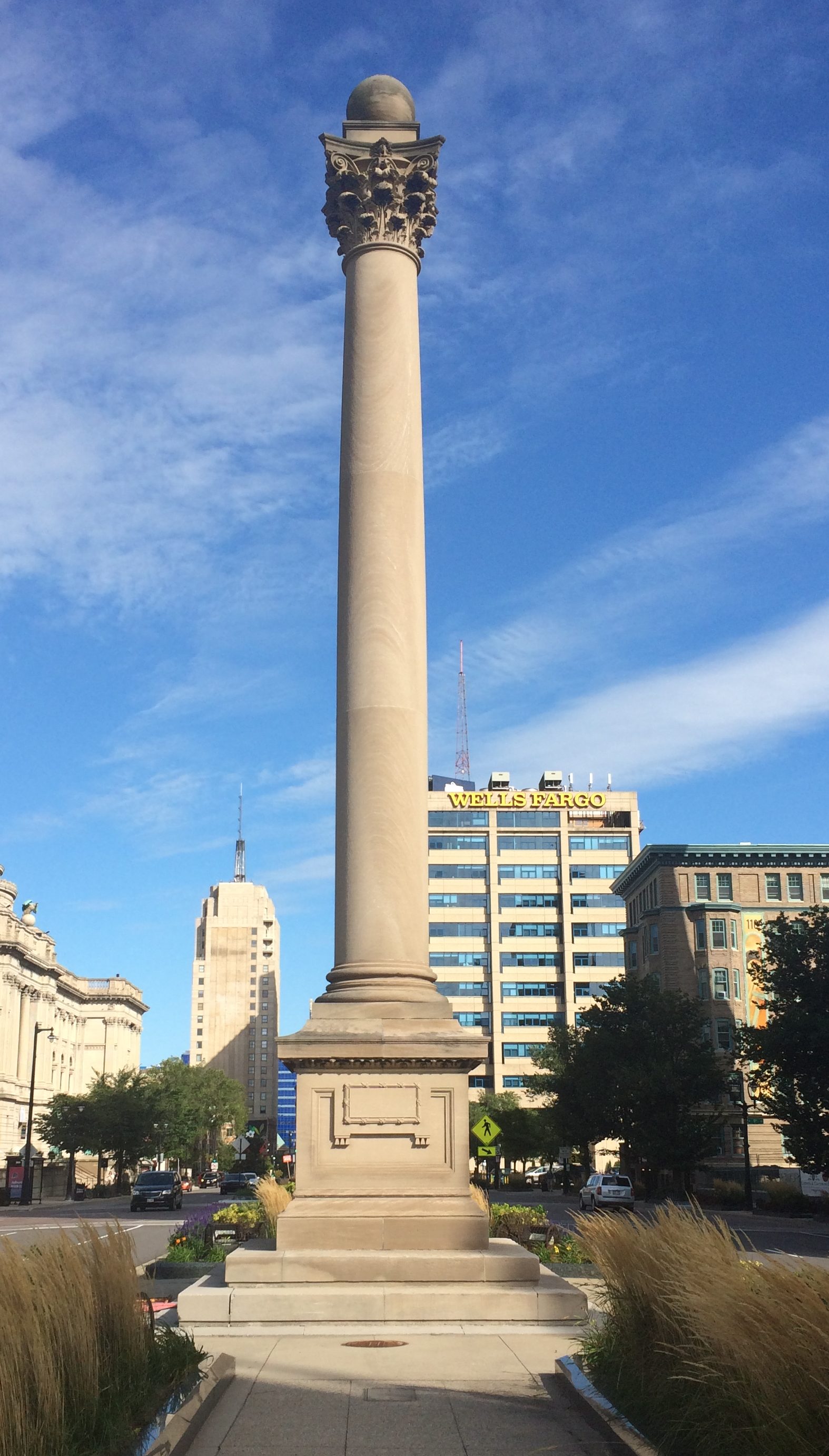
Last week in Milwaukee, I happened across an oddity that wasn’t part of the Doors Open event, but rather something in the median of Wisconsin Ave. near Calvary Presbyterian.
Court of Honor Milwaukee

A tall, freestanding Corinthian column with a sphere on top. Other statues in the median, not pictured here, include ones honoring Union soldiers, Spanish-American veterans and George Washington. So this column must honor something along those lines, right?

Hard to tell just looking at it. A plaque on the plinth is enigmatic: Presented to the City of Milwaukee by the Carnival Association, June 26, 1900.

Who? Why? Later, I found an article about the Court of Honor, as the median is called. “The Court of Honor is a series of statues, most honoring military figures, that line the median strip in West Wisconsin Avenue between 9th and 10th Streets,” Bobby Tanzilo wrote in On Milwaukee.

“The collection of sculpture became known as the Court of Honor because it was the site of the annual crowning of the Rex (or king) of the Milwaukee Midsummer Carnival Festival, which began in 1898 to celebrate the 50th anniversary of Wisconsin’s birth as a state.

“The carnival only endured for four years, but it must have been a fun event, because it drew visitors from across the state… Each year, for the carnival, the association that organized the week-long event would build temporary classical wood and plaster colonnades. Two years in, it commissioned architect Alfred Clas to design a Corinthian column – the Midsummer Carnival Shaft – that would be constructed of Bedford limestone to serve as a permanent centerpiece for the event.”

The Midsummer Carnival Shaft thus stands to this day, silently honoring an event that probably 99.44% of Milwaukeeans could not identify. Just another example of something that can make the urban texture of a city interesting — a forgotten oddity in plain sight.

Paper Purge

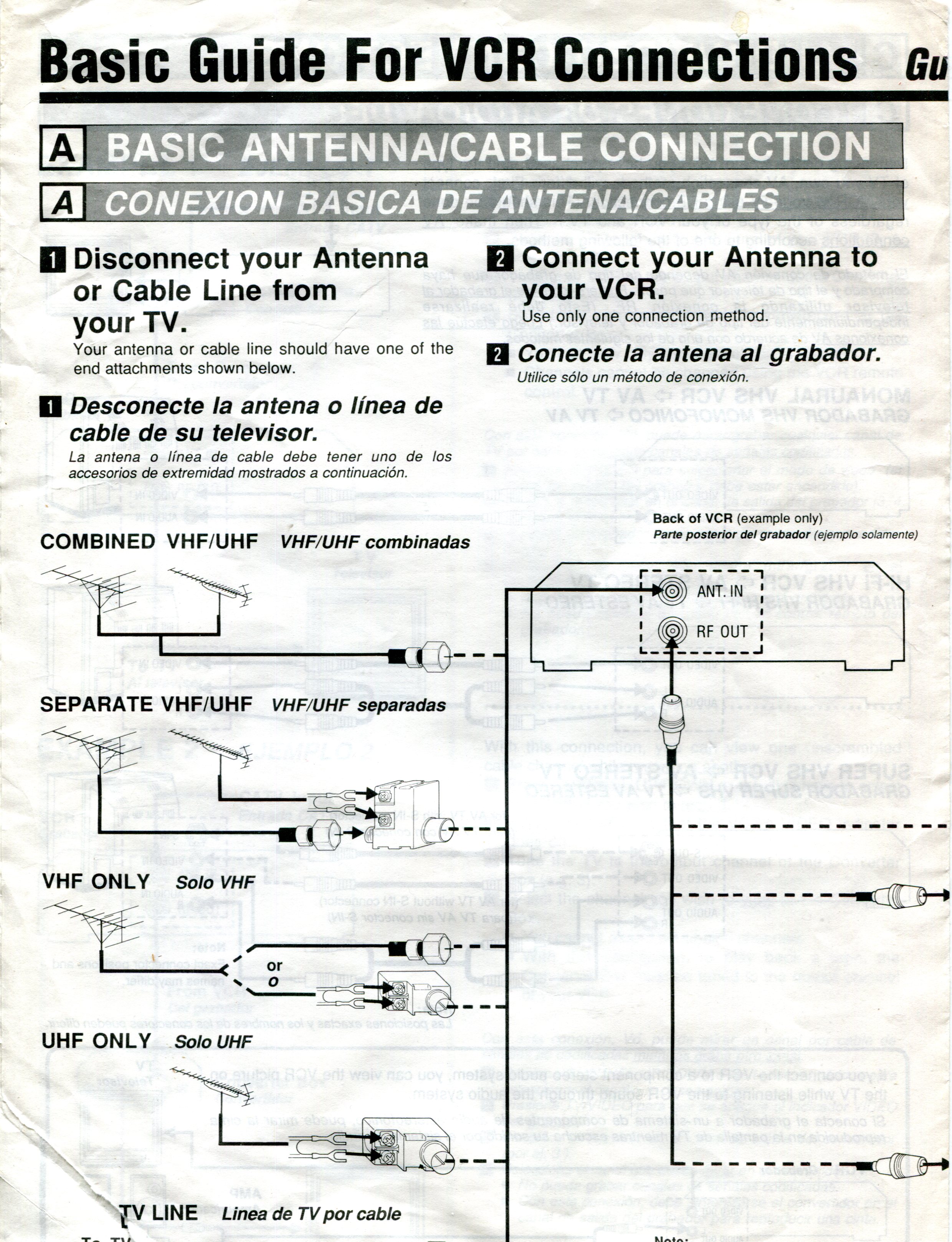
Not long ago, I decided to purge some paper around the house. Specifically, user manuals for machines that are long gone. You’d think that those would have been tossed along with the items themselves, but that’s not how clutter works, unless you’re Marie What’s-Her-Name.

Papers like this.

In the same vein, I had setup instructions for iMacs, a reel mower that now has vines on it, landline phones long junked, defunct cameras, a previous dishwasher, clothes washer, clothes dryer, and oven, and a few odds and ends I don’t even remember owning.

From a bilingual food processor manual, I learned the amusing fact that the French for food processor is robot culinaire.

Also: Woody warnings. We took the actual toy to Boot Hill long ago — well, metaphorical boot hill — after the dog did him bodily harm. Somehow, the pamphlet of written warnings was left behind.

Warnings because the only instructions involve replacing the batteries that power Woody’s voice box. The rest of the text lists warnings about the batteries: keep them away from small children, don’t swallow them yourself, put them in correctly, including the correct polarity, don’t mix different kinds of batteries, or old and new batteries, and don’t let the damn things leak, but if you do, throw them away — in a locally acceptable manner.

Pedestrian stuff. Not a single warning along the lines of: If you see Woody walking and hear him talking, you are not having a psychotic episode. Woody is a sentient creature with a secret life.

Once Upon a Time in Quentin Tarantino’s Childhood

We went to see Once Upon a Time in Hollywood not long ago. Been a while since I’d seen a new movie, or a Quentin Tarantino movie, for that matter. Come to think of it, I don’t think I’d ever seen one of his movies in the theater — everything’s been on tape or DVD or demand, to list formats chronologically.

I left Once Upon a Time wondering how old Tarantino is. I knew next to nothing about him, except for his fondness for putting ultraviolence in his movies. From the way he depicted the period of the movie, 1969, I got the sense that he remembered it, but not as an adult. Like me.

Sure enough, he was born in 1963. That makes us contemporaries. Later he must have filled in some of the gaps his own memory might not have retained, as one does. I can’t imagine, for instance, that a six-year-old would have paid much attention to Sharon Tate or any of the movies she was in, least of all a bomb like The Wrecking Crew. (Matt Helm movies are best forgotten.) On the other hand, Tarantino probably saw old TV westerns on reruns or shows like the FBI or Mannix in the early ’70s, just as I did.

Yuriko came away baffled by many of the references. She’d come to see Brad Pitt, whom she enjoyed seeing — he had a good part — but it isn’t a past she shares. Neither of our daughters went, but come to think of it, most of the references probably would have been strange to them as well.

Despite including the Manson family and some other unsavory aspects of the period, the movie was an exercise in nostalgia — of a kid who watched American movies and TV beginning in the late 1960s. For a time when Americans watched roughly the same TV shows and movies, because options were much more limited than they are now.

What will be the basis of pop-culture nostalgia for the 2010s in 50 years, if there’s any? I’d think it would be as fractured as entertainment is now. Well, so what? Can’t say that I care. Not my circus, not my monkeys.

Pitt, as stuntman Cliff Booth, had my favorite line in the movie. In a flashback, Booth was on the set of The Green Hornet with Bruce Lee, who is characterized as a preening, vain fellow, and they’re rehearsing a fight scene.

Bruce Lee: My hands are registered as lethal weapons. We get into a fight, I accidentally kill you? I go to jail.

Cliff Booth: Anybody accidentally kills anybody in a fight, they go to jail. It’s called manslaughter.

Greenwood Cemetery ’14

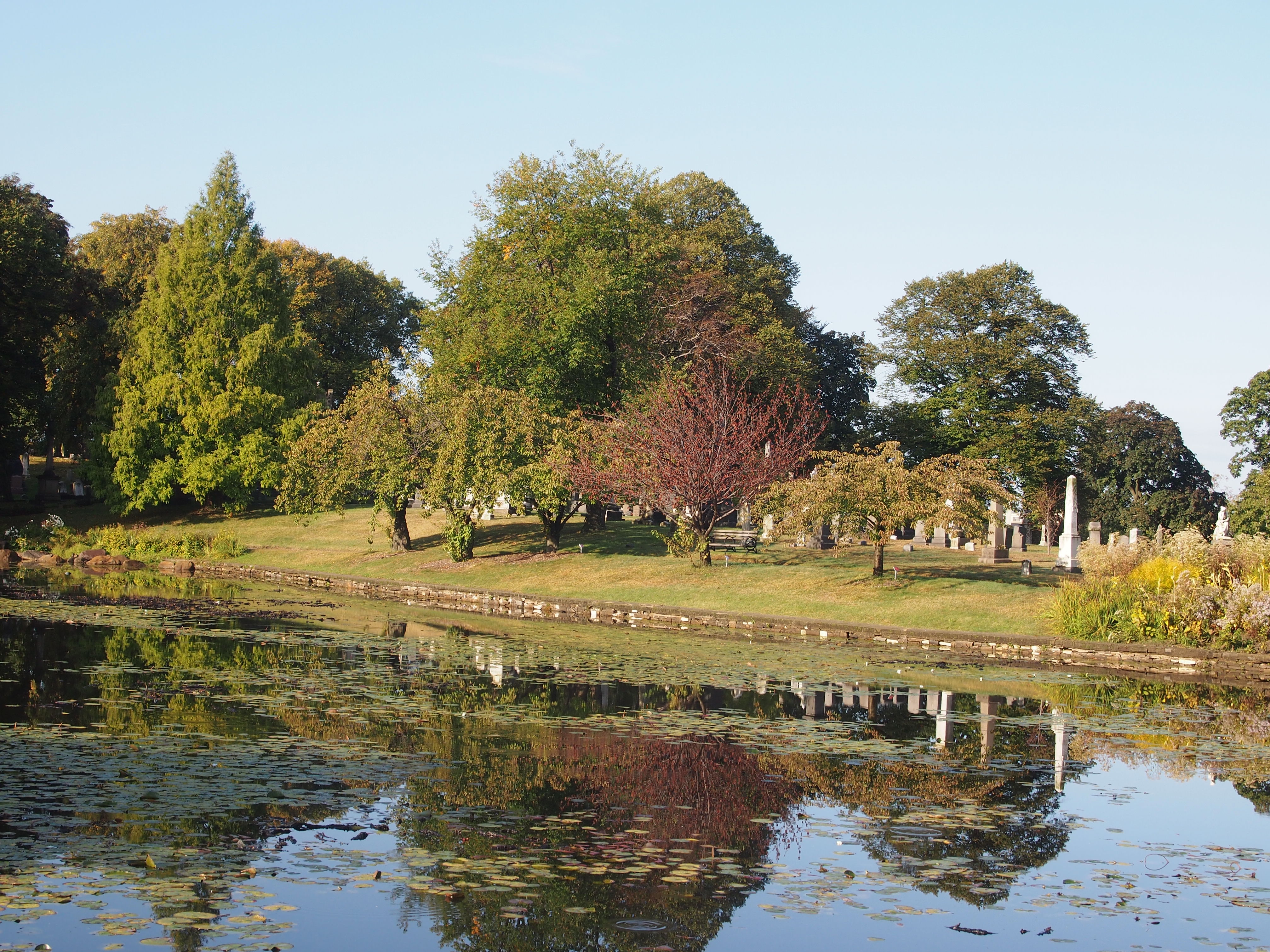
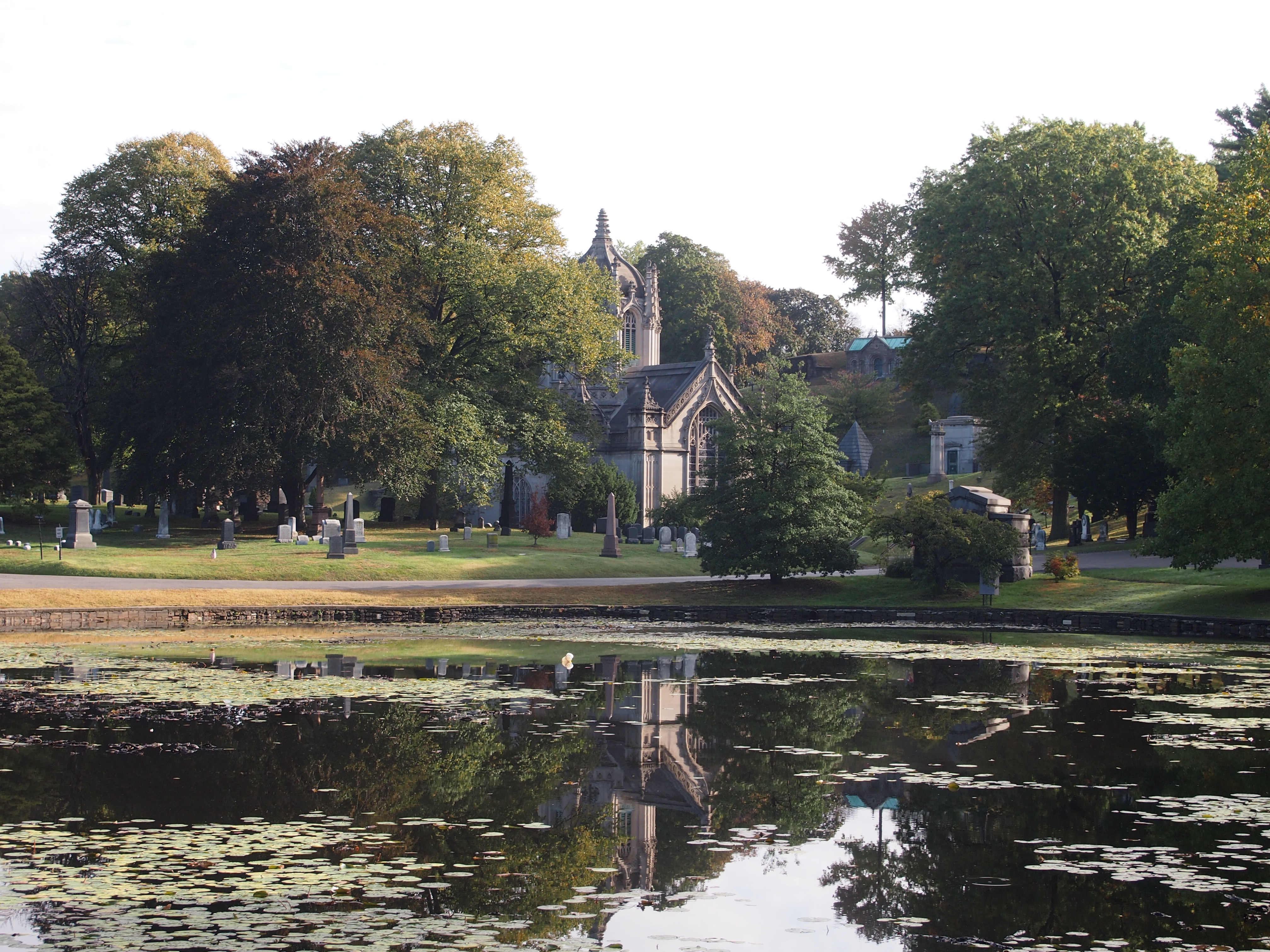
Has it been five years since I first visited Green-Wood Cemetery in Brooklyn for the first time? So it has. Green-Wood Cemetery remains one of the prettiest I’ve been to, even in drizzly early spring. No doubt the fall colors, as I saw them five years ago, are returning now.

Greenwood CemeteryThe main pond was a particularly lovely spot. This is the cemetery’s chapel, a 1911 Warren & Wetmore design; that firm also did Grand Central Terminal, among other things.
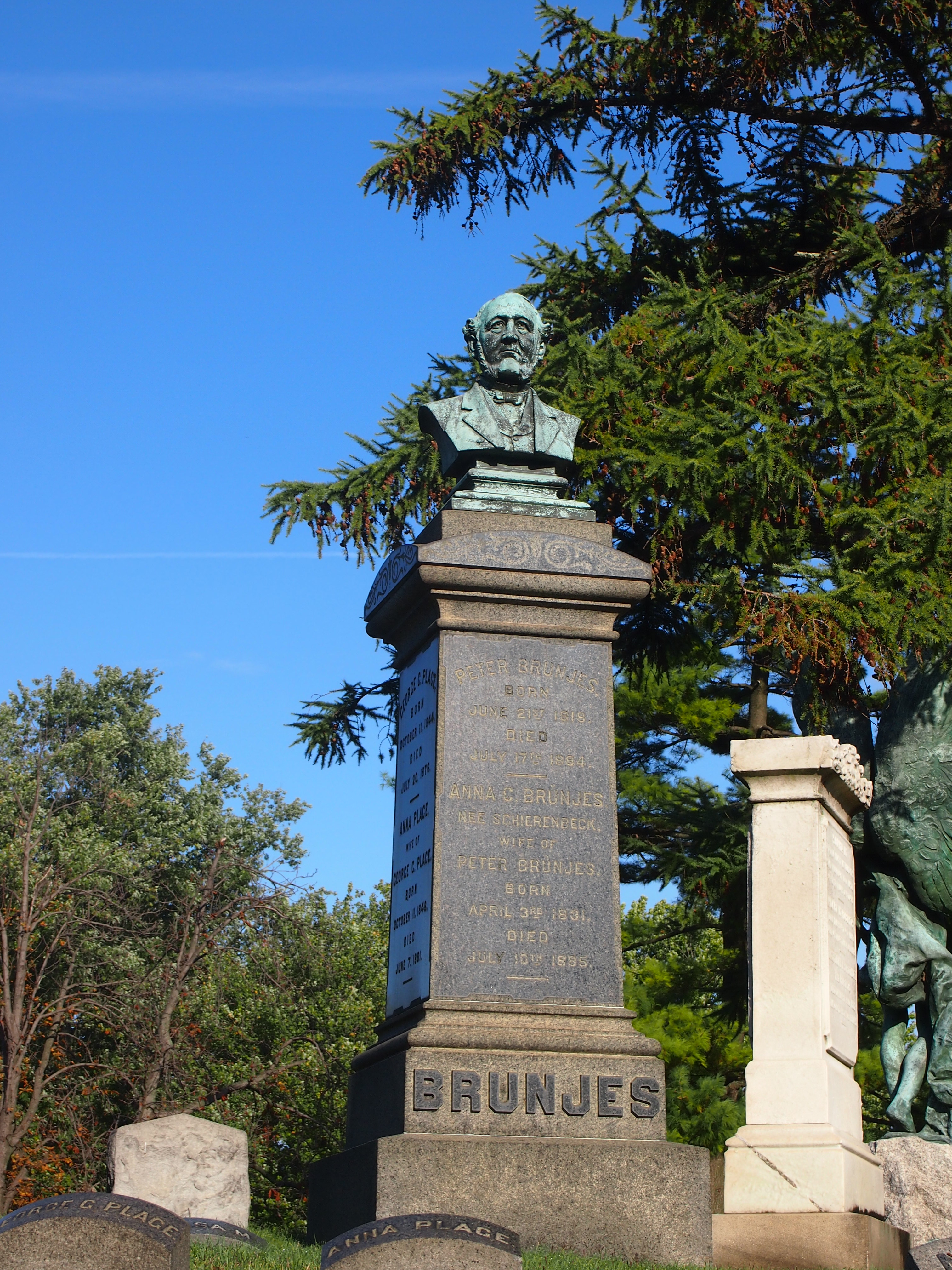
Greenwood CemeteryThis is Peter Brunjes, looking quite 19th century.

Greenwood CemeteryA casual search — “Peter Brunjes,” “Peter Brunjes New York,” “Peter Brunjes Green-Wood” — reveals nothing. Looks like he was a respectable citizen, even locally prominent, just to judge by his stone, which is probably the effect his family wanted. Sic transit gloria mundi, dude. Think you will be remembered? You will not. But so what?

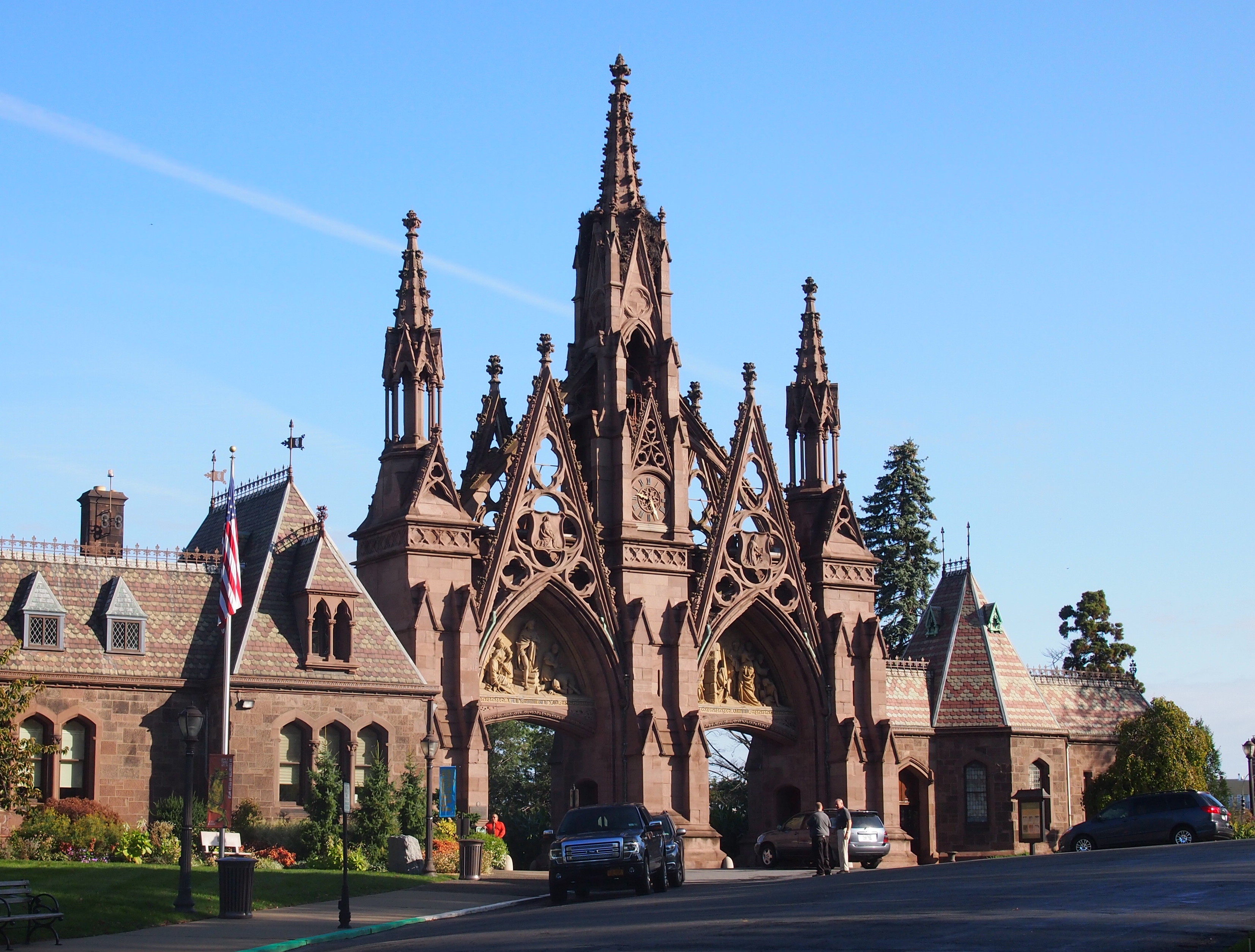
The main entrance, dating from the 1860s, seen in a different light than last year.

Greenwood CemeteryIt’s a design by Richard Upjohn, who’s known for his Gothic churches.

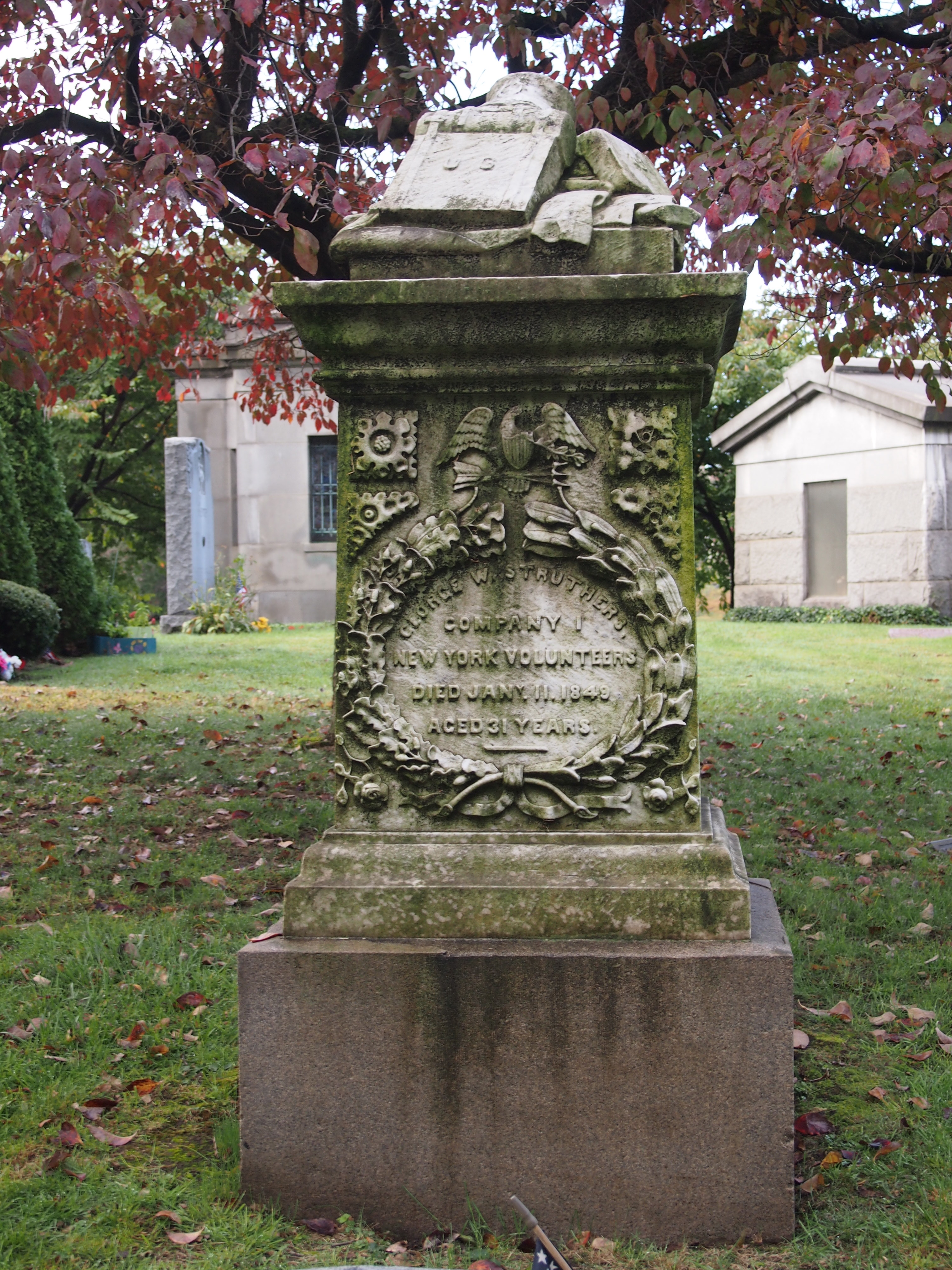
The stone of one George Struthers, died 1849, aged 31 years.

Greenwood Cemetery

From Our Firemen, The History of the NY Fire Departments [all sic]: The “Harrington Guard” was a volunteer organization from Union Engine Company No. 18, and Henry Wilson was its captain. This volunteer company was in existence for a number of years, and one act while Mr. Wilson was in command should not go unrecorded. We allude to their noble conduct toward the first of the New York Volunteers who died after that regiment returned from the Mexican War.

“The late Sherman Brownell was called upon to deliver the address at the dedication of a monument placed in Greenwood by the Harrington Guard. That gallant fellow George Struthers was one of the first to enroll his name in Company 1 of the first regiment of New York State Volunteers.

“With them he went to Mexico, and remained among them until disbanded. He was one of the comparatively small number of the originals of the regiment that returned, and, although he escaped the ravages of the battlefield and returned to his friends, he was, like most of his companions, prostrated with the climate and exposure.

“He found, by disease contracted in Mexico, that he was fast failing. He went to the hospital, where his friends gave him all the attention that could be paid him. After remaining in the hospital for some time, he was called from his sufferings on earth.”

Two Milwaukee Courthouses of Imposing Size and Grandeur

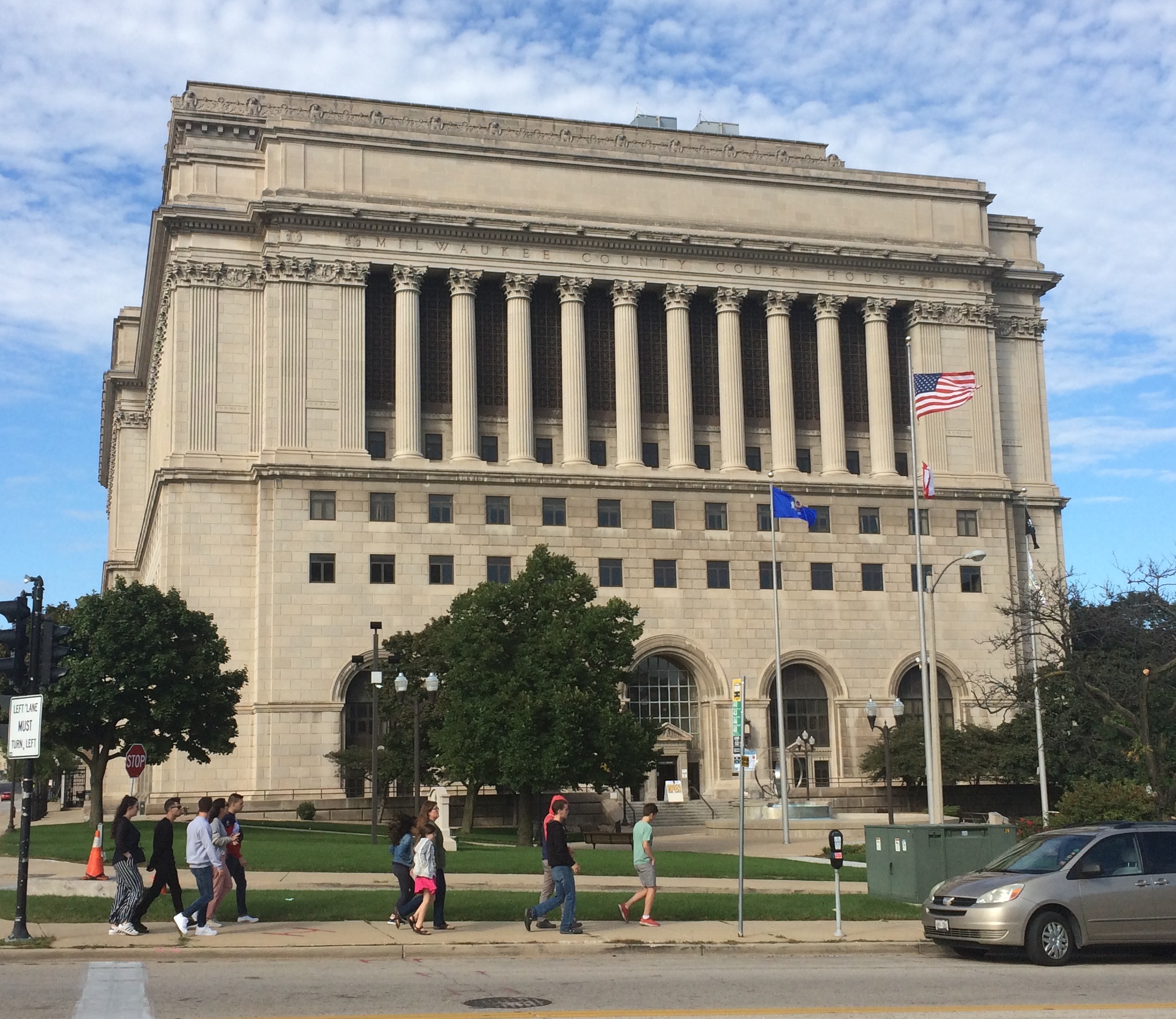
Last year during Doors Open Milwaukee, we passed by the Milwaukee County Courthouse. I don’t think it was participating, but anyway we didn’t go in. Naturally, this year it’s still an imposing neo-classical edifice by McKim, Mead, and White, finished in 1931.

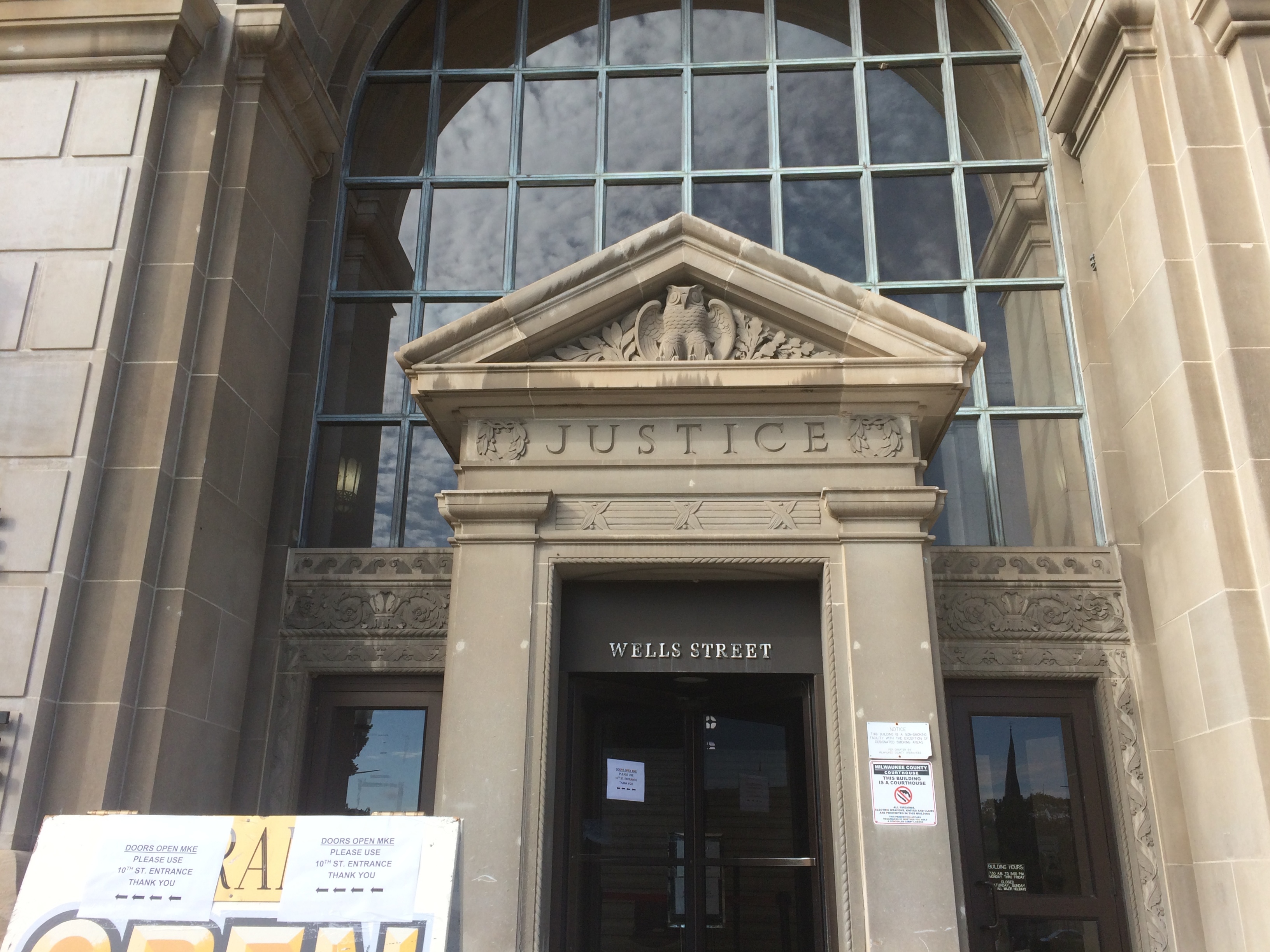
Milwaukee County CourthouseThe building was open and we went in. But not at the owl entrance, whose single word Justice, if you’re in a cynical mood, might fall under the category of promises, promises.
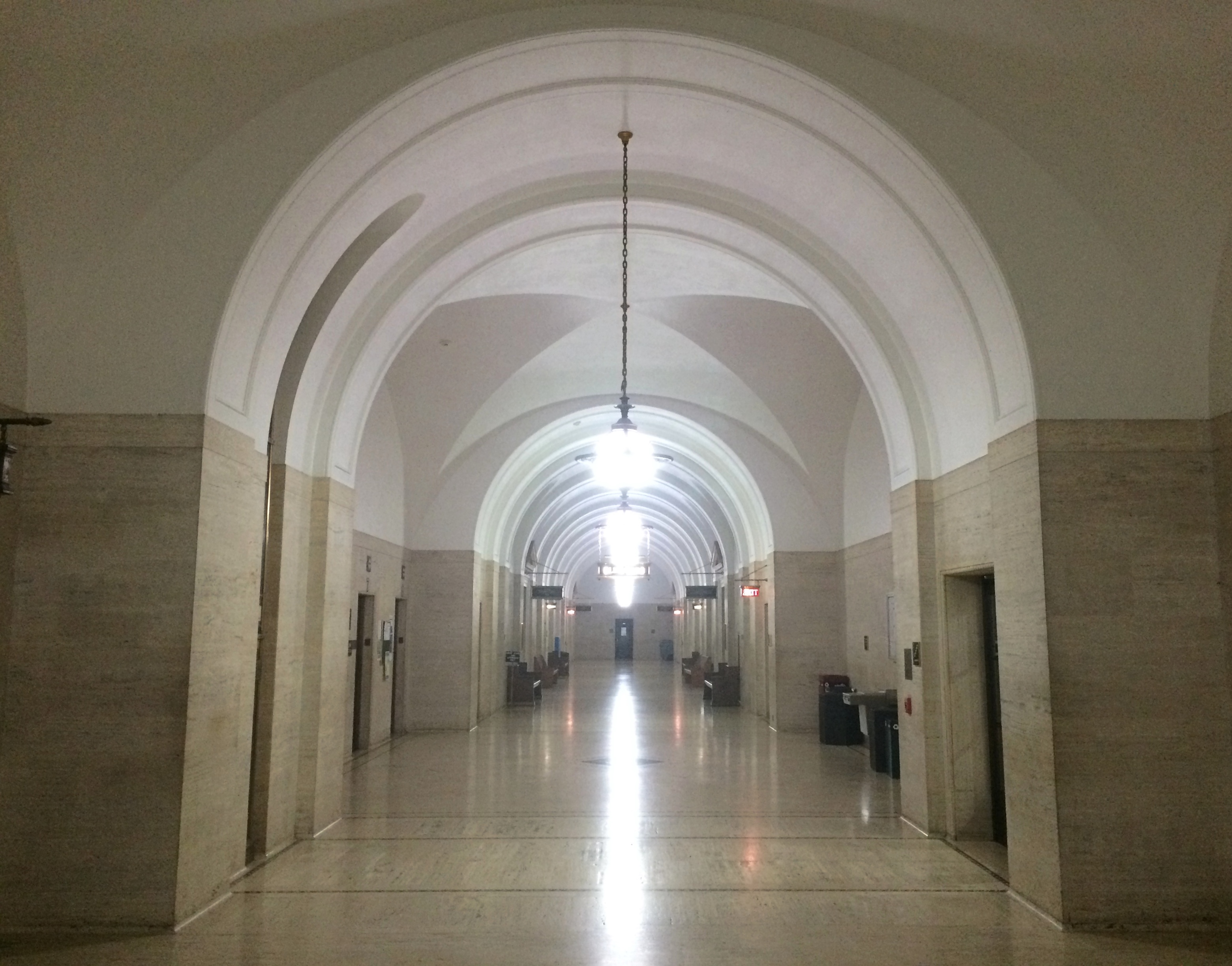
Milwaukee County CourthouseSome of the courthouse’s arched hallways were well lit.
Milwaukee County CourthouseOthers, not so much.
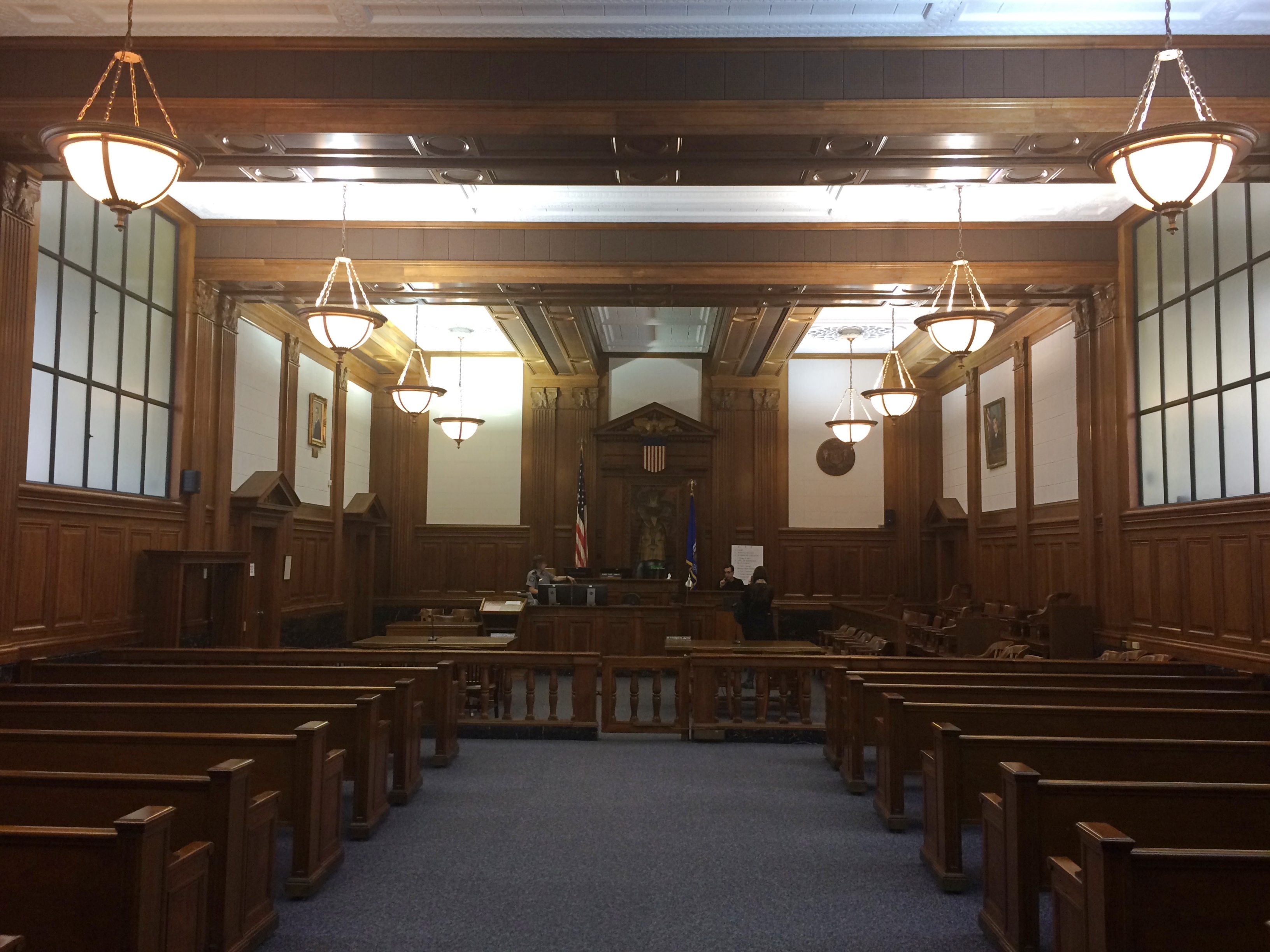
Milwaukee County CourthouseOne well-appointed courtroom, that of Judge Someone-or-Other, was open for inspection.
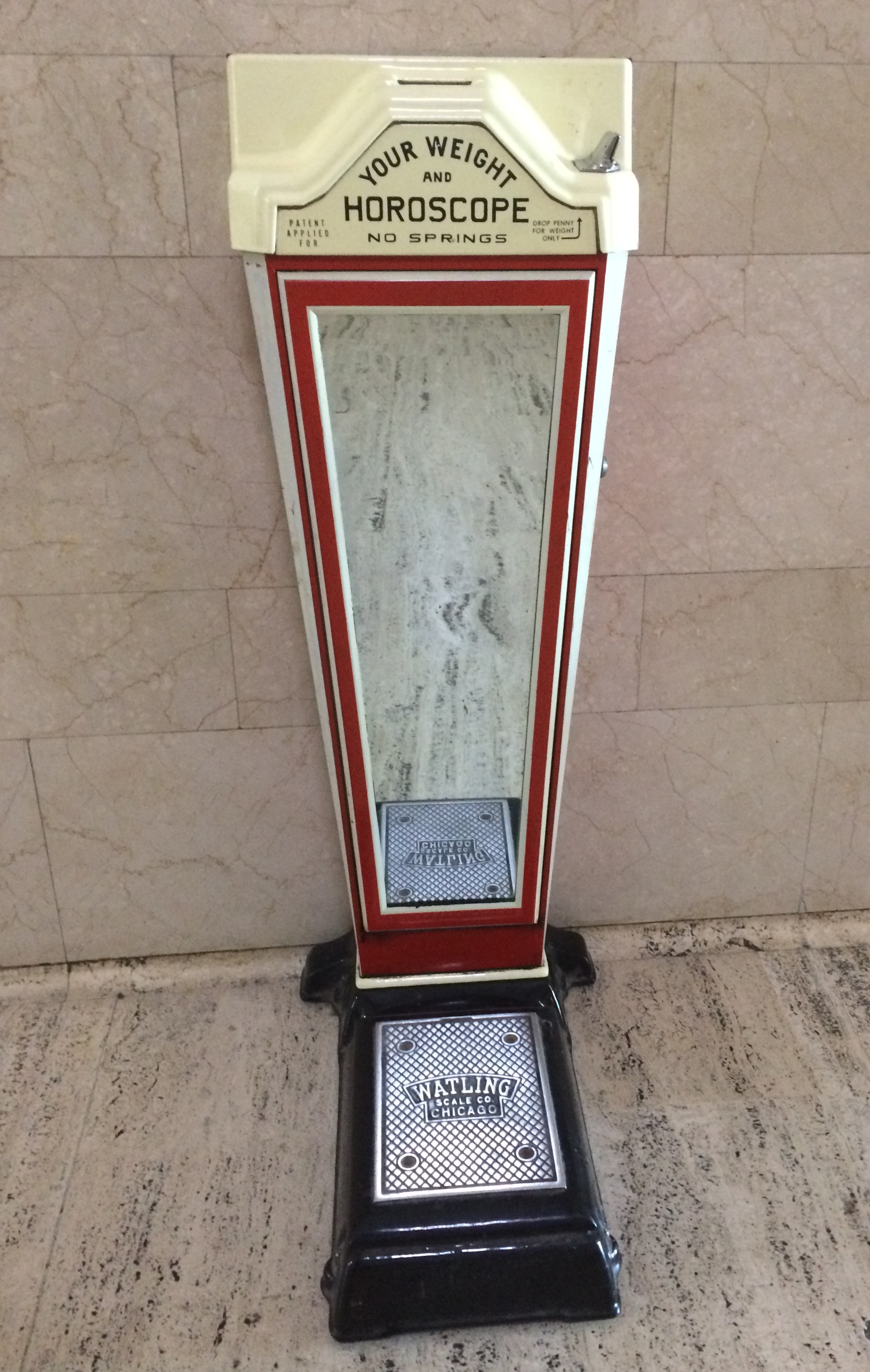
Milwaukee County CourthouseMostly the halls and courtroom exuded a sense of serious business, which is appropriate. Don’t want any goofballs on the bench. But there was at least one oddity in the otherwise staid atmosphere of the courthouse halls: a weight and horoscope machine. What?
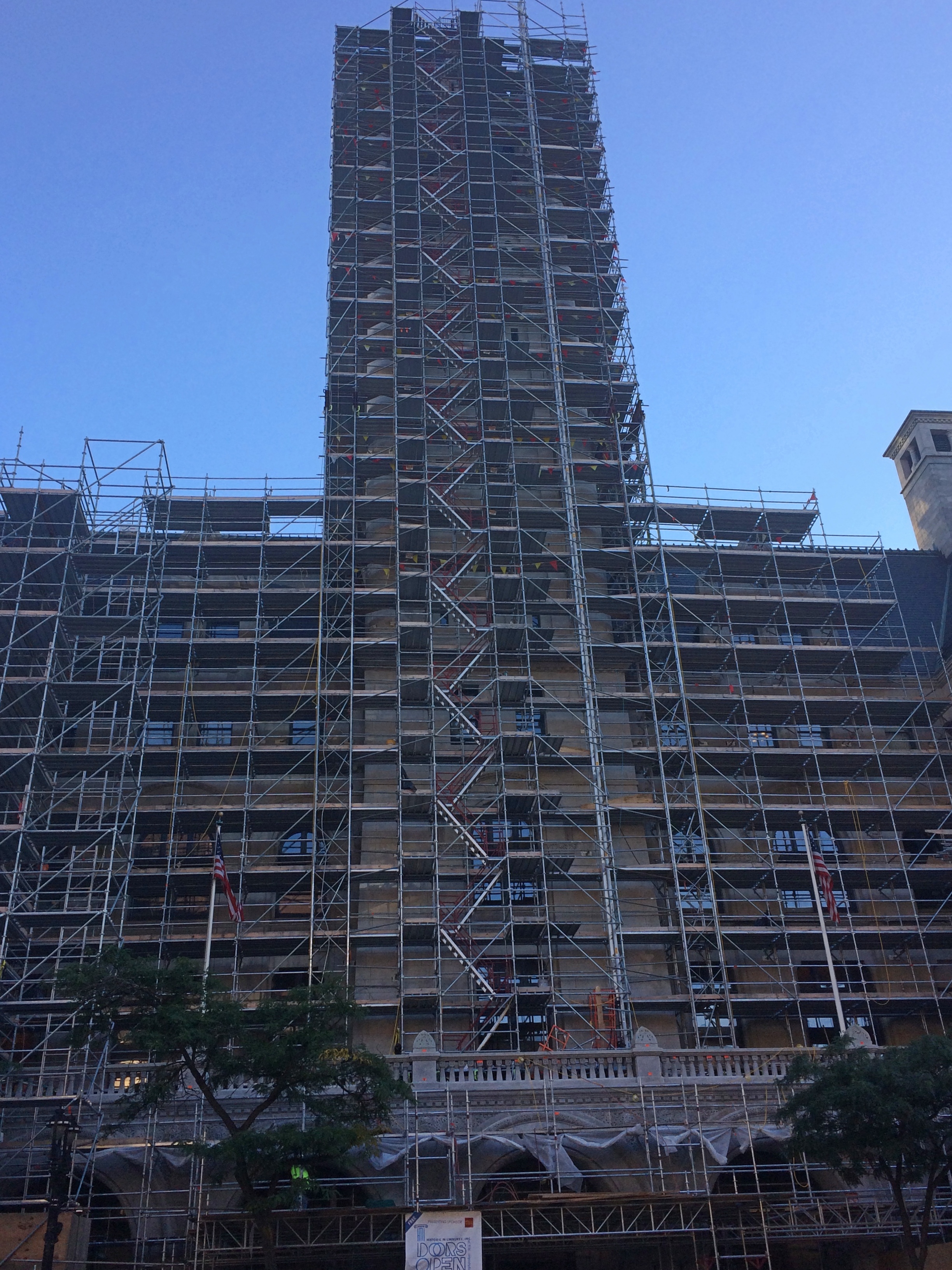
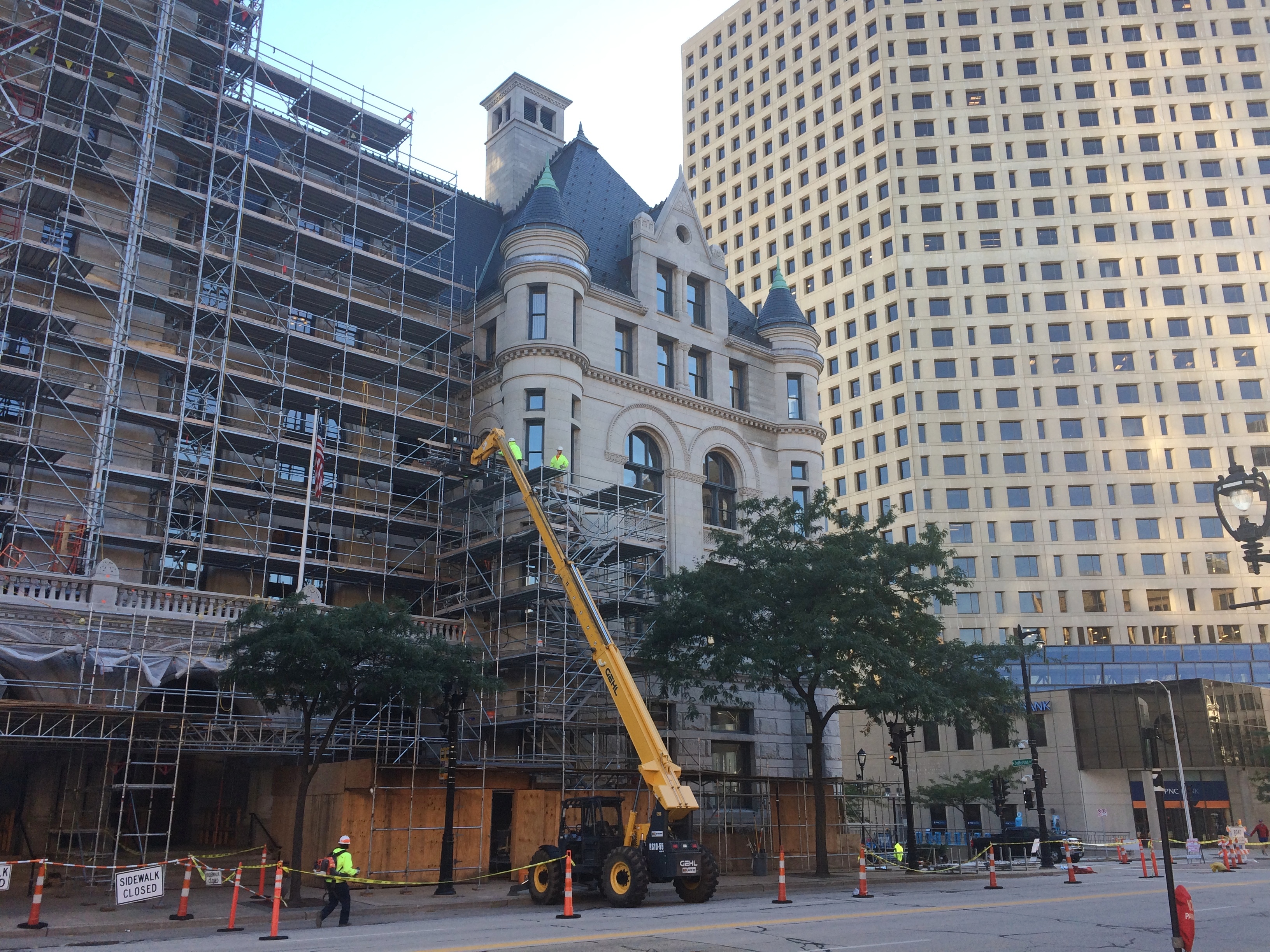
Milwaukee County CourthouseFurther to the east on Wisconsin Ave. — there’s that street again — is the Federal Building & U.S. Courthouse for the Eastern District of Wisconsin. They say it’s a grand old edifice, completed in the 1890s to house not only federal courts, but also the main post office and the customs service. I’m sure it must be, but the exterior is a little hard to see in 2019 during restoration.
Federal Courthouse MilwaukeeSome of the granite facade is visible.
Federal Courthouse MilwaukeeA design overseen by Willoughby J. Edbrooke, whose Wiki page tell us: “[He] remained faithful to a Richardsonian Romanesque style into the era of Beaux-Arts architecture in the United States.” A man who knew what he liked and stuck with it.

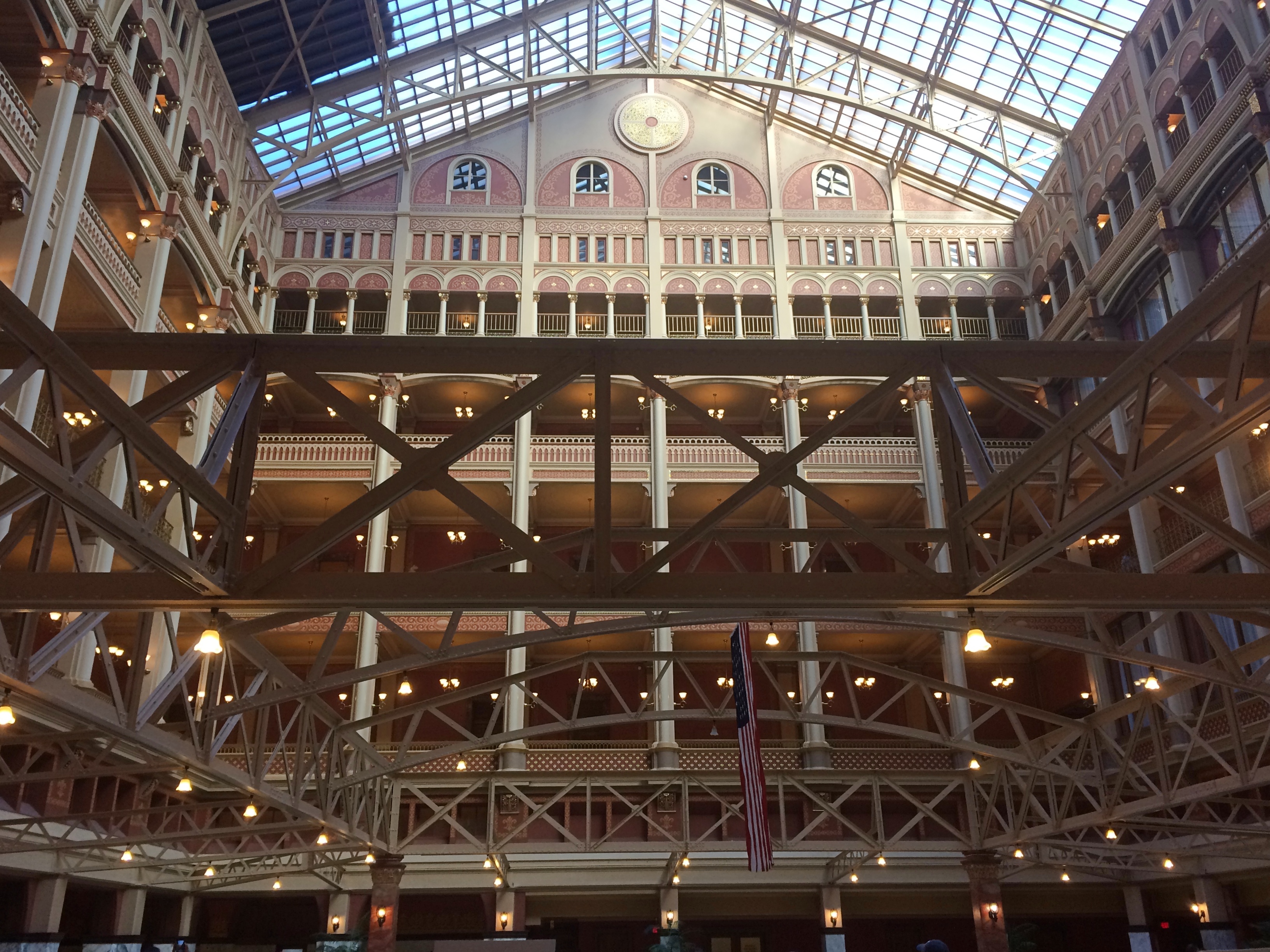
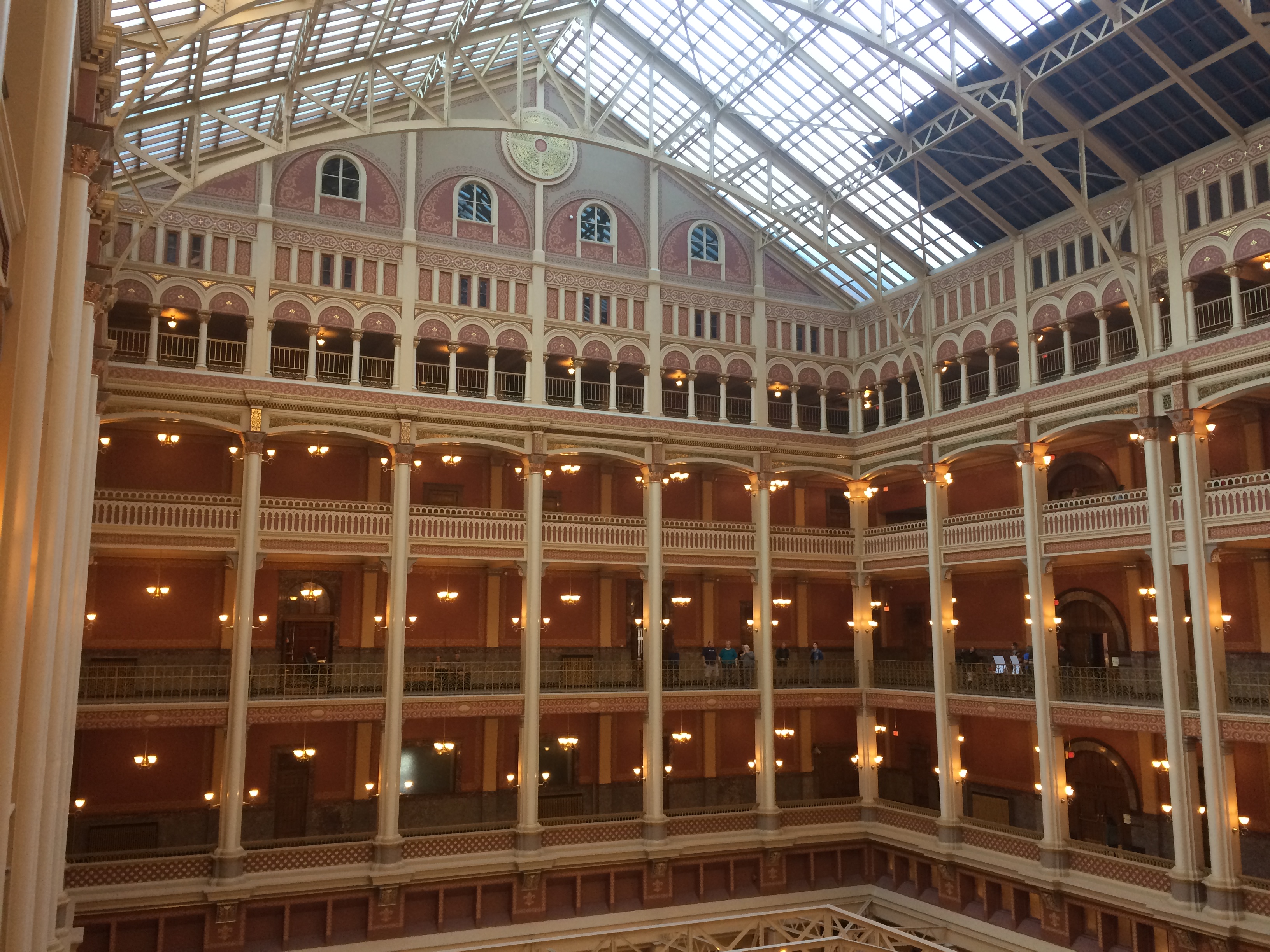
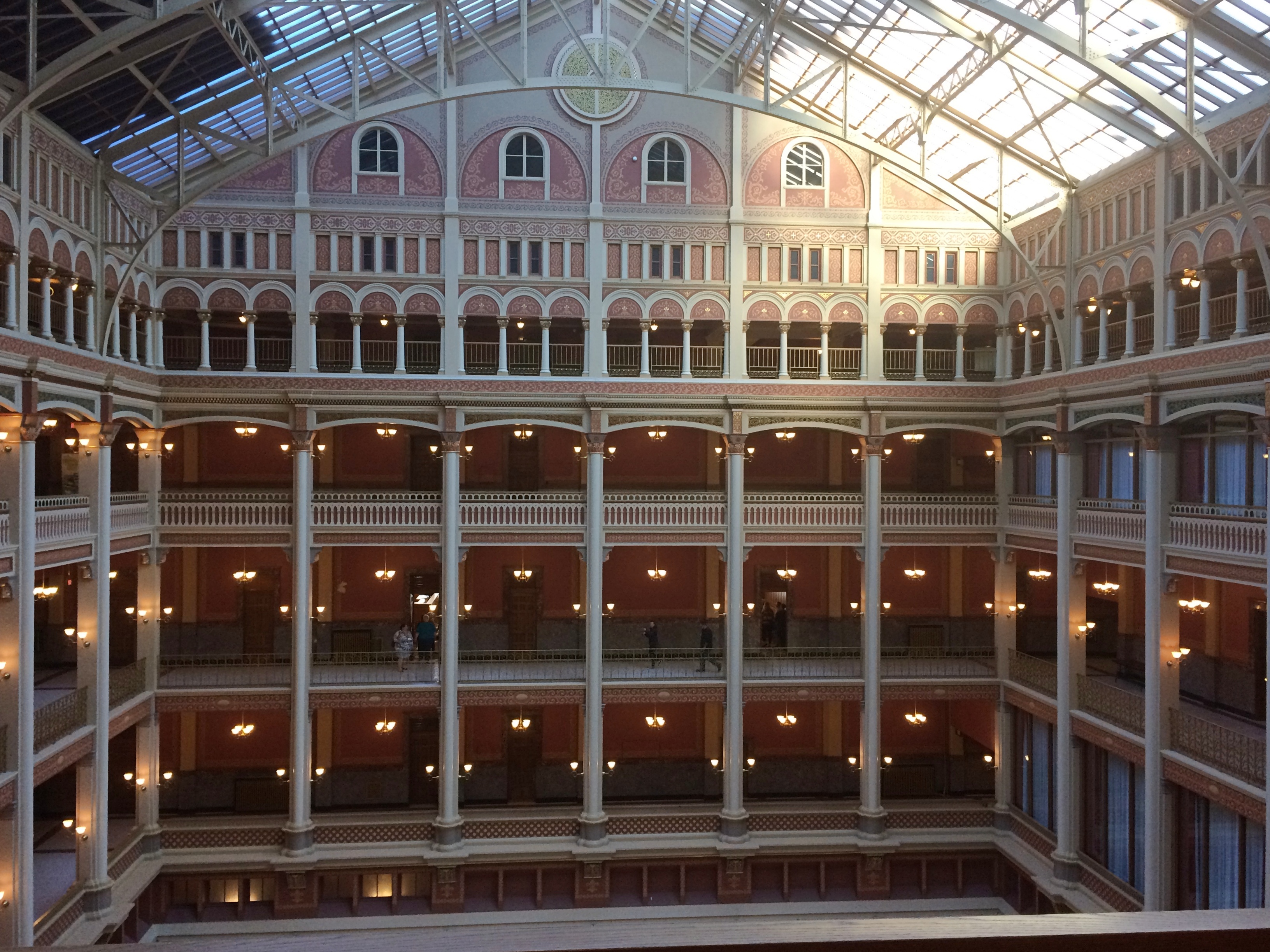
The vaulting atrium impresses mightily, but it’s hard to capture its image with a simple camera. Looking up, the view is through a steel structure which I assume is for support in some way.
Federal Courthouse MilwaukeeThese are views from the fourth floor. Originally the atrium roof was open, in the way pre-air conditioning buildings often were.
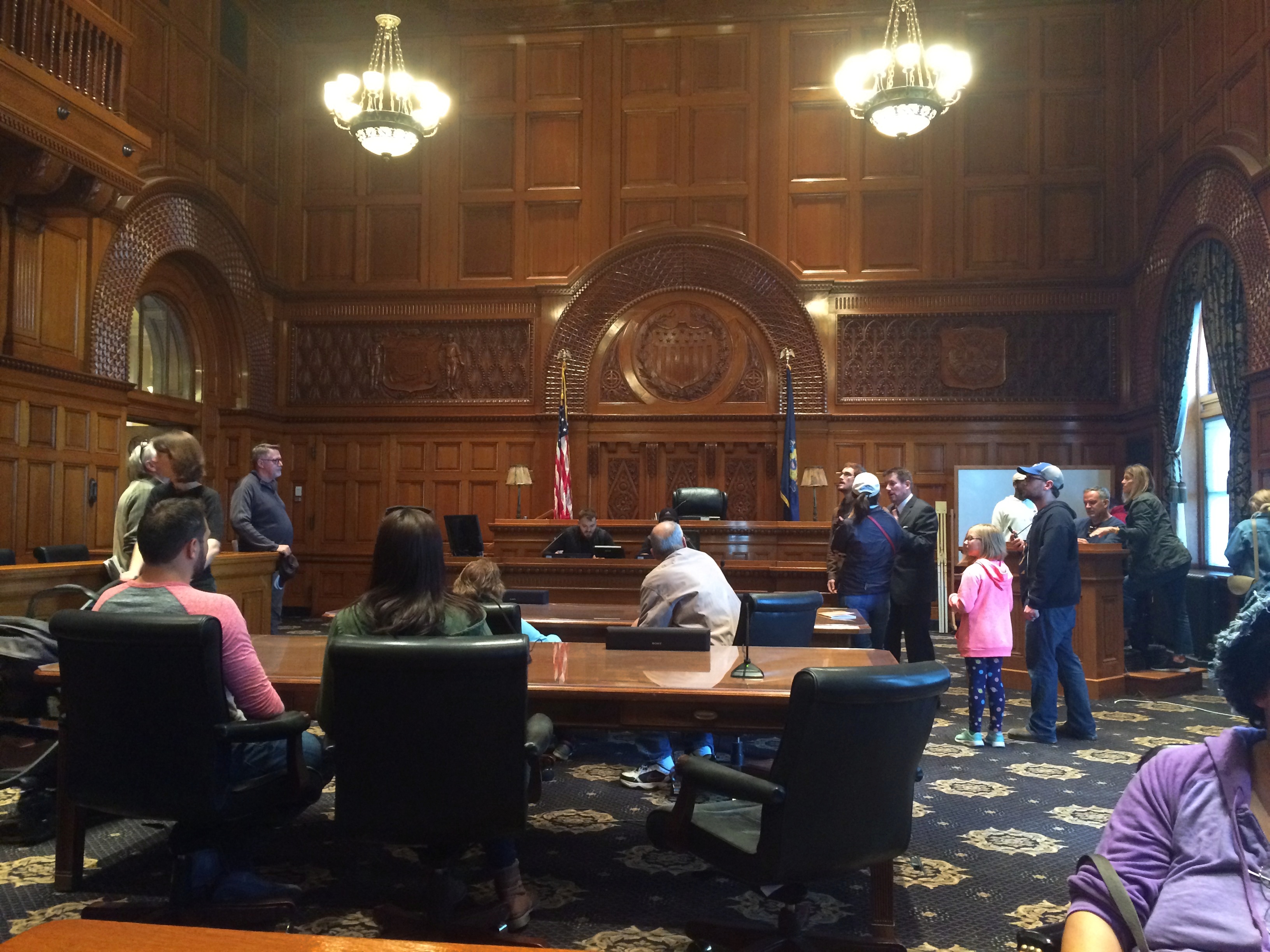
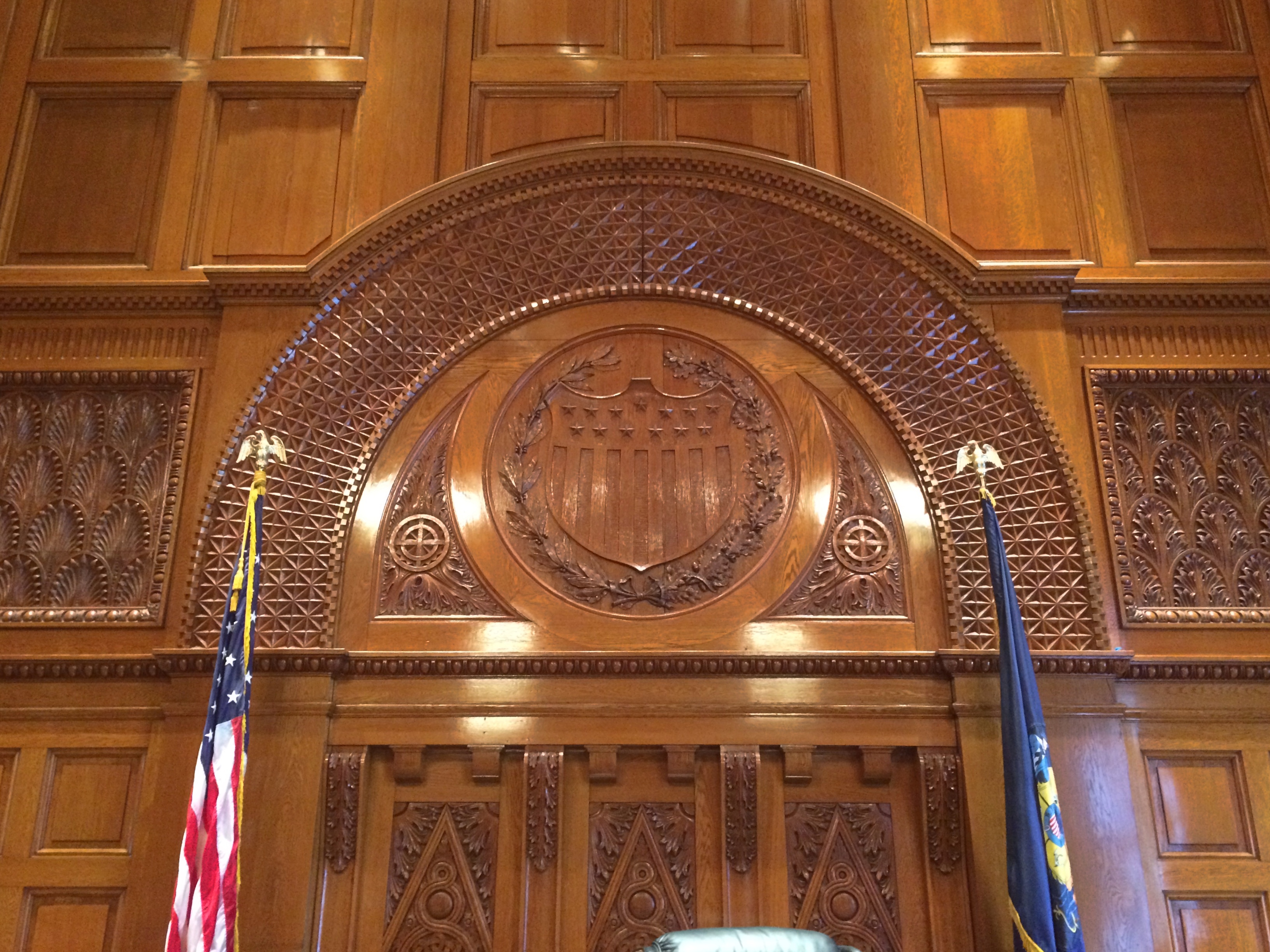
Federal Courthouse MilwaukeeFederal Courthouse MilwaukeeWe saw two courtrooms, including the Ceremonial Courtroom and its exceptional woodwork.
Federal Courthouse MilwaukeeFederal Courthouse MilwaukeeFederal Courthouse MilwaukeeCalled “ceremonial” because besides being a workaday federal courtroom, it’s also where new judges and new U.S. citizens tend to be sworn in.

An Eastern Church With Pews, A Western Church Without

Buildings, including churches, defy expectations at times. Often enough that expectations really shouldn’t be expected, but we do that anyway.

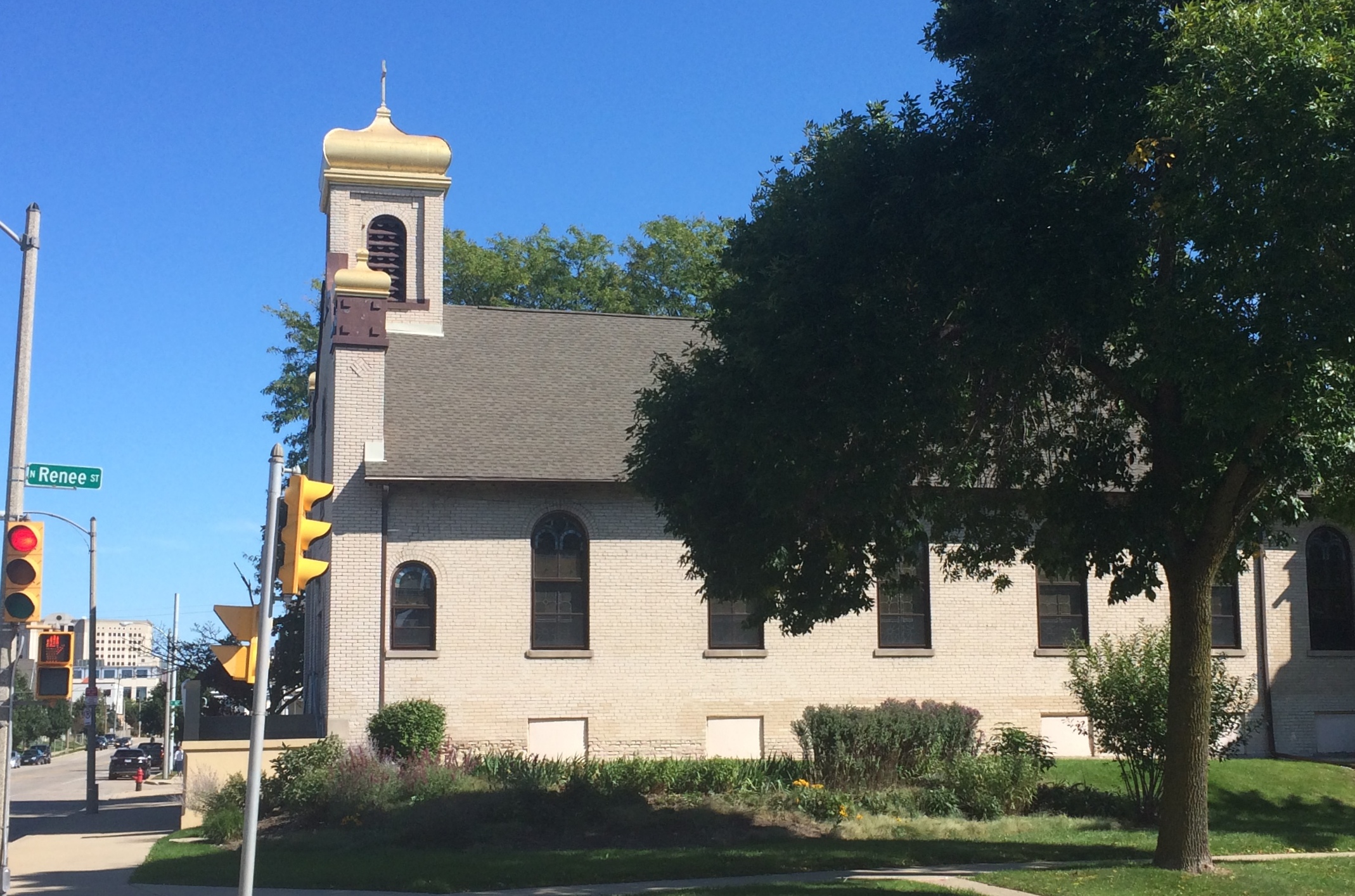
Take St. George Melkite Greek Catholic Church, which we visited on Saturday as part of Doors Open Milwaukee. It was built in 1917.
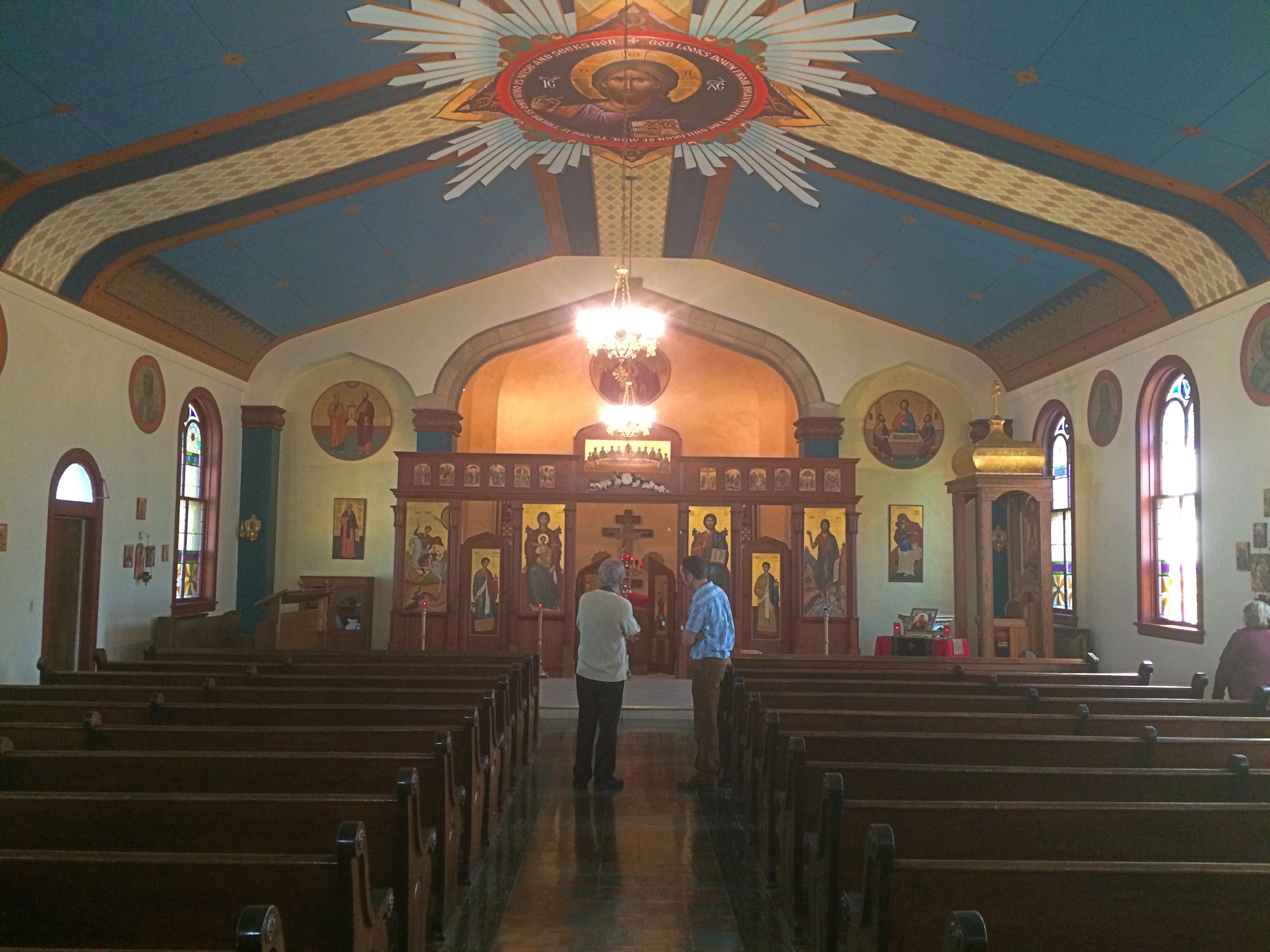
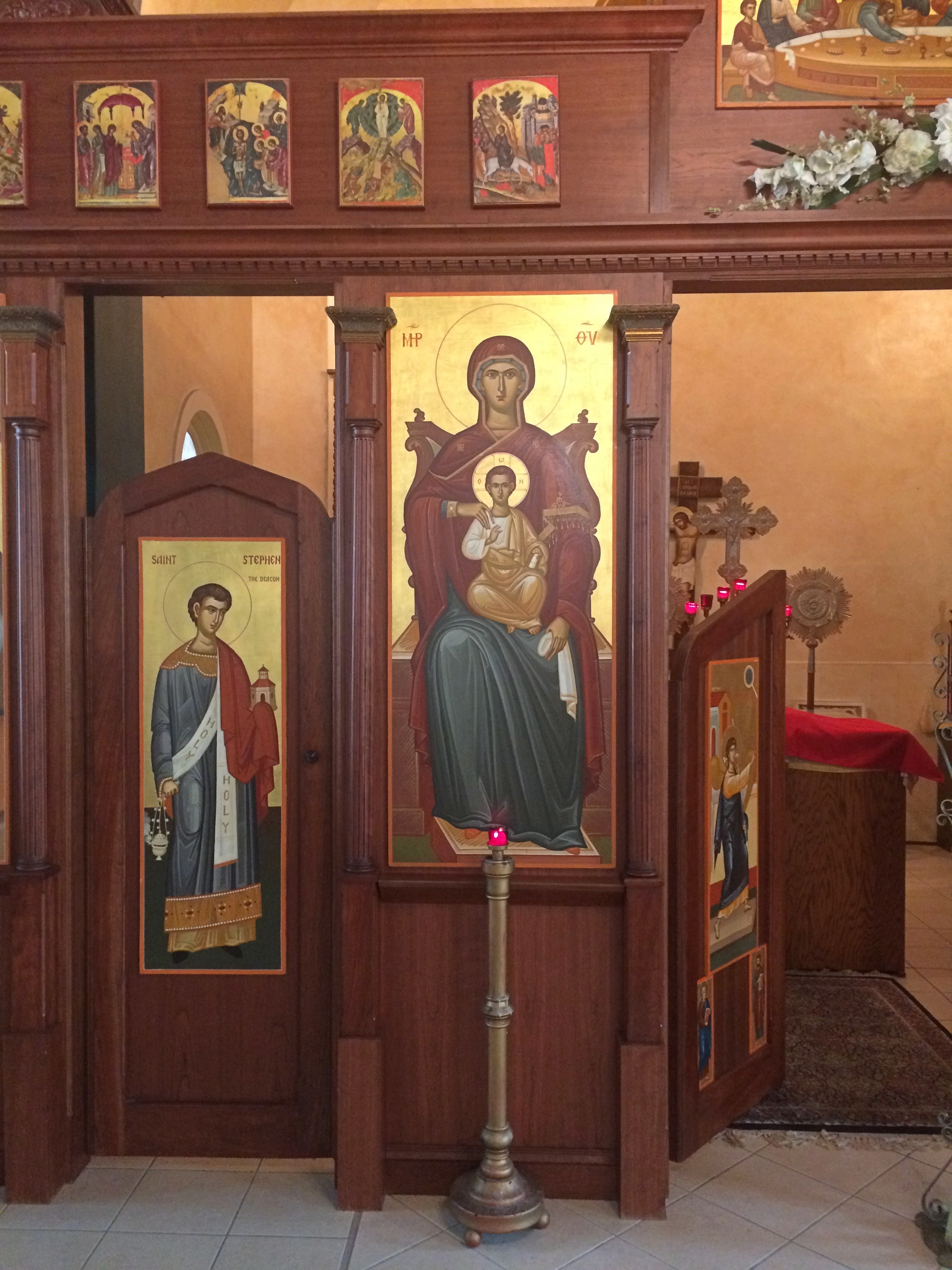
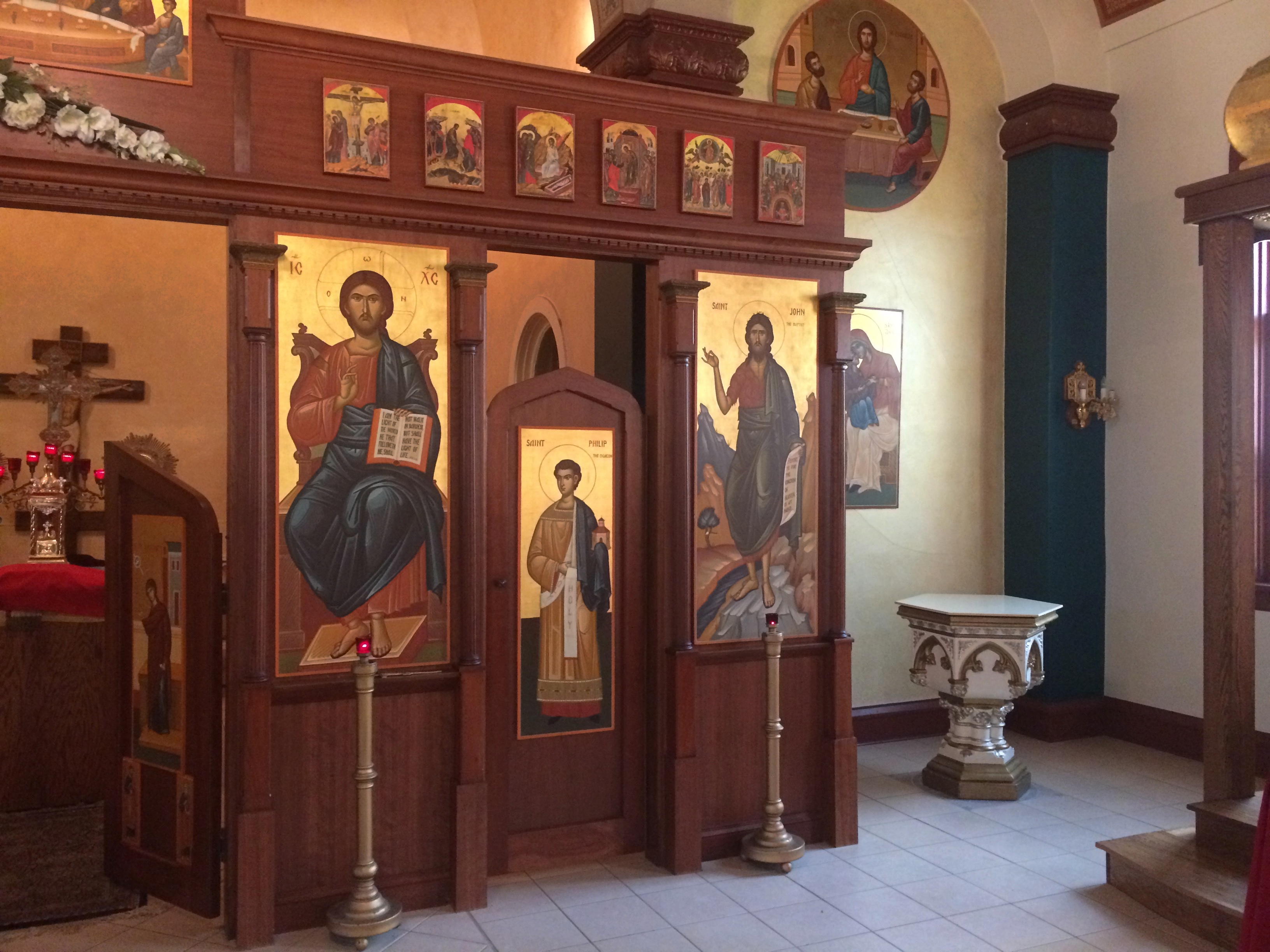
St. George Melkite Greek Catholic Church, MilwaukeeThough the Melkites are in communion with Rome, I was expecting an Eastern-style church inside. Mostly, it is, with icons and an iconostasis and Christ on the ceiling. But it also includes pews.
St. George Melkite Greek Catholic Church, MilwaukeeOne of the congregation was on hand to tell us about the church, and his idea was that the pews were a bit of syncretism on the part of the Lebanese and Syrian founding families of the church, or maybe the architect, one Erhard Brielmaier. Also, the church didn’t have icons in its early days, those being added in more recent decades, which might explain why their language is English.
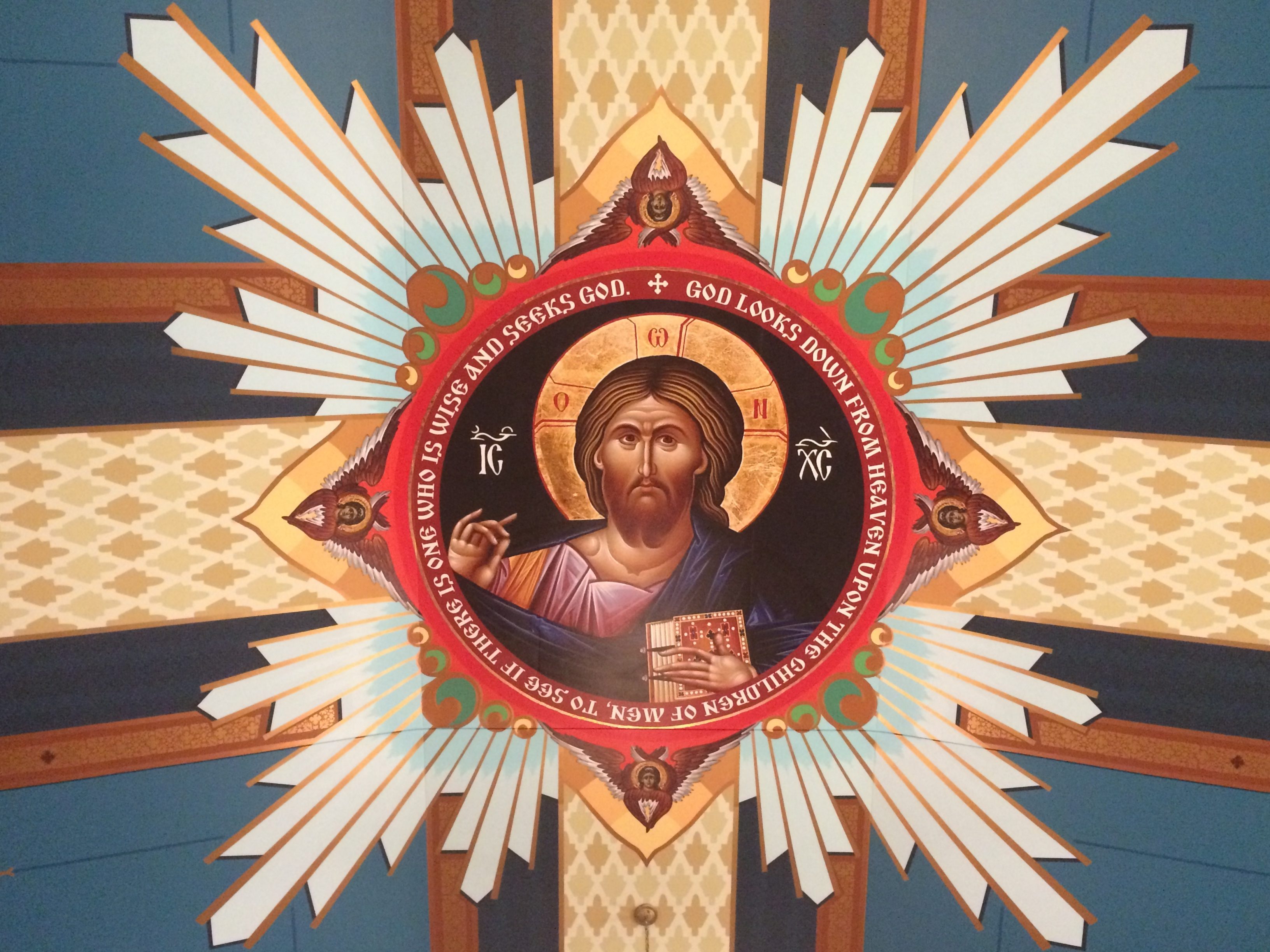
St. George Melkite Greek Catholic Church, MilwaukeeSt. George Melkite Greek Catholic Church, MilwaukeeChrist on the ceiling is a particular admirable work.
St. George Melkite Greek Catholic Church, MilwaukeeI was astonished to learn that it isn’t a painting, which it very much looks like, but a printed image made using a highly sophisticated machine and fixed in place.

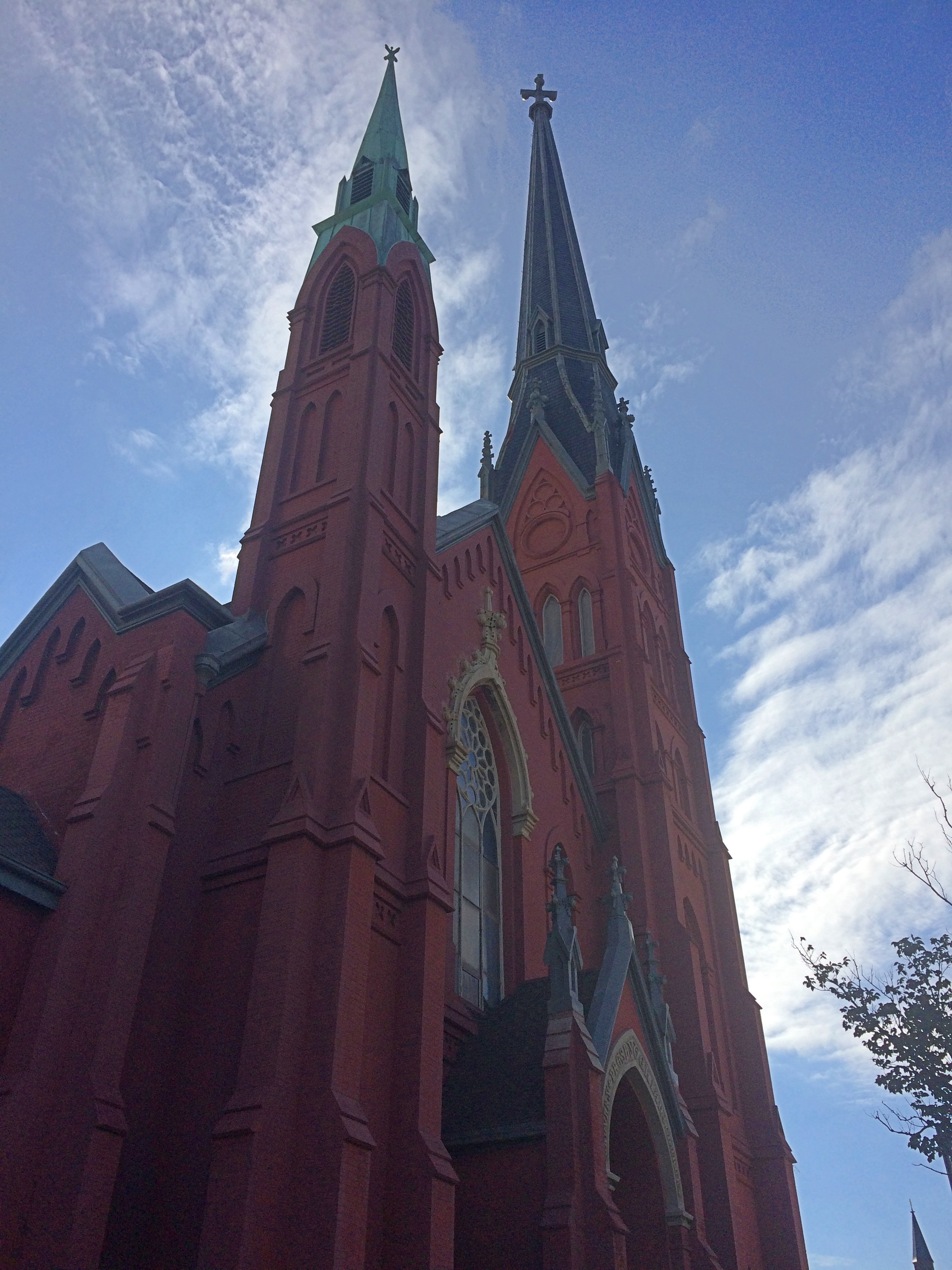
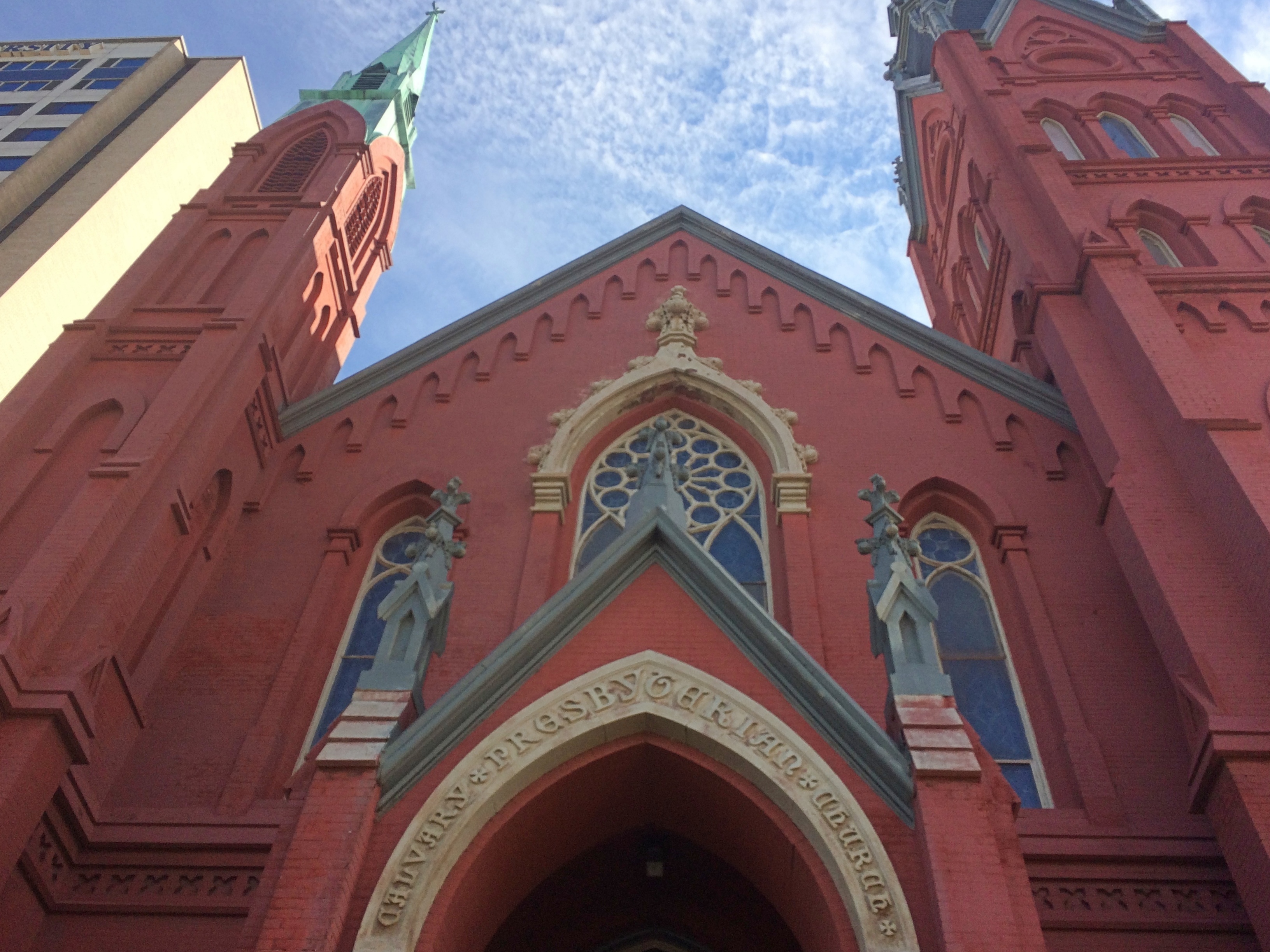
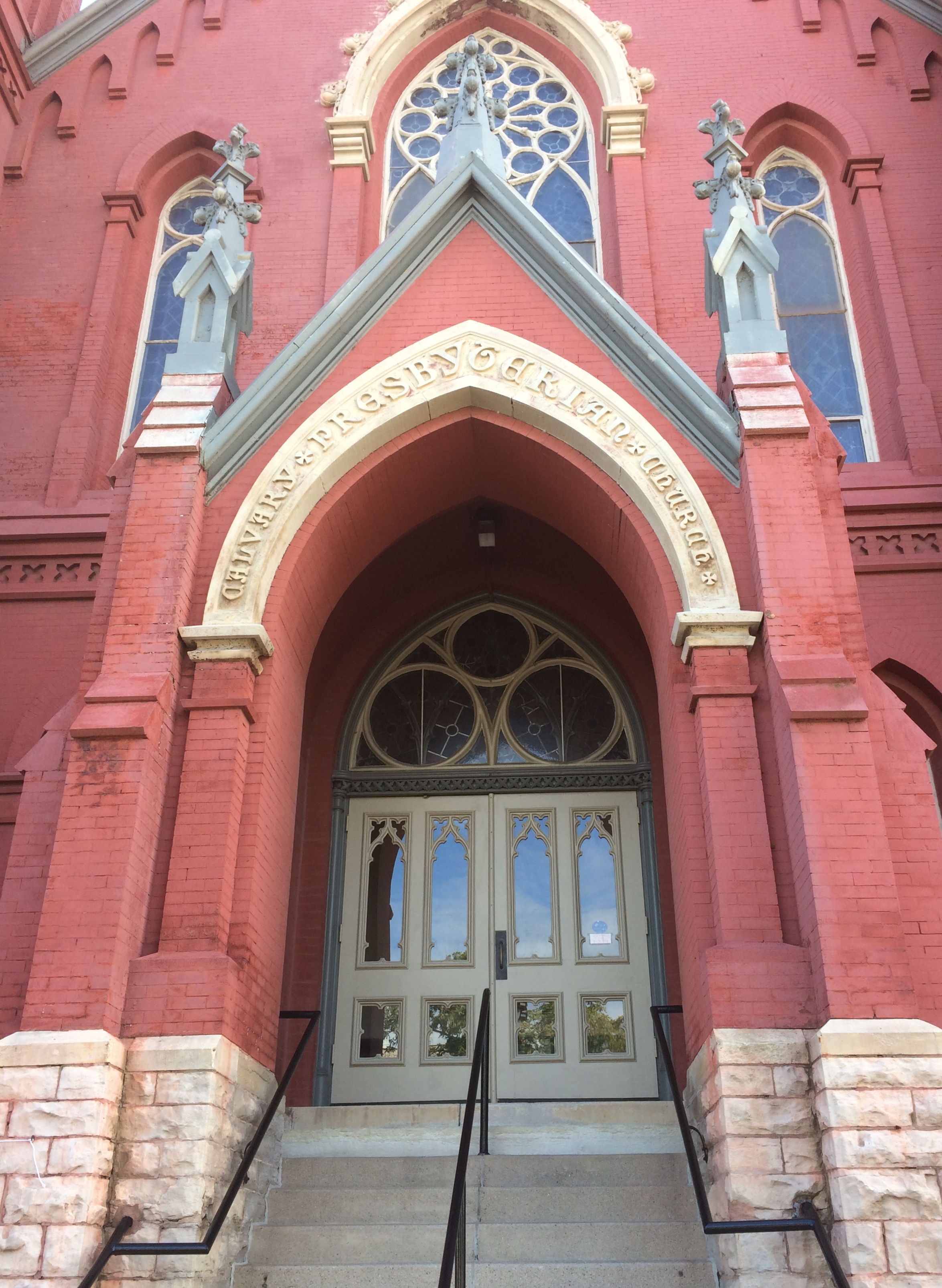
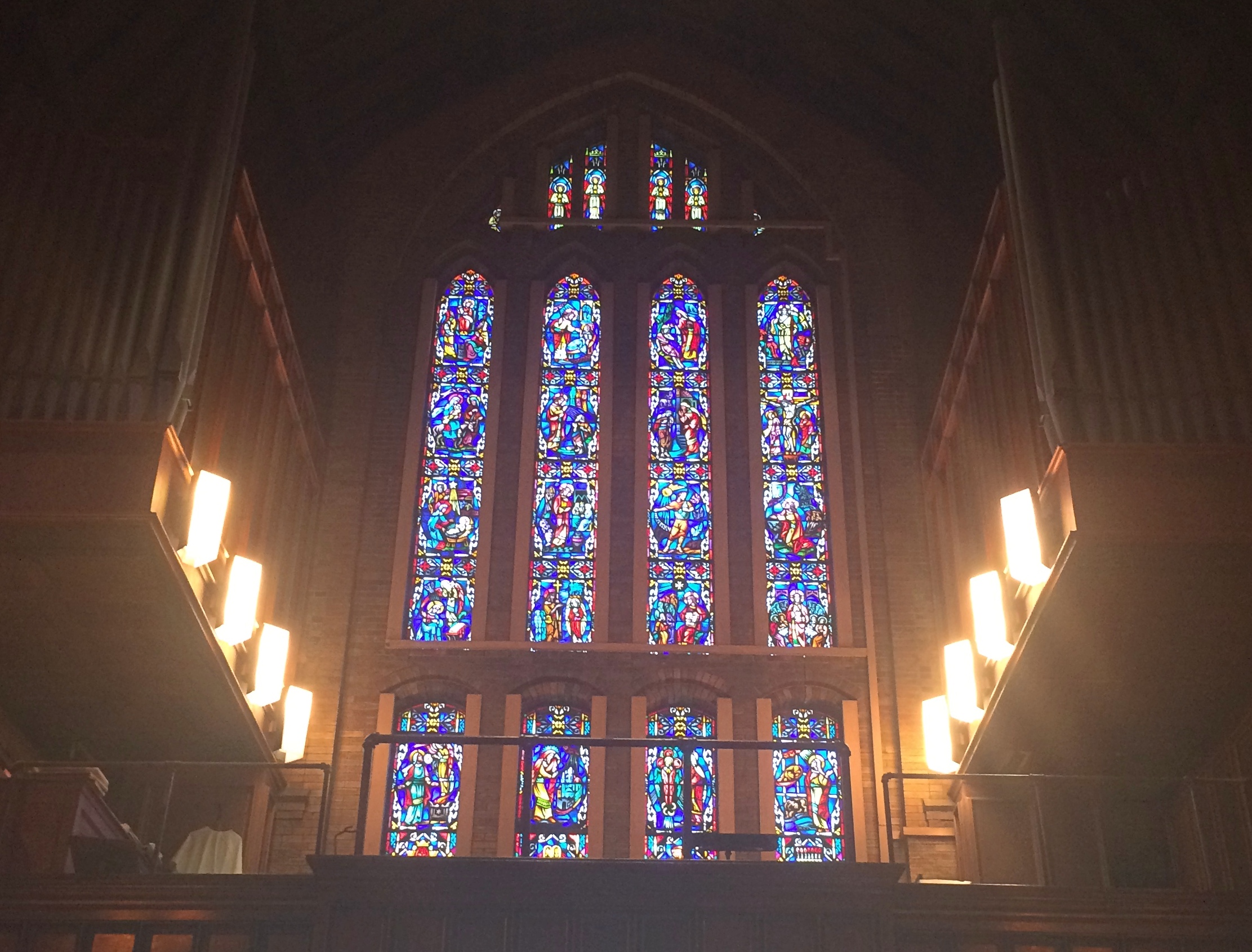
Back on Wisconsin Ave. (for St. George is a few blocks to the north), we visited one more church on Saturday: Calvary Presbyterian, a soaring Victorian Gothic structure dating from the early 1870s, designed by architects Koch & Hess.

Calvary Presbyterian MilwaukeeThat was a long time before the highway, unfortunately next to the church, was built.
Calvary Presbyterian MilwaukeeNickname: the Big Red Church.
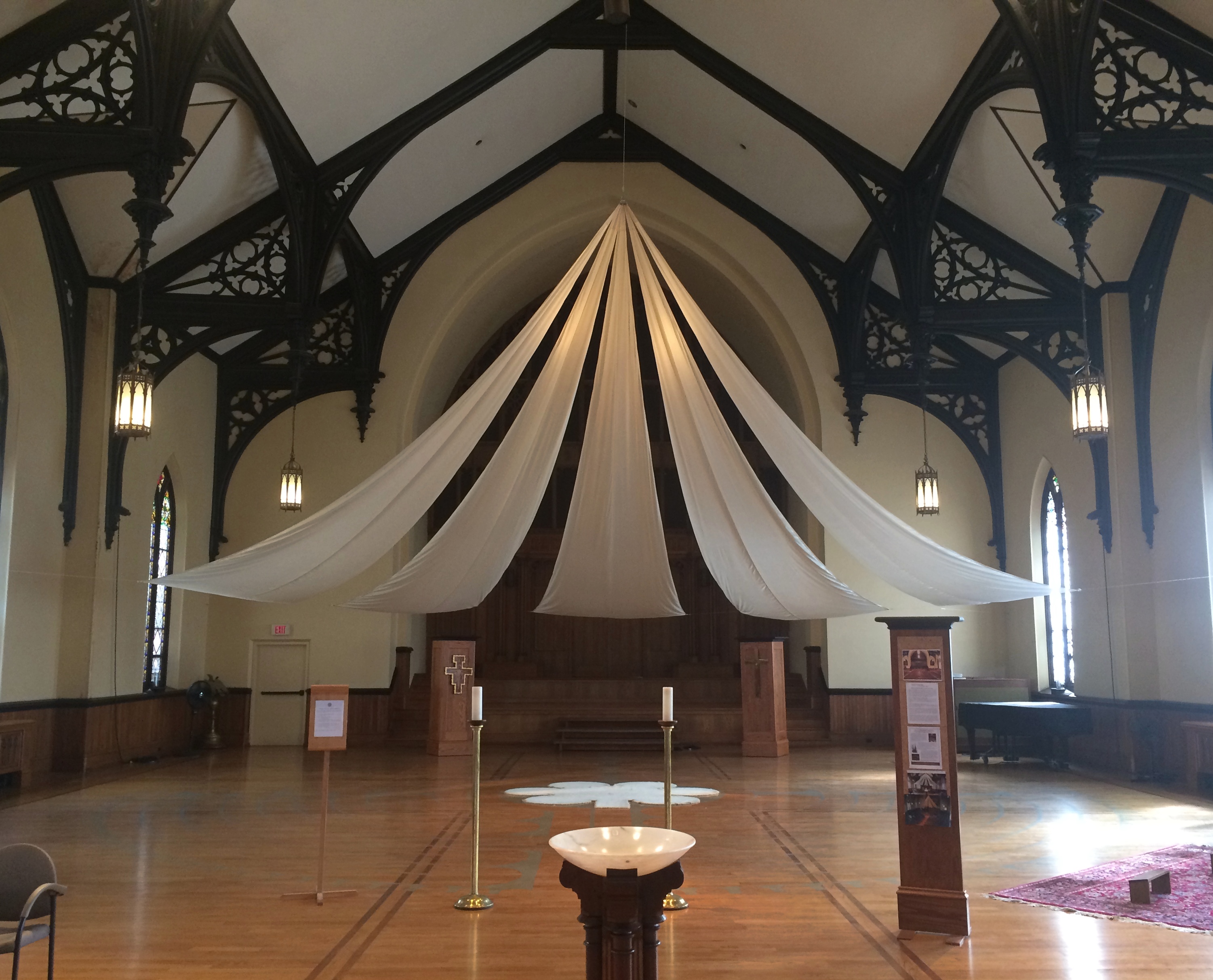
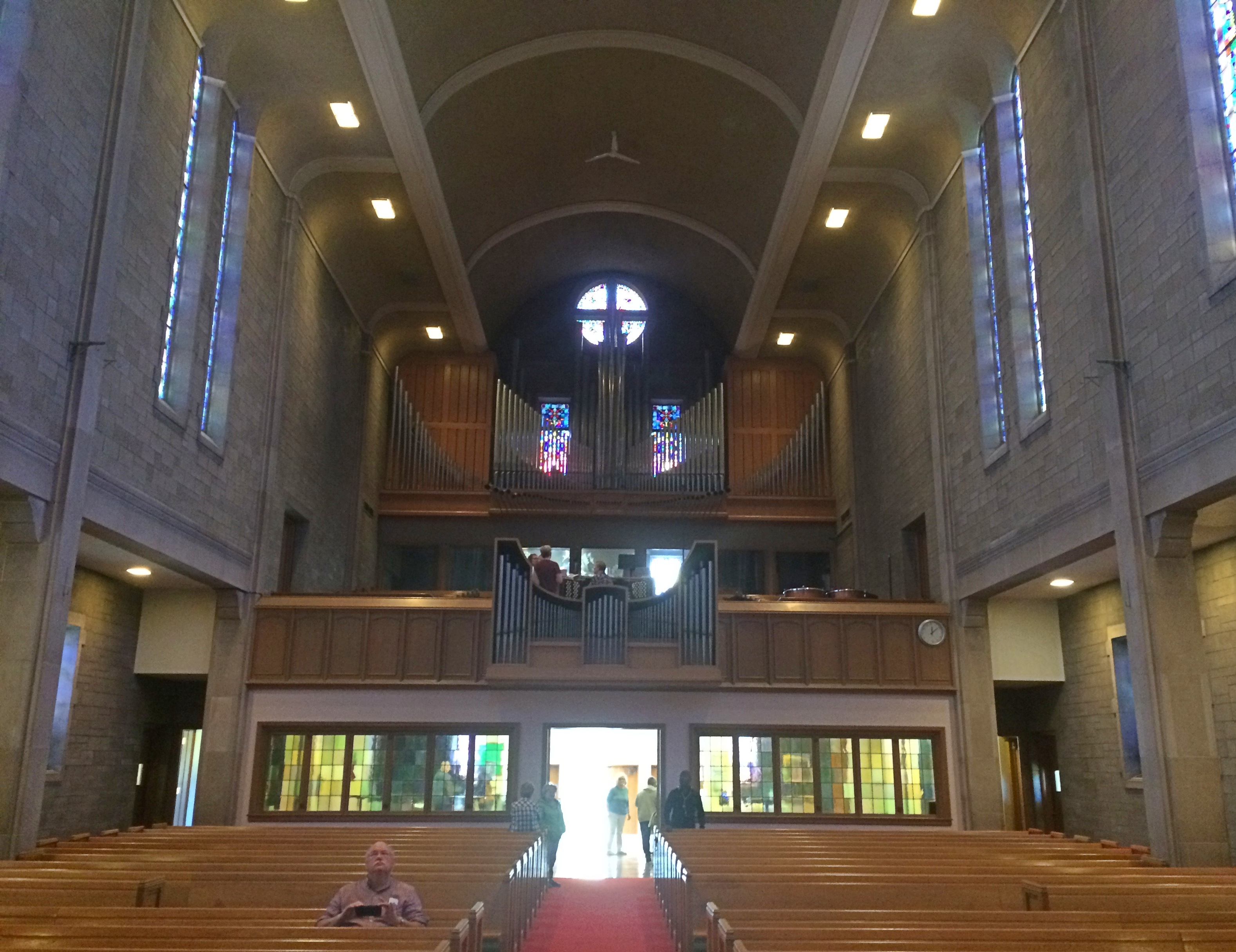
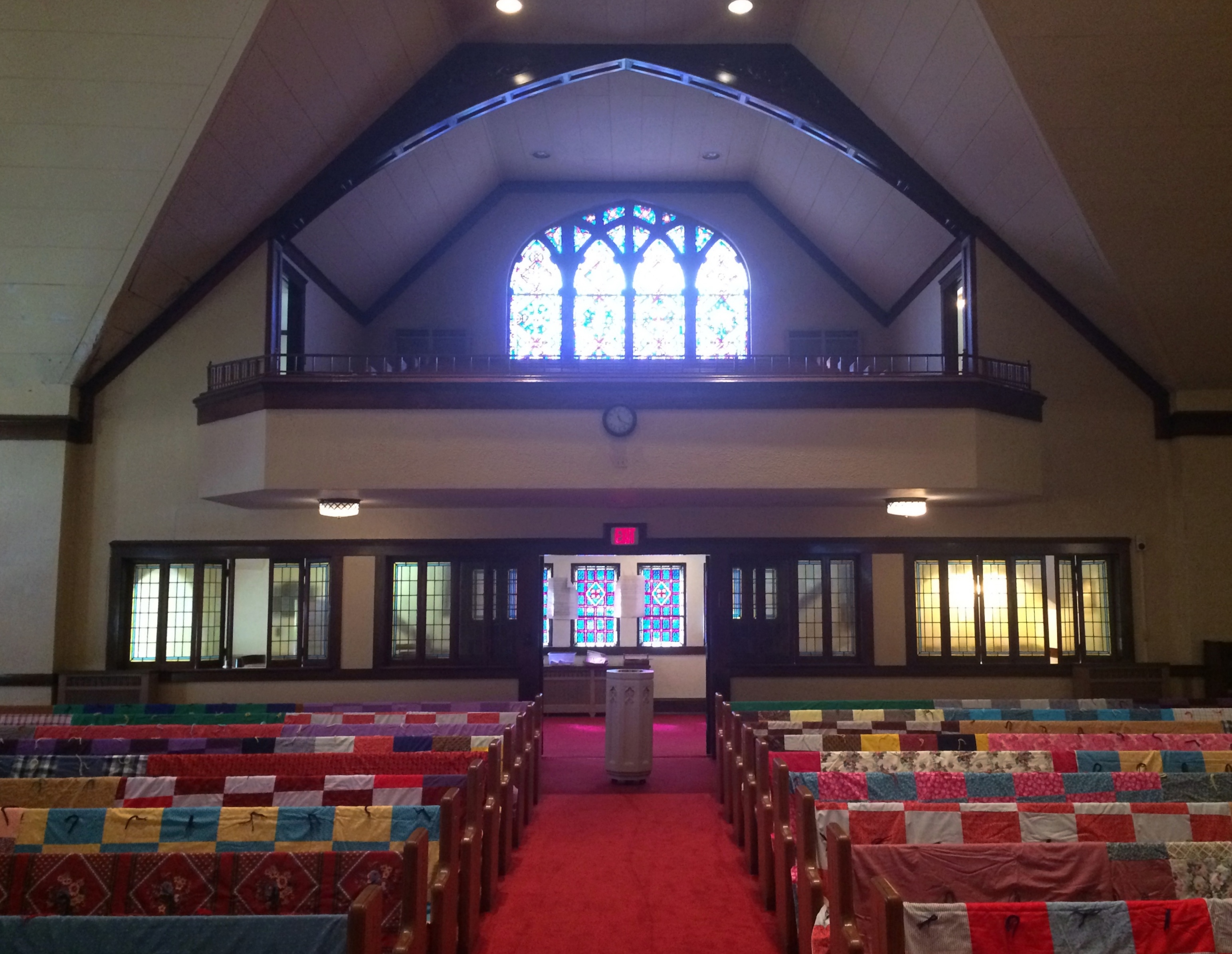
Calvary Presbyterian MilwaukeeInside, I was surprised again.
Calvary Presbyterian Milwaukee“Not what you expected, is it?” said one of the congregation. He explained that with pews, the church would be used once a week for a few hours — unsustainable for a small membership. Twenty years ago, they decided to remove the pews. When the congregation meets now, it’s on temporary chairs under a multi-petal canopy. Other groups also meet for other purposes in the now-open space, making the place an active one.

The Tripoli Shrine Temple

Last night at around 11, or just an hour before September ended, I sat on my deck outside in short sleeves, in comfort. Warm winds blew. The day had been summer-like, in the mid-80s at least, and October 1 has been roughly the same. Rain is coming tonight, though, and so are cooler temps.

I don’t have any interest in becoming a Shriner, but I have to like a fraternal organization whose members wear fezzes and meet in gilded, onion-domed buildings inspired by the 19th-century popular vogue for Orientalism. I’ve seen Shriners in their little cars buzzing along parade routes, and once upon a time I went to a Shrine Circus in a temple that the Shriners later sold, and which has been sold again.

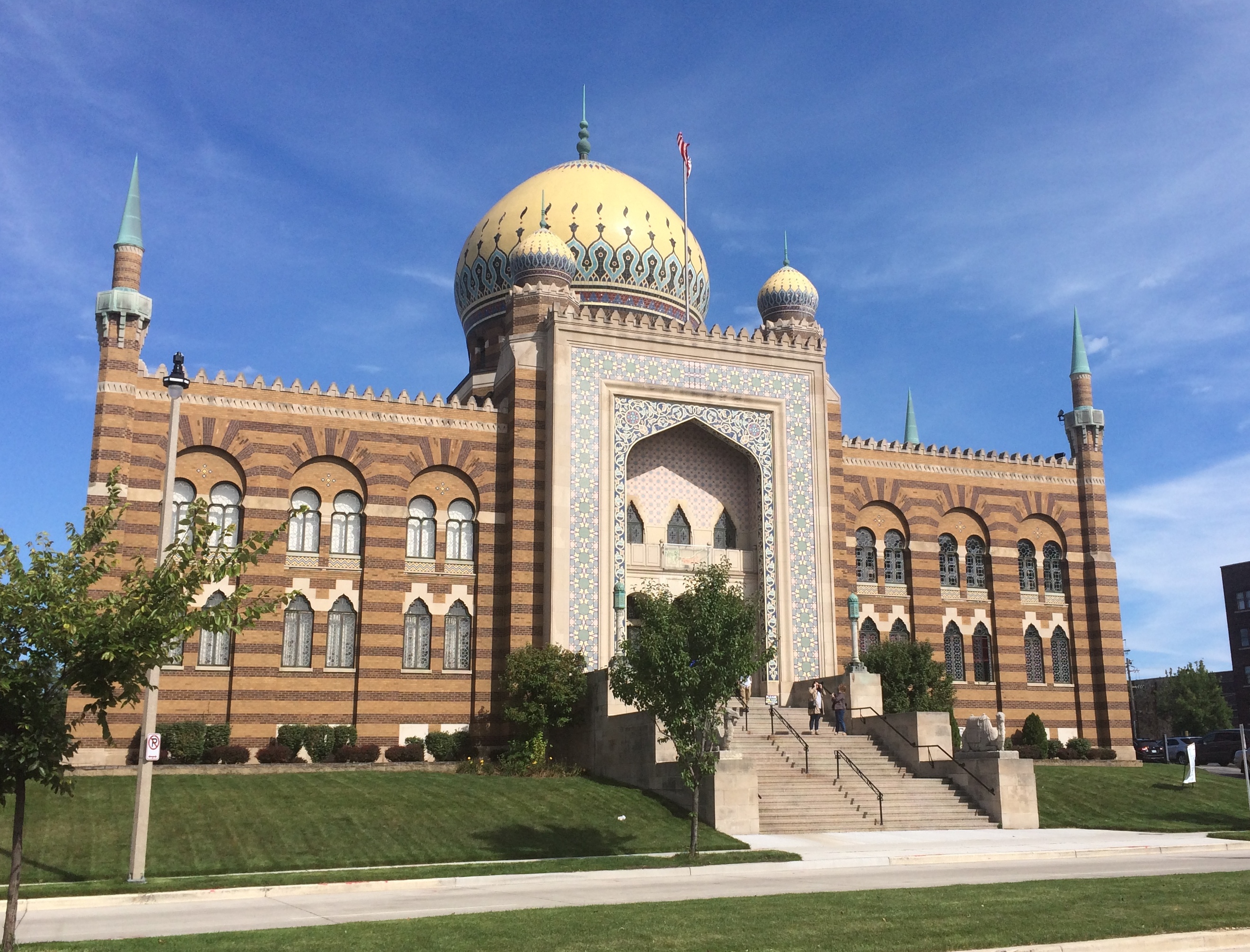
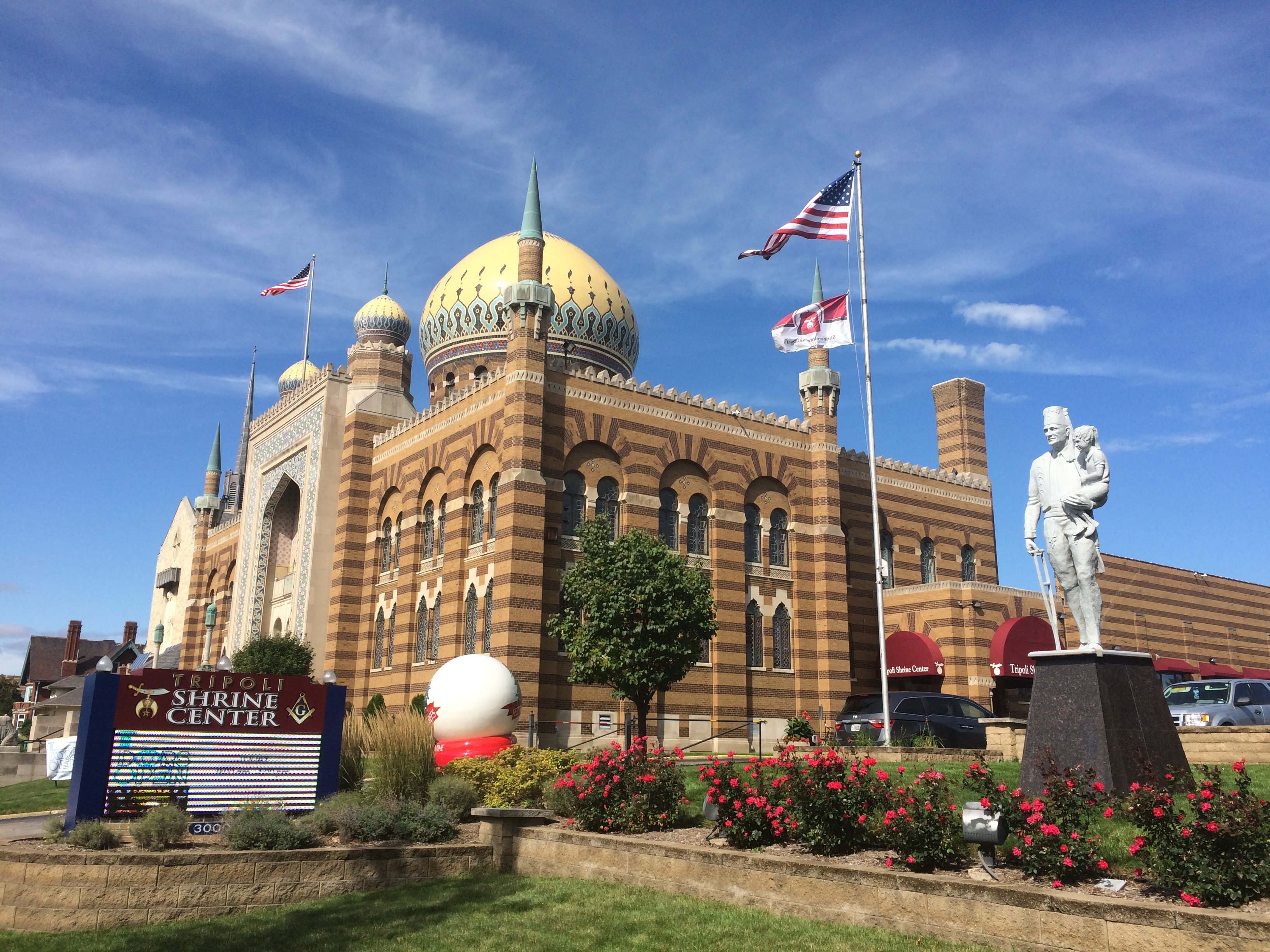
In Milwaukee, on Wisconsin Ave., the Shriners built themselves an exceptional edifice, the Tripoli Shrine Temple, taking inspiration from the Taj Mahal.
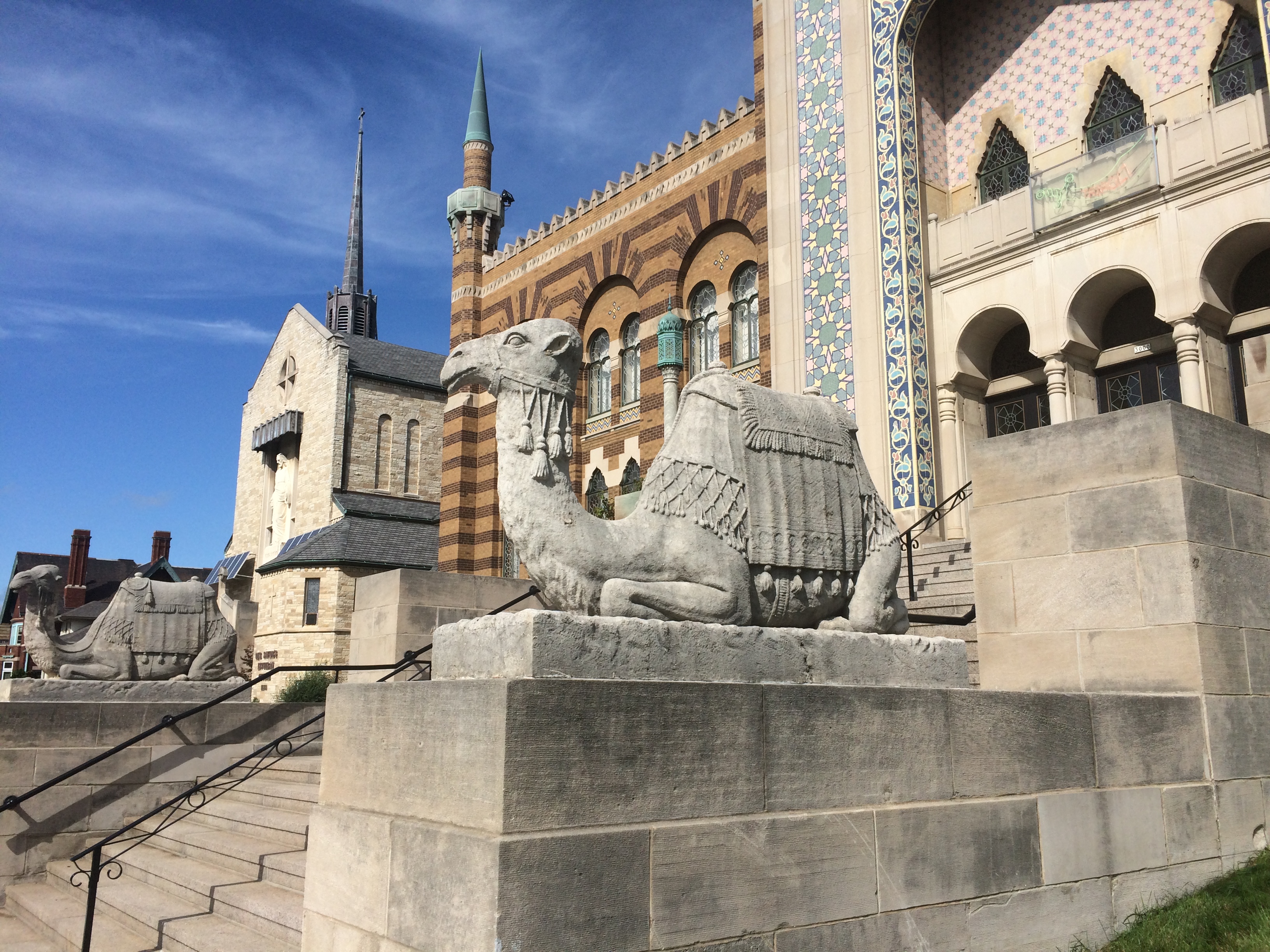
Tripoli Shrine TempleNo example of Moorish Revival is complete without stone camels, I think. Especially considering that the Shriners originally called themselves the Ancient Arabic Order of the Nobles of the Mystic Shrine. Two camels are perched beside the front entrance steps.

Tripoli Shrine TempleThe statue to the right of Shriner and child is a nod to the Shriners Hospitals for Children, of which there are 22 in North America (though none in Milwaukee).
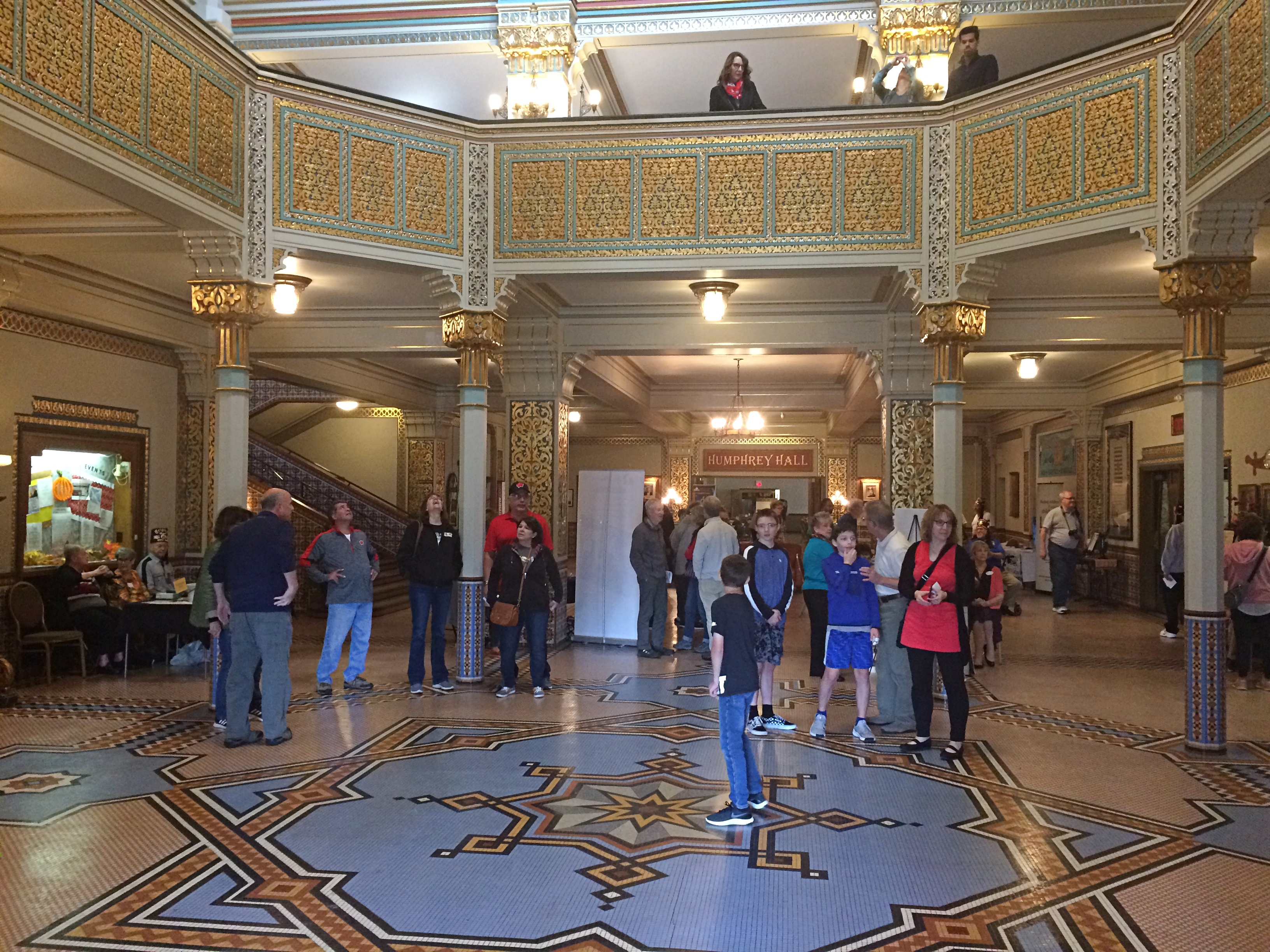
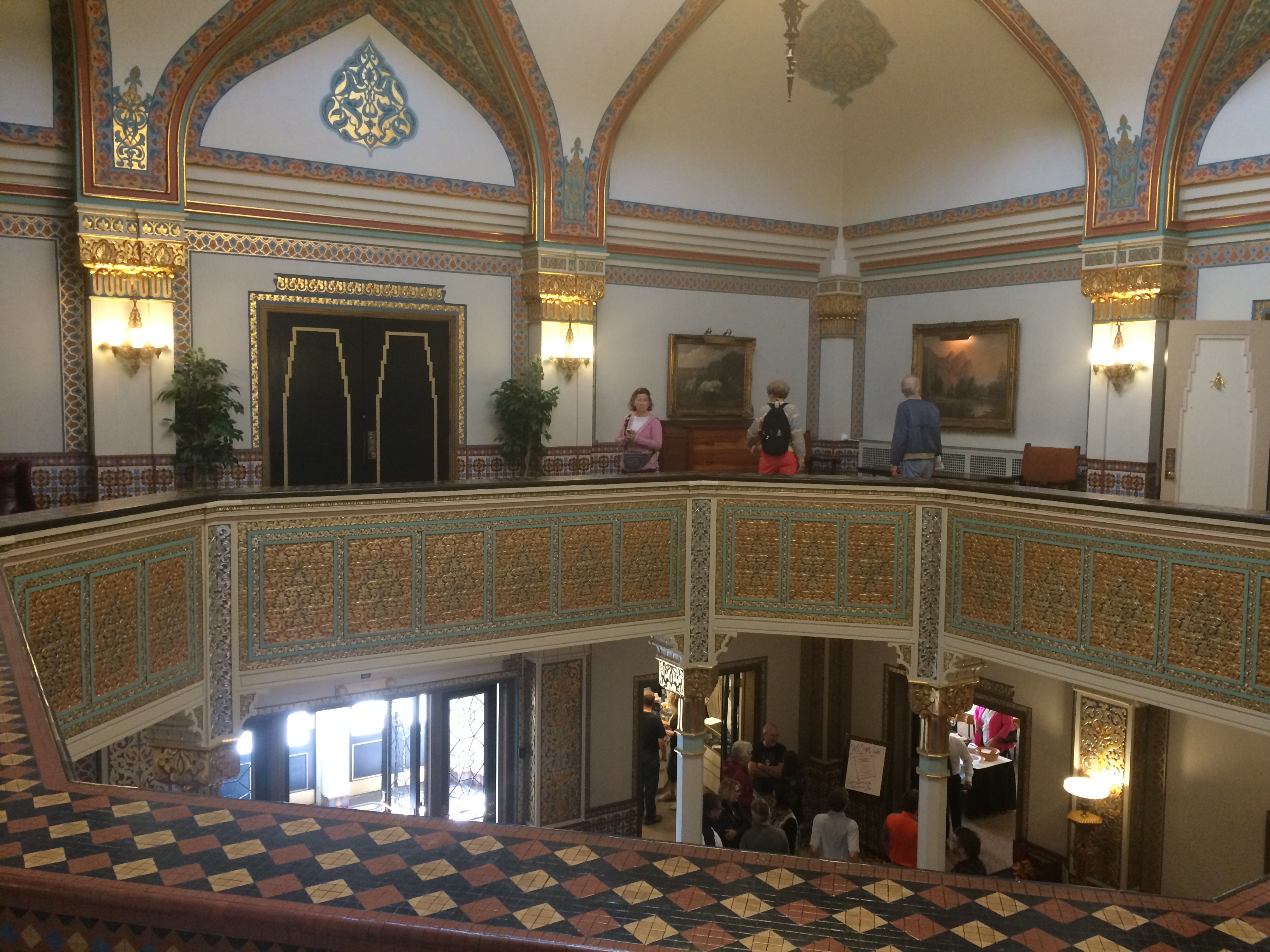
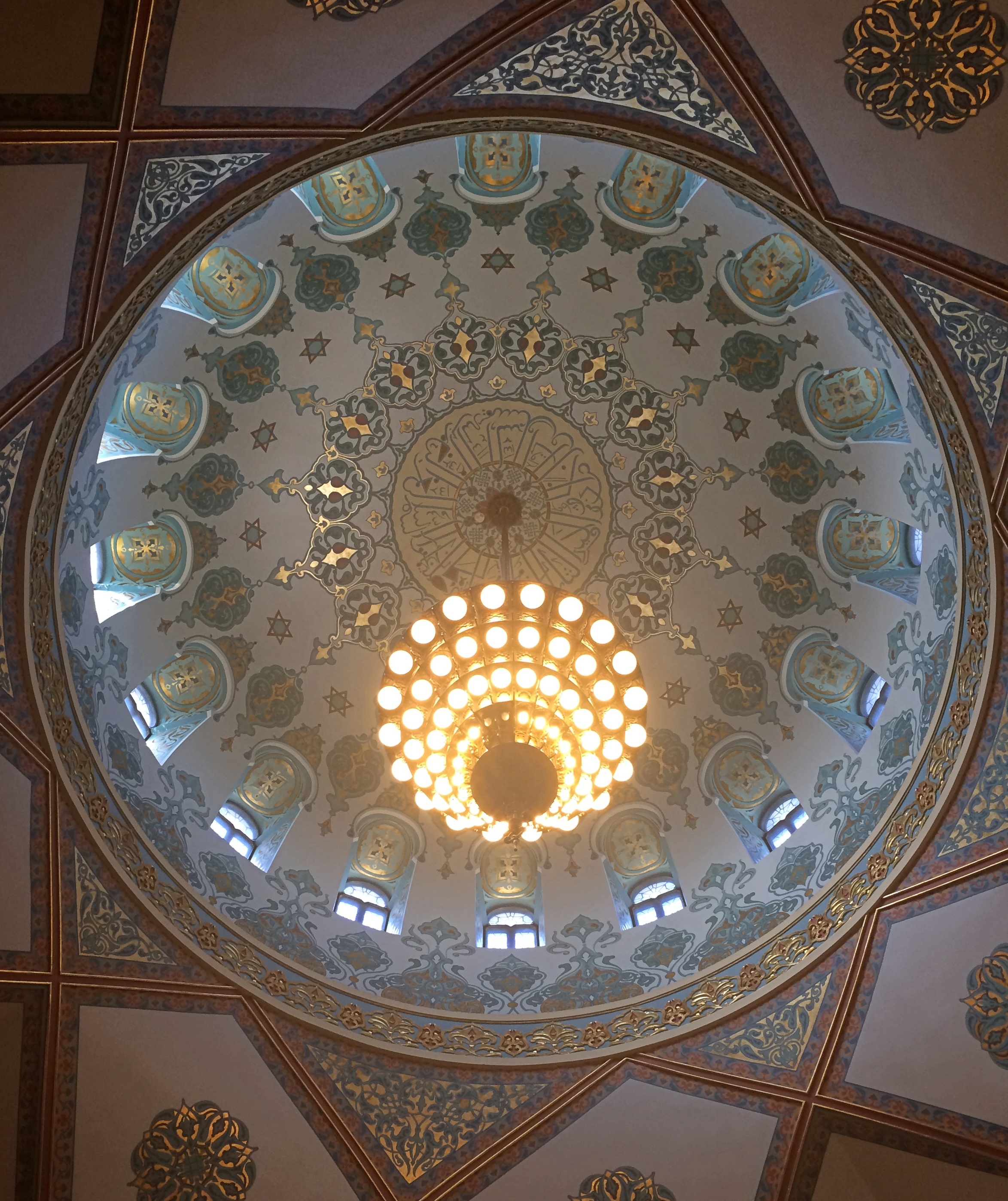
Tripoli Shrine TempleThe temple, designed by Clas & Shepard of Milwaukee and completed in 1928, is every bit as ornate inside as out.
Tripoli Shrine TempleSecond floor.
Tripoli Shrine TempleLooking up.
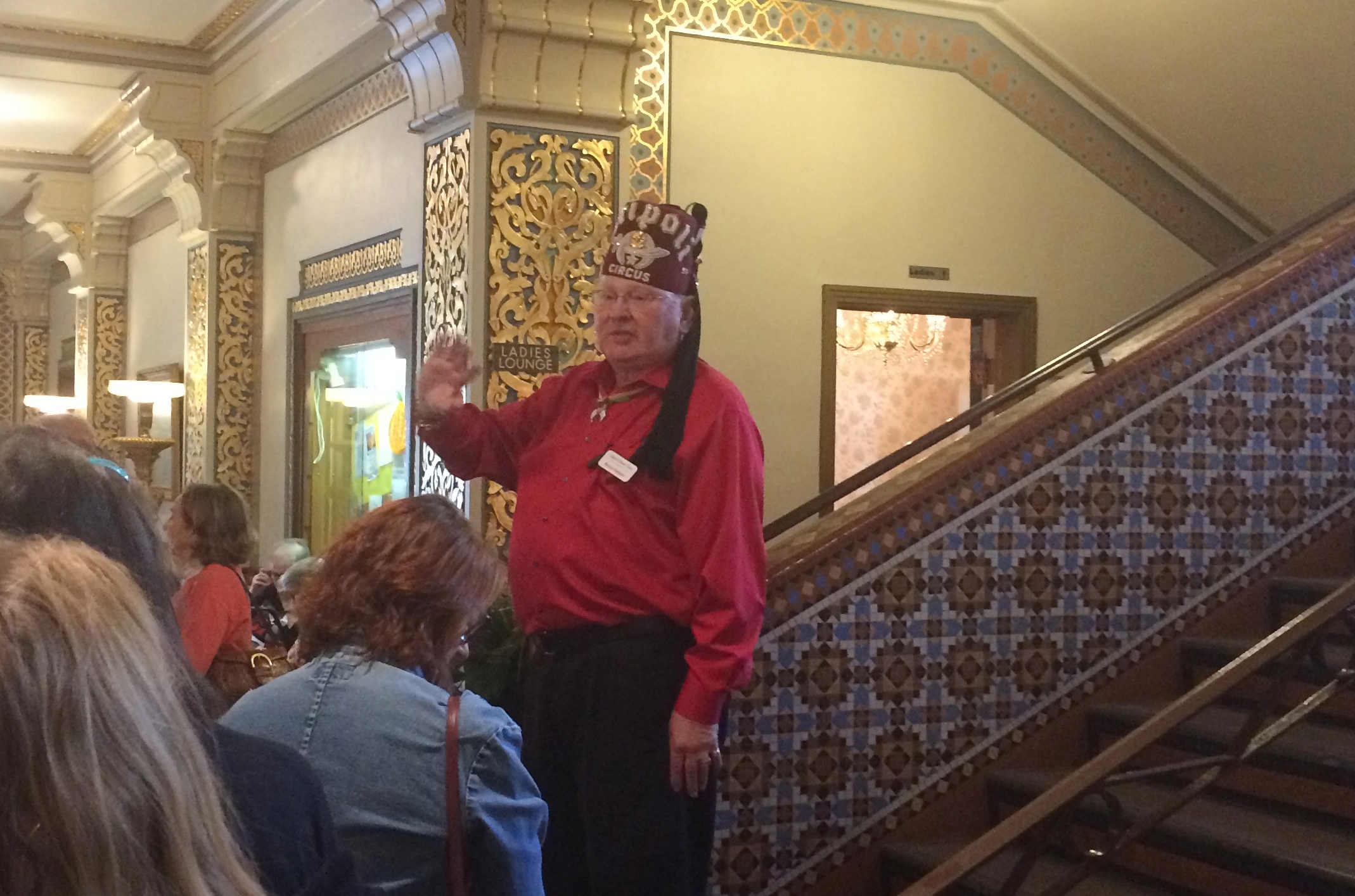
Tripoli Shrine TempleThere was no shortage of Shriners around, helping show off the place.
Tripoli Shrine TempleThis one gave a short talk about the building. He had interesting things to say, especially about the countless thousands of tiles on the floors and wall. Literally countless, since no one kept count or has made a count. He said that during the interior construction of the temple in the late ’20s, a family of four skilled in tilework lived in the temple, staying until they were done a few years later.

Three Wisconsin Avenue Lutheran Churches & One Beer Palace

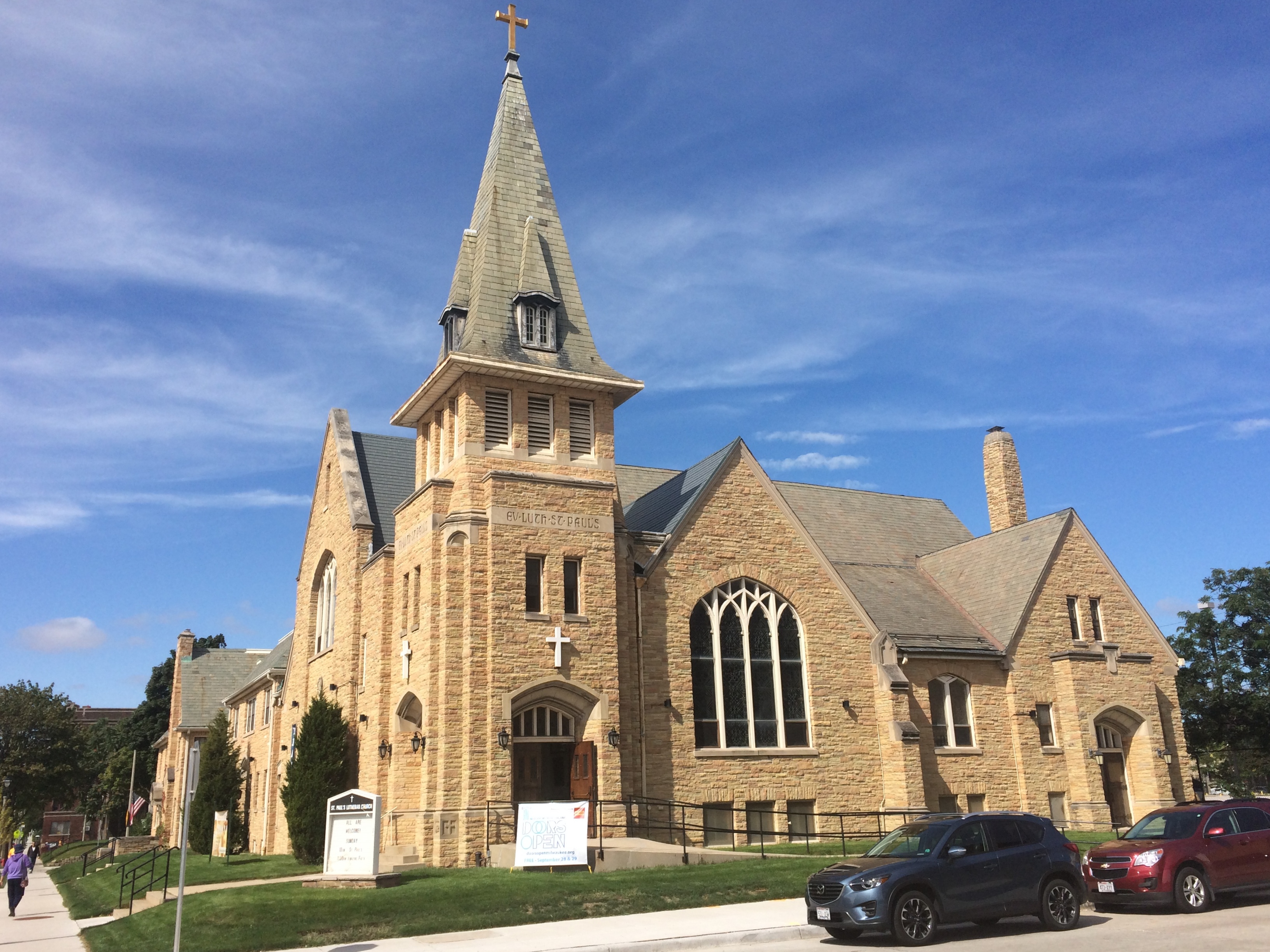
We kicked off our time on Wisconsin Ave. in Milwaukee on Saturday at St. Paul’s Lutheran Church, which has been on this site since 1917, though the congregation has been around since 1841, before there was a Milwaukee or even a state of Wisconsin.
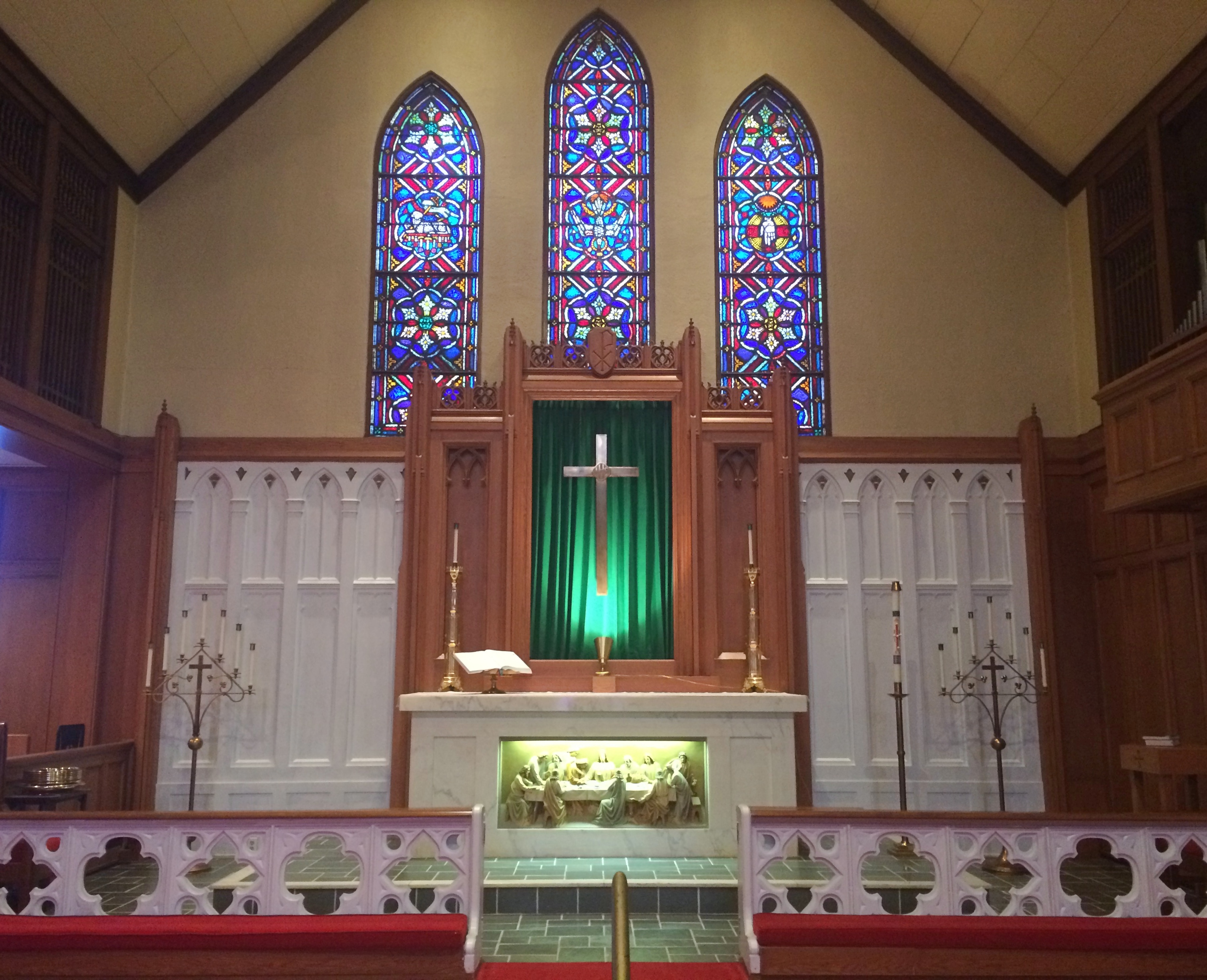
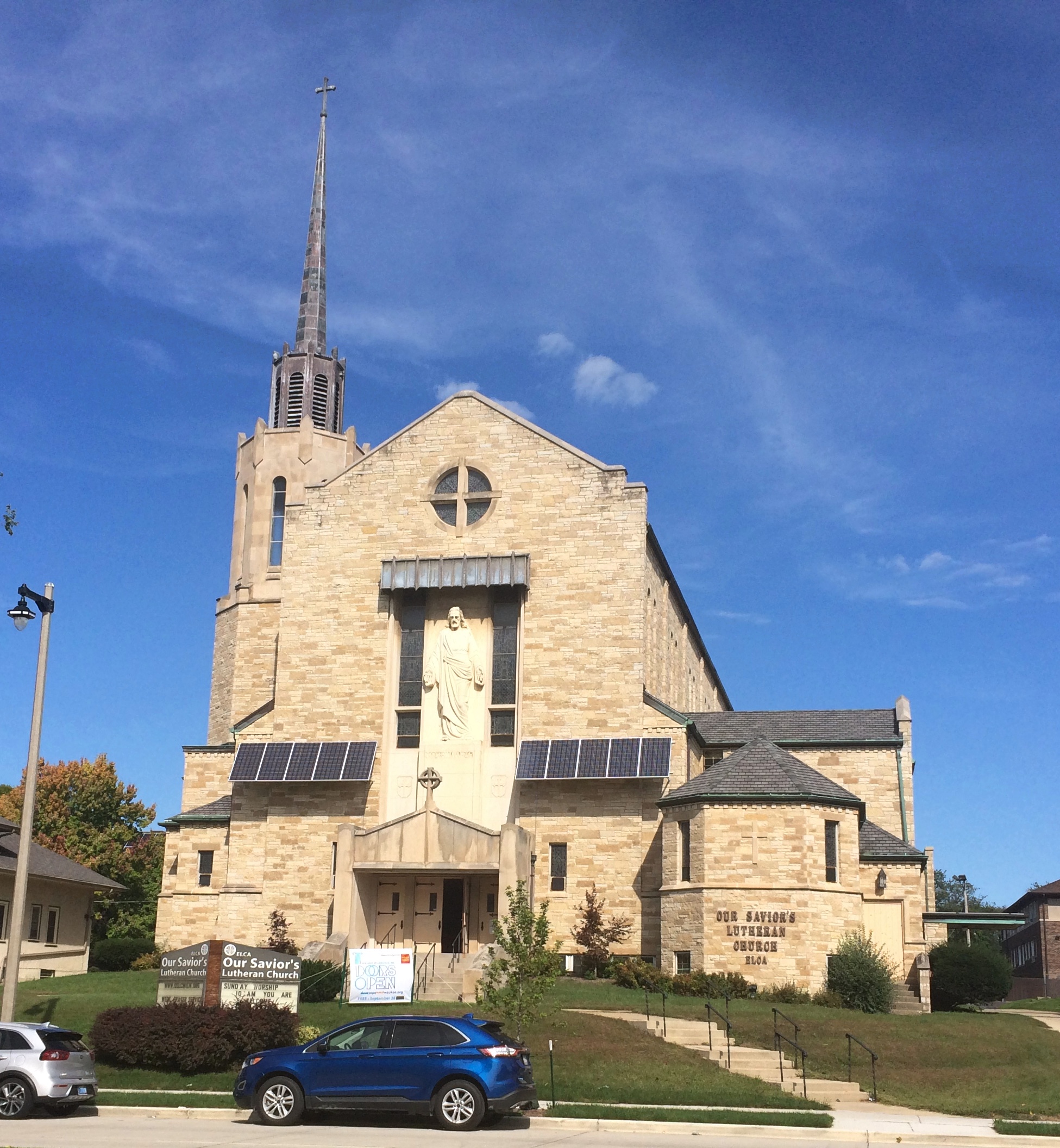
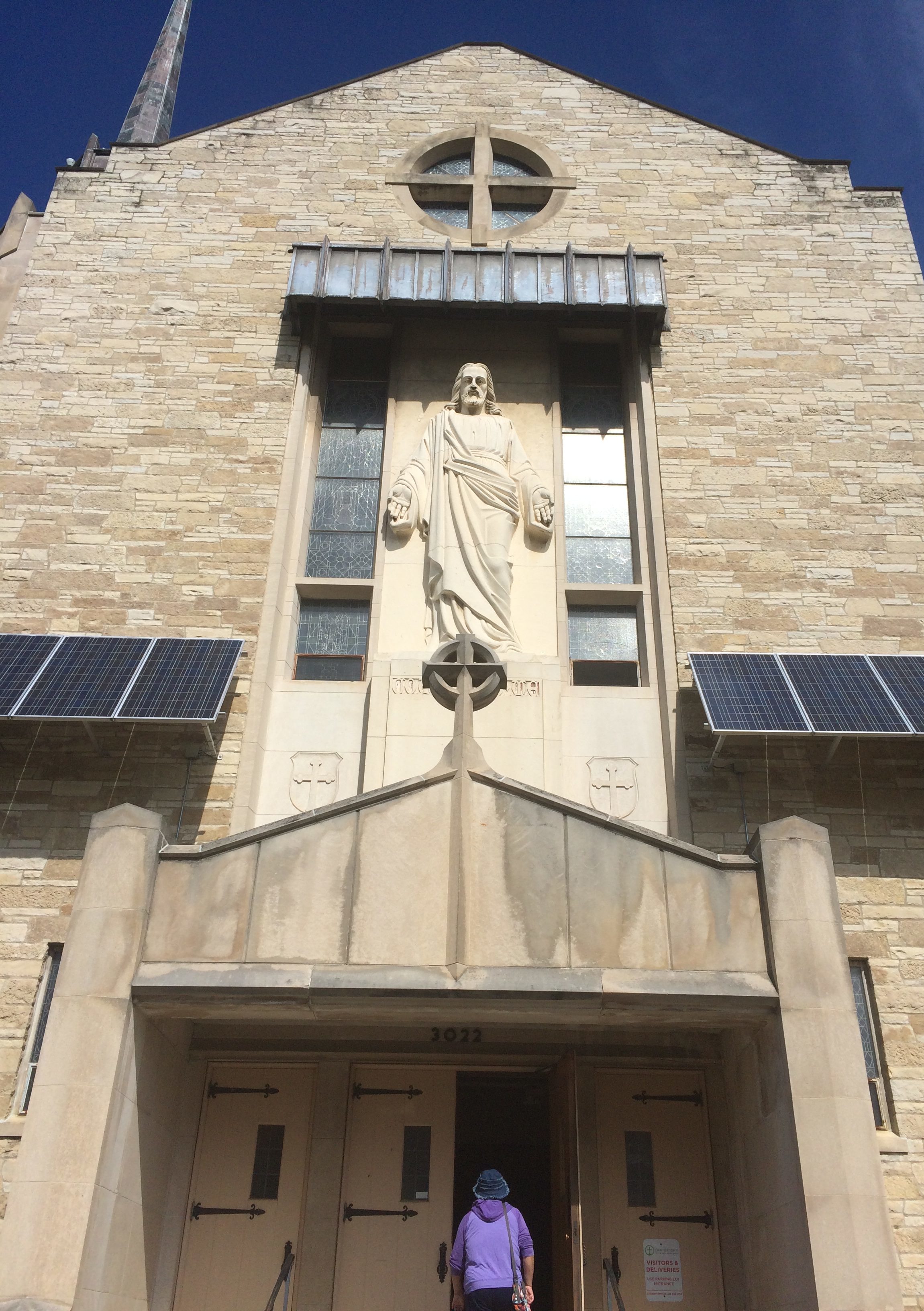
St Paul's Lutheran MilwaukeeGeorge Bowman Ferry designed the structure. It must have been one of his last, since he died in 1918. In partnership with another Milwaukee architect, Alfred C. Clas, he’s better known for doing the Pabst Mansion, which isn’t far to the east of St. Paul’s.St Paul's Lutheran Milwaukee St Paul's Lutheran MilwaukeeJust a few blocks from St. Paul’s — 2812 W. Wisconsin vs. 3022 W. Wisconsin — is another Lutheran congregation, which meets at Our Savior’s Lutheran Church. I gazed at the structure for a while before I noticed the solar panels. It probably took so long because that’s still an unexpected feature in ecclesiastical architecture.Our Saviors Lutheran Church, MilwaukeeOur Saviors Lutheran Church, Milwaukee

Why so close to another Lutheran church? I don’t have a definite answer. They both seem to be part of the Evangelical Lutheran Church in America, but that’s a fairly recent combination, so perhaps they were different kinds of Lutherans in the early days. Also possible: Our Savior’s was founded by Norwegians, who maybe didn’t want to share a church with Germans or others in the 19th century.

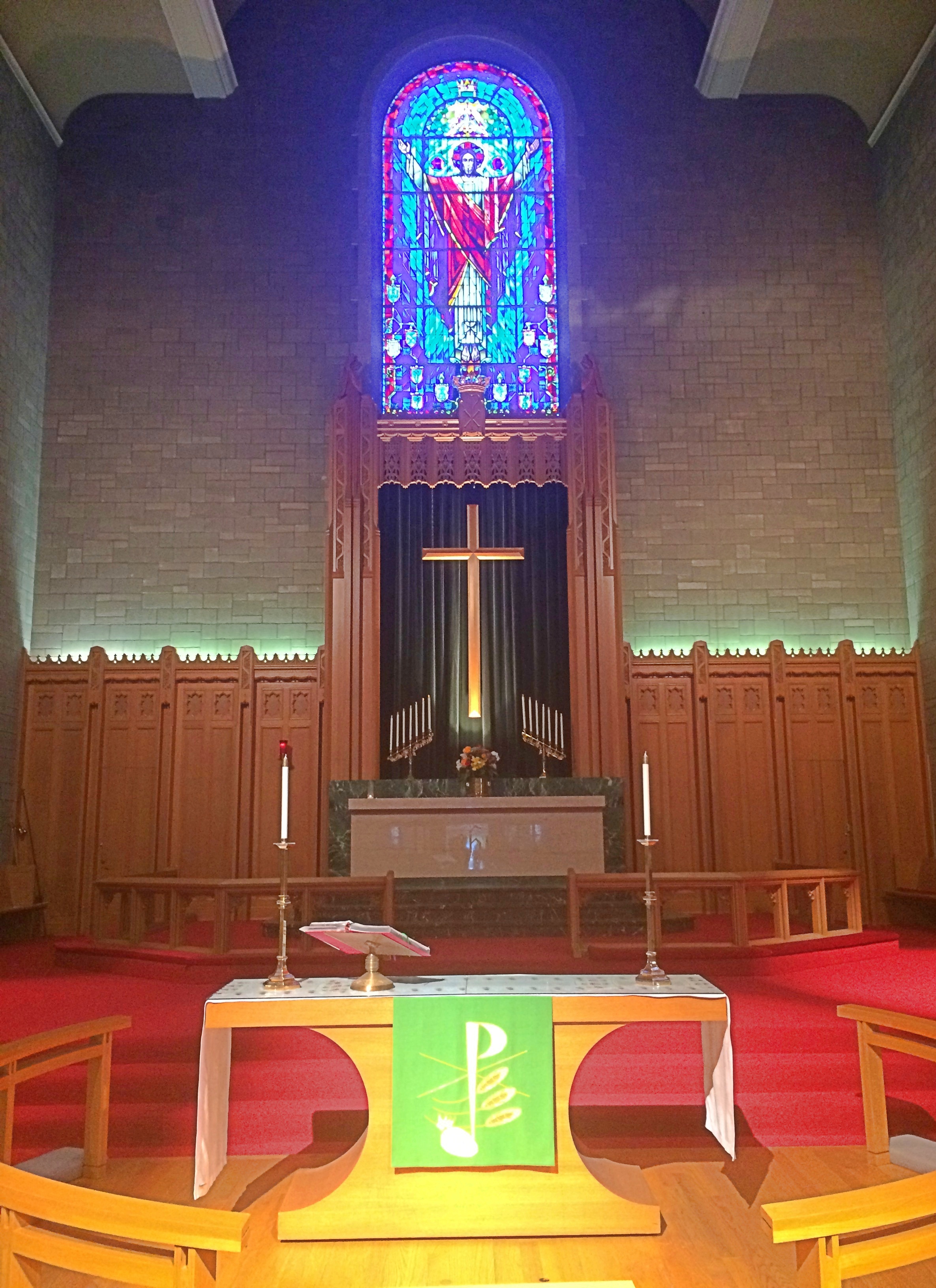
The church is tall and the interior walls are spare.Our Savior Lutheran MilwaukeeOur Savior Lutheran MilwaukeeA reflection of its midcentury design, I believe, since the building was completed only in 1954 for a much older congregation. A detail I find interesting from the church web site, after mentioning the 1951 groundbreaking and 1952 cornerstone laying: “Work slowed in 1951-1953 due to the steel shortage caused by the Korean conflict.”

Also: “The original architect, H.C. Haeuser, passed away in 1951 before work on the church could begin. The firm of Grassold and Johnson was hired to replace him and that firm finalized the design.”

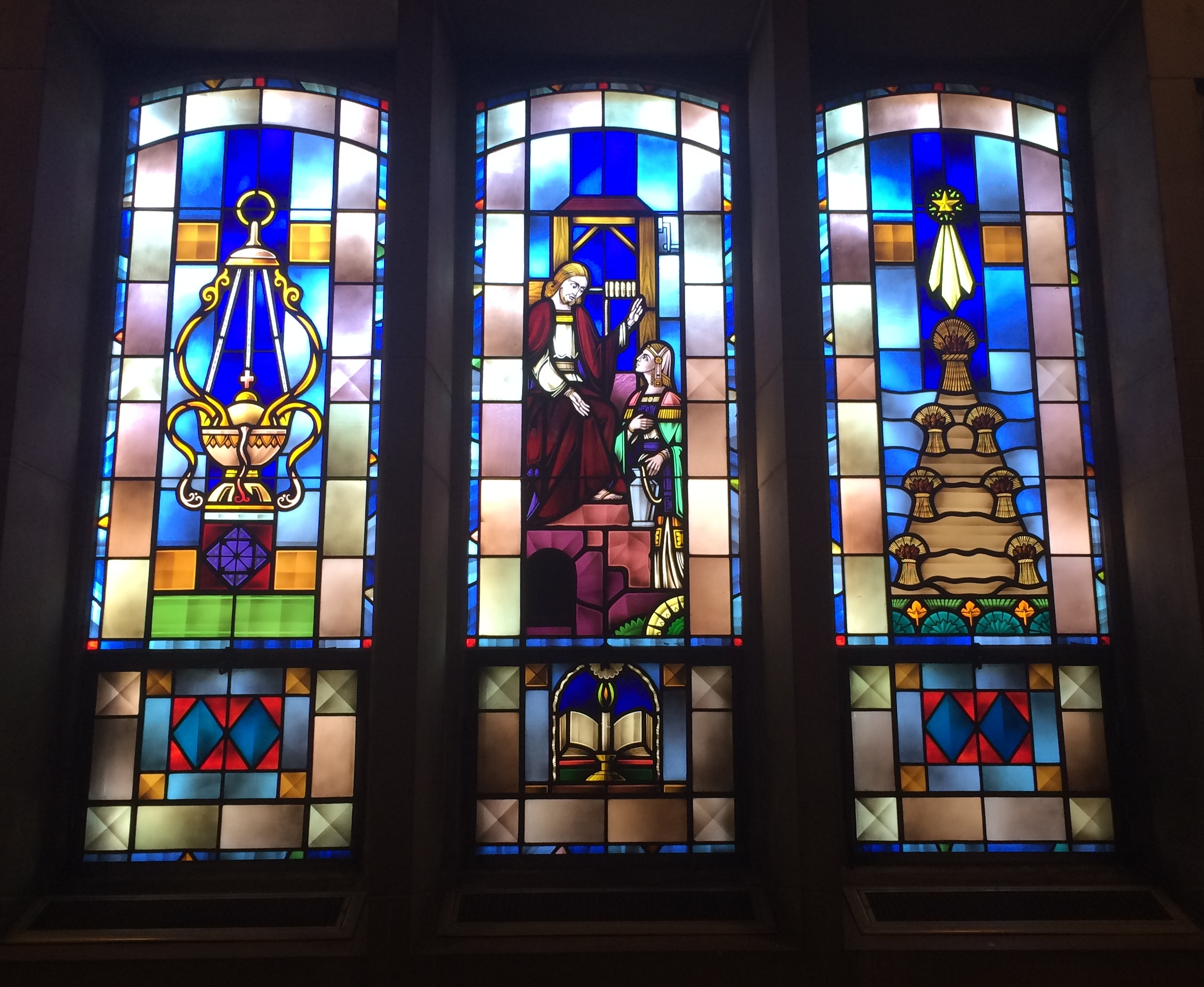
The walls may be mostly plain, but the stained glass isn’t.
Our Savior Lutheran Milwaukee“The stained glass windows were designed by Karl Friedlemeier, a native of Munich, Germany and manufactured by Gavin Glass and Mirror Company of Milwaukee from imported antique glass,” the church says. “Upper windows on the west wall depict Old Testament stories; New Testament stories are shown on the upper east walls.”

To east of these two Lutheran churches, again not far (1905 W. Wisconsin Ave.), is another church of that denomination, Reedemer Lutheran Church. It too is ELCA.
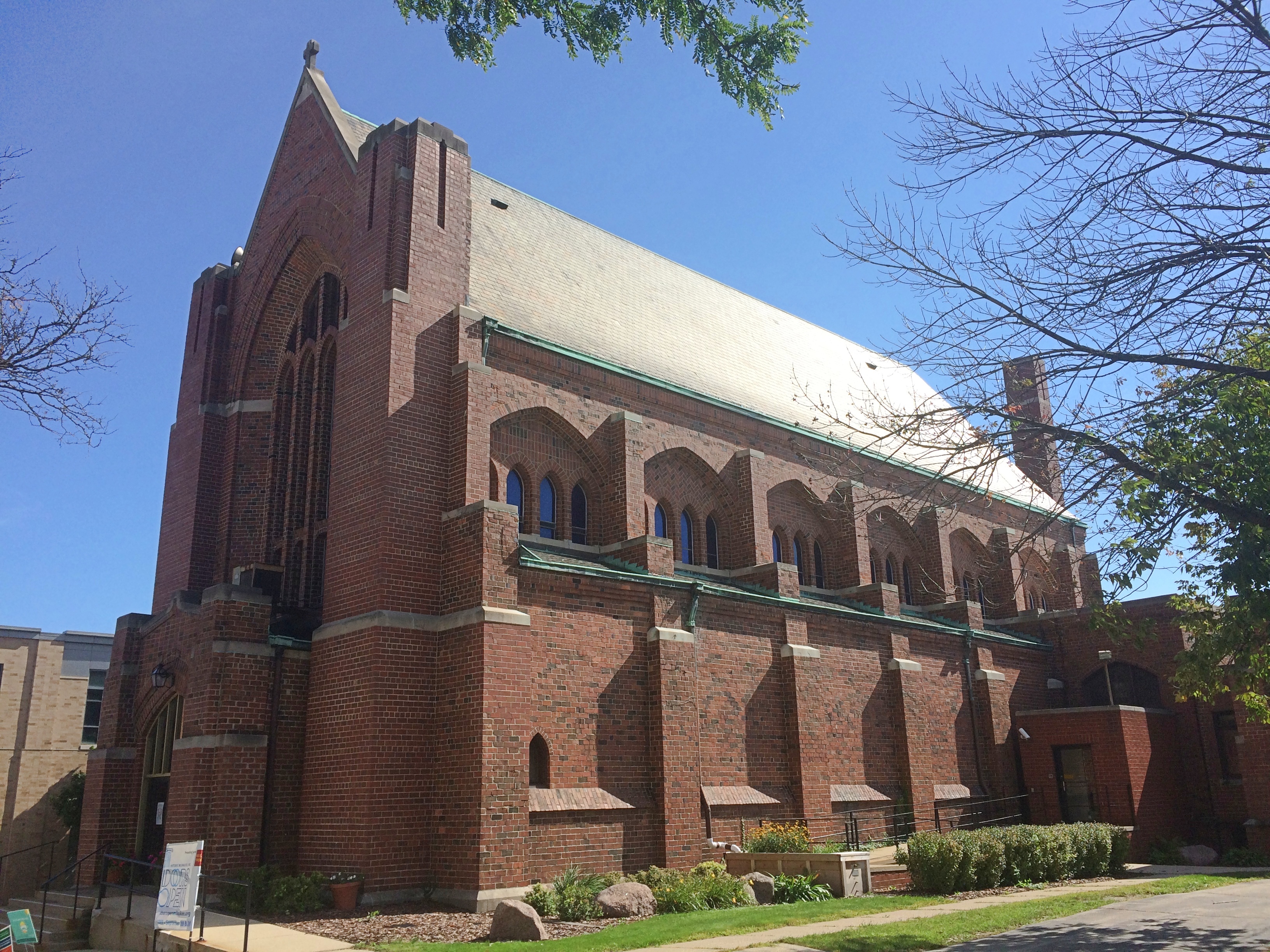
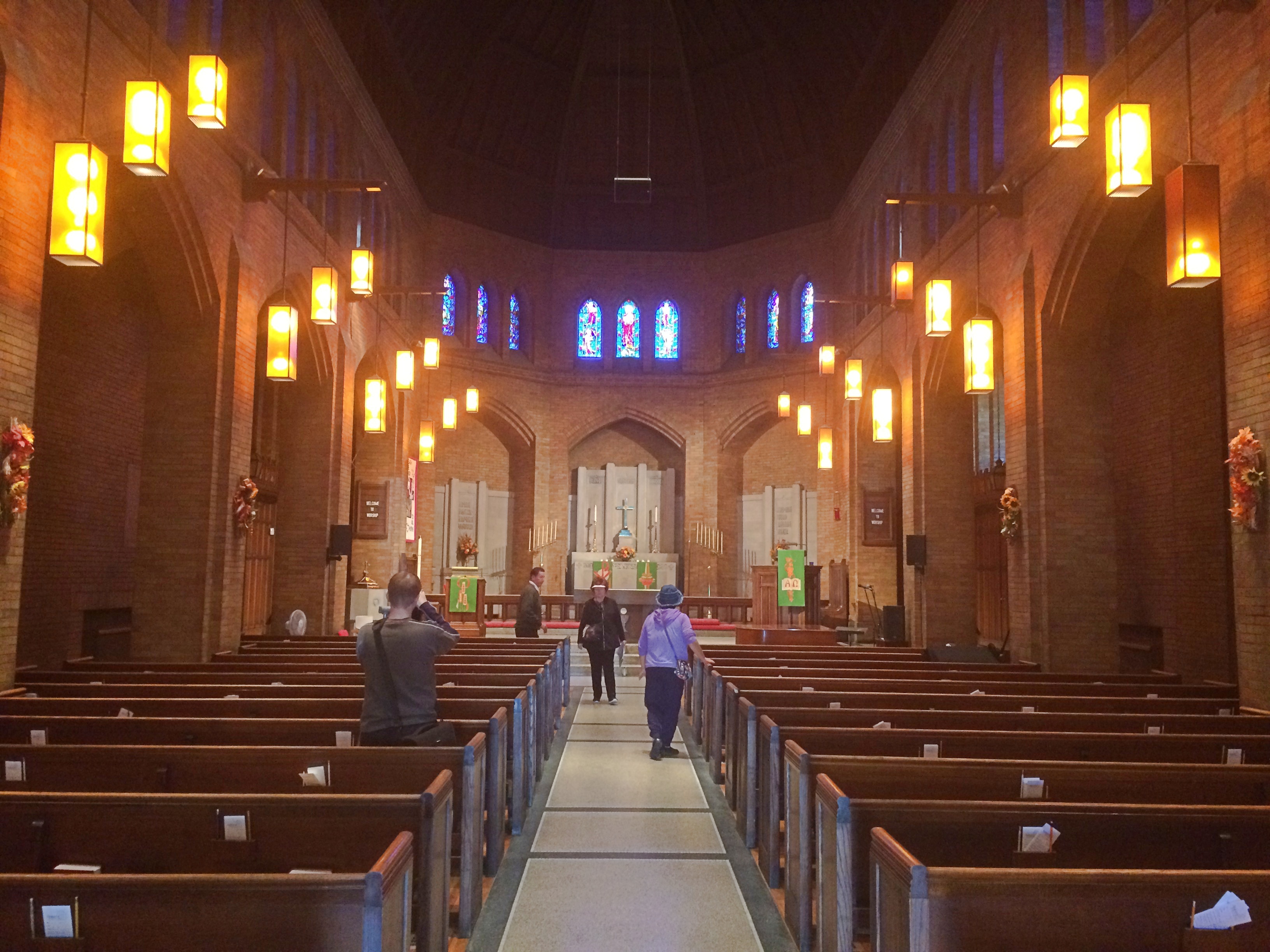
Redeemer Lutheran Church MilwaukeeA fine brick Gothic structure completed in 1915, designed by William Schuchardt, who worked at Ferry & Clas early in this career.
Redeemer Lutheran Church MilwaukeeRedeemer Lutheran Church MilwaukeeWhile on the way to Reedemer, we passed by the Pabst Mansion.
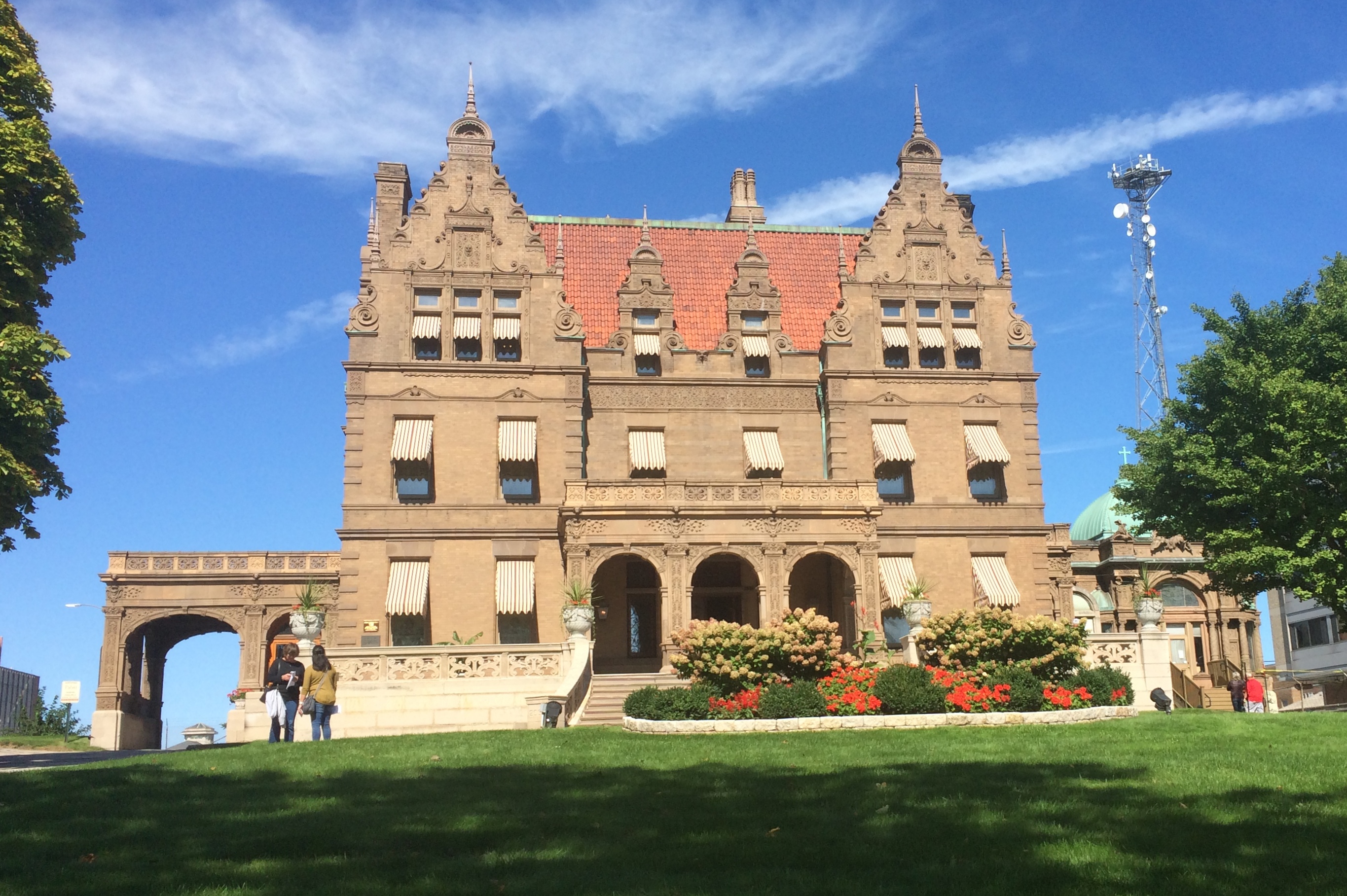
Pabst Mansion MilwaukeeLooks as palatial as it did in 2010. No reason it shouldn’t. It wasn’t part of Doors Open and so not open at no charge for the weekend. We walked by.

Across the street, an event called Beer Baron’s Bash was going on in the mansion’s parking lot, featuring food trucks and booths serving beer. Interesting, but not what we had come for either, so we walked by that too.

Milwaukee Doors Open ’19

Large amounts of rain fell on northern Illinois and southern Wisconsin on Friday, and more again on Sunday morning. In between, Saturday turned out to be a brilliant early fall day, clear and cool but not cold, and with touches of brown and gold on the still-green trees.

Milwaukee Doors OpenA good day to go to the latest Milwaukee Doors Open, driving up in mid-morning and returning just after dark.

This year — see 2017 and 2018 — we spent most of our time along or near Wisconsin Ave., a major east-west thoroughfare from the edge of Lake Michigan, just in front of the Milwaukee Art Museum, to near the Milwaukee County Zoo in the western reaches of the county.

At 2812 W. Wisconsin Ave. is St. Paul’s Lutheran Church, our first stop along the avenue, west of downtown and not too far from Marquette University. A few blocks to the west of that church is a vastly ornate Moorish Revival structure, the Tripoli Shrine Temple. “Is this a mosque?” Yuriko asked. No. “A church?” Well, no. It’s the Shriners.

Next to the temple — on an adjoining lot — is Our Savior’s Lutheran Church. From there, we headed a bit to the north, off Wisconsin Ave. but not far, to see the splendid Gilded Age Schuster Mansion, now a bed and breakfast.

Returning to Wisconsin Ave., we visited the Ambassador Hotel, whose handsome lobby is as Deco a design as any I’ve ever seen, and then went to the third and fourth (but not last) churches of the day: Redeemer Lutheran Church and, after lunch at a Malaysian Chinese storefront on the avenue, St. George Melkite Greek Catholic Church.
The end of the day found us closer to downtown Milwaukee, where we visited one more church on Wisconsin Ave., Calvary Presbyterian, with its surprising interior, and then we saw the inside of two massive edifices of the state: the Milwaukee County Courthouse and the Federal Building and U.S. Courthouse, the latter also on Wisconsin Ave.

The only Milwaukee building we visited this year not on or near Wisconsin Ave. was about five miles to the south, and the first place we saw in the morning, because it isn’t far from I-94, the highway into Milwaukee from the south.

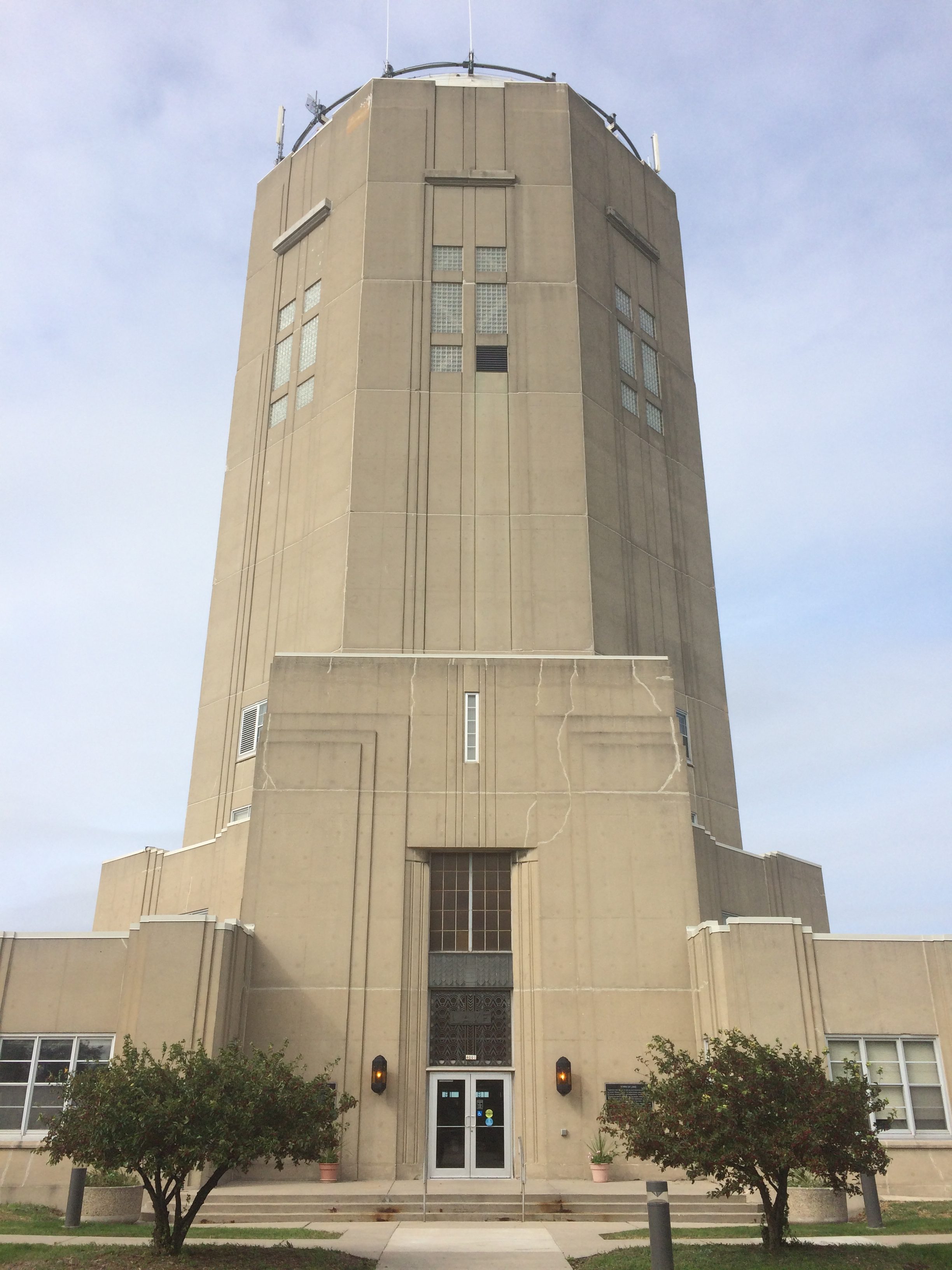
Namely, Lake Tower.
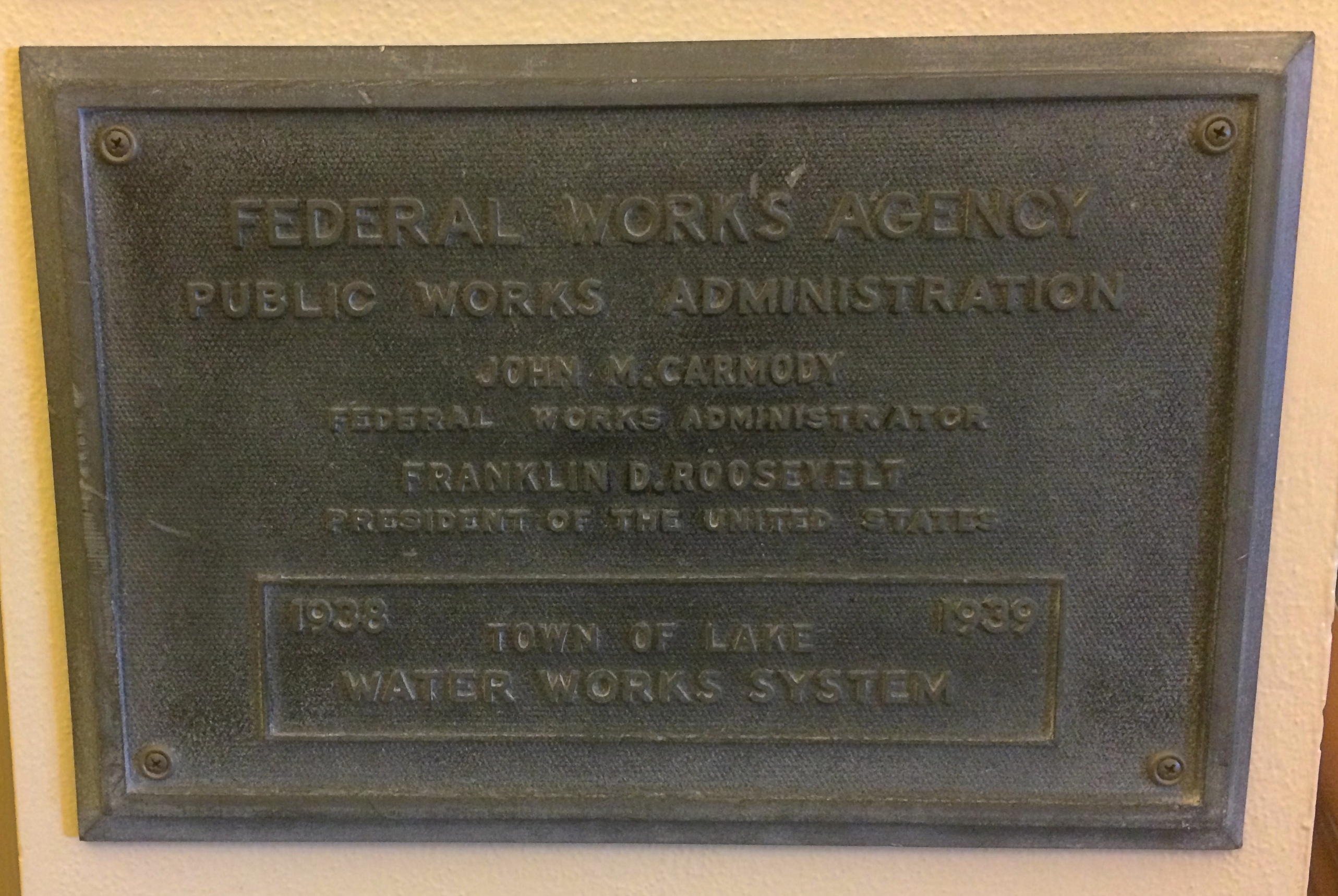
Lake Water Tower, MilwaukeeAlso called the Lake Water Tower, or the Anderson Municipal Building. It goes back to the Federal Works Agency, completed with a worn plaque just inside the entrance, dated 1938-39.
Lake Water Tower, MilwaukeeDon’t see Federal Works Agency plaques too often, but I’ve run across them occasionally.

At the time, this part of Milwaukee was an independent municipality: the Town of Lake. In fact, Lake, Wisconsin lasted from 1838 to 1954, when Milwaukee was able to annex it. In the late 1930s, the Town of Lake had municipal offices on the lower floors, and a million-gallon tank of water up top.

There are still municipal offices in the building, albeit Milwaukee’s, but the water tank has been empty for nearly 40 years, its function made unnecessary by new facilities, including the water reclamation plant in the vicinity, whose distinct odor pervaded the area around the tower. Milwaukee Doors Open visitors can go to the fourth floor of the tower, through a heavy door and into the dry bottom of the tank, with a view of the metalwork and convex roof (or is it concave? never can remember) and other features above (see these pictures).

The place had a nice echo. I asked the person on duty at the site — a tedious assignment, up there in the tank — whether small acoustic concerts were ever held there. No, afraid not. Something about the ADA, but I think it’s really a lack of municipal imagination.

Hush, Here Comes A Whiz Bang

Been a while since I visited Archive.org, which I remember from the early days of the Internet. Or at least my early days on the Internet, back in 199-something. According to the site, the archive now holds 330 billion web pages, 20 million books and other texts, 4.5 million audio recordings, 4 million videos, 3 million images and 200,000 software programs.

Maybe not the Library of Babel, or even the Library of Alexandria — or the existing Library of Congress, with its 168 million items — but impressive all the same. A fine place to wander around. When I did so the other day, I came across digitized versions of Captain Billy’s Whiz Bang, the juvenile humor mag whose heyday was nearly 100 years ago.
I downloaded a cover. It’s public domain now. The explosion of pedigreed bunk belongs to all humanity.

Naturally I spent some time reading some of the jokes. They were anachronistically mentioned by Prof. Harold Hill, after all: “Is there a nicotine stain on his index finger? A dime novel hidden in the corncrib? Is he starting to memorize jokes from Captain Billy’s Whiz Bang?”

This is what I have to say about it: juvenile humor has a short shelf life. Also worth noting: 25 cents wasn’t exactly cheap in the 1920s for a kid. A quarter in 1922 had the purchasing power of about $3.80 now.

Speaking of juvenile humor, I ran across this article the other day. Interesting that the writer, or maybe the editor, expects readers to get the visual reference to Alfred E. Neuman. So, apparently, do the editors of Der Spiegel, at least their English-speaking audience.