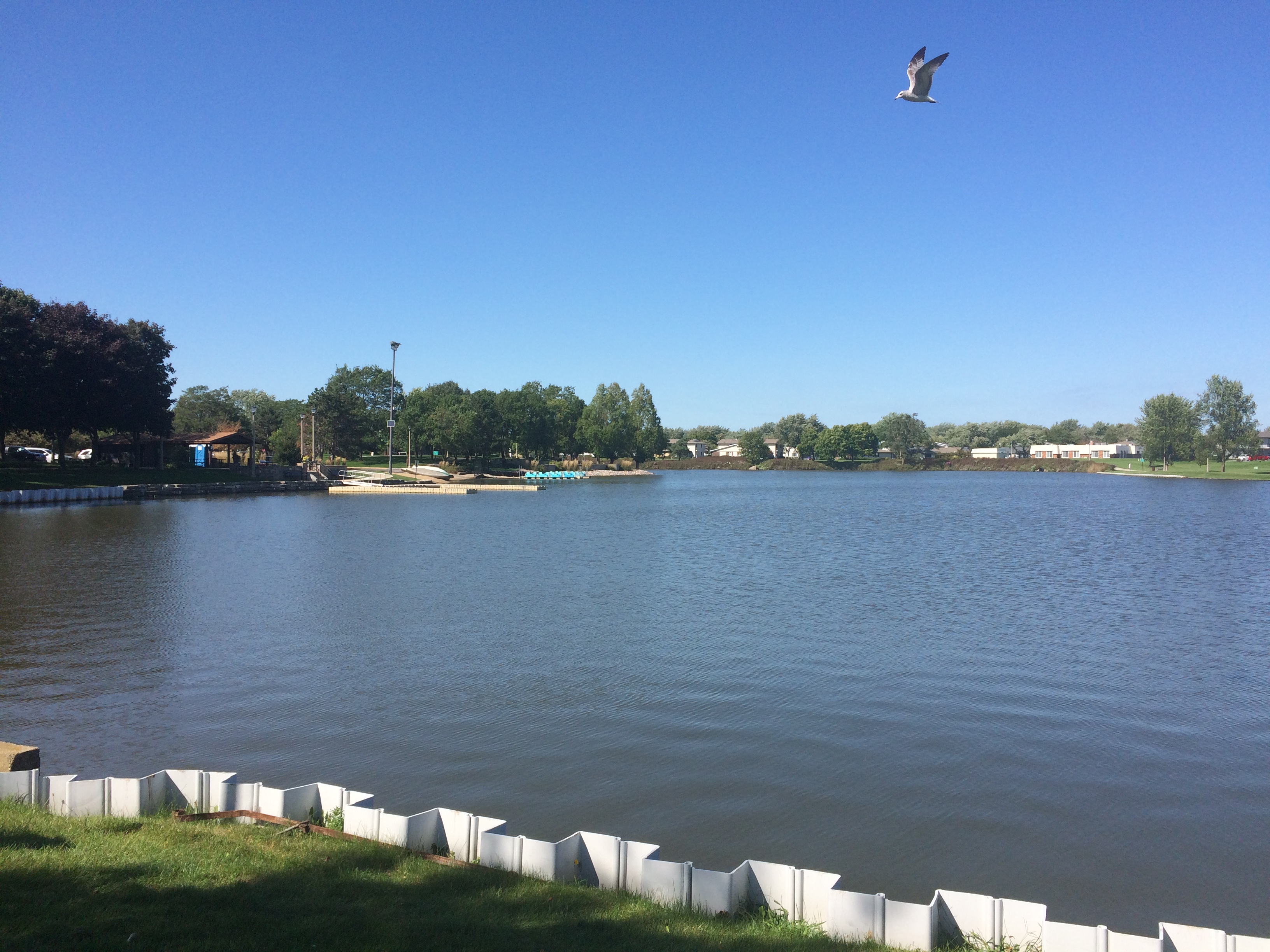
Volkening Lake

I’m starting to see Halloween decorations on suburban front lawns. Too early. Maybe people want to decorate while it’s still warm, but it won’t be that cold in October.

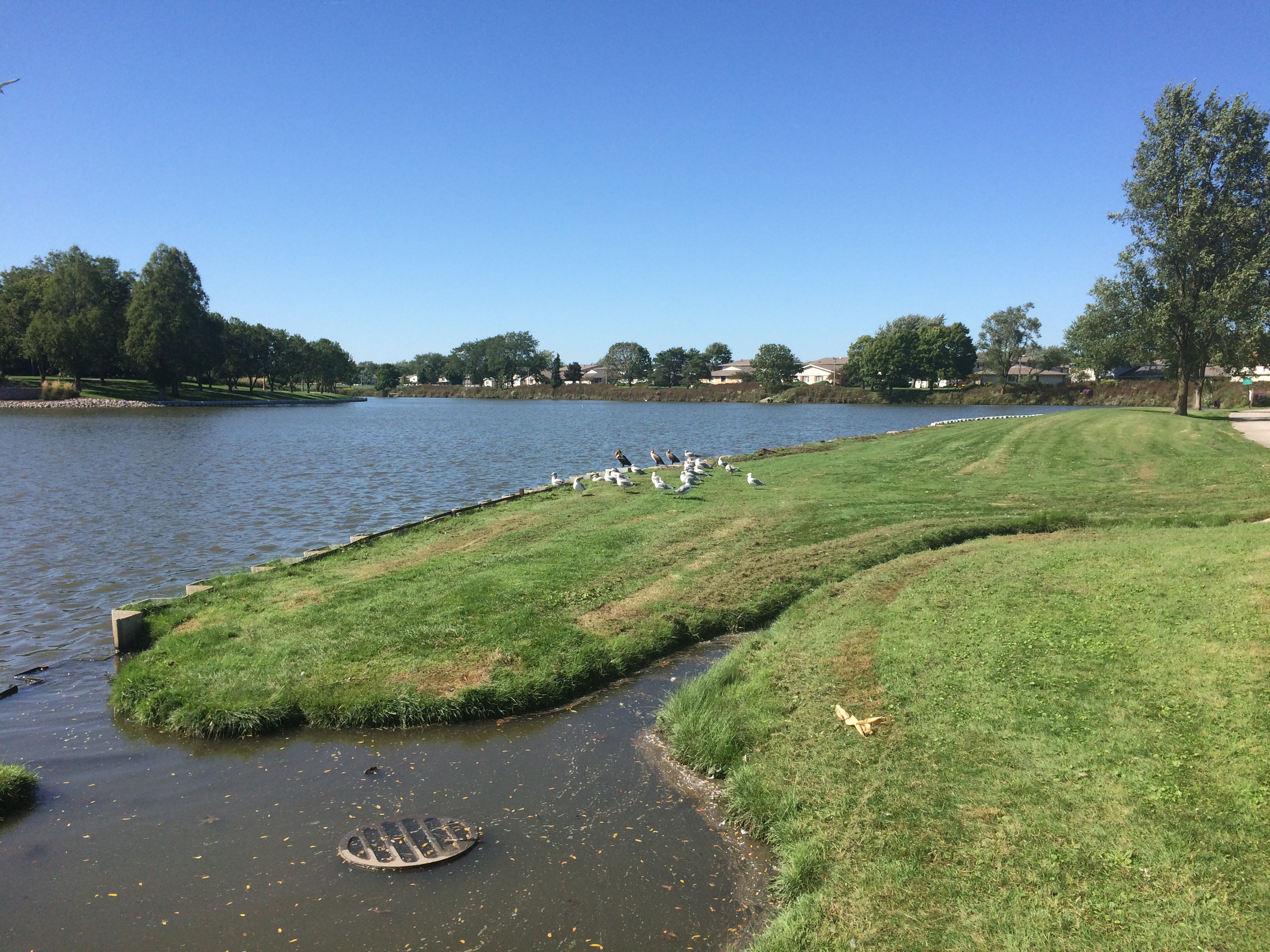
Been cool in the evenings and warm during the days. The other day I took a noontime walk around Volkening Lake here in the northwest suburbs, since I was running errands nearby.

Really a large pond, but pleasant to walk around. A 0.7-mile trail goes all the way around.
Birds like it too.
Goldenrod is in full bloom now, taking the blame for ragweed pollen, which has been pretty bad this year.
Apparently the site of the pond has long been low-lying and damp, even when it was farm land. Volkening Lake seems to have been created about the same time as the surrounding suburbs, in the 1960s, which is really no surprise, though put in its present form in the ’80s. The Volkenings were the farmers who owned the property before it was suburban.

Incident in the Suburbs

My primitive camera really wasn’t up to the task, but I took pictures anyway. The thing to do here in the 21st century. This image was taken at about 7 pm this evening, September 23, in the twilight not long after the equinox sun had set.

A chaos of lights. Tail lights, street lights, fire truck lights, police car lights and ambulance lights. There had been a traffic accident at a major intersection here in the northwest suburbs. One we travel through often. Fortunately for us, we had no part in the incident — weren’t even inconvenienced by it, since we turned into a strip-center parking lot adjacent to the intersection, without having to pass through the intersection.

We’d come to have dinner at a fast-casual restaurant near the strip center that we rarely go to, but which we were inspired to visit this evening. I left the restaurant for a moment and walked to the sidewalk on one of the major streets near the intersection, to see what all the hubbub was about.

A rare chance to rubberneck (figuratively, anyway) without being in a car or annoying the drivers behind you. Not that I could really tell what the hubbub was about, other than one metal device on wheels had hit another one in the recent past, and first responders were responding.

Lake Baikal 1994

It was distinctly cool in Siberia in September 1994, but not cold enough to keep an Australian in the tour group from jumping into Lake Baikal.

It looks like he’s out in the middle of the lake, but we weren’t far from shore, on a small tour boat — seen here docked.

The Lake Baikal statistic that impressed me then, and still does, is its volume. It’s an enormous crack in the crust of the Earth, full of water. How much? 5,700 cubic miles. If that’s not impressive by itself, that’s more water than all of the Great Lakes combined.

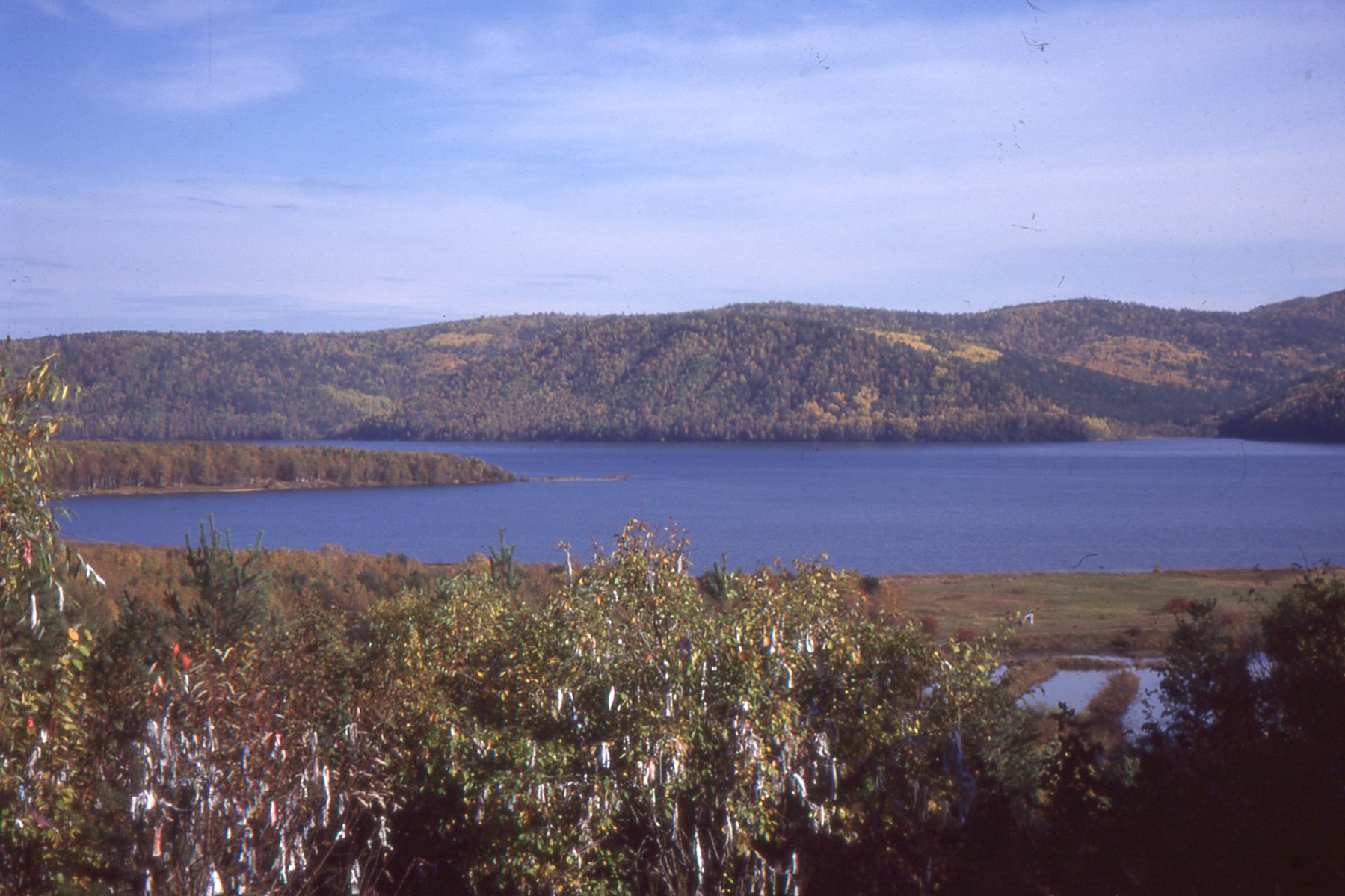
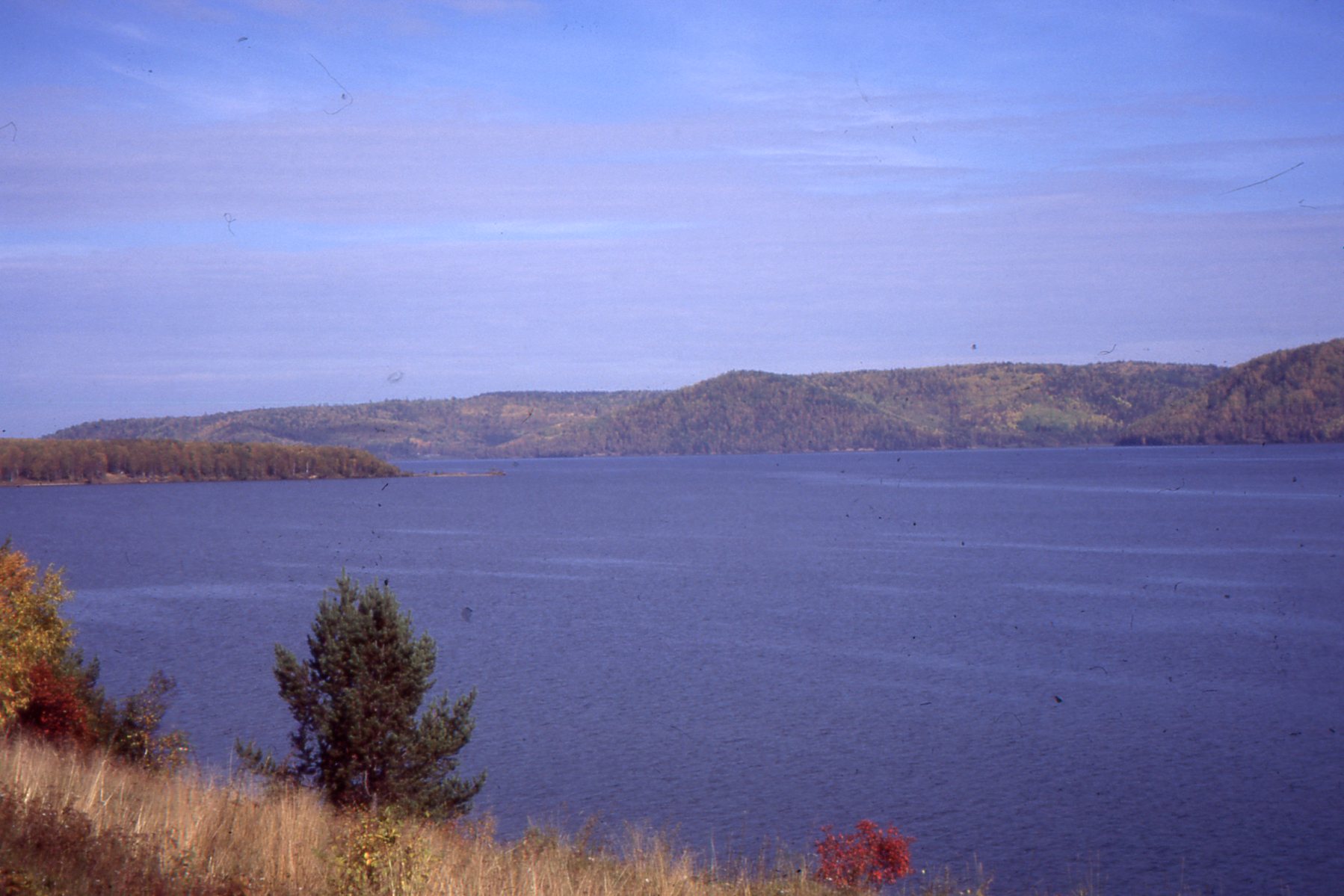
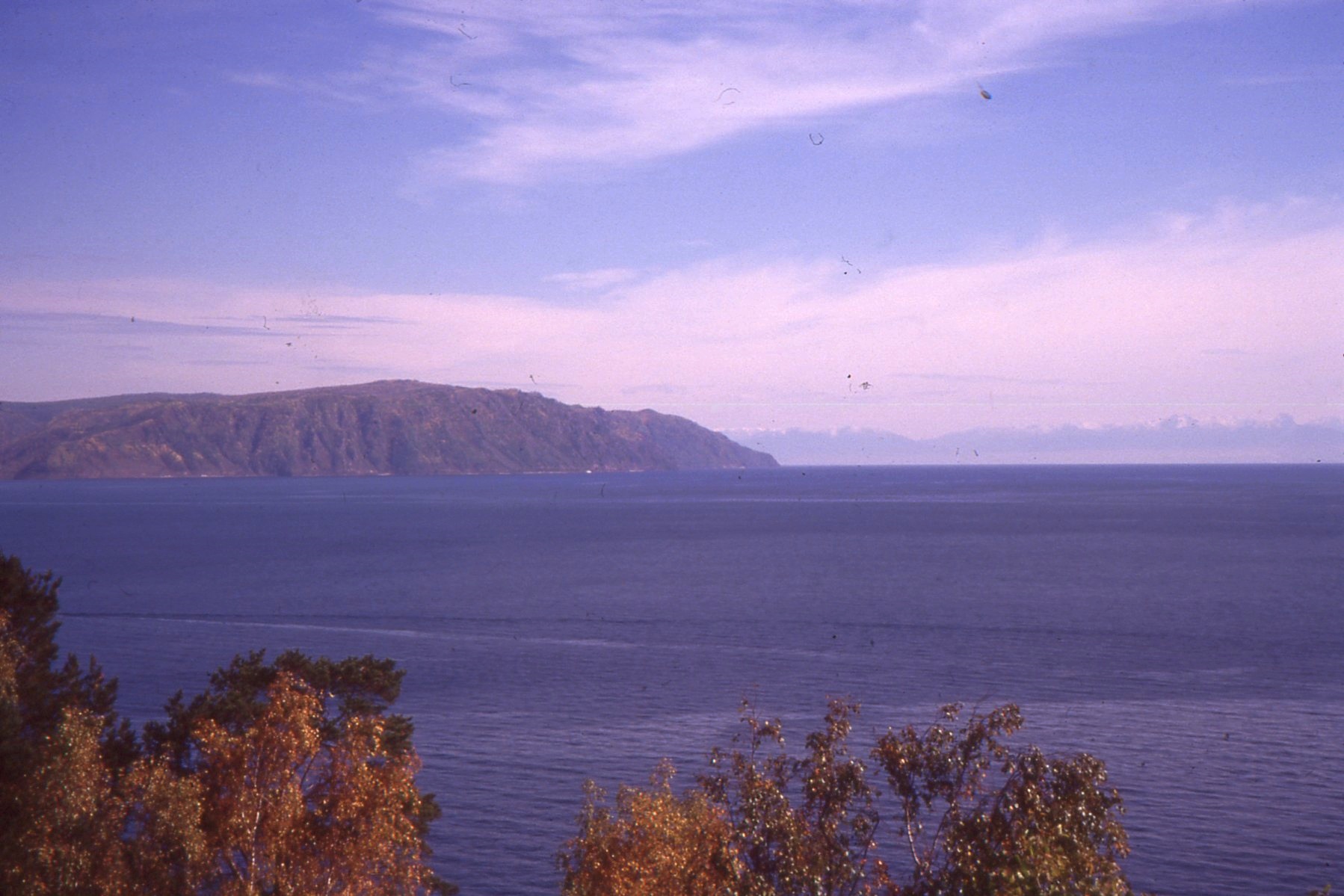
Most of my pictures were from the shore.

I came away with the impression of a Great Lake, but with mountains off in the distance. Take Lake Superior, say, and move it eastern Colorado.

A Motley Thursday Assortment

Congratulations to Geof Huth, who will be a grandfather come 2020. The latest of my contemporaries to do so, but hardly the last, I bet. Who are my contemporaries? People who could have gone to high school with me. An idiosyncratic definition, but I’m sticking with it.

News items pop up on my phone — misnamed, isn’t it? — my communications-information-time sucker gizmo, the work of bots and algorithms that are as mysterious as the Sibylline Books. Usually, it offers nothing I want to read, since the ways of bots and algorithms may be mysterious, but they’re still pretty dimwitted.

Sometimes, though, the offering is just downright bizarre. Recently the phone told me that one Susan Kristofferson had died. Given the name, I thought she was some relation of the singer of that name. I was just curious enough to check (on my laptop), and no — nothing to do with the singer. Nothing to do with me, either. Neither friend nor relative nor even nodding acquaintance.

So why did the phone tell me about her? Only the bots and algorithms know, and they aren’t telling.

Looks like Tom’s Diner in Denver, whose 1973 atmosphere I enjoyed in 2017, will soon be no more. Too bad to see a good diner go, Googie or not.

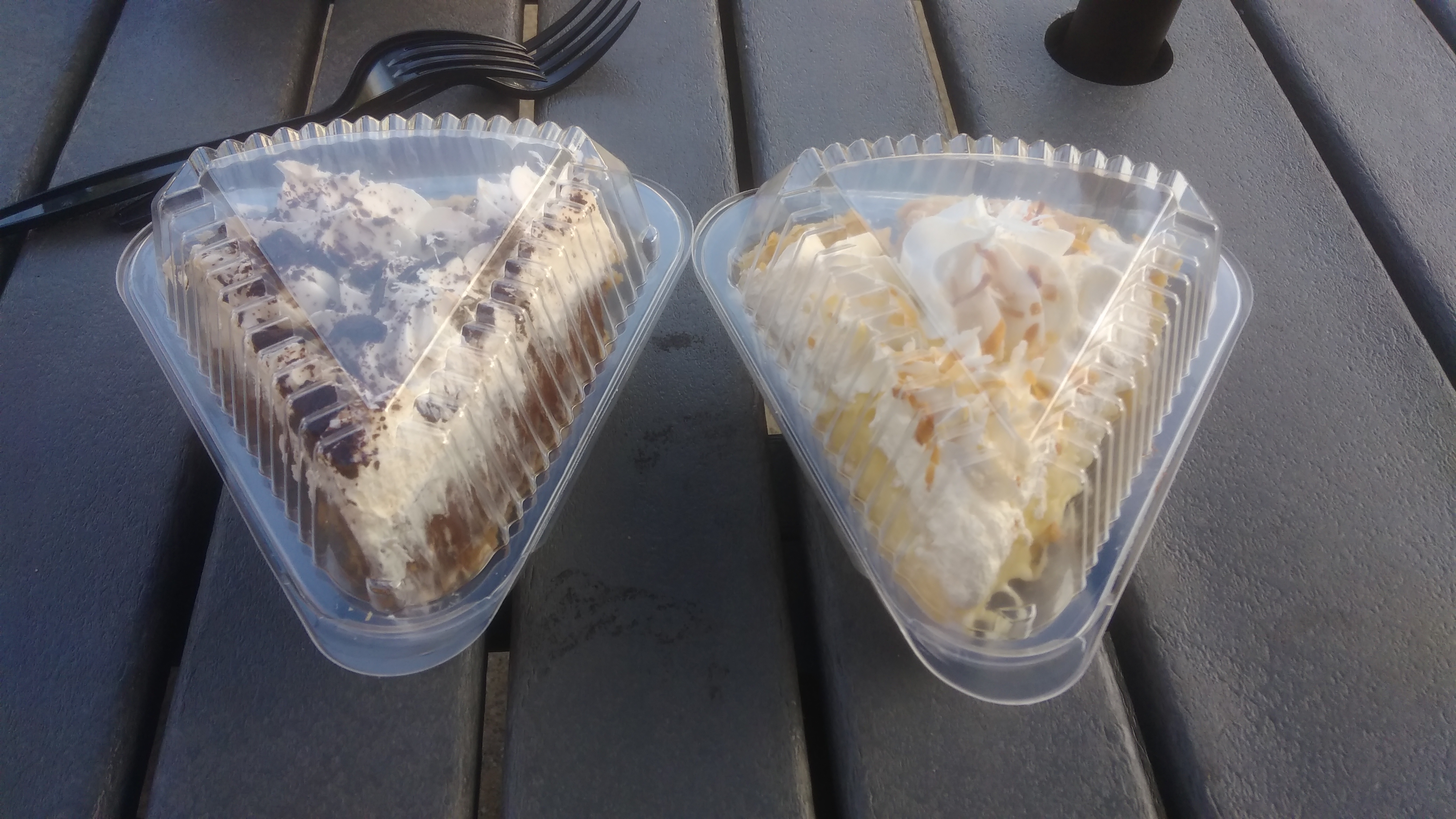
Late last year, I groused about a Chicago joint that serves $8 slices of pie, a price that compares unfavorably even to Manhattan. In Lansing, Michigan, recently, I paid about $8 for creme pie — but for that price we got two slices that we shared.

Tasty pie. Served by the Grand Traverse Pie Co., with 15 locations, all of which are in Michigan, except for an oddball in Terra Heute, Indiana. Sure, it’s cheaper to operate in a small city, but that alone can’t account for the difference between $4 and $8 slices.

Until recently, I hadn’t heard “Step Right Up” by Tom Waits in years. You might call it advert-scat. It’s funny.

I first heard it in college, because my friend Dan had some Tom Waits records, most memorably Small Change. Listening to it now, it occurs to me that some of the phrases have mostly passed from common use in the advertising world, such as please allow 30 days for delivery or the heartbreak of psoriasis or no salesman will visit your home.

So in 100 years, will the song mostly be 20th-century gibberish? Maybe. Still, with a light beat, steady bass and driving sax, I’d listen to Tom Waits sing gibberish.

See All the Hip New Joints!

If I didn’t know better, and I don’t, I’d think that Lonely Planet is straying away from its backpacker roots into travel articles infused with that wan emotion felt by wan people, fear of missing out.

Take this article about the Scott’s Addition neighborhood of Richmond, Virginia. Not long ago, I wrote about an apartment development in the area, and in the course of my research discovered that the district is hip, up-and-coming, the haunt of millennials who have more adventuresome tastes than all previous generations, etc. That wasn’t something I’d known. On the whole, that’s probably good: economic and real estate development for the area, new businesses, people walking around, maybe even a few older buildings saved.

Still, the tone of the article is offputting. Here’s how it starts: “Passionate entrepreneurs have muscled onto the scene: hot art-themed hotels are wowing guests, bold chefs are shaking up the culinary landscape and brewers offer sours and saisons in brand-new tasting rooms.”

A sentence that could be published in precisely any travel guide about anywhere thought to be hip. There’s nothing distinctive about it. Remember in Masada, when one of the other Romans was committing a particularly heinous act, Peter O’Toole’s character stopped him while yelling, This is not Rome! My urge here is to declare, This is not Lonely Planet!

Lonely Planet cares not for art-themed hotels or bold chefs or brand-new tasting rooms. Lonely Planet might take a look in the hotel lobby, but then it finds a cheap lunch and eats it on a bench as life on the streets goes by, which Lonely Planet watches with delight. Lonely Planet smiles at the thought of bold chefs who create must-have creations. How do we know that they are must have? Everybody says so. Guaranteed to be expensive too, and Lonely Planets cares not for that.

That’s not my only beef with this particular article. It’s called “36 hours in Scott’s Addition, Richmond’s new hotspot.” It should be called, “36 hours in Scott’s Addition, Richmond’s new hotspot, while well and truly drunk.”

The following is an outline of the article’s suggestions: First, go to a distillery and drink. Then drink cider made from apples so rare only one secret tree in Serendip grows them. Then have dinner, with “craft beer and adult milkshakes” at a “postmodern diner.”

See some art, because art is good, then resume drinking — Chinese food with craft beer. Then more beer. And some more after that, at very arty places. Or maybe saisons or farmhouse ales. Then stagger to another brewery. Don’t forget to eat after that, because the food’s special around here, but also finish things off with more beer!

It’s definitely the tone that bothers me. No doubt all of the recommended places are quite good, if that’s what you want. Some of my old friends have epicurean and gourmand tendencies, after all. The tone of the article, on the other hand, is Hit! All! The! Special! Places! or your trip will be crap, your time wasted and your soul unnourished.
Birthday Tart

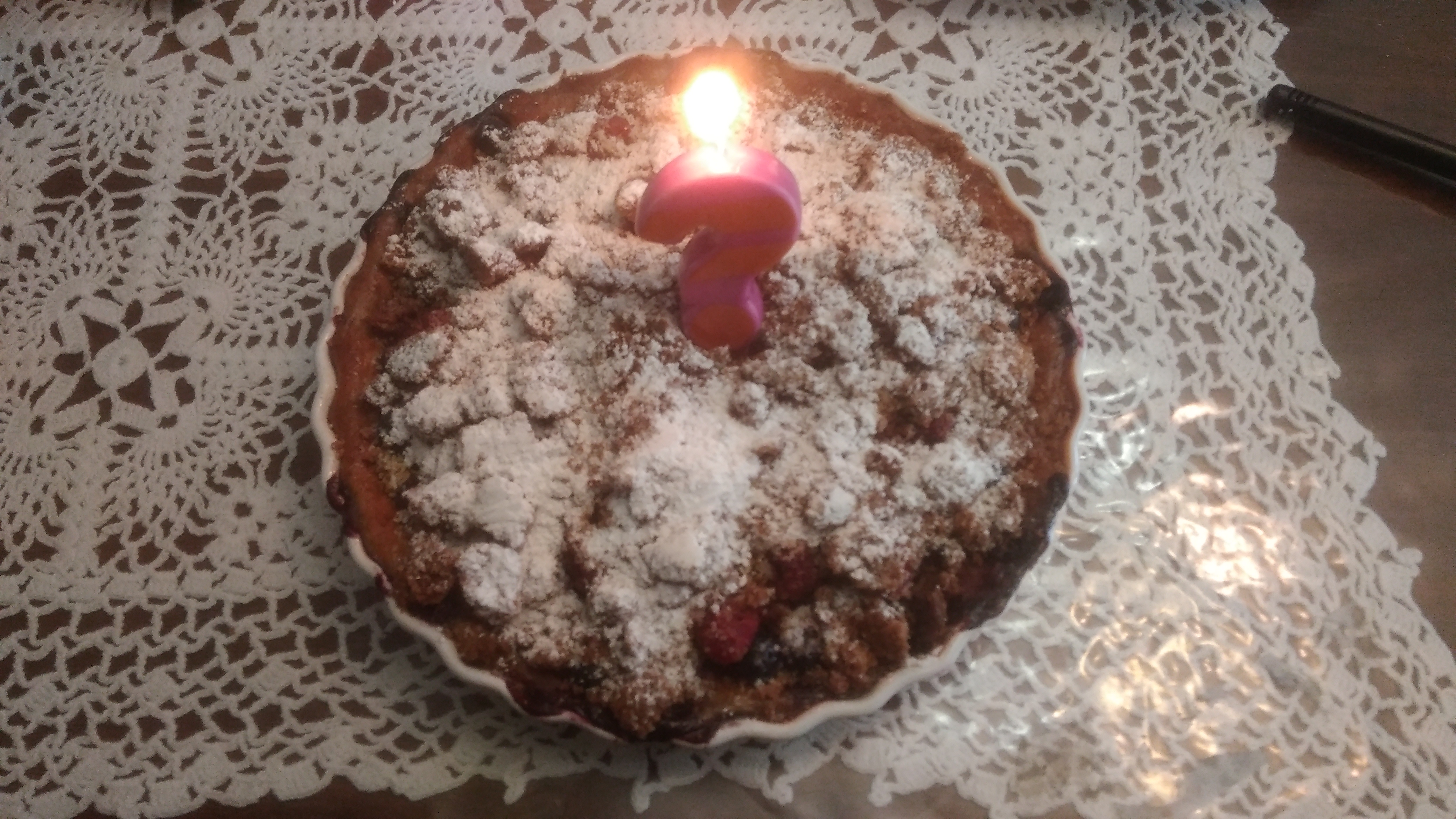
A birthday tart, using blueberries and raspberries obtained at a nearby weekly farmers market, though they aren’t really visible under the light cover of powdered sugar. Yuriko made it for herself.

I added the candle. Ann expressed surprise that such question mark candles are sold, but she’s young yet. I suggested that exclamation candles might be on the market as well. Who knows, maybe even interrobang candles.

Une Impitoyable Savate Japonaise

Ah, marketing blarney. The other day I noticed a big plastic bottle of body wash on a shelf. Let’s leave aside for the moment the fundamental question of how that’s different from soap, other than a higher price per oz., and look at the text on the back of the bottle. Hogwash for body wash.

I won’t give the brand any free advertising, however microscopic. Enough to say that it’s a well-known and longstanding brand of personal care products, owned by a conglomerate. Almost everyone my age with access to American TV in the latter years of the 20th century, and probably a good many people older and younger, could whistle its jingle, so catchy and ubiquitous it was.

Also know that the brand has long been aimed at men, encouraging them to be manly men who do manly things, and in no way ironically. Still seems to, as you will see.

Anyway, the body wash bottle has text in English and French, since I suppose Canadians buy it too. As follows:

Doesn’t leave you feeling dry or rob you of your dignity.

Hm.

Like wearing an armor of man-scent.

Armor’s an interesting choice. More manly than residue, I guess. But the last line was my favorite. It made me laugh. Out loud. Chuckle, that is.

Drop-kicks dirt, then slams odor with a folding chair.

French isn’t my language, but the French text seems to hew pretty close to the English, until that last line:

Lutte contre la salete et les odeurs et le envoice au tapis pour le compte grace a une impitoyable savate japonaise.

I won’t vouch for its accuracy, but I did find one online translation for the last part of that sentence that seems plausible: “Sends [odor] to the mat with a devastating Japanese roundkick.”

Maybe that’s what the French call a roundhouse kick, for reasons best known to them. Maybe not. I’m amused all the same.

St. Lorenz Lutheran Church, Frankenmuth

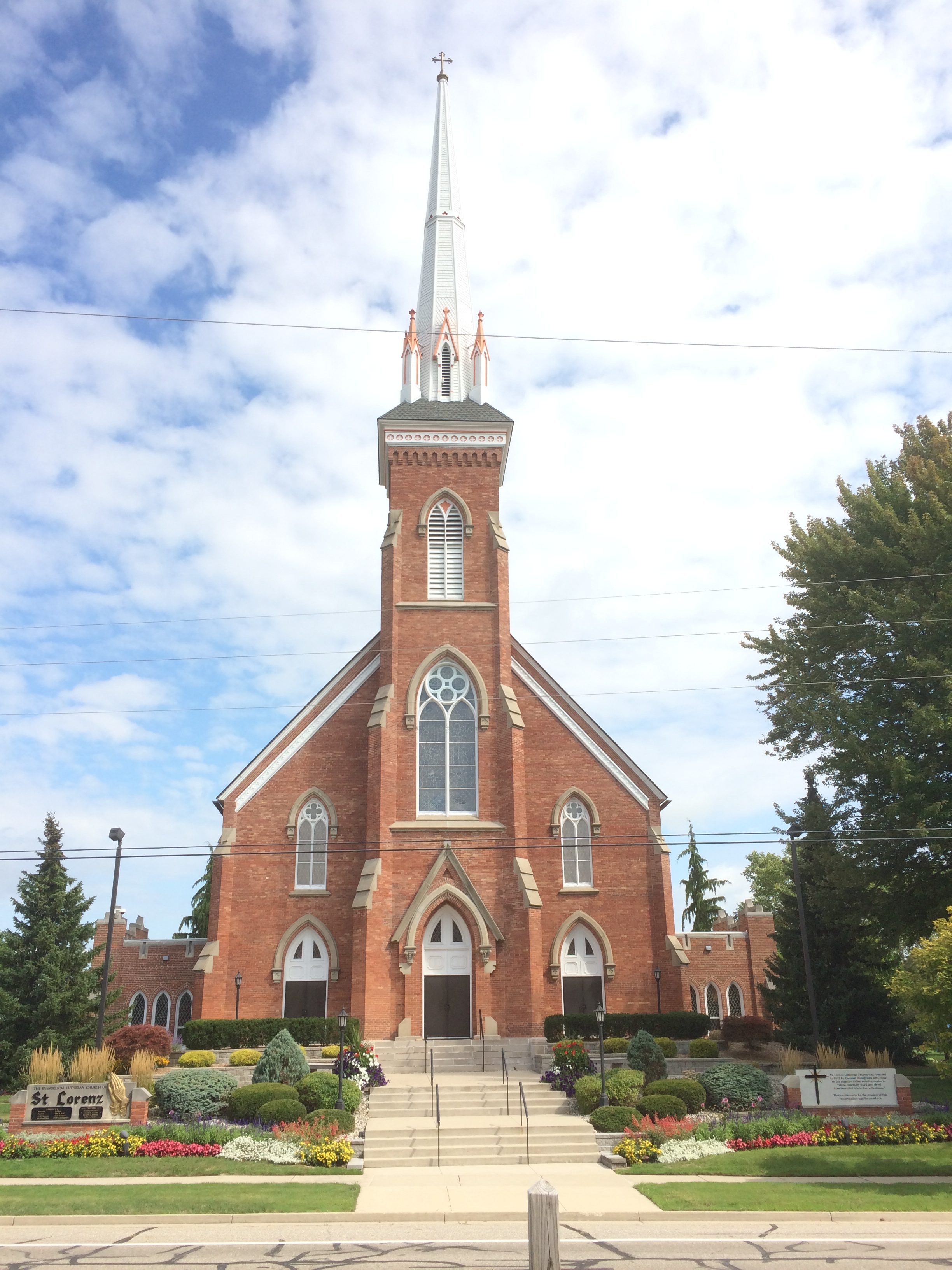
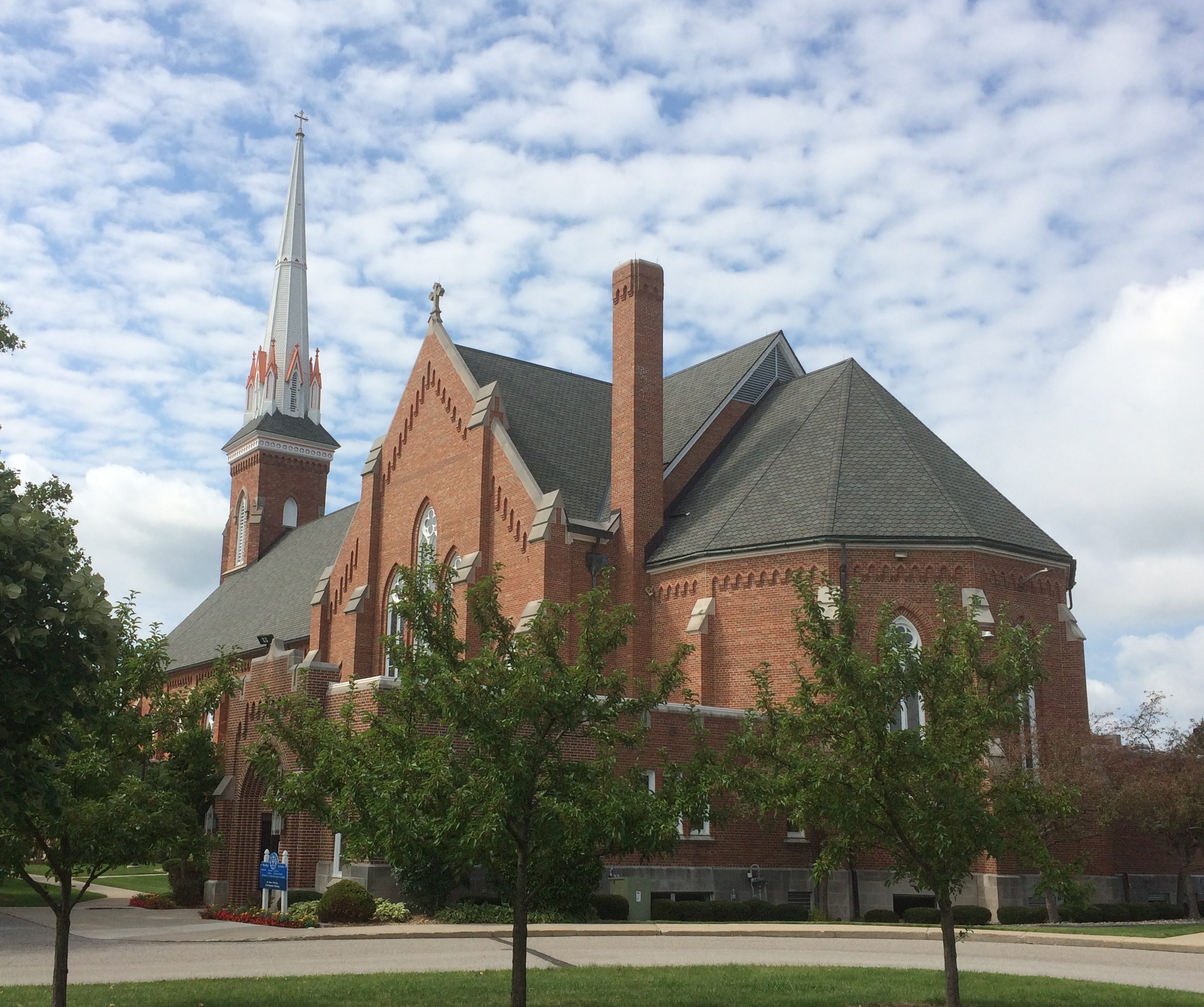
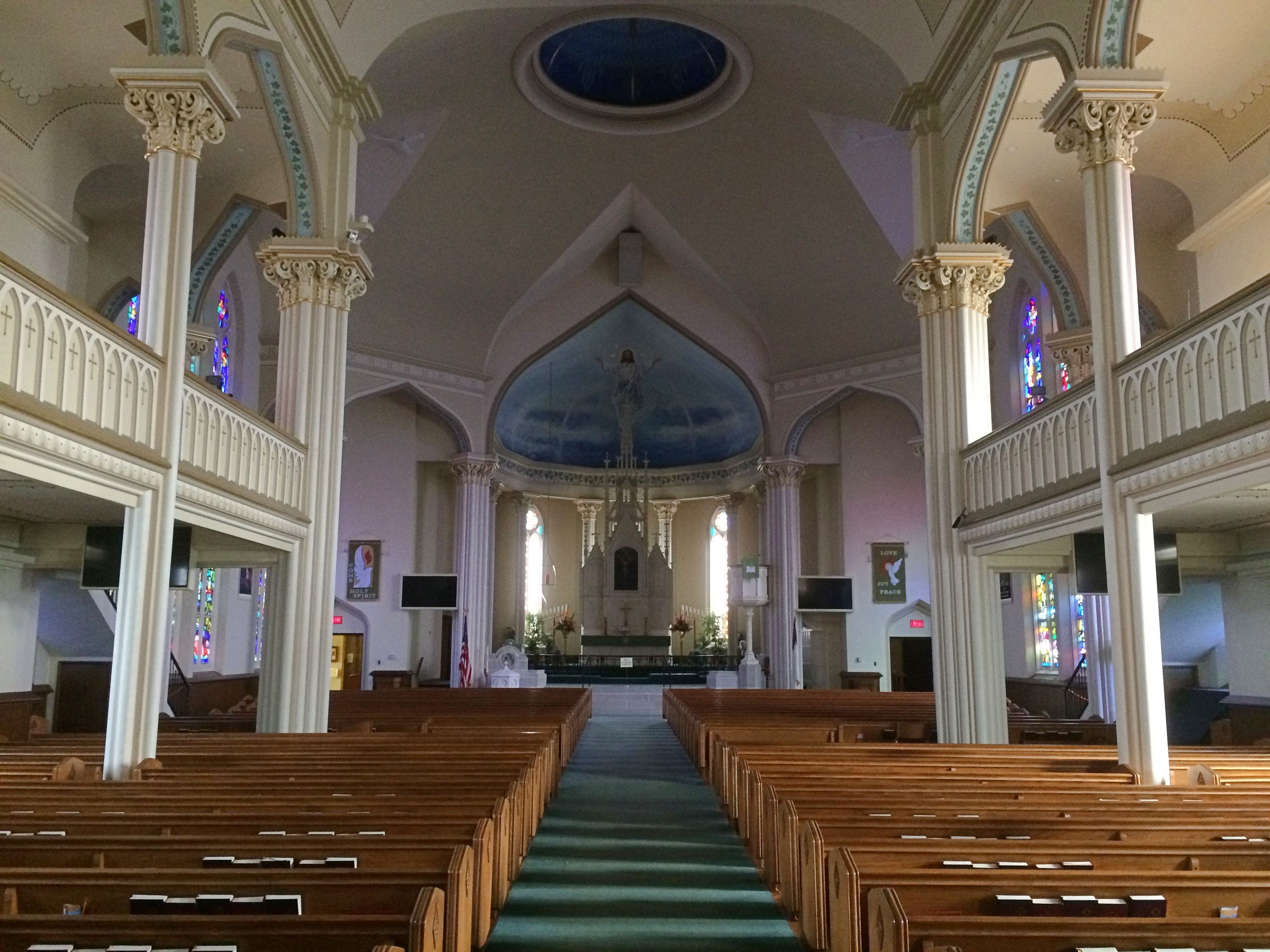
For all its faux Bavarian tourist appeal, Frankenmuth, Michigan has an actual Bavarian history, beginning with St. Lorenz Lutheran Church, about a half a mile from crowded Main Street.

We were the only ones there for about half an hour around noon on Labor Day.
St Lorenz Lutheran Church FrankenmuthSt Lorenz Lutheran Church FrankenmuthThe church was founded at the same time as the town. “Pastor Wilhelm Loehe of Neuendettelsau, Bavaria, was inspired to establish a German Lutheran colony by Michigan circuit riders who requested aid in bringing the Gospel of Christ to Saginaw Valley Chippewa Indians,” the site’s historic plaque says, as reproduced here.
“Directed by Loehe in 1845, Pastor August Craemer and fourteen other immigrants began clearing forests in this area south to the Cass River. They built log houses and dedicated a log church on Christmas Day 1846. The second church, a frame structure, was erected in 1852 and enlarged in 1864, serving until the completion of the present church in 1880.”

A Cleveland architect named C.H. Griese designed the current Gothic Revival church. Traces of him are online, such as in the context of another Lutheran church.

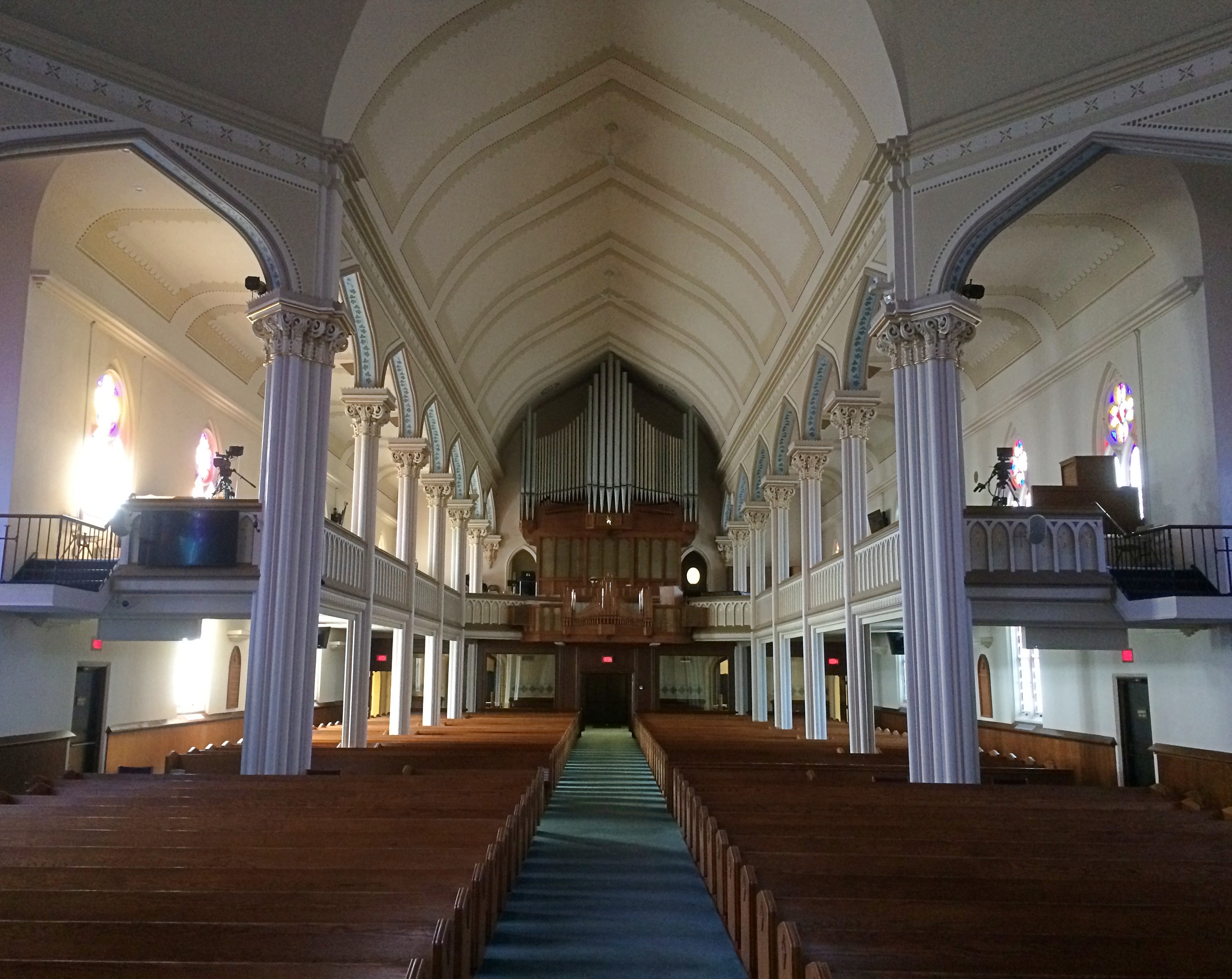
We were glad to find out that the building was open. That’s not always the case, often for good reason. The interior’s handsome indeed.
St Lorenz Lutheran Church FrankenmuthSt Lorenz Lutheran Church Frankenmuth

St Lorenz Lutheran Church Frankenmuth

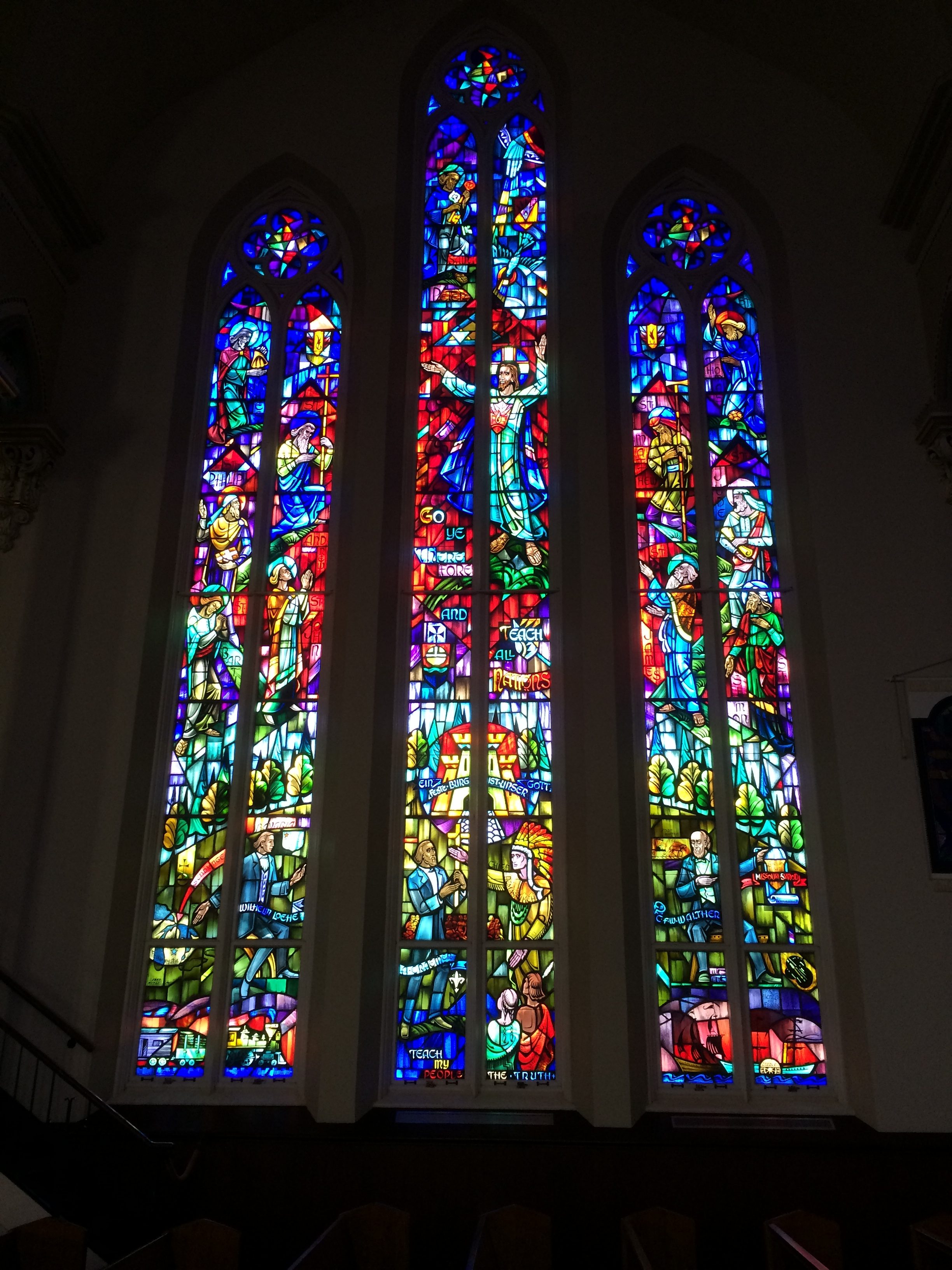
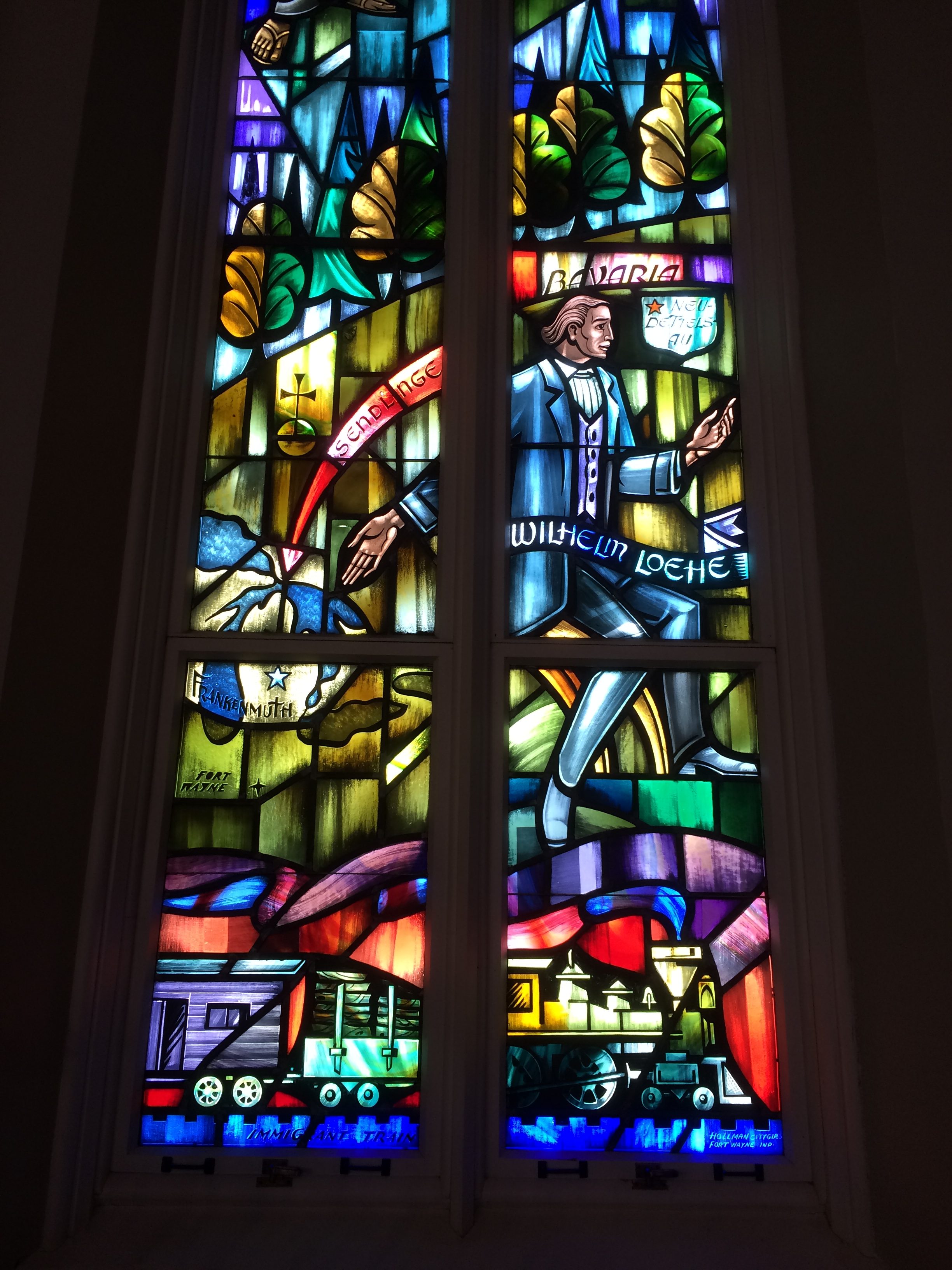
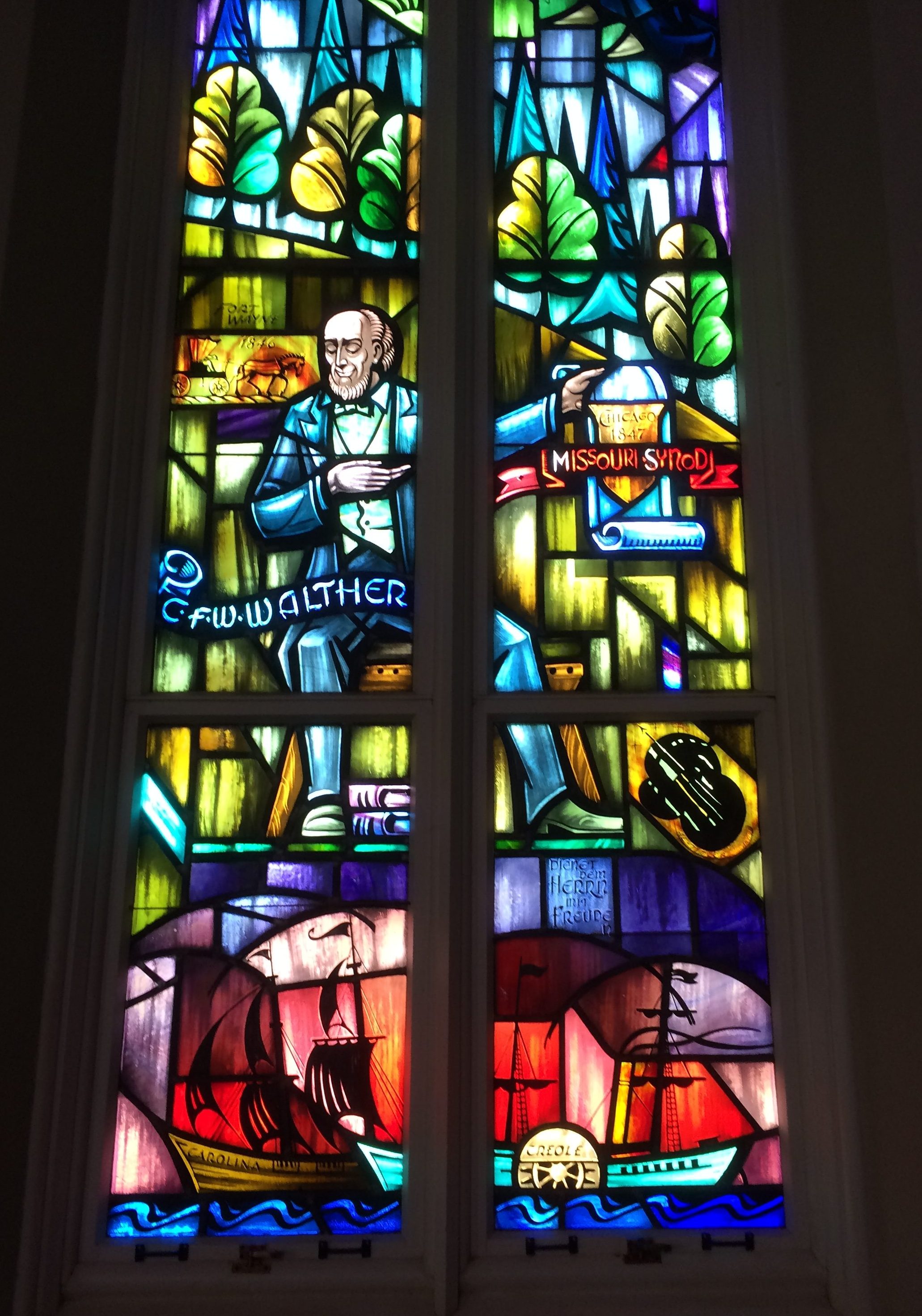
Excellent stained glass as well, signed by Hollman City Glass of Fort Wayne, Indiana.
St Lorenz Lutheran Church FrankenmuthPastor Loehe makes an appearance in glass.
St Lorenz Lutheran Church FrankenmuthI suspect this depiction of him is unique in all the world.

C.F.W. Walther, first president of the Missouri Synod, is also in glass. He’s probably englassed in other Lutheran churches.
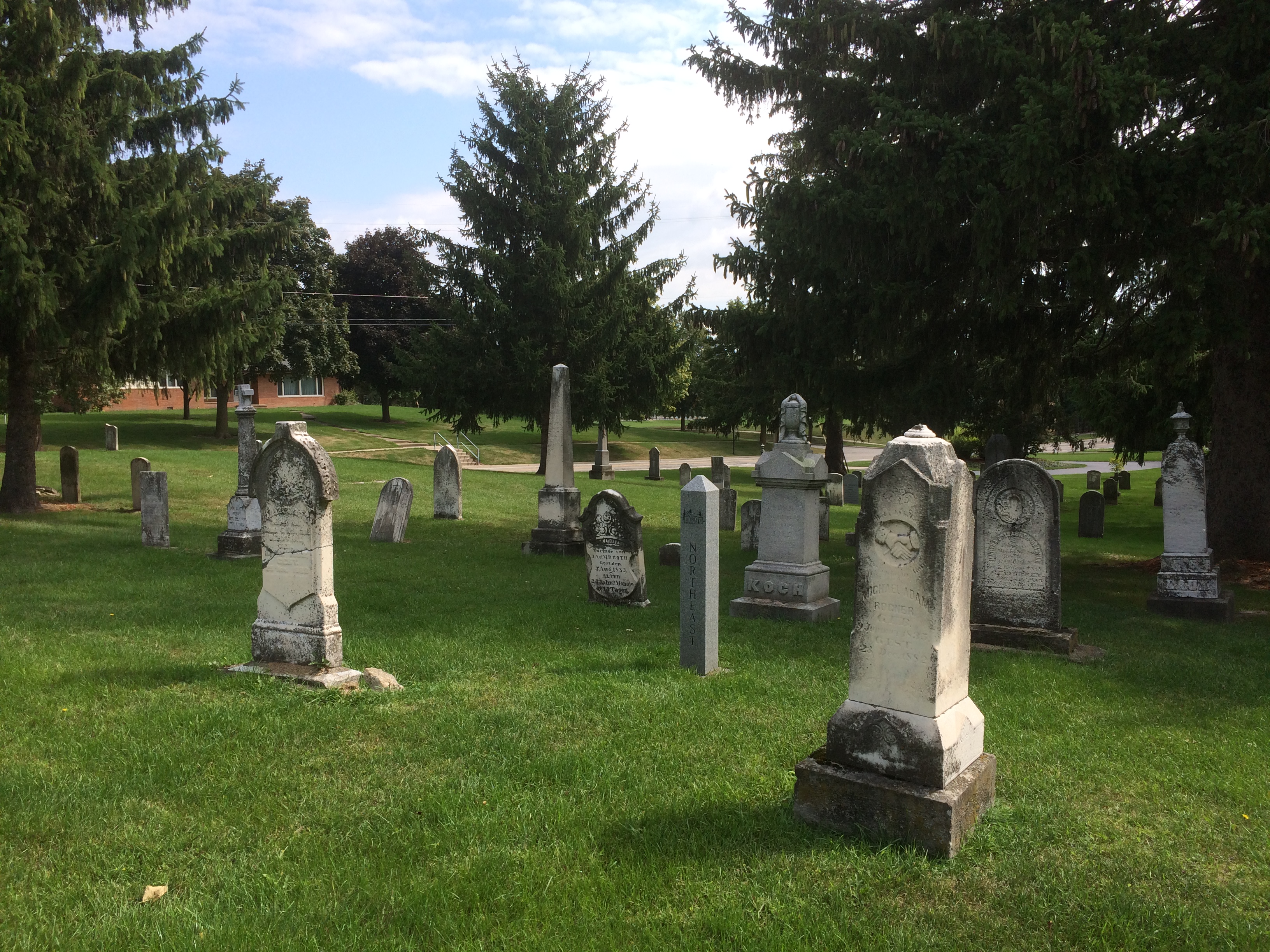
St Lorenz Lutheran Church FrankenmuthThe settlers came to the Saginaw Valley, built their homes, farmed the land, attended St. Lorenz, and when the time came, were buried in its churchyard.

St Lorenz Lutheran Church Frankenmuth cemetery

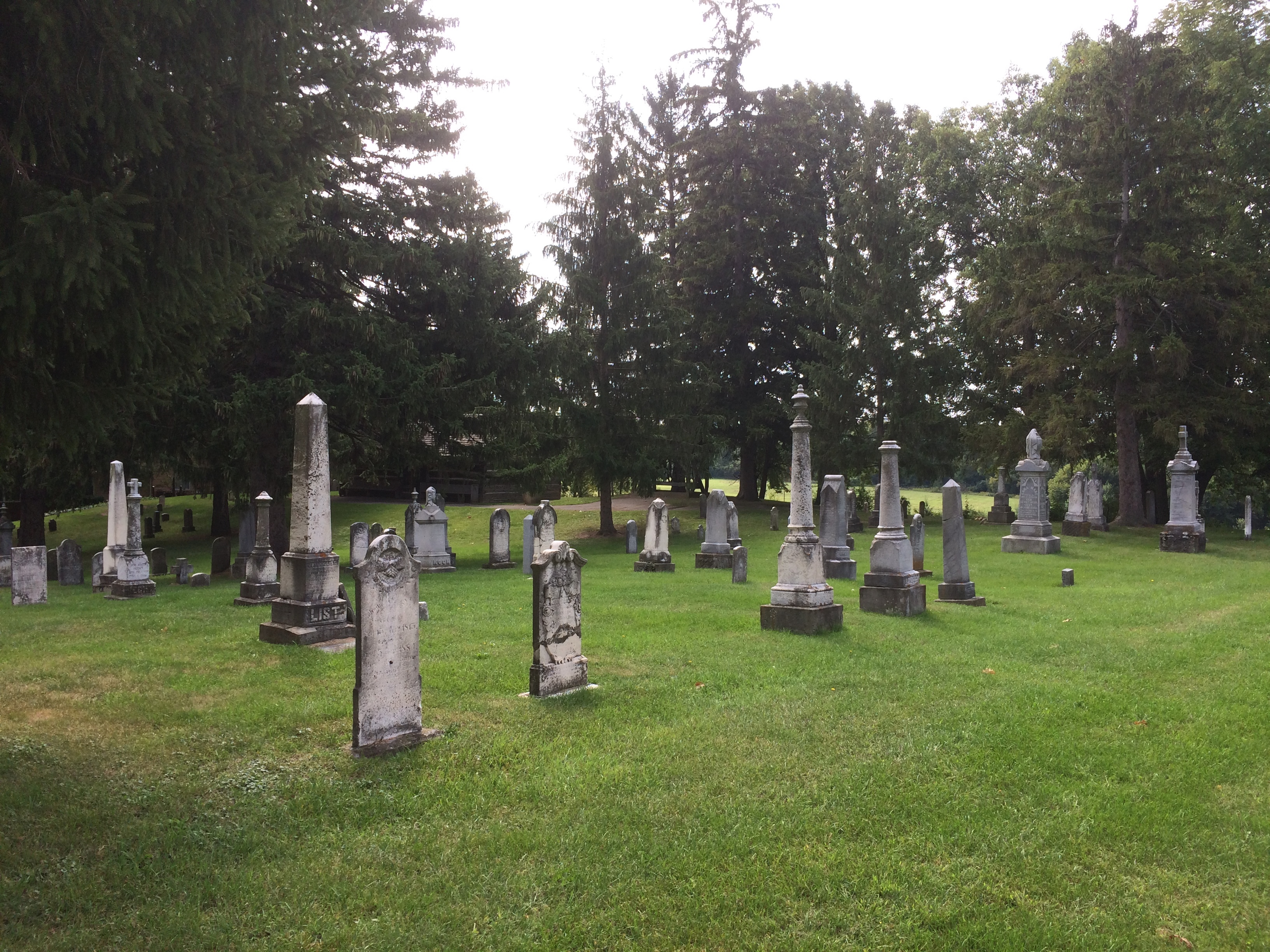
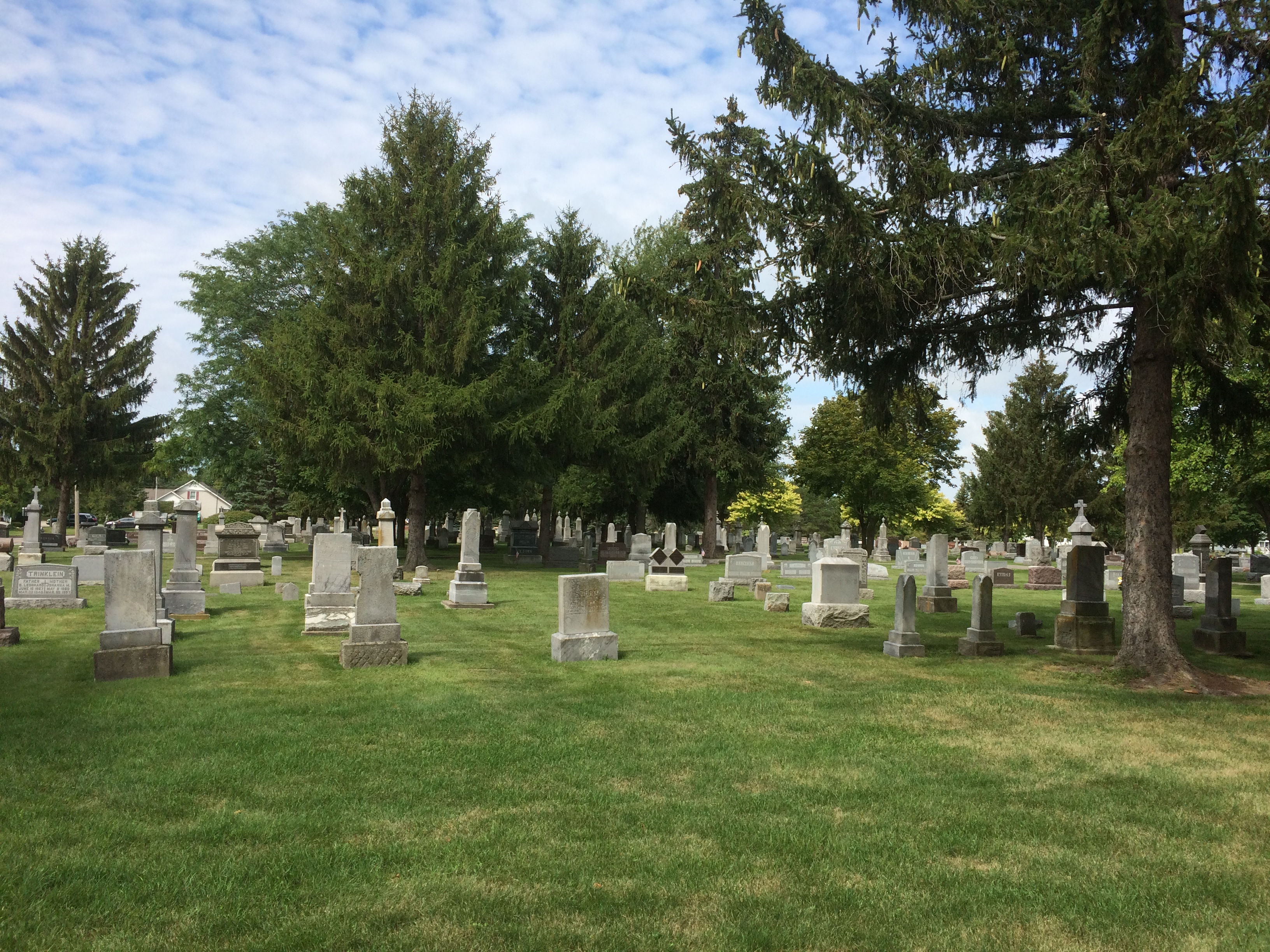
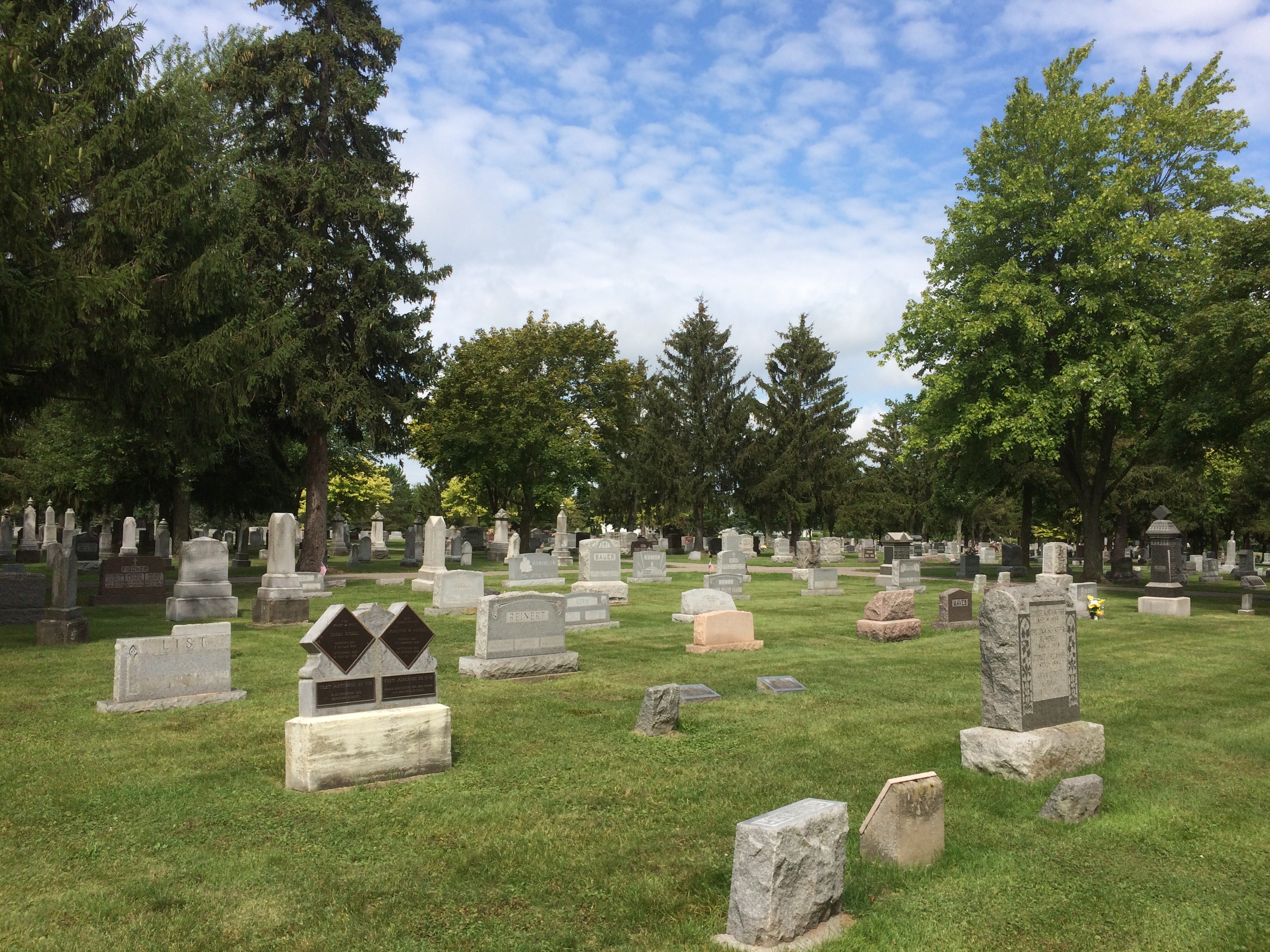
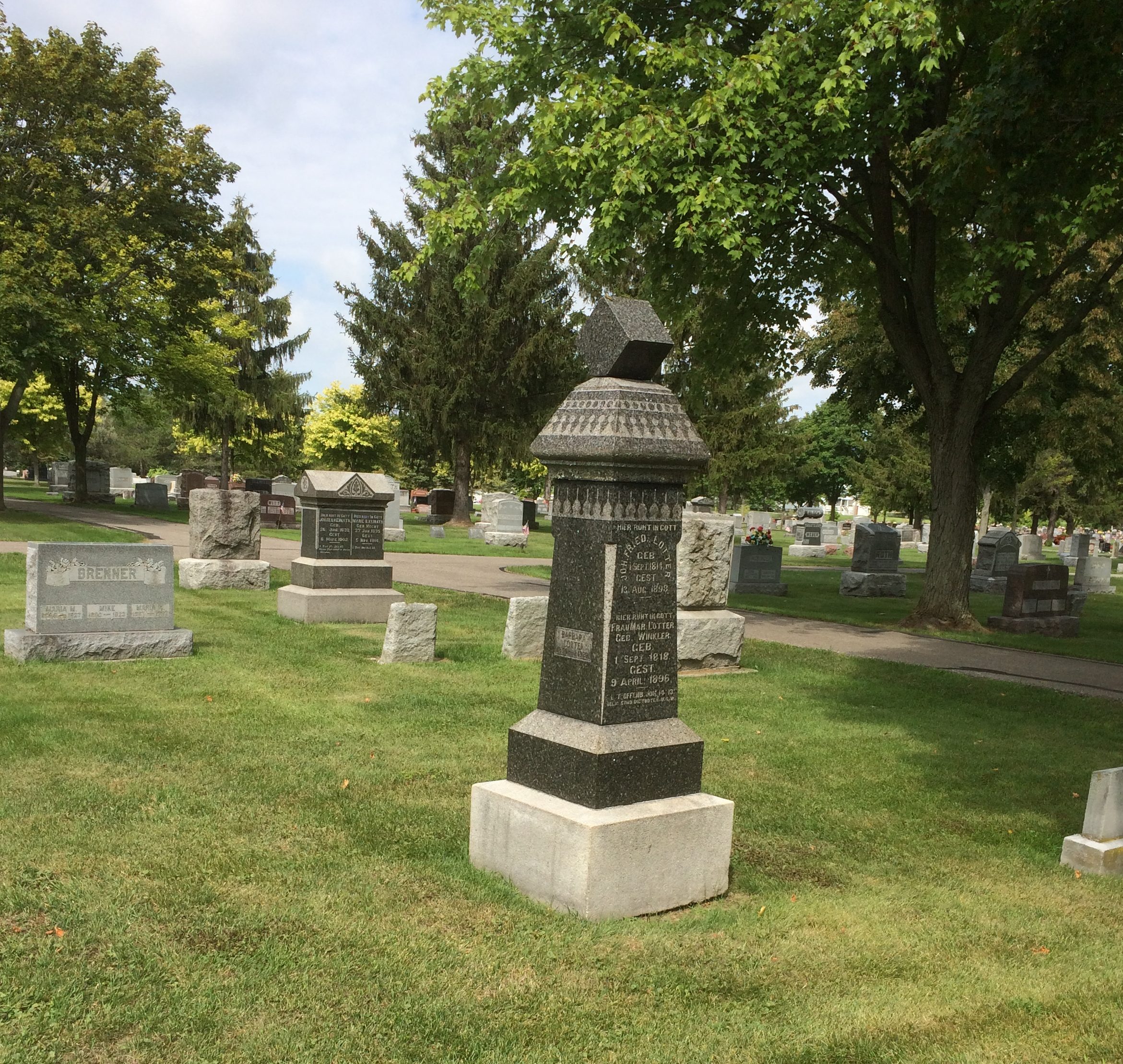
St Lorenz Lutheran Church Frankenmuth cemeterySt Lorenz Lutheran Church Frankenmuth cemeteryThose are almost all 19th-century stones, near the site of the first two church buildings, and across the street from the current church. A larger cemetery with newer stones is on the same side of the street as the current church.
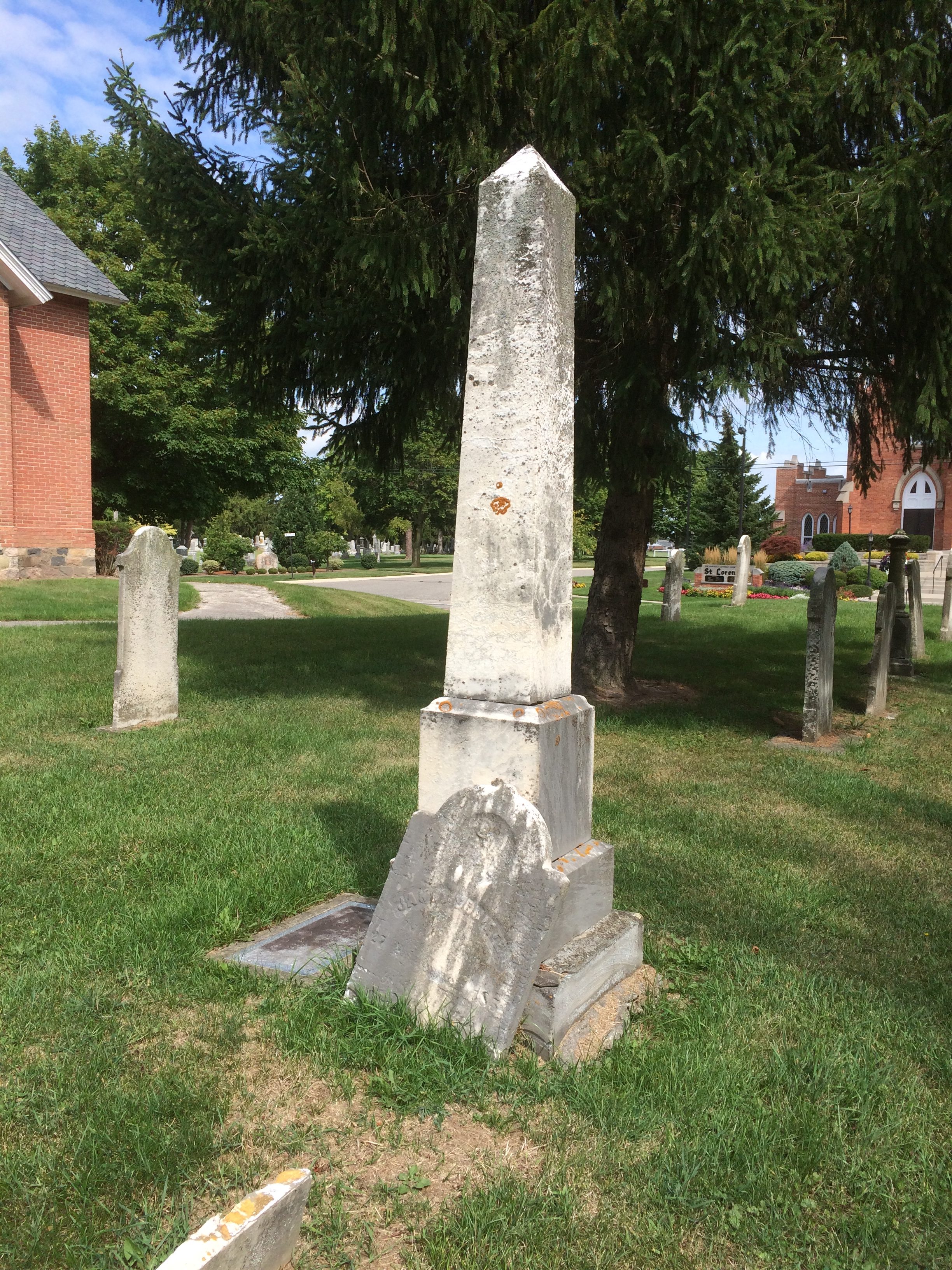
St Lorenz Lutheran Church Frankenmuth cemeterySt Lorenz Lutheran Church Frankenmuth cemeterySt Lorenz Lutheran Church Frankenmuth cemeteryThe permanent residents are every bit as German as you’d expect: Bauer, Bicker, Fischer, Herzog, Hochthanner, Hubinger, Kern, Roth, Reinert, Weiss, usw. Loehe and Craemer aren’t among them, Find a Grave tells me. Loehe is in Bavaria and Craemer is in St. Louis.

Bronner’s Christmas Wonderland

Not far south of the activity on Main Street in Frankenmuth, which is also the two-lane highway Michigan 83, is Bronner’s Christmas Wonderland. We arrived early in the afternoon on Labor Day, just as rain started to pour.

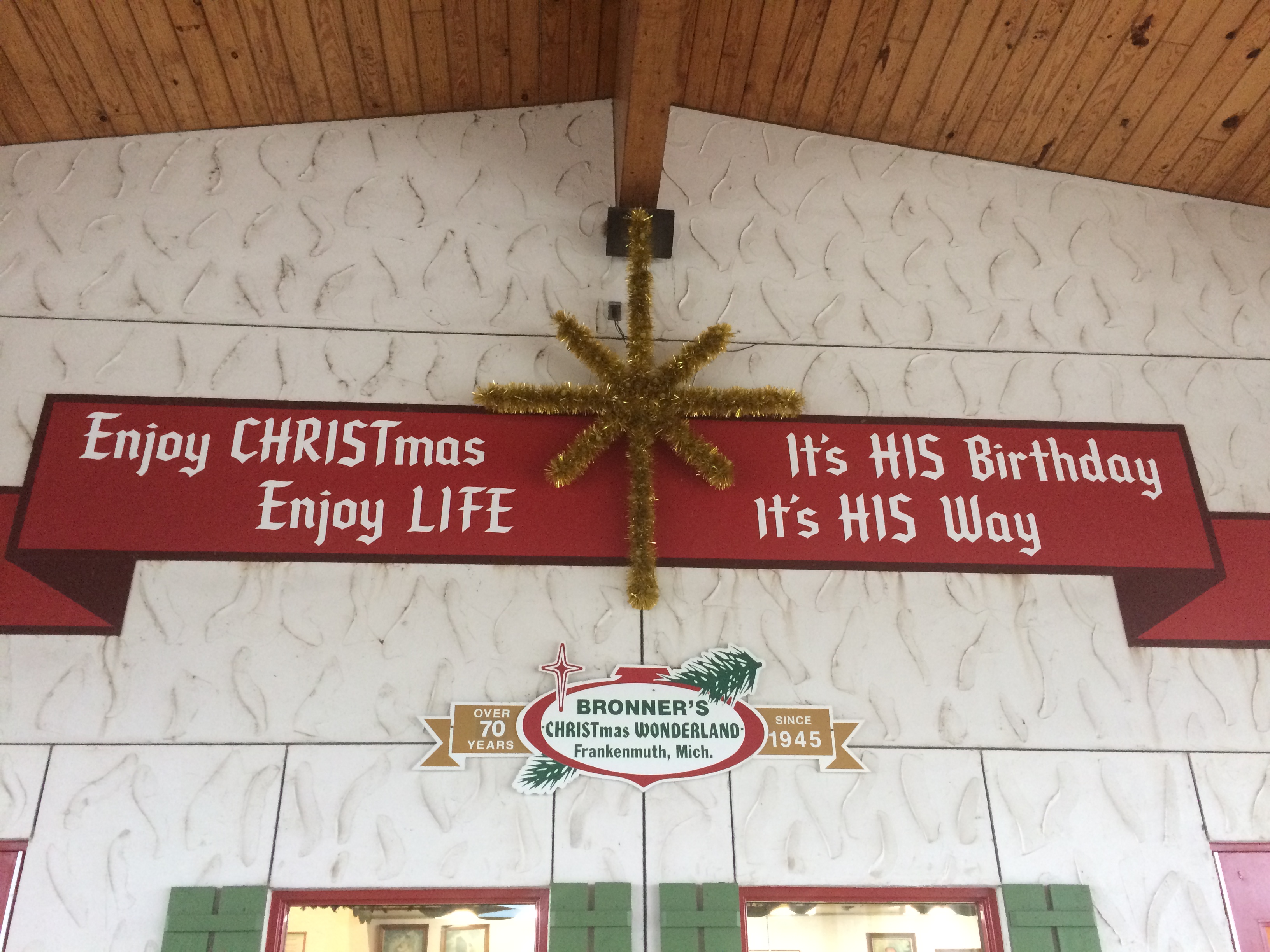
The store actually styles itself Bronner’s CHRISTmas Wonderland, such as on this sign over one of the entrances.
Bronner's Christmas Wonderland, MichiganNo doubt the owners’ religious feelings are sincere — the Bronner family, since founder Wally Bronner died in 2008 — but my editorial instincts and experience kick in at this point, telling me not to style it that way. Allow every irregular brand-style or oddball marketing spelling and you’ll start seeing them everywhere, all the time. That would be an on-ramp to editorial perdition.

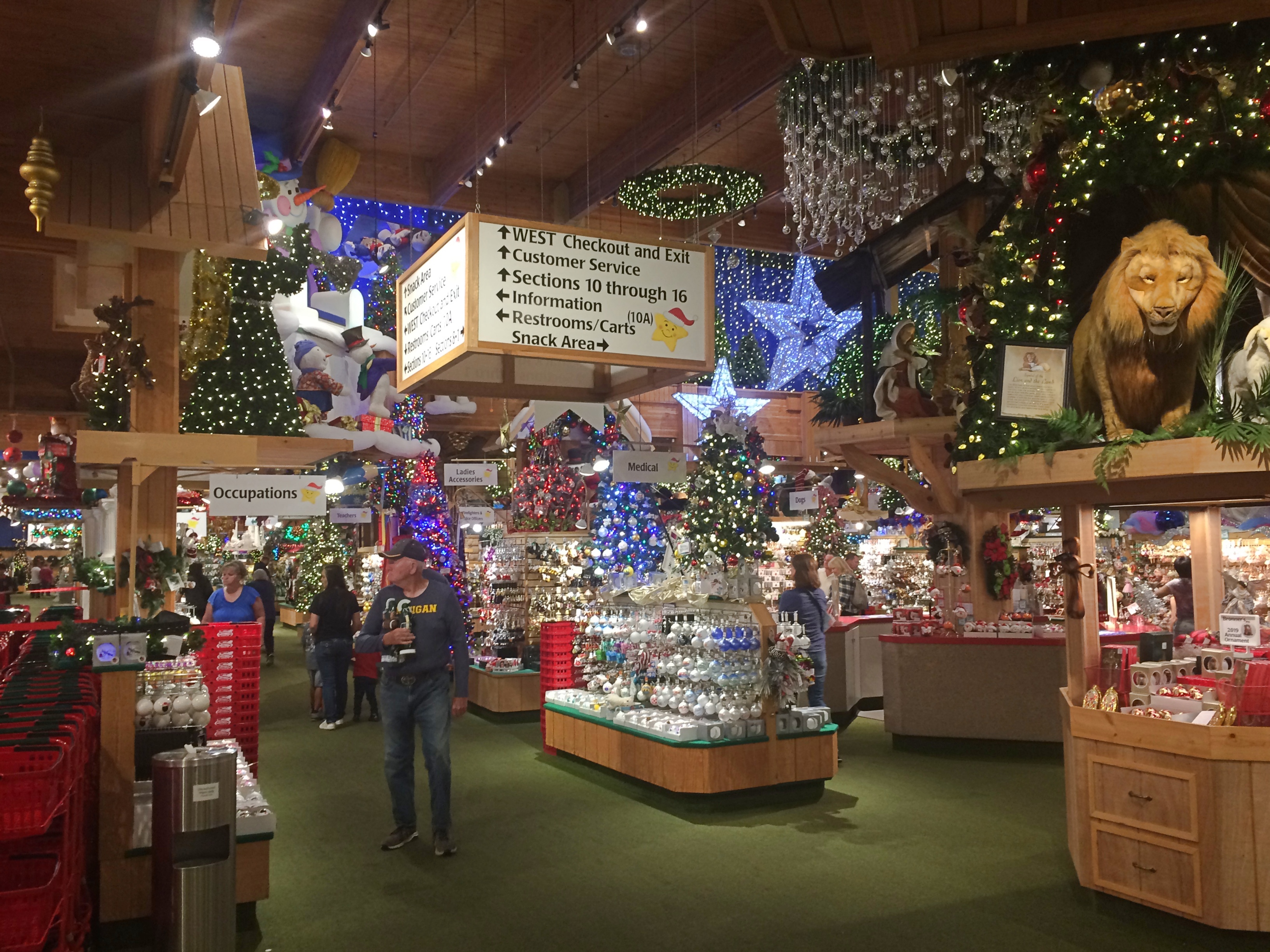
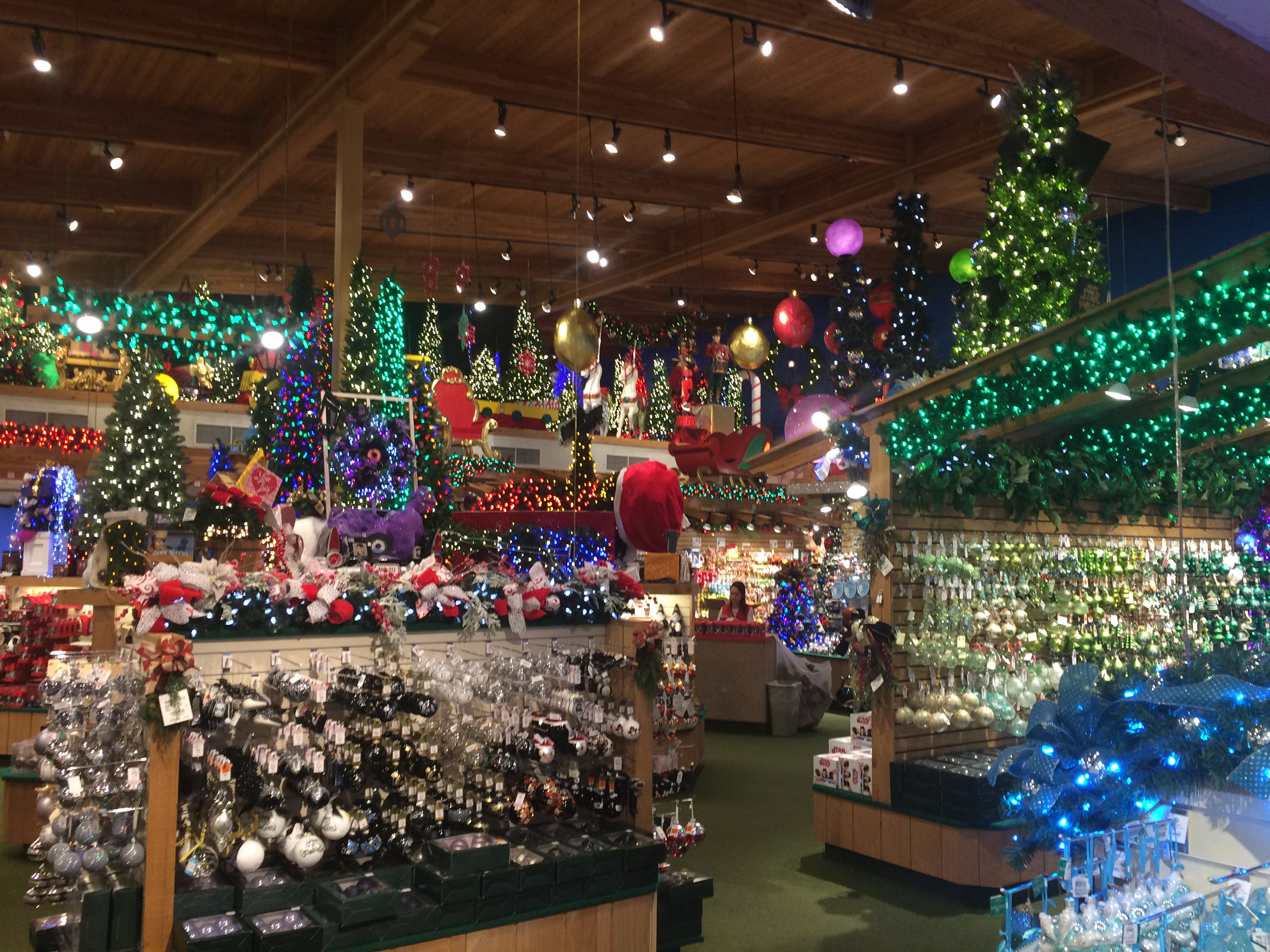
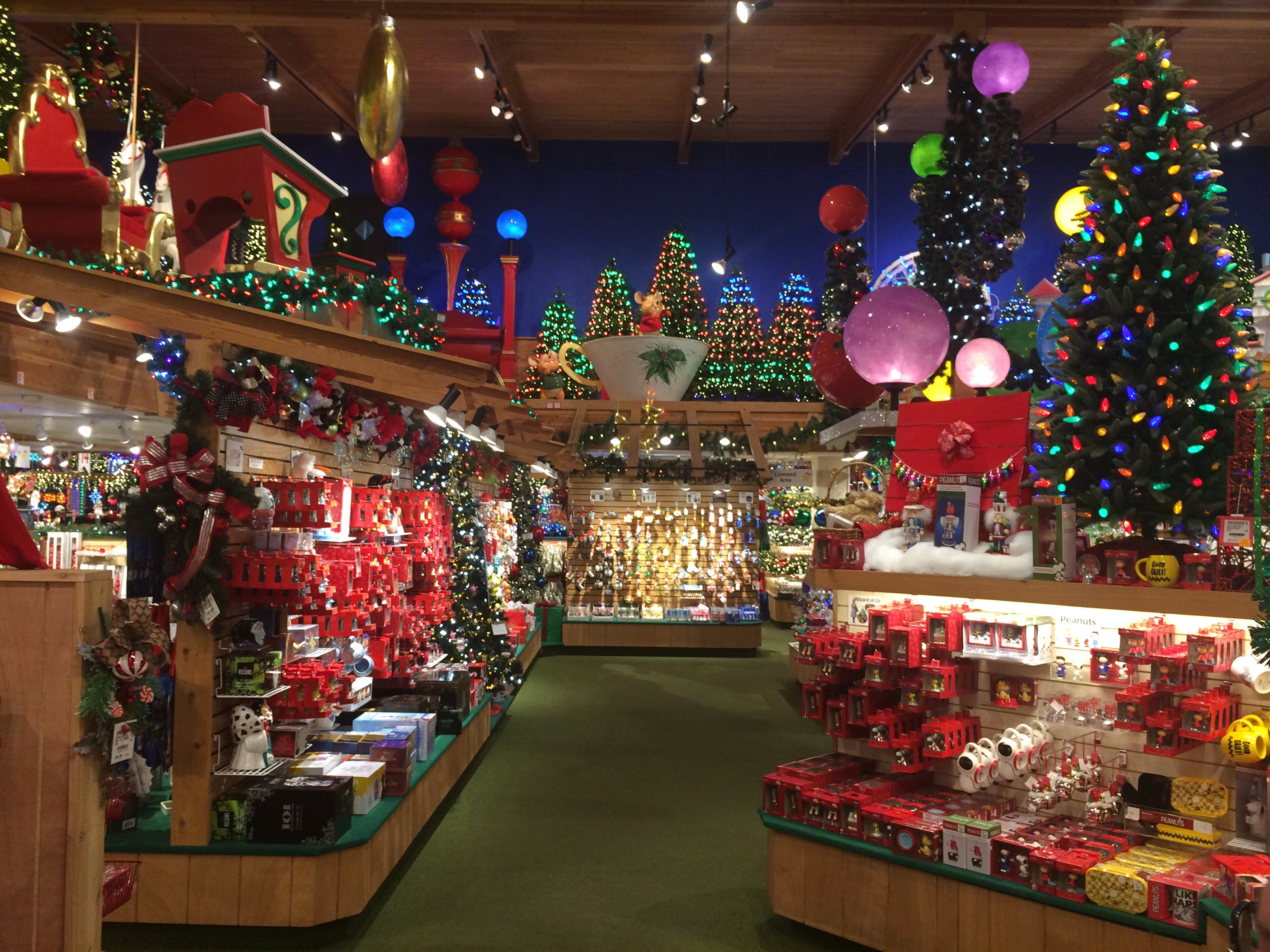
Bronner’s Christmas Wonderland asserts that it’s the world’s largest Christmas store, and I believe it. Over 50,000 items are for sale in a store of over 85,000 square feet — one and a half football fields, or about two acres — including Christmas ornaments, lights, Nativity scenes, Christmas trees, gifts, stockings, Santa paraphernalia, and other decor.

Bronner's Christmas Wonderland

Bronner's Christmas Wonderland

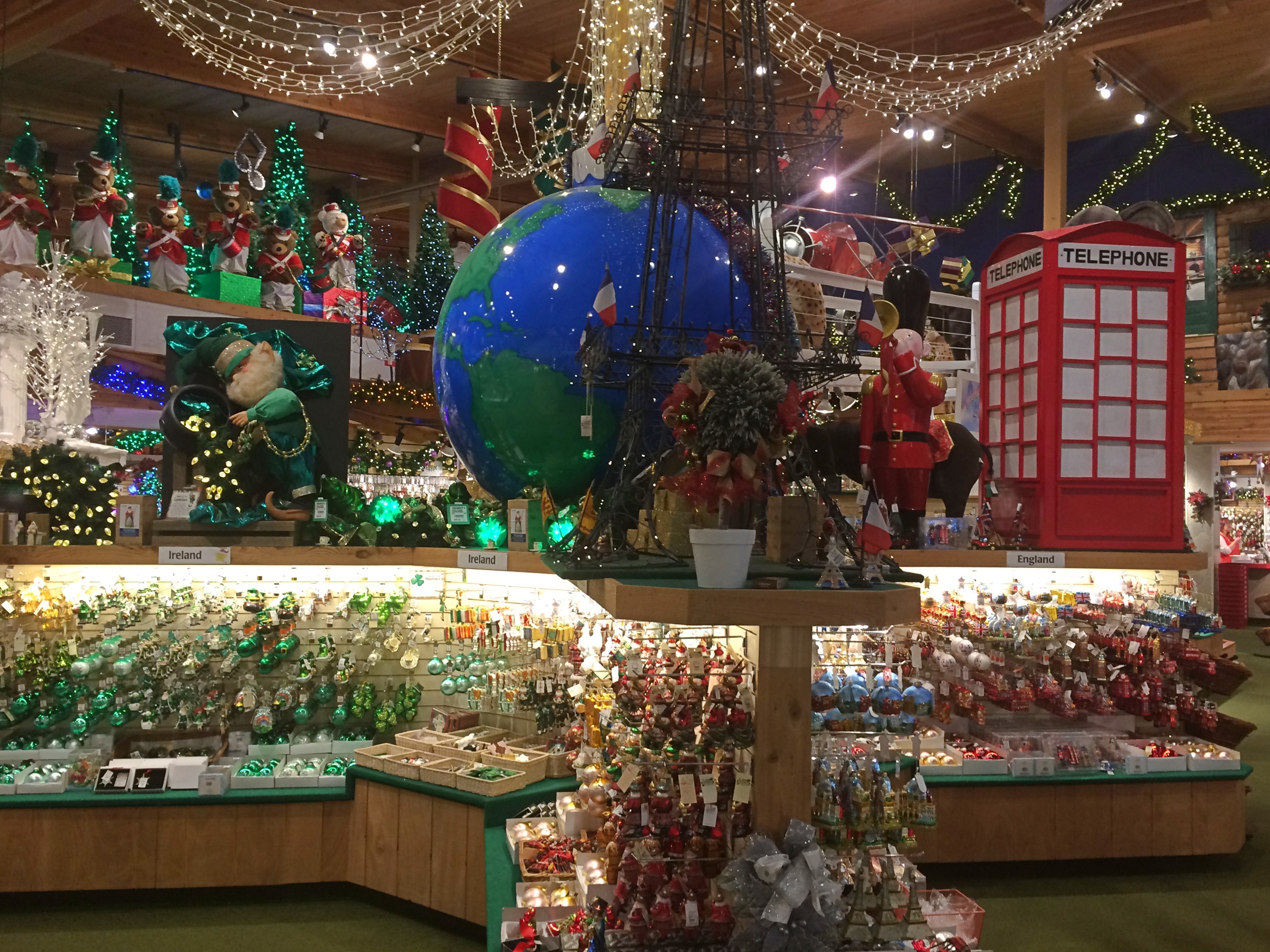
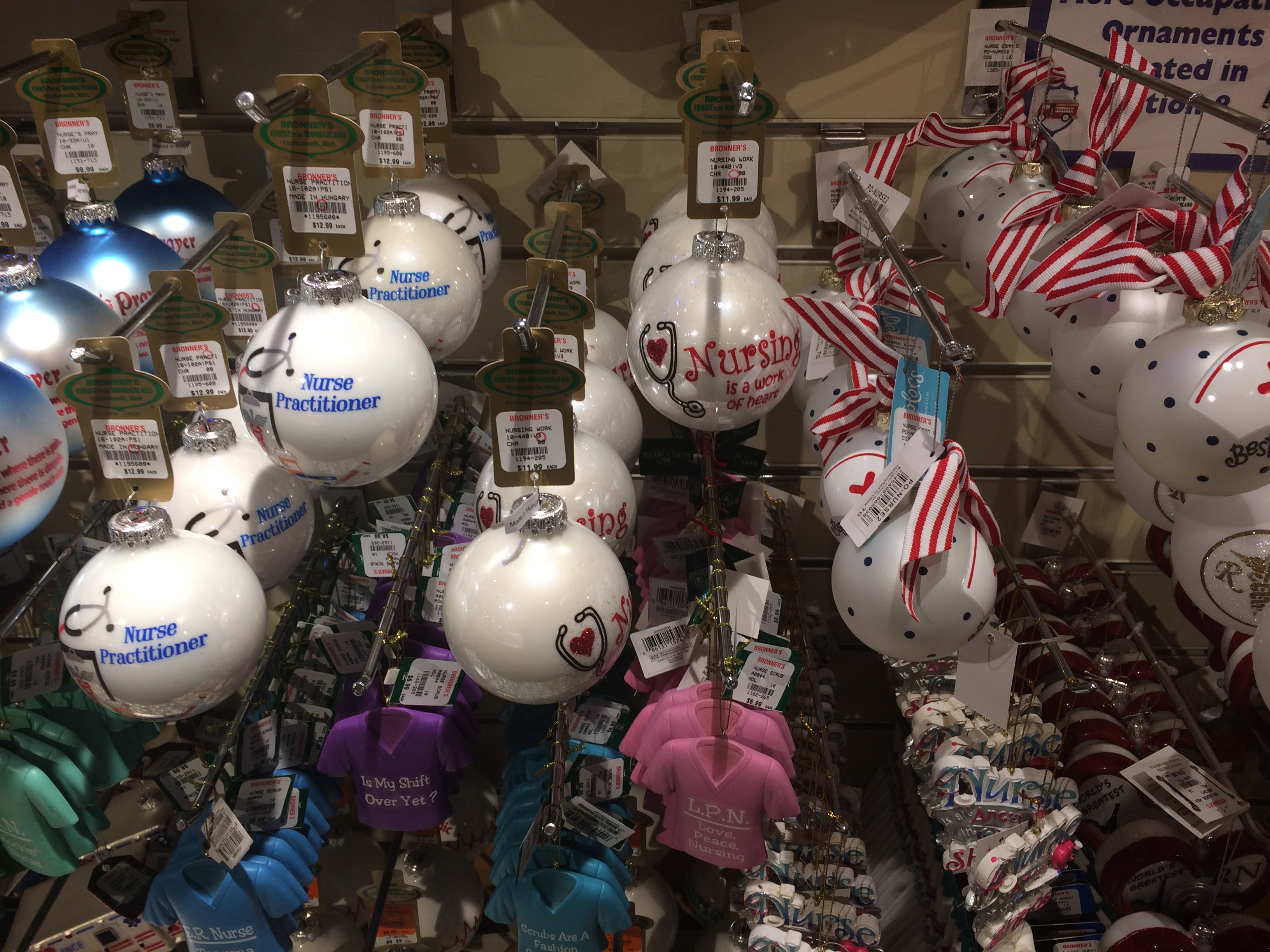
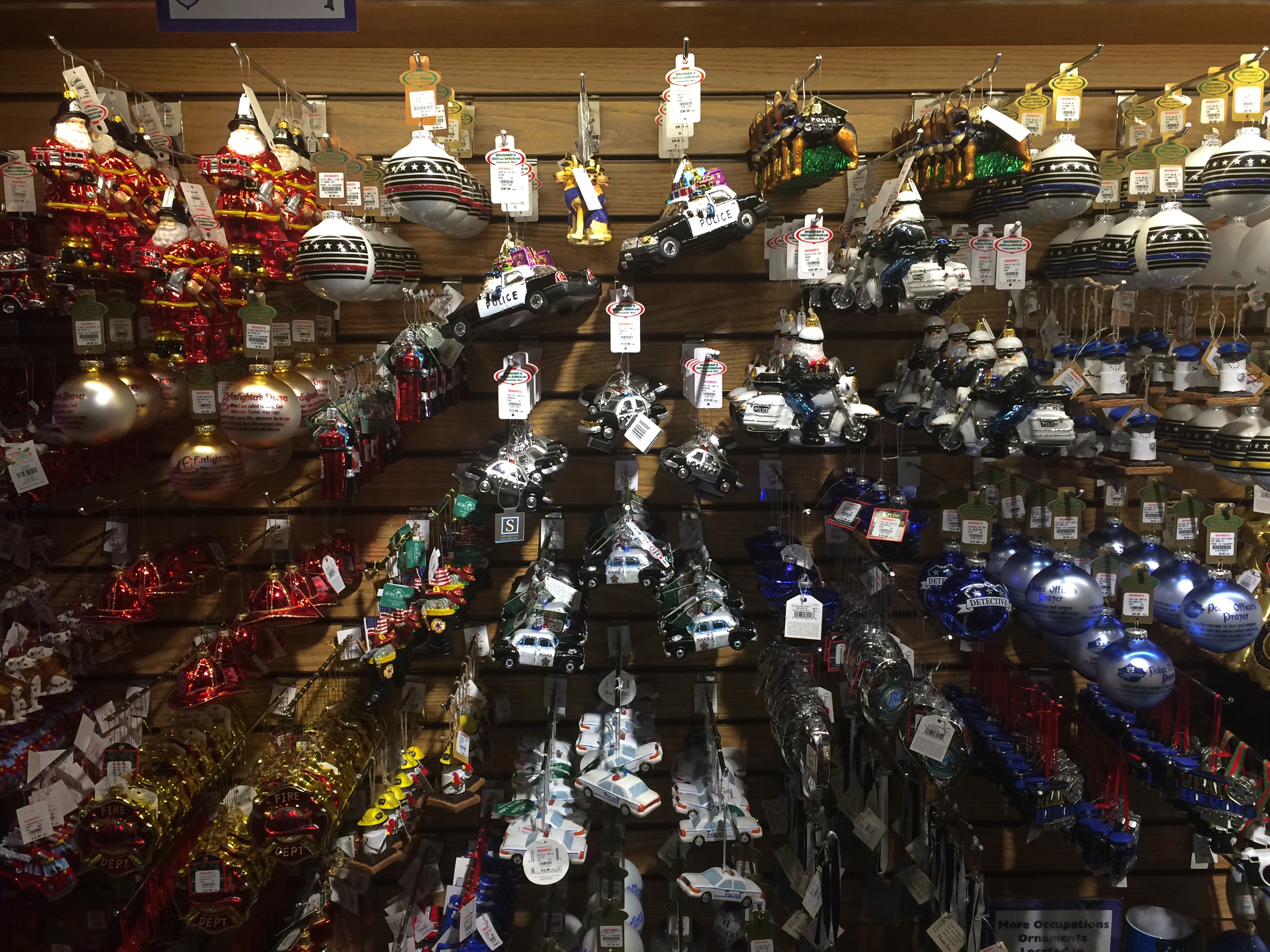
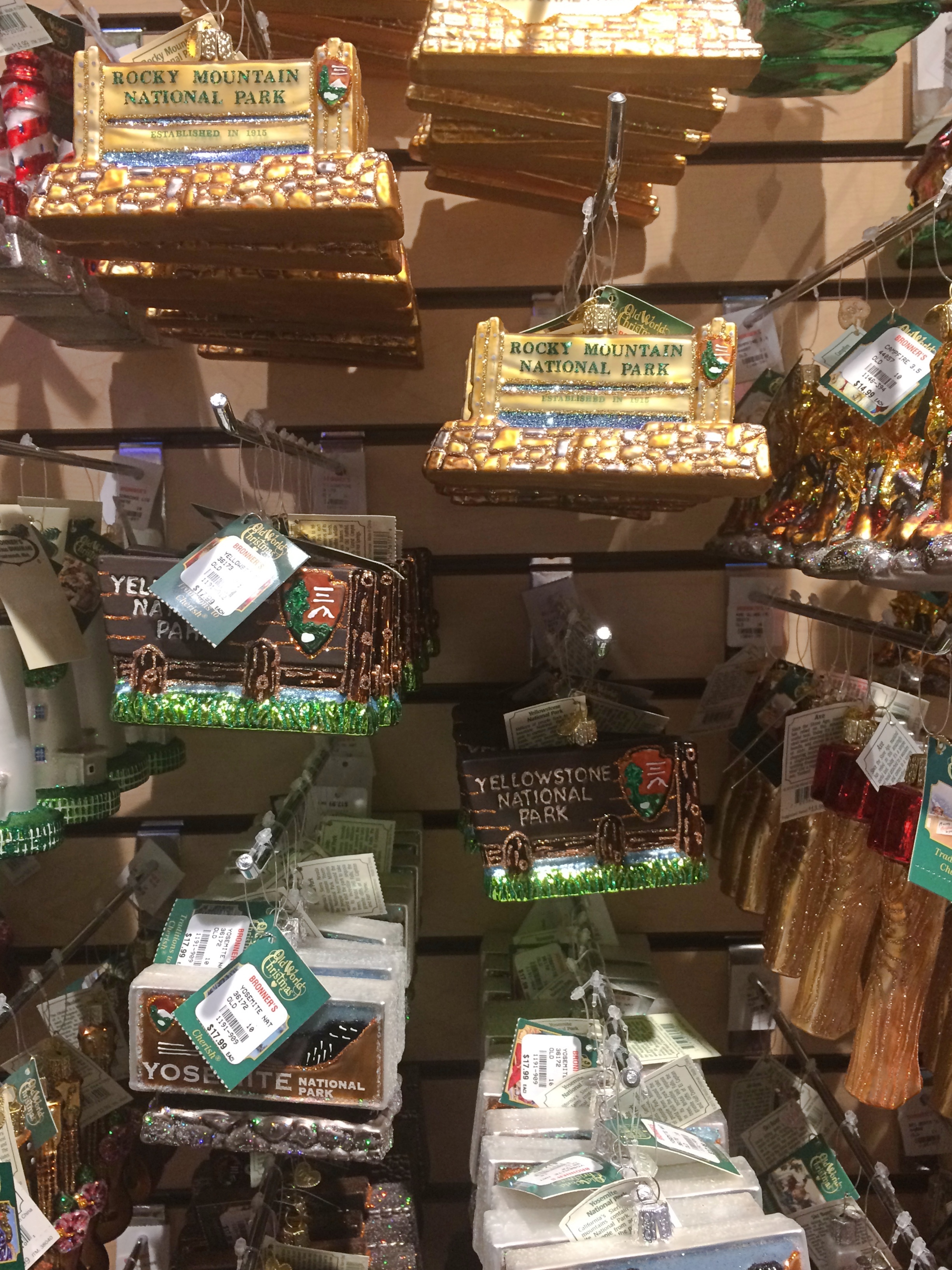
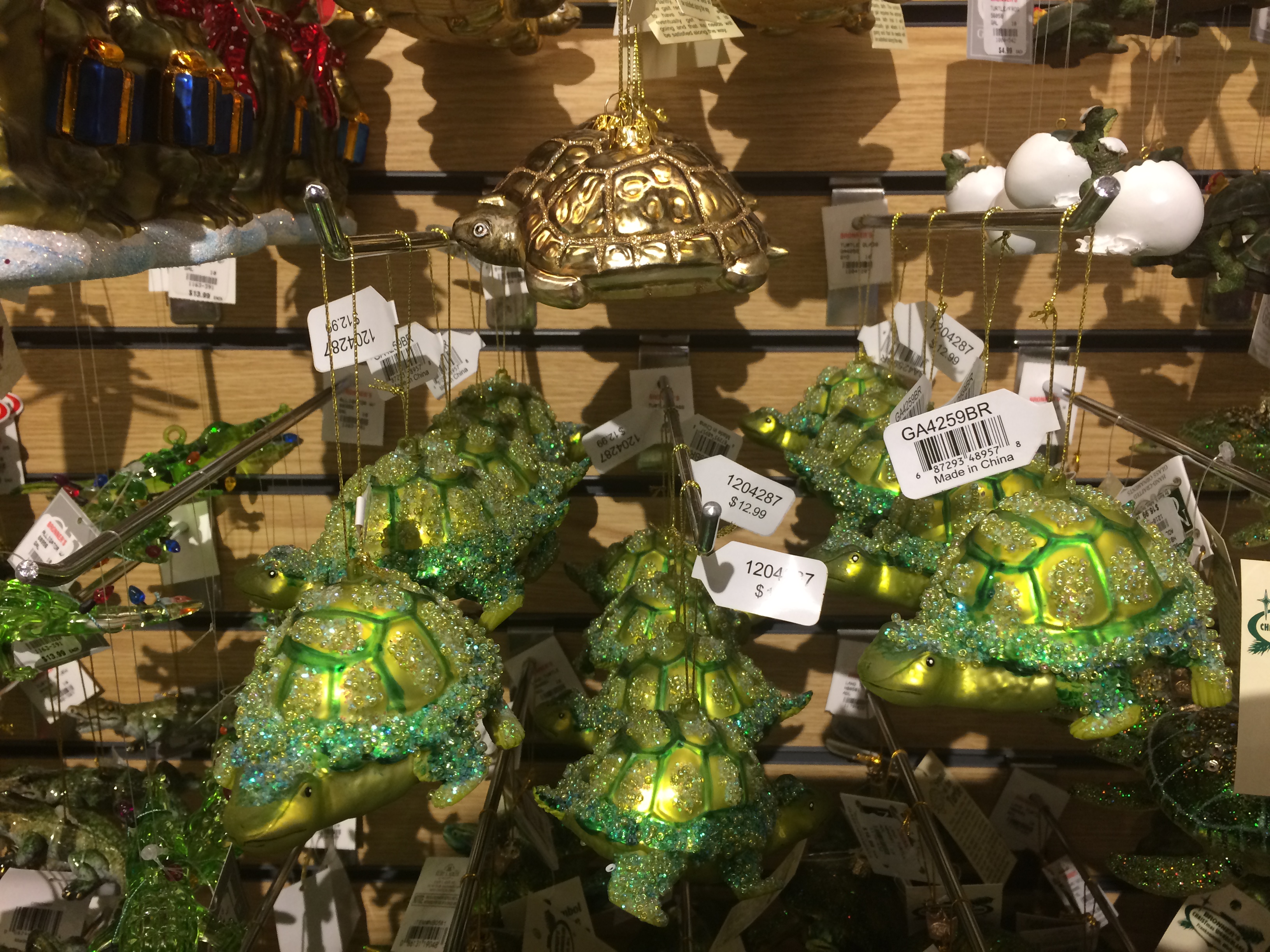
Bronner's Christmas WonderlandBronner's Christmas WonderlandThere are a lot of specialized ornaments, featuring animals, celebrities, entertainers, farm equipment, food and beverage, hobbies, hunting and fishing, music, miniatures, romantic themes, patriotism, professions, religious themes, Santas, snowmen, sports, various nationalities and much more. Something to look at everywhere you go in that store.

For nurses.
Bronner's Christmas WonderlandCops.
Bronner's Christmas WonderlandFor fans of assorted national parks.
Bronner's Christmas WonderlandOr turtles.
Bronner's Christmas WonderlandWonder if the store stocks a gila monster ornament. If anywhere does, this place would.

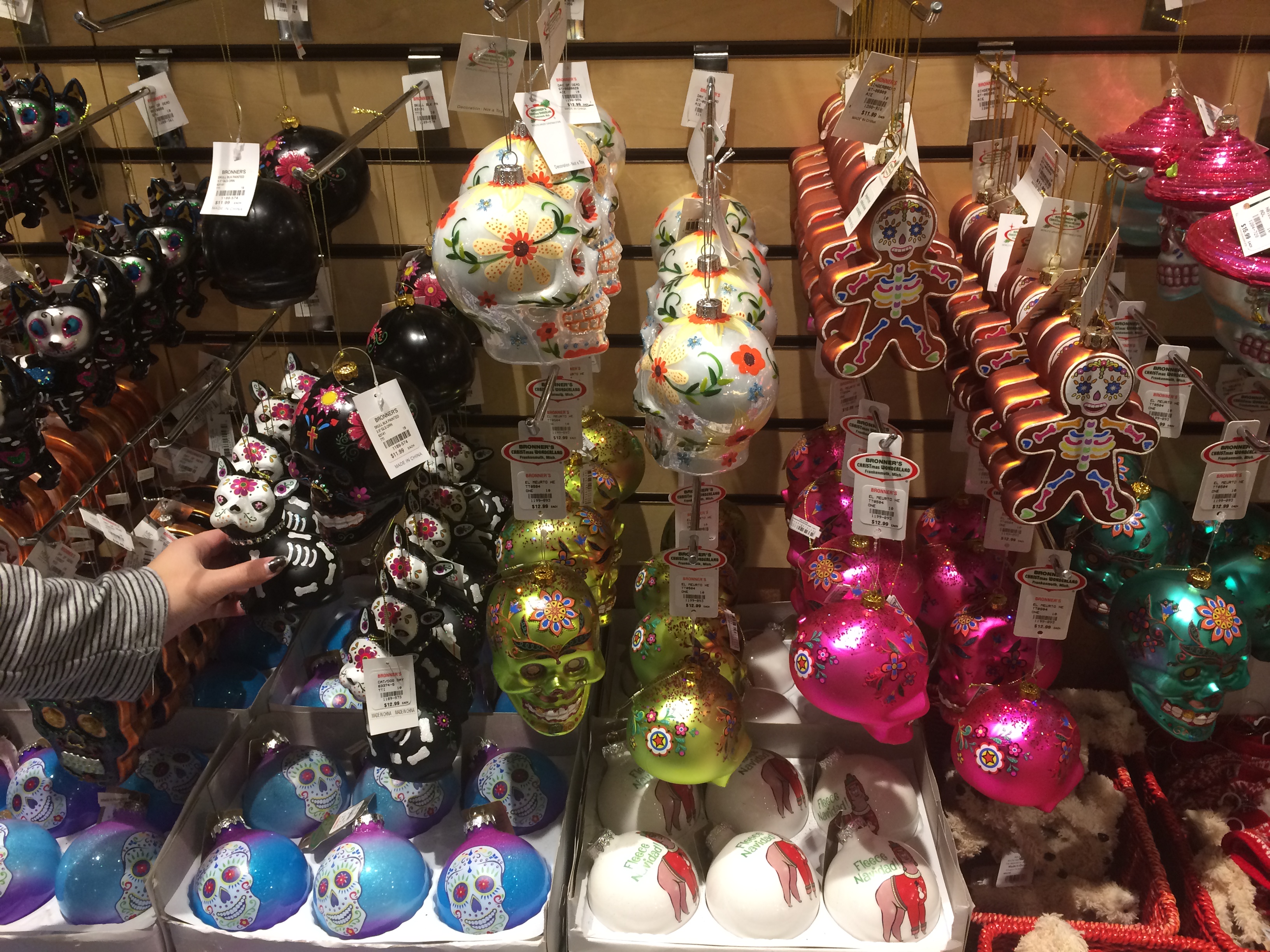
If you want to be reminded of the Day of the Dead around Christmas.
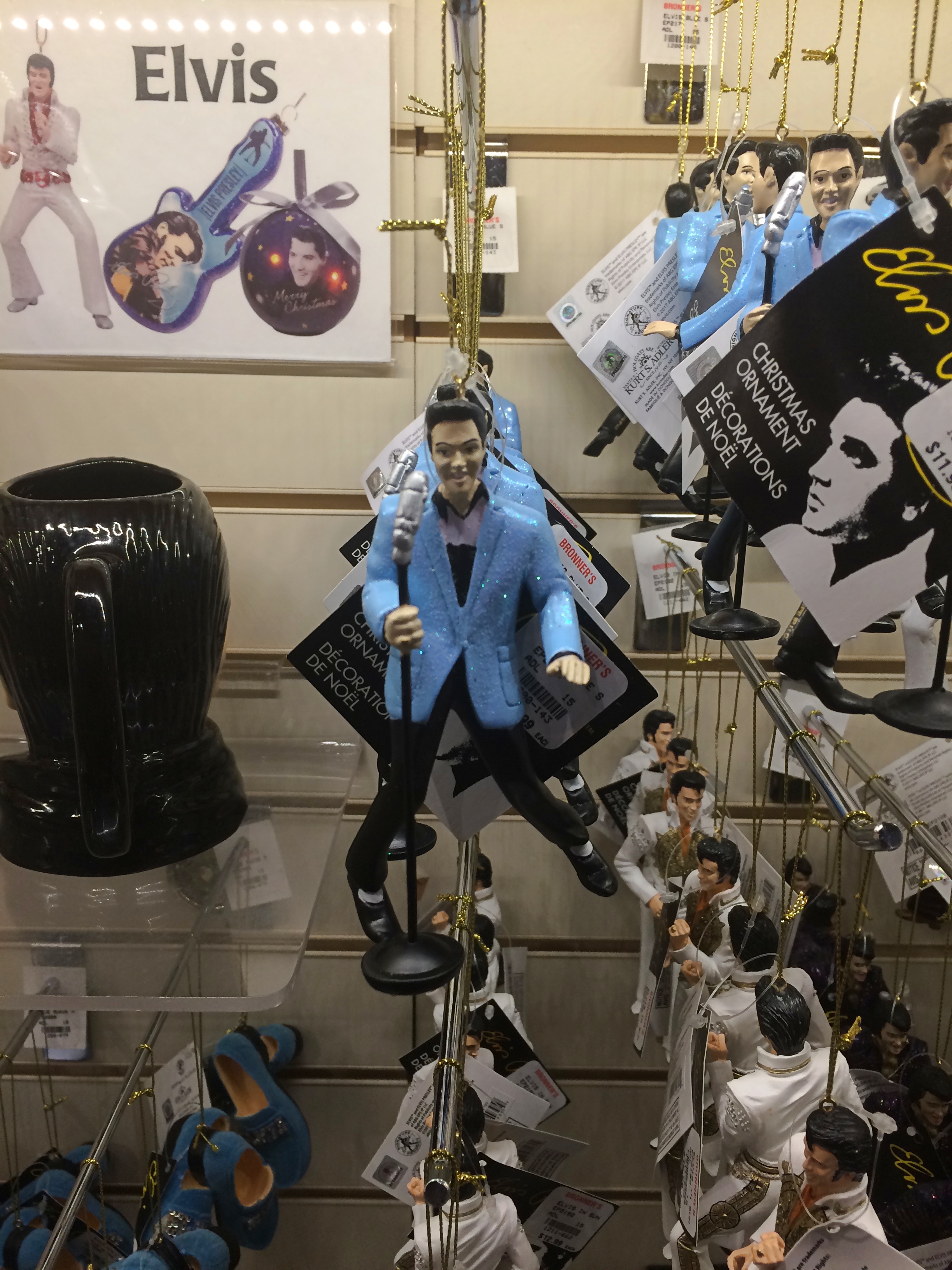
Bronner's Christmas WonderlandOr if the King has to be part of your holiday.
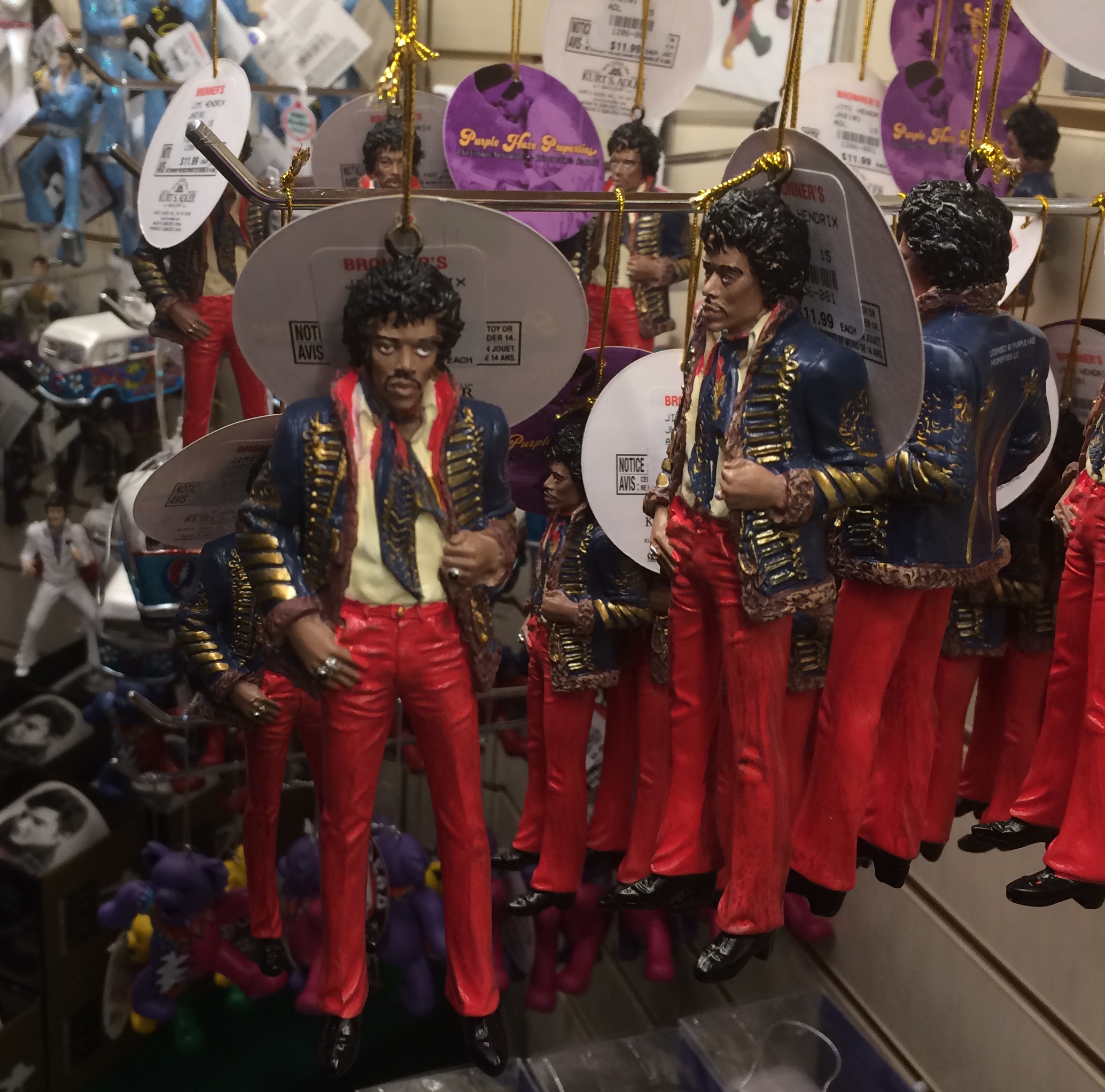
Bronner's Christmas WonderlandI wasn’t expecting Jimi Hendrix, but there he was.Bronner's Christmas Wonderland

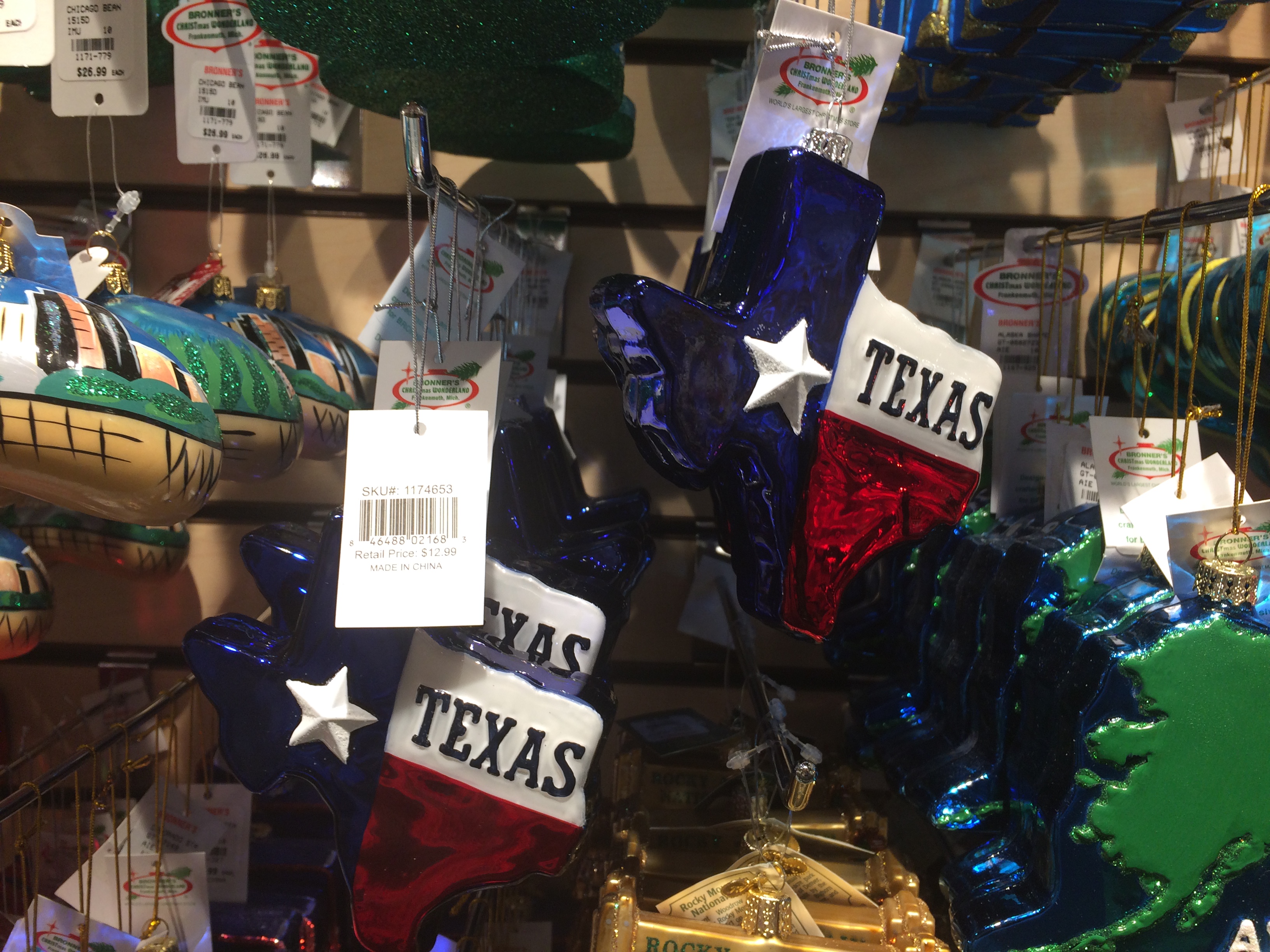
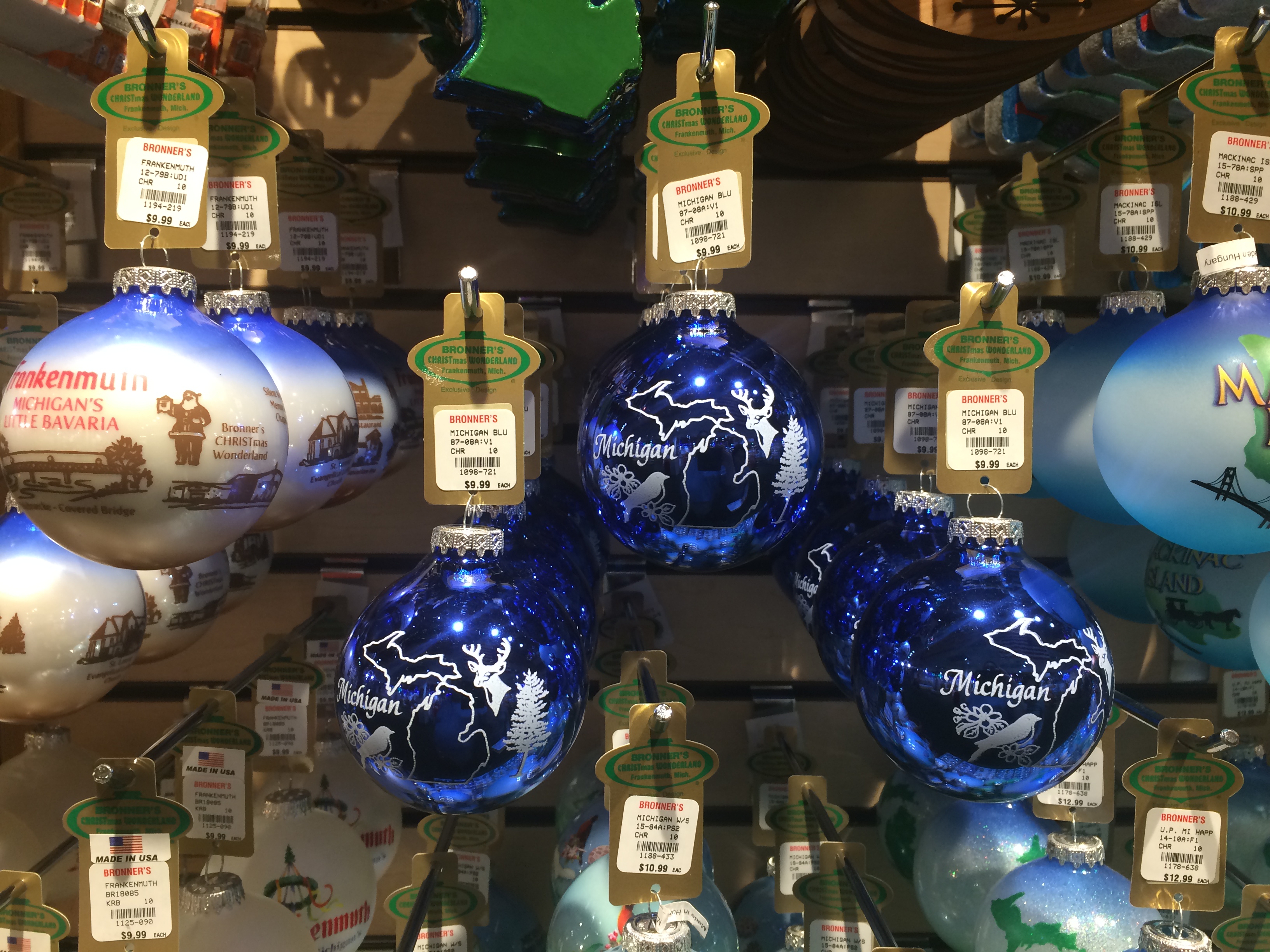
Naturally, various states and countries are represented as well.
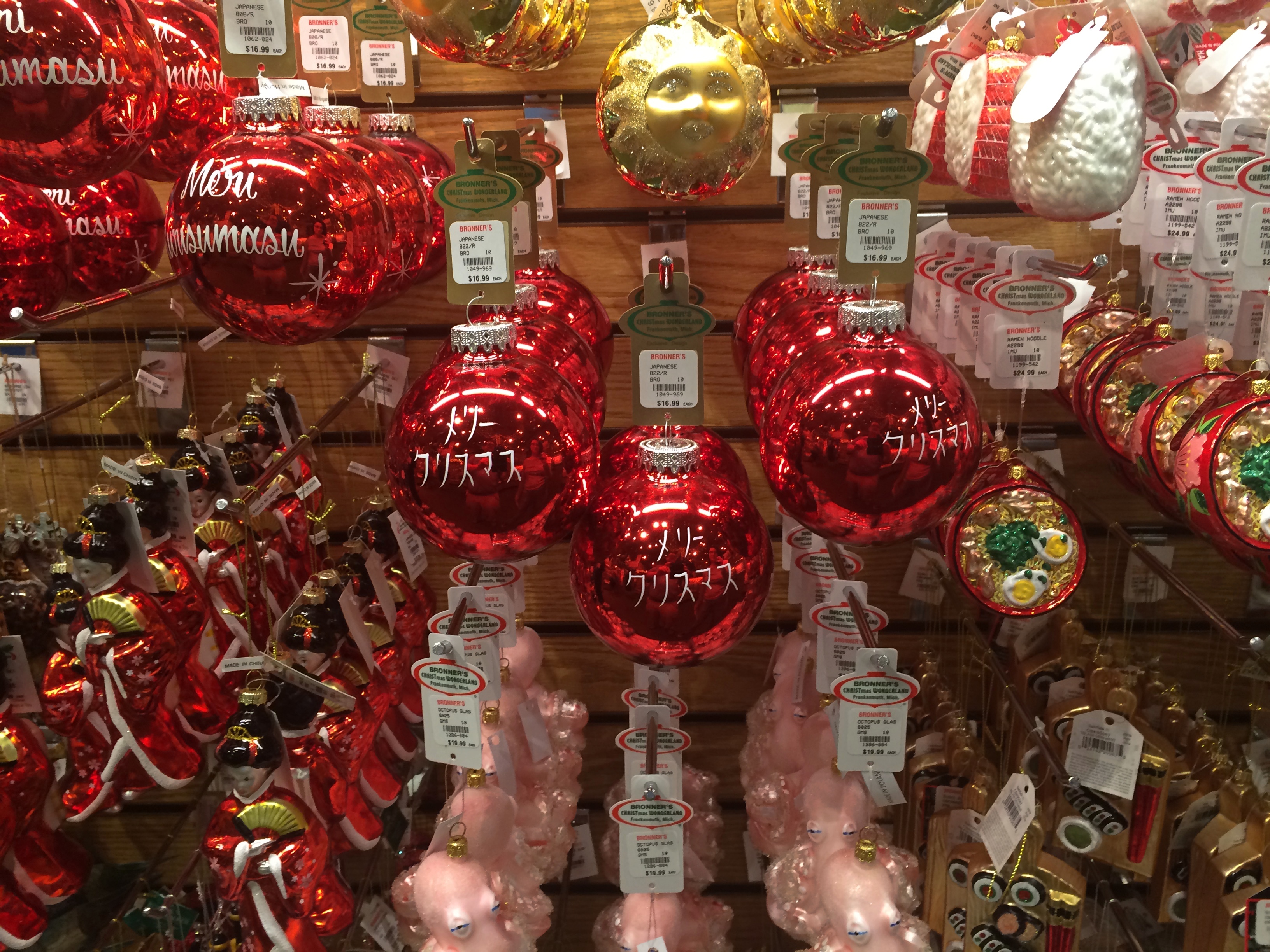
Bronner's Christmas WonderlandBronner's Christmas WonderlandBronner's Christmas WonderlandThat last one is the Japan-themed ornament section. The red balls in the middle feature a phonemic approximation of “Merry Christmas” in katakana.