RIP, Donald Ault

The other day I learned that Donald Ault died in April at 76. Sad to hear it. Among my college professors, he was one of the more interesting.

Besides being a William Blake scholar of renowned, Ault also had an early academic interest in comics, especially the work of the talented Carl Barks. Most of the rest of the VU English Department didn’t think much of that — comics (and balloons) is for kiddie-winkies, after all — and a few years after I took his class, Donald Ault was off to the University of Florida. That was a better fit for him than Vanderbilt, where he had come to from Berkeley.

Ault said so himself in a short memoir republished by the International Journal of Comic Art blog. An appreciation for Ault by another former VU student is here, better than anything I can write about him.

Ault taught the last English class I took at Vanderbilt, in the spring of 1983, whose formal title I don’t remember. But I do remember an assignment for that class that had me write an interpretation of a Carl Barks’ Donald Duck story. Out of a number of ideologies to choose from in doing the paper, I picked a Marxist interpretation. I don’t remember what I wrote, but I do remember having fun with it.

We also watched some videos — items in those pre-Internet days that were hard to find. One in particular was J-Men Forever, an insane romp of a thing put together by a couple of members of Firesign Theatre. As it happened, I’d heard of Firesign because a couple of their records were floating around my freshman dorm hall, but I’d never heard of J-Men Forever.

RIP, Dr. Ault.

The House of Prime Rib, 1973

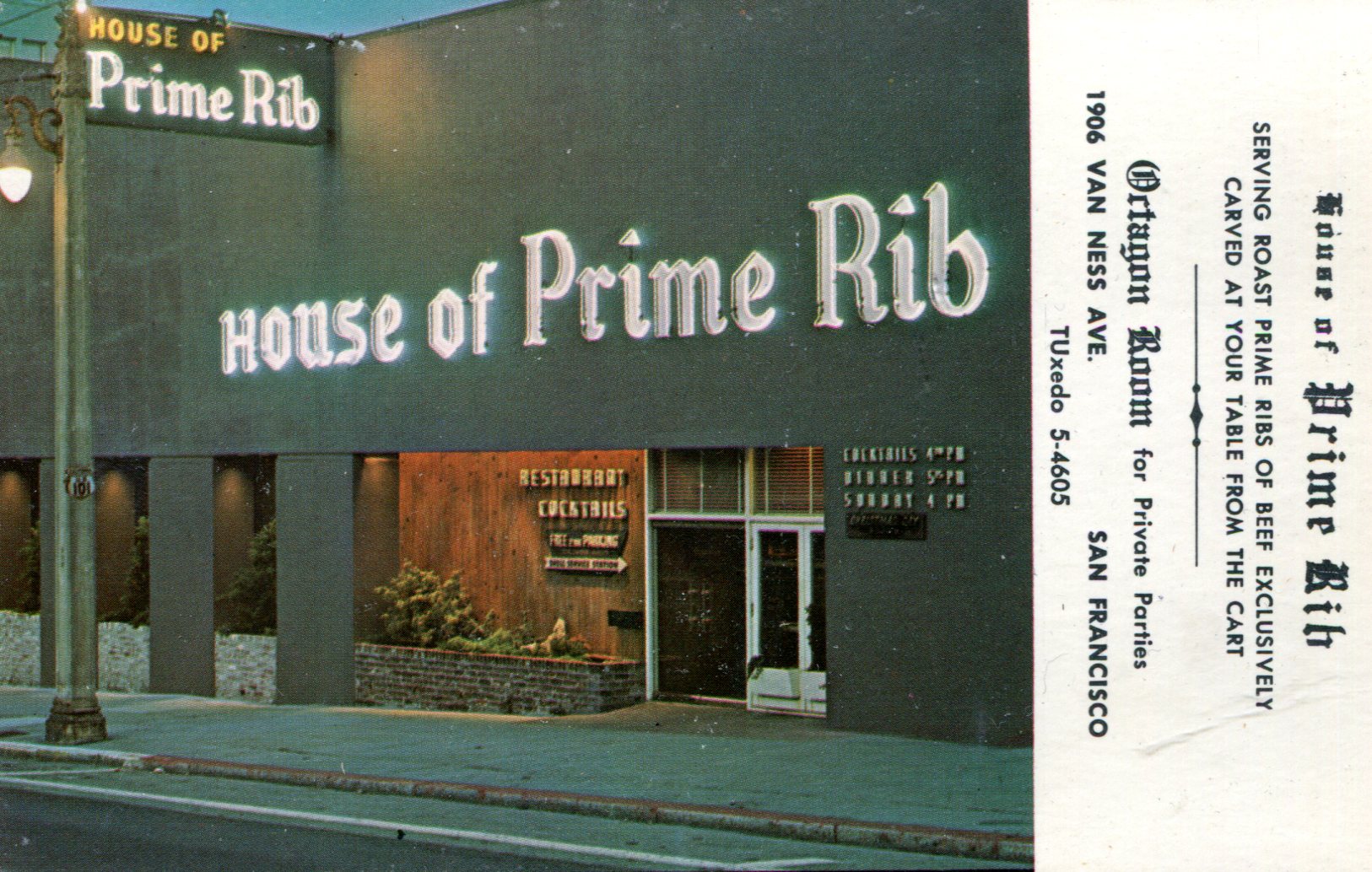
I went with my family to the House of Prime Rib on Van Ness Ave. in San Francisco in August 1973, picking up a souvenir postcard at the same time.
House of Prime Rib postcard ca 1973I remember the place seemed dark. Low-light restaurants weren’t something I knew except maybe from TV. More exotically, servers carved the meat at a cart near our table. There was a dessert cart as well. Every now and then around the dim room, flambé erupted. Quite a place for a 12-year-old with ordinary tastes.

The House of Prime Rib, which is still open, wasn’t the sort of restaurant we usually patronized. The only place we visited remotely like it (that I can think of) was Old San Francisco — which was in San Antonio, and still is. We went there two or three times.

Except for the fact that Old San Francisco served upmarket beef like the House of Prime Rib, there wasn’t much similarity. Old San Francisco wanted to evoke those giddy Barbary Coast days before 1906; the House of Prime Rib had a Old England vibe. It was a midcentury fancy restaurant.

We were on vacation, hence the indulgence. My mother and brothers and I flew to Los Angeles that August, spent a few days there, drove up the coast on California 1 in a rental car, and spent a few days in San Francisco, flying back to San Antonio from there.

I remember it well: Disneyland in the days of A-E tickets, the Huntington Library, a side trip down to see Mission San Juan Capistrano, perhaps because my mother remembered one version or another of the song, the smoggy LA air, the winding coastline, our disappointment in not getting to see the Hearst Castle, Big Sur, climbing the hills of San Francisco, crossing the Golden Gate Bridge, Chinatown, the Cannery, the cable cars, my brother Jay ordering octopus at a Fisherman’s Wharf restaurant, a boat trip around the Bay (Alcatraz was still closed at the time). A nothing out-of-the-ordinary tourist week in California. What a good time.

Chicagoland’s Most Obscure Statue

Just south of I-90 in the major Chicago suburb of Schaumburg is a district populated almost completely by small- and mid-sized businesses that don’t have any consumer-facing operations, or if they do, they’re elsewhere. It’s a district of single-story office properties ringed by parking lots and connected by streets that are only busy early in the morning or late in the afternoon.

Since this is a reasonably prosperous suburb, some attention has been paid to landscaping, with trees, bushes and grass growing between the buildings and among the lots. But there’s no escaping the fact that the area is an office space equivalent of the 20th-century residential areas of the village, which are spread out. Fashionably dense, the area is not. You need a car around here.

Not long ago I had some business to attend to in the area, and I happened upon a small street named Penny Lane. If you’re the right age, that’s going to make you smile a little, though on this Penny Lane there’s no barber showing photographs or banker with a motorcar or fireman with an hourglass.

But this is on Penny Lane.
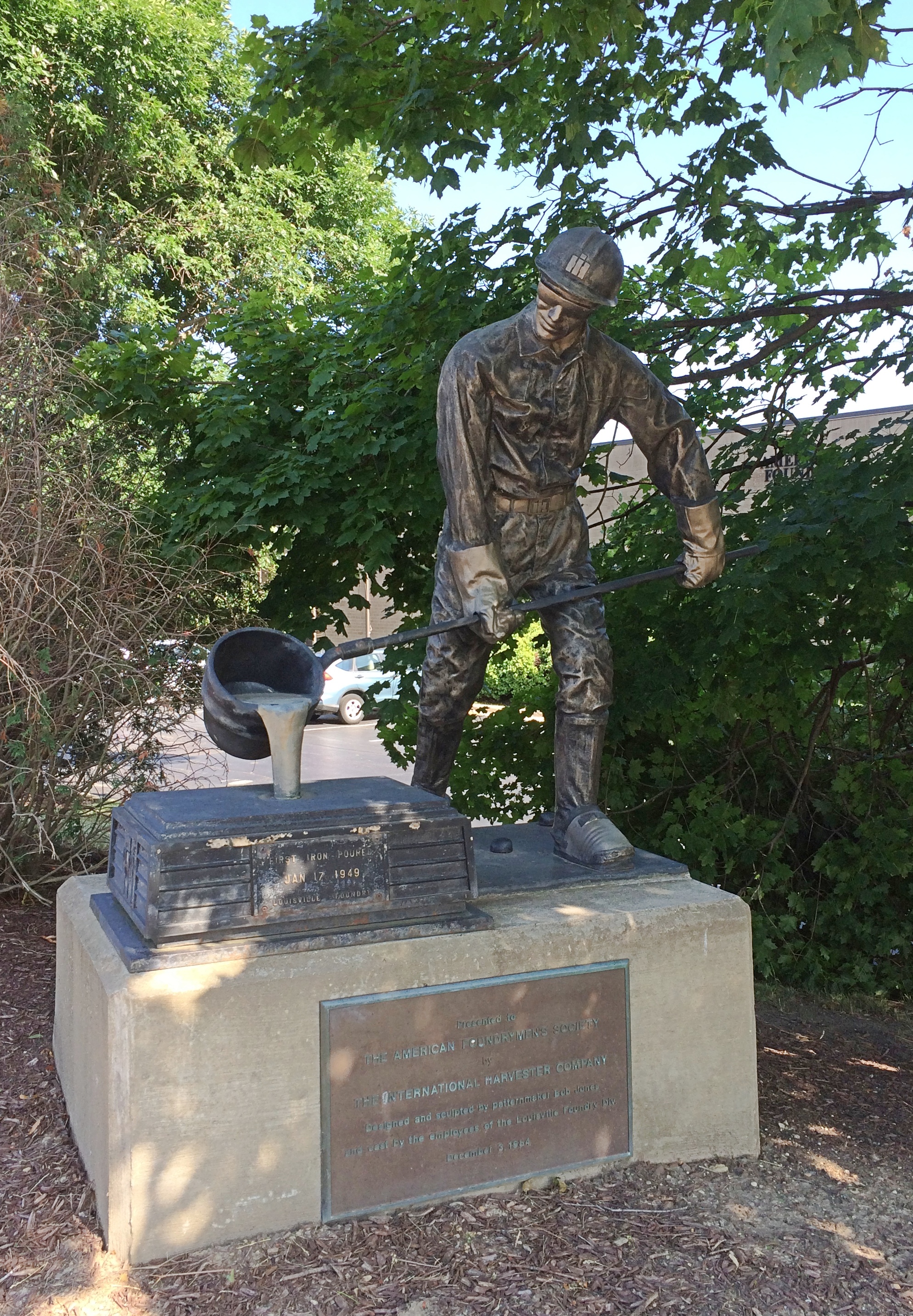
American Foundry Society's statueI had to stop for a minute and look at that. Luckily, Penny Lane doesn’t have much traffic. None besides me at that moment, in fact. The plaque on the plinth says:

Presented to
THE AMERICAN FOUNDRYMEN’S SOCIETY
by
THE INTERNATIONAL HARVESTER COMPANY
Designed and sculpted by patternmaker Bob Jones
and cast by the employees of the Louisville Foundry Div.
December 3, 1984

On the statue itself, on the receptacle receiving the molten iron, is the following:

FIRST IRON POURED
JAN 17 1949
LOUISVILLE FOUNDRY

The iron statue is on the grounds of the American Foundry Society’s headquarters on Penny Lane. Formerly it was the American Foundrymen’s Society, which sounds like a workers’ organization, but it is (and always has been, I think), an industry trade organization for metalcasting.

The statue was among the last items cast in the Louisville foundry, which IH closed in 1983. Iron’s a little unusual for such a work, but it looks painted and well-tended by the organization. Even better, it has to be the most obscure statue, at least among those on public view, in the Chicago area.

Riverside Cemetery, Montgomery

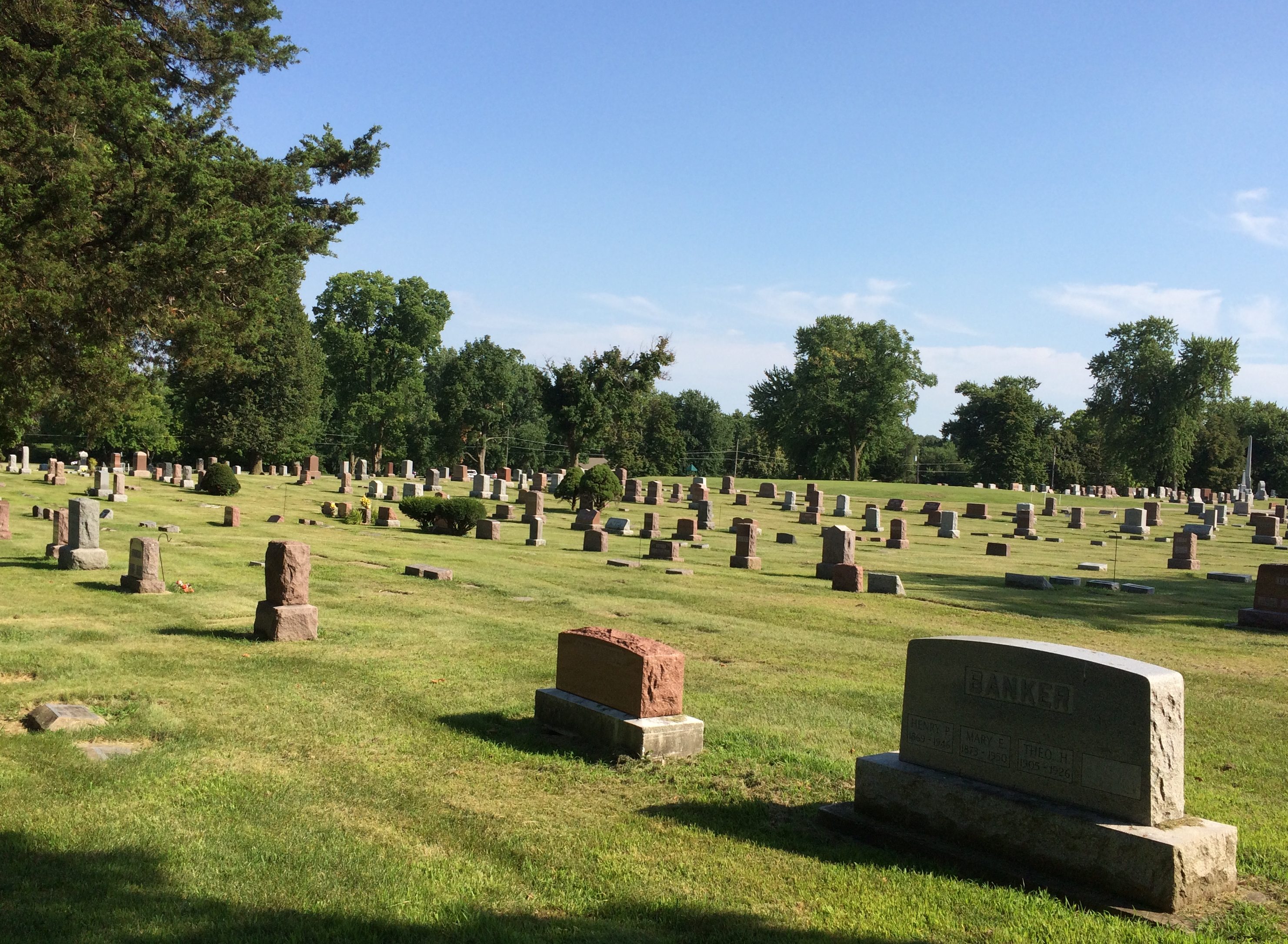
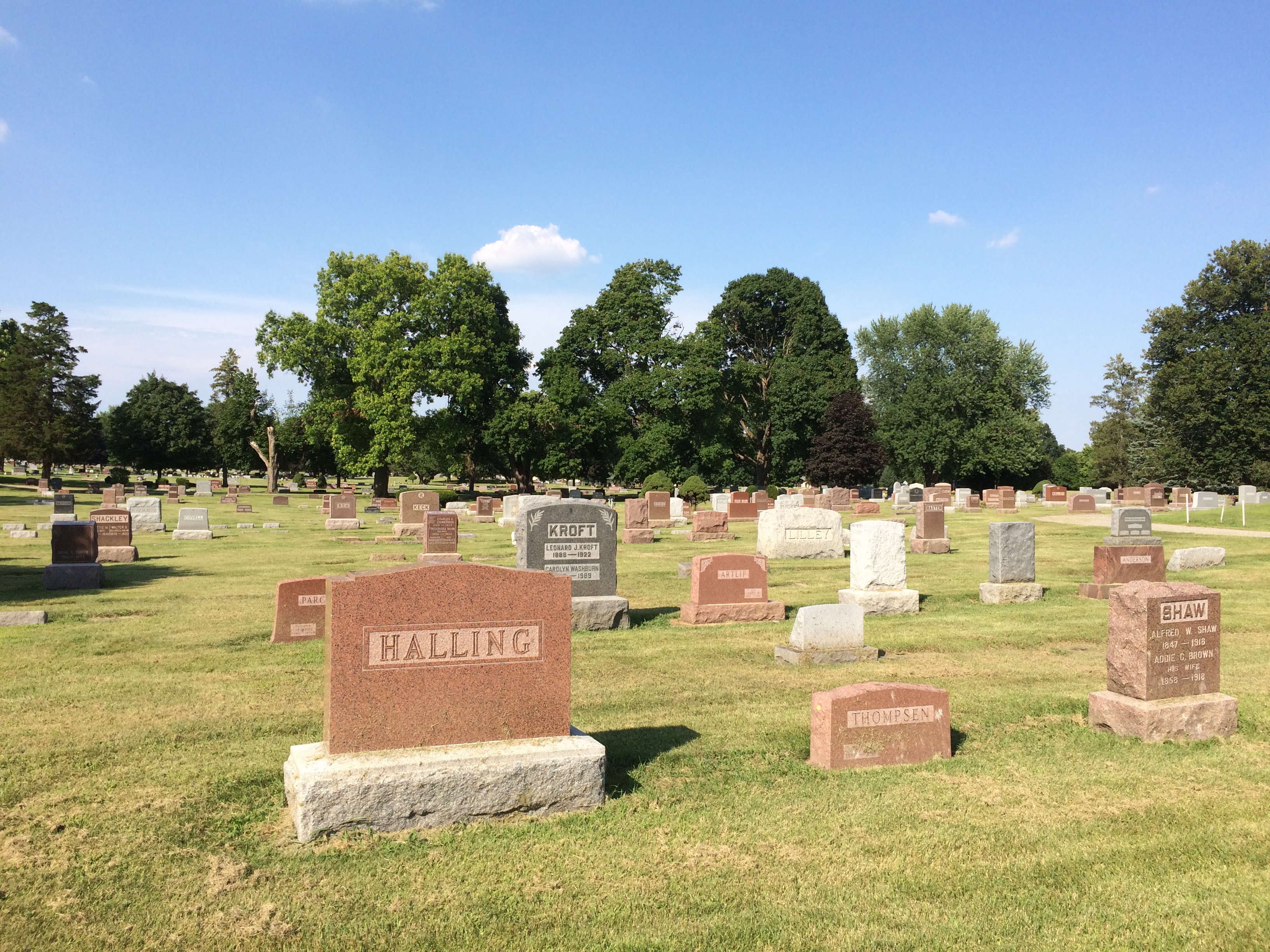
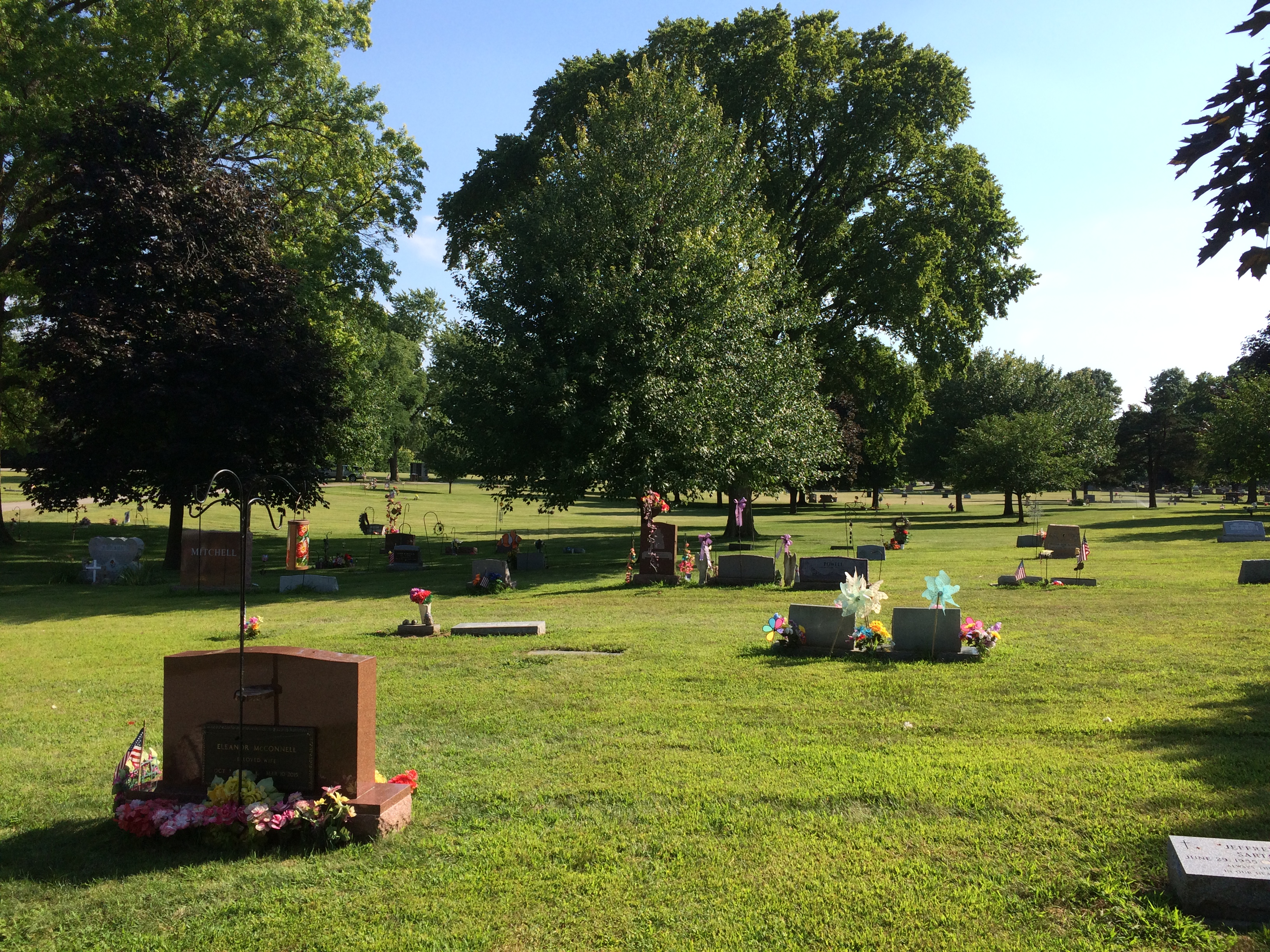
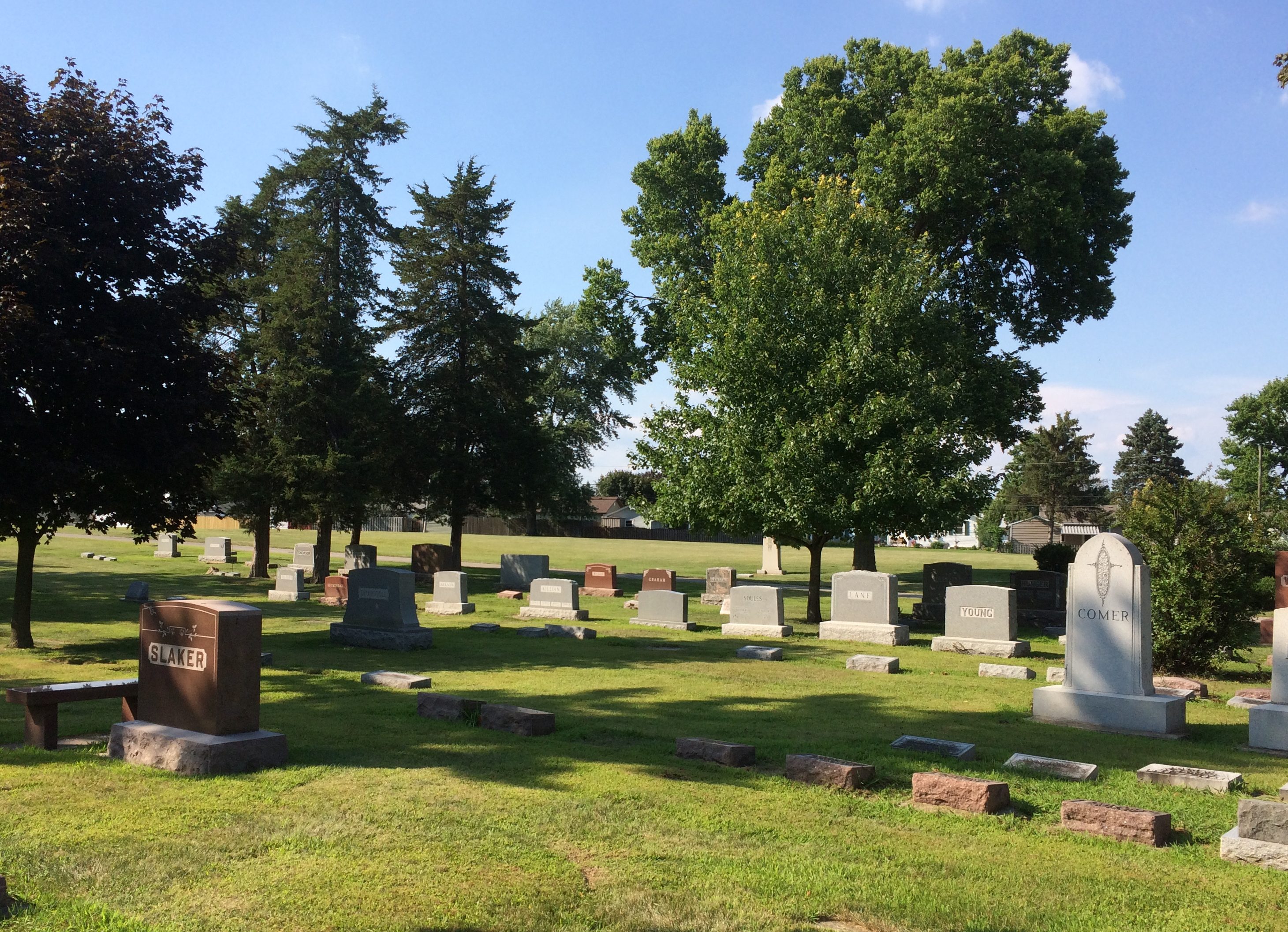
I had a little time to kill before The Comedy of Errors started in Aurora on Saturday, so I consulted Google Maps and found a nearby cemetery to visit. Riverside Cemetery, which is south of Aurora in the town of Montgomery, Illinois, and which is also on the Fox River.

Not bad. Some trees, many upright stones. Not much in the way of land contour or funerary art, though.

Riverside Cemetery, Montgomery IllinoisRiverside Cemetery, Montgomery Illinois

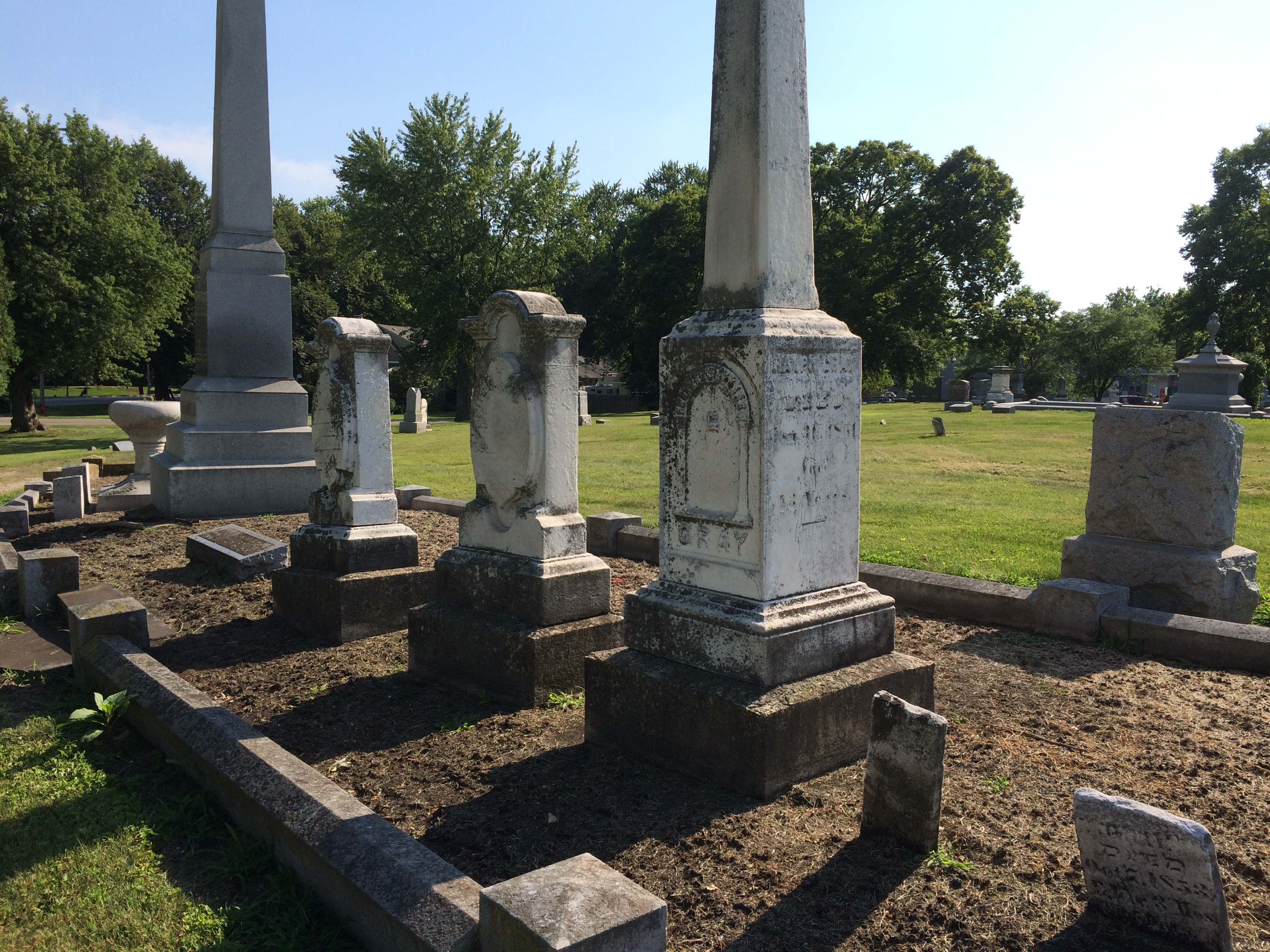
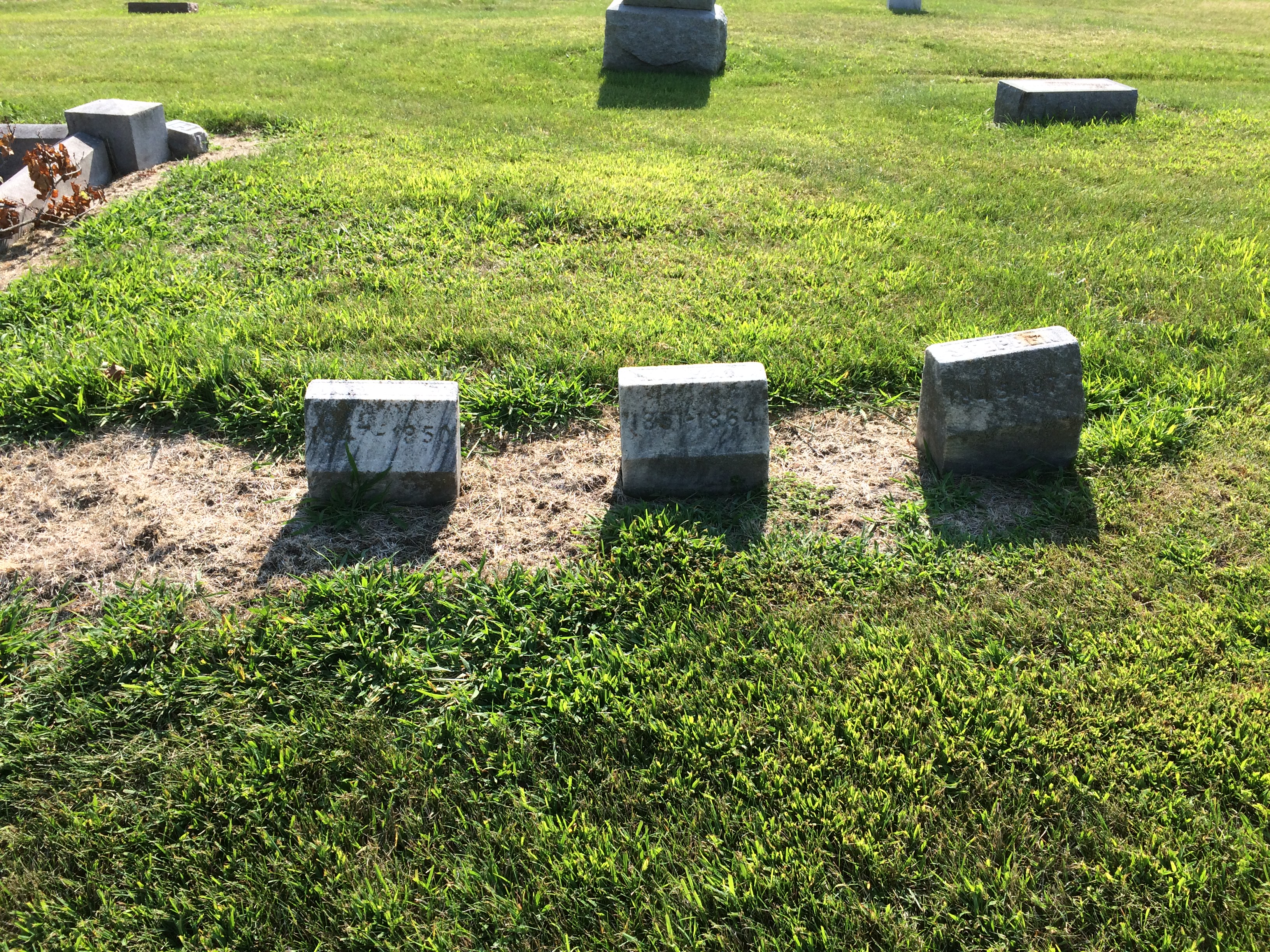
Riverside Cemetery, Montgomery IllinoisI found what are probably the oldest stones: 19th century.
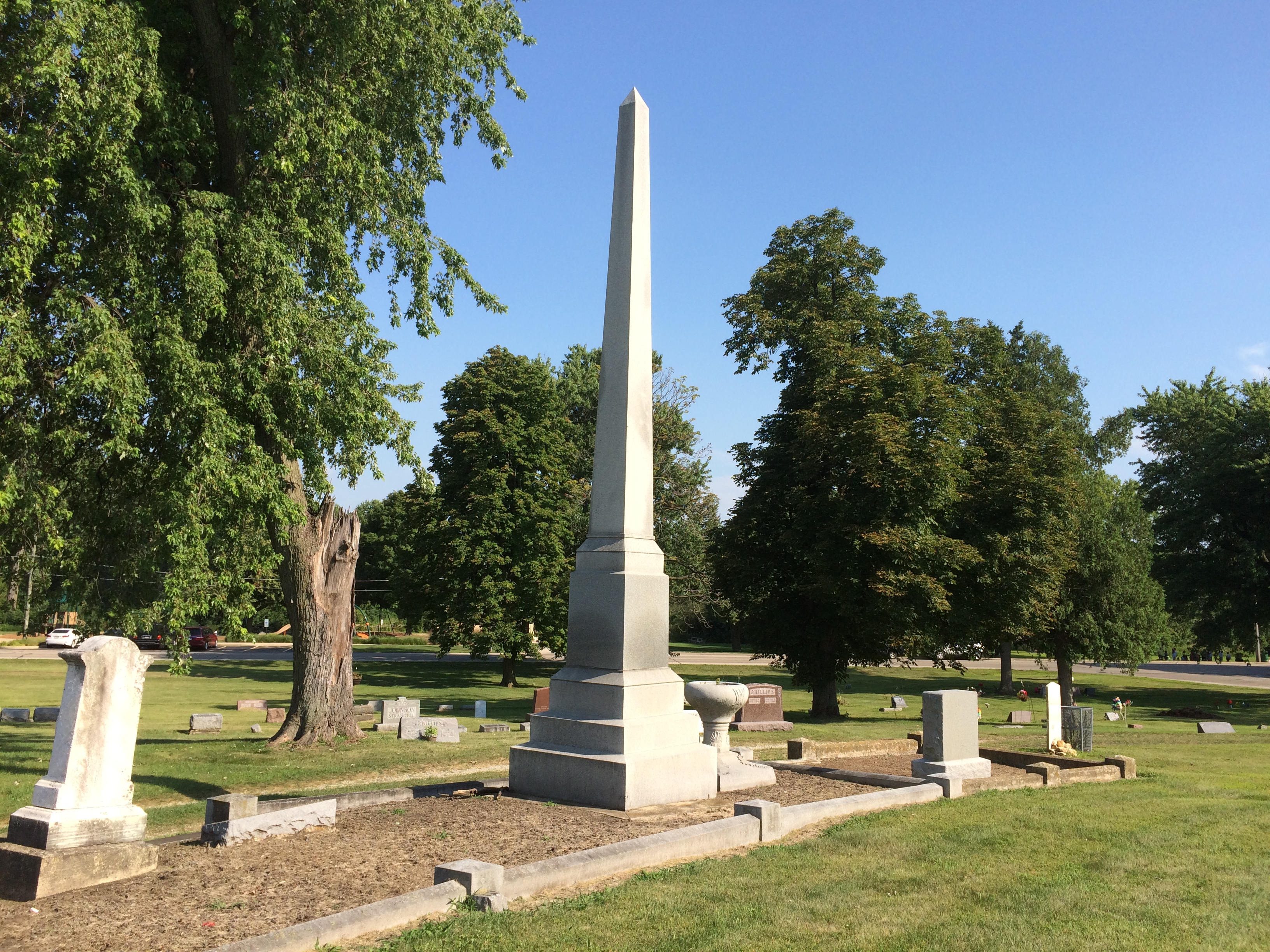
Riverside Cemetery, Montgomery IllinoisRiverside Cemetery, Montgomery IllinoisAs far as I could see, only one obelisk of any size.
Riverside Cemetery, Montgomery IllinoisMarking the burial site of one V.A. Watkins. Big fish in this little pond.

Later I read that, according to Find A Grave, there’s one noteworthy person buried at Riverside: Bernard Cigrand (1866-1932). I didn’t happen across his stone. He rings no bells. Not even a slight tinkle. He was a dentist, but his stone also says FATHER OF FLAG DAY.

GAR Memorial Hall, Aurora

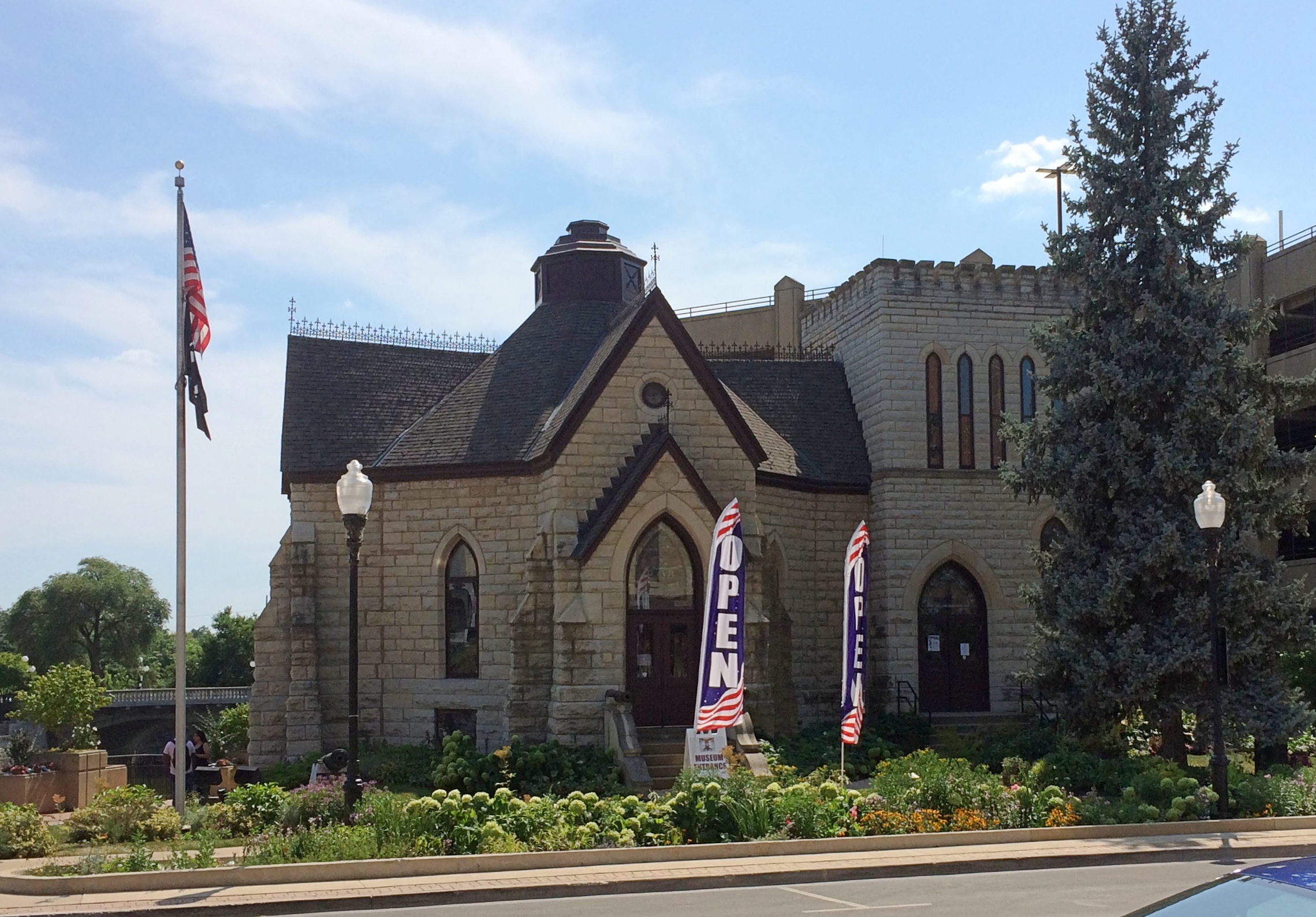
There are a lot of statues memorializing Union veterans, but the Grand Army of the Republic, Post 20, which was in Aurora, Illinois, decided that a building would be a better way to honor the fallen, since it would also be useful for the living. Reportedly the post got the idea from a similar building in Foxborough, Mass.

Completed in 1878, the GAR Memorial Hall still stands on Stolp Island in Aurora.
The octagonal structure is of local limestone and designed by one Joseph Mulvey, who is fairly obscure. Not this fellow (probably), but someone who did other (razed) work in this part of the country. The GAR had meetings there and for a while it housed Aurora’s public library.

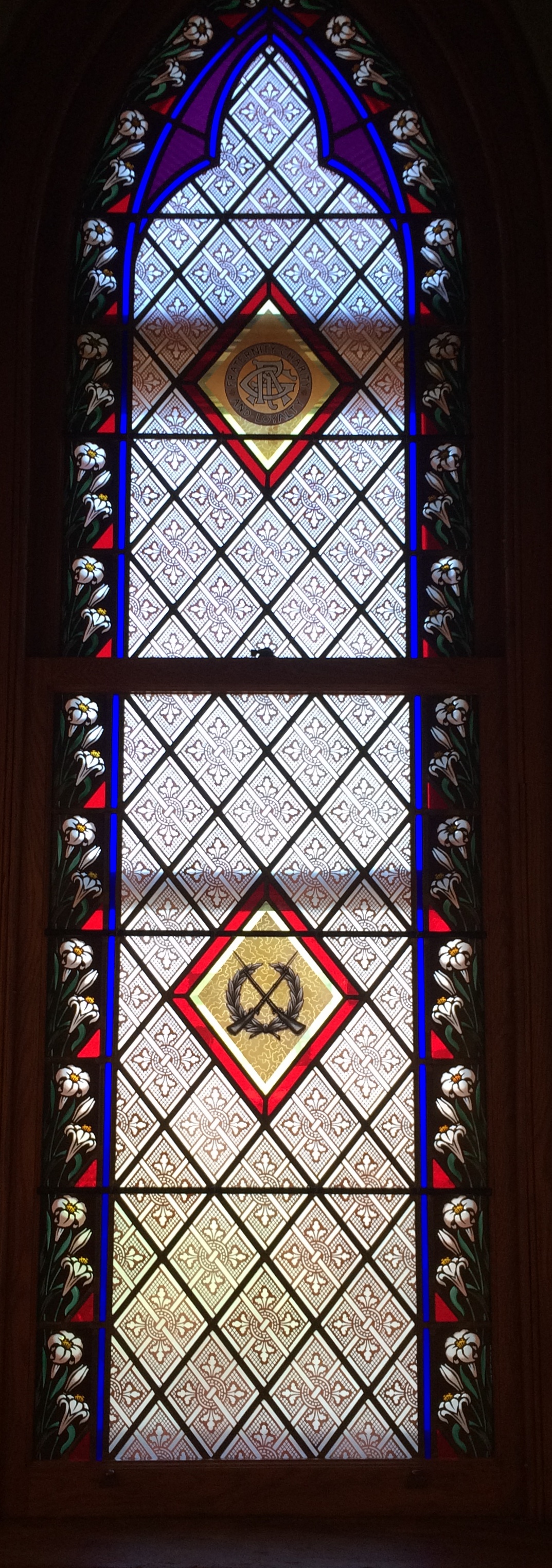
These days GAR Memorial Hall is a small museum with limited hours — namely Saturdays from noon to 4 p.m. I arrived at about 3, in time to look inside, and get out of the heat besides. Inside, you can see the tall stained-glass windows.

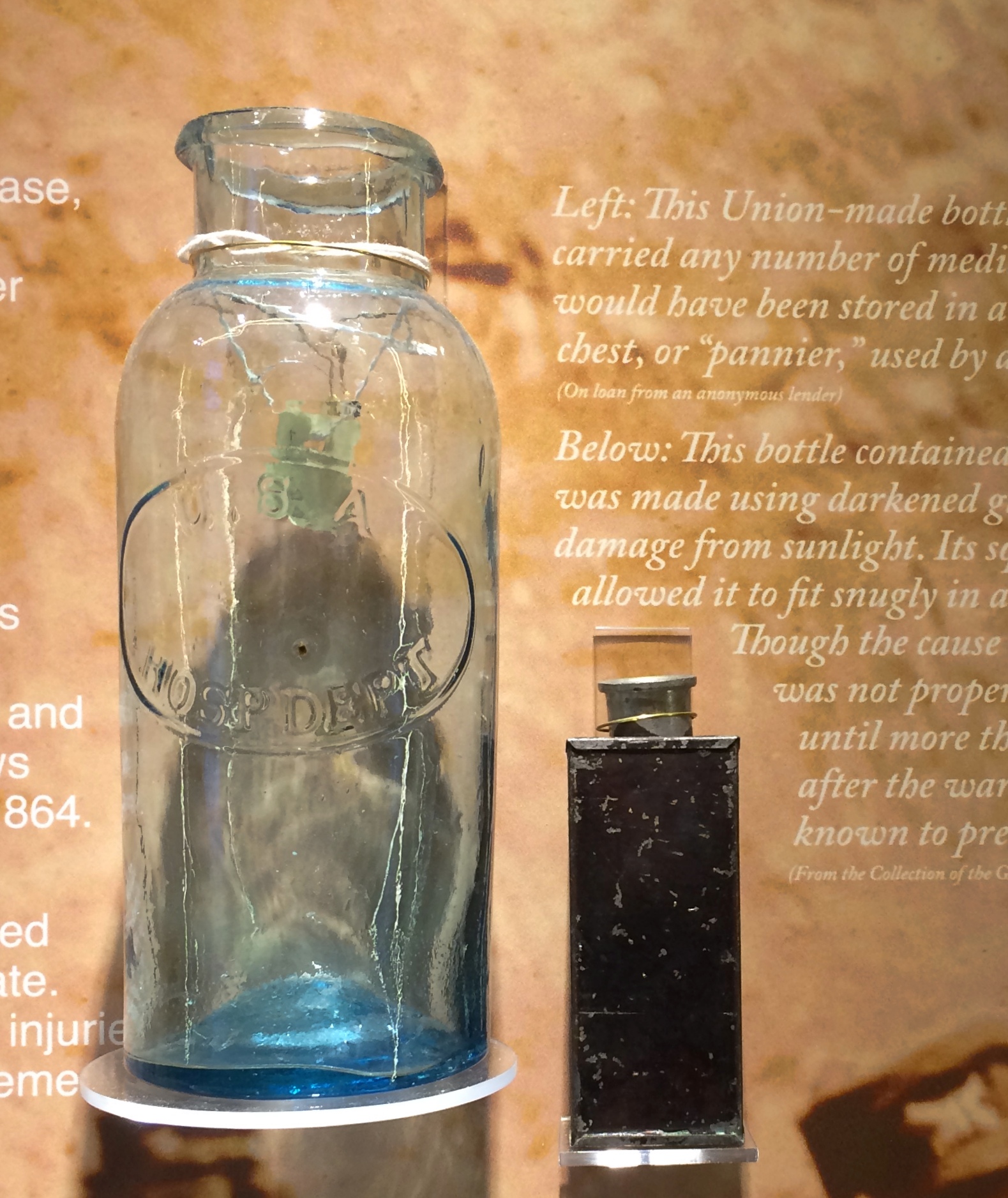
Plus a few artifacts of the war, such as these medicine bottles. The dark one was specifically for quinine.
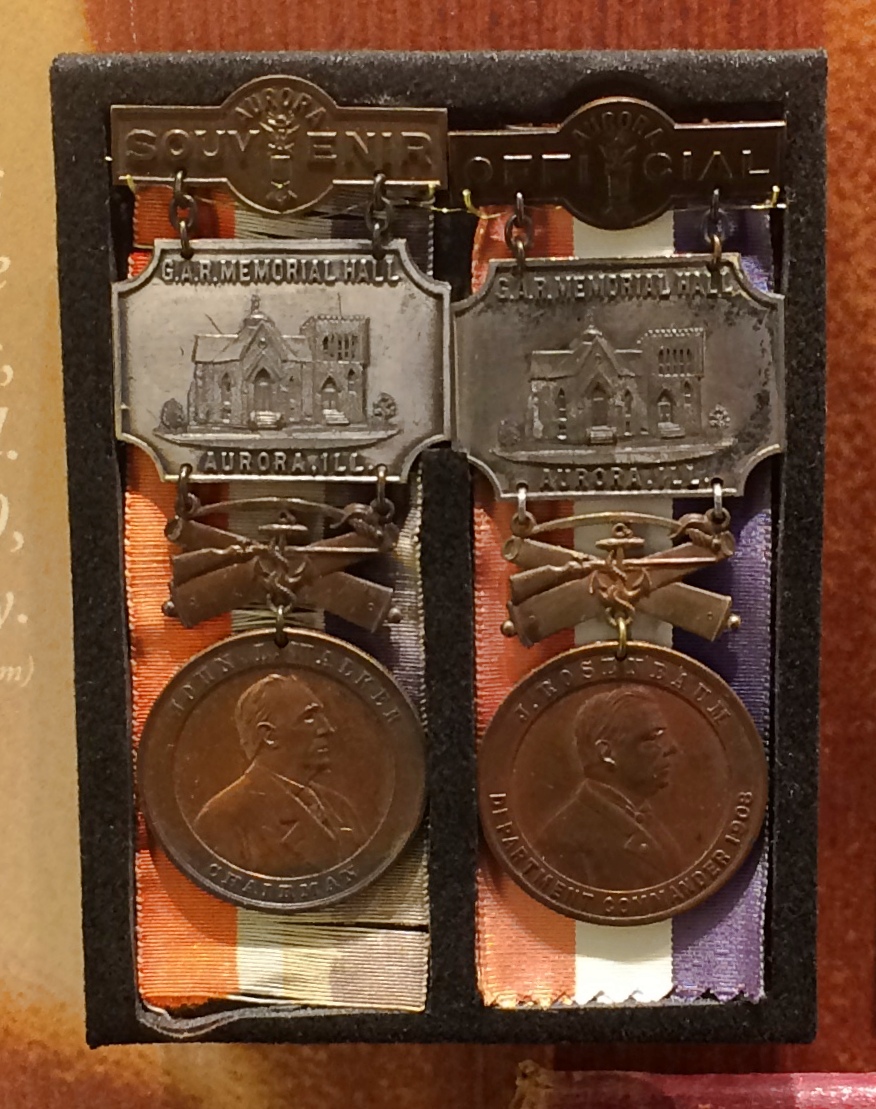
GAR artifacts.
A number of exhibits were devoted to the 36th Illinois Volunteer Infantry and the 8th Illinois Cavalry, both largely composed of men from the Aurora area. The 36th fought at Pea Ridge, Murfreesboro, Missionary Ridge, Chickamauga and in the siege of Atlanta, among other places. The 8th was at Williamsburg, Seven Pines, Brandy Station, Gettysburg and Monocacy, among others.

An amusing aside, according to the museum: “The 8th Illinois Cavalry’s first fight was not against people but alcohol. At their first encampment in St. Charles, Illinois, some of the citizens of the town brought liquor to the young soldiers, and this threatened the discipline of the regiment [I’ll bet it did]. Without orders, a group of soldiers from the 8th marched into town and smashed the windows of the offending shops, pouring the liquor into the street.”

The Comedy of Errors

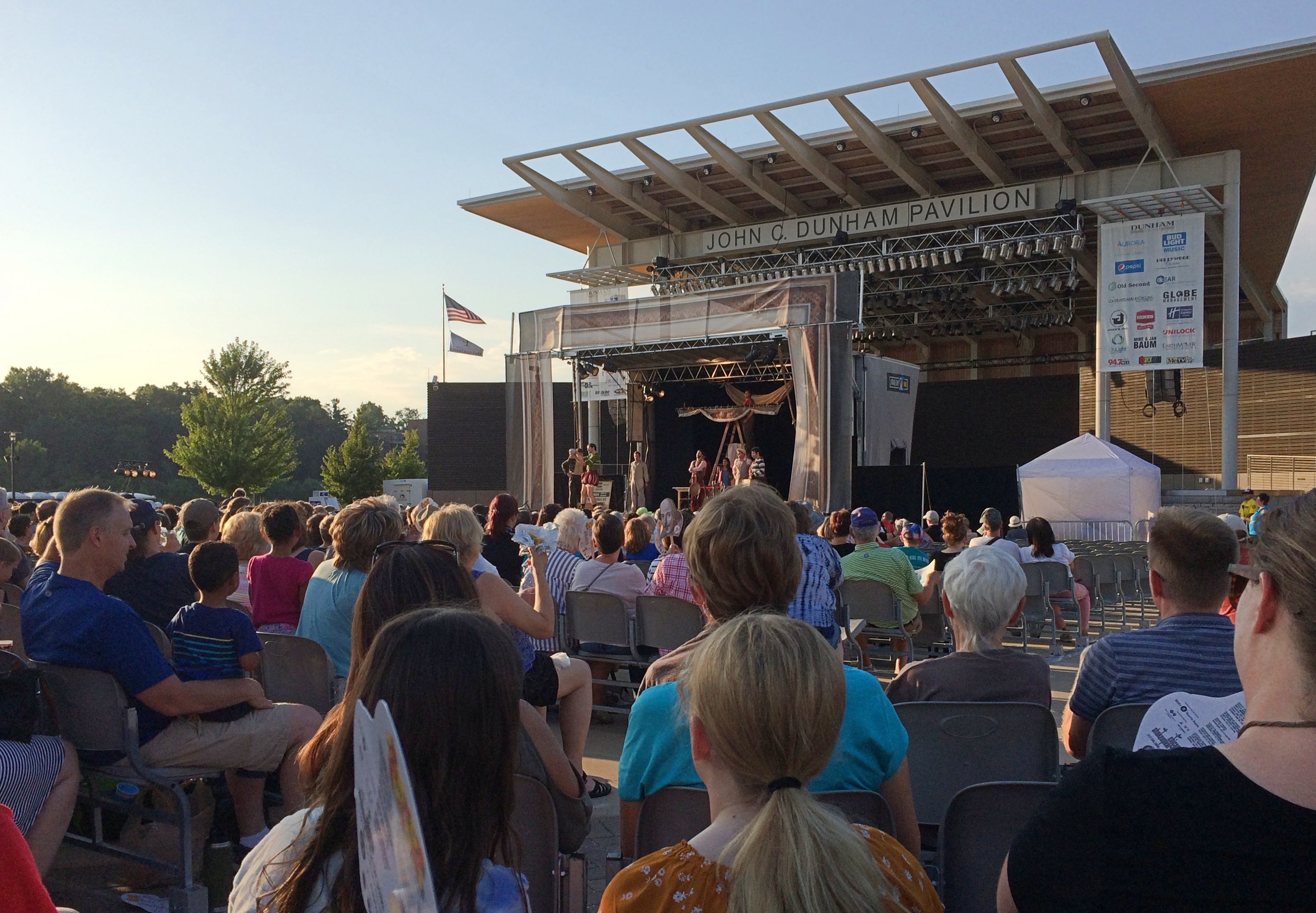
Went to Aurora, Illinois, on Saturday evening for a performance of The Comedy of Errors, the only one in the suburbs this year by Chicago Shakespeare in the Parks.
The play’s the trope-namer, though I expect the idea is much older even than Plautus, and in fact Errors owes a lot to Plautus. It’s a trope big enough to include comic high points like Fawlty Towers (also a comedy of manners) as well as such excrescences as Three’s Company.

Free Shakespeare in the 21st century packs ’em, I’m glad to report.
The Chicago Shakespeare Company, full of talented young actors, handled the material well, including lots of slapstick and wordplay. I suspect some of the more obscure jokes were removed and other points smoothed out, though I’m not an expert on the play. No matter. It was funny.

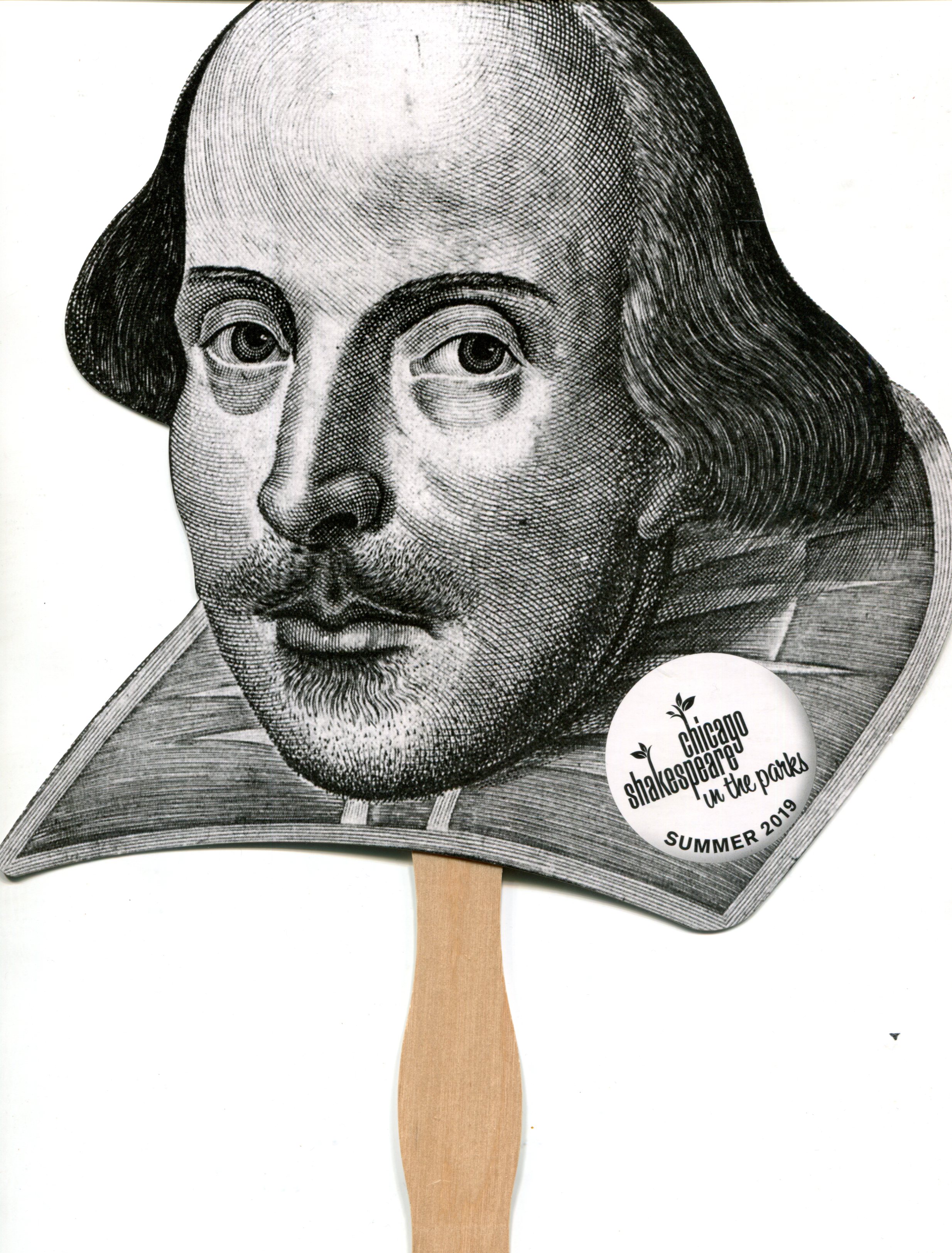
The show began when the sun was still hot, so Shakespeare-shaped hand fans were available. By the time Errors ended, it was dusk and pretty comfortable there at RiverEdge Park.

Acrobatics and juggling punctuated the play, which I figure is true to the spirit of the earliest performances. And to the staging by the Flying Karamazov Brothers, for that matter. The goal was (is) to entertain, after all. So it does, in competent hands, 400+ years later.

The biggest laughs came when one of the Dromios described being pursued by the other Dromio’s girlfriend, a kitchen wench.

Dromio: Marry, sir, she’s the kitchen wench, and all grease, and I know not what use to put her to but to make a lamp of her and run from her by her own light. If she lives till doomsday, she’ll burn a week longer than the whole world.

Antipholus: What complexion is she of?

Dromio: Swart like my shoe, but her face nothing like so clean kept. For why? She sweats. A man may go overshoes in the grime of it.

Antipholus: That’s a fault that water will mend.

Dromio: No, sir, ’tis in grain; Noah’s flood could not do it.

Antipholus: What’s her name?

Dromio: Nell, sir, but her name and three quarters — that’s an ell and three quarters — will not measure her from hip to hip.

Antipholus: Then she bears some breadth?

Dromio: No longer from head to foot than from hip to hip. She is spherical, like a globe. I could find out countries in her.

Jaume Plensa, Here and There

Here’s a line from The Sun Also Rises that I didn’t much appreciate until recently. In one of the many conversations among the protagonists, the subject of the character Mike’s bankruptcy is broached:

“How did you go bankrupt?” Bill asked.
“Two ways,” Mike said. “Gradually, then suddenly.”

A lot of things happen that way. Learning often happens that way. Or at least awareness. Fortunately, I don’t have the experience of bankruptcy in mind. Still, a minor example of gradually-suddenly just happened to me.

Back in 2008, we visited the Frederik Meijer Gardens & Sculpture Park in Grand Rapids, Mich. One of the works was by Jaume Plensa, “I, you, she or he…”
In 2014, I took note of Plensa’s monumental head, temporarily placed in Millennium Park in Chicago, “Looking Into My Dreams, Awilda.” I also knew at the time that the Catalan artist had also done Crown Fountain in the park as well.

Interesting that the vitriol against “Dreams” in the comments of this Chicago Reader item obsesses about the size of the head. When I happen across public art, I judge it by an admittedly subjective standard: does it make the space more interesting? By that standard, all the Plensas I’ve seen are successful works.

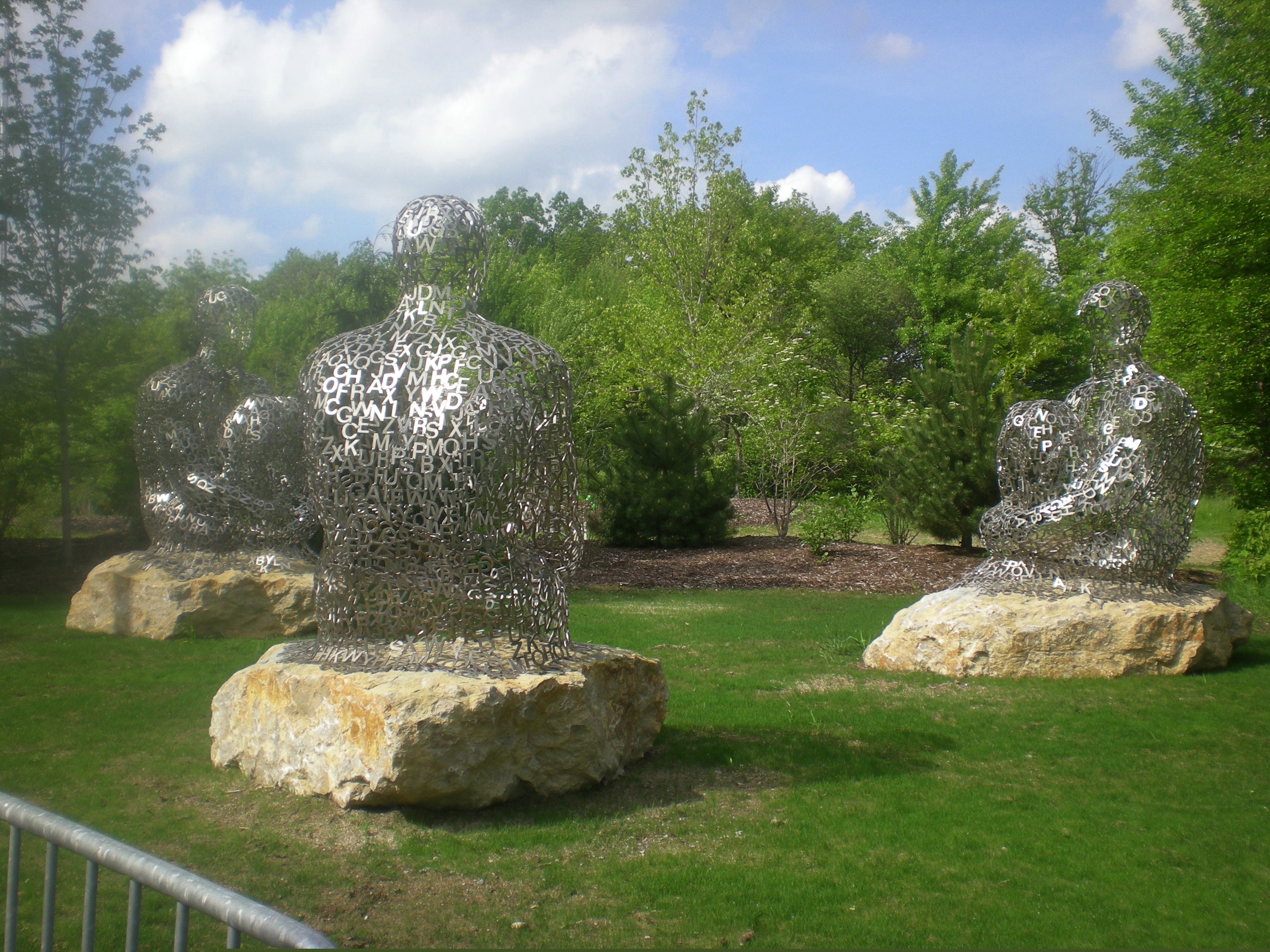
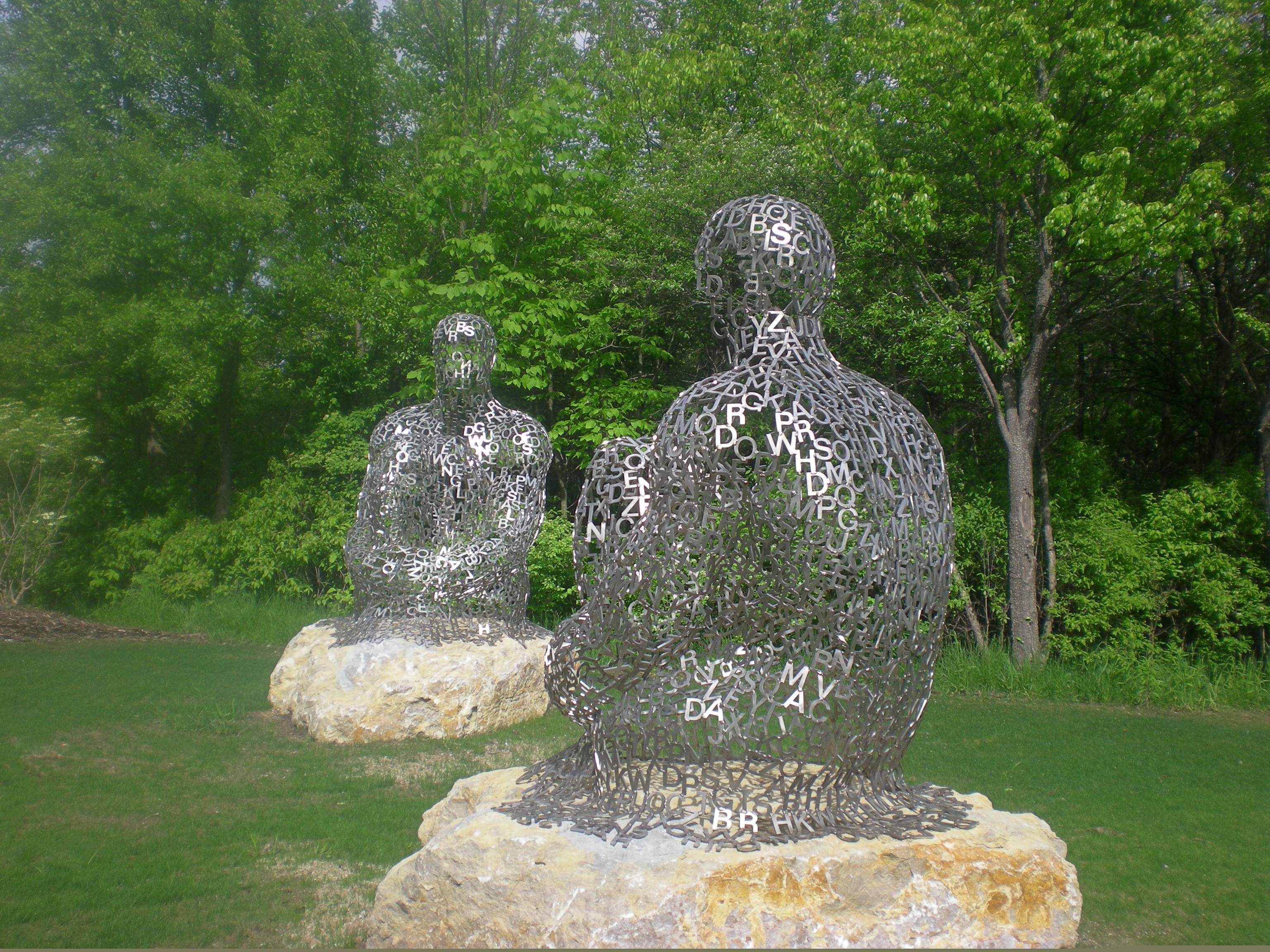
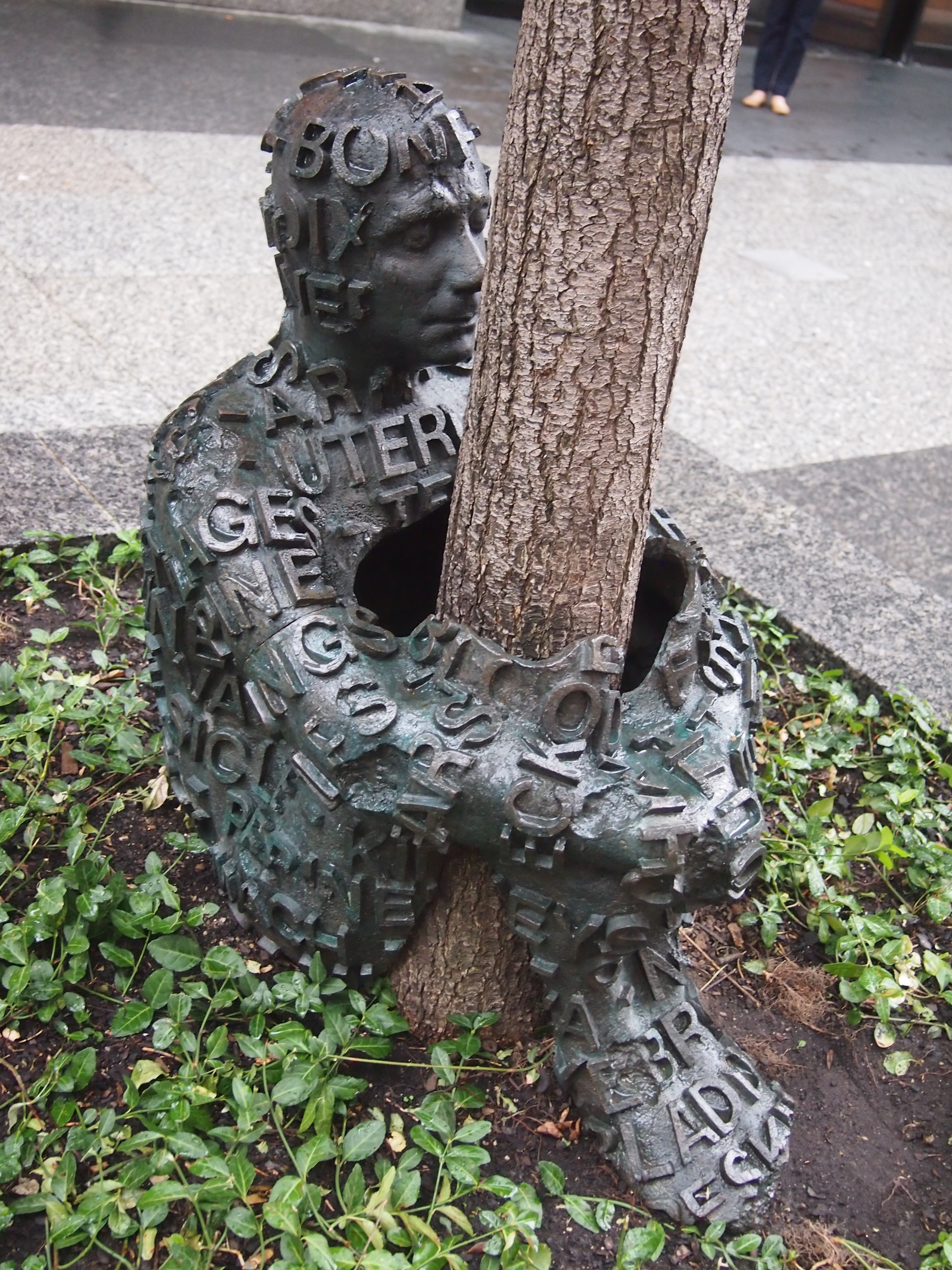
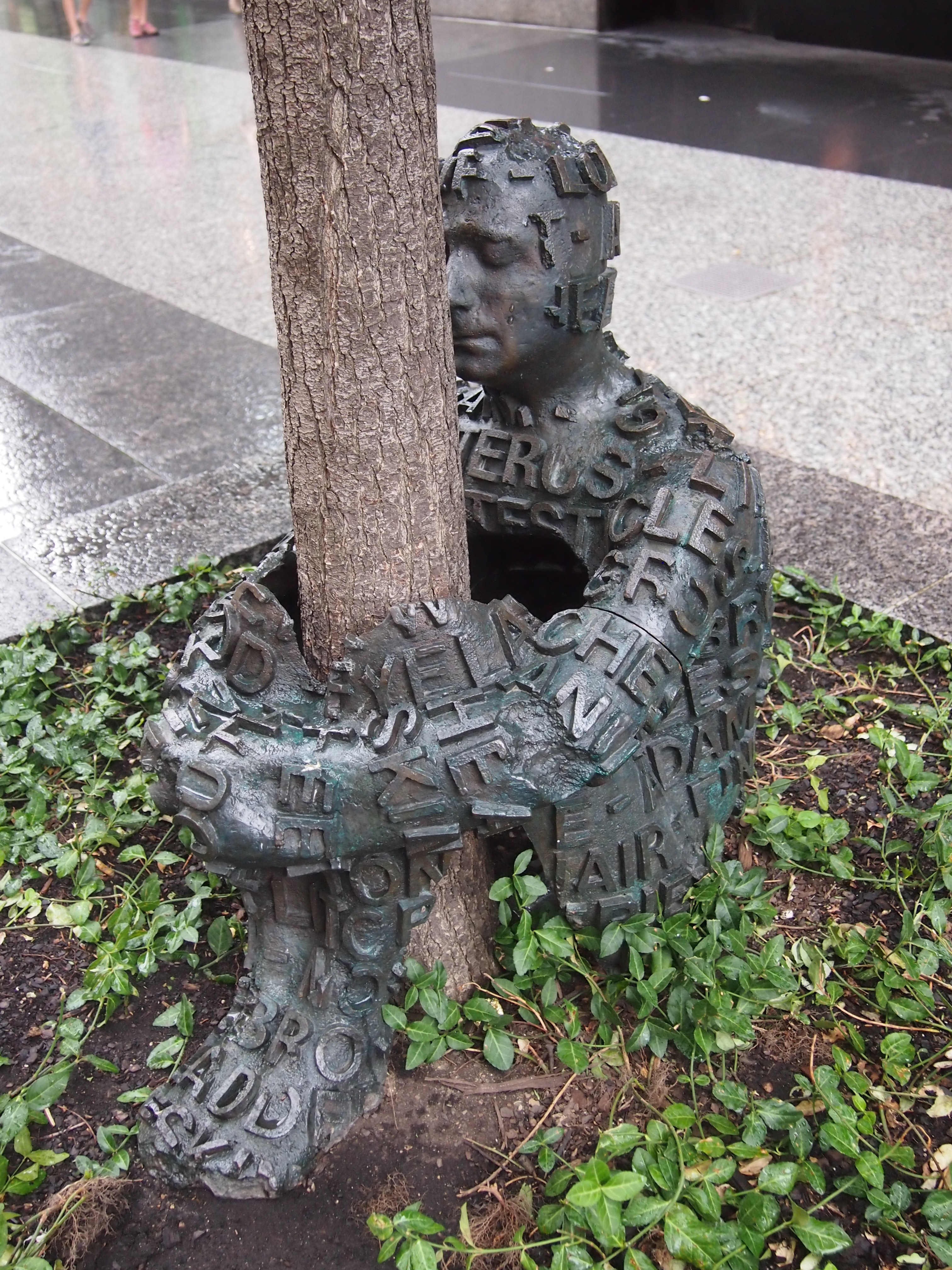
Today I was looking at pictures I’d taken in August 2013, and happened across these — two images of the same work in Chicago.
Self Portrait With Tree - Chicago - Jaume PlensaSelf Portrait With Tree - Chicago - Jaume Plensa“Self Portrait With Tree,” by none other than Plensa. I’d forgotten about it, and when I took the picture, probably didn’t associate it with the other works of his I’d seen. “Self Portrait” was next to the Hancock Tower on E. Chestnut St. I checked the Street View of that block, dated July 2018, and the work is gone. It was put up by the nearby Richard Gray Gallery, so perhaps it found a buyer.

All that is the gradual part. Somehow or other, Plensa hadn’t made much of an impression on me over the years. But when I looked at the 2013 images, I suddenly wanted to know more about him, since I don’t make a close study of sculpture or public art. If I had, I would have known how widespread his works are. (Had we walked further along Buffalo Bayou in Houston in May, we’d have come across yet another.)

Is it important that I know this? Maybe, maybe not. But better to err on the side of knowing something, however small.

Idea Garden, Champaign

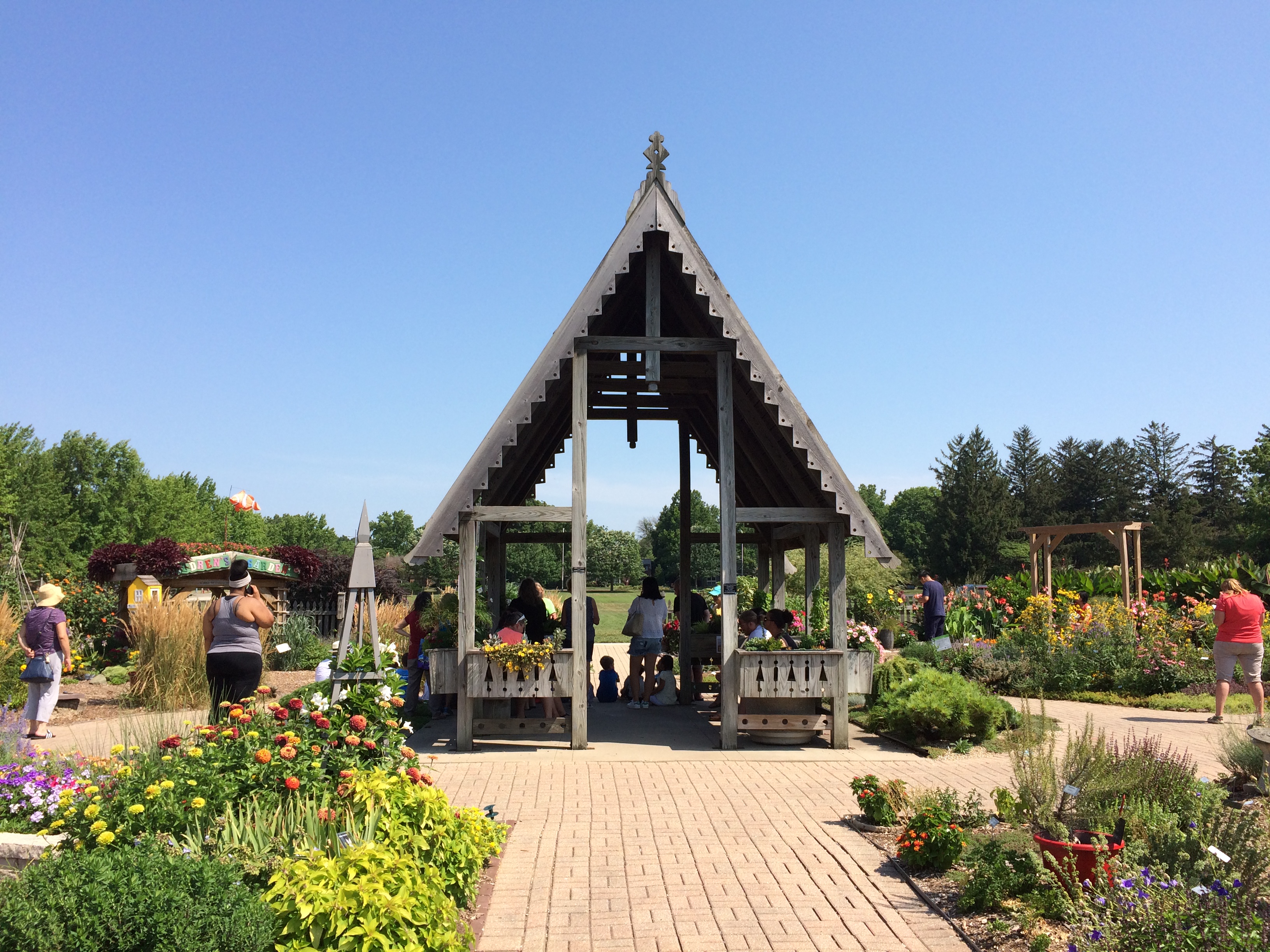
Besides Decatur, we spent some time over the weekend in Champaign, including a short visit to the Idea Garden of the University of Illinois Arboretum.Idea Garden, Champaign

Back in the spring, the Idea Garden was mostly just that, notional, but since then volunteers have brought the place to full flower. Literally.
A small structure mid-garden was being used for an informal gardening class when we passed by. Something about garden pests. Sunflowers reaching to the sky. Taller than a grown human being. One of the volunteers told me it was a special kind that grows tall. Not a lot of gardeners like them, he said, but he did.

Elephant ears!
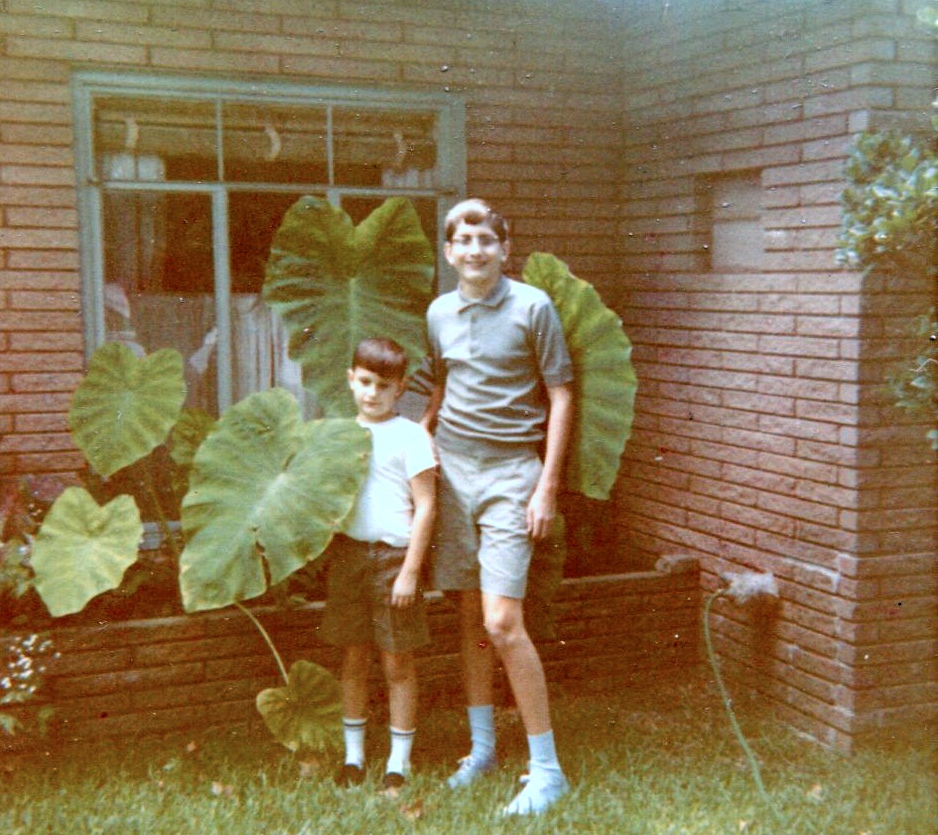
I have fond memories of large elephant ears when I was a child.
The picture is ca. 1970, of my brother Jim and I and the front-yard elephant ears. I might have been small, but that’s not why I remember our elephant ears as large — they were objectively large. That’s the way they grew for a few early years at our house in San Antonio. In later years, they came up smaller and eventually disappeared.

Scovill Sculpture Park

First, we drove across Lake Decatur on US 36. Later, we walked near the shore of the lake, though at that point a fence was between us and the lake.
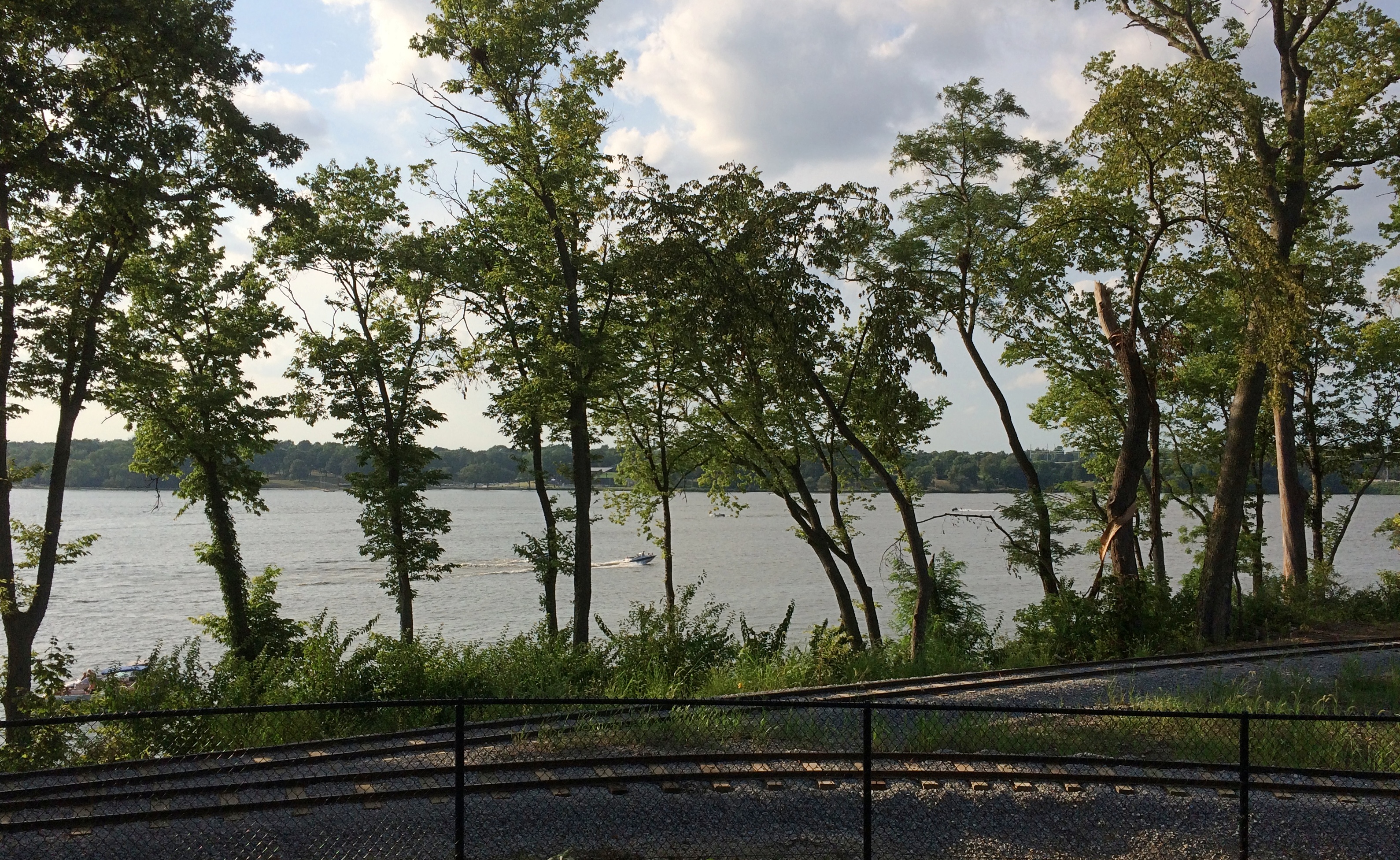
Lake Decatur from Scoville ParkWe didn’t mind, because we were taking a late afternoon stroll on Saturday at Scovill Sculpture Park. As these things go, the lake is old — almost 100 years, a project of civic improvement that also happened to be very useful for corn wet-milling. A.E. Staley, of corn products fame (see yesterday), had a major hand in the creation of the lake by damming the Sangamon River upstream in the early ’20s.

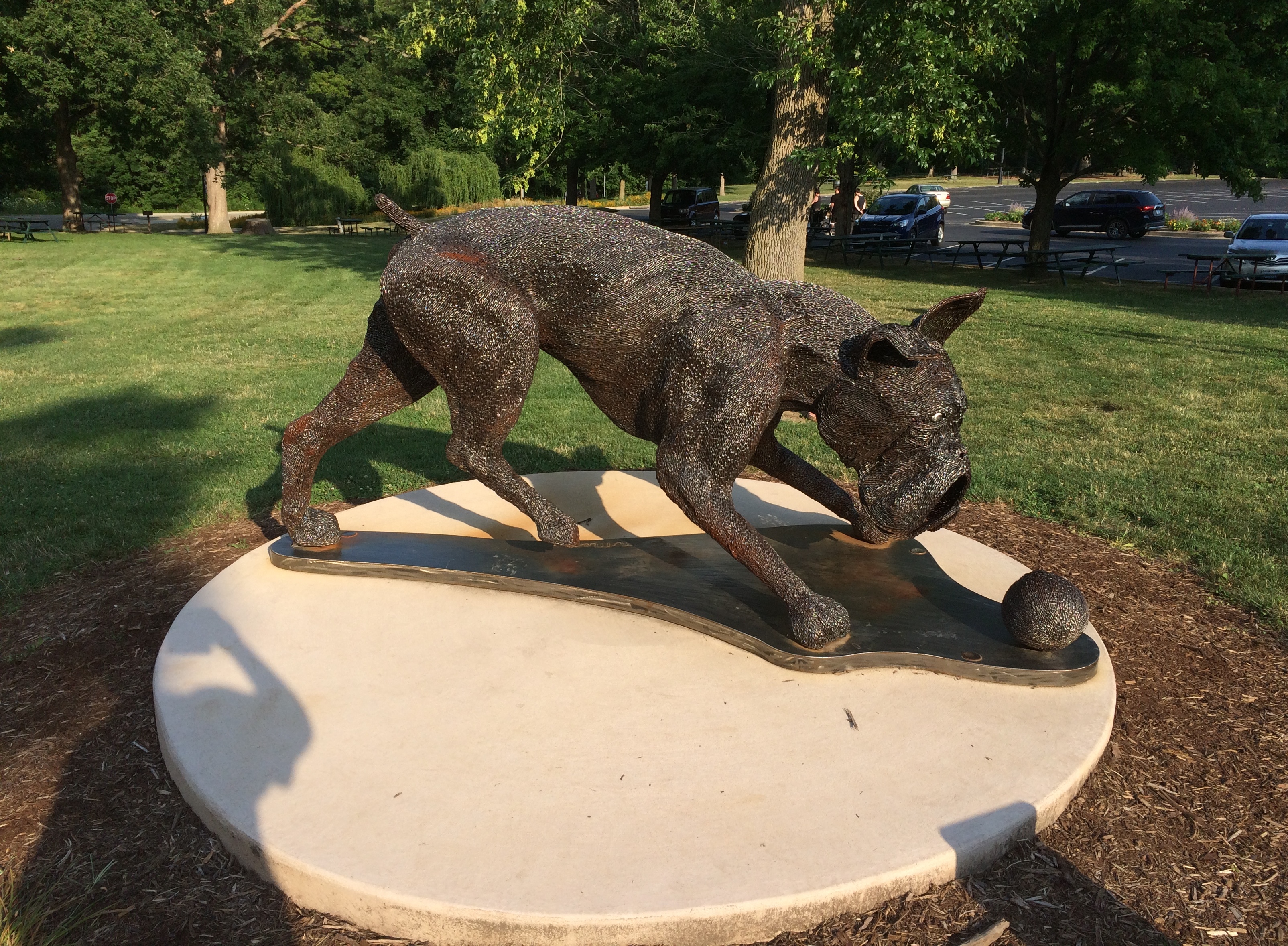
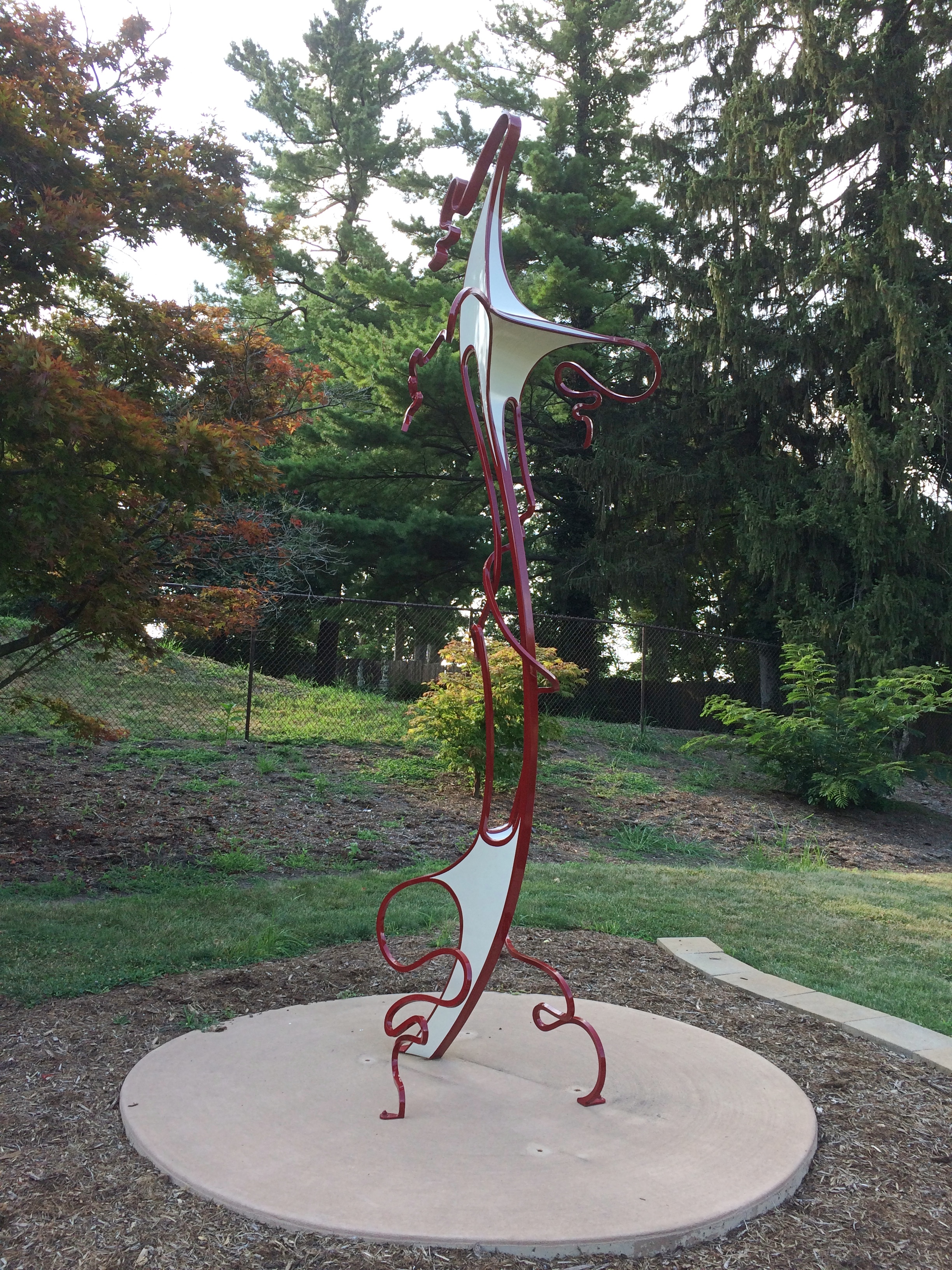
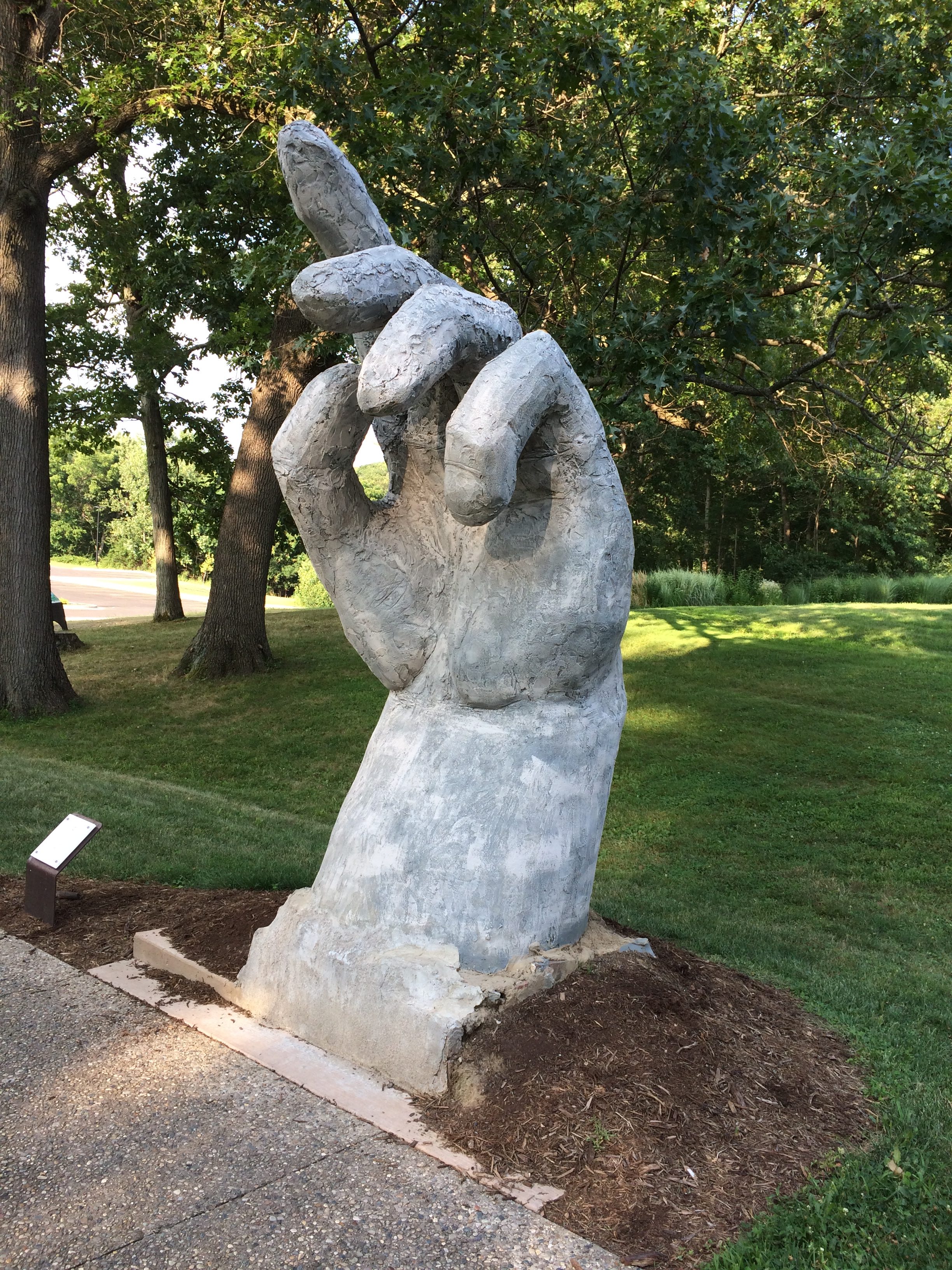
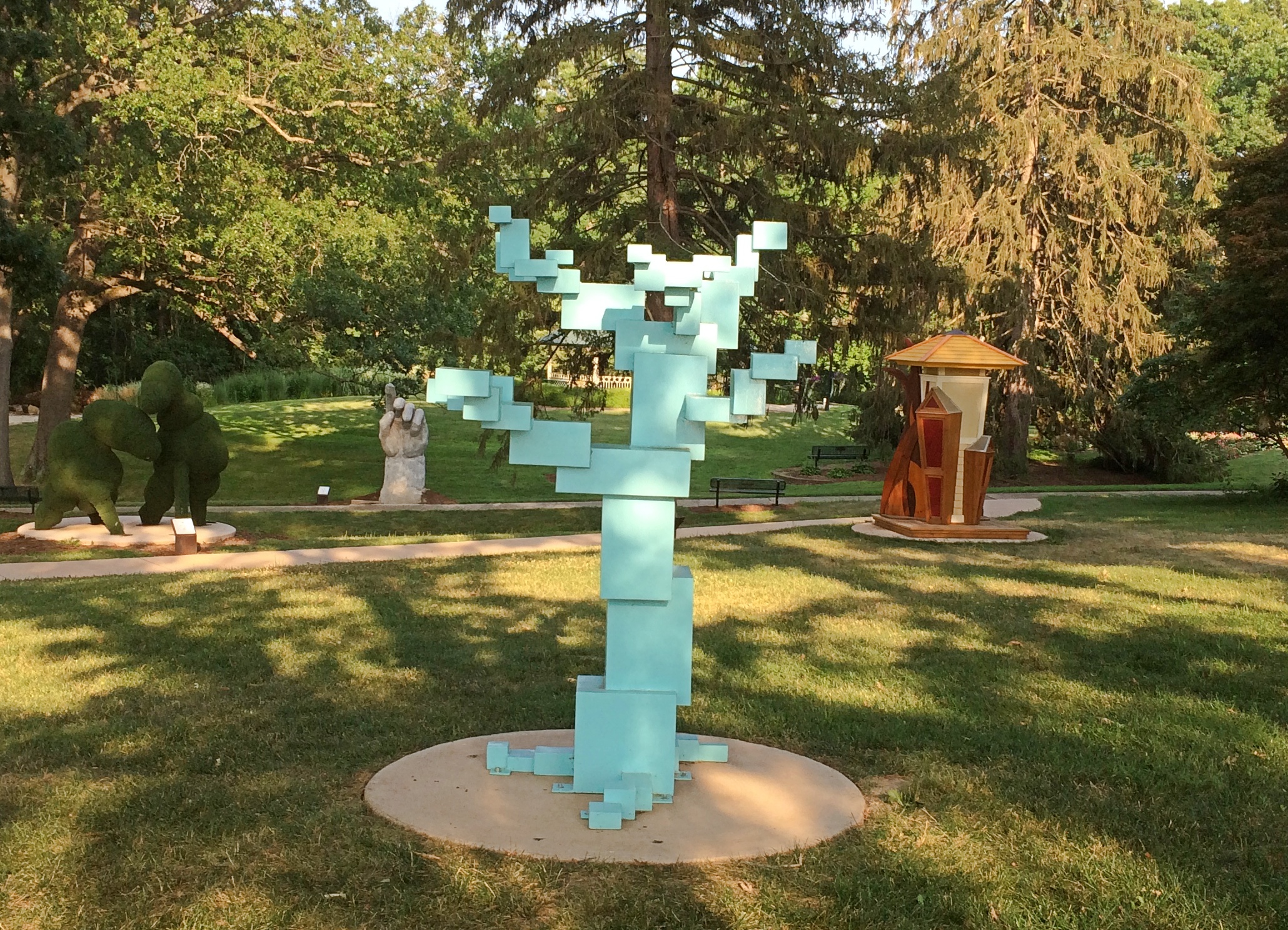
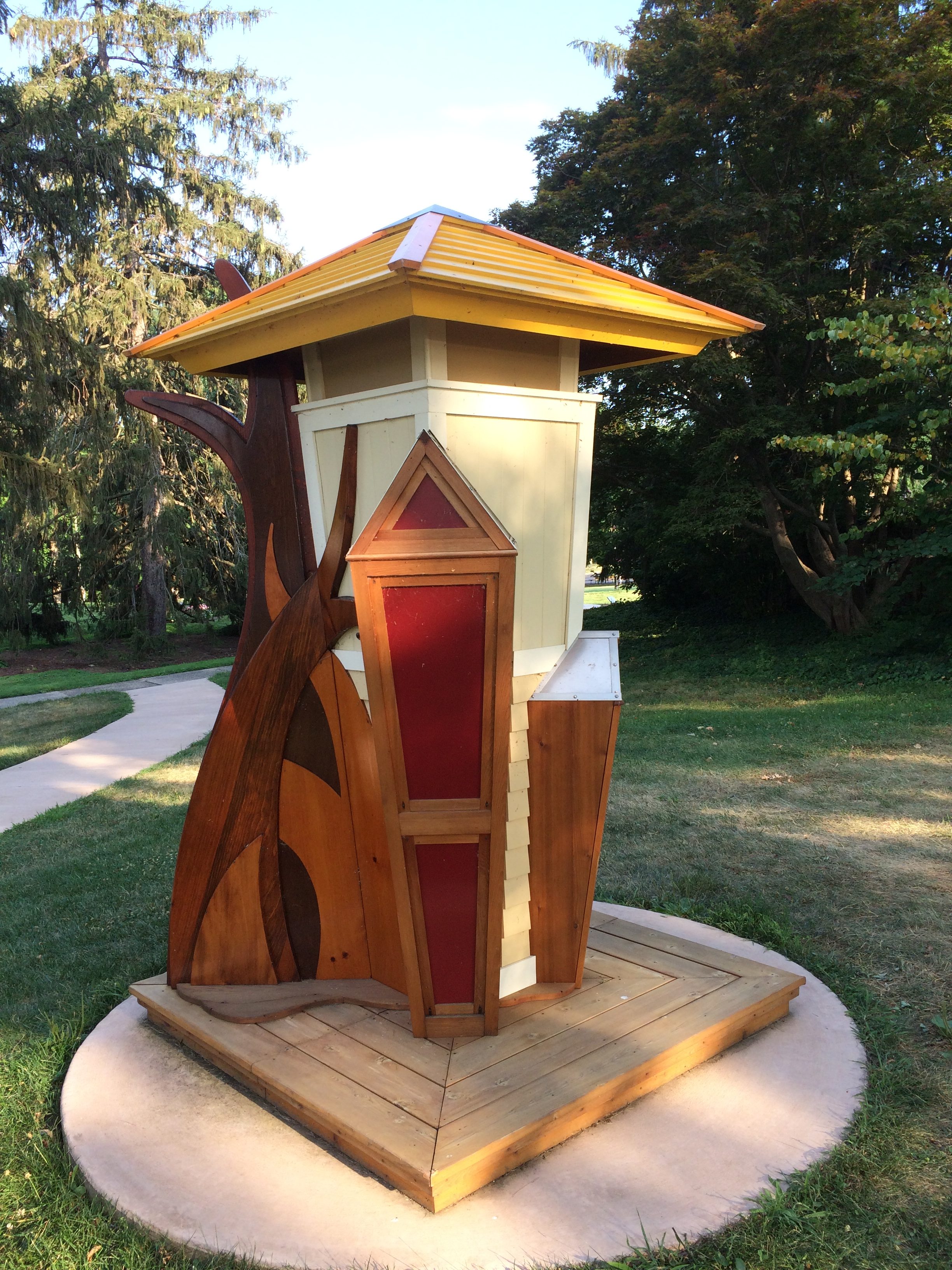
On the other hand, the sculpture park, on Decatur Park District land between the Scoville Zoo and the Decatur Children’s Museum, isn’t that old — only about three years. Interestingly, the sculptures aren’t permanent fixtures, but leased from the artists. After a few years, a new crop is brought in. According to my sources, the second set of 10 is in place now.

“My Favorite Things,” by Travis Emmen.
Scovill Sculpture Park“Calibration,” by Luke Achterberg.
Scovill Sculpture Park“Absence,” by Joseph Ovalle.
Scovill Sculpture Park“Urban Forest,” by Richard Herzog.
Scovill Sculpture Park“Rybee House 2,” by Stephen Klema.

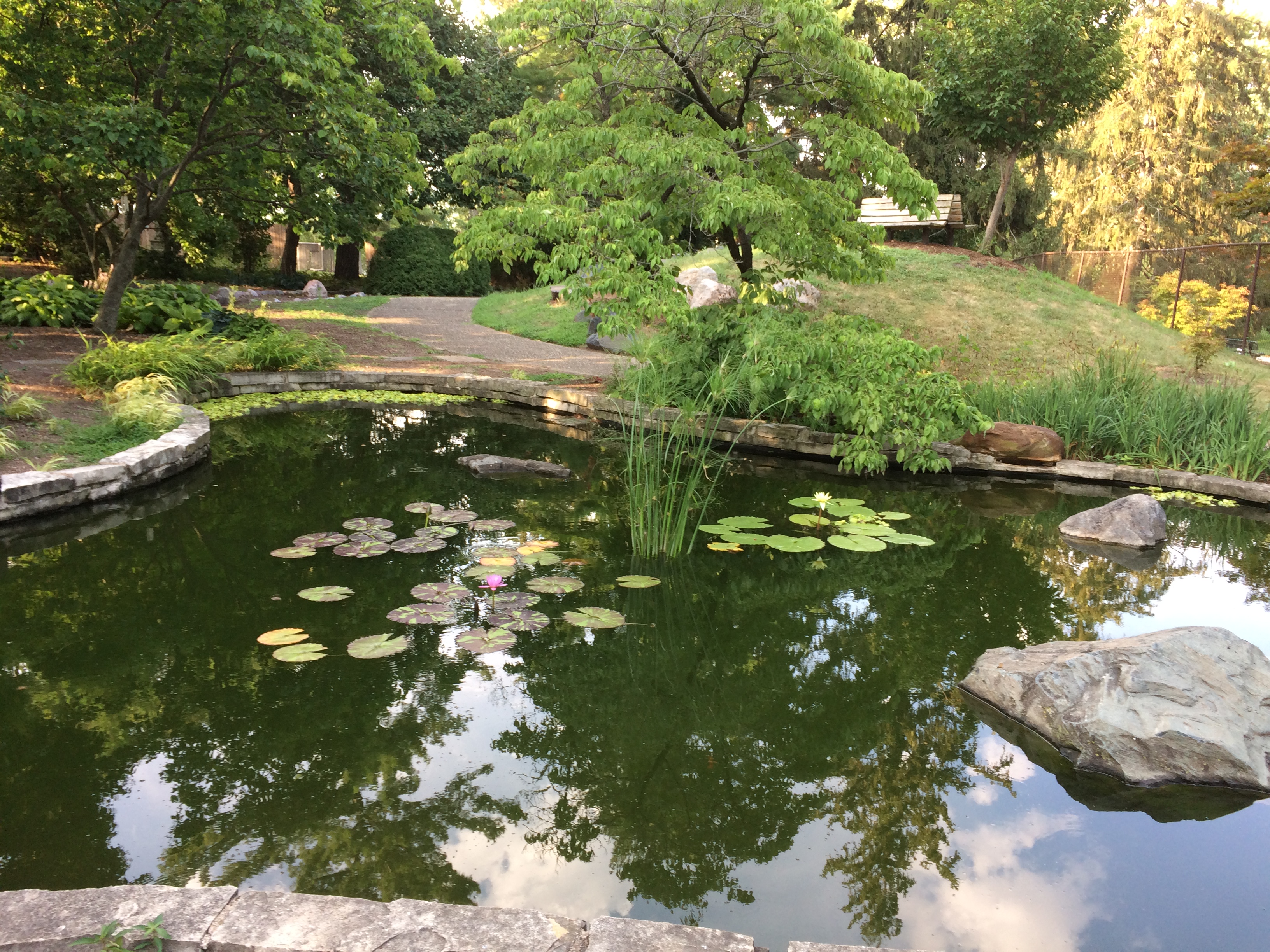
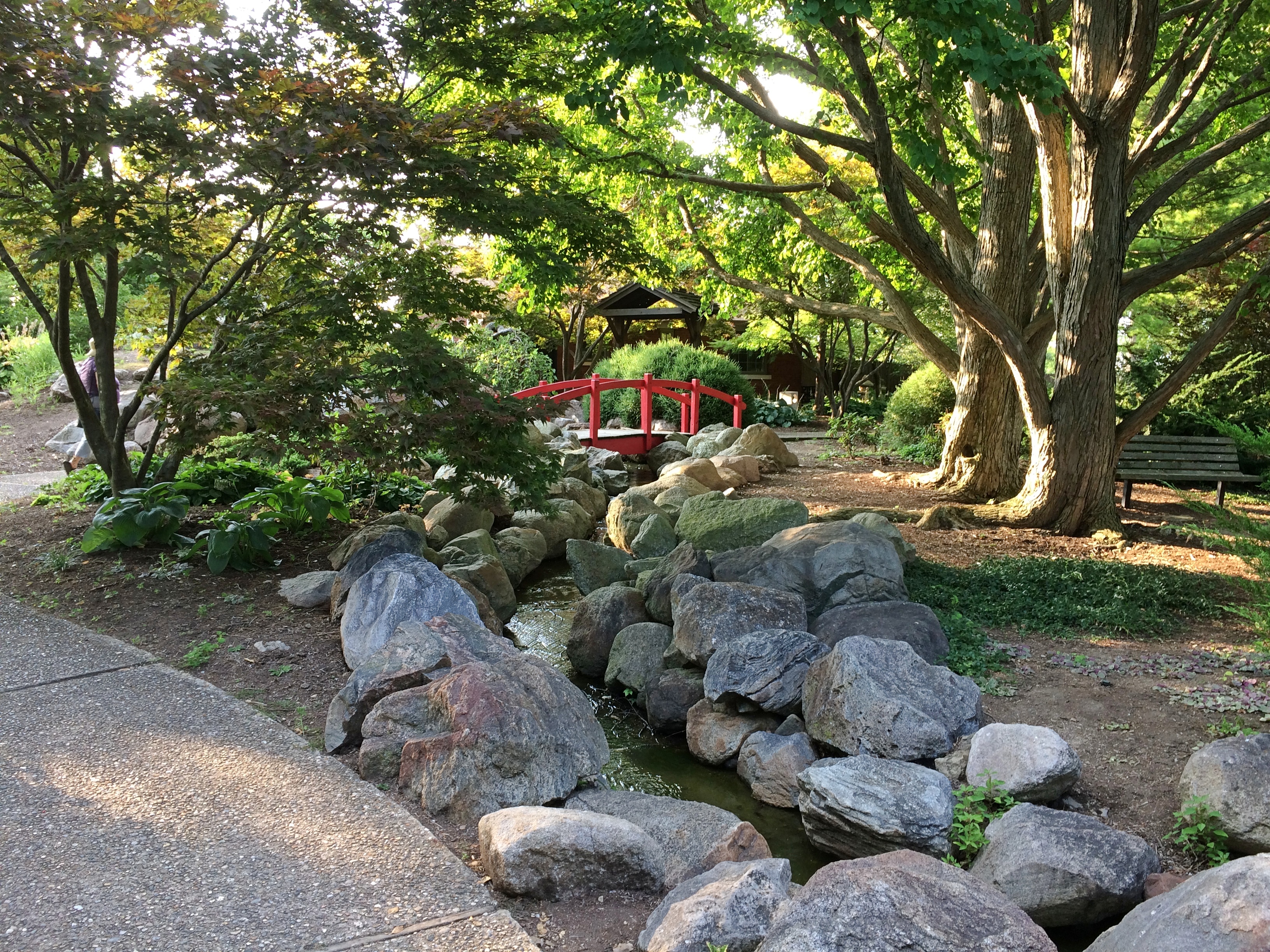
Scovill Sculpture ParkThe park also includes the Scovill Oriental Garden, which has elements of Chinese and Japanese gardens.

Scovill Oriental Garden

Scovill Oriental GardenScovill Oriental Garden

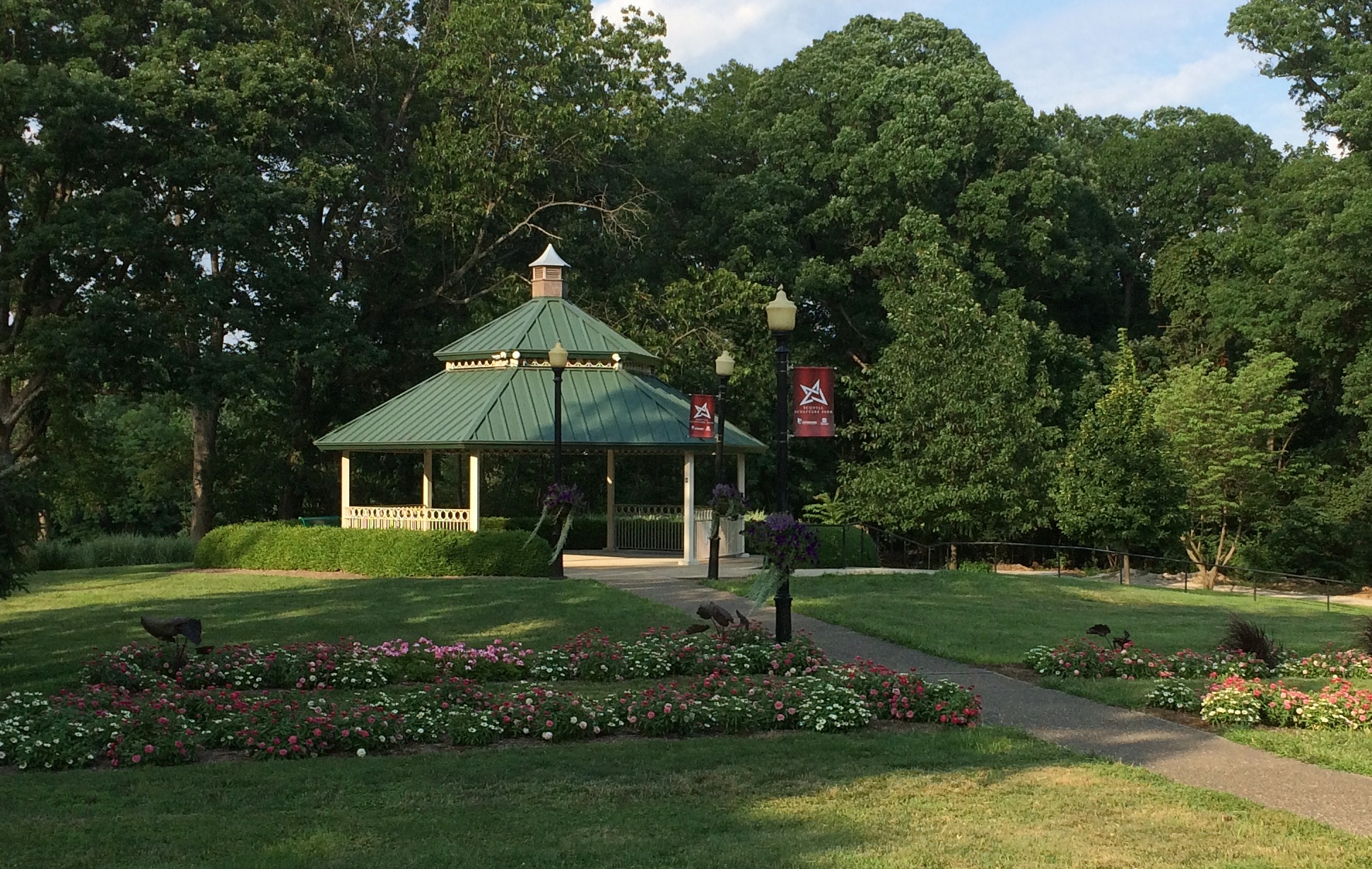
Of course the park has a gazebo.
Scovill Park Gazebo. Gazebos are cool.As well it should. Here’s a book or database for someone to create someday: The Great Gazebo Gazetteer.

Three Decatur Museums

Near (or on) Eldorado St. — one of Decatur, Illinois’ main streets — are three small museums. Two are former mansions, one is attached to a factory. I figured we had time for two on Saturday afternoon, but in the end we visited all three.

This is the former mansion of three-time Illinois Governor, U.S. Senator and Civil War General Richard J. Oglesby (1824-99).
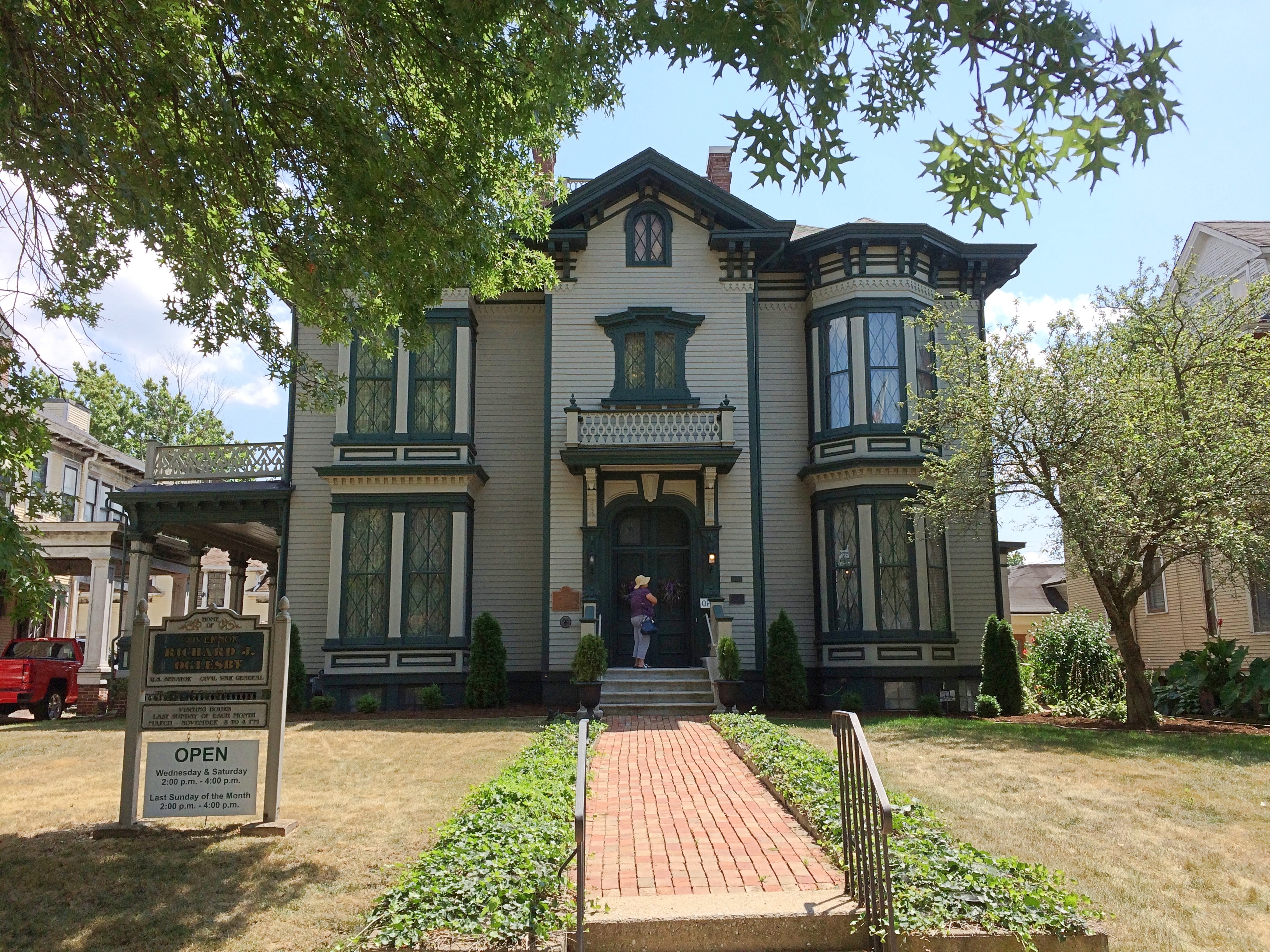
I’ve encountered Oglesby, in bronze anyway, in Chicago. He grew up in Decatur and had a successful run as an Illinois lawyer, Union Army officer, and politician. He panned for gold in California, traveled in Europe in the 1850s, married at least one wealthy woman (not sure about his first wife) and knew Lincoln well — was in fact at the Petersen House in Washington City when the Great Emancipator died.

Designed originally in the 1870s by William LeBaron Jenney, father of the skyscraper, in the 21st century the mansion is resplendent, the work of decades of restoration.

The museum’s web site says: “The Library is the most significant room in the house regarding authenticity. It remains as it was built. All the wood is of native black walnut, with the exception of the parquet floor. The original shutters have been reproduced, and glass doors were added to the shelves which were on the architect’s drawings. The books in the cases are Oglesby family books.

“The dining room is the other area that is known to be correct. During the restoration, the complete decoration of the room was found, even the color of the ceiling and all the faux finishes. This room has been reproduced as it was during the Oglesbys’ time in the house.

“The dining room wallpaper was reproduced by a company that was making authentic Victorian wallpapers. All the walls with the exception of the hall and the library are covered with Bradbury and Bradury Wallpaper copied from papers of the time period.

“Furnishings in the home have been chosen for the time period 1860-1885. Most came from old Decatur families. Many of the pieces and the artifacts have come from Oglesby descendants.”

My own favorite artifact is tucked away behind glass: a 19th-century prosthetic leg, that is, a primitive wooden item purported to belong to Antonio de Padua María Severino López de Santa Anna y Pérez de Lebrón, Napoleon of the West, and captured at the Battle of Cerro Gordo in 1847 after said Napoleon badly mismanaged things.

The authenticity of the leg hasn’t been confirmed, however. Unlike the other one in Illinois. Per Wiki: “Santa Anna, caught off guard by the Fourth Regiment of the Illinois Volunteer Infantry, was compelled to ride off without his artificial leg, which was captured by U.S. forces and is still on display at the Illinois State Military Museum in Springfield, Illinois.”

Not far from the Oglesby mansion is the Hieronymus Mueller Museum, a different sort of place.
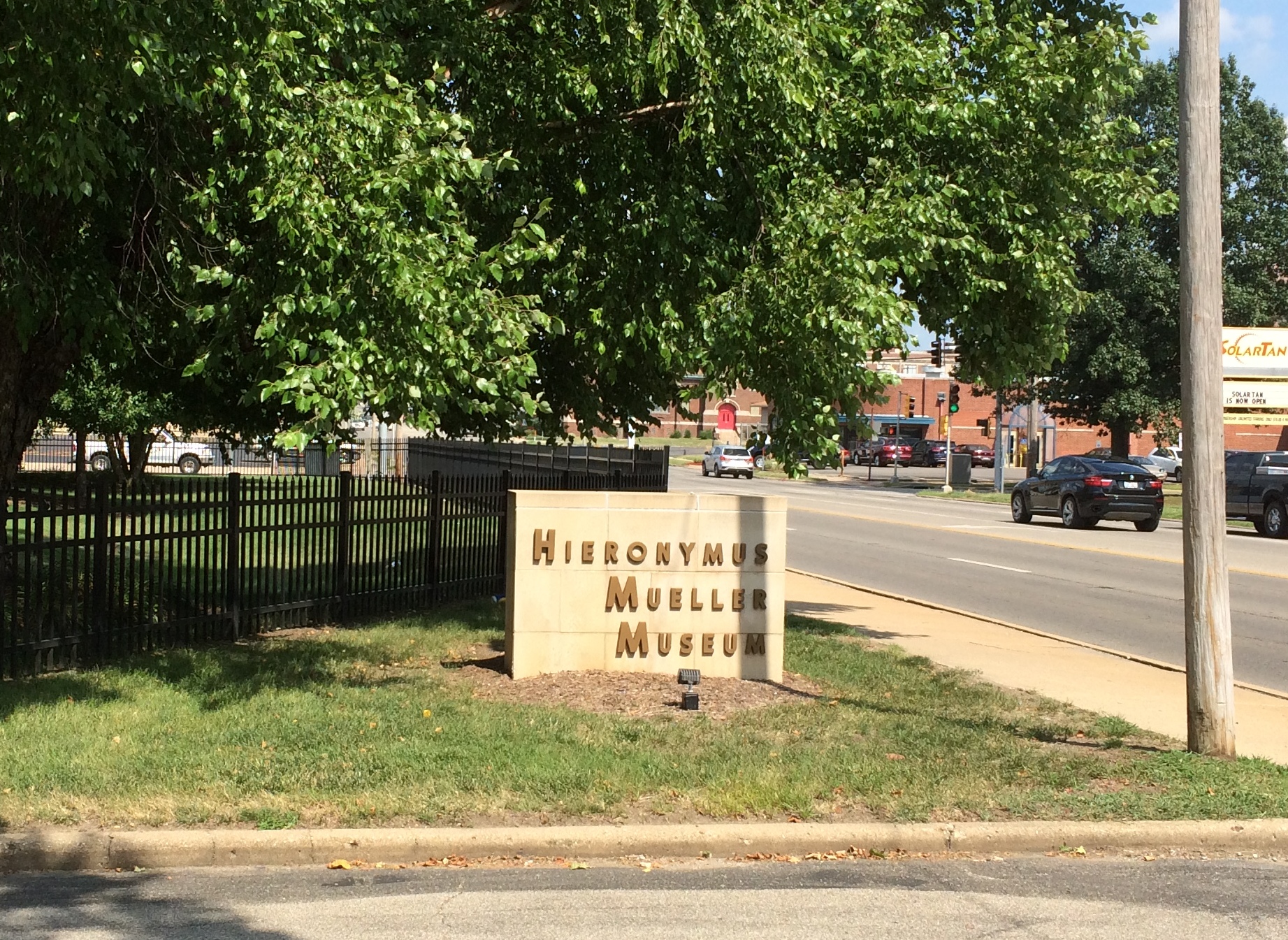
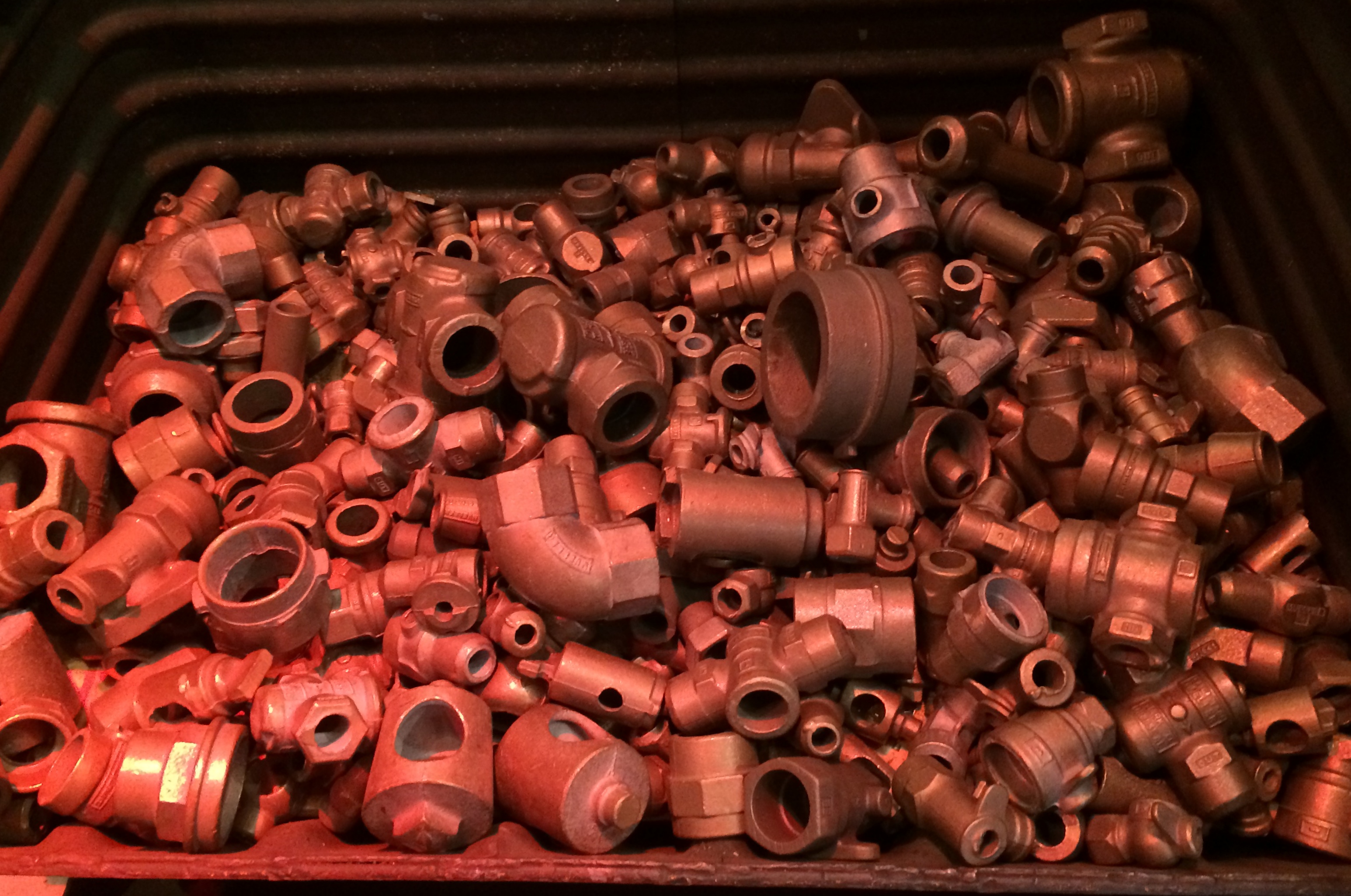
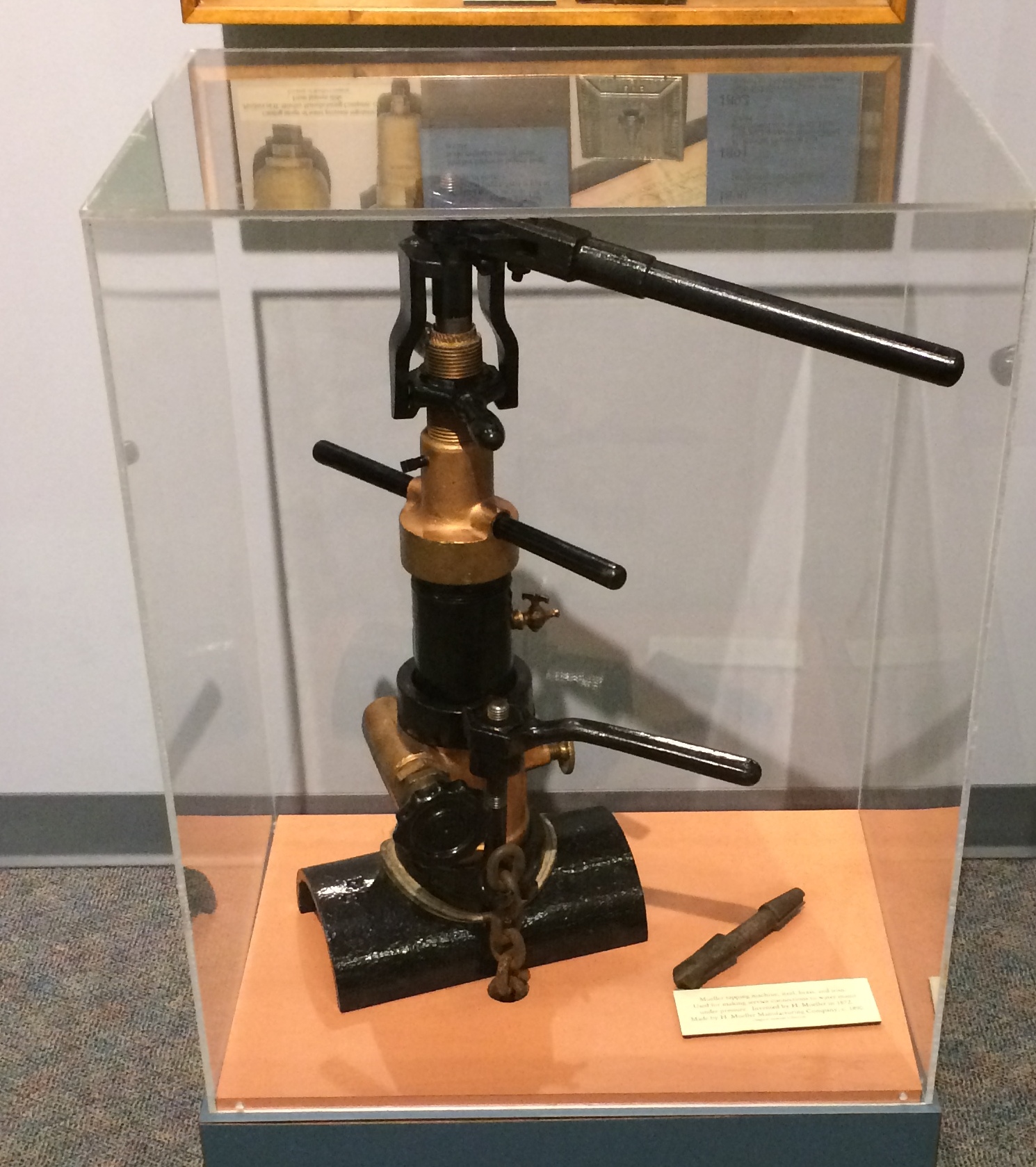
Mueller, as in the Mueller Co. These days headquartered in Tennessee, but for a long time a Decatur company. Even now the company has a factory in Decatur, which is next to the museum. Mueller Co. made, and makes, metal parts and structures and machines. Half of the fire hydrants sold in the United States are Mueller made, for instance.
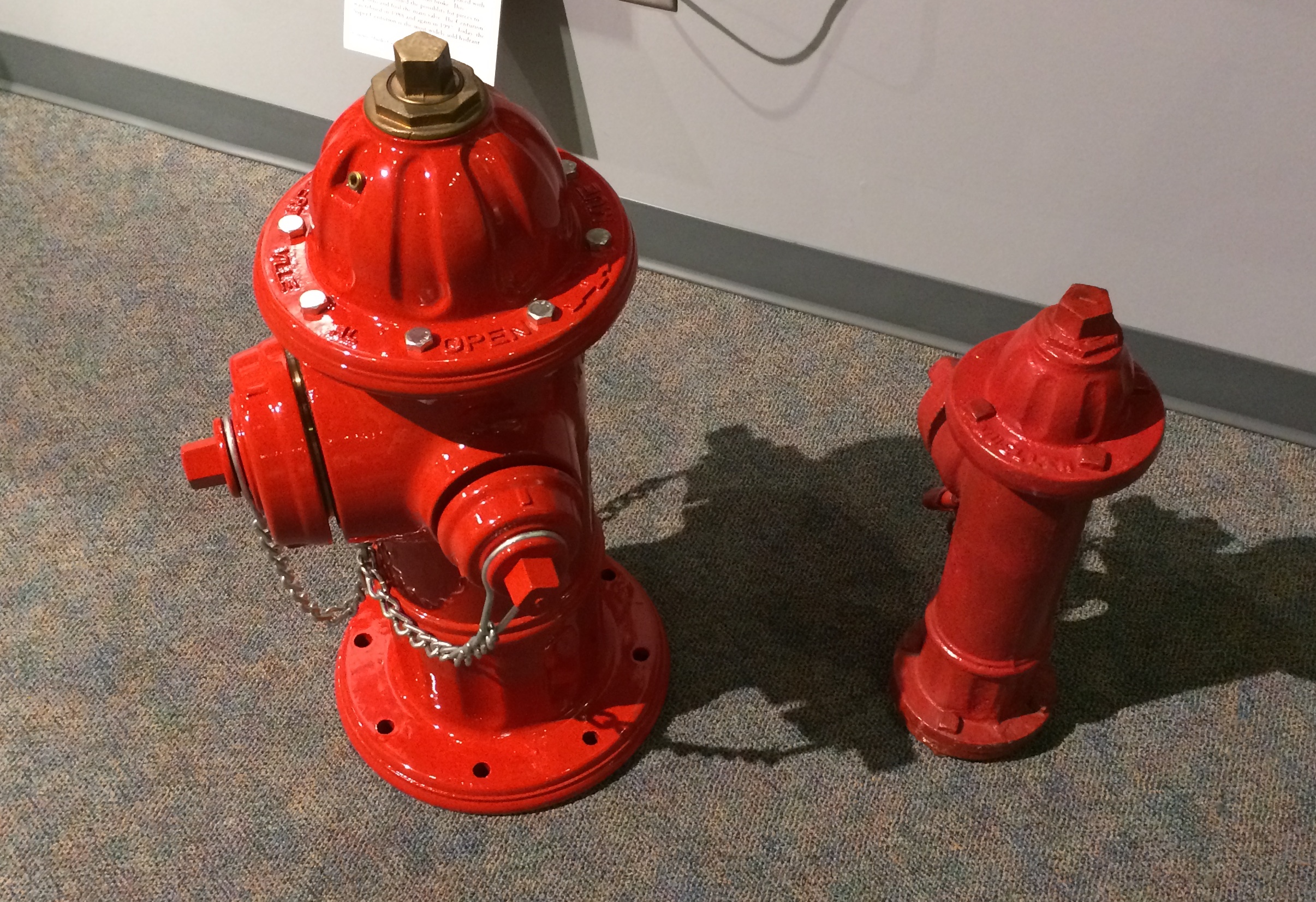
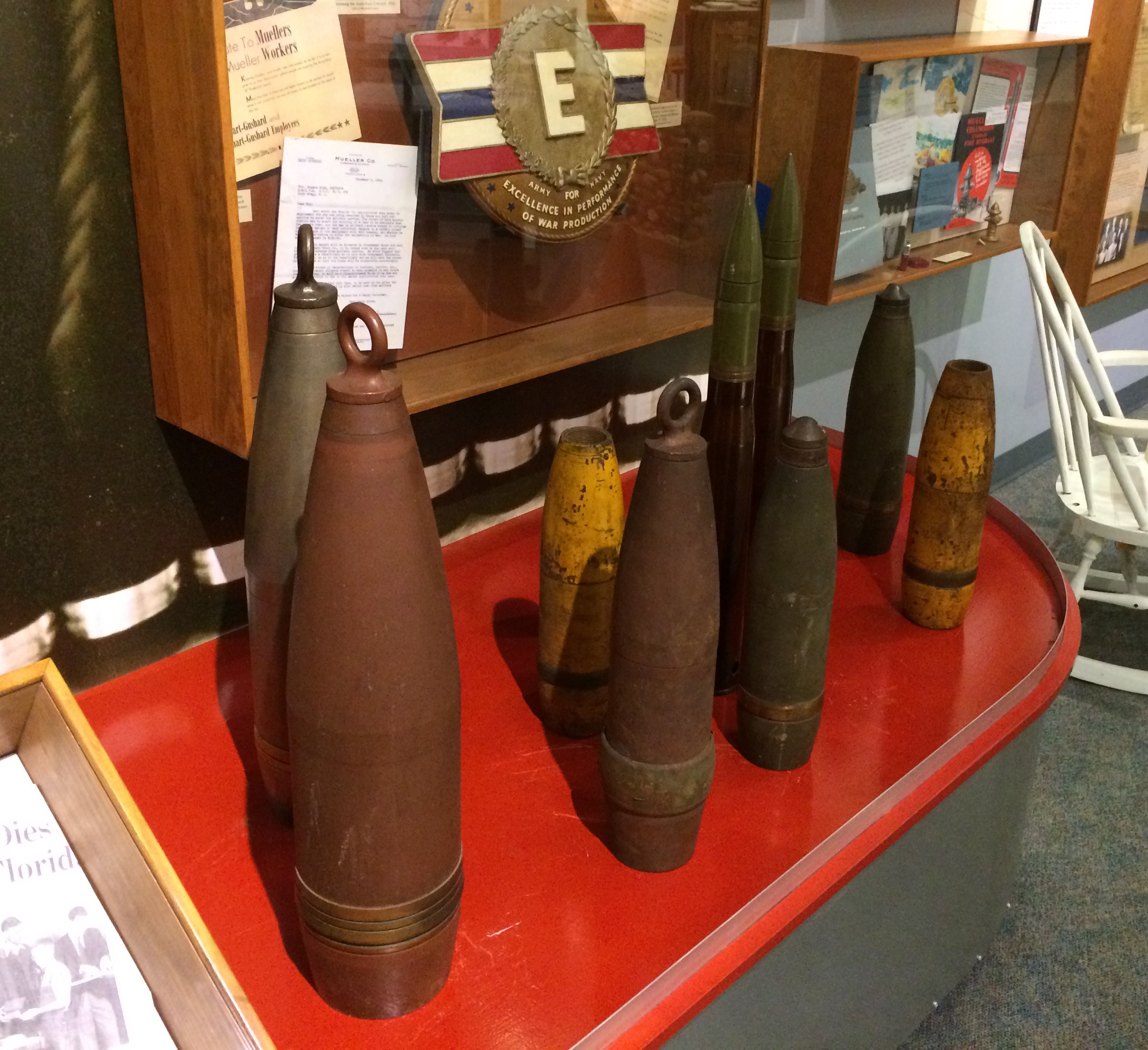
But that’s just a part of the output. Many examples of the company’s products are on display at the museum, along with various exhibits about the German immigrant Hieronymus (1832-1900) and his many children and grandchildren.
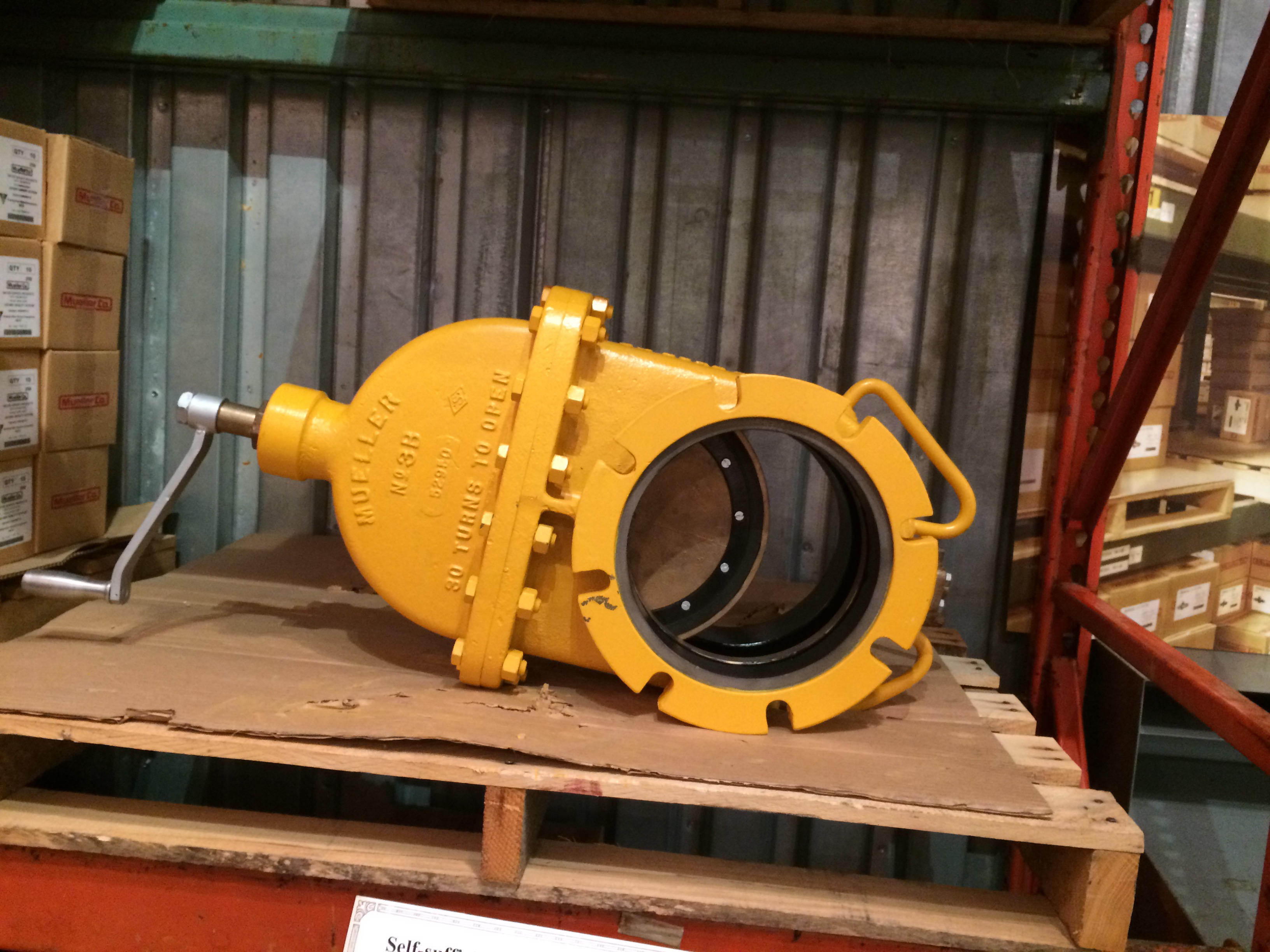
The company dabbled in horseless carriages, but didn’t go whole hog into that.
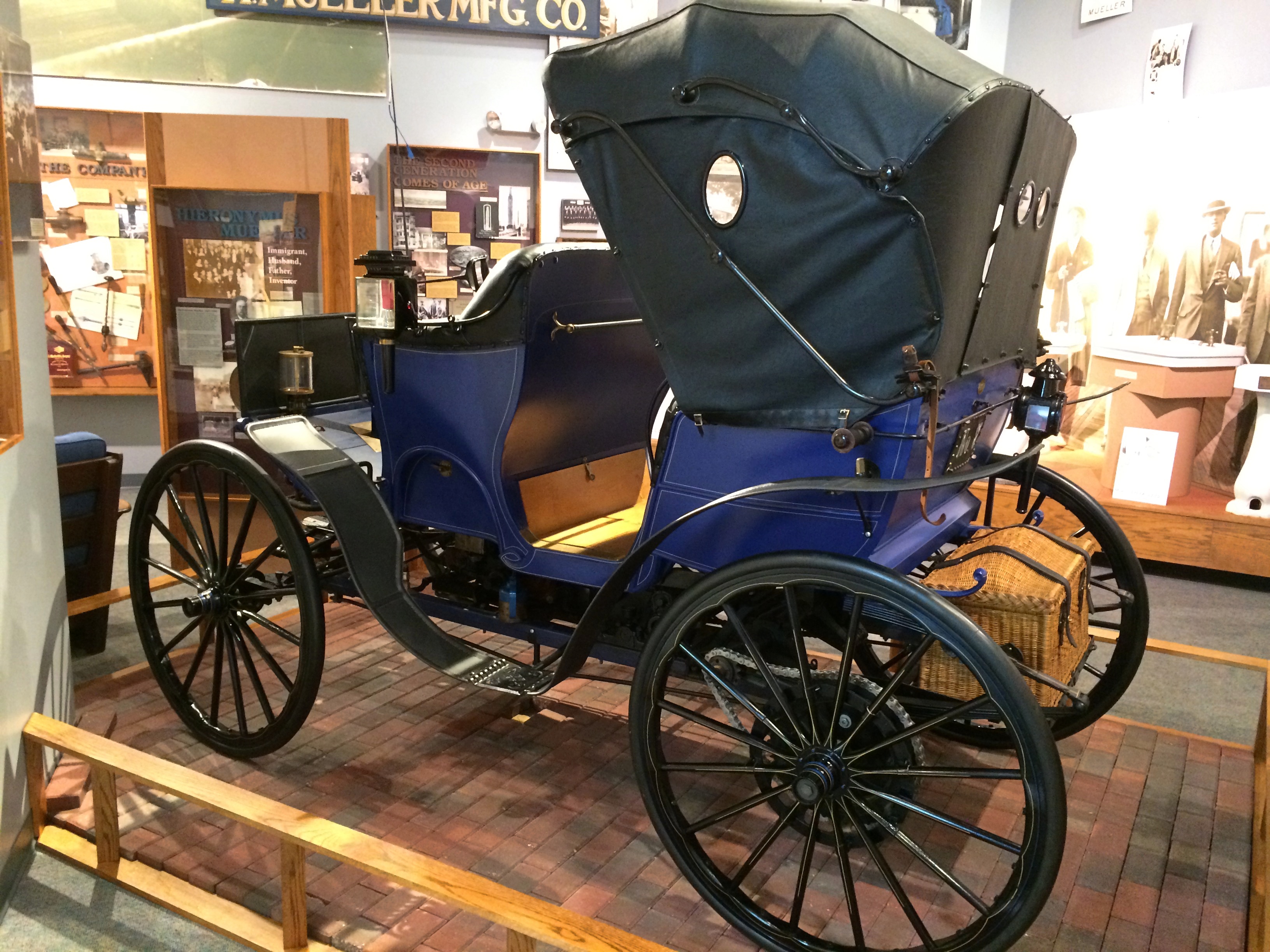
It did its part in WWII.
Here’s Hieronymus in bronze. He was a whiz during the golden age of American invention.
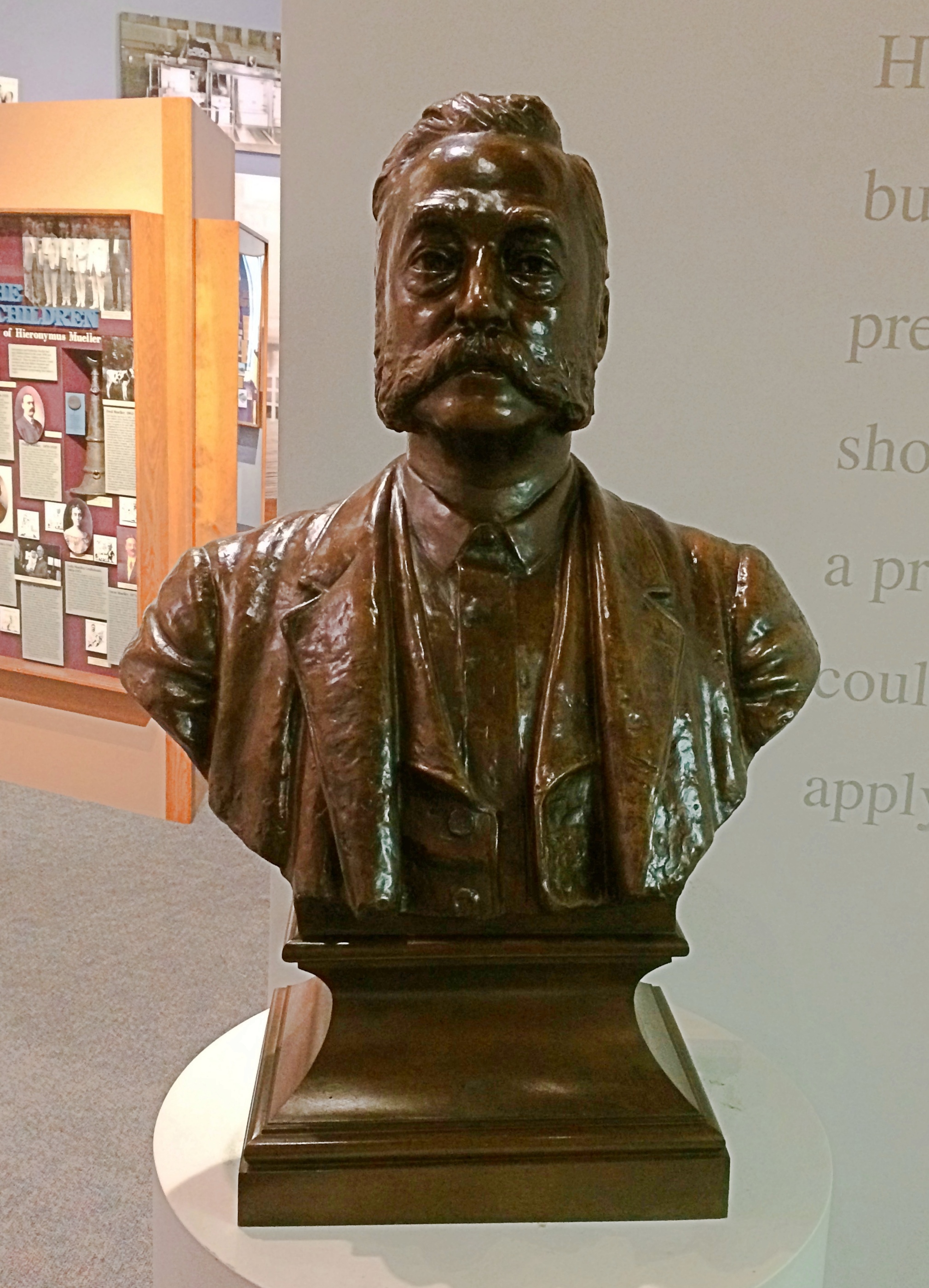
The museum says: “He started his business with a small gunsmithing shop but soon added locksmithing and sewing machine repairs. He had a knack for understanding mechanical devices. This led to his appointment as Decatur’s first ‘city plumber’ in 1871 to oversee the installation of a water distribution system.

“The following year he patented his first major invention, the Mueller Water Tapper who [sic] is, with minor modifications, still the standard for the industry.

“He and his sons went on to obtain 501 patents including water pressure regulators, faucet designs, the first sanitary drinking fountain, a roller skate design, and a bicycle kick-stand. In 1892 Hieronymus imported a Benz automobile from Germany and, together with his sons, began refining it with such features as a reverse gear, water-cooled radiator, newly designed spark plugs, and a make-and-break distributor – all leading to patents.”

Our third and final small Decatur museum for the day: the Staley Museum, one-time house of Decatur businessman A.E. Staley.
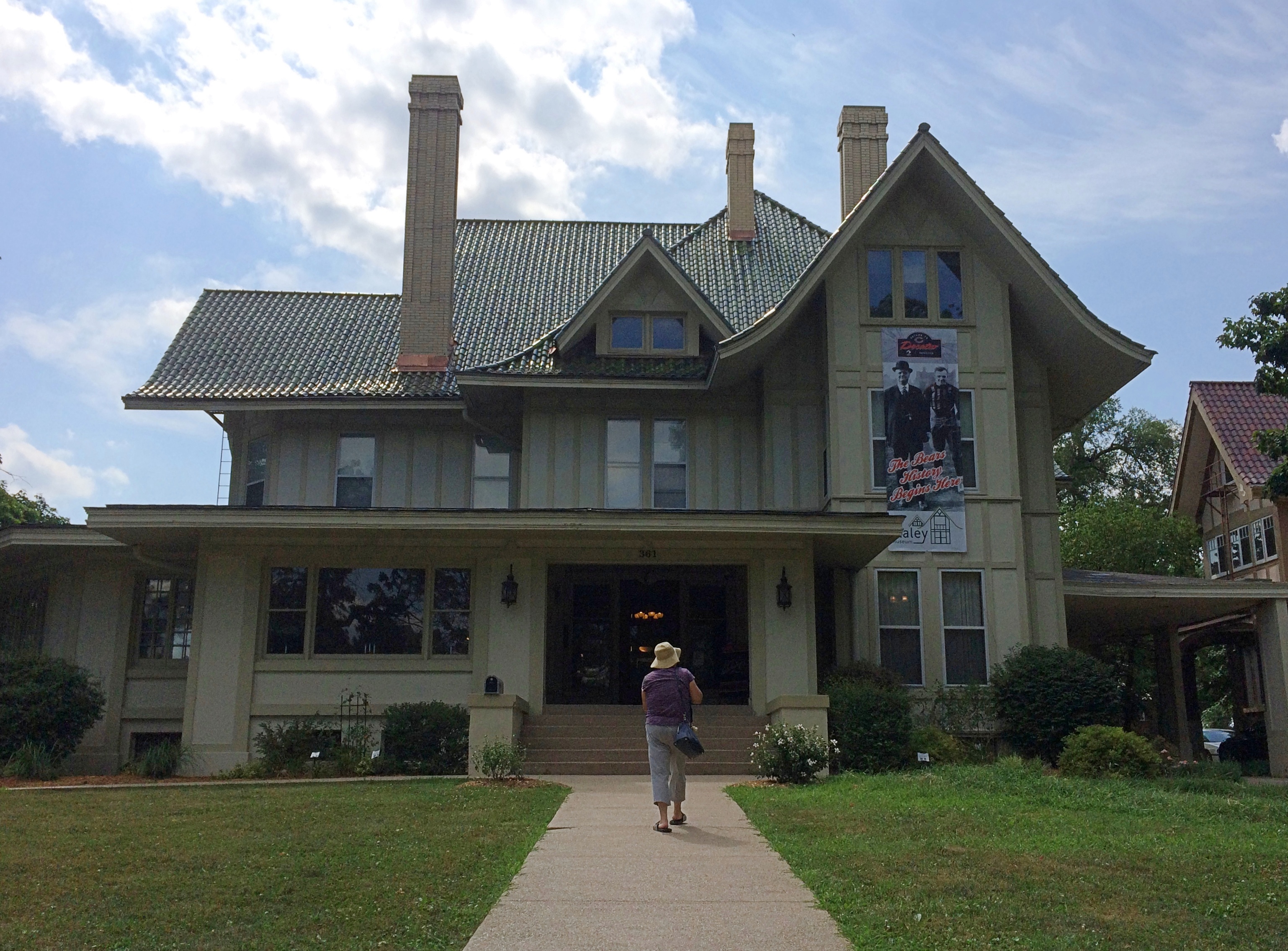
Staley was neither politician nor inventor, but had considerable talents as a salesman and ultimately boss man of A.E. Staley Mfg. Co., which started out as a starch specialist and expanded into many other products, mostly made from corn and soybeans. As a child, I ate Staley syrup.
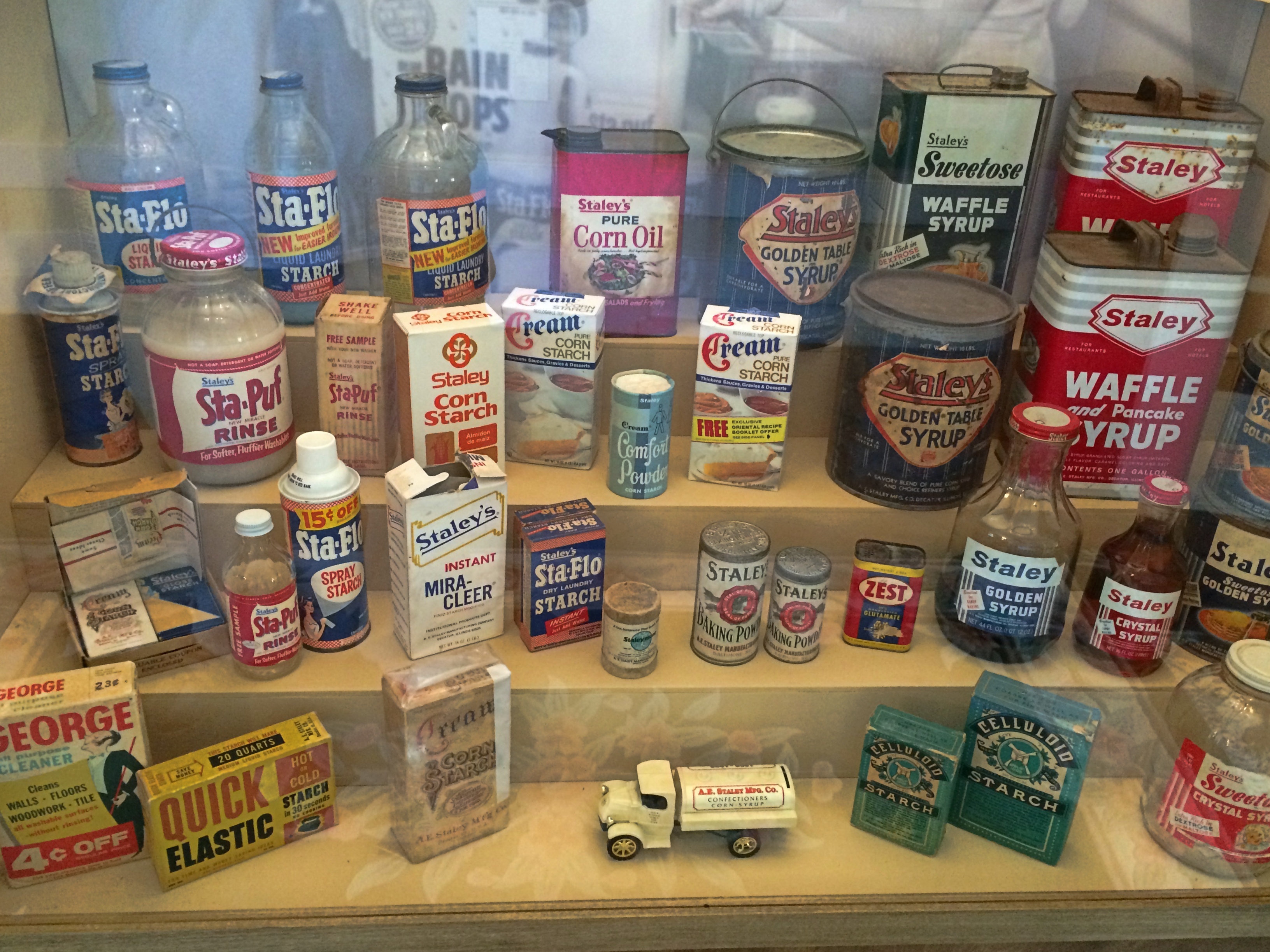
Among other causes, Staley (1867-1940) was a soybean booster. In the spring of 1927, he organized a train to publicize and facilitate soybean cultivation in Illinois, the Soil and Soybean Special.
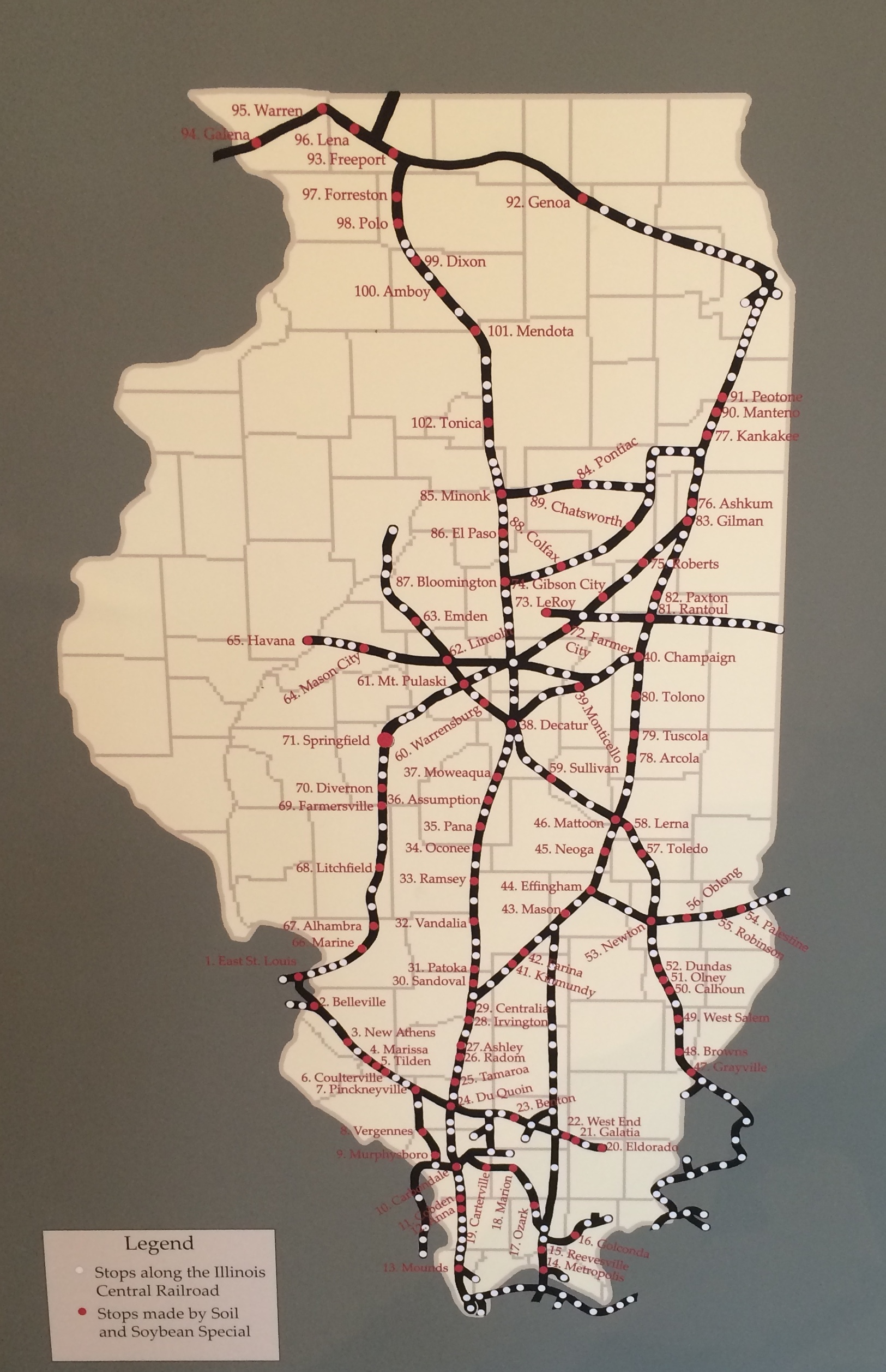
As the promotional material with the map says, “This is a farmers’ institute on wheels. If the farmer can’t go to college, this college will come to him.”

Staley is also known for founding the football team that evolved into the Chicago Bears: the Decatur Staleys, a leather-helmet company team. Here they are in 1920.
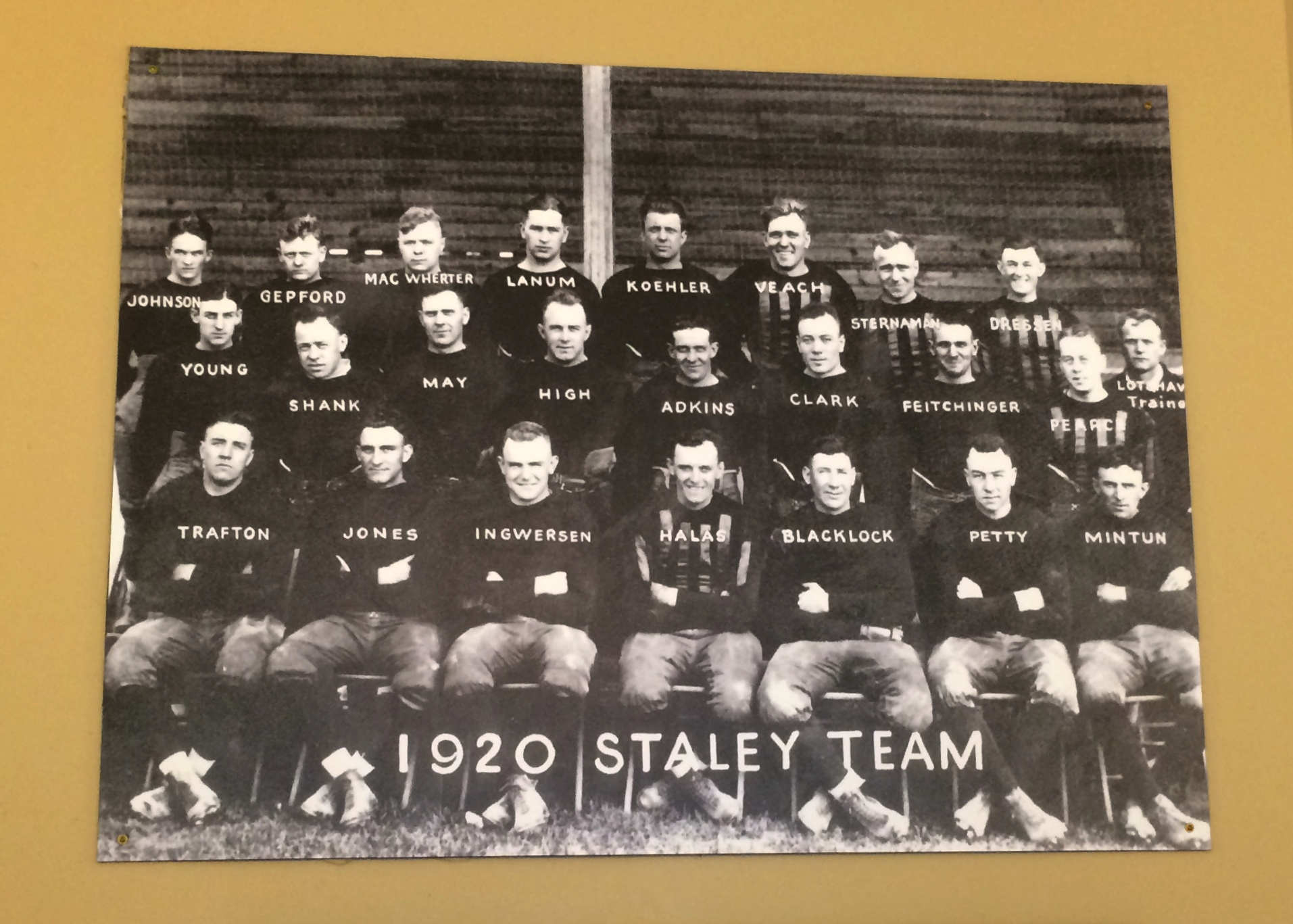
The origin of the team isn’t forgotten. Even now, the team mascot is Staley Da Bear.

Here’s the boss man himself.
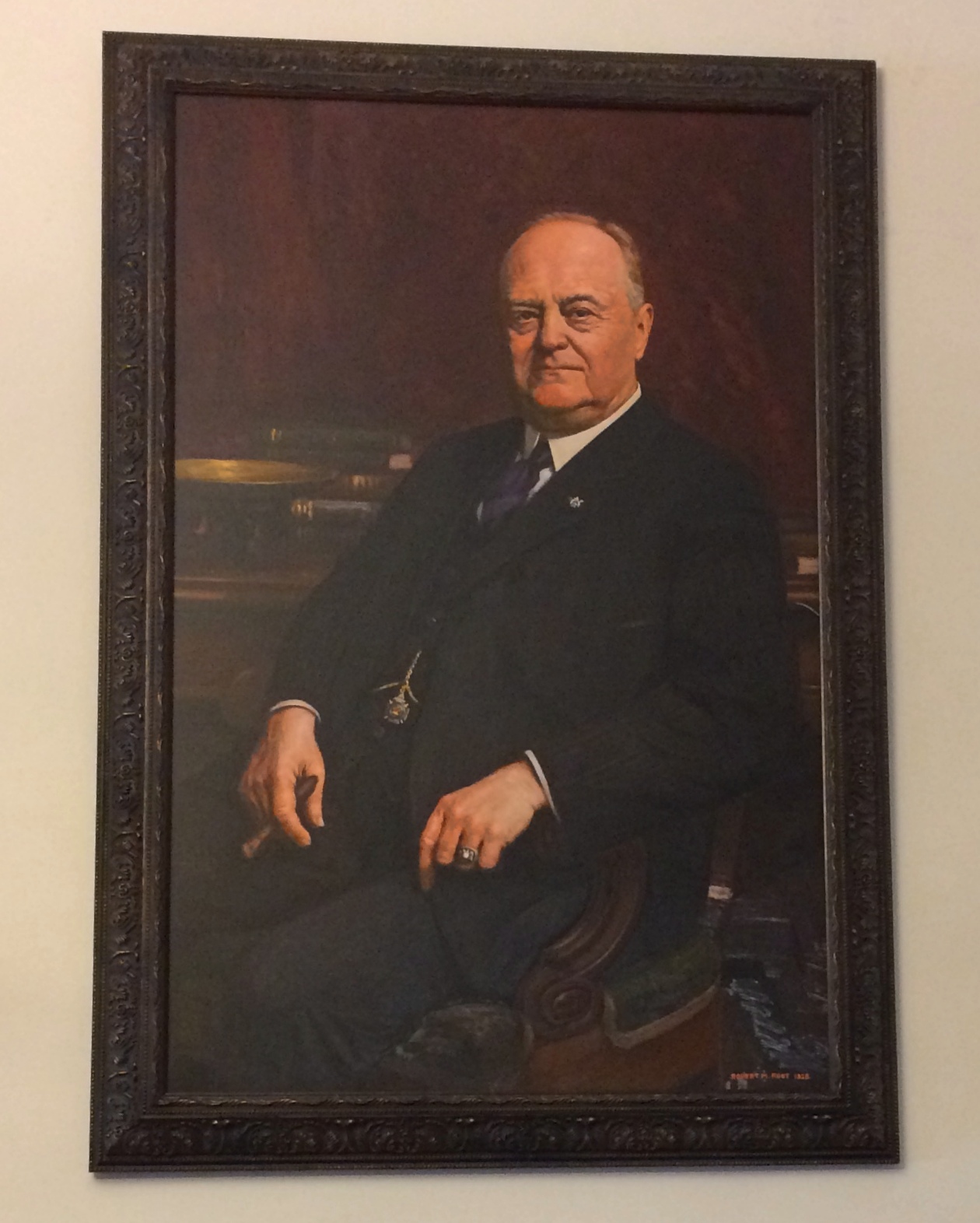
Looking every bit the ’20s tycoon. He also developed an office building for his company a few miles from the home. The structure was one of the largest things in Decatur at the time, and a stylish ’20s design it is (see page 5).
Later in the day, we drove by for a look at the office building from the street. It’s still a commanding presence in its part of Decatur, though like the A.E. Staley Mfg. Co., it’s part of Tate & Lyle, a British supplier of food and beverage ingredients to industrial markets.