Along E. 57th Street, Chicago

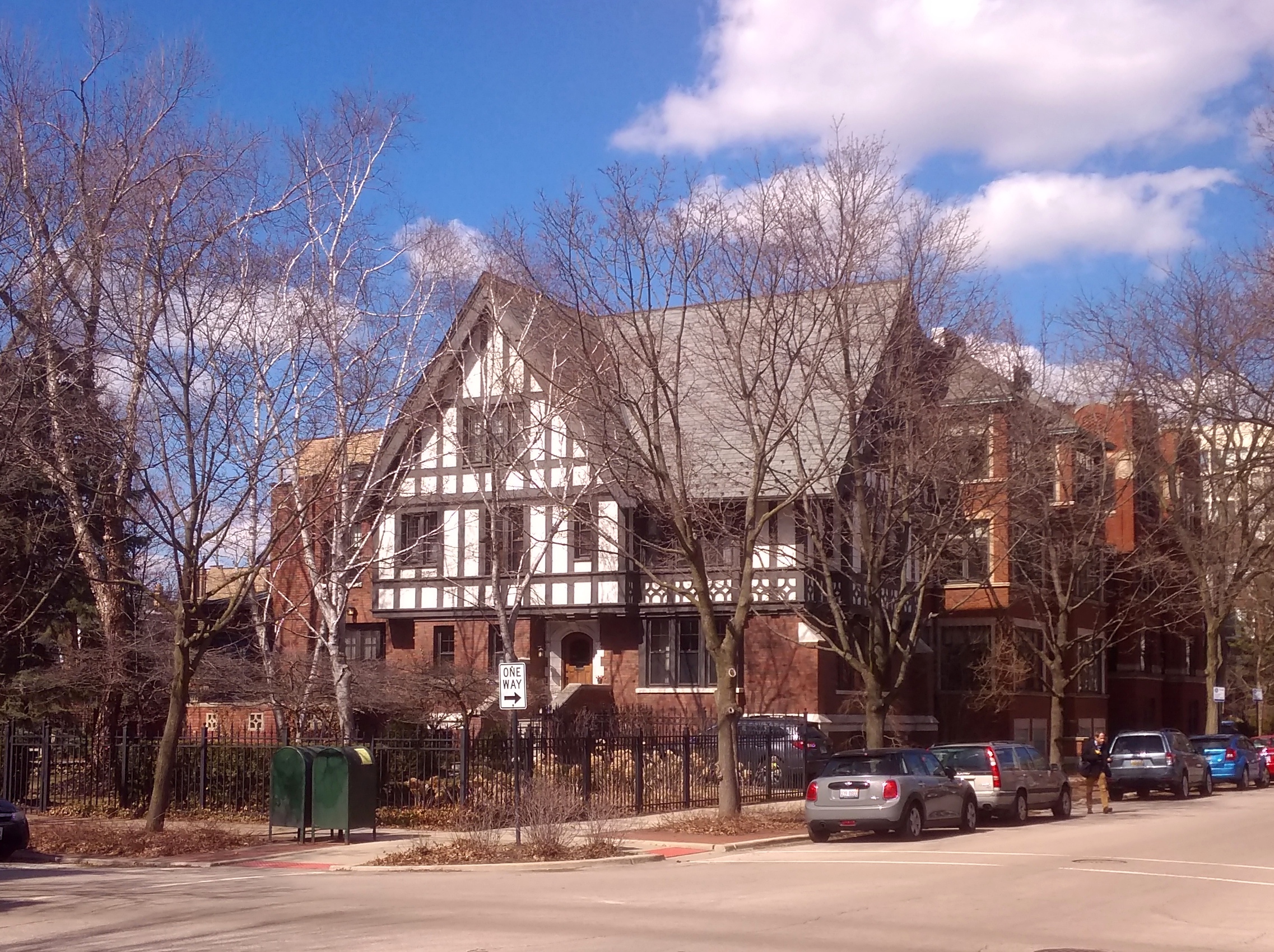
Our stroll through a small slice of the Hyde Park neighborhood on Sunday took us westward on E. 57th St. for a few blocks, roughly between S. Kenwood Ave. and S. University Ave. As you head west, small businesses and flats give way to university property.

Mostly. This is the 57th St. side of the First Unitarian Church of Chicago.
According to the AIA Guide to Chicago, the church, which was completed in 1931, is a “textbook example of English Perpendicular Gothic design [that] fits in easily with the limestone facades and Gothic ornament of many Hyde Park residences and university buildings.”

Denison B. Hull did the design. “The son of a five-term, Republican U.S. representative, Morton Hull, he grew up in the Hyde Park area that his father represented in the 1920s,” the Chicago Tribune said in his 1988 obit.

“After serving as an officer in World War I, Mr. Hull was graduated from Harvard University. In 1922, he won first prize in an architectural design contest conducted by the university.

Among his noted architectural work, besides the First Unitarian Church, were the restoration of Old Church and the expansion of the historical museum, both in Bennington, Vt…

Mr. Hull was noted also as a scholar of ancient Greek and Greece.”

They don’t make ’em like that anymore.

I’ve never been able to see the inside of First Unitarian. Services are at 10 a.m. Sunday, and if I ever happen to be in Hyde Park then, I will attend one. Not just to see the interior, but also to see whatever it is Unitarians do during their services.

At 1219 E. 57th St. is the Neubauer Family Collegium for Culture and Society. More simply, the Neubauer Collegium.

According to a sign in front, exhibits can be seen inside, but not, as it happens, on Sunday. I wondered just what the organization was, and why I’d never heard of it. To answer the second question first: it was founded only in 2012, and makes its home in the former Meadville-Lombard Seminary Building.

As for what it does, the Neubauer — as best as I can describe it — is a humanities think tank.

UChicago News says: “The Neubauer Collegium will unite scholars in the common pursuit of ideas of grand scale and broad scope, making the University of Chicago a global destination for top scholars engaged in humanistic research while also pioneering efforts to share that research with the public.”

Here’s the view of the Reynolds Club bell tower from near 57th St.
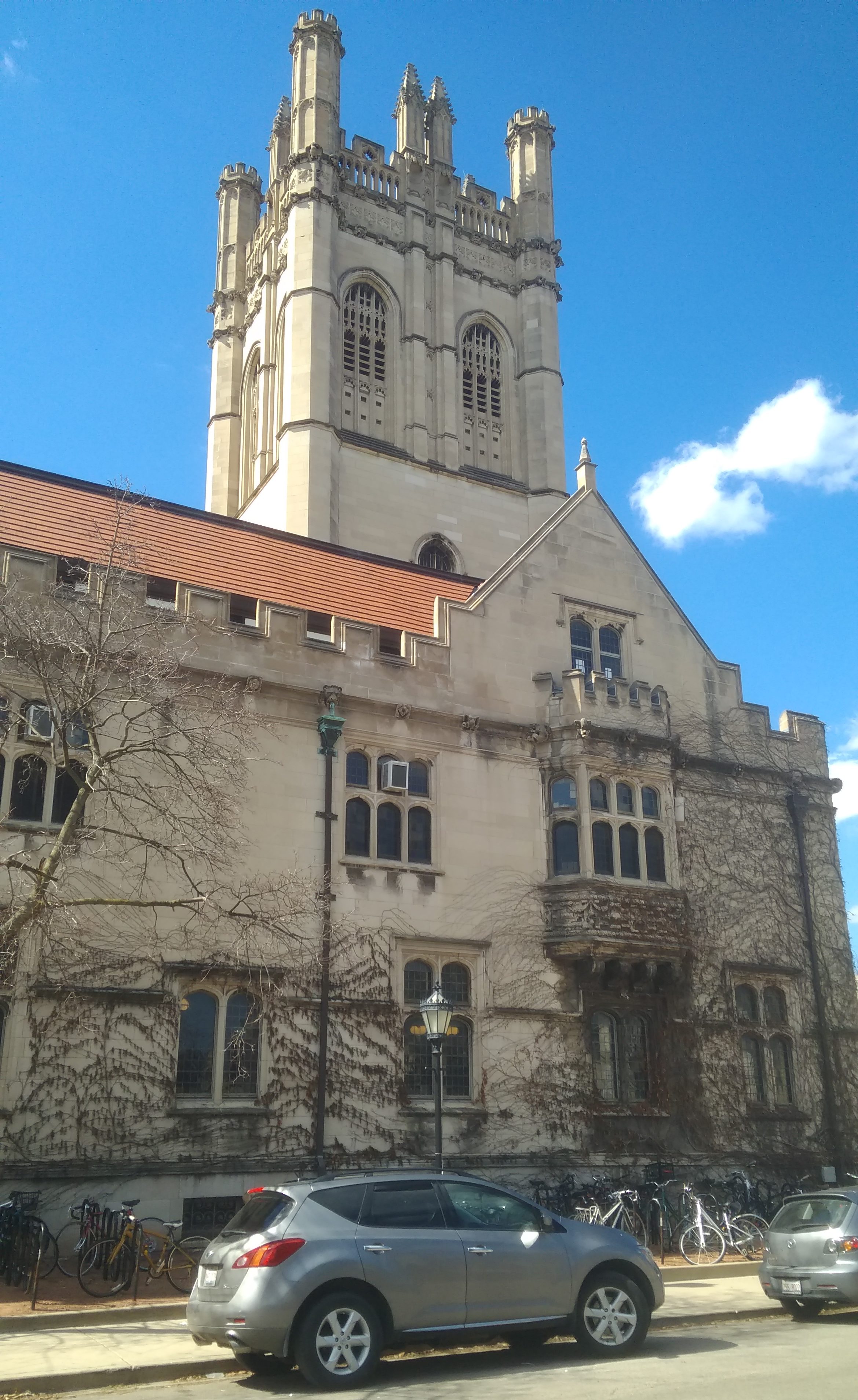
As probably no one calls it: the John J. Mitchell Tower of the Joseph Reynolds Student Clubhouse. These days, the clubhouse, completed in 1903, is a student union. Joseph “Diamond Jo” Reynolds was a Gilded Age steamboat and railroad magnate whose bequest paid for the building; I believe John J. Mitchell was a Chicago banker who seems to have died in a road-rage incident.

As Time reported in 1927:

Near Chicago last week death came to banker John J. Mitchell, and to Mrs. Mitchell. They were driving in an open motor car from their country home at Lake Geneva, Ill., to Chicago for the funeral of their elder daughter’s father-in-law, when their machine met a roadside brawl. Two motor cars, going in opposite directions had tried to pass a hay wagon at the same time. Both cars went into a ditch; the drivers jumped clear and fell to words and fisticuffs. The haywagon stopped as did several machines. Their drivers wanted to see…

To read more, I’d have to subscribe, but I’d rather leave the story at that.

Here’s the view of the tower from inside the quad formed by the Reynolds Club and some other buildings.
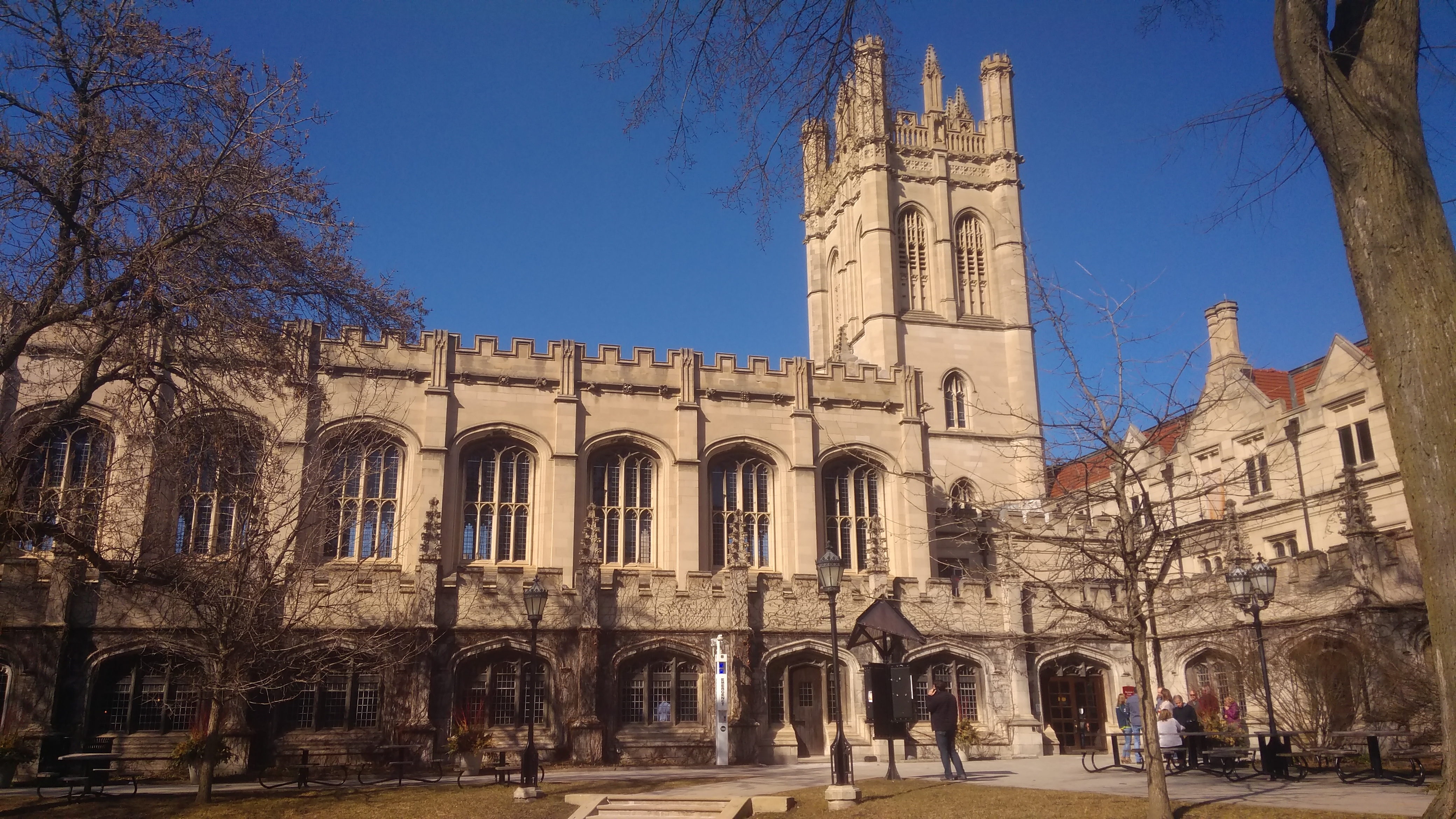
Designed by Shepley, Rutan & Coolidge, the building was “derived from St. John’s College at Oxford, and its domestic feeling is enhanced by a stair hall that could have come straight out of an English manor house.”

Also inside — behind the row of windows to the left of the tower, above — is the Charles L. Hutchinson Common, which SRC did as well. Hutchinson, better known as founder of the Art Institute of Chicago, ponied up for building the hall.
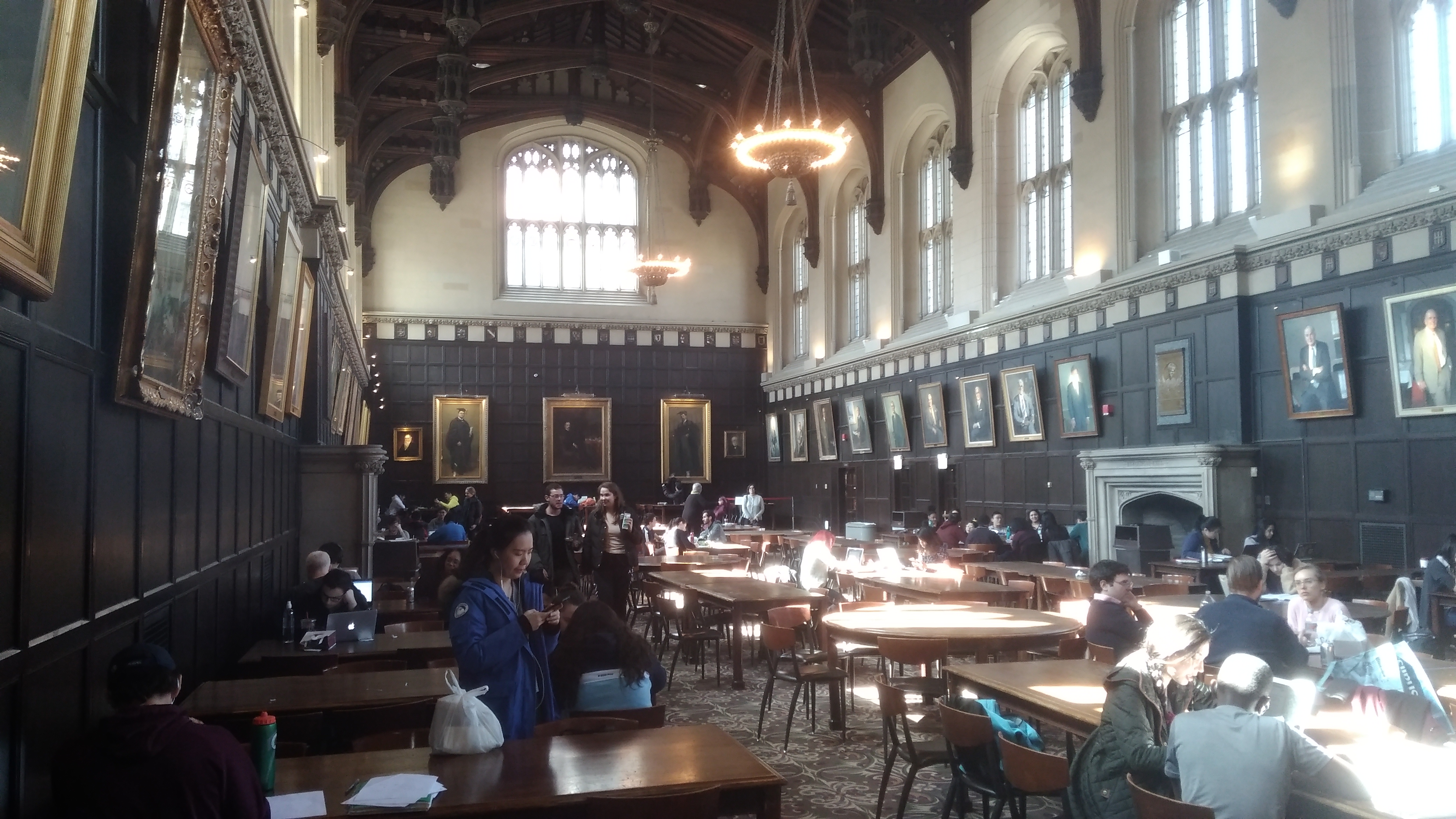
It’s also like stepping into Oxford. According to Wiki, anyway, “The Harry Potter film series has used the original hall at Christ Church in each of its films, imparting a tourist interest in its American replicate.[citation needed].”
Short Hyde Park Walkabout

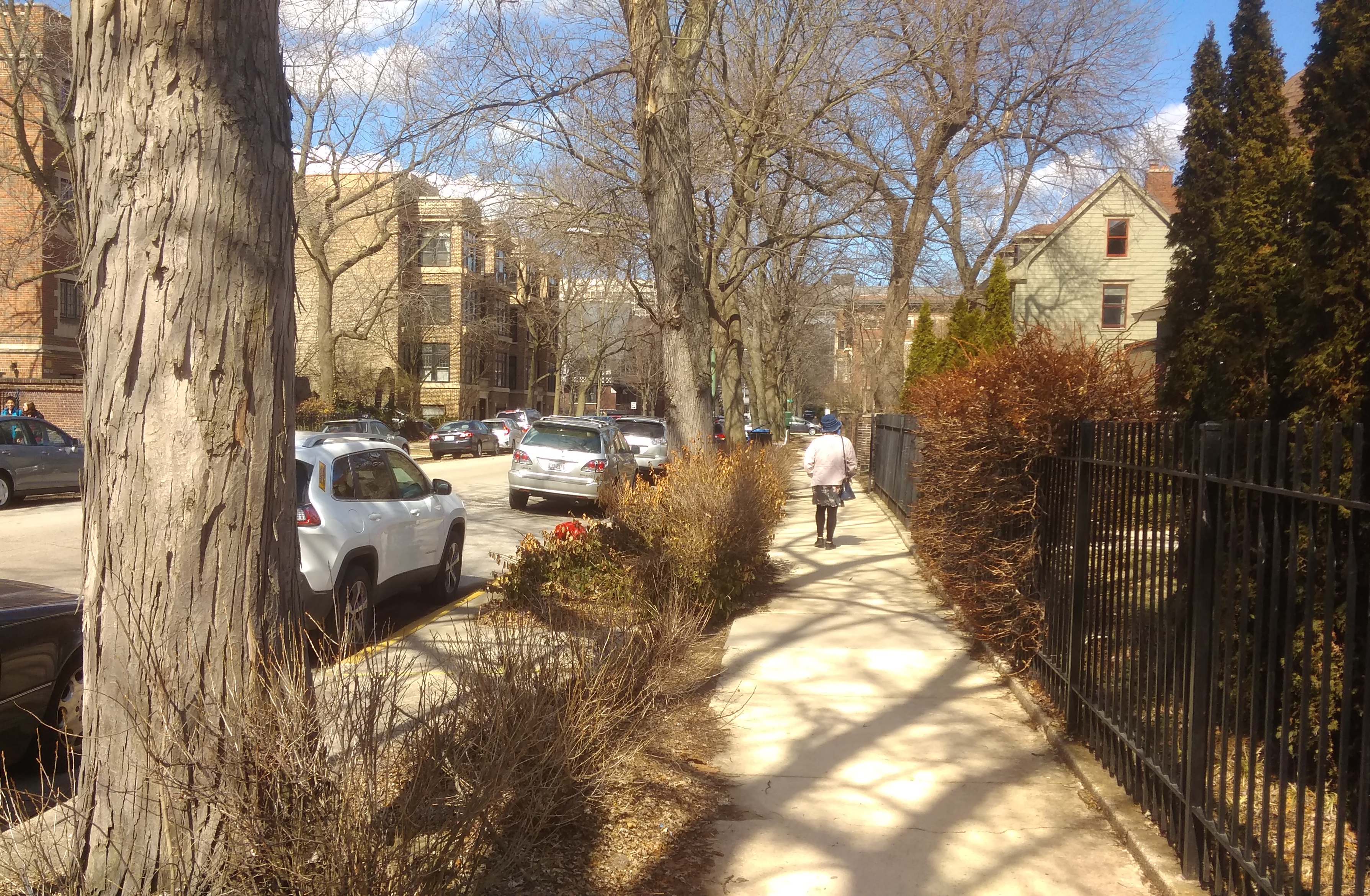
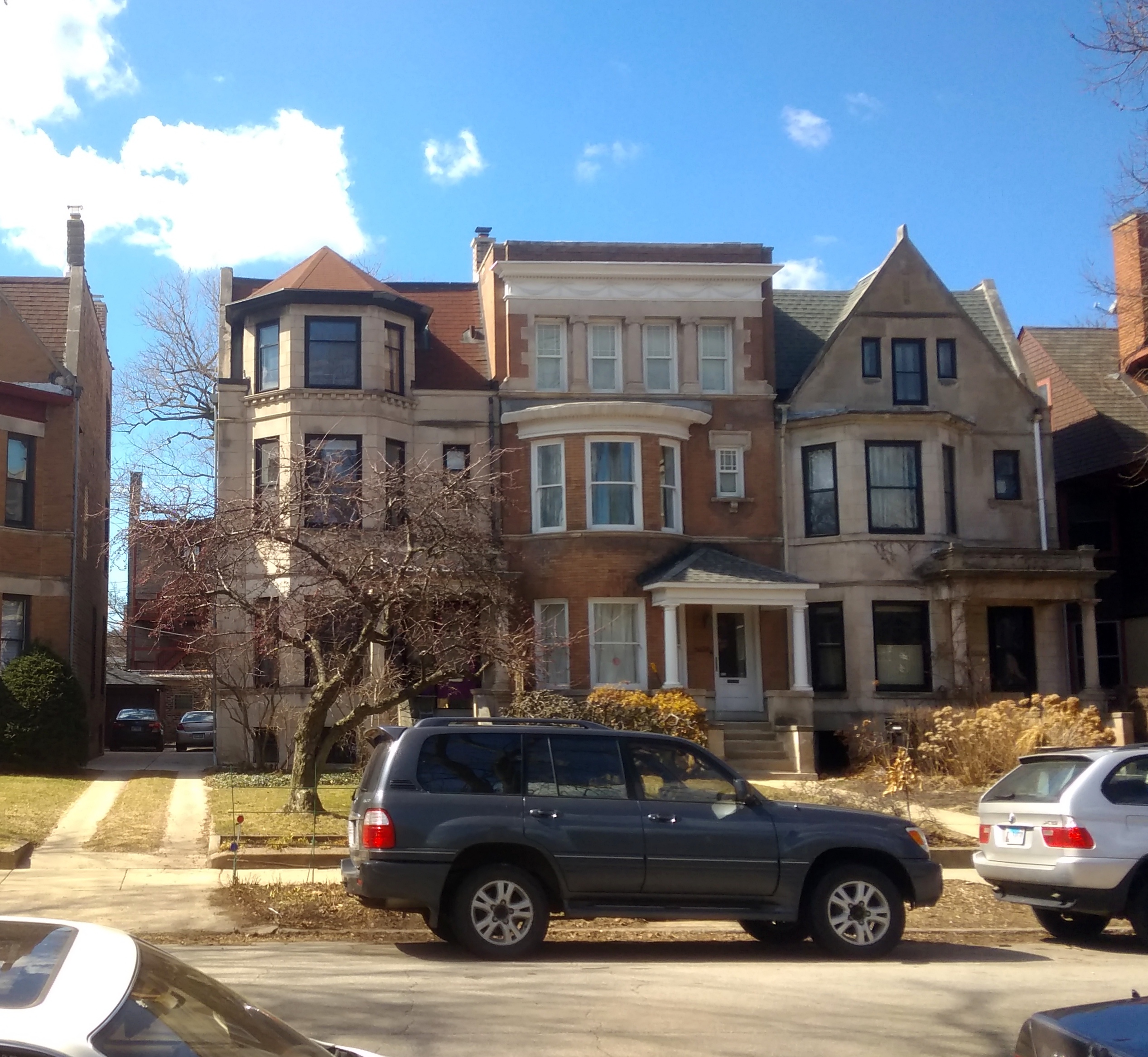
We don’t make it to the Hyde Park neighborhood of Chicago that often, so when we do, if time and weather allow, we take a walk. Today wasn’t especially warm, but not cold either, or windy, and the sun was out. Good day for a walk along a few blocks in Hyde Park.

These views happen to be along S. Blackstone Ave.

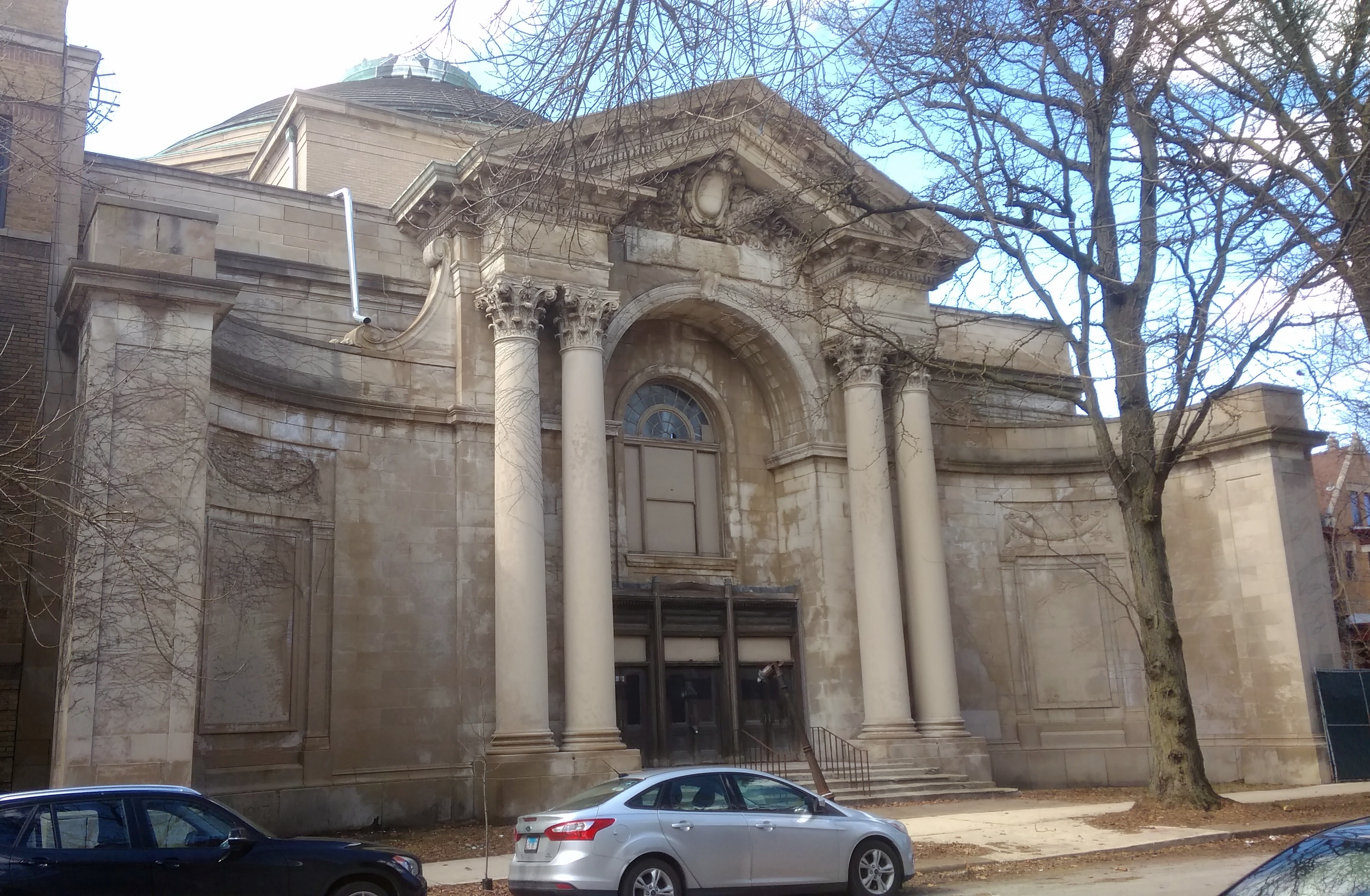
Also on Blackstone — 5640 S. Blackstone Ave., to be exact — is the abandoned St. Stephen’s.
The most recent information I’ve found about the structure — which was developed in 1917 as a Christian Science church — dates from about three years ago, when a new owner acquired it with unspecified plans for redevelopment.

Even then, according to the defunct DNAInfo, the building had defied redevelopment for more than 20 years. Looks like it’s still doing so.

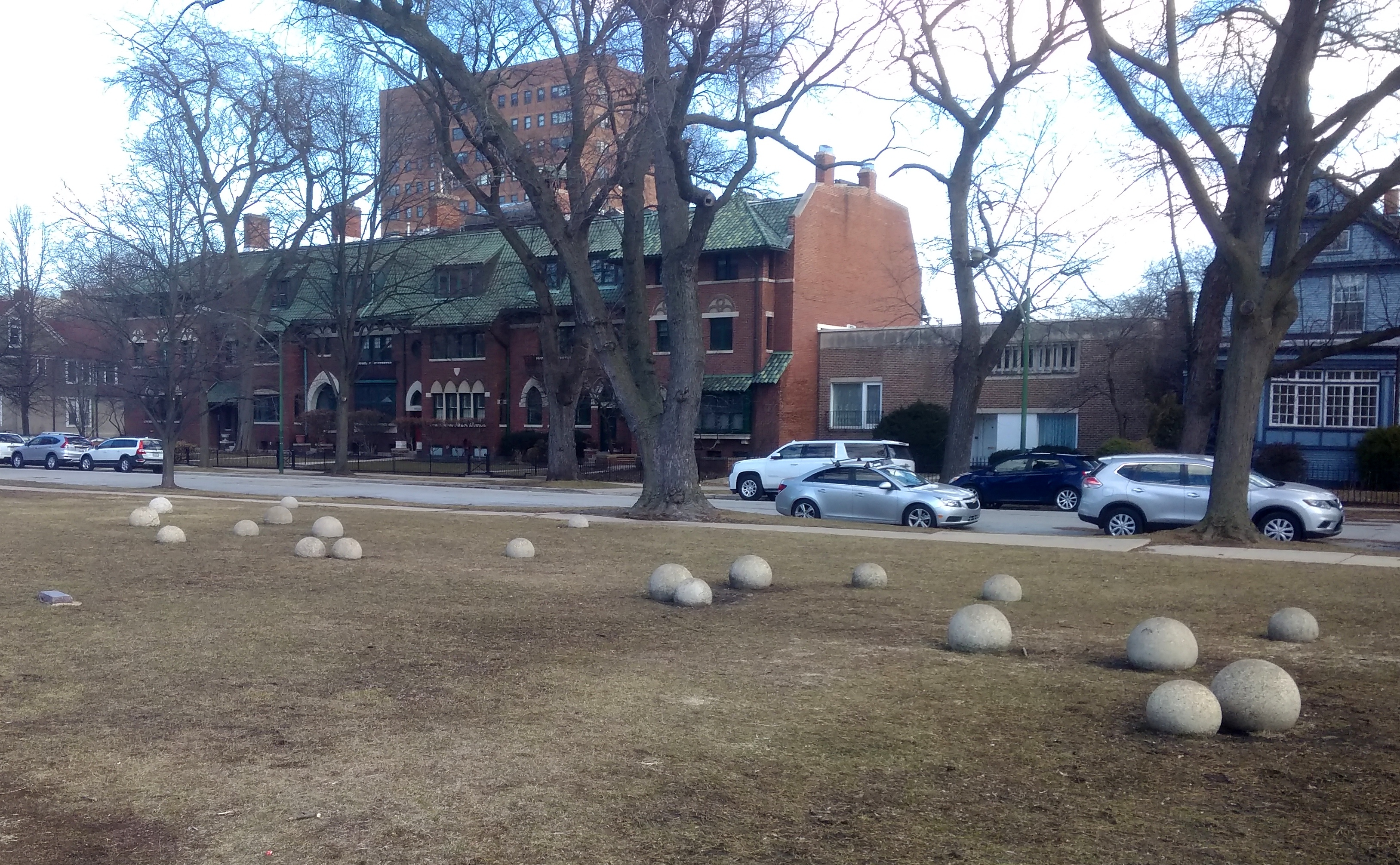
To the west of the abandoned church is an oddity in a small park adjacent to William H. Ray Elementary School. An array of concrete spheres.
Those are many, but not all, of the spheres. There are 30 in all. Or so says a stone plaque fixed to the ground nearby; I didn’t count them.

The globes form an artwork called “Like the Time They Go” by Virginio Ferrari, a Chicago sculptor originally from Verona. The date on the plaque says 1977-2002, while other sources simply say 1977. Maybe the more recent date was when Ferrari quit making changes or adding concrete spheres.

The New 110 N. Wacker Dr.

About a year ago, I found myself at the corner of N. Wacker Dr. and W. Washington St. in downtown Chicago. At the time, a ’50s-vintage building across the street was being dismantled.

Today I was downtown for a little while, and passed by the same corner. Though drizzly, I decided to document the moment.

The new 110 N. Wacker Dr. is a development of Howard Hughes Co. and Riverside Investment and Development. Looks like it will be an interesting building when it’s finished next year.

The Building Blocks of Publicity

I get a lot of press releases. Most are about commercial real estate in one way or another, which at least has the potential to be useful. But there’s also a regular flow from various weird planets orbiting remote journalistic suns. Remote to me, that is.

For instance, recently I got a press release that starts (sic): “TM” premiered a third action-packed season at its brand new home on “DRIVE,” a dedicated auto enthusiast programming block on A+E Networks’ FYI® (Primetime) and HISTORY® (Weekend Mornings).

Each week, former celebrity stuntman and head “TM” leads his talented team in crafting one-of-a-kind custom automotive builds. From hot rods and classics to muscle cars, trucks and motorcycles, “TM” gives car lovers across America a front-row seat to the incredible building process behind these powerful and unique machines.

Good to know that HISTORY® isn’t shirking when it comes to “dedicated auto enthusiast programming.”

I got this why? Because I write about hot rods and classics and muscle cars. Not.
Just another dim-witted algorithm guessing at what I might want to see, probably.

Another one: X is the co-creator of XYZ Foods, along with her husband Y. The idea for the company grew from issues dealing with health complications that lead to their infant son, Z, needing a feeding tube. Z’s parents originally followed doctors’ and nutritionists’ advice to give Z commercial formula for his feeding tube.

But when Julie discovered that the main ingredient found in the food for Z’s feeding tube was corn syrup, she quickly started experimenting with pureeing and blending whole foods to feed Z.

Well, of course, dread corn syrup. At least they don’t seem to be blaming their problems on vaccines.

One more: Shocked and appalled. That’s the reaction most people are having following “Operation Varsity Blues,” exposing bribery scandals involving colleges such as Yale, Stanford, and Georgetown. According to leadership expert Kyle M.K., there are five ways these schools can effectively handle the crisis — and three things that will cause more damage.

I myself am shocked, shocked to hear that a few wealthy people tried to bribe their children into the Louis Vuittons, Guccis and Versaces of academia. One of those “seemed like a good idea at the time” for the status-besotted. But again, why I am getting this?

Pi, Patrick & Joseph

Almost all of the outdoor ice is finally gone. Dirty rims and clumps of ice mostly at the edge of the streets. Recent rains and temps higher than freezing have turned that ice into dirty puddles. Mud season is just about here.

Every week, grocery store circulars arrive in the mail. This week, as you’d expect, St. Patrick’s Day is mentioned in each one, usually with green or shamrocks or green shamrocks. Nothing unusual about that.

But I also noticed that one store wished its customers a Happy St. Joseph’s Day — the market’s roots are Italian — and even more curiously, another store asked us all to:

Celebrate Pi Day — Thursday, March 14
8″ Fruit Pies from our bakery, $3.14

Never seen that before.

Once the Rockets Go Up…

I’m much of the way through Von Braun by Michael Neufeld (2008), aptly subtitled “Dreamer of Space, Engineer of War.” Overall, a solid biography, though the chapters I’ve just finished bog down a bit in all the mid-50s interservice rivalry and the fog of uncertainty about who would get to launch the first U.S. satellite. It’s hard to keep track of all the bureaucrats, official acronyms and other long-forgotten missile minutiae.

In the end, the answer of who would get to launch for the Americans came after Sputnik was up and beeping. Namely, whatever’s ready, launch it now! Which of course led to flopnik, since the Navy’s Vanguard rocket wasn’t quite up to snuff.

Rather, it was the Army’s Redstone, a design overseen by von Braun, that put Explorer 1 into orbit (to be fair, the Navy launched a Vanguard satellite successfully on March 17, 1958, the second U.S. satellite, and it’s still in orbit). I didn’t realize it until now, but the Explorer Program is ongoing after six decades, with over 90 missions to its credit.

Granted, we’ve been sluggish about getting around to the big-deal missions like sending astronauts to Mars, but by no stretch of the imagination has humanity turned its back on space exploration during any of the last 60-odd years.

As for von Braun, the bio doesn’t shy away from his early employment history and the various Nazi bureaucracies that facilitated development of the V-2, often using slave labor. He was a rocket engineer to his core, and happy to work for whomever would facilitate rocket development — hideously expensive when you get beyond fireworks — up to and including membership in the SS.

One of these days, I’ll have to return to Huntsville, Ala., to see what NASA has done with its rocket displays at the Marshall Space Flight Center (the haus that Wernher built). I remember seeing some of them in 1984, but I suspect the museum’s been expanded since then.

Also, I was only vaguely aware of how well known von Braun was to the American public, even in his pre-Saturn V days, what with his collaborations with Collier’s and especially Disney in the 1950s. Von Braun was famed as a space-flight evangelist at a time when a lot of people probably considered it a not-in-my-lifetime sort of proposition. Lehrer was making fun of a celebrity.

Remarkably, PDFs of “Man Will Conquer Space Soon!” and the other Collier’s articles are available here, complete with the magnificent Chesley Bonestell illustrations.

Digression: there’s a Bonestell Crater on Mars (42.37° North, 30.57° West). An image is downloadable, in this case from NASA. Which I did.

One more thing about von Braun. I don’t have to go very far to find a small tribute to him.

That’s Von Braun Trail in Elk Grove Village, here in the northwest suburbs of Chicago. The neighborhood dates from ca. 1970, and some of the nearby streets honor other space pioneers: Aldrin Trail, Armstrong Ln., Cernan Ct., Conrad Ct., W. Glenn Trail, Haise Ln., Lovell Ct., Roosa Ln. and Worden Way, and probably others I haven’t spotted.

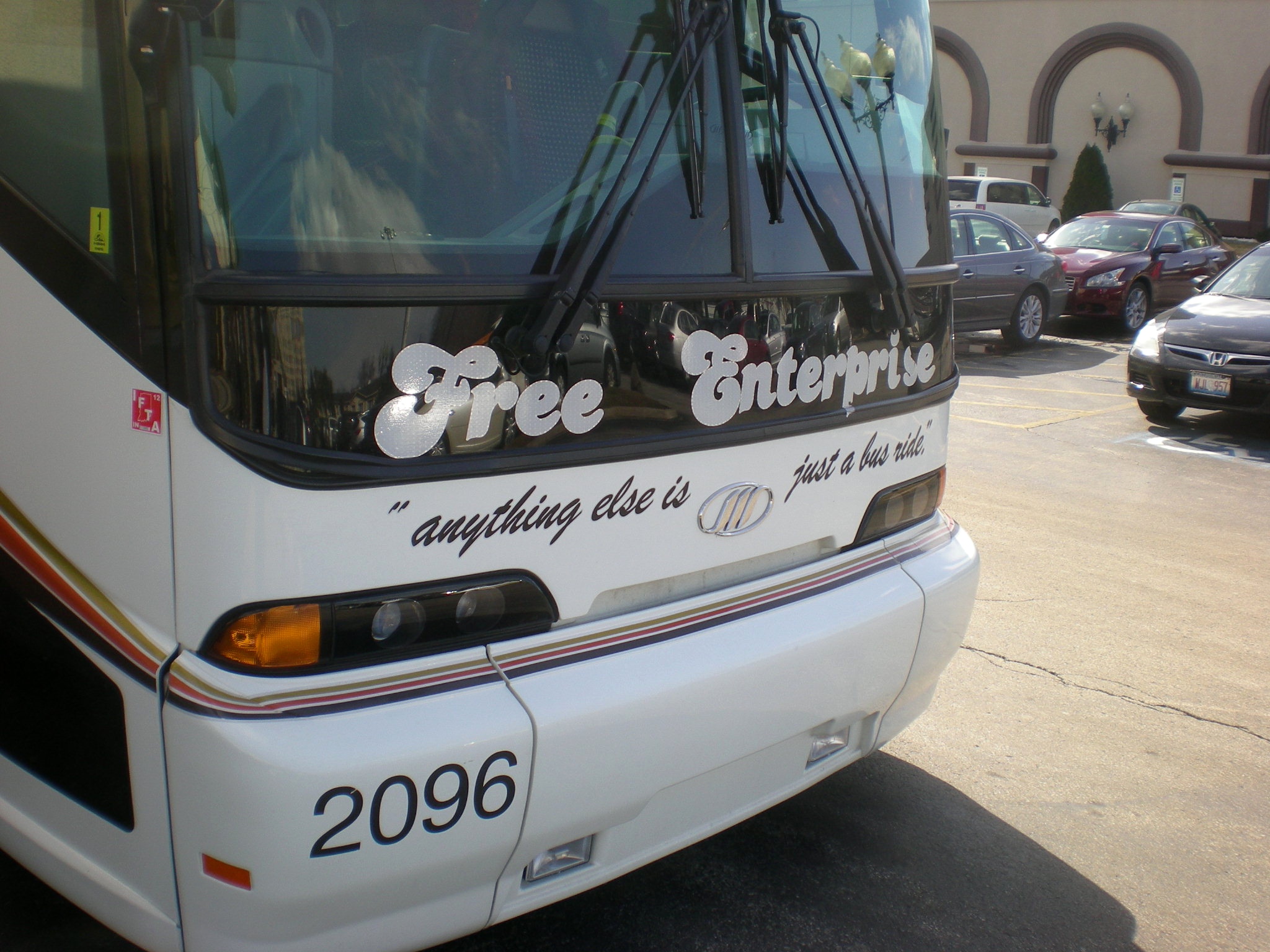
That’s No Socialist Bus

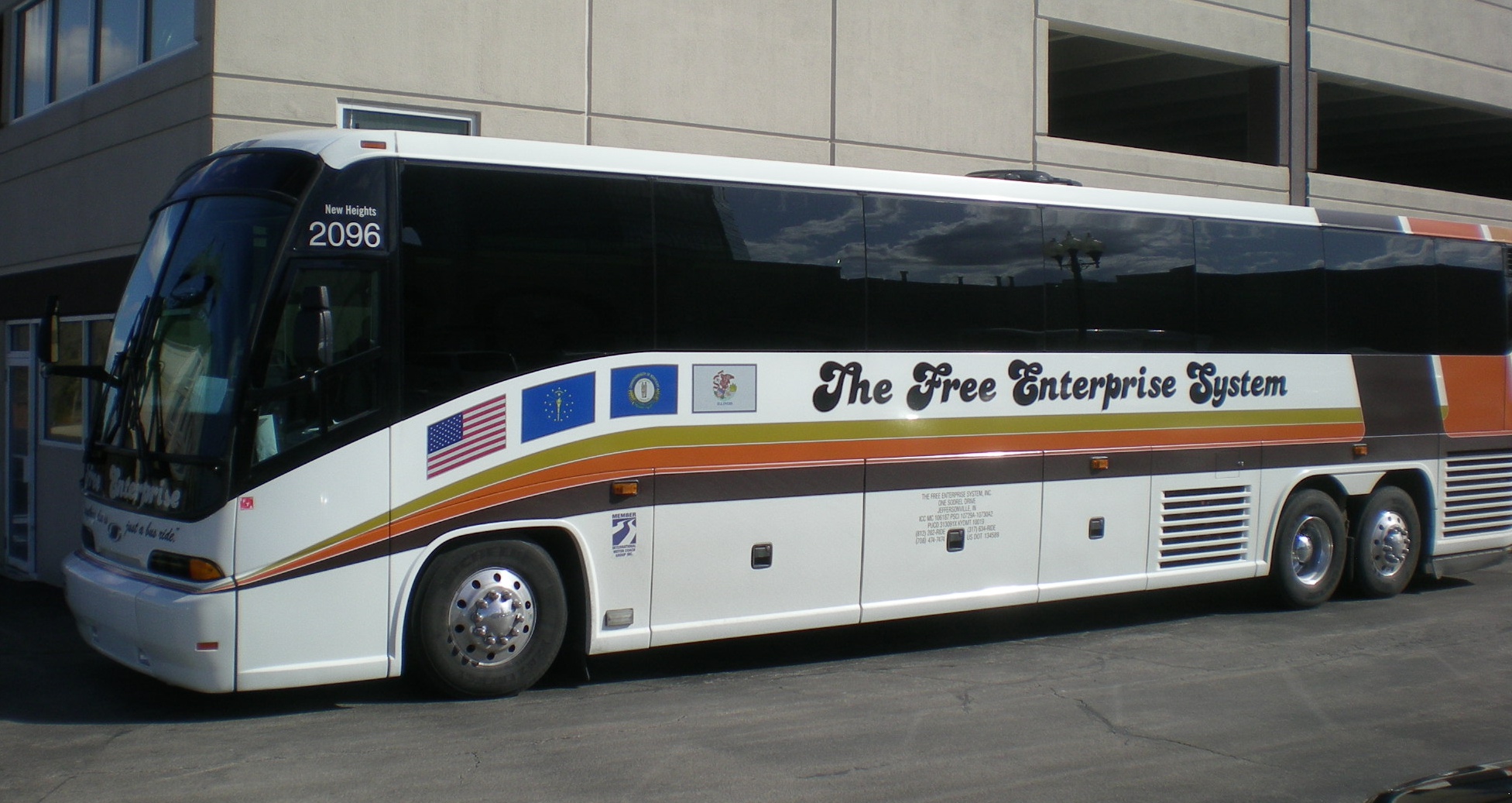
Not something you see every day. I don’t, anyway.

Free Enterprise is a bus operator based in suburban Louisville, though it has offices in metro Chicago. An upmarket charter bus company, from the looks of it.

I see that the bus has a number, but it would be more fun if they had names too. Fitting names. Such as the Adam Smith, the Jeremy Bentham, or the Freidrich Hayek. Or, if naming buses after economists seems a little odd, maybe the Laissez-Faire, the Profit Motive or the Market Economy.

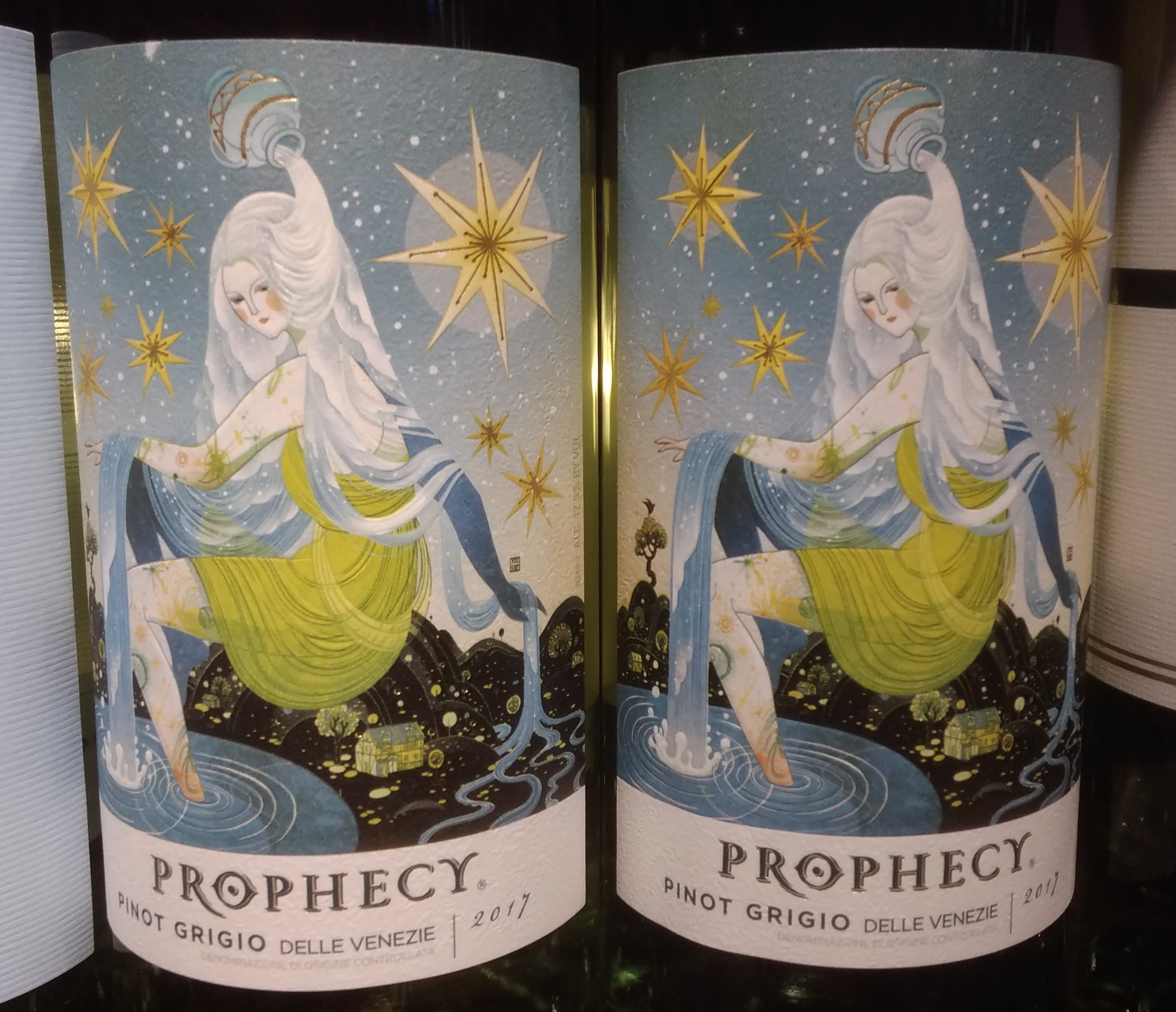
Wine Label Art

As I’ve mentioned before, I like the idea of wine better than wine itself, which pretty much goes for any intoxicant. One reason to like wine is wine bottles, and one reason to like wine bottles is the label.

Here’s a collection of labels used by Château Mouton Rothschild for more than 70 years. The winery has been hiring an artist a year to create its labels, with some interesting results.

But you don’t have to go all the way to the Médoc to see interesting wine labels. I can do that at a grocery store a few miles away.

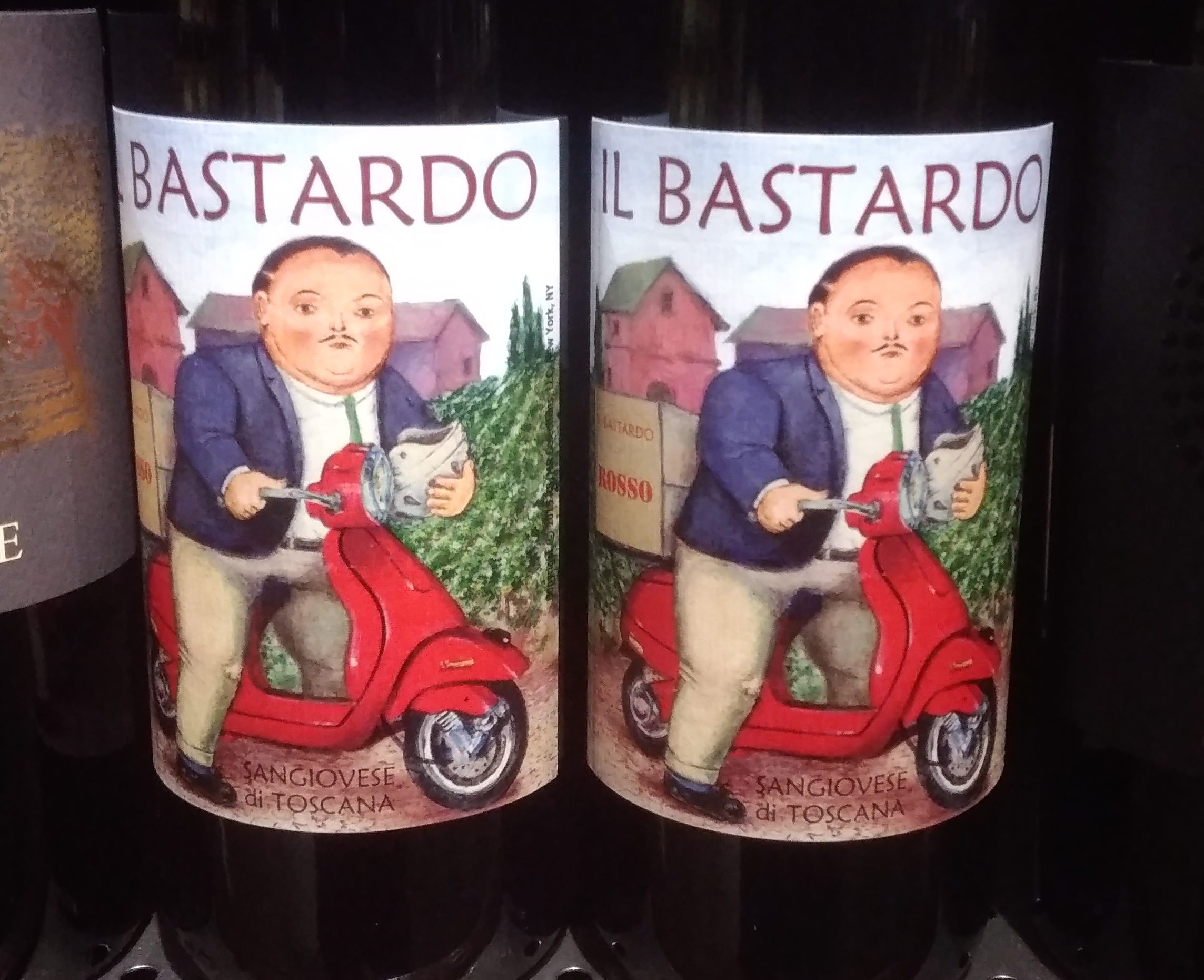
This one caught my eye recently.
I don’t think Franklin counts as a Federalist. Sure, he supported the ratification of the Constitution, but in terms of participation in politics, Franklin found himself at a major disadvantage by the time the Federalists became a force in U.S. politics. Namely, he was dead.

There are plenty of actual Federalists who could be on a wine label. Famously, Alexander Hamilton or John Adams. Less famously, but more interestingly, DeWitt Clinton, Rufus King or Charles Pinckney. Well, maybe not Pinckney, since he owned a lot of slaves, but King was an abolitionist before it was cool.

Turns out, the winery did put Hamilton on a different bottle. Along with Washington (he of no faction!) and, incongruously, Lincoln. People might get the wrong idea if you called your product Republican Wine, but there’s always Whig Wine. Lincoln was originally one, after all, and it opens up the possibility of Daniel Webster or Horace Greeley on a bottle.

I saw this and thought: Botero.
I couldn’t find any evidence that Botero himself did the Bastardo label, though as Château Mouton Rothschild shows, artists are hired for such work. Shucks, you don’t even have to be a painter to shill for inexpensive wine.

Another artist-created label.
By one Victo Ngai, whom I’d never heard of. Raised in Hong Kong and current resident of California. She’s done a number of labels for Prophecy; probably a good gig. Just another one of the things you can learn poking around grocery stores.

The Alamo and Its Cenotaph

March 6 has rolled around again, so of course Remember the Alamo.

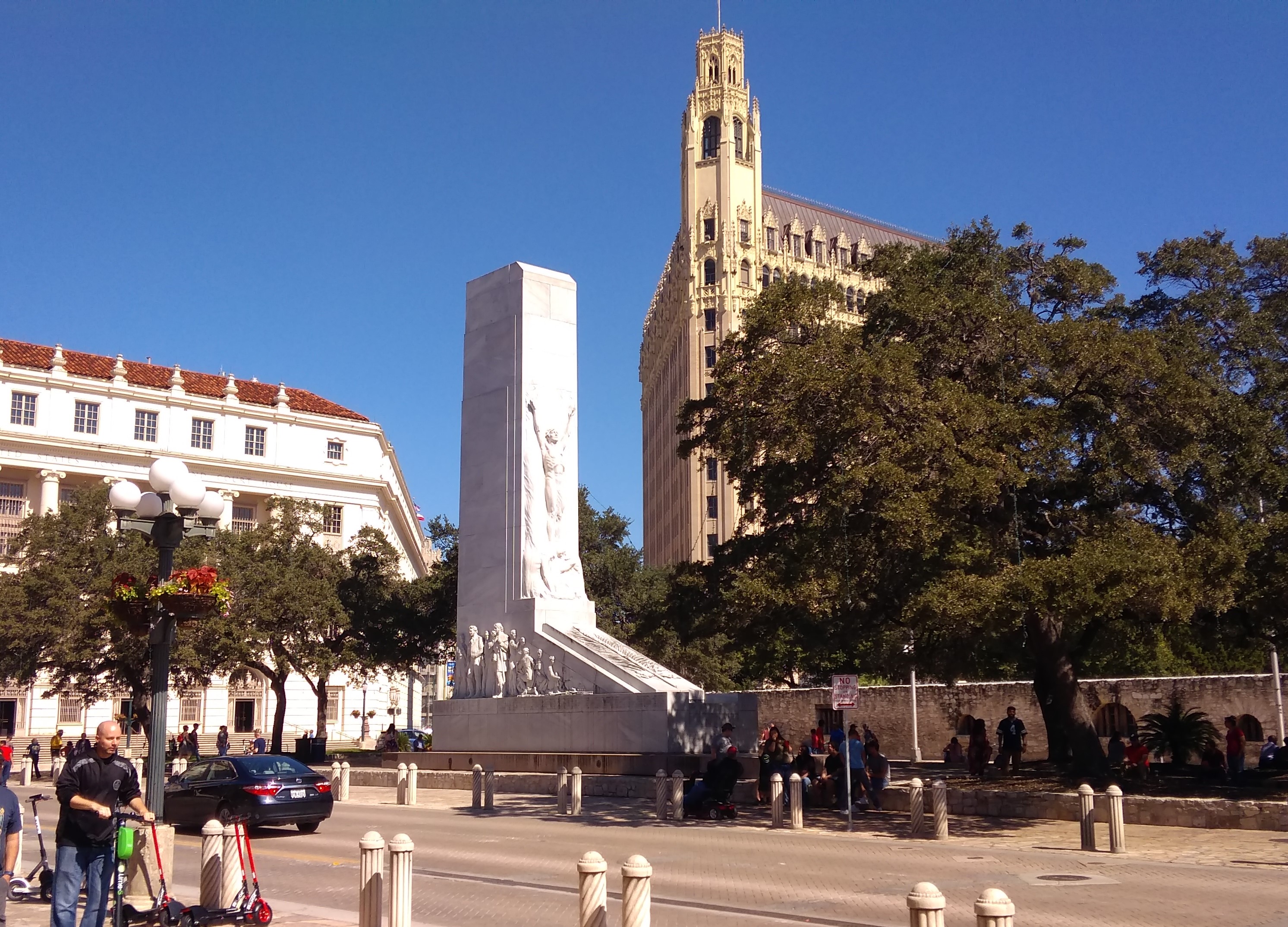
During my most recent visit to the Alamo, I also took more than a passing look at the Alamo Cenotaph. Here it is in the context of Alamo Plaza.

Alamo Plaza October 2018Why civic busybodies think the Cenotaph needs to be moved, or Alamo Plaza should be sterilized in the name of History, is unclear to me. I was there on a warm day and Alamo Plaza was alive with people. As a plaza in the here and now should be.

Living urban texture isn’t somehow at odds with proper reverence for the Shrine of Texas Liberty. As I understand the plans for Alamo Plaza, its living urban texture will slowly be strangled. That’s no way to remember the Alamo.

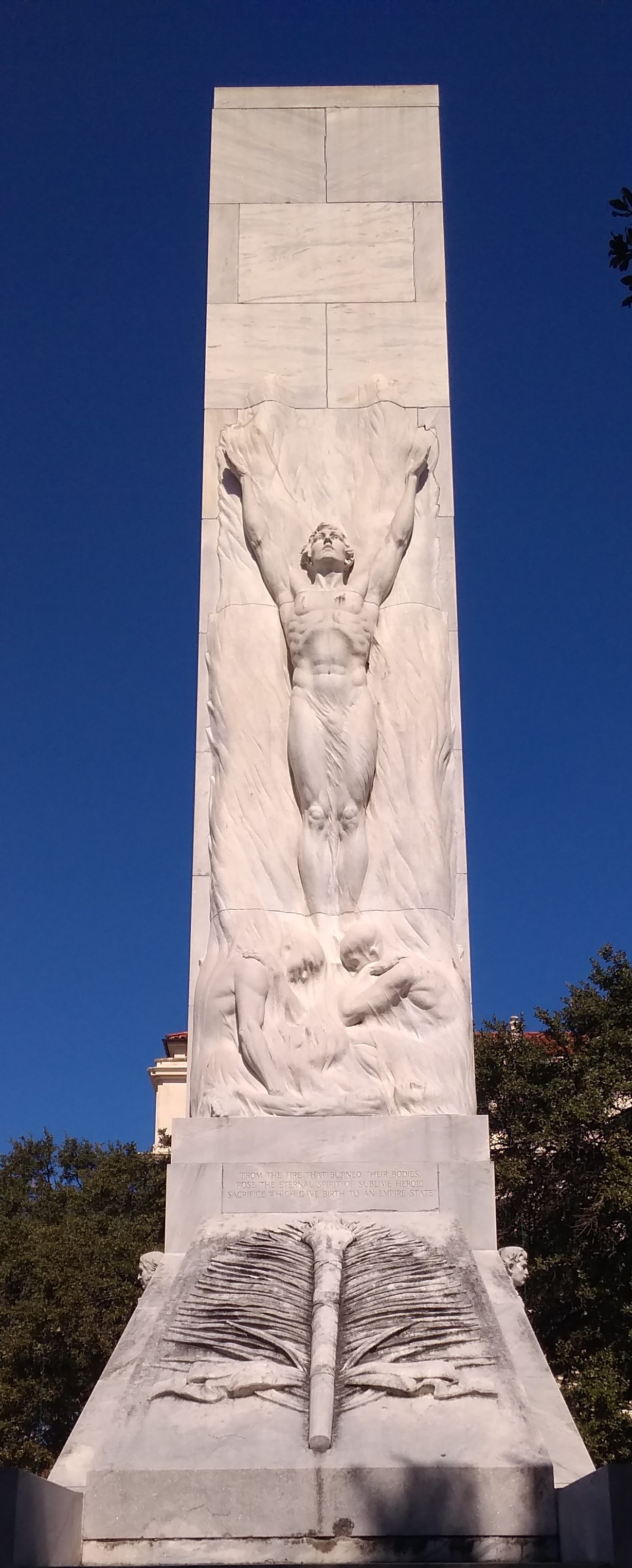
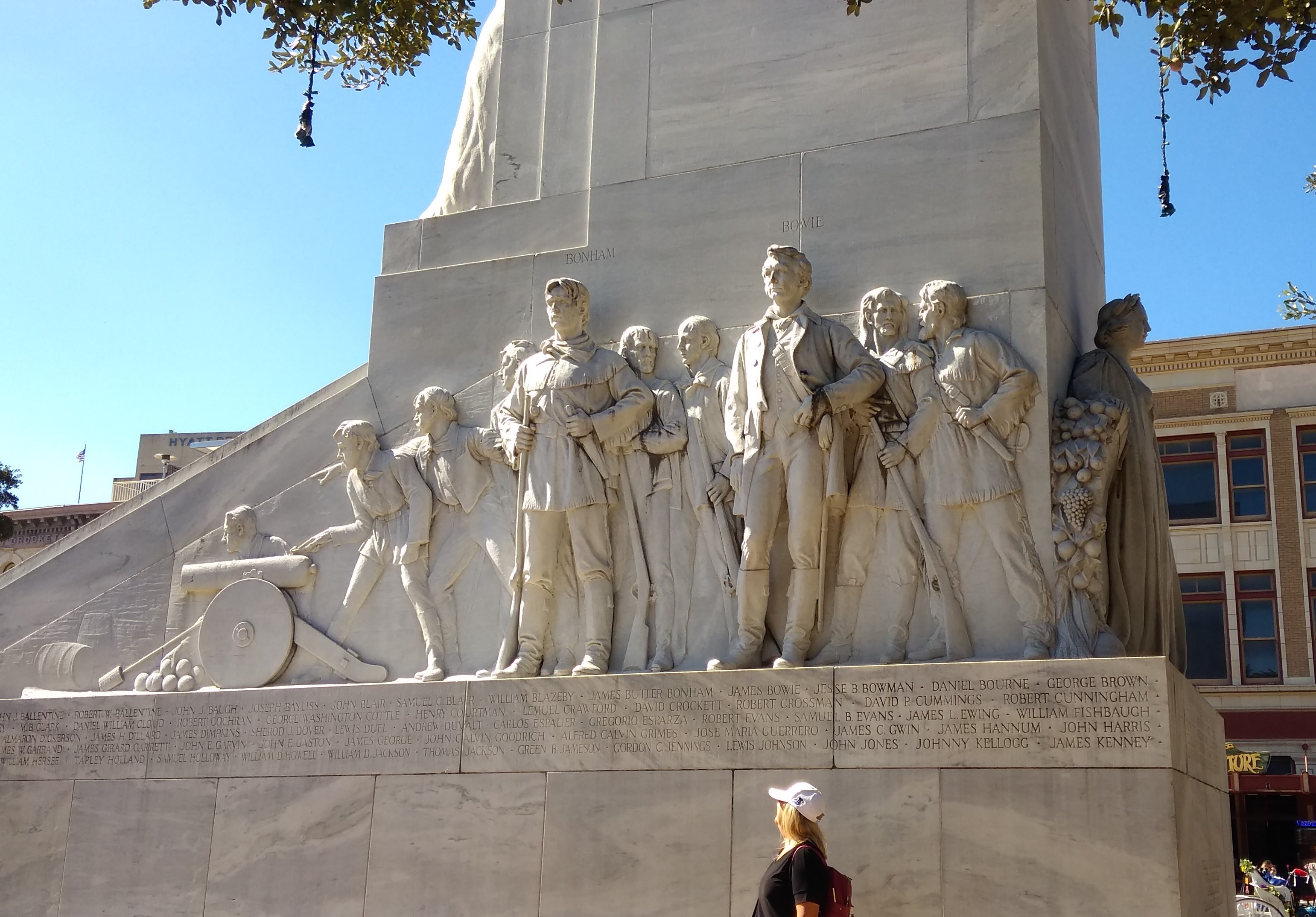
Enough of that. As it stands now, the south face of the Cenotaph — which is 60 feet high — features a figure known as the Spirit of Sacrifice.

Alamo Cenotaph 2018Under the figure, text reads: From the fire that burned their bodies rose the eternal spirit of sublime heroic sacrifice which gave birth to an empire state.

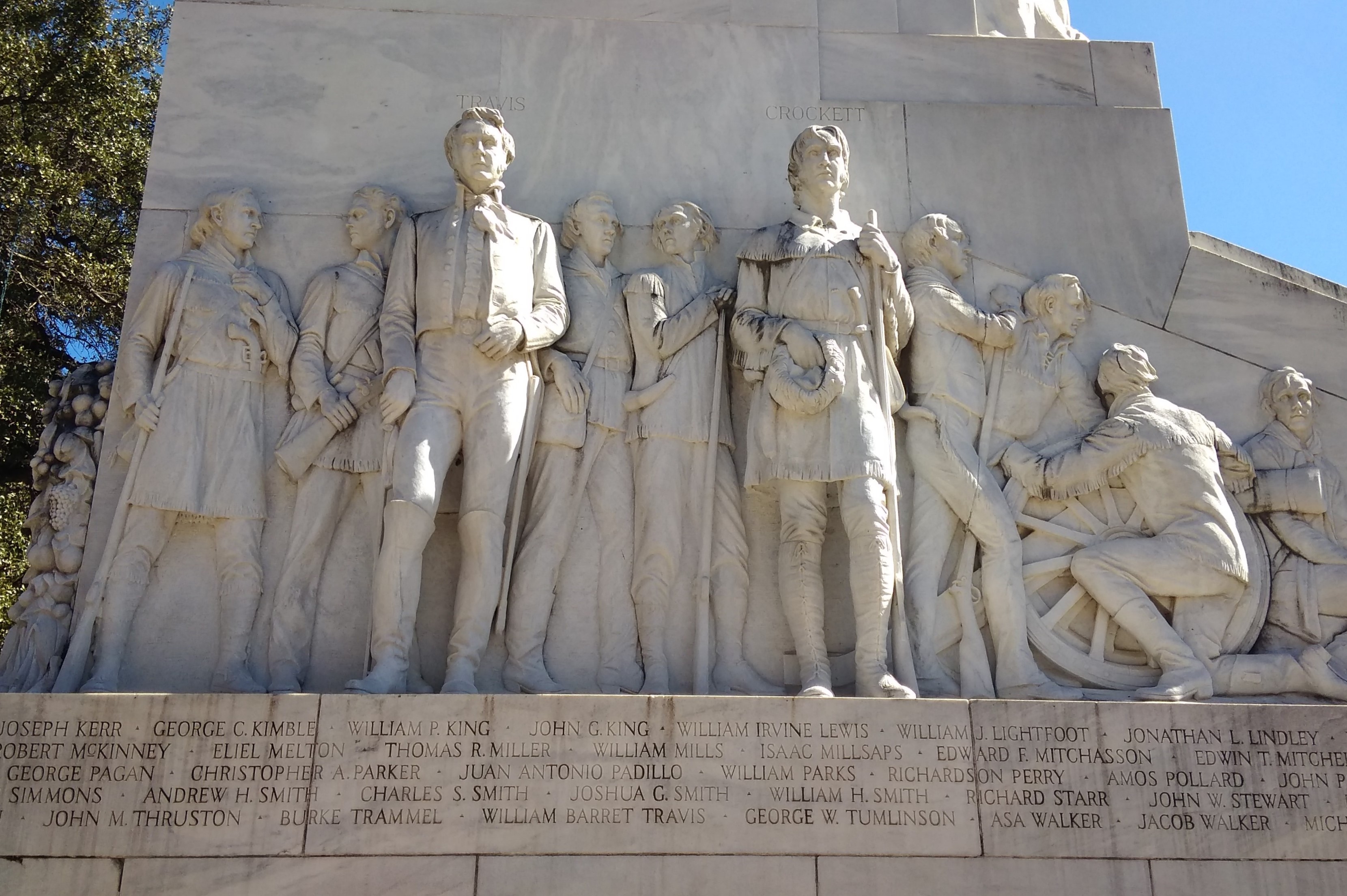
On the east and west faces are depictions of the defenders of the Alamo.

Alamo Cenotaph 2018Alamo Cenotaph 2018None other than Pompeo Coppini did the figures. I’ve come across his work before in Austin and Dallas.

I didn’t capture the main inscription, which says:

Erected in memory of the heroes who sacrificed their lives at the Alamo, March 6, 1836, in the defense of Texas. They chose never to surrender nor retreat; these brave hearts, with flag still proudly waving, perished in the flames of immortality that their high sacrifice might lead to the founding of this Texas.

Apollo 9

Now I’ve seen everything. An ad for something called “Crop Preserver Deodorant Anti-Chafing Ball Deodorant” popped up on YouTube the other day. Ball deodorant?

The ad is here. It is as ridiculous as you’d expect. So is the price: $20 for 3 fl. oz. Someone is guffawing on the entire route to his financial service provider.

This year, as NASA is eager to point out, marks the 50th anniversary of the first Moon landing. I’m glad to point that out too, but it’s more than just Apollo 11.

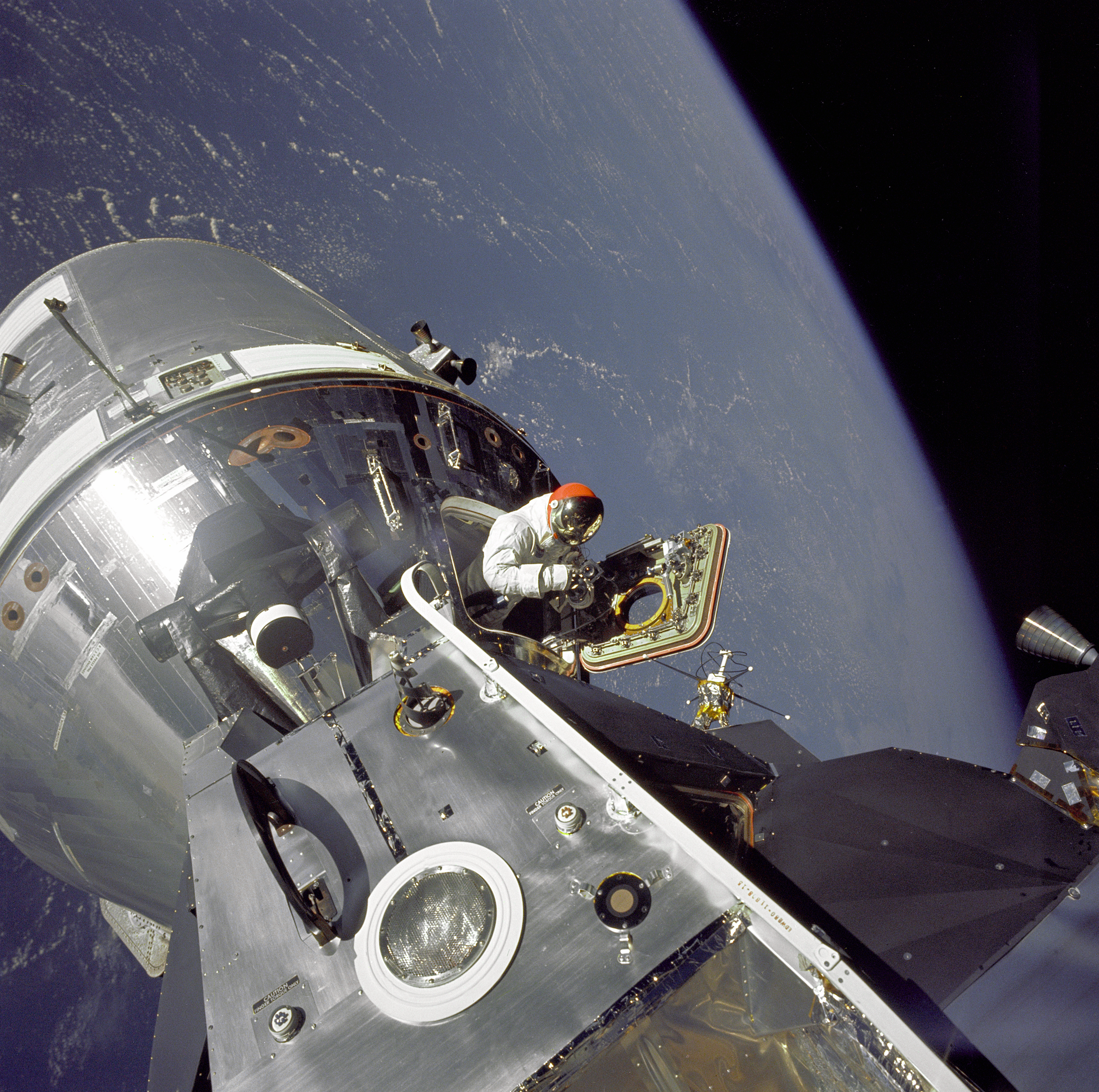
Fifty years ago this week, Apollo 9 orbited the Earth, its main mission to test the lunar module. The flight was an unqualified success.
Gumdrop Meets SpiderApollo 9 is a special one for me. Odd, considering that Apollo 8’s trailblazing journey to the Moon was so much bolder. It was, and that caught my attention, but it wasn’t until Apollo 9 that my full attention — as much as a near eight-year-old can muster — was on the space program.

By then, I’d realized that something very special was going on. Apollo 9 was part of something big. From then on, I followed all of the missions closely, down to the bittersweet Apollo 17 and its glorious night launch, when I was an older and wiser 11-year-old wishing that the rest of the missions hadn’t been cancelled.

NASA created an Apollo 9 video for the anniversary. The dance of Spider and Gumdrop in orbit. Remarkably, all of the crew are still alive.

It’s pretty rare that you can, as a late middle-aged person, look back on an opinion you had as a child and say, I was right. Something very special indeed was going on.