A Terrible Loss

Very sad news today. On Friday, a young man named Avram died. He was the eldest son of Steve, a friend of mine since college, and his wife Debra. Avi, as he was called, was 21.

A mutual friend called me this morning to tell me. I didn’t know Avi, but on some of those occasions when I corresponded with his father, and the one time I visited with Steve since Avi was born in 1996, I heard about him.

By all accounts, including this one, Avi was highly intelligent and had a large heart. Knowing his father, I wouldn’t expect anything else.

R.I.P., Avi.

Thursday Stew

Back again on Tuesday, May 29. Memorial Day is pretty close to Decoration Day this year, but not quite. The next time they will coincide will be 2022.

I finally got around to looking at the professional photographer’s pictures from my nephew’s wedding last month. Quite a selection. She was really busy.

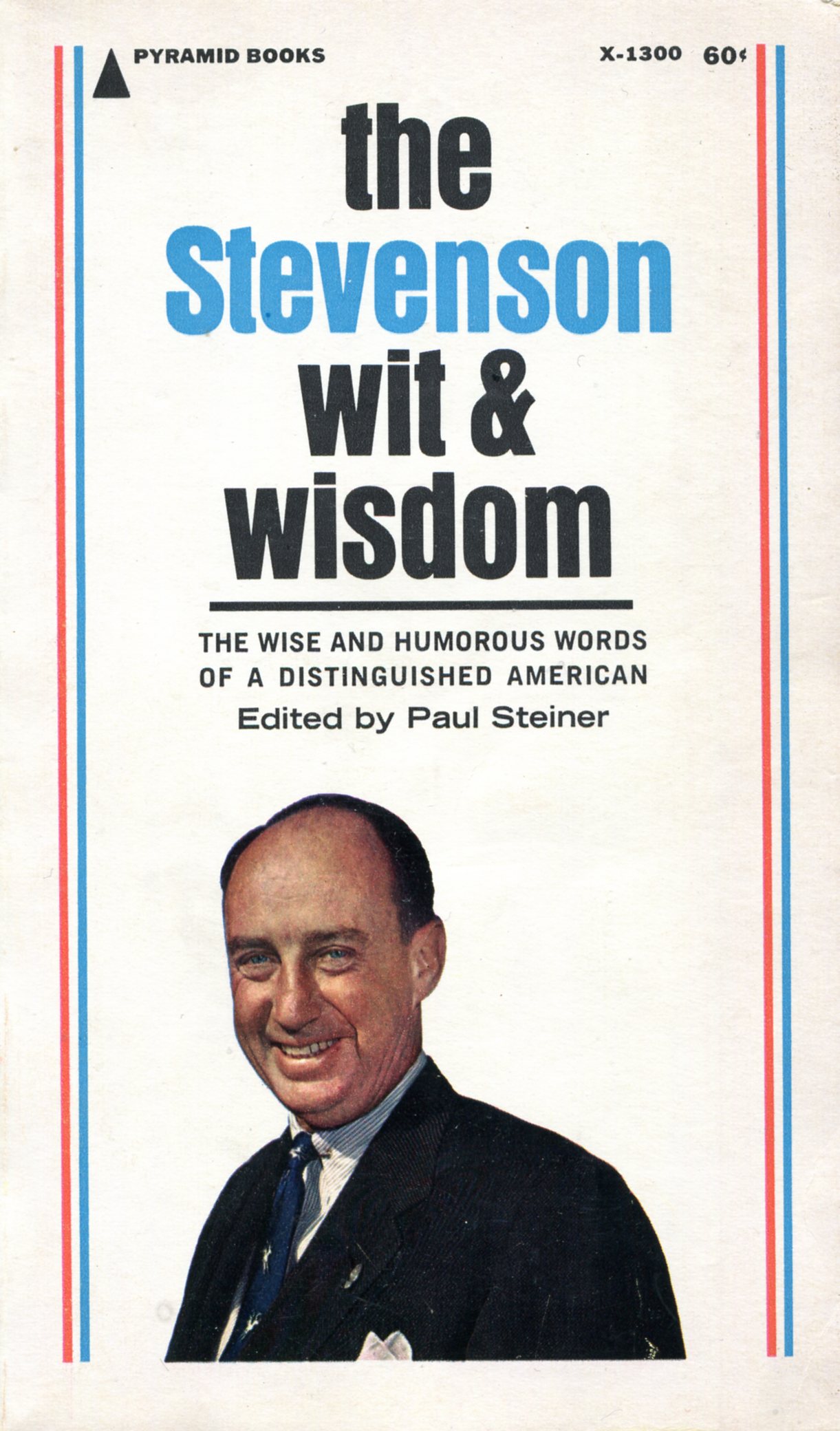
File this book under relics of the midcentury, subfile: things unlikely to inspire a period TV show on cable, unlike Madison Avenue, Pan Am, Camelot, etc.

I found it at my mother’s house and, considering my interest in U.S. presidents and candidates for that office, borrowed it for a bit. It’s a first edition, with Pyramid Publications putting it out in August 1965. In other words, just as soon as possible after Adlai Stevenson died.

I’m sorry to report that, after reading a fair sample of the book, wit is pretty thinly represented. Maybe he had some wit about him in person that didn’t translate into print. More likely, Oscar Wilde, he was not. But I can sense some wisdom in the pages.

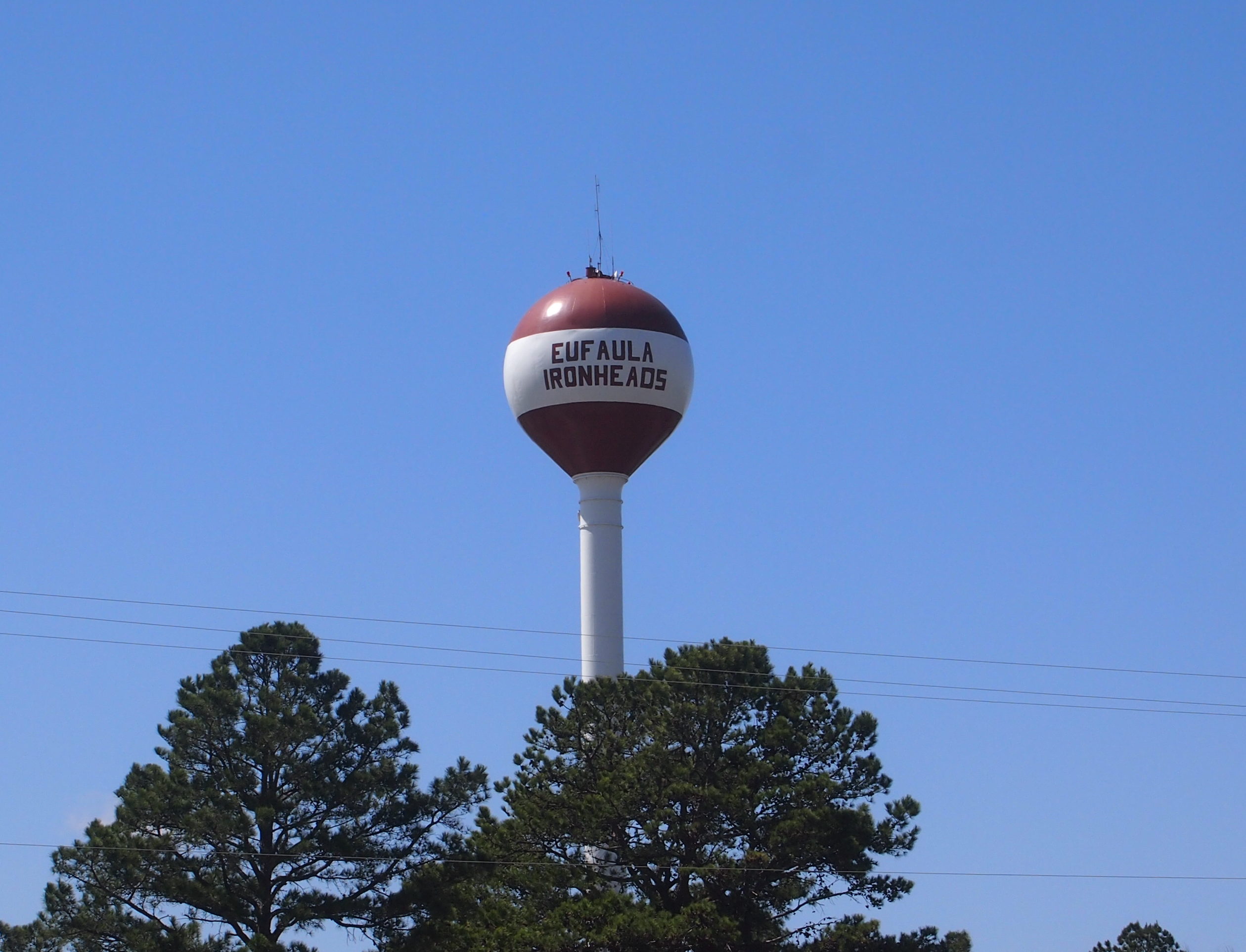
What’s the mascot of Eufaula High School in Eufaula, Oklahoma, a town of about 2,800?

The Ironheads. I drove through Eufaula last month and happened to be stopped at a place where I could appreciate the water tower.

Merriam-Webster offers two definitions: 1) a white stork (Mycteria americana) with black wing flight feathers and tail that frequents wooded swamps from the southeastern U.S. to Argentina — called also wood ibis; 2) a stupid person. I bet the school was thinking of the first definition.

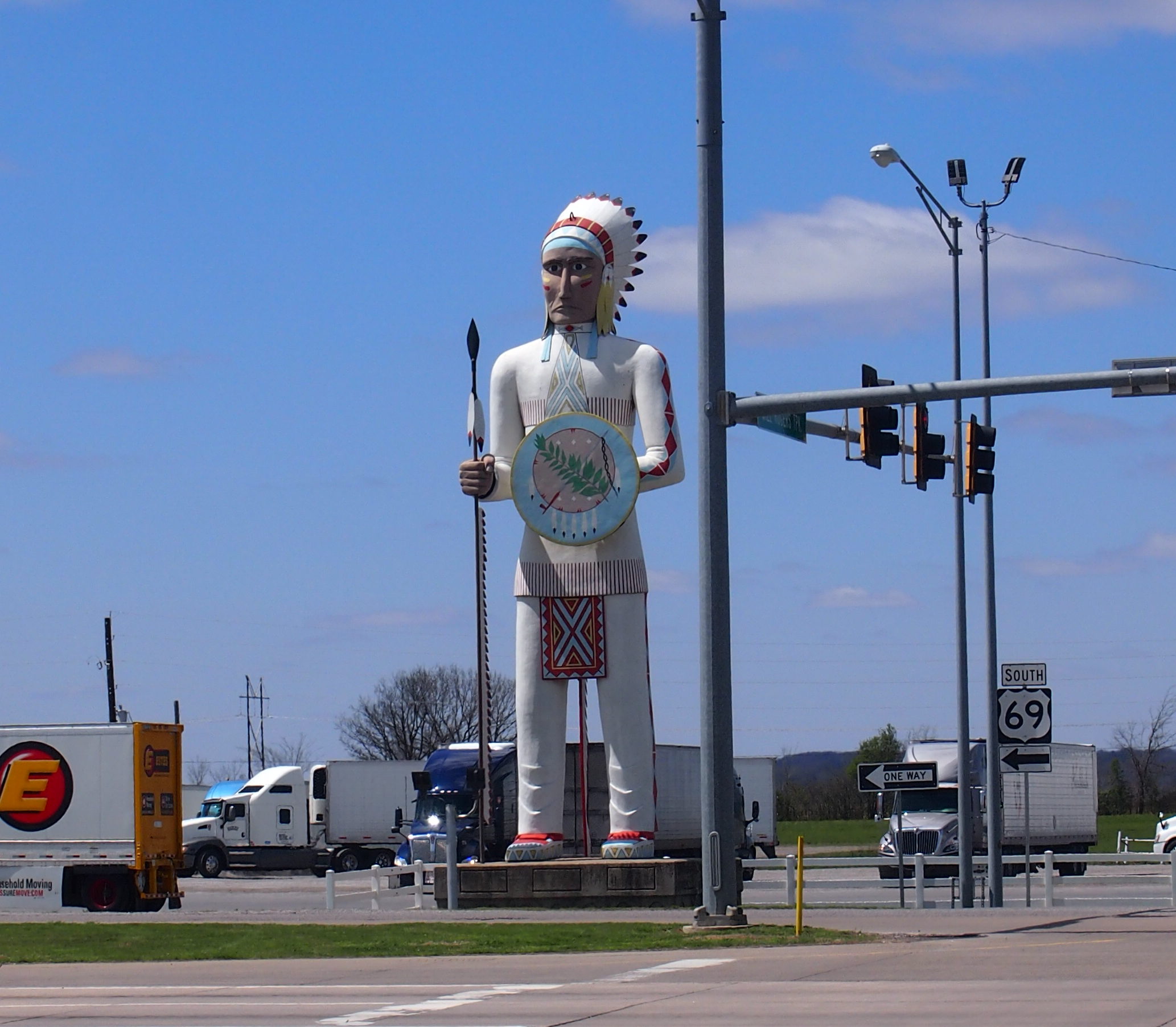
Also in Oklahoma, just off of the Will Rogers Turnpike at Big Cabin.
All the usually wordy Roadside America has to say about the statue: “Standing Brave is over 50 feet tall, and guards an Indian tax-free cigarette store.”

More About Infrastructure

At last, a warm day, as days in May should be. The soggy ground is drying up, too. Enough that I could mow the front yard and cut down the standing dandelions. Then sit on the deck with a soft drink. Bzzz. What’s that? The first mosquito of the season. There will be more.

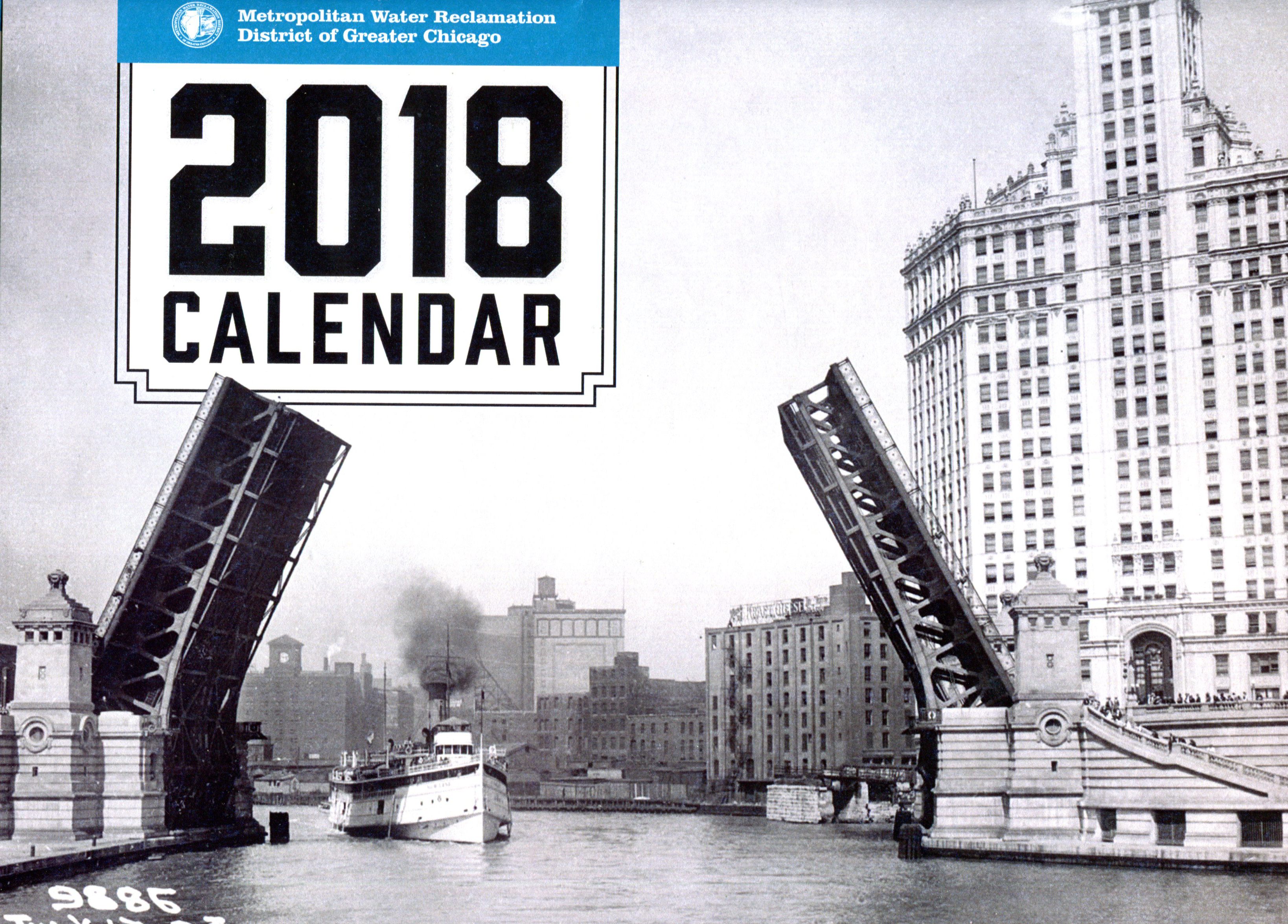
Another item I picked up at the water reclamation plant last weekend: a Metropolitan Water Reclamation District of Greater Chicago calendar.

Each month has a different picture from the 1890s to the 1920s, presumably from the archives of the district, since all of the images are of water-related structures or workers busy building such structures: the Chicago Sanitary and Ship Canal, bridges across the Chicago River, and Cal-Sag Channel and the North Shore Channel.

So I was inspired to made a list of the various kinds of infrastructure that I’ve seen over the years, besides the recent visit to a water reclamation (sewage treatment) plant. It isn’t very long; I need to see more infrastructure, clearly.

The list includes a UPS distribution hub, a control room for an electric substation, an intermodal container facility, a railroad switching yard, a recently completed warehouse, an unfinished airport, a space port, a deep-space relay dish, a drinking water treatment plant, a solvent recycling facility, and a geothermal energy plant. The basement of the greenest building in the country might count, too, as well as green roofs.

I suppose bridges, tunnels and dams count as infrastructure, though if you’re getting that general any road one has been on would be so too, and that’s not particularly distinctive. Still, it’s hard to deny Hoover Dam’s place in the world of infrastructure, even if it’s also a tourist attraction.

If you count factories — and in some sense, they count as the infrastructure of the modern world — that would include seeing places where beer, wine, cars, steel, coins, paper money, chocolate, cheese, refrigerators, bread, jelly beans, and Tabasco Sauce are made.

Back to BAPS

About a year ago, I visited BAPS Shri Swaminarayan Mandir Chicago in Bartlett, Ill., and among the things I thought — besides, wow, look at that — was that the rest of my family would enjoy seeing it too. So on Saturday, ahead of the rain and unseasonably, annoyingly cold weather that gripped the area starting Sunday morning, we went. Yuriko and Ann and I, since Lilly had another commitment.

I’d hoped the extensive fountains would be active this time, but no. Still, the place is as impressive as ever.

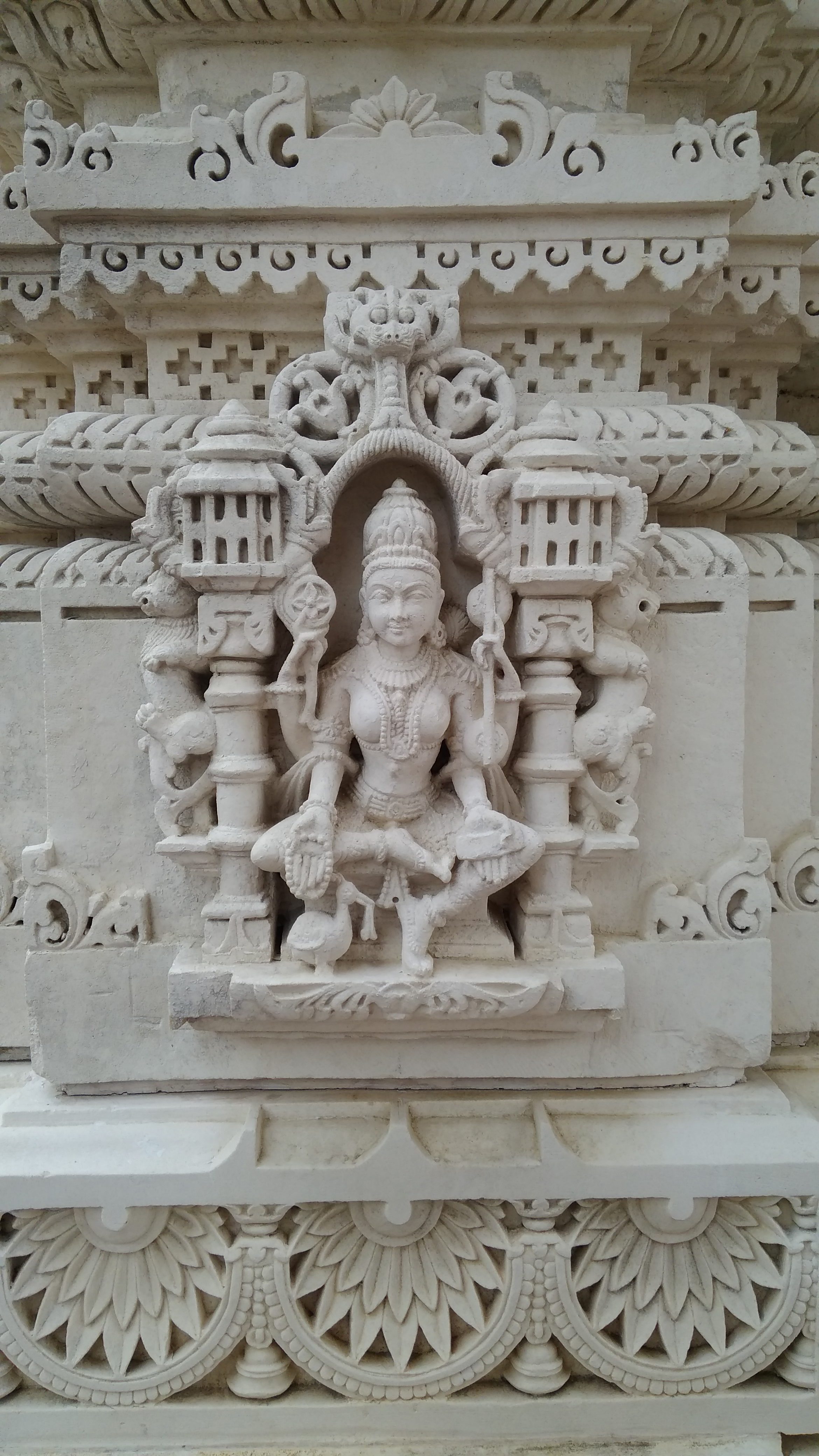
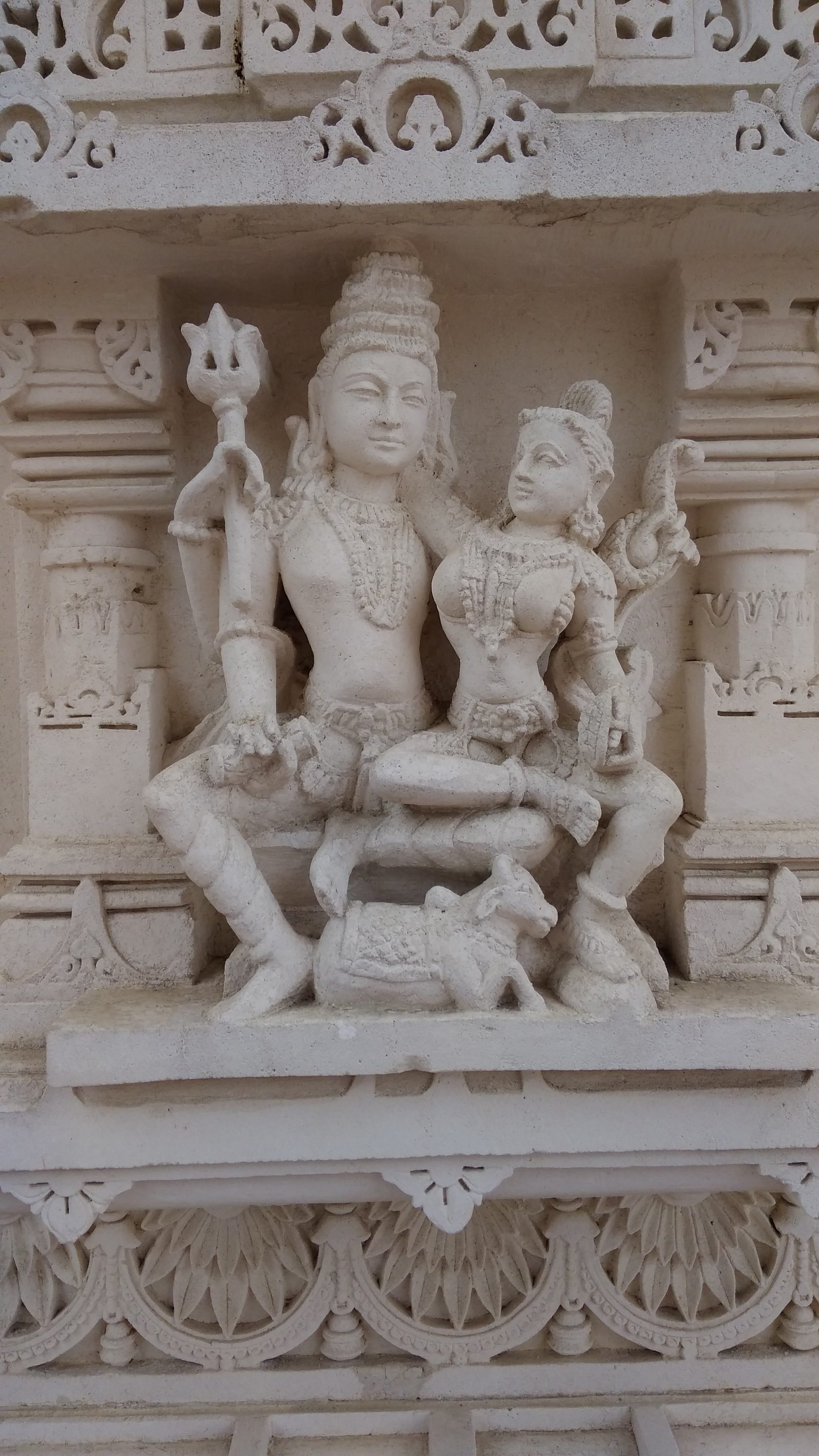
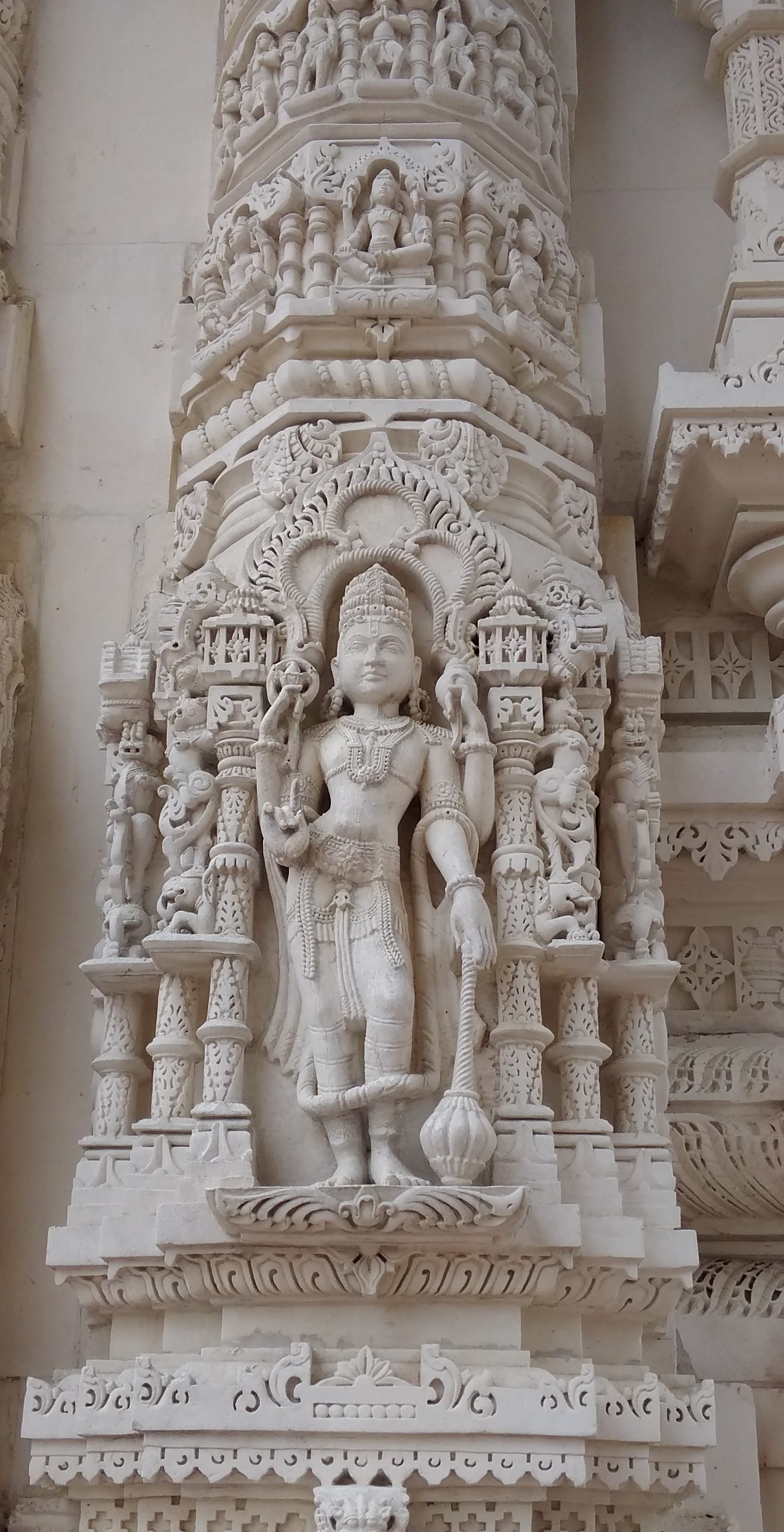
This time, I got a better look at the ceremonial gate, which is just as ornate as the mandir, a panoply of intricate white stonework. I took pictures of gate iconography that I’m not familiar with, but liked looking at anyway.

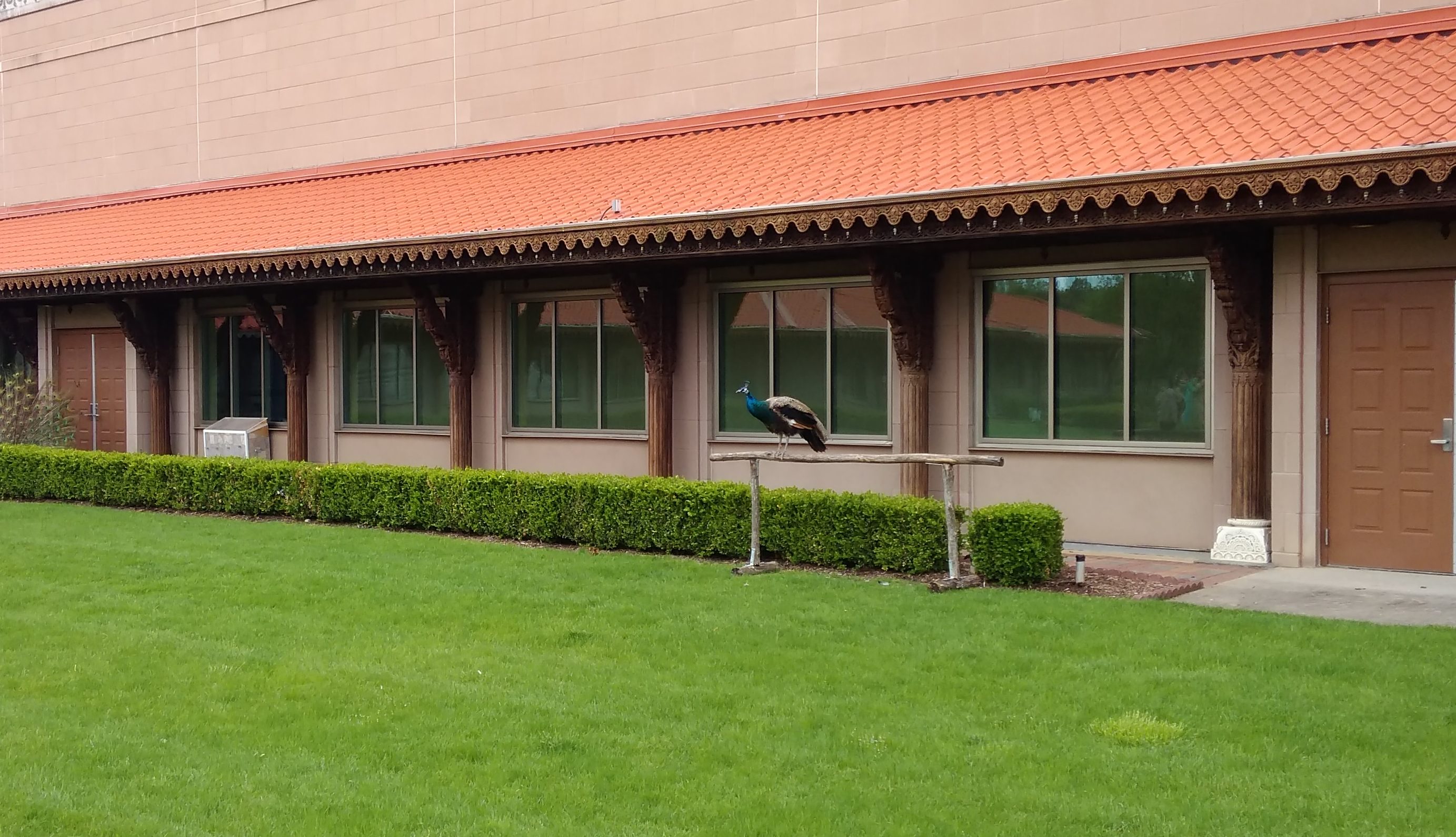
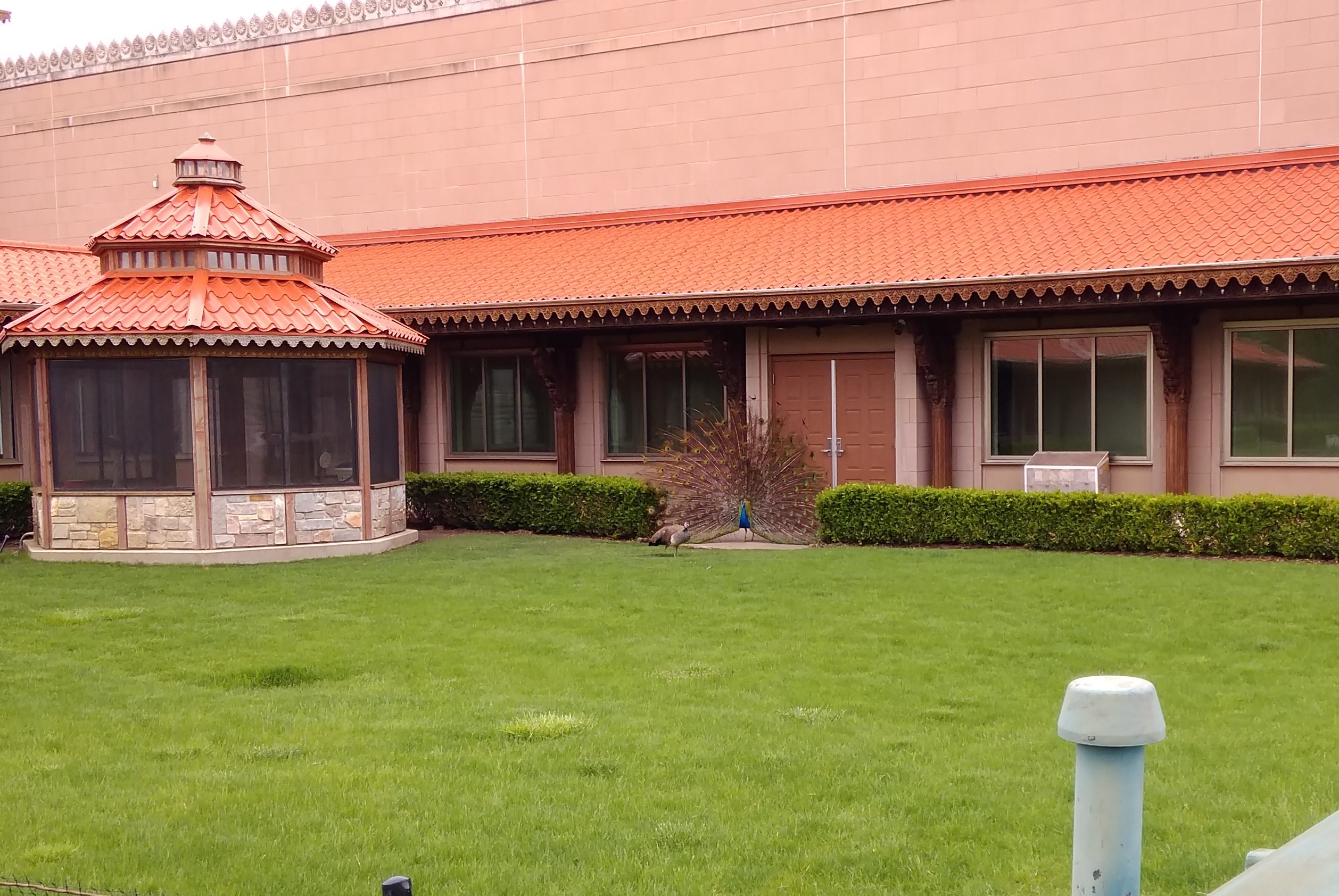
Toward the rear of the grounds, we happened across a small muster of peafowl in a small fenced area. They weren’t out and about the last time I was here.

An important bird in Hinduism. Some details are here.

We also discovered a small cafe toward the back of the haveli, which I didn’t remember seeing before. Just the place for samosa and mango lassi.

The Hanover Park Water Reclamation Plant

I come across a fair number of things in my work, or even just gadding around the Internet, and not long ago I found out that last week was Infrastructure Week

“Infrastructure Week is a 501c4 non-profit working to educate America’s public about the importance of infrastructure to the nation’s economy, workers, and communities. Since 2013, Infrastructure Week has been led by its Steering Committee – a bipartisan coalition that includes leading business groups, labor unions, and think tanks working to improve America’s infrastructure,” says the organization’s web site.

I sense lobbyists in the background of that statement, the sort who lobby for more spending on infrastructure. There are worse things to lobby for.

The site also told me that there are events associated with Infrastructure Week. Many of them are panel discussions and the like, with little interest except to industry professionals and maybe infrastructure nerds (there have to be some). Then I saw that the Metropolitan Water Reclamation District of Greater Chicago, which has seven water reclamation facilities — treating about 450 billion gallons of wastewater each year — was having an open house. Just show up on Saturday morning at one of the facilities and you can look around.

The closest to where we live is the Hanover Park Water Reclamation Plant. The plant is on a large piece of land, 289 acres, and has 12 buildings, plus wells and large storm retention reservoirs, yet is remarkably inconspicuous even in the thick of the northwestern suburbs, set back from major roads and completely enclosed by tall fencing.

Yuriko and I went at 10 on Saturday; our daughters were still asleep, and didn’t want to be wakened for mere infrastructure. The facility’s usual closed gates were open when we got there. The main building looks exactly like what it is, part of an industrial complex developed in the early 1960s, just when the suburbs were coming out this way.
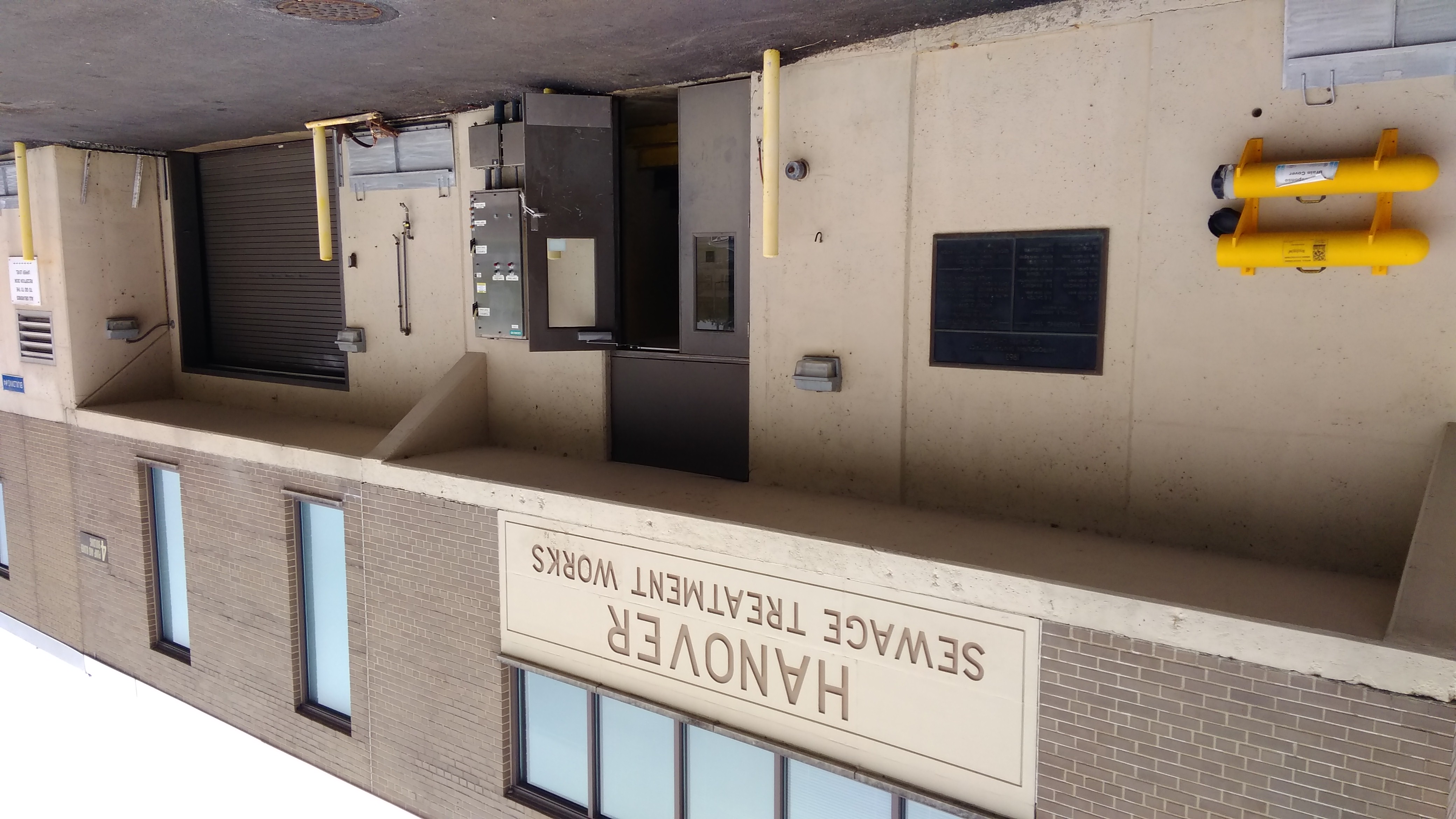
At some point, I suspect, “Sewage Treatment Works” was deemed unseemly, so it became a Water Reclamation Plant, but the old name remained carved over the door.

First we watched a short video about the plant and its various operations, including efforts in sustainability, and then one of the staff showed us around. There were eight visitors all together when we were there, including us, so overcrowding wasn’t an issue. Infrastructure doesn’t pack ’em in.

The sewage is pumped from the sewer up to a series of treatment pools that cascade downward, letting gravity take the water through the successive steps. Large objects and then smaller particles are removed in various ways, and microorganisms that eat the waste are introduced.

In this way, the plant treats an average of 12 million gallons a day, with a maximum capacity of 22 million gallons. During periods of heavy rain, it comes close to that, and occasionally the facility can’t keep up. The guide said that during the heavy rains of September 2008, sand bags had to be used to protect the plant buildings from flooding.

The water reclamation district says: “Water entering Hanover Park WRP passes through coarse screens to filter out large debris, followed by pumping and primary settling, which includes further screening, grit removal and separation of solids from the water in which aerated grit tanks and settling tanks remove fats and oils.”

The primary settling tanks were the only ones that smelled bad. A slight whiff of human fecal odor hung in the air, just enough to notice. Elsewhere, there was little smell, except chlorine near where that is introduced to the water (before the water is released, the chlorine is neutralized).

“In secondary treatment, microorganisms remove organic material from the water as oxygen is pumped into aeration tanks,” the district continues: “Solids then settle at the bottom and clean water flows out the top of additional settling tanks.

“After passing through primary and secondary treatment, the treated water at Hanover Park passes through sand filters and is then disinfected using chlorination and de-chlorination. Clean water that has passed through the Hanover Park WRP treatment processes is released from the Hanover Park WRP into the DuPage River. It only takes 12 hours for wastewater to be converted from raw sewage to clean water.”

The sand filters are in a large, long shed of a building. According to the guide, the filters were the first of their kind to go into service, ca. 1971, and it was considered so important that President Nixon came to the dedication. Might have been during the run up to the passage of the Clean Water Act.

As far as I could tell from the description, a sand filter is exactly what it sounds like. Water leeching through sand to remove even more particles. It might have been state-of-art 45 years ago, but the sand filters are going to be phased out soon for newer tech, the name of which I forget.

At the end of the visit, we picked up some water reclamation souvenirs that the district was giving away. Including postcards!

Also, 40-lb. bags of compost that the plant makes. Remarkably, most of the plant’s solid wastes (sludge) eventually goes to fertilize a farm — which is on site.

“In 1969, the MWRD purchased the Fischer farm (200 acres adjacent to the Hanover Park WRP) and built the Upper DuPage reservoir, which holds about 75 million gallons of stormwater overflow. The farmland also includes 100 acres for growing corn and soybeans… The harvested corn and soybeans are used for feedstock, ethanol and biodiesel.”

Glad to see this bit of infrastructure. I’m all for visiting more conventional sites, which should be obvious. Infrastructure’s worth seeing, too, if only to remind me occasionally of the massive machines and systems in motion out there, all essential to our health and comfort but unnoticed unless something goes badly wrong, and all put together by us clever apes.
Wat Phra Kaew

Today I looked up the etymology of wat, the sort of Buddhist temple you find in Thailand. Here’s the brief word origin offered by Merriam-Webster online: Siamese, from Sanskrit vāṭa, enclosed ground.

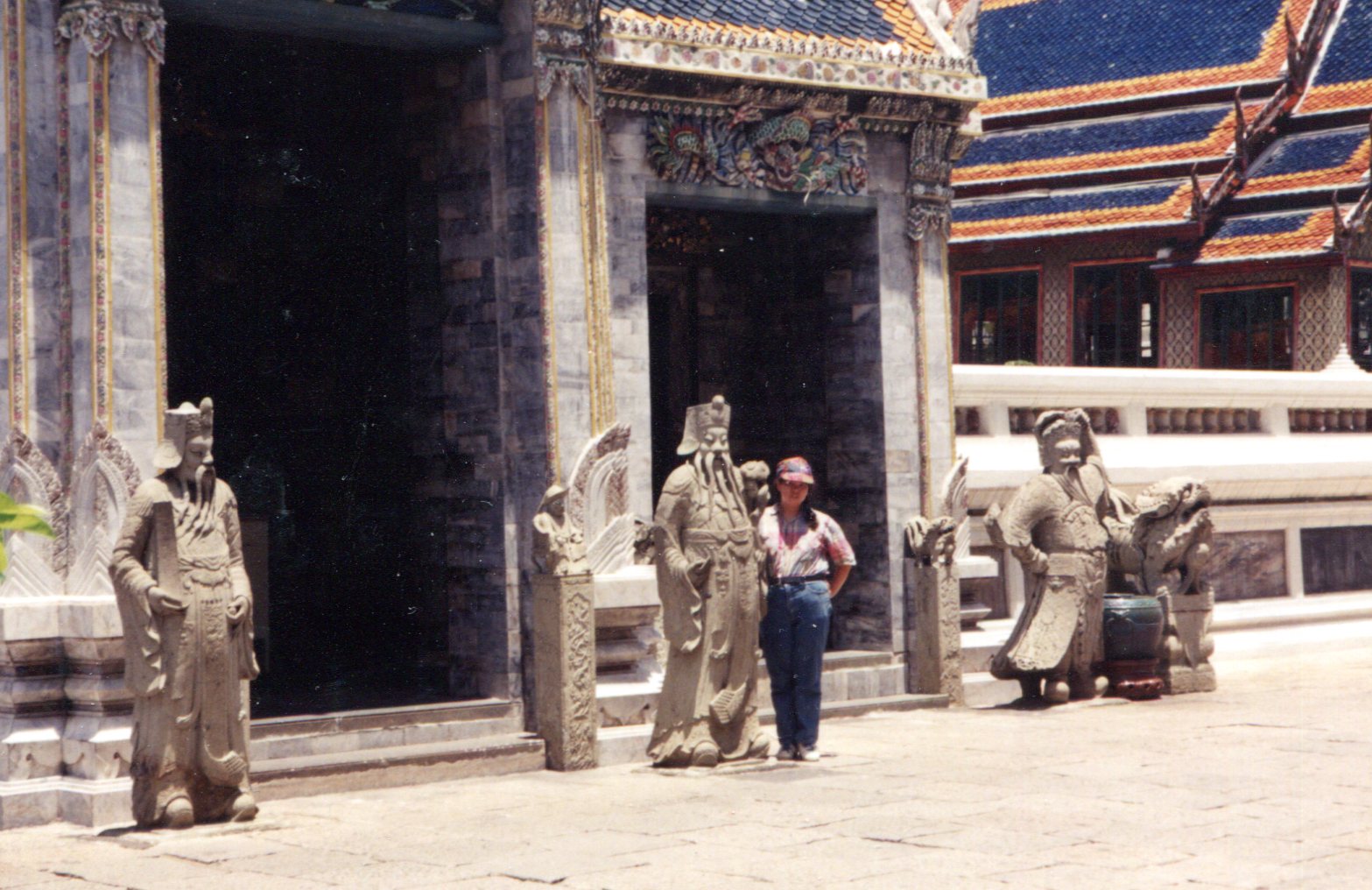
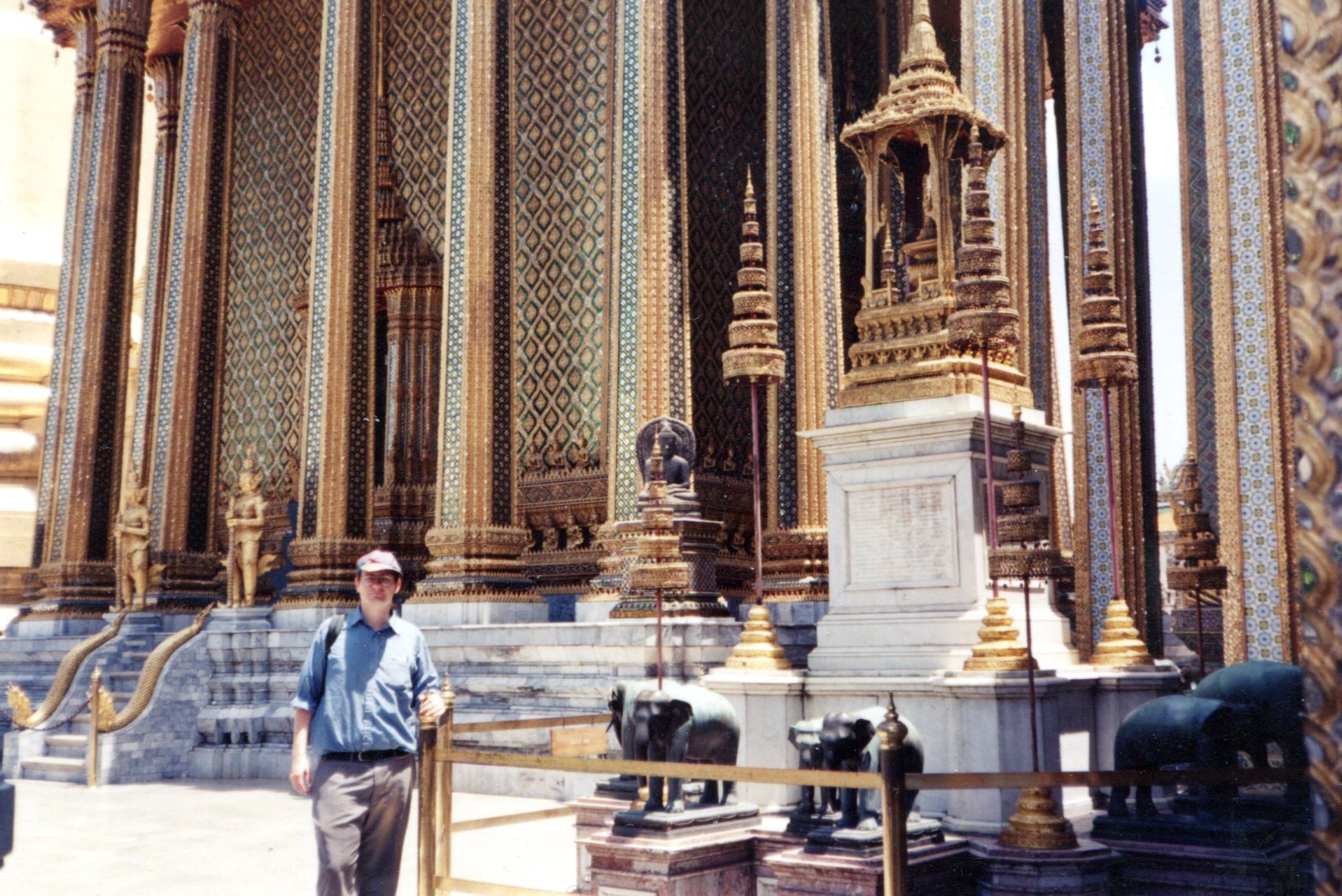
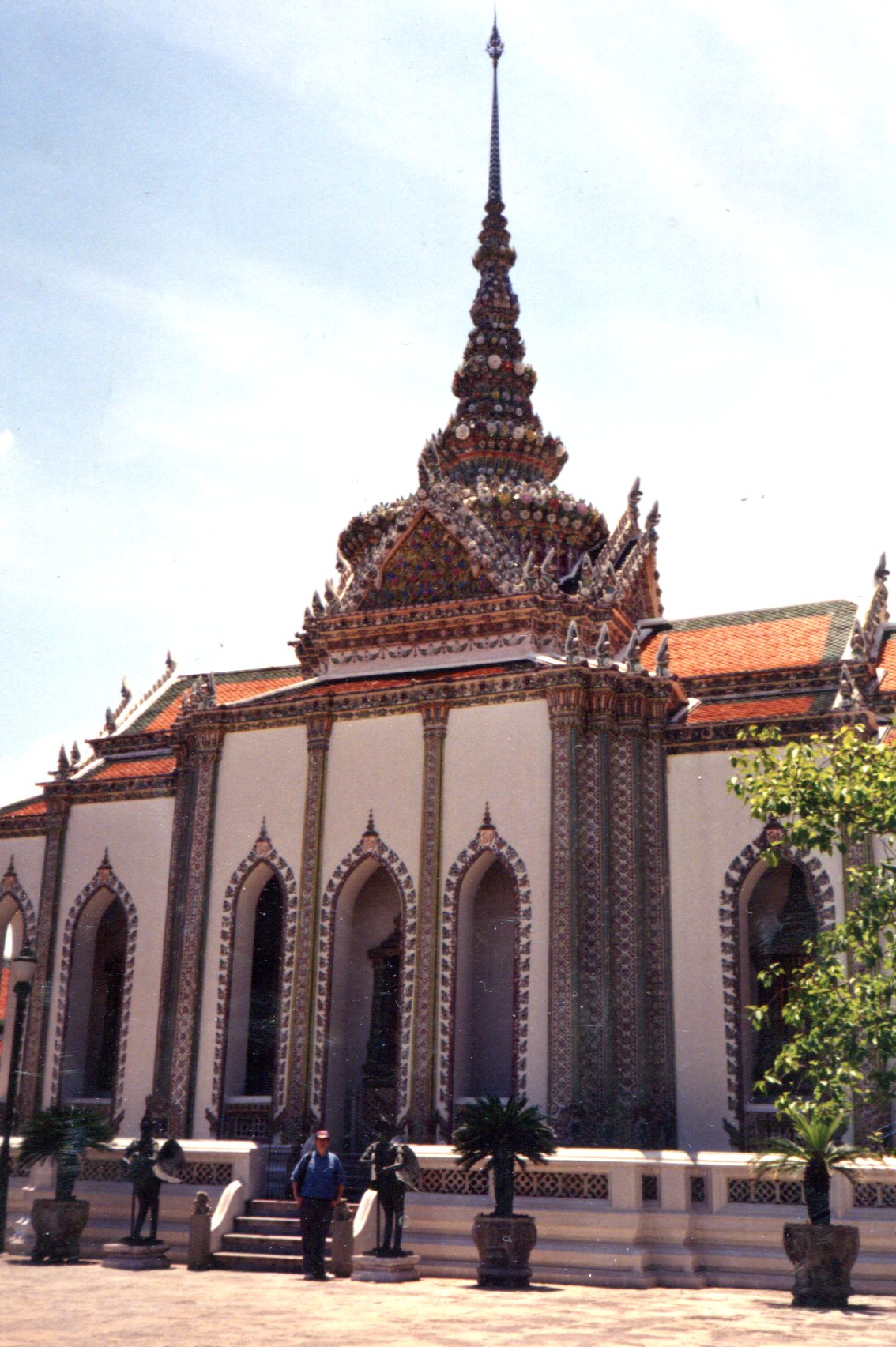
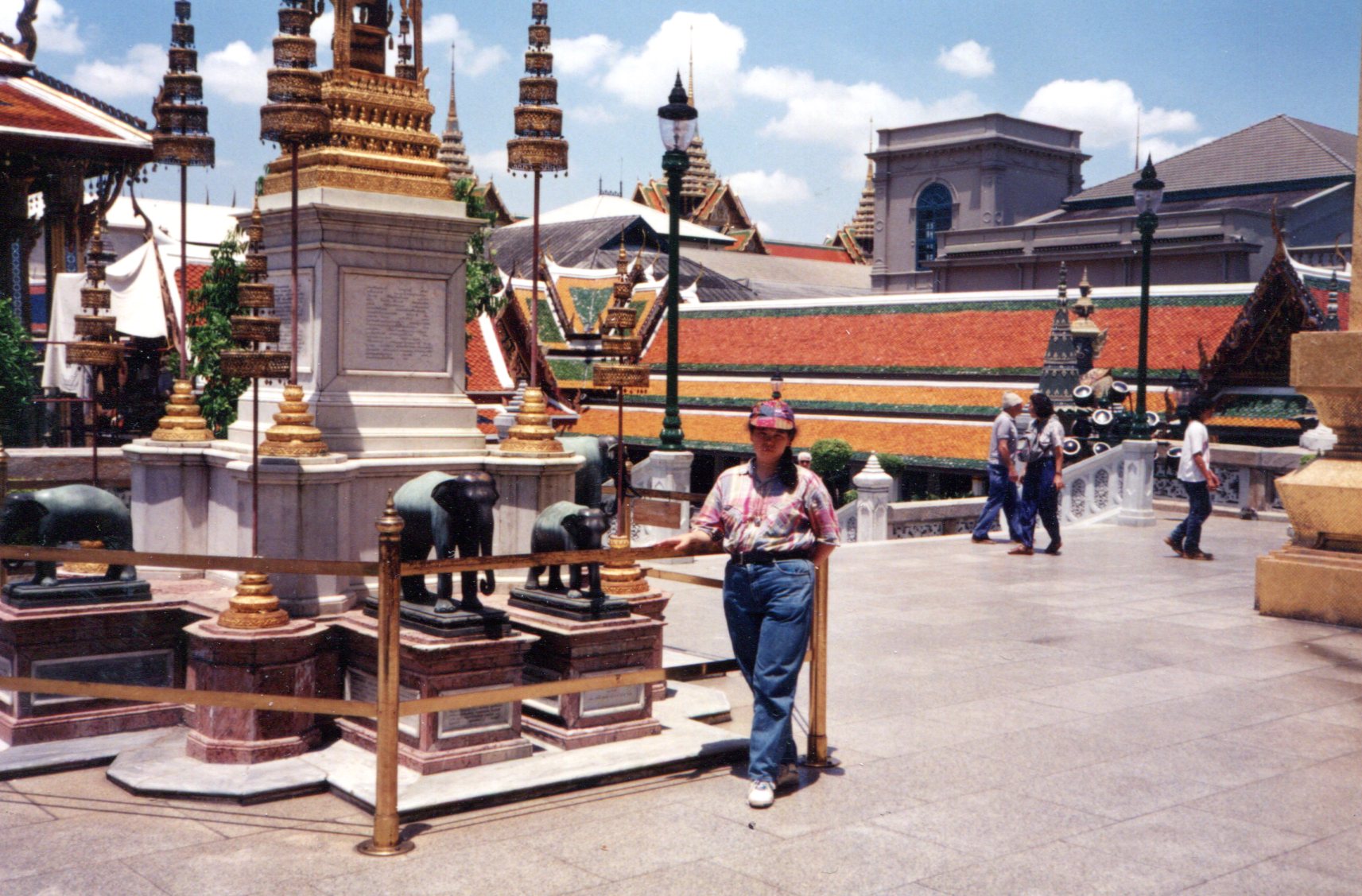
Makes sense. We visited a number of wats in Thailand, especially in Bangkok, where large ones are thick on the ground. Wat Phra Kaew, home of the Emerald Buddha, holds the prime place of honor among the Thais. We visited the complex, which is part of the larger Grand Palace, on May 26, 1994.

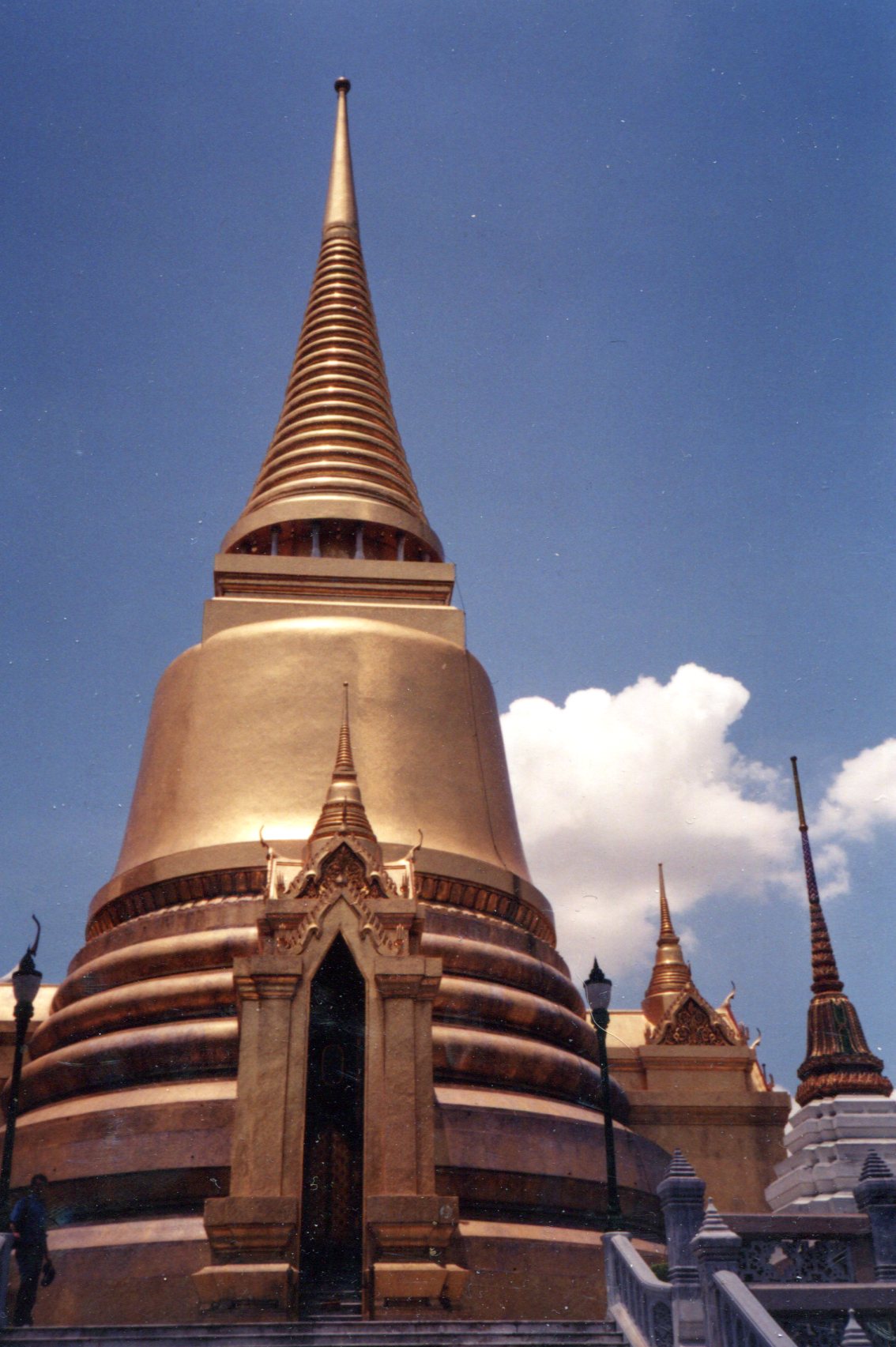
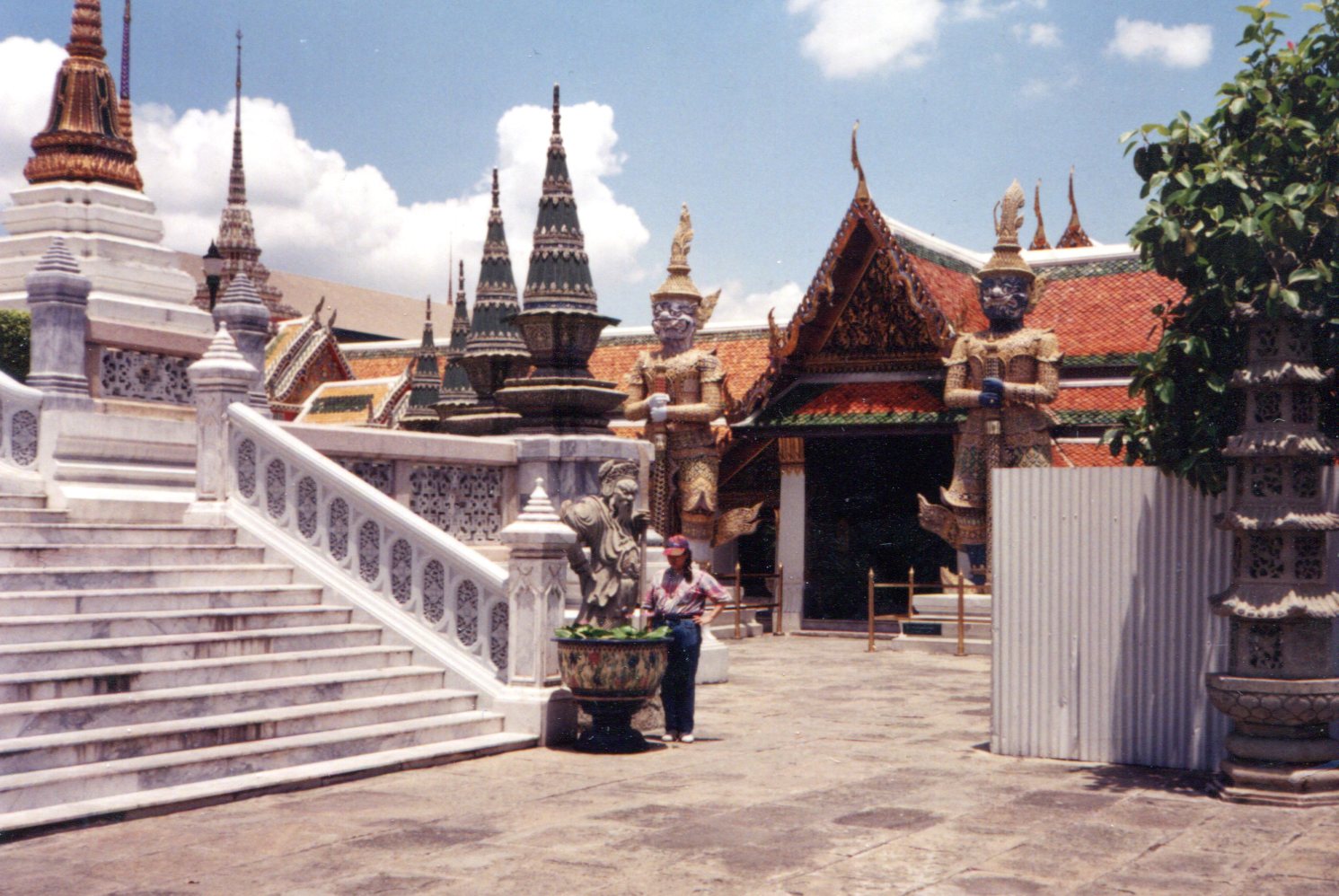
Some features stood out right away. This is the Phra Si Ratana Chedi at the wat.

Bangkokforvistors says: “The chedi essentially balances the structures on the upper terrace, but it also recalls the monumental pagodas of the old capital in Ayutthaya… The chedi houses a piece of the Buddha’s breastbone.”

The Chapel of the Emerald Buddha is in the background here.
I made no image of the Emerald Buddha, since I believe that wasn’t permitted. Tourists were allowed in to see the statue, which isn’t sizable, but is definitely elegant, and with an aura of history about it.

The Phra Mondop, or the library, which is not open to casual visitors.

The Wiharn Yod, a prayer hall.

“The wiharn is unique in its Greek cross plan and its Chinese porcelain decoration,” Bangkokforvistors says.

The following are other images I can’t quite pinpoint, but which were in the enclosed ground of Wat Phra Kaew.

Thinking back on it, I have an overall impression of heat and gilding and mirror tiles and heat and intricate but unfamiliar iconography and heat. The time to have gone might have been when the wat opened first thing in the morning, but we weren’t always as energetic as necessary for early-morning tourism in the tropics. Yet sometimes we were.

Curious about more recent tourist experiences at Wat Phra Kaew, I took a look at Trip Advisor. Most visitors rate it highly, which is fitting. But the low-raters point to changes since we were there.

For one thing, it’s now 500 baht to get in. About $15.50 these days. I’m certain we didn’t pay anything close to that much, making it an example of gouging tourists at supposed must-see places.

Also, tourism within Asia has changed somewhat since the 1990s, if Guimo68 from Miami is to be believed. That is, the Chinese are showing up in force (all sic): “Filled with chinese tourists trying to cut in front of you. I had fun trying to cut in front of them, so 2 stars… The whole experience is like trying to see the mona lisa. Too many rude and loud Chinese.”

Then again, there’s no pleasing some people, such as SophieLoveOz of Ellenborough, Australia (all sic): “I was so excited about the Emerald Buddha but was really disappointed as it is teeny tiny and way up high on a high stupa so can’t see it. It is Jade not Emerald, according to our guide. So many beautiful Golden Buddhas elsewhere.”

The Swamp

The following is the kind of color I want from history books, not the kind of experience I want for myself:

April 12: Did nothing but send off express to Fort Deynaud at 4 a.m. and mourn my existence the rest of the day. Mosquitoes perfectly awful.
April 13: No peace from mosquitoes… Stayed up all night… Mosquitoes awful. 1,000,000,000 of them.
April 18: Mosquitoes worse than ever. They make life a burden.
April 19: I am perfectly exhausted by the heat and eaten up by the mosquitoes… They are perfectly intolerable.

The time: 1856. The place: Florida, during the Third Seminole War. Pre-DEET Florida. The writer: Alexander Webb, with the U.S. Army at the time. He survived the mosquitoes (not everyone did), was later a hero at Gettysburg and died in 1911.

The diary extract is quoted in The Swamp by Michael Grunwald (2006). Subtitled “The Everglades, Florida and the Politics of Paradise,” it’s a history of human interaction with the Everglades, and an interesting book with a large cast: Calusa Indians, Ponce de Leon, Andrew Jackson, the Seminoles, James Gadsden, Osceola, competing Florida Reconstruction governors Gleason and Reed, land speculator Hamilton Disston, John James Audubon, Napoleon Bonaparte Broward and Henry Flagler. That’s just up to the 20th century, when the only organization up to the task of draining much of the Everglades came to the fore: the U.S. Army Corps of Engineers.

Of course, draining or otherwise modifying the Everglades is now universally regarded as a mistake, and a remediation as slow as the Everglades is under way.

Early on, Grunwald pointed out that large parts of the ecosystem are actually marshes, with only some counting as swamp, but never mind. The Swamp it is.

Then it occurred to me that “drain the swamp” is an ossified metaphor. No one in the developed world advocates draining real swamps any more. We want more wetlands. As usual, language is a laggard. But that’s not always a bad thing.

New Library in the Neighborhood

A Little Free Library has appeared on my block. I’m pretty sure it wasn’t there a few days ago, the last time I walked by. Dog walking usually takes me by that front yard.

Today I took a moment to look into the new Little Free Library. Looks like the family that put it up stocked it, for now, with children’s books that their daughters no longer want. I know them slightly: husband, wife, two daughters younger than mine, but not little kids any more. And a dog smaller than mine. Sometimes they sniff each other through the back yard fence.

I’ll have to contribute a volume or two, to be neighborly. Right now, though, I’m looking for my copy of The Right Stuff. Wonderful book. I read it again last year, after first reading it ca. 1991. Now I want to re-read a favorite part, about the trials of Enos the space chimp.

Recent Sounds

I take my digital audio recorder some places that I go — I’m resisting the temptation to call it a “tape recorder” — and sometimes to step outside the door and record the ambient sounds.

Such as outside my mother’s house in San Antonio last month. The birds were a lot livelier than in the cold Illinois I’d left, and the selection of birdsong somewhat different, though I can’t pinpoint the exact differences.

In Marathon, Texas, late last month the wind blew much of the night and into the morning one day. I captured 20 seconds of it, but it went on without much pause for hours.

The spring rainstorms in northern Illinois have been numerous and loud recently. This is what I heard from my front porch about 24 hours ago.

The rain had stopped by the morning and the sun dried up a lot of the puddles today. But not everywhere. The back yard is still marshy.

Sure Signs of Spring

Not long ago, a colorful lawn care truck showed up on my street.

The driver had work to do that didn’t involve my lawn, which in this image is my own modest field of cloth of gold. Imagine if no one poisoned their dandelions: the suburban lawns would burst out glorious gold and then white for a couple of weeks in the spring.

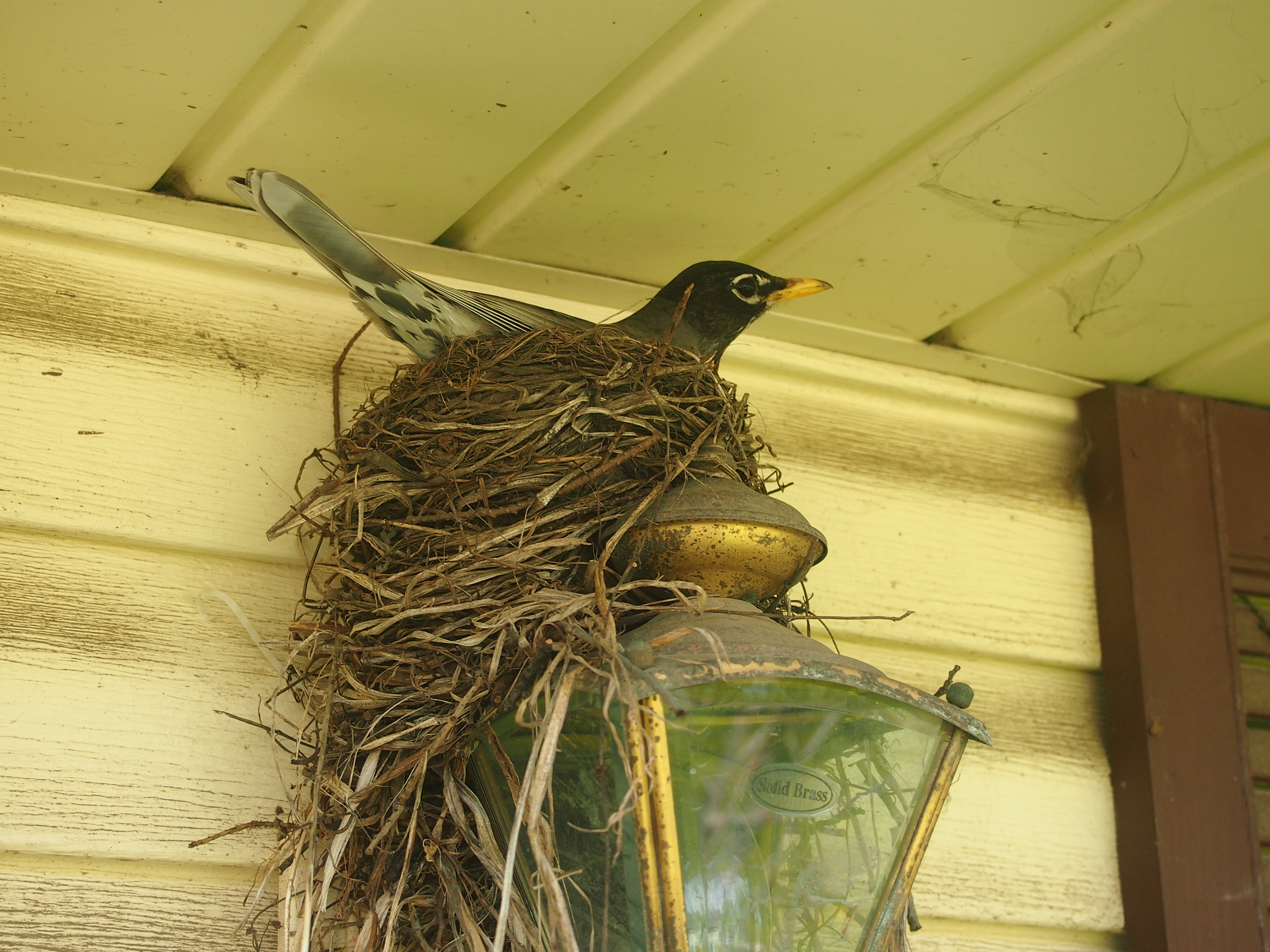
Also in our front yard, perched atop a nest built on one of our exterior lights: a robin.
These cool days lately she’s been sitting on her eggs constantly. I assume there are eggs there. I won’t disturb the nest to find out.

The duck that nested two years ago in the back yard never has returned. The robin nesting on the basketball hoop that year might be the same one in a new location, though who’s to know? I’m glad to see the robin this year anyway.