Grove Street Cemetery

By the afternoon of October 21, New York City was in my rearview mirror, but I wasn’t that far away: New Haven, Connecticut. I wanted to made a short stop at Yale University. During the tedious minutes spent looking for a legal parking place close enough to campus to make that doable, I doubted the wisdom of my idea, but eventually I found a spot. Also, I was ready: I had a roll of quarters for parking meters. Most of them can be paid by app or some such these days, but they also take quarters (most of them), and I’m a traditionalist when in comes to parking meters.

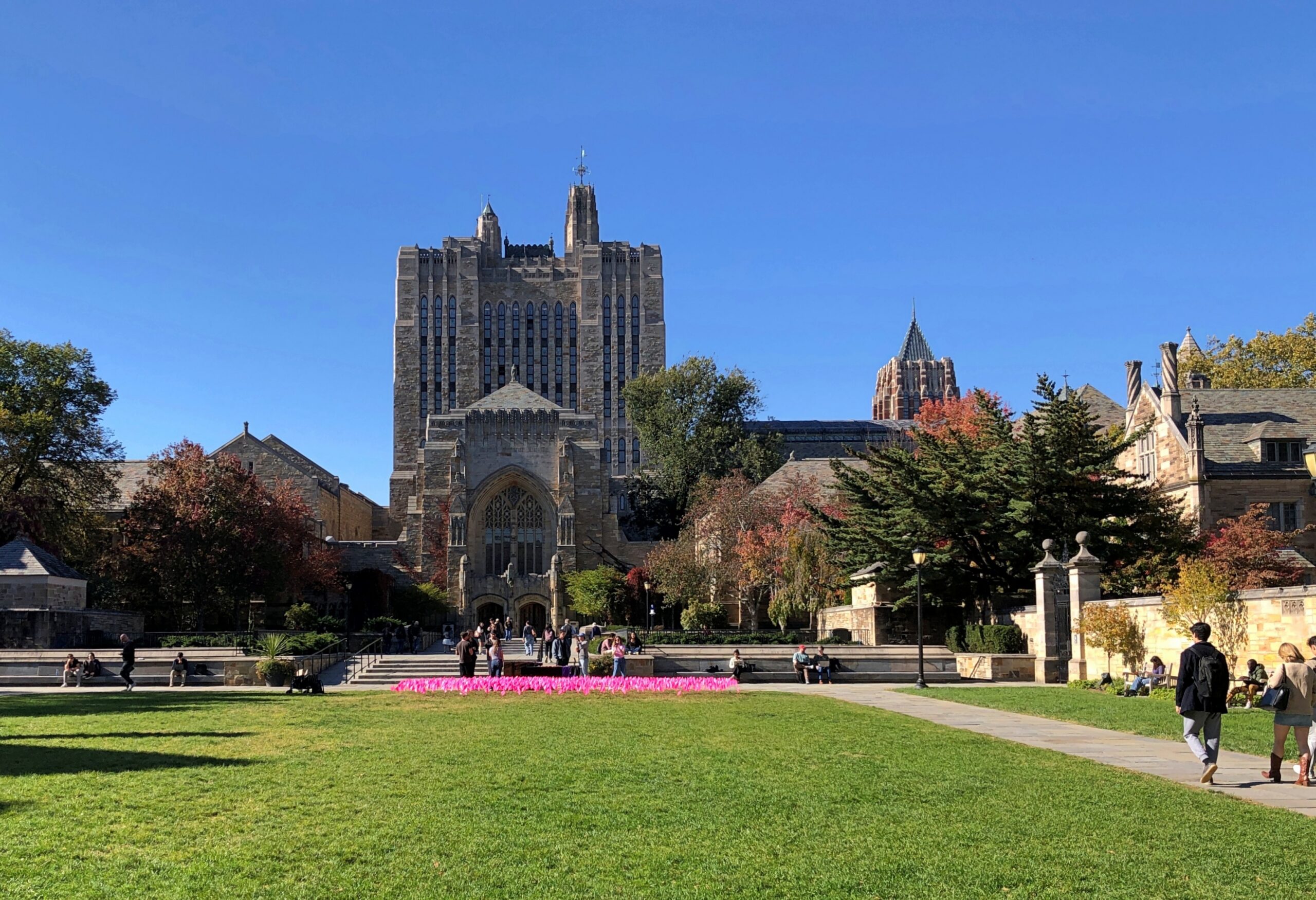
Yale is sprawling, leafy and picturesque in a collegiate sort of way. Digression: The centennial of Fred Waring’s recording of “Collegiate” passed earlier this year, and no one mentioned it. That’s almost as important a musical anniversary as that of “Yes, We Have No Bananas.”
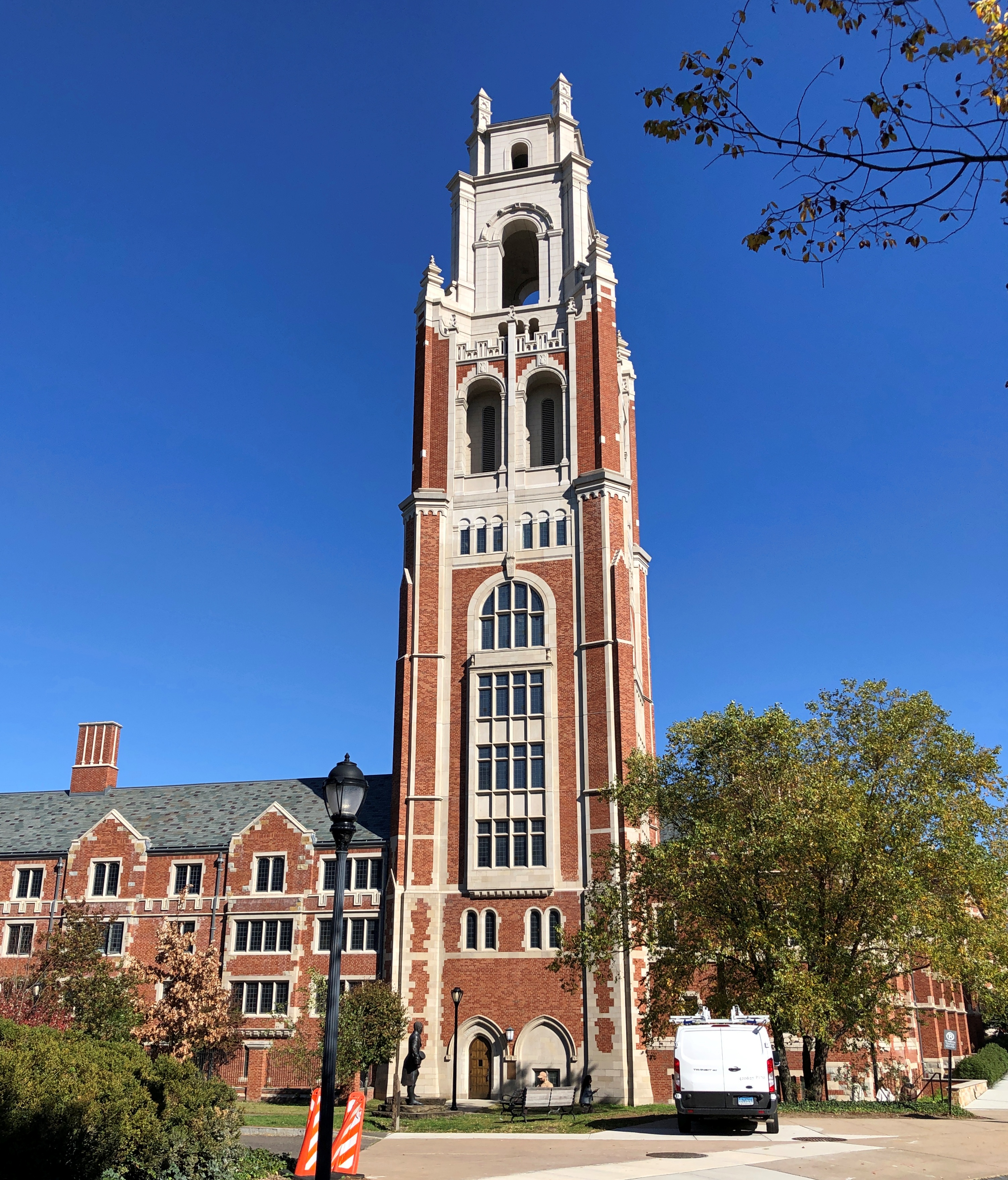
Yale
Yale

Good to see a prominent memorial to the Yale men who didn’t return from the Great War. RIP, gentlemen.
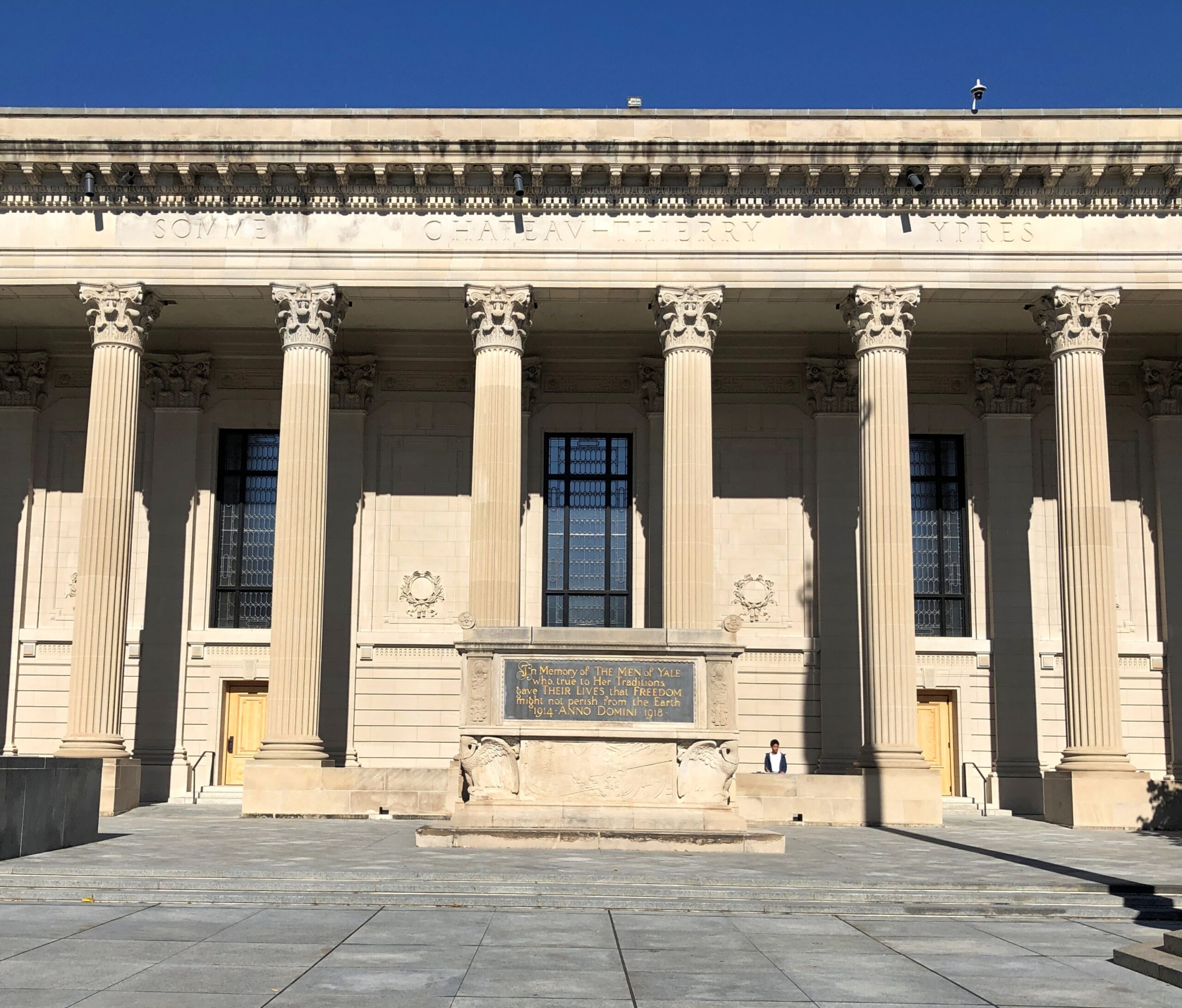
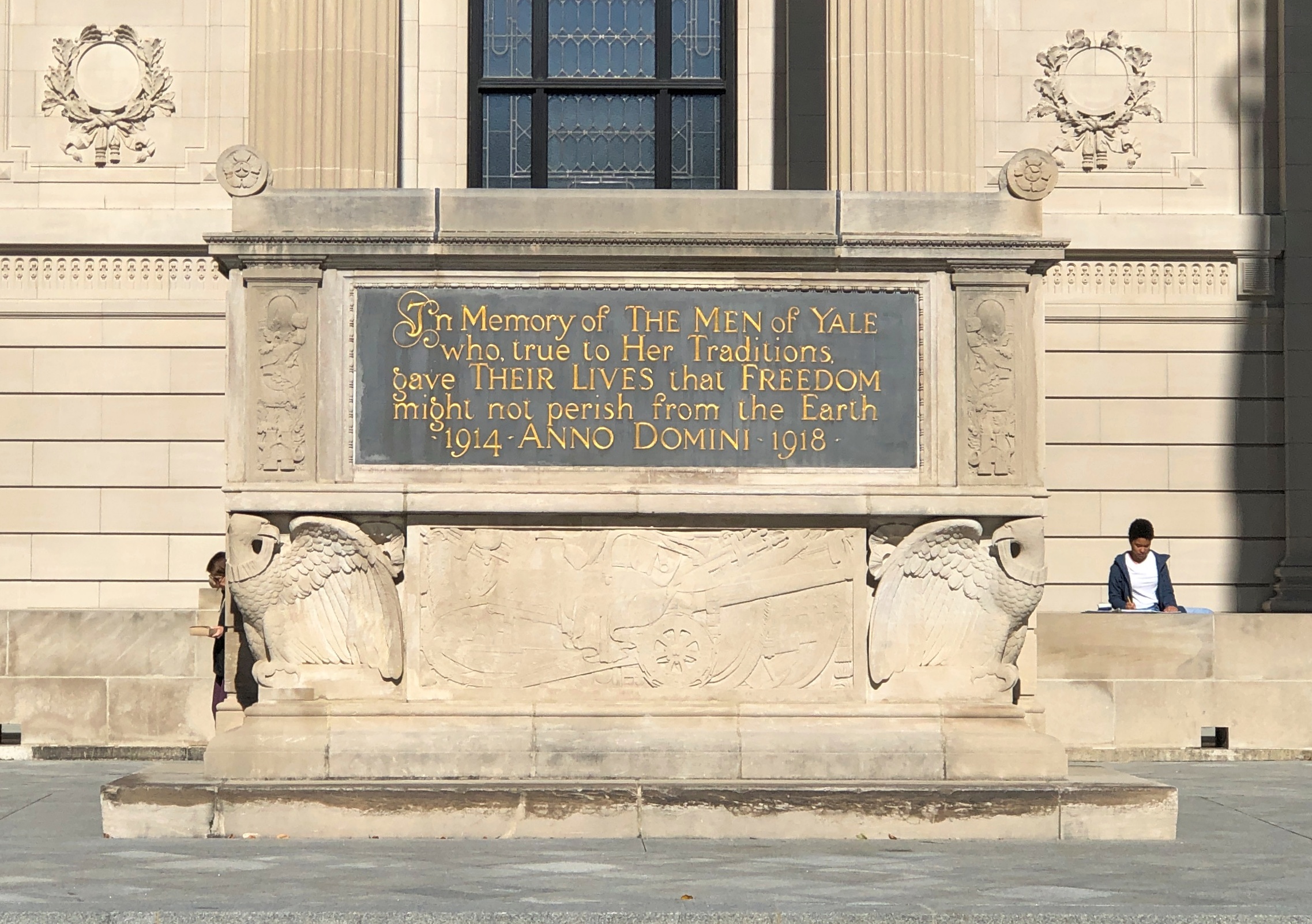
Yale
Yale

Adjacent to the Yale campus is the Grove Street Cemetery, sporting a fine Egyptian Revival entrance. Not something you see often.
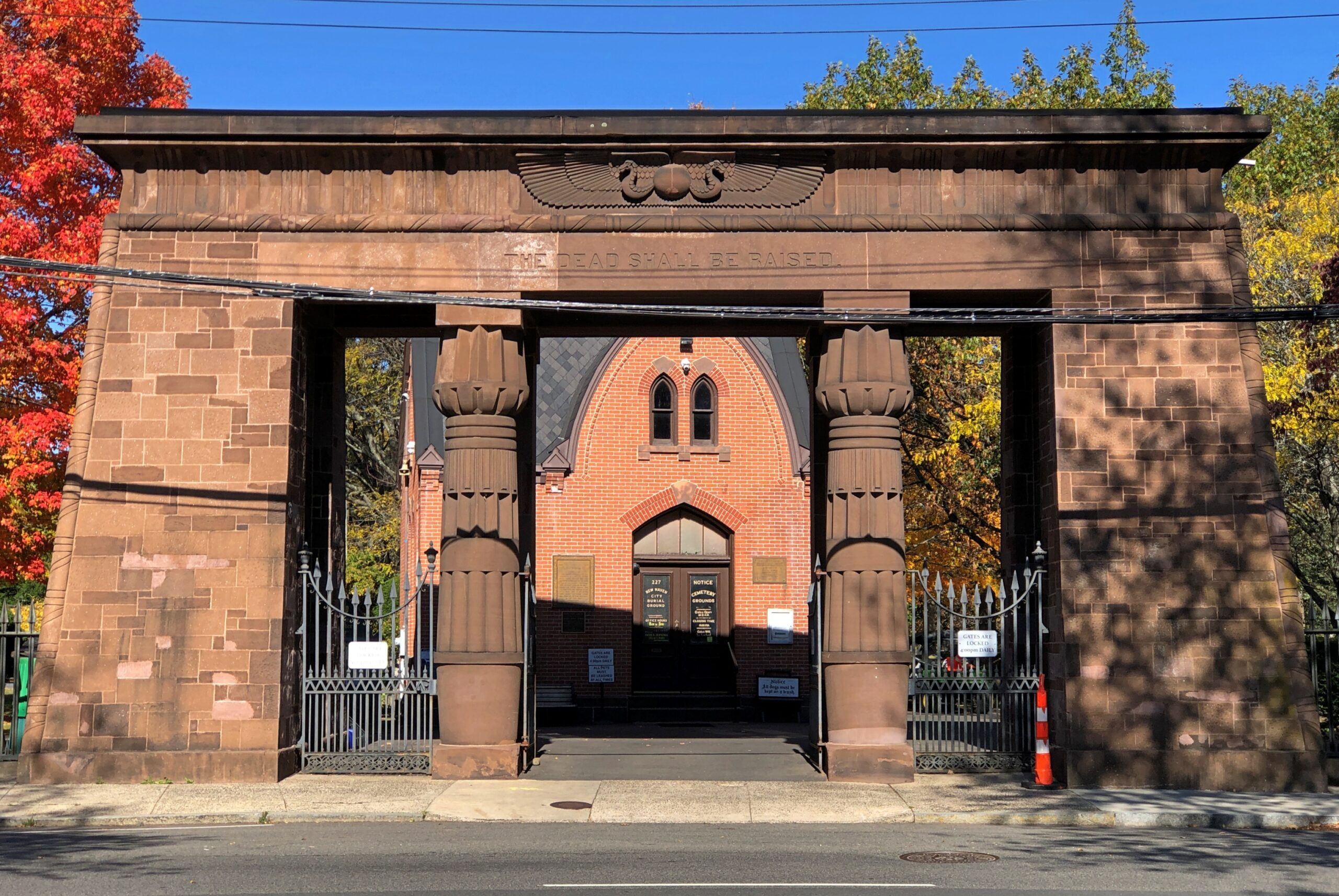
Grove Street Cemetery

That’s what Vanderbilt needed, a cemetery across the street. All we ever had across the street was the fast food that’s now found on campuses: Krystal, Bojangles, Popeyes, Pizza Hut (Inn?), Wendy’s, etc.

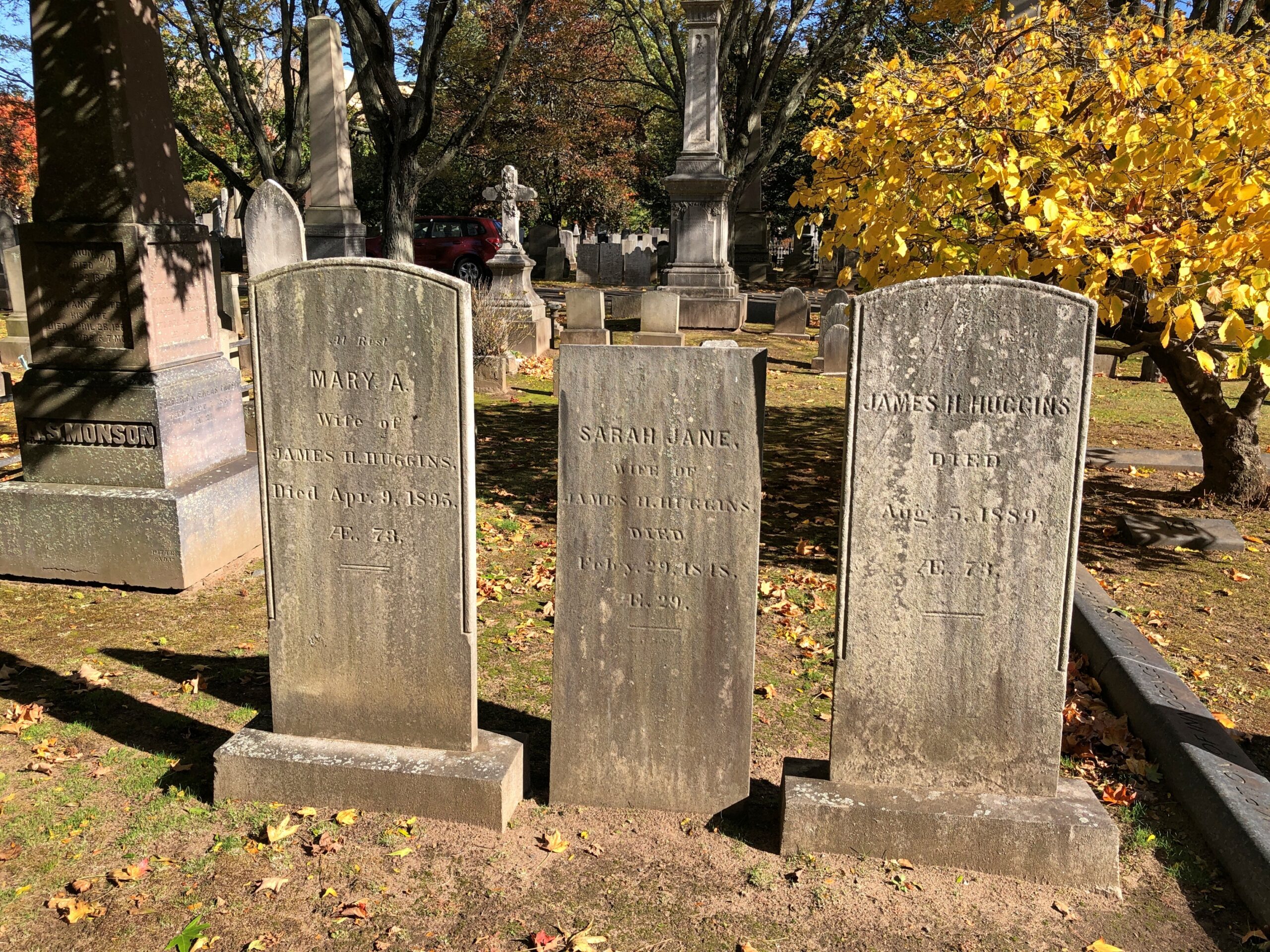
Grove Street owes its founding to pestilence. “After severe yellow fever epidemics in 1794 and 1795, the [New Haven] Green was simply too crowded to continue as the city’s chief burial ground,” the cemetery’s web site says. “In 1796 a group of New Haven citizens led by U.S. Senator James Hillhouse planned a new cemetery on a location at the edge of town. Their efforts were officially recognized in October 1797 when the State of Connecticut incorporated the cemetery as the New Burying Ground in New Haven.”

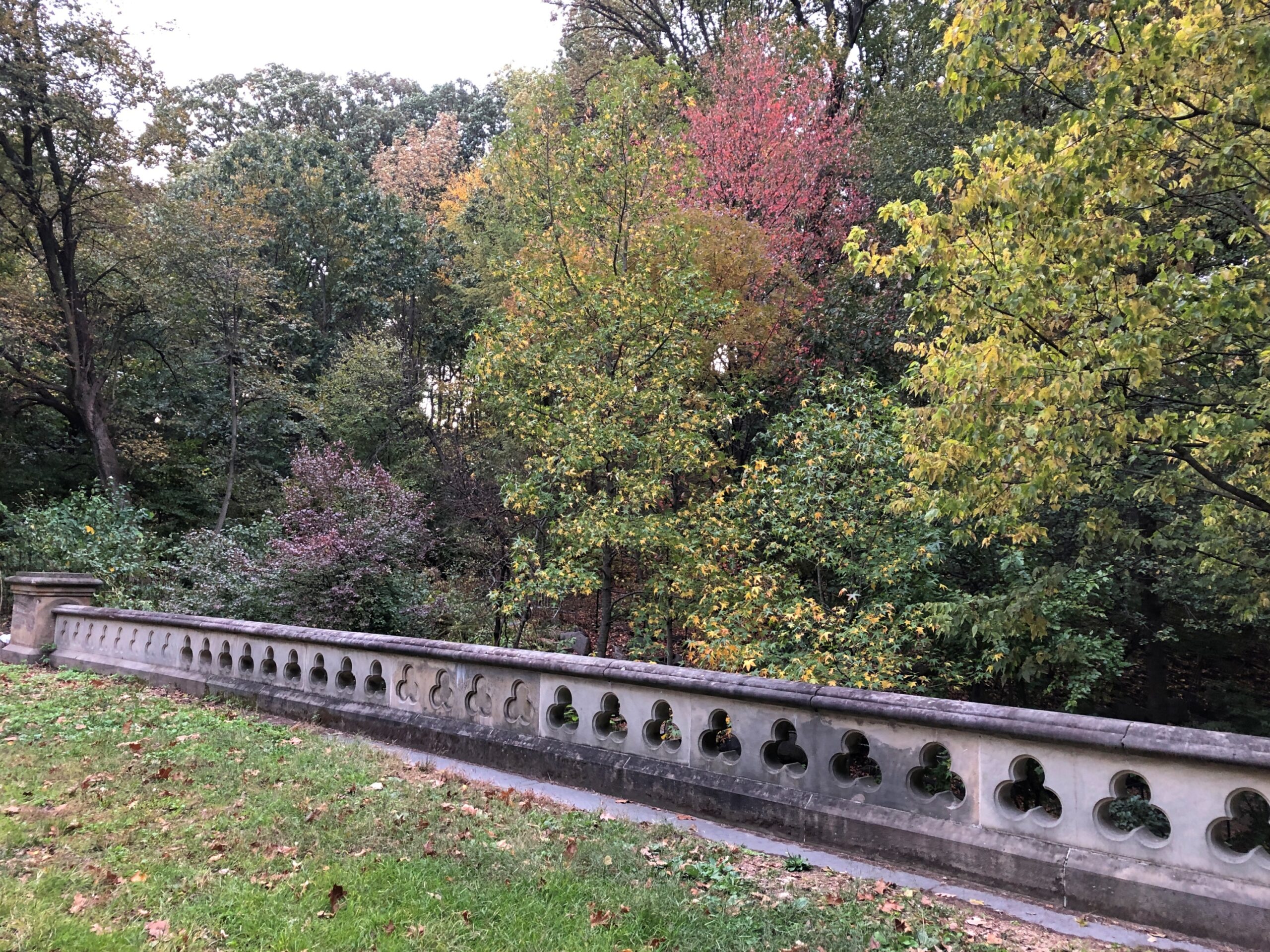
Since then, the population of the cemetery has grown, with stones of various shapes recalling the dead, and trees to provide them shade.
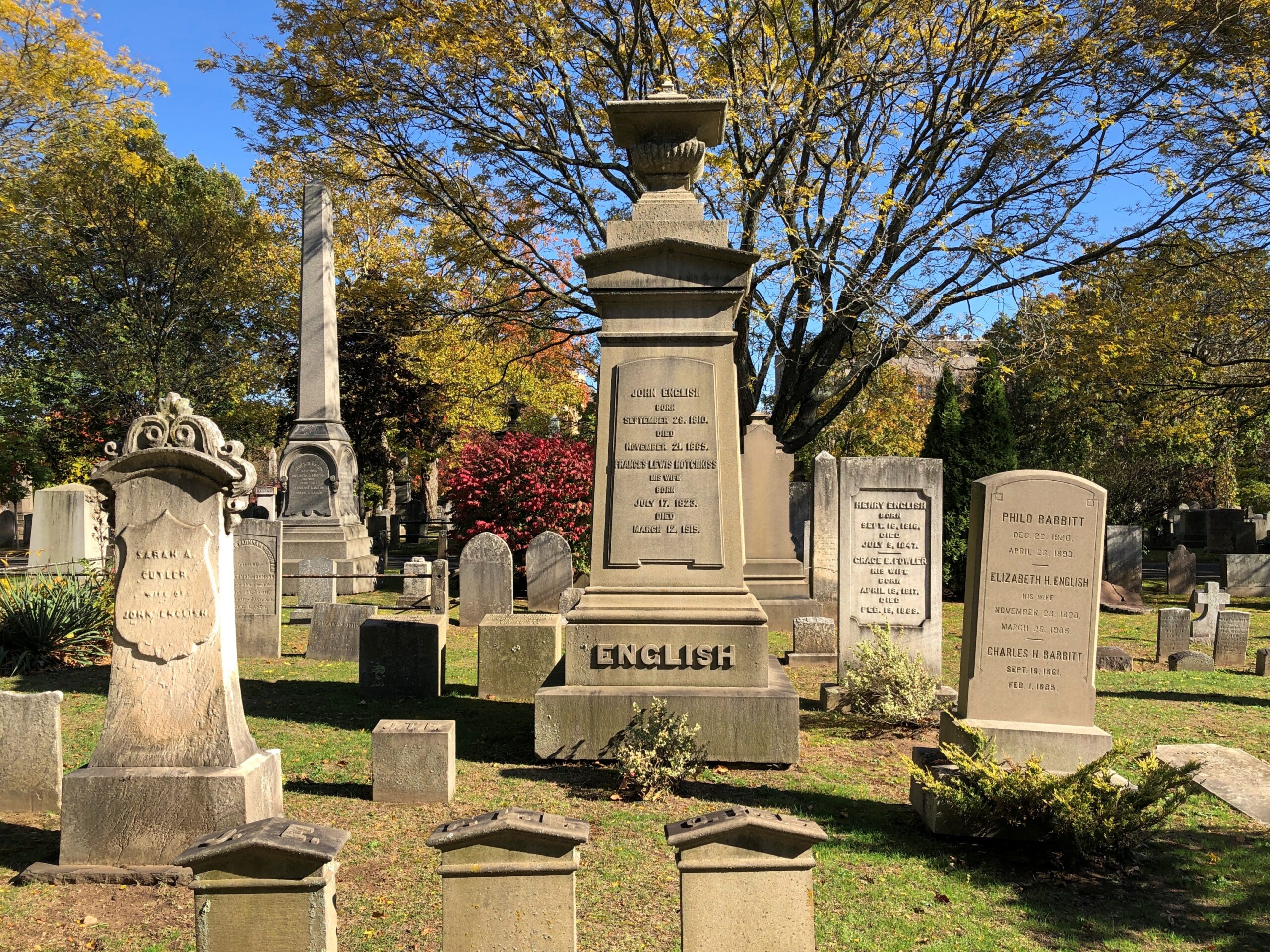
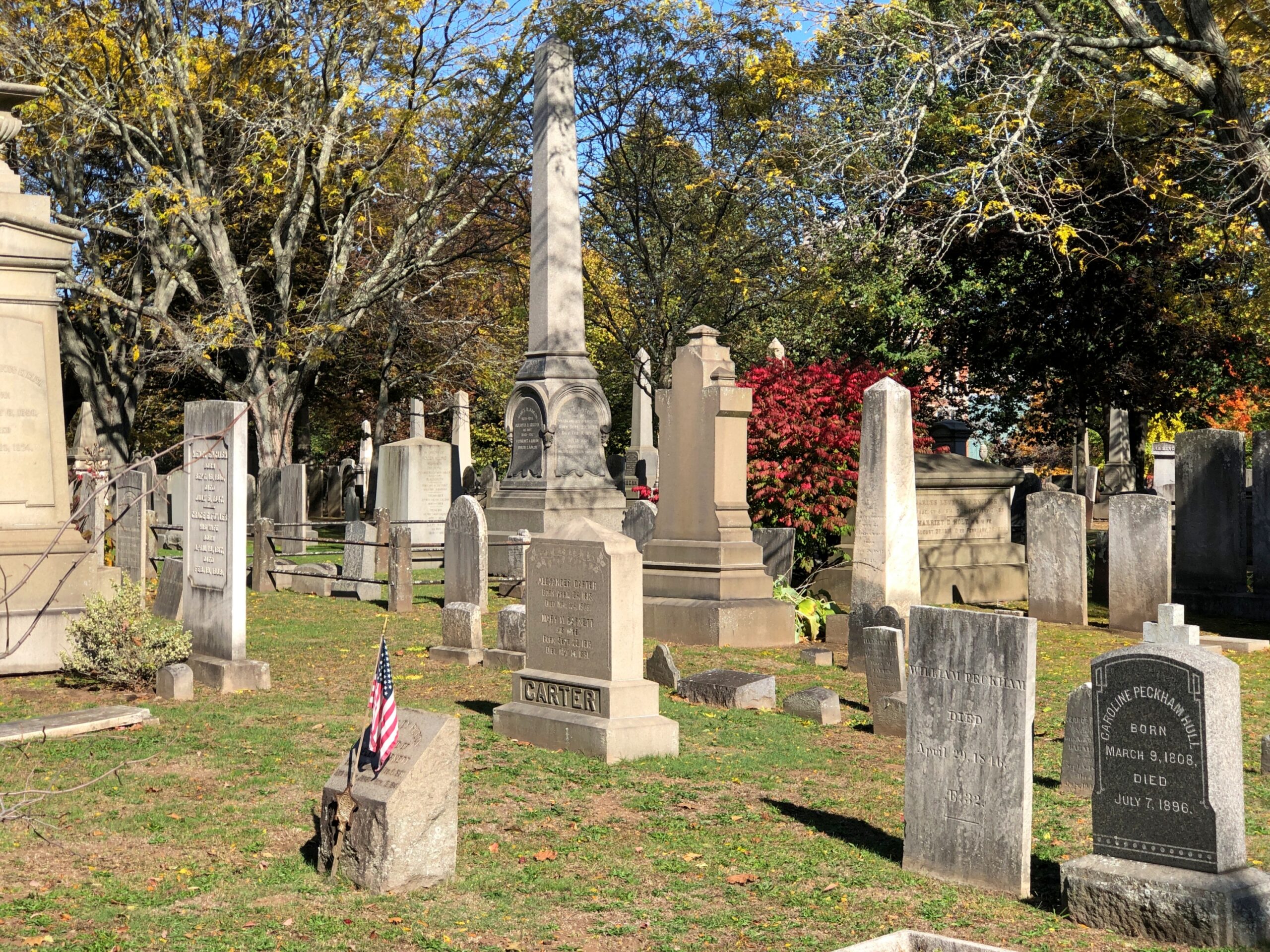
Grove Street Cemetery

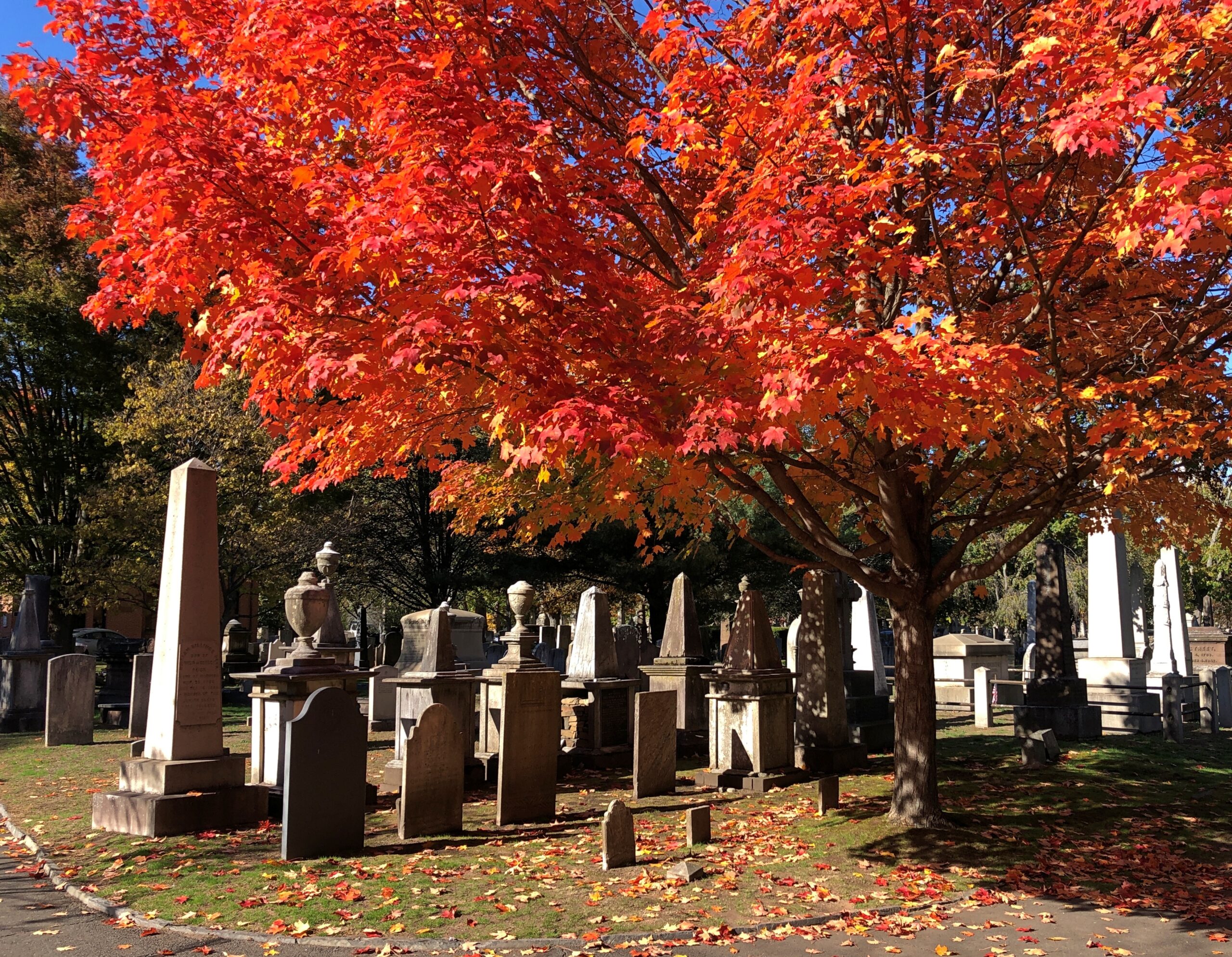
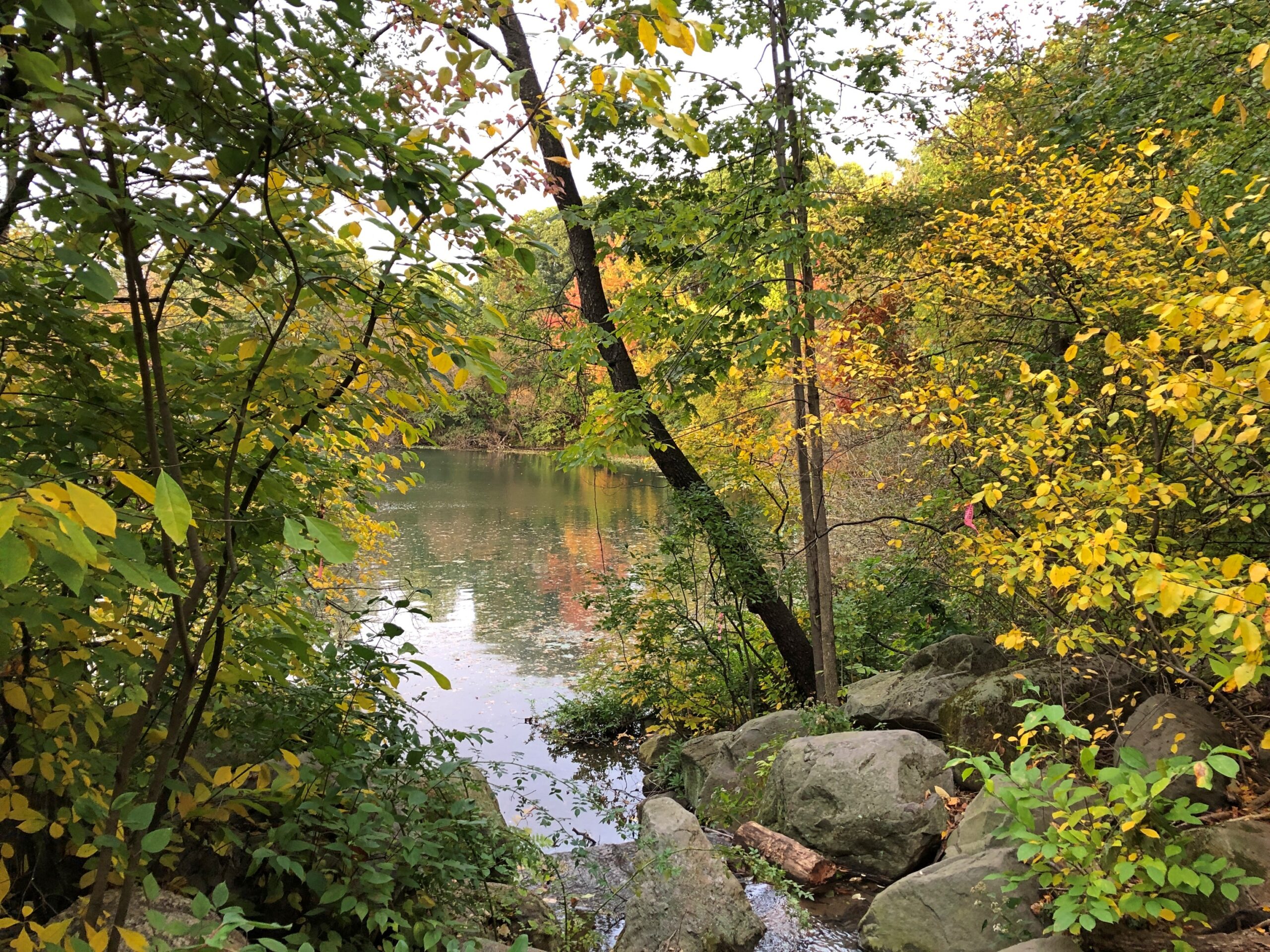
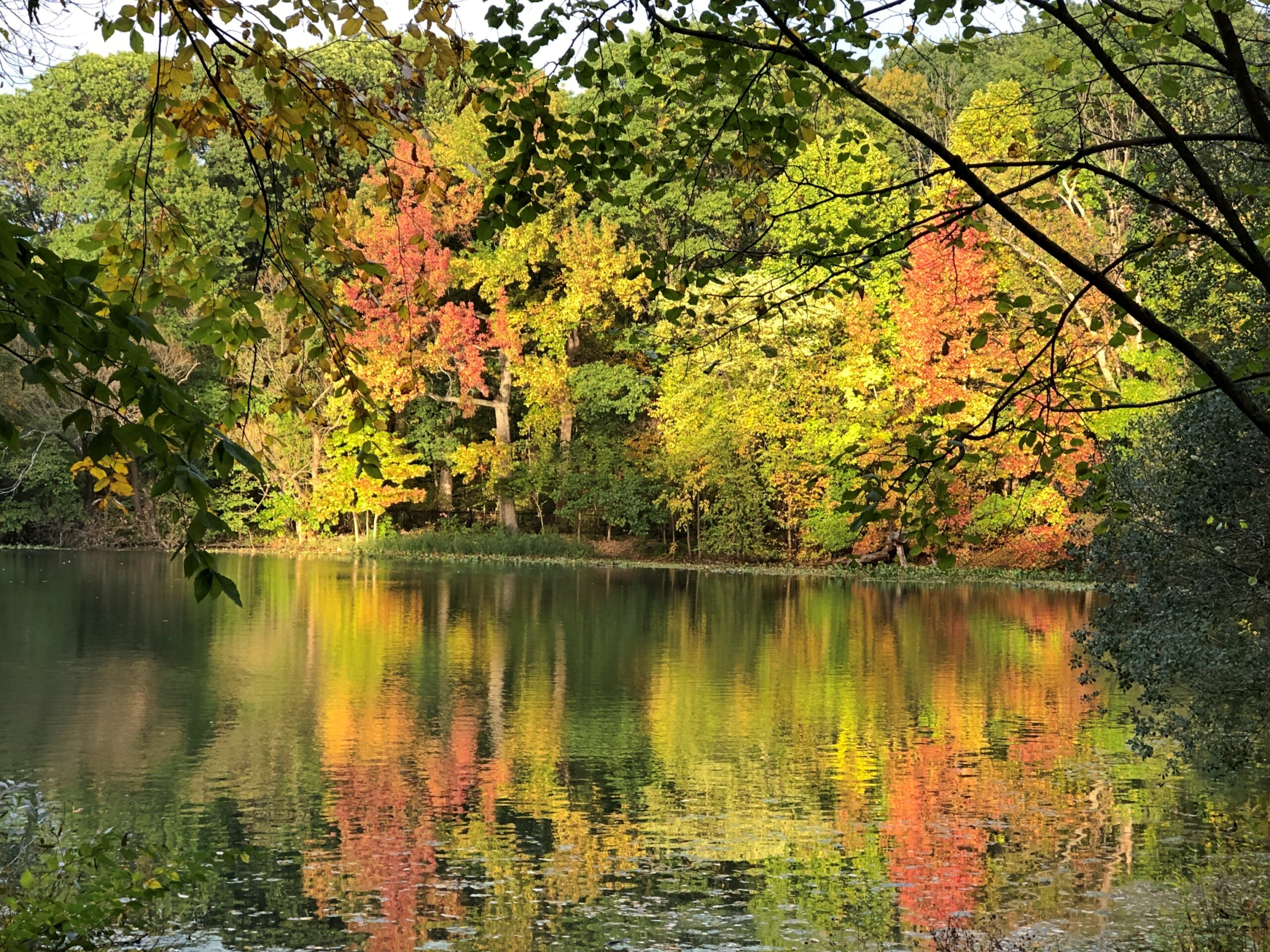
In October, the trees also provide color.
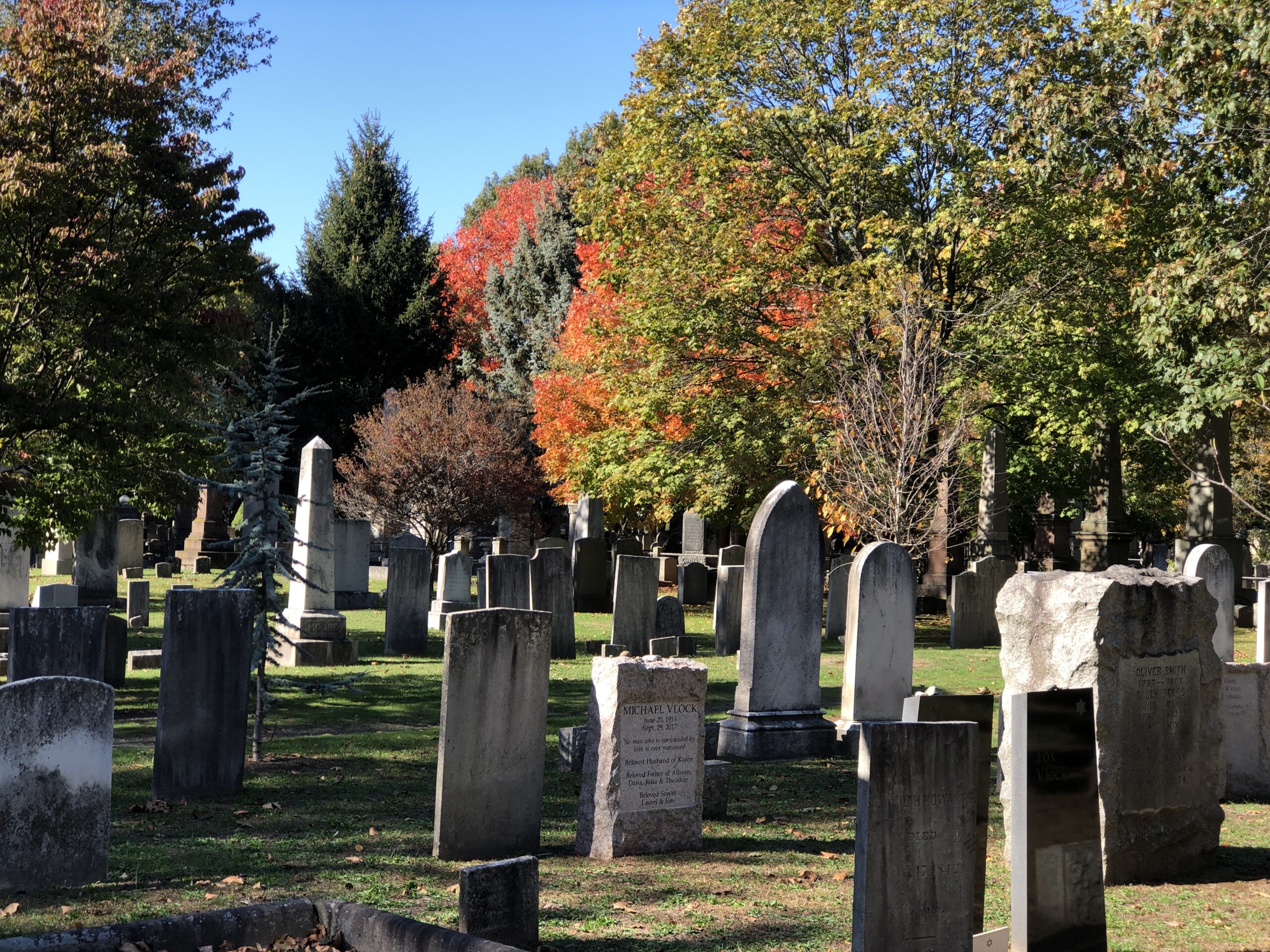
Grove Street Cemetery


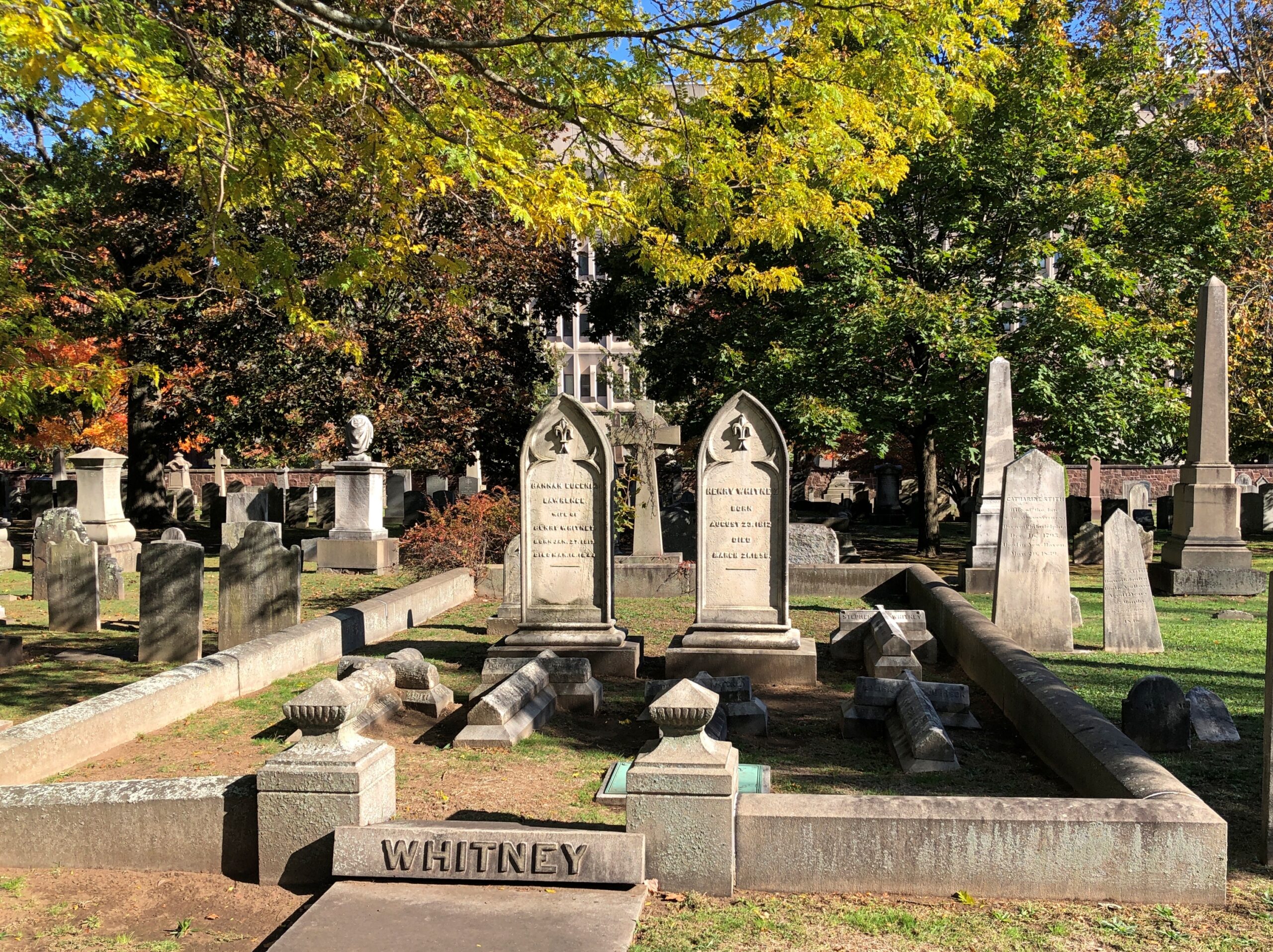
I didn’t go looking for anyone in particular, though there are a lot of notables here. Such as Eli Whitney, inventor; Noah Webster, lexicographer; Josiah Willard Gibbs Jr., scientist; Lyman Beecher, abolitionist and prohibitionist; and O.C. Marsh, paleontologist, among many others.

A scattering of stones mark veterans.
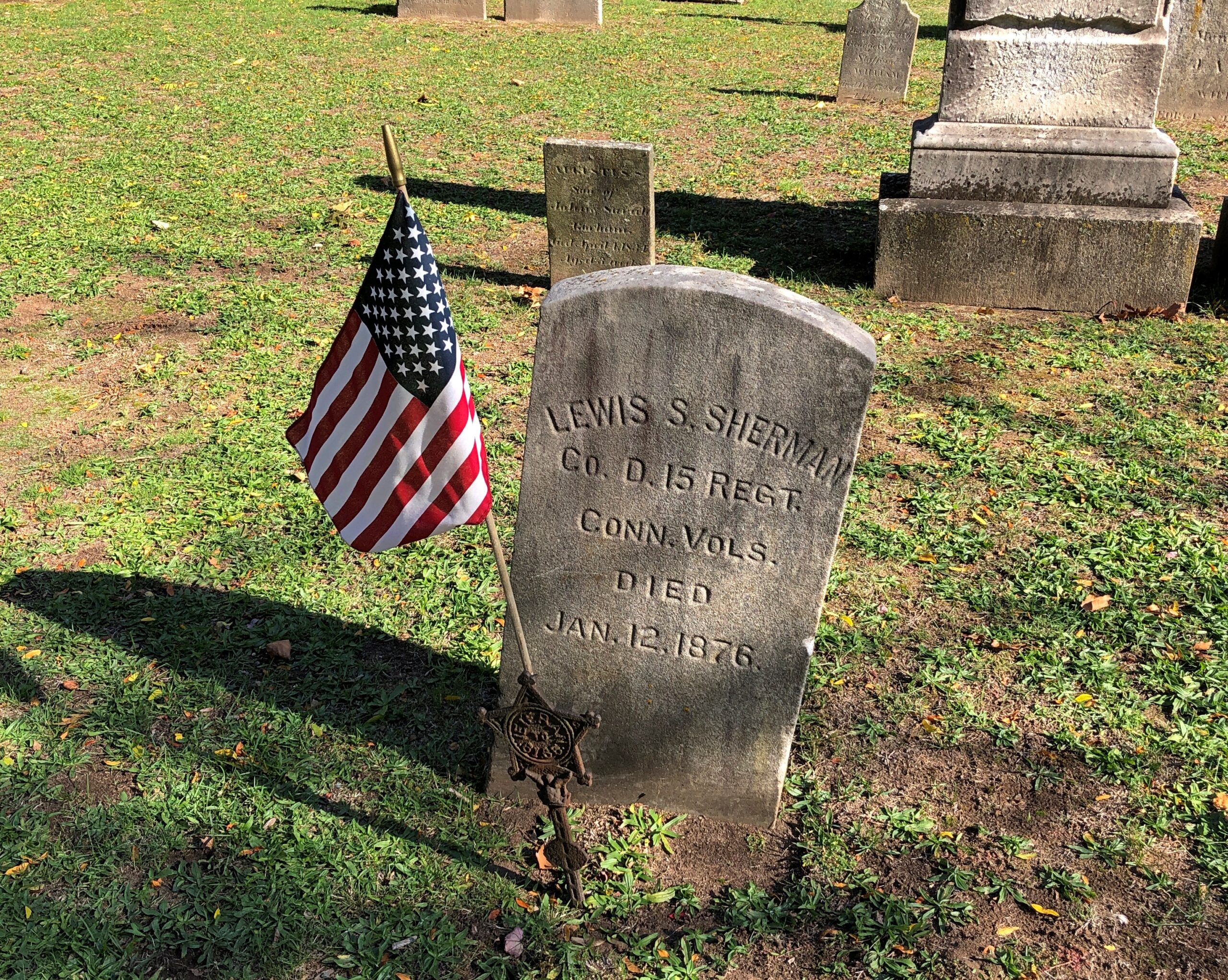
Grove Street Cemetery

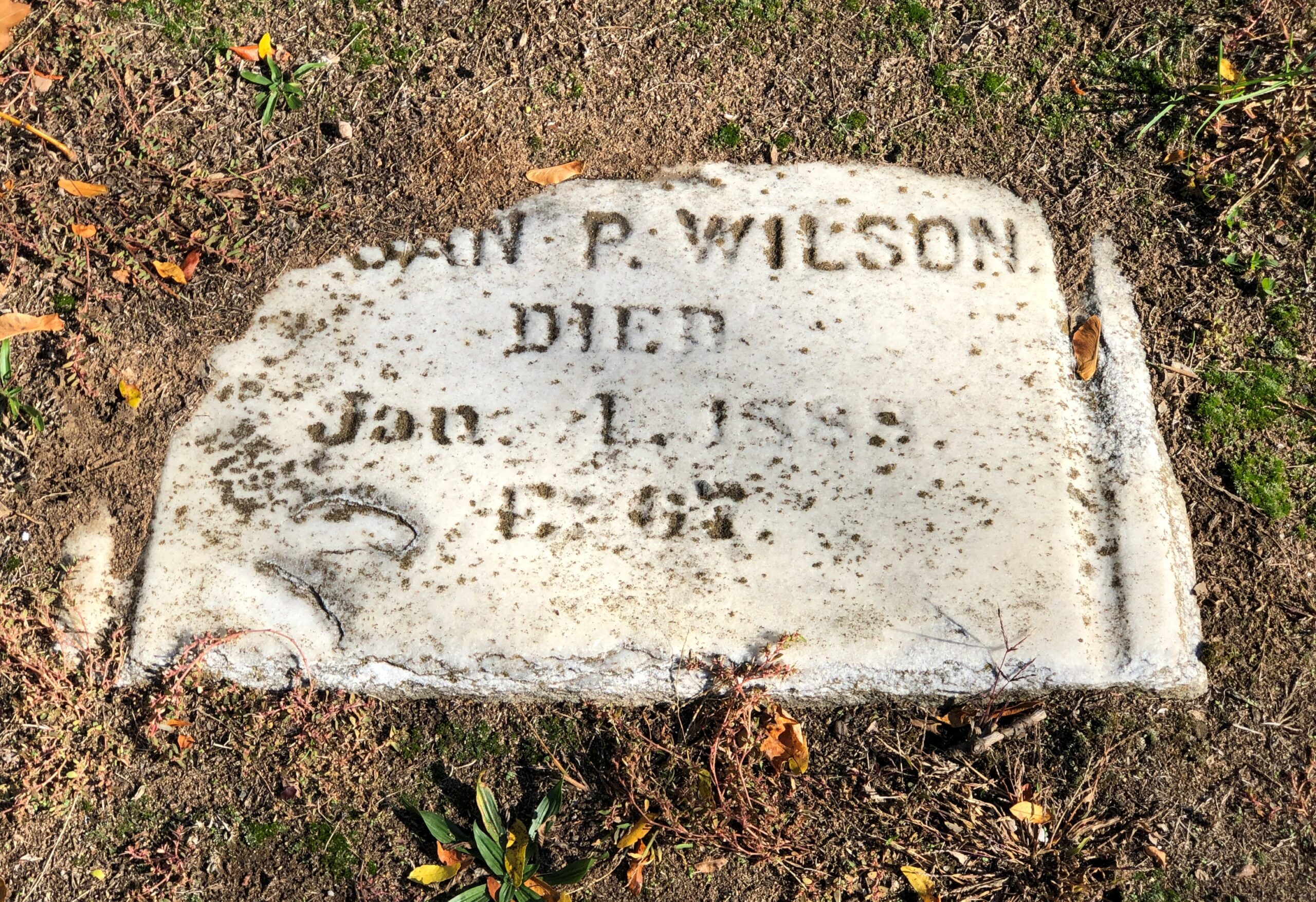
Including one with a GAR star that’s obviously a replacement for something older.
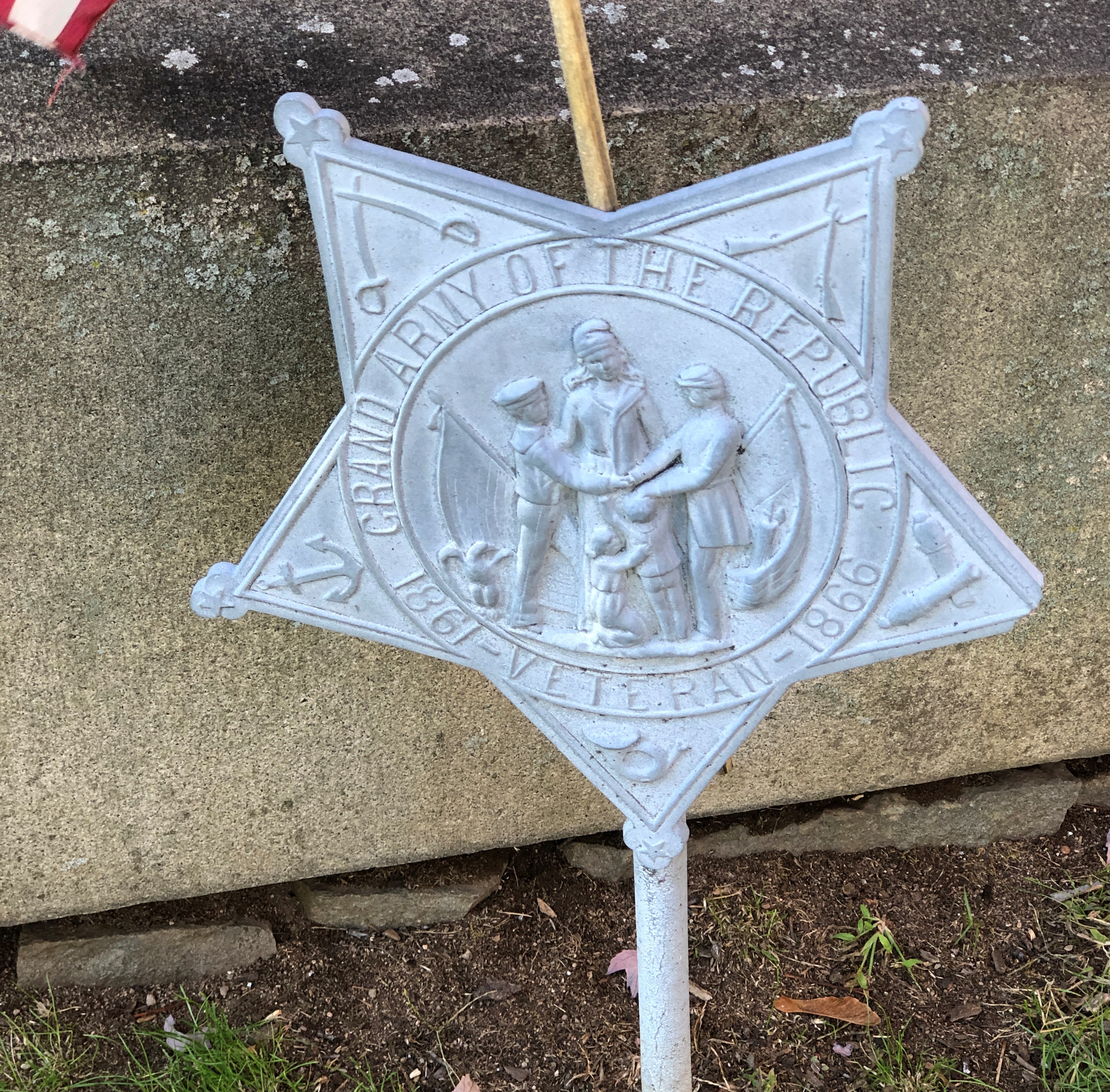
Grove Street Cemetery

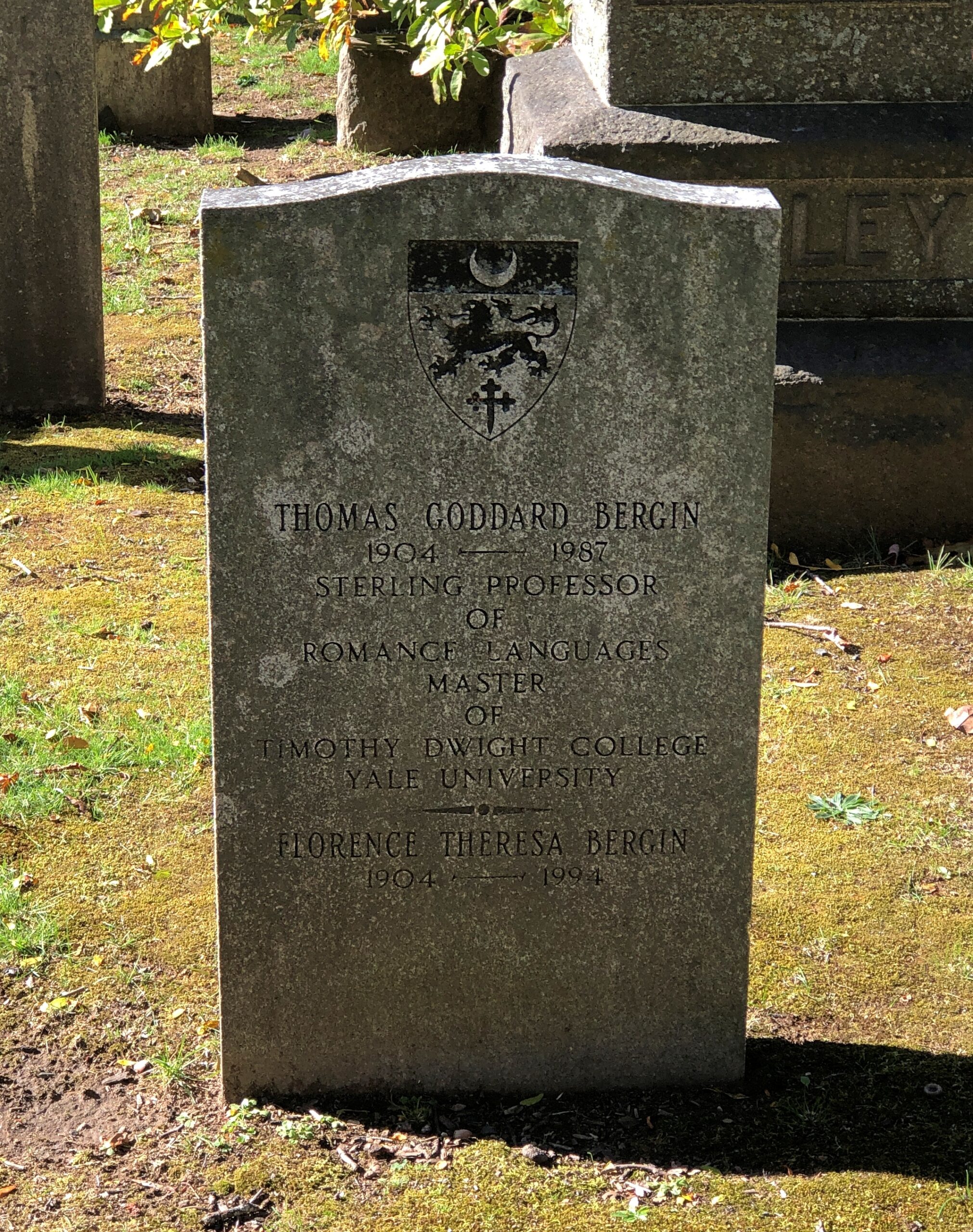
Being so close to Yale, a fair number of academics rest at Grove Street.
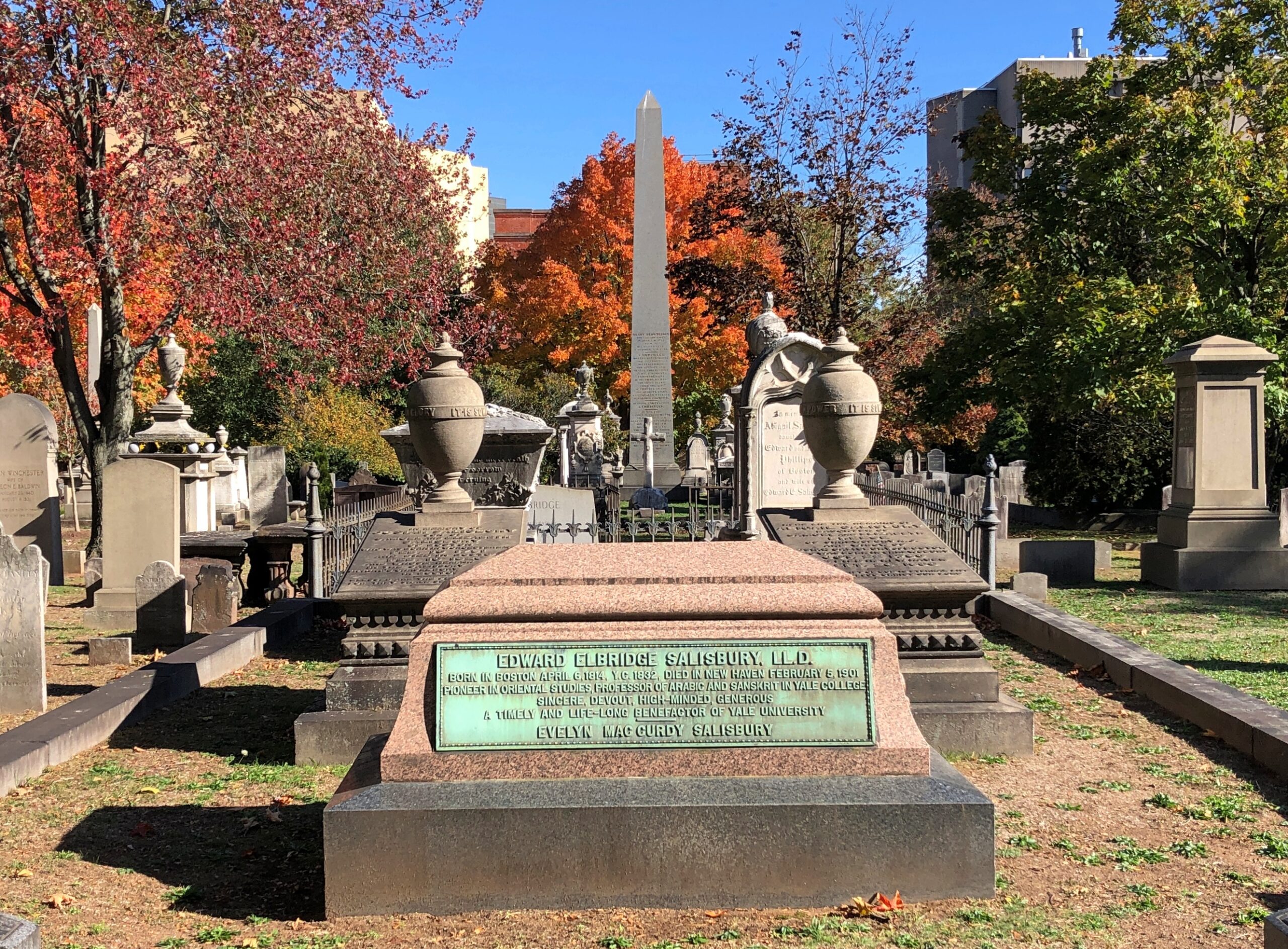
Grove Street Cemetery

Including this fellow. It’s a little hard to see, but his memorial is inscribed in Latin.
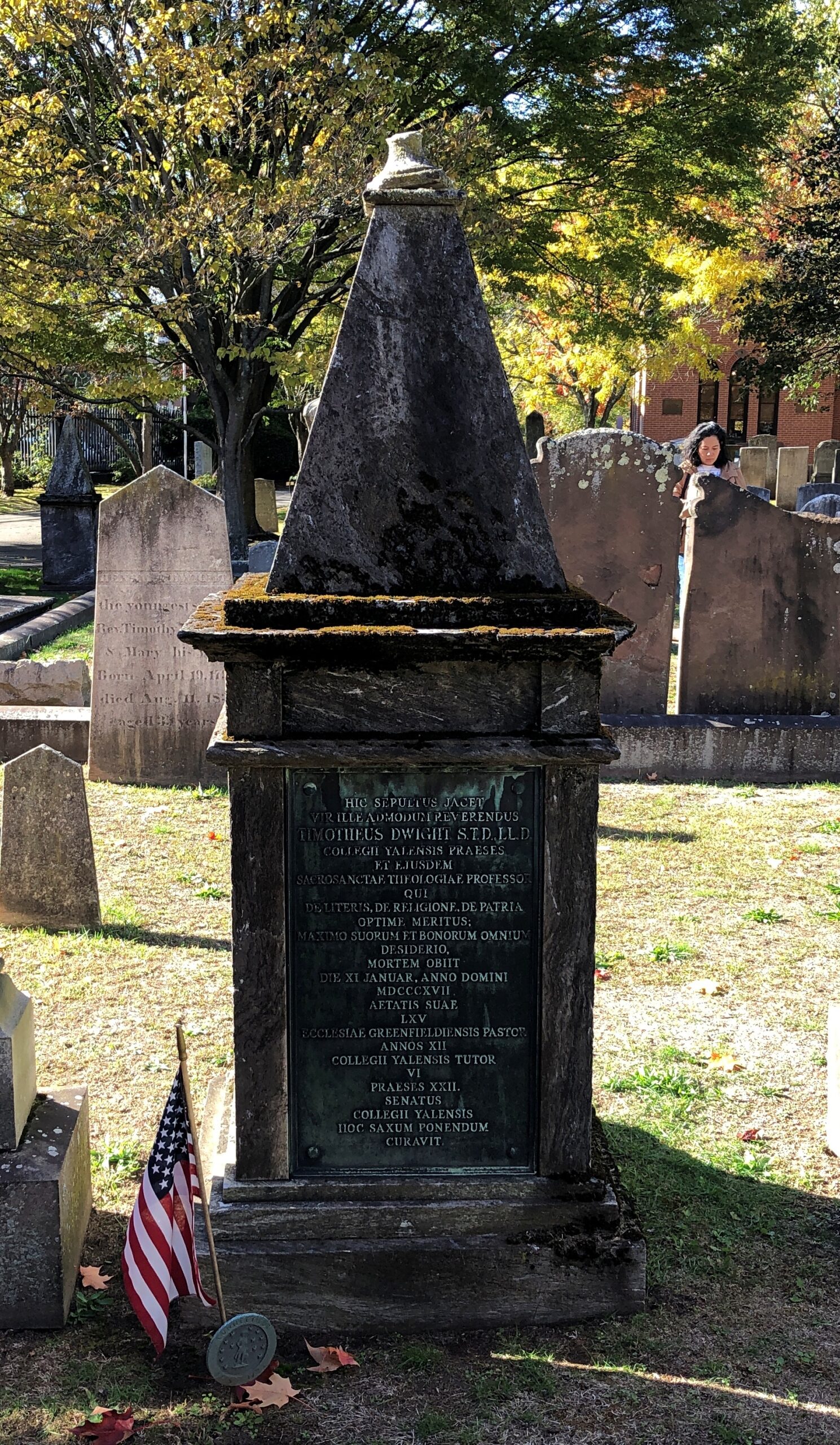
Grove Street Cemetery

Kingman Brewster was president of Yale from 1963 to 1977, at a time of considerable hubbub on campus, and changes in university policy. Such as going coed in 1969, relatively late for an Ivy League school. No doubt cemeteries are well populated these days by Yale alumni angered by that decision.
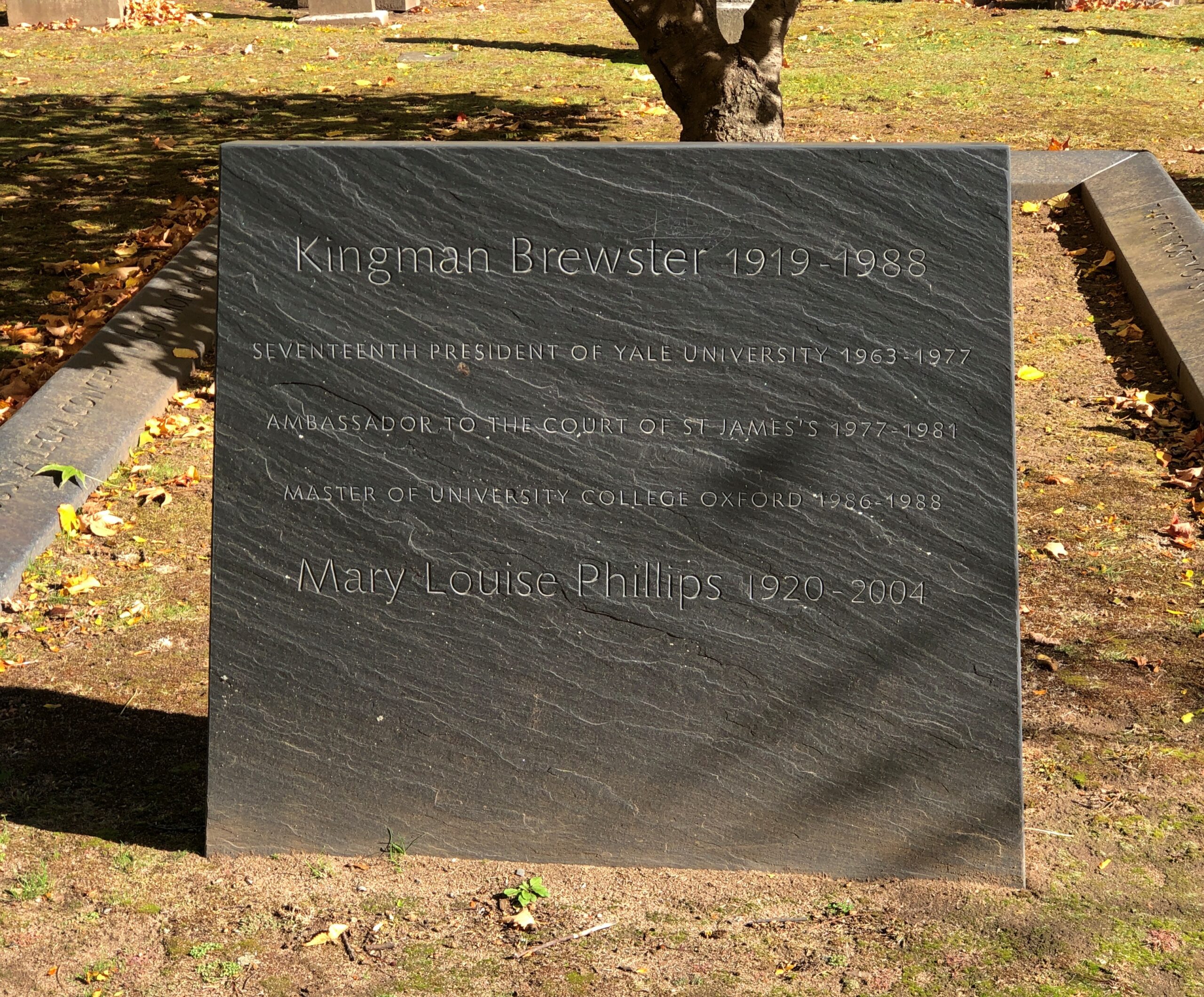
Grove Street Cemetery

A surprise find: a memorial to captives from La Amistad who died in New Haven, waiting for the adjudication of their case. Waiting for their freedom, that is.
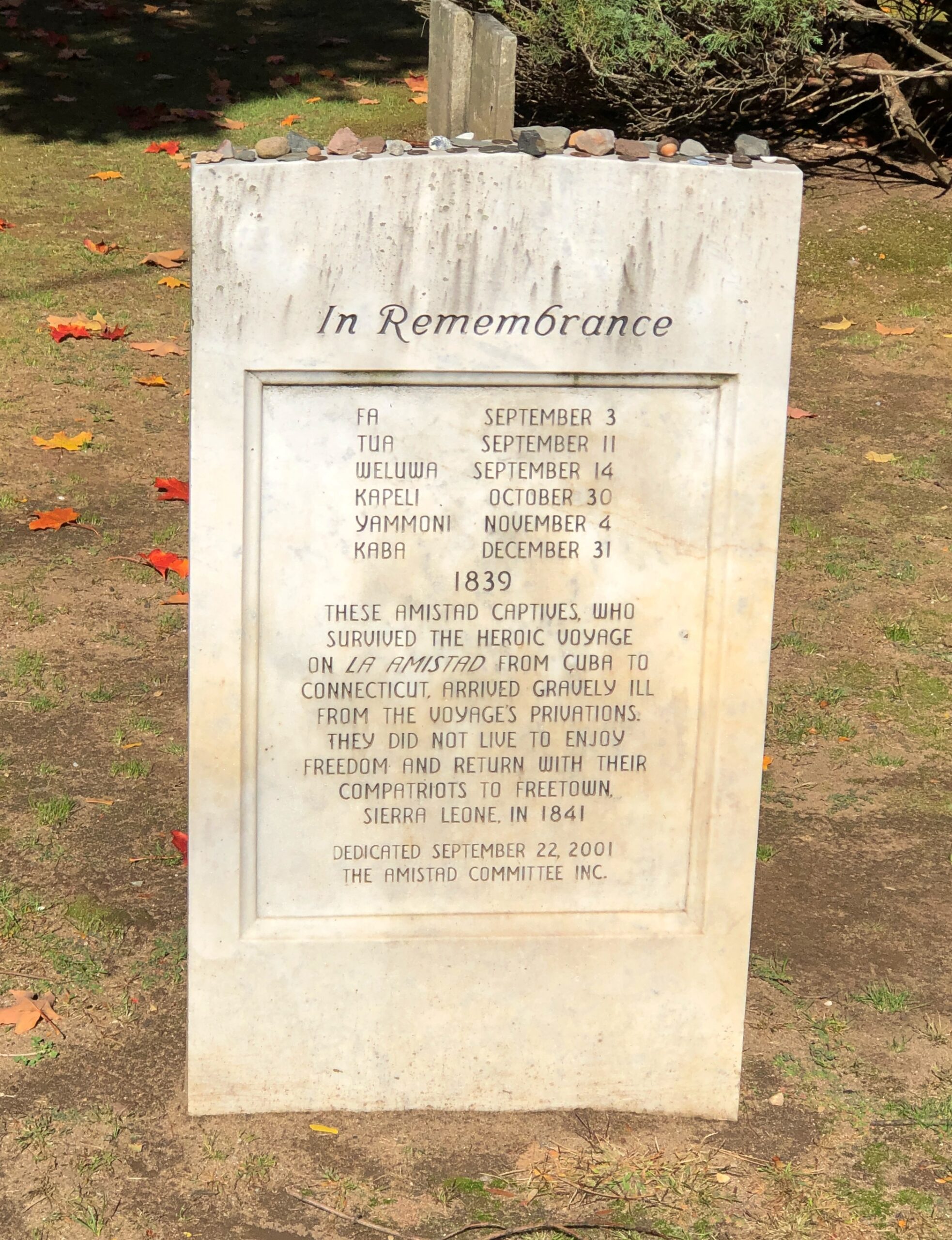
Grove Street Cemetery, New Haven


Elsewhere in the cemetery reposes Roger Sherman Baldwin, who argued the case for the Amistad captives, and Professor Josiah Willard Gibbs Sr., who deciphered their language (Mende).

Remarkably, the names of the captives aren’t forgotten. RIP, Fa, Tua, Weluwa, Kapeli, Yammoni and Kaba.
Prospect Park Ramble ’25

Put this in the Those Were Different Times file: “In the early evening, I made it to the beginning of the National Association of Real Estate Editors convention. I mentioned to some colleagues of mine, who happened to be Manhattanites, that I’d spent part of the afternoon in Prospect Park — you know, in Brooklyn. Judging by their reaction, I might as well have said that I’d popped over to Outer Mongolia for a quick visit.”

I wrote that my June 2002 visit to New York included, as mentioned, time in Prospect Park. It is every bit a great park as Central Park, and I knew I wanted to return someday for a longer walk. After lunch in Chinatown in Manhattan on October 19, that’s what Yuriko and I decided to do. We took the subway to the Prospect Park station on the east side of the park, and began our wander.

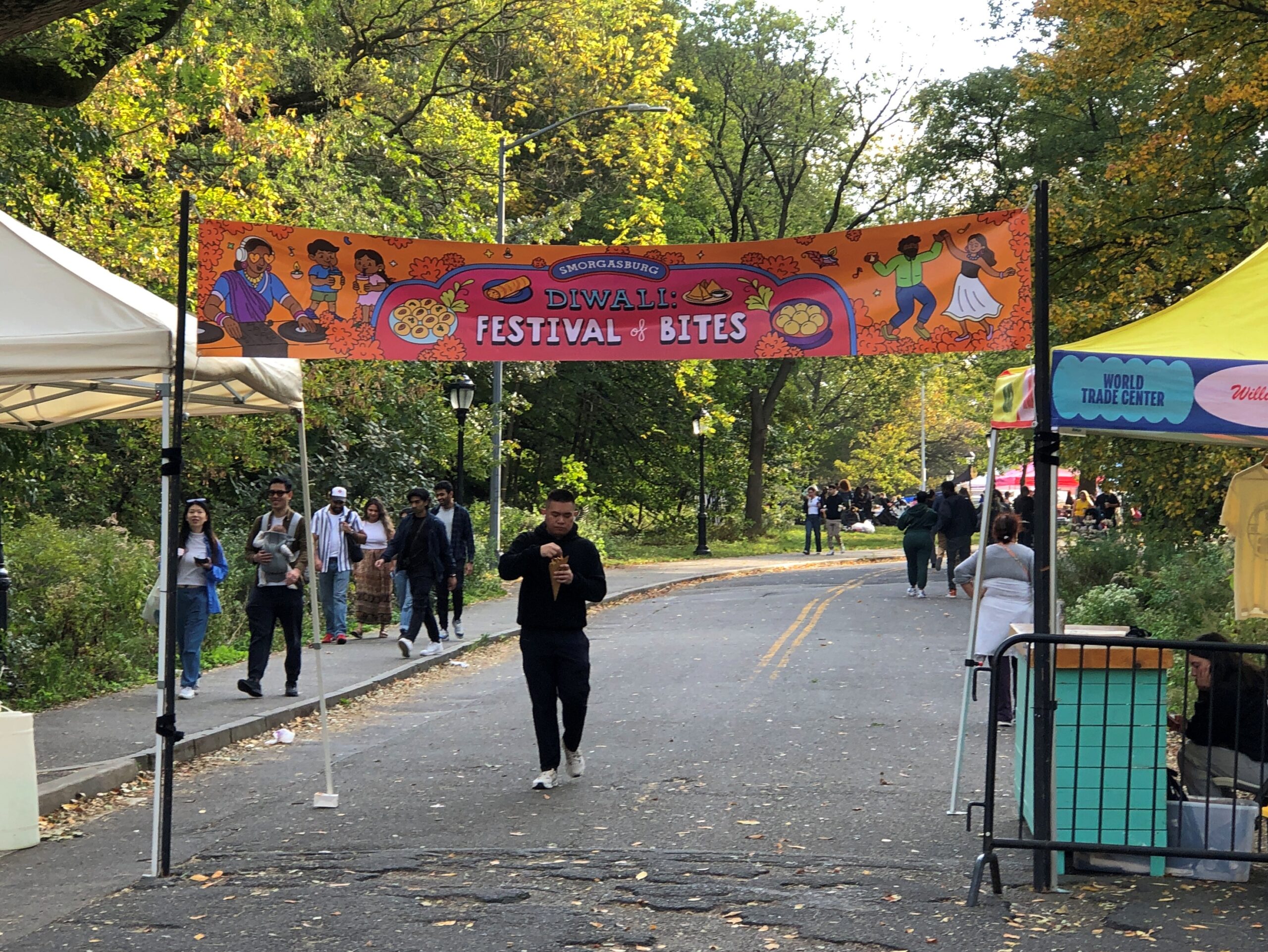
Near that entrance was the Diwali Festival of Bites.

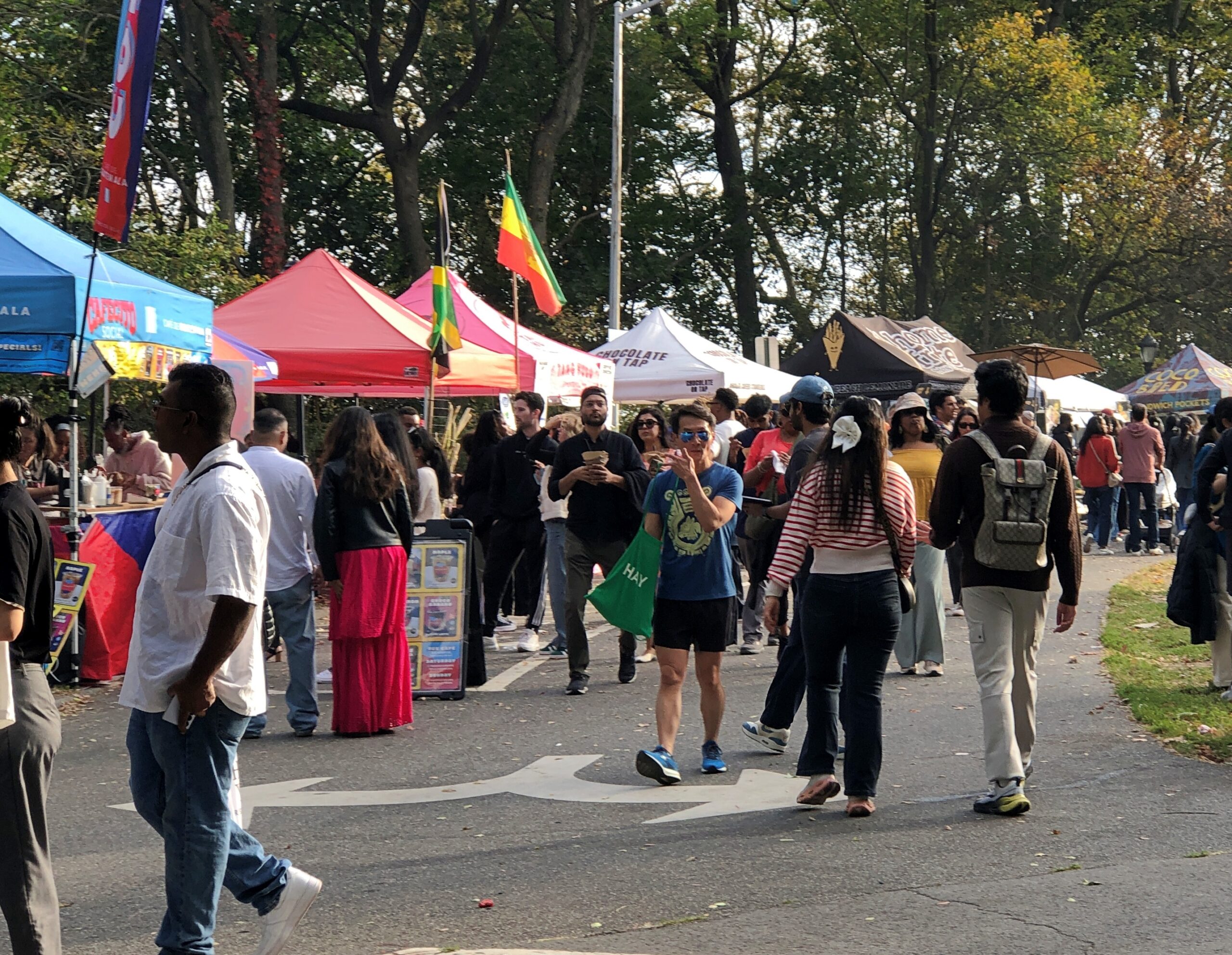
Despite the name, the food tents had a large international variety for sale, not just Indian food. Not important for us anyway, since we’d just eaten.

Prospect Park Oct 2025

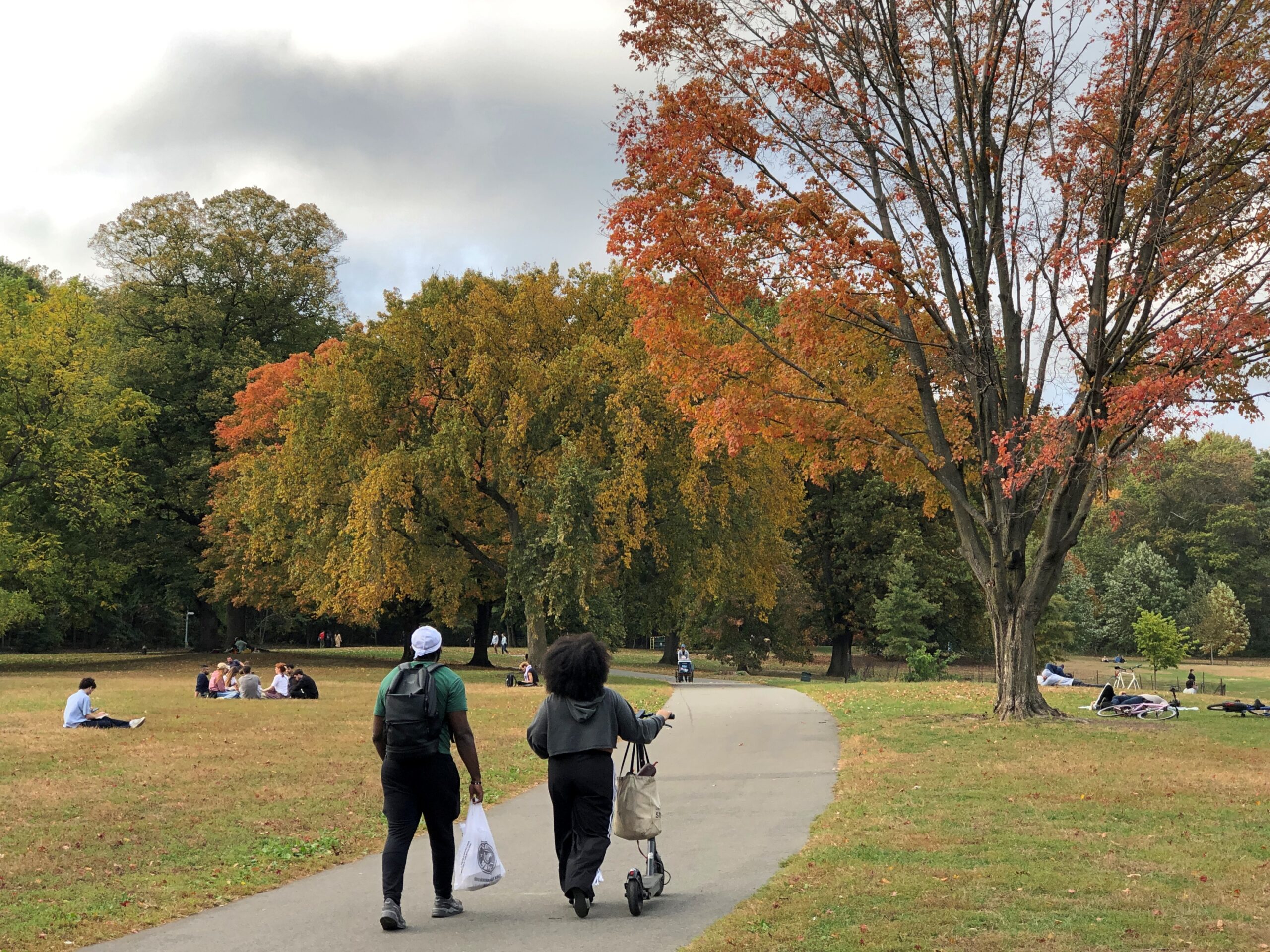
We headed deeper into the park. Maybe it was a matter of species choice, but there seemed to be more coloration than in Central Park the day before.

Prospect Park Oct 2025

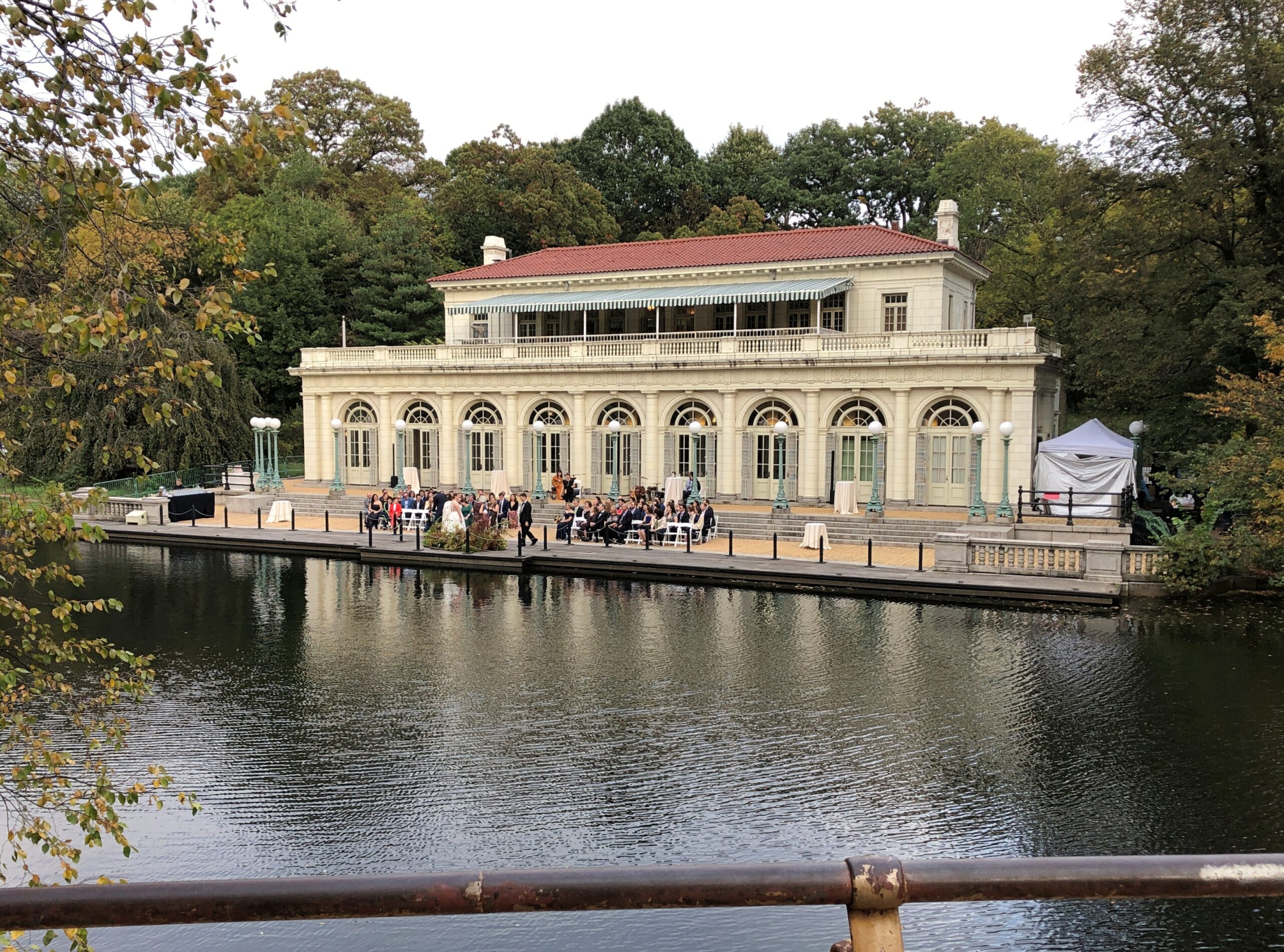
The handsome Prospect Park Boathouse.

Prospect Park Oct 2025

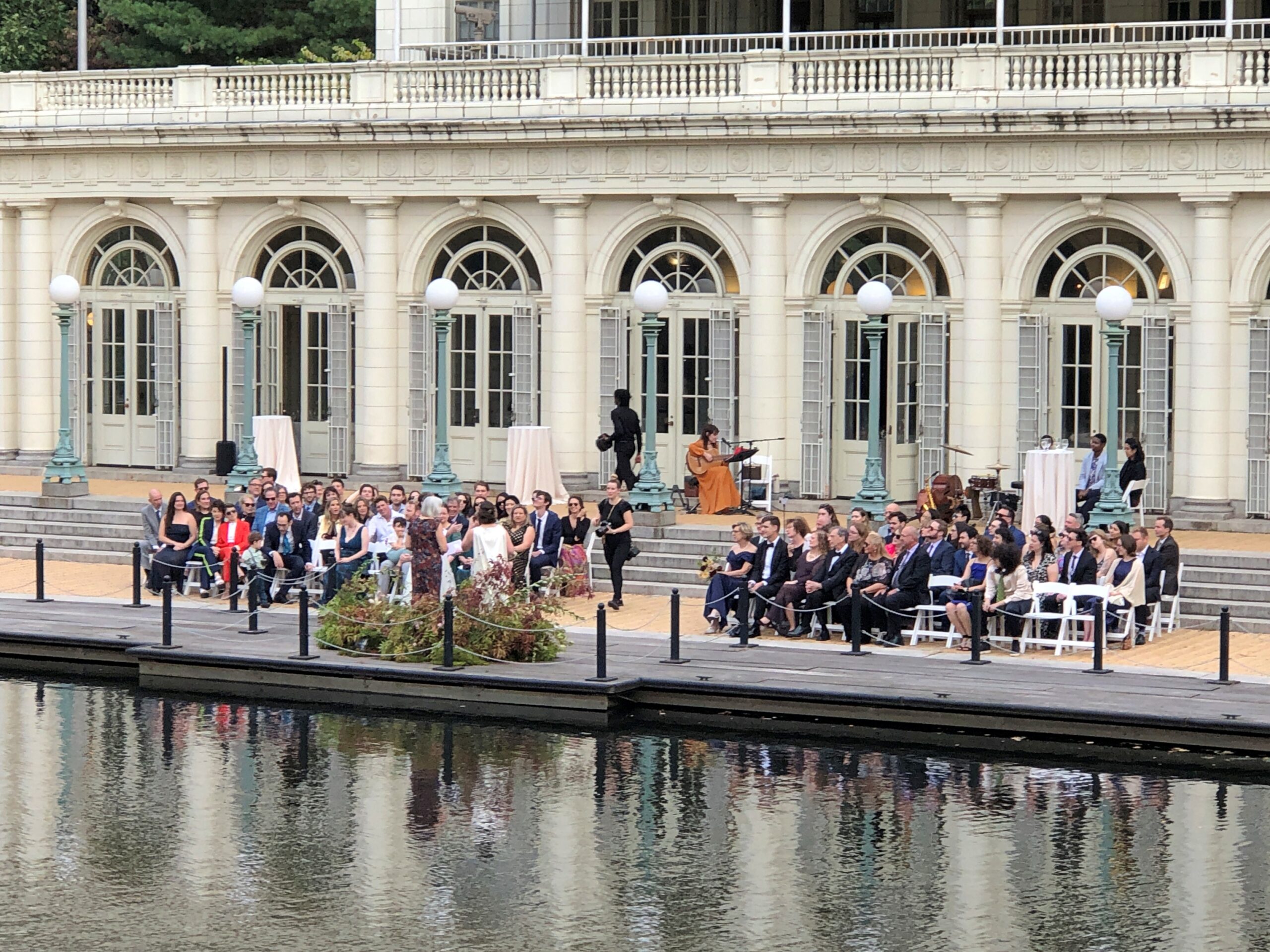
A popular setting for weddings, and in fact one was taking place when we visited. Two women were exchanging vows.

Prospect Park Oct 2025

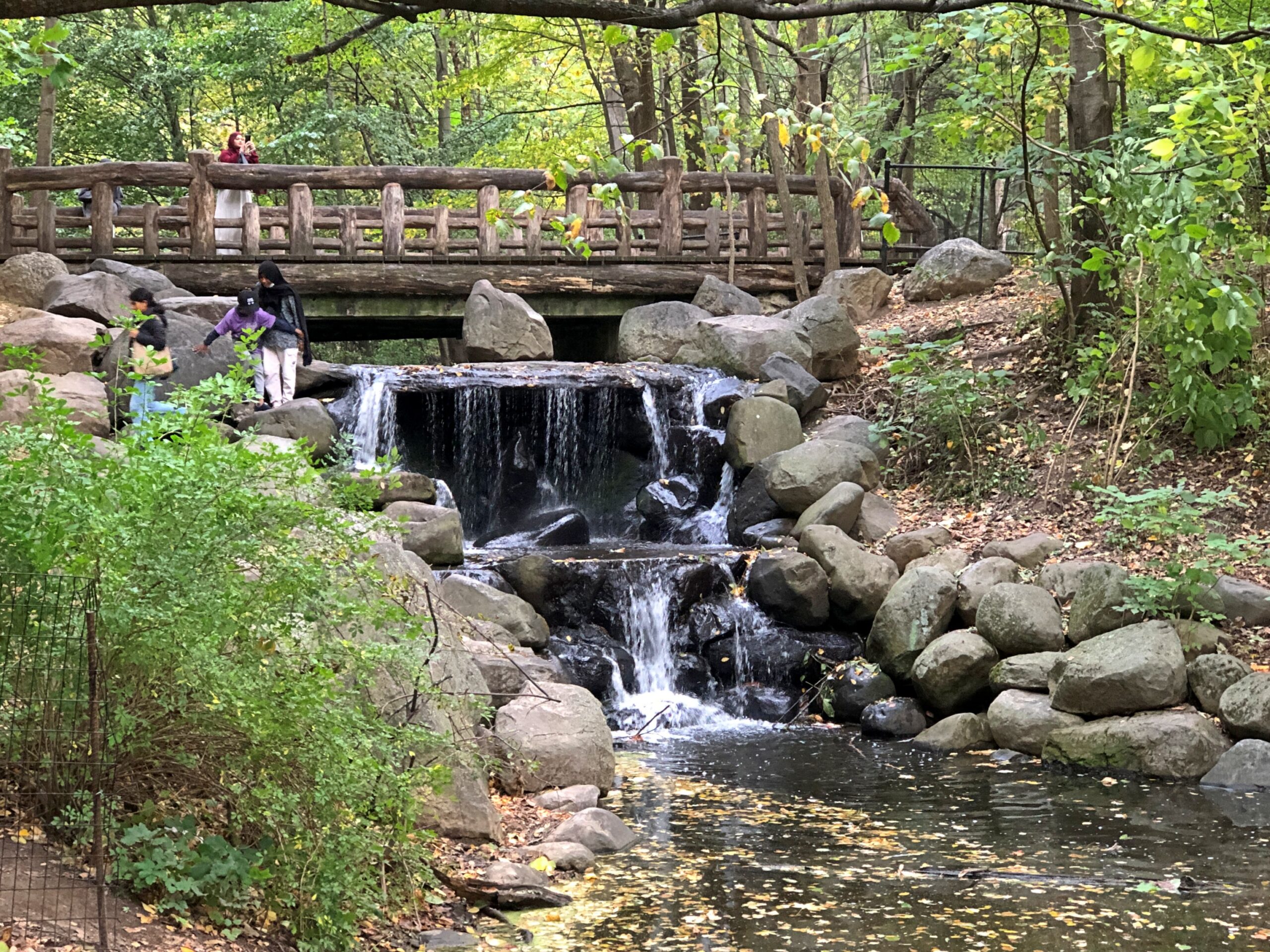
The Prospect Park Waterfall.

Prospect Park Oct 2025

Not a vast torrent, but a pleasant gurgling. It is a slice of the park’s interior waterways. Prospect Park’s watercourse is a beautiful collection of waterfalls, pools, streams and a 60-acre Lake, and is one of the shining achievements of Park designers Olmsted and Vaux’s design, says the Prospect Park Alliance.

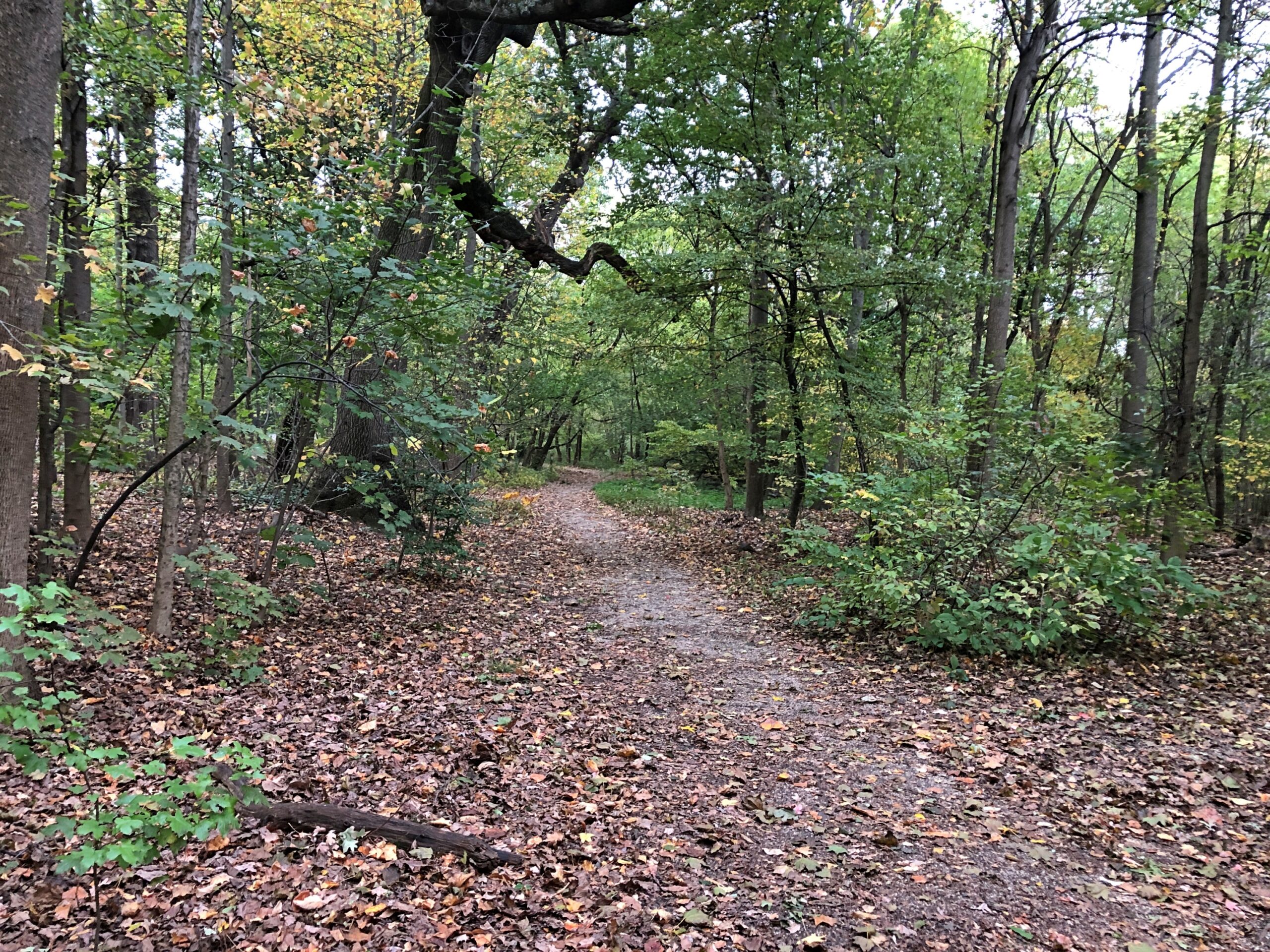
The deeper in, the fewer people.

Prospect Park Oct 2025

So few, sometimes, to almost make you forget you’re in a metro surrounded by about 20 million people.

Prospect Park Oct 2025

But not for long.

Dog walkers and their tethered dogs roamed the park in numbers. Some come to the Prospect Park Dog Beach.

Prospect Park Oct 2025

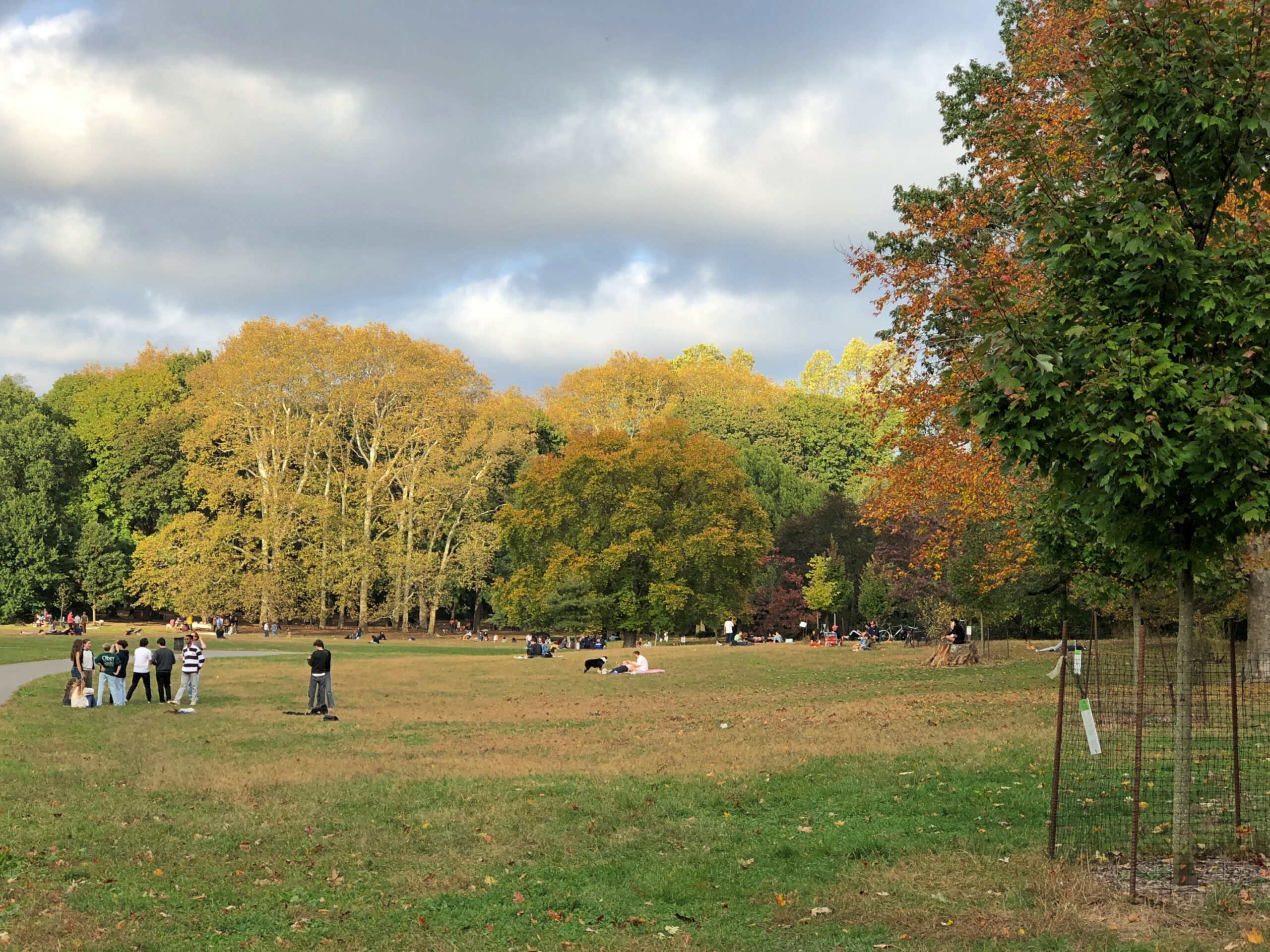
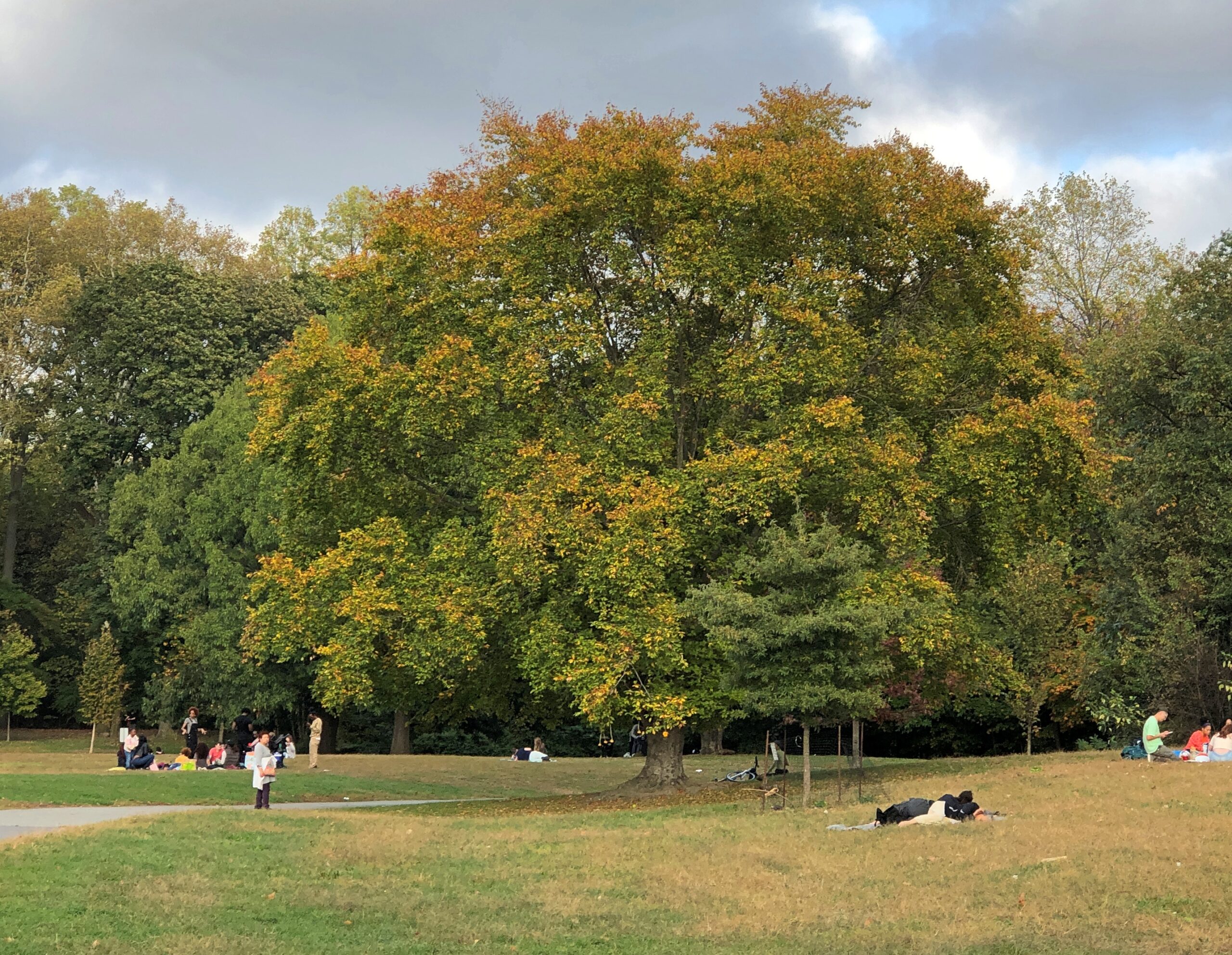
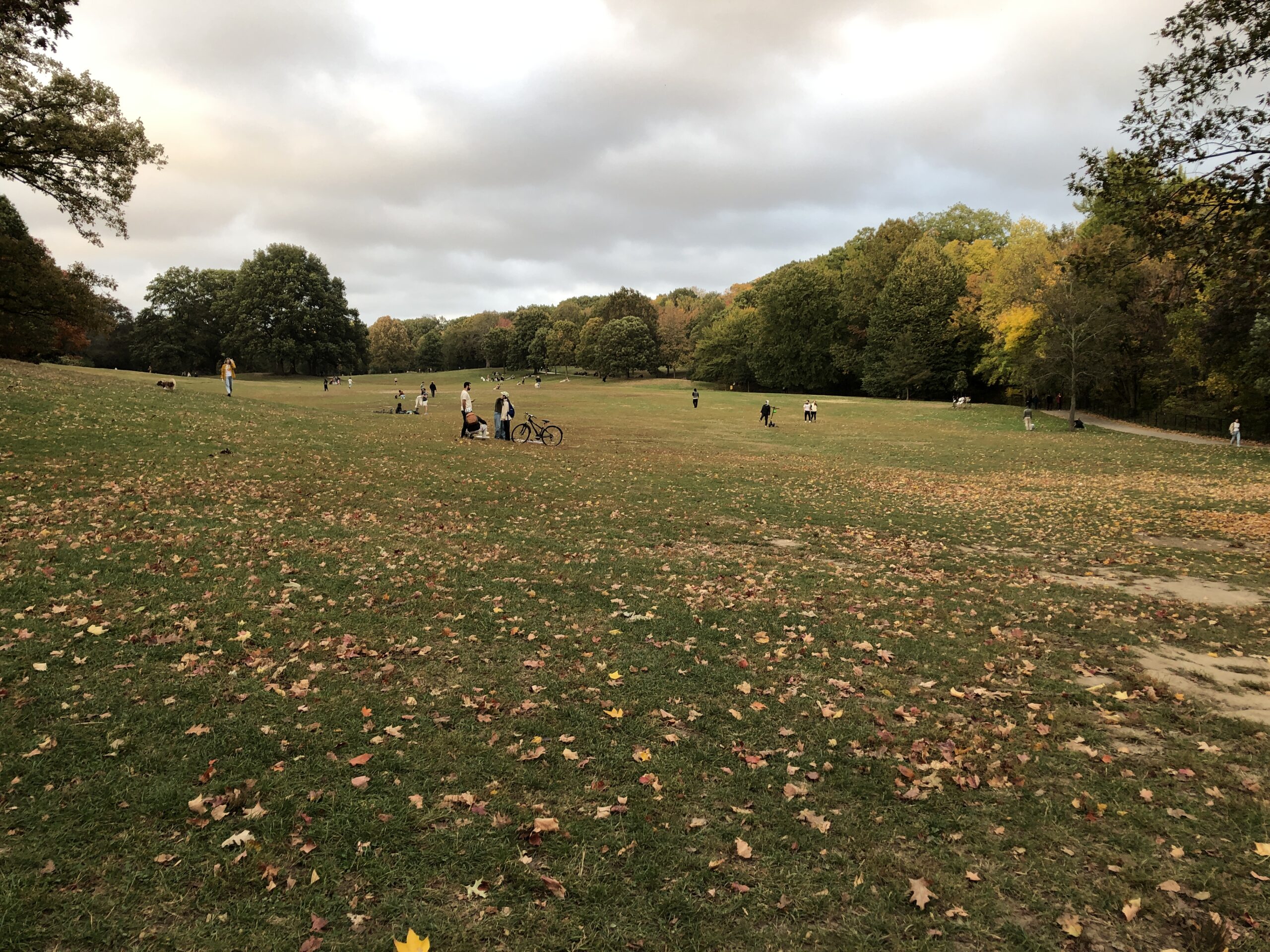
I wasn’t exactly sure where I’d been in 2002, but near the northern edge of the park, we came across what was probably the field, the sort of mildly rolling terrain, open short grassland ringed by wooded areas, that exists throughout the park. A summer Saturday in these fields draws a crowd, but a generally cheerful one, playing volleyball, attending to grills, picnicking, throwing frisbees or just lying around. An autumn Sunday is a little less active.

Fall has a more scattered vibe, but no less congenial than summer to the thinned our crowd.

Across the Brooklyn Bridge ’25

On May 24, 1983, I flew from San Antonio to New York City, since in those days the way to get to Europe was via NY. I remember only one thing about that flight, which I assume took me to LaGuardia. As we made our final approach, the plane banked over the East River and I happened to be on the correct side, in a window seat, for a terrific view of the Brooklyn Bridge.
The captain might have even mentioned the bridge, because it so happened that the Brooklyn Bridge was celebrating its centennial that very day. A hundred years earlier, on May 24, 1883, the bridge had opened with great festivities, including attendance by President Chester Arthur and NY Gov. Grover Cleveland.

I’d never seen the bridge with my own eyes before then, either, since my brief layover in the city a year earlier mostly involved time at the Port Authority Bus Terminal. Yet I recognized the bridge at once, from TV and movies. Such as the time, in one movie, when Tarzan (Johnny Weissmuller, accept no substitutes) went the Brooklyn Bridge, did a Brodie off of it, and of course survived, unlike some real divers.

One day in August ’83, having returned to New York and with more time on my hands, I decided to cross the Brooklyn Bridge on foot toward Brooklyn, to facilitate my first-ever visit to that borough. Except for that fact that it was blazing hot, it was a good idea. The bridge itself is a work of industrial beauty and the views are great.
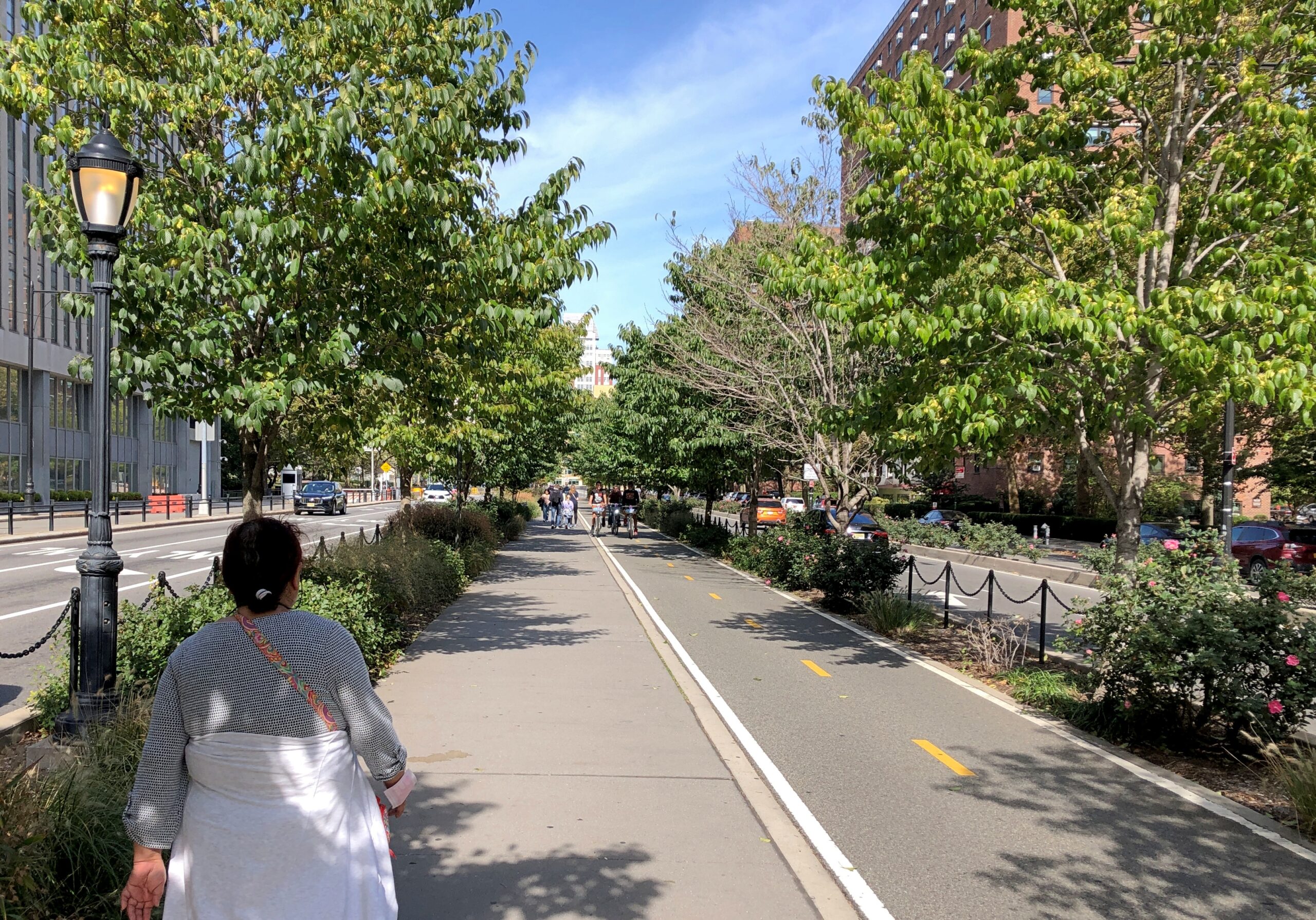
After leaving Fort Greene Park, Yuriko expressed the idea that she wanted to see the Brooklyn Bridge — which she hadn’t up close — and I couldn’t begrudge her a visit, especially since we weren’t far away. We walked from Myrtle Ave. to Flatbush Ave. (actually the “Flatbush Avenue Extension”) to Tillary St., where you can find the entrance to the Brooklyn Bridge Promenade. At that point, it’s both pedestrians and bicyclists.

Brooklyn Bridge 2025

I didn’t realize at first that the promenade leads directly to crossing the bridge, though it takes about 20 minutes to get there. I imagined, at first, that it would lead to Dumbo and a view below the bridge. An excellent spot, which I most recently visited in 2014.

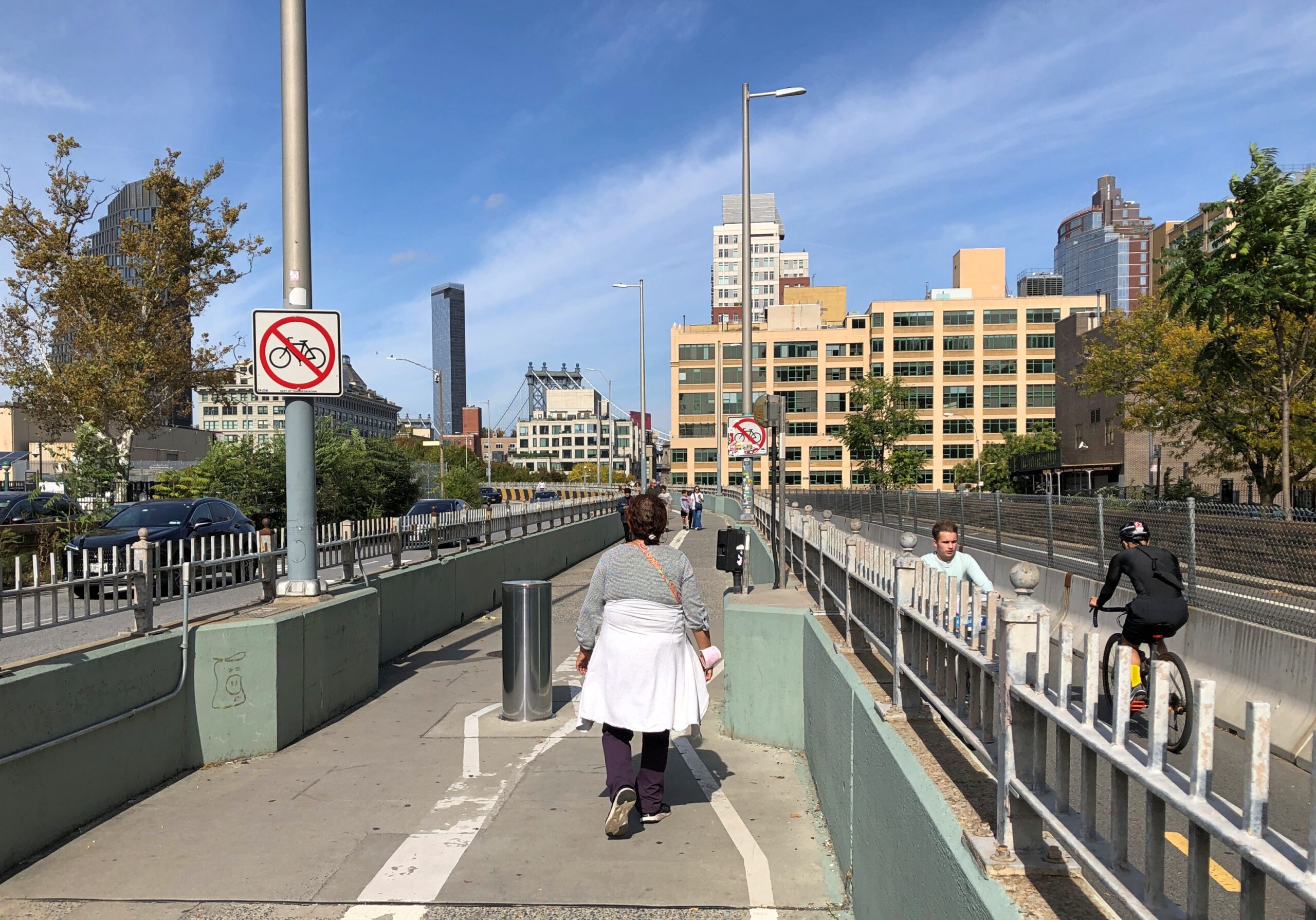
Soon I realized that we were headed for the bridge itself. Not only that, I saw that pedestrians were soon separated from bicyclists, beginning fairly far away from the bridge.

Brooklyn Bridge 2025

What an amazingly good idea, only done in 2021. Considering the crowds that the Brooklyn Bridge attracts, it probably should have been done years ago.

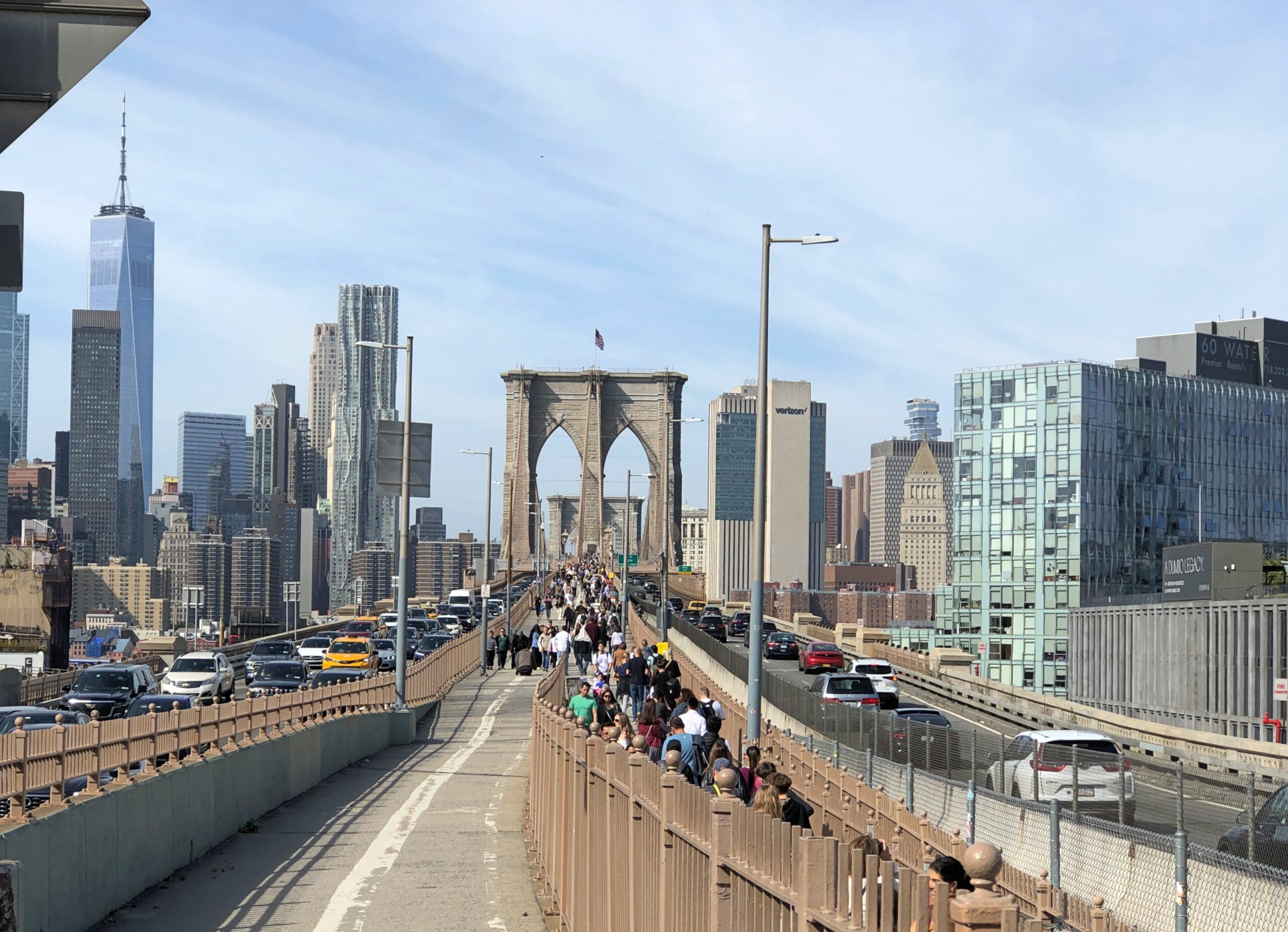
We walked from Tillary St., but the more popular Brooklyn-side pedestrian entrance is stairs at Washington Street and Prospect Street, seen below.

Brooklyn Bridge 2025

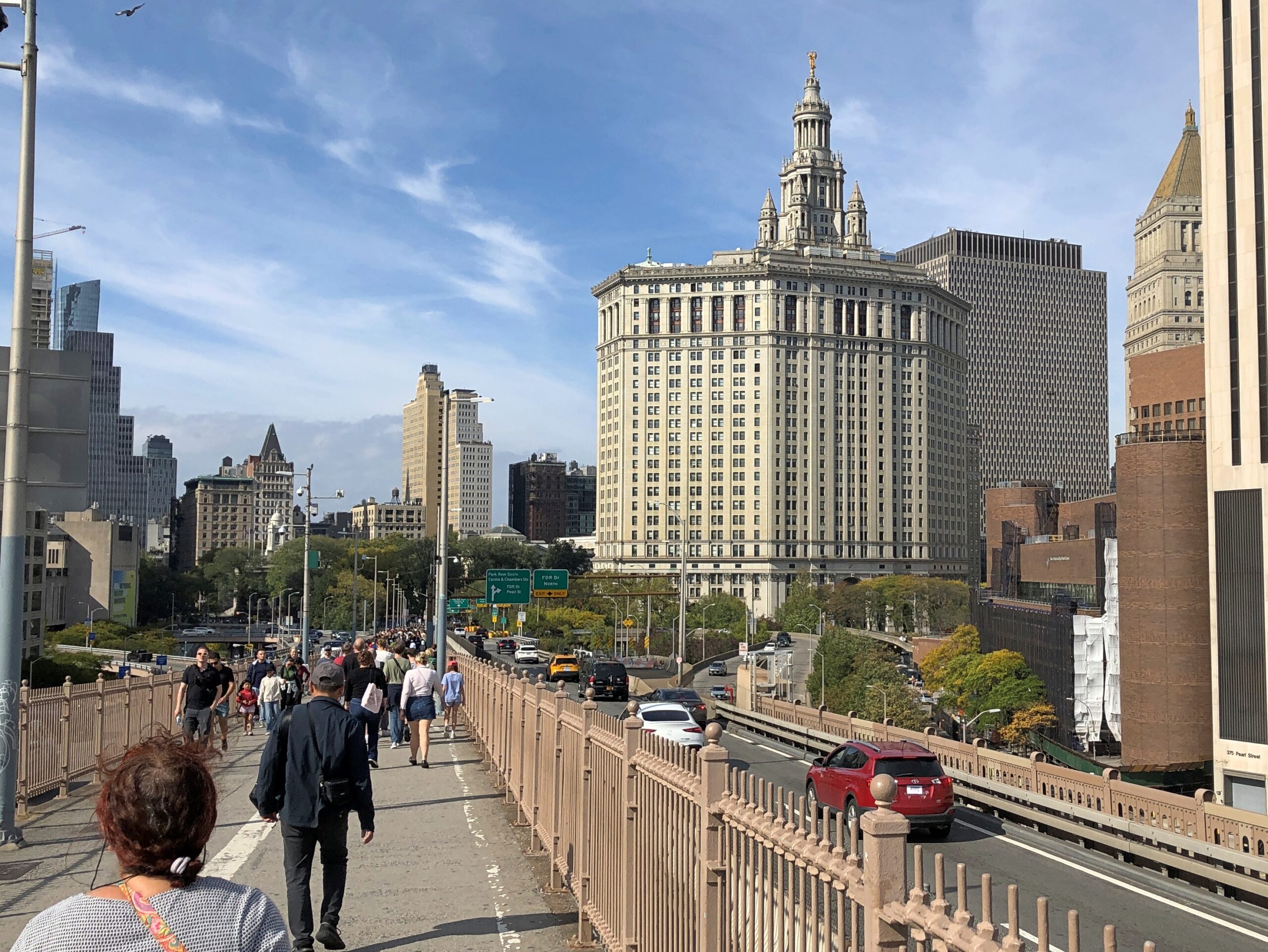
I didn’t remember the bridge being that crowded my first time, though at a remove of 40+ years, the details are a little hard to remember. It was hot, and probably a weekday, so that might have thinned out the pedestrian traffic.

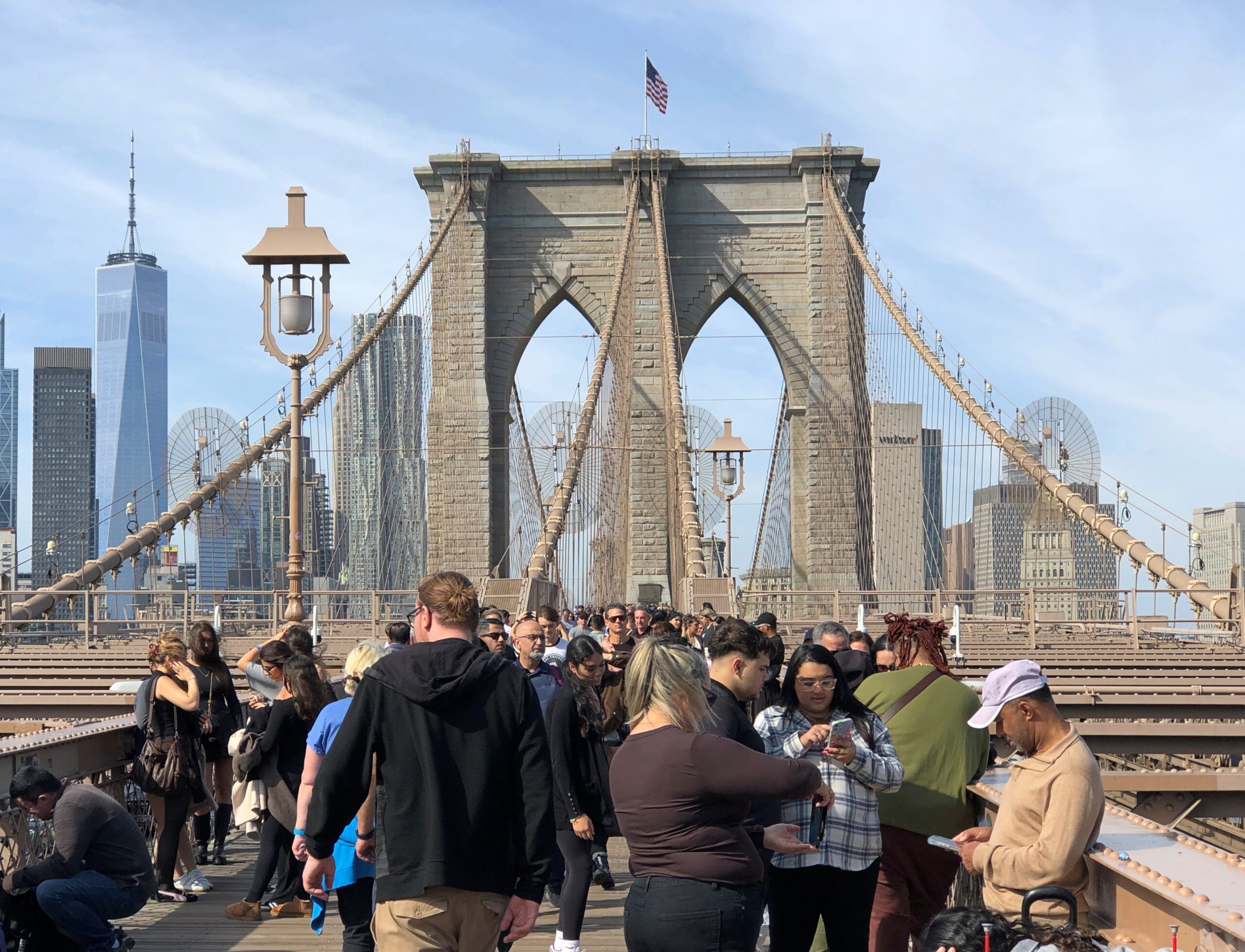
That wasn’t the case on a pleasant October Sunday. New Yorkers and tourists were out in force.

Brooklyn Bridge 2025

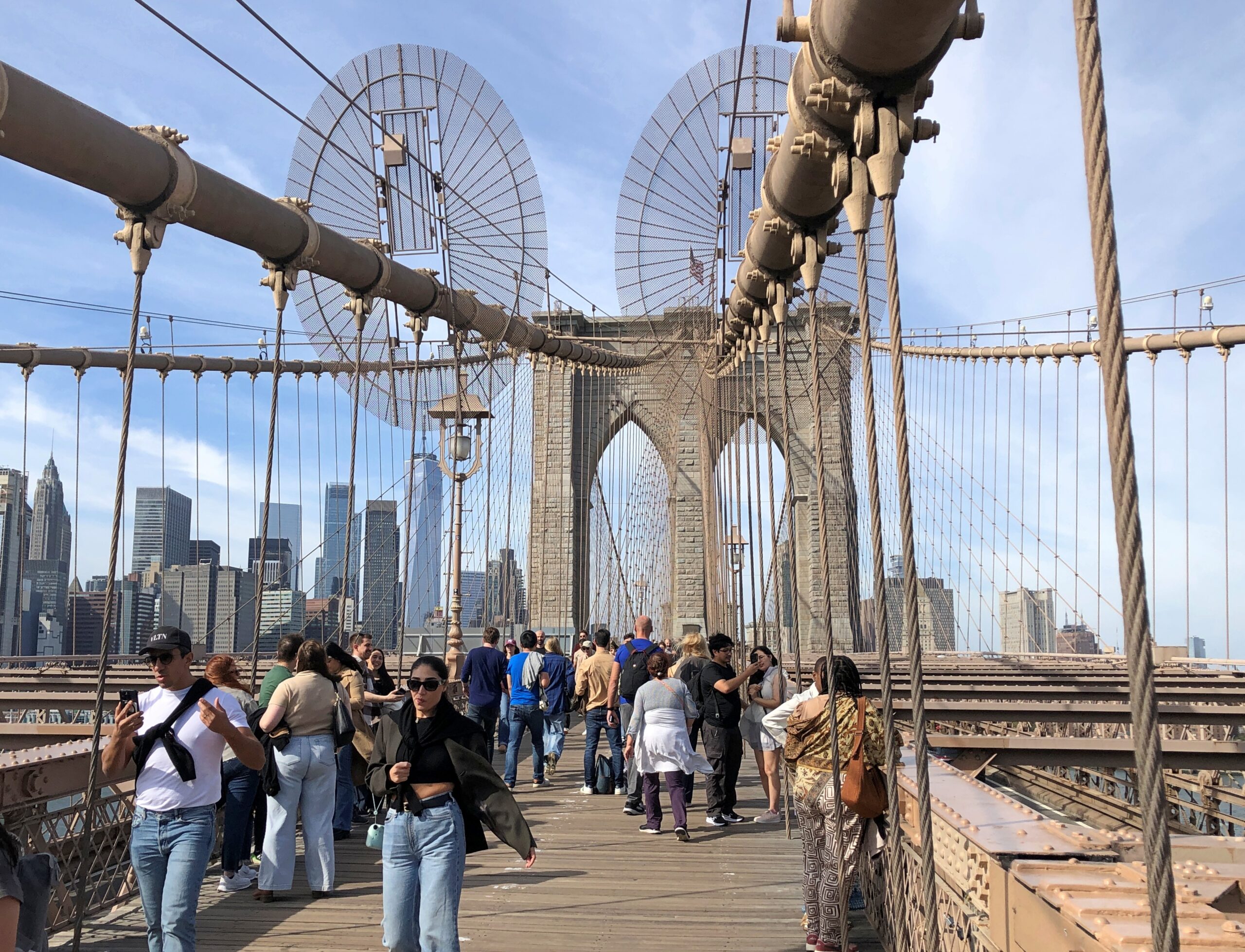
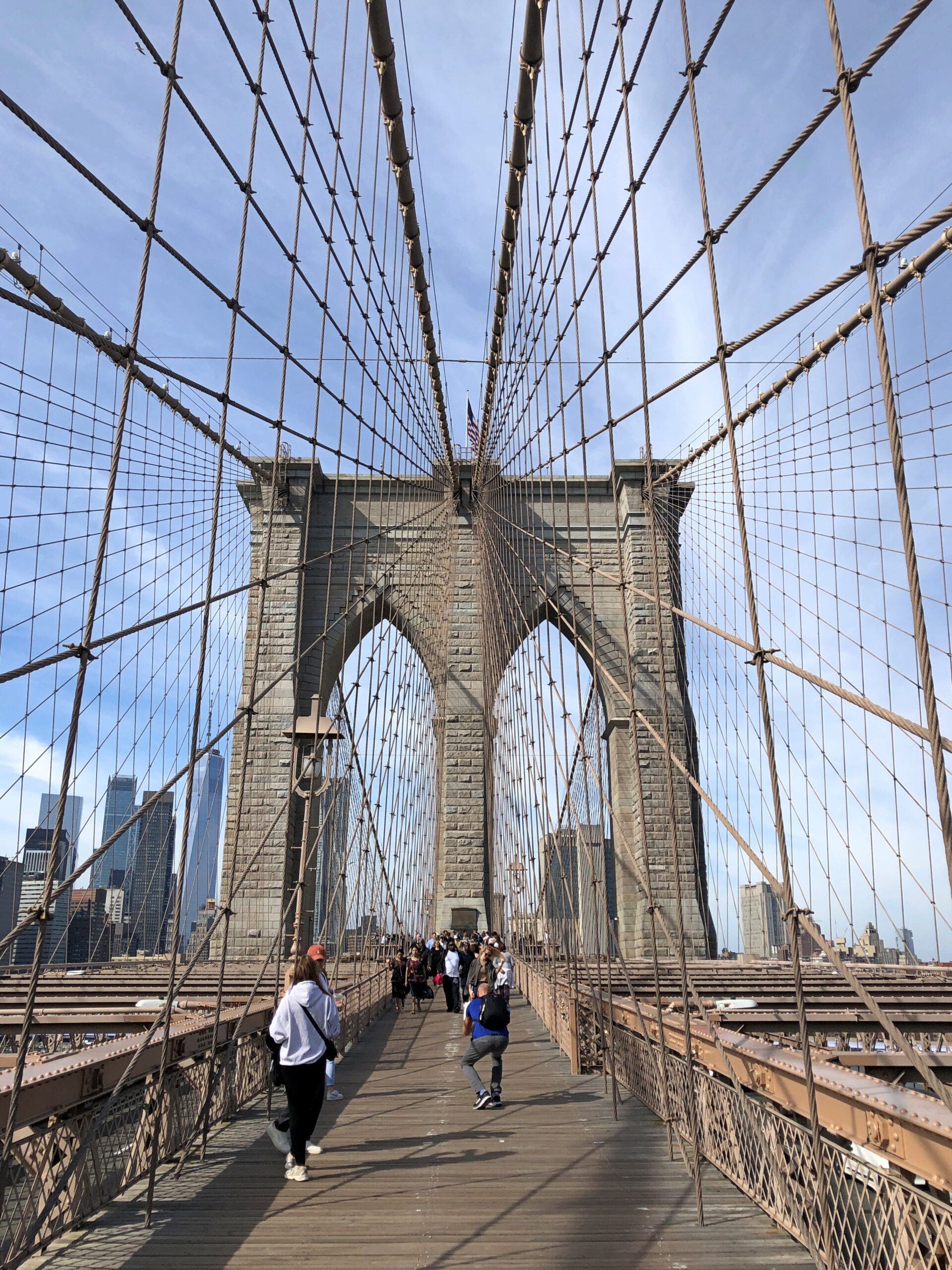
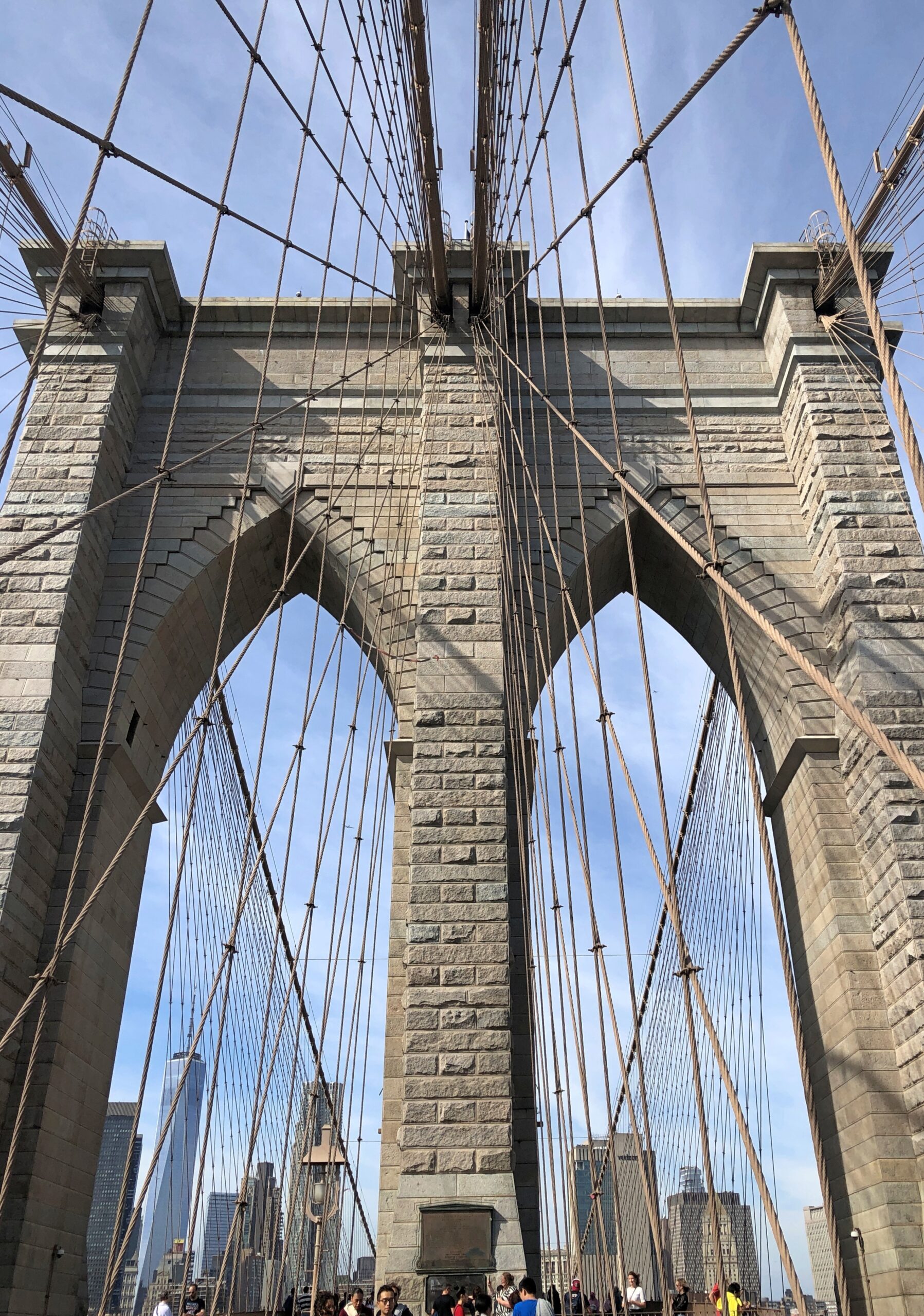
Mostly the bridge holds its crowds well. From the many wooden planks, you still get a closeup of the web-like intricacies and gray hulking towers created by the Roeblings and thousands of workmen.

Brooklyn Bridge 2025

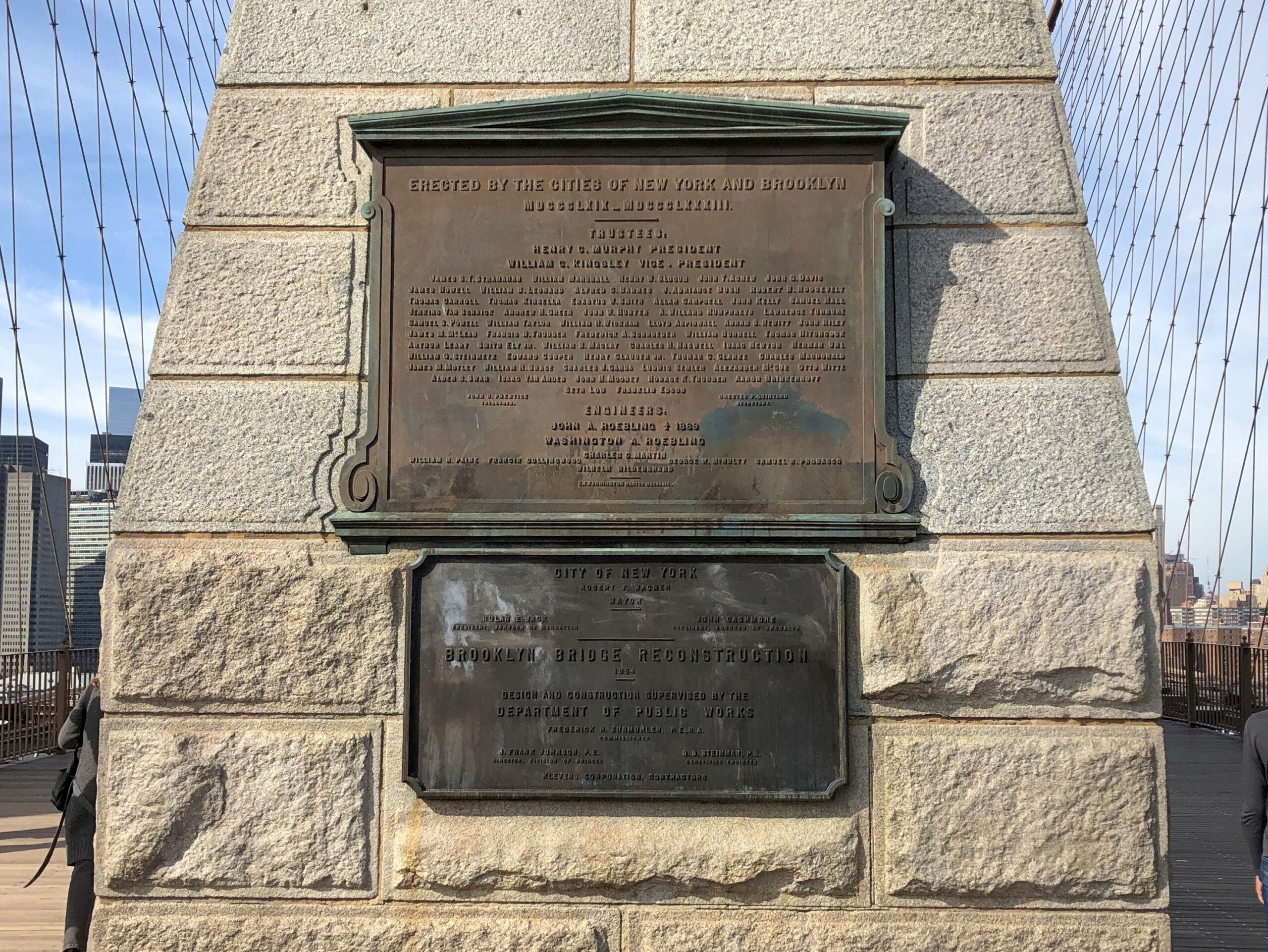
Credits.

Brooklyn Bridge 2025

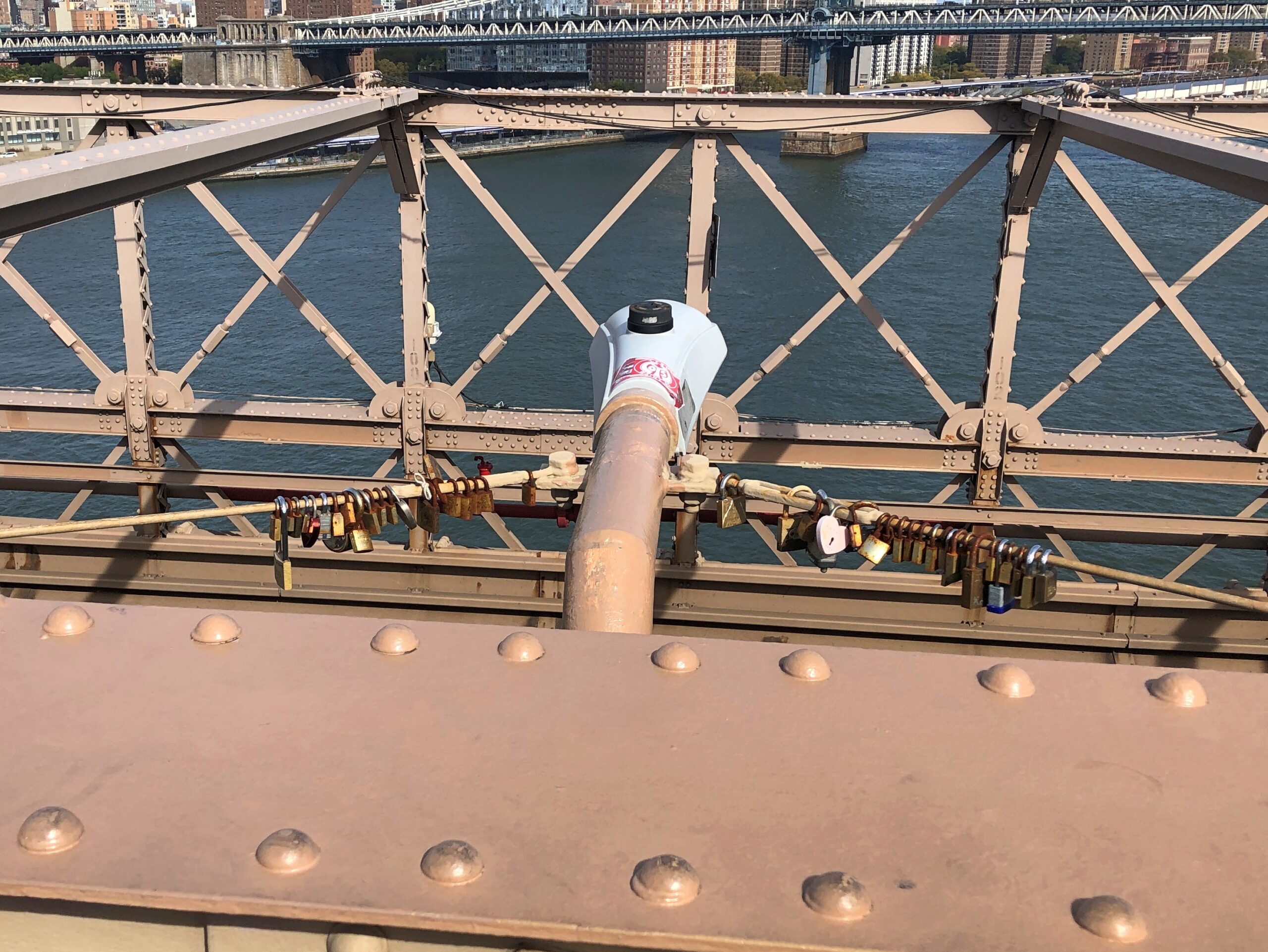
Love locks. I understand the city frowns on their attachment to critical infrastructure. That doesn’t change a thing.

Brooklyn Bridge 2025

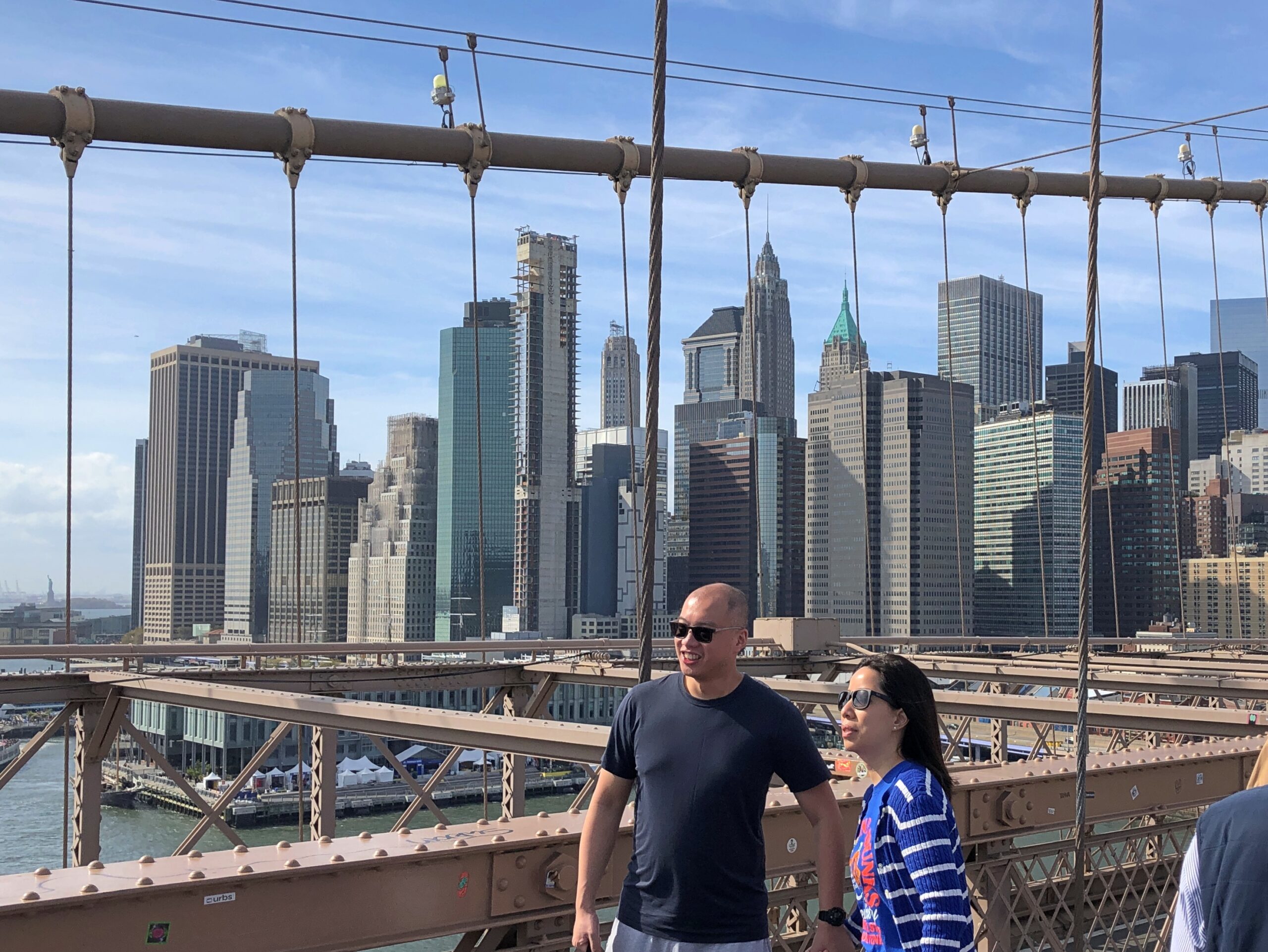
Provided you pay attention that there isn’t someone walking right behind you, it’s easy enough to stop to take in the famed views of Manhattan.

Brooklyn Bridge 2025

Soon enough you’re approaching Manhattan.

Brooklyn Bridge 2025

Yuriko had fulfilled her wish to walk the bridge, and it occurred to me that not only have I walked across the Brooklyn Bridge twice, I’ve done it once each way. Guess I need to visit San Francisco again and walk across to (near) Sausalito, then take a bus back, which would be the reverse of 1990. Or for that matter, visit the Ohio Bridge in Cincinnati again (another Roebling work), though I don’t remember which way I crossed it. Or visit the Roebling Museum. Ah, so many bridges to cross.

Fort Greene Park

On the morning of October 19, Fort Greene Park in Brooklyn was still pretty green.

Fort Greene Park

Of course, the 30-acre park was named for the talented Revolutionary War general, not for the hues of its 50-plus species of trees, very many of which seemed to be ginkgoes. Whatever the coloration, the park proved to be a nice place for a stroll that day, offering a more manageable size than either Central Park the day before, or Prospect Park would later that day (as great as those two are).

My idea for attending Open House New York was Manhattan on Saturday, Brooklyn on Sunday, planning that took us – by this time, just the two of us – to Atlantic Terminal by way of the LIRR on Sunday morning. From there, Fort Greene Park is a short walk, though once you get there, it’s something of a hustle to climb the park’s central hill. A fort had been on the site, active during the Revolution and again for the War of 1812, for a reason.

As a park, Fort Greene came of age at roughly the same time as the idea of municipal parks themselves, that is during the mid-19th century, with some agitation on the part of Walt Whitman – editor of the Brooklyn Eagle in the late 1840s – helping facilitate its creation.

In 1857, Whitman wrote about the place, known at the time as Washington Park: This beautiful ground is now covered with rich verdure, and is one of the pleasantest resorts anywhere around. On its lofty tops you feel the breeze, and from them behold one of the finest views in the world. Most of the trees are yet too young to cast much shade, but they are growing finely.

We recollect there was a very obstinate and indignant opposition to the securing of these noble grounds, some twelve years since, when the project was mooted before the Common Council and the public. It was argued that Brooklyn was not rich enough to stand the expense of purchase; and that it would be better to let the “old fort” be dug away, and blocked up with buildings.

Fortunately these counsels did not prevail. A more far-sighted policy… carried the day.

Is there any one left of those who so furiously opposed Washington Park, who is not now glad that his opposition did not succeed?

I’m also glad there’s a park, though leaving the ruins of the fort might have been an interesting approach to creating one. As Whitman would surely have appreciated, 21st-century Brooklynites were out in numbers (but not crowds) to enjoy the park on a warmish fall day, walking their dogs and turning their kids loose to play. A scattering of other people had come for Open House.

The green space and trees were only the first layer. Come 1867, Frederick Law Olmsted and Calvert Vaux applied their considerable talents into making Fort Greene into their vision of an urban park, a small-scale version of Central Park or Prospect Park. That’s reason enough to visit.

One of their additions: grand outdoor stairs.

Fort Greene Park

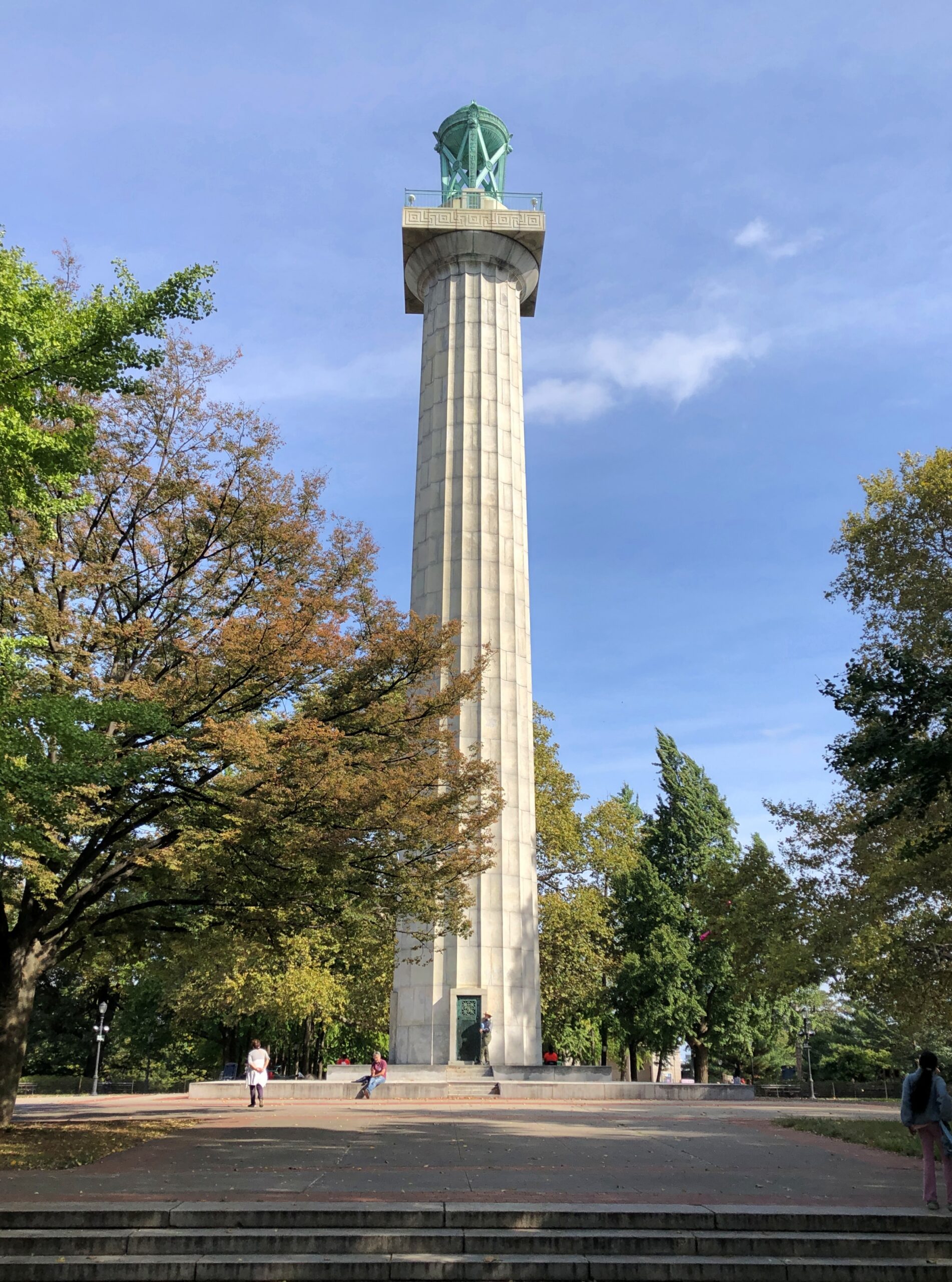
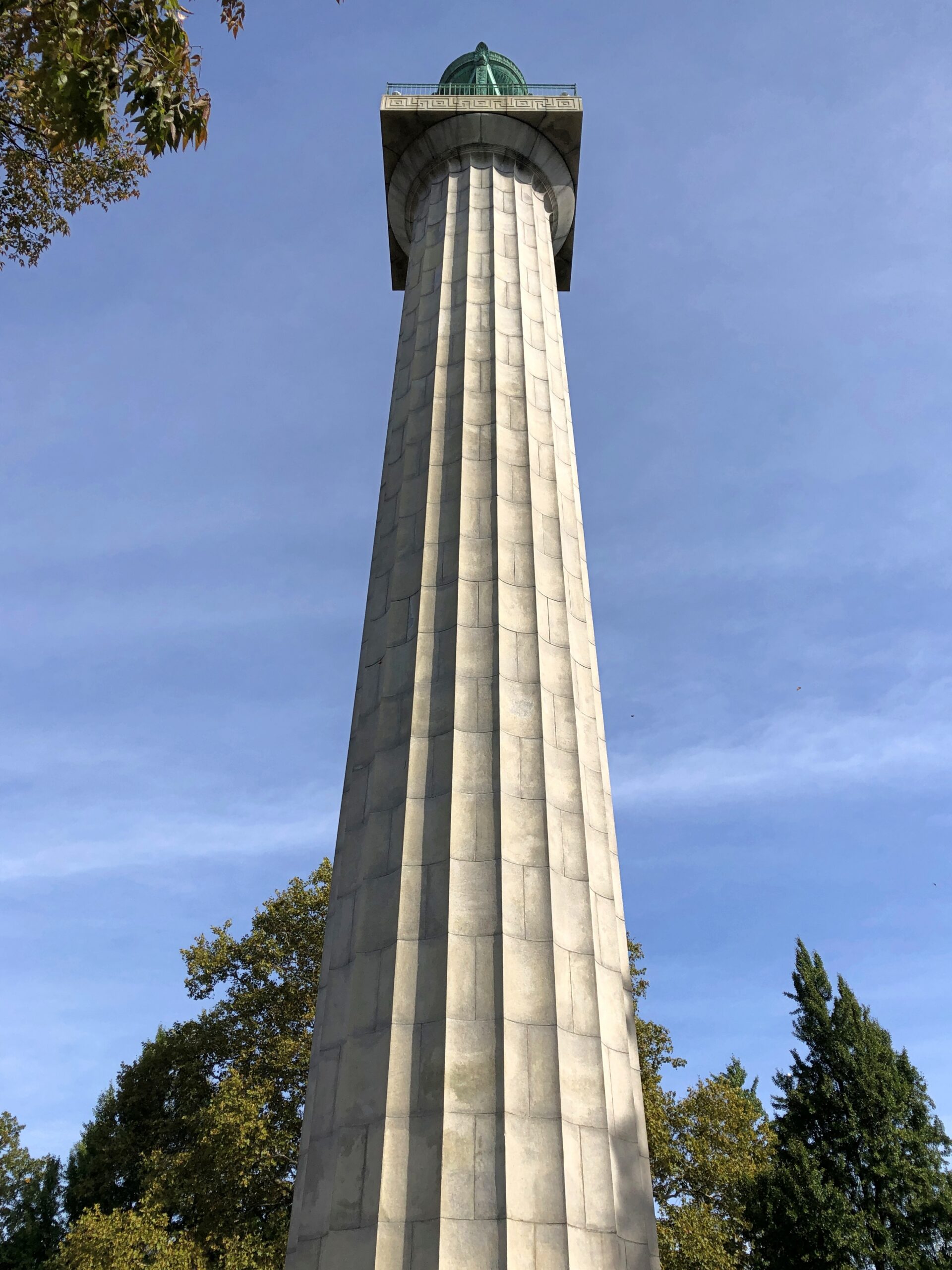
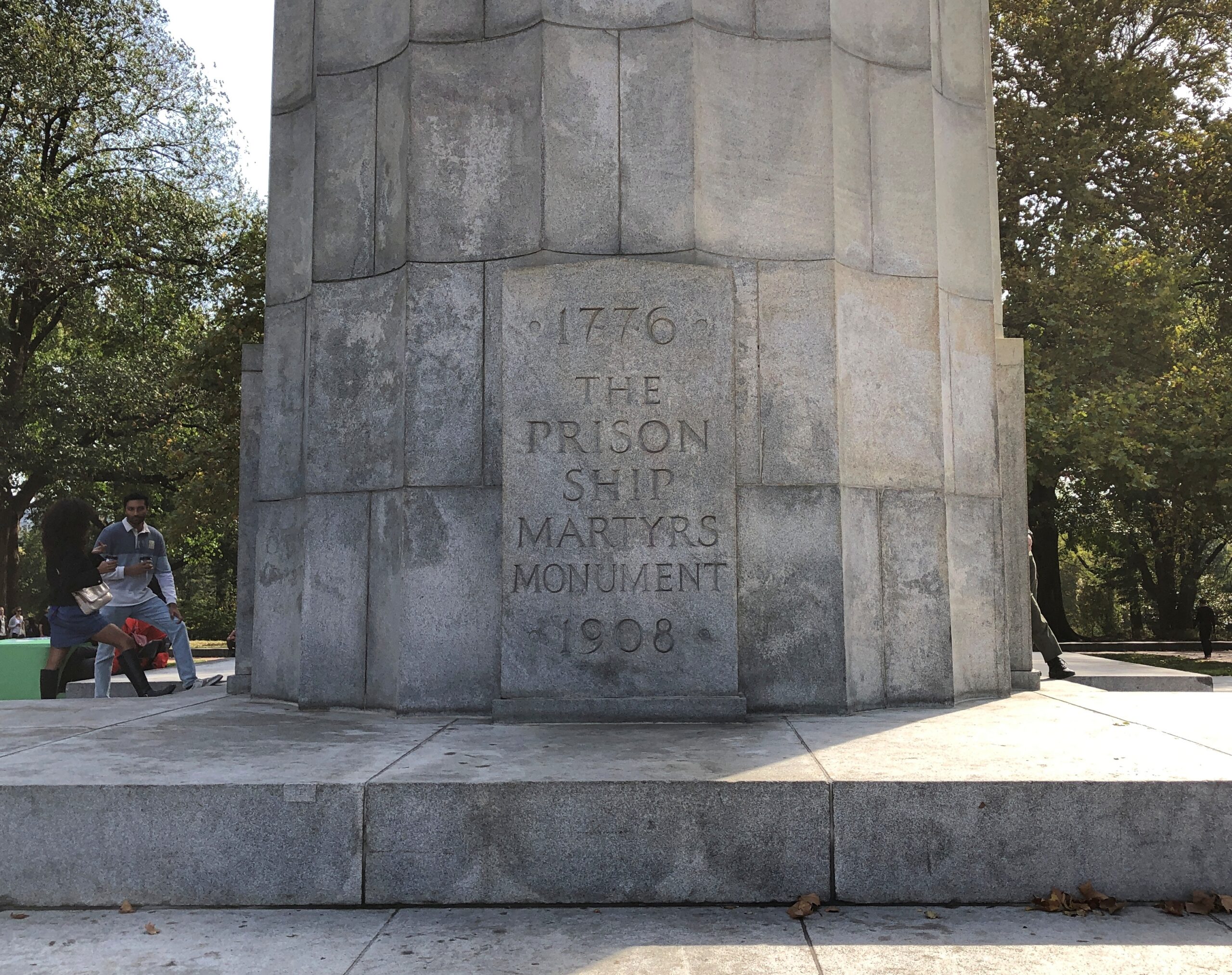
It wasn’t until 1908 that those stairs led to the Prison Ship Martyrs Monument, memorializing the more than 11,500 POWs who died in wretched conditions aboard British prison ships during the Revolution.

Fort Greene Park
Fort Greene Park
Fort Greene Park

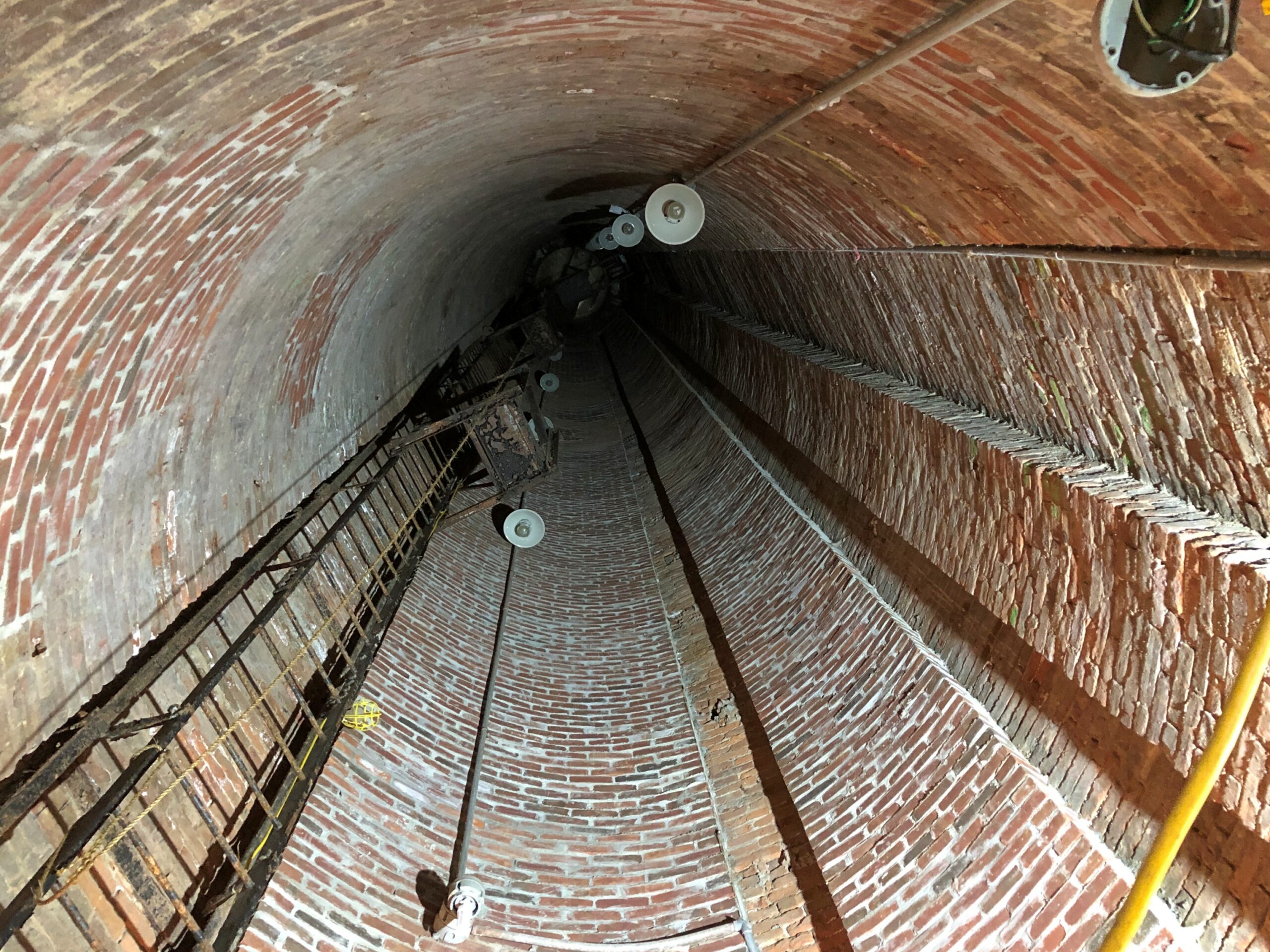
The column isn’t usually open, but Fort Greene Park was an Open House site, so we were able to go inside after waiting in line a short time. I was expecting stairs inside. But there was just a rusty iron ladder, which the park ranger who led us into the column called “scary.” I agree.

Fort Greene Park

There had been a spiral staircase in the memorial’s early days, but it is long gone. I wasn’t in a stair-climbing mood at that moment anyway, so for me it was just as well. If the city ever comes up with the scratch, there might be stairs again, the ranger said.

Fort Greene Park

She also told us about the formation of the park, the long delay in setting up the memorial, and the tomb on the grounds that holds bones of some of the prisoners. The tomb isn’t open to the public.

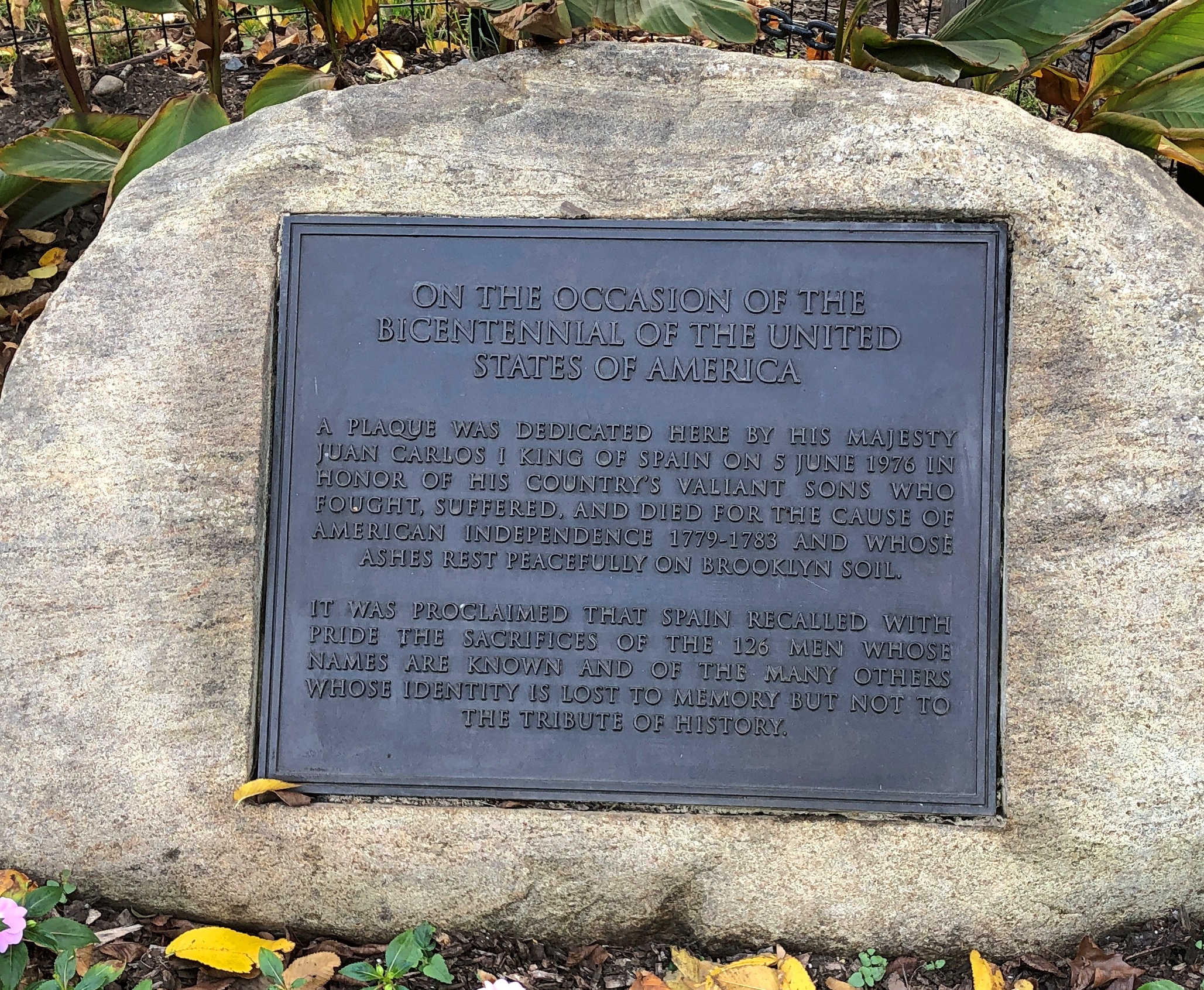
A newer memorial, plaque-on-rock style and in place almost 50 years now, was dedicated by a young King Juan Carlos in memory of the Spaniards who fought for American independence.

Fort Greene Park

French assistance to the nascent United States was mentioned prominently in school but not, that I remember, Spanish efforts, which were nothing to sneeze at. Maybe by 1898, Spaniards who gave the matter any thought considered the U.S. a pack of ingrates, but such is geopolitics. By 1976 and later, it was high time to acknowledge the likes of Bernardo de Gálvez and his men, and I was glad to find out that Pensacola still celebrates Gálvez Day (May 8).

Central Park Ramble ’25 (Strawberry Fields For Now)

Kids came in some numbers for Halloween here in the northwest suburbs yesterday, but I didn’t keep an exact count this year. The day was cool but not cold, without a hint of rain, so that might have encouraged turnout, like for voting. One time a passel of kids showed up, maybe a dozen or so, all under 10, with a smaller passel of parents off near the sidewalk.

We were giving away full-sized candy bars until they ran out, and the passel squealed with delight at receiving the various Hersey products. Even now, the costumes are a blur, maybe because I didn’t recognize a lot of the characters. Ones that I might have known weren’t familiar either. I asked the parents of a very small boy — ah, first-timers — what he was supposed to be. His shirt pattern reminded me of TMNT, but it was Hulk, they told me. “Hulk smash,” they said. “Hulk smash, all right,” I agreed.

All of the Halloween traffic, except for a handful of older kids, came before dark. My not-so-inner curmudgeon reacts: in my day, we trick-or-treated after dark, risking bodily injury on the streets, and we liked it.

But I am glad to report that the older kids – junior high and even high school – are far fewer than they were, say, 20 years ago. So it’s back to the way it should be. For older people, there are always such seasonal events as the Greenwich Village Halloween Parade. To this day, the ’06 iteration of that parade remains the only time I’ve encountered the band KISS live – they were the grand marshals (RIP, Ace Frehley). We also encountered Space Ghost then, or at least a fellow who was adamant about his Space Ghost identity.

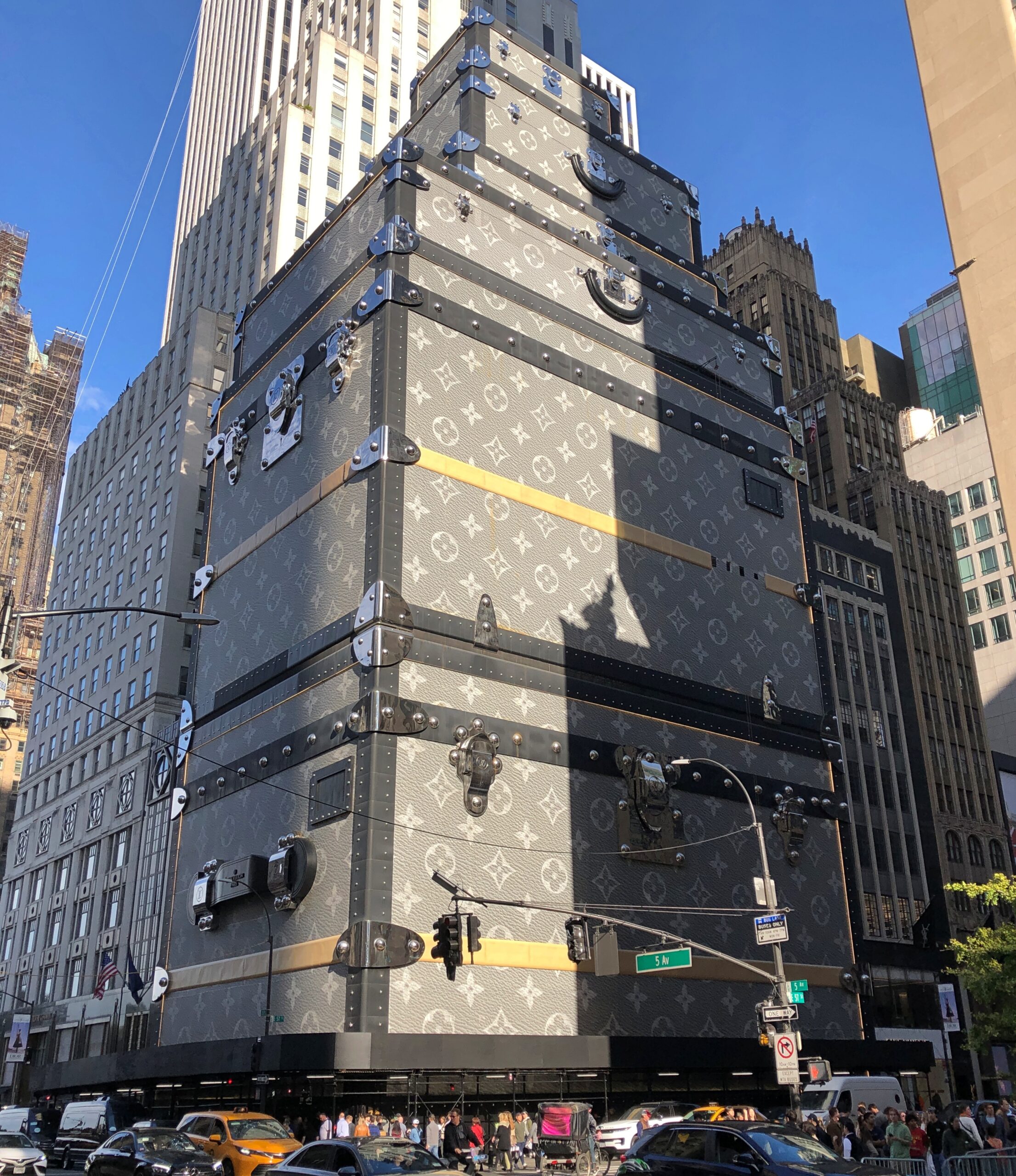
Near Central Park on Fifth Ave. is 1 East 57th Street. We walked by last month.

Louis V 2025

A few years ago, luxe retailer LVMH Moët Hennessy Louis Vuitton added a faux facade to its NY flagship store there on the avenue, one that evokes its signature luggage trunks in a highly visible way. Redevelopment plans for the building behind the trunks were unveiled not long ago, so I suspect the trunk-appearance doesn’t have much longer to look down on Billionaire’s Row and its strato-priced residential properties (whose high rents and sale prices don’t necessarily guarantee high-quality construction, apparently).

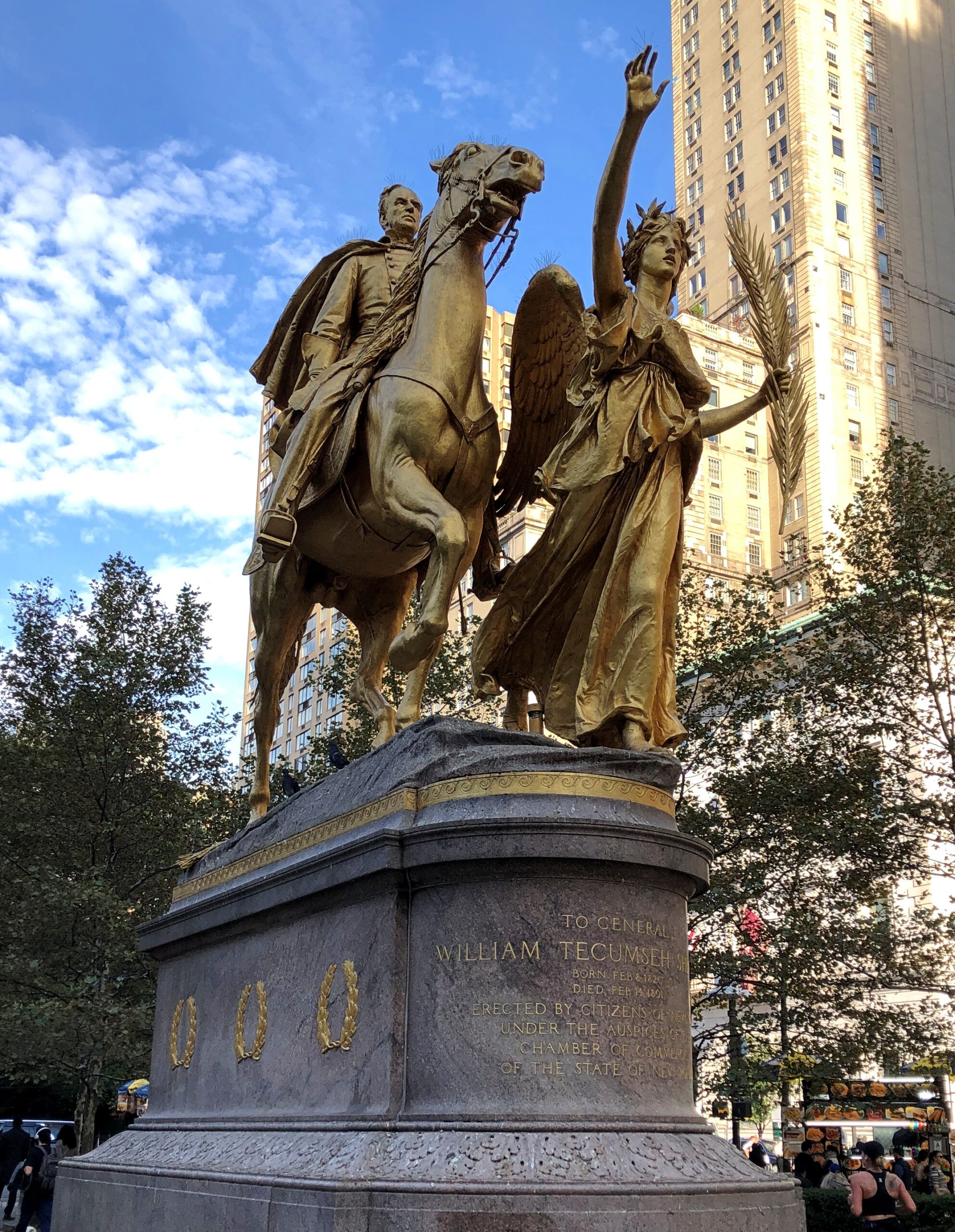
As we neared Central Park, we spent a little time at Augustus Saint-Gaudens’ statue of William Tecumseh Sherman (dedicated 1903) in Grand Army Plaza. Life’s too short not to look at some Saint-Gaudens from time to time.

Grand Army Plaza

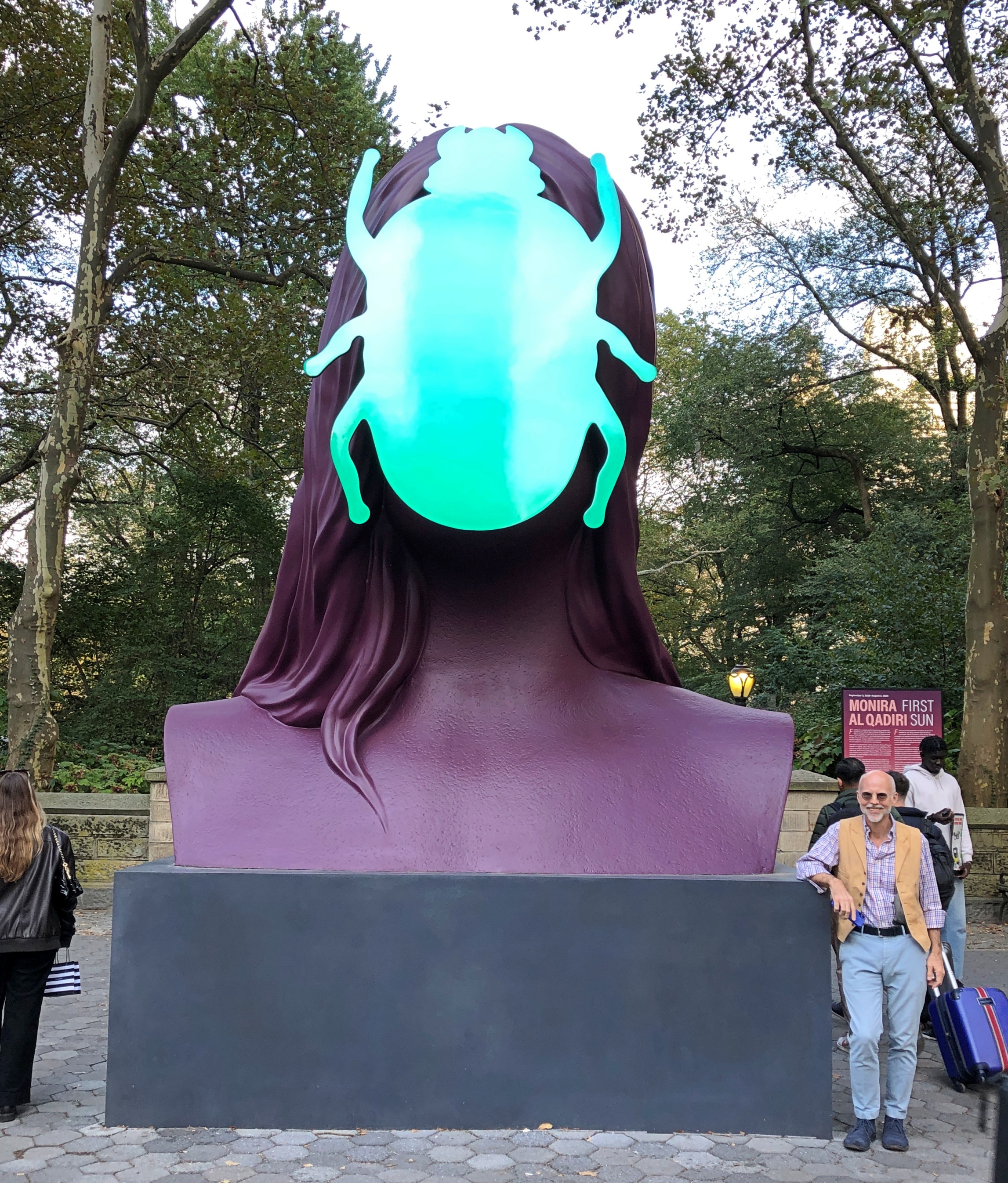
Not far away, something a little newer.

“First Sun,” a painted aluminum sculpture of a human-scarab figure by Senegalese artist Monira Al Qadiri, and slated to be in place until the end of next summer.


“First Sun,” a painted aluminum sculpture of a human-scarab figure by Senegalese artist Monira Al Qadiri, and slated to be in place until the end of next summer.

Visible from near the statues is the storied Plaza Hotel and an Apple Store, which is open 24 hours, Google Maps tells me. Storied in a different way.

I’m glad the Plaza acknowledges its fictional role in The Great Gatsby by featuring a lavish-beyond-the-dreams of Croesus Gatsby Suite. Of course. A smart hotel operator isn’t going to waste an opportunity like that. In this case, Fairmont Hotels and Resorts, a Canadian company, managing for owner Katara Hospitality – the large hotelier owned by the Qatari government. In the 21st century so far, the Plaza has been owned by an Israeli company and then an Indian one before Katara bought it. There’s something oddly American about an ownership trajectory like that.

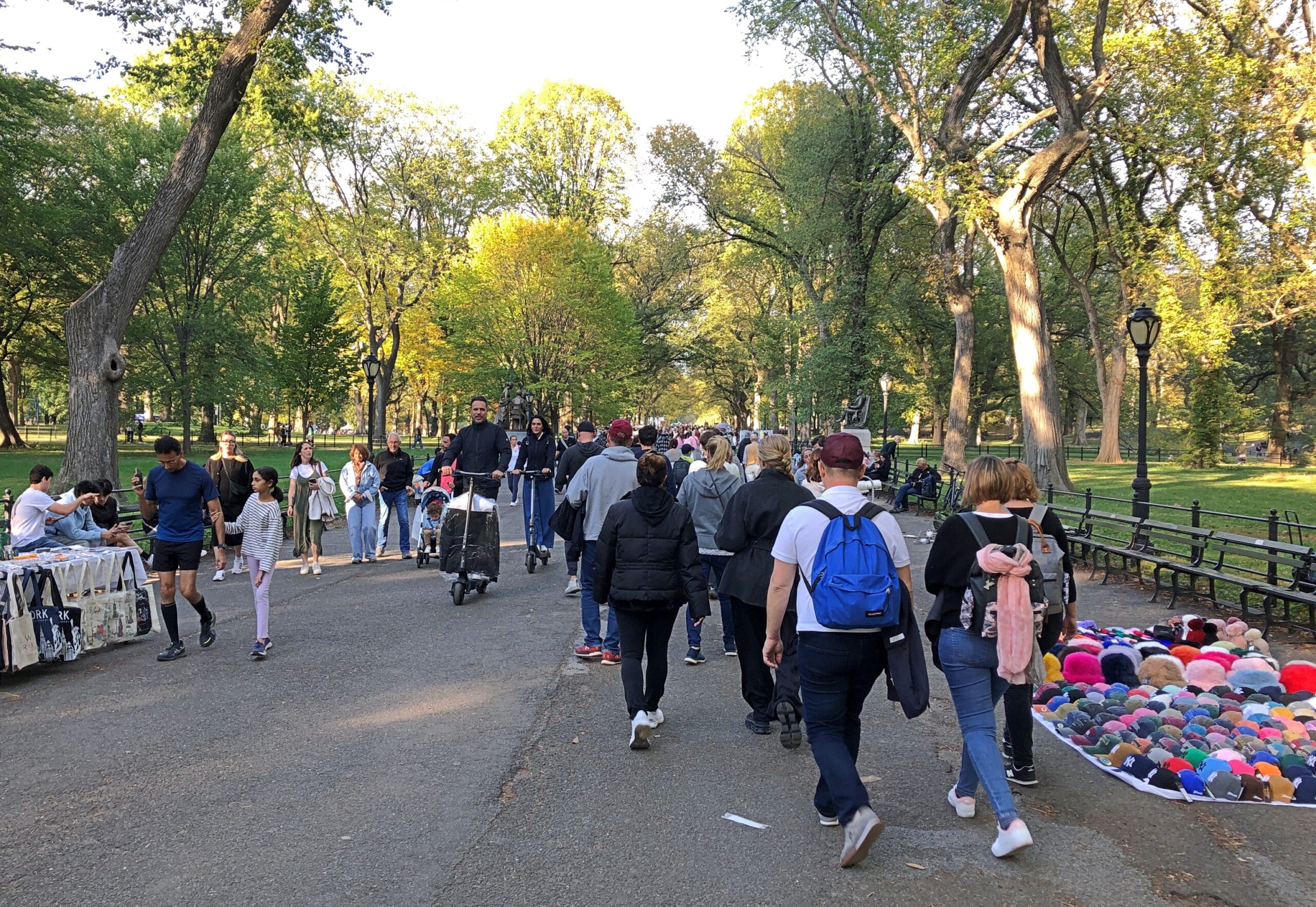
We – Robert, Geof, Yuriko and I – charted ourselves a simple walking path through some of the southern reaches of Central Park. Manhattanites and visitors to the borough were out in Saturday-afternoon force. Saturday, in the park/I think it was the 18th of October. No, that doesn’t scan. A fair number of pitch-a-blanket cap and souvenir salesmen were out, too, but not nearly as many buskers as a great city park like Central Park should attract.

Central Park Oct 2025

There’s an editorial right there: why America needs more buskers, and why some American cities need to chill when it comes to suppressing buskers. Europeans might not be right about everything, but about allowing buskers? Yes.

The leaves weren’t at peak just yet, with the greens still hanging on more than not. I don’t remember which visit to Central Park it was, but one time I wandered the park during peak coloration, whipped into even greater yellow-and-red glory by a brisk October wind. Temporary clouds of leaves came and went, even as the wind shook more leaves from their branches. Color, but also motion.

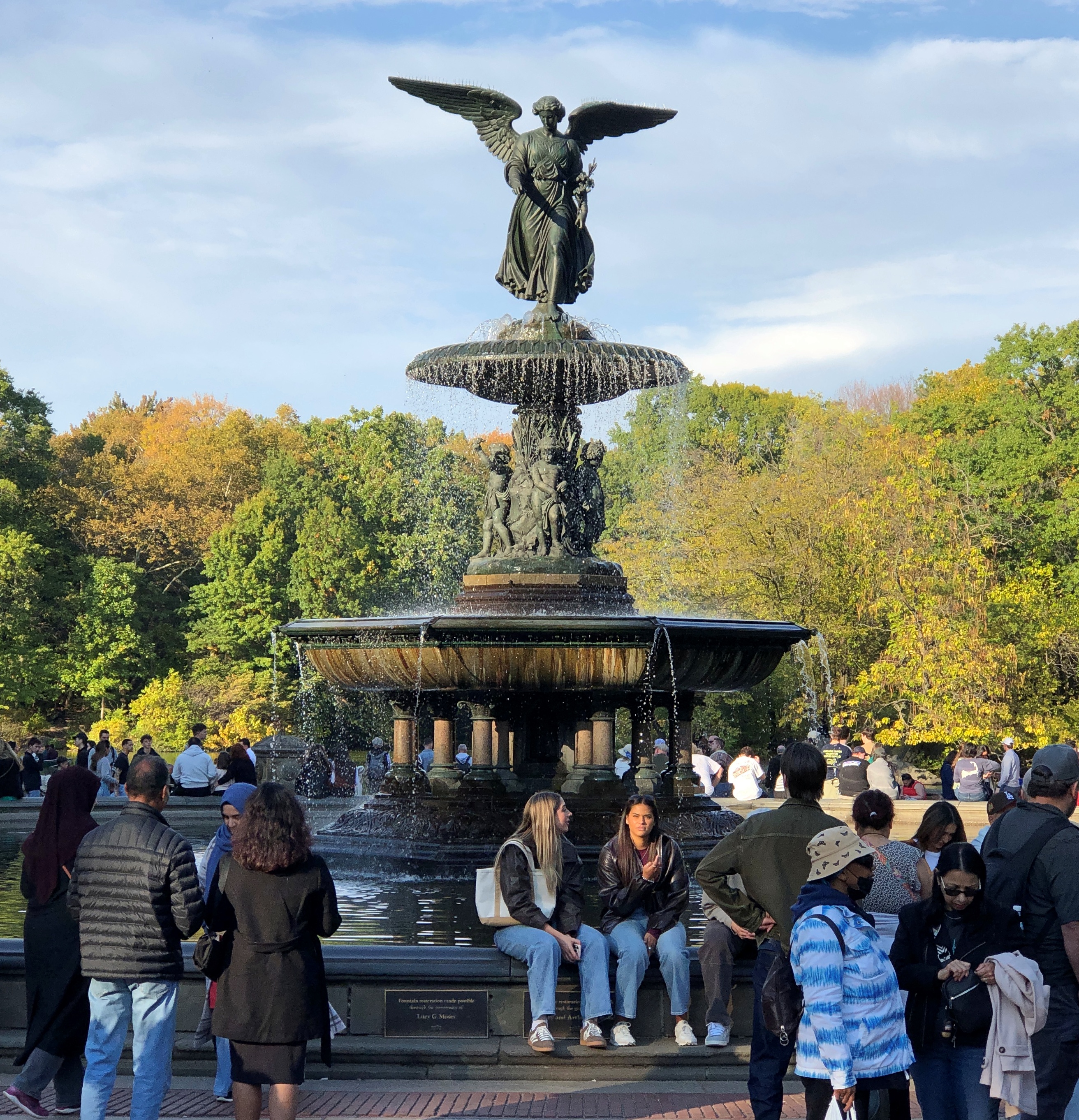
Eventually, we came to The Lake by way of Bethesda Terrace and Fountain.

Central Park Oct 2025

But not all the way across The Lake to The Ramble, whose Wiki description drily states that “historically, it has been frequented for both birdwatching and cruising,” with hyperlinks articles about both of those activities. What about cruising birdwatchers? There’s a Broadway musical in that concept somewhere.

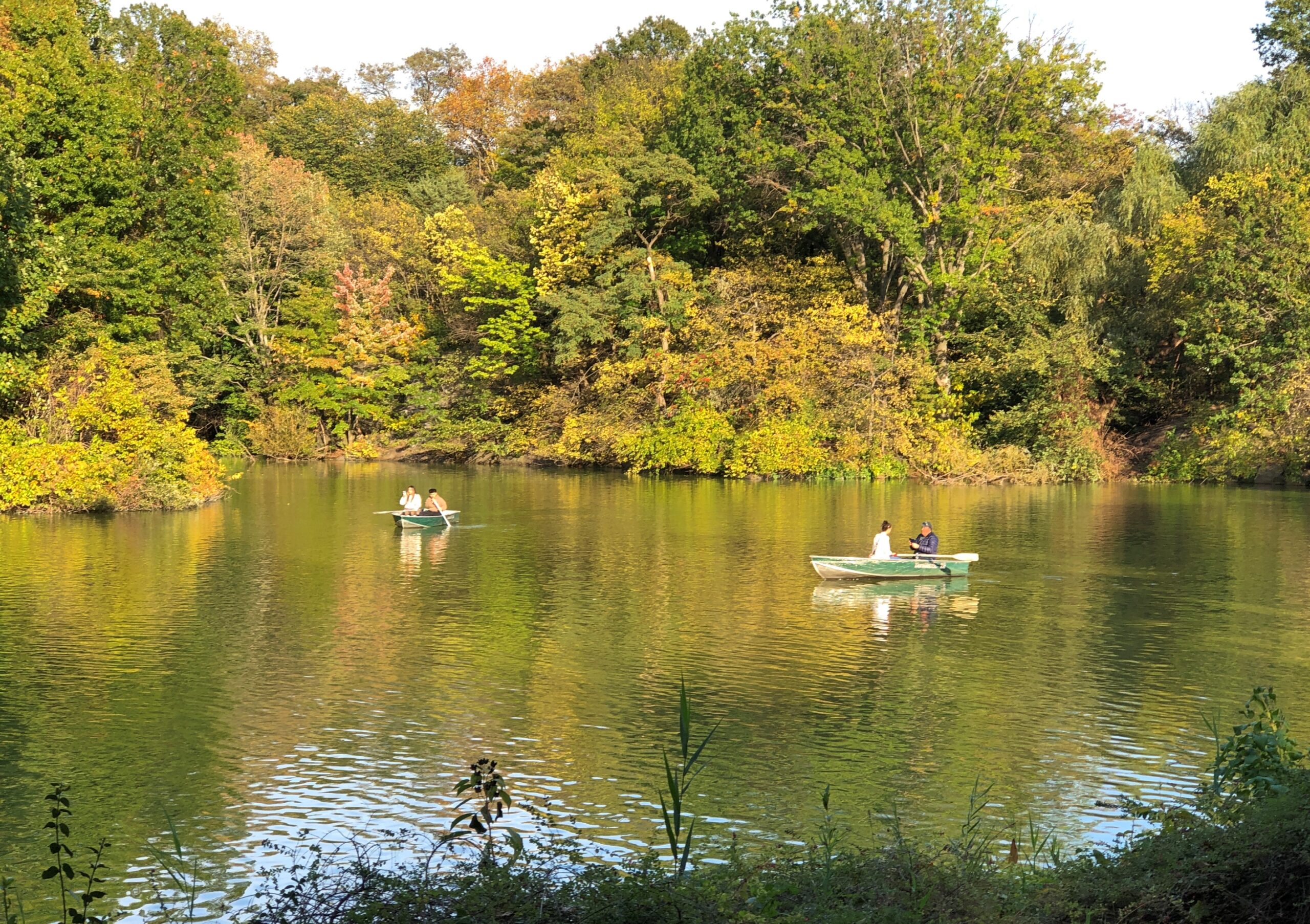
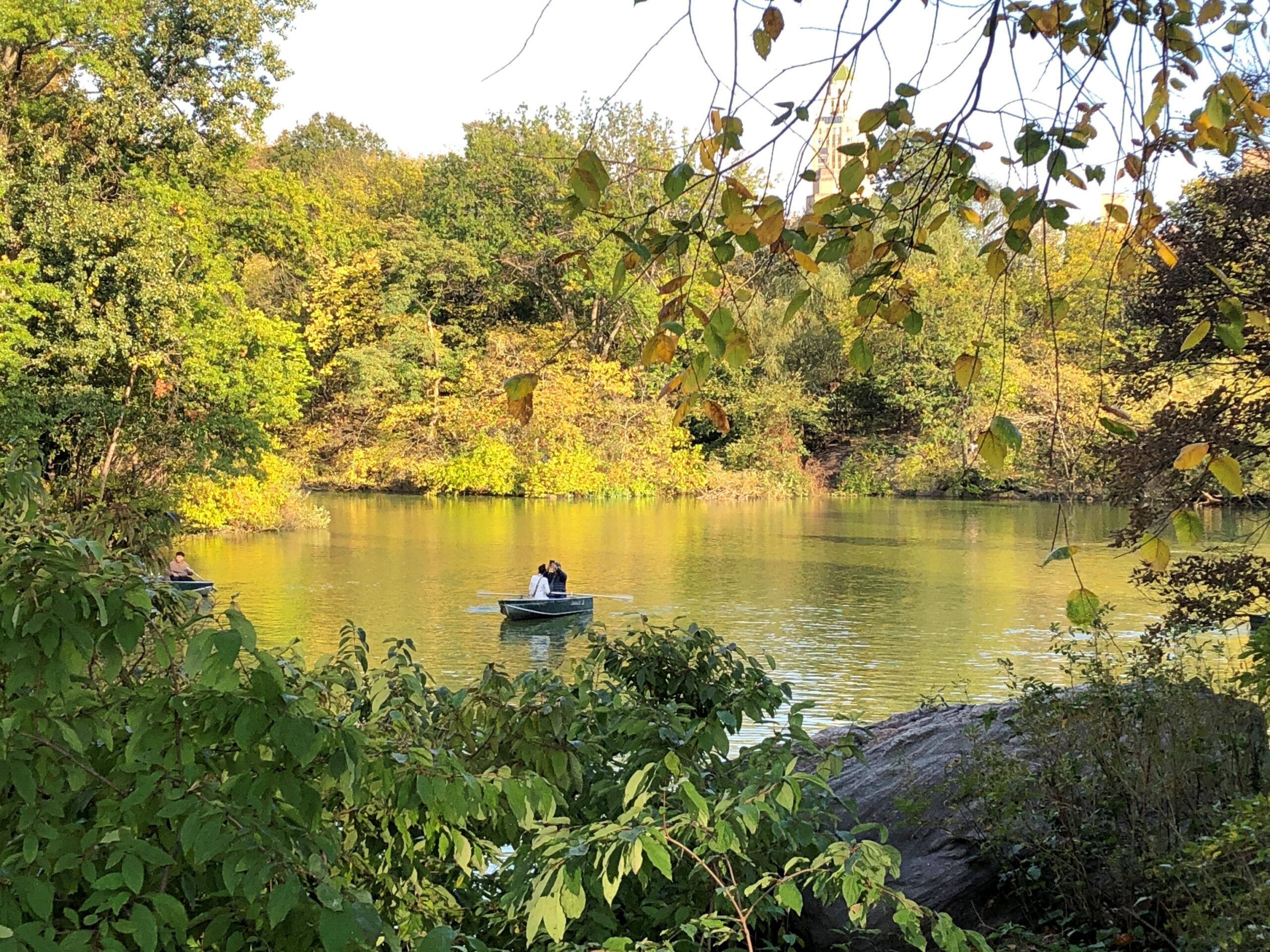
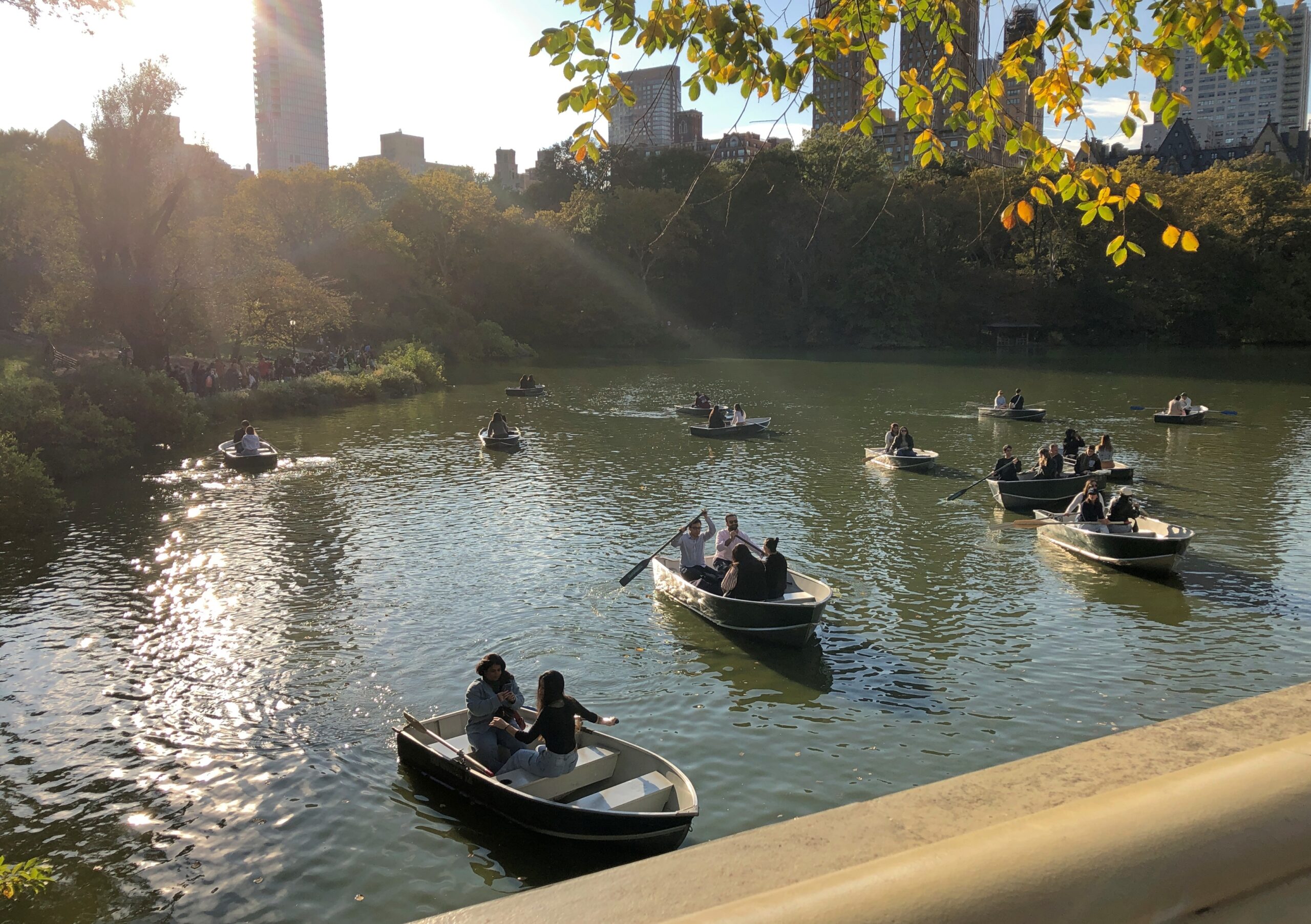
The Lake was clearly a good time and place for casual boating.

Central Park Oct 2025

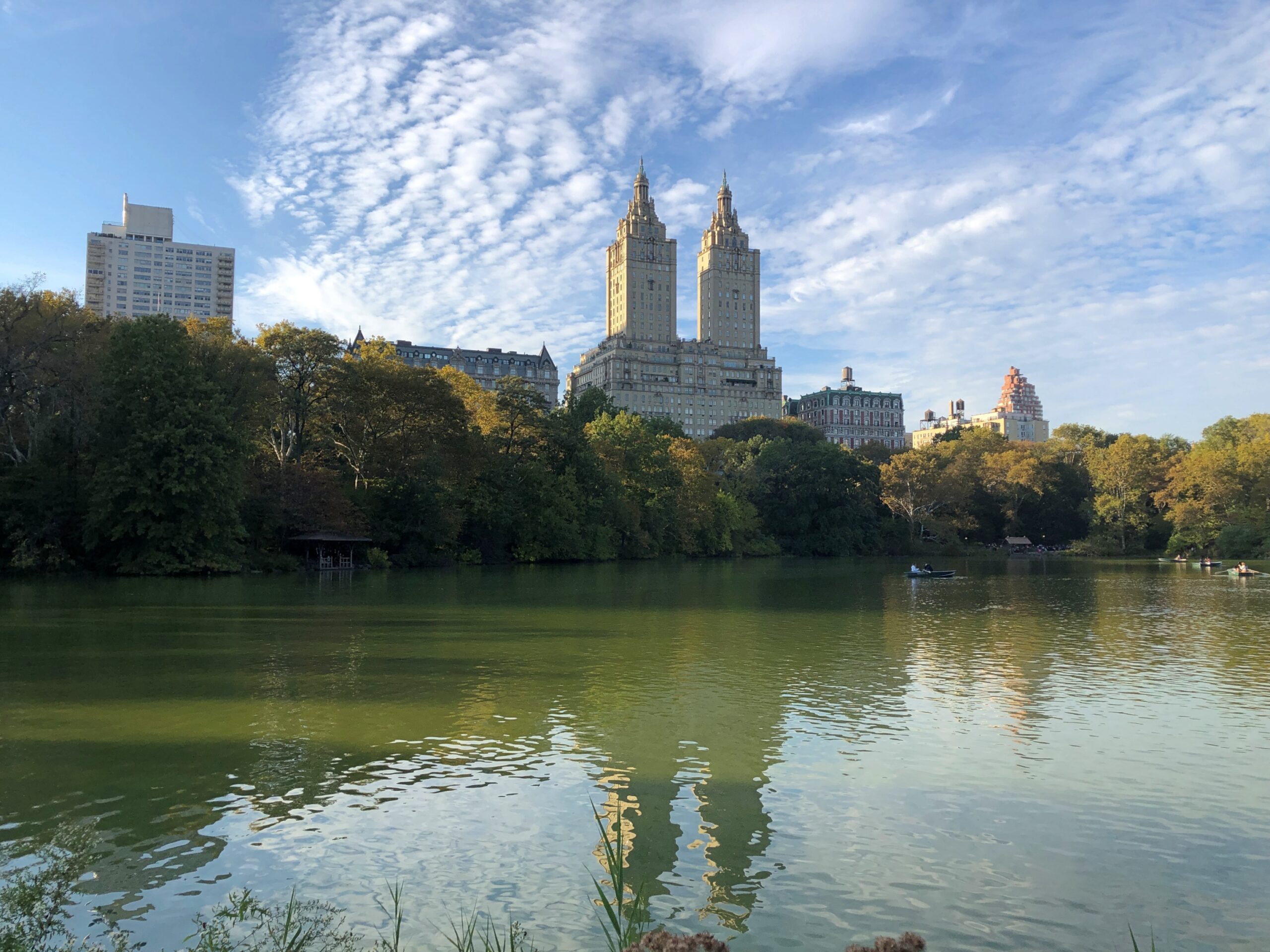
The view from the Bow Bridge.

An Upper West Side backdrop.

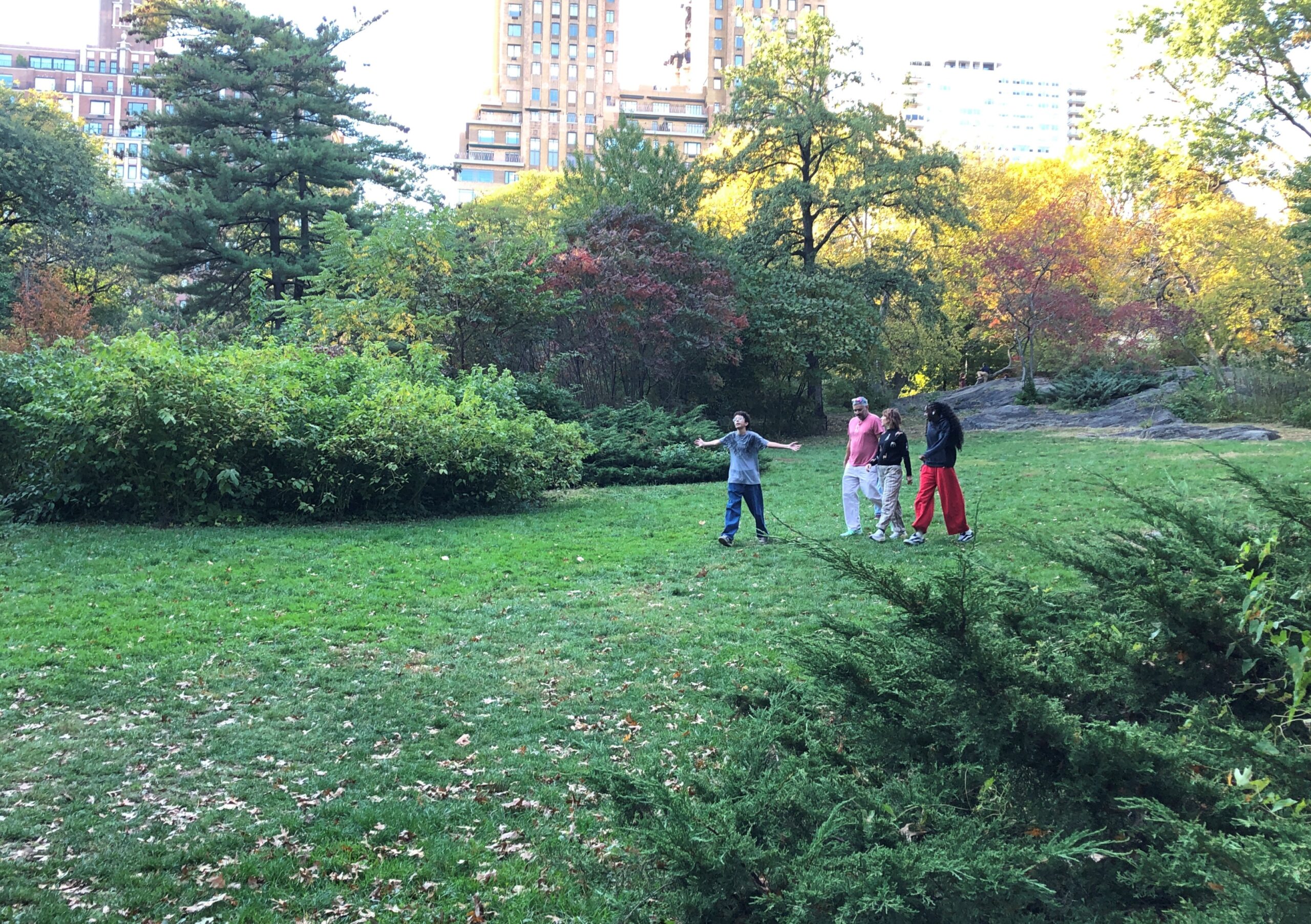
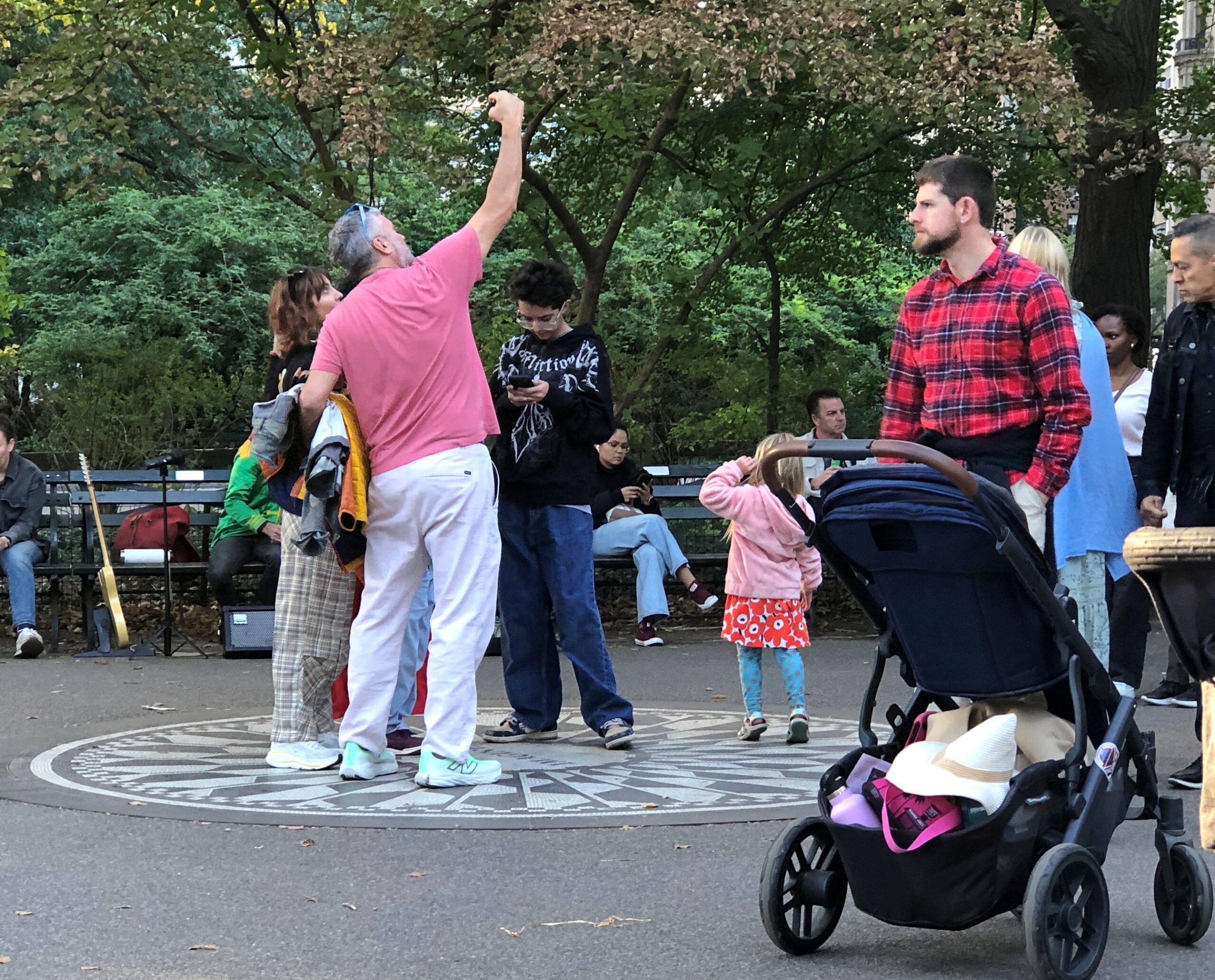
In that part of Central Park, it’s hard to miss Strawberry Fields. There is a fairly empty section.

Central Park Oct 2025

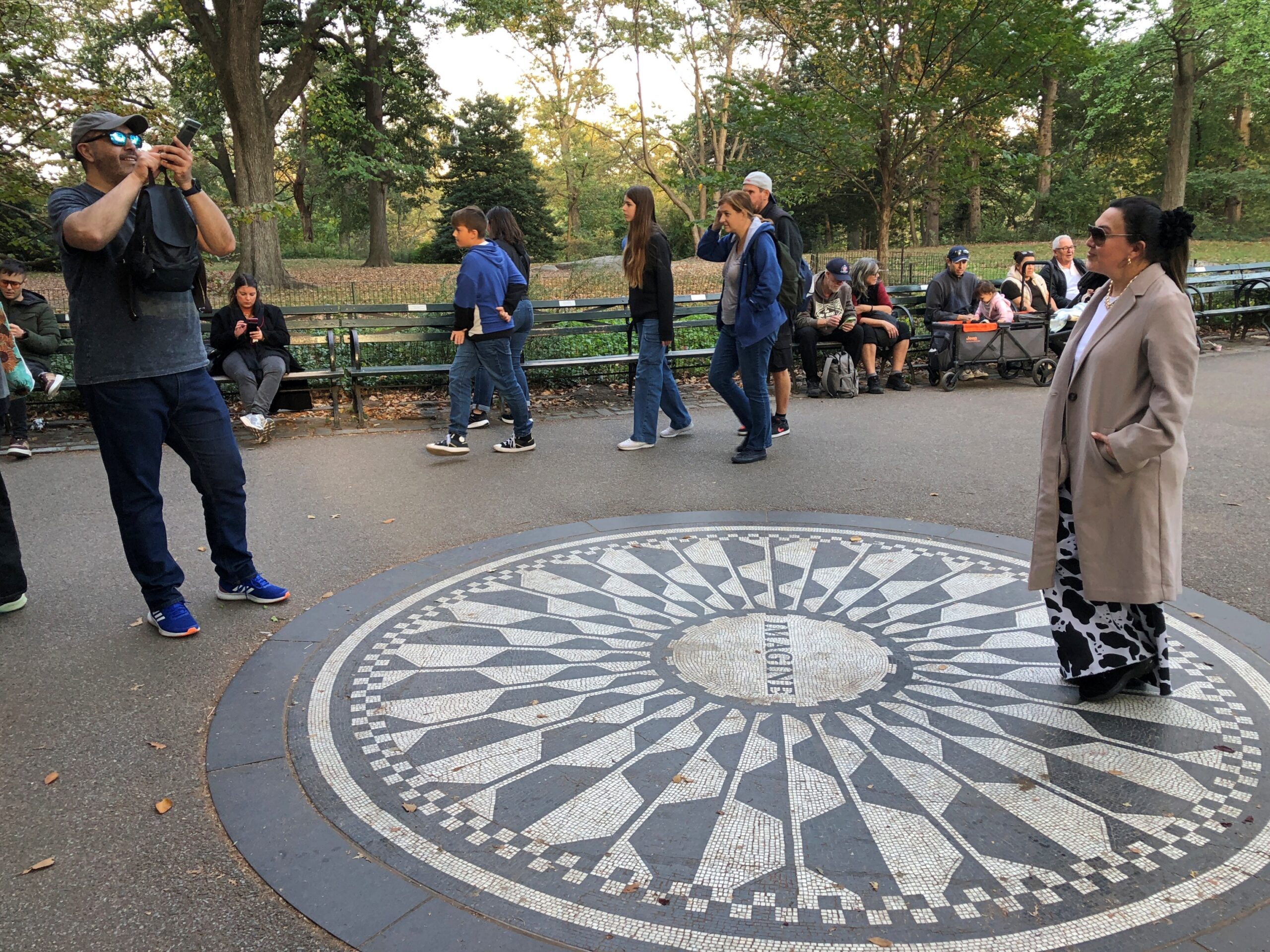
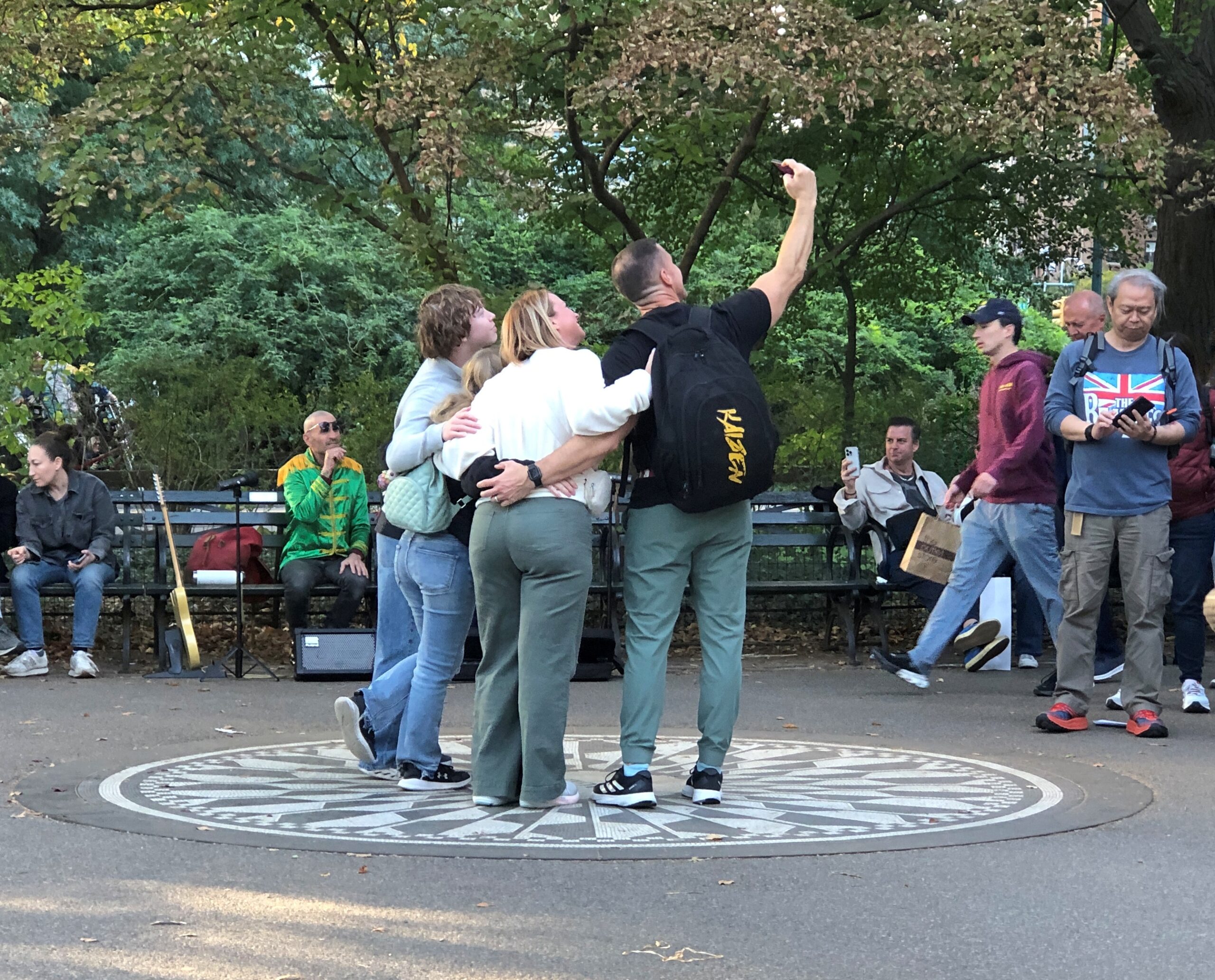
That’s not the case when you get to the Imagine memorial. Among the visitors, a guitarist was noodling out one of the more famous Lennon-McCartney tunes, but I forget which. One of the usual ones. Not “Dr. Robert,” say, or “Happiness is a Warm Gun.” So that was one busker anyway, since I think he had a guitar case open in front of him. All you need is love, sure, but bills are bills.

Central Park Oct 2025 - Imagine

Gone these 45 years and still packing ‘em in. Good for you, Mr. Lennon. In another 45 years? It would be interesting to know, and I sure I won’t.

Central Park Oct 2025 - Imagine

I’m afraid the history of memorials doesn’t bode well for the longevity of any memorial, even the kind that people line up to pose with. I didn’t know the man, but I suspect somehow that the thought of fading into obscurity wouldn’t have bothered John Lennon.

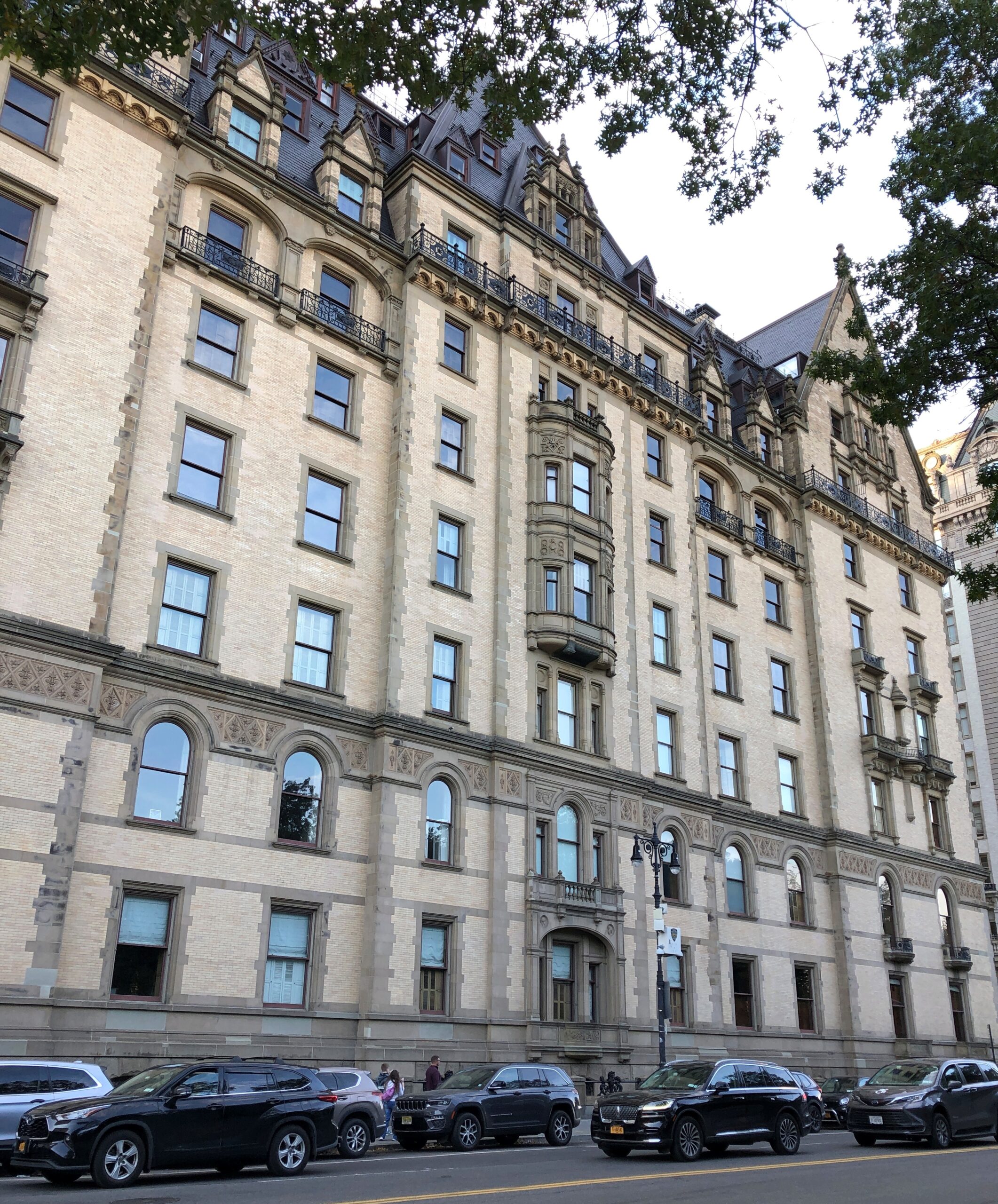
At that point, you emerge from the park and are practically face-to-face with the Dakota.

Dakota, Manhattan

We headed east to a subway station, and happened to walk by the entrance of the Dakota. In its grim way, it’s a kind of memorial too. The signs make it known with no uncertainty that no one unauthorized is getting in.

A Few Manhattan Churches

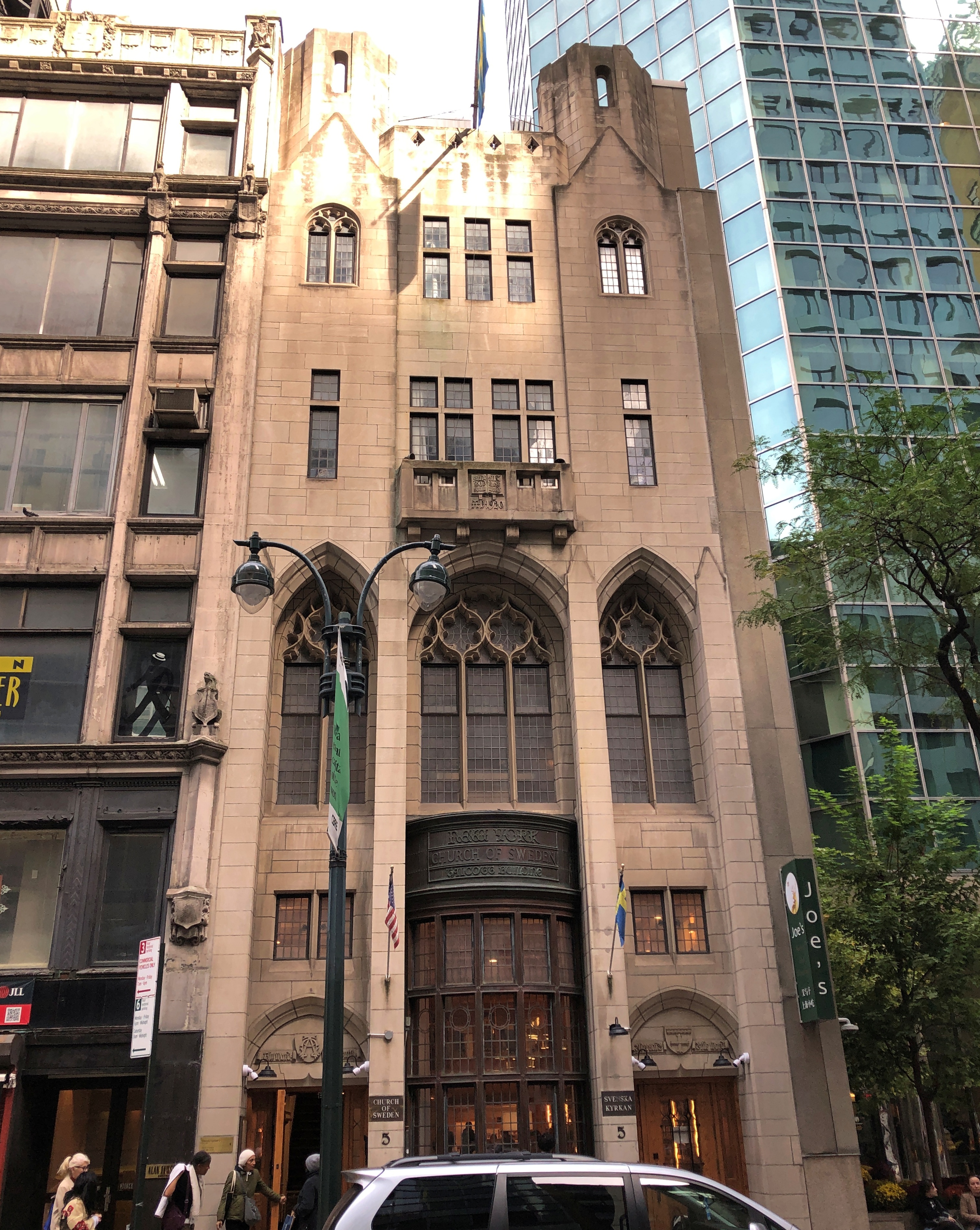
After the General Society of Mechanics and Tradesmen we headed for Park Ave., location of a famed Byzantine revival Episcopal church. Before we got there, we noticed a much smaller church, not actually part of the Open House New York event, at 5 E 48th Street.

Church of Sweden in New York

Swedish Church, NY

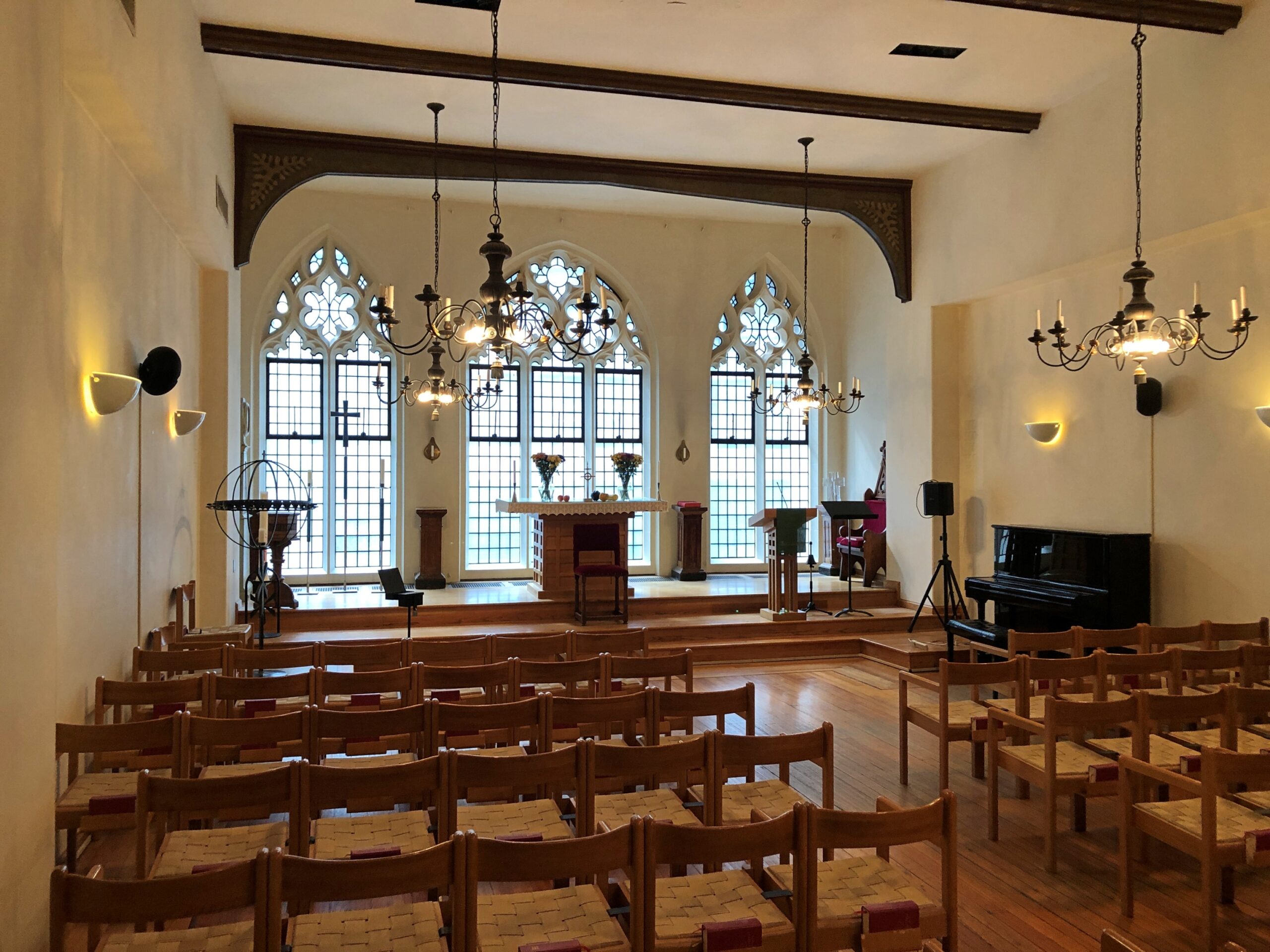
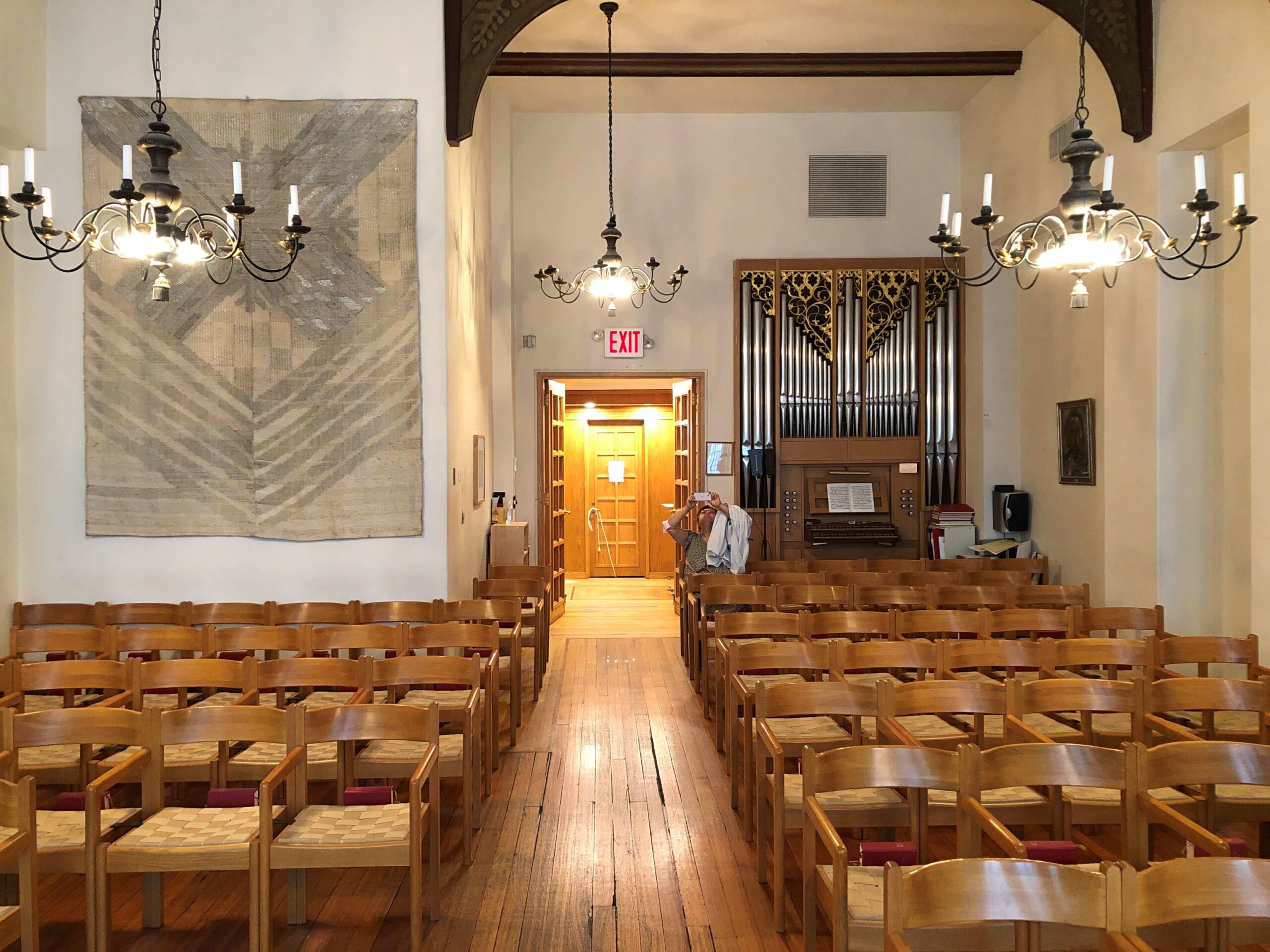
We’d come to the Svenska kyrkan i New York, where services are still held in Swedish. Not only was the church open, there was a cafe on its first floor. The sanctuary is on the second floor. Elegant little place, suitable for the small congregation that Swedish services might attract.

Swedish Church, NY
Swedish Church, NY

Under the Historik section of the church’s web site, you’ll find this helpful information: När svenskarna började flytta till USA och hur Svenska kyrkan på olika sätt velat vara närvarande i New York. A fuller history in English is on the Wiki page.

Swedish Church, NY

St. Bartholomew’s Church

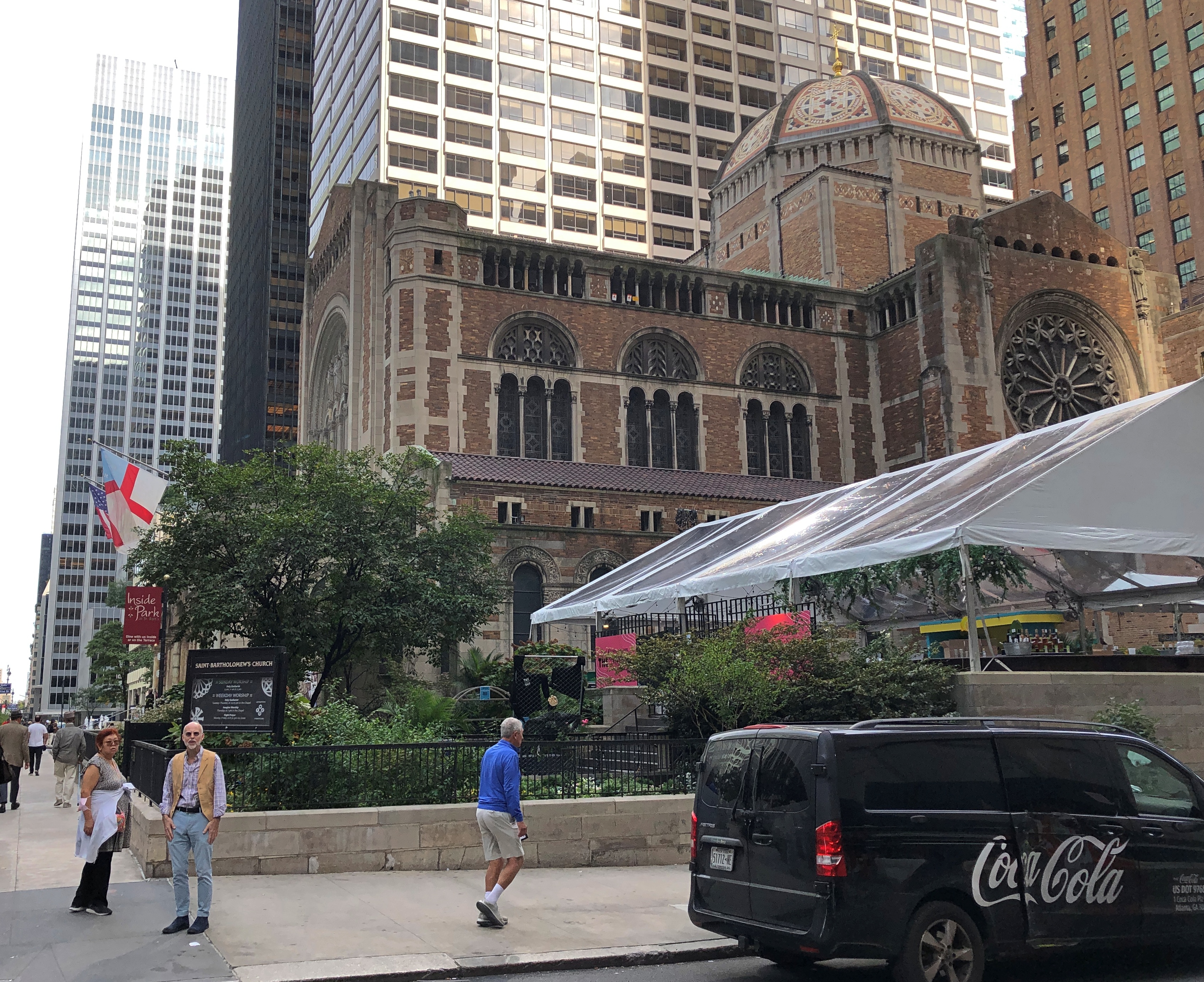
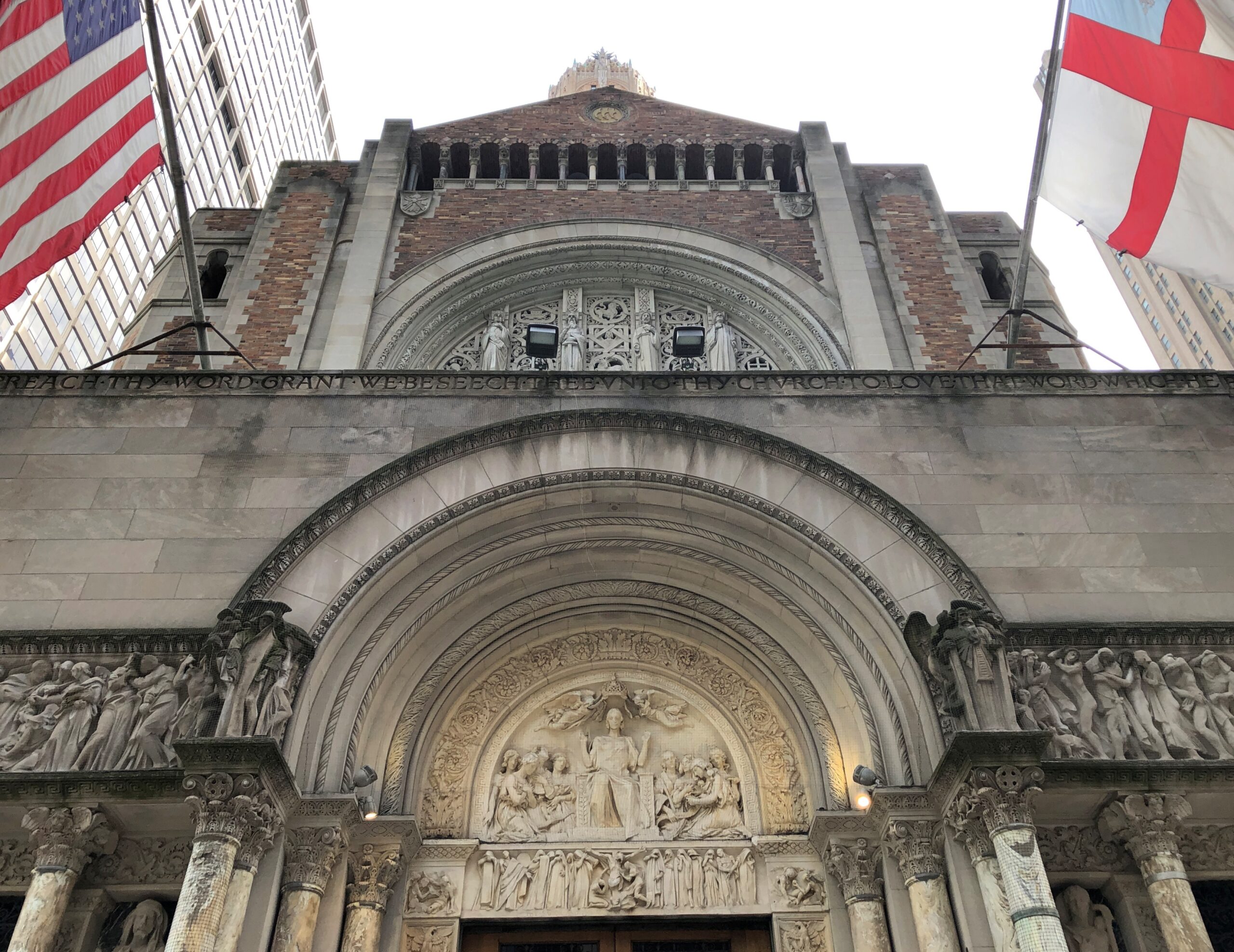
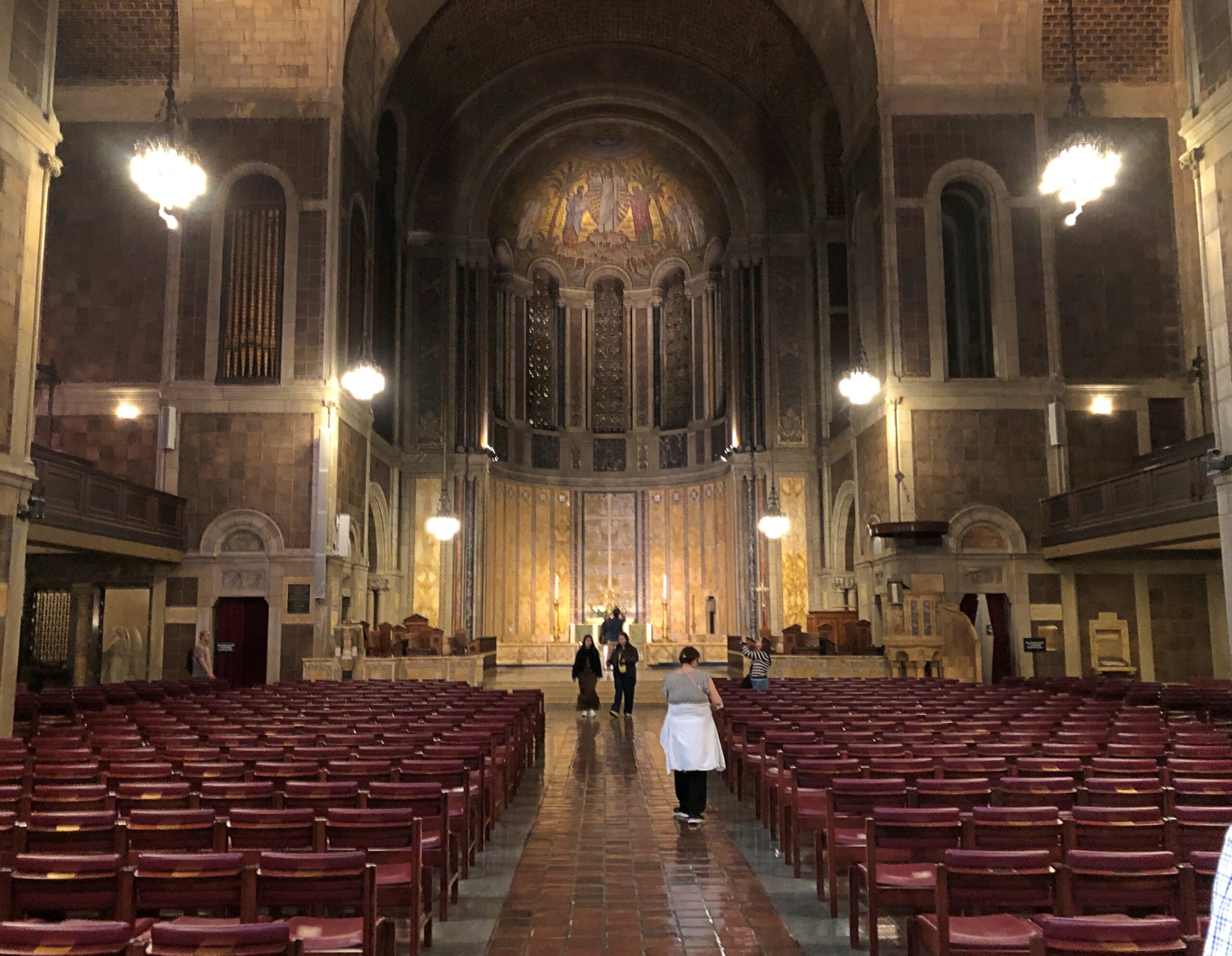
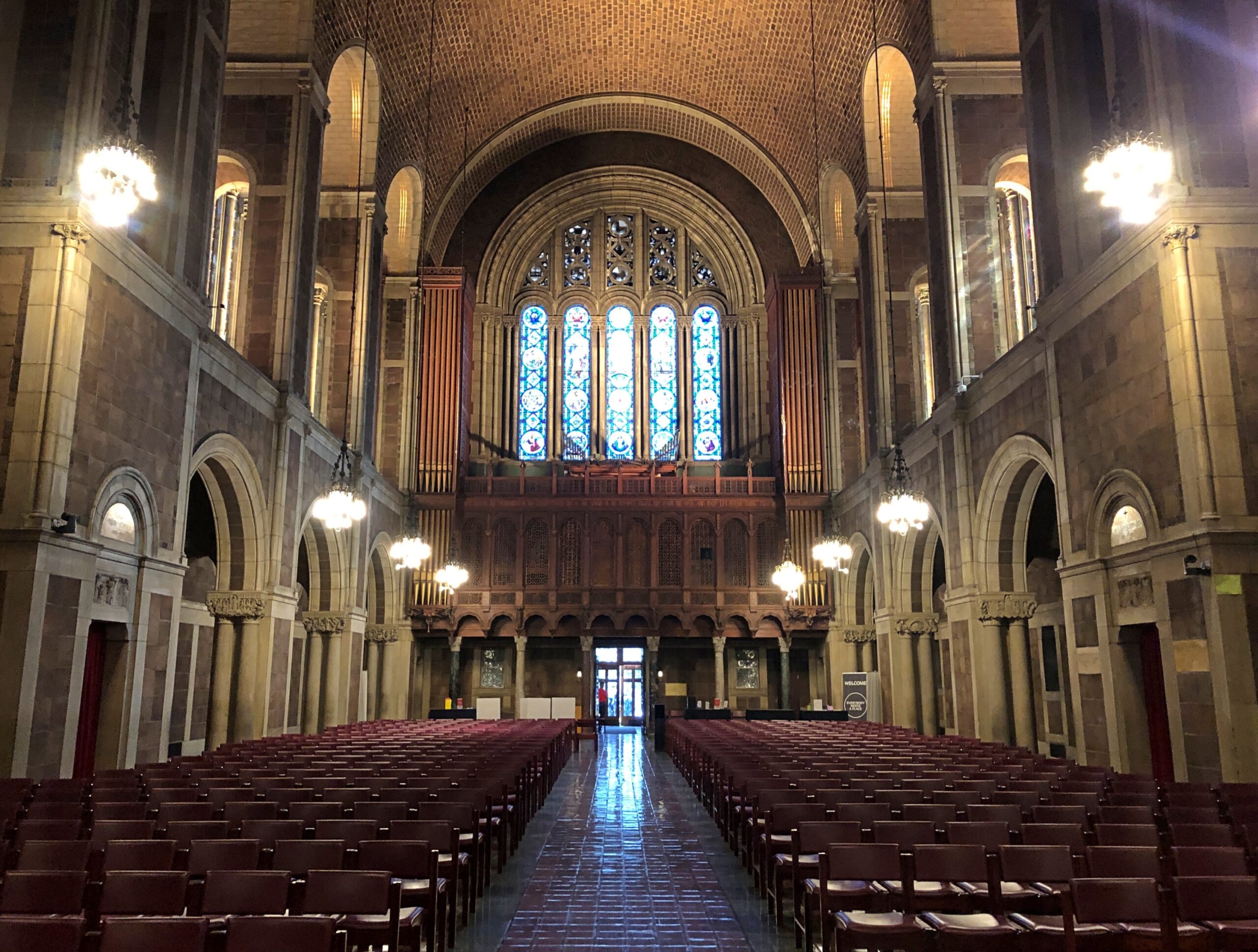
St. Bartholomew’s Church, an Episcopal congregation on Park Ave., was participating in the Open House. That meant it was sure to be not only open, but lighted. The first time I went there, many years ago, I compared it to a cavern. Later I visited when more lights were on. Twenty years ago I wrote: “This time, it was better lighted, the better to show off the church’s superb Byzantine-style mosaics.”

St. Bartholomew’s Church

During my 2025 visit, now joined by my nephew Robert, we were able not just to gaze at the lit sacred space, but we had the benefit of a knowledgeable docent, a woman of a certain vintage with a hobbled gait and a raspy voice. She knew the history of the congregation, and its slice of Manhattan. She had the artistic detail down cold. She knew her ecclesiastical styles. From the depth of detail about the many artists who worked on the church, it sounded like she knew some of the artists personally, though that couldn’t be literally true for most of them, since the church was built more than 100 years ago, with certain later design additions.

St Bart
St Bart

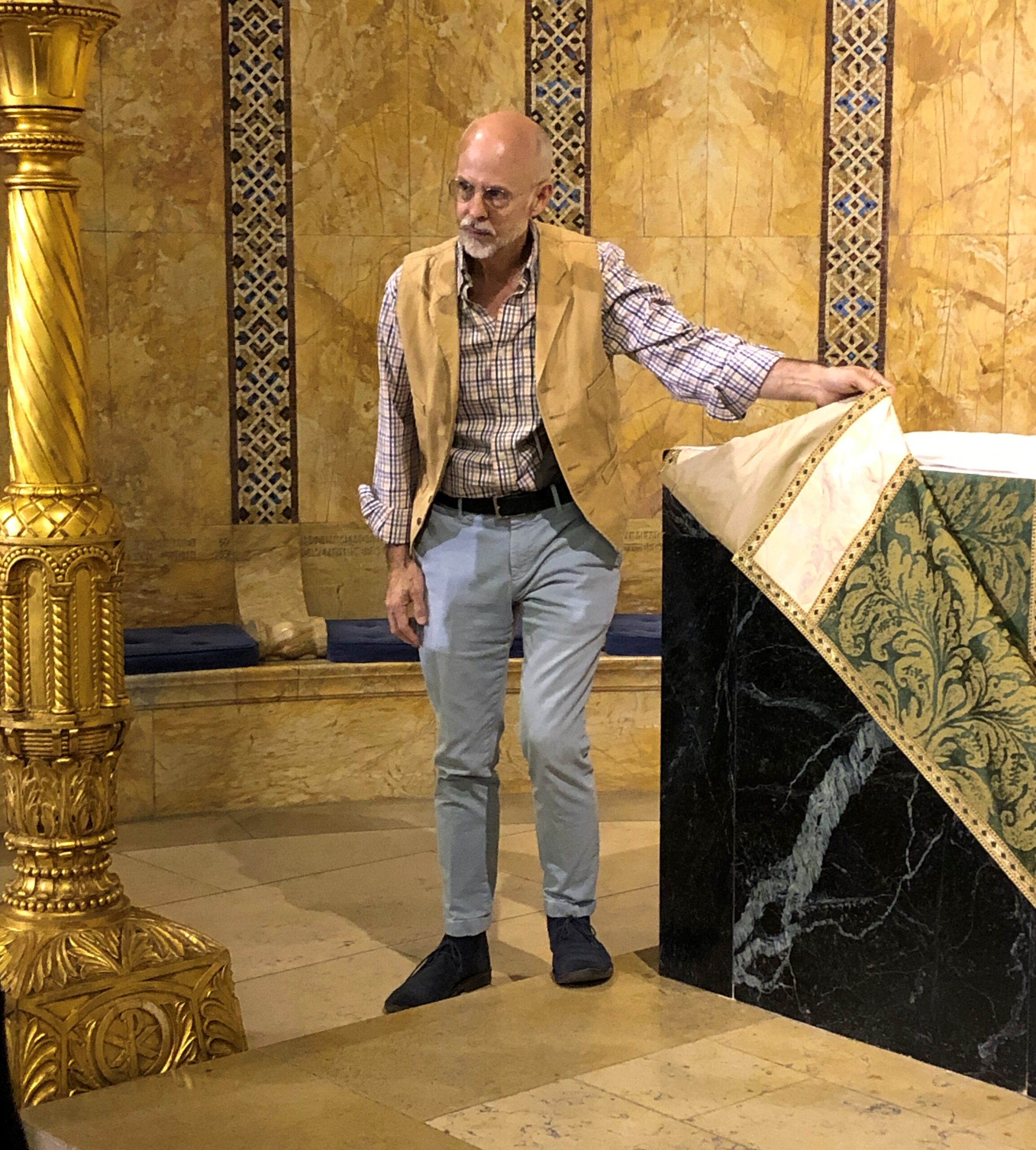
At the direction of the docent, Geof unveiled the altar for a moment.

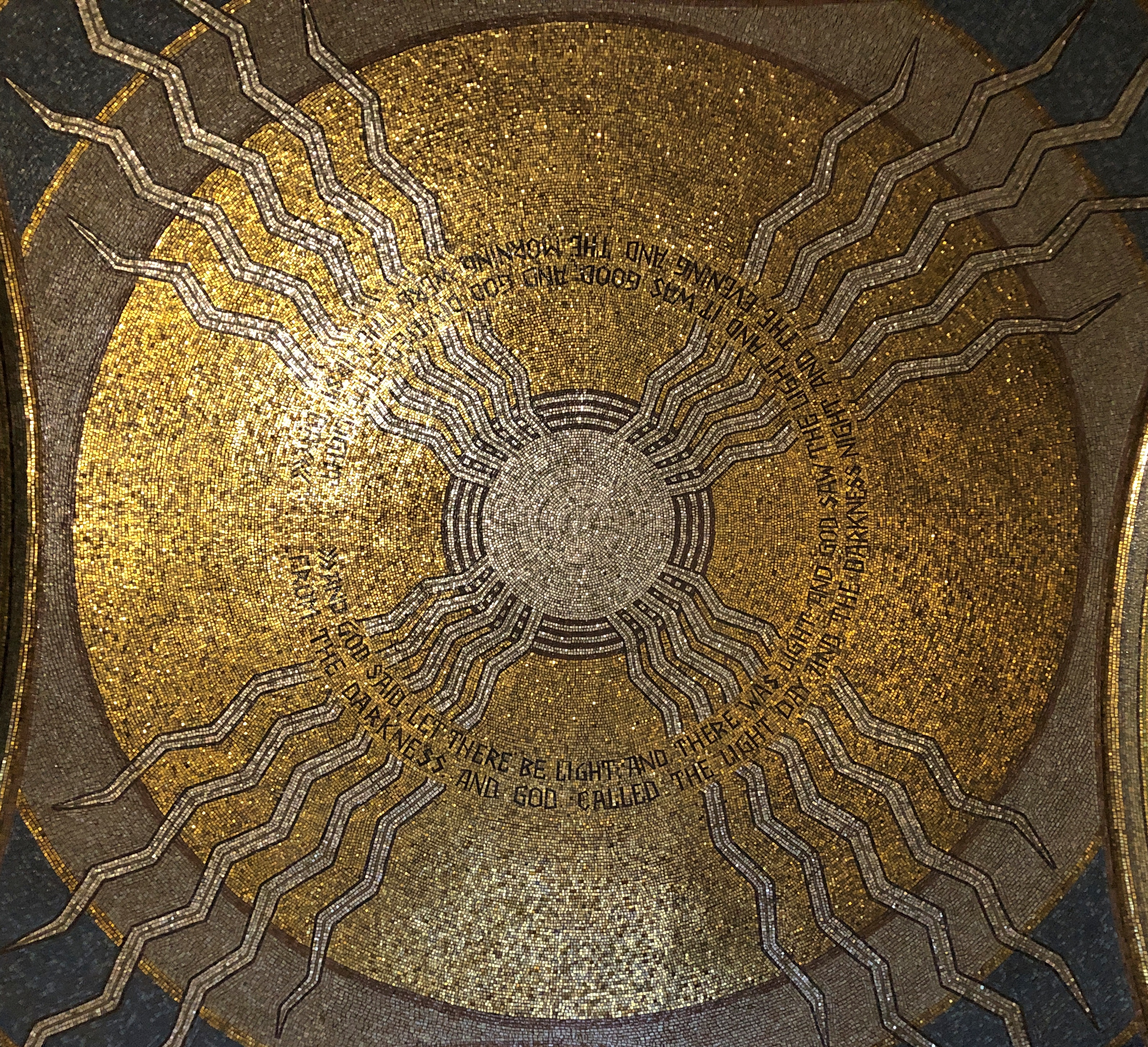
It might have been interesting to know Hildreth Meière. Hers was an astounding career: “Working with leading architects of her day, Meière designed approximately 100 commissions, both secular and liturgical,” the International Hildreth Meière Association says. “Her best-known commissions include Radio City Music Hall, One Wall Street, St. Bartholomew’s Church, Temple Emanu-El, and St. Patrick’s Cathedral in New York. She also decorated the Nebraska State Capitol in Lincoln, the National Academy of Sciences in Washington, D.C., and the Cathedral Basilica of Saint Louis.”

The mosaics didn’t photograph well – that is, I’m too lazy to carry around a better camera – but good images are at the association web site.

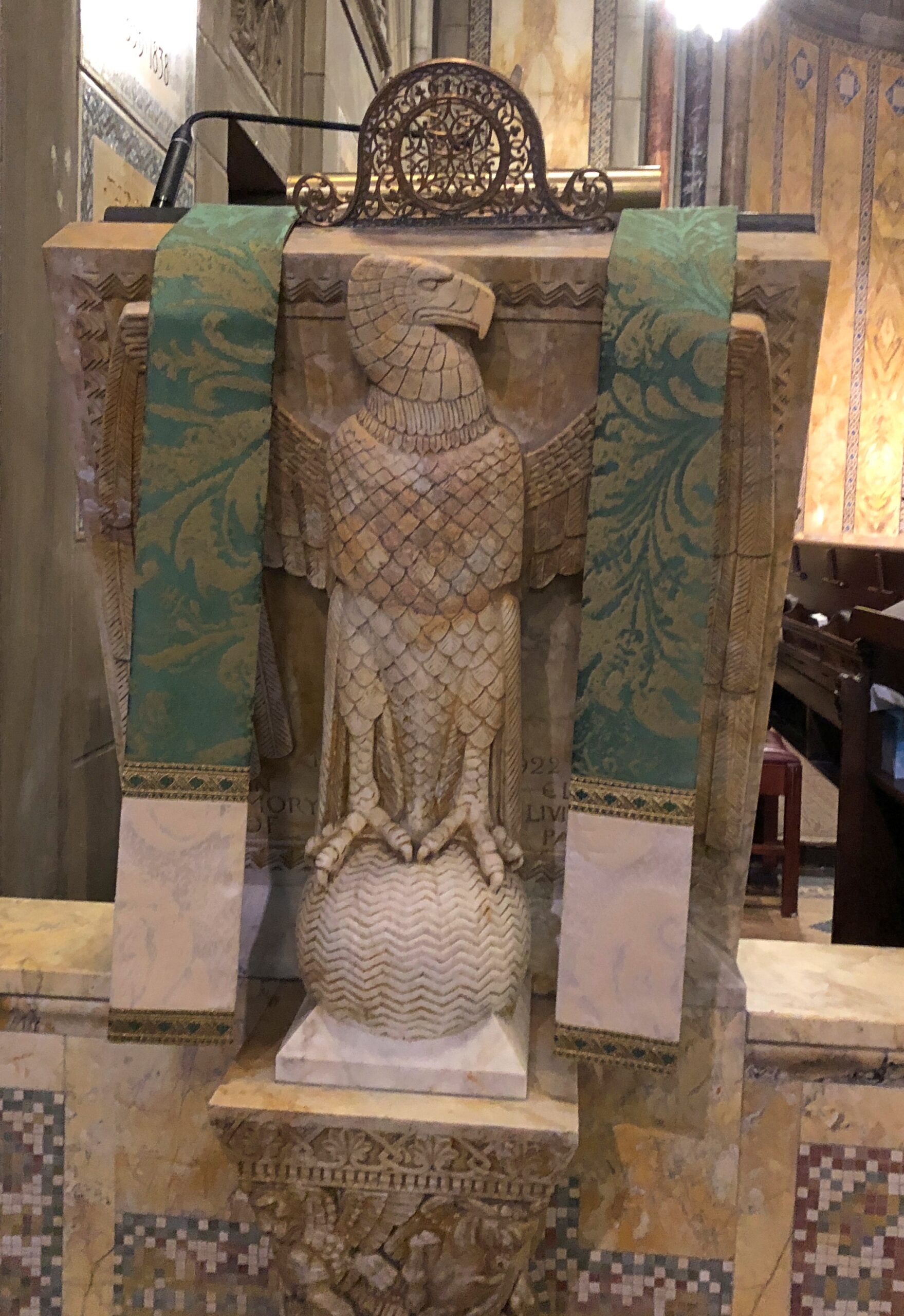
St Bart

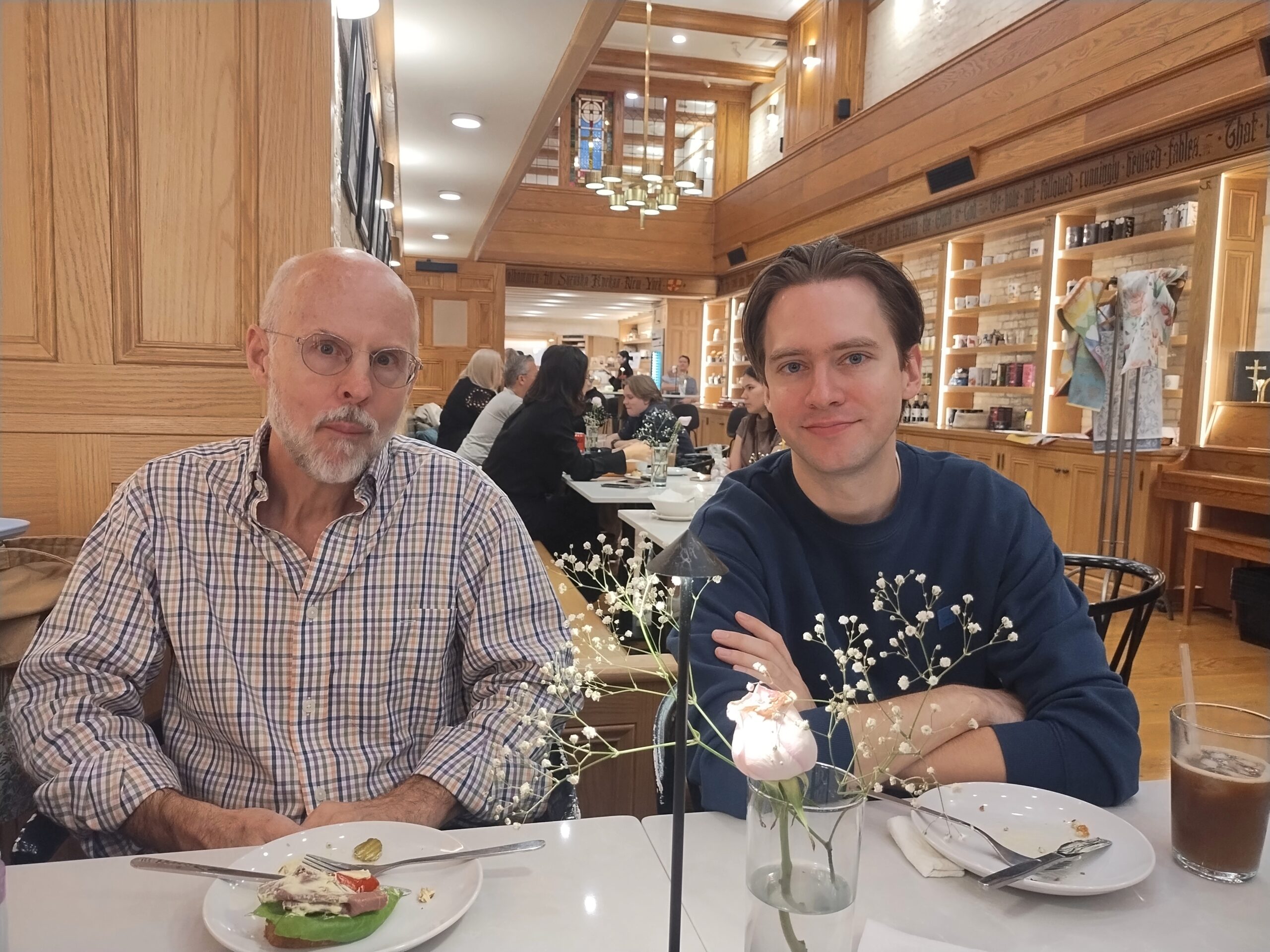
Emerging from St. Bart, we agreed that heading back to the cafe at the Swedish church would be a good idea. It was.

Sated with Swedish-style open-faced sandwiches, our walk soon continued, up Fifth Ave. to St. Patrick’s Cathedral, which was its usual crowded splendor. I think I spotted some new, or newish murals, just inside the nave. A wedding was in progress. One must come after another every Saturday not in Lent, with ropes closing off a large part of the nave, making for extra crowding in the side aisles.

We didn’t stay. Not far away was a church far less crowded but with its own splendor.

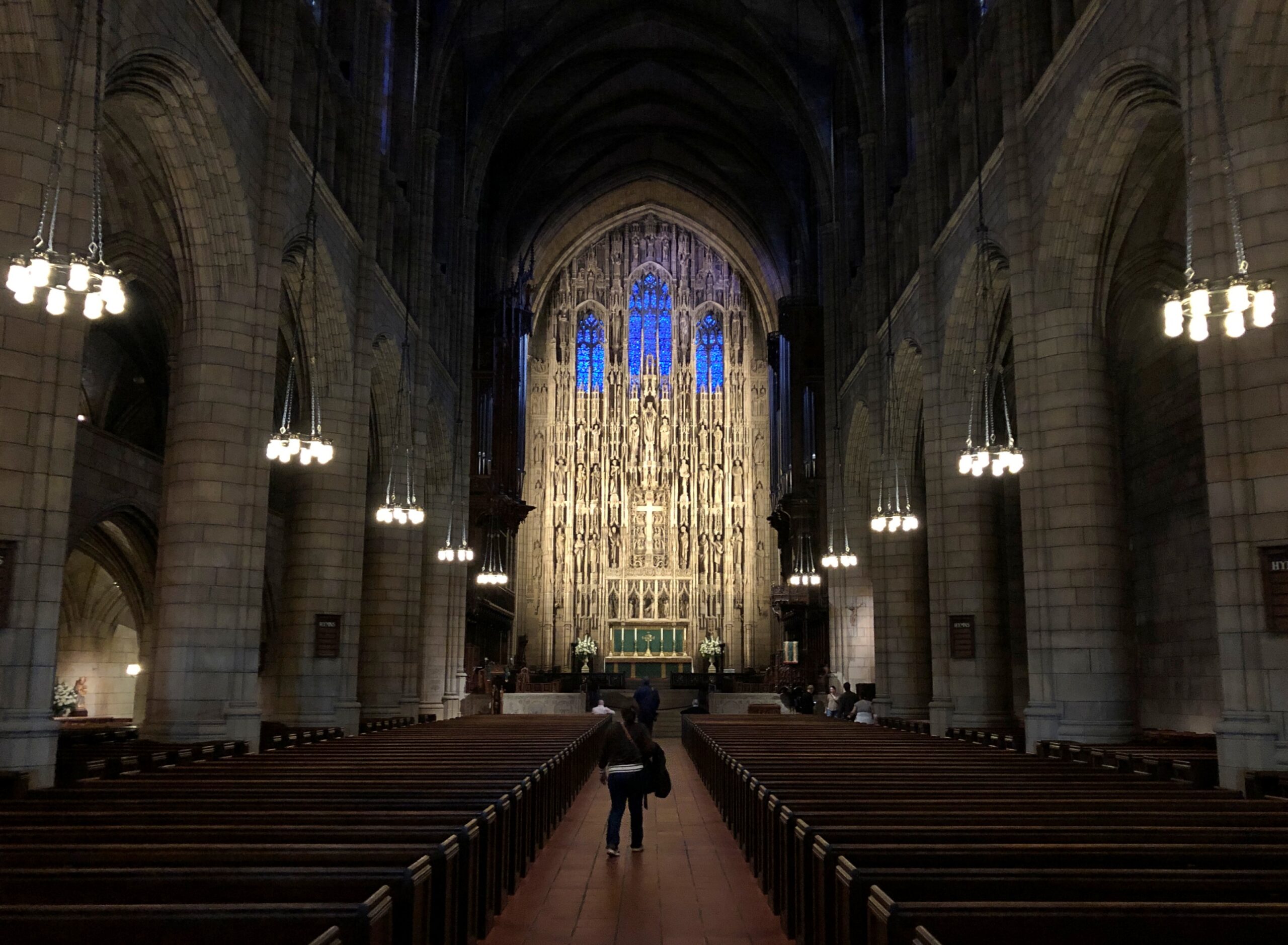
St. Thomas Church

St Thomas Church
St Thomas Church

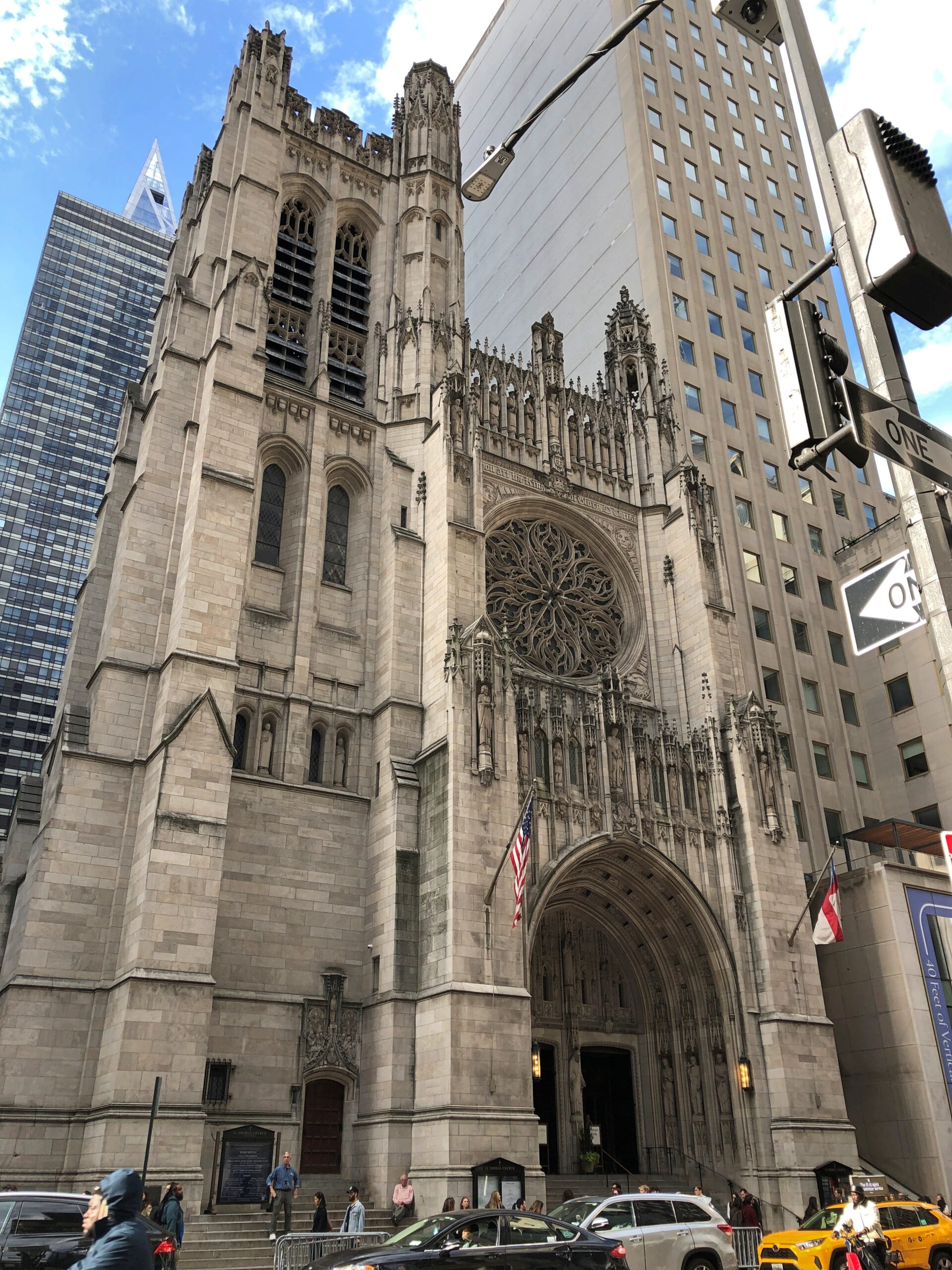
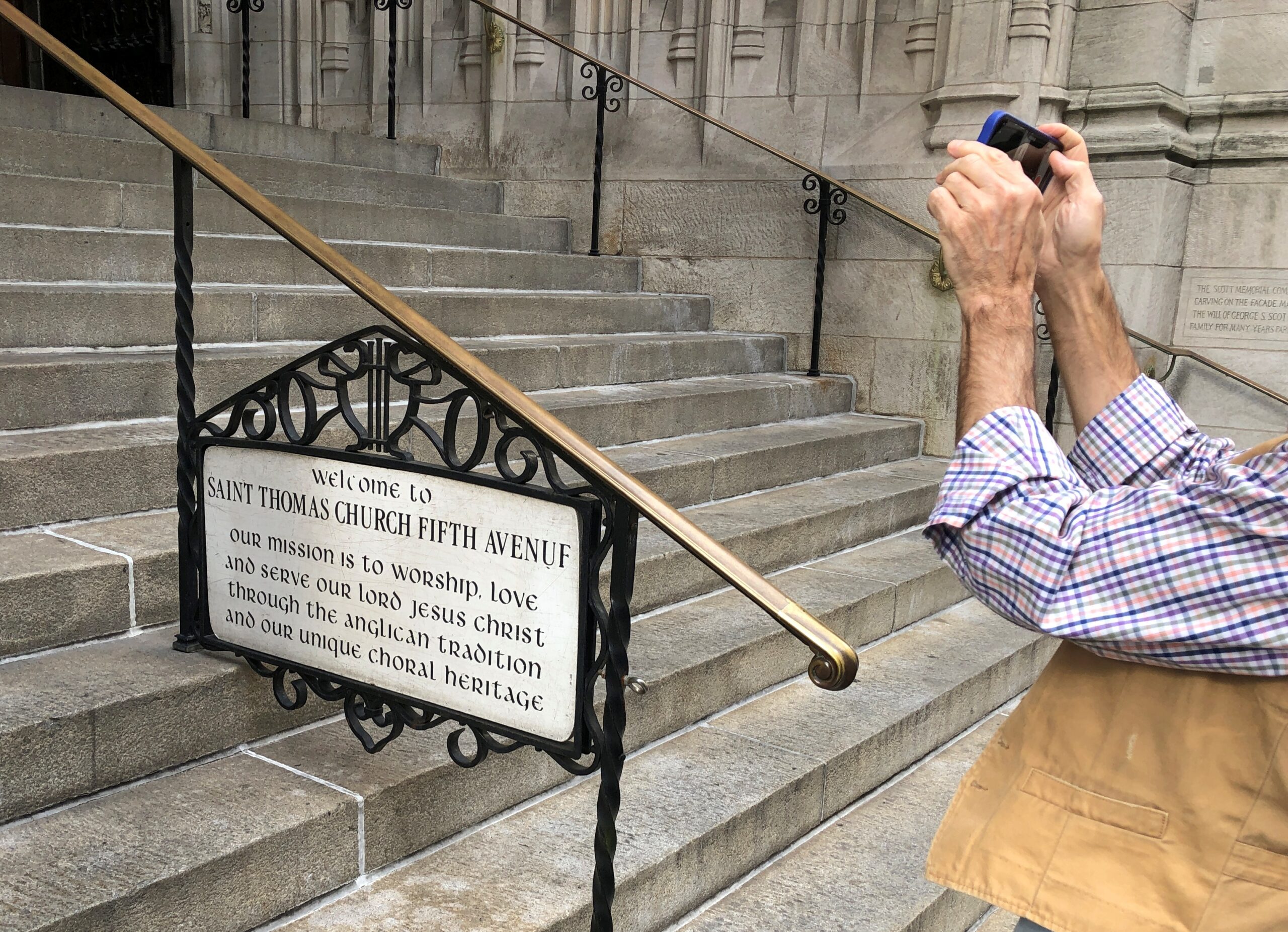
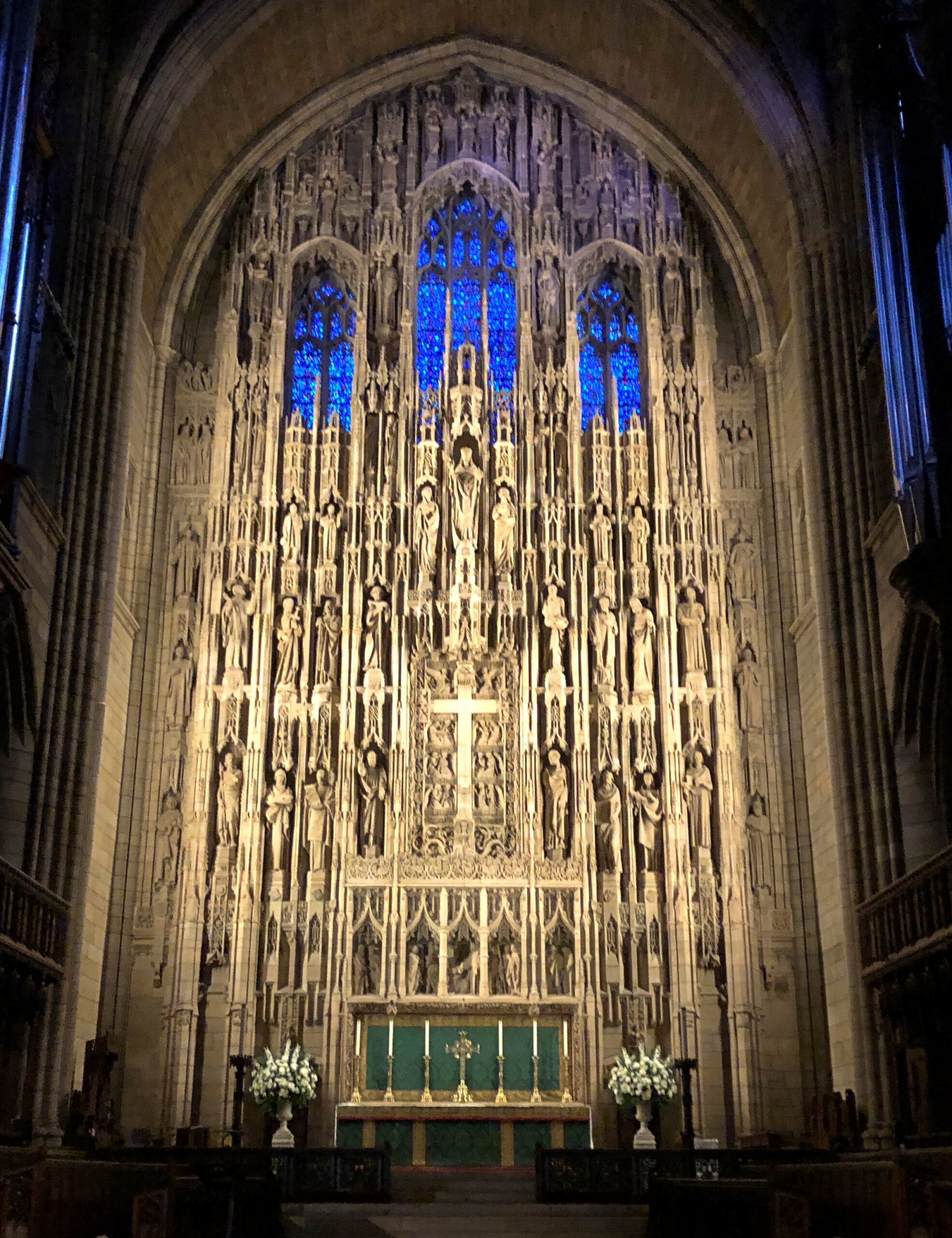
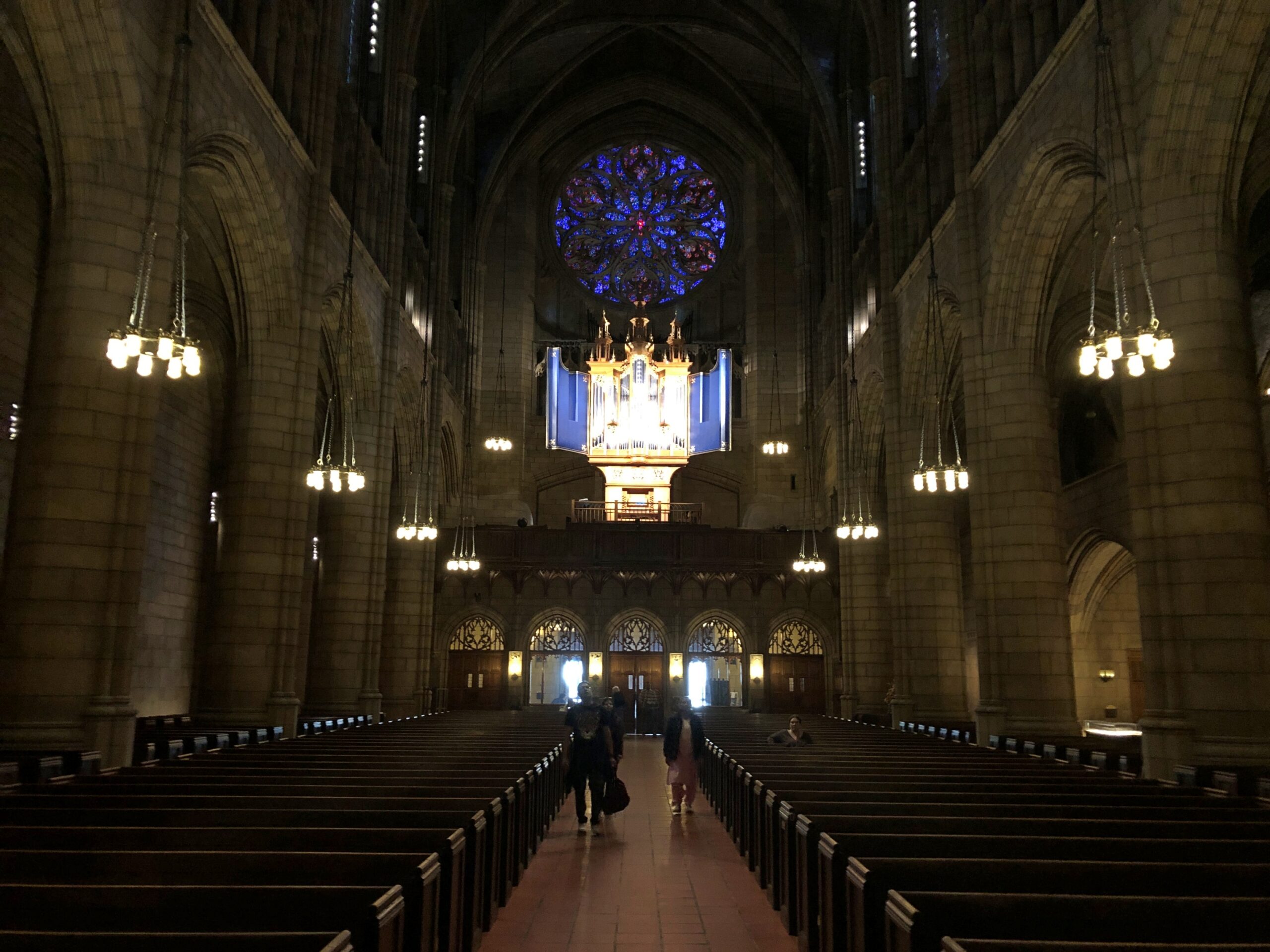
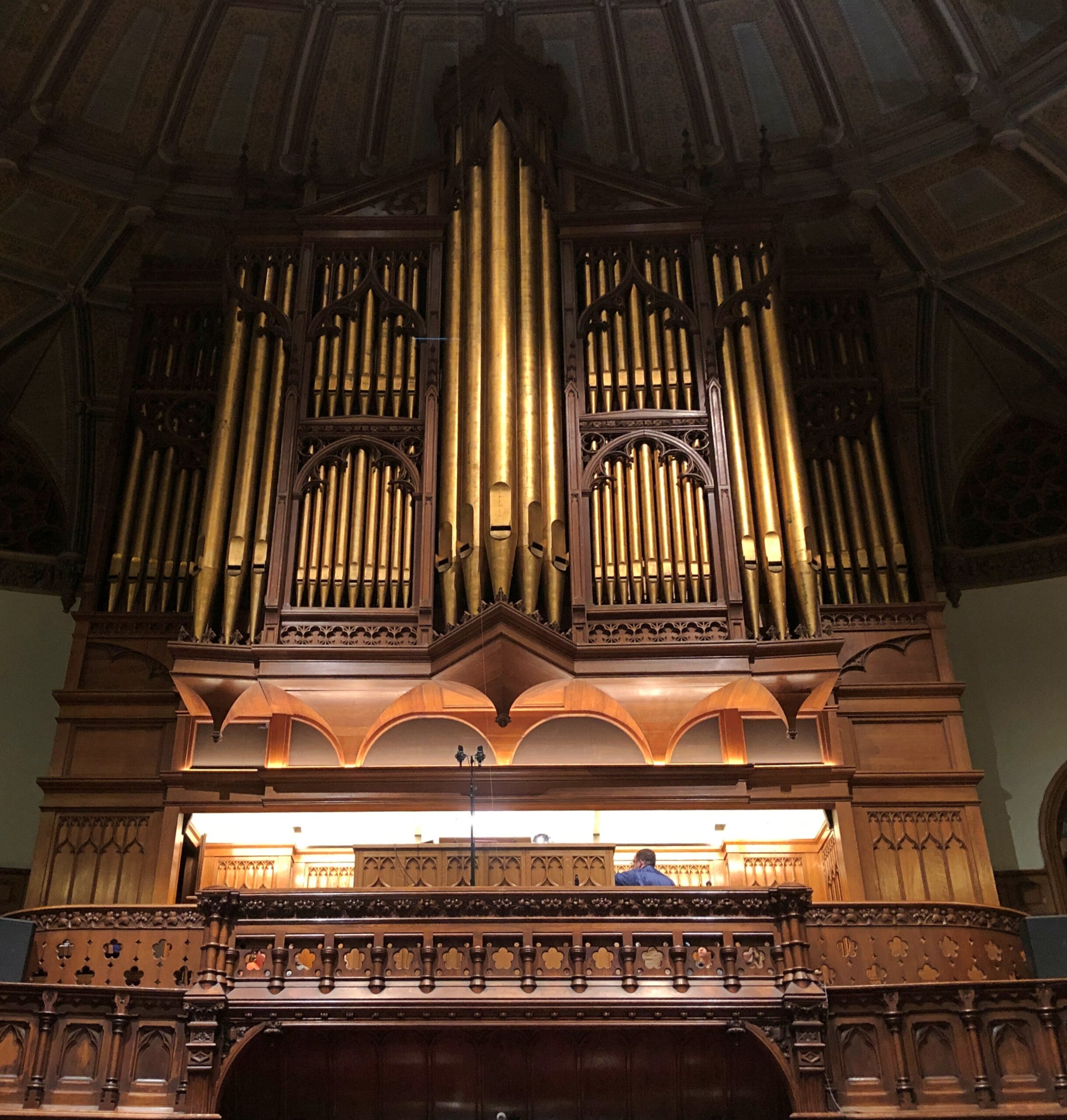
Namely, St. Thomas Church, another major Manhattan Episcopalian congregation. Inside, lights were low. The reredos stood out in the dark, a glowing presence above the altar populated by more than 60 stone carved figures, I’ve read. A Christian crowd: saints, prophets and reformers in an ivory colored stone from Wisconsin. I’d have needed a telephoto lens to have any hope of identifying any of them, but that didn’t make them any less striking.

St Thomas Church
St Thomas Church
St Thomas Church

Ralph Adams Cram and Bertram Grosvenor Goodhue of Cram, Goodhue and Ferguson designed the church, completing it in 1914. They were another of those prolific architects now out of living memory who seemed to design a long list of churches in a short time. The duo did St. Barts, too, and the Cathedral of St. John the Divine, and Rockefeller Memorial Chapel, just to name a few famed sacred spaces of near-palatial character.

Fifth Avenue Presbyterian Church

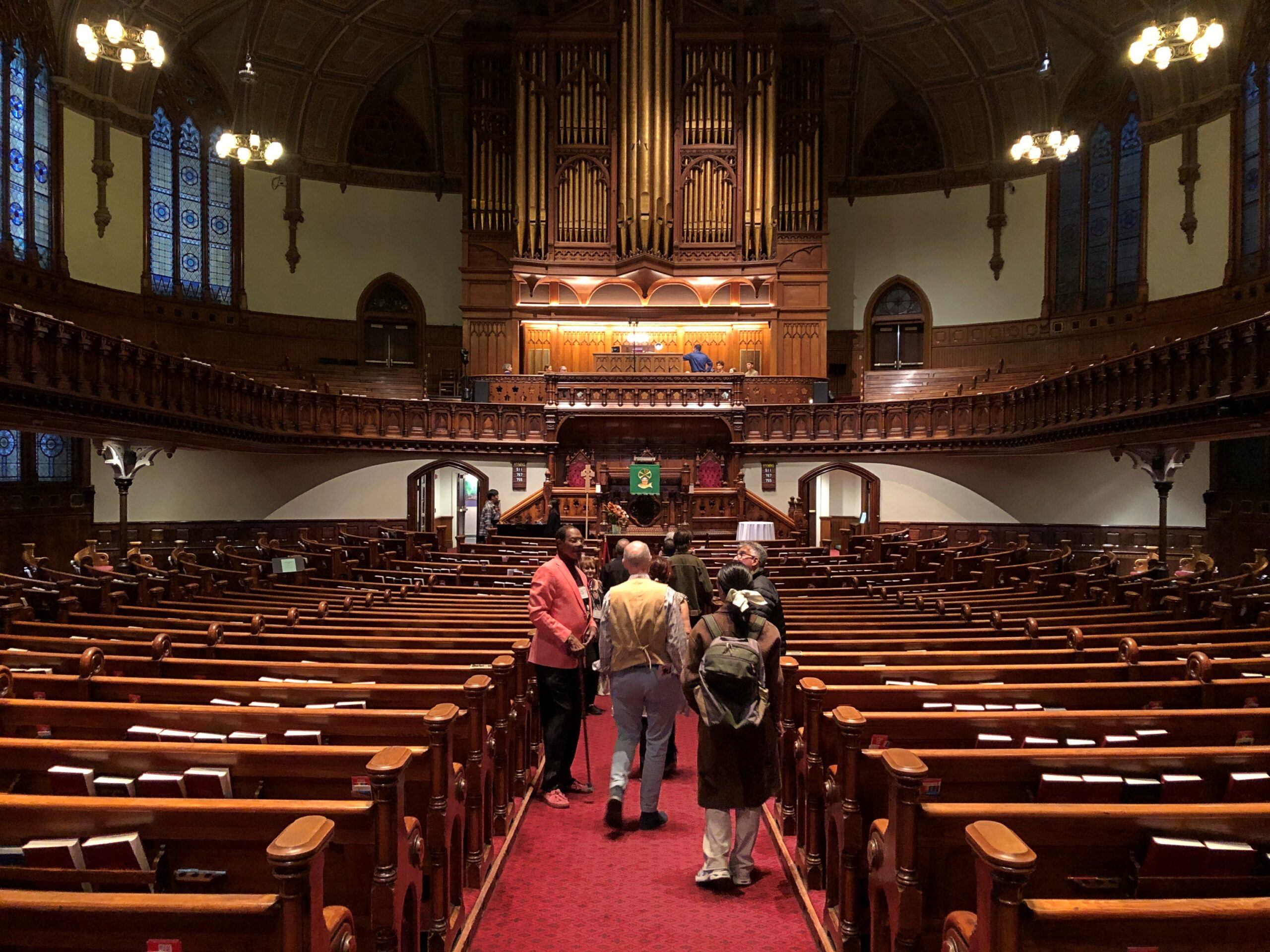
Just steps away from St. Thomas, as real estate press releases like to say about two close buildings, is Fifth Avenue Presbyterian Church. It was our last Open House church for that day.

Fifth Avenue Pres
Fifth Avenue Pres

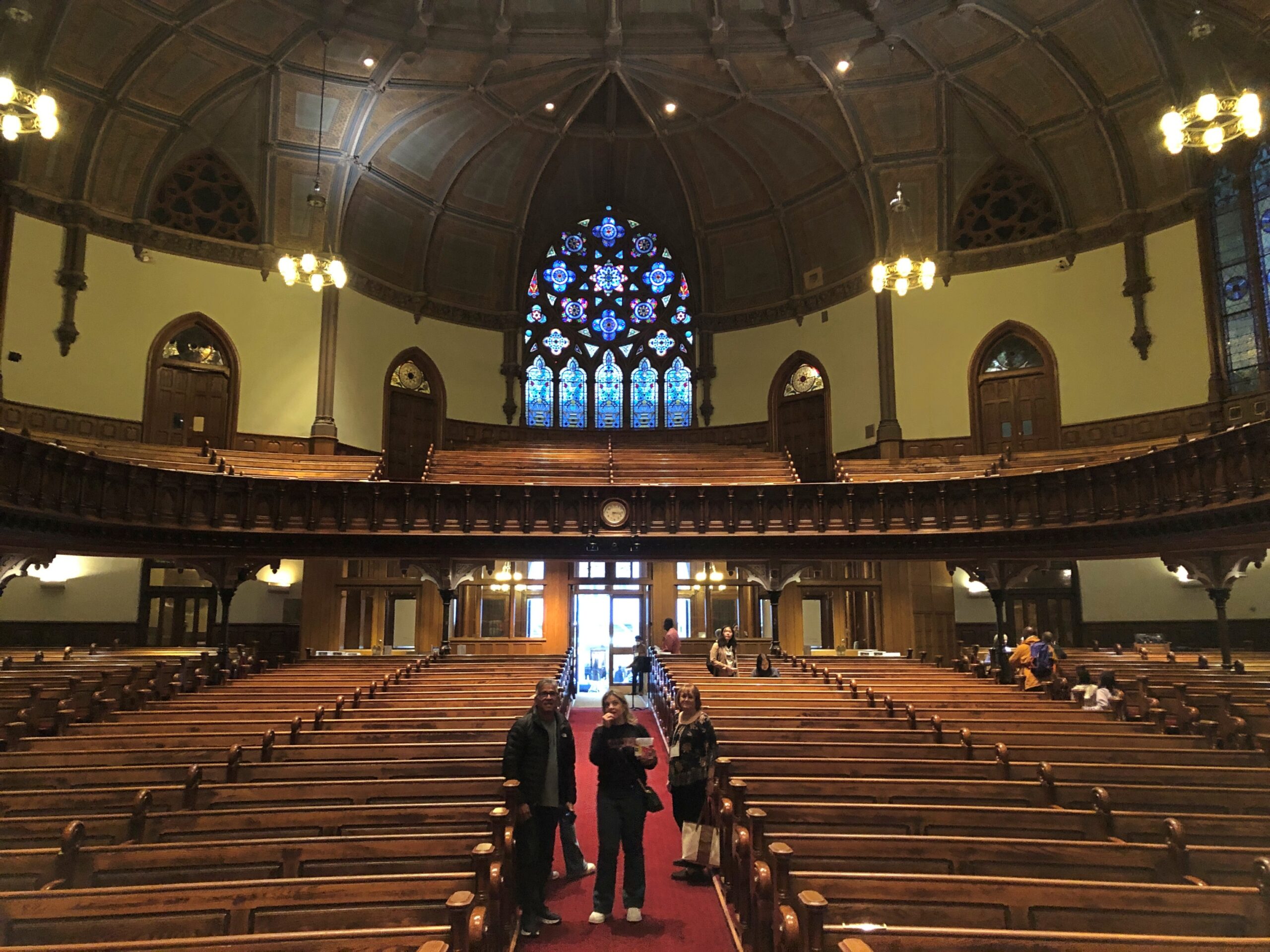
With its auditorium style and balconies, it reminded me of the Moody Church in Chicago, though Fifth Avenue Pres is much older: 150 years this year, as it happens.

Fifth Avenue Pres

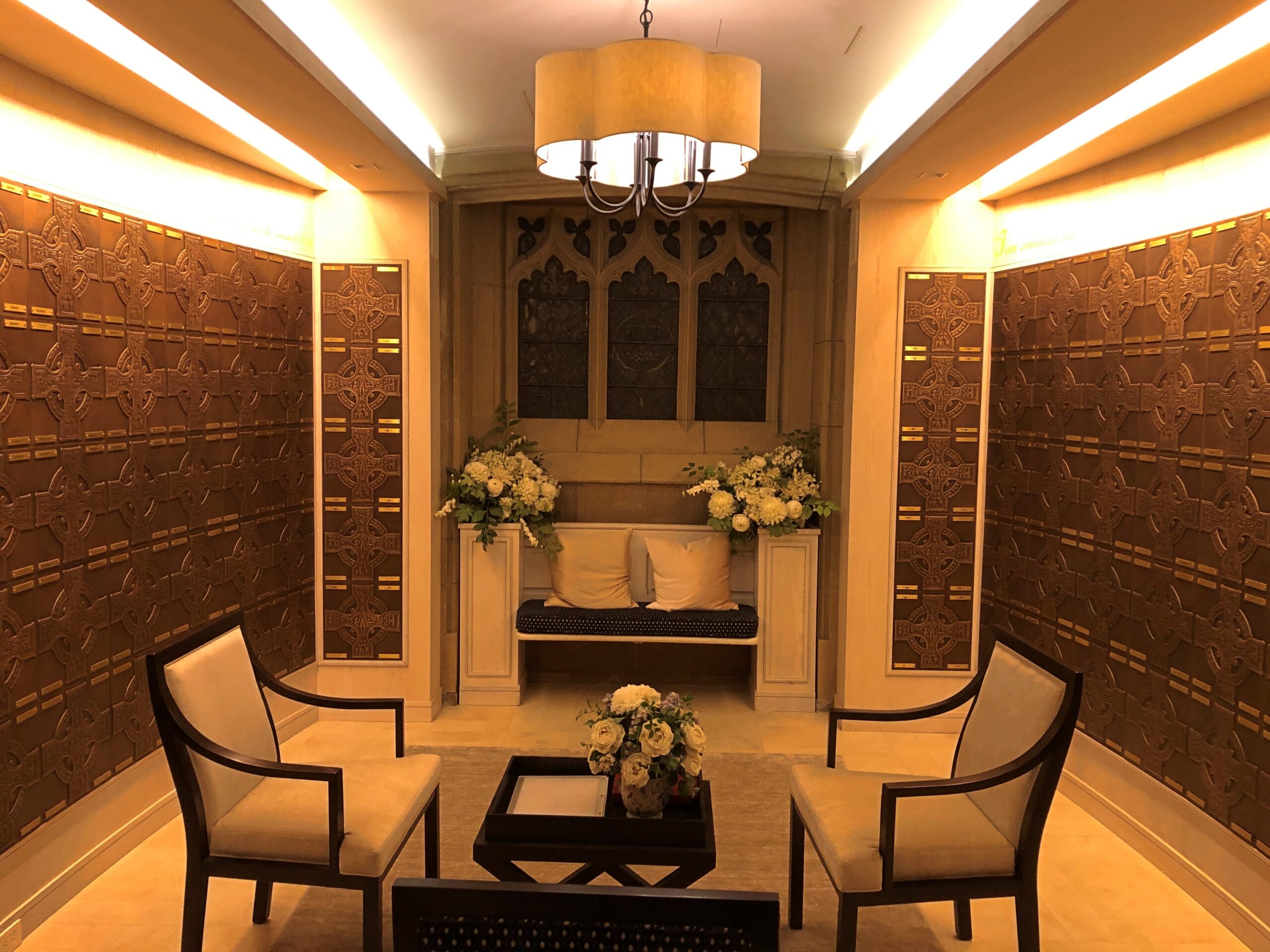
A hallway and some rooms extend beyond the front of the nave, including a columbarium.

Fifth Avenue Pres
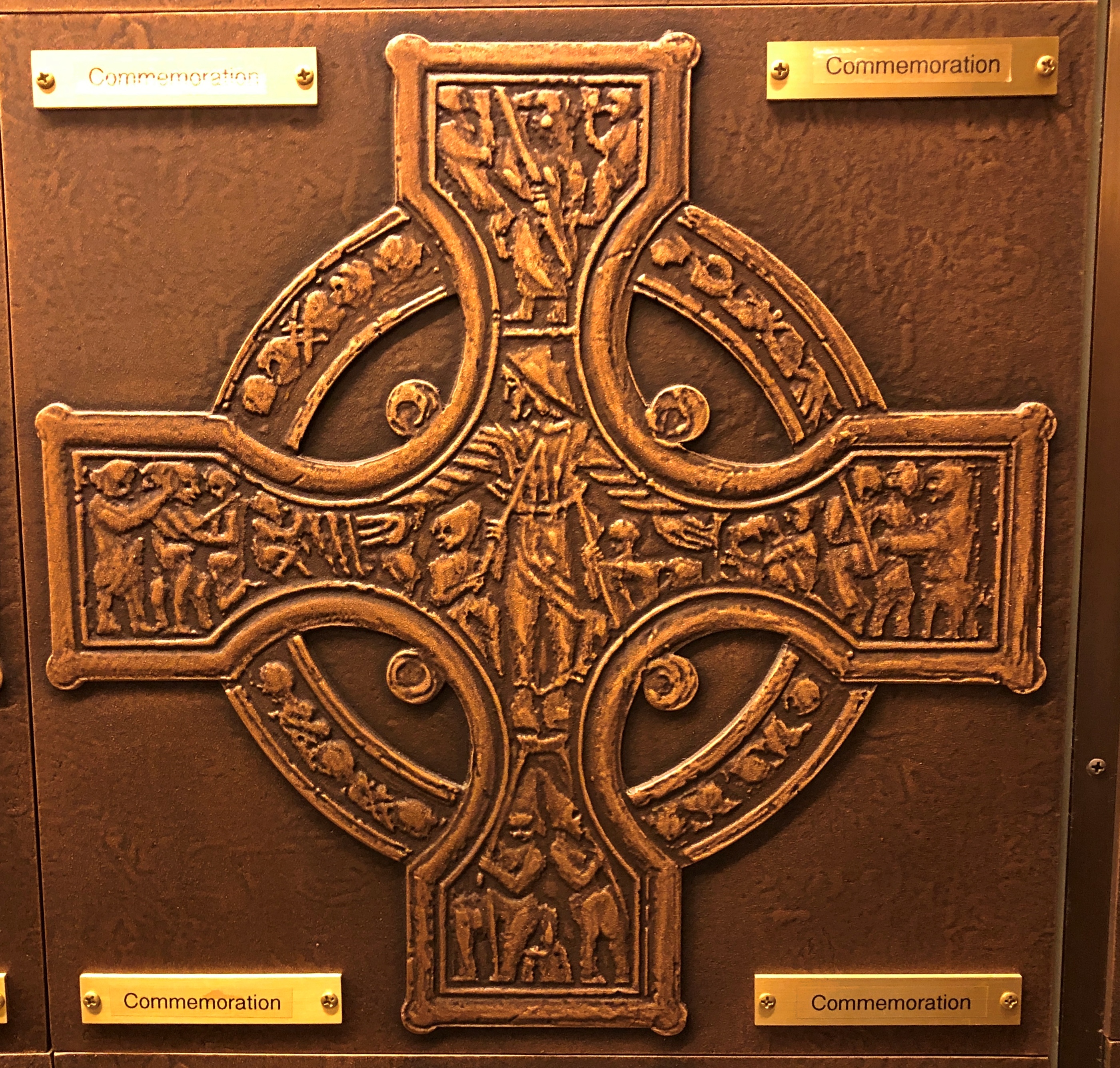
Fifth Avenue Pres

Waiting for occupants. All it will take is time.

No Kings, Many Watches

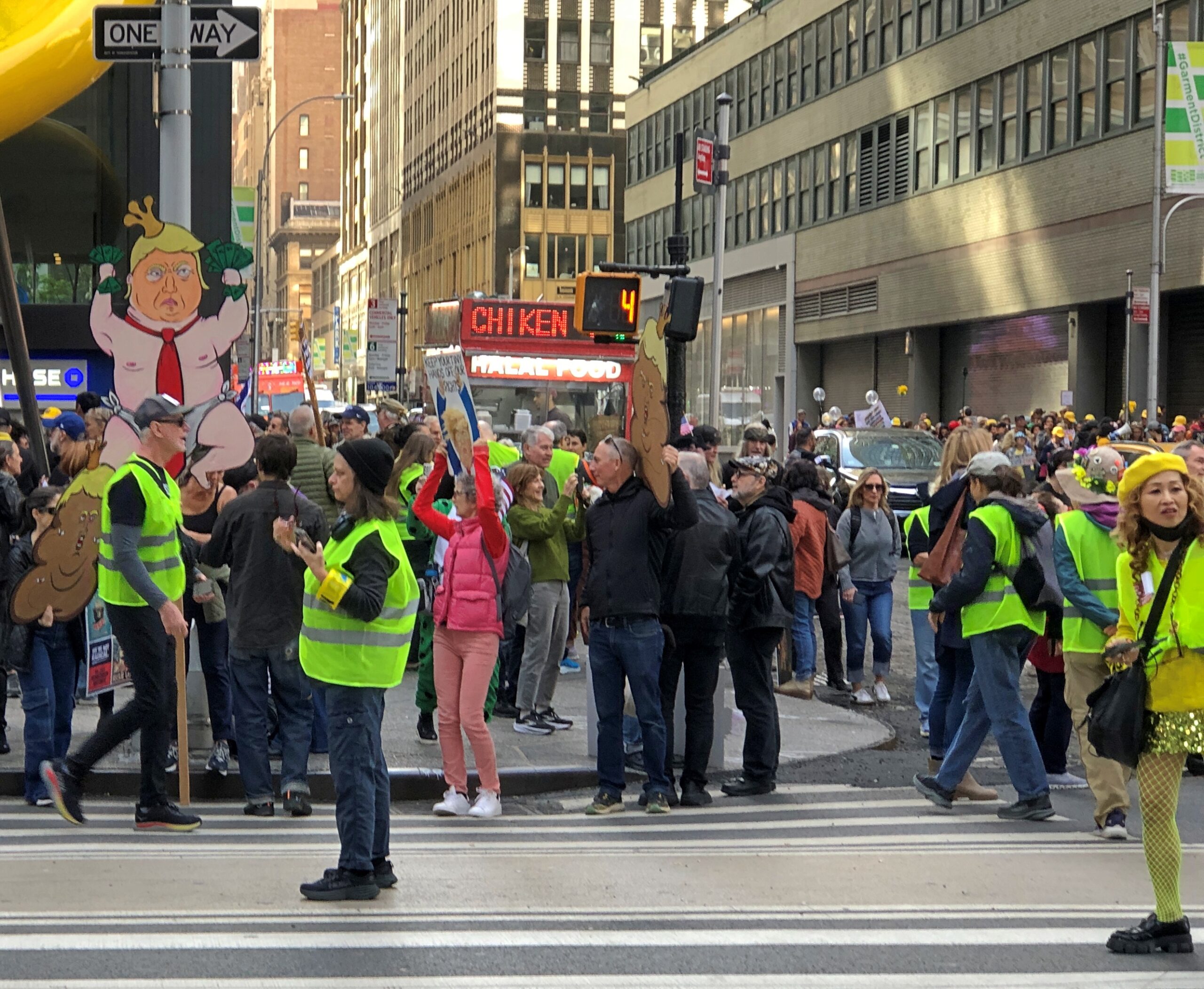
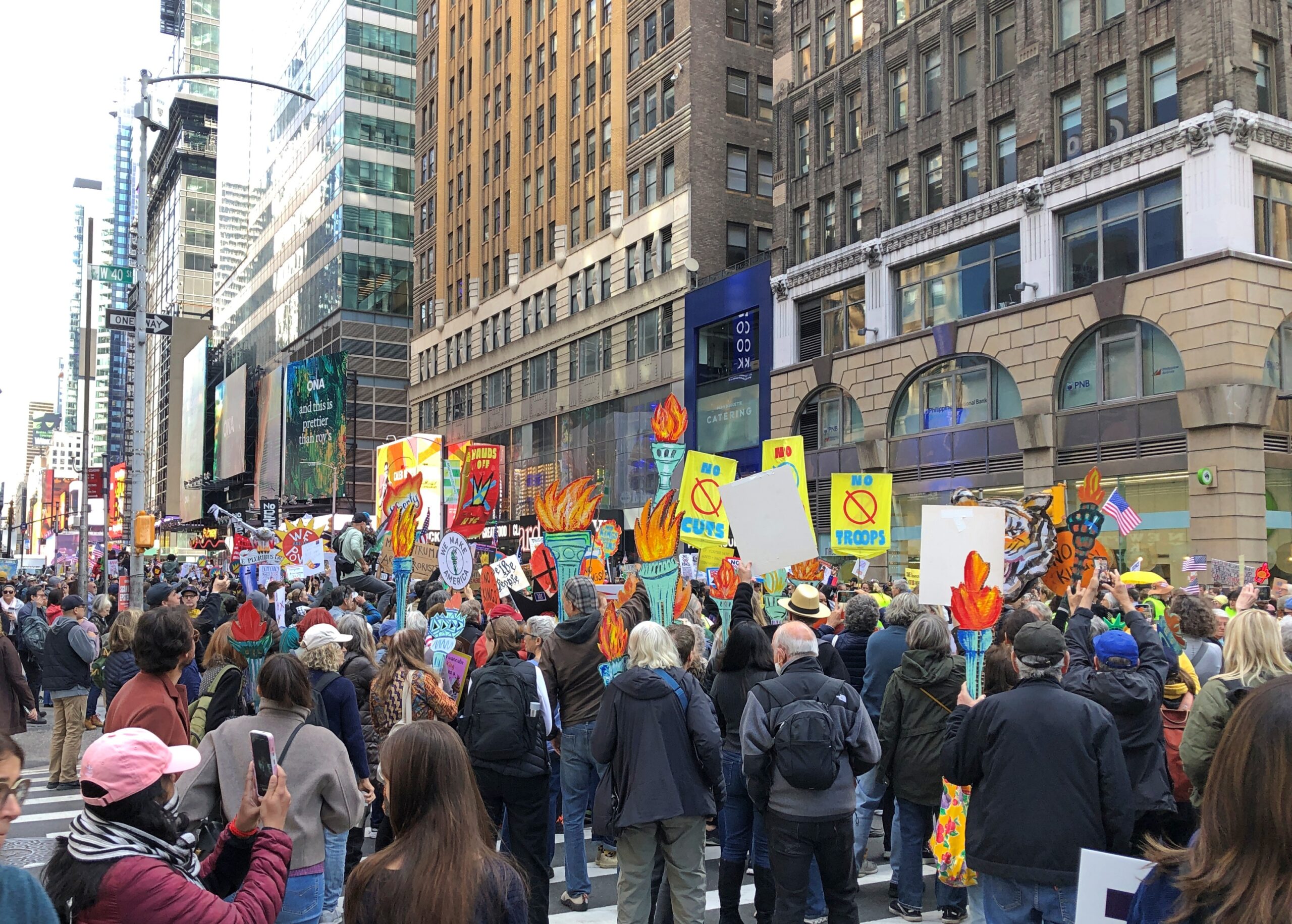
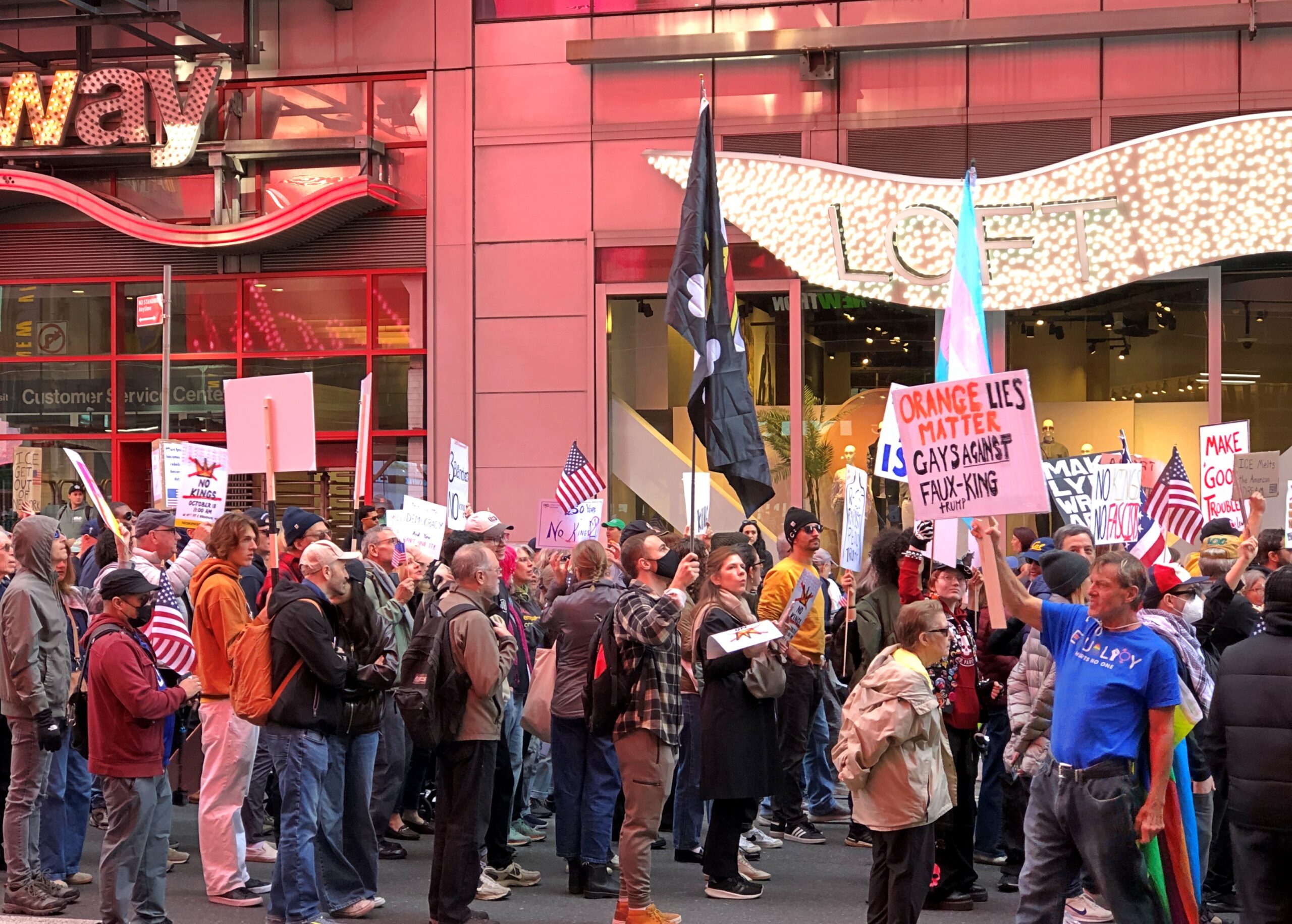
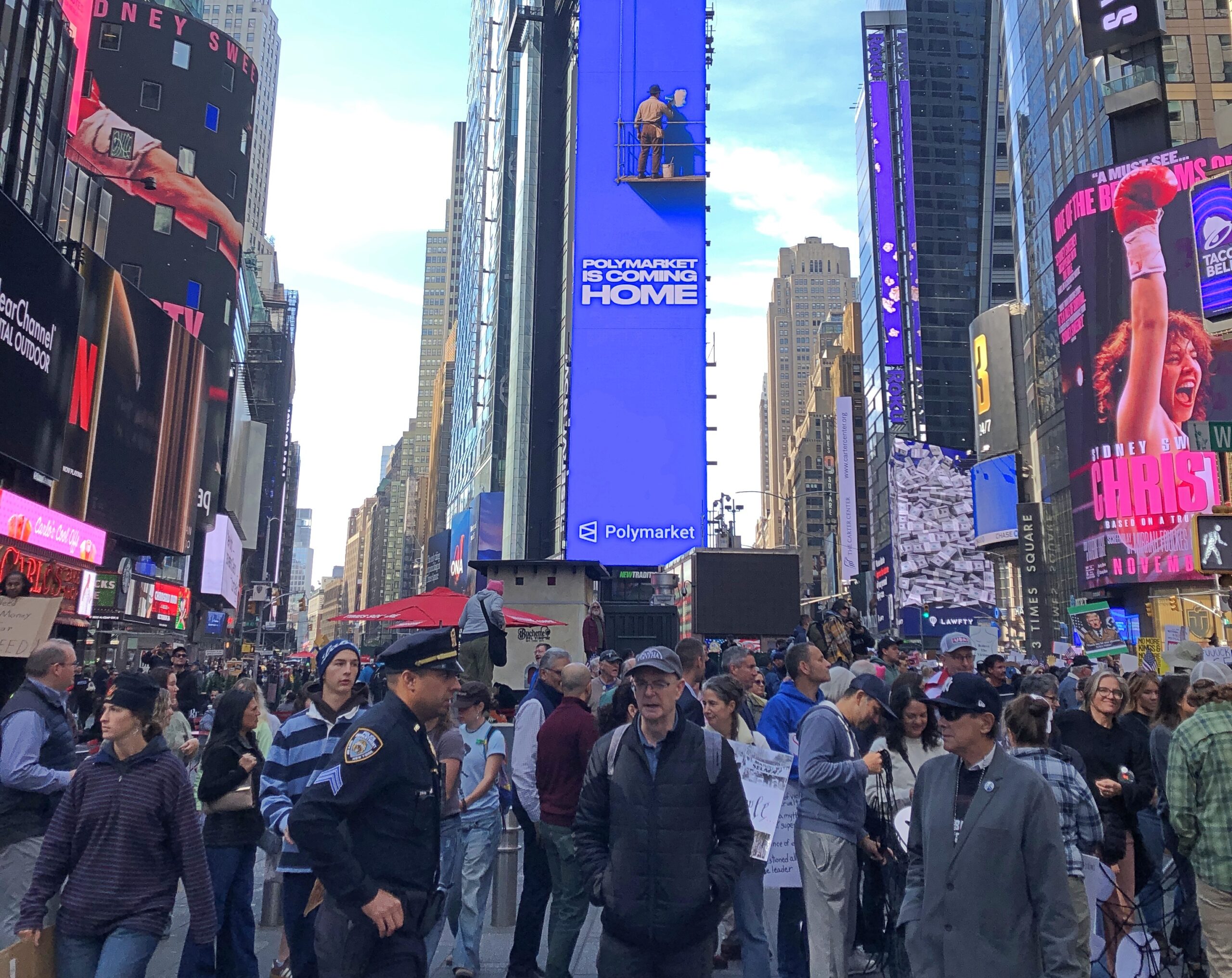
We arrived in Manhattan by the Long Island Rail Road late morning on Saturday, October 18. We walked the short distance from Penn Station to Times Square, where a crowd was in motion.

No Kings Manhattan Oct 18, 2025

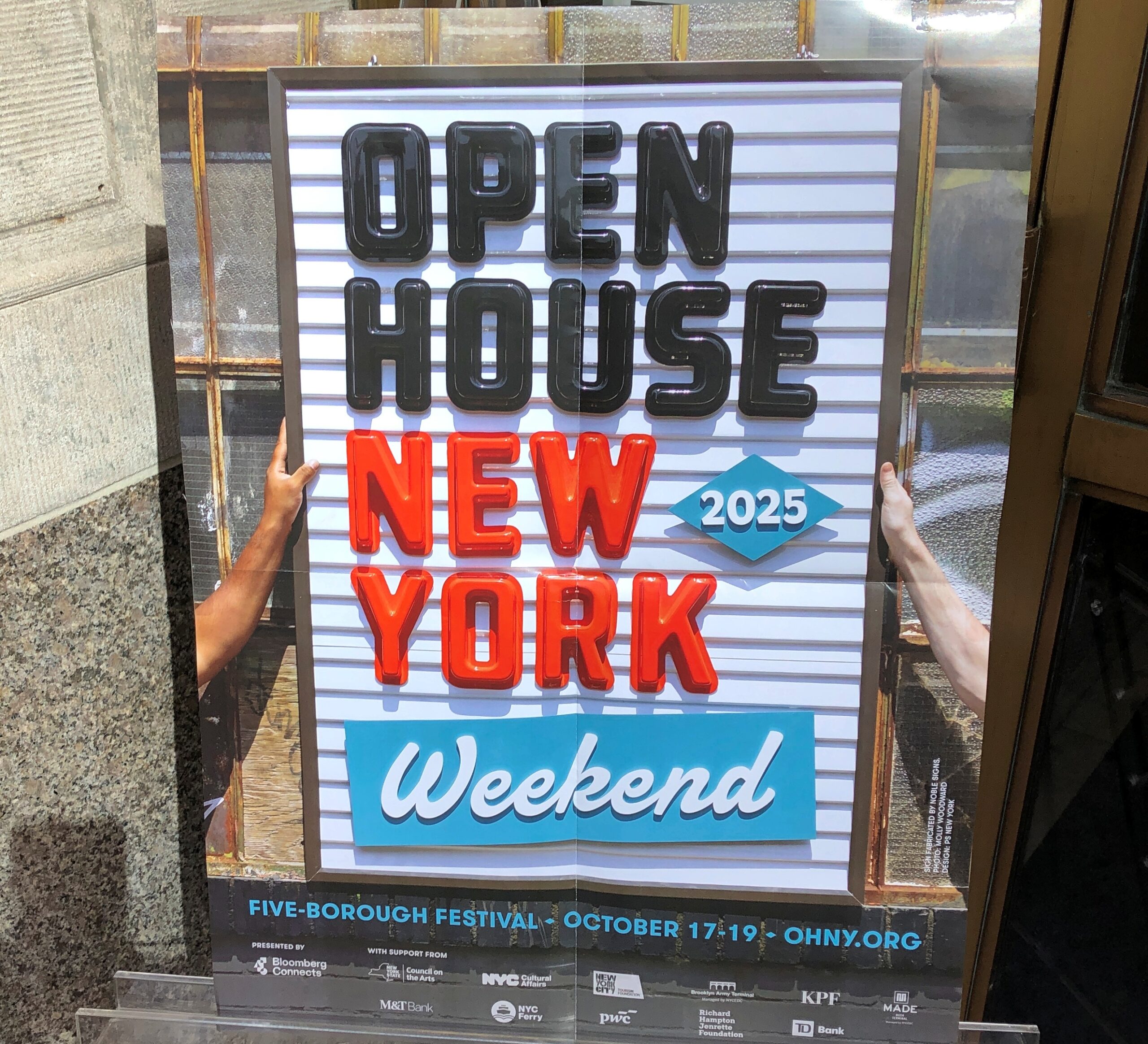
We hadn’t come to New York for No Kings, but Open House New York. Some days earlier, I’d read about the protest was scheduled for late morning on Saturday, October 18. Well now, that’s good timing.

No Kings Manhattan Oct 18, 2025

About 100,000 came out in the city’s five marches, one for each borough, according to the NYPD, which is probably as good an estimate as any. Maybe 75,000 of those were in Manhattan?

A small number compared, say, with New Year’s Eve in Times Square – an event not to be found on any list of the things I dream of doing. They say that pulls in a million souls. Of course, it’s easier to draw a crowd for a drunken holiday revel than a sober civic rally. Also, that million people are far more regimented than any mere anti-administration march. Regimented by the police, that is. No Kings, though informal in most ways, was self-regimented. Seems that the NYPD made no arrests associated with the NYC marches.

March? More of a mass walk. Considering some of the egregious behavior being protested, the walking crowd was cheerful. Cheerfully angry, you might call it. As Spock might say in observing such peculiar human emotion, “fascinating.” Then again, it was a middle-class protest, largely attracting people (like me) who would have been nowhere near if they thought a riot was even a little likely.

Do these or any protests make any difference in short- or longer-term policy? Who knows. It is pretty to think so, but the notion wasn’t going to keep us at No Kings more than about a half hour, some of which was spent navigating upstream – which happened to be uptown – against the downstream human tide – who happened to be going downtown.

We numbered three by the time we got to Times Square. The train that Yuriko and I took from Syosset Station on Long Island went to Penn Station, and by the marvel that is texting, we were able to arrange a meeting there with Geof Huth, resident of Astoria these days, in the terminal’s new great hall.

I was astonished by the new hall, called the Moynihan Train Hall and completed only in 2021. Clearly I hadn’t kept up with major redevelopment projects in New York. SOM did the design, knocking it out of the park. I’d been fully prepared for the dowdy experience that Penn Station has been since the notorious destruction of the previous one in the 1960s.

Instead, we entered an open, elegant, fully modern space, crowned by the glass and steel of an expansive skylight and watched over by a four-faced clock on a pole. I was even more surprised when we headed outside and realized that the Moynihan Train Hall was created inside the city’s former main post office, the James A. Farley Building. The last time I thought about that massive, remarkable Beaux-Arts structure  (McKim, Mead & White) was the last time I walked around this part of NYC, when it was still a post office.

The Farley exterior gleams the gleam of a newly restored facade, and happily kept the post office faux-motto: Neither snow, nor rain, nor heat, nor gloom of night stays these couriers from the swift completion of their appointed rounds. Good to see.

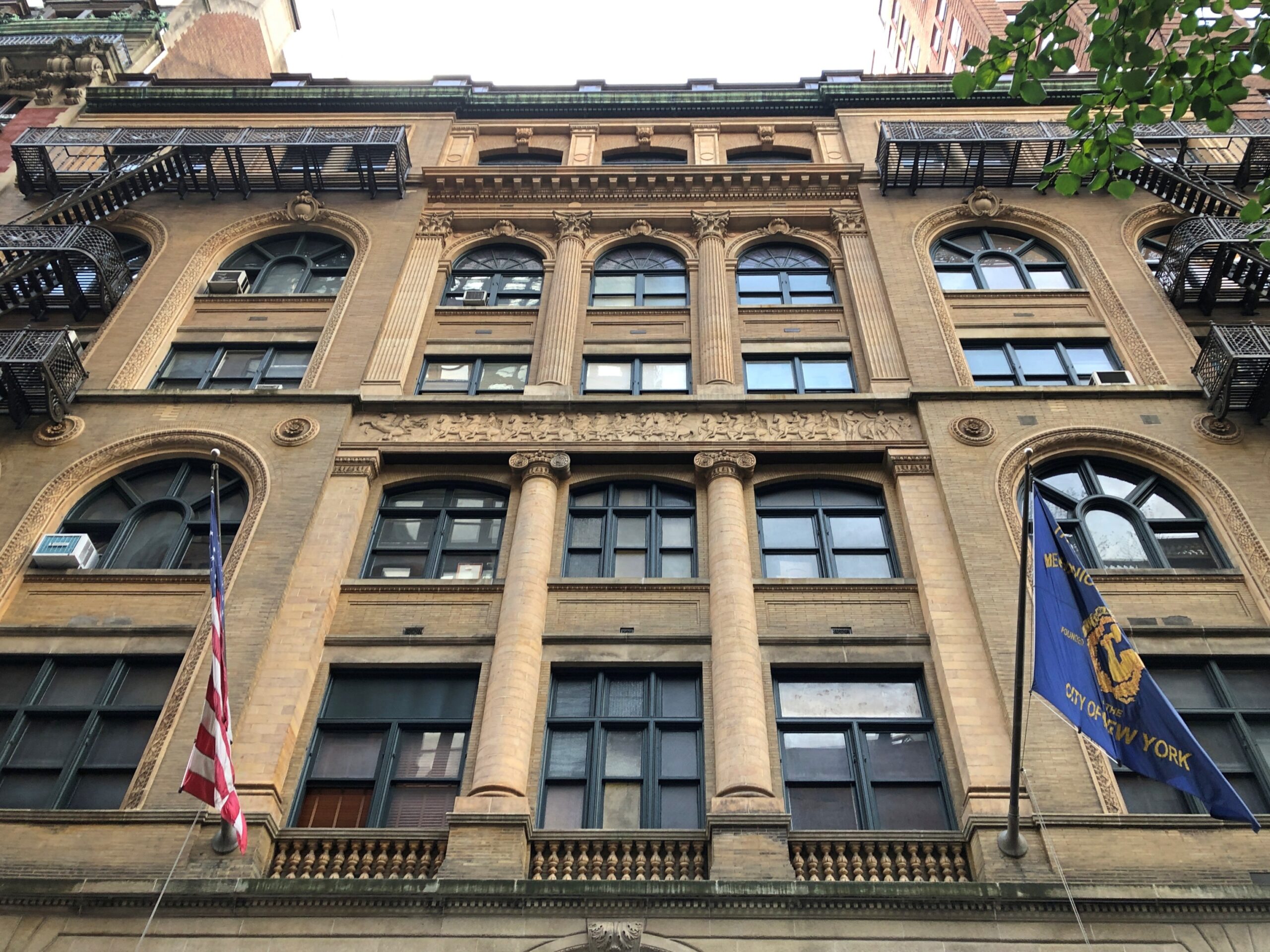
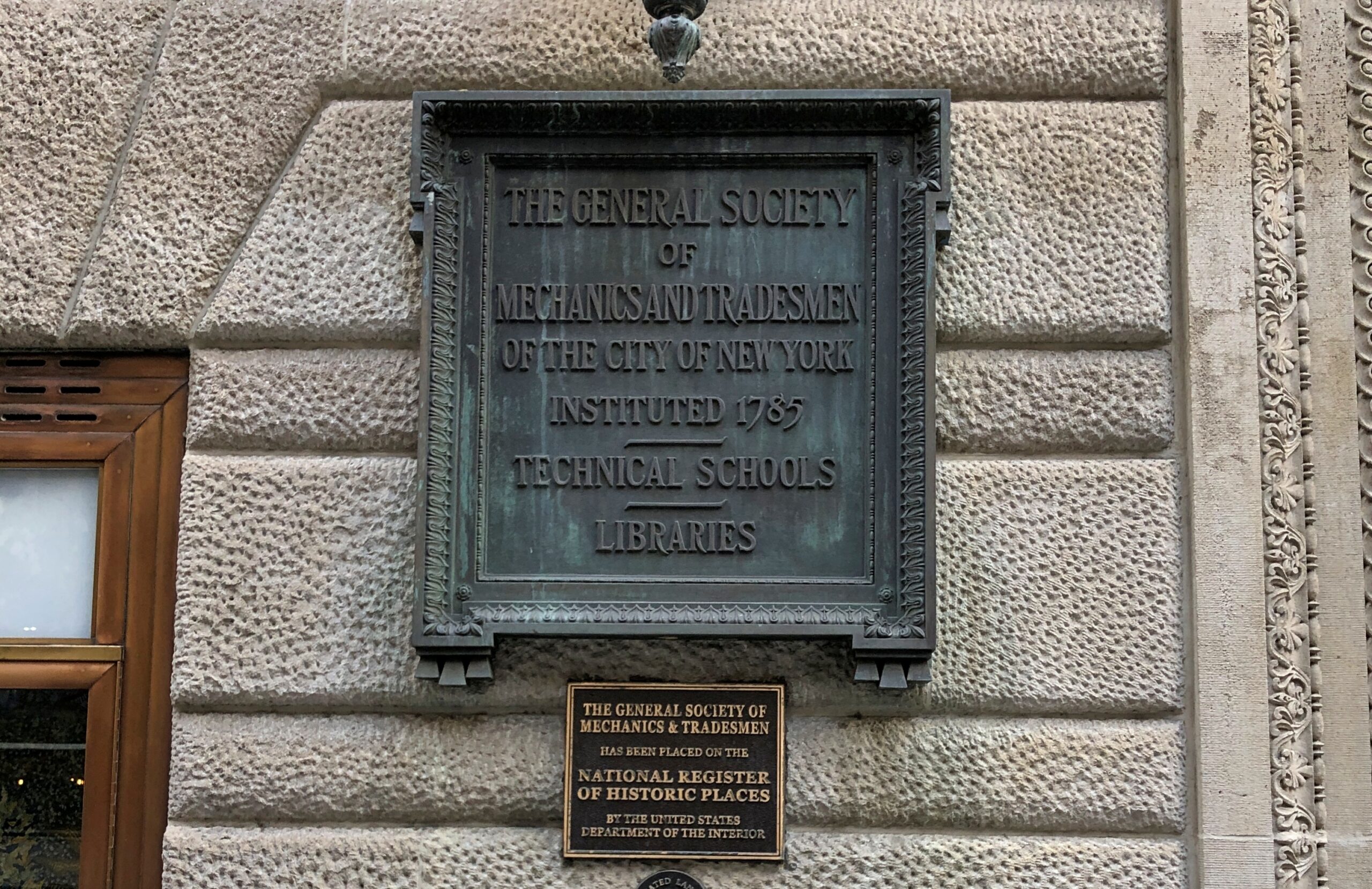
After leaving the No Kings crowd, we made our way to 20 West 44th Street, an 1899-vintage building and home of the General Society of Mechanics and Tradesmen of the City of New York.

General Society of Mechanics and Tradesmen of the City of New York

It was open for the Open House.

OHNY

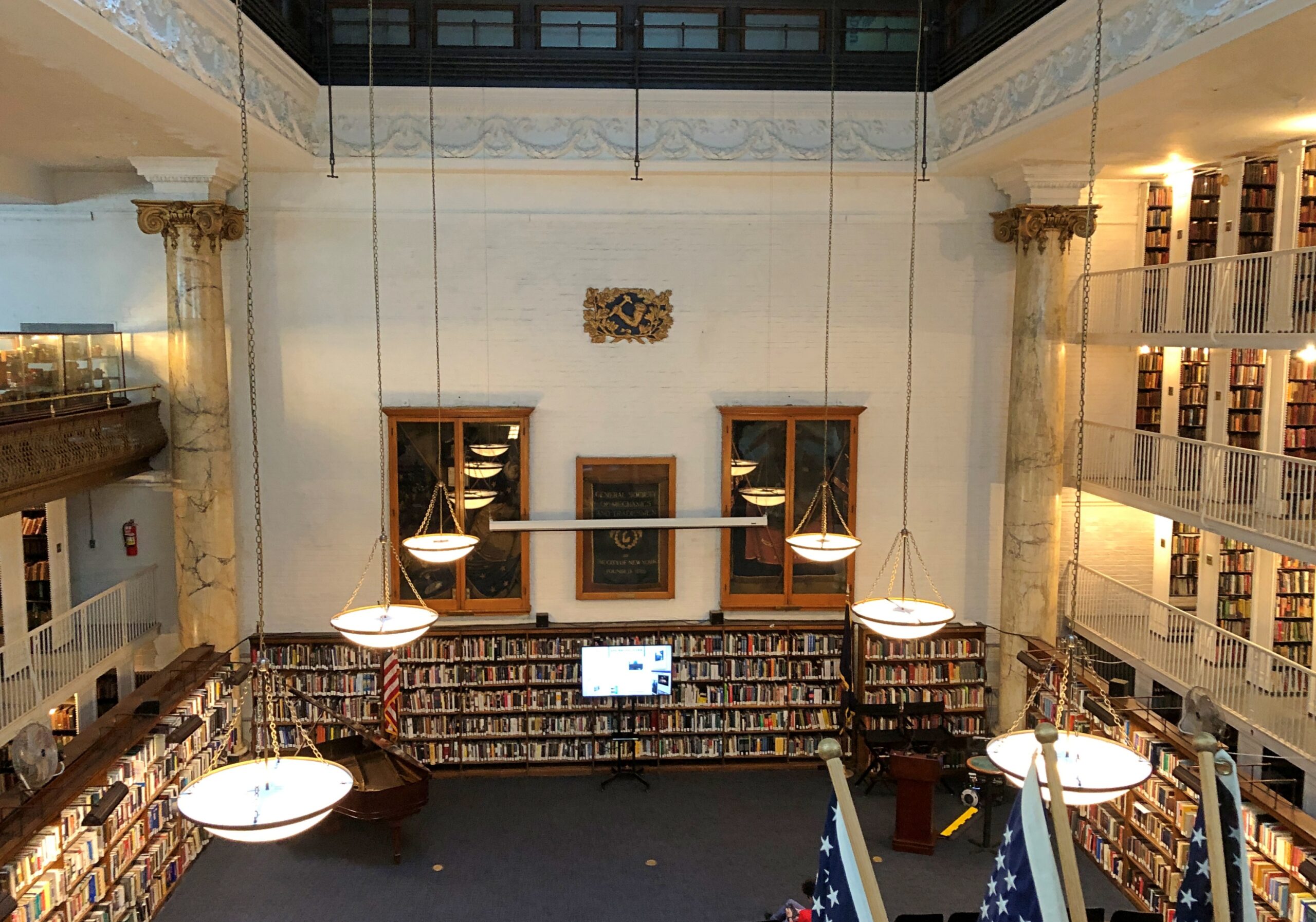
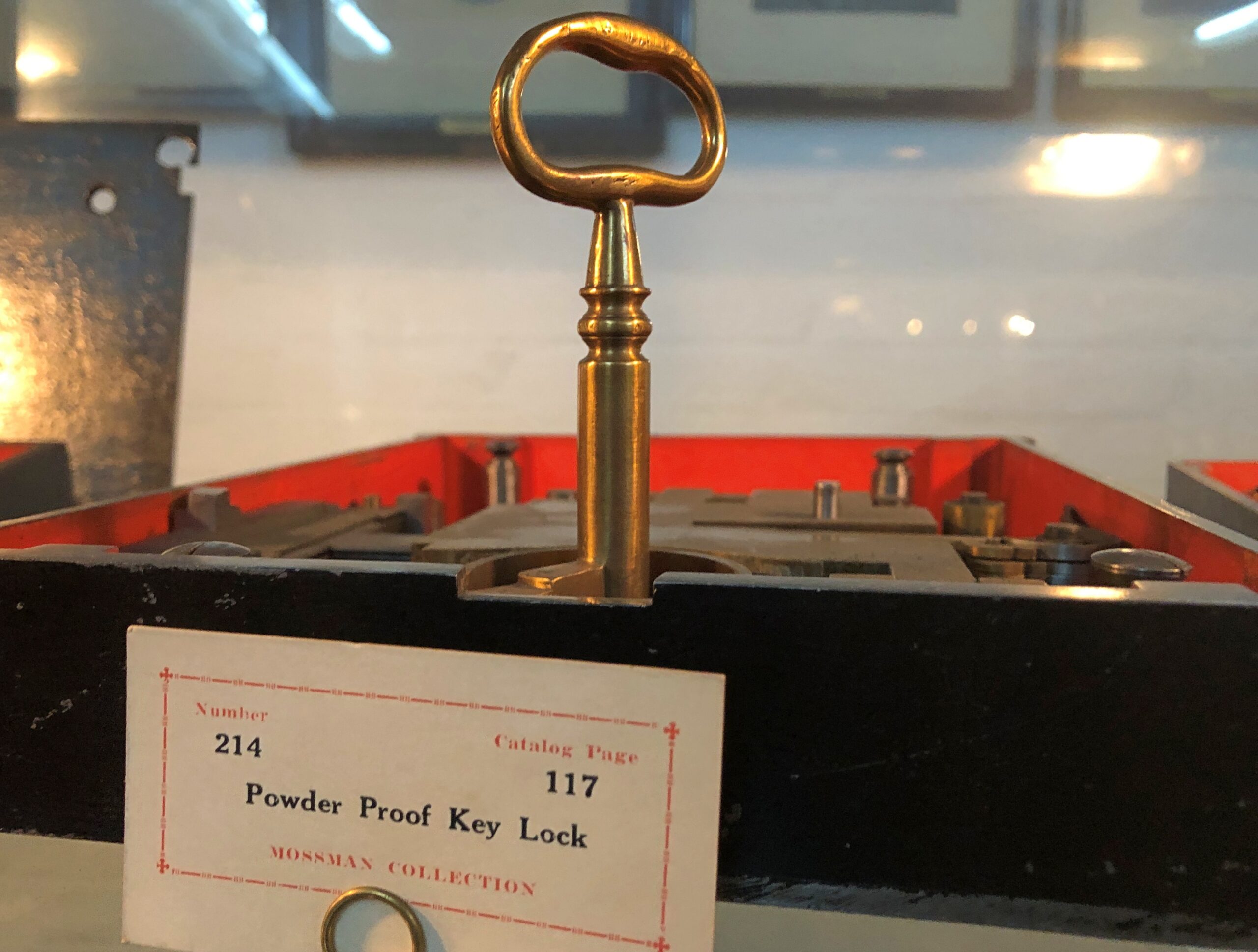
“The second-oldest library in the city includes a light-filled atrium that is used as a vibrant programming space by the General Society and other nonprofits,” notes the OHNY web site. “Overlooking the library on a striking wrought iron balcony is the John M. Mossman Lock Collection, which contains more than 370 locks, keys, and tools dating from 2000 BC to the early 20th century.” 

General Society of Mechanics and Tradesmen of the City of New York

Nothing like a handsome pre-war (Great War) building in which to spend some time. The enormous lock and key collection attests to the fundamental dishonesty of a fraction of mankind, and the ingenuity brought to the task of coping with that fact.

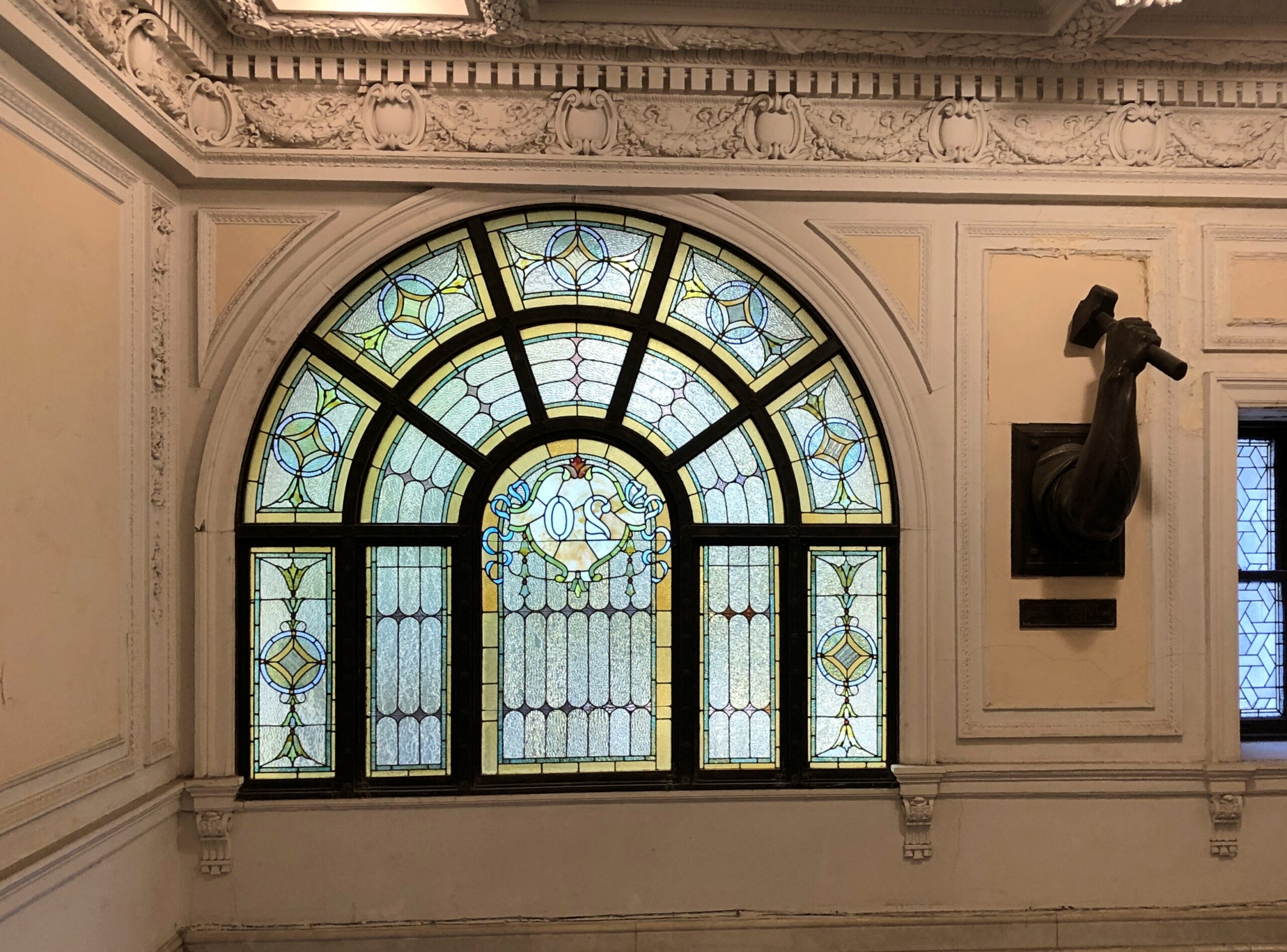
As for the General Society, it provides training and other assistance to skilled craftsmen, beginning in the late 18th century (at different locations) and down to the present. Its motto: By hammer and hand all arts do stand. That accounts for the hammer and hand emerging from the wall in its space.

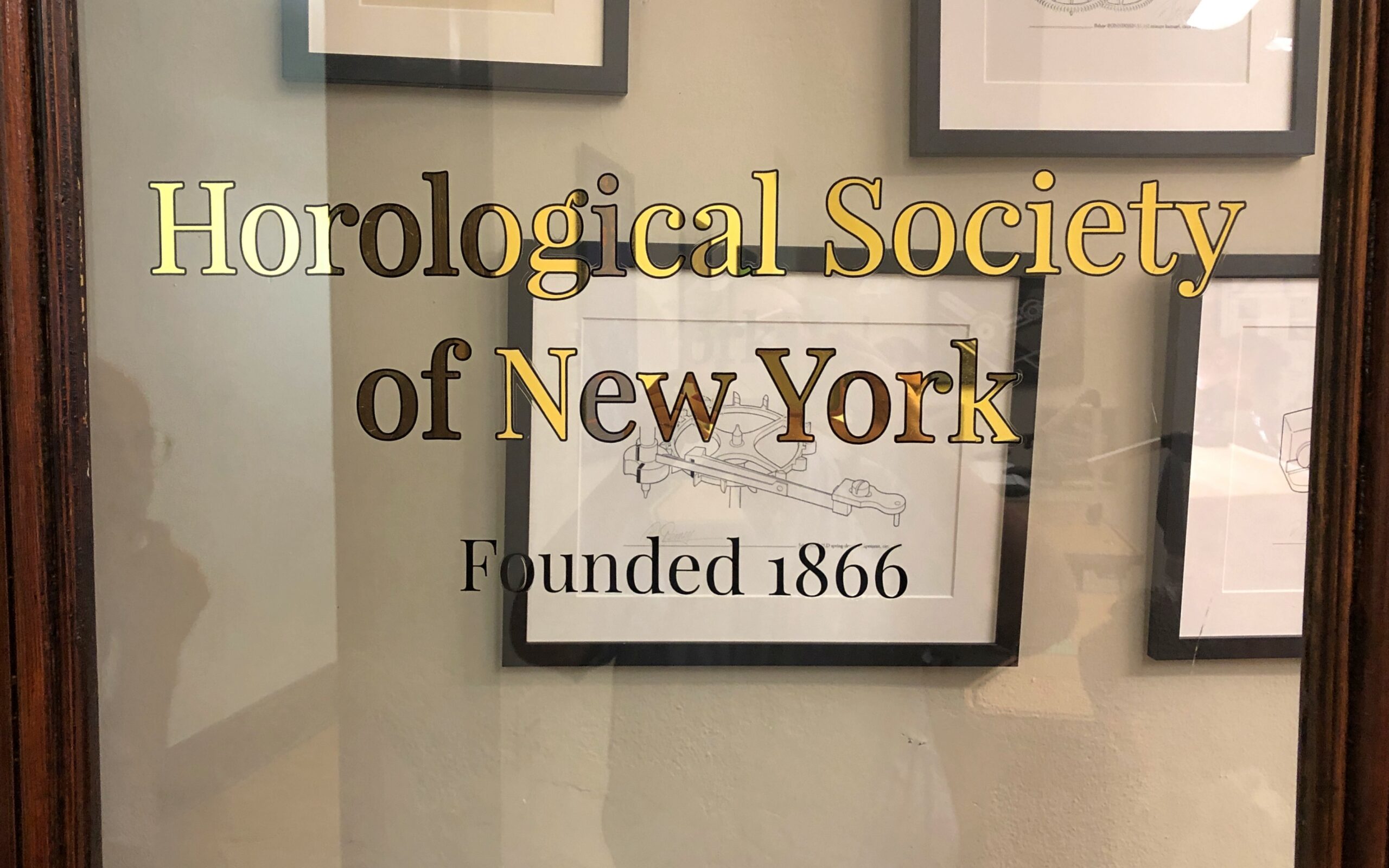
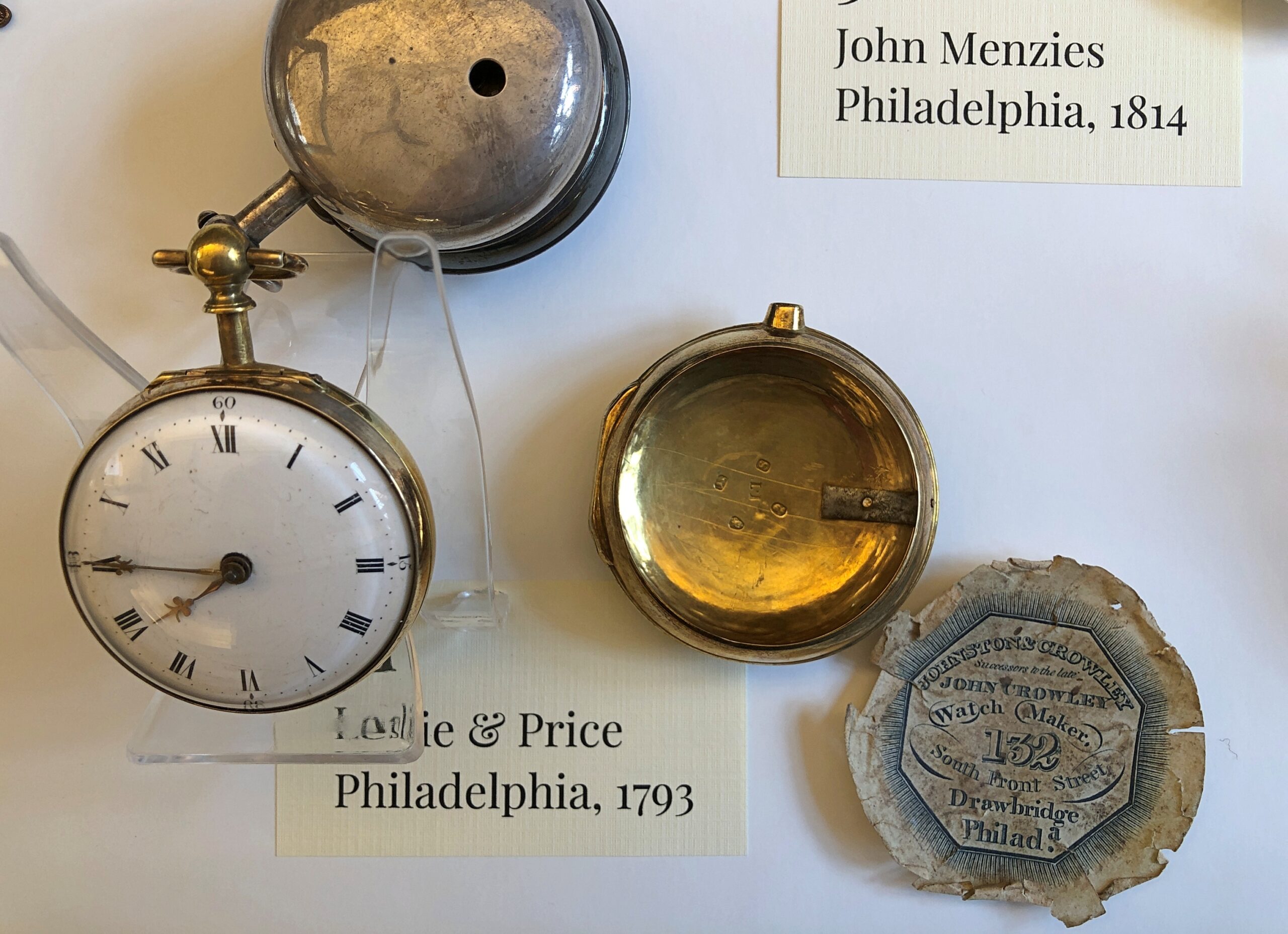
As for the other nonprofits in the building, they include the Horological Society of New York, keeper of all things related to timekeeping since 1866.

Horological Society of New York

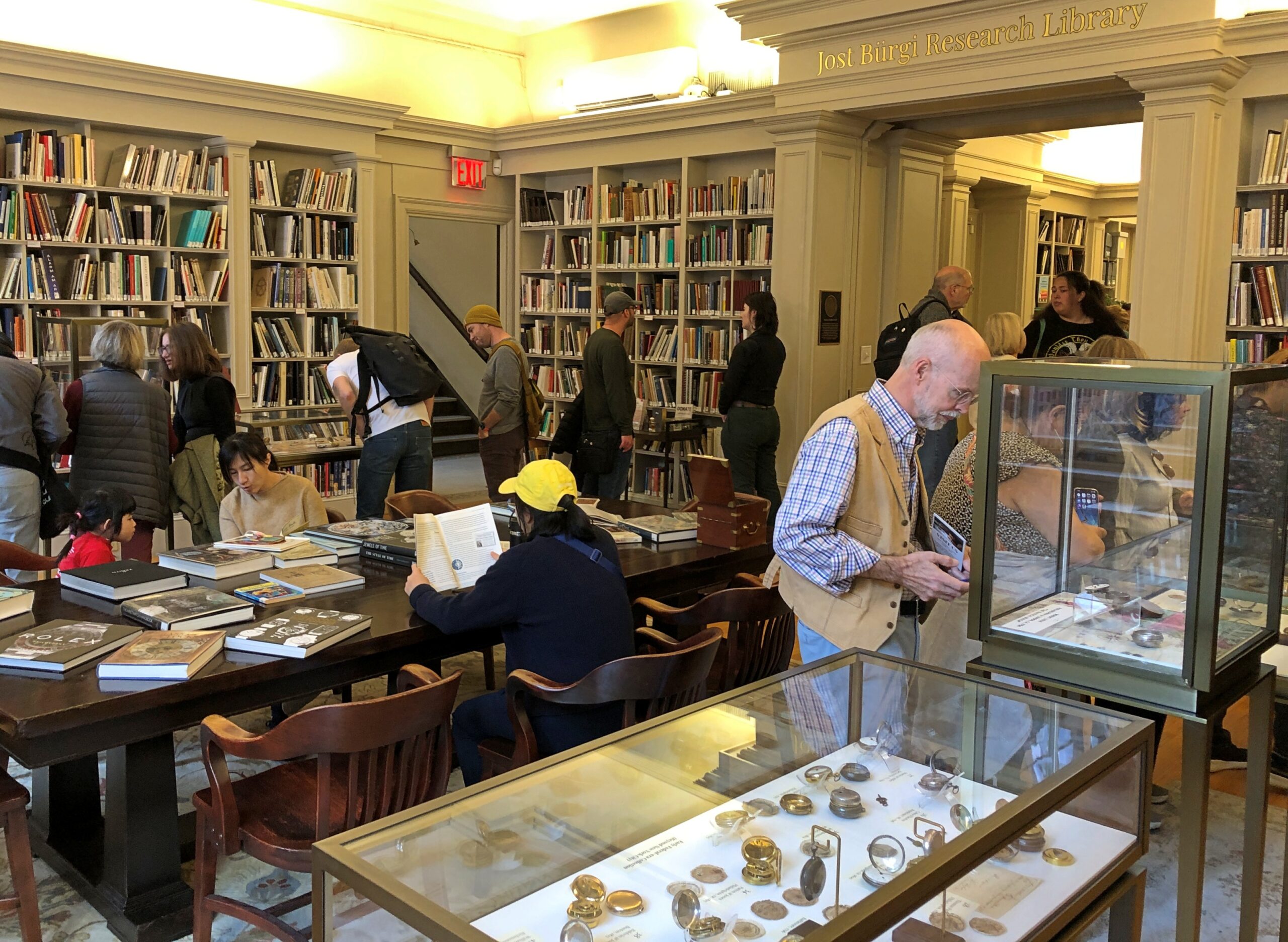
It too was open, and we visited the impressive collection of watches and clocks and horological tools and books.

Horological Society of New York

This is no fusty org relegated to the part-time care of antiquarians. HSNY has the organization heft (and scratch) to put on enormous annual galas, with the next one slated for the Plaza Hotel next year to celebrate its 160th anniversary. That will certainly be a picture to behold.

Catskills ’25

The highway New York 30 winds along the northwestern edge of Catskill Park because it follows the winding East Branch of the Delaware River, which would picturesquely come in and out of view as I drove that highway on the crisp late morning of October 16. I stopped at a place called Downsville. Wiki calls it “census-designated place, and former village in the town of Colchester, Delaware County, New York.”

This raises some questions. How is a village part of a town? (Colchester is marked on maps as not far away, but not on NY 30.) How does a place become a “former” village? People still clearly live there. Maybe I’ll investigate these questions sometime. Maybe not.

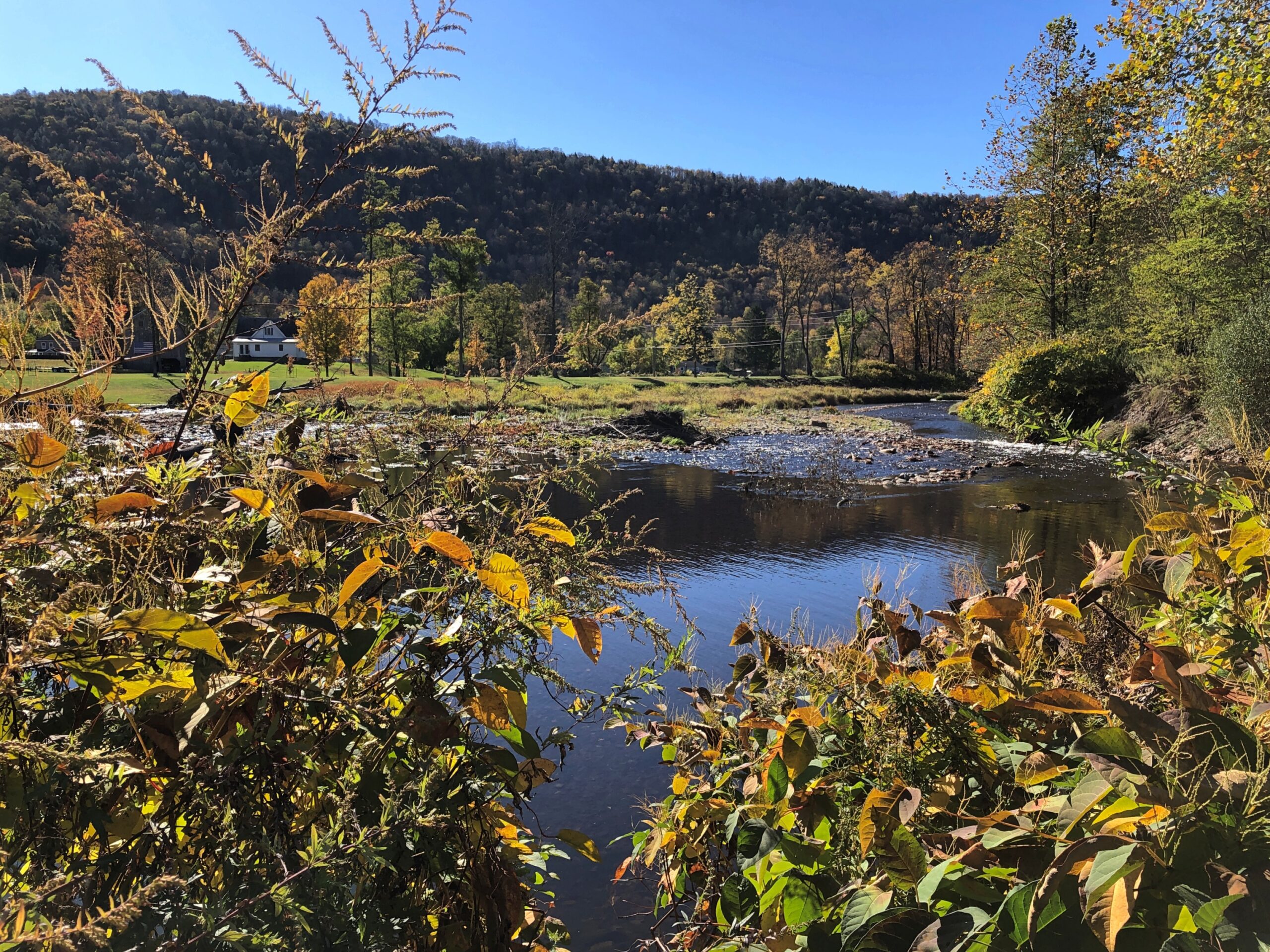
Village or former village, it’s at a pleasant spot on the East Branch.

East Branch of the Delaware River

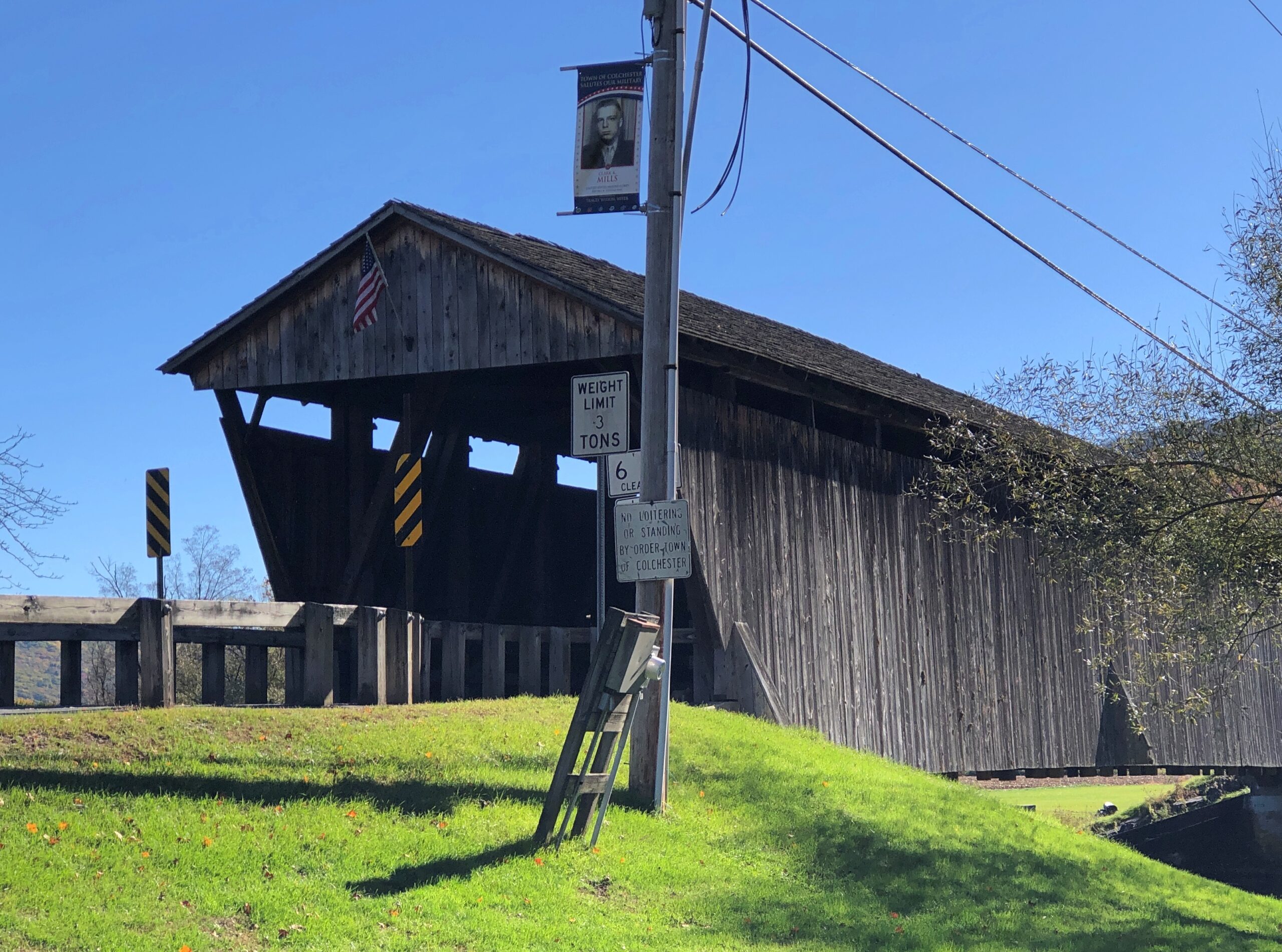
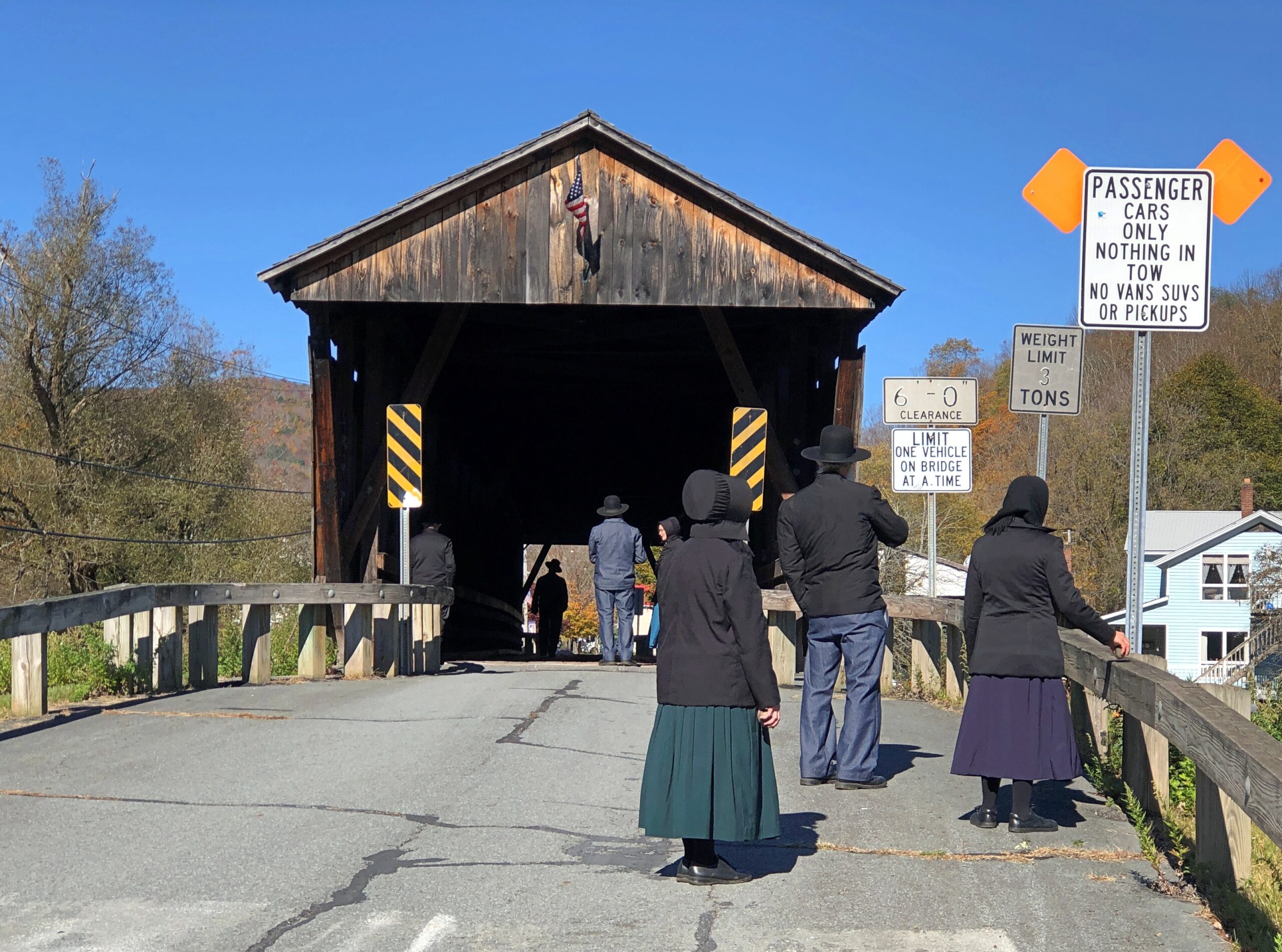
I stopped because a sign directed me to a covered wooden bridge, one that crosses the East Branch about a block away from NY 30.

Downsville, NY covered bridge

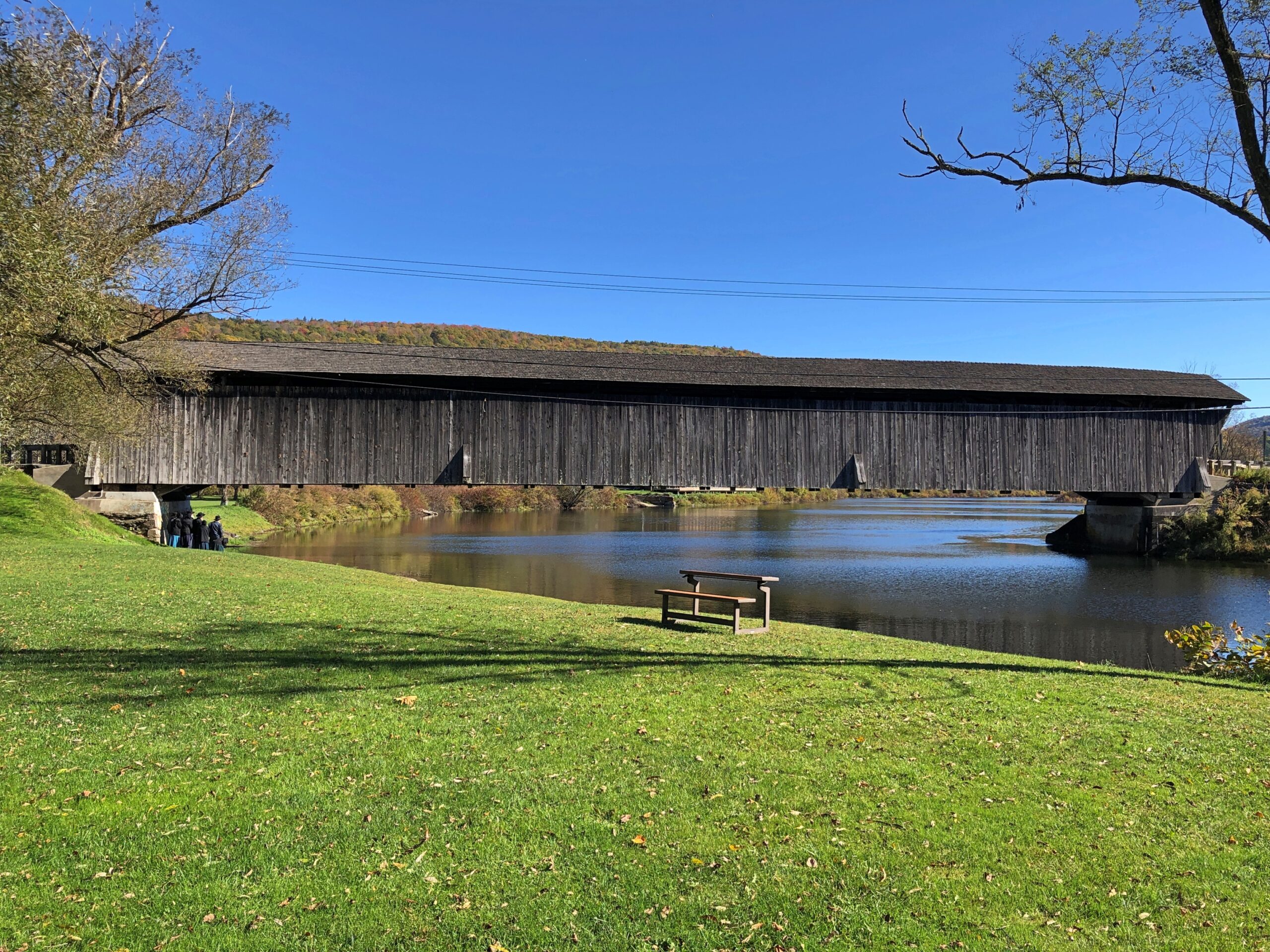
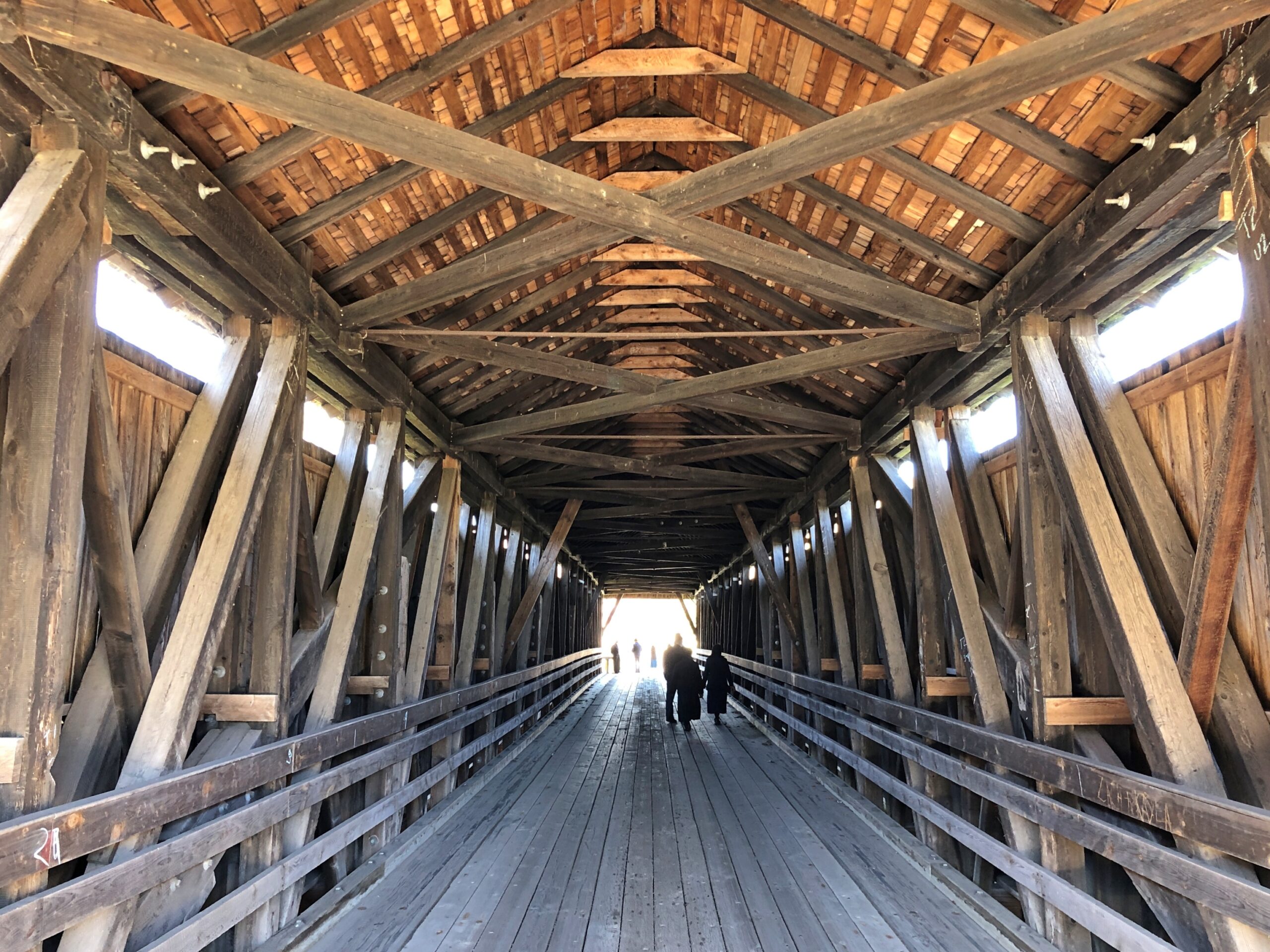
“The Downsville Covered Bridge is one of six covered bridges still standing in Delaware County…” explains the New York State Covered Bridge Society. “Built by Robert Murray in 1854, this 174-foot-long, single span structure incorporates the Long truss design patented on March 6, 1830 by Lieutenant Colonel Stephen H. Long of Hopkinton, New Hampshire, with an added Queenpost truss. This truss design is rare to Northeastern covered bridges.” 

Nice work, Mr. Murray, and the workers who have maintained it as a vehicular bridge down to the present day.

There’s a small park on the river next to the bridge, and a parking lot. Soon after I arrived for a look-see, a large van pulled up to the lot and about a half-dozen Plain People got out. They were there for a look-see too. So we were all on the bridge together.

Downsville NY covered bridge

I try not to do ethnic profiling, but I couldn’t help thinking that a top tourist sight for Plain People might well be a covered wooden bridge. Then I wondered, how is it they came in a van? As I was leaving, I noticed a non-Plain man waiting for them in the drivers seat. The Plain People equivalent of a Shabbos goy, I suppose. Except maybe that he can work any day except the Sabbath?

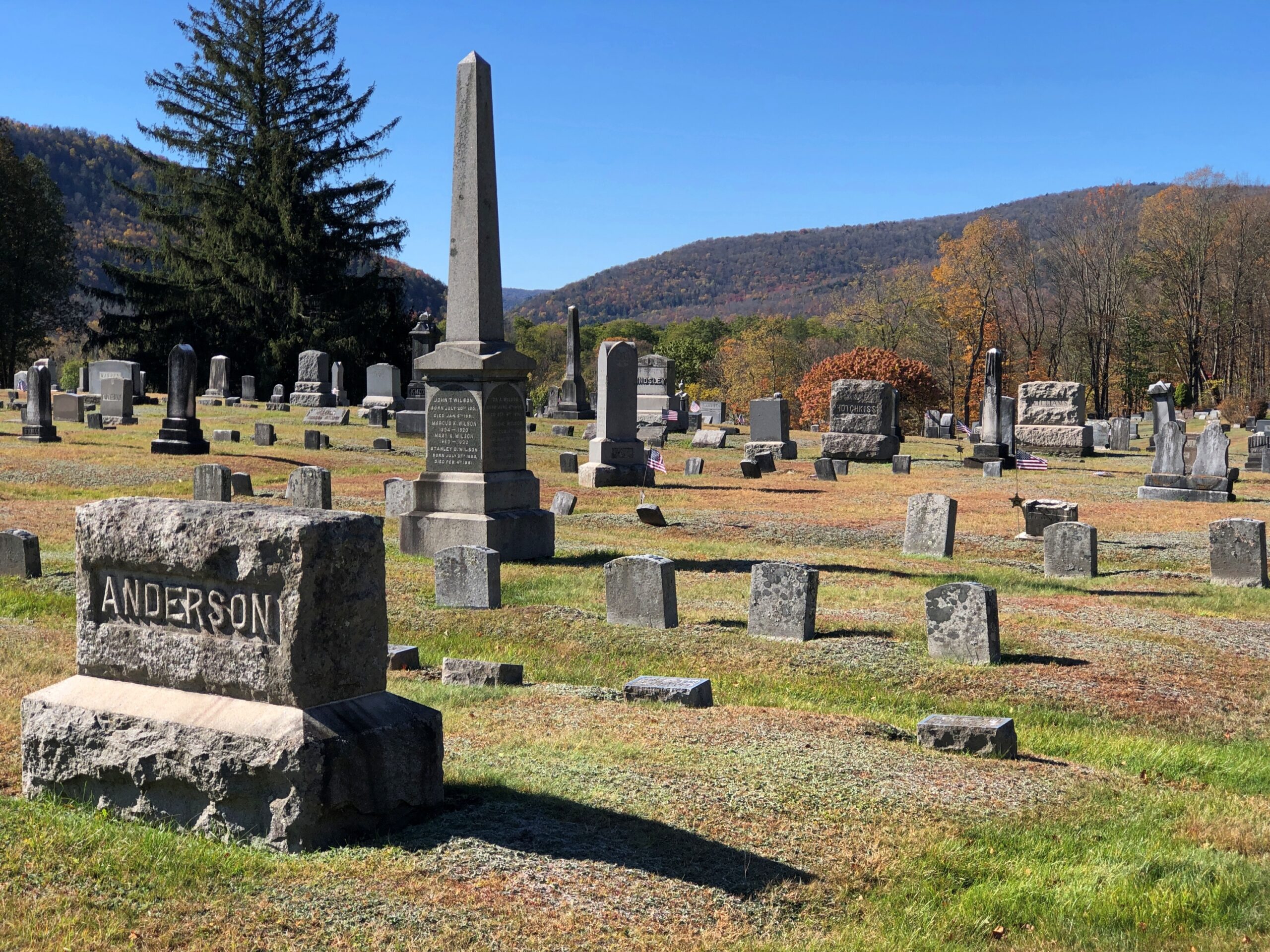
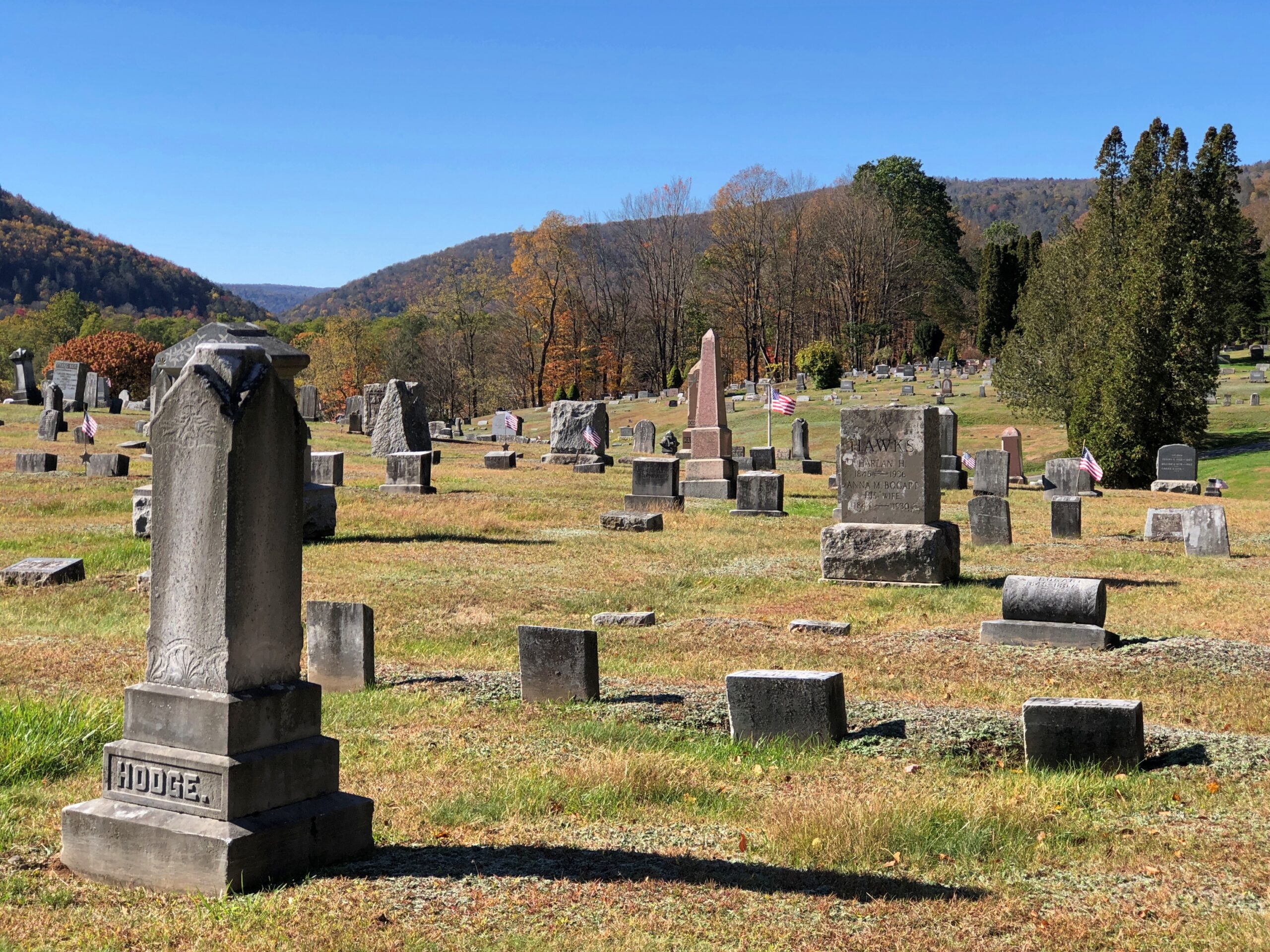
Not far away in Downsville is the Paige Cemetery. I had that to myself, as usual.

Paige Cemetery, Downsville, NY

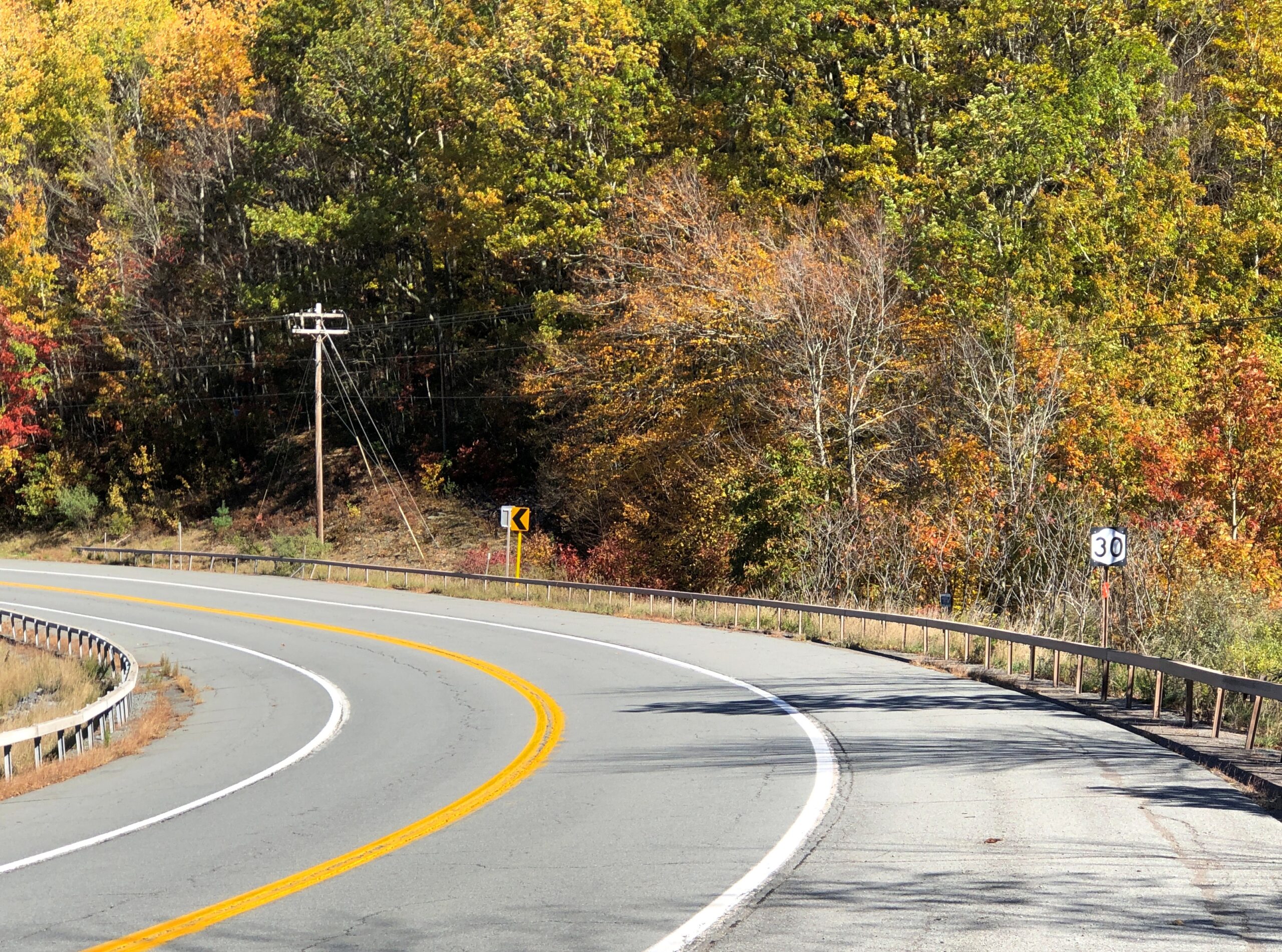
New York 30 continues a long way on the shores of the Pepacton Reservoir. Still car commercial driving.

NY 30
NY 30

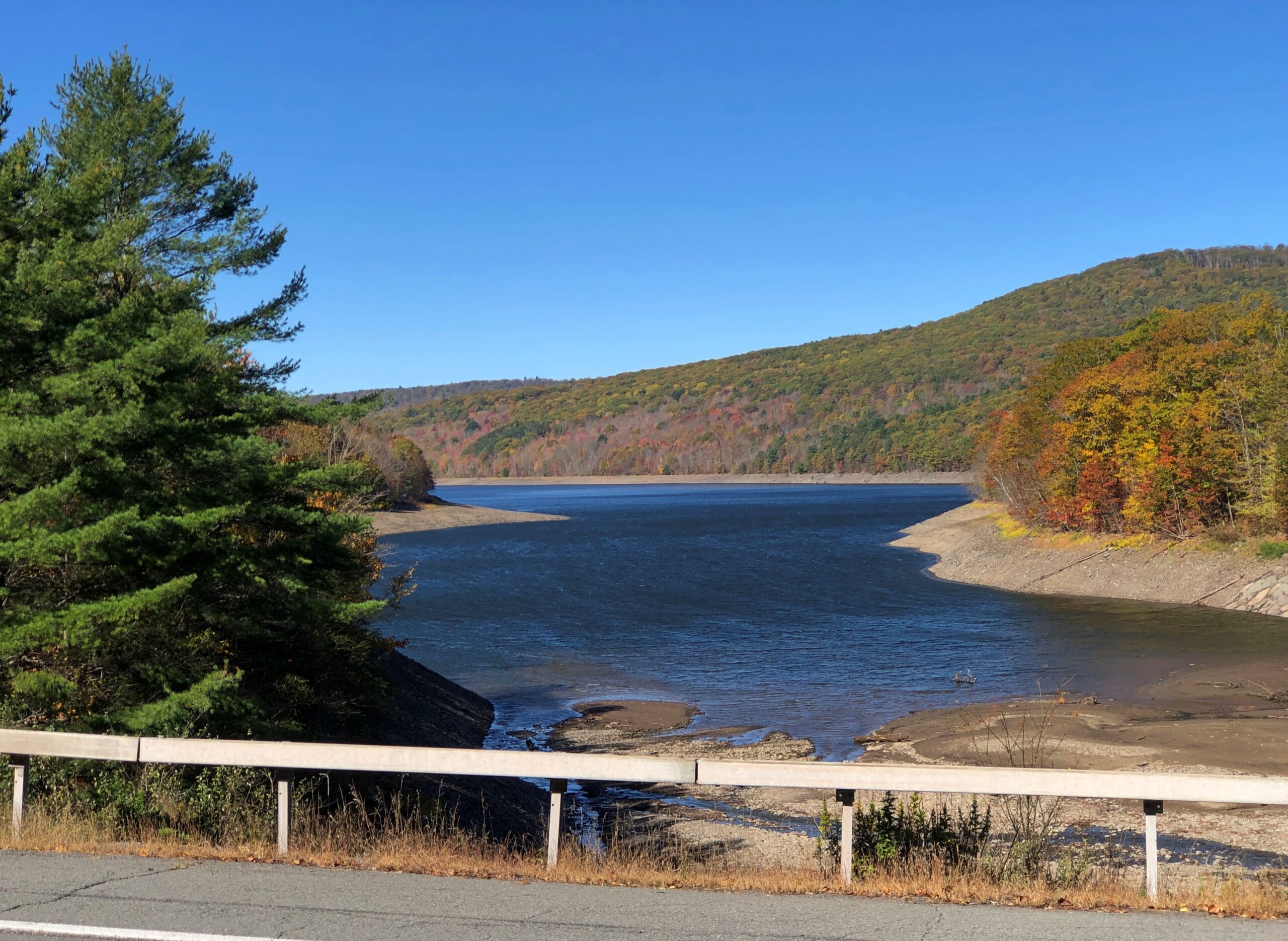
The Pepacton Reservoir, seemingly so peaceful on a brilliant autumn day, has a hell of a back story.

“It is formed by the damming of the East Branch of the Delaware River, which continues west and joins the lower Delaware River,” says NYC Environmental Protection. “It consists of one basin, approximately 15 miles in length [that] holds 140.2 billion gallons at full capacity, making it the largest reservoir in the city system by volume. It was placed into service in 1955.

“Pepacton Reservoir is one of four reservoirs in the City’s Delaware Water Supply System. As the reservoir with the largest capacity, it normally contributes more than 25% of the total daily water flow into New York City.

Italics added, because they needed adding.

Once I left NY 30 and headed east on NY 28, which put me on a path toward the Hudson River Valley and NYC and Long Island, traffic kicked up several notches. It was still mostly a pleasant drive.

Most of the traffic was headed west into the park, opposite of the way I was going; as only to be expected on a Thursday ahead of a colorful fall weekend. The Catskills are still a destination, if not quite the Catskills of yore. Some of the old story was told to the rest of the country through TV shows in previous decades, or even more recently: namely, The Marvelous Mrs. Maisel.

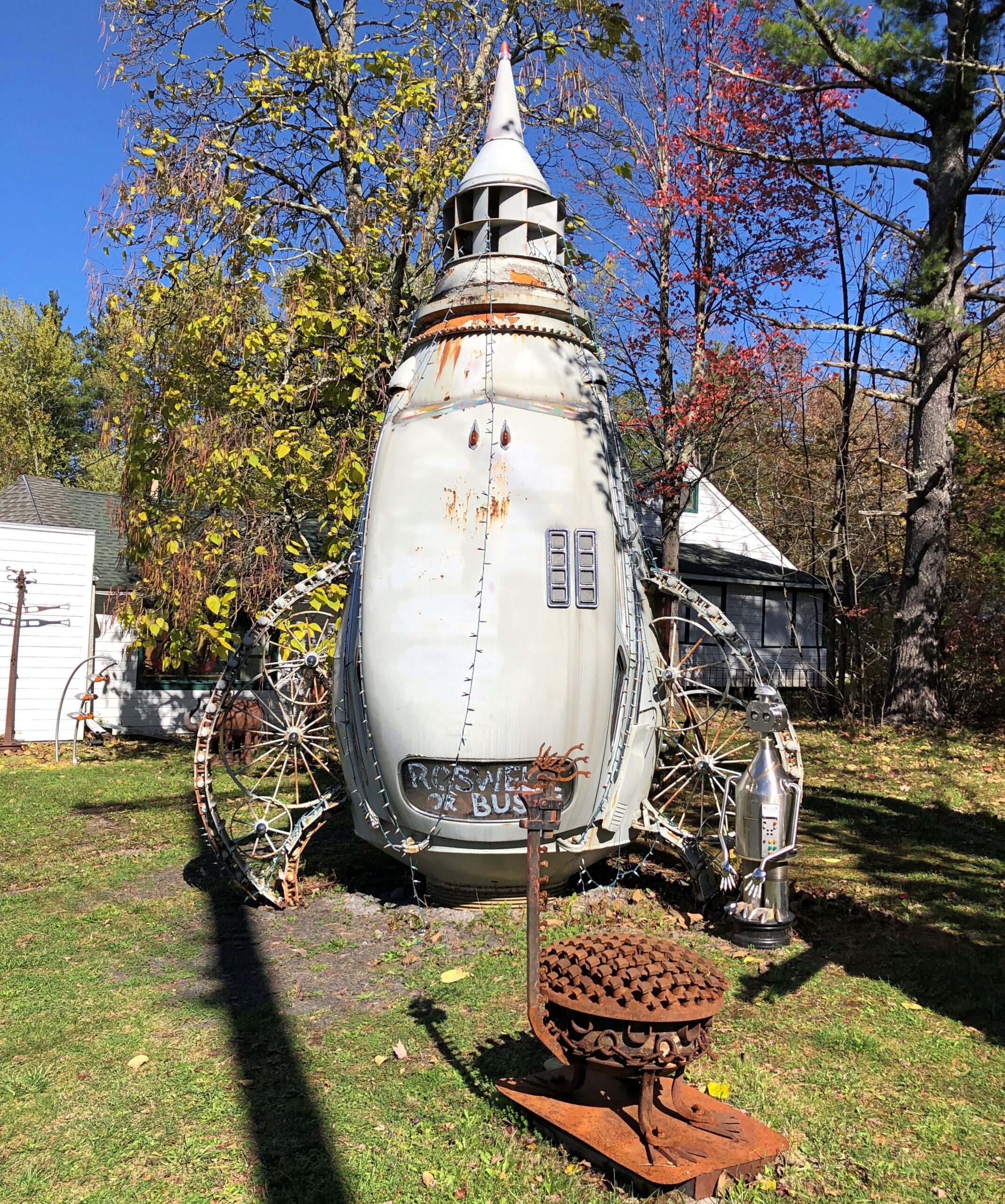
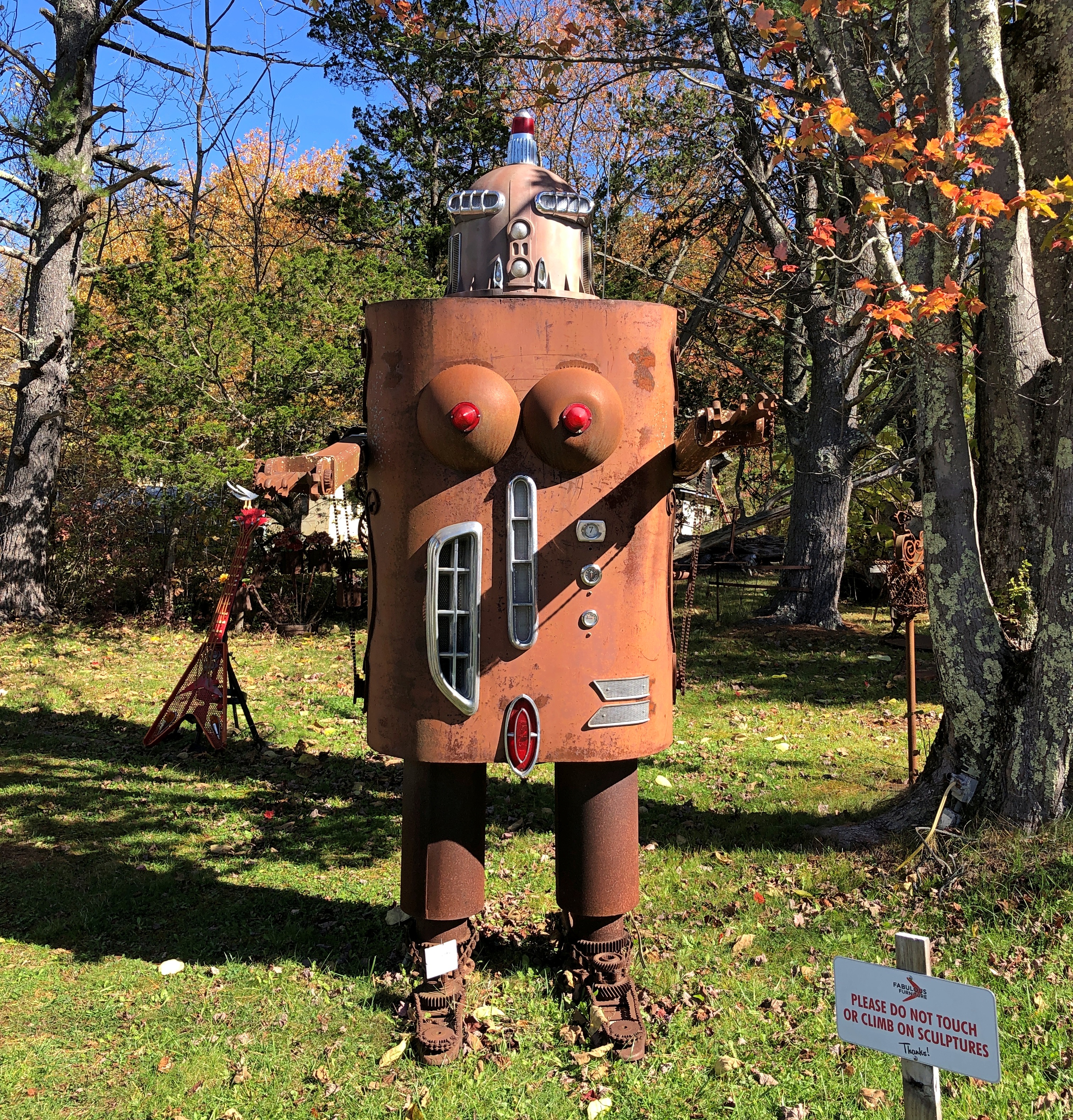
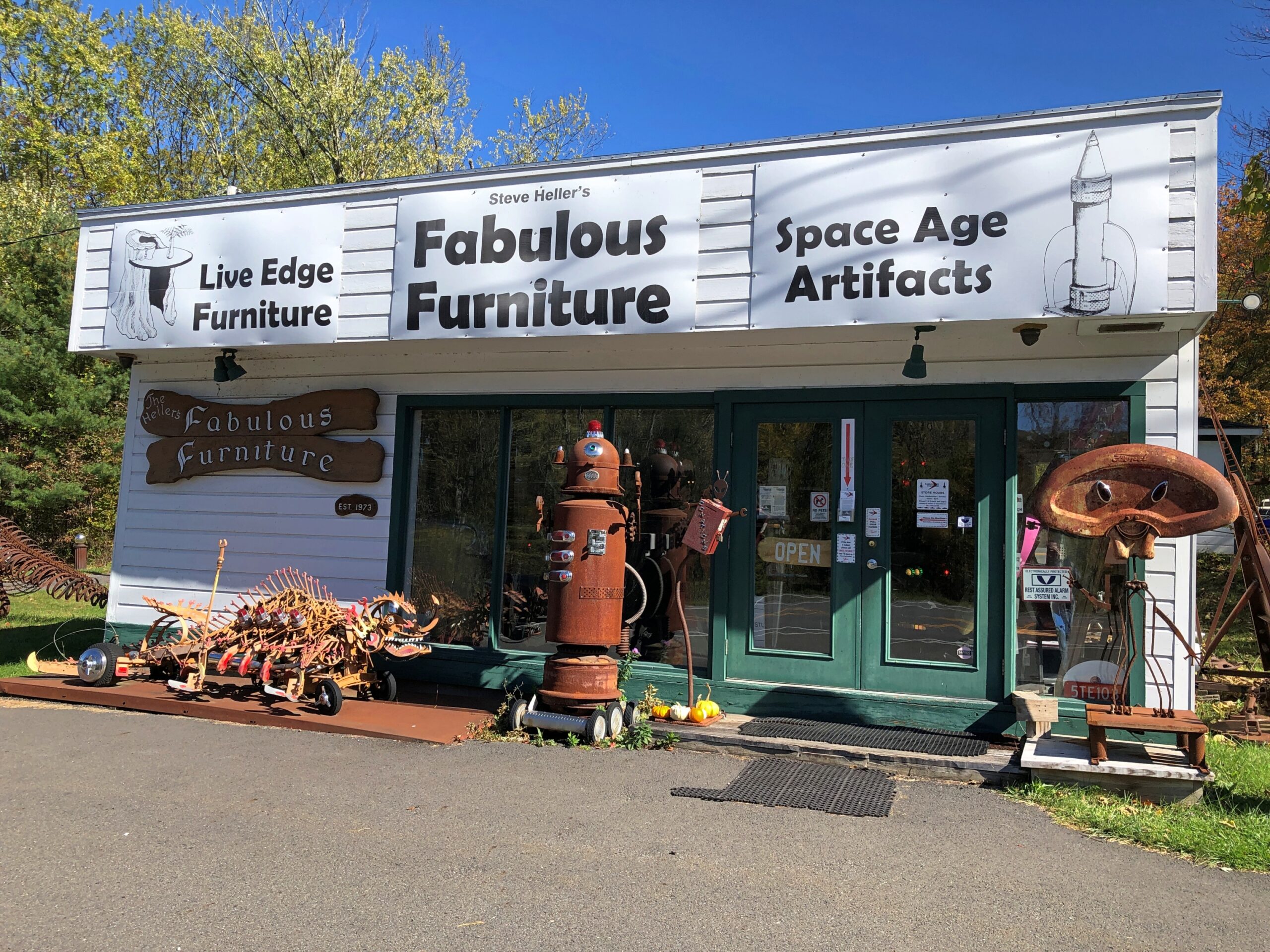
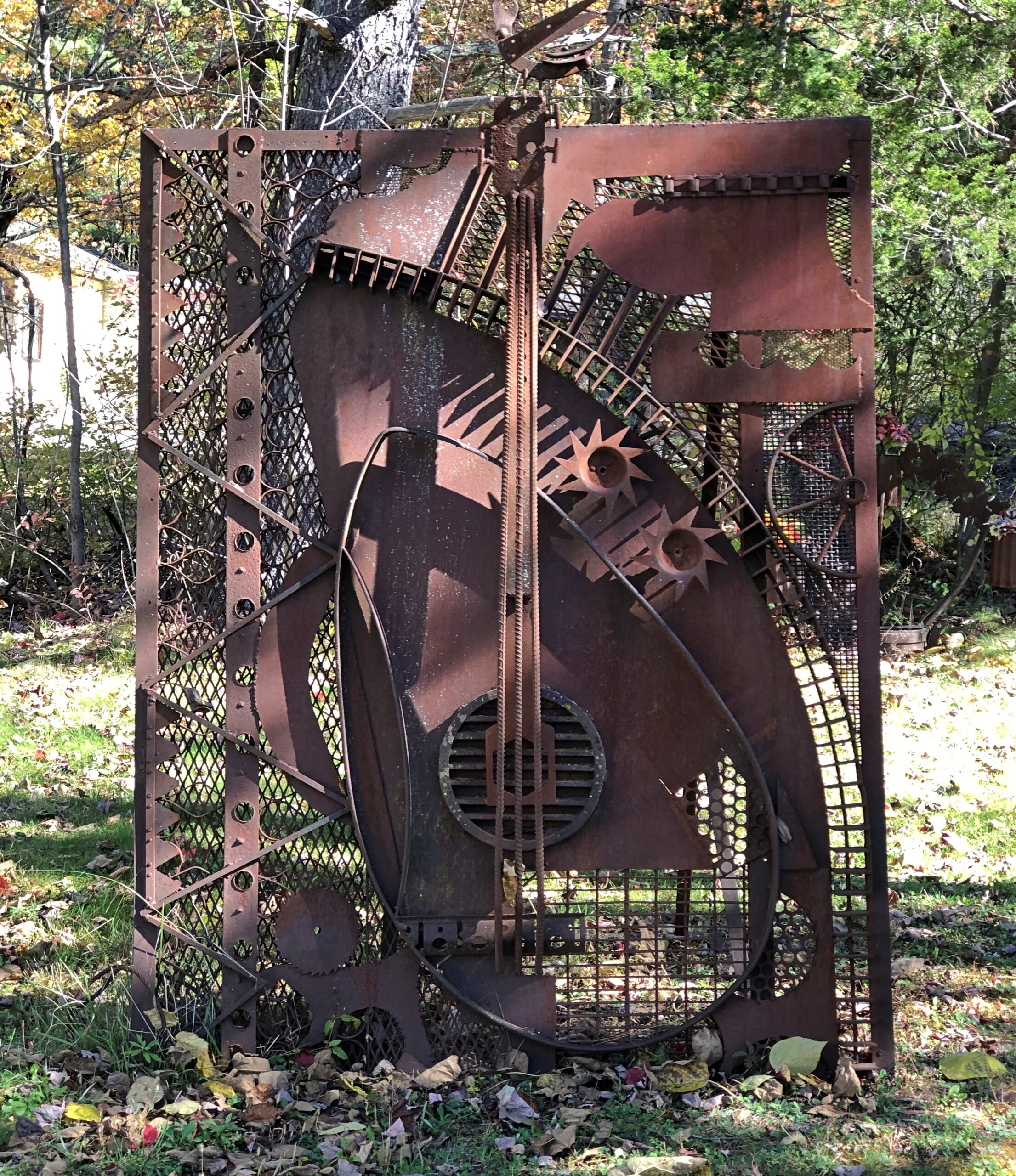
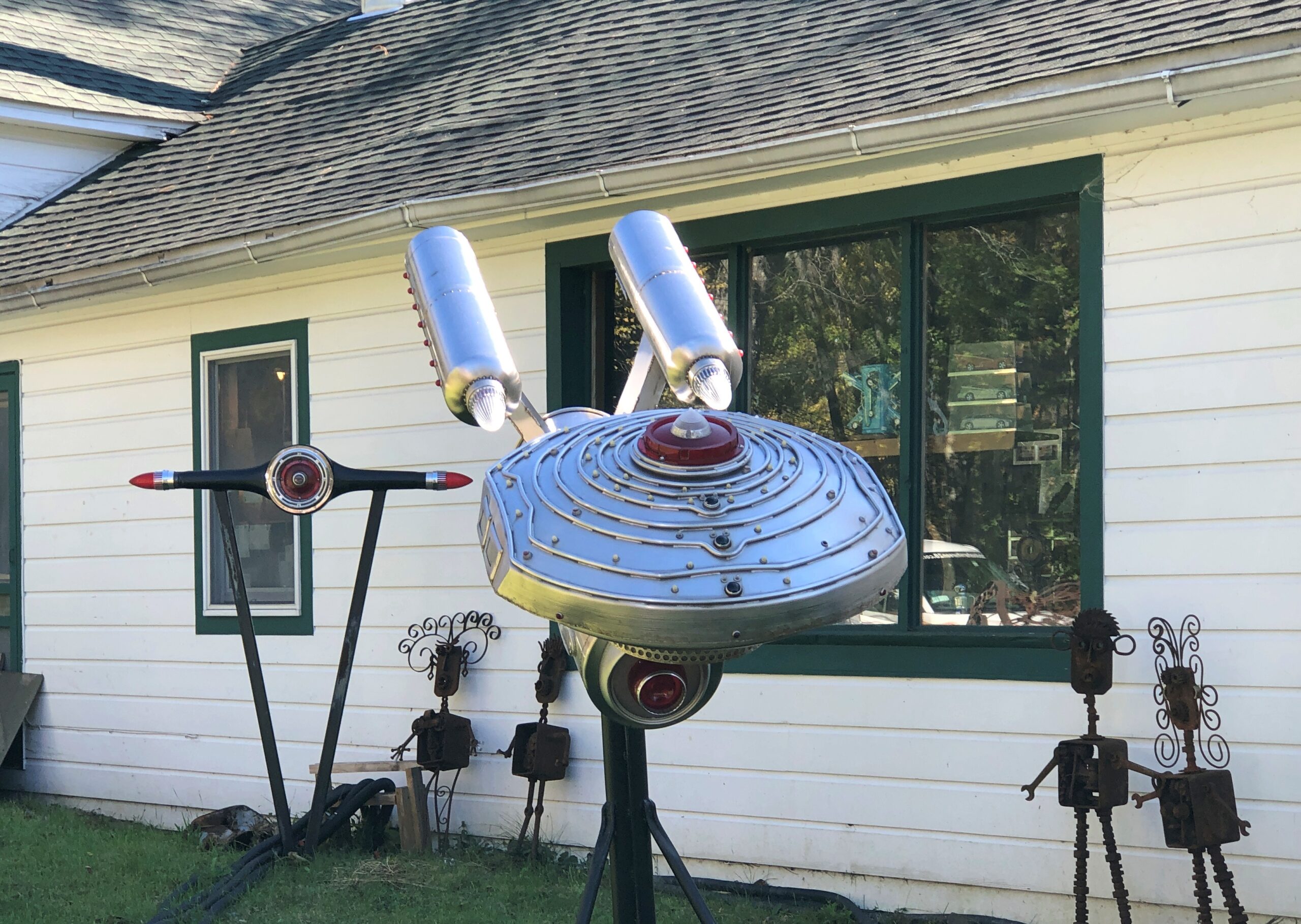
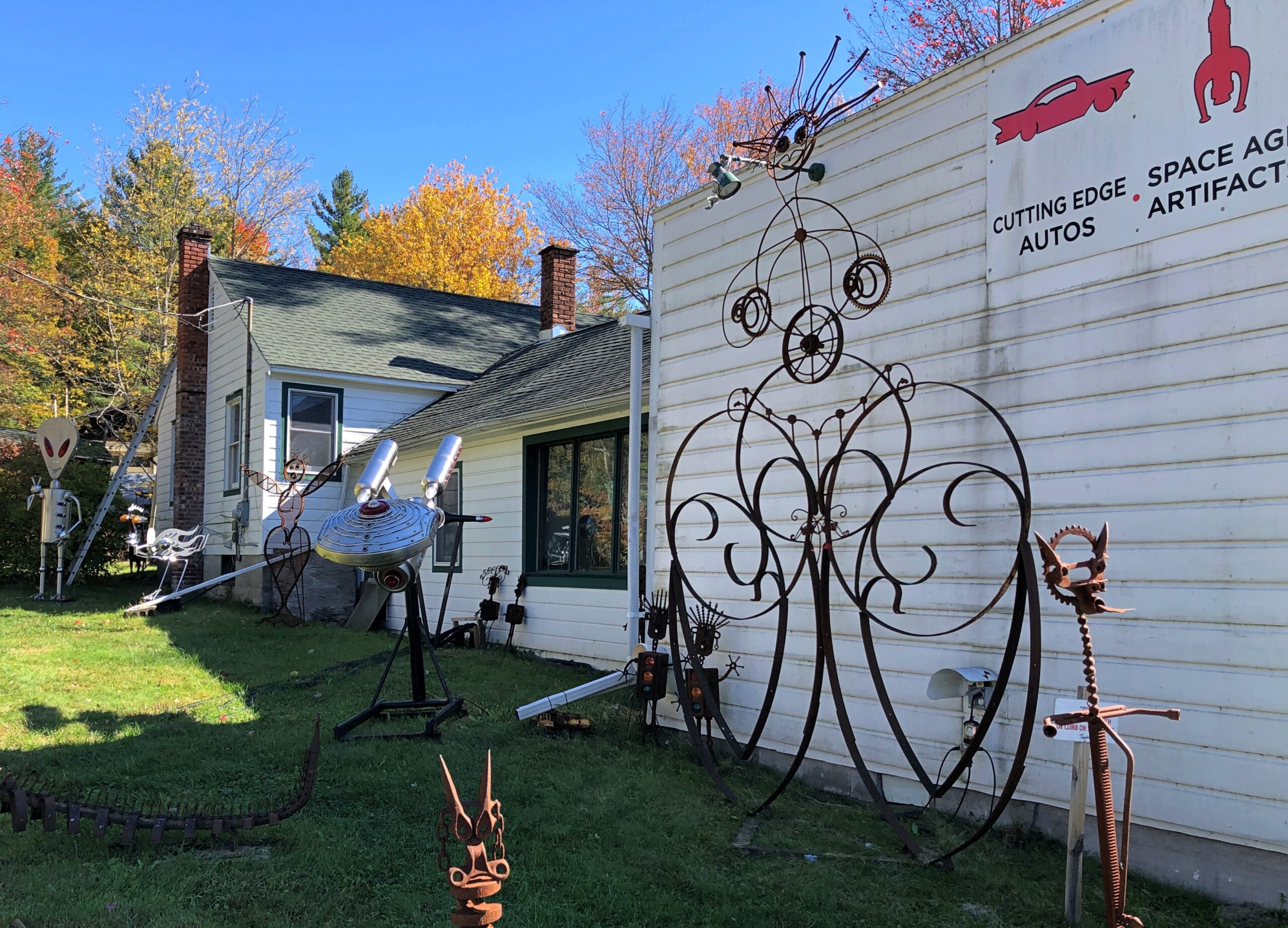
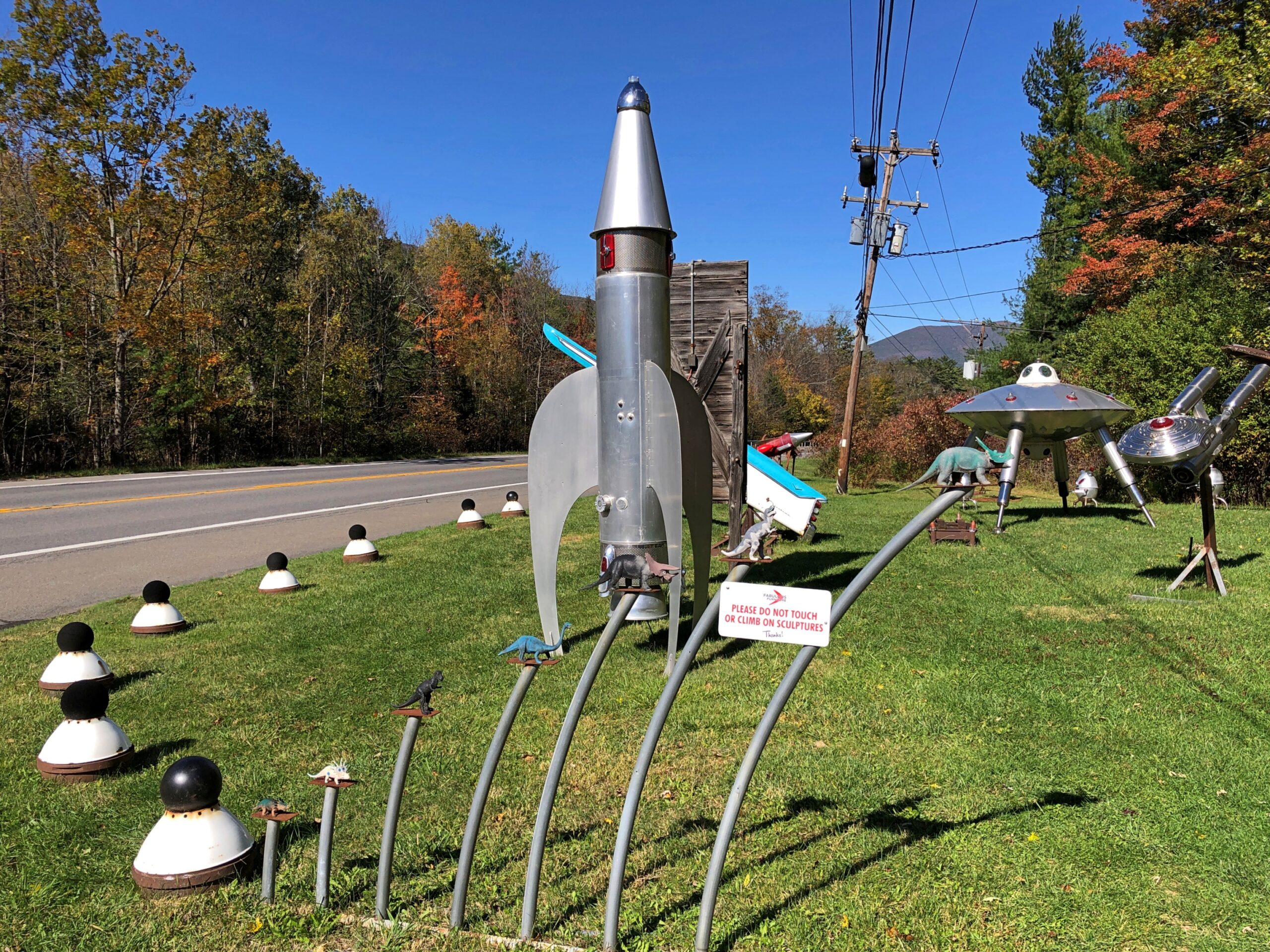
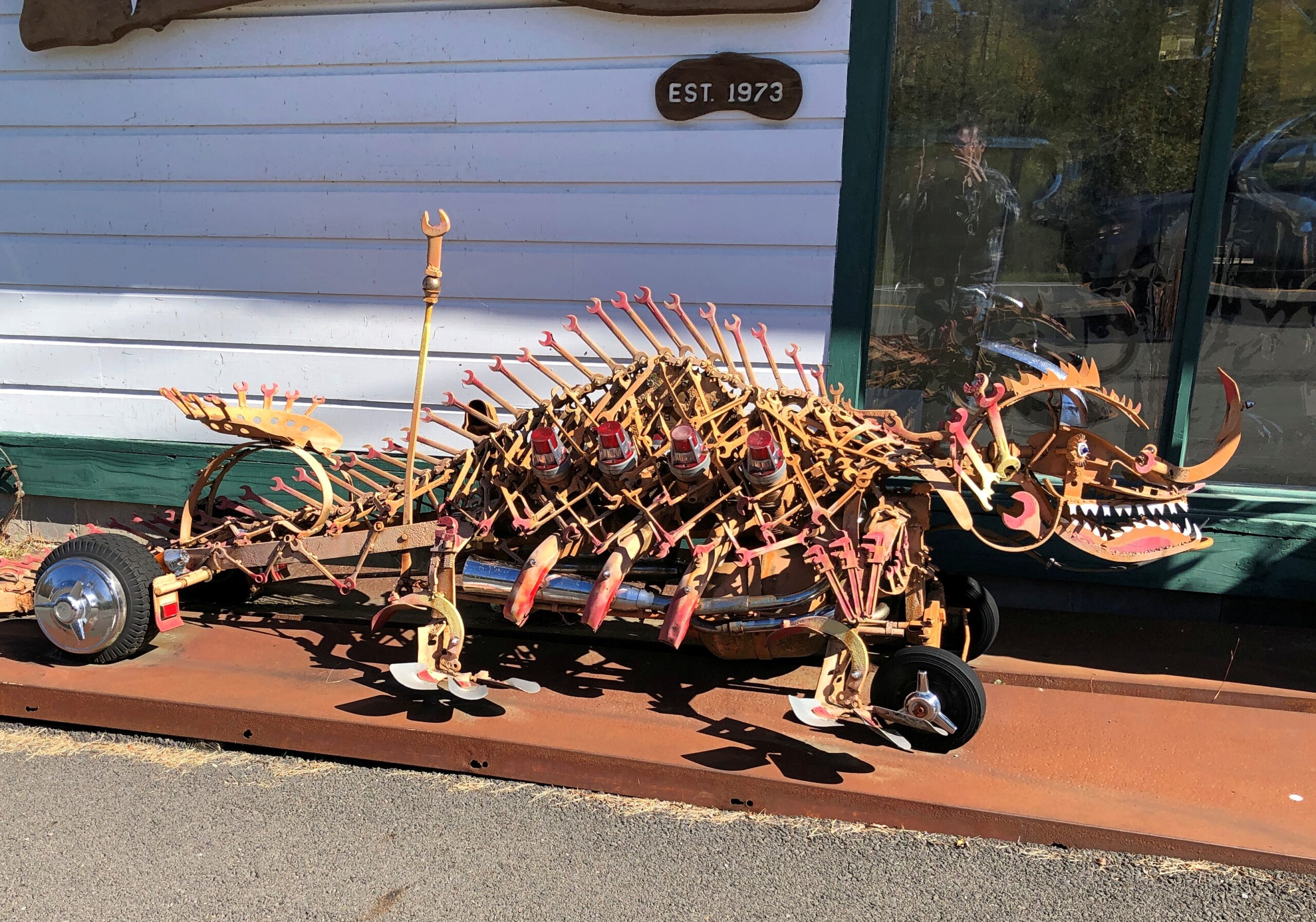
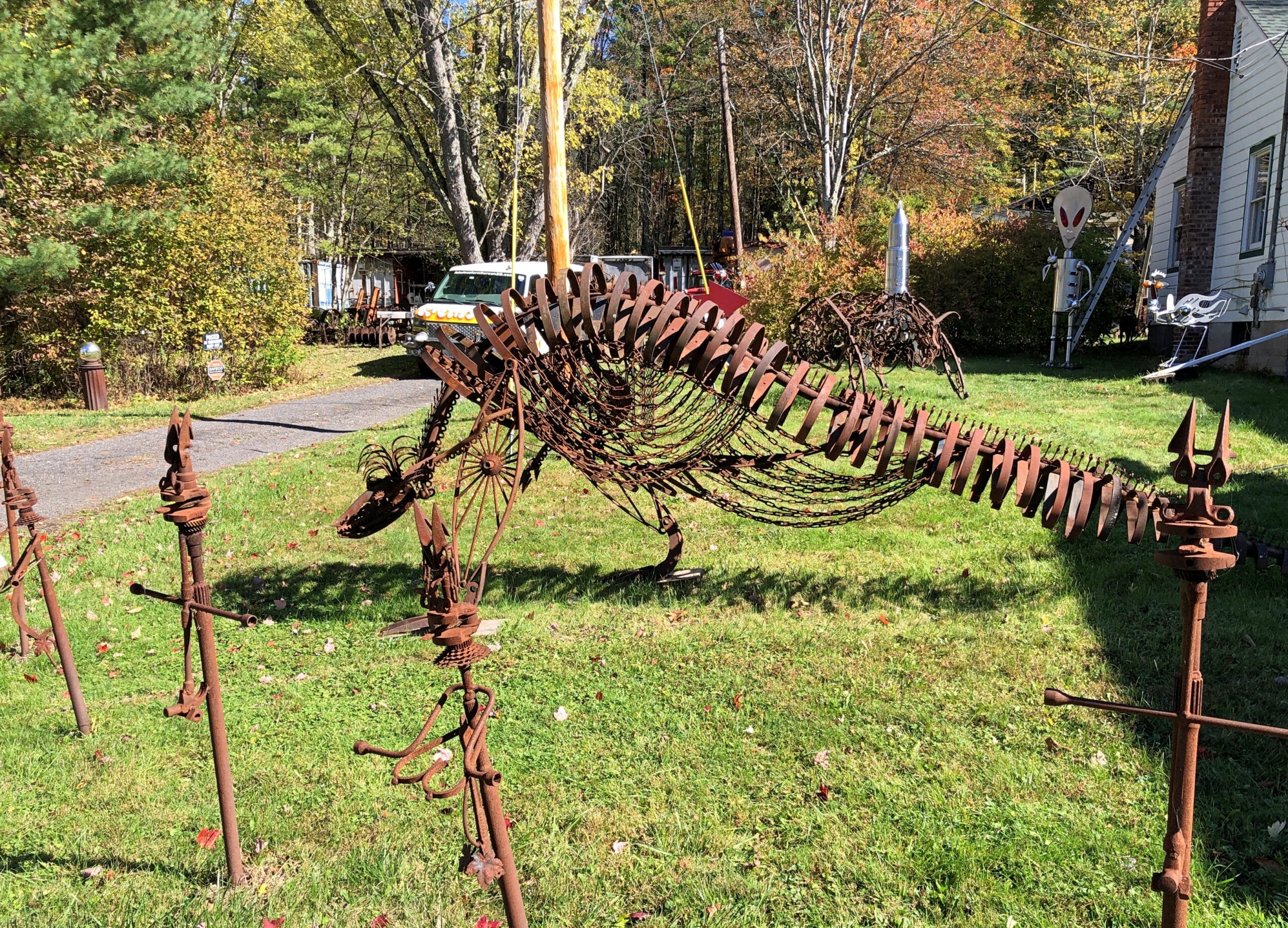
Metal spaceship and robot sculptures haven’t been part of the Catskills narrative that I know of. But there they were, right off NY 28.

Fabulous Furniture, Catskills

As part of this place of business.

Fabulous Furniture, Catskills

Some artful metal for sure.

Fabulous Furniture, Catskills

More.

Fabulous Furniture, Catskills

Fabulous work, Mr. Heller, but those Space Age artifacts are of a Space Age that never quite was. Too bad.

Southern Tier Fall Crossing

Drive out from Erie, Pa., headed northeast, and soon you have a decision to make: I-90, which becomes the New York State Thruway, or I-86, which does not. Besides costing more money, the NYST went places I didn’t want to go (this time): greater Buffalo, Rochester, Syracuse, Utica and into Albany, a route I drove as long ago as 1991 on my way to Boston.

By contrast, I-86 passes through much smaller places, winding through the hilly Allegheny Plateau, a way I had not been before. High time to do so, I thought. The road is also New York 17, with signs along the way identifying it as the Southern Tier Expressway. “Southern Tier” is the southernmost counties in upstate New York, which apparently is a longstanding regional term.

That’s a good-looking sign, and serves as a nod to the Seneca, who hold land in this part of the state. A Seneca artist named Carson Waterman did the design. For some miles before and after the town of Salamanca, which is part of the Seneca holdings, standard green highway signs include both English and Seneca.

One of the larger places on the Southern Tier Expressway is Jamestown, which I know from the song. It’s a game I occasionally play with my friends: Did You Know There’s A Song About…? and then I name something like rural electrification in Australia or the Versailles conference. In this case, the song is “Maddox Table” and it’s about labor organizing in Jamestown, hometown of the band 10,000 Maniacs. The town isn’t specifically mentioned in the lyrics, but Bemis Point is. Even before the Internet, I could look that up, and note that it’s a local recreation destination on Chautauqua Lake.

Chautauqua Lake is in Chautauqua County, the westernmost bump on the map of New York state. Ah, storied Chautauqua, which brings to mind the outdoor exhortations of men in full suits and women in long dresses, regardless of how hot it was. There’s another streaming service series for you: Chautauqua, set in the raucous 1890s. Could be a comedy or a Gritty Drama.

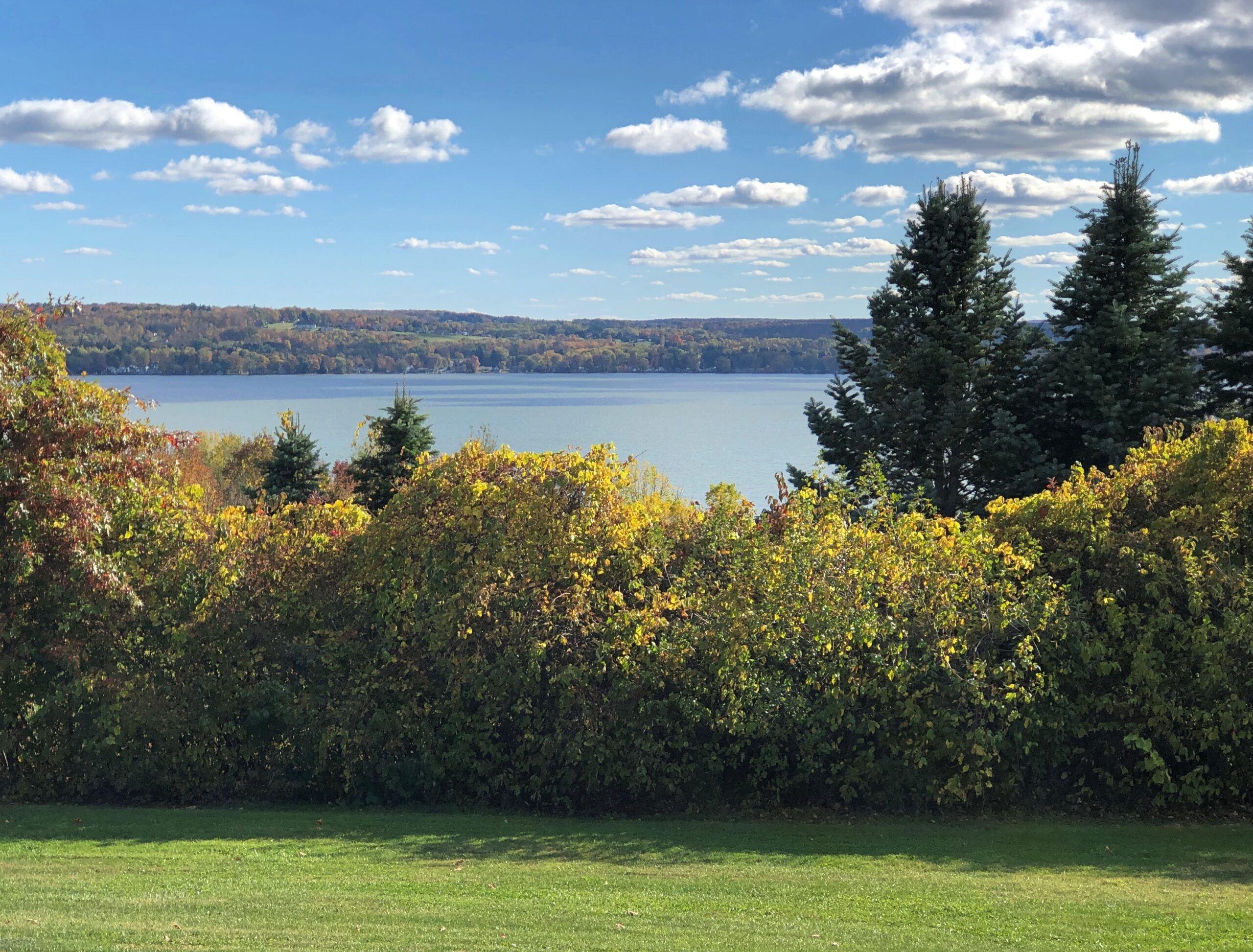
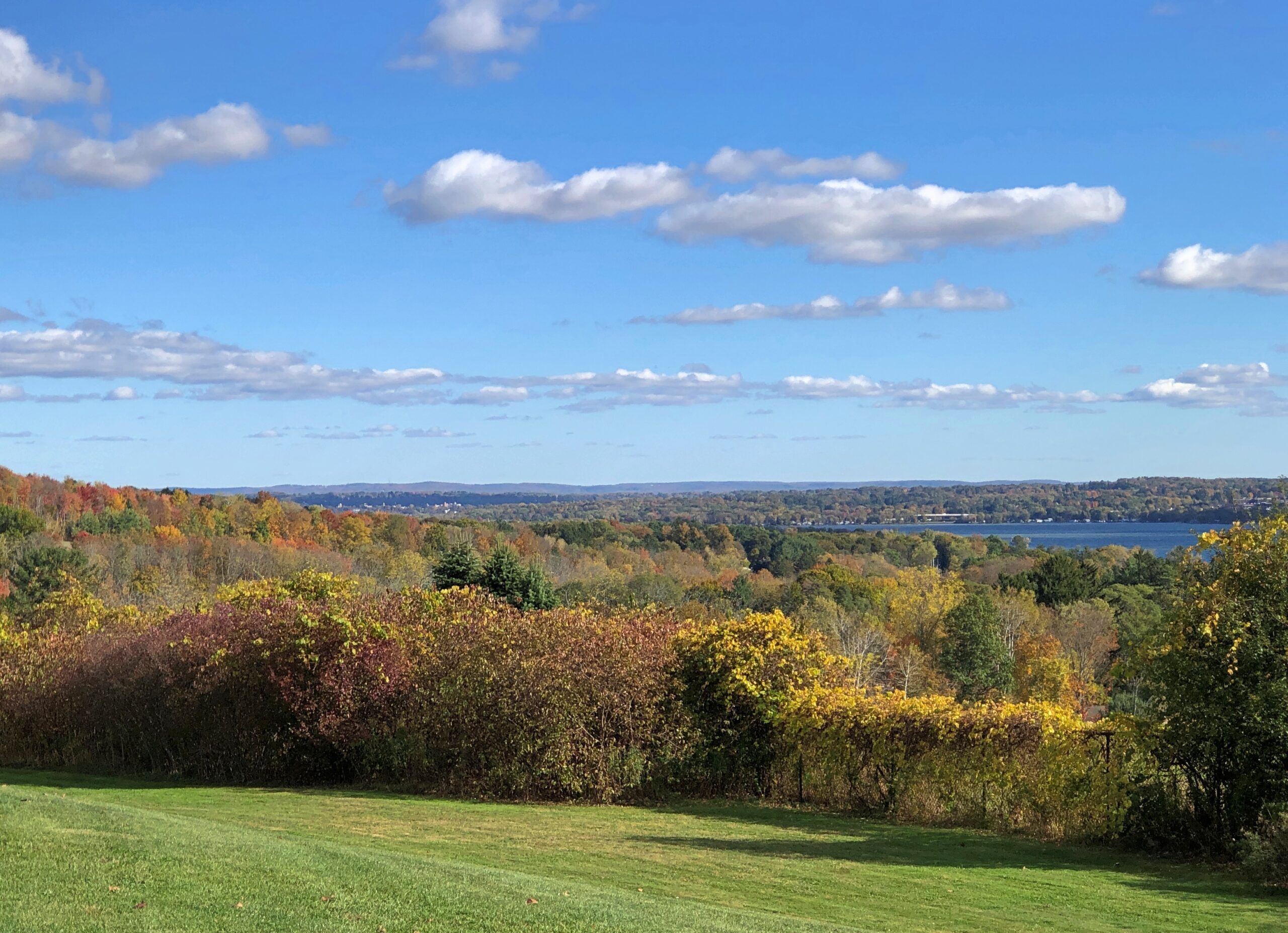
I wanted to reach my destination, Binghamton, NY, before too late, so I didn’t linger near the lake. But I did stop at the rest area on Chautauqua Lake, which is large, and contains multitudes of structures along its shores, and probably many more people in the summer. One of the more scenic rest areas of the trip, it turned out.

Southern Tier NY
Southern Tier NY

So was the next rest area, not far from Corning. A few hours to devote to the glass museum in that town would be well spent, I think.

Southern Tier NY
Southern Tier NY

After an uneventful night in Binghamton – the kind I prefer on the road – I set out for greater NYC, by way of the highway New York 17, the “future I-86” according to my maps, and then the highways New York 30 and 28.

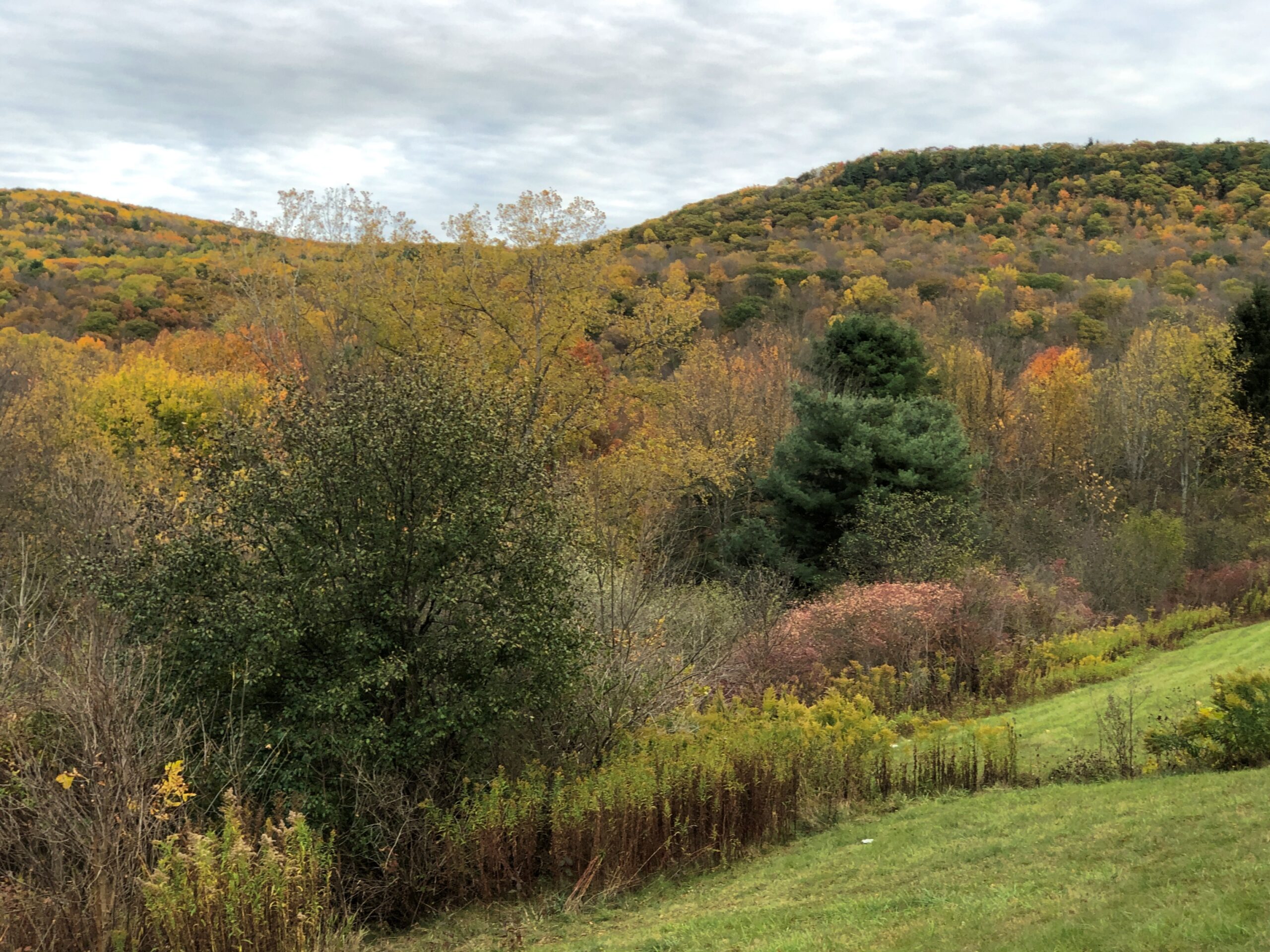
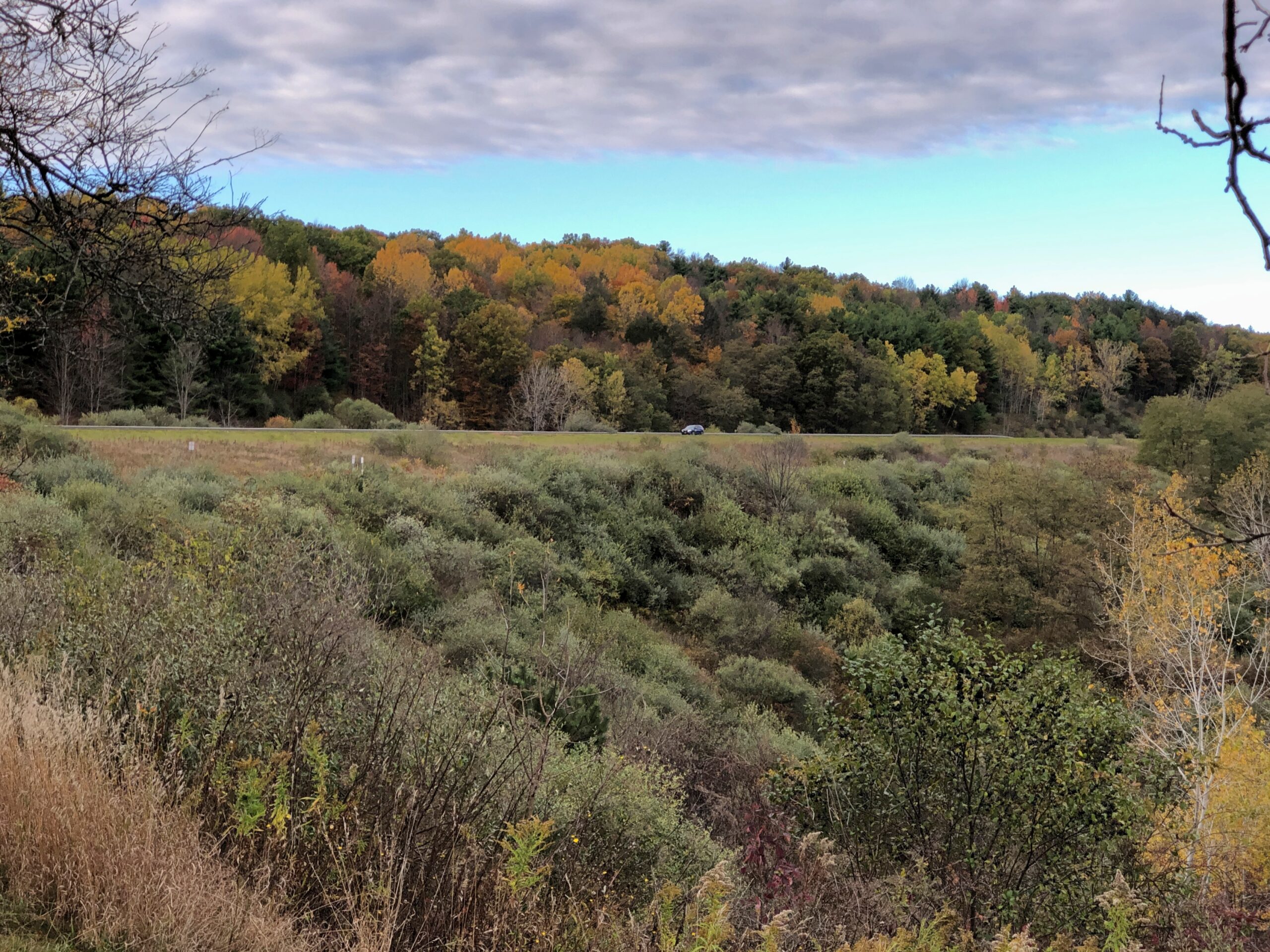
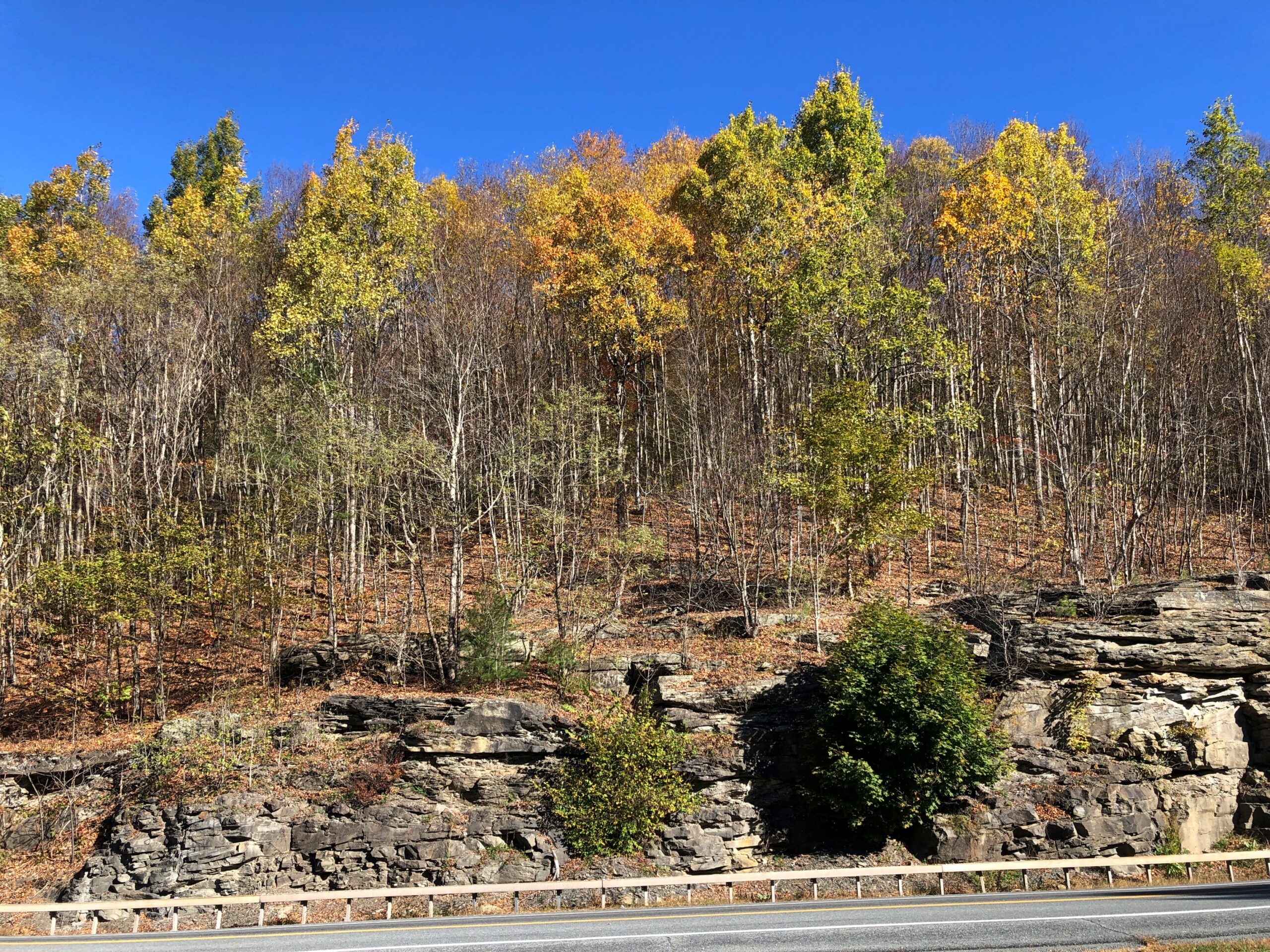
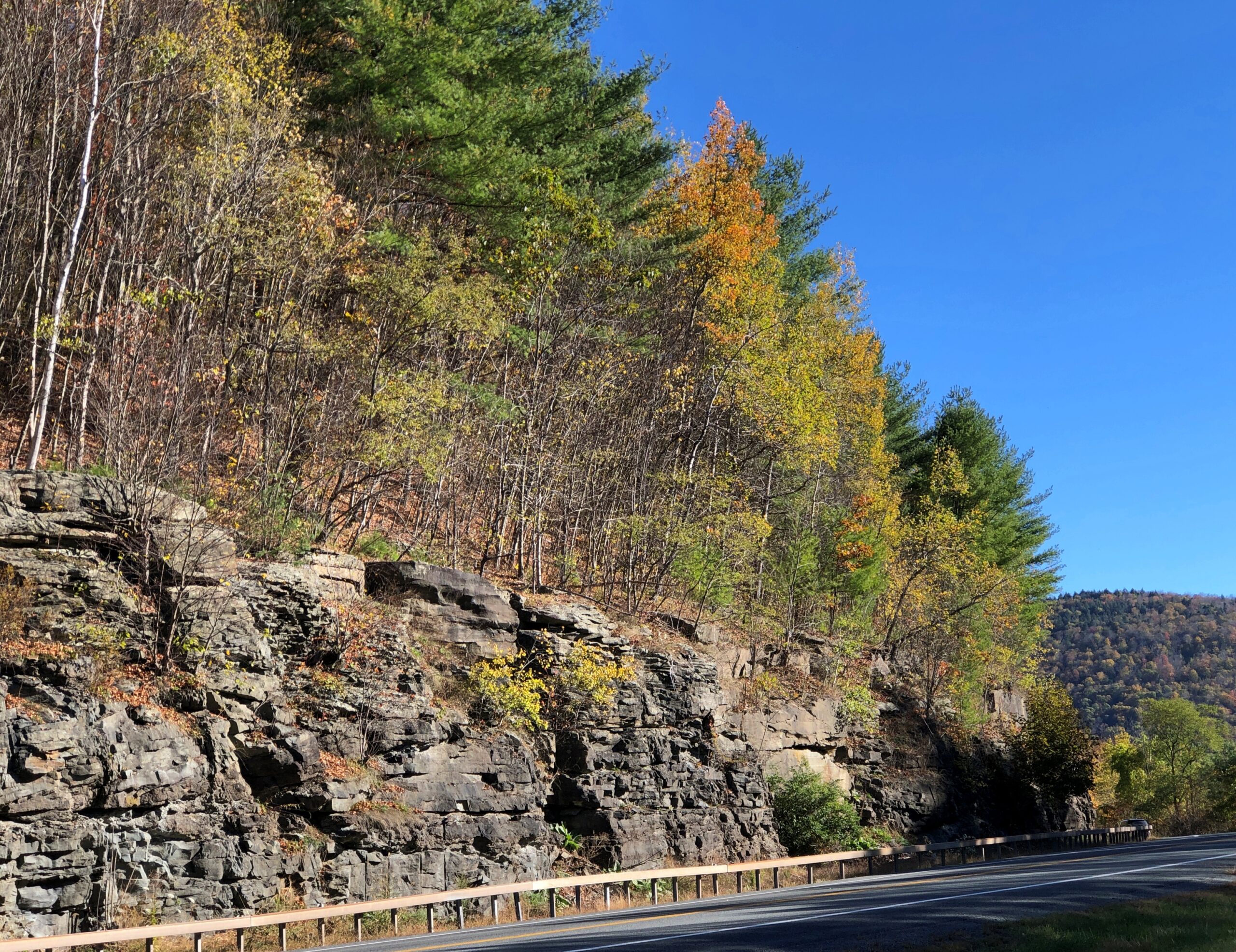
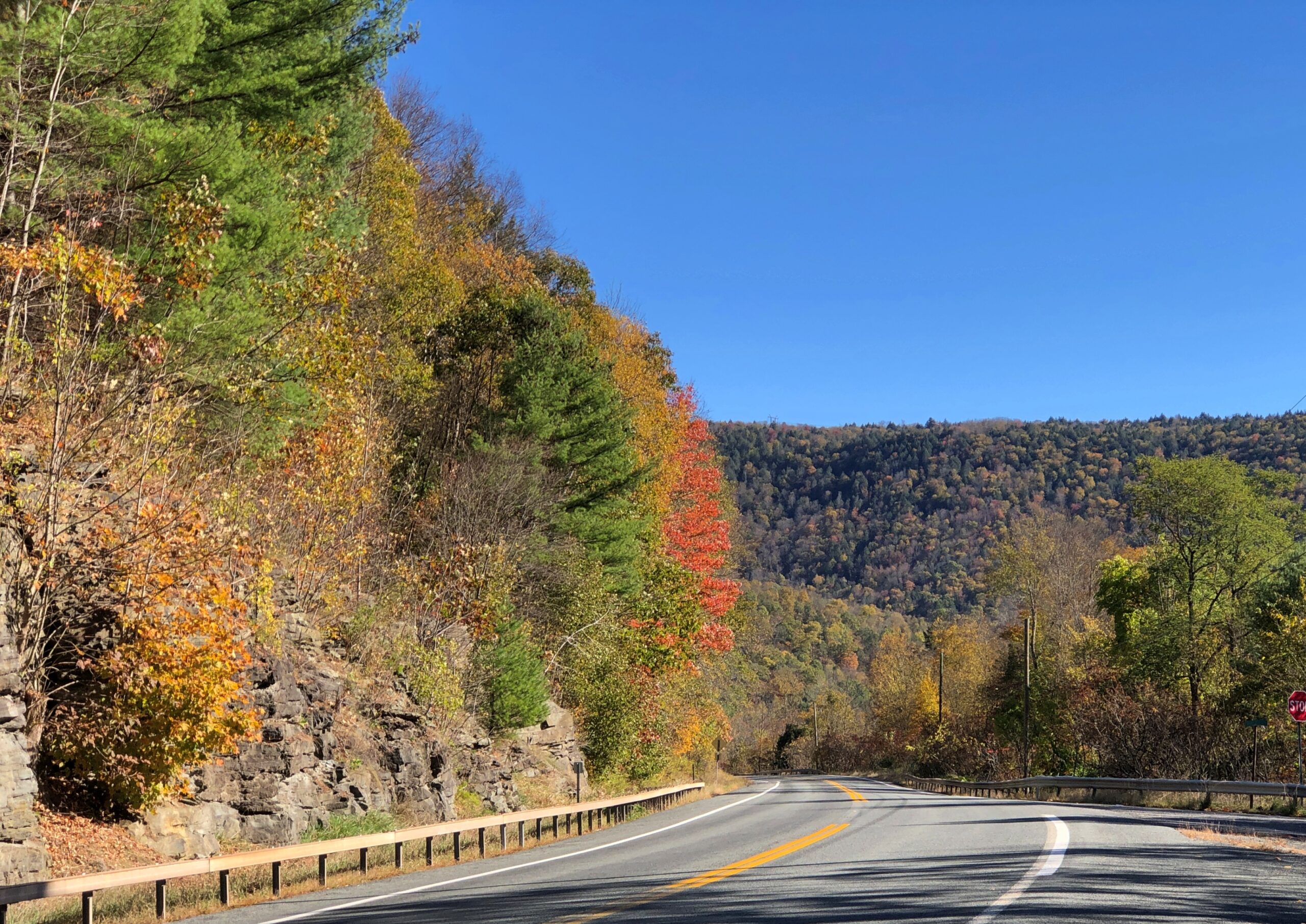
NY 30 skirts the edge of Catskill Park. Last time I was in the Catskills was during the Clinton administration, back when the Concord Hotel and Resort was still clinging to existence, so it’s been a while, and I’d never been in the colorful and nearly empty western edge of the park in October. That emptiness made all the difference in the car commercial driving I enjoyed.

Southern Tier NY
Southern Tier NY
Southern Tier NY

During all the driving over the next week or so after NY 30, empty roads would not be part of my reality.

Erie, Pa.

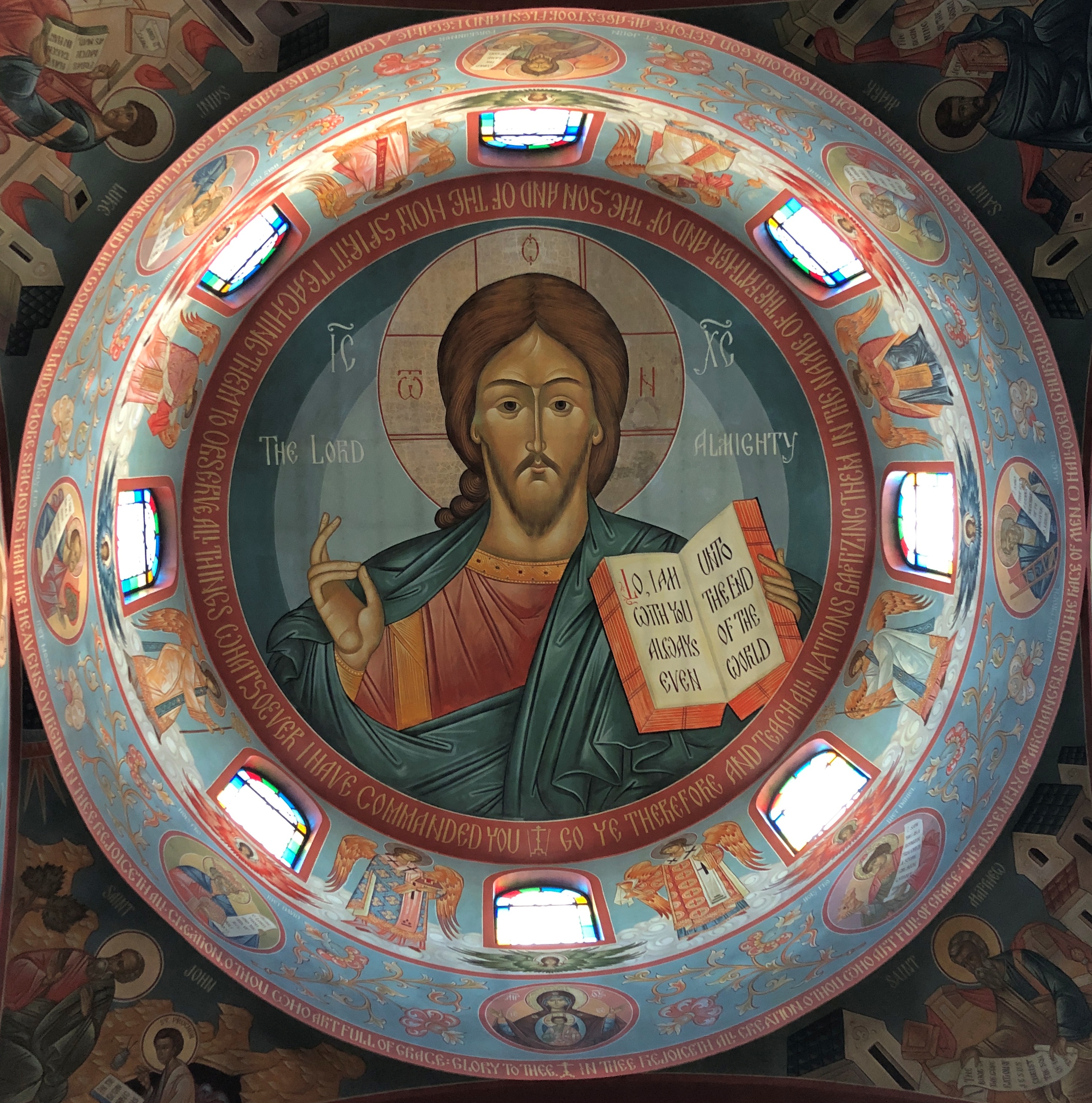
This artwork needs a proper name, and I can suggest one: The Erie Christ, or Christ the Almighty of Erie, though that last one sounds like the Lord has taken up residence in northwestern Pennsylvania.

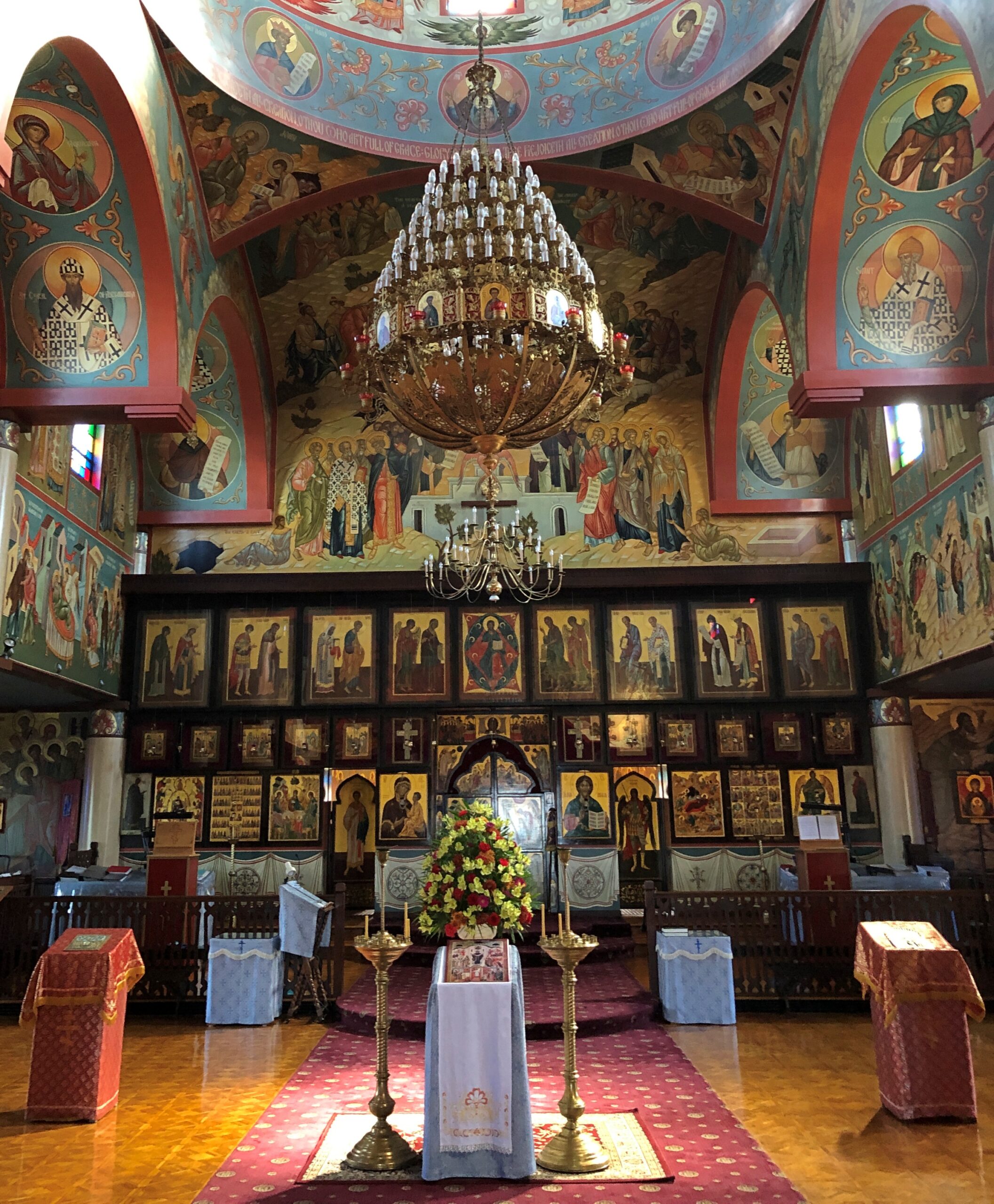
Church of the Nativity, Erie PA


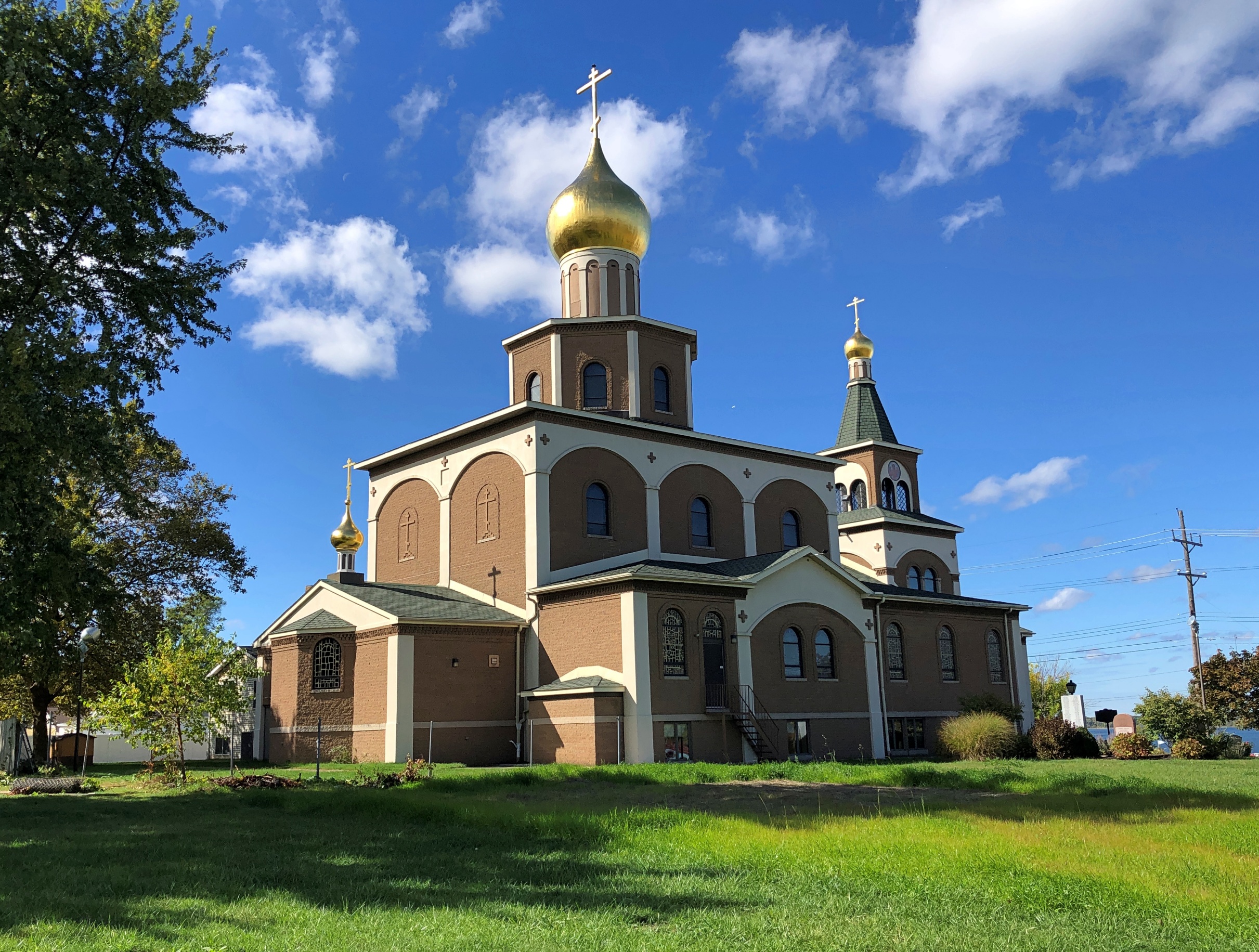
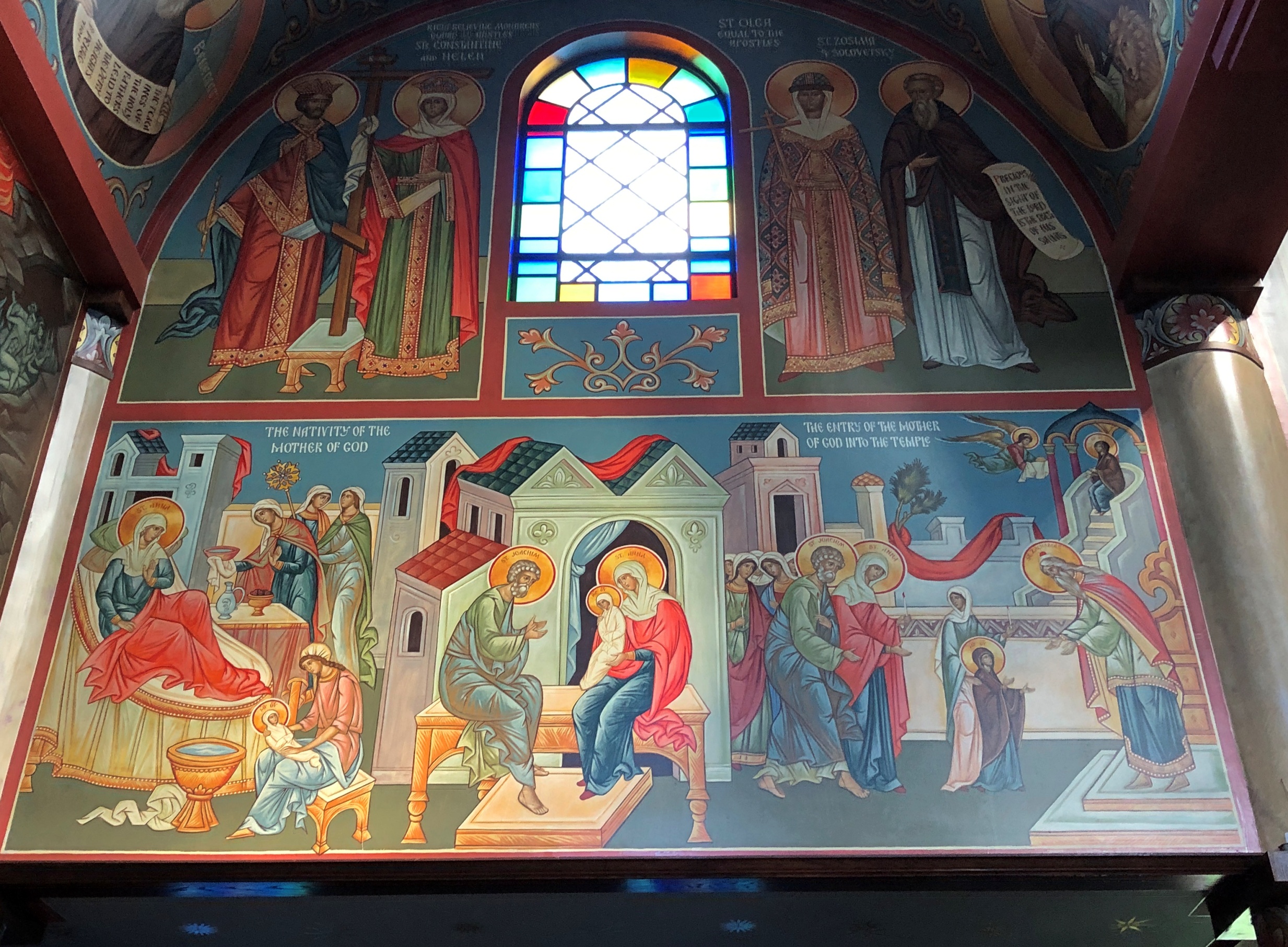
The striking Erie Christ can be found in Erie, Pennsylvania. More specifically at the Church of The Nativity, Russian Old Rite Orthodox in Erie. My brother Jay tipped me off about its presence, though I might have seen the church anyway, since it stands prominently on a rise facing the bayfront, its gilded onion domes easily catching the eye from a distance.

It is a handsome church, outside and inside. I arrived late on the morning of October 15.

Church of the Nativity, Erie PA

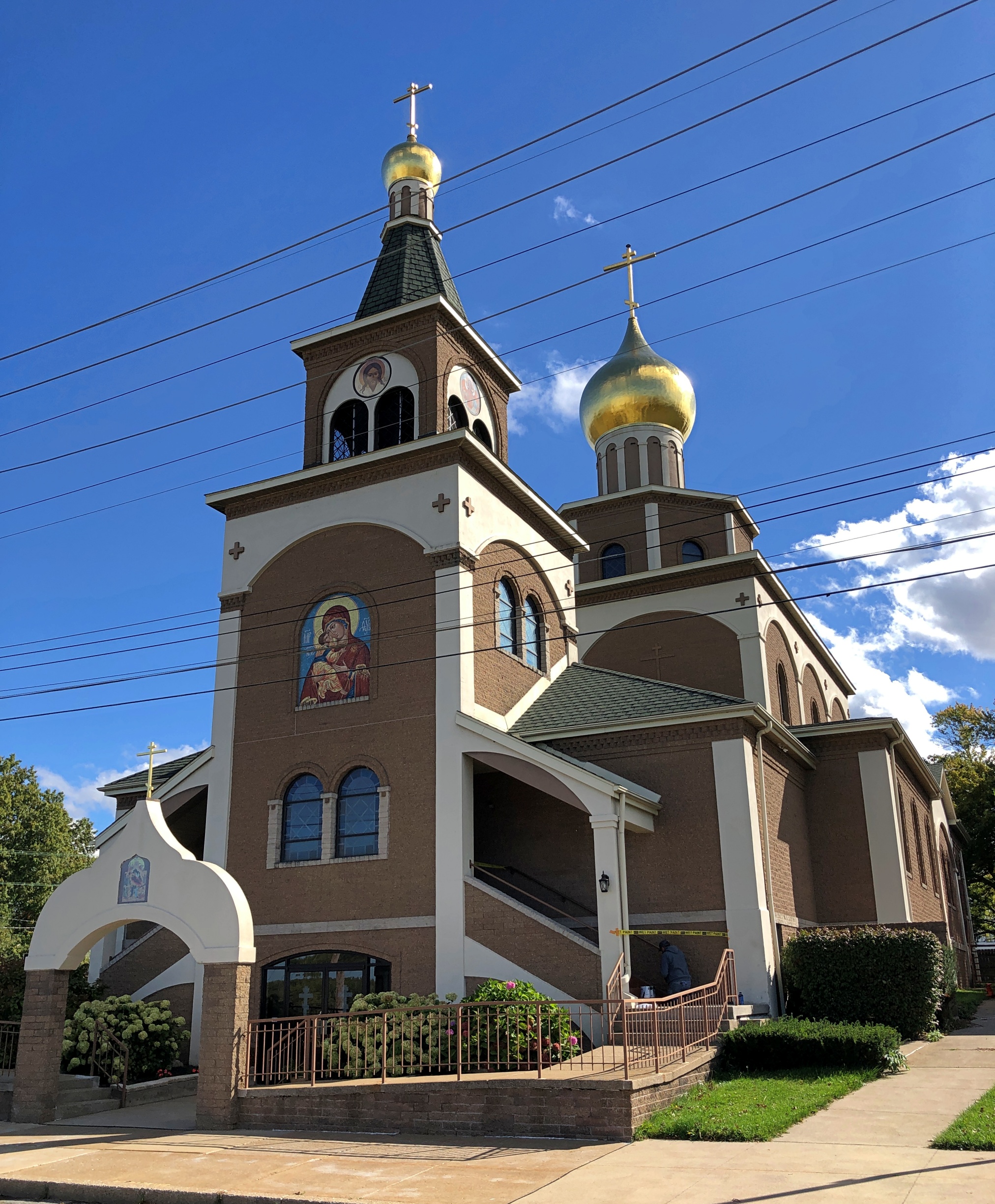
Russian Old Believer immigrants came to the United States in numbers in the late 19th and early 20th centuries, finding work in Eire on the ore and pulp docks. I’ll bet the climate suited them too. Just like home, with all the lake-effect snow a Russian might want. Their first church was completed in 1919. In the fullness of time (1983), the parish joined the Russian Orthodox Church Outside of Russia. Bygones be bygones and all that.

Church of the Nativity, Erie PA

In a twist that’s more late 19th century than late 20th, that structure burned down in 1986. Of course, buildings still burn, including churches. The parish rebuilt, with a local outfit called Building Systems Inc. doing the work.

The Church of the Nativity was my second stop that day. The city’s spot on the map has long intrigued me, so I’d come to Erie late in the morning on the second day of the recent trip.

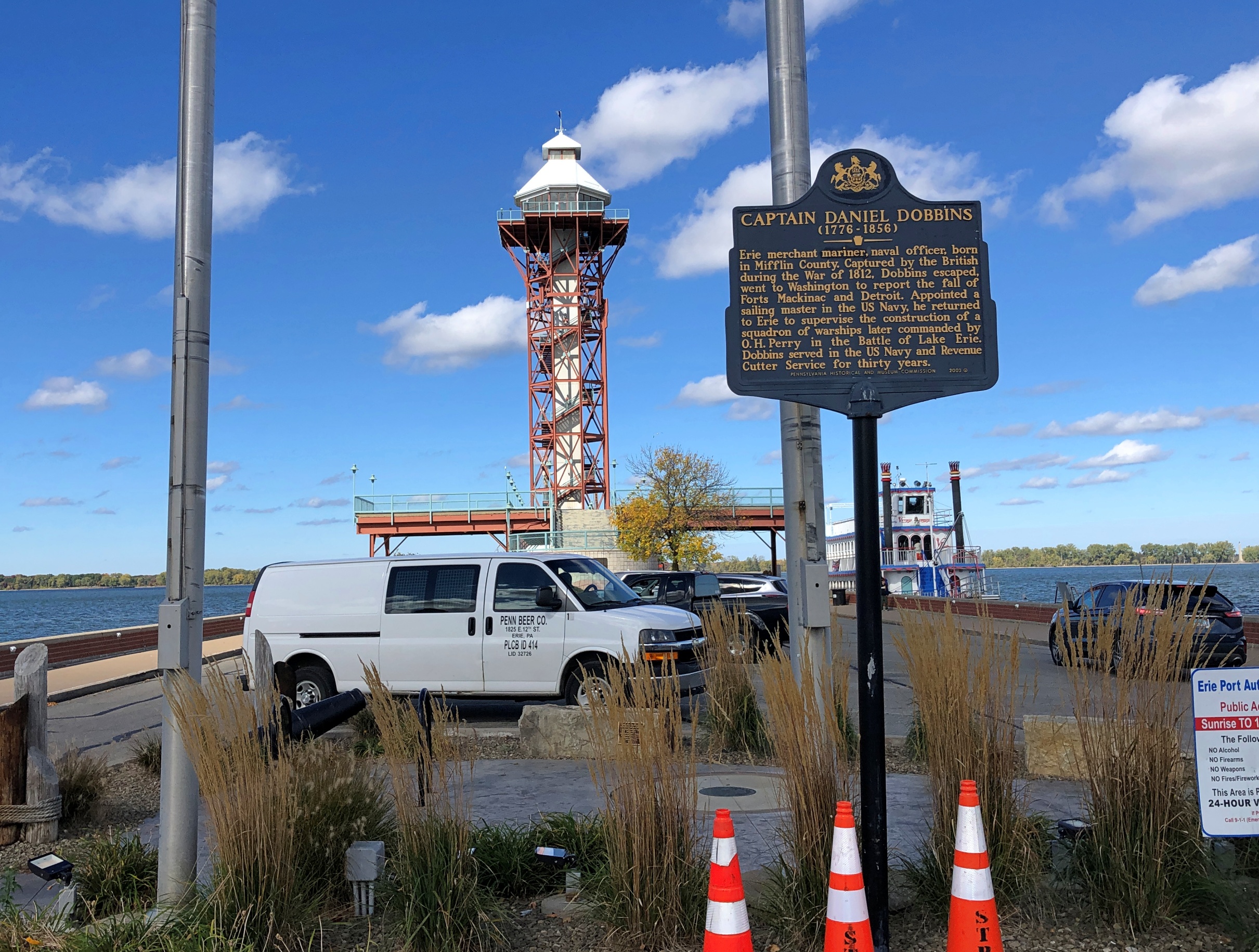
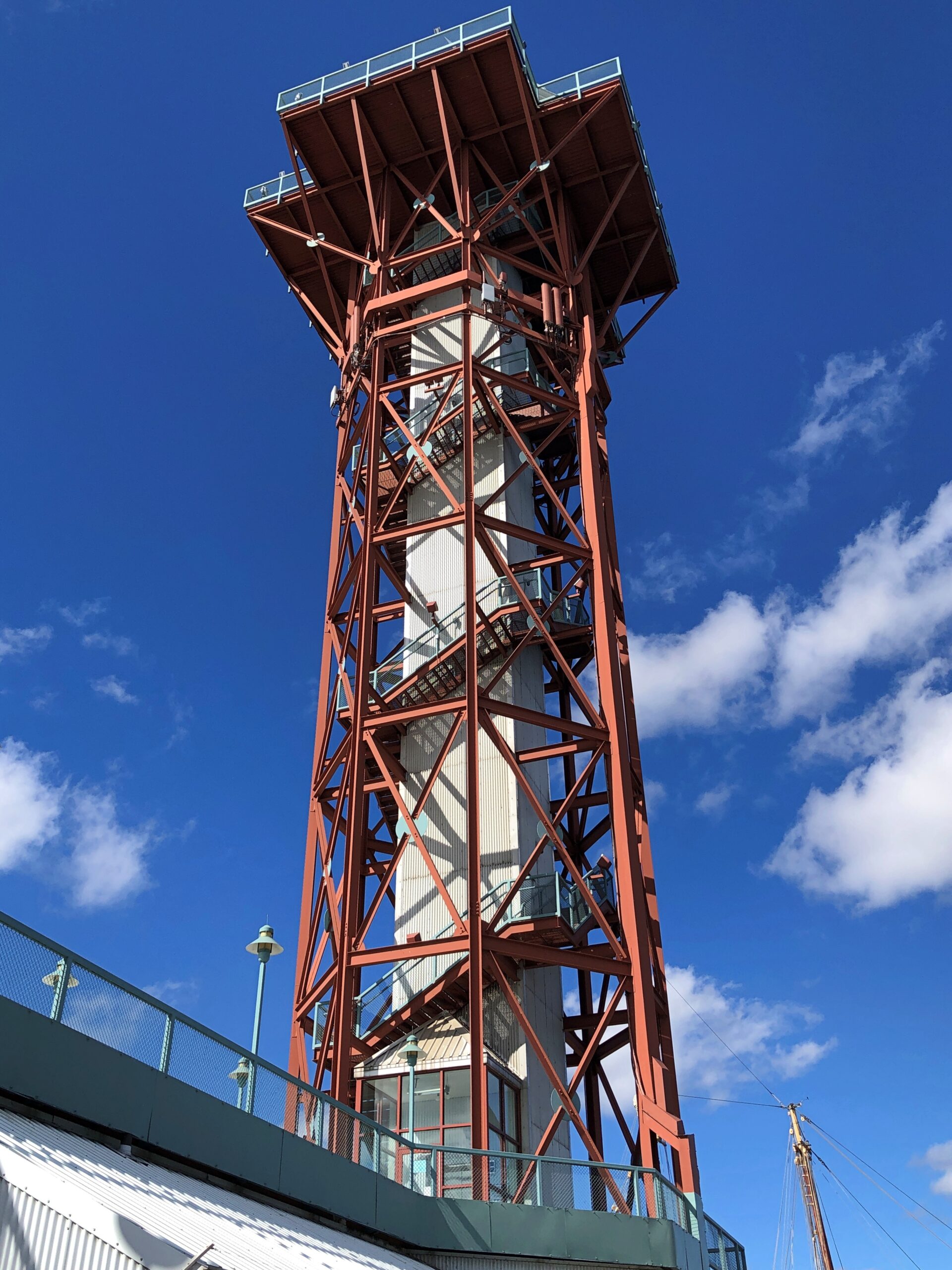
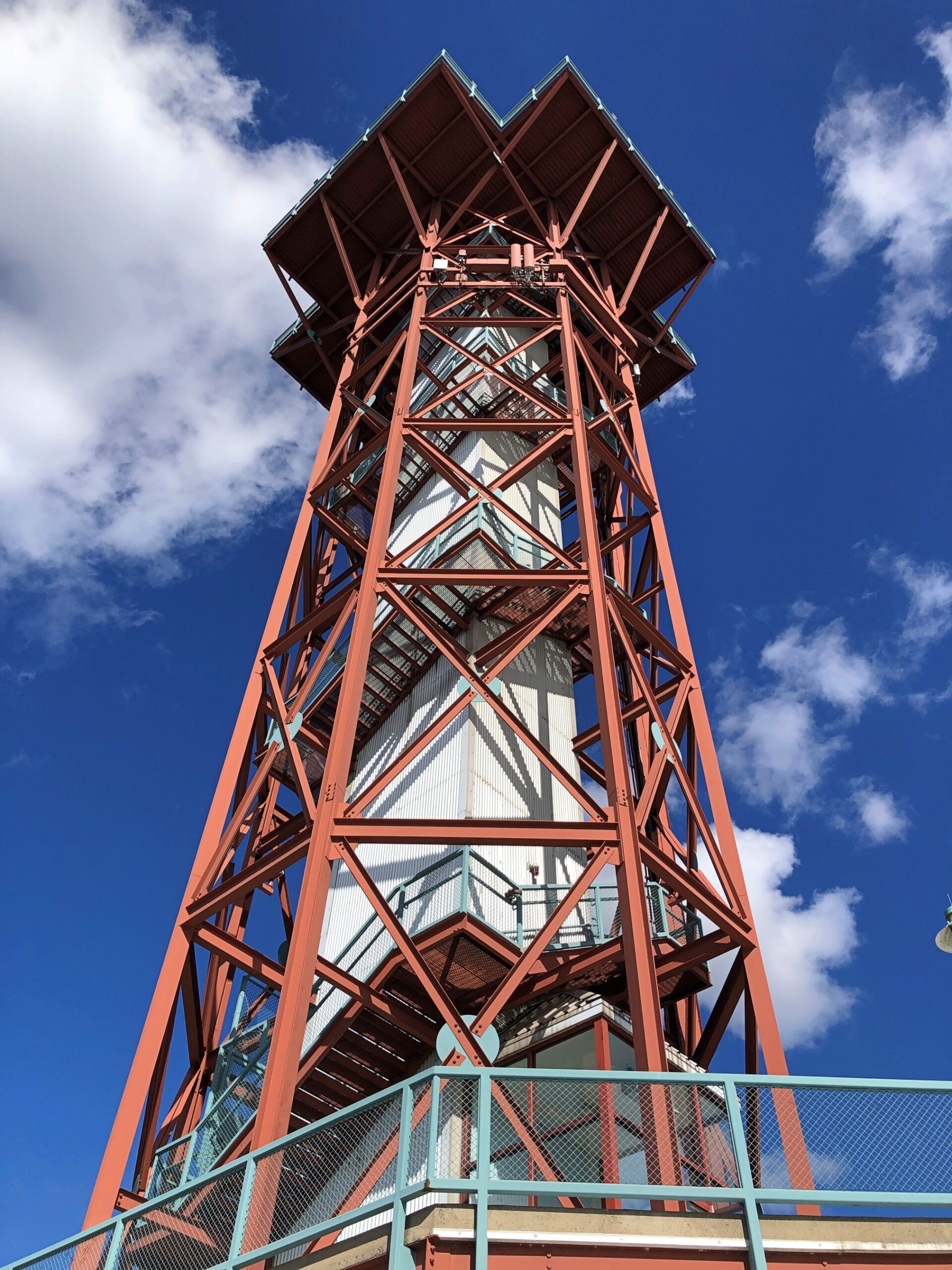
Upon arrival in the city, after a brief stop at a Tim Horton’s, I first went to Erie’s bayfront, threading my way through the massive reconstruction project of the streets in the area. That was the first, but hardly the last major street construction briar patch that I’d encounter in the Northeast. My reward for the effort: a chance to stand under Erie’s Bicentennial Tower.

Bicentennial Tower, Eire, PA

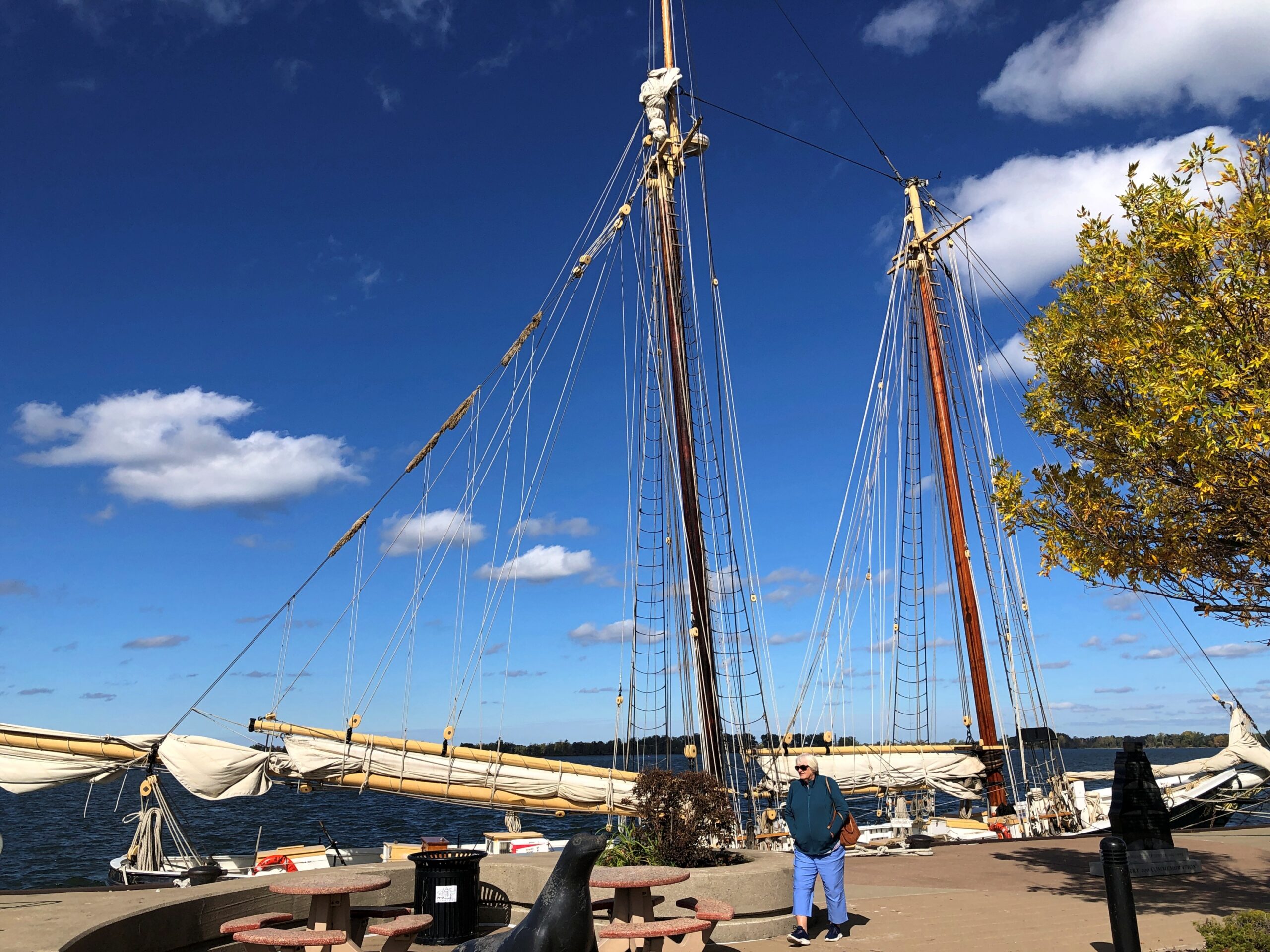
Built not for the U.S. bicentennial that we all remember so – fondly, but rather the 200th anniversary of the city of Erie, about 20 years later. Regardless, I was looking forward to the vista: the city, the bay and Presque Isle State Park. But no. Closed. Even so, I got a good look at the area, including the tower but also the U.S. Brig Niagara, which was instrumental in Oliver Hazard Perry winning immortal fame. Or would have been, if the Battle of Lake Erie were taught in schools any more.

Eire, PA

The battle might have rated a mention in my high school history classes 50 years ago, but I don’t remember for sure. I expect it’s still taught in Pennsylvania high schools, just as the Battle of San Jacinto is in Texas. At least, that’s what I assume. That’s what I hope.

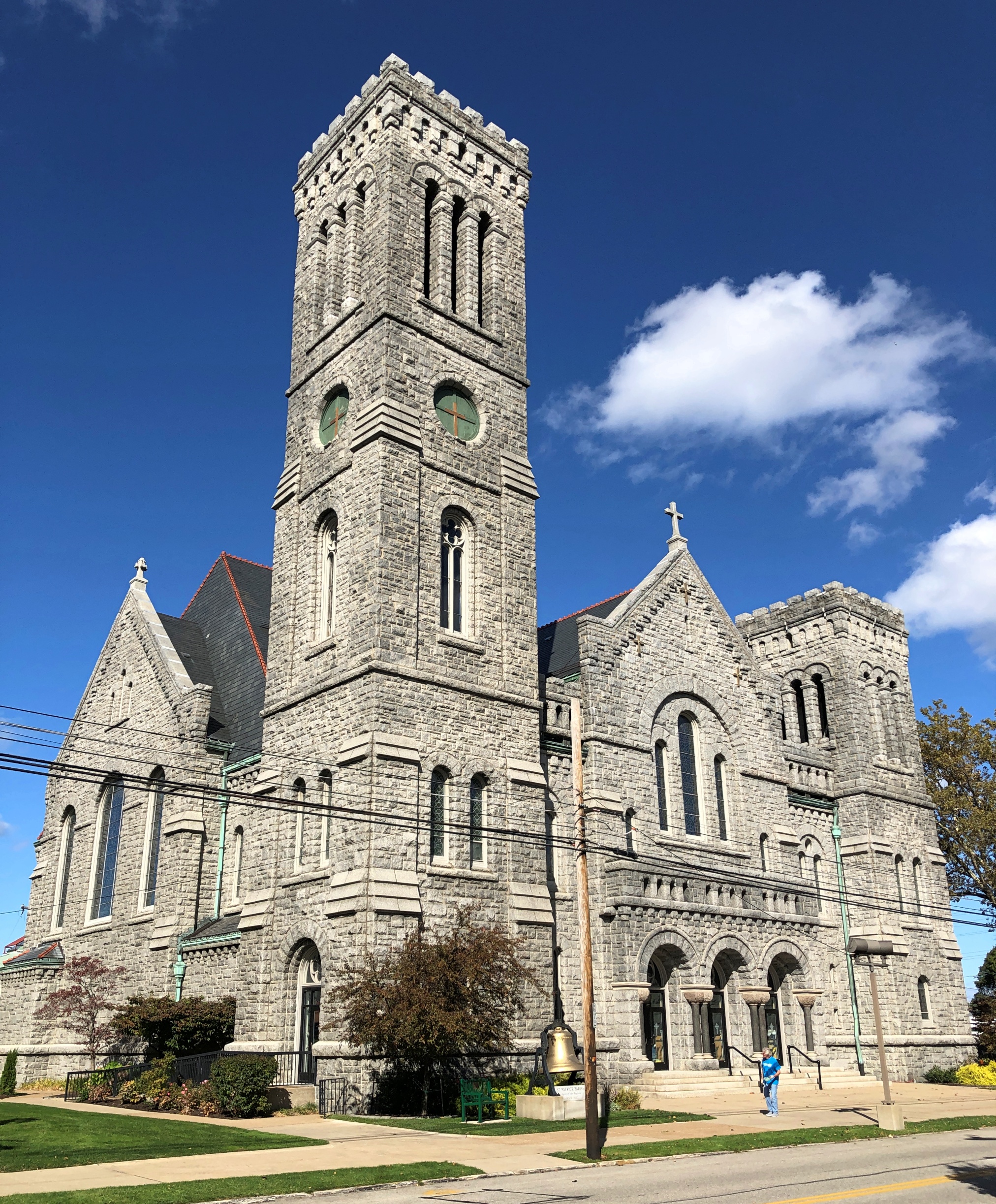
After my look-see down by Presque Isle Bay, I went to Holy Nativity, but that wasn’t quite enough. Always handy Google Maps directed me to St. Patrick’s Parish, not too many blocks away. Winter might be harsh in these parts, but that day was one of those brilliant warmish fall days we get in the North sometimes, and ideal for poking around a port city on the Great Lakes. (And eventually I left town by driving down State Street, a fairly active place of vintage buildings and newer shops.)

St. Patrick’s is on a not-so-busy neighborhood street.

St Patrick's, Eire PA

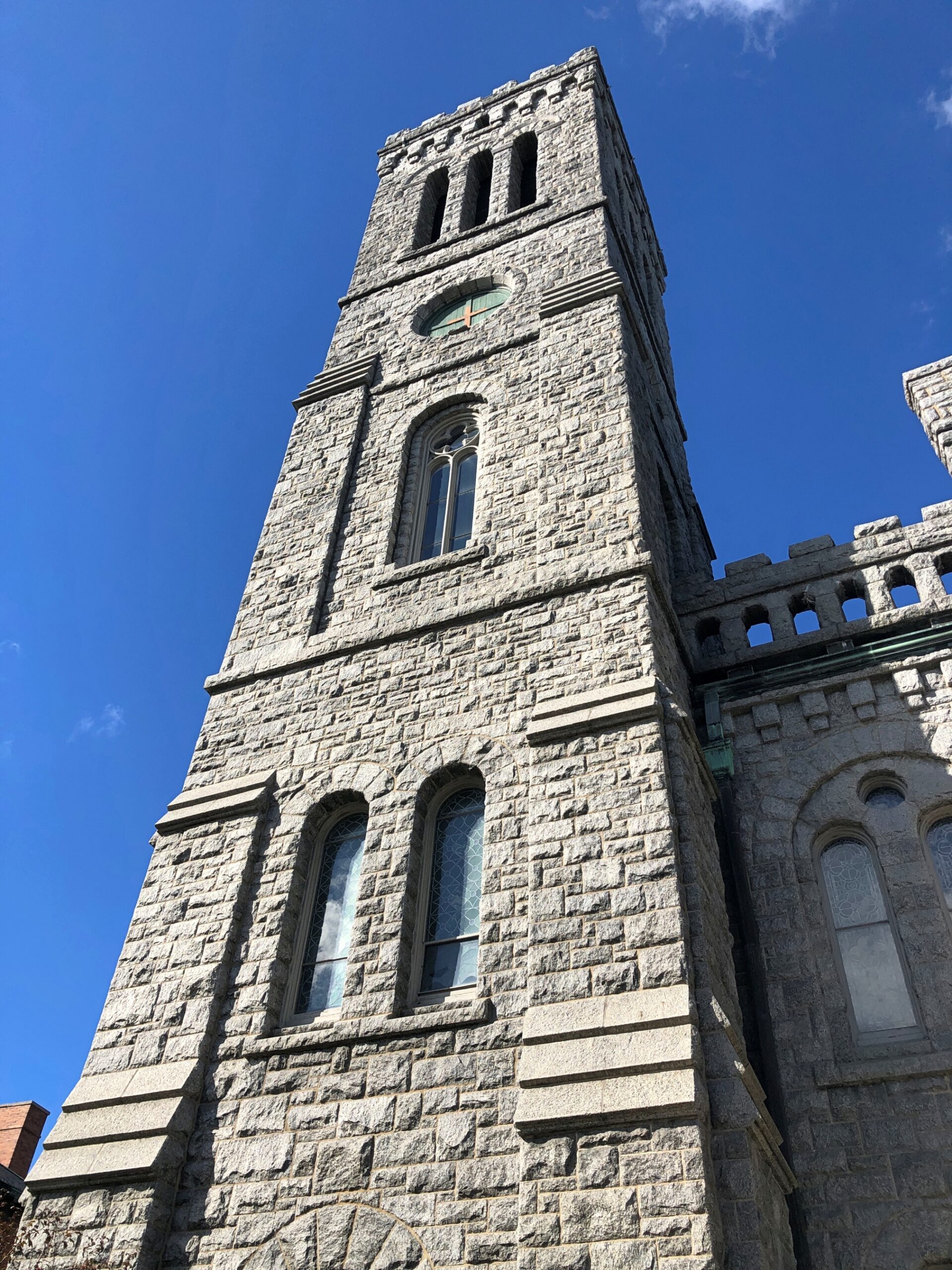
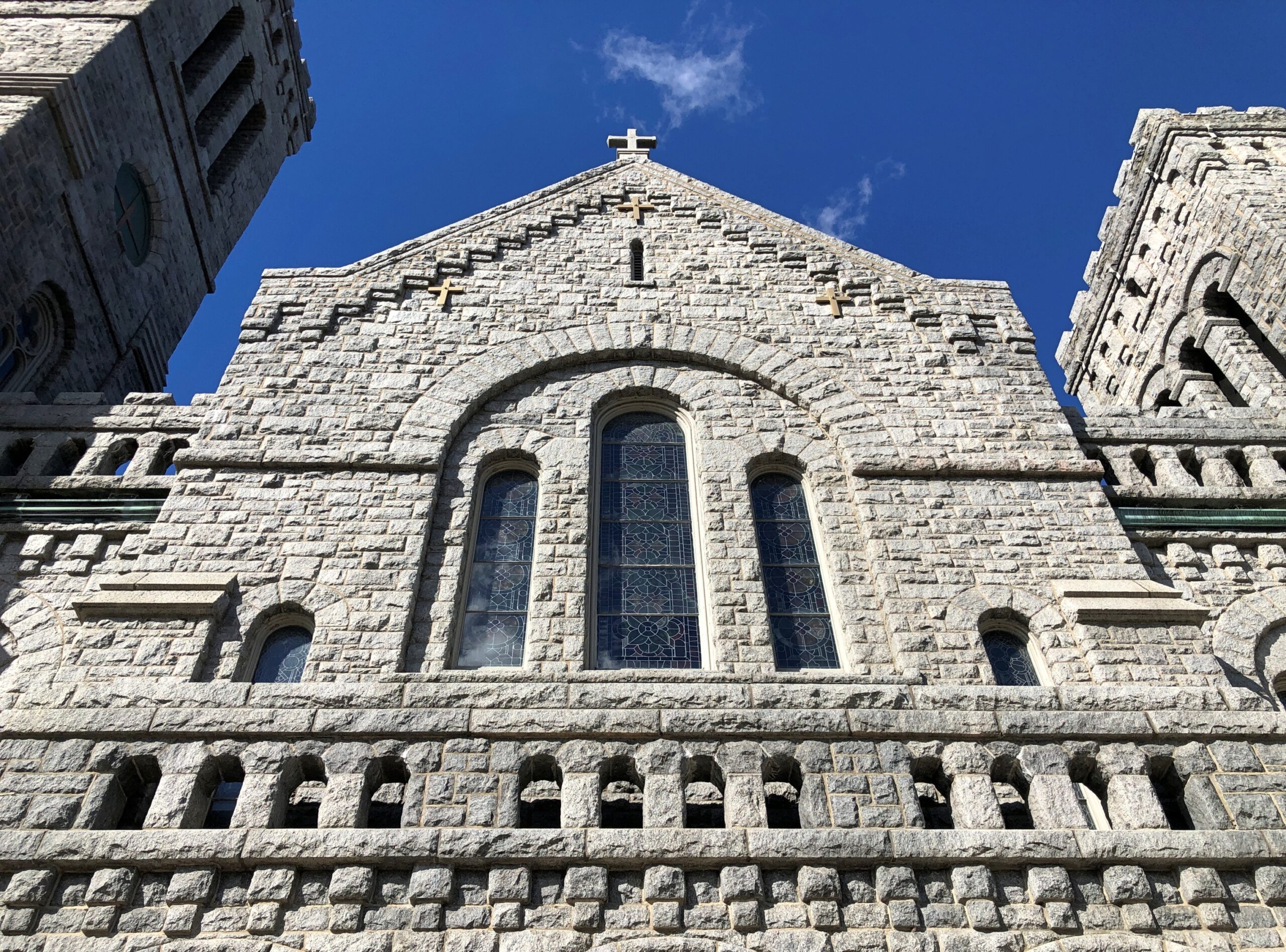
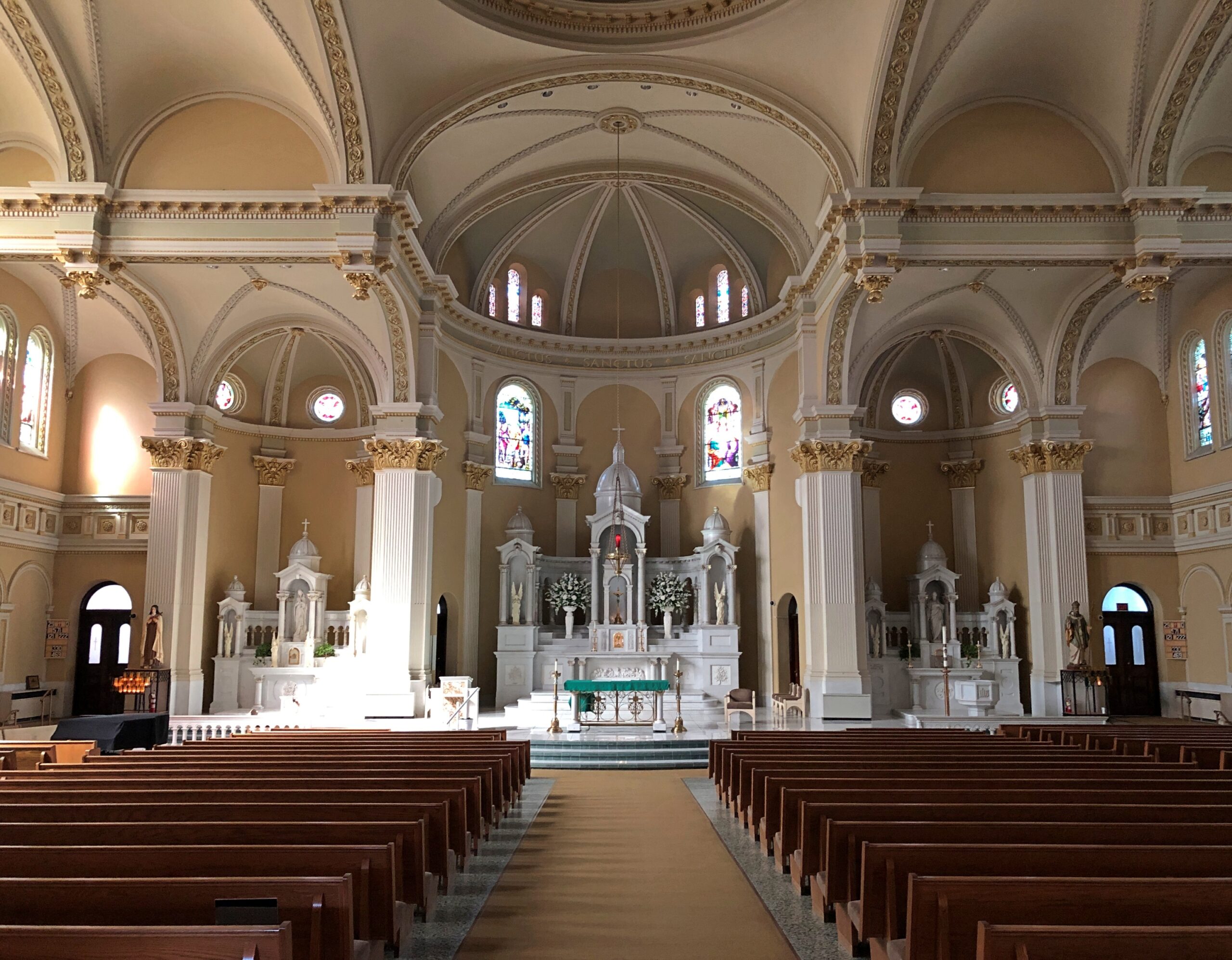
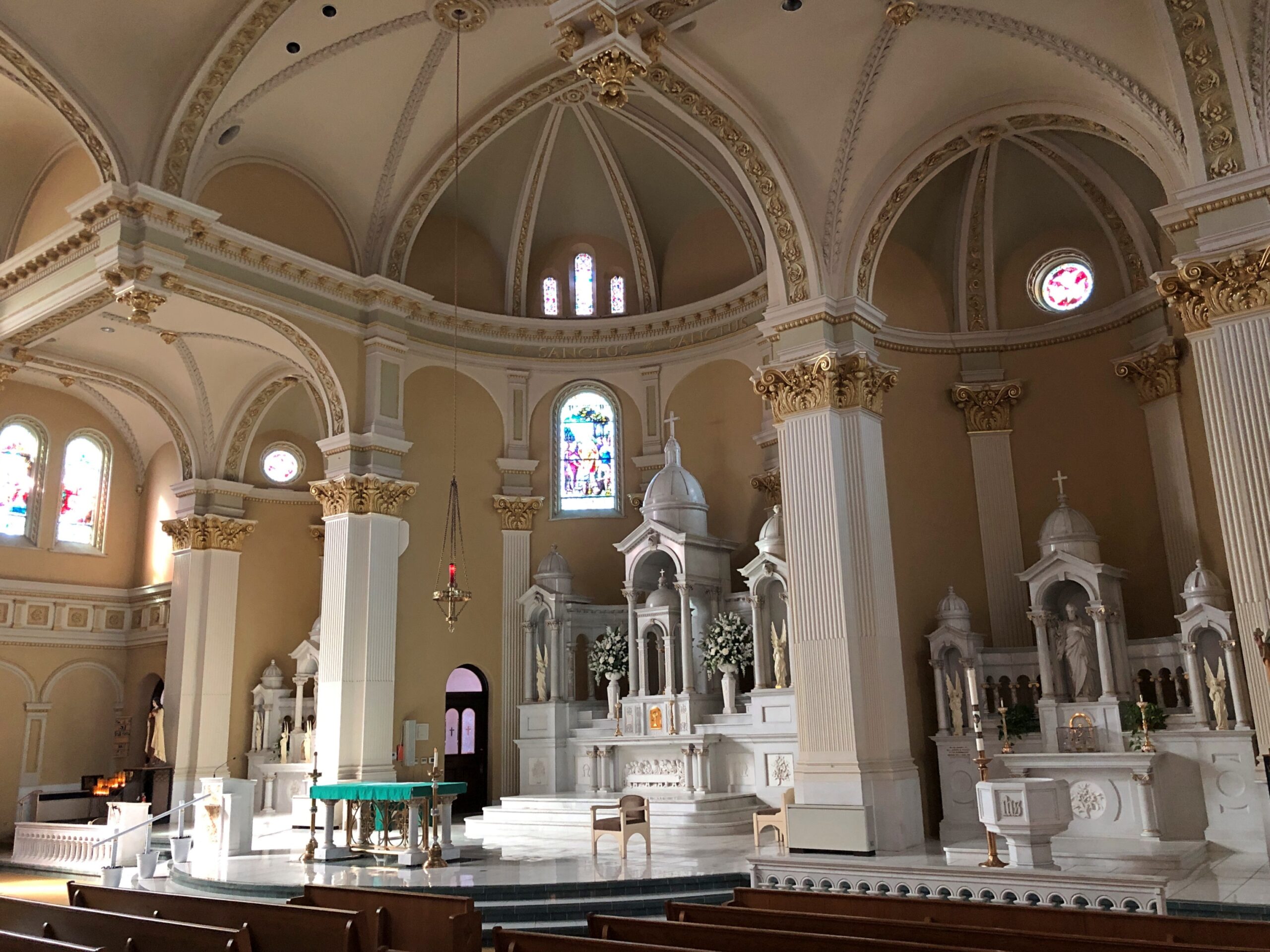
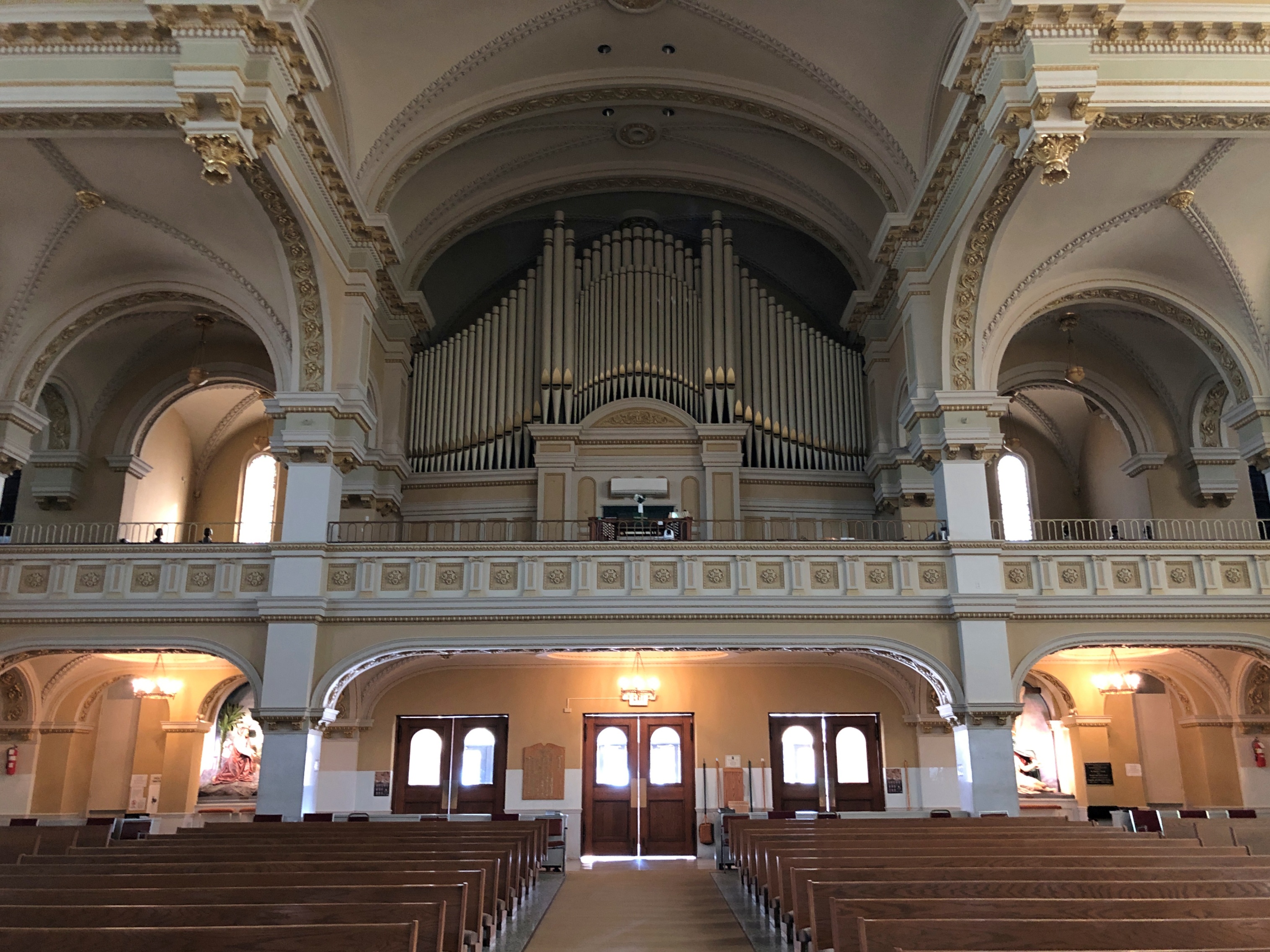
While Russians were forming their immigrant community, Irish were doing the same not far away. One product of that immigrant ferment was St. Patrick’s, completed just after the turn of the 20th century. The history of the building is told with admirable clarity and detail in this recent video.

St Patrick's, Eire PA

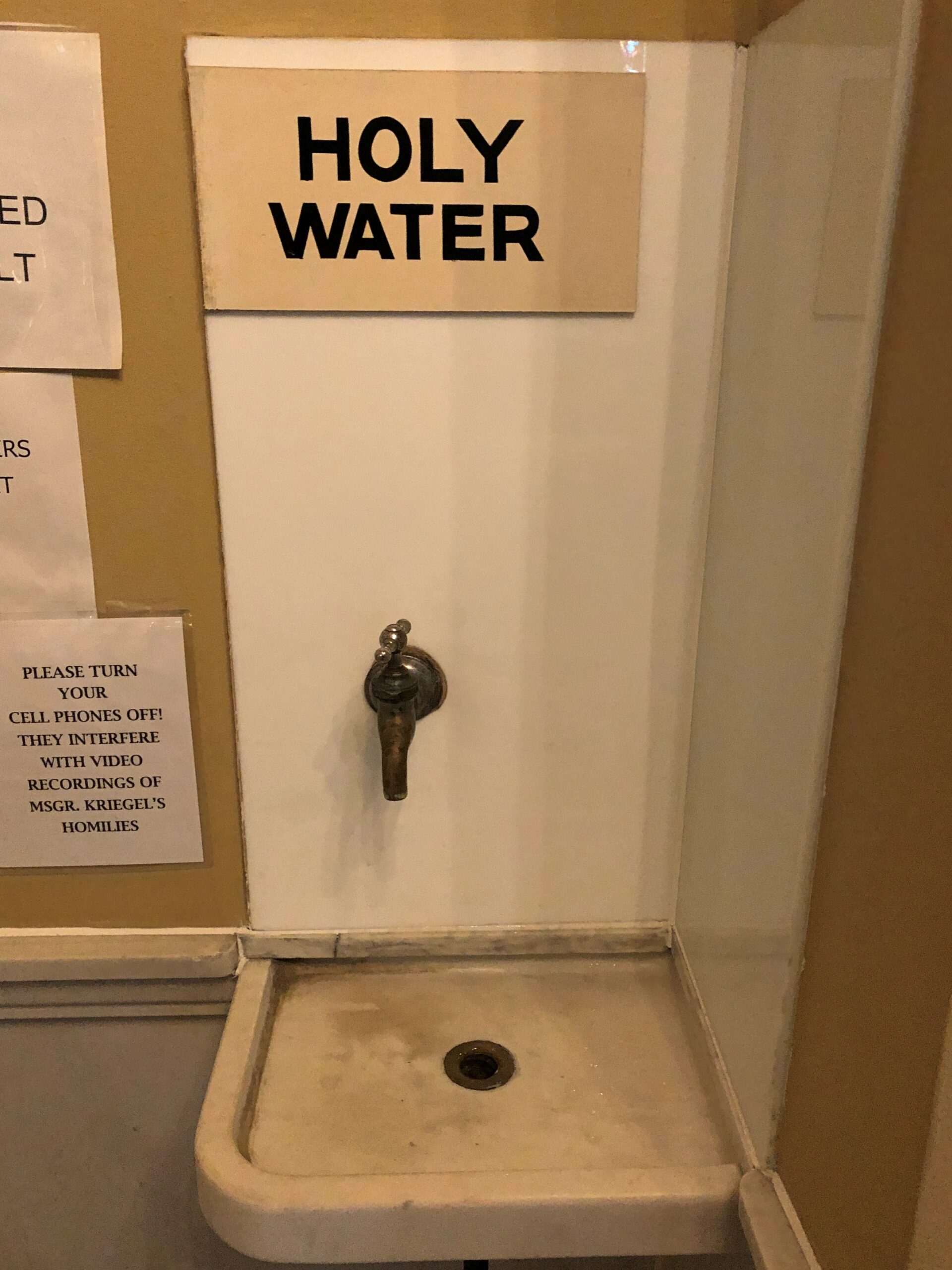
Among all the ornateness, a holy water spigot of Holy Grail simplicity, at least as depicted in certain tales.

St Patrick's, Eire PA

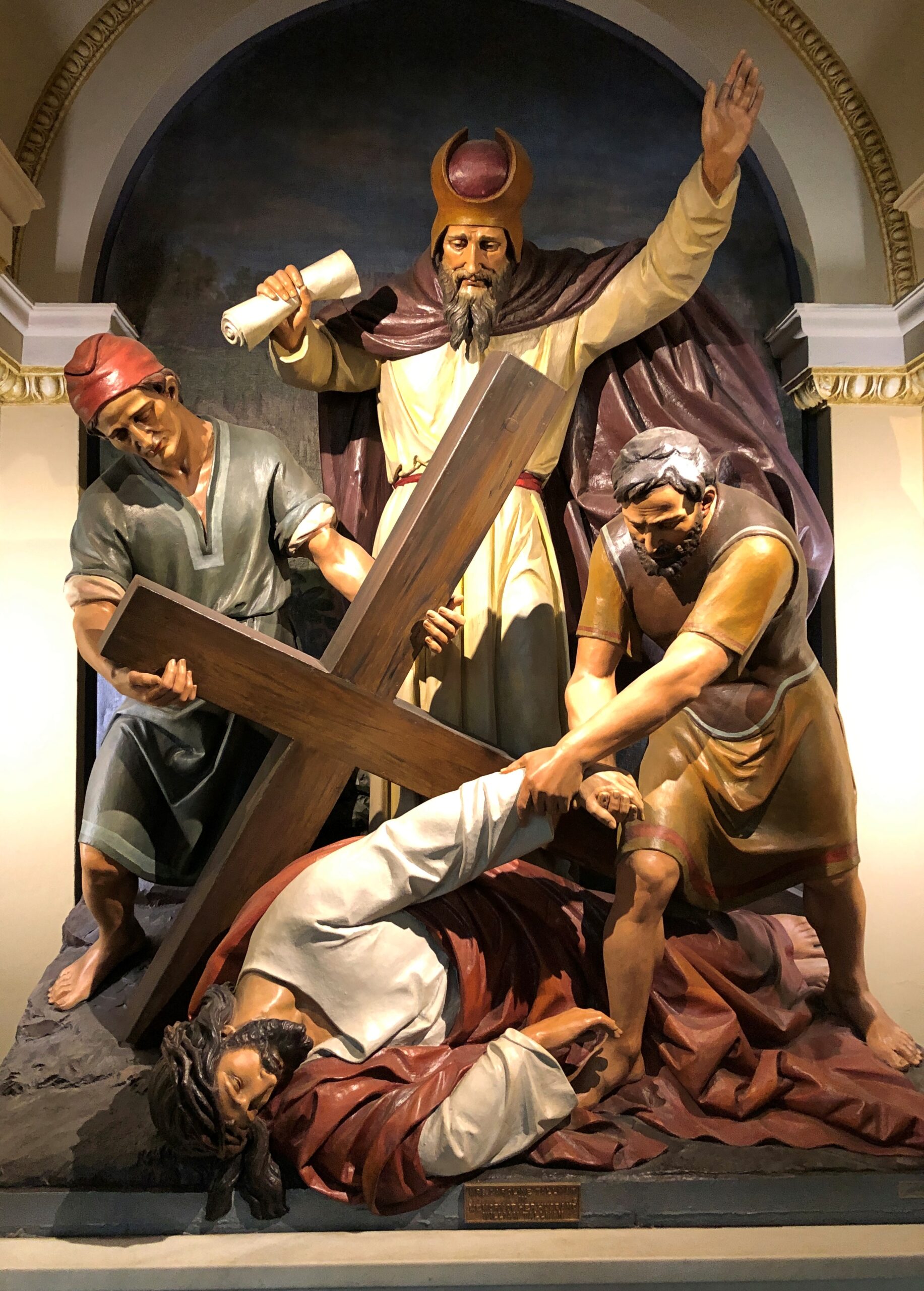
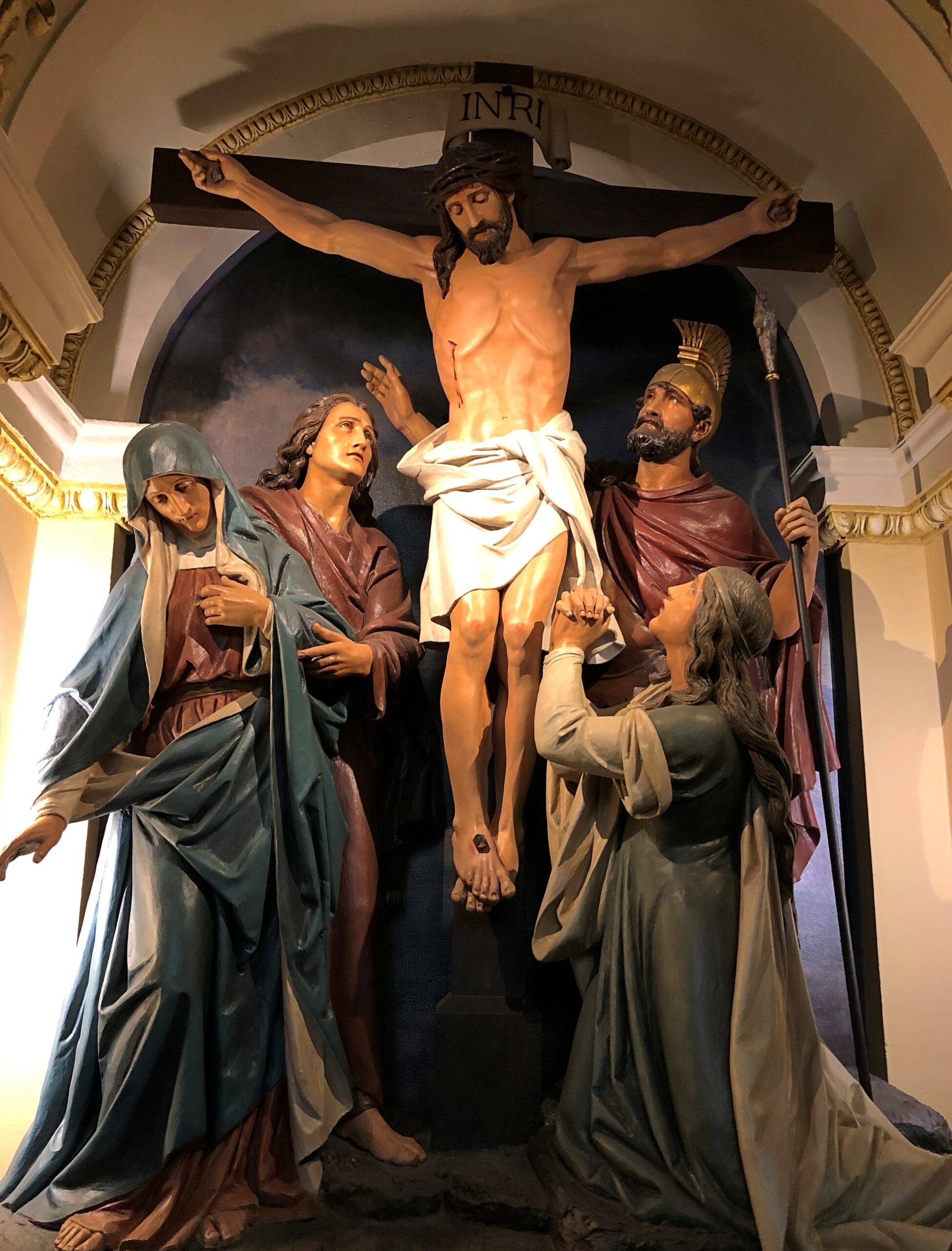
Life-sized Stations of the Cross dwell in enormous niches in the nave.

St Patrick's, Eire PA

I wasn’t eagle-eyed enough to notice the Roman soldier wearing a Bavarian cap. Or take a picture of it. No matter, I know about it now.