Crossing the Bar

Warmish day, though I didn’t have a lot of time to spend out in it, other than walking the dog just before sunset. Windy but not especially cold then, but even better was the mid-day, when the sun came out and temps nearly hit 70 degrees F.

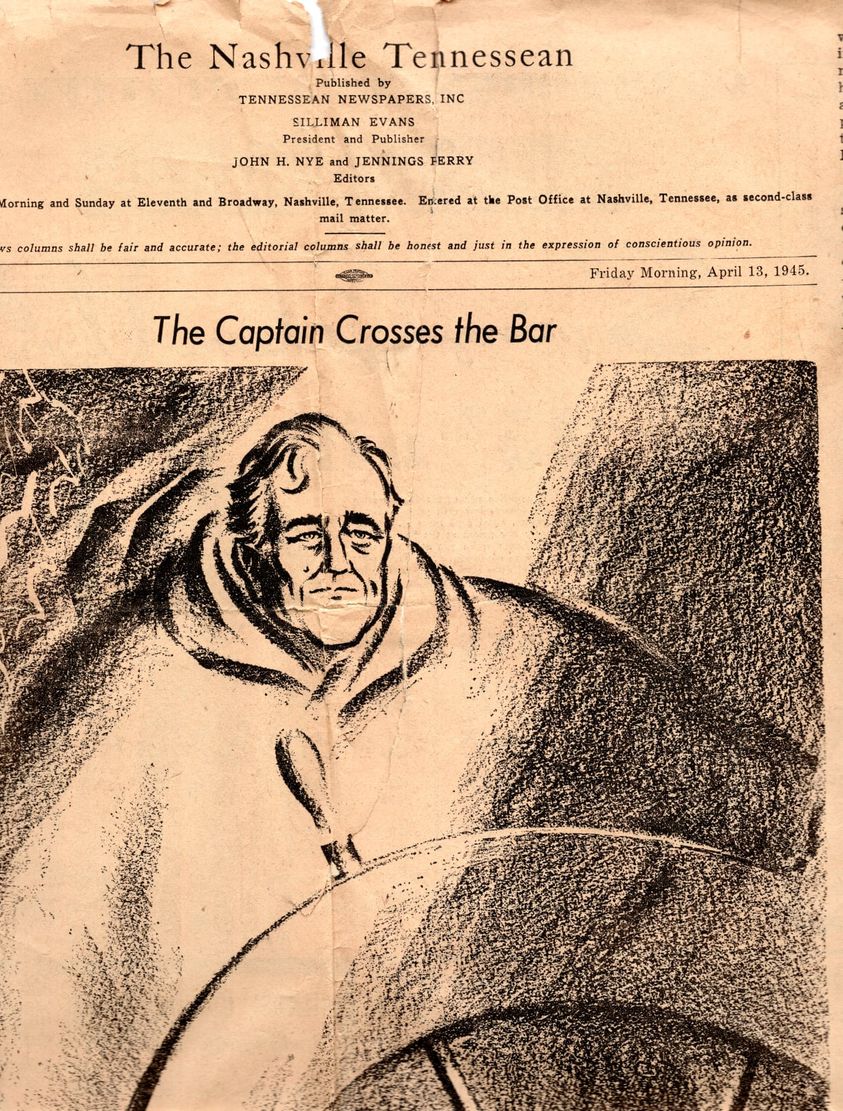
An editorial cartoon that assumed many, or at least some of its readers would know some Tennyson. Probably a reasonable assumption in 1945.

That came over the transom today in wandering around the online labyrinth. It is April 12, after all.

An Urban Ruin Explorer

Almost a warm day. Certainly not a cold one, which felt like a relief. I didn’t have as much time outside as I wanted, though we had a good dog walk at dusk and I spent time after dark on the deck, drinking tea. Much cooler by then, but no wind at all. With a coat and cap, not bad for half an hour.

Just discovered Chris Luckhardt. A talented photographer and videographer with a specialty in urban ruins. At least, that’s my estimation of him after watching his video about looking around the abandoned City Methodist Church in Gary, Indiana. Quite a wander. I plan to watch some more of his work.

Trepidation would probably keep me from going to exactly the sort of places he goes, but I understand the impulse. A healthy sense of exploration that involves the near as much as the far.

Doesn’t Play Well With Other Dogs

It’s been nine years now since the dog joined us. Not sure how many dog years that’s supposed to be, or whether that concept has any real meaning, but in any case she’s gone from young dog (though not a pup) to old dog. Yet she still has considerable pep.

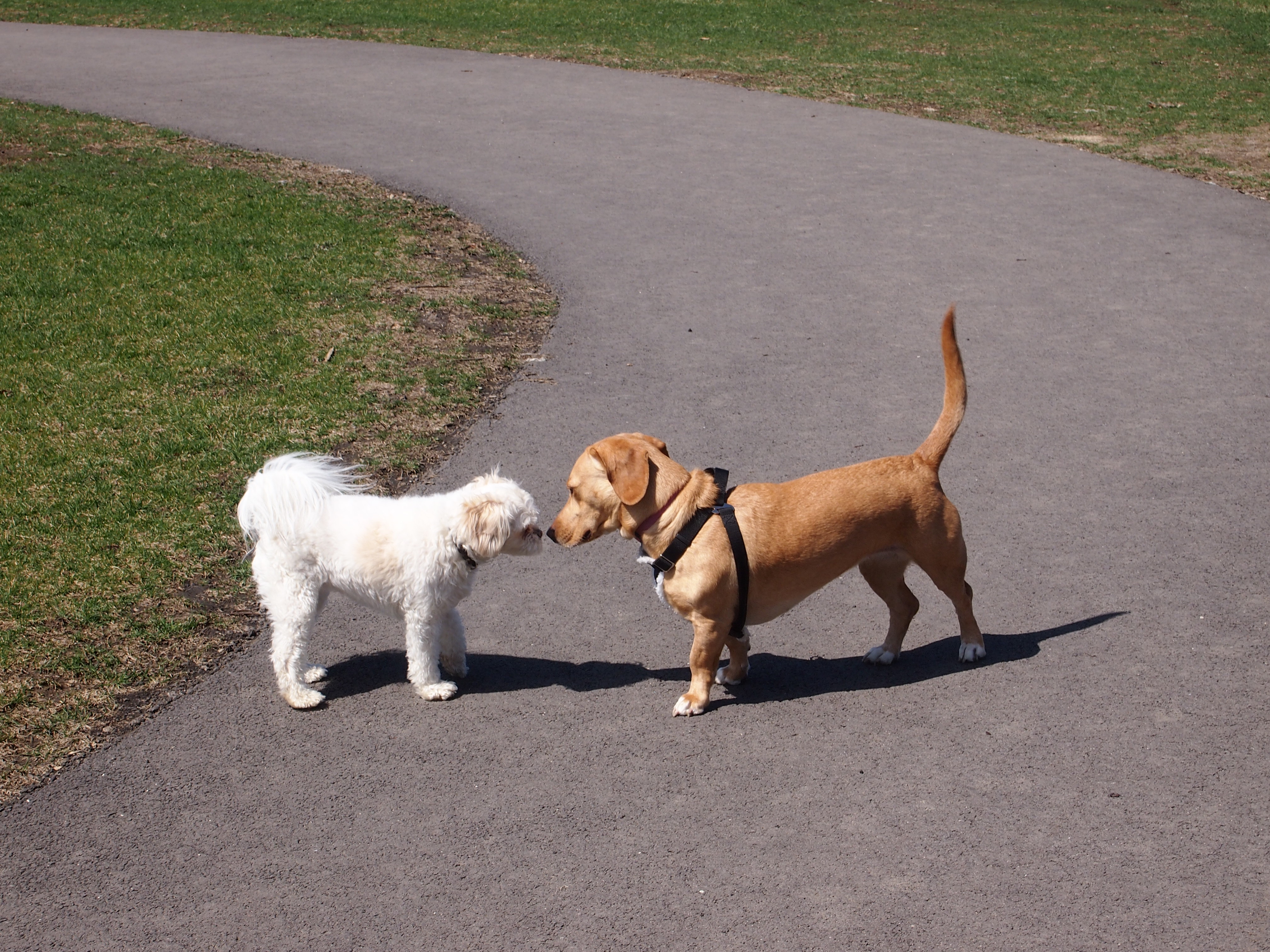
Not long ago I found a picture of her I didn’t remember taking. Not a surprise, since there are a lot of pics of her.

That’s from the spring of 2015. That year our town opened up a dog park, the sort of place where you can unleash your animal and let it wander around and interact with other animals. That’s where she was in the image, along with another dog. You had to buy an annual membership, after which the park district would send you an electronic gizmo to open the dog park gate.

So we were charter members. And yet this is the first time I’ve ever mentioned it. We visited a few times, and soon discovered that our dog liked roaming around the place well enough: the trails, the grass, the shore of the water feature. But what I really think she wanted was the place to herself. Or at least, her and us. Other dogs, not so much.

Of course, we’d been warned. One of the things noted in the paperwork from the animal rescue org was that it would be better if we didn’t get any more dogs. Which we never have. But we figured there would be more than enough room at a dog park.

No. She’s never attacked another dog. She has, however, snarled at a fair number, since in the close presence of other dogs, she can be a mite prickly. I don’t remember for sure, but it’s more than likely that right after I took that shot pictured above — which looks so cute and all — she snarled and maybe barked at the other dog, and we had to pull her away. You never know how another dog is going to react, and a dog fight represents a potential knot of problems I do not need.

So we let the membership lapse. Just one of those things. We’ve still as fond of her as you should be of your dog. Member-of-the-family fond, though not to be mistaken for being a person. “Fur baby” is a term I’ll never use except to ridicule it.

Thursday Grab Bag

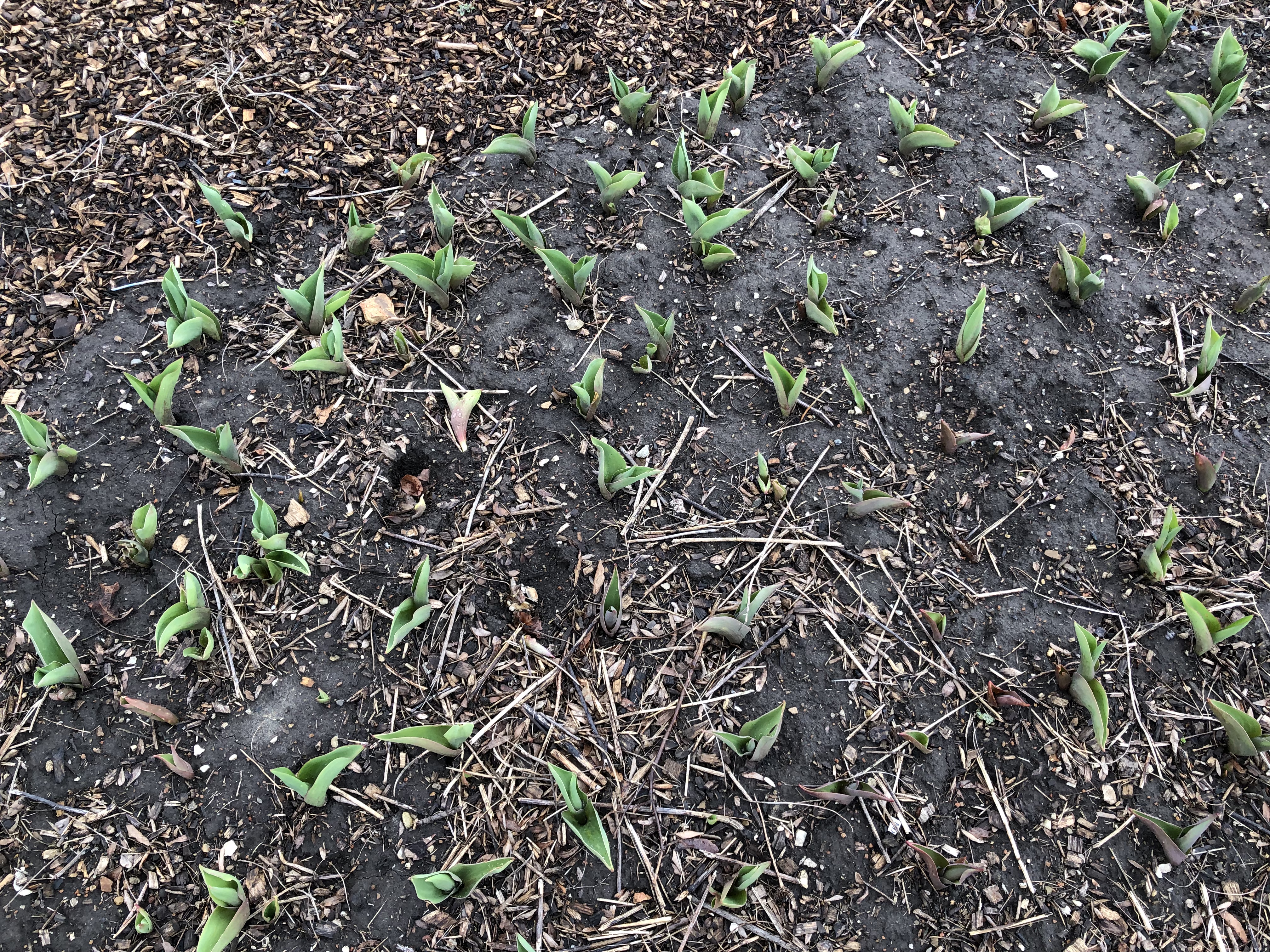
Sluggish progress toward spring here. But some progress. Plants in a nearby park.the flowers that bloom in the spring, tra-la

The croci in my own yard have been very slow this year — no blooms even now. I don’t keep an exact track every year, but that seems a couple of weeks late. Some years, I remember seeing their very first green sprouts at the end of February. And of course, croci don’t mind a little snow.

On a bench in the same park. What is that thing?Soofa

A Soofa sign. The company web site says it makes electronics for advertising or as part of “smart city” communications. This doesn’t look like that, and it also looks inactive. Since I’d never noticed it before, it could be that it isn’t operational yet.

Or is it? According to a park district web site I couldn’t access fully — but could see a bit of, from my Google search — you can charge devices there. Solar-powered, and the top does resemble a solar panel. Wonder how much juice it has these many cloudy days.

The latest snack food to enter the house: Calbee brand Takoyaki Ball-flavored corn snacks. Though Calbee is Japanese, not a product of Japan, but rather Thailand, where ingredients and labor are no doubt cheaper.

No octopus, which is the main ingredient of actual takoyaki, is listed among the ingredients. Still, it’s flavored to taste like takoyaki, which it does, though the simulation isn’t quite spot-on. A little too sweet, Yuriko said, and I agree. Sweetened for North American tastes? Just how many North Americans are going to buy takoyaki-flavored snacks? But not bad.

Calbee, incidentally, began as a candy company in postwar Japan (1949) and acquired its name in the mid-50s, a portmanteau of “Calcium” and “Vitamin B1.” Soon the company found its way into crispy snack foods, especially wheat crackers. I suppose that was something of a novelty in Japan at the time, compared with rice crackers, which go way back. Calbee’s early confections caught on, and so the food technologists there have been working hard to make new varieties of snacks since then.

I see that the fifth season of Better Call Saul has appeared on Netflix. That’s good. I’ll watch it. Once a week or so, that is. That’s how new TV should be, according to Leviticus, I think, though it doesn’t apply to shows that might have been watched every day after school.

Ruth Macintyre Conservation Area

Fell asleep to light rain last night. I could open the window a crack to listen to it, for the first time this year. Today was merely cloudy, and yesterday’s warmth has mostly ebbed away.

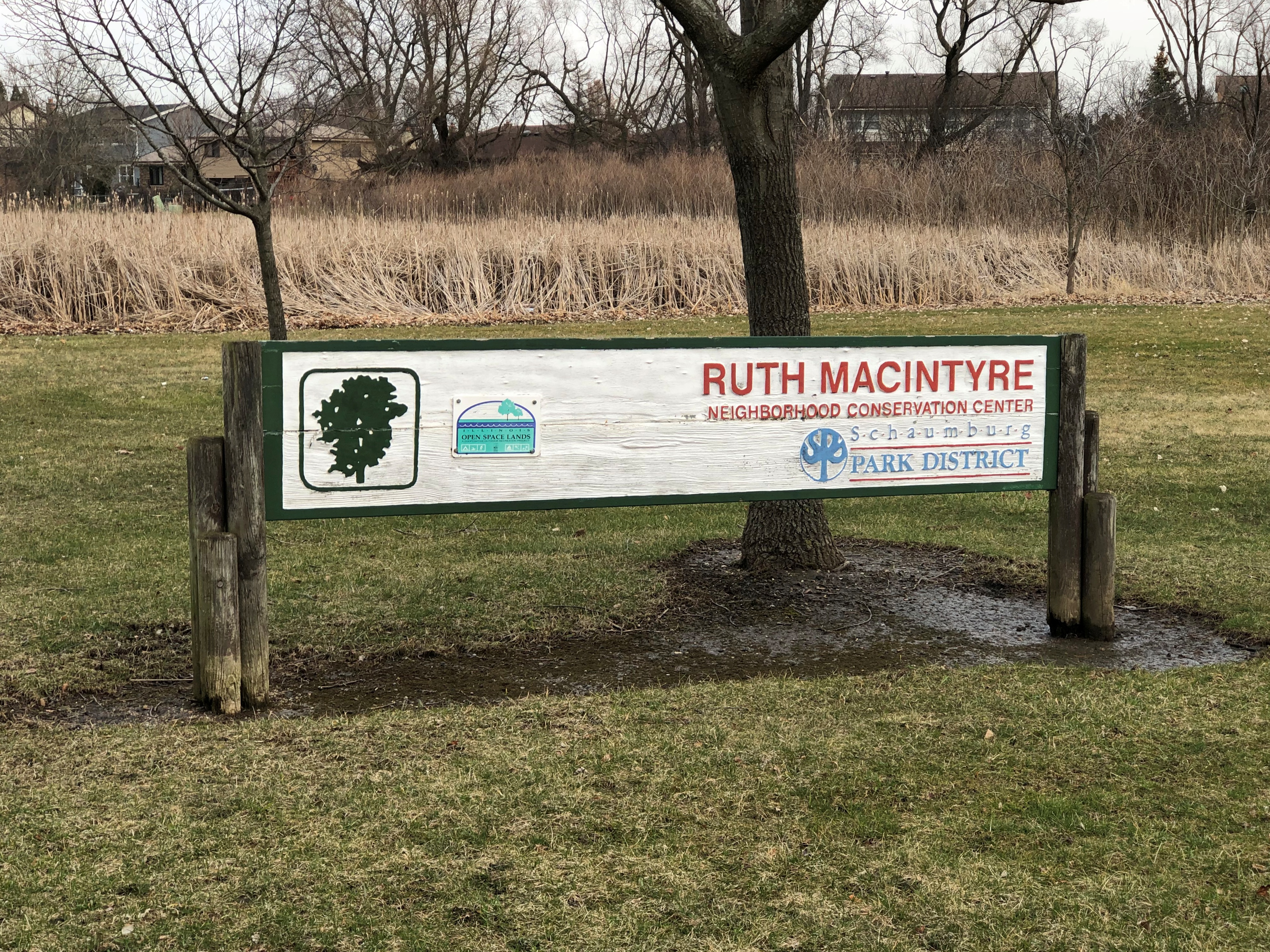
Walked another northwest suburban conservation area recently, which is called the Ruth Macintyre Neighborhood Conservation Center on the entry sign.Ruth Macintyre Conservation Area

In the park district materials, the place is known as the Ruth Macintyre Conservation Area. That matches the nomenclature of the other three such areas in the district, so I’ll go with it. This area is less wooded than Kay Wojcik, but worth the walk all the same.

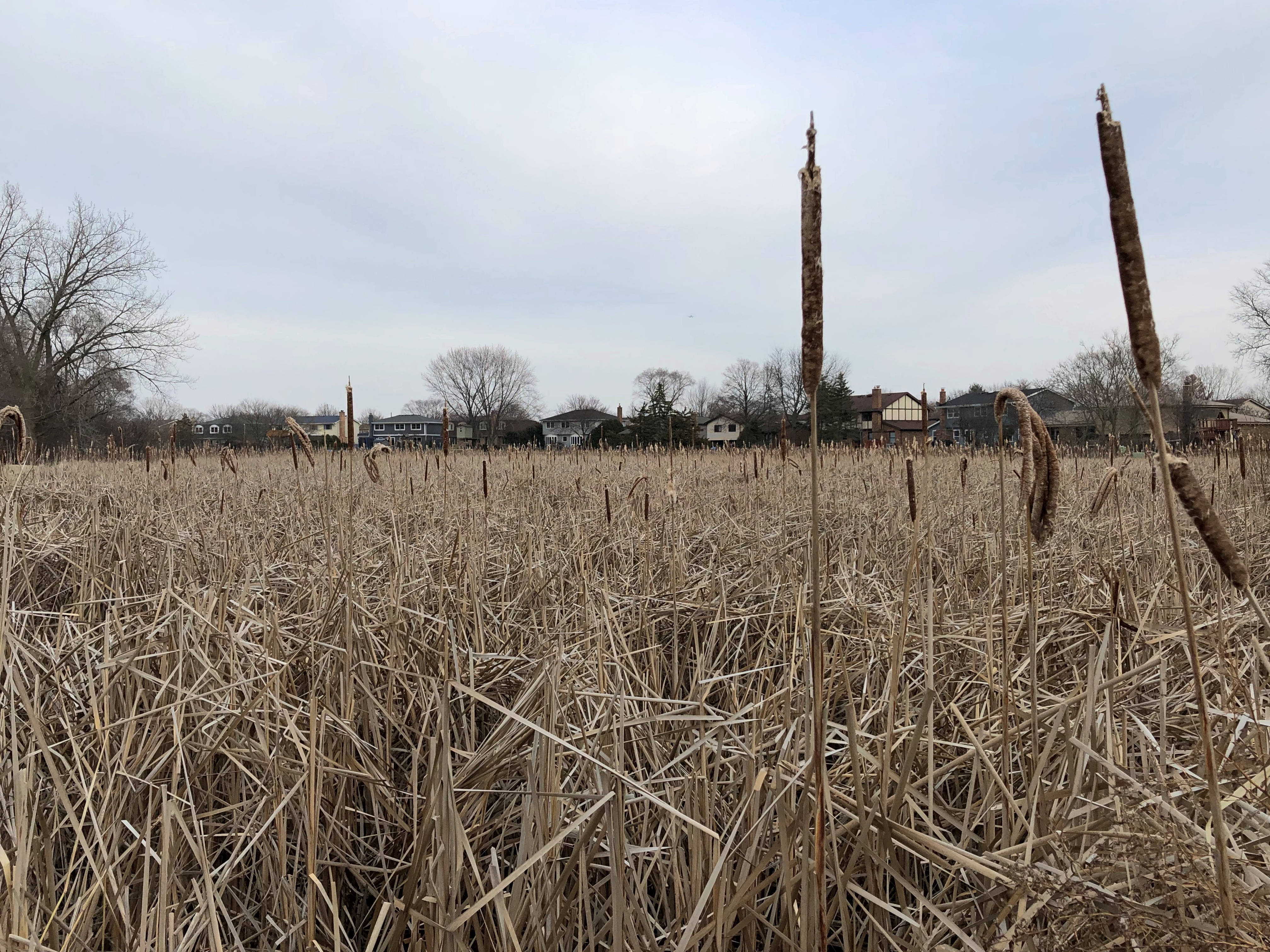
Hard to believe these tall grasses and cattails will be green in a matter of weeks, certainly by May. Plenty of birdsong about now, but we didn’t hear any throaty frogs looking to mate, as we have in some other wetlands lately.Ruth Macintyre Conservation Area

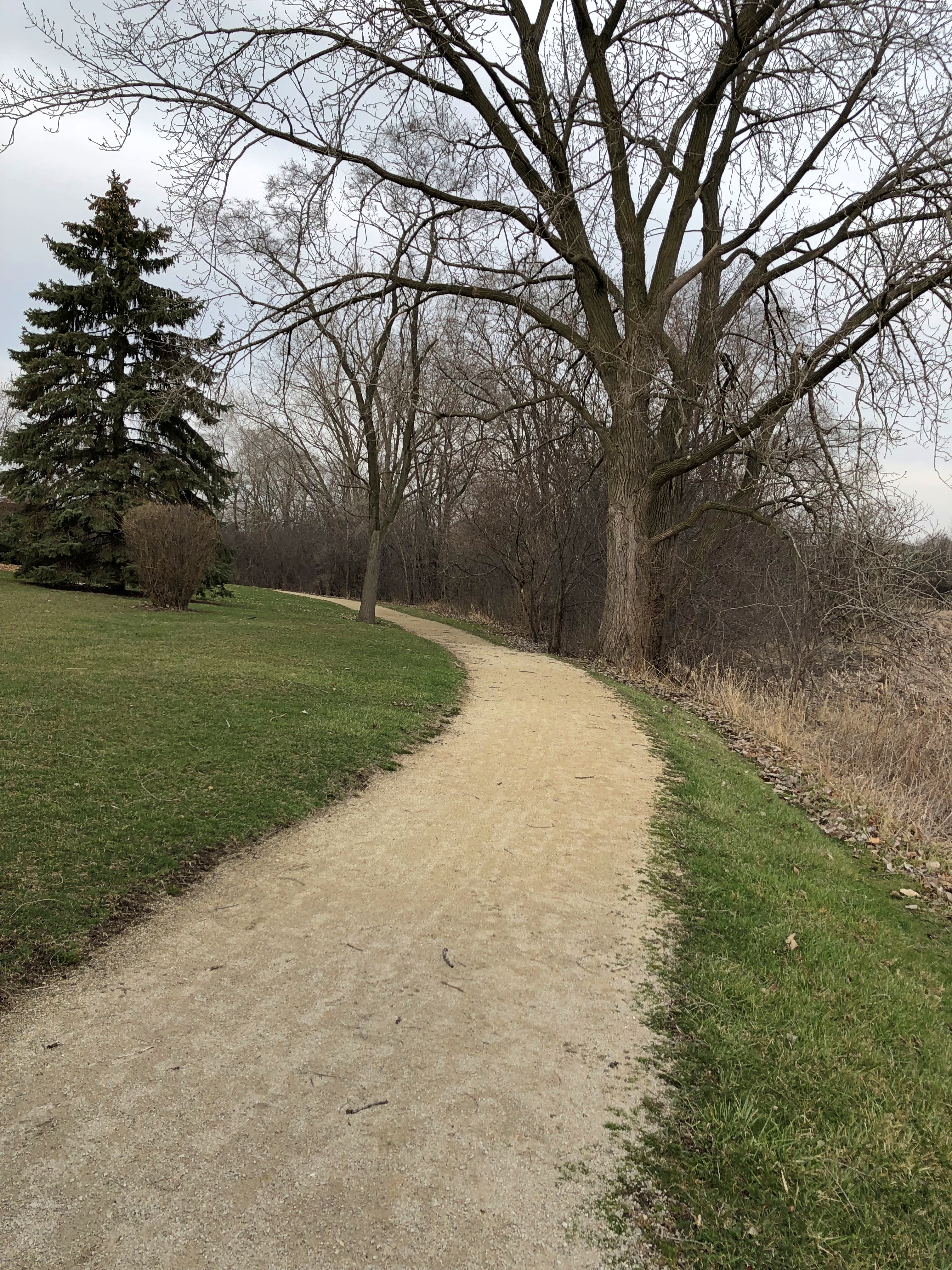
The trail was muddy in places. I hadn’t worn my best shoes for that, so it slowed me down. Good thing we weren’t in a hurry.Ruth Macintyre Conservation Area

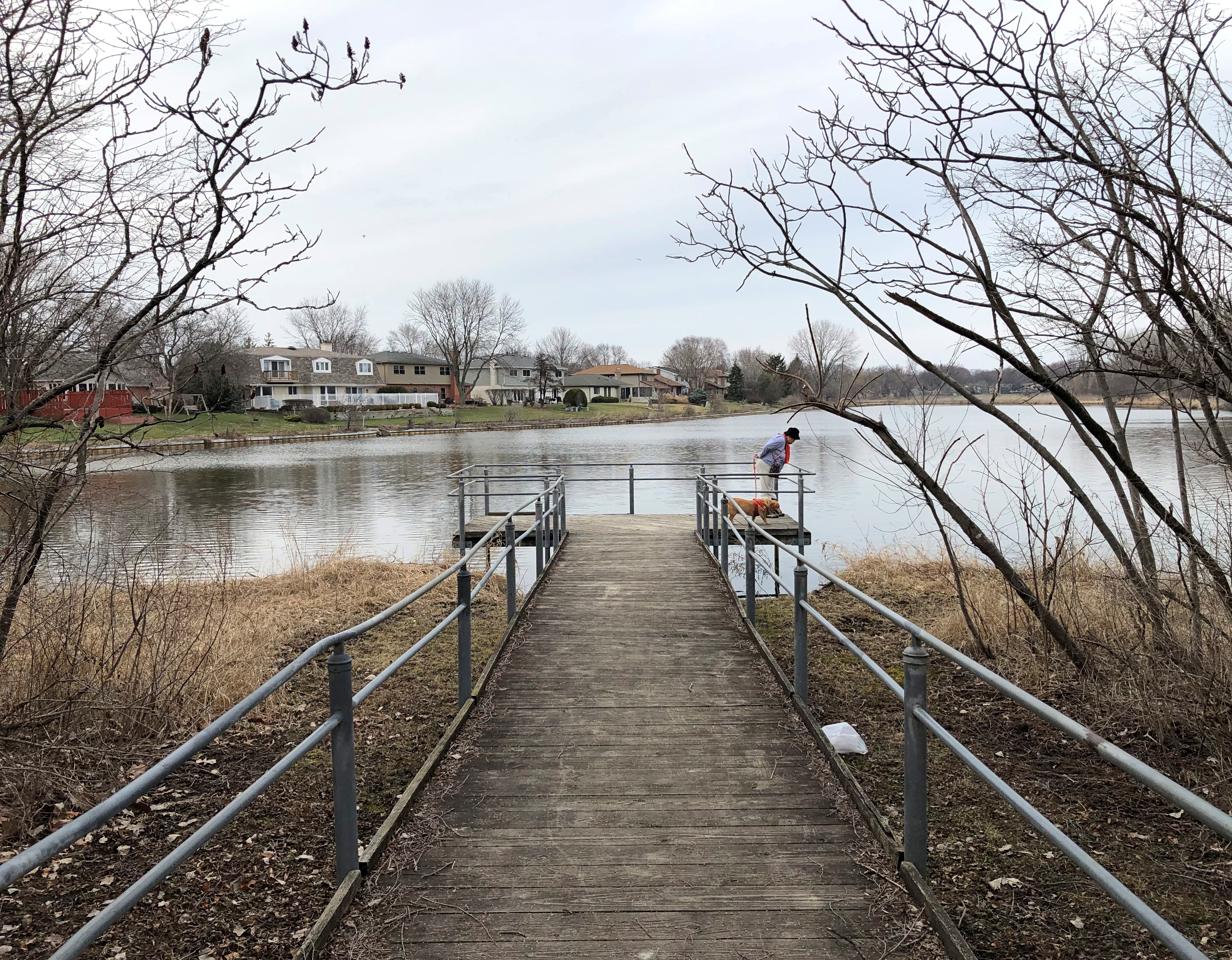
Ruth Macintyre is a total of 36 acres, the park district says, including a five-acre pond.Ruth Macintyre Conservation Area

“Named for the longtime 8th grade science teacher at Frost Junior High who was active in environmental and conservation concerns and created a 13-acre sanctuary adjacent to the school that ballooned to the 36-acre conservation area,” according to the History of Schaumburg Township blog. “She taught in District 54 schools from 1956-1979. Rededicated on September 24, 1994 from Munao Park to the above-named conservation area.”

Kay Wojcik Conservation Area

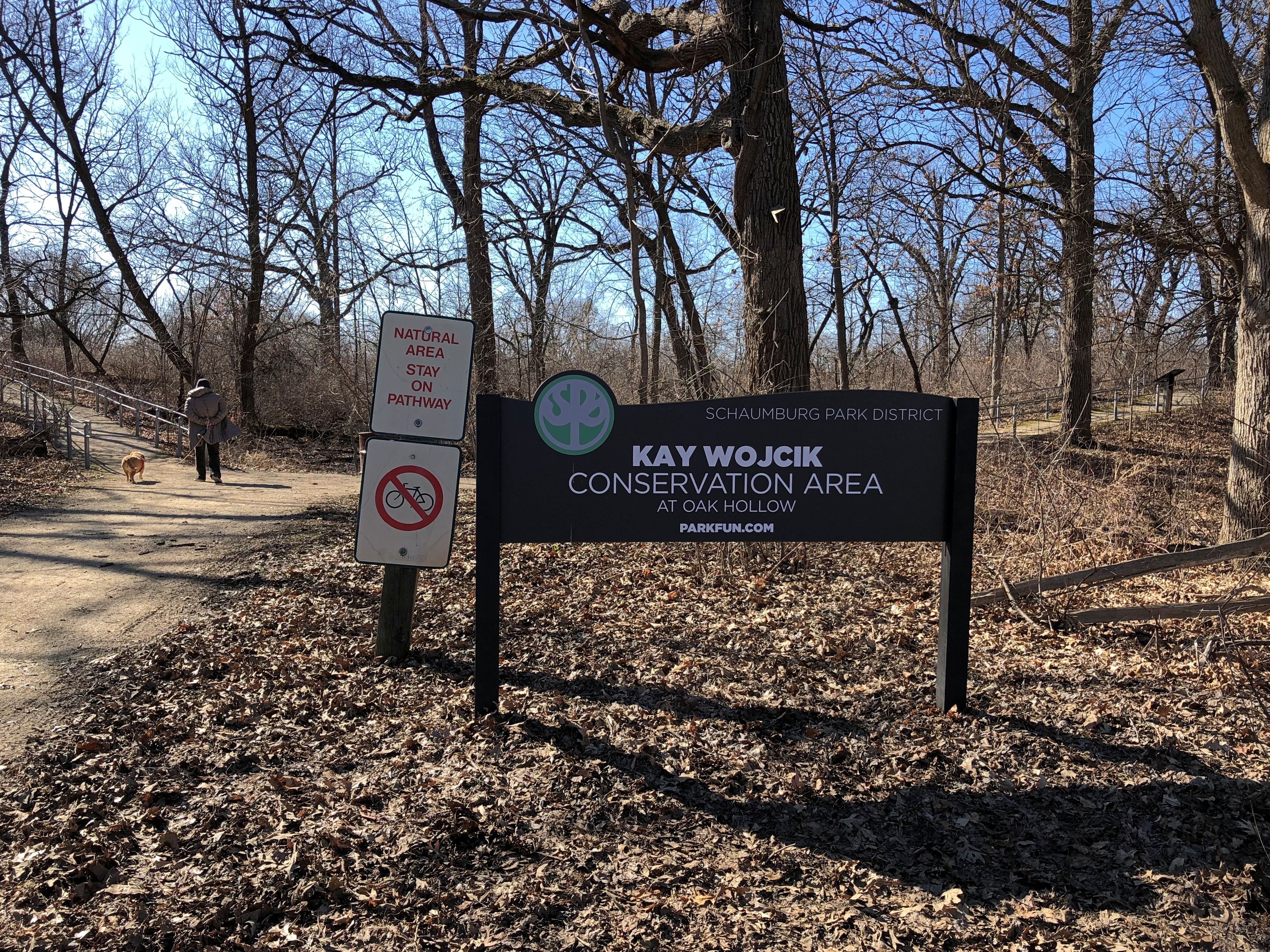
Not every recent day has been wet and chilly here in the northwest suburbs. A few have been dry and chilly. But not so cold that we can’t take walks in places like the Kay Wojcik Conservation Area.Kay Wojcik Conservation Area at Oak Hollow

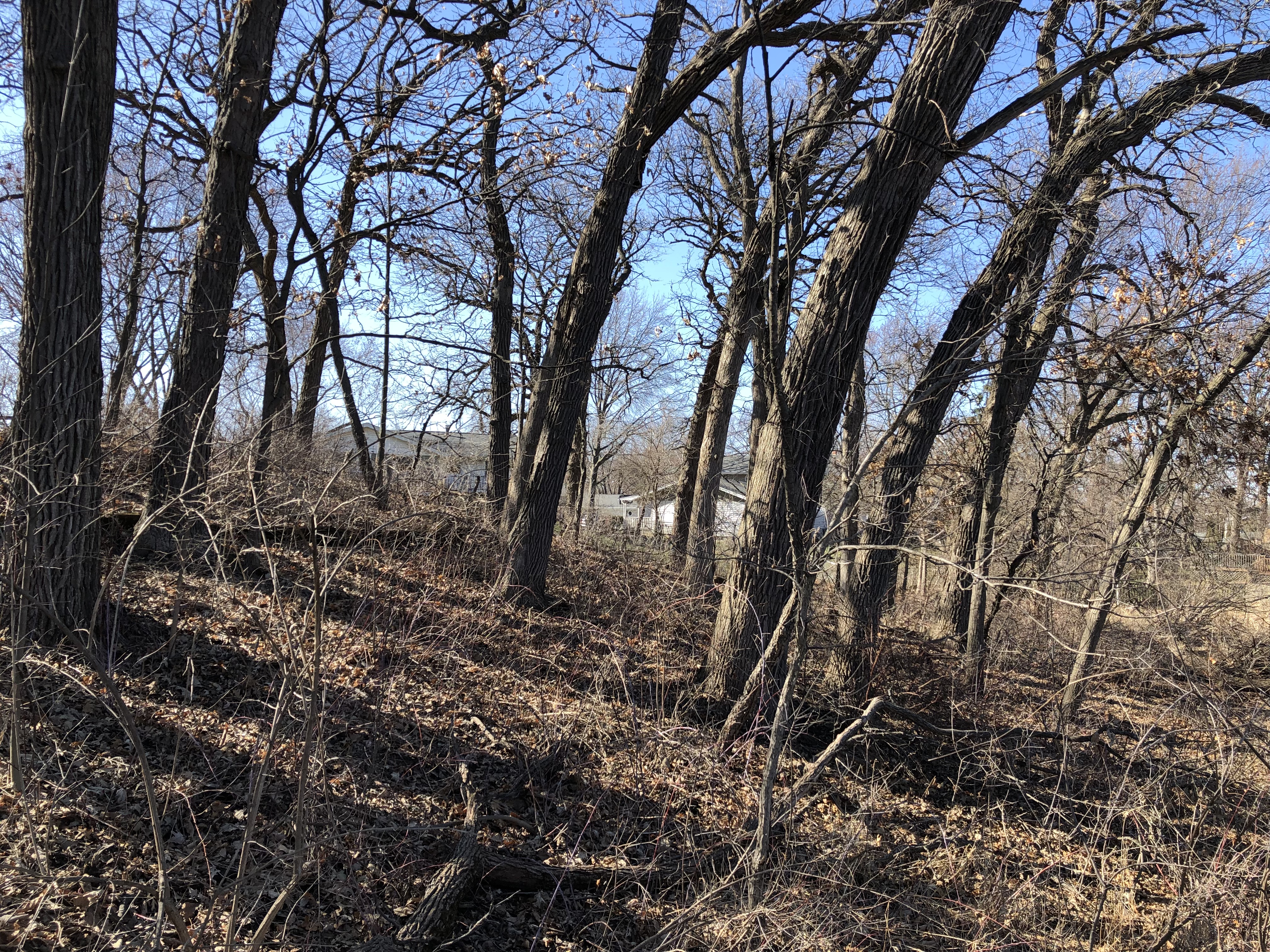
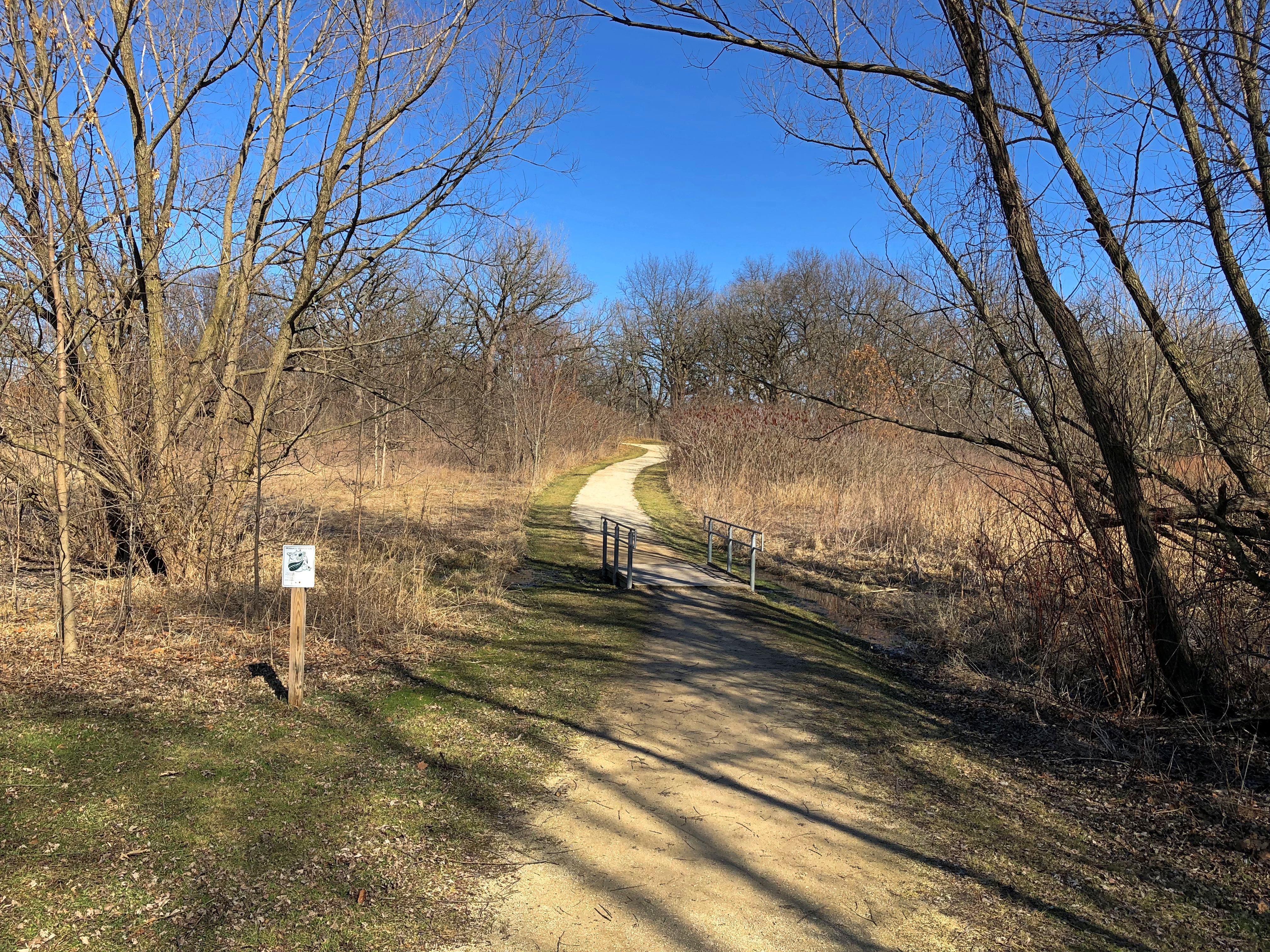
In full, it’s the Kay Wojcik Conservation Area at Oak Hollow, which sounds like a compromise renaming to avoid getting rid of the old name (it was just Oak Hollow CA before 2009). Whatever the name, it’s a pleasant place for a stroll, and one of those parks tucked deep in the suburban fabric, so that few outside the immediate area probably know about it.Kay Wojcik Conservation Area at Oak Hollow Kay Wojcik Conservation Area at Oak Hollow

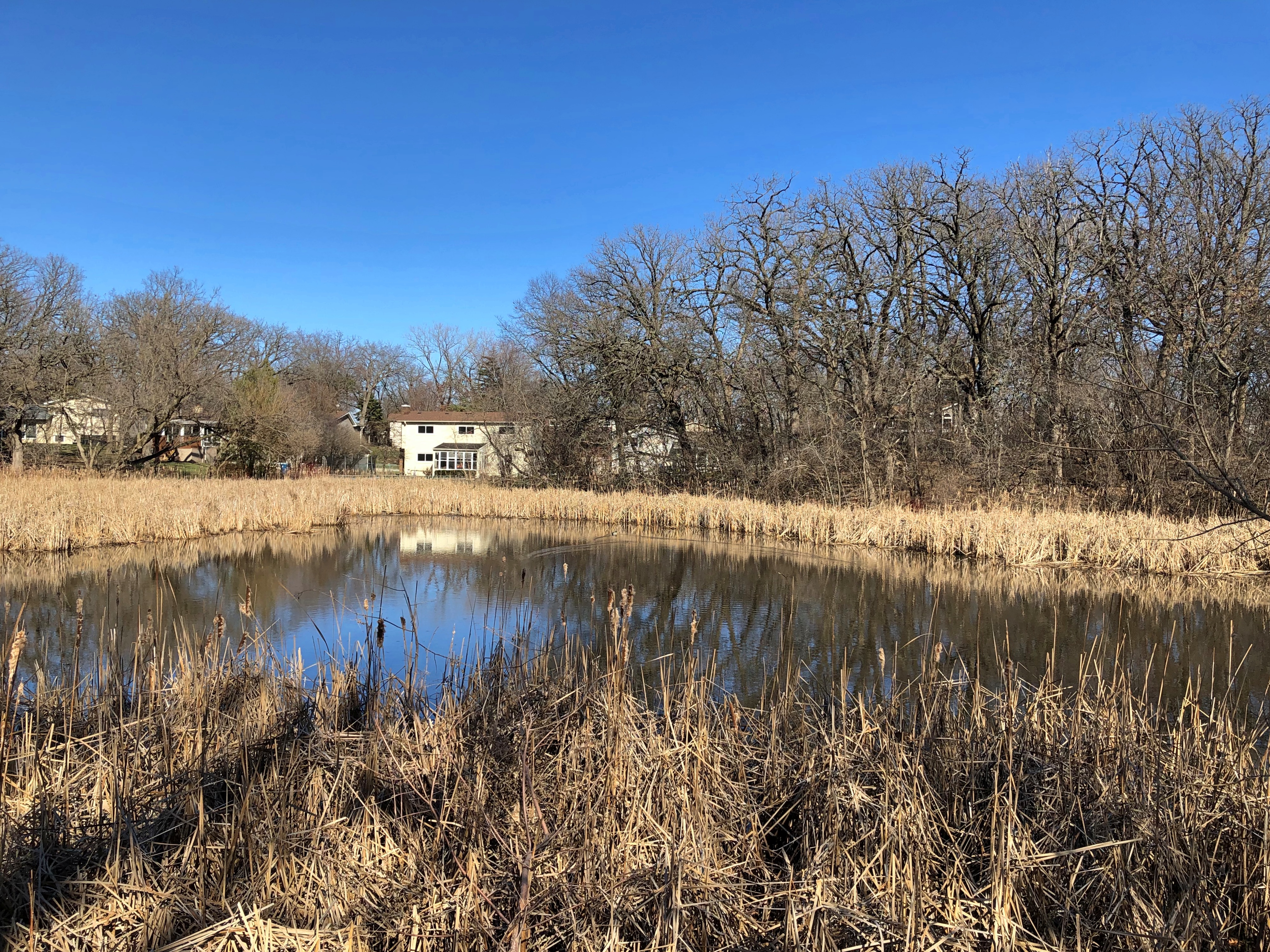
Part of the conservation area is a pond.
Kay Wojcik Conservation Area at Oak Hollow

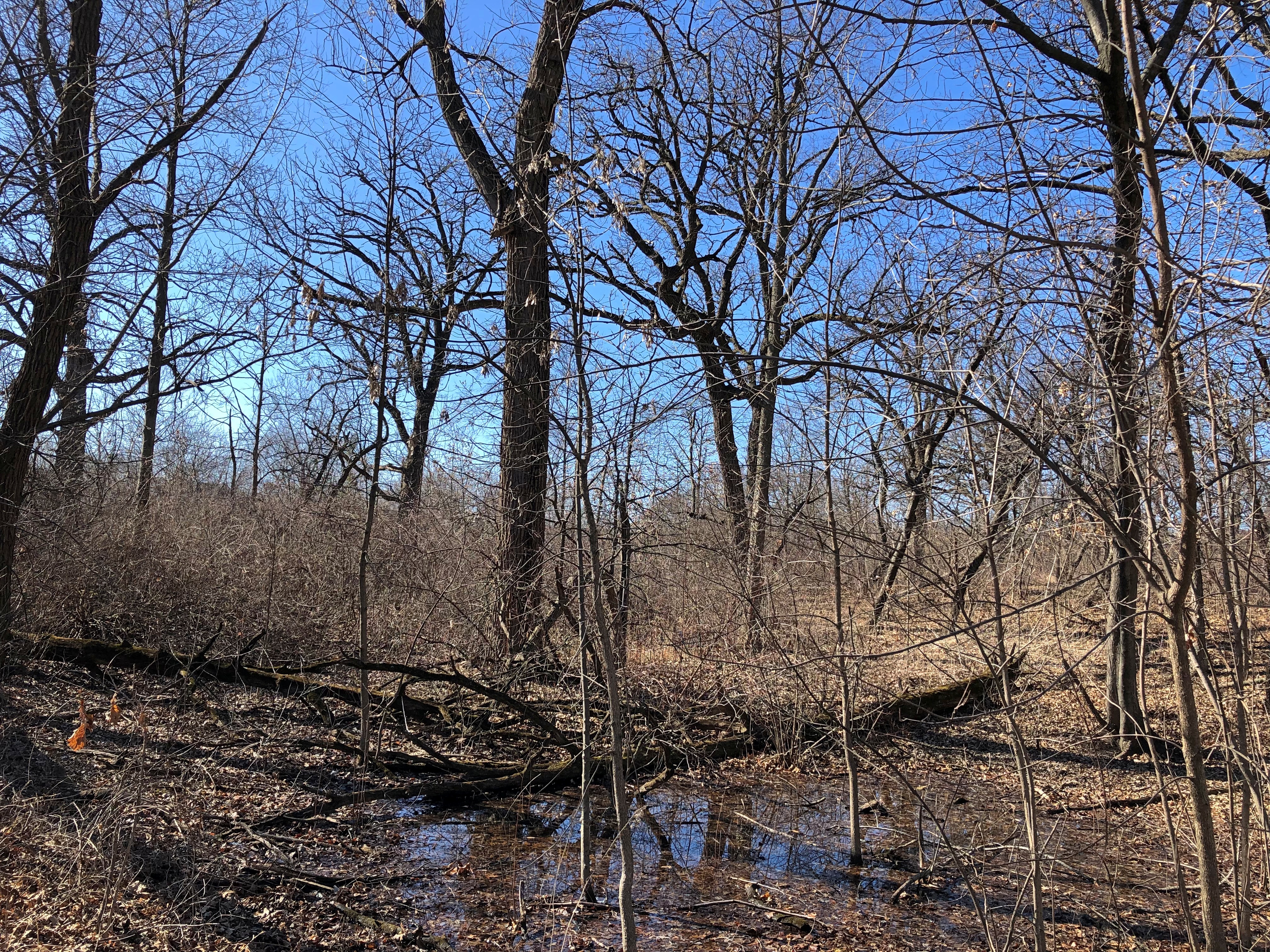
The park is a 17½-acre remnant of the pre-settlement oak grove, marked by a small network of trails. How it didn’t become farm land and then suburban housing, the park district doesn’t say, but perhaps it was a bit marshy for either of those uses.Kay Wojcik Conservation Area at Oak Hollow

After getting home from our walk, I looked up Kathleen “Kay” Wojcik. Now retired, she was a Schaumburg Township clerk and later a member of the Illinois House of Representatives, from 1983 to 2003, and in the Illinois Senate from 2003 to 2005. Hope she’s able to stroll in her namesake park from time to time.

April Snow

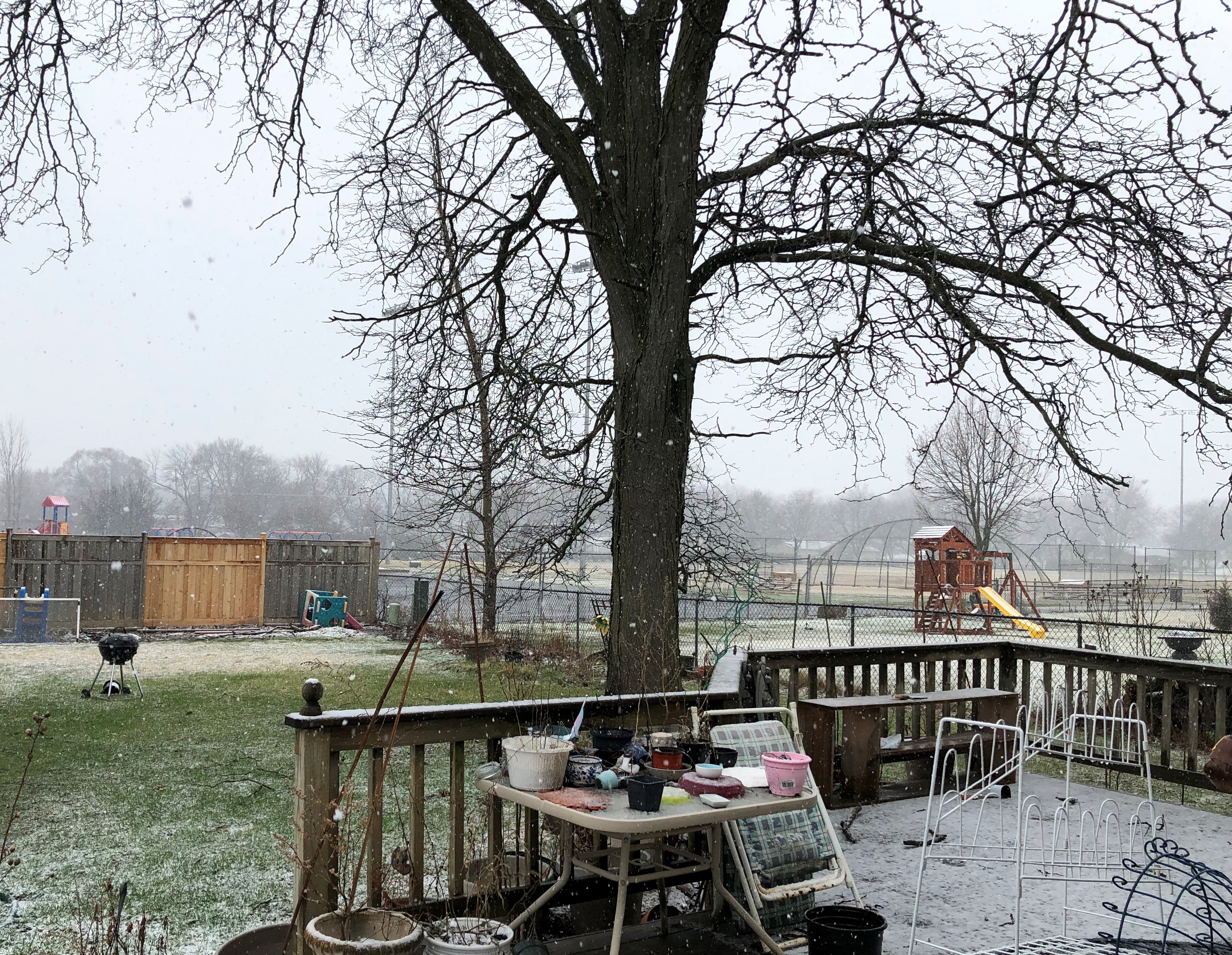
Not long after noon on Saturday, snow came pouring down. Large, fluffy flakes. That went on for a good while, though sometimes it was more like sleet, other times borderline cold drizzle.

It took a while to stick.cold spring

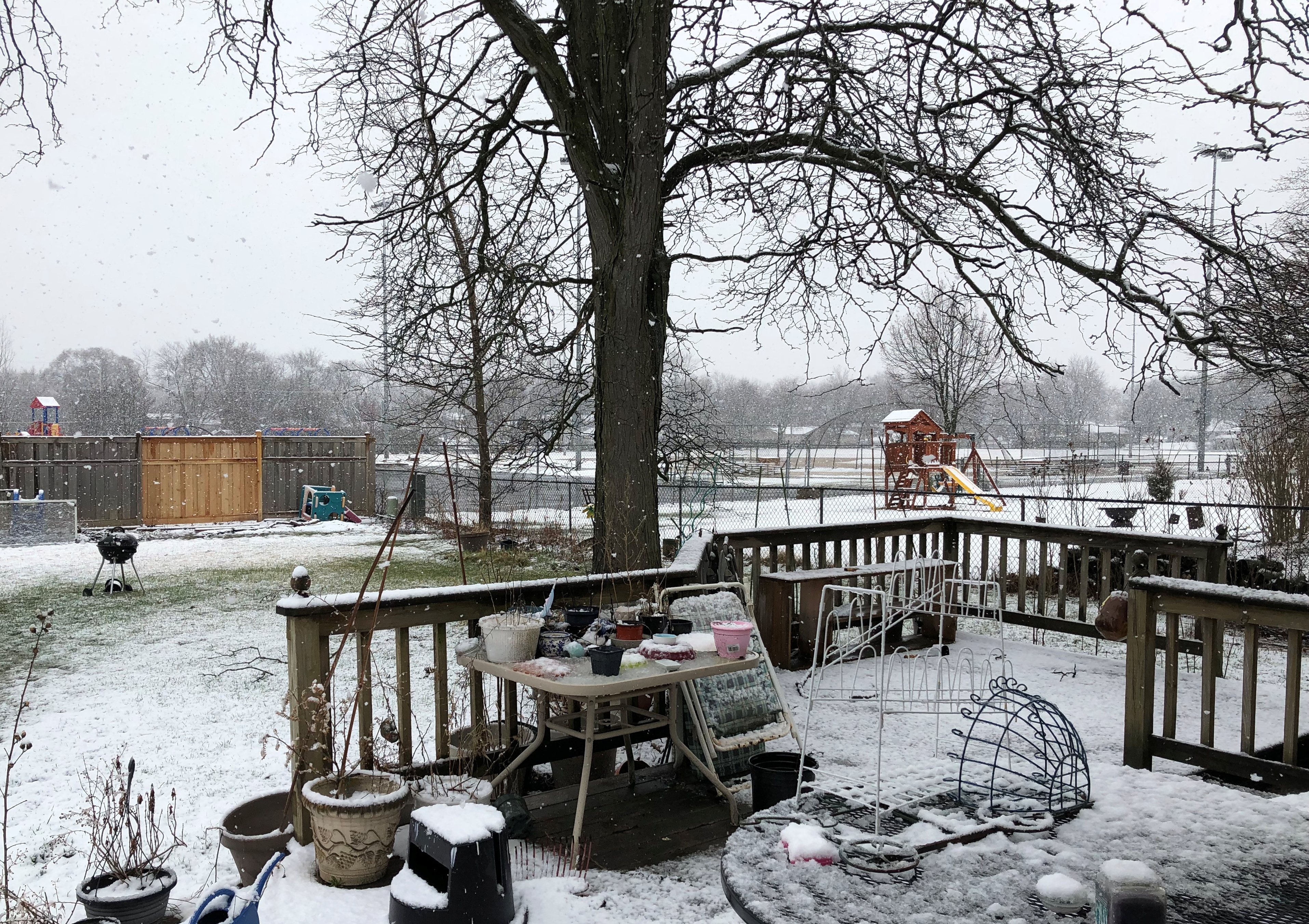
But eventually it did.cold spring

Been a cold spring most of the time so far this year, with lots of cold precipitation, chilly winds, overcast skies and mud underfoot. But I don’t want to be churlish about what our life-sustaining atmosphere is up to, at least if it isn’t a violent storm. Warmer or warmish spring will come. Saturday’s snow was gone by the end of the day Sunday.

Obscure Texas Memorials

In April 2014, I visited Texas, and among other things drove south from Dallas with my brother Jay, not by way of the congested I-35, a road I’ve driven too many times to count, but by I-45 in the direction of Houston. We diverted from that highway to College Station, home of Texas A&M, and spent a little while at Washington-on-the-Brazos State Historic Site, before heading to San Antonio.

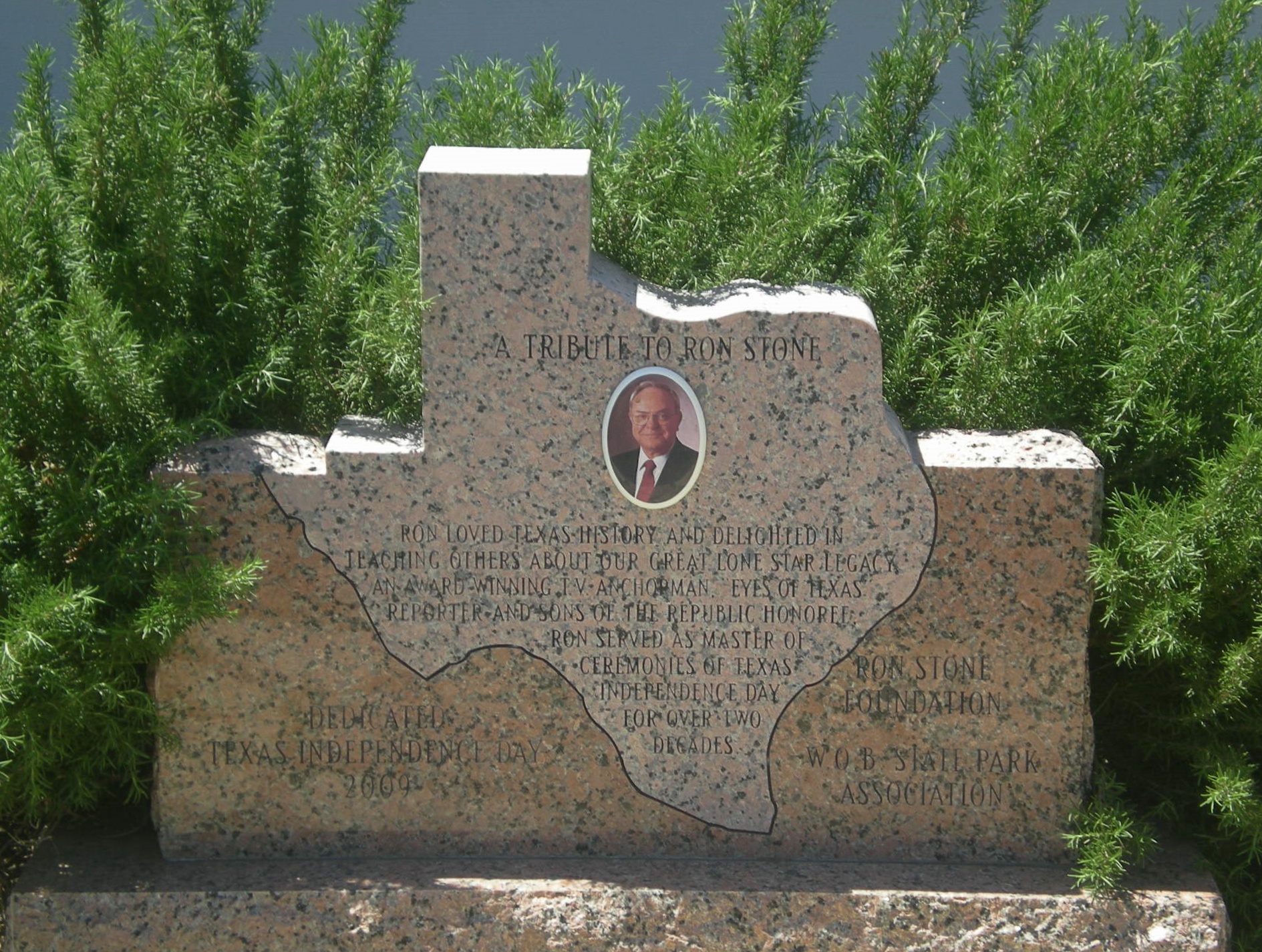
Among other memorials at Washington-on-the-Brazos was a fairly new one. At the time, only five years old.Ron Stone memorial Texas

Ron Stone (1936-2008) was a highly regarded local news anchorman in Houston who also wrote books about Texas history.

A tribute to Ron Stone

Ron loved Texas history and delighted in teaching others about our great Lone Star legacy. An award-winning TV anchorman, “Eyes of Texas” reporter and Sons of the Republic honoree, Ron served as master of ceremonies of Texas Independence Day for over two decades.

Fittingly, the stone says it was dedicated on Texas Independence Day in 2009.

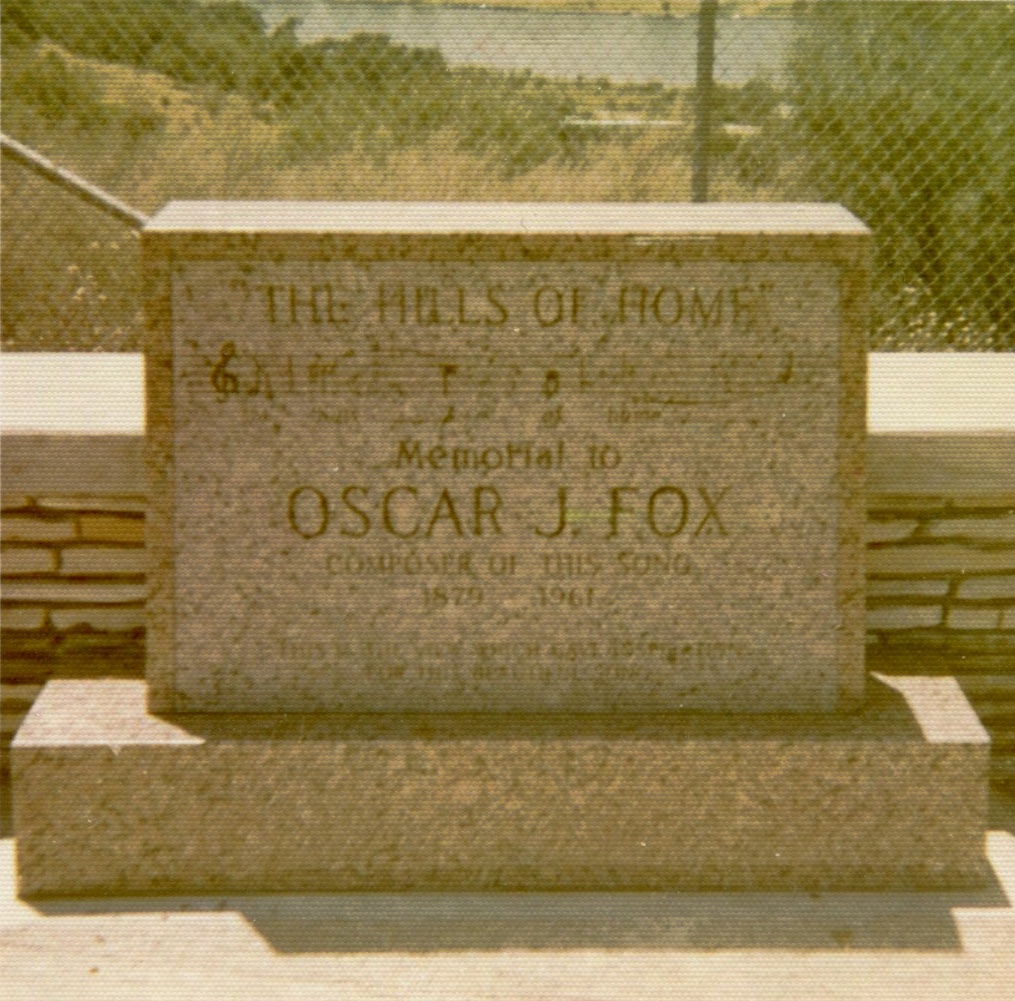
What fascinates me about obscure memorials? Most people don’t share that interest. Otherwise, they wouldn’t be obscure. The feeling goes back a long way, too. I might have taken this picture with our Instamatic 104 in the early ’70s, during a short family trip through the Hill Country; but even if my brother Jay took it, I found the image intriguing.oscar j fox memorial texas

It’s a memorial to one Oscar J. Fox (1879-1961), just off the road on U.S. 281 near Marble Falls, Texas, with a view of the Colorado River. In pre-Internet days, finding out its story would have taken more research expertise that I could have mustered as a child or even an adolescent, so it remained an enigma for years, there with the more recognizable subjects in our family photo album.

“The Hills of Home”
Memorial to Oscar J. Fox
Composer of this song
1879-1961
This is the view which gave
inspiration for this beautiful song.

These days, it’s no trick to find out more about Oscar J. Fox (here and here), who was known as a composer of cowboy songs, or at least an arranger of traditional cowboy songs. It’s also not hard to find recordings of “The Hills of Home,” though I have to say Nelson Eddy’s recording doesn’t do anything for me. Must have been a sentimental favorite for some people long ago, though.

Chicago Avenue Stroll: Buildings & Murals

No chance to see the aurora borealis here in northern Illinois last night, even if it was there to be seen. Yesterday was overcast all day, producing light but steady rain late in the evening and throughout the night, as far as I could tell.

Today was overcast as well, with light snow in the morning and again in the evening. So much for March going out like a lamb.

On Sunday, which was chilly but sunny, I took a stroll down Chicago Avenue for a few blocks. Chicago is a major east-west street, crossing the city and into the suburbs and running more than 12 miles, according to a Google Maps estimate. The eastern terminus is at Lake Shore Drive, but not before you pass such notable places as Michigan Avenue, the Chicago Water Tower and the Museum of Contemporary Art.

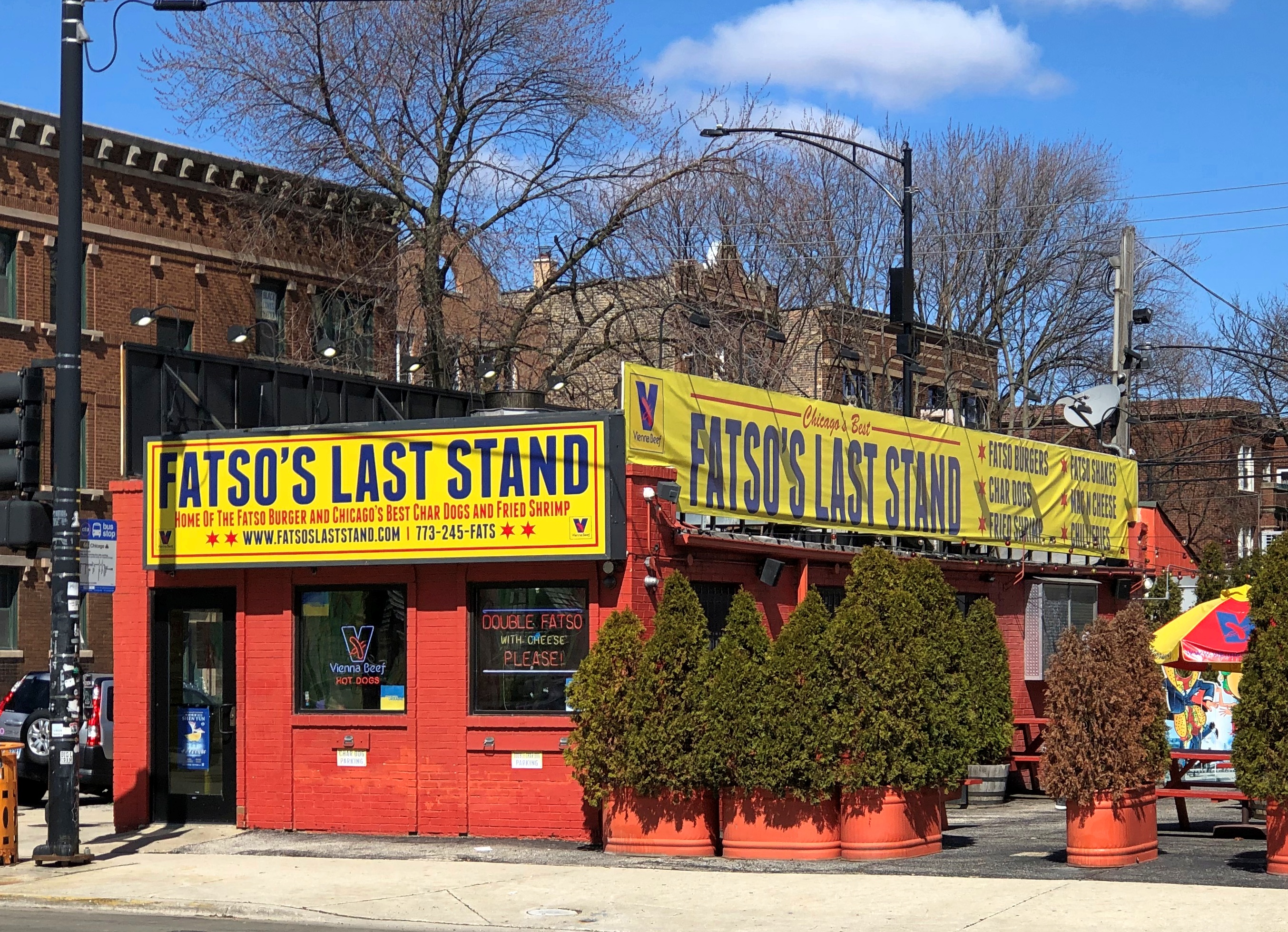
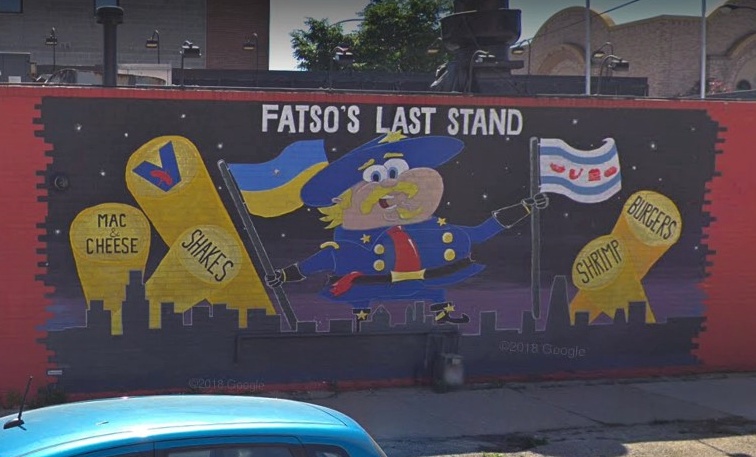
Where I walked, roughly 2300 W. to 2000 W. Chicago — about four miles west of Lake Michigan — the street is the commercial hub of Ukrainian Village, though not everything on the street has anything to do with Ukraine or its diaspora. Such as Fatso’s Last Stand. That’s very Chicago; it could be just about anywhere in the city.Fatso's Last Stand

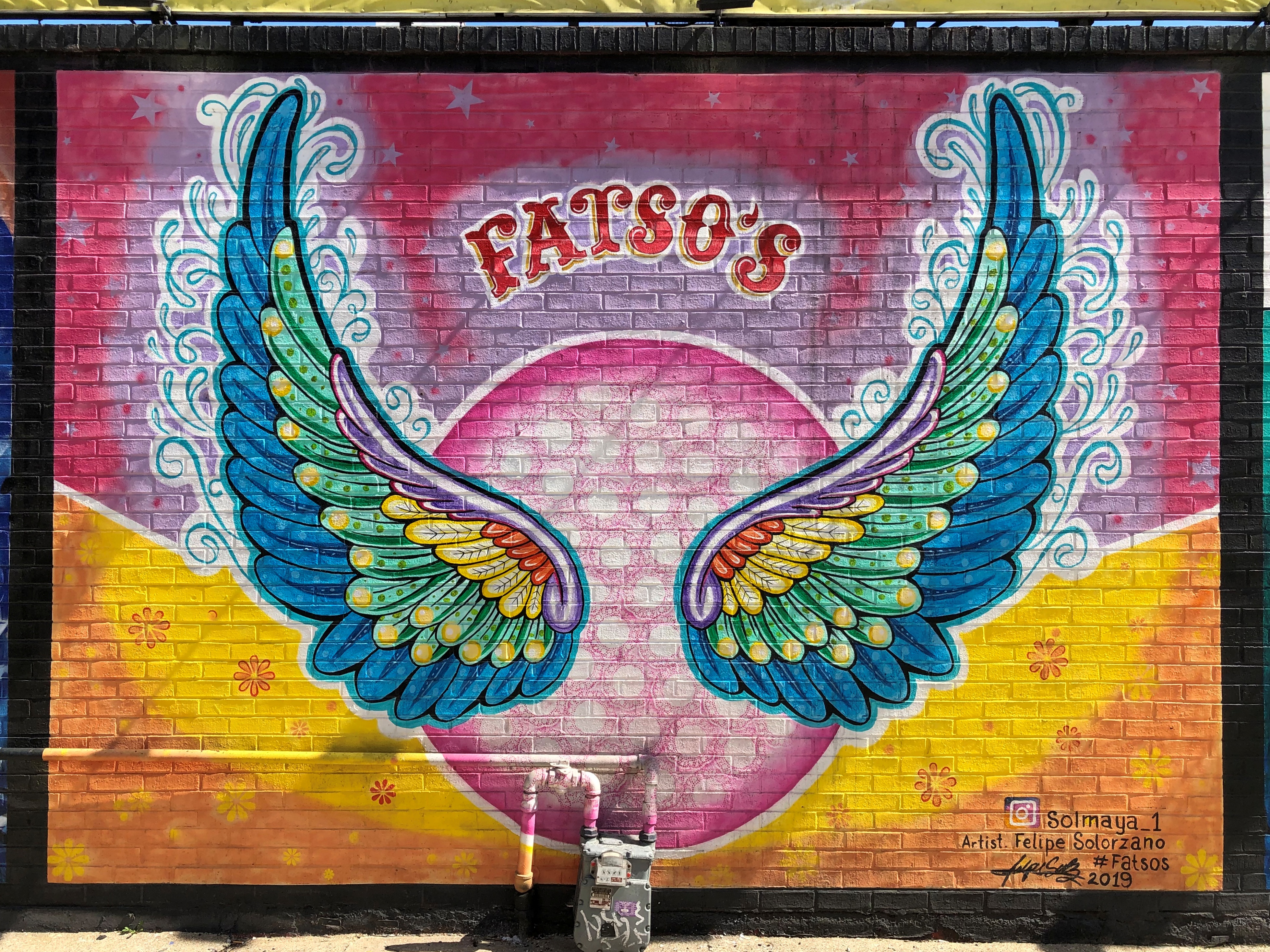
One of two locations of this name in Chicago, owned by an entity that has other restaurants and bars in the city, but also in New York and Charleston. I ought to try it sometime. I like a hot dog stand that has its own mural.Fatso's Last Stand mural

It’s on the wall facing Oakley Blvd., which crosses Chicago Avenue at that point. The artist, one Felipe Solorzano, has some images on Instagram. It didn’t occur to me until I looked at them that people pose in front of the wings. I’ve seen that before, but not in Chicago.

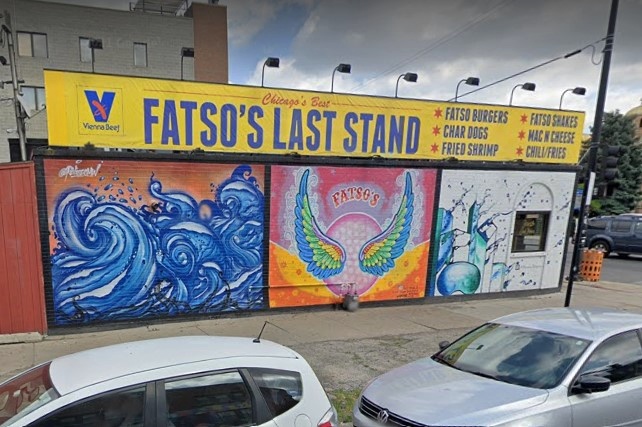
The wings form the center panel in a triptych of paintings, if that term is correct for murals. Anyway, there are three distinct paintings on the Fatso’s wall. I didn’t take a picture of all of them, but Google did.Fatso's Last Stand mural

The new mural is dated 2019. That synchs with the always-useful Street View, which tells me that the current mural appeared between June 2018 and August 2019. Before that, there was a different mural.Fatso's Last Stand

How to describe that? A Ukrainian-Custer-hot dog stand vibe. Perhaps the owners felt obliged to cancel Custer, though I doubt most passersby gave it much thought. In any case, the earlier mural appeared some time after October 2015. Before that, just a red wall.

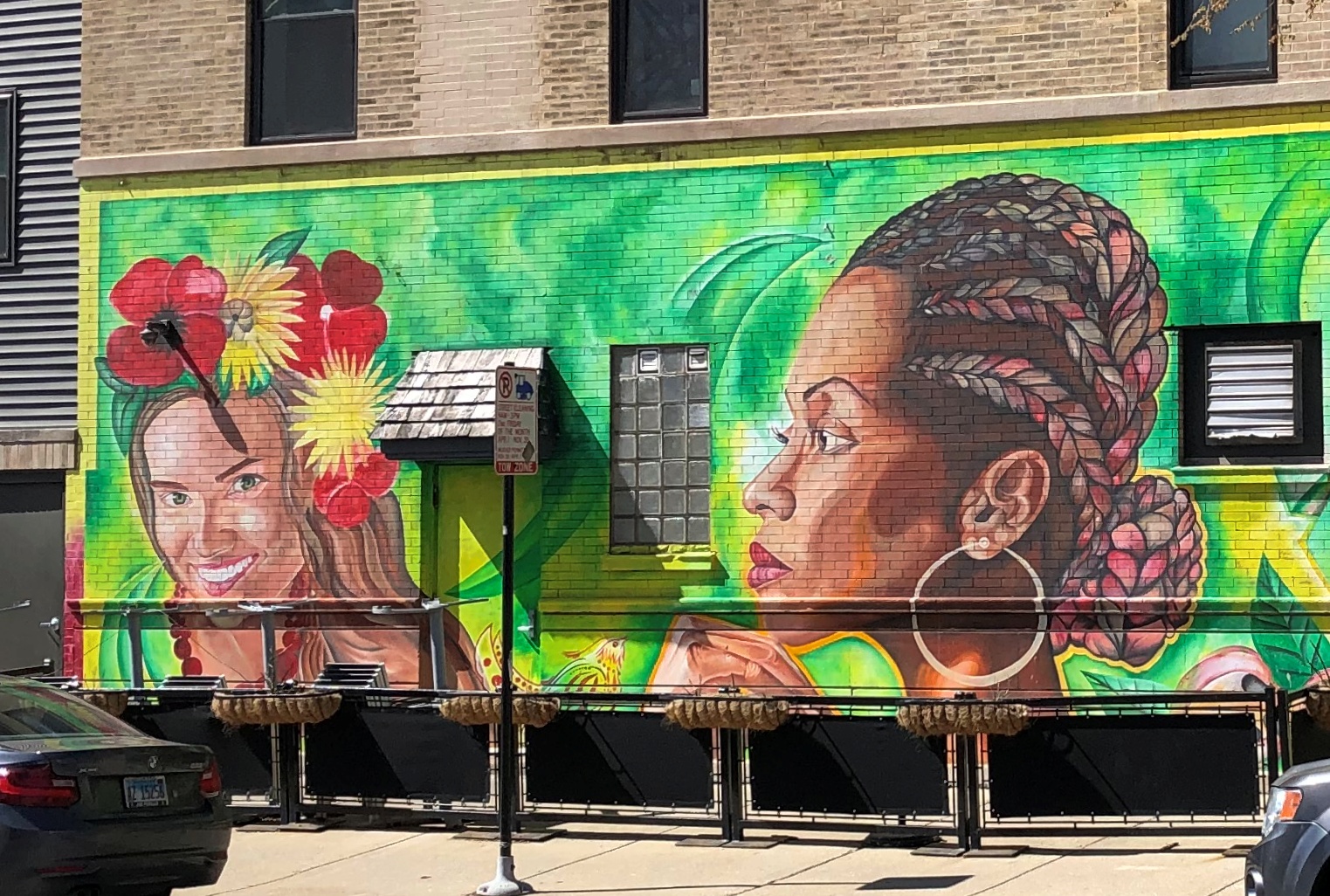
Across Chicago Avenue from Fatso’s is another mural. I don’t have any information about its creator, but he or she has some talent.two women Ukrainian Village mural
two women Ukrainian Village mural

This one appeared between August 2019 and July 2021. I believe the mural vogue that seems to be under way in Chicago is a good thing. Spices up the city.

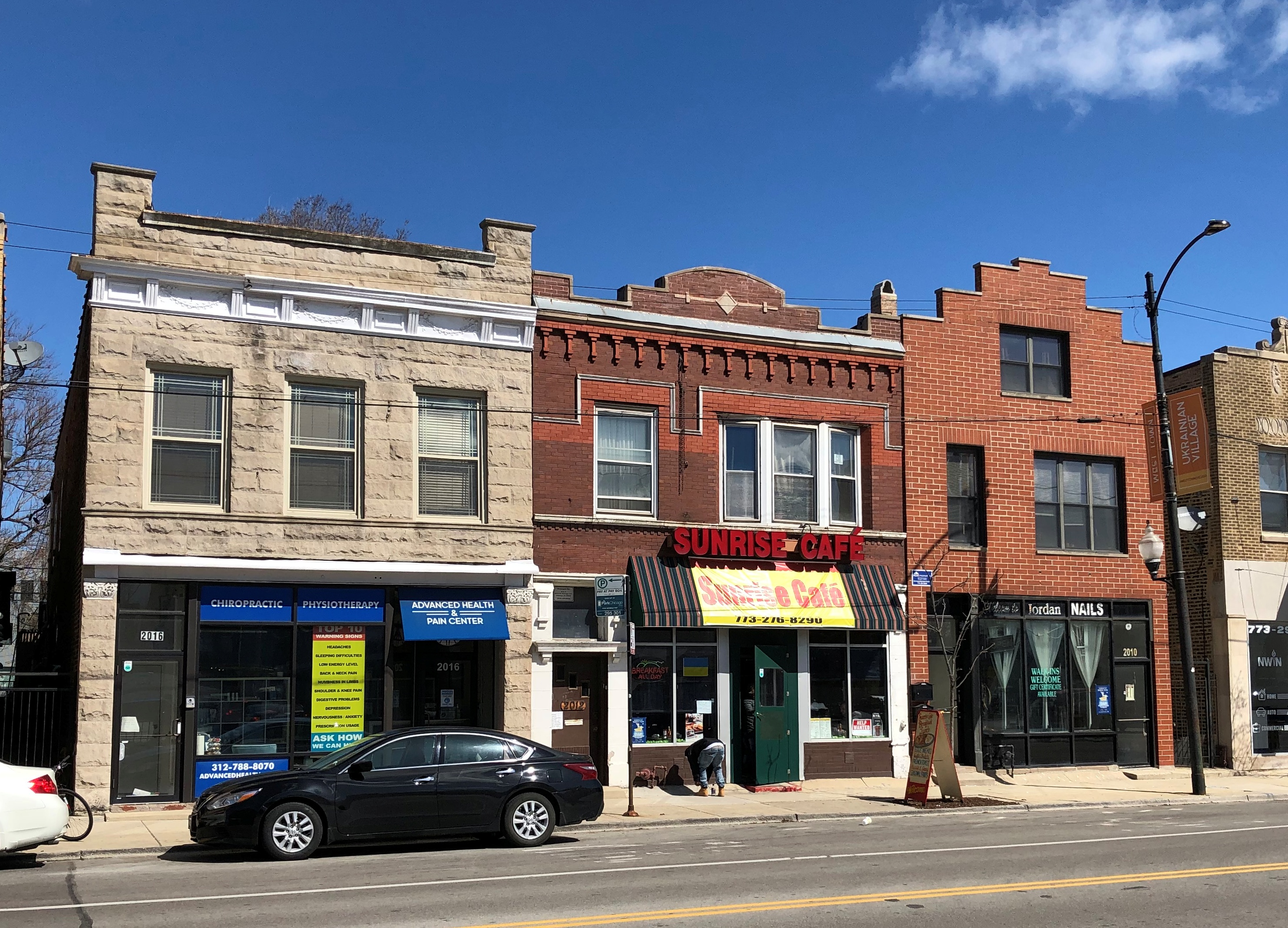
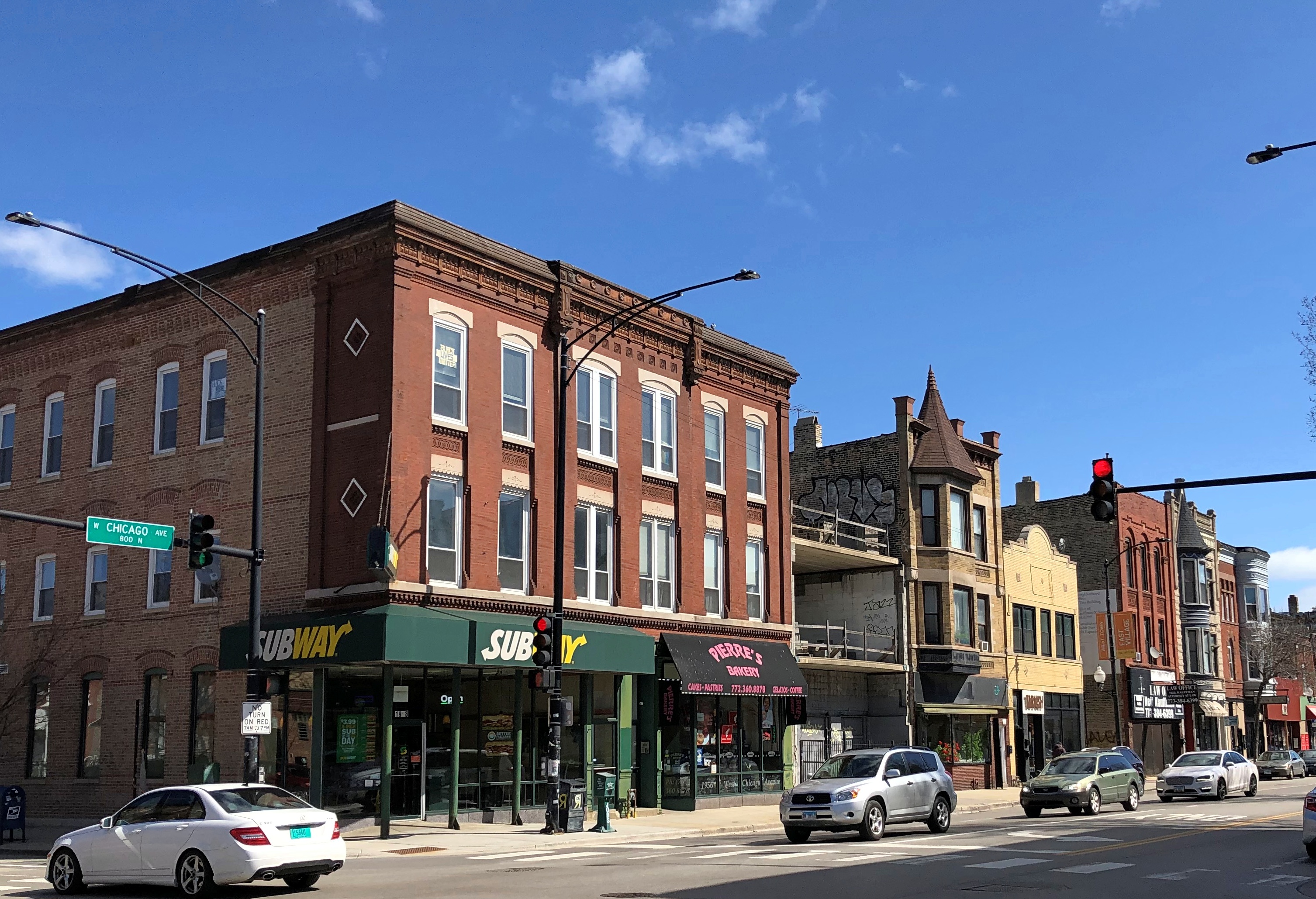
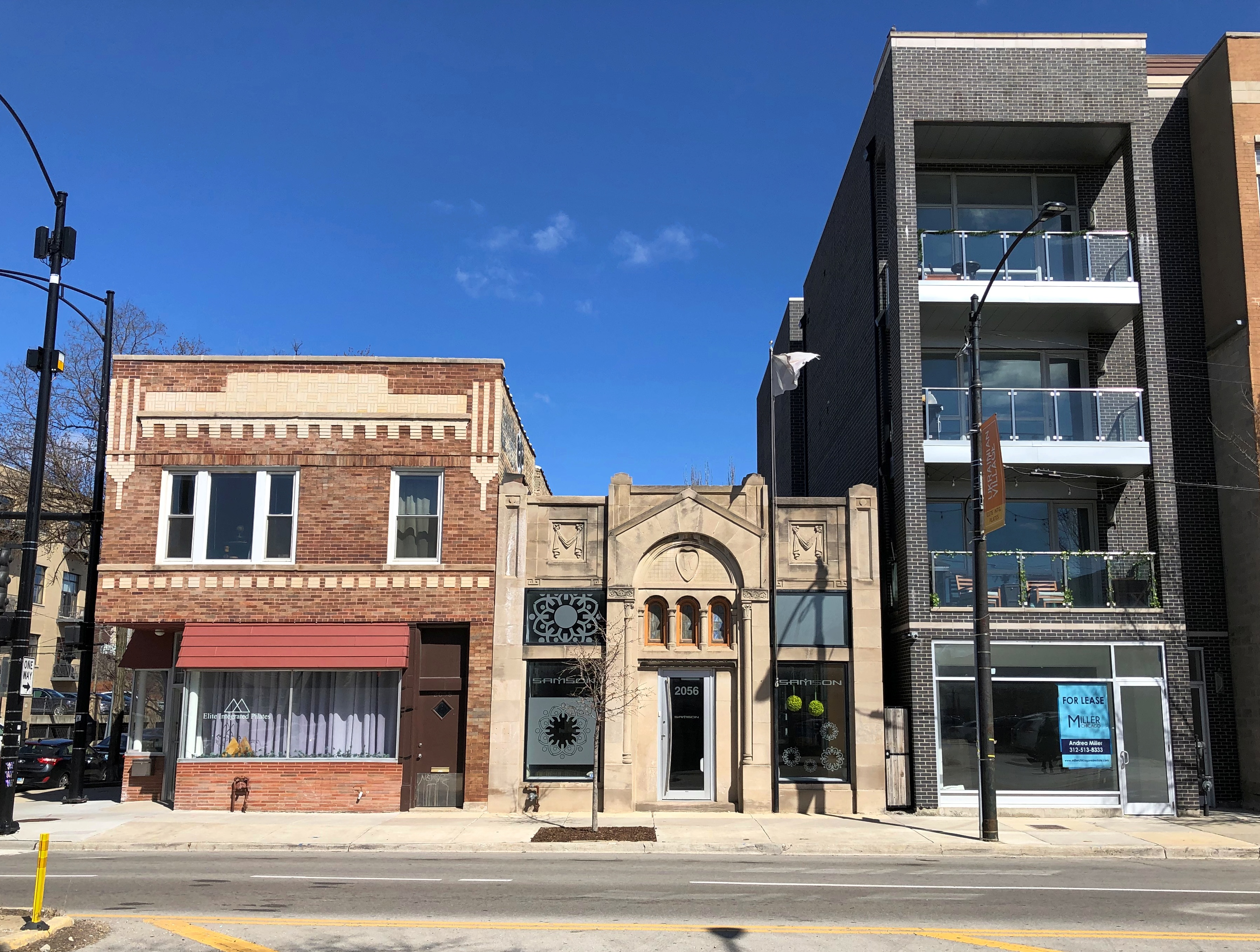
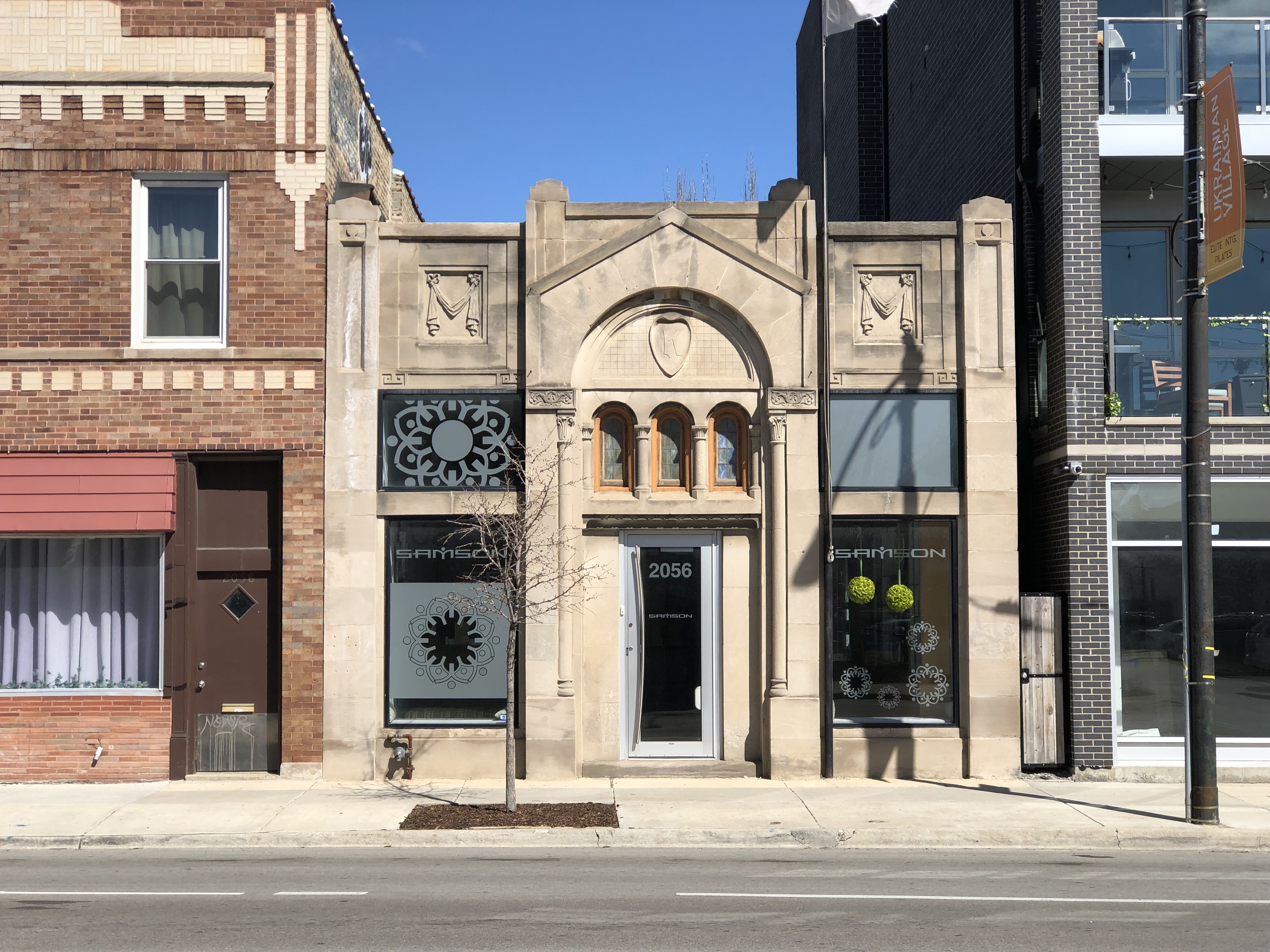
Elsewhere on the street, I took a look at some smaller commercial buildings, which are sinews of an urban neighborhood like Ukrainian Village: a shop on the first floor, an apartment or two or more above, perhaps where a shopkeeper used to live, and might still live in some cases. These buildings usually don’t command much attention, and maybe they don’t need to, but they can actually be fairly aesthetic. Chicago Avenue Chicago Avenue
Chicago Avenue

I like that small one, tucked in the middle.
Chicago Avenue

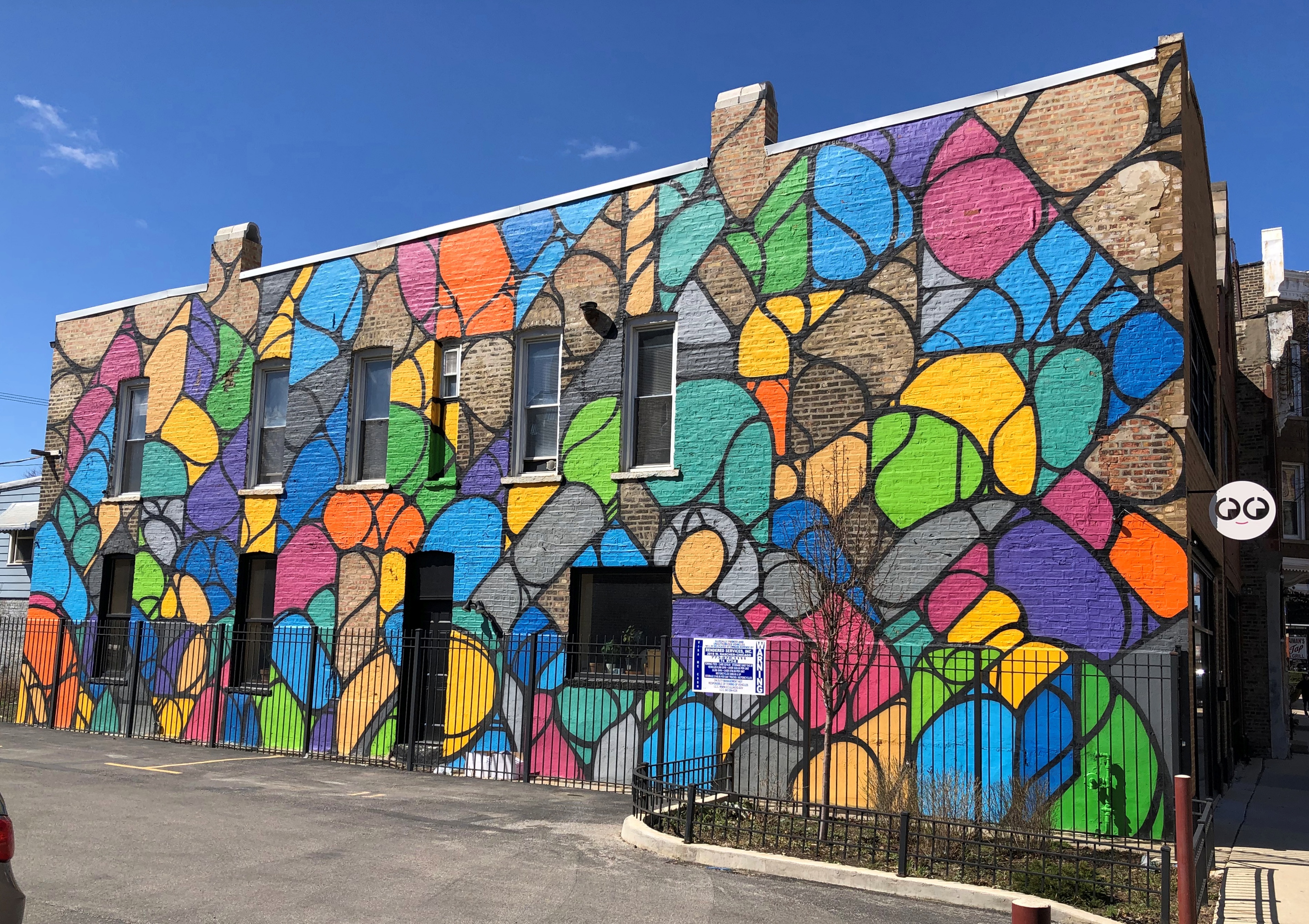
Another mural. Little information on this one either, but that’s hardy necessary to enjoy it.Chicago Avenue The Stoop mural

I see on Street View that the mural appeared between August 2019 and August 2021, the same span when the first floor of the building went from being occupied by a hair salon — knocked off by the pandemic, probably — to being a vintage clothing store called the Stoop.

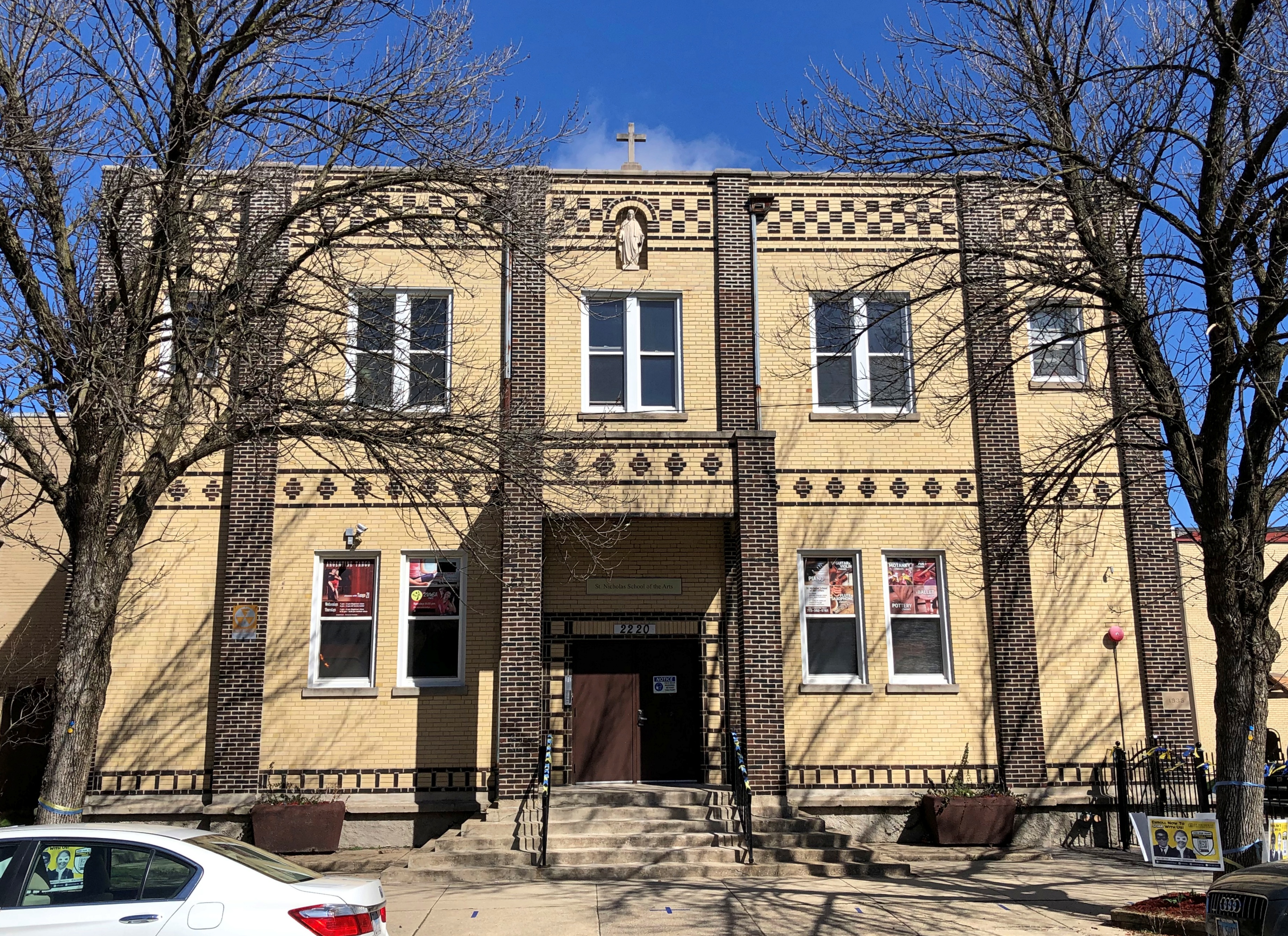
Not on Chicago Avenue, but a block to the north on Rice St. I wandered by it as well.St Nicholas School of the Arts

This is home to St. Nicholas School of the Arts, which is affiliated with the St. Nicholas Ukrainian Catholic Cathedral. A cornerstone gives the building date as 1935, but that’s all I know. Handsome structure, though.

The Ukrainian National Museum, Chicago

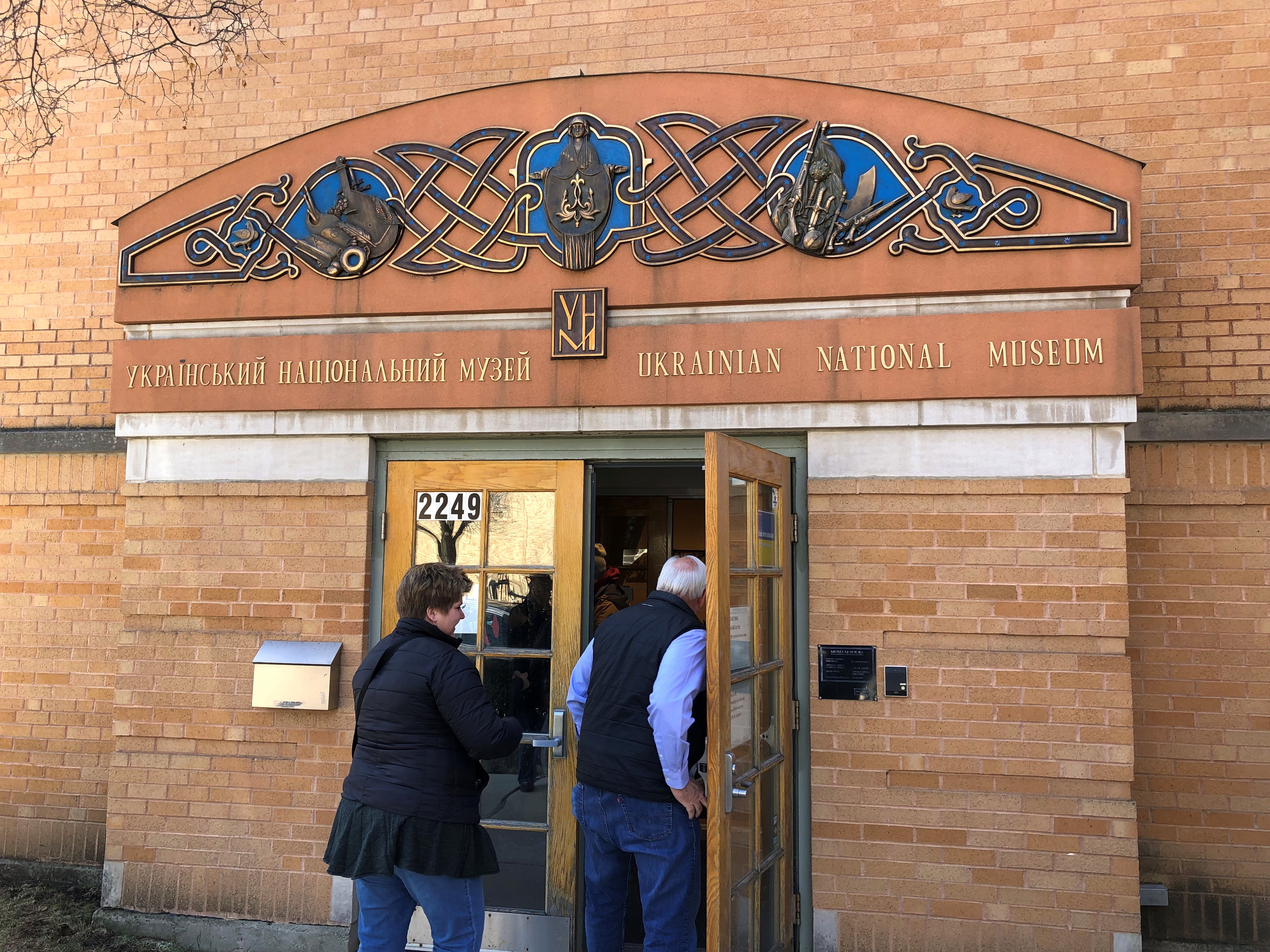
Tucked away in an unassuming brick building, across a small street from Sts. Volodymyr & Olha Ukrainian Catholic Church in Chicago, is the Ukrainian National Museum.Ukrainian National Museum, Chicago Ukrainian National Museum, Chicago
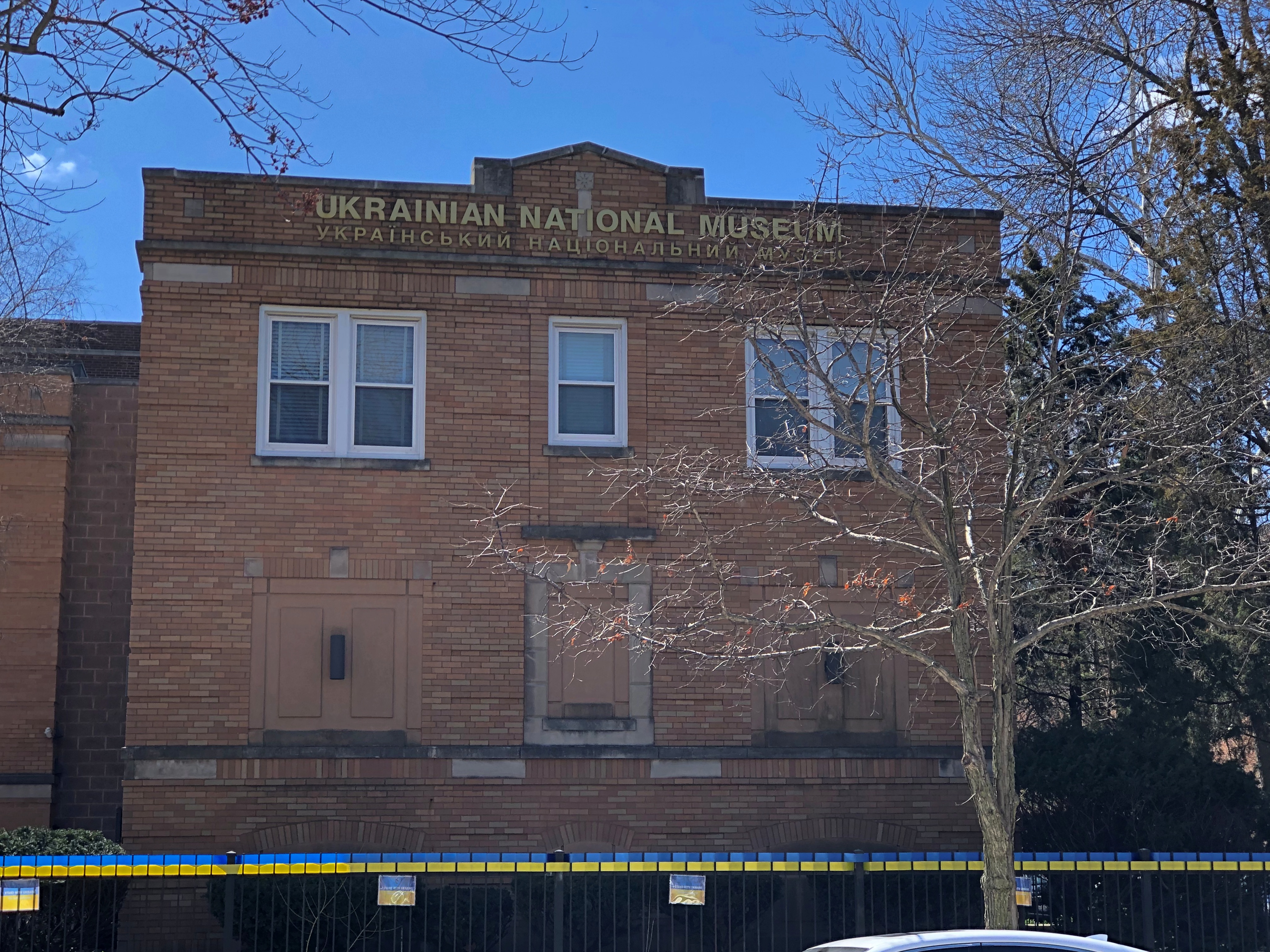
High time for a visit, I thought on Sunday. It isn’t a large museum, but it’s home to a fair number of artifacts and a good amount of text and photos illustrating the history and culture of Ukraine. More than 10,000 items, according to the museum.

One of the museum’s rooms is devoted to Ukrainian Cossacks. Or, to use the Ukrainian transliteration, Kosaks. I have to admit I scarcely knew much about the difference among the various Cossacks, and even now I only know a little more, byzantine as the centuries-long subject is.

Here’s a small snippet from the — shall we say, complicated nature of Cossack history — lifted directly from the Internet Encyclopedia of Ukraine. It’s only a very small part of the whole picture.

With the permission of the Polish government Cossack regiments were formed in Korsun (Korsun regiment), Bratslav (Bratslav regiment), Fastiv (Fastiv regiment), and Bohuslav (Bohuslav regiment) under the command of Cossack colonels, headed by an acting hetman, Col Samiilo Samus from Bohuslav. But the actual head of the Right-Bank Cossacks was Semen Palii, colonel of Fastiv and Bila Tserkva; he led the Right-Bank Cossacks in their fight against Polish rule and oppression by the nobility and for the unification of Right-Bank Ukraine and Left-Bank Ukraine under the rule of Hetman Ivan Mazepa (the uprising of 1702). This unification was realized in 1704.

Portraits of Ukrainian Cossack hetmans hang on the museum’s walls, with detailed text about their deeds. In nearby cases are weapons, clothes, coins and other cool Cossack stuff. As interesting or admirable as the museum’s other items were, these were my favorites.

Another major room contains somewhat newer artifacts, including displays of ornate Ukrainian clothing and very many Easter eggs (pysanky) done up in that famed, colorful and intricate Ukrainian style. (Singular, pysanka.)

Again from the encyclopedia: “The pysanka (literally, ‘written egg’) is produced by a complex technique. An initial design on the egg is done in beeswax, which is applied to the surface with a special instrument called a kystka (a small, metal, conic tube attached to a wooden handle).

“The egg is then dipped in yellow dye. Then those elements of the design that are to be yellow are covered with wax and the egg is dipped in a red dye (sometimes two shades of red are used). After the surfaces that are to be red are covered with wax, the egg is dipped in an intense, dark dye (violet or black).

“So that the color will adhere well, the egg is sometimes washed with vinegar or alum before being dyed. When the design is completed, the egg is heated to melt off the wax.”

Other rooms featured more recent history. That of course means the awful history of Ukraine in the 20th century, most especially the Holodomor, which merits its own room, full of harrowing photos, testimony and statistics, and not forgetting where to lay the blame: Stalin and his henchmen.

I wasn’t alone in the room. A man and a woman, maybe a few years older than I am, expressed their surprise to a docent, who was also in the room, that such a thing had happened. They’d never heard of it. If I didn’t have some interest in the history of the Soviet Union — one of those places where the history was entirely too interesting for the well-being of its inhabitants — I might not have either, so I won’t judge them too harshly (though it’s easier to be a bit peeved at the apathy toward history education in this country).

But there’s always more to know. I didn’t know much about the subject of another room: Ukrainian immigration to other places after WWII. Most striking in that room was an enormous map, nearly from floor to ceiling, locating all of the Ukrainian Displaced Persons camps in the western zones of occupied Germany in the late ’40s.

There were more than 100 of them. Something worth knowing now that millions of Ukrainians have been displaced again.

“The Allies intended to repatriate all these victims of Nazi Germany and therefore organized them by nationality,” Jan-Hinnerk Antons wrote in Harvard Ukrainian Studies. “However, two misconceptions in their approach to the problem soon proved troublesome.

“First, the number of people refusing repatriation was much higher than anyone had expected. Second, nationality was by no means congruent with citizenship — and it was the latter that was assumed as the basis for repatriation.

“The very existence of more than one hundred Ukrainian Displaced Persons camps in the western zones of occupied Germany was testament to the Ukrainian DPs’ resistance to forced repatriation and their struggle for recognition of their nationality.”

Many of them eventually came to the United States. Including the family of the docent, a resident of Ukrainian Village who had been born in a DP camp. She told us her immediate family had survived the war, but many other relatives had not. Growing up, she said she heard about members of an extended family she never knew.

Finally, a much smaller room in the Ukrainian National Museum tells a less troubling tale: the story of the Ukrainian pavilion at the 1933 Century of Progress world’s fair in Chicago, the lesser-known cousin of the 1893 world’s fair. Remarkably, the structure was a project of Ukrainian immigrants in Chicago, and not sponsored by any government. Least of all the Soviet Union, which was busy murdering Ukrainians wholesale at that very moment in history.