Open House: Synagogues

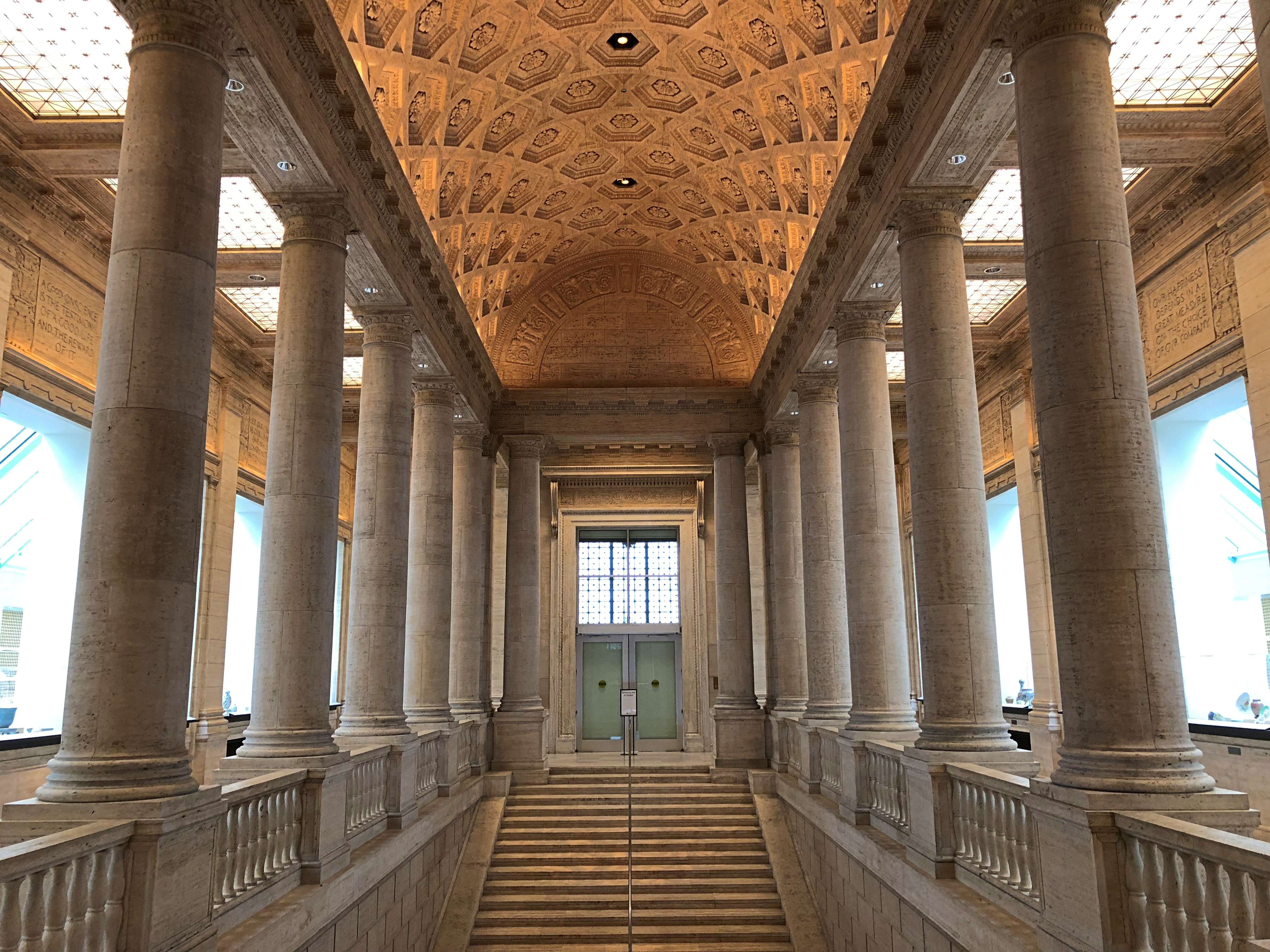
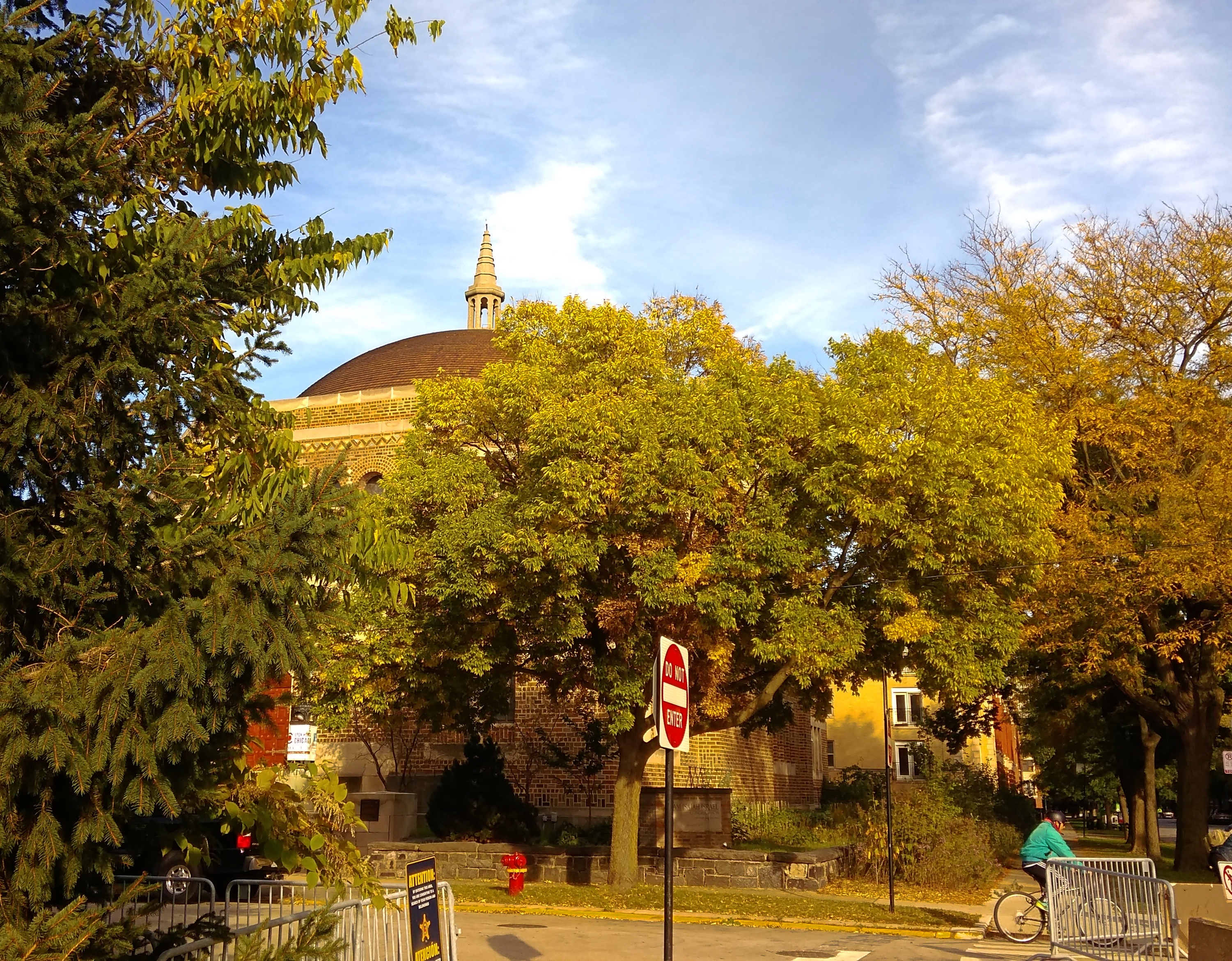
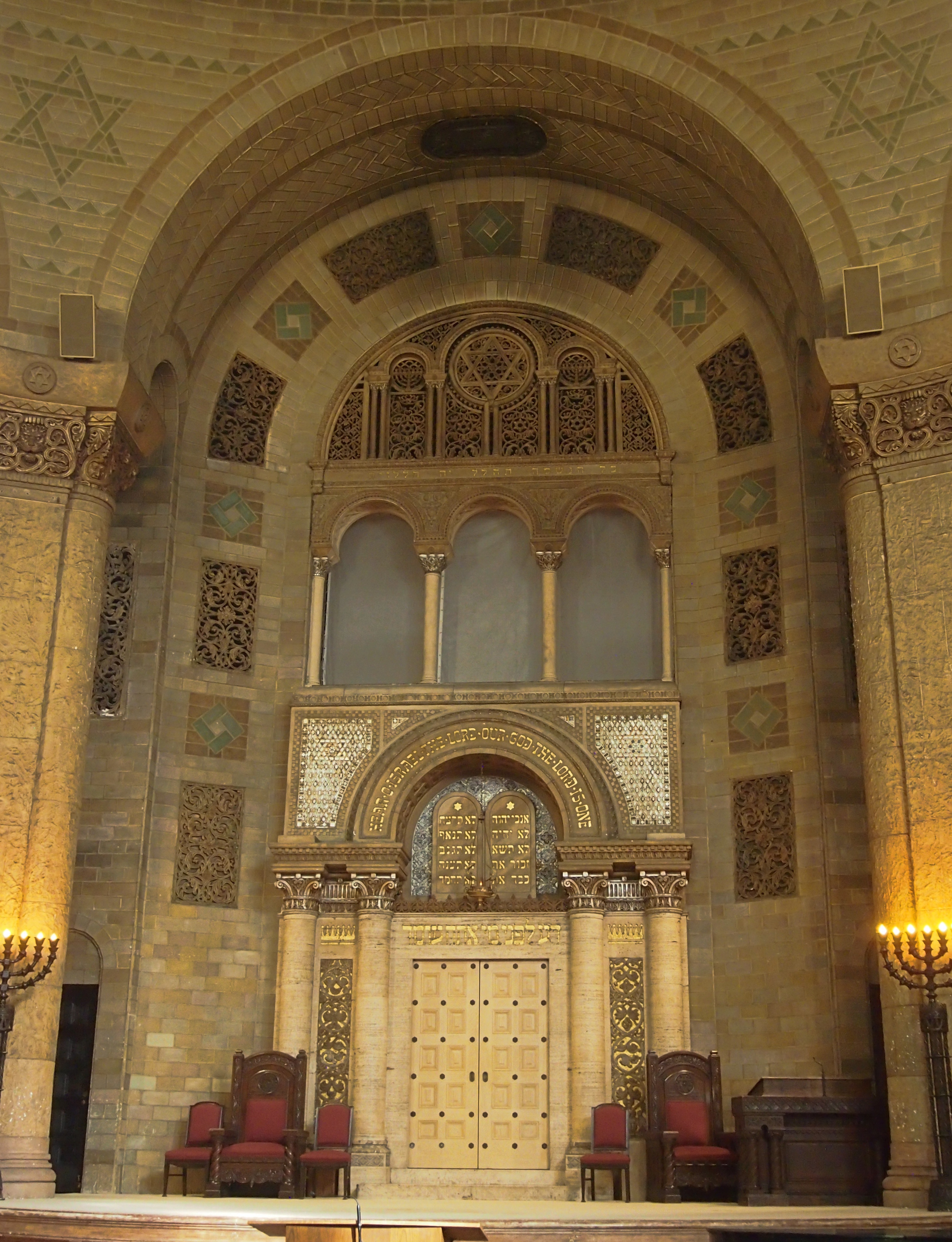
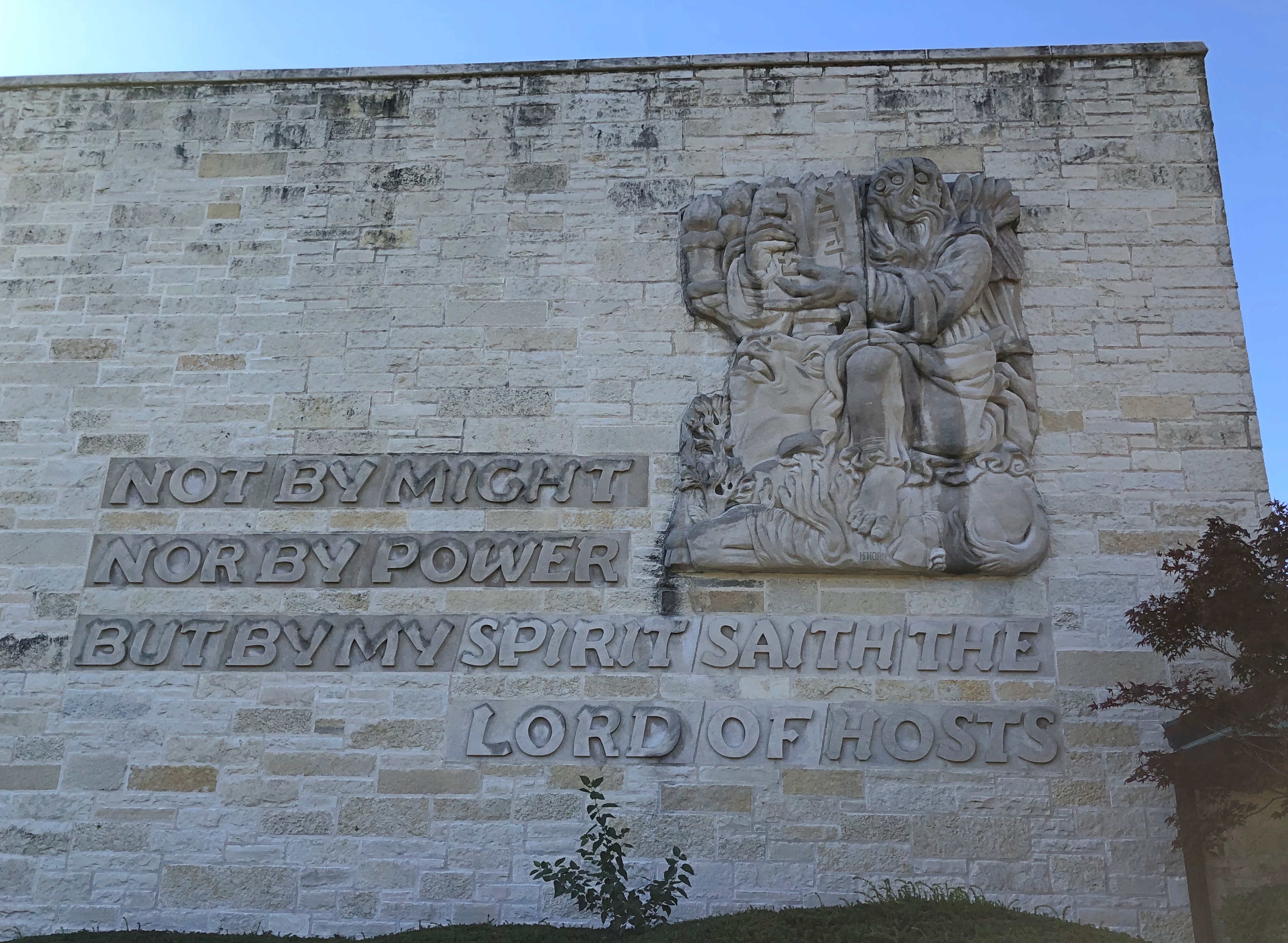
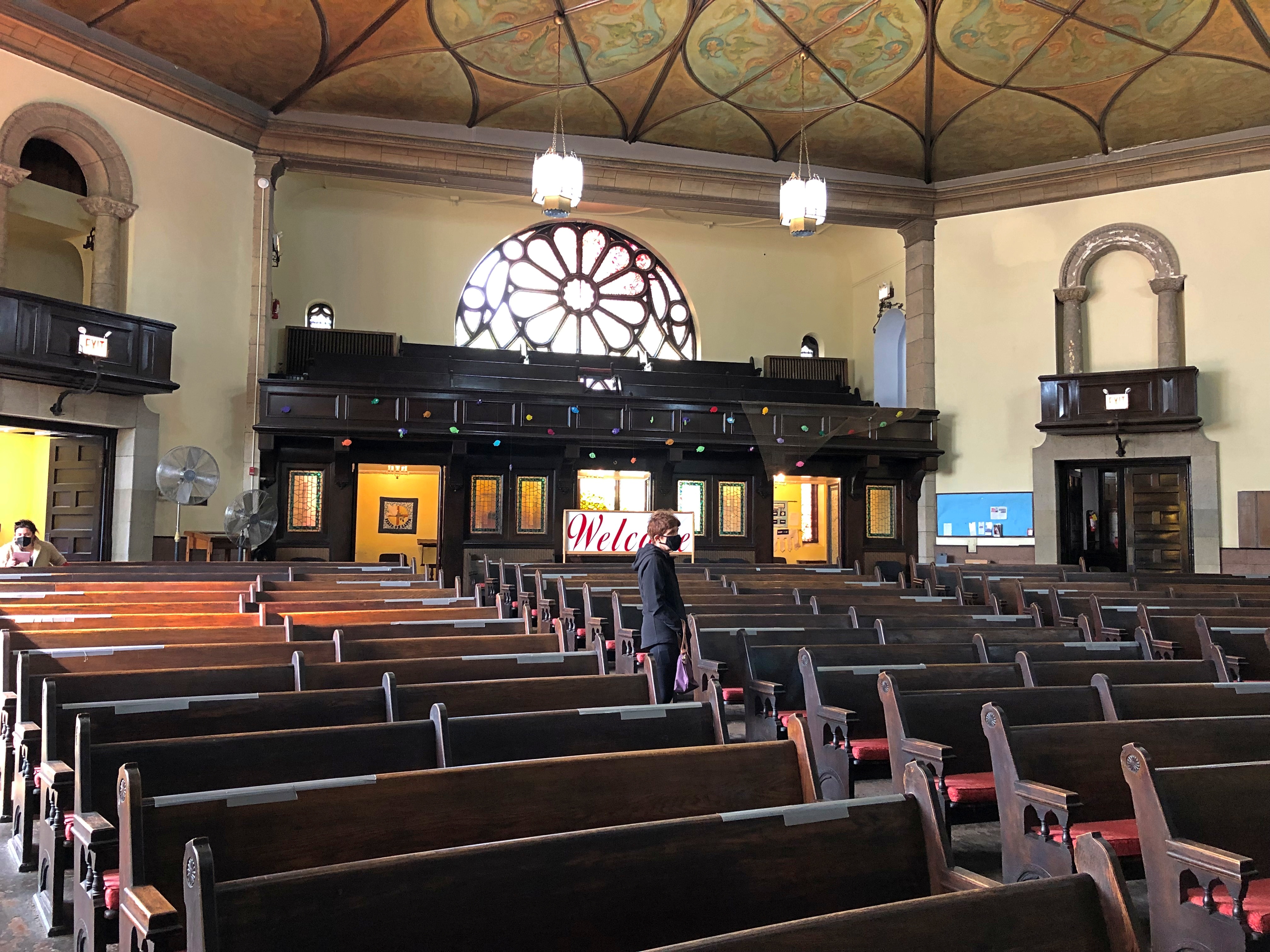
One synagogue open for Open House Chicago last weekend was KAM Isaiah Israel in Hyde Park. It’s across the street from the Obama residence, in fact, though I’m certain that’s a coincidence, and besides, the synagogue’s been there a lot longer.

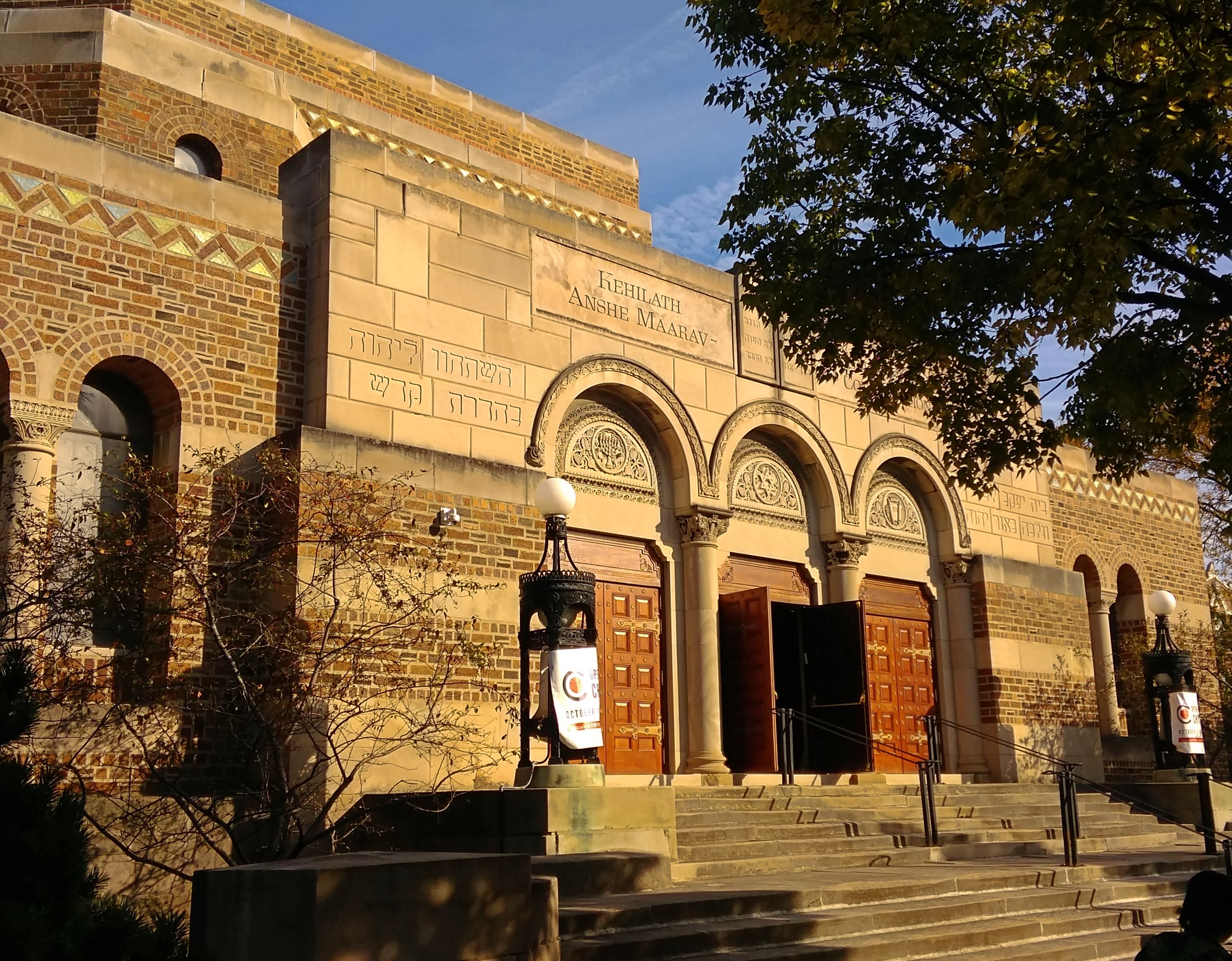
“KAM Isaiah Israel is the oldest Jewish congregation in the Midwest and its leaders, members and buildings have played an important role in Jewish history, American social justice movements, and architectural history,” Open House says. (KAM = Kehilath Anshe Maarav = “Congregation of the Men of the West.”)

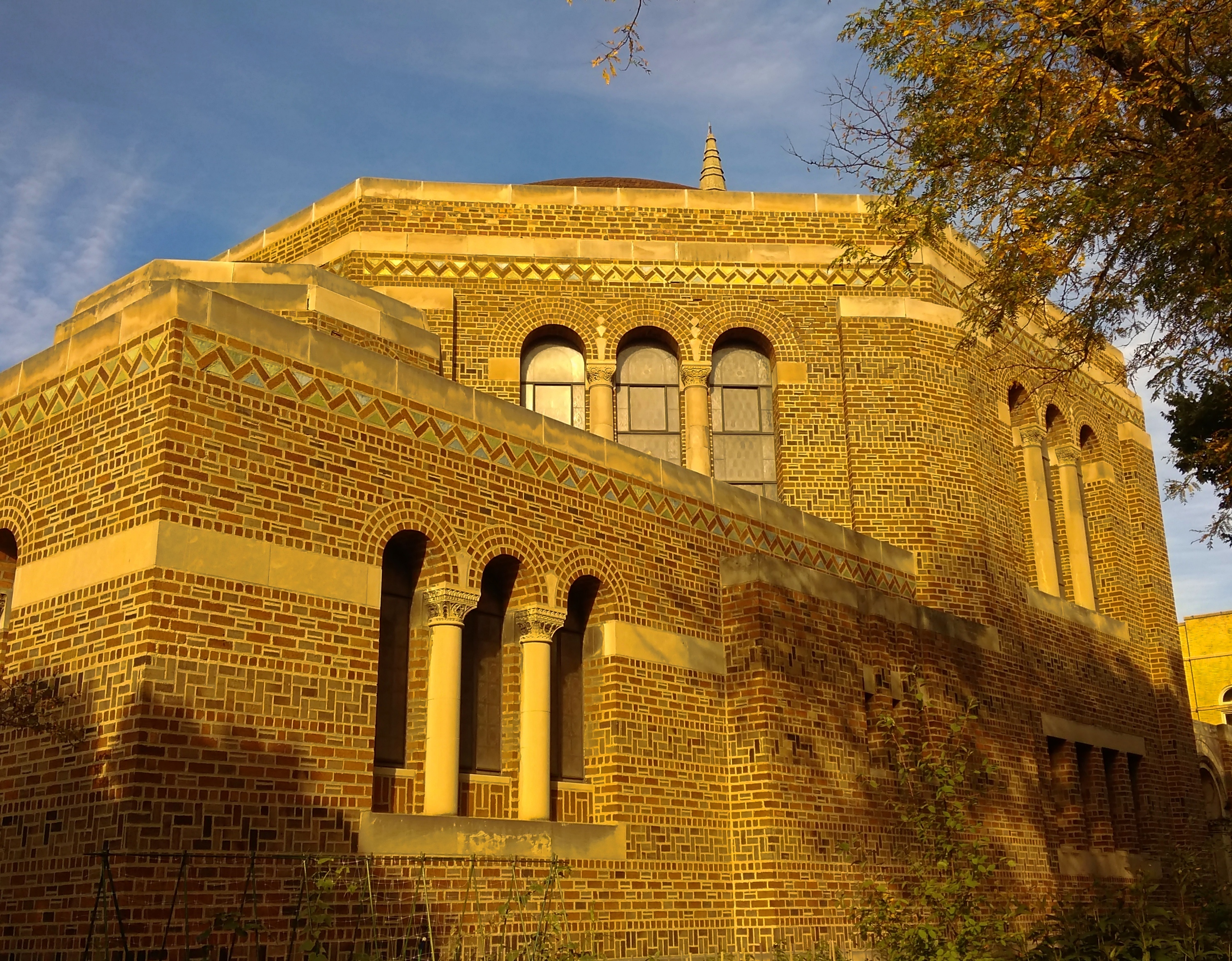
“KAM was founded in 1847 and had several locations in Chicago before settling in Hyde Park… The synagogue’s architecture [Alfred S. Alschuler] was inspired by Byzantine structures and an ancient synagogue in Tiberias, Israel.”

There’s an impressive dome, but I didn’t capture it.KAM Isaiah Israel KAM Isaiah Israel

The entrance, also impressive.KAM Isaiah Israel

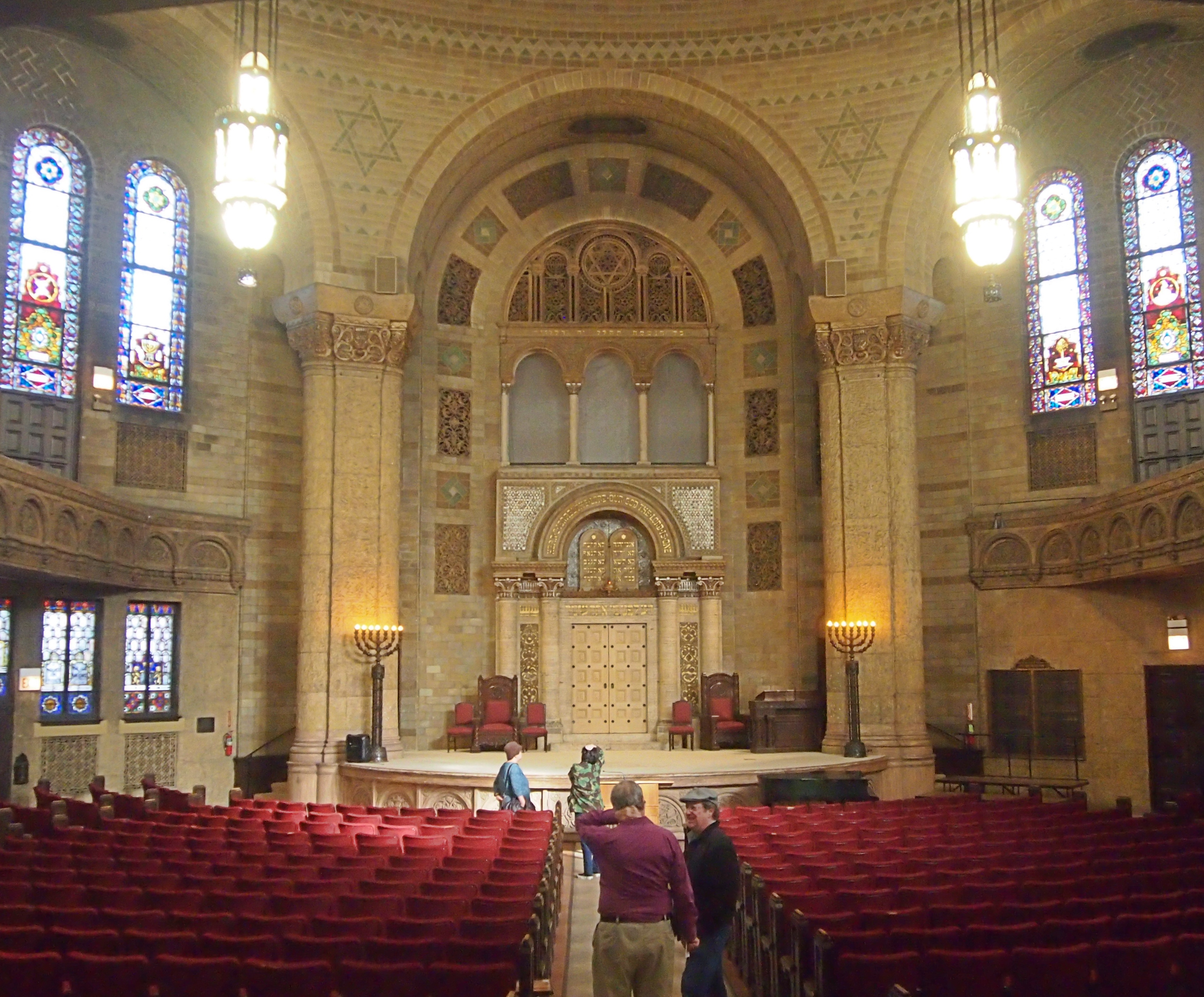
“Although KAM began as an Orthodox congregation, our members began to reform their practice almost from the beginning,” the synagogue web site says. “In 1852, conflict over issues of Reform and traditional observances led to the creation of a new congregation, B’nai Sholom. In 1874, KAM became a founding member of the Union of American Hebrew Congregations, now known as the Union for Reform Judaism.”KAM Isaiah Israel KAM Isaiah Israel

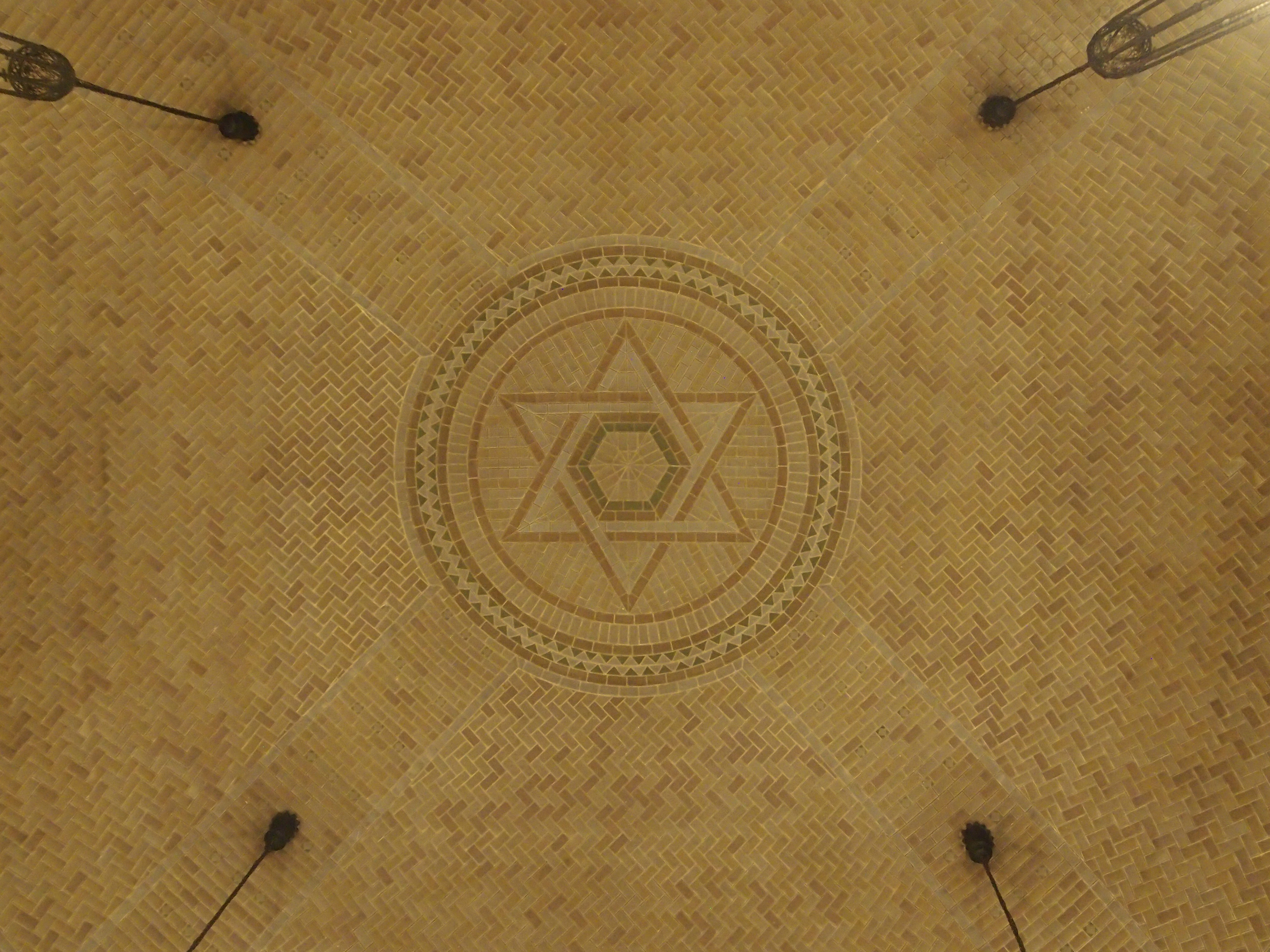
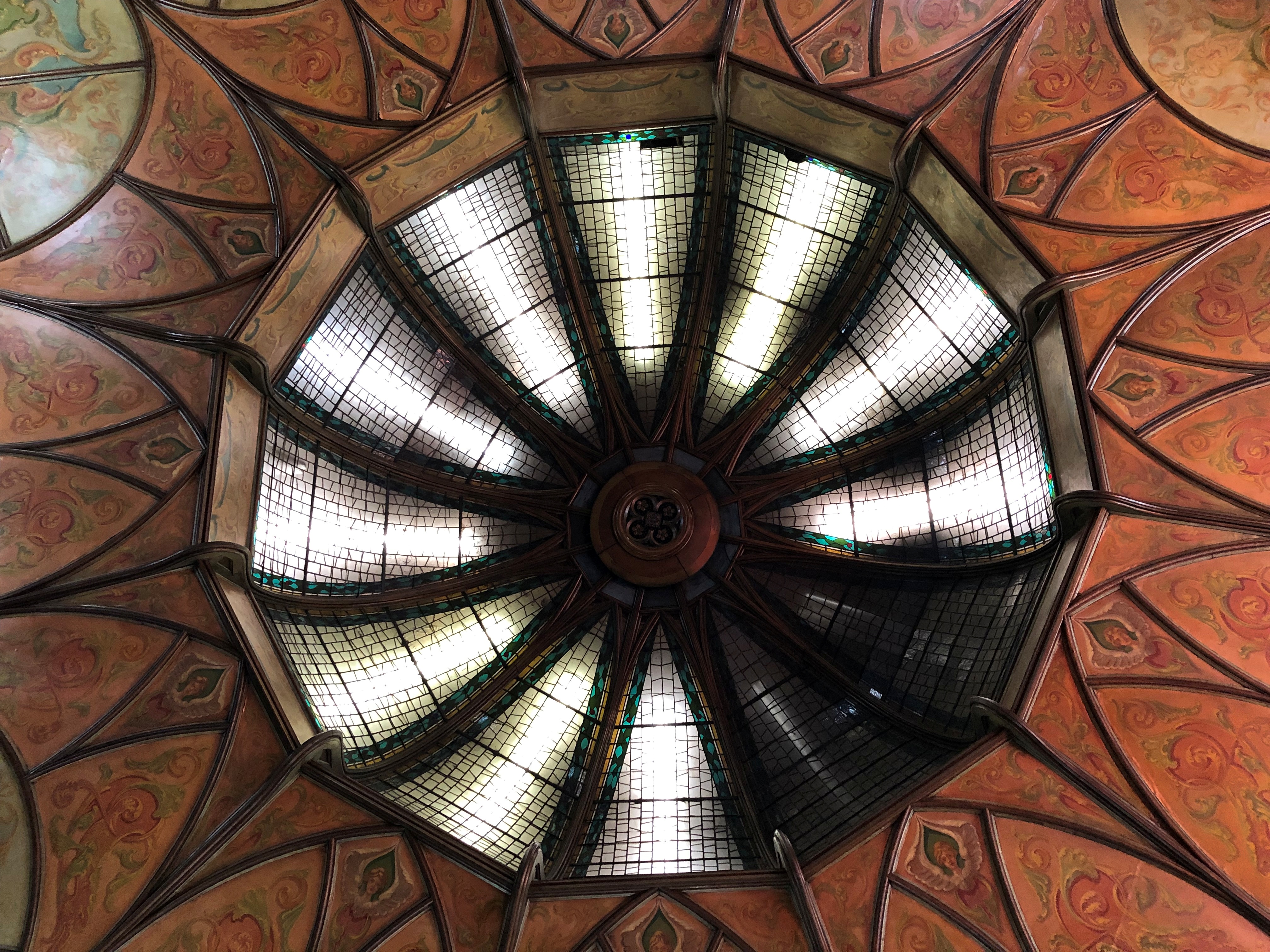
The ceiling.KAM Isaiah Israel

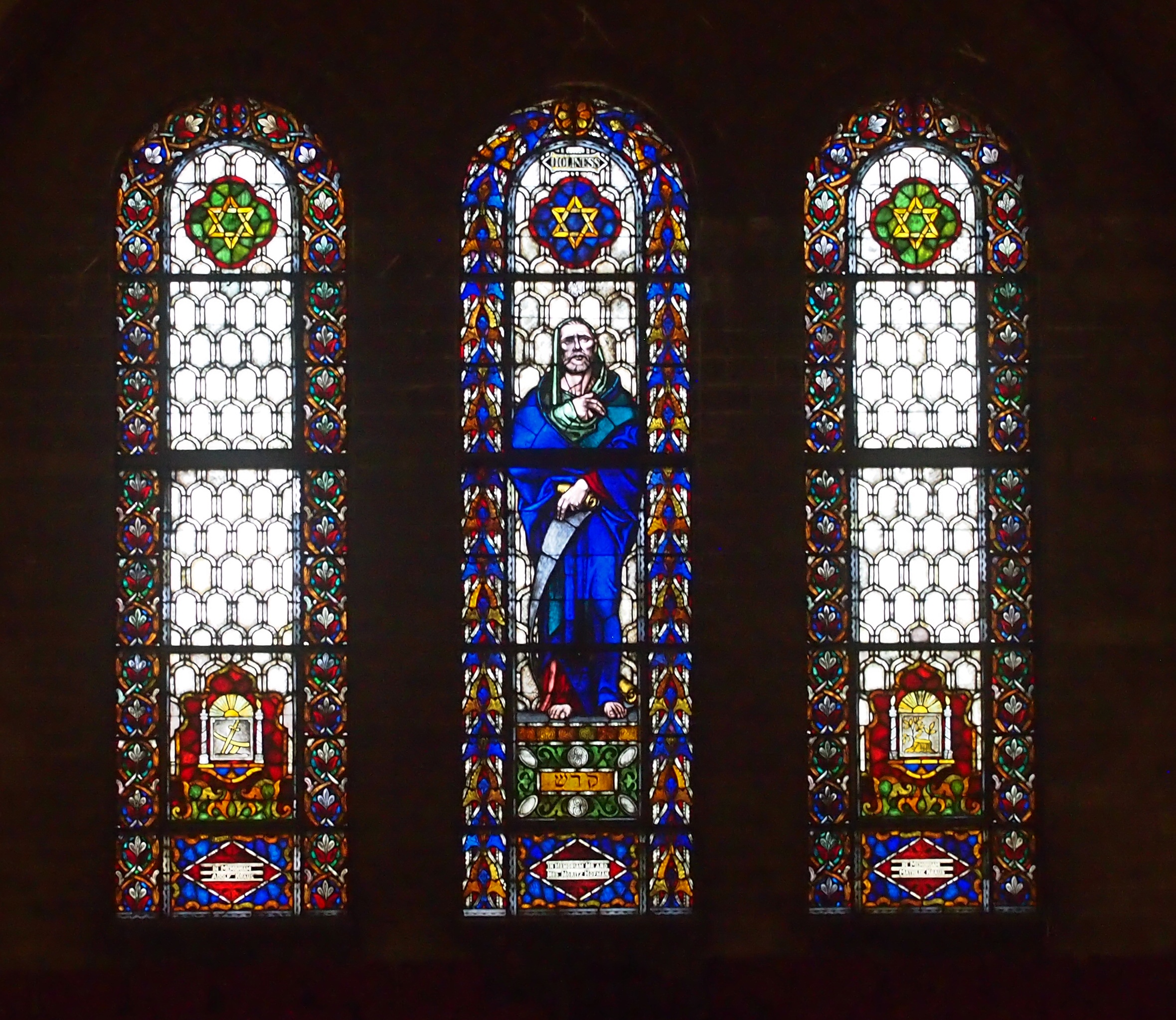
Stained glass.KAM Isaiah Israel

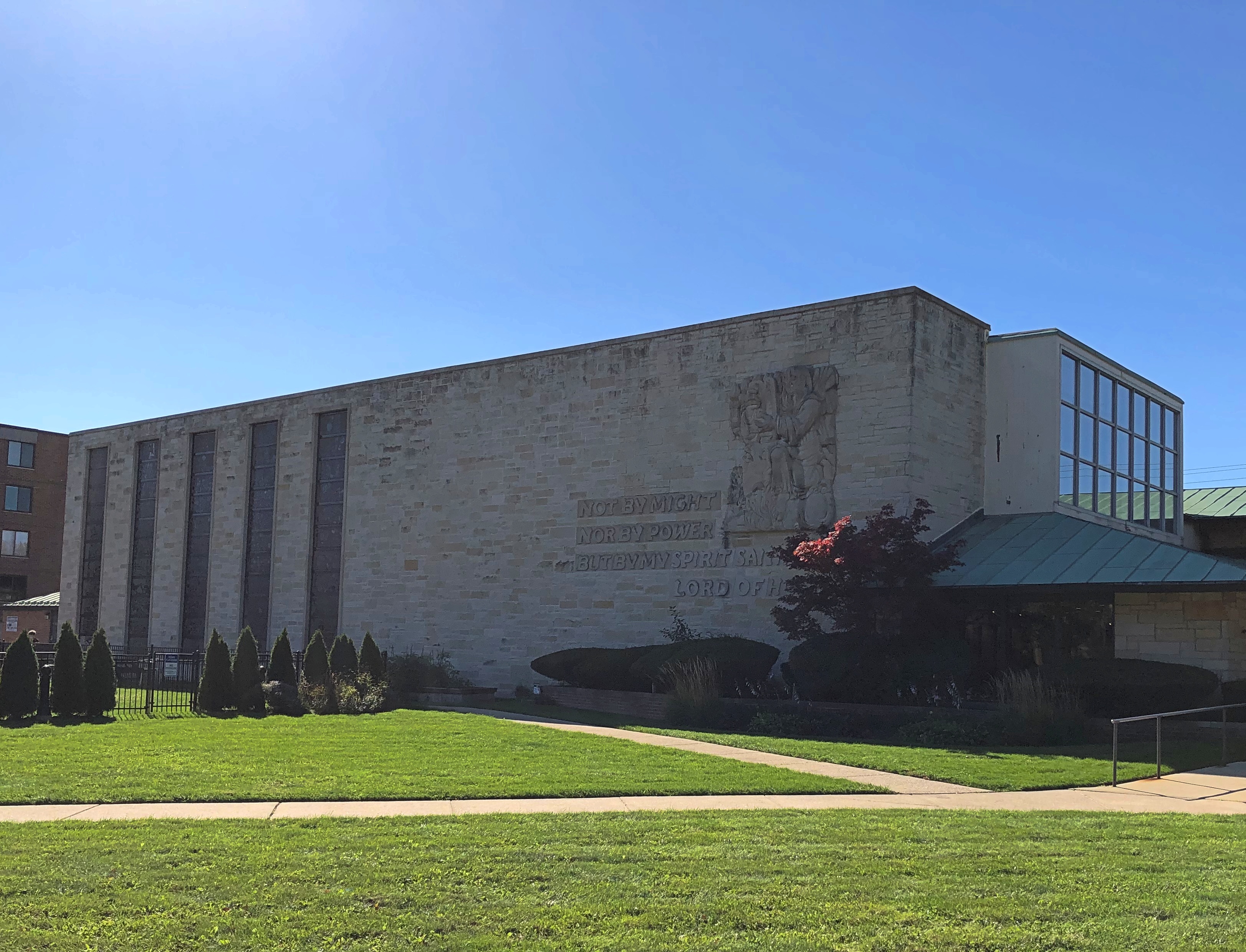
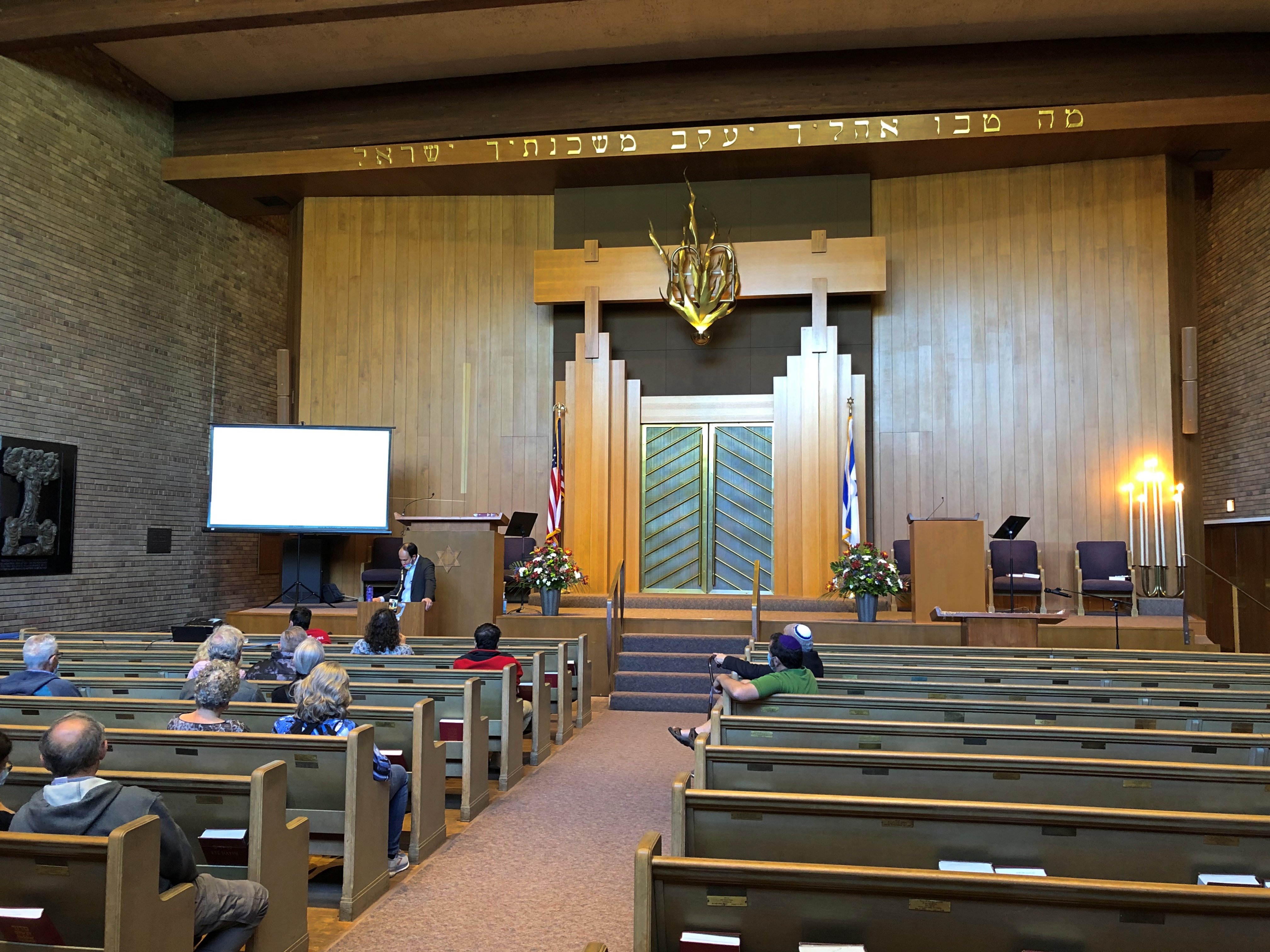
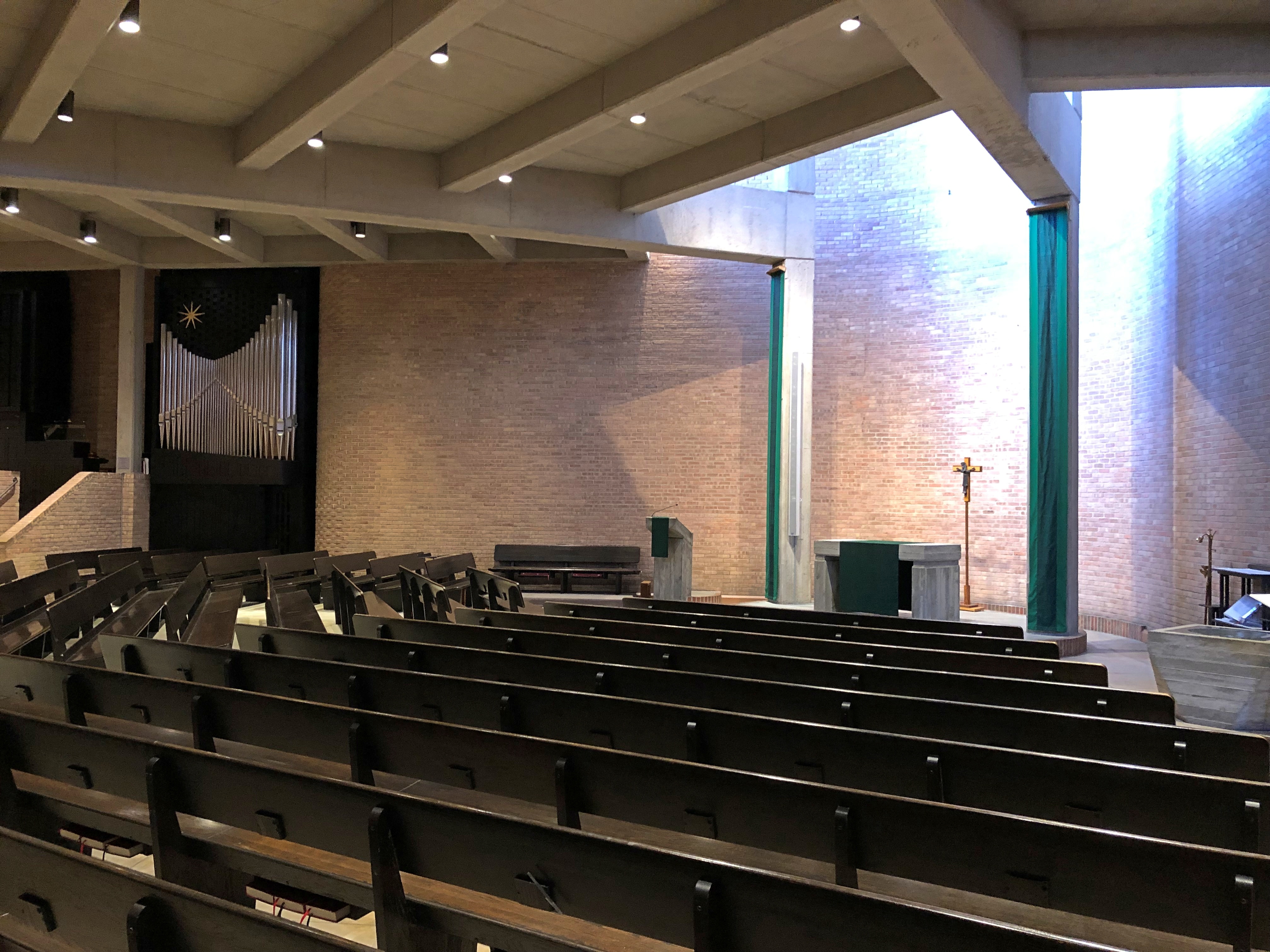
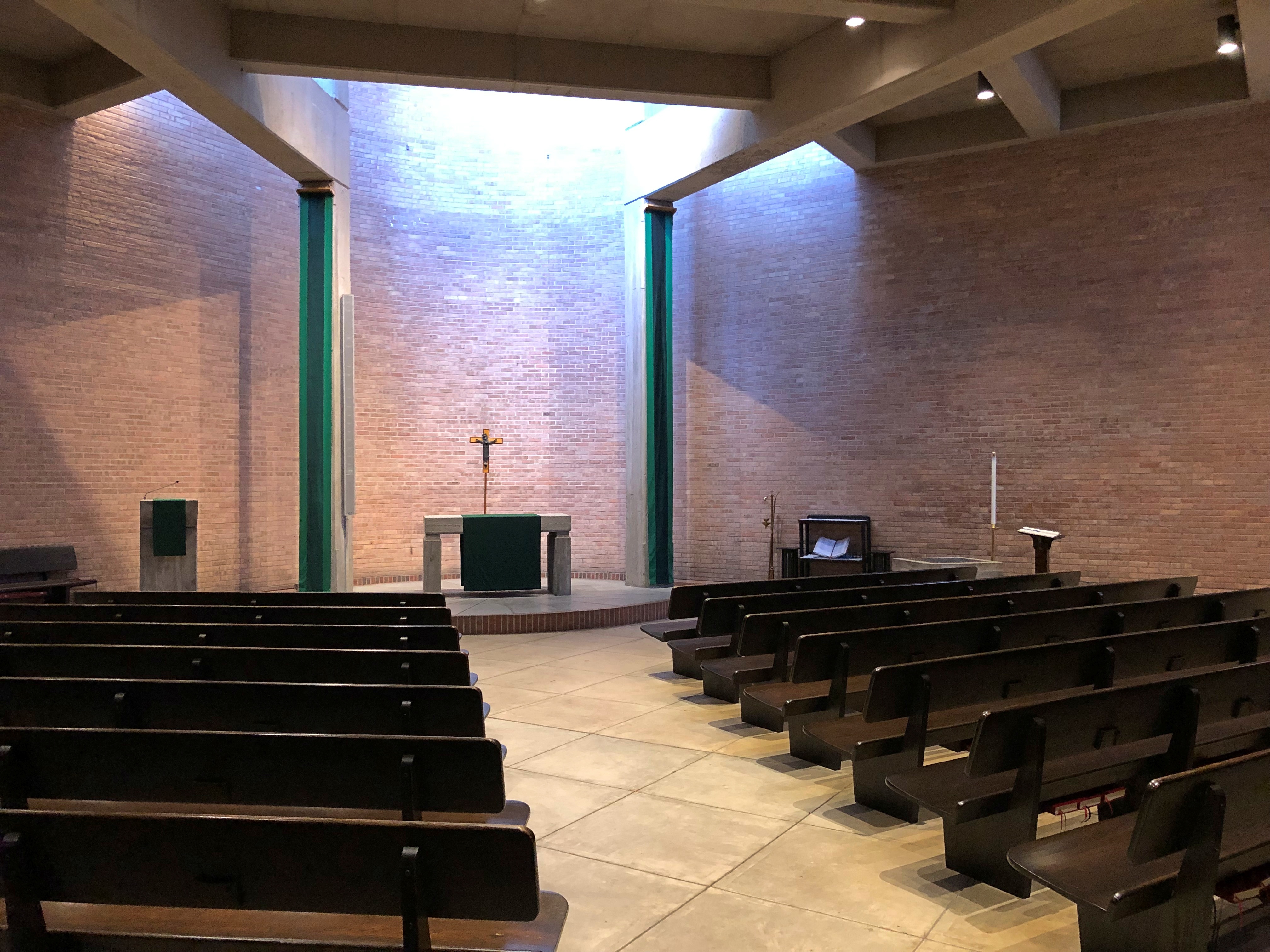
The other synagogue we visited was out in the near western suburb of River Forest: Temple Har Zion. It’s a modernist work of Loebl, Schlossman and Bennett, completed in 1953. Temple Har Zion

Temple Har Zion

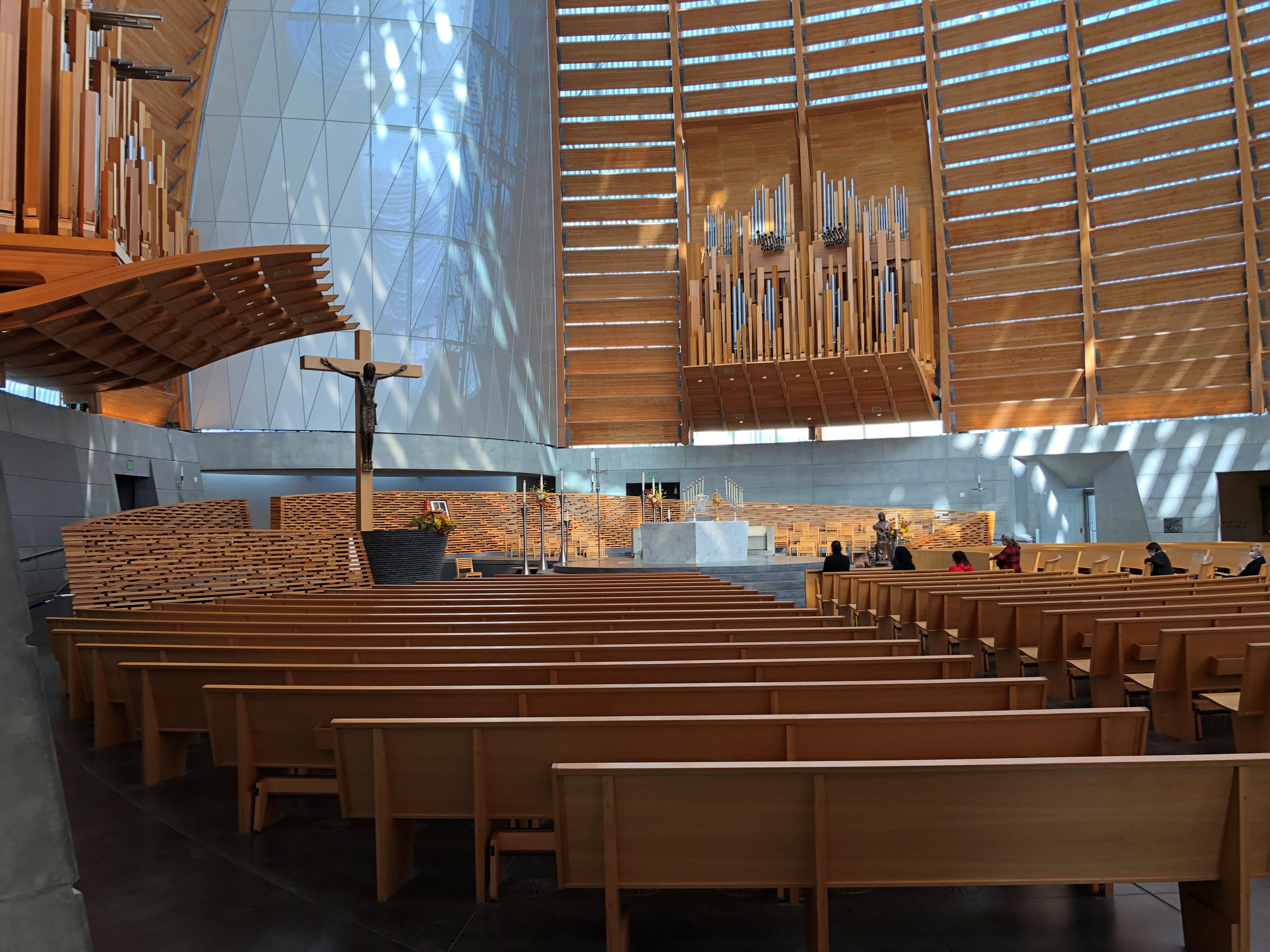
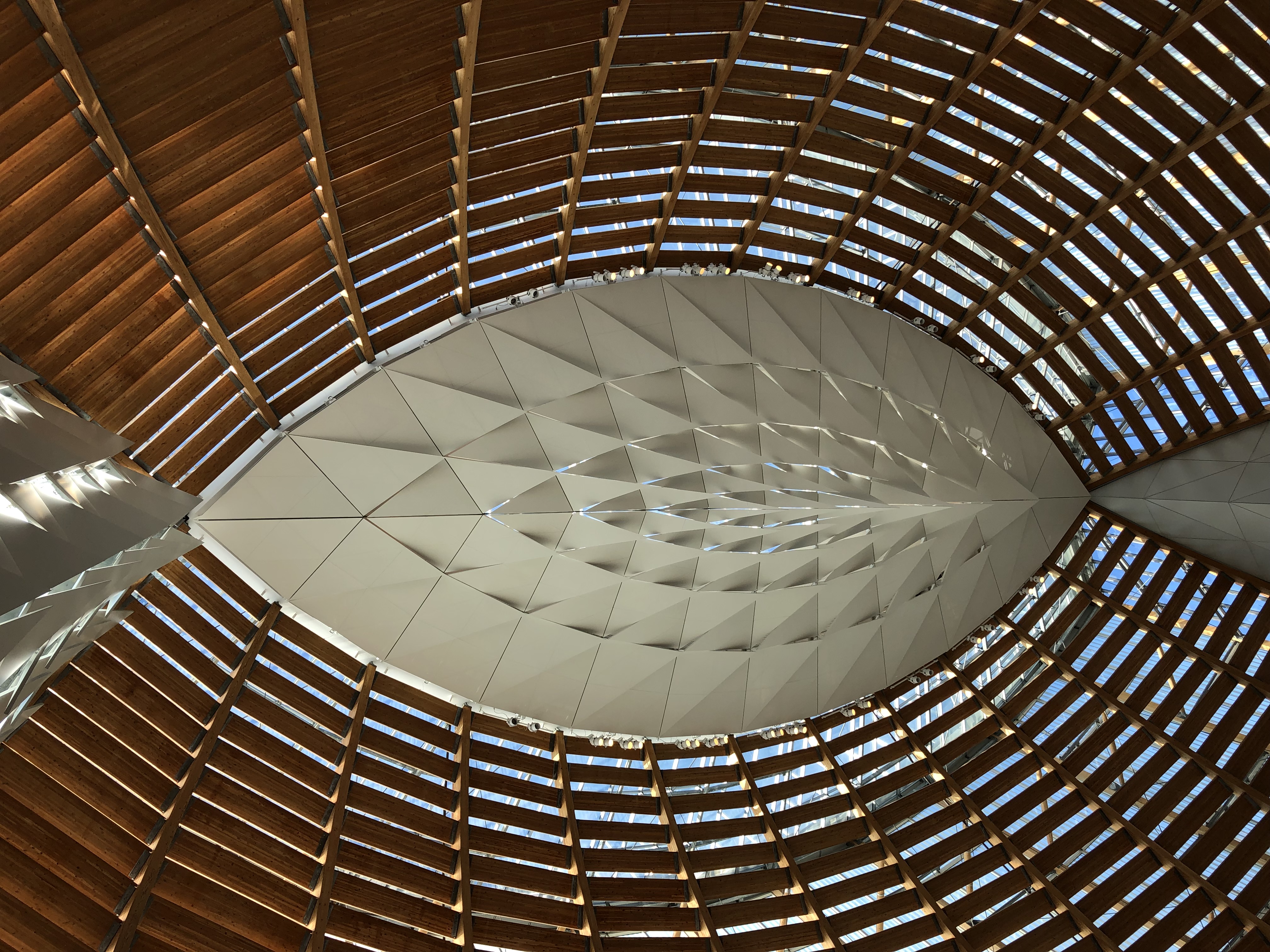
The building is divided into two large parts. The sanctuary.
Temple Har Zion

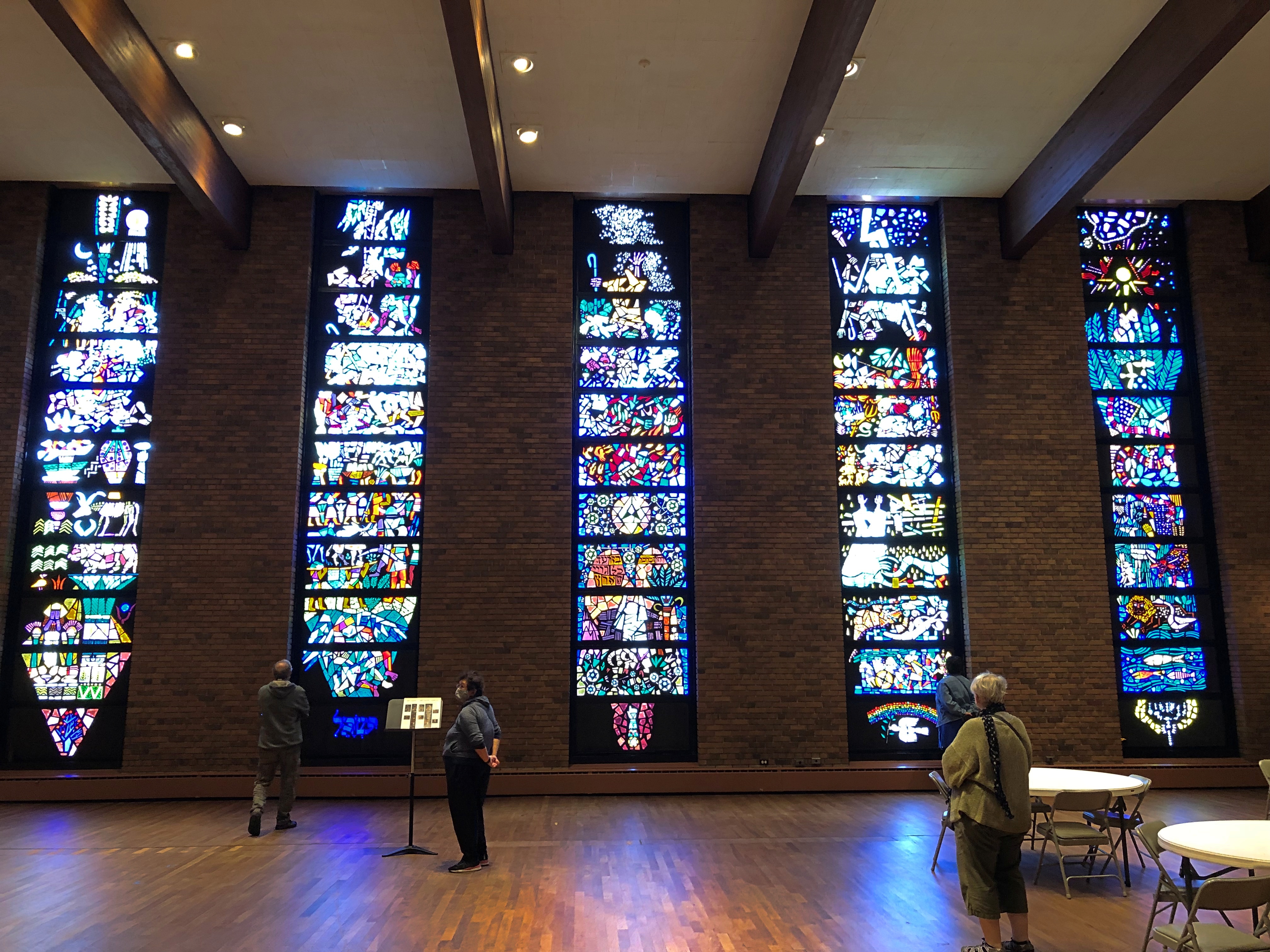
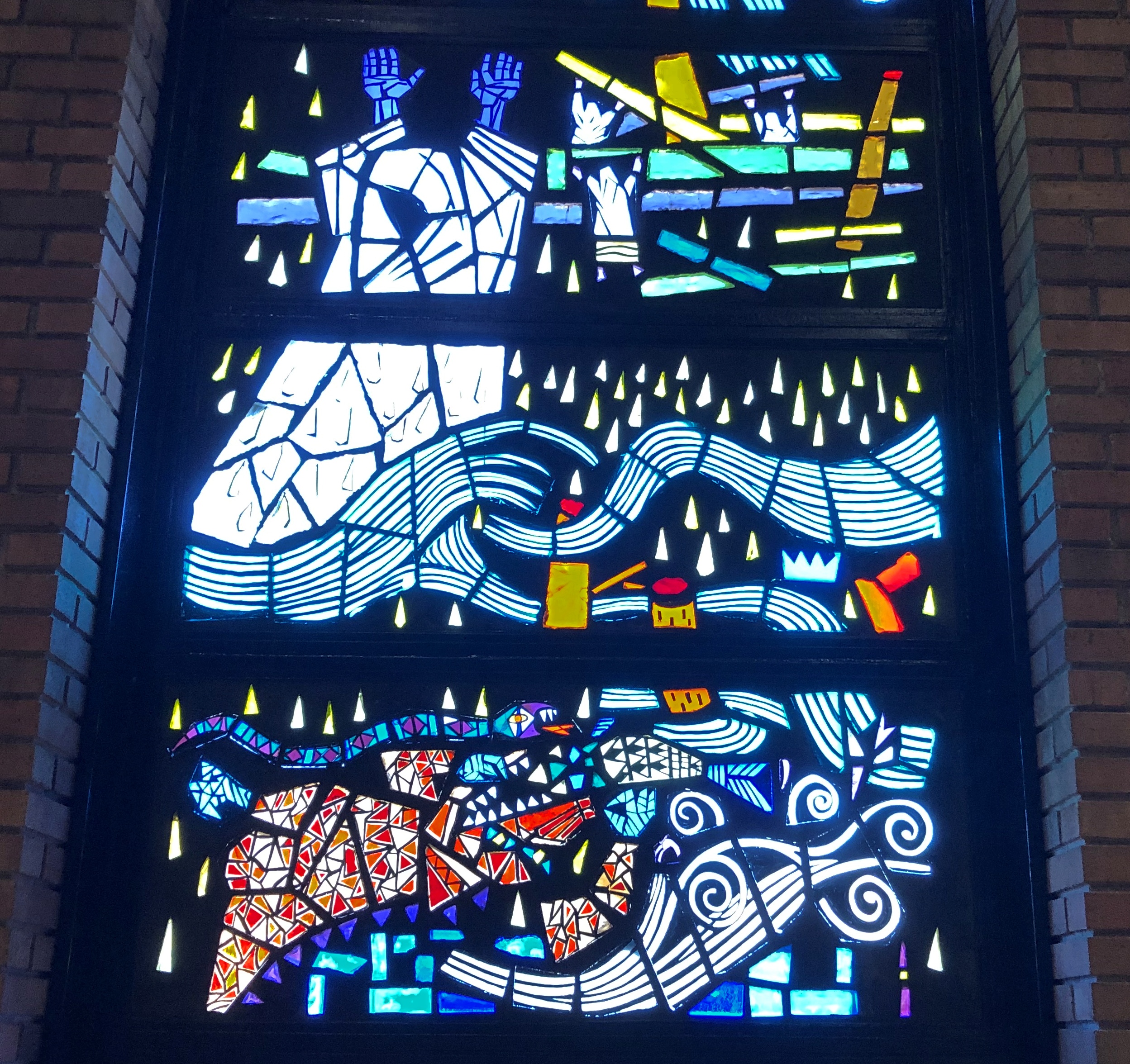
On the other side of the wall is Gottlieb Hall, just as large, but without any seats. Its main feature are five stained glass windows designed by William Gropper in 1967, which my pictures do no justice to. Gropper’s best known as a cartoonist.
Temple Har Zion Gropper Windows

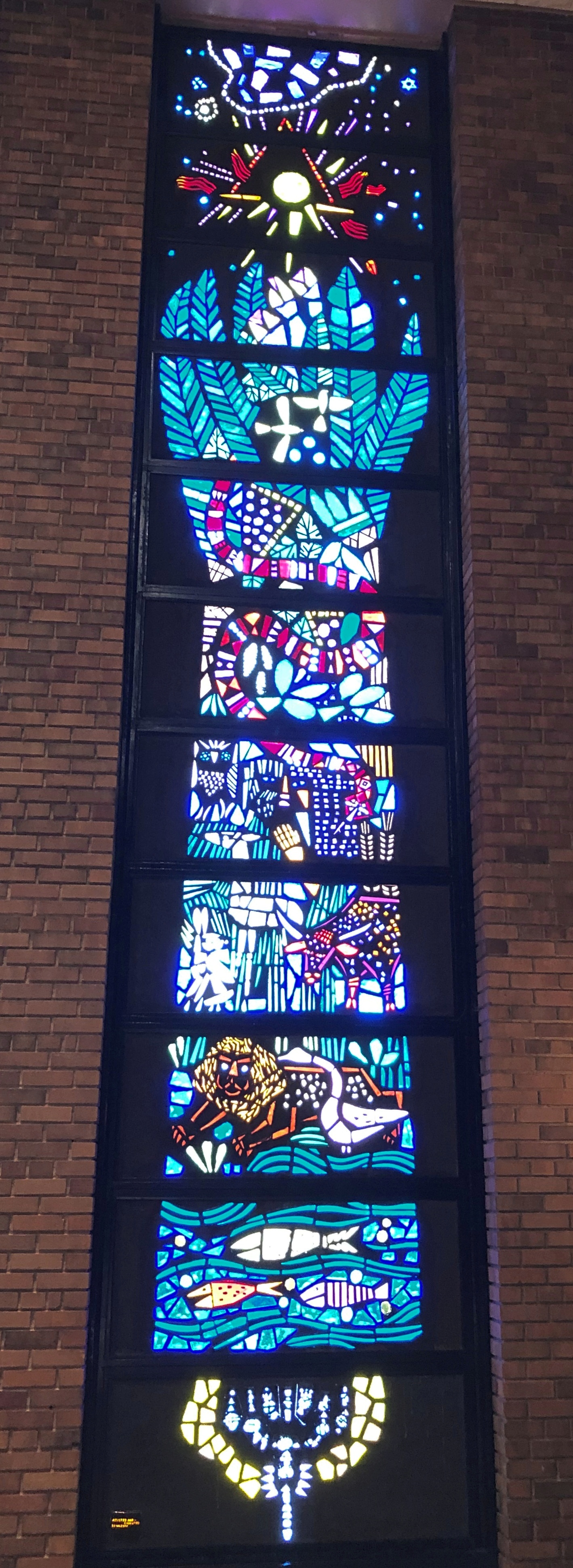
“Instead of traditional stained glass techniques, Gropper used one inch thick chunks of brilliantly colored glass which were cut to shape and chipped or faceted on the surface,” Temple Har Zion says. “Each window is two stories high and contain 11 panels of this chiseled glass set in a matrix… these vibrant windows which represent some of the most familiar stories of Genesis.”

One of the fascinations of the windows is working from top to bottom — and right to left — to pick out the stories of Genesis chronologically. This is the far right window, starting with Creation toward the top and working down to the creatures of the land and sea toward the bottom.
Temple Har Zion Gropper Windows

A detail of the next window: the Flood.
Temple Har Zion Gropper Windows

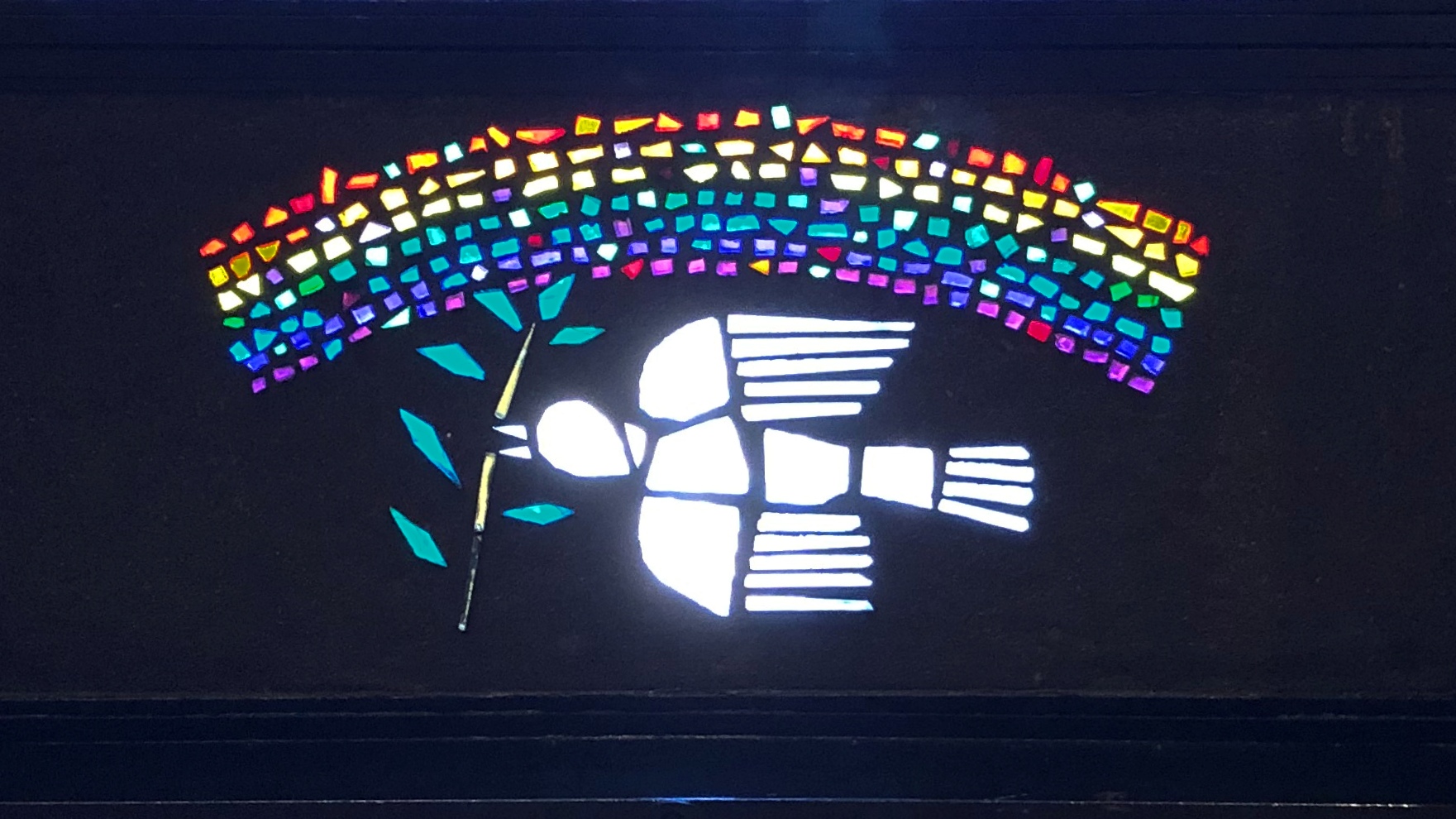
The end of the Flood.
Temple Har Zion Gropper Windows

Anyone who insists that the 1960s was a poor period for design isn’t looking hard enough.

Open House: Catholic Churches

During Open House Chicago on Saturday, we wanted to see a place called Boxville — “a 17-[shipping] container open-air marketplace full of art, music, food and a variety of entrepreneurial businesses,” the Open House web site says.

But it looked entirely too crowded as we drove by — people waiting for a tour, or a regular shopping crowd? — and there wasn’t anywhere to park close by. Since Boxville is at the E. 51st Street station on the CTA Green Line, that might be the best way to reach it some other day.

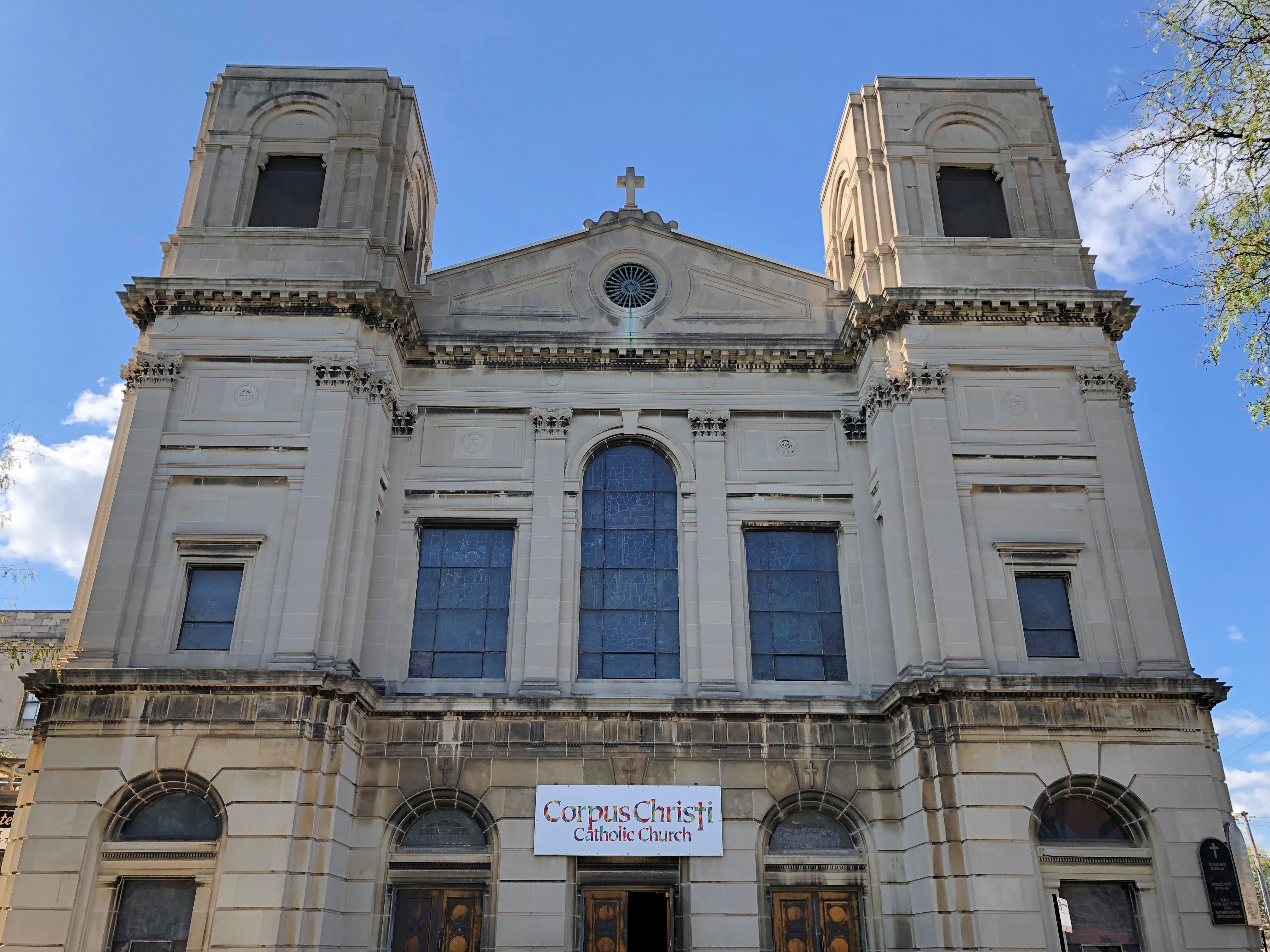
So we went on to Corpus Christi Catholic Church, which is at the corner of Martin Luther King Jr. Dr. and E. 49th St., not too far away. Except that as a functioning Catholic church, Corpus Christi has seen its last mass, which was on June 27.Corpus Christi Church

“Corpus Christi… along with St. Ambrose, St. Anselm, St. Elizabeth and Holy Angels churches, will merge July 1 into one new ‘Our Lady of Africa’ parish, under the Archdiocese of Chicago’s ‘Renew My Church’ initiative, ongoing since 2018,” the Chicago Sun-Times reported in June.

“Under Renew My Church, struggling churches and schools are being closed or consolidated, to cut costs for aging infrastructure, as well as to address a priest shortage.

“And while many parishes continue to struggle with challenges from the changing demographics of Catholic mass and school attendance, the sense of loss from closings and consolidations remains the same.”

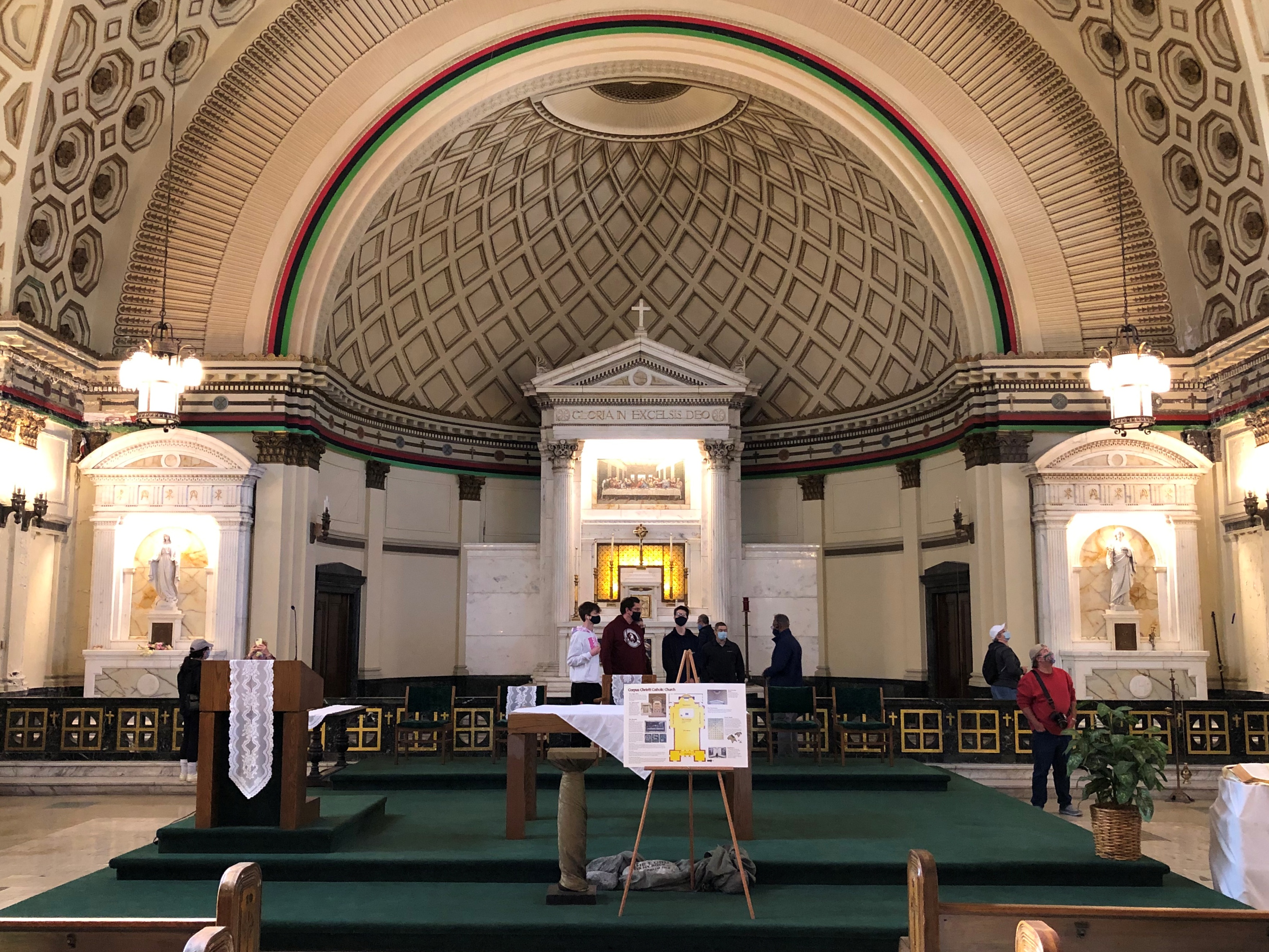
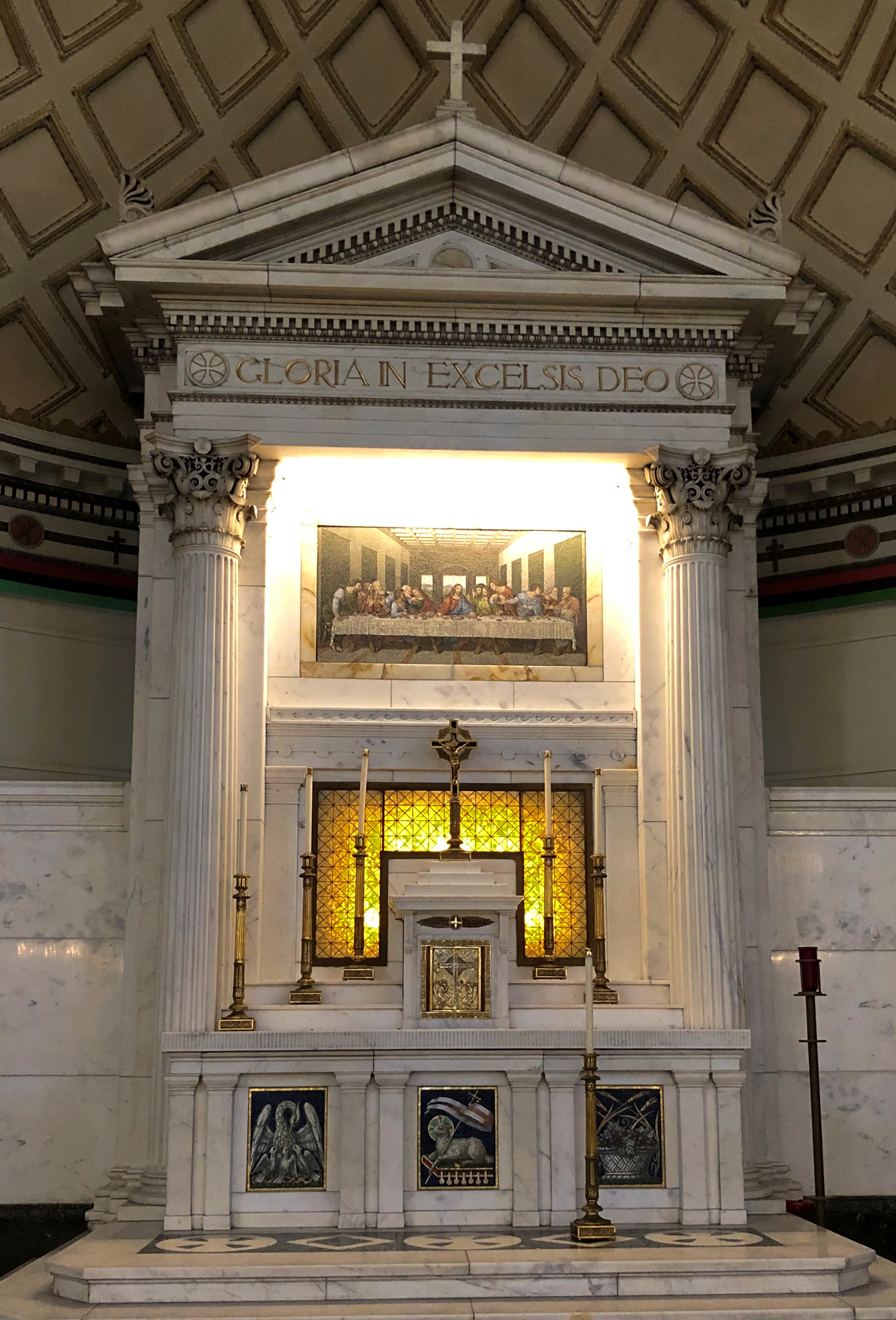
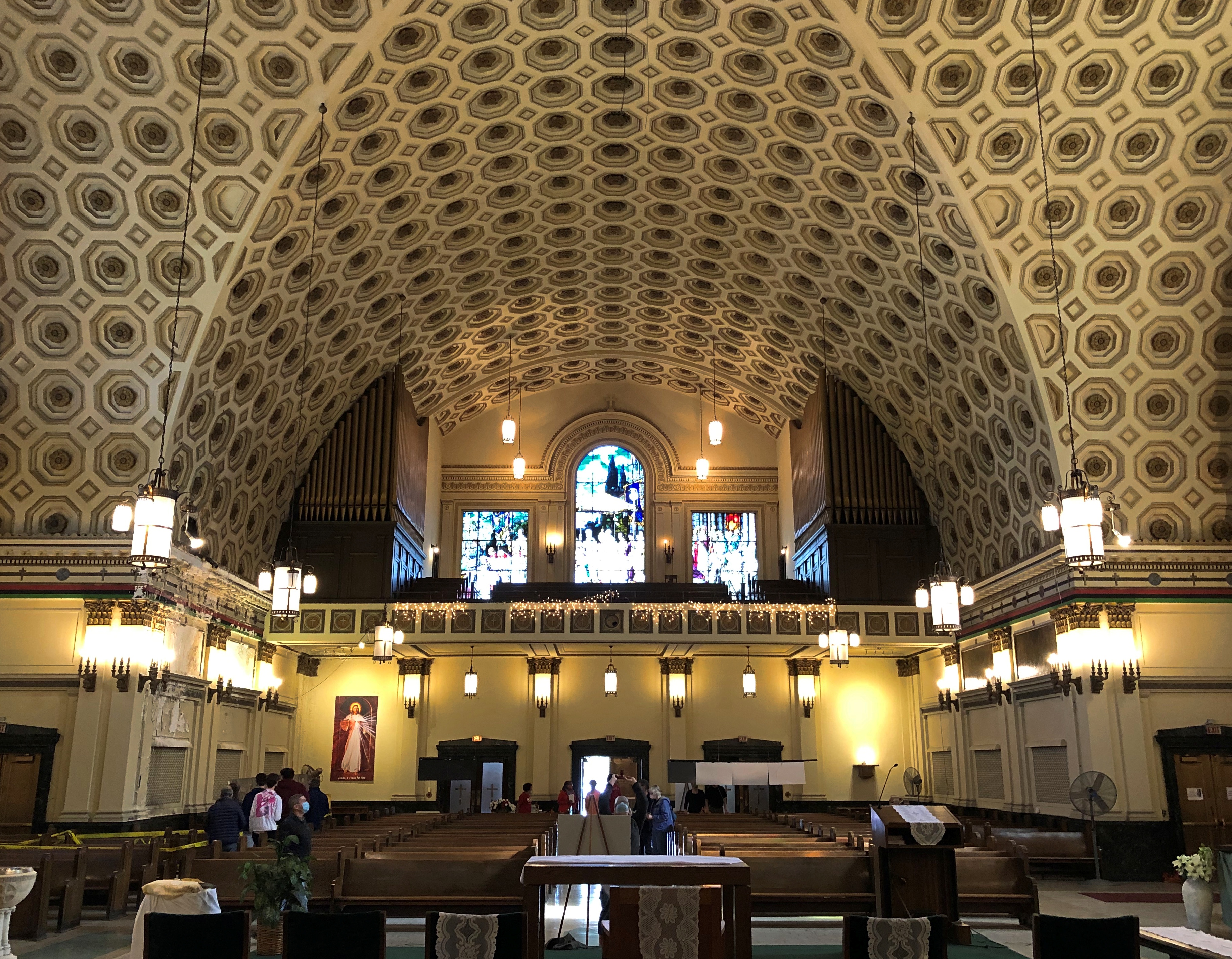
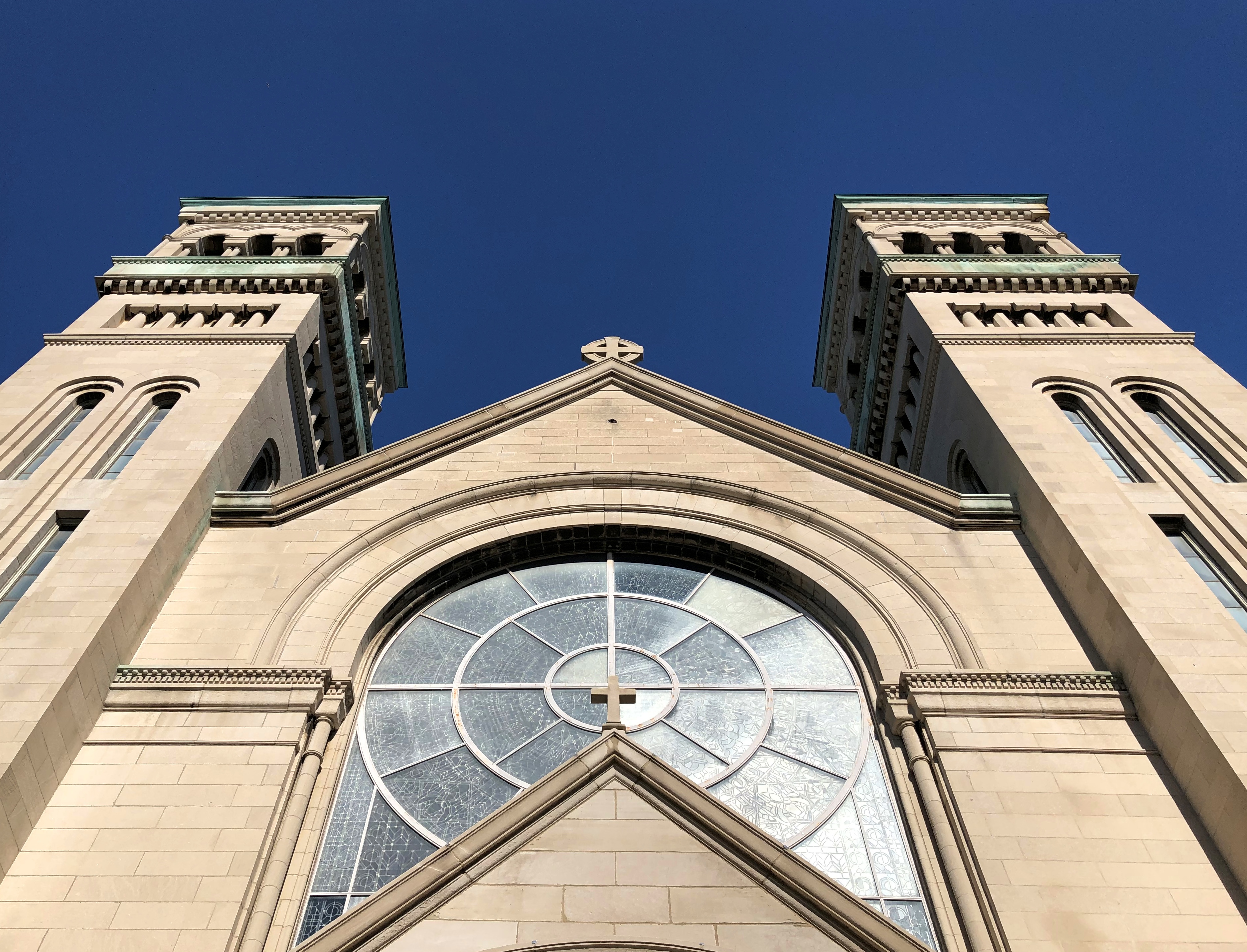
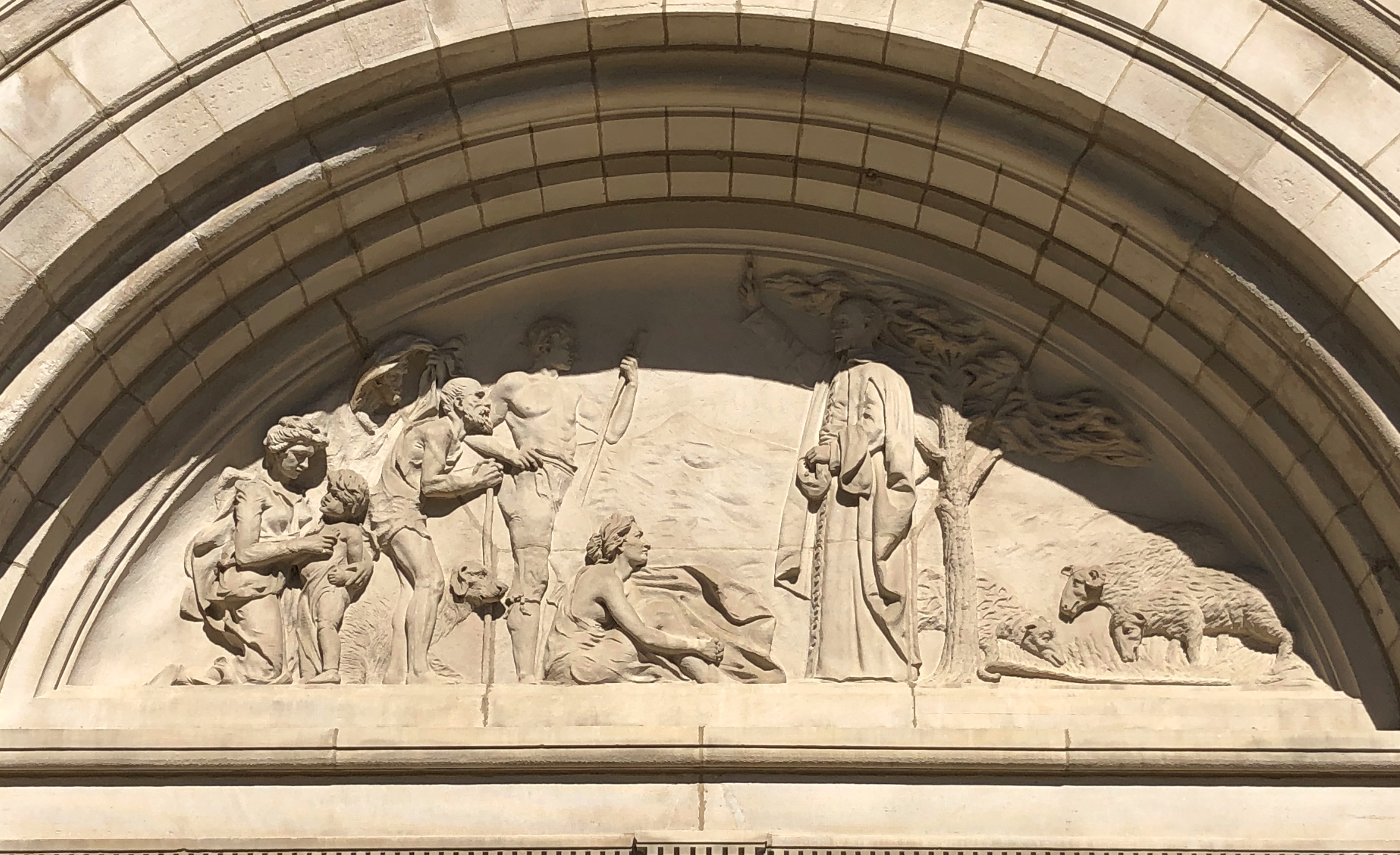
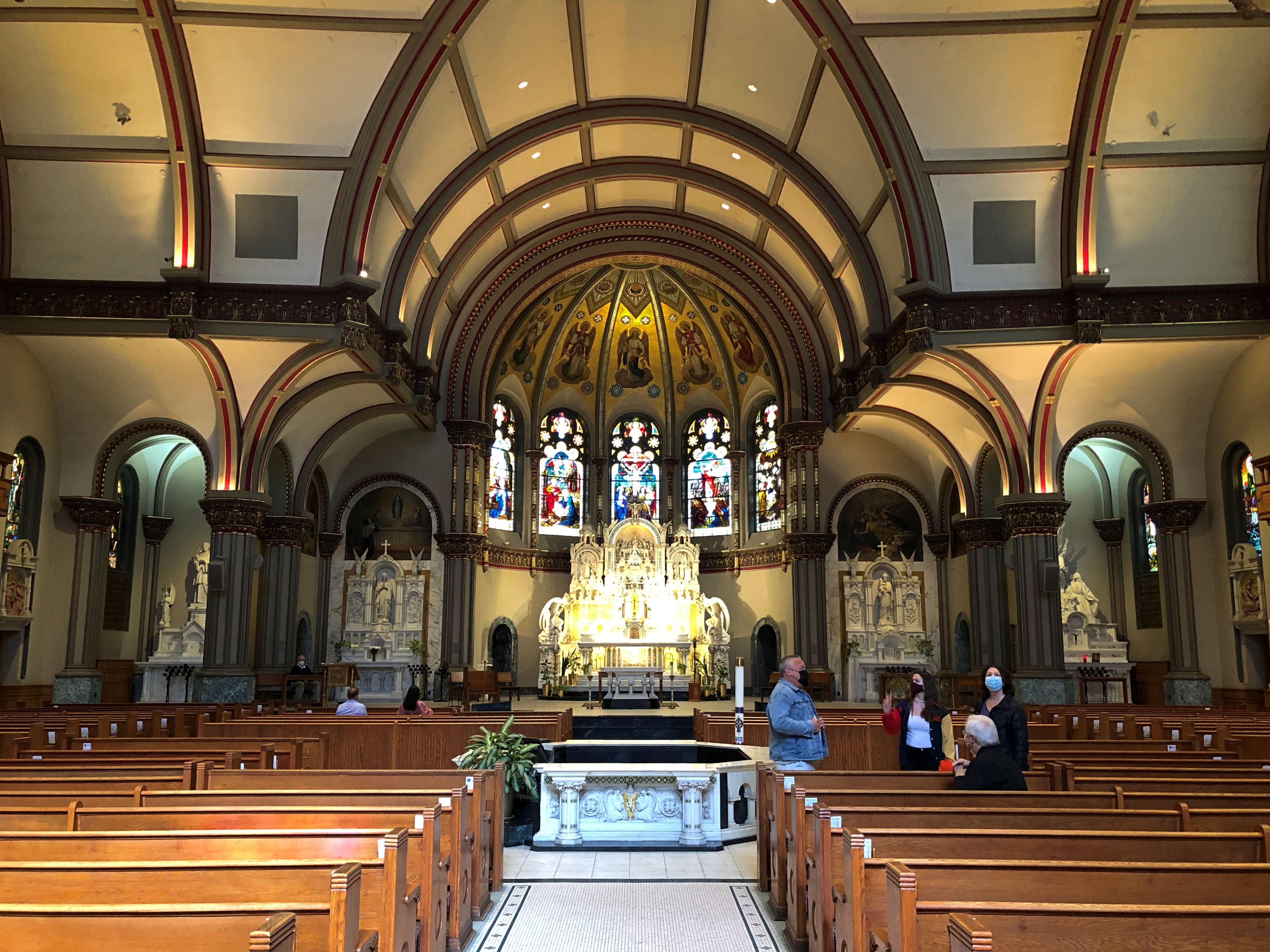
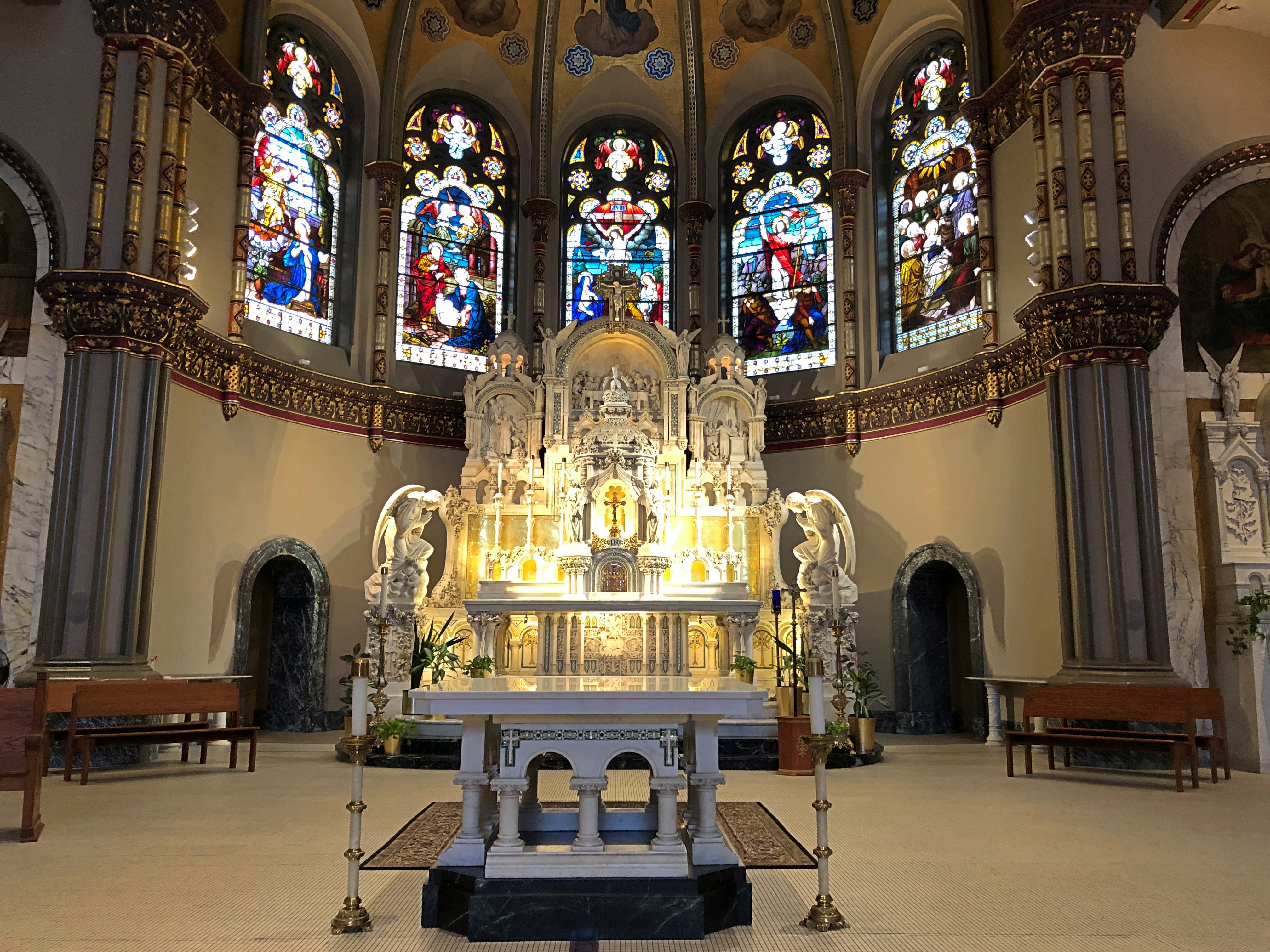
Thus the future of the building is uncertain. One of the docents told me she hoped another religious organization would buy the property, but it would be an expensive proposition. Still, someone should consider making a deal with the Archdiocese. It’s a resplendent church, especially inside.Corpus Christi Catholic Church Chicago Corpus Christi Catholic Church Chicago Corpus Christi Catholic Church Chicago

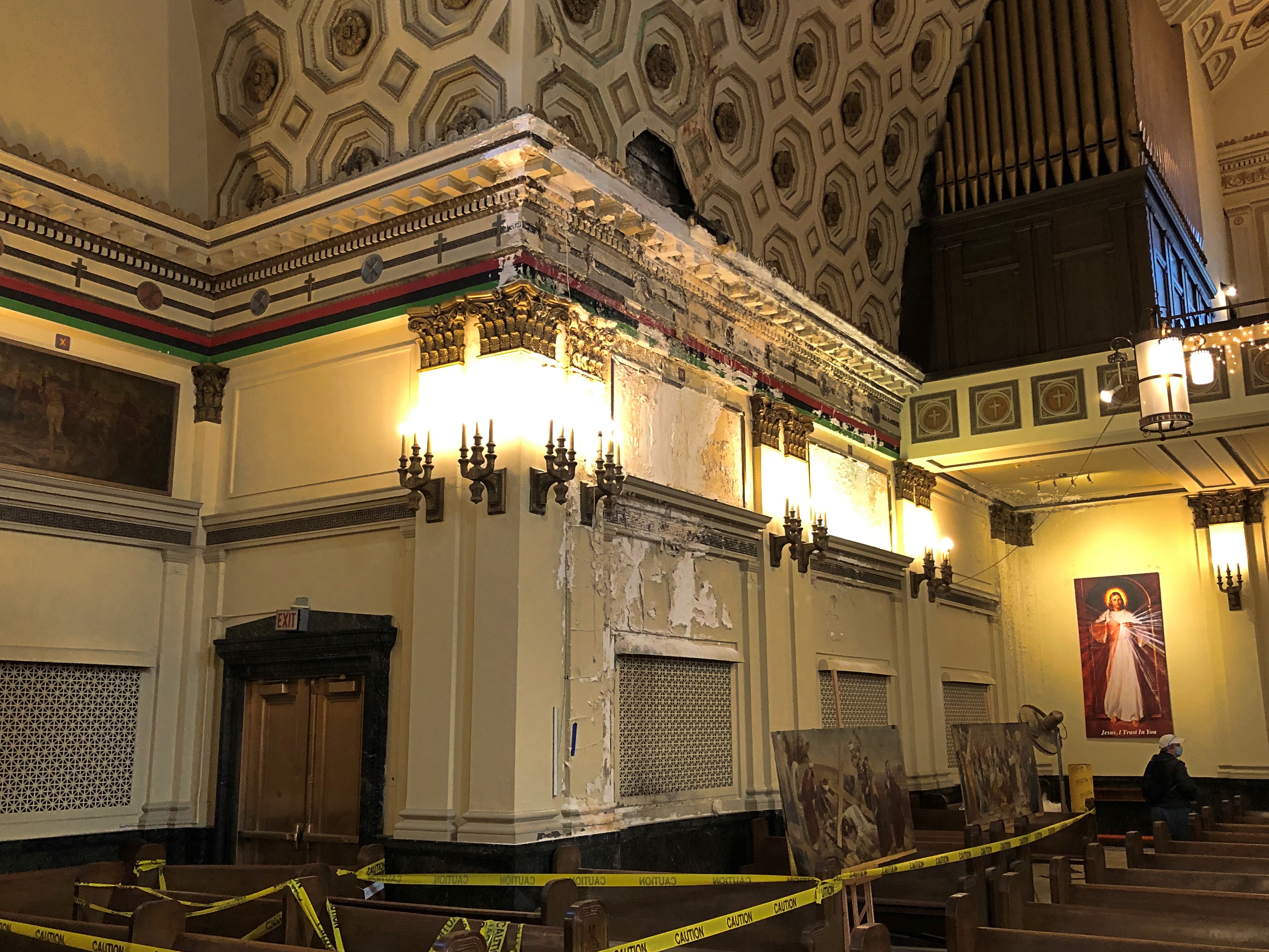
But maintenance is clearly an issue.Corpus Christi Catholic Church Chicago

“This Renaissance Revival building by Joseph W. McCarthy has twin spires and a deeply-coffered ceiling,” says Open House. “Brightly colored stained glass windows, designed in Germany by F.X. Zettler, depict the original church members processing with Pope Pius X…

“During the Great Migration of the 1930s, the church went from serving a predominantly Irish-American community to serving an African-American community.”

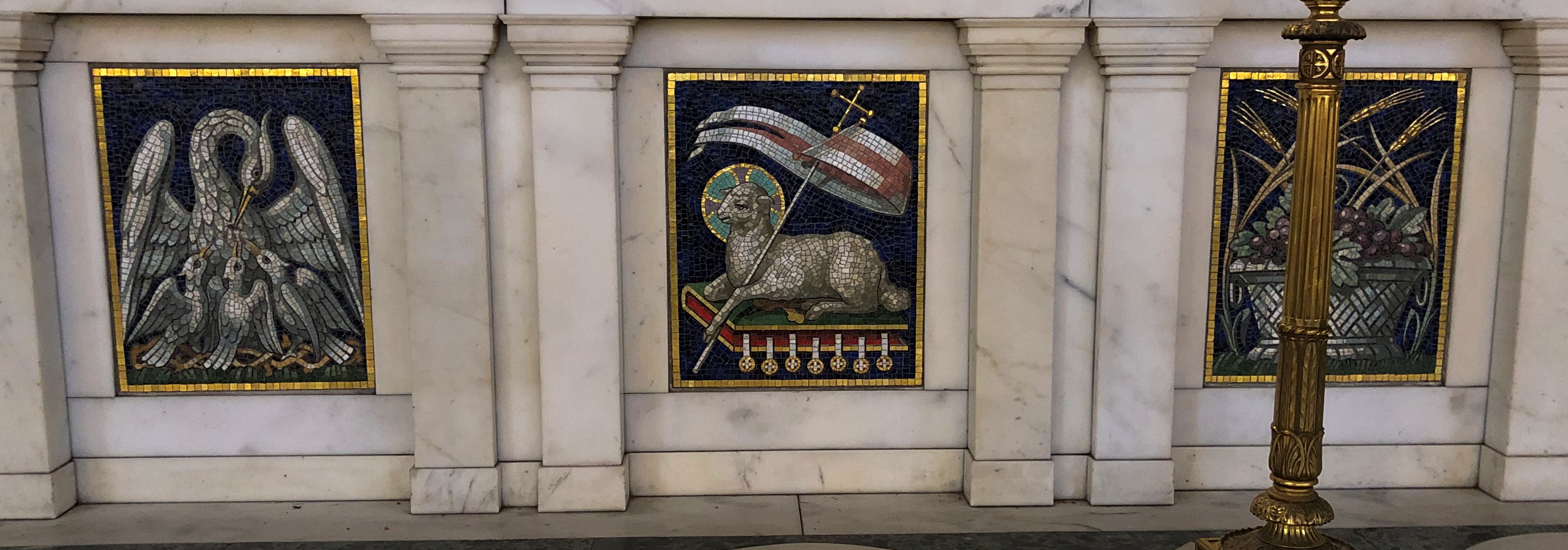
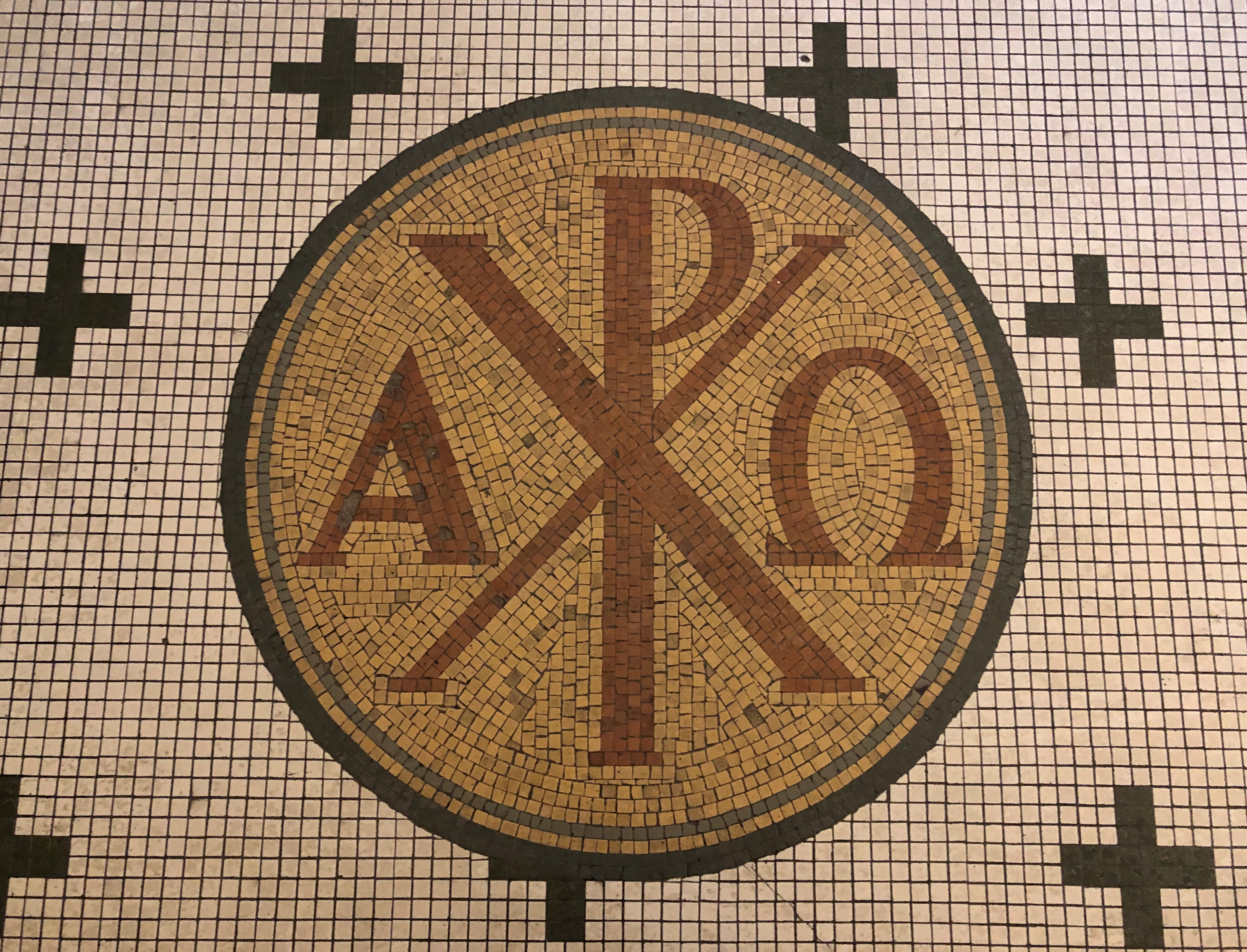
Fine detail is evident, including small mosaics.Corpus Christi Catholic Church Chicago Corpus Christi Catholic Church Chicago

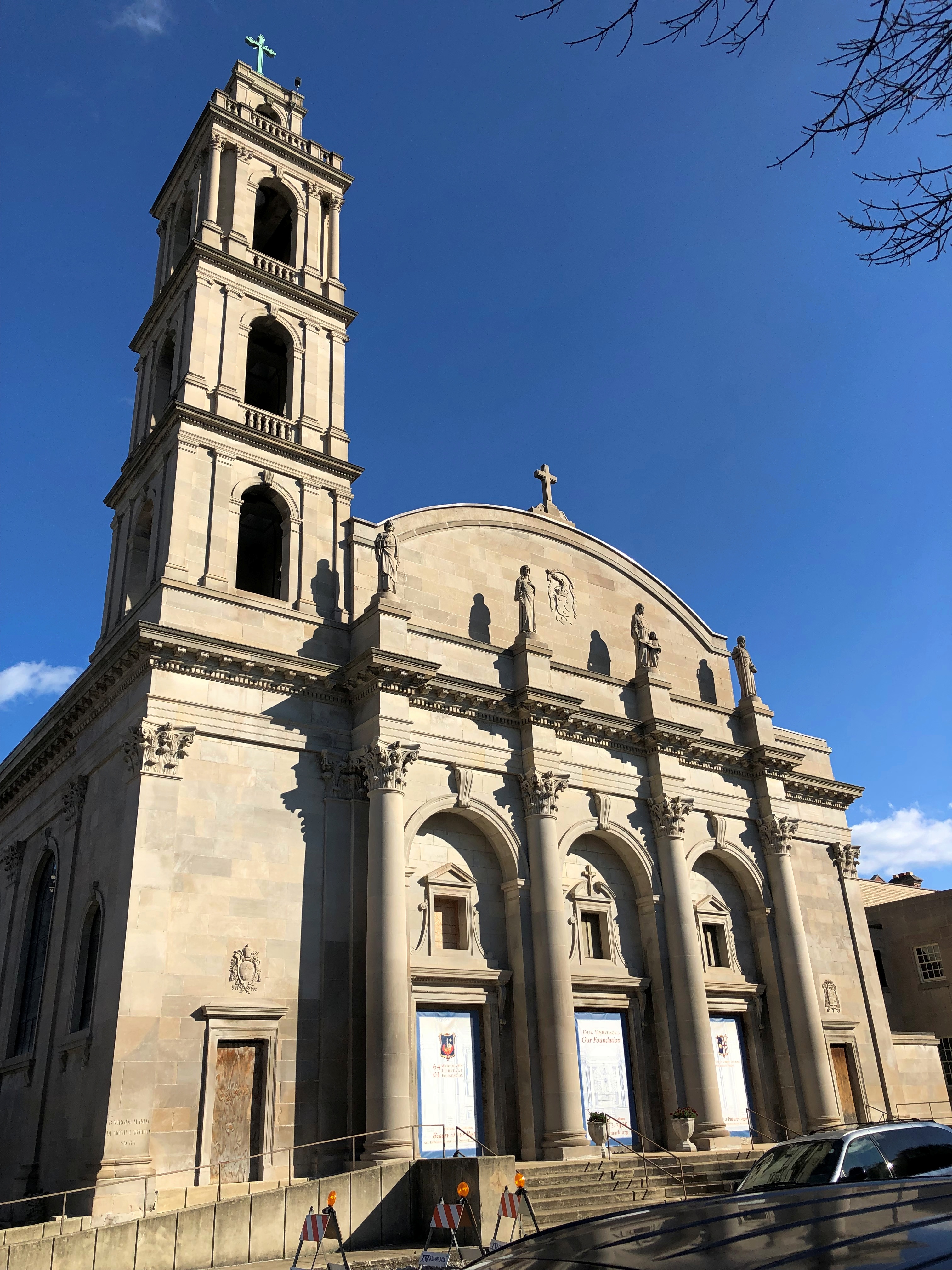
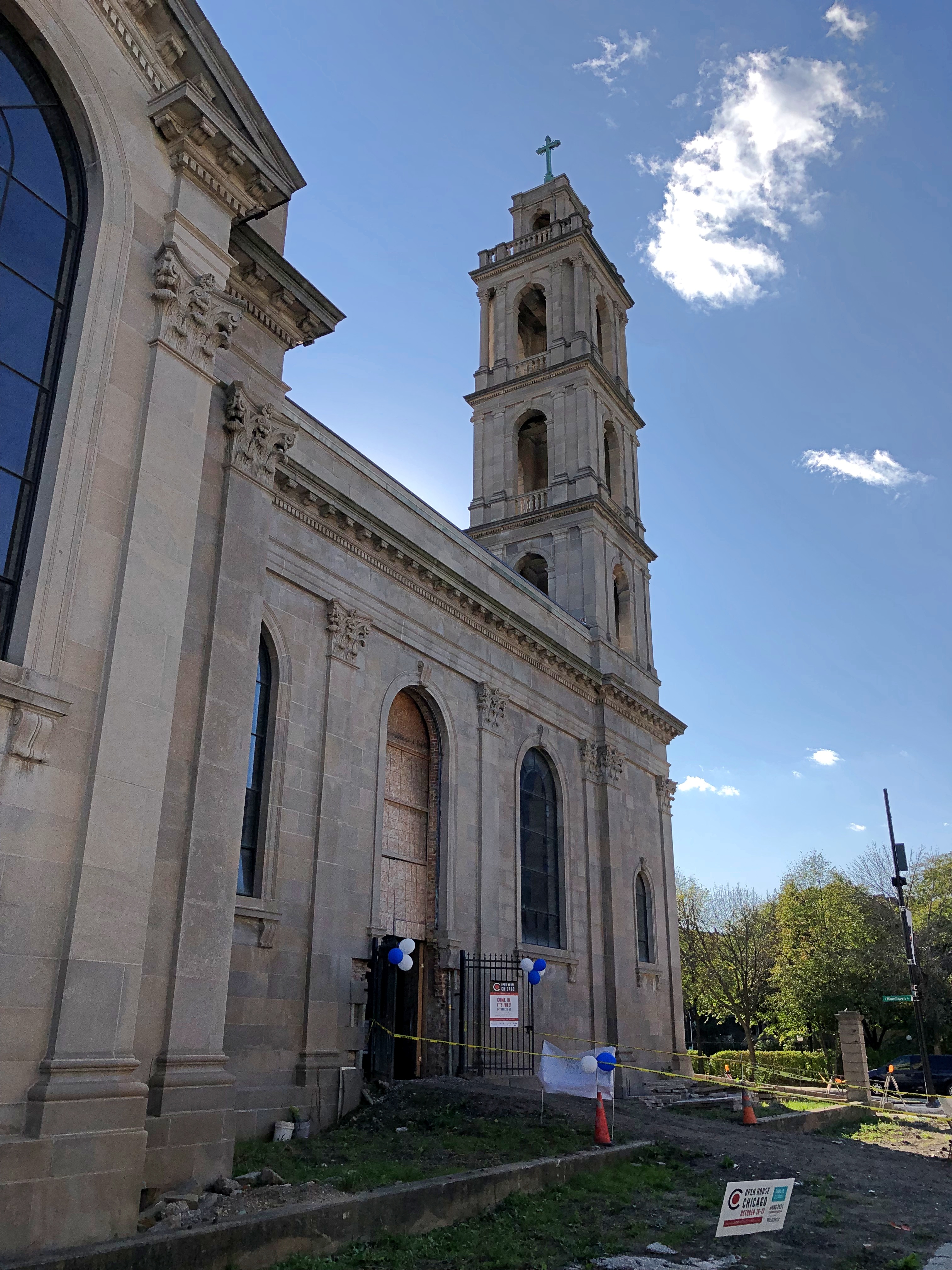
A few blocks south of the Midway Plaisance, in a block that’s clearly gentrifying, is the Shrine of Christ the King. This is how the exterior looked on Saturday.Shrine of Christ the King, Chicago Shrine of Christ the King, Chicago

This is a Street View from July 2017, a year and some months after a fire gutted the church.

“More than 150 firefighters were called the 90-year-old church, located in the 6400 block of South Woodlawn Avenue…” WLS reported in October 2015. “Chicago Fire Department detectives said spontaneous combustion from rags used to stain the floor of the choir pew is the mostly likely culprit.

“The Shrine of Christ the King was originally a Catholic church, known first as St. Clara and then as St. Gelasius. As the size of the parish diminished, the building faced demolition. However, the building was given historic status and taken over by a religious order in 2006.”

Namely, the Institute of Christ the King Sovereign Priest, which has been around only since 1990 and whose U.S. national headquarters is in Chicago. The building is considerably older, the final work of ecclesiastical architect Henry J. Schlacks, completed in 1927 (and suffering a previous fire in 1976).

The interior is still completely unfinished. All you could do is look in from the entrance, and hear about its pending restoration from volunteers. I’m all for that, so I put a small donation in the box on the table at the door.

On Sunday, while Yuriko was busy creating a most delicious marble cake —marble cake

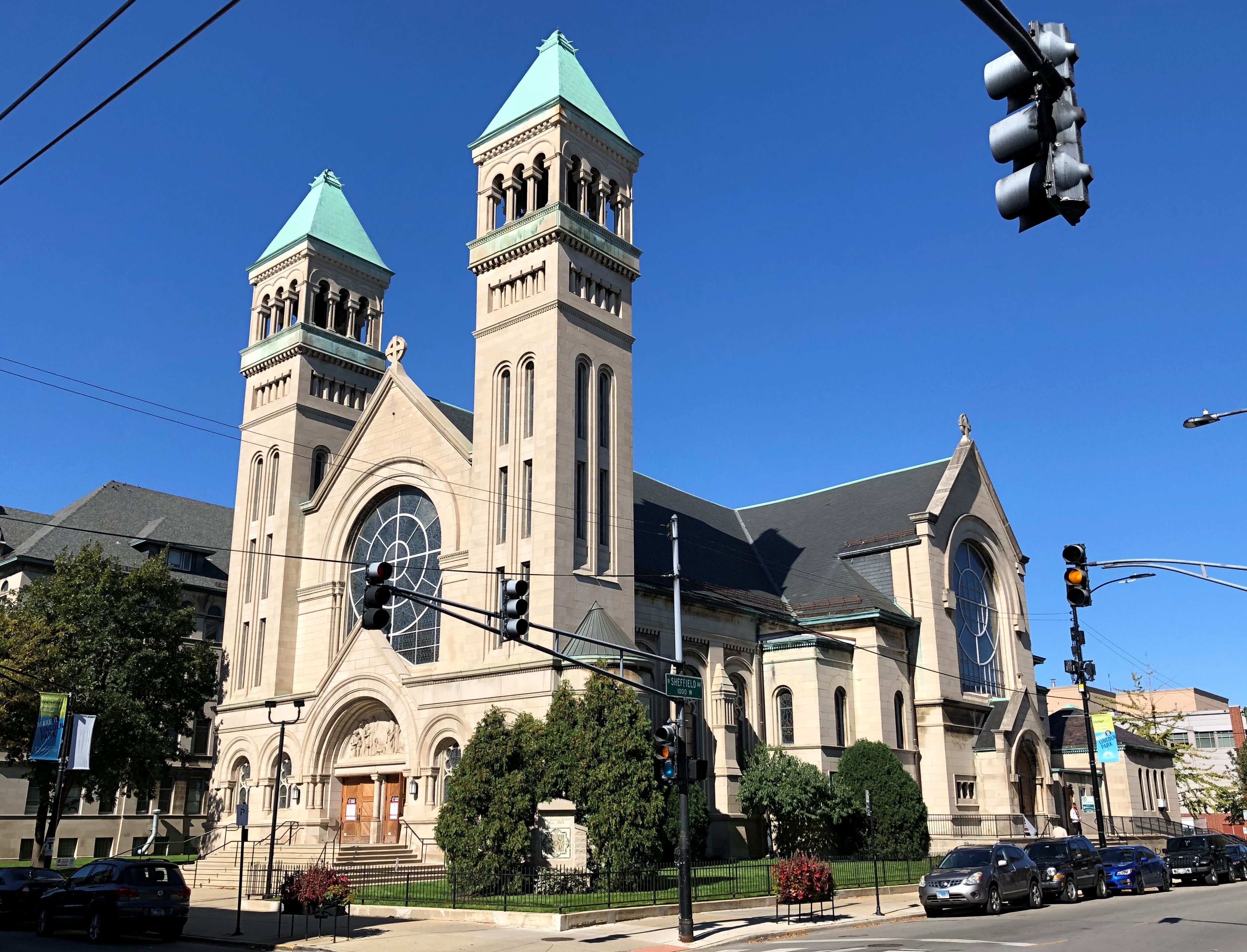
— I headed to the North Side to take a look at St. Vincent de Paul Church.St. Vincent de Paul Church Chicago St. Vincent de Paul Church Chicago St. Vincent de Paul Church Chicago

“St. Vincent de Paul serves a parish founded in 1875 by the Vincentian order,” Open House says. “The present-day church was completed in 1897, considered to represent architect James Egan’s finest work… The church is constructed of Indiana limestone blending Romanesque architecture like rounded doorways and arcades with French Gothic details such as the large, soaring windows.”St. Vincent de Paul Church Chicago St. Vincent de Paul Church Chicago St. Vincent de Paul Church Chicago

Wonderful to see, but when I left I also took note of a more everyday wonder. Food. Across the street from the church is a joint called Jam ‘n Honey. People were sitting at tables out on the sidewalk, eating what looked like delicious breakfasts. I’ll have to keep that in mind for future reference.

Open House: Protestant Churches

During Open House Chicago on Saturday, we dropped by a number of open churches, as usual. Chicago has many. Our first religious site was the United Church of Hyde Park, a Romanesque Revival structure designed by Gregory A. Vigeant, dating from 1889.United Church of Hyde Park United Church of Hyde Park

“United Church of Hyde Park is a tri-denominational faith community (United Church of Christ, Presbyterian Church USA, and United Methodist Church),” the church web site says. A Protestant parfait, I guess.United Church of Hyde Park United Church of Hyde Park

They’re barely visible, but the names of the Apostles are inscribed around the dome.
United Church of Hyde Park

There are 12 places for names, and while I can’t read them, I assume they include Matthias rather than Judas. I’d hope so, anyway.

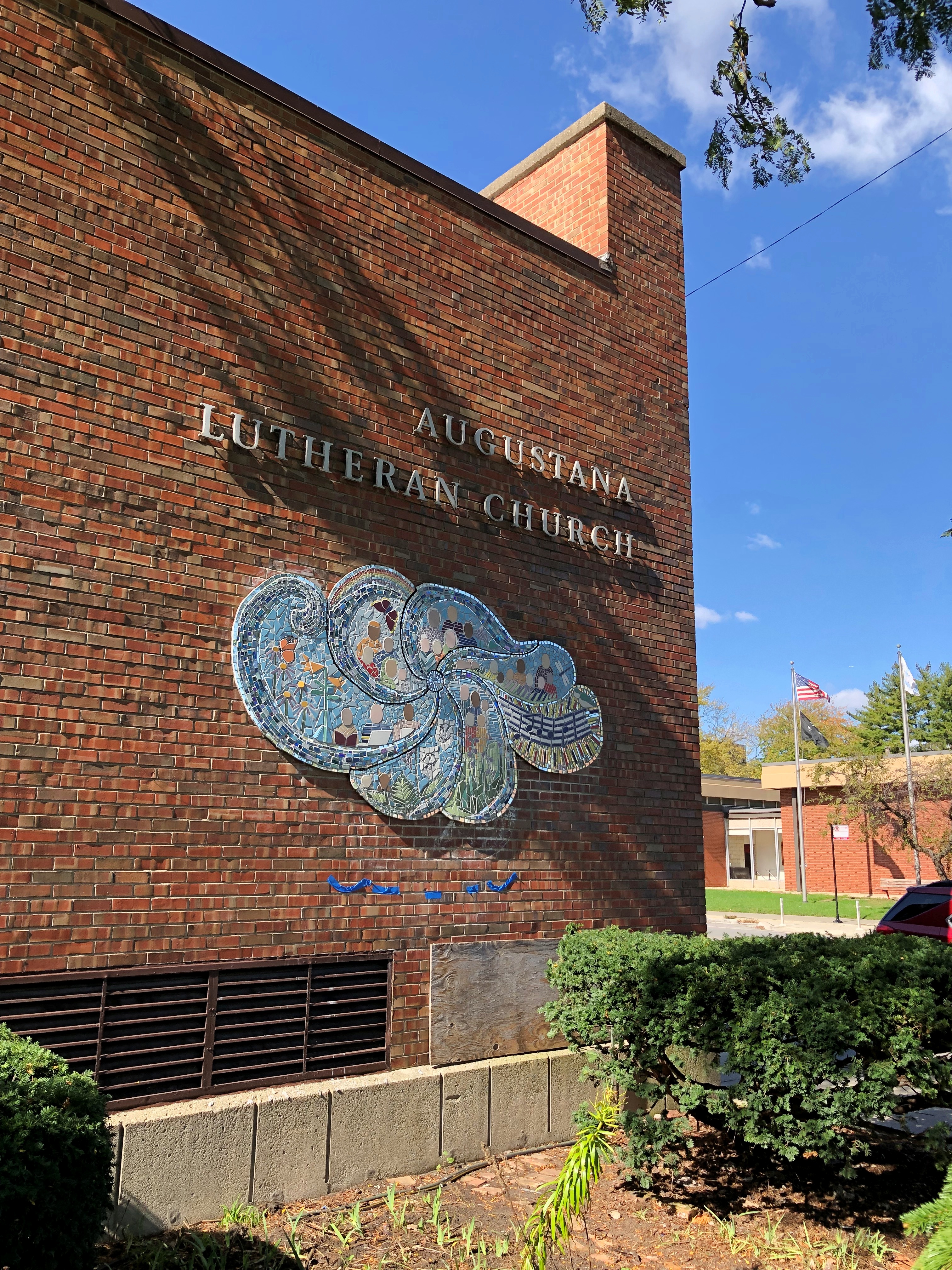
Elsewhere in Hyde Park is Augustana Lutheran Church.Augustana Lutheran Church

It’s a mid-60s modernist design by Edward Dart, who is better known for Water Tower Place on Michigan Ave., though he did a lot of churches as well.Augustana Lutheran Church Augustana Lutheran Church Augustana Lutheran Church

“A church more than any other building should reflect today’s culture, feeling, and the renaissance of our own era,” Dart said. That meant midcentury brick and concrete, and for all that not a bad design.

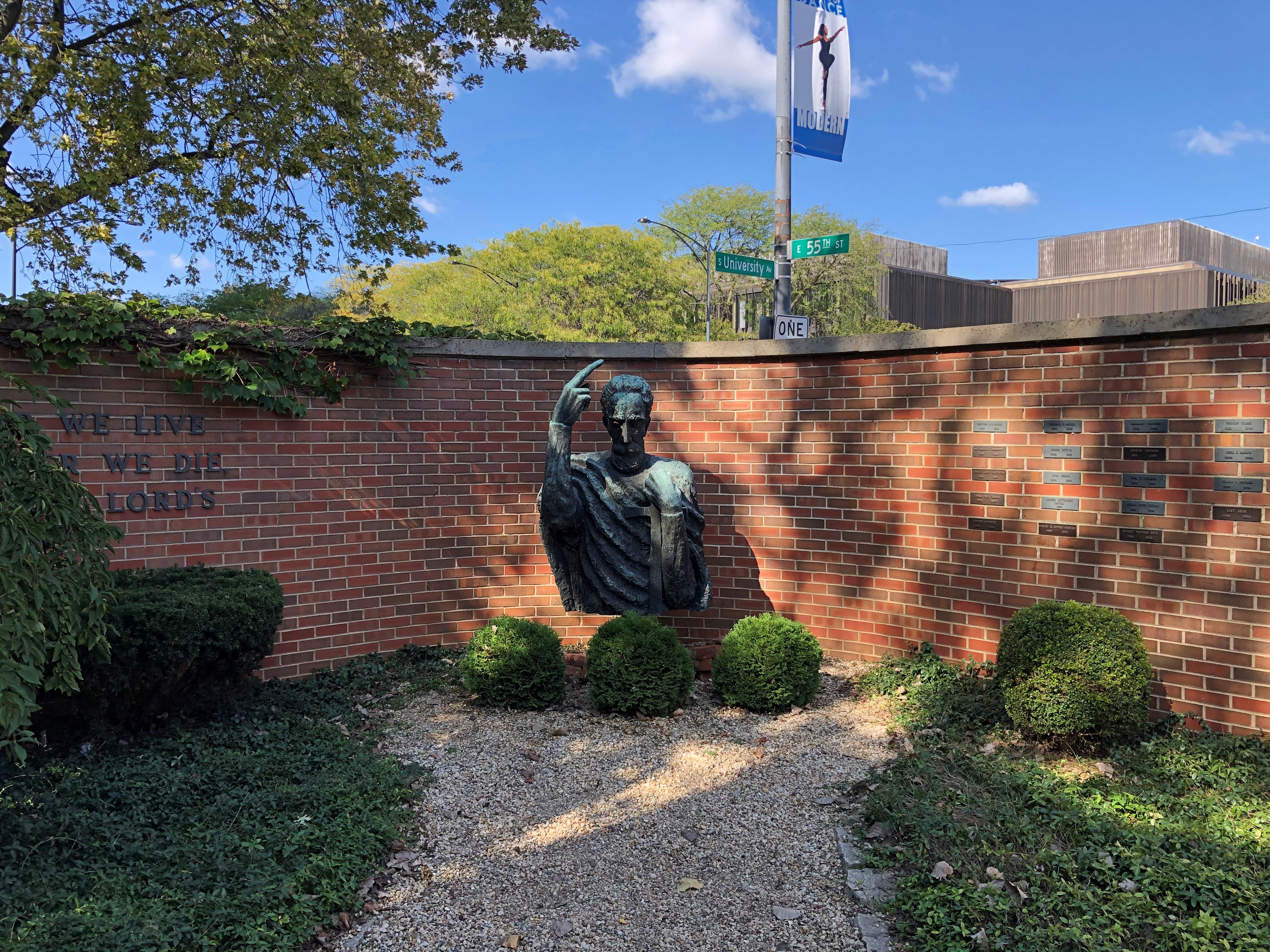
The Augustana grounds also include a spot of green space behind a brick wall near the street. Part of the space is given over to a columbarium.
Augustana Lutheran Church

Interestingly, the plaques on the wall (to the right in the above picture) don’t mark niches. Rather, they name people whose ashes have been scattered in the churchyard.
Augustana Lutheran Church

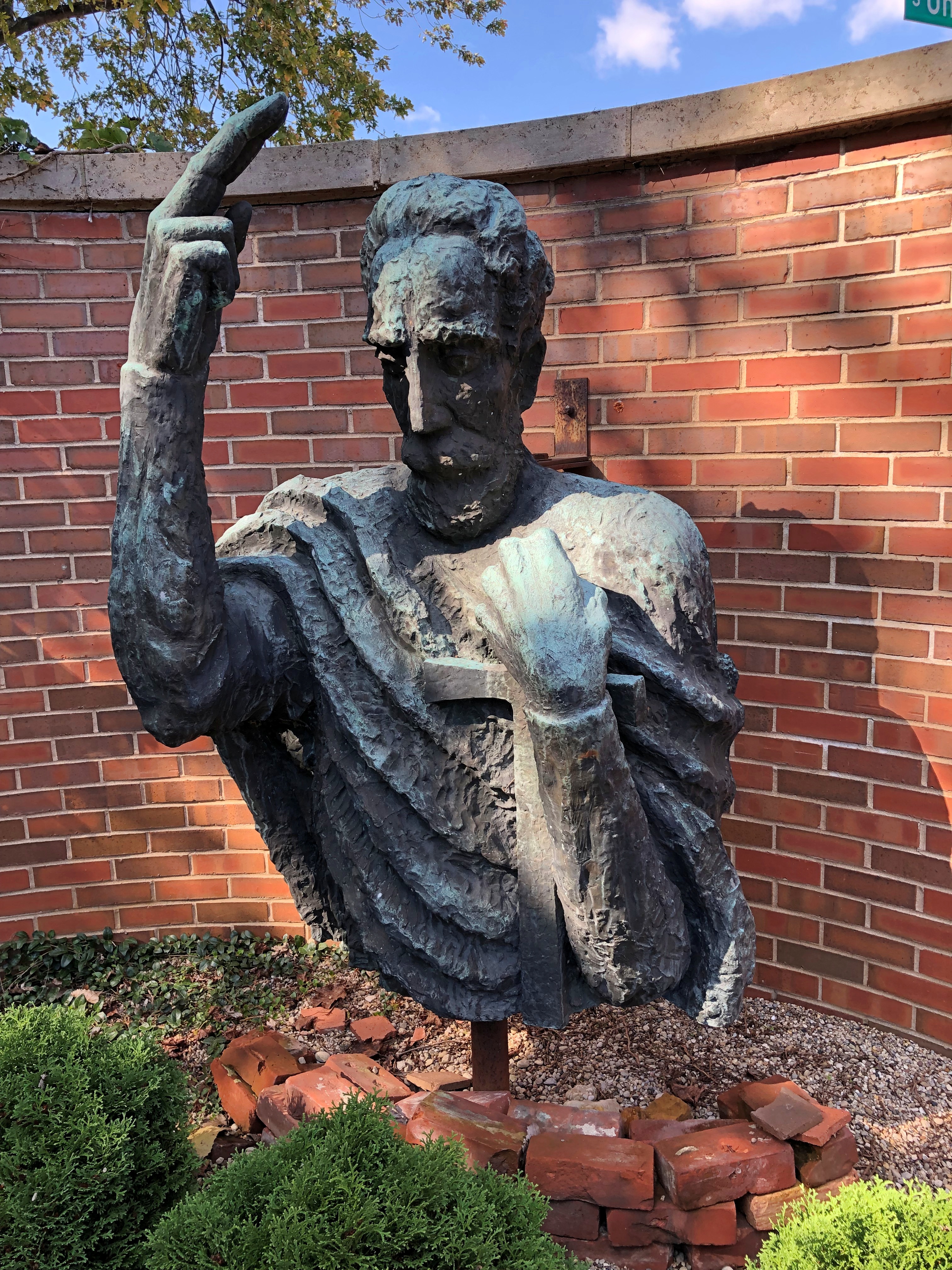
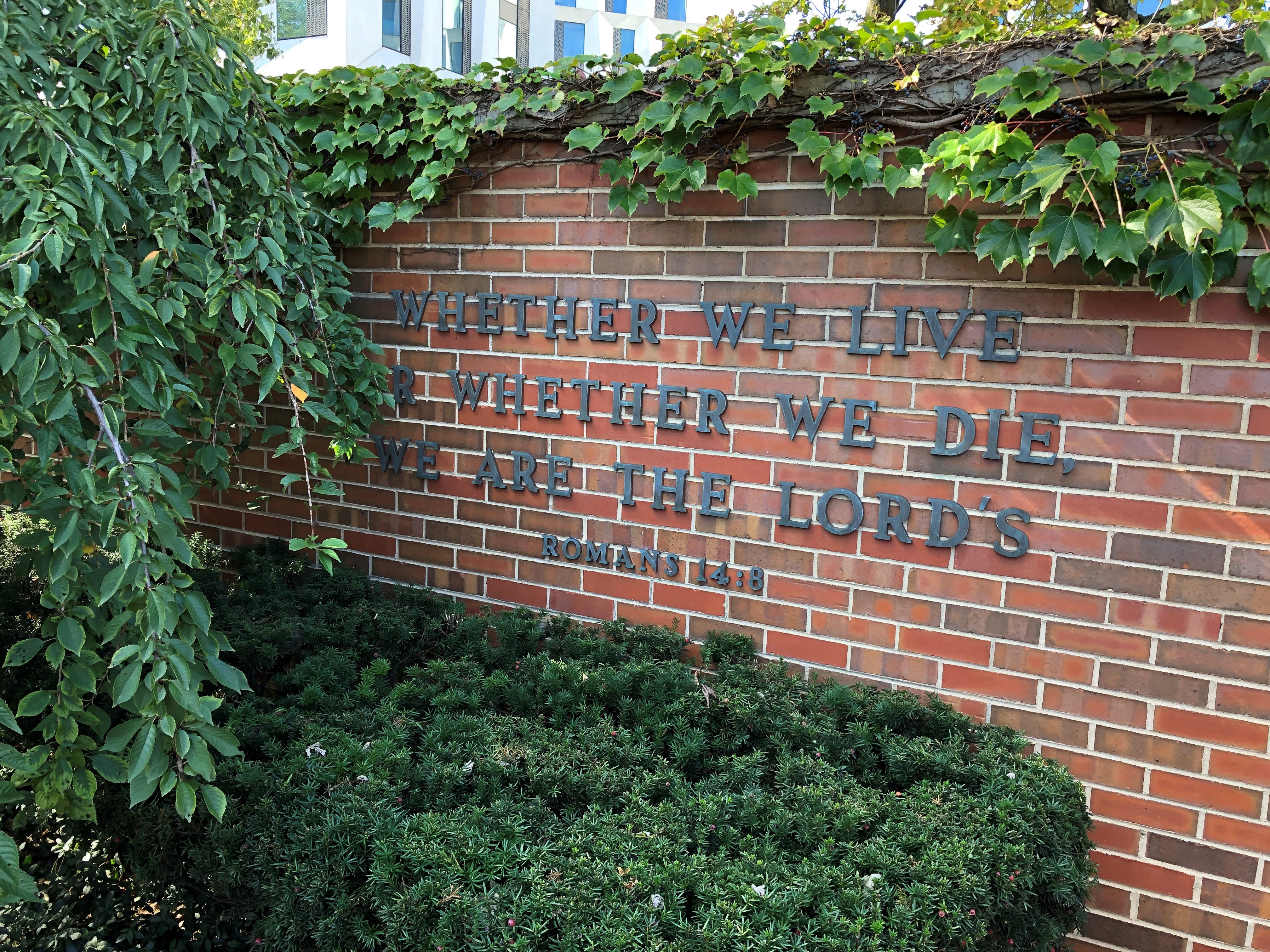
I suppose that’s Paul, though the only thing that tells me so is text on the wall nearby, from his Epistle to the Romans.
Augustana Lutheran Church

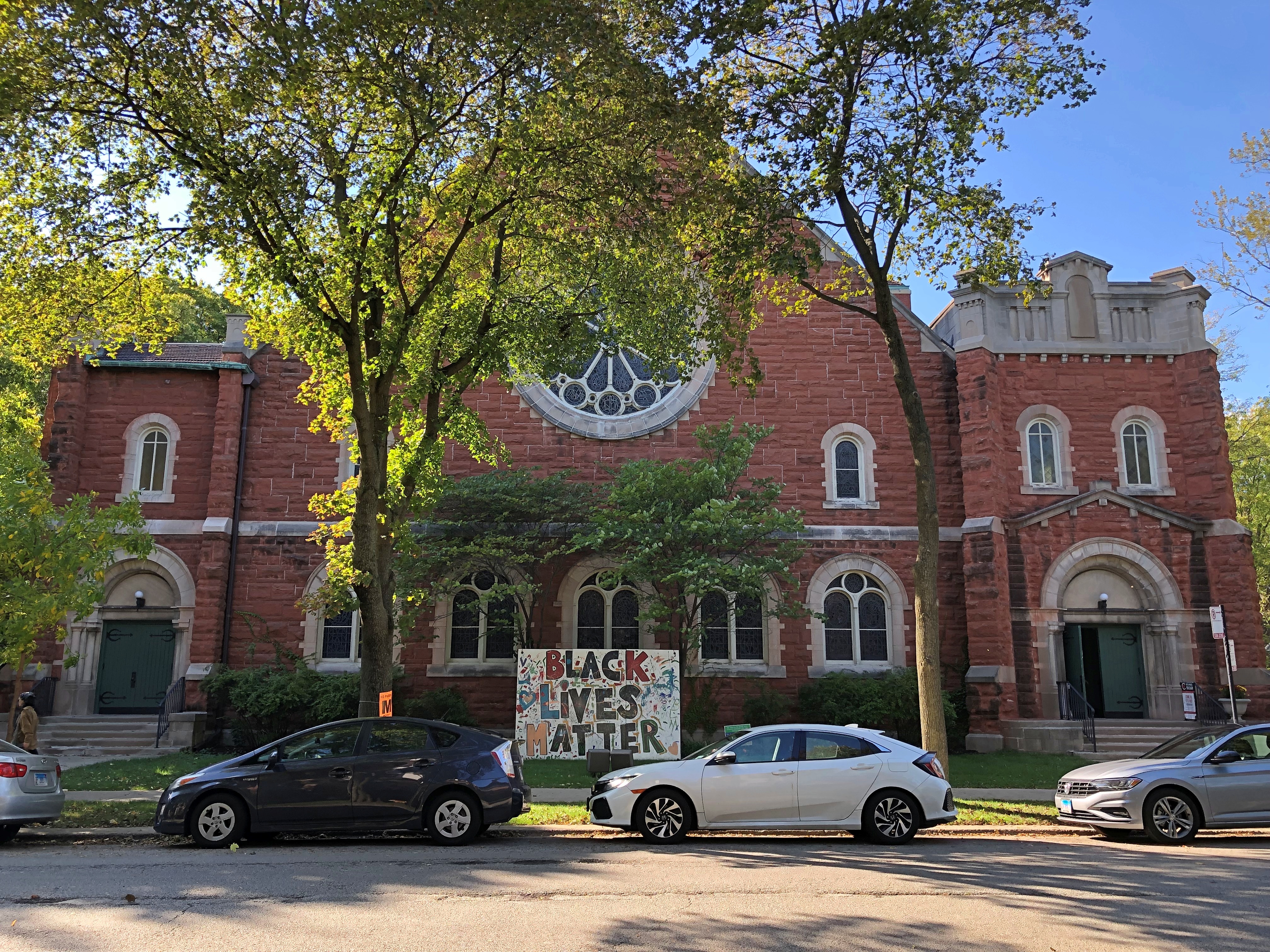
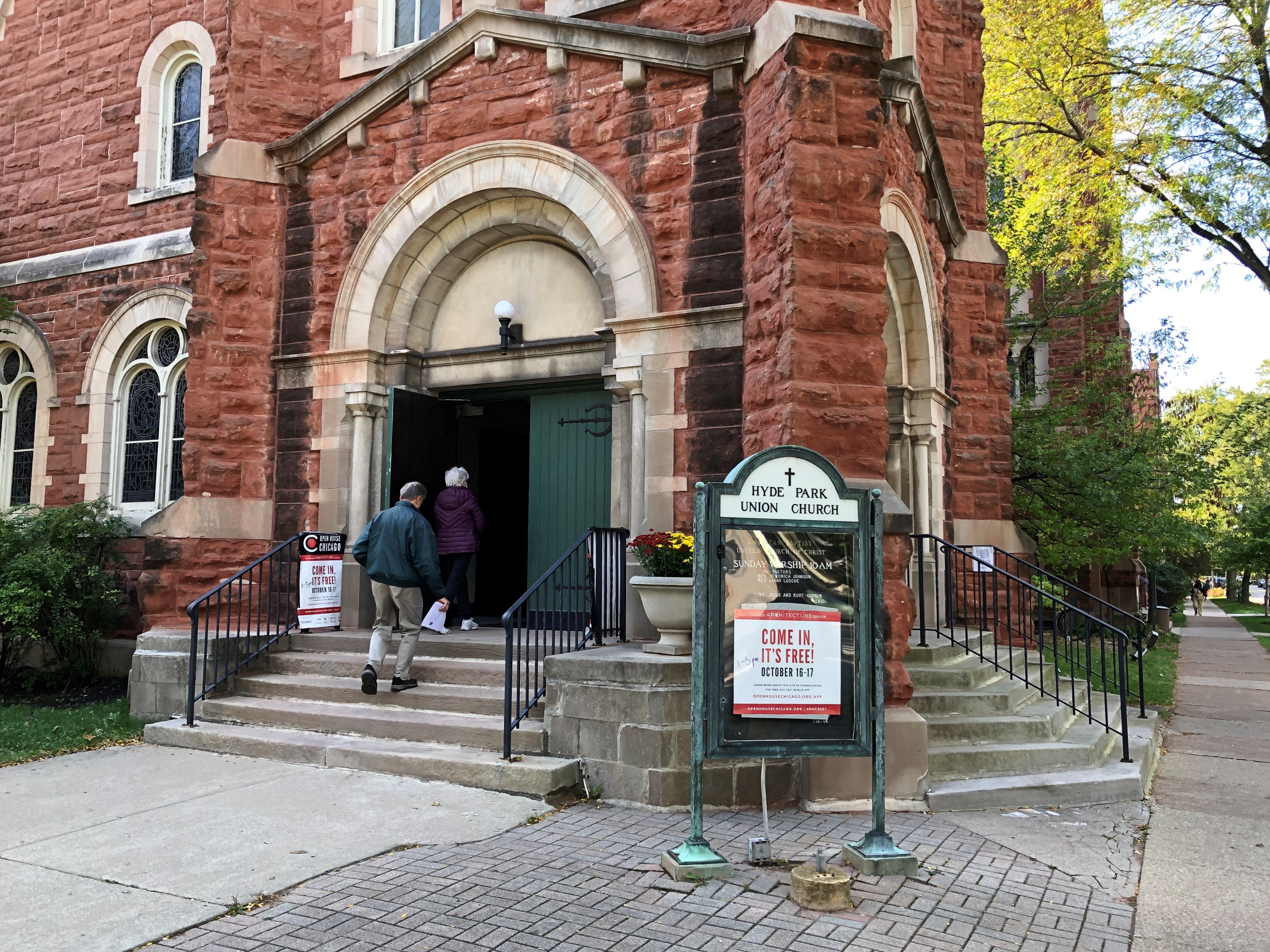
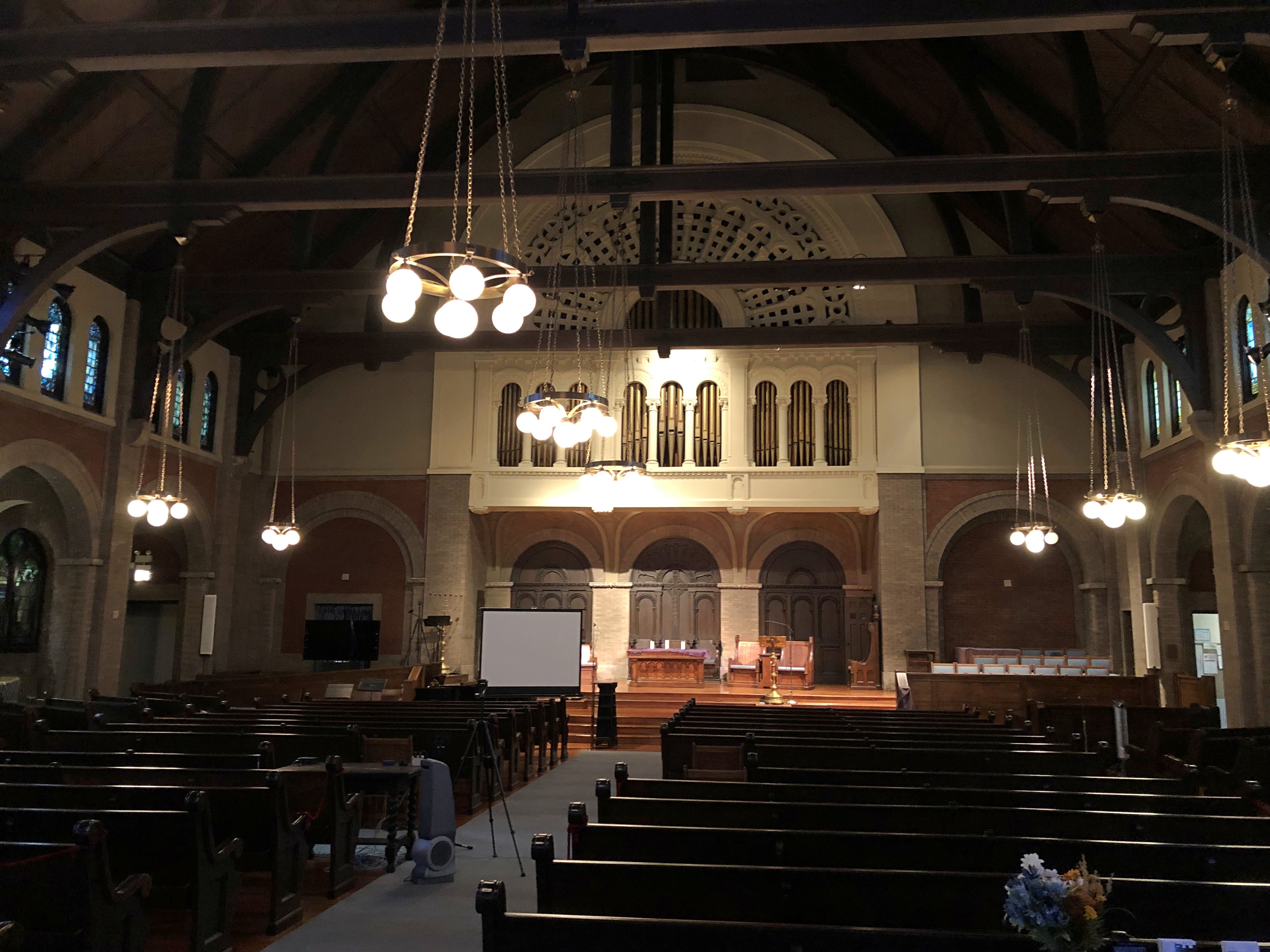
One more neighborhood Protestant church: Hyde Park Union Church, a 1906 design by James Gamble Rogers.Hyde Park Union Church
Hyde Park Union Church

A bit dark inside, but I understand the acoustics are really good.
Hyde Park Union Church

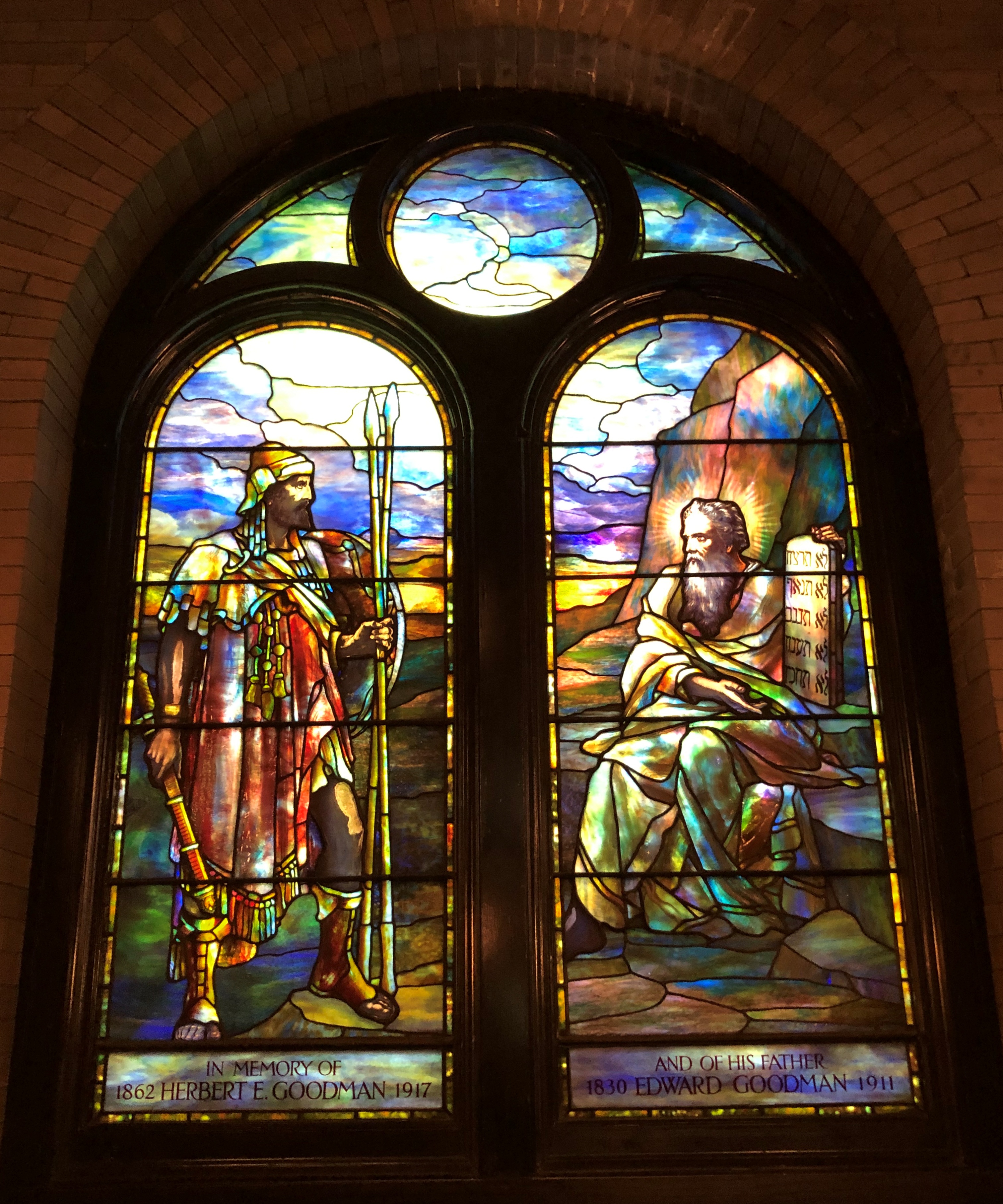
Plus some impressive Tiffany windows, such as one depicting Joshua and Moses.
Hyde Park Union Church

As the name indicates, the current church was formed by a merger between congregations. In this case, American Baptist Churches-USA and United Church of Christ.

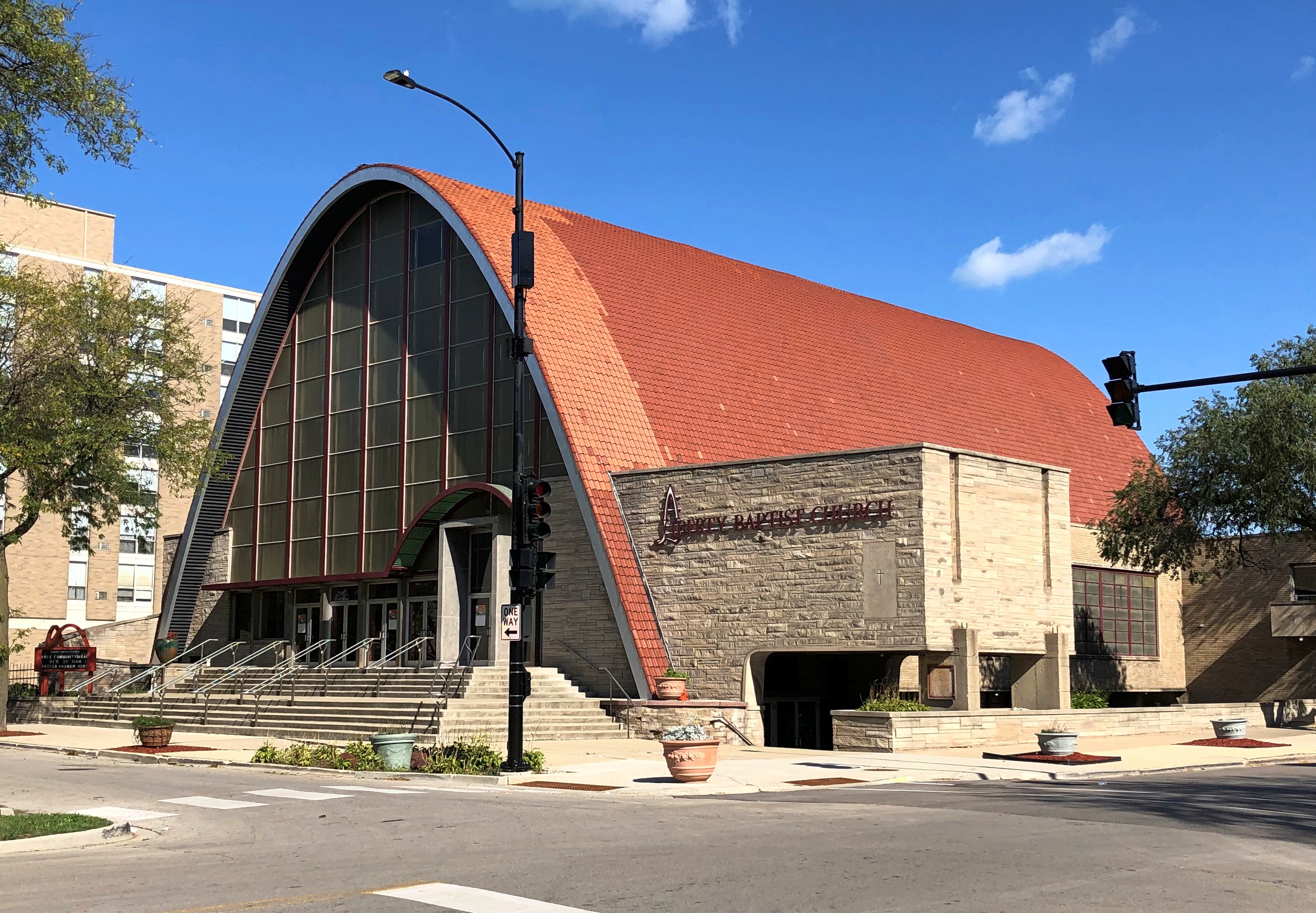
During the course of the day, we passed by a few other churches that I’d have peeked inside, had they been open. Such as a Baptist church in Bronzeville, which is otherwise home to a number of fine churches.Liberty Baptist Church, Chicago

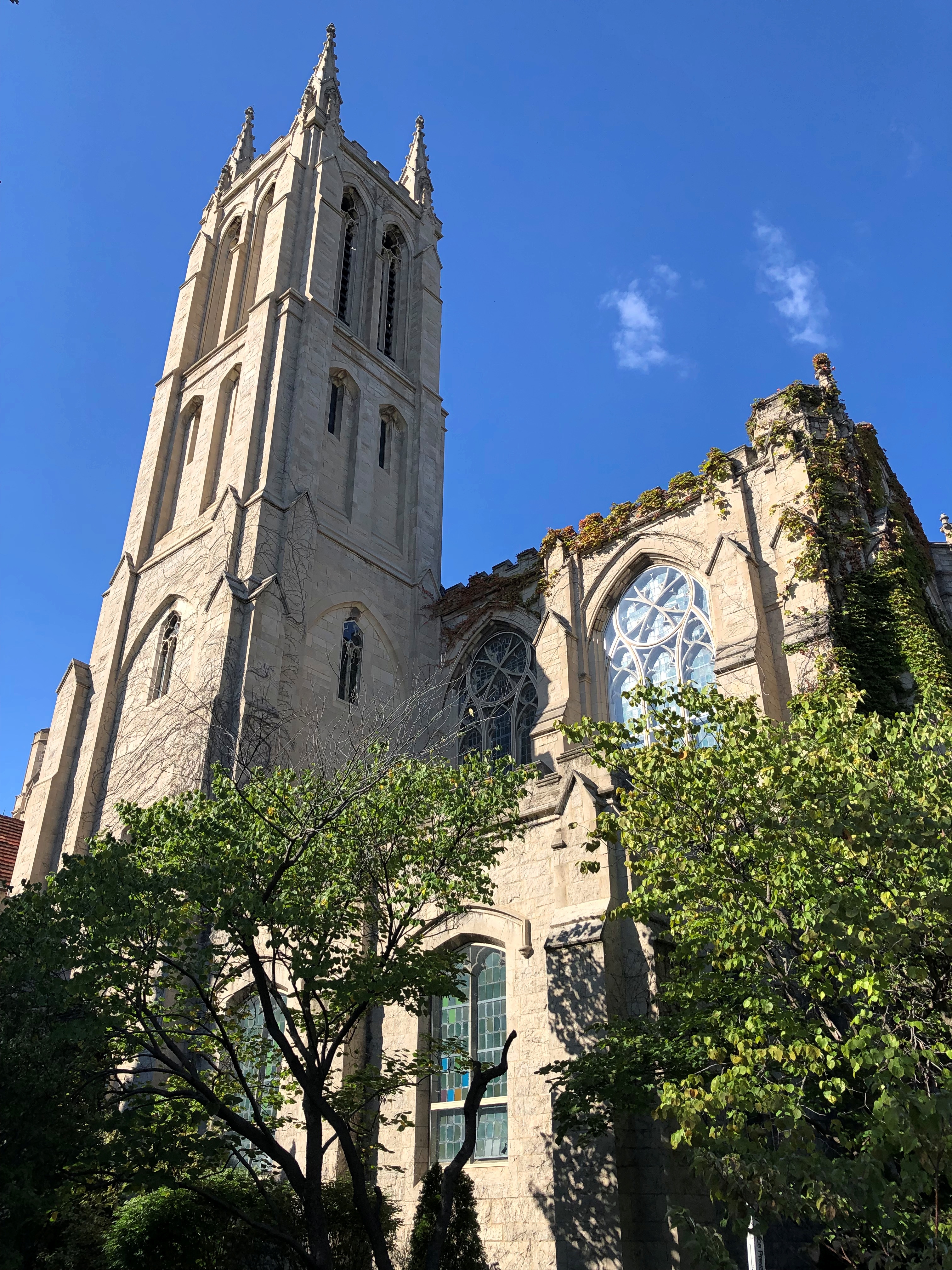
And a Unitarian church of considerable heft, back in Hyde Park.First Unitarian Church of Chicago

I can’t remember visiting a Unitarian church before, though I probably have. Still, I was definitely curious to know how this one is decorated inside. Like this, turns out.
Open House Chicago 2021

Distinctly cool nights now, but on Saturday and today we enjoyed pleasantly warm and clear days. Just right for walking around the city and looking at things.

After an absence last year, Open House Chicago returned this year, though seemingly with fewer sites. But I’m not really sure, since I didn’t compared this year’s list with previous years, and it doesn’t matter anyway. There were plenty of places on the 2021 list that we hadn’t been.

In fact, we attended the event both on Saturday and Sunday — a first for us. On Saturday, we spent our time in Hyde Park and adjoining neighborhoods, mostly seeing religious sites. On Sunday, Yuriko had cake class in Humboldt Park, so while she did that, I made my way through the thick of the city to see a museum and a church in two different neighborhoods. On the way home, we both visited a synagogue in River Forest.

The first place we saw wasn’t a church, however. Just after 10 on Saturday, we paid a visit to the Penthouse Hyde Park, which is currently a high-rise of high-end apartments. The building was developed in the 1920s as the Piccadilly Hotel & Theatre, a hotel with a theater included inside the building, as was more commonly found in New York once upon a time, but not so much in Chicago.
The theater was demolished about 50 years ago. Recent renovations began under new ownership beginning in 2015, with the apartments finally leasing this year. The image above, from 2019, is a little dated, since the entrance has been renovated since then.

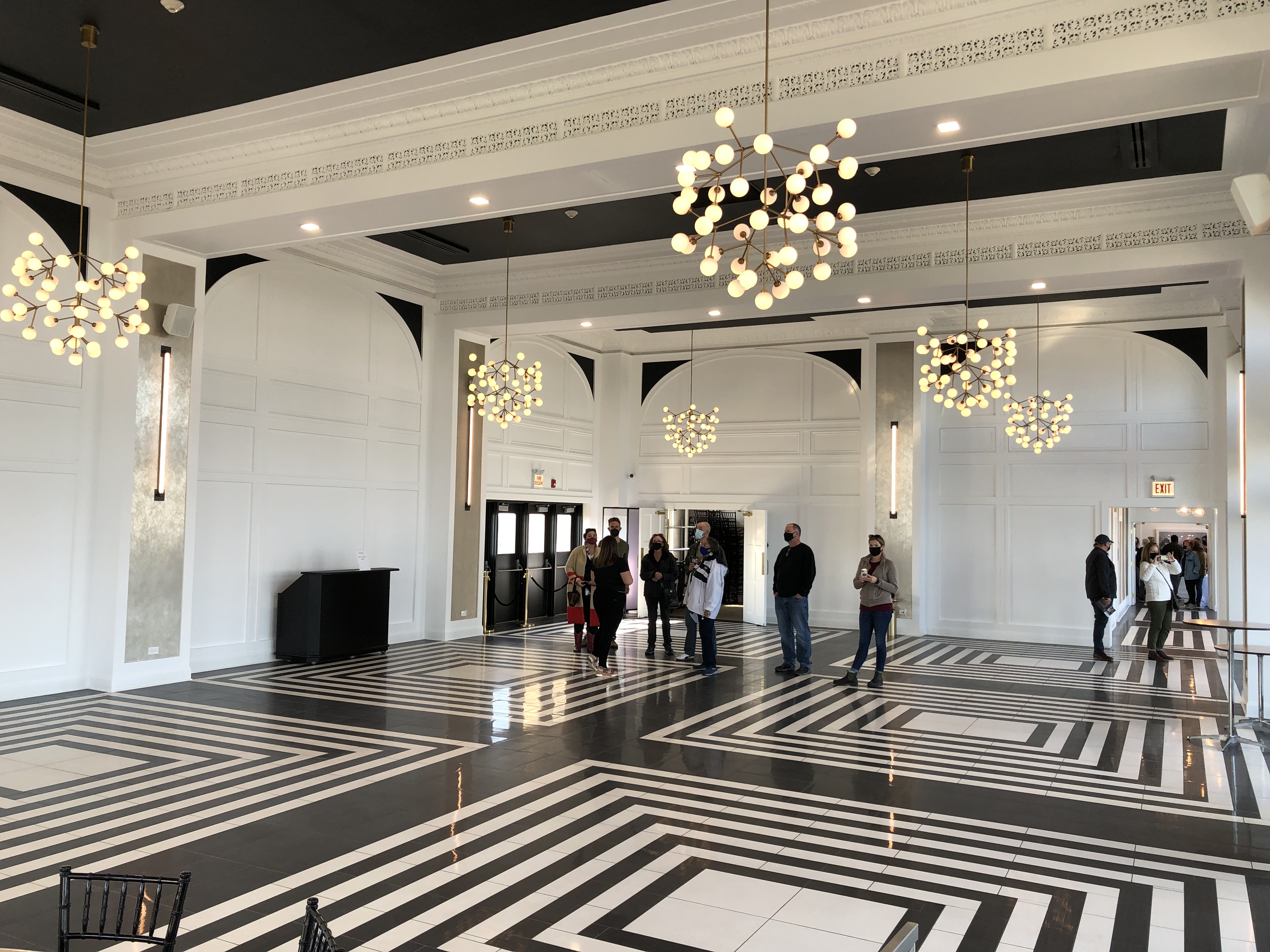
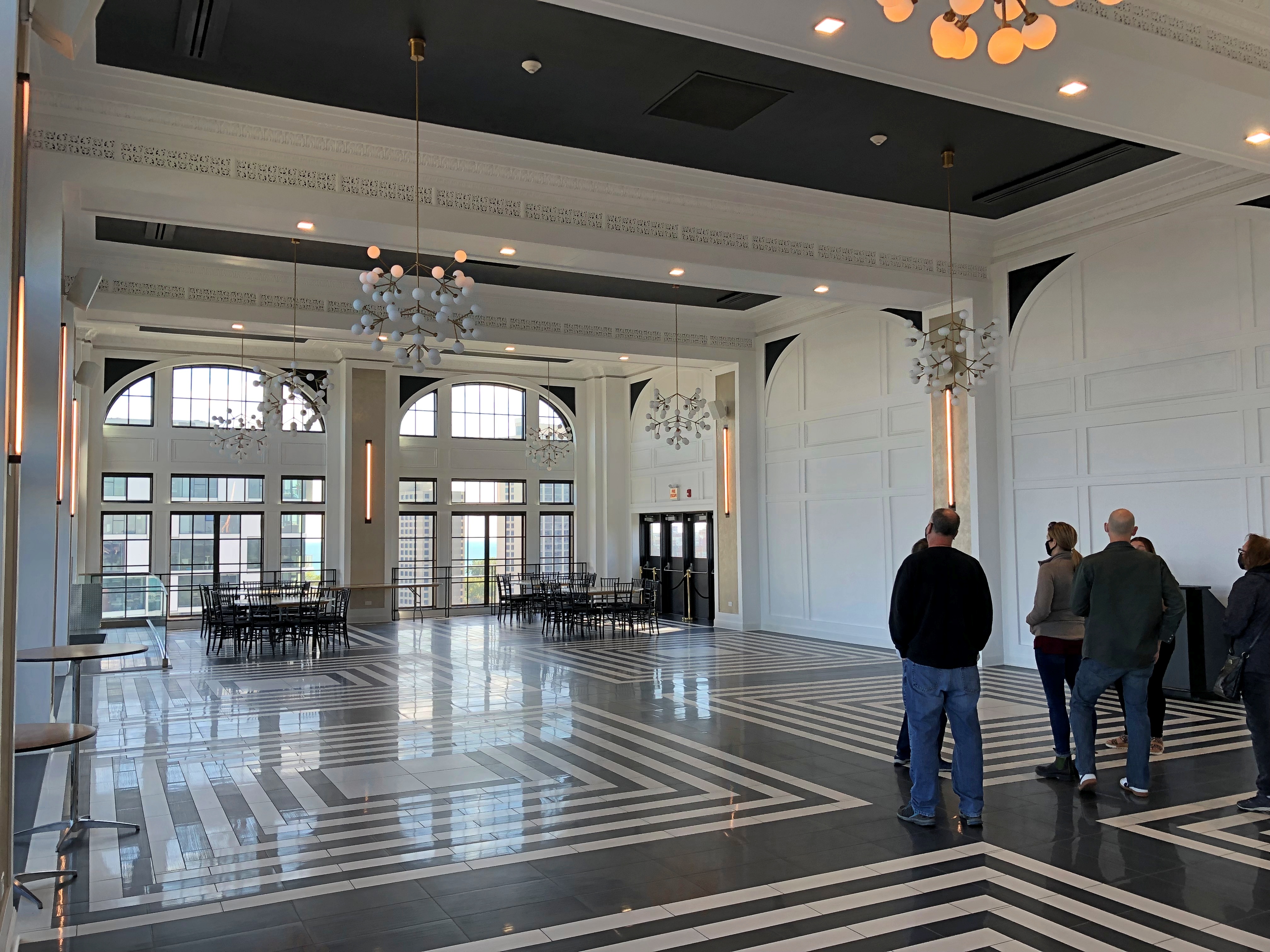
The main attraction at Penthouse Hyde Park for Open House visitors were the ballroom on the top floor, and the views from that floor.

The ballroom.The Penthouse Hyde Park
The Penthouse Hyde Park

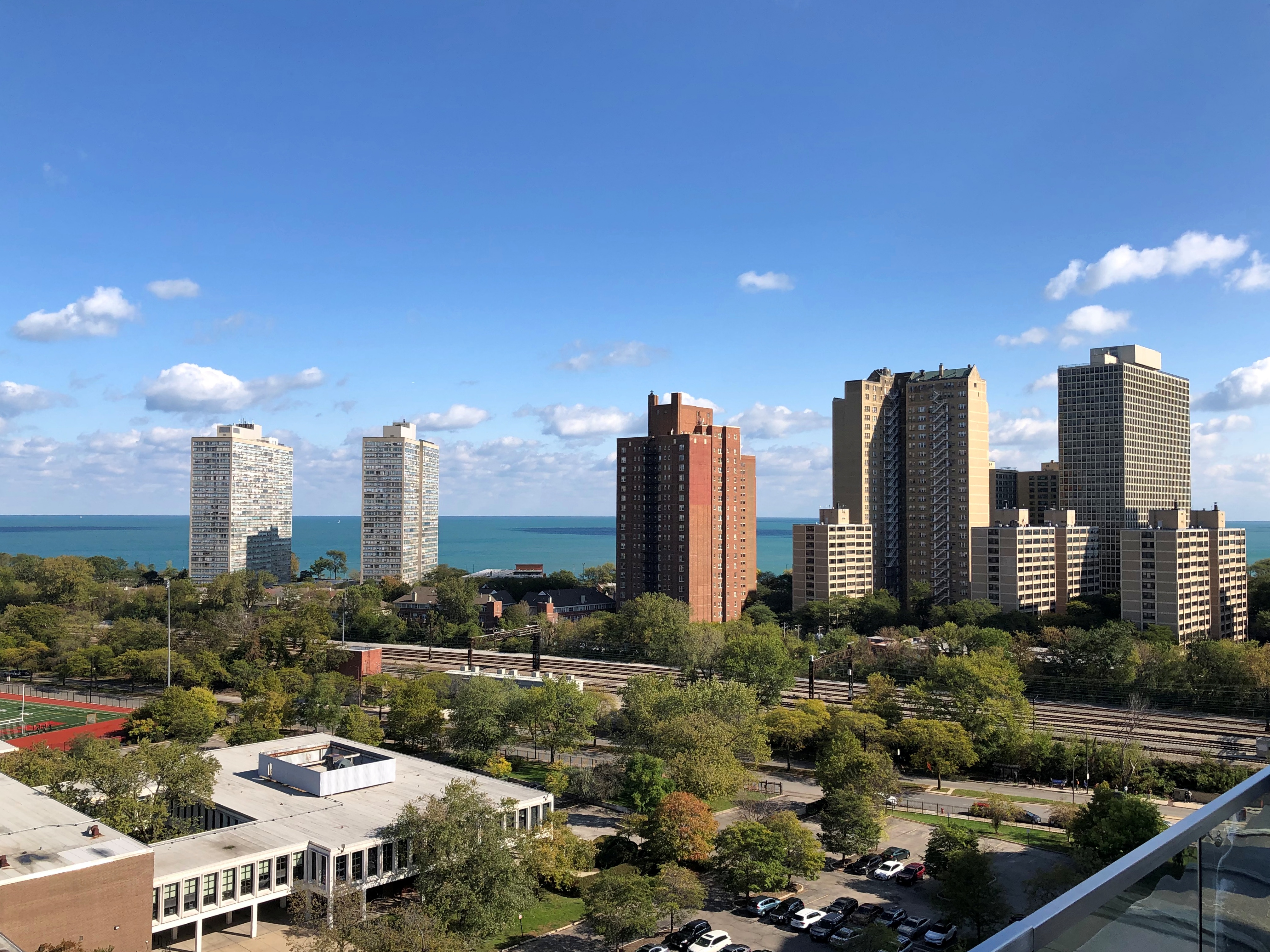
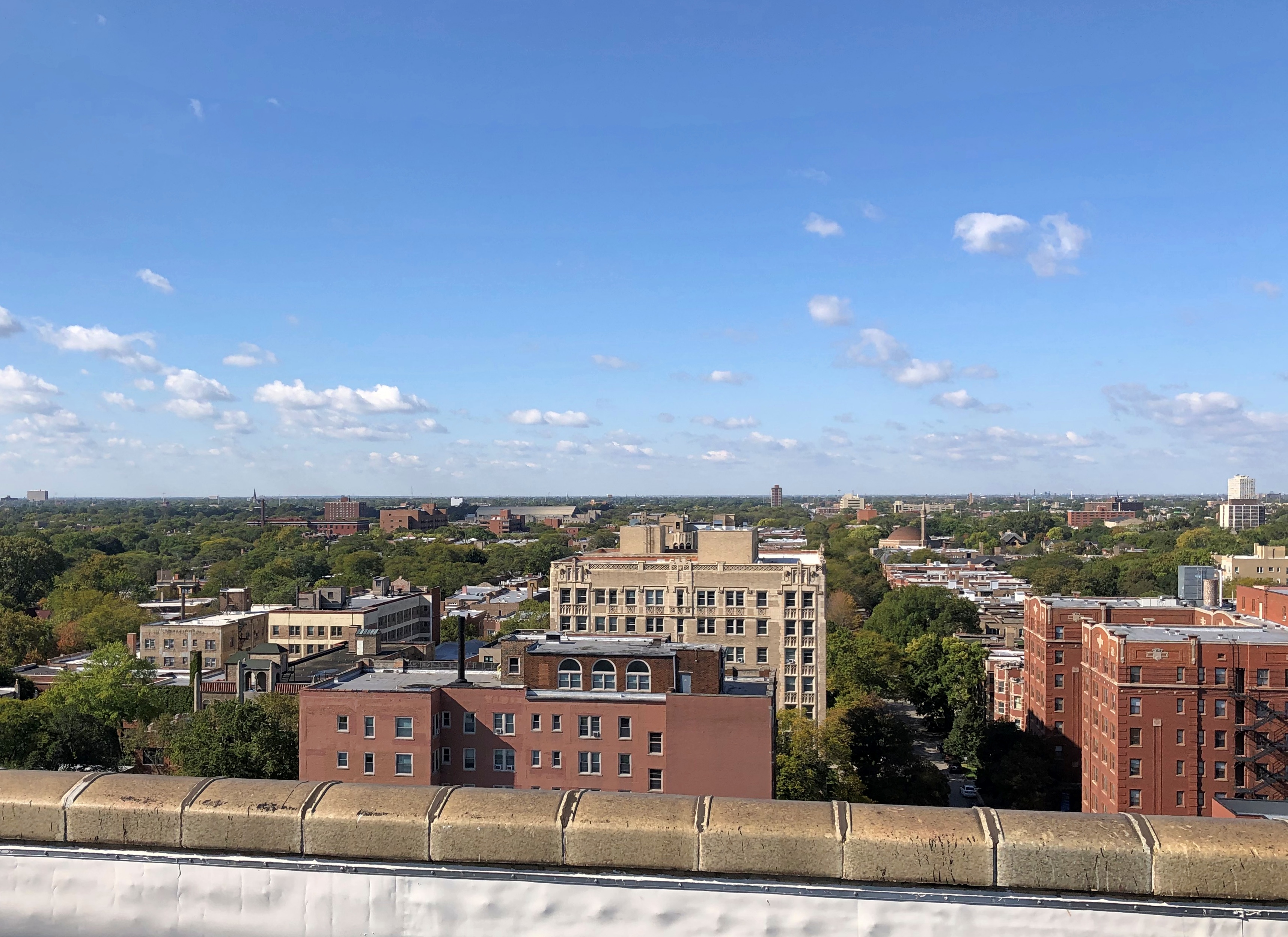
Adjoining the ballroom is an outdoor terrace, 14 floors up. The views are sweeping. These are other apartment towers in Hyde Park, though closer to Lake Michigan.
The Penthouse Hyde Park

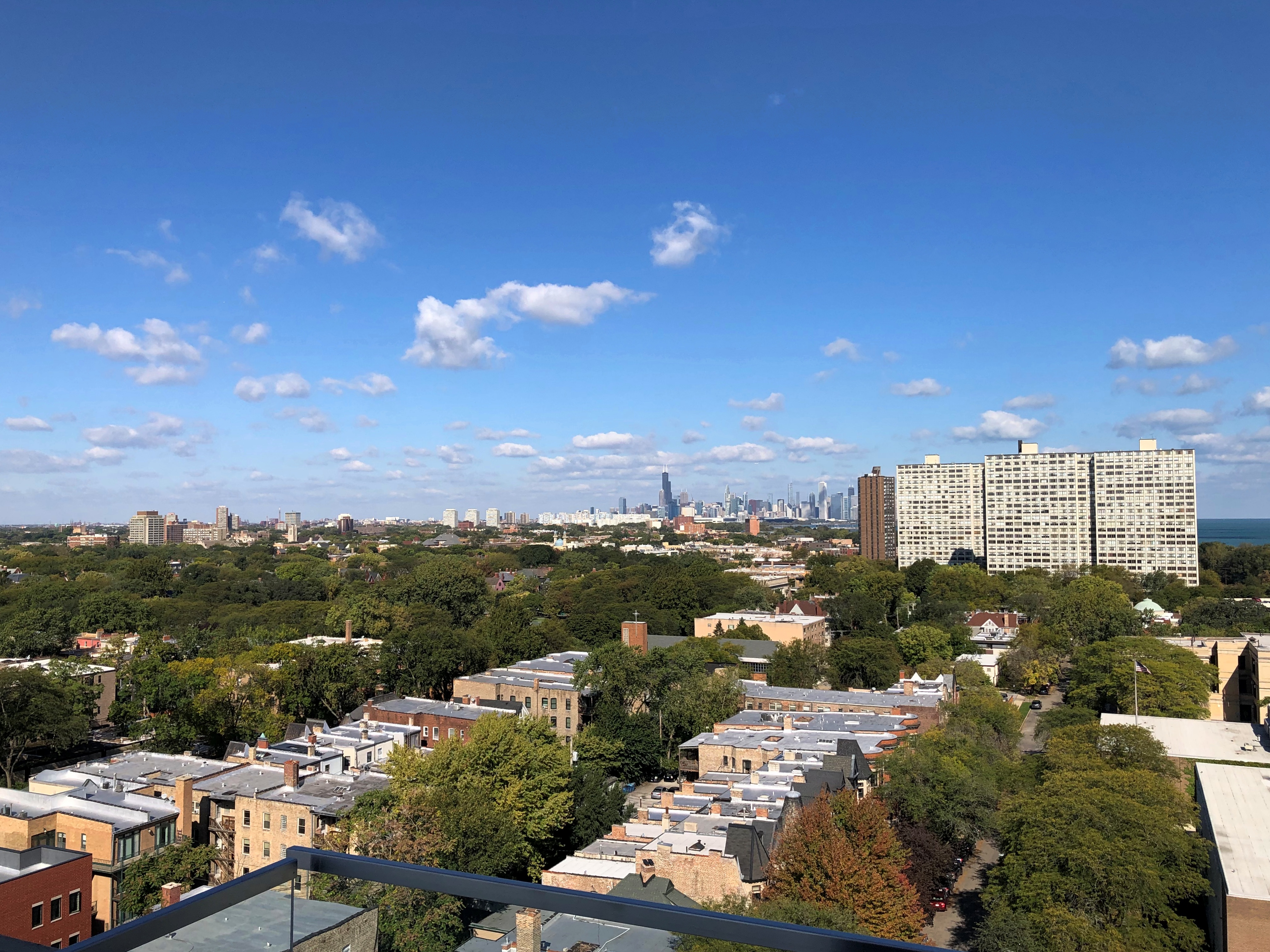
The view toward downtown.
The Penthouse Hyde Park

The view west.
The Penthouse Hyde Park

A good way to start the event. A number of other fine sites were to follow, as usual with Open Houses.
The Normal Theater

One of the things Ann wanted to do when we were visiting was see a showing of Beetlejuice at the Normal Theater, a single-screen moviehouse of ’30s vintage only a few minutes’ walk from her dorm. Since Yuriko didn’t want to see the movie, she stayed in our room with the dog and I went to the show with Ann.

As it happened, I’d never seen that movie. Neither had Ann, but she didn’t have the opportunity to see it when it was new. Not sure why I didn’t. I saw a fair number of movies in my late ’80s Chicago bachelor days — first run, foreign and arthouse — both highly memorable (e.g., The Princess Bride) and much less so (e.g., the ’87 movie version of Dragnet).

It’s a fun romp. A good example of a movie that doesn’t take itself that seriously, entertainment by a talented cast working from a good script that also includes all sorts of interesting visual detail. Tim Burton certainly has a gift for the visual, which you’d think would be mandatory to be a director, but apparently not.

Lots of weirdness, bright and dark, all mixed in effective ways. For a few moments, I’d swear the look of the afterlife owed a lot to German Expressionism, but also Brazil and Kafka, with B horror movies and screwball comedies and Fellini and Saturday morning cartoons and who knows what else thrown in to the rest of the movie.

Now I believe I need to see some of the other Tim Burton movies I’ve missed, such as Edward Scissorhands, The Nightmare Before ChristmasBig Fish, Sweeney Todd and Big Eyes, and maybe re-watch Pee-wee’s Big Adventure and Batman, which I haven’t seen since the decade they were made.

Better yet, I saw Beetlejuice‘s rampant weirdness in a real movie theater. Not a multiplex, either. The Normal Theater is one of the scant few survivors of another age of moviehouses: a neighborhood theater from that time when a lot of neighborhoods had them.
Normal Theater

It isn’t a movie palace, but its Art Moderne style is charming to modern eyes, which are inured to bland interiors.

“The architect was Arthur F. Moratz, youngest sibling of Paul O. Moratz, another prominent local architect,” the theater web site says, which also includes some good pictures. “In Bloomington, Arthur Moratz buildings include the acclaimed Art Deco-style Holy Trinity Catholic Church at the north end of downtown, and his own residence, 317 East Chestnut Street.”

When it opened in 1937, the theater had 620 seats (these days, 385). First movie: Double or Nothing, with Bing Crosby and Martha Raye. Soon it found its niche in the world of Normal moviehouses.

“The Normal, generally speaking, did not screen the just-released prestige pictures and big budget epics,” the web site says. “Those were shown instead at the Irvin (and sometimes the Castle), which were both owned by Publix Great States Theatres. After all, why would the chain compete against itself? For its part, the Normal was known for genre and B pictures, especially westerns and musicals, as well as second-run fare.”

Of course, after its heyday, the theater followed the usual course for such places, with the 1960s and ’70 being unkind to it, though the Normal limped into the ’80s, surviving as a discount theater (dollar tickets and later $1.50).

I remember paying $1 at the Josephine Theatre in San Antonio ca. 1974 to see a Marx Bros. double feature, two of their lesser-shown works, Out West and At the Circus (I think, though one of them might have been The Big Store). Later in the ’70s, that theater showed X-rated pictures, which were advertised in small print in the newspapers, and no one I knew ever went there. I’m glad to say that the Josephine was later restored, and until the pandemic at least, was open.

As for the Normal, I don’t know whether it ever showed dirty movies (the web site is silent on the matter), but in any case, it closed in 1991. “The reason we closed it is that nobody went to it,” the owner said at the time. No doubt.

Amazing to relate, the town of Normal then bought the place, and a combination of federal grants, donations and local tax dollars was used to restore the theater, with a re-opening in 1994. It’s been showing old movies, foreign films and art pictures ever since — everything a nonstandard, nonchain theater should show. Admission: $6. A bargain these days.

This month is devoted to various horror and horror-adjacent movies, serious and not. Besides Beetlejuice, on the bill are Halloween (1978), PG: Psycho Goreman, The Witch, The Brood, Nightmare on Elm Street and its immediate sequel, Destroy All Monsters, Dead of Night (Ealing Studios), Mad Monster Party and The Rocky Horror Picture Show.

I encouraged Ann to take advantage of the theater, and I think she might. The movie theaters I had access to in college, especially Sarratt Cinema at Vanderbilt and the Texas Union Theater at UT, were an entertaining part of my education — something I didn’t appreciate until some years later.

ISU Quad Walkabout

Heavy rain for a while today and cooler temps, but not till afternoon, so there was time for one more lunch on my deck.

Ann invited us to visit her over the weekend, which we did, heading down to Normal on Saturday morning and returning Sunday afternoon, spending the night in a motel near I-55. Daytime temps were nearly as warm as when I dropped her off at ISU in August.

Toward the end of the day on Saturday, it had cooled enough for a short walk — including the dog, whom we brought — around the prettier parts of campus. Mostly that meant the ISU Quad. What’s a university without a quad or two?

As mentioned yesterday, most of the foliage is still green. An eastern approach to the Quad.ISU Quad

ISU Quad

“The Hand of Friendship,” which honors Robert G. Bone.ISU Quad

Bone (1906-1991) was the ninth president of Illinois State Normal University, which was renamed Illinois State University during his tenure. Though only president for 11 years (1956-67), he oversaw a lot of construction, including the tower where Ann lives. Later, the school’s student center was named after him.

The Quad also counts as the heart of the arboretum that spans the campus — the Fell Arboretum, to cite its formal name, honoring one Jesse Fell.

Fell (1808-87) was the sort of businessman that America spawned in the 19th-century — lawyer, real estate speculator, newspaper publisher and sawmill owner. Specific to Illinois, he was a friend of Lincoln’s. He founded towns in central Illinois and helped organize counties there as well, and is considered a founder of ISU.

As for the arboretum, apparently Fell not only profited from cutting down trees, but was a fanatic when it come to planting them, so ISU named it in his honor.

Elsewhere, we saw a plaque on a rock honoring the horticulturist who designed the original landscape for the campus, William Saunders (1822-1900), who also happened to be a founder of the National Grange of the Order of Patrons of Husbandry, an organization I had only scant knowledge of before. That is to say, little that I remember, though I’m sure heard about the Granger movement in a U.S. history class. Always good to learn or re-learn something.

In the middle of the Quad is a lush garden.ISU Quad

ISU Quad

ISU Quad

The centerpiece is the Old Main Bell, dating from 1880.
ISU Quad Old Main Bell

Old Main was the campus’ first building, which stood from 1857 to 1958. A memorial honors the building not far from its bell. Unusually, it depicts all four elevations of the building.
ISU Quad Old Main
ISU Quad Old Main

We wandered on. This is Cook Hall.

“One of Illinois State’s most interesting buildings and the oldest one still standing on the Quad, Cook Hall was originally built to be a gymnasium,” ISU tells me. “It was completed in 1897 and was named after John Williston Cook, the University’s 4th President (1890-1899). He earned his diploma in 1865 from Illinois State Normal University and in 1876 he became a Professor of Mathematics.

“The building has also been known as the ‘Old Castle’ or ‘The Gymnasium.’ The governor at the time, John Altgeld, had a great liking for medieval castles and insisted all new state construction during his term in office resemble castles. You’ll find a Cook Hall look-alike at many other state schools; they are called ‘Altgeld’s Folly.’ ”

Really? I had to look into that more, and found this Wiki item about Altgeld Castles. It does indeed seem that a raft of crenellated, or quasi-crenellated buildings at Illinois state schools dates from the 1890s. I remember seeing Altgeld Hall at UIUC, but didn’t know it was part of a pattern. An eccentric pattern. That’s two things I learned (or relearned) today; makes for a good Monday.

The Former Hokkaido Government Office Building

We spent time in Sapporo during our late September/early October 1993 visit to Hokkaido, and one of the more charming structures to be found there is the Former Hokkaido Government Office Building. A handsome pile of 2.5 million or so bricks.Old Hokkaido Government Building

I understand the local nickname is Akarenga, or Red Bricks. That seems fitting.

The building dates from early Meiji period, when settling Hokkaido was seen as a priority, and for a time housed the offices of the Hokkaido Development Commission, and later the government of the prefecture. It burned down twice in the earliest years and was always rebuilt (but I don’t think it fell into a swamp).

“Completed in 1888, the American neo-baroque style brick style brick building was designed by engineers of the Hokkaido Government and was constructed with many local building materials…” says the prefectural government.

“In 1968, it was restored to its original state in commemoration of the centennial of Hokkaido… and it was designated as a National Important Cultural Property in 1969.”

These days (as in 1993), it houses a small museum and the prefecture’s archives. I know we went in, but I don’t remember what was on display. Note the flag on the pole on the pamphlet I picked up at the building, but not in the picture I took.

I might not have seen the flag of Hokkaido there, but I do like it.

Two More Milwaukee Churches

Royal road to the unconscious, eh? Last night a pleasant elderly couple appeared in a dream: “Mr. and Mrs. Folger.” He didn’t look like anyone I knew, but she looked like Virginia Christine. I know, of course, that wasn’t her name in the commercials, but tell it to the unconscious.

The last two Doors Open places we visited in Milwaukee on Saturday were churches, not far from the cluster of churches we saw in 2017 along or near Juneau St. One this time was St. Paul’s Episcopal Church.St. Paul's Episcopal Milwaukee

A Richardsonian Romanesque design by the busy Victorian architect Edward Townsend Mix, completed in 1884 for the oldest Episcopal parish in Milwaukee. No Cream City brick this time, but rather another Wisconsin material: red Lake Superior Sandstone, found near the Apostle Islands, and (I think) similar to Jacobsville Sandstone up in the UP.St. Paul's Episcopal Church, Milwaukee

St. Paul's Episcopal Church, Milwaukee

The church is known for its Tiffany windows, one of which is reportedly the largest opalescent glass window the studios of Louis Comfort Tiffany ever made, at 22 feet x 28 feet. That would be “Christ Leaving the Praetorium.” My pictures didn’t turn out so well, but fortunately there’s a public domain image available.

A few blocks away is St. Rita Catholic Church. Its current iteration didn’t exist when we were nearby in 2017. The church was completed only last year.St. Rita Church Milwaukee

“St. Rita Church at 1601 N. Cass St. began in 1933 as a mission outpost of the old Italian parish, the Blessed Virgin of Pompeii Church in Milwaukee’s Third Ward,” the Three Holy Women Parish web site says. “Its basement church was blessed as a new independent parish in 1937, then a building was erected and blessed in 1939… In 2018, the church was demolished with plans to build St. Rita Square, a six-story senior housing campus operated by Capri Senior Communities, along with a new St. Rita Church.”

Some elements of the new church were part of the old St. Rita, and a few were even part of the Blessed Virgin of Pompeii, which was razed in 1967 for highway construction.

“One of those artifacts, an eight-foot-tall bronze statue of Gabriel, is already visible to passersby,” Urban Milwaukee reported in early 2020. “Sculpted in 1904, the year the pink church [Blessed Virgin of Pompeii] was constructed, it had been on the top of St. Rita since 1969. It now rests atop its third church.”

St. Rita has an inviting but relatively spare interior.
St. Rita Church Milwaukee

The church also has some nice stained glass.
St. Rita Church Milwaukee

I didn’t know much about the saint. Anything, actually. She’s Rita of Cascia (1381-1457).
St. Rita Church Milwaukee

Now I know a little more, such as she’s the patron of abused spouses and difficult marriages, among many other awful situations.

An FLW Block, Though Built by Mr. Richards

Once upon a time, Frank Lloyd Wright took a stab at designing affordable housing. He didn’t get far for various reasons (including, maybe, his temperament), but relics of the effort occupy the north side of the 2700 block of W. Burnham St. in Milwaukee to this day. We arrived to take a look around noon on Saturday.

I bought some postcards from the nonprofit that now owns most of the block. One line on one of the cards says: “Burnham Block is the only location in the world where six Wright-designed homes sit side by side.”

I’d say that’s reaching for a distinction, but in any case the block was worth seeing. FLW is usually worth a look, even in the case of an obscure warehouse building in otherwise obscure Wisconsin town.

The houses on the block have that FLW look, all right.Burnham Block, Milwaukee

Burnham Block, Milwaukee

At one point the owner of the house on the left, which is in the middle of the block, had the temerity to put siding on the house, which horrifies the Wright purists, who have been acquiring the houses one by one in recent years, but haven’t gotten that one yet. When they finally do, it will be restored to its 1910s look, once funds are raised (always a consideration with FLW works).

The six are American System-Built Homes. To quote from the last time we saw one, which was in 2015: “Between 1915 and 1917, Wright designed a series of standardized ‘system-built’ homes, known today as the American System-Built Homes, an early example of prefabricated housing. The ‘system’ involved cutting the lumber and other materials in a mill or factory, and then brought to the site for assembly; thus saving material waste and a substantial fraction of the wages paid to skilled tradesmen.”

Arthur L. RichardsMuch more detail on the Burnham houses is at web site of the organization that owns most of them.

On Saturday, only one of the houses was open for a tour (the B-1 model, roughly 800 square feet), taking about a dozen people at a time, so we had to wait 20 minutes or so each to get in. While we waited, a docent talked about the houses, and FLW, and the houses’ developer, whom he quarreled with — Arthur Richards, pictured in an early 20th-century ad — the cost-savings measures, the history of the properties after Wright gave up on the American System but before the world acknowledged them as products of The Genius, which was decades later, and more.

This is the B-1, with people waiting on the porch to get in.
Burnham Block, Milwaukee

The inside is impressive in a number of ways, but mainly in its efficient use of the small space, and its inexpensive wood buffed up to look elegant. Two pictures in the slide show here that illustrate that. Nice place to visit, I thought, but not enough room for essential clutter.

Doors Open Milwaukee ’21

Warmish weekend, good for walking around. We did that in Milwaukee yesterday, because the Doors Open Milwaukee event has returned after last year’s cancellation. We drove up in mid-morning and returned not too long after dark, as we did in 2019 and 2018 and 2017. One difference this year was that a few — not all — places required a mask.

Doors Open Milwaukee 2021

Another wrinkle this time is that we took the dog. Leaving her at home alone for more than a few hours is just asking for a mess to clean up upon return. So that meant for most of the places we went, we took turns, as one of us stayed with the dog, either in the car or walking her around.

First we went to the Bay View neighborhood south of downtown, a place that got its start as a 19th-century company town. In our time it seems pretty lively. There we sought out St. Lucas Evangelical Lutheran Church and St. Augustine of Hippo Catholic Church, both late 19th-century/early 20th-century edifices themselves, distinctly built of cream brick.

In the Burnham Park neighborhood of Milwaukee, southwest of downtown, you can find the Burnham Block. In fact, an organization called Frank Lloyd Wright’s Burnham Block, which is part of Wisconsin’s Frank Lloyd Wright Trail, very much wants you to come see the six small houses on that block, designed by The Genius.

Who are we to resist the call of FLW? We went there next. So did a fair number of people late that morning, more than at any other place we saw yesterday. This was part of the line to get in.Burnham Block, Milwaukee

Taking turns looking at FLW’s work took up a fair amount of time. Afterward we repaired to a park for a drive-through-obtained lunch. Then we went to Forest Home Cemetery. Usually, I can’t persuade Yuriko to visit cemeteries, but the Doors Open feature was its chapel, which she was willing to visit.

Then, to my complete surprise, she wanted to walk the dog through the cemetery as I stopped here and there among its many stones and funerary art. Forest Home is an historic rural cemetery movement cemetery, as fine an example as I’ve seen anywhere.

We had time enough after the cemetery for two more churches in East Town — or maybe the Lower East Side, hard to tell — St. Paul’s Episcopal Church and St. Rita’s Catholic Church.

By the time we’d finished those, it was 5 pm and Doors Open was done for the day. But I didn’t quite want to head home. I wanted to find a place to see the Milwaukee skyline, something I’d never done in all the years I’ve been coming to that city.

It didn’t take long.

That’s the view from Veterans Park on Lake Michigan, and it illustrates one of the advantages of the Milwaukee MSA (pop. 1.57 million) compared with the Chicago MSA (pop. 9.6 million).

The logistics of getting to that view of Milwaukee were exactly this: drive to Veterans Park, park on the road for free, and walk about two minutes. To reach a similar vantage to see the vastly larger Chicago skyline, I shouldn’t have to point out, is much more complicated, and free doesn’t enter into it.

Veterans Park in Milwaukee also has some nice amenities, such as a place called Kites.Kite shop, Milwaukee

Kite shop, Milwaukee

At Kites, you can buy kites, as well as snacks. We got some nachos.Kite shop, Milwaukee

People were out flying kites. The wind was up but it wasn’t too cold, so it was a good afternoon for it. If we’d gotten there earlier, we might have as well.Kite flying, Milwaukee

We walked the dog again, this time a little ways along the lake.
Lake Michigan, Milwaukee

It was a good afternoon for that, too.