The Fourth Presbyterian Church of Chicago

Saturday was the annual Churches by Bus tour organized by the Chicago Architectural Foundation, which we were on last year and the year before. Not this year. We’ve been to two of the five churches listed on the tour. The tour isn’t precisely cheap, so I wanted a little more novelty. Four out of five, maybe.

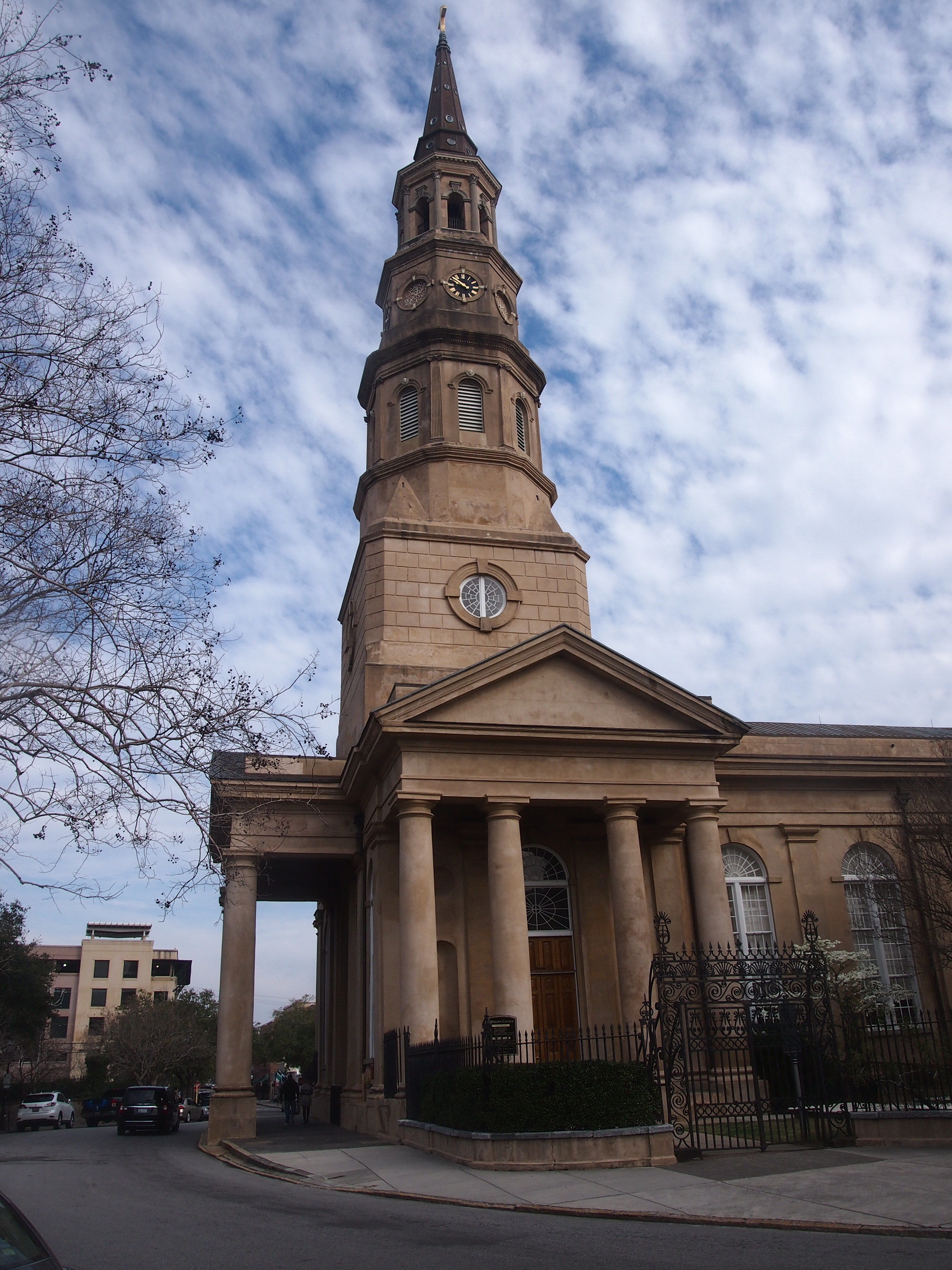
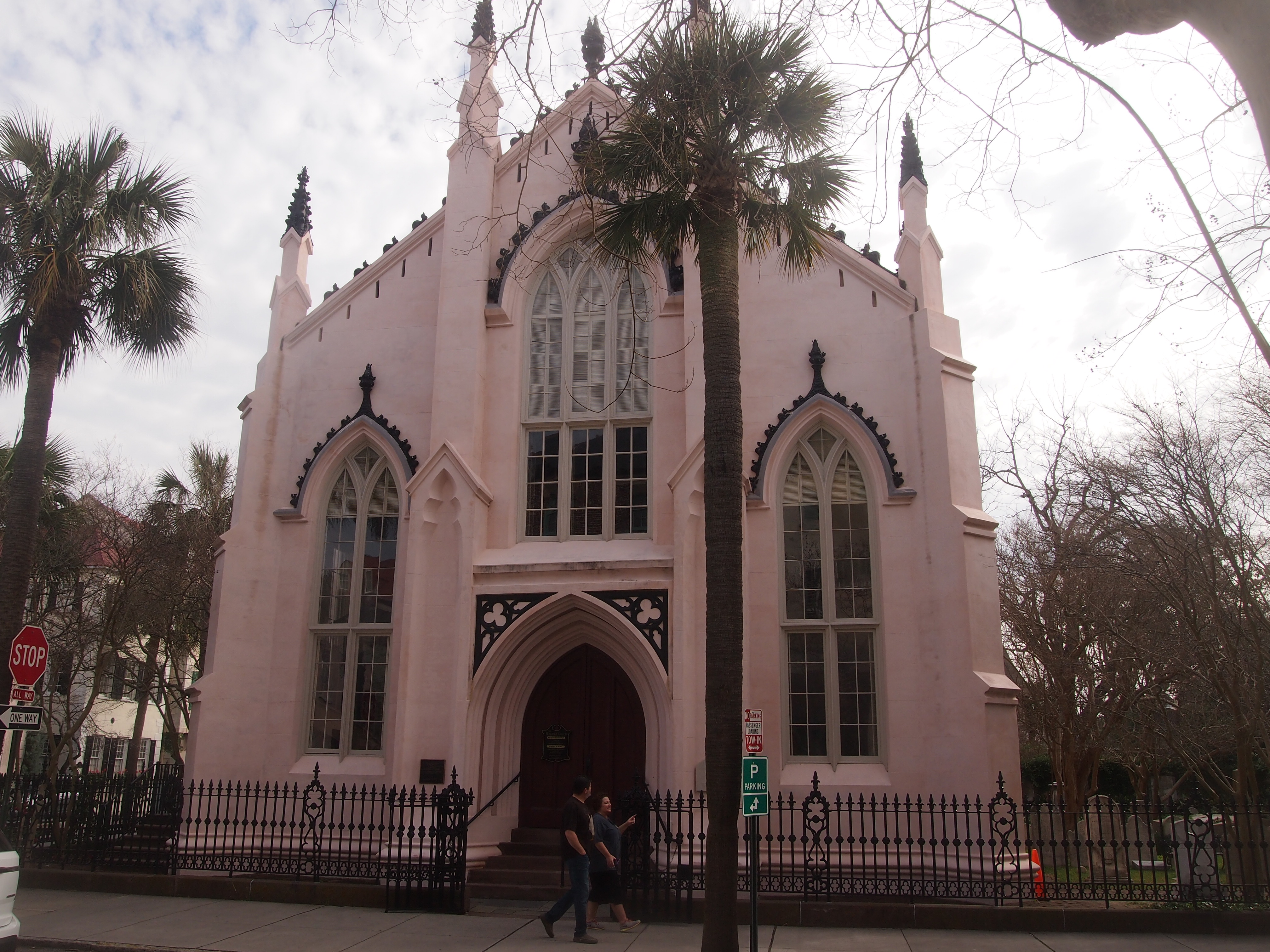
So we planned to look at four churches around Michigan Ave. while in the neighborhood. Nothing new — almost nothing new — but no charge either. As it turned out, only two of the four were open, and a third had a service in progress; not the time to wander around looking at it. The open one that wasn’t busy was Fourth Presbyterian Church of Chicago on Michigan Ave., a fine Gothic structure in the heart of the shopping district.
Fourth Presbyterian Church Chicago

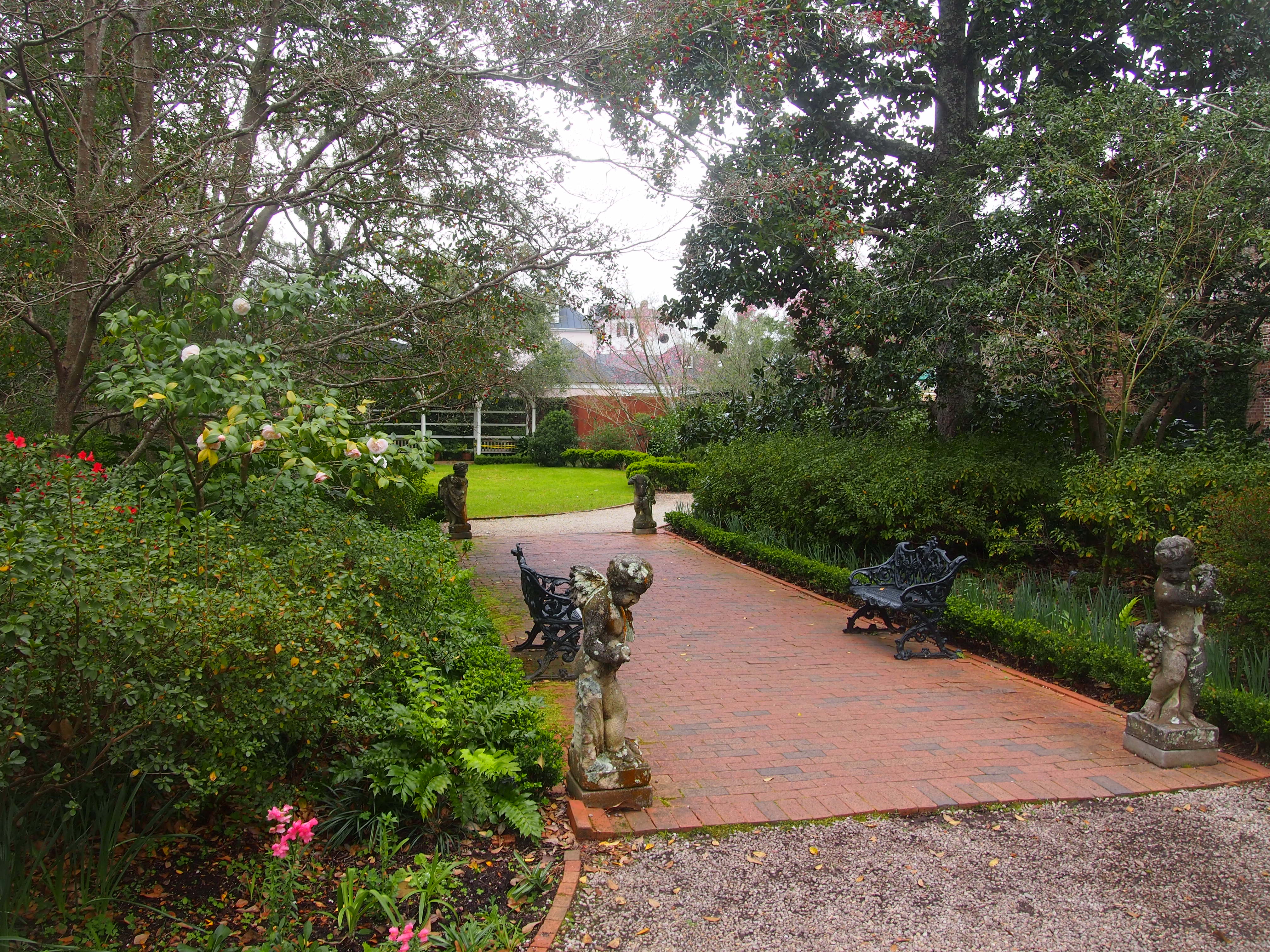
Nice courtyard to the south of the main building, too.

Fourth Presbyterian Church Chicago

When the church was finished in 1914, however, that part of Michigan Ave., still called Pine St., was no great shakes. Cheap land, in other words. All of the action on Michigan Ave. was still south of the Chicago River. That changed with the completion of the Michigan Avenue Bridge over the river in 1920, and Fourth Pres has watched temples of mammon grow up around it since then.

A fine interior. Been inside a number of times over the years. The ceiling’s a little dark, but lights up there would be expensive not only in electricity usage, but maintenance, I figure.

Ralph Adams Cram (1863-1942), an architect who did a lot of ecclesiastical work, designed the church. He’s also known for the Cathedral Church of St. John the Divine in Manhattan.

Adjacent to the church is a much newer structure, the Gratz Center, which was completed only in 2013 to house a preschool program, the Buchanan Chapel, a new dining room and kitchen, offices, and rooms. We took a look at the second-story Buchanan Chapel, which is mostly spare, but well lit with natural light, and with a labyrinth on its floor. The chapel’s architect was Brian Vitale, in Gensler’s Chicago office.

Up in the corner of the chapel hangs “Quaternion,” a 2014 piece by Alyson Shotz, a Brooklyn artist.

"Quaternion," a 2014 piece by Alyson Shotz, Interesting. Often, that’s all I ask from bits of the world.

Michigan Avenue on a September Saturday Afternoon

We went downtown again on Saturday, more specifically to Michigan Avenue and within a few blocks to the east and west of that famed street. A famed street, and crowded on a Saturday during the time of year when it’s still warm.
Michigan Avenue Sept 2016The sidewalk wasn’t always that crowded. But sometimes it was, suddenly.

At the spot officially called Pioneer Court — I don’t know anyone who actually calls it that — in front of the Equitable Building and just south of the Tribune Tower, the new Michigan Avenue Apple Store is under construction, to take the place of the store further to the north on the avenue. They say it’ll be a humdinger when it’s done.
Pioneer Court, Chicago, Apple under construction 2016Wonder whether the bronze Jack Brickhouse will be in Pioneer Court near the Tribune Tower for much longer.
Jack Brickhouse statue, Pioneer Court, Chicago, 2016After all, the Tribune hasn’t owned the Cubs in a while, and the Tribune isn’t even going to own the Tribune Tower much longer (the company got $240 million for it). Then there’s the matter of Brickhouse being dead for nearly two decades. That’s a long time not to be on the radio. Time flies, people forget, your statue ends up in a less prominent location. Just speculation.

The plaza across the street from Pioneer Court, in the shadow of the Wrigley Building, was just the place on Saturday for some wedding photography. At least this party thought so, and they could do a lot worse.
The bust in the corner is of Jean-Baptiste Pointe DeSable, the fellow from Haiti — I suppose that would be from Saint-Domingue — who founded a trading post on the Chicago River near this site in the 1770s, making him the first non-Indian Chicagoan. I think that bust used to be where the Apple store is being built.
Not far away, just at that moment, was Jeremy the Magician from Britain. That’s what his hat said, anyway, and he had the accent for it, and a Union Jack vest, in case you didn’t get the point.
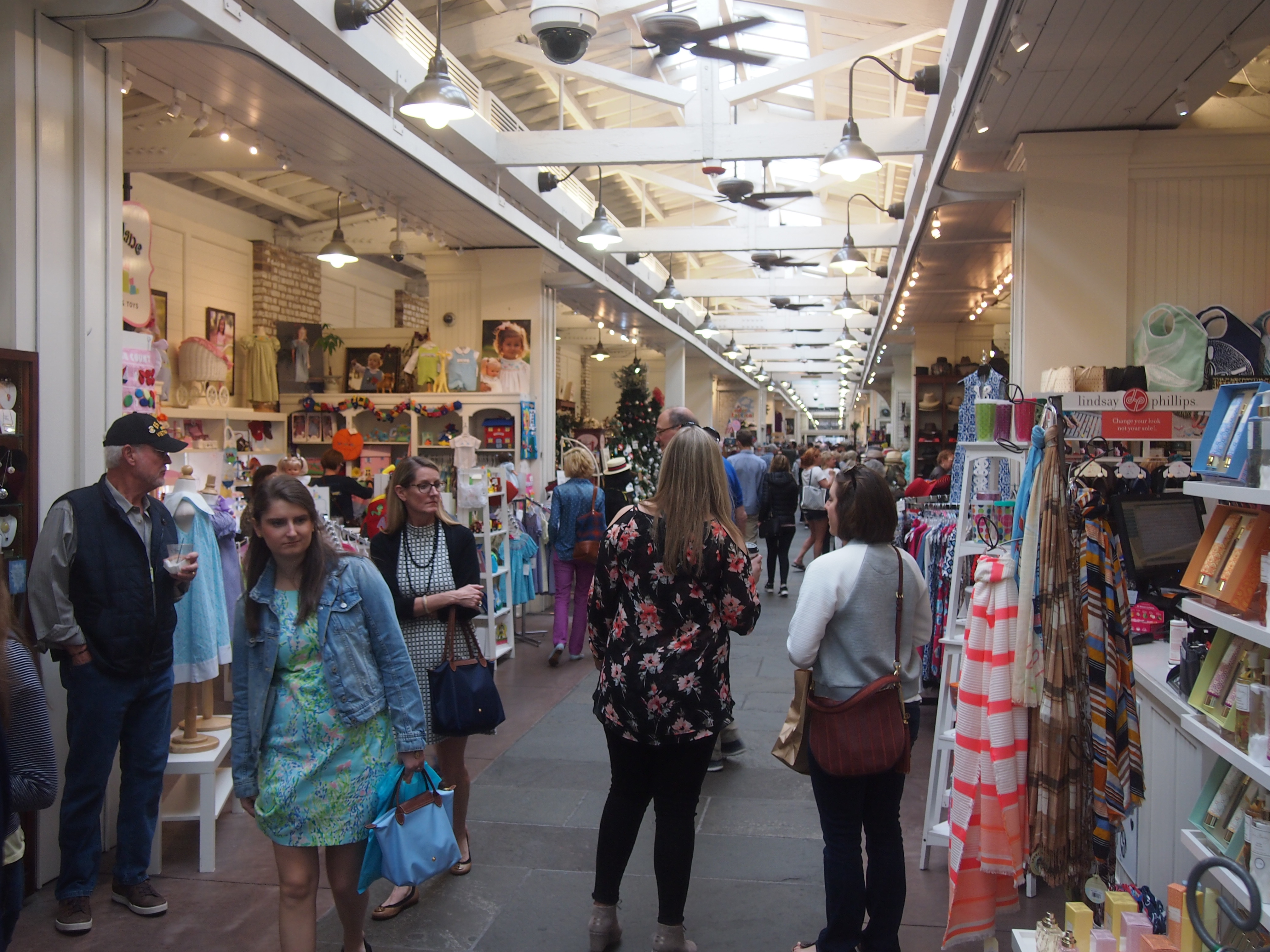
Michigan Avenue Magician Sept 2016Further north, in fact not far from the Chicago Water Tower (can I call it iconic? Too bad that word’s been beaten to death), this fellow had a different sort of message.Street preacher, Michigan Avenue, 2016

Namely, you’re going to Hell.

(Capitalize “Hell.” English Language & Usage Stack Exchange says: “No less an authority than Fulton Sheen had the galleys for his latest book come back from the typesetters with ‘Heaven’ and ‘Hell’ knocked down to lowercase. He carefully re-capitalized each occurrence. When his editor called to request an explanation, he gave what I think we can regard as the definitive answer to [the] question: Because they’re places. You know, like Scarsdale.)

Scenes of Post-People’s Republic Mongolia

The part of rural Mongolia that we saw in September 1994 — in and near Gorkhi-Terelj National Park, 20 or so miles from Ulaanbaatar — looked a lot like this. Ulaanbaatar wasn’t a sprawling kind of place in those days, unless you count the large neighborhoods composed of thousands of ger (yurts).
Rural Mongola 1994In places the trees were fairly dense, with streams flowing through the land. Most of all, though, it felt remote. Even more remote than the arguably further-from-absolutely-everything Cape Leeuwin in Western Australia, because the infrastructure was so much more developed there, as far SW as you could go on the entire continent.

Ulaanbaatar didn’t feel so remote, though in ’94 sometimes livestock were seen wandering the streets. I wonder if that’s now a thing of the past for the Mongolian capital, as traffic inevitability increases. How do I know that traffic has increased in 20-plus years? That’s just one of those things that happens.

These prayer wheels were at the Gandantegchinlen (Gandan) Monastery in the city.
Gandantegchinlen (Gandan) Monastery MongoliaFrom the looks of more recent pictures, some restoration work has been done since then. At least, I’m fairly sure that the stock photo I linked to was taken at about the same place I stood; it certainly looks like it, taking into account various renovations and additions over the years.

In the city, we also visited the Mongolian Natural History Museum, known the world over for its dinosaur artifacts. “The museum is particularly well known for its dinosaur and other paleontological exhibits, among which the most notable are a nearly complete skeleton of a late Cretaceous Tarbosaurus tyrannosaurid and broadly contemporaneous nests of Protoceratops eggs,” Wiki says. I remember those eggs.

And, of course, the big skeletons. You could go up on a balcony for a look at them.

Mongolian Natural History Museum - dinosaursPhotography involved paying an extra fee. Or so the museum staff told us at the entrance. None of us paid such a fee, and pretty much everyone in our group took pictures, though as you can see, the light was lousy. I don’t even think any staff were in the big dinosaur room with us, keeping an eye on us. Things were lax. Hope nobody over the years took advantage of that to take anything besides pictures.

The Wheeling Superdawg ’16

More than six years ago, I wrote, “What to do after touring a mansion exuding poshness, if you happen to be hungry? Go to a hot dog stand.

“Not just any hot dog stand, but the drive-in Superdawg. Not the original, which is on the Northwest side of Chicago, but the Wheeling, Ill., iteration that opened in January. It was on our way home.”

On Saturday, I noticed that the Wheeling Superdawg was on the way to the Chicago Botanic Garden, more or less. So we went again, the first time in more than six years. Before we got there, Yuriko said she didn’t remember any such place. But as soon as we arrived, she did. It’s hard to forget these characters.

Wheeling Superdawg 2016Those are the rooftop boy and girl dogs — awfully heteronormative of them, some nags might say — but they’re also featured in a lot of other places, including on the packaging and the napkins. They’re also on the sign that faces the road (Milwaukee Ave. in Wheeling). These anthropomorphic hot dogs rotate slowly, unlike the static ones on the roof.
Wheeling Superdawg 2016This time I had the original Superdawg. I forgot to order it without mustard, but other than that I liked it. Yuriko enjoyed her hamburger.

Back in ’10 I noted: “Each order station also has a sign that says: ‘We’re super sorry, but we’re unable to accept credit cards because of our unique drive in/carhop service…’ We went inside anyway, and they don’t accept cards there either. Retro indeed.”

I can report that in 2016, inside the restaurant at least, all manner of credit and debit cards are now accepted. Guess they figured the all-cash model was losing them some customers.

One more thing today: I’d be remiss if I didn’t note the 50th anniversary of Star Trek, though I have only the vaguest memories of it as a prime-time show in the late ’60s. One of the stations in San Antonio started showing it in the after-school slot in 1973, when I was in junior high. That I remember. The first episode the station aired was “Devil in the Dark.”

The series, and all its successor iterations, have been hit or miss over the years. Its starting concept — the pitch Roddenberry supposedly made — was “Wagon Train to the Stars.” Does anybody remember Wagon Train any more?

My own fondest memory of the show I’ve written about before: “More than 30 years ago, I spent a few days camped out in a dorm room at MIT. I noticed a few things while there, such as that everyone on the hall went to the common room to watch an afternoon showing of Star Trek, and everyone knew the lines. (The original series; because this was 1982, the only series. Patrick Stewart was still just a Shakespearean actor who’d played Sejanus for the BBC.).”

Non-Plants in the Chicago Botanic Garden

I thought of “Manmade Things in the Chicago Botanic Garden” as a title, but in a real sense everything in a highly cultivated garden is manmade, even if the raw materials of the displays are descended from naturally occurring plants. Artificial selection invented the tea rose, after all.

The Chicago Botanic Garden includes many things besides plants. Such as this sculpture in the Heritage Garden.

Chicago Botanic Garden - Carolus Linnæus - Robert BerksIt’s instantly recognizable as a Robert Berks bubble-gum statue, in this case dating from 1982. Based on a casual search, his statues seem to be esteemed these days, especially now that he’s dead, but I’m with the art critics who were upset about the Einstein statue in DC when it was new. They’re ugly. That’s my two-word critique.

Anyway, the subject is fitting for a garden, since it’s Carolus Linnæus. In fact, I’ve seen his carved face before in such a place, but a long way from metro Chicago.
Carolus Linnæus - Adelaide Botanic Garden - South AustraliaThat’s Linnæus at the Adelaide Botanic Garden in 1991. A much more conventional bust, certainly, and maybe not that interesting. But at least it isn’t ugly. More about the Chicago-area Linnæus statue is at the always delightful Public Art in Chicago.

This is “Boy Gardener” in the Rose Garden.

Chicago Botanic Garden - Boy Gardener - Margot McmahonBy an Oak Park sculptor, Margot Mcmahon. Straightforward, unpretentious.

In the Japanese Garden, a yukimi lantern.

Chicago Botanic Garden - Japanese Garden - yurimi lanternSupposedly it looks elegant covered with snow, and I’ll bet it does. I don’t think I’ll visit the gardens in winter to confirm that, though.

Also in the Japanese Garden, the Zigzag Bridge, with a selfie in progress, and a woman taking pictures of carp.

Chicago Botanic Garden - Japanese Garden -zigzig bridgeThe explanation for its shape is that evil spirits can only travel in straight lines, and thus can’t follow you onto the island. What is it about evil spirits? They’re scared of noise, can’t follow a slight zigzag, and seem to have a lot of other handicaps to keep them from their malevolent work.

Here’s one of the bridges between the main part of the garden and Evening Island. Not so distinctive by itself, but it is shaded by enormous willows.
Chicago Botanic Garden - bridge to Evening IslandThe other bridge to Evening Island has a name, the Serpentine, for obvious reasons. With more willows.
Chicago Botanic Garden - Serpentine BrdigeOn Evening Island itself, there’s this structure rising from the flora.

Chicago Botanic Garden - Theodore C. Butz Memorial CarillonThe Theodore C. Butz Memorial Carillon, to give its formal name, installed in 1986. A sign at the base of the structure says, “Crafted in Holland, the Garden’s carillon is one of a few hand-played carillons in the United States. The cast bronze bells have a range of four octaves, and are played using a large keyboard. The smallest of the 48 bells weighs 24 pounds, and the largest weighs two and a half tons.”

No carillonneur seemed to be on duty, but we did hear it ring the hour, so I guess it can be set for automatic as well as manual.

The Chicago Botanic Garden

The Chicago Botanic Garden is actually in Glenco, Illinois, but it would be nitpicky to insist that it be called the Greater Chicago Botanic Garden, or even the Chicagoland Botanic Garden, though that has a ring to it. Glenco is a northern suburb, as far north as you can get in Cook County. The road that leads to the garden’s entrance is in fact Lake-Cook Road, more or less the border between Lake and Cook counties.

All of the gardens’ 385 acres are south of that road, and are property of the Forest Preserve District of Cook County (just like Bachelor’s Grove Cemetery, but far away geographically and otherwise). On Saturday, Yuriko and I went to the garden because we’ve long been fond of it, because it was a warm, pleasant day, and because we couldn’t remember the last time we went. So long ago, I think, that we pushed Ann around in a stroller (later than 2004, maybe, but not much). This time Ann stayed home.

It’s a large garden, offering a multitude of plants in a variety of settings, including 27 display gardens, such as the Crescent Garden.

And the three-acre Rose Garden, whose flowers surround a popular lawn.
Chicago Botanic Garden - Rose Garden“The Rose Garden — one of the most popular spots at the Chicago Botanic Garden — also gives context and history to the storied flowers, while celebrating the best among them,” the garden’s web site asserts. “Consider the old garden roses (also called antique or heirloom roses), which were cultivated before 1867… The History of Roses Bed, which tracks the development of the rose from the earliest wild rose to the modern hybrids, also provides context. And, for inspiration, the Rose Garden features All-America Rose Selections winners, along with the best rose varieties for Midwest gardens.”

Is 1867 particularly important in the history of roses? Turns out it is. Again, I quote from the Chicago Botanic Garden, which has a brief history of roses on its site. “To bring order to the wild world of roses, the American Rose Society has classified all roses into two major categories: old garden roses (sometimes called antique or heirloom roses) and modern roses. The old roses are those that were cultivated in distinct classes prior to 1867, and the modern roses are those that followed. The year 1867 is an important one in rose history, since it marks the debut of the hybrid tea rose.” Ah. Just another thing we inherited from the corybantic 19th century.

Among the many blooms evident even in September at the Chicago Botanic Garden:

Bourbon RoseRosa Champlain
Chicago Botanic Garden - Rose GardenAnd one of those thoroughly modern hybrid tea roses (Rosa Medallion) Chicago Botanic Gardens - Rose GardenElsewhere in the garden is the shady Waterfall Garden, whose centerpiece is a 45-foot cascade.
Chicago Botanic Garden - Waterfall GardenThe Japanese Garden could stand alone as a destination. Part of it is an inaccessible island (at least to casual visitors) called Horaijima, or the Island of Everlasting Happiness. It’s fitting that no one can go there.
Chicago Botanic Garden - Japanese GardenAnother part of the Japanese Garden includes a Shoin (書院) House, patterned after the studies of priests and scholars, with antecedents as far back as the Muromachi era (ca. 1336 to 1573), though this particular house was finished in 1982.
Chicago Botanic Garden - Japanese GardenAmong many other plants, the Evening Island sports enormous grass.

Chicago Botanic Garden - Evening Island“Evening Island is an example of the New American Garden style of landscape design, which features vast naturalistic sweeps of low-maintenance grasses, perennials, and roses to create a living tapestry,” the garden says. “The garden is sited, appropriately, between the formality of the English Walled Garden and the wildness of the native Prairie.”

The English Walled Garden was the site of a wedding on the afternoon of September 3, so it was closed to other visitors. I remember that it’s a lovely place, though.

We wandered through a number of other sites at the garden as well, such as the Sensory Garden, Spider Island, the Circle Garden, and bonsai collection and the greenhouses. We didn’t see many other places. It’s like a major art museum in that way: too much for any single visit.

I did start taking notes of some of the plant names that interested me. With a digital camera and a lot of signs identifying plants, that was easy. Some examples of common names, not scientific names, just to keep things simpler: Siberian Bugloss, Virginia Waterleaf, Mountain Bluet, Columbine Meadowrue, Southern Blue Monkshood, Fairy Bells, Chocolate Dragon Smartweed [sounds like something you can buy in a shop in Seattle], Black Adder Hyssop, Cranberry Cotoneaster, Venice Masterwort, Purple Rain Jacob’s Ladder, Floss Flower, and Art Deco Zinnia.

I have to publish a picture of that last one.

Chicago Botanic Garden - Art Deco ZenniaWish I had a memory for plant names and characteristics.

Bachelor’s Grove Cemetery (Or, I Ain’t Afraid of No Ghost)

By the end of August, summer’s a little tiring, but I’m also not glad to see it go. Odd how that works. Back to posting again on September 6.

As if I hadn’t seen enough cemetery grounds for the day last Saturday after I visited the Oak Woods Cemetery, I decided before going home to fulfill a longstanding ambition and see Bachelor’s Grove Cemetery in south suburban Bremen Township. Going all the way to the south suburbs just to see Bachelor’s Grove has always been a stretch, but I was already further south than I usually go, making the cemetery relatively close.

Bachelor’s Grove is known for one thing locally, and maybe even in the wider world: ghosts. Graveyards.com’s Illinois page, which usually includes fairly sober assessments of burial grounds, says the following:

A small, abandoned graveyard in the southwest suburbs has been called the most haunted place in Chicago — and one of the most haunted places worldwide.

This is Bachelor’s Grove.

WARNING: Do not go in or near Bachelor’s Grove Cemetery at night. Do not go in or near Bachelor’s Grove Cemetery at Halloween, or for several weeks before or after that date. You will be arrested and charged with trespassing.

The author of graveyards.com recommends that you don’t go to Bachelor’s Grove at all.

How do we know the place is haunted? Same way we know anywhere is haunted: people say it is. If I sound skeptical, I am. Not necessarily about the reality of noncorporal beings, but about the tales of Bachelor’s Grove. It’s easy to tell stories about an abandoned graveyard in the woods, especially if those woods happen to be in a suburban area where teens are looking for places to hang out undisturbed.

On the other hand, I’m not skeptical that forest preserve police — Bachelor’s Grove is on forest preserve land in our time — might go looking for nighttime visitors. The cemetery has an indisputable history of wankers showing up to vandalize the stones. Otherwise I can’t see that visiting the cemetery counts as trespass, since the point of a forest preserve is public use.

To get to Bachelor’s Grove, you park at one of the Rubio Woods Forest Preserve parking lots on the north side of the Midlothian Turnpike (143rd), and then cross that road not far to the west. A trail leads into the woods from the south edge of the turnpike. A sign on a chain between two posts says NO ENTRY, but I took that to mean vehicular traffic, since the path is wide enough for a car.
Path to Bachelor's Grove Cemetery, IllinoisI’ve read that this is the former route of the Midlothian Turnpike. If so, that would have taken traffic next to the cemetery, which is about a fifth- or a quarter-mile walk away. The cemetery itself presumably predates any modern paved road, having been founded, according to Graveyards.com, in 1864. The most recent burial was supposedly in 1965, but in any case it never was a large or populous necropolis. Instead of a city of the dead, more like a hamlet of the dead.

Older pictures of the cemetery, such as at Graveyards.com, depict a unkempt place, but on August 27, 2016, I found a well-maintained graveyard, at least in terms of undergrowth control, surrounded by a tall, newish chain-link fence, but with no gate. There are no signs telling you the name of the place or anything else.

Bachelor's Grove Cemetery IllinoisBachelor's Grove Cemetery Illinois 2016Bachelor's Grove Cemetery Illinois 2016Could be that the forest preserve is now taking a “broken windows” approach to discouraging vandalism. That is, if the grounds look cared for, people are less like to do further damage. There’s still plenty of evidence of earlier damage, however, such as tumbled-down tombstones.
Bachelor's Grove Cemetery Illinois 2016Evidence of wankers with spray paint, too.
Bachelor's Grove Cemetery Illinois 2016Many of the stones merely look old and weather-worn, some of them beyond deciphering any names or other information.
Bachelor's Grove Cemetery Illinois 2016Bachelor's Grove Cemetery Illinois 2016Others have held up better, or maybe are more recent replacements.
Bachelor's Grove Cemetery Illinois 2016Bachelor's Grove Cemetery Illinois 2016The cemetery clearly has living visitors who do the opposite of vandalism. People have left items for the “Infant Daughter” at the largest stone in the graveyard, with the name Fulton on the other side. According to Graveyards.com, a descendant of these Fultons was the last trustee of the cemetery, turning it over to the forest preserve district in 1976.
Bachelor's Grove Cemetery Illinois 2016I was the only living person at Bachelor’s Grove early that afternoon, but as I was leaving the forest preserve, I saw a man and a woman headed in the direction of the cemetery. So I guess there’s often a trickle of curious visitors. Unless I saw a couple of really life-like haints, down to the sunglasses and baseball caps.

The South Shore Cultural Center

The South Shore Cultural Center at 7059 S. South Shore Dr. in Chicago started off as the South Shore Country Club. “In 1905, Lawrence Heyworth, president of the downtown Chicago Athletic Club, envisioned an exclusive club with a ‘country setting,’ ” the Chicago Park District says. “Heyworth selected unimproved south lakefront property, often used for fishing and duck hunting, for the new country club.

“The club’s directors hired architects Marshall and Fox, later known for designing many of Chicago’s most luxurious hotel and apartment buildings, including the Drake Hotel. For inspiration, Heyworth provided a photograph of an old private club in Mexico City, but asked the architects to exclude expensive embellishments…

“Enjoying immediate success and social importance, South Shore Country Club quickly outgrew its facilities. Marshall and Fox were hired to build a new clubhouse, incorporating the original ballroom. Constructed in 1916, the larger and more substantial reinforced concrete building, like the original, was designed in the Mediterranean Revival style.”

So it remains to this day. I have fond memories of the place, since I attended Wendy and Ted’s wedding there 20 years ago last month, but I hadn’t been back since. (The Obamas had their wedding reception there as well in 1992.) Since Oak Wood Cemetery isn’t far away, I decided to swing by and look around again.

This is the front. If you turn around at that point, you’ll see a long, lush garden planted on the narrow boulevard that serves as the driving entrance to the property.

South Shore Cultural Center, Chicago 2016The back. Or maybe that’s actually the front, since it faces Lake Michigan. Wendy and Ted stood just inside those large windows to take their vows, while the audience looked toward them and out toward the lake. A very nice setting.
South Shore Cultural Center, Chicago 2016Some deferred maintenance. It’s 100 years old and belongs to the city, after all.
South Shore Cultural Center, Chicago 2016But the inside still looks resplendent. According to the city, “the country club’s membership peaked in the late 1950s. Simultaneously, many African-Americans began settling in South Shore. Because the private club excluded black members, it went out of business in the 1970s. In 1974, the Chicago Park District purchased the property to expand its lakefront facilities.”

I walked all the way around the building and through it, also taking in a few views of the lake from the South Shore Cultural Center. From a rocky shore.
South Shore Cultural Center Chicago 2016 - Lake MichiganFrom the property’s small beach.
South Shore Cultural Center Chicago 2016 - Lake MichiganI sat for a while at a picnic table nearby, and the ambient sound was an audio parfait. The waves crashed against the shore; the wind blew; and the cicadas in the nearby tree made their buzz.

A warm Saturday, but almost no one else was there. Not sure why. It isn’t the best beach on Lake Michigan, but not the worst either. Maybe there were algae blooms in the water or something else noxious that I couldn’t see.

Confederate Mound

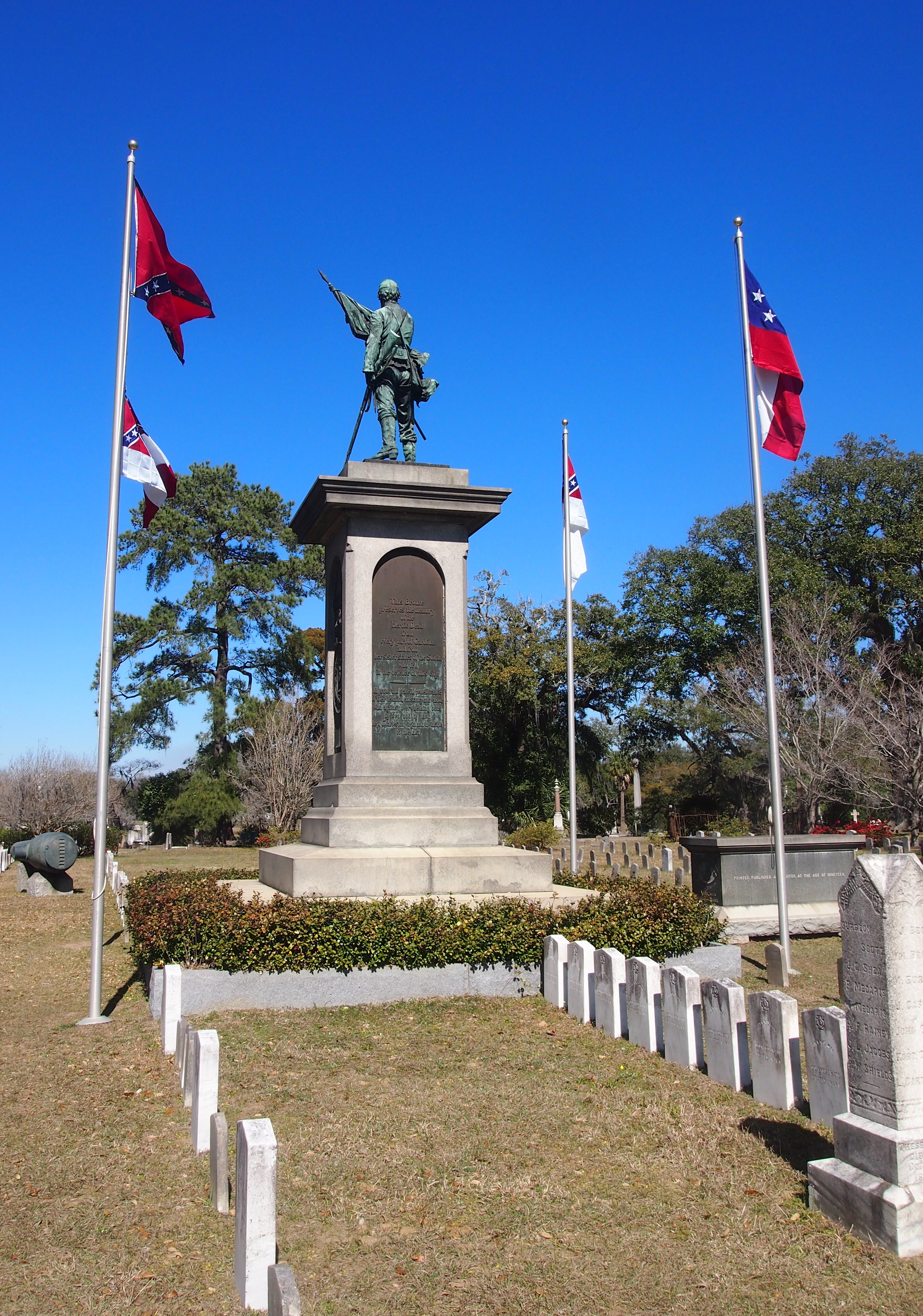
Something I didn’t know until I visited Oak Woods Cemetery on Saturday: Confederate Mound, which is within the bounds of the cemetery but on land owned by the federal government, is thought to be the largest mass grave in the Western Hemisphere. Not only that, the memorial at the site is the largest one in the North dedicated to Confederate soldiers.

Oak Woods Cemetery, Confderate Mound“Near the southwest corner of Oak Woods Cemetery in Chicago’s Hyde Park neighborhood [sic] stands a monument dedicated to the thousands of Confederate soldiers who died as prisoners of war at Camp Douglas,” notes the National Park Service. “The monument marks a mass grave containing the remains of more than 4,000 Confederate prisoners, reinterred here from the grounds of the prison camp and the old Chicago City Cemetery.

“Confederate Mound is an elliptical plot, approximately 475 feet by 275 feet, located between Divisions 1 and 2 of Section K.  The most prominent feature of the plot is the Confederate Monument, a 30-foot granite column topped with a bronze statue of a Confederate soldier, a figure based on the painting ‘Appomattox’ by John A. Elder.” (The sculptor doesn’t seem to be known.)

As for Camp Douglas, it “opened in 1861 as a training site for newly recruited soldiers from this area, and part of it would remain so,” says the Chicago Tribune. “It was named for the man who donated its 60 acres of land: Stephen A. Douglas, the politician known as the ‘Little Giant,’ most famous for his 1858 debates for the U.S. Senate with Abraham Lincoln (Douglas won re-election).

“It became a prisoner-of-war camp in early 1862, as 5,000 Confederate soldiers moved in after being captured when Fort Donelson in Tennessee fell to Union troops led by Gen. Ulysses S. Grant.”

From there, things at the camp went from bad to very, very bad in short order, as usual for 19th-century POW camps. The result was a mass grave in a corner of Chicago probably unknown to most 21st-century Chicagoans.

At least the Confederate dead are memorialized in a highly visible way, a result of sectional reconciliation late in the 19th century. “General John C. Underwood, a regional head of the United Confederate Veterans, designed the monument and was at its dedication on May 30, 1895, along with President Grover Cleveland and an estimated 100,000 on-lookers,” the NPS says.

“In 1911, the Commission for Marking the Graves of Confederate Dead paid to have the monument lifted up and set upon a base of red granite; affixed to the four sides of the base were bronze plaques inscribed with the names of Confederate soldiers known to be buried in the mass grave.”

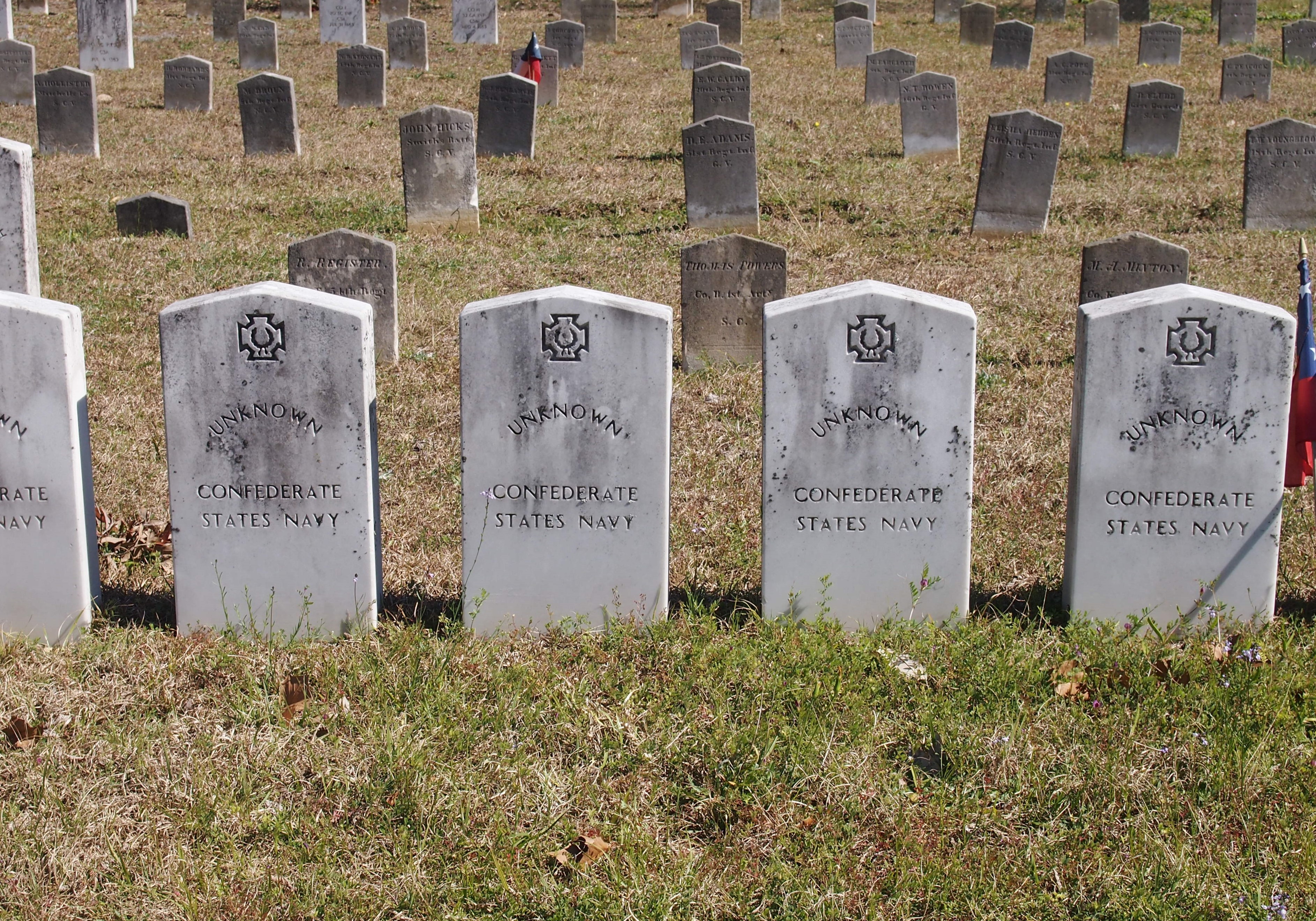
Near the Confederate memorial are the graves of 12 guards at the prison who probably were carried off by the same diseases that beleaguered their prisoners. Their stones are all marked Unknown.

Oak Woods Cemetery Chicago, Confederate Mound, Guards GravesThere are also four well-preserved cannons at the site as well.
Oak Woods Cemetery Chicago, Confederate MoundElsewhere at Oak Woods Cemetery are a smaller number of Union graves — as far as possible from Confederate Mound, our guide pointed out (sectional reconciliation only went so far).
Oak Woods Cemetery Chicago - Union gravesIf I remember correctly, they were residents of a Chicago old soldier’s home, and so their burials were a good bit later than the Confederates’ (as at the Texas State Cemetery). A weather-worn soldier watches over them.
OLYMPOak Woods Cemetery Chicago - Union gravesUS DIGITAL CAMERASo does Lincoln, in an unusual posture for depictions of the 16th president.
Oak Woods Cemetery Chicago - Union graves - Lincoln Statue Post 91 of the Department of Illinois GAR put up the statue, which is a copy of a statue erected in 1903 near Pana, Ill. The sculptor was Charles Mulligan, who also did “Lincoln, The Railsplitter” in Garfield Park.

One more stone at Oak Woods, though it has nothing to do with the Civil War. It’s a memorial to railroad engineer Cale Cramer.
Oak Woods Cemetery Chicago - Cale Cramer memorialSacred to the memory of
CALE CRAMER
who lost his life by saving
the train at York, Indiana
July 27 1887.
Aged 37 years, 1 month
and 11 days.

Oak Wood Cemetery Chicago - Cale Cramer memorialIt was a story I’d never heard before. Graveyards.com tells us that “Cale Cramer’s monument resembles a pile of disassembled locomotive parts. Cramer was an engineer for New York Central. On July 27, 1887, Cramer stayed at his post as another train approached. Attempting to prevent a head-on collision, he activated the brakes and shut off the steam. Cramer was killed in the crash, but had reduced speed enough that his passengers escaped without injury. The passengers raised funds to provide this monument.”

Oak Woods Cemetery

Large thunderstorm during the mid-afternoon today following a clear morning. That wasn’t so odd, but when I checked the radar maps it looked like only the northwestern suburbs were getting any rain at all. The storm also decided to linger here, and pour and pour, rather than race to the southeast as usual.

Oak Woods Cemetery occupies about 183 acres on the South Side of Chicago, only a short distance southwest of Jackson Park and about a mile west of Lake Michigan. On Saturday morning, I got up earlier than usual, drove down to Oak Woods and joined a Chicago Architecture Foundation tour of the cemetery. No one else in my house was interested, so I went by myself.

Skies were overcast, but at least the rains had stopped. Oak Woods, founded in 1853 south of the city — I believe it wasn’t in the city proper until the great annexation of 1889 — was part of the 19th-century vogue for park-like cemeteries. Which it remains to this day, green and leafy in late summer.

Oak Woods Cemetery Chicago 2016Oak Woods Cemetery Chicago 2016 To design the place, the founders of the cemetery tapped one Adolph Strauch, a Prussian landscape architect who did parks and park-like cemeteries in the United States (Ve vill haf Ordnung, he was known to mutter). He was especially active in Cincinnati, but in Chicago, Strauch also did the highly picturesque Graceland Cemetery, the North Side equivalent of Oak Woods.

Oak Woods Cemetery Chicago 2016Oak Woods Cemetery Chicago 2016There are also a number of water features that add to the overall aesthetic.
Oak Woods Cemetery Chicago 2016The tour was partly concerned with the burial sites of well-known people. Oak Woods has quite a few, such as a number of Chicago mayors. Here’s Big Bill Thompson’s obelisk, for instance.
Oak Woods Cemetery Chicago 2016 - Big Bill ThompsonHere’s Harold Washington.

Oak Woods Cemetery Chicago 2016 - Harold WashingtonOther notable markers we saw included baseball player Cap Anson; Bishop Louis Henry Ford, head of the Pentecostal Church of God in Christ; John H. Johnson, founder of Ebony and Jet magazines; Rep. James R. Mann, who lent his name to the Mann Act; Ted “Double Duty” Radcliffe, star of the Negro League; and activist Ida B. Wells.

Along with Jesse Owens.
Oak Woods Cemetery Chicago - Jesse OwensAs well as Illinois politico Roland Burris. Former Sen. Burris, it should be noted, is still alive. He’s planning ahead with a sizable tomb detailing some of his career in stone, in a way that earned him a fair amount of ridicule. It did seem like a pompous exercise. Perhaps he doesn’t understand that Death doesn’t care about your CV.

Interesting stones I didn’t get to see included Enrico Fermi, Nancy Green, Chicago Mayor Monroe Heath, and pre-Capone Outfit boss Big Jim Colosimo, who was rubbed out in 1920. Or the monument and flag for the 16 firefighters and workers who died fighting the blaze at the Cold Storage Building at the World’s Fair on July 10, 1893.

Off in a corner of the property is a small, separate Jewish cemetery, fenced off probably to discourage vandals from disturbing the stones.
Jewish cemetery near Oak Woods ChicagoReminded me a bit of the old Jewish cemetery in Krakow, though that’s had a few more centuries to age.