GTT Fall ’15: My Mother the Nonagenarian

Jo Ann C. Stribling

Native of Texas; dietitian; longstanding member of St. Paul’s Episcopal Church, San Antonio; daughter of James and Edna Jo; sister of Sue; wife of Sam; mother of Jay, Jim and Dees; grandmother of Sam, Dees, Robert, Lilly and Ann.

As of this week, officially a nonagenarian. Not many of us get to be that.

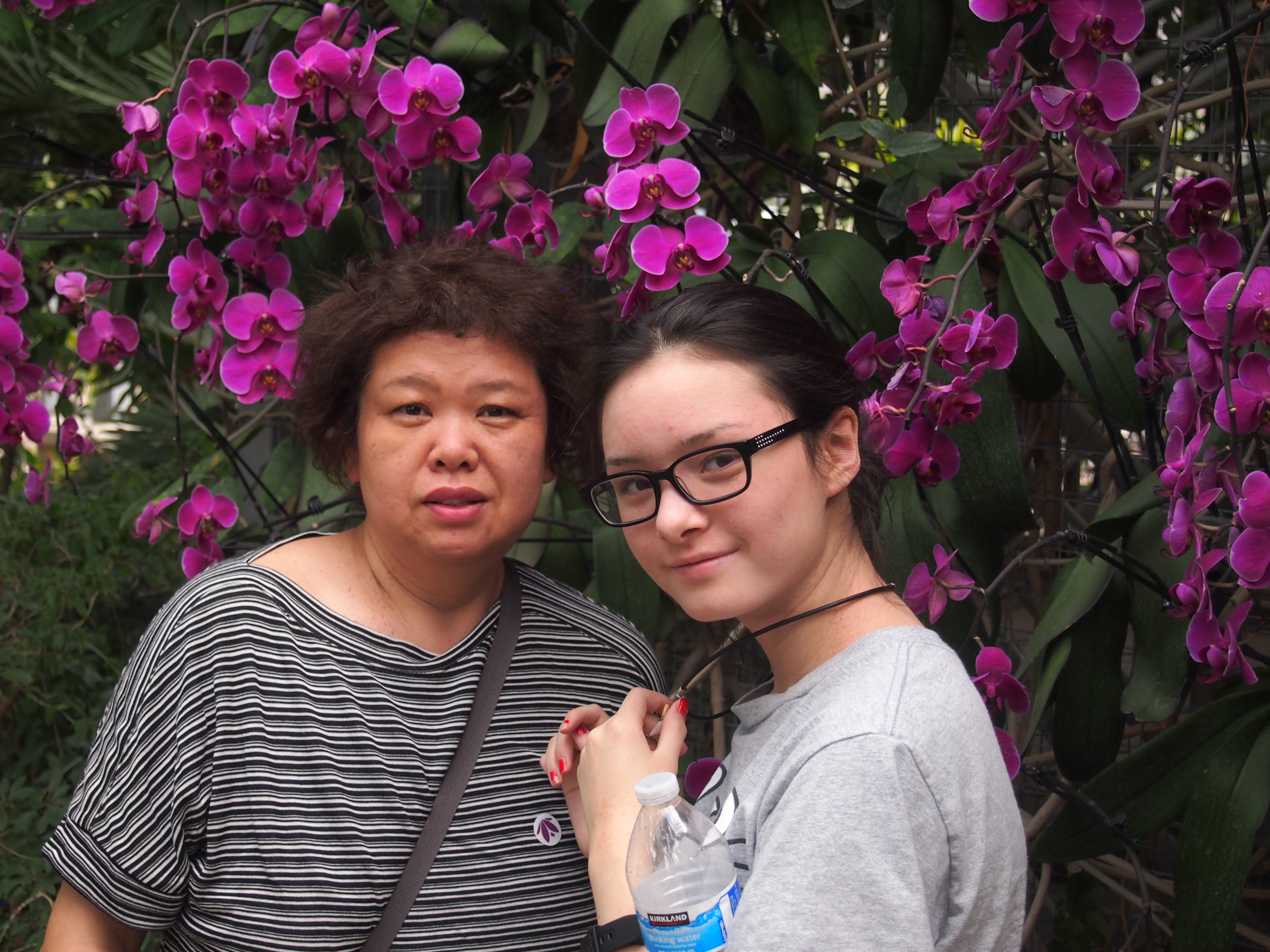
Jo Ann Stribling, 90th birthdayI visited her on her 90th birthday, arriving in San Antonio two days before, after driving down from Dallas with my brother Jay, whom I’d visited for a while before that. Besides my mother and Jay, on this trip I saw my other brother Jim; all of my nephews and the wife of one and the girlfriend of another; and my aunt and first cousin.

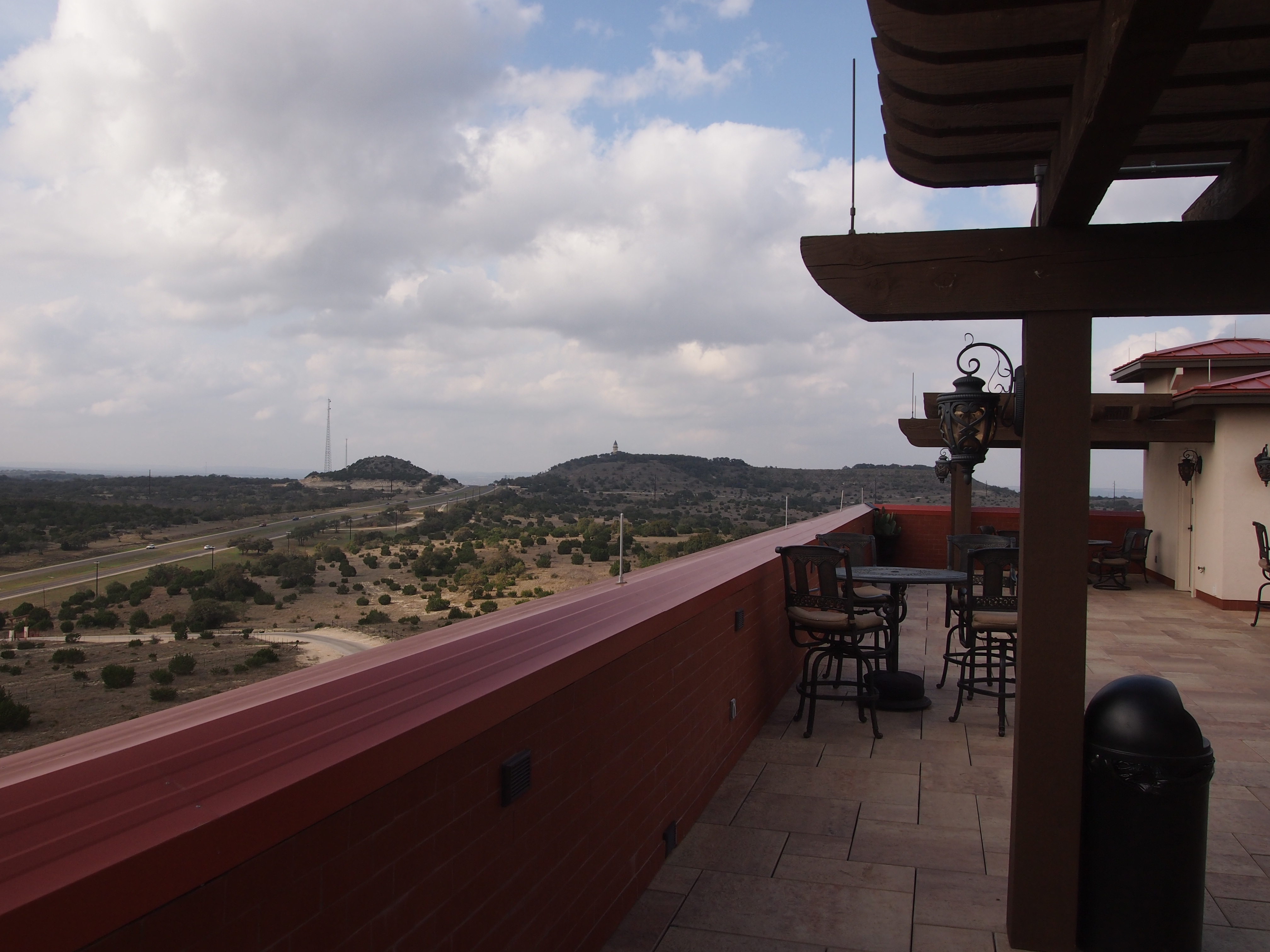
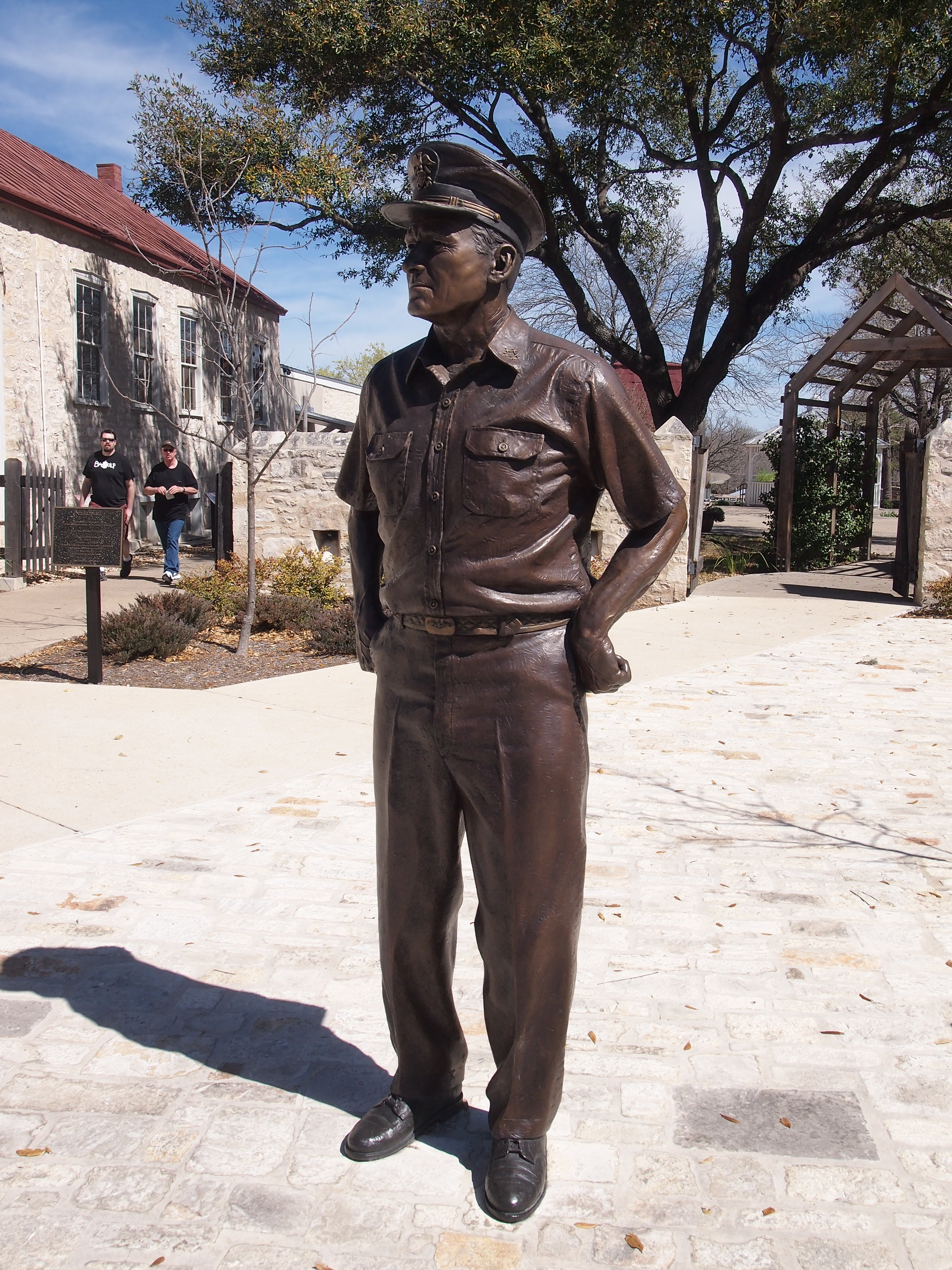
Work continued during some of the visit, as it always does. And as I always do, I squeezed in a few other things, such as my second-ever attendance at a state fair, a ride on the Trinity Railway Express, a walkabout in Downtown Dallas, another walkabout along a lakeshore, a visit to one of the three spanking-new national monuments, created only this July, and a look-see at a cemetery, because of course I wanted to visit a cemetery.

The day I flew into Dallas, the city was experiencing its hottest October 15 on record, with a high of 95 F that afternoon. The days afterward were still warm, in the 80s mostly, which is a little higher than normal. By the time we planned to drive to San Antonio on the 22nd, heavy rain was predicted along most of the route, but the downpour was sluggish in arriving. All we saw were sprinkles here and there.

The massive rains came on the 23rd and 24th. The San Antonio area caught a regular storm coming from the northwest plus the remnants of Hurricane Patricia, which hit Mexico on the 23rd, and for a while had the strongest hurricane winds ever recorded. Wow.

Dust, Quicksand, & Late-Season Dragonflies

We enjoyed a warm weekend, following cooler days and almost cold nights. But no hard freeze just yet.

Today was windy, and it’s been dry a while, so dust kicked up from the baseball diamond was visible from my back yard.
Columbus Day Dust 2015By contrast, when it’s been raining a lot, patches of quicksand form, trapping unwary little leaguers. Well, maybe not. Apparently grade-schoolers aren’t even afraid of quicksand anymore, which means that people aren’t watching enough Tarzan movies.

Saturday we took walk at the Crabtree Preserve, which is a 1,000-acre unit of the Forest Preserves of Cook County that we’d somehow overlooked before, even though it’s only about 15 minutes away. It’s a pleasant place to walk on a warm October day, with trails that wind through woodland and restored, or mostly restored, prairie, and a small nature center with some exhibits.

I read that it’s been a boom year for dragonflies, but haven’t seen so many myself. Maybe that’s because I don’t live that close to lake-sized bodies of water. But as we followed the trail around Bulrush Pond and Bulrush Marsh, we spotted a few clouds — swarms — squadrons of dragonflies, especially ones with long red abdomens.

… And a Hell of an Engineer

I can’t say that I remember much about the Georgia Tech-W. Carolina game, but I was there 30 years ago. I was visiting a friend that I knew from Vanderbilt who lived in Atlanta at the time. Before VU, she’d attended Georgia Tech for a semester or a year or some time. It was a pleasant Saturday afternoon, so off we went.

Ramblin' WreckSomething I do remember: after parking, and as we walked to the stadium along with a stream of other game-goers, we passed by street vendors. One of them, who was selling peanuts — guess that might be goober peas — had a sign telling everyone that they were now entering the Peanut Zone. It was lettered in imitation of the Twilight Zone font — which I just learned seems to be an actual font.

Tech took the game, 24-17. I had to look that up. In our time, that was amazingly easy.

Either before or after, we went to the Varsity to eat, since I’m pretty sure the Peanut Zone, while it made us chuckle a little, didn’t inspire us to buy peanuts. The flagship Varsity near Georgia Tech, that is. I probably had a chili dog. That’s the thing to do there.

John F. Tracy’s Plaque

I’ve seen some plaques in my time, such as ones commemorating the high-water mark of Hurricane Ike, a vintage Dairy Queen sign, the 25,000th 7-11 franchise, the site of Huey Long’s assassination, an outstanding civil engineering achievement of the 1980s, a Civil War veteran who died in 1947, Bill Murray’s footprint, even Addison Mizner’s pet spider monkeys. Guess I’m a sucker for words carved in metal trying to beat forgetfulness, though I think forgetfulness will eventually overcome such efforts.

Saw another plaque on Sunday, behind the Ridge Historical Society in the Beverly neighborhood of Chicago. A curious thing, this plaque, placed right next to the back entrance and mounted on a short block. Though made of metal, it was well worn by years of weather — close to a century, it seems.

There was no one was around to tell me about it, but my guess would be that it had been moved there from somewhere else nearby. It said (in all caps, actually, but I’m capitalizing the lines that are particularly large on the plaque):

1852      1922
ROCK ISLAND LINES
Seventieth Anniversary
October Tenth
The memorial tree planted nearby
is dedicated
by the Rock Island in affectionate memory
of
JOHN F. TRACY
Who by industry courage and loyalty
through every vicissitude signally
aided in the development of the
CHICAGO ROCK ISLAND & PACIFIC RAILWAY
into a great transportation system
DEVOTED TO THE PUBLIC SERVICE

The Rock Island is remembered in later decades thanks to Alan Lomax and Leadbelly and others, though that’s fading too, and it was an important railroad in its day (and a client of Lincoln’s in its earliest years). It was also a link in the Grand Excursion of 1854, which is known to us Millard Fillmore fans.

John Tracy’s not so well remembered. My guess would be that he lived somewhere in Beverly, and was long dead by 1922. A small amount of checking reveals he was an executive of the railroad, including its president from 1866 to ’77. A Gilded Age railroad tycoon! His story is probably in an out-of-print volume somewhere, maybe at the Ridge Historical Society. A book that’s no one’s read in years, and a story that probably doesn’t involve diamond-tipped walking sticks and lighting cigars with $100 banknotes, alas.

An American System-Built Home

There are only a handful of American System-Built Homes in existence, about 15 by one count, though others might be spending their days in anonymity. Because I’ve been slapdash in my approach to learning about Frank Lloyd Wright, it was a thing I’d never heard of until Sunday, on the architecture walking tour.

Tourdeforce360VR has this description: “Between 1915 and 1917, Wright designed a series of standardized ‘system-built’ homes, known today as the American System-Built Homes, an early example of prefabricated housing. The ‘system’ involved cutting the lumber and other materials in a mill or factory, and then brought to the site for assembly; thus saving material waste and a substantial fraction of the wages paid to skilled tradesmen.”

World War I interrupted production, and it never started again. Turns out there two in Chicago, and one of these is on S. Hoyne Ave., and known as the Guy C. Smith House.
The owners of the house, David and Debbie — or was it John and Jill or Mark and Margo? I forget, but the names began with the same letters — came out to tell us about the house.
FLW homeownersThen we went inside. It was very nice of the owners to let us shuffle through their home. They’ve done right by Wright, too. This is the dinning room, for instance.
Nice dining room, eh?It’s a fine house, but I could never live in such a place and have it look like this. Soon, papers and books and other items would start to appear on the tables and other flat surfaces. Then they would take over, like kudzu.

A Few Beverly Houses

This was one of my favorites on the Beverly walking tour on the Southwest Side of Chicago, 10340 S. Longwood Dr., also known as the Hilland A. Parker House.
Beverly, ChicagoNote the enormous yard, sloping upward, which we were told continued quite a ways toward the back. The area was wide open when the house was built in 1894, so there was no reason to build on small lots. An architect named Harry Hale Waterman did the design. He did a fair number of houses in the neighborhood, but this one was for himself.

The AIA Guide to Chicago says: “Site and style combine here for high drama. The base of the huge rusticate brownstone blocks rises on the hill to form huge arches on the big semicircular porch. The tall roof, pierced with steeply pitched gabled dormers, exaggerates the height.”

Not far away is this charmer by Walter Burley Griffith, the Harry N. Tolles House, 10561 S. Longwood, which was built in 1911, with some later additions, such as the glass bricks.
Beverly HousesGood old Walter Burley. I learned about him when I visited his signal creation, the city of Canberra, during the warm Christmas season in ’91.

Before the Australians tapped him to build their capital, he “designed more than 130 designs in his Chicago office for buildings, urban plans and landscapes, half of which were built in Illinois, Iowa, Michigan and Wisconsin,” PBS says, in the years before WWI.

At 10616 S. Longwood: the house that’s now home to the Ridge Historical Society, dating from 1922 and designed by John Hetherington. Not this fellow, though.
Beverly, ChicagoThe organization calls it the Driscoll House on a sign in the front; the Graver-Discoll on a plaque around back; AIA calls it the Herbert S. Graver House. Hope no one has come to fisticuffs over the nomenclature. Graver, it seems, commissioned it, while Driscoll was the last owner before the historical society. More about it here.

The oldest house on the tour was the Chambers House, 10330 S. Seeley, dating from 1874 and designed by that prolific architect of previous eras, Unknown (who also did the Irish castle mentioned yesterday).

Beverly, ChicagoAIA says: “The remarkably well-preserved house [indeed] is a classic suburban villa, complete with ‘French’ tower.” Maybe a French tower is a vantage from which to taunt passing Britons clapping coconut shells.

Beverly on a Sunday Afternoon

The leaves are turning. Here’s the scene at the 103rd St Metra Station, on the Southwest Side of Chicago, early Sunday afternoon, under a gray but not rainy sky.
Beverly, ChicagoWe were at the station not because we rode the train that day — we drove, and parked nearby — but because Yuriko and I took a Chicago Architecture Foundation walking tour of the Beverly neighborhood, which started at the station. Beverly is on the Southwest Side of the city, and distinctive for a number of reasons, but one that stood out while walking around is its hilly contour. A glacial ridge just west of S. Longwood Dr. is easily visible near the station, which is on 103rd just east of Longwood, among a knot of small retail shops, including a local bank that tells one and all:
Beverly, Chicago“Known for its spacious homes, tree-lined streets, and racially integrated population, Beverly has retained its reputation as one of Chicago’s most stable middle-class residential districts,” notes the Encyclopedia of Chicago. Originally part of the village of Washington Heights (1874), the area was annexed to Chicago by 1890 but remained sparsely settled for decades.

“In 1886, real estate developer Robert Givins constructed a limestone castle at 103rd and Longwood Drive in the Tracy subdivision of Washington Heights, but the surrounding neighborhood did not achieve residential maturity for decades. The situation was the same north of 95th Street, where Civil War general Edward Young and W. M. R. French, the first director of the Art Institute, had built homes along Pleasant Avenue in the 1890s. Vast sections of Beverly, especially the area south of 99th Street and west of Western, remained prairie until the 1940s and 1950s.”

This is the Gilded Age “Irish castle” of  Robert Givins, with its distinctive turret mostly obscured by leaves at the moment. These days, it’s a Unitarian church. Note the slope of the hill.
Beverly, ChicagoThe tour involved walking south on South Longwood Dr., which follows the bottom of the slope, then up (west) on W. 105th Pl., then north on S. Seeley Ave. and S. Hoyne Ave. Along the way, we stopped and looked at houses, while the docent described them. We got to go inside only one property, the Guy C. Smith House on Hoyne. More about that later.

The last place we saw was at the corner of Seeley and 103rd.

Beverly, ChicagoNice design, but the shoes got more attention. There was a sign in the yard saying HAPPY BIRTHDAY BOB! and another that said, 80 YEARS AND KICKING.

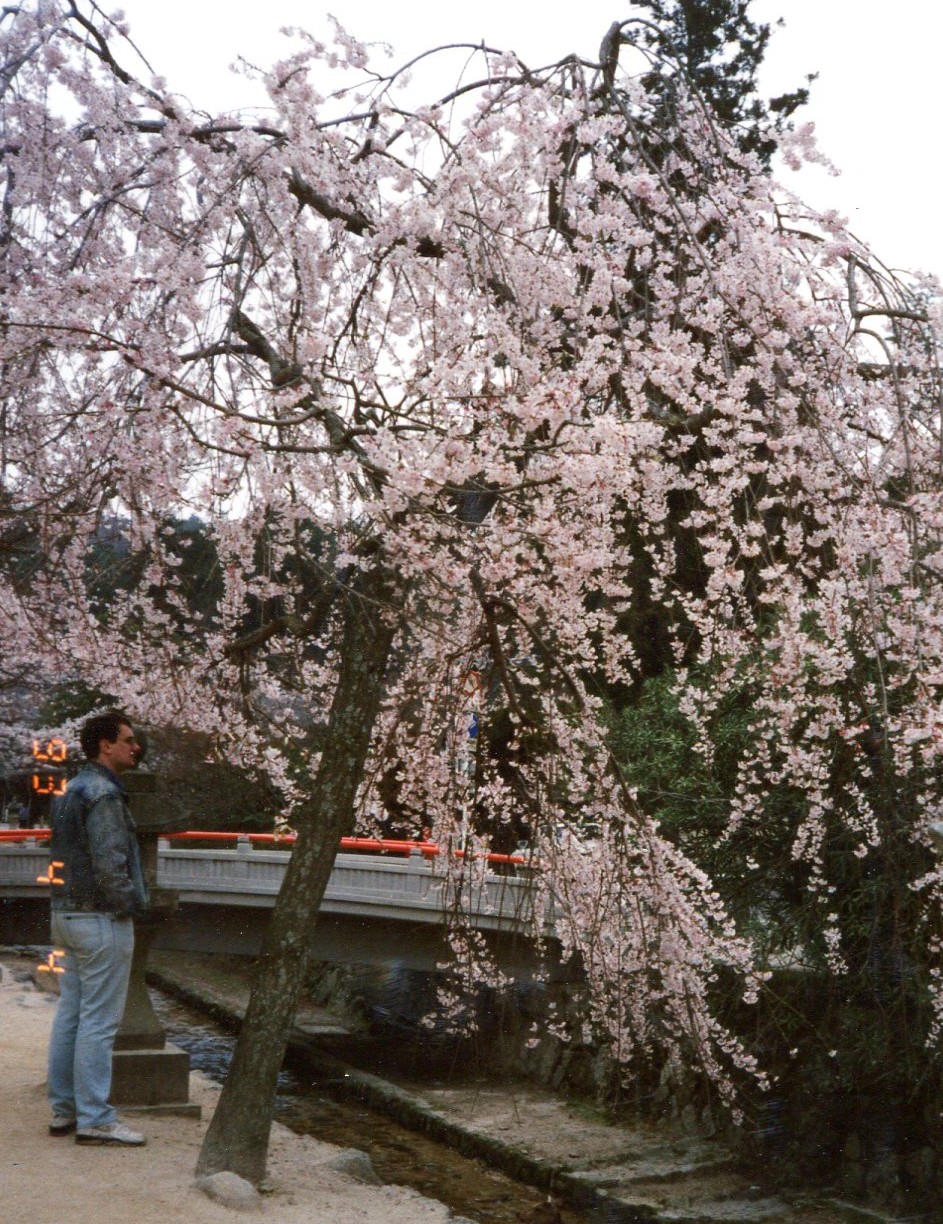
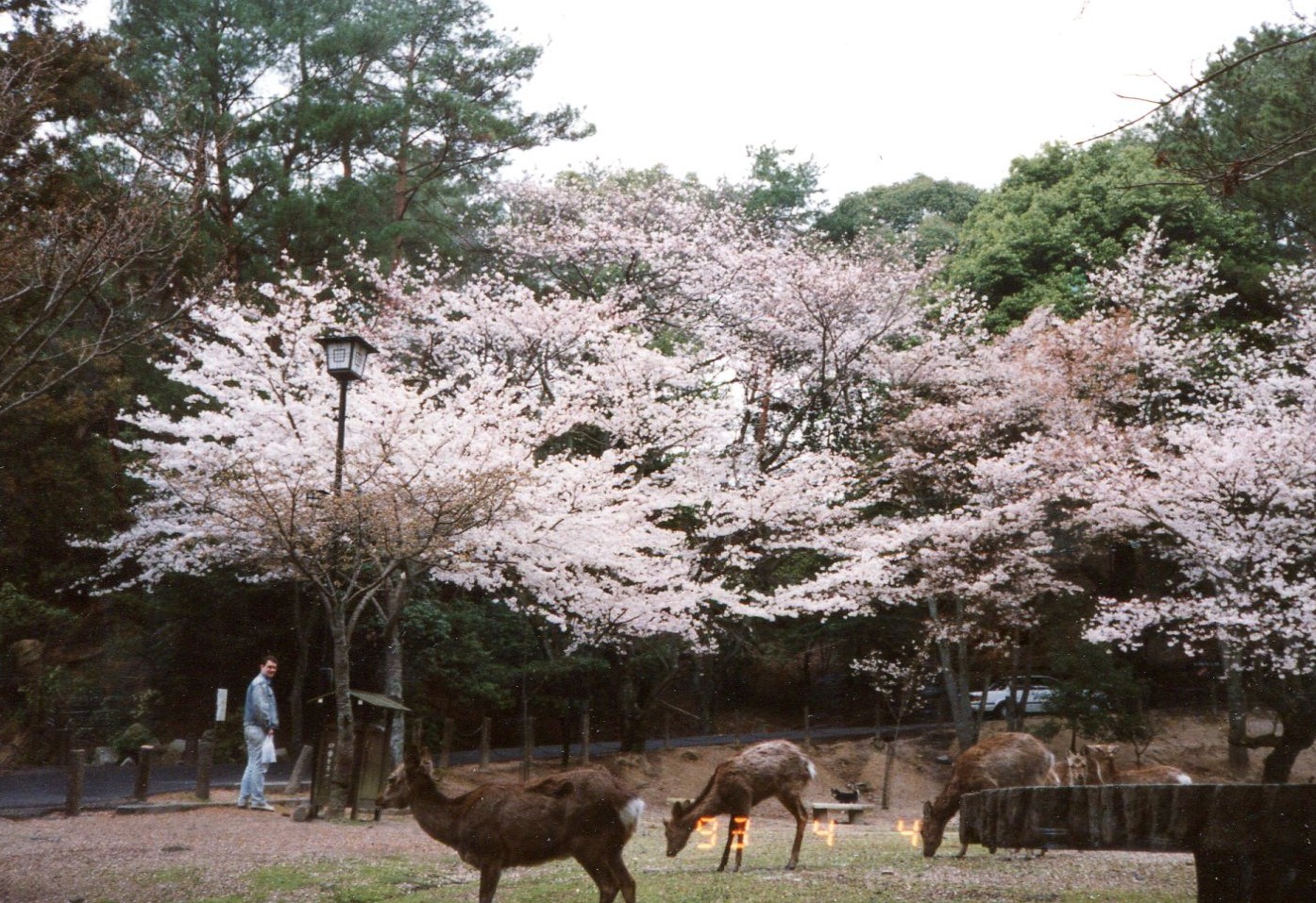
Nara 1991

I can’t remember exactly which temple this was, but I’m sure it was in Nara. (Yuriko isn’t able to pinpoint it either.) This was October 1991, and it’s a favorite picture of myself.

Nara 1991My old college friend Steve probably took it, since he was visiting about then, and we went a fair number of places — Nara would have definitely been on that list. I went to Nara many times, since it was an easy subway and then train trip from where I lived.

I took every visitor I had to Tōdai-ji (東大寺), a sizable temple complex in Nara. The star attraction at Tōdai-ji is the Daibutsuden, the Great Buddha Hall, which features the Daibutsu (大仏) or Great Buddha inside.

TodaijiIf I’m interpreting those measurements correctly, the Daibutsu is nearly 49 feet high, with over 17 feet of that devoted to his head. I never did take a good picture of the Daibutsu, but I do have this.

DaibustuThe size is impressive, but so is its age. The Daibutsu dates from the 8th century of the Common Era, though parts have been recast over the centuries, such as the hands and head, and the building around it has been rebuilt twice, most recently in the 18th century. I never got tired of visiting.

The Kremlin 1994

You can’t very well go to Moscow and not pose with St. Basil’s and the clock tower (Spasskaya Tower) of the Kremlin. Pedants might point out that Moscow’s Kremlin is only one of a number of kremlins in Russia, but I say common usage re-enforced by years of Cold War reportage means that the one in the capital of the Russian Federation is The Kremlin.

RedSquare94This was probably the afternoon of the first full today we were in Moscow. Note the clock puts the time at 3:15; in late September at that latitude, the sun would have been edging down pretty low by then.

It would not have been our first visit to Red Square. We arrived in Moscow in the afternoon, and Yuriko and I and most of the other people we’d traveled with on the Trans-Siberian went to the same guest house. Early in the evening, most of us met up again with two goals in mind: to go to Red Square because it’s Red Square, and to find something to eat. I remember our group — about a dozen people — walking down one of the thoroughfares that takes one to Red Square, turning a corner, and seeing it all at once. A place I’d heard about all my life, and there it was.

We ogled Red Square a while, but then got down to the business of finding food. The group settled on the Moscow McDonald’s, said to be the largest in the world at the time, and the only McDonald’s I’ve ever been to that had bouncers.

Moscow, Sept 1994There were some English lads, a couple of Australians, a Swiss woman, a Dutch couple and I don’t know who else or remember any names. I was the only American and Yuriko the only Japanese.

I didn’t appreciate the enormity of the Kremlin until we went in for a look the next day. Not everything was accessible, but I know we visited a number of palaces and churches (or maybe church-museums), such as the Cathedral of the Annunciation. Cathedral of the AnnunciationWe got a closer look at the clock tower, still featuring its red star. But within sight of the fluttering Russian tricolor.Clock TowerSpeaking of enormity, there was also the Tsar Cannon.
TsarCannonAnd the Tsar Bell.

Tsar BellJust outside the walls is Lenin’s Mausoleum, which we visited, and then the Kremlin Wall Necropolis. The likes of Stalin and various old bolshies were easy to pick out, since they were marked by busts. I didn’t see John Reed’s plaque, though I knew he was there. I didn’t know until later that some of Bill Haywood’s ashes are there (and some are near the Haymarket monument in suburban Chicago).

St. Luke’s Lutheran Church, Park Ridge

You might call St. Luke’s Lutheran Church at 205 N. Prospect Ave. in Park Ridge an example of Suburban Gothic, but apparently that’s the name of a movie that came out last year. Anyway, it’s a handsome English Gothic-style church in the suburbs. We were back in Park Ridge Saturday afternoon for the last stop on the Churches by Bus tour.

St Luke'sThe building has the distinction of being designed in the late 1920s by Elisabeth Martini (1886-1984), the first woman to be the proprietor of an architectural firm in Chicago. Mostly she did houses, but it seems that she was a member of this church, and did the design work for a payment of $60 a month for the rest of her life, which turned out to be another 50-odd years, though it might not have been adjusted for inflation.

Adjoining the sanctuary (next to the bus in my picture) is a 2010 addition by Douglas E. Lasch of Jaeger, Nickola, Kuhlman & Associates, which replaced a smaller addition from the 1970s and blends in remarkably well with the original structure. He has his own shop now, Faith Environ Studio, which focuses “primarily on providing architectural services to faith-based and other non-profit clients.”

St. Luke’s sanctuary has an elegant interior.

St Luke'sThe stained glass windows tell of the Old and New Testaments. I’m sure the representation of Moses in one of the windows was meant seriously, but I can’t shake the idea that he’s grinning. Maybe it’s the eyes. “See what I have here! Commandments! Ten of them! Aren’t they terrific?”

MosesLuther, on the other hand, looks fairly serious, but not grim.

LutherI suppose those are the 95 theses on the door. A little hard to read at this scale. Wonder if they’re microprinted in the original Latin? I didn’t check. Never mind, the text is easily available on line in Latin and English (and other languages).

I haven’t looked at the theses since sometime in a college history class, so I was amused to find No. 86: “Again, ‘Why does not the pope, whose wealth is today greater than the wealth of the richest Crassus, build this one basilica of St. Peter with his own money rather than with the money of poor believers?’ ”

Ah, if only in our time and place we could mention Crassus without having to explain who he was. Then again, if those poor believers were able to understand that they were doing their little part to build the grandest church in Christendom, would they have been particularly upset?

One more thing about St. Luke’s in Park Ridge, which I read about later. It’s the home to the Bottle Band. Odd the things you find out. More about the band here.