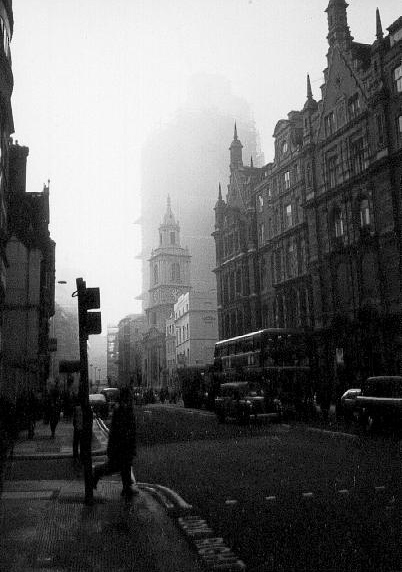
Some years ago, I scanned one of the pictures I took in London in December 1994, a streetscape. I forget where exactly. Something inspired me to scan it in black and white, which captures the December gloom all the better.
Not that London’s a particularly gloomy place, in December or any other time. But old movies on long-ago Saturday afternoons conditioned me to think of old London in foggy black and white, and I caught something of that in the image. Maybe not London in 1994, but 1934.
Looking at the image again, I noticed LOOK RIGHT painted on the edge of the road. Sound advice, I’m sure. When did that message start being painted to warn visitors whose first instinct is to look the wrong way?
A 1991 NYT article mentions the paintings in the context of pedestrian deaths in London, but it only says, “this city has always been tough on foreign pedestrians, who can often be observed at street corners wearing the slightly startled look of deer edging alongside a freeway. It was for them, mostly, that London officials years ago began painting reminders along curbs suggesting that pedestrians ‘look left’ or ‘look right’ before venturing into the street.”
Perhaps for the influx of U.S. soldiers during WWII. That would be my guess. Of course, the hazard is present for Britons visiting our side of the Atlantic as well. After all, Winston Churchill almost bought the farm in New York in 1931 because he failed to look the right (correct) way crossing a street.
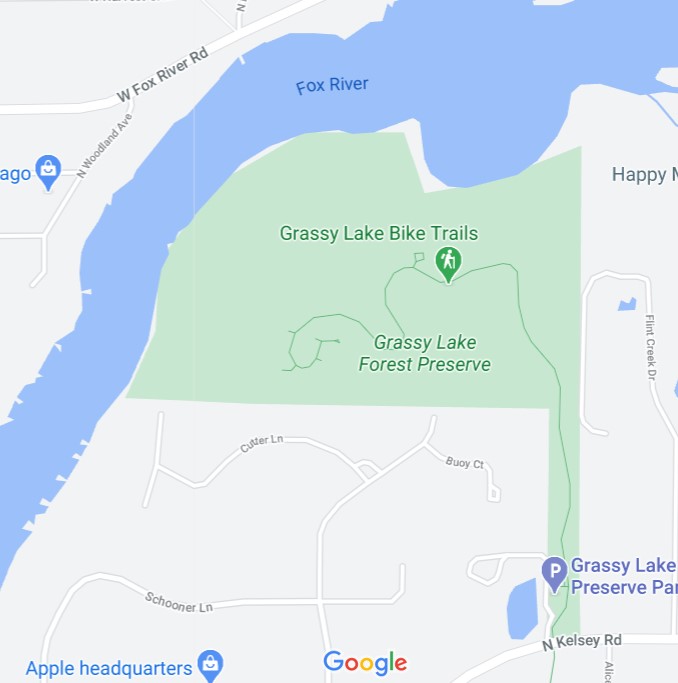
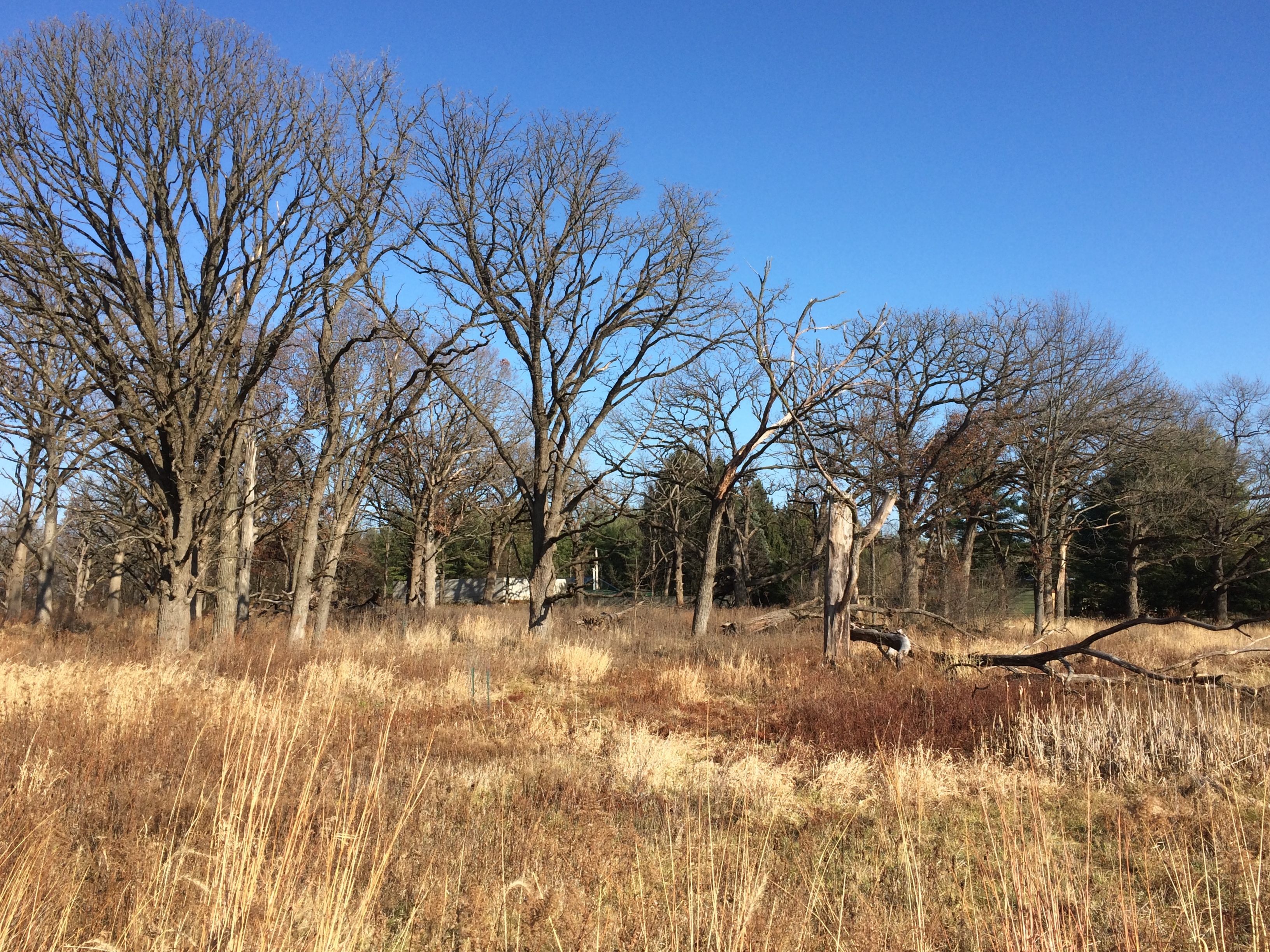
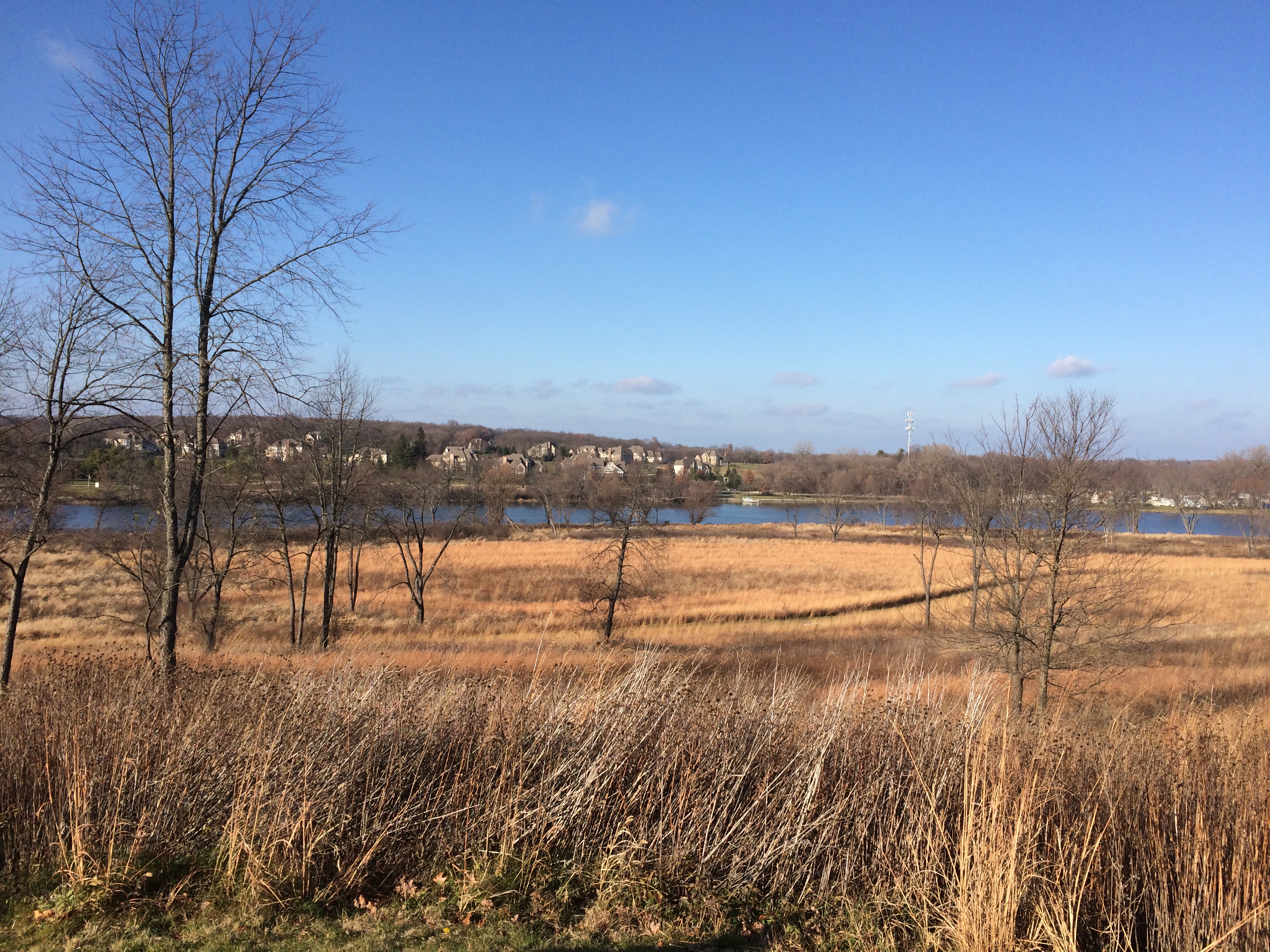
Up among the various Barrington-named towns in northern Illinois — Barrington itself, but also North Barrington, South Barrington, Barrington Hills, Lake Barrington — is the Grassy Lake Forest Preserve, a unit of the Lake County Forest Preserve District. Its 689 acres are tucked away along the banks of the Fox River, a tributary of the Illinois River.
“Silver maples, cottonwoods and willows line the banks of the Fox River and its floodwater-storing floodplain,” says the Lake County FP web site. “Burly old-growth oaks occupy slightly higher ground above the river, and former agriculture fields now being restored to prairie can be viewed.
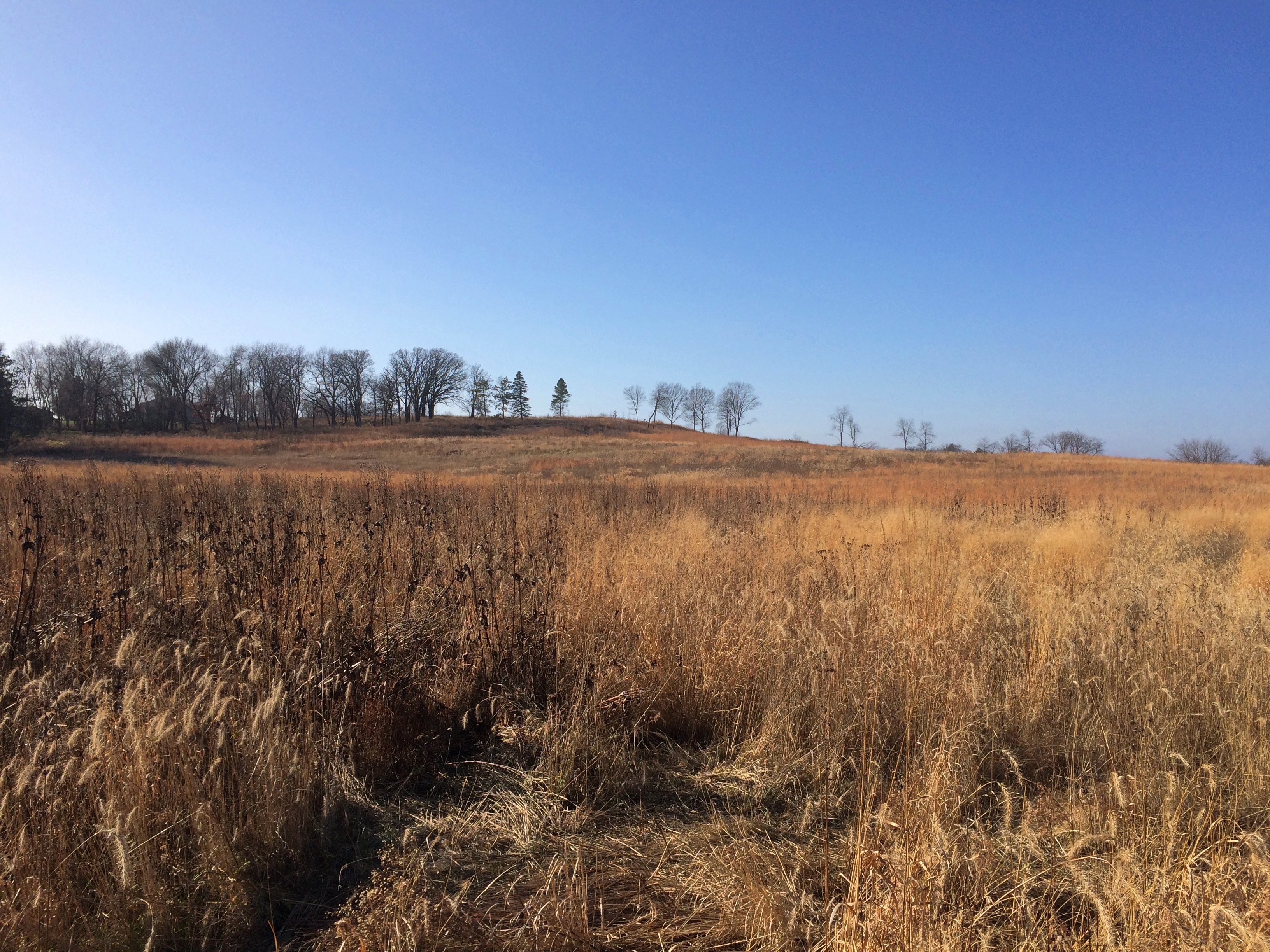
“Prominent geological landforms such as kettles and kames tell of Lake County’s not too distant glacial shaping, while providing sweeping views of the river valley and the surrounding area. Centuries-old landscape plantings of catalpa trees, Douglas firs, and a hedgerow of osage orange remind of us those who lived here before us.
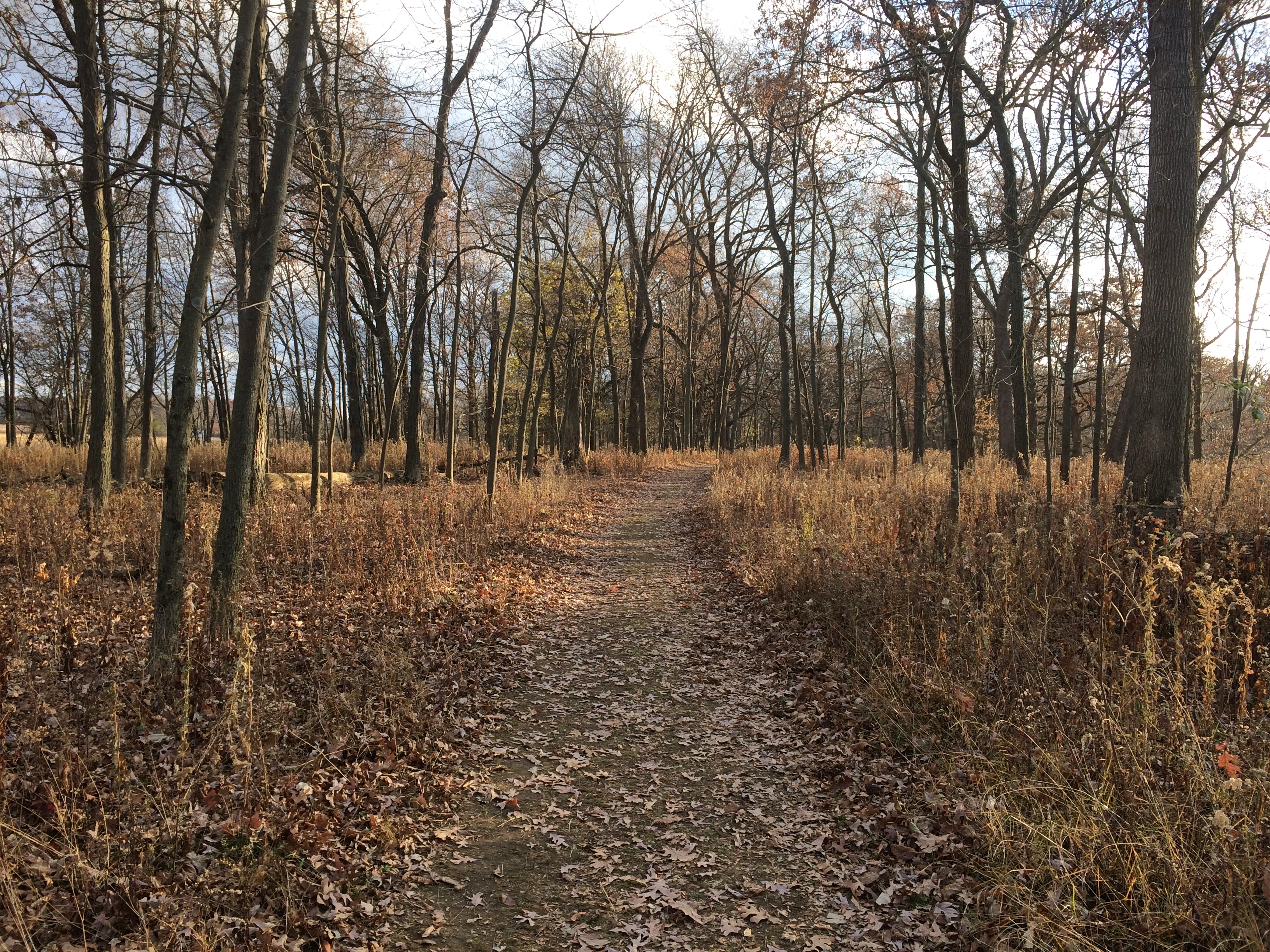
I’m not sure exactly what a kettle or kames might look like, but I assume they’re some of the undulations we saw in the landscape. We arrived soon after noon on the day after Thanksgiving. This year, we participated in Buy Nothing Day by taking a hike.
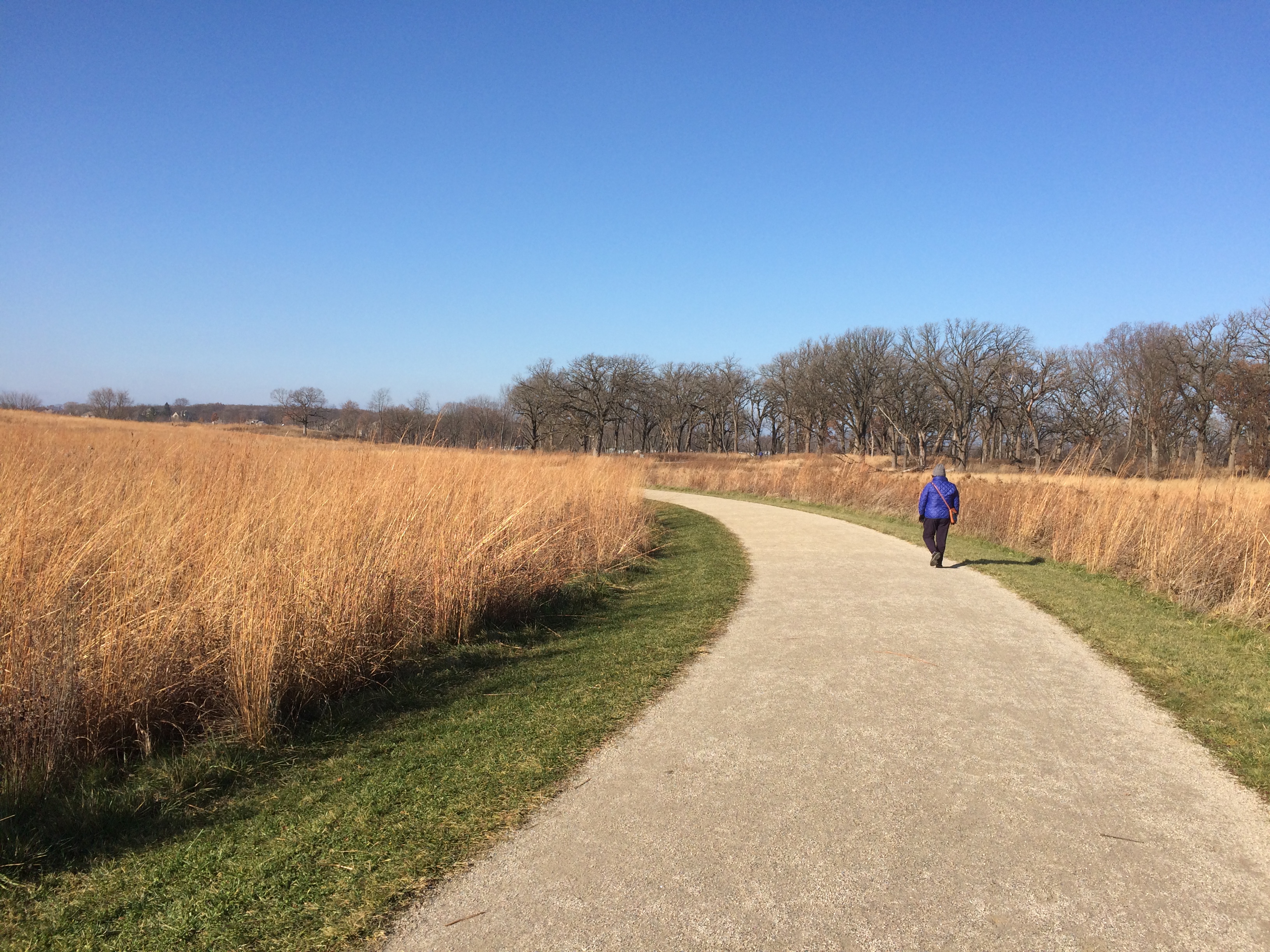
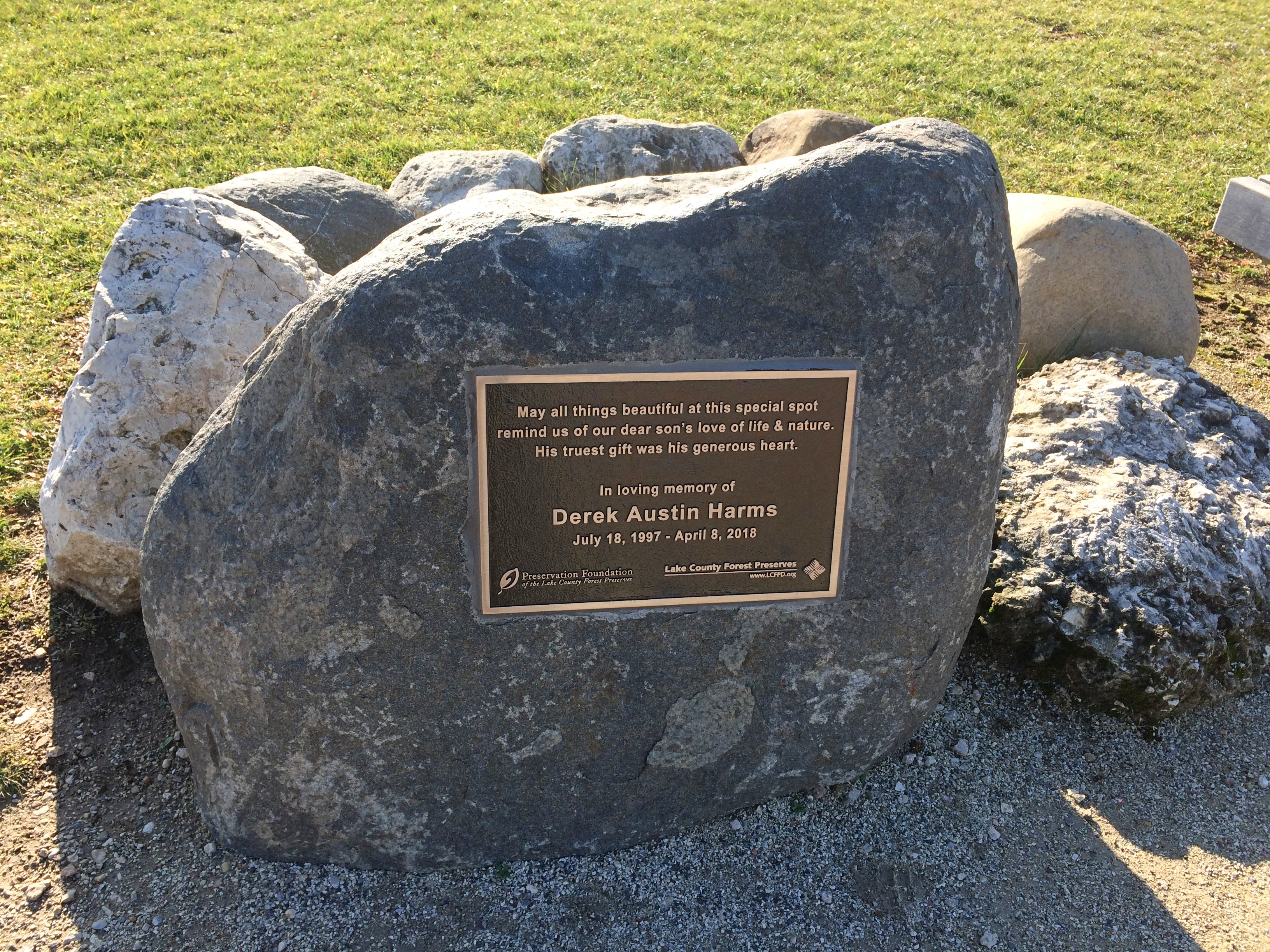
The trail winds into the forest preserve. Soon you come to a memorial to an unfortunate lad named Derek Austin Harms that includes trees and benches and a boulder with a plaque.
It isn’t hard to find out more about the young Mr. Harms, 1997-2018.
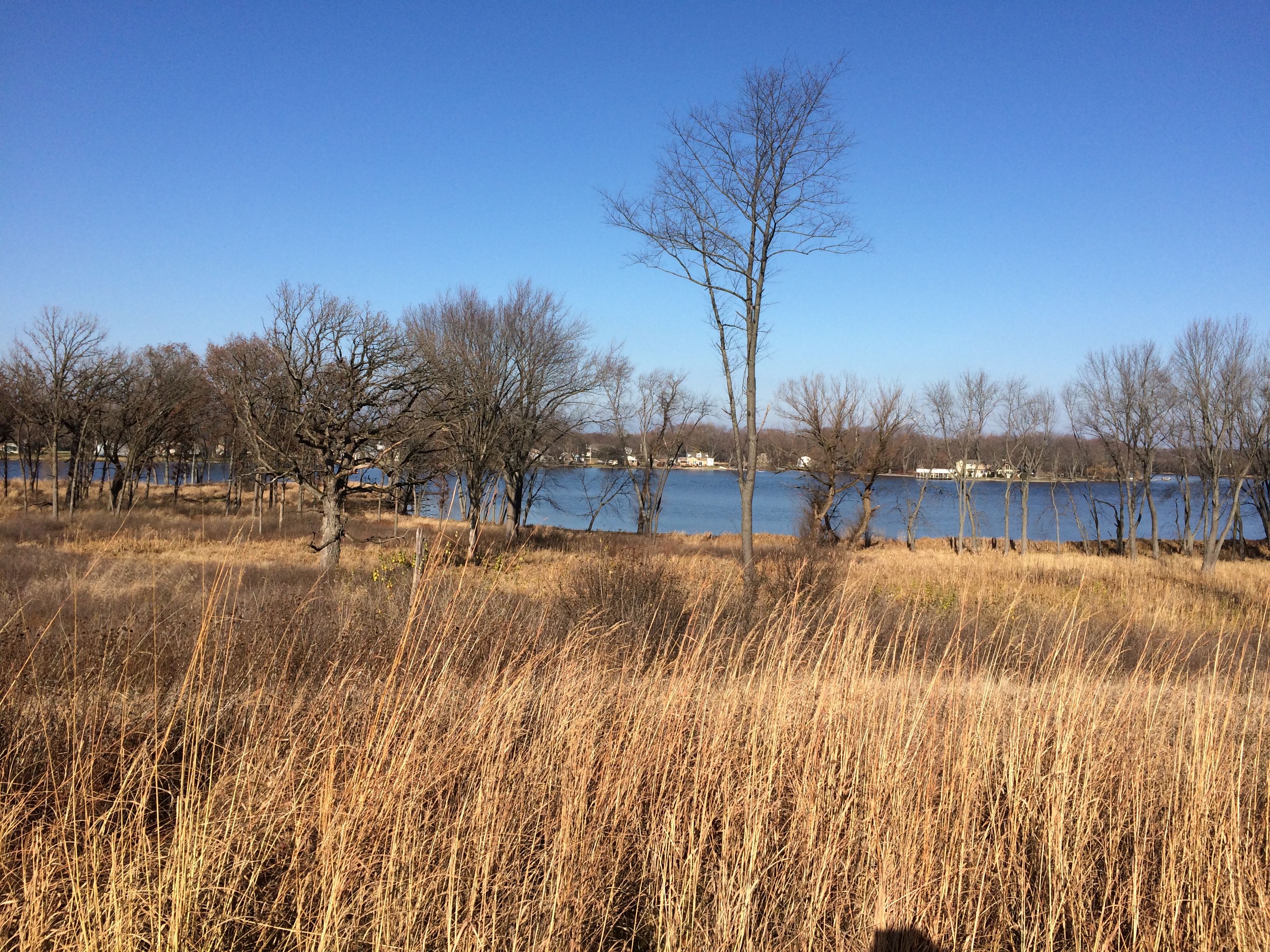
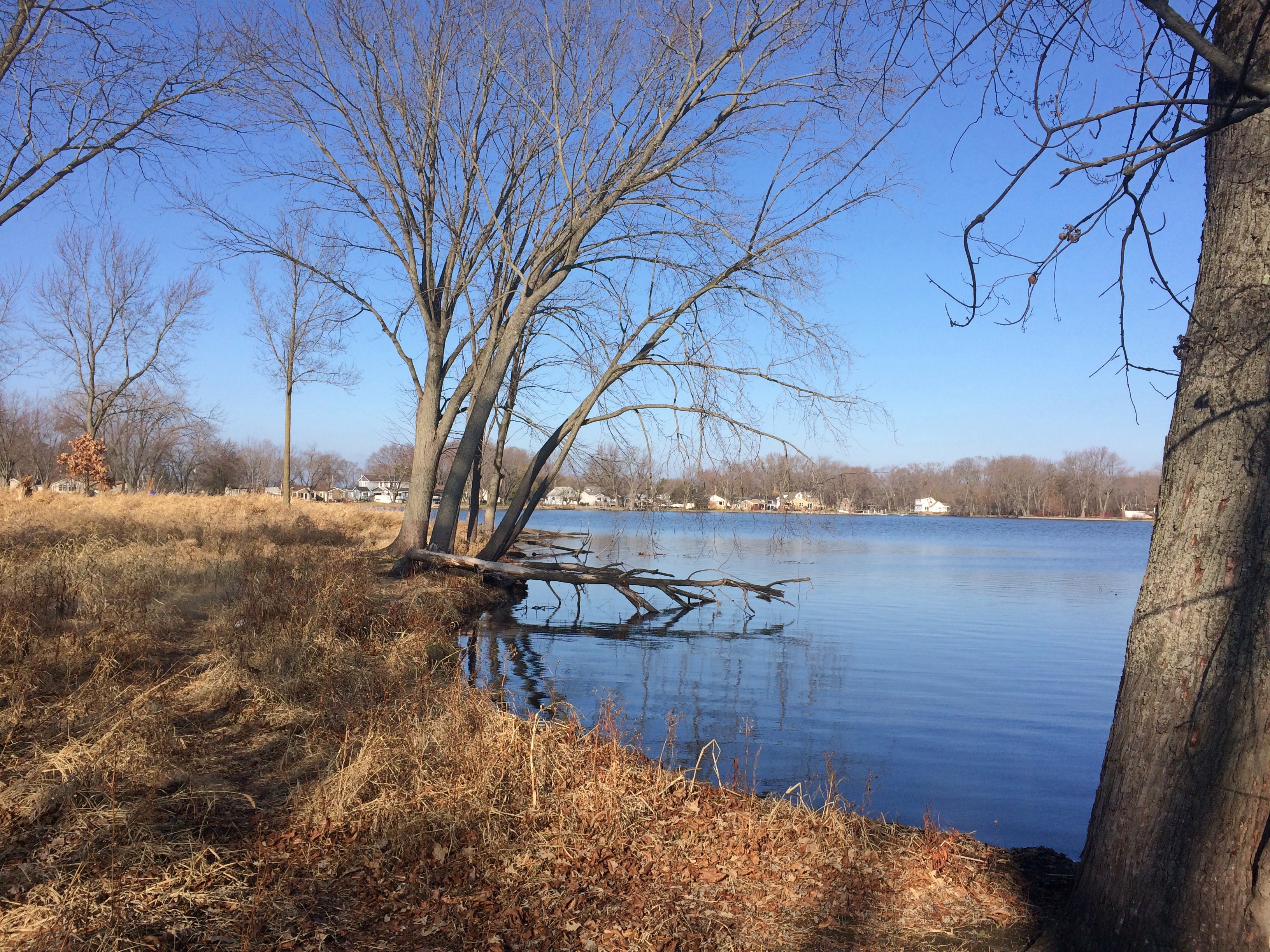
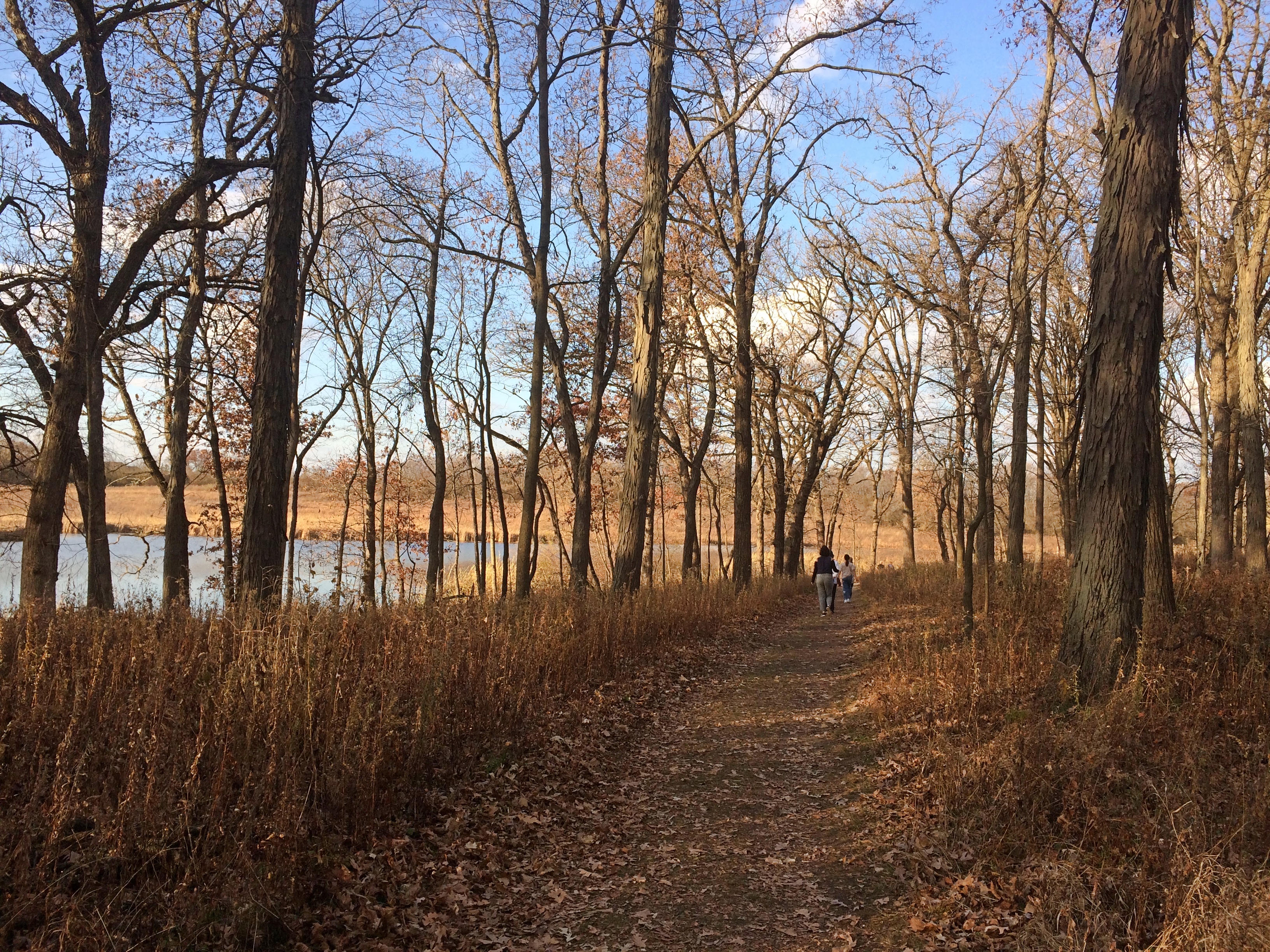
Side trails wander down to the edge of the Fox. The river widens quite a lot at this point, perhaps forming the feature called Grassy Lake, though I haven’t found anything to confirm that.
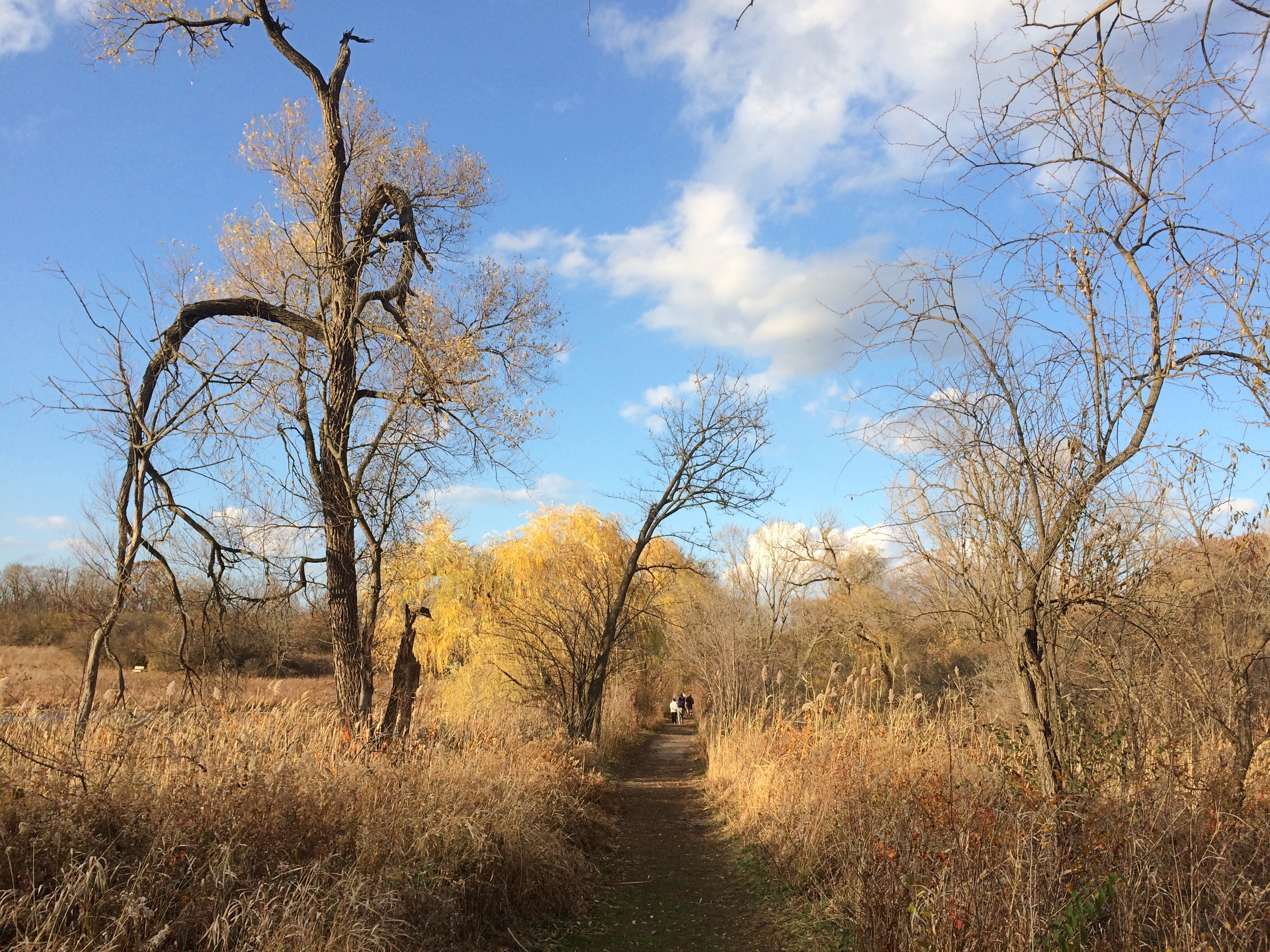
Follow the main path far enough and it rises to the highest point in the forest preserve, where it dead ends.
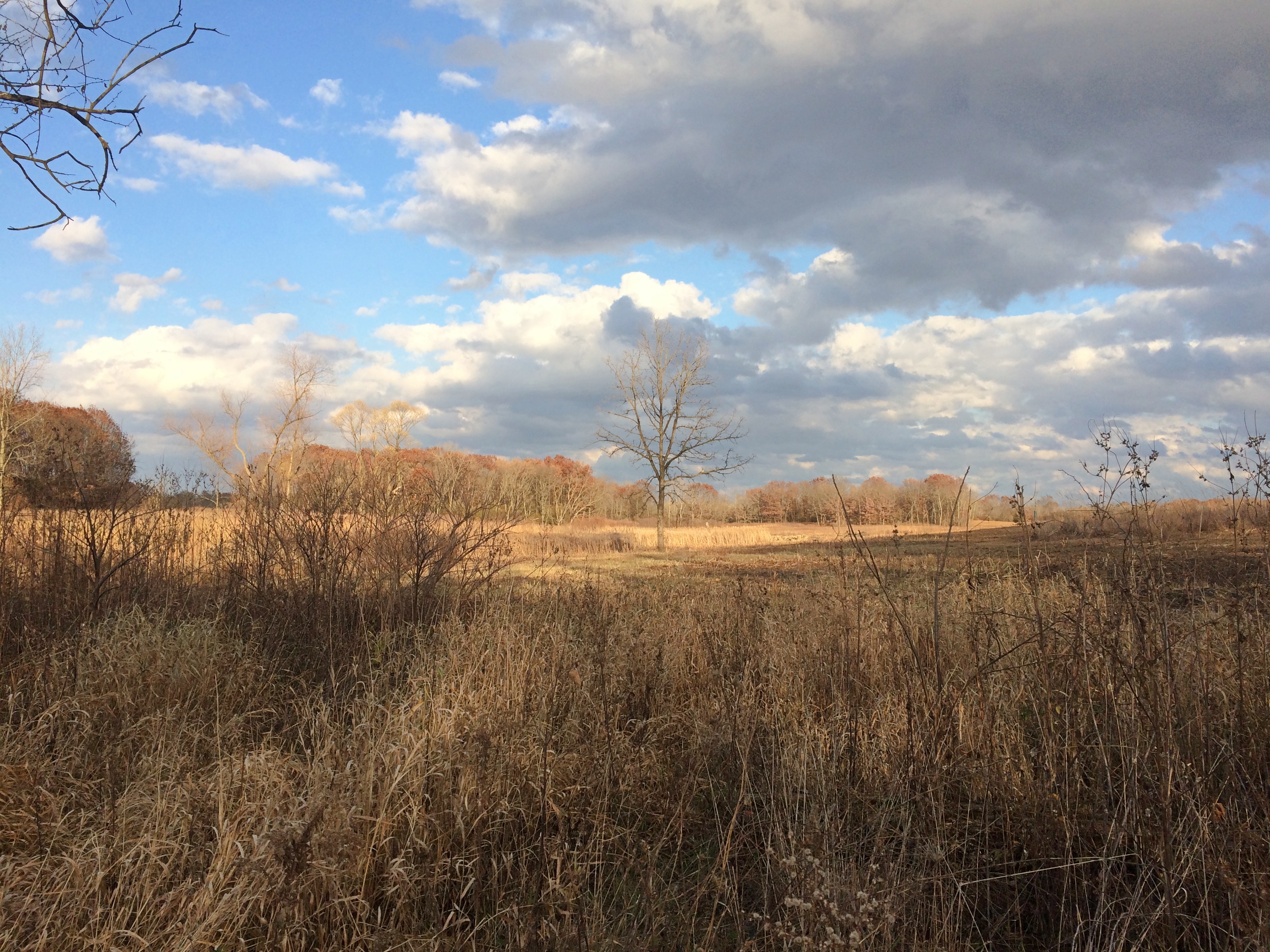
Not the highest view I’ve seen recently, but on a clear warm-for-November day, a good one.
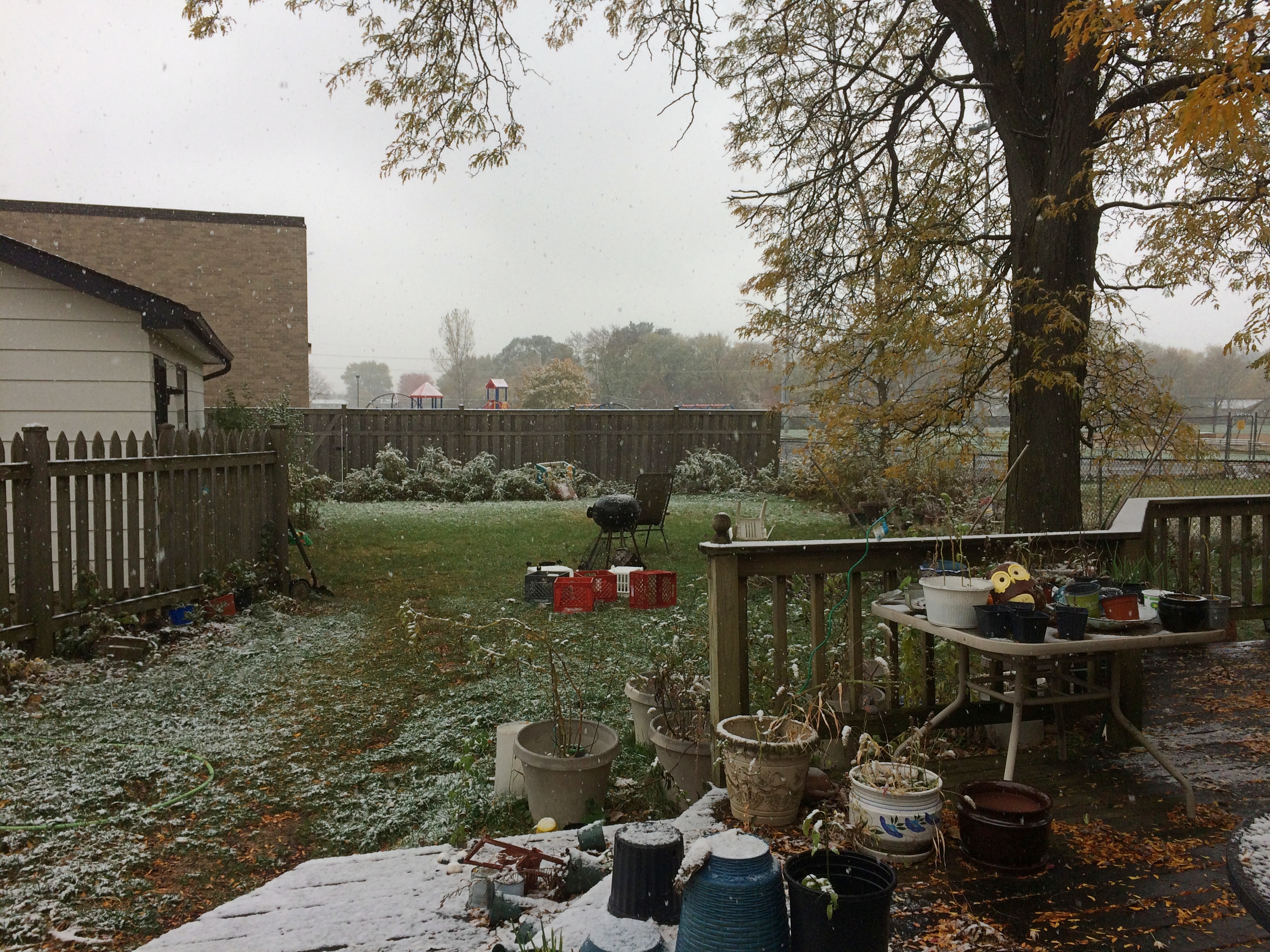
Clear and cool lately, with daytime temps in the 50s. Not bad for late November. So far, no snow yet except for a dusting we had a few days before Halloween. It didn’t last. Next time, it probably will.
Pleasant Thanksgiving at home. Nothing made from scratch this year except the gravy, but the boxed macaroni and stuffing you can get at Trader Joe’s isn’t bad at all. And what’s a Thanksgiving dinner without olives, I tell my family. They aren’t persuaded.
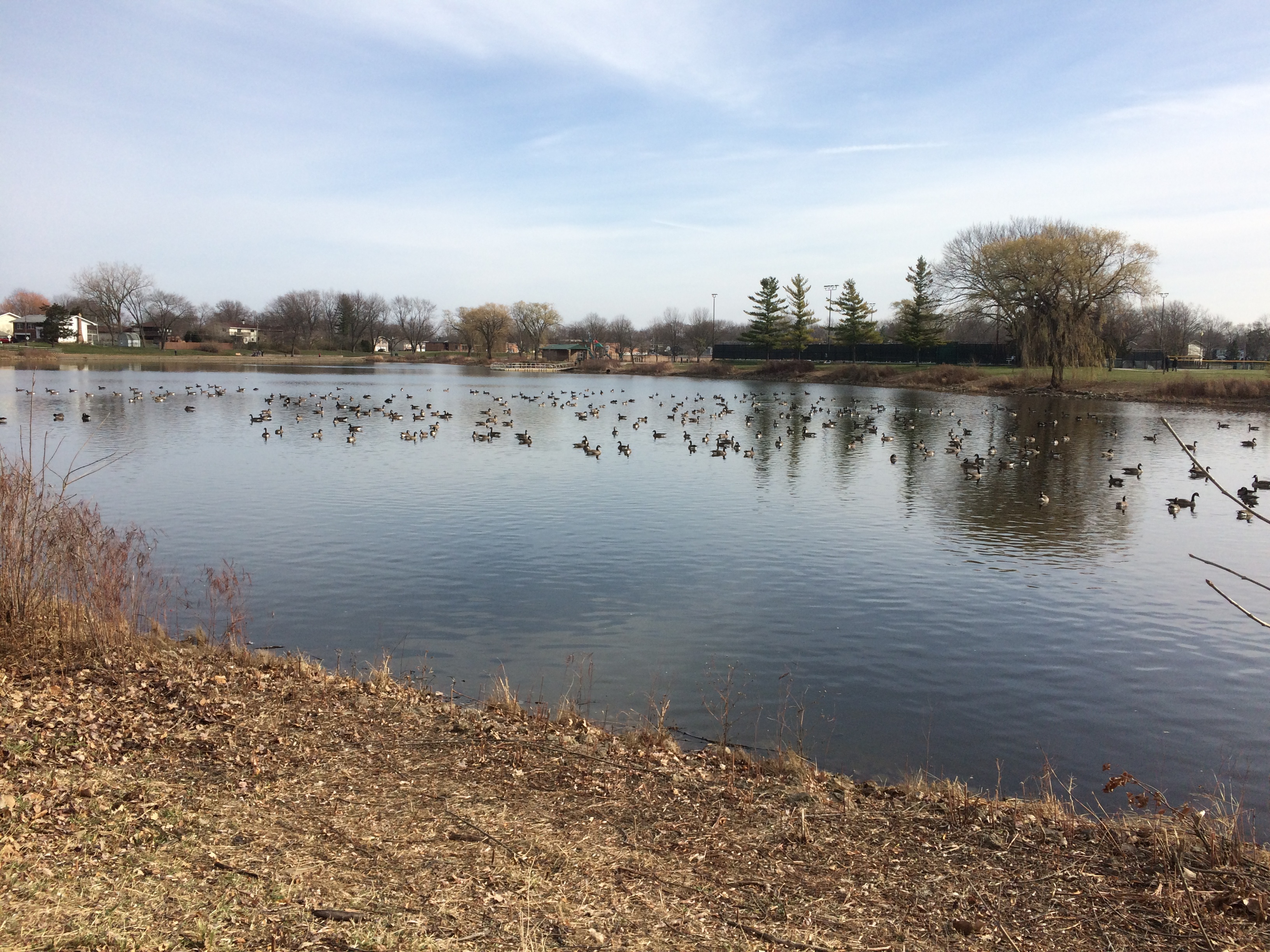
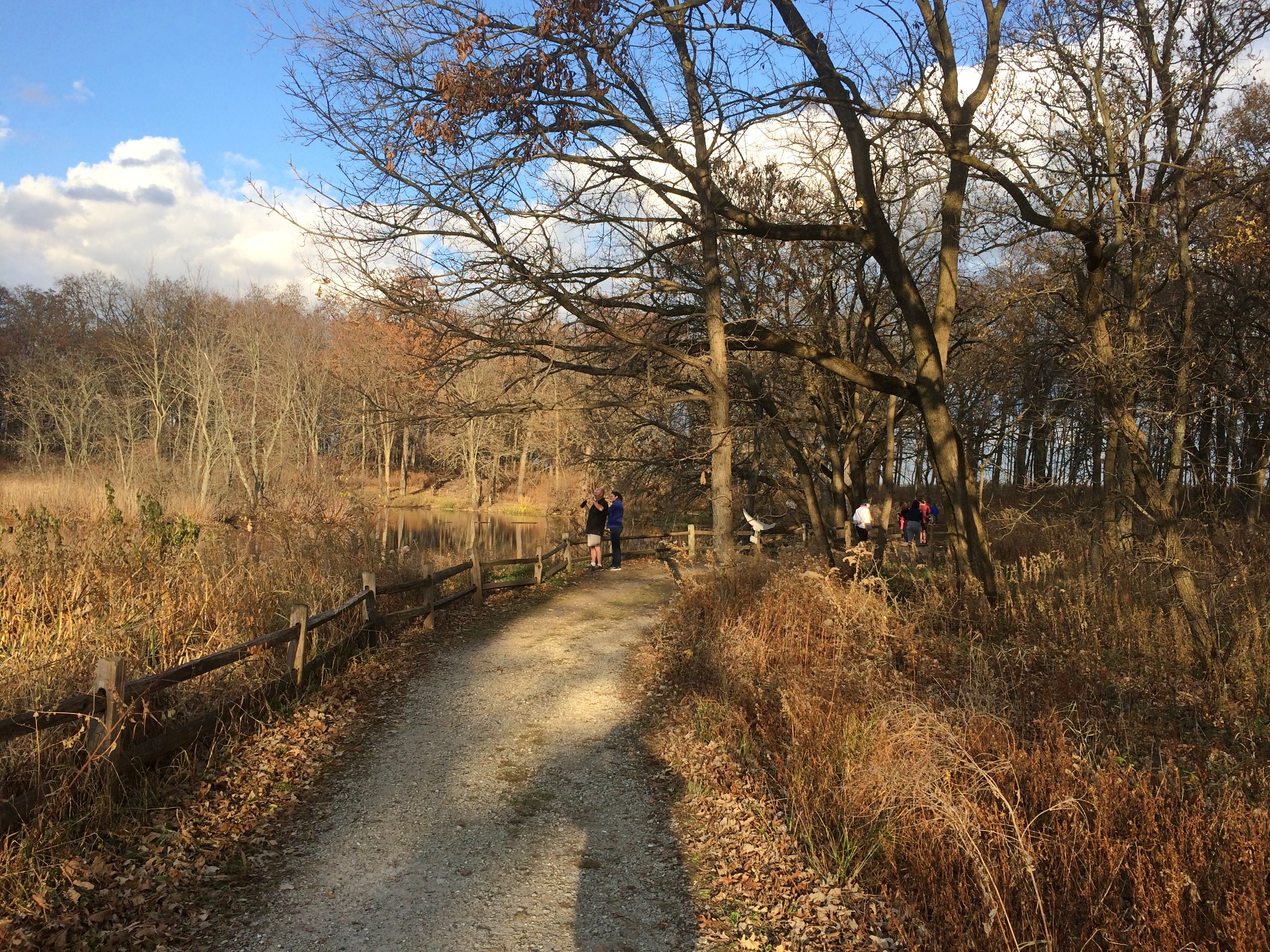
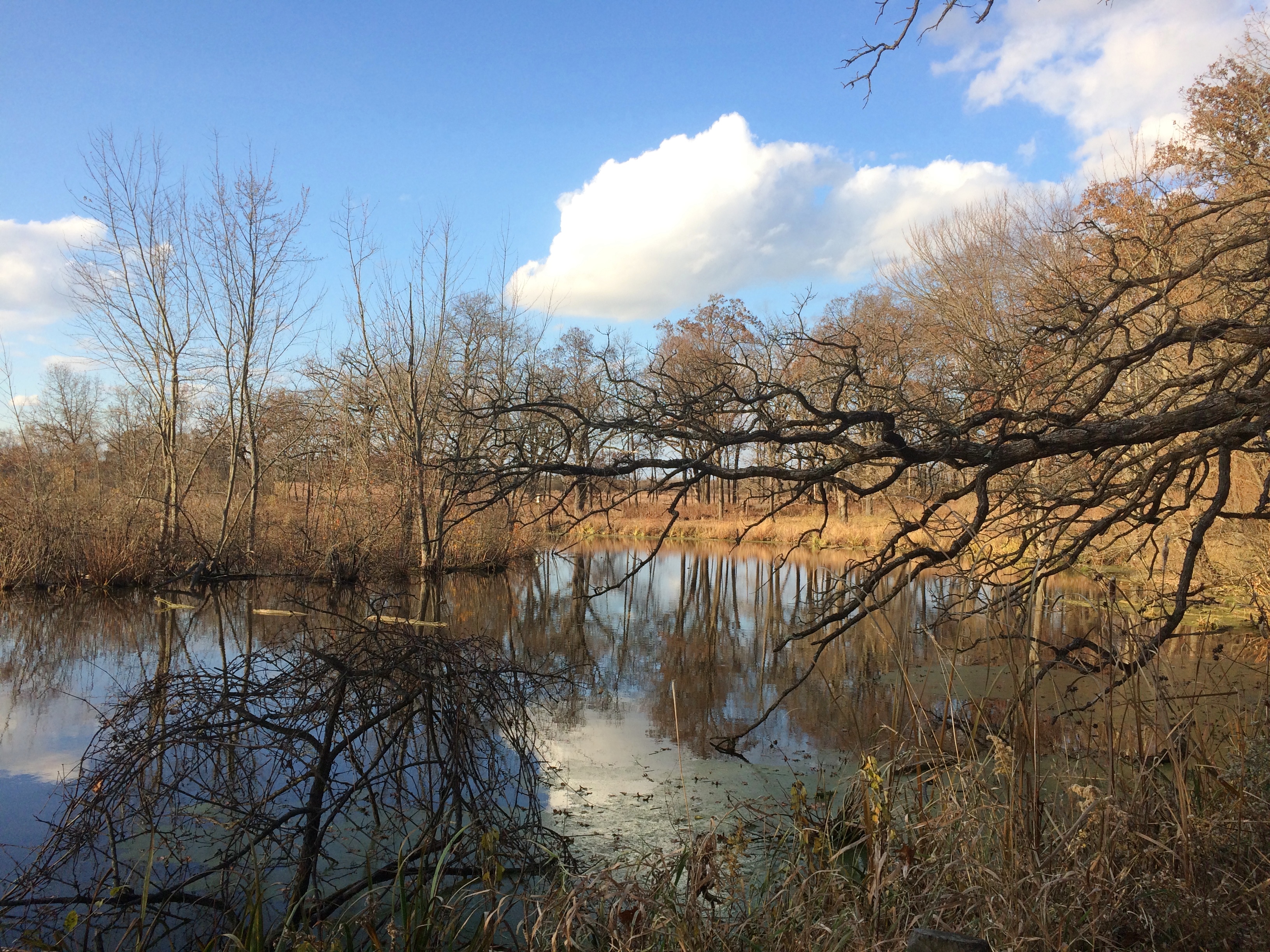
Took a walk last weekend at Fabbrini Park in Hoffman Estates.
The geese were still around, mucking up the place.
If you like maps, you’re going to have a certain fascination with borders, as imaginary and fluid as they may be. If you travel at all, you’re going to cross borders. If you have a fascination with maps and you travel at all, you’re going to be fascinated when you come face-to-face with a border.
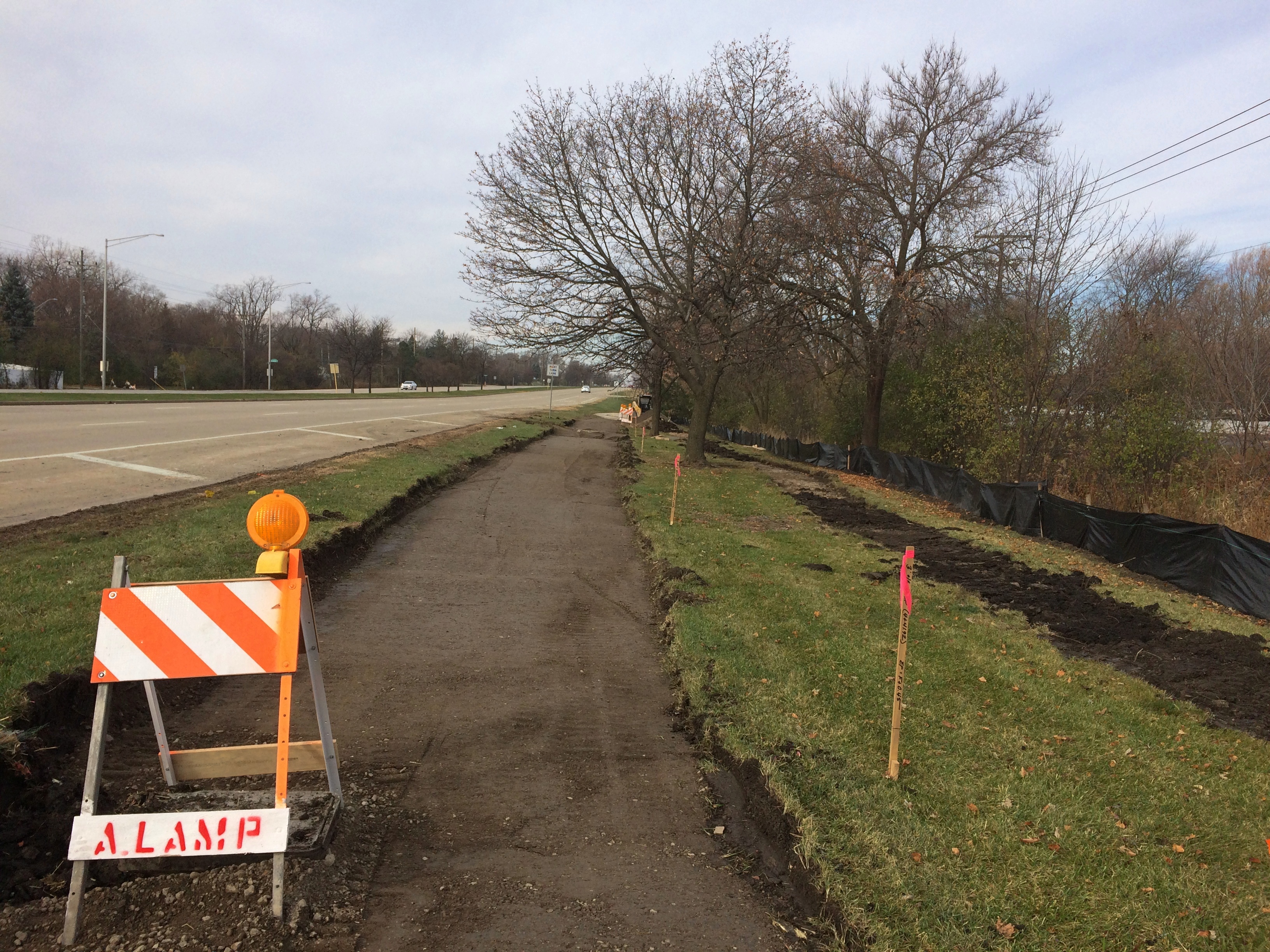
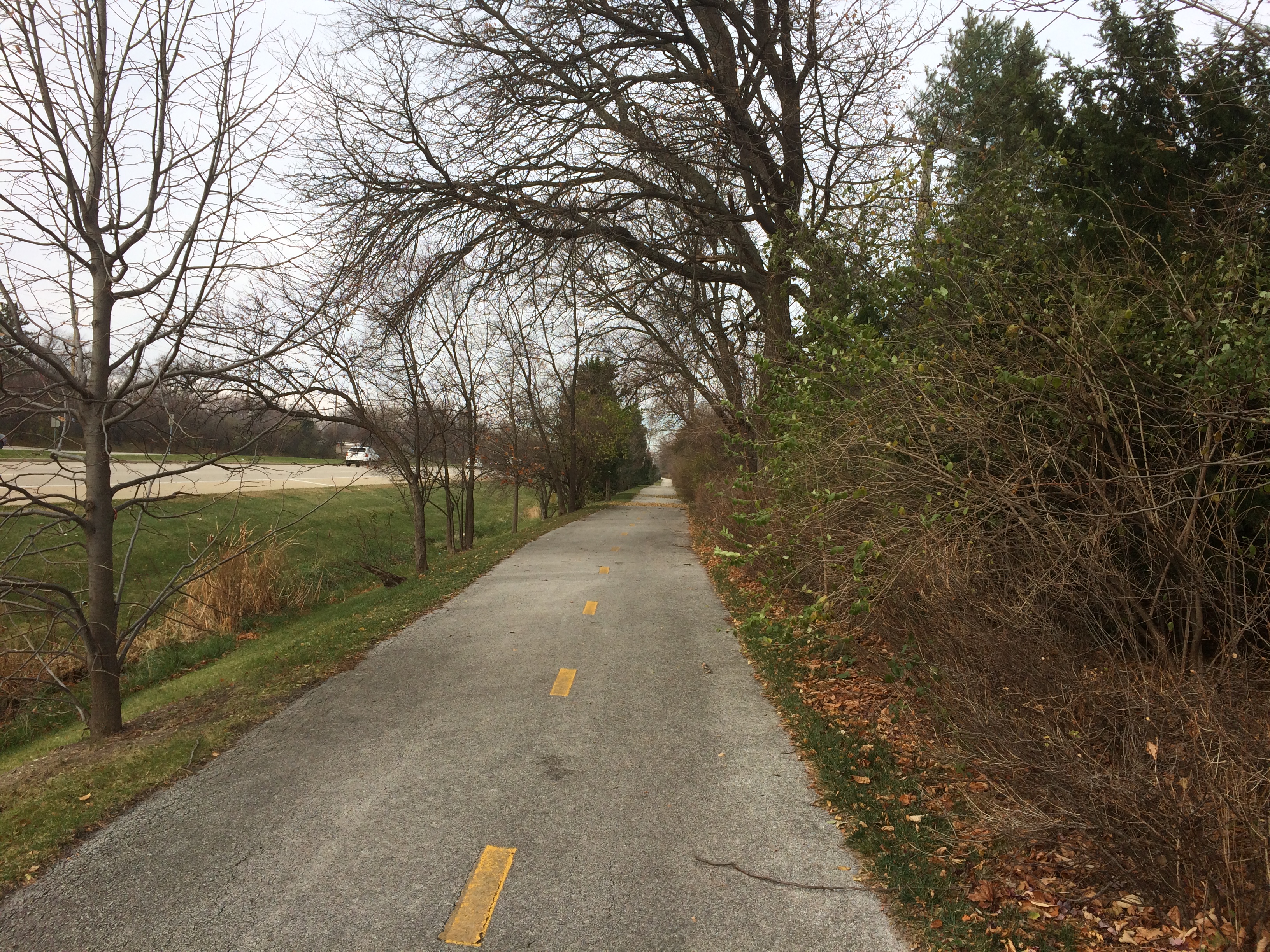
On Saturday morning, when it was cool but before the cold rains that evening, I took a walk along a path, headed toward a border. Actually, as you can see, the footpath was under construction, so I for 100 feet or so I followed the cut ground where pavement would soon be. Replacement pavement, since I’ve seen a path there for years. I can’t imagine it’s being replaced with anything else.
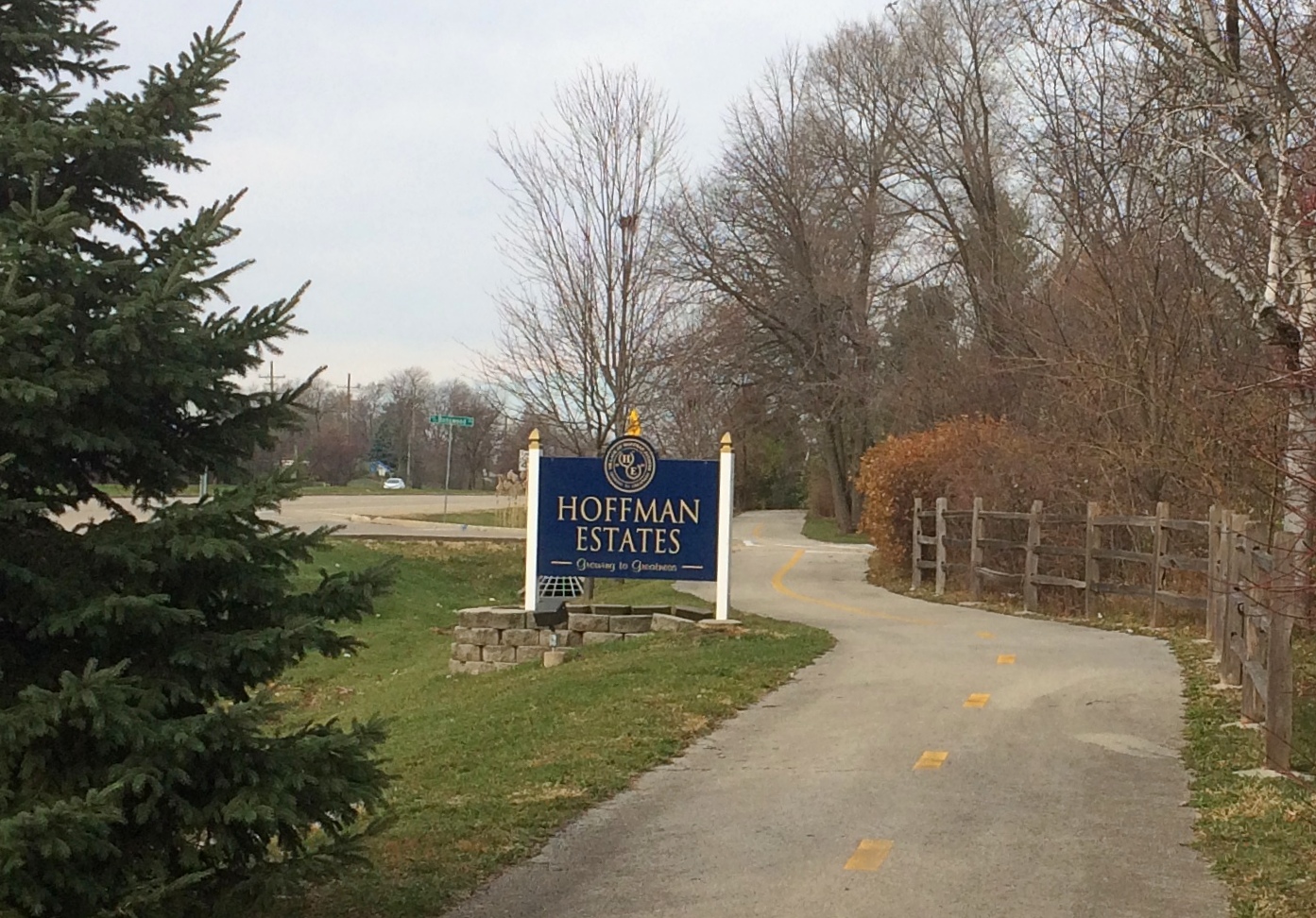
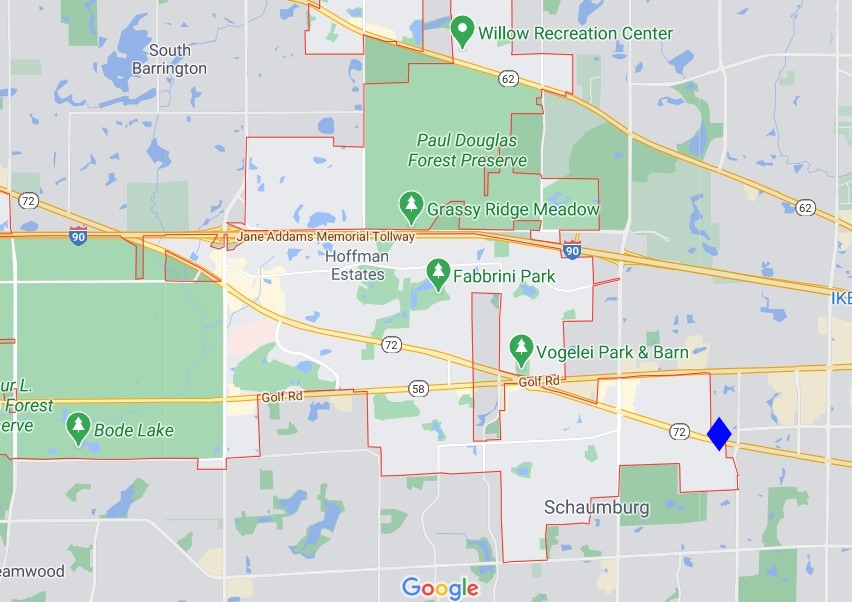
Not all of it is being rebuilt. Soon I came to the border. Or at least a sign, if not the precise line. The Schaumburg-Hoffman Estates Border. A simple map shows how convoluted it is, an echo of a competing annexation rush in the late ’50s and early ’60s.
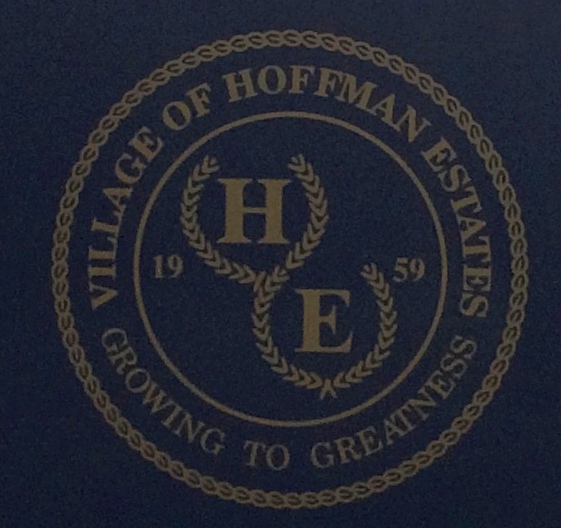
On the back of the sign is the Hoffman Estates seal, or emblem or logo. I didn’t remember seeing it before. Edited from the original: “Growing to Greatness, and Those Schaumburg Bastards Aren’t Going To Stop Us.” The blue diamond marks where I was, heading west into Hoffman Estates, and then back east into Schaumburg. The road is Illinois 72, but we never call it that. It’s Higgins Road. Just to the east of the blue diamond is a small office complex that includes our dentist as a tenant. I took Ann there Saturday morning for an appointment, but there’s no waiting in the waiting room, so I hit the footpath.
“Early records date the road back to 1851,” writes Pat Barch, Hoffman Estates historian. “It was identified as the Dundee Road on 1904 maps. Early settlers called it the Chicago-Dundee Rd. Today’s Higgins Road (Route 72) wasn’t opened as a state road until 1924. It runs for 110.71 miles from IL Rt 43 in Chicago to Lanark, IL.”
Also, the road might have been named for nearby landowner “F. Higgins.” Lots of early landowners gave their names to later suburban roads. As suburban roads go, I like Higgins, at least at this juncture. It’s usually less crowded than the similar-sized and nearby Golf Road, which runs past the Woodfield Mall, car dealerships and other traffic generators.
All the years I’ve been driving on Higgins, I’d never walked on the path. Or seen many other people doing so, or riding bikes. So I guess the current crisis is good for something — getting me out to see the territory.
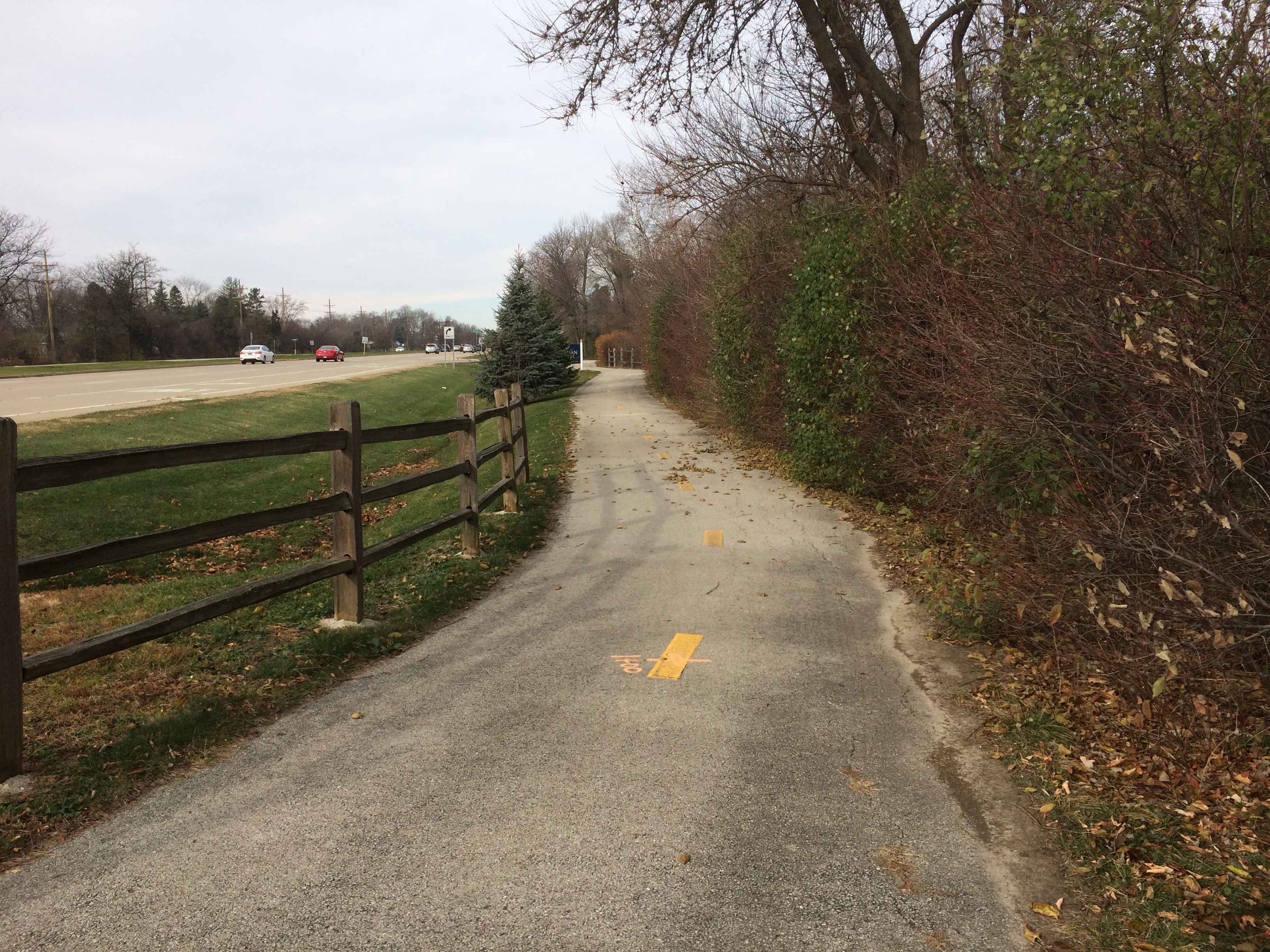
This is the view across the border. Not much of a change in scenery. Higgins to the left has some traffic, but only enough to be distracting when you’re on foot, until you start to ignore the sound. To the right are bushes and fences that separate the road and footpath from suburban back yards.
I got as far as the intersection of Higgins and Ash Road. Years ago, I used to turn on Ash to drive to the home of a babysitter we used occasionally, who had a daughter about Lilly’s age. Live in a place long enough and everywhere reminds you of something.
Unlike the most recent weekend, the weekend before that was unseasonably warm and pleasant. Naturally that meant we wanted to visit a forest preserve, so I took to Google Maps and picked one I thought we’d never been to before: Crabtree Nature Center.
That sounds like a building you’d visit for the edification of small fry, and there is such a facility on the property (closed for now). But mostly it’s green space — woodlands and prairie and wetlands — on about 112 acres that are part of the Cook County Forest Preserve system.
Not far from the parking lot, which is half blocked off now to prevent crowding, a trail loops around two small lakes. I suspect crowding isn’t usually an issue, but never mind.
A pleasant walk on a warm day. Most of the leaves had already transitioned to the ground, making for a lush underfoot crunch as you walked on. Or the swish of knocking leaves out of the way with your feet. Distinct fall sounds.
Toward the end of the loop, you pass by some large iron-mesh enclosures, about two stories tall, home to a number of large birds that I suspect had been rescued for one reason or another, and who couldn’t survive in the wild.
Then it occurred to me: we had been here before. I remembered these enclosures. How long ago? I couldn’t recall exactly, but I did have a fleeting memory of pushing someone in a stroller. Probably Ann, since she would have been the right age for that right after we moved to the northwest suburbs, and I doubt we would have been up this way before that.
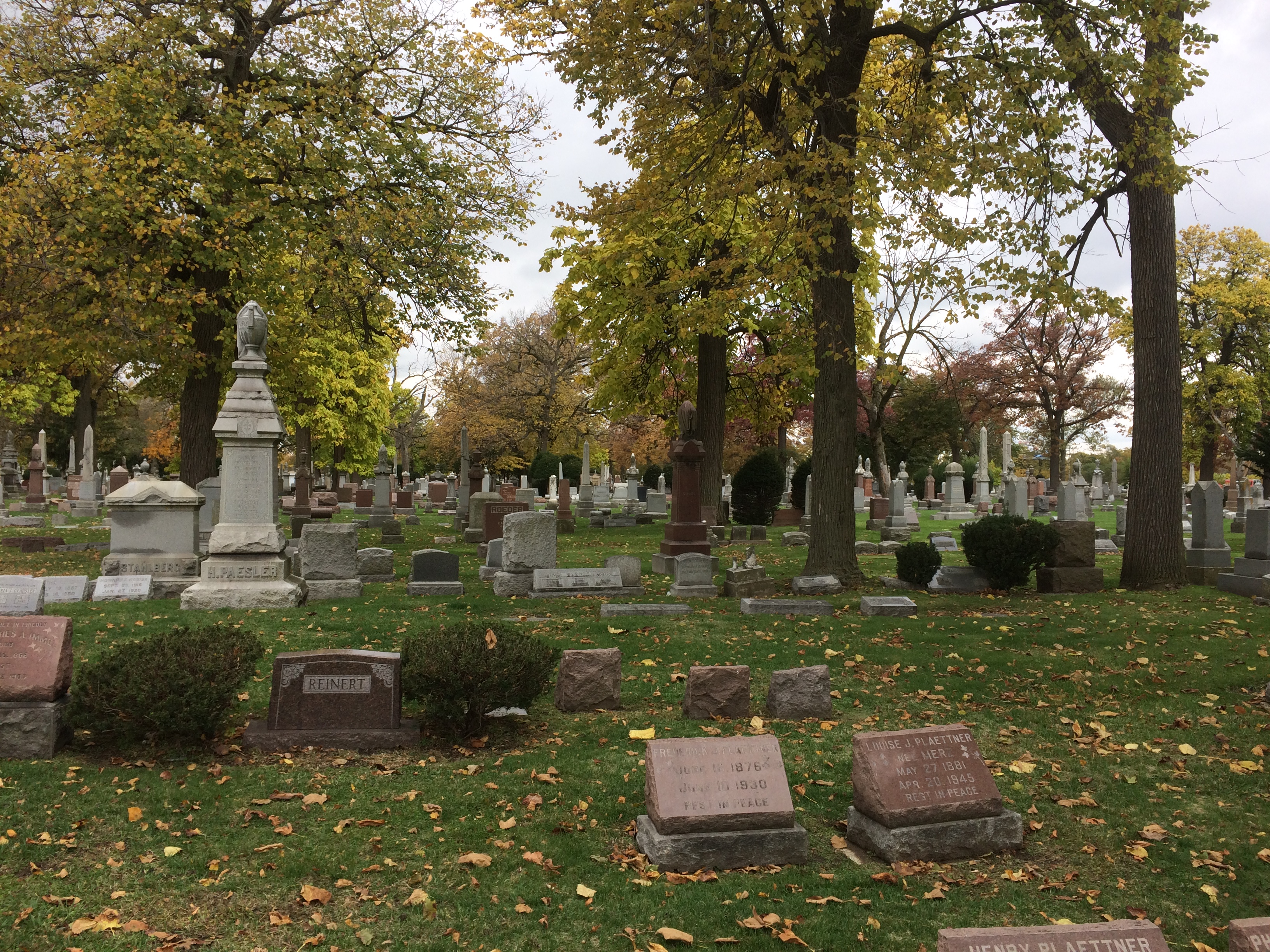
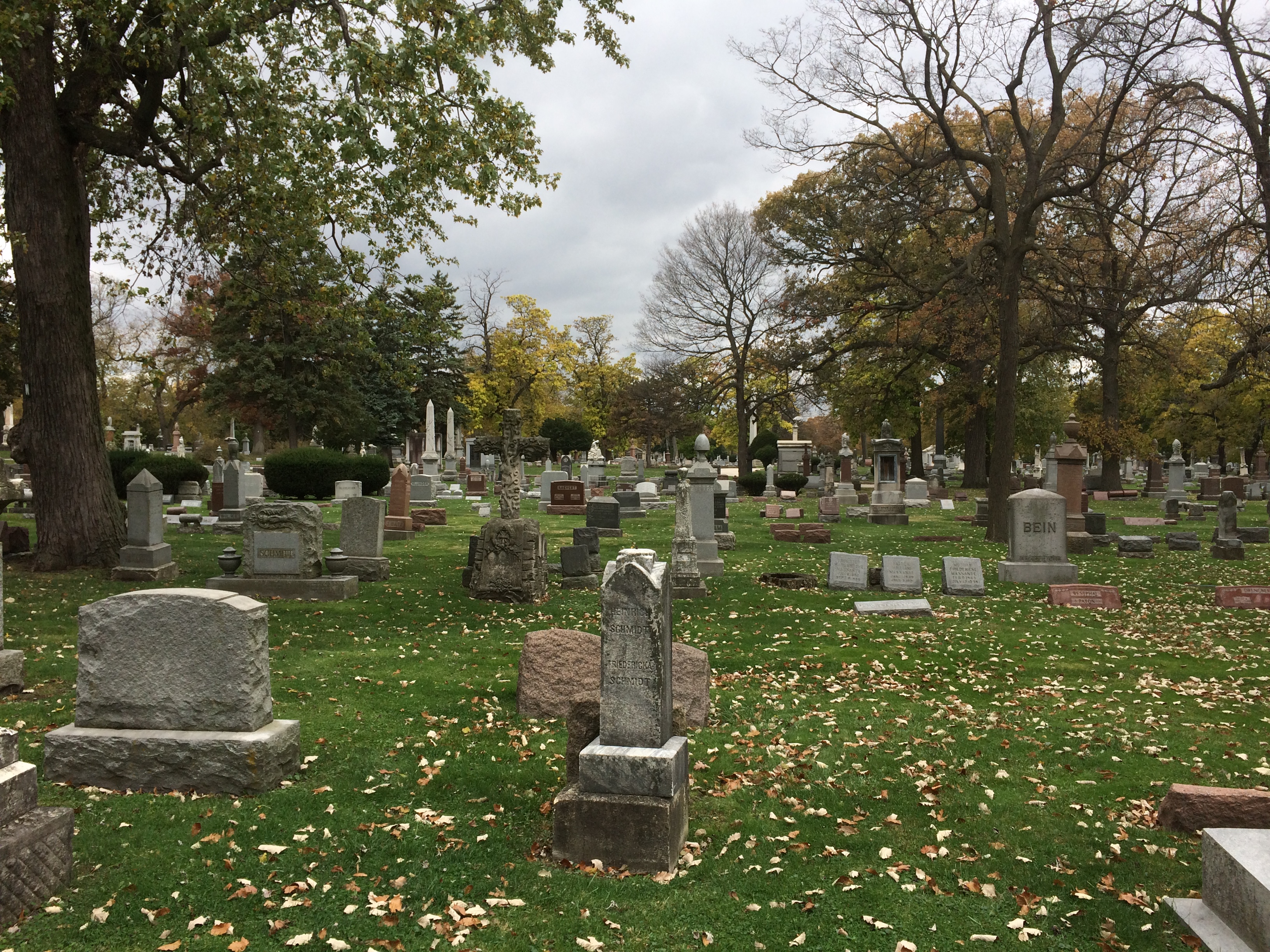
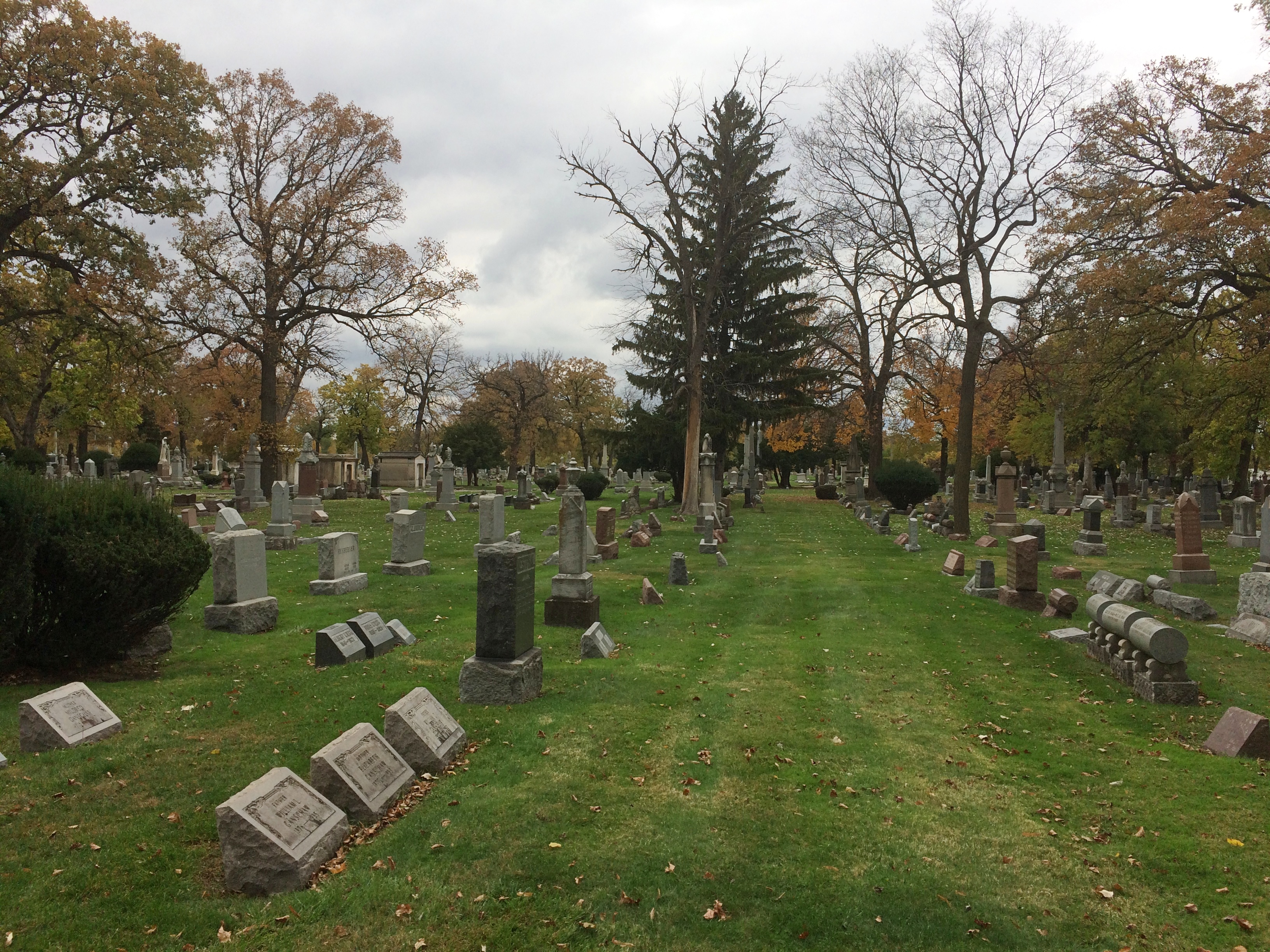
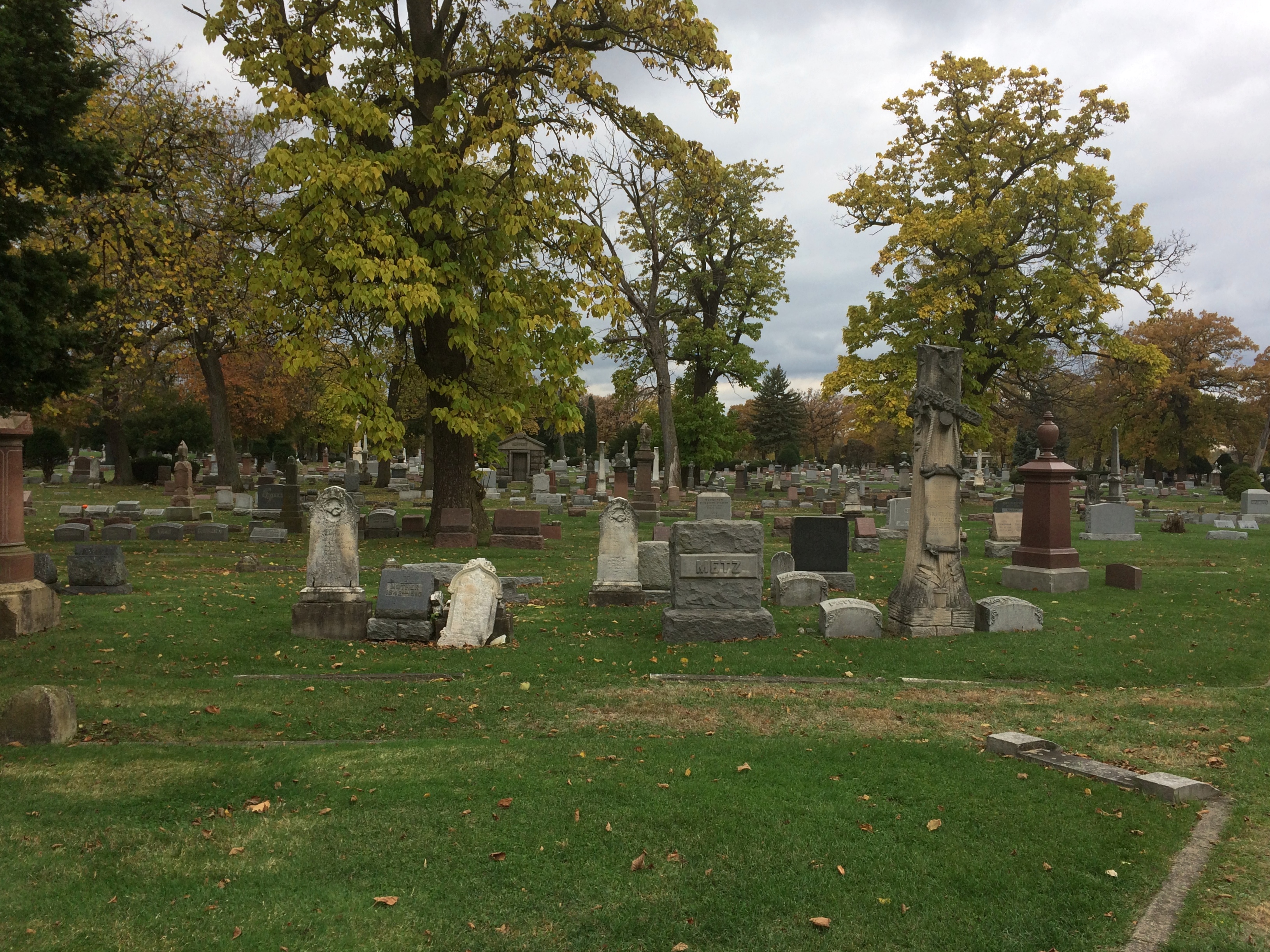
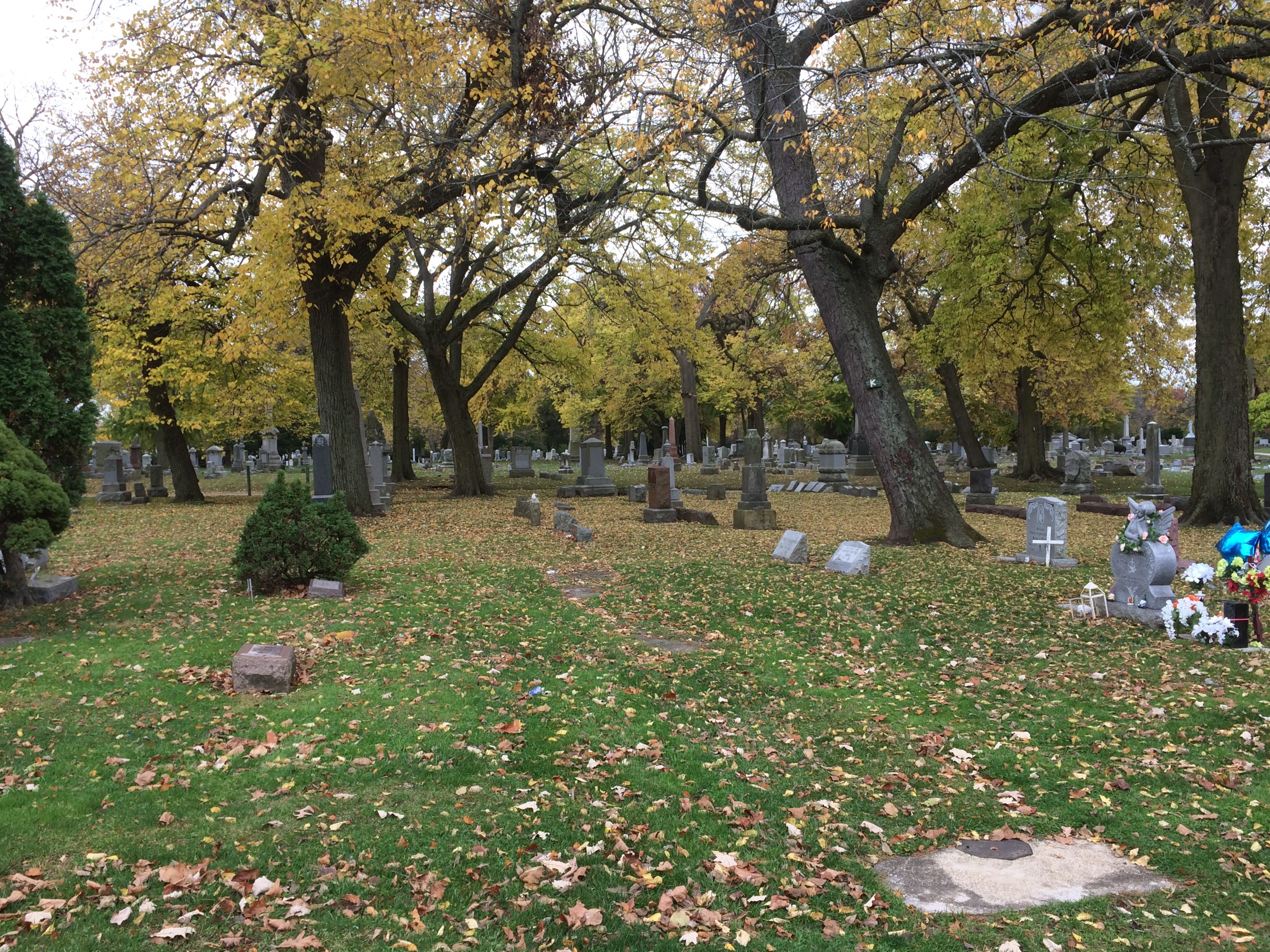
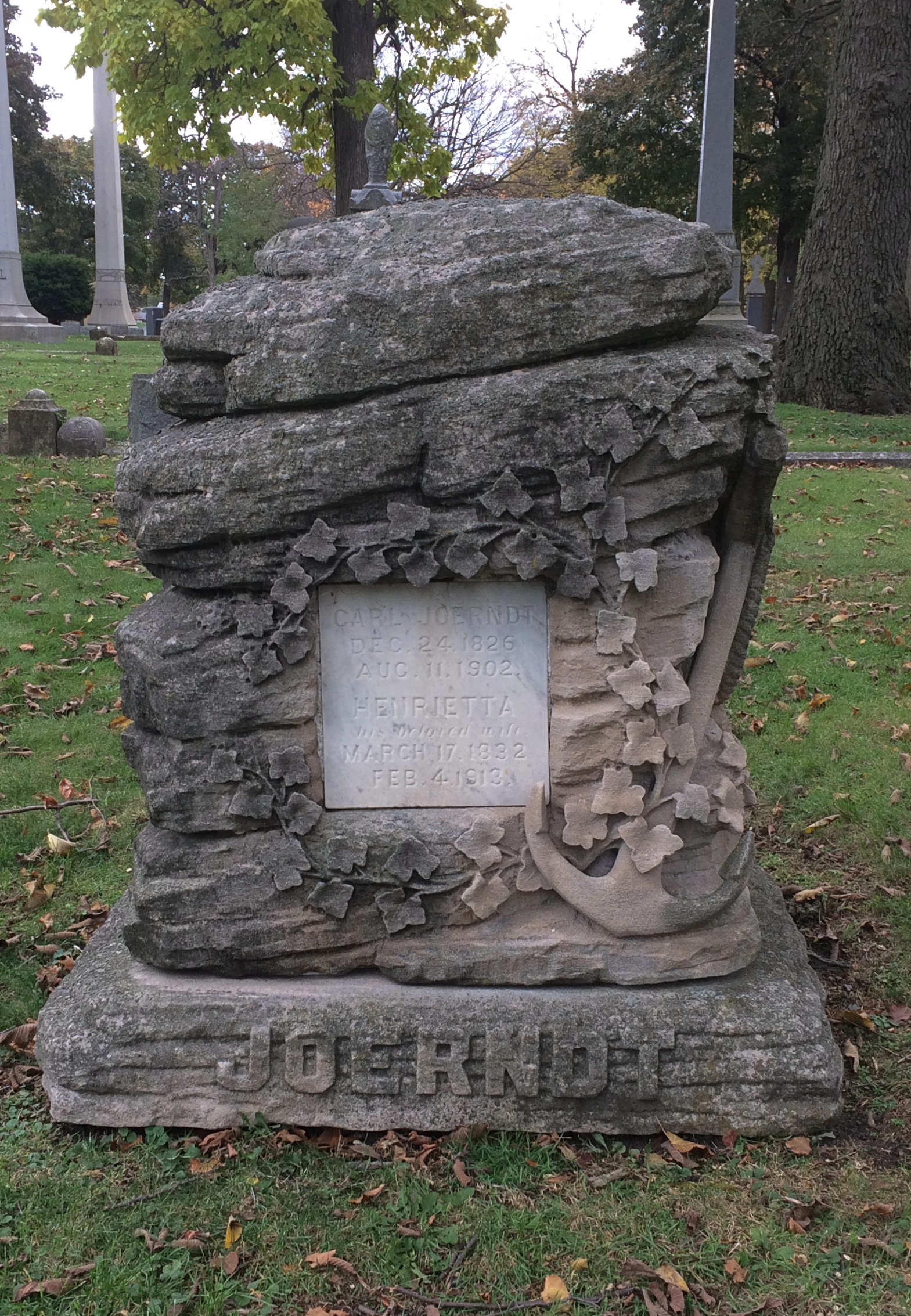
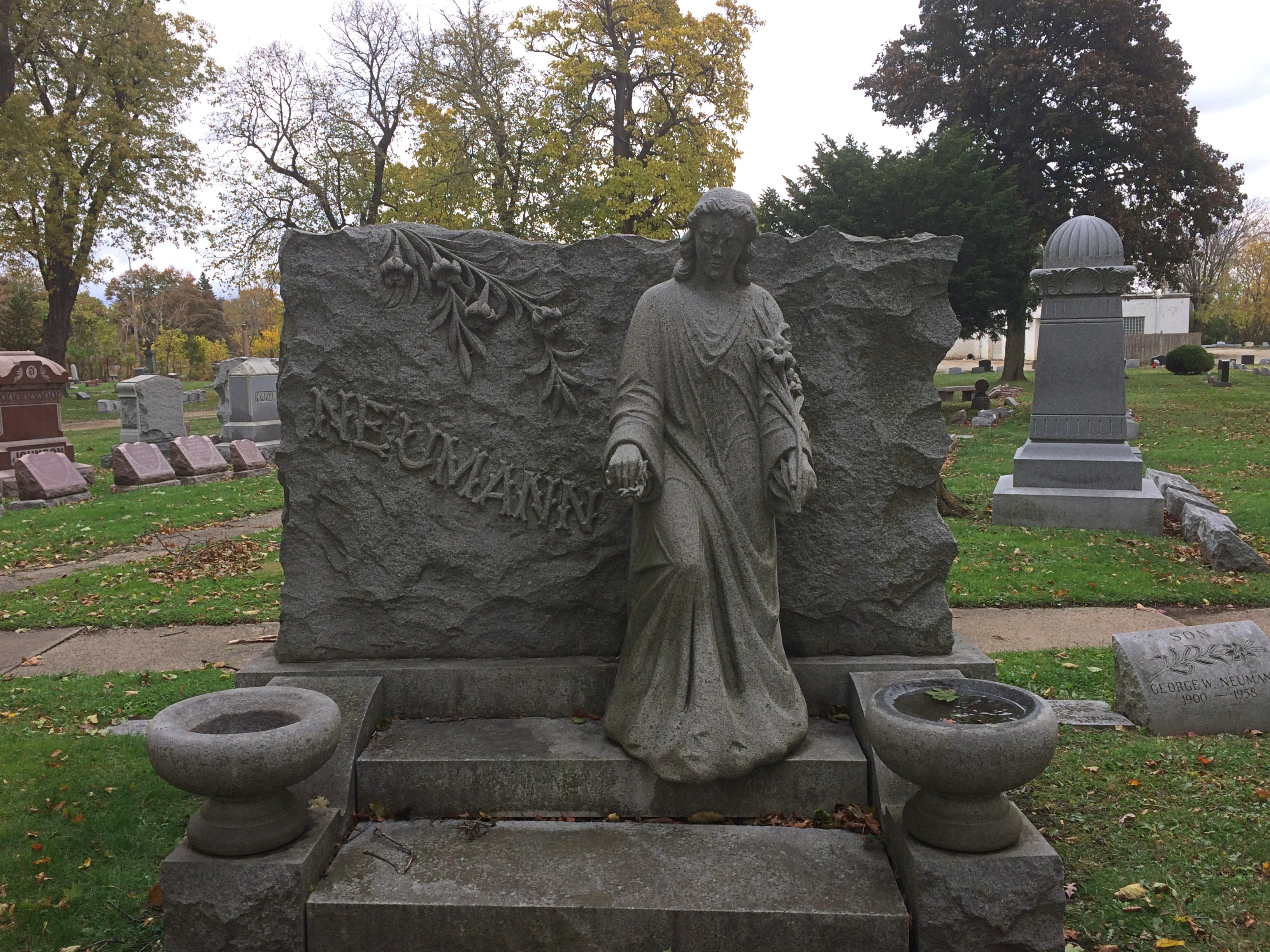
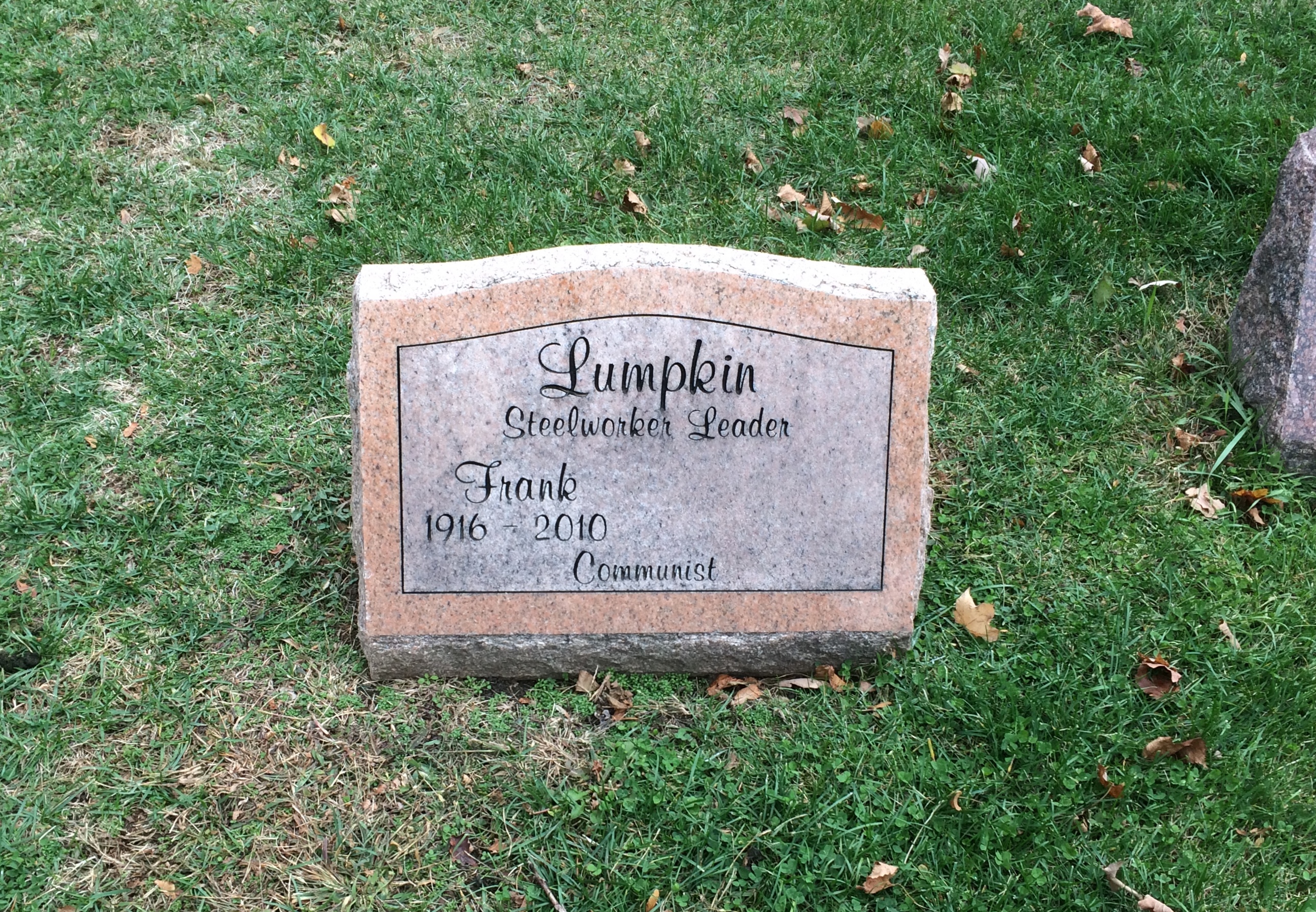
After visiting Garfield Park in Chicago on October 25, I took a short drive to Forest Home Cemetery, which is near west suburban Forest Park. One of metro Chicago’s splendid cemeteries. It had been a number of years since I’d been there, but I hadn’t forgotten how schön the place is in October.Some unusual memorials I didn’t remember.
I couldn’t identify this large mausoleum, since there are no names on it.
Later I found out that it is the Lehmann Mausoleum, dating from 1902, and the largest in the cemetery. The Lehmanns ran department stores in Chicago, but for whatever reason, they built another mausoleum in 1920 in Graceland Cemetery in the city and had the deceased members of the family moved there, leaving the Forest Home structure vacant, as it remains, according to the cemetery’s web site.
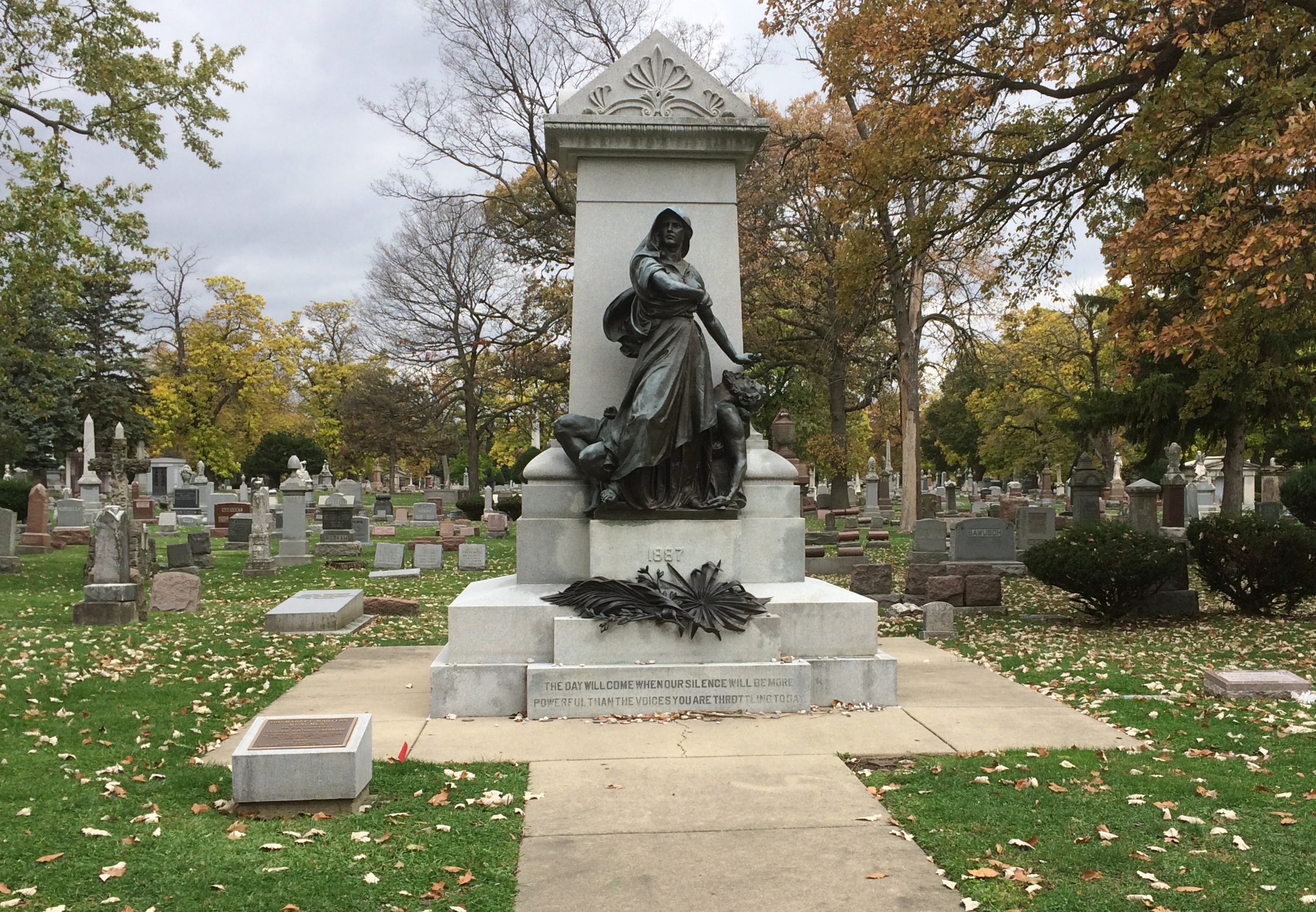
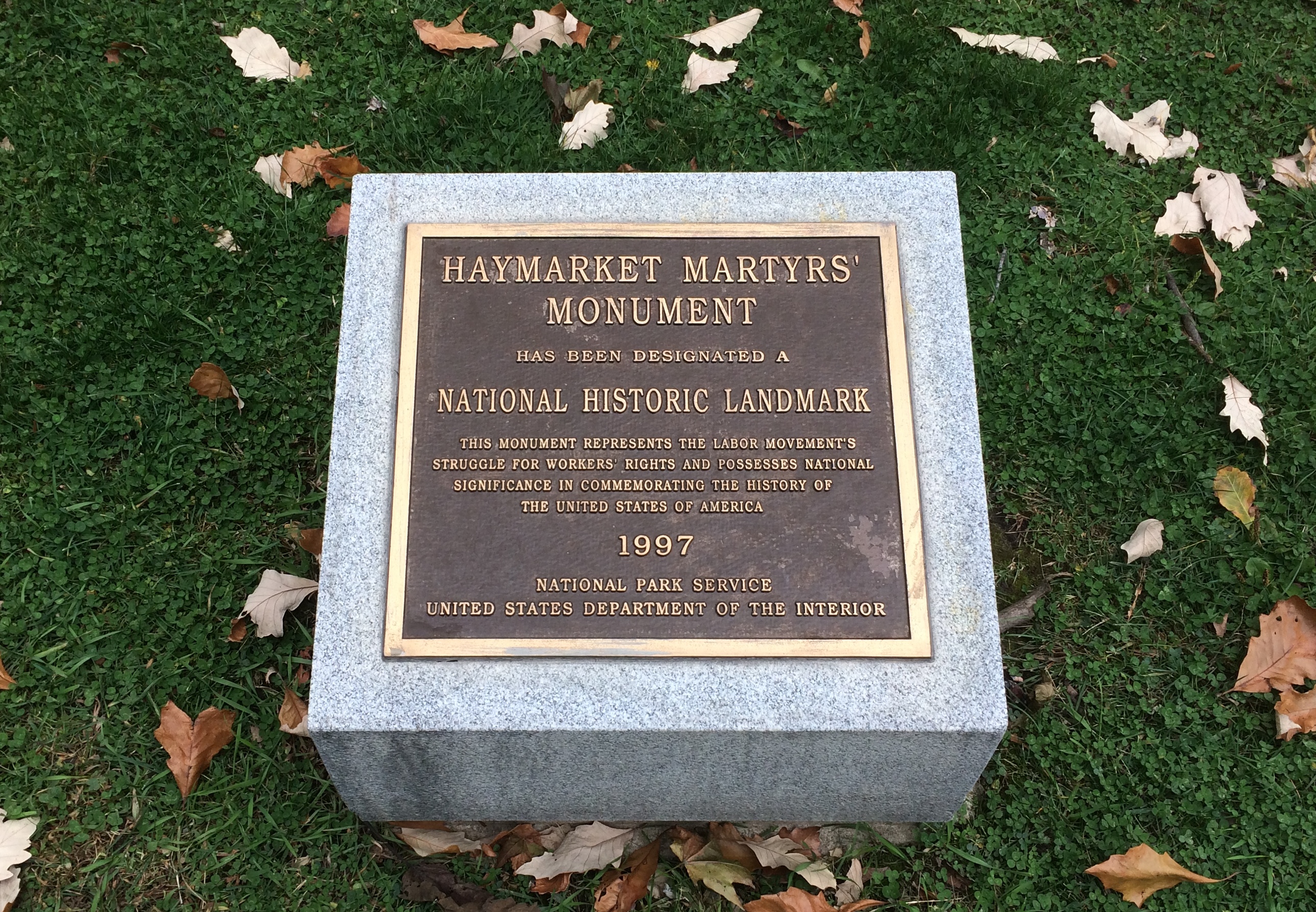
The Haymarket Martyrs’ Monument.
“On June 23, 1893, thanks to Lucy Parsons [widow of Albert Parsons, one of those executed] and the Pioneer Aid and Support Association, the Haymarket Martyrs’ Monument was dedicated,” Atlas Obscura says.
“On the front of the granite monument is the imposing figure of a woman representing justice standing over a fallen worker. The bottom of the 16-foot monument features the final words of August Spies [also executed]: ‘The day will come when our silence will be more powerful than the voices you are throttling today.’ ”
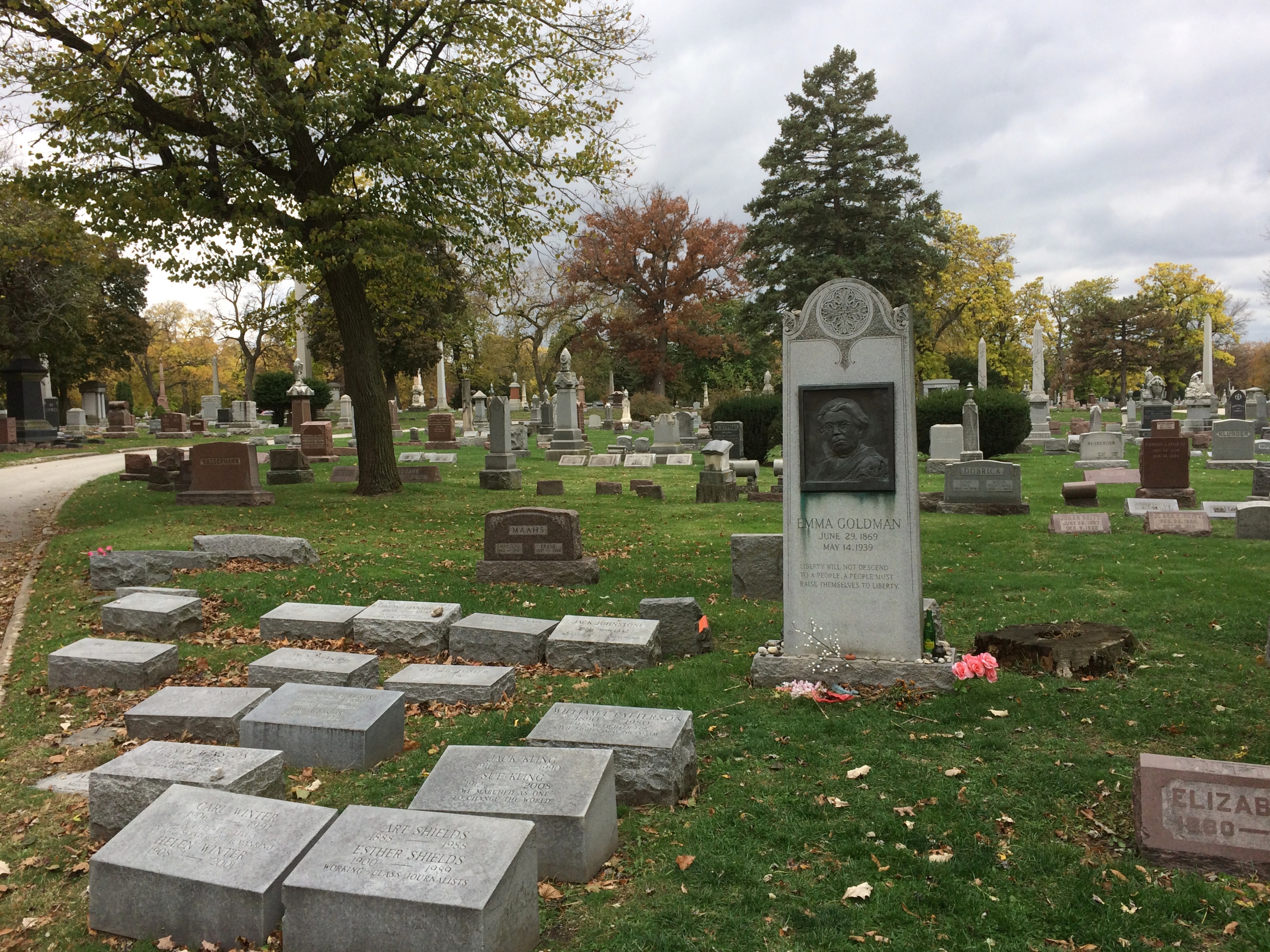
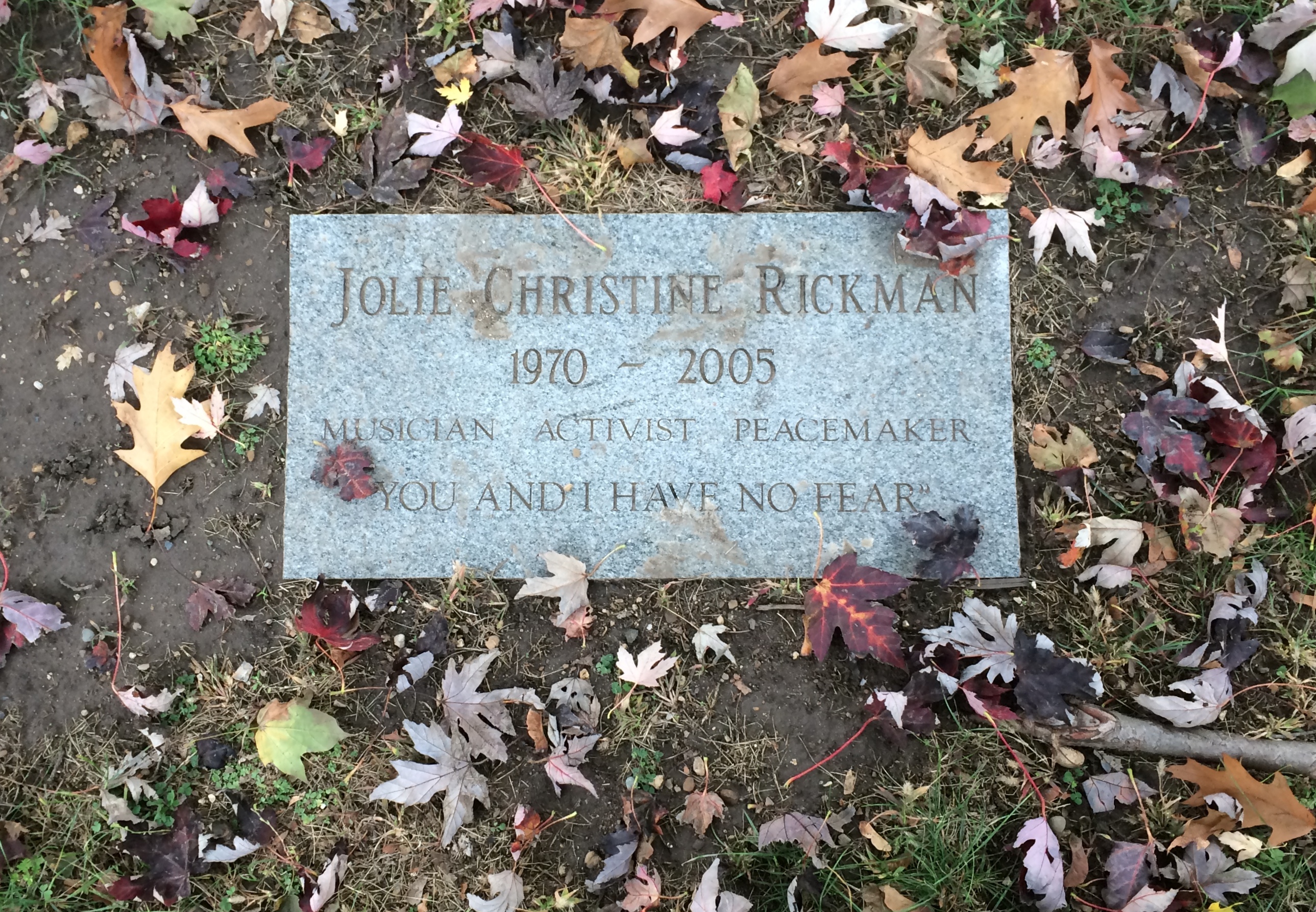
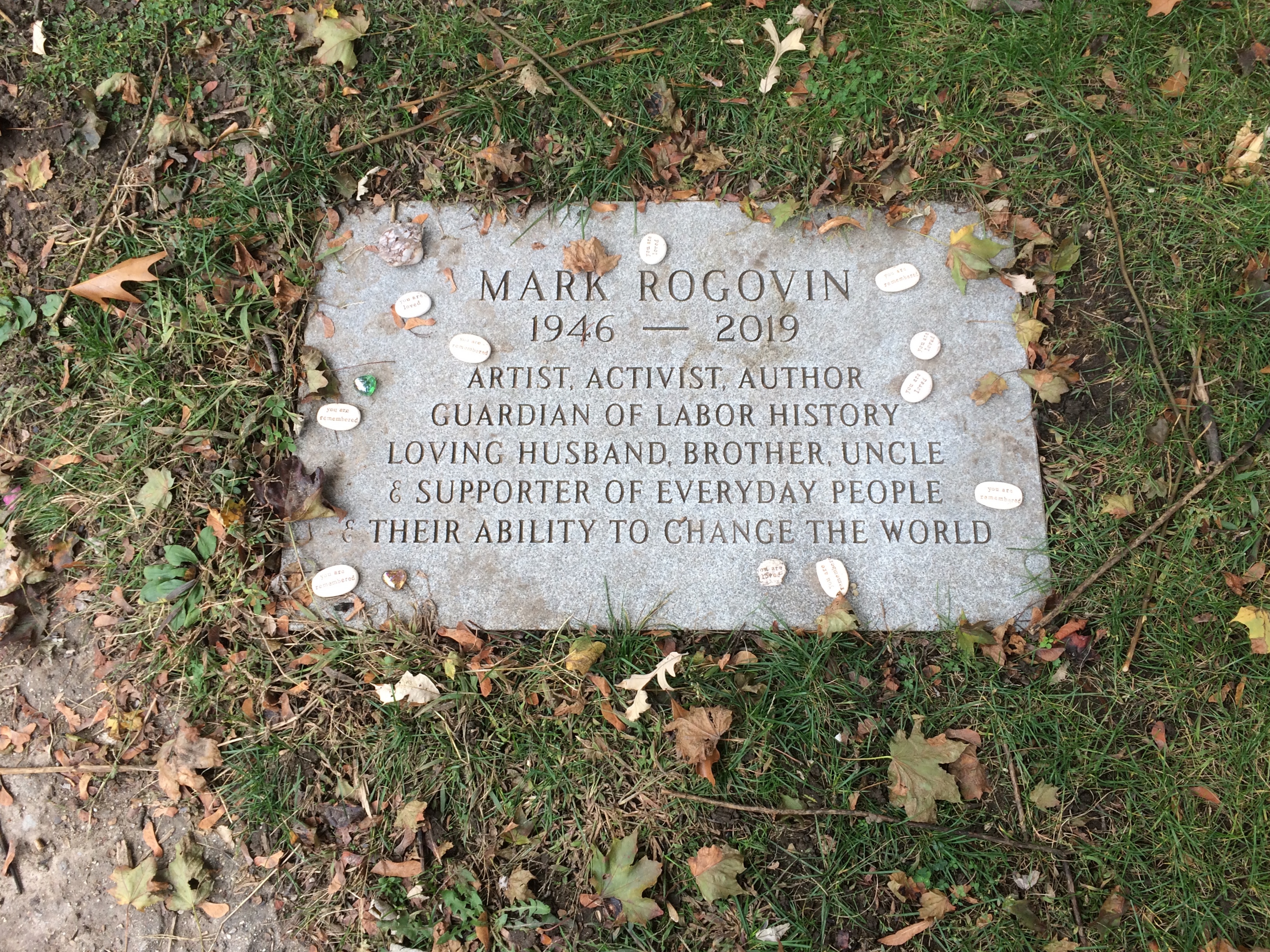
Emma Goldman and the cemetery’s gaggle of leftists are of course still present. Including some relatively new additions.
Maybe not a gaggle. What would be a good collective for leftists? How about a soviet of leftists? The opposite would be a fascio of rightists.
On October 24, as mentioned yesterday, we visited Lake County forest preserves. The next day, a Sunday, we went into the city, near Humboldt Park. Temps were around 50, but the park was alive with people, including a lot of dog walkers.
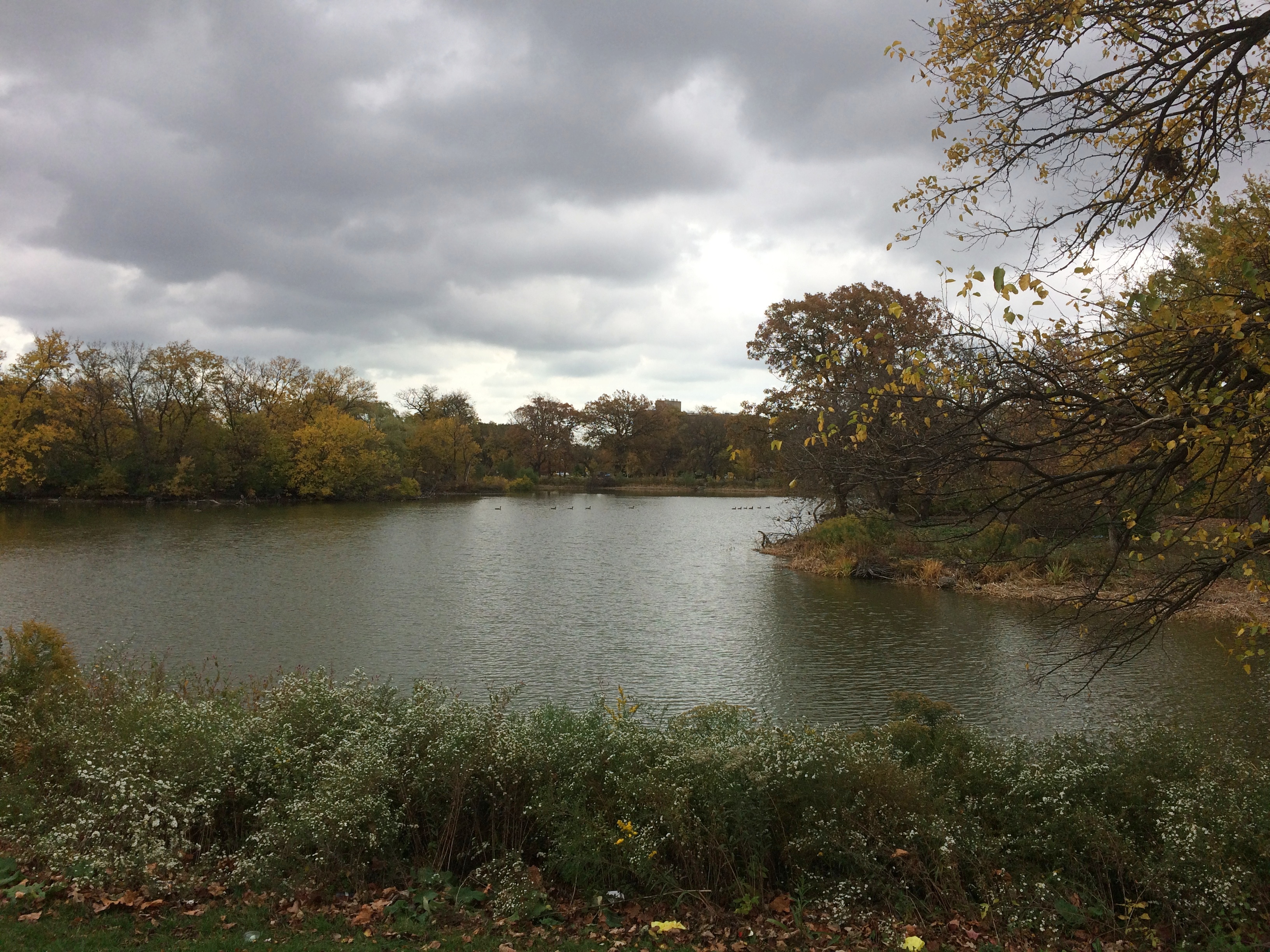
While Yuriko attended her cake class (just her and the sensei, these days), I decided to pop down to Garfield Park, which is one of the major Chicago parks connected by boulevards. I hadn’t been there in a good while, since some visits to the Garfield Park Conservatory.
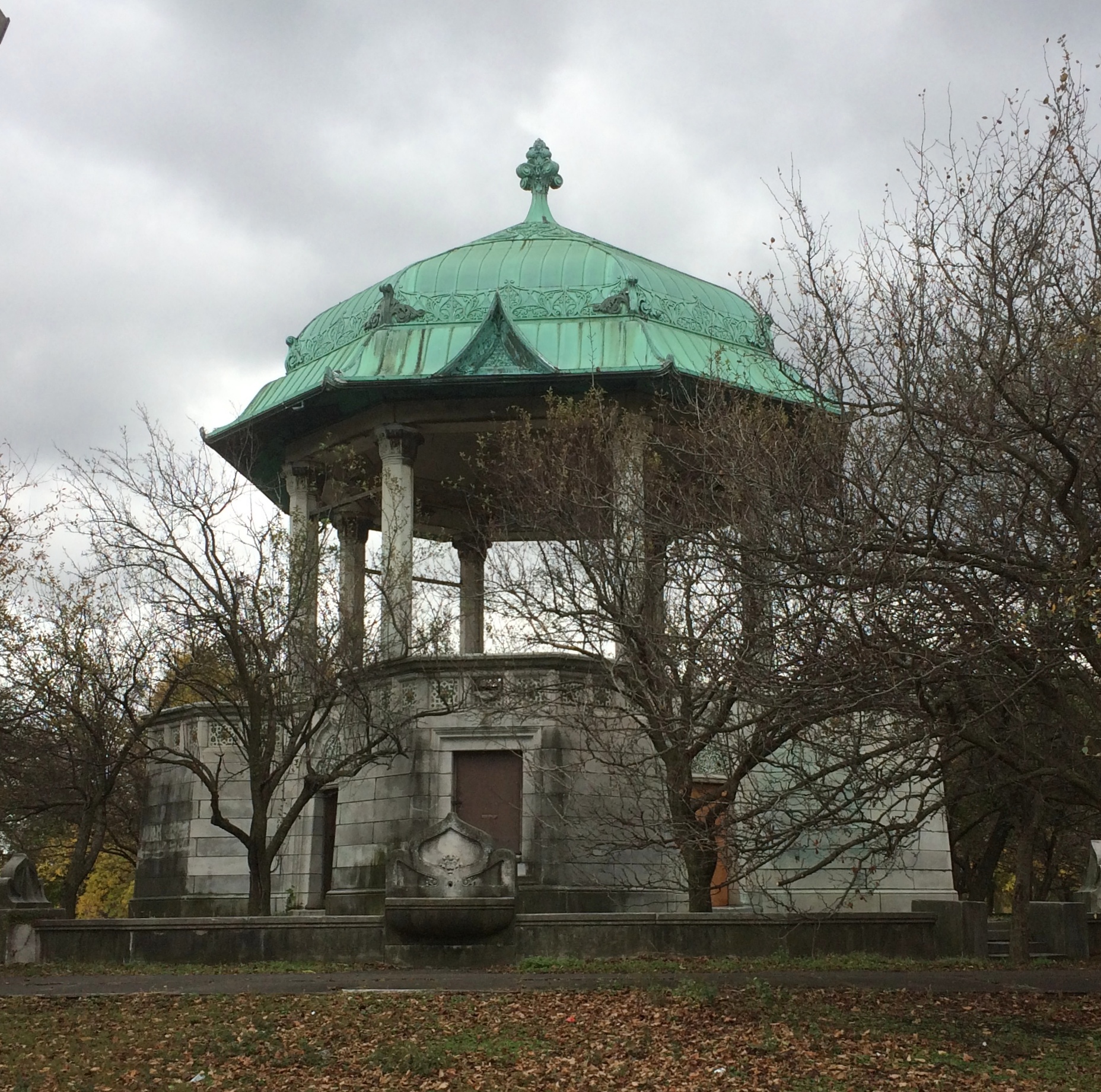
The park, just as open and inviting in layout as Humboldt, since it too was a masterpiece of landscaping by William LeBaron Jenney, was nearly deserted on that Sunday in October. That didn’t encourage me to linger, but I did take a look at a few things, such as the bandshell, designed in 1896 by J. L. Silsbee.
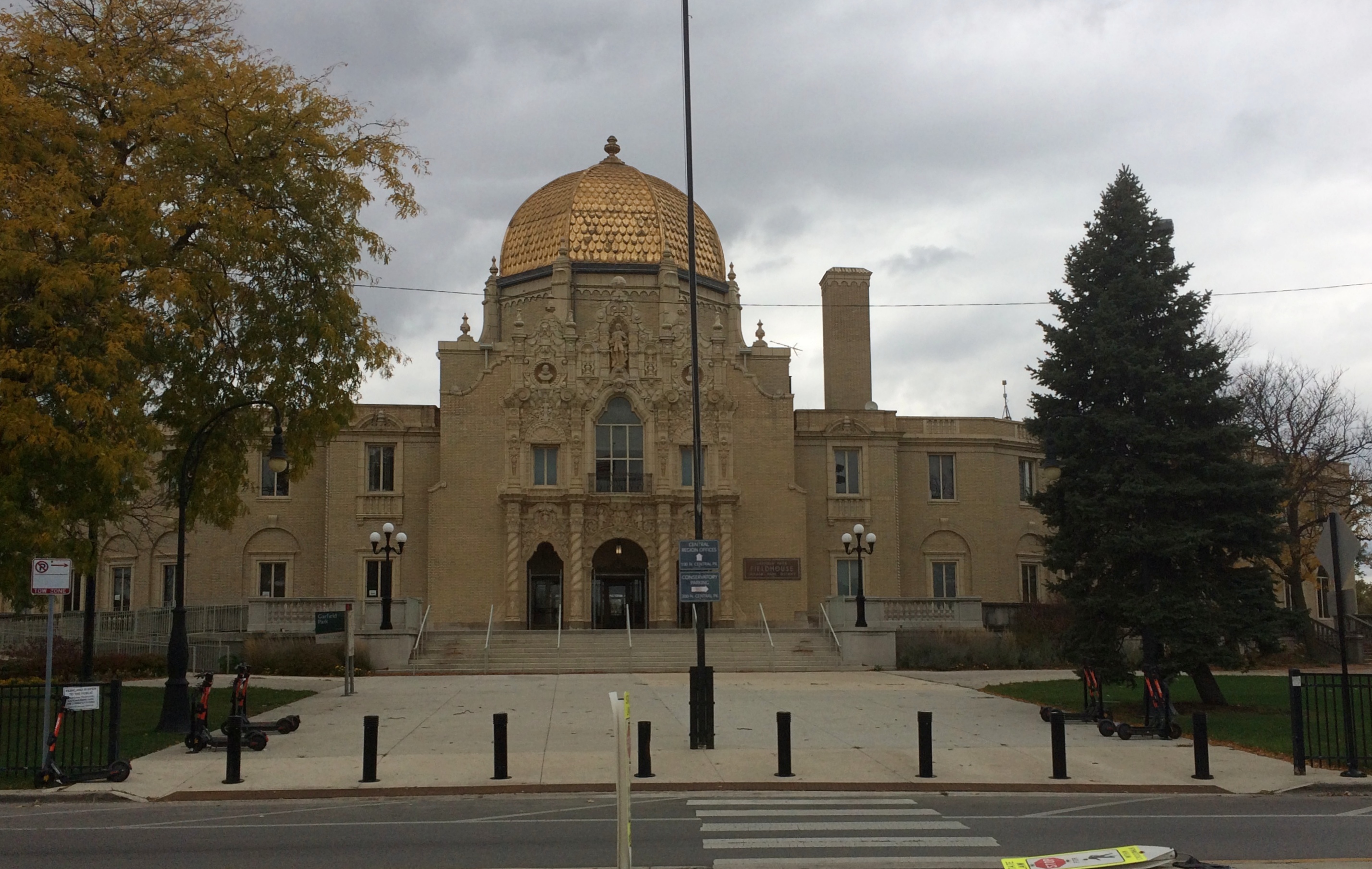
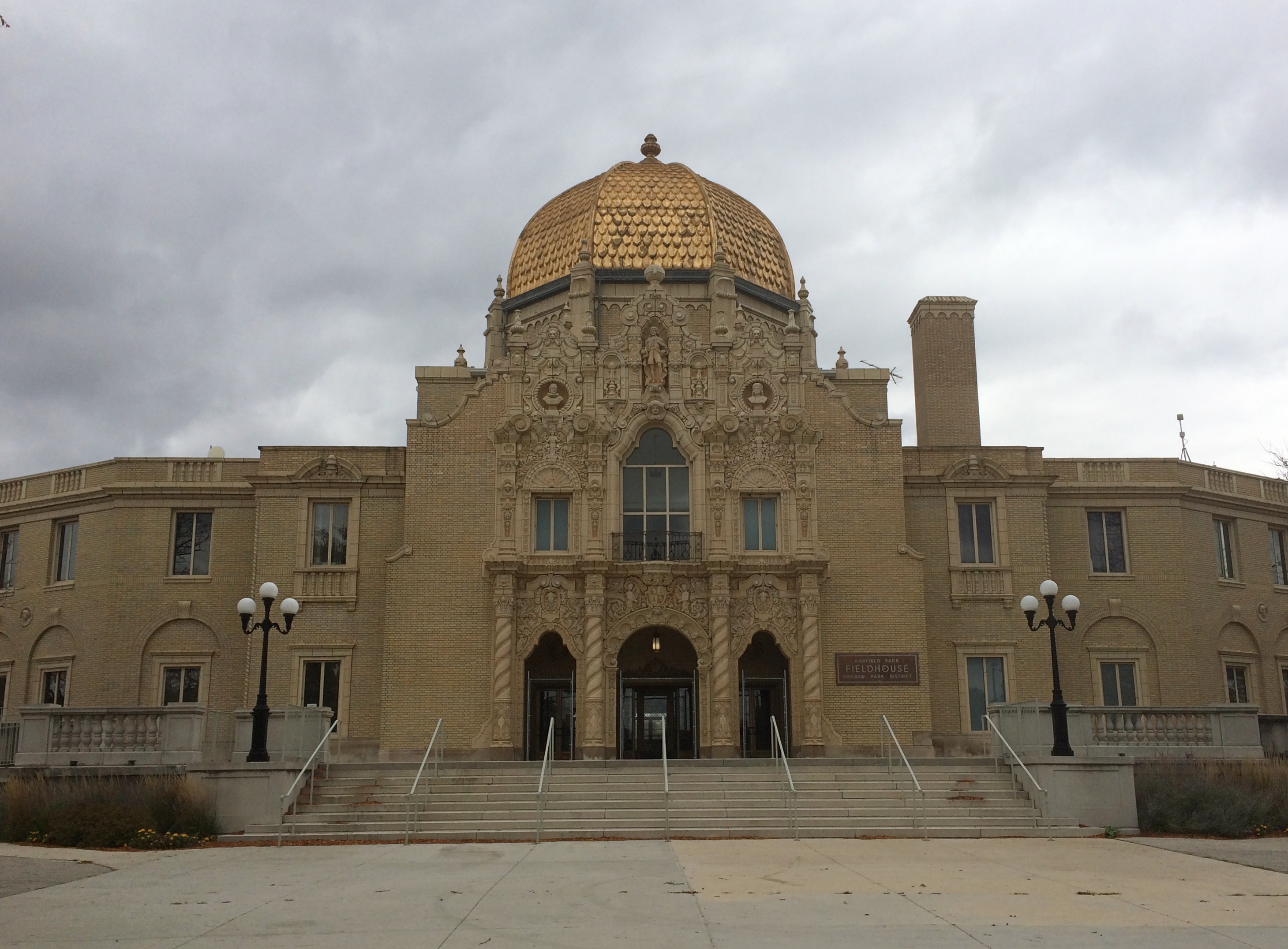
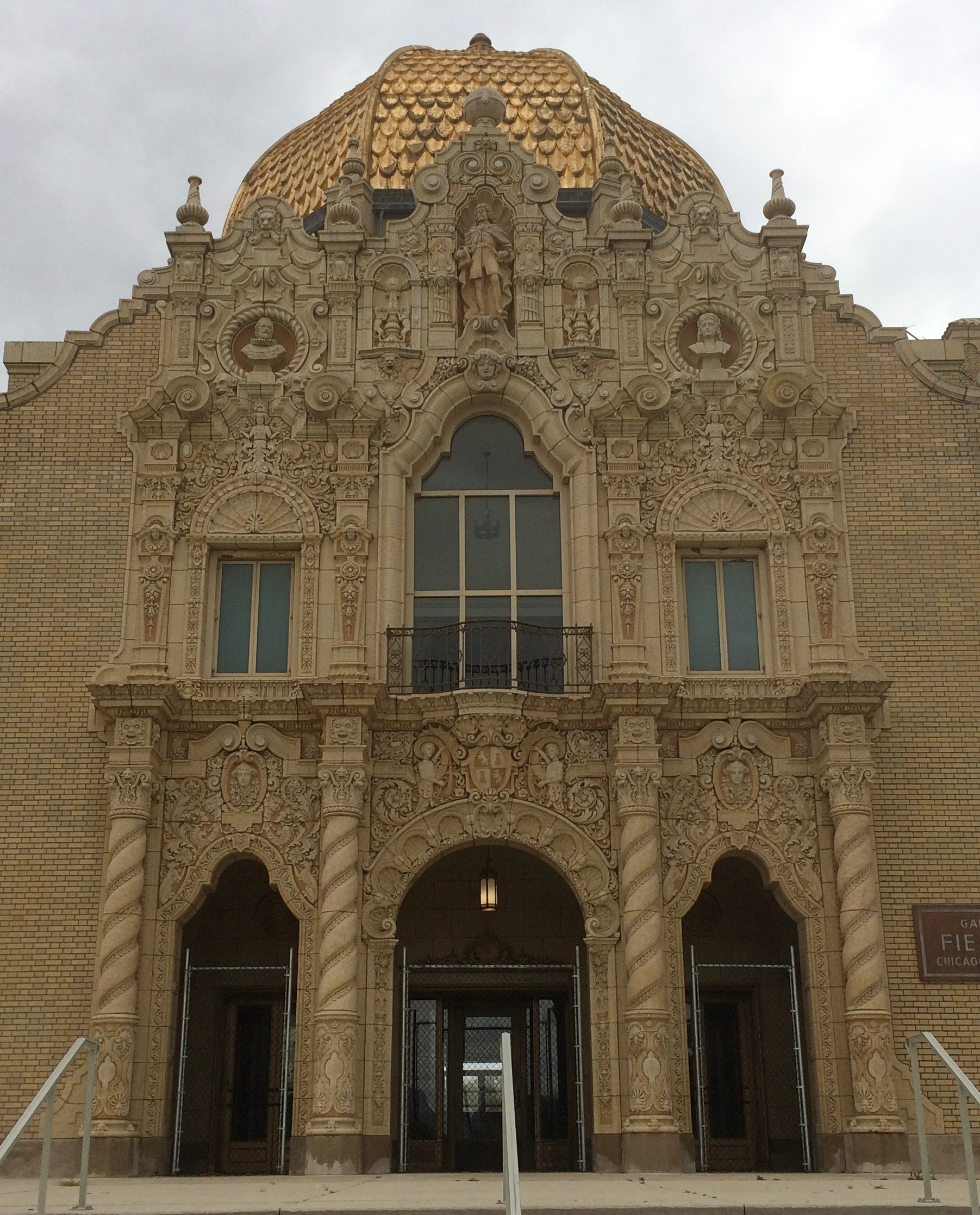
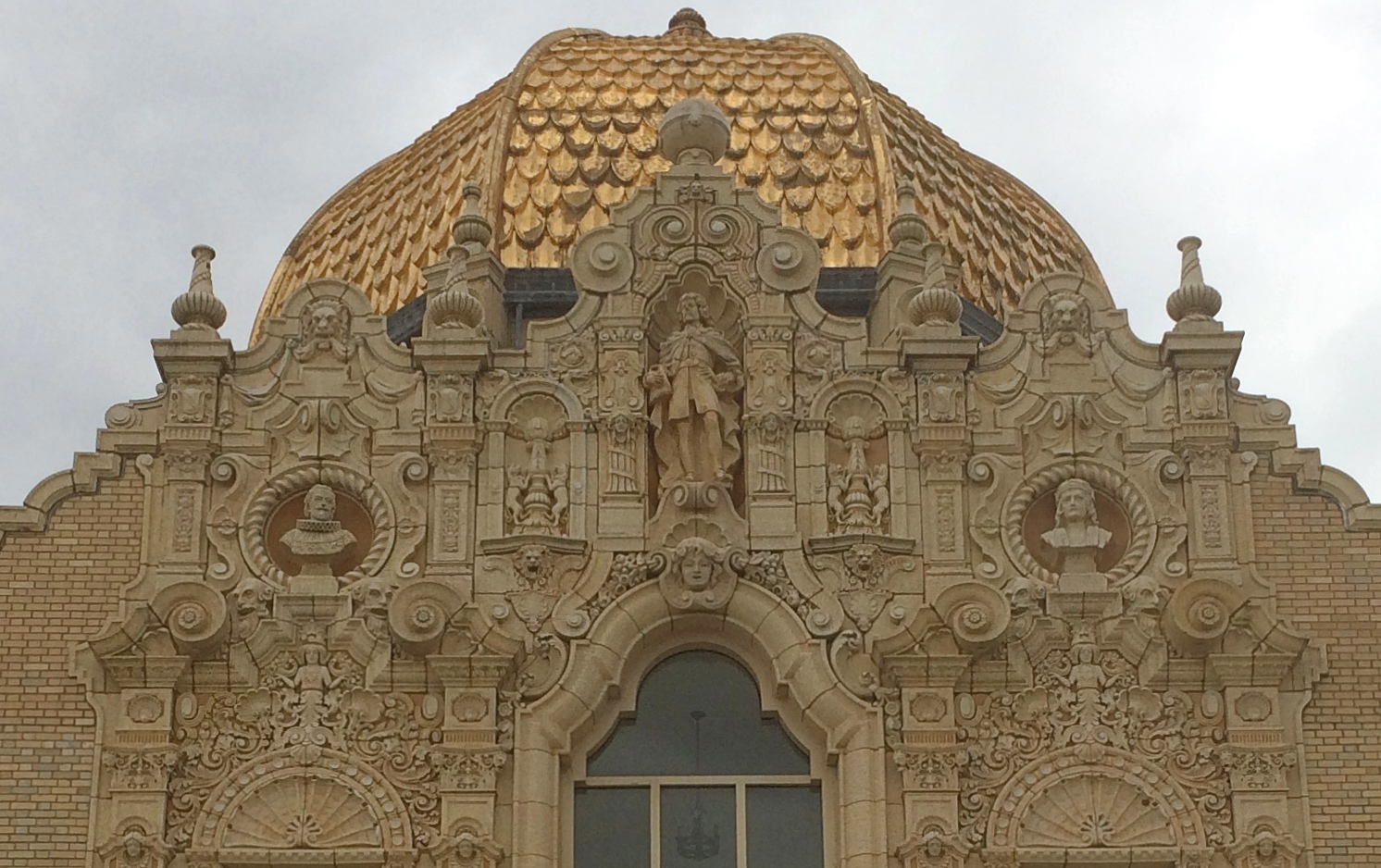
Mostly, though, I’d come to see the Garfield Park Fieldhouse. I’d only ever gotten glimpses of it from the El. Originally built in 1928 to be administrative offices for one of the pre-Chicago Park District park entities, AIA Guide to Chicago Architecture says that designers Michaelson & Rognstad took inspiration from the California State Building at the 1915 Panama-California Expo in San Diego. (Still standing in Balboa Park, and quite a place.)
“The facade is exuberantly… punctuated with a Churrigueresque entry pavilion of spiral Corinthian columns, cartouches and portrait sculptures,” the Guild says.
Is it ever. I understand that there’s more to gawk at inside, but in our time the building is closed.
The weather over the weekend was brilliant, a cluster of warm, mostly clear days, an echo of this year’s golden summer. Today too, but it will end tomorrow evening with storms and cold air behind them.
Here in northern Illinois, summer 2020 offered mostly warm, mostly clear days that stretched into months, with just enough rain to keep the intense green of a wet spring still green as the summer wore on.
Such a fine summer, if you were lucky enough to enjoy it, came as if to soothe over the nervous energy and dread the near future emanating from the wider world, though I’m fairly sure the weather takes no interest in our concerns. Birds don’t either, but somehow they were singing just a little more cheerfully over the weekend. What’s up with that, eh?
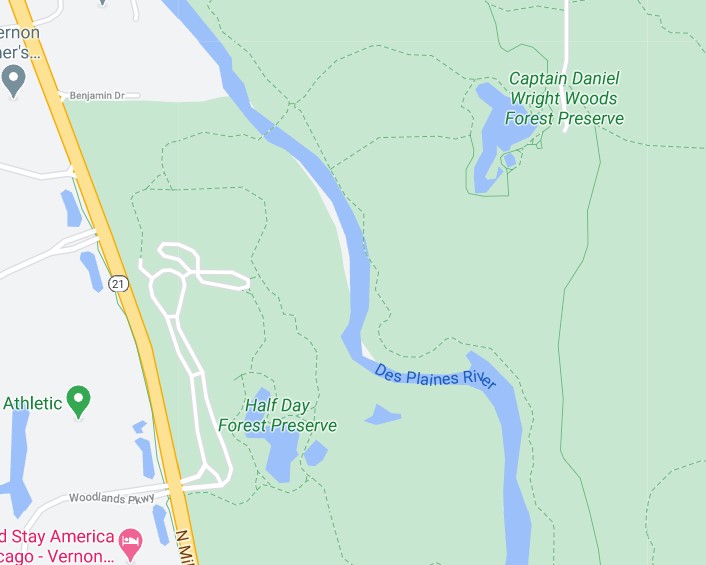
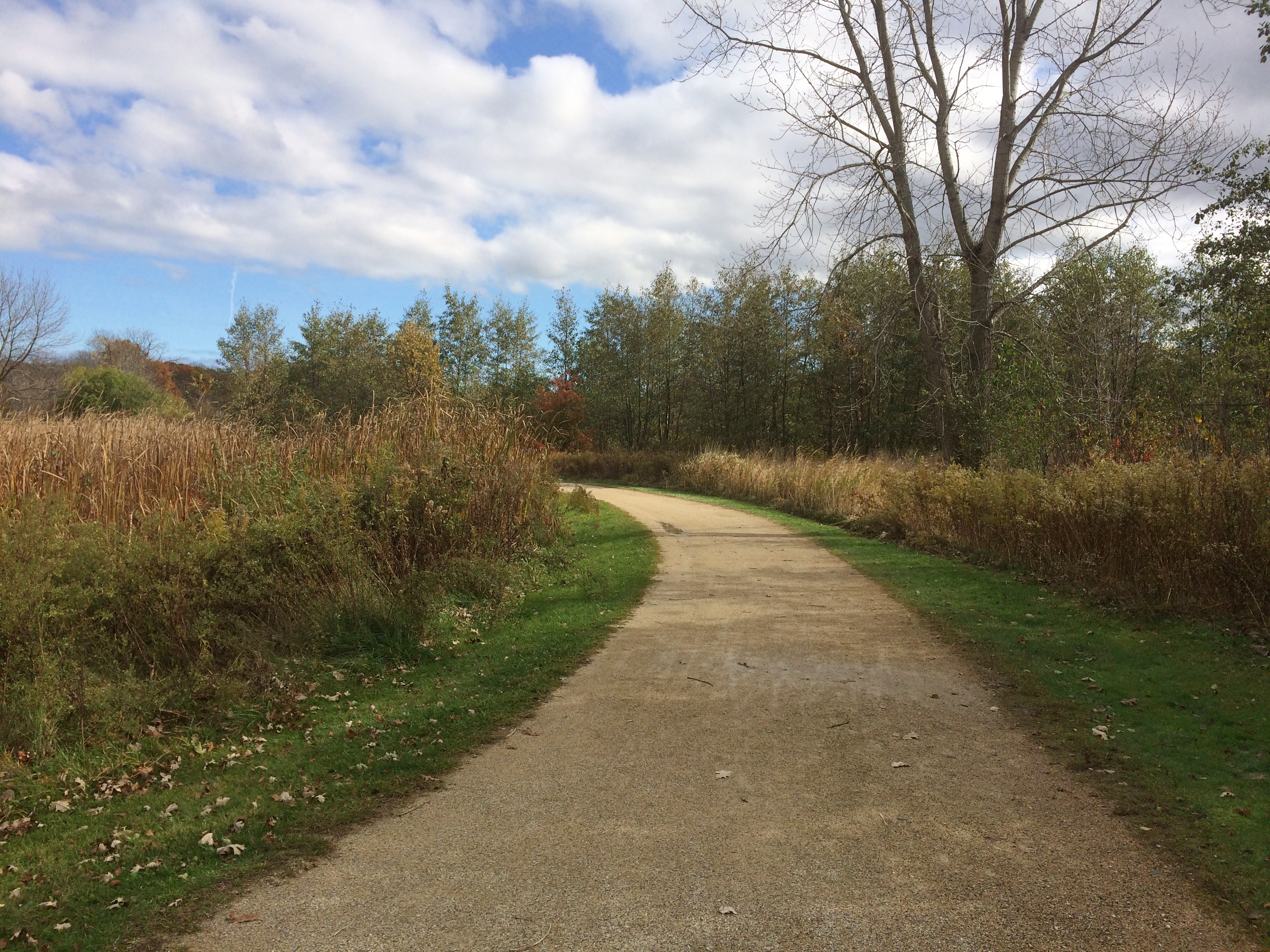
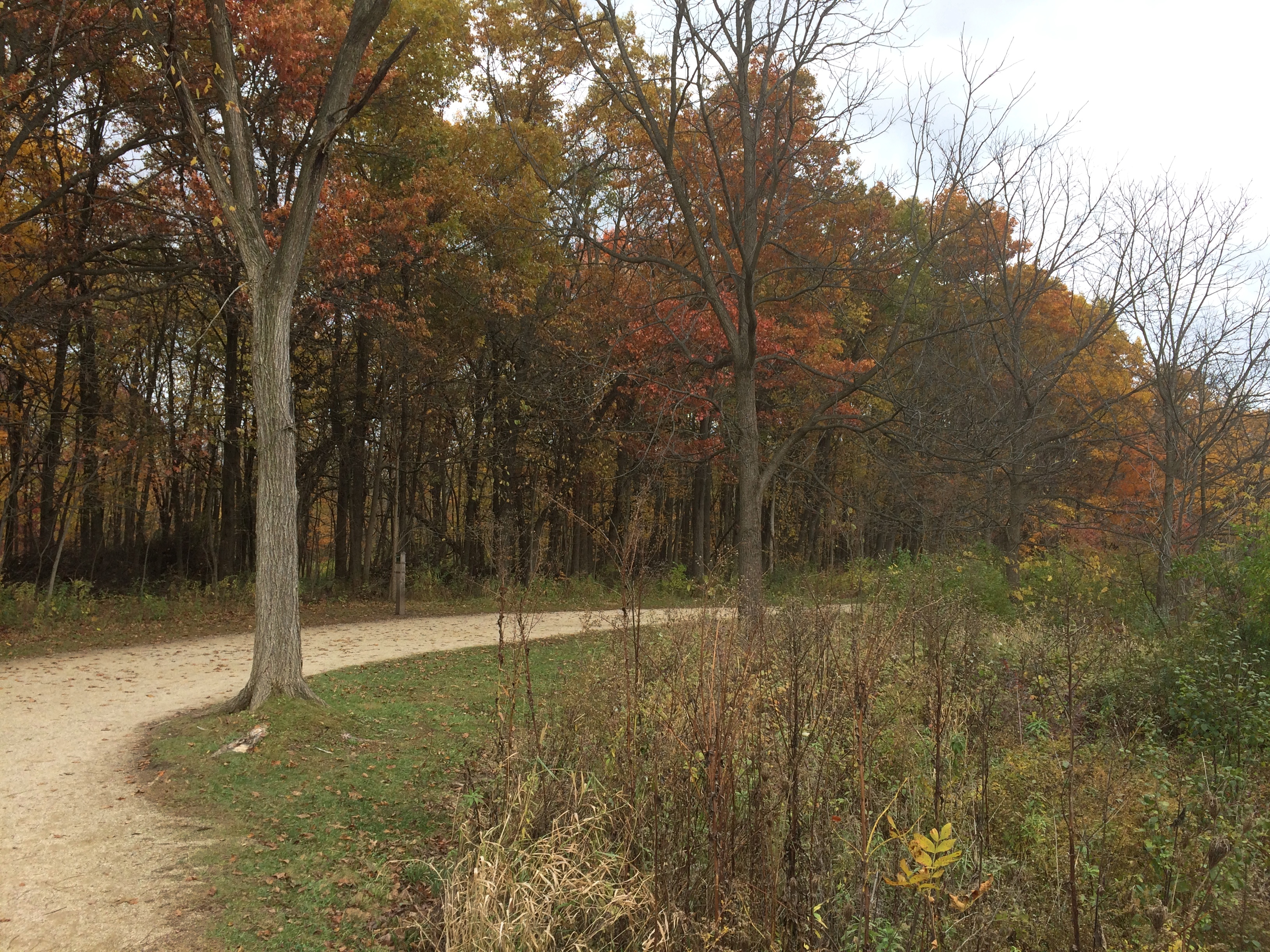
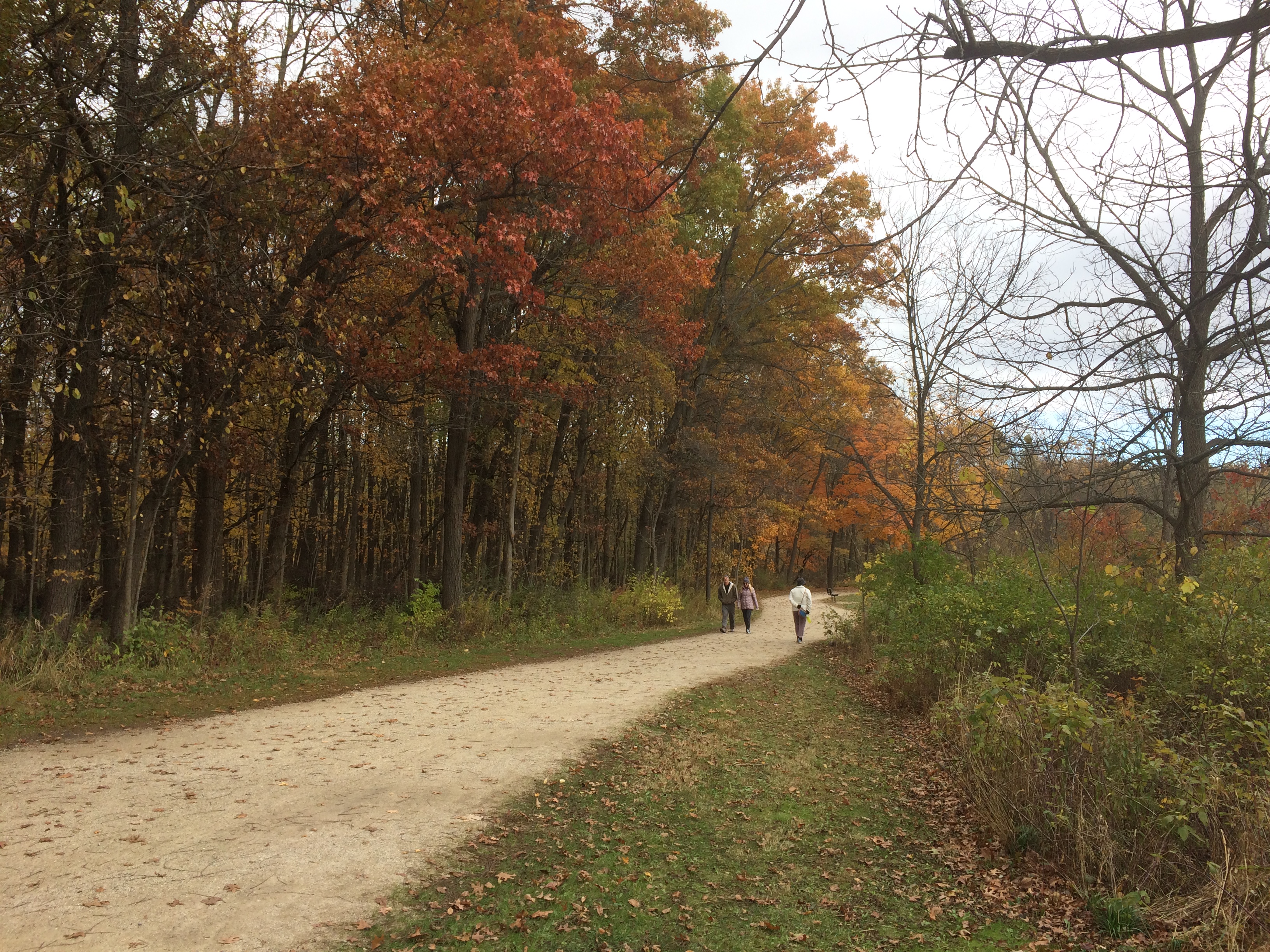
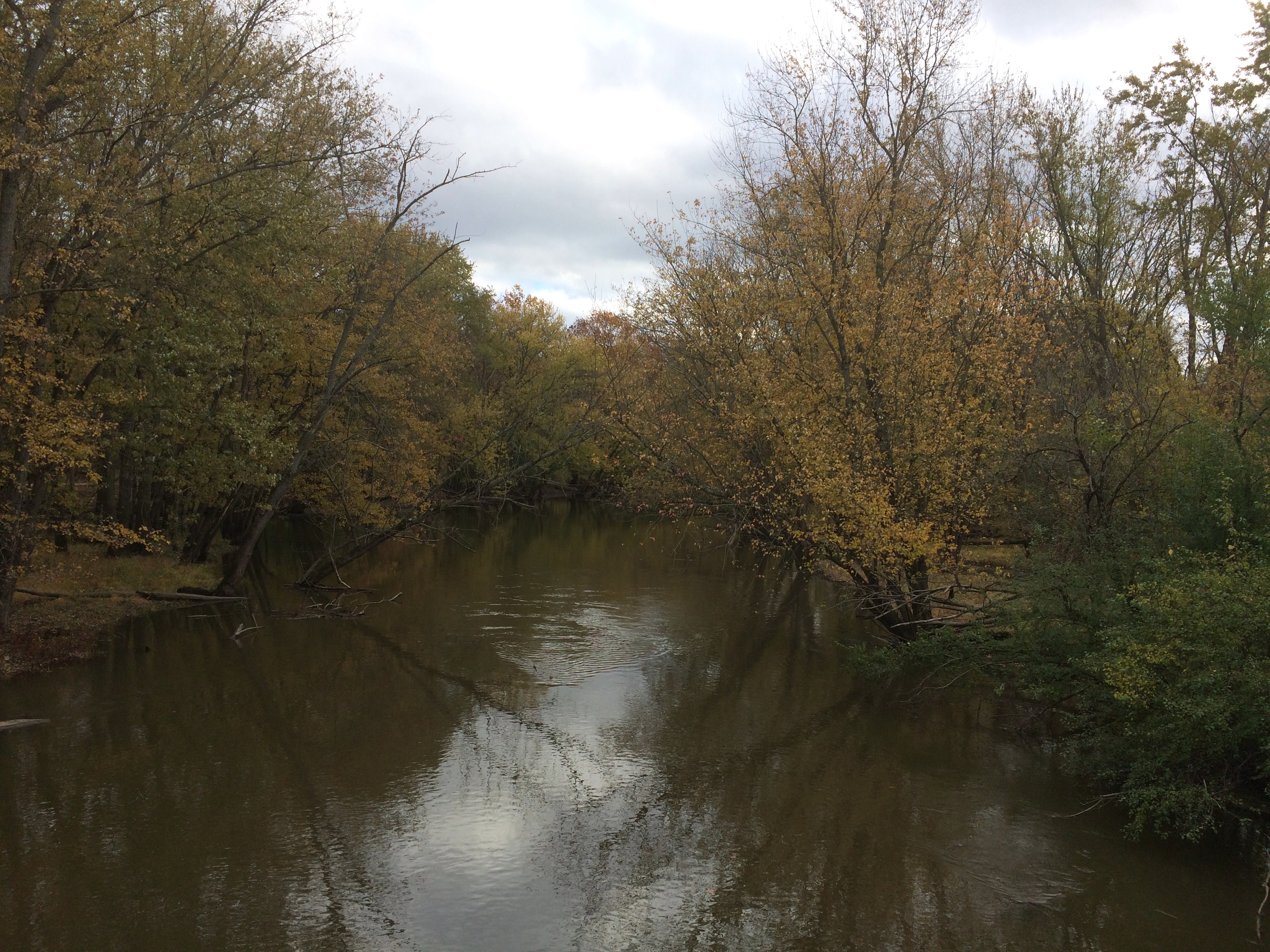
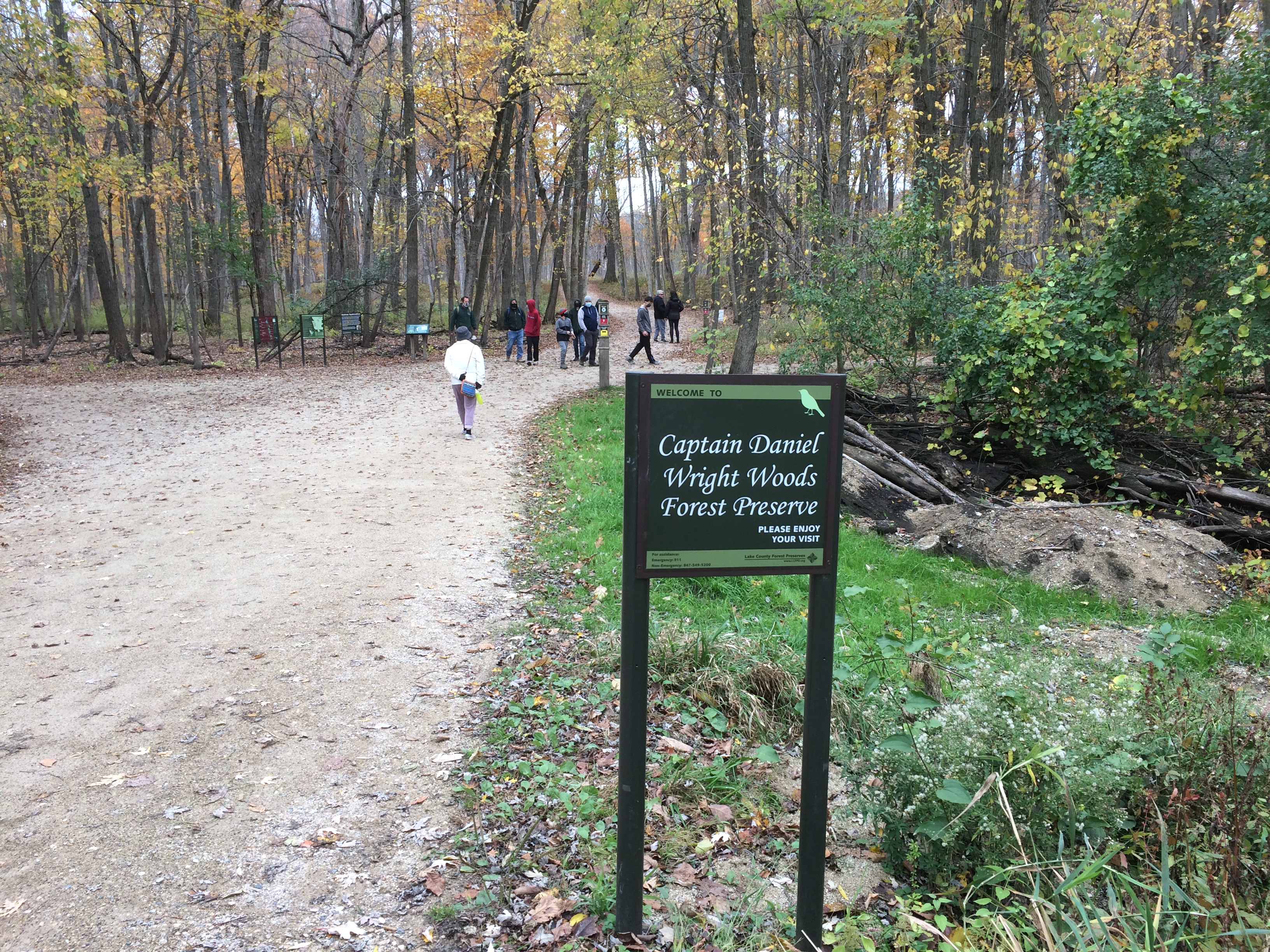
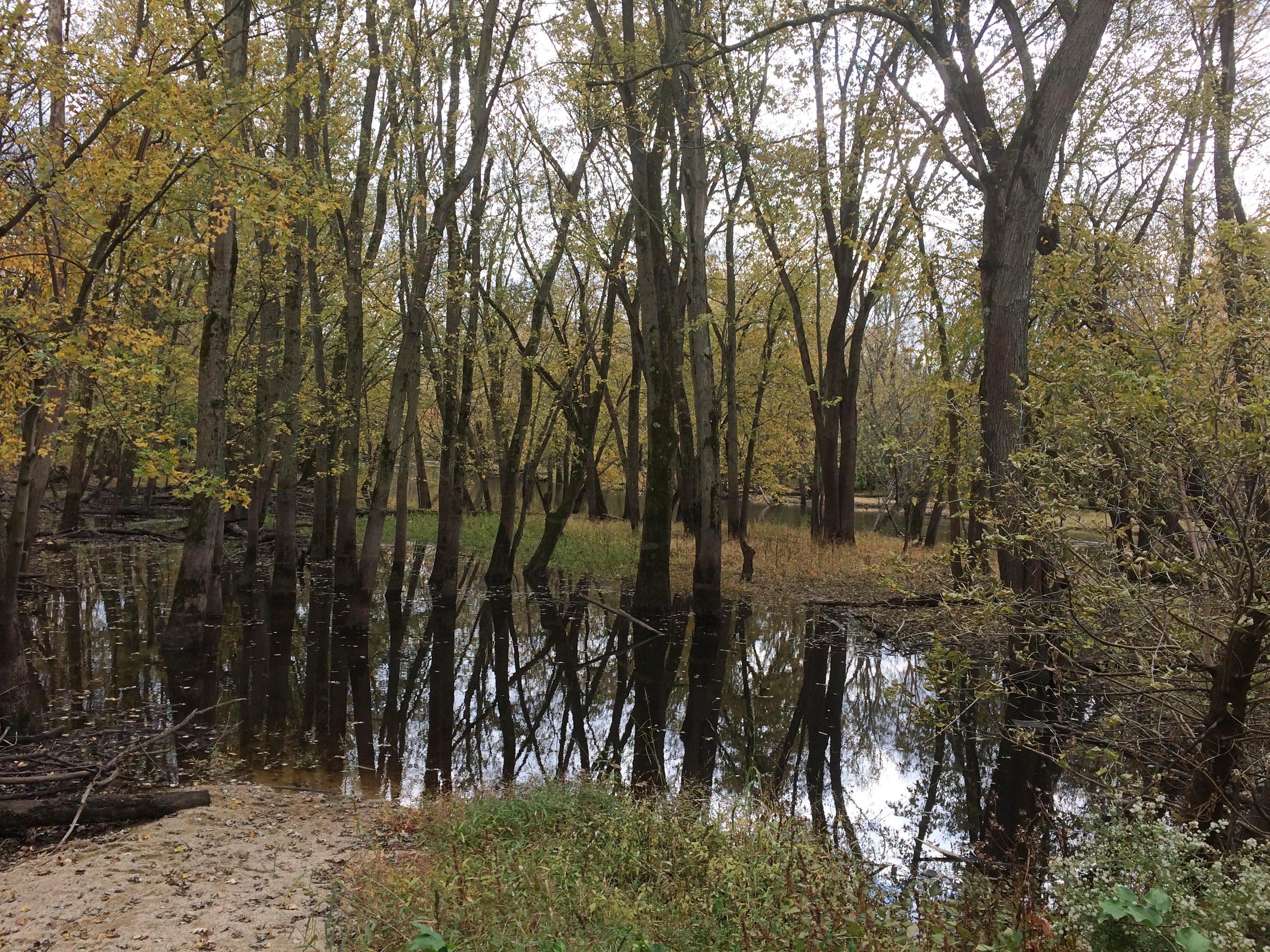
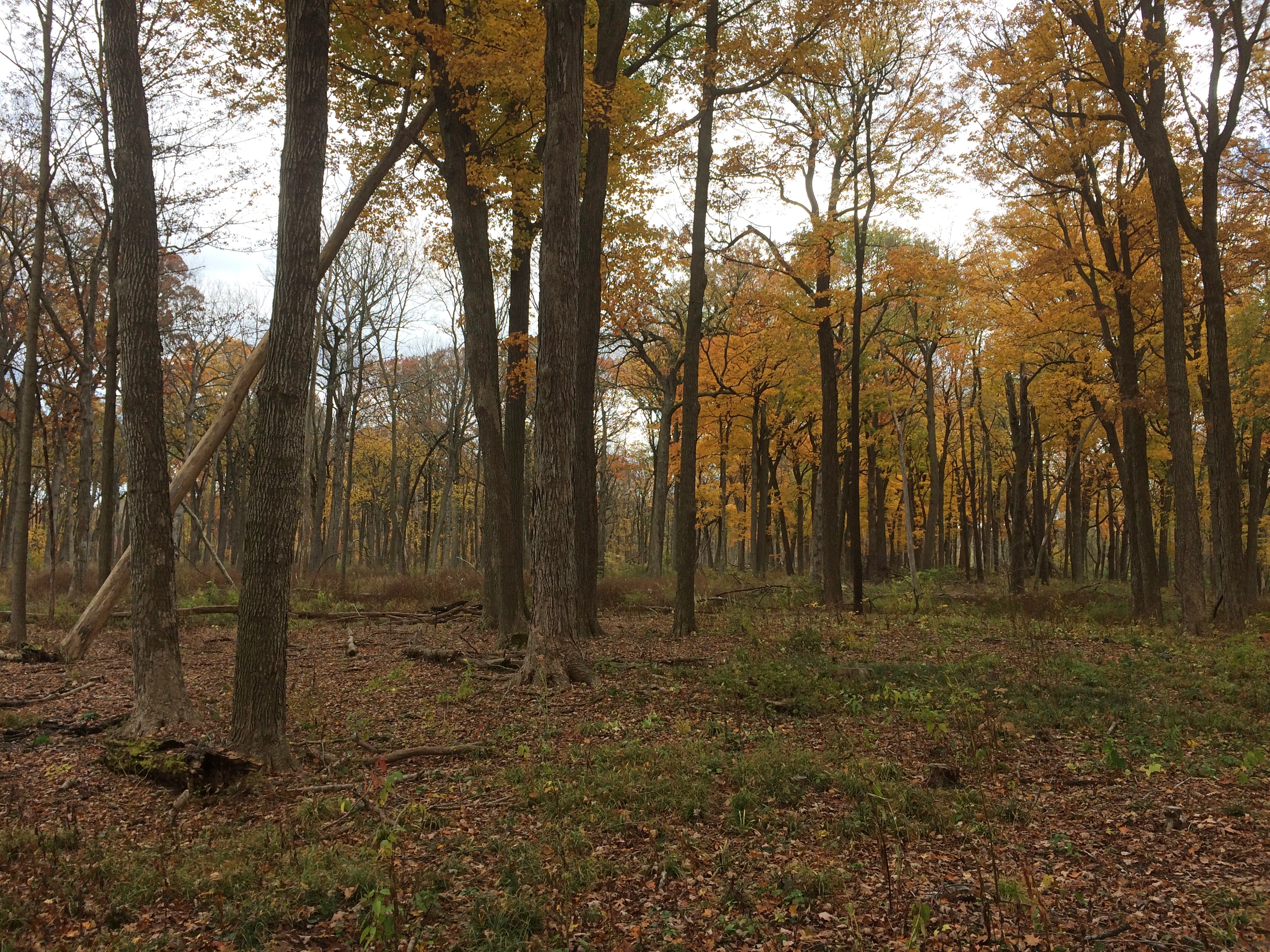
Two weekends ago, temps were cooler but not bad. Certainly high enough for a walk in a new forest preserve. New to us, and actually two adjoining forest preserves: Half Day FP and Captain Daniel Wright Woods FP. The preserves are in Lake County. We started at the Half Day parking lot near a small lake, walked to the small lake in Captain Daniel Wright Woods, and came back the way we came.
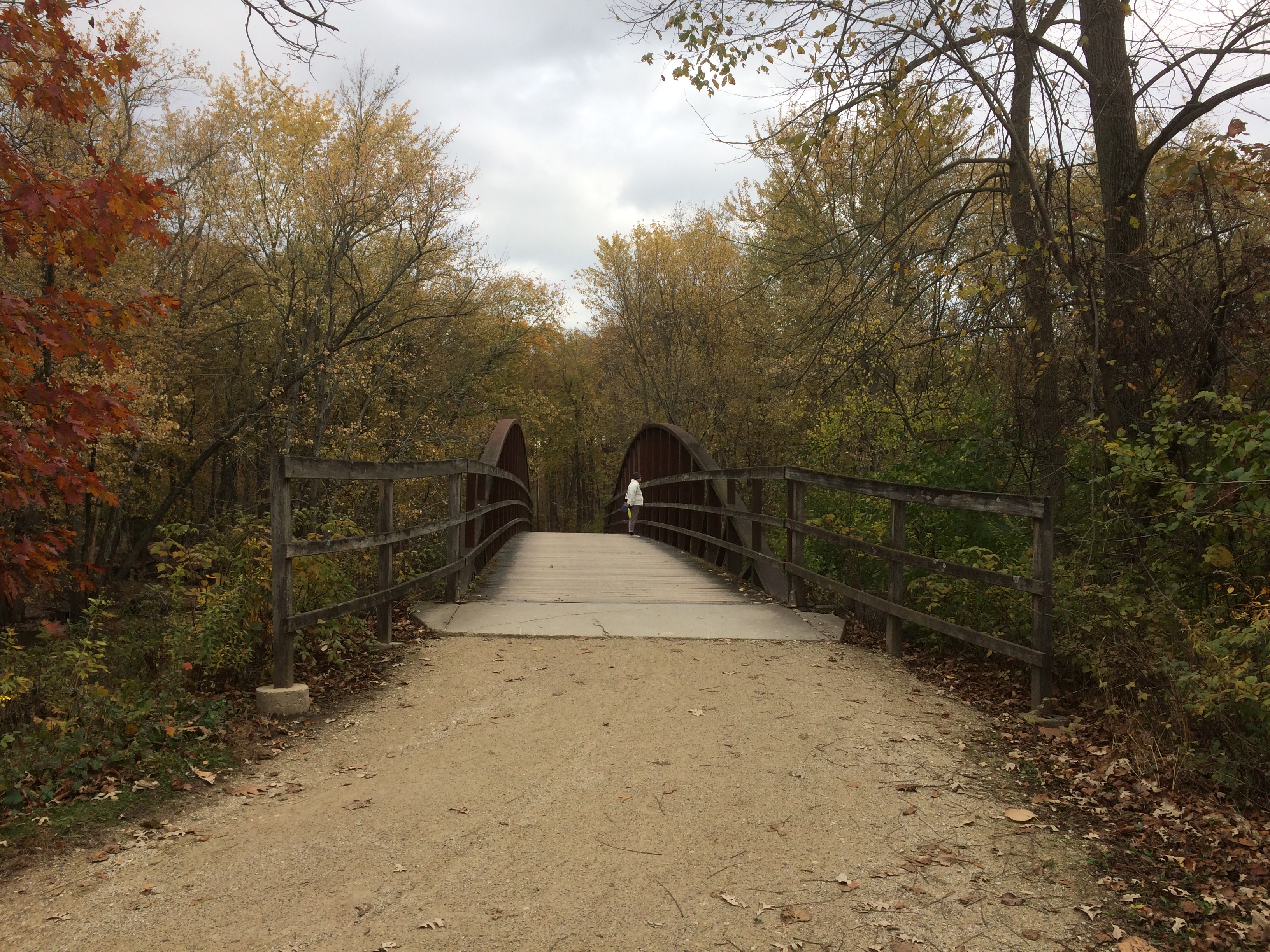
Except for seeing a sign along the trail, we wouldn’t have known where one forest preserve began and the other ended, which was more-or-less at the Des Plaines River. First we had to cross that river.
I can’t see a name like that and not look it up later. Captain Daniel Wright, a veteran of the War of 1812, later became noted as the first white settler in Lake County.
Find-A-Gave has more. “Capt. Wright was active as a farmer and a cooper,” the site says. “He built his cabin when he was in his mid-fifties and in spite of the hardships associated with pioneer life, he lived to be ninety-five years old and is buried in the Vernon Cemetery in Half Day. A stone memorial was erected in his memory on his old farm on the east side of Milwaukee Avenue.”
Something else to look for next time I come this way.
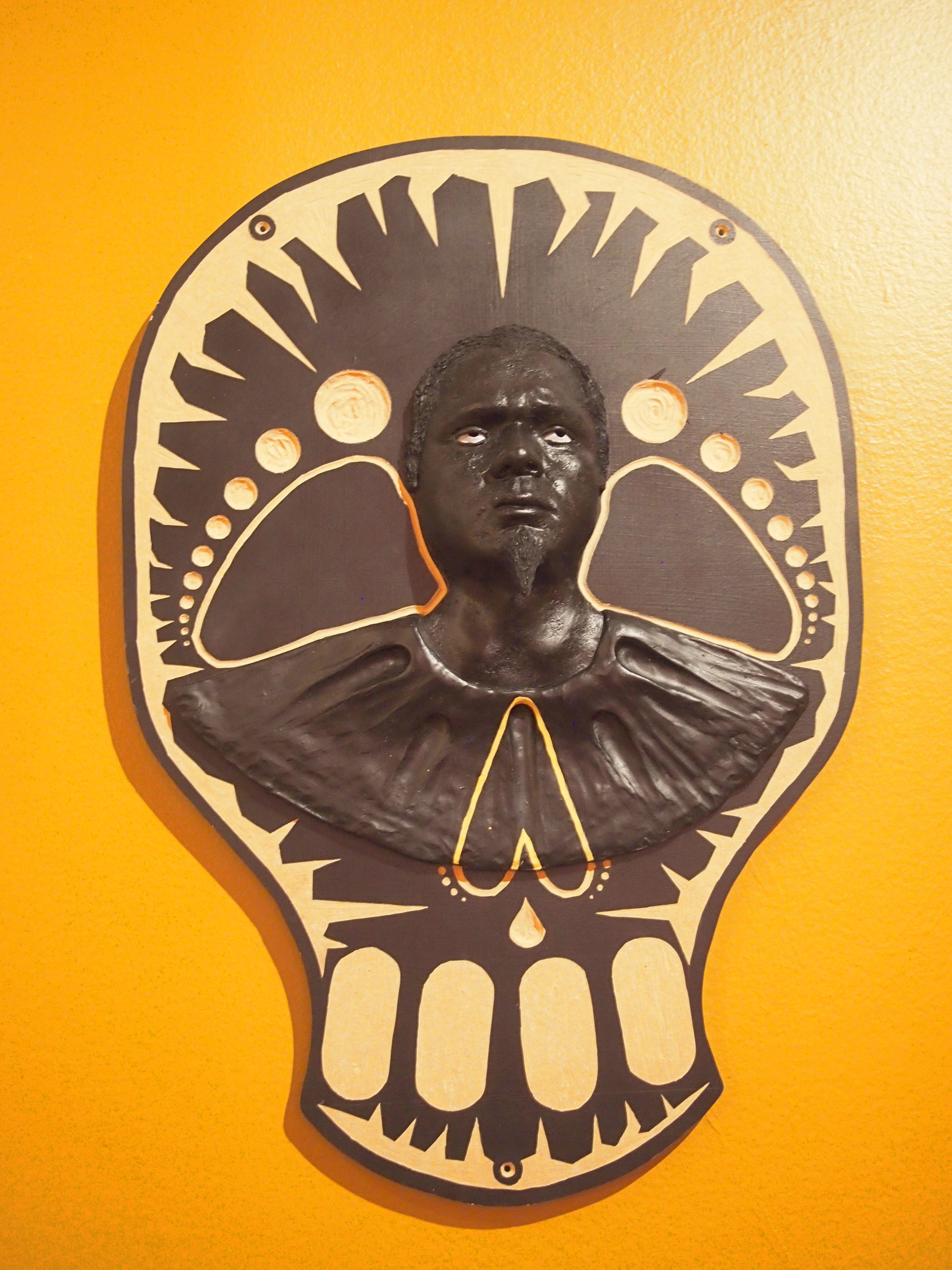
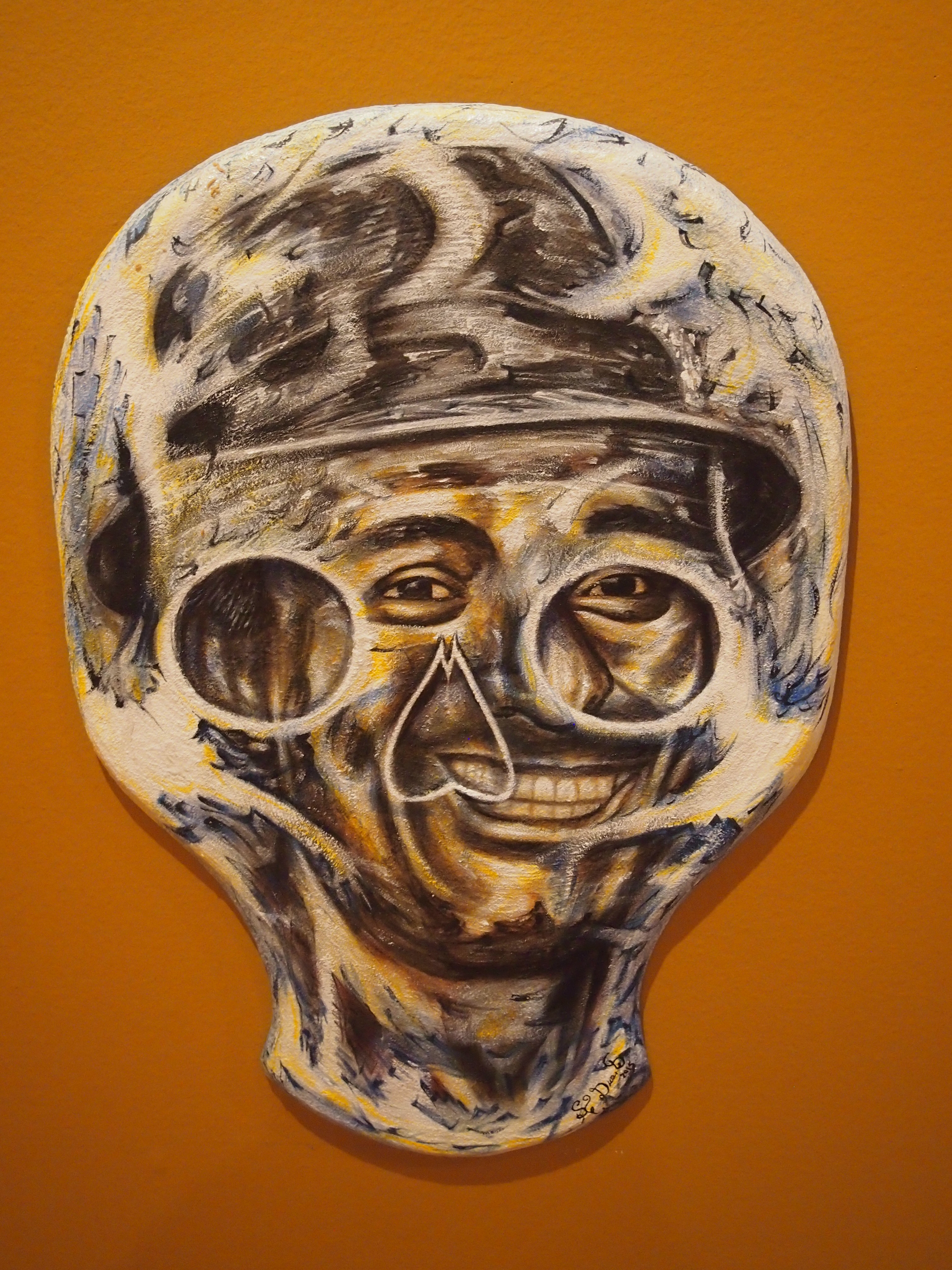
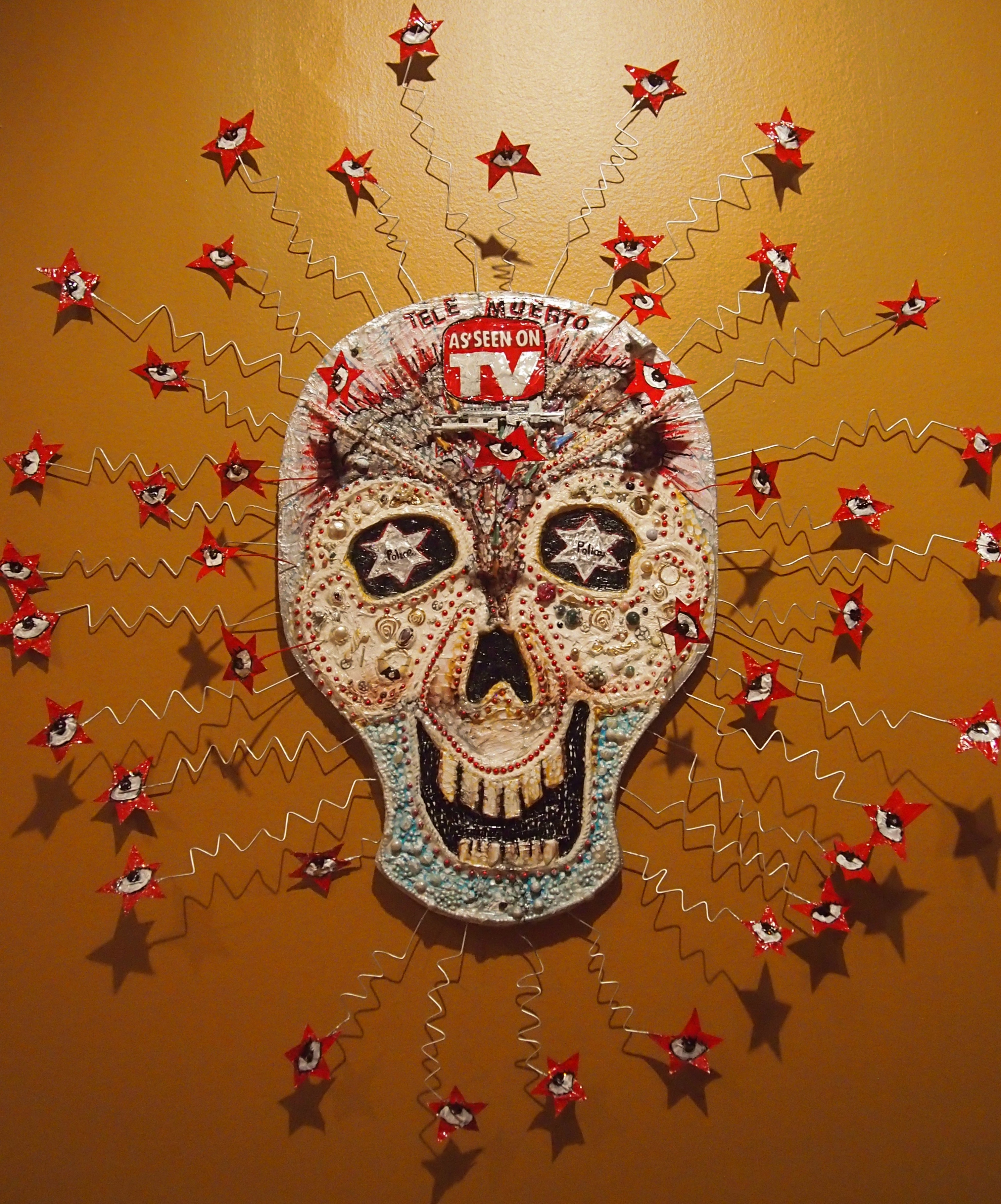
Five years ago this month, I made it to the National Museum of Mexican Art in the Chicago neighborhood of Pilsen, in time to see its annual Día de los Muertos exhibit. This year it was cancelled as an in-person event, as you’d think. No visiting the Day of the Dead exhibit in person, to reduce the chance of Death coming your way.
I haven’t visited since, though there’s still time to see this year’s exhibit virtually, which is probably interesting, but not as satisfying as being there. If this year has taught us anything, it’s that primary experience is primary.
At the National Museum of Mexican Art, I experienced art skulls.
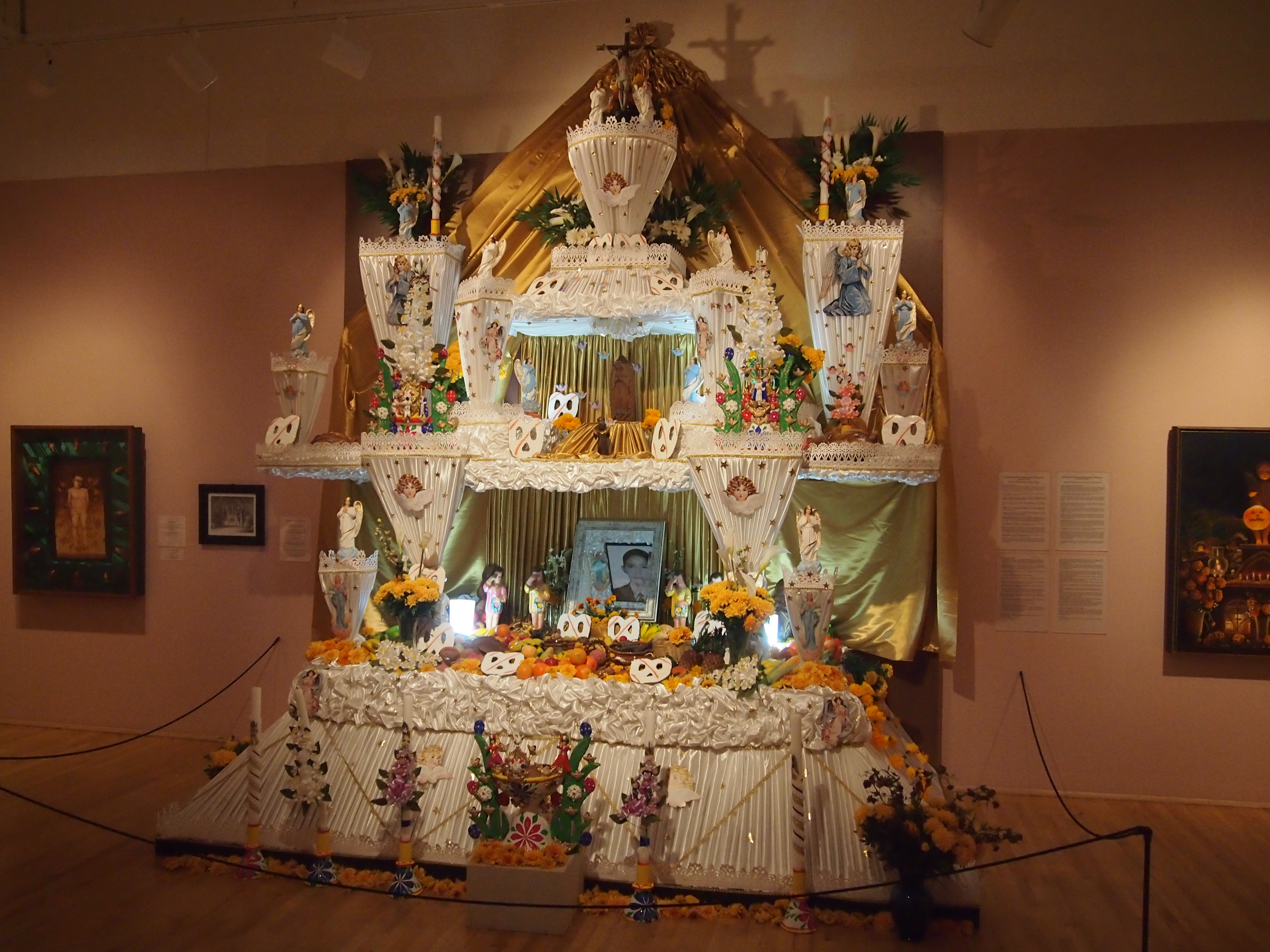
Two Puebla artists, Jose Antonio Cazabal Castro and Silverio Feliciano Reyes Sarmiento, created this monumental altar for Day of the Dead celebrations in the town of Huaquechula in the state of Puebla. Remembering a boy, looks like.
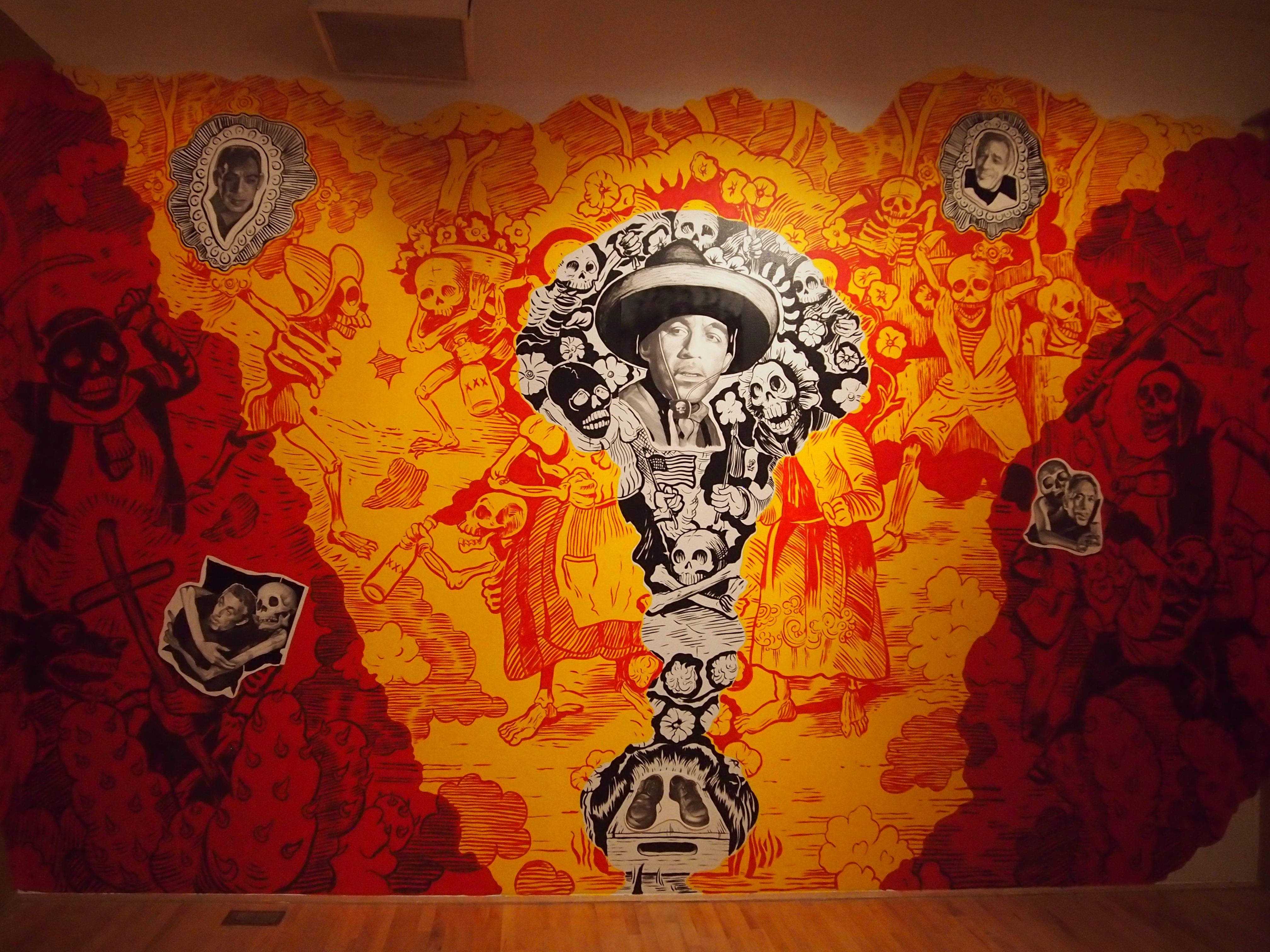
One more. A detail, most of it really, of “Skeletons of Quinn/Calacas de Quinn,” a 2015 work by Hugo Crosthwaite of Baja California.
After a cold second half of October, temps have trended warmer in early November. So much so that I had lunch on our deck today, and expect to tomorrow as well. It can’t last. But it’s nice to sit out there and forget about the national hubbub — which I can’t do during my working hours, as paying attention to it as part of my job.
Here’s an article about the House of Tomorrow at Indiana Dunes NP, which we saw last month. A good short read, except for one thing: no date on it, which is a pet peeve of mine. It’s obviously not that old, since it refers to the recent designation of the national park, but you shouldn’t have to rely on internal evidence to date an article.
When I posted about Pounds Hollow Recreation Area a while ago, I forgot to include the short falling leaves video. Here it is.
We’re past peak here in northern Illinois, but some of the trees are still ablaze, and some still wilted yellow-green. Sitting out on the deck was pleasant enough today, except when a leaf-blower kicked to life noisily not far away. Will future generations ponder that leaf blowers were ever a thing? Hope so. As far as leaves go, let ’em stay where they fall on your lawn. They’re nutrition for next year’s grass.
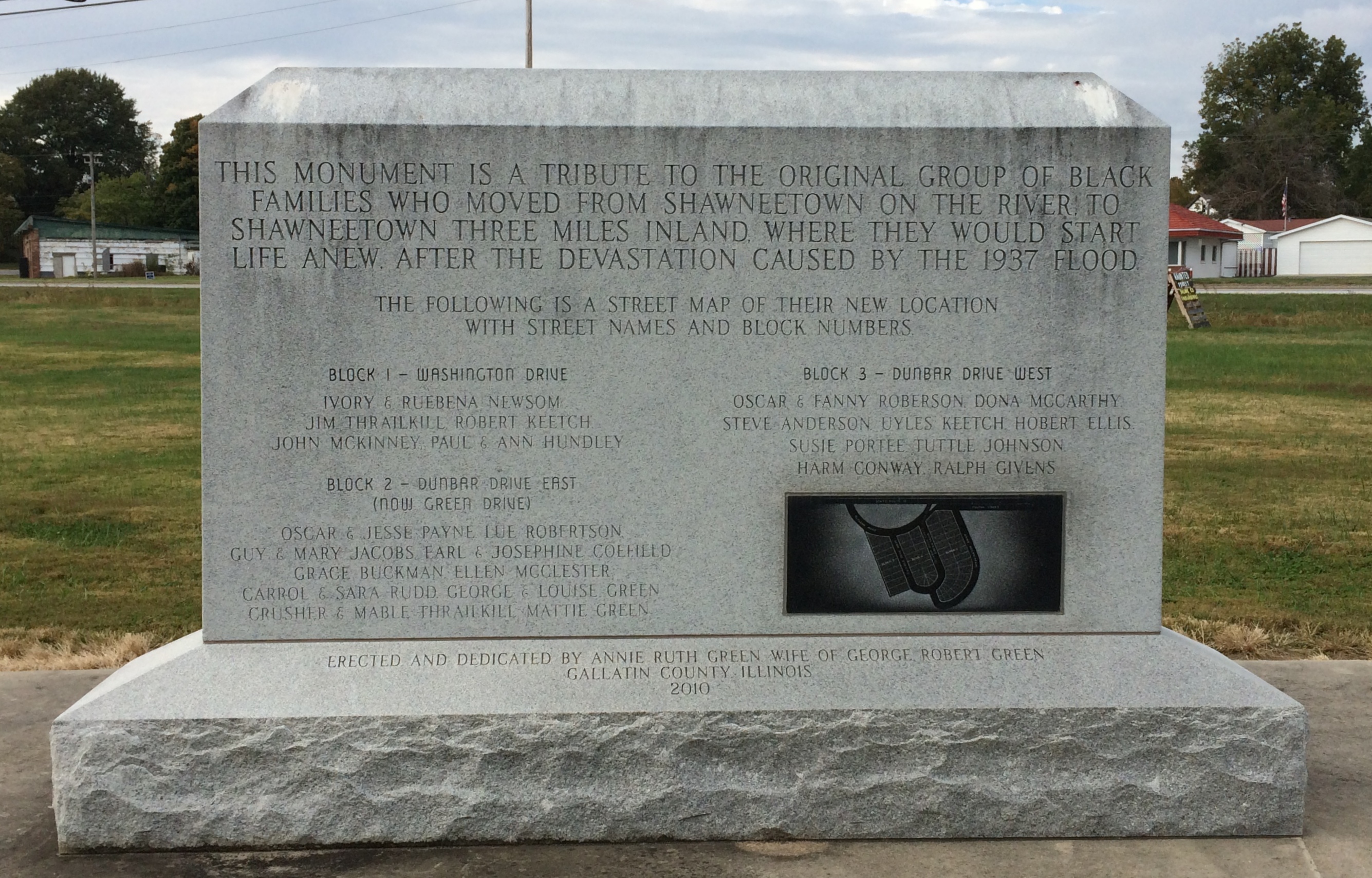
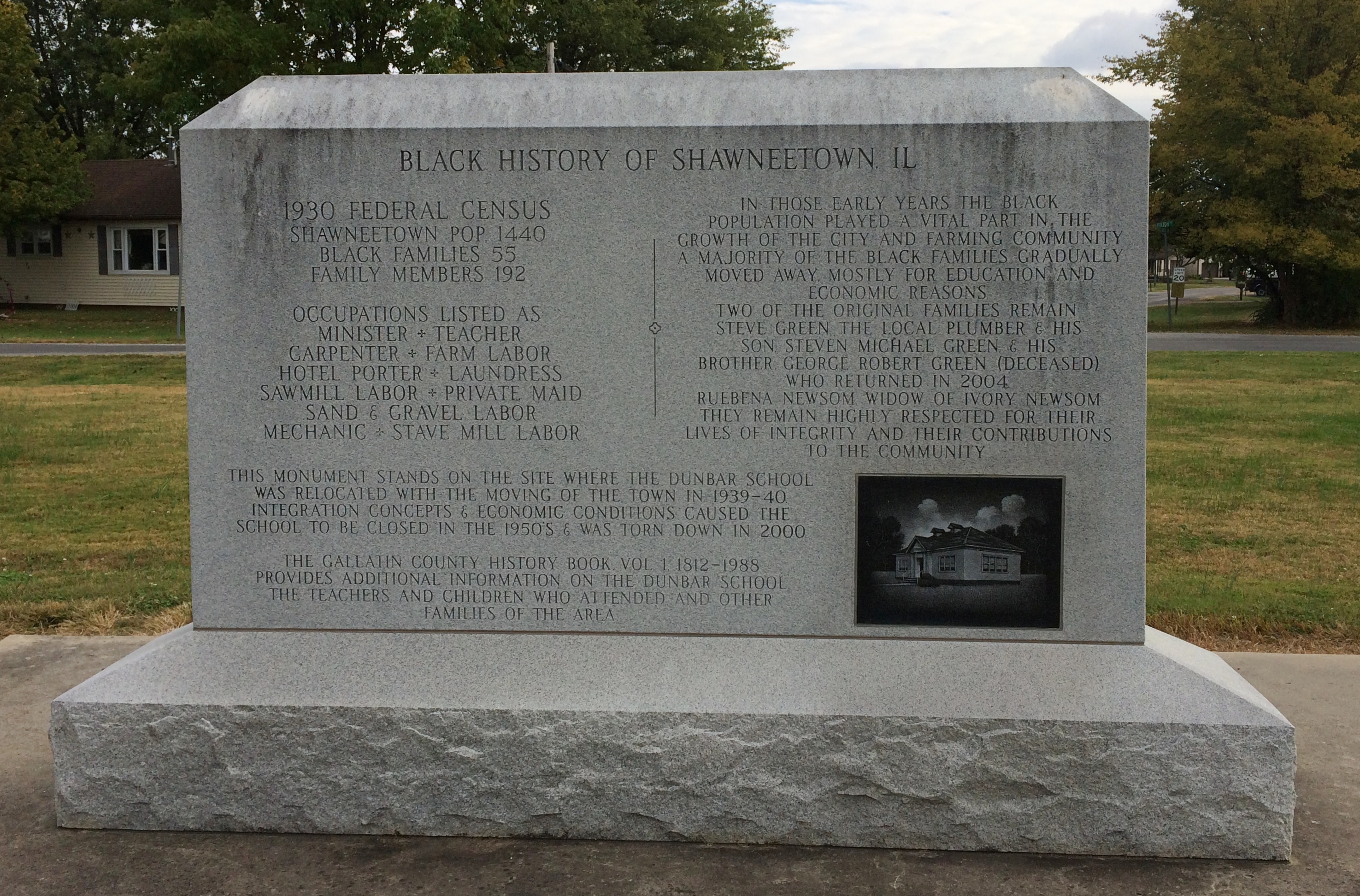
In Shawneetown, Illinois, the new town that is, you can see a memorial erected about 10 years ago. The wave of such memorials, I believe, will continue into the 21st century. It’s a tribute to the original group of black families who moved from Shawneetown on the river to Shawneetown three miles inland, where they would start life anew, after the devastation caused by the 1937 flood.
It includes a map of the nearby neighborhood and all the names of the black residents who lived there. The other side has a more general black history of Shawneetown, noting that a segregation-era school stood on the site of the memorial, presumably for the black neighborhood’s children, but it doesn’t say that. The school closed in the 1950s.
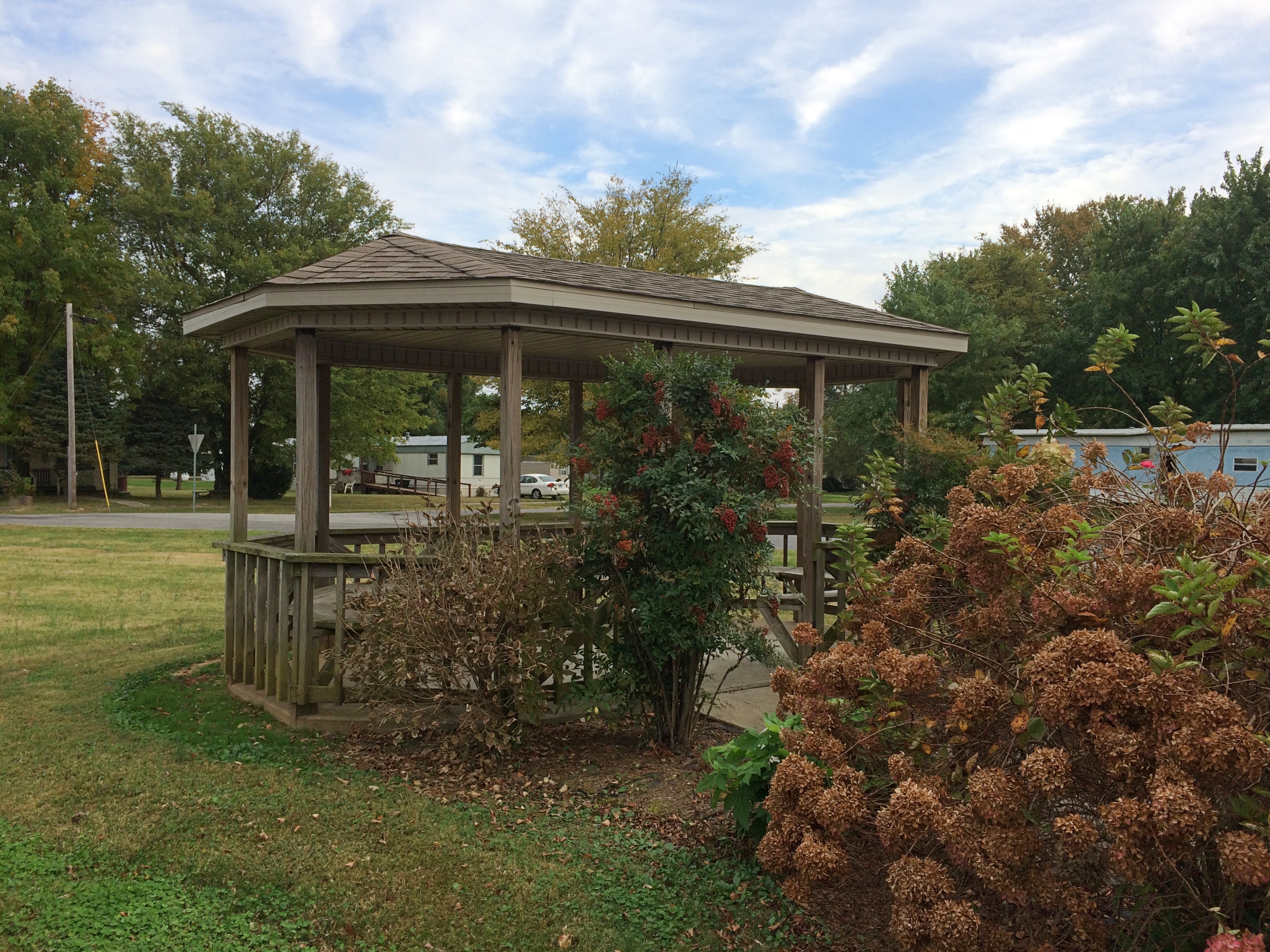
Near the memorial is a rectangular gazebo. Without corners. Or is it really a gazebo? When Ann and I saw the abandoned Texaco station in Old Shawneetown, I asked her if she’d ever heard the Texaco jingle. I hadn’t thought about it in years, but the point of jungles is to bury themselves deep, so it’s coded in my synapses somewhere.
Most Americans my age would know what I meant, but considering that Men Who Wear Texaco Stars are long gone, I didn’t expect her to know. She didn’t.
Later, I showed it to her on YouTube, where it’s a standalone video (and also the grist for truly stupid local TV news).
That made me a little curious myself. When did that jingle first air? As it turns out, 1962, as a snappier tune compared with, for example, what the singing Men With Texaco Stars did for Milton Berle 10 years earlier. The jingle was also incorporated into later Texaco songs, such as this one sung by Ethel Merman.
As jingles go, “You Can Trust Your Car” is memorable indeed. The story of the copywriter (and composer) who came up with it, one Roy Eaton, is even more remarkable. Aside from being a talented concert pianist, he was the first black creative at a major ad agency, joining Young & Rubicam in 1955 and later working for many years at Benton & Bowles, before founding his own company. He’s still alive at 90.
So memorable that it was the basis for an anachronism in a 1977 episode of M*A*S*H (see the trivia section at the bottom of the page).
The Ricki Lee Jones song “Last Chance Texaco” (1979) includes an example of a reference — to the jingle — that was perfectly understandable when the work was new, and perfectly mystifying to later generations.
Your last chance To trust the man with the star You’ve found the last chance Texaco