Lost Beauties of the English Language

Lost Beauties of the English LanguageMy edition of Lost Beauties of the English Language, a book originally published in 1874, is a reprint published in 1987 by Bibliophile Books in the UK. How it came to be in the Chicago bookstore where I bought it toward the end of the ’80s — maybe the incomparable Stuart Brent Books on Michigan Ave. — I don’t know.

But I’m glad I have it. All dictionaries are good for browsing, but Lost Beauties is especially charming. You find things like:

Barrel fever: the headache caused by intemperance in ale or beer.
Crambles: boughs and branches of trees, broken off by wind.
Farthel: the fourth part of anything (related to farthing, which I figure is pretty much lost as well).
Glunch: to frown.
Keech: a fat, round lump, whence also a keg (of butter).
Pingle: to eat with very little appetite.
Well-will: the opposite of ill-will.
Wordridden: to be a slave to words without understanding their meaning; to be overawed by a word rather than by an argument.

Two of my favorite lost beauties are actually prefixes, namely alder- and um-.

Alder: a prefix formerly used to intensify the meaning of an adjective in the superlative degree — as if to better the best, and heighten the highest… In Wicliff’s Bible, the Almighty is called the Alder-Father and also the Alder-Creator.

Other examples: alderbest, alderfirst, alderforemost, alderhighest, adlerlast, adlertruest, alderworst, and I guess it does survive in fossilized form in “alderman.” A little bit better than the best seems to defy the internal logic of superlatives, but language isn’t entirely subject to logic. There’s clearly a place for the alder- formation in English, or there could be.

Um: round or around.

Umgang: circuit, circumference
Umlap: to enfold
Umset: to surround

The author, Charles Mackay (1814-89), was a Scotsman better known for writing Extraordinary Popular Delusions and the Madness of Crowds (1841), which covered a lot of ground, including the South Sea Company Bubble, tulip mania, witch hunts, alchemy, crusades, fortune-telling and more. “Men, it has been well said, think in herds; it will be seen that they go mad in herds, while they only recover their senses slowly, and one by one,” Mackay wrote. Sounds about right to me.

One of the more interesting aspects of Lost Beauties, as least for an American reader in our time, are the words he includes that aren’t lost to American English. Perhaps Mackay didn’t know that they were still used on this side of the Atlantic, or maybe some of them were revived in the 20th century in American English. But I think it’s more likely that he knew that some of the words were spoken here, but also felt that that didn’t count.

Such as: egg on (verb), gruesome, laze (verb), pinchpenny, rung (as in the step of a ladder), swelter (in the heat), watershed.

Prague 1994

Earlier this year, when I read about Prague in Patrick Leigh Fermor‘s A Time of Gifts, I found myself wondering, did I really visit the same city as he did? The answer is yes and no. He was there in 1934. I was there in 1994. That makes a considerable difference. But more importantly, he had a sharper eye for detail than I did, than I ever could hope to, and was informed by a better education and an all-around aptitude for the road.

GolemBut at least I’d heard of the Second Defenestration of Prague, which made it a really cool moment when we saw the window from which it happened.

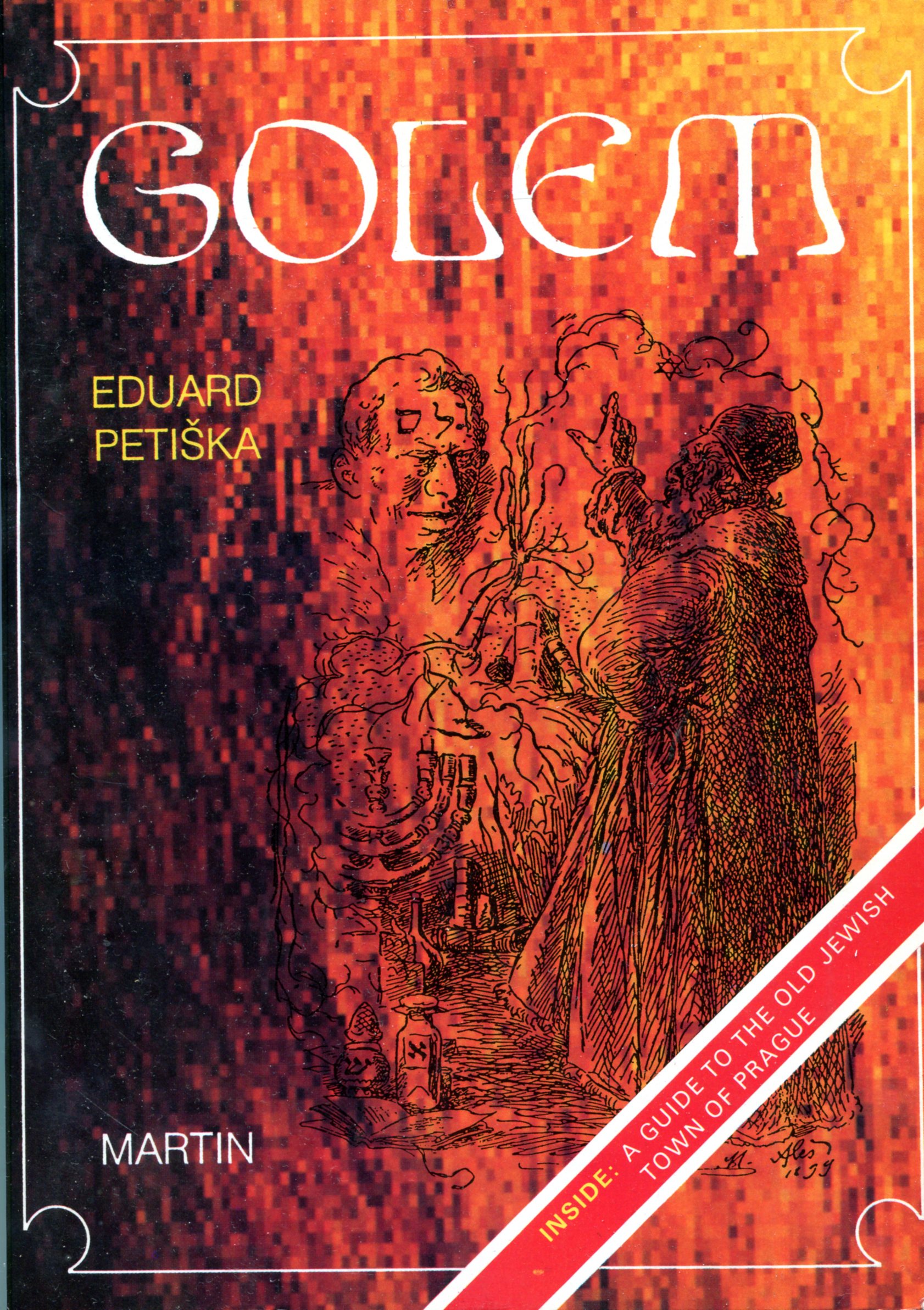
And I knew about the Golem. Or at least the concept. So I was interested in Prague to pick up Golem by Eduard Petiška, a Czech author and poet in a country that seems to take its poets seriously (and who managed to have an asteroid named after him). The book is his own telling of the various stories about Rabbi Loew of Prague and the creature he created to protect the Jewish population of the city. What is it about the Czechs and automatons? After all, another Czech author, Karel Čapek, gave the world the word robot.

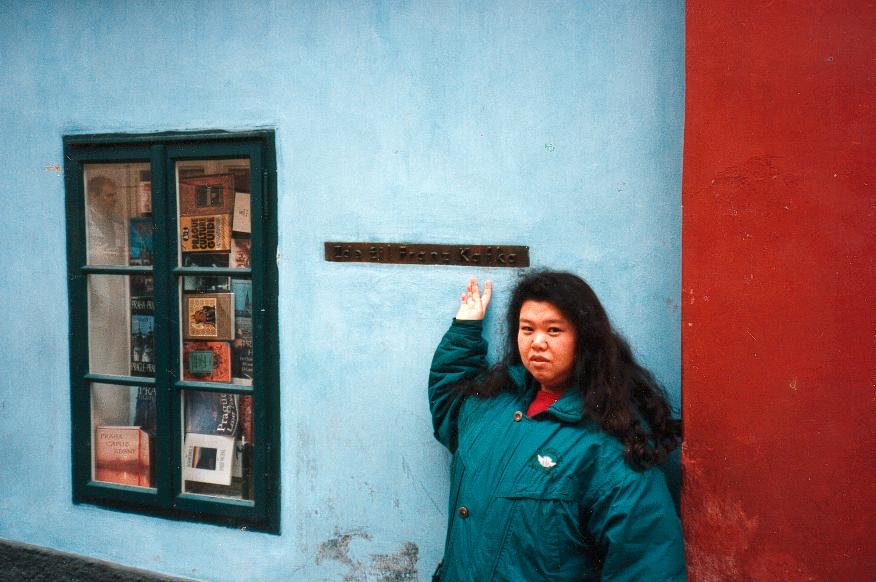
Speaking of authors from Prague, we also made our way to one of the places where Kafka lived. It’s the little blue-hued structure on this pedestrian street. At the time you could buy his works inside. Probably that’s still true.

ZlataUlickaKafkaKafka seems to be fairly well known in Japan, which might be something of a surprise, except when you consider the Kafkaesque elements of a salaryman’s life. Anyway, Yuriko was familiar with him.

And why is it always Kafkaesque? Guess Kafka-ish or Kafka-like or Kafka-oid don’t convey that sense of dread in the face of anonymous, malevolent functionaries.

The Return of Blue Clock Socks

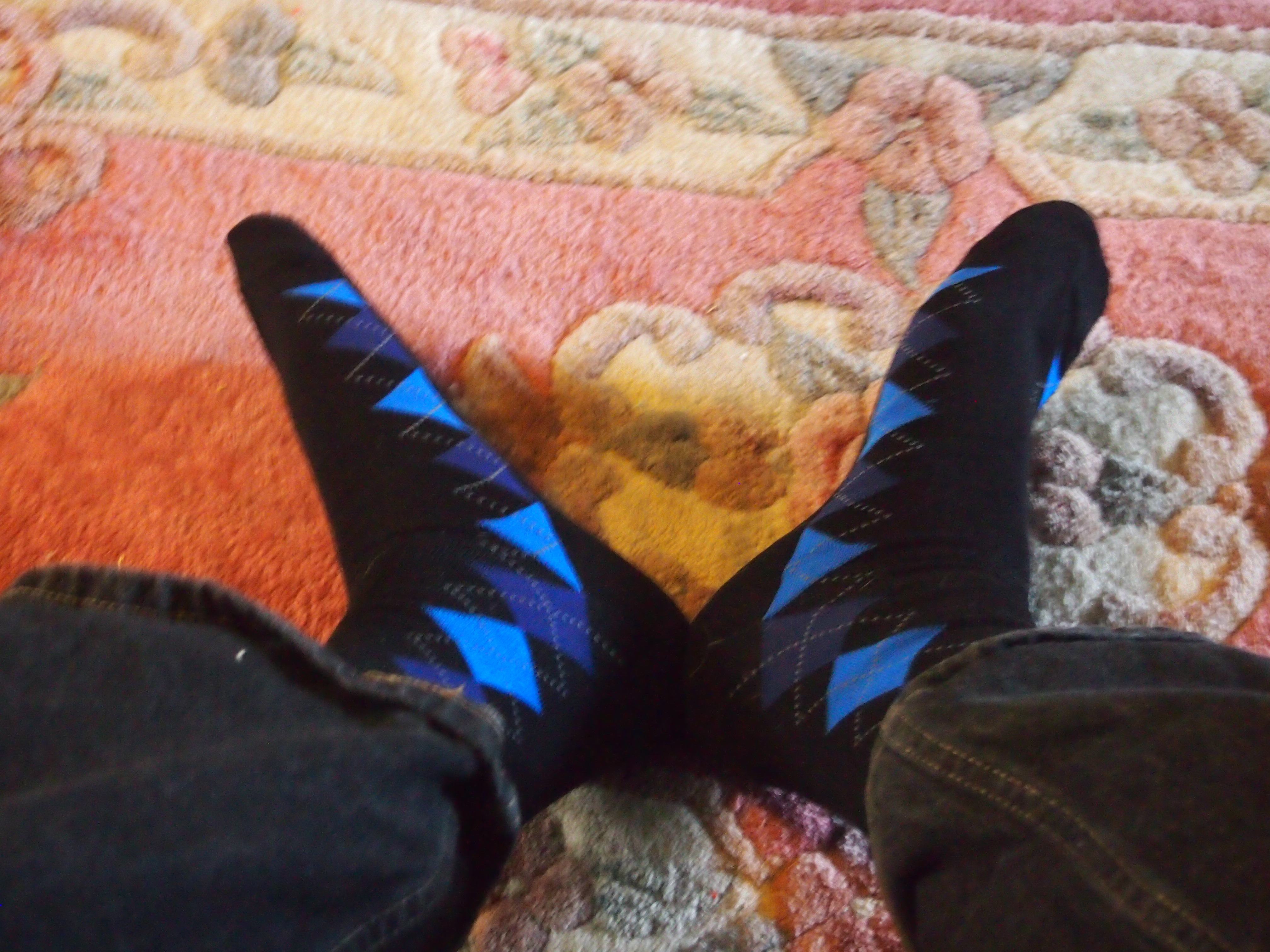
It’s been a while since I mentioned blue clock socks, but the time has come again. I must have worn out the blue clock socks I mentioned nearly a decade ago (Aug 6 and Aug 7, 2006). Or they simply disappeared. That’s the fate of socks. They go from the dryer to the alternate reality where socks go, beyond the ken of humanity. Was that what Zaphod Beeblebrox posited, or was it missing pens? I don’t feel like looking it up.

blue clock soxAnyway, it comes to mind because I bought some more recently. Inexpensive socks on sale that surely won’t last, but I’m fond of blue clock socks because of the first paragraph of The Big Sleep.

“It was about eleven o’clock in the morning, mid October, with the sun not shining and a look of hard wet rain in the clearness of the foothills. I was wearing my powder-blue suit, with dark blue shirt, tie and display handkerchief, black brogues, black wool socks with dark blue clocks on them. I was neat, clean, shaved and sober, and I didn’t care who knew it.”

July Idles

This year was a stay-close-to-home Fourth of July. That is, metro Chicago. Some are, some aren’t. We returned to our old haunts in the western suburbs on Saturday night to see the Westmont fireworks, from the vantage of Ty Warner Park. It’s always a good show.

That was a high point of the weekend. So was taking my daughters to Half Price Books, at their request, on the evening of the 3rd.

The low point of the weekend was walking the dog on the 4th, not long before we left for the fireworks show. Late afternoon, that is. Part of our usual route takes us along a path between a dense row of bushes and a small patch of land sporting enough trees to block the sky, when they have leaves. Pretty soon I re-discovered its mid-summer nature as Mosquito Alley. The mossies were especially forceful when I was cleaning up after the dog.

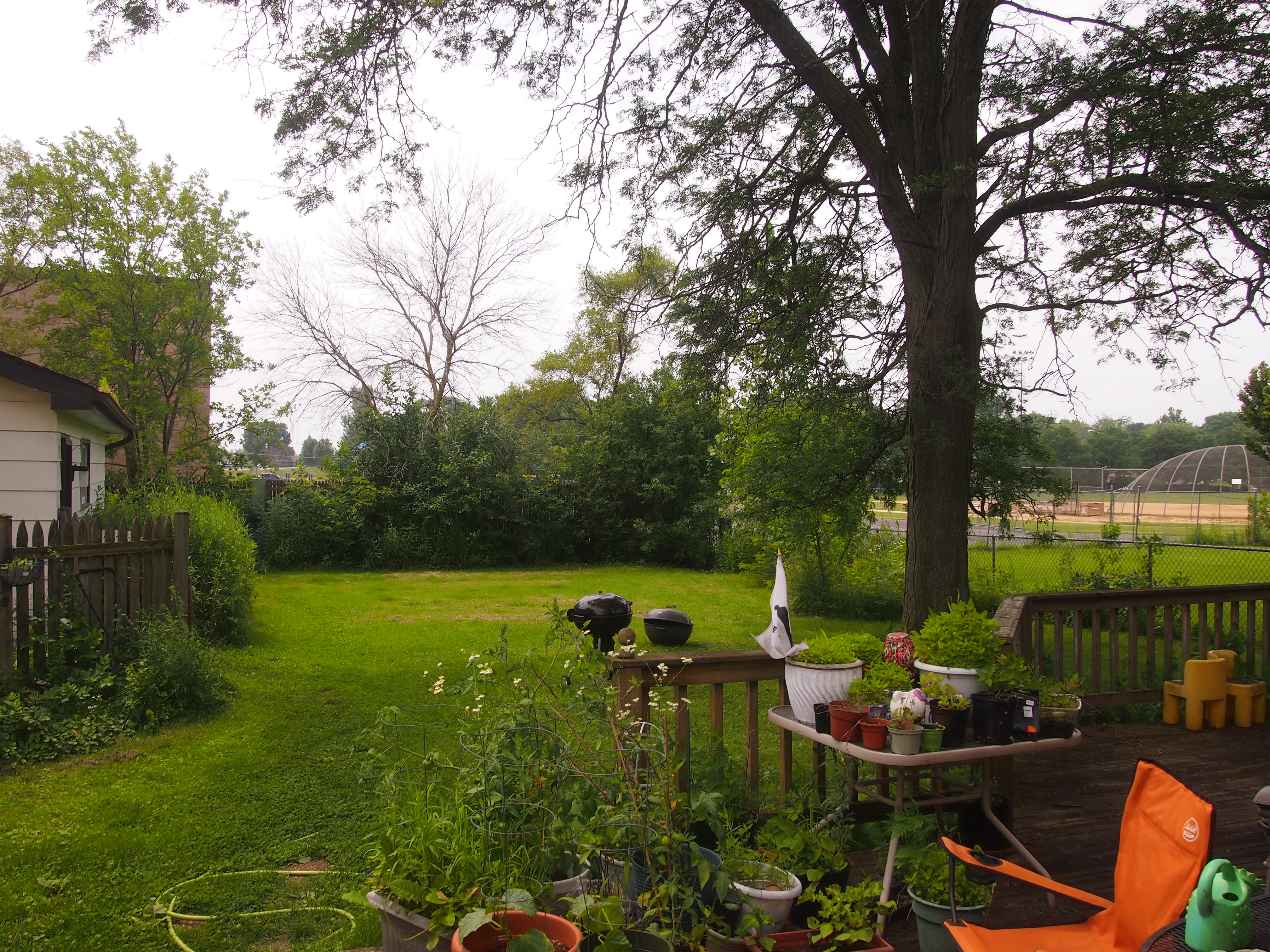
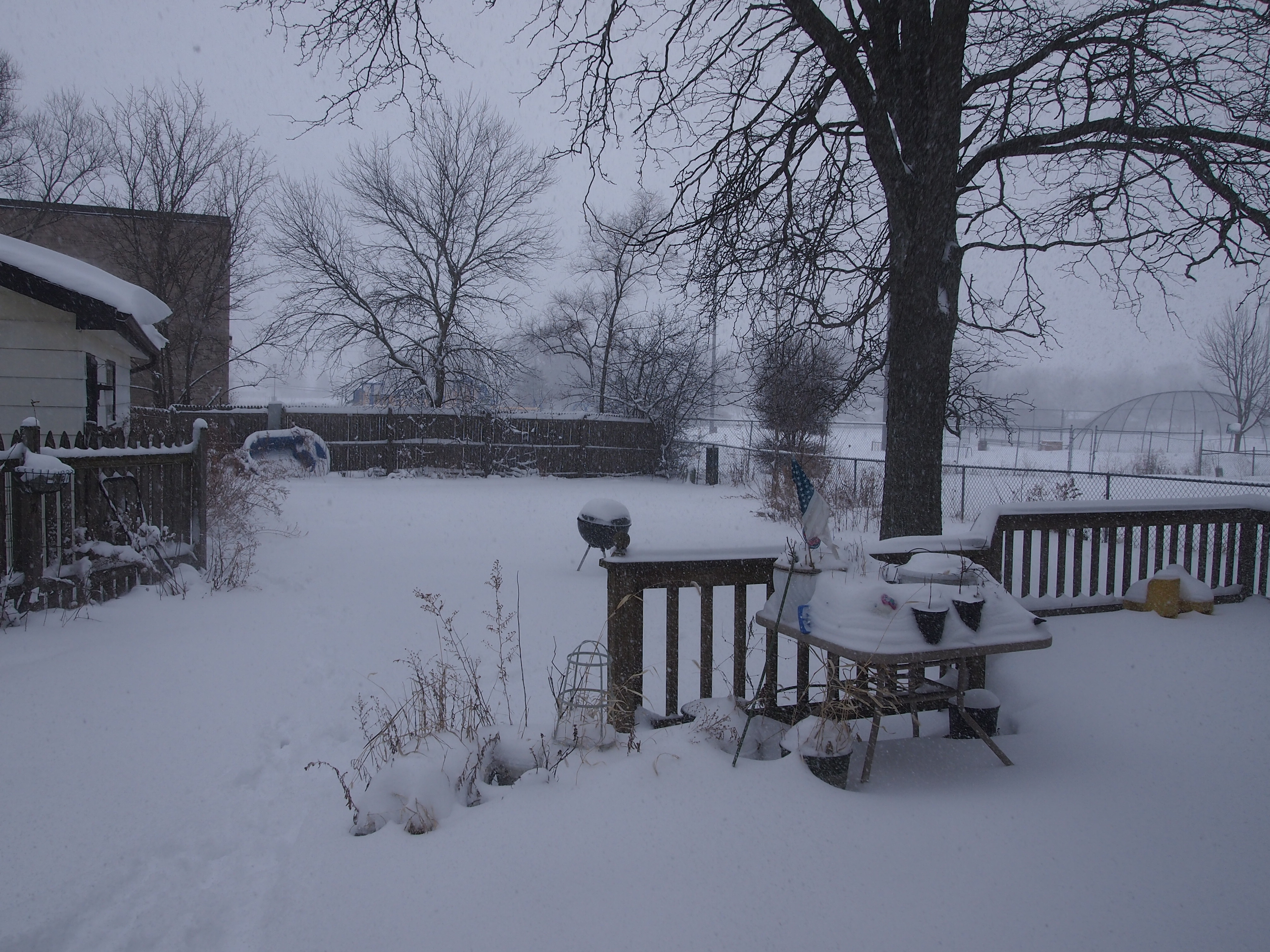
Complaining about mosquitoes, though, is just carping. I’d rather look out of my back door and see this (an early July shot).

Schaumburg, July 2015Than this (an early January shot).

Schaumburg, Jan 2015Bugs aside, I spent a fair amount of time over the weekend on the deck reading The H.L. Hunley by Tom Chaffin (2008), a fine book about the submarine of that name, along with its predecessor vessels (the Pioneer and the American Diver). Or, as I learned reading the book, the “submarine boat,” which is a 19th-century usage. The Confederates gave underwater warfare a shot, but it turned out Age of Steam technology — as inventive as it clearly was — wasn’t quite up to the task. Not without killing more submarine boat crew than Union sailors.

Also, it’s another reason to visit Charleston, to see the vessel, now an artifact on display at the Warren Lasch Conservation Center. Not that I’d need any more reasons for a visit.

Naptimes, 30 Years Apart

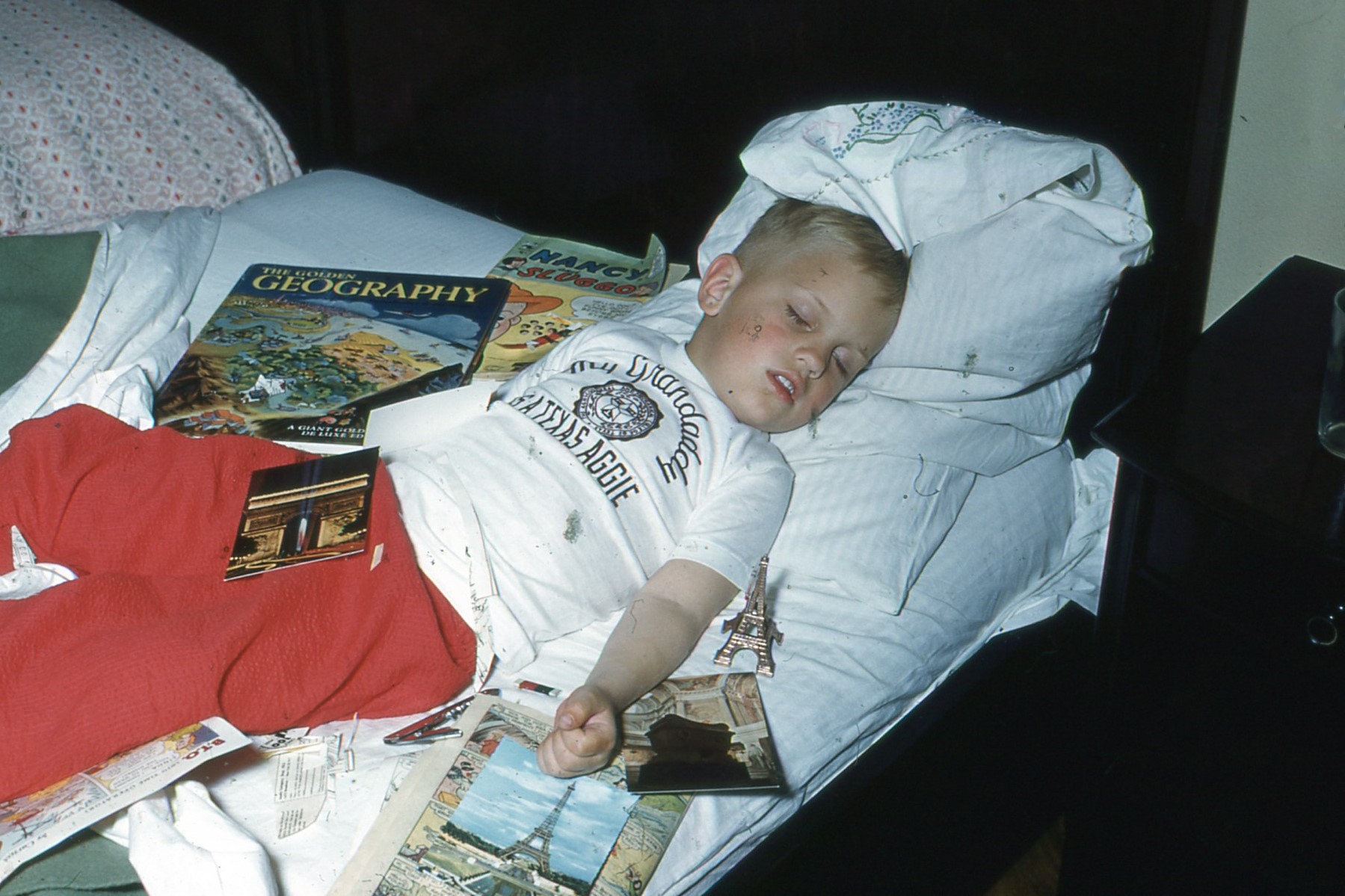
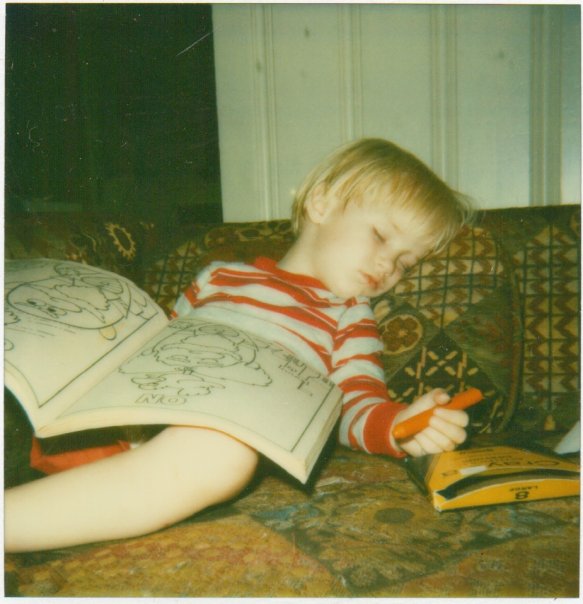
Last time I was in San Antonio, I dipped into my father’s collection of slides, mostly unexamined for at least 50 years, and pulled out a handful for scanning. The handwriting on the following slide said: “Jay Stribling sleeping, May 1956.” My brother that is, when he was four. No place is noted, but I suppose it was in Germany.

JayMay1956I looked up The Golden Geography. It’s by Elsa Jane Werner, illustrated by Cornelius De Witt, and originally published 1952. A lot of them must have been printed, since they seem easily available now online. I don’t remember it around the house in later years, which can mean only one thing. The only reason a book ever left our house is that it fell apart completely.

A casual Google search doesn’t uncover a scan of that Nancy & Sluggo comic, and it isn’t worth pursuing very far. The Eiffel Tower was a souvenir from my parents’ trip to Paris. I’m told they went without their small children, my brothers, which is what I would have done. They bought one for Jay and one for Jim, and the towers are still in my mother’s house, though not so shiny these days.

When I sent the image to Jay, he shared it with his sons. The eldest, my nephew Sam, sent us a picture of him at a similar age (in the 1980s) and in similar repose.

1936928_237230045005_6188398_nTime flies, things don’t change.

Sir Issac & His Toblerone

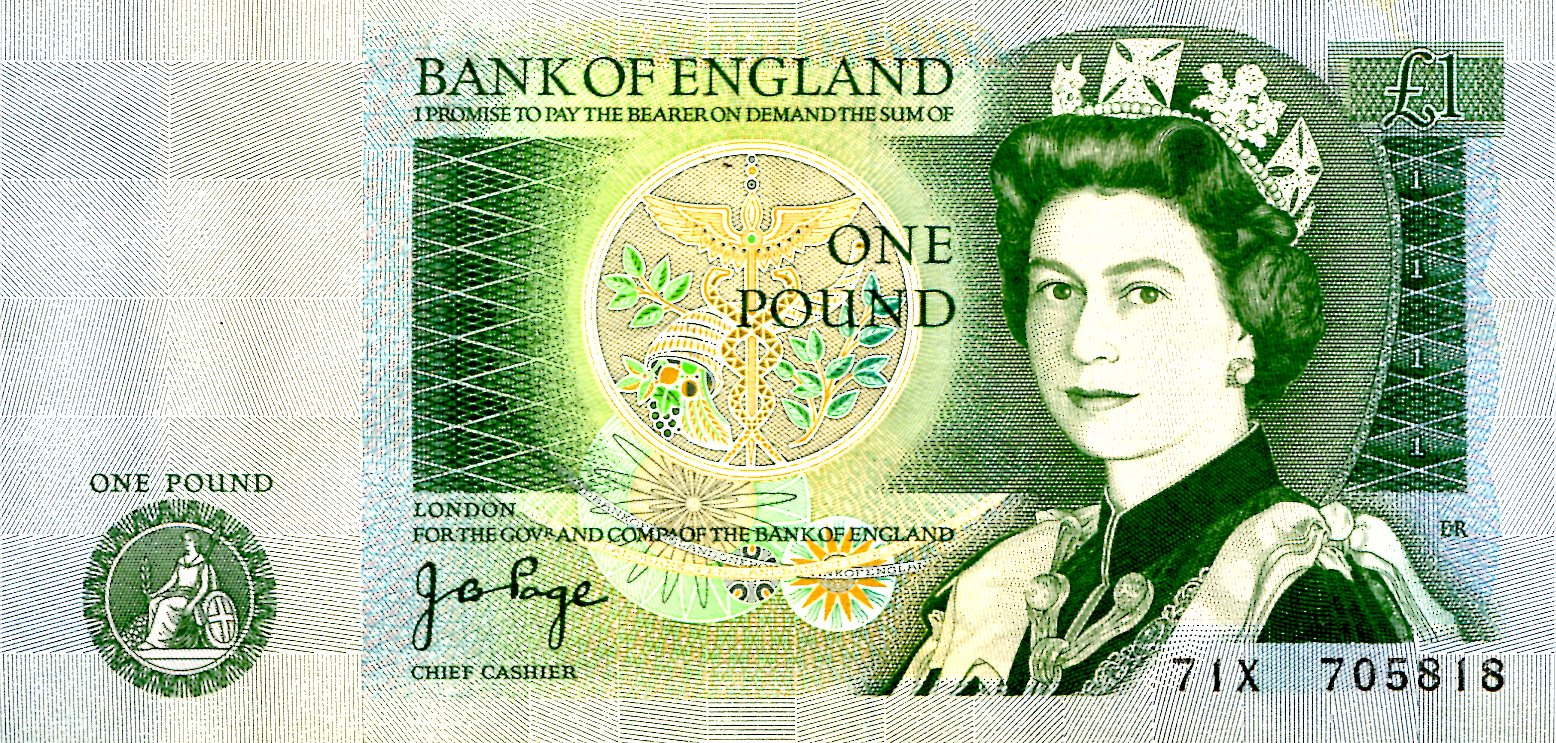
I might be misremembering, but when I saw an episode of Yes, Minister on a Virgin Air flight out of Stansted in ’94, I think that one of the characters handed another a pound note for some reason. That got a chuckle from someone British seated nearby, who observed that the one-pound note was long gone. As it would have been by then, by about 10 years, replaced by a pound coin in 1984 (the US dollar note, while an icon, is also increasingly an outlier).
pound noteI must have acquired this note in the UK in 1983. It’s crisp and unused. This particular one was part of Series D, first issued in 1978 and finally withdrawn in 1988. I understand, however, that if I take it to the Bank of England, I’ll receive a pound coin in exchange.

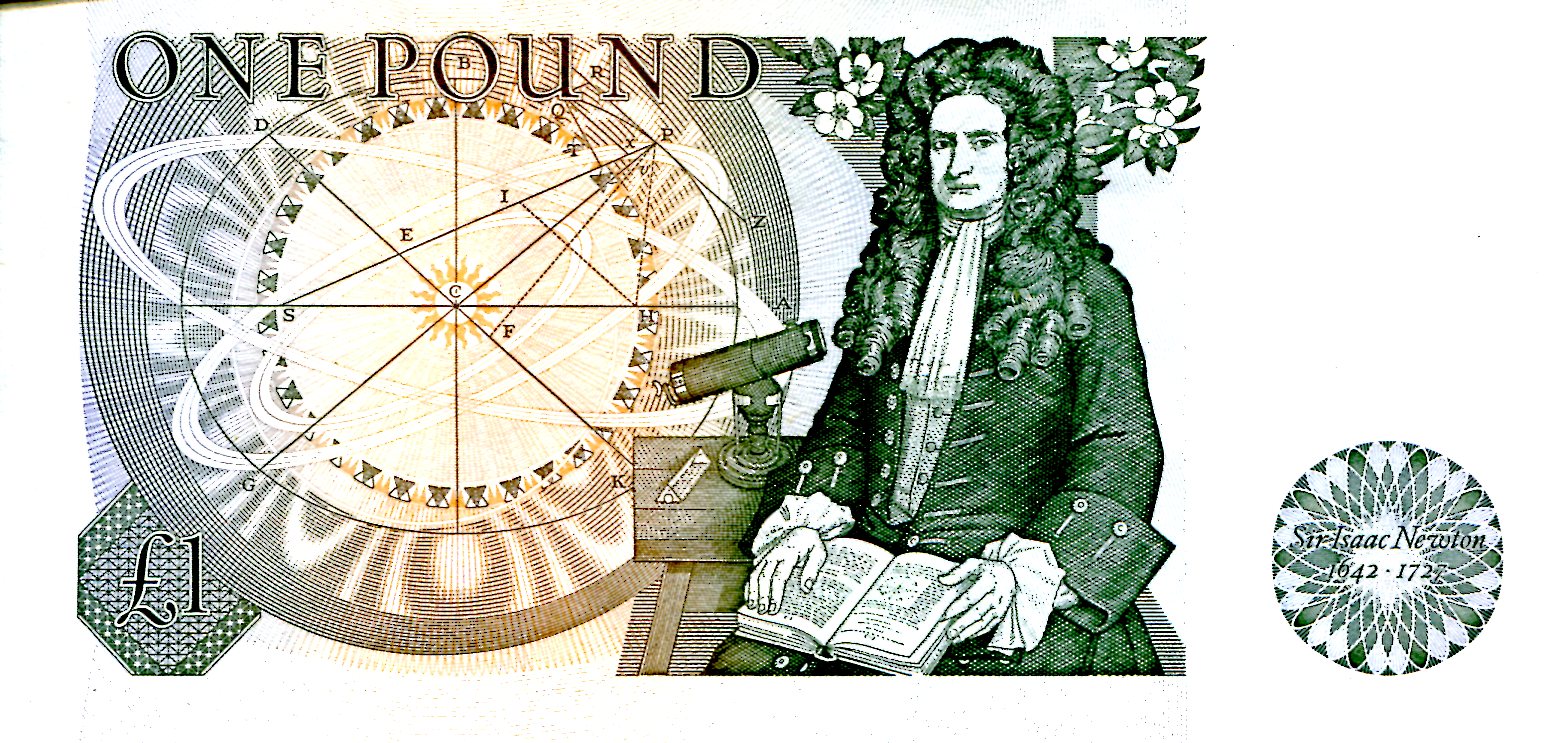
Sir Isaac Newton graces the back. According to one source — a book called Religion, Science, and Worldview: Essays in Honor of Richard S. Westfall (2002) — the portrait was based on two paintings by Sir Godfrey Kneller, and on the table beside Newton is a telescope and a triangluar prism (taken by jokers to be a Toblerone bar).

pound noteHe’s holding a copy of the first edition of the Principia, open to the pages that contain a diagram of a Keplerian ellipse. I know that Newton built on Kepler’s work to compute the acceleration of bodies, but what the diagram describes exactly is beyond me. So is the knowledge required to assess this line in Religion, Science, and Worldview: “The large diagram that occupies the left half of the note is also from Proposition XI, but evidently from the Cajori edition of the Motte translation of the Pemberton third Latin edition.”

The book further asserts that the original issue in 1978 had a mistake in one of the diagram’s lines, corrected in 1981. That means I have a note made after 1981. There’s more discussion about the Sun in the diagram not being at one of the foci of the ellipse, but mistakenly at the center. Even a fan of currency minutiae like me can’t be bothered to care.

Tom Dewey at the Resale Shop

A curious thing: I’ve been self-employed for 10 years as of today. When I got to my office on the morning of April 14, 2005, I found that the company’s HR woman had come in from New York — and so had the publisher. I didn’t appreciate it at that moment, but I’m glad they had the good graces to fire me in person.

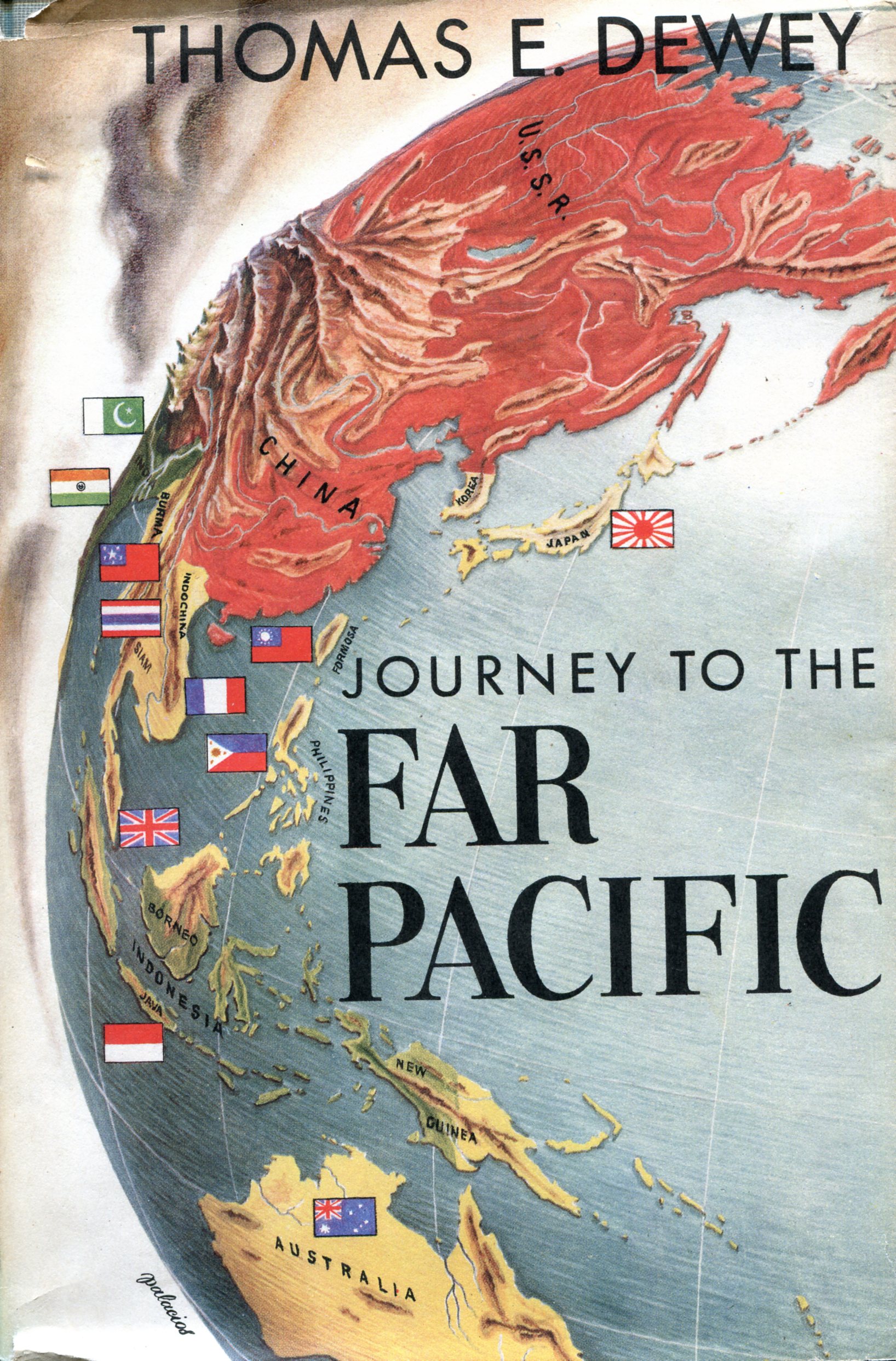
Journey to the Far PacificHere’s something I found in a resale shop the other day. Odd what you can get for $1.

Published by Doubleday & Co. in 1952, Journey to the Far Pacific is a forgotten tome by Republican politico Thomas E. Dewey, who (considering the country’s disregard of its own history) is at some risk of being forgotten himself. Then again, he’s probably one of the better-known presidential election losers. If you’re going to lose, do it in a surprising, spectacular way.

The book’s blurb notes: “A few months ago New York’s Governor Thomas E. Dewey set out on an extensive tour of the Orient to view conditions at first hand and to form for himself impressions of the peoples and nations who stand between Communism and the California coast. During his trip he traveled forty-one thousand miles, visiting seventeen republics, kingdoms, territories, and colonies.”

The book’s maps are interesting. Of course they are. Note that on the cover, communist-controlled territory is red-orange, including half of the Korean peninsula but not Taiwan, which naturally is called Formosa.

The map that illustrates the main title page shows the “Chinese Republic” as including all of the modern PRC except Manchuria — which is separated as if it were independent — as well as Mongolia, which is merged into China as if it weren’t independent (it was a Soviet satellite, but still technically independent in the early 1950s). Ulaanbaatar is called “Urga.” It’s easier to spell, anyway.

Thomas Dewey 1952Unfortunately, there’s no index to look things up conveniently. Not sure when I’ll get around to actually reading the thing, but for now owning it’s enough.

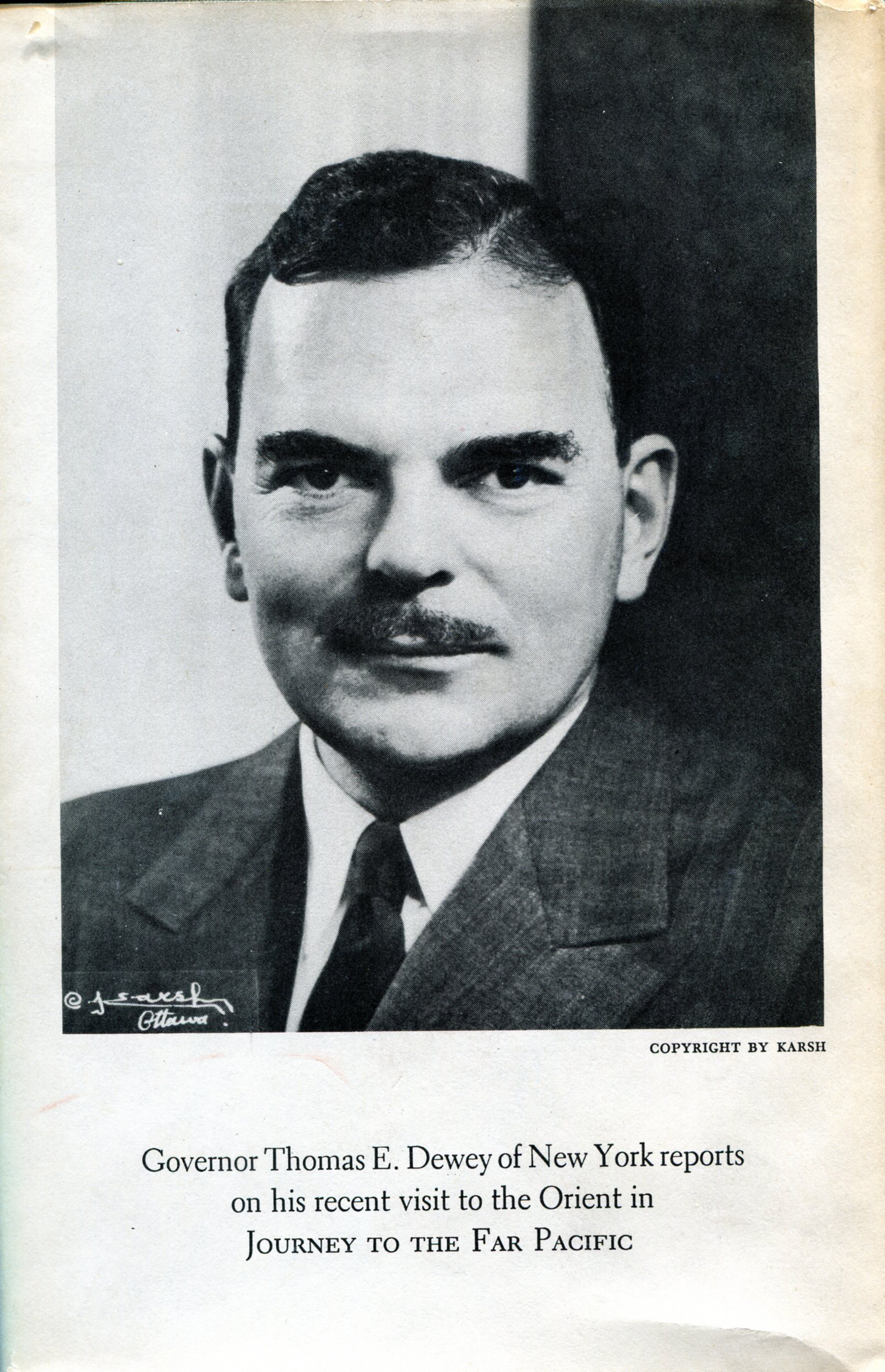
Dewey’s on the back cover. I never appreciated how oval his head was. There’s a monograph in that somewhere: head shapes of the men who ran for president. Maybe one shape or another tends to win.

That’s a Yousuf Karsh photograph of Dewey. Not one of his better-known images. Not bad, but it doesn’t have the luster of some of his more famed shots. Then again, maybe it was hard to make Dewey look like he had even an ounce of charisma.

Iowa Avenue Bronzes

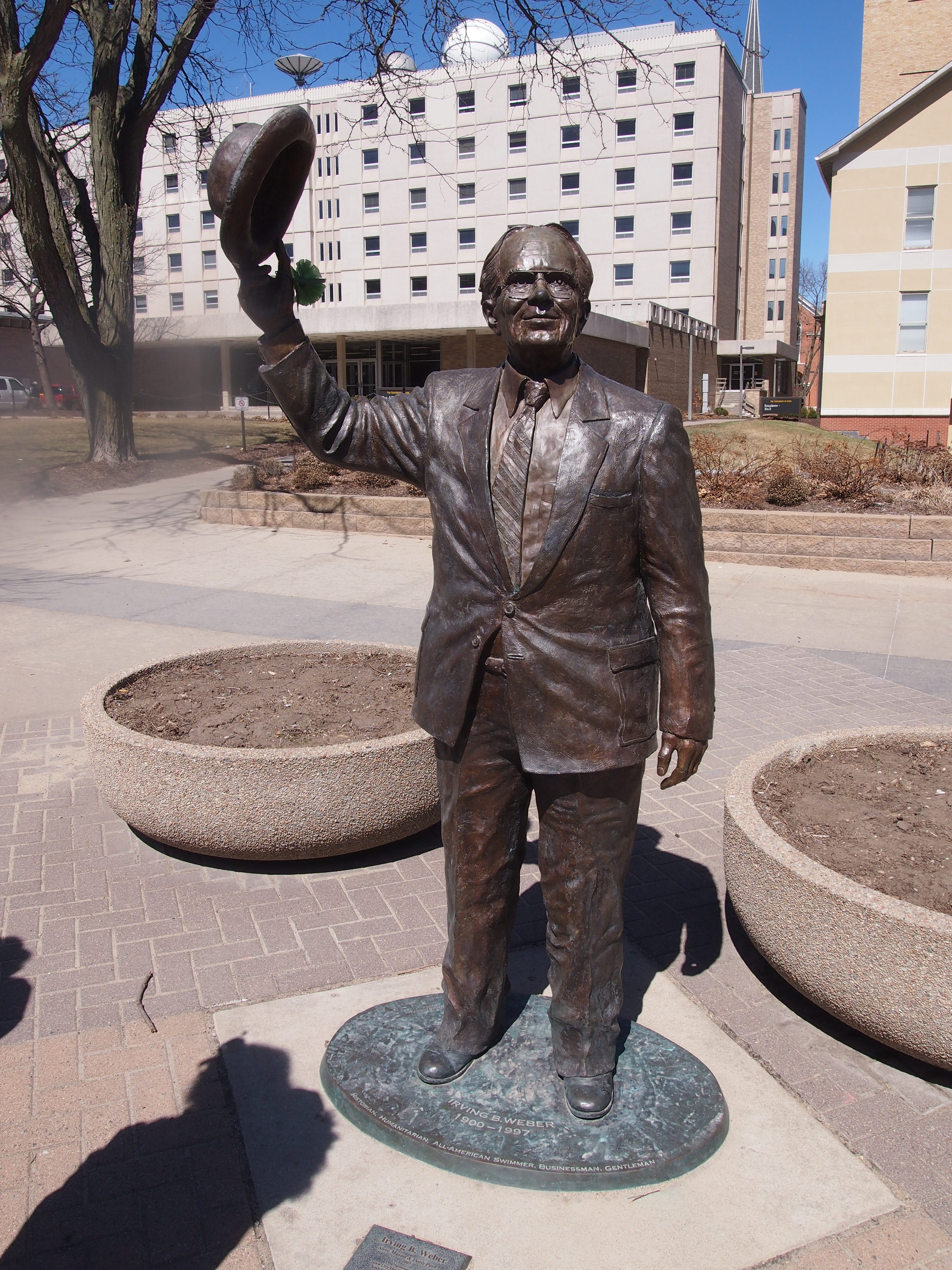
Near the intersection of Iowa Ave. and Linn St. in Iowa City, you’ll see this bronze fellow, forever waving his hat to passersby.

Irving B. Weber, Iowa CityIt’s Irving B. Weber (1900-97). You might ask, Who? I know I did. “Irving B. Weber is remembered for many things,” says the Iowa City Public Library. “He was the University of Iowa’s first All-American [sic] swimmer. He was a founder of Quality Chekd Dairies and served as its president until his retirement in 1966. Irving was an active member of the Iowa City Host Noon Lions Club and was the local school board president in 1952-53. In 1994 Irving B. Weber Elementary School was named in his honor.

“Irving B. Weber may be most remembered for the over 800 articles he wrote for the Iowa City Press-Citizen beginning in 1973. Irving’s view of history was not one of a dull retelling of facts and names. He told what it was like to grow up in Iowa City, the best places to buy penny candy, the joys of cooling off in Melrose Lake in the summer, and of sledding parties on closed-off streets.”

Mr. Iowa City, you might call him. Honored with a bronze by two Iowa artists, Stephen Maxon and Doris Park. Irving was easy to spot. Pretty soon, though, I started to notice bronze plaques mounted in the sidewalk along Iowa Ave. We’d chanced on the Iowa City Literary Walk. The variety was remarkable, and I saw only a dozen or so plaques.

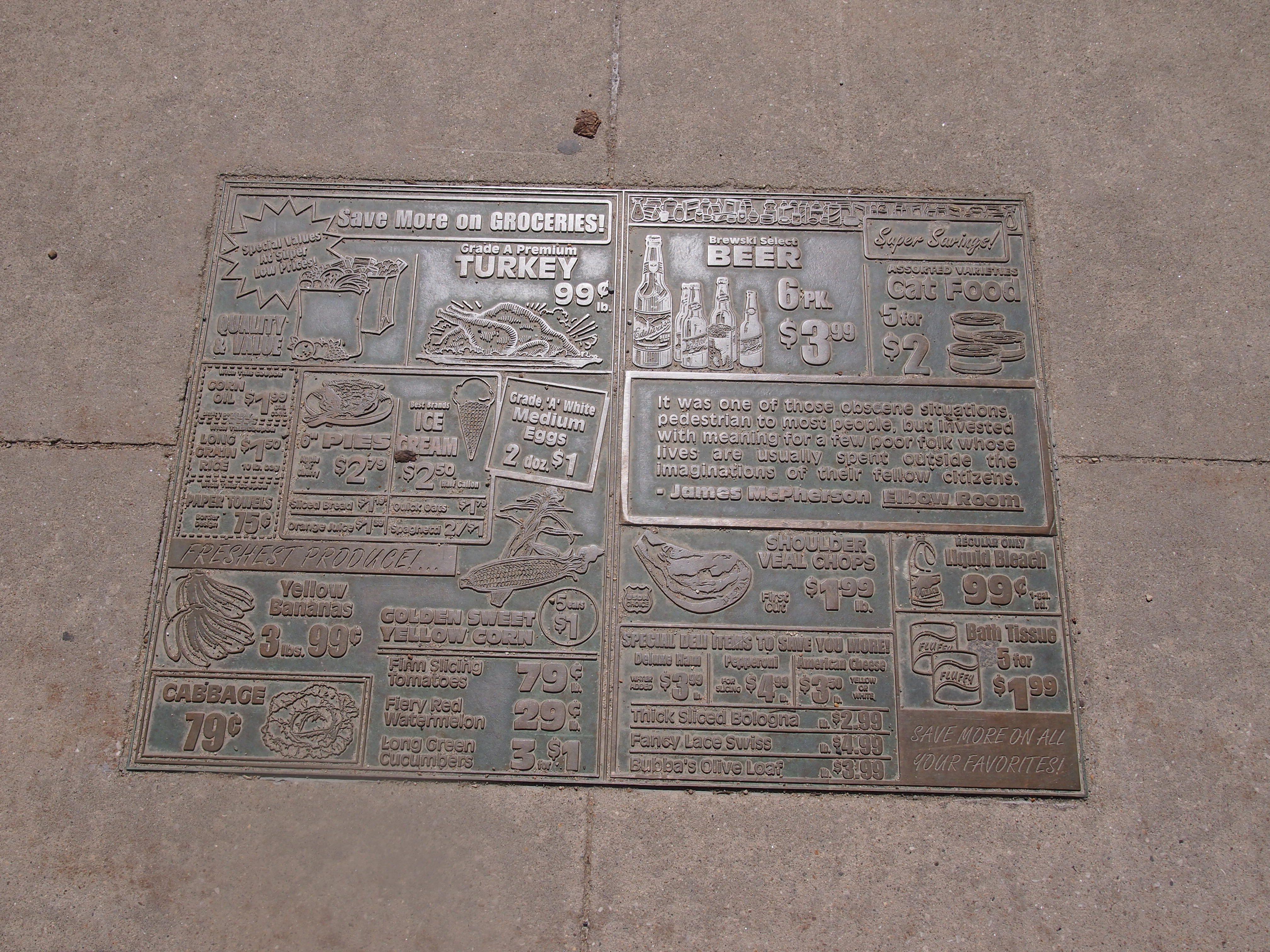
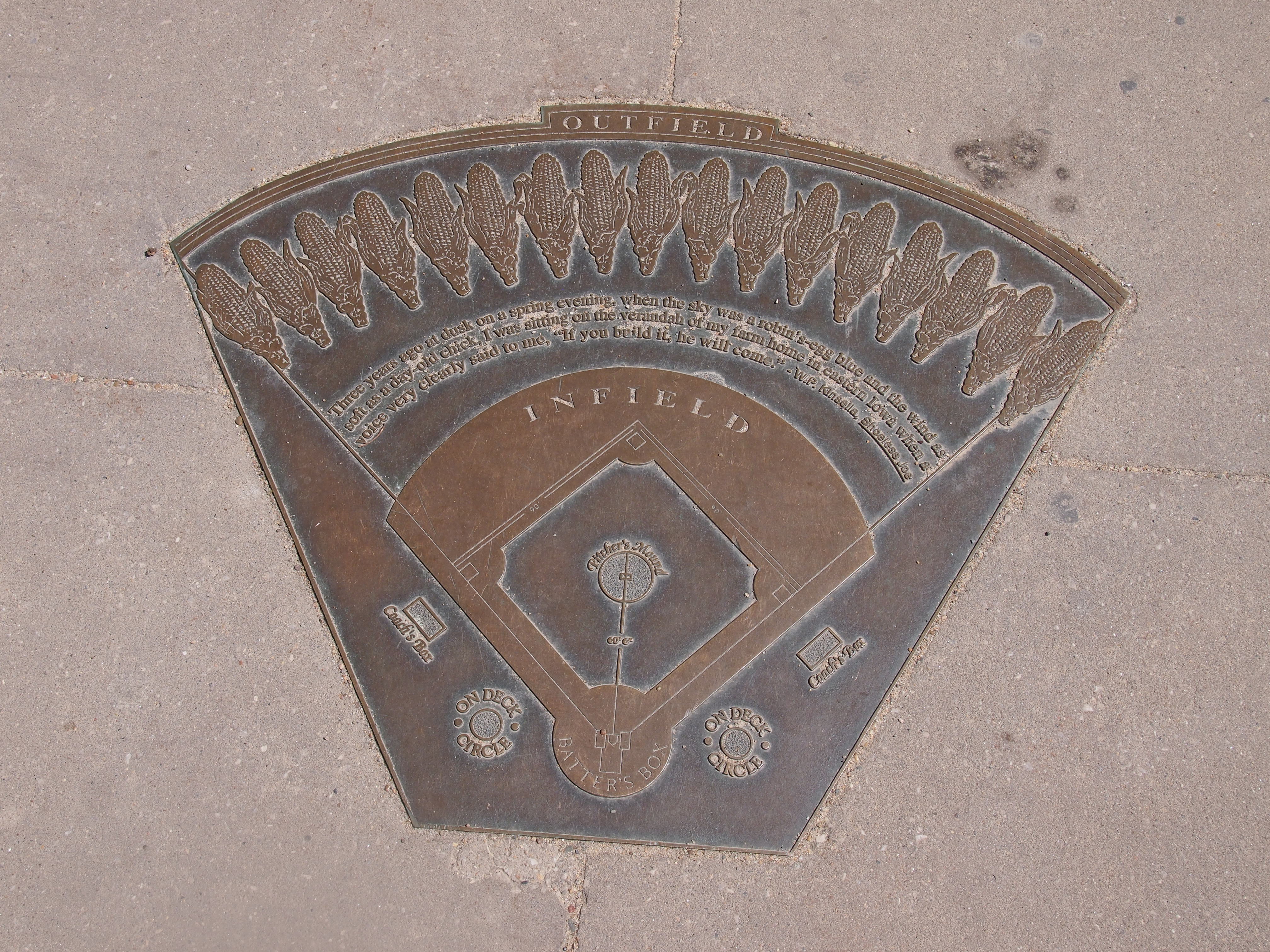
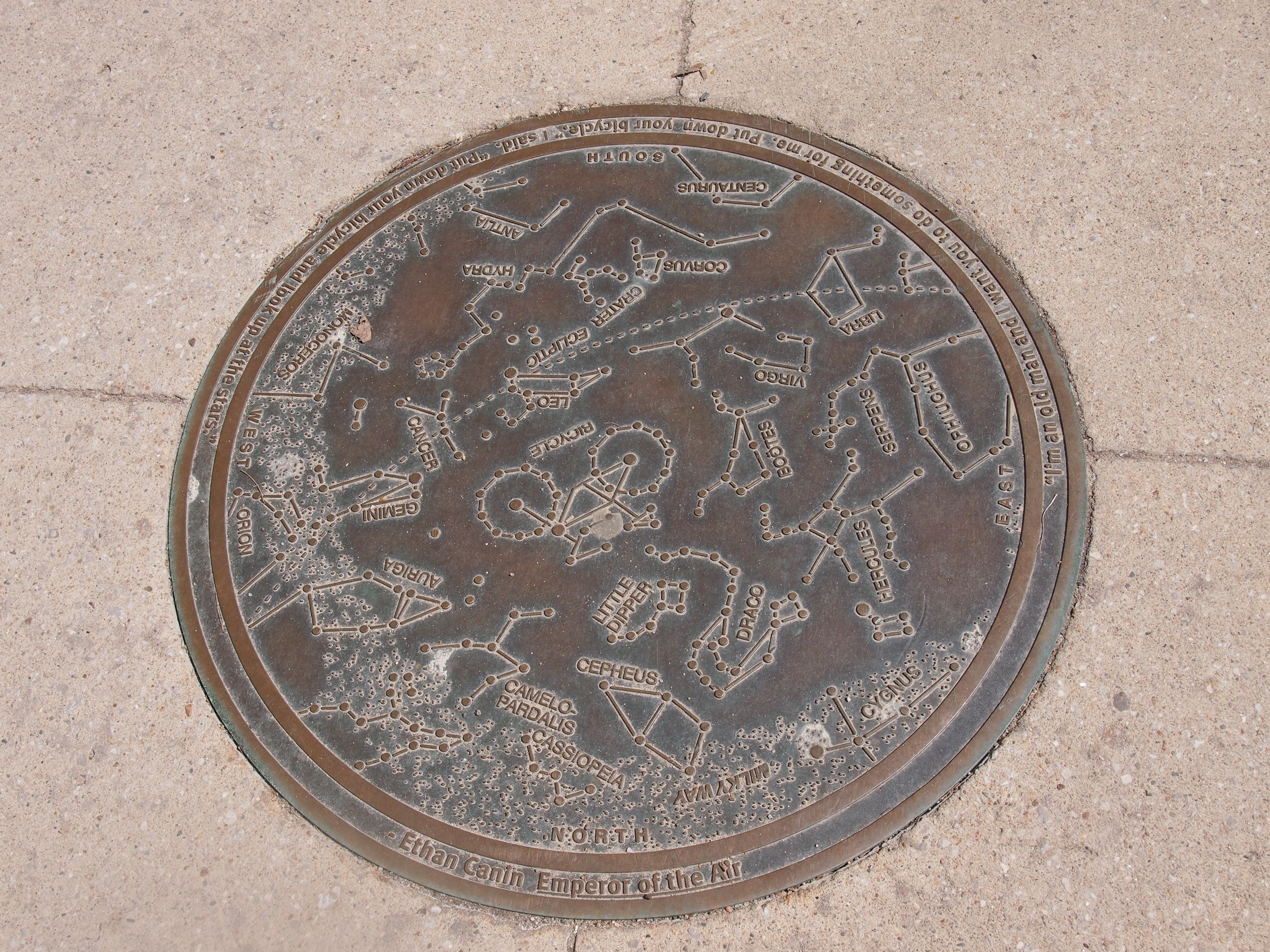
Such as these, which contain quotes from James [Alan] McPherson, W.P. Kinsella, and Ethan Canin, respectively.

Iowa City Literary WalkIowa City Literary WalkIowa City Literary WalkAccording to the City of Iowa City, “The Literary Walk, conceptualized by the Iowa City Public Art Advisory Committee in 1999, celebrates works by 49 writers who have ties to Iowa. [A good many specifically to the Iowa Writers’ Workshop, I suspect.] The Literary Walk is comprised of a series of bronze relief panels that feature authors’ words as well as attribution. The panels are visually connected by a series of general quotations about books and writing stamped into the concrete sidewalk. All artwork, by Gregg LeFevre, is set in the pavement along both sides of Iowa Avenue from Clinton Street to Gilbert Street.”

The New Seminary Coop Bookstore

Last year, I noticed that the Seminary Coop Bookstore isn’t where it used to be, in the basement of the Chicago Theological Seminary at 5757 S. University Ave in Hyde Park. Over the years, I’d popped in now and then to enjoy that cave of books. And I bought a few things there, such as The Greeks and the Irrational (E.R. Dodds, 1951) and Daily Life in Ancient Rome (Jérôme Carcopino, 1940). How could the floor-to-ceiling shelves laden with books on a wild array of subjects, and the twists and turns and nooks, be the same above ground?

Last year, I wrote: “It didn’t seem right. At the basement location, there was no room for anything but books and more books…. the new location still has a ‘maze aspect’ and Stanley Tigerman did the design (himself or Tigerman McCurry Architects staff?), which I guess counts for something.”

On Sunday, we went into the new store and looked around. The new iteration isn’t bad. In fact, it’s a fine store, stocked with the same wild array of subjects. But it also doesn’t have the je ne sais quoi of the old location. The new design is formed by shelves at various angles to each other, so it isn’t a standard bookstore with parallel shelving. Even so, it seems more like an homage to the cramped old shelves than anything else, a little maze-like but also a little too orderly.

I guess they had their reasons for moving. Maybe the store lost its lease, or maybe patrons had a way of wandering into the further reaches of the book cave and were never heard from again.

Prefecture Osaka

PrefectureOsakaTwenty-five years ago this week, primed by a young man’s sense of adventure, I moved to Japan. Eventually I learned my way around, literally and figuratively, without the assistance of the Internet, since it wasn’t in common use. One of my better investments along those lines — literally getting around, that is — was a paper atlas called Prefecture Osaka.

At least, those were the roman-letter words on the cover. In fact, those were the only roman letters in the entire book. Extracting useful information sometimes took a while but — in that great eventually again — I learned my way around the book, too.

Sometimes I would stare at it, just because I enjoyed looking at it. The lines, the tints, the utterly foreign script — it’s a beautiful group of maps. This is one of the pages. As it happens, the northern part of Sumiyoshi Ward, which is where I lived. My block’s nearly in the fold, so it isn’t displayed here. But a lot of familiar places are.

OsakaMapOldNeighborhoodThe whole-page scan doesn’t really do it justice, though. Even the close-up doesn’t, but imagine a crisp paper version of this image, because digital will never capture the aesthetics of paper.

OsakaMapOldNeighborhood2The bright yellow rectangle is the JR Nagai station (these tracks). The white rectangle is the Nagai subway station on the Midosuji Line. I rarely used JR, but I went to the Nagai subway station just about every day. Urban Japan, as our urban planners say, has high walkability.

The ward was further divided, as marked by different tints on the map. My area was called Nagai-Nishi: West Nagai. That was further subdivided — twice. The smallest divisions are the blocks marked by the small blue numbers. The green space on this map is green space: Nagai Park (Nagai Koen, 長居公園 ). Literally, Long Park.